The two collaborators, known separately for contemporary electronic music & free clarinet experimentations team up to create the delirious trip, Footfalls.
Two scenes are presented here, seemingly taken from different sides of the same desolated seaside setting, loosly inspired by poet and novalist T.S Elliot and Samuel Becket. In Towards the Door, Gareth Davis´ bass clarinet breathes slow, wave-like tones that merge with the oft-rythmic electronic textures from his counterpart. A third of the way in, Robin Rimbaud´s synth erupts into a Blade Runner-esque epic harmonic section that disappears as suddenly as it arrives - leaving ripples of oscillation in its wake, slowly unfolding into the sound of waves, as it arrives back where it begun : as a full circle, drawn in echo´s of sound.
Smokefall begins with the words „Invisible choirs“, subtly spoken by a woman’s voice among a blurred distant conversation, as textural sound effects creep forwards to the point where a slow progressing but steady LFO rhythm enters. Water, metal & smoke are absorbed into a creeping tribal passage, acompanied by long clarinet tones. The piece expands further and further into a state of ecstatic harmonic noise that fulfills all parts of your body – if played loud. Both artists from here on move into full on crushing electronics, all while Rimbaud´s Kilpatrick Phenol synth drives the background with its pulses and repetative bassline. The piece has an ellipse like rotation that makes one feel a sort of blissful vertigo that reverberates in your mind after the piece has ended.
Footfalls is an euphoric trip from two artists that – although prolific - manages to arrive at the perfect meeting point to deliver two hard to shake pieces of dizzying electro-acoustic perfection.
quête:rob e
- A1: Lentz 1 Mg (Viersen / D)
- A2: Grossenhainer Eu (Grossenhain/ D)
- A3: C.a.roscher Bo (Oberlausitz / D)
- A4: Henry Livesey Bo (Blackburn / Gb)
- A5: Lentz 2 Mg (Viersen / D
- A6: Saurer Mg ( Aarbon Ch)
- A7: Ruti / Łódź / Pl, 1892 Rec M.w
- A8: Saurer 400 Bo (Aarbon Ch & F)
- A9: Günne (Irmscher) Bo
- A10: Bändchen Mg (Jacquard F? Unbekannt)
- A11: Dornier Mg (Lindau / D)
- A12: Transmission / Bo
- A13: Elitex Jet Mg. (Cz)
- A14: Robert Hall Mg Solo (Bury / Gb)
- A15: Fred Greenwood Mechanical Works / (Łódź / Pl 1889) Rec M.w
- A16: Kleiner C.a.roscher Bo (Oberlausitz / D)
- A17: Jean Güsgen Bo (Dülken / D)
- A18: Grossenhainer Eu / Lower Floor (Grossenhain/ D)
- A19: Grossenhainer Eu (Grossenhain / D)
- A20: Grossenhainer Eu Lower Floor / Variation1 (Grossenhain/ D)
- A21: Looms/ Group* Łódź, Pl / Rec M.w
Editions Mego is proud to present the latest addition to the compelling discography of Thomas Brinkmann. Throughout his career Brinkmann has focussed on the human operating amongst industry alongside rhythms that manifest as a result of technological advancement. With this new release Brinkmann makes a u-turn, looking back to the early industrial age. Comprised of recordings of various looms, Raupenbahn investigates the sonic properties and consequences of the first automatic loom as constructed by Jacques de Vaucanson in 1745. Thomas Brinkmann once again adheres to his tendency for clarity and simplicity whilst further investigating not only the sound and rhythms of the machines (looms) but also what role they serve in society and what consequences they have on the environment. Raupenbahn presents 21 tracks in total, 11 feature on the vinyl, the remaining 10 as digital bonus tracks. The majority of recordings were undertaken by Brinkmann in 2017 with a Neumann KM 184 stereo set. Additional recordings were sourced with permission from Monika W. recs. from 2014 Central Museum of Textiles Łódź, Poland. Each piece presents a diversity of material which borders on the breathtaking and beautiful in richness and complexity. The various looms unravel rhythms and patterns unexpected from machines of the early industrial age.
The loom holds a significant role in shaping our world being the catalyst for Charles Babbage's Analytical Engine which, alongside the subsequent work of Byron's daughter Ada Lovelace, paved the way for modern computing. There is a linage of the loom that fits succinctly in Brinkmann's overall argument. Here we encounter a parallel between machine driven economies and the music that rose from such places, consider the Sheffield steel industries, the Manchester weaving industry or the Rhineland / Düsseldorf loom and machine industry. Is it a coincidence that the practice of such machines in the environment gave rise to today's predilection for electronic dance music, in pop, soundtracks, etc.
Raupenbahn features no treatment or processing and explicitly displays varying tempo and timbres which ascertain a wide range of acoustic structures. The artwork features Ingrid Wiener, Rosemarie Trockel and Alexandra Bircken, three different generations who would with ideas of fabric weaving, loming and the like. This exceptional release works on a number of levels alongside it's striking sonic palette.
i 9 Günne (Irmscher) BO Möhnesee / D
Lenny limbs looks on as the time for automation draws nearer. What is our fate you ask? - The robots are coming.
Banoffee Pies Records introduce the sixth insert to the original series with a mechanically inspired sample infused three track heavy weight. This record is for the dancefloor. Banoffee xx
Our imprint marks its five years anniversary this year and to celebrate it’s offering up five special various artist packages across 2019 limited to 250 copies each, featuring material from the likes of Vid, The Mole, Cinthie, Shinichiro Yokota, San Proper, Akiko Kiyama, Com Sin aka Cosmin TRG, Subb-an and more..
Here though we see the focus on the core family as well as some new additions, celebrating the artists involved over the past five years and looking towards the future with some fresh, hotly tipped acts.
For the fourth installment in the series the label welcome’s Berlin’s queen of House Cinthie onto its roster with ‘6am’, as the name would suggest a heads down, emotive slice of House aimed at those special moments in the early hours of the dance floor, fusing a robust analogue drum workout with bright strings, jazzy piano lines and driving low-end.
Akiko Kiyama’s ‘Dirt Specks’ follows, a typically unique offering from the Tokyo based experimentalist, built around swirling bass notes, hypnotising processed vocals and glitched out percussion before label co-founder Red Pig Flower’s ‘Mental Adventure’ brings eastern-tinged plucked strings and vacillating atmospherics into the limelight alongside rounded subs and a bumpy rhythmic drive to create a smooth, hypnotic trip.
Sam went into an almost psychotic state when making music. He wasn’t himself. He was immersed in the creativity to such an extent that it was almost like a psychotic trance. Here’s an example. He found all this giant kelp down at Western Port bay and he would bathe himself in it for weeks. He would replenish the water and put salt in the bath, but leave the kelp in there. I used to ask Julie, his partner and wife, “How’s everything going?” and she’d say, “Just go and have a look at the bath.” - Tony Rogers
Sam Mallet could have pursued a career as a French literature professor in Paris, but decided his true calling was to remain in Australia, dedicate himself to his music and find the plateau; a word he used to describe the sensory worlds residing in music. Under the influence of Eno, Jon Hassell, Arvo Pärt, John Coltrane and Robert Fripp, Sam explored a wide variety of musical styles and put them to service soundtracking the time based works of his peers. He crafted spatial ambience, somber jazz, and drum computer driven rockers for short films and experimental video works, television shows (including the original Australian Wilfred series), feature films and live theatre. The avant garde Anthill Theatre, known for its departure from conventional staging practices and having a keen eye for talent, enlisted Mallet to provide soundtracks for approximately 40 productions throughout the 1980s and early 1990s.
Sadly, Sam passed away in 2014. A crucial piece of his legacy is undoubtedly the body of work he produced during his life, and the archive of recorded works is vast and deep. Sam seemingly saved everything, from fragments to finished pieces; and often repurposed previously released tracks by collaging them into new pieces. He self released a small number of cassettes and CDs from the mid 1980s onward, the contents of which were culled from soundtrack work and original pieces, but the majority of his music was experienced only within the ephemeral live performances.
Wetlands is the product of countless hours spent with this archive by Rowan Mason (Sanpo Disco/Recurring Dream) and Tony Remple (Musique Plastique), offering a dynamic survey of Sam’s work, and housed in a jacket evoking the minimal design and colour palette of his earliest cassette releases. Two selections of Sam Mallet’s music were featured on the compilation Midday Moon (also produced by Rowan), released last year by Bedroom Suck Records. Along with Left Ear Records’ Antipodean Anomalies, Midday Moon has served to highlight outlier musics and scenes from Australia and New Zealand, and Wetlands plunges deeper into the catalog of this obscure yet groundbreaking artist.
I felt totally unrestrained making this album” says Lindstrøm about his 6th solo album On A Clear Day I Can See You Forever (a title inspired by the 1970’s musical On A Clear Day You Can See Forever starring Barbra Streisand). “I’ve listened to Robert Wyatt’s solo albums and his Matching Mole’s debutalbum a lot lately. It so effortless, fearless and free. And not insisting. I was very inspired by this” In the autumn of 2018, Lindstrøm composed a commissioned piece for Norway’s premiere art centre Henie Onstad Kunstsenter. Sketches from the three sold-out performances became the foundation for the new tracks. “I decided to keep some of the initial ideas and develop them further. All the songs are based on long one-take recordings”, says Lindstrøm “Also I’ve been very conscious about the music on the album not exceeding the length of the physical limitations of the vinyl-format, finding that 2 long tracks on each side were the perfect balance for this album” This is also the first time ever Lindstrøm has made an album entirely with hardware instead of computer-plugins. He utilised thirty plus synthesizers and drum-machines during his performance at Henie Onstad Kunstsenter. The experience inspired him to embrace a similar set-up when making the album. “The joy of making music on actual physical objects and devices makes a lot of sense to me now. After working on a computer for over 15 years, I don’t think I’ll ever look back” he says with an almost childlike excitement. It was the accessibility to his enviable collection of music gear – largely consisting of sought after synthesizers – that allowed Lindstrøm to experiment so freely with ideas and soundscapes. “The title track is a 10-minutes improvisation on the Moog Memorymoog. I liked the loose feel so I decided to keep everything unedited. The other tracks were written and arranged prior to the recordings. I then set up the instruments needed for my sessions, then recorded more or less everything in a single take. I’m really happy with the way this album came together.” Lindstrøm has cited classical music as an inspiration the last couple of years “I used to study classical music at school. Back then I was listening to a lot of Opera, orchestral music and solo music on the piano. Listening to classical music again has been a revisit to my childhood days, just like I did when I embraced the 80s in the early 2000s”
Once embracing the freedom and the joy of making music without inhibitions, immersing himself in to the physical realm of making music with hardware, Lindstrøm learned something new not only about music – but about himself.
“I guess I've been trying to re-educate myself”
With a third album, ‘Return To Telepathic Heights’, released this year on Gerd Janson’s Running Back label, techno outlaw A Sagittariun returns to themes of a space western nature with a closing epilogue, ‘A Fistful of Bitcoins’.
An extended player that traverses Tucumcari, Vietnam’s Black River, and the ultimate, and final leg, of the journey; to Devils Tower in Wyoming.
Vital Sales Points:
- full picture sleeve, designed by Jonny O (Rocket Recordings/Goat)
- global PR and marketing campaign from Hype Filter
- last A Sagittairun album for Gerd Janson’s Running Back label received excellent reviews in Mixmag, DJ Mag, The Wire & more…
Selected DJ feedback:
Robag Whrume – Good one!
Shanti Celeste – love this!
Nick Höppner – Sounding great
Brendon Moeller – Dope AF!
Johanna Knutsson – Beautiful stuff
Ed Davenport – Some heavy stuff here, Road To Devils Tower is a special cut!
Bruce (Livity Sound) – Real digging the slow bits, proper gear!
John Osborn – The Sacred Chao is heaven!
Interstellar Funk – Really like ‘A Fistful Of Bitcoins’
Neil Barnes (Leftfield) – very nice and imaginative EP
Fabrice Lig – Really nice EP, love it
DJ Octopus – Great one!
Vincent Neumann – Ooh, so nice!
Ell Weston (Banoffe Pies) – Superb selection
Cormac – Black River is super nice
Cooper Saver – wow, love these
Bill Brewster – lot’s of nice gear on here, good work
96 Back (CPU) – wonderfully bleepy and dubby
Tensnake – lovely release
Kirsti (Null & Void) – So consistent, another great release from A Sagittariun
Robotron successfully autonomized and has now breached the mainframe. This is its second offering for the ESP Institute. Side A’s Exodus picks up where the last 12” left off, the spoils of cybernetic war as scavenged by the now-defunct Xinner and translated by Robotron into machine dance music for a post-apocalyptic future. With only a select few analog machines with which to communicate, it manages to produce the most bombastic beat we’ve heard this side of the acid winter—a mighty compressor permeates all spare gaps in the waveform, as communicative bleeps and note-bending mechanics work in concert to assemble a highly dynamic composition— emboldening us with courage for a new age. On the flip side, Kamchatkan renders a sparse image of a only remaining organic life, found in the furthest Eastern reaches of the Asian continent, the Kamchatka peninsula. Here, Robotron experienced a metamorphosis, a collapse of its structured programming in which it became self-aware and transitioned from its quantitative agenda to a qualitative enlightenment. This breath of new life invigorated Robotron’s musical approach as heard in the aforementioned title, revealing an uncanny ability for humanistic percussion and lyrical Acid melodies. These two programs will conduct synchronized dances for the masses.
Klein's offbeat singular vision continues to defy classification. Her acclaimed, self-released records – Lagata, Only and CC – along with Tommy for Hyperdub and her theatre musical Care, have allowed glimpses into Klein's uniquely spirally perspective on vocal abstraction, disarming experimentalism and pop culture wonderment. Yet these chapters have also served as masks to conceal the artist's own personal crises of self-belief, misrepresentation and belonging.
An 18-month writing process led to her new album Lifetime. It's an unexpectedly literal body of work which Klein compares to "giving someone your diary." Lifetime embraces the inevitable cycles of existence, phasing through moments of brutality, vulnerability, estrangement and unexpected fortitude. Lifetime embraces the inevitable cycles of existence, phasing through moments of brutality, vulnerability, estrangement and unexpected fortitude. Every sound in Lifetime is intentional, every influence—from 'King of Gospel Music' composer James Cleveland, to early 18th century tonalities in the b side, the work of 'race film' pioneer Spencer Williams, the residue of the religious experience is deeply personal. The 12 songs of the album are pieced together like a puzzle; seamless transitions connect each of its compositions in a reverse chronology, while every chord from every song is echoed someplace else.
What's been hinted at in Klein's live performances is now realised in full for Lifetime. Less vocal work allows her to be even more expressive, and in eschewing a tendency towards brief, truncated sketches, each song serves as its own long conversational piece, committed to realities of a lived experience. The artist who once grappled with self-doubt has set about breaking the cycle of insecurity for others like her, while mindfully chipping away at the conventions of classical music.
Like its artwork, Lifetime addresses intersecting life cycles: the inner and outer selves, hypermodernity versus history, living nightmares and dream states, while seeking the light and darkness in both. Part 1 opens with unmistakable Klein flourishes on the title track. Gusty pads, anxious, frayed-edge static arcs, and craters of deep negative space, all of which melt down to the clean slate of "Claim It," which is a tribute to embracing one's own blessings. "Listen And See As They Take" and "Silent" form their own microcosm, as the sound of crackling kindling burns backwards into imposing structures of distorted strings and disembodied marching drums, before returning to heat and ash again. "For What Worth", in collaboration with sound artist and saxophonist Matana Roberts, explores the kinship between two artists whose shared exploration of lineage leads them both toward uncharacteristically sweet clarity.
Part 2 is further steeped in black expressive styles of the past. "Enough is enough" links the Lifetime narrative to the broader diasporic black experience, inhabiting every chamber of a harmonica with ghostly notes of the present and past, as fragmented gospel chords reflect spiritual bonds between self and the divine. "We Are Almost There" begins the journey with nothing but the looped structures of multitude of voices. The drums and dischord of "Never Will I Disobey" wordlessly create the conditions for "Honour," a near 10-minute composition where crossed boundaries and crossed wires are exposed in real time, and sharp expressions of hurtfulness, accountability and corrupted expectations are rendered beautiful in representational form, via sustained synth tones which hum, jab and flit in natural disharmony. The interlude "Camelot Is Coming" draws on the choir tradition to prelude the spoken word recounts the cycles of trauma and death that form "99." Lifetime closes with the dystopian swirl of "Protect My Blood" a composition which details an excruciating rift, before blooming into serenity as it draws to a close.
Klein's Lifetime is laid bare, from the end to the beginning, and cycled over again. From her place within her family, to their place within her, to viewing the fragility of culture through the lens of memory. It's a lifetime, an embodiment of young livelihood, and an end as much it is a beginning.
About The Word Collected Works
The Word is one of the better-kept secrets of 1980s Austrian disco music. Yet once you put the needle on this record, you notice that it sounds oddly familiar. The awe-inspiring signature piece “Lobster” has the same analogue, slow-moving aesthetic as Zenit’s timeless “Waiting” that was featured on Edition Hawara’s first release. The same goes for the three other wonderfully unconventional, proto-electronic songs: “Easy”, “All my life” and the eponymous “the word”. And there are even more commonalities with Zenit’s LP: The vocals are Linda Sharrock’s, who here teamed up with Karl “Charly” Ratzer and Peter Ponger, the twin brother of legendary Falco producer Robert Ponger. The result of this collaboration is, well, also quite legendary. How this kind of sound emerged in Vienna in 1984 is still a bit of a mystery, but clearly all the stars were aligned when Sharrock, Ratzer and Ponger were jamming in the studio. We at Edition Hawara are very proud to share this secret with you. Just as there are very few lobsters in landlocked Vienna, there are very few records like this
out there.
The first artist other than label head Patrick Topping to release on TRICK , his Geordie compatriot Adamson delivers an eclectic mix of tracks. The EP opener and title track, ‘Electric Acid Tater Tots’ is an acid-soaked techno slammer, strung together by Elliots own robotic vocals. Skream then steps up to deliver the labels first ever remix, a trippy, high-energy workout, before the Electric Acid Tater Vox offers a stripped-back vocal version which is available exclusively on the vinyl. Over on the B-side, ‘NYC Dada’ is an infectious disco-house edit destined to fill countless dancefloors, then ‘11am in Brisbane’ delves into melodic techno waters.
“I don't recall writing the lyrics, but I like to believe they appeared in the notes in my phone delivered by some divine spirit via the medium of an Apple iPhone XR - cheers Steve,” Adamson jokes. “About four instrumentals existed for about four weeks and I would often find myself standing on the table at parties singing out the lyrics excitedly trying to explain that 'this is my song.’” - Elliot Adamson The record is also accompanied by two exclusive bonus tracks. Lesgo Lesgo Lesgo is a true techno odyssey and bonus purely for digital copies of the EP. Then, there is the Electric Acid Tater Tots (Acid Mix) , a secret dubplate that has only been sent out to a select number of DJs. A true weapon for the warehouses.
“Elliot had to be the first artist, other than myself, to release on TRICK!” Topping enthuses. “ I’ve been championing his music for years and this release has been a long time coming. He’s now helping me A&R and is a resident at the label parties. His EP genre-hops and this is what TRICK is all about.” - Patrick Topping
'Sonorous Waves' is the new label run by Roberto Bosco. ... A label born to give free rein to his creativity and to release new stuff and unreleased music. Now you can listen to this first EP, which is part of the series 'Il Crononauta'. Music allows to escape and travel, somehow even over time!
Industrial Doom Hardcore, or maybe Hardtechno at some point but anyway not too speed, very fat, crunchy and defenitly Hardcore in the spirit.
The Small Faces are incredibly important to us here at Acid Jazz.
The epitome of mod style, with a love of great American soul music which they made their own, turning out some of the greatest records on God’s green earth. There’s also a personal connection as well with label founder Eddie Piller’s mum Fran being in charge of the original Small Faces fan club. So it is with pure delight and unadorned joy that we are releasing our exclusive EP ‘Four To The Floor’ In addition to their joyous and timeless songs the group also had a killer line in instrumental brilliance, channelling Booker T & The MGs through the explosive prism of mod and making us all dance. The four finest of these, ‘Grow Your Own’, ‘Almost Grown’, ‘Own Up Time’ and ‘Plum Nellie’ have been gathered together by Tosh Flood (Pugwash, The Divine Comedy) to create this killer EP.
Approved by surviving band member Kenney Jones (who also pens sleeve notes) and put together as part of Rob Caiger’s critically acclaimed Small Faces reissue series, ‘Four To The Floor’ has been mastered by Nick Robbins directly from the original Decca tapes with lacquers cut by Barry Grint at Alchemy Mastering - and sounds astounding! For this release we have revived our Rare Mod Series so the disc comes in a laminated flip-back sleeve, resplendent with a Tony Gale photo of the group in their prime 1966 glory. Kenney is available for selected interviews. The EP will be launched at the Modcast Weekender where Eddie Piller will be interviewing Kenney.
From Far Out Recordings’ in-house producer, Daniel Maunick’s debut solo album Macumba Quebrada conjures scenes of collective hedonism from start to finish. Spanning Afro-Brazilian spiritual dance ceremonies, late-eighties Detroit techno parties and jungle and broken beat raves in nineties London, Maunick celebrates our instinctive, age-old desire to come together and lose our sense of self.
Daniel Maunick practically grew up behind the mixing desk. As the son of Brit-funk legend Jean-Paul ‘Bluey’ Maunick (of Incognito fame), he found himself immersed in music from an early age, and quickly became involved in London’s drum n’ bass, acid-jazz, house, broken beat and soul scenes, releasing his first production at the age of sixteen on Gilles Peterson and Norman Jay’s Talkin’ Loud label. Since then, he has produced albums by the likes of Azymuth, Marcos Valle, Terry Callier, Incognito, Ivan ‘Mamao’ Conti and Sabrina Malheiros.
Reflecting his dual residence between Rio de Janeiro and East London, Macumba Quebrada features deep house stompers and broken bangers littered with Brazilian rhythms - in the form of both dusty percussion and Maunick’s intricate drum programming. But the album sees Daniel draw inspiration from across the black music continuum, and the rich histories of communal celebration in Detroit techno, Chicago house, London D’n’B and New York disco. Bringing all this together in explosive peak-time club tracks, moments of eerie ambience, South American swing and tribal earthiness, Macumba Quebrada expands on Maunick’s recent vinyl-only EPs ‘A Vicious Circle’ and ‘Sombra Do Dragao’, with a 13-track double LP and 14-track CD and digital release.
Taking its title from a syncretism of South American spiritual practices, the cover art is photograph taken by acclaimed French photographer and self-taught ethnographer Pierre Verger, who travelled the world documenting civilizations that would soon be effaced by progress. Settling for good in Salvador, Brazil, Verger became initiated into the Candomblé religion, eventually officiating rituals and ceremonies within the community. Without having become an ordained priest, Daniel Maunick shares both Verger and Far Out Recordings’ love for Brazil: its people, its culture and its music.
"He's been producing Azymuth and all kinds of great musicians in Brazil, and finally his debut album is about to be released." Gilles Peterson (BBC 6 Music)
"This one is a good one. Thanks!" Derrick Carter
"Wow couple of killers on there so it sounds!! Thanks a lot" ?? San Soda
"He is always brilliant!" Voclov (Neroli)
"Energetic, summery and full of groove. "It's like Theo Parrish went to Brazil and never decided to come back." Errol (Touching Bass)
"Super dope release from Daniel! proper Venom / Viper Squad vibes!!" Pablo Valentino (MCDE/Faces Records)
"Organic and bumpy...healthy dance music!" Mad Mats (Local Talk)
"really diverse, great sound" Chris Todd (Crazy P)
"super dope" Nick Tyson (XOA)
"Keep em coming man! ... Nice one" Earl Jeffers
"Feeling this! As always with Mr Maunick." Opolopo
"Dirty Trix is real nice!" Jkriv (Razor N' Tape)
"This is great!" Danny MoodyManc
"He's right on the money with this one, isn't he? Deep, profoundly funky stuff that Larry Heard would be proud of. You can feel it!!!!" Mark Webster (BBC 5 LIVE)
"this is so dope" Alex Attias (Visions Recordings)
"Love these tracks" Serkan Cetin (SunSplash)
"Great release, I love It! I-Robots approved!" I-Robots
"This is excellent. Dirty Trix and Somra Do Dragao are the ones!" Dane (The Love Below)
Casino Times? aka Nicholas Church and Joseph Spencer
from London have been betting against the house for
close to 10 years already, winning big with releases on
Wolf Music, Needwant, Omena and their own Casino
Edits label. The pair also hosts the radio Show “What’s
My Derivative?” on Bloop Radio.
Since Mireia Record’s big cheeses RSS Disco have been keen to gamble with the Time’s
music, routinely lighting up dancefloors with it, a loose connection and mutual admiration
formed over the years and eventually lead to this fine record here.
RUSH & KAWAI
Casino Times demonstrate their cunning yet natural and flowing sound with two originals:
“Rush” and “Kawai”. Both tracks are a proper trip of its own, psychedelic pinball machines
that’ll catapult you to the further edges of the known sphere.
An arpeggiated melody line leads the “Rush”, while a rock solid foundation of hard hitting
drums keep you steady. The melody filters into acidic fringes and a strange voice guides the
traveler to the core of this outer-body experience.
By intertwining a pulsating E-Bass with sharp percussions and a brazen guitar chords,
“Kawai” steers the travels even further out of world’s reach. A whole ensemble of sirens and
vocal fragments warn of imminent rapture. After this, it’ll be hard to return to the mundane.New Release Information
KAWAI (Conga Fever’s Belgian Fries Remix)
Leading the string of three remixes is Mireia’s Conga Fever. Known by now for impeccable
and inspired productions he might just have outdone himself again with this interpretation
of “Kawai”.
Taking cues from Belgian New Beat while sounding unconditionally modern at the same
time, Conga Fever has crafted a bona fide festival anthem. After confidently building up
tension and taking his time in the breakdown, the remix manages to release an incredible
amount of energy. We’ve seen people out of their minds and literally stage dive to this one.
KAWAI (Rigopolar Remix)
A new face and dream cast to the label: Rigopolar aka Menio Brown. The Brooklyn-based
producer and DJ has been on our radar for some years with a string of captivating releases
for Tom Tom Disco, Nazca Records and an upcoming EP on Duro. Especially “Sun Of
Lemuria’s” hypnotic brittleness turned our heads.
Adding a new high point to his repertoire, Rigopolar’s take on “Kawai” is an expansive, dark
journey into the void. Powerful lasers and strobe lights appear to lead the way, emergency
broadcast voices beckon the dancers to the floor. The clobbering bassline and twitching
melody help to reach previously unseen heights.
RUSH (Filburt Remix)
Working his signature slow-burn magic on his remix of “Rush” is Filburt. More than happy to
welcome him back to the label. The O*RS label head, DJ and producer is responsible for
some of our favorite material in the past and does not disappoint with this remix either.
Lush pad sounds oppose salient drumming, slowly tightening the atmosphere while a robotic
voice evokes a melancholic mood. The whole night’s rooted on this fervid bassline and it’ll
carry you into next Monday
What are the best non-physical landfills for discarded thought? Do waves transition between naturally occurring substrates and audio signals? Does adrenal fatigue and replenishment in the human brain relate to cycles of euphoria and dysphoria in music? What is the mental effect of visual versus aural repetition? Is all music fictional? Can the language of objects and memories impregnate sound? Are bodies out of fashion? What is the music production equivalent to a green screen in film? What is the best non-physical preservation method for sound? Is film editing a way of ordering memories? Is repetition therapeutic? Are all films fictional? Have physical forms slipped into obsolescence? Did Erik Satie have an anxiety disorder? Is background music parasympathetic? Are physical players more virtuosic than virtual instruments? Is thought finite? Is physical music a fetish? Is reality fictional? What is the most elegant way to float between corporeal and ethereal forms? Do memories deteriorate and fade like audio signals exposed to the elements? Can thought exist without the body?
DJ Richard's first release of 2019 sees him drop four invigorating electro tracks on Flexxseal titled "Eraser".
Emerging from the Providence noise scene, DJ Richard forges a path of disciplined selectiveness as a producer and DJ with his idiosyncratic style allowing him to make impressive, self-assured connections between 80s EBM, new beat and Italo disco, electro, techno and "post-minimalist" house. DJ Richard's feral approach evolved from the roots of his White Material imprint which quickly achieved cult status after early releases from himself and co-founders Galcher Lustwerk and Young Male.
As a solo artist, DJ Richard continues to push the boundaries of his talent and influences reflected in his two utterly distinctive and bewitching albums released in alliance with influential German electronic label, Dial. "Eraser" sees him join up with fellow American Christopher Joseph and his Flexxseal imprint as DJ Richard masterfully maintains his skill in propagating ephemeral and raw sounds with his aptitude for electronic body control.
"Critical Damage" kicks things off with resilient oscillations fused beautifully with angelic leads and thudding percussion reflecting a post-punk aesthetic while "Eraser" delivers tough, acidic swirls undulating beneath sharp, broken grooves and growling undertones.
On the flip, a slow, chugging drum sequence balanced with haunting modulations and machine-like vibrations that echo throughout take the focus in "His Threshing Floor" before "Casca's Theme" concludes the EP with meandering, robotic synth flutters and distorted bass resonations driven by hypnotic rhythms and world-ending atmospheres in this powerful electro cut.
- Nothing Is Safe
- He Dead (Feat. Ed Balloon)
- La Mala Ordina (With The Rita) (Feat. Elcamino & Benny The Butcher)
- Club Down (With Sarah Bernat)
- Run For Your Life (Feat. La Chat)
- The Show
- All In Your Head (Feat. Counterfeit Madison & Robyn Hood)
- Blood Of The Fang
- Story 7
- Attunement (With Pedestrian Deposit)
- Piano Burning
There Existed An Addiction To Blood" ist das insgesamt vierte Album von Clipping und ihr drittes für Sub Pop. Es ist der Nachfolger des von Kritikern und Publikum gleichermaßen gefeiertes Album ,Splendor And Misery" aus dem Jahr 2016. ,There Existed An Addiction To Blood" enthält die Singles ,Nothing Is Safe", ,Blood Of The Fang" und ,La Mala Ordina" (Feat. Benny The Butcher, Elcamino, The Rita), die von Clipping produziert, von Steve Kaplan gemischt und von Dave Cooley bei Elysium Masters in Los Angeles gemastert wurden. Das Album enthält auch Gastbeiträge von Ed Balloon, La Chat, Counterfeit Madison und Pedestrian Deposit. ,There Existed An Addiction To Blood" ist Clippings Interpretation eines neuen Rap-Splitter-Genres unter Zuhilfenahme ihrer einzigartigen Lupe. Clipping wenden sich auf dem neuen Werk intensiv dem Horrorcore zu, eines bewusst absurden und kreativ bedeutsamen Subgenres, das Mitte der 90er Jahre blühte. Einige der bemerkenswertesten Pioniere hießen Brotha Lynch Hung und Gravediggaz, aber es umfasst auch bahnbrechende Werke der Geto Boys, Bone Thugs-N-Harmony und die nahezu vollständigen Veröffentlichungen des klassischen ,Memphis cassette tape rap". Der wahrscheinlich subversivste und experimentellste Rap hat sich oft als ,Alternative" zu konventionellen Sounds präsentiert, aber Clipping verzerren das Ganze respektvoll in neue Konstellationen. ,There Existed An Addiction To Blood" absorbiert die hyper-gewaltigen Horror-Symboliken der Murder Dog-Ära, stellt sie aber in einem neuen Licht dar: immer noch dunkel getönt und düster, aber in einem seltsameren und lebendigeren Farbton. Wenn der traditionelle Horrorcore mit ,Blacula", dem populären Blaxploitationsfilm-Klassiker aus den frühen 70er Jahren, verwandt war, so ist das neue Output von Clipping analog zu ,Ganja & Hess", dem blutrünstigen Kultklassiker von 1973, der als unbesungenes Wahrzeichen des schwarzen Independent-Kinos gilt, dessen Score von Sam Waymon, Clipping als Inspiration zum Titel des Albums diente und auch Samples auf dem Track ,Blood Of The Fang" lieferte.ENG The science-fiction visionary Octavia Butler once declared that "there is nothing new under the sun, but there are new suns." The aphorism could apply to any art form where the basic contours are fixed, but the appetite for innovation remains infinite. Enter Clipping, flash fiction genre masters in a hip-hop world firmly rooted in memoir. If first person confessionals historically reign, the mid-city Los Angeles trio of rapper Daveed Diggs and producers William Hutson and Jonathan Snipes have spent the last half-decade terraforming their own patch of soil, replete with conceptual labyrinths and industrial chaos. They have conjured a mutant emanation of the future, built at odd angles atop the hallowed foundation of the past. Their third album for Sub Pop, There Existed an Addiction to Blood, finds them interpreting another rap splinter sect through their singular lens. This is Clipping's transmutation of horrorcore, a purposefully absurdist sub-genre that flourished in the mid-90s. If some of its most notable pioneers included Brotha Lynch Hung and Gravediggaz, it also encompasses seminal works from the Geto Boys, Bone Thugs-N-Harmony, and the near-entirety of classic Memphis cassette tape rap. The most subversive and experimental rap has often presented itself as an "alternative" to conventional sounds, but Clipping respectfully warp them into new constellations. There Existed an Addiction to Blood absorbs the hyper-violent horror tropes of the Murder Dog era, but re-imagines them in a new light: still darkly-tinted and somber, but in a weirder and more vivid hue. The album contains interludes with hissing recordings of demonic invasions, and guest appearances from Griselda Gang's Benny the Butcher and Hypnotize Minds horror queen La Chat. Other tracks feature contributions from noise music legends The Rita and Pedestrian Deposit. It all ends with "Piano Burning," a performance of a piece written by the avant-garde composer Annea Lockwood. Yes, it is the sound of a piano burning. There Existed an Addiction to Blood fits neatly into the broader scope of the band's career, which has seen them expand from insular experimentalists into globally recognized artists. Since the release of their first album in 2013, Diggs has won a Tony and a Grammy (both for his acting/rapping work as Thomas Jefferson and Marquis de Lafayette in Hamilton), as well as co-written and starred in 2018's critically hailed Blindspotting, while Snipes and Hutson have scored numerous films and television shows. Clipping's last album, the 2016 afro-futurist dystopian space opus Splendor & Misery was recently named one of Pitchfork's Best Industrial Albums of All-Time. Commissioned for an episode of This American Life, their 2017 single "The Deep" became the inspiration for a novel of the same name, written by Rivers Solomon and published by Saga Press. But their latest masterwork embodies what the band had been building towards - a work that finds them without peer. This is experimental hip-hop built to bang in a post-apocalyptic club bursting with radiation. It's horrorcore that soaks up past blood and replants it into a different organism, undead but dangerously alive. It is a new sun, blindingly bright and built to burn your retinas.
Neverdogs welcome Ray Mono and GruuvElement’s to Bamboleo Records this October to deliver their split EP entitled ‘Unsolved Smoker’.
A regular fixture amongst some of the world’s biggest line-ups, from The BPM Festival to Sunwaves and beyond, whilst releasing on notable imprints including Roush and Deeperfect, Italian duo Neverdogs added the title of label owners to their resume to open 2019, releasing material to date from Roberto Surace, Sebastian Ledher, Calvin Clarke, Manuel De Lorenzi, Matteo Gatti, Cosmin Horatiu and themselves via their Bamboleo Records imprint. For the label’s seventh release, the pairing now welcome two new names to the label in the form of rising UK talent Ray Mono, who arrives fresh from appearances on META and Moxy Muzik, and ever-impressing London based duo GruuvElement’s.
Ray Mono opens the A-side as he works bumping kicks, distorted vocal snippets and hazy pads amongst lead track ‘Mandala’, whilst ‘Unsolved’ sees the introduction of rolling percussion, low-slung grooves and snaking bleeps throughout. On the flip, GruuvElement’s introduce off-kilter synth patterns and sharp drum licks with ‘Smoker’, before rounding out the EP with ‘Shiny’, a stripped back and up-front cut fusing organic production licks and ever-evolving electronic melodies in slick fashion.
7"
As we continue our project with the Foundation voce of UK Reggae - Sandra Cross - the next instalment is the electrifying 7"| Sound System weapon called 'Jah Love". This monster riddim has been shaking up speakers across the dub world all summer.
Sandra Cross needs no introduction, she is a true legend whose career begun at the age of 14 with a no.1 hit in the UK Reggae charts. Since then she has gone on to be one of THE defining female voices of British Reggae. Sandra’s award winning career has seen her hook up with the likes of Mad Professor and Sly & Robbie for a near endless round of hit singles & albums.
Vibronics, the future sound of dub, have been vibrating the world with bass since 1996. Their music is at the forefront of the UK Dub scene, proven by over 60 releases on their own legendary SCOOPS label as well as a host of albums, singles and remixes for a myriad of other labels such as Jarring Effects, Dubhead and Jah Tubbys. In the studio they have worked with Michael Prophet, Iration Steppas, Macka B, Aba Shanti, Brain Damage, High Tone, Big Youth, Gaudi and an almost endless list of dub & reggae luminaries.
- A1: Sarah Davachi - Untitled (Live In Portland - Excerpt)
- A2: Carlos Walker - Via Lactea
- A3: The Rationals - Glowin
- A4: William S Fischer - Chains
- B1: Max Roach - Equipoise
- B2: Abu Talib - Blood Of An American
- B3: Sweet & Innocent - Express Your Love
- B4: Robert Vanderbilt & The Foundation Of Souls - A Message Especially From God
- C1: A Message Especially From God - A Message Especially From God
- C2: Alain Bellaiche - Sun Blues
- C3: Alain Bellaiche - Sea Fluorescent
- C4: Kara-Lis Coverdale - Moments In Love (Excerpt)
- D1: Azimuth - The Tunnel
- D2: Kaitlyn Aurelia Smith - Milk (Excerpt)
- D3: Toshimaru Nakamura - Nimb#59
- D4: Floating Points - The Sweet Time Suite (Part 1 - Opening - Exclusive Kenny Wheeler Cover Version)
- D5: Lauren Laverne - Ah! Why, Because The Dazzling Sun (Exclusive Spoken Word Piece)
Floating Points' personal collection of global soul, ambient, jazz and folk treasures form the latest in the warmly revered Late Night Tales series.
Sam Shepherd aka Floating Points' music taste is notoriously tricky to define, ranging from ethereal classical at one end to coruscating techno at the other, united only in a firm belief in the transcendental power of music to move hearts, minds and - yes - feet. Similarly, his production career has ranged from early experiments in dance music with breakout records such as the 'Shadows EP' and collaborating with legendary Gnawa master Mahmoud Guinia to his expansive album 'Elaenia', which met with critical acclaim upon its release in 2015.
This Late Night Tales excursion into the depths of the evening reflects his broad tastes. The globally-travelled producer has collected untold treasures on his travels from dusty stores in Brazil to market stalls near his hometown. There's the gorgeous 'Via Làctea', culled from Carlos Walker's debut album, Abu Talib's (Bobby Wright) plaintive 'Blood Of An American' and Robert Vanderbilt's gospel reworking of Manchild's 'Especially For You'. Raw soul and feeling oozing from each song's pores.
At the other end of the music scale are the modernists, such as Québécoise Kara-Lis Coverdale who weighs in with the indelible 'Moments In Love', Kaitlyn Aurelia Smith whose 'Milk' is an exercise in tranquility, while Sarah Davachi's meditative mix-opener offers respite from a weary world.
We have some exclusive tracks for Late Night Tales; alongside Davachi's offerings there is also Toshimaru Nakamura's 'Nimb #59', as well as the now traditional cover version. hepherd delved into his childhood
memory for this one, a track taken from the first album his parents bought him, Kenny Wheeler's 'Music For Large & Small Ensembles': Sam offers up his interpretation of 'Opening Part 1'. Wheeler also contributes horns to Azimuth
track The Tunnel, written and performed by Norma Winstone and John Taylor who, coincidentally, are the parents of Floating Points' drummer Leo Taylor. Closing the album, Lauren Laverne reads the suitably nocturnal poem 'Ah! Why, Because The Dazzling Sun' by Emily Brontë.
'I tried to find music that reflects the stillness of night. And because my musical interests lie all over the place, it's quite difficult to distil that notion down to just a few songs. I was quite keen to have some electronic music in there but I also really wanted to have some soul music mixed in, so I had to try and find a pathway between all of this different music.' - Sam Shepherd (Floating Points) March 2019
This 4 track EP comes out of Ibiza Records archive vault's called Archives Vol 5 produced by Low Block Noise in 1991 & EOAD in 1993. Each of these tracks represents hardcore and merging of jungle breaks starting to come through in the early 90s.
A. Rave in the Bedroom - This track produced by L.N.B made in 1991 has some great piano stabs and had a sample taken from 'The Young Ones' bbc2 sitcom as back then it was all about the big samples being used.
AA. Its Not Big & Its Not Clever - This track from L.B.N made in 1992 and has a classic sample taken from Robin Williams 'Good Morning Vietnam' film. The track has strong jungle breaks that were now a dominating presence at that time in the scene.
AAA. Love The Feeling - This track produced by E.O.A.D made in 1993 is more hardcore with the piano stabs offering a ravey anthem feel representing the warehouse scene. Which was dying out and Jungle was becoming the more dominant force.
AAAA. This track produced by E.O.A.D also made in 1993 and is a remix of the original with the hardcore elements offering a more raving anthem feel representing the warehouse scene back then.
Kompakt welcomes veteran contemporary experimental producer Marcus Schmickler with the release of his spectacular noise/techno fused medallion entitled “Particle/Matter-Wave/Energy”. Marcus Schmickler’s fifty plus release discography is one of the most fascinating in his field. From his studies under Cologne based Stockhausen collaborator Johannes Fritsch to his releases through legendary imprints a-Musik, editionsMego and Mille Plateaux, over the years Schmickler has been behind innumerable collaborations and sonic explorations. Be it through his ground-breaking indie/electronic band Pluramon or through his releases that have included collaborations with musicians such as John Tilbury, Thomas Lehn, Julee Cruise or MIMEO he has even had his works being performed by ensemble recherche, musikFabrik or Paragon Ensemble. Beyond continuing to perform on the world stages, he authors theatre and film and currently teaches at Institut für Musik und Medien in Dusseldorf. This brings us to the release of "Particle/Matter-Wave/Energy" - a 37 minute long piece (split into 2 parts on the LP version) that explores the borders of a scientific universality of sonification towards something that becomes a singular experience – sound. The pieces’ foundational aim was to create an acoustic rendering of what it sounds like when two galaxies collide by gravitational forces. To avoid this one sheet getting lost in theory, the audible result of “Particle/Matter-Wave/Energy” is an incredibly, immersive work that is required listening from start to end. Contemporary experimental music and modern techno collide as waves of synths caress the listener through intense waves of frequency variables. The orchestral enormity of the piece is both discomforting yet embracing as the listener feels engulfed with it’s robotic caress.
The veil falls, as the transmitter that is Clear Memory commences to send for a second time. Light is being shed on the works of Milium, Westlake & Hayter, Robyrt Hecht and Varum. Four tracks of scientifically crafted tunes, full of rugged drums, menacing basslines, mesmerizing keys and voices that narrate both hard to swallow truths and declare their attachment. 140 g of Clear Memory Sound at various speeds and styles.
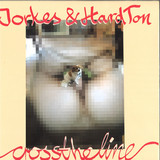
Taking inspiration from a vast musical sphere, the Munich-Vienna pair Jorkes are widely recognised for their open-minded and passionate approach to electronic music which is translated through their Freeride Millenium imprint and own unique productions. ‘Cross The Line’ will be the duo’s first outing since 2016 seeing them join up with the Italian pair Hard Ton who are known for releases on Wonder Stories, Luv Shack Records, Toy Tonics and many more. Jorkes invite Live At Robert Johnson artist Massimiliano Pagliara and Philpot founder SoulPhiction aka Jackmate for remix duties which tops off this distinctive release highlighting the openness and sensibility of their musical philosophy.
‘Cross The Line’ begins the EP with alleviating pads balanced harmoniously with alluring, heart-warming vocals and gentle keys drifting throughout before Massimiliano Pagliara delivers an infectious remix focusing on hypnotic bass grooves, effervescent drums and undulating pads fluttering naturally with the stirring modulations.
‘Jackmate’s Dub Mix’ deploys low-riding resonations fused with muffled tones and thrilling, shuffling rhythms within whereas ‘Jackmate’s 90s Mix’ focuses heavily on organic percussion rolling throughout with robust musical elements and looping vocals. SoulPhiction’s ’Dub Mix’ completes the pack with a tranquil take on the original laying focus on funk-infused instrumentals and subdued jazz drums.
A Colourful Storm compiles three tracks from the vaults of R. Campana & D. Reggi, two producers active in the early 2000's who released EP's on First Cut and, more notably, Groovepressure (home to Stopouts, A² and Robin Ball). Three-track EP revived from a period of European underground club music where breaks, electro and tech-house merged into unexpected new forms. Remastered by Mike Grinser at Manmade Mastering, Berlin.
Fleeing her Soviet ruled home of Tbisili at a young age with her parents, Saze grew up as a nomad living in Russia, France, Canada and the USA before finally settling down and pursuing a career in NYC. A classically trained musician and dancer, before long the Georgian turned her back on corporate life to pour her heart and soul into the arts. Becoming a diligent and versatile electronic music producer, DJ and live act, Sophia Saze is as comfortable sculpting intricate and atmospheric productions in the studio as she is decimating dancefloors with robust Techno and frenetic Breaks. Reflecting on her turbulent life and how it’s formed her own identity, Saze composed her aptly titled debut album, ‘Self’. Released on cassette in two instalments, ‘Part I’ dropped in June and was critically acclaimed with support from the likes of BBC 6MUSIC’s Tom Ravenscroft, Mixmag, DJ Mag, XLR8R, Resident Advisor, Future Music, Attack Magazine, TRAX, Tsugi, Ransom Note and Groove Magazine, with the latter drawing a parallel between hers and Burial’s music. Completing the journey, ‘Part II’ meanders through genres like Ambient, Hip Hop and Breaks, and features very personal insights including handpicked samples from Soviet television shows and VHS cassette recordings from her childhood. Hidden allusions of her classical music education bring up distant memories and melt together the organic but thoroughly electronic ambience. Crackles, hushes and hisses are elaborated so well that the record virtually gushes over the ears like mountain torrents. It appears peaceful and quiet, then rousing and it is sparked with bewildering sounds. It lets scattered beats arise from the thicket and drown again in streams of noise. But
After being unavailable on vinyl for several decades, the third album of iconic French duo Les Rita Mitsouko is made available for the first time with audio re-mastered from the original tapes by Bernie Grundman Mastering. The original packaging has been strictly reproduced along with the original tracklist featuring the hits ‘Singing In The Shower (Les Rita Mitsouko & The Sparks)’, ‘Le Petit Train’ and ‘Hip Kit (Les Rita Mitsouko & The Sparks)’.
Matasuna Records is thrilled to reissue another musical jewel from Peru on vinyl for the first time. The songs were recorded by the band Bossa 70 and released on a 7inch EP and the self-titled album in 1970. Both are much sought-after collector's items and impossible to find. The songs were transferred from the original master tapes and got a new mastering.
Nilo Espinoza Vascones or better known under his artist name Nilo Espinosa is without doubt a Peruvian saxophone and flute legend. After a classical musical education he entered the music scene in the early 1960s. In 1966 he founded the band Los Hilton's with some of the best Peruvian musicians including the gifted piano player Otto de Rojas. In 1967 they recorded the first and only LP of the group, which was released in a small edition in Peru.
Their concerts were more and more influenced by Jazz and Bossa Nova, so in 1968 they changed the band's name to Bossa 70. In the record label's office Nilo met the Afro-Peruvian Carmen Rosa Basurco, who also loved Bossa Nova and could sing in Portuguese and English. From then on she was the main singer of the band.
Bossa 70 recorded four songs for a 7-inch EP in an edition of only 100 copies, which was given away for promotional purposes at concerts and to friends & family. In 1970 they recorded their self-titled LP which reflected a mixture of Bossa Nova, Latin Jazz and Funk. The label pressed only 300 copies, which were sold out very quickly. This LP was the band's only album and is a rare piece of Peruvian music history.
Si Voce Pensa on the A-side is a great cover version of the same named song by famous Brazilian musician Roberto Carlos from 1968. Bossa 70 adapted the song for the dancefloor, which is driven by an uplifting rhythm and the expressive voice of the singer. Of course, the great interplay of the other musicians must not go unmentioned. A fantastic track that will heat up everywhere!
Birimbao on the flipside is another fantastic Brazilian cover version. The song was written in the 1960s by Baden Powell, one of the most important Brazilian guitarists and one of the pioneers of Bossa Nova. Bossa 70 set their own stamp with a new instrumentation with brass, wah wah guitars, piano, flute parts and trumpet solos. The percussion section is also a brilliant backup for this one. Another winner!
Are you ready for fresh blood! Some time ago, Tomorrow Is Now Kid! head honcho Alex Salvador and Jelle Meeuwsen aka "Pokopoko" met while spinning records and talking music at a party in Tilburg, The Netherlands. A big stack of demos got sent over to the TINK! headquarters and eventually a debut EP named "Petrichor" was created. A powerful four-tracker with a dusty and melancholic take on today's House music. It's raw and funky but changes vibes throughout, keeping it fresh. That said, "Petrichor EP" is an emotional rollercoaster and a tribute to the ever-changing and unpredictable Dutch weather.
DJ Feedback
Harry Avers:
"A solid EP."
Colin Dale:
"Great sound and a solid EP."
Jeff Barker:
"Iglozbub and Stipperflip are cool. Will support, cheers!"
Simon Huxtable:
"There's a distinct 90s UK house vibe to this EP. Good stuff."
Michael Serafini:
"Excellent! Petrichor and Hurdy Gurdy solid."
Jacques Renault:
"Always dig a new release from Tomorrow is Now Kid!"
Tim Haze:
"Very nice EP, will definitely play out. Soulful, funky, deep and energetic all at the same time. "
Mirco Violi:
"Very nice tracks."
Robert Monk:
"Quality proper Deep House cuts - love em all."
Eric Downer:
"Love the slowly unfurling start to the ep, 'Hurdy Gurdy', introducing things with floaty keys and jaunty percussion. this leads into the smart, sunny and upbeat 'Iglozub' which is snappy, bringing the mood up a little and spilling into the deep, meandering but no less uplifting 'Stipperflip' and a driven hi-hat dripping over a thick bass pump. Pokopoko saves the best for last, however, with all tracks leading to the majestic 'Petrichor', deep, dynamic and evolving with sweet, aching chords laced up with a crispy shaker and syrup-smooth bassline. Perfection."
Agus Arbol:
"House music at its best."
Severino Panzetta:
"Cool vibe."
Tunde Adams (DJ Caspa):
"Really nice ep here, will be supporting. "
Ben Gomori:
"Iglozub is stunning."
Al Bradley:
"Cool EP right here, saving the best to last with Petrichor doing the business!"
Timos:
"Nice work, I like it thanks!"
Paul Hazendonk:
"Lovely lovely vibe in Iglozub."
Times are Ruff:
"Nice work! Cool tracks."
Nathan Goode:
"Another fine release by TINK! Can't wait to play this one on air! "
MEAT:
"Great tunes!"
Robert Colon:
"This Is Some Beautiful Sexy, Dirty & Filthy House & I Am Loving It! I Will Be Smashing This Out."
Will Saul is a key figure in UK dance music. Approaching his twentieth anniversary as a DJ, producer and label founder, Saul has helped break the career of key artists such as Leon Vynehall, Midland and Dusky via his Aus Music label, has himself played some of the world’s finest nightclubs and contributed to !K7’s storied ‘DJ Kicks’ mix series, which he also curates.
Finally returning to the production fold himself with his first full-length album in thirteen years, ‘Open Too Close’ is a condensed trip through the influences, discovery and sense of history that have helped shape his career and drive a forward-facing, unblinking passion for new music. The record’s concept reflects Will’s enormous skill and knowledge as a DJ, and as it’s title suggests, “"represents what I play in a club if an 8 hour set was condensed into 10 tracks.”
Having held residencies and made regular appearances at some of the world’s finest clubs including The End and Fabric in London, Panorama Bar in Berlin, Trouw in Amsterdam and Robert Johnson in Offenbach, Saul is uniquely qualified but this refreshingly straightforward approach. Eschewing the lingering, almost cliched expectations for a dance artist to create an album “that sounds good at home, as well as in the club”, ‘Open Too Close’ instead draws on the timeless futurism at the heart of the music that drew Saul into electronic music culture. Simply put, futuristic, melancholic sci-fi soundscapes meets stripped back raw sample driven house music, all executed with the precision and panache of an artist who truly understands how to move a dancefloor.
It seems KPM have long been fans of Smith and Mudd and, after being introduced to each other by mutual friend Andy Allday, the peerless Balearic maestros were invited to contribute to the library label’s digital-only “Album Shorts” project. The results are predictably wonderful.
With past projects under our belt working with everyone involved so far it made perfect sense for Be With to take on the vinyl release of this instant library classic. But why is it called “Tea With Holger”?
“Holger” is of course Holger Czukay and the whole LP is dedicated to Smith and Mudd’s time spent with him and Ursa Major at Can’s famous Inner Space Studio in Weilerswist, near Cologne.
When not recording it seems they spent a great deal of time sat around being entertained by Holger’s stories and drinking many cups of different sorts of tea from all over the world. These moments provide some their fondest memories of their visits:
“Looking back, it was pretty incredible that we spent part of our lives with Holger in one of the most magical places we’ve ever known, Inner Space Studio. We have our memories and, of course, the Bison album we made with him. But to honour the time we spent with him, we wanted to dedicate an album to him called ‘Tea With Holger’. The names of the tracks are about that time.”
The album was recorded over several years in London, Margate and Gorthleck, a small hamlet in the Scottish Highlands. Mike Piggott, who played with Bert Jansch, handled the strings and played violin whilst Sam Creer lent his virtuoso cello work to the proceedings. The sessions employed a key recording technique from their time with Holger: hit record and play. They wanted to capture magical improvisational moments live and not do the work later on in editing.
In their own words (and in classic library record sleeve style) these tracks are collectively described as “Balearic themes including breezy soul, sun-dappled melodies, warm pianos and sweeping strings”. You want to hear this, right?
The album is vintage Smith and Mudd. The gentle piano ushering in opening track “The Gardener” is soon joined by low, bubbling drums. When the time is just right, lush guitars glisten above a Welsh language vocal that floats like silk. Easy as a sea breeze. “Innerspace” is of course a nod to Can’s aforementioned studio. Dark, heavy piano meets rolling drums before warm chords and luscious strings take over, gliding over moody grooves to drive you home. Closing out side A, “Weilerswist” delivers more beautifully rolling piano and guitars over thumping cellos and building drums.
Side B opens with the full, string-enhanced version of “Away From Me”. This is Smith and Mudd’s prefered version and it’s only available here on this vinyl issue. For us it’s the standout on this all-highlight album. Tribal tones, piano and cello set a melodic staccato for violin to soar over while rolling piano lines and gospel organ chords descend into a drum drop that leads to a glorious vocal lead finale.
Distant synths introduce sun-drenched guitars and uplifting strings in “Kölner Street”, before a spacey Moog solo leads to a spellbinding, sci-fi drop. The sunshine returns before the track ends. The album closes with “Tea With Holger”. Airy vocal swells are punctuated by plucked cellos and picked guitars, all wonderfully warmed by a soulful piano.
Cut by Pete Norman and pressed in the Netherlands by Record Industry, “Tea With Holger” comes in a classic KPM green sleeve complete with track descriptions from Smith and Mudd themselves. The finishing visual touches come courtesy of Richard Robinson. We’ve given this record the same care and attention as we give to each our KPM re-issues, and it’s just as essential.
Aaaron continues his journey through mystic synthesis with his 5th ep for connected , “Cosmic Soul”. It seems with each release he gathers more depth to his music and minimises his style and production to naked artwork in sound where each instrument has its space for the the listeners imagination. Abstract yet magnetic , tribal and futuristic. Sink in the shadows and rise on the waves.
1.COSMIC SOUL A rhythm section playing robotic funk against an esoteric drone meets a melancholic piano refrain and pleading vocal monotones that go dubwise. The landscape of the track rises and falls to a vocal and piano breakdown with electronic flutes piping in the distance , peppered with percussive stabs throughout as the emotive waves surge to find earth. Quite beautiful. 2.MERCY Synthetic textures reminiscent of Blade Runner 2049 form a backdrop for a skeletal drum figure, as soft Kraftwerk like notes filter in and out and a skinny sequencer drifts across the track like crosstown traffic. A vocoder pulse and dreamy synth horns hold the scene in the shade of a hot sunny day as the city flies by in stop motion. 3.ITS NOT OVER Imagine a classical symphony based on 2 or 3 chords , revolving and hypnotising by its simplicity and gradually rising in sonic temperature. Set against a drumscape of toms and unnaturally pitched and distorted snares and phasing plastic synth percussion like a drifting cloud of locusts. The vocal “Its not over between you and me” is haunting and irresistible and the song draws you in, mystified by its simplicity . Devoid of frills , cold and heartbroken yet the embers of passion still glow. Innocently executed , Aaaron at his futuristic high.
For COS_MOS's next trick they serve up a special 12” that features a brand new single from M>O>S super group R-A-G, also known as MaSpaventi, Aroy Dee and G-String. It comes backed with a re-release of one of the key tracks of the previously released Crystal Maze album on aDepth Audio. A fierce and full 45rpm re-cut of 'Dr Claw' that has been a secret weapon of Aroy Dee for many years. It's a raw cosmic adventure, with warm solar winds blowing over prickly drums. Twisted bass and knotted pads wrap round the groove as a detuned lead synth heads into a Legowelt-ish future. 'Larry Venom', stirs things up with a deconstructed, off kilter mix of beeps and drones with marching drums adding to the feeling that this is a robot party in meltdown. This is a brilliantly left of centre EP of intergalactic house.
Returning to his original Electro disguise Electro Nation, Thomas P. Heckmann returns with fresh and brand new material after 20 years! All that you love in original funky Electro is there, Robot voices (done with an ultra rare Texas Instruments Magic Wand), fat Bass, spacey effects and smooth as silk pads ! Enjoy the ride and stay tuned for more to come !
Electrocute Soundplates was never gone, but waiting in dark shades of the distopian underground...
Jatinder Singh Durhailay and David Edren released Tea Notes as a cassette back in April of 2018. London-based Jatinder Singh Durhailay is a painter and student of Indian Classical music. He has trained in both the sitar and the Hindi singing technique, Dhrupad. He also plays two traditional Sikh instruments; the bowed, stringed Dilruba and Taus. Poetic Pastel Press issued his solo debut, The Last Ballad Of Mardana, in 2017. David Edren`s expertise lies with machines and modular synthesis. His Kosmische and New Age-Inspired electronics have featured on numerous cassettes, and compilations, produced for imprints from the current Belgian underground, such as Jj Funhouse, Social Harmony, and Ultra Eczema. These recordings appearing, since the turn of the millennium, either under his own name, or the moniker DSR Lines. Jatinder and David’s collaboration, Tea Notes, is a celebration, a meditation, on both the beverage, and the communal time shared imbibing. The coming together to partake in its ritual. Each of the six tracks represents a different infusion. The opening piece is a tribute to semi-oxidised Oolong, from China`s Wuyi Mountains, with hammered dulcimer-like glissando. Gongs shimmering, gently crashing, as if signaling a change in the weather. A calm of thin, stretched synths and Ai angels introduces Tulsi from India. The Holy Basil of Hinduism, used in the worship of Vishnu, Krishna, and Rama. A traditional herb of Ayurveda and Siddha medicine. Automated arpeggiated sequences raising a vibrating wall of hallucinatory sound. Pairing swooning strings with a racing robot heart. Ceylon is a modern twist on the classical raga. Serving to tell the story of a tea smuggled into Sri Lanka in the 19th century. Plants stolen from South West China, where the brew had been enjoyed since the days of the Shang Dynasty (1766 to 1122 BC). The contraband founding fresh industry in its new home when the indigenous coffee crops failed. Muted organ and sleepy, treated sine wave microtones describe Kava, the Polynesian fireweed root, whose extract serves as both sedative and euphoriant.Shincha are the first young leaves of the season. Picked in Southern Japan and steamed to prevent oxidization, retain their flavour and green / gold colour. Their musical counterpart finds Edren establishing an ecclesiastical drone, while Durhailay`s strings chart an ancient romantic ache. Sonic stars shine. Singing out to the infinite, the universe, before dissolving into knots of Radiophonic Workshop noise.Melodies treated with subtle sustain and delay denote Pu-Ehr, from the Yunnan province. The only truly fermented black tea - made distinctive by the action of bacteria, moulds, and yeasts. Its musical themes hovering in the vapour trails, the atmospheres, they themselves create. Spiraling, soaring, reaching for the heavens, while pretty music box glitches - tiny chimes turned in on themselves. Catching, reflecting, like light at play on fresh running water. (words: Robert Harris)
Wewantsounds continues its collaboration with Bob Shad's grandchildren, Mia and Judd Apatow, to present a 2LP selection of 13 turntable-friendly Mainstream Records tracks recorded between 1970 and 1973 and showcasing the label's superb blend of Funk, Soul and Jazz. All tracks remastered from the original tapes, most of them released for the first time since their original release with a few highly sought-after ones. Liner notes by UK journalist Paul Bowler. The Mainstream sound is unmistakable: earthy, rich and funky, it's the signature sound of producer Bob Shad. After working with such geniuses as Charlie Parker, The Platters, Billie Holiday and Janis Joplin over three decades, Shad decided to go back to producing Great Black Music in the early 70s through his label Mainstream Records and started releasing a formidable series of jazz albums known as the 300 series. Released between 1971 and 1974, these albums are the main source of this set. Coincidentally, it opens with one of the two tracks on the tracklist not produced by Shad himself. Saundra Phillips' "Miss Fatback" is nonetheless fascinating as it's one of cult disco producer Greg Carmichael's earliest productions from 1975 (before he went on to produce Inner Life, Bumblebee Unlimited, Universal Robot Band with fellow producer Patrick Adams). The other track not issued by the Shad sound factory is Almeta Lattimore's 7" single "These Memories," a truly great soulful track from 1975 and now a sought-after classic on the international Soul scene. Shad's forte was Jazz, and the sessions usually used the best musicians you could think of, including Bernard Purdie, Billy Hart, Stanley Clarke, Dom Um Romao, Joe Sample, Freddie Robinson, Gordon Edwards, Larry Willis, Wilbur Bascomb to name just a few. Filled with gorgeous Fender Rhodes chords and heavy basslines, they define the unmistakable Mainstream sound which had one foot in the great jazz and bop tradition and the other in the sonic jazz explorations of the early 70s. Oscillating between jazzed-up covers of soul hits like Jay Berliner’s "Papa Was A Rolling Stone" or Afrique’s "Kissing My Love" and more introspective originals such as Hal Galper's "This Moment" or Dave Hubbard's "T.B.'s Delight", They all have this perfect balance between groove and depth. One perfect example is Pete Yellin's "Bird and The Ouija Board," a superb 12 min opus starting off with a deep abstract improvisation before switching to an up-tempo funk beat fueled by drummer Billy Hart and bass player Stanley Clarke.
Dance floor ready remixes of selected tracks from Kornél Kovács' Stockholm Marathon album.
Robert Dietz sending Rocks on a trance trip, D. Tiffany getting all deep & bubbbly with Purple
Skies. Paradise Alley perform their sing-along cover version of Marathon, Butch butchers Baltzar
“Bandiera Di Carta” represents the ongoing collaboration between instrument builder and composer Pierre Bastien and the
London based experimental duo Tomaga (Valentina Magaletti and Tom Relleen).
Bastien has been called a “mad musical scientist with a celebrity following” by The Guardian (UK) having collaborated with the
likes of filmmaker Pierrick Sorin, fashion designer Issey Miyake, singer and composer Robert Wyatt as well as Aphex Twin,
who released three of his albums on his label Rephlex.
Tomaga have made more than a dozen records since forming in 2014, pursuing a path of fearless experimentation and sonic
brinksmanship that has won them fans and plaudits from far and wide, including Thurston Moore, with whom they collaborated
on the CAN Project with Malcolm Mooney, Deb Goodge and others in 2017, as well as Wire, Silver Apples and Stereolab, with
whom they toured extensively in summer 2019.
The artistic collaboration between Pierre and Tomaga began with two commissions: from Fructose Festival in Dunkirk and the
revered underground festival Supersonic in Birmingham UK. Recording initially at a studio in the industrial port of Dunkirk, the
uneasy bond between borders and states seems to have been a theoretical motor to the collaborative sessions, as well as the
bleak landscape of the seaport frontier. This inspiration found further manifestation in the cover image for ‘Bandiera Di Carta’.
Resembling a white paper flag, it is, in fact, a photograph of Bastien’s paper and air sound machine installed on stage at
Teatro Carignano in Turin as part of the trio’s performance there. This charged, ambivalent image of a blank flag evokes the
transcendence of the national, a prescient visual motif that meditates on the contemporary uncertainty around notions of
national identity and borders but perhaps also a ‘carte blanche’ for the artists involved, in which they can deviate from the
confines of their usual practice into new and strange territories.
For each piece, Bastien’s unique sonic style: by turns his kinetic mechanoid motors, capriciously arrhythmic pipes, or the
peculiar susurrus of paper, creates a world in which Tomaga introduce their musical palette. Magaletti’s percussion anchors
these sometimes chaotic forces into beguiling syncopations, with Relleen’s synthesizer and organ work creating harmonic
counterpoints and interruptive provocations, to which Bastien responds with lyrical turns on prepared trumpet, rubber band, tin
foil and bass ocarina.
The results are curiously evocative of free jazz by the likes of Sun Ra or Art Ensemble of Chicago paired with the percussive
sound worlds of artists like Francis Bebey or Muslimgauze along with unique and sometimes bizarrely exotic tonal landscapes
of composers like Catherine Christer Hennix, Carl Stone, or Egisto Macchi. All three musicians seem to find space to bloom in
ways that are markedly different from their individual work and the resulting album is a strikingly original and powerfully bold
affirmation of what can happen when venturing beyond the normal in pursuit of the other.All tracks written & produced by Tomaga (Tom Relleen & Valentina Magaletti) & Pierre Bastien.
Mixed and mastered by Rashad Becker.
ubiyu launches their 1st EP out of Austin, Texas with a collaboration between Melodie & Robert Roman with remixes coming from Rowlanz and Halo Varga & Ra.Mod
Factory Benelux presents a limited edition vinyl album by Tunnelvision, the youthful Blackpool band who released cult single Watching the Hydroplanes on Factory Records in 1981. Just 500 copies of have been pressed on clear vinyl, matching the original Factory release.
Formed in 1980, the sombre post-punk quartet were mentored by Section 25 before impressing Rob Gretton and Tony Wilson at an early New Order gig in Blackpool in September 1980. Two songs from their first demo were mixed by Martin Hannett at Britannia Row and released as a 7-inch single (Fac 39) in June 1981, sleeved by Martyn Atkins in an opulent sleeve referencing dictionaries and leather-bound books. After several more gigs with New Order and other Factory artists Tunnelvision taped a second strong demo, mixed for release by Peter Hook. However the turbulent teenage band disintegrated before a second single emerged.
Newly remastered from the original analogue reels, Watching the Hydroplanes features includes all 8 tracks from their two Cargo demos, including the Hannett mixes of the title track and Morbid Fear. The set also features Emotionless, recorded live at Bristol Trinity Hall in March 1981.
The outer sleeve is printed using silver PMS with a matt varnish. The printed inner bag features new liner notes and an attractive facsimile flyer for a gig with New Order at the Forum, London, in May 1981.
Words from the label:
Our imprint marks its five years anniversary this year and to celebrate it’s offering up five special various artist packages across 2019 limited to 250 copies each, featuring material from the likes of Vid, The Mole, Cinthie, Shinichiro Yokota, San Proper, Akiko Kiyama, Com Sin aka Cosmin TRG, Subb-an and more..
Kicking off the third instalment of the series is San Proper’s ‘Your Call’, a robust yet dream house workout fuelled by choppy bass hits, fluttering synth licks and a shuffled analogue drum groove. Barcelona based trio Triad follow with ‘Room N’, a hypnotic house cut fuelled by ethereal chord swells, modulating percussion and vacillating bass tones.
Tokyo’s Iori Wakasa then rounds out the release with ‘Rave In A Village’, as the name would suggest embracing a classic house feel via a winding piano chord, twinkling piano melodies, crunchy drums and mesmeric pads throughout.
This project also sees a new design concept for the imprint from London’s David Surman’s painting installation project ‘Paintings For The Cat Dimension’ which ‘’explores the motif of the cat as emblematic of internet aesthetics, a place where all painting styles and modes now exist non-hierarchically as pure information.’’
- A1: They’re Back Again, Here They Come
- A2: I’ve Forgot My Number (Now I’m Telling You My Name)
- A3: All We Want Is Your Money
- A4: Can’t Sleep At Night
- A5: It’s The Only Way To Live (Die)
- A6: Stay Inside
- B1: Looking At You
- B2: Frivolous Disguises
- B3: Run
- B4: After All
- B5: Don’t
- B6: Screaming Dreaming
- C1: You Were So Young
- C2: Damage Your Health
- C3: Miranda
- C4: Media Menia
- C5: Surrender
- C6: Valium World
- D1: Can’t Sleep At Night (John Peel Session)
- D2: Frivolous Disguises (John Peel Session)
- D3: It’s The Only Way To Live (Die) (John Peel Session)
- D4: Valium World (John Peel Session)
180g Gatefold Double Vinyl with poster, sticker & badge
It was at the tale end of what would later be loosely termed ‘The Seventies’, in Lincoln, Merry England, that three teenagers formed, the consequencies of ther actions are captured here.
“You Were So Young” consists of everything that The Cigarettes ever recorded in what was their two year life span. From the very beginnings in the rehearsal room through to tracks recorded for an unreleased third single. It includes the two singles and their ip sides, some tracks that were included on a local compilation album, and their solitary John Peel session along with a handful that never found their way onto a record.
Their debut single ‘They’re Back Again, Here They Come’ , exchanges hands from upwards of £100 and ‘You Were So Young’ has been viewed on Youtube over 1.3m times.
The CD booklet and vinyl inner sleeves include an in depth interview with Rob and Steve, answering pretty much all there is to know about The Cigarettes
Over the years The Cigarettes have gained a wealth of interest, leaving many to scratch their heads and wonder how they slipped under the radar for so long.
- A1: (Da Le) Yaleo
- A2: Love Of My Life (Feat Dave Matthews)
- A3: Put Your Lights On (Feat Everlast)
- A4: Africa Bamba
- B1: Smooth (Feat Rob Thomas)
- B2: Do You Like The Way (Feat Cee-Lo & Lauryn Hill)
- B3: Maria Maria
- B4: Migra
- C1: Corazon Espinado (Feat Mana)
- C2: Wishing It Was (Feat Eagle-Eye Cherry)
- C3: El Farol
- D1: Primavera
- D2: The Calling (Feat Eric Clapton)
Double vinyl LP pressing housed in gatefold sleeve. Includes digital download. Supernatural is the eighteenth studio album by Latin rock band Santana, released on June 15, 1999 on Arista Records. After the group found themselves without a label in the mid-1990s, founding member and guitarist Carlos Santana began talks with Arista president Clive Davis, who first signed the group in 1969, which led to a new record deal. The pair collaborated with A&R man Pete Ganbarg on the production of Supernatural as Santana wanted to focus his musical direction towards pop and radio friendly material and proceeded to do so by collaborating with various contemporary guest artists, including Eric Clapton, Rob Thomas, Eagle-Eye Cherry, Lauryn Hill, Dave Matthews, Maná, KC Porter and Cee-Lo Green. Supernatural became a significant commercial success worldwide. It reached # 1 in eleven countries, including the US for 12 non-consecutive weeks where it is certified 15× Platinum. The first of six singles from the album, "Smooth" featuring Matchbox Twenty singer Rob Thomas, was a number one success worldwide and topped the Billboard Hot 100 chart for 12 weeks.
The rarest of all exotic LPs, like Eden Ahbez but with extra added death. This bizarre, rarely heard masterpiece brings together jazz, ancient manuscripts and a convicted murderer…
Issued originally in 1959 it originates from Pheonix, Arizona. The concept behind the recording was unusual - to brings together two unconnected worlds: the jazz genius of Buddy Collette with the academic oriental studies and translations of A.I Groeg.
Little can be found of A.I. Groeg, But before the LP was recorded A.I Groeg had translated several Polynesian and Japanese manuscripts. These form the basis of the dark narrations and lyrics across the album.
Sublime vocalist Marni Nixon (the voice of Maria in West Side Story) was brought in for two songs and fledgling actor Robert Sorrels (now a convicted murderer) supplied the strangely unsettling and almost otherworldly narration.
The original LP states that “Buddy was given carte blanche with the material. After six months of composing and studying with the voice soloists, the results were two instrumentals and two songs on side one, and tone poems on side two. The latter represents a new musical genre. They are musical descriptions, preceded by spoken lines, and they become tone poems or musical illustrations inspired by the islanders, their words and marvelous simplicity. The mood is complete, yet hovers strangely in the air like a vague tantalizing dream.”
I’d first heard the album in about 2010 on a bizarre bootlegged CD (edited strangely with exotic library music), and spent the next few years desperately trying to find an original pressing. About one copy turns up a year, it seems to be far rarer than the legendary Eden’s Island album and occupies a similar musical space. But this album has a little more death.
Heaven knows what new listeners will think of Polynesia, but it sure is a dark and weird musical trip. One I feel everyone should take.
Jonny Trunk 2019
- A1: Rainbow Deux (6 57)
- A2: Let Love In (6 14)
- A3: Sigh (4 08)
- B1: The Darkest Night (7 32)
- B2: Surrender Now (6 08)
- B3: Summer Is Her Name (4 37)
- C1: Are You Ready (3 18)
- C2: Streets (Keep Me Runnin’) (7 00)
- C3: Samba Dreams (3 20)
- D1: Let’s Go Deep (5 27)
- D2: We Should Be Laughin’ (3 45)
- D3: Wishful Thinking (4 00)
TThe melodically adventurous soul of Leon Ware continues its expression in his final opus Rainbow Deux, released on double vinyl on September 13th. The album features new songs recorded and performed by Leon before his health turned, leading to his transition on February 23rd 2017. Co-produced by Taylor Graves, it has stellar musical contributions from the likes of Kamasi Washington, Thundercat, Ronald Bruner Jr, Rob Bacon and Wayne Linsey.
Taylor Graves came into Leon’s musical family in 2002 when he, his brother Cameron and the Bruner brothers Ronald Jr and Stephen (Thundercat) were playing along with their schoolmate Kamasi at an L.A. jazz club. Taylor, Cameron, Ronald and Stephen became Leon’s band for his debut shows in Japan in 2002 and Taylor continued to work with Leon as his mentor and collaborator over the next 15 years.
“Leon was ALWAYS writing something or developing his musical palette” his wife Carol Ware tells us, so it’s impossible to pinpoint any single moment of Rainbow Deux’s genesis. Six of the songs go back to 2012/2013 and were released in 2014 as part of Sigh, a Japan-only CD collection heavy with Rob Bacon’s tasteful licks and Wayne Linsey’s piano vibes. The rest of the material comes from Leon’s sessions with Taylor.
Describing Leon’s and his process, here’s Taylor: “We’d start by having some great homemade food! Then a glass of wine ‘to slow down time’. After we’d have our fill and smoked our joints we’d go into his studio room to listen and create.”
The album was finished-up around August of 2016 in a back-and-forth between Leon and his go-to mastering engineer Toni Economides in the UK.
Leon worked on Rainbow Deux with life’s greatest challenge looming over him, yet it is one of his most focused and cohesive solo offerings since the 1980s. The entire record is a vibe: mellow, deep and smooth as silk. The lyrical themes are eternal, and the music is elegant, soulful and sensual.
The album opens with the hypnotic throb of “For The Rainbow”, coming on like a percussive, slow-mo house shuffle. Gilles Peterson is a fan. The exotic “Let Love In” follows, with its gradual-build Island Funk, intricate guitar picks and sassy female vocals. It explodes when it hits its stride. “Sigh” is the stylish slow jam close-out to side A. Serene guitars and polished drums create neck snapping funk, with a swaggering finger-snap strut.
Side B opens with the easy-burning broken-beaty “The Darkest Night”, the centrepiece of the album. Kamasi Washington’s lurking sax, restrained and beautiful, unfurls into the dank, sticky atmosphere of Thundercat’s signature creeping bass laid over his brother’s in-the-pocket drums. Leon’s vocals are perfect, a masterclass in seductive sax-soul.
“Surrender Now” conjures waves of vocals to swell and wash over the glossy piano, subtly bumping hip-hop drums and bubbling synth-bass stabs. It’s got the trademark Leon layers. “Summer Is Her Name” has Kamasi’s effortless, melancholic sunshine sax give way to rising tempos and propulsive rhythms.
“Are You Ready” is a total highlight (and we’ve been playing it out for ages). It’s a nimble groove of piano and synth rolling around Theo Croker’s sensual trumpet playing. Digi-soul at its finest. With lush G-Funk sensibilities “Streets (Keep Me Runnin’)” sounds like a lost Dam-Funk produced gem. All tough kicks and snares and street sounds. Leon’s hood pass will be forever intact.
“Samba Dreams” is the first of two tracks that bring a little Rio magic to Rainbow Deux. Leon created a whole body of work in partnership with Brazilian legend Marcos Valle that includes “Rockin’ You Eternally” - a hit for Leon - and “Estrelar” – a hit for Marcos. Leon channels his obvious love of Brazilian music here through more of Croker’s sumptuous trumpet, played over loose percussion. “Let’s Go Deep” is next up. A dreamy between-the-sheets quiet storm anthem and a real showcase for Leon’s vocals.
The dripping, honeyed harp-funk of “We Should Be Laughin’” marks the star turn of the brilliant Kimbra. Leon first met her on-stage to do an impromptu duet of “Inside My Love” during an open-air celebration of Minnie Riperton in July of 2014. Kimbra was working with Taylor on her music and he brought her to Leon’s house to do some writing. This was the result.
Warm synths radiate shuffling samba soul on “Wishful Thinking” as those Brazilian rhythms return to bring Rainbow Deux to a close.
During an apartment move Leon and Carol rediscovered some watercolours Leon had done years ago. One of these paintings had been dubbed “Deux Hearts” and Leon decided it should be on the cover of Rainbow Deux, getting as far as approving a draft concept for the artwork.
Carol has overseen developing that draft into the final gatefold sleeve. It brings together quotes, photographs and tributes in what is a reflection on the music, relationships and philosophy of the sensual minister.
Gerry “the gov” Brown, Leon’s long-time sound engineer, was by his side throughout the project, recording and mixing. The album was mastered by Toni Economides and Simon Francis’ additional sensitive work makes sure this double LP sounds like it should on vinyl.
Be With’s first ever release was Leon’s eponymous LP. Re-issuing that album planted the seed of a relationship that has grown to grant us the privilege of presenting his crowning achievement. We know that Leon’s fans all over the Earth will love Rainbow Deux. But we also hope that this album, the final entry in a phenomenal body of work, will reach new fans and find fresh conduits for the spirit of this oft-unsung hero of Soul.
Leon always said “they will get it when I'm gone.”
He also said that “the spirit never dies”…
Long overdue, here comes AIR LQD’s first full-length player, Repeat Itself, making up for the direct follow-up of his acclaimed vinyl debut released on the label in 2016. Mixing science fiction, social criticism and punk ethics in the most cryptic fashion, the latest entry in the discography of the taciturn Belgian groove-maker sees him pushing further his electronic experimentation. Delving into the meanders of the human consciousness through hazy and abrasive rituals, brainpowered by robotics, artificial intelligence and urban metamorphism. The weird looping echo of a man-machine drifting through a vortex of feral scratches and overworked machinery. Slowly moving towards the event horizon of a supermassive black hole, leading to unexpected aural aberrations full of hidden, past and new meanings. Giving a last disillusioned glance at our human condition facing technological progress and the toxicity of the outside world.
Will Saul is a key figure in UK dance music. Approaching his twentieth anniversary as a DJ, producer and label founder, Saul has helped break the career of key artists such as Leon Vynehall, Midland and Dusky via his Aus Music label, has himself played some of the world’s finest nightclubs and contributed to !K7’s storied ‘DJ Kicks’ mix series, which he also curates. Finally returning to the production fold himself with his first full-length album in thirteen years, ‘Open Too Close’ is a condensed trip through the influences, discovery and sense of history that have helped shape his career and drive a forward-facing, unblinking passion for new music. The record’s concept reflects Will’s enormous skill and knowledge as a DJ, and as it’s title suggests, “"represents what I play in a club if an 8 hour set was condensed into 10 tracks.” Having held residencies and made regular appearances at some of the world’s finest clubs including The End and Fabric in London, Panorama Bar in Berlin, Trouw in Amsterdam and Robert Johnson in Offenbach, Saul is uniquely qualified but this refreshingly straightforward approach. Eschewing the lingering, almost cliched expectations for a dance artist to create an album “that sounds good at home, as well as in the club”, ‘Open Too Close’ instead draws on the timeless futurism at the heart of the music that drew Saul into electronic music culture. Simply put, futuristic, melancholic sci-fi soundscapes meets stripped back raw sample driven house music, all executed with the precision and panache of an artist who truly understands how to move a dancefloor.
Occasionally prodigal, but ever-prodigious, Elliot Thomas AKA Etbonz weaves an 80-s/early 90's sci-fi cinema sound into a total recall of scattered memories.
Childhood play with starcom and Gobots. Soaking in cult classics like Robocop, Predator, and Big Trouble in Little China on VHS. DJing in spacey laser-lit rooms draped with sound-dampening curtains.
Side A leads with 'Blue Drink,' which is carried perfectly on melodic motifs designed for trance inducing, with a steadily crescendoing & irresistible rhythmic mantra.
Following this, 'Curtainbox Space World' flips the 'Jerry Garcia finds a 303' switch and accidentally opens a portal to some deep shamanic release.
Our secret agent in Oslo returns with another urgent communique in the Norsk Tripping series...Six more tracks selected from a private vault of dance floor dynamite, which takes in modern Italo, solid gold punk-funkery, synth-outs, outsider pop & 80's obscurities.
All given the sonic once-over for maximum playability...
As always, a VERY limited run.
- A1: Robert Arthur Moog - The Abominatron (1964)
- A2: Herbert Deutsch - Jazz Images, A Worksong And Blues (1967)
- A3: Joel Chadabe - Blues Mix (1966)
- B1: Lothar And The Hand People - Milkweed Love (1968)
- B2: Intersystems - Changing Colours (1968)
- B3: Ruth White - The Clock (1969)
- B4: Max Brand - Triptych (1969)
- B5: Paul Earls - Monday Music (1968)
In support of their forthcoming Bob Moog documentary Electronic Voyager, Waveshaper Media have produced a compilation LP of Moog recordings from the 1960s. The first compilation of its kind, Electronic Voyages: Early Moog recordings 1964-1969 contains tracks by Robert Arthur Moog, Herbert Deutsch, Joel Chadabe, Lothar and the Hand People, Intersystems, Ruth White, Max Brand, and Paul Earls. All of these tracks, released here on vinyl in an edition of 1000 copies, have been scarcely heard and difficult to track down, with all but three of them previously unreleased on vinyl.
Bypassing the Moog synthesizer’s backseat appearance on key pop recordings by the likes of the Beatles, the Doors, and the Beach Boys, Electronic Voyages aims to highlight the diverse approach of 1960s musicians and composers who adopted the Moog as their primary instrument; these recordings all feature the Moog synthesizer front and centre. Beginning with an “audio letter” (The Abominatron) from Bob Moog to his musician-muse Herbert Deutsch, demonstrating some of the first Moog synthesizer prototype’s capabilities, Electronic Voyages veers from avant-garde and electronic soundscapes, to psychedelic madness and summer-of-love pop. In the 1960s, the Moog synthesizer was a new, groundbreaking instrument, and its use was completely uncharted territory. The pioneering use of the Moog on all of these recordings sounds fresh today - you can sense the wide-eyed exploratory delight unfolding, and the disparate results range from endearingly naive (Lothar and the Hand People, Paul Earls) to downright eerie (Ruth White, Intersystems).
The musicians and composers behind these Electronic Voyages may have been among the first to adopt Moog synthesizers, but the fact that they so readily found within them expressivity, heart, and a means to translate their wondrous sense of discovery, speaks far more to Bob Moog’s visionary invention and enduring legacy.
The visionary singer, songwriter and composer returns to her Havana roots
A sun-baked, vibrant record backed by a killer band of fellow Cubans The new album from Daymé Arocena is a vivid return to her Havana roots. Backed once again by a killer band of fellow Cuban musicians, the visionary singer, composer and songwriter has stripped everything back to the core. Holding sessions in a simple, repurposed artist’s studio in Havana, Daymé produced the record herself, taking the reins to make “Sonocardiogram” her most raw and arresting outing yet.
A jazz-tipped record rooted in the rhythms of rumba, she draws on the island’s intertwined rituals of family, music and religion. Ringing with echoes of the greats, songs nod to the likes of Tito Puente and La Lupe, inspirations which carry the sound of Cuba’s sun-baked, vibrant daily existence. Odes to Santería deities are underscored by the sacred frequencies of the batá drum, translated to be played on a Western drum kit. It’s an intoxicating window into a singular artist’s worldview. An important voice in Latin music, Daymé has collaborated with influential peers in Cuban music, like Roberto Fonseca, and US heavyweights like Dexter Story and Miguel Atwood-Ferguson. From a recent appearance at Primavera Festival, to sold out tours across Japan and the US, her spectacular live show continues to draw crowds around the world.
The Brazilian singer-songwriter and guitarist Joyce Silveira Moreno was born and raised in the middle of Copacabana, a short beach stroll from the epicentre of the bossa nova universe.
Her father was a Dane that had settled in Brazil, but she was raised by her mother and step-father in a typical Portuguese-Brazilian household. Since her older brother was friendly with
leading lights of the bossa nova movement such as Roberto Menescal and Eumir Deodato, she was steeped in the form at an early age and witnessed its key evolution first-hand. At the
age of 16 in 1964, she was taken to the studio by Menescal to contribute to the coveted debut album by the mythical group Sambacana, assembled to record the work of composer Pacífico
Mascarenhas when the meagre budget would not allow the vocalists he preferred. Knowing that a full-time career in music was certainly not guaranteed, she began studying journalism
in 1967, shortly before her controversial song “Me Disseram” reached the finals of Rio’s second International Song Competition. The following year, her self-titled debut album was
released by Philips, produced by Armando Pittigliani, with orchestration by Dorival Caymmi and arrangements by Gaya; along with her own compositions, the album also featured songs
by her rising-star friends, including Caetano Veloso and Marcos Valle.
Heady, deep dive into techno's more psychedelic spaces, true to form, "Dimensions Doors" EP kicks off with the rolling kicks of "Portal Opening", a trippy exploration of shifting ambiances and rhythmic noise, punctuated by a siren tone. AWB steps up with a broken beat remix of "Portal Opening", layering Clotur's ambiances over low-slung percussion. "Hyperspace Travel" brings up the energy with galloping kicks and rippling resonant synths. BLNDR follows up with a pounding remix, building Clotur's sweeping textures into trippy loops circling over a monolithic kick. "Irregular Frequencies" pulls even further into the portal, with a relentless, rubbery synth squelching along over driving, percussion. Clotur lays a gentle, but uneasy atmosphere over this trippy tool. He brings us back down with "Forbidden Level", another complex rhythmic track featuring glitchy percs and robotic warping over a tough low-end workout.
An extremely rare album left by Detroit-based jazz keyboard player Johnny Griffith known for the album "Together, Togetherness" on RCA. An album covering "From The Music Connection" with Freddie Redd Quartet and Jackie McLean. The Music From "The Connection" was composed by jazz pianist Freddie Redd for Jack Gelber's 1959 play The Connection. This first recording of the music was released on the Blue Note label in 1960. It features performances by Redd and Jackie McLean Jack Gelber originally planned for the play to feature improvised music performed by jazz musicians who would also play small roles in the production. Freddie Redd, however, persuaded Gelber to include his original score. Redd re-recorded the score later in 1960 as Music from the Connection.
In 1974 The pianist Johnny Griffith, who was a member of the prestigious Motown rhythm section "Funk Brothers", covered the album "The Connection" by Freddie Red as a whole album, playing electric piano here, which really changes the vibe of the music - and the players are supposedly a host of Motown studio musicians - playing jazz here, but with a nice funky soul undercurrent. Originally released on Detroit Geneva Label.
Pianist Johnny Griffith can be heard on classic Motown sides, as well as on recordings from other Detroit-area labels. Like Motown's other pianists, Joe Hunter and Earl Van Dyke, Griffith's had an extensive musical background.
Signed to Motown's Jazz Workshop label, he recorded the albums "Detroit Jazz" and "The Right Side" of Lefty Edwards. When the march of the Motown hits began, Griffith started playing on sessions for their R&B/Pop acts. But rather than signing a work-for-hire contract with Motown like other musicians, Griffith remained a freelancer, doing other dates and sessions in New York and nearby Chicago.The Motown hits that Griffith played on include: Marvin Gaye's "How Sweet It Is (To Be Loved By You)", his celeste trills are heard on "Mercy Mercy Me (The Ecology)", adding Wurlitzer electric piano on both Gaye's "I Heard It Through the Grapevine" and the Temptations' "Ain't Too Proud to Beg", organ on the Supremes' "Stop in the Name of Love and organ and shotgun effects on Junior Walker and the All Stars' "Shotgun.
Griffith's non-Motown hits are with Edwin Starr, Jackie Wilson, The Chi-Lites, and Young-Holt Unlimited's "Soulful Strut" In the '90s, Griffith was still active on the Detroit club scene.
Roberto Surace and Cosmin Horatiu head to Bamboleo to close August with their split EP ‘Sintonia’.
Launched in early 2019, Neverdogs’ Bamboleo Records imprint has quickly emerged as a go-to outlet for fresh productions for the industry’s biggest names within house and tech house, with support over the first four releases to date from the likes of Marco Carola, Stacey Pullen, Jamie Jones, Paco Osuna and Oxia to name just a few.
Next up, the Italian duo welcome Rome’s ‘man of the moment’ Roberto Surace, following releases on NONSTOP, elrow and Noexcuse, and rising Romanian talent Cosmin Horatiu as each artist delivers two tracks forming their split release entitled ‘Sintonia’.
Roberto Surace’s ‘Sintonia’ opens the package as the Italian opts for slick, rolling grooves that snake amongst soft floating melodies, before easing into second track ‘Subtitle’, featuring hazy synth lines, punchy kicks and rich chord patterns throughout.
On the flip, Cosmin Horatiu’s ‘Milk & Egg’ ups the energy levels with metallic drum shots, off the wall vocal samples and bubbling bass patterns, whilst switching things up and laying the focus on organic percussion hits and sizzling hats with closing production ‘Make It Rain’.
Spencer Parker returns to Rekids with looping techno roller ‘You’re Under My Control Now’ featuring remixes from Truncate, P.Leone, Fadi Mohem and label boss Radio Slave.
Released on last year’s ‘Dance Music’ album via Parker’s own Work Them Records, ‘You’re Under My Control Now’ is an infectious and mesmerising techno banger that’s garnered support from the likes of Midland, Len Faki, Amelie Lens and Marcel Dettmann.
One of the track’s biggest supporters, Radio Slave is now releasing it on Rekids with a medley of top tier remixes. Radio Slave’s reimagining scales back on the original’s high-octane energy, instead taking a more uplifting direction with an arpeggiated bassline, meandering synths and clattering percussion.
A regular on Seilscheibenpfeiler (alongside artists like FJAAK, Solid Blake and Kasper Marott), Fadi Mohem is next with a dark and atmospheric rendition complete with driving kicks, subterranean chords and echoing effects before Truncate serves up his cavernous ‘Mind Control’ Remix which combines tantalising melodies with robust drums and murky vocals.
E-Missions co-founder P.Leone and Radio Slave, having paired up for a remix of Deep Dimension last year, collaborate again here to provide a robust, compelling piece of house music littered with breathy samples and oscillating atmospherics.
- A1: Friendly Fires
- A2: Dirty Disco
- A3: C.p
- A4: Loose Talk (Costs Lives)
- A5: Inside Out
- A6: Melt Close
- B1: Hit
- B2: Babies In The Bardo
- B3: Be Brave
- B4: New Horizon
- C1: Knew Noise
- C2: Up To You
- C3: Girls Don’t Count
- C4: After Image
- C5: Human Puppets
- D1: Charnel Ground
- D2: Haunted
- D3: Je Veux Ton Amour
- D4: One True Path
- E1: Loose Talk (Costs Lives) (Live)
- E2: Human Puppets (Live)
- E3: Knew Noise (Live)
- E4: Friendly Fires (Live)
- E5: Girls Don’t Count (Live)
- F1: New Horizon (Live)
- F2: Haunted (Live)
- F3: You’re On Your Own (Live)
- F4: One Step Backward (Live)
- G1: Always Now
- G2: Visitation
- G3: Regions
- G4: The Wheel
- G5: No Abiding Place
- G6: Once Before
- H1: There Was A Time
- H2: Wretch
- H3: Sutra
- I1: Fallen Monument
- I2: Are You There?
- I3: Virtually Everything
- I4: Tape Loop
- I5: Subferior
- I6: In The Garden Of Eden
- I7: Cry
- J1: Red Voice
- J2: Floating
- J3: Reading Uni Jam With New Order 1981
Factory Benelux is proud to present a deluxe 5 disc vinyl box set edition of Always Now, the debut album by cult Factory Records group Section 25, produced by legendary sonic architect Martin Hannett and sleeved by Peter Saville.
All tracks are newly re-mastered from the original quarter-inch tapes. The first 1000 copies of the box set are pressed in coloured vinyl: disc 1 (black); disc 2 (clear); disc 3 (yellow); disc 4 (red); disc 5 (silver). The outer case in printed in PMS 123 with spot varnish.
The 16 page booklet features unseen images by noted photographer Philippe Carly and texts by founder members Larry and Vin Cassidy. Also included is the first ever interview with guitarist Paul Wiggin, whose sudden departure in late 1981 saw Tony Wilson try (and fail) to recruit pre-Smiths teenager Johnny Marr as replacement.
Recorded as a trio at Pink Floyd’s Britannia Row studio in London in January 1981, Always Now combined austere post-punk rhythm and noise with elements of Can, Krautrock and modern psychedelia. Key tracks include Friendly Fires, Dirty Disco and New Horizon, along with C.P. (a collaboration with Hannett) and Hit (extensively sampled by Kanye West for the track F.M.L. on his 2016 album The Life of Pablo).
Disc 2 gathers together several non-album singles from 1980 and 1981, including Charnel Ground, Je Veux Ton Amour and debut EP Girls Don’t Count – the latter produced by mentors Rob Gretton and Ian Curtis (of Joy Division).
Disc 3 offers a complete live show professionally recorded at Groningen (Netherlands) on 26 October 1980, as part of a Factory package tour.
Disc 4 is part-improvised second studio album The Key of Dreams, recorded and produced by the band themselves a few months after Always Now, and released by Factory Benelux in June 1982.
Disc 5 consists of further experimental material recorded in 1981 and self-released on a cassette called Illuminus Illumina. This final disc closes with an extended (and previously unreleased) live encore jam recorded with all four members of New Order at Reading University on 8 May 1981.
“One of the best albums Britain's second city has unleashed” (Uncut);
“In 1980 their bass-driven mantras were thoughtlessly dismissed as second-rate Joy Division, but hindsight judges them more kindly. The wind-dried skeins of their blasted guitar harmonics and skimped electronics gauntly cling to the songs’ skeletal frames. With telltale titles like Babies in the Bardo their Buddhist interests hang heavy over these early stirrings. But, combining a bass-led drone with a characteristic groaning vocal, Charnel Ground succinctly pins down Section 25's pre-disco appeal” (The Wire)
incl. Download Code
In-demand deep modal jazz tune from Belgium featuring Babs Roberts!
The lesser-spotted jazz atoms that formed the fusion of Futurist Flanders! It might sound like an ambitious claim but having been a firm fixture at the top of many European jazz collector want lists over the past decade Finders Keepers wouldn’t be alone when proclaiming this extremely rare, lesser-known two-track 7” from 1969 as one of the best jazz 45s of all time! Alongside Polish pianist Krzysztof Komeda’s soundtrack 7” for the film Cul-De-Sac and ranking closely with François Tusques’ commemorative Le Corbusier exhibition 45 (featuring Don Cherry) this format-specific release known only as Brussels Art Quintet might well sit at the top of the podium while striking similarities and arguably combining the best stylistic traits of both aforementioned contenders.
This is all speculative and clearly a matter of individual opinion but it’s not often that one should find a recording from this era, comprising such high production qualities, keen compositional values and robust craftsmanship spread across two equally spellbinding individual tracks, all of which awards this record justified hyperbole albeit subject to a 50 year delay. It is safe to say that this unique release is “rare” on many levels. Like all privately pressed art projects this 45 comprises some serious outsider art trappings. However, on closer inspection it also stands as a pivotal record in the micro-genre of Belgian jazz, pin-pointing an early axis for some vital progressive jazz players who went on to become sturdy pillars of the central European happening.
Essentially as a five-piece, the short-lived Brussels Art Quintet neatly combines members of both the mythical Babs Robert Quartet (early exponents of Belgian spiritual jazz) and key players from the leading progressive jazz/rock/funk unit known as COS (formally Classroom) who would stand as close affiliates of the likes of Marc Moulin, Kiosk and Placebo through the 1970s. Reproduced in close collaboration with COS leader Daniel Schell, who, under the early guise of Daniel “Max” Schellekens, authored both tracks that make up this facsimile 45 single, this one-off single includes the only known output by the Brussels Art Quintet thus marking the essential in-road to instantly start and complete your entire BAQ collection not without reliving the early germination of the froward-thinking jazz fusion that came to shape Belgium’s truly unique movement.
'Broken Toys' showcases the prodigious talent of Eshan Gopal andcaptures the essence of 70s soul and disco, yet it sparkles with more than enough retro-futurist fireworks to light up the pop horizon.Arranged and performed to perfection, this soulful track delivers feel good nostalgia and is elevated further by the young lead singer voice, which can only describe as the king of pop's second coming.
Carrying heartfelt messages about love, moving on and growing up, coupled with warm and uplifting instrumentation; 'Broken Toys' is a breath of fresh funk and soul without being marred by controversy. Its pure, exciting and enjoyable music for any age and The Tribe of Good have totally nailed down every element of this soul groove.
On the flip of the vinyl is a 'Percapella' which features these stunning vocals layered with a stripped down percussion backing. Offers a weapon clean enough to shake things up in your DJ mixes.
The Tribe of Good are the secret weapons behind your favourite chart hits. The super group steered by Grammy-nominated producer Hal Ritson (Chemical Brothers, Katy Perry, Duke Dumont, High Contrast) features an array of producers who have worked with the likes of Nas, Cee Lo, Taylor Swift, alongside a cast of musicians such as Basement Jaxx singer Vula Malinga and Jamiroquai guitarist Rob Harris to highlight a few.
LOFTSOUL x Miruga release cover version for Nina Simone's masterpiece See Line Womanon
10inch vinyl format. LOFTSOUL is the project by DJ/Producer UCHIKAWA MASAHIKO well known as Rhythm Of Elements (R2 Recordings/UK).For this Nina Simon's cover song,LOFTSOUL collaboration with Miruga (Moods & Grooves/Detroit) And featuring London's JAZZ/SOUL singer Fae Simon.
Also there include great "DUB" version by DJ D a.k.a Dominic Dawson (well known as release from Noid Otherand Reel Houze project with Rob Mello).
Marking the 15 year of Nina Simone's death,LOFTSOUL release cover version of her masterpiece See Line Womanas tribute.
See Line Womanis fantastic afro percussive number.This song is popular for club scene by 98's Kerri Chandler(Songstress)'s remake and 07's Feist's cover. LOFTSOUL x Miruga cover this song vibrant
Jazz/Soul Number. Original Versionis superlative Jazz/Soul version. There features beautiful harmony with Fae Simon's vocal and Soul-T's piano on the afro mystic groove (about BPM 90)
On the flips side ,Dominic Dawson a.k.a DJ D deliver fantastic "Dub Version" as (Dominic Dawson Dub Reversion)with afro percussive rhythm and dub wise sound&groove.
Release from UNKNOWN season x Jazzy Sport as special limited 10inch issue.
Anthony Reynolds was born in South Wales in the early seventies. Between 1993 and 2004 he was founding member of the groups Jack and Jacques, releasing five albums. Since 2004 he has released various albums and also worked as a writer, publishing four biographies which have been translated into 14 languages and two volumes of poetry which haven’t been translated at all.. He has collaborated with the likes of Momus, Dot Allison, Peter Walsh (Scott Walker), Colin Wilson and Vashti Bunyan.
This new album features contributions from Robert Dean (Japan), Carl Bevan (60FT Dolls), Richard Glover (Dub War) Fiona Brice (composer/ violinist who has worked with the likes of John Grant and Placebo) and Kirk Lake.
Renate Schallplatten's eighth release comes from Michal Zietara with Olympia Europa. The four-track EP, the Polish-born, Bavaria-raised, Berlin-based Renate resident's solo debut features three originals plus a remix from Ian Pooley.
Opener "Mr. Joy" is a late-night uptempo jam with a punchy bassline and warm pads. Chopped vocal samples come to the fore around the breakdown, raising the tension for maximum euphoria upon the beats' return. Ian Pooley's flowing remix on the A2 is in the signature '90s filter house style. The vocals lead the way, adding some warmth to a rather stripped-back affair. It's another peak-time cut that makes you want to close your eyes and move to the music. The punchy beats and upbeat melodies return on "Euro Robot," this time paired with intricate drums, fluttering vocals, and high-pitched keys. Closer "Pink Seal" is more downtempo and pensive, centered around coherent vocals and smooth pads. The beats feature less prominently, even fading away after a brief midsection. It's a cerebral track; a moment of self-reflection in an otherwise upbeat, high-energy EP.
The EP is Renate Schallplatten's second of 2019, following Longhair's label debut. Earlier EPs have landed from Moscoman, Sebastian Voigt, Wareika, and more.
Good For You present a special Paradise Garage inspired 12 Inch sampler from the upcoming ‘Paradise Garage : Inspirations’ compilation, featuring two of Kenny Summit's collaborations with the Director's Cut duo, and Godfathers of House, Frankie Knuckles and Eric Kupper. Neither of these tracks have ever been pressed to vinyl, so this is your chance to own these masterful tracks cut loud and proud on either side of a 12 inch.
The A side houses the last ever Frankie Knuckles production, a project Frankie and Summit worked on with Eric Kupper - remixing 'You'll Never Find Another Love Like Mine' by the legendary Lou Rawls – pure soulful house brilliance from the very first second. On the flip you’ll find a further Kenny collaboration with the dynamic duo entitled ‘Loving You’ – the trio teaming up to deliver a stunning Motown inspired dance floor stomper with an uplifting vocal by the one and only Yasmeen. Two certified anthems that have had heavy rotation with DJs like Cajmere, Grant Nelson, Sonny Fodera, Quentin Harris, Robert Owens, Tony Humphries, Danny Rampling, John Morales, Graeme Park, Pete Tong and still continue to get played the world over.
These tracks form part of a wider compilation, ‘Paradise Garage : Inspirations’ that contains unreleased remixes of iconic club tracks like Loves Last Episode‘s remix of Deee-Lite‘s ‘Power Of Love’, and seminal club classics like the Masters-At-Work remix of Todd Terry‘s anthem ‘Sume Sigh Say’ and Francois K’s “Time & Space.”
Both this sampler and the full compilation feature a masterpiece of cover art designed by Alexander Juhasz, the artist behind the award winning films The Little Prince and The Babadook.
The collaboration between influential German artists Klaus Schulze and Pete Namlook led to the famous The Dark Side of the Moog series. The fifth volume in the series consists of the song “Psychedelic Brunch”, split into 8 parts. It’s one of the calmer albums, featuring Bill Laswell as an extra composer. It starts with a 14-second intro by the master, Robert Moog, himself. The sound design is amazing and offers everything from ambience, atmospheres and sequences. The mellotron and psychedelic parts showing the different perceptions of the composers.
The pioneering composer Klaus Schulze created over 60 albums during his career, which started back in 1969. Pete Namlook is another German composer, who played an important role in the increasing popularity of electronic music.
Available on vinyl for the first time in 40 years, Outernational Sounds proudly presents a cornerstone document from the Los Angeles jazz underground, Flight 17 – the first appearance on record of the legendary Pan-Afrikan Peoples Arkestra, led by their founder and mastermind, Horace Tapscott.
"The Arkestra would allow the creativity in the community to come together, would allow people to recognize each other as one people and ask, “Now what can we do to make this community better? What can we do for this community together?”...That’s how the Pan-Afrikan Peoples Arkestra – the Ark – began, with the knowledge that we wanted to preserve the black arts in the community."
Horace Tapscott
Horace Tapscott’s Pan-Afrikan Peoples Arkestra (P.A.P.A.) was one of the most transformative, forward-thinking and straight-up heavy big bands to have played jazz in the 1960s and 1970s. Countless musicians passed through its ranks, and in Tapscott it was led by a musical visionary who should be ranked with the very greatest names in the music. If P.A.P.A. doesn’t have the interstellar rep of that other famous Arkestra, and if the name Tapscott doesn’t ring bells like Monk or Tyner, there’s a reason why: in an industry dominated by record labels, a band that doesn’t record doesn’t count. And the Pan-Afrikan Peoples Arkestra didn’t record for nearly twenty years. But recording success was never their concern – they weren’t about that.
First formed as the Underground Musicians Association in the early 1960s, Tapscott always wanted his group to be a community project. From their base in Watts, UGMA got down at the grassroots. They played for the people, organising fundraisers in parks and coffee houses, hosting teach-ins and workshops for young and old, and mixing it with radical theatre groups, firebrand poets, political radicals, Black separatists, community groups and churches. They lived communally, supporting each other and their people, and built an ark for the Black arts in the heart of the city. The group was renamed the Pan-Afrikan Peoples Arkestra in 1971, and soon after they established a monthly residency at the Immanuel United Church of Christ which ran for over a decade, while still playing all over LA and beyond. But through all this, they never released a note of music.
It was the intervention of Tom Albach, a fan of Tapscott and the group, that finally got them on wax. Determined that their work should be documented, Albach founded Nimbus Records specifically to release the music of Tapscott, the Arkestra, and the individuals that comprised it. The first recording sessions in early 1978 yielded enough material for two albums, and the first release was Flight 17. From the surging avant-gardism of Herbie Baker’s title track to the laid- back summertime groove of Kamonta Lawrence Polk’s ‘Maui’, or Roberto Miranda’s uptempo Latin jam ‘Horacio’, Flight 17 showcased the radical voices of the Arkestra’s members. Led out by Tapscott’s hard-swinging piano, this is the first flight on wax of the West Coasts’ foundational community big band – energised, hip and together. Open up the gates and prepare for departure!
This edition of Flight 17 contains two tracks previously only available on the 1997 CD edition: ‘Coltrane Medley’ and ‘Village Dance’, recorded live at the Immanuel United Church of Christ. It is released as a limited vinyl-only edition on a 180g pressing by Pallas. Fully licensed from Nimbus West founder Tom Albach.
- A1: Why Am I A Rastaman
- A2: Revolution
- A3: Going Home
- A4: Rolling Stone
- A5: Humble African
- A6: Where Is The Love Feat. Marcia Griffiths
- A7: Poverty
- B1: Too Much Ginals
- B2: Never Give Up
- B3: Weeping
- B4: It's Hard To Live
- B5: Fishes & Fry
- B6: Home Grown Feat. Morgan Heritage
- B7: Poor People Hungry Feat. Tony Rebel
Wiederveröffentlichung des Albums aus dem Jahr 2000! - "Humble African" ist für viele Experten der beste Longplayer, den Roots-Ikone Culture aka Joseph Hill in den 90er & Nuller Jahren veröffentlicht hat. Mit den Gästen Marcia Griffiths, Morgan Heritage und Tony Rebel sowie einer starken Besetzung an Musikern als Rhythmusgruppe mit kompletten Bläsersatz von Dean Fraser (Saxophon), Chico Chin (Trompete) und Nambo Robinson (Posaune). Am Mischpult saßen bei der Aufnahme die Toningenieure Errol Brown und Shane Brown, den finalen Mix übernahm Stephen Stanley unter der Federführung des Produzentenduos Lynford "Fatta" Marshall & Collin "Bulby" York aka Fat Eyes Team.
Masks is New York duo comprised of Max Ravitz aka Patricia (L.I.E.S, Opal Tapes, Ghostly) and Alexis Georgopoulos aka Arp (RVNG Intl, Mexican Summer, DFA, Smalltown Supersound). The aptly titled EP2 is (yes, you guessed it!) their second release, preceded by their Opal Tapes debut Food Plus Drug (II) — which gained support from Legowelt, Mount Kimbie and Boomkat — and a compilation appearance on esteemed Beats In Space 15 year anniversary 3xLP.
On paper, it might strike one as a strange duo. Ravitz’s work leans heavily on house and techno, but his recent work has been focused towards emotive melodies of IDM. And Georgopoulos has been busy creating minimalistic classical music for RVNG and most recently made waves with his critically-acclaimed album Zebra, which combined elements of 4th World and cosmic jazz.
All the tracks making up EP2 were made as live performances. No overdubs. Nothing "in the box". Just classic hardware and a strong vibe.
Opener "In This Room" is the sound of a NY summer sunset, pivoting on a hypnotic rotation of orange-hued chords. "Emotional Response" displays a different side of the group. Combining a 909 with a piano tug, it could provide that perfect soundtrack to a cathartic cry on the dancefloor.
On the flip side, "In Another Room" is dreamy techno par excellence, before sliding into an acid chugg for the ages. Bookworms smears the sun of "In This Room" into a 4am whirl, all purple lights and mountains of fog.
The cover artwork features the artwork of Sanou Oumar, a recent emigrant from Burkina Faso, West Africa. He graduated from the University of Ouagadougou in 2007 and moved to the United States to seek asylum in 2015. He currently lives in the Bronx and works in Harlem, New York. In 2018, Oumar had his first two-person exhibition (with Matt Paweski) at Gordon Robichaux in New York, and in 2019 (with Elisabeth Kley) at South Willard in Los Angeles, curated by Matt Connors.
Carlo Onda vinyl debut represents the Neue Deutsche Welle reinterpretation as it must. Truly vanguard and fresh minimal synth and perfect Germanic vocals that transport us to splendor days of Grauzone, DAF, Joachim Witt or Robert Görl. All tracks have been specially remastered for long cut vinyl by Eric Van Wonterghem at Prodam Berlin.
“Stop here!” exclaimed Robert Oumaou as we passed a mango tree on the side of the road just outside of Point-a-Pitre, the balmy capital of Guadeloupe. He filled a plastic bag with ripe fruit, and we set off on our journey across the small Caribbean island in search of musicians he hadn’t seen in years. On the way, we shared stories in broken French and English, stopping at truck stops to eat delicious fried fish. Robert took me to his hometown, and placed a mango and a flower on the grave of his teacher and mentor, a local poet. The seeds of Vwayajé (Traveller) were sewn on this trip, but shortly after returning home, I heard that Robert was ill, and he sadly passed away in 2018. This compilation was originally intended as a way to share Robert’s brazen work with a wider global audience, but it now also serves to immortalize his indomitable spirit.
Gwakasonné is the ecstatic articulation of Robert Oumaou’s artistic and political vision, a unified expression of his interests in American jazz, pre-colonial rhythms, Guadeloupian independence, and Créole poetics. Over the course of three albums, all released in the 80s, Robert piloted a revolving cast of musicians, a venerable who’s-who of Point-a-Pitre avant-jazz pioneers, to deftly intone his creative communal concepts. The songs on Vwayajé are compiled from these three releases, Gwakasonné, Temwen, and Moun, along with an electronic mantra taken from his 2007 solo album Sang Comment Taire. Viewed from our current artistic and cultural landscape, Robert’s work is exceptionally enduring, grounded in its declarations of freedom and foundational use of the Ka (drum) and voice, and prescient in its borderless explorations of protest folk, electronics, ambient atmosphere, music from the African diaspora, and spiritual jazz. The long-form hive-mind expression of the group has parallels with similar explorations by The Grateful Dead, electric
Miles, Pharaoh Sanders, and even the Boredoms, but these are only oblique references for a truly peerless sound. Like other conceptual children of Gérard Lockel, the group was part of a progressive movement of like-minded musicians, such as Serge Fabriano, Dao, Erick Cosaque, and Gaoulé Mizik, who embraced Lockel’s modernist ideals, fusing Gwo Ka drumming and tuning systems with contemporary jazz and vanguard recording technologies. Robert’s ecstatic phrasings, embrace of electronic instruments, and daring lyrics set the group apart as the beatific expression of a sagacious soul.
J. Robbins has been the guitarist/singer and primary songwriter (or pushiest collaborator) in several bands since the early ’90s, including Jawbox, Burning Airlines, Channels, and Office of Future Plans. He has also played bass for Government Issue and the Vic Bondi project, Report Suspicious Activity.
For the bulk of that time, he has also been active as a recording engineer/producer, working with musicians from around the world at his Baltimore-based studio, the Magpie Cage.
J. started performing as a solo artist around 2010, making occasional low-key releases on Band- camp and contributing to two benefit compilations that were released on Germany’s Arctic Rodeo Records.
Un-Becoming -- which came together in short bursts of activity spread out over the long stretch between 2016 and 2019 -- is his first full-length solo record. On 11 of the LP’s 12 songs, J. is joined by Peter Moffett on drums, Brooks Harlan on bass, and Gordon Withers on cello and gui- tar.
Dessert Island Discs returns from a hiatus on an unchartered dessert island somewhere in the south pacific with two new disco edits in keeping with the labels 11 previous releases. On the "Us" side is Herb Flavor with his new track "the Real Thing". Herb may be a newcomer to the label but he is certainly no stranger to dance floors world wide. On the flip "Them" side Ted Empleton makes a stunning return with "Dingo Jingo" which is every bit as good as his first outing on the label, his amazing edit of "fly Robin fly" titled simply "fly Robin". Expect to hear more releases in the coming months.
After an 18 month hiatus, Secretsundaze relaunch their label with a flurry of activity. The first 12" as part of this new wave of material is a Secretsundaze artist EP, remarkably the first full EP on the label from Giles Smith and James Priestley having previously released a killer split 12' with Palms Trax back in 2017.
During this label downtime the boys have been busy releasing music with amazing labels and kindred spirits in Japan, London and Frankfurt: Mule Musiq, Phonica Records and forthcoming later this year an EP on Live At Robert Johnson, the label of the club very close to their hearts where they have been playing regularly for 10 plus years.
Both Unhuman and Roberto Auser
should be names that ring a bell… Unhuman is from Greece but
residing in Berlin… with his music he is always bordering techno,
industrial and noise… for Enfant Terrible/Gooiland Elektro he crafted
two tracks which pay tribute to old school EBM and New Beat… slow
and dark beats… with a post-punk attitude and a decadent touch which
makes them perfect for the dance floor early in the morning… Roberto
Auser has built a name of his own but still stays something like a best
kept secret of the Dutch electronic music scene… this mainly due to his
output which is never to be pinned to one specific genre or style… For
this release he came up with two harsh pounding tracks with dark
beats and industrial sounds and a true rave spirit… see you on the
dance floor!
Robin Ball's Memory Box builds on the success of early releases with a big new outing that features two of his own tracks and one from the legendary Luke Vibert. Memory Box is a party that has hosted Derrick Carer, Trevino and A Guy Called Gerald among others, and is a place to hear proper acid house. Ball himself is a master of the genre and most often released on his own Groovepressure label, having been making music since his teens. Now his latest labour of love is once again reaffirming his status as a vital voice in the UK scene. Luke Vibert has a rich history that makes him a key part of the UK's dance counterculture over the last 30 years. His always animated music is wild and inventive and comes on greats like Mo Wax, Warp and Planet Mu. Here he offers 'X to C', a wild melange of warped synth tones, grizzled basslines & acid flashes. It will twist and turn the dance floor inside out. Robin Ball's excellent 'Gripper' is a corrugated bit of electric house music that never sits still. Pensive pads in the background are offset by a busy lead synth line and old school stabs that make it a perfectly timeless, energetic fusion of moods and grooves. Lastly, Ball serves up 'The Edge,' a brilliantly brash cut with stepping acid sequences, raw drum work and warped bass that distills decades of UK music into one essential track. These are three devastating club cuts that expertly draw on the past, present and future of acid.
Canadian John Varuhin serves up the second tasteful EP on Clyde Records , a sublime minimal techno affair across 4 standout tracks.
This Vancouver artist is a techno DJ and producer who has also played a purely digital live set in the past. He has a clean, crisp style that comes back from the future and is rich in hi fidelity details that make it truly cinematic.
Opener ‘ Bunker ’ is a spacious track with gooey kick drums rolling deep as slithers of synth and tiny metallic sounds glint and glisten up top. It’s perfectly transcendental, while the excellent ‘ Retribution ’ picks up the pace with a sense of silky techno urgency. The unsettl ing sound of distant automation and darkened synths recall the best of Motor City techno and ensure this one will have the floor locked in.
The expertly designed ‘ Rainy Day ’ is pure minimalism, with icy hi hats and scuttling little details sure to find favour with fans of Robert Hood. Hugely atmospheric and absorbing, it’s the sort of deep and late night track that’s designed for intimate club rooms. Last of all, ‘ Detached Screen ’ is another deep, rolling, perfectly elongated groove design to melt your mind and trap you in the beautiful repetition.
This is a classy and timeless EP of meticulously crafted minimal techno.
The second chapter in the Family Matters serie marks the 10th release on the Belgian record label 9300 Records. Via electro, through house and breakbeat, all the way to New Beat, established members offer you their view on the different aspects in the spectrum of electronical music. It's a nostalgic reference to the past, through the eyes of the present. Alessandro Parisi makes his first contribution to the label with an ominous New Beat influenced track, while Betonkust joins him on the dark B-side with his well known non compromising electro. A-side consists of dance-floor approved electro/house tracks of both Intimacy & Innershades and a sober, yet sophisticated anthem by the hand of Robert D.
San Francisco’s Honey Soundsystem Records returns with a new single this July, inaugurating a new collaborative guise from Juan Maclean and Kevin McHugh (aka La-4a / Ambivalent) entitled Longlost.
It is rare the combination of simple and catchy happen in dance music, but ‘Take 8’ is just that. A song so heartfelt and recognizable it demanded its own slab of wax, a true single! This expertly mixed and crafted house cut romances listeners into a catchy live piano ditty that seemingly could pleasurably repeat for days.
Inspired by the tracks lead melody, the label set up NYC classical Pianist and friend of Honey Soundsystem crew Kevin Devine on a blind date with the producers a new version. Kevin whipped up a compositional response to the original and he was recorded live on a Grand in La-4a’s studio. Finally, to make it a family affair, Taraval, known for his work of Four Tet’s TEXT, teams up with label co-founder Jackie House for a kraut-no take on the original, fusing vacillating resonant bleeps and robust drums with glimpses of the original’s ethereal sounds.
Cardiff based DJ and producer Guy Evans has been producing music since 1992, although it was only in 2014 that he had his first vinyl release on the Glasgow based label ALL CAPS.
Since then, he has released both new and archived material on labels such as ORGANIC ANALOGUE, CEJERO, CRISIS URBANA, EXOTIC ROBOTICS and many others. This EP marks the first release on his own label 'OTHER WORLD MUSIC' and features 5 tracks created recently by the producer which cover a broad range of styles, from Detroit house, downtempo ambient to futuristic sci-fi breakbeats. Some of the tracks on the EP have already gained airplay on stations such as NTS Radio and we look forward to hearing more releases from the label in the future.
Roman Lindau, Sascha Rydell and Monomood release four effervescent cuts on their newly formed Colorcode Records imprint entitled ‘Some Reds’.
Colorcode Records, the compelling imprint run by Berlin based producers, Roman Lindau, Sascha Rydell and Monomood present their forward-thinking and intriguing musical philosophy within this new project. ‘Some Reds’ sees the former Fachwerk keymember Roman Lindau make his first appearance on the label following the inaugural release from Sascha Rydell and Monomood that picked up support from the likes of Truncate, Cosmin
TRG, Anastasia Kristensen, DJ Bone and many more. Colorcode Records look to reference a color for each release with that color attributing to particular style with ‘red fixating on a proper 4 to the floor and dancefloor focused techno sound’. – Colorcode.
Monomood’s ‘Step Balance’ begins proceedings with pulsating kicks fused gracefully with shooting oscillations and sweeping grooves keeping the constant energy flowing before ‘Soul Taker’ from Roman Lindau deploys an organic, percussive sequence, eccentric modulations wavering underneath and sharp vocal chants.
On the flip, Sascha Rydell’s ‘Don’t Know Who We Are’ sets a deep and twisted mood balancing reverberating low-end, slashing synths and meticulously arranged rhythms until Monomood’s ‘Dispoad’ rounds off the pack with intense modulated bleeps, clattering highs and robust sound design.
Often quoted as being one of the greatest Soul records of all-time, 'Open The Door To Your Heart' was Darrell Bank's first release and biggest hit. A one-off UK issue copy on London Records recently sold for a huge £14,543 in 2014 and is testament to the quality of the song and recording.
Here, for the first time ever, is the previously unreleased instrumental version by the Funk Brothers - the Solid Hitbound musicians including Rudy Robinson, Uriel Jones, Eddie Willis, Bob Babbit and Dennis Coffey. This work of art will be reissued on the original Revilot label.
- A1: Alpha Blondy / Whole Lotta Love (Originally Performed By Led Zeppelin)
- A2: Gregory Isaacs / House Of The Rising Sun (Made Famous By The Animals)
- A3: Sly & Robbie / Inner City Blues (Originally Performed By Marvin Gaye)
- A4: Dennis Brown / (Sittin\\' On) The Dock Of The Bay (Originally Performed By Otis Reddng)
- A5: Ambelique / (I Can\\'T Get No) Satisfaction (Originally Performed By The Rolling Stones)
- A6: Marcia Griffiths / Fever 3’46 (Made Famous By Peggy Lee)
- B1: Horace Andy / Ain\\'T No Sunshine (Originally Performed By Bill Withers)
- B2: The Pioneers / Papa Was A Rolling Stone (Originally Performed By The Temptations)
- B3: Freddie Mcgregor / Guantanamera (Made Famous By Celia Cruz)
- B4: Jimmy Riley / Sexual Healing (Originally Performed By Marvin Gaye)
- B5: Yami Bolo / Is It Because I\\'M Black (Originally Performed By Syl Johnson)
- B6: Kotch / Wonderful Tonight (Originally Performed By Eric Claptone)
- B1: Inna De Yardfeat. Kiddus I / If You Love Me O(Riginally Performed By Edith Piaf)
- C2: Moonraisers / Hotel California (Originally Performed By The Eagles)
- C3: Don Campbell / Rise (Originally Performed By Bob Dylan)
- C4: Nato / Crazy (Originally Performed By Gnarls Barclay)
- C5: Nostalgia 77 Feat. Alice Russell / Seven Nation Army(Grant Phabao Remix) (Originally Performed By The White Stripes)
- C6: La Grimafeat. Jimetta Rose / Lithium (Originally Performed By Nirvana)
- D1: Morgan Heritage / Girl Is Mine (Originally Performed By Michael Jackson)
- D2: Booost Another / Brick In The Wall, Pt 2 (Originally Performed By Pink Floyd)
- D3: Third World / De Do Do Do, De Da Da Da (Originally Performed By The Police )
- D4: Norris Wear / You\\'Re The First My Last My Everything (Originally Performed By Barry White)
- D5: Alton Ellis / It\\'S A Shame (Originally Performed By The Spinners)
- D6: Ken Boothe / You Keep Me Hanging On (Originally Performed By The Supremes)
Featuring Sly & Robbie, Alpha Blondy, Marcia Griffiths, Horace Andy, Morgan Heritage, Gregory Isaacs, Inna De Yard, Alton Ellis, Ken Boothe, Jimmy Riley, and many more.
- A1: Water House Road Block
- A2: The Roots Prophet And The Mix
- A3: Balmagie Jam Rock
- A4: From Channel 1 To King Tubby's Studio
- A5: Cerfew In Tower Hill
- A6: Pen Wood Road Gang War
- B1: Valrie Crown The King
- B2: Saturday Dub Cut Only
- B3: Gully Bank Dub Session
- B4: Rewind And Mix
- B5: Dub Plate Rule
- B6: Dedicated To Lucky And Pug
Balmagie Jam Rock consists of 16 unreleased dub mixes from the dub master King Tubby. All the original songs were written and produced by Roy Cousins from the Royals. Featuring a virtual who's who of reggae from the classic era -- Sly & Robbie, Lloyd Parkes, Pablo Black, Lloyd Charmers, Ansel Collins, Earl Lindo, Tony Chin, Geoffery Chung, Ernest Rangin, Earl 'Chinna' Smith,Bobby Ellis, Tommy McCook and many more. With the voices of Prince Farl, I Roy, The Royals, and Baba Dread. Recorded between 1966 and 1979 at Dynamic, Channel One and Randy's studios, mixed and voiced at King Tubbv's.
West Coast mainstay Dave Aju continues with his own varied style and pace, coming correct once again on Circus Company
with a truly special three-tracker of straight up dance floor bombs. This San Francisco DJ/producer is a master sampler, groove
innovator and jazz influenced artist who has been with this label for ten years. In that time, he has turned out plenty of timeless
LPs and EPs that have earned him a deserving reputation as a truly cultured craftsman.
Just in time for the warm summer months ahead, these pieces are fit for maximum daytime, nighttime, and after-hours pleasure
respectively. The releas kicks off with title track ‘Love In Zero Gravity’, one of those raw undefinable Dave Aju grooves, loaded
with soul and unique musicality. It builds in bass-heavy intensity, bright epic bursts and ecstatic waves like we've never heard
from him before. Next up the voodoo stylings continue on ‘Aubergine Dream’ but in a much deeper mode, where ultra-sweaty
basement funk collides with the darkest shades of purple imaginable, all laced-up with otherworldly lysergic lines. Finally,
‘Gatadu’ rounds things out with pure class, a bouncing robust house cut done-up with generous helpings of live percussion, rich
textures, and Aju's velvety vox - the perfect recipe to keep dancing long into Sunday's sun rays, all smiles and sing-a-long vibes
for the real heads and lovers. This is another superb offering from one of dance music’s most fascinating artists.
After a sabbatical period, Roberto Auser makes a comeback with his analogical machinery with the exquisite mini-album called “Chaos Never Dies”. In this record he explores a broad range of sounds from minimal-electro to acid with a touch of improvisation from his particular perspective based in roughness, rhythm and immediacy. Limited to 300 copies.
Written back in 1966 by Smokey Robinson, the Motown hit ‘Get Ready’
saw global success through The Temptations and has withstood the test of
time for over half a century. Now in 2019, production guru Prince Fatty has
stepped up to the plate with a who’s who of reggae and dancehall royalty
to give the record a dub rework.
Ashley Henry is one of a new generation of musicians who've been raised with a wide range of influences, from such luminaries as Kirkland, Moran, Madlib and Dilla, yet also steeped in the traditional sounds of masters such as Hancock and Monk.
At the time of recording, Henry was only 24, playing with such beauty and sensitivity - that usually comes from a lifetime immersed in jazz - that allowed him to tour the UK appearing at Ronnie Scott's, the Jazz Cafe and the Royal Albert Hall. He was the youngest performer on the bill for the 2015 International Piano Trio festival where he performed alongside the likes of Robert Glasper.
After graduating from Leeds College of Music with the Yamaha Jazz Scholarship Award, Ashley continued his studies, attaining a Master's degree in Jazz Piano & Performance from the Royal Academy of Music.
As well as performing with some of the UK's leading Jazz musicians (including Gary Crosby, Jean Toussaint, Shane Forbes, Jay Phelps, and award-winning saxophonist Krzysztof Urbanski) he's also recorded extensively with Manchester-based hip hop collective The Mouse Outfit.
This, his debut album, shows that his trio is clearly influenced by hip hop but has its roots firmly in jazz. This is the next generation planting their feet firmly in twenty first century.
Eraldo Bernocchi is SIMM – one of the originators of Dark Hop. The
Italian musician and producer has worked with Harold Budd, Mick
Harris, Bill Laswell, and Robin Guthrie, and is a versatile, masterful
studio composer, as well as a renowned live performer and improviser.
Odessa’s Medium (Igor Oklander, Pavel Kostyuk, and DJ Koss) are the
newest sensation out of Ukraine in the world of drum & bass. Their
technical production ability and live drum & bass show are unmatched
in the current era. Nailed is a classic, black silk creeper, a film noire
dungeon score sound. Eraldo’s distantly familiar horrorscore guitars
are backed with a stomping broken beat, and the deepest, darkest sub
to be found in the genre. Nailed is SIMM at the height of Bernocchi’s
dark power – crawling, surveilling, hunting. No Questions is what it
says it is on the wrapper – an absolute mauling 2018 dark hop
MONSTER – without question. The crew has cooked up a bass drop of
titantic, megalithic proportions, which must be heard to be believed!
Stepping out of their normative drum & bass format, they play with the
notion of half time drum & bass, while keeping it 100% dark hop tempo.
Limited Edition Print by Petullia Mattioli
The Soulpop Continuum – by Arno Raffeiner
Six songs, one sound signature, one vision. Supreme Beats Series by Drei Farben House is an album
that firmly stands in the tradition of the big records of the disco era: a vinyl disc full of kicks and licks,
just as much as two sides in amazing sound quality can hold.
The album is the latest work of Michael Siegle, the Berlin-based producer and owner of Tenderpark
Records. 13 years after Drei Farben House's first full-length on the acclaimed Force Tracks label, it
features contributions by singer and songwriter Mavin and none other than Robert Owens who's voice
shaped house music forever. The trademark sonic elegance of Drei Farben House blends perfectly
with the timbre of the man behind Fingers Inc.'s Mysteries Of Love. Siegle's work as a producer is not
so much about turning this rich heritage upside down, but about refining it and creating a space within
that realm that's very much his own.
The title of the opening song with Owens states it: I’m Remaining Here. And Supreme Beats Series
invites you to come over and stay there, too, in a refuge of class and funkiness. The record offers
dense layers of rhythm, vintage keyboard sounds, chucking guitar, and vocal samples that indulge in a
many-voiced conversation. Not to forget the prominent, singing rather than walking bass lines
performed by the hands of Michael Siegle himself with his bass guitar.
New Release Information
You could think of Supreme Beats Series as a cross-section in time and space. It allows you to take a
closer look at the here and now of a much bigger picture, both aesthetically and socially. Siegle uses
the vocabulary of house music in a way that transcends its conception as merely a genre and speaks
of the historic evolution and the profound roots of this music as a movement. His record takes
inspiration from 60s Motown hits as well as the blue eyed soul of the 80s, you can discover influences
ranging from Philly's pre-disco craze to new jack swing and on to the heyday when house-pop divas
stormed the charts. By drawing these lines, Siegle deliberately opens up the space of a visionary
Soulpop Continuum.
In the 1950s, the American issue of Vogue magazine had their say about Coco Chanel's work and its
ever-lasting impression on fashion and design. They claimed it was all about “infinite variety within
narrow limits,“ and meant that as a compliment, of course. Michael Siegle likes to think about Drei
Farben House in a similar way. And you should, too.
Info about the artwork:
As far as the cover artwork of 'Supreme Beats Series‘ is concerned, the release of Drei Farben
House’s new album shows the second part of an image series which has been started with TDPR
release # 021 and which revolves around architectural photos taken by Achim Valbracht. Tenderpark
art director Till Sperrle and photographer Achim Valbracht like these pictures of various commercial
buildings erected in Berlin in the 1990s to be seen as a critique of investor-driven architecture which
has been dominating Berlin for several decades now.
The fascination of these pictures lies in their ambivalence of staging a normalised and globally
standardised kind of beauty, but at the same time revealing a strong sense of isolation - noticeable not
only but also in the absence of human beings. This new series of images is to some extent a
continuation of art director Till Sperrle's and label manager Michael Siegle’s interest in architectural
photography. However, at the same time the photo series also embodies a new angle on the subject
since all previous picture series on Tenderpark had been an affirmation of socially progressive
architecture which expressed a longing for socio-cultural utopia.
- 1: Shine A Little Light
- 2: Eagle Birds
- 3: Lo/Hi
- 4: Walk Across The Water
- 5: Tell Me Lies
- 6: Every Little Thing
- 7: Get Yourself Together
- 8: Sit Around And Miss You
- 9: Go
- 10: Breaking Down
- 11: Under The Gun
- 12: Fire Walk With Me
The Black Keys’ long-awaited ninth studio album, “Let’s Rock”, their first in five years, is a return to the straightforward rock of the singer/guitarist Dan Auerbach and drummer Patrick Carney’s early days as a band. Auerbach says, “When we’re together we are The Black Keys, that’s where that real magic is, and always has been since we were sixteen.” The album includes the hit single ‘Lo/Hi’. The Black Keys’ touring begins in North America in September, with further international dates to be announced soon.
“Let’s Rock” was written, tracked live, and produced by Auerbach and Carney at Easy Eye Sound studio in Nashville and features backing vocals from Leisa Hans and Ashley Wilcoxson. “The record is like a homage to electric guitar,” says Carney. “We took a simple approach and trimmed all the fat like we used to.”
The “Let’s Rock” Tour will hit cities including Chicago, Nashville, New York, Los Angeles, and Austin. Special guests Modest Mouse will provide support on all dates, and Shannon & The Clams, Jimmy “Duck” Holmes, *repeat repeat, and Jessy Wilson will each open select shows on the tour. The band also headlines 2019’s Life Is Beautiful festival in Las Vegas on September 21.
Rolling Stone named ‘Lo/Hi’ a “Song You Need to Know” and said, ‘the Keys have officially returned, louder than ever’ and the New York Times calls the song ‘the kind of garage-boogie stomp that the band never left behind.’ In the words of the NME, ‘It’s the soundtrack to the type of party that doesn’t exist anymore, but one you still wish you were cool enough to get the invite to.’
Formed in Akron, Ohio in 2001, The Black Keys have released eight studio albums: their debut The Big Come Up (2002), followed by Thickfreakness (2003) and Rubber Factory (2004), along with their releases on Nonesuch Records, Magic Potion (2006), Attack & Release (2008), Brothers (2010), El Camino (2011), and, most recently, Turn Blue (2014). The band has won six Grammy Awards and headlined festivals including Coachella, Lollapalooza, and Governors Ball.
Since their last album together, both Auerbach and Carney have been creative forces behind a number of wide-ranging artists:
Dan Auerbach formed the Easy Eye Sound record label, named after his Nashville studio, in 2017, with the release of his second solo album, Waiting on a Song. Since its launch, Easy Eye Sound has become home to a wide range of artists including Yola, Shannon & The Clams, Dee White, Shannon Shaw, Sonny Smith, Robert Finley, and The Gibson Brothers; it also has released the posthumous album by Leo Bud Welch as well as previously unreleased material by Link Wray.
Patrick Carney has produced and recorded new music with artists such as Calvin Johnson, Michelle Branch, Damns of the West, Tobias Jesso, Jr., Jessy Wilson, Tennis, *repeat repeat, Wild Belle, Sad Planets, Turbo Fruits, and more. He also created the theme music for the Netflix TV show BoJack Horseman with his late uncle, Ralph Carney.
Don't let the date fool you, released back in 1983 this modal to slightly free jazz outfit from California takes you on a journey back to the late 60s and very early 70s, into the spiritual realms of greats like John Coltrane, Pharoah Sanders, John McLaughlin and Miles Davis among others. A soul jazz treasure from the LA scene of the early 80s - a fantastic record that I rank with the best Strata East sides of the time! The group's led by alto saxophonist Dadisi Komolafe, and features vibes by Ricky Kelly, piano by Eric Tillman, bass by Roberto Miranda, and drums by Sunship Theus - all working together in a style that's infused with soulful, post-Coltrane exploratory energy, never going too far outside, and always staying true to the rhythmic pulse at its core. Kelly's vibes are really great - sparkling underneath solos by Komolafe that remind me a lot of Gary Bartz's earliest work.
Moustache Records 039 is made by a Moustache brother from the first hour "El Cubano" Danny Daze. This obscure techno acid electro EP contains 4 dark Club bangers for the floor. A1 Trumpet track ft. Johnny Superglu is the EP action starter. Crazy Loud Kick drums, a distorted trumpet played by the notorious Johnny Superglu on Acid. Retard synths, a dark vocoder shout and topped off with razor sharp snares. A2 track is called "Late night snack" a song about a boy on its way to the nightstore to get a coca cola. There he lost his way on LSD around the corner of his own house, a pure club banger with weird kiddo lunatic samples. B1 "Wandering aimlessly in NY for 4 hours" 4x4 monotonous building up acid tune. Do you remember that waiting before that new space journey? B2 is the EP tittle track "El Cubano" pure raw oldskool bunker strobo acid with robot vocoder voices and rolling drum section. Mentalism is not a crime!
Repress
Nina Kraviz' TRIP presents the debut album Am I Who I Am by Alina Izolenta and Kamil Ea, the duo more formally known as PTU. Across twelve tracks PTU cut and chop their way through frenetic marching drums and spiralling acid leads, awakening an army of malfunctioning robots as they go. Whilst Am I Who I Am boasts a vast spectrum of bizarre ideas - often introduced at high velocity - each one is executed with a skillful dose of restraint, summoning energy from microscopically detailed arrangements. From the angular maximalism of 'Castor & Pollux' to the eerie polyrhythms of 'After Cities' and the relentless hammer drills of 'Sirocco', PTU find life in the most extraordinary of places.
- A1: Horace Andy - Ain't No Sunshine
- A2: Dennis Brown - (Sittin' On) The Dock Of The Bay
- A3: The Heptones - I Can't Get No Satisfaction
- A4: The Abyssinians - Blowin' In The Wind
- A5: Edi Fitzroy Feat Bigga Star - Come Together
- A6: Easy Star All-Stars Feat Luciano - Billie Jean
- B1: Alpha Blondy - Whole Lotta Love
- B2: Gregory Isaacs - A Little Less Conversation
- B3: Sly & Robbie - Inner City Blues
- B4: Nostalgia 77 Feat Alice Russell - Seven Nation Army (Grant Phabao Remix)
- B5: Third World - De Do Do Do, De Da Da Da
- B6: Ken Boothe - You Keep Me Hanging On
- A1: Ray Charles - I Got A Woman
- A2: Horace Silver & The Jazz Messengers - The Preacher
- A3: Count Basie & His Orchestra - Jumpin At The Woodside Feat Dave Lambert, Jon Hendricks & Annie Ross
- A4: Miles Davis - Au Bar Du Petit Bac (Bo Ascenseur Pour L\'Echafaud)
- A5: Chet Baker - The More I See You
- A6: Elek Bacsik - Take Five
- A7: Anita O\'Day - Rock\'N Roll Blues
- B1: Charles Mingus - Boogie Stop Shuffle
- B2: Sarah Vaughan - All Of Me
- B3: Cannonball Adderley - A Little Taste
- B4: Dinah Washington - You Let My Love Grow Cold Feat Quincy Jones & His Orchestra
- B5: Sonny Rollins - Mambo Bounce
- B6: Carmen Mcrae & Dave Brubeck - Oh, So Blue (Live At Basin Street East)
- B7: Art Blakey & The Jazz Messengers - Ill Wind
Celebrating the photography of Robert Doisneau, 25 years after his death. Discover the new Esprit Robert Doisneau Collection, associating songs with his famous images of Paris.
Famous all over the world, the photographer’s work accurately represents the soul of Paris. This collection of ten LPs are all pressed on 180g coloured vinyl.
The second one dithers between Kraut Rock and Techno. Spiked with quotes from Psychogeographer Will Self to War photographer Robert Capa the tracks draw a wide array of cultural themes to the listener and onto the dancefloor. Floating highhats meets eerie Sounds . Electric boogie, organic twist. Vital Sales Points: - Symbiosis between Krautrock and techno “Live from Hermit Cave” is the second release of Frankfurt/Main based label KLINIKA provided by THE CHURCH OF I.R.L. It dithers between Kraut Rock and Techno. Spiked with quotes from Psychogeographer Will Self to War photographer Robert Capa the tracks draw a wide array of cultural themes to the listener and onto the dancefloor. Floating highhats meets eerie Sounds . Electric boogie, organic twist.
Following on from their recent album on Italian imprint Just This, Hunter/Game present the Silence Remixes out June 7th, featuring contributions from Radio Slave, Inland and Jamaica Suk amongst others.
Silence is a spiralling voyage into the depths of blissful ambience and meditative techno from Milan-based duo Hunter/Game. Arriving after a series of acclaimed EPs on the same label, it is an aesthetic statement of intent, carving out serene spaces of melancholy and upliftment.
For the remixes EP, a carefully chosen selection of artists provide varying interpretations of stand-out tracks from the album. Radio Slave turns ‘Dead Soul’ into a marching ground of melodic techno, whilst Inland breathes robotic life into ‘Crashed Sounds’ and Wrong Assessment levitate ‘Fragments’ over murky waters. Closing off the vinyl is Jamaica Suk’s ominous restructuring of ‘Reaction’.
Owners of the digital release will receive three further remixes. Vessels turns ‘Evolution’ into a broken dreamscape of stepping percussion, whilst Just This affiliate Scissors forges a stripped back, tripped out version of ‘Memories’. Also featured digitally is a second version of Jamaica Suk’s ‘Reaction’ remix.
Following the mighty rendition of "I Want You", Soul Sugar (a.k.a. Guillaume 'Gee'
Metenier) is back with another massive Soul-Reggae version, this time taking on Luther
Vandross' "Never Too Much".
Fearlessly taking on such timeless classics is serious business, and Leo Carmichael
delivers, once again, with a maximum dosage of finesse and feeling. Seductively delicate
backing vocals from Carl Lee Sharshmidt and Karene Brown keep it as warm and
intimate as one would hope, while Thomas Naim's tasteful guitar licks and Gee's minimal
production allow the song to breathe and flow steadily on its own.
Recorded in Paris, Kingston, Miami and London, the resulting blend of Soul and Reggae
riddims has rarely felt so natural. On the A-side, Gee's "Discomix" dubs a generous dose of
the sultry backing vocals over a minimal, bassy groove that dips, dives and flows on into the
sunset. UK producer Adam Prescott lets loose with an infectious 90's dancehall rerub,
aiming straight for the dancefloor... ladies' choice! Finally rhythm legends Sly & Robbie
drop the BASS with a heavy dancehall treatment, taking it low, letting it ride, while the
vocals float on... Never Too Much!
Phosphene describes vision without stimulus, which is a fitting metaphor for this artist debut on Pomelo. Sparse mathematical patterns form the backbone of its four tracks, creating sensory impact through subtle mutations and tense arrangements. Mimikry and Metro’s stark rhythms and strict tonality take a nod from Robert Hood and Terry Riley, while Math and Ak-ki on the flip-side evoke the more grounded moments of Mika Vainio, with grumbling, bassy grooves and brief flashes of cathartic enlightenment.
L’Illustration Musicale, Sonimage, Técipress-In Editions (Timing), Musax, Freesound,
Montparnasse 2000 in France but also De Wolfe and Chappell in England, every of these
sound illustration labels have in common to bring out as a legendary spectre the name of Jacky
Giordano and his aliases. Widespread practice in the library music world, Joachim Sherylee,
chosen for the In Motion album, is one of his plentiful aliases (with José Pharos, Jacky
Nodaro, Gruppo Sounds, Rubba...) used by the french composer, that we regain as well for
Black Devil with Bernard Fèvre or even for the Shifters with Yan Tregger.
For his enthronement on the mythical English label De Wolfe, it's under the obscure name of
the Rubba collective that Jacky Giordano aka Joachim Sherylee sneaked in the londonian De
Wolfe studios with the companionship of British colleagues such as John Hyde (aka John
Saunders, James Harrington, Astral sounds or even Wozo) and his wife Monice Hyde (aka
Monica Beale), Alan Howe (aka John Collins), Robert Poole and Tim Broughton.
Published in 1980, the In Motion: Modern Progressive Group Sounds Played By Rubba LP
and its minimalistic and utilitarian red record cover which contains 13 tracks, mainly composed
by Joachim "Giordano" Sherylee and was never reissued since then. This record became cult
over time; it will have taken that the Hip-Hop world seizes it in order to dig out from the
disregarded and underestimated musical gems graveyard. First of all with beatmaker Madlib
and Freddie Gibbs in 2011 with the track “Thuggin'”, in which he sampled the track “Way Star”,
also used more recently by Mil and the rapper Westside Gunn on his track “Brains Flew” by
(1964 Version).
Nearly 40 years after, the Farfalla Records label, after publishing Timing Archives, presents
another aspect more progressive and psychedelic of the multi-faceted composer Jacky
Giordano by fully reissuing at last this coveted, mysterious and mesmerizing "Rubba". Very
desired by crate-diggers, In Motion appears in the want-list of plenty enthusiasts in this
enigmatic world of the library music. (Erwann Pacaud)
This is a serious collaboration, two internationally acclaimed artists joining forces on a series of new recordings and live shows showcasing the unending diversity & innovation present in UK Reggae & Dub.
First up is “Sound System Girl” - digging deep into Sandra’s Sound System History on a future sounding re-cut of the Cuss Cuss Riddim , on the flip side ‘Fyah Bun’ is stepping spiritual dub music at it’s best.
Sandra Cross needs no introduction, she is a true legend whose career begun at the age of 14 with a no.1 hit in the UK Reggae charts. Since then she has gone on to be one of THE defining female voices of British Reggae. Sandra’s award winning career has seen her hook up with the likes of Mad Professor and Sly & Robbie for a near endless round of hit singles & albums.
Vibronics, the future sound of dub, have been vibrating the world with bass since 1996. Their music is at the forefront of the UK Dub scene, proven by over 60 releases on their own legendary SCOOPS label as well as a host of albums, singles and remixes for a myriad of other labels such as Jarring Effects, Dubhead and Jah Tubbys. In the studio they have worked with Michael Prophet, Iration Steppas, Macka B, Aba Shanti, Brain Damage, High Tone, Big Youth, Gaudi and an almost endless list of dub & reggae luminaries.
Always one to explore, Shipwrec have set sail and discovered a new isle of musical experimentation. Phainomena is a terrain for ambient introspection, dream-filled drone and stunning soundscapes. An old friend returns to the fold to inaugurate this venture, Julian Edwardes. Seven works of abstract immersion coalesce to create "Consonance." The Dutch artist journeys into far-flung realms and worlds, sweet silken synthlines and juddering noise being his transportation tools of choice. Off-centre echo and muted delay swirl in these audio planets. Mountains, oceans, unending skies are conjured as notes bulge, expand and disperse. Wildlife buzzes, chirps and trills in this land of sonic undulations, plants are given musical form with modulated ruffles as bleeps of cloud scud across an expanse of frequencies. An album of brilliant brightness, shifting shapes and unearthed undercurrents where expression is as ephemeral as it is eternal, a sentiment captured in Rob van Hoesel's sublime cover work.
- A1: Antonio Ruscito - Seclusion One
- A2: Antonio Ruscito - Seclusion Two
- B1: Antonio Ruscito - Seclusion Two (Aleksi Perala Remix)
- B2: Antonio Ruscito - Seclusion Three
- C1: Roberto - Into The Blue
- C2: Roberto - Dx Waves
- D1: Roberto - Chord Recall
- D2: Roberto - Chord Recall (Peverelist Remix)
- E1: Stl - Spy Vs Spy
- E2: Stl - Atomsmasha
- F1: Stl - Summer Breeze & Brotherhood
- F2: Stl - Freebird
A beautiful fox that knows no bounds, it's presence keeps me move around, Upon a hill I watch her brown, she thought that I will leave her drown, I chase her tail and watch her shy, but as I catch her she's still not mine ...
From the mysterious forest a black 12". Vinyl only!
“Ta Da” is the debut full length from J. McFarlane Reality Guest, the collective name for the trio headed by the eponymous McFarlane. As a member of the group Twerps, McFarlane has traversed guitar-centric, melodic pop music for some years while honing a highly unique, personal musical language. Ta Da is the first recorded unveiling of McFarlane’s affecting, oblique songwriting panache. Originally released in her native Australia on Hobbies Galore, Ta Da will be released worldwide by Night School in June 2019.
Wheezing into view with a troubled reed instrument set against a s of whoozy synth lines, Human Tissue Act is a foggy curtain the listener is invited to peel back. The dissonant notes are left to dance entwined, with clarinet heralding a Harry Partch-esque mallet percussion interlude. It’s a mood. With no resolution in sight, an audience dragged closer into uncertainty is suddenly drenched with the light of inter-weaving wah wah synth and saxophone. I Am A Toy introduces us to McFarlane’s vocal, an effortless and matter-of-fact, accented statement that quietly takes the reins. While McFarlane’s previous work in Twerps might reference 80s UK and antipodean guitar pop, Ta Da showcases a different influences immersed in psychedelic music and synths. It’s a brilliant, deft concoction swimming in Young Marble Giants-type minimalism washed with bare pop and harmony similar to Kevin Ayers making sense of a Melbourne suburb full of faces half-recognised in the blanching sun.
What Has He Bought begins with a Casio-keyboard rhythm pattern, palm-muted guitars and immaculately enunciated vocal give way to a burnt melodica part that elevates the spirits. Simple patterns repeated, like a well-tempered pop song that does what it needs to do and no more, build into the sound of summer leaking orange juice. They’re moments of joy, layered on top of each other like a melting cake. Do You Like What I’m Sayin’ recalls Marine Girls covering a classic ‘66 Garage nugget, organ lines fighting funk with guitar chords played just behind the percussion. “In a talking world, meanings are the same. Words want to hold on to the people they contain. Do you like what I’m sayin’?” We’re in a Beckett play perhaps, obtuse absurdities rendered pretty. Alien Ceremony is a heart-melter, given a melancholic timbre by bowed double bass it’s a tragi-comic piece that almost reeks of Robert Wyatt at his mid-whimsical twisting a fugue completely out of shape. Beneath the layers of harmony and twinkling instrumentation you sense there’s a genuine sadness somewhere even if it remains veiled.
Through out Ta Da, McFarlane plays with counterpoint and contrast to sometimes delirious effect. On Your Torturer, a simple, upbeat chord progression is hard panned, underpinning a flute solo which seems out of place, hence making it completely in place on this warmly surreal album. My Enemy is a slowly swinging eulogy to a failed relationship punctuated by analogue synth burbles, with our protagonist simply asking, in the aftermath, “can we be nice?” Here McFarlane’s vocal is straight forward, lyrically conversational but still not completely in focus, a surreal kitchen sink drama filtered through a dream where everything is in the wrong place. It’s a fine precursor to Heartburn, which similarly borrows BBC Radiophonic Workshop-style noise synths and the use of space to carve up the simple “You Will Make My Heart Burn” line. At this point, the listener has been in such close proximity to McFarlane’s show, the reality guest in a performance where they’re the sole audience member, that when Where Are You My Love rises on the horizon as a sleepy, psychedelic send off it’s uplifting. The vocal drifts away into the sunset, simple and direct. It leaves the listener slightly confused, perhaps, but grateful for the gentle surprise.
All aboard the Beyond Paradise escape capsule, as they throw down with a four-track trip of cosmic chuggers from The Local Beatnik.
‘Mountain Walk’ opens up proceedings, a weighty chugfest that stomps through the undergrowth. Tripped out vocals, throbbing bass synths and mystic wobbles, all venturing out of the interstellar jungle. Turning the corner, psychedelic new wave guitars, entrancing drum loops and lustful French phrases meld together for ‘Eskase’, causing kaleidoscopic swirls as far as the eye can see.
Flip it to take a trip to the Far East for ‘Travel’, getting lost along the way and wandering into a parallel universe where sci-fi, synth wielding robots dominant the dancefloors, drum machines are fed acid and disorientated travellers are captured for their musical knowledge. Out of their grasp and heading to relative safety, you stumble across a delectable ‘Eastern Dish’. One fork full, then two, spiced just right and you’re hallucinating to the space-age synths and percussive treats that follow. Sitars flow with steelpans offering a suitably immersive closer for this standout E.P. from The Local Beatnik.
Vor 20 Jahren startete Chloé Thévenin ihre Karriere mit Mixer und
Plattenspieler, bereits 1999 zählte sie zur Speerspitze der Pariser
Techno-Szene. Seitdem kennt man Chloé als technisch versierte und
groovig agierende DJ mit Vorliebe für Deep House und Minimal. In der
französischen Kapitale sind besonders die Batofar-Residency und PulpNächte im Rex in Erinnerung geblieben. Ihre Skills präsentierte sie einem
größeren Publikum auf Mix-CDs wie "I Hate Dancing" (2004) oder "Live
At Robert Johnson" (2008). Hinzu kamen regelmäßig eigene
Produktionen, die sie auf über einem Dutzend 12_ÇÖ_ÇÖes
veröffentlichte. Daneben brachte Chloé mit "The Waiting Room" (2007)
und "One In Other" (2010) auch zwei Großformate heraus. Dass es bis
zur Fertigstellung ihres dritten Langspielers sieben Jahre gedauert hat,
erklärt sich für Chloé durch die Wechselfälle des Lebens. Aufgrund
spannender Kollaborationsarbeiten und verschiedener
Kompositionsaufträge für Filme und Installationen blieb ihr zu wenig Zeit
für die Albumproduktion. Außerdem gründete sie mit Lumière Noire ein
eigenes Label, auf dem "Endless Revisions" als eines der ersten Werke
erscheint. Dieses gleicht einem elektroakustischen Soundabenteuer und
hat mit Tanzmusik nichts am Hut. Zwar mäandern immer mal wieder
satte Beats durch die Tracks, aber eben nur als ein Element unter vielen
anderen. Ein Album für den kontemplativen Hörgenuss
Berlin based trio Keller Crackers collective likes to shape haunting esoteric sounds, in which self-built instruments dance with ritualistic synthesised rhythms, field recordings, psychoacoustic drones and poetical spoken silhouettes.
After a self-released MC and a mesmerising tune called “Anem” out in February 2019 on the custom-made Kashual Plastik 007 double-vinyl compilation, now they give birth to their own debut record “KC”, a four track EP resulting from various improvisational studio sessions, a bag full of spontaneous visionary DIY sound fashion that melts meandering serialism, foggy ‘Chris & Cosey’-ness, exoticism and freely expressed emotions. Some pieces are given time to evolve, being dragged through long arrangements and slow transitions, while others are playful and short. To close up the magic circle, the release includes a tripping Tolouse Low Trax signature remix.
The opening tune “Specialised” swings on a trance-like hypnotic bass line, while a self-made kalimba played through a tape delay and overtones from a DIY circuit bended device inject dynamics and colour to the composition. Out of the sonic depth, the spoken words of Sylvana Wickman emerge enchanting and unreal, naming a series of technical terms, assembling a deep notion on the specialised society we live in.
“Cow Tongue” follows, a fleeting composition of crackling electronic clicks jumping off a micro-modular device. They got overdubbed again by Sylvana’s voice, delightfully reciting phrases from a recipe of regional delicacies.
The A side of KC`s first strike finishes with a spaced-out synth bass and the lo-fi beats of a Yamaha RX15 drum machine. They are the gripping foundation of “Aithouses Anamonis“, which means “Waiting Rooms”. It describes the scene of a man sitting in a waiting room observing the consumerist behaviour by the folks around him.
The B-side opens with a Tolouse Low Trax remix of “Specialised”, elevating the original with the bass line of “Aithouses Anamonis“, while melting the all into a dark nebulous Tolouse Low Trax signature stripped down funk for endless nights in neon lights.
For their final track “Colours”, Keller Crackers invited a steady free member of their live shows to record with them: free jazz musician Robert Würz. He tuned his flute enthralling over a suspenseful bass line formed in a whirlwind of synth-sounds. The whole frenzy gets divine through sliding chords that rise from a self-built guitar.
A musical bouquet for open spirits, that value charming minimal wave zones, undefinable post-industrial psychedelics and hallucinogenic poetry reflections on the current state of our mechanical times.
As a visual artist and ambient composer, Tor Lundvall's work often recontextualizes the familiarity of everyday life through abstraction and space. Starting with the snapshot of a moment, Lundvall extracts its underlying complexity of the seemingly mundane and gives sleeping suggestion a presence and purpose. Mainly working sans vocals, Lundvall returned to voice exploration for 2018's A Dark Place, a somber, dark synth album that merged his mastery of textural ambience with traditional pop structures.
Rescued from old DAT tapes A Strangeness In Motion: Early Pop Recordings 1989-1999 are some of Lundvall's earliest completed synth pop works which have remained unreleased until now.
Though Lundvall's work throughout the collection has the recognizable ambient bones and sensibilities he has refined throughout his career, many of the tracks call back to the synth-driven pop of Orchestral Manoeuvres In The Dark, The Human League and New Order, with the common thread being the sparse density and mood created by reservation and the lonely impulse to twist convention, not to rip it up and repurpose it. Rather than 10 disparate ideas, Lundvall's curation of A Strangeness In Motion: Early Pop Recordings 1989-1999 feels like excerpts from a broader work, allowing the listener to fill in the holes and ladder up to his larger themes and concepts, perhaps coloring his prior works in new hues and tones.
'For years I dismissed these songs as naive and youthful relics, but I've grown much fonder of them in recent years along with the memories they evoke,' he says of the decade spanning collection of tracks, many of which were sketched out in his duo with Drew Sullivan, After The Outing. 'Original One', 'Procession Day', 'The Clearing', and 'The Melting Hour' are present here as solo reworkings, originally culled from his sessions with Sullivan. The remaining songs were ideas originally considered for Passing Through Alone (1997) and its proposed follow up, provisionally and playfully titled Femalamania.
'The title was summing up my girl problems at the time and also a silly word spin on Robyn Hitchcock's Fegmania!' he says. 'Sadly, the project was abandoned—a rare decision for me and perhaps the only time I've scrapped an album entirely.'
Acht Jahre nach dem Klassiker „Thora Vukk“ veröffentlicht Robag Wruhme ein weiteres Meisterwerk – Venq Tolep!
Mit spielerische Leichtigkeit nimmt Wruhme synthetische Klänge und gesampelte Geräusche, schneidet sie zurecht und baut daraus Beats, ohne dass seine Musik je gebastelt klingt: jeder einzelne perkussive Sound eine kleine Einheit, die vor Melodiösität berstet. Oder diese zumindest andeutet. Für "Venq Tolep" seine erste Pampa Albumveröffentlichung seit 8 Jahren, hat Robag Wruhme sich genau da hinein vertieft und den Raum dieser Teile weit aufgezogen. Er findet Beats in den Beats, öffnet diese weiter, entdeckt Hooklines und Harmonien, und spürt, wo er schliesslich gänzlich auf Rhythmen verzichten kann. "Venq Tolep" klingt rund. Ein Bogen spannt sich. Und natürlich ist es das Robag Wruhme Universum. Wärme statt Coolness und Freundlichkeit statt Härte. Aber mit "Venq Tolep" formuliert Robag Wruhme noch etwas anderes: Das Album spricht die Sprache von Clubmusik – Klanggestaltung, Layering, Arrangement sind vertraut. aber "Venq Tolep" wagt auch die größtmögliche Annäherung von Track an Song: Techno Pop? Pop Techno? Pop Ambient? Ambient Pop? – Ach was, ganz einfach: »"Venq Tolep" ist Robag Wruhmes Einschreibung in die Pop Musik.
Formate:
- Limitierte 2LP inkl. 7inch mit zwei exklusiven Bonus Tracks, Postkarte & Download Voucher
- CD erscheint im hochwertigen Digipak
- A1: Episode One – Fit The Nineteenth
- B1: Episode Two - Fit The Twentieth
- C1: Episode Three - Fit The Twenty-First
- D1: Episode Four – Fit The Twenty Second
‘Just rain! Tell that to the dolphins!’
The brand new first-time vinyl edition of The Hitchhiker’s Guide to
the Galaxy: Quandary Phase comes on heavyweight blue vinyl,
packaged in the lavish style of the preceding Primary Phase,
Secondary Phase and Tertiary Phase LP releases.
Here, for the first time ever on vinyl, are Episodes 19 to 22 of the
BBC radio series. First broadcast in 2005, the Quandary Phase is
based upon the Douglas Adams’s fourth novel So Long, and
Thanks for all the Fish. This is the first ever publication of the
original radio edits of the Quandary Phase, as heard on their
original Radio 4 broadcast.
Hitching a lift back to Earth after it miraculously reappeared, Arthur
Dent returns to his cottage and tries to resume normal life. But an
encounter with a striking woman named Fenchurch leads to a
series of unanswered questions. Why has the planet’s entire
population of dolphins vanished, leaving behind them some very
charming crystal bowls? Who is Wonko the Sane, and what is
God’s Last Message to His Creation? Meanwhile Ford Prefect is
Having revelations of his own, and as for Marvin the Paranoid
Android…well, just don’t ask. Suffice to say, things may never be
the same again.
Starring William Franklyn as The Book, with Simon Jones as
Arthur Dent, Geoffrey McGivern as Ford Prefect, Bill Paterson as
Rob McKenna, Jane Horrocks as Fenchurch, Sandra Dickinson as
Tricia McMillan and Stephen Moore as Marvin the Paranoid
Android, with a guest cast including Arthur Smith, June Whitfield,
Stephen Fry, Jackie Mason, Rula Lenska, Patrick Moore and
Christian Slater, with music by Philip Pope and Paul ‘Wix’
Wickens. Adapted, Directed and Co-Produced by Dirk Maggs
Two 180g heavyweight coloured vinyl discs are presented in
illustrated wallets inside a rigid, bound 20 page book, including a
moving tribute to Douglas Adams written by Stephen Fry and
sleeve notes by Jem Roberts, Adams’s official biographer.
‘Whoooo…I’m flying…’
Born in 1949 in Recife (Brazil), Roberto De Melo Santos, despite a very light discography, is among
the true icons of the Brazilian Soul music under his artist alias, Di Melo. He’s indeed only needed an
eponymous album, released in 1975 on Odeon, to assert himself as a star in his native country, but
also as a legend for all collectors and connoisseurs of the world. More than 40 years after its release,
this famous album sells for several hundred euros in its original version, and even for the few
reissues that were offered. Not very active since then, Di Melo however returned in 2016 with the
album O Imorrível, released on the Brazilian label Casona Produções.
It is then that a year later, came a meeting with the French group Cotonete, that Florian Pellissier,
founding member and keyboard within the band tells us about: “On tour in Brazil with Cotonete, we
had a few days off in Sao Paulo and I really hoped to make a collaboration with an important artist or
band from the Brazilian funk scene. We had thought of Marcos Valle, Meta Meta or Ed Motta... but
Rafaela Prestes our Brazilian "sound ingineer/genious" told me she’d worked with Di Melo for his
recent comeback and gave me his number. No sooner said than done, as I'm a huge fan of Di Melo.
The next day he arrived at our house with Jo, his wife, and Gabi, his daughter. He takes the guitar in
front of us and gives us a private show of 3 hours… we cried the tears of joy. He had 400 original
songs never recorded, a gold mine. On the same night, we started working the arrangements for 2
days, followed by a rehearsal and two small gigs in Sao Paulo. Immediately after, we recorded in the
magical Epsilon B studio. This album is the summary of this moment, of these 5 days of madness
spent together between “the best band in the world” and the legend Roberto Di Melo… Simple,
beautiful, Brazilian-French, human music…”
Today, Atemporal found its final version in collaboration with Favorite Recordings and is proudly
presented as what we believe will become the genuine long-awaited follow-up to the classic Di
Melo’s LP.
Summer is coming sooner this year, and you can tell from the heat of the two latest releases from Slow Motion: yes ladies and gents, Italian Dance Wave Compilations are back! The first of the two, “Italian Dance Wave Disco Sette”, is here to delight you: starting from a half Italo and half Asian influenced Altieri track, killing it with a dancefloor belter that will make you sweat the night away, raving sensations guaranteed. Lukebox (Fabrizio Mammarella and Umberto Saba from the duo Loudtone) will serve you a slightly more downtempo, modular, weirdo beast that will make your head bang without you even notice: banger. Back on your turntables, is also Robotalco who is providing some proto-house extravaganza and adding some charme to the dirty, chunky beats of the compilation. Last but not least, José Manuel, delivering a touch of biting deep house and electro tribal feels to close the gap, and make us scream “hell yes”.
Mount Liberation Unlimited are Tom and Niklas, two Swedes from space who have spent the last 5 years
carving out a particularly vivid niche in contemporary electronic music. Their previous work has seen them
connect with an impressive list of global dance powerhouses: New York's Beats In Space, Melbourne's
Superconscious and Munich's Permanent Vacation have all released 12'' heat from the duo, while their
hometown buddies at Studio Barnhus provided an outlet for what has been perhaps their biggest and boldest
release yet, 2017's double smash single Double Dance Lover. Their live shows are fervent, fast-paced and very
multi-instrumental affairs, performed non-stop at an increasingly prestigious list of clubs and festivals, serving
as prime examples of the MLU boys' core obsession: the interaction of human rhythm and electronic pulse.
They have their own great little radio show on Gilles Peterson's Worldwide FM! Australia loves them! They
got their artist friend Tom-Hadar Elde to sculpt their heads for their debut album cover!
That self-titled debut, to be released May 31 on Studio Barnhus, has been in progress since the very formation
of the MLU project in 2014. It contains some of their earliest work and of course their very latest – all perfected
at the Neve desk of legendary Gothenburg studio Svenska Grammofonstudion, in cahoots with mix engineer
Christoffer Berg (Depeche Mode, Robyn, Fever Ray).
The result is a sonically fascinating, endlessly generous and straight up FUN record that takes the listener on a
joyride through bittersweet stoner disco, frenzied scando-kraut jams and some of the sweetest dance pop to
come out of Sweden this side of Super Trouper.
The record is preceded by a limited 10'' release of album track Climb Me Up, complete with an exclusive club
mix of the song.
“Style” can be defined as that special ability to watermark every track with an instantly-recognizable identity. Local Suicide, aka Munich’s Brax Moody and Greek-born Vamparela, has it in spades. And following releases on labels such as Bordello, My Favorite Robot, Multi Culti, Roam, Duro and OMBRA, it only made sense that the duo would eventually find its way to Lumière Noire. After all, “black light” (as per the meaning of Chloé’s label’s name) could describe the way Local Suicide’s music flirts with the more troubling zones of the listener’s psyche, where danger roams and aural comfort is no longer a guarantee. The EP’s two tracks set a dark, shifty sonic tableau, in which German-American multidisciplinary artist - and a unique personality of the Berlin underground - Nicki Fehr comes to blend his voice with Vamparela’s. With its swerving bass slithering over a slow tempo, Leopard Gum is the perfect slow burner, a slice of comatose disco that will find its way to the darkest corners of nightlife - and haunt its DJ sets. The synths that come crashing across the track’s Smagghe & Cross remix add their saturated signature that provide a different kind of hook through its breathless nine-minute run. The same measured tempo is found once more on the more ethereal Already There, where Local Suicide affirm their adherence to the more captivating signatures of new wave and post disco. Permanent Vacation stalwarth Lauer adds a surprizing electro pop shimmer to the track. With Leopard Gum’s opaque and impenetrable atmosphere, Local Suicide have released one of their strongest efforts to date.
Lloyd Parks is one of the greatest bass player in Jamaican music history, but he’s also a brilliant singer. He started his singer carrier in 1967 at Studio One with The Termites and then had numerous hits with songs like “Officially”, “Slaving”, “Ordinary Man”, “Mafia” or “We’ll Get Over It”. In 2013, Fruits Records producer Mathias Liengme travelled to Jamaica to record The Inspirators album, an all stars group gathering Leroy “Horsemouth” Wallace, Lloyd Parks, Earl “Chinna” Smith and Anthony “Sangie” Davis playing and singing together. Taken from these recording sessions, Lloyd Parks’ “No Bother Chuck It Pon Me” is for the first time available on 7” record including a wicked dub version on the B side by Roberto Sánchez.
Celebrating its 25th anniversary, Far Out Recordings proudly presents two albums of previously unheard Azymuth demo recordings from 1973-75
Since their debut album release in 1975, Azymuth have risen to rank alongside the world’s greatest jazz, funk and fusion artists. As young men in Rio de Janeiro, they stood out for both their exceptional talent as musicians, and their wild rock ‘n’ roll antics in the predominantly middle-class worlds of bossa nova and jazz. Their signature ‘Samba Doido’ (crazy samba) sound ruptured the tried and tested musical structures of the day, resulting in what can only be described as an electric, psychedelic, samba jazz-funk hybrid.
Before they became Azymuth, José Roberto Bertrami (keyboards), Ivan ‘Mamão’ Conti (drums), Alex Malheiros (bass) and Ariovaldo Contesini (percussion) played backing band to just about every major artist in Brazil. Bertrami was also contracted as an arranger and songwriter at some the biggest labels of the era: Polydor, Philips, Som Livre, and EMI being just a few. Azymuth’s name can be found on record sleeves by the likes of Jorge Ben, Elis Regina, Marcos Valle, Ana Mazzotti and countless others. But at the dawn of the seventies, fascinated by developments in improvisational music - from jazz in the US, to progressive rock in the UK and of course samba, bossa and tropicália on home turf - the energetic young group were inspired and ready to move forward. Any spare moment in which they weren’t in sessions and writing music for other artists, they would be carving out their own sound.
These previously unheard recordings took place between 1973-75 at Bertrami’s home studio in the Laranjeiras district of Rio de Janeiro. At the time of recording, there was nothing in Brazil, less the world that sounded anything like them, so perhaps it’s unsurprising that when Bertrami presented his demos to the record companies he had been working for, he was turned away, and told in effect that the music was ‘wrong’.
One of the demos ‘Manhã’ would be picked up by Som Livre and Azymuth released their seminal debut album in 1975. Throughout the late seventies and eighties, the group released a series of now classic albums for Milestone Records, before taking an indefinite hiatus to pursue their individual careers.
When English producers Joe Davis and Roc Hunter arrived in Brazil in 1994 to record the first Azymuth album in over a decade, Bertrami dug out the demos which had sat virtually untouched for over twenty years. Joe recalls how he was “blown away by the freedom and intensity of the music, as well as the genius of the ideas musically.” Beginning a long and fruitful relationship, ‘Prefacio’ would be the first track Azymuth recorded for Far Out Recordings and was released on the Carnival album (1996).
Along with ‘Manhã’ and ‘Prefacio’, only a handful of these demos were ever professionally recorded and released, making this the first opportunity to hear many of these early Azymuth compositions in their raw, original form.
On every track the frenetic energy in the studio is palpable, giving the recordings a beautifully personal feel and a sense of the phenomenally creative vision Bertrami, Malheiros and Conti were realising at the time. Fifty years on, Azymuth’s earliest recorded music retains an ineffable, futuristic quality, standing amongst their most captivating and moving work.
Credits:
Keyboards: José Roberto Bertrami (Mini Moog Series One, Arp Omni, Arp 2600, Arp Solina Strings, Fender Rhodes 88, Hammond B3 with box speaker, Clavinet with Wah Wah)
Drums: Ivan ‘Mamão’ Conti
Bass: Alex Malheiros
Percussion: Ariovaldo Contesini
Produced by Azymuth and Jose Roberto Bertrami
Recorded at José Roberto Bertrami’s home studio in Laranjeiras, Rio De Janeiro, Brazil between 1973–1975.
Issue and project co-ordinator: Joe Davis
Tape transfers by Roc Hunter (thanks to Simon Hitner)
Mastered by Daniel Maunick at the Sugar Shack, Lanark, Scotland
Mastered by Frank at Carvery Cuts
All tracks published by Far Out Music Publishing/Westbury Music LTD
Celebrating its 25th anniversary, Far Out Recordings proudly presents two albums of previously unheard Azymuth demo recordings from 1973-75
Since their debut album release in 1975, Azymuth have risen to rank alongside the world’s greatest jazz, funk and fusion artists. As young men in Rio de Janeiro, they stood out for both their exceptional talent as musicians, and their wild rock ‘n’ roll antics in the predominantly middle-class worlds of bossa nova and jazz. Their signature ‘Samba Doido’ (crazy samba) sound ruptured the tried and tested musical structures of the day, resulting in what can only be described as an electric, psychedelic, samba jazz-funk hybrid.
Before they became Azymuth, José Roberto Bertrami (keyboards), Ivan ‘Mamão’ Conti (drums), Alex Malheiros (bass) and Ariovaldo Contesini (percussion) played backing band to just about every major artist in Brazil. Bertrami was also contracted as an arranger and songwriter at some the biggest labels of the era: Polydor, Philips, Som Livre, and EMI being just a few. Azymuth’s name can be found on record sleeves by the likes of Jorge Ben, Elis Regina, Marcos Valle, Ana Mazzotti and countless others. But at the dawn of the seventies, fascinated by developments in improvisational music - from jazz in the US, to progressive rock in the UK and of course samba, bossa and tropicália on home turf - the energetic young group were inspired and ready to move forward. Any spare moment in which they weren’t in sessions and writing music for other artists, they would be carving out their own sound.
These previously unheard recordings took place between 1973-75 at Bertrami’s home studio in the Laranjeiras district of Rio de Janeiro. At the time of recording, there was nothing in Brazil, less the world that sounded anything like them, so perhaps it’s unsurprising that when Bertrami presented his demos to the record companies he had been working for, he was turned away, and told in effect that the music was ‘wrong’.
One of the demos ‘Manhã’ would be picked up by Som Livre and Azymuth released their seminal debut album in 1975. Throughout the late seventies and eighties, the group released a series of now classic albums for Milestone Records, before taking an indefinite hiatus to pursue their individual careers.
When English producers Joe Davis and Roc Hunter arrived in Brazil in 1994 to record the first Azymuth album in over a decade, Bertrami dug out the demos which had sat virtually untouched for over twenty years. Joe recalls how he was “blown away by the freedom and intensity of the music, as well as the genius of the ideas musically.” Beginning a long and fruitful relationship, ‘Prefacio’ would be the first track Azymuth recorded for Far Out Recordings and was released on the Carnival album (1996).
Along with ‘Manhã’ and ‘Prefacio’, only a handful of these demos were ever professionally recorded and released, making this the first opportunity to hear many of these early Azymuth compositions in their raw, original form.
On every track the frenetic energy in the studio is palpable, giving the recordings a beautifully personal feel and a sense of the phenomenally creative vision Bertrami, Malheiros and Conti were realising at the time. Fifty years on, Azymuth’s earliest recorded music retains an ineffable, futuristic quality, standing amongst their most captivating and moving work.
Credits:
Keyboards: José Roberto Bertrami (Mini Moog Series One, Arp Omni, Arp 2600, Arp Solina Strings, Fender Rhodes 88, Hammond B3 with box speaker, Clavinet with Wah Wah)
Drums: Ivan ‘Mamão’ Conti
Bass: Alex Malheiros
Percussion: Ariovaldo Contesini
Produced by Azymuth and Jose Roberto Bertrami
Recorded at José Roberto Bertrami’s home studio in Laranjeiras, Rio De Janeiro, Brazil between 1973–1975.
Issue and project co-ordinator: Joe Davis
Tape transfers by Roc Hunter (thanks to Simon Hitner)
Mastered by Daniel Maunick at the Sugar Shack, Lanark, Scotland
Mastered by Frank at Carvery Cuts
All tracks published by Far Out Music Publishing/Westbury Music LTD
Led by Saxophonist Rob Mitchell, Abstract Orchestra have been a consistent presence on the u.k. music scene, touring constantly in the promotion of their debut LP "Dilla" and follow up 45 "New Day feat. Illa J", steadily building a loyal and supportive fanbase. Inspired by the legendary live performances of The Roots with Jay-Z and the 40 piece orchestral arrangements by Miguel-Atwood Ferguson of the work of J Dilla, classic arranging techniques underpin modern loop-based structures, breathing new life into familiar material.
The band itself is based on the classic jazz big band instrumentation of saxes, trumpets, and trombones and features the cream of the north of England's jazz scene who collectively have played with Jamiroquai, Corinne Bailey Rae, Mark Ronson, Martha Reeves, John Legend & the Roots, Roots Manuva and Amy Winehouse.
"Madvillain Vol. 2" follows on from the 2018 release "Madvillain vol. 1" and further explores the jazz, TV soundtrack and film score aspect of the original work, combining it with classic big band writing and a focus on improvisation. As with vol 1. there is a strong influence of Quincy Jones, Lalo Schifrin and David Shire(Composer of the soundtrack to The Taking of Pelham 123) on the album, and the arranger Rob Mitchell crafts his own sound that inhabits the space between Madlib's production and Quincy Jones' writing.
As a bonus track to the album, Abstract reworks Dabrye's 'Air' and have included the original vocal of MF DOOM. Dabrye's original is heavily soaked in synths and drum machines, with an almost sci-fi, Blade Runner or Tron-esque sound . Mitchell explores this further and is influenced by Bob Brookmeyer's late work 'Electricity', which explores synths and jazz orchestration.
Madvillain Vol. 2 will build on the success of vol. 1 which received enormous support from Gilles Peterson & Huey Morgan on BBC6 Music as well as numerous airplay on Worlwide FM and Jazz FM, and reviews from soulbag in France and ukvibe, qwest.tv, and vinyl district online.
Cochemea Gastelum is coming home to connect with his roots. After nearly 15 years of touring the world with Sharon Jones and The Dap-Kings, the saxophonist offers a deeply personal album of jazz and indigenous-influenced rhythms. All My Relations¸ out February 22 on Daptone Records, is 10 tracks of mesmerizing and spiritually ascendant instrumentation. The first single 'All My Relations' is available now.
'All My Relations is a way for me to explore my roots through music. Some of it is a memory that is imagined from a time and place I've never been ('Sonora') or a musical impression of ritual ('Mitote'),' Cochemea says. 'I felt compelled to add the way I feel when I go to ceremony, when I feel connected with my ancestors, to the musical narrative.'
A California native with Yaqui and Mescalero Apache Indian ancestry, Cochemea grew up surrounded by music but without knowing much about his heritage. Both his parents were musicians, and they gave their son a heavy name meaning 'they were all killed asleep.' Cochemea has spent much of his diverse musical career - as a soloist, musical director, composer and ensemble player - exploring and iterating on roots music, and All My Relations is a capstone meditation on his own ancestry.
Originally conceived during Sharon Jones and The Dap-Kings' final year of touring, Cochemea and Daptone's Gabe Roth cast a varied but familial set of New York musicians to bring All My Relations to life. A large portion of the album was created through improvisation and collective writing, where its 10 musicians created a melodic, percussive conversation. 'It was a beautiful experience - people would start playing and we'd work up these arrangements on the spot, then record it.'
'In a sense, this record is a prayer for unity, love and the recognition that we are all part of a web, and everything we do effects everything else,' Cochemea says. 'These days there's so many lines being drawn, I wanted to focus on what unites us.'
Cochemea has a long history of uniting multiple genres with his powerful polyrhythmic sensibilities. His roots in jazz, Latin, funk and rock led to multiple tours with funk-jazz organist Robert Walter's 20th Congress, and connected him with Sharon Jones & the Dap-Kings for their 2005 Naturally tour. Cochemea also played tenor sax with The Budos Band and Antibalas, and Baritone sax on the Amy Winehouse sessions, before becoming a full-time Dap-King in 2009.
In between marathon tours, Cochemea recorded a critically acclaimed solo album of soul, funk, and afro-Latin jazz, The Electric Sound of Johnny Arrow, all while doing session work for the likes of Mark Ronson, Rick Rubin and Quincy Jones. He's performed alongside Archie Shepp, Beck, David Byrne, Public Enemy and The Roots. Cochemea was also a featured soloist in the award-winning Broadway play Fela!, which led to historic performances in Lagos, Nigeria.
Be With have raided the KPM archives to re-issue another of our favourites from the KPM 1000 series. They say: A comprehensive collection of descriptive contemporary scores. We say: Just look at the track titles of The Road Forward and swoon: Strangelands, A Man Alone, Sheer Elegance, Mystique Voyage, Cruising. Don’t you just want to hear those? The maestro Alan Hawkshaw really spoils us on this, one of the most sought after KPM greensleeves. This collection from 1977 is a brilliantly varied blend of silky smooth synths, funk-fuelled clavichord grooves and soft focus space beats. Essential. As with all of our KPM re-issues, the audio for The Road Forward comes from the original analogue tapes and has been remastered for vinyl by Be With regular Simon Francis. We’ve taken the same care with the sleeves, handing the reproduction duties over to Richard Robinson, the current custodian of KPM’s brand identity. And don’t worry! Those KPM stickers aren’t stuck directly on the sleeves!
- A1: Alan Parker - Heavy Water
- A2: Alan Parker - Ice Breaker
- A3: Alan Parker - Solid Satin
- A4: Alan Parker - Punch Bowl
- A5: Alan Parker - Frozen Steam
- A6: Alan Parker - Black Light
- A7: John Cameron - Range Rover
- B1: John Cameron - Swamp Fever
- B2: John Cameron - Safari So Good
- B3: John Cameron - Survival
- B4: John Cameron - Afro Waltz
- B5: John Cameron - Sahara Sunrise
- B6: John Cameron - Rockin Rhino
- B7: John Cameron - Heat Haze
- B8: John Cameron - Afro Metropolis
2019 re-issue, 180g vinyl, remastered from the original tapes
Be With have raided the KPM archives to re-issue another of our favourites from the KPM 1000 series. They say: Hard Afro Pop featuring large percussive rhythm section and front line. We say: One of the best-loved of all the KPM LPs. Afro Rock was recorded at Morgan Studios by John Cameron and Alan Parker in London in 1973 as a collection of stripped-down African rhythms, virtuoso jazz instrumentation, fuzzed up wah wah guitars and spaced out library breaks. The percussion is effortlessly funky, and those flutes so melodic, it’s as if the LP was crafted with the beat lovers of the future firmly in mind. As Cameron himself described it in Unusual Sounds, this is “heavy duty drum-and-bass salsa music”. As with all of our KPM re-issues, the audio for The Road Forward comes from the original analogue tapes and has been remastered for vinyl by Be With regular Simon Francis. We’ve taken the same care with the sleeves, handing the reproduction duties over to Richard Robinson, the current custodian of KPM’s brand identity. And don’t worry! Those KPM stickers aren’t stuck directly on the sleeves!
2019 re-issue, 180g vinyl, remastered from the original tapes
Be With have raided the KPM archives to re-issue another of our favourites from the KPM 1000 series. They say: A Dramatic Suite Of Themes, Montage, Sequences And Generics. We say: An enormously influential and heavy KPM set of timeless, killer funk breaks from 1972 by the mighty John Cameron. Jazzrock is an aggressive, percussion-heavy album with an energy that leaves jaws on the floor. Breaks and beats for days with electric piano, bass loops, and pounding percussion. Funky jazz with a deep, tough, soundtrack feel. As with all of our KPM re-issues, the audio for The Road Forward comes from the original analogue tapes and has been remastered for vinyl by Be With regular Simon Francis. We’ve taken the same care with the sleeves, handing the reproduction duties over to Richard Robinson, the current custodian of KPM’s brand identity. And don’t worry! Those KPM stickers aren’t stuck directly on the sleeves!
Almost four decades since it’s domestic release, Karen Marks’ 1981 single Cold Café has finally reaped it’s deserved international credit to become one of Australia’s most recognised minimal wave recordings. Efficient Space now showcases the Melbourne artist’s brief but entire discography, including two previously unheard demos, all produced with experimental synthesist Ash Wednesday (The Metronomes, Modern Jazz, Thealonian Music). A rarity in the then male dominated industry, Marks found her footing in music, first through rock journalism and then in band management. Formally of Adelaide, newly arrived synth-punks JAB (Johnny Crash, Ash Wednesday and Bodhan X) approached her for representation, subsequently contributing tracks to seminal 1978 snapshot Lethal Weapons and playing the Crystal Ballroom’s opening night. Wednesday and Crash would soon dissolve JAB, enlisting Mark Ferry and Sean Kelly to create Models. Still under Mark’s management, Models became one of the fastest rising new bands of the punk movement, playing to full houses of dedicated and frenzied fans everywhere. Sadly, internal frictions forced Wednesday and Marks to leave after two years, with Crash following three months later. Her creative relationship with Wednesday fortified with the co-production of his 1980 machine-pop prank Love By Numbers, her swooning chorus uplifting his deadpan count to 100, before the two collaborated on Marks’ own recording persona. Immortalised by the icy Oz wave of Cold Café, her Astor issued 7″ also boasted the caffeinated flip Won’t Wear It For Long - a should be hit with guitar from future Icehouse member Robert Kretschmer.
For the second release on the Galaxiid imprint, a label of electronic music archeology and quality, we are transported to the strange sonic world of an elusive 90s pioneer. Solar X's 1997 album X-Rated will be released for the first time on vinyl, as well as reissued digitally, with new artwork by the Japanese artist Keiichi Tanaami. Two worlds connecting sonically, visually and culturally.
Solar X enjoyed a burgeoning career in post-Perestroika Moscow making playful, low-tech electronica from Soviet analogue instruments, which he masterfully configured to forge animated compositions and dancefloor rarities. Fascinated by chaos and complexity, his music explores the ways in which our minds can be manipulated by structure - an endeavour quite plausibly linked to his other career as a lecturer and researcher of AI, information theory and cognitive science, his interest in which was in turn triggered by his young experiments in computer music.
Solar X gained international attention at a time when Russia was (quite unfairly) seen as a vacuum for electronic music, but was exploding in the period of piracy, poverty and freedom following the collapse of the USSR. Young Russians had benefited from the soviet education system and there was a strong DIY computer programming and music scene, fuelled by hackers, gear freaks and party animals. Viewed from today, the album is reborn at a time of further political and social strife, which many see as fuelling the huge creativity and radical thinking of modern Russia's young creatives.
X-Rated treats tempo and form as fluid concepts, administering sudden changes to its sonic landscape with disorienting effect, underlain with a subtle dose of humour and experimentation. Downtempo trip-hop sits alongside frenetic IDM and blistering electro, all bound together by peculiar melodic inflections and lively distortions. Warm, trippy harmonies and robotic synths are offset with angular drums, shifting erratically through moods and genres with cunning intent. Much like his contemporaries from the era, it's his ability to breathe life into a humble production setup that makes his music so compelling some twenty one years later.
The track titles are from a book of call girl cards in London phone booths, that reached the artist in Moscow in 1995. "I liked the titles from these cards, which were self-promoting and offering pleasure (e.g. "Mistress awaits you"). So, I thought since my tracks also offered some kind of pleasure, they might as well advertise this through their titles.'
Label head Nina Kraviz was introduced to the work of the 83 year old sensei Keiichi Tanaami by Ukawa Naoshiro, founder of Dommune in Tokyo, one of the brightest figureheads for the arts in Japan, responsible for the graphic design of the cover. In September 2017 Nina played for the opening of Tanaami-san's first exhibition in Moscow at Gary Tatintsian Gallery. Nina performed a live sound palette, to accompany the looping 7 minute animation, of experimental music from the Soviet Union, Russian pioneers of electronic music like Species Of Fishes and SolarX, Soviet-time pioneer Lev Termen, Kuryochin, avant-guard rock mixed with some Stockhausen and just pure abstract sounds, as well as treasured artists like Biogen.
Tanaami's illustrative work has strong sexual elements, so out of the five art pieces Nina selected and commissioned for Galaxiid, the first fits perfectly for 'X-rated'. The vertical line of text on the left is the traditional form for Japanese covers of foreign releases. The cover, together with the accompanying poster and sticker, are printed in Japan to ensure the highest print quality and purity of the colours.
LP,180, 2018 REISSUE - REMASTERED FROM ORIGINAL TAPES, CAREFULLY REPRODUCED ORIGINAL ART
Hot Wax is an assured KPM masterclass from a dream team line-up of Brian Bennett, Alan Hawkshaw and John Fiddy. Here we're treated to what happens when all three decide to explore the latest trends in production music'. The latest as of 1976, of course.John Fiddy's numbers are sumptuous, string-led and light. Floaty soft-psych underpinned by a solid groove, particularly on Taste For Living' and "Fresh Start". If you're into Koushik and those early Manitoba/Caribou records - and you should be - you'll appreciate these.
For us, the Bennett and Bennett/Hawkshaw stuf is on another level. Capitol City' oscillates between driving funk and downbeat sentiment. Name Of The Game' is tough, smokin' funk, famously sampled in 2007 by Madlib for Percee P's Who With Me'. Bop On The Rocks' knocks hard and Full Throttle' features a guitar solo with some of the nastiest, about-to-explode fuzz you're ever likely to hear.
As with all ten re-issues, the audio for Hot Wax comes from the original analogue tapes and has been remastered for vinyl by Be With regular Simon Francis. We've taken the same care with the sleeves, handing the reproduction duties over to Richard Robinson, the current custodian of KPM's brand identity.
Spencer Parker invites Swedish artist Billie Jo to Work Them Records with five driving techno cuts entitled 'The Ravenous' EP featuring a remix from Me Me Me boss Man Power.
Hailing from Stockholm, Billie Jo is a founding member of the .WAV collective and resident DJ at Gothenburg's Rottweiler when not performing at clubs like Tresor. She now joins Work Them Records, bringing an array of robust productions with her.
With its pounding drums and ghostly vocals, 'Erroneous' quickly sets the tone of the release, leading into 'Saturn' with its glassy textures and echoing effects. 'Ravenous' then takes us into murkier territories, generating a duskier aesthetic with its twisted sounds before British producer Man Power provides a vigorous reinterpretation under his newly minted MPX moniker, which focuses on raw club tracks, featuring hard stabs and acid licks.
With its saw-like lead and trippy atmospherics, 'Dir Vsseu' sounds like being pulled through a vortex, making way for the powerful 'Planet 9' which concludes the package with metallic elements and subtle pads.
Saint Petersburg, Russia based producer Gradient has been steadily making his mark on the modern dub techno scene over the past decade and here we see him returning to grad_u’s Greyscale with more classy, dub-infused and atmospheric material. A study in landscapes exploring the pathways between the concrete jungles of the cities we reside in and the natural landscapes we visit to reconnect and find inner peace.
‘Landscape Two’ leads, employing choppy chord stabs, fluttering low-end pulses and dusty drums in an unfaltering, subtly modulating and evolving fashion before Fluxion offers a master class in restrained atmospherics, slowly teasing elements of the original into the depths of an ethereal, murky groove.
‘Landscape One’ leads the flip-side, taking a more upfront feel this time via robust drums and am amalgamation of spiraling dub chords ahead of grad_u’s ‘Landscape Two’ remix which lays focus on off-kilter, bumpy drums, fluttering subs and intricately modulating cuts from the original chords.
Released on 12’’ white 180gram vinyl, mastered and cut @ dubplates & mastering, Berlin.
The Juan Maclean Returns To Dfa With A New 12" - Last June's Electrodisco "what Do You Feel Free About" Backed With "zone Non Linear,"
Which Evokes Early Pet Shop Boys. As Usual, Juan's Sunny Productions
And Nancy's Layered Vocals Come Together To Lend A Maximalist Warmth
To The Dancefloor. Man Power (esp Institute, Correspondant) Gives The Aside A Club Rework With A Dubbed Out Vocal Arrangement That Adds A
Touch More Drama To The Track, While Massimiliano Pagliara (ostgut Ton,
Robert Johnson) Revitalizes Tropes Of Old-school Piano House.
- A1: The Flood Feat Silka
- A2: May I Assume Feat. Jimetta Rose & Fatima
- A3: My-Story Of Love / Starring You
- A4: Dmt (The Whill)
- B1: Between Us 2 Feat. Bilal
- B2: Mrs Crabtree Feat. Erykah Badu, N\\'Dambi & Aset Sosavvy
- B3: On Our Way Home Feat. Fatima & Jimetta Rose
- B4: Walking Round Town Feat. Silka
- C1: Cycles Feat. Hiatus Kaiyote
- C2: Message In A Bottle Feat. Coultrain
- C3: Its Better For You Feat. Anderson Paak
- C4: Show Me How You Feel Feat. Karen Be
- C5: Hours Away Feat Om\\'Mas Keith & Coultrain
- D1: Twelve Feat. The Dove Society
- D2: Picking Flowers Feat. El Sadiq
- D3: Optimystical Feat. Robert Glasper
- D4: New Worlds Over
'The Loop' is the new LP by Los Angeles based polymath Shafiq Husayn, an epic project which saw its inception in 2012 through a series of studio sessions at Shafiq's home, including collaborations with the likes of Thundercat, Erykah Badu, Flying Lotus, Bilal and Anderson Paak. Amongst a close knit circle of friends and family the golden tones of The Loop were created, deeply rooted in ideas of song, story, history, guidance and spirituality. The album bumps, jumps and jangles through progressions in jazz, hip hop, soul and funk, following on from his debut album 'Shafiq En' A-Free-Ka' and adding further to his rich history of timeless, unique music. On The Loop past, present and future are brought together through a psychedelic concoction of time traveling drum machines, celestial string sections and trails of synthesizer vapour. Inflections of Sly Stone, Pharaoh Sanders and Earth Wind And Fire traverse with Marley Marl and Dilla-esqe drums making for an organic yet LA-trifying experience.
Shafiq has brought together an impressive array of LA's musical royalty, enlisting the likes of Thundercat, Miguel Atwood-Ferguson, Kamasi Washington, Chris 'Daddy' Dave, Eric Rico, Coultrain, Computer Jay, Jimetta Rose, Om'Mas Keith, Kelsey Gonzalez, I-Ced and more to provide the backbone to his recording sessions. Drawing in features from an international cast of performers and artists like Erykah Badu, Robert Glasper, Hiatus Kaiyote, Fatima and Karen Be amongst others. Now complete and finally ready for release in 2019 The Loop is truly something to behold. The records is accompanied by a series of paintings by acclaimed Japanese visual artist Tokio Aoyama, who worked in tandem with Shafiq to create a painting for each song on the record.
Pangia was composed of Barry Gun (vocals), Jim Daniel (Drums), Tony Cimorosi (Bass), Cliff Korman (Keys), Roberto Santos (percussion) and Marlon Graves (Guitar).
Influenced by Funk, Jazz and R&B and with some world music mixed into the musical gumbo, Tony started writing songs for the band with Barry Gun writing most of the lyrics.
Rosemary Santos met Tony at a recording session he was working on with latin singer Juan Lan Franko and liked Tony’s arrangements. She approached Tony with the idea of creating a record company to feature him as an artist and producer. Rosemary then created Man-Rose Records with Manny Montero and financed Pangia’s first release. “Tell Me” and “Dancin And Singin” were recorded by Bob Blank at Blank recording studio NYC
n 1984. It was the only release on Man-Rose Records.
We are pleased and honored to finally introduce you our ninth release:
Carnera – Colpo Di Mano Nella Zona Grigia
The EP comes out with 4 original tracks and two stunning remixes from Esplendor Geometrico and Ancient Methods.
Carnera was founded in 2014 as a multimedia project by Giovanni Leonardi (Siegfried, Div. Sehnsucht, SNNC) and by visual artist Simone Poletti (Dinamo Innesco Revolution). In 2016 the sound designer Yvan Battaglia and Monica Gasparotto (Les Champs Magnétiques) joined the militant collective.
They have released two albums “Strategia della Tensione” (2015) and “La Notte della Repubblica” (2017), both released for the historic Old Europa Cafè, and several collaborations, remixes and singles.
A creature in continuous mutation, Carnera moves between dark ambient and soundtrack music, Martial and Techno Industrial, evolved EBM and Kosmische Musik, boldly combining new sounds and Old School attitude.
“Colpo Di Mano Nella Zona Grigia” is made by a robust and genuine dose of old-fashioned industrialism and postmodern manipulation, underpinned by a fascination with Futurism.
The EP ends up with two remixes. The first is a martial remix from Esplendor Geometrico recalling the old intelligence behind the industrial music, the epic and the aesthetics of Power, “the geometric splendor and numerical sensitivity” of Marinetti. The second is from Ancient Methods with his rare and own imprint transporting you in middle age landscapes full of metal and agony.
“The history of our country has taught us that terrorist eversion can not change things, in fact, it has often been used by power to address the fate of the community at will. It is not an exaltation of our armed struggle, we would miss it. But I do not see how it would be possible to reconstruct a civilization now in full decadence in a painless and non-gory way. It will not be the flags of peace, the barefoot marches, the fake humanitarian operations to restore dignity to our lineage. Nor are the old ideological contrasts of seventy years and the daughters of a civil war that has never really been overcome.”
credits
Heritage finds Mark de Clive-Lowe in the process of grand introspection about his Japanese heritage, with specific tracks as memories from the past illustrating the right history of Japan. The albums have a sweeping, almost majestic feel with signature electronic soundscapes throughout.
Day turns to night as Mark de Clive-Lowe's Heritage II takes us from the meditative zen of Heritage into a world of jazz and Japanese roots culture fused with hip hop, drum'n'bass and broken-beat.
On Heritage II, de Clive-Lowe is joined by a cast of world-class musicians: Josh Johnson (Leon Bridges/Esperanza Spalding), Teodross Avery (Talib Kweli/Mos Def), Brandon Eugene Owens (Terrace Martin/Robert Glasper), Brandon Combs (Moses Sumney/Iman Omari), Carlos Nin~o (Build An Ark/Lifeforce Trio) and Tylana Enomoto (Kamasi Washington/Bonobo) - who all contribute stellar performances in support of de Clive-Lowe's music.
Presenting 'Fire Zone'. Album written, produced & mixed by Zane Reynolds and pressed on 180g vinyl, by Ekster. Coming out May 2019, including poster 57x57cm artwork by the artist. Mastered & cut by Helmut Erler at Dubplates & Mastering.
The music of Zane Reynolds AKA SFV Acid celebrates lysergic life in small town America. His are urban hallucinations. Conceived in 'business parks, strip malls', in 'blue collar luxury'. On a diet of 'diner burgers'. From the self-released, hand-painted cassettes of his high school years, he has moved to work commissioned by locals 100% Silk, Japan`s Big Love, and Dutch imprint, BAKK. His latest long-player, Fire Zone, will be issued by Belgian label, Ekster.
The album continues to reference Zane's Los Angeles home, and in this case the devastation that rages there every Summer. The concept however, reaching away from the horror and flames, to offer an escape.
There are moments, interludes, that hint at, and hide, something darker. Where drone twists from tape hiss. Bends. Out of shape. Where chords distort. Their degraded edges disintegrating. Charred perhaps But Ai welcomes you to 'San Fernando Valley', and a low-riding 808 booms. Less L.A. More Overtown, or Liberty City. Its racing booty bass calmed by wind chimes. The rapid Electro-Funk clip countered by modal synths. Its sunny disposition reflecting the SFV climate.
Playful rhymes, fragmented dialogue, and answer phone messages, rub up against Rave sirens. Roland`s silver box squeezes out a Sci-Fi Jazz. Through ping-ponging percussion. Through a drum and bass battery. Punched by keys that wanna be horns. Rewinds that create a bin-blowing vacuum. Shore-line samples washing the more head-nodding tempos. Euphoria rising while a perfect beat pops and locks. (text: Robert Harris)
With the second record for Misfit Melodies and the fourth for the Running Back universe, Robert Dietz solidifies and hones his very own sound. Heartfelt and emotive, a slice of lovers acid works as the prelude to an EP of IDM patterns, classic house tropes and something that is as much fun as it is funky. “Great Hormones at Bed Time” owes the same amount of money to Detroit as it does to Frankfurt am Main. Definitely no lullabies here.
The collective Beste Modus Cinthie, Diego Krause, stevn.aint.leavn, Ed Herbst and Albert Vogt launched the label in 2012 as a platform for their own material, not long after came the realisation that many other artists around them were keen to be involved with the imprints burgeoning success and this led to the birth of Beste Fruende, a home for music from friends and affiliates of the label. Kevin Over’s ‘Butchers’ leads on the package with a swinging drum groove, emotive piano chords and a garage sub-tinged sub bass line alongside resonant synth licks and infectious vocals. Rindeau follows with ‘Wax On The Moon’, taking things deeper via twinkling Rhodes lines, dusty robust drums and modulating percussion. Cuartero’s ‘Floor Paca’ opens the flip side with choppy bass stabs, soft chord hits and a subtly nuanced rhythmic drive before ‘Slow Motion’ rounds out the package, employing classic deep house tropes with airy ethereal pads, vocal chops and shuffled, strippedback drums at its core.
- A1: Pesrev
- A2: Külüstür
- A3: Katastrof
- A4: Düzkontak
- A5: Delidivane
- A6: Ara (Interlude)
- A7: Delidivan
- A8: Hayda
- A9: Kontrol (Interlude)
- A10: Delibas
- A11: Beng-Ü Bade
- A12: Vesaireler
- A13: Inkar
- A14: Miskinatlar
- B1: Pesrev
- B2: Külüstür
- B3: Katastrof
- B4: Düzkontak
- B5: Delidivane
- B6: Ara (Interlude)
- B7: Delidivan
- B8: Hayda
- B9: Kontrol (Interlude)
- B10: Delibas
- B11: Beng-Ü Bade
- B12: Vesaireler
- B13: Inkar
- B14: Miskinatlar
Last year we welcomed Grup Ses to our sister label Sucata Tapes with "Program #01", a mystically mixed soundtrack of far-out new age and film sountracks from Turkey circa 1986. A new set of Turkish delights were prepared for this year's release. "Deli Divan" it's a two-part record with incredibly crafted beats that tell a different story depending on the version you chose to listen.
A side captivates by its voracity. Hi-tech and fierce beats drop with the sharp voice and flow of Ethnique Punch, delivering 14 - yes, f-o-u-r-t-e-e-n - short and punchy tracks. The diggin' liveliness
of Grup Ses is well present in the samples used, manufacturing beats that serve well the fast paced and nocturnal voice of Ethnique Punch. The first part of "Deli Divan" is pretty much a straight story. A good one.
But then comes the surprise. The other side. The same fourteen tracks without voice, just the beats. And here "Deli Divan" tells a completely different story. It loses the emergency, darkness and
robustness of the A side, specially because the beats float on a limbo without a voice. But that limbo reveals the straight forwardness of the beats created by Grup Ses for this record. There's a hidden narrative here, without the voice the short tracks connect like an outer world radio broadcast.
But there's no narrator. Just time-travelling beats that interlink past, present and future, synthetizing complex ideas in short bursts of 1 or 2 minutes. A Deli-Delight this is.
Echocord sub-label Echo Echo returns with its first release of 2019 this May, coming courtesy of son.sine with his ‘Variable States’ EP. Leyton Glen aka son.sine is a relatively new name to most having only released a handlful of EP’s to date, initially in 2000 he released ‘Upekah’ via the Nurture imprint before Delsin recognized its timeless quality and re-issued it in 2013, a testament to Glen’s sole work. Here though we see Echo Echo mark a return for son.sine with a new EP of original material, his first in four years. The thirteen minute ‘Uncertainty’ opens, driven by hazy atmospherics, pulsing acid bass tones and murky sub bass while glitched out percussion subtly carries the cinematic groove. ‘Evident Topology’ follows, taking a more robust approach with jittery low-end chops, expansive dub chords and an amalgamation of emotive strings and jazzy bass licks ebbing and flowing within. ‘Three Linear Decay’ then rounds out the package via skippy organic drums, ethereal pad swells and metallic bleeps.
- A1: Oracle
- A2: High Priestess
- A3: Dreamscape From The Night Kitchen
- A4: Sunset
- B1: Embrace (Live Version, Nyc 1987)
- B2: Environment (Temporary & Indefinite Edit By K. Leimer)
- C1: Sadhana Environment (Pharaohs Mana Mix)
- C2: Sadhana Environment (Dreems \\\\'Natu¨rliche Liebe\\\\' Remix)
- D1: Sadhana Environment (Oahu Suite By Lieven Martens Moana)
Over two years in the making, 'Talisman' is a retrospective and re-interpretative celebration of the work of American musician Robert ÆOLUS Myers. Touched first by the emotional depth of the music, and subsequently by the warmth and wisdom of the man, Origin Peoples sought to capture a snapshot on this special vinyl release.
This newest chapter of the ÆOLUS myth seen for the first time on vinyl are five of his most expressive pieces, alongside a quartet of remixes by kindred spirits from all corners of the globe. This is the first time his music has been interpreted by others, and Robert's delight at the result speaks volumes of his adventurous and open-minded attitude. Approaching the often intangible new age genre with a humanist approach, Robert creates immersive and expansive pieces which connect with the listener on a spiritual and emotional level.
Archetypal narratives are retold through nuanced electronics, evocative motifs and empathetic flute, the varied compositions informed by Myers' classical training, spiritual pursuits and study of ethnomusicology. Part retrospective, part remix project, 'Talisman' is the perfect reflection of Robert ÆOLUS Myers, a musician whose timeless expression of theme and emotion has enriched minds, bodies and souls for almost 40 years.
Ray Kandinski's debut for LPH, Multiverse Connection, presents itself as the soundtrack to an airborne chase scene in an imagined cyberpunk epic. Excited synth lines wiggle through dense fields of metallic drum sequences and showers of jagged, jutting robo effects. The A-side is a launch into outer space orbit, the B, a juiced-up zigzag across the stars in hyperdrive. Futuristic house built with angular electro components and scalpel-sharp acid.
Sechs Jahre Nach Seiner Letzten Lp "busted With A Bag Of Bliss" (my Favourite Robot) Kehrt Der Kanadische Indie-elektronica-meister Sid Le Rock (aka Pan/tone, Gringo Grinder) Mit Seinem Fünften Studioalbum "scenic Route" Zurück. Die Neue Lp Ist Ein Musikalischer Trip Durch Eine Breite Klangpalette, Die Von Dancefloor-tracks (kismet, Morgenfrisk) Bis Zu Electro-meisterwerken (speak Sweetly, Hiraeth) Reicht. Das Artwork Wurde Von Alex Solman Erstellt, "dem Mann Hinter Den Unverwechselbaren Zeichnungen Für Den Golden Pudel Club Und Einem Der Besten Bildenden Künstler, Der Heute In Der Musik Arbeitet" (resident Advisor). Die Lp Enthält 6 Tracks, Der Download-code Insgesamt 11 Tracks.
- A1: Vosill
- A2: Tint 1 - Barely Barley
- A3: Paintchart
- A4: Tint 2 - Rosey Apples
- A5: Ampule
- B1: Tint 3 - Clearly Caramel
- B2: Bolselin
- B3: Spinning Jennie
- B4: Tint 4 - C\'Est Le Tempo
- B5: Tint 5 - Glittery Disco Blue
- C1: Skeek
- C2: Tint 6 - Cheeky Cherry
- C3: Iam Twisq
- C4: Tint 7 - Bloody Mary
- C5: Anklet
- D1: Spoonery (Bonus Track)
- D2: Thumbloop (Bonus Track)
- D3: Xylomat (Bonus Track)
- D4: Untitled (Bonus Track)
Special Record Store Day 2013 release! LP version includes free download! One explanation for the 90s-fascination with Casio, Korg and other analogue synthesizers is quickly at hand: The 1st video-game generation was coming of age and were happy to hear that their dearly loved “Space Invaders“-soundtrack was suddenly popping up in electronic music. It takes slightly longer to explain why one record from that time - “Beautronics“, the debut by UK-synth-duo ISAN first released in 1998 - kept its appeal until today. “Beautronics“ does not grab you immediately. You don’t hum these tunes after a few listens, in fact you might not even hum them after dozens of spins. It’s not about humming. It’s about soft cushions and a cosy duvet made of sounds, it’s about aural sheets floating around like warm humidity during a hot bath. Occasionally it’s even about IDM, but in a very late-night kind of way. Antony Ryan and Robin Saville, the two English lads behind ISAN, are very open about their goals. They separate the longer tracks with short, often abstract pieces they called “Tints“. So it’s as much about tonal colour, as it is about melodies. The “Tints“ form an interesting contrast between ambient sounds and the more focused tunes. But even their most bass-dominated songs such as “Skeek“ are not exactly four to the floor. There’s no more than one to the floor, while the rest is sailing somewhere above in a haze of beautiful sounds and melodies. The album’s sleeve and title are straightforward about this: it’s all about the human beauty in electronica. Just like your mom’s heartbeat that set the tone for the first nine months of your life, “Beautronics“ produces sounds that radiate a warmth and naturalness that make them feel familiar upon first listen. The 15 years since its initial release don’t change a thing about this. That’s why it’s certain, that “Beautronics“ will win a new generation of listeners with this re-issue.
Radha-Krsna Nama Sankirtana was the first of two albums Alice Coltrane released in 1977 (the other being Transcendence). Coltrane's music during this period grew out of an epiphany in which she would renounce secular life and don the orange robes of a swamini (spiritual teacher in the Hindu tradition). Musically, this meant leaving jazz behind (at least partially) and embracing the chants and rhythms of devotional music.
The first half of Radha-Krsna is mostly filled with simple arrangements of bhajans (Hindu devotional songs) and features the singing of students from the Vedantic Center, the Ashram that Coltrane founded in 1975. The group bounces with the joy of a gospel choir (not coincidentally, some had backgrounds in Southern Baptist churches).
A rapturous aura permeates opener "Govinda Jai Jai" with Alice leading on Fender Rhodes. On "Prema Muditha," she returns to acoustic piano (her main instrument in the early part of her career) to deliver a powerful and poignant theme.
Sidelong "Om Namah Sivaya" beams with probing organ improvisations accompanied by the drumming of her 13-year-old son Aruna John Coltrane, Jr. This closing track offers a strong indication that even if Alice Coltrane was turning toward new traditions for inspiration, her music was still something that only she could make.
Emotional Rescue announces the second EP of music from one of the label's favourites as part of a non-defined series where two of their (un)classic songs are remastered, reappraised and reinterpreted with new versions by a contemporary artist for reinterpretation today.
Thomas Leer is a respected and revered musician in both experimental and electronic circles. Having moved from Scotland to London in the late 70s, he moved away from playing in punk based bands, to debut his self-financed 'Private Planes' 7" in 1978, before releasing the cult-album 'The Bridge', with Robert Rental, the following year.
Signing to Cherry Red, he released the heralded '4 Movements' in 1981 and followed with 'All About You' in 1982, and it is from these 2 EPs that this release is sourced. The release starts with Saving Grace from the latter, a long famous "Cosmic classic"; it's mid-tempo, spacey, lifting repetition is the perfect soundtrack for those Baldelli trips straight to the stars.
This is backed with Tight As A Drum, a quintessential Leer production, where Teutonic drums is overlaid with sequencers and synth tones to elevate the song to some kind of disorientating outer-dimensional dub, while his lucid, spoken word vocals instill degradation and reinvention.
Asking Bullion to offer his own take on these two songs was the perfect pairing. A revered artist in his own time, the warmth and depth of his versions takes the originals to his own inner world; sampling, rewiring, reprogramming, resigning and replaying. An EP for the floor, the head and the heart.
- A1: White Blindness
- A2: Appledore Fayre
- A3: Voyager
- B1: Lady Lovibonde/Goodwin Pavane
- B2: Lionel Mettle
- C1: Fanhare
- C2: I Was A Scientist (1892)
- C3: Did I Dream Pts. 1-4
- D1: The Terror Of Melton
- D2: The Ballade Of Layser Manne
- D3: Chromium Dioxide And The Crazy Data
- D4: Hanfare
- D5: Cold Blows The Whistle, Lonely Night
What kind of band would choose a double vinyl, gatefold LP for their first release The Hare and Hoofe. Their eponymous first release consists of two discs. Disc One rounds up their 'hits' so far - 2018's smash hit White Blindness, the space gregorian
chant that is Voyager, and the pastoral tale of Appledore Fayre. The second consists of their rock opera, The Terror of Melton. Time-travelling scientists. Giant laser-eyed robots. A rock opera to end all rock operas...
Pitched somewhere between The Who, The Stooges, ELO, Sparks, Pink Floyd, Voivod, Pete Townshend, Brainiac, Bowie and Judas Priest, The Terror of Melton is a headspinning,
ambitious journey. In turns stomping, tear-jerking, full-on rocking and dreamlike, it will transport you. Prog Magazine's Dom Lawson described it as 'absurdly entertaining and deliciously weird... An unmissable trip for fans of the fuzzy and farout'.
2018 saw the band recording a BBC6Music Marc Riley session before even releasing a physical record. In addition, they've had plays on Stuart Maconie's Freak Zone. The band have also gained a monstrously good live reputation, playing an instantly
legendary set at Hastings' Beatwave festival, as well as headlining Tannerfest, Pitch Fest, playing with Focus and The Fierce and The Dead, and the John Snow Society's annual celebration of the eminent epidemiologist.
Some describe them as 'educational psych', others prefer 'polytechnic beat', still more as 'a seventies garage band'. There's certainly primeval drums, fuzz bass, lashings of guitar and synth noises from another planet.
Formed from a gang of friends from Folkestone, Hoofe members have played in groups including The Heliocentrics, The Priscillas, Ye Nuns, Jail Cell Recipes, The Frank Sidebottom Oh Blimey Big Band, Chalet and Hyperglo.
Sussex Records are an iconic 70s label, and from their catalogue Soul Brother Records bring you two of their gems back to back on one 7' single for Record Store Day 2019. 'Where Did You Learn To Love Me The Way You Do' is a mid-tempo ballad in the style of an Aretha Franklin track from the period. It comes from the 1971 album 'Stay A While From Me' by Sharon Ridley, a musician and vocalist closely associated with genius producer Van McCoy.
Original copies of the track on a 7' have recently exchanged hands for £400 on Discogs ane eBay. 'Ain't No Need' is by singer/songwriter Ralph Graham from the album 'Differently' and has never previously been made available on 7' single. A sought after track it's only previous reissue was on the Soul Brother CD/LP 'Shaun Robbin' Sunday Soul Selection'. The song was later covered by Skye.
Limited edition 12" featuring 2 extended Harlem River Dub remixes by Aaron Coyes / Peaking Lights with art by Robbie Simon. Digital includes an extended version of the original track. Edition of 1,000 on black vinyl.
'I wanted to do something to honor the title track off of my debut album, Harlem River, turning five years old this year. Its been very good to me over the past half decade as well as a staple in my live show. I've asked Aaron Coyes from Peaking Lights to breath some new life into it and give it a remix and I'm very happy with the results. This December I will be performing an hour long version of the song featuring many special guests. I wrote the song to be about new explorations, and it continues to give me—year after year—just that.' - Kevin Morby
- A1: Ich Will Dir Helfen
- A2: A La Manière (With Roya Arab)
- A3: Ondine
- B1: Aspiration (With Mona Soyoc)
- B2: One Of These Days (With Hafdis Huld)
- B3: Théorème
- B4: Mortel Battement / Nocturne (With Alain Bashung)
- C1: Organique
- C2: The Watcher (With Mona Soyoc)
- C3: Qu’est-Ce Qui M’a Pris (With Philippe Poirier)
- D1: Xr 116 / Messe Rouge
- D2: Untitled
- D3: Ondine (Alt Take)
- D4: Piasong
The sensitive mountain » (la montagne sensible) is the nickname Alain Bashung came up with for Arnaud Rebotini. At the height of his fame, after the success of Fantaisie Militaire in 1998, Bashung readily agreed to create an album with Rebotini. The two men didn’t know each other; their record label had introduced them. Bashung brought in “Mortel Battement” and “Nocturne,” two poems by Jean Tardieu, which he recited in a voice simultaneously warm and flat, and Arnaud produced an impressionist soundscape that ended with an apocalypse of metal. Bashung was so proud of their collaboration that he offered to give several interviews to promote the record. Today, listening back to this moving Léo Ferré influenced "talking singing" exercise, it’s hard not to hear the template for L'Imprudence, the album that Bashung went on to record with Rebotini two years later. In a similar way, the album Organique sparked a productive partnership between Rebotini and filmmaker Robin Campillo, which resulted in their being awarded a César for Best Original Music in 2018. The director, who trusted Rebotini to create the soundtracks for his films Eastern Boys and 120 Beats per Minute, never kept his love for the 2000 record a secret.
Yet it’s an understatement to say that when it was released, Organique was not in the spirit of times. That year was all about the French touch. The funky samples of Modjo’s “Lady” and Superfunk’s “Lucky Star” ruled the sweaty dancefloors. Although Rebotini was familiar with the electronic scene, he had something else in mind when he set about creating Organique. Under his own name or under the pseudonyms Aleph, Avalanche, Black Strobe, Maison Laffitte, and of course Zend Avesta, he had already released several quite bizarre and experimental techno, house, or jungle maxi singles on pioneering labels like P.O.F., Source, and Artefact, run by his friend Jérôme Mestre’s, whom he had met back when both were working as record salesmen at Rough Trade’s ephemeral Parisian store. It was at Artefact, still financed at the time by Barclay and Universal, that he naturally proposed this record project, which was a bit "different." It was his first real album.
Arnaud Rebotini has never hidden his love-hate relationship with the electronic scene. He’s a fan of rave music, Rex, and later Pulp, but he listens mostly to metal and contemporary music, mainly American minimalists such as Terry Riley, Philip Glass, Steve Reich. He wanted to mix this genre with a more French aesthetic inspired by Debussy, whose unconventionality fascinates him. From the first suspended guitar note of Organique, you can pick up another influence, possibly poppier. In the style of Mark Hollis, the erratic leader of Talk Talk, whose only solo album’s silences and dissonances left their mark two years earlier, we hear the fingers touching the keys of the clarinet on “Ondine.” The instruments have presence, character. Nothing is smooth. Everything is organic.
Although it’s sometimes labeled as electronica because of Rebotini’s career, there’s nothing digital about Organique. No "pro tools" editing or samples, only programmed drums and some synth layering. And his guest vocalists. Playing the role of electro producer, he invited Bashung, of course, to join him on the album, but also Roya Arab, who Rebotini first spotted while she was playing in Archive, and her sister Leila, Gus Gus alum Hafdis Huld, Kat Onoma’s Philippe Poirier on the “Samuel Hall” inspired track “Qu’est ce qui m’a pris,” and former KaS Product member Mona Soyoc.
The frustration of a tour where he had "little to do on stage," the desire to sing himself, and the creation of the Black Strobe project, a haunting mix of blues and rock, stopped Zend Avesta from putting out another album. Eighteen years later, the Organique we rediscover today has lost nothing of its strangeness, nor beauty. When it came out, Bashung said, "What is interesting for a musician is to feel that you have a piece of wasteland in front of you, something to clear.” That remains true today.
Jauzas The Shining (Shipwrec, Last Known Trajectory) returns to New Flesh Records, this time accompanied by his compatriot Eliot Forin aka Foreign Sequence (D.KO Records, Concrete Collage). The unexpected duo delivers four unreleased killer cuts of high caliber for your own pleasure. Very Sci-Fi-esque "Talking Machines" takes place in a dystopian future and brings together a collection of powerful electro tracks incorporating elements of rawness, acidity, and melancholy at the focus of this intent.
In overture of the A-side, gloomy "Death By Fuzz" offers an epic collaboration between the two artists: the song fully illustrates the analog brilliance and dancefloor dazzling that they are able to. This heading jam picks things up with solid metallic drums while punishing percussions lift the track even higher until the end. Brainwashing "Painful Headaches" instantly following sees Foreign Sequence in a brilliant solo exercise where he unleashes the acid whereas a solid rhythm leads you to the dancefloor for some robotic and insane movements!
Side B opens with eponymous track "Talkin' Machines", a pulsating journey into processors and computer drivers from the French pair. Characterized by unhealthy melodies, pounding beats and cyborg noises, the cut merges fascinating sequences and dark atmospheres. With its astral pads, Jauzas The Shining's final song "Colombia" takes you on a cosmic trip, traveling at light speed through time and space thanks to mighty distorted FX. A rough ride, deep and intricate to destination unknown, the perfect future funk soundtrack for an no return exploration.
"Talkin' Machines" celebrates the collision of two worlds, two artists with strong universe and personality to become one entity. Rush on it!
We could do some name-dropping similes about Drexciyan re vessels or talk about robots in love and what not. Or we cut right to the chase: six sublime Electro/Breaks tracks about oxygen.
Compilation of work from the group, spanning 1986 to 1991.. Dub infused experimental tunes here!
Politico dub-collage practitioners Guerilla Welfare came from Edmonton, Alberta, coincidentally the birthplace of prophetic media sage Marshall McLuhan. Armed with vanguard ideas taken from Steve Reich, Fela Kuti, Robert Fripp and Material, the duo of Curtis Ruptash and Brian Schultze adopted the 'studio as instrument' mindset of Eno and King Tubby creating complex textural and polyrhythmic sonic insurgencies. They overdubbed drum computers, guitar, bass, noise-makers, mallet percussion, sitars, often accompanied by sampled vocals and found sound taken from TV. Their pan-global, multi-media palette supported zeitgeist commentary — often, with a healthy dose of gallows humour — on gender, power structures, and sexual and geopolitical tensions in the late 80s. Their DIY bunker studio experimentations align them with genre defying dub-infused outfits like African Head Charge, Dome, Lifetones, Naffi, Woo, Negativland and The Residents. The Nature of Human Nature captures Guerilla Welfare's most formidable output, compiling tracks selected from their entire discography (two LPs and a cassette collaboration with poet Mary Howes), all originally self-released from 1986 to 1991. Remastered from the original tapes.
Born from Music of Life archive tapes (previously believed lost) which were uncovered by Robin Allinson in a Publishers warehouse in 2012.
The source material for this special record is" 1989 Hustlers Convention Live" (SPOCK1) ".
A Live Hip Hop Album, famously sampled by The Prodigy for the 'Everybody In The Place' vocal. The tapes of the night were multi tracks with 6 channels of audio recorded, Decks (Mono), 2 Mics (Mono) and the Room (Stereo). Being so old the tapes were first 'baked' and then transferred from a Studer machine in to Pro Tools via Prism Sound A/D converters at FX Rentals / FX Copyroom, Acton, London.
Notable performances by Artists on the Night came from MC Duke & Merlin; Mark The 45 King; Demon Boyz; Daddy Freddy. DJ's on the night were Westwood and Cut master Swift. Sections of their sets between Artists was captured. What did not make the Album was the Battle instigated by Overlord X coming on stage and stopping proceedings to battle MC Duke. As Duke once told me "X stuttered on the Mic".
Listening back, it's gold and puts Queen Latifa popping up in context. While restoring the Album as a multi track mixdown Robin started a series of new music projects plundering the MOL tapes and formed Stay On Target records to release them. Recordings were sent to: Sonars Ghost (SOT000), Stormski, 6Blocc, Bay B Kane and the last instalment was by Robbee Darkhalf.