DJ Support: Mochakk, Joseph Capriati, Jamie Jones, Purple Disco Machine, Groove Armada, Marco Carola ,keinemusik, Adrian Roman, Bill Brewster, Rino, Ruben Mandolini, Terry Farley, Nicolas Masseyeff, Echonomist, Robosonic, Nuno Dos Santos, diskJokke, Dan Marciano Jody Wisternoff / Way Out West, Eelke Kleijn, Henry Saiz, Digitalism, Sister Bliss / Faithless, Innellea, Adriatique, Judge Jules, Sam Divine, TSHA, Simone Vitullo, Joris Voorn, Tommie Sunshine, Fahlberg, Stijn D'hont / DJ Neon
D Stone is a rising force in Amsterdam’s electronic music scene, blending live instruments with electronic production to create his unique take on house music. His sound bridges true house to proto-disco and deeper percussive elements, as showcased in his release Total Unison. A passionate DJ and producer, D Stone crafts infectious tracks by combining samples with live instruments, driving dance floors with his grooves. Born into a musical family, D Stone was immersed in sound from an early age. His father’s influence exposed him to diverse musical styles, sparking his lifelong curiosity. He began playing piano at eight, learned guitar at twelve, and by fifteen discovered electronic music, exploring house as a DJ. A year later, he ventured into production, gaining recognition and landing his first gigs. Inspired by 70s and 80s disco, funk, garage, and 90s tech house, his music blends energy, groove, and soul. With his foundation in live instruments and his forward-thinking approach to electronic music, D Stone strives to create more than tracks—he’s shaping moments that linger in the minds of his listeners.
Envision remixed by DJ & producer Julya Karma Emerging from Brooklyn’s underground and now rooted in Berlin, her practice isn’t about fitting into a lane, it’s about finding what is alive and letting it shape the moment.
Across diverse stages and platforms from Coachella and Lost Village to Berghain, Cercle, Space, The Brooklyn Mirage, DGTL, Time Warp, Audio Obscura, Tomorrowland, and within the orbit of Innervisions, Julya’s performances reflect a commitment to exploration over formula, earning recognition from artists like Laurent Garnier, Dixon, Âme, Adriatique, Rüfüs Du Sol, and Sven Väth.
Toy Tonics Italomania Vol. 4 is a compilation dedicated to new ITALIAN DISCO. Not ITALO DISCO.
10 new tracks made by young producers from Italy, exclusively made for Toy Tonics. All songs with Italian vocals.
Made with a lot of love by
Cleeeo, Giorgio Lopez, Magnolia, Juan Soto & Sam Ruffillo, KOKO, Luca Averna, Ricardo Baez, Euro Nettuno, The Cube Guys and Paccone.
The Italomania compilation was initiated by Mathias ‚Kapote‘ Modica. Creative mind behind Toy Tonics and half italian producer himself.
The series is a manifesto to show the status of Italian disco of today.
Kapote invited the most relevant producers to show different new styles of modern Italian disco and house music.
With a wide range of influence: Live disco, indie dance, italo pop, and italo house.
Italian disco is not Italo disco. The last few years saw a big revival of the trashy pop music of the 1980s called Italo disco, mostly with English lyrics.
But this compilation is about something else. It is about this new Italian disco. Toy Tonics wants to show a new way to combine Italianity with dance culture.
The Italomania Vol. 4 Artists
Cleeeo - Come Tocchitu: A sexy and sophisticated disco house track by 22 year old newcomer DJ and producer Cleeeo. Driven by a warm, uplifting groove and strong dancefloor energy. The record is dedicated to Brazil. The vocals move between Italian and Portuguese. This creates a natural bridge between two cultures.
Giorgio Lopez - Italiani Brava Gente: Giorgio Lopez is an important player from the much talked about new music scene from Napoli.
For "Italiani Brava Gente," he teams up with Los Angeles artist Sueño. The track is a tongue-in-cheek take on the stereotypical Italian male. It pays homage to late Italodisco legend Pino D’Angiò. The story unfolds from the perspective of a foreign tourist navigating the contradictions of self-proclaimed Casanovas.
The Cube Guys - Saper Ringraziare: The legendary italo house duo shows their Italian vibes and musical taste with “Saper Ringraziare”. The track captures the warmth of summer and the infinity of urban nights. A combination of early Italo disco elements mixed with their typical groovy beats.
Magnolia - Vesuvio: Magnolia’s “Vesuvio” is a cover version of a song from the 1960s by artist E’ Zezi. While the original is more in a folk vibes, the new version is an irresistible piano house track with groovy, sun-soaked vibes. It is made for the dance floor. This track blends Mediterranean roots with the euphoric energy of modern house. Some might know the vocals already from another cover version by Nu Genea from the previous album.
Juan Soto & Sam Ruffillo - Italomexicano: What happens when a Toy Tonics artist hangs out in Mexico city and teams up with the local scene? The result is here. A blend a Toy Tonics sound and tons of vintage synthesizers and some additional production by Mexican producer talent Juan Soto.
You get "Italomexicano". A fuse of the mystique of Mexican mariachi with the magnetic pulse of Italo disco.
KOKO feat. Elena Moroder - I Can't Understand: This melancholic piano house track is a serious floorfiller! Goosebumps! Italian DJ and producer KOKO teams up with Elena Moroder on "I Can’t Understand". Elena delivers a captivating vocal performance. The track explores the misunderstandings of a relationship where emotions were never fully expressed. It blends an iconic piano melody with warm, uplifting grooves.
Luca Averna - Le Luci Della Pista: Luca Averna is a DJ, producer, and resident at the iconic Pikes Hotel in Ibiza. "Le Luci Della Pista" is an energetic track designed for peak-time Ibiza moments while keeping a strong groove and a playful spirit.
Ricardo Baez - È Venerdì: Ricardo Baez is an Italian-Venezuelan DJ and producer. He is known for his distinctive blend of house, dark electro, italo disco, and leftfield electronics. Well respected in Italy's contemporary electronic scene he has been releasing on labels such as Running Bag, Permanent Vacation, Bordello a Parigi, Correspondant, Mule music, Live at Robert Johnson.
Euro Nettuno - La Notte Chiama: These guys are hot! Part of the Polyamore Crew, one of the rising italian new disco collectives their sound mixes Italo house from the 1990ies, electro and Pop in a very cool new way.
Paccone - J'Adore Napoli: Vincenzo Paccone is a DJ, producer but also very renowned graphic designer. He is co-founder of NSS. A fashion agency that is by now one of the leading italian fashion crews. He has been also working as a designer for Circoloco Ibiza for many years and organizes some of the hottest parties in Napoli currently. He makes his official debut as a producer with “J’Adore Napoli”. It is a vibrant tribute to the house music culture born in Naples. The track draws inspiration from the late 1990s and early 2000s. And is part of a NSS campaign about the ’new coolness of the city of Napoli“.
By 2005, Drugsex Recordings had firmly established its own identity within the Tech House scene, providing a platform for deeper, sounds for the heads and also could further push the peak-time cuts for the era. For the label's fourth release, founder Rob Pearson teamed up with Chris Pascoe. Pascoe’s distinctive style had already earned him recognition through a string of acclaimed underground releases and Rob & Chris kept meeting through the underground party scene so friendship and collaboration were a natural step.
The collaboration resulted in One More Time, a beautifully balanced meeting of two production styles. Combining Pearson's trademark rolling grooves with Pascoe's musicality and deep, understated funk, the track perfectly captures the stripped-back sound that defined the best of mid-2000s UK Tech House.
On the flip, Rob Pearson takes centre stage with the solo production Shadow Maker. Deep, hypnotic and effortlessly understated, the track showcases the signature South London sound that became synonymous with both Evasive and Drugsex Recordings—tight percussion, warm analogue textures and an irresistible groove built for long nights on discerning dancefloors.
The moment the instantly recognizable intertwined guitar passage on the title track to the Eagles' Hotel California begins, the record's genius becomes obvious all over again. Ranked the 118th Greatest Album of All Time by Rolling Stone, certified by RIAA as the third best-selling LP in history, and considered the foundation on which the Golden State's mid-‘70s music scene was built, the 1976 landmark is a music staple immune to shifts in trends, eras, and styles. Fearlessly addressing the chaos and consequences of American life, its songs remain strikingly prescient and gain creedence with each passing day.
Mastered from the original analogue master tapes, pressed on MoFi SuperVinyl, and limited to 17,500 numbered copies, Mobile Fidelity's UltraDisc One-Step 180g 45RPM 2LP vinyl box set ensures you will want to permanently check into and never leave this particular Hotel California. Up to the herculean task of standing head and shoulders above all prior reissues, this collectible edition plays with extreme clarity, organic richness, tube-like warmth, massive dynamics, and microscopic levels of detail. You'll be able to practically smell the colitas and feel the breeze in your hair. Songs come across with an epic sweep and feature immersive, front-to-back soundstages that allow the music unprecedented air, roominess, and separation. As for the noise floor? It's basically as invisible as the spirits that waft in the corridors of the unforgettable title song.
Aesthetically, the premium packaging and presentation of the UD1S Hotel California pressing befit its esteemed status. Housed in a deluxe box, it features gorgeous foil-stamped jackets and faithful-to-the-original graphics that illuminate the splendour of the recording. From every angle, this UD1S reissue exists as a curatorial artefact meant to be preserved, touched, and examined. It is made for discerning listeners that prize sound quality and production, and who desire to fully immerse themselves in the art – and everything involved with the album, from the renowned cover art to the meticulous finishes.
Indeed, the opportunity to zero in on all the particulars of the 26-million-selling Eagles record dubbed "a legitimate rock masterpiece" by vaunted Los Angeles Times scribe Robert Hilburn has never been better. A global phenomenon that marked the band debut of guitarist-singer Joe Walsh, Hotel California continues to resonate and connect with listeners of all generations taken by its narrative depth, stark directness, picturesque melodies, daring majesty, and ardent emotionalism. Adorned with a breathtaking exterior photograph of the Beverly Hills Hotel that serves as the simultaneously haunting and alluring cover art, and rounded out by a rear-cover shot of the Lido Hotel lobby that reinforces a notion that teeters between permanence and transience, Hotel California is brilliantly tied to a specific place that functions as a universally understood metaphor for the American Dream.
Confronting the darker undercurrents and oft-ignored constructs attached to that romantic notion, the record's songs revolve around a host of shared themes: excess, mobility, stability, illusion, fame, destruction, and idealism included. Notably, Hotel California appeared at a crucial junction in American history: During the country's bicentennial and amid escalating controversies related to the Vietnam War, energy crisis, and governmental corruption. That the Eagles manage to channel such cultural, social, and economical matters into a cohesive, stately, big-picture statement is alone a stupendous feat. That the album's reach, boldness, vitality, accessibility, and understated intensity have never waned make it a marvel.
Reflecting on Hotel California 40 years after its original release, and indirectly explaining its enduring appeal and increasing relevance, singer-songwriter Don Henley confirmed the record pertains to the "loss of innocence, the cost of naiveté...the difficulties of balancing loving relationships and work, trying to square the conflicting relationship between business and art; the corruption in politics, the fading away of the Sixties dream of ‘peace, love and understanding.'"
It can be argued that Henley and company squarely hit on and drove home those ideas in the surreal title track, chart-topping "Life in the Fast Lane," and grand "The Last Resort" alone. But that would miss the forest for the trees. Experienced as an unbroken whole, complete with the pristinely shot imagery and physical grooves, Hotel California unfolds like a geography-conscious saga by James Michener and plays like colour-saturated movie shot on 70mm film by Martin Scorsese. It's about our collective and individual decisions – and the shape of our past, present, and future. And, just like that conjured by our imaginations, Hotel California continues to take on a life of its own.
More About Mobile Fidelity UltraDisc One-Step and Why It Is Superior
Mobile Fidelity Sound Lab's UltraDisc One-Step (UD1S) technique bypasses generational losses inherent to the traditional three-step plating process by removing two steps: the production of father and mother plates, which are created to yield numerous stampers from each lacquer that is cut. For UD1S plating, stampers (also called "converts") are made directly from the lacquers. Since each lacquer yields only one stamper, multiple lacquers need to be cut. Mobile Fidelity's UD1S process produces a final LP with the lowest-possible noise floor. The removal of two steps of the plating process also reveals musical details and dynamics that would otherwise be lost due to the standard multi-step process. With UD1S, every aspect of vinyl production is optimized to produce the best-sounding vinyl album available today.
MoFi SuperVinyl
Developed by NEOTECH and RTI, MoFi SuperVinyl is the most exacting-to-specification vinyl compound ever devised. Analogue lovers have never seen (or heard) anything like it. Extraordinarily expensive and extremely painstaking to produce, the special proprietary compound addresses two specific areas of improvement: noise floor reduction and enhanced groove definition. The vinyl composition features a new carbonless dye (hold the disc up to the light and see) and produces the world's quietest surfaces. This high-definition formula also allows for the creation of cleaner grooves that are indistinguishable from the original lacquer. MoFi SuperVinyl provides the closest approximation of what the label's engineers hear in the mastering lab.
LP,180g, 2027 REISSUE - REMASTERED FROM ORIGINAL TAPES, CAREFULLY REPRODUCED ORIGINAL ART
When Alan Parker recorded the killer library soul-funk LP The Voice of Soul with session vocalist Madeline Bell in 1976, some bright spark at Themes decided to also release all of the backing tracks as a separate, and equally innocuously title LP called The Sound of Soul. Thank goodness for bright sparks.
Released as a collection of unobtrusive musical backings in various rhythmic styles', the LP's original description dryly explains these tracks have been issued without melody and are therefore particularly suitable for use behind commentary. Female vocal versions of these tracks are issued on TIM 1021 The Voice Of Soul and it is possible to edit from vocal version to instrumental version or vica versa where commentary or scene changes occur'.Madeline Bell was backed by The Rhythm Section, who were for all intents and purposes the Themes International Music house band. So what we end up with here is entire album of instrumental work-outs by a band comprised of the formidable talents of Alan Hawkshaw on keyboards, Alan Parker on guitars, Barry Morgan on drums, Les Hurdle on bass guitar and Frank Ricotti on percussion.
Without Bell's vocals these backing tracks are given all the room they need to breathe. Each one more than stands up on its own.
The Sound of Soul is a real diggers' delight and, unsurprisingly, a must-have counterpart to The Voice of Soul.
As with all ten re-issues, the audio for The Sound of Soul comes from the original analogue tapes and has been remastered for vinyl by Be With regular Simon Francis. We've taken the same care with the sleeves, handing the reproduction duties over to Richard Robinson, the current custodian of KPM's brand identity.
Micro Driver III is here back again, from a large period of such as an hybernation status. As previous targets: the combination and compilation from several electronic music producers are shown in this series to enhance and spread the sonic spectrum of the label.
So we are also proud of this release for a particular reason: A nice moment of having on board two of the greatest veteran electronic music activists from Madrid City, Roberto Gemelin with his aka Groof and Luis Rozalén with his HD Substance moniker gives to this 12" an exclusive meeting to show the most electro side of both producers after their long careers producing and creating full of different electronic music alias and stuff.
In the other hand, sharing the vinyl we are pretty excited by the music of Spectrum Data Forces the Electro alias of the well established techno producer C-System, with his high-energy, powerfull and tigh Electro. And the last but no least track of Emulador with a minimal and futuristic Düsseldorf/Detroit vibes to accomplish this compilation.
This four spanish artists are definately full of talent with four different styles and visions of Electro. Micro Driver is a series compilation from several artists of the Electro community.
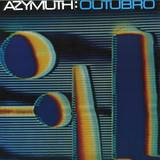
Following on from their seminal Light As A Feather LP, Outubro (October) was originally released in 1980 and began Azymuth's run of prolific output for Milestone Records throughout the decade. Typifying the consummate craftsmanship of the three members' performances - each with such distinct personality and together so perfectly balanced - their perfectionist attitude to sound is maintained across the production on the album, beautifully colouring the expressionist fusion of samba rhythm, jazz progression, funk attitude and psychedelic electronics.
The album hosts a wonderful mix of tempos and styles, from Alex Malheiros' earth-shaking slap-bass on 'Dear Limmertz', which was to become a hit on London's underground disco and jazz-dance club scenes alike, to the late maestro Jose Roberto Bertrami's genial melodic Rhodes excursions on the vocoder laden, samba-jazz masterpiece 'Un Amigo', while Ivan 'Mamao' Conti's signature swing on 'Maracana' exemplifies the root of Azymuth's 'samba doidoi' (crazy samba) philosophy.
The two cover versions on the album consist of the title track which was originally penned by Milton Nascimento and Chick Corea's '500 Miles High', both of which magically reimagine the originals and further demonstrate the immense virtuosity of this cult recording. This Far Out Recordings release is mixed and mastered from the original tapes and will be released on 180g vinyl and CD.
Gaudi’s Jazz Gone Dub is a masterclass in genre fusion, seamlessly blending the improvisational essence of jazz with the heavy atmospheric grooves of dub. Known for his eclectic approach to music production, Gaudi pushes the boundaries yet again, creating a sonic landscape that feels both nostalgic and refreshingly innovative.
Four years in the making, from the opening track it’s clear that Jazz Gone Dub is more than just a mashup of styles—it's a thoughtful exploration of the intersections between two rich musical traditions.
Gaudi’s multi-instrumental talents are on full display, and the presence of reggae royalty is palpable, courtesy of rootsy melodies from David Hinds (Steel Pulse), Jah Wobble’s iconic bass grooves, Ernest Ranglin’s intricate guitar lines and Sly & Robbie’s rhythmic genius. Add Sardinia’s Train to Roots band, Manu Chao collaborator Roy Paci, veteran guitarist Marcus Upbeat, Mr Woodnote and Tim Hutton’s brass work, Gavin Tate-Lovery’s sultry sax and flute, Horseman’s percussive flair plus Colin Edwin and Vlastur’s serious basslines, and the
result is a rhythmic foundation that’s both solid and fluid, allowing the jazz elements to float freely above the dub undercurrents.
Despite this star-studded line-up, Gaudi remains the glue that holds this gem together: his production is meticulous yet organic, allowing each track to breathe and evolve naturally. The use of space, delays and reverb—a hallmark of dub music—is expertly handled, giving the album a dreamy, immersive quality. Tracks like Susceptible and Alabaster Moon showcase Gaudi’s ability to create mood and atmosphere without sacrificing melodic and rhythmic complexity.
In Jazz Gone Dub Gaudi has crafted an album that feels both timeless and forward-thinking, a celebration of musical synergy where the free-spirit of jazz meets the deep resonance of dub. Whether you’re a fan of either genre or simply appreciate masterful musicianship and innovative production, this album is a must-listen.
Idriss D returns to Memento Records with his brand new track "Oct. 13", kickstarting the label's 20th anniversary in 2026, a year that will see quite a few special events to celebrate this milestone.
True to his musical roots and upbringing, Idriss heads right into experimental territory here, merging different styles and vibes: echoes of the upbeat mid '00s Minimal Techno craze fuse masterfully with sci-fi sounds and robotic vocals, with glitchy percussions and an infectious funky bassline creating an irresistible groovy rhythm. It's a track that boldly encapsulates the history of the label, from its raw beginnings in Italy's underground clubs to the more sophisticated latest outputs, a nod to its past while looking at the future.
Mr. Marc Houle is onboard here on remix duties: the man responsible for tracks like Bay Of Figs and Techno Vocals graces the release with an outstanding production. Slightly speeding up the pace, Marc adds spacey acid synth melodies and frenetic vocal loops drenched in delay, making this even trippier and more energetic than the original.
Black and House Music fan Munir Nadir rounds off the EP with a personal rendition playing squelchy keyboard arpeggios and hard slapping synth stabs, bringing a musical live-session feel to his contribution.
ATA Records are proud to present the new release by Work Money Death, A Portal to Here. This album continues WMD’s exploration of Spiritual Jazz and the sounds and styles that evolved out of the 60s New Thing, particularly the recordings of
Alice Coltrane and Pharaoh Sanders. The first WMD album released since the tragic death of ATA guitarist Chris Earl Dawkins in early 2025, all four tracks reference the journey that band members and the studio have been on – in many ways this record is a testament and tribute to Chris, his musicality and creativity.
Featuring WMD stalwarts Tony Burkill, Neil Innes, Sam Hobbs, and Sam Bell, the album introduces Sorcererskeyboardist Johnny Richards to the WMD sound. Richards brings a fresh new take to the piano role here, drawing on what is clearly a broad knowledge of jazz history and channelling that through his own unique 21st century musical perspective.
The album also features contributions from Alice Roberts on harp, bringing the spirit of Alice Coltrane, Ben Powling on baritone saxophone, Richard Ormrod on woodwind, and Kev Holbrough & Steve Parry on brass. Those Sun Ra-esque horn sections lift the mood whenever they appear.Standout tracks are the second, Dance of the Spirits, with a strong core of Baptism and The Blues and some lovely playing by Richards, and the third track, Brother Earl, which begins with Tony on flute over rhythms that are directly reminiscent of open-hearted, late-60s spirituality. Tony later moves to tenor and, as on all four tracks here, eventually builds to the peaks of shattering emotional intensity that fans of Work Money Death - and spiritual jazz in general - love.
For the first time, Endrik Schroeder and The Hacker have joined forces. Their unique sounds and styles have combined seamlessly to produce a 12” that draws on their own musical histories. The title track pulls the listener into a darkened sweaty basement, a space where neon lights leer and quivering speakers vibrate. Melting elements of new beat and rave revelry, the track is bawdy and bold. Robotic samples cut through siren blasts, clean snare rolls skidding in thick basslines and creamy breaks.
Two remixes follow, both care of fellow French producer: Back From The Wave. First up is the “Breaky Remix”. Adhering to the club origins of the source material, this remake sends melodies ever higher as drums lift elated lines to the stern refrain of “Emergency”. The “Indie Remix” closes. The glowsticks are sheathed in this version, instead it is the soaring keys that are given the limelight with beats bolstered for extra bite. Three tracks set to delight and ignite dancefloors.
For Synthology's debut, we are thrilled to present “Synthesis Emotion EP,” signed by host Mathi.
An artist inspired by Acid, Electro, and Italo sounds, Mathi takes us on a four-track sonic journey, where futuristic rhythms and deep synths blend in perfect balance.
Robotic voices and sensory nuances accompany the listener, projecting them into the mind and making each vibration a unique experience
SYNTHOLOGY an immersive experience that was born to give voice to electronic stories, exploring every nuance between sound innovation and emotional narration.”
A complex exploration of influences and styles, such as a multisensational journey through spaces, environments and futuristic rhythms
The electronic producer Franz Kirmann returns to Bytes for his eighth solo album. The “Almadies” are long wooden boats used by Senegalese fishermen. It is also the name of the neighborhood where Kirmann grew up, in the suburbs of Dakar, Senegal, near the Atlantic Ocean. "These new compositions are the result of sound experiments conducted over the past few months and reflections on the concept of mind-constructed geographies," Kirmann explains. "The way memories and souvenirs shape an image of a place or country that is part reality, part fantasy, part cliché, yet also deeply personal. This experience is influenced by education, social background, history, and other socio-economic factors. " The ten tracks are crafted from collages of electronic sounds blended with field recordings from various places Kirmann has visited — from Dakar to the Caribbean, as well as London and Paris. His aim is to blur the line between electronically generated sounds and real soundscapes, creating music where it becomes difficult to distinguish the real from the constructed. All the sounds on the album were produced using synthesizers and field recordings. No drum machines, percussion or traditional acoustic instruments were used. Influences include Brian Eno and John Hassell’s Fourth World, Vol. 1: Possible Musics (1980), described by Hassell as "a unified primitive/futuristic sound combining features of world ethnic styles with advanced electronic techniques" , which also works in the context of Almadies. Another big influence was Ariel Kalma’s Le Temps Des Moissons (1975) as well as artists including O Yuki Conjugate and Robert Aiki Aubrey Lowe to Susumu Yokota and Michael Banabila.
Daniele Baldelli
Considered one of the first DJs in Italy, Daniele Baldelli began his career in 1969 mixing vinyl at the Tana Club in Cattolica (his hometown),
predating the birth of the modern DJ by several years. In the following years, he solidified his talent and technique at histor such as the Tabù Club, Baia degli Angeli, and Cosmic. From 1979 to 1984, Baldelli created his unique and eclectic style, blendi ic clubs ng seemingly distant sounds and musical styles, complementing them with tempo adjustments (bpm) and deliberately extreme equalization,
creating a truly distinctive sound, known as "Afro Disco." Soundscapes and tribal percussion blend with early electronic music experiments, and Baldelli's sets become truly mystical experiences, where, for the first time, the temples are replaced by the dance floor.
The documentary film "A Cosmic Life" has just been released, starring Daniele Baldelli alongside other illustrious guests from the nightclub scene, recounting the history and formation of this movement from the 1970s to the present.
Gaudi
A producer/musician among the most highly regarded on the international dub/electronic scene, over the past 30 years Gaudi, from his
London studio, has contributed significantly to expanding the boundaries of musical genres with high-profile releases and innovative
music production techniques. Recently nominated for a Grammy Award with 'Mass Manipulation', the album he produced for the reggae
band Steel Pulse, and also nominated for a World Music Award with his album 'Dub Qawwali' with Pakistani singer Nusrat Fateh Ali
Khan, Gaudi has collected a series of number 1s on the international charts: Billboard - with the album 'Heavy Rain' by Lee "Scratch"
Perry, 'Vessel of Love' by singer Hollie Cook and with 'Mass Manipulation' by Steel Pulse -, UK Chart n.1 with the album 'Prism' by the
band The Orb (with whom he has collaborated as a producer and keyboardist since 2008), with 'Blue Monday' - by Gaudi himself with
the band Dub Pistols -, UK Dance Chart n.1 with 'Jus Come rmx' produced with DJ Angelino for Cool Jack. He also reached no. 41 the UK charts with the album ‘Midnight Rocker’ by reggae singer Horace Andy (known to the general public for his hits with Massive in
Attack), no. 13 with the album ‘Dubwise 2’ by the band Dreadzone and no. 5 in the Italian charts with the song ‘Lasciala Andare’, written
by him for Irene Grandi. With 19 solo albums and 350 remixes and productions under his belt, Gaudi, with his artistic versatility, has
worked with Groove Armada, UB40, Simple Minds, Brian Ferry, Devo, Big Audio Dynamite, Damian Marley, Seun Kuti, Mad Professor,
Trentemøller, Grandmaster Flash ft KRS-One, Lamb, Don Letts, The Beat, Deep Forest, African Head Charge (in which Gaudi is a keyboardist and dubmaster), Elisa, Scientist, Dub FX, Roedelius, Caparezza, Caravan Palace, EMF, Sizzla, Jovanotti, Sly & Robbie, Piero Pelù, Youth of Killing Joke, and Maxi Priest, to name just a few. Capleton,
Daniele Baldelli & Gaudi
DJ Daniele Baldelli and producer Gaudi first met three years ago at the Jazz Cafe in London. Mutual respect and an innate need to
create new stylistic fusions were the catalysts for Baldelli and Gaudi, leading to a series of subsequent meetings that inevitably culminated in the need to create music together. The project began at Gaudi's Metatron Studio in London using analog equipment and later
moved to Baldelli's studio in Cattolica, where the two organically defined their sound, also inspired by Baldelli's precious record collection. The duo consolidated a powerful compositional symbiosis, and the project, born from a simple initial groove, later transformed
into an entire EP consisting of four original tracks and a highly innovative sound, featuring fusions of psychedelic-funk, tribal-dub,
electronic-disco, and, of course, "Afro-Cosmic"! Daniele Baldelli and Gaudi began their sonic collaboration without setting any stylistic
direction and with the intention of not creating pre-established goals to achieve; it is a project of pure artistic freedom guided by their
compositional instinct and their experience. Constantly active with their evenings and live concerts, Baldelli and Gaudi have performed
individually in many of the best international clubs and festivals.
Early support from Timo Maas, Paco Osuna, Ilario Alicante, Just Her, Adriatique, and more. Igor Vicente joins forces with Dka for the ‘Ecstatic’ EP this November, released via Belgian imprint Move Recordings, including a remix from Gregor Tresher.
Move Recordings is a Belgian electronic music label founded and helmed by veteran DJ/producer End-Jy (Jérôme Naujoks), known for his roots in the 1990s techno scene of Tournai and major collaborations with acts like Marco Bailey. Now reborn in 2025, the label returns with more powerful electronic music for the modern-day discerning listener. This time, it welcomes fellow Belgian DJ and producer Igor Vicente, renowned for his genre-blending style and releases on labels such as Mobilee, Hot Creations, and Visionquest, once again in collaboration with fellow Belgian DkA, who’s racked up releases on labels like Get Physical, Constant State, and Mau5trap Recordings—a striking sign of his ability to explore a variety of genres and styles.
The original version of ‘Ecstatic’ leads, featuring subtly blooming atmospherics, a nuanced synth hook, oscillating percussion, and raw drums, all building towards a climatic breakdown and a powerful drop in the latter stages. Gregor Tresher reshapes the original with his signature twist, extracting fragments of the track and fusing them with elongated bass grooves, heavily shuffled, crunchy drums, and intricately intertwined melodious elements.
‘Planets’ opens the B-side, a nine-minute excursion through squelchy acid bass notes, cinematic pads, robust drums, and chuggy arpeggio synth lines. The ‘Ecstatic (Dub Mix)’ then concludes the EP, shifting focus solely onto the raw groove and hypnotic melody of the original composition, as the name suggests.
LodoLand is an album performed, arranged, mixed, mastered and produced by Roberto Lodola. DJ and producer since 1982, Lodola is a pioneer of the afro, funky disco, balearic, electronic and world music sound. He alternates his performances between Italy and Ibiza, where he promotes a unique and personal style, rich in influences and contaminations that the White Island -- the capital of electronic music -- has deeply etched into his musical identity. A blend of styles and cultures that could be defined as afro balearic. Vocals on Marley Eh by Rae, vocals on Manda Toto by Sofiya Nzau, and Weya by Jelani. Percussion on Faith In You by George Aghedo.
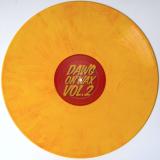
We are proud to present Dawg On Wax Vol.2, our 100th release-a milestone celebration of our journey through innovative sounds. This vibrant compilation features an eclectic blend of Jackin House, Jazz House and Hip House styles. Limited to only 200 copies, this exclusive 12" LP is pressed on stunning yellow flame-colored vinyl, making it a collectible must-have for all the real House heads.
Showcasing an impressive lineup of talented artists-including FederFunk & Raffaele Ciavolino, Ralph C, Darren Marshall, Luccio B, Makson (PL), and Steve Robinson (UK)-the compilation delivers over 30 minutes of energetic grooves and soulful rhythms that take listeners on a rich sonic journey.
Celebrate our milestone with this limited edition vinyl, crafted to bring you the best in underground house music. Don't miss your chance to own this special release!
RedNilo is an Italian-Moroccan duo composed of Reda Zine and Danilo Mineo, two musicians based in Bologna linked by a deep passion
for world music, particularly African music. Their ongoing and tireless musical exploration has led them to collaborate for over a decade
on numerous artistic and recording projects. Their new album, eponymously titled RedNilo, features six tracks characterized by a sound
reminiscent of Gnawa, Hassani, Tuareg, and experimental rock. The psychedelic, raspy riffs of the electric guitar, the repetitive rhythms
of the percussion, and the rhythmic-melodic lines of the guembri represent and evoke their journey. The resulting sound material is the
culmination of their journey and their encounters with masters, artists, griots, artisans, and instrument makers in the Draa Valley in
southeastern Morocco, bringing together the two musicians' urban and experimental backgrounds and souls. The album's artwork was
designed by Moroccan artist Aali Wica, initiator and mentor of their spiritual and artistic journey to the southern African continent,
across the long black snake.
Réda Zine, a musician and documentary filmmaker born in 1977 in Casablanca, launched his musical career in the 1990s, contributing
to L'Boulevard, Africa's largest independent festival. Raised in the Casablanca medina, he was introduced to Gnawa music by various
Maallems. After studying at the Paris 3 Sorbonne University, he founded Café Mira, a project that has performed at several international
events.
From 2011 to 2014, Zine was artistic director for Creative Commons (Middle East and North Africa), where he won the #CC10 Korea
award in 2012 with the project "It will be Wonderful," which brought together musicians from over 12 countries. He has also been
involved in exhibitions on music and censorship, participating in events in major cities such as Paris, Buenos Aires, and Seoul. In Italy,
he continued his musical research with the Hardonik project and was part of the Afrobeat group Voodoo Sound Club, recording the
album Mamy Wata. Zine collaborates with artists such as Seun Kuti and has initiated educational activities related to Gnawa music,
contributing to initiatives such as the African Symphony Laboratory for improvisers. He is the co-founder of Fawda, a Gnawa-based
project, and is part of the Gnawa Rumi collective, which explores the music of the Moroccan diaspora in Italy. He directed the documentary "The Long Road to the Hall of Fame" about Public Enemy, which won an award at the Pan African Film Festival in 2015.
Danilo Mineo graduated as a national educator from the AMMnationalscholl music academy in Milan, with a thesis entitled "Afro-Cuban
Music and the Rhythm Section." Over the years, he has attended workshops and masterclasses with international artists and masters
of percussion and drums, including Horacio El Negro Hernandez, Airto Moreira, Trilok Gurtu, Luis Agudo, Arto Tuncboyaciyan, Dudu
Tucci, Dom Famularo, Karl Potter, Rodney Barreto, and Eno Zangoun, exploring the rhythmic language of various musical genres and
styles.
In addition to publishing several educational manuals for percussionists, music critics consider him a versatile percussionist, active in
various musical productions and recordings: Mop Mop, Fawda, Guglielmo Pagnozzi "Voodoo Sound Club," Fabrizio Puglisi "Guantanamo," Panaemiliana, The Mixtapers, and many others, with whom he has performed at numerous national and international music festivals (in Europe and Africa). As a percussionist and side man he has recorded numerous albums and collaborated with Italian and
international artists including: Giancarlo Schiaffini, Gianluca Petrella, Roy Paci, Roberto Freak Antoni, Famoudou Konate, Melaku Belay, Baba Sissoko, Kalifa Kone, Jamal Ouassini, Deda, Dj Lugi, Bioshi.
Cinthie makes a welcome return to her own 803 Crystal Grooves imprint this June for its sixth release, the project comprises four original"s showcasing Cinthie"s many different sonic styles and influences.
The past decade has seen Berlin"s Cinthie moving from strength to strength, racking up milestone achievements like her DJ Kicks mix compilation and a steady stream of critically acclaimed material via the likes of Aus, Heist, Shall Not Fade and of course her own 803 Crystal Grooves label where she returns here with some fresh machine jams.
"Grooves" kicks off the package, a dynamic dance floor cut fuelled by processed vocals uttering the track title, murky bass stabs, heavily swung drums and gritty saturated stabs all dynamically evolving and unfolding throughout. "Boxer" follows next and showcases Cinthie"s love for dub-tinged sounds, laying down spiralling dub echoes, a snaking bass groove and hypnotic chord sequences atop a robust, swinging rhythm section.
"Hands Up" then kicks off the B-Side, shifting gears to a classic House aesthetic with dreamy keys, bright stab sequences, glistening synth textures and smooth strings, intertwined with soulful vocals and classic 909 workout. "She Wants It" then concludes the EP on a more cinematic tip with sweeping lead synths, fluttering arpeggios, elongated bass drones and vocal lines running with raw, crunchy drums.
The fourth release on Sismo comes from Uruguayan artist Luis Malon, based in La Barra. This 12’’ delivers a dynamic blend of styles, featuring two high-energy, dancefloor-oriented tracks alongside two electro-romantic cuts, showcasing Malon’s versatility and signature sound.
ReKaB drops another strong four-track EP, rooted firmly in the Detroit sound with a nod to the soulful techno styles that shaped the UK underground in the 90s. His second EP for Cologne's YORE Records. The production, as always, is spot on—sharp, detailed, and endlessly listenable. While the tracks carry the weight of tradition, they’re not stuck in it. There’s a fresh, forward-facing energy here that keeps things exciting.
My Inspiration opens with classic metallic strings and a tight, robotic square bass that locks you in straight away. Just when you think you know where it’s going, the vocal drops—a bold touch that shifts the track into more human territory, giving it an emotional pull without losing its edge.
Soul Brother is a late-night cruiser. Rhodes chords, rolling bass, and lush strings set the scene for a proper cityscape vibe. It’s smooth, it’s warm, and it glides effortlessly, all while keeping enough groove to move.
Future Times kicks things up a gear with more tempo and bite. Acidic basslines and a writhing lead sit alongside deep chords, making it equal parts hypnotic and urgent. It’s the kind of track that turns heads in the club—direct and effective without being predictable.
Wrapping it up, Random Fragments pulls things back into a more reflective, dubby space. The layers are rich but restrained, with chirps and analogue echoes drifting through a hazy atmosphere. It’s introspective but not sleepy, the perfect comedown to round off the EP.
ReKaB’s consistency is something else—each release feels like it’s levelling up, pushing his sound forward without losing its roots. This EP is no different. It’s a tight package of ideas, all executed with precision and style. One for the heads, no question.
Throughout their lifetime and a handful of releases, the trio have carefully fostered and perfected a style of music that is technical and beautiful but doesn’t shy away from any avant-garde, noisy, or punishing moments.
While you’re able to discern sounds brought from noise rock of the 80s and 90s, post-hardcore of the 90s and early aughts, as well as multiple waves of emo and screamo, Abandoncy’s affinity for abstract structure, strange time, and dramatic pause gives them a style all their own.
At its end it is breathtaking, addictive, and harrowing to experience.
On their third full-length, Assailable Agonism, you find the band pushing even further. All six songs boil over with masterful instrumentation and crushing composition.
Clocking in at just under 19 minutes, it feels like a brief but brutal haunting of all of your personal spaces.
Paranoid, blistering, and all-consuming, coated with the grime of drying riverbeds and dust storms. Through its juxtaposition of melodic and noisy elements, it has a presence that will draw in fans of all different styles of music.
"Assailable Agonism" is released by Vina Records (Italy), The Ghost Is Clear (USA), Learning Curve (USA).
Bolina Records, born in Italy and based in Stockholm, is the brainchild of the Cerrado Studio crew, a dynamic team of artists and DJs who have been organizing events and innovative initiatives since 2008.
Veteran DJ-producer Sebra Cruz (formerly of Margot and A&R for Bolina Records), after releasing his debut album with Life And Death by Dj Tennis, has teamed up with his protégé, Giacomo Cancellieri. Over the years, Cancellieri has become one of Sebra's favorite artists, with Sebra often describing him as a truly brilliant mind, consistently impressed by the new tracks he produces. Giacomo has notable releases on Rebellion and Margot Records.
"Rollerball," titled after Norman Jewison's 1975 film, carries a powerful anti-war message. It includes 4 versions plus an acapella, the latter intended to encourage DJ-producers of various genres to incorporate it in their tracks, thereby spreading the anti-war message on dance floors worldwide.
The original mix captures the essence of intimate club settings — intense yet lucid, with a sound texture fitting for an underground label. It continuously and forcefully spreads the anti-war message with deep seriousness.
The Funky Vocal Mix offers an Italo-French vibe, blending the smooth ambiance of 2000s dance music with a raw vocal tone.
Buck's version, hailing from Otranto, a quaint seaside town in the extreme south of Italy and owner of Substrato label, is marked by solid, rolling grooves that complement a deep and refined atmosphere.
Delphi's remix, one half of Tiger And Woods with Marco Passarani, completes the set. Its arrangement skillfully connects Chill and Detroit styles, infusing the project with a sense of robustness and insight.
When Cicadas appear in the area they cause a huge uproar. It’s hard to escape the distinctive noise these critters make, reaching up to 120 decibels. The hypnotic, trance-inducing sound disappears with the insects. A few months after Cykada's explosive debut, the world was hit by turbulence and from Cykada there was silence - fortunately only seemingly, because the next cycle began underground, in the privacy of the studio. It was there that the cicadas matured, waiting for a metamorphosis.
The year 2019 was very successful for Cykada, with a brilliantly received debut album, concerts at numerous festivals in the UK and Europe such as Glastonbury, Wilderness, London Jazz Festival, BAM Festival, La Defense Jazz Festival or Love Supreme Festival, along with constantly composing and preparing material for the second album. As the musicians entered the studio, the coronavirus pandemic was already in full swing across the globe. It was clear then that the world would never be the same. With increasing restrictions Cykada went underground, waiting for changes to surface again. Unfortunately the expected change that was happening seemed only for the worse - Brexit and its socio-economic consequences, worldwide disinformation, accelerating climate catastrophe and Russian invasion of Ukraine. The collapse of the old world order is the perfect moment for metamorphosis and with this message Cykada steps out again into broad daylight, matured and carrying a message with their long-awaited second album “Metamorphosis”.
The meaning behind the title is multifaceted. It refers both to changes taking place in our society and changes to our world as nature defends itself from human stupidity and greed. It is also a reference to the personal and musical development of the band members in that difficult period. It all became a foundation to bravely attempt to make new beginnings.
The metamorphosis is also clear in the musical aspect of Cykada. Their debut album was already difficult to shoehorn into specific genres with their sound that balanced jazz, electronics and elements of global music styles. With the second album their eclectic style has evolved into something distinct and innovative, combining folk/jazz song form and improvisation with heavier sounds inspired by sound system culture and rock. The band grew into a septet thanks to multi-instrumentalist Rob Milne, expanding the horn section to 3 instruments and galvanising its sound. But the biggest change that happened compared to the first album is the singing of Cykada leader Jamie Benzies in singles “So Divided” and “The Crack in the Bricks”. Both songs carry an important message, showing us that the changes in the world are already happening and that only we can make it head in the right direction. This unique sonic mix along with the message unleashes a powerful energy that the musicians want to send to and infect every listener.
Aarset and Bang have collaborated since the early 1990s in constellations with, among others, Nils Petter Molvaer, Bugge Wesseltoft, Sly & Robbie and Jon Hassell. 'Snow Catches on her Eyelashes' (2020) was their first recording as a duo, an album that was widely praised, inspiring John Eyles of All About Jazz to write: "Aarset, Bang and company go from strength to strength, as does the Norwegian scene. Onward and upward."
'Last Two Inches of Sky' further expands this sonic universe - onward and upward. Like its predecessor, the new recording is an amalgam of styles, linked together by Jan Bang's hallmark sampling technique and Eivind Aarset's continuous exploration of the guitar. Now, the rhythm section of Audun Erlien (bass) and Anders Engen (drums) are prominent on most tracks, and the arrangements are enhanced by guests like Gianluca Petrella (trombone), Adam Rudolph (percussion), Emanuel Birkeland- Bang (drum programming) and Erik Honore (samples, lyrics on "Legion").
Finger Prince recordings deliver the ‘Finger Prince Sampler’ for their latest vinyl release.
This four tracker welcomes two new artists to the label, House of Styles (aka Matt Styles of Horizontal Studios) and Mark Solo. They will be joining Bart Ricardo and Pale People who appeared with remixes on the successful ‘Make U Feel project’ by Lil’Mark, along with Rob Mello on this label's debut.
First up is the House of Styles Remix of ‘Catatonic’ by Phonic Crunch, a track from their forthcoming E.P on the label. Then Bart Ricardo shares side A with ‘Crystal Satellite’.
Side B opens with ‘Talk’ by Pale People before Mark Solo introduces himself to the label with ‘Minibeatz’.
Firescope are always on the lookout for new music, searching and sieving with headphones clamped over ears. GGGG, a recent discovery, unveils a stunning debut release. The co-founder of D.Ko Records may be a fresh face when it comes to releasing, but he has a wealth of both experience not to mention talent. His album, Gazé, is testament to this.
A spread of styles and influences coalesce to create GGGG’s unique sound. Ambient. Braindance. Electronica. Techno. All are melted and forged into the new. Processed percussion is the shifting sands from which a swooping melody takes flight, a melody that bends and soars as “K-Robot OG” ascends. Crystalline chords are shaven with fizzing drums in the frenzied elation of “Cas Contact.” And this is what lies at the heart of the collection, a rapturous joy that permeates the entire record. From the complexity and grandeur of “Chien Flûte 5.1” to the considered and subtle “Mudla 2”, the brightness of the audio palette chosen gives tracks an incandescence. This “joi de vivre” glistens and glows in the more playful tones of “Broutine Lamé” and “Cat Intro.” Textures are another area of interest for GGGG. Pieces like “Slowdry” and “Trip 2 Delinc” reshape and ruffle rhythms to bring a counterpoint to form and harmony. Beats are replaced by gentle waves of sound as the twelve-work collection culminates in “Sac Ala Blofel.”
Gazé tracks a course. From the energy and frenetic rhythms of first encounters to the atmospheric embrace of the latter part of the album, there is the sense that GGGG is celebrating the astounding of the ordinary, the amazing that is contained from the routine of dawn to dusk.
Polish composer Olga Wojciechowska and veteran electronic producer Robin Rimbaud aka Scanner, combine on A Strangely Isolated Place to revisit a beloved Strie album - Olga's more electronic and experimental alias. With previous releases on Serein and Time Released Sound as Strie, Olga Wojciechowska's 'Struktura' was released in 2015 to a limited audience due to its physical-only format.
As Olga's work becomes increasingly more coveted, through her more recent releases on A Strangely Isolated Place (Unseen Traces & Infinite Distances), and with Struktura praised as one of her finest albums to date, the discussion to breathe new life into the album resulted in a unique pairing with Scanner, an electronic music producer and multimedia artist responsible for some of the most defining works of the genre since the early 1990s.
Blurring the line between harmony and dissonance, Struktura's original recordings paint an eerie, haunting and beautiful picture, conceptualized around abstract art, with intricacies and mystery abound. Here, Strie's original recordings remain untouched, albeit lovingly remastered by Rafael Anton Irisarri, and it is left to Scanner to provide further interpretations of Olga's original recordings. Scanner productions can typically traverse a myriad of styles, but here, Robin took a primarily live-hardware approach to the remixes, allowing the rawness of his recordings to add story and depth. Recorded in one take, with no overdubs, the reinterpretations strip the melodies and textures to their original essence, bringing an entirely analog element to Olga's intrinsically detailed originals. Featuring artwork by Rep Ringel and mastered by Rafael Anton Irisarri, Struktura Revisited will be available on Gatefold 2LP in a black/grey half-and-half vinyl, with 6x6" soft-touch heavy art card.
On side A our travel starts with a driving track, find out for yourself where your travel leads you. The atmosphere is full of energy, that calls out for serious dancing! The second track is a classic track that goes in the direction of Acid. We love Acid – the whole night long!
On side B TCCM proves that robots can be funky! Shaped by the late 70s and Disco-Funk, a totally new corpus has been created. That’s what we expect from TCCM – always something different. The last track of this EP points towards dawn. It’s time to wrap up, to turn night into day and to relax before Afterhours starts again!
“Computer Controlled Minds” show a braid spectrum of electronic beats and an incredibly fantastic roadmap through the night, from dancefloor to dancefloor with different styles!
A MAJOR EXPLORATION OF TOKYO'S CUTTING EDGE 80S SOUND THROUGH THE MUSIC OF CULT JAPANESE LABEL NIPPON COLUMBIA AND ITS BETTER DAYS IMPRINT, SELECTED BY BRITISH RADIO PRESENTER AND DJ NICK LUSCOMBE.
‘Tokyo Dreaming’ is a superb selection picked from the highly collectible Nippon Columbia label and its Better Days sub-label. For the occasion, we’ve teamed up with journalist and Japanese music expert Nick Luscombe who was granted rare access to the much-guarded Nippon Columbia's vaults for a masterful selection encapsulating the fascinating sound of Tokyo in the late 70s and 80s. The selection mixes electro, synth-pop, funk and ambient and features such artists as Ryuichi Sakamoto, Mariah, Shigeo Sekito, Juicy Fruits, Hitomi "Penny" Tohyama and Yumi Murata. The tracklist includes many sought-after rarities and hidden gems which have never been released outside of Japan and the set has been newly remastered by Nippon Columbia. The album has been designed by famed London-based designer Optigram and is annotated by Nick.
Nippon Columbia, one of Japan's oldest music labels is also one of its most collectible thanks to its sub-label Better Days which, in the late 70s, became a hotbed for Tokyo's new generation of pop artists eager to experiment with ambient, electro and funk. Armed with a string of new Japanese-made synthesizers and drum machines that would soon take the world by storm, they made cutting-edge music, which has since become highly sought-after by a new generation of Japanese music lovers. Nick Luscombe, who has long been a leading advocate of Japanese music from this era, has handpicked a selection of some of the sharpest music released on these labels at the time.
According to Nick, “Tokyo Dreaming is a look back to an incredible era of Japanese music, that still sounds and feels like the future. It was a moment when brand-new music tech from Japan helped forge new ideas and experiments that permeated pop, soul and jazz and helped create new forms of music including electro and techno. The perfect meeting point that would help create a new soundtrack for modern living.“
?The selection starts with "The End of Asia" by Ryuichi Sakamoto from his 1978 ground-breaking debut "Thousand Knives Of" (reissued last year by Wewantsounds). The track became a staple of Sakamoto's and YMO's live shows and was even re-recorded by the group for their 1980 album 'X Multiplies'. The track is followed by Mariah's cult Armenian folk flavoured synth pop classic "Shinzo No Tobira" (1983), which first spread outside of Japan when the Scottish DJ duo Optimo started playing the track regularly at their shows.
?Chika Asamoto's "Self Control" (1988) and Jun Fukamachi's "Treasure Hunter" (1985) are perfect songs in the synth-pop canon, while Yumi Murata's rendition of Akiko Yano's "Watashi No Bus" and Hitomi "Penny" Tohyama's "Rainy Driver" both from 1981, move closer towards the slicker, funkier sound of City Pop.
?'Tokyo Dreaming' superbly showcases the breadth of 80s Japanese music and the way electro pop was a playing ground for musicians to experiment with many styles, as showcased by Akira Sakata's dub-enfused "Room" from 1980, Kazumi Watanabe's discoid "Tokyo Joe" (1980) and Juicy Fruits' "kawai" robotic Techno pop song "Jenie Gets Angry".
?The selection flows effortlessly between many shades of synth and ends with two cult classics in the form of Yasuaki Shimizu's "Semi Tori No Hi" and Shigeo Sekito's ambient-jazz masterpiece "The Word II" from his highly sought-after album "Kareinaru Electone (The Word) Vol.2" which, although recorded in 1975, perfectly announces the synth revolution to come. Tokyo Dreaming showcases the groundbreaking sounds of a city turned giant sonic lab which was restlessly inventing the music of the future.
Nick Luscombe is a highly respected and in-demand music influencer who discovers great music from all over the world and shares it internationally through his many radio shows and DJ sets. He has been in charge of music selection for various radio programs since 1999, and from 2010 - 2019, was the DJ for the popular BBC Radio music program "Late Junction”. He has also curated and presented music shows for Monocle and British Airways radio stations. He has worked as both Chief Music Editor at iTunes and Director of Music at London’s Institute of Contemporary Art, and is the founder of MSCTY.
The Liverpool-based DJ and producer ASOK returns to DVS1's Mistress Recordings with his most diversified EP yet: "Mistress 14" unfolds ASOK's raw, analog-heavy sound aesthetic full of broken kick drum patterns, stepping basslines, and lush synths.
With 25 years of record collecting, DJing, and promoting parties around the UK, there is little of the dance music spectrum that Stu Robinson has not been involved with. The Liverpool-based artist has amassed a fine understanding of a wide array of scenes, styles and sounds from drum & bass to electro-funk, disco to house and techno – underpinned by a love of breakbeat. The music under his alias ASOK is an amalgamation of this diversity that has found favor with labels like M>O>S, Lobster Theremin, Crème Organization, and Mistress Recordings.
"Mistress 14" opens with "Space Rockets" which is a nod to his breakier love affairs without using actual breakbeats. While second track "Is Anyone" displays his take on classic Chicago House with a little Roland JD-800 euphoria thrown in. On the flip, "Last Refuge" explores driving, rhythmical techno with ASOK's typical ravey pad-like break in the middle until "The Alchemist" closes the 12-inch by laying more focus on melody and texture with a growing, always changing bassline and an ethereal synth that carries the track's energy. The digital bonus track "Apano Sin" concludes the package with a scruffy somewhere in between everything vibe.
ASOK about Mistress 14:
"Mistress 14 is probably the most important EP I have ever made in terms of showing all the different things I am into. I’m difficult to pin down because I’m not really a techno DJ, or a house DJ, or anything like that. I like all forms of electronic dance music. As a DJ, I mix up old and new, familiar with unfamiliar, playing everything from Italo disco to really dark high-bpm breakbeat. As a producer, it’s not easy to put an EP together that covers a little of everything, yet still sounds cohesive. Especially considering that all my tracks were recorded in long live takes, then edited down with no ability to change parts. Sometimes that requires some pretty heavy editing, but that’s one of the good things you get when making music this way. I’m in control of the creative process, rather than feeling like some kind of colored block administrator drawing blocks out on arrangement view of my computer."
Our imprint marks its five years anniversary this year and to celebrate it's offering up five special various artist packages across 2019 limited to 250 copies each,
featuring material from the likes of Vid, The Mole, Cinthie, Shinichiro Yokota, San Proper, Akiko Kiyama, Com Sin aka Cosmin TRG, Subb-an and more..
'Series 01', penciled for release in May sees Cosmin TRG return under his Com Sin guise with 'Glass Harps', a fluidly unfolding five and half minutes of pulsating subs, glitching percussion and sparkling harp tones before DJ Sodeyama aka The People In Fog's 'Chapter Zero' takes on a modulating hypnotic feel via psychedelic swells, tension building textures and a bumpy, robust rhythm.
UK duo Yard One join the roster with 'Dream Travel' on the flip-side, employing a more ethereal aesthetic with floating pads, winding chords and a heavily swung drum groove. This project also sees a new design concept for the imprint from London's David Surman's painting installation project 'Paintings For The Cat Dimension' which ''explores the motif of the cat as emblematic of internet aesthetics, a place where all painting styles and modes now exist non-hierarchically as pure information.''
Honey Soundsystem releases 'Cosmologist', the latest offering from our Resident DJ: Robert Yang aka Bézier. A multi-instrumentalist, Robert was trained in saxophone starting at age 10, before moving onto a Fender Telecaster after high school. After being exposed to Southern California rave culture in the late 90s, he moved onto DJing and collecting records. By the time he planted his roots in San Francisco in 2005, Robert had built an impressive analog synth-based studio, which also serves as the creative hub for his riveting live performances.
'Cosmologist' explores Robert's personal universe with three tracks that connect his varied musical lineages. "Cosmos", a celebration of the late 80s/early 90s KIIS FM universe, is built around an infectious freestyle hook that morphs into a seven minute tour of intersecting styles. "Ether" begins as gothic night-driving electro, but breaks into fantasy-scapes inspired by Italo and 1980s Japanese anime theme songs. The final track, "d. Quelle", clocks in at over 11 minutes, incorporating bebop jazz solos drawn from his early exposure to improvisation techniques by Charlie Parker, Cannonball Adderley, and Stan Getz. All songs have been mixed by Mark Pistel (Meat Beat Manifesto, Consolidated) at Room 5, San Francisco and EQed for vinyl by George Horn at Fantasy Studios.
Dark Entries is proud to release the sophomore EP from BEZIER entitled Telomeres. Bézier is the moniker of local SF musician ROBERT YANG, who also is part of the illustrious HONEY SOUNDSYSTEM crew. Telomeres is the follow up to Bézier's debut EP Ensconced, released in 2013. The title relates to themes of time, science, analytics and procedures. Bézier integrates the refrains of Spanish new wave and Italo disco with the attitude and aggression of underground styles like synth-punk and industrial. These six tracks were written, produced and mixed by Bézier at his home studio in San Francisco between 2014 and 2015, and feature the debut of his own vocals. All songs have been mixed by Mark Pistel (of Meat Beat Manifesto fame) at Room 5, San Francisco and EQed for vinyl by George Horn at Fantasy Studios. The vinyl comes housed in a jacket featuring an illustration by in-house designer Eloise Leigh riffing on early 80s computer graphics. The matted sleeve is meant to resemble the side panels of early computing instruments like Macintoshes or the Commodore 64. Each LP includes a postcard with a photograph of actual telomeres captured by a microscope camera by the Blackburn Lab at UCSF. Telomeres' are life's building blocks, changing the lengths of chromosomes to determine lifespan. This music is an investigation of a future in which time elongates as well as contracts.
Defining the moment in sound and vision, Immersion are a snapshot of ‘the now’. Through constant reinvention, they have honed their sound into a startling present that references their past but refuses to live in it.
This perfect synthesis of their styles boldly creates a brave new world for core couple Colin Newman and Malka Spigel, along with satellite musicians Matt Schulz (Holy F*ck), whose drumming strongly features on many tracks, and Ed Chivers (AK/DK), who makes a guest appearance drumming on ‘Breaking Free, Diversity, Evolution’.
What Is Lost Will Return is the second ‘pure’ Immersion release in as many years and heralds their third UK tour since 2024. It follows 2025’s acclaimed WTF??, with the title reflecting the fact you can only say “What The F*ck??” so many times before looking beyond to see what endures.
With What Is Lost Will Return, the ever-productive ‘life and art partner’ duo present a reflective album of modular moods and stripped-down electronic psychedelia, leavened by a clipped guitar that you can nonetheless dance to, defying these chaotic times. It perfectly captures the yin and yang of the moment – or as Colin and Malka explain, “The emotion we feel the album invokes is a poignant mixture of joy and melancholy.”
“What Is Lost Will Return is an album of grooves, observational snapshots, hypnotic repetition, joyful creation, intoxicating melody and mystery, all threaded together by a fascination with new sounds and textures. It's both an underground gem and an album that bends pop into new shapes.”
John Robb, June 2026, MCR
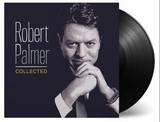
Robert Palmer's career has spanned over 25 years and encompassed any number of musical styles from jazz, r&b, reggae, pop, funk to the harder dance sounds heard on Some Like It Hot' as a member of the Power Station. Palmer's career commenced in the 60s and throughout the years received a number of awards, including a Grammy Award for Best Male Rock Vocal Performance (for Addicted To Love') and a MTV Video Music Award.
The Collected double vinyl album from Robert Palmer is a selected overview of his music, some lesser known tracks are alternated with hits like Every Kinda People', Johnny And Mary', Pride', Addicted To Love' and many more. His collaboration with musicians from different backgrounds were successful leading up to recording (the Bob Dylan written) I'll Be Your Baby Tonight' with English reggae band UB40. This single became a worldwide hit, reaching the top 10 in Holland and United Kingdom, as well as achieving solid chart positions in the USA, Germany and France.
Sadly the musical genius and true superstar Robert Palmer passed away, succumbing to a heart attack in 2003, only 54 years old.
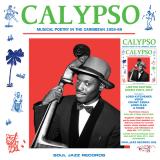
Soul Jazz Records’ ‘Calypso – Musical Poetry in the Caribbean’ was first issued in 2014 and has been out of print for nearly 10 years. On its release ‘Calypso’ was voted one of the year’s best 50 reissues in Rolling Stone magazine and received glowing reviews in Pitchfork, The Guardian, Songlines and many more. This new edition has been fully remastered and comes as a one-off limited-edition double vinyl pressing on translucent green vinyl, complete with bespoke inners featuring extensive sleevenotes, notes on all the artists and songs featured, and original artwork and photography. The album is also available in a new card-edition CD package, also with complete notes and text.
Featuring Lord Kitchener, The Mighty Viper, Count Zebra, Lord Flea, Lord Hummingbird, King Fighter, Lord Growler, Lord Byron, Lord Ivanhoe and other members of Calypso’s aristocracy and aristocrats, the album features the music of Calypso in its many styles. Calypso is one of the most exciting and enduring forms of musical expression that first emerged at the beginning of the 20th century – swinging, persuasive rhythms, brilliantly expressive melodies, and lyrics of great humour, wisdom and wit. Here you will find music from Trinidad, birthplace of Calypso, other Caribbean islands including Jamaica and the Bahamas, as well as sounds from the style’s subsequent onwards journey including Britain, Panama and the United States. Calypsonian songs play out a role in society similar to the storytelling Griots of West Africa (and the corresponding music of Kaiso); with their own tales about popular and incredible news items, modern life, local politics all mixed up with sexual innuendo, one-upmanship, comedy and more. At its source, Calypso is intricately and inextricably bound to the social history of Trinidad and its myriad of traditions, beliefs, folklore and fables. As the music spread around the world, both from the diaspora of many of its performers as well as its commercial success, the subjects of songs similarly took on local topics.The most notable singer of Calypso in England was the Trinidadian Lord Kitchener, who came to Britain in 1948 on HMS Empire Windrush, along with fellow Calypsonians Lord Beginner and Lord Woodbine.
Robert Johnson was an American blues musician whose 1936 and 1937 recordings heavily influenced many, many future generations of artists. Despite the fact his recording career spanned a mere seven months, he is universally recognized as a master of the Delta blues style, one of the earliest-known styles of blues emerging from the Mississippi delta in the early twentieth century.
This second compilation of the King of the Delta Blues collects sixteen recordings previously available on the 78 rpm format and includes recordings of two Johnson songs that have since become blues standards: "Sweet Home Chicago" and "I Believe I'll Dust My Broom." In contrast to the deeply emotive songs released on the 1961 album, many of the tracks on this volume display Johnson's lighter side. In 2003 the record was ranked #424 on Rolling Stone's list of 500 Greatest Albums of All Time.
Whether he really needed to sell his soul to the devil at the crossroads to reach these great heights, we'll never know...
King Of The Delta Blues Singers, Vol.2 is available as a limited edition of 1000 individually numbered copies on yellow vinyl and includes an insert with liner notes by Pete Welding.
Sixteen killer 70s reggae funk and soul cuts from the likes of John Holt, Lee Perry, Cornel Campbell, The Cimarons, The Chosen Few and more featuring superb reggae takes on songs by artists including The Jackson 5, William DeVaughn, Diana Ross and The Supremes, War, The Temptations, Roberta Flack, The Stylistics and others!
Well-documented is the influence of American black music on Jamaican styles of the 1960s – from the birth of ska music, when The Skatalites ska-ified the jump-up southern USA rhythm and blues music of Rosco Gordon, Louis Jordan and Fats Domino, through to the creation of rocksteady when Jamaican artists like The Techniques, The Paragons, Alton Ellis and The Melodians turned to the slower rhythms and soulful harmonies of groups such as The Impressions and The Drifters for inspiration.
Less-well established is that in the 1970s Jamaicans didn’t (shock!) stop listening to American black music styles, with many 70s reggae artists as invested in soul, funk and the proto-disco sounds of Philadelphia, as was the case with rhythm and blues in the previous decade. In the 1970s, while Jamaica promoted its own roots reggae styles around the world, powerhouse USA soul labels such as Motown, Philadelphia International and Stax Records were at the same time all popular on the island.
This interaction between American and Jamaican music was not limited to Jamaica. In Britain, first-generation Caribbean-émigré children in the 1960s and early 70s grew up with an equal love of both soul and reggae, which manifested itself in the home-grown arrival of lovers rock in the mid-1970s.
Soul Jazz Records’ new ‘Reggae Island Soul’ tells this story of how soul and funk-infused reggae in the 1970s united the sounds of Jamaica, USA and the UK into a highly addictive cultural hybrid of styles.
TrioRox is a project born from the encounter between three leading figures on the Italian music scene (and beyond):
pianist Giovanni Guidi, bassist Joe Rehmer, and electronic musician DJ Rocca (Luca Roccatagliati).
Three individuals boast eclectic and impressive resumes. Guidi, a child prodigy of jazz piano, has released several
albums for the prestigious ECM label and has collaborated with top jazz and electronic musicians, from Enrico Rava
to Matthew Herbert, Joe Lovano, and Ricardo Villalobos. Joe Rehmer, an American living in Italy, is one of the most
sought-after bassists, sharing stages and recording studios with such luminaries as Bob Mintzer, James Moody, and
Danny Gottlieb. DJ Rocca has been a DJ and musician since the 1990s, boasting numerous albums, singles, and
remixes with and for key figures in the alternative dance scene (Andrew Weatherall, Dimitri From Paris, and Howie
B), as well as a stint in the jazz scene, releasing several albums with Franco D’Andrea.
The trio's music is a blend of electronic, dance, jazz, and pop, with hints of groove in house and techno, as well as
blends of electro, classical, and minimalism. A melting pot of styles between Keith Jarrett and Carl Craig. The album
will be released on IRMA Records in September 2024, featuring guests Luigi Di Nunzio, Gianluca Petrella, Dan
Kinzelman, and Jacopo Fagioli.
This EP of remixes is by:
Zed Bias: Manchester-based electronic musician, producer, and DJ in the Garage/2-step, Broken, and Funky
Breakbeat genres.
Alexander Robotnick: Italian record producer, DJ, and composer considered a cult figure in the New Wave and Italo
Disco scene.
Daniele Bladelli: One of the first and most important Italian DJs, famous for pioneering Afro and Cosmic music.
Bjorn Torske: Norwegian house and breakbeat producer. He has collaborated extensively with Röyksopp.
out of Stock
Last delivered 5 months ago available to reorder, subject to availability
If there is a year zero for the introduction of reggae music to Japan, you’d be forgiven for thinking it was 1979 when Bob Marley and the Wailers toured the country, trailed by an entourage of journalists, photographers and fans ready to spread the message of the music into all corners of Japanese society.
But the story of Japanese reggae is not a linear one, and the music that is collected on Tokyo Riddim 1976-1985 captures the moment J-reggae entered the broader public consciousness, merging commercial city pop style with an infectious backbeat, that has drawn comparisons with the emergence of Lovers Rock in the UK.
Rather than look directly to Jamaica, many producers and artists in Japan were inspired instead by the more approachable sounds of The Police and UB40, their reggae fix arriving pre-filtered through the lens of new wave pop from the UK. Playful and groovy, these album deep cuts have been overlooked for too long.
Among them are Miki Hirayama, the idol singer who borrowed the bassline from Bob Marley’s Natural Mystic on ‘Denshi Lenzi’, Chu Kosaka, who headed to Hawaii to cut the Jimmy Cliff-inspired ‘Music’ and Marlene, the Philippine songstress whose cover of Roberta Flack’s ‘Hittin’ Me Wear It Hurts’ owed much to her producer’s obsession with Sly & Robbie’s Compass Point sound.
Then there was Izumi “Mimi” Kobayashi, who enlisted the Babylon Warriors to perform on a dubbed-out version of her own track ‘Lazy Love’, the city pop-meets-new wave reggae sound of Miharu Koshi’s ‘Coffee Break’, Junko Yagami’s anti-apartheid deep cut ‘Johannesburg’ and Lily, whose ‘Tenkini Naare’ was produced by Ryuichi Sakamoto and closes out the compilation with a flourish.
While these stories may not always conform to neat narratives, they do provide a more accurate reflection of the indirect ways in which styles infiltrate one another and, in their naivety, have the potential to create something beautifully strange and entirely new. Previously only available in Japan, the tracks on this compilation are a testament to that curious alchemy.
Tokyo Riddim 1976-1985 is released on vinyl and as a full album download (no streaming), featuring original artwork by Japanese Fukuoka-based artist Noncheleee, whose cover pays homage to the iconic dancehall album art of Wilfred Limonious.
Released on 1st September, Tokyo Riddim 1976-1985 is part of Time Capsule's Nippon Series, a loose series of compilations exploring different musical scenes from Japan between the 1960s and 2010s.
out of Stock
Last delivered 8 months ago available to reorder, subject to availability
The journey through French-speaking pop archives continues with this fifth volume, packed with fuzz, gimmicks, and dissent. Far from the charts, the selected tracks display a great creative freedom, often backed by corrosive humor. Welcome to the surprising, kaleidoscopic, and colorful world of the late sixties and early seventies, Wizzz!
Born in Montauban, Robert Pico stumbled into music by chance when he met René Vaneste, then artistic director at Pathé-Marconi. René brought him to Paris to record his first 45 RPM EP in 1964. A year later, Pierre Perret introduced him to Vogue, where he recorded his second album with Claude Nougaro’s orchestra. Sylvie Vartan then introduced him to RCA, where he recorded four singles, including the astonishing "Chien Fidèle," a track backed by a hair-rising fuzz guitar. Alongside his solo career, he also composed for other artists like Alain Delon (the song was recorded but remains unreleased), Magali Noël, Bourvil, and Georges Guétary. In the Paris of the sixties, he mingled with Mireille Darc, Elsa Martinelli, Marie Laforêt, France Gall, Françoise Hardy, Petula Clark, Régine, Dani, Serge Gainsbourg, Joe Dassin, Franck Fernandel, Charles Level, and Roland Vincent. Despite his efforts and winning a Grand Prix Sacem for his final record, Robert Pico didn’t achieve the expected success in show business and decided to leave Paris and return to the Southwest, where he devoted himself to writing. He is the author of 23 books (including Delon et Compagnie, Jean-Marc Savary Editions 2025, a memoir about his youth and his many encounters). Today, he is relieved to never have become a celebrity and devotes himself to his work with passion.
In 1969, the Franco-Italian movie Erotissimo was released, directed by Gérard Pirès (who later directed Taxi in 1998, written and produced by Luc Besson). This pop comedy features Annie Girardot, Jean Yanne, Francis Blanche, Serge Gainsbourg, Nicole Croisille, Jacques Martin, and Patrick Topaloff. The soundtrack was written by Michel Polnareff and William Sheller, with lyrics by Jean-Lou Dabadie. "La Femme Faux-cils," performed by Annie Girardot. It recounts the feelings of a rich CEO's wife who seeks to develop her sex appeal under the influence of advertisement and magazines. Groovy, sparkling and light, this track, with ITS lush arrangements humorously critiques consumer society and feminine beauty standards.
“Je suis l’Etat” (1967) is the flagship track of the first EP by singer-songwriter Spauv Georges, aka Georges Larriaga, better known as Jim Larriaga (1941-2022). Born into a family of bakers, the young man was initially planning to become a hairdresser when he discovered English-speaking music through Elvis Presley and the Beatles. After this revelation, he decided he would become a songwriter and gave himself five years to succeed. He recorded his first two EP’s independently for RCA under the pseudonym Spauv Georges; meaning “that poor George”, a nickname given to him by the mother of her friend Jean-Pierre Prévotat (future drummer of the Players, Triangle, or Johnny Hallyday). Portraying a depressed and eccentric young man, Spauv Georges created corrosive and amusing songs that didn’t reach a wide audience, despite a TV appearance with Jean-Christophe Averty.
Supported by his loyal friend and fellow songwriter Jean-Max Rivière, Georges Larriaga met the future singer Carlos in the early '70s, then Sylvie Vartan’s assistant. He wrote songs for Carlos, including the popular "La vie est belle," "Y’a des indiens partout," and "La cantine", which went onto become a huge hit in 1972. He also composed for Claude François (“Anne-Marie”, 1971), Charlotte Julian (“Fleur de province”, 1972), helped launch child singer Roméo (who sold 4 million records), and later wrote the hit "Pas besoin d’éducation sexuelle" (1975) for the young Julie Bataille. In 1971, Jim recorded an album for Disc'Az: “L’univers étrange et fou de Jim Larriaga”, which featured pop gems like “La maison de mon père”.
The story of the song "Zoé" began when Pierre Dorsay, artistic director at Vogue Records, asked Swiss singer and musician Pierre Alain to write a song for a new female singer. The inspiration came when he realized that Zoé (the artist's name) was also the name of France's first atomic battery, created in 1948, which consisted of uranium oxide immersed in heavy water! The lyrics reflect a bubbling energy that must be handled with caution, while the instrumentation echoes this atomic theme, notably with the use of a theremin.
Zoé’s career lasted only as long as a single 45 RPM, but it seems Christine Fontane was the vocalist behind this pseudonym, who is known for several EPs, a good "popcorn" album in 1964, and a handful of children’s singles in the '70s. Regardless, the photograph on the cover is of a different girl entirely.
Later, Pierre Alain continued his career, writing songs for himself, Marie Laforêt, Danièle Licari, Alice Dona, Arlette Zola (3rd place in Eurovision 1982), and achieving multiple gold and platinum records in Canada. Also an inventor with several patents, president of the Romande Academy, and head of the French Alliance in Geneva, he now composes atonal music, books, and poetry. Moreover, he is also the host of "Les Mardis de Pierre Alain" at "Le P'tit Music'Hohl" in Geneva.
Filled with oriental choruses and fuzz guitar, "Fou" is from Jacques Da Sylva's only EP released by Vogue in 1967. Despite the quality of this recording, all traces of this singer disappear after this first effort.
Valentin is a baroque pop singer born in Belgium. He is the songwriter and composer of most of the tracks on his three singles released in the late 60s in Canada. A legend says that he reincarnated himself as Jacky Valentin during the 1970s for a rock'n'roll revival career in Belgium, but his older brother sadly debunked this story. Valentin's first two singles were arranged by Claude Rogen, a Parisian session pianist who had come to Canada to promote the song “Mister A Gogo”, a cover of David Bowie’s “Laughing Gnome”, adapted by singer Delphine, his wife at the time. Far from his usual network, Claude Rogen arranged music for Polydor, including the arrangements for “Je suis un vagabond” in 1969, a jerk tune with string arrangements and a furious optimism.
Jacques Malia wrote, composed, and recorded his only 45 EP for Festival in 1966. “Histoire de gitan” is an incredible beat track with bohemian scat that tells the story of a gypsy musician who came to Paris to make it in the Music-Hall, to no avail. The hero of the song and its author probably shared a similar fate, as Jacques Malia faded into anonymity after this remarkable attempt.
Bernard Jamet recorded two EPs for Barclay in the late sixties and co-wrote several songs with Christine Pilzer, Pascal Danel, and prolific songwriters Michel Delancray and Mya Simile. The track “Raison Légale” (1968), his masterpiece, immerses the listener in a courtroom right when a murderer is being judged, with jerk rhythm and free arrangements. A unique, paranoid, judicial, and psychedelic oddity.
Jean-Pierre Lebrot-Millers started his career in show business in 1967 as a singer and songwriter for the Philips label. After three singles, he wrote several songs of a new kind with his friend Pierre Halioche, in the midst of the sexual liberation movement and the democratization of drugs. With provocative lyrics, “Les filles du hasard” and “Barbara au Chapeau Rose” were released on a Philips singles in 1968. The character of Barbara was inspired by a queen of Parisian nightlife during the psychedelic years: model Charlotte Martin, who dated Eric Clapton from 1965 to 1968, then Jimmy Page from 1970 to 1983. Jean-Claude Petit’s arrangements, with a table-filled intro, soul brass, and Hendrixian guitar, emphasize the flamboyance of a hedonistic and sexy character, whose dog is named Junkie because “Junkie est un nom exquis”! The track was recorded live in three takes with a full orchestra.
Upon its release, the record was censored by Europe 1 and RTL due to its references to drug use. Jean-Pierre Lebrot was then banned from the airwaves and later dismissed by his record label. He changed his artist name to Jean-Pierre Millers, while his companion Pierre Halioche became D. Dolby for a new dreamy composition, “Chilla”, which Jean-Pierre produced himself with arrangements by Jean Musy. Once again, the song was immediately censored everywhere. After this setback, he decided to stop singing and started taking on odd jobs to support his Swedish wife and their son until the day he met Jean-Pierre Martin, then production manager at Decca, who had worked with Manu Dibango. Martin offered Jean-Pierre Lebrot-Millers, then employed at Rank Xerox, the position of artistic director at Decca. He accepted and became, a year later, promotion director (radio, press, TV). He worked on Julio Iglesias’s first album for Decca, which became a massive hit and allowed him to meet Claude Carrère. The latter asked him to write new songs and find their performers, much like a “talent scout.” It’s through him that Jean-Pierre discovered Julie Pietri and Corinne Hermès. He composed “Ma Pompadour” for Ringo, Sheila’s husband, and took the microphone again for the syncope hit “Rendez-Vous” in 1982.
That same year, Jean-Pierre Lebrot-Millers tried to release a track for which he had heavily gone into debt: “Si la vie est un cadeau”. Having recorded it in London, he presented it to numerous professionals, all of whom refused to get involved. The same thing happened with Antenne 2 and the Sacem when he proposed the song as France’s entry for Eurovision. He then met Haïm Saban, who was producing cartoon soundtracks and had just launched the Goldorak theme song. Saban, having listened to the song, declared it had the potential to become a hit. He sent Jean-Pierre and Corinne Hermès to meet the CEO of the Luxembourg radio and television network. The latter received them, asked to hear a verse and chorus a cappella in his office, and immediately hired them to represent Luxembourg at Eurovision 1983. They reworked the arrangements and recorded a new version with Haïm Saban as co-producer. The song ended up winning Eurovision 1983, a great comeback for our hero. He continued producing and hung out with the band Nacash in Belgium when a couple came to introduce their daughter for an impromptu audition in a hotel room. The girl sang “Les démons de minuit” while dancing to a radio cassette. Impressed, he had her take singing lessons for a year and composed a song for her (for which he had the melody and title, but no lyrics). This required him to go on the hunt for a lyricist, who ended up being Guy Carlier. They recorded the song, which was initially a ballad, at Bernard Estardy’s CBE studio, and gave the singer a new name: Melody. They showed the song around their industry network without success. Later, Estardy called Jean-Pierre to suggest changing the rhythm and making it pop-rock. Orlando, Dalida’s brother, liked the result and decided to co-produce the track. “Y’a pas que les grands qui rêvent » became a classic hit. The song has since been covered by Juliette Armanet (as a ballad, like the original) and Valentina.
Born into an aristocratic Breton family, Hervé Mettais-Cartier worked as a DJ at Queen Kiss, a nightclub in Poitiers, where he formed the band Les Concentrés with Michel (an actor) and Christian (a radio technician). Together, they created a repertoire of whimsical songs (“Ma bique est morte”, “J’suis un salaud”, “Fils de dégénéré”...) that they performed on stage dressed in white (in homage to “concentrated milk”). They performed at Bliboquet and Olympia in 1968 for the 10th edition of the “Relais de la chanson Française” organized by L’Humanité-Dimanche and Nous les Garçons et les Filles, sponsored by Pepsi Cola. Winners in the author-composer category, alongside Danish singer Dorte, their visibility allowed them to record a 45, and appear on television in Jean-Christophe Averty’s show. The A-side of the disc features Bruno le ravageur, a casatchok dedicated to Bruno Caquatrix, the director of Olympia, nicknamed in the song “Coq Atroce” or “croque-actrices”. The B-side is dedicated to “Fils de dégénéré”, a quirky tribute to Hervé's aristocratic roots, mixing absurdity with sophisticated vocal harmonies.
After Les Concentrés, Hervé Mettais-Cartier formed the duo La Paire et sa Bêtise with his friend Olivier Robert. They performed in Parisian cabarets and toured with Pierre Vassiliu. In the late 1970s, Hervé began a solo career. He recorded two albums for the Motors label in 1978 and 1979, which did not achieve their anticipated success due to lack of promotion. In 1980, he met Bernadette, with whom he started a family and created a “Chansons à voir” (songs to see) show that he performed until his death at the end of 2024.
Publicité comes from the final EP by the Missiles (Ducretet Thomson, 1966), a disc that also includes “La (nouvelle) guerre de cent ans”, featured on Volume 4 of our Wizzz! series. Please refer to the booklet for the story of the band.
“He’s 1.82 meters tall, 28 years old, weighs 135 kg, is black and Belgian”: this is the description of singer Hegesippe on the back of his sole single (Decca, 1967). He appears on the album cover wearing a Greek toga, like a hippie gag – we are at the end of the year 1967. In “Le crédo d’Hegesippe”, this former bodyguard of Antoine and the Charlots plays the delightful card of the thick brute converted to Flower-Power and non-violence, with arrangements by Jean-Daniel Mercier, aka Paul Mille.
“Ethéro-disco” was released on a promotional record for clients of the Maréchal company (Liège, Belgium) for the New Year 1979. Over a funky rhythm, celebrity impersonations (Brigitte Bardot, Jacques Dutronc, Fernandel…) deliver an enigmatic text about pharmaceutical products like ether, bismuth, and aspartate. The track was composed by Dan Sarravah (responsible for Joanna's “Hold-up inusité” featured on Wizzz! Volume 3) and Tony Talado, who was also a singer (one 45 in 1967), songwriter (with over a dozen credits between 1964 and 1985 in various styles from surf music to disco), author (Devenez Végétarien, Dricot Editions, 1985), ad designer, and psychologist.
Décollez-les is on the A-side of Mamlouk's only single, a pseudonym for Marsel Hurten, who is known for his work on several EPs in the late sixties, as well as composing music for Hervé Vilard’s “Capri, c’est fini”, Claude Channes' “La Haine”, Annie Philippe’s “On m’a toujours dit”, and Nancy Holloway’s “Panne de Cœur”.
This strange song, with Afrobeat horns and absurd dialogues between a chef and his kitchen staff, is the result of a collaboration between Marsel Hurten and one of his neighbors, a photographer from Pavillon-sous-Bois (93), where the musician settled after returning from the Algerian War. A music video was shot to promote the record.
Marsel Hurten was born in Tourcoing (59) into a musical family. At a young age, he joined the brass band founded by his grandfather, playing the piston before studying trumpet at the conservatory, as well as teaching himself how to play the guitar. As an orchestra musician, he toured in France, Belgium, Germany, and England. He released a series of solo 45’s between 1965 and 1968 for the DMF and Az labels before stopping recording to focus on working for other artists (Gilles Olivier, Noëlle Cordier…).
“L’amour nu” (Vogue, 1971) is the work of the short-lived Belgian band Mozaïque. The track, written by singer Jacques Albin, closely resembles another of his compositions, “Carré Blanc”, which he recorded in 1969 for Disc’AZ.
Represented by the Lumi Son micro-label based in Marignane (Côte d'Azur), Jean-Marc Garrigues released two 45 RPMs in the late sixties, defending the French jerk sound. The song “Je dis Non” is a short, joyful ode to youth, pop music, and rebellion.
Songwriter and performer Jacques Penuel released three singles. The first one, “Astronef 328” (Fontana, 1969), features a dizzying series of chords punctuated by sound effects, a sci-fi story, and arrangements by Jean-Claude Vannier.
We would like to sincerely thank Pierre Alain, Moon Blaha, Marsel Hurten, Bastien Larriaga, Jean-Pierre Lebrot-Millers, Bernadette Mettais-Cartier, Robert Pico, Olivier Robert, Claude Rogen, Micky Segura.
out of Stock
Last delivered 8 months ago available to reorder, subject to availability
First Word Records are proud to bring you 'Penny Ballads', a 5-track EP from Royce Wood Junior. Royce Wood Junior is a Grammy & Mercury Award-nominated musician, songwriter and record producer from London, currently based in Brighton. As a multi-instrumentalist, he's collaborated with a litany of brilliant artists over the years, such as Jamie Woon, Nao, Disclosure, Jessie Ware, Olivia Dean, Joy Crookes, Jamie Lidell and Jordan Rakei, additionally to touring with the likes of the legendary Thomas Dolby. He's released two acclaimed solo albums to date ('The Ashen Tang' in 2015, and 'No Two Blue Ticks' in 2021). 'Penny Ballads' demonstrates RWJ's varied talents, with a collection of alternative soul compositions, each one as unique as the next. It includes the first two singles, the Poplife-Prince era flavoured 'Go Get Your Money', and the double-time future funk adrenaline shot, 'Clean Up', along with three previously-unreleased tracks. 'Beretta' is low-slung soul funk, beginning with quirky squelchy synths, before the soulful lead vocal of feature artist Lucey Way breezes in to melt everyone's hearts. 'Things' sweeps in next, an infectiously soulful midtempo heavy soul bop, with an instant earwork of a hook, like a modern-day Steely Dan / Doobie Brothers, complete with a head-nodding string section to end the track. The collection concludes on a more melancholy downtempo tip with 'Rolling'; an almost-folktronic anthem, with a key refrain that wouldn't be out of place on a 70's Stevie piece. RWJ (aka Jim Wood) says of this project… "Back in the 17 and 1800's Troubadours and minstrels would go from Tavern to Tavern selling Penny Ballads, single sheets of music and lyrics written quickly and frivolously to make a quick buck.. It strikes me that we're in a similar phase in the way we value music in 2025. An old Penny Ballad was cheap and dog-eared, ink-smudged, sung aloud by firelight, Now songs live in the digital ether, dissolved in the air, a ghostly breath paid in micro cents. The new era of Penny Balladry is here, and weird. This EP is a snapshot of my writing over a two year period. Focussed on minimal recording styles, one mic on the drums, generally first or second takes on parts and vocals, I wanted the music to feel like small moments with lyrics that talk about the weird nuances of being alive as a latter stage human on the cusp of the Ai revolution. Culturally so evolved, but physiologically still just a bunch of mammals walking about with primitive fears and needs. Just trying to reconcile it all moment to moment…" Previous support for Royce's music has included Radio 1's Future Sounds, BBC 6 Music's New Music Fix, Annie Mac, Clara Amfo, Jo Whiley (BBC Radio 2), Mary Anne Hobbs, Jamz Supernova, Tom Robinson, Huw Stephens (BBC 6 Music), Zane Lowe and MistaJam. There have been sessions previously for the likes of Red Bull and press from Huck, Line of Best Fit, Clash, Aesthetica & DIY magazine. Entirely self-written and self-produced, this EP gives a solid taste of RWJ's talents. A deeply funky diverse set of music from an immensely talented individual. 'Penny Ballads' is due to be released on vinyl & digital, 24th October 2025. The vinyl version also includes an exclusive additional mix of the first single 'Go Get Your Money'. TRACKLIST: 01: Clean Up (EP Mix) 02: Go Get Your Money 03: Beretta (feat. Lucey Way) 04: Things 05: Rolling 06: Go Get Your Money (B-Sharp Mix) Deconstructed Mixes
Rich musical history of Yugoslavia reveals a long-lasting love for the music of Latin America.
Entwined in Afro-Cuban rhythms, ballrooms were shakin', swayin' and swingin', gathering musicians who were heavily into jazz bands and orchestras, most notably in Ljubljana, Zagreb, and Belgrade. Jazz could be heard on the streets of Split way back in 1919 when dancing became a symbol of freedom. Radio was the most loved household item, newest sheet music was in demand and collecting records was hip like today. In the aftermath of Second World War, jazz went underground but little by little, things changed and Ella, Satchmo, Dizzy and Miles came to visit, among others. Music festivals shaped the music for entertainment and variety of popular styles showed influences from all over the world. In the early sixties, one particular rhythm crashed on the coast of the Adriatic Sea: the rhythm of bossa nova!
In the whirlwind of various musical styles, Latin American music still played important part of the scene in the early sixties Yugoslavia. Beguine, tango, rhumba, samba, calypso, mambo and cha-cha-cha all found their place on the festivals inspired by famous Sanremo, festival of Italian popular song that largely shaped the musical taste of Europe. It was the era of instrumental rock, R & B and rock'n'roll - sounds of "imperialist America" now played freely on imported and hand-made electric guitars. While dancing halls had been turning into concert venues, bossa nova has come! Eydie Gorme with Blame It on the Bossa Nova and Paul Anka with Eso Besso (That Kiss!) tried to make us learn some new dance moves but it was Joao Gilberto's gentle singing and his new way of playing samba songs, along with Tom Jobim's modern dissonant harmonies and poetry of Vinicius de Moraes that created the magic. When American alto saxophonist and flautist Bud Shank visited Zagreb and Ljubljana in 1963 (with Boško Petrović in his quintet) "it was the first time we heard bossa nova!" remembers Stjepan Braco Fučkar. Jugoton, the biggest record company in Yugoslavia, released 4-track EP Bossa Nova by Bogdan Dimitrijević and his ensemble that same year! While not being fully accepted or understood completely, the archives of Jugoton reveal to us various interpretations of this new trend from their vast catalogue.
out of Stock
Last delivered 8 months ago available to reorder, subject to availability
Ground-breaking percussive ambient recordings from Gabrielle Roth & The Mirrors, inducing altered states of consciousness through ecstatic dance. "Selected Works from 1985 to 2005" finally available on Time Capsule
Despite featuring an extraordinary cast of musicians (with credits including Pharoah Sanders, Miles Davis, Sun Ra, Santana and Milton
Nascimento) and selling hundreds of thousands of albums, the music of Gabrielle Roth & The Mirrors remains largely unheard beyond their sphere. Conceived as live, improvised soundtracks to Roth’s transcendental dance workshops, musical acclaim was never on the agenda.Instead, for a passionate dancer and spiritual polyglot like Gabrielle Roth, movement was a means through which to channel a wide spectrum of teaching, from experimental psychology to psychedelic counter-culture. It was from this heady mix that she devised a movement meditation known as 5Rhtyhms, which came to define her life’s work.
As “guide and catalyst”, Roth would dance to inspire the percussion-led instrumentals that would in turn fuel her 5Rhythms workshops, stimulating a secular form of ecstatic dance with roots in Native American shamanic traditions, Afro-Brazilian Candomblé and Yoruba drumming. Using anything from a Sioux pony drum to East African kihembe and Japanese Kabuki drums, Gabrielle’s lawyer-turned-drummer husband Robert Ansell set the foundational rhythms for The Mirrors’ recordings, each of which would then feature a rotating cast of friends and professional musicians.
“The secret of everything we’ve done is that we never told anybody what to play,” Robert shares. “Instead of our albums being a musical vision of one person like me or Gabrielle, they were the musical vision of a whole bunch of people.”At times the recordings have a Middle Eastern flair, at others, West African and spiritual jazz modes come to the fore. Hints of kosmische musik, proto-house and electronic ambience are laced like LSD through the organic rhythmic structures. This was kaleidoscopic ambient music to stir the body and free the mind.
In practice, the task of synthesising these different elements fell to Scott Ansell, Robert’s son and a recording engineer whose credits now include Nile Rogers, Duran Duran, Grace Jones. With meticulous attention to detail he captured and translated the dynamic energy of each drum onto record. Their sessions became legendary, and with access to the best studios in the NYC, The Mirrors sparkled.
Despite being initially overlooked by the burgeoning ‘80s New Age market, which preferred pipes and gongs to The Mirrors’ heavy-grooving drums, Robert Ansell set up Raven Recording to self-release the music, creating a vast sonic archive of sixteen albums over almost forty years. The breadth of Raven’s catalogue is such that curator Pol Valls had to cut an initial selection of sixty-six tracks down to the eleven featured here. What crystallises is a stunning, mind-altering collection which spans, in Pol’s words, “a variety of genres, styles, and vibes within their catalogue, whether it is emotional, esoteric, spiritual, melancholic, hypnotic, dark, or at times a combination of these elements together.”Music for immersive and intimate environments, Gabrielle Roth & The Mirrors were born from the dance. In the hands of the right DJ, at the right time, in the right place, they might just return there.
out of Stock
Last delivered 5 years ago available to reorder, subject to availability
First Word Records are proud to bring you 'Penny Ballads', a 5-track EP from Royce Wood Junior.
Royce Wood Junior is a Grammy & Mercury Award-nominated musician, songwriter and record producer from London, currently based in Brighton. As a multi-instrumentalist, he's collaborated with a litany of brilliant artists over the years, such as Jamie Woon, Nao, Disclosure, Jessie Ware, Olivia Dean, Joy Crookes, Jamie Lidell and Jordan Rakei, additionally to touring with the likes of the legendary Thomas Dolby. He's released two acclaimed solo albums to date ('The Ashen Tang' in 2015, and 'No Two Blue Ticks' in 2021).
'Penny Ballads' demonstrates RWJ's varied talents, with a collection of alternative soul compositions, each one as unique as the next. It includes the first two singles, the Poplife-Prince era flavoured 'Go Get Your Money', and the double-time future funk adrenaline shot, 'Clean Up', along with three previously-unreleased tracks. 'Beretta' is low-slung soul funk, beginning with quirky squelchy synths, before the soulful lead vocal of feature artist Lucey Way breezes in to melt everyone's hearts. 'Things' sweeps in next, an infectiously soulful midtempo heavy soul bop, with an instant earwork of a hook, like a modern-day Steely Dan / Doobie Brothers, complete with a head-nodding string section to end the track. The collection concludes on a more melancholy downtempo tip with 'Rolling'; an almost-folktronic anthem, with a key refrain that wouldn't be out of place on a 70's Stevie piece.
RWJ (aka Jim Wood) says of this project… "Back in the 17 and 1800's Troubadours and minstrels would go from Tavern to Tavern selling Penny Ballads, single sheets of music and lyrics written quickly and frivolously to make a quick buck.. It strikes me that we're in a similar phase in the way we value music in 2025. An old Penny Ballad was cheap and dog-eared, ink-smudged, sung aloud by firelight, Now songs live in the digital ether, dissolved in the air, a ghostly breath paid in micro cents. The new era of Penny Balladry is here, and weird.
This EP is a snapshot of my writing over a two year period. Focussed on minimal recording styles, one mic on the drums, generally first or second takes on parts and vocals, I wanted the music to feel like small moments with lyrics that talk about the weird nuances of being alive as a latter stage human on the cusp of the Ai revolution. Culturally so evolved, but physiologically still just a bunch of mammals walking about with primitive fears and needs. Just trying to reconcile it all moment to moment…"
Previous support for Royce's music has included Radio 1's Future Sounds, BBC 6 Music's New Music Fix, Annie Mac, Clara Amfo, Jo Whiley (BBC Radio 2), Mary Anne Hobbs, Jamz Supernova, Tom Robinson, Huw Stephens (BBC 6 Music), Zane Lowe and MistaJam. There have been sessions previously for the likes of Red Bull and press from Huck, Line of Best Fit, Clash, Aesthetica & DIY magazine.
Entirely self-written and self-produced, this EP gives a solid taste of RWJ's talents. A deeply funky diverse set of music from an immensely talented individual.
'Penny Ballads' is due to be released on vinyl & digital, 24th October 2025.
The vinyl version also includes an exclusive additional mix of the first single 'Go Get Your Money'.
out of Stock
Last delivered 10 months ago available to reorder, subject to availability
*Long overdue reissue of the first album by The Hanging Stars to coincide with their tour support slot with Edwyn Collins – initial 300 copies come with 12 x 12 print*
“In late-Sixties California, the Byrds and Flying Burrito Brothers combined traditional country music with hippy rock to great success. The influence lingered and whatever cultural relevance it has this is a delightful, transporting listen” – The Times 4/5
London-based psych-folk outfit The Hanging Stars re-release their much-loved debut album Over the Silvery Lake on Crimson Crow. Blending folk pastoralism with swampy 60s Americana, they sound like the missing link between the California desert sun and the grey skies of London Town. The album was recorded between LA, Nashville and Walthamstow, with each of these vastly different places leaving an indelible mark on the songs.
Now signed to the Loose Records label and fronted by London-based songwriter, singer and guitarist Richard Olson (The See See, Eighteenth Day of May), The Hanging Stars are essentially a loose collective of people who weave together a blissed-out psychedelic tapestry. The rest of the core band is made up of Sam Ferman on bass and Paulie Cobra on drums, Horse on pedal steel and Patrick Ralla on banjo, guitar. They jam rather than write and hang out rather than rehearse, harnessing a kind of tipsy euphoria resplendent with luscious arrangements and glorious vocal harmonies.
During 2015, prior to this album’s original release the band released two critically acclaimed singles via The Great Pop Supplement (both of which also appear on the album). “Golden Vanity” was premiered by The Line of Best Fit who said; “you'd be forgiven for thinking you'd just unearthed a rare deep cut from the late 60s/early 70s boom of psychedelia infused Americana” and “The House on The Hill” was described by The Guardian as; "a hazy, desert-dream of a song, nicely sharpened with steely-eyed guitars, Mersey-laced harmonies and just a whiff of the Gun Club”.
There are a number of allusions to nature and the weather on the album, borne in part out of the contrasting surroundings in which it was produced. The band’s fascination with Americana led them to record some of the material Stateside, laying down some of the parts at Battle Tapes Studios in Nashville (Lambchop, Paperhead), as well as at Vision Quest Studios in Los Angeles with Rob Campanella. His work with The Quarter After, The Brian Jonestown Massacre, Beachwood Sparks The Tyde, and GospelbeacH was a perfect match to capture their sound and they even had San Franciscan legend Chrystof Certik step in on lead guitar for a couple of tracks.
Following the LA recordings, a trip to the Californian desert provided the core notion of what they wanted to produce - a shard of light that they clung on to whilst recording the rest of the album in the significantly more rain-soaked atmosphere of Walthamstow, London, under the watchful eye of Brian O'Shaughnessy at Bark Studios (The Clientele, Comet Gain). As the band explained at the time: “Ultimately we hope you can hear both the sand and the rain in this record.”
The Hanging Stars place themselves firmly as part of a long folk tradition encompassing European and North American influences – as a continuation rather than a pastiche of these styles. This is the sound of a band really coming in to their own, fully formed and in no doubt of their vision. With Over the Silvery Lake they succeeded in producing a record, which has the country, blues and folk traditions at its heart.
A disco-funk venture laced with balearic pop as nostalgic as it is buoyant, Dijon-based outfit FLAUR land their inaugural EP on Cosmocities Records. Comprised of three original songs shifting gears between electrifying grooves and washed-out downtempo, plus three remixes courtesy of Art of Tones, Gaettson and Faze Action, ‘Hold On’ speaks the language of lively waves and sun-streaked coasts. By turns explosive and contemplative, the duo’s vision covers a wide span of influences and styles, fusing Californian P-funk with a touch of Supertramp-esque disco and nuances of alternative pop lined with silky funk in the style of acclaimed Versailles band, Phoenix.
Full with suave Wurlitzer piano chords and ultra-syncopated slap bass, the lead-track ‘Hold On’ is an ode to 70s disco pop with its satiny textures, solar-powered melody and a swing bound to cause ravage on the dance floor. The perfect mix of luxuriant disco, vibrant boogie house and supra-sensual cosmic escapology. Even more elating, the layered funk of ’Now’ takes us into a choppy swirl of unshackled pizzicatos, iridescent envelopes and epic vocal flights. Recorded live at Mastoid Studio in Paris, ‘On My Mind’ trades the hi-velocity disco of the first two cuts for a poignant, introspective movement, revolving around the bewitching voice of Florian, a piano and riffs draped in melancholic reverbs. A sonic journey round the confines of soulful dream pop and further intimate songwriting.
In the hands of another rising Dijon-based artist, Gaettson, ‘On My Mind’ morphs into a dance floor-oriented missile, mixing a highly volatile strain of corrosive IDM, sharp breaks and nervy vocal samples. Remixing ‘Hold On’, South of France producer Art of Tones takes us on a proper cosmic trip, laying further emphasis on the original's funky impact through sun-drenched loops a la Alan Braxe and Fred Falke, and a buildup tailored for extended seaside afters; feet buried deep in the sand, head up in the clouds. UK groove legends Simon and Robin Lee, alias Faze Action, round off the package with a chiselled revamp of ’Now’. Slightly accelerated and built for the club, this remix treats us to a pure moment of dance-ready bliss, packed with sinuous rhythms, dynamic bass and fevered percussions.
out of Stock
Last delivered 8 months ago available to reorder, subject to availability
Experience the Double-Platinum 1996 Album in Audiophile Sound for the First Time
Mobile Fidelity’s Numbered-Edition 180g 45RPM 2LP Set Is Sourced from the Original Analogue Tapes
1/2” / 30 IPS analogue master to DSD 256 to analogue console to lathe
If great art, as many believe, is inherently polarizing, then the Stone Temple Pilots’ Tiny Music… Songs from the Vatican Gift Shop easily ranks as the California-based band’s finest album. Simultaneously celebrated and castigated upon release in spring 1996, the group’s third full-length finds vocalist Scott Weiland and company expanding their “grunge” palette with a smart blend of glam rock, psychedelia, jangle pop, and other related styles. Having benefited from long-view reassessments that shed the biases and meanness of initial criticisms, the double-platinum effort is now largely and rightly seen as a creative masterwork. All the more reason why it deserves reference-grade production.
Overseen by producer Brendan O’Brien, Stone Temple Pilots used bedrooms, hallways, bathrooms, and the lawn to capture a broad blend of textures, spaciousness, and ambience that helped underline the group’s obvious (and somewhat unexpected) leap from normal “alternative” status to an artist whose aspirations went beyond that of many of its contemporaries. You can hear the multitude of details and tonalities with previously unattained clarity, presence, and scope on this fantastic reissue, which also delivers the impact and punch every rock record deserves. Another tremendous asset: The depth, grain, and pitch of Weiland’s voice.
For all the contagious choruses and glossy melodies that help make Tiny Music… Songs from the Vatican Gift Shop sparkle, the vocal performances of the late singer arguably rank as the best that the much-missed Weiland committed to tape. None other than the Smashing Pumpkins’ Billy Corgan — who, like many peers and critics, felt a pressing need to reevaluate the record as both time marched on and the self-importance attached to the “alternative” scene faded — praised Weiland’s efforts by noting: “Like Bowie can and does, it was Scott's phrasing that pushed his music into a unique, and hard to pin down, aesthetic sonicsphere.”
Smooth and diverse, those traits are everywhere on Tiny Music… Songs from the Vatican Gift Shop. From the clever combination of emotional closeness and distance he brings to the catchy albeit ultimately melancholic “Lady Picture Show”; to the lounge-fly balladeering that causes “And So I Know” to lightly swing akin to a bleary-eyed house band’s final number at a 4 A.M. bar; to the effortless cool and laissez-faire casualness he articulates on the grinding “Pop’s Love Suicide”; to the dimensional raspiness, defiant energy, and let-loose wail that sail through the crunchy “Big Bang Baby.”
The latter tune, the record’s first single and per Weiland a conscious attempt by the band to deconstruct its prior approaches, clearly borrows from the Rolling Stones’ “Jumpin’ Jack Flash.” Because of it, the song drew all kinds of barbs from naysayers. Their disdain extended to most material on Tiny Music… Songs from the Vatican Gift Shop, which indirectly references other prized acts such as the Beatles, Cheap Trick, T. Rex, and Lush. Those cynics failed to grasp that Stone Temple Pilots were paying homage and having a blast, with even Weiland, then battling serious substance-abuse and legal issues, getting in on the action.
Stone Temple Pilots’ skeptics also turned a deaf ear to the records’ stellar pop craftsmanship, sticky hooks, and sly commentary on music-industry machinations and fame. Not to mention the band’s intent, made clear from the outset. In an interview conducted in 1994, guitarist Robert DeLeo stated: “The last thing I wanted to do with this band was make everybody believe we invented something.”
Seen through that lens and the hindsight afforded history, and appreciated independent of the self-righteous authenticity standards of the day, Tiny Music… Songs from the Vatican Gift Shop sounds borderline fearless while authoritatively checking all the right boxes for fun, flavor, and finesse. Part winking send-up, part tribute to the glitter rock age, and part middle finger towards the hip crowd that didn’t know what they were missing, this mid-90s classic repeatedly invites you to drop the needle and press play.
Friss is a turntablist at heart. Inspired by legends like C2C, The X-Ecutioners, Cut Chemist, A-Trak, D-Styles and many more, he always dreamed of creating music in that same spirit. For years, he searched for his own unique sound. The search is over, it’s been found.
GENERATION CMD+Z is a tribute to the art of turntablism, filled with battle record references. Soulful, jazzy hiphop beats accompanied with scratches by friss., DJ Robert Smith and Kypski. The warm, distinctive touch of Amsterdam-based keys wizard Soul Supreme shines through on "Beep Aaah Fresh" and "Use Head. After years of rocking clubs and touring with side projects, Friss is taking it back to the roots: beats and scratches, turntables and a mixer, a computer and CMD+Z. At the end of the record there is a "hidden" scratch sentence containing all scratch samples used on the record to complete the turntablism feel.
Following his journey into the 45 scene with Deejay Irie as It Takes Two since 2020, this marks Friss’s first-ever solo release — a personal and powerful debut.
Genre please! `A .... few ́ moments of worldwide swirling. Four tracks of class-sensitive sonic expression, spiritual punk, and cosmic cure-work taken from Kundan’s multilayered album „A vantage granted but to few“. Field recordings and samples cluster around all kinds of instrumentation. Styles collide and never settle. Information hunts — and sometimes hurts. Expect Highlife on a Tresillo groove with an eco twist (TERRAR), a creepy tango warped by wartime novelty (VIVAN), Anatolian disco dub featuring Robert Beckmann on violin (NAHIN), and confessions from the voodoo backyard by deprived residents of Rostock ‘ganz unten’ (ES GIBT NICHTS).
out of Stock
Last delivered 12 months ago available to reorder, subject to availability
Noumena is the second volume of music capturing percussionist Tim Barnes in a variety of collaborative settings recorded in extraordinary circumstances over the past few years. Since the 90s, he has collaborated with a range of talents in the indie rock, improvised & experimental music scenes. In 2021, Tim was diagnosed with early onset Alzheimer"s at the age of 54, and he and his family went public with this immediately. The response from Tim"s network of friends and musical peers was overwhelming, and, beginning in late 2021, collaborative recordings were undertaken, coordinated and assembled by Tim"s longtime friend Ken (Bundy) Brown, with whom Tim had worked in the past as a member of the group Pullman, early pioneers of the new Americana movement in the indie scene of the late 90s. The recordings for Noumena feature the playing of Joshua Abrams, Oren Ambarchi, Ken Brown, John Dieterich, Darin Gray, Glenn Kotche, Robert Carlos Lange, Ro(b)//ert Lundberg, Douglas McCombs,, Matt Mehlan, Rob Mazurek, Tara Jane O"Neil Jim O"Rourke, Chad Taylor, Thollem, Britt Walford and Mike Watt. As with Lost Words, Noumena cuts a dramatic swath through a sweep of music styles, all of which are deepened by Tim"s versatile, intensely stimulated percussive feel.
Bosconi Records is proud to present Tangled Waves, a dynamic split EP that brings together the sonic identities of two emerging Italian talents—Roberto Manolio and Giuseppe Angeloro—each making their debut on the label.
Like currents colliding below the surface, Tangled Waves reveals a natural convergence—where distinct styles drift together in subtle harmony.
The A-side features Roberto Manolio, known for releases on Cosmological, Nugs on Board, and Musek Records. He kicks off with Deeply Red, a UK tech house-influenced stomper driven by a fat, aggressive bassline and dreamy delayed chords. A haunting Russian voice sample adds a cinematic, retro-futurist edge—like a lost transmission from a 60s space mission. Next up is Machine City Road, a raw, gritty weapon where grinding synths and sharp textures drive the track forward with the force of a distorted electric guitar. It’s dark, edgy, and full of tension. On the B-side, Giuseppe Angeloro—previously featured on Cimedirapax, Havalon, and Polarity Records—brings a touch of italo-flavored euphoria with A Night Among the Trees. Lush arpeggios and nostalgic synth lines conjure up a dreamy atmosphere, building into an epic, cinematic anthem. Closing the EP is Mind Trip, a gentle, psychedelic excursion built on floating melodies, delayed vocals, and hazy atmospheres. It’s a reflective, emotionally rich track—perfect for the final moments on the dancefloor. Tangled Waves offers a meeting point of two unique sonic voices, flowing along parallel—but deeply connected—paths, resulting in four essential weapons built to last.
out of Stock
Last delivered 5 months ago available to reorder, subject to availability
The Understated Debut That Launched a Peerless Career: Bob Dylan Is the Clearest Connection to the Singer-Songwriter's Folk Roots
Pressed on MoFi SuperVinyl for Reference Playback: Mobile Fidelity 33RPM SuperVinyl Mono LP Features the Direct Sound Dylan Intended
1/4" / 15 IPS analogue mono master to DSD 256 to analogue console to lathe
Bob Dylan's self-titled 1962 debut is as understated of an entrance as any significant musician as ever made. Well-versed in American roots music, Dylan simultaneously pays homage to tradition and extends it by putting his own stamp on classic material that metaphorically functions as the soil of contemporary songs and styles. Free of ego, and performed with masterful conviction, Bob Dylan ranks with the initial efforts of giants like Elvis Presley and the Rolling Stones.
Nodding to Woody Guthrie and re-imagining Blind Lemon Jefferson's "See That My Grave Is Kept Clean," Dylan straddles the past and future. He authoritatively displays the ability to handle weighty topics such as death, sorrow, and lamentation with the vaudeville flair, bluesy mannerisms, and poignant command of an artist three times his then-20-year-old age.
Sourced from the original master tapes, housed in a Stoughton jacket, and pressed on MoFi SuperVinyl at Fidelity Record Pressing, Mobile Fidelity's numbered-edition 180g 33RPM mono SuperVinyl LP brings the contents of this seminal release as close as they've ever come to live-in-the-studio quality. Transparent to the source, Dylan's voice, acoustic guitar, and harmonica come across with exceptional realism — the "husk and bark" to which Robert Shelton referred in his legendary New York Times review of a Dylan appearance at Gerde's Folk City — courtesy of the format’s nearly non-existent noise floor, groove definition, and quiet surfaces.
Heard in the original mono configuration, Dylan’s vocals are in the heart of the musical action and as one with the accompaniment. This reissue paints an incredibly accurate portrait of the concrete mass of sound that features no artificial panning and offers a straight-ahead immersion into the music producer John Hammond recorded in just two days in November 1961.
Though much has been made of the commercial indifference that greeted the album upon its low-key release, focusing on sales figures and the reaction of a public not yet hip to Dylan's name miss the forest for the trees. Distinguished from the era's other folk efforts by way of the singer-songwriter’s determination, brazenness, and lived-through-this worldliness, Bob Dylan lays the groundwork for the path he'd soon trailblaze and everyone else would follow.
As Dylan scholar and pop-culture critic Greil Marcus observed in 2010: "Everybody knew Joan Baez and the Kingston Trio; if you knew Bob Dylan, you knew something other people didn't, something that soon enough everybody had to know. Within a year, an album could put an adjective in front of the singer's name as if it were already common coin."
Mono is how almost everyone first heard Dylan’s opening salvo. A career like none other starts here.
MoFi SuperVinyl:
Developed by NEOTECH and RTI, MoFi SuperVinyl is the most exacting-to-specification vinyl compound ever devised. Analog lovers have never seen (or heard) anything like it. Extraordinarily expensive and extremely painstaking to produce, the special proprietary compound addresses two specific areas of improvement: noise floor reduction and enhanced groove definition. The vinyl composition features a new carbonless dye (hold the disc up to the light and see) and produces the world's quietest surfaces. This high-definition formula also allows for the creation of cleaner grooves that are virtually indistinguishable from the original lacquer. MoFi SuperVinyl provides the closest approximation of what the label's engineers hear in the mastering lab.
Mr. Computer sees two figureheads of Dutch electronics pay homage to the voice of electro disco, the vocoder. Figi and Luca dell’Orso team up to sing praise of a tool that has crossed genres and styles and give the little metal larynx deserved limelight on their own three track theatre. Rumbling bass is shot through with crisp snaps in the title piece, warbling vocals rising as keys dance in this wonderful collaboration.
Production across the 12” is beautifully clean and sharp, allowing the rich analogue sound and robotic lyrics to be fully appreciated. Of course, as happens with the vocoder, those lyrics are just that shade of bittersweet. That brooding quality is used to full effect by Luca dell’Orso in “Fire with Fire”. A bold and daring melody is countered by a tale flecked with sorrow, the brightness and immersion of synths contrasted by the filtered and fractured human voice. Figi flies solo for the finale. “Moonlight (Vocoder Version)” dips words in a thick mechanical syrup, a story of burning love recanted to moonbeam rinses and bending disco bars.
A true celebration of man and machine.
out of Stock
Last delivered 6 months ago available to reorder, subject to availability
Spandau20, an imprint named after the Western Berlin district and focused on artists from the area, delivers techno in all diverse forms - from warehouse and electronic peak time beats to breaks and IDM, balancing the old and new school sounds flawlessly. With a focus on vinyl releases, for the collectors, Spandau20 has lately also focused on its label nights, with showcases at Fabric, Bassiani and many others. The label's 10th release features 10 tracks that epitomise the musical diversity of Spandau20 and the progressive musical mindset of its roster, calling on the label favourites and Spandau natives to deliver brand new and exciting music. This special release even features one track that all artists have worked on together: 'Come Closer', a swarming, slithering beginning featured as the VA's opener. Its barely coherent female vocal echoing amidst a cacophony of demon-like effects. The chilling ambience captured at the offset transcends into the first full length track by Elli Acula, 'Floating Eyes', a cur characterised by an authoritative, pounding bass featuring calculated percussive rolls and metallic overtones to make for a face-scrunching opener to this devilish collection of works. FJAAK follow for the first of twin cameo appearances, partnering up with fellow live supremo and hardware aficionado KiNK. On 'Overbridge' the trio deliver a cavernous, rolling number driven by a deep thrumming bass in addition to a razor-edged lead synth, and pulsating technopattern. Dajusch is known for incorporating his years of classical study in with his immersive musical style - and with his VA effort the Berlin native neatly showcases this. Easing the energy slightly, 'Move' escalates from its warm, melodic intro into rumbling goliath of a beat comprising a looping, slew of gassy harmonics. The momentum of the release shifts considerably with the introduction of acutely versatile producer, DJ and sound artist Claus. The artist from Spandau leans his track 'Bloomscroll' towards sparse, dubby sonics in which he intricately ties together to form churning, burgeoning soundscape. FJAAK jolt proceedings back into the techno groove with their signature blend of arresting sub-bass and reverberating rhythms, which come thick, fast and heavy on 'Jackfruit'. The abstract wonder of Anna Z's broken-beat like stylings is fully explored on 'Icy Liq'. It's outlandish and amorphous in its execution, causing a clattering percussive chaos that's choicely pieced together by the modular-extraordinaire. Nikk stealthy moves into breaks territory with his track 'Down In The Shadows', packing a trap-like snare with an acid-flecked melody and dawn-breaking, dream-like textures. The penultimate track on the VA is 'Tufted'. J.Manuel expertly employs a chorus of robot-like sonics that course through a short-circuiting low-end to produce a pacy, inescapable journey via a whirling, merciless beat. He is joined by the legendary producer Tobi Neumann for their menacingly ambient number titled 'Fennec.' In parts a nod to UK dubstep, the duo concocts a fierce admixture of styles bolstering tribal-like components with industrialised overtones and methodically crafted drum-fills.
out of Stock
Last delivered 13 months ago available to reorder, subject to availability
13 years in the making, Mr Bongo proudly presents a new compilation of beloved Brazilian disco and boogie finds from the legendary London disco connoisseurs, Horse Meat Disco. A labour of love, it showcases a tantalising cross-section of disco, funk, boogie, samba and MPB, from past to present. Unearthing tracks from the seemingly endless gold mine of Brazilian gems, the compilation features legends such as Jorge Ben, Gretchen, Marcos Valle and Robson Jorge & Lincoln Olivetti, alongside unsung heroes including Zé Carlos and Carlos Bivar.
Over 20 years ago, the Horse Meat Disco crew (James Hillard, Severino Panzetta, Jim Stanton and Luke Howard) began their weekly residency at Eagle London back in 2003. That same year, Luke made his first visit to Brazil, beginning a musical love affair that is still going strong.
“I had always wanted to go to Brazil since I was a kid, and when I finally had the opportunity to go with Princess Julia, I was just blown away. I’ve visited Rio every year since 2003, and in that time, I’ve learned Portuguese and tried to discover as much as I can about Brazilian music and popular culture. I learned to dance samba with the Paraiso School of Samba in London and paraded three times at Rio Carnival. Brazilian music was a brand-new world for me to explore and get excited about—a whole universe of genius musicians, singers, and styles.”
9 years later, Mr Bongo invited Luke down to their Brighton HQ for a listening session of some of his favourite Brazilian boogie and disco 7" finds. A compilation was green-lit, but multiple licensing delays and the release of other HMD compilations meant that it lay dormant for years.
Fast forward to 2024, and with the help of esteemed, Rio-based record collector Tee Cardaci, along with suggestions from HMD’s James Hillard, the dream of an HMD Brazilian compilation finally materialised. It’s a carefully curated collection that includes the electronic-boogie/italo-disco-esque 1984 groover 'Venha (Remix)' by the singer Źe Carlos, two cuts by Luiza Maura taken from her sought-after Deixa Girar 7", and Gretchen's sultry 'Ela Tem Raça, Charme, Talento E Gostosura' written by Jorge Ben.
At its core, this compilation captures the excitement and sense of discovery that won over Horse Meat Disco’s heart more than 20 years ago. A vibrant mix of feel-good flavours, it homes in on a sun-soaked strand of disco and boogie that has been enriched with the spirit of a nation where music serves as a central pillar of life.
out of Stock
Last delivered 3 months ago available to reorder, subject to availability
"If There's a Will, There's a Way" was written by Don Covay and Donny Hathaway and released in 1972 on the American Janus Records label. Covay, a key figure in the 1960s and 1970s soul scene, was known for his gritty voice and songwriting for artists like Aretha Franklin and Wilson Pickett. Hathaway, on the other hand, was an influential soul singer, composer, and pianist often celebrated for his collaborations with Roberta Flack. This song blends both of their distinct styles: Covay's raw, Southern soul vibe and Hathaway's sophisticated, jazz-influenced arrangements. Like Donny Hathaway's live album released that same year in 1972, this track grabs you from the very first notes. A classic soul groove, with a powerful vocal delivery!
Notably, this track was later sampled by Pete Rock in his remix of "Lots of Lovin'" with C.L. Smooth, bringing the soulful essence of the original into the realm of 90s hip-hop.
On the b-side, another track from the fantastic Janus Records catalogue. Harvey Mandel's "Baby Batter," originally released in 1971 is a blend of funky blues and psychedelic rock vibes representing another popular genre from the early 70's in the USA. Mandel's signature guitar work shines throughout the track and the drum break in the introduction will please the hip-hop heads and 45 DJs out there.
out of Stock
Last delivered 20 months ago available to reorder, subject to availability
Limitiertes indie-exklusives opaque red Vinyl. Mit dem 3ten Album beginnt die Band sich selbst herauszufordern und aus ihrer Komfortzone herauszutreten. Das brillante Rock Album, der 4-köpfigen Band aus Irland, wird gezeichnet durch einen helleren, zeitlosen Sound, welches dem Album Struktur verleiht. Zusammen mit dem britischen Top-Produzent Kid Harpoon (Harry Styles/Florence and the Machine) erschufen die Freunde ein Album, welches in die Fußstapfen ihres vorangegangenen Albums mit dem Namen ,,Cuts & Bruises''steigt. Elijah Hewson (Gesang und Gitarre), Josh Jenkinson (Gitarre), Robert Keating (Bass) und Ryan McMahon (Schlagzeug) gründeten die Band bereits während ihrer Schulzeit und trafen mit ihren bereits erschienen zwei Alben "It Won't Always Be Like This'' und "Cuts & Bruises" den Nerv vieler Fans.
LPcol 30.90€*
Available Feb 07, 2025
Release
US 25
Label
UNIVERSAL MUSIC
Genre
Indierock / Psychedelic
Safety and manufacturer information
More of INHALER
INHALER – open wide (indie-exclusive col. lp) (LP Vinyl)
INHALER
open wide (indie-exclusive col. lp) (US 25)
INHALER – cuts & bruises (CD, LP Vinyl)
INHALER
cuts & bruises (US 23)
INHALER – it won´t always be like this (CD, LP Vinyl)
INHALER
it won´t always be like this (UK 21)
Perhaps you'll like as well
BELL WITCH – demo 2011 (LP Vinyl)
BELL WITCH
demo 2011 (US 23)
BDRMM – microtonic (CD, LP Vinyl)
BDRMM
microtonic (UK 24)
WAR ON DRUGS – live drugs again (CD, LP Vinyl)
WAR ON DRUGS
live drugs again (US 25)
INHALER – open wide (indie-exclusive col. lp) (LP Vinyl)
2025 erscheint Inhaler´s drittes Album „Open Wide. Mit diesem Album begann die Band sich selbst
herauszufordern und aus ihrer Komfortzone herauszutreten. Das brillante Rock Album, der 4-köpfigen Band
aus Irland, wird gezeichnet durch einen helleren, zeitlosen Sound, welches dem Album Struktur verleiht.
Zusammen mit dem britischen Top-Produzent Kid Harpoon (Harry Styles/Florence and the Machine)
erschufen die Freunde ein Album, welches in die Fußstapfen ihres vorangegangenen Albums mit dem Namen
„Cuts & Bruises‘‘steigt. Elijah Hewson (Gesang und Gitarre), Josh Jenkinson (Gitarre), Robert Keating
(Bass) und Ryan McMahon (Schlagzeug) gründeten die Band bereits während ihrer Schulzeit und trafen
mit ihren bereits erschienen zwei Alben „It Won’t Always Be Like This‘‘ und „Cuts & Bruises“ den Nerv
vieler Fans.
"This is the time that we, who have benefitted from the Last Poets shouldbe able to say, 'it's the Last Poets. It's them we should be honouring, because we did not honour them for so many years_"
KRS One wasn't just addressing the hip hop fraternity when he uttered
those words by way of introducing the video for Invocation - a poem
written thirty years ago, around the time of the Last Poets' last significant comeback. He was speaking to everyone who's been affected by the word, sound and power issuing from the most revolutionary poetry ever witnessed, and that the Last Poets had introduced to the world outside of Harlem at the dawn of the seventies.
In 2018 the two remaining Last Poets, Abiodun Oyewole and Umar Bin
Hassan, embarked on another memorable return with an album -
Understand What Black Is - that earned favourable comparison with theirseminal works of the past, whilst showcasing their undimmed passion andlyrical brilliance in an entirely new setting - that of reggae music. Trackslike Rain Of Terror ("America is a terrorist") and How Many Bullets demonstrated that they'd lost none of their fire or anger, and their essential raison d'etre remained the same.
"The Last Poets' mission was to pull the people out of the rubble o f their lives," wrote their biographer Kim Green. "They knew, deep down that poetry could save the people - that if black people could see and hear themselves and their struggles through the spoken word, they would be moved to change."
Several years later and the follow-up is now with us. The project started when Tony Allen, the Nigerian master drummer whose unique polyrhythms had driven much of Fela Kuti's best work, dropped by Prince Fatty's Brighton studio and laid down a selection of drum patterns to die for. That was back in 2019, but then the pandemic struck. Once it had passed, the label booked a studio in Brooklyn, where the two Poets voiced four tracks apiece and breathed fresh energy, fire and outrage into some of the most enduring landmarks of their career. Abiodun, who was one of the original Last Poets who'd gathered in East Harlem's Mount Morris Park to celebrate Malcolm X's birthday in May 1968, chose four poems that first appeared on the group's 1970 debut album, called simply The Last Poets. He'd written When The Revolution Comes aged twenty, whilst living in Jamaica, Queens. "We were getting ready for a revolution," he told Green. "There wasn't any question about whether there was going to be one or not. The truth was many of us still saw ourselves as "niggers" and slaves. This was a mindset that had to change if there was ever to be Black Power." He and writer Amiri Baraka were deep in conversation one day when Baraka became distracted by a pretty girl walking by. "You're a gash man," Abiodun told him. The poem inspired by that incident, Gash Man, is revisited on the new album, and exposes the heartless nature of sexual acts shorn of intimacy or affection. "Instead of the vagina being the entrance to heaven," he says, "it too often becomes a gash, an injury, a wound_" Two Little Boys meanwhile, was inspired after seeing two young boys aged around 11 or 12 "stuffing chicken and cornbread down their tasteless mouths, trying to revive shrinking lungs and a wasted mind." They'd walked into Sylvia's soul food restaurant in Harlem, ordered big meals, then bolted them down and run out the door. No one chased after them, knowing that they probably hadn't eaten in days. Fifty years later and children are still going hungry in major cities across America and elsewhere. Abiodun's poem hasn't lost any relevance at all, and neither has New York, New York, The Big Apple. "Although this was written in 1968, New York hasn't changed a bit," he admits, except "today, people just mistake her sickness for fashion." Umar is originally from Akron, Ohio, but had arrived in Harlem in early 1969 after seeing Abiodun and the other Last Poets at a Black Arts Festival in Cleveland. That's where he first witnessed what Amiri Baraka once called "the rhythmic animation of word, poem, image as word- music" - a creative force that redefined the concept of performance poetry and stripped it bare until it became a howl of rage, hurt and anger, saved from destruction by mockery and love for humanity. When Umar's father, who was a musician, was jailed for armed robbery he took to the streets from an early age where he shined shoes and raised whatever money he could to help feed his eight brothers and sisters. By the time he saw the Last Poets he'd joined the Black United Front and was ready to join the struggle. Once in Harlem, Abiodun asked him what he'd learnt in the few weeks since he'd got there. "Niggers are scared of revolution," Umar replied. "Write it down" urged Abiodun. That poem still gives off searing heat more than fifty years later. In Umar's own words, "it became a prayer, a call to arms, a spiritual pond to bathe and cleanse in because niggers are not just vile and disgusting and shiftless. Niggers are human beings lost in someone else's system of values and morals." And there you have it. It's not just race or religion that hold us back, but an economic system that keeps millions in poverty and living in fear - a system born from political choice and that's now become so entrenched, so bloated on its own success that it's put mankind in mortal danger. It was many black people's acceptance of the status quo that inspired Just Because, which like Niggers Are Scared Of Revolution, was included on that seminal first album. Along with their revolutionary rhetoric, it was the Last Poets' use of the "n word" that proved so shocking, but it would be wrong to suggest that they reclaimed it, since it never belonged to black people in the first place. There's never any hiding place when it comes to the Last Poets. They use words like weapons, and that force all who listen to decide who they are and where they stand. Umar's two remaining tracks find him revisiting poems first unleashed on the Poets' second album This Is Madness! Abiodun had left for North Carolina by then where he became more deeply enmeshed in revolutionary activities and spent almost four years in jail for armed robbery after attempting to seize funds related to the Klu Klux Klan. Meanwhile, the 21 year old Umar was squatting in Brooklyn and had developed close ties with the Dar-ul Islam Movement. A longing for purity and time-honoured spiritual values underpins Related to What, whilst This Is Madness is a call for freedom "by any means necessary," and that paints a feverish landscape peopled by prominent black leaders but that quickly descends into chaos. "All my dreams have been turned into psychedelic nightmares," he wails, over a groove now powered by Tony Allen's ferocious drumming. Those sessions lasted just two days, and we can only imagine the atmosphere in that room as the hip hop godfathers exchanged the conga drums of Harlem for the explosive sounds of authentic Afrobeat. Once they'd finished, the recordings and momentum returned to Prince Fatty's studio, since relocated from Brighton to SE London. This was stage three of the project, and who better to fill out the rhythm tracks than two key musicians from Seun Anikulapo Kuti's band Egypt 80? Enter guitarist Akinola Adio Oyebola and bassist Kunle Justice, who upon hearing Allen's trademark grooves exclaimed, "oh, the Father_ we are home!" Such joy and enthusiasm resulted in the perfect fusion of Nigerian Afrobeat and revolutionary poetry, but the vision for the album wasn't yet complete. He wanted to create a new kind of soundscape - one that reunited the Poets with the progressive jazz movement they'd once shared with musicians like Sun Ra and Pharoah Sanders. It was at that point they recruited exciting jazz talents based in the UK like Joe Armon Jones from Mercury Prize winners Ezra Collective, also widely acclaimed producer/remixer and keyboard player Kaidi Tatham, who's been likened to Herbie Hancock, and British jazz legend Courtney Pine, whose genius on the saxophone and influence on the UK's now vibrant jazz scene is beyond question. The instrumental tracks on Africanism are in many ways as revelatory and exciting as the Last Poets' own. It's important to remember that the kaleidoscope of styles and influences we're presented with here aren't the result of sampling but were played "live" by musicians responding to sounds made by other musicians. That's where the magic comes from, aided by Prince Fatty's peerless mixing which allows us to hear everything with such clarity. Music fans today have grown accustomed to listening to all kinds of different genres. Their tastes have never been so broad or all- encompassing, and so the music on this new Last Poets' album is as groundbreaking as their lyrics, and perfectly suited to the era that we're now living in. John Masouri
Cybernetic connection between Italian insects of various crews and styles, a search for sound and tribal fun under the pirate flag of Gommadura techno family, we are one, one system, one sound, lower the ego baby and raise the tecno
Almost exactly a year since since ‘Felt Cute’ debuted on Kalahari and Blu:sh is back in the building. But this time around, it’s with a record evoking the muggy closeness of a dancefloor suspended somewhere between peak-time elation and wide-eyed vision quest.
Tweaking the blueprint to rapturous ends, the latest offering from this Blu:sh project propels itself forward with a muscle-bound groove. Six robust, deadly club trax replicate the breathy seduction of its predecessor, but this time, with added velocity.
Pinky Promise is full frontal and deadly while channelled through the same explorative prism characterising Benoit’s best work. Probably the toughest material the prolific shapeshifter has put out to date.
Nods to Eurocentric styles shine through with particular emphasis on the sexy and trance-inducing. It goes straight out the traps with a big dose of fractal fuel and stays murkily psychedelic to the very end.
out of Stock
Last delivered 16 months ago available to reorder, subject to availability
Stellar Systems, the latest imprint from the Rings of Neptune crew, readies its first release, "Archived Dreams" — a four-track EP signed by Berlin-based techno luminary Michael Melchner. Drawing influences between electro-charged techno and IDM-tinged minimalism, "Archived Dreams" explores cosmic, genre-blending themes through high-octane machine funk and tons of atmosphere. Crafted with pure analog equipment, the four tracks of the EP capture Melchner’s dedication to pushing sonic boundaries while channelling the raw energy of 90s electronic music.
The EP opens with 'Archived Dreams' (A1), a powerfully hypnotic track of pulsating drums and mesmerizing melodies, layered modular sequences and subtle percussion, setting an entrancing tone. Decollage (A2) dives into breakbeat territory, balancing intricate, syncopated rhythms with deep basslines and shimmering synths. On the B-side, Berlin Phenomena(B1) delivers a groove-laden, robotic vibe—a testament to Melchner’s knack for crafting infectious, funk-inspired rhythms. Closing out the EP, 'OE Underground' (B2) ramps up the intensity, blending raw, mechanical beats with intricate melodic threads to create an entrancing, slightly euphoric finale.
Stellar Systems emerges as an exciting extension of the Rings of Neptune collective dedicated to explore electronic music's rich sonic landscape. From deep, leftfield groovers to dynamic dancefloor stompers, Stellar Systems aims to capture a galactic range of sounds and styles. Michael Melchner, with his body of work — spanning solo projects and collaborations like Omega Men — and his esteemed reputation in the underground techno scene, aligns perfectly with the label's ethos.
out of Stock
Last delivered 49 days ago available to reorder, subject to availability
When the then 21-year old Mac DeMarco released his debut Rock and Roll Night Club 12" just a short while ago in the Spring of 2012, it was accompanied by a barrage of bizarrely funny promo videos, wildly unhinged live performances and a not-so-subtle disparate range of promo photos. The glam facade was purely that, an image that was manufactured for fun to confuse the stiff and compartmentalizing world of indie music journalists. But it wasn't all a jest, as that EP covered a whole range of music styles that were latent in the ex-Makeout Videotape frontman's already impressive slough of cassette-only releases. The sincere and warm Mac who sang "Only You" was the same lipstick-wearing sleazoid that crooned "Baby's Wearing Blue Jeans" and that suited him and his listeners just fine. Now, all of six months later, Mac is back with his first proper full length, Mac DeMarco 2. As opposed to RNRNC, "2" is a concerted effort to produce a cohesive work that showcases Mac's natural ability as a songwriter, singer and producer. With a new arsenal of recording gear, the fidelity has substantially improved without compromising the immediacy and organic quality of his prior releases under any monicker. The results are immediately rewarding, from the warm "Cooking Up Something Good" to the heartfelt "My Kind of Woman." It's obvious Mac is presenting himself musically in the most sincere way possible, no matter what happens in his wild videos or live shows. "Freaking out the Neighborhood," Mac's apologetic ode to his loved ones about such public behavior, shows that Mac DeMarco is still with us, coming along for the ride, getting everyone else in trouble. Even so, the maturation process of Mac DeMarco, recording artist, is in full swing. He did, after all, turn 22 this April.
This EP is the first instalment in a series of four compilation releases that aim to showcase fresh electronic talent in the UK Electro/Techno scene. Future Funked sees Phil and Matt combining styles to create an electro throw down with chunky analogue basslines. Six Number Test is slow 808 workout from Abstract Knights, the owners of London electronica label Colony productions. Vorticism; Quick, tight beats, Robiotic Rhythms and deep sub bass make up the basis of Vorticism.X Insert is Menacing filtered bass lines, crunchy electronic beats, beautiful reverberant melodies and soft classic style Toytronic pads.
out of Stock
Last delivered 14 months ago available to reorder, subject to availability
Saxophonist and musical omnivore Benjamin Herman has been one of Holland’s most productive musicians of his generation for over three decades. Aside from thousands of gigs, Benjamin has released over 50 albums as a solo artist and as frontman of his groove-orientated ensemble New Cool Collective. His wonderfully diverse musical output includes straight-ahead jazz, Gypsy jazz, punk jazz, film scores, Afrobeat, Latin music and postmodern interpretations of pieces by Dutch composer Misha Mengelberg, as well as collaborations with vocalists, poets, pop stars, hip-hop artists, and instrumentalists from all over the world. The common thread is his quest for a recognizable, personal sound on the alto saxophone. As usual, his latest album finds him exploring new territory.
With his Bughouse project, he fulfills his long-standing desire to blend his old loves of punk and jazz. The latest Bughouse album, "Bughouse: The ERUS / ARC Sessions”, displays the versatility of Benjamin Herman's Bughouse, covering a wide range of styles from jazz-punk to noise, free jazz, and beyond.
JD McPherson has created something unique and amazing with his latest album, Nite Owls. His first album release since 2018’s critically acclaimed Christmas classic, SOCKS. Over the past 5+ years, McPherson has stayed consistently busy writing new songs while at the same time touring with Alison Krauss and Robert Plant. Being a touring musician offers the chance to see the sights, tour the town and pick up some inspiration from the local record shop. With Nite Owls, JD wanted to try something new and different. He wanted to take the inspiration from multiple decades and styles and incorporate them into his own sound. “The initial idea for the record was: It’s like if The late-60s Ventures were the session band on the first New Order record.” Says, McPherson. Idea achieved. Nite Owls delivers the signature sounds of vintage garage-rock while also seamlessly bridging the sounds of Bowie and Alan Vega. Songs such as “Sunshine Getaway”, “The Rock and Roll Girls” and “I Can’t Go Anywhere with You” sound like Chuck Berry is jamming with Buddy Holly. While song’s like, “Nite Owls” and “Don’t Travel Through the Night Alone” give a nod to the Factory sound from the UK. The throwback sound of the lone instrumental track “The Phantom Lover of New Rochelle” would make Dick Dale ride and Link Wray rumble. With Nite Owls, McPherson takes inspiration from multiple genres of the past and combines them together to evolve a sound that is all his own.
Coke Bottle Green & Transparent Orange Vinyl. This soundtrack features 54 tracks from the game "Headbangers - Battle of the Dancers", the latest game mode in "Headbangers: Rhythm Royale". This exceptionally diverse album was entirely composed and performed by Charles Bardin and Valentin Ducloux, with additional vocals by Priscilla Cucciniello on several tracks. Get ready to ruffle your feathers to the rhythm of all these pigeon-themed songs! Composer Charles Bardin: "With Battle of the Dancers, we wanted to create the most varied soundtrack in the history of video games. This was our intention from the very beginning. The 54 tracks on this album draw their inspiration from a wide range of musical styles: rock, funk, electro, pop, folk, reggae, punk and many more. We conceived this soundtrack as a tribute to music in all its diversity, all combined with silly lyrics about our pigeon friends."
PM Warson returns with the new album "A Little More Time". Having established himself as "one of the leading lights on the modern-day R&B scene" (Shindig! magazine UK), his third long-player represents an expansion of his mid-century vision. Less a departure, more an arrival, the album moves beyond the R&B revivalism of his previous work, taking in a breadth of styles and moods within its distinctly '60s sonics.
Recorded at Lightship 95, London's floating analogue studio, the 10 original tracks combine the direct feel of live performance, alongside a developed songwriting and production approach. The album is led by the second single (following "Right Here, Last night") and title track "A Little More Time" setting the tone with a dose of sweeping vintage pop and uptown soul. "For this record I wanted to channel the sound I'd developed playing live with a band, while at the same time further exploring my songwriting. I allowed my wider influences to permeate a bit more and placed the vocal and lyric more forward in the songs" PM Warson says.
PM Warson is a UK musician, songwriter and producer. He emerged in 2021 with the album "True Story", after a series of DIY vinyl releases. Breakout single "(Don't) Hold Me Down" surfaced initially among soul collectors (with the original release clocking in at over $200 on collector sites), before finding a wider audience on European radio and streaming platforms.
With touring opportunities limited due to the ongoing pandemic travel restrictions, he turned his attention to a quick-fire follow-up. The lean, brooding "Dig Deep Repeat" was released in May 2022, led by the single "Leaving Here". Extensive tour and festival dates throughout Europe followed, where he gained a reputation as an impressive live act, performing alongside the likes of Cedric Burnside, Robert Finley, Nick Waterhouse and GA20.
After a run of dates in France, and an appearance at the legendary 100 Club in London, he set about working on new music during 2023. Having released the single "Right Here, Last Night" as a 7inch vinyl on his own Acid Jazz-distributed FYND marque, he teams up again with Légère Recordings for his third album, the expansive "A Little More Time".
2024 Re-Release
Newly formed archival label Fresh Hold presents one of Australia’s most mysterious jazz long players - Singing Dust, in collaboration with Efficient Space. Almost bound for obscurity from its inception, the eponymous creation of Queensland-based jazz pianist Robert Welsh was originally issued in 1986 on Melbourne independent label Cleopatra Records. Rich in compositional sophistication and expressive performance, Singing Dust resembles a unique fusion of Indian devotional song, the jazz piano styles of Bill Evans and Keith Jarrett, English folk and Debussey’s tonal impressions, bearing little similarity to the dominant commercial and subcultural music of its time.
Representing a culmination of Welsh’s influences in and outside of music, the dynamic collection of seven compositions accompany the Ghazal devotional poems translated by Australian poet Francis Brabazon. While Singing Dust sits loosely within the spheres of exploration that many jazz players took into world fusion in the '80s, it stands alone in its bright searing light of truth, love and austerity.
A true work of dedication and posterity that will appeal to many serious music lovers, the album has finally been transferred and remastered from original tapes by Dan Elleson, superseding the imperfect 1986 pressing and fully realising Welsh’s expansive vision.
out of Stock
Last delivered 4 years ago available to reorder, subject to availability
Unfold is the beginning of the next phase in Bukkha's musical journey. Its purpose is to explore different territories of sound and expose the people to a variety of tempos and styles. Kicking it off Planet I-N-I is a slow and low riddim that blends roots and future sounds carried by atmospherics and textures.
On the flip we have revered author and dub poet Roger Robinson taking us into the depths of reality. He shares with us a story that brings further awareness on profiling and police brutality. The story is accompanied by a minimal beat with echoing stabs and a pulsating sub. Enjoy the
journey in the first chapter of the Unfold series.
out of Stock
Last delivered 21 months ago available to reorder, subject to availability
Rare debut LP by the eccentric Peruvian singer Jean Paul "El Troglodita", known for his wild performances and extreme way of life. Enrique Roberto Tellería made his Peruvian television debut in 1965 under the stage name Jean Paul El Troglodita and wearing an imitation leopard skin suit. He would switch from melodic calm to shouting wildly or suddenly drop to the floor on his knees and smash the furniture like crazy. At the age of 19, DisPerú signed him to the label on the strength of these early performances. His first single included a freely translated version of 'Secret Agent Man' in Spanish. He began to work on the eleven cover versions that would feature on his first LP immediately, writing all his own lyrics and accompanied by the beat band Los Steivos. Despite the predominance of English beat music in Peru, the album only included three songs directly related to the British invasion: 'Bus Stop' by The Hollies, also played in raga rock style; 'Paint it Black' by The Rolling Stones; and 'The House of the Rising Sun', which follows the arrangement recorded by The Animals. So most songs come the American songbook. Apart from 'Tema de El Troglodita' (a versión of 'Secret Agent' by The Challengers), we find the bluesy 'Mustang Sally' (Sir Mack Rice). Two other US numbers, originally performed with orchestral accompaniment, were adapted to fit the rock band format: 'Poor Side of Town' (Johnny Rivers) and 'Take Me to the Moon' (Kaye Ballard). 'El verdadero amor' ('True Love'), an uncredited version is in a similar vein. The Spanish song 'Negro es negro' (Los Bravos) and the Brazilian track 'Que todo se vaya al infierno' (Roberto Carlos) also feature on the LP. El Troglodita's association with the so-called nueva ola, indicated on the back cover, needs clarification. In Peru, nueva ola was a mixed bag rather than a specific musical style and encompassed slow rock, twist, bossa nova and all the styles that the record industry produced to tame the wild rock 'n' roll impulses of teenagers in the early sixties. The Peruvian artists that performed these inoffensive Spanish adaptations of Paul Anka, Neil Sedaka or Frankie Avalon, were presented as successful models of youth culture. This was until 1964, when the Beatles with their mop-top haircuts hit the charts, vindicating rock 'n' roll and imposing the group format over the soloist model. Meanwhile the press continued to call any youth music recorded during the rest of the decade nueva ola. Jean Paul noted these distinctions early on and distanced himself from it in several statements. He saw his performance more in a style as a solo artist as following in the footsteps of e.g. Los Saicos. His 'hippie' lifestyle got him arrested by the new de facto military government in 1968, who accused him of promoting drug consumption and corrupting the Peruvian youth. The charges were soon dropped but his reputation was tarnished, and he ended up emigrating to Central America. The album includes Spanish sung versions of British beat songs and covers of the American songbook as well as various international hits.
Gorillaz started the year with Episode 1 - ‘Momentary Bliss ft. slowthai and Slaves’ - of Song Machine, a whole new concept from one of the most innovative bands around. Now, six episodes in, Noodle, 2D, Murdoc and Russel have visited Morocco and Paris, London and Lake Como, as well as travelling all the way to the moon, and Gorillaz is ready to bring you the full collection titled Song Machine: Season One - Strange Timez, out on 23rd October 2020.
Song Machine is the ongoing and ever-evolving process which has seen Gorillaz joined by an expanding roster of collaborators captured live in Kong Studios and beyond. The result is an expansive collection of tracks embracing a myriad of sounds, styles, genres and attitudes from a breath-taking line-up of guest artists including Beck, Elton John, Fatoumata Diawara, Georgia, Kano, Leee John, Octavian, Peter Hook, Robert Smith, Roxani Arias, ScHoolboy Q, Slaves, Slowthai, St Vincent and 6LACK.
To date the project has seen over 100million streams on all tracks already and the band’s biggest period of sustained growth across both listenership and fanbase growth. All this before the album has even been announced!
Virtual band Gorillaz is singer 2D, bassist Murdoc Niccals, guitarist Noodle and drummer Russel Hobbs. Created by Damon Albarn and Jamie Hewlett, their acclaimed eponymous debut album was released in 2001. The BRIT and Grammy Award winning band’s subsequent albums are Demon Days (2005), Plastic Beach (2010), The Fall (2011), Humanz (2017) and The Now Now (2018). A truly global phenomenon, Gorillaz have achieved success in entirely ground-breaking ways, touring the world from San Diego to Syria, winning numerous awards including the coveted Jim Henson Creativity Honor.
The band are recognised by The Guinness Book Of World Records as the planet’s Most Successful Virtual Act.
j 10. Désolé (feat. Fatoumata Diawara) Extended Version
out of Stock
Last delivered 2 years ago available to reorder, subject to availability
One day early in the global lockdown, Frédéric Blais scribbled four words on a Post-It note and pinned it up in his studio. When he headed to a studio in the mountains north of Montreal to start work on his fifth album as Fred Everything, those words went with him. They would not only provide inspiration during two weeks of isolated music-making, but ultimately provide the subsequent album with its title: Love, Care, Kindness and Hope.
Those sentiments – a positive mantra during a period of personal and collective vulnerability and isolation – resonate throughout the album, a gorgeously warm and beautiful affair that counts as Blais’s most personal, musically expansive, mature and sonically detailed set to date.
While each of the tracks began as a rough sketch laid down during Blais’ retreat, they evolved considerably over the months that followed. Blais reached out to a handful of carefully selected guest vocalists and collaborators, including Stereo MC’s, Robert Owens, Sapele, James Alexander Bright, Wayne Tennant, string arranger Pete Whitfield and multi-instrumentalist Finn Peters. He also lent his voice to several tracks, a first in a career that stretches back to the 1990s.
The results are magical, with Blais not only offering subtle variations on his own trademark deep house sound, but also nods to complimentary music styles and classic electronic albums from the late ‘90s and early 2000s.
Naturally, much focus will fall on the album’s high-profile guests, whose contributions work perfectly with Blais’ cultured dancefloor electronica and soul-soaked broken house grooves. Robert Owens – “the voice of house” himself – expertly delivers lyrics full of compassion and reassurance on recent single ‘Never’, Sapele infuses ‘A Long Time Coming’ with lashings of soulful spirituality, and UK hip-hop/soul legends Stereo MC’s make their presence felt on the subtly Latin-infused dub house excellence of ‘Soul Love’.
Then there’s ‘Breathe’, where UK singer-songwriter James Alexander Bright and backing vocalist Wayne Tennant rise above punchy broken house beats, Blais’ trademark square-wave bass and Pete Whitfield’s swelling strings on ‘Breathe’. By the time kaleidoscopic, sun-down breakbeat brilliance of ‘A Good Day’ arrives to draw proceedings to a close, you’ll be overflowing with Blais’ “love, care, kindness and hope” – just as he intended.
out of Stock
Last delivered 8 months ago available to reorder, subject to availability
nit is the genius underdog of the current French chanson scene. After playing along with Sébastien Tellier or Juliette Armanet (a huge success in France), after remixing Phoenix, Myd, Dita Von Teese, Cola Boyy, Tony Allen or Jane Birkin, here he comes with his debut album. The balearic sound is always a big nit influence, feel good electronics & lush acoustic chords.
Spotted by French label Record Makers (Sébastien Tellier, Kavinsky, AIR, Cola Boyy) with his 2017 “Dessous de plage” first EP, nit has since grown from funky DIY library music to a lush and complex groovy sound. The magic of this debut album “Big Bang Puzzle” is a keen sense of composition and an innate affinity for 90’s European electronica.
It’s a playful album, the work of an artist at the peak of his craft, determined to twist styles and references (Daft Punk, Ennio Morricone, Robert Miles, Vangelis...) in order to give them a new form.
“Big Bang Puzzle” is a tangle of psychedelic and cartoon-esque pieces, an abstract modernist painting of sounds inspired by vintage pop music. The cover, created by Swiss artist Flora Mottini, offers a first glimpse of his brand new universe.
But it’s also by collaborating with French iconic design studio H5 that nit suddenly enters the French Touch genealogy. nit takes the shape of an n that grows legs and arms to become a cheeky cartoon character traveling through a real space-time continuum. Parisian H5 studio has been involved since the end of the ‘90s in the design of strong visual concepts for French Touch’s elite (Etienne de Crécy, AIR, Mirwais). French music at its best from which nit is a direct descendant. And one who expands and opens even further: pop, italo-disco, trip-hop impulses, Morriconian cavalcades, lo-fi aesthetics, Caribbean music. Producer and mixer Lucien Krampf (Oklou, Ascendant Vierge, Casual Gabberz, CRYSTALLMESS) was the person in charge of mixing this ambitious record.
nit is both a question and an answer, and a musical enigma that pushes us to explore the far reaches of our imagination…
Out of print as a stand-alone release for decades since its original 1974 issue. Produced by George Harrison, Shankar Family & Friends is an almost-forgotten masterwork – an emotional and sonic pact between two like-minded souls to both advance their spiritually minded bond and unite musical styles, cultures, and sounds in wondrous fashion Contributions from Ringo Starr, David Bromberg, Billy Preston, Nicky Hopkins, Jim Keltner, Klaus Voorman, and a host of virtuosic Indian musicians add to a diverse album that melds Eastern and Western traditions; encompasses jazz, funk, bhajan, Indian, and pop; and represents the spirit and breadth of Harrison's Dark Horse Records imprint.
Memorable contributions from an A-list of American and English musicians — Ringo Starr (drums), David Bromberg (electric guitar), Billy Preston (organ), Nicky Hopkins (piano), Jim Keltner (drums), Klaus Voorman (bass), Robert Margouleff (Moog), Malcolm Cecil (Moog), Tom Scott (saxophone) included — add to the richness of a set that melds Eastern and Western traditions. These “names” mesh with a host of Indian virtuosos — Alla Rakha, Ashish Khan, Kamala Chakravarty, Hariprasad Chaurasia included — who turn Shankar Family & Friends into a journey laced with percussive, string, and vocal components that aren’t soon forgotten.
Throughout, Shankar Family & Friends remains true to its title — a mesmerizing record named to reflect the group participation approach of its creators. The idea started when Shankar told Harrison about a ballet he wrote. The Beatle, who first met Shankar in June 1966 — roughly a year after Harrison became interested in Indian music after overhearing it in a restaurant while filming Help! — immediately was convinced they needed to record it. Harrison’s staunch admiration of Shankar and serious approach to Eastern styles are reflected throughout the album.
Indeed, for Harrison, Shankar Family & Friends marks the culmination of a years-long effort to master the sitar, study Hinduism, and incorporate elements such as drones, unusual chords, and expressive picking into his own songs. The seeds of this unique collaboration can be heard in Beatles works such as “Norwegian Wood,” “Love to You,” and “Within You Without You.” Both musicians were also fresh from performing at the 1971 Concert for Bangladesh shows. Yet Shankar Family & Friends remains entirely unique in each visionary artist’s history — and ultimately, led to a collaborative tour Harrison and Shankar staged across North America.
Encompassing jazz, funk, bhajan, Indian, and pop, Shankar Family & Friends is thematically split into halves. Side One reveals Shankar’s uncanny ear for melody — even when applied to Western forms. The lead-off “I Am Missing You,” the first single ever released by Dark Horse Records and reportedly the first pop composition Shankar completed, underscores his skills as a composer and global ambassador. Beautifully sung across three octaves by his sister-in-law, Lakshmi Shankar, the devotional song features multiple drummers and production that mirrors Phil Spector’s Wall of Sound approach. Harrison plays autoharp and guitar; Starr sits in on drums; Scott handles flute and soprano saxophone. It’s the inviting start of a musical adventure teeming with color, majesty, and mysticism.
A second version of the track — designated with a “(Reprise)” tag — appears minutes later. Unfolding in different ways, it follows a folk ballad structure stitched together with Indian instrumentation. Here, according to Shankar, the musicians “attempted to convey the sounds and atmosphere of Vrindavan, the ancient holy place where Krishna grew up.” Both renditions speak to the cross-continental fusion that came so naturally to Harrison and Shankar, whose oversight on the side’s other vocal tracks ensures listeners familiar with Western methods gain easy access to the hypnotic allure of his native country’s music.
Nowhere is this more evident than on Dream, Nightmare & Dawn (Music for a Ballet), the side-long piece that served as the genesis for Shankar Family & Friends. Launched with an airy overture and unfolding across three movements, the mostly wordless suite features everything from call-and-response interplay and classical lyricism to uptempo dance figures, stacked rhythms, and intoxicating grooves. Blurring the lines between contemporary and traditional, and Western and Eastern, the inspirational work is the exclamation point on a record that defined “world music” well before the term became co-opted as a catch-all genre.
For fans of: Adolescents, Fear, Idles, Agent Orange, Christian Death, Rocky Horror, Magazine. LP on Blue, White, Red blended vinyl. True Sounds of Liberty date back to 1978 and the birth of punk rock/hardcore in Los Angeles. Playing with the fury of their hardcore contemporaries but with a goth/death rock image and poppier melodies, T.S.O.L. quickly set themselves apart from the pack and made it a mission to continually explore new sounds and styles. On this, their 12th long-player, the band has combined a handful of recent singles alongside all-new recordings helmed by Paul Roessler at Kitten Robot Studio. Fronted by singer Jack Grisham alongside guitarist Ron Emory and bassist Mike Roche (all from the band’s first line-up), they are joined by longtime keyboardist Greg Kuehn and Antonio Hernandez on drums. New punk anthems such as “Low-Low-Low,” “Never Go Home” and “The Way You Groove” are paired with covers of “The Rhythm of Cruelty” (Magazine), “1 Thing” (Amerie), “Sweet Transvestite” (yes, that one, featuring Circle Jerk Keith Morris as Brad) and a reasonably straight-forward reading of “What a Wonderful World.” Punk Rock means giving the high sign to the rules, and this is most definitely punk rock.
Returning to the action and spectacle that have captured moviegoers around the world, Transformers: Rise of the Beasts take audiences on a ‘90s globetrotting adventure with the Autobots and introduce a whole new faction of Transformers – the Maximals – to join them as allies in the existing battle for earth. It's the seventh instalment in the Transformers live-action film series. Directed by Steven Caple Jr. and starring Anthony Ramos and Dominique Fishback, the film was released in June 2023. The soundtrack was in hands of Jongnic Bontemps, who gave the film a new sound. The score also features a reimagining of familiar musical compositions from the earlier movies by Steve Jablonsky. Bontemps felt his goal was influencing the score from the first five films directed by Michael Bay, but as the movie takes place after the events of Bumblebee (2018), which deviated from the timeline of the original films, he also needed to provide new fresh music. During the soundtrack's production, different musical styles were experimented with. However, Bontemps said they quickly realized that ""an organic, orchestral, emotional score, that sound we are all familiar with, and has such a deep history, goes a long way for we as the audience to connect with these robots."" Transformers: Rise of the Beasts (Expanded Edition) is available as a limited edition of 500 individually numbered copies on Autobots Red (LP1) vs Decepticons Purple (LP2) coloured vinyl. The vinyl edition features 5 bonus tracks and it includes a 4-page booklet with liner notes by the director, composer, and music executive of Paramount."
Transformers: Rise of the Beasts by Jongnic Bontemps, released 29 March 2024, includes the following tracks: "Autobots Enter", "More Than Meets the Eye", "Museum Heist", "Fallen Hero" and more.
This version of Transformers: Rise of the Beasts comes as a 2xLP. This release comes with (a) Booklet.
The vinyl is pressed as a red disc. Another vinyl is pressed as a purple disc.