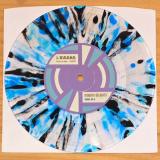
Palms Trax returns to production with his first release since 2019. The first single off his upcoming 2 track EP 'Soft Trance, Hard Gossip' is a journey through bold basslines, ear tingling acid lines and hopeful synth lines. It feels measured in its temperament for a listen on the bus home whilst punchy enough to earn its place across festival and club sets this summer. The title track Keys To A Printed Garden captures him at his best, moving deeper into a lush, melodic setting that stretches beyond the dancefloor while never fully leaving it behind. The track is built around warm deep house grooves, hazy nu groove textures and subtle IDM notes. The record unravels with a dreamlike smoothness. Swirling synth work, jazz-inspired saxophone lines and soft lo-fi textures give the record an immersive, almost weightless quality, while moments of glitch and ambient drift push it into more experimental territory. Even at its most reflective, steady percussion and rolling grooves maintain a subtle club-rooted pulse, balancing emotional depth, introspection and atmosphere with movement, rhythm and understated precision.
Jasmín returns to fabric Originals with the second instalment in her four-part series, Concrete Summer / Skeletal.
Following her debut release It’s Girls Night / Long Hair, the Dutch-Argentinian producer delivers two stripped-back, percussive techno cuts shaped by the architecture, tension and atmosphere of cities after dark.
Concrete Summer opens with a primordial pulse: saturated drums and feverish shaker rhythms lock into a raw, hypnotic groove. On the flip, Skeletal pushes deeper into the night, pairing a driving kick and syncopated percussion with distorted drones and mounting pressure.
Sparse, physical and deeply immersive, both tracks leave space for the dancer to complete the picture, continuing Jasmín’s singular exploration of stripped-back techno and the nocturnal worlds at the heart of her ongoing collaboration with fabric.
Two of the most prolific remixers in the world of Disco,Dave 'Love' Lee and John Moraleshave teamed up for one of their biggest projects to date - 'Mixed To The Maxxx'. After gaining access from the legendary original artists, the pair take the multi-track tapes of many classic Disco, Funk & Soul tracks and re-work them...to the Maxxx!
Where Remixed With Love stands as Dave Lee's own gold-standard body of work, Mixed To The Maxxx sets that legacy alongside Morales' own decades-deep M+M body of work: Lee brings his musically dense, groove-first touch to the likes of Harold Melvin, Syreeta, Lenny Williams and The Brand New Heavies, while Morales applies his extended, dancefloor-built M+M treatment and crushes the likes of Barry White, The Temptations and Loleatta Holloway, plus Dennis Coffey's breakbeat classic "Scorpio" for the DJs and collectors alike. Both work from original tapes, surfacing parts barely audible or entirely unheard in the source mixes, and both know when to let a classic breathe rather than bury it under modern production. It's a pairing a long time in the making. Lee and Morales first talked about working together around a decade ago, and getting Mixed To The Maxxx off the ground took five years of patient work: tracking down usable stems, securing approvals, and navigating a licensing landscape where much of the best material is now tied up with major labels increasingly cautious about clearing remixes. What's landed here is the product of that graft as much as the pair's shared ear for a great record, the sound of two people who know exactly what they're looking for and are willing to put in the time to find it.
A double 12" sampler in summer 2025 previewed the record's range. A bass-driven overhaul ofThe Brothers Johnson's "The Real Thing" and an extended mix of Philly legends Bell & James' "Livin' It Up (Friday Night)" showcased Lee's side, while an anthemic take on Inner Life's "Ain't No Mountain High Enough" and a tempo-lifted Light Of The World"London Town" flew the flag for Morales. Both drew strong early support ahead of the full LP.
Curated by ZSZS, ZF002 marks Zuflucht's return after a two-year pause in releases, this time with a physicalrecord made with the help of R.A.N.D. Muzik and Inch By Inch. It means a lot to bring together talented friends and their music for a shared cause. Across the record, the tracks move between early-hour warmth and late-night dancefloor weapons. All profits from ZF002 will be donated to Plan International, supporting their humanitarian work with children and families affected by the ongoing devestating crisis in Sudan.
Devotional music most often gets distilled into earthy chants and ancient folklore, it doesn't always ascend to the sky like Julinko’s ‘Naebula’ an album that from the first organ note clearly trades in terrestrial dreams for ethereal visions. A feverish quality permeates the whole record, as if a ritualistic performance was being captured from start to finish, a collection of hallucinatory doom, synthetic neo-folk hymns and ghostly art-rock.
Julinko, stage name for Giulia Parin Zecchin, has long been one of the best kept secrets of the experimental community in North-East Italy, with three records that helped define her unique blend of heavy psychedelia, slowcore and dark ambient. On ‘Naebula’ what really stands out is how powerful and soaring her voice is, a weapon of undeniable force that can transform into a vessel of raw fervour or glide effortlessly as a delicate lament. Her unconventional approach shines through on tracks like ‘Jeanne De Rien’, where a marching pulse acts as a pillar for an extended mantra, almost verging into powwow territory. ‘Peace Of The Unsaid’ uses its arrhythmical structure to create space, a crepuscular night ode that reaches the heights of Sinead O’Connor’s most intimate force-fulness while retaining a sweet composure. Whether it’s glacial murderous shrieks or gospel-esque vitality, songs like ‘Cloudmachine’ or ‘Kiss The Lion’s Tongue’ seem to draw as much from a tradition of European minimalism, the use of drones and repetition, to the tradition of folksongs as hymns, where modal harmonies make way for an apparent stasis. Another key element in Julinko’s songwriting is the seamless blend of her minimalistic approach with these dense textures borrowed from a distant outsider metal heritage, Lynchean noir on steroids or wordless exorcisms with deep undercurrents.
REVIEWS
"Utterly gorgeous. This magnificent album is the gift that keeps on giving. Downright essential"
Electronic Sound (No. 6 Album Of The Year 2022)
"A cosmic swoon that plays with closeness and distance in the realm of revelation"
Pitchfork - 7.6
"Gloriously introspective"
Sunday Times
2022 Album Of The Year
The Thin Air
Crying Outcast returns with its third release, landing close to home with legendary dub innovator The Rootsman. Bradford’s own and a true pioneering force in experimental dub since the 90s, The Rootsman’s influence runs quietly but deeply through the underground. Roots Return gathers three essential works from his catalogue, including collaborations with Celtarabia and Russ (The Disciples) as Pachakuti, alongside a light-headed reinterpretation from label head Miles J Paralysis. Spiritual and subtly psychedelic, yet deeply rooted in dub tradition throughout, drawing on influences from Pakistani devotional hymns and Celtic folk traditions. An essential modern day EP, displaying a meeting point between the heritage and the future sound of dub music.
Joe Fujinoki centered the compositions of his latest album Glass Torso round the idea of the fragility of the human body. Fujinoki described the narrative thread of the album as that of “holding the shape of a human body as if it might shatter like glass”. The precariousness of the body, the essence of the body as defined by Fujinoki as the torso, and the object relations between the boundaries of dialectical exercises pack themselves into his creative process.
Fujinoki recorded Glass Torso exclusively with analog synthesizers, stumbling in and out of structural loops to find space for accidental discoveries. The ten pieces of recorded material feel somewhere on the edge of typified form, feeling like a vascular system pumping in and out its undulating liquidities. Maybe this is the hollowed space held together by Fujinoki’s notion of the torso where you hear a microscopic world, dubby and generative. Fujinoki is adept at organizing this realm of subtle sound sources, giving proper considerations of shared tonal space. Seemingly, this handling of the precarity of sonic material elucidates Fujinoki’s mature attention to detail.
Ambient music genre tropes often affirm the listeners vessel for escape and dissociation. It provides an intoxicating allure by respite from an overwhelming exterior reality far outside the listeners controls. Here this space becomes apolitical, or its protest vocabulary softer and subtle. Fujinoki does not aim to tackle hyperobject topics on how to course correct the world, but he does something increasingly rarer to come across. On Glass Torso an alternative space is created not as shelter, but as a meditation on negotiation and compromise. This twenty eight minutes of audio lays down a foundation for imagination, for imagining how to negotiate the fragility of the self. Zoomed out, the implications of his negotiative sonics can be a playground for broader reflections on distributive care and attention.
Fujinoki says he feels “alert” to his physicality and placement in the world amidst vast digital cultures creating impositions on him and his surroundings. On Glass Torso he creates a concretized space on a vinyl record, where the virtual and the tangible antagonize one another that create the spectacle of the listening experience. This spectacle is a soft one, a considered one, and an utmost enjoyable one. Fujinoki juggles opposing forces brilliantly, and formulates an exquisite palette of soft passing music so he can also help the listener with the exquisite burden of their own Glass Torso.”
In Gianfranco Rosi’s portrait of Naples, Sotto le Nuvole, the ground shakes periodically. Between Mount Vesuvius and the Tyrrhenian Sea, the fumaroles of the Phlegraean Fields hiss volcanic gas and steam. Below the sleeping volcano, modern day Naples emerges in black and white and fills with voices, with lives. From the traces of history and the concerns of the present, Rosi documents a city immersed in its continuous past, with Daniel Blumberg’s minimal soundscape hovering in a sonic space between liquid and air.
Tasked with creating a soundscape that would suspend space within Rosi’s film, Blumberg called upon the extended technique of saxophonists Seymour Wright and John Butcher to create a gossamer fabric of traces and sounds abstracted from their instruments. Having transitioned from theoretical physics to the saxophone, John Butcher has always deeply considered space in the context of his playing. His concerns are with flow, density and how the saxophone is situated in the living world. Zeroing in on the core sonic properties of the mechanical and acoustic components of the saxophone, Seymour Wright has integrated its every breath, reed vibration, keypad clatter and hissed microtone of his alto into his own, unique improvisational language. In his work with these two seminal players, Blumberg makes his most concentrated soundtrack to date - reinforcing the film's sense of overlapping time and space, and pushing at the limits of experimentation.
Initially recorded in Daniel’s flat in London, Butcher and Wright centre themselves around long, consistent tones, so soft that it seems breath is being gently pulled from the saxophone's bell by an invisible hand. Blumberg himself adds haunting bass harmonica, and recordings of Wright’s launeddas - a traditional and ancient triple pipe polyphonic reed instrument from Sardinia, Italy. Blumberg then travelled to the volcanic region of Baia, next to Pompeii. Once a flourishing classical Roman city loved by Nero, Baia slowly sank under hydrothermal pressure, leaving the city in a kind of geological purgatory. Using specialised geophones and hydrophones, Blumberg took those initial recordings and amplified them underwater, sending them calling out across the ruins of Baia’s mosaics, Nymphaeum statues and villas.
“It was important to me that the music was whispered in the same landscape that Gianfranco has worked for the past three years, so that you can hear the volcanic air gulping, the lapping of the waves, the steam and bubbles popping against John and Seymour’s saxophone breaths – an echo from a suspended time.”
What emerges is deeply melancholic, tender, subtle and right at the edges of audio technology. Submerged in an aquarian mausoleum, the mysterious vibrations of the saxophone and its bell become an echo of an echo, wading from the future into the past. ‘Sotto le Nuvole’ is less a soundtrack than a process of aeration - a sonic puncture in the material of the film which allows its central message to breathe, and a remarkable experiment at the limits of the saxophone’s possibility.
Parra for Cuva returns in 2026 with a new LP – Nacar – and world tour, marking the next step in his ongoing artistic evolution. Known for creating immersive electronic soundscapes that combine organic instruments with detailed, emotive production, he now extends his vision with a renewed visual language and live experience that deepen the connection between sound and space.
"US funky drummer Les DeMerle who is one of the representations of rare groove scenes. hisA1st album which was released in 1968 is finally reissued as vinyl for the first time!AMany killer tracks for diggers are included, such as ""A Day In The Life"" which is also known as sampling material of HIP HOP classic OC ""Time's Up"" and the US No.1 hit great funk numberA ""Aquarius"" by Fifth Dimension.A
In addition, great musicians were joinedAfor this great funk album such as Frank Foster, Lew Tabackin,AArnie Lawrence, Charles Sullivan etc...you can find how young Les DeMerle was a talented drummer even though he was just around 20 years old at that time!"
The Suicide Handbook is Ryan Adams’ most elusive and mythic recordings. The album is a raw and intimate collection of songs that captures the songwriter at his most unguarded. Recorded at the beginning of his solo career and long circulating only through bootlegs, the album has earned a legendary status among die-hard fans and fans of the americana genre alike for its stark stripped-back beauty.
Acoustic arrangements and hushed, late-night vocals, these songs feel like private confessions set to tape. Adams leans into themes of heartbreak, isolation, and emotional vulnerability, delivering recordings that are as fragile as they are compelling. There’s an immediacy here that sets The Suicide Handbook apart from his studio releases. These are the original recordings in their rawest and un-touched form.
Released officially for the first time, experience the record as a cohesive piece, bringing warmth and depth to its lo-fi origins. The analogue format enhances every subtle nuance, from the quiet creak of strings to the tremble in Adams’ voice.
For longtime fans and collectors alike, The Suicide Handbook stands as a haunting, deeply personal snapshot of an artist laying everything bare—an essential addition to the Ryan Adams collection.
Unsighted is a remarkable New Yorker mentored by legendary New Yorker, ALONZO. Unsighted’s understanding of rhythm, funk, and texture is world class and welcomed into the Kraftjerkz family of USA electro. Kid Ginseng’s Punk Funk Remix rounds out the 12” EP nicely. Some would say that Kraftjerkz is USA’s answer to Bunker Den Haag. Let the DJ’s decide. Salute!
Das wandlungsfähige Trio Vanishing Twin präsentiert sein neues Album ,Archives" - eine Collage aus postmoderner Songkunst, die im gemeinsamen Schaffensprozess Transzendenz findet. Der Albumtitel spielt auf den unverwechselbaren Ansatz von Vanishing Twin an, tägliche Aufnahmesessions anzuhören, zusammenzufügen und neu zu bearbeiten. Gründungsmitglied Cathy Lucas beschreibt den Prozess so: ,Material sammeln, damit herumspielen, es auf den Kopf stellen, versuchen, die Teile zusammenzufügen und daraus eine Geschichte zu erschaffen". Da Lucas mittlerweile ins ländliche Frankreich gezogen ist und Valentina Magaletti sowie Susumu Mukai in London leben, verbinden sich die drei, indem sie Songs und Instrumentalfragmente in einem virtuellen Studio austauschen. Die geografische Distanz wird durch ihre kollektive Kreativität überbrückt, wobei jedes Mitglied als Multi-Instrumentalist seinen Beitrag leistet. Jeder Musiker bringt umfangreiche Erfahrung in Zusammenarbeit und Improvisation mit, wobei das Anhören und Bearbeiten von Studio-Sessions ein wesentlicher Bestandteil des kreativen Prozesses ist. Konzepte von Urheberschaft und Eigentumsrechten lösen sich in der Musik von Vanishing Twin auf, während die Mitglieder Instrumente tauschen und sich ganz dem Moment der Zusammenarbeit hingeben. Die ,Archive", die dem Albumtitel seinen Namen geben, werden zu Dokumenten der kollektiven Intelligenz des Trios. Die chaotische Energie von ,Archives" treibt Vanishing Twin in ungewohnte Formen und Richtungen. Außerhalb ihrer Komfortzonen findet das Trio neue Momente der Erleuchtung und Freude. Tief im Mix hörst du vielleicht, wie Magaletti zum Bass greift, Mukai unerwartet am Schlagzeug einspringt oder Lucas chamäleonartig durch die Lücken gleitet. ,Archives" verfeinert Vanishing Twins Modell des kollektiven Musizierens, bei dem Egos in spielerischen Mix-and-Match-Spielen in den Hintergrund treten und die Kreativität zwischen den drei Multi-Instrumentalisten fließt. Sie bewegen sich zwischen und außerhalb konventioneller Genrekategorien und reihen sich neben Weggefährten wie dem Tara Clerkin Trio und Still House Plants ein, wodurch sie die Vorstellung vom zeitgenössischen Musikensemble erweitern. Nach einem Jahrzehnt ihres Bestehens sind Vanishing Twin wandelbarer denn je.
Indie shops only. Limited red vinyl rerelease. 500 for the World (just 80 copies for the UK) After falling out with Sir Coxsone, the legendary head of the Kingston label Studio One, Lee Perry first founded his own band and then, in 1973, set up his own studio in his backyard. What was born out of necessity developed into a unique success story. With both the Upsetters and the Black Ark, Perry made music history - most notably with the 1976 release of the album Super Ape, on which he made the genre of dub bubble and boil from the mixing desk in previously unheard ways. For Perry, the studio is like a living organism. Whether he truly experiences it that way or simply lets too much ganja go up in smoke, for Perry the equipment is organic, empathetic, and intelligent. The catch is that the results sound exactly like that as well. Long before sampling was invented, he layered tracks of deep basslines, echoes, and reverb with various self-recorded sound sequences – often played in reverse - on top of, into, and beneath each other. In other words, Perry was the first producer who made the music instead of the band. Among other things, this earned him the title ‘Salvador Dali of Dub.’
Building up from his multiple appearances on the label, one of our closest producers, Luca Durán, makes his full studio album debut on TraTra. This work is meant to showcase the vast world of influences the diasporic experience comes with: his rhythm-driven tracks coexist in high contrast, but fluidly, with the experimental and textures of his european school of sound. The title itself works amongst these two edges of Luca's aesthetic existence, the softness from the flight of a Mariposa with the harsh hit of a death blow.
Killing Mariposas is filled with seemingly clashing techniques, field recordings, acoustic instruments, and analogue synthesis, which converge with modern and forward-thinking production tools to build heavily layered music. Constructing an emotional narration from the contemplative to the euphoric. A sort of contextual shapeshifter, with hints of cumbia, grasps of reggaetón and dembow, but always submerged deeply in a windy and fragmented memory.
This whole project gets rounded up by the packed lineup of collaborators, both vocal features and production partners. Astute minds from distinct internet niches: Kelman Durán, Gavsborg, Iceboy Violet, Debit, Rosa Pistola, BEBE YANA, Kamohelo & Kacha.
One true reflection of Luca's production abilities and sonic poetry.
Trumpet player Freddie Hubbard's fusion jazz on Red Clay is something that the younger generations within jazz and hip hop admire and aspire to. The title track "Red Clay" was sampled by both A Tribe Called Quest on "Jazz (We've Got)" and Freestyle Fellowship in "Parkbench People", only to be covered by today's new vocal jazz singer José James.
It would take half a day to explain the intricacies of a song like "The Intrepid Fox". Red Clay seamlessly blends bop with soul jazz and fusion in a way that will remain unsurpassed for a long time. Red Clay was Hubbard's first album on CTI Records, after his long stint with Blue Note Records. Accompanying Freddie on this album are Joe Henderson (sax), Herbie Hancock (piano), Ron Carter (bass) and Lenny White (drums). The album was produced by Creed Taylor and recorded and engineered by Rudy Van Gelder in his legendary studio in Englewood Cliffs, New Jersey.
Luca Lozano has long been an artist whose output as both a producer and designer we've admired and after many years of seeing his records fly off the shelves here at Phonica, we're delighted to be releasing the 'Da Vinci' EP by the Klasse Wrecks boss on our main label. We'll let Lucas, the modern day renaissance man himself, take it from here:
"These four tracks were created over a few sessions while I was settling into a dank basement studio (which was new at the time and now long gone).
‘The Magnificent’ and ‘Delta Force’ were made just after I acquired an old Korg Delta synth, I spent a lot of time getting the 1970s beast to sync up with modern equipment and both tracks make use of it in various elements.
‘Eau De Dave’ is a cheeky homage to a UK producer legend, I’ve been digging into his various older productions recently and went back to a fidget sound for the fun of it.
‘Crunchy Nut’ was kind of inspired by early U.K. tech house, it was the last track confirmed on the EP and came together super quick. As usual it’s a mix of old drum machines like a modded 707 and a bunch of old samples I’ve had on my computer for a couple of decades now. I’m happy I managed to work some slap bass into a track finally…"
A former architect of the cult DiY sound in Nottingham, as well as being a member of downtempo outfit Bent, Nail is a house making machine whose own distinct fingerprint is all over everything he makes. His sound is raw but never hostile - he always finds a neat sample to bring some soul to his louche, loose drums. This EP for his In The Dance label starts with 'And So', a wonky sound infused with sensual whispers, while 'Before' blends woozy pad work with deep drums and prickly percussion. 'Grief' is a sombre affair with bluesy sax lines weaving between the dusty drums, and 'Size A Dat' gets choppy, playful, and funky. Another majestic EP.
Often credited as the father of multi-media theatre, Alwin Nikolais (1910-1993) took complete creative control over his productions - including cutting-edge approaches to lighting and costume that transformed human bodies into shifting sculptural shapes, while also composing wildly innovative electro-acoustic and synth-based audio as accompaniment.
After initially experimenting with musique concrète and tape manipulation (as demonstrated on the 1959 LP Choreosonic Music of the New Dance Theatre of Alwin Nikolais) Nikolais became the first owner of Robert Moog's synthesizer at the Audio Engineering Society convention in New York in late 1964. Relying heavily on the Moog and later the Synclavier synth/sampler, these 21 tracks document Nikolais' highly-prescient compositions across the mid 1960s through to the late 1980s - existing not only as extensions of his other-worldly choreographic productions, but standalone pieces of foundational mid-century American electronic and experimental music.
"Born in Southington, Connecticut in 1910, Nikolais’s early years and early career were in acting, music and puppetry. It was not until the late 1930s that he began his work as dancer/choreographer in Hartford, Connecticut, where he was commissioned by the Avery Memorial Theatre, a part of the Wadsworth Atheneum, to create an evening-length work to the music of Ernst Krenek. Previously his work and study as a pianist-organist found him accompanying silent films. This sort of accompaniment required from the musician not only a playing skill but also a versatility in improvisation, matching movement to sound, and evoking mood to situation.
Nik was drawn initially to dance by his involvement with the percussion scores used by the illustrious early twentieth century German dancer Mary Wigman. In trying to learn more about percussion, he was lured into dance class and thus his career began. His development of music and dance occurred simultaneously. His introduction to the twelve-tone technique opened his mind to the expanding areas of atonal music, and his dealing with music as sound per se. In 1948, after being appointed director of the Henry Street Playhouse in New York, Nikolais formed the Playhouse Dance Company, later known as the Nikolais Dance Theater, and began his aesthetic orientation toward dance as a study of motion. By the 1950s, he had ceased creating literal dances and began his explorations and eventual milieu as an abstractionist.
Sound became an important part of his abstract theatre. For his first dances, which involved his new thinking of dance as both a visual and kinetic art, he used live percussion scores in which he directed his dancers to play instruments of all nature. There was a combination of children’s toy instruments as well as harsh and resonant automobile brake drums, and other pitched auto parts which he also used to accompany classes. Once he installed his own tape recording machines, he quickly used the limited range these instruments provided in a new way, slowing and increasing speed and reversing sound. He also made the sounds adhere to the choreographic structure (not the other way around), thereby giving the dance its independence from the musical phrasing. But the real need remained: the search for new sound. Nik made a sound library, recording noises and percussion and vocal sounds, which the French aptly called musique concrète. Needless to say, he became a master at splicing bits and pieces.
From 1956 to 1962 Nikolais composed eleven major scores for his theatre pieces using such techniques. In 1963, James Seawright, who at the time was assisting Nik in his productions and also working at the Columbia-Princeton Center for Electronic Music, recorded a sound bank for the production Imago (1963). With this material, Nikolais created his first synthesizer score. Imago won the Paris Grand Prix in 1968 and launched the Nikolais Dance Theatre towards its national and primarily international acclaim.
During the same period, Seawright came to Nik and told him of a young man who had invented and constructed a simplified synthesizer and insisted that Nik visit the electronic fair currently being held in New York. Nik did so and met Robert Moog. He was completely taken by the new machine and after making some suggestions to Moog, (which Moog made), Nik bought the inventor’s first machine with the aid of a Guggenheim Fellowship. Moog himself was astonished by what his machine could produce for Nik. This machine was later acquired by the Museum of Musical Instruments at the University of Michigan at Ann Arbor as the first Moog synthesizer. The Synclavier was Nik’s next source of sound and since the mid-1970s remained the major instrument in the Nikolais soundroom.
Alwin Nikolais has been honored and awarded throughout the world. He has received the French Legion of Honor, the Kennedy Center Honors, National Medal of the Arts, two Guggenheim Fellowships, as well as Mellon, Ford, and Rockefeller grants. He has been a recipient of NEA grants since 1966, been awarded five honorary doctorates, all for his remarkable achievements in Dance Theater. His genius has influenced several generations of artists."
—Murray Louis
Ismael Pinkler lives in Buenos Aires. Belly Dance Services head Nick Hanzo in Vienna. Turns out the exact midpoint between the two is somewhere in open ocean. So they abandoned the plan to meet on Earth at all, and met on planet 126 in outer space.
It turned out to be a strange, hospitable little world — spinning at its own pulse, 126 beats per minute, changing landscape every few kilometers, as if it couldn't decide what kind of planet it wanted to be either. Ismael and Nick wandered it together, letting each new terrain talk them into a different song, until ten tracks had quietly assembled themselves. What they brought back drifts somewhere between shoegaze, techno, ambient, trippy tribal house and pop — grounded and gravitational, emotional and mental, to put it in terms Earthlings might understand.
Now, speaking seriously: Ismael and Nick built Planet 126 by passing sounds and ideas back and forth across the ocean, night after night, for eight months. The entire process — composition, vocal recording, production and mixing — took just eight months, a dream scenario for any electronic musician. The collaboration stayed positive, proactive and fresh throughout, letting the project move forward effortlessly. All tracks were written and produced by both musicians together; Nick wrote the lyrics and recorded the vocals, Ismael handled the mix. No samples, no references — just two people building a world from scratch.
Planet 126 also marks a milestone for Belly Dance Services: the label's 30th release, and likely its last. BDS began with BDS001, a vinyl EP by label founders Hanzo & Yaman, and has been solely helmed by Nick Hanzo for the past five years. Now it comes full circle — laid to rest with a big bang: a double vinyl gatefold album co-produced by Ismael Pinkler and label head Nick Hanzo.
Mutant, in partnership with Universal Pictures, and Back Lot Music, are proud to present the premiere physical media release of 3x Academy Award®-Winning composer Ludwig Göransson's original soundtrack to Christopher Nolan's forthcoming motion picture The Odyssey.
The Odyssey, is a mythic action epic shot across the world using brand new IMAX® film technology. The film brings Homer’s foundational saga to IMAX® film screens for the first time and opens in theatres everywhere on July 17, 2026.
The Original Motion Picture Soundtrack from The Odyssey is available to order on 3x 140gm Black vinyl and 2x CD set.
New York's contemporary deep house guardian Fred P has a smoky, spiritual sound that is always inescapably immersive and evocative. For this new EP on Base, he kicks off with something brighter and more extroverted: 'Pardon Me' has long been a staple of his sets and balances his signature musicality with a more playful sax lead and bold rhythm that will get floors bumping. 'Freedom Fam' has one of his classic spoken word monologues drifting next to starry cosmic keys like a voice from the heavens. 'In The Light (Still Wanting)' rewires soulful house in his own vision - deep, insular, brilliantly humid. 'Factory Sound (Edit 1)' is as peak as Fred gets - a driving, musical house rhythm that twists and turns freely as sustained chords layer in some of that trademark emotional pull. Superb.
Mihail A. Popov is a Russian with two decades in the game behind him, partly under his given name, but half of that time has also seen him work as I Gemin. Now he lands on Deeppa Records with a conceptual EP "built around depth, patience and underground exploration." The aim is to explore all new musical ground and follow newly emerging paths, and the result is a fine four-tracker. 'Like The Star' is a lush, deep nu-disco jam, 'Love Undercover' has a seductive slide to the live-sounding drums and playfulness in the horns, while 'Terra Incognita' brings jazzy chords and a balmy late-night warmth. 'Melancholy' gets more heavy and roughed up with smudged neo-soul and r&b samples, making it a romantic affair. Kid Sublime and 6th Borough Project drop remixes that bring more club-ready grooves and complete a superb EP.
Hackney based Hidden Sounds Records launches – with support from Emotional Recordings – it’s Dark Times label by diving in the the music of Alkahest, a short-lived project from Canadian brother-production duo Lex and Rew MacCrimmon.
For the second EP, the Twisted Up release is re-examined, with a tweaked track list to represent the times and how their sound continues in relevance today. Released in 2 years (1994-1996), Alkahest was the darker side of the MacCrimmon’s productions and allowed them to focus on twisted, psychedelic electronics, away from their main Legion Of Green Men project.
Self-described music obsessives from a young age – lying under a home-made harpsichord, with their heads in the resonator box was an early indication of a love outside the norm. Experiments with forks and pencils on strings – totally unaware of the likes John Cage – highlighted an interest in sound from unusual places.
Anything with a synth notably grabbed their attention, going to the public library to take out BBC Sound Effects and Morton Subotnick albums, sat alongside contacting European mail order catalogues, to grow their knowledge and record collections.
As early productions formed, working under the sound production name of Incarnate, their love of art was just as influential as music. The likes of M.C. Escher, Salvador Dali, Bridget Riley and the Op Art movement, was all part of brothers in their progression to form the Post Contemporary label in 1992.
Following the DIY ethos of the music they had long been buying, their “indie ethic” influences all coalesced in the label, not conforming to one sound or tempo, placed them within the electronic music coming from Canada, but also, out on their own.
Twisted Up expands the Alkahest sound, the title cut a stomping anthem, it’s unrelenting drums and lifting strings a call to arms. The compelling Shake arrives, acid techno rewiring synapsis, dub static between the beats.
On the flip, Twisted Another is just that, a reversion excursion, pushing the psychedelic synthesis to the forefront, stabs call and respond. Closing the EP with the perfectly titled, Kiss My Acid, a journey of industrial bang, reflexed, Alkahest showing their sound is pulsating, widescreen overtures.
A much needed repress of French ambient composer and lifeguard Roméo Poirier's cult debut record, Plage Arrière. Released with updated artwork, by London imprint Kit Records.
Plage Arrière is a deep sea meditation on a constellation of Greek beaches across three islands. Trumpets, echo-clicks and Harold Budd-esque shimmer piano whirl together on these sand-caked missives, tumbled and re-engineered by their surroundings like seaglass. Poirier evokes the sub-aqeaous ambitions of Jürgen Müller, or Jan Jelinek inspecting a coral reef.
Send Noods Records is a new label from South Africa's Reagan Ruler, who makes house so sensuous it should come with an 18+ age rating. 'Cosmic Desire' is his latest saucy number and it's buttery deep house with a cooing vocal that swirls through the mix like caramel in a galaxy bar. 'Fly' has a more jazzy, ougnehy melodic vibe to it but the drums remain cuddly warm and 'For A Moment' dials up the energy just a touch. The drums are more upright here, but the chords are still resolutely molten and the vocals are soulful accents in the mix. Gorgeous stuff that's got us keen to hear more from this label already.
Richard Sen debuts on Phantasy with ‘Space 1999 / Bergen Light Rail’, the first transmission from the illustrious DJ and producer since his vinyl-only solo LP, 2024’s ‘India Man’.
Deeply invested in electronic music for over thirty years, first at the intersection of London’s acid house and graffiti art scenes, evolving in cult duos Padded Cell and Bronx Dogs, and now generously sharing his formidable knowledge of club culture on London’s Do!! You!!! Radio, Sen is known to take listeners anywhere. On this occasion, he locks into two distinct influences from his winding creative journey, with ecstatic results.
The title of ‘Space 1999’ mirrors Sen’s own hand-painted accompanying artwork, yet its sonic influence sits much closer to our own orbit; A tribute to a slice of London nightlife history, Space at Bar Rhumba was a midweek party led by residents Luke Solomon and Kenny Hawes, whose selections helped sculpt the deep house scene at the turn of the millennium. ‘Space 1999’ transports contemporary dancers back there in no less than ten minutes, led by a deep bassline and swinging drums, while an intergalactic melody slowly takes hold, resulting in pure satisfaction.
‘Bergen Light Rail’ embraces a different kind of kosmische, looking to the northern light of space disco and following the tram route of its namesake to the Norwegian city’s beloved Club Ostre, riding a rhythm of pogoing toms and crashing drums. Conjuring a dreamy tête-à-tête between ever-expanding, heavenly synths and tightly-wound arpeggiators, Sen’s transmission to the stars is a deeply human call to dance.
Following on from his electric appearance on Diamonds in the Night, Tallac returns with a four‑tracker of low‑orbit elation. Tessitura blends floor‑facing energy with sleek space synths, elegant undercurrents washed in bold bars to produce a one‑of‑a‑kind sound. Drums hit hard on “Carbon Copy,” driving percussion providing the launchpad for synthlines to swoop and soar. Tempos are taken down a notch for the analogue embrace of “Kiss Me Quick.” Notes bend and flow in this smoky dreamscape, samples pulling the listener ever deeper. The rumbling kicks and hissing hi‑hats of “Pythia” are punctured by a throbbing beat; gliding above the rolling snares and luxurious breaks is a melody that thrums with palpable intensity and unbridled joy, a track made to ignite audiences. Never adhering to genre tags or style pigeonholes, Tessitura closes with “Cybersyn.” Touches of cosmic melt into late‑night glow‑stick energy, dawn’s light piercing the warehouse windows while the speakers continue to bounce blissfully.
"I’m very excited to work with deep medi again. I was buzzing to be releasing topper top with them on their 10th anniversary and it’s even better to be back for their 20th". Sir Spyro
Kicking off our 20th anniversary year, and arriving 10 years after his iconic release ‘Topper Top’, grime, dubstep and UK bass pioneer Sir Spyro returns to DEEP MEDi with his new dancefloor rattling EP, 2ND SQ.
The EP opens with the unrelenting ‘2ND SQ’, the track’s stuttering hi-hats and all consuming bass cut through by an icy, industrial-sized snare. The desolate ‘Be Afraid’ creates a sense of vastness via its minimal production, resulting in an eerie and energised track designed for dark warehouse raves.‘Diagonal’ continues in the same dark vein, the track’s brooding,looping production sure to send listeners into a mystified trance. Closing the EP is ‘Patch Bae’, a glitchy joyride that calls to mind the16-bit era of gaming, leading listeners on an exhilarating, kaleidoscopic journey.
2026 Repress
30 years of Fuse means 30 years of road paving.
An ode to the past and a hint to the future, Fuse shares this milestone with its original guests from 1994 all the way to its fresh party goers of the past years as a promise to keep its dance floor focused on quality music and timeless moments.
In over a quarter century, the Brussels club has stood the test of time by rooting itself in ageless music and employing pioneering artists - large or small, international or local - to command the decks of Belgium's longest running dance floor. A celebration of this legacy and the renewed imprint is in order, coming in the form of a 30 track compilation of techno's best and brightest from around the world. One track for one year, this collection of recordings highlights the status quo of enduring club music, beginning with a nod to the past: a re-release of Jeff Mills iconic 'Step to Enchantment' from 1993. This glance to the past quickly shoots us forward into the current state of techno with legendary artists like Planetary Assault Systems, DVS1, Steffi, Rodhad, Donato Dozzy, DJ Nobu and many others who headlined the club in recent years. Cementing itself as a respected escapist institution, Fuse also calls on its growing local scene to prove why Brussels continues to remain a reference in the scene even outside of its own borders.
Deep, deep stuff on the debut album from K Wata. Long and dubwise, dark and detailed. With bass that fills and warms a space.
All noir. Cast shadows against the wall. Weight being shifted and distributed with singularly delicate poise, like a knife being balanced on the end of a finger.
There’s a silvery, loose flow state to this record that maybe reveals the way some tracks were first written to be deployed live at Sustain Release 2025. Then taken back to the lab and tightened up further into the album’s final form, with beautiful mixing work between Kenzo and Chris Botta.
With that in mind, Give U Space unfolds slowly and fluidly, giving the listener the chance to access and open up to the deepness of the sound, being led down a path. It rolls and builds momentum and groove, and ratchets tensions up toward peaks of energy "Whisper Dub" and "There Will Be Love".
The tunes feel architectural. Rooms to be in and settle into. Simultaneously stripped back and then etched with neat little details and characterful or atmospheric sound choices. The silhouette of slo mo Memphis and Houston trap is a leading influence, especially with the drums. Mixing with bits of click’n’cut sampling and psychoacoustic tricks, the penumbra of dub techno and drowsier dubstep, and SG’s soft vocals rising in the ether.
The presence and inspiration of the sound system is obvious in all of Kenzo’s work, the music can rattle when spun up louder or blended into the club. But K Wata’s uniqueness and signature comes from an often equally inward facing quality, touched by distance and longing and a sort of chiaroscuro incandescent light set up.
Written and produced by K Wata.
Mixed by K Wata and Christopher Botta at Fer Sound Studio.
An Elephant Eye; A Frozen Girl; and an Umbrella Man walk into an Icebox. All have been shoveled out of a Jungle-den and are covered in Mud Fleas. The Umbrella Man has been Dolt-ing around on the Machinery for Years. . .knowing it Hasn’t-Really-Rained since he threw his last Bacchanal. He thinks he owns birds; he just listens to them really. The Frozen Girl keeps away from him but moves Incredibly slow given the Circumstances. . .she’s been trying to tie her shoes for 700 years. The floating Eyeball, defying all Man Physics, Miraculously Phases himself All the way to the outside of the Icebox; Barreling through the Crisp air. He then comes to a Grinding halt before a Ginormous Totem pole of Speckled flesh, Grey and exceptionally thick, Wrinkling like telephone Wire. He quickly realizes that’s where the rest of his Body went. The only thing that’s missing is his Trunk. But he’s learned to communicate Decently Well without it. . .Using Semiotic chains of Eyelid-signifiers. . .An Eyeball shaped hole has been Burnt into the Icebox but the Frozen Girl won’t know for another 53 years and by then Big-Pants won’t even be in. The Umbrella Man doesn’t particularly so much as Notice and think its smells a lot like Burnt toast. He says he’s off to the Cemetery.
What do Them Three have in common anyway? Well they all Dig Pins; they also all Exist because of Him. And, Starting today, are Perpetually Entrapped in 10 millimeters divisions of Black resin upon a Circular Plain. I want to hear them cry and shout, You might say, because we are all Up-standers. But all crying and shouting Ourselves into the Icebox. . .
French producer Moar is back with a brand-new, 100 per cent Boom Bap project, surrounded by his trusty old MPCs and SPs, just as he does so well!! An album infused with soulful and jazzy sounds, featuring top-class MCs such as Rasco, J-Live, El da Sensei (Artifacts), Awon, John Robinson, Napoléon da Legend, Dumi Right, Mikal and his Beatmatics colleague DJ Vince on the cuts!!
This record is a real treat for fans of 90s hip-hop, with samples that really pop on a beautifully marbled vinyl!
Already a boom bap classic…
Dan Kye is the mysteriously evoked moniker from multi-instrumentalist, producer, and vocal sensation Jordan Rakei. The New Zealand-born artist - who now resides in London - presents his first long-player from Dan Kye, ‘Small Moments’, on Bradley Zero’s Rhythm Section INTL. An ode to the dancefloor, the musical project was born out of Jordan’s lockdown experience, created from the comfort of his own home. Recorded with just a laptop, extra live instruments and guest musicians, ‘Small Moments’ seamlessly transcends across electronica, jazz and funk, with each genre being effortlessly fused with Jordan’s melancholy vocals. Allowing himself to push the boundaries, Jordan’s Dan Kye moniker draws on the energetic and uplifting elements of house and techno and perfectly mixes it with the sultry vocals and emotion that come with the live elements we know and love from Jordan Rakei. The record offers listeners a journey through more floor-heavy tracks such as ‘Mogeri’ and ‘Raro’ to more groove infused offerings such as ‘Rainbow Road’ (which is named after one of the maps in Mario Kart and inspired by the energy of Prince’s iconic live concert at The Aladdin in Las Vegas), whilst tracks, like ‘Sober’, take on a more lyrical and anthemic feel.
Jordan Rakei: “Rhythm Section INTL was my entry point into dancefloor orientated music, and it was Bradley who asked me whether I could head in that direction so he could play my music out in the clubs. Dan Kye has still got melodies, but the main focus is to keep it high energy.”
After meeting Bradley Zero online whilst living in Australia, Jordan eventually moved to London in 2014. The same day he landed, he went straight to a Rhythm Section party to meet Bradley, and it was here that he first got a taste for house music. He enjoyed Rhythm Section INTL’s ability to draw on both live and electronic talent; and thus, after Bradley asked him for some productions for the parties, the idea for Dan Kye was born. ‘Small Moments’ is a musical masterpiece that can be enjoyed as much on the dancefloor as it can in the comfort of your own home and is a perfect step into Jordan’s landscape and idealism of dance orientated music.
Bradley Zero - “In around 2014 the proprietor of the famous Northside Records in Melbourne handed me a self released 12” from a new, unknown artist based in Brisbane. It was Jordan Rakei - Franklin’s Room. I’d been home almost a year before I actually got round to listening to it and I remember that moment like it was yesterday. I lay down on the sofa, put the record on and was transported! The Dan Kye project is a testament to the experimental and independent ethos Jordan lives by and is a product of an artist reaching full stride but not afraid to still try something new. This ‘Small Moments’ LP was conceived in a record store, born in a club on Rye Lane and is now flying the nest, throwing caution to the wind and making a bold statement.”
Als Post Animal ihr neues Album IRON aufnahmen, waren zum ersten Mal seit fast einem Jahrzehnt alle sechs Originalmitglieder wieder zusammen im Studio. Das Ergebnis ist die Verkörperung von 30 Tagen voller Kameradschaft und grenzenloser musikalischer Entdeckungsreise – ihre erneuerte Verbundenheit ist unerschütterlich. Das Album nutzt die neue Schärfe, um Genregrenzen zu überwinden und erweitern, von Synthpop über Folk und Vintage-Radiorock bis zu spannungsgeladener Psychedelia. IRON versetzt den Hörer direkt in den Raum der Band – freizügig und experimentell, aber dennoch präzise gespielt. "Das Zusammentreffen all dieser kreativen Kräfte war wie geschärftes Eisen," sagt Sänger/Bassist Dalton Allison. "Wenn wir nah beieinander sind, machen wir uns gegenseitig besser."
Aetheria marks the second chapter of this journey, where Egyptian Greyhound explores an emotional landscape shaped by house, trance and progressive influences.
Each track reveals a different facet of the same ever-evolving experience, gradually unfolding into a world of its own. Intimate and introspective at times, expansive and euphoric at others, the music moves through shifting atmospheres, hypnotic rhythms and melodies that linger long after they fade.
Rather than following a fixed path, Aetheria invites you to surrender to the moment and discover where the sound takes you. From its first breath to its final echo, the journey unfolds through emotion, movement and an immersive sonic atmosphere, leaving space for something new to emerge.
Cari Lekebusch is an enigmatic figure but was a key early player in the Swedish techno scene with a big say in the wider evolution of European techno. 'Fred 2' is one of his most sought after records from those early years and this reissue features three massive tunes written back in 1993. The EP opens with the deep and funky techno rhythms of stone cold classic 'Nightshade', before 'Prototype' brings a trippier vibe with manic synths darting around a booming kick. The 10 minute behemoth 'Mono Flight' closes out the record with a lesson in classic dance floor hypnosis, its swirling layers gradually building and growing over deep and throbbing bass. Three cuts that very much make their mark, even three decades on.
Der dämonisch großartige Soundtrack zum erfolgreichen Action-Roguelite-X-Base-Management-Game CULT OF THE LAMB von River Boy (Narayana Johnson). 42 speziell für Vinyl gemasterte Tracks erscheinen auf 180g rot-schwarzem Splatter-Doppelvinyl im Deluxe-Gatefold, verziert mit Kunstwerken des Illustrators Carles Dalmau.
Pascal Moscheni debuts on Limousine Dream with a double 12" featuring 8 stunning representations of the modern tech house sound. Ultra functional, but with plenty of character, and hard-driving but never overbearing - these are tools for DJs working with high-energy dancefloors.
Teal return on October 2 with Love Comes Thru, the trio's nine-track debut album. Expanding their emotionally resonant blend of downtempo trip-pop, the record reaches into street soul, dub, and experimental grooves, marking a confident new chapter for the group.
At its core, Love Comes Thru is a reflection on the quiet strength of love—not through grand gestures, but through the steady presence that carries us through uncertainty, change, and connection. Written over the course of a year of bi-coastal collaboration, the album became a testament to the bond Teal share as artists, friends, and family.
From the lush synth landscapes of "Aries Moon" to the footwork-inspired pulse of "Time Is Blind," the album explores themes of patience, vulnerability, longing, and intimacy. Standout singles "Kissing in a Dream" and the title track lean into left-field street soul, while stripped-back, 808-driven tracks like "Change Your Mind" and "Anomaly" demonstrate the power of restraint without sacrificing momentum. Building on the group's love of ambient improvisation, Love Comes Thru also features instrumental pieces with percussion by Brandon Valdivia (Mas Aya/Lido Pimienta).
The album closes with the sensual "Bubbling," bringing the journey full circle with a reminder that love ultimately comes through in its most embodied, physical form. Love Comes Thru is presented in a deluxe, limited-edition matte-finish, double-embossed jacket with a printed inner sleeve. Available on LP and digitally through Rubadub, In Sheep's Clothing, and Forced Exposure beginning October 2.
Wewantsounds is delighted to continue its Ziad Rahbani reissue program with Ana Moush Kafer, a classic album by the Lebanese legend Ziad Rahbani, recorded at his By-Pass Studio in Beirut during the height of the Lebanese Civil War in 1985. Showcasing Rahbani’s signature blend of Arabic music infused with touches of jazz-funk and bossa nova, the album has attained cult status over the years. Originally released on cassette, it has never before been available on vinyl. Newly remastered, this edition features the original Relax-In cassette artwork from 1985 and includes new liner notes by Mario Choueiry of the Institut du Monde Arabe in Paris.
Ziad Rahbani, who passed away in 2025, remains one of the most influential figures in modern Arabic music and a cultural icon in Lebanon. A musician, composer, pianist, producer and playwright, he helped modernize Arabic music over five decades. The son of composer Assi Rahbani and singer Fairuz, he shaped her late 70s–80s recordings producing Wahdon and Maarifti Feek, while building a major solo career with classics such as Abu Ali and Houdou Nisbi, which have become cult favourites for a new generation of DJs and music lovers.
Released in 1985 in Lebanon, Ana Moush Kafer stands as one of Rahbani’s key achievements. Recorded at his By-Pass Studio during the Lebanese Civil War, it blends Arabic melodic traditions with jazz-funk, bossa nova and Western arrangements. Originally cassette-only, it became one of his most revered releases. Throughout the album, Rahbani’s writing reflects the turbulence of wartime Beirut with a blend of sharp social observation, political satire and melancholy. It captures a moment in Lebanese cultural history where experimentation, satire and popular song intersected, giving the album its enduring influence among music lovers.
Sung by Rahbani and Sami Hawat, alongside Beirut-based musicians, the album features both Western and traditional Arabic instruments. It balances refined arrangements with lyrical irony, social commentary and political reflection, which remain deeply resonant in today’s context in Lebanon.
One of the highlights of the album is the song “Shou A’ada Ma Bada,” with lyrics by Joseph Harb, which reveals a clear bossa nova influence, while the closing track, “Al Mokawama Al Watania Al Lobnani,” offers a deeply human view of war, avoiding patriotic cliché in favour of a nuanced perspective rooted in lived experience.
As Mario Choueiry observes in his liner notes, “Ana Moush Kafer stands as one of the high points of modern Arab political songwriting, yet transcends its historical and geographical context through the universal relevance of its themes and the timeless quality of its music.”
Forty years on, Ana Moush Kafer remains a landmark of Arab music. Wewantsounds presents it on vinyl for the first time, newly remastered and featuring original artwork. This long-awaited reissue restores one of Ziad Rahbani’s most important works to circulation, reaffirming its place as a defining statement in modern Arabic music.
a 1. Ana Moush Kafer 5:03
b 2. Shou Hal Ayyam 5:46
c 3. A'anitham 4:37
d 4. Shou A'ada Ma Bada [3:45]
[e] 5. Yessa'ed we Yea'en [5:05]
[f] 6. Bi Halyawmayn [3:46]
[g] 7. Bharf Esheen [1:12]
[h] 8. Bhaneek [5:34]
[i] 9. Al Mokawama Al Watania Al Lobnani [3:06]
[a] 1. Ana Moush Kafer [5:03]
[b] 2. Shou Hal Ayyam [5:46]
[c] 3. A'anitham [4:37]
[d] 4. Shou A'ada Ma Bada [3:45]
[e] 5. Yessa'ed we Yea'en [5:05]
[f] 6. Bi Halyawmayn [3:46]
[g] 7. Bharf Esheen [1:12]
[h] 8. Bhaneek [5:34]
[i] 9. Al Mokawama Al Watania Al Lobnani [3:06]
[a] 1. Ana Moush Kafer [5:03]
[b] 2. Shou Hal Ayyam [5:46]
[c] 3. A'anitham [4:37]
[d] 4. Shou A'ada Ma Bada [3:45]
[e] 5. Yessa'ed we Yea'en [5:05]
[f] 6. Bi Halyawmayn [3:46]
[g] 7. Bharf Esheen [1:12]
[h] 8. Bhaneek [5:34]
[i] 9. Al Mokawama Al Watania Al Lobnani [3:06]
[a] 1. Ana Moush Kafer [5:03]
[b] 2. Shou Hal Ayyam [5:46]
[c] 3. A'anitham [4:37]
[d] 4. Shou A'ada Ma Bada [3:45]
[e] 5. Yessa'ed we Yea'en [5:05]
[f] 6. Bi Halyawmayn [3:46]
[g] 7. Bharf Esheen [1:12]
[h] 8. Bhaneek [5:34]
[i] 9. Al Mokawama Al Watania Al Lobnani [3:06]
[a] a1. Ana Moush Kafer [5:03]
[b] a2. Shou Hal Ayyam [5:46]
[c] a3. A'anitham [4:37]
[d] a4. Shou A'ada Ma Bada [3:45]
[e] b1. Yessa'ed we Yea'en [5:05]
[f] b2. Bi Halyawmayn [3:46]
[g] b3. Bharf Esheen [1:12]
[h] b4. Bhaneek [5:34]
[i] b5 Al Mokawama Al Watania Al Lobnani [3:06]
[a] a1 | Ana Moush Kafer [5 03]
[b] a2 | Shou Hal Ayyam [5 46]
[c] a3 | A'anitham [4 37]
[d] a4 | Shou A'ada Ma Bada [3 45]
[e] b1 | Yessa'ed we Yea'en [5 05]
[f] b2 | Bi Halyawmayn [3 46]
[g] b3 | Bharf Esheen [1 12]
[h] b4 | Bhaneek [5 34]
[i] b5 | Al Mokawama Al Watania Al Lobnani [3 06]
[a] a1 | Ana Moush Kafer [5 03]
[b] a2 | Shou Hal Ayyam [5 46]
[c] a3 | A'anitham [4 37]
[d] a4 | Shou A'ada Ma Bada [3 45]
[e] b1 | Yessa'ed we Yea'en [5 05]
[f] b2 | Bi Halyawmayn [3 46]
[g] b3 | Bharf Esheen [1 12]
[h] b4 | Bhaneek [5 34]
[i] b5 | Al Mokawama Al Watania Al Lobnani [3 06]
[a] a1 | Ana Moush Kafer [5 03]
[b] a2 | Shou Hal Ayyam [5 46]
[c] a3 | A'anitham [4 37]
[d] a4 | Shou A'ada Ma Bada [3 45]
[e] b1 | Yessa'ed we Yea'en [5 05]
[f] b2 | Bi Halyawmayn [3 46]
[g] b3 | Bharf Esheen [1 12]
[h] b4 | Bhaneek [5 34]
[i] b5 | Al Mokawama Al Watania Al Lobnani [3 06]
As intended from the start, Acid for the Grandma moves without a fixed direction. No clear starting point — just a path taking shape along the way.
No common ground, except the need to keep making music: instinctive, personal, at times compulsive. Each track stands as a standalone fragment, driven by the same impulse — turning tension into sound.
Om Unit says of this release 'For me it's another milestone as a DNB fan.. Being allowed to come back to 31 again with another shadow boxing version, being one of only a tiny handful of people being allowed to remix this classic truly is an honour, let alone twice! Also working with Thing on "something ancient" was a real blessing not only because he's original and convincing with his own work but also I think he's like me, he does his own thing without adhering to too many of the insular rules that have made dnb such a closed room over the years, and so creating this cinematic piece just happened naturally and I really love the results.
Calibre & Marcus Intalex team up with Fox for Signature Recordings number 20. Manchester born, Jamaican bred, Fox is a stalwart of the Mancunian music scene. Known as much for his Yardie inflected Mancunian accented Mcing as his sweet melodic singing. It is fair to say both tracks Run Away & Somethin Heavy are massive.
DJ Support: Mad Matts, Jimpster, Rainer Truby, Craig Smith, Giles Smith, Shane Johnson (Fish Go Deep), Lars Berhenroth, Leo Luscher, Ricky Chong, Rafa Santos, Buti Mabutana and many more
FORMA002 sees label co-founder Glenn Davis back with a deep original production that also does real damage on the dancefloor. Flip over for a true masterpiece remix from Trinidadian deep with his trademark Caribbean rhythms and deep sonics. When you know..
Glenn's deep driving baseline, jazzy chords and synth stabs elevate you to a hypnotic house nirvana. A love for deep atmospheric and melodic house music creates an instant classic from the Dublin producer.
Trinidadian Deep takes the original Davis production, adds his Caribbean magic with layers of live percussion, vocals, organs and sub bass that needs to be heard on a proper club system. Don't sleep on this one.
Hiroshi Sato's masterpiece “Awakening” has been reissued for the fourth time in a new color “Pastel Blue Vinyl”. The album was cut by world-renowned engineer Bernie Grundman based on high-spec sound data digitally converted to 96KHz/24bit from the original master tapes. The pressing was done at Sony Music's factory in Japan. This is Hiroshi Sato's fourth original album released in June 1982 after his career in Los Angeles, and his first album for Alpha Records. Featuring Canadian female vocalist Wendy Matthews and using the most advanced drum machine at the time, “LinnDrum,” this mellow and soulful album is a perfect fusion of Sato's sound sense and the atmosphere of American West Coast, and has transcended generations, continues to influence many musicians. Guest guitarists include Tatsuro Yamashita, Tsunehide Matsuki, and Yuji Toriyama! Limited edition.
Warmer than warm club/techno groovers by the man Brooks Mosher, delivering his third release on Dolly. 4 very strong cuts with exactly that dreamy & sensual feeling which might be the main reason why we like to dance & sweat in the dark so much... body to body with the eyes closed, far away from everyday trouble... Dance, make love and heal yourself. Powerful dj-tool on several levels!
180g Heavy double vinyl LP with liner notes by Tyran Grillo. Limited Japanese Obi for the first pressing. Original artwork by Russell Mills and photography by Jean-Baptiste Mondino.
The third Time Capsule is a body of dub reinterpretations by celebrated producer Bill Laswell of Ethiopian singer Gigi. Curated by Tokyo record collector, music researcher and seasoned reissue supervisor Ken Hidaka, it is the first time Illuminated Audio is pressed to vinyl after its CD release in 2003.
Ejigayehu Shibabaw was born in 1974 in Chagni, northwestern Ethiopia and by pursuing a career as a singer, went against her father’s strict, traditional gender roles. As Gigi, she embraced the same musical freedom she had strived for in her personal life, incorporating the Ethiopian church, funk, hip-hop, West and South African music into her work. She first settled in Nairobi, then Addis Ababa, where she quickly established herself as one of the city’s leading singers. A move to San Francisco in 1998 led to a long and fruitful creative partnership with bassist and producer Bill Laswell.
Around the same time, Chris Blackwell had stepped away from Island Records to start the art house film company and label Palm Pictures. He took an interest in Gigi and together with Laswell, pulled together an all-star cast of musicians for her self-titled US debut album, including Herbie Hancock, Pharoah Sanders and Wayne Shorter. It won international critical acclaim, not just for its musicianship but for making Gigi a “defining voice for the Ethiopian expatriate community”, as journalist Tyran Grillo praises in his Time Capsule liner notes. From the nation-defining 1896 victory over Italian invaders to the quiet revolutionaries who wear simple shemma garments, Grillo believes the themes in Gigi make it “a shower of sunlight on her homeland for those ignorant of its struggles.”
After its success, Blackwell encouraged them to go back into the studio to rethink the album and Illuminated Audio was born. “Anyone can make a voice sound worldly”, Grillo remarks, “but rare are those who can make one sound inner-worldly.” Gigi was clear with Laswell to give her vocals a minor role “because it’s already been done.” Instead her Amharic verse is fleeting, exhaling through the textures like ghostly fragments; soaring yet muted. Yet the album is still titled under her name, an assertion by Laswell of her central role in the album’s creation. Not only was it a fully endorsed project by Gigi, but she would be present throughout its development, giving feedback on half-finished ideas as Laswell played them back in the studio. “It works perfectly”, she reflected after the album’s release. “We wanted to capture the whole spirit of each track, and Bill’s remixes create a different music language that really puts you in a pleasant place”.
This new vocabulary takes its lead from a technical approach that Laswell had been perfecting during a furtive creative period at the turn of the millennium. Much like his ambient interpretations of Miles Davis (Panthalassa, 1998), Bob Marley (Dreams of Freedom, 1997), and Carlos Santana (Divine Light, 2001), Laswell approached Illuminated Audio by returning to the original multitrack masters. Gigi wasn’t just reworked, but recomposed into an expansive lattice of instruments, submerged in a watery ambience of dub and trance undercurrents.
Sonically, this new language that Gigi refers to, is manifested by the original album’s more understated parts being pushed to the fore. Explaining his contrasting methods, Laswell saw Gigi as being “put together in a way that fits”. Contrastingly, in Illuminated Audio, “a lot of things that I featured in the remix weren’t as audible in the original.” Instrumentation laying near-dormant, deep in the mix, are brought to the fore: the acid rock guitar and Wayne Shorter’s saxophone on ‘Tew Ante Sew’, Graham Haynes’ flugelhorn on ‘Nafekeñ’, Laswell’s bass on ‘Kahn’, the melodica in Mengedegna or the floating synths and talking drums in ‘Gud Fella’.
Brought to his attention by mentor DJ Nori, Hidaka describes Illuminated Audio as a “masterful sonic exploration into ethereal ambience and dub” and made sure this reissue also contained a full remaster to give its “deep musicality” much better dynamics and density in the overall sound. Hidaka admits that Laswell's music “is sometimes so out-there, it is often misunderstood” and, indeed, to dub album non-believers this might seem like a prolific producer imposing himself on another artist’s work; eternally developing rearrangements that never quite get to its destination. But that’s missing its true power and triumph. This is more than the reissue of a remix, but “a wholly unique musical entity”, as Hidaka describes. Illuminated Audio refers to the illuminated manuscripts that comprise the major part of Ethiopian art and its new compositions stand in proud solitude as a rare body of reworks that both informs and enhances their originals.
High Focus Records are proud to present the latest collaboration from Verb T & Illinformed. ‘Stranded in Foggy Times’ both continues and completes the trilogy that began back in 2015, with ‘The Man with the Foggy Eyes’, before broadening the horizons with last year’s release ‘The Land of the Foggy Skies’. This final chapter returns to the same conceptual landscape as its predecessors, but also sees Verb T & Illinformed returning to a more classic approach to album making. In spite of its concept, the Foggy Trilogy is something of a personal outpouring for Verb T, with the original aim being to vicariously discuss the trials and tribulations that play a part in his life, including his struggles with chronic illness and the feeling of alienation from leaving his hometown, while also reflecting on the state of the world as a whole. Their approach to making the album meant taking it back to the most natural form, where the idea for the track would be outlined, Illinformed would make the beat, Verb T would write to it and then they would tweak and adjust accordingly. The result is 19 of the most finely crafted tracks to emerge from the UK shores this year. As with the previous albums, ‘Stranded in Foggy Times’ finds Illinformed moving away from the more rugged sound that has shrouded the British scene over the last few months, thanks to his collaborations with the likes of Datkid and Wish Master, instead providing Verb T with an arguably more mellow backdrop. From the string and piano driven introduction on ‘Legacy’, to the blissful head-nod vibes of the closing track, ‘Blind Faith’, the union between beats and rhymes sits at the perfect level. The album also boasts one of the most impressive guestlists of the year, one that is very much a product of both players’ worlds. Thanks to Illinformed’s Bristol connection, there are features from the likes of Res One, Datkid, Leaf Dog, Smellington Piff and Chillman, as well as some locally sourced cuts from DJ Rogue. While on Verb T’s side of the fence, we have features from Rye Shabby and Moreone, along with a collaboration that reignites the same creative spark he found in his early days, as King Kashmere steps into the booth on Feeling Strange. All in all, ‘Stranded in Foggy Times’ does exactly what it sets out to do, by drawing the trilogy to a close while also providing insights into Verb T’s personal world and the world at large. The fact that it also happens to be one of the strongest rap albums of the year is the icing on the cake
Esteemed soul crooner Sam Cooke achieved much in a short space of time, notching 29 top-40 singles in his seven-year solo career. On Night Beat, released in 1963, Rene Hall’s tasteful arrangements allow Cooke’s voice to shine, most notably on ‘Lost And Lookin’; jump blues standards ‘Shake Rattle And Roll’ and ‘Little Red Rooster’ are playfully rendered, with Billy Preston’s organ on the latter. Originals ‘Mean Old World’ and ‘Laughin’ And Clownin’ remind of his strong song-writing ability and his spirited take of ‘Nobody Knows The Trouble I’ve Seen’ recalled his days with the Soul Stirrers. A prime album for all Cooke fans!
Spiritual, intimate and revolutionary, yet firmly rooted in Brazil's folklore. Africadeus was the breakthrough album of the mighty Naná Vasconcelos, in which he discovered the berimbau to the world and took the instrument to a universal level, abstracting it from its original context of capoeira. Having played in the shadows for other artists such as Milton Nascimento, Gato Barbieri or Som Imaginario, Naná is here finally in the spotlight.
Recorded in 1973 in France for Pierre Barouh's Saravah label, this is the album that definitely imprinted Naná's name in the international scene, on his track to becoming one of the best percussionists of all times.
Immensely proud to offer a quality reissue of both his early 70s albums for the French label Saravah.
Africadeus comes in its original gatefold cover, and is available in standard black vinyl and a limited edition of 200 copies on red transparent vinyl.
KRK Rap Atak 2.0 is a limited-edition compilation that unites Kraków's old and new school hip-hop talent. Mastered by DJ Eprom and featuring artwork by Maciej Wroblewski, this album showcases the city's vibrant rap culture. Each vinyl copy is hand-numbered, making it a true collector's item. With exceptional production and a unique artistic identity, KRK Rap Atak 2.0 celebrates the evolution of Kraków’s hip-hop scene.
Wax Digits keep rolling out the groovy jams with an eight instalment, and this time it is back to the Various Artists format. Fingerman is the label owner and he goes first here with 'Phunkee Party', a seductive sound with twanging bass riffs and chunky drums under soaring vocals. The talented I Gemin then drops 'Sambalike', a more nuance and subtle groove that worms its way under your skin and then the love gets dialled up on the flip side thanks to Chuggin Edits and 'Anita's Mystery', a blissed-out roller bathed in sun. Smokecloud Records boss Osmose shuts down with some bright, retro disco soul in the form of an edgy rework of 'Ur Luv.'
A couple of years after his last outing on Constant Black, Rotterdam-based Fabio Santos is back with another precision -tooled tech house EP that mangles dub, tech, minimal and house. 'Slow Burner' isn't really - it's a full-flavour sound with a dubby undercurrent and weighty kicks. 'Fever Dreams' pulls back and zones out musically, but with another forceful and deep groove that burrows into the cosmos. 'Changes' is balmy tech house that marries an irresistible snap down low with nice swirling pads up top, perfect for smooth cruising in the club. There is a more playful vibe to 'Feeling It?' With its tribal percussion and wigged-out synth details, 'Dancing To The 00's' throws it back to prime tech house dons like Terry Francis. A very useful EP
We a re happy to welcome back the wonderful Lis Sarroca! After her heavy debut on CHIWAX
5 years ago, it was more than about time to bring this great artist back to out label pool.
This upcoming release on RAWAX shows again Lis' big range of music. Future -Retro-Techno at it best!
Highly recommended!
Paraiso has been doing vital work in Portugal - documenting the underground dance scene's history and pioneers in various mediums while also showcasing equally brilliant artists from newer generations. And they've been doing it for a decade now: we all know that a label dedicated to its local scene through and through is something rare and should be celebrated. This compilation 'X - 10 Years of Underground House Music from a Paradise Called Portugal' is a manifestation of that cross-generational spirit, with ten never-before-heard pieces of music by initiators and legends like The Advent alongside more recent veterans like Roundhouse Kick and Vil or younger talent like Phoebe or Van Der. Things start off with Salbany's 'Trax 10', oozing a techno elegance and irrefutable groove that wonderfully portrays the spirit of the Lisbon sound: raw yet ethereal, disarming in its simplicity while containing rave, romance and rhythmic complexities. Label founders Maria Amor & Shcuro firmly carry on the torch with 'Intracellular', gelled by dubby washes, syncopated drums, infectious rhythmic sense and layered with a melodic vocal motif. Vil's 'Cave' brings in stone-cold tight percussion offset by rich, evocative pads and technoid know-how for days. The Advent steps in with an ode to acid-minimalism, raw and slow-burning, with curious and twisted moments peppered with the skill of an expert. Van Der storms in with a piece of hybrid qualities, impeccably blending a swing onto industrial territories for a hypnotic-yet-banging hands in the air dancefloor moment. Scam Dust (the duo of Tiago and Shcuro, from adjacent generations) picks up on the industrial flavours, adds furious jacking rhythmics and live sonic experimentation that takes us to peak-quality effect and noise manipulation. 'Subvert' follows and goes deeper, as if into the depths of the ocean, with aquatic arpeggios and sparse drums that morph into an 303-driven state of mysterious oceanfloor mania - Roundhouse Kick sending us messages from the South. Violet and her 'Dream Machine' emerge with its mutant noisy motif, delay-drenched percussion and steady beat interrupted by keys, drum variations - and a u-turn to its paranoid loopy beginnings. Phoebe enters the chat and brings sonic sun rays in 'Galaxia 2000', a wide-eyed moment lead by colourful, open synthesisers with gates and filters taking us on a beautiful ride on tense, swingy drum patterns. The tenth track comes from Lisbon's rkeat and is full of closing act ear-candy with its beautifully chiseled, groovy as hell percussion, organic sonics and metallic instruments that seem to announce that the next decade is about to be just as good, if not better than this lovely 2016-2026 stint of boundary and scene-pushing.
The first-ever collaboration between Satoshi Tomiie and Brazilian duo Stekke, Soraré is a three-track EP born from an intimate three-person studio session in Curitiba, Brazil. Created entirely through live jams, the recordings capture the spontaneous exchange of ideas as deep, hypnotic grooves emerged from an array of electronic instruments.
Featuring Soraré, Ventoma, and Neiro, the EP preserves the energy and spontaneity of the original sessions, capturing a unique moment of collective improvisation in the studio.
Revered worldwide for their love-fueled, technically adventurous all-vinyl b2b DJ sets, Maya Bouldry-Morrison (Octo Octa) and Eris Drew conceived Alchemical Sisters as a vehicle for creating music together. Alchemical Sisters describe themselves as "psychedelic chaos, acid rollers, and big beat, channeled through hardware instruments and animated by love, touch, rhythm, and spiritual fire." Their self-titled debut double album is forthcoming on Interdimensional Transmissions this October, just in time for Samhain XXVI. Alchemical Sisters was recorded in the forests of New Hampshire by Maya and Eris and mixed by BMG in Detroit in the Interdimensional Laboratory on high end hardware for ecstatically euphonic results. In the cold winter months, Maya and Eris emptied the master bedroom of their forest cabin and sealed it as an alchemical retort--a hermetic vessel in which a higher form could emerge. For a year they slept on the studio floor while, in white nightgowns and under the spell of mushrooms, they brought dulcimers and ancestral instruments into communion with turntables, twentieth-century machines, and new technologies. Alchemical Sisters is the substance crystallized within that vessel by their secret fire. They then brought their music to BMG in Detroit to meticulously mix their vision through hardware, in a high end studio environment. For two weeks at the height of winter, we shut out the world and focused on fusing their sonic vision within the Interdimensional Laboratory. Setting up their computer and sound card, BMG processed their tracking sessions through a high end mixing console, using transformers and tubes and the special properties of many machines to create a solid visceral sound out of a dream, to create a powerful euphonic ecstatic experience from their highly personal highly evolved music, whose sources could be both carnal and celestial. It was important to have their music connect before thought, to feel both the power and the gentleness of their sound, to have the texture and presence of their myriad influences unconsciously affect you. Watching them work together, the patience, the focus, the rigorous thought and discipline, the love, the space and the dedication afforded to each other was a genuinely inspiring thing to witness. They truly are Alchemical Sisters, and we are extremely proud to share their debut album on IT, and their debut performance at IT's Samhain XXVI. It truly is a loop point in time, a full circle moment.
Muyei Power or Orchestre Muyei (muyei means 'our country') was one of the top dance bands of the1970s in Sierra Leone. Soundway Records' first collection of music from this West African country ('Muyei Power: Sierra Leone in 1970s USA') is an album of rock-infused, 'afro' music from a group that traveled the world throughout the mid 1970s. Fusing elements of electric Congolese and Nigerian music with fast, syncopated, uptempo modernised arrangements of traditional music, Muyei Power produced a series of unique single-only releases that have been unavailable for 35 years. The rare recordings featured here are a glimpse of a dynamic and powerful band at the very height of its powers.
Even though lyrically Orchestre Muyei focused on traditional themes and songs, the arrangements and formulation of the instrumental side of things still very much reflected the mixed nature of urban Sierra Leone music, exemplified by a small collection of bands that also included Afro National, Sabanoh 75 and Super Combo.
For the early part of 1970s the band toured extensively throughout Sierra Leone, Liberia and Côte d'Ivoire before making a handful of 45s in local TV and radio studios. The recordings featured here however come from a period of touring the college circuit in California during late 1975 and early 1976. Later that year, as they played the colleges of the east coast, they gave the tracks to the owner of the African Record Centre in Brooklyn, New York. He initially released two of them on his in-house Makossa Records label as 7-inch 45rpm singles in 1976. The tracks from 1975/6 were then not heard of again until 1979/80 when the African Record Centre released many of them on a series of Makossa Records 12's that sounded far superior than the records that had been released a few years earlier.
Orchestre Muyei Power finally split up in 1979 leaving no proper album releases and only a handful of recordings for us to enjoy all these years later.
History Of Modern is the band's first record since 1996's Universal. Andy McCluskey has described it as their "best album since Architecture and Morality - high praise indeed.
All artwork for the release has been designed by OMD's longtime cohort Peter Saville.
This autumn also sees OMD embark on the 'History of Modern' tour, with the classic line up of Andy McCluskey, Paul Humphreys, Martin Cooper and Malcolm Holmes. The dates will see a mix of new songs with classic hits.
'Double Seven, released by Trojan in late 1973, was the last album Lee 'Scratch' Perry would release on the label for some considerable time, and it was essentially the final album project he put together before establishing his own Black Ark studio. Opening track 'Kentucky Skank' sets the tone with a slow creeper whose frying sounds underscore its role as a praise song to the Colonel's KFC recipes; the cosmic Moog blips come courtesy of Ken Elliott at Camden's Chalk Farm studio, also prominently featured on U-Roy's double-tracked, stereo-panned gambling ode 'Double Six.' David Isaacs' 'Just Enough' was cut a few years prior, which makes it slightly out of phase with the rest of the set, though the enigmatic 'In The Iaah' sounds mightily fresh, with its uncredited chorus said to come courtesy of the Wailers. Perry's own 'Jungle Lion' has hilarious roars from the maestro at the start, strangely grafted atop a reggae re-make of Al Green's 'Love and Happiness.'
'Overall, Double Seven melds the soul, funk, reggae and dub elements that were constant in Perry's work during this phase. His enhanced audio spectrum and endless reference points would keep his music continually apart from that made by his peers.'
—David Katz (excerpt from the liner notes)
Scofield and Metheny. What more needs to be said? A masterpiece meeting of musical minds, these two guitar virtuosos entered the studio in December 1993 with Steve Swallow on bass guitar and Bill Stewart on drums to create one of the greatest jazz guitar albums of all time. Produced by Lee Townsend, I Can See Your House From Here is an 11-track set of Scofield and Metheny originals including Sco’s expansive title track and Pat’s rocking “The Red One” and the stunning ballad “Message To My Friend.”
George Otsuka (or Ohtsuka), sadly passed away in March 2020, was one of Japan’s most renowned jazz drummers. ‘Sea Breeze’, released in 1971on the Union label, is his first record in quintet formation and is reissued here on a single LP housed in a gatefold sleeve.
And we can say that George Otsuka knew how to surround himself: Shunzo Ohno is on trumpet and Flugelhorn, Takao Uematsu on tenor sax and soprano, Takashi Mizuhashi on bass and Hideo Ichikawa on electric piano.
If all the tracks on this album are solid, included the astonishing cover of “Fool on the Hill”, it is especially “Sea Breeze”, the eponymous track opening the album that will make an impression. A super and long jazz-funk track where the five musicians, in perfect osmosis, leave each other enough space to express the full extent of their talent.
Recent copies of the original vinyl,which were only released in Japan have sold for £200-300.
Two years in the making, “Talk About It” delivers on all the hype and promise of Blimes and Gab's 20-million-view YouTube sensation “Come Correct,” which blew up the Internet. (It’s included here as a vinyl-only bonus song on side D!) Hip-hop heavyweights Method Man, Jay Park, Bahamadia, and Iamsu! each drop by for features. The song “Feelin It” appeared on HBO’s Insecure. Single "Hot Damn" was featured in the soundtrack for the movie Cut Throat City. Uproxx Music named "Talk About It" one of their top albums of the year. Billboard says “Blimes and Gab drip with pure swagger: Seducing the listener with entrancing melodies and hot-and-heavy lyrics,” while Variety describes “Feelin It" as "the perfect summer song.” This deluxe double LP is pressed on yellow and black vinyl and includes liner notes by Miss Casey Carter. Only 500 individually numbered copies have been made.
"Just As I Am" – wer spät seine Karriere startet, kann sich bereits ein ausdrucksvolles Persönlichkeitsprofil erarbeitet haben, auch wenn es so wie bei Bill Withers zunächst nicht von Musik geprägt worden ist. Withers diente viele Jahre in der US-Marine, jobbte als Milchmann und installierte bei einem amerikanischen Flugzeugbauer Toiletten in Jets, während seine selbst gefertigten und fleißig verschickten Demo-Tonbänder bei den Plattenfirmen im Abfluss landeten. 1971 folgte der steile Aufstieg, als der erfolgreiche Producer Booker T. Jones ihn ins Schlepptau nahm und ihm Top-Musiker wie den Gitarristen Stephen Stills, den Drummer Al Jackson und Donald 'Duck' Dunn als Bassmann ins Studio stellte.
In seinem Debüt-Album zeigt Withers seine universellen und ausgereiften Fähigkeiten als Sänger, Komponist und Interpret, die er in späteren Aufnahmen kaum mehr übertraf. "Harlem", ein ungeschönter Milieu-Funk über die die New Yorker Slums, "Grandma’s Hands", der obligatorische Rückblick in die Kindheit und die gemütslastige Ballade "Ain’t No Sunshine" mit ihrem gebetsmühlenartigen im Off-Beat kreisenden »I know, I know …« sind freigelegte musikalische Jahresringe eines erfahrenen Mittdreißigers, der endlich zu Wort kommt. Zu dieser Schallplatte des großen Songwriters mit dem kleinen Repertoire gibt es keine Alternative.
Vinyl Packaging: Gatefold LP + download card. Indie Exclusive Transparent Orange vinyl in gatefold jacket Limited to 1000. CD 6 panel Digipak. Gnosis is the highly anticipated 8th full length from Russian Circles. Across the span of their previous seven studio albums, Chicago-based instrumental trio Russian Circles traversed a diverse topography of sounds, moods, and approaches with their limited armory of drums, bass, and guitar. It’s difficult to chart an evolution in their sound when their records have always felt like well-curated playlists. It wasn’t uncommon to hear drone-heavy meditations, dazzling prog exercises, knuckle-dragging riff-fests, haunting folk ballads, and tension-baiting noise rock all within the span of one album. Still, it’s difficult to ignore the progression from the pensive and intricate melodies of Enter (2006) to the layered distorted dirges of Blood Year (2019). It’s been a gradual sonic shift owing to the band’s rigorous tour schedule and a predilection towards playing their more authoritative material on stage. But with their latest album, Gnosis, Russian Circles eschew the varied terrain of their past work and bulldoze a path through the most tumultuous and harrowing territory of their sound. As was the case for so many artists in the age of COVID, the obstacles of geography and isolation forced Russian Circles to reevaluate their writing process. Rather than crafting songs out of fragmented ideas in the practice room, full songs were written and recorded independently before being shared with other members, so that their initial vision was retained. While these demos spanned the full breadth of the band’s varied styles, the more cinematic compositions were ultimately excised in favor of the physically cathartic pieces. Gnosis was engineered and mixed by Kurt Ballou. Drums and bass were tracked at Electrical Audio in Chicago to maximize the natural room sounds of the rhythm section. Guitar and synth overdubs were conducted at God City in Salem, MA to take advantage of Ballou’s vast inventory of amps and effects pedals. Despite the entirety of the album being written remotely, the songs were recorded with the full band playing together to retain the live feel of the material. Owing to the climate of the times and a new writing method, Russian Circles created their most fuming and focused work to date—an album that favors the exorcism of two years’ worth of tension over the melancholy and restraint that often colored their past endeavors. European Co-Headline tour with Cult of Luna slated for Marc 2023 (Dates TBA). Russian Circles have received coverage from most notable press including Pitchfork, Rolling Stone, Stereogum, FADER, AV Club, Consequence, Decibel, Revolver and much more.
Rekids drops a brand new T this fall, coming in two colour ways and featuring the label’s ’Stay Out All Night’ motif and character, referencing Radio Slave’s club anthem of the same name.
Having collaborated with global brands such as Beams in Japan and Berlin’s Being Hunted, Radio Slave and Rekids have been creating t-shirts since the label's inception back in 2006, with Matt Edwards (aka Radio Slave) even launching a spin-off clothing label ‘Electric Uniform’ in 2014.
T-shirts are hand-screened heavyweight 100% cotton, and built for staying out all night.
Split System, the Aussie group featuring Jackson Reid Briggs (Jackson Reid Briggs & The Heaters) on vocals and Arron Mawson (Stiff Richards) on guitar, took the punk world by storm with its debut EP this past spring. That was hardly surprising given the talent involved. But whatever my expectations were for Split System, the Melbourne-based outfit far exceeded them. Not just another "super group" (also on board are guitarist Ryan Webb Speed Week, bassist Deon Slaviero, and drummer Mitch McGregor [No Zu]), Split System is straight-up one of the most powerful and exciting punk rock and roll bands of recent memory. The band's EP was a smasher, and now debut album Vol. 1 emphatically follows suit. My god, this record is a monster! Essentially Split System's sound is classic Aussie punk. That may sound like nothing new, but this band executes the style with a force and fury rarely heard these days. It doesn't hurt that Jackson Reid Briggs is one of the best rock and roll screamers going. He's got a fire inside of him. Meanwhile, Mawson and Webb form one hell of a guitar tandem. And that rhythm section is insane. These are all brilliant players who come together to make an extraordinary band. Vol. 1 comes storming out of the gates with "The End" and never lets up. Of course we knew some of the previously-released tracks ("Hit Me," "Demolition," "Climbing") were going to rip. But the newer material is just as good and will just about melt your face off. Songs like "Ringing In My Head" and "Grip" are pure energy and ferocity, while closing track "Feelings" has a mellowed-out Saints feel. This band knows how to rock and roll, and there are literally no songs on this album that don't entirely kick ass. Sometimes we think of these all-star groups as "side projects," but such categorization would sell Split System woefully short. If we're talking about the top three or four punk bands in Australia right now, this has to be one of them! Josh Rutledge/ Faster and Louder
The first Jet Set series is back in print and now repressed on colored vinyl. St. Louis producer Bonus Points scores high with Off Topic, an outstanding four-song EP for the Cold Busted label. With previous appearances on Chillhop Records, Sundae Sauuce, Horizon, and others, Bonus Points delivers a dazzling take on boom-bap beats and future funk. Bonus Points is a graphic designer by day and, in turn, his musical compositions reflect attention to color, form, and detail. These beats are visual. The release’s title cut opens things with a spacey intro before delving into some serious sunshine lounge vibes. A cool breeze wafts through these melodies. “Zoned Out” follows with a distant, romantic guitar and a lonesome, pensive feeling that’s perfect for seaside pondering. Next up is the old-timey jazz bop of “Coffee Lounge,” recalling the St. Louis swing of yesteryear over some phat beats. Off Topic closes with “Back And Forth
The Nu’rons were a family group consisting of two sets of brothers and cousins, the four young men in question being brothers Daryl Howard and Raymond Gibson (Daryl’s mother registered him under his father’s surname of Howard and Raymond under her maiden name of Gibson) together with Otho Bateman and Charles Bateman. They were all born and raised in Salem, New Jersey and from the age of ten and eleven began singing with a fifth member and Gibson brother Rudolph as a group called The Gospel 5. They eventually decided to crossover to secular music and as a group known for their energetic dance routines they came up with the new performing name of ‘The Nu’rons’ (taken from the word ‘Neuron’ which is a cell that transmits nerve impulses). However Rudolph was soon to leave the group due to physical illness. Also Daryl Howard and Charles Bateman had also been part of a working group known as The Devotions prior to becoming The Nu-Ron’s.Following hours of practice The Nu’rons eventually felt confident enough to put their own shows together and began to perform at local dances and parties around New Jersey and Philadelphia, often being used as a non-paid warm up act for bigger named artists. They moved between several different managers including Jimmy Bishop (Duo Dynamic Productions) until they came under the tutelage of WDAS radio DJ Georgie Woods (his wife Gilda, being the owner of the Philadelphia Gil, Dion and Top & Bottom record Labels). It was Georgie who introduced them to Manny Campbell who in turn invited them to an audition at his and partner Charles Bowen’s Emandolynn Music studio in Chester P.A. The song The Nu’rons chose to audition with was the self penned “I’m A Loner”, the audition went well, as during late January/early February of 1970 Manny and Charles took The Nu’rons into the Sigma Sound Studio’s with Tom Bell and the TSOP musicians to record “I’m A Loner” and “All My Life” which was released on the Nu-Ron label in April of the same year. The two studio takes presente don this release came short after the band moved on from the collaboration with producer Emanuel Campbell to take music matters in their own hands. Beside recording "Disco Hustle" to be part of the disco boom in Philly of the times, they recorded also “You Came Thru”, a rough yet beautiful heavy bassline driven soul funk recording, and the just amazing “Hurry Up Tomorrow”, here presented in one of the original Studio takes.
Project Pat, the older brother of Three 6 Mafia’s Juicy J, is a legend in the Memphis rap scene. He began rapping in the 90s with Killa Klan Kaze and released several independent mixtapes. In 1999 he released his debut album Ghetty Green via Hypnotize Minds/Loud Records. In December of 2000, he released a new single and video “Chickenhead” which blew up on the charts and led to the release of his second album Mista Don’t Play: Everythangs Working. Mista Don’t Play produced by Three 6 Mafia’s DJ Paul and Juicy J was certified Gold a mere two months after its release.
Genesis' Foxtrot is the band's fourth studio album, released in 1972. Regarded as one of the seminal albums of the progressive rock genre, it marked a significant milestone in Genesis' discography.
AllMusic's Stephen Thomas Erlewine says Foxtrot is where where Genesis began to pull all of its varied inspirations into a cohesive sound. The startling thing about the opening "Watcher of the Skies" is that it's the first time that Genesis attacked like a rock band, playing with a visceral power, he writes, giving the album a 5-star review.
"There's might and majesty here, and it, along with 'Get 'Em Out by Friday,' is the truest sign that Genesis has grown muscle without abandoning the whimsy. Certainly, they've rarely sounded as fantastical or odd as they do on the epic 22-minute closer "Supper's Ready," a nearly side-long suite that remains one of the group's signature moments. It ebbs, flows, teases, and taunts, see-sawing between coiled instrumental attacks and delicate pastoral fairy tales. If Peter Gabriel remained a rather inscrutable lyricist, his gift for imagery is abundant, as there are passages throughout the album that are hauntingly evocative in their precious prose." — AllMusic
This is the rare art-rock album that excels at both the art and the rock, and it's rightly celebrated for its enduring impact on the progressive rock genre, making it an essential listen for Genesis fans.
Analogue Productions has given Foxtrot the deserving full reissue treatment: Mastered directly from the original master tape by Chris Bellman at Bernie Grundman Mastering and cut at 45 RPM. Pressed on 180-gram vinyl at Quality Record Pressings, and housed in tip-on old style gatefold double pocket jackets with film lamination by Stoughton Printing.
An assorted mixtape-style collection of recordings from Constantin Brăiloiu's World Collection of Folk Music archive, originally broadcast on NTS Radio in July 2017, issued as part of DINTE's 10th anniversary series.
Comprising field recordings made by the pioneering Romanian ethnomusicologist of English, Irish, Gaelic, Norwegian, Breton, Japanese, Italian, Swiss, Basque, Fulah, Sardinian, Estonian, Georgian, Greek, Turkish, Judaeo-Spanish, Portuguese, French, Chinese, Russian, Hausa, Tuareg, Indian, Corsican, Ethiopian, Romanian, Walloon, Flemish, German, Kabyle, Bulgarian, Macedonian, Bosnian and Caribou Eskimo folk songs & dances.
Djrum's first release since 2019, the Meaning’s Edge EP is an introduction to a whole new world. For the artist also known as Felix Manuel, it was created in the final stretches of six rather traumatic years work. Having carefully honed his techniques and aesthetics, and learned some hard-won emotional lessons over this time, finally he began to work in a quicker, lighter fashion – and to cleanse his palate a little by bringing in a fresh ingredient: his own flute playing. For listeners, though, it will serve as an appetiser, a way into the delights and complexities of this new phase of his creativity.
It’s a serious work in its own right, mind. The use of flutes – including Bansuri, Shakuhatchi, Western Classical, and synthesised all blending and blurring into one another – gives it a coherence and a sense of airiness that unites the five tracks over half an hour, however divergent their beats get. And as in all his music, Felix’s whole life is in here. Ethnomusicology studies, untold hours of DJing everywhere from the gnarliest squat raves to the most rarefied deep house clubs, explorations of his own neurological and emotional makeup, and the technical finesse of someone who is never not creating music or art, all roll into an experience that’s dazzling, delightful and keeps on giving.
Just the opening track ‘Codex’ alone touches on OG dubstep, Aphex Twin-like braindance, post-classical exploration, movie themes and more. The gentle tones and melodies that rise up out of it perfectly conjure Felix’s running theme of a protective bubble that provides a sense of safety and tranquillity even as the beats and acid gurgles and spurts all around it conjure up the slings and arrows of life’s difficulties.
The tone set, the EP moves through ultra-rarefied glass-like percussion in an almost ambient setting, hints of grime’s counterintuitive patterns, and even more hectic patterns influenced by Tanzania’s hyperspeed singeli style of dance music – but always with that perfect balance of chaos and control, unpredictability and protection. It rewards playing and replaying endlessly, it’s a profound and often joyous experience… and it’s only just the beginning. This is the return of a master craftsperson more focused than ever on his vision and vocation and ready to blow your mind all over again.
Mastered and cut on 140g black vinyl by legendary mastering engineer Matt Colton at Metropolis Studios, London. Pressed at optimal media, Germany.
Transparent grünes Vinyl! Wieder lieferbar! Zum ersten Mal überhaupt seit der digital-only Veröffentlichung 2011 erscheint nun der erste "Minecraft"-Soundtrack in physischer Form. Die Vinylversion enthält zwölf Tracks! "Minecraft - Volume Alpha" ist das Werk des deutschen Komponisten und Musikers Daniel Rosenfeld. Unter seinem Künstlernamen C418 erschuf Rosenfeld den weitreichenden Soundtrack und das lebendige Sounddesign, das das auf Voxel aufgebaute Universum von "Minecraft" zum Leben erweckte. Fans und Kritiker waren durch die Bank weg begeistert von seinen beatlosen, ausgewogenen Electro-Stücken. Die bekannte Gaming Seite "Kotaku" führte den Soundtrack unter der "Best Game Music" 2011 und nannte die Musik "beeindruckend beruhigend", während The Guardian die zerbrechlichen Stücke Rosenfelds aus Klavier und minimalistischem Ambient mit den legendären Künstlern ERIK SATIE und BRIAN ENO. In einem Interview destillierte Polygon "Volume Alpha" auf seine Essenz hinuntern: "Der Soundtrack ist nicht gebunden an die Retro-Ästhetik der Minecraft Graphik. Der Soundtrack setzt sich über sie hinweg. Das Album ist ein Versuch, die kombinierte Game/Music Erfahrung in etwas Himmlisches zu übersetzen."
The fifteenth album by Stevie Wonder, originally released in October 1972. As the second of five consecutive albums which made up Stevie's classic period, Talking Book found Wonder at the top of his game, combining tight song writing with warm electronic arrangements and effervescent vocal performances. Released in 1972 and sandwiched between the release of Music of My Mind and Innervisions, Talking Book saw the then 22 year-old Wonder enjoying more artistic freedom from Motown, taking over the production reins and playing most of the instruments himself. As a result, the sound of the album is sharply defined by Wonder's exquisite keyboard work, and his use of the Hohner clavinet model C on Superstition became widely regarded as one of the definitive tracks featuring the instrument. Despite making the majority of Talking Book himself, the album also benefits from the talents of guest guitarists Jeff Beck, Buzzy Feton and Ray Parker, Jr who featured on Maybe Your Baby and Lookin' For Another Pure Love.
The process of making this mini-album “anaiis & Grupo Cosmo” was truly life-altering for me. It changed my approach to making music and really brought me back to the roots of what creation is about. I went to Salvador for a month-long artist residency in February 2020 and during that time, I not only fell in love with Brasil’s culture and music, but I also wrote “Toda Cor” with the wonderful Luedji Luna. A few years later, I reached out Biel who’d co-produced “Estrela Acesa” with Sessa to see if they’d be interested in re-developing “Toda Cor” with me. They were enthusiastic and we fully reproduced the record in December, remotely. The connection between us all was electric and it felt like there was a collective enthusiasm for creating more together so I flew out to Brasil in April 2023 to continue this exploration. The beauty behind this record really lies in the experience of making it. We all stayed together in Biel’s house in Ilhabela for a week with Cabral, who co-produced the record with us and plays bass. We would go to the beach, eat communally, share stories, be around the kids, but then spend most of the days creating and jamming together. Each day we would record our songs live to tape, not a computer in the room. By the end of the week we had this album. It was refreshing to make music in this way. The music and approach really held us in that moment and gave us a chance to create freely, in a big moment of transition in our lives in a way that truly embraces imperfection, spontaneity, just very human.
Tomu DJ’s debut on CST Imprint shares ten atmospheric wistful ruminations on being, living, and the spiritual undercurrents that alchemize these experiences into song. Hazy memories recalled through glitchy lush lullabies, moving through whispered skittery percussive states into warm melodic vocal confessions. Playful yet exacting productions ebb and flow between pensive indietronica pop interspersed with blissful club tracks that swing from ambient, drum and bass, breaks and house for the dancers. A sanguine daydream, to be free.
Her fourth album since 2021 but first on vinyl, Tomu’s deceptively simple compositions bely complex emotions. Minimal, every element just so, nothing unnecessary. Her ability to create ideal environments for collaboration on full display.
Manchester-based producer Lily Mumby, the creative force behind Lapalace, has chosen Lavender as her botanical muse for this sixth instalment. Like the aromatic herb that grows from tiny seeds to fragrant purple stalks, her compositions unfold with a similar patience and elegance. Her synthesisers breathe with a natural rhythm, creating textures that emerge and recede like morning dew on lavender buds waiting to bloom.
The standout track ‘new age night’ – a stunning love child of William Basinski's decaying tape loops and Aphex Twin's intricate programming—carries subtle lavender-inspired tones, balancing the plant's calming essence with hypnotic rhythms. Just as lavender requires thoughtful tending before rewarding the gardener with its distinctive aroma, Lapalace's landscapes reveal deeper complexities with each listen.
Much like gardening itself, Mumby demonstrates an innate understanding of when to intervene and when to allow natural development. This approach echoes throughout her career, from her debut EP "Ephemera" which caught the attention of Insult to Injury Records' Timothy Clerkin, through to her contributions to Chez De Milo's "So It Goes" Remix EP and Manchester label Skiptrace's various artists compilation.
Her work across BBC Introducing and fossil.radio reflects this same philosophy – creating environments where sound, space, and organic movement find their natural harmony. But this composition really feels that Mumby has come of age. "Music To Watch Seeds Grow By Vol. 6" represents the continued cultivation of Lapalace's distinctive sound and demonstrates the maturity of an artist way beyond her years. This music stands as a lighthouse through a thick fog of nostalgia, much like lavender standing tall amidst an English cottage garden.
Early DJ support including - Auntie Flo, Ruf Dug, Courtesy, Vladimir Ivkovic.
Demilitarize follows Nazar’s remarkable 2020 debut Guerrilla, which reprocessed Angolan kuduro music with rough textures, field recordings and media clips, telling a personal story of the civil war that exiled his family to Europe, while his father, a rebel General, fought a losing battle in the jungle back home. After Guerrilla, and an extended period of serious illness, now Demilitarize is motivated by a reckoning with mortality and the flowering of new love, turning the ‘rough kuduro’ of Guerrilla inside out.This is a deep sound world, genuinely dreamy, the arc of the album describing shedding the armour of trauma and surrendering to this new situation. A constant and unexpected aspect of Demilitarize is Nazar's gentle, submerged vocal. Insistent and mantra-like, it’s like a cross between Elisabeth Frazer, Arthur Russell and Frank Ocean, and the music is fragile and opaque in response. The rhythms of kuduro are still here,but move around his voice like fish around a swimmer, while precise sound design illuminates from different angles. Chords spiral, ripple and shoot through the beats giving tracks the loosest of settings; songs disassemble; vocals float off-centre.
A new 4-track EP by one of Japan's top crate diggers, SOUTHPAW CHOP, is here!
A dope and timeless collection of beats that follows the true path of traditional sampling hip-hop - once you hear it, you can't stop nodding your head.
Dez Andrés, Detroit’s underground legend and genre-blurring maestro is back with another batch of reworked old skool bangers.
Since the late '90s, Dez has built a respectable catalog that blurs the boundaries between genres. One of motor city’s most prolific artists, his music can be summed up in one word: quality. Now he returns to DFM with a two-sided heater.
Dez flips Odyssey’s classic Native New Yorker into a gritty dembow style club weapon. With iconic vocal lines and signature piano riff, Dez injects his signature bounce and percussive punch, turning this disco anthem into a raw dancefloor destroyer.
Diving deeper, Dez revives Dr. Buzzard's Original Savannah Band’s classic Sun Showers, transforming it into a rhythmic, power groove tailor-made for sweaty basements, rooftop sets and smoke filled dance floors on red-lit nights that refuse to end.
DJ Himitsu is a Tokyo-born, London-based producer and DJ, known for his understated approach and deep knowledge of Japanese vinyl and book culture. Following a debut EP of acid house on Australian imprint Lunatic Music in 2023, 'Exotic Animals' marks a new waypoint in Himitsu's artistic evolution.
On this debut full length, driving 303 basslines and kickdrums are traded in for obscure recordings and convoluted samples, which spiral and fuse to form shuffling, heady new compositions. Like shattered pottery reassembled into top-heavy sculptures with golden glue, 'Exotic Animals' shapes and juxtaposes opposing forms and fragments, with lolloping aplomb.
When not producing, DJ Himistu runs Caravan - a vintage Japanese record, ceramics and bookshop in London. It's with the same warmth, care and curiosity that he arranges his findings in the plunderous grotto of 'Exotic Animals'. In this way, stepping inside this work is like entering a remote trading post of instruments, memoirs and other sonic curios - as Himitsu stands patiently at the counter.
Recommended for fans of Jon Hassell, Giovanni Venosta, Discrepant.
Italian cinematic funk heroes Calibro 35 announce a limited edition 45 rpm vinyl featuring two previously unreleased singles. The record is pressed on clear orange vinyl, limited to 600 copies, making it a must-have collector’s item.
On the A side, Calibro 35 reimagine Grover Washington Jr.’s jazz-funk classic “Mister Magic” with an ultra-groovy cinematic funk stormer, perfect for DJs and collectors alike. On the B side, the Milan-based combo revitalizes Can’s krautrock anthem “Vitamin C” with a fresh jazz-punk energy, a track recently brought back into the spotlight through Kanye West’s sampling. Both tracks are taken from the Deluxe Edition of their latest studio album Exploration, set for digital worldwide release on February 6th via Record Kicks.
Praised by Rolling Stone as “the most fascinating, retro-maniac and genuine thing that has happened to Italy in the past few years,” Calibro 35 have built an international reputation as one of the coolest independent bands around. Their music has been sampled by Dr. Dre, Jay-Z, and The Child of Lov (featuring Damon Albarn), and they’ve collaborated with icons such as PJ Harvey, Mike Patton, and Stewart Copeland, continuing to push their cinematic funk universe further.
To celebrate the release, Calibro 35 will hit the road starting mid-October, with two special U.S. shows in Miami and Los Angeles, followed by a European tour including Barcelona, Berlin, Paris, and London.
Rob Smith, RSD is not only a successful dubstep producer and pioneer of the Bristol sound, but also a very popular deejay travelling the world sharing his music. Coming from a reggae background and well-versed in sound system culture, Rob kept some of his best productions for his exclusive use when deejaying, the only way you would hear these gems was being played in one of Rob's sets. Fortunately, we've managed to persuade Rob to let Reggae Archive Records share these dubplate specials with a wider audience on a limited-edition vinyl LP. Compiled and sequenced in conjunction with Rob, the LP features nine tracks newly edited and mastered by Rob to enhance the bass playback on vinyl - it's cut heavy!
The tracks were recorded between 2006 and 2011, a time when one strand of dubstep heavilyembraced reggae and dub. Rob calls these tracks reggae infused dubstep and that's what they are, but Reggae Archive Records is a reggae label and this selection of dubstep tracks will most certainly appeal just as much to reggae and dub fans. Fusing dubstep beats, reggae samples, and seriously heavy basslines, this is a joyous celebration of musical cross fertilisation that has been tried and tested in clubs worldwide. In keeping with the dubplate origins of the tracks, we have designed the labels to replicate an old school acetate, while the sleeve pays tribute to seventies pre-releases albums with a replica stamp giving just the artist and title on a plain white sleeve with aged effect.
Hip Horns Brass Collective presents Brassvillain, a tribute to the cult album Madvillany by MF DOOM and Madlib with the collaboration of Las Ninyas del Corro, Ana Tijoux, Escandaloso Xpósito and Rodrigo Laviña. The catalan brass band covers iconic songs like Figaro, Meat Grinder or All Caps, with the metallic explosion that characterizes them and the voices of some of the best artists on the current rap scene. Daniel Dumile, aka, MF DOOM is not only a musical reference, but also the illustrations that accompanied his project have a great role in the history of hip hop. For this reason, Brassvillain is also a great graphic epic where the versatile artist Hermes LeBleu displays all his versatility. In the featurings appears HO$$$ Benítez, one of the most renowned drummers on the hip hop scene, who has already accompanied them on their previous releases, “The Dream” and “Thunder”. The production is by Hip Horns together with one of the best bassists and musicians in our country, Tito Bonacera, making this tribute a multidisciplinary meeting point between artists who grew up with the masked hero. On the B side we have two new singles from the band, BRAM! and Mulligan, in which they unleash their full potential both in composition and in execution to prove once again that they are one of the leading brass bands of the moment.
Hector Ram and Ricky Ramirez are starting to celebrate ten years of Short Attention Records and it's US house stalwart DJ Aakmael they've enlisted to pop the champagne cork and cut the cake. He's one of those artists who turns out plenty of music, much of it sounding within the same consistent deep house framework. But there's always a little something to his tunes that keeps you coming back for more - a perfectly chosen sample, a nagging bassline, a sense of melancholy that you cannot escape. All of that is true on his latest. 'Things Always Happen' has keys that convey beautiful pain, then 'If You Believe' is a deep house haze with smudgy samples and blues-y ache. 'Free' is more light with trilling jazz-funk keys and earthy guitar frets sprinkled into the mix. 'Stopmotion' shuts down with a signature Aakmael bump. Just timeless stuff.
On Chuck Strangers’ latest opus, Glory Of The King’s Hand, he raps, “I still rap from the perspective of my government name…” The stage name “Chuck Strangers” is, of course, an alias but it’s not necessarily an alter ego. For the man born Che Jessamy, his rap moniker isn’t some over-the-top rock star persona contrived for public consumption, it’s just a name. What you hear on his records is really who he is - a heavy-tongued griot from East Flatbush, Brooklyn with a gift for vivid stream-of-consciousness storytelling. His bars are imbued with the wisdom he’s gained in his lifetime - especially in the 14 years since he first made his debut with the Pro Era collective.
The elaborate title of his new album, Glory Of The King’s Hand, speaks to his gratitude for the hand that life’s dealt him, which is a pretty good one. At age 34, he does what he loves professionally and does it on his own terms. That’s something to be thankful for.
Glory Of The King’s Hand, not only represents Chuck’s matured attiGlory attitude but also his matured sound. Key to this refined approach was tude collaboration. Chuck is a proficient beatmaker in his own right as evidenced by his production for himself and artists like Joey Baevidenced Badass, and Boldy James. But this time around Chuck chose to be a dass, producer in the Quincy Jones sense of the word, bringing together vocalists, producers, and musicians instead of handling all of the beats and rhymes himself. d Up Reprise
The list of contributing producers is a who’s who of underground sound scientists including The Alchemist, Animoss, Theravada, Kensound Kenny Segal, Preservation, Child Actor, and Morriarchi.
Expanding on his signature cinematic canvas, the EP solidifies the immersive, spiritual space Common Saints occupies in the contemporary landscape, a distinct sound with trademark intricate studio arrangements.
Following the structural foundation laid by the project's breakout singles "Night Light" and the title track "Illusions", the full EP stands as a striking philosophical assessment of the modern human condition. Age Of Illusions serves as an artistic reflection of cultural anxieties surrounding hyper-technological advancement, guiding the listener through a deliberate sonic architecture of self- discovery, spiritual rebirth, and final enlightenment.
Though Scratch may have at times seemed crazy, it is worth noting that creative
genius appears so because geniuses see things others do not see and inhabit
realities unseen. As the music on this album reveals, Lee Perry's Black Ark creations
re-arrange the familiar into something new and magical.
Lee spent his early days working with legendary producers Coxsone Dodd, Duke Reid,
Joe Gibbs, Clancy Eccles and Prince Buster, and by 1968 he was an independent
producer, naming his studio musicians The Upsetters and scoring instrumental hits
with innovative rhythms that helped forge the new reggae style. In 1970-1971 he
produced what many consider the greatest works by the Wailers; in 1968 one of his
Upsetters productions hit #5 on the UK pop chart and more hits followed. That gave
him the funds to build his own studio and in 1973 the legendary Black Ark was born.
Among the many landmark classics cut at Black Ark are such incisive political
commentaries as Max Romeo's "War Ina Babylon," and Junior Murvin's "Police and
Thieves" (covered by the Clash). The Congos' "Heart of the Congos" album is a roots
classic and there are many wonderful obscure singles such as Carlton and the Shoes'
"Better Days." Many dub creations made innovative use of Scratch's sonic wizardry via
echo, phasing, reverb, fanging, wah-wah and various sound effects.
It all came to an end in 1978 as Lee, besieged by extortionists, freeloaders, religious
fanatics and assorted pilgrims, let the studio lapse. And then he set it on fre, some
say due to frustration, others say from mental collapse. He left Jamaica, collaborated
with musicians around the world, toured as a sort of mystic trickster/ shaman and
prospered. But his work at Black Ark will always stand as his ultimate creative
achievement.
Anyone who has had the sheer pleasure of seeing and hearing Leroy Burgess perform in concert will know just how amazing the live renditions of his iconic compositions of Disco Boogie hits and classics sound with a full band and a fully fueled audience. Accompanied by the ten piece French band and long time Leroy Burgess collaborative outfit Saving Coco, BBE Music is releasing live versions of two of those classics Let’s Do It and Big Time. Recorded and released by Rick James in 1980 Big Time is an absolute killer of a track that sounds so fresh decades later in this crowd energising performance. Famously released by Convertion Let’s Do It was a huge club hit in the early 1980s and is the perfect track to accompany Big Time on this release. Leroy Burgess is a certifiably genuine legend of Black music; his compositions have moved dancefloors across the world since the early 1970s as a member of Black Ivory, then Convertion, Paradise Garage favourites LOGG, Kleer and electro outfit Aleem. His collaborations with Patrick Adams, Inner Life, Dazzle and solo artists such as Eddie Kendricks, Rick James and Fonda Rae have cemented Leroy Burgess’ place in the annals of Black Music History. As a founder-member of the Universal Robot Band he co-wrote the massive perennial favourite Barely Breaking Even. Leroy Burgess feat. Saving Coco-Big Time/Let’s Do It is released as a 12″ vinyl and digital download and definitely belongs in the ‘make sure you get this’ category. Mixed by Marc Mac and mastered at the Grammy-nominated Carvery Studio by Frank Merritt. Available as 12″ vinyl and digital download. Release date September 25th, 2026
Following the success of two collaborative releases (EMC “The Show”/2008 and Ace & Edo G “Arts & Entertainment” /2009), Masta Ace joins forces with the metal faced MF Doom for Son of Yvonne, a highly personal concept album that celebrates the life and legacy of Ace’s recently departed Mother. Like his 2004 landmark Disposable Arts, Son of Yvonne is meticulously constructed with stories, settings, and characters that resonate with flesh and bone humanity. Interstitial vignettes provide a thematic backbone to the experience, and each track complements and completes the previous to form a narrative whole: a sometimes visceral, sometimes nostalgic slice of Ace’s young life in Brownsville, Brooklyn. Entirely underscored by MF Doom’s iconic Special Herbs instrumentals, Son of Yvonne features the Juice Crew general Big Daddy Kane, new comers Pav Bundy (The Bundies), Reggie B and even MF Doom on the mic. It’s Masta Ace’s no frills flow, however, that looms largest above the dusty samples and digger loops that define Doom’s production. Ace’s photo-realistic rhymes about stick-up kids, spraycan artists and wack emcees add extra gravity to his already celebrated reputation as “truly an under-appreciated rap veteran and underground luminary” (Allmusic Guide). Like Eminem recalls in his 2008 autobiography The Way I Am, “Masta Ace had amazing storytelling skills. His thoughts were so vivid.” TRACKLIST: A1. DJ Ski's Intro A2. Ninteen Seventy Something A3. Son Of Yvonne B1. Da Pro B2. Store Frontin B3. Me & My Gang B4. Crush Hour feat Pav Bundy C1. Think I Am feat Big Daddy Kane & Mf Doom C2. Fresh Fest Reggie B C3. Hoe-Tel-leftovers C4. Slow Down D1. Home Sweet Home feat Pav Bundy D2. Dedication D3. I Did It D4. In Da Spot feat Milani The Artis D5. Outtakes
As a tribute to Vladimir sivc aka FUNKY DESTINATION who sadly passed away in march last year, SOOPASOUL is releasing this limited edition special updated version of the now classic '' The Inside Man- REMIX '' pt.1 has been completely rebuilt from the ground up , on the flip is pt.3 .. which is previously unreleased and features Paul 'Dewey' haywood on Tenor sax and Tony wright on Congas as well as toasting and additional guitars by Soopasoul.
The third release on Uprising pairs a sax-driven rockabilly thumper with one of the coolest dance craze records of the mid-60s. ‘Red Hot Car’ was Bobby Verne’s only recording and came out on the tiny Californian Doc Holiday label in 1962. Judging by the current price and collector demand for an original copy only a small quantity were pressed. This is a powerhouse of a tune that has been filling dancefloors across the globe for some time now.
As for the flip, in 1965, Buddy Wayne added self-penned lyrics to Gary Paxton’s rendition of the James Bond theme. Released on the Big Ben label – that only put out four records − it sat unwanted for decades. Then the rockabilly scene picked up on it in a big way when they discovered that it was the perfect stroller. This was closely followed by the northern soul and mod scenes. Today, it is at last crossing over to a more mainstream audience.
For the second installment of its renewed imprint, Fuse's own in-house resident and one of Belgium's proudest exports Phara takes the reins for a deep dive into thick percussion and vibrant club landscapes. 'The Wall' puts current dance music under a microscope with a brush of truly vintage spontaneity, merging techno's confrontational nature with house's harmonic genuineness. This duality is reflected through Phara's own relationship with his home base Fuse and the complementary contrast between its two rooms.
The EP's title track serves as a hypnotic introduction for the A1, imposing a bass-heavy rhythm and a persistently oscillating synthline. A dense production full of energy, 'The Wall' inspires intrigue throughout its duration, revealing its true intentions through a capable sound system. Sharing the first side of the press is 'Blaes 208', a name that Fuse club goers will likely recognise, that guides the listener from effect into embrace. With lush keys echoing past a comforting drum sequence fit for a close-eyed dancefloor experience, Phara's impactful tendencies meet his affinity for the melodic through a blissful six minutes of crowd to selector connection. Switching sides, a return to a cold cold aesthetic is quickly apparent through 'Hush Now 206'. A pummeling, saturated bass competes with a kick of equal effect, rolling through a storm of metallic stabs. Mastering the message of urgency, Phara presents a lightshow of resonating percussive work, defining his space just to cut right through it. To close out with a lasting impression, the producer mutes the acoustics of his work through razor-sharp sound design dotting along playful snares, a duality reminiscent of the dynamism of Detroit electro. 'Motion Steps', referring to the stairs that ascend from Fuse's main room to its more left-field counterpart, captures the atmosphere of the almost shimmering music that can be expected to be played there; a place where Phara and many others have been known to explore the extremities of their music. He swiftly throws in melodic elements to recontextualize an otherwise pressing composition, and after three chapters of considerable weight, he concludes his record with infectious groove that flaunts technical ability.
Fans and headz worldwide have been clamoring for a follow- up, but all Emapea wanted to do was just 'zone out.' And that's what happened, with the release of Emapea's twenty song album Zoning Out, Volume 1. Emapea's cuts are meant for the listener to get lost in - but they're not only for chilling, or when deep in thought, but also for getting in that crucial head-nod zone, like when the DJ drops the dopest beat. Expertly crafted and sequenced, the album presents a boom-bap journey that's dreamy and spacey while remaining tough and jazzy. "Check It Out" exemplifies the mood with its smooth drums, chiming keys, subtle sax riffs, and hip hop shout-outs. The vibe expands on "Motion", adding an exotic, worldly flavor to the seductively loping rhythm. And "Classy" features a smokey saloon piano melody that cruises smugly out of jeep-beat speakers.
Hysterical Love Project return with February’s Album, ten warm compresses steeped in the hum and hiss of late season humidity. Downcast guitars are aerated by sanguine refrains and flitting e-waste, languidly driven by a persistent low-end throb. Contentment pulsates with delerium; sweetness ripens into pressure.
You ask me, what’s the point of doubt? What’s the price of peace of mind? I open the windows to let the insects in and the light out.
FFO: Chris & Cosey, Labradford, City Centre Offices, YL Hooi
Written and recorded by Brooklyn Mellar and Ike Zwanikken
Physical Distrubution by Rubadub
Pirka Vinyl Cuts returns with a new chapter in its unknown edits series, featuring four anonymous cuts built strictly for the dancefloor.
From the rolling grooves of “KINR” and the raw energy of “Ruffneck”, to the sun-soaked swing of “Sun Goes Back” and the late night vibes of “Get Me Down”, the record delivers four funky house tools packed with classic samples, tight drums and peak-time flavor.
A no-nonsense DJ weapon designed for long blends, sweaty rooms and proper moments behind the decks. Limited vinyl release on Pirka Vinyl Cuts.
A tasty slice of early 90s New Jersey hip-hop makes this inaugural release from Concrete Flowers a real doozy. Apache's 'Gangsta Bitch' was produced by Q-Tip and taken from his 1993 debut Apache Ain't Shit, so it is a portal back to the raw, unfiltered energy of a time when the Flavour Unit collective was at its most vital. Apache had already appeared alongside Naughty By Nature, Queen Latifah and 2Pac before this record landed and the Q-Tip production connection to A Tribe Called Quest gives it a lineage that still hits hard. The Beatnuts' 'Hit Me With That' on the flip doubles down on the era's boozy, sample-heavy swagger, making this a perfectly paired two-sider that reminds you exactly why the golden era was so golden.
San Francisco electronic pioneers Darwin Chamber and DJ Spun head down the arcade for four tracks of the unmistakable flavour of modified 8 Bit sound chips from the 80s. 'LFO's Are Real' definitely nods to the Leeds duo that kicked the Warp Records revolution off, but that's just a starting point for some rough edged electro machinations and some spooky extra-terrestrial samplings. '8-Bit Phantasy' connects Chicago-style piano magic with acid undertows and gets brought to dancefloor life by a serious injections of funky ass breakbeatery. 'Intruder Alert' is the gnarliest of the lot, the bass end nothing if not speaker threatening, before 'We Gotta Get' is wonderfully disorientating disco dub delirium. Raw and direct, this will set the floor alight quicker than a can of petrol and lit match.
Phwoar! TD go four for the floor on Volume 9, letting loose with a set of sure-shot hits from all corners of their sonic spectrum.
A tag team match up, this action spectacular trades peak-time pump, Balearic cool, Italo thrust and dance-punk theatrics on its way to snatch the championship.
Obviously TD ooze subtlety and taste, so as we sat sipping Schnapps from our Stanley cups, we couldn't help but take a little inspo from our kitchen decor. 'Live Love Pump' - what a mantra. In musical form, this philosophy takes the shape of a capital D-isco delight, equal Pats Cowley & Adams, EQ-freaked and filtered into something dafter than a pair of chrome clad millionaires. Big room mirrorball magic if ever we've heard it.
The A2 sees the drunk AOR funk of 'Sure Line' take a leisurely stroll down the coast, a Gauloises in the gob and tattered Baldwin in the back pocket, flipping and flopping along the prom to buoyant bass, melting brass and more than a little melancholy.
Booting off the B-side, 'Un America' is a massive mid-tempo chugger replete with laser fire, synth scree and nipple high guitar. Powering along on a serious bass sequence armed with hooks-a-plenty, mostly incomprehensible lyrics and a groove which won't quit, this has all the ingredients required for an Italo all-timer.
The finale finds us in the company of some punk pioneers at their absolute silliest, bringing the kind of whacky vocal vibe, surf-centric style and off kilter groove the B-52s made a career of. Add in animal chatter and scratchy guitars and you've got the sort of secret weapon the Idjuts unleash waaaay post peak.
Limited Press - Numbered Insert - Drum Fun Guaranteed
Fully licensed ! Ltd to 500 copies. Singer and guitarist Ram John Holder was born in. 1939 in Georgetown, British Guiana, then moved to Cincinnati
in 1954, and to the East Coast to work as folk blues singer in the early 1960s. In 1963, he took residency in England where he recorded several
albums. Released in 1969 Black London Blues is surely is masterpiece. A socio-political manifesto the album chronicles the trials and tribulations
that were the result of being a black-immigrant in London, and it contains all the pathos and pain one can imagine. Self-conscious, as concept
albums often are, the record is almost like an audio A-Z or pub guide. It’s funky/soul and represents his own black experience. It is a must have
for all the blues revivalist out there, a record to rank along the lines of early Mike Cooper and American stalwarts like Eugene McDaniels or Sixto
Rodriguez!
Tracklist:
SIDE A: 1. Loie - 2. Lloro Tu Despedida - 3. Goin’ Home - 4. Me ‘N You
SIDE B: 1. Liebestraum - 2. Shu Shu - 3. Blue Samba - 4. Favela - 5. Linda Flor
SOULGRA
Ursprünglich 1968 in New York auf Barakas eigenem Label Jihad veröffentlicht, ist "Black And Beautiful Soul And Madness" ein leidenschaftliches Zeitdokument der 1960er Jahre. Man könnte es leicht für eine verschollene Veröffentlichung von ESP-DISK halten, fügt es sich doch nahtlos zwischen Sun Ra, The Fugs und Albert Ayler ein. Die Band nutzte ihre Stimmen auf vielfältige Weise: mal singend im Stil von Doo-Wop und Soul, mal rappend im Stil der Last Poets, und oft auch beides gleichzeitig. Emotional fesselnd und von enormer Kraft, wird dieses Werk nun erstmals wieder auf Vinyl zugänglich.
In 2000, after almost two decades of hibernation under the ambient waves and dub currents of the Sargasso Sea, LSD revived the seminal ‘Auntie Aubrey's' series, an Orb Remix Project. Released as a 2 x CD compilation, Part 3 is a veritable smorgasbord of classic, new and unreleased labour-of love remixes that span three decades yet still transcend space and time.
Many influential artists have been involved with The Orb since the beginning, and the project keeps evolving and adapting. Dr. Alex Paterson, the gravitation centre of the Orb is known for his playfully subversive remixes and true to form this album highlights the diversity of his musical mind.
We see the good doctor remix the melancholy and evocative “The Last Lighthouse Keeper” from The Transit Kings, an early British electronic music group that included Jimmy Cauty of The KLF, one of the original members of The Orb. The remix of ‘Davy Jones’ Locker’ from System 7 takes you surfing on a sun-dappled sea of ambient dance nostalgia, while Killing Jokes’ ‘European Super State’ remix (in which LSD label founder Martin ‘Youth’ Glover plays bass guitar) sounds like the soundtrack for an imaginary spy thriller with the powerful lyrics and hypnotizing voice of Jaz Summers.
Legendary producer Youth teams up with Lx yet again on a psychedelic rocker with spellcasting vocals by Lara Smiles, and this is just the beginning! Boasting an all-star lineup, the compilation includes many of our scenes most esteemed electronic music producers such as Coldcut, David Harrow, Sendelica and Gaudi as well as the ambient blissed out vibes from the enigmatic DF Tram, Duende India Collective and The Gyuto Monks of Tibet, this collection offers up such the variety to appease even the most dedicated Orbsessives and music connoisseurs
Released in 2000 on Tommy Boy, the album fi nds Capone and Noreaga leaning into their chemistry: Capone's colder, clipped delivery grounding Nore's wild-eyed charisma and off-kilter bounce. The record features heavyweight production and appearances from names like DJ Premier, The Alchemist, Havoc, L.E.S., Nas, Mobb Deep, Foxy Brown, and Carl Thomas, surrounding CNN with some of New York rap's most recognizable voices and architects. Highlights like "Bang Bang," "Invincible," "Queens Finest," and "Phonetime" keep the album rooted in hard drums, prison- call tension, borough pride, and that unmistakable CNN slang. Commercially, it made a solid showing, reaching No. 31 on the Billboard 200 and No. 8 on Top R&B/ Hip- Hop Albums, with "Phonetime" hitting No. 22 on Hot Rap Songs. The Reunion stands as a hard-nosed second chapter for CNN: a tough, guest-heavy, post- millennium Queens record that captures Capone and Noreaga reconnecting without sanding off the grime. This deluxe edition features the remastered original album with 3 bonus tracks.
Repressed LP on Neon Orange Vinyl. Come Away With ESG - 35-year anniversary release of the classic genre-busting debut album by the Bronx sisters ESG. The sample-friendly opus that’s the inspiration for hip-hop, house and post punk. Music that falls outside of the no wave, new wave and post punk library, it’s for the dance floor but it’s not funk, there’s no horns, no driving organ; it’s the opposite of Sly And The Family Stone but no less cool and no less groovy. “A lasting document of their unique brand of minimal funk that would influence subsequent post-punk, hip-hop, and dance music acts. Stripped down to the most basic of drumbeats and rudimentary bass lines, ‘Come Away’ confirms the notion that the real rhythm is what happens between the beats. AllMusic // “This is dub disco with a punk edge.” Paste // “Uncut punk-funk straight off the streets of the South Bronx.” Record Collector // “ESG are that rare thing” Guardian // “Come Away with ESG sounds so shockingly current.” Paste // “A musical snapshot of New York City at the beginning of the '80s.” Allmusic
After more than a decade, Meduka returns.
The label’s 2026 release comes from Arno & Paul Walter pres. Paularner.
Medusa EP presents three carefully crafted tracks, each reflecting a different facet of the duo’s musical identity.
Killer Groove Records presents a new 7" by Electric Circus, pairing "High Fever" and "Ogres": raw, hypnotic funk built on obsessive bass lines, sharp horns, dub delays and wah-wah guitars.
Both tracks are taken from Rites, the band's second studio album, out November 27 on limited-edition LP, CD and digital. The 7" is limited to 500 copies worldwide and is out September 25.
On the A-side, "High Fever" maps Electric Circus's territory: '70s funk, Afrobeat and psychedelia meet in a steady build toward a climax of synths and groove. The track grew from a bass line written over one feverish weekend and runs as a single continuous rise in tension.
The groove takes its cue from The Meters, locking syncopated accents into place while a punchy horn section cuts through from the opening bar. Dub delays and layered textures then open the arrangement out, trading space with wah-wah guitars and a treated clavinet that sounds vintage without dating the mix. After a darker, nocturnal passage, the saxophone rises over percussion and synths for the climax.
On the B-side, "Ogres" was the first track conceived for the album and the last to be completed. It began as a bass-and-percussion ostinato in an Ethiopian pentatonic scale, modelled on a war march, and grew into a dense groove with psychedelic and trip-hop textures. Its rhythm conjures a twilight bestiary of dark, menacing or perhaps merely curious creatures, building to a tense climax before resolving into a smooth, dreamlike finale that suggests awakening, or re-emergence.
Like the rest of Rites, both tracks started in jam sessions and were recorded in stages: live takes of the core arrangements first, then dedicated sessions for synths, horns and overdubs. Marco Sirio Pivetti engineered at Metrò Rec Studio in Riva del Garda, Gio Solo at Sberdia Studio in Turin. Overdubs were reamped through tube amplifiers and analog outboard. The band co-produced with Pivetti, who also mixed; Riccardo Ricci mastered at Velvet Room Mastering Studio in Brighton.
Electric Circus are based in Turin. They released their debut album, Canicola, in 2018 and have toured the U.S. Scoring Contrecourant (2021), a documentary series shot in Senegal and Mali, led them to Sahel Roots, a duo from the north of the country. The two groups recorded On est ensemble (Mieruba, 2023) remotely between Turin and Bamako, each writing two pieces for the other to finish.
For fans of The Heliocentrics, Calibro 35, BADBADNOTGOOD.
This Diggers Delights 08 is a LIMITED EDITION 45 - Hand numbered x 300 only. A: Welcoming : DJ Homicide to the Diggers Delights label. DJ Homicide - CA MUZIK comes correct with hard hitting club vibes under a classic old skool cut, speciallymastered for maximum loudness of the full length track on 45! A man who needs no introduction, DJ Homicide has brought out multiple 45's via Juno records and is often riding the charts! B: Label boss, J. Diggns brings a saucy blend, mixing Rap and Rnb classics for the club. With both sides at 96BPM this is one doubles of fun
This Diggers Delights 08 is a LIMITED EDITION 45 - Hand numbered x 300 only. A: Welcoming : DJ Homicide to the Diggers Delights label. DJ Homicide - CA MUZIK comes correct with hard hitting club vibes under a classic old skool cut, speciallymastered for maximum loudness of the full length track on 45! A man who needs no introduction, DJ Homicide has brought out multiple 45's via Juno records and is often riding the charts! B: Label boss, J. Diggns brings a saucy blend, mixing Rap and Rnb classics for the club. With both sides at 96BPM this is one doubles of fun
UK-based DJ and producer Drum Dance returns with a fresh three-track dance 12” on his Into The Cosmos label. Opening title track ‘Space Ritual’ is an almost 12-minute-long journey beginning somewhere in dreamy ambient, dub techno territory before evolving into a deep meditative trance with hypnotic percussive rhythms, rolling dubbed out hi-hats and euphoric synths; like Balearic meets Black Ark. The track then veers off in a new direction; playful arpeggiated synthesizers and stripped-back electronic drums taking it somewhere resembling early house or a cosmic Italo disco dub mix.
Techno goes outernational on ‘Arp Sequence 3 Dub’; stuttering lo-fi machine sounds and samples collide with pitched calypso percussion, dubbed out roots steppers drums and a deep walking bassline before heating up into a driving frenzy of 4/4 drums, siren synths and run-away FX.
‘Cosmo Jam’ starts life like a raw, moody Detroit house jam; tape-saturated kalimba, electric keys and loose drums skipping in and out of time. The track eventually gives way to a more ruff UK broken beat sound; cosmic jazz keys weave around outernational percussion, rhythmic vocals and a heavy low-end.
Introducing the 7th offering from the Pacific Coast House reissue series, JT Donaldson – Make You High. As with all these titles, grab them whilst you can!
If you don't know 'Clouds' then, quite naturally, you'd have to be living underground. The work of Venetian composer Gigi Masin went mostly ignored until Music From Memory's early-2010s reissue campaign pulled him and his ingenious ambient works out of the murk, among which many salvages include his now calling-card, 'Clouds'. Re-pressed astonishingly through P-Vine of all labels, this soul-quelling masterwork - first recorded in 1989 for a split release with Charles Hayward and mostly forgotten until said reissue - appears here at two various RPM speeds. The tune really does invite speeding up and slowing down at your leisure, especially if you're a dance music DJ's DJ who wants to prelude a set with a moment's iconic lushness.
Dark Entries is ecstatic to announce Terminal Fascination, a retrospective release of the music of Camille O’Grady, subversive artist, leather witch, punk poet, and gender saboteur. O’Grady cut her teeth in New York’s burgeoning punk scene at clubs like CBGB’s, where her band Leather Secrets would share the stage with acts like Television. She became one of the few women to be welcomed into the Mineshaft, Wally Wallace’s legendary Manhattan gay BDSM club. Towards the end of the 70s, she would trek west to San Francisco to be with her partner, performance artist and gallerist Robert Opel, who was tragically killed in 1979. O’Grady would pass away from COVID in 2020, with her voluminous works across various media - text, image, and sound - having been unpublished during her lifetime.
Working with O’Grady’s estate, Dark Entries has assembled thirteen of her finest recordings, including instant classics like “James Dean to the Rescue,” “Tourniquet,” and, of course, “Toilet Kiss.” Two songs, “Angel with a Key” and “Love Comes Like a Cutthroat,” were recorded at a studio in Los Angeles for a 7” release that never materialized, while the rest of the material was recorded live in 1979 at The Ambush, a San Francisco leather club. O’Grady’s songs, often written from the perspective of a gay man, explode like a genderfuck version of Patti Smith, like Buffy St. Marie in leather, like the hedonic utopianism of the 1960s dragged (blissfully) through the broken glass of the 1970s. The release of Terminal Fascination coincides with the publication of ‘A Cross-Worlds Angel,’ a 300-page book of O’Grady’s work by Phillip Zimmerman. The record includes an insert featuring liner notes, lyrics, and photographs. Celebrate Camille O’Grady, the artist Jack Fritscher described as an “earth mother, a leather lioness of the arts.”
Season Two continues with its fifth edition - a shift south this time, from KiF's English hedgerows to the island of Lutruwita, Tasmania, and the work of Soda Lite.
A gooseberry plant took root in the sand between the bricks of Alex's back patio - nutrient-deficient leaves and all - and fruited regardless. That's most of the appeal: "I'm drawn to species that survive in the interstices of human industrialisation." The husk itself carries the same idea, shielding the berry until it's ready to be let go.
Past Soda Lite records - Earthbound, Aqua Solar Cura, Vale & Stone - built outward from field recordings first. Here that flipped: you can't field-record a plant, only the noise around it, so only two tracks (Vibrant Matter and An Sí Gaoithe) carry field sound at all. The rest came from narrowing to a single species instead of the wider non-human world, and "trying to create and replicate sound and energy on the level of the plant and its perceptive world."
Two more things worth knowing. ‘Bryn Celli Ddu’ takes its name from a Neolithic burial chamber in Wales, aligned so the summer solstice sunlight reaches its back wall - the sun turning up again as its own recurring character. And ‘An Sí Gaoithe (Return)’ is a reworking of a Vale & Stone title, old fragments reprocessed into something new - "a bit like composting."
Soda Lite is the recording project of Alex Last, a gardener and composer working from Lutruwita on unceded Palawa land. Their music moves through field recordings gathered directly from the island's own biomes - coastline, forest, alkaline lake bed - alongside slow, warbling synth work, built less as backdrop than as document: proof of a specific place, at a specific time, being listened to closely. Past records have taken their titles and themes from geology and land relationships as often as botany - Aqua Solar Cura, Earthbound, Vale & Stone - so a plant with its own mineral-adjacent etymology (soda, found in dried alkaline lakebeds; lite, from the Greek for stone) suits the pairing.
At this point, the vast swathes of unreleased Muslimgauze material Bryn Jones left behind when he passed away over 25 years ago are as legendary as any of his work. And sure enough, there's still some being unearthed today.
The fourth entry in a 7" single series is taken from one of Jones' customary completely unlabelled DATs, which he sent to labels seemingly as fast as he finished them.
A new series of singles collecting one of Bryn Jones’ innumerable DAT tapes that would show up at the labels he worked with sans any identifying marks.
Side A layers multiple voices (a background, faraway wail that either is or is akin to a muezzin, and a flatly declaimed two-word phrase that periodically halts proceedings) over his classic, slightly brick-walled hand percussion for a strangely meditative experience, as Jones phases elements in and out, more or less prominently in the mix. Side B however, open in a surprisingly dreamy place for Muslimgauze, with a looped ascending synth pad and beautiful sampled singing only gradually acquiring percussive accompaniment. As with the other side, Jones is content to let these elements interact and swap spaces in the mix for the duration, trusting in the sturdiness of his chosen components to carry the listener through.
Dark Entries is Elbow Deep in the Hoopla thanks to J.D. Slater. Legendary actor, director, and composer J.D. Slater is sometimes known as “the Lou Reed of gay porn.” Slater cut his teeth in the New York punk scene, even opening for the Talking Heads and Blondie at CBGB with his project Frenzy. A true polymath of the erotic, he co-founded Raging Stallion Studios with Chris Ward in 1999, which has remained a prolific outlet in the world of gay pornography. Elbow Deep collects the scores from three late 1990s fisting-focused Club Inferno films: At Arm’s Length, Hand Over Fist, and Heads or Tails. Never before released, these works show Slater digging deeper into the electronic music production techniques that were blossoming in that era, like loop-based sampling. Says Slater, “Suddenly I could have access to every instrument in the world. My whole concept of sound and structure evolved with the technology.” The works here are trance-inducing groovers, laced with acid and dosed with brooding ambience. Check out the Gregorian vibes on “Grand Fuck,” the legato lurch of “Stallion Funk,” or the frosty atmospheres of “At Arm’s Length.” Elbow Deep in the Hoopla comes with an insert featuring an interview with J.D. Slater. Starkly sexy, these tracks remind us of Slater’s creed: “The main rule for writing a porn score is to remember what you are writing for.”
Coil’s 17-minute soundtrack for »How to Destroy Angels«, performed on January 19, 1984: ritual music ›for the accumulation of male sexual energy‹, structured around magickal and numerological concepts.
Throughout history man has made and used music for two distinct and separate purposes. In recent years, particularly since the advent of sound recording, the most popular use of music has been for entertainment - the temporary amusement and distraction of as large a number as possible. As a consequence, many people tend to overlook its more fundamental and ancient use as a tool for affecting man's body and spirit. The many varieties of religious music from around the world contain a vast quantity of clues to the way in which sound can affect the physical and mental state of the serious listener, yet many find their associations with religion itself too difficult a stigma to overlook in their appreciation of the sound and its potential, for its own sake.
On this record, hopefully the first in a series, we have tried to produce sound which has a real, practical and beneficial power in this modern Era. Specifically, it is intended as an accumulator of male sexual energy. Although we make neither claims nor rules for its use, we do suggest that for maximum potency it should only be played in circumstances that exclusively male and/or onanistic in nature. What these are is entirely up to you.
The execution of the piece was structured around concepts we felt would work for us - in this case magickal and numerological rather than conventionally musical in form. One image or symbol which we drew upon that may be useful to bear in mind is that of Mars, often indicated by the male symbol.
Should this music have any power, over and above the banal and transitory titillation achieved by most records available now, it is a positive and beneficial power to be used and controlled by the listener, as he desires.
Coil’s 17-minute soundtrack for »How to Destroy Angels«, performed on January 19, 1984: ritual music ›for the accumulation of male sexual energy‹, structured around magickal and numerological concepts.
Throughout history man has made and used music for two distinct and separate purposes. In recent years, particularly since the advent of sound recording, the most popular use of music has been for entertainment - the temporary amusement and distraction of as large a number as possible. As a consequence, many people tend to overlook its more fundamental and ancient use as a tool for affecting man's body and spirit. The many varieties of religious music from around the world contain a vast quantity of clues to the way in which sound can affect the physical and mental state of the serious listener, yet many find their associations with religion itself too difficult a stigma to overlook in their appreciation of the sound and its potential, for its own sake.
On this record, hopefully the first in a series, we have tried to produce sound which has a real, practical and beneficial power in this modern Era. Specifically, it is intended as an accumulator of male sexual energy. Although we make neither claims nor rules for its use, we do suggest that for maximum potency it should only be played in circumstances that exclusively male and/or onanistic in nature. What these are is entirely up to you.
The execution of the piece was structured around concepts we felt would work for us - in this case magickal and numerological rather than conventionally musical in form. One image or symbol which we drew upon that may be useful to bear in mind is that of Mars, often indicated by the male symbol.
Should this music have any power, over and above the banal and transitory titillation achieved by most records available now, it is a positive and beneficial power to be used and controlled by the listener, as he desires.
Madelyn Byrd returns to Glasgow’s Somewhere Press with a hazed set of weightless soundscapes. »Night Rider« opens in widescreen with the chirp of cicadas dancing across a desert landscape, before Shiroishi’s saxophone eventually cuts through the dark like neon. The story Byrd tells is close to their heart: they spent their teenage years in the Sonoran Desert, the vast subtropical expanse spanning parts of Arizona, California, and Mexico. Its seemingly alien landscape — pocked with giant, tree-like cacti and looming rocky outcrops — is lodged in the cultural memory, a quality Byrd draws on as they slowly reveal their poetic narrative.
The album plays like a road movie of sorts, moving through Byrd’s memories and setting them to very different rhythms. Clattering drums emerge on »Of Nature, Of Bodies, Of Dreams«, while Byrd’s soft tones, processed to sound almost otherworldly, glide gently across the metallic clangs. Each track highlights a form of movement: there is the microscopic, insectoid crunch of »Imprint«, where guitar prangs meet Shiroishi’s spirited runs, while »Into Sonoran Pool« creates motion from the atmosphere itself, recreating the thick desert air with shimmering electrical currents and psychedelic processes.
At this point, the album begins to echo Robert Ashley’s late-period theatrical work: compositions that broke with familiar formats, juxtaposing dialogue with knowingly experimental orchestral flourishes. Byrd strikes a similar note through a fusion of poetry, sound design, choral music, and chiming, listless ambient elements that also recall Harold Budd. Budd grew up in the Mojave Desert, which borders the Sonoran, creating an eerie parallel with the moods he conjured throughout his long career.
Byrd finds a similarly aesthetic link to the West Coast landscape, referencing the history of experimental music while establishing their own voice. As the album rides into the sunset with a roar of engines, they offer a distinct vision of pop: »What Is, What Was« integrates a chugging break and ketamised vocal hook, while the finale, »In Perfume, Remember«, lands as a James K-like heartmelter.
A new pandemic is making its way to you—from New York to Berlin. A bond destined to last for centuries, this release carries that same timeless energy.
Deep bass, hypnotic rhythms, and subtle percussion come together, pulling you deeper and deeper into the progression. A journey built on tension, movement, and atmosphere.
'The Shadow BoxerÔ - a tale of oppression, discipline, and inevitable revenge - is re-interpreted by British producer Heritage, whose musical style perfectly aligns with the Shaw Cuts squad.
Ku Ding trained in Tai Chi under Master Yeung for over a decade. This discipline prioritizes health, self-defense and above all, the virtue of tolerance. 'Looking Back, Moving ForwardÔ mirrors this holistic training for body and mind through its broken rhythms, dreamy pads, and warm bass.
Despite facing relentless harassment at work from his tyrannical boss Jin Dasheng, Ku Ding remains calm and endures the humiliation. The playful percussions, vocal snippets, and powerful low-end grooves of 'DancehallÔ underscore the protagonist's deep-rooted discipline and resilience.
However, after his lover A Bao is killed and both his master and his friend Hu Binglian are successively murdered, he is forced to rise up and fight back using his martial arts prowess.
'2003Ô comes in swinging, fueling Ku Ding with the perfect mindset for the battle ahead via punchy drums and an energetic bassline.
Driven to mete out justice, Ku Ding prepares for his revenge without betraying his sacred tolerance. The complex breakbeat patterns of 'HaywireÔ carried by recurring, subtle chords, give him a final boost. But can this rational approach succeed? You better find outÉ
Portuguese musician and expert experimentalist Diogo steps up for Heion Records second outing. Diogo signs two originals for his Healiocentric EP, joined by a remix from legendary Wild Bunch selector and producer Milo Johnson, aka DJ Nature whose roots in New York’s late-80s underground shaped his raw blend of early house. The EP opens with "Healiocentric" unfolds as a deep atmospheric journey where modular synthesis meets live instrumentation and tuned percussion. Arpeggiated sequences glide through hovering brass-like tones and modulated pads with effortless positivity, riding a syncopated landscape of rim shots and broken beats.
"Traums" dives deeper into Diogo's intricately woven world. Monochordal spoken word samples drift sparingly across organic clicks and rich analogue textures, conjuring a jazz-like atmosphere that rewards careful listening. Lush pads echo the craft of artists like Two Lone Swordsmen or Ricardo Villalobos, but the steady thump of a 909 kick and a fluid bassline leave no doubt: this is a deep-of- night heater for the enlightened dance floor. DJ Nature closes the EP by taking "Healiocentric" on an inspired tangent into disco-techno territory. Acoustic beats anchor a minimalistic take on acid funk, while a near-naive piano line sets Chicago house against Berlin school repetition. Gated noise, field recordings, wah-wah electric piano pads and classic house organs complete the picture. Cannon fodder of the highest order.
Golden Seconds has arrived — a brand-new Disco label brought to you by Johannes Albert. In the 1990s, Disco House records became dancefloor anthems, drawing on the nostalgia of disco's golden era while incorporating modern production techniques like sampling. Pioneered by influential producers like JohNick or DJ Sneak, Disco House revitalized the uplifting spirit of Disco while infusing it with the infectious rhythms of House Music. A young Johannes became addicted to this happy music in a heartbeat. Fast forward two decades, and he’s crafted his own updated take on the genre, guided by one simple philosophy:
"Sometimes all it takes to make a room go bang is a beat and a sample."
Golden Seconds Vol. II opens the vaults again and delivers a selection of tracks straight from the stash — timeless grooves, dancefloor heat, and that unmistakable disco glow.
Sexy cover included.
Discover the world of Swiss artist Dominique Savioz. An anthology of self-released rarities, made between 1984 and 1997, that blend funk, synth-pop, and balearic vibes.
Limited pressing, comes with insert - carefully remastered, fully licensed, and including previously unreleased tracks.
A1, A3 Originally released on Jambo and Evasion Disques « Jambo » (EB 100 129)
A2 - Originally released on Dominique Savioz’s record «Intime»
A4 - Originally released on Dominique Savioz’s record «Nous sommes du soleil»
B1, B2, B3 - Previously unreleased
RAWAX welcomes Valerio Vaudano to the artist family!
We are very happy to present you this talented producer from Italy with two parts of "The Sampling Theory" on CHIWAX.
High energy House at it's best!
Highly recommended!
Pleasurewood return with 'Electric Telepathy', their second full-length LP offering Simla Space Funk, Psych-Library and Vintage-Cinematic Raga-Rock grooves.
This new offering from the band embraces more of their vintage Hindi Cinema soundtrack influences — "Chump Change", "The Hoverfly" and "RAMMM" could easily fit into the middle of an R.D. Burman score, each with their incongruous synthesis of different genres, infectious percussion, classical modes and funk chops.
There is also a slight sweep across a too-slow-to-disco tempo and feel with the moody Johnny Guitar Watson-esque slow burn of "Good Falcon" up to the nonchalant four-to-the-floor of "Last Dance Saloon" with its lyrical warning of digital over-saturation in our social-media saturated world and a foreboding of the mini-monoliths sat in the palms of our hands that in a Kubrickian way threaten to cosmically absorb us all as a species into their individual jet-black abysses.
And then, coming into focus like a sweet slice of disjointed, lo-fi, 8 bit space disco, "Mojave Desert" is a slacker-strut with telephone vocals dub guitars, dry cosmic synths and futurist Farfisa organ driven by an almost Acid-Jazz meets Post-Punk Bass line. The song is autobiographical in its account of an excursion along the 29 Palms Highway reflecting on an escape from the City of Angels not so far away, up into the stark psychedelic desert realm.
There is a lot to unpack in this record and yet more to discover so it will be best to allocate 40 minutes in a comfortable dimly-lit room with eyes closed and maybe a cognac in hand, to have a deep-dive into its well-travelled and esoterically funky grooves.
“What Robot Says L” on What Robot Says Records is a deeply immersive Dub Techno journey crafted for demanding listeners who seek atmosphere, precision, and emotional depth beyond conventional dancefloor music. Across four carefully sculpted tracks, the release moves through shifting moods and textures, balancing raw energy with subtle elegance while exploring the deeper and more hypnotic side of techno.
A1. Nicolas Barnes – Dusted Maze opens the EP with a smooth and introspective approach, combining delicate textures, refined grooves, and floating harmonic layers that capture the timeless spirit of classic Dub Techno through a modern lens.
A2. Continuing the journey with TM Shuffle, Monoder – Vihreesametti delivers a warmer and more fluid interpretation of the genre, blending rolling grooves, dub-driven chords, and sophisticated sound design into a deeply immersive experience.
On the B-side, B1. Denizo – Versus follows with dark dub pressure, stripped-back rhythmic architecture, and evolving ambient detail, creating a hypnotic late-night atmosphere filled with tension and movement.
B2. Closing the EP, The Open Circle – Shinkai dives into deeper and more mysterious territory, emphasizing submerged atmospheres, minimal rhythmic tension, and profound spatial depth that slowly unfolds with every listen.
WRSL1 – “What Robot Says L” is not designed for casual listening, but for those who appreciate Dub Techno as an evolving exploration of mood, space, and sonic detail — a refined and highly immersive statement from some of the genre’s most skilled contemporary artists.
but wait a minute.. Does anybody know What Robot Says?
Following the success of Denshi Ongaku No Bigaku Vol. 1 and Vol. 2 in 2023, Cosmocities returns in 2026 with two new chapters in its acclaimed compilation series dedicated to the rich heritage and continuing evolution of Japanese electronic music.
Compiled by label owner Matt Soulie, Denshi Ongaku No Bigaku Vol. 4 further explores the depth, sophistication and diversity that have long made Japan's electronic underground one of the world's most inspiring musical landscapes.
Since its inception, the Denshi Ongaku No Bigaku project has celebrated the artists and sounds that have profoundly influenced the Cosmocities vision. Across four volumes, the series has journeyed through ambient soundscapes, deep house, boogie, jazz-infused electronics and forward-thinking club music. Volume 4 shifts the focus firmly towards the deeper end of the dancefloor, bringing together timeless classics, rare gems and sought-after reinterpretations from some of Japan's most respected producers.
Opening proceedings is Kaoru Inoue's remix of Soft's "Art Farmer", a rolling percussive Afro-house excursion rich in hypnotic groove and organic rhythm. XTAL's "Heavenly Overtone" follows with a beautifully cosmic house journey, combining shimmering keys and celestial atmospheres that perfectly capture the compilation's expansive spirit.
On the B-side, Slow Didi's "Follow Me (Hidaway Mix Instrumental)" delivers a deep and hypnotic groove before Tokyo Black Star's "Fantastique Voyage" channels the soulful, sophisticated energy of classic 1990s deep house. The journey continues with Manabu Nagayama and Soichi Terada's "Low Tension", presented here in a sublime instrumental remix by Satoshi Fumi and Yoshi Horino, where warm piano melodies and elegant synth work create a timeless late-night mood.
The final stretch moves into more driving territory. Hiroshi Watanabe's "The Orionids (2025 Revised)" subtly raises the tempo, blending deep house sensibilities with sleek tech-inflected textures. Kaoru Inoue's "Ground Rhythm", reworked by The Backwoods, plunges deeper into hypnotic territory with a heads-down groove designed for intimate basement spaces and low-lit dancefloors.
Closing the compilation is Bitowa and YAMADAtheGIANT's "Forest (Mixtacy Exclusive Version)", a trippy, immersive finale that leaves listeners suspended in a dreamlike state between nature, rhythm and imagination.
A carefully curated collection of deep, cosmic and forward-thinking sounds, Denshi Ongaku No Bigaku Vol. 4 once again showcases the enduring creativity, innovation and global influence of Japanese electronic music.
++REC opens its catalogue with a four-track various artists 12", one cut per artist, two per side. Samuel Jabba sets the pace with System Thriller, a driving electro workout built on a relentless bassline. Tomie follows with Re:Frecuency, tighter and more hypnotic. On the flip, Buraye's Canopy Cells brings hardware-driven acid with a live feel, and Caruan closes with Rocco N'Roll Robot, the fastest and most playful track of the four. Mastered and cut by Marco Pellegrini at Analogcut. Distributed by Outside In Distribution.
Powerful trio music by pianist Takehiro Honda, known for his strong touch and bluesy feeling, together with an American rhythm section. The album features a line up of compelling originals, including the overwhelmingly powerful "Minors Only" and the title track "Salaam Salaam," whose title means “peace” in Swahili.
The third and final full-length, double album from the Elephant 6 Recording Co. co-founders. Their first record in 27 years from the Athens, GA band. A legend is a heavy thing to carry. It has been 27 years since the last album by The Olivia Tremor Control. In that time, they have influenced countless bands, been the subject of documentaries and biographies, and now, finally, improbably, there is a third Olivia Tremor Control album. In the 1990s, The Olivia Tremor Control released two albums of experimental and psychedelic pop genius, Music from the Unrealized Script: Dusk at Cubist Castle (1996), and Black Foliage: Animation Music Vol. 1 (1999). As founding members of the Elephant 6 collective, they redefined the US underground scene, injecting bright paisley colors and sonic adventure into a scene weighed down by grim irony and a fear of pretension. Work began on the album as far back as 2005 but progress was slowed by other projects, other responsibilities, but in 2010, the band of Hart, Doss, John Fernandes, Pete Erchick, Eric Harris, and Derek Almstead began to record. By 2011 The Olivia Tremor Control had reemerged as a fully active band and added AJ Griffin to the lineup as well as touring members Scott Spillane and Robbie Cucchario. The band was now recording constantly and were fast on their way to completing the album. Then in the summer of 2012, Bill Doss suddenly, tragically passed away. With everyone still in shock and grieving, work on The Same Place came to a halt. Every attempt to resume the project stalled until 2023, when, after watching the Elephant 6 Documentary, Athens producer/musician Jason NeSmith came on board to help. In 2024, with the album nearly finished, Will Hart unexpectedly passed away. Drawing on Will's extensive collections of notes, The Same Place was finally completed by the surviving band members, the broader Elephant 6 community, and producers Derek Almstead, Jason NeSmith, and Ron Kwasman. The Same Place does everything The Olivia Tremor Control ever did well. It also does it better, and goes further, than anyone could have imagined was possible.
Nicola Conte & Gianluca Petrella’s 2021 brilliant collaborative jazz dance album People Need People channelled a vision of togetherness and used the universal language of music to elevate our spirit during these trying times. This vision can’t be more relevant today and the album’s legacy is kept alive with the same spirit of collaboration that distinguished the project.
“Inner Light” - featuring Raashan Ahmad on vocals - is the first song from the album chosen for a series of reinterpretations of the project that will be released throughout 2022. Joaquin Joe Claussell needs no introduction, the Body & Soul founder and Sacred Rhythm label honcho is a true legend and purveyor of spirituality – a cosmic messenger that brings us two versions of “Inner Light”; his work here is not to be solely intended as a remix but, as the title suggests, delivers two new proper versions of the original song.
This EP is the first in a trilogy of 12” releases that will also feature further reinterpretations of tracks taken from the “People Need People” album, by none less than Anthony Nicholson, DJ Spinna and Tall Black Guy!
Put your hands together and please welcome Linda Lo to Shall Not Fade's Time is Now imprint. The LA producer/DJ's new 12" EP "Masa" drops 23rd Oct 2026 and f**k is it sick.
Linda Lo fuses* mambo, samba, and salsa with UK garage, dubstep, and club rhythms to make guaranteed rewind material that is gonna light up the dance…
* imma talk about this fuses sh*t in a minute.. First we need to get a bit philosophical. Cos rewinds and fusions aside, this EP is alive. It's part of something bigger and cyclical, without a start or an end. It is music. It was part of someone else's music before and it will be part of other people's music in the future. Right now though, it's Linda Lo's music.
Too esoteric? Let me elaborate and, let's talk about fusion. There is the fusion that is – steal a bit of genre X and culture Y, chuck it on the grid and strut about professing fusion – and then there's actual fusion: Music that is something "new" and real and genuine. Music that you end up describing excitedly as a "fusion of" things (even if it inevitably ends up doing it a disservice). Music that is simultaneously one thing and not that thing, and also something else and not that something else too. Music that is just "music" to the creator but is also part of the progression and evolution of music for others. Mala wasn't making "dubstep". Skream & Benga ended up not making Garage. Like many before and after they were making their music and Linda Lo is making her music so let's hear from her about it. Big up Linda. This is real.
Notes from Linda:
-----------------
“Like Croydon by way of Havana”
“Masa, or corn-based dough used to make tortillas and tamales, is a traditional staple food for many in Mexico and throughout LatAm. In the Maya worldview, people's flesh is made out of masa. In order to make masa, corn must be dried, nixtamalized, ground, and mixed (often by hand) to create the right textured dough. I find much of my music work is a collision and a mixing of many elements, all worked into one product. In this way, I've worked these songs, transforming raw rhythms and sub bass into hand-mixed tunes. ‘Masa - EP' presents four delicious heaters. The title track explodes with a fiery double-time dubstep groove. Mambo horn stabs bite through a bass inferno. ‘Cenote' looks down upon a subterranean pool of sound—still on the surface but impossibly deep. ‘Minifalda', pure flirt and gyration, calls in cuica and other voices from a samba bateria. Finally, claves stitch across ‘Mestiza', a fusion of blooming lush orchestration and jagged 2step rhythm.
Around 1960, my grandparents were regular dancers at the Palladium in Los Angeles: young, Mexican, and falling in love to dance music, specifically big band mambo. My mom, consequently, is a fantastic dancer, and her mambo collection along with my dad's exotica records formed the base of my own vinyl collection. When I first discovered garage and dubstep, there was something indescribably familiar to me, something mambo-like about the syncopated offbeat hits and drama. Later, as I began stitching together mambo claves and 2step drums, I assumed I was trying out something totally new. The farther I go, the more I see that I was wrong.
Dubstep, garage and jungle share a parental lineage back to dub reggae, originating from Jamaica. Mambo hails from Cuba, and sister genres of salsa to NYC & PR, and bachata and meringue to the Dominican Republic. Yet, these musical genres of the Caribbean have not developed in isolation. Reggae, mambo, dancehall, salsa, even son jarocho from Veracrúz, Mexico (where my family is from), all developed together, influencing each other fundamentally. Ultimately, all musics of the Caribbean have come from West African polyrhythmic musical heritages. Garage, mambo, dubstep, and salsa are points in time along one musical continuum.
I feel very honored to be a selector working in Los Angeles (and elsewhere!). I hope I can share some music for the next generation of young people to fall in love to. "
-----------------
I'm moved by what Linda writes here. #1 Doing what you love, and finding you are part of something bigger. Creating for yourself freely and hoping to inspire others with healthy amounts of care, humility, freedom, self awareness and enjoyment. (It is inspiring and I'm honoured we are now a part of sharing Linda's music). #2 There's something wonderful about finding connection and a sense of place. A place physical, spiritual and in time. Music can help us all find connection and be part of a place. Wheel it up wherever you are.
JUDDER announces the second installment of its vinyl series, bringing together a diverse selection of artists united by their passion for experimental bass music. This time, the record is fully focused on a raw, soundsystem-driven aesthetic. On Side A, French producer Amor Satyr—known for effortlessly navigating between dembow, breakbeat, and techno—ventures into dubstep territory for the first time. On 'Over', he translates his signature style onto the genre’s foundations while retaining the distinctive energy that defines his sound. The record continues with a collaborative effort from Thematic and Nattah. ‘Aurora Pulse' is a cold, restrained piece of leftfield bass at 130 BPM, where a sharp, syncopated subline forms the backbone of the groove, pulsing like the heartbeat of a northern metropolis. Opening Side B, Dawn RAzor and Mani Festo deliver 'Awared', a track where techno and breakbeat converge through layered sound design and spring-loaded drum fills. As it unfolds, the composition gradually draws the listener into a hypnotic journey, dissolving familiar genre boundaries along the way. The release closes with ‘Lockjaw'—a true soundsystem slow-burner from Kahter and Mercy System. Broken tribal rhythms and a constantly evolving arrangement keep the listener suspended in a state of mounting tension, one that intensifies with every new detail introduced. Tracklist: A1 Amor Satyr — Over A2 Thematic & Nattah — Aurora Pulse B1 Dawn RAzor & Mani Festo — Awared B2 Kahter & Mercy System — Lockjaw
Magnifik is bringing together a selection of some of the label’s biggest records for an ADE 2026 sampler.
The release features label founders Samm and Ajna, alongside Juno (DE), Uvita, Osfur, and Hotlap, showcasing the label’s current sound and key artists.
Early DJ Support: Massimiliano Pagliara, Paranoid London, Logan Fisher, Terry Farley, James Holroyd, Rocky (X Press 2), Francois K, Marcel Vogel, Sean Johnston, Austin Ato, Ron Basejam, Richard Rogers, Oliver Dollar, Crazy P and many more
Creating an international name for itself over the past decade as a sample pack label, Samples From Mars made its inevitable venture into the music world originally as a home for founder Teddy Stuart’s work. Long before making samples, Stuart garnered credits working as a grammy-nominated recording engineer in the hip hop world, and DJing / producing with Justin Strauss as A/JUS/TED, for labels such as DFA, Domino Records and Southern Fried Records. Now the label is set to release a variety of genres - house, disco, techno, ambient, all with a vintage tinge and a focus on high quality, analog production.
Enter Salt Queen. Visual artist and musician Magali van Caloen together with Samples From Mars founder, Teddy Stuart. Based in New York, the duo combine hardware dance aesthetics with dry, salty takes on familiar club moments into music that sits somewhere between funny, raw and unpredictable.
Salt Queen’s debut ‘ARE U OK’ is an acid-laced, deadpan spoken word track with an opening line that snaps any room to attention. A disorienting club encounter unfolds over Italo-inflected 808s and a relentless 303 bassline. There are no chords and no melodies - just a skeletal groove and an intimate voice circling the dancefloor. Drifting between concern and provocation, the vocal runs through cliché club conversations before destabilizing completely into a siren-laden crash out. The ‘Freak Nasty Club Mix’ ditches the plot and lets the hardware breathe, with a thick SH-101 bassline anchoring the first half before a sudden switch into an unrelenting acid pattern that refuses to settle. Two versions of the same wild night out.
As part of the 20 Years of BM anniversary celebrations, Bondage-Music proudly presents Bondage Games Pt. 11 — a special five-part vinyl series. Each release is named after a constellation, together forming a unique tribute to two decades of Bondage-Music.
With Bondage Games Pt. 11, the label's iconic vinyl series returns in its most ambitious edition to date. Created to celebrate 20 years of Bondage-Music, the series unfolds across five constellation-themed releases, each featuring four exclusive productions from artists closely connected to the label.
The first chapter, Ursus, brings together four exclusive tracks from Roger Gerressen, Sascha Dive, Rhadow and Lola Palmer. From Roger Gerressen's hypnotic groove-driven Patterned Shards and Sascha Dive's unmistakable deep house craftsmanship on Dub Chronicles #10 to Rhadow's atmospheric Ripples and Lola Palmer's warm and emotional Slow Down, the record perfectly reflects the timeless musical identity that has defined Bondage-Music since day one — deep, soulful, groove-focused and made for both intimate listening and late-night dancefloors.
Pressed on heavyweight 180g vinyl and housed in an individually printed sleeve, Ursus continues Bondage-Music's longstanding commitment to exceptional quality in both music and design. The artwork was created by BM's longtime Head of Artwork, Pete Bombart — a close friend and an integral part of the label since its earliest days. His unmistakable visual language has become inseparable from the Bondage-Music identity, earning a loyal following far beyond the music itself.
Whether collected as part of the complete anniversary series or enjoyed on its own, Bondage Games Pt. 11: Ursus is a celebration of the artists, the friendships and the unmistakable sound that have shaped Bondage-Music over the past twenty years.
Live ist sie unschlagbar! Sechs GRAMMYs, eine der herausragenden Jazzstimmen ihrer Generation – und
eine Künstlerin, deren ganze Klasse sich besonders live entfaltet: Mit “Live at the Blue Note L.A.” veröffentlicht Samara Joy eine neue EP, aufgenommen während ihrer ausverkauften Konzertserie im April 2026
im Blue Note Los Angeles. Im intimen Clubsetting treffen Joys außergewöhnliche stimmliche Souveränität,
Wärme und Spontaneität auf die eingespielte Chemie ihres Septetts.
Klassiker wie “’Round Midnight”, “Yesterdays” und “Lush Life” werden dabei nicht nur interpretiert,
sondern neu zum Leben erweckt. Mit dem Bossa “No More Blues” schließt sich der Bogen zu ihrem
GRAMMY-prämierten Album “Portrait”. “Live at the Blue Note L.A.” bringt einem Samara Joy so nah wie
selten zuvor: unmittelbar, dynamisch und ganz im Moment
The first leader album by Ryo Kawasaki, a jazz and fusion guitarist whose talent was recognized by Gil Evans and who went on to work internationally. The album presents a cool cosmic sound, including "Agana," where Kawasaki delivers breath-taking guitar playing over high-speed percussion, and the dazzling jazz-funk number "Phil."
XAMAN is the collaborative project of Dino Sabatini and Luigi Tozzi, where two distinct artistic paths converge into a shared musical language shaped through years of independent research and mutual exchange.
Across eight compositions, XAMAN takes shape through gradual transformation. Every element is introduced with intention, allowing subtle shifts in density, tension and space to shape the music over time, revealing its full form through uninterrupted listening.
Released as a double vinyl on Outis Opera Series, the curated imprint of Outis Music, XAMAN reflects a process shaped through listening, exchange and time.
DJ Support: Harvey, Balearic Mike, K Andrews, Apiento, Joe Morris, Idjuts, Piers Harrision, Flo Dill, James Holroyd, Andy Wilson, Kenneth Bager, Phil Mison, Colleen Murphy.
Following the success of the Lovehandles ‘Reworks’ EP, Oswego Music returns with a second volume of reinterpretations via the mysterious ‘Love from the Archipelago’ the alter ego of a renowned European digger, dj and producer.
First up here ‘Endless Ocean’ sees our island hopping hero reimagining an underrated antipodean 80’s track. Its pulsing synths and wistful vocal working as equally on a dancefloor as at the after party, or indeed the morning after the night before.
Track Two on side A ‘Carica’ takes us to South America recalling to some extent the west coast fusion of mid eighties artists like Pat Metheny. Brilliant percussion, vocals and synths combining into a heady, hazy workout- permed hair and tiny shorts optional.
First on the flip ‘En Route’ continues our journey (via the local library) with a gritty, synth heavy piece of post disco experimentalism extended here for your listening pleasure
Lastly, ‘A Grain of Sand’ reinterprets a folky aor number- long overdue in making it to vinyl- remaining (until now) a favourite digital secret weapon for the more ‘horizontally inclined’ dj.
Rounding out the EP, 1900-Isla provides a brief meditation on what it is to be free. A beautiful island in the middle of nowhere, with friends, as the sun sets…
Strut proudly presents the first release in almost a decade from the legendary Senegalese group Orchestra Baobab with Made In Senegal. Few groups embody the spirit of African music like Orchestra Baobab. Formed over 50 years ago as the resident band of the Baobab Club in Dakar, their timeless fusion of Afro-Cuban rhythms, Wolof griot traditions, mbalax, Congolese rumba and jazz continues to resonate across generations and continents. Now, the celebrated big band marks a new chapter in their illustrious history with Made in Senegal, their first new studio album since Tribute To Ndiouga Dieng in 2017 for World Circuit. Released on respected imprint Strut Records in conjunction with Madoky Music, the new album celebrates home, heritage, love and resilience and was recorded entirely in Dakar. On Made In Senegal new songs sit effortlessly beside re-imagined classics. Lead single "Togne Bakhoul", composed by late Baobab vocalist Rudy Gomis is a poignant ode to his wife and "Tioro Bye Samba" reprises a classic Thione Seck song while "Casamance" celebrates the culturally rich Southern Senegalese region, homeland of several Baobab members. "Baobab 50 Ans" marks the 50-year anniversary of this indomitable group. Made In Senegal is another modern Baobab classic combining a fresh approach with roots fixed firmly in Senegal"s rich traditions. It is the perfect time for a new generation to discover the elegant, hypnotic sound of one of Africa"s greatest ever big bands.
No Home is the new album by Lane Hartley, releasing October 23rd 2026 on Royal Oakie Records. Produced in collaboration with David Hartley of The War On Drugs & Adam McDaniel (Animal Collective, Angel Olsen, Geologist), the album was recorded at Drop of Sun Studios in Asheville and features contributions from North Carolina’s tight knit music community–including Mary Lattimore, Seth Kaufman of Floating Action & Dream Sitch, David Hartley, Jack Victor Johnson, and more.
After recording his debut album Naming Horses, Lane left Los Angeles and returned home to the Carolinas, eventually landing in Asheville. It wasn’t too long until the songs started flowing and Lane found himself reaching out to Adam McDaniel at Drop of Sun Studios–a vaunted space that’s been at the heart of indie-rock the past few years, bringing to life recent albums from MJ Lenderman, Wednesday, Fust, and more. McDaniel introduced Lane to David Hartley, and what originally started with discussions to record one song quickly turned into a plan to track a whole album live with a six piece band. Once in the studio, co-producer McDaniel encouraged the group to lean on intuition–“All of the players on this record really brought it to life in such a cosmic way. They instilled so much childlike wonder and fun into the making of the album. It inspired me to keep going” says Lane.
Lyrically the album is a collection of vignettes about people who’ve become alienated from their deepest desires of connection, belonging, intimacy, and autonomy–inspired both by Lane’s own life and the lives of people he’s loved. The unique character of the album emerged when Lane made the decision to pair the dark lyrical content with bright & lush arrangements, inspired by Gene Clark’s No Other, Neil Young’s After the Gold Rush, and Amen Dunes’ Love. In Lane’s words, “The content of the songs got way darker, and my reaction was to make the songs catchier, and to lean harder into the music that influenced me. I wanted each song to feel like a room in a haunted house, with a beautiful garden growing outside”.
Album opener “I Am Not Ashamed” was inspired by the anti-memoir of actress Barbara Peyton, a 1950’s Hollywood starlet who met an untimely end; “It’s about knowing that whatever you’ve done to survive, you still deserve love” says Lane. “Mother” pairs lyrics about ancestral trauma with the sunshine-pop influence of Colin Blunstone, featuring backing vocals from Lane’s sister Barrett Hartley. “It's about coming to terms with the fact that the people meant to protect us are dealing with their own trauma…”
Meanwhile, “All Of This Is Yours” and “Tone Poem” form the spiritual center of the album, an attempt to transmute anger & pain to bittersweet acceptance in the wake of a breakup. “I feel like on the surface this is essentially a breakup album, a lot of these songs are about mourning the end of a relationship and reflecting on what went down. I was falling in love and getting my heart broken, then waking up and driving across the country and doing it all over again.” “Love Is Not A Song” was inspired by Margo Guryan’s Love Songs, pairing bright piano with playful lyrics about an old man who’s been beaten down by life but still believes his greatest love is yet to come. Last but not least, title track “No Home” sums up the album’s key theme of alienation, “It all goes back to this feeling of wanting to belong to someone or somewhere, wanting to belong in your own body.”
DJ support comes from Ferreck Dawn, ACRAZE, Nicky Romero, Oliver Heldens, Danny Howard, David Penn, Nicky Romero, Claptone, Steve Angello, Sonny Fodera, Martin Garrix, Fedde Le Grand, Adam Beyer, Oliver Heldens, Gorgon City, Claptone, CID, Swanky Tunes & more.
Toolroom Trax’s next Sampler showcases 4 big releases from CID, Dances, Audiojack, Low Steppa and Alaia & Gallo.