Planet E Communications releases 'Electric Worlds' LP by Francisco Mora-Catlett, marking Francisco's first electronic album in celebration of 30 Years of Planet E. Francisco Mora-Catlett's career spans decades, genres and astral realms, perpetually defined by the quest for survival and being free. The Mexican-American percussionist, composer, and producer makes his solo debut on Carl Craig's renowned Planet E Communications with his first electronic music album, 'Electric Worlds'. Whether pushing the limits of free jazz with the Sun Ra Arkestra in the 70's, studying at Berklee College of Music and touring with Max Roach in the 80's, or playing in Carl Craig's "The Innerzone Orchestra" in the 90's, Francisco's passion has always been for the capacity that the music created by black and brown people has to free the human spirit.
Search:sahara
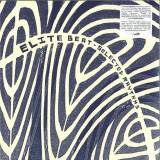
Elite Beat is a musical collective from Portland, Oregon with a history spanning back to 2006.
'Selected Rhythms' captures the finest moments from all three of their ultra limited cassette series 'Casual Rhythms'.
Packed full of DIY dub mixing, cosmic orchestration and raw, percussion driven polyrhythms, the recordings have been remastered and put to vinyl for the first time with sections from Casual Rhythms Vol. 1 being re-shaped into previously unavailable single tracks.
Recording plays a big role in the Elite Beat creative process. The studio as an instrument. Much of the Elite Beat music is mixed in an all-hands-on-deck dub style approach - live with an analog mixer and loads of FX being thrown and dubbed in real time. The sound is genre-less rhythm music with an emphasis on live playing, free form expression and technique that borrows from soundsystem culture. Inspiration can be heard from all parts of time and place. Some Ethio Jazz, Black Ark psychedelia, Exotica, Malian blues, even Haight-Ashbury in the summer of love. Each member an accomplished musician in their own right, Elite Beat thrive on collaboration. 2018 saw the release of their astral-Saharan jams with celebrated Taureg guitarist Mdou Moctar.
The players get together every Wednesday evening, sometimes to chat, sometimes to play. The 'record' button gets pressed when they find what they are searching for. For this crew it's all about 'Casual Rhythms / Harmonious Lifestyles' - if things don't fall under that mantra, then it's got to go. 'Less is more' for Elite Beat and their cosmic sounds.
Sator is a rock band originally from Borlänge, Sweden.
The band was founded in Borlänge as Sator Codex in 1981.
This is a reissue of the bands 2006 full-length album, "Basement Noise".
First time ever on vinyl!
Limited edition orange vinyl for RSD 2021!
Lead singer / guitarist Chips Kiesbye is also a successful producer and has worked with The
Hellacopters, Sahara Hotnights, Millencolin and several other rock bands.
Produced by Chips Kiesbye and Henryk Lipp and recorded and mixed at Music-A-Matic studios
in Gothenburg.
PURPLE COLOURED VINYL
Mdous Musik hat ihre Wurzeln zwar in traditionellen Tuareg-Melodien, gibt aber auch immer wieder Einflüsse von u.a. Eddie Van Halen preis. Neben Mdou besteht die Band aus Bassist und Producer Mikey Coltun, Drummer Souleymane Ibrahim und Gitarrist Ahmoudou Madassane. Zusammen haben sie längst auf ausgiebigen Touren bewiesen, dass sie nicht nur heimische Hochzeitsfeiern rocken können, sondern ebenso Festivalbühnen auf der anderen Seite der Erdkugel. Dabei beherrschen sie sowohl den hypnotischen Boogie von Black Sabbath der Masters of Reality-Ära, als auch den erhabenen elektrisierenden Groove von Black Uhuru. Mdou Moctar lebt in Agadez im Niger, einer eher ländlichen Gegend, die wie eine kleine Oase mitten in der Sahara wirkt. Hier entsteht auch ein Großteil seiner Musik, die ihn in West-Afrika zu einer echten Berühmtheit hat werden lassen. Verbreitet haben sich seine Sounds dort nicht durch das Internet und Social Media, sondern über die Speicherkarten aus Mobiltelefonen, die wie Tapes weitergegeben und getauscht werden und wie analog-digitales Lauffeuer durch das Land gehen. Den internationalen Durchbruch schaffte Mdou Moctar 2019 mit dem Album "Ilana: The Creator". Mit seiner vierköpfigen Band reiste Moctar anschließend durch die Welt und wurde schnell zum inoffiziellen Botschafter seines Landes. Nun liegt der langerwartete Nachfolger vor.
PURPLE COLOURED VINYL[18,03 €]
Mdous Musik hat ihre Wurzeln zwar in traditionellen Tuareg-Melodien, gibt aber auch immer wieder Einflüsse von u.a. Eddie Van Halen preis. Neben Mdou besteht die Band aus Bassist und Producer Mikey Coltun, Drummer Souleymane Ibrahim und Gitarrist Ahmoudou Madassane. Zusammen haben sie längst auf ausgiebigen Touren bewiesen, dass sie nicht nur heimische Hochzeitsfeiern rocken können, sondern ebenso Festivalbühnen auf der anderen Seite der Erdkugel. Dabei beherrschen sie sowohl den hypnotischen Boogie von Black Sabbath der Masters of Reality-Ära, als auch den erhabenen elektrisierenden Groove von Black Uhuru. Mdou Moctar lebt in Agadez im Niger, einer eher ländlichen Gegend, die wie eine kleine Oase mitten in der Sahara wirkt. Hier entsteht auch ein Großteil seiner Musik, die ihn in West-Afrika zu einer echten Berühmtheit hat werden lassen. Verbreitet haben sich seine Sounds dort nicht durch das Internet und Social Media, sondern über die Speicherkarten aus Mobiltelefonen, die wie Tapes weitergegeben und getauscht werden und wie analog-digitales Lauffeuer durch das Land gehen. Den internationalen Durchbruch schaffte Mdou Moctar 2019 mit dem Album "Ilana: The Creator". Mit seiner vierköpfigen Band reiste Moctar anschließend durch die Welt und wurde schnell zum inoffiziellen Botschafter seines Landes. Nun liegt der langerwartete Nachfolger vor.
- A1: Revisionist History
- A2: The American Negro
- A3: The Black Broadcast
- A4: Revolutionize
- A5: Double Consciousness
- A6: Watch The Children
- A7: Dying On The Run
- A8: Intransigence Of The Blind
- A9: James Mincey Jr
- A10: Disadvantaged Without A Title
- A11: Mama (You Will Make It)
- A12: The Black Queen
- A13: Margaret Garner
- A14: Race Is A Fallacy
- B1: Light On The Horizon
- B2: A Symphony For Sahara
- B3: America Is Listening
- B4: The March On America
- B5: Paradox Of The Positive
- B6: The Death March
- B7: Black Lives Matter
- B8: Rotten Roses
- B9: Jim Crow's Dance
- B10: Patriotic Portraits
- B11: George Stinney Jr
- B12: Sullen Countenance
The American Negro is an unapologetic critique, detailing the systemic & malevolent psychology that afflicts people of color. It should be evident that any examination of black music is an examination of the relationship between black & white America. This relationship has shaped the cultural evolution of the world and its negative roots run deep into our psyche. With an elaborate orchestral and soulful display, The American Negro re-invents the black native tongue: a politically conscious LP with a prescription to eradicate hate in America. "The American Negro is the most important creative accomplishment of my life. This project dissects the chemistry behind blind racism, using music as the medium to restore dignity and self-worth to my people": Adrian Younge is a multi-instrumentalist, film composer and producer with an analog studio and record store in Los Angeles. He is a member of The Midnight Hour and has produced for entertainment greats ranging from Jay Z, Kendrick Lamar and Wu Tang Clan. He's composed for television shows such as Marvel's Luke Cage (with Ali Shaheed Muhammad), and films including Black Dynamite. He owns the boutique record label, Linear Labs, and is co-owner of Jazz Is Dead. When he's not working on scores for major studios or networks, he's making albums that speak to his own artistry. For The American Negro, Younge not only wrote, but played every instrument of the album's rhythm section; he also orchestrated a 30-piece orchestra and recorded them in his analog studio.
With his new album Rhapsodic, Nicolas Repac gives life to the archives of the hunter-gatherer of sounds: Charles Duvelle Nicolas Repac is pursuing the dreamlike magic of his art of sampling with his new album "Rhapsodic". The musician plunged into musicologist Charles Duvelle's pioneering field recordings, in order to deconstruct and revisit rare music archives gleaned from all over the world. Repac ventures into the craziest sonic and stylistic pileups - adding voices, rhythms and traditional music from "every world". He offers some "Rhapsodies" of multicoloured sounds and instrumentals, revisited through the prism of electronic music. He liberates himself from all ethnomusicological coherence to speak directly to the soul and imagination of his listeners - beyond the frontiers of time and space. Grafting heady grooves of traditional percussion from Benin onto sub-Saharan violin refrains, interweaving them with Mongolian morin khuur on a bed of pygmy mouth-bow, Nicolas Repac leads us on the most captivating of immobile journeys, to the heart of the most intimate impulses, the most human pulse.
Guedra Guedra presents Vexillology, an elevation of tribal consciousness and futurism from underground musical universes. The album offers listeners an immersive experience made from hypnotic and rhythmic arrangements, rooted in ancient culture. Referring as much to Sub-Saharan as to North African cultures, Guedra Guedra presents a synthesis of his pan-African appreciation and a full immersion into the traditional rhythms of these lands, especially within the Berber culture which is found in countries such as his home of Morocco, and across Tunisia, Algeria, Libya, Northern Mali, Northern Niger and beyond. The body of work is a complete celebration of cultural roots and future bass, bubbling in hotbeds of the global underground. Guedra Guedra is synonymously known for his ability to explore tribal rhythms and instruments of the past, as well as dancefloor innovations from contemporary underground scenes. For Vexillology and in true Guedra Guedra style, a myriad of immersive recording techniques were applied. The album is built upon a multitude of field recordings capturing live and 'in the moment' cultural happenings, encountered in everyday life, at tribal festivities and also on his travels. By also using video in his field recordings, Guedra Guedra enables himself to encapsulate the heat and entirety of the moment, applying this 'moment' and evolving it into his productions.
- 01: Benjamin Herman Lizard Waltz
- 02: Idris Ackamoor & The Pyramids An Angel Fell
- 03: Nat Birchall The Black Ark
- 04: Chip Wickham Shamal Wind
- 05: Jimi Tenor & Kabukabu Suite Meets
- 06: Black Flower Winter
- 07: Darryl Yokley Echoes Of Ancient Sahara
- 08: Damon Locks Black Monument Ensemble Sounds Like Now
- 09: Oiro Pena Nimeton
- 10: Cat Toren Soul0
- 11: Wisdom Of Elders Shabaka & The Ancestors
- 12: Gnawa Makaya Mccraven
Modern sounds for the 21st century featuring modal, progressive and esoteric contemporary jazz from the UK, Spain, Netherlands, Finland, USA, Belgium, Canada, South Africa, Sweden, Germany & Italy.
The first 12 volumes of our hugely popular Spiritual Jazz series have unearthed a wealth of historic recordings in the genre, collating a variety of works from the '50s to the '80s by artists from all around the world.
And so, with Volume 13, we turn our attention to what's happening NOW.
Over the course of 24 tracks and spanning 2 x 2LPs, we present an overview of the contemporary exponents of Spiritual Jazz; musicians who are intent on bringing something personal to the table, as much as they recognize the importance of those who have paved the way for them. We feature music recorded within the past 20 years and from 15 different countries, including modern classics from veterans Steve Reid and Idris Ackamoor, providing a vital link between the past masters and the enlightened new generation.
It's pioneers such as John Coltrane, Sun Ra, Pharoah Sanders et al, with their innovations in reaching another plane of consciousness that was and remains uppermost in the minds of exponents of Spiritual Jazz. Fittingly, several of the artists featured on this compilation, such as Cat Toren and David Boykin, are practitioners of the art of music therapy and sound healing, and have absolute conviction in the role of song as solace. The pioneers may no longer be with us, but their saintly selves loom large, shining a light in the darkness, inspiring many a brave new disciple today, as this album will testify: the new wave of jazz is gathering pace and still sounds fresh, vibrant and as relevant as ever.
Available as 2 x 2LP sets each with gatefold sleeves, extensive liners, download card & pics inside.
VINYL[19,87 €]
Nahawa Doumbia's new album Kanawa concisely captures this current moment in Malian history. The singer, whose storied career spans more than four decades, reflects on the immigration crisis from the Malian perspective in the title of her new album Kanawa. Across eight songs recorded in Bamako with a band including traditional and modern instruments, Doumbia merges her early work that relied on a spare expression of her trademark didadi rhythm with the bombastic range of contemporary Malian pop. The beautifully complex musical accompaniment that results is courtesy of the large ensemble she pulled together with producer and arranger (and day one collaborator) N'gou Bagayoko. The band features two highly expressive Malian string instruments, the ngoni and the slightly smaller kamalé ngoni, as well as a variety of percussion, drum programming, karignan (a metal scraper) and acoustic and electric guitars. Doumbia's daughter, a celebrated singer with her own group and busy concert schedule, Doussou Bagayoko sings on "Adjorobena," a song about patience, tolerance and living in peace. Doumbia weaves together a roadmap of her psyche when it comes to the good and bad life has to offer. She talks about marriage and women leaving home to join another through the metaphor of a tree in the garden; she includes gunshot samples in the song "Foliwilen" to honor the bravery of hunters, soldiers and other courageous people; she uses a bird in "Djougoh" to talk about lazy people; and, in "Ndiagneko" she advises people to ignore critics, just do you. Mali has gone through an intense period of regional strife and terrorist incidents over the last ten years and Doumbia roots the album in tragic local concerns with deep global implications. "The meaning of Kanawa is so simple. We see our children trying to cross the ocean all the time. I said that many of our children die in the ocean and some of them die while crossing the Sahara. But I ask them why do they leave their country? They said that they leave because of the family situation or problems like poverty and unemployment. I ask them to stay and work in their country. I call on the UN and African leaders so that we can coordinate our efforts to find a solution, to create jobs for them so that young people stop leaving. That's why I chose it as the title of my album so that everybody can learn from it and also so that there is a reduction in the number of people emigrating. So that some will hear the message and stay home and grow the land. Leaving is not the only solution. My message is to help the youth find jobs."
CASSETTE[8,78 €]
Nahawa Doumbia's new album Kanawa concisely captures this current moment in Malian history. The singer, whose storied career spans more than four decades, reflects on the immigration crisis from the Malian perspective in the title of her new album Kanawa. Across eight songs recorded in Bamako with a band including traditional and modern instruments, Doumbia merges her early work that relied on a spare expression of her trademark didadi rhythm with the bombastic range of contemporary Malian pop. The beautifully complex musical accompaniment that results is courtesy of the large ensemble she pulled together with producer and arranger (and day one collaborator) N'gou Bagayoko. The band features two highly expressive Malian string instruments, the ngoni and the slightly smaller kamalé ngoni, as well as a variety of percussion, drum programming, karignan (a metal scraper) and acoustic and electric guitars. Doumbia's daughter, a celebrated singer with her own group and busy concert schedule, Doussou Bagayoko sings on "Adjorobena," a song about patience, tolerance and living in peace. Doumbia weaves together a roadmap of her psyche when it comes to the good and bad life has to offer. She talks about marriage and women leaving home to join another through the metaphor of a tree in the garden; she includes gunshot samples in the song "Foliwilen" to honor the bravery of hunters, soldiers and other courageous people; she uses a bird in "Djougoh" to talk about lazy people; and, in "Ndiagneko" she advises people to ignore critics, just do you. Mali has gone through an intense period of regional strife and terrorist incidents over the last ten years and Doumbia roots the album in tragic local concerns with deep global implications. "The meaning of Kanawa is so simple. We see our children trying to cross the ocean all the time. I said that many of our children die in the ocean and some of them die while crossing the Sahara. But I ask them why do they leave their country? They said that they leave because of the family situation or problems like poverty and unemployment. I ask them to stay and work in their country. I call on the UN and African leaders so that we can coordinate our efforts to find a solution, to create jobs for them so that young people stop leaving. That's why I chose it as the title of my album so that everybody can learn from it and also so that there is a reduction in the number of people emigrating. So that some will hear the message and stay home and grow the land. Leaving is not the only solution. My message is to help the youth find jobs."
Gitkin's music exists somewhere between primal, rootsy memory and distant exotic yearning — A dusty bordertown where the familiar blends imperceptibly into the enchantingly foreign.
After a long and fruitful run as a bandleader with relentlessly touring party-rockers Pimps Of Joytime and a Grammy-nominated country blues collaboration with Cedric Burnside, multi-instrumentalist Brian J set out to "explore tonalities I'd never messed with," as he puts it. It was a release from "having to write lyrics or involve my voice," he notes, and so the (mostly) instrumental sound of Gitkin came into being.
Reviews of Gitkin's first LP grappled with descriptors, tagging it vaguely as "cinematic" and comparing it favorably with Khruangbin. True, the music is largely wordless, emotionally evocative, and guitar driven. But it possesses an alluring alchemy all its own.
Gitkin's first release, 2018's well-received Five Star Motel, amply demonstrated his ease with earthy funk and comfortably-cut rhythm. On his new full-length release Safe Passage, the itinerant guitar slinger broadens his already rich palette with melodies informed by Greek and Middle Eastern modalities, Peruvian Chicha and Tuareg Saharan guitar styles. No gimmick, this juxtaposition of gut-bucket blues and funk low-end with unexpectedly twisting lead phrases highlights the intense flavors found in each savory ingredient.
Recorded at his home studio in New Orleans, Safe Passage showcases a new batch of immediately engaging, repeatedly satisfying cuts, ranging from surf exotica ("Cat Nip") to raunchy roadhouse stompers ("Fools Gold" and "The Drive") to dreamy vocal cuts "Foot Steps" and "Hold On" to the floating finale of "Safe Passage."
Gitkin's production radiates character and warmth, leaning on soft-focus vintage mics, dubby spring reverbs and the quirks of a tape console. Further enhancing the intimate vibe are guests like veteran Chauncey Yearwood (congas) and New Orleans local "Spug" Smith, who provides a sousaphone low-end on the cumbia-not-cumbia "Spug Life." Carol C lends her striking voice to three tracks, including the strutting single "De La."
Safe Passage will be released by Wonderwheel on September 18th, 2020 and will be available on vinyl, CD and digitally.
- A1: My Number (Hot Chip Remix)
- A2: Mountain At My Gates (Alex Metric Remix)
- A3: Into The Surf (Hot Since 82 Remix)
- B1: The Runner (Rufus Du Sol Remix)
- B2: In Degrees (Purple Disco Machine Remix)
- B3: Mountain At My Gates (Sebastian Remix)
- B4: Late Night (Solomun Remix)
- C1: Inhaler (Tom Vek Remix)
- C2: What Went Down (Haxan Cloak Remix)
- C3: Wash Off (Kuu Remix)
- C4: Hummer (Surkin Remix)
- D1: Mountain At My Gates (Jono Ma Remix)
- D2: What Went Down (Bandwidth Remix)
- D3: Miami (Lissvik Remix)
- D4: Night Swimmers (Mura Masa Edit)
- E1: My Number (Totally Enormous Extinct Dinosaurs Remix - Extended)
- E2: Give It All (Lindstrom Remix)
- E3: Dreaming Of (Joe Corti Remix)
- F1: Balloons (Kieran Hebden Version)
- F2: Spanish Sahara (Mount Kimbie Remix)
- F3: Late Night (Koreless Remix)
From their early days hosting parties in Oxford through to the huge success of their two-part ‘Everything Not Saved Will Be Lost’ album, Foals have consistently explored their interest in dance and electronica. Now the band chart the most essential remixes from their career so far as they share the new remix package ‘Collected Reworks Vol 1’.
The tracks featured on ‘Collected Reworks’, are a compilation from an eclectic range of artists who have uncovered new angles to Foals’ discography. It includes one of their earliest remixes, from Ewan Pearson who blends Balearic bliss into ‘Olympic Airways’, as well as Solumun’s huge version of ‘Late Night’, which has been viewed over 50 million times at YouTube. Another standout moment is Hot Chip’s inventive interpretation of ‘My Number’.
‘Collected Reworks Vol. 1’ has been launched with Hot Since 82’s brand new remix of ‘Into The Surf’. The tech house producer / DJ behind ‘Buggin’’ and ‘Restless’ subverts the track from its original desolate beauty into something fresh and invigorating. The relentless driving beat maximises its energy throughout its eight minute duration, while its progressive leanings are given some unexpected throwback flavour with ‘80s style sax.
The wind of change is blowing strong again in late 2020. Wich statement fits such worldwide transformation? We don ́t know, but we keep blending & interacting different cultures. One 7“ vinyl, two sides of the story. El Mago from Greece is hooking up with south american native ceremonials. The Berlin/Thessaloniki based ritual master (down)beats all strains of cultural appropriation with smart style and groove straight outta subcultistan. Followed by Mettabbana from the divided states of America, editing sahrawi classic on liberation, hope & vision. Seductive repetitions, subtle as the saharan sands, riding on trance- inducing guitar loops, arabic percussion & harmonies. This vinyl will last longer & will survive our thoughts and needs. For any queries: the answer, my friend, is blowing in the wind.
Historic cassette of first Tuareg guitar studio recording. Newly restored and remastered. Tuareg guitar gets the electronic treatment, with a reissue of the cassette by legendary Nigerien composer Abdallah Oumbadougou. Produced in Benin in 1995, “Anou Malane” is one of the first studio recordings of Tuareg guitar. The genre, known for minimal folk ballads performed on acoustic guitar, is transformed with a full-on 90s swinging groove. Abdallah Oumbadougou is one of the original creators of Tuareg guitar music. Active in the Tuareg rebellion in the 1990s, his early compositions were politically charged, addressing the fighters scattered in the desert. These low-fi recordings were recorded on boomboxes, and found their way throughout the diaspora, passed through clandestine networks of cassette dubbers. In exile, Abdallah traveled to Benin to record an official release with Nel Oliver, a West African producer known for his work on a number of seminal boogie and afro-funk records. Oliver’s influence is heavily felt on the recordings with early digital techniques of programmed drum effects and backing synthesizer, transforming Saharan political ballads into Afro-boogie anthems for the discotheque. The resulting album went on to become a classic and pushed Tuareg guitar and the rebellion into the public consciousness
Fantastic first album of Tunisian producer Azu Tiwaline, melting psychedelic dub, industrial and hypnotic techno deeply rooted in her berber culture, supported by Lena Willikens, Nicola Cruz, Toma Kami and Violet, to name a few!
Azu Tiwaline is a new name for a new spirit: one of a producer inspired by the need to explore her origins, rooted in the Tunisian Sahara. The Call to a different sound, organic and raw, vibrating in the great spaces of the African desert where trance music resonates... Ecstatic ritual.
Her first album, Draw Me A Silence, conceived as a diptych, reveals the multiple facets of her identity. Uniting the bonds that connect Berber music, dub culture and techno hypnosis, Azu Tiwaline invites us to refocus on our senses and our Nature. She knows how to use contrasts between light and the invisible, exploring the complexity of our emotions and the mystery that emanates from them, in a polyrhythmic chiaroscuro that runs through each one of her tracks, and of which we discover, as we go along, all the outlines.
Draw Me A Silence Part. I (to be released in February 2020), delivers the most hypnotic variant of her music, centered on dark percussive rhythms and a skillful use of repetition; each of the 5 tracks ineluctably carrying the listener into a trance. Two major tunes particularly illustrate the artist's imagination: "Itrik" and "Berbeka", perfectly synthesizing the heritage of Berber trance music and her techniques derived from minimalist and repetitive electronic music.
The continuation, Draw Me A Silence Part. II (to be released in April 2020), gives prominence to a deep heritage drawn from the dub culture and its numerous bass music filiations. This second part thus gives a new breath in the use of sound space, exploited in a much broader way, leaving all their space to complex syncopated percussive lines, supported by massive basslines dedicated to the best sound-systems. Omok, the first of the five tracks of this Part II is the perfect demonstration of this, playing here the essential role of a bridge to the darker waters of this album's end.
Each of these two parts exist as an Entity, and it is only when they are united that they will reveal their full meaning. Thus, in May, Draw Me A Silence will find its final form in a double-vinyl unifying them. Listening to this album in its entirety offers us a wide panorama of the sound landscapes visited by Azu Tiwaline, who seems to breathe primitive sounds of a faraway desert into a music with modern tones - and vice versa. A resolutely hybrid sound and a singular experience, playing with contrasts and nuances to catch the listener in vast and so far unexplored territories.
After a global trek we're back at base camp with a pair of thrillers from the chiller for your next rumble in the jungle...
Prepare to take a cosmic cruise on the A side with 'Dromedary', a masterclass in daft drum-breaks, Saharan strings and syrupy synth-lines perfect for Arabian nights and disco daze.
This one's been a TD sure shot since our first parties, so it's high time we shared the love boat.
Move to the flip for an interdimensional trip, as TD Transport welcomes you aboard the 'Super Express', a lysergic locomotive burning up the mainline from Mos Eisley to Mumbai.
Linn drum lasers lock into a lurching groove, fuelling the furnace as we blast past Bollywood, take a detour into the Metro Area and arrive right on schedule to save your party.
100% Drum fun guaranteed.
Limited pressing inc. hand numbered insert...
“Experimental trio Giraffe crystalize time on ‘Desert Haze’, their new LP on Marionette. Giraffe is the musical project of Sascha Demand (guitar), Jürgen Hall (keys), and Charly Schöppner (percussion). Sascha Demand is a composer that comes from a contemporary and improvised musical background, collaborating with the likes of Ensemble Integrales and Vinko Globokar. Jürgen Hall works in electroacoustic experimental projects, theatre and film scores, with releases on Staubgold and Edition Stora. Charly Schöppner is known for his popular music releases such as Boytronic on major production companies in the 1980´s and composes for theatre, dance, and film scores. With only a couple of releases to date on the wonderful Meakusma imprint as well as an EP on Marmo, little is known about Giraffe. After letting go of other artistic projects, the trio now focuses solely on Giraffe by continuously searching for and finding their own unique language.
Sascha, Jürgen and Charly have quite diverse musical backgrounds, though morphing into Giraffe they tower into one single composer. Their music is a critical statement, not in a political sense but rather an artistic one. Being mindful about what it means to create and how to position themselves as artists nowadays (without the constant hassle of being en vogue and short-lived trends) shaped their rather rare and stoic artistic stance. It is refreshingly honest to see their expression develop so naturally.
On Desert Haze, they’ve created a vibrant and minimalistic tribal sound that feels inspired by the Saharan traditional music of the Tuareg, Jazz, and German psychedelic krautrock. Giraffe themselves also list the radical music of the Viennese School (Schoenberg along with his pupils Berg and Webern) as well as the Köln School with its early electronic experiments as their main influence and inspiration. More precisely the composition process and the organization of musical material within space and time, where a conceptual and intellectual approach melds with an experimental yet expressive sound searching method.
Side A focuses on the trios studio work; it is built around tone color and pitch analysis of resonating prepared guitar sounds. Through a unique mixture of free improvisation and a serialism "rule set”, they develop instrumental layers and structures to form their tracks. Side B sees Giraffe playing more freely with a reduced setup - representative of what you may hear when listening to them live.
Desert Haze, along with its track-titles, showcases an almost mimetic approach to art. The haptic music grabs the listener not as a passive recipient but as an active resonant body to vibrate through. One can almost feel the Elements, pressure and heat forming a diamond, hypnotic overtones ringing through windy caves, shamanistic rhythms conjuring up mysterious and ancient landscapes - where the constant cycle of sedimentation and erosion reveals structures of fragile beauty - always gentle to the hand’s touch and the mind’s eye.”
Industrial techno doom jazz meets Touareg percussion and mantric chanting
Soundway presents the unique results of a one-off 2018 meeting in Marrakech between Belgrade-based tribal/ techno/industrial outfit Tapan and the nomadic Touareg electrified desert-blues group Generation Taragalte.
Tapan is not an ordinary “techno” project, rather it escapes easy categorization. It is the Belgradebased production duo of 20/44 club resident Nebojša Bogdanović (Schwabe), and Goran Simonoski, a producer behind music projects such as Belgradeyard Sound System, Piece of Shh and more. Both have been active in the Belgrade music and nightlife scenes since the 1990s, and since 2015 have brought together their diverse musical experience under the collaborative moniker of Tapan.
While performing at the Atlas Electronic festival in Morocco in 2018, they encountered Generation Taragalte of southern Morocco, and recorded the initial music for the Atlas EP in an improvised studio on the festival grounds, followed by final production on returning to Belgrade. The result was the 4-track EP “Atlas”, a dark, desolate and potent collision of the electronic drone-jazz of Belgrade and the windswept, desiccated psych-guitar riffs of the Moroccan Sahara.
Ever since their debut 7” landed on our doorstep unannounced, we have been captivated by the powerfully understated movements of the duo known as Undefined. Sahara (keys/bass/programming) and Ohkuma (drums) have deep roots in the Japanese dub and reggae scenes (Heavymanners, Soul Dimension) and operate their own experimental dub label, Newdubhall. Recent collaborations with Kazufumi Kodama (of dub elders Mute Beat), dBridge, and Kabuki are nudging the group further into a spotlight that they richly deserve.
Named for the 3-feel of its colossal groove, “Three” is a locked groove of pure downtempo dubwise, techno in its repetition, hip hop in its tempo and swagger, motorik in its muscularity, meditative in its clarity. Featuring the unmistakable voice of ZamFam Rider Shafique, showcased in a moment of profound introspection and vulnerability, “Three" banishes all thoughts of flash-in-the-pan “big tunes” for an incredibly deep and immersive dive.
“Three Dub,” a version in the classic sense, strips out the vocal entirely to focus on the rockstone riddim, crafted of one of the most captivatingly beautiful bass tones we’ve ever heard, combined with wicked drum turnarounds, lightning hi-hat work, and extremely subtle & sophisticated dubbing technique. A masterclass in dubwise essentialism and profound attention to detail, stripped down to the foundation yet incredibly lush and alive.
Strictly limited to 600 copies for the world. No digital, no repress. Design & screen print by Polygon Press. Mastered by Sam Precise.
- A1: Profondeurs Des Eaux Des Laques
- A2: Moments
- A3: Le Personnage Principal Est Un Peuple Isolé
- A4: Face A Ce Qui Se Derobe
- A5: Qu\'Il Fasse Nuit
- A6: The Wheel
- B1: Little Birds Sit On Your Shoulder
- B2: Etendue
- B3: Ces Personnages
- B4: Joyeux Regrets Imprécis
- B5: Hommes Assis Devant Un Mur Chaulé
- B6: La Magnifique Alcoolique
'Benjamin Lew was an enlightened amateur, in the noble and almost Renaissance-like sense of the word: he dabbled with equal grace in photography, writing, visual arts ... and worked part-time as a cocktail mixer in a tropical bar which was one of the favourite watering holes of Brussels' thriving artistic community of the early '80s. Tuxedomoon had just moved to Brussels, and Steven Brown was among the many musicians, designers & artists who patronized the bar. Benjamin had a secret passion: he wasn't a musician, but had acquired a small analog computer, with which he had started creating these strange mysterious little pieces. Benjamin played them to Steven and asked him if he'd agree to record with him. Steven was taken with them and accepted. The Douzième Journée was largely created in the studio by both protagonists, with the help of Gilles Martin and myself, in the spring of '82. Listening to his albums (he went on to record four more with Crammed) is like embarking on a dream journey to the Sahara or the Far East. You'd think that some of the pieces feature non-European musicians or samples but: no... this is just Benjamin's imagination, his synths, and his friends...'
Marc Hollander, Feb. 2019
- A1: Alan Parker - Heavy Water
- A2: Alan Parker - Ice Breaker
- A3: Alan Parker - Solid Satin
- A4: Alan Parker - Punch Bowl
- A5: Alan Parker - Frozen Steam
- A6: Alan Parker - Black Light
- A7: John Cameron - Range Rover
- B1: John Cameron - Swamp Fever
- B2: John Cameron - Safari So Good
- B3: John Cameron - Survival
- B4: John Cameron - Afro Waltz
- B5: John Cameron - Sahara Sunrise
- B6: John Cameron - Rockin Rhino
- B7: John Cameron - Heat Haze
- B8: John Cameron - Afro Metropolis
2019 re-issue, 180g vinyl, remastered from the original tapes
Be With have raided the KPM archives to re-issue another of our favourites from the KPM 1000 series. They say: Hard Afro Pop featuring large percussive rhythm section and front line. We say: One of the best-loved of all the KPM LPs. Afro Rock was recorded at Morgan Studios by John Cameron and Alan Parker in London in 1973 as a collection of stripped-down African rhythms, virtuoso jazz instrumentation, fuzzed up wah wah guitars and spaced out library breaks. The percussion is effortlessly funky, and those flutes so melodic, it’s as if the LP was crafted with the beat lovers of the future firmly in mind. As Cameron himself described it in Unusual Sounds, this is “heavy duty drum-and-bass salsa music”. As with all of our KPM re-issues, the audio for The Road Forward comes from the original analogue tapes and has been remastered for vinyl by Be With regular Simon Francis. We’ve taken the same care with the sleeves, handing the reproduction duties over to Richard Robinson, the current custodian of KPM’s brand identity. And don’t worry! Those KPM stickers aren’t stuck directly on the sleeves!
An exploration of traditional Chadian music with an electronic twist...
Chad is in many ways a blind spot on the map of today's global musical conversation. Overlooked, misunderstood and misrepresented, outside observers rarely concede the country an autonomous voice over its past, present and future. N'Djamena, the dusty capital of Chad with its well-kept stories of boundary-breaking musical collaborations and thirst for experimentation is a city that reflects the country's diversity: the arid North, bordering the Sahara, where nomadic tribes revere the endless desert with their handcrafted instruments. The lush tropical South, where the frenetic drumming of local initiation ceremonies blends with sounds of neighboring Congo and Cameroon. Right in the middle: N'Djamena, a forgotten melting pot of cultures and peoples bursting with unrecorded stories of life at the margins of the world's attention.
Tackling this view is precisely one of the aims of Pulo NDJ. In May 2018, Nickodemus accepted an invitation from Hape Collective to travel to N'Djamena to teach a group of young adults DJ'ing and electronic music production, which resulted in the encounter between and a group of talented artists from Cameroon, Chad, Congo and Togo. After a weeklong series of listening to original songs & demos, the recordings continued in a pop-up studio created by DJ Buosis & Nickodemus which culimated in Desert To Douala, an album featuring 11 songs, all originally written and recorded in N'Djamena.
The project found its inspiration in the city's un-narrated diversity and seeks to explore the possibilities offered by technology to demonstrate how the country's rich heritage connects with existing musical conversations. It strives to create bridges in a world of walls. It has been a yearlong creative process that built friendships and fostered understanding among people united by a passion for music and creation.
First ever experimental Tuareg guitar soundtrack. Original soundtrack recording to the film Zerzura, the first ever Saharan acid Western, telling the story of a nomad's search for a magic city of gold. Evoking the desert journey with free form guitar improvisations, the soundtrack is a meditation on the mysteries of the Sahara. Composed by writer and actor Ahmoudou Madassane, the instrumental score takes the familiar Tuareg guitar tradition into new directions, transforming desert blues into ambient soundscapes. Recorded in studio while watching footage from the film, the score was recorded in live and spontaneous takes. Heavily based around the electric guitar, Madassane also plays a handful of other in-studio instrumentation (prepared piano, Moog, Timpani) and is joined by a number of collaborators, including guitarist Marisa Anderson. A prolific and backing artist in a number of groups (Mdou Moctar, Les Filles de Illighadad), Madassane is well versed in Tuareg guitar folk and draws inspiration from this tradition before veering off into uncharted territory. Pieces fluctuate in timing and break free from standard rhythm, moving from melancholic serenity to blurry psychedelic fury. An experimental foray for Tuareg guitar, Zerzura is the first of its kind.
Since 2008 Düsseldorf based producer and live wizard Stefan Schwander deeply concentrates on his always evolving electronic venture named Harmonious Thelonious. It besprinkles the world with fractional musical structures in the spirits of American minimal music, in order to immingle them with African rhythm patterns. Exceptional hypnotic opiates, enlarged with twisted harmonies and tricky rhythm archetypes. All heavy danceable!
After five magnetic albums for labels like Emotional Response and his old home base Italic as well as a highly acclaimed string of EPs for in-demand platforms like Asafa, Diskant, Disk, Kontra-Muzik, Meakusma, The Trilogy Tapes or Versatile Records, he now produced a heavy arresting 'Petrolia' LP for Marmo Music - a label that is not new to Harmonious Thelonious. Already on the label's second release Tru West: 'The DOWC part 2' his 'Sunset Liturgy' fingerprints are audible with a moving remix. Now he delivers six epic tunes that only partly dance the familiar Harmonious Thelonious dance. There are deeply traces from Africa and Arabia. There is the polyrhythmic witchery that makes his music special. But in contrast his new tunes are more mental then his former ones. They have a menacing industrial feel but yet continue to be enlarged with the enchanting spirits of the land of the Sahara. Furthermore, there is a slight manic touch arising from nervous electronic and foremost organic melodies. The live played jittery is coming from the Berlin based experimental musician Ghazi Barakat, also known under monikers like Pharoah Chromium or Crème de Hassan for mind shredding ambient, drone, experimental, noise, industrial, free jazz and free improvisation music from beyond. For Harmonious Thelonious Barakat, who also produced together with Marmo Music artist Günther Schickert the collaboration album 'OXTLR' in 2014, tuned his wind instruments Rauschpfeife and Kangling elflock-stricken the Master Musicians of Jajouka way. And instead of giving them a prominent lead position, Schwander deeply implements his tones into his propulsive creations to evoke a modern rhythmic meltdown of Occident versus Orient spheres that exhale a deeply absorbing soul.
A record, who's psychedelic energy fits perfect into the Marmo Music cosmos - a world where the progressiveness of the 70ties continues to live in the current to disband all white bread musical norms for the energy of music without classes. Dancers of the world, unite!
Nach Dem Sensationellen Erfolg Des Ersten Albums - oracle Im Letzten Jahr, Erscheint Nun Das Zweite Album Der Deutschen Jazz-supergroup Web Web. - dance Of The Demons Ist Ein Furioser Tanz Mit Den Dämonen - Mal Im Positiven Spirit Soul Jazz Rausch Wie Bei - land Of The Arum Flower , Das Mit Seiner Ergreifenden Melodie An Ethopian Jazz Der 60er Jahre Erinnert, Oder Mal Verrückt, Entfesselt Wie Bei - sandia .
Web Web Spielt Nun Mittlerweile Seit 2 Jahren Intensiv Zusammen, Man Hat Duzende Konzerte Absolviert Und Man Spürt Förmlich Die Geschlossenheit, Intensität Und Kraft, Die Sich Als Homogener Organismus Aus Einem Guß Heraus Zu Einem Phantastischen Sound Zusammenbraut.
Als Einen Besonderen Glücksfall Konnte Die Band Den Berühmten Marrokanischen Sänger Und Gembri-spieler Majid Bekkas Gewinnen, Der In Rabat Beheimatet Ist. Tony Lakatos Arbeitete Mit Majid Und Joachim Kühn In Den Letzten Jahren Immer Wieder Zusammen, Ebenso Roberto Digioia In Zusammenhang Mit Klaus Doldinger. Insofern Lag Es Nahe, Diesen Brillianten Musiker Mit Seinen Nordafrikanischen Wurzeln Mit Dem Ungeschliffenen Konzept Von Web Web Zu Verbinden. In - maroc Blues , Einer Soloperformance Von Majid, Hört Man Den Warmen Klangkörper Der Gembri, Einem Kontrabassartig-klingendem Instrument (dreisaitige Langhalslaute), Sowie Auch Majids Wunderbare Stimme, In Der Sich Die Jahrhunderte Alte Tradition Der Berber Widerspiegelt. - safar Zeigt Ebenso Die Große Improvisatorische Klasse Von Web Web, Vor Allem Wie Sie Auf Allen Ebenen In Die Spirituelle Sprache Eintauchen.
Majid Bekkas Ist Einer Der Bedeutendsten Musiker Und Vertreter Der Gnawa-musik, Die In Der Südlichen Sahara Beheimatet Ist. Am Konservatorium Für Musik Und Tanz In Rabat Studierte Er Seit 1975 Klassische Gitarre Und Oud.
Nach Ersten Erfahrungen Mit Eigenen Bands In Den 80er Jahren Gründete Er 1990 Sein Trio Gnaoua Blues Band, In Dem Er Blues Mit Gnawa-musik Verband. In Den Darauffolgenden Jahren Interessierte Er Sich Zunehmends Für Jazz, Trat Schon Bald Mit Größen Wie Archie Shepp, Louis Sclavis, Peter Brötzmann Oder Hamid Drake Auf.
- dance Of The Demons- Wurde Wie Auch - oracle An Einem Wochenende Live In München Eingespielt
Toningenieur Ist Wie Auch Bei - oracle Jan Krause (beanfield, Poets Of Rhythm U.v.m.)
Das Nächste, Dritte Web Web Album Wird Im Winter 2018 Ebendort In München Aufgenommen, Und Es Werden Wíeder Ein Oder Zwei Hochkarätige Gäste Dazu Eingeladen.
Web Web Sind: Roberto Di Gioia (piano, Synth, Percussion), Tony Lakatos (tenor- Und Sopranosaxophone), Christian Von Kaphengst (upright Bass) Und Peter Gall (drums).
Roberto Di Gioia Arbeitete Mit Zahlreichen Jazz-legenden Zusammen, Wie Z.b. Mit Woody Shaw, Art Farmer, James Moody, Johnny Griffin, Charlie Rouse, Clifford Jordan, Clark Terry, Roy Ayers, Gregory Porter U.v.m.
Anfang 1990 Wurde Er Mitglied In Klaus Doldingers Passport.
Als Pianist Machte Er U.a. Aufnahmen Mit Udo Lindenberg (mtv-unplugged,2011), Charlie Watts (- music Of The Rolling Stones , 2005), Console (- reset The Preset , 2003), The Notwist (- shrink 1998, - neon Golden , 2002).
Seit 2007 Arbeitet Er Zusammen Mit Samon Kawamura Und Max Herre Als Kahedi: Max Herre (- hallo Welt , 2012), Joy Denalane (- gleisdreieck , 2017), U.v.m.
Seine Eigene Band Marsmobil (produziert Von Peter Kruder) Wird Im Herbst Ihr 4.studioalbum Veröffentlichen.
Tony Lakatos Stammt Aus Der Berühmten Lakatos-familie Aus Budapest, Ungarn. Sein Vater War Ein Berühmter Geiger, Ebenso Sein Jüngerer Bruder Roby. Er Begann Mit Dem Saxofon-spiel Als Er 15 Jahre Alt War.
Tony Studierte Auf Dem Bela-bartok-konservatorium In Budapest, Machte Seinen Abschluß 1979 Und Spielte Seither Auf Über 350 Jazzproduktionen Weltweit Mit, U.a. Mit Al Foster, Kirk Lightsey, Randy Brecker, George Mraz, David Witham, Terri Lyne Carrington, Anthony Jackson. Tony War Mitglied Der Band Pili Pili Von Jasper Van´t Hof. Seit 1993 Ist Er Solist In Der Hr Radio-bigband.
Christian Von Kaphengst Bekam Mit 6 Jahren Klassischen Klavierunterricht Im Peter-cornelius-konservatorium In Mainz.
Von 1988 Bis 1995 Studierte Er Jazz-kontrabass Sowie Instrumentalpädagogik An Der Musikhochschule In Köln.
Sein Jazzquartett - cafe Du Sport Absolvierte Im Auftrag Des Goethe-instituts Tourneen Nach Pakistan, Indien, Türkei Und Westafrika. Seit 1999 Ist Er Regelmäßig Bassist Von Patti Austin Sowie Der New York Voices Für Europäische Konzerte.
Von Kaphengst Spielte U.a. Mit Randy Brecker, Nat Adderley, Roy Hargrove, Joe Sample, Charlie Mariano, Katja Ebstein, Xavier Naidoo, Roachford, Yvonne Catterfeld.
Peter Gall Gewann Bereits In Jungen Jahren Erste Preise Bei Jugendjazzt Und Tourte Mit Dem Bundesjazzorchester Unter Leitung Von Peter Herbholzheimer. Er Studierte An Der Berliner Universität Der Künste Und Am Jazz Institut Berlin Bei John Hollenbeck. Gall Absolvierte Sein Masterstudium An Der Manhattan School Of Music Bei John Riley.
Er Arbeitete U.a. Mit Kurt Rosenwinkel, Seamus Blake, Ben Street, Gabriel Rios, Jasmin Tabatabai, Thomas Quasthoff, Peter Fessler.
Feedback - Web Web - oracle :
"oracle Ist Nicht Nur Ungemein Packend, Sondern Klingt Auch Absolut International, Bewegt Sich Auf Einer Ebene Mit Leuten Wie Kamasi Washington Oder Shabaka Hutchings." - Jazzthetik
"ein Wirklich Erstaunliches Erstes Album" - Süddeutsche Zeitung
"sun Ra Wäre Stolz Gewesen Auf Web Web Und Ihr Erstes Album Oracle." - Soultrainonline.de
"...the Album Is Engaging And Fascinating In Equal Measures. ... Sonically, The Album Embraces The Various Late 1960s And '70s Jazz Aesthetics Of Modal, Fusion And Spiritual Jazz Soundscapes, But 'oracle' Isn't A Strata East Or Black Jazz Tribute Record. This Is Very Much A Contemporary Affair With Its Richness Emanating From The Group's Varied Musical Tastes And Sensibilities And It Favours An Entire Listening Experience." - Ukvibe.org
"raise A Glass And Toast This Supremely Enjoyable Recording." - Birdistheworm
"oracle Contains 13 Tracks Of Pure Retro Sounding Perfection. This Is Like A Long Forgotten Treasure. It's Certainly An Album Serious Lovers Of The Genre Will Embrace." - Reviewgraveyard
"wonderful Album!!" - Simon Harrison / Basic Soul
"this Is Amazing. Going To Have To Grab A Vinyl Copy For The Collection" - Kev Beadle
"fantastic Record ! Love It ! We Need More Music Like This !!" - Peter Kruder
- A1: Emad Youssef - Al Bareedo Ana (The One I Love)
- A2: Abdel El Aziz Al Mubarak - Ma Kunta Aarif Yarait (I Wish I Had Known)
- B1: Kamal Tarbas - Min Ozzalna Seebak Seeb (Forget Those That Divide Us)
- B2: Madjzoub Ounsa - Arraid Arraid Ya Ahal (Love, Love Family)
- B3: Khojali Osman - Malo Law Safeetna Inta (What If You Resolve What's Between Us)
- C1: Zaidan Ibrahim - Ma Hammak Azabna (You Don't Care About My Suffering) (Live)
- C2: Saied Khalifa - Igd Allooli (The Pearl Necklace)
- C3: Taj Makki - Ma Aarfeen Nagool Shino! (We Don't Know What To Say!)
- D1: Hanan Bulu Bulu - Alamy Wa Shagiya (My Pain And Suffering) (Live)
- D2: Abdelmoniem Ekhaldi - Droob A Shoag (Paths To Love)
- D3: Samira Dunia - Galbi La Tahwa Tani (My Heart, Don't Fall In Love Again)
- E1: Mohammed Wardi - Al Sourah (The Photo)
- E2: Abdullah Abdelkader - Al Zaman Zamanak (It's Your Time)
- F1: Mustafa Modawi & Ibrahim El Hassan - Al Wilaid Al Daif (The Youth Who Came As A Guest)
- F2: Ibrahim El Kashif - Elhabeeb Wain (Where Is My Sweetheart)
- F3: Mohammed Wardi - Al Mursal (The Messenger)
In Sudan, the political and cultural are inseparable. In 1989, a coup brought a hardline religious government to power. Music was violently condemned. Many musicians and artists were persecuted, tortured, forced to flee into exile — and even murdered, ending one of the most beloved music eras in all of Africa and largely denying Sudan's gifted instrumentalists, singers, and poets, from strutting their creative heritage on the global stage.
What came before in a special era that protected and promoted the arts was one of the richest music scenes anywhere in the world. Although Sudanese styles are endlessly diverse, this compilation celebrates the golden sound of the capital, Khartoum. Each chapter of the cosmopolitan city's tumultuous musical story is covered through 16 tracks: from the hypnotic violin and accordion-driven orchestral music of the 1970s that captured the ears and hearts of Africa and the Arabic-speaking world, to the synthesizer and drum machine music of the 1980s, and the music produced in exile in the 1990s. The deep kicks of tum tum and Nubian rhythms keep the sound infectious.
Sudan of old had music everywhere: roving sound systems and ubiquitous bands and orchestras kept Khartoum's sharply dressed youth on their feet. Live music was integral to cultural life, producing a catalog of concert recordings. In small arenas and large outdoor venues, musical royalty of the day built Khartoum's reputation as ground zero for innovation and technique that inspired a continent.
Musicians in Ethiopia and Somalia frequently point to Sudan's biggest golden era stars as idols. Mention Mohammed Wardi — a legendary Sudanese singer and activist akin to Fela Kuti in stature and impact in his music and politics — and they often look to the heavens. A popular story is of one man from Mali who walked for three months across the Sahel to Sudan because the father of the woman he wanted to marry would only allow it if he got him a signed cassette from Wardi himself. Saied Khalifa is said to be the one of the few singers to make Ethiopian emperor Haile Selassie smile.
Such is the stature of Sudanese singers and the reputation of Sudanese music, particularly in the "Sudanic Belt," a cultural zone that stretches from Djibouti all the way west to Mauritania, covering much of the Sahara and the Sahel, lands where Sudanese artists are household names and Sudanese poems are regularly used as lyrics until today to produce the latest hits. Sudanese cassettes often sold more in Cameroon and Nigeria than at home.
But years of anti-music sentiment have made recordings in Sudan difficult to source. Ostinato's team traveled to Ethiopia, Somalia, Djibouti, and Egypt in search of the timeless cultural artifacts that hold the story of one of Africa's most mesmerizing cultures. That these cassette tape and vinyl recordings were mainly found in Sudan's neighbors is a testament to Sudanese music's widespread appeal.
With our Sudanese partner and co-compiler Tamador Sheikh Eldin Gibreel, a once famous poet and actress in '70s Khartoum, Ostinato's fifth album, following our Grammy-nominated "Sweet As Broken Dates," revives the enchanting harmonies, haunting melodies, and relentless rhythms of Sudan's brightest years, fully restored, remastered and packaged luxuriously in a triple LP gatefold and double CD bookcase to match the regal repute of Sudanese music.
A 20,000-word liner note booklet gives voice to the singers silenced by an oppressive regime.
Take a sail down the Blue and White Nile as they pass through Khartoum, carrying with them an ancient history and a never-ending stream of poems and songs. It takes two Niles to sing a melody.
Sharif Laffrey can charm the snake out of any basket. This is his first offering for the ESP Institute. Side A's Tangier is a long drawn-out exercise, an endurance test of the highest order. Over the span of some thirteen minutes, elements bob and weave intermittently and layers overlap haphazardly—the type of exciting dynamic that's born out of restriction—as if putting down a live jam without enough hands to work the console, yet Sharif perseveres. As touch and go as this arrangement may be, there is something that undoubtedly glues it all in place; the combination of his massive rolling 16th-note bassline and his tough-as-nails drumkit is so good that, upon first listen, we spat out our tea and insisted on its release. On side B, Everything Is Nice carries on with loose arrangement, dirty production and layers of inexplicable spoken- word samples (a Sharif calling card by now) but this time we're lead to a melancholy place, the blue comedown to Side A's antagonistic trial. With his ESP Institute debut, Sharif leaves you mentally unhinged, as if you've smoked something interesting and arrived bewildered in some Saharan labyrinth. These two songs will guide you through the medina to score the black meat.
Nubian Quadrant EP sees Dutch producer Philou reaching for that sweet spot between Afro and Electro to produce three pulsing new tracks for Byrd Out. As Philou says, "All good music ultimately comes from Africa", and true to his African roots, the EP was part recorded in Malawi. With his tracks being picked up by the likes of Erol Alkan and Eats Everything, this EP is sure to provide the rhythmic backdrop to the summer. If you imagine the driving force of Fela Kuti matched with the acid sqwelch of Phuture, you're part of the way there. It's dancefloor sunshine on vinyl. Mastered by the legendary Noel Summerville, artwork by G.S-L Studio.
Biog: Philou Louzolo, a vibrant human being showcasing a diverse sound: born and raised in between the forests and the salty ocean breeze of Southern Zeeland (The Netherlands). Blessed with deeply rooted ties to the townships of Sierra Leone, the jungle surrounding the Congo river and Nigeria - where the birth of Fela Kuti's Afrobeat took place - his music sounds like Pan-African propaganda packed with sounds from urbanized cities, the Sahara and Africa's many jungles. He's been making waves with a Mixtape for the Feel My Bicep guys (it's #84), and getting airtime on BBC Radio 6 with Erol Alkan, and on BBC Radio 1 with Eats Everything, and playing Resident Advisor's GAIN stage at DGTL in Amsterdam in March, and playing at Morocco's boundary-pushing Altas Electronic festival later this year.
Gitkin sold guitars. To be precise, he re-branded, sold and traded knock-off Gibsons. A lone, travelling salesman, he toted his counterfeit wares to guitar stores and music emporiums. His trade took him to most corners of the USA, passing through big, smoggy cities and nowheresville small towns. His nights were spent at not-so-salubrious motels. It was at those nocturnal stop-offs that he'd often cross paths with newcomers to the States. His fellow travellers were mostly immigrants, newly-arrived, from places like Ethiopia, Mexico, Indonesia.
Or at least, that's the story as Brian J Gitkin has been able to piece it together. This album, '5 Star Motel', is by a different Gitkin, an ode to the one described above. Or to put it another way, this is the younger Gitkin's homage to his elder relative: the elusive, guitar salesman uncle he never met. A steady drip of anecdotes have construed an image of his relation's itinerant, huckster lifestyle. Finding a cassette of his recordings, it spoke of the effect of those encounters: lo-fi and scratchy, the music leaped seamlessly, in difficult to discern ways, between different far-flung styles.
On '5 Star Motel', that younger Gitkin (henceforth referred to simply as Gitkin) has sought to expand the philosophy he encountered on that tape. The guitar is common thread, the raft to navigate a sun-dappled stream of ideas. It's an embrace of cultures where folkloric stringed instruments still rule, or where they've led to a more recent embrace of the electric guitar. He traces the loose, meandering paths which join them together.
It's about America, the world outside its borders, and the inscrutable, inevitable dialogue that exists between them. Take 'Cancion Del Rey', where the sound of Peruvian chicha - steady-moving, alluring, and lyrical - winds its way through Gitkin's fuzz-filtered licks, and the rhythm underpinning it. Or 'Yama', where Middle Eastern influences echo out of grooving, cyclical riffs. Touching on the distinctive tones of Tuareg music and the Sahara, too, 'Grand Street Feast' charts a sand-dusted, melodic misadventure.
This 2XLP album, EUROPA, is dedicated to and inspired by events in 2015 & 2016, which saw the spectre of global crisis come knocking at Europe's doorstep.During this time, more than a million migrants and refugees fled their homes in the Middle East, Northern Africa, sub-Saharan Africa and other conflict ravaged areas in search of a better life. For many, hopes of a future for themselves and their families lay in continental Europe.As already said about the preceding 12' single with the same name - One of the most well- trodden paths on this journey was the Balkan route, a trail leading through Turkey, Greece, and the former Yugoslavia.. This route was not without its dangers, and the dreams of thousands upon thousands were dashed by impassible security fences and discordant EU politics, as one by one they were turned away at borders, or worse, forcibly returned to their countries of origin.Europa was recorded during long jam sessions in Belgrade as the media spotlight started to dim. The city became the purgatorial destination for a large number of migrants, whose journeys had been cut short.
This double LP reflects the atmosphere of disillusionment and uncertainty about the future, which descended on the Serbian capital. Dark and melancholic saxophone playing on top of heavy kicks and Mediterranean percussions dominate the epic 17 minutes title track. The collaboration with Jerusalem in My heart continues the melancholic atmosphere, adding to it JIMH signature delayed baglama sounds, to create a 12 minute emotional journey, tearing away abstract concepts of 'longing' and 'home' with ever growing tension and magnitude. Genre-less, illusive and not easy to categorize, Tapan's debut album on Malka Tuti is an original soundtrack of a fragment in time and space, capturing a moment and transcending it musically for the rest of the world to experience.
On the Corner's DJ tool and eclectic favourite, Versus is back for a second instalment. There are some familiar faces occupying this tasty wax and some new comers pushing the needle further-out On the Corner.
As 2015's Versus sold-out we'd already acquired some fresh production talents and sent stems over to new and old friends alike.
Get your atlases out as we criss-cross the globe introducing you to artists from afar-afield as Nairobi, Manchester, Pune, Iringa, Detroit, and South London.
We kick off with Jinku, self-proclaimed space monkey hitting OtC wax for the first time. The producer is one-fifth of the East African Wave, a collective of young DJ Producers who are revolutionising the East African arts scene. As a 'sponge' of different influences, Jinku lays down a balearic reworking of fellow Nairobian, Makadem's 'Nyako'.
Of the returning artists none is quite as mysterious as the elusive and incomparable Black Classical - discordant-Ra-like organ meets Brazilian poly-rhythmic percussions bludgeoned with a heady slab of rave breaks make for 'Jeje': already a firm fave of Gilles Peterson.
Boundary pushing Contours brings a new swing to the 'Agama' groove, following the underground smash from Al Dobson Jr back where it all started with the release of Tamar Collocutor's first album in 2014.
Wonky psychedelic perambulations through the Traab al-Beidaan (Sahara) from Sam Jones who adds another construct to his mantle. Group as Salaam have a cassette release forthcoming and this construct comes from field recording sessions conducted during a feast out in the shadow of Africa's largest Windfarm by label head Pete OntheCorner. Vibes!
On the B-side, sprightly producer Daisho from the Indian hotbed of Pune brings a layered percussive heater hanging in the atmosphere with ominous synth b-lines and rightly tipped to be in the realms of and early Four Tet mover.
The release enters into a deeper shamanic dance territory in the final third: the beathead's elixir, M.I.X.G. and their massive xylophone (Embaire) are back and gets a heavy acid rerub as South London's FYI Chris appear OntheCorner wax again with
'Drop the beat'.
Peter Croce, head of Detroit's Rocksteady Disco brings it deep into the early hours for this euphoric 4am fix of OntheCorner's
afro-latin-electronic party experimentalists, Penya.
Swiss-based, Jamaican producer Ezikiel returns to Cadenza for his another outing, this time dropping the 'Tales Of Roots' EP. With this new EP he demonstrates his flair for the musical side of club compositions, imbibing his productions with sultry atmospherics, deep emotion and organic keys and strings. The title track 'Tales of Roots' is a 15-minute opus, which unravels slowly but surely, working from a soft yet persistent bassline and a hypnotic rhythm. Samples of tribal singers add a distinct human element, entrancing you with their organic vibrations. As the voices continue to sing out you're transported to a vibrant sub- Saharan landscape, captivated by the irresistible guitar riff... On the flip we have 'Makha Poetry', a more experimental workout with a variety of warped and twisted effects spluttering and wobbling away at its foundation. The jaunty yet slightly eerie low end gives this track a naughty allure, as those strange bleeps and whirrs continue to bounce in and out of the background. There's a controlled restraint about 'Makha Poetry' which gives it a devastating simplicity and a very unique aesthetic.
In Musik und Text verschmelzen über alle 11 Titel hindurch Stimmungen, Eindrücke der Sub-Sahara Konzert-Tour von B.Friedmann 2013 und Fetzen von Erinnerungen an eine imaginierte Zukunft. Sie reagieren auf reale "Kpafuca" - "things falling apart" - Zustände afrikanischer Metropolen und kollabieren zu Grooves und Phrasen, die an Chris Marker´s Science-Fiction-Apokalyptik ( "La Jette"/ "Sans Soleil" ) erinnern. In dieser Polyphonie der Un-Orte schwingt auch der Geist reisender Klangabenteurer, zB. der musikethnologischen Praktiker Hartmut Geerken und Roman Bunka (Embryo), deren Visionen und Musik-Wirken sich gegen reduktionistische, essentialistische Inszenierungen sträubt. Gegen jene kulturellen Landkarten, die in die Musik immer wieder zwanghaft hineingezeichnet werden, setzt Friedman auf "Cease To Matter" im intuitiven Modus die befreiende Kraft des Rauschens, der Über-Mensch-Maschinen-Musik, der krummen Beats und des technischen Zufalls-Defekts, kurz: das "Un-gehör-sam" (Johannes Ismaiel-Wendt) gegenüber der normativen Deutungshoheit musikalischer Weltkarten.
Die Stimme des aus Texas stammenden in Berlin lebenden Performers und Vokalisten Daniel Dodd-Ellis wirkte bereits 2007 auf Burnt Friedman´s Album "First Night Forever" (non22). Die Lyrics stammen von beiden Autoren und wurden von Friedmann während der Produktionsvorgänge 2013 bis 2014 mehrfach zerlegt und neu zusammengesetzt. Die Zeile "Sky Is Blue Inside Of You" ist dem 1932 erschienenen Roman "Brave New World" von Aldous Huxley entnommen. Tracks 04 und 09 ("Cease To Matter") enthalten ein Piano Sample Edit basierend auf einer Komposition von Georges Invanovich Gurdjieff (1872-1949).