In an engrossing lattice of polyrhythmic beat science and deep atmospheric meditation, Samurai Music is thrilled to welcome Marco Shuttle to the fold for the Sumud EP.
Since his early years locked into the 00s London techno scene, Marco Sartorelli has developed as an artist entirely on his own terms. Through the rush of new ideas and cross-pollination that has characterised cutting-edge techno over the past 20-odd years, Sartorelli has travelled as Marco Shuttle from one considered stylistic concept to the next. On his own Eerie label and across expansive releases for respected outposts such as Spazio Disponibile, Incensio and Astral Industries, he's taken an exploratory approach to rhythm and spatial design while always drawing on intentional thematic frameworks, creating distinctive and immersive dance music in the process.
As Samurai Music continues to celebrate the rich seams of inspiration where deep techno and drum & bass intersect, Sartorelli's malleable, mysterious strain of drum work fits right in and sets a captivating tone for the label's operations in 2026. 'Sumud' is a steely drum mantra dealing in fractured patterns with the primal patina of the early Artificial Intelligence era, while 'Las Dunas de Taroa' leans on gently pulsing melancholia undulating at a half-time pace. 'Iso 50' taps into raw, analogue minimalism once more, evoking the sound of Roman Flugel's Ro70 records in their icy, alien formation. Completing the set, we're guided towards the tense electronica of 'Polylayering What I've Got', where uneasy melodic chimes interlock with intricately programmed drum machines.
There's a distinct sense of golden-era, mid-90s electronica coursing through Sumud EP, but Sartorelli shrouds the classic tools at his disposal in his subtle signature atmospherics, pushing towards a plain of expression that transcends time.
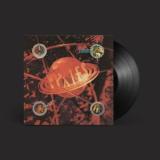
Diese Neuauflagen enthalten neu remastertes Audiomaterial: Toningenieur Kevin Vanbergen hat sich erneut die ursprünglichen analogen Bänder der Band vorgenommen, um atemberaubende neue Master zu erstellen, die auf spannende Art und Weise weitere Facetten dieser absoluten Klassiker der Musikgeschichte offenbaren. "Bossanova" ist das dritte Album der Pixies. Die Band arbeitete weiterhin mit Gil Norton zusammen, nachdem die Zusammenarbeit an ihrem mit Platin ausgezeichneten zweiten Album "Doolittle" so erfolgreich verlaufen war. Als ihr drittes Album in ebenso vielen Jahren war das Jahr 1990 eine besonders fruchtbare Zeit für die Band, da Kim Deal auch mit The Breeders Erfolg hatte, die ihr Debütalbum "Pod" nur wenige Monate zuvor veröffentlicht hatten. Mit den Singles "Allison" (eine Hommage an den Jazz- und Blues-Pianisten Mose Allison), "Dig For Fire" und "Velouria" sowie dem ersten Cover-Song auf einem ihrer Alben, "Cecilia Ann" (im Original von The Surftones), zeigte "Bossanova" eine weniger ursprüngliche Seite der Band, wobei Surf- und Space-Rock in den Vordergrund traten. Textlich ist Black Francis noch rätselhafter, mit einem wiederkehrenden Science-Fiction-Thema, das sich durch das gesamte Album zieht und wiederum Vaughan Olivers klassisches Planetendesign für das Cover beeinflusste.
In an engrossing lattice of polyrhythmic beat science and deep atmospheric meditation, Samurai Music is thrilled to welcome Marco Shuttle to the fold for the Sumud EP.
Since his early years locked into the 00s London techno scene, Marco Sartorelli has developed as an artist entirely on his own terms. Through the rush of new ideas and cross-pollination that has characterised cutting-edge techno over the past 20-odd years, Sartorelli has travelled as Marco Shuttle from one considered stylistic concept to the next. On his own Eerie label and across expansive releases for respected outposts such as Spazio Disponibile, Incensio and Astral Industries, he's taken an exploratory approach to rhythm and spatial design while always drawing on intentional thematic frameworks, creating distinctive and immersive dance music in the process.
As Samurai Music continues to celebrate the rich seams of inspiration where deep techno and drum & bass intersect, Sartorelli's malleable, mysterious strain of drum work fits right in and sets a captivating tone for the label's operations in 2026. 'Sumud' is a steely drum mantra dealing in fractured patterns with the primal patina of the early Artificial Intelligence era, while 'Las Dunas de Taroa' leans on gently pulsing melancholia undulating at a half-time pace. 'Iso 50' taps into raw, analogue minimalism once more, evoking the sound of Roman Flugel's Ro70 records in their icy, alien formation. Completing the set, we're guided towards the tense electronica of 'Polylayering What I've Got', where uneasy melodic chimes interlock with intricately programmed drum machines.
There's a distinct sense of golden-era, mid-90s electronica coursing through Sumud EP, but Sartorelli shrouds the classic tools at his disposal in his subtle signature atmospherics, pushing towards a plain of expression that transcends time.
нет на складе
Последняя поставка 81 день назад доступно для дозаказа без гарантии
Building upon the striking elegance of their first collaboration, Tobias Freund and Shun Watanabe reunite as Tobias. Doltz. for another extended excursion into designer electronica with a warm, dubby glow at its centre. Their first album Versus arrived on Delsin in early 2025 as a result of a chance meeting at Eden Festival the year before. The spark of inspiration led quickly to a complete and coherent first body of work, and the same can be said for its prompt, equally inspired follow-up. Dealing in the gentle hum of digitally sculpted ambience and needlepoint micro-pulses, Freund and Watanabe evoke the experimental spirit and mellow immersion of golden-era clicks n' cuts techno. While that early 00s phenomenon sometimes cracked around the edges of its DSP limitations, here a rich and porous sound world blooms out from the crisply defined structure of each track. At times the palette opens up to more organic sound matter, and there is ample space for full-bodied synths to ratchet down the rhythm, but a strong digital core of granular processing and exacting sound design form the bedrock of the album's subtle, sublime sound. Even though its calm demeanour radiates an instant charm, like all great electronica Frontiers Of Science is an album of hidden depths to be absorbed steadily over subsequent trips.
нет на складе
Последняя поставка 6 месяцев назад доступно для дозаказа без гарантии
Tony Price is back again with Street Theatre, an electrifying new LP on his Maximum Exposure label that serves up eight tracks of rude, crude, real-deal house music with absolute attitude.
Following the recent release of the psychedelic jazz reveries of Requiem for the Ontario Science Centre, this is his second release of 2025 and marks a return to the dancefloor.
Street Theatre is total midnight music—eight tracks of ferocious Chicago house worship, replete with slamming drum machine beatdowns, laser-guided synthesizers, and radioactive funk refractions that evoke Z-Factor’s primal neon pulse, trench coat-era Prince, WBMX cut-ups, and Ron Hardy’s splice-happy Muzic Box mania.
Produced in the span of a week at his studio in Greektown, Toronto, these recordings exemplify what can now undoubtedly be called Tony Price’s signature style—an unvarnished, elemental, no-nonsense approach to record production and sound design that reduces dance music down to its crudest textures and core principles, an approach and ethos that have guided his entire body of work.
Tony’s recorded output showcases fearless exploration across genres—classic house, funk, electro, and the outer limits of electronic jazz and musique concrète. Street Theatre stands tall alongside his Hit Piece LP, the Bail Bonds EP, and his NTS show, The Maximum Exposure Power Hour, as a bold, ecstatic, and direct expression of the eternal essence of house music.
нет на складе
Последняя поставка 17 месяцев назад доступно для дозаказа без гарантии
Embryo Issue 5 - Interviews and Mix series Exome
Quiet Husband
Jim KirkwoodSvartvit
Trenchfoot
Necropolis Festival White Centipede Noise Cryptworm Hyperdonitia
Crawl of Time
Night Terror Records Disengagement
Snet
Ineffable Slime
Marie Queau
Personal Hell
Natural Sciences Recs started in 2015 before mutating into the Embryo magazine series. Flesh Renewed marks ten years of the label with the fifth issue of Embryo. A light into the gutter of the fringe underground, through new tracks from the labels catalogue, 100 pages of interviews by labels and artists kicking against the grain and ties forged from the 80’s tape network. We invite you to witness the next stage of the evolution.
e A1. Osiris - Starlight Scorpio 1989 - 7"
f B1. SEEMEN - Floating Gently 1989 - 7"
нет на складе
Последняя поставка 17 месяцев назад доступно для дозаказа без гарантии
Dischi Fantom’s Sussurra Luce series, blurring the boundaries between text, music and voice, returns with their fifth instalment, an expanded version of Hanne Lippard’s “Talk Shop”. Sculpting a fascinating bridge between radically experimental sound practice, conceptual art, and sound poetry, across its two sides the Berlin based multidisciplinary artist taps an almost dada sensibility, delivering a suite of poems and texts where singular words and sentences are looped and repeated creating a sensory experience of the efficiency and stress found in our private as well as public life.
Roughly a year ago, we had the pleasure of exploring the first two releases from Dischi Fantom’s emerging Sussurra Luce series, Ginevra Bompiani, Caterina Barbieri, and Tomoko Sauvage’s “Il Calore Animale” and Francesco Cavaliere’s “Zoomachia Disc 1”. An extension of the Milan based cultural platform Fantom’s broad and diverse activities (exhibitions, installations, performances, etc.) across numerous artistic disciplines, the series, curated by Francesco Cavaliere and Massimo Torrigiani, delves into the “science of imagination”, working with contemporary authors to explore and blur the boundaries between text, music and voice. Now the brilliant series returns with its latest entry, the Berlin based multidisciplinary artist Hanne Lippard’s “Talk Shop”. Released in a limited edition of 200 copies and coming with an LP-sized booklet, it combines orality and textuality with the idea of loop and repetition to explore the notion of time, and it’s a stunning gesture of performative poetics that plums a startling range of subjects through its sonorous forms.
Working across the fields of text, vocal performance, sound installation, printed objects and sculpture, for more than a decade Hanne Lippard has deployed language as the raw material for her work. Working within a practice that rests at the juncture of the spoken and written word, drawing upon content appropriated from the public sphere (found text) intertwined with her own words, Lippard’s work investigates how the rise in digital communication and mediation reprograms our relationship to language, presenting the subsequent fragility of language - its flaws, oddities, and potential for misinterpretation - and its attempts to convey meaning and sense.
“Talk Shop”, the fifth instalment of Dischi Fantom’s Sussurra Luce series and Lippard’s third recorded release - building upon the ground of 2020's “Work”, issued by Collapsing Market, and 2021's “PigeonPostParis”, released by Boomkat Editions - began as a live performance. Combining orality and textuality with the idea of loop and repetition to explore the notion of time, its relationship with the world of work today, and its personification through the experience of the human body - anonymity as the spearhead of the digital economy - the conceptual underpinnings of the piece depart from the notion that the human voice has become commodified by the ubiquitous nature of contemporary productivity, and intertwined with the mechanics of capital - the voices of satnavs, smart speakers and voicemail systems - while the written word has become increasingly anonymous online.
Addressing vocal anonymity as a spearhead of the digital economy, Lippard’s “Talk Shop” - regarded by the artist as “a compilation of poems and texts where singular words and sentences are looped and repeated creating a sensory experience of the efficiency and stress found in our private as well as public life” - taps an almost dada sensibility through its unexpected layers of meanings drawn from a maximalized approach to the potential of the human voice, creating an engrossing and challenging listen from the first sounding to the last, that continues to reveal itself and unfold with every return.
Sculpting a fascinating bridge between radically experimental sound practice, conceptual art, and sound poetry, it culminates as one of the most strikingly singular creative gestures we’re likely to encounter this year. Highly recommended and not to be missed.
Hanne Lippard (Milton Keynes, 1984) explores the social forms that govern discourse. Her artistic practice, which mainly takes the form of reading and sound installations, investigates the voice as an instrument of emancipation and alienation in times of hyper-connectivity. By mixing personal thoughts and appropriating texts from advertising, slogans and newspaper articles, the text becomes a mix of private and public that regains inventiveness and authorship through the use of the voice, becoming a body of its own. Her recent artistic research has focused on the use of the female body as a container of sounds, on the conscious and unconscious automation of speech and language.
Dark Entries is honored to finally present the first ever official vinyl reissue of Space Museum by Solid Space. Solid Space was the British duo of Dan Goldstein (keyboards, vocals) and Matthew 'Maf' Vosburgh (guitar, bass, keyboards, vocals) formed in 1980. Dan and Matthew met at the age of 11 while attending school in north London. In late 1978 at at the age of 14, they formed Exhibit 'A' with Paul Platypus' and Andrew Lunchbox' Bynghall. They recorded two EPs in 1979 and 1980, self-released on Irrelevant Wombat Records and appeared on 'The Thing From The Crypt' compilation. After the dissolution of the group, Mathew started taking his guitar over to Dan's house where he'd play his Casio MT-30 and they would record songs. Eventually a second hand drum machine and Wasp synthesizer were acquired from classified ads in Melody Maker and the Solid Space sound was born. By this time they were just turning 18 and finally found the freedom to make the music they'd had in their heads. Over the course of the next two years the band assembled eleven bedroom recordings that would become one of the most cherished DIY obscurities of its kind. Their debut album 'Space Museum' was released in 1982 on cassette by In Phaze Records. All of the songs were mixed by label boss Pat Bermingham on 8-track tape at The Shed, in Ilford, which was literally a garden shed. The band's music and lyrics were heavily indebted to science fiction, in particular the 1960s television series Doctor Who. 'Space Museum' is an unveiling of atmospheric, minimalist post punk supported by bright melodies. The music combines drum machines and synths with acoustic guitar and toy drums whilst also experimenting with samples between tracks. Lyrics deal with space travel and a general sense of dejection. Representing a bubbling spirit within the underground, they foreshadowed an entire world of independent music which would emerge across the 80's and well into the 90's. For this reissue we've included two bonus tracks from the band's archive, Platform 6' originally released on the B-side of the second single by Exhibit 'A', this song features only Dan and Matthew and is the first Solid Space track ever recorded. Tutti Lo Sanno' is a cover of In Phaze label mates Marine Girls, though the lyrics have been changed to suit the gender of the new singer.Each song has been carefully remastered for vinyl by George Horn at Fantasy Studios in Berkeley. The record is sleeved in a replica of the cassette artwork featuring the Cybermen and Jamie from the Doctor Who episode "The Wheel in Space". Every copy includes a double sided 11x11 insert with lyrics, notes and never before seen photographs of the band taken by Maf as well as a postcard featuring an original advert for the cassette.
нет на складе
Последняя поставка 18 дней назад доступно для дозаказа без гарантии
Dialling up the needlepoint rhythmic science and deadly restraint we hold so dear, SPD debuts on Sneaker Social Club with a taut four-tracker built for smashing systems with measured flair. It's no surprise to learn Will Sheppard has graced labels like Keysound, EC2A and Roska Kicks + Snares in recent times, given his sound taps into the UK bassweight lineage while maintaining a necessary futuristic tilt.
'Genbu' deals in the kind of stripped back, snaking sequences that keep a body of people rolling deep into the dance, powered by sounds so crisp you'd think they'd slipped out of a trouser press. Maintaining this sonic poise, 'Systema' is a lean, bleep-speckled roller with a firm grip on the square wave snarls lurking below the midrange.
'Willman' rides a choppier groove, but still Sheppard holds down the dance with a monk-like patience, finding power in the art of holding back before opening out into the subtly emotional swathes of 'OK' to round the record out. The devil is in the detail, and there are deep-diving layers to the sound of SPD, but this is a specific angle on club music that prizes subtlety and meditation over brash arrangement swerves and bait hype trysts. For selectors seeking sublime set builders, SPD has got you.
нет на складе
Последняя поставка 17 месяцев назад доступно для дозаказа без гарантии
Born in Aldershot on 11 September 1947, Catley's family moved to the Tile Cross area of Birmingham when he was young. He went on to attend the nearby Central Grammar School for Boys (Birmingham) and left to start an apprenticeship at the GPO before deciding on a musical career shortly after meeting similarly minded individuals at college. Whilst at college he joined several bands, such as The Smokestacks (Jeff Clark-guitar, Ron Savage-guitar, Derek Danks-bass & Brian Worrell-drums, Life and Clearwater). His first professional band was when he joined local outfit The Capitol Systems. The initial line-up was Bob Catley (vocals) Paul Sargent (guitar) Paul Whitehouse (bass), Dave Bailey (keyboards) and Bob Moore (drums). Shortly afterward they changed their name to Paradox, inspired by a science-fiction novel. A one-off deal was arranged with Mercury after Paradox had come to the attention of Francis Rossi and Rick Parfitt. The tracks were "Ever Since I Can Remember", backed with "Goodbye Mary". In addition, they recorded "Mary Colinto" and "Somebody Save Me". All of these songs were written by Dave Morgan. Paradox played festivals in the Netherlands and Italy before splitting up upon their return to the UK in 1970. Formed in 1972, Magnum throughout the next 16 years consisted mainly of Bob Catley on vocals and Tony Clarkin on guitar. Magnum began as the house band at Birmingham's famous Rum Runner night club (later the home of Duran Duran). They began to develop their own style by playing Clarkin's songs at a residency at The Railway Inn, in Birmingham's Curzon Street, in 1976. Joining Clarkin and Catley were drummer Kex Gorin and bassist Dave Morgan (later a member of ELO). Their most notable success during these early years was the Jeff Glixman produced Chase The Dragon (1982) which reached No. 17 in the UK, and included several songs that would be mainstays of the band's live set, notably ‘Soldier of the Line’, ‘Sacred Hour’ and ‘The Spirit’. Their breakthrough album came in 1985 with On a Storyteller's Night which featured the single ‘Just Like an Arrow’. This success continued in the following years with the Roger Taylor (Queen) produced Vigilante in 1986, the top 5 album Wings of Heaven in 1988, and the Keith Olsen produced Goodnight L.A. reaching No. 9 in the UK album charts in 1990. Subsequently, Clarkin decided to maintain a tighter control, and after their initial mainstream success, the band lost their major label backing and returned to a more personal level of production. This finally found the band splitting and the formation of Hard Rain in 1995, which saw Clarkin pursue a more Pop orientated direction with a band that included Sue McCloskey on lead vocals. This new direction didn’t sit well with Catley, and after a headline performance at The Gods in the late 90s, a conversation with Bruce Mee of Now & Then Records saw Catley agree with a decision which eventually led to his debut solo album, ‘The Tower’. This release was completely written by Gary Hughes of Ten, with the writing completely decided to be in the vein of classic Magnum. The album itself was recorded by various members of Ten, including the amazing Vinny Burns (Dare) on guitar. On release, the many positive reviews concluded that the release of ‘The Tower’ had succeeded beyond its wildest imagination…..and Bob Catley’s solo career had been launched with amazing success!! With a lyrical intricacy and majestic pomp, songs like ‘Far Away, ‘Fear of the Dark, ‘Madrigal’ and ‘Deep Winter’ take you back to that glorious period of Magnum between ‘Chase The Dragon’ and ‘Wings Of Heaven’ whilst hard melodic rockers such as ‘Scream’, ‘Dreams’ and title track ‘The Tower’ show just what Magnum would have sounded like if they’d gone a little bit harder. Another absolutely brilliant album that totally deserves to be filed alongside those mid-period Magnum classics.
Ten bad boy digi riddims from the myspace era by Copenhagen’s Maffi crew, dubbed out into 3D space by disrupt in 2024. Raw, minimalist CyberDancehall at its best, nostalgic and oddly futuristic at the same time, this album is quickly becoming RoboCop’s favorite playlist when going to work.
…………………………………………………………………
Maffi Promotions a.k.a. Maffi Boys come straight outta 1773 Kbh V, Copenhagen, Denmark. Originally founded in 1990 by the two homeboys, lazy body Moog and Junior the Rat, Maffi Promotions have been a steady producer of simple digital riddims for years. Hanging out in the streets of Hummel City Junior & Moog used to entertain their friends with the primitve riddims of the Maffi sound. Not knowing that they would do the exact same thing fifteen years later, they continued to believe that one day they would move up the ladder, break out of the underground and reach for the stars.
Now, after finally adopting a little sense of realism, the two homeboys have realised that stardom is nothing compared to spamming people on myspace. So the two stoners decided to get a couple of friends together and turn up the bass online. Together with their sound crew FIREHOUSE, Maffi deal nuff weed and gyals!
Maffi Boys are very dedicated to the art of playing Sensible World of Soccer, rolling weed joints with Manitou tobacco and keeping it real in a Vesterbro-style. So watch out! And don’t test! We’ll be putting up new riddims on a weekly basis. We have nuff things brewing – including a delicious chicken!
………………………………………………………………
Growing up in the streets of Hummel City, Vesterbro, MOOG learned the pleasures of sleeping late, playing Sensible World Of Soccer and picking up hot gyals at an early age. He has spent most of his life trying to master these crucial skills. Taking a break from the dog race, Moog is currently focused on reaching a higher understanding of reggae-science and weedology.
JUNIOR experienced the necessity of rolling well-made spliffs at an early age. Incorporating the aestethic heritage of Scandinavian design, he has spent most of his life perfectionizing this old and traditional art form. Junior is currently taking his ph.d. in digital reggae by buying crates of 80’s 7″ and selecting for his sound system Firehouse.
нет на складе
Последняя поставка 23 месяца назад доступно для дозаказа без гарантии
One can hardly imagine the genre-busting, culture-crossing musical magic of Outkast, Prince, Erykah Badu, Rick James, The Roots, or even the early Red Hot Chili Peppers without the influence of R&B pioneer Betty Davis. Her style of raw and revelatory punk-funk defies any notions that women can’t be visionaries in the worlds of rock and pop. In recent years, rappers from Ice Cube to Talib Kweli to Ludacris have rhymed over her intensely strong but sensual music.
There is one testimonial about Betty Davis that is universal: she was a woman ahead of her time. In our contemporary moment, this may not be as self-evident as it was thirty years ago – we live in an age that’s been profoundly changed by flamboyant flaunting of female sexuality: from Parlet to Madonna, Lil Kim to Kelis. Yet, back in 1973 when Betty Davis first showed up in her silver go-go boots, dazzling smile and towering Afro, who could you possibly have compared her to? Marva Whitney had the voice but not the independence. Labelle wouldn’t get sexy with their “Lady Marmalade” for another year while Millie Jackson wasn’t Feelin’ Bitchy until 1977. Even Tina Turner, the most obvious predecessor to Betty’s fierce style wasn’t completely out of Ike’s shadow until later in the decade.
Ms. Davis’s unique story, still sadly mostly unknown, is unlike any other in popular music. Betty wrote the song “Uptown” for the Chambers Brothers before marrying Miles Davis in the late ’60s, influencing him with psychedelic rock, and introducing him to Jimi Hendrix — personally inspiring the classic album Bitches Brew.
But her songwriting ability was way ahead of its time as well. Betty not only wrote every song she ever recorded and produced every album after her first, but the young woman penned the tunes that got The Commodores signed to Motown. The Detroit label soon came calling, pitching a Motown songwriting deal, which Betty turned down. Motown wanted to own everything. Heading to the UK, Marc Bolan of T. Rex urged the creative dynamo to start writing for herself. A common thread throughout Betty’s career would be her unbending Do-It-Yourself ethic, which made her quickly turn down anyone who didn’t fit with the vision. She would eventually say no to Eric Clapton as her album producer, seeing him as too banal.
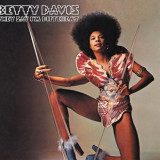
Her 1974 sophomore album They Say I’m Different features a worthy-of-framing futuristic cover challenging David Bowie’s science fiction funk with real rocking soul-fire, kicked off with the savagely sexual “Shoo-B-Doop and Cop Him” (later sampled by Ice Cube). Her follow up is full of classic cuts like “Don’t Call Her No Tramp” and the hilarious, hard, deep funk of “He Was A Big Freak.”
Limited edition tri-color splatter vinyl. The vinyl edition of Daedelus' new LP "Xenopocene" features a die cut cover title album text which allows the viewer to see the multi color swirling vinyl beneath. Xenopocene means Alien Age. Some have theorized our current is the Anthropocene; however in an era where artificially generated and deep faked, what is terrestrial in origin vs u.f.o.? Daedelus’ latest LP ‘Xenopocene’, inspired by their artist-in-residency with S.E.T.I. follows a timeline from an extraterrestrial first contact thru to 10k days hence and spiraling towards the nearest exoplanet 6,000+ years away. Attempting to parse out science informed fiction from the fact that in an unfathomable universe life exists outside our confines. Actually there are guidelines in place for receiving such a communication. In S.E.T.I.'s Protocols for an ETI Signal Detection (which first line reads "Declaration of Principles Concerning the Conduct of the Search for Extraterrestrial Intelligence...") well measured steps from such an awesome event could almost be read as unexceptional. Hyperbole has little place in the sciences whereas music makes the most from. Daedelus across 11 tracks deftly deals with space inspired sounds pulling equally from Gustav Holst and Sun Ra as Alice Deejay and Amon Tobin. No techno-optimism here, ultimately this is Earth music made to dream upwards. Asking us to reckon with our humanity while daring us to envision a new epoch. Interlaced throughout are quavering violins by Vivek Menon. Featuring words from the singular R.A.P. Ferreira on "Starfire" and extra instrumentation from Eli Henry Goss of the Breathing Effect in "Float
Anyone who takes their old-skool hip-hop seriously knows Main Source were the real deal, and their 1991 album Breaking Atoms remains one of the greatest albums in the genre. While there was an eventual follow-up in 1994, hip-hop folklore has often spoken of their shelved 1992 LP The Science.
Bar the odd bootleg single or demo here and there, the album has never been heard but now a major missing piece in the story of early 90s rap is being put back into its rightful place, as P-Vine present the first ever release of The Science, cut from the group's own master tapes and guaranteed to be a new favourite for anyone who values the golden age of beats and rhymes.
The studies with Goffredo Petrassi and the association with Gruppo di Improvvisazione Nuova Consonanza let the Avant-garde playing an important role in the career of Ennio Morricone,
who wrote many contemporary pieces for himself, but then the author composed soundtracks where dissonance played a major role.
For the Italian edition of the film SPACE: 1999 (1975), the cult British TV series, he composed a very neurotic Jazz with muted horns.
Also for the science-fiction film THE HUMANOID (1979) Ennio Morricone created hallucinating strings scores mixed with electronic effects. For SACCO E VANZETTI (1971)
an electronic score by Walter Bianchi evokes all the drama of the undeserved death sentence of the two protagonists.
Experimental music of great impact in the film and off the screen for famous thrillers such as THE DEATH DEALER (1974), SHORT NIGHT OF GLASS DOLLS (1971).
Avant-garde music has always been present in Elio Petri’s films set to music by Morricone such as PROPERTY IS NO LONGER A THEFT (1973).
Avant-garde music in the noir cinema of VIOLENT CITY (1970) and A PURE FORMAL- ITY (1994) and in auteur films such as GARDEN OF DELIGHTS (1967) and SARAH’S LAST MAN (1972).
Anyone who takes their old-skool hip-hop seriously knows Main Source were the real deal, and their 1991 album Breaking Atoms remains one of the greatest albums in the genre. While there was an eventual follow-up in 1994, hip-hop folklore has often spoken of their shelved 1992 LP The Science.
Bar the odd bootleg single or demo here and there, the album has never been heard but now a major missing piece in the story of early 90s rap is being put back into its rightful place, as P-Vine present the first ever release of The Science, cut from the group's own master tapes and guaranteed to be a new favourite for anyone who values the golden age of beats and rhymes.
‘’Ace Todmorden label makes a significant discovery on its own doorstep: a superb cache of ‘loner folk’ songs recorded in the early-70s by Hebden Bridge’s answer to Nick Drake’’ UNCUT PLAYLIST
"This is music that can confidently hold its own with pioneers such as Davey Graham, Michael Chapman, Bert Jansch and Jackson C Frank, as influenced by jazz, blues and steel guitar as any of the old songbook classics from ancient Albion.” Benjamin Myers
"Defiantly Northern and out of this world" Folk Radio
Anti-counter culture loner folk from a teenage attic in the heart of rural Northern hippiedom.
Today the valley town of Hebden Bridge in West Yorkshire is world-renowned as something of a bohemian backwater. It wasn’t like this back in the late 1960s and the early 1970s, when a disparate selection of radicals, drop-outs, heads, musicians, artists and writers started to be attracted to the Calder Valley. Local lad and future poet laureate Ted Hughes called the area “the fouled nest of industrialisation”.
Over time, those seeds of radicalism and collectivism ensured Hebden Bridge evolved into a place where people could be themselves and all shades of individual oddness not only tolerated but actively encouraged. But back at the turn of the dreary 1970s it remained a monochrome world defined by its unforgiving surrounding landscapes, where the old gritstone over-dwellings were stained with soot and rain lashed down for weeks.
It was here that Trevor Beales, who was born in 1953, grew up, and from where he drew musical and lyrical inspiration.
Perhaps it was this dual nationality heritage, unusual in the valley’s largely white working class population at the time, that gave the teenager Trevor Beale’s music an outsider’s perspective. The discovery of Bob Dylan, Django Reinhardt, The Byrds and James Taylor at a young age, lead to him picking up a guitar at the age of ten, and he was soon writing his own originals and performing them at local (though often remote) folk clubs and pubs.
Recorded in the attic of the family home at Ivy Bank in Charlestown on the verdant wooded slopes at the edge of Hebden Bridge between 1971 and 1974, these early recordings are collected here for the first time and mark Trevor Beales long-overdue solo debut.
In these songs is a suffer-no-fools sense of realism that is defiantly Northern, yet also expresses a worldliness that belies Beales’ young years, whilst also showcasing an inherent storyteller’s ear for narrative. Here is a postcard from the past at that crucial musical period of transition, when the idealistic exponents of the 1960s emerged into an austere new decade that was to be shaped by strikes, rising unemployment and economic upheaval.
Two aspects of this music make it remarkable: Beales’ natural ability showcases a sophisticated guitar-picking style that was leagues ahead of many of his (older, more recognised) contemporaries. This is music that can confidently hold its own with pioneers such as Davey Graham, Michael Chapman, Dave Evans, Bert Jansch and Jackson C Frank, as influenced by jazz, blues and steel guitar as any of the old songbook classics from ancient Albion.
Secondly, his lyrics are a far cry from either the naïve bedroom scribblings of a teenager who has barely left his upland home, nor do they fall foul of the type of lazy cliches and sub-Tolkien imagery that was still in abundance in the early 1970s. Most remarkably the earliest songs here were laid down less than a year after he left school (an unearthed report written by his headteacher on July 3rd 1970 noted he had “a considerable ability and interest in music”, though his education ended abruptly when he simply walked out of a science lesson one sunny day while at sixth form, never to return).
Trevor’s music is grounded in reality – his reality. ‘Then I’ll Take You Home’, for example, considers the Guru Marajai, who encouraged his acolytes to give over their worldly possessions, yet who drove a Rolls Royce and lived like a playboy. Unsurprisingly, this latest in a long line of spiritual charlatans found several followers in Hebden Bridge, and Beales casts a disdainful eye over the growing popularity for such false prophets.
With its ancient narratives and propensity for myth-making, folk has certainly produced it’s fair share of cult figures who have enjoyed rediscovery or career resurgence and with this debut compilation of home recordings, rescued from cassette tapes, Trevor Beales might just be the latest addition. Certainly he was the real deal.
Crucially, Beales' music is never jaded or cynical, but instead possesses a poet’s ear, a strong sense of self and some sound critical faculties. And much of it recorded at an age when he could neither vote nor order a pint of heavy.
Trevor Beales died suddenly and unexpectedly on March 29th 1987, aged 33. He left behind Christine and their young child Lydia.
Landing on Cosmocities right on cue for the summer season ahead, Japanese producer Masumi Nishimura alias Inner Science deals out a new entry into his shimmering, shape-shifting mindset. Flying us off to a soothingly dreamy and colourful headspace, bristling with vibrant sound design minutiae to wrap your ears around, Inner Science exhibits the elevating power of his music through three original joints, complemented by two exquisite remixes from multi-faceted British genius Joe Goddard and Giegling staple, Map.ache. The acid-infused glitter of “Unfold” paves the way with understated bravura; a piece of squelchy yet dazzling nature, organically making the rounds between propulsive club music territories and exotica-laced cascades of sound. “Quiet Track 3” follows a similar course with its phantasmagoric landslides of chimey melodies and driving bass traction on stealth mode, all scudding and mingling with haiku-esque spiritual balance, while “Never Fade Away” blows the winds of poetic transcendence through a finely engineered mix of forward-racing groove and a honey-dripping, rainbow-like shower of elementally lush textures and envelopes.
Flip it over and here’s Joe Goddard taking “End of the Beginning" for a slower, slightly less sign-busy jaunt across sun-soaked clearings and pastures. Laying further focus and emphasis on the synth work and build-up here, Goddard channels Inner Science's many facets and wildland-like exuberance through a more directed, further orchestrated pathway. Tackling “Momentary Spread”, map.ache treats us to a further dynamic, floor-friendly approach, routing its listener onto proper functional, gridlocked tracks. Bleached-out pads evaporating into aether as the bass etches into your mind with durable effect, it’s a proper oneiric roller that engulfs you down its gushing throat of faded escapism and brittle, post-discoid melancholy
нет на складе
Последняя поставка 2 года назад доступно для дозаказа без гарантии
Music has always been a common means to deal with global events – so does this new release on Snork Enterprises by Lee Holman. Having actually performed in Ukraine shortly before the war, Lee Holman clearly has chosen the title of his new release by purpose. “Urban Warfare” dedicates for titles, all of them bearing names with military connotation, to the recent events in Ukraine and beyond.
The musical means of his choice to process the happenings are raw, straight forward electronic sounds echoing from the underground. His combination of beeping, roaring and crooked tunes creates a dystopian atmosphere in each track – yet, each in its unique way. This makes the release a diverse collection of four tracks of unadorned urban club sounds dashing through present day history.
LEE HOLMAN
An uncompromising underground ethos, Lee Holman has garnered support from a host of Techno's brightest names.
Performing in clubs since the late nineties, he has travelled throughout Europe, North America, South America, Asia and everywhere inbetween, compounding a reputation for his unique vision on Techno. Playing a fusion of deep, raw and energetic electronics, his sound creates a myriad of tension, constructing the perfect combination of musicality for club appearances.
Performances both as a live act and as a DJ have unlocked opportunities to share hallowed ground with Techno’s elite, appearing in prestigious underground venues such as TRESOR Berlin, Corsica Studios London, 8Bahn Arnhem, Sub-Scape Antwerp, Move Medellin, Tag Chengdu, Arkham Shanghai, Nechto events Kyiv + many more.
Production has earned him international recognition, leaving his mark at the forefront, building a reputation for consistency, originality and delivering his dynamic sound on both cutting edge and classic Techno Labels. Generating consistent support, he has remixed for high profile artists such as Aubrey and Gary Beck and has himself been remixed by leading Techno mainstays ranging from Orlando Voorn to Mike Dehnert.
Founding the Kawl Imprint, the label’s aim was to provide diversity in Techno and this formula was immediately picked up on and amounted to rave reviews and impressive charts and plays by leading connoisseurs of the underground.
This year, his releases have been frequent and in demand, with his production skills confirmed for Knotweed Records, Science Cult, Shaded Music, Nechto and more, adding to an already excellent discography.
With an ever expanding release schedule, combining remixes and a new label project called Demarcation, Lee Holman promises to be unrelenting in his definition of essential timeless Techno.
нет на складе
Последняя поставка 5 месяцев назад доступно для дозаказа без гарантии
Back in 1968, a pair of Germanic behind-the-scenes sound
librarians called Horst Ackermann and Heribert Thusek left a
tiny but indelible pinprick on the history of German Pop in the
misshaped form of a sexy horror cash-in concept album called
‘Dracula’s Music Cabinet’. Shelved at a micro-cosmic axis
where Krautrock meets lesbian vampire Horrortica and easy
listening meets psychedelia, the delayed reaction of this mutant
concoction eventually exploded in the mid-1990s in the hands of
a generation of ‘record diggers’ sending currency-crushing
tremors through the wallets of mods, rockers, hip hoppers and
psych nuts around the plastic-pillaging planet. The vinyl junkies
had resurrected a monster but, like addicts do, they ravenously
sucked it dry and moved on looking for the next fix to feed their
habit.
Luckily for some, Ackermann and Thusek were also creatures
of habit. And it wouldn’t take a genius to figure out that they
were holding the next dose, but by the turn of the millennium
the mad scientists had been given a thirty-five-year head start
on the pop archaeologists and their mythical sequel was literally
light-years ahead of their previous draconian instalment.
Encouragingly, the unclosed cabinet left a shiny white clue in
the form of its closing track ‘Frankenstein Meets Alpha 7’.
The Ackermann and Thusek duo were far from dynamic. They
were undercover agents hiding behind user-friendly mock-rock
monikers and, like most B-Musicians, the only way to sniff them
out would be to read the small print. But when an unidentified
record on an unknown label with a title like ‘Science Fiction
Dance Party’ crops up in the Eins Deutschmark crates it’s not
exactly rocket science - although the track titles might suggest
otherwise. ‘The End Of A Robot’, ‘Monster On Saturn 1’,
‘Galactic Adventures Of The Outer Space Fleet’, ‘The Whistling
Astronauts’, ‘Death Rays Out Of The Universe’… The tell-tale
signs are all there and if that doesn’t clench the deal then what
will?
Even rarer than its horror counterpart, this ultra-rare record
regularly reaches sums in excess of €400 plus online.
нет на складе
Последняя поставка 4 года назад доступно для дозаказа без гарантии
Remastered vinyl reissues of the two essential albums by Turkish folk singer Tülay German, starting with the self-titled release (1980) and followed by "Hommage to Nazım Hikmet" (1982) in early 2022.
Referring heavily on turkish poets and the tradition of aşıks (singer-poets and wandering bards) these two albums represent unique and modern interpretations of turkish folk songs unmatched to this day. A matured artist with full conviction at the height of her powers!
Back in the 60s Tülay German (*1935 in Istanbul, Turkey) shook the turkish music landscape with several 7" records. Most notably her first 7" record "Burçak Tarlası" (1964) is now considered the cornerstone of what was to become the Anadolu Rock/ Pop movement and underlines her rebellious nature and sense of justice.
But due to the increasing repression Tülay German and her lifelong partner and intellectual impetus Erdem Buri decided to leave Turkey a few years later. In fact, an impending prison sentence for Erdem Buri for translating Hegel's "Dialectic and Science of Logic" and
Plekhanov's "Fundamental Problems of Marxism" led the couple to emigrate to France.
In France Tülay German signs a major contract with Philips resulting in many 7" releases sung in french under her french moniker Toulaϊ. In the long run Tülay German doesn't feel quite comfortable with this major deal. And thus, despite the success and recognition she had
gained, she decides to quit the contract with Philips!
Later on she signs to independent world-music label Arion to pursue her actual artistic goals more in line with her origin and temperament. Back to her mother tongue, Tülay German records above mentioned albums for Arion under full artistic freedom, the only full-lenghths
in her 20+ years career. Alongside with double-bass virtuoso and turkophil François Rabbath (*1931 in Aleppo, Syria) the albums consist of aşık traditionals and intonated poems mainly
by Nazım Hikmet. Her passionate voice and the restrained arrangements of François Rabbath turn these centuries old melodies and poems into glowing manifestos for love and
justice. The fruitful collaboration of these artists-in-exile adds significantly to the rich heritage of turkish folk music.
The self-titled debut, which was awarded with the prestigious "Grand Prix du Disque" of Académie Charles Cros in 1981, is now seeing a vinyl reissue after 40 years.
Tülay German ended her musical career in 1987 and after the death of Erdem Buri in 1993 she retired from public life completely, leading a quiet life in Paris where she still lives to this day. In 2021 Tülay German was awarded with the Lifetime Achievement Award by the Istanbul Foundation for Culture and Arts, Turkey.
нет на складе
Последняя поставка 4 года назад доступно для дозаказа без гарантии
Born in Majorca, Marc Melià is a composer/producer, who’s been based in Brussels for over 10 years. First spotted alongside Françoiz Breut, Lonely Drifter Karen or Borja Flames, he released Music for Prophet in 2017. It was issued on Gaspar Claus’s label Les Disques du Festival Permanent, as part of Flavien Berger’s curation.
On that first album, Marc Melià had explored the possibilities of a mythic synth; on Veus, as if sloughing, he applied the process of sound modification to his own voice, until becoming an android. But an android who sings of love and dreams, a sensitive automaton who plays with the tropes of pop music. Through this device, Marc Melià knowingly seeks poetry and beauty within transgenics, in the search of a universe where one can surf though waves of profoundly moving chord patterns, hear voices unconstrained by range limitations, or dance freely, as in zero gravity.
Part of the album has been recorded in Une ferme dans les Vosges, courtesy of Rodolphe Burger. It was recorded with Roméo Poirier, one of the most promising figures of ambient, and the elegant multi-talented Lou Rotzinger. As if progressing in parallel with his own linguistic experience, to add another layer to the sloughing, side A is sung in Catalan, Marc Melià’s mother tongue, and side B in French, his adopted language.
Like an echo to his previous album, Veus opens with an instrumental, “Pulse on a E”, which starts with a sequence created with a single note transposed to its octave, just like “Fata Fou”, the last song on Music for Prophet.
Although the title seems to reference an iconic 80s synth, “DX7” is actually about the seven days of the week. It is a love song, about the temperamental oscillations which make every morning the blank canvas of an unpredictable story. Wednesday, I hate you, Sunday, I love you. With few words and a lot of emotion, a synthetic voice is trying to grow more human each day.
“Dent de Serra” deals with the weight of memory on our relationships, but also with the way we revisit them constantly in order to integrate souvenirs within present relationships. Suddenly, the song stops and enters a new dimension, everything is different, as if what had just happened was now forgotten forever.
Oxytocin (“Oxitocines” in Catalan) is said to be the hormone of love. This song deals in a playful way with the duality between science and faith, between rational and magic, when it comes to sentimental relationships. Love is a universal theme, it is everywhere in the world, and love songs have been written for a very long time. But this particular love song is an ode to an aspect of love that has been less sung about: biology, which makes it possible to feel like you’re floating in space when you fall in love.
“Les étoiles” is a trio with Flavien Berger and Pi Ja Ma. The song is about attraction. What attracts humans to each other, but also the inevitable gravitational attraction. The song is also about accidents, magic moments that take us outside of our daily lives and give us the possibility to imagine a sidereal, infinite love.
“A propos d’une chanson” was born after Marc Melià had dreamed he had written the most beautiful song he’d ever created. When he woke up, he realized that song was actually O Superman by Laurie Anderson.
Aside from these songs, Marc Melià offers a few breaks, instrumental but no less narrative.
“Final d’hivern” conjures these quiet moments between two intense events; sleeping at night between two days; the calm that settles in after a hard winter, right before spring properly starts.
Using a musical language that clearly references Ryuichi Sakamoto, “Romain”, with its theme based on a melancholic chord pattern, could be the soundtrack to a 1970s movie lost in time. Little by little, elements that seem to come from a completely different context find their place, while turning the initial mood into something strange and unexpected.
Finally, “Retorn”, which finishes the album, is a reprise of the theme of “DX7”.
From the chords that make up a song, to the days that make up our lives, existence is but a cycle, and Veus is an exploration of them. Marc Melià keeps on drifting on his personal path, between homage to the past and visions of the future.
“This is the time. And this is the record of the time.”
Laurie Anderson’s 1982 debut album, Big Science, will return to vinyl for the first time in 30 years with a new red vinyl edition on Nonesuch Records. The release includes the re-mastered original album first released on CD for the 25thanniversary in 2007.
In the early 1980s, Laurie Anderson was already respected as a conceptual artist and composer, adept at employing gear both high-tech and homemade in her often violin-based pieces, and she was a familiar figure in the cross-pollinating, Lower Manhattan music-visual art-performance circles from which Philip Glass and David Byrne also emerged. While working on her now-legendary seven-hour performance art/theater piece United States, Part I–IV, she cut the spare ‘O Superman (For Massenet)’, an electronic-age update of 19th century French operatic composer Jules Massenet’s aria ‘O Souverain’, for the tiny New York City indie label 110 Records. In the UK, DJ John Peel picked up a copy of this very limited-edition 33⅓ RPM 7” and spun the eight-minute-plus track on BBC Radio 1. The exposure resulted in an unlikely #2 hit, lots of attention in the press, and a worldwide deal with Warner Bros. Records.
’Cause when love is gone, there's always justice.
And when justice is gone, there's always force.
And when force is gone, there's always Mom. Hi Mom!
At the time of its original release, the NME wrote of Big Science, ‘There’s a dream-like, subconscious quality about her songs which helps them work at deeper, secret levels of the psyche.’ With instrumentation ranging from tape loops to found sounds to bag pipes, Big Science anticipated the tech-savvy beats, anything-goes instrumentation and sample-based nature of much contemporary electronic and dance music. On the album’s 25th anniversary, Uncut noted, ‘The broader themes of alienation and disconnection still resonate, while Anderson’s use of loops and traditional/synthesized instrumentation is prescient.’
“In the ’70s I travelled a lot,” Anderson recounts. “I worked on a tobacco farm in Kentucky, hitchhiked to the North Pole, lived in a yurt in Chiapas, and worked on a media commune. I had my own romantic vision of the road. My plan was to make a portrait of the country. Big Science, the first part of the puzzle, eventually became part two of United States I–IV (Transportation, Politics, Money, Love). My goal was to be not just the narrator but also the outsider, the stranger. Although I wasfascinated by the United States, this portrait was also about how the country looked from a distance. I was performing a lot in Europe, where American culture was simultaneously booed and cheered. But the portrait was also a picture of a culture inventing a digital world and learning to live in it. Big Science was about technology, size, industrialization,shifting attitudes toward authority, and individuality. It was sometimes alarmist, picturing the country as a burning building, a plane crash. Alongside the techno was the apocalyptic. The absurd. The everyday. It was also a series of short stories about odd characters – hatcheck clerks and pilots, preachers, drifters and strangers. There was something about Massenet’s aria ‘O Souverain’ – which inspired ‘O Superman’ – that almost stopped my heart. The pauses, the melody. “O souverain, ô juge, ô père” (O Lord, o judge, o father). A prayer about empire, ambition, and loss.”
Laurie Anderson is one of America's most renowned – and daring – creative pioneers. Her work, which encompasses music, visual art, poetry, film, and photography, has challenged and delighted audiences around the world for over 40 years. Anderson released her first album with Nonesuch Records in 2001, the critically lauded Life on a String. Her subsequent releases on the label include Live in New York (2002), Homeland (2010), the soundtrack to Anderson’s acclaimed film Heart of a Dog (2015), and her Grammy-winning collaboration with Kronos Quartet, Landfall (2018). Additionally, Anderson’s virtual-reality film La Camera Insabbiata, with Hsin-Chien Huang, won the 2017 Venice Film Festival Award for Best VR Experience, and, in 2018, Skira Rizzoli published her book All the Things I Lost in the Flood: Essays on Pictures, Language and Code, the most comprehensive collection of her artwork to date.
нет на складе
Последняя поставка 5 лет назад доступно для дозаказа без гарантии
Finnish visual artist and filmmaker Hannu Karjalainen's music draws inspiration from ambient, drone, modern classical and dream pop. His first album Worms In My Piano was released in 2007 on Osaka Records and the second album, Hintergarten in 2009 on Simon Scott's Kesh Recordings. A Handful Of Dust Is A Desert, his third album - and the first under his full given name - arrives after a prolonged break.
Hannu Karjalainen's association with Karaoke Kalk started with his remix of Dakota Suite's The End Of Trying Part III on The Night Just Keeps Coming In in 2009 which also featured remixes by the likes of Hauschka, Deaf Center, Loscil and many more. Now, luckily for all concerned, Hannu is releasing a full length album on the label in the form of the exquisite record A Handful Of Dust Is A Desert.
The album opens with the track Angel which is a truly heavenly composition reminiscent of Boards of Canada's finest work. The Emigrant makes effective use of sinister synth-lines and delicate glockenspiel patterns to invoke a kind of science-fiction soundtrack atmosphere. Throughout the record, our ears are graced with truly sublime sound-scapes and transcendent textures.
The title track is actually the shortest tune on the album, but in no way less evocative. It's looped piano melodies are comparable with Susumo Yokota's later recordings in their minimalism and poise. A Year In a Day continues to walk the fine line between ambient and electronica - which is one of the albums great virtues: it shows how lively and eventful ambient music can be. Certainly ambient music benefits from having a strong pulse as Karjalainen demonstrates in various tracks on the album. The song Love Is A Black Lion features a sample from the afore mentioned Dakota Suite tune The End Of Trying Part III, and therefore somehow closes a circle.
This powerfully contemplative album comes to a controlled landing with the majestic Breaks My Heart She Aria, another in a long line of mesmerizing drifts, with a floating choral voice delicately enveloped in strings and pitched percussion.
A Handful of Dust Is A Desert is instantly captivating and for lovers of ambient music, dream listening. As an artist who trained in photography and is mostly active in the world of visual art, Hannu Karjalainen clearly enjoys a great deal of creative freedom in his music. This is the kind of desert you won't mind getting lost in and even take pleasure in roaming through the expansive sonic landscapes and horizons it embodies.
Marc Antona has been always in the pursuit of new expressions within music as he has continually demonstrated with his work. Following the jazz-infused adventures of the Rattle Snaps EP, he finally returns to his own turf to lay down another crucial exploration of beat science. "Hanging Gardens" is a masterclass in immersive programming, fusing the natural feel of live drums with crisp electronic tones that hover in a spacious mix. It's the perfect angle at which to appreciate the subtlety of sound design that goes into every inch of Marc Antona's productions, teasing elements in and out of the mix so gracefully, it's hard to tell where the joints are. The haunting touches of chords and lingering pad are deployed with poise, the intricate percussion progressively rising and falling throughout to create a truly immersive sonic journey. Where the A side deals with angular rhythms and a shape-shifting atmosphere, "Unrestricted" takes the sound palette of organic and electronic elements and feeds them into a rolling, techno-minded focus. The tribal thrum of the beat fills out an 'in-the room-ambience' while the psychoactive synth flurries speak out the pulse of the machines. It's a combination that makes "Unrestricted" as intimate as it is exotic. In combining these disparate feelings within his tracks, Antona once again brings a human feel to the technology, pushing the music into exciting new realms in the process.
One can hardly imagine the genre-busting, culture-crossing musical magic of Outkast, Prince, Erykah Badu, Rick James, The Roots, or even the early Red Hot Chili Peppers without the influence of R&B pioneer Betty Davis. Her style of raw and revelatory punk-funk defies any notions that women can’t be visionaries in the worlds of rock and pop. In recent years, rappers from Ice Cube to Talib Kweli to Ludacris have rhymed over her intensely strong but sensual music.
There is one testimonial about Betty Davis that is universal: she was a woman ahead of her time. In our contemporary moment, this may not be as self-evident as it was thirty years ago – we live in an age that’s been profoundly changed by flamboyant flaunting of female sexuality: from Parlet to Madonna, Lil Kim to Kelis. Yet, back in 1973 when Betty Davis first showed up in her silver go-go boots, dazzling smile and towering Afro, who could you possibly have compared her to? Marva Whitney had the voice but not the independence. Labelle wouldn’t get sexy with their “Lady Marmalade” for another year while Millie Jackson wasn’t Feelin’ Bitchy until 1977. Even Tina Turner, the most obvious predecessor to Betty’s fierce style wasn’t completely out of Ike’s shadow until later in the decade.
Ms. Davis’s unique story, still sadly mostly unknown, is unlike any other in popular music. Betty wrote the song “Uptown” for the Chambers Brothers before marrying Miles Davis in the late ’60s, influencing him with psychedelic rock, and introducing him to Jimi Hendrix — personally inspiring the classic album Bitches Brew.
But her songwriting ability was way ahead of its time as well. Betty not only wrote every song she ever recorded and produced every album after her first, but the young woman penned the tunes that got The Commodores signed to Motown. The Detroit label soon came calling, pitching a Motown songwriting deal, which Betty turned down. Motown wanted to own everything. Heading to the UK, Marc Bolan of T. Rex urged the creative dynamo to start writing for herself. A common thread throughout Betty’s career would be her unbending Do-It-Yourself ethic, which made her quickly turn down anyone who didn’t fit with the vision. She would eventually say no to Eric Clapton as her album producer, seeing him as too banal.
Her 1974 sophomore album They Say I’m Different features a worthy-of-framing futuristic cover challenging David Bowie’s science fiction funk with real rocking soul-fire, kicked off with the savagely sexual “Shoo-B-Doop and Cop Him” (later sampled by Ice Cube). Her follow up is full of classic cuts like “Don’t Call Her No Tramp” and the hilarious, hard, deep funk of “He Was A Big Freak.”