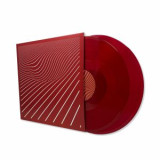
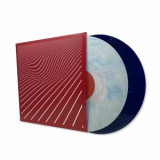
Stop. Breathe. Reload. And dive into "El Paso, Elsewhere: The Album". Black Screen Records, Lost In Cult Records and Strange Scaffold are teaming up to bring the original songs of RJ Lake and LAKE SAVAGE to life on glorious vinyl. "El Paso, Elsewhere: The Album" takes aim at the key songs that punctuate the game's dark and introspective journey through haunted hallways - with heavy doses of hip-hop, electronica and Trace-Wave coalescing into a pellucid vision of influences and a deeply entrenched sense of identity, akin to the works of seminal hip-hop artists such as Kendrick Lamar and Open Mike Eagle. All tied together within the beautiful gold foil cover artwork by Bri Neumann. RJ Lake shared some of their thoughts going into the creation of this album: "Months before the first thing I ever started working on with Nelson Dog Airport Game (that's not the actual title, but it might as well be) even came out, he asked me if I knew anyone who could make a horror game. I knew a guy. A few months in, we did a touch-base about the music and mutually agreed that none of it at that point was totally working. It was good (look, I'm not going to put myself down here; even back in 2020, it kicked ass) but it wasn't RIGHT. He gave me a bunch of reference materials and kept pointing to them and saying: 'Okay, but these? These are RIGHT. These have the juice we want.' The thing every single song he showed me had in common, was that every one of them had vocals. After some back and forth, we both agreed: 'El Paso, Elsewhere' had to be a rap record as much as it had to be a game. So, three and a half years later, here we are. This is probably the most lavishly mixed thing I've ever made, full of weird, intricate beats, layered vocals from both myself and Nelson, lyrics that go everywhere from bleak to so-party-that-you'll-die to totally ridiculous, loads and loads of genre switch-ups, and absolutely zero subtlety. For 'El Paso, Elsewhere', I made a full score, but that's not what this is. This vinyl is a fucking album and it's sequenced like one. Play it loud!" Alongside the LP, explore what happens after the events of "El Paso, Elsewhere" within the diaries of James Savage - an exclusive in-world archive of the thoughts and feelings directly from the heart and soul of our protagonist within the liner notes. As well as a 5-page excerpt from the "El Paso, Elsewhere" original script and never before seen concept art by Demente Animation Studio.
quête:sequence
On A Golden Shore arrives as The Hanging Stars reflect on a year of triumphs. With an Americana Music Association Bob Harris - sanctioned award and a Nashville sell-out in Third Man’s Blue Room with Jack White approvingly looking on, they’re a leading light in the UK Cosmic Americana cohort. Their standing has allowed them to pay less attention to any preconceptions of what they are ‘supposed to be’. On A Golden Shore - their fifth album and their second for the pioneering Loose Music, following 2022’s Hollow Heart - finds them definitively themselves and presents a set of disparate songs whose fundamental linkage is the band that made them. On A Golden Shore was recorded at Edwyn Collins’ Clashnarrow Studios with Sean Read producing. Singer/guitarist Richard Olson, drummer Paulie Cobra, multi-instrumentalist Patrick Ralla, plus freshman bassist Paul Milne – laid down the album’s backbone over eight days. Mostly recorded live, even the solos done as a piece. Much is first take because trying better, it never worked as well. Pedal-steel player Joe Harvey-Whyte created and added his parts at his London studio bringing ‘shimmery psychedelic goodness’. Smartly sequenced On A Golden Shore proceeds in clusters of songs; commencing with the free and easy choogle of ‘Let Me Dream Of You’, encompassing the sunny glam of ‘Sweet Light’, the baggy Balearic waft of ‘Happiness Is A Bird’, the pan pipes and bongos of the exotic ‘Golden Shore’, through to the rolling banjo of ‘No Way Spell’ and the celestial cascades of ‘Heart In A Box’. Fashioned instinctively On A Golden Shore is ultimately an album of sensation as much as thought, filled with fleeting moments of blissful excess, and stumbling, rushing flutters of sound; its evanescent psychedelia, divine choruses, and shards of strings combine into an infectious, compelling Cosmic Heartbreak Boogie.
Heavee is a Queer Chicagoan DJ & producer with a long history in footwork. His 2022 'Audio Assault' EP on Hyperdub showcased synth-driven, melodic footwork, but ‘Unleash’ goes much further into audio world-building, with a fresh, spongy and citrus-y sound palette and rich, bright chord sequences.
It's minimal, airy, balancing light and dark, sometimes breezy and sometimes clinical. Heavee works simultaneously outside and inside the box, rebuilding footwork's framework and vibe to his own unique specification. Rhythmically, it's dance floor ready, using footwork's 160 template as a springboard for building new drum sounds to express these rhythms, and draws from R&B, rap, jazz and grime, with a sprinkling of bitter-sweet vintage Detroit techno.
‘Unleash’ takes footwork’s “eats all” approach to music and leads it in a fresh direction with a freedom of spirit. It's a strong addition to the footwork cannon and shows that experiments in dance music can be fun.
Long-time friend of the label Fader Cap returns to Butter Sessions with a potent four-track EP 'Blue Pool'. First appearing as Sedgwick on our 10 years of BSR compilation, Fader Cap has since released music on Craigie Knows and his own Straight 2 It Recordings.
Connecting the dots between progressive house and techno, the four tracks on 'Blue Pool' maintain an infectious energy, with pumping drums and plenty of space for contemplative synth work to keep the body moving and brain tingling. The rolling, dub-wise basslines set the foundations for intricate sound design and tripped-out sequences that provide that sweet head high we're chasing. Let your mind wander as you float away into the blue pool.
Most audiophiles know Alan Parsons Project's I Robot by heart. Engineered by Parsons after he performed the same duties on Pink Floyd's Dark Side of the Moon, the 1977 record reigns as a disc whose taut bass, crisp highs, clean production, and seemingly limitless dynamic range are matched only by the sensational prog-rock fare helmed by the keyboardist and his creative partner, Eric Woolfson. Not surprisingly, it's been issued myriad times. Can it be improved? Relish Mobile Fidelity's stupendous UltraDisc One-Step 180g 33RPM box set and the question becomes moot.
Mastered from the original master tapes and pressed at RTI on MoFi SuperVinyl, I Robot comes to life with reference-setting realism on this numbered, limited-edition reissue. Boasting immaculate highs and lows, generous spaciousness, and see-through transparency that takes you into the studio with Parsons and Woolfson at Abbey Road, this definitive edition is designed to demonstrate the full-range capabilities of the world's best stereo systems while offering listeners the convenience of having all the music on one LP.
Featuring a nearly inaudible noise floor, this transcendent UD1S edition functions as a repeat invitation to savor reference-grade soundstages, immersive smoothness, sought-after instrumental separation, three-dimensional imaging, and consummate tonal balances. Able to be played back at high volumes without compromise or fatigue, it is a demonstration record for the ages – the likes of which are no longer being made. This is the very reason you own and invest in high-end audio gear.
The special characteristics of this UD1S version extend to the premium packaging. Housed in an elegant slipcase, the reissue features special foil-stamped jackets and faithful-to-the-original graphics. Aurally and visually, it is made for discerning listeners who prize sound quality and production, and who desire to fully immerse themselves in everything about this conceptual landmark. The Alan Parsons Project's most famous record deserves nothing less.
Inspired by and loosely based around the Isaac Asimov stories of the same name, I Robot delves into themes of artificial intelligence and technological dominance that make the record extremely relevant in the 21st century. Indeed, Parsons and Woolfson's pinnacle creation dovetailed with the ascendency of Star Wars, which itself is experiencing a rebirth in an age of self-driving cars, smart devices, and mindless automation. Lyrically, songs such as "The Voice" call into question human behavior – and their relationship to increasing robotic supremacy – in everyday life. Parsons and Woolfson reflect the associated paranoia, dichotomy, and transformation via shifting sci-fi arrangements steeped in drama and moodiness.
The absorbing tunes on I Robot also continue to fascinate due to their perfectionism and innovation. Borrowing from Pink Floyd's strategies, Parsons and Woolfson utilize a looped sequence on the title track to create new downbeats. "Some Other Time" employs two different lead vocalists and yet gives the illusion that only one is involved. Captivating strings, a piccolo trumpet, and bona fide pipe organ grace "Don't Let It Show." The origins of "Nucleus" stem from a unique analog keyboard concoction dubbed "the Projectron," devised by Parsons and electronic engineer Keith Johnson. Andrew Powell's orchestral and choral arrangements top it all off, with "Total Eclipse" arriving as a frightening track that presages the climactic "Genesis Ch. 1 V. 32."
Does man or machine win in the end? Decide as you get lost in Mobile Fidelity's UltraDisc 180g 33RPM LP pressing. Secure your numbered copy today!
More About Mobile Fidelity UltraDisc One-Step and Why It Is Superior
Mobile Fidelity Sound Lab's UltraDisc One-Step (UD1S) technique bypasses generational losses inherent to the traditional three-step plating process by removing two steps: the production of father and mother plates, which are created to yield numerous stampers from each lacquer that is cut. For UD1S plating, stampers (also called "converts") are made directly from the lacquers. Since each lacquer yields only one stamper, multiple lacquers need to be cut. Mobile Fidelity's UD1S process produces a final LP with the lowest-possible noise floor. The removal of two steps of the plating process also reveals musical details and dynamics that would otherwise be lost due to the standard multi-step process. With UD1S, every aspect of vinyl production is optimized to produce the best-sounding vinyl album available today.
MoFi SuperVinyl
Developed by NEOTECH and RTI, MoFi SuperVinyl is the most exacting-to-specification vinyl compound ever devised. Analogue lovers have never seen (or heard) anything like it. Extraordinarily expensive and extremely painstaking to produce, the special proprietary compound addresses two specific areas of improvement: noise floor reduction and enhanced groove definition. The vinyl composition features a new carbonless dye (hold the disc up to the light and see) and produces the world's quietest surfaces. This high-definition formula also allows for the creation of cleaner grooves that are indistinguishable from the original lacquer. MoFi SuperVinyl provides the closest approximation of what the label's engineers hear in the mastering lab.
Pablo Bozzi drops a second compilation on his new label, Second Sight, with the various artists "Unknown Prospect Vol. 2". The title says it all: boundless and vast, Second Sight's intent is to promote the talents of innovative producers who defy genres in the pursuit of their own idyllic aesthetic.
- A1: Motor City 1
- A10: Motor City 10
- A2: Motor City 2
- A3: Motor City 3
- A4: Motor City 4
- A5: Motor City 5
- A6: Motor City 6
- A7: Motor City 7
- A8: Motor City 8
- A9: Motor City 9
- B1: Motor City 11
- B10: J Rocc Mix
- B2: Motor City 12
- B3: Motor City 13
- B4: Motor City 14
- B5: Motor City 15
- B6: Motor City 16
- B7: Motor City 17
- B8: Motor City 18
- B9: Motor City 19
2024 Repress
The late, great J Dilla is widely regarded as one of the greatest hiphop producers of all time. An innovator who pushed the genre in new sonic directions, the Detroit native born James Yancey crafted timeless soundscapes for the likes of Slum Village, Busta Rhymes, Common, Erykah Badu, A Tribe Called Quest, The Roots, and many more. Since his death in 2006, Dilla’s mother Maureen “Ma Dukes” Yancey has worked tirelessly to further her son’s legacy, and her latest effort is the new posthumous album Motor City. Inspired by Dilla’s beloved hometown, Motor City is a collection of rare and unreleased Jay Dee instrumentals, hand-selected and sequenced by Ma Dukes. Conceived as a “letter” to her son, Motor City is packaged in a limited-edition mailing envelope, complete with a handwritten message from Ma Dukes to J Dilla inside. Both CD and vinyl formats also include access to an exclusive mix of the album by Dilla’s close friend J Rocc, a world-renown DJ and founder of the Beat Junkies.
**Ltd First Pressing on Black/Red Splatter Vinyl** Introducing Observers “The Age of the Machine Entities” an instrumental heavy metal reimaginin of Stanley Kubrick and Arthur C Clarke's 2001 A Space Odyssey. Observers is a new project fronted by Martin Kennedy whose ambient rock band All India Radio has seen music used in CSI, One Tree Hill and many more. Canadian metal titan Devin Townsend even covered an All India Radio song that he fell in love with while on holiday. Kennedy has also released over fifteen albums with Steve Kilbey of psychedelic rock legends The Church. Kennedy says “I’ve been fascinated by 2001 A Space Odyssey ever since my mum took me to see it in the 1970s. It blew my mind. I started making my own 2001 inspired super 8 movies, I collected everything I could afford and I’m still obsessed with it into my adult years.” “The Age of the Machine Entities” is entirely instrumental and takes us on a cosmic journey through melodic metal, atmospheric riffs and psychedelic ambient sequences with echoes of Gojira, Black Sabbath and Tangerine Dream and the early 70’s work of Pink Floyd. Indeed treats us to a searing metal version of the obscure but fan favourite “The Narrow Way Part 2” from the Floyd’s Umma Gumma. The album was mixed by Joe Haley from Tasmania’s legendary Psycroptic and the line up is Rich Gray (Annihilator) on bass, Chris Bohm on drums, and guest soloists including Joe Haley and Jake Weber. The all important visual aspect is brought to life by Ryan T Hancock (known for work with King Buffalo, ᴀɢɴᴏxɪᴀ, Robot God), who created the mesmerizing album artwork. Observers' "The Era of Machine Entities" is a fusion of artistic brilliance that pays homage to the timeless mystery of "2001: A Space Odyssey.”
- A1: Long Life Death
- A2: Vortix
- A3: Zarathustra Dance
- B1: Eternal Sunshine Of Solitary Mind (W/ Massimiliano Pagliara)
- B2: Sadness Is Only Way To Happiness
- C1: Raver's Heart Is A Mess (W/ Brame & Hamo)
- C2: Memory Is A Clock
- D1: We Don't Know The Way, We Just Stay (W/ Pablo Bozzi)
- D2: Music Will Never Stop, Party Will Never End
Younger Than Me announces his debut full length "The Golden Age Of Love", to be released on 90's Wax this coming March 2024. The record is the perfect example of the breadth of his irrepressible and unique sound. Featuring collaborations with Massimiliano Pagliara, Brame & Hamo and Pablo Bozzi. The artist is an Italian native known for a modern interpretation of '90s club music' - a dynamic blend of Progressive House, Trance, EBM, Breakbeat, and Techno ideas. This first album is a love letter to a deep-rooted passion for the idiosyncrasies of rave culture and the crossover points with contemporary electronic music.
Younger Than Me, an artistic project by Francesco Mingrino that is steeped in the nostalgia of ‘90s rave, yet not at all trapped in that past. A project that has cemented a special place in the electronic music scene with a string of records on labels like Bordello A Parigi, Amsterdam-Utrecht based platform XXX, Rotterdam’s Bar and Jennifer Cardini’s Dischi Autunno. To this point Francesco has pushed his fun yet forceful sound, with many releases on his own 90's Wax, and collaborations with people like Skatebård, Francesco Farfa, Timothy Clerkin and Curses (as Y2C).
"The Golden Age Of Love" as a package is curated in Younger Than Me's characteristic style. Opening with "Long Life Death", a track that sets the stage with a cinematic soundscape in a classic Carpenter vibe. Picking up the tempo "Zarathustra Dance" takes you right into the golden age itself, its low slung beat and carefully sequenced lead line pushes an ever building tension designed to crack any dancefloor. The track with Massimiliano Pagliara, "Eternal Sunshine Of Solitary Mind", is one of the highlights, perfectly building around a catchy lead with tight arpeggio and sequenced acid. Leading us into the 2nd half of the record "Sadness Is The Only Way To Happiness" is a proto-trance beast, inspired by that period in the early 90s when Trance was less bright lights and big stages and more dark rooms and smoke filled spaces, an ever building progressive run of haunting vocals, rave stabs and rolling bass.
Whilst YTM is at home presenting dancefloor focussed material, we see him explore the other side too, with "Memory Is A Clock" like the earlier "Vortix", he ditches the 4x4 for breakbeat territory. Whilst the bass keeps the solid metronome you would expect, "Memory Is A Clock" is a track that takes a few moments, contemplative melody and trademark arpeggios take the lead. When it comes to the other collaborations on the record, the appearance of Brame And Hamo on "Raver's Heart Is A Mess" sees them lean into the Progressive nature both artists love so much. Then Pablo Bozzi lends his own unique outlook to "We Don't Know The Way, We Just Stay" in one of the standout tracks, epitomising Younger Than Me’s ability to create profound experiences.
The album concludes with "Music Will Never Stop, Heartbeat Will Never Fade, Party Will Never End", less of a title and more of a personal philosophy – the perpetual essence of rave culture and its timeless impact on music. A rhythmic belter, juxtaposed with incendiary synth-lines and staple catchy sequence work, finishing the record with one of the true highpoints. In addition the release also features four digital bonus tracks, including "The Other Face Of Loneliness" and a Prog Dance Reshape of one of the records more eclectic cuts "Zarathustra Dance" all offering an extended exploration into the creative landscape YTM inhabits.
"The Golden Age Of Love" is a debut album that ticks all the boxes; it's a celebration of a bygone era through the lens of the contemporary. Younger Than Me stands as a testament to the enduring spirit and evolving nature of the music that began in the ‘90s rave scene, with an LP that pushes Love, Progression and Fun to the forefront.
"Seasoned Greetings" (DR008) marks the inception of the DE RIO split-release vinyl series. Collaborating in this inaugural installment are resident artist Plastique01 and Ukrainian techno luminary Stanislav Tolkachev. Originating from an encounter in Florence, where the duo not only shared the stage but also exchanged personal narratives, the EP delves into their unique interpretations of the techno genre. The result is a mesmerizing collection of four tracks, characterized by hypnotic melodies, unconventional sequences, detuned synthlines, and the pulsating rhythm of raw drums. The collaboration encapsulates the essence of their artistic synergy, promising a sonic journey that captivates and transcends boundaries.
“After a bright history with our label, Ken Karter returns with the “STEL-LAR 000 EP,” promising an exciting chapter in his artistic evolution. We are thrilled to present Ken Karter’s next masterpiece in vinyl format. This work transforms chaos into a symphony of ordered emotions. Karter translates numerical sequences into sounds, exploring mathematics, numerology, and cryptography, creating an avant-garde fusion of chaos and order.”
Following on from their contribution to theButter SessionsCome Togethercompilation released in March this year, Melbourne'sPolitodeliver their debut EPUltraparallel.Politois the collaboration between musicians Robert Downie and Finnian Langham and dancers Arabella Frahn-Starkieand Hillary Goldsmith. The ensemble integrates improvised techno and contemporary dance to form well-considered and captivating performances. The spirit of these performances are masterfully captured on the 12" record. On the transition between mediums, the group states; "we always aim to capture the unpredictability and liveliness of our improvised performances when we record, and try to sculpt the feeling of continuous movement which is so intrinsically tied to Polito's identity."
Ultraparallelconsists of four tracks that were extracted from studio sessions, emerging organically whilst jamming. The EP's introductionHornet's Webwields mutilated samples of vocals and spoken word, paired with abrupt rhythms to forge anomalous techno. The eponymous trackUltraparallel, recorded in 2018, is a dark and brooding arrangement with a murmuring melody and an infectious recurring bassline. Polito reflects; "this track is from the first batch of studio sessions we had as Polito where our intention was to create more discrete 'tracks' which could be played by DJs, rather than the longform compositions more similar to the live performances which we had recorded up to that point."
Turning the record over,Seventh Limbembodies the music for dance nuance by infusing dub with sounds from outer-space. Polito reveals; "we wanted to explore creating something more in line with the mood of our live performances, which are typically slower and have a rather meditative atmosphere. The more relaxed tempo allows the dancers to move at a sustainable pace and gives the musicians more space to prepare and manipulate the various musical elements in real-time. The result is our first formal exploration of 'the chugger.'"Ultraparallel'sfinaleSublunaryis a playful sequence mingling electronics with an airy clarinet and saxophone.
Attuned to their audience,Politoimagines how their music will be consumed throughout the creative process. They comment "while making music in the studio, we try to transport ourselves mentally to hypothetical dancefloors the music we're making could be played on, adding moments and sounds which would excite, energise, disorient, or have some other desired somatic effect. We're also considering not just how the music sounds, but how it would 'feel' when played on large sound systems."Ultraparallelultimatelypresents a refreshing visual take on literal dance music; a considered and holistic approach to enhancing the experience of listening and moving.
The second album by F.K. Raeithel, just after the operetta DIE WURLITZERORGEL DES GEISTES, explores the realms of interlocked rhythm sample and hold music. On 16 tracks different setups of self generating modular synthesizer patches are gathered on this release.
The concept of Dance With Uncertainty is deeply rooted in philosophical, artistic, and cultural traditions. The notion of embracing uncertainty and change has been explored in various forms throughout history, often symbolizing the human experience and the impermanence of life. In the context of music and sound, Dance With Uncertainty could be seen as a reflection of the constant ebb and flow of life‘s uncertainties, captured and conveyed through sonic textures and evolving compositions.
Interlocked Rhythm Sample & Hold Music, this approach to sound creation weaves a mesmerizing tapestry of rhythm, texture, and sonic exploration, captivating listeners and defying traditional musical boundaries. At its core, Interlocked Rhythm Sample & Hold Music is a synthesis of technology, creativity, and a deep understanding of rhythmic intricacies. The foundation lies in the Sample & Hold circuit, a device that captures and freezes incoming voltages, creating distinct musical snapshots that evolve over time or an Linear Feedback Shift Register (eg. Rungler), a circuit used in electronic music synthesis and sound manipulation to create unique and evolving musical textures. The Rungler was created by Rob Hordijk. A more sophisticated use of a 8 bit shift register and by combining this with a typical sequencer design is the Klee Sequencer developed by Scott Stites. A cheap version of this design is the Turing Machine. Another tool is the Analog Shift Register. In the context of creating arabesque melodies, an analog shift register (invented by Fukushi Kawakami and later adapted by Serge Tcherepnin) can be a fascinating tool to generate intricate and ornamented musical patterns. Yet, it‘s the interlocking of these snapshots that sets this genre apart, infusing the compositions with an intricate dance of patterns and pulses. A fourth device is a pendulum or random addressed sequencer, that in the first case moves in a drunken unpredictable manner. Each of these devices for uncertainty becomes a rhythmic sculptor, freezing the dynamic interplay of melodies, beats, and textures. These frozen moments are then interwoven, each snapshot forming a unique thread in a sound tableau that stretches and contracts, pulses and breathes. The result is an auditory experience that challenges preconceptions of rhythm and structure. The interlocked rhythms give rise to complex grooves that ebb and flow in unpredictable ways, evoking a sense of perpetual motion and transformation. The music becomes a living organism, its heartbeats synchronized yet untamed, its evolution both deliberate and free-spirited. The juxtaposition of staccato bursts and fluid flows, of machine-like precision and organic unpredictability. As listeners delve into the world of Interlocked Rhythmic Sample & Hold Music, they embark on a sonic odyssey. The music becomes a companion, guiding them through a labyrinth of rhythmic landscapes that simultaneously challenge and invite them to the dance with uncertainty.
- A1: Niche News
- A2: 1954: Godzilla Attacks Tokyo - Reconstruction
- A3: 1966: Godzilla Attacks Tokai - Government's Decision
- A4: 1996: Godzilla Attacks Osaka
- A5: Superior Officer Miyagawa's Demise
- A6: Main Title
- A7: Scout
- A8: Special G Task Force
- A9: Unfortunate Disaster
- A10: G Confirmation I
- A11: Test Preparation
- A12: Black Hole Gun Engaged
- A13: The Late Night Abnormality
- A14: Dumping The Egg
- A15: Identification Tag
- A16: Cell Division
- A17: Meganulon
- A18: Kiriko And Jun
- A19: G Confirmation Ii
- A20: The Griffon Mobilizes
- B1: Godzilla Surfaces
- B2: Transmitter Installed
- B3: Dimension Tide
- B4: Submerged Shibuya
- B5: The Underwater Search In Shibuya - Godzilla In The Trench
- B6: Leading
- B7: Fight Of The Meganula
- B8: Starting The Dimension Tide
- B9: Godzilla X Meganula
- B10: The Dimension Tide Fires
- B11: Immortal Godzilla
- B12: Larval Growth
- B13: Megaguirus Is Born
- B14: Ultra-High Frequency
- B15: The Ultimate Combat Form
- B16: Godzilla To Tokyo
- C1: Godzilla Lands In Odaiba
- C2: Godzilla X Megaguirus I
- C3: The Effect Of Ultra-High Frequency
- C4: Godzilla X Megaguirus Ii
- C5: Godzilla X Megaguirus Iii
- C6: Godzilla X Megaguirus Iv
- C7: Program Restored - Conclusion
- C8: The Falling Dimension Tide
- C9: Kiriko's Decision - Lock On
- C10: Dimension Tide X Godzilla
- C11: A Moment Of Victory
- C12: End Credits
Godzilla returns once more to face the combined might of Japan's most extraordinary scientists in the second picture of the Millennium-era: GODZILLA VS. MEGAGUIRUS. Looking for new ways to defeat the Big G, the JSDF invent an incredible new weapon called Dimension Tide, which creates a miniature black hole that will transport Godzilla far away from Earth. However, a byproduct of weapon testing leads to thousands of winged insects invading Tokyo and attacking Godzilla. The Big G fights back, but their new queen appears, now kaiju-sized due to Godzilla's atomic breath. A thrilling battle then occurs as Godzilla goes head-to-head with Megaguirus while the JSDF frantically works to disappear both monsters forever.
GODZILLA VS. MEGAGUIRUS saw the introduction of composer Michiru Oshima into the franchise with a fantastic score that built on previous Toho musical traditions with a view to the future. While using music composed by the great Akira Ifukube for two sequences, Oshima also unveiled her own theme for Godzilla. First heard in a slow and foreboding mode, it's quickly unleashed in gigantic low tones, as terrifying and inevitable as the Big G himself. Soaring heroic material represents the JSDF and their advanced Griffon aircraft, while powerful brass is used for the threat of Megaguirus. Cementing Oshima's reputation as a great composer, GODZILLA VS. MEGAGUIRUS is a classic of kaiju musical mayhem. - Charlie Brigden
Composed by Michiru Oshima
Artwork by Attack Peter
Manufactured in Czech Republic
VOL 2[88,19 €]
As the developers at Relic Entertainment busily crafted the grand space strategy of 1999’s Homeworld, series composer Paul Ruskay was left largely to his own devices in crafting the now iconic score. He took diverse inspiration from Vangelis’ score for Blade Runner, Brian Eno, the sampling of traditional instruments from all over the globe by Algerian DJ Cheb i Sabbah, and ambient electronica duo Delirium. Homeworld’s score was born of limitations thanks to Ruskay’s “primitive setup” of synthesiser, sampler and sequencer — at the time his Studio X Labs were being built around him — and this forced him to produce instinctive, live mixes.
During the Homeworld Remastered Collection restoration process, Ruskay dug out the original music DAT tapes out of a shoe box, dusted off decade-old Pro Tool Studio sessions, and had uncompressed versions made of all tracks. Subtle, faithful musical elements were added to help widen the mixes of the first Homeworld, before it was then mindfully remixed and sequenced.
Inveterate, known for championing transformative sounds, is thrilled to announce the launch of its maiden Various Artist compilation, "Incurables 001".
"Incurables" isn't just a title; it's a testament. It epitomizes the label's and its artists' relentless pursuit to push creativity's boundaries. The term captures the insatiable, 'incurable' passion for genuine music and its inherent message.
The compilation boasts an ensemble of prodigious talents, with contributions from artists such as Cressida, S Ruston, Ôtone, Znzl, Giordano, and Rommek. Together, they've crafted a compilation that is not just a collection of tracks but a synergistic blend of sonic narratives.
Curated by Tapefeed, each track on "Incurables 001" functions as a piece of a larger puzzle, resulting in a cohesive and impactful auditory journey that is sure to captivate listeners.
On June 29th 2023, Jeremiah Chiu walked into the Vintage Synthesizer Museum (VSM) in Highland Park, Los Angeles, with no plan more specific than "let"s fire this stuff up and see what happens." Exploring the VSM"s vast collection of classic, rare and staple synthesizers, he would sequence, trigger, and layer the machines together with help from VSM founder/curator Lance Hill. The resulting album - In Electric Time - was recorded in just two days, and edited to completion in the two days following. It was captured fully analog by engineer Ben Lumsdaine, who contributes performances on a few tracks himself. Cooper Crain (of Bitchin Bajas) makes an appearance as well; but ultimately the collection is an intuitive expression of organic electronic conceptualized and created in-context by Chiu alone, as he calls on a lifetime of work in sound synthesis to pain a fulgent, refreshingly undercut sequence of cinematic sketches and in-process themes. In some ways, In Electric Time reflects the directness of Raymond Scott"s electronic studio recordings - with sharp cuts and room chatter - and, in others, it conjures the in-the moment- magic of Harmonia.
ASEC reveals the 'Group Dynamics' record, two hypnotic techno tracks and remixes from Inland and Kaiser.
"'Group Dynamics' is inspired by this kind of captivating energy you feel in a crowd--think sports fans, a packed dance floor, a mass of humans--people aren't themselves in crowds. I was interested in capturing that invisible social group dynamic that makes many people move as one." - ASEC
On the A-side of ASEC's 'Group Dynamics' EP, dropping via his eponymous imprint this February and following up a series of releases supported by the likes of Rodhad and Tommy Four Seven, as well as output on BPitch and MORD. The title track enters the fray with a mystifying energy, percussion clicking and shifting while cavernous synth hits echo across its evolving soundscape. 'Scala Naturae' then continues with rolling drums shot through with bleeps and squelch, the steady beat of weighty kicks footing its looming psychedelic sequences.
Side B invites Counterchange Recordings founder Inland and KSR boss Kaiser to remix the original tracks. First up, Ostgut Ton, Figure, and Nonplus+'s Inland remixes 'Group Dynamics' by adding scratchy textures and the thrum of long-forgotten machines before Kaiser reimagines 'Scala Naturae'. The Key Vinyl and Soma artist turns the track into a prime-time, tripped-out dancefloor cut.
Lastly, Inland provides a dub techno version of his contribution as a digital bonus, with ASEC dropping the excellent 'Enough Is Enough' on online platforms. In this track, typewriter-like hats skitter over imposing drums while warped melodics twist and turn on top, closing out yet another mind-melting techno offering from the Berlin producer.
The brand new EP "Wellental" by Extrawelt on Traum is herewith reveled to the fans. Their new 3 track vinyl 12" gives a nod to the mayhem and urgency of techno all finely tuned. Straightforward in its brilliance and simplicity, yet carefully measured with a maturity that speaks the language of Extrawelt´s minimalism.
We attest: a unique techno track for the dance-floor on the a side, a trippy track on b1 and a very musical one as B2.
What happens within these 3 tracks is nothing short of alchemy, traversing all sorts of grounds without ever losing the plot. It’s due to the duo’s keen grasp of sound design—they always exchange ideas, on an expansive set of hardware, so no matter what tunnel they’re traveling down head-first, the sounds are always pristine, filled with unexpected details.
The EP opens with the title track "Wellental" which translates as "wave trough". Wave trough valley refers in particular to the points of maximum negative deflection in a traveling wave. In contrast, the points of maximum positive deflection are called wave crests. Musically this converts in a way that, although the title track "Wellental" has a lot of forceful steady forward motion and zig zag sequences cutting into it, it also has that "hanging time" feeling that adds unpredictability and tension to the track. You can defiantly sense that Detroit theme in a post Detroit interpretation here.
The flip-side starts with "Unter Wasser" which is illustrated by urgent uptempo beats that can push it on the dance floor and dreamy, surreal soundscapes on the other hand that account for that great under water feel. The track sounds a bit like the "Deep End" film soundtrack from CAN in that respect.
The B2 track is called "Samtstrand" and there is a reason for this since the track is very gentle and brushes over a surface with velvet hands but in contrast to that, the Extrawelt beats are kicking out the jams here! So this song has a twin drive going!
Egil Kalman has levelled up on this one; we were stunned by his last solo opus, and on ‘Forest of Tines’, the bassist/synthesist has traded the EMS Synthi 100 for the Buchla Series 200, recording at Stockholm’s illustrious Elektronmusikstudion (EMS). Here, he builds on themes he explored on his debut with a generous 20 track double album that marks firmer lines between Scandinavian folk music and contemporary electro- acoustic minimalism.
Using woody, synthesised tones that gradually open into sawing wails, Kalman suggests harmonies that lie between the 17th century polska and earlier, pre-Renaissance sounds, mimicking the tonal and textural fluctuations of strings with advanced tuning and sequencing techniques. There are plenty of artists delving into the past to unravel their identity, but Kalman’s approach is refreshingly unadulterated. He recorded the entire set on the fly, using just spring reverb to add extra texture, without overdubs or modern DAW-style layering, the Buchla 200 played almost like an acoustic instrument.
There’s a glimmer of vintage acid on the lithe ‘Dub One’, a complex, rhythmic experiment that lashes its pulses together with willowy portamento slides. And on ‘Klystron’, he absorbs warehouse techno’s architectural oomph, splaying psychedelic, reverberating ascending sequences over jagged kicks; listen carefully, and there’s something else going on in the background too, as Kalman meets his stabs with flute-like echoes. It’s a peculiar cocktail of ideas and provocations: ‘Mbira’ finds the composer shaping his synth into dusty, fluttering hits that resemble the titular Zimbabwean finger harp, and on ‘Drums’, he pipes pre-recorded percussion through the system, triggering its oscillators and helping shape its rhythmic patterns. He’s most comfortable when he’s mines a hazier past, ‘Autumn Leaves’ is a mystickal, just intoned droner that harmonises with Mattias Petersson’s awesome ‘Triangular Progressions’, and ‘Subtines’ sounds as if Kalman has deployed his instrument in a subterranean crevice, resonating his rumbles around synthetic water droplets.
If it’s uncanny court music you’re particularly interested in, there’s plenty of that too. ‘Polska’ is another sublimely hauntological Swedish folk interpolation, while closing track ‘Ocquet’ appears to blur Kalman’s ideas more thoroughly, melting folk phrasing and peaceful, uneasy drones to draw us to a neat conclusion. Soft-hearted but animated, it’s modern electronic music that isn’t afraid of employing vintage techniques to suggest new directions.
First album in seven years from Maple Death Records founder James Jonathan Clancy (Italy/Canada), and the first under his birth name following previous ensembles His Clancyness (Fat Cat, Maple Death) and Brutal Birthday (Total Punk, Improved Sequence). In the interim between those projects and this latest, ‘Sprecato’, Clancy has refined and honed his vision —steadily and carefully drawing from a host of disparate influences to create a new kind of singer-songwriter album that bridges the divide between cosmic loner-folk, proto-ambient music, and the epic, intricately arranged world of vintage Italian soundtrack music. For ‘Sprecato’, Clancy has assembled a transnational cast of renowned guest collaborators; including Stefano Pilia (co-producer/guitar/modular/synths/bass), Andrea Belfi (drums), Enrico Gabrielli (flutes, PJ Harvey/Calibro 35), Francesca Bono (piano, Bono/Burattini) —while the core of the band features Dominique Vaccaro (guitars, J.H. Guraj), Andrea De Franco (synths, Fera) and Kyle Knapp (sax, Cindy Lee/Deliluh).
Written and recorded between London & Bologna, the initial spark for the album was to be found in the book length work ‘Gli Sprecati’ (Canicola Edizioni), by visionary Italian comic’s artist Michelangelo Setola, who ultimately provided Clancy with the graphics
that grace the album’s cover and overall visual sensibility. Something of Setola’s near apocalyptic pastoralism runs through the record, even as Clancy’s themes grow beyond the seed they’d originally planted. Drum machines that sound as if they’ve been excavated from the earth meet detuned pianos and guitars; bucolic traces of synths stretched beyond all reckoning. While the band is both loping and epic —with shades of Pentangle’s Terry Cox in the live drumming in particular —there’s a new emotional depth and
La Matta Records proudly presents the official reissue of the first 7-inch by Rita and the Danger, an Italian Disco-Funk masterpiece originally released in 1980 on the Flop Record label. This rare and sought-after track ( “Io e lui al lago Nassua” ) recorded in Bari, finally comes out after more than 40 years, carefully restored directly from its original tape on a 16-track Ampex MM 1100 machine, was a pioneer of the 1980s Italo-disco genre. It features melodic overtones that flow into synthesized sequences of early electronic pop. In 1980, the B-side track “Io e Lui al Lago Nassua”, arranged by Cavaros (Rosa Cavalieri), reached the top of the national charts, invading dancefloors and radio stations all over Italy. It also helped Rita and The Danger connect with an audience that extended well beyond their native Puglia region. The group’s youthful charm resonates loud and clear 40 years after its first release, and this sound, which was born in the analog age and is still relevant in the digital age, is now being brought back to life with a new and extended version of the original 7-inch 45 rpm single.
Contradictory accounts of Miles Davis’ creation of the soundtrack to Louis Malle’s film noir Ascenseur pour l'Échafaud have all become part of its legend. Rarely has a soundtrack been so decisive. Nearly seventy years on, beyond the myth, this taut, feverish recording, imbued with extreme dramatic tension, remains one of the Miles’ finest records. The basic outline remains: Jean-Paul Rappeneau suggested to Malle asking Miles Davis to create the film's soundtrack who agreed to record the music after attending a private screening. Davis was performing at the Club Saint-Germain in Paris in November 1957 and on December 4, he brought his four sidemen to the recording studio without having had them prepare anything. Davis only gave the musicians a few rudimentary harmonic sequences he had assembled in his hotel room, and, once the plot was explained, the band improvised without any precomposed theme, while edited loops of the musically relevant film sequences were projected in the background. Bassist Pierre Michelot recalled in 1988 that “Miles just asked us to play two chords, D minor and C7, 4 bars of each, ad lib.” Typically, Miles planned very little but know exactly what he wanted. François Leterrier, the film’s Second Assistant Director picks up the story: “The session started at around ten o’clock and went on until dawn. The screen in the auditorium was showing the scenes for which Miles had devised some harmonies, and they were edited into a loop. And that’s what makes this music unique: it was entirely improvised in conditions that went back to the days of silent films, while watching frames shot in black and white by cinematographer Henri Decaë: tracking shots of Jeanne Moreau wandering down the Champs-Elysées at night, passing in front of lit window displays or going into bars, while looking for her lover/murderer alias Maurice Ronet … All of us there in the dark auditorium were aware that something extraordinary was taking place, something that had definitely never happened before. … In the small hours we all met up again at the Pied de Cochon in Les Halles, and Louis was looking at Miles with the disbelieving eyes of a child … as if he couldn’t believe the gift he’d just received. Even in his wildest dreams he had probably never imagined what his film would be like once it had been as if illuminated by the trumpet of Miles, incisive or wrapped softly in cotton.” The music was released on 10” by Fontana and received the Grand Prix from France’s Académie Charles Cros. It was released in the USA on Columbia as the A-side of the 12” LP Jazz Track, which received a 1960 Grammy nomination for Best Jazz Performance, Solo or Small Group. This beautiful re-issue of the original recording is pressed on 180g vinyl at GZ, and packaged in a deluxe gatefold tip-on jacket with Boris Vian’s original liner notes and Jean-Pierre Leloir’s iconic studio photo of Miles and Jeanne Moreau, and an essay on the circumstances that led to this out-of-the ordinary music by Franck Bergerot.
The concept of naught (Ø) has challenged Salvatore Mercatante throughout his musical career, specifically, trying to understand how the idea of ‘nothing’ fits into the realm of sound, and at the same time, exist in a world of influence at every turn. In the absence of everything, are we able to create something truly free?
As a lifelong New York-based musician, Mercatante’s influences and productions run a wide spectrum. Just as happy producing 80s-inspired horror soundtracks as he is refining acute drum patterns over and over again, Salvatore is the first to ask himself, where next? When a musician’s output can be influenced today by so much, and there is no self-defined or perceived artistic goal in mind, how do you start from a place of nothingness, again and again?
This approach has born many minimal and experimental albums of note in the past, but with Ø, Salvatore ended up with an almost controlled maximalist approach. Beginning with open spaces and allowing sonic textures to live and evolve past where you may expect, Ø allows the space between notes to become equally as important as the notes themselves. Walls of noise, soaring soundtracks, dense techno, glittering IDM, and minimal glitch, sit side-by-side to present an all-encompassing palette of sonic possibility.
Often, even without any intent, what can be born from nothing will somehow transpire back into something more recognizable. It’s human nature after all. A subtle fingerprint, as a sequence, melody, pattern, or drum kick. Whether Salvatore intended for this record to represent his defining sound or not, only time will tell.
Mastered by Giuseppe Tillieci @Enisslab, Rome, Italy.
Artwork by Brandon Locher
Written and produced by Salvatore Mercatante
Soliton maximizes the compact format by further illuminating lesser-traveled paths. Contemplation and exploration weave harmoniously through five mysterious tracks. Influenced by a wide range of styles and sounds, such as Japanese ambient, the muted dissonance of Pharoah Sanders, and the chilly dub of the Scape catalog, Soliton evokes visions of lonely night drives punctuated by bright moments of bliss. The Calque EP from January 2023 saw them pursuing the minimal electronic side of their work even further. The opening track, "Kottbusser Tor,” showcases a conspicuous absence of the processed guitars that characterize most of their work, and instead explores sequenced filters, tape delays and analog synth patterns for eight minutes. On "Ammosel", they dive directly into dubby soundscapes, with crackling electronics and deep basslines, while "Kiyosumi" and "Fade Into Air" pay a visit to more familiar ambient territory. A darker undercurrent pervades on this EP, but one that goes particularly well with the coldest of seasons and its frosty air. The duo, consisting of Jason Kolb (Michigan, US) and Jonas Munk (Denmark) started working together in 2006, sending each other tracks across the Atlantic, eventually resulting in a full-length release on Felte in 2012. What started out as a side project to their respective main projects (Auburn Lull and Manual) have slowly become the main activity for both artists, now with a total of four full-lengths under their belt. Their music has also evolved and matured over the years, reaching a level of perfection that’s only granted producers who've been in the game for decades. Billow Observatory have by now established themselves as purveyors of highly refined ambient music and the Soliton EP sees them elegantly blend new and old, electronic and organic, into a gently drifting, enveloping whole. “.. mind drenching sunrises, glittering constellations, and sailing clouds, richly furnishing the familiar sense of hovering over vast natural orders that you're also inside. – Pitchfork // “So the world it inhabits is essentially that one between states, simulating a quietly vibrant ecology of sub-aquatic bass rumbles, washed out expanses of mid-range swirl and keening top end whose elusive colours seem to fade and coruscate in the low light. Lovely
London producer Scott Ferguson is the man behind the Robot84 alias. He has a love for 80s gear that very much defines the sounds he makes, from proto-house to darker disco. His self-titled label is back with more of that good stuff here as he faces off with The Raff for 'Get It Right Next Time'.
This one has a creeping groove and warm chord sequences that tease and please beneath sweeping Balearic synths and celebratory melodic sequences that build to a crescendo.
The drums get the hips swinging and the sprinkling of cosmic magic finishes it off in style making it a perfect cut for open-air dancing by the beach.
Stolen Body is delighted to be working with Bristol progressive psych and jazz legends The Brackish for their fifth album ‘Donor Zone’. Attempting to capture our live sound and intensity, Donor Zone was recorded live at gig volume without the tyranny of headphones. The album kicks off with an ADHD epic ' Willox for a new Age' , apocalyptic coda morphing into the fuzz bass drone of 'Donor Zone'. Forboding chord sequences set up ' J und J' before a gargantuan riff drops, motorik middle section developing into a highly satisfying ripping fuzz guitar finish. Last tune BUABB has the faved Tortoise/ beefheart stylings around a Kraut- inspired improv section. The single 'J und J' draws the listener in to a false sense of uneasy security with it's pensive and motorik sections before it's gargantuan riff payoff. The track shifts dynamically back to it's uneasy base, developing into an extremely satisfying and belligerent ripping fuzz guitar ending.
Four dazzling, extended engagements with mbalax master-drumming.
The contribution from Holy Tongue is chase-the-devil steppers — thumping, clangorous, reverberating — super-charged with energy and atmosphere. From the off drummer Valentina Magaletti detonates a hard rain of small bombs, rounds of fire, ticking fuses. Musical co-ordinates are somewhere between classic On-U Sound crew like African Head Charge, The Mothmen, and Creation Rebel, and the experimental funk of the Pop Group and 23 Skidoo, at their funkiest. Thrillingly, the two dubs are increasingly deranged.
Adjusting the same wavelengths as her superb Workaround LP, Beatrice Dillon plays spaced-out, abstract synth-work against the bodily physicality of the ancient, shifting mbalax rhythms. The music is poised, mindful, tentative; but also limber, fleet, and magical.
Phantasmagorical and efflorescent, Lamin Fofana’s one-two is simply stunning. Both excursions are wide-open, beautiful, epic, and propulsive — the first mix is banging and headlong, the second more syncopated and serpentine — teeming with freshly sublime, funkdafied updates on Jon Hassell’s Fourth World possible musics.
The two parts of LABOUR’s Etu Keur Gui engage the same sequence of drum patterns (called bakks) from different perspectives. The duo performed portions of this piece at the opening ceremony of the Dakar Biennial in 2022, at the Grand National Theater, with thirty sabar players from the family of Doudou Ndiaye Rose. This Wolof phrase for the inner-court of a home — a meeting-place — doubles here as a metaphor for inner space on a metaphysical level; and Pan Sonic, Muslimgauze, Zoviet France, early Shackleton… all ghost across the threshold.
Trailblazing instrumental synth pop experiments created to soundtrack Japan’s booming 1980s cartoon and comic industries. The brightly futuristic instrumentals on this collection reflect the mindset of composers and musicians who believed in a technological future where everything was possible.
In the late 1980s Japan experienced a brief but heady period where societal changes combined with new-found wealth to open up a world of possibilities. A huge influx of cash - artificially created by slashed interest rates after an agreement with the US to weaken the dollar relative to the yen - resulted in the inflation of real estate and stock market at a rapid pace. While the economic bubble it created was unprecedented and impossible to sustain, for a while money was in plentiful supply.
The musical genre City Pop reflected the aspirations of the country’s booming leisure class. Video games flourished with Nintendo's 1983 launch of their Family Computer (or FamiCom). Studio Ghibli was founded 1985 to later became one of the most famous and respected animation studios in the world, and Anime and Manga were established as major forms of entertainment for all generations of the Japanese public.
Music was no mere footnote to the anime and manga boom: the two forms of media often went hand in hand, and not simply through the presence of background melodies. With generous budgets available, even two-dimensional static manga comics could be released with an accompanying soundtrack of original music known as an ‘Image Album’.
Composer and arranger Kazuhiko Izu was one such beneficiary of this open budget approach. Written to accompany artist Katsuhiro Otomo’s manga comic Domu, the composer and arranger took advantage of the world-leading (and wallet-busting) Japanese synthesiser technology available at King Records’ fully equipped studio. Featured on this compilation, A3: Act 2 Scene 26 reflected the story’s sci fi themes with a blazingly futuristic yet warmly funky slice of synth pop that presents a joyful celebration of synthesisers and their seemingly endless possibilities.
Kan Ogasawara was another composer who made early mastery of the litany of synthesisers, drum machines and sequencers that had become available. Two tracks written to accompany the 1985 period manga Yume No Ishibumi are featured here; Honowo’s experimental electronic textures add spice to a jaunty electro pop melody that recalls the Rah band’s 1983 hit Messages From Stars; the jazz-tinged Utage rounds out Ogasawara’s shimmering synth textures with beautifully crafted backing from legendary musicians Yuji Toriyama (guitar), Pecker (percussion) and Jun Fukamachi (piano).
Before becoming one of the pioneers of Japanese Kankyo Ongaku (Ambient Music), Takashi Kokubo worked on the proto techno track Kiki (Jungle At Night). It was put together for the 1984 anime film Shonen Keniya (Kenya Boy) using some of the most expensive music technologies available at the time. This Africa-Inspired dance track offers a contemporary parallel to the early techno music that young Detroit based producers were then creating using cheap Japanese Roland drum machines and synthesisers.
This is the first compilation of Japanese anime and manga soundtracks curated by Kay Suzuki and Rintaro Sekizuka from Vinyl Delivery Service (a Tokyo based online record shop which also operates in East London's renowned wine and hifi shop Idle Moments). With a cover by artist Kazuki Takakura and two pages of liner notes, this vinyl only compilation of music never before released outside of Japan, captures a vital aural snapshot of an era whose forward-thinking sounds went hand in hand with cutting edge technology.
- A1: A Love Before Time (Mandarin)
- A2: Crouching Tiger, Hidden Dragon
- A3: The Eternal Vow
- A4: A Wedding Interrupted
- A5: Night Fight
- A6: Silk Road
- A7: To The South
- A8: Through The Bamboo Forest
- B1: The Encounter
- B2: Desert Capriccio
- B3: In The Old Temple
- B4: Yearning Of The Sword
- B5: Sorrow
- B6: Farewell
- B7: A Love Before Time (English)
Crouching Tiger, Hidden Dragon is a 2000 wuxia film directed by Ang Lee. Taking place in 18th-century Qing dynasty China, the story revolves around a warrior who gives his sword, Green Destiny, to his lover to deliver to safe keeping, but it is stolen, and the chase is on to retrieve it. The film was praised for its story, direction, and cinematography, and for its martial arts sequences. It won the Academy Award and Golden Globe Award for Best Foreign Language Film. The score was composed by Tan Dun, containing many solo passages for cello by Yo-Yo Ma. The track “A Love Before Time” features Coco Lee. This album is released as a limited edition of 750 copies on translucent red vinyl.
Kallaikoi is the term used to refer to all the Celtic clans settled in ancient Gallaecia (northwest of the Iberian Peninsula). They were skilled in metallurgy and the production of tools and weapons, and worshiped a variety of deities, some of them related to nature
and war. Although they disappeared as an ethnic group in antiquity due to Romanization and subsequent consequences, their cultural legacy and Celtic influence in Galicia persist until today. Somehow, that ancestral legacy lingers between the grooves of this
release you have in your hands.
The double EP opens with The Transhumans: Techno, syncopated bass drums and industrial nuances appear in 'Ánima'. Ian Axide proposes robust and percussive Techno in 'Antro', while Obseth lets arpeggios fly in 'Pink Pills'. These tracks are indebted to that
Techno reminiscent of the late 90s golden years monolithic sound.
Side B opens with the local heroine and co-founder of Archaic, Proyecto Inopia, who opts for resounding rhythms and synth sequences sharp like shark teeth, seemingly paying homage to earlier decades in 'Hécate'. Mist Gasp also follows a metallic monotrax line in 'Standarte'. And the first 12” closes with Brai’s '75', where he unleashes Techno meets New and Synth Wave with a nod to the 80s.
The second EP lowers the intensity and tempo, opening with the calm and nostalgic Electro from Synth Alien in 'Pakhum'. Local artist Lefrenk raises the tempo and intensity in arpeggios in a propulsive Electro-Techno wave in 'Fenix'. And also from A Coruña, Roi controls the beats in an electro base that advances later towards obsessive and lacerating synths in 'Melusa'.
The last side of the double album is opened by David Karro with 'Ionosphere', a track with unsettling synths that doesn't need beats to shape its hypnotic and nebulous character. 27 003 delves into the sounds of classic Electro drum machines in 'Sweet', also with clear IDM and dreamy evocations. Corrosivo continues in that vein, with marked Sheffieldier echoes in 'Fast Food'. The EP is closed by Death Whistle with one of his usual opuses where darkness, beauty and epic coexist.
Introducing "Cybernetics" - The second EP by Philip Biedermann on his own label "The Machine Dream". This release features four meticulously crafted tracks that embrace the dancefloor experience.
The EP kicks off with the title track, "Cybernetics," a mesmerizing fusion of a captivating 303 bassline and evocative machine-like sounds.
"Neural Sequence" starts as a techno-infused piece and seamlessly evolves into a melodic wonderland, leaving dancers in awe.
"Digital Emotions" offers a fast-paced and trippy sonic journey, with a groovy yet gnarly bassline and joyful sequences jumping throughout the track.
Closing the EP is "Subsonic Sequences," a genre-bending Breaks track with a melodic touch, perfect for both the late-dancefloor and home listening.
- A1: Leroy Burgess - Nothing Stays The Same (Two Soul Fusion Remix)
- B1: Tony Touch - Apaga La Laz (Pablo Fierro Afro Latino Remix)
- B2: Leroy Burgess - Nothing Stays The Same (Two Soul Fusion Dub)
- C1: Two Soul Fusion - Lovin' (Two Soul Fusion Dub)
- D1: Louie Vega & Johnny Dangerous - You Are A Star
- E1: Bebe Winans - Let's Go Champ (Two Soul Fusion Piano Dub)
- F1: Elements Of Life - Let Us Shine Ft. Josh Milan (Louie Vega Mix)
- F2: Louie Vega - Where I Wanna Be (Demo)
- G1: Louie Vega - Swayin' Demo Ft. Axel Tosca
- H1: Two Soul Fusion - Brazillian Soul Fusion
- I1: Professor Ft. Ndu Shezi & Thebe Vs Luis Radio, Pietro Nicosia - Unobenga Vs Sermon Of The Drums (Ken Terry Rework)
- J1: Elements Of Life - Dusk On The Beach (Demo)
V[57,77 €]
Fall is here after all the summer maddness with festivals, mediterranean tours and Ibiza residencies, it full on vinyl releases for Vega Records. Introducing the 5 Pack Unreleased IV edition, Vega Records takes another step into the world of unreleased music from the Vega Family. Gems from Leroy Burgess, Two Soul fusion, Tony Touch, Professor Featuring Ndu Shezi & Thebe, Johnny Dangerous, and gospel royalty Bebe Winans to Elements Of Life Demos and songs in the making all come together on this special 5 piece vinyl set. With 12 tracks in the sequence there are a select number of talented producers on the project which include Two Soul Fusion AKA Louie Vega & Josh Milan, Pablo Fierro, Johnny Dangerous, Luis Radio, Pietro Nicosia and musicians Axel Tosca and Luisito Quintero. They all contribute to these unique pieces of music mastered by the one and only who we call “The Quincy Jones Of Mastering” Mr. Herb Powers of PM Mastering and the vinyl manufactured by Optimal, Germany. With a limited number of copies made make sure you get your hands on them, they will be rare and very fast!!! Vega Records “always bringing you top quality music” !! Distributed by Above Board, UK.
This vinyl contains analog live one-takes by DJ Lily, recorded during April to June 2023 in Gothenburg. A1, A2 & B1 rely on playfulness, whereas B2 & B3 are blistering. Sequences were made with a Syntrx, the bass module of a Pulsar23 and a modern FM synth.
Mastered by Paul Mac at Hardgroove Mastering.
Doctor Who – Time And The Rani was the opening serial of season 24, first broadcast on September 7th, 1987. It marked the debut of Sylvester McCoy and featured CGI in a very basic form as the technology was still in development. It also debuted a new computer animated opening title sequence with a new synthesiser version of the theme created by Keff McCulloch.
The composer was invited to create incidental music for the series and became a regular member of the team also writing music for Delta & The Bannerman, Paradise Towers, Remembrance Of The Daleks, Silver Nemesis, Battlefield, Dimensions In Time and Shada.
Keff, Dominic Glynn and Mark Ayres were the composers for the last three years of Doctor Who on its original run that ended in 1989, the latter compiling and producing this release.
IT Recordings finally comes back with a new release, offering a sequel to its sound-vision.
This Various Artists project is a culmination of the refinement of IT Recordings sound-vision, guaranteeing a spacey atmosphere filled by groovy low riffs.
Eric Fetcher’s composition is the starting point of this 4-tracks story, made of a distinct atmosphere associated to some dynamically sequenced kicks.
Then follows Alexis Vogel’s Divergence made of a bright melodic synth, groovy low end and varied rhythmic patterns maintaining an intense energy throughout the track.
The 3rd composition is a fast paced rolling cut designed by Corium, that marks the highest point of this 4-tracks story.
Finally Matthieu Benjamin’s Early Mornings is the perfect conclusion to this EP, maintaining the groove of the previous tracks. A refreshing breeze after the storm, makes this project a consistent and diversified tool for the dancefloor.
There has been a huge outpouring of loving tributes to Bernie Marsden since he passed away peacefully, surrounded by his family on 24th August 2023 at the age of 72 Although Bernie had always worked hard and kept busy, most recently releasing 3 chart busting solo albums since 2021 in KINGS, CHESS and TRIOS as part of his Inspirations series, only a few knew that he had just completed a brand new album. Earlier in August, Bernie had approved the artwork, sequence and audio masters for WORKING MAN. An album of Bernie Marsden original songs. The album contains 12 brand new Bernie Marsden penned tracks. Produced by Bernie Marsden and Mixed by Dave Eringa (Manic Street Preachers, The Who). The limited first pressing of the LP & CD will come with a bonus disc of 10 more new recordings
Lucy Railton trusts in the nuance of her own creative instincts on an intensely modern, quietly radical new album, her second for Modern Love.
Following her 2018 solo debut »Paradise 94’« and countless collaborations in the time since, Railton’s diverse musical circles here bleed into each other, creating an insoluble testament to a lifelong pursuit of sound. The multi-instrumentalist further articulates her own tonal register, embracing her solo strengths and trusting the process to reveal vulnerable and compelling emotional facets through a fluid mix of composition, and pure expression.
On the simplest level, »Corner Dancer« is a record that revels in the momentum of creation. Through a range of approaches, Railton gradually loosens her grip and allows her identities to expose themselves; cut to the bone, sinew and spirit of music making. Reaching outside tried and tested zones, she lands at a charged space characterised by unmetered pacing and an embrace of imperfection, using cello, viella (a medieval cello), Buchla, 808, a fan, synths, horse hair whips, a hand held harp and her own voice, across 8 tracks that arc from an opening sequence of ruptured asymmetries, to something bordering the sublime on »Blush Study’« the album’s masterful closing flourish.
In between, Railton invokes psychoacoustic, heady spins and repetitions, while also allowing space for live performance, a mode to which she feels most attuned, and here captured best on »Held in Paradise« (her violin debut) and »Rib Cage«.
Collapsing boundaries, Railton harnesses a lifetime of formal training in order to patiently trace more ambiguous, intimate and sometimes deviant shapes, operating to a fuzzed logic that loops back to themes with an ingenious underlying dramaturgy of energies, dismantling the form from the inside out, in a way that bends through feeling, rather than design.
"North London’s midnight man tumbles out his treehouse to deliver twelve potions of minor healing in “Iron Day”, his questing, soul-salvaging songbook. Brimming with majesty and maraud in equal parts, Genghis Cohn synthesises trad. English folk and woe with surrealist dream sequences on this debut long-player. A romance of two hedgehogs, devotional bone temples, broken shadows and sausage kings, GC conjures Brent Hayward strolling through the silver birch and presents to us, in a warmly recognisable form, a grand slab of folk music that challenges its ancient rewards.
Previous acquaintance with GC's lean, amorphous strain of experimental home recordings may encounter a menacing apprehension whilst trying to settle in the splendour of "Iron Day", unnerved by it's posture and the anticipation of songs dissolving or amalgamating in rust and gob at any moment. Still minimalist and direct, but delivered by an altogether different jester, songwriting that has featured in many previous works is smithed into fine, well-wrought suites that build and blend through paced, tempered sequencing and playful, intricate storytelling.
Amidst cavernous inner-dialogue and brilliant, contorted pastoral sequences, GC’s guitar (reported to be over 100 years old!?) laps and thrashes alongside accompaniments of Lauren Collier’s aching violin, a lethargic harmonica and emphatic hand-percussion that drifts in and then out. A dynamic, earthy collection that places future barn-stormers like “Underneath The Oak” and the gentle blaze of “Onion” in cadence with the doom-stricken, ghostly slides as on “Misunderstood” and “Secrets”, all recorded in dazzling clarity that captures the cascading instrumentation as clearly as the settled, tormented humour of GC’s blues. Indispensable candlemeat and essential, joyous listening for fans of; Davy Graham, The Godz, Leonara Carrington, Smelly Feet, Martin Carthy..."
A limited edition of 300 copies of this 1985 masterpiece, remastered and presented in a renewed artwork. Berlin School synth sequences, American minimalism vibes, new age and oriental influences, guitar-synthesizers, genius arrangements... A masterpiece exploring the emerging MIDI technology of the time. A transportive selection of calming ambient soundscapes punctuated by glassy synth work and meditative drum patterns.
Acclaimed by many, Steve Roach himself said: »I heard Traces on vinyl back in the early 80s. It is still one of my top 10 albums. There is just an elegant, efficient, and emotional quality about it that just holds up like it was created today. A truly timeless piece of beauty.«
Recalling the »Traces« times, Wøllo explained: »I quit all the bands I played in. I wanted to work on my own using the modern electronic studio as an instrument, like a painter with his oil canvasses. I wanted to make a music that had expansive synthesizer textures and sequencer patterns, layered together with expressive melodic electric guitars. Working with depth, time and space. In those years in the early eighties the studio technology was new and revolutionary, and I wanted to explore all the new possibilities. To be able to control the infinite variations of electronic sound, using an endless palette for creative expression«.
Finally, a YouTube comment about the record that we enjoyed: »This sounds like vaporwave before vaporwave had anything to be nostalgic over«.
Sistro (Sistrum) is a kind of percussion instrument that has had several incarnations and names in various cultures since the time of the Sumerians and throughout history has always been associated with religious rituals. It’s from this relationship between music and the transcendent that Nuno Oliveira (Nuno O, Judas Triste, José Pinhal Post-Mortem Experience), Tito Silva (Vasco da Ganza, José Pinhal Post-Mortem Experience) and Rodolfo Oliveira (Oficinas TK) were gradually inspired to create a trio that pays homage to this instrument of ancient times.
The project was born casually and without intentionality throughout several incursions into megalithic monuments in the hills and mountains of northern Portugal, culminating in an unusual two-day session of musical experimentation in Esposende, in September 2019. In this two-day session, codenamed “Arménio Sessions”, the trio explored a sound based on sea soundscapes, electronic beats, electric noises and the strings of na altered guitar. Channeling the strength of the elements and the mystique of the place in the form of a musical experience.
In 2021, Sistro collaborated with Mario Klingemann (aka Quasimondo) who created a music video especially for the band, created using a vintage video mixing board. Then using feedback loops and a process that Klingemann calls “Neural Edit”, which uses an artificial intelligence algorithm to correlate the raw video material with the sound.
After a long period of incubation, the group's first full-length release sees the light of day on the 31th October, 2023, moment in which a sequence of rituals begins to present and celebrate the relationship between music and the transcendent. Sistro's debut album will be released by Favela Discos, having been mixed by Tito Silva and mastered by Pedro Augusto. The photography and graphics are by Oficinas TK.
Since I started collecting records I have been slightly obsessed with underwater music. I could analyse this in many ways but the most obvious starting point for me was the weekly dose of Sunday afternoon TV onboard the Calypso with Jacques Cousteau throughout the 1970s.
My collection of underwater LPs and singles is now extensive - in the hundreds I reckon. But in amongst it all is only one underwater soundtrack from the UK. And this is it. It took me an age to track down Jezz, but I did. And now you don’t have to take an age to track down an original super rare copy of the 1981 pressing.
These days when there are so may represses, rediscoveries and reissues, I thought we’d make this stand out a little more, so I decided to take us all back to my childhood 1970’s when I used to get a little “Action Transfer” set on very special occasions, and stick the little transfers of scuba divers, fish and mini subs all over a small paper underwater landscape. Sadly we couldn’t get classic rub down Letraset style transfers but I think Kev (DJ Food) has done a miraculous job in creating a modern version.
So sit back (mess about with the stickers) and wonder at the beautiful, submersive electronic sounds created by Jezz all those years ago. Dive in, the water is lovely.
Jonny Trunk 2023
THE SLEEVE
To put together such a unique sleeve Jonny Trunk teamed up with Kevin Foakes / DJ Food who used AI programming to generate this underwater wonderland, the sleeve images and the record labels. The sticker sheet was generated using influences from vintage 1970s “Action Transfer” imagery and period graphic styles. The result is a magical clash of then and now tech and a totally unique sleeve for an incredible soundtrack.
THE MUSIC
As underwater albums go, this is the very peak. Made using the best cutting edge synth tech of the day (see tech list below - most used by Vangelis at the time too!!!), the result is a sublime wash of underwater ambience, emotions and more. IT GETS NO BETTER.
THE COMPOSER
Jezz Woodroffe (aged 29 when this LP was originally made), having played keyboards from the age of five and reaching musical distinction at the age of ten, has played in many bands.
Jezz left ‘Black Sabbath’ in his pursuit to find alternative ways to stretch his ability and because of his obsession with perfection released his first solo album “Opposite Directions” and single “Peace In Our Space” (Graduate Records). The resulted in the offer to score for the film ‘Wonders Of The Underwater World”. Faced with a difficult task, Jezz set up his complex of equipment at the foot of the screen (as in the silent movies) and played to the action. It soon became obvious that his talents and sympathy for the underwater environment were enhancing the filming beautifully.
Having been totally involved in this project from its original conception I could only sit back in awe and admiration during the three months it took Jezz to complete the soundtrack, which, when viewed with the film is a very moving experience. The music, listened to in its own right - as an album - is for me as much an amazing trip as the two years around the world it took to make the film!
THE STUDIO EQUIPMENT USED ON THE LP
Yamaha Polyphonic Synthesisers CS80 & CS60 ~ Yamaha Symphonic Ensemble SK20 ~ Yamaha Monophonic Synthesisers CS30, CS150 & CS20M ~ Yamaha Electric Grand CP708 ~ Roland Monophonic Synthesisers SH1, PRO-MARS ~ Roland Digital Sequencer CSQ600 ~ Roland Vocoder VP330 ~ Roland Organ / String Synth. RS09 ~ Mini Moog & Moog Prodigy Monophonic Synthesisers ~ Godwin String Concert 649 ~ H/H Electric Piano P73
TERMS is responsible for signing Just Waxx's first release, 3 tracks ranging from electro techno, acid house and deep techno accompanied by a remix of the Berlin-based duo Omega Men.
On side A we find ‘Collateral Damage’, a direct cut with sweeping bass and 909 rhythms: pure energy for demanding clubs. ‘Always with Cream’ is slower and calmer, transporting us to a warm passage with chords and melodies typical of the Balearic sound.
Opening side B, Omega Men remixes 'Always With cream’ giving it a more gelid touch. In it, toms and snares merge with acid sequences, creating a sense of speed and claustrophobia. On ‘Cosmic Energy’, the track that closes the album we find basses and syntheses combined with vocals and a main pad, bringing colours and textures close to the classic Detroit sound.
An album of electronic soundscapes from an imagined score inspired by
scenes from the bestselling novel 'Piranesi' by Susanna Clarke
After reading and re- reading 'Piranesi', the album was written and recorded in
Willie G's studio in the East Anglian fens - the project was started during the first
Covid lockdown and reflects the deep sense of isolation that prevailed for many
people during that period. The eight tracks depict specific locations and events in
the novel and were conceived as parts of an imagined score were the novel ever
be adapted for television.
As with Willie G's previous albums this is wholly electronic, using his discrete
setup of hardware modular synths and sequencers.
"Incident at Cima" is the debut album from SCENIC, the group formed by SAVAGE REPUBLIC and IPR founder Bruce Licher Conceived of as an allinstrumental soundtrack for the East Mojave Desert, Licher is joined by former SHIVA BURLESQUE bassist James Brenner and drummer Brock Wirtz, with guest musicians Jeffrey Clark (SHIVA BURLESQUE vocalist), Robert Loveless (former SAVAGE REPUBLIC and 17 PYGMIES member), Chris Manecke (from the ABECEDARIANS) and John Ganem Together, they have created an aural masterpiece which has received serious critical acclaim. David Fricke in ROLLING STONE magazine writes that SCENIC's music "suggests Ennio Morricone dune- surfing in Death Valley." SCENIC's music is like nothing else on the landscape, and while there is definitely a relation to some of the sounds explored by SAVAGE REPUBLIC during their eight- year existence, SCENIC have created a mature and focused album which is a great leap forward. "Incident at Cima" is an evocative aural journey, a quite listenable and incredibly honest piece of music, and as such it has the potential to be appreciated by a wide range of listeners. Four of the songs from "Incident At Cima" were used to great effect in Stuart Swezey's feature documentary film "Desolation Center," including the track "Carrying On To Cadiz" which underscores the opening title sequence of the film. This expanded release comes with a bonus CD featuring 11 previously unreleased early demo recordings by Scenic and band leader Bruce Licher. Packaging for this expanded release of "Incident at Cima" features letterpress printed packaging created at Independent Project Press, a newly- designed oversized CD pocket folder with 24-page booklet for the CD edition, featuring a series of photographs Licher has taken in the East Mojave which relate to the various pieces of music on the album, creating a complete audio/ visual experience.
For this special release he provides 8 cuts of advanced techno, from mental and hypnotic to broken and industrial or simply arpeggiated and beatless.
WHEN THE UNCANNY ARISES starts with No Gender Role an elastic mental exercise with metallic and processed components flying over a solid kick and white noise percussive elements add some hypnotic pads and you have a powerful mind and body tool.
Blue follows in a similar approach, clean drum programming, bleepy synth lines and a progressive arrangement constantly evolving and changing Flipping the vinyl, it’s time for the broken rhythms of Feel and understand combining distorted kicks with gummy sequences again administered in a quite wise structure.
Klonger closes the B side with obsessive metallic hits repeating until madness, a powerful industrial beat for the experienced dj’s out there.
The second vinyl slice begins with Negative One, returning to the martial beat combining a precise drum workout with floaty and liquid components, followed by Anonimo coercitivo exploring the deepest side of techno using textures and drones to spice the relentless beat.
Zero opens the C side, providing a solid distorted groove with metallic details and sci fi interstellar bell like sequences, proper futuristic vibes here.
Saying goodbye, the beatless Nothing To fear, an arpeggiated synth solo reminiscent of the old Berlin School of electronics from the seventies.
A touchable proof of his craftsmanship in the studio by one of the key figures in the European techno scene.
001[9,54 €]
Swarm Intelligence’s unique take on industrial techno is back, with the second instalment on his self-titled label, coming this November.
Fiercely intense, dramatic and cutting-edge, Swarm Intelligence’s distinctive take on techno has garnered him a solid following amongst the true underground of the scene. Following on from the widely supported launch of his label, SWRM002 is a striking next step – a testament to the quiet confidence of a skilled artist unafraid to eschew norms and carve his own path. This second EP continues to draw inspiration from dystopian themes of new and imagined technologies and their resulting societal impact.
‘Critical Signal’ was produced during the global pandemic, and iteratively refined over the following years. Grinding basses and tense atmospherics sit atop a thunderous four-to-the-floor. Its message to humanity is as relevant now as it was then – “you are resilient, you will prevail”. In ‘Mass Disinformation’ a visceral, bleak and unsettling sonic landscape punctuated by a slamming groove is an apt metaphor for the psychological warfare being unleashed on the world today.
Opening the B-side, the uplifting glory of ‘Digital Immortality’ lifts the tone of the release. Here, Swarm’s signature glitchy, broken beats complement beautiful melodic swells and a rolling bass line. The track imagines a digital afterlife where, upon uploading our consciousness, we leave our bodies behind. Bringing the EP to a close, “Singularity Dawns” is the most freeform, cinematic composition. Its obscure broken rhythms and traversing sequence tells the tale of an AI becoming self-aware and discovering its capacity to feel.
- A1: Sciame (Adams Alpha Marimba)
- A2: Enigma (Adams Alpha Marimba)
- A3: Bosco (Adams Alpha Marimba)
- A4: Viaggio (Adams Alpha Marimba)
- A5: Corale (Adams Alpha Marimba)
- A6: Treno (Adams Alpha Marimba)
- A7: Sguardi (Adams Alpha Marimba)
- B1: Appuntamento (Adams Alpha Marimba)
- B2: Racconto (Adams Alpha Marimba)
- B3: Respiri (Vienna Symphonic Library Trumpet)
- B4: Ribattuti (Vienna Symphonic Library Trumpet)
- B5: Imperfezione (Vienna Symphonic Library Trumpet)
- B6: Atollo (Petrof Grand Piano)
Tape
Atollo« is the debut solo album of the Italian percussionist and composer Daniele Di Gregorio, a virtuoso of the marimba and the vibraphone who has worked with a large number of artists, including Donato Dozzy, Giorgio Gaslini, Tony Scott, Randy Becker, Luis Agudo, as well as Mina, Andrea Bocelli, Fabio Concato, Malika Ayane, and many others. He also has a long-standing collaboration with poet and composer Paolo Conte.
His latest work »Atollo« is divided into three very different sound paths. The first and most extended section is entirely played with the marimba, an instrument that is still fairly new and in full evolution. Some pieces have been performed using special gloves and see the over-layering of two marimbas, in order to build polyrhythmic designs and hypnotic sequences. Other marimba pieces have been performed in “solo” versions using soft, medium and hard mallets.
Secondly we encounter the trumpets of the Vienna Symphonic Library, which pieces after dissecting sound by sound build up the compositions with overlapping rhythmic and melodic loops. »Atollo« the piece that gives the title to this album is the closing track and is created with the Petrof Grand Piano, an evocative and hypnotic piece intended to describe the sound of the sea and the movement of its waves.
All the compositions are deliberately descriptive of the title they take, and are a sonic journey into the composer's past and present.
Composed and performed by Daniele Di Gregorio
Produced and mixed by Niccolò Di Gregorio
Mastered by Luca Sammartin
Original artwork and layout by Marco Ciceri
- A1: Star (Ricardo Villalobos Master)
- A2: Custard Last Stand / Amo1 Ambient Version (Ricardo Villalobos Master)
- B1: Make My Love Grow (Ricardo Villalobos Mix Down)
- B2: Black Apple Pink Apple (Ricardo Villalobos Remix)
- C1: Make My Love Grow (Ricardo Villalobos Make My Love Groove Remix)
- C2: Softlanding (Ricardo Villalobos Remix)
- D1: Dealer (Ricardo Villalobos Remix)
tom Ravenscroft at 6music amongst others. And now, in true AMO1 creative fashion they are presenting an off-shoot release of that album, one completely reimagined by the man, the myth: Ricardo Villalobos.
Much has been written and talked about when it comes to producer/DJ Ricardo Villalobos over the years.
The mercurial Chilean-German artist has consistently redefined the boundaries of techno and electronica over the past 30-years as a producer, whilst also traversing the world and expanding minds as a DJ who can equally delight as he does challenge.Like a great jazz drummer (he was a percussionist before discovering mixing records), Villalobos has not so much as broken “the rules” of structure as just created his own unique approach. One that is often surprising, ever open-minded, and clearly lead by whatever happens to be inspiring him at any given moment. Watching him work or hearing him play music always feels live and free. He’s an artist. And that is exactly how this (perhaps unlikely) collaborative album has come to light – but then this is Ricardo, so maybe we should all know by now that anything is possible.
Villalobos explains, “In my scientific search for some electroacoustic musical landscapes, the offer of remixing ‘Black Apple Pink Apple’ was just perfect for me… In general, the song writing is so very good and particular, with all the instruments played into a sequencer, so it was very inspiring to strip down these pop songs into my dubby extensions, taking only the drums, bass, and vocals of the song.” Expanding further, “After delivering the first remix, Mo and myself came up with the idea of reimagining the whole album in a new way, mixed simple with other ears and my inspirations, with a new and different point of view of what instruments are important to hold the song to bare itself.”
It says a lot, and somehow captures the essence of Ricardo’s approach to music (and life), that one remix soon evolved into a whole plethora of reimagined works, driven by a creative slipstream and a clear connection to the songs created by A Mountain of One.
Mo Morris provides more insight into his own connection with Villalobos, “I lived in Berlin back in 2002-04 and used to religiously go to dance to Rici at the after (after) hours parties: little, tiny events. And he just used to blow my mind, I hadn’t heard anything like it before (or since). Ultra-modern and forward thinking.”
Mo continues, “A good friend connected to Ibiza happenings introduced me to Ricardo as it transpired that he was a fan of our early material, so I sent him some demo’s when we were in the studio creating ‘Stars Planets Dust Me’ and he loved ‘Black Apple Pink Apple’. The relationship and collaboration grew from there really, and I hope that this release is still at the start of what we can all create together.”
Focussing in on the album at hand – ‘Ricardo Villalobos reimagines: Stars Planets Dust Me’ – we are treated to a concept listen that guides us from dreamy daytime Balearic pop – staying very true to the original songs – all the way through to completely original deep dubby techno excursions. And to Villalobos fans, it will perhaps surprise (and hopefully delight) how light a touch he has provided to the opening tracks, focussing more on enhancing the sonics, and allowing the originals to shine brighter through remastering and mixing down. It’s in these moments that we see Ricardo as a pure music fan, needing not overly change or alter what’s already been created, but simply doing what he can to maximise what’s already there.
What will certainly delight Ricardo fans are the four full ‘klub’ remixes provided of ‘Black Apple Pink Apple’, ‘Make My Love Grow’, ‘Softlanding’ and ‘Dealer’ that each boldly explore the outer regions of the dancefloor in a way that only Villalobos can.
Mo rounds off, “From an electronic and sonics standpoint he’s kind of out there on his own. It’s such a unique sound. Weatherall also had this, and Harvey has that unique flavour, and also people like Nils Frahm and Max Richter have this gift. It’s not an easy thing to produce. Ricardo has his own personal cosmic trademark.”
Indeed he does. Take a trip with him around the stars and planets and see for yourself.
"66 years ago, the musical drama film directed by Richard Thorpe Jailhouse Rock premiered in Memphis, Tennessee on October 17, 1957, and was released nationwide on November 8, 1957. The film’s iconic soundtrack was written by songwriters Mike Stoller and Jerry Leiber. The dance sequence to the film’s title song is often cited as ”Presley’s greatest moment on screen.“ To celebrate this, find out this exclusive and limited Shaped Picture-Disc!"
The avant-garde Kraut ensemble Supersempfft laid the foundation for their techno-tropical pop music in 1979 with their debut album "Roboterwerke." In 1981, they followed up with the album "Metaluna," which is now being honored through a re-release on Bureau B. The group, consisting of Dieter Kolb, Franz Knüttel, and Franz Aumüller, fused global influences, experimental sonic landscapes, and surreal lyrics into a unique sonic cosmos. "Metaluna" stands out with its meandering sequences, unconventional rhythms, and psychedelic songwriting that remains groundbreaking even decades later.
With this EP release we kick off MEUK, a new Rotterdam based electronic music collective founded by Denn Punk and Eva Bohnen. 'Meuk' means 'junk' or 'mess'. We both base our music on old school techno and for us techno should be a bit messy. Whether it's junk or not, that's up to you to decide.
The MEUK EP starts with the vocal oriented track 'Lekkere Track' by Denn Punk and really sets the tone of the EP. You definitely hear Denn's old school groovy signature sound: indispensable in every (hard)groovy set. Op z'n Rotterdams: deze track is gewoon lekker!
Especially for this release, Eva Bohnen presents her debut track 'Rauwe Groef' (Raw Groove). With a sharp synth sequence that is central to a hard groove. And of course all finished with a raw edge.
The track 'Achterstevoren' refers to Denn Punk's 'reversed' signature sound. The ear candy of this track really is the pad that gradually appears and floats and bounces harmoniously through the groove.
The last but certainly not the least track on the EP: 'Binnenstebuiten'. Translated as 'inside out'. A real old school track with the recognizable reversed kicks and grooves of Denn Punk. Halfway through the track turns inside out with a thick filter, hence the title. A perfect last track for this (hard)groovy MEUK EP.
"Musik für animierten Tonspurfilm", the twelfth album by Die Anarchistische Abendunterhaltung (or DAAU, as they are commonly known), is the soundtrack to a series of short, abstract animation films by Rudy Trouvé, who also acted as a creative director during the recording process.
The music originates from acoustic improvisation sessions by accordionist Roel Van Camp, clarinetist Han Stubbe, double bass player Hannes D'Hoine and percussionist Jeroen Stevens. These took place according to conceptual guidelines set by Trouvé. Sometimes the starting point was a play on words or a random chord sequence, sometimes a specific atmosphere, but the playing field was always kept deliberately limited. Hence, the musicians were forced to build a musical structure with minimal means. The result was cut on cassette, after which the Antwerp enfant terrible - Rudy Trouvé-, known from his work with dEUS, Kiss My Jazz, Gore Slut and I H8 Camera among others, happily hit the tracks with a virtual sledge hammer. DAAU's pieces were cut up, sampled, drastically restructured and pasted together again, a method that had been applies earlier on the retrospective album 'Hineininterpretierung' (2017). On top of that audio collage, the musicians added new electronic layers, using a digital accordion, synths, digital bass and marimba. DAAU says: 'On the soundtrack, like on the older record, we were looking for a symbiosis between an acoustic and electronic sound. And there too we messed around with dub and Krautrock references'.
Staff Pick in DJ Mag (print).
Sleek three tracker from Russ Brooker, a unknown quantity who is swiftly to become the name on everybody's lips, the 13threlease on Rua Sound.
"97-98" is every bit as sharp and shattered as any of the legendary tunes released in that storied era, with moody samples and a break so heavily pregnant with funk that it's a palpable relief when the levee breaks and it gives birth to some heavy rolling amens.
"Microfilm" starts off with a proper spy-flick title and immediately lives up to the name, with a cinematic sequence of cosmic cloak and dagger chimes and pads that quickly sprints off into the Pentagon in a brown flared suit with assorted extraterrestrials and the cast of Scooby Doo in hot pursuit – channelling crusty old Droppin' Science jams to great effect.
"Breathe" drops the tempo down to the 140-odd range with earthy rolling percussion, celestial atmospherics and the kind of studious and deliberate polyrhythmic funk wizardry that most producers don't cook up in a lifetime of releases, never mind on their honest-to-god-damn debut.
Different elements, opposite and contrasting, can be indissoluble and necessary for each other.
The beauty of nature is balance in diversity.
“Sol Inspired” blends minimal sounds, dub influences, dark and hypnotic melodies.
Refined rhythms intertwine with enveloping bass lines, modular sequences lean on spatial atmospheres and textures, for a journey of total sound immersion.
Color Vinyl[20,97 €]
In the decade or so that hard-working New York quartet Sunwatchers have operated, the group has steadily & subtly refined their sound - a brain-blasting mixture of jazz, psychedelia, krautrock, punk, noise, & Saharan blues - into something that is avant-leaning enough to appeal to the discerning jazz & experimental music fan & weird & wooly enough to get the true heads' toes tapping. "Music Is Victory Over Time" is the band's 5th album, and fourth for Chicago-based Trouble In Mind Records, seeing the long-running lineup of Peter Kerlin (bass guitar), Jim McHugh (guitars), Jason Robira (drums), and Jeff Tobias (alto saxophone and keyboards) in prime form. Album opener "World People" is a classic Sunwatchers number whose title expresses their Anarcho-Internationalist ideology (and the atypically multi-culti make up of their crowds), with an underlying melodic resonance to New Orleans funeral marches à la Albert Ayler _ a triumphant call to arms to all peoples. Live fave "Too Gary"'s gang vocal shout punctuates a motorik rager named for a phrase often uttered by a badass eight year old skateboarder McHugh knew with a speech impediment (it means "that's too scary"). "T.A.S.C." (or "Theme For Anarchist Sports Center") is inspired by Sonny Sharrock's maligned 80's output & sounds exactly like a wrathful, mutant version of a prime-time athletic show theme, replete with the requisite "sitcom ending." The sun- scorched "Foams" - a longform piece intended to depict natural stuff like tides, nightfall, and time slowly passing, ancient, peaceful and slightly gross all at once - practically jumps out of the speakers, its palpable intensity crackling in your eardrums. The title of "Tumulus" might reference an ancient burial mound, but the music itself might be the group's most high-tech song to date, complimented by an arpeggiating sequencer, three different forms of tape delay and an electric saxophone; ecstatic, fiery & deeply spiritual. "There Goes Ol' Ooze" is a smoky creeper that lets Tobias & Kerlin take a walk for a while, with respectful nods to the Stones and Steve Reich. "Song For The Gone" closes out the album, showcasing a sincerely tender moment for the gang, as an expression of love and resolve for dear friends who had recently, tragically died. Its cascading, bluesy melody attuning itself to our own collective unconscious grief. Having the distinct pleasure of being the first band to record in John Dwyer 's new LA-based recording studio Discount Mirrors, "Music Is Victory Over Time" boasts a beefed up sound. The band worked closely with in-house engineer Eric Bauer - facilitator, troubleshooter, sonic obsessive, a legendary freak and a DIY lifer. The band also had full access to the studio's epic armory of gear: amps, axes (it's Dwyer's Eddie Harris model electric sax), synths, a bass guitar once belonging to Klaus Flouride of the Dead Kennedys. Crucial for the sounds and the vibe. The album art was created by Josh MacPhee, the activist artist, author, archivist and founding member of both the radical artist collective Just Seeds and Interference Archive, a public collection of materials from social movements based in Brooklyn. MacPhee's participation in the project works as a statement of Sunwatchers' progressive utopian intentionality, and organically underscores their involvement in revolutionary projects within and without of their hometown. Listening to "Music Is Victory Over Time", Sunwatcher's rebellious spirit & unbridled enthusiasm remain fully intact, but the secret sauce is their infectious irreverence in the face of the horrors of this world. Much of our best cultural commentary is Trojan-horsed to the general public via humor & satire & the band has a knack for lacing the ridiculous with the radical. It's good to have them back. "Music Is Victory Over Time" is released worldwide digitally via most DSPs, on CD, black vinyl & a limited "Sunflare" blue/red splatter vinyl while supplies last.
Black Vinyl[20,97 €]
In the decade or so that hard-working New York quartet Sunwatchers have operated, the group has steadily & subtly refined their sound - a brain-blasting mixture of jazz, psychedelia, krautrock, punk, noise, & Saharan blues - into something that is avant-leaning enough to appeal to the discerning jazz & experimental music fan & weird & wooly enough to get the true heads' toes tapping. "Music Is Victory Over Time" is the band's 5th album, and fourth for Chicago-based Trouble In Mind Records, seeing the long-running lineup of Peter Kerlin (bass guitar), Jim McHugh (guitars), Jason Robira (drums), and Jeff Tobias (alto saxophone and keyboards) in prime form. Album opener "World People" is a classic Sunwatchers number whose title expresses their Anarcho-Internationalist ideology (and the atypically multi-culti make up of their crowds), with an underlying melodic resonance to New Orleans funeral marches à la Albert Ayler _ a triumphant call to arms to all peoples. Live fave "Too Gary"'s gang vocal shout punctuates a motorik rager named for a phrase often uttered by a badass eight year old skateboarder McHugh knew with a speech impediment (it means "that's too scary"). "T.A.S.C." (or "Theme For Anarchist Sports Center") is inspired by Sonny Sharrock's maligned 80's output & sounds exactly like a wrathful, mutant version of a prime-time athletic show theme, replete with the requisite "sitcom ending." The sun- scorched "Foams" - a longform piece intended to depict natural stuff like tides, nightfall, and time slowly passing, ancient, peaceful and slightly gross all at once - practically jumps out of the speakers, its palpable intensity crackling in your eardrums. The title of "Tumulus" might reference an ancient burial mound, but the music itself might be the group's most high-tech song to date, complimented by an arpeggiating sequencer, three different forms of tape delay and an electric saxophone; ecstatic, fiery & deeply spiritual. "There Goes Ol' Ooze" is a smoky creeper that lets Tobias & Kerlin take a walk for a while, with respectful nods to the Stones and Steve Reich. "Song For The Gone" closes out the album, showcasing a sincerely tender moment for the gang, as an expression of love and resolve for dear friends who had recently, tragically died. Its cascading, bluesy melody attuning itself to our own collective unconscious grief. Having the distinct pleasure of being the first band to record in John Dwyer 's new LA-based recording studio Discount Mirrors, "Music Is Victory Over Time" boasts a beefed up sound. The band worked closely with in-house engineer Eric Bauer - facilitator, troubleshooter, sonic obsessive, a legendary freak and a DIY lifer. The band also had full access to the studio's epic armory of gear: amps, axes (it's Dwyer's Eddie Harris model electric sax), synths, a bass guitar once belonging to Klaus Flouride of the Dead Kennedys. Crucial for the sounds and the vibe. The album art was created by Josh MacPhee, the activist artist, author, archivist and founding member of both the radical artist collective Just Seeds and Interference Archive, a public collection of materials from social movements based in Brooklyn. MacPhee's participation in the project works as a statement of Sunwatchers' progressive utopian intentionality, and organically underscores their involvement in revolutionary projects within and without of their hometown. Listening to "Music Is Victory Over Time", Sunwatcher's rebellious spirit & unbridled enthusiasm remain fully intact, but the secret sauce is their infectious irreverence in the face of the horrors of this world. Much of our best cultural commentary is Trojan-horsed to the general public via humor & satire & the band has a knack for lacing the ridiculous with the radical. It's good to have them back. "Music Is Victory Over Time" is released worldwide digitally via most DSPs, on CD, black vinyl & a limited "Sunflare" blue/red splatter vinyl while supplies last.
What are the differences and similarities between human and artificial sound, between oscillations generated by vocal cords and synthesizer voices, voltage amplified by speakers? On Silencio, his latest album for Tresor Records, Moritz von Oswald works with a 16-voice choir to explore this concept.
Drawing from the ensemble works of long-standing inspirations Edgard Varèse, György Ligeti and Iannis Xenakis, von Oswald and Vocalconsort Berlin delve into the space between sounds, creating a deeply textured collection that shifts between light & ethereal and
dark & dissonant.
As masterfully demonstrated in the early work of von Oswald and Mark Ernestus’ influential Basic Channel project, repetition and reduction are key elements here, much in the tradition of techno and minimalism. The vast dynamism of the human voice adds to the
profound weight of electronics while offering up a rhythmic source and sonic noise palette unexplored in von Oswald’s repertoire. In Silencio, von Oswald dredges a dank murk, pulling clouds over a distant pulse. It hangs, ready to take on new forms.
The compositions were written in von Oswald’s Berlin studio on classic synthesizers, such as the EMS VCS3 & AKS, Prophet V, Oberheim 4-Voice and the Moog Model 15. These abstract recordings were transcribed to sheet music for choir by Berlin-based Finnish composer and pianist, Jarkko Riihimäki and performed by Vocalconsort Berlin in Ölberg church in the city’s Kreuzberg district, only few metres down the road from where Dubplates & Mastering and Hard Wax opened their doors for music enthusiasts for many years so long. The recordings of the choral versions were then incorporated into the synthesized parts of the album and brought into anew electronic context; in Silencio, the focus is not on using one means to imitate the other, but to sonically discuss the tensions and harmonies between the two worlds and create a dialogue between them.
The relationship between von Oswald and Tresor Records goes back thirty years, all the way to Blake Baxter’s Dream Sequence in 1991 - which von Oswald engineered alongside Thomas Fehlmann. The collaboration with Fehlmann lived on, seeing the duo team up as 3MB with Eddie Fowlkes or Juan Atkins. More recently, the Detroit-Berlin connection continued as Juan Atkins & Moritz von Oswald present Borderland.
For von Oswald, Tresor Records and also the participating guest musicians of the choir, this release brings together audiences from other musical areas, cross-pollinating; Silencio is an album that stands for itself beyond the musical genre boundaries.
In his “Pulse Music” compositions of the mid-1970s, composer John McGuire forged a unique interpretation of European serialism. A student of Karlheinz Stockhausen, Krzysztof Penderecki and Gottfried Michael Koenig, McGuire moved to Cologne, Germany in 1970, where he become associated with the world-leading Studio for Electronic Music at Westdeutscher Rundfunk (WDR) in Cologne. Like Stockhausen, McGuire found his musical imagination both constrained and inspired by the technology that was available to him.
A conversation with sculptor Hans Karl Burgeff led McGuire to think beyond the horizon and into limitless space. For “Vanishing Points” (1985–1988), McGuire used an entirely digital set-up for the first time: a digital sequencer, eight Yamaha DX-7 synthesizers and a Studer 24-track digital tape recorder. The piece was conceived as a “sequel” to the Pulse Music series, but also a step forward from it. Whereas the Pulse Music pieces had employed steady streams of pulses, with Vanishing Points McGuire employed pulse layers that accelerate or decelerate against one another, vastly increasing the resulting rhythmic complexity.
McGuire's exploration of music technology continued in “A Cappella” (1990–1997), written for his wife, the soprano Beth Griffith, known for her recording of Morton Feldman’s “Three Voices” made in 1983. Using samples, he created a four-voice choir of voice samples and arranged them into interacting parts. The composition faced challenges due to the organic nature of the human voice compared to the precision of synthesized sounds. This process involved extensive editing and a negotiation between the "material" and the "original conception". This sort of negotiation applies as much to the composition of a single piece as it does to the work of two decades.
Novo Line – aka Berlin's algorave maestro Nat Fowler – delivers a noisy, ultramarine voyage into the depths of his archaic hardware. Clawing at the periphery between leftfield electronics and avant-garde pop, Zeit is an entirely new sonic universe, eerily familiar yet utterly uncharted. A visionary synthesist, Fowler is renowned for his productions that make use of mainly '80s equipment including vintage digital synths, discarded MIDI Hi-Tech, tape delay and even an ancient Atari ST computer. But, despite the aged technology, the result is far from nostalgic.
'Ain't That a Mess' slams in with Monica Kremidi's crooning à la Little Annie Anxiety with reeving car engines and guitar-rock static fed through a pan effect. Multilayered melodies soar on 'Stein', the pounding drums matched by gliding strings, crafting that holy grail of cavernous, booming textures and uplifting euphoria that mark out the most transcendent of rave tracks. The deceptively gentle opening bars of 'Morning Star' are interrupted by a viscously squelching bassline, Cass McCombs' vocals dancing deliciously with the raw beat.
Rejecting contemporary tech-fetishism, Novo Line has a near-supernatural ability to exorcise novel sequences, weaving together a record that speaks to the ghost in the machine.
432 pages, 20cm x 13cm x 3cm
What was it about Bob Marley that made him so popular in a world dominated by rock’n’roll?
How is that he has not only remained the single most successful reggae artist ever, but has also become a shining beacon of radicalism and peace to generation after generation of fans across the globe?
On May 11, 1981, a little after 11.30 in the morning, Bob Marley died. The man who introduced reggae to a worldwide audience
in his own lifetime he had already become a hero figure in the classic mythological sense. From immensely humble beginnings and with talent and religious belief his only weapons,
the Jamaican recording artist applied himself with unstinting perseverance to spreading his prophetic musical message.
And he had achieved it: only a year earlier, Bob Marley and The Wailers' tour of Europe had seen them perform to the largest audiences
a musical act had up to that point experienced. Record sales of Marley's albums before his death were spectacular;
in the years since his death they have become phenomenal, as each new generation discovers afresh the remarkable power of his music.
Chris Salewicz, who had a sequence of adventures with Bob Marley in Jamaica in 1979,
offers us a comprehensive and detailed account of Bob Marley's life and the world in which he grew up and came to dominate.
Never-before-heard interviews with dozens of people who knew Marley are woven through
a narrative that brings to life not only the Rastafari religion and the musical scene in Jamaica, but also the spirit of the man himself.
Obliques and Atmospheric are very happy to present their new album “Golden Apples of the Sun”. It is the result of a close cooperation between Suzanne Ciani and Jonathan Fitoussi. The American electronic music pioneer (5 time Grammy award-nominated) has joined the French composer to sign a four-hand album around mythical synthesizers like Buchla, Moog and Ems...
Mainly recorded in California, facing the Pacific Ocean, the white sound of synthesizers mixes constantly with the sound of the waves and wind.The music generated is directly blended with the surrounding elements of nature.It is both organic and live, hypnotic and rhythmical, powerful and dreamlike.
Suzanne is a five-time Grammy award-nominated composer, electronic music pioneer, and neo-classical recording artist who has released over 20 solo albums. Her work has been featured in films, games, and countless commercials as well. She was inducted into the first class of Keyboard Magazine's Hall of Fame alongside other synthluminaries. Most recently, she is the recipient of the Independent Icon Award from A2IM. Suzanne has provided the voice and sounds for Bally's groundbreaking "Xenon" pinball machine, created Coca-Cola’s pop-and-pour sound, designed logos for Fortune 500 companies, and carved out a niche as one of the most creatively successful female composers in the world.
- A1: The Avengers Main Titles Theme
- A2: My Wildest Dream (Main Title)
- A3: My Wildest Dream (Action Sequence)
- A4: My Wildest Dream (Finale)
- A5: Whoever Shot Poor George Oblique Stroke Xr40? (Main Title)
- A6: All Done With Mirrors (Main Title)
- A7: All Done With Mirrors (Action Sequence)
- A8: All Done With Mirrors (Blues In Suspense)
- A9: All Done With Mirrors (Optical Illusions)
- A10: All Done With Mirrors (Fife And Drum)
- B1: Super Secret Cypher Snatch (Main Title)
- B2: Super Secret Cypher Snatch (Action Sequence)
- B3: Super Secret Cypher Snatch (Action Sequence 2)
- B4: Super Secret Cypher Snatch (Cyber Crush)
- B5: Super Secret Cypher Snatch (Finale)
- B6: Super Secret Cypher Snatch (Tag Scene)
- B7: Game (Main Title)
- B8: Game (Contrabassoon Plays Burlesque)
- B9: Game (Circus Snakes And Ladders)
- C1: Noon Doomsday (Main Title)
- C2: Noon Doomsday (Lone Railroad)
- C3: Noon Doomsday (Ticking Clock)
- C4: Noon Doomsday (Death By Bullfight)
- C5: Noon Doomsday (Insistent Heartbeat)
- C8: Wish You Were Here (Main Title)
- C9: Wish You Were Here (Interlude For Bassoon)
- C10: Wish You Were Here (Woodwind Games)
- C11: Wish You Were Here (Cor Anglais)
- C12: Wish You Were Here (Tag Scene)
- D1: The Interrogators (Main Title)
- D2: The Interrogators (Adagio Flute / Main Theme)
- D3: The Interrogators (Harp To Flute / Brass Menace)
- D4: Take Me To Your Leader (Main Title)
- D5: Take Me To Your Leader (Wah-Wah Blues March)
- D6: Take Me To Your Leader (Wah-Wah Blues March 2)
- D7: Take Me To Your Leader (Light Suspense)
- D8: Who Was That Man I Saw You With? (Extended Title Music)
- D9: Who Was That Man I Saw You With? (Quiet Winds)
- D10: Who Was That Man I Saw You With? (Fender Rhodes Suspense)
- D11: Who Was That Man I Saw You With? (Finale)
- C6: Noon Doomsday (Marking Time)
- C7: Noon Doomsday (Finale)
The Avengers remains one of the great institutions of British television, a landmark series and the epitome of the swinging 60s.
This debut release on vinyl features highlights of music from the Tara King era series of The Avengers by composer Howard Blake,
taken from the CD release (2011). Following on from Johnny Dankworth and Laurie Johnson (whose classic theme opens this release),
Blake delivered his own distinctive musical style to the hippest show on TV. He was awarded the OBE in 1994,
after a music career covering everything from choral works and ballet to film and TV. His music for the Christmas perennial
The Snowman, with its magical Walking in the Air theme has become a seasonal standard.
Breezy headwinds, orange-tinged skies, hazy, serene bliss – just some of the profound feelings to be had on the latest release from Oath, a masterclass in melody and mood from one of the finest ever to do…..
Italian producer and DJ Jacy remains one of the stand-out musical characters from a dazzling ensemble of atmosphere builders who were so prevalent during the late 80s and early 90s. His craftsmanship is simply legendary, his music quite simply some of the finest to exude from this period of time, and of which is still making waves in the collective sands now. His dedication to the creation of emotive sweeps, gorgeous rippling tones and easy going, freeing atmospheres has remained a cornerstone of his sound, from the early days through to his excellent work on his imprint Home of House, along with sublime releases on Kalahari Oyster Cult and Hot Haus Recs. Jacy’s sound was broadcast to the world once again via Safe Trip’s ‘Welcome To Paradise’ compilations, where his inclusions were something that lingered long in the memory – an essential component of what is known as the ‘Dream House’ sound. It’s difficult to convey into words exactly how a Jacy record can take the listener, but perhaps it’s different for everyone – one thing can be agreed on though, it’s an experience like no other.
‘Night Fantasy’ is Jacy’s first EP in 4 years, and much like his other records, this one blesses us with warmth, delight and joy, in the softest and most subtle of manners. The title track, which opens up the record, greets the listener with a familiar drum pattern, one which then gives way to the rock-hard bass line, and then the pads arrive. Heavenly angelic in form, their presence is complimented by the arrival of the breathy vocal sample, which evolves to provide a wondrous narrative with the cascading synth line that comes soon after. As a combination its intoxicating, with the breakdown giving us time to get to know this mixture very well, indeed, before powering home with excellence. ‘Just Change’ comes on next, and this one opens up with that classic and explicitly dreamy chord sequence we all know and cherish, with Jacy allowing us to soak up this goodness before shifting the perspective to the rhythm. The interplay that occurs here between keys and drums is something different, before everything transitions into a sequence to close your eyes too. ‘Dat Tape’ shifts perspective to more of a swing in terms of the groove, with sweeping background pads doing much to tug at the heartstrings. The vocal sample is so very effective at crafting an audial narrative, inviting the listener to swim deeper into the goodness, with the subtle transitions doing much to keep things ticking over. Finally, we have ‘Come On’, and this one keeps a spacious feel between the keys and the drums, and it works ever so well. The bass line occupies the bottom ends superbly, with interchanges in chords and some ever-so-familiar vocal samples thrown into the mix – and its simply wonderful.
To convey deep set feelings is to have faith in musical dexterity, to understand the grooves in the record, to follow instinct and trust in the process and precedent. Jacy has always found the sweet spot in his music by following this approach, it seems, and this new record of his is an accumulation of a lifetime of dedication and passion to music and all of its many flavors. Soaring, effective melodic undulations and rapturous, fluctuating rhythms, coupled with atmospheres to drift into – what more could you wish for? Lets get lost within it once again….
- A1: Sarco - Haich Ber Na & Oliver Torr 02 59
- A2: Pettels - Andriy Kostyukov & Timmi 03 52
- A3: The Darkness Of The Captive - Jay Glass Dubs & Rlung 07 07
- A4: Caviar - Oliver Torr & Andriy Kostyukov 03 23
- A5: Nice & Simple - Jay Glass Dubs & Timmi 04 10
- B1: Sandy Dub - Jay Glass Dubs & Andriy Kostyukov 10 38
- B2: Köre - Jay Glass Dubs & Oliver Torr 03 27
- B3: Sequence 1009 - Haich Ber Na & Rlung 03 46
- B4: Dew On The Desert - Rlung & Timmi 05 10
Extra Muros - Czech Republic is the result of the fourth edition of FLEE's creative residency program which took place in December 2022 on the dance floor of Prague's most infamous nightclub Ankali.
For two weeks on wooden floor, and under a yellow-tinted skylight, the room usually filled with movement and vibrations became home to six musicians and producers from the Czech Republic and all over the world who came together to experiment on new sounds, inspired by a large variety of artistic environments and soundscapes.
Documenting from various perspectives the music production process, capturing those exchanges, this compilation celebrates a unique form of artistic expression and collaboration.
LP
Extra Muros - Czech Republic is the result of the fourth edition of FLEE's creative residency program which took place in December 2022 on the dance floor of Prague's most infamous nightclub Ankali.
For two weeks on wooden floor, and under a yellow-tinted skylight, the room usually filled with movement and vibrations became home to six musicians and producers from the Czech Republic and all over the world who came together to experiment on new sounds, inspired by a large variety of artistic environments and soundscapes.
Documenting from various perspectives the music production process, capturing those exchanges, this compilation celebrates a unique form of artistic expression and collaboration.
“Azazel” is the second vinyl release of this year and the EP debut from Priorato (MX), with some interesting and outstanding remixes by Colossio, Ludviq, and Chinosynth. This vinyl release will offer a diverse range of remixes, each bringing its own interpretation and style to the original track "Azazel".
A1. Led by Rubén Torres, a DJ and producer from Ciudad Juárez, Chihuahua, focusing on indie dance and techno, the original track for "Azazel" is characterized by a solid bass sequence, hypnotic vocals, and a blend of electronic and organic elements.
The song creates an enigmatic and immersive atmosphere, gradually building a powerful and addictive groove, it offers a musical experience that transports listeners to a trance-like state, inducing feelings of euphoria and escapism.
A2. For the first remix we have the honor to have again on board Colossio, he’s also known as one of Mexico's most talented producers, with previous releases on labels like Duro, Calypso, and Exit Strategy. His remix of "Azazel" is expected to bring a mix of high energy and darkness to the track, showcasing his signature style.
B1. Originally from Guadalajara, Mexico but now based in Barcelona, Spain, Head honcho Ludviq, delivers a remix that promises to be energetic, groovy and psychedelic, incorporating unconventional percussions and sounds recorded from the city chaos and nature calmness environments.
B2. Based in Culiacán, Mexico, Chinosynth's remix aims to infuse a human touch into the track by incorporating analog sounds from studio instruments such as guitars, bass, and synths, while maintaining a dance floor-oriented vibe.
Artist and multi-instrumentalist Flaer looks to the landscape to explore pastoral melancholy on debut release, Preludes.
Ensconced in his family home in rural Leicestershire in the early months of 2020, painter and musician Realf Heygate (b. 1994) picked up his childhood cello for the first time in several years and began to play. Setting himself parameters to only record onto 4-track tape with acoustic instruments – cello, piano and acoustic guitar – he assembled a suite of instrumental compositions that form the basis of Preludes, his debut album as Flaer and the inaugural release on Odda Recordings.
Channelling the tension and unease between the pastoral idyll of the English countryside and the darkness which lurks beneath the surface, the mini-album draws inspiration from the analogue aesthetic of 1970s folk horror films, weaving field recordings of birdsong, church bells and the natural environment into chimerical melodies that reflect on Heygate’s childhood experiences of rural England.
“It was really important not to isolate the sound from its environment,” he explains, describing the compositional and recording process as “site-specific”. Developed over a series of intuitive musical enquiries, the mini-album’s uncanny quality emerges from combining raw demo takes with overdubs of almost orchestral grandeur.
Heygate points to the final track as indicative of the work as a whole: “‘Follow’ really is the mantra for the release and embodies the practical approach I was taking to music making: not to force the music but see where it takes you.”
As a painter, Heygate’s practice takes artefacts through sequences of reproduction that embrace the fluctuating materiality of the copy. Since obtaining a degree in Fine Art from Central Saint Martins in 2017, he has exhibited solo at Peter von Kant and Springseason galleries in London, and has participated in group shows at Saatchi Gallery, Cob Gallery and Senesi Contemporanea.
Describing his artistic practice as one of self-erasure, music instead provides Heygate with a more personal and autobiographical outlet. Where the two worlds combine is on Preludes’ striking artwork, which features paintings of 13th century stone carvings from the font of the church in the town where he grew up.
Speaking to a time where people were connected to the land in a more profound way, each symbol is assigned to a track on the album, which Heygate likens to giving them a title.
“To add that one juxtaposition might open a whole new interpretation or language that might be hard to find otherwise,” he explains.“Over time it might reveal itself to you, which is why I'm excited about it being released. To throw them out there and see what comes of it.”
File Under Balearic Gabba EP is the first in a new series of serious DJ tools that will encompass remixes, edits, originals and licenses, all with artwork that is a twist on the original Balearic Gabba logo by PlanetLuke. Up first is a new selection of music from core Hell Yeah artists that is unruly, impossible to define, and sure to twist dance floors inside out.
First up is Daniel Klein better known as SIRS, a Berlin-based mainstay with releases on the likes of Live At Robert Johnson. His cut of 'Super Rapido' is a dubbed-out blend of kosmiche chug and tropical percussion. Tumbling synth sequences bring extra colour as the groove builds over nine irresistible minutes.
Then comes Japanese downtempo master Calm with his Mellow Mellow Acid Dub of Sergio Messina & The Four Twenties's 'Sometimes' which is a nostalgic acid daydream and the perfect sunset soundtrack. Melancholic moods and lazy drums sink you in deep as the gentle acoustic guitars keep you afloat.
Label regular and Internasjonal and International Feel associate Feel Fly then comes through with an Estatico Danzante Remix of Pedro Bertho's 'Tornei' feat Mariana Gehring and takes us to the stars on twinkling keys, dusty breakbeats and steamy, worldly vocals that glow as warm as a setting sun.
Last of all is New York maestro and Loose Control Band member DJ Spun with his It's Rong Remix of My Friend Dario's 'Acid Mosquito in a Summer Night'. It finds him serving up a nine-minute excursion into jungle humidity with tribal percussion and jumbled bongos all run through with a spooky and primeval lead synth over lurching drum breaks.
The File Under Balearic Gabba EP brings a whole new dimension to wonky dance floor workouts.
Here's 'Originally / I Don't Know About War', a 12” record that takes us way back to the early days of dub music made in France!
Both tracks dropped in 2002 and kicked-off the career a young and versatile Shanti D, produced by the prolific Junior Cony aka Jean-Mi, member of French punk-rock bands Bérurier Noir and Ludwig Von 88.
MPC60s, floppy disks, analogue effects, sequencers, vintage equipment and a DIY way of thinking: in the early 2000s Junior Cony and Shanti D helped lay the foundations of the French dub scene. The duo went on to collaborate on 3 studio albums, maintaining a punk spirit through their anti-war & anti-establishment messages.
Twenty years on, Dubquake Records is paying them a well-deserved tribute with the reissue of these two crucial tracks.
b a2. Originally Dub Mix
[Carbon Mix]
Jeder, der genau hinschaut, kann erkennen, dass Cincinnati, OH, derzeit eine wahre Brutstätte musikalischer Kreativität ist, und die drei Mitglieder von The Serfs - Dylan McCartney (Gesang, Perkussion, Gitarre, Bass, Elektronik), Dakota Carlyle (Elektronik, Bass, Gitarre, Gesang) & Andie Luman (Gesang, Synthesizer) - und ihre jeweiligen Nebenprojekte (The Drin, Crime of Passing, Motorbike) sind unbestreitbar im Zentrum der New-Underground-Szene von Cincinnati. Nach der Veröffentlichung von Alben auf dem Berliner Minimal-Synth-Label Detriti und dem in Seattle ansässigen DREAM Records im Jahr 2018 bzw. 2022 macht die Band für ihr drittes und bisher bestes Album den Schritt zu Trouble In Mind. "Half Eaten By Dogs" gibt dem modernistischen Twitch von Future-Forward-Bands wie Total Control oder Cold Beat sowie dem post-industriellen Dancefloor-Grime von Skinny Puppy, Dark Day, This Heat oder Factrix einen entschiedenen Midwestern-Spin. "Half Eaten by Dogs" ist ein Blick durch ein Fernrohr in eine dystopische Vision, in der eisverkrustete Synthie-Harmonien triefende chemische Rhythmen und aufgebohrte elementare Rockformationen beherrschen. Die Musik ist eine Mischung aus düsterem Drum- und Synthesizer-Industrial und stygischen Gitarreninstrumenten, mal mit vorsichtiger Paranoia, mal mit melodischem Trotz und Ausgelassenheit (und in manchen Momenten mit Mundharmonika, Saxophon oder Flöte). "Half Eaten By Dogs" fasst erfolgreich alles zusammen, was The Serfs bisher erreicht haben, aber mit weitaus größerer Absicht und Zielsetzung als ihre vorherigen Alben. Es gibt Songs zum Tanzen und Songs, die man während eines Sturms oder beim Fahren durch die Straßen der Welt in sich aufnehmen kann. Es mag für die Band ein weiterer Schritt hinunter in die Katakomben sein, dabei aber auf dem Weg zu etwas Höherem.
- Migration Is Human 04:32
- I Love My Hut 04:04
- July 5Th 06:08
- Down In The Valley 04:13
- Hymn 06:25
- 2-4: 6-8 03:31
- Skylake 04:59
- Bow Wow Wow 04:09
Kenny Wollesen and Dalius Naujo, the two rhythm kings in question, are rounded out in the lineup by bari/ alto sax veteran Jonathon Haffner and guitarist Tony Scherr and the sound the four create is strangely hypnotic and immensely accessible, leaving the listener with infectious themes and melodies ricocheting around the brain.
Creating these sounds comes naturally to these gentlemen as one glance at each of their impressive and lengthy big-name resumes will attest (Snarky Puppy, Jack DeJohnette, Tom Waits, John Zorn, Sean Lennon, Bill Frisell, Norah Jones, John Lurie, Laurie Anderson...etc).
But the issue here is not glory-by-association, it's the creation of glorious music in and of itself, and Rocket Sci have an incredible head start on that. Their album "Bond Riviera," to be released by Nublu Records later this year after a sequence of pre- album singles, will be all the proof anyone needs.
2023 Repress!
A stunning follow-up to his late 2018 release. Mostly recorded live at the Apollo Hotel Amsterdam in 1991. This is a compilation of the ''Apollo Hotel CD box'', that Ronald made himself, for family and friends.. BIG tip!
Some words from the label:
From 1986 until 1992, Ronald had a residency in the lounge of Amsterdam’s Apollo Hotel. He would play there 5 days a week, for 5 hours a day. In 1991, throughout several sessions, he recorded himself on a cassette recorder. The recordings were ranging from re-interpreted cover versions to multiple own compositions.
The Apollo was particularly known for its sophisticated and elegant crowd. Guests would come to meet in the lounge to talk business, or end the day with a drink at the bar - dancing was never an option.
Listening to the album, one must wonder how some of this music would go hand in hand with a place like that. It seems Ronald gets lost in music and returns in unequally balanced patterns. Lounge sounds meet drum computer rhythms, punchy baselines, distorted space noises, reoccurring clarinet interludes and improvised piano solos.
Back then, just as now, Ronald never liked to be the center of attention. He simply tried to interact with the surrounding as a provider of the mood - as he explains himself.
Instruments
Live: Grand Piano, Yamaha QX1 Sequencer, 2x Yamaha TX7 Tone Generator, Drumtraks Sequential Circuits, Clarinet, Voice
Added at home: Yamaha DX7 Sounds, Roland R-8
Space Train: Kurzweil Piano, Yamaha DX7, Roland R-8, Soprano Sax, Voice
Recorded live at the Apollo Hotel Amsterdam in 1991, except 'Space train', which was recorded in Ronald’s living room.
All instruments played and arranged by Ronald Langestraat.
All tracks written an composed by Ronald Langestraat, except 'Lowdown' which was written by David Paich & Boz Scaggs, 'Give and take' which was written by Michael Shrieve, Tom Coster & Carlos Santana and 'Orpheus' which was written by David Sylvian.
It's all aboard for Stasis' second 12" on De:tuned. Steve Pickton is widely regarded as one of the pioneers of the early UK techno scene. Here he returns with a new 3 track EP of carefully selected and previously unreleased DAT tape tracks from the heyday of 90s electronic music. On offer a uniquely lush and sentimental style that resonates with the 313 Motor City sound. Sweet memories are the greatest kind of nostalgia!
Kevin Foakes (Openmind, DJ Food, Ninja Tune) created all the graphic work. Mastered by Matt Colton at Metropolis and pressed on 180 gr vinyl. A separate digital release will also be available at the usual digital shops. Stay tuned!
Heavy-traction bodyjack and sun-streaked disco straight out the Mediterranean belt, here comes Italian producer Giuseppe Scarano with the bouncy next instalment of Fluid Funk, 'My Life' EP. True to his solar-powered take on the classic US house sound, the owner of the Nice People outlet beckons us onto the path of luscious summer lounging with a quartet of no-nonsense dance floor rippers, lithely alternating sequences of hi-intensity shuffle, Roule-style dynamics and further space age-infused drifts across the scintillating vaults of glam disco. Jacuzzi-warm funk and coastal luxuriance all the way.
Drawing first blood, 'My Life My Love' is a proper fiery blast-off, flush with Scarano's continental breakfast of roaring Chicago drums, spinning synth motifs, processed brass and balearic-like ambience. Churning it like there's no tomorrow. 'Gedda Feelin' continues on a slightly more jagged note and true-school discoid vibe. Propelled by a springy drum work, mesmeric vocal loops and soulful Rhodes chords, it's a restless jacking house number that unfurls, bold and pumped-up at full stretch. On 'Playin da Song', Scarano blends in a fine match of Afro-funk, retro-laced electronica and filtered house chug, whereas the closing cut '2404' opts for a finely integrated mish-mash of piano-fuelled nostalgia, heavy-lidded bop phrases and low-slung boogie, ready to take on any smokey lounge and beachside party with its sluggish punch and exquisite suavity.
Cititrax present two new releases by Cosmetics, a Vancouver-based synth wave duo formed by Nic Emm and Aja Emma in 2008. Cosmetics reappeared in 2022 after having been relatively quiet since its very memorable releases on Captured Tracks in 2010. In 2023, the band returns with a phenomenal full-length LP entitled ‘Baby’ and a 7” single entitled Pillow Talk / Tell Me (Alternate Versions). Their music is sultry, minimalist, and atmospheric, backed by lush analog synths and sparse drum machines. Aja’s seductive vocals cut through the perfectly crafted dark synthpop forming a filmlike narrative that draws us in. The ‘Baby’ LP will have you listening on repeat and the single featuring alternate versions of two songs from the album will bring you from your bedroom listening to the dance floor. Cosmetics continue the lineage of Minimal Wave into the present day.
The ‘Baby’ LP will be pressed on 160-gram ultra clear vinyl and presented in a spot-gloss LP sleeve accompanied by a photobooth strip of the band.
The sophomore album from Australia's biggest hype beast. At the forefront of Australia's Deathcore scene, TO THE GRAVE are an essential prospect for fans of Chelsea Grin, Brand of Sacrifice, Thy Art is Murder and Lorna Shore. Supported with full US and European touring throughout 2023 + 4 music video singles.
"Ripper '23" is the 14th release from the Sydney, Australian-based Punk band. Hard-Ons' previous releases have received praise from AllMusic "Most tracks reside in mid-tempo melodics, paced and sequenced brilliantly", Hysteria Magazine "The tracks on display are a great example of the variation the band is capable of with balls to the wall rock riffage meshing seamlessly with incredible melodies on the stand out track", and Maximum Volume Music "It does, though, feel like the whole thing has been shot through with an energy, as if it was all reinvigorated". 14th album from the Sydney, Australian-based Punk band. Twelve tracks from the Australian band. Lead single "Apartment For Two" is "Beginning with a moshpit ready maelstrom." Hard Ons Previous album I'm Sorry Sir, That Riff's Been Taken 2021 received press from HEAVY Magazine, Hysteria Magazine, Punktuation Magazine ["It’s a rocking good fun album and I’m sure you’ll hear some of these songs on commercial rock radio sometime real soon!"].
"Ripper '23" is the 14th release from the Sydney, Australian-based Punk band. Hard-Ons' previous releases have received praise from AllMusic "Most tracks reside in mid-tempo melodics, paced and sequenced brilliantly", Hysteria Magazine "The tracks on display are a great example of the variation the band is capable of with balls to the wall rock riffage meshing seamlessly with incredible melodies on the stand out track", and Maximum Volume Music "It does, though, feel like the whole thing has been shot through with an energy, as if it was all reinvigorated". 14th album from the Sydney, Australian-based Punk band. Twelve tracks from the Australian band. Lead single "Apartment For Two" is "Beginning with a moshpit ready maelstrom." Hard Ons Previous album I'm Sorry Sir, That Riff's Been Taken 2021 received press from HEAVY Magazine, Hysteria Magazine, Punktuation Magazine "It’s a rocking good fun album and I’m sure you’ll hear some of these songs on commercial rock radio sometime real soon!".
More complex and purposeful than the fragile post- punk of 2019 debut Essentials, the album reflects transition, conceived to flow from "day" (contemplative opener "The Sun") to "night" (dub- inspired closer "Inheritance"). New sonic influences like disco (Donna Summer, The Bee Gees) and 2000s New York indie (Yeah Yeah Yeahs, Interpol) evoke freedom and euphoric joy -- maintaining the band's signature minimalism, When the members of Patio contemplated the inspirations for their long-awaited second album, Collection, they came up with an eclectic mood board comprising videos and images.
A 1977 David Bowie performance of "Heroes" on Top of the Pops.
Laura Branigan belting "Gloria" beneath a sea of disco balls. Masterpieces in marble by Michelangelo and Bernini. Jude Law in The Young Pope. Portraits of iconic superstars: A dapper Bryan Ferry, a melancholy Carmela Soprano, Bianca Jagger serving side-eye, and Andy Warhol eating a cheeseburger. "Collection" is out in September on Fire Talk.
- A1: A Sunday Morning (Intro)
- A2: A Different Frame Feat Alexandros Miaris
- A3: Secret Places Feat Alexandros Miaris.mp3
- B1: The Sequence Cabinet
- B2: Falling Head First Feat Nadia Ali
- C1: High End
- C2: Empty Hours Feat Alexandros Miaris
- D1: Back To Mine
- D2: When In Rome Feat Alexandros Miaris
- D3: Unchain Melody (Outro)
Echonomist’s synthesizer-driven productions have often circled the fringes of electronic pop. The Greek producer born Petros Manganaris pushes this further on his latest full-length offering Secret Places. Featuring guest musicians Alexandros Miaris, Avangart Tabldot, and Nadia Ali, Secret Places displays Echonomist’s unfiltered and open-eared approach to building songs. The LP moves through gauzy ambient, high-spirited techno, and iridescent indie-electronica to conceive a prismatic world of divergent textures, crystal-clear in melody.
It's always good to have Norbak onboard again with this brand new slice of plastic. Four cuts of precise and gymnastic techno aimed for the most advanced dancefloors energetic and intelligent at the same time, as we like.
A side starts with "Tell me I'm wrong" a fast paced hypnotic exercise with adrenalinic synth lines running over complex rhythms, properly arranged in a constantly changing structure.
"Amongst Them" follow, textured flanged sounds running across the stereo field, shuffled beats and lots of space, the definition of how profound techno should be.
Flipping the vinyl, B1 is "Pure and Faithful", funk infused sequences constantly altered in shape, complex grooves and as always a profound structure full of twists.
Last cut in this exercise is "Unbearable Lightness", continuous and repetitive randomized synth lines spiced with lots of reverb over a well crafted drum workout, intense and spacious at the same time.
Another demonstration of studio skills and sound design from this young Portuguese producer.
Sublime ethereal minimalism from Hiroyuki Onogawa on this retrospective compilation album for
Mana, the first dedicated release and remaster of his soundtrack compositions.
The album August in the Water: Music for Film 1995-2005 plots a decade of Onogawa’s compositions for films by the renowned filmmaker Gakuryū Ishii (formally known as Sogo Ishii). Ishii’s leftfield and trailblazing cinema has proven highly influential - Crazy Thunder Road (1980) is frequently cited as the starting pistol for the Japanese cyberpunk genre - and unfathomably difficult to source outside of Japan. This, coupled with the mysterious and artistic nature of the films, has seen him build a cult-like following. Most of his oeuvre remains undistributed outside Japan, though Third Window Films has recently taken great strides toward making some titles available internationally.
This retrospective publication, sequenced into an album by Onogawa himself, spans a fertile period of collaboration with Ishii, through soundtracks for three remarkable films: August in the Water (1995), Labyrinth of Dreams (1997), and Mirrored Mind (2005). Each feels texturally and sensually linked with the spiritual, ambient, dreamlike quality that lingers in Onogawa’s music.
The sound Onogawa conjures for these films is elegant and patient, often minimal or essential in form, but saturated in a poetic emotion and atmosphere that feels strange and otherworldly, touched by the metaphysical in subtle ways. Boundaries are crossed between New Age and science fiction, locating a blissfulness, melancholy and paranoia within the same spectrum, and moving toward an enchanting sense of mood and colour.
It’s notable that the compositions on this album straddle the millennium, and the mix of divine and uncertain themes in the music carry that currency. New listeners might hear links to Mark Snow’s compositional work for the X-Files and Millennium, or other celebrated future-facing and future-fearing Japanese anime or cyberpunk.
Onogawa’s music adds great depth and tenor to the sensory experience of the films themselves, but it stands just as strongly as a listening experience on its own terms, a virtuosic example of ambient that changes in hue when turned in the light. Remarkably, and in similar circumstances to Ishii, Onogawa’s work has never been widely available outside of (always highly enthusiastic) underground fan posts, usually sourced from extremely limited and private CDs limited to Japan. This retrospective seeks to remedy that, and hopes to achieve recognition for Onogawa as one of the great composers of the last three decades.
Onogawa continues to work in film, both in the creation of soundtracks, and now as a producer and director. He composed the music for Koji Fukada’s Harmonium (2016), which won the Jury Prize in the Un Certain Regard section at the Cannes Film Festival, as well as for Fukada’s A Girl Missing (2019). As a director, he received the Grand Prize for Best Short Film in the Noves Visions category at the Sitges Festival in 2022 for Flashback Before Death (Guu), co-directed with Rii Ishihara.'
- 1: Chariots Of Pumpkins (Halloween Iii)
- 1: 269Th St. Bridge (Escape From New York)
- 1: 3The Alley (War) (Big Trouble In Little China)
- 1: 4Wake Up (They Live)
- 1: 5Julie's Dead (Assault On Precinct 3)
- 1: 6The Shape Enters Laurie's Room (Halloween Ii)
- 1: 7Season Of The Witch (Halloween Iii)
- 1: 8Love At A Distance (Prince Of Darkness)
- 1: 9The Shape Stalks Again (Halloween Ii)
- 1: 0Burn It (The Thing)
- 1: Fuchs (The Thing)
- 1: 2To Mac's Shack (The Thing)
- 1: 3Walk To The Lighthouse (The Fog)
- 1: 4Laurie's Theme (Halloween)
Blue Vinyl[24,79 €]
By now everyone should know, John Carpenter is not only a celebrated filmmaker but also a musical maestro whose soundtracks have become syn - onymous with the genres of horror, suspense, and science fiction. His innate talent for composition and his deep understanding of how music can elevate storytelling have left an indelible mark on the world of cinema, and a haunt - ing presence in people's record collections. Anthology II continues the celebration of his compositional genius via an ex - cellently sequenced collection of some of his most iconic pieces of music from his extensive filmography, all newly recorded with his musical collaborators Daniel Davies and Cody Carpenter . The compilation opens with "Chariots of Pumpkins" from Halloween III that perfectly captures the eerie essence of the cult classic film with its pulsating synths and haunting melodies. The listener is engulfed by a sense of unease and anticipation, before being thrust into "69th St. Bridge" from Escape From New York , a dynamic track that encapsulates the futuristic and gritty nature of the film via the use of throbbing bass lines, driving rhythms, and electronic textures. The record has also an isolating tone as it skulks through ambient leaning tracks such as "Fuchs" and "To Mac's Shack" from The Thing, and "Walk to the Lighthouse" from The Fog, all of which display a slower tempo, foreboding undertones and an ethereal atmosphere that feels like a distant whisper. All of which has been cautiously laid in preparation to the grand finale. The iconic and instantly recognizable "Laurie's Theme" from the original Halloween . Its simple yet menacing piano melody which has become synonymous with the horror genre, concludes the album by striking fear into the hearts of listeners. These tracks represent just a fraction of John Carpenter 's impressive musical repertoire. With each haunting note and pulsating beat, his soundtracks continue to resonate with audiences, forever etching his name in the annals of film music history.
- Chariots Of Pumpkins (Halloween Iii)
- 69: Th St. Bridge (Escape From New York)
- The Alley (War) (Big Trouble In Little China)
- Wake Up (They Live)
- Julie's Dead (Assault On Precinct 13)
- The Shape Enters Laurie's Room (Halloween Ii)
- Season Of The Witch (Halloween Iii)
- Love At A Distance (Prince Of Darkness)
- The Shape Stalks Again (Halloween Ii)
- Burn It (The Thing)
- Fuchs (The Thing)
- To Mac's Shack (The Thing)
- Walk To The Lighthouse (The Fog)
- Laurie's Theme (Halloween)
Black Vinyl[23,49 €]
By now everyone should know, John Carpenter is not only a celebrated filmmaker but also a musical maestro whose soundtracks have become syn - onymous with the genres of horror, suspense, and science fiction. His innate talent for composition and his deep understanding of how music can elevate storytelling have left an indelible mark on the world of cinema, and a haunt - ing presence in people's record collections. Anthology II continues the celebration of his compositional genius via an ex - cellently sequenced collection of some of his most iconic pieces of music from his extensive filmography, all newly recorded with his musical collaborators Daniel Davies and Cody Carpenter . The compilation opens with "Chariots of Pumpkins" from Halloween III that perfectly captures the eerie essence of the cult classic film with its pulsating synths and haunting melodies. The listener is engulfed by a sense of unease and anticipation, before being thrust into "69th St. Bridge" from Escape From New York , a dynamic track that encapsulates the futuristic and gritty nature of the film via the use of throbbing bass lines, driving rhythms, and electronic textures. The record has also an isolating tone as it skulks through ambient leaning tracks such as "Fuchs" and "To Mac's Shack" from The Thing, and "Walk to the Lighthouse" from The Fog, all of which display a slower tempo, foreboding undertones and an ethereal atmosphere that feels like a distant whisper. All of which has been cautiously laid in preparation to the grand finale. The iconic and instantly recognizable "Laurie's Theme" from the original Halloween . Its simple yet menacing piano melody which has become synonymous with the horror genre, concludes the album by striking fear into the hearts of listeners. These tracks represent just a fraction of John Carpenter 's impressive musical repertoire. With each haunting note and pulsating beat, his soundtracks continue to resonate with audiences, forever etching his name in the annals of film music history.
After a string of successful releases, Lenske regular AIROD is back on the label with a striking new single and subsequent EP.
A certified dance floor pleaser both in and out of the studio, AIROD's distinct sound has kept him at the forefront of cutting-edge underground techno as it continues to evolve rapidly. Circling back for another release on Lenske, his latest work is another bold statement of intent, staking his claim as one of the genre's most exciting talents.
Released first, on the 4th August is standalone single 'Meet Me In The Club', it teases with a wave of high-octane club-focused goodness. Building around a catchy vocal hook - the track comes in hot with racy grooves and riveting musicality. A core of thumping drums, fizzing hat sequences and erratic melodies flood the mix, twisted and pulled around with clever modulation and use of FX to carve out an energetic dance floor journey with hints of euphoric nostalgia throughout.
The title cut 'Golden Pills' emulates a progressively intensifying sprint. Ethereal melodies and unwavering drums create an ever-increasing sense of urgency, dissected by ominous vox chops, atmospheric breaks, and a sea of instrumental flare from start to finish.
'I Just Wanna Rave' has 'warehouse track' written all over it. Furious drum work and minimal accompanying percussion set the base of the track, paving the way for an onslaught of shuddering synth layers and electrifying bass tones that keep you stomping until the last beat.
'At All Costs' cuts a sinister line from the outset. Its striking selection of infernal musical layers make the perfect match for a potent beat structure and catchy vocals, leading into a continuum of peaks and troughs, steered by crescendoing snare rolls and huge throwdowns with gripping melodic progressions either side.
Since stepping onto the scene over a decade ago, Romanian producer Nu Zau has become a figurehead for the microhouse scene his homeland is synonymous with, racking up releases on the likes of the Italian Modbox helmed Castanea, Stockholm’s Sono Unica and Aurum, sub-label of the renowned white label Telum imprint. Here, we see Nu Zau joining the roster of Basel, Switzerland’s Adam’s Bite, home to material from the likes of Barac, Cristi Cons, Traumer and Ion Ludwig amongst others.
Leading the way on the package is ‘Feeling Alive’ a subtly unfurling journey that twists and turns through bouncy bass notes, an amalgamation of modulating synth flutters, hypnotic voices and crisp percussion. ‘Your Turn’ follows next and shifts gears towards squelchy acid bass, choppy stab sequences and ethereal pads, all underpinned by a crunchy, raw drum workout.
On the flip-side ‘Intense Jazzy’, as the name would suggest leans into a more organic feel with a snaking bass line, a shuffled jazz-tinged rhythm and a murky underlying tension perfectly crafted for dark, smoky rooms. ‘The Light We Carry’ then rounds out the release, bringing swirling resonant synth textures and robotic voices into the mix alongside a swaying sub bass groove and low-slung drums
A pungent ooze emanates from the subway. As a sticky drum machine sequence rolls out like thick dark fog, ice cold synth swirls rise from the depths.
Since the debut album Europe By Night, one of the main references associated with Henrik Stelzer and his Metro Riders project has been that of cinema, and particularly the European genre films of the 1980s. With its seedy subject matters manifesting both in visual style and music, the vibe of that era has crystallized over time. Passed down to us from deteriorating video cassettes, it became an invaluable key to decoding our present day reality.
And this is true for this album as well; Stelzer does not hide the fact that he builds heavily on that vibe; referencing it through track titles and utilizing a particular recording setup consisting of a Fostex and a reel to reel in order to achieve and recreate the feeling of those soundtracks — as heard on magnetic tape rather than vinyl.
The motion picture soundtrack as an arbitrary genre definition becomes, in the hands of Stelzer, a pair of X-ray specs for him to envision a kind of music that deals in grains and contrasts rath- er than hooks and choruses. And like Roddy Piper in John Carpenter's 1988 film They Live, he hands those glasses over for us to see the true face of our times.
On Lost In Reality Metro Riders maps out an emotional geography of the cities at night, wherein the cinematic haze becomes a tool by which we can view the cities with new eyes. Not steering away from the darker alleys nor the harsh realities of modern day politics masquerading as progress. Yet escapism, in the end, seems the only viable option. But not as an endgame, but rather a stepping stone for building a new vocabulary for an utopian language.
Paolo Mosca makes intricate, multi-layered electronic music. Inspired by the early club sound pushed by the pioneers from his home region Veneto, he fuses house, trance and ambient - and moves forward. The Metaphysics EP displays the artist's passion and ingenuity, unfolding technical skill that makes clear his studio clock is set to 2023 and not 1993. On "Luciddreams" a statically charged beat and organ bass work up a groove. Accompanied by a misty pad and a slow, pensive arpeggiator, it pulses towards the break: there an acid line emerges, finds its spot in the mix, and refuels the track. "Energia" draws from a bolder, more euphoric range. Hand drums, a glittering lead and airy yet restrained chords float soaked in reverb and delay. A lean bass sequence tightly keeps the rhythm as flanged claps and subtly positioned sweeps create extra movement. The second side's opener, "Under the sea" features a formant filter lead meandering within the sweaty framework of heavily gated choir pads and a frugal bassline that eventually gets layered with an M1. Modulated vocals and strokes of additional melody ensure the stereo field again gets used to its full capacity. "Acqua" is a fitting coda. Some familiar patches are deployed over a tumbling beat that takes charge of the pace from the get-go. The palette might seem bright and blissful, but as always, the track's latticework contains enough contrast for a slight feeling of melancholy to keep simmering beneath. Mosca cited his meditation routine, how it helps him materialize ideas and thoughts, as a main drive upon finishing this record. The Metaphysics EP is a ruminative work. Comprised of four explorations in deftly manipulating energy with due attention to balance and momentum, it easily flows between genres, details darting in and out, showing the artist's understanding of composition and dance music history. It is a deep-dive selection of club-oriented cuts we are excited to release on Altered Circuits.
Black Truffle is pleased to announce Tender Membranes, the label’s first release from Swedish-Finnish sound artist and electro-acoustic composer Marja Ahti. Active for a decade in the Finnish underground music scene, in recent years Ahti has developed a distinctive approach to patiently unfolding electro-acoustic constructions, documented on a string of solo releases and collaborative projects with Judith Hamann and her husband Niko-Matti Ahti. Working with concrete and instrumental sounds, field recordings, and electronics, Ahti favours neither disjunctive collage nor monolithic consistency; rather, her work is composed of organically unfolding sequences of details and textures, which, as she says, ‘can stretch out or cut fast as long as they have a sense of inner stillness’, a sense that she connects to moments of heightened attention in everyday life. Tender Membranes consists of four lengthy pieces, partly inspired by the image of the senses and mind as membranes allowing for the passage between inner and outer spaces, sensation and its causes, creating a world. Ahti’s unhurried pacing encourages this sense of listening as an opening or surrender to sound, which can often create the impression that the listener is moving through a space zooming in on details. The opening Shrine (Aether) exemplifies this aspect of Ahti’s approach: a bell clears the air with a single long tone, followed by the ambience of outdoor spaces, crackling electronics, an archival recording of a horsefly on a windowpane. Dozens of these moments, varying in length, density, and intensity, move past the listener’s attention, momentarily brought into focus then slipping away. Like those of the masters of the French musique concrète tradition, Ahti’s sounds are not often recognisable, though they might suggest proximity or distance, open environments or closed spaces, the urban or rural, day or night. In Ahti’s work, we do not encounter spectacular metamorphoses à la Parmegiani but rather a state of ambiguity where the listener is often unsure what is organic and what is inorganic, where the careful productions of the synthesizer might end and sounds discovered in the environment begin. What Ahti calls her ‘poetic way of experiencing and organising the familiar and the unfamiliar’ is sustained throughout Tender Membranes, but each piece has its own character. On Dust / Light, human presence is more overt, as what appear to be whispers, singing, and distant speech thread between high frequencies, untraceable drips and pops, and metallic shimmers. In all this there is a melody that you can sing and to which you may dance makes more prominent use of musical instruments, gaining a sombre beauty from half-buried piano chords and organ tones. On the closing Oh Fragrant Witness, a delicate cloud of subtly bending pitches is repeatedly disrupted by a resounding, almost ominous mass of low tones, at once a strange detour from much of what has gone before and an almost classical finale. Arriving in a sleeve reproducing contemporary Finnish photographer Sini Pelkki’s fragmented visions of the everyday, Tender Membranes is a balm to reawaken tired ears.
“La Settima Donna” (1978), also known as “The Last House On The Beach”, is a disturbing thriller directed by Franco Prosperi and set in a secluded cottage overlooking the Tyrrhenian sea, starring Florinda Bolkan, in the role of Sister Cristina, governess of five female students on a short vacation, rehearsing their Shakesperean end-of-year play. The unfortunate inhabitants of the house became soon hostages of three vicious criminals looking for a hiding place after a bank robbery, but the psychological and sexual violence ends when the nun abandons her vows. And the victims decide to get justice. Roberto Pregadio's brilliant music is not surprisingly, functional and almost disconnected from the bloody images: there is no overwhelming sense of disturbance for the listener.
The soundtrack of “La Settima Donna” was published only once, in cd format, attached to the rare dvd of the film, gaining new life on vinyl thanks to Musica Per Immagini. Some of the eleven tracks of the score are characterised by an easy listening mood and united by a psychedelic feel, in harmony with the progressive atmospheres found in albums such as “A Saucerful Of Secrets” (1968) and “Meddle” (1971) by Pink Floyd. However, the English band is not the only reference for the jazz pianist, who quotes a piece by Bryan Ferry, entrusting it to the voice of Ray Lovelock, one of the three kidnappers. After that, the Sicilian composer remodels an international hit by Donna Summer, background of the sequence in which the nun is forced to strip naked in front of her tormentors.
When South Korean balearic prodigy Mogwaa came to MM Discos with an idea for his rst full-length album, we were a bit surprised.
He said, ‘I want to do an album of bossa tracks with synths, a drum machine and my guitar’. We obviously had to take him up
on that deal.
Fresh from the recent Bandcamp feature on his own brand of danceoor-ready modern boogie, Seungyoung Lee (aka Mogwaa)
arrives back on MM Discos with his - and our - rst full length exercise. With six tracks per side of 80s inuenced synth and bossa
badness, ‘Hazy Dreams’ is an exercise in simplicity, and more proof of the ever-expanding musical horizons of one of the scene’s
most virtuosic instrumentalists.
Pairing a sensitivity to the construction of ambient, funk, bossa and cassette-tape 80s experiments with his own cinematic subtlety,
‘Hazy Dreams’ takes a gentle, minimalistic approach, crafting its own escapist world that oers a welcome diversion from the
steady ow of busy balearica and downtempo.
Opening track ‘Full Bloom’ paints a picture of midsummer at dawn, some clear-skied island where lush vegetation climbs through
hibiscus gardens. ‘Nacimiento’ is an AOR/bossa crossover evoking West Coast yachting in full afternoon, and A3, ‘Soothing’, adds
a touch of wistfulness with reverb-doused guitars over meandering bass motifs.
The easy kick-and-snare combo of ‘Levitation’ sets the scene for a drum machine love aair, unrequited love on the rocks, and
‘Flashback’ plays with short delay trails and o-kilter melodic sequences, where you feel the soft presence of the nebula approaching
at the break of day. Closing out the A-side, ‘Dispatching’ reaches out even further into the imagined cosmos of Mogwaa’s
picture-perfect world, portraying an ambience at dusk, observing, calmy, as pued-up pink clouds melt into the evening canvas.
On the other side, Mogwaa explores quiet corners with ‘Illusions’, a slow meditation on the nature of simple presence, and ‘Echoes
of You’, a stream of subdued brush strokes that crescendo into higher frequencies on gently undulating pads. B3, ‘Moondance’,
ups the tempo and recalls classic Mogwaa with its sideways shue and starry melodic refrain, pivoting through folk-dance
moods and surprising chord changes.
Nearing the end of the album, ‘Footprints’ wades through tall grass in search of altered states, innite and hypnotic, changing
course only to crouch down and study the landscape, and B5, ‘It always comes and goes’, pictures the to-and-fro of jetstreams and
comets in the blinding midday sky. Finally we have the closing credits of ‘Swingin’ that looks o into the horizon, jaunty and exalted,
a guitar-led tribute to an easy-going world, and ultimately mindful of the power of dreams.
We’re humbled to have such a special record for our rst full-length release on the label.
CLEAR VINYL. LIMITED TO 300 COPIES!
Suzanne Ciani’s Improvisation On Four Sequences somehow represents the complete histo- ry of electronic music, as the enthusiastic audience at Week-End Fest 2021 were lucky enough to experience. From the awakening of American avant-garde music at the end of the 1960s, right through to the development of the electronic sound of the club scene in L.A. and New York. But above all it is the dialogue between artist and machine, which simply ends when the concert is over, that comes across. Laconicism, precision, sound sensitivity and the weight of a tradition that Ciani was instrumental in founding all come together. It is spectacular precisely because it is so unexciting.
Tunesday Recordings proudly presents its third release, bringing the two balearic pop originals "Brazilian Breeze" and "Mysterious Nights" from the sought-after 1986 LP "Leaving You" by Preludio to today's dance floors. The Italo-influenced songs mark the very ¦rst work of Peter LaSalle who has made a name for himself with several releases under the moniker Sound Surgeons in the 2000's. As a ¦rst endeavour
under the moniker DNA (standing for Danny, Norm & Andres), the trio centered around Andres Astorga aka Trujillo brings out their own vsionary reworks with nothing but the songs' titles as inspiration. On "Brazilian Breeze", they dive deep into an ocean-blue rippling with cool synthesizer sequences and steel drums. "Mysterious Nights" teases you into a Linn Drum-driven adventure in which hazy waves mingle with late 80's guitar licks and soothing brasses. Many thanks to Peter LaSalle for making this reissue possible and many thanks to
Santi Oviedo for literally revising the original artwork.
Black Truffle is pleased to announce its first release from celebrated London-based Canadian composer Cassandra Miller. Though her body of mature work stretches back almost twenty years, many listeners were introduced to Miller through the success of her astonishing 2015 Duet for Cello and Orchestra, which sets an imperturbable two-note cello part against a series of increasingly dense orchestrations of an Italian folk melody; in 2019, it was selected by The Guardian as one of the ‘best classical music works of the 21st century’. Traveller Song / Thanksong, the first release of her music on vinyl, presents a pair of compositions for voice and ensemble that exemplify Miller’s gently absurd, strikingly beautiful, and utterly unique work.
Like many of Miller’s compositions, these pieces originate in existing music. Traveller Song (2016/2018) begins from a 1950s song of an anonymous Sicilian cart driver recorded by Alan Lomax and Diego Carpitella, which Miller recorded herself singing along to, going on to then record herself singing to her own layered voices. Miller’s untutored voice is an unsteady, wavering wail that has, in her words, ‘more in common with a quasi-shamanistic keening than anything Sicilian’. Heard sometimes alone, sometimes layered, her pre-recorded voice is accompanied by a chamber sextet drawn from London’s Plus-Minus Ensemble. In the first section, Miller’s exposed warble is set to a spare piano accompaniment, somehow both faintly preposterous and magisterial. Following the voice note for note, the piano part often makes use of almost mechanical sequences of parallel chords, reminiscent both of Satie’s Rosicrucian period and the abrupt harmonic movements of a chord organ. The orchestration then opens up to guitar, clarinet, and sliding strings, a delicate environment for Miller’s voice, which, especially when it begins to be layered, generates a powerful sense of intimacy. In its concluding minutes, the folk roots of the original melody return in the form of a glorious full ensemble setting dominated by accordion, clarinet, and strummed guitar. Thanksong begins from recordings of Miller singing along to the third movement of Beethoven’s late quartet in A minor (Op. 132), the ‘holy song of thanks’ the composer wrote to express his gratitude for (temporarily) recovering from illness. Recording herself singing along repeatedly to each of the individual parts of the quartet, Miller created an aural score where each member of the string quartet listens to their own part on headphones, playing by ear. Performed on this recording by Montreal's Quatuor Bozzini, with whom Miller has a decades-long relationship, they are joined by the British soprano Juliet Fraser, who sings material from the Beethoven quartet ‘as slowly and quietly as possible’. The atmosphere of the opening of Beethoven’s Dankgesang, of hushed reawakening and thoughtful reflection, is sustained throughout the fourteen minutes of Miller’s piece, building at points almost to sentimentality before the five individual parts again fall back into a gentle burble of unsynchronised melodic gestures. Like Traveller Song, here the use of the voice is a long way from the mannered performance of much contemporary music, reaching for a human and bodily presence more connected to the reality of the everyday, albeit suffused with wonder. Presented in a stylish sleeve adorned with photography by Lasse Marhaug and liner notes by Cassandra Miller, this is a key release from a major contemporary composer whose work challenges and dazzles in equal measure. .
Up next on TRIP is berlin-based, but boston native, soren jahan.
for his debut on the label, nina signed 16 tracks that were conceived in 2016 following a simple concept: no samples. all rhythms and sounds are synthesized and controlled with lfo modulations as well as step sequencers. the result is a minimal masterpiece straddling the line between danceable music and ambient.
Soren got his start in boston in 2011 with the label supply records that he founded with john barera. since coming to berlin in 2013, he has released a string of ep's on his own labels supply, blank slate, ygrok / ssto as well as projects for the double r amongst others. these days he's also active as an analog photographer and printmaker in berlin's underground fetish scene.
The 12" features special locked groove edits of all 16 tracks.
Lunatic Rec. delivers a diverse album by Electro veteran Manasyt.
On this record the artist shows his own dystopic view on the random game of life. Black or white? Women or men? Sexuality? IQ? State? Religion? Destiny or American Dream? The darkness of this record’s sound doesn’t really leave a choice to answer. Between fast edged drums and offkey harmonics you get thrown into the ups and downs of a likewise horrible as appealing fever dream in seven sequences. The vinyl comes in a handmade screenprinted fullcover, limited to 300 copies. Download code included.
Wildly creative East Anglian musician Carl Brown is welcomed to the Love Love fold with great excitement. Carl has been consistently doing his own thing in music for quite a while and it’s high time some more people heard his sound. So many great ideas and lush feels are packed within. And while the sound palette is often electronic the tracks are positively human in nature, incorporating a wide variety of styles - playful, clever and eccentric, full of melodic shenanigans and top notch musicianship.
Upfront we get two rip-roaring braindance epics in the forms of title track ‘Koto アシッド’ and 2nd track ‘747 الرياض কলকাতা’, before ’S.E.T Ad '87’ changes the pace completely, cleansing the auditory palate ahead of the 2nd half of the EP with a spacey 80s dream. The pace settles out on the flip-side after the frazzling breakneck openers, slippery tones pirouetting atop a gracefully chugging bass line in ‘FWP’. Following this proceeds an unorthodox sequence of musical notes that somehow induces a series of highly concentrated fist-clenching emotions. ‘747 Red Eye Return’ slows its parent track down to a near still pace, its meditative tones bearing down like oppressive heat, before the final track provides a slice of brilliant musical escapism.
Surprising to the last second and brain-tingling throughout, this EP captures a colourful morsel of Carl’s work and should leave a lasting taste of what is yet to come from this sonic tinkerer.
Tangerine Dream laid the foundations for the birth of multiple electronic music genres that include ambient & electronica & exploring artists that are as varied as The Future Sound of London to Porcupine Tree.
Tangerine Dream have been embedded in popular culture & were featured in the widely popular smash hit TV show "Stranger Things" as well as aiding to write the soundtrack of the household video game name "Grand Theft Auto V".
The group's accolades extend to receiving seven Grammy nominations & have written over 100 studio albums alongside being led by Froese who was a pioneer in electronica. The collective developed an instantly recognisable synth- based style of music that draws on a meditative musical experience that came to prominence in the 1970's & 1980's.
Fast forward to the modern day where synthesisers & sequencers are seeing a huge resurgence & still Tangerine Dream are at the forefront of an ever-evolving electronic music scene.
With 'Recurring Dreams', the new incarnation of Tangerine Dream pay homage to select classics, such as "Phaedra", "Stratosfear", "Tangram" & "Yellowstone Park".
Not only are these recordings re- recorded covers but heartfelt & individual interpretations, featuring new arrangements, new generations of synths & sequencers. 'Recurring Dreams' also includes the new version of 'Claymore Mine Stalking' that was used in the 2018, popular Black Metal movie "Lords of Chaos".
The band are currently set to tour the US in September until October & then take their "From Virgin to Quantum Years 2023" tour to Germany & the UK.
Recorded in 1995 and 1996, mostly in John Fahey"s room at a Salem, Oregon boardinghouse, the performances on Proofs and Refutations prefigure the ornery turn of the page that marked Fahey"s final years, drawing another enigmatic rabbit from his seemingly bottomless musical hat. Cloaked in the language of dogma - what is he proving? refuting? - this is Fahey dancing a jig in the Duchampian gap, jester cap bells a-jingling. True believers? He"s got something for you: an uncompromising vision that you can sneer at ("guy can"t play anymore and refuses to concede!") or embrace as evidence of his genius ("the reinventor does it again!"). Skeptics? He"s there with you, too: sending up the fallacy of certitudes altogether. Institutions, systems, accepted wisdoms. Heroes. Alternative facts, indeed. Right out of the gate, Fahey re-materializes before us, somewhere between Oracle of Delphi and Clown Prince at Olympus. Mounting a thundering dialectic from on high, "All the Rains" resembles nothing else in his extensive discography - betraying roots in everything from Dada to Episcopal liturgical chant - and contains nary a plucked guitar note. You can"t fool him! When the lap steel of yore appears on "F for Fake," it serves more as soundbed for an extended sequence of vocal improvisations, running the gamut from wordless Bashoian caterwauling to free-form (but decidedly fake) Tuvan, even revealing a burnished falsetto in the process. Fahey takes on a different kind of provocation in the two acoustic guitar-based tracks closing Side 1 - "Morning" parts 1 and 2 - the first of 4 recordings in this session that have him wrestling with the ghost of Skip James, perhaps Fahey"s effort to wrench the "bitter, hateful old creep" (his words) back into the grave. Anchoring Side 2 is the two-part "Evening, Not Night," the second half of his extended cathexis on James (and the latter"s avowed castration complex - another story for another day, perhaps). Bit of a chill in the air - where"s the impish Fahey from earlier? Unmistakably working through some psychic wounds here, we might think: the unheimlich rendered in glistening viscera. Or is he playing with our notions of authenticity, of his reputation as troubadour of raw emotional states, a pilgrim of the ominous, the simmering unconscious? These cards are kept decidedly close to the vest. The opening and closing pieces again feature Fahey"s guitar as drone soundbed - employing distortion, oscillation, and an altogether absurd quotient of reverb to create texture and harmonics that are - if we wanna go there - not dissimilar to the sustained tonic clusters of Tibetan singing bowls, the hurdy gurdy, Hindustani classical music, or La Monte freaking Young. Portions of this material appeared on obscure late "90s vinyl in the 7" or double-78 rpm format, but as a "session" it has lain dormant more than a quarter century now. Taken together, we can now see these tracks as secret blueprints to latter-day Fahey provocations, several years prior to records like 1997"s City of Refuge and Womblife.
Working with Bat For Lashes producer David Kosten (aka Faultline), the recording of Man Alive was completed mainly in a chapel in North Wales. The album sounded unique. Nothing dates like the future, yet Man Alive sounds dateless, placeless, and as a result, stands up perfectly many years later.
Man Alive was only the beginning of the group's adventures in – to use their words – 'Mismatched styles of music mashed together.' The result is often exhilarating; there are Brazilian drums and a prog guitar breakdown in Schoolin', classical influences, as well. Its subject matter is often way outside the realms of conventional songwriting; MY KZ, UR BF explored the different Americas: the cosy self-centred domesticity of programmes such as Friends versus a foreign policy
based on killing; Qwerty Finger examines imperialism. Anglo Saxon guilt is also present.
The album's artwork was striking – a photograph of a fox by Swiss photographer, Laurent Geslin, reflecting the track Tin (The Manhole) which deals with the theme of depression, through, as the band said in 2010, "the story of an urban fox that ingests all our pollution and grows massively in a sort of dream sequence. We chose photos of an urban fox for this reason, but we partly attacked the code of the digital image to create a glitch distortion . . . a reference to digital manipulation and chaos as well as our modern lives online".
Released in August 2010, Man Alive made the UK Top 20 and was well reviewed.
For example, BBC Music commented that the group "know more than most how to craft a song, how to make an album. They know how to give it depth, light and dark, and they - crucially - know when to stop." Man Alive was shortlisted for the 20th Mercury Music Prize in 2011.
The original LP edition of the album is super- scarce, released before the 'vinyl revival' kicked in, hence the original pressing now selling in the high three figures.
This re-issue is presented with scrupulous attention to the detail of the original UK first pressing, complete with gatefold sleeve, poster and 8 page booklet. It is pressed on 140gm vinyl.
Rotterdam rising star Danou P steps up to Jamie 3:26’s label with a three-track EP of emotive deep house.
The title track ‘Allez Hoop’ is deep, moody and somewhat reminiscent of an electronic ‘Riders On The Storm’. Lush strings, analogue leads, classic Rhodes and a barely containable synth sequence stacked on top of a driving groove.
‘Jazz Dummy’ sees Danou P collaborate with fellow Rotterdam based artist Kems Kriol. It’s a classic sounding track drenched in live percussion and that good old M1 saxophone.
Closing out the EP ‘So Fruit’ is an homage and inside joke gone wrong in a good way. Funky electric piano stabs and rhythmic synths in a sandwich of punchy drums and thick bass. It pays tribute to an absolute classic track and features an epic flute solo by Moises Toscano Fuentes.
Dom of Dom & Roland, (Roland being a machine), has been a drum and bass visionary since the mid 90’s. He remains the only solo artist to have had award-winning albums on both Metalheadz and Moving Shadow. Dom released his ninth album on Overshadow earlier this year. His collaborations range far and wide and have included the likes of Optical, Amon Tobin, and more recently Noisia. Internationally acclaimed for both his records and performance, his epic brand of music has attracted other pioneers along the way, Art of Noise, David Bowie, Laurent Garnier, Goldie, and Clyde Stubblefield, are just a few of the many loyal fans he has collected over the last 30 years. He still travels the world, is not slowing down, and continues to evolve his music to this day.
“Individual” is his new label. Its purpose, in his own words, is “to celebrate the uniqueness and character of individuals or artists, who stand apart from others of the same”
Any questions about any of these products feel free to get in touch and we'll help you out!
albert.preston@sequence.cc
Legendary drummer Kenny Clarke compared Jean-Luc Ponty to Dizzy Gillespie Fellow violinist Stuff Smith marveled, "He plays violin like Coltrane plays saxophone." Born in 1942, the French violinist Jean- Luc Ponty transported jazz violin playing into the world of modern jazz. On Frank Zappa's urging, Ponty moved to the States in 1970. Over the next years he toured with Zappa, the Mahavishnu Orchestra, and Chick Corea's "Return to Forever".In the early 1970s Ponty bought himself a sequencer and synthesizer and carried them around while traveling so he could record new ideas. By 1982 Ponty had a well- deserved reputation as a forerunner in jazz-rock and jazz fusion.
In a retrospective interview for this re- release of the 1983 album Individual Choice, JLP said:
"What I was recording in that new sequencer gave me the idea to go for a totally different concept, to use these recordings as rhythmic backgrounds, sometimes without drums or percussion. I planned to record a new album in which I would play all the background parts with my synthesizers and add my violin later on in the studio."
Ponty also invited a couple guests to contribute to the recording.
They were no less than George Duke (keys), Allan Holdsworth (guitar), Rayford Griffin (drums) and Randy Jackson (bass).
Individual Choice has been re- mastered by 2023 Grammy Nominee Christoph Stickeland includes new liner notes.
- A1: Just Like Honey
- A2: Sometimes Always (Feat Isobel Campbell)
- A3: Black And Blues (Feat Isobel Campbell)
- A4: Amputation
- A5: All Things Pass
- B1: Some Candy Talking
- B2: Head On
- B3: The Living End
- B4: Cracking Up
- C1: Teenage Lust
- C2: I Hate Rock 'N' Roll
- C3: Reverence
- D1: Blues From A Gun
- D2: Far Gone And Out
- D3: Between Planets
- D4: Half Way To Crazy
- D5: In A Hole
red 2x12"[26,85 €]
Recorded at the Hollywood Palladium, Los Angeles in 2018, "Sunset 666" is a new live album from The Jesus and Mary Chain on Fuzz Club. In 1990, a young American band, full of a precise kind of noise and darkness, were special guests on the US tour being undertaken by a group who had noise and darkness, poise and catharsis of their own. The young band: Nine Inch Nails. Those headliners: The Jesus and Mary Chain. Almost thirty years later, an invitation was extended. The resulting tour ended with a run of six shows at LA"s Hollywood Palladium and the seventeen tracks captured on the "Sunset 666" double album were recorded from the desk on two of those nights. Sides A, B and C are from the final show, December 15. Those twelve songs were the full set that night, in sequence, meaning the show began with the here-we-f*cking-go drums of "Just Like Honey" and ended with the ferocious euphoria of an eight-and-a-half minute "Reverence". Side D of the vinyl record is taken from the December 11 show and serves almost as a mini-showcase of the "Automatic" album, featuring versions of "Blues From A Gun", "Between Planets" and "Halfway To Crazy".
- A1: Just Like Honey
- A2: Sometimes Always (Feat Isobel Campbell)
- A3: Black And Blues (Feat Isobel Campbell)
- A4: Amputation
- A5: All Things Pass
- B1: Some Candy Talking
- B2: Head On
- B3: The Living End
- B4: Cracking Up
- C1: Teenage Lust
- C2: I Hate Rock 'N' Roll
- C3: Reverence
- D1: Blues From A Gun
- D2: Far Gone And Out
- D3: Between Planets
- D4: Half Way To Crazy
- D5: In A Hole
black 2x12"[25,17 €]
Recorded at the Hollywood Palladium, Los Angeles in 2018, "Sunset 666" is a new live album from The Jesus and Mary Chain on Fuzz Club. In 1990, a young American band, full of a precise kind of noise and darkness, were special guests on the US tour being undertaken by a group who had noise and darkness, poise and catharsis of their own. The young band: Nine Inch Nails. Those headliners: The Jesus and Mary Chain. Almost thirty years later, an invitation was extended. The resulting tour ended with a run of six shows at LA"s Hollywood Palladium and the seventeen tracks captured on the "Sunset 666" double album were recorded from the desk on two of those nights. Sides A, B and C are from the final show, December 15. Those twelve songs were the full set that night, in sequence, meaning the show began with the here-we-f*cking-go drums of "Just Like Honey" and ended with the ferocious euphoria of an eight-and-a-half minute "Reverence". Side D of the vinyl record is taken from the December 11 show and serves almost as a mini-showcase of the "Automatic" album, featuring versions of "Blues From A Gun", "Between Planets" and "Halfway To Crazy".
After his acclaimed album for us released recently, Ribe comes again into the mothership with this modular madness EP, proving again his mastery of intelligent techno and sound design.
La penumbra is the first track, as the title suggests, darkness and shadows come immediately to mind when listening to it. A solitary bass drum joined by several drones and ambiences interleaving and mutating over the arrangement.
El Metodo follows, electric and sharp, with repetitive modular bleeps floating over a bass heavy groove. The only additional elements are percussive and come into the track progressively until the hypnotic climax.
Flipping the record, Las Raices introduce distortion and roughness on the equation, relying on a powerful groove soon accompanied by high pitched drones and electric synthetic washes.
Last Tune is Bajo el Olivo, liquid and elastic, with resonant bubbles going asymmetrically on top of the rhythm with occasional percussive details going on the back. A sci-fi sequence appears in the middle of the track adding additional sound hypnosis.
No doubt that Ribe has his own trademark sound and we are really proud of having him onboard.
'We're All Improvisers Now' is the debut solo album by New York/
Montreal-based performer Tommy Crane, a tranquil, introspective journey through boundary-traversing ambient jazz, buoyed by the creative elan of an artist in full experimentation mode.
Using sensory percussion and a battery of synthesisers, Crane creates a sequence of lucid sonic environments, where the real and synthetic meet, overlap and reappear disguised and opaque.The title's double meaning is immediately apparent; the album is an uncommon take on improvising from a performer incorporating ambient sensibilities and the title also accurately describes the situation many artists found themselves in amidst the pandemic. For Crane, the
pandemic provided a rare gift of time that allowed him to explore his love for electronic and analogue production.
"I don't think I will ever make a record like this again - this was one big
experiment," he says of a project with DIY trappings. After eventually returning from Italy where he was teaching drums and improv classes as Siena Jazz Institute, Crane settled in Montreal with his Canadian partner. At the beginning of the lockdown, he created a spaceship- like rig in his spare room comprised of assorted synths and 'sensory' percussion (which assigns new sounds to drums).
The album features welcome contributions from colleagues phoned in from afar, including saxophonists Logan Richardson and Charlotte Greve, guitarist Simon Angell and bassist Jordan Brooks.
- A1: Silvi's Dream (Damiano Von Erckert Remix)
- A2: What I Used To Play (Roman Flügel Remix)
- B1: The Worm (Robag Wruhme Remix)
- B2: We Are (Jonathan Kaspar Remix)
- C1: Feiern (Krystal Klear Remix)
- C2: Mystic Voices (Benjamin Damage Remix)
- D1: Sven | Väth – Nyx (Pas Deep Heet Remix)
- D2: Butoh (Robert Hood Remix)
- E1: Nyx (Planetary Assault Systems Remix)
- E2: Being In Love (Harald Björk Remix)
- F1: Catharsis (Mano Le Tough Remix)
- F2: Silvi‘s Dream (Florian Hollerith Remix)
The life-affirming energy at the heart of Sven Väth‘s recent album Catharsis is revisited, reanimated, and remixed by some of the most exciting names around, closing the circle on a superlative burst of
recent work that has not only given us the epic original LP, but also the extraordinary compilation What I Used To Play.
Roman Flügel, Benjamin Damage, Robert Hood, Planetary Assault Systems, Mano Le Tough… do we need to go on? This hand-picked list of luminaries have answered the call and certainly don’t disappoint, each fusing their signature sound with Sven‘s DNA to create a wild, uncompromising companion piece to the original album.
True to form, the running order is very much rooted on the dance floor, Silvi‘s Dream, revisited by Damiano von Erckert, explodes like a Balearic sunrise. Dreamy strings with a touch of Detroit create a lovely atmosphere while the beautiful piano sound goes right into your heart and appears as if you could feel the warm sun on your skin. Roman Flügel’s acidic rework of What I Used To Play is a homage to the 80s and the early sound of electronic music which creates nostalgic feelings and offers a greatly produced retro soundscape à la Kraftwerk. Staying close to the original, but with the perfect amount of spin, it’s a symbiotic interplay of synthetic bass pads, and a tiny bell melody. Robag Wruhme’s cranking minimal funk takes us down The Worm-hole. A concise interference sound builds
up sustained tension, tangled but structured, deep and yet driving. Robag took over the deep and dirty rhythms of the original perfectly and delivers a versatile piece. This opening salvo oozes quality and
sets things up perfectly for the electrified celebration of hi-octane technology come.
Jonathan Kaspar‘s growling interpretation of We Are provides a melancholic atmosphere with fascinating percussion parts. Zaps shoot through the air like small laser pistols while we let ourselves
be carried away by the bass, the frisky vocal stutter effect is the icing on the cake. Speeding things up, the euphoric trance that engulfs Krystal Klear’s epic version of Feiern. Expansive strings increase up
to ecstasy and guide us to a love-filled unity. This remix is sure to be an excellent peak-time smasher for the open-air season. On to a wild ride of pure techno with Benjamin Damage, who delivers a dry and uncompromising Berlin Techno version of Mystic Voices. Harder pace but the string synthesizer harmony brings light to an otherwise gloomy environment. Next up is Luke Slater’s PAS Deep Heet Mix to add a retro nineties vibe to proceedings on Nyx. Entering a rough space with gigantic clap impacts, we are blessed with straightforward Techno. Shimmering and spooling, this groove hits the
mark. Then, as if it was ever in doubt, Sven‘s lofty place in the techno firmament is underlined by a peak-time contribution by non-less than Detroit legend Robert Hood. Unmistakable, you must recognize the signature Robert Hood drive on Butoh. Chord stabs fulfill the Detroit feeling with offtaking string elements and high-energy vocal transformations. It’s a warm embrace that triggers emotions. Planetary Assault Systems then blasts things ever deeper into the cosmos on a second outing of Nyx. Reduced and to the point but of course, true to form, with powerful tribal percussion parts and intensive cutting hi-hats.
From there on in, the collection gradually re-enters the atmosphere, burning with a phosphorescent, melancholy glow. Harald Björk extrapolates Being In Love into a hypnotic groove for the early hours. A playful and atmospheric electronica interpretation to soothe our souls due to disharmonious synth pads and a dreamy deformation of the original melody. Mano Le Tough harnesses the ethno-rhythms
and brooding energy of Catharsis into a low-slung, tribal stomper. Anomalous organ parts ring out and link up with a trance-like sequence, summer feelings arouse as you feel like you can almost smell Ibizan air. The collection comes full circle with a second equally seductive interpretation of Silvi‘s Dream by Florian Hollerith. Stripped-down and hypnotic, the homage to Sven's girlfriend Silvi is extended as a reverence to Sven himself. Sven's profound vocal clearly infuse time and space and leave a forever-lasting memory of love.
By accident or design, it somehow leaves us with the reassuring sense that, although this specific part of the journey may be drawing to a close, the mission of the man behind it all most definitely isn't.
written & produced by: Sven Väth & Gregor Tresher
Survival Paradox is dark machine poetry programmed in the cold dark north of Denmark. Fusing a hypnotic black & white dance of despair and anguish this release is equally enjoyable at home or on fogged out dark dance floors worldwide. His debut EP "Dysfunctionalism" is a 5 track cerebral deep dive into relentless hopelessness and confined aggression that is deceptively simple yet crawls under the listener's skin. This carefully crafted EP unveils its complexities by spreading into every cell of the timbres and sequences within. With influences ranging from minimal techno, old-school Goa Trance and 90's EBM : "Dysfunctionalism" can best be described as a kind of Hypnotic Body Music. The release includes an edit by SARIN. Released by X-IMG & available as a limited run of 300 records + digital. Mastered by Alain Paul.
- A1: Ennio Morricone - Mio Caro Assassino (From Mio Caro Assassino/My Dear Killer (1971)
- A2: Bruno Nicolai - La Notte Che Evelyn Uscì Dalla Tomba (Feat Edda Dell'orso - Long Version - From La Notte Che Evelyn Uscì Dalla Tomba/The Night Evelyn Came Out Of The Grave (1971)
- A3: Bruno Nicolai - La Dama Rossa Uccide Sette Volte (Edit - From La Dama Rossa Uccide Sette Volte/The Red Queen Kills Seven Times (1972)
- A4: Stelvio Cipriani - Tribal Shake (From Reazione A Catena/A Bay Of Blood (1971)
- A5: Stelvio Cipriani - Il Sesso Del Diavolo (Finale) (Finale)
- A6: Stelvio Cipriani - Deviation-M1 (From Deviation (1971)
- B1: Riz Ortolani - L'etrusco Uccide Ancora (Titoli) (Titoli)
- B2: Daniele Patucchi - Giallo In Tensione (From Frankenstein '80 (1972)
- B3: Ennio Morricone - Ansimando (Feat Edda Dell'orso - From Macchie Solari/Autopsy (1975)
- B4: Manuel De Sica - Black Dream (From Mystery Tour (1985)
- B5: Paolo Gatti & Alfonso Zenga - Cerro Torre (From Cesare Maestri: Il Ragno Delle Dolomiti (1980)
- B6: Berto Pisano - Greta (From La Morte Ha Sorriso All'assassino/Death Smiles On A Murderer (1973)
- B7: Sante Maria Romitelli - Bambola Sensuale (From La Rossa Dalla Pelle Che Scotta/The Sensuous Doll (1972)
- C1: Adolfo Waitzman - Languidamente (From Pensione Paura/Hotel Fear (1978)
- C2: Nico Fidenco - Il Demonio In Convento (From Immagini Di Un Convento/Images In A Convent (1979)
- C3: Ettore De Carolis - Flavour Of Death (From Il Cavaliere, La Morte E Il Diavolo (1983)
- C4: Marcello Giombini - Un Gioco Per Eveline-M11 (From Un Gioco Per Eveline (1971)
- C5: Carlo Maria Cordio - Absurd (From Rosso Sangue/Absurd (1981)
- C6: Stelvio Cipriani - Devil Dance (Performed By Goblin - From Un'ombra Nell'ombra/Ring Of Darkness (1979)
- C7: Daniele Patucchi - E Tanta Paura-M2 (From E Tanta Paura/Plot Of Fear (1976)
- C8: Marcello Giombini - Orinoco: Prigioniere Del Sesso-M19 (From Orinoco: Prigioniere Del Sesso (1980)
- D1: Franco Micalizzi - Bargain With The Devil #3 (From Chi Sei?/Beyond The Door (1974)
- D2: Stefano Liberati - The Prophecy (Version A - From I Pensieri Dell'occhio (1978)
- D3: Luigi Ceccarelli - Walking Through The Shadows (From Difendimi Dalla Notte (1981)
- D4: Daniele Patucchi - Minaccia Sulla Citta (From Belve Feroci/Wild Beasts (1984)
Red vinyl[28,53 €]
PAURA explores the horror repertoire from the precious CAM Sugar archives taking us on a hypnotic journey into the labyrinths of fear, through the different variations that Italian horror took on from the esoteric and supernatural to the slasher films of the early 1970s; to reinterpretations of Romantic literature and gothic fiction to the splatter films of the ‘80s; and from witchcraft to metropolitan horror. This is not a real “best of” but an eclectic menu full of mysterious voices, childlike lullabies, sweet melodies, obsessive music boxes, obstinate harpsichords, crazy distortions and threatening synthesizers, conceived as a succession of sequences, as if a film edit. The new collection includes some of the most creative music ever written and strives to do justice not only to some of the best known composers in this genre, but also to many great unsung composers: From celebrated composers like Ennio Morricone, Riz Ortolani & Stelvio Cipriani to long-forgotten personalities who fed the industrial backbone of Italian cinema such as Daniele Patucchi, Marcelo Giombini & Berto Pisano. The collection includes 6 previously unreleased tracks plus 3 tracks released on vinyl for the first time and 5 tracks available commercially for the first time (originally released only as a limited promo item).
FOR FANS OF : Brian Eno, Robert Rich, Ashra
Dreamland is the third album from Italian ambient band PCM. This time out, the trio of Francesco Perra (P), Matteo Cantaluppi (C), Matteo Milea (M) veer away from the inter-cellular themes of their previous collections to shed aural light on what humans spend most of their life doing: sleeping.
Each track on Dreamland focuses on a phase of sleep from that ever-frustrating half-awake feeling to tranquil R.E.M. and from disaffect- ing nightmares to blissful dreaming.
As a result, each of the album's works float by, some with a cloudiness that mirrors confused sleepy feelings and others that display the vividness of the most memorable of dreams.
- A1: Just Like Honey
- A2: Sometimes Always (Feat. Isobel Campbell)
- A3: Black And Blues (Feat. Isobel Campbell)
- A4: Amputation
- B1: All Things Pass
- B2: Some Candy Talking
- B3: Head On
- B4: The Living End
- B5: Cracking
- C1: Teenage Lust
- C2: I Hate Rock 'N' Roll
- C3: Reverence
- C4: Blues From A Gun
- D1: Far Gone And Out
- D2: Between Planets
- D3: Half Way To Crazy
- D4: In A Hole
Recorded at the Hollywood Palladium, Los Angeles in 2018, ‘Sunset 666’ is a new live album from The Jesus and Mary Chain, due out August 4th 2023 on Fuzz Club. In 1990, a young American band, full of a precise kind of noise and darkness, were special guests on the US tour being undertaken by a group who had noise and darkness, poise and catharsis of their own. The young band: Nine Inch Nails. Those headliners: The Jesus and Mary Chain. Almost thirty years later, an invitation was extended. Would the Reid brothers care to reverse the roles and open for Nine Inch Nails on their own North American tour? Trent Reznor had been a fan of the Mary Chain, and influenced by them since hearing 'Psychocandy', so it felt a good fit and the Reid brothers accepted. The resulting tour ended with a run of six shows at LA’s Hollywood Palladium and the seventeen tracks captured on the ‘Sunset 666’ double album were recorded from the desk on two of those nights. Sides A, B and C are from the final show, December 15. Those twelve songs were the full set that night, in sequence, meaning the show began with the here-we-f*cking-go drums of ‘Just Like Honey’ and ended with the ferocious euphoria of an eight-and-a-half minute ‘Reverence’. Side D of the vinyl record is taken from the December 11 show and serves almost as a mini-showcase of the ‘Automatic’ album, featuring versions of ‘Blues From A Gun’, ‘Between Planets’ and ‘Halfway To Crazy’.
2023 repress !
This year Robert Hood celebrates the 20th anniversary of his M-Plant label with a sequence of EPs featuring classic M-Plant releases and rarities remixed and re-edited, a compilation bringing Hood's huge body of work together and a series of special events.Kicking off the EP releases, UK techno stalwart Mark Broom delivers these exceptional edits of 'Untitled 1' from Hood's series 'Moveable Parts' and 'One Touch' from the 'Minimal Nation' album.Released in 1995 'Moveable Parts Chapter 1' was seen by many as one of Hood's greatest EPs. This four-tracker opened with the heavy-hitting 909 and dappled metallic sounds of 'Untitled 1'. Now, Mark Broom's edit adds even further depth and a dirty funk feeling to this hypnotic dancefloor killer. In 1994 Robert Hood first released his game-changing 'Minimal Nation' album. It was so influential that a special edition of this iconic masterpiece was released in 2009 and still sounded as fresh as ever with its stripped-back grooves inspiring a new generation of techno producers as it had over a decade before. Setting the tone was its opener 'One Touch'. On his new edit, Mark Broom plays with the bass and chops up the beats to intensify this dark mover.
Immerse yourself in blissed-out melodies, masterful sampling and improvised synthesis in four diverse clubready tracks by Melbourne based producer and live electronic artist Skinny Wizard. With a background in keyboards and improvisation, and a strong career in the Australian live music scene, Skinny Wizard ¦rst emerged in 2019 with a live show featuring a collection of drum machines, sequencers and synthesisers, and quickly became a sought-after live artist and DJ in the Melbourne club scene. "Off Lead EP" showcases his further development in bridging the gap between his unique improvised live sound and studio productions.
The album opener, “Fainted Fog,” reintroduces this fuller, panoramic version of Helios. Woozy synths give way to a propulsive drum pattern as the track’s characteristics populate in the haze. A piano plays between the beat, and another synth solos overtop, ascending towards the peak with an exhale of live kicks and looping guitar. For every bold moment on Espera, there are more muted, counter-balancing stretches; “Intertwine” offers one of the most meditative. Strums mingle with keys in the front half before the beat returns to deliver a hypnotic nod.
Kenniff sees each song as integral to the whole — “if you took one out, it would be like tearing a page from a book,” he says — but still functional independently, like a series of self-contained epics. “All The While” best represents this intention; a song in three equal parts constructed on a resonant drum sequence. Shimmering synth notes surface first, then pastoral guitar and piano flutters, converging at the end to evaporate into the ether.
"Hi there, I'm really happy to present my new EP "Kernel Panic" released on one of my favorite labels "Yuku". I've been discovering a lot of great music and new artists thanks to Yuku and I'm really happy to join the family.
My first release ever was a footwork release 8 years ago, and I wanted to experiment with this 160 bpm vibe again and merge it with a lot of different personal influences. I've been experimenting a lot with crazy polyrhythm sequencers and Euclidean algorithms for this EP. It was a lot of fun but my laptop didn't like it at all. During the whole process, I experimented a huge amount and experienced loads of bugs and laptop freezes, so I decided to dedicate this EP to "Kernel Panics".
It might be the most hybrid EP I've done. You can hear breaks, electro, footwork, grime, percussive, and dub ingredient within. I also had the pleasure to collaborate with the very talented Kenyan rapper, Nah Eeto, for Piga Makofi, and I can't wait to play this one live with her.
I asked my friend Vica Pacheco to create the artwork and she built this psychedelic 3d world based on "the hypnotic and dynamic energy" of the EP.
Big thanks to Yuku for following me into these new areas of experimentation."
- Le Motel
Hailing from Oxford in the United Kingdom, Timmy P has become a staple in the house scene across the past decade, racking up releases on the likes of Local Talk, Strictly Rhythm, What NxT, Nervous and of course Cécille where he returns here following 2022’s ‘Words Fail, Music Speak’ EP.
Title-cut ‘Mylo’s Groove’ leads and sees Timmy P employing a classic filter house feel via an amalgamation of choppy vocal chants ebbing and flowing amongst one another while a sturdy drum groove, gritty stab sequences and pulsating bass keep things swinging throughout.
On the flip-side is ‘Vintage B’, as the name would suggest the composition harkens back to the golden era of US, layering jazzy keys, acid squelches, brass licks and hypnotic voices atop a robust 909 drum workout.
Re released in the UK after many years and due to huge popular demand on 180g vinyl Hang On Little Tomato – a title inspired by a 1964 ketchup ad in LIFE Magazine, depicting a single tomato clinging to a vine – the result of Pink Martini’s diverse collaborations and inspirations. The celestial anthem ‘Let’s Never Stop Falling in Love" nestles next to a dance sequence from the 1950 Italian film, "Anna". The reworked Japanese track ‘Kikuchiyo to Mohshimasu’, sits happily alongside the Brazilian composer Hector Villa-Lobos’s ‘Song of the Black Swan’ and ‘U Plavu Zoru’, There are torch songs, instrumentals, lyrics of poetic beauty. The mood is playful but never, ever kitsch.
REPRESS
Codek is the brainchild of Jean-Marie Salaun who grew up in Paris influenced by the folklore of the inner city. In 1978 he joined art rock group SpionS alongside Gregory Davidow and recorded two singles. Diving into the Paris post punk scene he met Claude Arto and designed the artwork for Claude's single on Celluloid Kwai Systeme / Betty Boop.' Robin Scott (M Pop Music') had produced the SpionS first single and wanted to collaborate further. With Claude, Jean-Marie wrote Me Me Me', intended for a choir, for M. Then SpionS split and Robin was off to Switzerland to record an album to follow-up his hit single. That left Jean-Marie alone in London, where he began working as Codek, a play on the brand name Kodak The Me Me Me' single was released by MCA Records in 1980. Back in Paris, now with some studio experience, Celluloid Records hired Jean-Marie to produce records for Artefact and Les Orphelins. Over the next 2 years he began working on ideas for the next Codek single Closer / Tam Tam'
Closer' started its life as an electric baseline played by Jean-Marie. Claude Arto sequenced the floating synthesizers. Laurent Grangier and Frédéric Lapierre of reggae band Immigration Act played the horns. The lyrics Hard to say. Easy to do. We don't need to say what we do' were a statement on creation as narration expressed Jean-Marie's ennui, I'm tired with it.' Tam Tam' was inspired by Burundi drummers playing on the plaza in front of Beaubourg where the song was recorded. Jean-Marie enlisted one of the drummers from the circle, Georges Atta Dikalo, to lay down percussion for the song. The female singers were from the French Caribbean and added falsetto tribal chants. JM was part of the the African night scene in Paris, remixing Xalam's Kanu' and Touré Kunda's Salaly Muhamed.' Claude achieved complex rhythmic patterns using a modular synthesizer and heavy processing. Jean-Marie recorded himself beating his chest for the thump noises. The recording of Tam Tam' and Closer' spanned over two years. They started on 16-track in Studio d'Auteuil, where JM blew the woofers, before resuming in Studio Centre Georges Pompidou with an added 8-track recorder. Jean-Marie was producing other bands, and a lot of this was recorded on "borrowed" studio time. The single was released in 1981 on West African Music, a tiny label from the Ivory Coast, and was re-released a year later by Island Records in the UK (where the B-side was re-named Tim Toum'). Both tracks were staples in the DJ sets of Beppe Loda and Daniele Baldelli, finding a spiritual home in the Cosmic scene of Italy.
Both songs have been remastered for vinyl by George Horn at Fantasy Studios in Berkeley. The jacket is an exact replica of the 1981 edition with artwork by Angela Boy, inspired by primitive electronics and African paintings. Each copy includes an doubles-sided insert with photos and liner notes by Jean-Marie Salaun.
- 1: Splitterty Splat
- 2: Wreck And Roll
- 3: You?Re Full Of Shit
- 4: Tidal Wave
- 5: Refrigerator (Alt)
- 6: Cold Meat
- 7: Spinach Blasters
- 8: Jaguar Ride
- 9: Zoot Zoot
- 10: Giganto (Cyclotron)
- 11: Bunnies
- 12: Roll On, Big O
- 13: You Crummy Fags
- 14: No No
- 15: Sewercide (Alt)
- 16: Silver Daggers
- 17: As If I Cared
- 18: Natural Situation
- 19: Cards And Fleurs
- 20: Agitated (Orig)
- 21: Cyclotron
- 22: Black Leather Rock
- 23: Dead Man?S Curve
- 24: Safety Week
- 25: Accident
- 26: Anxiety
- 27: No Nonsense
The electric eels were the first punk band, full stop. They may not have “started” the genre, but they were the first to tick all the boxes. The eels rejected every 1970s rock convention—professionalism, virtuosity, subject matter, image. Dave E.’s caustic vocals, complete with an aggressive lisp and a head full of snot, would become de rigeur a few years after the group disbanded. Meanwhile, the songs’ focus on car crashes, suicide, neuroses, and generally hating people were as far out of the mainstream as possible. The two eels tracks that do approach the subject of romance couch it in terms of not really caring that much about it (“Jaguar Ride”) or placing it in the context of a grisly murder (“Silver Daggers”). Also consider John Morton’s signature guitar sound, a nails-on-chalkboard tone with brutally free soloing inspired more by Albert Ayler than the blues or aspirations to technical facility. Ditto Dave E.’s clarinet playing and affection for lawnmowers and vacuums during live performance. They were notoriously violent not only among themselves, but towards audiences, police, and anyone unfortunate enough to be around them when things went south. Then of course there are the leather jackets, the clothing festooned with rat traps or safety pins. And no bass player, why bother. There is simply no other “proto” band to have had all these pieces in place circa 1973- 1975. Yet it is a mistake to consider the eels exclusively in such a context. Yes, the eels could and did shock anyone who encountered them, but they also had great songs. While both Dave and John were visionary writers, they also had rhythm guitarist Brian McMahon, a melody and riff machine who wrote many of the band’s signature songs. And they were no one-trick pony. Although much of the band’s material is appropriately high-energy, there is also the downer eels—morbid, harmonically risky, and in full existential crisis. Although it’s not a focus of this compilation, the eels also had a penchant for completely free improvisation. Over the last forty plus years, there have been several electric eels compilations. Spin Age Blasters is quite simply the best one ever assembled, every single key track is here in its best version, properly mastered by John Golden, and sequenced with an eye towards both flow between tracks as well as individation between sides. A true monster of an album.
In 2003, Mental Disorder was inaugurated with its first e.p. "Psychiatric Hospital". Twenty years later Mental Disorder is pleased to present "Scoundrel", a release consisting of 3 tracks, all of them written and conceived by label founder Reeko and Surgeon, the living legend and one of the most influential artists of all time. Undoubtedly the most special, risky and different release in the whole MD catalogue so far.
On this release, we find rogue rhythms at 175bpm bordering on drum n' bass, gangster bass sequences with funk influences and eerie atmospheres, healing melodies and hypnotizing riffs that seem to come from vanished civilizations.
Anthony Child and Juan Rico bring to life the twenty-sixth in the mental disorder catalogue, giving a truly unexpected musical twist.
- 1: I Am Not Going To Fall In Love With You
- 2: Memento Mori
- 3: That Would Only Happen In A Movie
- 4: We Interrupt Our Programme
- 5: We Should Be Together
- 6: Strike!
- 7: Science Fiction
- 8: Summer
- 9: Each Time You Open Your Eyes
- 10: We All Came From The Sea
- 11: Monochrome
- 12: Kerplunk!
- 13: Don’t Give Up Without A Fight
- 14: X Marks The Spot
- 15: You’re Just A Habit That I’m Trying To Break
- 16: Plot Twist
- 17: Whodunnit
- 18: A Song From Under The Floorboards
- 19: Telemark
- 20: Astronomic
- 21: Go Go Go
- 22: Once Bitten
- 23: La La La
- 24: The Loneliest Time Of Year
- 25: White Riot
- 26: Panama
- 27: Jump In, The Water’s Fine
- 28: We All Came From The Sea
- 29: Teper My Hovorymo
Throughout 2022, The Wedding Present’s ‘24 Songs’ series saw the legendary indie band release two new tracks a month as double A sided 7”s, ultimately creating a much-sought-after box set. David Gedge has now re-curated full-length versions of all twenty-four tracks for a new compilation album that will also comprise five bonus recordings including one featuring The Wedding Present’s first guitarist, Peter Solowka.
‘24 Songs’ was a doff of the cap to The Wedding Present’s ‘Hit Parade’ project of 30 years previous. That series proved to be a real milestone for the band with them becoming only the second-ever artist to achieve twelve Official UK Top 40 hits in a calendar year – at the time something that only Elvis had achieved!
David Gedge says: “When it came to compiling the ‘24 Songs’ album, I decided not to sequence the tracks in chronological order. With six sides of vinyl, you have six ‘beginnings’ and six ‘ends’ to play with, and I felt that the opportunity to build some kind of a musical journey was too good to miss! Listening back to this collection, I have to say that I genuinely believe that, for this project, The Wedding Present have recorded some of the best tracks in our history. I loved releasing the singles, but it’s satisfying to have them all rounded up together.”
“The idea of releasing another collection of twenty-four tracks did initially seem quite daunting,” admits David Gedge in the deluxe-CD sleeve notes but, with Jon Stewart (also of Sleeper) having joined the band at the end of 2019 and their subsequent writing partnership flourishing, he began to feel confident that they would be able to produce a year’s worth of music. And, with one of the UK’s most influential independent record labels by their side in Clue, a key partner to EMI North who will be distributing the record - there was no looking back.
[xa] 27. Jump In, The Water’s Fine [Japanese Edit]
[xb] 28. We All Came From The Sea [Utah Saints Remix]
Cyphon is proud to bring you brand new music from one of Europe’s pioneers of techno and IDM, Stefan Robbers aka Terrace and Florence. His early releases for Djax-Up-Beats and his own Eevo Lute Muzique in the early 90’s were hugely influential striking a sweet spot between stark minimalism, majestic analogue lushness and dance floor grooves. In more recent years his own reinterpretation of the Detroit sound can be found on the highly regarded Dutch label Delsin.
Here on his ‘Thermionic EP’ Terrace sings out with such intensity that minds are blown. Listen to the brutal, exhilarating sequences of ‘Territorial’ which leads the new EP, and you will receive that message loud and clear. While the music is as much about the consequence of soulful depth, it is also about edgy machines communicating intimately. Sweet chords fuse and then contrast with grainy acidic sonics, leaving the tempo poised at an irresistible pace like all our futures depended on it.
As you move next onto the more subtle electro pulse of ‘Thermon’, shimmering keys dance around a frame-by-frame remembrance of robotic disco in the 23rd century. The uplifting brilliance of ‘Woodward’ follows filling the void with an explosion of colour that is all about life-affirming instrumentation, hitting you fast and loose with a cascade of arpeggios, tough drums plus an incendiary surge of melodic distraction causing the airwaves to crackle with celebration.
Completing this stunning release from Terrace are the fierce, hotwired grooves forged by ‘Ritual’, conjuring up endless combinations of an analogue model rediscovered. The sheer dancefloor animation found within each of Terrace’s productions on this EP purposefully point to and enhance Cyphon Recordings own mission to explore, propelling the emphasis forever forwards.
DJ Support:
Sean Johnston, Kevin Reynolds, Vince Watson, Gareth Sommerville, Daniele Baldelli, Dj Rocca, Massimiliano Pagliara, Craig Smith, Jason Kendig, Rarish & Yoshi Horino
repressed !
Portuguese sci-fi maker Lewis Fautzi is here again with his very own recipe about how the music of the future should sound like.
His style has evolved to harsher territories lately, with distortion appearing as one of the main components here.
First cut "Induced Pulse" is a broken groove exercise, with pounding kicks and vocal samples providing the introduction while obscure components join the march as the minutes go.
"Undirected Differential" goes straight to the point from the beginning, with obsessive sequences running across a solid paced rhythm. The synth line evolves continuously, changing the filter frequency, mutating and constantly changing.
The B-side opens with "Intense Mechanism", in a galactic mood with one bar arpeggiated sounds, modulated wisely running over a blurred and distorted drum line.
Last slice is "Stimulated Desorption", again hypnosis and repetition as leitmotiv with similar sound components as the previous one but with a more shuffled drum approach.
In 1990, a friend was thinking about acquiring a synthesiser...
Synthesisers... mysterious keyboard instruments with lots of knobs that made strange sounds. Something we’ve always known about but never really had an opportunity to experience up close. Most of the music we grew up listening to and loved featured synths.
So we trawled through the Trading Post and found an old Roland JX-8P going cheap. I had a car, my friend had the cash - now we had a synth! We wanted to make electronic music, but something was missing...
Shortly after, a drum machine was acquired. Like the synth, we had no clue about them but very soon a Roland TR-707 was acquired. Pooling our remaining funds, we purchased a 4-track tape recorder and began to learn how to use these instruments to compose music.
Fast forward to 1991, SWLABR was born. I'd fallen down the techno rabbit hole and amassed several more electronic devices... synths, samplers, sequencers and began composing tunes with a techno flavour in my bedroom studio - some of which feature on this EP in all their original glory, tape hiss included!
MARMO, a collaborative project between Christian Duka (Vādin / Amoenus) and Marco Maldarella (Sinestesie), was born out of friendship and shared passion for music-making. Starting off respectively as the electric guitarist and singer in a metal band nearly a decade ago, the pair have worked their way through various flavours of electronic music inhabiting someplace between ambient and dance music, arriving at their singular aesthetic on this, their second album and first for Utter.
'Epistolae' - Latin for 'written letters' - was created between London and Bologna during the COVID-19 pandemic, an ode to friendship and as a way to keep connected during a time of isolated separation. The album is conceived as one continuous musical experience, with each track flowing effortlessly into each other in sequence as is heard on the final cut you are listening to now. A veritable sonic journey, as one might say.
The outcome is an undulating collage carrying emotion as its common thread, with rich ambient textures giving way to bursts of percussion, simmering with shrouded whispers and spoken word, embossed with rhythms and borrowing influences from downtempo, dub, breaks, techno and tribal electronica.
'Epistolae' is available on limited vinyl and digital formats, mastered & Cut by Anne Taegert at D&M. Artwork by Marco Maldarella.
In the realm of computer-generated music, all compositions are essentially binary, consisting of zeros and ones, representing data and information. Within this binary structure, every musical event exists amidst a backdrop of unchosen possibilities, creating a sense of absence and mourning for what could have been. The bittersweet emotional quality often found in certain electronic music may stem from a combination of its underlying aesthetic principles, a yearning for a lost vision of the future, and the subtle interplay between presence and absence inherent in the creative process itself.
Released for the first time on vinyl and including 2 unreleased tracks, Tales From The Silent City is a deep electronic journey with the unmistakable Niko Tzoukmanis's sound and sensitivity. The album features sequences that shimmer and persist, while gentle pads offer soothing relief to weary listeners.
Tales From The Silent City not only draws inspiration from a nostalgic era of sequencer-driven music but also anticipates the trend of seeking solace in '90s-influenced ambient techno during uncertain times.
- 1: Left Here
- 2: Simple Human
- 3: River Wide Ocean Deep
- 4: Another Perfect Day
- 5: Heal Me
- 6: Sequence #7
- 7: Crawl
- 8: A Handful Of Doubt
- 9: Stranger (With A Familiar Face)
- 10: Wish
- 11: Simple Human (Bobby Jarzombek Drum Demo 2004)
- 12: Another Perfect Day (Bobby Jarzombek Drum Demo 2004)
- 13: Wish (Hideous Mix 2023)
Seminal progressive rock icons, FATES WARNING, back from a four-year recording hiatus, return to form with 2004's highly anticipated studio release "FWX". In 2003 fans of progressive rock & metal were treated to a U.S. TOUR that took almost fifteen years to come together. When DREAM THEATER, QUEENSRYCHE and FATES WARNING hit the road in the summer of 2003, both the members of Fates and the fans in attendance were in for the surprise of a lifetime. As far as Jim Matheos, Ray Alder and journeyman bassist Joey Vera were concerned, FATES WARNING would be the opening act on a national tour that would shine the spotlight squarely on co-headliners Dream Theater and Queensryche. Much to the band's delight, they were able to reach a whole new and very appreciative audience. Accolades for the band reached fever pitch during the tour with new fans embracing the band on every tour stop. This excitement has rejuvenated FATES WARNING and you can clearly hear it on "FWX", as the return of the more aggressive side of Fates has breathed new life into the recording of "FWX". Produced by guitarist Jim Matheos and vocalist Ray Alder, "FWX" is the best of FATES WARNING flexing their creativity combined with a new sense of purpose and drive.
In the centre of deep space we tune in to the radio broadcasts from an old Class T interstellar spaceship. The emissions endlessly resonate the frequencies of the seventeenth release on the label HC Records by one of the titans of the Valencian scene, The Lost Boys, new pseudonym of the DJ and producer Raszia.
With releases on labels such as Bass Agenda, Subsist or Hxagrm Records, the artist mesmerises our senses with the Exiles of Mars Ep, available in both double vinyl and digital.
Syncopated rhythms are the protagonists across four original tracks together
with remixes by four electro legends: Boris Divider, Estrato Aurora, Dark Vektor, and Filmmaker.
The EP’s first cut is a remix of "Wall Of Bricks" by the legendary Boris Divider, which gives the track an air of crystalline, synthetic and cosmic sound, very much in line with his latest works on the Generative Operations series. Next, we find the original version, where the kick drums are heavier, the synths and basses more colourful and the acid sequences take centre stage in an odyssey of sidereal intensity.
On the record’s flip side, a feeling of overwhelming melancholy takes root in our soul. Valencian Estrato Aurora mentally transports us to the mysterious red sand of Mars in a precise exercise in symphonic minimalism with his remix of "Exiles of Mars", which mutates the original idea with velvety pads, synths and a slow and rapturous hypnotism that sinks us to unfathomable depths.
The Lost Boys' original concept on B2 is a combination of Miami Bass-style breaks and a demonic mantra-like main synth line, backed by what seems like an infinity of pearly effects and secondary melodies, pushing the track towards a crescendo punctuated by a dry and sharp snare.
The second disc’s opener "Bust My Moves" is a masterclass in deconstruction and reconstruction by Dark Vektor with his "Electro Escuadrón Remix”. The genius from Terrassa provides powerful lyrics loaded with a message about the modern rise of the 808 movement. We return to the original Lost Boys version on C2, a futuristic martial discourse takes shape with combating breaks combined with rave chords and brief episodes of respite, almost dreamlike, in the middle and end of the track’s exciting development.
On the D side, rough frequencies verging on distortion materialise through our ship's speakers as we pick up the Colombian Filmmaker’s remix of "Data Recovery For Brains". A psychotronic final appetiser that combines harshness and elegance in the use of the rolling kick drums and saturation of the sound, it is without a doubt the ideal soundtrack to narrate the collision of two galaxies. The closing of the EP features the original track, in which The Lost Boys show us his most mental and lysergic side as the track progresses along a slow and comforting broken rhythm, made dynamic by clever use of diverse acid sequences and clairvoyant stellar melodies.
The complete artistic experience is enhanced in all dimensions with accompanying artwork by
Daniel Requeni and videos elaborated by Frank-F.
Mastering as usual by Steve Voidloss at Black Monolith Studios in London (UK).
- A1: Lost (1 32)
- A2: Listen Here (4 18)
- A3: Hide Your Heart Away (4 52)
- B1: Send Me An Angel (4 48)
- B2: Leader Of The Band (4 29)
- B3: Yeah (4 46)
- C1: Please Help Me If You Can (4 20)
- C2: Let’s Hope Nobody Finds Us (4 42)
- C3: New Morning (5 45)
- D1: Say I Love You (4 43)
- D2: See My Way (4 01)
- D3: One More Mystery (4 49)
Lewis Taylor's legendary magnum opus: The Lost Album. "Now you're talking. That's my favourite LT album. Unlike all of the others, there isn't anything about it that embarrasses me." Straight from the genius's mouth. What can we say about this? Well, it's the most requested record ever at Be With Towers. The Lost Album was the intended follow-up to his first album but Island rejected it for fear of "confusing" the marketplace and its conception of Lewis as a soul artist. Their loss. It's a breezy sunset masterpiece.
The genesis of this incredible record needs unpicking a bit. Lewis stopped promoting the first album after a year and went home to record a completely different record that was the most un-R&B album you could probably ever hear: "I pushed in such an extreme direction the other way with what eventually became The Lost Album. It was a knee-jerk reaction to a perceived ‘trapped in R&B’ feeling I was going through at the time. Some people around me were in favour of it and others weren’t. In the end I think I lost confidence in it and did Lewis II instead." We did at least get Lewis II, which is a remarkable album, and he kept Island happy...for a bit. Not long after, Lewis was dropped. And what was to become The Lost Album could've been...er...lost. Forever.
Thankfully, however, Lewis and longtime partner Sabina Smyth revisited those scrapped demo tracks in 2003. They decided to re-arrange, re-record and then self-release them. So it was that the brand new version of The Lost Album finally dropped in late 2004. It's sheer perfection, and we don't say that lightly. The Lost Album was a fully 50/50 collaboration between Lewis and Smyth. As well as production, Sabina did a lot more writing on it, from the melody to "Listen Here" to the chord sequence for "Let's Hope Nobody Finds Us." Thankfully, Sabina is credited this time around.
No, it's not straight up "soul music" in the vein of his previous work. Yet, in its perfectly formed suite of one dozen songs, The Lost Album is dripping in soul. It's so warm, so effervescent and so alive with possibilities. It features deep, fresh imprints on well-loved, accessible sounds. It's a proper 70s style double album. Just one listen and the musical influences on The Lost Album are fairly self-explanatory, as Lewis recently told us, but it's always nice to hear that, in case we were in any doubt, he was definitely channeling Love, Yes, Brian Wilson, CSN, Laura Nyro and, of course, Todd Rundgren. The influences don't end there: "I’m particularly fond of my bass playing on that album, there’s a lot of Chris Squire going on which is cool."
Deep orchestral opener "Lost" is a sublime, harp-laced, string drenched gem, a cinematic, melancholic Axelrod-esque mini-epic that simply beguiles. Written by Smyth, it evokes Donny Hathaway's celestial "I Love The Lord, He Heard My Cry" from Extensions Of A Man. The only problem is the brief 90 seconds running time. It segues into the classic Brian Wilson-meets-power-pop-rock splendour of "Listen Here" which, with its outstanding extended harp-licked beatless intro, sounds like the younger cousin to Boston's "More Than A Feeling". We then drift into the ringing guitars of classic 70s rock anthem "Hide Your Heart Away". It's Lewis's personal favourite, "especially the multi-tracked guitar solo – I was listening to Boston at the time, which was fun." A-ha!
A new version of the heart-stopping, shoulda-been-a-massive-pop-hit "Send Me An Angel" opens Side B before the arrival of, in Lewis's completely correct words, "the clear standout, "Leader of the Band"; the perfect distillation of everything that album was trying to achieve." Soaring, piano-led Rundgren-esque power pop that makes the hairs on the back of your next stand on end. Truly, otherworldly. This is pure pop for now (and then) people. The simple jangly brilliance meets experimental prog-rock of "Yeah" sounds like simultaneously like prime CSNY and late 90s Radiohead (if they'd had a slightly more accessible bent and could write better tunes).
Oh, you wish The Beach Boys had continued writing amazing songs beyond Holland? Well, allow us to point you in the direction of the downlifting stunner "Please Help Me If You Can" and the warm textures and brilliant atmospherics of goosebump-inducer "Let’s Hope Nobody Finds Us". Words can't really describe the sheer beauty of these songs. So we'll stop trying. Just listen. Listen, listen, listen. Closing out this remarkable side of music, the accidentally Balearic "New Morning" should be blasting out at every sunrise set in Ibiza, this summer and forevermore.
The final side opens with the vaguely Beatlesey "Say I Love You". It's just classic, soaring pop-rock songwriting and should strictly be canonical. It's that good. The sassy, Stonesy swagger of "See My Way" injects enough rock'n'roll attitude to compensate for the rest of record's peace-loving, AOR sun-dappled vibe whilst album closer, "One More Mystery", emerging out of the rubble of the previous track, comes on initially like a Baroque-Pop George Harrison before piling crunching drums and screeching guitar solos atop the dreamy harmonies til close.
When asked what it means to have these records available on vinyl for the first time, Lewis is in no doubt: "It’s great and it’s really nice to be able to offer fans a different listening experience. There’s a whole other dimension with vinyl that taps into that whole nostalgia thing, well for me anyway. Something about the physical aspect of pulling it out of the sleeve and putting it on, it does tend to make you feel like you’re more engaged."
Lewis was adamant that he wanted all new artwork for The Lost Album vinyl sleeve and his brief was just the sort of classic tropical-beach-at-sunset you’d want to see on the front of a record that sounds like this. On the finished sleeve, the beach at sunset is just where we start out, before heading up through the painterly clouds and heading out into the stars. And yes, the lettering is a definite subtle nod to all those in-between-period Beach Boys bootlegs we all love. Simon Francis's sensitive mastering combines with Cicely Balston's precise cut for Alchemy at AIR Studios so the album sounds appropriately outstanding. The immaculate Record Industry double LP pressing will ensure this previously lost masterpiece stays forever found.
- 1: Title Sequence
- 2: Neomenia Moon Base
- 3: Moonquake
- 4: The Jobsists
- 5: Stay Hungry, Stay Foolish
- 6: Renate And Obi
- 7: Vestal Celestial Amelia
- 8: Moon Führer Is Back
- 9: Vril-Ya
- 10: Back To Earth / Crash Landing
- 11: Hollow Earth
- 12: 3310 Blue R7309170
- 13: The Promised Land
- 14: The City Of Agartha, Pt. 1
- 15: The Vril Banquet Hall, Pt. 1
- 16: The Vril Banquet Hall, Pt. 2
- 17: The City Of Agartha, Pt. 2
- 18: First Among Steves
- 19: Malcolm Fights Raptors
- 20: The Gate To The Holy Grail
- 21: Malcolm Fights Vril Jobs And Vril Hitler
- 22: The Triceratops Chariot Race
- 23: Escape From Earth
- 24: Sieg Heil, Mutterfückers!
- 27: Escape From The Moon / Iexcommunicating Wolfgang
- 25: Zeit Zum Töten
- 26: Renate Dies
Kultrocker orchestrieren Anti-Nazi Kampf auf der dunklen Seite des Mondes.
Nach der Veröffentlichung der 'Love Is Still Alive' EP präsentiert die slowenische Kultband Laibach ihr brandneues Album und den Soundtrack zu 'IRON SKY : THE COMING RACE.'
'The Coming Race' (Regie: Timo Vuorensola, 2019) ist die Fortsetzung des Films 'Iron Sky' (2012), in dem Nazis planen, die Welt zu übernehmen, nachdem sie in einer geheimen Militärbasis auf der dunklen Seite des Mondes geschlummert haben. Laibach wurden beauftragt, die Musik für die finnische düstere Komödie zu komponieren, die Kultstatus erlangte und über Crowdfunding mehr als 1 Million Dollar einbrachte, wobei ihr Original-Soundtrack weithin gelobt wurde.
Dieser Soundtrack ist genauso episch und cineastisch wie der erste und bietet eine musikalische Reise mit orchestralen Scores und Bonussongs auf der CD und dem Download, darunter der Track 'The Coming Race', der die kraftvollen Vocals der slowenischen Grammy-Gewinnerin Amaya in den Laibach-Mix einbringt.
Schwarze LP mit ausführlichen Linernotes und Download Codes für Bonus-Songs
Reformed Society joins the roster of Brussel's, Belgium's Basic Moves this June with a 2x12'' EP, comprising six original compositions from the New Delhi born now Barcelona based artist. After many years sharing music, Basic Moves boss Walrus welcomes Indian artist Harsh Puri onto the imprint for a special double pack vinyl release. The material was gradually reduced down to the six compositions that make up BM19 after received over a hundred demo tracks from Harsh the past few years.
Much of the release is inspired by UK tech house of the late nineties and the turn of the millennium and embraces a heads down, dance floor focused aesthetic throughout.
Opening the release is 'Constant State Of Hustle', perfectly setting the tone with an amalgamation of bubbling synthesizer tones, a choppy bass groove, sporadic pads and a heavily swung drum groove. 'Touch' then shifts focus over to fluttering stab sequences, bright chords, airy strings and a crunchy rhythm section before 'Hammer The Keys' embraces the core essence of the early Tech House sound, fusing organic percussion with multilayered machine funk melodies, all infused with an underlying acid feel.
Next up is 'Hug Pit' which dives into deep realms via ethereal, cinematic pad textures, wandering resonant synth lines and shuffled drums. The aptly named 'Adrenaline Rush' follows next, picking up the pace again courtesy of a gnarly bass melody, squelchy synth tones and a robust drum machine workout. 'Dream Shuttle' then rounds out the release, employing hazy atmospheric textures and a bumpy bass groove alongside dynamic, crisp drums.
repressed !
Number 060 in our catalogue, and we are keeping it tight and sharp. Oscar Mulero is the mind behind this creature, offering three cuts of merciless techno exercises both physically and digitally.
Opening track is "Tormenta", Storm in spanish, a fast paced groove with almost all elements up from the very beginning. Wisely distorted drums, continuous filtered sequences, a sharp elastic line running and mutating across the structure. Direct and mental at the time.
"Espectro Rojo", Red spectrum translated begins with obsessive distorted evolving lines, shuffled hi hats and precise kicks. The stereo field is constantly worked out augmenting the experience exponentially.
"Gradiente de Voltaje" closes the EP, the overall feel is less distorted and more opaque and lo-fi. The liquid filtered bassline is soon joined by distorted hats, alternating patterns and twisting the sounds wisely. No sudden interruptions, no abrupt changes, just the right dose of hypnosis to use as a powerful tool.
It's always good to have Norbak onboard again with this brand new slice of plastic. Four cuts of precise and gymnastic techno aimed for the most advanced dancefloors energetic and intelligent at the same time, as we like.
A side starts with "Tell me I'm wrong" a fast paced hypnotic exercise with adrenalinic synth lines running over complex rhythms, properly arranged in a constantly changing structure.
"Amongst Them" follow, textured flanged sounds running across the stereo field, shuffled beats and lots of space, the definition of how profound techno should be.
Flipping the vinyl, B1 is "Pure and Faithful", funk infused sequences constantly altered in shape, complex grooves and as always a profound structure full of twists.
Last cut in this exercise is "Unbearable Lightness", continuous and repetitive randomized synth lines spiced with lots of reverb over a well crafted drum workout, intense and spacious at the same time.
Another demonstration of studio skills and sound design from this young Portuguese producer.
BLUE/TURQUOISE VINYL.
Echocord welcomes the return of Mathimidori to the imprint with his ‘Anata’ EP, accompanied by a remix from New Yorker and Novel Sound boss Levon Vincent.
Mathimidori is the dub techno leaning guise of Germany’s Mathias Kaden, known for his works under his own name on imprints such as REKIDS, Ovum and Freude Am Tanzen, while Mathimidori material has found a home on the likes of Mule Musiq, Raum, Ornaments and of course Echocord where he returns here following 2020’s ‘Akebono’ LP.
Opening the release is ‘Anata’, a texturally dense six-and-a-half-minute composition fusing pulsating subs, billowing synth atmospherics, spiralling dub echoes and sporadic dubbed out spoken word running atop a crisp 4/4 rhythm. ‘Zanziba’ follows and dives deeper via ethereal pads, snaking low-end pulsations, choppy stab sequences and heavily echoing reggae chants.
Levon Vincent steps up to remix ‘Zanziba’ next, delivering a typically raw and dynamic rework, upping the energy levels as dub stabs dynamically unfold and retract amongst a thunderous low-end drive, intricate synth flutters and low-slung drums across its ten minute duration.
Next up is an overdue reunion with a familiar face. After his outstanding contribution to Cocoon Compilation S and his first solo EP on Cocoon Recordings, Raxon is back with a more than equally fascinating sound. The Egyptian-born and now Barcelona-based artist is back on it again, delivering two tracks that will take you on a journey through the depths of robotic soundscapes.
Intricate beats, hypnotic synthesizer melodies, deep bassline grooves, and distinctive EFX sounds create Raxon’s very special signature sound.
Straight drum programming paired with chirping percussions takes us away to embark on a travel through space and time while distinctive claps poke through a futuristic nebula of floating and shifting sequences. The twisted melody of “Robotalia” carries us to a parallel dimension of machine sound and if you listen closely, you can hear the robots’ screwing and sawing. Warping bleeps and mechanical effects complete the robotic feeling. Raxon’s understanding of structures and architectural abilities are reflected through the arrangement, slowly increasing to ecstasy.
“Kryptonite” scores with alien soundscapes. Stuttering vocals are the questions, while futuristic and dramatic chord stabs are the direct answer. A straight, radiant sound appears as an electronic trombone from outer space, offensively supporting the driving bassline. The symbiotic interplay between the euphoric synthesizer hook line and the relentless beat with pushing sharp hi-hats visualize powerful images in one's mind's eye. Suddenly the beat stagnates and results in a morphing break going head over heels developing a start-stop pitch effect that not only builds up tremendous tension but also bears an increased risk of melting your brain. We just love tape delay!
Dennis Quin returns to his own self-titled imprint with the ‘Temptation’ EP, comprised of four sturdy original House cuts from the Dutch producer and DJ.
Throughout the past decade, Dutch artist Dennis Quin has amassed widespread support from many leading figures in the underground house scene through material on the likes of PIV, Cecille, Defected, Jerome Sydenham’s Iconic Ibadan and Kaoz Theory, as well as collaborating with the latter label’s founder, Kerri Chandler, and yet another icon of House, Todd Terry amongst others. Here though, Dennis tips the focus towards his own label to deliver more of his raw grooves, crisp beats, and bouncy bass lines.
Title-track ‘Temptation’ leads and lays down a choppy bass line, euphoric piano keys, classic rave stabs and a hooky vocal lick alongside his signature swinging, robust drum style. ‘Ascending’ follows next and sees Quin lean towards a more percussive led feel via heavily shuffled drums, dubbed out vocal chants and twitchy stab sequences.
Opening the flip side of the EP is ‘Odessey’, this time bringing a wavey, elongated bass line into the limelight, subtly nuanced throughout for hypnotic effect while a bouncy drum workout carries the groove throughout. ‘Love Fiyaa’ then rounds out the EP on a raw and reduced tip, fusing ethereal pad swells and murky bass flutters with a stripped-back and sporadic dub vocals.
DJ Support:
Enzo Siragusa
Archie Hamilton
Chrissy
Okain
Freedom
Severino
Jimpster
Mr. V
Green Vinyl
For its fifth release, french label The Bass Academy goes back into time!!! Originally written by legendary Man Parrish, "Boogie Down Bronx", a cult classic from 1984, sees a mighty resurrection with a "fresh mix" rework from UK Electro veteran Bass Junkie. Not the first time Phil Klein (Battle Trax, Breakin' Records) remixes Man Parrish as he committed in 2002 the heavy “Bass Junkie's Boogie Down Bass Mix” of “Hip Hop Re Bop”. Today, he serves up an uncompromising electro funk mayhem made of old schoolish samples, vintage synth melodies, retro congas, relentless scratches and pounding 808 beats. This brand new Sci-Fi anthem, enhanced with the legitimate legacy from the past, will invite you for some irresistible B-Boy breakdancing movements on the linoleum!!! Tuuuuuunnne! On the flipside, Phil teams up once again with long time partner in crime Simon “The Dexorcist” Brown. Together, as Gods Of Technology, (Battle Trax), they revisit another untouchable song, “Future Computer”, an exclusive to TBA track written by Jamie Jupitor and published in 2017 (TBA02). Metallic sororities melt with nasty vocoder sequences and imparable whispers turn the cut into an ode to the dancefloor thanks to harsh and hammering beats. What a timeless monster in pure West Coast tradition! With abrasive outings to appear on the forthcoming months including an incredible album with Matt Whitehead on Dominance Electricity, Phil Klein definitively returns to studios stronger than ever, putting a end to a short blackout. Rush in this hypnotizing collector 12”, limited as usual to 150 copies as it marks one of Phil Klein’s best releases to date!
Thanks to this lovingly presented reissue from Past Inside The Present, you can own The Lower Lights by 36 in just about whatever coloured vinyl you wish: This is the Past Inside The Present translucent red version with others also available on Juno. It's an album first put together by the label back in 2019 shortly after 36 had finished a year-long 'Audio Diary' project. Not all of the tracks they wrote in that time make the cut, but the best 10 do. They are direct, absorbing and energetic ambient soundscapes that are emotionally charged and demanding of your attention.
The Lower Lights is well known as one of the most emotionally potent ambient records of recent years. It is a collection of 10 tunes from a busy period in which 36 undertook a year-long 'Audio Diary' project. The sounds are immediate and direct, demanding of your full focus and a mix of dark and urgent, cyberpunk-inspired and emotionally charged ambient sounds that bring all new thinking to the genre. Nice work.
• CLASSIC LATE 80S DIGI-ROOTS SET FROM THE LEGENDARY WAILING SOULS PRODUCED BY KING JAMMY
• “STORMY NIGHT” TAKES IT’S PLACE IN A LONG LINE OF CLASSIC WAILING SOULS ALBUMS FOR GREENSLEEVES STRETCHING FROM ‘81’S “FIRE HOUSE ROCK” TO THE RECENT ALBOROSIE PRODUCED “BACK A YARD”.
• INCLUDES THE HIT SINGLE “DOG BITE”
• RE-MASTERED AND RE-SEQUENCED WITH NEW COVER ART
The next chapter of the Natural Information Society is here. Since Time Is Gravity, credited to Natural Information Society Community Ensemble with Ari Brown, presents a newly expanded manifestation of acclaimed composer & multi-instrumentalist Joshua Abrams nearly 15 year, 7 albums &-counting flagship ensemble. Joining the core NIS of Abrams (guimbri & bass), Lisa Alvarado (harmonium) Mikel Patrick Avery (drums) & Jason Stein (bass clarinet) are Hamid Drake (percussion), Josh Berman & Ben Lamar Gay (cornets), Nick Mazzarella & Mai Sugimoto (alto saxophones & flute), Kara Bershad (harp) & Chicago living legend of the tenor saxophone Ari Brown. Recorded live to tape at Electrical Audio & The Graham Foundation, cover painting Vibratory Cartography: Nepantla, by Lisa Alvarado. 2xLP on Eremite USA, 2xLP & CD on Aguirre/Eremite Europe. Out 14-04.
Since first developing Natural Information Society in 2010, Joshua Abrams has been gradually expanding the group’s conceptual underpinnings, its musical references & the sheer number of the group’s members. Its music is, in a sense, an expansive form of minimalism, based in repeated & overlaid rhythmic patterns, ostinatos & modality. Its roots, its scale & its meaning become clearer in time. If time is gravity, it also allows us to carry more. Having begun as fundamentally a rhythm section with Abrams’ guimbri at its core, the version here can stretch to a tentet, including six horns.
Abrams has been expanding his minimalism gradually, but he has long understood a key to minimalism’s potential: the breadth of its roots in the late 1950s & early 1960s, ranging from the dissatisfaction of young European-stream composers with the limitations of serialism to the simultaneous dissatisfaction of jazz musicians with the dense harmonic vocabulary of bop & hard bop. The former began exploring rhythmic complexity & narrow tonal palates in place of harmonic abstraction (Steve Reich’s Drumming, Philip Glass’ Music with Changing Parts; perhaps above all Terry Riley’s In C & his late ‘60s all-night organ & loop concerts); the later reduced dense chord changes to scales (signally with Miles Davis' Kind of Blue, but rapidly expanding with John Coltrane’s vast project). In the 1950s the LP record opened the world with documentation of Asian & African musics, key influences on both minimalists & jazz musicians. If John Coltrane’s soprano saxophone suggested the keening shehnai of Bismillah Khan, the instrument was rapidly taken up by two key minimalists, LaMonte Young & Riley, similarly appreciative of its flexible intonation, the same thing that kept it out of big bands.
If the guimbri, the North African hide-covered lute that Abrams plays with NIS, involves a rich tradition of hypnotic healing music associated with the Gnawa people, Abrams’ music also touches on other musics as well — other depths, memories & healings, different drones, rhythms & modes. As the group expands on Since Time Is Gravity, he has made certain jazz traditions in the same stream more explicit as well. If there is a mystical & elastic quality involved in the experience of time, both in direction & duration, you will catch it here. The parts for the choir of winds expand on the roles of Abrams’ guimbri, Mikel Patrick Avery & Hamid Drake’s percussion & Lisa Alvarado’s harmonium: at times, the winds are almost looping in the tentet version, each hitting a repeating note in turn, at once drone & distinct inflection on temporal sequence. The brilliance of the work resides in Abrams’ compositions, the NIS’ intuitive execution & in Ari Brown’s singular embodiment of the great tenor saxophone tradition, including the oracular genius of Eddie “Lockjaw” Davis, & Yusef Lateef. The three pieces by the expanded NIS featuring Brown —the opening “Moontide Chorus” & “Is” & the ultimate “Gravity”— have an immediate impact, & togther might be considered a kind of concerto for tenor saxophone. Here Brown presses almost indistinguishably from composed melody to improvised speech, getting so close to language that he might have a text. Everything here is a sign. Note the tap of the Rhythm Ace that links “Moontide Chorus” to “Is”, the attentive heart always present, even when signed by a machine. There’s a link here to the methodologies & meanings of dub music & the linear & vertical collage of beats, textures & tongues: treated with reverence, a sample of a beat-box can be as soulful, as hypnotic, as a mbira or a tamboura. If those pieces with Brown are heard as a suspended concerto, the three embrace & enfold the other works, like the sepals of a flower. That placement will also touch on the mysteries of our perception of time.
Particularly in “Is”, but elsewhere as well, a phenomenon of transcendence arises in which time appears to be tripartite, at once moving backwards & forwards & standing still. This is an act of technical brilliance certainly, but also an illumination of music’s ability to represent temporal consciousness through polymetrics. This particular listener has only heard it before in a few places, including the horn shouts & bowed basses of Coltrane’s Africa, in moments of Charles Mingus’ The Black Saint & the Sinner Lady, in certain pieces where tapes were literally running backwards, & earlier still in Dizzy Gillespie’s Cubana Be, Cubana Bop, in which the composer George Russell & conguero Chano Pozo found a music that spoke at once in the voices of Stravinsky’s Rite of Spring & the vestigial rites, rhythms & songs of the Yoruba language & Santeria religion of inland Cuba.
In Joshua Abrams’ compositions & the realization of them by the NIS, in the time of one’s close listening & memory thereof, distinctions between the “natural” & the “social”, the “quotidian” & the “transcendent” are erased, suspended or perhaps irrelevant. Consider two of the ensemble pieces, one named for nature, the other social science. In “Murmuration” the repeated wind figures of flute & alto saxophone combine with the interlocking patterns of harp, guimbri & frame drum (tar) to create a perfect moving stillness, not an imitation but a witness to the miracle of the starlings’ astonishing collective art, a surfeit of beauty that might be the ultimate defense tactic.
“Stigmergy” takes its name & concept from the Occupy movement’s Heather Marsh, who proposes a social system based on a cooperative rather than competitive models, one in which ideas are freely contributed & developed as ideas rather than an individual’s property. In its form, Abrams’ “Stigmergy” is the closes thing to traditional jazz, a series of accompanied solos by each of the wind players. However, the composed accompaniment is a radically collectivist notion: a repeated rhythmic figure, call it ostinato or riff, in which the different winds each play only a note or two of the figure, a concept both more collectivist & individualistic in its conception than any typical unison figure. It suggests another of the underlying recognitions that propel the Natural Information Society, the group as social organism, the teleology of hypnotic anarchy, all parts in place, functioning systematically, evolving & expressing itself, its nature & society, as a transformative organism.
George Lewis has described music as “a space for reflection on the human condition”. This suggests that, rather than a “distraction”, at least some music might serve as a distraction from distraction. It’s a focus, a clarity, a awareness, an external invitation to interiority, as if music itself is a model for form & contemplation, an organism contemplating for us or as us. If that is a possibility, & I am sure I have heard such musics, than this music is among them. How many of our rhythms, melodies & harmonies (cultural, historical, biological, psychic) might such music carry, translate & transform in the particulate ecstasy of our own murmuration? (Stuart Broomer, April 2022)
Past Inside The Present has really gone to town with the re-release of this 36 album The Lower Lights: it comes in several different formats and vinyl versions with this one being a limited, numbered and opaque red vinyl including a download code. Musically it is just as essential as a collection of tracks from a year-long 'Audio Diary' project undertaken by 36 between April 2018 and April 2019. It first came back in May 2019 and soon sold out, such is the quality of the vibrant and eclectic ambient sounds within. This is not sleep-inducing background material, but rather emotionally charged soundscaping with a mix of dark, futuristic and urgent pieces all making the cut.
2025 Repress
Beste Modus, we_r_house and Unison Wax co-founder Cinthie launches her new imprint Crystalgrooves this October with three raw House cuts.
Berlin's Cinthie has long been a respected figure in the underground electronic music scene of Berlin and further afield, heading up the Beste Modus and we_r_house imprints, as well as Unison Wax alongside Diego Krause amongst holding a residency at the infamous Watergate club in her hometown and recently opening her new record store in Friedrichshain, Elevate. It's clear to see electronic music scene plays a huge part in Cinthie's life and here we see her adding another label to her already impressive coterie of imprints, namely 803 Crystalgrooves, a platform for her own material edging towards more classic, raw House sounds in contrast to the deeper more stripped back sounds heard across the other labels. Leading on the package is the anthemic heavy hitter 'Together', a heady House groove fuelled by a filtered, funk-infused bass line, bright organ chords and bumpy 909 drums, the result is an emotive slice of peak-time house to kick start the EP.x 'Ada Lovelace' follows and tips the focus over to dusty, swinging drum sounds and an amalgamation of choppy disco string and vocal samples all intricately programmed to create a dynamic dance floor workout. 'No Need To Worry' then rounds out the package with murky bass tones, wandering stab sequences and stripped-back shuffled percussion to close the package on a more dark and brooding tip.
Ruhig verlief die Karriere von Sieges Even nicht. Nach den ersten beiden Alben verzeichneten sie den ersten Besetzungswechsel auf der Sängerposition, auf den Album „Sophisticated“ (1995) und „Uneven“ (1997) betrieben die Holzwarth Brüder (Bass und Drums) die Band weiter.
Doch man fand sich wieder mit Gitarrist Markus Steffen zusammen
und rekrutierte den Ausnahmesänger Arno Menses, der zuvor als Schlagzeuger aktiv war. Mit diesem Line Up eroberte man die Herzen der Progfans, aber auch die von anspruchsvollen Metalheads. Erneut waren Sieges Even zum richtigen Zeitpunkt am richtigen Ort.
„The Art Of Navigating By The Stars“ wurde in dem Black Solaris Studio von Uwe Lulis (heute auch bekannt als Gitarrist von Accept) aufgenommen und erschien bei InsideOut Music, damals im SPV Vertrieb. Es folgten traumhafte Kritiken, auch für die im Anschluss stattfindende Tournee.
Natürlich war 2005 nicht an Vinyl zu denken, so dass diese Wiederveröffentlichung bereits von vielen Fans erwartet wird.
Aber auch die CD ist seit einigen Jahren „out of print“, so dass auch hier Handlungsbedarf bestand. Die Grafiken der Doppel-LP im Gatefold wurde vom Originalkünstler Thomas Ewerhard erstellt und das Audiomaterial getrennt für Vinyl und CD remastert.
Das Konzept rund um „The Art Of Navigating By The Stars“ begeistert heute noch ebenso wie die sowohl vertrackte und harte, aber eben auch gefühlvolle Musik. Hier waren Sieges Even einfach die deutschen Großmeister.
Sieges Even‘s career has not been quiet. After the first two albums, the band had its first change of singer. On the albums „Sophisticated“ (1995) and „Uneven“ (1997), the Holzwarth brothers (bass and drums) kept the band going. But they ended up with the guitarist Markus Steffen and recruited the outstanding singer Arno Menses, who was previously active as a drummer. With this line up, the band has won the hearts of prog fans, but also of demanding metalheads. Once again, Sieges Even was in the right place at the right time.
„The Art Of Navigating By The Stars“ was recorded in the Black Solaris studio by Uwe Lulis (also known today as Accept‘s guitarist) and released by InsideOut Music, then distributed by SPV. This was followed by dream reviews, also for the tour that followed.
Of course, there was no question of releasing a vinyl in 2005, so this reissue is already expected by many fans. But the CD has also been „out of print“ for a few years, so it was also necessary to act in this context. The graphics of the double LP in gatefold were made by the original artist Thomas Ewerhard and the audio material was remastered separately for the vinyl and the CD.
The concept of „The Art Of Navigating By The Stars“ is still exciting today, as is the music, which is both complicated and hard, but also full of emotion. In this sense, Sieges Even were simply the great German masters.
Sieges Even‘s career has not been quiet. After the first two
albums, the band had its first change of singer. On the albums
„Sophisticated“ (1995) and „Uneven“ (1997), the Holzwarth brothers (bass and drums) kept the band going. But they ended up with the guitarist Markus Steffen and recruited the outstanding singer Arno Menses, who was previously active as a drummer. With this line up, the band has won the hearts of prog fans, but also of demanding metalheads.
Once again, Sieges Even was in the right place at the right time. „The Art Of Navigating By The Stars“ was recorded in the Black Solaris studio by Uwe Lulis (also known today as Accept‘s guitarist) and released by InsideOut Music, then distributed by SPV. This was followed by dream reviews, also for the tour that followed.
Australian pop duo featuring Darren Hayes (vocals) and Daniel Jones (guitar/keys) were inescapable throughout the late 1990’s and early 2000’s. This self titled debut album sold over 15 million copies globally and produced singles ‘Truly Madly Deeply’ as well as ‘I Want You,’ ‘To The Moon And Back’ and more. This iconic album is now available on vinyl for the first time ever and released in it's original Australian form, complete with original track listing and sequence. Formatted as 2 LP’s in striking white vinyl this celebrates the recent 25th anniversary of one of pop music’s most successful debut albums. Marketing activity.
Siamese Twins Records presents Temple Rat, known offstage as Mei Yuxin, and her highly anticipated debut EP, "The Composition of Air." This album signifies her first solo release with Siamese Twins, following her contribution to the Kāthā V.A. (ST-๐๐ห้า), which Higher Intelligence Agency later reworked on ST-๐๐๘. Each track gracefully transitions, creating a harmonious blend of ethereal haze yet grounded echogenic brushstrokes. Despite the otherworldly ambiance, the EP remains deeply rooted in an ancient mystique, which Mei has skillfully crafted.
Hailing from Chengdu, Mei is a master of the traditional Chinese Erhu, a two-stringed folk instrument made of wood and snakeskin. The soulful resonance of this time-honored instrument intertwines with Mei's productions and live performances.
The opening track, "Dreaming of Electric Sheep," immerses listeners in a dystopian sci-fi atmosphere, masterfully merging rustic ambiance with hissing field recordings and IDM-inspired elements. Hypnotic rhythms envelop and wash over meditative alchemy.
"Rooted in the Soil of Your Heritage" features a captivating collaboration with Portuguese vocalist Meta_, taking on a contemporary darkwave approach. This track spirals into the horizon, offering solace through interlacing oscillations, and perfectly illustrates Mei's ability to facilitate interethnic dialogue with her distinct and enthralling Erhu sound.
The true story unfolds in the title track, "The Composition of Air," as Mei expertly employs organic synths to create absorbing arpeggios and sequences.
The final piece, "东风," feels familiar and otherworldly, as drums pirouette beneath melodies that balance delicately, culminating in an intriguing and welcoming soundscape—the ideal conclusion to a captivating EP.
repress !
After Space Ghost’s first album Endless Light took to international airwaves and echoed out of cities from London to Los Angeles, his forthcoming release Aquarium Nightclub brings back his signature lo-fi aesthetics with a fresh hit of inspiration from the natural world.
Melding irresistible vintage synths with a meditative groove, Aquarium Nightclub is a journey of sorts. Taking listeners on a tropical tour through 80s house drums, lush synth landscapes, and deep bass melodies, the thirteen-track LP is as adventurous as it is restrained.
Growing up in a small town a few hours from California’s East Bay area, Space Ghost (Sudi Wachspress) moved to Oakland ten years ago to study at the California College of the Arts. In a city known for its vibrant cultural fabric and its experimental music scene, Space Ghost represents a new generation of young artists. His DJ collective Late Feelings, launched in 2013, has allowed him to find his own groove amongst monthly all-vinyl dance parties, where he plucks influences from various corners of the world.
More complex than last year’s release, Aquarium Nightclub shows off Space Ghost’s artistic hunger and unique sonic signature.
Kicking off with “Sea Snake Island,” a track that is best described as late 80s house melancholia is a beautiful dance of shimmering keys, drum machines, and sounds of the jungle. The single “Sim City” ft. Morgan is a classic Chicago house beast; dark but uplifting with heavy bass undertones, fuzzy drum pulse, and plenty of mysterious synth melodies. Other tracks like “Ocean Odyssey,” “Night Dive” and “Aquarium Nightclub” plunge into an ambient world of slow 80s funk, though always rooted in the Bay Area sound.
A product of record-collecting and dance party hosting, Aquarium Nightclub is a glittering postcard from Atlantis. Profound yet undeniably groovy, its mesmerizing tropical undertones promise a safe journey back to the endless days of summer.
‘Where is Agartha? What is the specific region in which it lies? Along what road, through what civilizations, must one walk in order to reach it?.’ Saint-Yves d’Alveydre in 1886
Agartha, the debut full-length album by Japanese producer Wata Igarashi, is a mysterious, divine thing. Named for the mythical secret kingdom, understood as a complex maze of underground tunnels, perhaps designed by Martians who colonised the Earth tens of thousands of years ago, it’s a similarly mystical, perhaps even cosmic trip – but this time, exploring an inner, deeply personal cosmos. Beautifully detailed and bustling with rich incident, it takes Igarashi’s music to new places, which still retaining his unique sonic imprimatur; in this respect, it’s perfectly at home with Kompakt, a label that’s always encouraged artists to make the visionary music they need to create, to take risks and make sideways steps into uncharted territory.
An eloquent producer and DJ, Igarashi has been releasing techno for eleven years now, appearing on such imprints as The Bunker NY, Delsin, Midgar, and Time To Express; he has also self-released his productions via his WIP net label. Throughout, Igarashi has consistently explored his unique approach to techno and electronic music, one that’s eloquent and poised, even when it shifts into more psychedelic terrain; he’s a master at balancing the sensual and the functional, and he has an unerring ear for the right texture, the right tone, at the right time. He brings all of this into Agartha, his most thorough-going expression of self to date.
For Agartha, Igarashi had a strong concept he wanted to explore. Visualising specific scenes from an imaginary film based on the titular secret kingdom, he created soundtracks for those scenes, spending time during the pandemic in his studio, working away carefully at the ten tracks here. Given his background in creating music for television and advertisements, Igarashi is well-placed to explore the marriage of the sonic and the visual in such intimate ways, but freed from commercial concerns, he let his imagination run riot. He also drew on a rich palette of musical influences – techno is in there, of course, but you can also hear the smoky, improvised jazz of the likes of Miles Davis (to whom the album’s title is an indirect nod), and the minimalism and systems music of Steve Reich.
The latter is particularly pronounced on the gorgeous, beatless drift of “Floating Against Time”, where an arpeggiated sequence lingers, lovingly, around your ears for nine blissful minutes, coasting across swooning drones and waves of ambient noise. “Ceremony Of The Dead”, originally composed as part of a Sony 360 Reality Audio spatial sound concert, is a deep pass into systems composition, with various patterns overlaid and interlocking, before a wordless vocal rises from the depths, a gorgeous counterpoint to the swarming textures that gather across the track. On the other hand, tracks like “Burning” and “Subterranean Life” nudge toward Fourth World territory, painting deluxe dreamscapes of uncertain provenance; the title cut is an abstract drift-world, Igarashi painting an alien tableau dotted by shape-shifting creatures.
Agartha’s conceptual framework means that everything on the album sits perfectly together; listening to it in one sitting is a dizzying, lush experience. Its imaginings of inner landscapes recall, in some respects, the nautical, aqueous mythologies of the Drexciyan universe, though from different perspectives. But the result is Igarashi’s own creation, a deluxe, enchanting trip through the visionary Agartha of this unique producer’s cinematic mind’s-eye.
Wo liegt Agartha? In welcher spezifischen Region liegt es? Auf welchem Weg, durch welche Zivilisationen muss man gehen, um dorthin zu gelangen?'
Saint-Yves d'Alveydre im Jahr 1886
Agartha, das Debütalbum des japanischen Produzenten Wata Igarashi, ist ein geheimnisvolles, göttliches Ding. Benannt nach dem mythischen, geheimen Königreich, das als ein komplexes Labyrinth unterirdischer Tunnel verstanden wird, die vielleicht von Marsmenschen angelegt wurden, die vor Zehntausenden von Jahren die Erde kolonisierten, ist es eine ähnlich mystische, vielleicht sogar kosmische Reise - aber dieses Mal erforscht es einen inneren, zutiefst persönlichen Kosmos. Wunderschön detailliert und voller reichhaltiger Begebenheiten, führt es Igarashis Musik an neue Orte, die dennoch seine einzigartige klangliche Handschrift bewahren. In dieser Hinsicht hat es bei Kompakt ein perfektes Zuhause gefunden - einem Label, das Künstler immer ermutigt hat, jene visionäre Musik zu machen, Risiken einzugehen und seitwärts Schritte in unbekanntes Terrain zu tun.
Der eloquente Produzent und DJ Igarashi veröffentlicht seit elf Jahren Techno auf Labels wie The Bunker NY, Delsin, Figure und Time To Express; außerdem hat er einige Produktionen über sein Label WIP net selbst veröffentlicht. Dabei hat Igarashi stets seinen einzigartigen Ansatz für Techno und elektronische Musik verfolgt, der kontrolliert und ausgeglichen ist, selbst wenn er sich in psychedelisches Terrain begibt; er ist ein Meister der Balance zwischen dem Sinnlichen und dem Funktionalen und hat ein untrügliches Gespür für die richtige Textur, den richtigen Ton zur richtigen Zeit. All das bringt er in Agartha ein, dem bisher umfangreichsten Ausdruck seiner selbst.
Für Agartha hatte Igarashi ein starkes Konzept, das er erforschen wollte. Er stellte sich bestimmte Szenen eines imaginären Films vor, der auf dem titelgebenden geheimen Königreich basiert, und schuf Soundtracks für diese Szenen. Während der Pandemie verbrachte er Zeit in seinem Studio und arbeitete sorgfältig an den zehn Tracks. Mit seinem Hintergrund als Komponist von Fernseh- und Werbemusik ist Igarashi prädestiniert dafür, die Verbindung von Klang und Bild auf solch intime Weise zu erforschen, aber frei von kommerziellem Dünkel ließ er seiner Fantasie freien Lauf. Er schöpfte auch aus einer reichen Palette musikalischer Einflüsse - Techno ist natürlich dabei, aber man hört auch den rauchigen, improvisierten Jazz von Miles Davis (an den der Titel des Albums eine indirekte Anspielung ist) und den Minimalismus und die Systemmusik von Steve Reich.
Letzteres ist besonders ausgeprägt in dem wunderschönen, beatlosen "Floating Against Time", wo eine arpeggierte Sequenz neun Minuten lang liebevoll um die Ohren fliegt und über schwelende Drones und Wellen von Umgebungsgeräuschen gleitet. "Ceremony Of The Dead", ursprünglich als Teil eines Sony 360 Reality Audio-Raumklangkonzerts komponiert, ist ein tiefes Eintauchen in eine Systemkomposition, bei der sich verschiedene Muster überlagern und ineinander greifen, bevor sich ein wortloser Gesang aus der Tiefe erhebt, ein wunderschöner Kontrapunkt zu den wimmelnden Texturen, die sich über den Track legen. Andererseits bewegen sich Tracks wie "Burning" und "Subterranean Life" in Richtung der Vierten Welt und malen luxuriöse Traumlandschaften ungewisser Herkunft; der Titeltrack ist eine abstrakte Scheinwelt, in der Igarashi ein außerirdisches Tableau malt, das von formwandelnden Kreaturen übersät ist.
Der konzeptionelle Rahmen von Agartha ermöglicht, dass alles auf dem Album perfekt zusammenpasst; es in einem Zug durchzuhören ist eine schwindelerregende, opulente Erfahrung. Wata's Vorstellungen von inneren Landschaften erinnern in gewisser Hinsicht an die nautischen, wässrigen Mythologien des drexciyanischen Universums, wenn auch aus einer anderen Perspektiven betrachtet. Aber das Ergebnis ist Igarashis ureigene Schöpfung, ein luxuriöser, bezaubernder Trip durch das visionäre Agartha dieses einzigartigen Produzenten mit seinem cineastischen Blick.
Bristol multi-instrumentalist, producer and nature freak Will Yates offers a new record from his Memotone alias, an expansive, hypothetical revue titled How Was Your Life?
Launching from terrains recognizable to fans of Will’s extensive, restless discography, How Was Your Life? packs up his penchant for baroque druid folk, homespun electronics and weightless woodwinds and explodes them into glistening, fractal star dust.
Instigated by the purchase of an antiquated Y2K era guitar synthesizer, the record was produced over the first half of 2022, in a large part a result of in-studio improvisation and carved by equipment that offered both possibilities and parameters that Will relished and explored to the nth degree. The Roland GR33 not only provided sublime guitar sounds but also empowered the guitar to convincingly mimic fretless bass, tabla and a vast percussive array, also summoning an artillery of uniquely outre atmospheres over the course of the record. The resulting concoction sounds familiar yet subtly, unshakeably otherworldly, shaping up as perhaps the most honed, energized and beatific Memotone album to date.
Paradise Drips gently lifts off with wobbly guitar, randomized sequences and unidentifiable percussive elements situating us somewhere in an unearthly realm, before Open World zaps the serotonin receptors and gushes with ecstatic warmth, it’s quietly insistent soft disco shuffle and levitational fretless driving towards a totally blissed and very soft “drop”. Forest Zone sees Memotone deep in the green, with a loose, propulsive groove and dancing flutes stumbling into a medieval ritual in the clearing halfway through, and Glow In The Dark deftly bounces between spacey ambience and an undulating no wave vamp. Carved By The Moon is a delightfully melted classical cut, while Canteen Sandwich offers the record’s most explicitly nod to modernity in the form of a nimble drum workout with samurai synths and melodic percussion that heaves towards a genuine peak. Lonehead immediately backs right off, viscerally melancholic clarinet and bubbling fx making for the records most hefty introspective moment, before Walking Backwards simmers all the way down on an wistful arpeggio, rooting back in earthly reality with charmed rhythms and jazzy tunings. Catharsis complete, Memotone is onto the next incarnation.
Will Yates has been making music as Memotone since 2010, releasing music on labels like Black Acre, Disktopia and Accidental Meetings, also releasing music as O.G. Jigg and Half Nelson. He’s worked as a producer, session musician and live performer on a broad spectrum of projects, and recently provided source sounds that made up Batu’s “Opal” on Timedance.
How Was Your Life? was written, produced and mixed by Will Yates. It was mastered by Chris Wang. Art and design by Hugo Bernier.