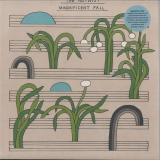
Incl. Remixes by Red Axes, Roman Flügel & Abe Duque
What does it mean to exist in sound?
It does not begin with a beat, but with a choice. With the moment when someone decides not merely to inhabit the space, but to shape it – and in doing so, makes themselves visible.
Roman Flügel stands as a constant in the background. Not as an authority, but as a collective consciousness. Since the 1990s, he has moved through club music like a seeker, never content with the first answer. House, techno, experimentation – these are not genres, but states of being. His remix thinks, hesitates, opens, strikes like a surging acid wave, warping reality and demanding true presence.
New York taught him that club music is never neutral. It is body, friction, attitude. Abe Duque’s remix carries a strangely enchanting relentlessness, a resistance to smoothness – as if the dancefloor were a place where freedom is not claimed, but fought for.
Red Axes do not enter this space; they conjure it. Their sound is raw, repetitive, circular, as if deliberately refusing linearity. House, dub, and acid elements become material for a movement that is more trance than structure. Their remix does not ask where it is going; it asks why one should ever stand still.
And then there is Tim Paris. Not at the center, but as a narrator. As someone who knows that the voice is an attitude. “That Boy” is not a pose, but a mirror, ironic, direct, vulnerable. Paris moves between new wave house and club, always aware that identity is never fixed, but formed in the moment.
This remix record is not a gathering of names. It is a situation, four perspectives on the same question:
What does it mean to exist in sound?
Yet sound alone does not tell the full story: like music, the visual is a space to be shaped, felt, and deciphered. The cover of Tim Paris feat. Foremost Poets – That Boy, created by Konstantin Fürchtegott Kipfmüller, a visual artist at the Hochschule für Gestaltung in Offenbach under Heiner Blum, embodies this principle. Drawing inspiration from the urban environment, Kipfmüller transforms traces of decay, weather, and time into abstract narratives that, like the music of Tim Paris, Roman Flügel, Abe Duque and Red Axes, unfold meaning layer by layer. The result is no mere adornment, but a mirror of the sonic landscape: every line, every surface an echo of the question of what it means to exist – fully, in the moment, in sound.
Psychedelic dub, Afro-Latin rhythms and cosmic grooves come together on La Chooma’s self-titled debut for Batov Records. Drawing on Moroccan Gnawa, Colombian cumbia, Afrobeat, Jamaica dub & roots, and cosmic jazz, the six-piece ensemble create deep, hypnotic music rooted in global traditions and shaped for contemporary dancefloors.
Having already captivated local audiences with their hypnotic, organic live performances, La Chooma – now a six-piece ensemble – have been steadily building an international following. Initial singles “Magic Plant” and “Huachuma” earned support from tastemakers including BBC Radio 6 Music’s Deb Grant and Tom Ravenscroft.
“Magic Plant” distills the band’s signature blend of hypnotic grooves, lush percussion and woozy synths, like Jimi Tenor lost in the Colombian Amazon. A dreamlike, dub-infused trip driven by organic rhythm and cosmic textures. “Huachuma” picks up the thread, fusing Afrobeat percussion, swirling basslines and psychedelic flourishes into a hallucinogenic jam made for a tropical dancefloor.
High Cube is the beat-focused brainchild of Brian Foote (Peak Oil, Leech) and Paul Dickow (Strategy, Community Library), two low-key legends of the American experimental underground. After some 30-odd years of making music separately and together, Foote and Dickow are collaborating in earnest for the first time as a duo. For this debut, the pair enforced a simple, stringent set of rules: five instruments, a one-hour timer, and a total ban on overthinking.
The result is a record that is the sound of two old friends unplugging the usual levers and letting the "accident" of their chemistry take the wheel. It is drier, sparser, and decidedly "chunky"—a fictional band stepping into a suit to drive around for a while. It is neither dance nor chill-out, but a moody, complex trajectory defined not by the gear used to make it, but by the narrative mood it compels.
"Volcano Snail” starts things off in a disheveled shuffle, locking into gear with blurred and bubbling effluence. The shimmering dimness is lit low, with a woozy gait that recalls the headiest highs and luminescent lows of Jan Jelinek. “Underwater Welder” is a foggy, neon-lit cruise of skittering low-ends suspended in a permanent fall of color, while “A Dragon’s Treasure is its Soul” offers blown-apart, low-end city pop fragmented into an array of rhythmic detritus. Chordal textures hover in the air as a percussive loop takes its beguiling and frolicking shape.
B-side opener “Yonaguni” shapeshifts in real time, drifting with the grace of a glacier before bobbing in a frigid pool of vibrating clatter, static, and synth stabs. “Ofid+wor” offers a tried and true blitz of braindance, nodding to an endless list of 20th and 21st-century electronic body music. Buoyant closer “Mother of Thousands” holds a gravity-defying tenderness, pirouetting on a breeze with the elegance of effervescent longing. Woven together, the six extended tracks of High Cube are tethered to nothing but the ether—a giant sonic leap of peripheral absurdity from two artists with a lifetime of shared rhythm.
Following the digital release of the single “Meu Canto” in early February 2026, Gerardo Frisina and singer Luzia Dvorek return to Brazilian music with a new and compelling interpretation of a timeless classic, “A Lenda do Abaeté” by Dorival Caymmi; the release of this 45rpm single brings to a close a special project entirely dedicated to Bahia, the beating heart and symbol of Brazilian culture.
“Meu Canto” takes shape from an original composition by Gerardo Frisina, who signs both music and production, crafting a soundscape that is suspended between delicacy and depth upon which Luzia Dvorek - joined by songwriter Toco, whose refined backing vocals further enrich the song’s emotional dialogue - has drawn the melodic line and written the lyrics. A journey into roots and origins that tells the story of Luzia’s family, deeply embedded in the warm, fertile land of northeastern Brazil. “Meu Canto” sees also the participation of Alfonso Deidda on flute, whose airy timbre introduces new shades of color to the composition.
In “A Lenda do Abaeté”, the 45rpm B-side, Gerardo Frisina weaves an elegant and immersive rhythmic framework, evoking soundscapes that feel both deep-rooted and timeless. Within this setting, Luzia Dvorek’s voice unfolds with emotional intensity, balancing expressive strength and subtle delicacy as it narrates the ancient legend of the Abaeté lagoon. A place steeped in charm and mystery, suspended between myth and reality, whose stories have been passed down through generations in Salvador, in Brazil’s north-eastern region.
The project is further enriched by the acoustic guitar of Francesco Borrelli - who also took care of the tracks mixing and mastering - and Toco’s distinctive vocal contributions, which add depth and nuance to the overall sound.
In Hayk Karoyi’s music, the vibrant palette of the Mediterranean meets the deep layers of Armenian medieval culture. A composer, sound artist, producer, selector, and live performer, as well as a multi-instrumentalist specializing in Armenian woodwinds, Hayk channels his cultural identity intuitively, allowing memory, place, and subconscious expression to shape his sound. Coming from a mixed East Mediterranean and Armenian heritage, he has never aimed to define himself—or his music—within a single tradition.
Instead, his work exists as a continuous fusion: electronic music intertwined with ancient timbres, improvisation, and experimentation. His work has been presented in clubs, concert spaces, and international festivals across Italy, France, Spain, Germany, Armenia, Georgia, Uzbekistan, and Indonesia. He has appeared on festival lineups such as Terraforma Symposia (Italy), Stihia Festival (Uzbekistan), O3 Festival (Armenia), Nopa Sound Festival (Armenia), TKESHI FESTIVAL (GEORGIA) ,Urvakan Festival (Armenia), New East Festival (Barcelona, Spain), Suara Festival (Indonesia), and Un Week-end Festival (France).
“Yotqar” is a love letter to the artists and musicians who have shaped me; those whose music I’ve carried in my heart and those I’ve shared stages and moments with over the years. The album is deeply rooted in Armenian woodwind traditions, echoing voices of the masters I admire. Its soundscape stretches across a wide geography and draws inspiration from the mountains of Syunik to the streets of Anjar, weaving in local sounds, memories and emotions. Endless gratitude to my parents, and especially to my mother for the folklore melodies she sings while cooking, filling the house with warmth and history.” - Hayk Karoyi
Clock Poets returns with Get Down, the seventh release on the label and a floor-focused statement from Spanish producer Baltazar, based in Palma de Mallorca and founder of the Sapernika platform. Known for selecting and developing distinct, groove-centred voices from the underground, Clock Poets hands the reins to an artist who understands hypnosis, repetition and tension as tools rather than effects.
The A-side, “Get Down”, is a pumping minimal cut shaped by slightly tribal percussion loops and a locked-in groove that builds momentum through subtle shifts rather than overt peaks. Hypnotic male vocal samples circle like a mantra, weaving ritual into rhythm as the track steadily tightens its grip on the floor. On “Try On Trust Me”, the formula expands: a female vocal, washed in reverb and echo, floats between melodic textures and soft pads, creating a more spacious, emotive framework while maintaining the same disciplined drive and forward motion. Closing the record, “On My Way” dives deeper — a stripped-back 4/4 minimal construction infused with Arabic and double harmonic scale influences. Spatial, meditative and profoundly hypnotic, it stretches time and space, offering a moment of emotional suspension within the dancefloor continuum.
With Get Down, Baltazar doesn’t chase trends — he commits to groove, sophisticated repetition and unique atmospheres. In doing so, he both reinforces Clock Poets’ sonic identity and injects it with a fresh, trance-like intensity, proving once again the label’s consistency without predictability.
Anywhere, Anyway captures a selection of club tools that Makèz and their close circle have tested, refined and played across dance floors worldwide. Each track carries that familiar equilibrium the duo keeps guard over, a steady pull between raw club energy and moments meant for intimate listening.
Much like their recent album on No Art, the EP took shape while traveling, moving from session to session with artists from different musical worlds. Those encounters left their marks, subtle shifts in rhythm, harmony and texture, shaping the edges of the EP. The Amsterdam duo keeps seeking creative impulses from unexpected angles, letting ideas find them wherever they are. Anywhere, anyway.
Blue Hour distills over a decade of artistry into his debut album Selva, unearthing eight tracks inspired by ancient wisdom and forgotten worlds.
Blue Hour is the moniker of Luke Standing, a multifaceted artist, producer, and label owner navigating between past and present electronic dance music. Over more than a decade, Standing has built a career balancing transformative craft with a sharp curatorial approach, earning him respect across the global scene. After years of sonic experimentation, he now releases his debut LP Selva. “I never set out to make an LP – it just wrote itself,” he says. “I followed my intuition, and the music found its own path.”
Born and raised in the UK, Standing grew up in parallel with club culture, moving between Brighton, Bristol and Berlin while running club nights and establishing himself under former aliases Furesshu and Esoteric.
He launched his Blue Hour project in late 2013, shortly after relocating to Berlin. Initially a platform for his own music, Blue Hour quickly became a collaborative hub, blurring the lines between personal output and curation. Over time, Standing has cultivated an international ecosystem of like-minded artists while continuously expanding his own sonic horizons.
Selva marks his first full-length studio album, weaving a lifetime of influences into a cohesive narrative inspired by ancient wisdom and forgotten worlds. The eight-track double LP transforms his inner dialogue into a subconscious story pulling inspiration from a labyrinthine network of influence and experience. “I followed the music obsessively, reflecting and refining until the story revealed itself,” Standing explains.
“To me, the LP evokes Amazonian or Mayan jungles, themes of exploration, the mysteries of the natural world, wisdom passed down through generations. I didn't set out to write about these things consciously,
they just emerged on their own.” he adds.The album was shaped through intensive work in his studio and periods spent in subtropical locations.
Listening closely, Selva unfolds like a modern ceremony: the opening tracks channel his early UK dance influences, shifting into blends of traditional and contemporary techno, then expanding into melodic soundscapes before concluding with transcendental textures and atmospheres. The result is an introspective journey where functionality and emotive storytelling coexist, revealing a depth in Blue Hour we haven’t heard before.
Whether performing, curating, or producing, Standing operates with a deep commitment to sound, culture, and collaboration. More than an artist, he is an architectural thinker of what electronic music could become. “Every release is my own metamorphosis,” he says. “This LP reflects my current form, and I’m curious to see what the next chapter brings.” Few artists can unify a lifetime of genre-spanning influences into a sound as sharp and focused. On Selva, Blue Hour does exactly that, opening a new era of deeper
immersion from his Berlin-based label.
The Citadel Speaks marks the first recorded statement of ElektrAV as a curatorial imprint.
Rooted in Pamplona’s Citadel —and more specifically within the Arms Hall— this release brings together Alberta Balsam, Boris Divider, Bendiak, Komatssu and µ-Ziq, artists whose practices have resonated within the festival’s ecosystem through a shared sensitivity to space, experimentation and sound as cultural expression. Their contributions are not conceived as documentation of an event, but as part of an ongoing cultural dialogue.
The Citadel is not presented here as a venue, but as an active entity: a space that absorbs, transforms and emits sound. Each contribution responds to that condition, forming a collective statement shaped by place, time and intention.
This first volume initiates a living archive.
What follows is not a catalogue of releases, but a body of work.
Written and produced by Andu Simion in Ploieşti, Romania, Crucial Sonus EP is the second release on Rotation imprint. This B-side project of Wave Makers pushes further into a sound shaped by powerful grooves and dark vibrations. The EP explores a raw, focused energy, where deep rhythms and shadowy textures converge to create an intense and immersive listening experience.
Lars Huismann returns to Mutual Rytm as he delivers the second instalment of his "Sounds From The Past" trilogy on the label.
As SHDW & Obscure Shape's Mutual Rytm imprint continues to grow, it's clear that the DJ and producer pairing have a strong vision for the label and are building an equally impressive roster of artists to form the imprint's core family members. One of the early standouts is Lars Huismann, who arrived to deliver a selection of impactful offerings influenced by the "golden years" of techno in his own unique style crafted by various production techniques. Having featured on the label's opening VA and delivered the first EP for MR002, racking up a wealth of global support in the process, mid-November welcomes a return for the Berlin-based talent as he serves up six fresh cuts in his signature sound for "Sounds From The Past II".
Opener "Sounds From The Past II" is an action-packed title cut fusing typically slick rolling grooves with hazy melodies and atmospheric releases of tension, while "Propulsion" takes cues from its title and sees precise drum shots, echoed background vocals and a tunnelling groove taking the track right into the thick of the action.
On the flip, B1 "Loucura" brings a percussive workout as frantic organic drums and resonant brass melodies bring a party
to proceedings, with "Stroke" and "Nudge" both armed with tough kicks, zipping synths and more subtle vocal work.
Digital buyers get an extra exclusive in the form of "Dub Division", welcoming a slightly more subdued but equally as impactful track guided by dubby chords and peppy hi-hats to close the show.
Melodize is bringing the world back on the dance floor with Lauer and his 4-track “K1m Fantasy” EP. Behind the label is Brooklyn-based DJ and musician Beartrax, who is known for his groovy yet moody compositions. Philipp Lauer, known as Lauer, is a true veteran in the electronic music sphere, with over 20 years of experience, yet his sound remains novel and fresh.
This time, Melodize and Lauer shape the world of a fantasy dance floor where everything is possible. “K1m Fantasy” starts with Lauer letting his confidence shine through as an experienced professional with a signature sound in the first track “Boss Electro”, which will inevitably showcase why he’s the boss.
The playful tune of “Rabbits” takes the listener on a journey through electro-induced synths much like the image of curious rabbits playing on a grass field. The eponymous B-side “K1m Fantasy,” with its steadily unfolding mellow soundscape, is an introspective piece exploring the fantastical world of the techno dance floor where all becomes one.
Lauer’s last treat is “Choirs,” where brassy exclamations take turns with a haunting choir of electronic voices, reminding us that unity is key to pleasure and existence.
Loto Azul (EP) distills EC13’s sonic identity into four focused pieces shaped for the 12″ format: cinematic atmospheres, cosmic resonance, and meticulously crafted rhythmic structures — infused with high-energy dynamics, epic tension, and textured distortions that add depth, grit, and dramatic weight.
From the mystical tension of Astrum Nox (Phase I) to the melodic, ascending narrative of Sinfonía Tercera, the EP moves between introspection and propulsion.
Perdiendo, in both its original version and the Jupiter Rhythms reinterpretation, forms the emotional core of the release — a hybrid between electro, techno, and celestial harmonic design.
A refined work that expands EC13’s role within the Cosmic Tribe universe, reaching toward new sonic dimensions with precision and depth.
M’Bamina – African Roll (1975)
The story of an album born between Africa, Italy, and the nightclub culture of the 1970s
In the heart of 1970s Italy — a country undergoing profound social change and a music scene just beginning to open itself to distant sounds and cultures — an extraordinary, almost improbable story took shape. It is the story of a group of young African musicians who found their way to Europe, of a Turin nightclub that became a crossroads for communities and experimenters, and of an album which, released in small numbers and largely unnoticed at the time, is now considered a rare jewel of Afro-fusion.
The band called themselves M’Bamina — an ensemble of musicians from Congo, Cameroon, and Benin, who arrived in Italy in the early Seventies. Settling between northern Italy and the Pavia area, they began performing in small clubs and community events, bringing with them a vibrant rhythmic heritage: African polyrhythms, call-and-response vocals, funk-infused bass lines, and Caribbean or Afro-Latin colours absorbed along their musical journeys. Their raw, contagious energy on stage quickly drew attention.
Meanwhile, in Turin, another story was unfolding. There was a venue becoming almost legendary: Voom Voom, one of the city’s liveliest nightclubs, run by Ivo Lunardi. The club attracted an eclectic crowd — students, artists, foreigners, night owls — and Lunardi quickly understood that the dancefloor wasn’t just a place for music, but a melting pot for a new kind of cultural energy. Out of this vibrant atmosphere came his idea: to turn the club’s name into a small independent record label, Voom Voom Music, capable of capturing the spirit of those years and giving voice to unconventional projects.
When Lunardi heard M’Bamina, he immediately sensed that this was the sound he had been searching for: fresh, different from anything circulating in Italy at the time, and capable of blending African tradition with funk and European sensibility. He brought them into the studio.
Production was handled by Lunardi along with Christian Carbaza Michel, while the engineering was entrusted to Danilo Pennone, a young sound technician with a sharp, intuitive ear.
The recording sessions — held in Turin in 1975 — produced a remarkably warm and direct sound. The music feels almost live: grooves rooted in African tradition, but open to funk-rock structures and modern arrangements. It is a natural fusion, never forced. Tracks move between tribal rhythms, funk basslines, light electric guitars, congas and Afro-Latin percussion, with call-and-response vocals and melodies that echo both Congolese tradition and the lineage of Latin jazz. Not by chance, one of the album’s most striking tracks, Watchiwara, reinterprets a Latin standard through M’Bamina’s own rhythmic language.
The album was titled African Roll — a name that was already a statement of intention. It is African music that “rolls,” that moves, adapts, transforms within a new geographic and cultural setting. It is not strictly Afrobeat, nor Congolese rumba, nor Western funk: it is a spontaneous, hybrid blend, shaped more by lived experience than by any calculated aesthetic program.
When African Roll was released, the world around it barely noticed. Distribution was limited, and 1970s Italy had yet to develop a cultural framework for receiving such music. The national music press rarely paid attention to African or “world” productions. The album slipped into silence — though the band’s own story did not.
M’Bamina continued performing across Europe and Africa, even sharing a stage in Cameroon with none other than Manu Dibango. By the late Seventies, they moved to Paris, signed with Fiesta/Decca, and recorded a second LP, Experimental (1978). Meanwhile, the peculiar record they had made in Turin began to resurface quietly among vinyl collectors, Afro-funk enthusiasts, and DJs hunting for forgotten grooves.
That is when the album’s fate began to shift.
Over the decades, African Roll emerged as an almost unique document: a snapshot of an intercultural Italy before the word “intercultural” even existed, a fragment of migrant history, a spontaneous experiment in musical fusion born far from major industry circuits but rich in authenticity. Original copies began commanding high prices on the collector’s market, and the album became recognized as one of the hidden classics of European Afro-fusion from the 1970s.
Today, more than fifty years later, this reissue finally restores visibility and dignity to a project that deserves to be heard, studied, and celebrated. It is not simply an album: it is the testimony of a rare cultural encounter, born in an Italy unaware of how fertile such exchanges would one day become.
It is the story of a visionary producer, an extraordinary band, and a fleeting moment in which music, migration, and nightlife came together to create something genuinely new.
African Roll is — now more than ever — the sound of a bridge: between continents, between eras, between cultures. A record that, after rolling far and wide, has finally come home.
Marcus Paulson returns to MOS with four cuts of raw, emotive jacking house from Manchester to Amsterdam. Carefully selected and road tested by Aroy Dee we got a mix of good vibe melodies with a proper 90s warehouse feel.
French DJ and producer Hemka makes a striking solo debut on Mutual Rytm with 'Introspection'.
Born in Marseille and based in Paris, Hemka has been shaping her take on techno for over a decade, steadily growing her international presence with music on respected imprints such as Token. Her music fuses the raw energy of 90s techno with modern textures and is fast-paced, groovy and laced with subtle psychedelia. By weaving in her own vocals, Hemka adds a deeply personal and authentic layer that resonates with both the body and mind. Following the strong reception of her track 'Fragrance' on the 'Federation Of Rytm III' compilation, this potent new EP is a powerful reflection of her bold, emotional and forward-thinking artistic voice and the start of an exciting new chapter with SHDW's Mutual Rytm.
'Abyss' kicks off with tightly coiled, heavy-hitting drum funk and eerie synths that never let up while ghoulish vocals layer in extra darkness and anxiety. 'Time' is another sleek, stripped-back but banging wedge of linear techno excellence and 'I Can't Shine' layers up paranoid vocals with high-speed glitches and rubbery drums to ensure maximum impact in the club. The excellence continues with 'The Bad Place' with booming drums and moody synth atmospheres, getting you up on your toes and keeping you there. Last, 'Unchanged' fizzes with static electricity as wordless vocals refract around the mix next to wispy synths and icy hi-hats. Digital bonus cuts 'Voice In My Head' and 'Eternity' round things out with more heady and intense techno for driving deep into the night.
DJ Support: Louie Vega, Dave Lee, Mousse T, The Brothers Macklovitch, Folamour, Bellaire, Moonboots, DJ Spen, Terry Hunter, Michael Gray, Dr Packer, JKriv, The Shapeshifters, Moplen, Melvo Baptiste, Saucy Lady, Tedd Patterson, John Morales, Maurice Joshua, DJ Minx, DJ Dove and DJ Disciple.
Big Love return with EP 7 in the A Touch Of Love vinyl series. Label head Seamus Haji kicks off proceedings with his popular ‘Disco Dreams’ feat Chicago legend Mike Dunn on vocals given a fresh new lick by Toronto’s jackin’ house master Hatiras. Shawn Christopher‘s 90’s house classic ‘Don’t Lose The Magic’ gets a sublimely soulful update from Chicago’s Emmaculate. On the flip side we have 2 French House veterans with Art Of Tones serving up the Chic inspired disco beauty ‘Hoping For Another Chance’ followed by Yass feat the vocal powerhouse Michelle Weeks on the disco driven gospel stormer ‘Hallelujah’.
The new Epiteth brings new artists on vinyl !
Effecthunter unknown project open the dance. A deep dark evolution into psychedelic mental industrial Hardcore that comes again and again and again...
Aaron 6310 is a newcommer too on vinyl, his tune is an hypnotik noise-kick invocation !
Pardonax talent bring the KILLER B side opener ! One of his best tune ever !!
Finally The Darkcreator, back in the years ! 1997 oldschool sound... in a new shape and a new way ! An absolute banger !
uper Deception dives into the uncanny beauty within the everyday, drawing inspiration from M.C. Escher’s idea of “super deception”: the art of creating the impossible without illusion. Nelson of the East translates that concept into sound: deep, tactile basslines and intricate percussion twist familiar rhythms into hypnotic new forms. Textures and samples are lifted from their origins and reimagined, creating tracks that feel both ancient and futuristic, physical and dreamlike. The result is an electronic landscape where sound folds in on itself: a timeless, shape-shifting exploration of rhythm, resonance and perception.
Nelson of the East is a Berlin-based sound artist, producer and educator. He operates at the intersection of experimental composition and club culture, shaping his craft both as a music teacher and behind the scenes as an experienced ghost producer.
since his first ep tips' on luciano's label cadenza in 2007 producer and dj petre inspirescu emerged into one of the key figures of the romanian electronic music scene.
so far he released music on labels such as vinyl club, lick my deck or amphia. together with his buddies rhadoo and raresh he also launched in 2007 the label (a:rpia:r) - a platform where he, his two friends and many producers from romania and abroad released detailed grooving house and techno, that stands out with delicate structures and one-of-a-kind grooves.
both of his more dance floor oriented solo albums intr-o seara organica...' and gradina onirica for (a:rpia:r) are enlarged with melodies, sounds and harmonies that go beyond the usual characteristics of a dance album.
furthermore his love for classic musicians like mily alexejewitsch balakirev, alexander porfiryevich borodin or or nicolai andrejewitsch rimsky-korsakow can be felt in the album padurea de aur (opus 2 in re major) and two more eps that he released under the alias pensemble on the romanian label yojik concon in order to unite classical spheres with analogue electronic music production.
in february 2013 he also released his highly acclaimed fabric mix cd that only features dance floor leaning music produced by himself. with talking waters' he published in late 2014 his first 12inch on mule musiq that is now followed by the full-length album vin ploile' which he produced without the intention to entertain with easy to hook up rhythms, melodies and harmonies.
even tough he established himself as a internationally playing house dj that regularly performs at all major clubs, festivals and other party destinations around the globe: as a musician petre inspirescu always tries to enter new territories to explore with a heartfelt human touch the infinite space of sound.
for his latest album the man that originally comes from the eastern romanian town braila stepped away from his former experiments of melting classical spheres with electronic music. instead the 36-years old man from bucharest only used some piano, string and wind instrument elements and analogue electronics to arrange a gracefully deep ocean of sound.
all slow grooving tracks spread the atmosphere of live improvised sessions that are edited, tweaked and mixed to perfection. in-the-moment moods of strange and unusual analogue synth sounds groove in a fluid quality with subliminal bass shapes, latinate percussions, jazz rhythms and acoustic melodies.
together they create a gaseous kinetic atmosphere full of tangible rhythm patterns, delicate chords and ghostly modular synth pads - all mixed subtle to create space for the tones between the tones.
you can call it a hypnotic after hour album for after hours that are dedicated to a deep listening experience. you can tag his arrangements as brilliantly textured and musically super-charged ambient, which goes beyond the usual definition of the genre.
all nine suspenseful compositions seduce with a deep melodic sensibility, harmonic adventures and an overall rhythmic ambiance of freshness and laidback enthusiasm. together they represent a challenging auditory experience that will resonate in your mind long after the music has finished.
Cinthie’s Collective Cuts sub-label of her 803 Crystal Grooves label welcomes the UK’s Black Eyes onto its roster this March with his ‘Hydrocity Reflex’ EP, comprised of four original soul drenched House Jams.
Cinthie’s 803 Crystal Grooves Collective Cuts welcomes Black Eyes with a fresh four-track EP that distils the Manchester-born, Berlin-based artist’s signature aesthetic into its purest form. Fusing deep, trippy and soulful house with a raw, Detroit-leaning sensibility, Black Eyes channels the influence of House music’s roots into rolling rhythms and fluid textures alongside shaped by his enduring love of water. Now firmly embedded in Berlin’s underground while carrying the grit of his northern roots, he delivers a release that feels both immersive and driving a natural fit for 803 Crystal Grooves’ dance floor focused sonic vision.
Opening the EP is ‘Can You Dig That Depth’, an emotive slice of House driven by saturated keys, soulful vocal lines, heavily swung drums and a buoyant bassline. ‘Pressure Malfunction’ follows, stripping things back to organic percussion, sweeping filtered funk loops and intricately processed spoken-word chants. The B-side begins with ‘Loyalty To Tha Deep’, living up to its name as it embraces classic Deep House sensibilities through choppy, airy chord progressions, hypnotic breathy vocals, fluttering melodies and slow-slung, crunchy drums. ‘Funky Oxygen’ then brings the release to a close, channelling the spirit of Motor City House with a refined blend of cut-up samples, shuffled percussion, jazzy keys and a snaking bass groove.
One of the UK’s rising talents in recent times, J6 continues his upward trajectory with an enormous four-tracker on underground fan favourites, Locked In Dam. The party starting crew go hand in hand with the refined J6 ethos, as he delivers a dynamite selection of tracks for your record bag. His familiar low end driven sound, combined with tinges of acid and futuristic textures moving between house and modern electro, shapes the ‘Devil Baby’ EP into a cohesive and powerful statement.
The title track is built upon powerful drums and squelchy, spaced-out tones, combined with trippy vocal stabs from Martina, who features on the record. This is prime J6 territory and not to be underestimated. Next up, ‘Biohazard’ introduces mysterious synths that create a transcending atmosphere, shifting the dance floor into the next gear with further twisted acid movements. On the flip side, the Manchester based beatmaker teams up with Ben Gough for ‘Time Capsule’, delivering pacey energy that never lets up, driven by nostalgic tech house drums and icy hi-hats. Rounding off the EP, ‘Emergence’ simmers with an emotive dark energy throughout; if we weren’t dancing with the devil before, we certainly are now.
A certain tip for the tastemakers amongst us, these are four dynamic dance floor cuts to be shared deep within the dark realms of the night.
High Altitude 002 brings together three rising forces from three different corners of the world. Stckman, Simone Rossari, and Goosebumps represent a new generation of producers with a shared futuristic vision and a highly distinctive musical identity.
The EP features three forward-thinking tracks, each shaped by the unique taste and cultural background of its creator, yet unified by a powerful, modern sound aesthetic. From deep afterhours mornings to the most crucial peak-time moments of the night, High Altitude 002 is designed to fit seamlessly into any part of a DJ set.
A global collaboration, a futuristic attitude, and a fresh perspective on underground dance music — this is High Altitude 002.
With Hyperbola, Laima Adelaide frames speed as a condition of softness rather than impact. The fan- tasy of flying through the air with effortless move- ment forms its emotional core, as tracks move fast, yet nothing collides: rhythms skim the surface, tex- tures hover, and motion unfolds through glide inste- ad of strike. Energy is continuous and diffused, pro- ducing propulsion without aggression, momentum without weight.
The hyperbola operates as both image and method. Sounds trace curved trajectories, drawing close only to diverge again, suspended in a state of gentle tension. Elements never resolve into force, they re- main airborne, elastic, and permeable, as if shaped by an invisible geometry. Across the EP, velocity becomes a tool for lightness, revealing an ethereal space where motion is elegant, friction dissolves, and intensity is carried through grace rather than pressure.
Credits:
Mastering by HWA
Artwork and Graphic Design by Enrico Caldini
Distributed by One Eye Witness
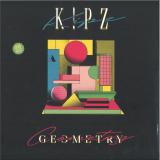
The blueprint for a night of futuristic dancing in 1985; It resides not in the stars, but in the crystalline echo of Geometry’s synthesizers.
K!pz enters the grid with Geometry, a 12-inch Maxi Single that strips the Italo sound down to its most essential, pulsating core: Pure Shapes and Catchy hooks, filled with musicality.
A1 – Circular: Hypnotic and fluid: a rounded bass sequence and celestial arpeggios that draw you straight to the center of the floor. Tight, gated drums and bright leads deliver the unmistakable Hi-NRG feel.
A2 – Triangular: Sharp and dynamic: angular lead lines guide a bed of arpeggiated bass, punchy synth stabs, and impactful breaks. A precise, energy-building melodic core.
B – Square: Solid and deep: a driving, grounded bassline supported by a slapping Drumulator groove. Dub-like reverbs and a classic lead synths carve out a strong, steady, and foremost euphoric atmosphere.
GEOMETRY imagines the future as envisioned in 1985—a vibrant collision of abstract design and intoxicating pulse.
For more than two decades, Eamon Harkin has helped shape New York’s communal pulse. As a founder of Mister Saturday Night, Mister Sunday, Planetarium, and Nowadays, he’s created and DJed in spaces where dance, listening, and connection blur into something deeper — places where people come together to make sense of the world through sound.
On his new album, The Place Where We Live, Harkin turns that lens inward. Drawing on 25 years as a DJ and curator, he moves between house, techno, and ambient currents with a sense of stillness and searching. The result is a record that feels both physical and introspective — the sound of the dance floor seen through memory.
The title comes from psychoanalyst D.W. Winnicott’s idea of “the place where we live,” the psychic space between the inner and outer world — where play, art, and culture help us build meaning. For Harkin, an Irish immigrant long settled in another land, that idea resonates both philosophically and personally. The Place Where We Live captures the tension and beauty of the pulse of the club and the quiet of reflection — an album about belonging, transition, and the quiet resonance of finding home somewhere in between.
Mutant Volt emerges from the depths of the underworld with Bona Vista, a six track EP built from unreleased DAT recordings made during the early 90s. Drawn from a vast archive, much of the material had been long forgotten, written at a time when electronic music moved fast and rarely looked back.
Mutant Volt is one of several aliases used by Dan Piu, whose roots sit firmly in early European rave and club culture. The name was originally used to explore a stripped, machine driven sound shaped by early trance structures and bleep influence. Aside from a single release on Superluminal in 2020, much of this material has remained unheard. Recorded on a hardware setup that has changed little since 1991, the tracks were made instinctively and left behind to gather dust.
Today the tracks carry a different kind of weight. What was once made quickly and left behind now feels immediate, proof that some music does not belong to the past, it simply arrives there first.
Dreamweavers II sees Mark de Clive-Lowe reunited with Italian rhythm masters Andrea Lombardini and Tommaso Cappellato for the next chapter in their electro-acoustic trio journey.
Recorded at Sotto il Mare Recording Studios in Verona, Italy in summer 2024, the album builds on the cosmic, hypnotic language established on Dreamweavers (2020) while pushing deeper into groove-driven terrain, dancefloor jazz and textural improvisation. Across eight tracks, the trio explore the elastic space between jazz tradition, beat culture, and club-influenced momentum – without samples or looping – relying purely on live interaction, feel and shared intuition.Opening with the Azymuth-inspired “Terra de Luz,” the album immediately signals its global outlook. “Kaze no Michi” follows with late-night Tokyo energy – dancefloor jazz that feels equally at home in jazz clubs or after-hours rooms. Two intentional reinterpretations bridge jazz and beat culture: J Dilla’s “Raise It Up” (from Slum Village – Fantastic Vol. 2) is reimagined with its original groove and bass line as the launch pad, while “The Bass That Don’t Stop” becomes a lush house-jazz tribute to the late Phil Asher, originally co-created by Asher and de Clive-Lowe in 2002 under the moniker musiclovelife.Bassist Andrea Lombardini’s “Pam” brings the album inward – introspective, spacious, and deeply melodic; while “Lucid Dreams” draws on the trio’s shared love of jungle, drum’n’bass and the exploratory spirit of greats like Chick Corea, amplifying the journey with forward motion and harmonic curiosity.Dreamweavers II is a concisely intentional sound narrative: a trio record rooted in jazz lineage, shaped by beat culture and guided by a collective curiosity for texture, rhythm, and movement.
DJ Support: Laurent Garnier, Dennis Cruz, Girls Of The Internet, Horse Meat Disco, Stacey Pullen, Elliot Schooling, Solomun,Marco Carola, Joseph Capriati, The Martinez Brothers, Dam Swindle, Soul Clap, Luke Solomon, Riva Starr, Franky Rizardo, Archie Hamilton, Silvie Loto, Fouk, Austin Ato, Salomé Le Chat, Blackchild, Jean Pierre, Black Loops, Kassian, Seamus Haji, Melvo Baptiste, Rimarkable, Sophie Lloyd
In-demand Amsterdam-based duo Makèz step into new ground with the release of their album ‘Arriving Home Elsewhere’, via ANOTR’s No Art label. A kaleidoscopic project that moves between deep house, cosmic jazz, R&B, broken beat, and club-ready energy, the record is both a declaration of identity and a dissolution of boundaries - proof of the duo’s rare ability to merge worlds without diluting or compromising their true essence.
Where most albums that span electronic realms lean on functionality, ‘Arriving Home Elsewhere’ reaches for something much more expansive. The project is a true hybrid: half shaped for the intimacy of a headphone listen, half designed for the electricity of the dancefloor. together forming a seamless continuum between reflection and release. Tracks like ‘REARRANGE YOURSELF’, ‘BE REAL’, and ‘LOOKS LIKE IT (SPACE TALK)’ are stripped to the core of house music’s driving pulse, made for bigger systems and peak-time release. In contrast, ‘Dreams’, ‘Fruits of the Universe’ (with douniah), and ‘Without The Sun’ (with Oliver Night) explore lush, textured arrangements where live instrumentation and improvisation carry equal weight to rhythm and groove.
Collaboration is at the heart of the LP, with Makèz inviting a constellation of voices who each expand the project’s palette. Ben Westbeech, Liv East, and SANITY bring soulful intensity; 30/70 and dreamcastmoe connect Amsterdam to Melbourne and DC; Cor.Ece and Oliver Night weave delicate threads of emotion; Goya Gumbani and Javonntte guide the production with their vibey, groove-led performances; while Life on Planets reprises his role as a core creative partner, appearing across the album on tracks including the standout ‘BE REAL’ and the previously released ‘ILLUSIONS’ alongside rising Amsterdam talent AVA LAVÁ. Together, these contributions shape an album that feels less like a singular statement and more like a living, breathing ecosystem.
For Makèz, ‘Arriving Home Elsewhere’ is as much about philosophy as it is about music. The title encapsulates a tension central to their art: the feeling of belonging to multiple worlds without ever being confined to one. Jazz, house, soul, and experimental club sounds are not separate influences but parallel languages, and in merging them, the duo has created a record that mirrors the fluidity of contemporary identity and expression. And while it may speak in many voices, the LP tells one clear story - that of Makèz, arriving, again and again, home elsewhere.
Garage Hermétique celebrates its tenth release with what could be described as a mini-album. Multi-talented producer Levat's electronic vision comes in different shapes and forms. Whether it's Electro, Italo, IDM, Trip Hop, Techno or Electronica, his brush paints a diverse yet cohesive collection of tracks, united by the ability to create dreamy atmospheres, emotional leads and punchy drum patterns, always bordering on the edge of pungent eeryness.
Andalusian emerging-talent producer GAZZI, a young yet influential figure within the broader Spanish electronic scene, presents an LP that feels like a quiet turning point in his career. Rooted in ambient and new-age minimalism, the record drifts through piano-based textures, soft pauses, and spacious moments that invite deep introspection.
Across its delicate arrangements, GAZZI captures the sensation of slowing down in a world where everything feels fleeting. These tracks hold space for reflection-offering nostalgia, stillness, and the subtle suggestion that hope remains at the edges of even the most ephemeral moments. Each piece unfolds like a landscape suspended in time, shaped by restraint, emotional nuance, and a profound sense of presence.
Presented by Glossy Mistakes, the release reflects the label's ongoing commitment to uplifting a new wave of contemporary Spanish artists, highlighting creators who are redefining the country's sonic identity through experimentation, sensitivity, and forward-thinking sound design.
In GAZZI's own words:
"These songs were made to sit with the wound - to let you drift, to feel scattered, contemplative; they're meant to keep you from thinking too much - or maybe to make you think a lot."
The result is a meditative, deeply personal body of work-one that not only marks a cornerstone in GAZZI's artistic path but also extends Glossy Mistakes' mission to showcase innovative, emotionally resonant voices from Spain's evolving music landscape.
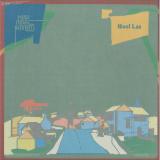
Welsh multi-instrumentalist and producer Huw Marc Bennett sinks his hands deep into the soil of South Wales, reimagining traditional melodies from the Morgannwg/Glamorgan region through an earth-toned palette of folk, jazz and psychedelic roots. ‘Heol Las’ is ancient music seen through a modern prism; acoustic textures rubbing up against hypnotic grooves, field-worn stories refracted into new shapes.
Every track on the album is either drawn directly from, or woven around, archival tunes of the region. Bennett’s approach is reverent yet expansive, pulling history into the present while staying grounded in community, landscape, and lived culture.
Bennett says, “On this record there are versions, interpretations and tunes influenced by cerddoriaeth werin, the folk music of Morgannwg; The place I was born, I was raised in and revisit to feel grounded. The melodies you hear were given, found and invented.”
Asyncronous return with their third EP "Selected Memories We Never Had" - a refined continuation of the Ukrainian project's signature blend of ambient and downtempo. On this release, their sound evolves into a more cinematic, immersive form, shaped by layered atmospheres, subtle melodic narratives, and deep emotional textures. The EP balances introspective mood with strong visual imagination, positioning Asyncronous firmly within the space between contemporary ambient, electronica, and film-influenced sound design.
This release marks the relaunch of Kashtan, a Ukrainian record label curated by Vera Logdanidi. After a pause caused by the full-scale war in Ukraine, Kashtan returns with its first vinyl release since 2022, dedicated to forward-looking Ukrainian electronic music beyond strict genre definitions.
For fans of post-punk and new wave, some songs aren’t just classics — they’re emotional landmarks. Joy Division’s “Love Will Tear Us Apart” and The Cure’s “A Forest” (both released in 1980) helped define an era, shaping decades of alternative music with their stark honesty, atmosphere, and unmistakable sound. Revisiting them is no small task.
Reimagining them successfully is even rarer. This special, limited 7” release — pressed to just 300 copies — does exactly that, thanks to legendary Dutch electronic producer Maarten van der Vleuten. A joint effort between Maarten’s own Signum Recordings and American chill-out imprint re:discovery records, he brings these two towering songs into new territory through the hands of an artist who understands both history and transformation. On one side, Maarten delivers a striking cover of “Love Will Tear Us Apart,” taking on Ian Curtis’ immortal lyrics himself. Rather than mimicking the original’s desolation, this version reframes the song into something unexpectedly inspirational and equally moving. It’s respectful, deeply personal, and emotional. Flip the record and “A Forest” is reborn as an ambient-electro journey, marking the vocal debut of Melbourne-based Linda Kastanja.
The result is dynamic and powerful, retaining the song’s eerie tension while expanding its atmosphere into something spacious and cinematic. Honoring their legacy while reshaping their form, it offers longtime fans and new listeners a rare opportunity to hear familiar emotions from a completely new perspective. Todocument this release, a music video has been made for “Love Will Tear Us Apart,” directed by Maarten and edited by Tobias Grönvall, aka Unit 21.
Riotvan opens 2026 pulsating with drama in the form of a sad Valentine and a special collaboration: Hard Ton, joined by New York City icon Amy Douglas. “How am I going to fill the hours now?” It’s an emotion we’ve all known; and one we all dread, the raw burning haunting ache, when left alone with ourselves after loss. Hard Ton and Amy take us on a soul scorching journey through hollowed out earlymorning emotions, set to a raw, early-2000s house energy—somewhere between Berlin and New York, without drifting into nostalgia. Adding a layer of raw intimacy is a stripped-back piano interpretation shaped by Hard Ton together with maestro Matteo Baroni, whose freestyle takes became the emotional backbone of this version. From there, the release branches out: Massimiliano Pagliara stretches the original into a deep, slow-burning piece of late-night elegance, while Sylvio B flips the energy entirely, firing it back onto the floor with bold grooves and big-room confidence.
Skip Audio Records returns with a vinyl-only VA, bringing four cuts from artists shaping the underground edge. Pressed to wax, this is a collection built for selectors who chase depth, texture, and weighty grooves.
DubTape opens with a massive, low-slung bassline, rolling dub-infused minimalism straight into the sound system. Techu follows with tight, percussive rhythms and subtle details that push the floor into late-night momentum.
On the flip, Fraxa delivers stripped-back hypnosis, layering sparse textures and evolving grooves into a pure after-hours weapon. Closing the record, Paolo Driver injects his acid-electro energy—snaking 303 lines, sharp analog hits, and swinging minimal motion that hits the peak-time sweet spot.
Vinyl only. Undercurrents only. Four tracks built for selectors who feel the weight, not just the sound.
About Alec Pace’s “Respiro 22:16”
Breath as rhythm. Breath as memory. Respiro 22:16, the debut album by Alec Pace, is a world suspended between intimacy and impact — where personal confessions are carried by low-end frequencies and fragile melodies are shaped into physical space.
Written, produced and mixed between London and Turin, this record reveals Alec Pace not only as a producer but as a storyteller through sound. Layer by layer, his voice, guitars, piano, synthesizers, drum machines, samplers, and field recordings converge to form a sonic diary — one that whispers, cracks, shimmers and erupts.
The album moves fluidly between dream pop, modern UK bass, breaks, jungle, and club music, yet its essence lies in emotion: love, memory, anticipation, release. Each track is a breath, an exhale, a fragment of something lived.
“The30th” opens with nostalgic warmth, darkness and breaks; “For You (Hello)” captures the tender rush of a love song over a drum & bass heartbeat; “Venus Winds” floats in a balance of techno pulse and harmonic light. “Angular Invariance” reshapes the floor beneath your feet, while “Respiro” pauses to listen inward — piano and air, fragile and close. “Anticipation” closes it all with a forward surge: emotional, propulsive, unresolved.
Respiro 22:16 is not just a collection of tracks, but a portrait of an artist learning to breathe out loud.
Alec Pace said:
“This album is about putting myself out there — letting every sound, chord and rhythm breathe,” says Pace. “Respiro is both a personal archive and a release.”
“Respiro 22:16” is available across all platforms on Friday 6th March 2026.
With this new remix EP, The Lovers explore different shades of disco and house through a carefully balanced and personal approach.
The opening track sets the tone with a playful and hypnotic groove, built around arpeggiated patterns and a steady modern rhythm. A female spoken vocal, instantly recognizable from Italian television culture of the 1980s, takes center stage, while a smooth saxophone line adds a sensual, cinematic layer.
The second cut moves into deeper emotional territory. Beginning with a restrained atmosphere, the track slowly builds tension through a rebuilt bassline and a solid house pulse, eventually opening into a more expansive and powerful moment on the floor.
A warmer disco-driven piece follows, focused on groove and feeling. The original spirit is preserved, while a heavier low end gives the track new confidence and presence within a contemporary club setting.
The EP closes with an elegant house reinterpretation inspired by French pop sensibility. A melancholic melodic theme and subtle references to tango shape the final moments, blending emotion and rhythm with a refined sense of flow.
A concise collection of remixes for selectors drawn to groove, memory and understated elegance.
For over two decades, FLOX has been shaping a unique musical
identity - a vibrant blend of roots reggae, dub, electro, and
nu-soul. This French-British artist h a s become a cornerstone of
the alternative scene, known for his genre-bending productions
and powerful live performances. With seven studio albums and
countless shows a c r o s s Europe, FLOX h a s carved out a distinc-
tive path, merging analog warmth with digital precision.
crédits
Marking his vinyl debut on Lowpass, Berlin-based producer APRS steps forward after a run of striking releases on labels such as Soma, ARTS and Sungate.
“Drift” explores human emotions through drums, melodies and textures with five pieces that refuse to settle into one shape. Each track bends the EP in a new direction without breaking its thread, holding onto a sense of vastness, detail and intimacy. Andy Martin closes the record with a remix that widens the palette even further, pushing the material into heavier terrain while keeping its spirit intact.
LWP001 is less a declaration than a first gesture. Intuition over uniformity; a label shaped by instinct, variation and space; a place for artists to wander and for sound to evolve freely.
Krope is a six-part conceptual album by Belarusian sound artist and producer Anton Anishchanka. Rooted in archival folk songs recorded between the 1960s and 2000s, it transforms fragile voices of the past into living, cinematic sound worlds. Created in collaboration with ethnographer Iryna Vasilyeva, the album weaves Belarusian traditional music with field recordings, acoustic instruments, and analog synthesizers — an immersive journey where memory, landscape, and resilience converge.
Flowing as one continuous suite, Krope unfolds like a film: memory re-emerges, fragile yet persistent, shaping an emotional narrative of displacement, loss, endurance, and hope. The archival voices at its core — songs of love, exile, and mourning — resonate across decades, echoing the urgent realities of today. The album flows as a single, immersive sonic odyssey. From the tender rejection in Krope (Dill) to the grief carved in Dubrovuška (Oak Grove), it traces an arc of human experience that is both deeply personal and universally shared. By reimagining traditional music through contemporary sound art, Anishchanka preserves endangered cultural heritage while revealing its timeless relevance.
Credits:
Produced by Anton Anishchanka
Engineering by Tenzor
Mastered by Alex at Quitfish Mastering
Lacquer cut by Tim Xavier at Manmade Mastering
Cover Art by Sasha Zeliankevich
Graphic Design by Ihar Yukhnevich
Creative Direction by Nadzeya Burmistrava
Archival materials courtesy of the Institute of Art History, Ethnography and Folklore named after K. Krapiva, National Academy of Sciences of Belarus.
Special thanks to Iryna Vasilyeva for her assistance with archival selections and ethnographic material.
Vitamin Of The Moon launches as the new label and artistic platform of Toulouse-born, Berlin-based producer Lenny Mailleau, also known as one half of Zendid. The Question marks both its inaugural statement and Lenny’s first release under the new imprint. It is a focused, groove-driven record that moves between house, dub, techno, minimal, and space-disco. The tracks are delivered with quiet confidence, sophistication, and clear dancefloor intent.
The opener, “The Question,” establishes a taut, hypnotic framework. It features crisp 707 drums, syncopated movement, disco-tinged basslines, and a subtle, paranoid tension that relentlessly draws the floor in. “Saturday Déboch” stretches the energy further. It is built for late-night or early-morning moments when time dissolves into rhythm, using dub-inflected textures, highly detailed spatial echoes, and a patient, locomotive four-to-the-floor drive. On the flip, “Schönleinstrasse Caval” sharpens the architecture with stripped-back techno percussion and a rolling, functional pulse, clearly shaped by Mailleau’s time on Berlin floors. Closing the EP, “La Femme” (ft. Ariachi) adds a warmer, more playful and emotive layer by weaving vocal fragments and melodic accents around a minimal-tech core.
With The Question, Lenny Mailleau introduces Vitamin Of The Moon through restraint and clarity — positioning it as an extension of his personal language and refined club sensibility. A first chapter that honours minimalism’s roots while quietly pushing it forward, proving once more that focus, rhythm and atmosphere remain central to imagining contemporary club music.
With Cliknopium I, Dr.Nojoke opens a new 12-inch series marking 20 years of CLIKNO — the artistic concept built entirely on field recordings and found sounds. Since its foundation in 2005, CLIKNO has focused on transforming everyday sonic fragments into electronic microcosms, guided by a strict manifesto: no presets, no templates, no classic machines, and every sound crafted from scratch. This approach has shaped Dr. Nojoke’s unmistakable aesthetic — detailed, tactile, and rhythmically unconventional.
Influenced early on by the click-and-glitch lineage of Villalobos, Jan Jelinek, Akufen, and Alva Noto, Dr. Nojoke has long expanded his palette to include dub-infused basslines, delicate percussions, and hypnotic textures. The result is a body of work he describes as “CLIKNO,” where organic sounds meet electronic precision.
Treguja opens the record with a playful, slightly wonky funk, evoking the atmosphere of a clandestine backyard rave. Gragada shifts into deeper territories, its bird calls and floating chords unfolding like a memory of a vanished paradise. On the B-side, Wesikwa propels the listener into a dreamlike, ritualistic groove, carried by Jew’s harps, murmured voices, and a steady, immersive pulse.
Twenty years after the concept began, CLIKNO remains as vital and imaginative as ever. Cliknopium I is both a celebration of this legacy and the beginning of a new exploratory chapter — an invitation to flip the record and let the trip continue.
Back To Life EP marks the rebirth of a seasoned artist stepping into a fresh chapter as
Just Marco. This first record in the Bending Body series comes after a long run of
exploration and self-reset, chasing raw honesty and identity built for vinyl-only cuts.
The record links past and present: rough drum work, evocative pads, bright acid lines, all
pressed on wax to echo the moments and people that shaped Marco along the way.
Musically, Back To Life it’s a blend where nothing is forced, where unusual choices and
imperfections are embraced as part of a renewed creative philosophy. It’s a return to the
music life where intuition leads and authenticity sets the tone.
Enjoy.
Dutch DJ/producer Boss Priester has built a name as a producer who operates with a ‘let the music speak’ ethos. Now based in The Hague, he has spent years crafting a distinctive sound that blends elements from minimal, house, and techno, releasing across respected labels including Ba Dum Tish, X-Kalay, Dungeon Meat, and his own BPDUBS imprint. His 2023 ‘Hotel Dijon’ EP on LOCUS marked a notable moment in his journey, having long drawn support from label boss Enzo Siragusa, establishing a connection that now comes full circle with an impressive debut outing on FUSE. Building on the backing of other notable figures such as Fumiya Tanaka and Samuel Deep, reinforcing his meticulous attention to rhythm, texture, and groove, his ‘Respect Yourself’ EP extends his sound further as he delivers four tracks that are impactful, precise, and built to command the dancefloor.
Title track ‘Respect Yourself’ leads the EP with its synth-led, hypnotic groove, as intricate percussion and low-end weight immediately establish a commanding presence shaped for the floor. ‘BP On The Master’ follows with a deep, rolling energy, blending minimal textures and squelchy bass licks with understated melodic flourishes. On the B-side, ‘Future Is Electric’ channels a forward-thinking spirit, layering bright textures over weighty, skippy UKG-influenced driving rhythms, before ‘Flava’ closes things with a hazy yet heavy kinetic groove that perfectly encapsulates Boss’s growing sound.
Opal presents its fourth release: Turning Point, Vol. 1, a various artists EP.
The record unfolds as a continuous journey, each track flowing into the next. Energy shifts gradually, guiding the listener through a subtle change of course that is already taking shape. The EP is a curated sequence of evolving perspectives, an introspective mapping of sound in transition. Featuring BOOH, Last Chance, Lourene, Ramez, IDL, and CRL.
The third release on Pan Records comes from BRS (British Rhythm Services), a UK deep house production collective active since 2000. They first appeared on the Parisian label Cyclo Records and quickly followed up with releases on Imperial Dub (San Francisco) and Leeds-based 20/20 Vision.
Throughout the 2000s, BRS — originally formed by Ben Vacara, Robert Evans and Mr. Mulatto — built a strong reputation for quality deep house. In 2001 they launched their own imprint, Friends & Families, while their music also appeared on major labels and compilations including Café del Mar, Ministry of Sound, Paper Recordings, Peng, Late Night Tales and React.
Over the years the project evolved, with core members Ben Vacara (also known as Frank Situation) and Mr. Mulatto continuing at the forefront, joined by musicians such as Dom Thompson, Phil “Dr. Keys” Campbell and James Payne. In 2019, BRS saw a new wave of reissues and fresh material on Cyclo, Wolf Music, Pressed For Time and their own label, Situationism.
Still active as producers and DJs, BRS have now been shaping UK deep house for over 25 years.
Infrequent returns with IF03 — marking the first vinyl release by label founder Robert Istoc under his own name. After years of shaping the scene as Dubtil, he unveils a refined techno direction, staying true to the deep and mysterious essence that defined his sound.
Between electronic shadows and cinematic textures, this new album from QUENUM draws its influences from the likes of Massive Attack, Archive, and Burial. Started and produced in London, it reflects a change of time — both in the climate and within.
This project represents a personal and artistic turning point for QUENUM. He wanted to experiment with new ideas, not necessarily music for the club. The album was created in close collaboration with his son Zac, a talented musician who contributed both as a singer and instrumentalist on several tracks. They shared wonderful moments creating this album together.
He also worked hand in hand with his long-time friend Christophe Calpini, who played a key role in mixing and in developing the textures and atmospheres that shape the album’s sound. The result is an intimate, personal, and timeless journey, deeply rooted in the now.
Quenum elaborates: “The idea for my album was born during Covid in London, when concerts, museums, and social activities suddenly stopped. To cope, I started running daily and spending hours in the studio creating music. In our garden cabin I worked alongside my son Zac who was practicing piano, preparing for his entry into Trinity Laban Conservatoire. He listened to my tracks, and eventually contributed vocals with his ex-partner on two songs, ‘Blue Sky’ and ‘Never Like Before’. The album’s dark atmosphere reflects that period. Once it was complete, I asked my longtime friend Christophe Calpini to handle arrangements and mixing.”
A true pioneer of electronic music, QUENUM has been shaping the global techno and house scene for over two decades. One of his most celebrated tracks, “Orange Mistake”, co-produced with Luciano in 2001, became a turning point in his career. The success of this collaboration led them to launch the legendary Cadenza label, which rapidly grew into one of the most recognisable and respected imprints in the scene, known for its vital releases and unforgettable parties worldwide.
Over the years, QUENUM has continued to explore new creative paths and refine his artistic identity, constantly reinventing his sound while maintaining his unique musical signature. His insatiable curiosity and openness to new influences have kept him consistently in demand, from intimate underground venues to the world’s most respected festivals and clubs.
Natural Goofy & TC80, two close friends and respected producers, have been spending time together in the studio in Barcelona.
No rules, no timeline, just jamming with machines and letting the sound flow in the moment.
The result is NO PLAN EP: a snapshot of instinct over intent, a record shaped by presence rather than plans. A raw dialogue between friends, gear and the dancefloor.
Made with love, for the music.
Released as a limited vinyl-only edition within the Planka Records series, continuing the label’s mission of capturing underground sounds and sharing them with those who listen deep.
As electronic music pioneers and co-founders of Soma Records, Slam have continually shaped the landscape of underground techno. With their forthcoming album, Dark Channel, they present a raw, club-focused record that stands as both a reflection of our turbulent times and a celebration of the dance floor's enduring power.
In 2025, the world feels fractured, dominated by division and extremism. Amidst this chaos, the dance floor remains a rare sanctuary-one of unity, self-expression, and collective escape. Dark Channel is an unapologetic tribute to this sacred space, where rhythm dissolves barriers and music serves as a universal language. Through relentless energy, deep textures, and hypnotic grooves, the album embodies the essence of club culture: a place where we reconnect with ourselves and each other.
Slam make no mistake when it comes to the sonic tone of the album as it opens with the tribalistic Use It, Lose It before the discordant sounds of title track Dark Channel hints at the relentless nature of things to come. The intensity continues with Parametric Factor & Glide - both pushing a pulsating, synth driven trip; the later leading on a more traditional Slam percussive workout. The dance floor warping Morganatic pursues dark territory while Infinit Spaces adds trippy FX to an already animated synth hook. The beautifully crafted Kuture Version delves into a more immersive sound as more direct, chord driven elements take the lead. The pace quickens yet again with Ghost Dancer highlighting sub tones whilst still crafting ominous intonations with its modulating FX. Approaching the conclusion, the ferocious Beat On The Drum delivers a lesson in rhythm and energy before the contorted Irregular Object completes proceedings in a suitably hypnotic fashion.
This release documents the legacy of Ranil, the Amazonian singer and bandleader who shaped a distinctive regional style blending cumbia, psychedelic textures and local rhythmic traditions. Born Jorge Raul Llerena Vasquez in 1935, Ranil rose from rural beginnings to front Los Silver's in the early 1970s before founding his own label, Producciones Llerena, to independently record his imaginative, genre-blurring music. His catalogue, long scattered across mismatched pressings, remains a vivid record of Amazonian creativity. Following his later career as a radio voice in Iquitos, this collection preserves key recordings and supports archival efforts that continue to highlight his cultural impact. Check the frisky percussion and euphoric vocals of 'Pueblo', the scratchy guitar and bustling funk of 'Bahia' or the lilting 'Albores De Mi Selva' for proof of just how irresisitble it still sounds today.
The vibration that links the invisible. A shared pulse between mind, body and machine. AUMATRA is neither a place nor an object. It is a living structure: a sonic ritual activated when the pulses of different minds fall into sync.
A space where every sound becomes a frequency, and every frequency becomes a connection.
Inspired by the ancestral and shaped by the digital, AUMATRA is a weave of intensity, discipline and collective creation-an echo from the past projected toward what has yet to be name
Yeong Die would typically be described as DJ, musician, or “experimental” composer, but in reality she is a sculptor. Between the rapidly disintegrating boundaries of composition and sound design, her work employs a hunting and gathering of intangible material—bursts of memory, fragments of liminal space, interstitial banalities—materializing as boundless expressions that evade genre constructs. As an integral presence among Seoul’s most forward thinking sound artists, Yeong is in a constant uphill battle rejecting the reverence that so quickly creeps in and infects contemporary craft, that relegates even the most audacious attempts of her peers to pigeon-hole pastiche. Given this style-agnostic starting line, her ESP Institute debut 'Uncapturable' exudes non-urgency, an unfettered pace that allows breathing room, affording the listener freedom to mentally isolate and explore elements without fear of missing a “bigger picture.” There is a warm and welcoming feeling that invites repetitive, even studied listening. While half the work is somewhat singular in presentation—'1km', 'Like Your Flaw', or 'Burnt'—there are moments of meticulous complexity—'Morning Rum Punch' (featuring vocals by Cifika) and 'Did' (featuring a smattering of spoken words by icecream drum), both underground Korean peer artists. These moments feel more of like an acute focus on execution that compliments the overall shape of the album, rather than a dynamic contrast. Cifika’s vocals, in particular, command the listener’s periphery in a playful and refreshing way, exaggerating negative space and in-between moments that not only the paint an arresting stereo field but a remarkable sense of depth, not easily achieved without production sorcery. It is, without a doubt, these beautiful fleeting moments that we describe as 'Uncapturable'.
Cindytalk has remained a majestic proposition over the decades, one marked by a continued process of disintegration and regeneration. Change has been a constant for Cindytalk, as has been the presence of the Scottish musician Cinder, who has fronted the project since the early '80s. The first Cindytalk albums embraced a dark theatricality of post-punk dissonance and abject rock deconstruction that coupled industrial dirges with Cinder's beatific vocals, these same vocals that were once plied to the earliest This Mortal Coil and Cocteau Twins recordings,forever binding Cinder to the 4AD lore. But even on those albums, Camouflage Heart and In This World, Cinder was pushing the band to embrace the studio as a tool for further abstraction of sodden drones, cobwebbed dark elegance, and decayed textures.
By the early aughts, Cinder had reimagined Cindytalk through the granular processes of digitalia with a handful of equally celebrated works of glitch-born expressionism for Editions Mego. Cinder explains that "those elements were growing roots under our sound and had started to organically change the shape of what we were doing. The fucked-up rock music was in retreat and the electro-acoustic abstractions were becoming apparent. Fast forward to the early part of the 21st Century and my first laptop. It seemed natural where I needed to begin that part of my new sonic journey. To further explore those and new territories. Sunset and Forever is intrinsically connected to what came before."
Sunset and Forever is a labyrinthine opus, one that returns to the themes of the sacred and profane that have rippled through all of Cindytalk's recordings, albeit in various guises. The opening track "Embers of Last Leaves" is a haunted piece of undulated, cyclical tones that entwine into a sorrowful chorale with Cinder's own voice. Thumps of electronic drum kicks and bass drops dot the apocalyptic menace of "Tower of the Sun" but serve not as a rhythmic grid, but as painterly noises that further disrupt and disturb the machined dissonance. A cinematic radioluminescence blooms from the tempered electronics within "For Those Eyes, Shadows Of Flowers." The finale "I See Her in Everywhere" bookends the opening number with a seemingly human chorus build from electronic tones cast in cathedral reverence. Sounds throughout may appear adjacent to those of Fennesz, Holly Herndon, or even Lovesliescrushing from time to time, but Sunset and Forever remains purely Cindytalk.
Cover designed by Chris Bigg, known for his iconic design work for 4AD. Mastered by James Plotkin.
WOW. Released on Valentine's Day 2025, we're deeply honoured to present the first time reissue of the first *ever* heart-shaped red vinyl 45. Extremely limited!
The smooth titan of blue-eyed soul, Bobby Caldwell transcended genre tags with consummate ease; he was a musical icon of real class and versatility, cherished the world over.
Here we present two timeless masterpieces of sophisticated jazzy soul brilliance that are strictly canonical.
The originals of these red heart-shaped vinyl records go for stupid money - if you can find one in good condition. Here's your chance to snag a real collectors item for fans of Bobby and, well, LOVE, the world over.
The eternal "What You Won't Do for Love" became a national anthem. It remains that way - perhaps even more so in the past year or two. It perfectly captured Bobby's ability to infuse a contagious groove with introspective and relatable lyrics. With its instantly recognisable horn riff and Caldwell's soulful delivery, this timeless, chiller anthem continues to captivate audiences and define his musical legacy.
A perennial favourite, it has been heavily sampled, such is its unique allure; Aaliyah sang over snatches of it on "Age Ain’t Nothing But A Number" and you can hear Caldwell’s vocal sample used for the hook on Tupac’s posthumously released “Do For Love”.
Bobby's dynamite "Open Your Eyes" was immortalised by the eternal J Dilla in the hip-hop canon with his production of Common’s epochal “The Light,” which heavily samples the magical “Open Your Eyes.” On a post paying tribute to Bobby in March 2023,
Luca Olivotto is back on Small Great Things sub-label At A Glance with new four-track EP, ‘Acquafun’.
Berlin-based DJ, producer, and label head Luca Olivotto continues to shape the underground house scene through his acclaimed imprint Small Great Things and its signature Small Great House events. Known for his warm, soulful House sound and meticulous curation, Luca now recently expanded his creative universe with the launch of At A Glance, a new sublabel under his direction.
Leading the charge is ‘I Got Nothing’ setting the mood with a buoyant bassline, bright piano lines, west coast funk style synth licks and jazzy undertones floating amongst a crisp, swinging drum groove. ‘Prosciutto’ follows in style a delectable sonic treat layered with organic percussion, airy chords, dubbed-out vocals, smooth strings, and a deep, rolling low-end that oozes warmth and character.
On ‘Half A Ever,’ hip-house vocal snippets and chanting hooks intertwine with sharp stabs and a driving rhythm section, showcasing a vibrant, club-ready energy. Concluding the EP, ‘Equalizer’ ties it all together with jazzy keys, soulful organ lines, marimba touches, choppy bass, and saturated drums, a masterful nod to the timeless essence of House.
With centuries of history, traditional instruments carry physical vibrations shaped by human breath and touch.
In contrast, electronic music generates vibrations through inorganic principles such as electrical signals and circuits. When the subtle tremors of traditional instruments resonate with the intricate tones of electronic sounds in an improvised dialogue, performers from distinct realms expand each other’s languages, creating a new sensory experience.
The project album Ancient Moment marks the first collaboration between the Korean contemporary music ensemble WhatWhy Art and the Seoul underground electronic music collective vurt.. It is a record of a free journey where two different worlds collide and merge, breaking cultural boundaries and dismantling aesthetic hierarchies.In Part 2 of the album, you will hear boundless performances by haegeum player Jieun Kang with electronic musician Djilogue, and Whatwhy Art with electronic musician Siot.
The recording was done in an improvised one-take format at STUDIO Y in Seoul, and Giuseppe Tillieci mastering enhanced the sonic quality.
Credit
Jieun Kang / Haegeum
Hong Yoo / Daegeum
Hwayoung Lee / Gayageum
Woongsik Kim / Korean Traditional Percussion
Djilogue / Electronics
Siot / Electronics
Produced by Hong Yoo, Yoojun
Executive Produced by Jieun Kang
Designed by Yoojun
Motion Graphic Video Created by Nahsol
Live Sound Recorded by Jeong Morgan at STUDIO Y
Mastered by Giuseppe Tillieci at Enisslab
Supported by Arts Council Korea (ARKO)
Distributed by Space Cadets
Released by WhatWhy Art & vurt.
Label welcomes Tunisian-based artist Ahmet Mecnun to the label for the first time with open arms and with sincere hope it is not the last due to high level admiration for his artistic output. Ahmet has crafted M.E.S.S.A with dark flavour oozing throughout the EP that has unified the audio trips together in a complete story. The remix duties of the A-side track have been taken by none other than Uruguayan mastermind Marcos Coya who has provided his take on this matter and has done it flawlessly so. The synergy between the two artists from different backgrounds and cultures but same ideology of music has resulted in M.E.S.S.A to take the shape it has now. The dark times are coming so it is best to go into the loop state of mind to avoid or to welcome psycho override depends on the mood and current feeling one might be going through.
Specific Objects debuts on Life In Patterns with Helios, a powerful 6-track EP shaped by the pressures, ambitions, and contradictions that define creative work in a hyper-competitive society. The record explores the perpetual pursuit of success - an ever-distant horizon that inspires as much as it consumes.
Named after the sun, Helios symbolizes the personal goals we orient ourselves toward: radiant and motivating, yet capable of overwhelming those who chase them too closely. The EP was written during a period of intense reflection on performance culture, "hustle" mentality, and the rat race of late capitalism - an environment amplified by constant comparison on social media.
Helios is both a celebration and critique of ambition - a techno journey through the heat, pressure, and brilliance of striving. It is scheduled to release on February 6, 2026 on both digital and vinyl formats.
Aquaregia celebrates its tenth anniversary with '10', a five-track compilation bringing together artists who have each shaped the imprint's sound over the past decade.
The release sees Troma & PERS1, Blazej Malinowski, Teo Drean, Nicola Dal Sacco, and 747 return to the label with new work, each interpreting acid through their own lens. Across the EP, Aquaregia's distinct blend of emotional, hypnotic, and musically rich acid techno is assembled in a nod to the label's foundation.
The record opens with Troma & PERS1's Atomic, a deep and dreamlike cut filled with metallic textures and drifting movement, followed by Blazej Malinowski's Brudnopis, sliding into a low-slung, seductive groove. On the flipside, Teo Drean's Honeymoon Phase injects orchestral euphoria and cinematic tension, while Nicola Dal Sacco channels vintage '90s hypnosis on Papaia. To close, 747's Decades offers a reflective, bittersweet finale - a fitting coda to Aquaregia's first ten years.
In early 2025 Oakland-based Jerod S. Rivera released his second full length Dot-Dash, featuring a collaboration with CST co-founder Cat Lauigan and Jonathan James Carr. From the beginning we were mesmerized with the result, a perfect melding of Cat's processed spoken-word and Jerod's Buchla experimentations.
The thought of remixes presented immediately, the material extra ripe for interpolation. Enlisting friends from geographically and sonically disparate locations to present an ideal remix 12". Something for everyone, something for every setting, a tool with multiple functions...
The mysterious dub/techno/leftfield mastermind behind False Aralia dives further into territory explored on iri.gram, uptempo and dancefloor-ready in a more maximal Perlon-ish way while still embracing a half-time dub feel. Philipp Otterbach (Music from Memory, Offen, RIO) goes deeper into the guitar zone he’s been exploring, channeling Earth 2, Boris, and the like for some heavy drone. Oakland duo DJ ML and Wonja adopt their Motoko & Myers moniker (Future Times, Soda Gong), zeroing in on some choice vocal snippets that mesh perfectly with a live drum break and bassline for a Seefeel-esque version that could have come from a 90’s UK studio. Finally, Slowfoam embraces the more experimental elements of the original with a remix that starts sparse and minimal but builds into a glitchy rhythmic climax.
The 12” includes a 2-sided riso insert and a download code with access to an additional remix by close collaborator Jon Carr that twists the vocals into a throbbing industrial caucaphony.
Isa Gordon and Tony Morris were first brought together through their individual releases on Optimo Music, which established mutual respect within the label’s community. While they had not previously performed live together, they were invited to take part in a fundraiser hosted by Queen’s Park Arena in support of Glasgow NW Foodbank and later for JD Twitch’s end-of-life care. Tony asked Isa to contribute guitar and backing vocals to his set, including a track then called Last Night I Had a Dream. That performance became the seed for their collaboration.
The first phase of fleshing it out, recalls Tony: “Somebody said Isa sang like Shania Twain. That got me thinking about country music and call and response, prompting me to come up with alternative lyrics.” Isa remembers: “I cycled over to Tony’s house with my guitar, and we spoke about what the tune meant. It was about him being wrapped up in dreamland, luxuriating in his subconscious, while my character — impatient and trapped in her own routines — barely had time to remember her own dreams.” Tony continues: “Brilliantly I realised that I could never collaborate with anyone in situ and so I sat in the garden for two hours watching my wife tend to plants. Every now and again I would creep up the stairs and put my ear to the door. I could hear Isa warbling away and so would resume my garden watch. After two hours I went back upstairs to see how she was getting on, only to find that she had written one of the greatest songs I’d ever heard. I still think that.” Tony adds: “My overwhelming sentiment about Wake Up Baby is pride. I can honestly say that I’m more proud of it than anything else I have done. It ticks a whole load of boxes. Isa’s singing in various Scottish modes is unique. The way her electric guitar adorns the dance beat makes it a rock song as well as a dance and a C&W song — truly multi-genre.”
The B-side of the 12” release, Syringe Moustache, is a surreal, darkly playful counterpart to Wake Up Baby. The track was inspired by a dream Tony had: “I was in a shopping mall, in a two-level shoe shop, and my attention was taken by a little girl with a syringe taped beneath her nose like a moustache. She went about her business trying on shoes, confident and wise beyond her years. In the dream, I imagined her as the daughter of cultured, intelligent parents determined to raise her independently. I was struck by my own feelings of inadequacy — I knew I could never have coped with such a contraption myself.” Isa’s take on the meaning of this song somewhat differs: “Tony sent me the tune over Instagram months before I met him, and I was spooked — as far as I knew, he didn’t know anything about me, but the story felt like it was written about me as a little girl, growing up around heroin addiction. The syringe beneath the girl’s nose became a symbol of the inescapable constraints of that environment, literally written on her face, yet something you just have to carry on through. On a buzz from the serendipity, I added a full instrumental backing to this most bizarre of works.”
The result is absurd, unsettling, and strangely empowering, staking out its own surreal, cinematic space. The 12” dance single is a format Tony had long wanted to explore — a tangible artefact to leave for family, a medium that celebrates the physicality of sound and the ritual of listening. It allowed the artists to maximise the format’s potential: a strong, multi-genre A-side, a surreal B-side, and remixes that expanded the record’s sonic world. Glasgow music staples Auntie Flo and 100% Positive Feedback were invited to reinterpret the tracks, bringing their distinctive touch — Auntie Flo transforming the A-side into a luscious, dancefloor-ready meditation, and 100% Positive Feedback twisting Syringe Moustache into absurd, playful shapes with false-start drops and over-the-top vocal editing.
The cover photograph, taken at the University Café by Harrison Reid, captures Isa and Tony embodying the characters they brought to life in the songs — a visual reflection of the record’s narrative and emotional stakes. The Café also holds personal significance: it’s where all of Isa’s meetings with Keith McIvor took place, where she first remembers visiting Glasgow as a child, and a place Tony fondly likes to go to drip egg yolk down his tie and watch the world go by. Together, the 12” format, the remixes, and the artwork create a cohesive, tactile experience, amplifying the duality, theatricality, and emotional breadth of the collaboration.
Svogue label delivers its fourth vinyl only reference with a brilliant and versatile
journey into breaks, house, dub and a touch of electro.
No peak time or standing out tracks this time but solid underground clubbing cuts,
fully shaped through a completely analog path and fashioned with attention to details.
Matteo showcases once again his vision serving an immersive listening experience
via a nimble blend of slapping drums, dreamy synths, warm grooves and emotional
strains.
Indiana Jones never dug this deep.
Church – the brainchild of Joe Washington – were a band both lucky and cursed to come up in the seventies. Lucky, because they rode a wave of community activism, uplifting messages and a moment when music truly mattered. Cursed, because those same times meant their tight, heartfelt output went overlooked.
Mid-sixties to circa 1980 soul and funk were extraordinarily rich. The era’s big releases have aged like fine wine, yet countless hidden gems remain buried. Church’s only single was one of them. Their hypnotic 1976 release “How Long” b/w “Da Da Song” arrived the same year as Stevie Wonder’s Songs in the Key of Life, Marvin Gaye’s I Want You, Diana Ross’s Diana, and at a time when Black mainstream music was shifting toward disco. Church, however, sounded like Sly & The Family Stone in an alternate timeline — gritty, focused, stripped of additives.
“Da Da Song” is pure grits and gravy: furious, tight drums and lyrics that sound like both a plea to DJs to play their record and an insistence to keep the party alive, noticed or not. It cooks from start to finish in just two and a half minutes.
“How Long” is its own universe. Where “Da Da Song” is skeletal, “How Long” blends key strands of Black music in under three minutes: touches of spiritual jazz with a Gary Bartz-like sax, gospel-blues undertones, and echoes of the era’s flower-power-tinged Black creativity — The Undisputed Truth, The Family Stone, even the poetic freedom of Nikki Giovanni. The lyrics are a timeless plea for love.
Church formed in the Bay Area in the early seventies, shaped by the movement, culture and activism of the time. Joseph Washington, based in San Jose, never chased a music career — for him, music was a way to bring people together. Before Church, he led a backing band called Wash, then added gospel singer Linda Williams (née Stephens) and New York–born Joel Como on xylophone to complete the group.
They rehearsed in Joe’s garage, spread through word of mouth and played every gig they could: Black colleges, opening slots for The Whispers, neighbourhood house parties. Some members studied at Nairobi Junior College in East Palo Alto, then a hotbed of Black community activism, with revolution in the air and messages woven naturally into the music.
This single is a message from that era, resurfacing at last — ready to be sampled just as another Joe Washington track, “Look Me in the Eyes”, was on Drake and J. Cole’s “First Person Shooter”. These rare, spirited tunes are begging for new life through samplers, again and again.
ROTCIV is back with his new EP ‘Memory’, which marks the 20th release on Beartrax’s label Melodize. Throughout the record, the Berlin-based and native Brazilian producer explores his signature dark, mysterious, and atmospheric vibes shaped by the underground and queer club nights and dance-floors that fuel his sound, refined by over almost 30 years behind the decks.
Maintaining Melodize’s specialized sound deep-rooted in moody electronic principles, the EP opens with ‘Memory’, a piercing, dark, synth dynamic alongside rich tonal textures in both harmony and melodies alike. Unapologetic, yet calming and reminiscent of a slow drive through the winter nights; cold, yet bold, sharp, and comforting.
First to remix ‘Memory’ with a nostalgic, synth-heavy 80’s remix is Frankfurt-based DJ, producer, and visual artist Chinaski. Integrating his signature bold synth hooks into the track, Chinaski knows how to roll in with longing sentimentality. The remix features a bouncier approach with re-envisioned acoustic percussion and catchy synth arps, along with an eery dark disco feel.
On the B side, Rotciv kicks in with ‘Trintage’, which gives a sinister sensation with its hypnotising bass synth lines alongside contrasting, choir-like pads. Seeping with articulate poly-rhythmic synth arps, Trintage guides the listener to be indulged into a dream-like state on the border between both digital and analogue soundscapes, blurring the lines between fantasy and reality.
Next up is New York-based and founder of Samo Records, Facets, who takes on the next remix for ‘Trintage’ with a more electro-grunge techno approach consisting of heavier four to the floor kicks in company of Rotciv’s hypnotic textures. Having shifted the synth melody rhythmically, a sense of space and tension is created within the soundworld of this track. The play between gritty bass-end synths along with softer, textured high-ends helps emphasize the groove injected into this remix.
One last remix of ‘Memory’ by Melodize’s own label founder, Beartrax, rounds out the EP. Available exclusively via digital bonus, Beartrax features his deeply hypnotic aesthetic by driving in ethereal synths alongside cosmic arps and slow-rolling rhythmic and pulsating groove lines.
“The music of Season 2 of SEVERANCE is true to what came before in Season 1, while also developing new themes, new sounds, and new variations,” says Shapiro. “The season's bold expansions into new storylines and new locations, along with the incredible filmmaking and performances, provided plenty of inspiration.” “We are beyond thrilled to head back to Lumon with our Season 2 vinyl package,” says Mutant Co-Founder Spencer Hickman. “Working alongside Ben Stiller and his team, Fifth Season, and Apple has been an absolute honour and a joy. Greg Ruth and I are obsessed with the show and the chance to play in this sandbox again. Creating original art alongside in-show ephemera is like receiving a gift. I couldn't be prouder of the package we have crafted for Season 2, blending the Innie and Outie worlds just as the season itself felt instinctual. I really hope fans feel we have done it justice. PRAISE KIER.” Single LP with obi strip and a 16-page booklet featuring portraits of the main cast.
The Roots of Chicha, compiled by Barbès Records, was originally released in 2007 and became the first recording to popularize psychedelic cumbia around the world.
From the late 60's through the 80's, Peruvians invented a new popular musical hybrid inspired by music from the Americas. In 1968, Enrique Delgado released his first record on Odeon with his new group, Los Destellos, single-handedly creating Peruvian cumbia. He codified the genre early on by using the electric guitar as the primary melodic instrument, and mixing cumbia rhythms with folkloric huaynos, criollo voicings, Cuban guarachas and guajiras, rock, boogaloo, surf, psychedelia, oriental music, classical music, and bits and pieces from Brazil, France, Chile... All Peruvian cumbia bands for the next thirty years would end up drawing from the exact same sources (Grupo Celeste, Los Mirlos, Juaneco Y Su Combo, Manzanita Y Su Conjunto...).
This new wave of Peruvian cumbia came to be known as chicha. Chicha is originally the name of an alcoholic drink, made of fermented maize, which the Incas were especially fond of. In the past thirty years, however, the word has taken on a pejorative connotation. Peruvian cumbia started being called chicha in the late 70s, around the same time that the music came to be viewed as the expression of the slums – the pueblos jovenes. Little by little, the word became an adjective, and people now talk of chicha culture, chicha press, chicha architecture, even of a chicha president, and none if it – you guessed right – is meant as a compliment. Chicha suggests corruption, shady deals, and cholos – a derogatory term for a person of Andean heritage that, of late, is being reclaimed and worn as a badge of honor by the very cholos it was supposed to demean in the first place.
With Stronger, her third EP, Mira Ló continues her rapid ascent within the French electronic scene. A cathartic project born from a period of personal upheaval, this EP is both a cry of resilience and a celebration of club culture as a space for healing. The Paris-based queer producer and DJ turns pain into creative force, and the dancefloor into refuge, release, and rebirth. Across four emotionally charged tracks, Stronger traces the contours of a club where one rises through the energy of the beat, the warmth of a caring community, and the affirmation of self through sound and movement. “This EP is my response to a very dark period in my life. I chose to turn pain into strength, to stand back up through music, and to reconnect with joy, intensity, and the collective. Each track follows a movement, of a body rising, a heart beating stronger, a soul regaining its light. Stronger is also a tribute to those who carried me when I could no longer stand on my own. It's proof that even in chaos, we can rebuild together.” Mira Ló The first chapter of this inner journey, “Riser” is a house track filled with enveloping melodies, ethereal pads, and organic chords that create a suspended sonic space. Its steady pulse and warm basslines evoke a rising from within. “I wanted this track to feel like a build-up, like breathing again. It's about that moment when you feel you're ready to rise once more, even after a fall, like a gentle but powerful wave,” says Mira Ló. With its R&B textures, pop-infused touches, and radiant production, “Brighter” glows with warmth. It captures the return of inner clarity, the rediscovery of joy and ease. Made to bring people together, it’s Instagram | Youtube | TikTok | SoundCloudboth immediate and heartfelt. “It’s a song about shining again, after the dark. I wanted something full of light and simplicity, a track that speaks to the heart and makes you want to dance without thinking.” A personal and introspective nod to the French Touch, “Higher” is driven by filtered basslines and hypnotic grooves. It channels a sense of euphoria that builds gradually, almost meditatively, like a joyful vertigo. “This track is about finding euphoria again, that moment when music lifts you beyond yourself. I grew up with the French Touch, and this is my way of coming back to it with my own voice.” Closing the journey, “Louder” is the most assertive track on the EP. Inspired by the UK bassline and garage scene, it bursts with percussive, punchy energy. This is where everything comes into full light, bold, unapologetic, and free. “I wrote Louder as a statement: I’m here, I exist, and I won’t stay silent anymore. It’s about partying as self-affirmation, as a joyful, powerful scream of identity. Meant to be played loud. Very loud.” Mira Ló, born Ana Lopez, is a queer producer and DJ based in Paris. Drawing from the full spectrum of club music, her sets and productions blend melancholic emotion with a unique, high-energy, euphoric touch - inspired by artists like Disclosure, salute, and Sammy Virji. From her early days playing in Parisian bars and intimate clubs, she quickly rose to the lineups of top French venues and festivals such as Peacock Society, Marvellous Island, and Lollapalooza - extending her reach across Europe and even to Chicago. She’s carved out a strong place for herself within the new wave of the French electronic scene, leaving a lasting impression with every appearance. In 2023, she released her debut EP Memories and was featured in Apple Music’s “Women In Electronic” series. That same year, she became a resident at Sacré in Paris, before unveiling her second EP Tribute To Chicago in 2024. She returns in 2025 with her third release, Stronger - once again proving she’s one of the most promising artists shaping the future of electronic music.
The Select series makes a return for a superb 11th edition. Selecting some of the best music from the world’s most exciting electronic producers, with over 30 tracks featuring across 2 DJ mixes. Includes music and remixes from Kölsch, Danny Howells, Anthony Pappa, Hernan Cattaneo, Nick Warren, Hunter/Game, Noir, Christian Smith and more
Die Select-Reihe kehrt mit einer großartigen 11. Ausgabe zurück. Mit einer Auswahl der besten Musik der weltweit spannendsten Elektronik-Produzenten, mit über 30 Tracks auf 2 DJ-Mixes. Enthält Musik und Remixe von Kölsch, Danny Howells, Anthony Pappa, Hernan Cattaneo, Nick Warren, Hunter/Game, Noir, Christian Smith und vielen anderen.
Métron Records announces Mycorrhizal Music, the forthcoming album from composer and multi instrumentalist Ess Whiteley. Currently a PhD candidate in Composition at the University of California-San Diego, Whiteley’s practice spans recordings, installations, performances, and scores, a body of work as diverse as the fungal webs that inspire it.
Across seven tracks, Whiteley explores interconnected sound worlds shaped by mycelium networks, rhizomatic structures, and other unseen systems that sustain life. Rooted in experimental electronics, minimalism, ambient and IDM, the record imagines sound as ephemeral connective tissue capable of reshaping how a listener might experience time, memory, and futurity.
At the core of Whiteley’s work is an excavation of what lies beneath perception, the felt but unspoken currents of emotionality and subtle experiences that dwell in the unconscious.
Mycorrhizal Music channels these hidden threads into a speculative ecosystem of kinship and exchange, where joy, play, and spirituality interlace like branching hyphae beneath the soil. Mycorrhizal Music has been conceived as kinetic ambient music, designed to move with the listener while walking, riding trains, driving, cooking, where everyday rhythms align with shifting sonic textures, reminding them of hidden, interconnected, mycelial webs of spiritual vitality beneath the surfaces of daily activity.
Guided by a vision of speculative ecology and interspecies resonance, it thrives in contrasts: tracks like Rhizomatic Harpists and Whispered Messages in Tapestried Fields of Fluid Motion pulse with fluid momentum, while Kaleidoscopic Patterns of Emptiness Dancing drifts into fragile stillness.
With artwork by Kenta Senekt and mastering by Brandon Hocura, Mycorrhizal Music extends Métron Records’ ethos of cultivating subtle, interconnected sound worlds.
Celebrate three decades of dance music history with 30 Years of Klubbhopping – the ultimate Best Of collection from the legendary Dutch DJ/producer team, Klubbheads. Known for their unstoppable beats and countless club anthems, Klubbheads have shaped the sound of global dancefloors with releases under many aliases, including Drunkenmunky, Da Klubb Kings, Itty-Bitty-Boozy-Woozy, DJ Disco and others. This anniversary release unites their most iconic tracks for the very first time, capturing the creativity, energy, and party spirit that defined generations.
From the club to eternity, 30 Years of Klubbhopping is more than a compilation—it’s a celebration of the sound that made the world move.
30 Years of Klubbhopping is available as a limited edition of 1000 individually numbered copies on crystal clear vinyl and includes an insert with track-by-track liner-notes written by the Klubbheads.
Swiss sound artist Zimoun continues and transforms the material from his solo project 'One & Two' with Taylor Deupree on 'Wind Dynamic Organ, Deviations.' Both albums were created entirely from recordings of the Wind Dynamic Organ (Prototype III), an extraordinary instrument housed in Bern Minster and developed by Daniel Glaus and his team at the Bern Academy of the Arts. Unlike a traditional organ, this prototype allows the wind pressure and air volume of each pipe to be shaped in real time and produces tones that breathe and blur at their edges. On Deviations, the pair push these organic tones into new territory by layering, bending and re-contextualising them into evolving ambient structures. A quietly radical exploration.
It’s happening – finally! The second pressing of Das ist das Ja. This time, Play Boy Joe and Celli G Hustle join forces to share a record, each taking one side with their own productions. Born in the SoundCloud bubble under the alias Wrank Fright, DIDV002 marks the fourth EP in a growing
catalogue of collab releases from the duo. The „Hustle and Play EP“ is not a direct collab – it’s two visions of club music meeting on one record. Side A by Celli, Side B by Play Boy Joe. Different flavors, same spirit. You can hear how six-plus years of shared grind shaped their sound – raw, playful, and unapologetically underground.
Drummer-composer Tom Skinner announces Kaleidoscopic Visions, his second solo album, out 26th September 2025 via Brownswood Recordings and International Anthem
Kaleidoscopic Visions unfolds across two distinct sonic landscapes. Side A presents entirely instrumental compositions performed by Skinner's live Bishara band—bassist Tom Herbert, cellist Kareem Dayes, and Robert Stillman and Chelsea Carmichael on various woodwinds and reeds—with electric guitar on two tracks courtesy of Portishead's Adrian Utley. A drummer-composer bringing his wealth of experience to bear on the role of bandleader, Skinner composed primarily on guitar, embracing the freedom that came with writing on his secondary instrument.
These compositions include "Auster," dedicated to late novelist Paul Auster, and "Margaret Anne," which honours Skinner's mother Anne Shasby, a former classical concert pianist prodigy who abandoned her own promising career in the face of systemic misogyny, only to impart on her son what Skinner calls "the gift of music."
Skinner’s musical world opens further on Side B, where a collection of poised vocal collaborations stretch out from jazz and improvisation towards a more dream-like, soulful sound. The centerpiece is "The Maxim," a ten-minute collaboration with Grammy Award-winning Meshell Ndegeocello, a dubby, spacious meditation on life and death, delivered with a free-spirited grace. For Skinner, working with Ndegeocello—whom he first saw at Glastonbury as a teenager in 1994—represents a full-circle moment, indicative of the indirect paths and inspirational detours that have shaped his life.
The album goes on to feature South Carolina-based singer Contour (Khari Lucas) who appears on the low-lit soul ballad ‘Logue’, and closes with ‘See How They Run’, featuring London keyboardist-vocalist Yaffra (Jonathan Geyevu). It is the album’s most overtly lyrical track, an articulate exposition of jazz-inflected spoken word that speaks not only to the genre-fluid nature of the music but the breadth of Skinner’s palette.
This should come as no surprise. On Kaleidoscopic Visions, one of London’s most vital musical figures gives us a sparkling glimpse of the multi-coloured lens through which his unique sound is now refracting.
Happy to present what is sure to be one of this summer's standout soundtracks. Nic Jalusi, an up-and-coming DJ and producer based in Munich, has been making waves for some time now with his refined house style rooted in the '90s. One of the creative minds behind the fantastic label Super Sound Global, he now lands on MM Discos with Eternal Sunset.
Eternal Sunset brings together all the influences and styles that have shaped Nic Jalusi's sound over the years. From the Italian-rooted dream house of "Sunset 92" and "La Noche," to the Kwaito, Dub, and African-Synth flavors of "Mystic Rythm" and "Gamballa Acid," all the way to the late-night breaks of "Eternal Dance" and "X-break."
A perfect summer cocktail to beat the heat - whether you're in your living room or on the dance floor.
Cat Power marks 20 years since her Memphis-shaped 2006 album The Greatest with 'Redux', a three-track EP cut in Austin with Stuart Sikes and the Dirty Delta Blues band, the same crew who toured that record. Marshall salvages material linked to The Greatest's early sessions, opening with a fresh take on James Brown's 'Try Me', attempted during the original run but never finalised. She then revisits her own 'Could We' in the looser, road-worn arrangement aired on tour. The flip holds her reading of Prince's 'Nothing Compares 2 U', recorded as a nod to Teenie Hodges, the Memphis guitarist whose playing underpinned The Greatest and whose influence threaded her writing.
Fides Records pushes further into its 10-year anniversary journey with X3, the third chapter of the series. Staying true to the label’s decade-long commitment to forward-minded underground techno, this new instalment sharpens the focus with five cuts that move between peak-time impact, melancholic tension, and dubwise pressure—each one a different angle on the Fides aesthetic.
Side A opens with Dustin Zahn’s “Madness”, a no-nonsense peak-time weapon built on stomping momentum, immersive pressure, and relentless drive—proof of why the US veteran remains a constant reference point. Marco Bruno follows with “Aura”, where melancholic leads and detuned synths shape an introspective yet heavy-hitting groove, capturing the Italian producer’s emotional weight and versatility. Closing the side, JANEIN (co-founder of Seelen Records) delivers “Polaris”, a spatial, bleepy roller that leans into darkness while keeping the propulsion locked forward.
Flipping to Side B, Yant’s “Fractured” shifts the palette: playful yet precise, kinetic in motion, with textures that keep mutating as the rhythm snaps into place. DHÆÜR “Sealand” captures the mood of a young Italian artist carving a new lane in minimal, elegant, unapologetic techno—energized and raw, yet defined by clean design, confident restraint, and a sharp personal signature. The record concludes with Hadone’s “No Longer Observed”, a dub-tinged stomper rich in detail and low-end depth; club-weight with an emotional undercurrent, balancing elegance and power in a way that feels unmistakably Fides.
Somehow it feels fitting that 1+1 equals not only 11, but also the two slabs of vinyl carrying Henry Hodson’s music here. A small inside joke, perhaps, but also a sign of how naturally this record came together: instinctive and shaped with intention. Hodson — who first appeared on Limousine Dream and later with a subtle and beautifully controlled EP via Silky Beats — continues his trajectory between deep house warmth and minimal clarity. These six tracks are drawn with the sort of fine-grained rhythmic detail that rewards attention without ever demanding it. Light-footed percussion, elegant restraint, grooves that breathe. The double 12’’ format isn’t a gimmick; it’s a commitment. Each track gets the physical space and sonic depth it needs.
(Limited Edition 12" Silver Vinyl, 500 Individually Numbered Copies Worldwide) To mark an exceptional milestone, the legendary DJ and producer Phi Phi celebrates 40 years behind the decks with the launch of his brand-new label Mouvement Perpétuel and its inaugural release, the Forty EP, available in both vinyl and digital formats.
Early support from Forty Cats (Balance), Graziano Raffa (Sudbeat), Acid Pauli, and many more.
A true pioneer and iconic figure of the electronic music scene, Phi Phi has shaped generations of clubbers through his legendary residencies at At The Villa, Boccaccio Life, and Extreme, to name just a few. Throughout his career, he has deeply influenced the evolution of trance and progressive culture in Belgium, crafting a distinctive sound and spirit that continue to inspire today’s artists.
The Forty EP captures the very essence of this musical journey: three original tracks blending progressive house and melodic techno, where captivating harmonies and hypnotic rhythms intertwine to deliver a sound that is both timeless, powerful, and refined.
Pressed on a silver vinyl limited to 500 individually numbered copies, the record was unveiled during a special event celebrating Phi Phi’s 40-year career — making each copy not only a true collector’s item, but also a symbolic piece of his enduring musical legacy.
Over the past decade, East London artist Kojey Radical has cemented himself as one of the most creative and unique voices in British music. His debut album Reason to Smile (2022) was released to critical acclaim, and saw him emerge as one of the defining voices in UK culture. Now, the 32-year-old readies to release his second album Don’t Look Down.
“I wanted to make this album more personal and more honest,” he says, “we have to be able to accept that the messenger has flaws and all.
16-tracks long, Don’t Look Down, set for release on 19th September 2025, is a musically rich and deeply introspective reflection on the shifting tides, lows and joys that have passed through his life since his emergence into the public eye.
Sonically, the album provides the most experimental and eclectic music of his career, with influences ranging from golden age Hip Hop to disco, grime to Indie, Jazz to Ska. Together, these strings combine to give a pertinent insight into Kojey’s inner world, and a timestamp documenting the feelings, emotions and experiences that arise when many reach the milestone of their 30s.
“When you’re younger, certain ages seem so grown,” he says, “you feel like you’re supposed to have your life together and all figured out by 30. Then especially when you're in the spotlight you feel extra pressure to have it figured out because so many people are looking towards you.”
Don’t Look Down follows debut album Reason to Smile (2022). A critical success, it landed at No.11 on the UK Album Charts and was nominated for the Mercury Prize as well as two MOBO Awards. In the following year came a nomination for Best New Artist at 2023 BRIT Awards and Best Contemporary Song at the Ivor Novello Awards. He toured across the UK, as well as hitting the festival circuit.
This sense of growth was not limited to music. Kojey was tapped by the British Fashion Council to host the 2023 and 2024 editions of The Fashion Awards as his stock in music and wider culture continued to rise.
The album he says, is a reflection of “the experiences I’ve had over the past few years. That shaped the direction I took going forward. It’s given me the opportunity to tell new stories from newer perspectives. It was liberating, and it was very necessary to keep me in love with the process and to keep making music.”
The result is his most innovative album yet, a project where a sense of profound personal interrogation and introspection dance in union with the rich musical tapestry. Don’t Look Down is a story of purpose lost and then found, of what happens in the aftermath of achieving your childhood dreams, and the ranging flux of emotions that rise to the surface once the music stop
With My Best Friend, CHOP — the duo of Cosmo Dance and Whodamanny — return to deliver a new chapter of their analog-driven dance language on Mirella Records.
Built around warmth, groove, and an unspoken dialogue between machines and emotion, My Best Friend reflects CHOP’s purest intentions: to explore rhythm as a living form, to make the floor breathe, and to connect people through sound. Each element feels carefully shaped yet deeply human — the pulse of friendship and creative trust translated into music.
This 7-inch release, pressed on red transparent vinyl, stands as a statement of authenticity. It’s not about spectacle or nostalgia, but about presence — a timeless moment captured in movement and frequency. CHOP invite listeners to tune into the essence of the dancefloor: where simplicity becomes depth, and truth becomes magic.
The Éthiopiques series returns! Essential archive recordings from an extremely fruitful period in Ethiopian music.
Before “Swinging Addis” took over the world, there was Moussié Nerses Nalbandian — the Armenian-born composer who shaped modern Ethiopian music. Mentor, arranger, and pioneer, he laid the foundations of Ethio-jazz.
This Éthiopiques volume revives his forgotten legacy, recorded live by Either/ Orchestra First issue ever with new exclusive photos and in depth liner 8-page insert.
“Ethiopian jazzmen are the best musicians that we have seen so far in Africa.
They really are promising handlers of jazz instruments.”
Wilbur De Paris
(1959, after a concert in Addis Ababa)
አዲስ፡ዘመን። *Addis zèmèn* **A new era.**
The time is the mid-1950s and early 1960s, just before "Swinging Addis" bloomed – or rather boomed – onto the scene. Brass instruments are still dominant, but the advent of the electric guitar, and the very first electronic organs, are just around the corner. Rock’n'Roll, R’n’B, Soul and the Twist have not yet barged their way in. Addis Ababa is steeped in the big band atmosphere of the post-war era, with Glenn Miller's *In the* *Mood* as its world-wide theme song, neck and neck with the Latin craze that was in vogue at the same period. Life has become enjoyable once again, with the return of peace after the terrible Italian Fascist invasion of Ethiopia (1935-1941). The redeployment of modern music is part and parcel of the postwar reconstruction. *Addis zèmèn* – a new era – is the watchword of the postwar period, just as it was all across war-torn Europe.
The generation who were the young parents of baby boomers** were the first to enjoy this musical renaissance, before the baby boomers themselves took over and forever super-charged the soundtrack of the final days of imperial reign. Music is Ethiopia's most popular art form, and very often serves as the best barometer for the upsurge of energy that is critical for reconstruction. Whether it be jazz in Saint-Germain-des-Prés or the *zazous* who revolutionised both jazz and French *chanson* after the *Libération*, be it Madrid's post-Franco Movida, or Dada, the Surrealists and *les années folles* that followed World War I, the periods just after mourning and hardship always give rise to brighter and more tuneful tomorrows. Addis Ababa, as the country's capital, and the epicentre of change, was no exception to this vital rule.
**Two generations of Nalbandian musicians**
Nersès Nalbandian belonged to a family of Armenian exiles, who had moved to Ethiopia in the mid-1920s. The uncle Kevork arrived along with the fabled "*Arba Lidjotch*", the** "*40 Kids*", young Armenian orphans and musicians that the Ras Tafari had recruited when he visited Jerusalem in 1924, intending to turn their brass band into the official imperial band. If Kevork Nalbandian was the one who first opened the way of modernism, pushing innovation so far as to invent musical theatre, it was his nephew Nersès who would go on to become, from the 1940s and until his death in 1977, a pivotal figure of modern Ethiopian music and of the heights it. Going all the way back to the 1950s. Nothing less. And it is Nersès who is largely to thank for the brassy colours that so greatly contributed to the international renown of Ethiopian groove. While the younger generations today venture timidly into the genealogy of their country's modern music, often losing their way amidst a distinctly xenophobic historiographical complacency, many survivors of the imperial period are still around to bear witness and pay tribute to the essential role that "Moussié Nersès" played in the rise of Abyssinia's musical modernity.
Given the year of his birth (15 March 1915), no one knows for sure if Nersès Nalbandian was born in Aintab, today Gaziantep (Turkiye/former Ottoman Empire) or on the other side of the border in Alep, Syria... What is certain is that his family, like the entire Armenian community, was amongst the victims of the genocide perpetrated by the Turks. Alep, the place of safety – today in ruins.
Before Nersès then, there was uncle Kevork (1887-1963). For a quarter of a century, he was a whirlwind of activity in music teaching and theatrical innovation. *Guèbrè Mariam le Gondaré* (የጎንደሬ ገብረ ማርያም አጥቶ ማግኘት, 1926 EC=1934) is his most famous creation. This play included "ten Ethiopian songs" — a totally innovative approach. According to his autobiographical notes, preserved by the Nalbandian family, Kevork indicates that he composed some 50 such pieces over the course of his career. This shows just how much he understood, very early on, the critical importance of song as Ethiopia's crowning artistic form. Indeed, for Ethiopian listeners, the most important thing is the lyrics, with all their multifarious mischief, far more than a strong melody, sophisticated arrangements or even an exceptional voice. (This is also why Ethiopians by and large, and beginning with the artists and producers themselves, believed for a long time — and wrongly — that their music could not possibly be exported, and could never win over audiences abroad, who did not speak the country's languages).
Last but not least, one of Kevork's major contributions remains composing Ethiopia's first national anthem – with lyrics by Yoftahé Negussié.
Nersès Nalbandian moved to Ethiopia at the end of the 1930s, at the behest of his ground-breaking uncle. Proficient in many instruments (pretty much everything but the drums), conductor, choir director, composer, arranger, adapter, creator, piano tuner, purveyor of rented pianos,... he was above all an energetic and influential teacher. From 1946 onwards, thanks to Kevork's connexion, Nersès was appointed musical director of the Addis Ababa Municipality Band. In just a few years, Nersès transformed it into the first truly modern ensemble, thanks to the quality of his teaching, his choice of repertoire, and the sophistication of his arrangements. It was this group that would go on to become the orchestra of the Haile Selassie Theatre shortly after its inauguration in 1955, which was a major celebration of the Emperor's jubilee, marking the 25th anniversary of his on-again-off-again reign.
At some point or other in his long career, Nersès Nalbandian had a hand in the creation of just about every institutional band (Municipality Band, Police Orchestra, Imperial Bodyguard Band, Army Band, Yared Music School…), but it was with the Haile Selassie Theatre – today the National Theatre – that his abilities were most on display, up until his death in 1977. To this must be added the development of choral singing in Ethiopia, hitherto unknown, and a sort of secret garden dedicated to the memory of Armenian sacred music, and brought together in two thick, unpublished volumes. Shortly before his death (November 13, 1977), he was appointed to lead the impressive Ethiopian delegation at Festac in Lagos, Nigeria (January-February 1977).
His status as a stateless foreigner regularly excluded him from the most senior positions, in spite of the respect he commanded (and commands to this day) from the musicians of his era. Naturally gifted and largely self-taught, Nerses was tirelessly curious about new musical developments, drawing inspiration from the very first imported records, and especially from listening intensely to the musical programmes broadcast over short-wave radio – BBC *First*. A prolific composer and arranger, he was constantly mindful of formalising and integrating Ethiopian parameters (specific “musical modes”, pentatonic scale, and the dominance of ternary rhythms) into his “modernisation” of the musical culture, rather than trying to over-westernise it. It even seems very probable that *Moussié* Nerses made a decisive contribution to the development of tighter music-teaching methods, in order to revitalise musical education during this period of prodigious cultural ferment. Flying in the face of all the historiographical and musicological evidence, it is taken as sacrosanct dogma that the four musical modes or chords officially recognised today, the *qǝñǝt* or *qiñit* (ቅኝት), are every bit as millennial as Ethiopia itself. It would appear however that some streamlining of these chords actually took place in around 1960. It was only from this time onward that music teaching was structured around these four fundamental musical modes and chords: *Ambassel*, *Bati*, *Tezeta* and *Antchi Hoyé*. A historical and musical “details” that is, apparently, difficult to swallow, especially if that should honour a *foreigner*. Modern Ethiopian music has Nersès to thank for many of its standards and, to this day, it is not unusual for the National Radio to broadcast thunderous oldies that bear unmistakable traces of his outrageously groovy touch.
Originally released in 1972, Toni Tornado's self-titled debut is a landmark in Brazilian soul and funk - a gritty, groovy record that helped define the sound of the Black Rio movement. Blending deep soul, psychedelic funk, and bold orchestration, this album channels the revolutionary energy of James Brown with the tropical swagger of Rio's streets. From the urgent rhythms of 'Torniente' to the undeniable strut of 'Mané Beleza' and 'Tornado,' Toni's music pulses with a fierce sense of pride and liberation. It's the sound of a new cultural identity taking shape - where African-American soul met Afro-Brazilian reality. Often compared to the legendary Tim Maia, Tornado brought his own explosive edge to Brazil's growing soul scene. By the 1970s, other Brazilian musicians, such as Banda Black Rio, Cassiano, Gerson King Combo, Jorge Ben and Gilberto Gil, began making soul records. DJs started throwing soul-only parties. Toni Tornado's voice carries grit and passion, his grooves hit hard, and his message is crystal clear - Black is beautiful, and the funk is real. Back on vinyl for a new generation, this reissue is more than a collector's gem - it's a time capsule from an era when music moved bodies and minds. Essential listening for fans of vintage soul, global funk, and revolutionary sounds. Reissue on 180g vinyl.
The Tuff Fluff EP from Joe Koshin channels the spirit of classic Tech House while pushing it somewhere new. Bouncy and full of groove, each track brims with fresh ideas and details that give the EP its own unique character. Born from a shared musical connection between Joe and label
head A for Alpha, Tuff Fluff began taking shape a few years back. After patiently waiting, the record now arrives feeling more relevant than ever - vibrant, groovy, and timeless all at once.
Marking the first release on Alpha’s Trip in two years, Tuff Fluff also celebrates the label’s relaunch, complete with a fresh new look crafted by the legendary Pointless Illustrations. It’s the start of an exciting new chapter for the imprint, setting the tone for what’s to come. Rounding out
the release is A for Alpha’s remix, a darker, moodier take built around the unmistakable sound of the Roland SH-101 bassline, whilst lifted with floaty, luscious pads - the perfect counterpoint to Joe’s bright and bouncy originals.
Even before the launch of the Concorde MkII, we have always studied the feedback of our customers and how they utilize our products.
Skilled DJs demand specialized tools that can help them push their creativity to the edge – consistently testing the boundaries in the realm of performance.
Understanding this and reflecting our extensive experience in industrial design and technological know-how, we present the Ortofon VNL cartridge – a model tailored uniquely to the unrelenting demands of modern turntablists and portablists.
The VNL features and improvements
? Extra resistance to hardcore scratching and back spinning
? High tracking performance for both DVS usage and real vinyl
? Optimal balance of output and of sound quality
Technological improvements have been applied for the benefits of all users:
- Ultrasonic welding of the components ensures high rigidity and freedom from resonances.
- Robotic assembly of stylus assembly offers high precision and uniformity of industrial production.
VNL Premounted
Expertly paired and premounted on our popular black SH-4 Headshell, the VNL Single cartridge is compatible with any standard DJ turntable and tonearm.
The quality of the SH-4 headshell is sturdy and rigid, with high quality tonearm terminal connections. One of the standout features of the VNL Premounted cartridge is its versatility. The universal mount fitting allows it to be used with a wide range of S-shaped tonearms, making it a great option for DJs who use multiple setups. The ergonomic design of the headshell includes a long finger lift that is easy to pick up and use, making it ideal for busy DJ sessions. And with its plug and play design, the VNL Premounted cartridge is ready to go right out of the box!
Features:
?Premounted on Ortofon SH-4 Black headshell
?Universal mount fitting a wide range of S-shaped tonearms
?Correct Baerwald alignment with the major part of tonearms with universal mount
The VNL Premounted is supplied with the stylus VNL II premounted on the VNL cartridge body.
3 different feels to fine-tune your performance
To match the multiple applications of modern DJs, the VNL is interchangeable with 3 different styli with suspension types of varying feel and rigidity:
- Stylus VNL I compliance, dynamic lateral 16 μm/m N - Flexible
- Stylus VNL II compliance, dynamic lateral 15 μm/m N - Rigid
- Stylus VNL III compliance, dynamic lateral 14 μm/m N - Firm
DJs can easily identify which stylus type best suits their individual DJ style and enables their absolute best performance capability.
All three VNL styli variants are available separately.
The VNL SINGLE PACK is supplied with the stylus VNL II premounted on the VNL cartridge body.
Output voltage at 1000Hz, 5cm/sec. - 6 mV
Channel separation at 1kHz - 20 dB
Frequency response 20 Hz - 20 kHz -2/+4 dB
Tracking ability at 315 Hz at recommended tracking force:
VNL I 100 μm
VNL II 90 μm
VNL III 90 μm
Compliance, dynamic lateral:
VNL I 16 μm/m N
VNL II 15 μm/m N
VNL III 14 μm/m N
Tracking force range - 3 - 5 g
Tracking force recommended - 4 g
Internal impedance, DC resistance - 750 Ohm
Internal inductance - 450 mH
Recommended load resistance - 47 kOhm
Recommended load capacitance - 200-600 pF
Cartridge weight - 6,5 g
Replacement stylus units: VNL I, VNL II, VNL III
Antiskating: for best backcueing performance use “0”
‘Get A Life, Listen To Autumns’ is a statement that tells you everything you need to know about the quality and attitude of the Irish producer’s latest EP. His DNO debut presents five tracks of steel-studded EBM and industrial run through with his trademark dub aesthetics.
A1 ‘100 Ways To Get Fucked’ — another bold title — struts its stuff to a methodical stomp; strained vocals pulled out of shape and fed back into macabre forms; low-end chugging like some smoke-billowing, grease-slicked machine.
‘Let It Melt’ picks up the pace, making judicious use of the reverse function, while subtle acid chirps and woozy arpeggios provide a chaotic, though not unpleasant, dissonance that induces a feeling of headrush.
‘Petted’ swaggers like sex incarnate, alongside snatches of diva vox and the kind of sweeping space-age pads that Holst might have used had he been born a century later, seemingly taking cues from the hot and sweaty nights of ’80s Chicago.
Over on the B-side, ‘LDRO’ sets its kicks and snares thrusting at full tilt over an inexorable bassline; Autumns’ favourite effect, delay, keeping things squelching like the jellified flesh of a ballistics dummy.
And to finish, ‘God’s Gift’ drops down to a sludgy rhythm — though with surprisingly spritely percussion — to match its tortured guitar, shrieking horns, and deadly subs. A fever dream of twisted metal and hot breath, like the gradual slowing after the climax of debauchery.
Marking a sultry new route for DNO, Autumns’ first for the label is confident, confrontational, and
not to be missed.
Rhythms of postmodern realism at the very bottom of the DNO.
Straight from Michigan’s underground, Myles Sergé resurfaces on his own (MS) imprint with the FANPRO EP, a stripped, smoking 140g 12" that connects dub techno pressure, hazy dub house and Detroit-rooted machine soul in one focused statement. Known as a “reclusive perfectionist” and low-flying techno lifer, Sergé channels decades of Midwest grit into four cuts that feel raw, intimate and club-ready.
To push things further into the future, he invites a heavyweight remix squad: Toxido Mask, the Berlin sound designer and Tresor mainstay whose hypnotic, cathartic sets have become the stuff of late-night legend; Ackermann, the Stuttgart house-to-techno shapeshifter behind the Safe Space universe; and Myk Derill, a Berlin-based specialist in deep, dub-soaked, industrial-tinged techno.
Each artist takes the FANPRO blueprint and bends it in their own direction: from smoked-out dub chords and creeping low-end to sharpened Detroit stabs and tension-loaded rhythms built for strobe-lit basements. No filler, no throwaway tools, just four uncompromising trips for DJs who still live for the craft.
South London producer Nima announces his debut album. A project five years in the making that pays homage to the formative dance floors of UK bass music. Drawing from the spirit of nights like FWD>> and DMZ in London, and many from Bristol, the record sits at the crossroads of hip hop, dubstep, grime and cinematic sound design.
Of Iranian heritage, Nima grew up on a steady diet of 90s Hip Hop and Grime before discovering 140 culture through pioneers like Skream and Benga. His sound developed further in Bristol during one of the city’s most vital periods for bass music, later refined at London’s Roundhouse studios. His productions blend filmic atmosphere with the physicality of sound system music, heavy hip-hop drum structures, rolling 140 basslines, and emotive grime-inspired melodies.
Across the album’s tracks, Nima explores the evolution of UK sound system culture through his own lens. From the weightless grime-inspired “Imperial Dreams” and cinematic, jungle-inflected “Big Up”, to the stripped-back melodic grime of “Ruff Sqwad” and the deep, meditative bass of “One People.”
Referencing everything from Plastician’s Beg to Differ to Mala’s Boiler Room set, Fugees skits, and samples from films like Imperial Dreams and Belly, the record is a reflection of the cultural layers that have shaped Nima’s musical identity.
Nima’s debut is a personal statement to the foundations of UK bass music. Cinematic, weighty, and built for the dance floor.
The Xuntanza series returns with its sixth volume, reaffirming the collaborative spirit that has made it a reference within contemporary electronic music.
In this new chapter, five artists from singular sonic universes come together on one record to shape a collective journey: Legowelt, Synth Alien, Vema Diodes, Irrational Language, and Sound Synthesis.
The result is a mosaic of sounds in tune with the open and daring identity of Fanzine Records. Join this new Xuntanza and be part of the history of Fanzine Records.
dungeon acid review 25-09-03 by Joakim Cosmo A acid house style EP by swedish acid techno pioneer on swedens oldest underground label? Making a acid house EP in 2025 that makes a difference is a challenging task but this one just nails it. Here you see a softer and more musical side of Dungeon Acid in the shape of 5 dark yet hopeful Acid House tracks. Despite the classic form and ingredients it somehow avoids feeling retro but I guess this is what happens when you let a true grand master do it combined with a selector and label boss beyond the ordinary. It's like a paralell universe version of what Acid House could have become, and its a beautiful vision. A1-101-303 starts off with a dreamy, moody dubby and slightly romantic track that is just utterly beautiful in all its simplicity. The elegance and easy touch strikes me instantly. Nails the essence of the genre. One more like this and im buying it. The way A2-Unlock rewind builds up gives me goosebumps. So hypnotic and dark and experimental and the way it progresses to the ravey chord-break. The sounds and effects and details feel so alive and on the fly. In the record store this is where id already go "ok, im having this one" B1-Lonely Acid boy is yet another simple yet super atmospheric track. The contrasts between the rough robotic parts and the jazzy live solos ontop just gets to me. The roughness in the mix, that second beat with the hi-hats and extra bass, the fact that its so loud and sudden, is just great. And then we get to B2-Shnukki and all of a sudden, a romantic melodious electro track with a asian touch and acid bassline, that somehow goes well together with the other tracks. This one isnt my favourite or what I would buy the record for, but it would probably be the one I discover years later. Typical Borft Records to think that far ahead. The EP ends with B3-Chiliflex BB come on and this one starts with more late 80's ravey chords but the further you get into the track the more disharmonic, tweaky and punky it becomes. Things dont really fit together yet they do. To sum it up, these tracks are raw, funky, gutsy, streety, visionary, full of contrast and a bit challenging, just like acid house should be, but often isnt. I think Dungeon Acid and Borft Records nails it here. I'd buy doubles of this.
DJ Stepmom is an LA-based producer and DJ originally from Minneapolis, and one half of the electro-funk duo King Pari (Stones Throw/PPU). His sound leans heavily on vintage drum machines, guitar pedals, and thrift-store keyboards, shaping a style that's as raw as it is playful. On his release 'Don't Give It Your All Cuz You Might Need Some Later', DJ Stepmom threads deep house foundations with soulful vocal features, weaving in a wink of P-Funk eccentricity. The result is a melodic, groove-heavy trip that feels both nostalgic and refreshingly offbeat.
A time capsule of Long Island boogie-funk history – officially reissued for the first time!
Founded in 1978 in Amityville, Long Island, VAP Records (Virgin Archer Production) became a cult independent label known for its infectious dance grooves, soulful vocals, and DJ-friendly 12” singles that lit up clubs from New York to beyond. Now, for the very first time, the label’s most iconic tracks are compiled on vinyl in one explosive package.
What’s inside?
This “final edition” includes the best of VAP’s rare 1979–1983 output, with tracks from the label’s flagship act Final Edition (“No Limit”, “Betcha Can’t Love Just One”, “We’re Moving On Straight Ahead”), alongside club favorite Broadway – “Let’s Make It”, plus deep gems from Kevin Keys, Jazzee, and Olivia McClurkin.
Why is this essential?
• “Betcha Can’t Love Just One” gained legendary status after appearing on General Hospital and HBO’s How to Make It in America.
• Armand Van Helden’s old-school remake of Final Edition’s B-side “I Can Do It Anyway You Want” went viral, surpassing 10+ million views on YouTube, proving these grooves still ignite dancefloors.
• Original VAP 12” singles are impossible to find and often sell for hundreds of dollars. This reissue brings those classics back, mastered from the original tapes.
Collectors, DJs, and boogie enthusiasts – this one is for you. With its blend of raw disco energy, soul-drenched vocals, and timeless funk, Best of VAP Records – Final Edition is not just a compilation, but a celebration of a family-run label whose legacy shaped the underground dance scene.
Astropolis Records, the label born from the legendary Brest festival, marks a decade of electronic passion with a sprawling, heartfelt anniversary compilation — slightly delayed, but still delivered with flair.
It comes in two EPs, spotlighting the many facets of the Astropolis universe: in-house artists, long-time festival collaborators, and rising stars from France’s ever-bubbling scene. Eighteen artists guide us through a sonic journey where rave heritage, electronic dreamscapes, and collective fervor converge — true to a festival whose DNA has never recognized borders.
The second EP dives into darker territories, spanning original electro, multifaceted techno, and sunlit vibes toward the close.
Astropolis has always thrived on happy collisions, and this EP is a perfect demonstration.
For synth lovers, Legowelt & Cuften revive the spirit of early electroclash on Liar, a carnal fusion of analog synths and DIY attitude.
Zaatar & Trunkline inject raw energy on Come Into The Light, a sweaty, visceral banger bridging techno, dark disco, and EBM.
French scene stalwarts Scan X & Electric Rescue deliver a masterclass in elegant techno on Lost In Time.
When Manu Le Malin meets Kmyle, the result is as sharp as it is cinematic: Little Big Man builds dramatic tension, balancing raw emotion with contained fury.
On a more contemplative note, we’re thrilled to unveil one of the first productions from our dear Célélé with Théo Muller: the subtle Drum and Drift, threaded with dubby vibrations and sun-drenched bursts.
This anniversary compilation reaffirms the label’s openness to new generations and recent sonic hybrids while honoring the techno scene that shaped its beginnings. Like the festival itself, it embodies the same sincerity and collective energy: a small manifesto connecting generations, aesthetics, and territories — celebrating roots without nostalgia, and the future without bending to trends.
Astropolis Records, the label born from the legendary Brest festival, marks a decade of electronic devotion with a sprawling, heartfelt anniversary compilation — slightly belated, but executed with undeniable flair.
It also comes in two EPs, showcasing the many facets of the Astropolis universe: in-house artists, long-time festival collaborators, and fresh talent from France’s ever-bubbling scene. Eighteen artists guide us through a sonic journey where rave heritage, electronic dreamscapes, and collective fervor intertwine — true to the spirit of a festival that has never recognized borders
The first EP bathes in warm tones across electronica, house, g-tech, old-school rave, and melodic techno.
It opens with grace and magic via Rone, whose electronic touch conjures the intimate and the infinite. Between electronica and downtempo, The Dolphin Ambassador delivers luminous melancholy, offering a gentle calm before the storm.
The unlikely pairing of Mézigue and Swooh catapults house into a g-tech vortex with the unrestrained Broken Roll To Venice, a compact fusion of groove, hybrid sounds, and playful inventiveness.
Belaria & Madben continue this alchemical thread on Into The Void, an incendiary anthem where 90s rave, EBM, and modern intensity collide in hypnotic trance.
For old-school dancefloor loyalists, KiNK finally resurrects a cult live set staple: Give Me, a bona fide banger merging breakbeat and vintage house, engineered for late-night sweat sessions.
Oniris & Benjamin Rippert revisit the melodic techno roots of the label on Sonate, demonstrating a masterful command of harmony.
This anniversary compilation underscores the label’s openness to new generations and recent sonic hybrids, while paying homage to the techno scene that shaped its early days. Much like the festival itself, it embodies the same sincerity and collective energy: a small manifesto connecting generations, aesthetics, and territories — celebrating roots without nostalgia, and the future without bowing to trends.
SPHERART Records continues to shape its distinctive imprint on the underground with a new chapter in the KUNST series, introducing CUBA. a fast rising artist from Porto, Portugal.
Known for his sharp and hypnotic approach to acid driven club music, CUBA delivers his debut release, INVICTA EP, a six track journey built around twisted basslines, Progressive percussion, and futuristic tension. Each piece unfolds with precision and atmosphere, capturing the essence of long nights, heavy grooves, and pure vinyl energy.
A timeless exploration of sound and motion, INVICTA stands as both a nod to classic rave aesthetics and a step forward in SPHERART evolving sonic vision.
A pioneer of the NYC underground returns to Psionic. After a highly sought after release in the label’s early years, Reade Truth delivers once again with the Life In Review EP. With decades of experience shaping the sonic landscape, his signature blend of analog vintage textures and modern flair shines across four diverse cuts. From hazy minimal electro and dusty broken beats to hypnotic, mind-bending energy—this is Reade Truth in full force. A vital new weapon in the Psionic arsenal from a legend, one of the true originals.
From commanding festival mainstages to shaping the Belgian house scene with his SHOMI brand, DJ Licious has consistently delivered music that connects beyond borders. With his debut album "So Far", he brings together the highlights of his career "so far", while setting the stage for "what's next" - a sonic story of passion, persistence, and the universal power of dance music.
A Journey Through Hit Records and New Horizons
"So Far" gathers DJ Licious's biggest anthems to date, including his massive hit "Magic With You", for which he received a golden record and spent over 30 weeks in the Ultratop 50. The album also features Top 10 hits like "Hope" (with Armen Paul) (Platinum) and "Million Moons" (Gold), alongside fan favorites such as "Ibiza Sky", "Beautiful Liar", "Voices", and his latest single "One More Day."
In addition to these beloved tracks, "So Far" includes two brand-new, unreleased songs, offering listeners a glimpse into the next chapter of DJ Licious's musical journey - a seamless blend of feel-good grooves, melodic energy, and emotional depth.
"'So Far' is a reflection of everything I've experienced on this journey - the highs, the love, the dancefloors, and the people I've met along the way. It's a thank-you to everyone who's been part of it," says DJ Licious.
Azu Tiwaline & Cinna Peyghamy, Amotik, Quelza, and Alarico remix four tracks from Ben Klock and Fadi Mohem’s collaborative album ‘Layer One’. Released last year on the pair’s label LAYER, each artist on the ‘Layer One Remixes’ EP retains the weighty, low-end edge that shaped the album, while reinterpreting four tracks through a myriad of techno, IDM, bass, and experimental shades.
Honouring the conceptual direction of ‘Layer One’, which delved into a post-human world and offered a serene reflection on a realm that continued to flourish in the absence of humanity, the ‘Layer One Remixes’ EP echoes the same theme. The remaining human survivors on Earth signal a remembrance of their sensibilities, told through the powerful lyrics and vocals of grime MC Flowdan and interdisciplinary artist Coby Sey.
Azu Tiwaline & Cinna Peyghamy open the EP with their remix of ‘Our Sector’ featuring the commanding vocals of Flowdan. Fragmented bass-driven textures skitter across the sparse soundscape, culminating in a track primed for the weirder hours of the night. On ‘Ultimately’, Amotik delivers his take on the original featuring spoken word by Coby Sey, and whips up a rolling four-four number pierced with bleepy percussion.
On the flip, Quelza’s reinterpretation of ‘Our Sector’ unfolds with zappy motifs and technoid flourishes, permeating the shadowy pads and spine-chilling harmonics that slink through the atmosphere. Alarico remixes ‘Clean Slate’, serving a potent techno track laced with equal parts restraint and release, enhanced by Coby Sey’s taut vocals.
While the original album represented the more exploratory sides of Ben Klock and Fadi Mohem, the ‘Layer One Remixes’ EP offers a further step into the void, led by five contemporary artists who are unafraid to delve into the murkiest corners of the dystopian world conjured up by Klock and Mohem.
Continuing the VA series with different artists from around the globe the fourth instalment has landed. The 9 track LP features already familiar to the label artists as well as many new faces unified by the idea of the love for the non-standard audio frequencies. With the dystopian artwork by the label’s visual guru Gkoner and the music by the nine talented artists the disc has obtain its shape. With the vast range of sound being present but all tied in the concept of the label’s musical ideology, the “Untitled IV” is born and armed for different settings where electronic music can be blasted loud on huge sound systems or in complete solitude does not matter at all. What matters is the love of music the listener brings making it all come together with a complete and fulfilled sense.
Meltdown Deejays Recordings, a long-standing pillar of Finland’s underground scene, continues its beautiful streak with Kitkatone. Known for his stripped yet soulful productions, the Helsinki-based artist delivers four timeless cuts that capture the label’s spirit, honest, functional, and deeply musical.
Four tracks that balance tight drum programming with a dry sense of funk, shaping a sound that’s both stripped and full of motion.
No tricks, no drama, just proper dancefloor tools from start to finish.
Mixners and Slidey Thingys flows effortlessly between house and techno, balancing raw rhythm and subtle groove. A record full of character, made for DJs who appreciate precision, warmth, and that unmistakable Meltdown touch.
Welcoming elusive Japanese guitarist, Kouhei Fukuzumi, for his 3rd solo full-length as Ultrafog. ‘A Replica Screams’ emerges as a collection of drifting memories, a chain reaction of unique combinations of elements already present in the World. It embraces the idea that existence itself is positively shaped by serendipity and meaningful coincidences, and that we are all falling together, in time, and on time.
The vinyl edition contains an original artwork poster presenting João Bragança Gil’s ‘The Origin’ (On & On), an installation on synchronicity and fossils, which materialized in conjunction with Ultrafog’s live show at Ufonic (Lisbon, September 2024).
Mastering by Giuseppe Tillieci in Rome
Design by Eunseo Kim in Seoul
Manufacturing by AFG in Rome
With centuries of history, traditional instruments carry physical vibrations shaped by human breath and touch. In contrast, electronic music generates vibrations through inorganic principles such as electrical signals and circuits. When the subtle tremors of traditional instruments resonate with the intricate tones of electronic sounds in an improvised dialogue, performers from distinct realms expand each other’s languages, creating a new sensory experience. The project album Ancient Moment marks the first collaboration between the Korean contemporary music ensemble WhatWhy Art and the Seoul underground electronic music collective vurt.. It is a record of a free journey where two different worlds collide and merge,
In Part 1 of the album, you will hear boundless performances by daegeum player Hong Yoo with electronic musician Unjin, and gayageum player Hwayoung Lee with ambient duo Hosoo. The recording was done in an improvised one-take format at STUDIO Y in Seoul, and Giuseppe Tillieci mastering enhanced the sonic quality.
Rooted in Tbilisi’s ever-evolving electronic scene, Levan Grdzelidze continues to shape his distinctive sound as a producer, DJ, and co-founder of Glispy Records. After a first appearance on our sister label Chat Noir Tools, he returns to the family with a new release on Griffé, a record that reflects both his precision and emotional depth as an artist.
Across four tracks, Levan explores the tension between movement and stillness, blending tech-house grooves, hypnotic techno pulses, and subtle downtempo moods. The result is a collection that feels timeless rather than trend-driven, equally suited for the dance floor or more introspective listening moments.
This release holds a special significance for Levan as it is dedicated to someone very dear to him, adding an intimate layer to its sound and spirit.
British-Brazilian jungle artist Janaway announces his brand new EP International Luv via Up Ya Archives Records.
‘50/50 Vision’ is the defining statement of Janaway’s upcoming EP, a single that captures the project’s full essence in one. Blending pulsing jungle rhythms with the rich textures of Brazilian vocals, together, with his UK-centric underground lens, he creates this rolling, dancefloor-ready track that bridges continents and culture.
The title, a play on “20/20 vision,” reflects Janaway’s experience as a dual-heritage artist who views each of his cultures from a balanced perspective. This sense of duality runs throughout his work, expressed through a distinctive fusion of sounds, stories, and collaborations that mirror his own world. The accompanying visuals deepen this connection, featuring Janaway alongside his collaborators and friends, not only adding a personal and authentic layer but providing a snapshot of the community that shapes his music.
‘50/50 Vision’ is a collaboration with two incredible artists that represent each side of his heritage. MC Tchelinho’s (Rio’s Heavy Baile collective), dynamic flow injects raw Brazilian energy and is enhanced by Arinola’s signature mix of UK funk and Ragga vocals which layer in an infectious groove. Together, they create a dynamic intersection of contrasting sound that feels both global and grounded - full of rhythm, movement and connection.
Growing up between cultures, Janaway has always gravitated toward sounds without borders. Now based in Bristol, he’s part of the new wave pushing jungle forward while keeping its essence alive. His signature blend of heavyweight basslines and sharp breakbeats has earned support from Nia Archives, Tim Reaper, Sherelle and Fracture. His acclaimed high-octane DJ sets packed with unreleased tracks, move effortlessly through jungle, footwork, and jungle funk, keeping crowds locked in and dancefloors moving. After a European tour and standout appearances at Boomtown, Glastonbury, and Outlook Festival, Janaway is fast becoming one of the most exciting names shaping the next gen of jungle.
This year, we proudly celebrate 13 years of Artreform. A journey driven by our passion for music, artistry, and the timeless culture of vinyl. Our mission has always been clear - to support the artists we believe in and to present their music in the most cherished way we know - pressed on wax. Over the years, we've released more than 50 musical stories - carefully curated and brought to life on vinyl.
Each release reflects our deep love for sound, rhythm, and the spirit of artistic expression.
We're sincerely grateful to all the incredible artists who've released with us. Thank you for your talent, your trust, and for sharing a piece of yourselves through Artreform. You've helped shape not just our catalog, but our identity. And most importantly - to our followers, friends, and fellow vinyl lovers - Thank you.
You've danced with us, felt with us, and helped shape 13 unforgettable years of sound and soul. You've inspired us through the years - and you continue to do so. Your passion is the reason we keep going. To mark this milestone, we present something special:
Eight artists. Eight tracks. One timeless release.
A double vinyl EP celebrating our legacy - and sounding out our future.
Let the music play. We'll keep pressing what you love.
With love and respect, The Artreform Family!
Sciahri and his label Sublunar are proud to present the second chapter of the "Veil of Echoes" project, a continuation of a journey that connects emerging and established artists from the label.
Following the vision introduced in the first volume, this release unveils a new dimension of techno and electronic music, merging timeless roots with forward-thinking sound design.
The trip begins with "Voltages" by Cirkle, a sharp and direct cut built for the floor, followed by "Tides" by Red Rooms, an hypnotic journey driven by an entrancing vocal hook.
"Phonolith" by Border One brings a mental and groovy touch, while "Basic Instinct" by Hemka stands out for its captivating arrangement and refined sound design.
The first record closes with "Your Hands Forget Their Shapes" by Hadone, a truly memorable track destined to stand the test of time.
The second record opens with "The Radius" by Temudo, one of his most acclaimed digital tracks now available for the first time on vinyl, followed by "Etched" by Hurdslenk, a powerful and driving piece of precision techno.
Next comes "Nardo" by Pierre, a modern, groove-heavy weapon with a distinctive sound identity, and "Serpents" by Ketch & Alessio Landini, a hypnotic and tribal tool for any moment of the set.
Closing the journey, "Zone 0" by Danya delivers a mystical and immersive ending that transports the listener into another dimension.
With "Veil of Echoes II," Sublunar presents a visionary collection that captures the essence of techno and electronic music, bridging its past influences with the sound of the future.
On her fourth full-length album as Shedir, Sardinian sound artist Martina Betti offers a profound meditation on what it means to be human on the threshold of uncertainty.
We Are All Strangers is a series of ambient tapes-tries shaped by duality and introspection, where sound becomes a space to explore the tension between identity and ambiguity, presence and disappearance, connection and solitude. Inspired by the idea that we are all strangers, however, first and foremost to ourselves, Betti crafts seven fluid, slow-burn compositions that inhabit a sociological liminal zone—what she comments as an “inner elsewhere.”
These aren’t songs in the traditional sense, but evolving sonic environments that feel like emotional states made audible. Environmental textures, submerged electronics, and deep low-end pulses coalesce into a dreamlike architecture of sound: immersive, fragile, and quietly transformative.
Rather than offering answers or closure, the album invites us to live in radical openness—to stop trying to define everything we see and feel, and instead bathe in what remains unnamed. In this sense, We Are All Strangers is an invitation: to sit with uncertainty, to embrace the unfinished, and to find resonance even in our collective disconnection.
For listeners drawn to the introspective frequencies of Rafael Anton Irisarri, Félicia Atkinson, or Lawrence English, Betti’s music offers a similarly haunting and immersive experience—one where strangeness is not a flaw, but a starting point. In her hands, ambient music becomes a kind of reflective shelter: a place to brush against each other in the dark and begin to learn, as she puts it, “the difficult art of closeness.”
Gate 9 launches its first release with a Various Artists combining artists that shaped the collective’s identity, between rising talents and established names.
Oliver Dollar presents the ‘Contemporary’ LP on Rekids. The album features collaborations with producers and vocalists like ADMN, Seven Davis Jr., Brillstein, APROPOS, and more, releasing on 21st November 2025.
German House artist Oliver Dollar announces his ‘Contemporary’ LP on Rekids, arriving 21st November 2025. Since 2024, he has released four EPs on Radio Slave’s label, featuring collaborations with over a dozen artists and singer-songwriters, supported by the likes of Dam Swindle, Louie Vega, Honey Dijon, Hunee, Kai Alce, and more.
Since 2011, Industry Standard label boss Oliver Dollar has become a trusted name in House music, he was one of the leading proponents of its Fidget subgenre in Berlin at the height of its popularity, propelling him towards releases on labels such as Snatch!, Classic Music Company, and Defected, alongside a reputation as a formidable collaborator that’s worked with the likes of Crazy P, Mousse T, and Todd Edwards. For the ‘Contemporary’ LP, he doubles down on this spirit of partnership, bringing together a transatlantic cast of friends and peers, linking Berlin and Detroit through a shared House vision. The album begins with ‘The New Is Here’, where Oliver Dollar teams up with Nils Ohrman for a soulful sermon that sets the tone with warmth and gravity, which was previously reimagined into a club-focused dub for ‘Contemporary Part Four’. From there, the mood shifts into ‘Downtown’ with Phil WZK, a deep, Jazz-inflected groove underpinned by a spoken monologue that feels both intimate and eternal Vocalists like APROPOS, Boog Brown, and Billy Love then bring soul and gospel fire, while producers including ADMN, Seven Davis Jr., Harvard Bass, Brillstein, and Austin Ato shape grooves that range from Disco-tinged uplift to deep, dubby hypnotism. Rather than a showcase of features, the album flows as one unified statement, a celebration of community, connection, and the timeless energy of House music.
Founded in 2006, Radio Slave’s Rekids has since launched the Techno-focused Rekids Special Projects in 2017 and its latest sublabel, REK’D, in 2024. With Matt Edwards as the sole A&R, Rekids has been instrumental in developing emerging artists and remains a trusted home for House and adjacent sounds, recently featuring names such as Hilit Kolet, Tal Fussman, Frankey & Sandrino, Mathias Kaden, Huxley, and many more. Oliver Dollar’s ‘Contemporary’ LP on Rekids is a genuine team effort, bringing together some of the brightest voices and producers for a masterpiece that seamlessly blends modern and classic House, Dub, and Disco.
Vibe Ride is the sixth release of Adam Rudolph's Hu Vibrational project and marks his 60th release as a leader or co-leader. Comes with insert and download code.
“With every record, the goal is to explore new creative territory,” explains Rudolph. Vibe Ride continues a deeper exploration of a trance-like groove and a conceptual framework known as Sonic Mandala. This album marks the most complete realization of that idea, partly due to the group's experience touring beforehand. That time on the road helped to refine ideas and strengthen musical chemistry. The recording process unfolded organically—likely due to the long-standing collaboration within ensembles like Go: Organic Orchestra and Moving Pictures, where the musicians have developed a deep familiarity with the shared musical language.
Sonic Mandala refers to a musical approach distinct from traditional linear structures of theme and development. Found in cultures across the globe, it may represent one of the oldest forms of musical expression—predating written history by tens of thousands of years. Today, it is most vividly preserved in the music of the Ituri Forest peoples (Aka, Baka, Ba Benzele, Mbuti), whose sound traditions revolve in cyclical, orbit-like patterns. Vibe Ride seeks to bring that ancient sense of circularity into a contemporary—and perhaps even futuristic—context.
The ensemble of Vibe Ride—Alexis Marcelo, Jerome Harris, Harris Eisenstadt, Neel Murgai, Tim Kieper, and Tripp Dudley—brings exceptional creativity and skill to the project. While grounded in the sonic languages of today, their performance channels an ancient vibrational lineage, connecting with ancestral sound makers who were attuned to the rhythms of the sun, moon, stars, and seasons. Human beings have always been deeply responsive to natural cycles.
Like a mandala, where the circle reveals itself as a spiral—always returning, but never to the exact same point—the Sonic Mandala musical experience spirals through motion. Refined signal patterns emerge through overtone-rich instrumentation. The groove becomes a threshold, shifting the listener from passive observation into active, even transcendent, participation. With open ears and an open mind, the sound spirals inward—toward a primal center—and outward into the cosmos. When this elevated state is shared among participants, it creates what mystics describe as resonance.
Vibe Ride thrives on the distinctive sonic voices of its players, interwoven with care and nuance into the compositions. Hu Vibrational merges elements of world music, electronica, and improvised jazz into something both funky and spiritual, intense and soothing.
Using signature techniques of organic orchestration, layered arrangement, and electronic processing, the compositions are sculpted from percussion, electronics, and ethereal textures. Rhythmic foundations drawn from diverse traditions serve not as endpoints, but as building blocks. As the saying goes, “Orchestration is the key.” In shaping the sound, the aim was to discover fresh ways of balancing structure and sonic color. As Don Cherry once said: “The swing is in the sound.”
The audiophile LP was carefully recorded, mixed, and mastered by James Dellatacoma—longtime engineer for both Bill Laswell and Rudolph—at Laswell’s Orange Studio.
“This crew artfully blends together to create a seamless tapestry of rhythm… the end results are mesmerizing. Hu Vibrational is all about communing with the groove spirits and creating worlds where earthy rhythms and other-worldly sounds are one.”
— Dan Bilawsky, All Music Guide
“You can be sure that when Adam Rudolph and an ensemble of breathtaking drummers get together mystical and wonderful things will happen.”
— Raul da Gama,
“A stunning effort, enjoyable and grows with repeated listening.”
— Stefan Wood, Freejazzcollective
fter a series of long-form cassette releases on MAL Recordings, Berceuse Heroique, and his own Ideal State imprint, Samson A.K shifts focus to the club with Heavy Birds Drop - his first 12” EP. Mastered by Rainy Miller and pressed in a limited run of 150 copies, the record distills the grit and atmosphere of his tape work into a direct, floor-focused form.
Opening with the heaving distortion and low-end churn of Frog Bite, the EP moves through the fractured percussion of Forever Cold, then the hypnotic, deep-hours roll of the title track Heavy Birds Drop, before closing with Ballast, stripped back to skeletal dread and tense negative space. Across all four cuts, Samson A.K shapes a sound that is raw, functional, and uncompromising, setting the tone for the future of Ideal State.
From the shadowed dancefloors of Amsterdam comes mayo, the goth house queen, twisting her sound into something darker and funkier. Stripping it down, a minimalist machine of tension and release — basslines snapping, original vocals echoing into percussive shapes, and synths bending into warp zones.
It’s electronic funk at its most skeletal and seductive: lean, twisted grooves that hypnotize as much as they bombard your soul.
Equal parts underground ritual and late-night seduction, the tracks carve out a soundscape where house collapses into post-punk swagger, and funk mutates into something cold, magnetic, and utterly addictive.
Natasha Pirard returns with her most personal project yet, dedicated to her mother and late grandmother, whose care shaped her life. Fernande, Cecile is a photobook of songs, weaving voice, field recordings, synthesizer, and violin into an ode to her matrilineal line. Pirard lost her grandmother at seven, yet Fernande’s warmth stayed with her as a touchstone. Her mother, Cecile, has been a constant presence, guiding her through difficult years.
Alzheimer’s—her grandmother’s illness—and the fragility of memory permeate the work. A conversation with her mother sparked the album: over coffee, Cecile placed a hand on her heart and said, “If I ever develop this disease, don’t forget I’m still here (inside).” That moment became central to the compositions, which translate Pirard’s gratitude and love into music as tender as possible.
The music moves in fragments—notes, chords, loops—evoking gardens, sunlight, and childhood afternoons. Rhythms shift like life itself, carrying echoes of loss and the persistence of memory. Ambient textures brush against her voice and instruments, sometimes punctuated by her grandmother’s favorite bird.
The album unfolds in two parts: Fernande, capturing her grandmother’s warmth and fading recollections, and Cecile, honoring her mother’s care and resilience. Track titles trace memories while the music drifts through longing and gratitude, articulating what words cannot.
The album was written and recorded by Natasha Pirard, produced and mixed by David & Stephen Dewaele of Soulwax/2manydjs at DEEWEE.
DYSTORTION
Extrawelt's Latest and Longest-Brewing Album Lands This December on Cocoon
In this beautiful world marked by rising chaos, sometimes the simplest way to escape its troubles is through sonic relief. Germany's renowned electronic duo Extrawelt will offer exactly that with their 5th full-length album, DYSTORTION, via Cocoon Recordings this December.
For over two decades, the humble duo behind Extrawelt, who shy away from making music for clicks, have been a steadfast presence in electronic music. Known as serious studio and tour-focused artists who craft timepiece albums, each a work of enduring craft, that go on to create atmospheric, out-of-the-box live acts, they've been shaping and redefining electronica since their first release.
DYSTORTION is their most diverse and evocative album to date. Imagined over six years and shaped by a world in flux through COVID, political upheavals, social media, and AI, it reflects the contrasts and twists we've all felt while offering surges of serenity and hope. From brooding tension to playful relief, it moves through different states in an evolved Extrawelt manner.
The album's opening credit, "Grand Départ," as if a cinematic prelude, invites us into a world of creeping bass, an explicitly Extrawelt sound that's synonymous with the "anti-genre genre" they work within. The album's second track, "Clapland," sees Extrawelt joining forces with Jimi Jules, a name synonymous with excellence in electronic music, creating a rare collaboration that is felt in every note. Soon, the mood shifts into softer melodies as heard in "Surrounded By Miracles," "Hope Sounds Good," and "Sir Stringalot," which bring bright euphorics to balance the darker moments in an album echoed by industrial influences. Later, as "Dystortion" (the album's title track) unfolds, we're drawn into something few electronic artists can create: raw emotion. This is a gritty landscape as reflective as it is pulsing, glitchy, intense, and richly textured.
DYSTORTION is a reflection of a complex, divided world, carried through dramatically with Extrawelt's signature techno tension. Like the world right now, it is full of contradictions, surprises, and moments of introspection, an essential listen for fans of mature electronic music that may or may not need a reminder of why, after 20 years, we're still listening.
Gledd returns home with an album full of collaborations and influences. He creates an atmosphere rich in samples and recorded instruments that together form an explosion of groove and driving melodies. The result is a mix of cultures and rhythms that shapes his increasingly distinctive sound
Magnificent Fall, The Notwist's new rarities compilation, compiles some special and wild moments from this unique German indie group's rich history. They've always snuck gorgeous songs and thrilling remixes onto split singles, extended plays, and other formats, across their career, and pieced together here – compiled thoughtfully, with sensitivity to flow and the listening experience – these thirteen selections work as a kind of ‘shadow narrative’ of The Notwist, an alternative index of the possibilities this shape-shifting group uncovered during their time together.
They've been smart to let go of chronology when sequencing Magnificent Fall, so the songs here move across phases and stages of The Notwist's career, helmed by brothers Markus and Micha Acher. This approach makes plenty of sense, as this music compiled here abstracts from two impulses – to push forward and not repeat what has come before, while building from the group's very specific musical language. Just one example: the loveliness of the instrumental “Avalanche”, from 2020's Ship, follows elegantly from the happy-sad glitch-pop of “Blank Air”, from a 2010 split with former member Martin Gretschmann's project Console. Different phases, different memberships, shared concerns.
The Notwist have always been interested in and open to community, and one of the many ways they reach out to others is through the remix. There are three here, sent back to The Notwist from different corners of the world, both aesthetically and geographically: Grizzly Bear take on “Boneless”, Ada tackles “Run Run Run”, and Odd Nosdam submerges “Sleep” in noise and clatter. Another connection, of course: Odd Nosdam is part of The Notwist's extended family, through Markus and Micha Acher's 13 & God project with fellow Anticon artists Themselves and Subtle.
So, the music on Magnificent Fall traverses varying terrain – abstract hip-hop, chamber pop, sweet and simple folk song, indietronica, free-floating improvisation. There are several unreleased songs, as well, drawn from across the group's history. Core to it all, though, the thing that makes The Notwist so singular, is the thumbprint of the Acher brothers, their gently poetic way of moving through the world and welcoming other musicians and artists into the fold, expressively and with generosity.
Historically aware without being nostalgic, Magnificent Fall is the perfect way to introduce The Notwist's reissue programme with Morr Music, too, including a box set, and the group's eight albums, documenting their three-and-a-half decades of music and community-making. Looking back to move forward? It's a very good idea.