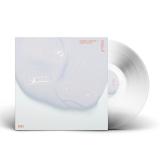
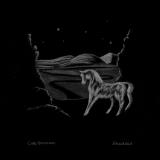
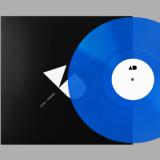
Featuring a prestigious line-up of guests, the album Sonars brings together iconic voices alongside Maxime Dangles and Tommy Rizzitelli: Oxmo Puccino (Continent plastique), Craig Walker, former lead singer of Archive & Power of Dreams (Bug and Delusion), and Aur (Reef).
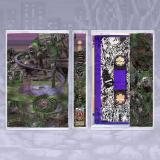
Conceived during the Art/Science project of the same name, Sonars draws inspiration from reflections on ecology and the shifting biodiversity of our oceans and rivers. It was in Rimouski, on the shores of Quebec’s Saint Lawrence River, that the duo immersed themselves in the imagery and sensations that breathe life into this record. The result is a collection of breathless, driving tracks—a masterly fusion of machines and drums where organic textures meet the urgency of the climate crisis.
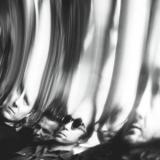
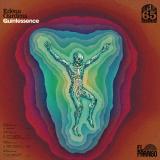
Tape Source’s Romain Da Silva Santos further enriches the album with his guitar work, while the visual identity is graced by the work of photographer Jean Gaumy, whose iconic photography features on the cover.
out of Stock
Last delivered 22 days ago available to reorder, subject to availability
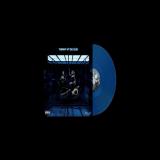
FKJ returns with Tyber— a project that captures a period of personal and creative transformation following the release of his acclaimed album ‘V I N C E N T’. Written and recorded across multiple continents, the album reflects years spent navigating movement, solitude, collaboration and renewal.
The result is FKJ at his most expansive and uninhibited. Across ‘Tyber’, groove-driven compositions sit alongside jazz-led instrumentals, sample-heavy explorations and more direct songwriting moments, moving seamlessly through genres without ever losing cohesion. The album feels both deeply personal and globally informed, spotlighting an artist documenting his evolution in real time. It captures musical snapshots across London, Los Angeles, Paris, Brazil, and beyond to create music that combines intricacy and intimacy seamlessly.
Anchored by themes of emotional equilibrium and self-care, Tyber balances vulnerable storytelling with an unmistakable, groove-laden optimism. The album seamlessly weaves together spontaneous, late-night collaborations with artists like Labrinth, Bas, and Baby Rose, alongside deeply personal solo compositions. Ultimately, Tyber is a vibrant celebration of human connection and resilience, offering listeners an immersive, cinematic invitation into FKJ’s newly restored world.
out of Stock
Last delivered 22 days ago available to reorder, subject to availability
Shaped in the shadows and sounds of the legendary Topanga Canyon, California. The debut album from Biita Houdei is buoyed by a magic that feels wildly and beautifully untamed; wild-hearted sentiments that are shaped by the world around it, fascinated by the enchantment of it all, and delivered via a collective (harmony layered) voice that understands the complex nature of what it means to be alive in the here and now.
Produced by Haley Heynderickx, 'This Bed Was Made For Me' is a striking collection of stirring, signature folk songs animated by subtle instrumentation and orchestral flourishes. It feels lived in: vocals weave together in a beautiful harmonic dance, seasons shift, sunshine appears and bold psychedelic colours warm the horizon.
In the early stages of making her debut album, Biita Houdei knew two things: that she wanted the recordings to feel distinctly and palpably warm, and that she would sew a unique patch for every song on the album. The first of those things is subjective, though brightness pours in from all corners of This Bed Was Made For Me. The second became a laborious task she undertook throughout the process, the completion of which is testament to the slow process of it all, to the physical commitment and patience required to make a full work of art.
The patches she crafted during the making of This Bed Was Made For Me became a full quilt, one that now adorns the album’s front cover. Beneath it sits a striking collection of Houdei’s stirring, signature folk songs, brought into fruition with the help of fellow songwriter Haley Heynderickx, in her first lead production role, and the album’s producer/engineer Sahil Ansari. It’s also the first release Biita (pronounced “bee-tah”) is releasing under her newly-taken name, one that was gifted to her by her auntie and means "unique" in the Farsi language. “I proudly take this name,” Biita says of the change. “It makes me feel that much closer to my Persian heritage.”
Recorded across ten back-to-back and full days, the album touches on themes of love and heritage, of taking chances, the preciousness of time and the impact we all have on the world around us. A number of the songs were written in Topanga, California, while Biita settled into a new home as wild fires raged, and as she adjusted to a life which no longer held distinct seasonal changes, far from the Ozark Mountain home she felt so attached to. Such themes reveal themselves in a variety of ways across the album’s fourteen songs, that key sense of warmth retained in the bones of the album whether they are stepping into darkness or seeking out light.
The album feels lived in and alive; dust swirls, seasons shift, sunshine appears and is held. Biita calls it ‘psychedelic’ and there is indeed a sense of that in the world building, in the way the bold colours are always shifting. Formed of fourteen songs, and filling nearly forty-five minutes, This Bed Was Made For Me not only builds a whole world for listeners to inhabit but also implores you to stay a while. This was deliberate, indeed it’s Biita’s wish that listeners give the album dedicated time; to learn its shape, to explore it fully, away from the instant grab of playlists and skewed algorithms.
“Many of my favourite albums didn’t reveal themselves instantly to me,” Biita, now based in the Catskill Mountains of New York, explains. “Some did, of course, but I had to work to understand the full scope of the piece as a whole. I encourage people to dive deeper into everything that they choose to consume. It is not my intention to sound pretentious, but instead, I am trying harder to explain the gratitude I have for being able to craft every part of this album— using my hands, my brain, my voice, my visions. To me, it is an all encompassing work of art,” she continues. “Making the quilt was laborious. Taking the cover photo was laborious. No shortcuts, but rather a manual and tangible approach. I am thankful for the time it took.”
Anushka Chkheidze + Robert Lippok continue their collaboration with »The Sky Was Out of Tune«. Its eight movements form a long-form ambient piece in constant flux: soundscapes emerge from electronic synthesis and layered textures, while small melodies, rhythmic patterns, metallic noises, or distortions drift through like clouds across the sky. But a sky that is out of tune is still a sky. What shifts is the register in which it speaks.
»The Sky Was Out of Tune« emerges from a live performance for »Festival of Future Nows« at Berlin’s Neue Nationalgalerie. Its organically tangled sounds mirror the artists’ attention to nature as a system that is never quite in equilibrium. Ecosystems lean, compensate, tip, and recover—balance, in the natural world, is not a fixed state but a perpetual negotiation. Chkheidze and Lippok take this as both subject and method. Their sounds shift weight between one another, approach resolution and then withdraw from it, hold tension without release—they find form in the unstable. »Preparing something unstable completely changed the method of how we would normally split our skills or roles,« Chkheidze says. »I think in this one looong piece you feel how much we listen to each other.«
Anushka Chkheidze + Robert Lippok continue their collaboration with »The Sky Was Out of Tune«. Its eight movements form a long-form ambient piece in constant flux: soundscapes emerge from electronic synthesis and layered textures, while small melodies, rhythmic patterns, metallic noises, or distortions drift through like clouds across the sky. But a sky that is out of tune is still a sky. What shifts is the register in which it speaks.
»The Sky Was Out of Tune« emerges from a live performance for »Festival of Future Nows« at Berlin’s Neue Nationalgalerie. Its organically tangled sounds mirror the artists’ attention to nature as a system that is never quite in equilibrium. Ecosystems lean, compensate, tip, and recover—balance, in the natural world, is not a fixed state but a perpetual negotiation. Chkheidze and Lippok take this as both subject and method. Their sounds shift weight between one another, approach resolution and then withdraw from it, hold tension without release—they find form in the unstable. »Preparing something unstable completely changed the method of how we would normally split our skills or roles,« Chkheidze says. »I think in this one looong piece you feel how much we listen to each other.«
Stone Music returns with Into the Cosmic Forest, a deep and patient journey into open-air improvisation. The group was founded in 2022 by Tokio Hasegawa, a core member of the legendary Taj Mahal Travellers, and brings together a wide circle of musicians from Japan’s ambient and experimental scenes.
While the name is new, the spirit continues. Stone Music extends the free-form, site-responsive approach that defined Taj Mahal Travellers — music shaped by environment, duration, and collective awareness rather than fixed structure.
Into the Cosmic Forest consists of two long-form pieces, each exceeding 20 minutes, both recorded live outdoors. Side A was captured at Japan’s Off-Tone Festival. It unfolds slowly and organically — layers of voice, strings, electronics, wind instruments, and percussive textures gradually forming a shifting sonic landscape.
Side B was recorded on the grounds of Mithila Museum in the mountains of Niigata, an art space managed by Hasegawa himself. More intimate in atmosphere yet equally immersive, the piece centers on voice and subtle interplay, allowing space and silence to become part of the composition.
What you hear is direct and unpolished: air moving, sound resonating, musicians responding to each other and to their surroundings in real time.
Following tours in India during 2023–24, with performances in national museums and universities, Stone Music continues to explore music as shared space rather than spectacle.
Into the Cosmic Forest invites listeners into that space — unedited, unhurried, and fully alive.
Lummer is the Swedish name for the now protected family of vascular plants (Clubmoss/Lycopodiaceae). Lummer grows slowly and the spores with which it reproduces can take 12—20 years to develop. These spores, known as Nikt in Swedish, were once ground into an extremely flammable light yellow “old woman’s gunpowder” that was used for early theatrical pyrotechnics. Volatile and explosive, Lummernikt requires careful handling.
There is something of the small scale dangerous in Finn Loxbo’s Lummernikt, too. A not-at-all-risk-free traversal at the limits of technique: building, blowing up and working through a band’s worth of harmonic scaffolding. Eight songs on a stage. Dramatic, breath-taking. At the same time the wild, flickering rush of tones spins up a centrifugal force that suspends a certain calm or sitting still at the music’s core.
On Lummernikt, Loxbo’s guitar often sounds more like a concert harp or the West African kora as he shifts a set of melodic fragments and extended lines through rapid-fire arpeggiated permutations with a spontaneous energy that is countered only by his extraordinary touch on the instrument and an undeniable sensitivity to his material’s dynamic potential.
It’s a glorious extension of the chiming chords and experimental preparations heard in his contributions to Magnus Granberg's Skogen (Another Timbre) or via his own ensemble Kommun (Fönstret, Thanatosis) and in striking contrast to the distorted wail he contributes to Anna Högberg Attack’s Ensamseglaren (Fönstret) or his all-in-the-red trio Kyosaku (Corbett vs Dempsey).
It’s now several years ago that Finn sent me the first recording of his new band Kommun and asked if I had suggestions for a label that might want to release it. I played that recording on repeat until I couldn’t shake the idea that I needed to start a label to put it out myself. Lummernikt is the spark that keeps that fire alive.
Whispering Ln. Vol. II was recorded between 2018 and 2019 in America, alongside the pieces that formed the first album. These recordings belong to the same time and space, shaped by the same quiet focus and slow attention to sound.
While remaining rooted in minimalism, this album introduces several more rhythmic pieces, drawing inspiration from early electronic music – echoes of composers such as Tom Dissevelt and Raymond Scott.
Movement and stillness coexist throughout this record. Rhythms and patterns shift and occasionally dissolve. The music asks for little and offers even less explanation, inviting listening without urgency – to slow down and remain present. May it offer a moment of calm, where time loosens, and attention gently settles.
Released in 1976 on ABC Records, Seed Of Memory is Terry Reid's fourth studio album and marks a significant shift in his musical direction - This 180g vinyl re-issue faithfully replicates the original UK pressing including 4- page lyric insert Produced by Graham Nash, the album was recorded in California after Reid had relocated from Britain, and reflects the influence of the West Coast singer-songwriter scene while retaining elements of rock, blues, folk and soul. All eight songs were written by Reid, whose expressive vocals and guitar work remain central throughout. The recordings are enhanced by contributions from respected musicians including David Lindley on guitar and violin, Ben Keith and Al Perkins on pedal steel, and Graham Nash on harmony vocals. Lyrically, the album explores themes of reflection, spirituality, personal growth and social awareness, with songs such as "Brave Awakening" drawing on Reid's family connections to the mining industry. The relaxed arrangements contrast with the heavier sound of some of his earlier recordings, creating a more atmospheric and melodic style.
A thought left unfinished.
A sentence waiting to be said.
One day dissolving into the next.
Akero returns to Moving Pictures with a five-track EP shaped by melodic tension, understated emotion and gently shifting club rhythms.
The record opens with "I Need To Say It" - a direct and emotional cut carried by a restless groove and a quietly luminous atmosphere.
"Ogninotte" unfolds with hypnotic movement with a soft melancholic pulse, while "Unagiornata" brings a brighter, more open-ended moment to the record.
On the remix side, Roman Rai reshapes "I Need To Say It" into a Complete Cosmic Rework, allowing the original to unfold across wider, more spacious terrain.
Täino closes the circle with his own interpretation, keeping the emotional core intact while bringing it closer to the label's warm and introspective dancefloor language.
out of Stock
Last delivered 33 days ago available to reorder, subject to availability
With Random Constraint Satisfaction Problems, the ever elusive and shape-shifting Thomas Bush offers up a new album of category scrambling song craft. Since earlier solo efforts like Old And Red (2018), Preludes (2022) and The Next 60 Years (2024), Bush—currently based in Malmö—has traced a digressive path that has proven him capable of everything from murky wobbling dirges to uptight head-bopping laments to crystalline synth chords that hang precariously in the air over your new favourite bass line. Like its title, the album's songs/tunes/opportunities for pleasure offer the listener further evidence of a sensibility that is equal parts ambiguity and clarity.
In addition to his solo work, Bush has worked with a range of collaborators in one-off configurations and longer term projects like RAP (with Guy Gormley) and cATHOLIC CHURGH (with Jon Auman). Critical responses to Bush's output have often focused on his predilection for certain folk-ish impulses and instrumentation, but, judging from releases like 2026's guld, his definition of "folk music" seems to have as much to do with A Guy Called Gerald as it does with Shirley Collins or John Martyn.
For all of its diversity, what unites Bush's ever-expanding body of work is its dual commitment to experimentation and a job well done.
“Random Constraint Satisfaction Problems was recorded at Vista Studio 1, Malmö between 2022 and 2025. After creating an account at academia.edu for the purpose of reading a text now forgotten, I began to get emails asking me questions such as ‘Thomas Bush, did you write “Brucellosis and Sacroiliitis: A Common Presentation of an Uncommon Pathogen”?’ or ‘Are you the Thomas Bush who wrote “ATR-dependent phosphorylation of FANCA on serine 1449 after DNA damage is important for FA pathway function”?’, which began to make me wonder if I was, or if not, perhaps I should.
The resulting work is an attempt to find meaning in this, and other chaotic and ambiguous situations through analysis using materials and equipment available to hand. Being sensitive to signs and following them with enthusiasm. Both the source material and evaluation is presented.”
Kaiso Power is a collection of rare jazz, calypso and percussive gems from Trinidad and Tobago from the revolutionary generation of the 1970s, bringing radical new political vision and reclaiming ancient spiritual consciousness through music. At the dawn of the 70s a shift was taking place all around the world. The streets of Port of Spain thronged with Black Power marches, trade union demonstrations and Carnival protest bands - one epicentre in a growing global exchange of ideologies and strategies among Pan Africanist circles in Jamaica, Guyana, London, New York, Montreal, Lagos, Accra and beyond. And when the meetings were over, the revolution moved to the cramped secret dance halls, the Carnival fetes, the steelband yards. The music always had a sharp edge. Searing commentary has always been part of the various types of music in Trinidad, and in the absence of lyrics, the defiant use of the drum maintains the resistance, as well as the re-framing of the playing of European instruments to the needs of the message. Lancelot Layne, Delano Abdul Malik De Coteau, Andre Tanker, Clive Zanda, Mansa Musa were more than artists, they were teachers, community workers and advocates for justice. These recordings are as raw as an all-night Carnival jam, the horns loud, the percussion ringing out, the bass dripping with joy and rebellion. Under the modern influences is a solid rhythm, an unbroken connection to Africa, the songs and keys and cadences brought across the middle passage. These songs are a peep into the untapped treasures of a revolutionary generation, looking at the world with fresh eyes and believing that music was a central part of the mission to build consciousness and regain confidence.
out of Stock
Last delivered 26 days ago available to reorder, subject to availability
Dutch artist Maurits Verwoerd, aka Nachtbraker, makes his first outing on Up The Stuss with ‘Bodu Imchi’, a four-track collection that highlights the breadth and curiosity that have long defined his work. Drawing from a world that stretches from ambient and cinematic music to dub, jazz-inflected electronics and house, the Amsterdam native has developed a sound that can feel both deeply considered and completely instinctive. Releases across Aus Music, Peach Discs, Heist Recordings, Dirt Crew and his own Nachtbraker and Quartet Series labels have established him as one of the more distinctive voices within the Dutch house landscape, with support from artists including Jamie xx, DJ Seinfeld, Raresh, Shanti Celeste and Axel Boman.
Across ‘Bodu Imchi’, those influences come together in a record that feels fluid, slightly strange and constantly alive. Warmth sits alongside subtle unease, hypnotic grooves give way to more playful rhythmic ideas, and intricate melodies drift through low-slung foundations without ever becoming overly polished. There’s a sense of late-night discovery throughout, the kind of music that rewards close attention but still carries enough physicality to move a room and keep packed dancefloors moving with a locked-in approach. Four tracks, one evolving atmosphere, and a meeting of musical worlds that feels right at home on Up The Stuss. It’s a release that finds character in the fine details: unexpectedtextures, subtle rhythm shifts and elements that seem to appear out of nowhere before then disappearing again. It’s an EP that moves between heads-down focus and hazier hours, capturing the curious, nocturnal spirit that runs through his work.
out of Stock
Last delivered 27 days ago available to reorder, subject to availability
With Foreverglades, Miami’s independent rap cornerstone Pouya delivers a cohesive, highly anticipated body of work that serves as a gritty love letter to the Sunshine State. Moving away from the claustrophobic trap beats that defined the early SoundCloud era, Pouya steps fully into his veteran status by embracing a distinctly rich and organic Southern sonic palette. The album's title plays heavily on the Florida Everglades, signaling a destination that is both a permanent state of mind and a humid, unforgiving landscape where only the strongest survive. Over the course of 12 tracks, the project balances hazy nostalgia with modern underground rap execution, highlighting Pouya's sharp technical growth and deep roots in his hometown culture.
The production on Foreverglades is remarkably cohesive, leaning into thick basslines, melting instrumentation, and classic Southern rap influences that give the tracks a heavy, atmospheric depth. Behind the boards, the album leans on a talented collective of underground producers—including Alexis Martin, Boohmii, Esthetic Gloom, and Oleg—who construct a soundscape that is both menacingly smooth and psychedelic. Rather than relying on the frantic tempos of his early catalog, the backdrops here allow Pouya to showcase his immense vocal versatility. He flows effortlessly, seamlessly shifting from his signature rapid-fire, triplet-flow delivery to a more grounded, melodic cadence that mirrors the thick humidity of the Florida landscape.
Lyrically, Foreverglades is a self-reflective journey that finds Pouya confronting the psychological realities of a decade-long independent career. While his trademark dark humor and raw bravado remain intact, they are balanced by a vulnerable perspective on success, mortal anxieties, and the paranoia that comes with staying independent in a shifting industry. The tracklist is meticulously curated, anchored by atmospheric standouts like "Found You," "Florida Baby," "In My City," and the Rocci-assisted "Burnt Down." By anchoring the project with raw storytelling and a distinct sonic identity, Foreverglades stands as a defining moment in Pouya's discography—a project best experienced with the bass turned all the way up and the windows rolled down.
1xLP, pressed on Whirlpool colored vinyl, includes 12x12 double-sided insert.
out of Stock
Last delivered 28 days ago available to reorder, subject to availability
CHIHEI HATAKEYAMA, captivating the world with his beautiful ambient/drone works, and KEN IKEDA, an original improvisational musician radiating a unique presence. This work, both artists spent approximately ten years recording and meticulously editing down to the finest details, explores the theme of "a mental landscape where distorted dreams and crumbling daily life intersect, where anxiety and darkness seep into the cracks, and faint light flickers within the depths of silence." A total of 16 imaginative soundscapes unfold like shifting scenes in a film. The jacket design features artwork by the cutting-edge visual artist MIKA TAMORI.
Music From Memory presents ‘Miraggi’, the debut release by Argento, a new project conceived by composer and producer David August. Written between Berlin and the Tuscan coast, the record unfolds as an imagined soundtrack to the Mediterranean, shaped by memory, longing and a profound connection to landscape.
The earliest sketches emerged during extended periods spent along Italy’s Tyrrhenian coast, where the shifting light, vegetation and ever-changing presence of the sea became lasting creative impulses. At the same time, an immersion in Italian library music of the 1970s and ‘80s quietly informed the project’s tonal language, while traces of jazz fusion and Balearic ambience surfaced not as direct references but as distant echoes.
Built around a dialogue between synthesizers, electronics, acoustic percussion and environmental recordings, ‘Miraggi’ balances rhythmic movement with spacious, cinematic composition. During the recording process, August was joined by drummer and percussionist Lorenzo Setti, whose performances and co-writing became an integral part of the album’s evolving rhythmic language. Across extended improvisations and recording sessions, August and Setti gradually shaped a musical language that feels both deeply personal and quietly transportive, allowing atmosphere and place to become as important as melody or rhythm.
The title ‘Miraggi’ (‘Mirages’) emerged organically, evoking a longing for something that remains just out of reach — something that cannot fully be grasped or lived. It suggests a suspended state between perception and imagination, akin to a hallucination or a dream. In this sense, ‘Miraggi’ reflects the project’s inner narrative: an imagined soundtrack shaped by desire, memory and the spiritual abundance of the Mediterranean Sea.
‘Miraggi’ will be released on vinyl and digitally via Music From Memory on September 10th 2026.
out of Stock
Last delivered 8 days ago available to reorder, subject to availability
“I like to work with a variety of instruments and set ups,” says Mark Van Hoen, sometimes known as Locust or Autocreation but here working under his own name on the excellent Plan For A Miracle, his first physical release of solo music since 2018’s Invisible Threads. ”Sometimes it’s literally in my studio, with all the hardware electronics available. Sometimes the laptop, using software instruments. Some of the tracks on this record were recorded in the desert (Joshua Tree) using a 4-track tape machine and small modular synthesiser set up. Each track was recorded in different location using different instruments, which accounts for the distinction between each piece. It’s also about my own reaction to my environment, and what’s going on in my life at the time.”
The Croydon-born Van Hoen started musical life in the early 1990s, signing for R&S records in 1993 but developing his own, myriad and distinctive style across a range of releases on Touch, Editions Mego and other labels, using a battery of instruments, including analogue synthesizers and taking a number of different approaches to recording, rather than ploughing a single sonic furrow. He has worked on a number of collaborations, including with Nick Holton and Neil Halstead of Slowdive, under the moniker of Black Hearted Brother - their Stars Are Our Home was released in 2013. “I have known Neil Halstead since 1992,” says Van Hoen. “He shared a house with me for a couple of years, and the music I was making and listening to along with clubs I was attending had an influence particularly on Pygmalion, the final Slowdive album on Creation.”
Each track on Plan For A Miracle does indeed sound like a world unto itself, a mini-environment, a weather condition, an ecosystem created for the moment. It’s a collection of tracks recorded over the past few years, released on Bandcamp - despite his apparent absence, Van Hoen works constantly. Opener “Climates”, in its exquisite limpidity, feels like a homage to Brian Eno, one of his most formative influences in his teen years, commencing with Music For Films, which he bought in 1979. “This Is For Them”, feels like a ghostlike throwback to early drum & bass or electronica, reminiscent of his own, earliest outings. “There have been a number of requests from labels to make some more music like my very early releases on R&S,” says Van Hoen. “This is part of ‘letting go’ and realising that there’s nothing less creative about going back to those styles again.”
“Pencil Of Spheres” is something else again, a magnificent, imaginary glass structure, shimmering, refracting, without visible means of suspension, a thing of impossible beauty. “Electric Lights” evokes an abandoned fairground, its lights still pulsating, its music lingering. “The Underpass”, meanwhile, insofar as it reminds of anything at all, is faintly reminiscent of Cluster or Neu’s! West German ambience, the urban mundane rendered magical, the sodium lights, the whitewashed walls. The reverberant, faintly oriental chimes of “Insight” transport us yet again, burgeoning and intensifying.
The landscapes, the skyscapes rendered on Plan For A Miracle feel unpopulated as a rule - but when he does introduce vocal elements, Van Hoen has a history of doing so to spectacular effect - think of “Real Love” from 1998’s Playing With Time, the seductive intonation of its title recurring throughout like a series of massive holograms, echoing, stuttering, breaking up, surging. Here, there are just the faintest of vocals, barely distinct, disquieting. “There’s been a bit of a game changer in recent times,” explains Van Hoen. “AI software that enables you to extract vocals and instrument parts from virtually any recording. That means sampling individual parts from existing sources is no longer limited to the original mix exposing certain parts soloed. The vocal parts I use are from multiple sources and often pitch shifted altered rhythmically and melodically.“ There’s further vocal chatter on “I Really Do”, proceeding at a faster pace as if giving chase, or being pursued - distant, enigmatic. “The Music”, meanwhile, its beat tolling, lost in its own fog of static, features a curious intonation, like the ghost of a lost Walker Brother.
Sadly, the album’s title is in reference to a personal tragedy on Van Hoen’s part - the loss of his wife. Titles such as “I Won’t Give Up”, which faintly reminds of another Eno masterpiece, Another Green World, in its nautical hurly-bury, or the pastoral strains of “Mrs Who”, heavily clouded with sadness, seem to allude to this. “In fact the record was recorded entirely before she passed away,” says Van Hoen, “most of it before she even became very ill. The title was given to the album when it started to look like she wasn’t going to make it beyond a few months. It was something Osho said - “plan for a miracle” - so it was a statement of hope. Unfortunately it was not to be.” Although the album is non-thematic, non-specific in its atmospheres, sound paintings, elegant structures it most certainly stands as a magnificent monument to Osho’s memory.
-David Stubbs.
out of Stock
Last delivered 29 days ago available to reorder, subject to availability
There is a pivotal scene in “August in the Water” (dir. Sōgo Ishii, 1995) where the surface of a pool turns into a stone wall. The water that gave the protagonist's life its meaning becomes a threat. As you fall through this stone wall, you appear in a set of underwater coral-reef corridors, and one of the most beautiful musical themes begins to play: Aquatic Ambience, composed by David Wise for Donkey Kong Country (1994). It's a theme that represents the weightless vibe of your new deep-sea life, where you go about your mundane errands, collecting bananas while driving on a swordfish, or, as HerzMayhem put it: "Poor monkey... always swimming, never going anywhere..."
Synthetic Water Music is the second of three compilations, following Synthetic Bird Music and timed to mappa's 10th anniversary. As with the birds, it gathers friends of the label, artists who have released with mappa or played our shows. Most of the music is new, made to measure for this compilation, much of it from Central and Eastern European hands. Birds and water mix well, so please feel invited to play them together, creating your own environments.
Where the birds were in one flock, water is dispersed across four chapters. You live your life as a droppity drop: vapour in the heavens, condensing in clouds, falling into a swamp, trickling into the deepest sea.
Tlālōcān (Cassette 1, Side A)
A place of eternal spring, of aquatic energy that nourishes everything and allows all things to bloom. Bubbly and splishy-sploshy, it is full of dripping sounds and moist caverns (“Emerald Pool” by Pauline Anna Strom), a landscape filled with living fountains (“Oh, to be a Fountain” by Eva Sajanová) and winding streams that flow through the area, forming part of its organic architecture. It is also a paradise reserved for those whose deaths were water-related, where the aquatic and terrestrial beings live in symbiosis and perspectives shift rapidly, from observing a single droplet (Shakali, Lau Nau) to dew (Feronia Wennborg & Lucy Duncombe) and on to flowing currents (Visible Cloaks) that gradually transform into river music (Ursula K. Le Guin & Todd Barton).
Nephelora (Cassette 1, Side B)
A celestial anti-gravity sound world made of evaporation, steam and the formation of clouds, as if looking at “The Sky At The Bottom of the Well” (by Natalia Beylis) or at “The Cloud That Never Rains” (by Henrique Vaz).
If a cloud never rains,
it is not a cloud at all, but a veil that parches the earth with its gaze.
It generates only its own shadow —
a looming mass of suspended longing,
a sky that hoards but never yields,
a reservoir that swallows every river and returns nothing but echoes.
The water in this world is often invisible but sometimes all the more present, as Bint Mbareh describes it: “Recently been obsessed with invisible waters because I come from a place where you have to imagine the water is there even though you cannot see a river, a sea, usually no rain, so water is in the air, the voice and the imaginal realm, drought is imagined to be negotiable.”
Žaboglach Zha-bo-glahch (Cassette 2, Side A)
A fusion of Scottish lochs and Slovak ponds: a misty, foul-smelling, swampy realm, the kind of place that swallowed Artax from The NeverEnding Story. Stagnant waters full of decay become a blooming habitat for sirens (“thereby losing the weightless delight of being swept along with it” by Adam Badí Donoval) and beings straddling the line between fauna and flora, inventing their own communication systems (“Water-lily phase” by Action Pyramid).
R'lyeh (Cassette 2, Side B)
A brooding sunken city at the bottom of the ocean. It’s a journey to get there. Let this chapter guide you, from the shore down to the depths, to the gates of an unexplored world that is inherently dark, unfathomable, and beyond the limits of human perception: starting with seasickness ("Seasick" by Nikolaienko), passing through a classic Poe-esque maelstrom ("Flurry at the Whirl-pull" by Atte Elias Kantonen), a gateway into the darkness and emptiness of the ocean floor, and finally traversing the city itself (“last waves of 2025” by Jules Reidy).
But what is pulling you to a place like this that only a few explore and even fewer leave? Maybe “the darkness that water can contain, the expanse of things we don't know and that can trigger fear instincts even as we try to rationalise them and think we are in control of the rest of nature” (“supercritical fluids” by Diane Barbé).
Dive in and surface wherever you like. Always swimming, never going anywhere. Just don’t forget to take water breaks.
P.S. Birds, then water, can you guess what comes next? Synthetic Soil Music, an elegy for insects and worms? Synthetic Glaciers, or maybe Pollinators? Which sounds would you miss the most if they disappeared? Or what if the third one never comes at all, and somebody, or something, makes Synthetic mappa Music instead. Don't you worry, with the right training data, it can all be replicated, better than the real thing.
The acclaimed compilation series returns with volume 4! Fourteen tracks showcasing the most exciting emerging voices in Belgian jazz, ready to claim a permanent spot on your turntable.
The latest instalment in the celebrated compilation series once again shines a spotlight on the most adventurous and forward-thinking artists emerging from Belgium's jazz scene. Curated by Belgian tastemaker, DJ and broadcaster Lefto Early Bird, the collection continues a tradition of uncovering hidden gems and introducing them to a wider audience of dedicated diggers.
Over the years, the Jazz Cats series has become a trusted barometer of Belgium's ever-evolving jazz landscape. Long before many artists gained international recognition, they first appeared on these compilations, making the series both a discovery platform and a snapshot of one of Europe's most exciting musical ecosystems.
Jazz Cats Volume 4 captures a scene bursting with creativity, diversity and ambition. Across fourteen carefully selected tracks, the compilation explores the many directions contemporary Belgian jazz is taking today. Jazz, hip-hop, electronic music, afrobeat, spiritual jazz and experimental sounds coexist effortlessly throughout the collection.
The opening stretch of the compilation, led by Brussels-based Irreversible Entanglements band member Aquiles Navarro, Ola Tunji and HelenaCasella, offers an early glimpse into a scene that rarely stands still. Their music moves freely between traditions and contemporary influences, reflecting less concern with preserving genres than expanding them. Artists such as Lupo Spaccaro and Kunde, joined here by the raw soul voice of Fred Gata, draw inspiration from hip-hop and contemporary beat culture, yet neither approaches these influences in a conventional way. Instead, they reveal how naturally these sounds have become part of the vocabulary of a new generation of jazz musicians.
Experimentation emerges as another defining thread. KVR and BREAD FOR PIGEONS embrace unpredictability through unexpected textures, shifting atmospheres and confident compositional choices, creating music that constantly challenges expectations. Elsewhere, artists like Gaiko and VLIEGWERK favor immersive soundscapes that reward repeated listening. Whether there's a connection between musical adventurousness and a preference for capital letters remains a question for future research.
At the heart of the compilation lies a strong sense of movement and groove. Ragini Trio and Foutloos approach that rhythm from different angles, yet both build their music around powerful, pulsating foundations. Their tracks need close attention, revealing layers of detail and low-end richness that practically demand to be experienced on a proper sound system.
By the time it reaches its closing chapter, Lucid Lucia, SLAGADER and Kuna Maze bring the focus back to forward motion. Jazz and funk-infused grooves provide a fitting finale, reminding us that however far these artists push the jazz genre, they never lose sight of its ability to connect, uplift and move people.
The result is a body of work that feels remarkably cohesive despite its diversity: a portrait of a scene that continues to evolve through curiosity, collaborationand constant reinvention.
Die schwedische Künstlerin Sibille Attar kehrt mit ,Amor Fati" zurück, ihrem ersten englischsprachigen Album seit fünf Jahren. Attar, die bereits von Pitchfork, Stereogum, The Line of Best Fit, Clash und BrooklynVegan gelobt wurde, hat sich als eine der faszinierendsten und von Kritikern am meisten gefeierten Stimmen des alternativen Pop in Schweden etabliert. ,Amor Fati" - äußerst unabhängig und komplett in Eigenregie produziert - begann als Versuch, ein reines Liebesalbum zu schaffen - offenherzig, euphorisch und ungekünstelt. Doch während sich die Songs entfalten, beginnen sich emotionale Gewissheiten zu verschieben. Das Album, das in Schweden, Belgien, Deutschland und den Vereinigten Staaten entstanden ist, beschäftigt sich mit Intimität, Sehnsucht, Vertrauen und den seltsamen Wegen, auf denen sich Liebe im Laufe der Zeit neu formt. Es beginnt euphorisch, wird schnell kompliziert und weigert sich, sich für irgendjemanden der Einfachheit halber zu vereinfachen - vielleicht weniger beruhigend, aber dafür umso lebendiger. "madly wide-eyed, swooning songs" - Pitchfork "leaps out of the speakers so vibrantly that the band seems to be playing in the same room with you" - Stereogum "a masterpiece in artistic misery" - The Line of Best Fit "mournful and absolutely gorgeous" - BrooklynVegan ENG Swedish artist Sibille Attar returns with Amor Fati, her first album in English in five years. Previously praised by Pitchfork, Stereogum, The Line of Best Fit, Clash, and BrooklynVegan, Attar has established herself as one of Sweden's most fascinating and critically acclaimed voices in alternative pop. Fiercely independent and entirely self-produced, Amor Fati began as an attempt to make a pure love album -open-hearted, euphoric, and unguarded. But as the songs unfold, emotional certainties begin to shift. Written across Sweden, Belgium, Germany, and the United States, the album explores intimacy, longing, trust, and the strange ways love reshapes itself over time. It begins in euphoria, gets complicated fast, and refuses to simplify itself for anyone's convenience - less reassuring, perhaps, but far more alive. "madly wide-eyed, swooning songs" - Pitchfork "leaps out of the speakers so vibrantly that the band seems to be playing in the same room with you" - Stereogum "a masterpiece in artistic misery" - The Line of Best Fit "mournful and absolutely gorgeous" - BrooklynVegan
Back for its 29th (!) birthday, No Use's fifth full lenght! "Bay area punk wonder-boys No Use For A Name have begun pleading for your friendship. Show your love for the boys, who were each reared with the ideals of Boy Scout Troup #221, by giving 'em wet sloppy ones when they come to your town." No Use for a Name was a melodic punk band from San Jose, California blending blistering skate-punk speeds with deeply melancholic, unforgettable pop melodies. What began as a scrappy late-80s hardcore act grew into a defining pillar of the 90s punk rock explosion, earning fans through relentless international touring and releases that perfectly balance grit and heart. Drawing comparisons to Lagwagon, Millencolin, and Strung Out, No Use for a Name pairs introspective, emotionally raw lyrics with fast-paced, harmony-driven arrangements built for sweaty club shows and massive circle pits. Their songs tackle alienation, broken relationships, and the struggles of everyday life, creating a connectionthat feels both intensely personal and universally cathartic. Their first two albums were released through the New Red Archives label, after which they signed to Fat Wreck Chords where they would remain, releasing seven studio albums and shifting to a melodic punk rock sound. With their fifth album `Making Friends,' the band continued to build on their momentum, delivering their tightest, most emotionally resonant, and career-defining collection of songs in 1997. 2026 it comes in brown vinyl color.
Brixton Heights Records proudly presents the brand new single “Sweet Things”, a radiant lovers reggae release that blends classic roots, soulful warmth and contemporary finesse into a timeless feel‑good anthem.
Fronted by the legendary Keith Coley from The Silvertones, this masterfully crafted track features a heavyweight lineup of musicians and producers: Mafia & Fluxy on drums and bass, The Ital Horns on brass, Gavin Tate-Lovery on Saxophone and Gaudi on Piano and backing vocals, co-production and mixing. The track delivers a smooth, romantic groove rooted in classic Jamaican sound while feeling fresh and modern, making it equally at home on sound systems, radio playlists and summer sessions.
The Silvertones’ vocals remain rich, melodic and instantly recognisable, carrying the emotional warmth that has long defined their sound. The arrangement is layered with a bubbling organ, deep bass and tasteful percussions, guitars and keyboard, making The Brixton Heights Orchestra come together to create an irresistible groove.
Mixed and co‑produced by Gaudi at Metatron Studio in London (UK) and mastered at Anchor Studios in Kingston, Jamaica, “Sweet Things” is a celebration of romance, rhythm and authenticity.
In the B‑side the Brixton Heights Orchestra shines through in a full instrumental version of “Sweet Things”. The brass section takes centre stage throughout, weaving into the fabric of the song soaring trumpet lines, expressive saxophone melodies and rich trombone passages.
With the vocal removed, Gaudi shifts the focus on brass work, rhythm section and layered instrumentation, creating a continuum of different phrases, solos and riffs, carefully carved together into a reggae-jazz theme that executes in a cohesive and coherent way.
While the sterile “professionalism” of some heavy bands can be like a clinical drone strike, Texas-based Judiciary feels personal. Like close combat with a knife. And it’s all in their chemistry. Judiciary is an amalgamation of four guys raised in the intersection of metal and hardcore—all devoted to pushing their craft further. Across two esteemed LPs, the band has proven their worth as a crucial entity in the crowded heavy music scene by evolving their sound further and further with each release. And now with the band’s latest Stalagmite Angels, due on September 4th via the venerable Closed Casket Activities, Judiciary can further showcase their status as a crucial, one-of-a-kind part of the evolution of hardcore in 2026. Life changes can bring about chaos and seismic shifts, but if Stalagmite Angels is any indication, then it’s all for the better. In the wake of the release of Judiciary’s second LP Flesh + Blood, the band called upon Juan Vazquez to pick up guitar duties, thereby changing the internal framework of the band for good, and unknowingly for the better. It’s this pivot in personnel that resulted in the band’s latest EP. “The goal with this EP was a hard reset, but we also wanted to chill the f— out a bit, have fun, and do something that felt true to the four of us,” recalls drummer Austin Looney. “We wanted time to reconfigure things and let the music come naturally–temper this new mindset that we've adopted post-Flesh + Blood.” Judiciary’s greatest strength lies in their musical singularity. Though Stalagmite Angels represents the collision of influences from across well-worn territories like metallic hardcore, death metal, black metal, d-beat and more, it’s the Lubbock-born band’s approach that makes it distinctly their own. Stalagmite Angels is a wholly new document that resembles a horde of bands ranging from Hatebreed to Carcass to Slayer to Iron Age, yet never aping any single band nor even revealing any single influence. It’s all familiar but none of it is specific. “90s hardcore and hardcore in general is always gonna be our natural inclination, but it manifests with different elements not only from song to song but within each song,” says vocalist Jake Collinson emphatically, who learned guitar specifically to help with writing new material. “Whether that’s Dying Breed or Cannibal Corpse or Crowbar or Machine Head or any number of other influences that any one of us may have, it all manifests in our work, and through our individual and collective lenses. With this EP, we transformed those ideas into the Judiciary approach.” Stalagmite Angels is an EP about anger at the world, belief in yourself, and how harnessing both in the pursuit of growth is necessary to achieve. But furthermore, it’s a concept record that envisions a subterranean world in both a literal and metaphorical sense—where hidden beauty lurks in the shadows (and in the eye of the beholder) and where triumph manifests in the ability to rise from the depths and into the world above.
Poem by Alea Coble (February 2026) - Written for Andrew Weathers, Chattonooga Recording Project
Listen to my story and everything will come out true. - Bessie Smith
35° 02' 44.27" N -85° 18' 34.85" W:
Howl. Hammer strikes firing pin. Its echo ricochets over river bend. The woodpecker’s syncopated pop-pop-pop clink and thwap in time with cops practicing prayer at the firing range.
Quick. Sketch a few constellations onto a postcard: empty shotgun shells, these pre-forgotten fossils snaking rusted railroad spikes, like snagged rosary, fallen poplar petals draped over cerulean glass ashtray scattered along glittering fractures, ignored like a treaty. Train tracks reverberate necrophilic boomerang-hunger for mountain air without that coal dust. Eat. Eat. Everything is real estate. Even the air is for sale. Buy it cheap while I.C.E. carves through the valley along the Trail of Tears in unmarked SUVs, traffic stops.
Howl. Callback to estranged entanglements oscillating over holler and highway. Meet on the porch. Haint-blue ceiling. Some ghosts can’t get through anyway. They got tied up on the Walnut Street Bridge by a mob of white spit. Howl. The South should scare you.
But the woodpecker is still nesting, hungry, typing uncannied punctuation marks into black oak: a deed. Home? Takes a side-eyed knowing to call by name. The moon sickles in a sweating glass of iced tea.
Speculation cycle: symmetry as ancient as sour-dank betrayal of the tongue, bitter bones binding blood and lead, alchemical forgetting like I found a hairbrush in the yard while planting wild irises, like someone is charging $10 for an old glass Coke bottle, like semicolons itching restless under new sod from no-one-knows-where. Howl. Sing back. History is soil-in-stereo.
How will this line end? Like riverbank? Like atlatl arching hope smash-through a stained glass window? Words fall out of the sky, and 30 American flags snap at attention on the bridge. Howl. A shift in the wind gallops through the streets tossing her head back, laughing.
Tennessee River, who once kissed Pangea, how she softens at the knuckle-suck of it all, that secret-sweet stowed in the feathers of sandhill cranes lifting up on warm summer breeze: slow-shooting stars bending toward unbothered brevitas.
Howl. The red wolf knows her truest kin is always her shadow’s shadow.
When one thinks of the terms “mass” and “massive” in music, especially contemporary music, perhaps certain aural images come to mind: generic metal heaviness; dynamics-bereft noise; ear-battering dance floor madness; the multitudinous forms of drone darkness. All of these are massive in their own fashion. However, this newstudio album from 7FO (pronounced “nana f o”), a composer-performer based in northern Osaka, investigates and inhabits a different aspect of the massive. A glorious combination: dense low frequencies; sculpturally condensed blocks of sound, subtly swinging gravitational fields ― and a surprising sense of rolling and rollicking joyfulness and play. “Massive” doesn’t have to mean “dark” ― consider the sun. This is the third 7FO release on EM Records, following the well-received Ryu no Nukegara (Dragon's Husk) (2018). On these 2024-25 recordings, 7FO focuses his drum machines, synths and musical vision into eight compact structures which were partially inspired by the intense essence of American pre-war blues and the shining soul of traditional Ethiopian music, especially the works related to King Solomon and the Queen of Sheba. While not obviously evident, the glowing core of these musics has been captured and condensed here; another inspiration is the massive sculptural 1980s works of Yoshi Wada ― although there are obvious differences, there is a similar material tangibility to the vibration of the air. The final piece, “Shirohebi”, is an update of the b-side of 7FO's 7-inch single "Healing Sword" (2023), featured on Henry Rollins’ radio program. We invite you to experience and enjoy these eight massive blocks of sound, imbued with 7FO’s heartfelt warmth and humour, dense but not dark; shifting, rolling, appearing and disappearing: 7FO once picked up a roadside stone, which split as it sat in his palm. This experience, referenced in the release’s title, hints at the metaphysical magic of music, a realm beyond mere coincidence: even the massive density of stone can split, and reveal the magic within. Available on CD, LP and digital download.
Czarface opens another portal. On Czarface Meets Frankie Pulitzer, the boundary between comic book canon and hip-hop reality dissolves. Frankie Pulitzer, also known in certain dimensions as FacePuller, is no ordinary collaborator, character, or catalyst. He is a hybrid entity: part human, part alien force, fully embedded in the expanding Czarface universe.
Following landmark team-ups with MF DOOM and Ghostface Killah, Czarface continues its “Meets” saga with a full-scale crossover event that pushes deeper into story and sound. Frankie’s presence is both lyrical and mythological, bringing a chaotic, shape-shifting energy that challenges and complements Czarface’s razor-sharp precision. Dusty drums, cinematic soundscapes, and razor-edged bars bring the classic Czarface sound, yet mutated.
The universe widens with appearances from Busta Rhymes, Method Man, and El-P (of Run the Jewels), each adding their own gravitational pull to the project, thus grounding it in hip-hop legacy while amplifying its larger-than-life scope.
out of Stock
Last delivered 32 days ago available to reorder, subject to availability
DESCRIPTION
Lone Bison / Nick Bonell lives by the sea in Ramsgate. Mainly a guitar player and pedal freak, Nick bought a used Korg MS20 and fell in love with synths. As one half of Stuntmen, Nick released the sample-heavy single 'You're the Beat Find' on the groovy Tummy Touch label, which led to him scoring three Ford adverts in the U.S and a few pieces of well-used production music - which paid for more synths and pedals!
An album, 'Transistor Memory' and single 'Drugs' came out via Dom Martin's brilliant Polytechnic Youth records in 2021. "Wave Construction" was released by Castles in Space in Autumn 2023. An album for the CiS Subscription Library entitled "Mechanical and Electrical" was released in late 2024.
Nick Explains: "After recording "Transistor Memory", "Wave Construction" and "Mechanical and Electrical" pretty much back-to-back, I wanted to change my sound palette a little. I started programming my Hydrasynth Explorer in obsessive detail and was also drawn to using my voice, in a sampling kind of way at first. Sampling my voice then shifted into recording more straightforward vocals and writing proper songs again. "Rise Up" started as a field recording in my local park and then some wonky piano loops with a cheap mic – somehow a song arrived. I’ve always really liked really concise records, so I got interested in packing lots of synth textures into a three-minute pop song. As the record progressed, I did less leaning on vocoders and harmonisers and developed the courage to just do more up-front vocal mixes. Things like Maths and Minimal / Maximal are more groove-based and came from recording 20 minute drum tracks then jamming bass guitar over it then editing it all down and adding loads of synths. Oh, and there’s a bit of James Williamson era Stooges at the end of Minimal / Maximal – I was a bit nervous about playing garage rock guitar on a Castles in Space record but Colin told me I would be ‘fucking mental’ if I didn’t end the record with it."
Lone Bison's music is influenced by Krautrock, electronica, post-punk, soundtracks, a splosh of modern classical/minimalism and post-rock. He's a hot genius.
The album is preceded with "The Power" which will be available on streaming platforms as well as on our Bandcamp for those who want to listen or pre-order the album. There's a fantastic remix from MAPS included as well.
raum…musik welcomes Jaffa Surfa back for its 121st release with ‘Tribal Diesel EP’, a four-tracker moving through progressive techno, industrial-tinged minimal, house and broken beat. Rather than treating these as fixed genres, Surfa reshapes them into something uncanny and unmistakably tribal, while keeping the groove firmly at the centre.
That approach is clearest on the A-side. “Diggers Diesel” has a ritual pull and, as the EP’s title suggests, finds Jaffa Surfa at his most tribal. Processed drums and splintered voices gradually lock into a hook while murky synths shift beneath them. “Lidl Sin” takes a leaner, slightly industrial but definitely understated route. Its reduced arrangement leaves enough room for each detail to register, with drums, synth stabs and sequenced lines appearing to exist in a state of constant mutation. On the b-side, “NGLZ” is the EP’s most direct house cut, driven by heavy low end, syncopated rhythms and flashes of phased samples. Breakbeat accents and old-school vocal fragments nod towards US house, though the track’s restless movement keeps it from settling into anything conventional. “Upstarz Galeri” closes on a wider screen, carrying traces of krautrock and decades-old sci-fi and cyberpunk soundtracks without ever feeling nostalgic. Airy and expansive, it pairs breakbeats and growling basslines with densely layered samples, giving its machine funk an unexpectedly emotional charge.
'Tribal Diesel EP' never overstates the contrast between its parts. Jaffa Surfa holds everything together through texture, rhythm and an almost cybernetic atmosphere. It is clearly built for the club, but carries enough personality and ambiguity to reward closer listening.
out of Stock
Last delivered 4 days ago available to reorder, subject to availability
Spanish producer Notzing joins Alpenglühen with Vermiström, a four-track EP exploring the deeper edges of experimental dance music.
Over the past few years, Notzing has established himself as one of the most compelling voices in Spain's underground techno scene. His sound is stripped back yet immersive, built from hypnotic drones, stretched loops, and subtle rhythmic developments that gradually pull the listener into a trance-like state.
With Vermiström, each of the four tracks unfolds organically, evolving with patience and precision. Intricate, unconventional rhythms intertwine with long-form sequences and richly processed textures, creating a constantly shifting sonic landscape.
What truly defines this EP, however, is its profound sense of depth and its unmistakable dub aesthetic. Every element occupies its own carefully crafted space: textured atmospheres, meticulously sculpted percussion, and syncopated sequences that seem to exist at two different tempos simultaneously. Creative use of delays and spatial effects subtly references the language of Jamaican dub, while an exceptional level of sound design and mixing gives the record remarkable clarity and dynamic range.
Rather than revealing everything at once, Vermiström unfolds gradually. Each listen brings new details to the surface, as subtle shifts in texture, rhythm and space slowly reshape the music from within.
out of Stock
Last delivered 39 days ago available to reorder, subject to availability
Mikkel Rev returns to A Strangely Isolated Place with Evocation, his third full-length album shaped deep within the forests of Norway.
Since Mikkel’s debut, The Art of Levitation first arrived on ASIP in 2023, Mikkel has been quietly building his own corner of the label’s catalog. Last year's Journey Beyond expanded that vision further, revealing an artist increasingly comfortable balancing the emotional pull of early trance with a more reflective, ambient-leaning approach. While his work elsewhere naturally gravitates towards the dance floor through his own collective, Ute Recordings and other club-focused outlets, his ASIP releases have always evolved differently. Beginning with a larger body of material that’s gradually shaped together, each album seeks to find a narrative without a dancefloor in place; one that moves naturally between momentum and stillness, carrying something of the spirit found in those early-'90s records that drifted effortlessly between peak-time energy and the quiet hours in room two.
Long-form compositions like "Step Inside" and "MRI" favor gradual development over immediate impact, while "Dream Sand" introduces shimmering rhythms that subtly shift the album's momentum and pace. The piano-led "The Infinite" offers a definitive nod to the enduring emotional pull of classic trance before "Sanitorium" closes the record with one of Mikkel's most restrained and affecting pieces to date.
Evocation continues Mikkel Rev's remarkable run on ASIP, extending a catalog where echoes of trance's formative years find new expression through the communal energy and natural surroundings of the Nordic forest gatherings that have become an integral part of his world.
Ventral Is Golden returns on artwork duties, with Lupo handling the mastering and cut. Released on August 28th as a gatefold double LP on dusty purple smoke and digital.
out of Stock
Last delivered 39 days ago available to reorder, subject to availability
No Drama, the imprint founded and curated by Roy Rosenfeld, continues to expand its artistic vision with a sixth release valuing originality over convention. The label has steadily established a platform for forward-thinking electronic music, inviting artists to challenge familiar structures while remaining grounded in musical substance.
The latest release features two tracks by internationally recognized producer Yuvée, known for seamlessly blending live instrumentation with deep house, melodic elements, and organic percussion. While Yuvée appears solo on one track, the other is a collaboration with Omer Inbar, who performs under the name Oi.
The opening track, Lava Core, presents the sound that has earned Yuvée international recognition. Tribal influences unfold through carefully crafted percussion, while evolving textures occupy every part of the stereo field. Every section advances the narrative, allowing the arrangement to grow naturally while maintaining dancefloor impact from beginning to end.
The second piece, Blue, brings Yuvée together with Oi, an internationally acclaimed DJ, producer, and sound engineer whose work bridges psychedelic vibes and groove-driven electronic music. The collaboration introduces greater club energy. Tonal and atonal elements interact with shifting harmonies and evolving instrumental phrasing, creating constant movement without losing coherence.
Rather than relying on formulas, the duo demonstrates the value of artistic perspective in an era increasingly shaped by technological automation. The result is music that balances intellect with feeling, offering a listening experience that remains equally compelling on a festival sound system, in a club, or through focused listening at home.
With its sixth release, No Drama reinforces its commitment to artists who expand the language of contemporary electronic music through craftsmanship, authenticity, and creative ambition.
out of Stock
Last delivered 6 days ago available to reorder, subject to availability
Ty Segall, precleared for flight in full rock congress with the band (Ben Boye/Evan Burrows/Mikal Cronin/Emmett Kelly), shifts Chrome. Songs of massive riffs, swung, tightly arrayed lines of fuzz & distortion, twin-guitar attack-and-parry, endopic keyboards kicking, precise & thudding power, a rhythmic core on the march in full BAND energy. The songs are lyrically allusive trips, dark passages in the labyrinth, everything in the air bristling collectively, as minds collide.
a1 Hospital
a2 Running to Nowhere
a3 Black Paint
a4 Glass
a5 Play Cowboys
b1 Everything You've Been
b2 Let Go
b3 Separation
b4 Chrome
out of Stock
Last delivered 41 days ago available to reorder, subject to availability
Others take years to reveal why they belong together.
PLNK008 is the first solo release by Natural Goofy on Planka Records. Following a series of appearances across various labels and collaborations, this record offers a deeper look into the sound he has been quietly shaping over the years.
A collection of recordings gathered over time, connected less by genre than by a shared sense of mood and movement.
Rather than chasing functionality, the record follows instinct. Loops are allowed to breathe. Details appear slowly. Tension builds almost unnoticed. Elements drift in and out of focus. The intention was never to arrive somewhere quickly, but to stay inside a feeling for as long as it remains interesting.
The release also includes a special reinterpretation of one of the EP's tracks by dear friend and talented Italian producer Shkedul.
The original version of the track will be available exclusively as a digital bonus on Planka's Bandcamp.
These tracks were not designed to demand attention. They reward it.
For those willing to spend time with them.
Limited edition. Vinyl only.
out of Stock
Last delivered 6 days ago available to reorder, subject to availability
Glasgow’s Hot Towel are a DJ & production duo, community dance party organiser and now record label reimagining the balearic spirit far from its original context and sunnier climes.
This debut EP contains 4 dance floor focused tracks tested and developed on the Hot Towel dance floor and beyond. Produced over the last 4 years in grey and rainy Glasgow these 4 tracks reinterpret the joy of warmth, connection and world building in dance music.
Warm in Your Office is a feet on the floor, head in the clouds, bouncing 90’s piano house inspired track with warm driving bass, punchy gated snare, percussion samples and a surprising nostalgic drop for fans of late 90’s and early 00’s Serie A.
The lo-fi beatbox rhythm of Low Pressure in Paradise features a melodic, rumbling bassline, vintage synth string stabs and a warm melancholic synth pad swell reminiscent of the day after the night before, or the thunderous ambience of an oncoming storm and the reflection that brings. Think warm orange and magenta sunset overcast with heavy mauve clouds and possibly a hangover from one too many negronis.
A sunbaked synth flute melody shimmers like heat haze in the latin / balearic inspired beach bar romp Last Minute Staycation. Cowbell and syncopated piano move the hips, while romantic synth strings pine for that magical other world away from the mundane. A shift in tone midway evokes the peril of a balearic dream turned nightmare, capped off with timbale and a shredding electric guitar solo serving Lambada meets Zappa.
Endless Cosmic Procession is a downtempo balearic builder that chugs along with minimal effort. Tuned percussion drives the groove, with bass and synth punctuations that reverberate into space and swirl with delay. A rising arpeggiator gently brings melody to complete the harmonic space of the track that rounds off the EP with a contemplative dance floor moment.
out of Stock
Last delivered 4 days ago available to reorder, subject to availability
Cosmic Breeze Records is happy to present From Above, from Brussels based producer Bass Toast, an artist who has spent years honouring and preserving the rich musical house heritage. Bass Toast has always had an enormous will to connect what separates.From the early New York House to intricate broken beats, he’s been spending the last few years colliding different genres, soulful at heart, both club and non club, comfortable and uncomfortable, celebrating the floor and the grace of simply listening.The A side opens with African Girl, sexy and sensual, moving you in slowly before FromAbove takes you on a whimsical Latin journey, before Stance closes it out with a broken beats jazz and intricate drums that reward every listen. The B side shifts weight, Chucho and Watch And Remember are both club-oriented, propelling without ever losing the thread that runs through the whole record, before Childhood Memories closes everything down with grace.
“A lot of people run to see who’s fastest. I merely run to feel the breeze.”
out of Stock
Last delivered 11 days ago available to reorder, subject to availability
Manonmars’ 3rd album sees him at his most amorphous and psychedelic, at points sharper and laser focused, and at others more blurred and impressionistic than his previous records. Many of the core players remain the same, all of the production is once again handled by O$VMV$M (the duo of Neek and Amos Childs of Jabu) while Paulina Korobkiewicz (also of Young Echo) makes a return handling both the album’s cover artwork and contributing a series of diaristic field recordings and voice notes.
‘The project references movies, cartoons, fictional characters and video games, among other things. The album title is open to interpretation but all of these elements are forms of visual entertainment which have their own unique ability to transcend things like language barriers and cultural divides. The visual element is key because those details bridge the gap on a communicative level.’ - Manonmars
The album blends abstract, blurred braggadocio with more immediate personal details such as on ‘Volcanic Shield’ a posse cut of sorts featuring Bristol improv luminary Dali de Saint Paul and Franco Franco (½ of cyborg rap duo Kinlaw & Franco Franco) - where Mars recalls;
‘Memories of brighter days, happy meal hit the spot
Mum was spinning vinyl playing Super Ape or Pressure Drop
I would spend the weekend with the Turkish mandem on the block
single parent household, mum was studying or on the job
money came and went always was an on and off
made it back from school time to see what’s on the box’
The beat fades away to leave one of Korobkiewicz’s recordings of Mars’ mum talking about her life in London in the 80s, spending her money on reggae records as an ambient chord fades in like an echo of a jungle intro – stretching out as a link between generations of UK music.
The production by and large is brighter and more kinetic than earlier Manonmars records – with O$VMV$M drawing on everything from modern underground rap and drill through to jazz and acid ambient passages.
London is also a central character here, bustling and constantly shifting, either when bleeding in through field recordings, or as an ever-present backdrop in the lyrics;
‘I’m a fusion of Tippa Irie and Topper Harley
Hit the target like the black Atari
I dropped a tab now shit’s A Scanner Darkly
Got the munchies, Imma yam a sarnie
Pour the Wray and Ting like man at Carni
Exit Peckham Rye and turn left, walk past Hannah Barry
Get your (w)raps up like its January’
‘I've always considered London my home, despite spending some time in the South West of England too. My mum had been living in London for 25 years (...) That was a pretty big deal in some ways because it removed us from multicultural society during the period which overlapped with my teenage years. (...) I never got used to how quiet it was in the countryside (...) Bristol was the closest city to where we lived and it was through travelling there and making connections that I became involved in making music and playing gigs.’ - Manonmars
Mars’ practice as a painter (under his given name Jack Martyn Richardson) and photographer also loom heavy over the album, he cites Paul Verhoeven, Abdul Mati Klariwein and H.R Giger as influences – as well as Miles Davis, Drakeo the Ruler and DJ Rashad.
As with much of Richardson’s work the raps at times feel blurred to a point of almost inscrutability, creating a distance between the audience and himself. A process that ties into his visual work and the way he experiences the world as mainly abstract colour without his glasses. He explores this further in an ongoing visual collaboration with Korobkiewicz, ‘Fun and Games’ which serves as a visual archive of one of London's largest and oldest travelling fairgrounds.
‘I was diagnosed with very severe short-sightedness at the age of seven. I remember my early formative years as visually blurred. Some of my photography reflects this experience of partial vision and uncertainty, referencing memory and perception rather than fixed representation.’
Manonmars’ first public outing as a rapper was at a Young Echo radio event, broadcast shambolically from a practice room just off Jamaica street, Bristol in 2011, as much as things have moved on both stylistically and in terms of focus - strong links back to the city remain a key foundation throughout the collaborations and guest appearances.
‘I have no problem with being an outsider looking in. One of the things I enjoy about London is the anonymity (...) it's easy to be a stranger here when so much is happening. I feel like thats more valuable than people may realise.’
Dark Entries helps Suzanne Ciani come out of the closet as Steve! Legendary composer, sound designer, and Buchla maestra Suzanne Ciani has a staggering list of accolades and accomplishments, from scoring Hollywood films to releasing influential new age records to literally designing the Coca-Cola bottle-opening sound. In the late 70s/early 80s, Ciani, while living in New York, acquired an Eventide H 949 harmonizer, which offered high fidelity pitch-shifting. In her words, “When I adjusted the pitch of my voice to 0.80, my natural voice became re-invented as what was clearly a gay man, who I called Steve. I became Steve; and Steve expressed himself as only he could.” Ciani adopted the male persona and collaborated with Peter Baumann of Tangerine Dream on “Steve Goes to a Party.” The track features Ciani-as-Steve adlibbing in decadent and delirious fashion alongside Baumann’s robotically funky beats. Steve would emerge again a few years later at George Louvis’s Stardust Studios in New Jersey, to create “Steve Saves the World,” an absurdist and ecstatic proto-house groover complete with a gospel-esque chorus from the Stardust All-Stars. This EP is rounded out by a birthday wish to Ciani’s then-boyfriend Alfred on “Steve Happy Birthday Wishes” featuring Suzanne. Steve’s Out of the Closet perfectly captures the delirious techno-poptimism of the 1980s downtown avant-garde, with parallels in Robert Ashley’s Perfect Lives or Lynn Goldsmith’s project Will Powers, responsible for the track “Adventures in Success.” The Steve sleeve was designed by Eloise Shir-Juen Leigh, and the record also includes a birthday card with liner notes from Ciani.
This Mirror Weighs a Ton, Interpol’s first album in four years and debut for Partisan Records, finds the band turning inward while continuing to move forward. Across the record, reflection, distortion and perception become a lens through which familiar shapes are refracted into something slightly alien, as if seen through a different kind of light.
Produced with Grammy- and Oscar-winning Andrew Wyatt (ROSALÍA, Charli xcx) and mixed by Dave Fridmann, the album introduces vibrant new textures into Interpol’s world. Synthesizers, strings, acoustic guitars and percussion are integrated into the fabric of the songs, expanding the palette while revealing colors already latent within it. Nothing feels imposed. Instead, the additions deepen the band’s language of restraint, atmosphere and tension. At its center remains the creative relationship between Paul Banks, Daniel Kessler and Sam Fogarino, a partnership now approaching three decades and defined by intuitive alignment and momentum that continues to generate new possibilities. The result is an album that feels expansive, uncanny and alive with forward motion, not a reinvention but an evolution that allows Interpol to continue transforming without losing their identity.
“This Mirror Weighs A Ton” / “See Out Loud” is a study in duality, with Interpol moving fluidly between familiarity and departure. The title track unfolds from a skeletal progression into something vast and textural, built from warped bass, a wordless female voice and a sense of motion that feels tidal, bending the band’s familiar language into somewhere more expansive and unfamiliar. By contrast, “See Out Loud” carries the DNA of Interpol’s earliest work, sharp, propulsive and direct, while complicating it through layered vocals, shifting perspectives and a rare lead vocal turn from Kessler. Both tracks reflect the interplay between structure and spontaneity that defines This Mirror Weighs a Ton, expanding Interpol’s world through fresh textures while keeping the instinctive chemistry between Banks, Kessler and Fogarino at the center.
The double single is accompanied by two visualizers directed by Nick Steinhardt.
Graham Hunt kann einfach nicht aufhören, Alben aufzunehmen. Seit 2019 hat der in Madison, Wisconsin, lebende Songwriter ein umfangreiches Repertoire an einzigartiger Musik zusammengetragen - in einem Tempo, das nur von der Qualität der Werke selbst übertroffen wird. Nun, bereits bei seinem sechsten Album ,American Pyramid", hat Hunt sich aus seiner Komfortzone herausgewagt, die bodenständigen, computerorientierten Experimente seiner früheren Arbeiten hinter sich gelassen und stattdessen Minnesotas legendäres Pachyderm Studio mit einer neunköpfigen Band, um zu versuchen, eine andere Seite seiner grenzenlosen Kreativität einzufangen. Das Ergebnis ist ein Album, das musikalisch und textlich neue Wege geht, wobei Hunt mit seinem surrealistischen Ansatz sowohl die Traditionen des amerikanischen Indie-Rock als auch die beunruhigende Distanziertheit der amerikanischen Erfahrung selbst seziert. Zusammen mit einer Reihe von Multi-Instrumentalisten aus früheren Besetzungen seiner Live-Auftritte zog Graham ins Pachyderm Studio, den berühmten Aufnahmestandort unzähliger Kultalben, von Nirvanas ,In Utero" und PJ Harveys ,Rid of Me" bis hin zu neueren Alben wie ,Sugaregg" von Bully oder ,Once Twice Melody" von Beach House. Die Session erwies sich als fruchtbar, da die meisten Songs, die es auf ,American Pyramid" schafften, jene maximalistische Ambition ausstrahlen, die in Grahams meisterhaftem Songwriting offensichtlich ist - doch nachdem er nach Hause zurückgekehrt war, wurde Hunt von noch weiterer Inspiration erfasst - und das Album schwelgt in der Dualität beider Prozesse. Tracks wie der bei Pachyderm aufgenommene Rave-up ,Riverboat Blues" gehen nahtlos in die zu Hause aufgenommene Musik wie ,Dust Underwater" über, wobei beide in eskapistische Fantasien abdriften, in denen lebhafte Produktionselemente die surreale Erzählung untermalen. Oder anderswo bietet der Album-Highlight ,Getting Older" einigen von Hunts unmittelbar befriedigendstem Gitarrenpop und die bodenständigsten Texte auf ,American Pyramid". Die Fähigkeit, so viele verschiedene Klänge, Emotionen und Stimmungen zu vereinen, macht Graham Hunt zu einem so besonderen Songwriter. Nur sehr wenige würden es überhaupt versuchen, Westerberg-artigen Everyman-Rock mit gonzoartigen, autotune-bearbeiteten Gesangspassagen oder psychedelischen lyrischen Abstraktionen mit offenherzigen Gedanken über den unaufhaltsamen Lauf der Zeit zu kombinieren - und noch weniger könnten das so umsetzen, wie Hunt es auf ,American Pyramid" tut.
This Mirror Weighs a Ton, Interpol’s first album in four years and debut for Partisan Records, finds the band turning inward while continuing to move forward. Across the record, reflection, distortion and perception become a lens through which familiar shapes are refracted into something slightly alien, as if seen through a different kind of light.
Produced with Grammy- and Oscar-winning Andrew Wyatt (ROSALÍA, Charli xcx) and mixed by Dave Fridmann, the album introduces vibrant new textures into Interpol’s world. Synthesizers, strings, acoustic guitars and percussion are integrated into the fabric of the songs, expanding the palette while revealing colors already latent within it. Nothing feels imposed. Instead, the additions deepen the band’s language of restraint, atmosphere and tension. At its center remains the creative relationship between Paul Banks, Daniel Kessler and Sam Fogarino, a partnership now approaching three decades and defined by intuitive alignment and momentum that continues to generate new possibilities. The result is an album that feels expansive, uncanny and alive with forward motion, not a reinvention but an evolution that allows Interpol to continue transforming without losing their identity.
“This Mirror Weighs A Ton” / “See Out Loud” is a study in duality, with Interpol moving fluidly between familiarity and departure. The title track unfolds from a skeletal progression into something vast and textural, built from warped bass, a wordless female voice and a sense of motion that feels tidal, bending the band’s familiar language into somewhere more expansive and unfamiliar. By contrast, “See Out Loud” carries the DNA of Interpol’s earliest work, sharp, propulsive and direct, while complicating it through layered vocals, shifting perspectives and a rare lead vocal turn from Kessler. Both tracks reflect the interplay between structure and spontaneity that defines This Mirror Weighs a Ton, expanding Interpol’s world through fresh textures while keeping the instinctive chemistry between Banks, Kessler and Fogarino at the center.
The double single is accompanied by two visualizers directed by Nick Steinhardt.
When everything around is racing blindly toward ruin, change direction and spin as fast as you can until you defy gravity and rise above the ground into blissful madness. "K-drone", the debut album by three renegades—Jakub Šimanský, Michal Vaľko, and Ján Podracký—is like a hallucinatory Calvary with five stations. Each station is a time-loop capsule, a tiny utopia sneering at the phantom progress of the world outside.
The opening track, "Speedrone", is pure vertigo; for seven long minutes, there's nothing to hold onto. Šimanský’s banjo cuts through the air, Vaľko’s hurdy-gurdy sounds like someone scraping a rusted sheet of metal with a handful of nails, and Podracký’s bass recorder hums like a slowly intensifying migraine. "Sine" is like a train journey through a barren wasteland, where the images outside the window constantly repeat like a bad trip. "Pro DJ" starts like a gig in a bar at the end of the line—a gig that never actually goes anywhere. It’s as if all three are locked in a spasm, their repeated motifs turning into haunting earworms. "Alien Radigue" shifts into a strange idyll in a clearing in the middle of the forest, where an unknown bird species trills in the background. The end and definitive dissolution come in "Slush", where everything suddenly slows down. Šimanský plucks a simple guitar melody, Podracký’s harmonica drifts from side to side like a boat gently rocking by the shore, and Vaľko’s hurdy-gurdy drones like a drunken mosquito buzzing around.
"K-drone" sounds like an acid anti-western movie recorded in a tucked-away burrow, like smoke-soaked folk and experimental campfire songs echoing through a deep forest. It evokes Third Ear Band's "Alchemy", it screeches and repeats like some of Henry Flynt's experiments, and you could easily imagine hearing it drifting from one of the windows on the cover of Hala Strana's eponymous album.
Jakub Šimanský is the bard of Czechoslovak guitar primitivism, an earthy folk sommelier whose fingerpicking you may also know from the duo Šimanský Niesner. Michal Vaľko, aka Line Gate, needs no introduction to fans. He has released three albums on mappa, and his hurdy-gurdy meditations hold an important place in the drone and minimalist music scene. "Den", "Apex", and "Trap" have become essential listening. Ján Podracký is a self-taught composer and musician whom you might know from various participatory music projects, such as an orchestra where all the players play diatonic harmonicas. Besides harmonicas, he has long explored a wide range of flutes. In short, a pied piper who will guide you through other worlds.
Ty Segall, precleared for flight in full rock congress with the band (Ben Boye/Evan Burrows/Mikal Cronin/Emmett Kelly), shifts Chrome. Songs of massive riffs, swung, tightly arrayed lines of fuzz & distortion, twin-guitar attack-and-parry, endopic keyboards kicking, precise & thudding power, a rhythmic core on the march in full BAND energy. The songs are lyrically allusive trips, dark passages in the labyrinth, everything in the air bristling collectively, as minds collide.
For years, singer-songwriter Riley Downing has collected stories about life’s overlooked moments and underappreciated people. He’s unearthed these tales of castaway truths and once-faded recollections for Landfill Poetry, a sophomore solo album and Oh Boy Records debut.??A native of small-town Missouri who once worked as a backroad trashman before becoming one of music’s weathered journeymen, the husky-voiced Downing may be best known as a member of noisemaking Americana outfit The Deslondes, a New Orleans-born band that he co-founded after a clandestine meeting with likeminded musicians at a folk festival in Oklahoma.??On Landfill Poetry, his six-string worldbuilding takes listeners to the back of the trash truck (“Landfill Poetry”), inside the lonely hours of the graveyard paycheck (“Night Shift”) and to the quiet moments after a hard day of work (“Porch Song”). He sings for the restless ones who stay up way too late (“Hay Hay Hay”) and the grandchildren who admire a hard-working compassion once shared between late loved ones (“Helen & Gene”). With each song, Downing uncovers sketches of life that once might’ve been lost to the landfill but instead?are shared anew.
Recorded in Waterloo, Iowa and produced by Michael Cutsforth , the album blends iconic blues storytelling with soulful, lived- in delivery, performed with clarity, conviction, and heart. Burt - long celebrated for his ability to captivate audiences with a raw, acoustic roots style and winner of the International Blues Challenge for solo artist - returns to the core of what makes his music resonate so deeply. After releasing three studio albums with full- band arraignments, This Trip marks a conscious shift toward intimacy and honesty. Burt brings the immediacy of his live performances into the studio, stripping back instrumentation to place the listener directly in the room with the storyteller. The result is a warm, immersive listening experience where every lyric lands with intention and every pause carries meaning - an album that invites you to slow down, lean in, and truly listen. Lyrically, This Trip reflects on life in all its chapters, exploring love, loss, hurt, fear, joy, and the moments that define who we become. These are songs shaped by experience and delivered with empathy, offering comfort as much as truth. Listening to Kevin Burt feels less like consuming music and more like sharing space- it's reflective, grounding, and quietly transformative. This Trip isn't just an album you hear; it's one you feel, and one you'll want to return to again and again.
John Tchicai (1936 – 2012) was one of the most important free improvising saxophonists of the 20th Century: an artist of rare vision and aptitude whose lines soared and stood out even in the most hallowed company, and whose body of work as a leader / composer is among the most singular and distinct within the entire canon of that music. But Tchicai’s importance doesn’t end there. Born in Copenhagen, Denmark, to a Danish mother and a Congolese father, his life and career represent a crucial bridge between the European and American traditions of free jazz. Initially trained on violin as a child, Tchicai shifted his focus to the clarinet and alto saxophone during his mid-teens, and began touring Europe as a professional musician by his early 20s, which landed him at a socialist youth festival in Helsinki, Finland, where he met the trumpeter Bill Dixon and saxophonist Archie Shepp. Impressed by what they heard, Dixon and Shepp encouraged the young saxophonist to move to New York, and in so doing changed the history of jazz forever.
Tchicai’s arrival in New York marks the rare occurrence of a European player joining the intimate circle that was first wave of American free jazz. Following his landing in the city in November of 1962, in addition to regularly sitting in with Don Cherry’s group, Tchicai began playing with Bill Dixon's band alongside Archie Shepp and Roswell Rudd, forming the nucleus of the foundation of the New York Contemporary Five - one of the most important groups of the era - which counted Tchicai, Shepp, Cherry, Don Moore, and J. C. Moses as its members. From the ashes of this group, Tchicai would go on to found the legendary ensemble, New York Art Quartet, with Roswell Rudd, Milford Graves, and Lewis Worrell, as well as working within Albert Ayler's band, recording “New York Eye and Ear Control”, Shepp’s band, recording “Four for Trane”, the ensemble that recorded John Coltrane's “Ascension”, and the Jazz Composer's “Orchestra”.
By the time he decided to return to Denmark in 1966, had Tchicai chosen to record little else, his legacy within the history of music would have been ensured. Incredibly ambitious, his arrival home marked the beginning of an incredible period of activity which saw him radically expanding his creative explorations, which by the end of the decade would include becoming a founding member of Amsterdam's Instant Composers Pool and helping to record John Lennon and Yoko Ono's “Unfinished Music No.2: Life with the Lions”. This, however, was proceeded the formation of a new orchestra, Cadentia Nova Danica, led by Tchicai, dedicated to radical cross-disciplinary exploration. Remaining together between 1966 and 1971, the group and its shifting membership regularly fell into collaboration with artists and composers, notably Musica Elettronica Viva, who existed beyond the realms of jazz, as well as participating within multi-media events that incorporated the visual realms.
Cadentia Nova Danica’s only two LPs - “Cadentia Nova Danica” (Polydor, 1968), and “Afrodisiaca” (MPS, 1969) - are effectively Tchicai recorded efforts as a leader, and are legendary. There’s little mystery, once heard, why the later landed on Thurston Moore’s iconic “Top Ten from the Free Jazz Underground”, published by Grand Royal in 1996. Sadly, despite playing extensively during their five year run, with exception of a CD documenting a performance at Jazzhus Montmartre, in 1966, until now there has been no other publicly available recordings that allow us to capture a glimpse of this astounding band at work. Alga Marghen / Formalibera’s vinyl pressing of a never before released body of recordings, made in Copenhagen between 1969 and 1970, changes that in the most exciting of ways.
Comprising three pieces - “Mc Gub Gub, (I–VIII)”; “Ode to Skt. John”; and “Pladepip” - the material on this stunning LP comes from two specific events. The first, which encompasses the first side, “Mc Gub Gub, (I–VIII)” was recorded by Cadentia Nova Danica - in this instance, Tchicai, Sune Weimar, Theo Rahbek, Christian Kyhl, Niels Holt, Jørgen Thorup, Michael Schou, Morgens Bollerup, Allan Gregersen, Ole Matthiessen, Pierre Dørge, Willy Jaegert, Anthony Barnett, and Jon Finsen - on May 29th, 1969, at the ABC-Theatre in Copenhagen. Penned by Tchicai, the piece is a sprawling, evolutionary composition at the outer reaches of free jazz, rooted in large blocks of colliding tonality and rhythm - a sound only accessible to larger ensembles - that push territories explored by Charles Mingus to previously unimagined heights, threaded by moments of hard blown fire. Writhing like a stormy sea - skronking and devilish - “Mc Gub Gub, (I–VIII)” is a work of profound complexity that singlehandedly illuminates not only Tchicai’s singular vision as a composer, but also the power and uniqueness of Cadentia Nova Danica during the band’s most vital period.
The two pieces - “Ode to Skt. John” and “Pladepip” - taking up the flip side, were recorded on February 21st, 1970, at the Danish Broadcasting Corporation’s Radio House, and are the outcome of Cadentia Nova Danica’s extended residency there between 1969 and 1970. In many ways, these two recordings offer some of the best insights into the broad collaborative approaches that defined the band, in this case encountering them working with Danish experimental composer, Svend Erik Werner, who was among the earliest in his country to embrace stylistic pluralism and the use historical forms within a modern context. “Ode to Skt. John” - based on aspects of Gregorian music - was penned by Werner, incorporating heady improvisation by the members of Cadentia Nova Danica, this time made up by Tchicai, Sune Weimar, Hugh Steinmetz, Theo Rahbek, Christian Kyhl, Michael Schou, Morgens Bollerup, Ole Kühl, Torben Enghoff, Mauritz Tchikai, Kjeld Ipsen, Willy Jaegert, Ole Matthiessen, Ole Thilo, Pierre Dørge, Steffen Andersen, Jon Finse, and Clause Bøje. The piece is a fascinating binary of the composed and improvised, utilising the band’s large scale to introduce a remarkable sound within its slow progressions and furious, driving free moments, in this incredible meeting of worlds.
The album’s final piece, “Pladepip”, is arguably its most historically significant: an entirely singular piece, unlike anything in Tchicai’s recorded canon as his foray into musique concréte. Drawing upon two recordings of full-band improvisations by Cadentia Nova Danica, for its creation Tchicai also gouged the surfaces of 78rpm records in his collection to skip and create repeated phrases and patterns, creating a stunning sound collage of hard angles and abrupt phrase, that creates a striking counterpoint to the band’s flowing improvisations that bookend those passages. The result is an engrossing listen and easily one of the most unique and culturally important gestures in the entire history of musique concréte.
Truly incredible, Alga Marghen / Formalibera’s vinyl pressing of this never before released body of recordings, made by John Tchicai’s Cadentia Nova Danica, in Copenhagen between 1969 and 1970, offers an unprecedented window into one of the most important groups working in Europe during that period, significantly expanding their rare and slim discography to date. Accompanied by extensive exploratory liner notes by veteran jazz writer, Ed Hazell, this is easily one of the most historically important archival releases of the year and is impossible to recommend enough. Absolutely essential on every count.
Studio Barnhus presents Fold, the first full-length release on the label from Stockholm-born, Berlin-based DJ and producer MOLØ: a patiently unfolding album of club-adjacent lullabies, soft-focus breakbeats and open-window electronics. Following 2024’s Aqua Lull and 2025’s Don’t Change EP with Slackin Beats, MOLØ returns to Barnhusgatan with her most fully realised work yet – an album built like a night slowly finding its shape, starting somewhere quiet and letting the music grow and shift. The result is Fold: eight tracks moving freely between rooms and tempos, held together by MOLØ’s sense of atmosphere, melody and pace. There are pads with endless skies in them, field recordings whispering from the corners, melodies suddenly appearing, having been waiting patiently for the right light.
As often with Studio Barnhus, friends old and new are invited in. Swedish jazz pianist Albin Söderbäck leaves his mark on Cloud and Sväva, bringing a warm, searching musicality that nods gently towards MOLØ’s favourite jazz-fusion records. On Le, Diane Emerita’s fragile voice slips in between the breaks, making the track feel at once human and unreal. Off The Meds frontman Kamohelo keeps it cool as ever on the dynamic stepper Bump.
Then there is Malmö, featuring Norwegian songwriter and vocalist Ane Brun. MOLØ sent Brun the instrumental because she could already hear her voice inside the music – what came back felt so natural, it was as if the whole track had been written around it from the start.
Elsewhere, DJ favourite Fluff captures a different kind of magic: made in MOLØ’s Berlin apartment one spring evening, barely changed since its first draft, then road-tested immediately on a late-night walk through the city with the demo on repeat, strangers moving through the frame.
Fold is a record about trusting the long way round. In a time of shrinking attention spans and growing impatience, MOLØ chooses the scenic route, with curiosity, generosity and enough confidence to let the listener get a little lost
Robag Wruhme is the solo alias of Gabor Schablitzki, a quietly singular voice in minimal and house music since the early 2000s. His sound is built on precision without ever feeling rigid. Instead of chasing big moments, he lets tracks unfold through subtle movement and carefully balanced tension, always evolving but never rushing.
That same approach runs through this EP. It's about letting momentum emerge naturally, allowing each element to settle into place while the energy continues to build.
Across four tracks, Robag creates a world where rhythm and atmosphere constantly shape one another. The arrangements are rich with detail, yet nothing competes for attention. Even in the densest passages, every sound feels deliberate.
OLAHNI opens patiently, with ghostly textures and hypnotic vocal fragments setting the tone before the bassline slowly comes into focus. The arrangement keeps evolving, with subtle details drifting in and out as the groove steadily deepens.
IFTHAH takes things into darker territory, driven by a heavy rolling bassline and a looping motif that never quite loosens its grip, adding weight without disrupting the flow.
On FUMAXOHN, the groove remains tight while the mood shifts. A warm harmonic layer gradually emerges as the vocals dissolve into texture, drawing the track towards something more melancholic.
PENTHO closes the EP in its most direct form. Stripped back and driving, it lands with quiet confidence, bringing the journey to a close while holding onto the hypnotic tension that defines the record.
It's been a pleasure bringing this EP together, and we're excited to finally share it with you. We hope these four tracks draw you into Robag's world as much as they have us.
out of Stock
Last delivered 56 days ago available to reorder, subject to availability
The Third Room launches its new curator-led series with Oscar Mulero, one of techno's most uncompromising and influential voices. Through decades of releases, DJ sets and his work with PoleGroup, Mulero has helped shape a sound defined by tension, reduction and depth, leaving a lasting mark on contemporary techno culture. For this first chapter, he brings together artists who reflect that same discipline and sonic clarity. Rather than focusing on solo authorship, Mulero shifts towards dialogue - connecting with producers who operate within a shared language, while bringing their own distinct perspectives to the record. He opens with Sonic Synergy, the only solo track: restrained, dub-influenced and immersive, built on warm low-end and gradual development. The centrepiece of the record follows with Reaction Pair, a collaboration with DVS1. Bringing together two of the scene's most established voices, the track unfolds as a fluid, open construction: a rolling, slightly woobly bassline meets evolving chords that build and dissolve tension in continuous cycles, creating a sense of forward motion without obvious peaks. Seven, with Luigi Tozzi, introduces a more spatial dimension, merging Tozzi's atmospheric depth with Mulero's steady drive. Closing track Between the Stars, with Isabel Soto, leans into a timeless, understated energy - functional without ever becoming forceful. Across all four tracks, the EP remains consistent in tone: spacious, spheric and focused on long-form movement. As the first entry in the series, it sets a clear direction - reduced, hypnotic techno built for longevity. ? 2026 The Third Room A1 Written and Produced by Oscar Mulero | A2 Written and Produced by Oscar Mulero & Zak Khutoretsky | D1 Written and Produced by Oscar Mulero & Luigi Tozzi | B2 Written and Produced by Oscar Mulero & Isabel Soto Mastered by Ahmet Sisman (The Third Room Studios) Artwork by Charlotte Ernst Design by Daniel Bornmann (STUEDIO.XYZ) Distribution by Clone Pressing by Matter Of Fact
out of Stock
Last delivered 40 days ago available to reorder, subject to availability
The fifth chapter of The Third Room's curator-led series is shaped by Alarico, one of the defining voices of a new generation pushing techno into faster, sharper and more rhythm-driven territory. Through his productions, DJ sets and close ties to a network of like-minded artists, he has helped shape a contemporary sound defined by tension, detail and forward momentum. For his curation, the focus lies on connection. Bringing together artists operating within a shared sonic language, the release reflects a generation where precision, movement and emotional depth exist in constant dialogue. The record opens with Connection, a first official collaboration between Yanamaste and Alarico. The track captures the intersection of both artists' approaches: Yanamaste's intricate and distinctive synth work meets Alarico's driving, forward momentum. Fast, pulsing and tightly controlled, it unfolds through cycles of tension and release, stripped back to its essential elements. On Crimson Leaf Minstre, Toru Ikemoto builds a detailed and contrasting sound palette. Bright, delicate elements interact with darker stabs that disrupt and reshape the rolling bassline, creating a sense of movement that feels continuous rather than moment-based. The track leans into depth and variation, balancing clarity with a more mysterious tone. Blue Lights by Lea Occhi & Amotik shifts into a more groove-led space. What begins with a functional framework gradually opens up - subtle chords and restrained vocal elements add texture and attitude without overtaking the structure, resulting in a track that feels both light and deep. Closing the record, IB1809 sees Alarico return with a defining statement. Reduced but highly present, the track builds around a strong rhythmic core, where chords, melody and vocal fragments interlock with precision. There is a sense of contrast at play - melancholic yet driven, vulnerable yet forceful - culminating in a moment that feels both functional and expansive. Across all four tracks, the release remains tightly focused - fast, dynamic and cohesive, with a strong emphasis on movement and detail. As the fifth entry in the series, it captures a distinctly modern strain of techno, where emotional nuance and rhythmic intensity are no longer in opposition, but fully aligned. A1 Written and Produced by Irakli Danelia & Alarico Zucchi | A2 Written and Produced by Toru Ikemoto | B1 Written and Produced by Lea Occhi & Anil Chawla | B2 Written and Produced by Alarico Zucchi Mastered by Ahmet Sisman (The Third Room Studios) Artwork by Charlotte Ernst Design by Daniel Bornmann (STUEDIO.XYZ) Distribution by Clone Pressing by Matter Of Fact
out of Stock
Last delivered 12 days ago available to reorder, subject to availability
The second chapter of The Third Room's curator-led series is shaped by D.Dan, one of the defining voices of a new generation pushing techno into sharper, more forward-leaning territory. Through his productions, DJ sets and close ties to an emerging network of artists, he has helped shape a sound defined by precision, intensity and subtle experimentation. For his curation, the focus lies on collaboration and alignment. Rather than presenting a wide spectrum, the release draws a tight circle around a shared sound: one defined by contrast and a strong sense of aesthetic cohesion. D.Dan's Bound sets the tone: reduced, warm and controlled, balancing sharp accents with a steady, grounding low-end. On Dynamic, Rene Wise delivers a record's standout moment: a fluid, rolling tool shaped by subtle disruptions and evolving tension. Slither by Connor Wall expands into a more trippy, forward-facing space, while Gensou by Sunju Hargun & DJ MARIA. closes on a fresh, detailed take on acid - understated but effective. Across all four tracks, the release feels tightly unified - less like a compilation, more like a single body of work shaped from a shared sonic language. Contrast plays a central role: between tension and warmth, control and surprise, functionality and detail. Cohesive and focused, the record feels carved from a single aesthetic, where contrast and small, unexpected shifts drive its momentum. Copyright 2026 The Third Room A1 Written and Produced by Theodore Su-Ahn Shin | A2 Written and Produced by Andrew Shobeiri | B1 Written and Produced by Connor Wall | B2 Written and Produced by Sunju Hargun & DJ MARIA. Mastered by Ahmet Sisman (The Third Room Studios) Artwork by Charlotte Ernst Design by Daniel Bornmann (STUEDIO.XYZ) Distribution by Clone Pressing by Matter Of Fact
out of Stock
Last delivered 4 days ago available to reorder, subject to availability
The fourth chapter of The Third Room's curator-led series is shaped by Freddy K, one of techno's most enduring and uncompromising voices. Through decades behind the decks, an unwavering commitment to vinyl culture and his work with Key Vinyl, he has helped shape a generation of artists rooted in functionality, precision and a direct connection to the dancefloor. For his curation, the focus lies on alignment. The selection brings together artists who reflect that same discipline: a reduced but expressive approach, stripped to essentials yet rich in detail. With contributions from Toobris and Sons of Hidden, both previously featured on Key Vinyl, the release also reflects the long-standing artistic relationships behind his vision. Bat by Toobris opens the record with a powerful, straightforward statement. Driven by a steady pulse and minimal elements, the track feels alive through its control - direct, efficient and highly expressive without excess. Before Mirrors by Sons of Hidden continues this direction while expanding into a more spheric space. Tension is held consistently, with subtle accents carefully placed to shift the energy and draw the listener deeper into the track. On the B-side, Clouds Cream by Quelza stands out as a more intricate and exploratory piece. Deep and immersive, it unfolds through detailed sound design and evolving structures. Rather than relying on repetition alone, the track develops its own internal logic - balancing complexity with clarity, and allowing each element the space to contribute to a larger whole. Closing the record, Swing of Time by Jin Synth shifts into a rougher, more moody territory. Subtle pitch modulation and shifting textures create a sense of instability, giving the track a distinctive edge while maintaining its functionality. Across all four tracks, the release remains focused and cohesive - built on reduction, tension and control, but carried by small, defining moments that shape its movement. A1 Written and Produced by Lennard Miessner | A2 Written and Produced by Sons Of Hidden | B1 Written and Produced by Leo Na?t A?ssa | B2 Written and Produced by Jin Synth Mastered by Ahmet Sisman (The Third Room Studios) Artwork by Charlotte Ernst Design by Daniel Bornmann (STUEDIO.XYZ) Distribution by Clone Pressing by Matter Of Fact
out of Stock
Last delivered 12 days ago available to reorder, subject to availability
BOOH opens the record with a slow subterranean rumble before the machine locks in with full force. Welding Groove is a dense and relentless techno tool, built on a heavy low-end foundation and punctuated by sharp breaks that release tension only to snap back harder. A floor-ready opener that sets the tone for what follows.
Powder wastes no time. The groove hits from the first bar, driving forward with precision and urgency through a series of tightly chopped breaks before the bass reclaims the floor. Physical, direct, and built for the peak hours.
BOOH flips the record with Spectrum, the most patient track of the four. A long, layered intro slowly stacks elements one by one before the groove finally takes over and holds its ground without letting up. Wide and immersive, it carries the energy of a long set deep into the night.
Jackson Poliakov is the most unpredictable of the bunch. Opening with a wide, full-spectrum groove, it shifts midway into darker, more hypnotic territory before a final break brings everything back for the closing stretch. Two faces in one track, and the perfect way to close this chapter.
out of Stock
Last delivered 56 days ago available to reorder, subject to availability
Michaela Turcerová’s compositions unfold in slow motion. The saxophonist and composer’s glacial music zeroes in on the granularities of each note as it rings, soaking in every subtle shift in texture and pitch.
Šumum exemplifies this patient approach to writing music, branching out from themes of loss and togetherness into an intricate tapestry of introspective sound. These four pieces invite deep collaboration between performers, who together shape the music through the shared process of listening and interpreting Turcerová’s relatively open scores. And while these works often grow from long, stretched-out tones, they also foreground forward direction: no note stays in one place, no melody is without action. Instead, Šumum chronicles how the tiniest shifts can lead to major transformation.
Šumum builds from Turcerová’s longheld interests in place and minimalism. Many of the composer’s works explore perception: how a room can shape the music we hear, and how repetition alters a melody. Like the music of Éliane Radigue, Šumum embraces the rainbow of colors that appear when close listening with the wave-like flow of looped melodic and rhythmic patterns. All the album’s pieces observe the subtle changes that happen as music grows.
Group communication yields the constant evolution that defines Šumum. The album feels like a conversation, with each instrumentalist swapping phrases or trading places when the moment feels right. “Straty” builds from a series of strongly accented drones that appear as quickly as they fade away; underneath them is a perpetual rhythm that drives the color of each long held note, from melancholy into radiance and back again. With “Vlny,” pitch eventually disappears, leaving a delicate rhythm, and with “Masy,” a matrix of brassy tones link together and eventually burst. No matter where the music goes, one thing remains true: Šumum invites close listening, and in the process, reveals the beauty of continual motion.
After the wild Afro-jazz fusion of Trancedance (reissued as BT118) and the meditative solo Christer Bothén Donso n’goni (BT133), legendary Swedish multi-instrumentalist Christer Bothén returns to Black Truffle as part of a dream quartet completed by the three members of Ghosted: Oren Ambarchi (guitar), Johan Berthling (bass) and Andreas Werliin (drums). Recorded at a rustic studio built by Werliin and Hans Fredriksson in the sylvan surrounds of Hamburgsund, Sweden across a few days in September 2023, Serpentine offers up four generous slices of hypnotic repetition and shimmering resonance, cut through with wild bursts of Bothén’s bass clarinet.
The depth and ease of the quartet’s rapport is evident from the first moments of the opening title-track. Berthling’s resonant upright bass locks into a head-nodding ostinato that makes sensitive use of a prominent end-of-phrase rest, opening spaces through which Werliin’s continually shifting statements of the pulse shine through. Having worked together in various groups for many years, Berthling and Werliin are masters at playing subtle games of difference and repetition, creating a driving rhythmic flow animated by perpetually changing details: here, you can never step in the same groove twice. Weaving through it all is Ambarchi’s now-signature Leslie-cabinet guitar tone, sounding out long chords at times strikingly close to a Hammond, while also creating intricate cross-rhythms through the play of his tremolo modulations against the bass and drums. When Bothén enters five minutes in, the growl of his bass clarinet at first works deep in the collective brew, carving off brief staccato phrases and twisting them into fragmented melodies. As he moves into the instrument’s higher registers, Bothén’s playing becomes wilder, twinning with Ambarchi’s guitar in shimmering arcs like a 21st century update of the Garbarek-Rypdal pairing immortalised on Sart.
Each of the four pieces explore different possibilities of a shared language. On ‘Antigorite’, another hypnotic bass riff emerges gradually from an atmospheric haze, eventually developing into a frenetic rhythmic workout propelled by Werliin’s cowbell. Berthling sits out for ‘Lizardite’, while Bothén moves from bass clarinet to the Donso n’goni, the sacred Wassoulou hunter’s harp he has studied for half a century; the resulting performance streamlines the approach heard on other tracks into pure modal propulsion, sparkling with harp-like arpeggios from Ambarchi’s guitar. On the closing ‘Chrysotile’, the bottom drops out, leaving a swampy, churning mass of wavering organ-like chords, roaming bass runs, and distant toms, over which Bothén floats bass clarinet figures by turns bluesy and abstract, the whole thing landing somewhere between classic ECM and the most blasted freeform moments of early Amon Düül II. Bearing a delicate calligraphic abstraction by Bothén on its cover and beautiful documentation of the recording sessions on its inner sleeve, Serpentine is a powerful reminder of the magic that can happen when inventive musicians just get together and play.
Roy Montgomery, a key figure in the experimental underground rock scene, lives in Christchurch, New Zealand, just a short drive from the sea. Avant-garde vocalist and songwriter Martha Skye Murphy is based in London. Though geographically worlds apart, the pair inhabit an intimate and almost tactile shared sonic world. Their collaboration feels transformative, like the gradual shifting spell from night to day.
What draws them together is the emotional force of each other’s music. Montgomery’s cyclical, decaying compositions are shaped through intricate guitar and piano work, blending post-rock, folk, and drone. Murphy, meanwhile, possesses a rare gift for transformation, from the intimate cracked whispers of 'At Dawn' to the hypnotic drift of 'The Play of Dark and Light'. On the latter, she evokes old maritime folk tales of fishermen lured into the darkness by the sea’s siren call. The song both seduces and warns, finding something magical and frightening in the temptation of drowning. Though her vocals often resemble fragments of words, consonants, or vowels, they frequently function as pure sound, drawing on glossolalia and prioritising feeling over any ‘learnt’ language.
Emotion and intuition are the driving forces behind Nebular, an album that oscillates between the intimate with the unknown. This spirit is reflected in its artwork. Murphy shared a painting by Irish artist Simon English depicting a solitary house bathed in dusky blue light, and the pair quickly settled on it as the cover image. Both were captivated by its atmosphere. Montgomery related it to the isolated, seemingly uninhabited houses he encounters while travelling through rural New Zealand—places that inspire a desire to knock on the door and discover what lies beyond. “Terra incognita springs to mind. A search into the unknown,” Murphy agrees.
The nocturnal and remote nature of the artwork mirrors the process of making Nebular. With Montgomery in New Zealand and Murphy in London, the album was created entirely through remote correspondence, with stems exchanged via email. Their messages were often written and read at different times of day, and, because of the time difference and the demands of daily life, replies usually were sent late at night and the music too often composed at nocturnal hours. Their exchanges took on the quality of pen pals sending letters across great distances. This suspended sense of time is echoed in Nebular’s sound, with its feeling of temporal drift and timelessness.
On Nebular, Montgomery and Murphy have harnessed raw emotion and launched it into a time capsule bound for the stars. It allows you to drift, to be present, and to feel; creating something timeless.
Me First and the Gimme Gimmes show that they have truly matured as song-thieves on this album! Running at 45 RPM, the 25th anniversary pressing comes with silver foil and silver 25th anniversary labels. But if you like you can buy the original CD still too. Punk pranksters, Me First and the Gimme Gimmes, came forth with their third full length album, Blow In The Wind. That time around the band pays tribute to the tunes of the late 50s and 60s. Once again Me First and the Gimme Gimmes have woven their punk rock magic into the threads of the classics from the likes of The Beach Boys, The Beatles, Del Shannon, and Cat Stevens, just to name a few. On Blow In The Wind, Me First and the Gimme Gimmes don't simply cover 13 songs whose future was dependent upon the AM dial, they breathe the breath of new life into songs that were on the verge of being forgotten! Me First and the Gimme Gimmes is comprised of the following punk rockers: Spike Slawson (Swingin' Utters), Joey Cape (Lagwagon), Fat Mike (NOFX), Chris Shiflett (ex No Use For A Name, present Foo Fighters), and Dave Raun (Lagwagon)
In the years after independence, Tunisia made an unlikely bet: tourism. Beach resorts rose along the coast, each one trying to outshine the next, and each one needing a band to entertain their guests. A whole generation of musicians grew up on those hotel stages - sharing bills with James Brown, Claude François and the Mingus Dynasty - and what came out of it was a small revolution. Funk played on Tunisian instruments. Disco with an oud in it. Reggae carried back from the island of Kerkennah. A "Third Language" the press didn't quite know what to do with.
Tunis Hotel Stereo gathers nine of those records. Most of them were pressed in tiny quantities, sold to tourists as souvenirs, censored before reaching the radio, or quietly slipped onto a 45 between two hotel sets. Some of these artists filled the Carthage amphitheatre. Some topped the Maghreb hit-parades. Most have been waiting, for forty years, for someone to play their music again.
This compilation is the result of years of work - collating memories, hunting down records, sitting with the artists who made them, and with the people who once danced to them. It is the third release on Shakshouka Records, and the first compilation of Tunisian music ever curated by Tunisians, in Tunisia.
SIDE A
The mysterious Les 4 Dés, who turned the national anthem into psychedelic pop on Ya Tounes - and then nearly vanished. Peace Band, hard rockers turned hotel professionals, recording as Omnya at Hammamet's legendary Topkapi club. Ridha Zalila, the eternal shape-shifter, in a rare instrumental of Tiou Tiou Tiou. And Sadok Gharbi's Noujoum - pulled from his sabotaged, near-lost masterpiece Souar.
SIDE B
Carthago, the impossible big band that married the elite of Tunisian jazz-rock with the stars of tourist entertainment, with the original Dhikrayet. Khaled Mellef, one of the great UFOs of his generation, with Wait Till the Morning Dew, recorded in the Netherlands. Marhaba Band's Baba Bahri, originally pressed only for hotel guests and now a cult artefact. Corniche Band's Dance, cut in Milan during a technical stop on a cruise ship. And Jomaa Bouzrara, the "Bob Marley of the Maghreb," with Now That, drawn from his landmark 1983 debut Sunset.
These weren't rebels without a cause. They were musicians who understood that modernity and heritage are not opposites - that a Tunisian could play funk and still be deeply, irreducibly Tunisian. They drew from every direction at once, and built something that belonged to none of those worlds entirely, and to all of them at the same time.
This compilation is one small act of remembering. The music does the rest.
Collaborations have always been an aspect of music I enjoy a lot, it can bring out the best in both artists when done well. It's a privilege to return the favour for one of the most exciting producers around in my opinion and to put out some of our music on my label after I released 'Reflections' on his excellent Temple of Sound back in 2019.
Tom and I came up through similar circles of music, inevitably connecting. We started to chat online and send ideas back and forth, immediately finding a shared enthusiasm for production and music in general. With a similar ethos of DIY and letting the music speak for itself, this EP was formed from the track 20-25 aptly named due to the stems being bounced back in 2020 but it eventually came together in 2025. We exchanged a few ideas and quickly realized we had a pretty strong EP in the works combining the best of both our sounds.
The EP consists of 4 hypnotic & rolling bass music tracks around 130 BPM merging influences from broken & deep Techno styles, Breakbeat & House. Perfect for deep listening or wiggling air in the club.
20-25 is a crunchy broken beat roller with lush pad work, stabs and slinky grooves before dubbed out bongos crank the energy up a notch and solidify the groove. 5 years in the making, but definitely worth the wait!
Strings on the A2 leans heavier into repetition and hypnotic grooves with slinky synthetic percussion and cavernous atmospherics. The track gradually evolves with elements filtering in and out whilst the groove anchors the track before the breakbeat science and pitchy bass comes into play. It's low and slow, building the tension before weaving in the full power of the track with haunting dissonance and dark melodics.
The title track takes the EP in another direction with it's delicate melodies and vocal, ushering in thunderous kicks. Around 2 mins in, the full weight of the track is noticeable with the low sub bass and modulating percussion. The track slowly morphs into an insatiable groove with peaks and troughs before a full send on the 2nd drop with additional percussion, intensifying the energy and taking the track into more dancefloor territory.
Finally we have Depth Charge on the B2, eyes down, dubby with a wonkified groove. This one is a slow burner, coming in at over 8 mins long. The rhythmic prowess is on full display with counter balanced rhythms, an interesting bassline and dubby pads and stabs. The track has a noticeable energy shift around 3.30 with a key change, and the slow meshing of subtle elements culminate in an easeless hypnotism where 8 mins feels like a lot less, a perfect closer.
We hope you enjoy, keep it deep!
out of Stock
Last delivered 47 days ago available to reorder, subject to availability
Nothing have always been rule-breakers. Shoegaze renegades who've rebuilt the stereotypically lightweight genre in their own bloodyknuckled American image. Outlaw poets spilling existential dread on mile-wide canvasses of fuzz and reverb. Beginning as a Philly-born bedroom solo project in 2010, Nothing's music has always captured the full scale of the human condition, both the blaring anger and the whispering sadness. a short history of decay, Nothing's fifth solo album and first for Run For Cover Records, widens that aperture even further, providing the most hi-def rendering of Nothing to date. The band have never sounded this colossal, never felt this intimate, never been this honest. With the strongest arsenal in Nothing's ever-shifting lineup locked in -- guitarist Doyle Martin (Cloakroom), bassist Bobb Bruno (Best Coast), drummer Zachary Jones (MSC, Manslaughter 777), and third guitarist Cam Smith (Ladder To God, also of Cloakroom) -- singer-songwriter Domenic "Nicky" Palermo knew he had the manpower to make the band's most ambitious record yet. Co-written and produced with Whirr guitarist Nicholas Bassett, and with additional production and mixing work from Sonny Diperri (DIIV, Julie), a short history of decay, is the most evolved musical statement in Nothing's catalog. Songs like "Cannibal World" and "Toothless Coal" are cataclysmic lashings of mechanized industrial-gaze that sound like My Bloody Valentine -- except more extreme. On the other end of the spectrum, the ornately morose "Purple Strings" boasts a beautiful string arrangement that includes harpist -- and two-time Nothing contributor -- Mary Lattimore. That baroque delicacy permeates other a short history of decay, highlights, particularly "The Rain Don't Care," a lilting ballad that channels the worn-down elegance of Mojave 3, and also "Nerve Scales," a pattering bop that resembles Radiohead in its marriage of otherworldly atmosphere and mortal precision. Palermo calls the new record "a final chapter." Not the end of Nothing, but the conclusion of a story that began with Nothing's 2014 debut, Guilty of Everything -- another album about time, regret, and confronting uncomfortable truths -- and now resolves with a short history of decay,. As much a snapshot of Palermo's past as it is a leap into Nothing's future.
In December 2025, I performed alongside Asmus Tietchens and Jetzmann at the final Hörbar Ausklang Festival. This cassette was produced for that occasion. It contains preliminary studies for my live modular synthesiser performance.
The tape wasn't sold on the night, and its release ended up being postponed until now. At one point I had almost forgotten that I had even produced it. Now it's finally here—but what does that change?
Side A features a 24-minute piece titled Aber Was Ändert Das? (What Does That Change?)
Aber Was ändert Das? – Two oscillators coupled via a comparator and routed through a filter bank form the foundation of this piece. Eight filters within the bank are modulated by a synchronised octal triangle wave. Over time, the modulation gradually unfolds like an abanico (fan), shifting into different patterns. The impulses slowly dissolve into noise. A looping voice tape is added to the texture, and the piece concludes with a melody of comb-filtered sine tones.
Side B presents several variations and adjustments of a self-generative patch.
Quantitative Unbestimmbarkeit I-V (Quantitative Indeterminacy I–IV) – At the core of these pieces is a source of uncertainty and three function generators programmed in mutual feedback. The tonal material is derived from a wave-folded sine wave, a noise source, and a pinged state-variable filter. This type of self-generative patch is commonly known as a Krell patch.
The edition is limited to 50 copies. Release day will be the August 7th, 2026.
The title Miszellen Band is derived from the term Miszelle (plural: Miszellen), which refers to a short informative text or brief scholarly essay, often published in academic journals or collected volumes under a "Miscellanea" section. The word originates from the Latin miscella, meaning "mixed things". Such texts typically explore highly specific subjects without the scope or depth of a full-length study. They often consist of etymological notes, addenda to previously published work, concise discussions, or small discoveries from archives.
Edena Gardens unleash their most expansive work to date. Quintessence is structured in 4 parts as a Magnum Opus—the ancient alchemical process of transformation. But this is not a work of high fantasy. It is a seismic meditation. A study of deep time, weighted matter, and the crushing gravity of change. Quintessence is massive. 79+ minutes of tethered magnitude, carved into six sprawling tracks. The trio pushes further down into the void, discovering new dimensions. Each piece allow the form to stretch. To break its own boundaries. Shifting terrains and unpredictable geometry. The core remains unhurried: A slow, relentless, unabridged crawl. This sort of alchemy demands patience, allowing every sonic mutation to breathe, shift, and solidify in a new atmosphere.
Recorded by Jonas Munk (Causa Sui), the sound is rooted in a natural, anchored production, as if the band is right in front of you: Causa Sui drummer Jakob Skøtt drives the pulse and adds ghostly, sparse treatment to the mix. Nicklas Sørensen (Papir) weaves angular guitar geometry over the deep sediment of Martin Rude’s bass and baritone strings. Martin also supplies the original artwork, spreading across 4 panels (one for each vinyl side), coloured by Jakob Skøtt: A work in its own right. The final work is a massive, physical expanse: Their Quintessence.
Katatonia released their seismic opus, ‘The Fall Of Hearts’, in 2016 to chart & media success; reaching #1 in the USA Heatseekers & #5 in the USA Hard Rock charts, #2 in Sweden's Hard Rock chart, #3 in Canada's Hard Rock chart, #4 in the UK's Rock & Metal chart, #6 in Finland, #11 in Germany & saw success in Australia with their first ever chart entry.
Katatonia had worked tirelessly touring the world since 2012's ‘Dead End Kings’, as well as expanding their fanbase through two albums on Kscope, Peaceville's sister label. 2013 saw the release of ‘Dethroned & Uncrowned’, which exploded the core of the songs on ‘Dead End Kings’ creating new moods & textures. Both releases illustrated the band’s journey toward ‘The Fall Of Hearts’, which featured a more progressive sound, a sound which provoked The Guardian to refer to the band as "bridging of the gap between metal & modern prog."
‘The Fall Of Hearts’ was the first record to feature new drummer Daniel ’Mojjo’ Moilanen with the addition of their then recently recruited guitarist Roger Öjersson (Blindead 23, ex-Tiamat), who sprinkled some blistering solos on the album. With this release, Katatonia continued to push their musical boundaries beyond the metal scene whilst drawing in new fans from across the musical spectrum, putting them on par with peers such as Opeth & Anathema, cementing their place as one of the most revered & cherished bands in modern heavy music.
This special & limited tenth anniversary pressing of 'The Fall Of Hearts' is presented on double pearl dawn vinyl, & includes gatefold sleeve.
Fij makes a vibrant return with his new single "Don't Bring Me Sunshine," a bittersweet, high-speed ode to independence and renewal. Described by Fij as an "anti-love song," "Don't Bring Me Sunshine" flips the script on romance. Its sardonic, bah-humbug lyrics are set against a rush of euphoric energy - inspired by the simple thrill of driving fast with the windows down, music blaring, and summer stretching endlessly ahead. As Fij puts it: "Who needs love when you've got a full tank of petrol... and the whole of Summer lying ahead on the heat-hazed open road?" The track is the latest preview of his long- awaited debut solo album, due this September via Tip Top Records. It signals a clear shift in tone and tempo. After years marked by introspection - shaped by personal upheaval, frontline work during the pandemic, and his role as a funeral celebrant - Fij has hit reset.
Re- embracing the electric guitar, raising the BPMs, and rediscovering joy, his new material blends the fuzzed edges of dream-pop with elements of pop and electronica, all delivered with his signature wit and melodic finesse. Fij first emerged in the early 90s with Adorable, whose debut album Against Perfection (Creation Records) became a cult favourite, earning multiple NME accolades and topping the Indie charts. The band's legacy continues to resonate, with artists citing their influence and figures like Noel Gallagher famously calling their label's decision to drop them a major mistake. Following Adorable, Fij explored new sonic territory with Polak and later collaborated with Terry Bickers of The House of Love, producing critically acclaimed releases that reaffirmed his reputation as one of Britain's most distinctive voices. His baritone - often compared to Lee Hazlewood, Lou Reed, and Richard Hawley - remains as rich and compelling as ever, now carrying a renewed urgency.
The world is ending, and rent is due. The empire is crumbling, and you’re late refilling your meds. War is ceaseless, pandemics go unchecked, billionaires poison the well water and cops abduct neighbors while wildfires burn… but here at the hot dog stand, relief and joy are yours for five buck ninety-nine.
This is PEASANTS REVOLT, the latest album from trans folksinger Creekbed Carter Hogan. Playing the part of court jester in the halls of a dying empire, Hogan croons, hollers, and grins in the face of despair as we feast together on one last humble supper before everything falls apart.
A rollicking medieval-Americana manuscript, Hogan’s new work anchors itself in transitions. PEASANTS REVOLT was written living and moving between the North and the South; sung by a body both pre- and post-trans affirming healthcare; and recorded during a time of genocide, federal occupation, and workers’ uprisings. Decorating its margins are influences spanning time and medium. Here, 14th century king-killer ballads sit next to Appalachian strike songs. Labor and union songs find kinship with Ethiopian jazz records. Hogan’s work echoes with historical struggle, too, from the Haitian Revolution to the struggle for trans rights to the surreal futurism of Rio Grande Valley writer Fernando A. Flores. This album takes the entwinement of the personal and the political seriously, a path often walked by everyone from Hazel Dickens and John Prine to ANOHNI. The 10 tracks of PEASANTS REVOLT are themselves endlessly transitioning, hinging on mid-song shifts and building into wildfires that crackle and sputter with the courage of momentum and catchy hooks. By centering this work so deeply in the tumult of change, Hogan illuminates all of capitalism’s attempts to isolate us — and the power that we regain when we refuse to face our lives and our selves alone.
Phosphor returns with its fifth release and a new chapter for the label’s founders, Blue Vision. As their second EP on the imprint, Machines Will Transform Us (PHP005) confirms the project’s direction: a precise balance between club-driven tech house and more immersive, hypnotic electro textures.
Across the EP, Blue Vision asks a simple question: after spending our days connected to algorithms and modern machines, can repetitive rhythms and mechanical grooves on the dancefloor turn us into machines once again, or instead help us reconnect with ourselves?
Machines Will Transform Us (A1) opens the EP with a driving Italo bassline and tight, tech-driven drums. Melodic 80s synths contrast with sharper electro elements, gradually building tension before a final drop designed for peak-time impact. The track sets the tone for the release: machines transform us as much as we transform them.
Then comes Just a Game (A2), blending spacious 90s progressive and synthwave influences over a rock-solid club bassline and crisp drums. Playing with atmosphere and emotion, the track explores the feeling that we are never too far from a simulation, that maybe everything is just a game. Perfectly suited for introspective yet intense moments, it acts as an ideal bridge between harder tracks in a set.
On the flip side, I Love Acid (B1) is direct, hypnotic, and designed to lock the dancefloor into a steady flow. Stripped back to punchy drums and a raw acid line, it takes a minimal approach that works equally well in early hours or late-night sets. Behind the title lies the idea of acid as both machine energy and mental escape, where repetitive sequences blur the boundary between human emotion and mechanical movement.
As a final touch, Scan Your Brain (B2) shifts into deeper, more immersive territory. Analog pad textures create a drifting atmosphere over a hypnotic bassline and electro drums. With this closing track, Blue Vision answers their initial question by imagining the dancefloor as a space to disconnect from rigid thinking. The vocal serves as a reminder that the brain is constantly overloaded, and that dancing becomes a way to let go, reset, and reconnect.
out of Stock
Last delivered 4 days ago available to reorder, subject to availability
Leading Danish contemporary jazz label April Records is proud to present Well, actually..., the third album from Polish acoustic jazz quartet O.N.E. Grounded in the spirit of democracy andcollective improvisation, the album offers a tightly woven set of original compositions that blur the lines between modal jazz lyricism and the raw energy of free improvisation.The band name O.N.E. is a clever double entendre: in Polish, "one" (pronounced oh-neh) means "they" in the feminine plural - an apt nod to the all-female lineup. In English, of course, it signifies unity. Both meanings reflect the band"s egalitarian, leaderless approach and cohesive group sound.Almost three years after the recording of their previous release Entoloma(Audio Cave), the group reunited in December 2024 at Studio S4 in Warsaw to record a fresh set of ten compositions. Spread over two sides, the album captures the continued evolution of a band that thrives on interaction, trust, and shared purpose - even in a society fractured by post-pandemic socio-economic uncertainty and political ambiguity. Featuring contributions from all four members - pianist Kateryna Ziabliuk, saxophonist Monia Muc, bassist Kamila Drabek, and drummer Patrycja Wybranczyk - the recordreflects their commitment to artistic democracy. Each voice is given space, yet the music always feels greater than the sum of its parts. Even on the miniature solo track solo form, the other three players remain present, supportive, and responsive. From Ziabliuk"s percussive piano textures and dreamlike voicings on tracks like Osloand Berio, to Muc"s expressive, woody tone on alto and baritone sax, each piece explores dynamic interplay and shifting emotional landscapes. Drabek"s resonant, grounded bass - by turns lyrical and propulsive - provides a central thread, while Wybranczyk"s drumming fizzes with precision and imagination, as heard on Cipherand the angular closer Sneaking Around.Together, these four distinctive creative forces have developed a shared language built on mutual respect, long-term collaboration, and deep listening. Their concerts across Europe (including Jazzahead, B-Jazz, Umea, and the Edinburgh Jazz & Blues Festival) haveaffirmed their standing as a boundary-pushing group with something new to say.
f SOLO FORM
[f] b2 [SOLO FORM]
[f] b2 | [SOLO FORM]
out of Stock
Last delivered 69 days ago available to reorder, subject to availability
10 years after the original, The Devil Wears Prada 2 picks up in a new era of fashion, ambition, and shifting power—where old rivalries resurface and the runway is fiercer than ever. The soundtrack matches every moment with Lady Gaga, Doechii, Dua Lipa, Miley Cyrus, SZA, RAYE, Laufey, Olivia Dean, and more, delivering the perfect mix of glamour, edge, and reinvention
ABOUT THE FILM
20th Century Studios’ The Devil Wears Prada 2:
Twenty years after making their iconic turns as Miranda, Andy, Emily and Nigel—Meryl Streep, Anne Hathaway, Emily Blunt and Stanley Tucci return to the fashionable streets of New York City and the sleek offices of Runway Magazine in 20th Century Studios’ The Devil Wears Prada 2, the eagerly awaited sequel to the 2006 phenomenon that defined a generation. The film is directed by David Frankel, written by Aline Brosh McKenna, produced by Wendy Finerman, and executive produced by Michael Bederman, Karen Rosenfelt and Aline Brosh McKenna.
out of Stock
Last delivered 71 days ago available to reorder, subject to availability
Soul Music legend Candi Staton returns to her down-home Alabama roots on her 32nd album, Back to My Roots. The twelve-track Americana set features an array of Staton-penned originals and some well-chosen covers.
"These songs represent my roots," Staton adds as she reflects on her many trials and triumphs. "Even the new songs on some level represent something I've experienced and that's what real soul music is about." Back to My Roots was produced by Staton with her second eldest son, Marcus Williams, a professional drummer who has toured with the likes of Peabo Bryson, Isaac Hayes, and Tyler Perry. They brought in Mark Nevers of Lambchop fame, who produced three of Staton’s prior Americana albums for Honest Jon’s and Thirty Tigers, to sweeten certain tracks. “Some of the first songs I ever heard were songs like `Peace in the Valley’ and `It’s Gonna Rain,’” says Staton. “The new songs or cover songs are tracks that remind me of that era when I was growing up as a child and evolving as a young woman. That’s why I named the album Back to My Roots because I’m going back to the roots that made me who I am.”
Staton received the Americana Music Association UK’s highest honour, the International Lifetime Achievement Award, at the UK Americana Music Awards ceremony at Hackney Church in London last year for her southern soul work that stretches from her 1969 Muscle Shoals hits to her more recent collaborations with the likes of Americana kings Jason Isbell and John Paul White.
The album opens with a mid-tempo Bonnie Raitt-styled contemporary blues “I Missed the Target Again” that finds Harry Connick Jr.’s longtime guitarist Jonathan DuBose Jr. (aka the Prophesying Guitarist) showing off his skills that set the tone for the song and the album.
Staton’s older sister, Maggie Staton Peebles (who alongside Staton was a member of the Jewel Gospel Trio in the 1950s), joins her for two duets. The first, “It’s Gonna Rain,” features just a drum, steel guitar and vocals. “My mother used to sing that song to us all the time when I was a child,” Staton recalls. “It’s a really soulful kind of song I wanted to revisit.” They then take turns leading Thomas Dorsey 1939 gem “There Will Be Peace in the Valley” that Elvis Presley popularized in the 1950s.
“Hang on in There” is a new, mid-tempo song that has an old school gospel flavour and features vocals from veteran bluesman, Larry McCray.
While in Europe in 2023 for her farewell concert tour that took her to the Glastonbury Festival and Love Supreme, Staton and her British band, PUSH, went into a London studio to record a new version of The Rolling Stones’ 1972 gem, “Shine A Light.” “I love the way that came out,” Staton says. “We put a big choir on it and put our own twist on it.”
From there, Staton revives another Thomas Dorsey classic, “The Lord Will Make a Way Somehow,” with a bluesy vibe. When Al Green started recording gospel in the early 1980s, he re-introduced this song into the culture.
“God’s Gonna Use Me Anyway” is a new mid-tempo blues with subtle Caribbean influences.
The mood takes a turn on “1963.” It’s a poignant, spoken-word reflection on September 15, 1963, when four black girls were killed in the Birmingham Church bombing. “I was in the city that day and I remember the chaos and horror after the bombing,” Staton recalls. “Just thinking of how racism and hatred caused those men to kill those girls was so emotional for me that I could only do it in one take.”
It's a perfect segue into "Reach Down and Touch Heaven," a haunting, plea for divine intervention into the affairs of mankind. "That's straight Baptist," she says. "I used to be a church pianist back in the 1960s. I've never played piano on one of my records before so that's a unique song for me because I’m finally playing on one of my records. The message of that song is about the homeless. It came to me when a homeless person on the street asked me for $5. When God touches your heart to help somebody else that’s heaven to God’s hears. So, when we reach into our purse or wallet to help someone, we’re touching heaven."
Staton offers love as an antidote to hate on the bouncy, Motown-styled, “Love Breakthrough.”
Her publicist brought Aaron Frazer & the Flying Stars of Brooklyn NY’s 2017 cut “My God Has a Telephone” to Staton’s attention. She shifts the track from a retro 1960s groove to more of a 1980s Malaco Records arrangement, a subtle but distinct variation. Staton brought in her longtime friend and STAX Records legend, William Bell (“I Forgot to Be Your Lover” and “Trying to Love Two”), to add raspy seasoning to the track.
The album closes with the wistful, “In God’s Hands We Rest Untroubled,” that was originally written and recorded by the late country star, Lari White, who died in 2017 at the age of 52. “Lari sent me that song to consider at least ten years ago and I always loved it,” Staton says. “The record label didn’t want it on the album or something, so I just held it.”
Staton says, “I grew up hearing a lot of these old songs when they were new songs. I toured with the Jewel Gospel Trio in the 1950s and we got to know people like Mahalia Jackson, Sam Cooke and others who sang these types of songs. So, I’m sort of paying tribute to them and the influence they had on me by refreshing these songs and making new songs in the old style.”’
"Motorway City" is a superb, driving-based collection of library music. The tracks on this album were all written between the mid-60s and the early 80s to hymn car travel, back when the petrol-operated motor car was seen as the transport mode of the future, when motorways were new and thrilling. It was car travel’s golden age.
The tracks are highly collectable rarities from the libraries of De Wolfe, Chappell and Hudson. It has been compiled by Bob Stanley of Saint Etienne who has also written the informative sleevenotes. It stretches from mod movers to proto-ambient, something for every car journey.
Library music soundtracked the many short films that extolled the virtues of TopTray restaurant at Watford Gap or the comfortable leather seats in an Alpine Sunbeam. These tunes illuminated the joys of motor travel, and were given titles such as ‘Fast Lane’, ‘Super City’ and ‘Clearway’.
Many of these tracks seem time specific. The sun peeks over the horizon for Basil Kirchin’s ‘Through New Territory’; Reg Tilsley’s ‘Hold The Road’ is so bright at midday that you’ll need to wear shades to stop the sun getting in your eyes; John Fiddy’s ‘City Skyline’ has to be seen (and heard) at dusk.
Ex-Soft Machine Karl Jenkins provides the tense ‘Wheeling’, and Peter Reno’s thunderous ‘Convoy’ shifts the mood up a gear. Maybe you should risk nudging the speed up, 80-plus, to the soundtrack of Alan Hawkshaw’s ‘Fuel Injection’ or Simon Park’s mellow-but-dynamic ‘Big Road’.
Beautifully packaged in a gatefold sleeve, "Motorway City" could be the soundtrack to your summer holiday.
In the wake of the release of Swedish post-rock luminaries OH HIROSHIMA's 6th studio album And The Dead Tree Gives no Shelter, Pelagic is reissueing OH's Oscillation (2019) and Myriad (2022) on vinyl. Myriad captures OH HIROSHIMA at their most focused and ambitious. The album moves between crushing despair and fleeting moments of catharsis weaving heart-wrenching melodies into towering walls of noise and explosive crescendos. The incorporation of trumpet, cello and trombone adds new dimensions to the band's sound, resulting in a record that resonates far beyond the post-rock scene and highlights the band's continued artistic evolution. Following the departure of bassist Simon Forsberg in early 2021, OH HIROSHIMA were reduced to a duo _ a shift that challenged the band to rethink and expand their creative approach. While Myriad remains firmly rooted in post-rock, brothers Jakob Hemström and Oskar Nilsson use the album as an opportunity to push beyond the genre's familiar boundaries, drawing from a far broader musical palette than ever before. To get a sense of what the album has to offer, watch the music video for "Humane". Guitarist & vocalist Jakob Hemström comments: "Humane might be the most direct and intense song we've created as a band. For us it marks a somewhat new direction that we wanted to explore and we're very proud of how it turned out. We felt right away that this was the first song of the new album we wanted our listeners to hear. The lyrics revolve around themes of human hubris and the video was filmed, directed and edited by our drummer, Oskar." Recorded by Kristian Karlsson (pg.lost, Cult of Luna) and once again mixed and mastered by Magnus Lindberg of Cult of Luna, Myriad blends soaring melodies with immense emotional weight and dynamic intensity and stands as a compelling testament to the band's continued evolution. Classic black or rosé (Dead Flamingo) vinyl available. FOR FANS OF Alcest Mogwai God Is an Astronaut Karnivool pg.lost
In the wake of the release of Swedish post-rock luminaries OH HIROSHIMA's 6th studio album And The Dead Tree Gives no Shelter, Pelagic is reissueing OH's Oscillation (2019) and Myriad (2022) on vinyl. Myriad captures OH HIROSHIMA at their most focused and ambitious. The album moves between crushing despair and fleeting moments of catharsis weaving heart-wrenching melodies into towering walls of noise and explosive crescendos. The incorporation of trumpet, cello and trombone adds new dimensions to the band's sound, resulting in a record that resonates far beyond the post-rock scene and highlights the band's continued artistic evolution. Following the departure of bassist Simon Forsberg in early 2021, OH HIROSHIMA were reduced to a duo _ a shift that challenged the band to rethink and expand their creative approach. While Myriad remains firmly rooted in post-rock, brothers Jakob Hemström and Oskar Nilsson use the album as an opportunity to push beyond the genre's familiar boundaries, drawing from a far broader musical palette than ever before. To get a sense of what the album has to offer, watch the music video for "Humane". Guitarist & vocalist Jakob Hemström comments: "Humane might be the most direct and intense song we've created as a band. For us it marks a somewhat new direction that we wanted to explore and we're very proud of how it turned out. We felt right away that this was the first song of the new album we wanted our listeners to hear. The lyrics revolve around themes of human hubris and the video was filmed, directed and edited by our drummer, Oskar." Recorded by Kristian Karlsson (pg.lost, Cult of Luna) and once again mixed and mastered by Magnus Lindberg of Cult of Luna, Myriad blends soaring melodies with immense emotional weight and dynamic intensity and stands as a compelling testament to the band's continued evolution. Classic black or rosé (Dead Flamingo) vinyl available. FOR FANS OF Alcest Mogwai God Is an Astronaut Karnivool pg.lost
“No-one does 140 better than the UK, the way it gets done here is different and I really wanted to explore that…”
King Kashmere is an experimental musician from North West London.
Best known as a voice of distinction among the UK rap fraternity and frontman of decorated duo Strange U, much less is known about his work as a producer.
After years of fine tuning his craft, King Kashmere reveals ’Zero Point Modulations’, his first full length release as executive producer / from behind the boards.
A feature-stacked, genre-blurring spectacular that shines a powerful light on what Kashmere sees as his true calling, the 23-track release marks the start of a long-awaited shift in King Kashmere’s output; rooted in the coding boom of the mid-eighties but encapsulated in a double disc vinyl this Summer.
“No-one does 140 better than the UK, the way it gets done here is different and I really wanted to explore that…”
King Kashmere is an experimental musician from North West London.
Best known as a voice of distinction among the UK rap fraternity and frontman of decorated duo Strange U, much less is known about his work as a producer.
After years of fine tuning his craft, King Kashmere reveals ’Zero Point Modulations’, his first full length release as executive producer / from behind the boards.
A feature-stacked, genre-blurring spectacular that shines a powerful light on what Kashmere sees as his true calling, the 23-track release marks the start of a long-awaited shift in King Kashmere’s output; rooted in the coding boom of the mid-eighties but encapsulated in a double disc vinyl this Summer.
“No-one does 140 better than the UK, the way it gets done here is different and I really wanted to explore that…”
King Kashmere is an experimental musician from North West London.
Best known as a voice of distinction among the UK rap fraternity and frontman of decorated duo Strange U, much less is known about his work as a producer.
After years of fine tuning his craft, King Kashmere reveals ’Zero Point Modulations’, his first full length release as executive producer / from behind the boards.
A feature-stacked, genre-blurring spectacular that shines a powerful light on what Kashmere sees as his true calling, the 23-track release marks the start of a long-awaited shift in King Kashmere’s output; rooted in the coding boom of the mid-eighties but encapsulated in a double disc vinyl this Summer.
Red Dwarf Star emerges as a striking new chapter for Coley Taylor of famous US/CH based MASERATI, a new project that captures a deeply personal arc that spans continents, relationships, and creative reinvention. Working largely alone, Taylor embraced a deliberately stripped-down approach, navigating unfamiliar technology with joyously unpolished determination. Much of the material was recorded in a modest, direct manner that prioritizes feeling over finesse. This DIY ethos is balanced by key collaborations that elevate the record's sonic depth. Drums were recorded in Los Angeles by Kellii Scott, whose distinctive style adds weight and clarity, while contributions from Allen Epley and Jenna Fournier introduce subtle vocal textures that expand the emotional range of the songs. Despite its introspective origins, Red Dwarf Star is not intended to remain a solitary endeavor. What began as a personal outlet is evolving into a fully realised band, with a lineup assembled to bring these songs into a more expansive, dynamic setting. This shift signals not only a new phase for the project, but also a broader artistic trajectory. Taylor is known best for his work with Maserati, a legendary outfit that leans into collaborative, rhythm-driven expanses rooted in krautrock and electronic psych. Through Red Dwarf Star Taylor's lineage of influence is felt, echoing the raw emotional immediacy of `90s alternative, post-hardcore, and the textured atmospheres of jagged dream-pop that bleeds. These are sounds that have lingered in Taylor's creative subconscious for decades, now resurfacing with renewed urgency. For fans of MASERATI, FAILURE, SLOWDIVE, QUICKSAND, SHINER, HUM Black or coloured vinyl LP or CD available
Feel the poison in your veins… “The Venom In The Mouth Of God” is Combichrist at their most expansive and most honest, a record that tears open the gap between who we are and who we perform ourselves to be, and leaves it bleeding. Andy LaPlegua has been one of industrial metal's defining forces since the early 2000s, fusing EBM brutality with hard rock muscle in a way few acts have managed to replicate. This new album plays like a descent and a reckoning in one. The opening run from "ODR" through "Born Deströyer" lands like a controlled demolition: dense, mechanized, merciless. Mid-album the mood shifts and stretches, with "Each Scar A Vision" and "The Way We Want To Be Seen" pulling at something more psychological - the masks we wear, the versions of ourselves we construct for others. "Demons Wanna Be Summoned" features King 810, the Michigan-bred rap-metal outfit known for their confrontational intensity - a collaboration that fits the album's relentless atmosphere like a blade in a wound.
Feel the poison in your veins… “The Venom In The Mouth Of God” is Combichrist at their most expansive and most honest, a record that tears open the gap between who we are and who we perform ourselves to be, and leaves it bleeding. Andy LaPlegua has been one of industrial metal's defining forces since the early 2000s, fusing EBM brutality with hard rock muscle in a way few acts have managed to replicate. This new album plays like a descent and a reckoning in one. The opening run from "ODR" through "Born Deströyer" lands like a controlled demolition: dense, mechanized, merciless. Mid-album the mood shifts and stretches, with "Each Scar A Vision" and "The Way We Want To Be Seen" pulling at something more psychological - the masks we wear, the versions of ourselves we construct for others. "Demons Wanna Be Summoned" features King 810, the Michigan-bred rap-metal outfit known for their confrontational intensity - a collaboration that fits the album's relentless atmosphere like a blade in a wound.
Presenting the eighth edition of the Bizarre Trax wax series and the second solo outing from bare-knuckle beatmaker B.Love. A Shape You Can Feel EP marks a subtle but deliberate evolution in the producer's sound. While the groove-led, funk-infused records that first put his name on the map are still woven into his DNA, this latest four-tracker strips things back in favour of a more understated, headsdown approach. Leaner drums, weightier low-end and hypnotic arrangements take centre stage, with each cut built for long blends and late-night dancefloors. Across four rolling club weapons, B.Love explores a deeper, more refined sonic palette without losing the character that's become synonymous with his productions. Chopped vocal fragments, unmistakable sample work and crisp, polished percussion remain at the core, but are now delivered with greater restraint, allowing space, tension and groove to do the heavy lifting. Designed for selectors who favour subtlety over spectacle, A Shape You Can Feel EP is a confident statement from an artist continuing to carve out his own lane; proof that sometimes the smallest shifts leave the biggest impression
out of Stock
Last delivered 22 days ago available to reorder, subject to availability
Second Circle returns with a reissue of ‘Rainsong’ by Gus Till, presented here alongside a new remix from Japanese producer Kuniyuki Takahashi.
Originally emerging from Melbourne’s post-punk and new wave underground in the late 1970s and early 1980s, Gus Till has spent more than four decades navigating a remarkably diverse musical path. From early electronic experimentation with Third Eye alongside Ollie Olsen, through a pivotal role in the formative years of the global psy-trance movement and collaborations with artists including Michael Hutchence, System 7, Manu Dibango, Todd Terry and Bim Sherman, Till’s work has consistently resisted easy categorisation, moving fluidly between ambient music, downtempo, house, trance and psychedelic electronica.
First released on Japan’s Dakini Records in 2006, ‘Rainsong’ captures many of these threads in a single expansive composition. Built around a pulsating bassline, layered live percussion and soaring vocal elements, the track sits comfortably between the dancefloor and more immersive listening environments. Unfolding patiently across nearly thirteen minutes, it combines hypnotic rhythmic momentum with a rich sense of atmosphere and musicality.
For the B-side, Kuniyuki Takahashi offers a distinct reinterpretation of the original. His remix gradually unfolds from a patient introduction into a deep and richly textured exploration of the track’s core themes. Subtle spatial processing, nuanced arrangement shifts and his unmistakable sense of atmosphere transform the source material while preserving its emotional core.
'Rainsong' will be released digitally and on vinyl through Second Circle on July 29th. Sleeve art and design by Michael Willis.
out of Stock
Last delivered 35 days ago available to reorder, subject to availability
10 years after the original, The Devil Wears Prada 2 picks up in a new era of fashion, ambition, and shifting power—where old rivalries resurface and the runway is fiercer than ever. The soundtrack matches every moment with Lady Gaga, Doechii, Dua Lipa, Miley Cyrus, SZA, RAYE, Laufey, Olivia Dean, and more, delivering the perfect mix of glamour, edge, and reinvention
'Under the name The 4th Street Orchestra, Dennis Bovell released a series of limited-edition albums in the mid-70s specifically for the UK sound system scene. Yuh Learn! stands as a prime example of Bovell’s creativity and production prowess. With its strong Jamaican Roots appeal, it is a record cherished by sound system selectors, capable of taking every listener on a deep journey through the many shades of dub.
'The album features two of Real Rock Records’ favorite tracks. First, the instrumental The Grunwick Affair, recorded in solidarity with the striking workers of the Grunwick Film Processing Laboratories in Willesden. This historic industrial dispute paved the way for the socio-political shifts of the late 70s and remains a landmark in British labor history. The track was even hailed by Time Out as one of the top 100 songs about London. The horn section features also the legendary Rico Rodriguez, Michael ‘Bammy’ Rose, and Eddie Thornton on trumpet. Also included is the classic sound system anthem Rowing Down The River.
'Presented here in an extended version, Bovell’s vocals ride the rhythm perfectly until a heavyweight dub version takes over. The musicians performing as “The 4th Street Orchestra” deserve special mention. The lineup includes drummer Jah Bunny, a foundation musician who played on crucial albums with Bovell and the late Jah Shaka, and John Kpiaye, a leading figure in the British reggae scene and “Lovers Rock” producer. Kpiaye has collaborated with Dennis Brown, Aswad, and I Jahman Levi, and serves as the resident guitarist for the Dennis Bovell Dub Band backing Linton Kwesi Johnson.The late Eddie “Tan Tan” Thornton on trumpet, an Alpha Boys School alumnus and legendary session man also for The Beatles and Jimi Hendrix, brings his expertise to the project, having also contributed to masterpieces like Rico Rodriguez’s Man From Wareika.
This is a limited-edition, vinyl-only first reissue of one of the rarest and most sought-after albums from Dennis Bovell’s legendary catalog.'
Ancient Infinity Orchestra return with their third album, It’s Always About Liberation, a new record that deepens the vision of their acclaimed recent work while moving into darker, more searching emotional territory.
Conceived as a partner to It’s Always About Love, this new body of work shares its predecessor’s generosity and spiritual openness, but carries a different charge. Where the previous album focused on healing and warmth, It’s Always About Liberation is largely animated by struggle, perseverance and the desire for transformation while still offering a path to betterment. It is music made in full awareness of a fractured world, yet unwilling to surrender to it.
Like It’s Always About Love the album title draws inspiration from words spoken by Moor Mother during their 2024 We Out Here festival performance that deeply affected bandleader Ozzy Moysey: “It’s always about love / It’s always about liberation.” Those twin ideas became a framework for the two albums Ancient Infinity Orchestra were creating. If one album explored love as repair, this one explores liberation as movement, continually striving toward freedom, clarity and deeper connection.
The 16-member ensemble is led by double bassist and composer Ozzy, with a distinctive line-up that explains their sound better than any artificial genre divisions: two double basses, harp, saxophones, clarinets, violin, viola, cello, oboe, flutes, mandolin, congas, piano, drum kit, with bells, shakers and other percussion instruments scattered on the floor of live sets and recording sessions, ready for members to use whenever the spirit takes them.
This orchestration, and the overlap between membership and friendship, gives Ancient Infinity Orchestra a sound that is at once expansive and intimate, earthy, and cosmic, constantly shifting yet grounded in shared intention. The attention to intention and the inviting sonic world connects the music to artists ranging from Alabaster dePlume to Gondwana label boss Matthew Halsall.
Gradually, the Orchestra became a grounding force in the emerging jazz scene in Leeds, bringing together individuals from different musical backgrounds co-founding the Café Oto-inspired Limpet Club or co-hosting the monthly Sonic Plunge (‘a platform for adventurous experimentation’) and co-founding the Leeds Improvisers Orchestra. Additionally, the ensemble acted as a bridge between musicians in Brighton and Leeds, after Ozzy spent a stint back on the south coast between 2020 and 2022.
Their debut, River of Light, was a vibrant celebration of togetherness recorded in three days and released on Gondwana in 2023. A Maida Vale session for Jamie Cullum’s BBC Radio 2 show brought them to a broader audience, as did bookings at North Sea Jazz Festival and Gretchen, Berlin. Since then, Ancient Infinity Orchestra has become a by-word for music that could be framed as ‘spiritual jazz’. Whilst Ozzy avoids the phrase when describing his music, he’s crystal clear that his heroes are associated with those words – citing Art Ensemble of Chicago, Pharoah Saunders, Coltrane (Alice and John), and Don Cherry as major influences.
Across trance-like meditations, rising grooves, moments of grief and collective uplift, It’s Always About Liberation speaks to the battle within the mind as much as the inequalities of the wider world. It acknowledges the darkness but lets connection and creativity have the last word Ancient Infinity Orchestra is a gathering of voices, traditions, and energies converging into something timeless. Their music is a journey inward and outward, always reaching toward the universal.
out of Stock
Last delivered 75 days ago available to reorder, subject to availability
For the decennial release on Punctuality Warsaw duo W.A.C., aka Private Press step up with their Forever W.A.C EP. Moving away from their more techno-oriented offerings, Forever W.A.C. keeps the tempo and energy of their earlier work but suffuses the mood with warm, glowing trance and prog energy. This is peak-time Punctuality business in its purest form– on time as ever. “No More No Show” comes in hot from the get-go: galloping snare rolls, raved-up breakbeats, uplifting pads, big basslines, acid licks, and the low-end wubs that have become synonymous with the Punctuality sound. One for that point in the night when the dancefloor has melted into sweaty, eyes-closed, hands-up amorphia.
Barely recognisable to its original counterpart, the Rhyw remix strips the A1 down to the bare essentials. Preserving only a few percussive elements, the euphoria of No More No Show is replaced with hazy, cinematic synth washes that drone around a skeletal groove loaded with bassweight, warping the original into a dubbed out psychedelic UK stepper. Shifting to the morning light, “Only Froggerz” is a shimmering roller that ebbs and flows around barreling kick drums, kaleidoscopic synth lines, and vaporous FX, with lustrous chord work driving the emotion dial to 11. Elegant and restrained but relentlessly pummeling, it’s early-morning club gear at its finest.
Rounding out the EP with an essential slice of modern prog, “Close” utilises all the good bits: skippy basslines, filtered squelches, tribal-leaning percussion, and a relentless groove that builds around the subtle interplay between the stabs and the vocals. An epic closer that feels as true to the Punctuality canon as ever.
out of Stock
Last delivered 46 days ago available to reorder, subject to availability
Enamour returns to Crosstown Rebels with his latest EP ‘What U Said’, featuring SAM SHI. Featuring a remix from recent Crosstown signees Bonafique, the US producer continues his evolving relationship with the label following his 2025 contribution to SPIRITS VII and earlier remix work for bullet tooth.
LA-based DJ/producer Enamour has long operated outside of fi xed lanes and guidelines, shaping a sound defi ned by melodic depth and a psychedelic edge that translates across both club systems and through headphones. With regular support across his work from the likes of Solomun, CamelPhat, Hernán Cattáneo, Lee Burridge, and Damian Lazarus, alongside remixes for RÜFÜS DU SOL, RY X, and Lane 8, his catalogue reflects a balance of reach and individuality.
"What U Said" is about the moment language turns physical; when words create a chemical reaction you can’t take back” says Enamour. “It taps into the same quirky energy as my other records on the label, which I think heightens the feeling of surprise as the instrumental meanders underneath SAM SHI’s vocal It’s a track that pairs Enamour’s textured, immersive production with fellow LA-based artist SAM SHI’s vocal presence, shifting through atmospheres and rhythmic drive.
Making a return to the label, in-demand duo Bonafique step in on remix duties, reworking the original into a more hypnotic, groove-led interpretation built for deeper club moments. Closing track ‘Dip’ has already become a fixture in Enamour’s sets, operating as a trippy counterpoint to the vocal-led A-side and employing commanding drums, oscillating synths and a driving energy made to capture dancefloors. “‘Dip is a fan favourite and secret weapon that’s been a staple in mine and others’ sets for quite a while now,” he adds. “Balancing out the release with this one felt like the right time to finally get it out into the wild.”
out of Stock
Last delivered 7 days ago available to reorder, subject to availability
For Love of Grace & the Hereafter is the sixth studio album from beloved Danish quintet Iceage. Across the sprawling, twelve song arc of the album, love variously retaliates and retreats in an eternal tango, Elias Rønnenfelt's lyrics burn with apocalyptic intimacy while the band manically maneuvers around their shape-shifting brand of feral post-punk. Produced by Iceage and longtime collaborator Nis Bysted, the album threatens to bite back if bitten, thriving in the haunted shadows with streetwise, saintly splendor.
out of Stock
Last delivered 78 days ago available to reorder, subject to availability
The album was inspired by the dislocation Kennan felt upon returning, after several years
away, to the rustic neighborhood northwest of L.A. where she’d grown up: “Wandering through a place where my life once existed but where everything had quietly shifted with time.”
The music conjures a mood of distance, dust, and dazed emotion, alternately lulling and unraveling. From shuffling tumbleweed vignettes (“The Lone West,” “Romantic Strings”) to sepia-tone torch songs (“Shadows,” “Reverie”) to oblique keyboard meditations (“Moonlight,” “Rain”) , Kennan’s soundworld moves with a muted, murky beauty, like alluring shapes seen through smudged glass. In her hands, haze is a transformative property, liberating melody and memory into landscapes still untraveled.
A*POP — is the sophomore masterpiece from two-time GRAMMY® Award-winning, multi-platinum global superstar Tyla. A bold evolution from her debut, this 14-track album mesmerizes with Tyla’s signature sultry vocals, seamlessly blending amapiano, pop, and R&B. A*POP is both a statement and a movement — a declaration that African music is pop music, with Tyla leading the charge at the forefront of a global shift. Featuring standout hits like “IS IT,” “CHANEL” and “SHE DID IT AGAIN (feat. Zara Larsson), A*POP invites you into Tyla’s immersive, vibrant world — a defining second album that cements her as a true global icon.
FLO are leading the modern revival of the British girl group — and doing so at a scale not seen in over two decades. With over half a billion global streams, the trio have delivered the highest-selling tour by a British girl group in more than 20 years, becoming the first since the Spice Girls to reach that milestone. They are also the first British girl group to receive a Grammy nomination in two decades, alongside three MOBO nominations in 2026, cementing their status as both a commercial and cultural force. Rather than simply revisiting the past, FLO are reshaping the possibilities for what a contemporary girl group can be.
Comprised of Renée Downer, Stella Quaresma and Jorja Douglas, FLO’s story is one of intention, craft and deep-rooted connection. The trio had long been aware of one another through theatre school circles, social media and shared creative worlds before coming together as a group in 2019. That early familiarity quickly grew into a sisterhood, shaped behind the scenes through years of studio work, vocal development and trust. Raised by strong single mothers and immersed in performance from a young age, each member brings resilience, emotional intelligence and discipline into the group — qualities that underpin both their sound and their dynamic.
Individually, FLO’s balance comes from contrast. Renée is the group’s compass: composed, business-minded and creatively precise, grounding the trio with clarity and vision. Stella is the spark and the glue — sociable, emotionally intuitive and collaborative — shaped by a childhood between England and Mozambique where music was communal, expressive and felt. Jorja is the fire: outspoken, instinctive and vocally commanding, with a natural ear for harmony and arrangement. Their roles shift and evolve, but together they form a unit built on mutual respect, honesty and shared authorship.
That chemistry is central to FLO’s music. Drawing from classic R&B and soul while pushing it forward through modern production, their sound centres vocal harmony, emotional nuance and storytelling that reflects the realities of young womanhood. FLO reject the idea that strength requires emotional distance; instead, they explore power through vulnerability, confidence and control. From independence and self-worth to intimacy and desire, their writing is direct and unapologetically theirs. As Jorja puts it, FLO are “the brains, the heart and the soul” behind everything they do.
The success of their debut album marked a defining moment — not only for FLO, but for British pop more broadly. It confirmed the appetite for harmony-led, female-fronted groups operating with creative agency, and propelled FLO onto global stages, from sold-out headline tours to major festivals and international television. Along the way they have earned respect from R&B legends and peers alike, performing during Grammy Week for icons including Mariah Carey, Brandy and Chaka Khan, and showcasing their vocal chemistry on NPR’s Tiny Desk — a moment that further underlined the trio’s technical precision and emotional depth.
With their next chapter, Therapy At The Club, FLO expand this emotional honesty into a fully realised creative universe. The concept reimagines the club not just as a place of nightlife, but as a site of release, confession and self-possession — encompassing the moments before, during and after the night out. From mirror affirmations and pre-game chaos, to late-night Uber conversations, dance-floor catharsis and the clarity of the morning after, Therapy At The Club captures how women process desire, heartbreak, confidence and healing in real time, together. It is both fantasy and reality: cinematic, fashion-led and emotionally raw, grounded in sisterhood as a form of survival.
Sonically, the new music leans into dark, euphoric R&B and pop with sharper edges, built on vocal mastery and diaristic storytelling. Lead single “Leak It” sets the tone for the era — playful, charged and unapologetically self-aware — exploring what happens when desire spills over, secrets surface and control is reclaimed. Across the new songs, FLO move fluidly between intimacy and euphoria, turning the club into a space where vulnerability is power and feeling everything is the point.
As a trio built on discipline, joy and deep creative trust, FLO represent a new model for the British girl group: one rooted in authorship, harmony and cultural impact. Balancing softness with strength and ambition with authenticity, they are shaping the future of R&B and pop on their own terms. FLO are not looking backwards — they are setting the standard for what comes next.
The Unsung Adventures of Punch Brothers is a highly strategic, physical-format priority scheduled for release on July 24, 2026, via Nonesuch Records. This document has been professionally designed to serve as an in-store info sheet to justify why this title demands a prominent listing and prime shelf space in your store. Core Commercial Arguments For Your Inventory:High Physical Media Affinity: Punch Brothers possess an exceptionally loyal, audiophile-leaning fanbase that heavily prioritizes purchasing physical LPs and CDs rather than relying solely on streaming platforms. Grammy-Winning Prestige & New Lineup Buzz: As previous winners of the Grammy for Best Folk Album (for All Ashore), this release marks a monumental shift—their first-ever all-instrumental record and the studio debut of acclaimed fiddle virtuoso Brittany Haas. It serves as a natural conversation starter for acoustic, classical, and bluegrass buyers. Massive 28-City Tour Traffic: The band's largest tour since 2019 spans from summer into late autumn 2026, targeting iconic institutions like Carnegie Hall (NYC), major folk festivals, and regional hubs. Local tour stops are critical touchpoints to align with your regional endcaps and point-of-sale displays. Premium Production Appeal: Engineered by recent Grammy-winner Joseph Lorge (Guilford Sound Studio), the pristine sonics will make this a staple for high-fidelity test spins and vinyl showcase walls.
Following the genre-redefining revelations of A Love Supreme in 1965, John Coltrane began a dramatic shift toward spiritual free jazz, abandoning familiar forms in favor of a more abstract sonic palette and bold questions he'd spend the rest of his life and career pursuing. Meditations, released by Impulse! in 1966, continues that emotional throughline while retaining, for the last time in full, the classic quartet that propelled Trane to greatness: pianist McCoy Tyner, bassist Jimmy Garrison and drummer Elvin Jones. (They're further augmented by Pharoah Sanders on tenor sax and additional drummer Rashied Ali.) Meditations pushes Coltrane’s spiritual jazz into heightened realms of energy and abstraction — a powerful document of transformation, intensity, and devotion in Coltrane’s recorded legacy.
MADMADMAD’s EP “Overload” is a thrillingly chaotic, genre-warping ride —think Mr Oizo on acid— that fuses fuzzy basslines, jagged guitars, and analog synth delirium into a dancefloor-ready collage of sound. From the Kraftwerk-tinged pulse of “Overload” to the acid-soaked, breakneck energy of “The Way” channeling The Chemical Brothers or Gesaffelstein, the record constantly shape-shifts while maintaining a raw, propulsive core. Tracks like “Mezcal” drift into hypnotic, minimal grooves reminiscent of Aphex Twin, while “Tout le Monde” and “Turn It Up” inject playful, off-kilter funk inspired by Tom Zé, Prince, ESG, and Beck. The title track closes on a high with a gritty, disco-infused groove nodding to early Daft Punk. Across the EP, MADMADMAD embrace disorientation as an artistic statement, drawing inspiration from Dadaism to mirror the overwhelming, information-saturated chaos of modern life.
Hausu Mountain co-founder Maxwell Allison returns to the label under his moniker Mukqs with an hour-long progressive ambient statement entitled Juckport. Performed live on a solitary sampler in a single take, the album shifts from warp-speed blasts of glitch to iridescent jazz fusion piano sketches to expanses of ecstatic synthesis. Allison's improvised approach to live sound collage blends innumerable layers of texture and oblique harmony into a continually thrilling electro-acoustic mosaic. Each track begins as a bank of samples sourced from Allison’s collection of synthesizers, drum machines, and field recordings, arrows pointing in a direction but without established counterpoint. Spontaneity, and the sometimes chaotic juxtapositions it engenders, undercut any traces of machine logic in the music as it expands and contracts organically. It is the product of hands moving in real space, in real time, for an extended period. Juckport is animated by a duality of glitched-out abstraction and intangible bliss. Synthesizer pads stretch beyond the imagination’s horizon line, counterbalanced by a churn of clipped samples that scatter across the stereo field like rapidfire psychedelic flashbacks. Cohesion emerges through textural continuity and development rather than repetition or pattern-making. Blink and innumerable details might slip by unnoticed, and the landscape might have shifted entirely. Still, as more viscous sounds enfold the listener, they communicate a calm, settled mindset, reflecting the motion of a creative mental state; large amounts of information are synthesized into a focused stream that reacts intuitively with the introduction of each new complicating element.
"Paired Works is a double EP by Justine Perry and Paula Koski, developed in parallel within the same time and environment. Evolving through years of shared surroundings and creative exchange, the record emerges as a natural extension of that connection.
Produced separately, the tracks document two distinct inner worlds shaped through proximity. Justine Perry leans into deep, hypnotic forms, while Paula Koski moves through dubby and spacious structures driven by texture.
Across four sides, the record shifts between focused, forward-moving passages and more atmospheric moments, creating a subtle push and pull. Rather than settling into one singular moment on the dancefloor, it stretches across the shifting phases of a long club night.
Timeless and elegant in its approach, Paired Works marks the debut release on Ostgut Ton for both artists.“
out of Stock
Last delivered 18 days ago available to reorder, subject to availability
"Compared to its 2013 predecessor, Am, TRU is less late-’80s Dino Jr., more early-’90s Sebadoh: While Ovlov are still as wonderfully wooly ever, they’re unleashing the noise in more purposeful, sculpted spurts and displaying a greater willingness to let their melodies sparkle through the clouds of distortion. Tuneful, feedback-slathered surges like “Half Way Fine” and “Spright” feel as comfortable as a beaten-up pair of Chuck Taylors, introducing dramatic dynamic shifts and savvy melodic change-ups to keep you on your toes. You may not always be able to make out Hartlett’s lyrics amid the cyclonic fuzz, but the despondence and disillusionment in his voice always cut through loud and clear. And when he can’t quite find the right words, he and fellow guitarist Morgan Luzzi unleash that simmering angst through nonverbal means, like the roiling guitar tsunami that brings the hazy-headed “Baby Alligator” to a cataclysmic close.
Following the success of his project DFRA Experience Jazz Band – Jazz In, Argentinian deep house maestro DFRA returns to Groovin Recordings for his highly anticipated second 12" vinyl release, "All About You EP".
While his first Groovin record heavily merged live modal jazz and bebop structures with electronic music, All About You sees DFRA shifting focus directly back to the late-night dancefloor. Dropping just in time for the July summer heat, this four-track EP delivers a masterclass in clean, sophisticated deep house.
Across both sides, the Buenos Aires producer effortlessly pairs crisp percussion with warm, hypnotic basslines and soulful chord progressions. From the smooth, vocal-tinted groove of the title track to the late-night atmosphere of the B-side cuts, this record perfectly balances a timeless, classic edge with modern production weight.
Simsara Records is proud to announce Syrr, the new album by Egyptian artist Maryam Saleh, arriving 27 March 2026. A mythic and introspective work, Syrr transforms memory, loss, and lived experience into a shifting world of sound, voice, and embodied emotion. Written and composed by Saleh, the album traces a three-part journey—Origin & Image, Vessel, and Intuition & Echo—in which the self is fractured, questioned, reassembled, and ultimately expanded. Blending raw expression with subtle dramatics, Saleh crafts an immersive sonic autobiography rooted in intuition, embodiment, and human becoming.
Co-produced by Maryam Saleh, Maurice Louca, and Kamilya Jubran—who also perform keys, oud and backing vocals throughout—the album’s songs are set to or inspired by existing Egyptian and Arabic song forms (including mawwal, lullaby, madih, muwashshah, taqtuqa and more). The project underwent a rigorous three-year journey of songwriting and composition by Saleh with Kamilya Jubran as mentor before recording.
“Syrr” is mixed by Mokhtar El Sayeh and mastered by Heba Kadry, with artwork by Pauline Gouablin (photography), Omar Mostafa (image editing, treatment and inserts design), and Maged El Sokkary (typography and illustration). Lyrics translation by Nariman Youssef. Produced by Simsara Music with support from the Arab Fund for Arts and Culture (AFAC).
out of Stock
Last delivered 82 days ago available to reorder, subject to availability
Tipped by many as a true DJ’s DJ, London’s Isaac Carter has a sound that sits between heritage and reinterpretation. Drawing from the iconic hubs of Chicago and Detroit, his productions reframe classic influences with a contemporary UK perspective, prioritising groove, swing, and a stripped, functional edge.
At the heart of his work, Carter has developed his Ochi imprint, where his deeper material has circulated within a select circle of DJs, with love from names such as Ben UFO, Raresh, and Joy Orbison. A controlled outlet for ideas shaped specifically for club use, that approach also carries over into his sets, playing at the likes of DC10, Glastonbury, and Love International.
Fresh from his appearance for the London favourites at FUSE’s annual Open Air showcase, Enzo Siragusa now welcomes him to the label for the first time as he brings a collection of cuts that journey into varying corners of the house sphere.
The ‘Disconnected’ EP brings five tracks built around direct function and contrast. ‘Disconnected’ opens with rolling low-end pressure and slinking drums, loaded with swing, setting a clear rhythmic foundation for the project. ‘Bad Girl’ shifts into a more playful space, led by vocal fragments, hazy chords and dubby tones. On the B-side, ‘What We Do’ leans into crisp repetition sitting beneath shifting, trippy movement, followed by ‘Loopy’, which strips things back into a reduced late-night percussive trip.
out of Stock
Last delivered 6 days ago available to reorder, subject to availability
Evolution can be ugly and beautiful, painful and euphoric. An Undying Love For A Burning World is the first new release from Neurosis in a decade, and a potent statement of intent and rebirth - one that marks the first new steps of resolve and resilience.
An Undying Love For A Burning World is an epic album of colossal hypnotism - beautiful, fearsome and utterly compelling in a way that only Neurosis can be. Aaron Turner (Sumac, Isis) joins the band on vocals and guitar, a name whose legacy is intertwined with the band’s own and a true kindred spirit.
“From the moment I first heard Neurosis over 30 years ago, I felt this was the music my heart and mind had been seeking but not yet heard. Now after many years travelling along various musical paths of my own, the singular sound and spirit embodied by Neurosis continues to speak to the depths of my being. It is an honor and a true pleasure to have been welcomed so warmly into a band that not only shaped my perspective on the limitless possibilities of music - but has lived and exemplified the necessity of upholding creative integrity and camaraderie above all else.” - AARON TURNER
Neurosis have never been afraid of change, and here they embrace endless regeneration, surrendering to the emotional exorcism through heaviness and distortion that their music incites. Just as the universe tends towards balance, Neurosis’cacophony of noise, rhythm and dissonance always resolves towards moments of beauty. The addition of Turner's powerful vocals and wildly creative and unhinged approach to guitar proves to be a vital force as Neurosis find themselves again at the mercy of evolution and expression.
On every song in the band’s history, Neurosis shifts restlessly between tension and relief, invoking a feeling both feral and transcendent in listeners. The band describe their songwriting process as an inescapable impulse to create with each other - a need rather than a choice. Indeed, the band insist that their return is “not a reunion - we never broke up.”
The album was recorded by Scott Evans (Kowloon Walled City, Sumac, and Great Falls) at Studio Litho in Seattle during three weekends this winter, and mixed in three days just six weeks before release at Evan's Antisleep Audio in Oakland.
Neurosis will play their first show in seven years on the traditional lands of the Blackfeet Nation in Montana as part of Fire in the Mountains festival by special invitation of Firekeeper Alliance, a non-profit dedicated to reducing youth suicide in Indian Country.
FITM, is a unique festival known for bringing epic music to epic landscapes with the intent of reconnecting and immersing oneself with the natural world, and strengthening our ancestral roots as human beings - an aim which aligns directly with Neurosis’ deep-rooted power.
out of Stock
Last delivered 83 days ago available to reorder, subject to availability
Der Erfinder der "Infinite Guitar", der kanadische Musiker Michael Brook, schuf mit seinem 1992 bei 4AD erschienenen Album Cobalt Blue eine zeitlose und leise überwältigende Sammlung instrumentaler Stücke und schimmernder Klanglandschaften. Mit Beiträgen des Ambient-Pioniers Brian Eno, des Komponisten und Multiinstrumentalisten Roger Eno sowie des Grammy-prämierten Produzenten Daniel Lanois. Live at the Aquarium, später im selben Jahr aufgenommen, dokumentiert einen seltenen Soloauftritt Brooks in London und hebt das hypnotische Sustain und die atmosphärische Tiefe hervor, die sein Werk prägen. Über seine Alben hinaus komponierte Brook Filmmusiken für gefeierte Filme wie Into the Wild, Brooklyn und An Inconvenient Truth. Neu remastert von Rashad Becker und präsentiert als kristallklares 2LP-Set mit Artwork von Alison Fielding auf Basis der originalen v23-Designs, markiert diese Veröffentlichung die erste Vinyl-Wiederauflage von Cobalt Blue sowie das Vinyl-Debüt von Live at the Aquarium - eine längst überfällige Würdigung eines unterschätzten Juwels im 4AD-Katalog.
out of Stock
Last delivered 84 days ago available to reorder, subject to availability
With bloated souls and skeletal bodies the three mad kings of the end times walk among us, with empty eyes and insatiable hunger. Innocence thieves, blood collectors, bastard children of archaic dynasties built upon the broken bones of the weak. Their consorts are the rotten and the dead, their champions soulless, empty vessels gasping for validation as they bathe in the nectar of inflicted pain. They lead us not into temptation, but into degradation and the all-consuming fire. Born in the heat and shadows of the Australian underground, in Brisbane in 2014, Graveir have carved out a stronghold for themselves in their homeland's black metal scene. Bleak, violent and uncompromising, their music possesses a powerful individuality that sees them following their own path, lone wolves in a world of people searching frantically for a voice to tell them how to think and what to believe. After their powerful 2016 debut, Iconostasis and its critically acclaimed successor, King Of The Silent World, hailed as 'captivatingly hypnotic' by Metal Bite, Graveir are poised to unleash their third set of black prophecies - The Festering Triad. The Festering Triad begins with the sinister 'Lords Of Misrule', rising from the silence with guitars like an insect swarm before a lugubrious, dolorous shift into life and movement. The song holds you on the edge of oblivion, a constant aura of threat radiating from its broken beauty. There's a powerful underlying melody too, but it's corrupted and riddled with disease. And while this unsettling and disorientating introduction to The Festering Triad is still crawling through your veins, 'A Futile Exhortation' bursts into flame - as implacable and unstoppable as the passage of time, formed from the seething darkness on the edge of chaos and touched by something ancient and primal. You are now in the heart of darkness, jagged riffs circling like atavistic, feral presences, hammering blast beats disrupting natural rhythms. Nothing is as it should be. Nothing stays within the expected boundaries. This is a malicious attack on the laws that govern reality. 'A Thief In The Heart Of Man' flies at you in a howl of rage and bloodlust; you can feel its desperate need to tear you apart and the inherent danger is exhilarating. Title track, 'The Festering Triad' arrives swathed in an aura of decaying majesty, a triumvirate of wickedness wreathed in flame, marching onwards, entwined in black briars of unease - on into twisted soundscapes of fear and dizzying anxiety, through boiling malignancy and relentless intensity to the finale of 'The Rite Of Degradation', where portentous grandeur and bestial hunger combine in bewildering, schizophrenic fury. This album is fuelled by a determination to leave you broken, beaten and humbled - and it succeeds, absolutely.
Coloured vinyl reissue of the sixth studio album by Canadian technical death metal masters Cryptopsy, originally released in 2008. Notable for a significant shift from their technical death metal roots to a deathcore sound, incorporating breakdowns, clean vocals, keyboards, and metalcore elements, which showcased drummer Flo Mounier's skill and introduced new vocalist Matt McGachy.
Known for his signature positive vibes and the triple-platinum single “GOOD TIME,” country star Niko Moon digs into his own origin story on his new 15-track album, ROOTS. Following his 2025 tropical album AMERICAN PALM, ROOTS shifts the scenery to the verdant hills of Georgia where Moon grew up, balancing his trademark optimism with unprecedented transparency about his journey. On the track “AMERICAN DREAMIN’,” he reflects on a lean childhood moving between trailers and motels, inspired by the resilient optimism of his truck-driver dad and waitress mom. He fast-forwards to his current life in Nashville on the ballad “RICH MAN,” celebrating his wife and two children as his true source of wealth, while tracks like “GET COUNTRY” deliver a trap-beat party anthem designed for pure escapism. The album's centerpiece, “GEORGIA (ROOTS),” interpolates the classic "Georgia on My Mind" to celebrate his home state with a feature from his own daughter. Beyond the music, Moon channels his pay-it-forward mentality into his Happy Cowboy Foundation, which provides affordable therapy, proving that his signature smile isn't from a lack of hardship, but a conscious choice to spread encouragement.
Das Debutalbum der Indie-/Alt-Rock-Band Bantom Woods aus Austin, Texas. Obwohl die Band noch recht neu ist, gehören ihre Mitglieder zur Indie-Rock-Elite Austins und sind seit über zwei Jahrzehnten in diversen Bands aktiv. Sie verbinden Alt-Rock, Dream-Pop/Shoegaze, Post-Punk und Underground-College-Rock der frühen 90er Jahre zu einem unverwechselbaren, höchst eingängigen Sound mit den gewissen Austin-Touch. Nach dem Start mit einer digitalen EP im März 2025 folgt nun das volle Album, das unter anderem die Singles "Lotteries & Lightning Strikes" und "Bail Polish" enthält. Klassisch schwarze Vinyl-LP gibt's hier, kein Firlefanz.
and the second chapter in an ongoing improvisational document recorded inside one of Santa Cruz de Tenerife’s abandoned oil tanks.
Gaf & The Love Supreme Arkestra work outside conventional studio frameworks. Their music emerges from extended improvisation sessions that unfold sporadically, sometimes over several days. Built around drums, guitar, bass, modular synthesis and samplers, and expanded with vibraphone and winds (flutes, saxophone, Herreño whistle), the group continues to move between jazz, psychedelic rock and free-form experimental composition.
While Ganzfeld drew from the misty northern coast of Isla Baja, Retiro Espiritual turns toward Taganana, one of Tenerife’s most remote regions. Its isolation, Atlantic exposure and volcanic terrain inform the record’s pace and focus. The title reflects this shift: a space for retreat, collective creation and suspended time.
Sonically, Retiro Espiritual leans warmer and more reflective. Flutes drift over slow grooves, extended jams unfold patiently, and traces of 70s spiritual jazz surface throughout. The experimental core remains, now shaped by repetition, space and a calmer, sunlit atmosphere.
Another autonomous transmission from a band committed to ritual, territory and long-form collective improvisation at the edge of the Atlantic.
—
Recorded live in 2020 in Tenerife Canary Islands
Produced by Mladen Kurajica
Mixed by Jorge Lozano
Master by Daniel García
Artwork Felipe González Cabezas
In 2016, with the blessing of David Lynch and Angelo Badalamenti, Xiu Xiu released and toured the surprisingly successful album and concert, Plays the Music of Twin Peaks. Out of respect and deference to the beloved series, the band decided to put the concert to rest in 2018. After the recent and untimely passing of David Lynch, Xiu Xiu began to receive several high-profile requests to revive their interpretation of this iconic music. However, in wanting to always try to follow, honor, and continue to be inspired by the incredibly high bar of artistic challenge set by Lynch, Xiu Xiu is instead going deeper. Eraserhead Xiu Xiu is a new live concert with an accompanying film and full-length album that uses field recordings, concert-specific homemade instruments, organ, modular synths, vocals, flashlights, electrical interference, and elements of musique concrète to express the bizarre emotionality, conflicted sexuality, relentless darkness, and singularly unsettled moonscape of this most incredible of midnight masterpieces. The album itself is a masterpiece in sound collage and experimentation, with tracks like “Tetra” and “Sleep Synth” shifting from minimal auditory sensations to a clobbering, grotesque cacophony. The album’s closing track, “In Heaven,” is a beautiful rendition of Peter Ivers’ original composition, with Stewart’s delicate and soft vocals showcasing the elegance and wonder found in Lynch’s directorial debut, Eraserhead. Eraserhead’s original sound design and score by Alan Splet and Lynch guide Xiu Xiu’s expanded interpretation, reflecting their influence as fans and musicians. The original film gives birth to Xiu Xiu’s visual lens, through which audiences are baffled and pummeled by the band’s imaginary unused auxiliary footage.
Is it a short-term art installation, an exploded tribute to a cinematic triumph, an epitaph to an idol via an entirely new work? Yes. Is it intense, odd, curious, and shrouded in the gloomiest of nights? Of course. After all, it is Eraserhead.
Produced through live jam sessions with machines and gear, Omar Akhrif’s music embraces the small imperfections that naturally emerge during the creative process. Tiny timing shifts, unstable textures and unexpected movements — what could be perceived as an error becomes the soul of the track, the human value inside the machine.
out of Stock
Last delivered 18 days ago available to reorder, subject to availability
Baby Ford perfected the minimal sound with his impeccable early run of releases. Now, one of them gets reissued many years on and it still sounds as strikingly new as ever, not least because it has been remastered by the legendary Dubplates & Mastering in Berlin. The sought-after EP from Peter Adshead emerged during his shift toward stripped-back techno and tech-house and captures a deeper, more hypnotic side of his craft. 'Serpentine Tale' coils through hissing rhythms and shadowy bass pressure, while 'Night D3 Died' pairs crunchy drums with mournful synth chords. Closing cut 'The Introducer' drifts into warm, spacious territory.
out of Stock
Last delivered 21 days ago available to reorder, subject to availability
Having built a reputation through an impressive run of standout releases on labels such as Life and Death, United Identities, HOME//GRXWN. and Berg Audio, coupled with an ever-growing presence behind the scenes, Dutch DJ/producer M-HIGH arrives on Up The Stuss for his label debut with ‘What’s Going On’ - a four-track collection that shifts shape as it moves.
A friendship dating back years, with Chris having been a key early supporter of M-HIGH’s productions, regularly digging through fresh sketches and unreleased ideas while both artists carved their own individual paths, that connection now comes full circle here with a heavily anticipated first outing on the label that has long felt inevitable - it was simply a case of when.
Never holding still in one form for too long, he plays with tension and release across the individual tracks, balancing airy, vocal-led moments with weightier, more grounded rhythms, allowing each idea room to unfold without losing momentum. There’s a constant sense of motion that runs through the record from the first minute to the last, yet it’s an EP that showcases distinct sides to his growing sound across each production. Melodic passages drift in and out of focus, giving way to tougher, more angular sections before circling back again.
Subtle nods to classic house touches, from organs to retro-leaning motifs, are reframed through a more off-center lens and direction, while flashes of electro influence and low-slung grooves keep things unpredictable for the later hours. It’s a record that feels built for both peak dancefloor use and also the in-between moments, when the energy shifts, the room resets, and the direction isn’t quite locked yet.
out of Stock
Last delivered 85 days ago available to reorder, subject to availability
French-born, Berlin-based DJ and producer Benabou returns with 'Rise & Merge', her second solo EP and first standalone project since 2018's 'Hottan'. She now presents a body of work that reaches beyond the familiar contours of techno while retaining the rhythmic precision of her core sound. The six-track EP emerged from a period of creative recalibration. Benabou found herself drawn towards exploratory forms, embracing movement via dub structures, broken rhythms and ambient atmospheres alongside more direct dancefloor energy.
Benabou's position as a mastering/cutting engineer at Berlin's Manmade Mastering studio is a central element of the record. Conceived as a vinyl release and brought to life with the assistance of Mike Grinser, the run time is deliberately contained to 15 minutes per side to preserve the EP's warmth and fidelity.
The inky opening track 'Projet G' slinks through cosmic textures and prowling sub-bass, built around layered Korg Mono/Poly and rich analogue components. Kliche's remix follows with a spacious, kinetic dub techno interpretation that teases out the original's deeper currents. 'Interlude' then offers a fleeting bridge between worlds. Conceived during a flight back to Berlin, its unfinished quality is entirely intentional, allowing the listener to imagine where it might lead.
The B-side flows towards club territory with 'Rise' and 'Shift'. Both tracks favour broken beats and fluid arrangements that lend them an organic, elemental quality. 'Merge' provides the EP's emotional resolution. Its experimental/ambient resonance unfolds through wispy melodies and porous textures; the state of separate elements finding their way back to a common origin.
"I’m really happy to present something this eclectic and to go where people might not expect me", Benabou explains. "To step slightly outside the techno world I know, and reach for something more open and luminous."
In spring 2025, Abul Mogard and Rafael Anton Irisarri created the source material for their second album, Where Light Pauses in the Silence of the Sun, during a three-day residency at Morphine Raum in Berlin. Functioning as both recording studio and performance venue, the space has no stage, with the audience gathered around the performers. Working within an open framework, the duo reshaped the music each evening while recording the performances live to multitrack. Rotary speakers, modular synthesizers and bowed guitar formed the core of their sonic language, captured through a 1970s mixing console and microphones placed around the room.
Back in Mogard’s studio in Rome, the material was further crafted as motifs were stretched, fragments isolated, and tempos dissolved. Irisarri recorded additional guitar textures and treatments in New York, while passages recorded by Martina Bertoni and Andrea Burelli in Berlin reinforced the harmonic centres and brought breath, refinement and a new sensibility to their compositions. The process continued as Mogard’s layering and subtraction reassembled everyone’s parts into the final arrangement.
The album opens with “In the Eastern Wild,” building from a sparse outline into a monumental formation of low-frequency weight, its internal motion shaped by the rotating Leslie speaker. “Over the Domes” widens into a broader acoustic field, where sustained modular tones meet waves of softly plucked guitar. The music then turns inward with “A Blue Descent,” centred on Bertoni’s cello, whose growling timbre introduces a melancholic depth.
At the album’s centre, “In a Quiet Radiance” unfolds around a slow guitar ostinato, its luminous stillness opening into a more expansive and reflective state. Across its ten-minute span, Burelli’s violin lines and Bertoni’s lower cello phrases gradually surface, weaving through the harmonic field. Mogard brings Burelli’s processed voice to the fore, its emotive, operatic presence becoming one of the record’s pivotal moments. “Of Blessed Ages” suspends the sonic flow, shifting between parallel major and minor chords as lingering, slowly decaying melodies shape the music’s internal drift. The closing “Among Shadows” settles into a darker resonance as layered textures recede.
Mogard and Irisarri’s shared language balances restraint and maximalism. UK magazine Crack describes the music as “a tidal wave held in suspension,” while Dutch newspaper de Volkskrant writes, “What a colossal sound, and how this music strikes at the emotions.” Reflecting on the residency sessions, Irisarri recalls: “At moments I genuinely couldn’t tell if a sound was coming from me or from Abul. It stopped feeling like two people making decisions and began to feel like we were inside a system moving on its own."
Marja de Sanctis’ cover artwork revisits the vessel sculpture from the duo’s first album, Impossibly Distant, Impossibly Close. There it appeared as raw, unfired clay. Here it has been fired in the kiln and finished with a glaze. Light gathers on its polished surface and spills into the surrounding space. As she explains, “I wanted to convey the idea of continuity within the duo, and the vessel became a kind of container for that idea. However, their music felt different this time, and with the collaboration of Martina and Andrea, I felt it should have a sleeker, softer, more glamorous look, very distant from the first raw appearance.” The transformation of the vessel from raw clay to fired form suggests a passage from immediacy toward permanence, mirroring the music’s gradual expansion.
out of Stock
Last delivered 3 months ago available to reorder, subject to availability
In spring 2025, Abul Mogard and Rafael Anton Irisarri created the source material for their second album, Where Light Pauses in the Silence of the Sun, during a three-day residency at Morphine Raum in Berlin. Functioning as both recording studio and performance venue, the space has no stage, with the audience gathered around the performers. Working within an open framework, the duo reshaped the music each evening while recording the performances live to multitrack. Rotary speakers, modular synthesizers and bowed guitar formed the core of their sonic language, captured through a 1970s mixing console and microphones placed around the room.
Back in Mogard’s studio in Rome, the material was further crafted as motifs were stretched, fragments isolated, and tempos dissolved. Irisarri recorded additional guitar textures and treatments in New York, while passages recorded by Martina Bertoni and Andrea Burelli in Berlin reinforced the harmonic centres and brought breath, refinement and a new sensibility to their compositions. The process continued as Mogard’s layering and subtraction reassembled everyone’s parts into the final arrangement.
The album opens with “In the Eastern Wild,” building from a sparse outline into a monumental formation of low-frequency weight, its internal motion shaped by the rotating Leslie speaker. “Over the Domes” widens into a broader acoustic field, where sustained modular tones meet waves of softly plucked guitar. The music then turns inward with “A Blue Descent,” centred on Bertoni’s cello, whose growling timbre introduces a melancholic depth.
At the album’s centre, “In a Quiet Radiance” unfolds around a slow guitar ostinato, its luminous stillness opening into a more expansive and reflective state. Across its ten-minute span, Burelli’s violin lines and Bertoni’s lower cello phrases gradually surface, weaving through the harmonic field. Mogard brings Burelli’s processed voice to the fore, its emotive, operatic presence becoming one of the record’s pivotal moments. “Of Blessed Ages” suspends the sonic flow, shifting between parallel major and minor chords as lingering, slowly decaying melodies shape the music’s internal drift. The closing “Among Shadows” settles into a darker resonance as layered textures recede.
Mogard and Irisarri’s shared language balances restraint and maximalism. UK magazine Crack describes the music as “a tidal wave held in suspension,” while Dutch newspaper de Volkskrant writes, “What a colossal sound, and how this music strikes at the emotions.” Reflecting on the residency sessions, Irisarri recalls: “At moments I genuinely couldn’t tell if a sound was coming from me or from Abul. It stopped feeling like two people making decisions and began to feel like we were inside a system moving on its own."
Marja de Sanctis’ cover artwork revisits the vessel sculpture from the duo’s first album, Impossibly Distant, Impossibly Close. There it appeared as raw, unfired clay. Here it has been fired in the kiln and finished with a glaze. Light gathers on its polished surface and spills into the surrounding space. As she explains, “I wanted to convey the idea of continuity within the duo, and the vessel became a kind of container for that idea. However, their music felt different this time, and with the collaboration of Martina and Andrea, I felt it should have a sleeker, softer, more glamorous look, very distant from the first raw appearance.” The transformation of the vessel from raw clay to fired form suggests a passage from immediacy toward permanence, mirroring the music’s gradual expansion.
out of Stock
Last delivered 3 months ago available to reorder, subject to availability
In spring 2025, Abul Mogard and Rafael Anton Irisarri created the source material for their second album, Where Light Pauses in the Silence of the Sun, during a three-day residency at Morphine Raum in Berlin. Functioning as both recording studio and performance venue, the space has no stage, with the audience gathered around the performers. Working within an open framework, the duo reshaped the music each evening while recording the performances live to multitrack. Rotary speakers, modular synthesizers and bowed guitar formed the core of their sonic language, captured through a 1970s mixing console and microphones placed around the room.
Back in Mogard’s studio in Rome, the material was further crafted as motifs were stretched, fragments isolated, and tempos dissolved. Irisarri recorded additional guitar textures and treatments in New York, while passages recorded by Martina Bertoni and Andrea Burelli in Berlin reinforced the harmonic centres and brought breath, refinement and a new sensibility to their compositions. The process continued as Mogard’s layering and subtraction reassembled everyone’s parts into the final arrangement.
The album opens with “In the Eastern Wild,” building from a sparse outline into a monumental formation of low-frequency weight, its internal motion shaped by the rotating Leslie speaker. “Over the Domes” widens into a broader acoustic field, where sustained modular tones meet waves of softly plucked guitar. The music then turns inward with “A Blue Descent,” centred on Bertoni’s cello, whose growling timbre introduces a melancholic depth.
At the album’s centre, “In a Quiet Radiance” unfolds around a slow guitar ostinato, its luminous stillness opening into a more expansive and reflective state. Across its ten-minute span, Burelli’s violin lines and Bertoni’s lower cello phrases gradually surface, weaving through the harmonic field. Mogard brings Burelli’s processed voice to the fore, its emotive, operatic presence becoming one of the record’s pivotal moments. “Of Blessed Ages” suspends the sonic flow, shifting between parallel major and minor chords as lingering, slowly decaying melodies shape the music’s internal drift. The closing “Among Shadows” settles into a darker resonance as layered textures recede.
Mogard and Irisarri’s shared language balances restraint and maximalism. UK magazine Crack describes the music as “a tidal wave held in suspension,” while Dutch newspaper de Volkskrant writes, “What a colossal sound, and how this music strikes at the emotions.” Reflecting on the residency sessions, Irisarri recalls: “At moments I genuinely couldn’t tell if a sound was coming from me or from Abul. It stopped feeling like two people making decisions and began to feel like we were inside a system moving on its own."
Marja de Sanctis’ cover artwork revisits the vessel sculpture from the duo’s first album, Impossibly Distant, Impossibly Close. There it appeared as raw, unfired clay. Here it has been fired in the kiln and finished with a glaze. Light gathers on its polished surface and spills into the surrounding space. As she explains, “I wanted to convey the idea of continuity within the duo, and the vessel became a kind of container for that idea. However, their music felt different this time, and with the collaboration of Martina and Andrea, I felt it should have a sleeker, softer, more glamorous look, very distant from the first raw appearance.” The transformation of the vessel from raw clay to fired form suggests a passage from immediacy toward permanence, mirroring the music’s gradual expansion.
out of Stock
Last delivered 3 months ago available to reorder, subject to availability
Rawbeats Records returns to its main catalog with a heavyweight release from Mar del Plata’s own Juaan. Meticulously crafted between 2020 and 2022, these four tracks are essential peak-time weapons already backed by the scene’s biggest names.
A1. "Decihden" sets a relentless pace right out of the gate. It's built on a foundation of heavy, punchy kicks and a rolling, infectious bassline creating a high-energy, club-ready tool.
A2. "Fui Do Por", which shifts the EP into a slightly more hypnotic and spaced-out territory. Syncopated rhythms layered with dubby, atmospheric chords, create a solid tension that perfectly bridges the gap between warm-up and peak time.
B1. "Knt" goes straight for the business, heavy production, driven by raw drum work, acid-tinged squelches and underground flavor. Mixes into a perfect dark, constant, piece designed to lock the dancefloor into a pure trance-like state.
Closing things off is DC Salas Remix of KNT, Diego steps up to completely reinterpret the original, injecting a distinct percussive bounce and twisting the core stems into a darker, expansive journey. It serves as the perfect cerebral closer to a heavyweight EP.
out of Stock
Last delivered 67 days ago available to reorder, subject to availability
Kassel Jaeger (alias François J. Bonnet) kehrt nach ,Swamps / Things" (SP119), ,Shifted in Dreams" (SP144) und der jüngsten Neuauflage des Klassikers ,Zauberberg" (SP068) - einem gemeinsam mit Akira Rabelais und Stephan Mathieu komponierten Werk - zu Shelter Press zurück. Mit diesem bedeutenden neuen Album mit dem Titel ,Sub Re" setzt Bonnet seine langjährige Erforschung der musikalischen Möglichkeiten von Klang fort. Dabei erweitert er den konkreten Ansatz, den er bei der Groupe de Recherches Musicales (dem historischen und bedeutenden Pariser Studio, das Bonnet seit 2018 leitet) entwickelt hat, und belebt ihn neu durch eine Herangehensweise, die sich weniger auf die klare Manifestation von Klangmaterial als vielmehr auf dessen mehrdeutige Evokation konzentriert. ,Sub re" kann im Lateinischen ,unter dem Ding, unter der Substanz, unter der Materie" bedeuten. Genau dieser direkte Zugang zur Musik, der sich auf die Gewinnung von rohem Klangmaterial stützt, bildet die Grundlage dieses Albums. ,Under the matter" verweist somit auf den konkreten Aspekt der Musik, jedoch nicht auf das Konkrete, das verklärt wird und zu Dampf und Form wird, zum Substrat einer Idee. Vielmehr verweist es auf das Konkrete unter dem Konkreten, in der Immanenz der Klänge, in ihrem Werden, als treibende Kraft, wie eine Flut, wie ein Gewölbe aus gebieterischer und mächtiger Materie. Um dies zu erreichen, greift Bonnet auf eine Vielzahl von Klangquellen (akustisch, elektronisch, natürlich oder künstlich, absichtlich geschaffen oder zufällig gefunden) und eine Vielzahl von Kontexten und Anlässen zurück, um ihnen Gestalt zu verleihen. Der Satz ,a shell, a bell, a spell" (etwa: eine Muschel, eine Glocke, ein Zauber) war beispielsweise erstmals während eines Konzerts in Venedig zu hören, das im Zusammenhang mit Latifa Echakhchs Beitrag zum Schweizer Pavillon auf der Kunstbiennale 2022 organisiert wurde, während der letzte Satz auf der Platte, ,signalmirror", ein Stück abschloss, das 2023 auf der ersten Sound-Biennale in Sion (Schweiz) präsentiert wurde. Diese Elemente, geformt und losgelöst von ihrem ursprünglichen Kontext des Erscheinens, von den Orten und Menschen, die sie ermöglichten und ihnen lauschten, tragen zu einer komplexen Schichtung von Stimmungen und Klangwelten bei und helfen, ein kontrastreiches Album zu schaffen, in dem Dichte und Zartheit in einer Abfolge bewegter Wellen koexistieren, mal voller Erinnerungen, mal voller Bedauern, stets in Bewegung gesetzt durch ihre eigene Morphologie. Sub Re bezieht sich auch auf ein Kapitel in Victor Hugos ,Die Arbeiter des Meeres", eine Schlüsselstelle, in der sich die Hauptfigur angesichts einer kolossalen Aufgabe allein mitten auf dem Meer wiederfindet, unter einem gigantischen Schiffswrack, das in den Klauen eines isolierten Riffs gefangen ist, umgeben von Wasser, Strömungen und Winden, allein, um sich dem Unmöglichen zu stellen. Denn tatsächlich ist es unter der Oberfläche, wo Handlungen entstehen, Entscheidungen getroffen werden und die Intuition uns leitet.
"Finn Wolfhard's forthcoming album, Fire From The Hip, represents a definitive "hi-fi" evolution, moving from the raw, 16mm-aesthetic of his debut record, Happy Birthday, to a broader, 35mm-fidelity sound. Inspired by pivotal rock albums like Exile on Main Street and Beggars Banquet, Finn leans into a more expansive, collaborative sound on this record. The music is upbeat, guitar-driven, and captures the lightning-in-a-bottle energy of his live band, positioning Finn not just as a familiar face in the zeitgeist, but as a definitive and respected leader in the modern music landscape."
Dark Wings marks a shift toward a looser, more collaborative sound for Mason Jennings, recorded in an unconventional studio space built inside a design workshop with drummer Scott McPherson and engineer Aaron Featherstone. What began as a single track evolved into an 11-song collection shaped by ongoing sessions, spontaneous collaborations, and a rotating cast of musicians. The result is a warm, full-band record that leans into texture, instinct, and the energy of capturing music in the moment—an inspired departure from Jennings’ more solitary recent work. Vinyl pressing limited to 500.
The Bug and Ghost Dubs relentlessly probe and atomize original material culled from Kevin Richard Martin's critically acclaimed 'Sub Zero' album. ("Monolithic and unforgiving, even by the Bug's standards, representing his most suffocating take on ambient dub yet." Pitchfork). Remixed to punish sound systems and freeze up the dance, both Fiedler and Martin trade fresh, contrasting blows, after their recent IMPLOSION face off album on PRESSURE last year. (Dub/Reggae album of the year, 2025, in 'The Wire') The resulting 4 remixes are every bit as hypnotic and persuasive as you would hope for from productions fresh out the soundlabs of Michael Fiedler aka GHOST DUBS and Kevin Richard Martin under his dancefloor destroying Bug alias. Both producers intensify the desolate mood of the originals but introduce demolition inducing beats which provide the literally irresistible momentum. Echoes of the originals are respected and heard throughout, but the extra gear shifts pay off brilliantly. Guaranteed to push serious air, and test the most powerful of sub woofers, these 4 remixes vary from heavy to superheavyweight. i.e. GHOST DUBS outputs a deliriously stoned headnod with his zonal refix of 'When I'm Gone', which miraculously sounds both subtley mysterious, but monolithically huge, whilst The Bug prowls ice cold, on the noirish, narcotic, instrumental hip hop of 'Too Human', which sounds like prime Mobb Deep mixed by Rhythm & Sound' at 16 bpm. Essential remixes of an already very special album, the original atmosphere is not only captured expertly, it is categorically amplified. LARGE.
"It began somewhere between sleep and memory.
After first meeting in dreams, in Brussels and Berlin, on landscapes that felt strangely close to Vilnius, Marija Rasa aka emer and Ugnė Uma leisurely rewrote those visions into songs.
What followed became a collection of moments suspended in idle summers, familiar faces, gentle motions, skin touched by golden sun. These songs wander through closeness and distance, tracing the delicate emotional shifts between us, who almost understand each other completely.
‘you and me’ lives in the space where magical realism meets everyday intimacy: honey-colored evenings, recurring thoughts, and the slow surrender to things unfolding on their own."
Originally released in 2003, With A Heartbeat brings together Pharoah Sanders, Bill Laswell and Graham Haynes in a collaboration that remains as elusive as it is forward-thinking. Now reissued by Glossy Mistakes, the album receives its first official vinyl edition, remastered and available both in standard black and a limited burgundy pressing.
At the core of the record lies an unusual but striking element: the steady pulse of a human heartbeat. Rather than a conceptual gesture, it becomes the foundation of the music itself-treated as a deep, bass-like rhythm that anchors the entire album. Around it, Laswell builds his unmistakable sonic world, drawing from dub techniques where basslines expand, dissolve, and re-emerge, and where space becomes as important as sound.
Across its extended compositions, the album unfolds slowly and deliberately. Layers of electric sitar, guitar, keyboards and subtle percussion drift in and out, creating a fluid, almost tidal movement. The heartbeat remains present throughout, grounding even the most abstract passages in something physical and immediate.
At the center stands Sanders' saxophone-searching, expansive, and deeply spiritual. His playing moves freely across the structures, at times echoing the lineage of John Coltrane, while also reaching beyond it. Alongside him, Haynes adds a complementary voice, weaving through the shifting textures.
The result is a work that resists easy definition: part spiritual jazz, part future-facing experiment, shaped by dub's sense of space and transformation. Meditative, immersive, and deeply rhythmic, With A Heartbeat unfolds like a living organism-guided not by fixed tempo, but by the pulse of life itself.
With this release, Glossy Mistakes continues its work of bringing essential and forward-thinking recordings into new formats, preserving their depth while opening them to new listeners.
out of Stock
Last delivered 3 months ago available to reorder, subject to availability
LP1 New album
LP2 Available on vinyl for the first time
LP3/4 Debut album on green vinyl
LP5 Second album on red vinyl
When I recorded the first 2 Trickfinger records, I had recently discovered that you could make electronic music in a room with a bunch of synced machines going at the same time, record it on a
CD burner and have a finished track. I've heard this process described as “overdubbing into the air”. It was as exciting to me as my first 4 track was when I was 14. I wasn't trying to be good, or
original. I was just excited that music could be made that way; it felt like I was a whole group of musicians playing together… or like I was jamming with ghosts of myself. This has actually been a
very common way of making electronic music since the 80s, particularly in the main pioneering genres like Chicago Acid and Detroit Techno, but anyways I didn't figure it out until 2006. In 2007,
I started doing it myself, which resulted in what was eventually released as Trickfinger, and Trickfinger II. I was just home from tour and was still in the middle of recording The Empyrean.
A couple of years later I started making music by overdubbing onto a computer, but using the same machines. I tried to make music that didn't sound like anything else. I saw a way of combining
Progressive Rock and Synth Pop which nobody had done. And I was combining my songwriting and guitar playing with these old machines in a way which I was sure was unique. I had reached a point
where it was more important to do something original than to do something good, whatever “good” means.
Some of this music did not get a proper release, and is compiled here as the vinyl record High Low. I don't think I have ever tried so hard at making music as I did during that period. This in contrast to
those two Trickfinger records, where I wasn't trying at all. There’s something to be said for both mental states. When you're in one, the other seems impossible. I was really pushing myself on High
Low. Looking back, it was as if I had an audience inside myself, driving me to go beyond my abilities, while at the same time I had a total disregard for any concept of an actual audience. It
was one of those periods in life where things come together in a certain way that feels natural at the time, but seems foreign in retrospect. It felt like I was going to die if I didn't do something musically
different.
The fourth record in this box is me breaking in a new mixing console, making live-to-stereo music. The record is called Rotation, and it is all new music. These tracks are more in the “not trying”
category, since we're on that subject. I had just come home from tour, and was just really glad to be in the studio with my machines. Acid Test thought it would be nice to do a box set commemorating the 10th anniversary of the release of Trickfinger, and so we put together this box set, with homemade cover art.
John Frusciante 2026
out of Stock
Last delivered 81 days ago available to reorder, subject to availability
Initially conceived as a short-run cassette for Altered States Tapes, YL Hooi's nameless collection of textural apparitions oscillate between icy DIY minimalism, FX-drenched atmospherics and nang chamber dub. A ghost-like transmission, Hooi's voice serves to anchor an array of sonic abstractions and impressionistic melodic motifs as a sense of purgatorial ambience dominates throughout. Co-produced with alleged fellow Kallista Kult member Tarquin Manek (LST, M. Quake), Untitled's ultimate sensation is its halfway state, as if caught between worlds.
The album's final form speaks of its origins, recorded intermittently over a two year period (2017-2019). The extended time passage seeps into the song structures, spiralling and mutating from the same centre - the elegiac pulse of opener 'Title' presages the hymnal lilt of 'Straight Thru', before birthing the inverted bossa nova of 'W/O Love'. The result is a constantly shifting tableaux of shared liminal spaces. These songs seemingly emerge in plumes of smoke, magician's tricks conjured from the ether. It's a vision that ossifies at Untitled's midpoint with a cover of Love Joys' 'Stranger', the lovers rock original morphed into the transportive intimacy of Hooi's own hazy inner space, a totem of the LP's amorphous and ultimately sensuous qualities.
The sound from both down under and way out there in subspace, Untitled is an inspired masterstroke of experimental mystics. This 2021 Efficient Space edition is remastered and robed in new artwork that honours the Melbourne-based earth dragon's Chinese and Russian heritage.
out of Stock
Last delivered 71 days ago available to reorder, subject to availability
Ever since the late 1950s bossa-nova revolution, Brazil’s influence on French music has been undeniable. Pierre Barouh, Georges Moustaki and a vast array of lesser known artists, all made the Musica Popular Brasileira (MPB) an axis of promotion at the service of a cool and metaphysical, modern and mixed Brazilian lifestyle. Some were seduced by the poetic languors of the bossa, some were looking for fun, and others just loved the American hybridization of jazz-bossa, jazz-samba.
What is bossa nova? One of its creators, Joao Gilberto said: "Its style, cadence, everything is samba. At the very start, we didn't call it bossa nova, we sang a little samba made up of a single note - Samba de uma nota so .... The discussion around the origins of bossa nova is therefore useless”. It is nevertheless useful to remember that these magnificent Brazilian songs, which the guitarist describes as samba, were shifted and balanced around improbable chords. "I like things that lean, the in-betweens that limp with grace," said Pierre Barrouh, quoting Jean Cocteau.
With emotion, arrangements for violin and supple guitar licks, bossa nova rapidly changed. A transformation that can be heard in the Tchic, tchic, French Bossa Nova 1963-1974 compilation, the result of a cultural reappropriation, which traveled through the United States and supplemented itself in France.
A musical revolution that has remained significant, bossa nova was born in Rio. From 1956 to 1961, Brazil lived through its golden years. In five years, the country had invented its modernist style. Elected president in 1956, Juscelino Kubitschek de Oliveira, an elegant man with a broad forehead, brandished a promising slogan: "Fifty years of progress in five years". He quickly got to work. Not worried about increasing debt, he launched the project for a new federal capital, Brasilia, designed by the communist architect Oscar Niemeyer. Volkswagen opened state-of-the-art factories and created the “fusquinha”, the Beetle. In Rio, the Vespa made its first appearance. The Arpoador Surf Club crew run into the “girl” from Ipanema, Helô Pinheiro - the tanned garota ("chick"), between a flower and mermaid, who at 17 walked by the Veloso bar, where the fiery author and composer, Tom Jobim and Vinicius de Moraes, were getting drunk on whiskey. From then on, bossa symbolized cool.
In 1958, Joao Gilberto recorded Chega de Saudade, which the directors of Philips denied, calling it "music for fagots". The marketing director, who believed in it, secretly pressed 3000 78-inch vinyls and distributed them at schools around Rio, creating a tidal wave.
American jazzmen then took over. In particular, trumpeter Dizzy Gillespie and guitarist Charlie Byrd. In November 1962, the Brazilian Ministry of Foreign Affairs funded a "Bossa-Nova" concert at Carnegie Hall in New York, inviting the genre’s pioneers. Unprepared, the show soon turned to disaster. But the troupe was invited to the White House by Jackie Kennedy. The first lady loved "the new beat" and in particular Maria Ninguem, a song by Carlos Lyra, later covered by Brigitte Bardot.
In Brazil, the 1964 military coup quickly ended this euphoria. The destructive atmosphere that ensued pushed many Brazilian musicians to leave, if not to exile. Thus, Tom Jobim, Sergio Mendes and Joao Gilberto arrived to the United States. In New York, Joao Gilberto met saxophonist Stan Getz. At the time, he was married to the Bahianese Astrud Weinert Gilberto, who had a German father. She had never sung before, but she knew how to speak English. Getz therefore asked her to replace her husband on The Girl From Ipanema. The Getz/Gilberto record with Tom Jobim on piano, was released in March 1964. Phil Ramone, the "pope of pop" was in charge of sound.
Bossa nova arrived in Paris through the classic “guitar-voice” channel (Pierre Barouh, Baden Powell, Moustaki…) But France loved jazz and Paris had already welcomed its American contributors. All these good people were to pass through Saint-Germain-des-Prés. The cabaret l'Escale became the Mecca of Latin American sound where one could find Pierre Barrouh and his friends, such as the Camara Trio, samba-jazz aces, whose only record was published by the Saravah label. With a band strangely called Les Masques (a band that included Nicole Croisille and Pierre Vassiliu, among others), the Camara Trio recorded an interesting Brazilian Sound, including the track Il faut tenir which is present on this tasty compilation of rarities.
Other enlightened musicians can also be found on the compilation, such as Jean-Pierre Sabar (songwriter for Hardy, Auffray, Leforestier ...) and the French pop rock organist Balthazar. In 1975, Sabar recorded Aurinkoinen Musiikkimatka on a Finnish label, which featured the crazy Vai, Vai, included on this record. We are now following the footsteps of Brazilian electronic musicians such as Sergio Mendes, Eumir Deodato or Marcos Valle who created funk and disco sounds on their keyboards and synthesizers. A style that influenced Véronique Sanson when she wrote Jusqu’à la Tombée de la nuit in 1969 for Isabelle de Funès, the niece of Louis and a great friend of Michel Berger - Sanson did end up singing this track on her 1992 Sans Regret record.
The pinnacle of exoticism and travel, Sylvia Fels’ Corto Maltese includes bongos, sea mist and ocean sounds. The title was taken from Jacky Chalard’s concept album written in 1974, Je suis vivant, mais j’ai peur (I am alive, but I am scared), based on Gilbert Deflez’s science fiction novel.
However, bossa nova extended the scope of popularity. "In the 1970s, I was a fan of Sergio Mendes, Getz / Gilberto. I fell in love with this music that I knew because I had been an orchestral singer, " explained Isabelle Aubret, who in 1971 delivered a composite record of covers by the very funky Jorge Ben, Orfeu Negro, Tom Jobim, Vinicius de Morais and Jean Ferrat. "I recorded this album for Meys Records in Paris, far from Brazil, with wonderful musicians, François Raubert, Roland Vincent, Alain Goraguer...". The latter wrote the arrangements for Casa Forte, a very percussive title borrowed from Edu Lobo, one of the initiators of the bossa who spent time in California. "Jazz and bossa came together and produced very rhythmic music. I love singing, it allows me to dream, to have fun, to feel a high on stage, and these songs brought me joy, made me swing, my singing felt like a dance.”
The world tours of French singers and their desire for the tropics, often brought them to Rio with its hills, forests, caipirinhas and tanned bodies. There are surprises though, like this Iemenja (Iemenja is the goddess of the sea in the Afro-Brazilian candomblé religion). Not unlike the composer and musician Jean-Pierre Lang, based in Sao Paulo, Claire Chevalier taught Brazil to Brazil. In 1970, the singer and painter published a 45-inch vinyl, Mon mari et mes amants (My husband and my lovers), under the improbable pseudonym of Clarinha (little Claire). She was then living in Rio, with her husband, Joël Leibovitz, who founded a band called Azimuth, and who owned a record label specialized in "sambas enredos" songs for samba school parades.
For its B side, she asked Pierre Perret to come up with lyrics for a song composed by Carlos Imperial: "Oh goddess of the sea, o goddess Iemenja, I bring a white rose to adorn your long hair ..." . "Perret came to see us, and we had fun, remembers Joël Leibovitz. We wrote Lemenja for fun, we recorded it at the Havaí studio, behind the Central do Brasil the central station. Erlon Chaves, the arranger who worked with Elis Regina, joined us" adding his share of Afro-Brazilian percussions and funky brass to the mix.
There is a common misunderstanding in Franco-Brazilian history: that bossa, admittedly hedonistic, is perceived as funny, even though the poets who wrote the texts are often philosophizing on the human condition. Its French interpreters pull it towards a carnival inspired universe, far removed from its fundamental essence. Thus, Jean Constantin covered the famous Samba da minha terra, an ode to the art of samba written by the classic Bahian composer Dorival Caymmi, renaming it with the enticing title of Pas tant de tchi tchi pompon: "On your pier there is no tchi tchi / when you arch your back, you know everything is alright ”(lyrics by Gérard Calvi). This expedited bossa aims for the absurd, but retains a certain elegance.
Indeed, Jean Constantin was not an idiot, the rather large man had a huge mustache and liked fantasy, (Les pantoufles à papa, Le pacha, inspired by cha-cha-cha-cha, salsa and jazz) but he was also the lyricist of Mon manège à moi interpreted by Edith Piaf, the composer of Mon Truc en plume by Zizi Jeanmaire and the soundtrack of François Truffaut’s 400 Blows. Le Poulpe, published in 1970, from which this bossa is extract, was arranged by Jean-Claude Vannier, an accomplice of Serge Gainsbourg’s Melody Nelson. In short: "There is enough of samba / By looking at the parasol / Because my poor cabeza / Is going to die in the sun".
Even the American actress Marpessa Down, who was at the heart of the bossa nova revolution with her role as Euridyce in Marcel Camus’ film Orfeu Negro, winner of the 1959 Cannes Palme d'or, fed the clichée with Je voudrais parler au petit cuica - "Tell me how you manage to always make people want to dance / It's true, I must admit that I cannot resist your magic" - in consequence, once can hear the cuica, a little drum inherited from the Bantu.
But bossa nova had many angles. Societal, of course, pushing actresses who were symbols of women's liberation like Brigitte Bardot, Jeanne Moreau, or Sophia Loren to engage in the exercise of accelerated bossa. In February of 1963, Sophia Loren made a record in French in Rome, Je ne t'aime plus, featuring the song De jour en jour, a bossa written by two Italians, Armando Trovajoli and Tino Fornai, which was released a little later by Barclay. Bossa accompanied the 1960s, a decade of moral liberation. Ann Sorel, who interpreted La Poupée des favellas, caused a sensation with L’amour à plusieurs, a provocative song written by Frédéric Bottom and Jean-Claude Vannier. As for the actress Andrea Parisy, she displayed her bourgeois cheekiness in Marcel Carné's Les Tricheurs before interpreting Les mains qui font du bien. And Magalie Noël, the friend of Boris Vian, who sung Johnny fais-moi mal, was hired to sing Une énorme Samba, composed by Alain Goraguer (arranger to Gainsbourg, Bobby Lapointe and Jean Ferrat) with lyrics by Frédéric Botton.
But in the end, of what wood is bossa nova made of? The answer is given by Christianne Legrand, daughter of Raymond the conductor, and sister to Michel the composer: "With me, with jà" - jà means "immediately" in Portuguese. In 1972, the singer, an expert in vocal jazz and a member of the Double Six, published Le Brésil de Christianne Legrand. Two songs included on the Tchic Tchic compilation that demonstrate how bossa, jazz, funk, rock, etc. work like a swiss army knife: the music is used to denounce broken systems, or miracles, HLM et ciné roman, Cent mille poissons dans ton filet, two songs from the O Cafona soundtrack, a successful telenovela broadcast, at the time in black and white, on TV Globo. The first was adapted in French by the fighter and friend of the Legrand tribe, Agnès Varda. The second is content with a play on words, jostling them into a summer fun.
Véronique Mortaigne
out of Stock
Last delivered 3 months ago available to reorder, subject to availability
MEGAPTERA, the scientific name of the humpback whale, is also the title of the new album by French producer and composer Rone.
Born from an ambitious film project, the record was largely composed at sea, off the coasts of Brittany and Réunion Island, using a modular synthesizer and melodic sketches developed for an almost unreal proposition: attempting to resonate with whales through music.
Following Room With a View—a soundtrack to a performance created with the alternative dance company La Horde, exploring collapse and rebirth—Rone continues his investigation into new imaginaries. If that earlier work emerged from reflections on ecological, social, and technological tipping points, MEGAPTERA marks a shift: away from the city, toward the sea.
Gradually, he moved away from performance toward a more craft-based approach, extending his practice beyond the studio into a wider space of listening, exchange, and fieldwork. Early footage of sailors broadcasting his work into open water—seemingly answered by whale presence—circulated online, generating fascination, but also a growing unease for the artist regarding what these projections might imply.
This tension became the starting point for a longer period of field experimentation, developed in dialogue with scientists, environmentalists, sailors, and bioacousticians. The resulting 15-track album reflects this open-ended inquiry — not only into whether human-made sound can reach whales, but also into how this process can shape a new form of electronic music, and open it towards new deep-sea soundscapes.
Rather than seeking imitation, Rone works with reduction. Drawing on research into cetacean vocalisation, he pares back his language—focusing on frequency bands, repetition, and suspended structures. Minimalism appears less as reference than as natural convergence.
out of Stock
Last delivered 3 months ago available to reorder, subject to availability
Double LP pressed on Pearl Dawn vinyl. Akupara Games, Videocult and Black Screen Records are beyond stoked to release the soundtrack to Rain World: The Watcher, a DLC of the massively successful game hit Rain World. The music was crafted by year-long companions of the game James Primate and Lydia Esrig but it's also featuring works by Serpanoy, Pinpoint, snoodle, Intikus and Kaeporo. This collection of hugely talented artists makes the score an eclectic journey that at the same time follows a coherent concept that reflects on the atmosphere of the game. The wilds that await will be unlike all that's come before. The double LP on stunning Pearl Dawn vinyl, that is featuring a total of 54 tracks, presents exclusive gatefold artwork by Kelocitta with UV spot varnish. This set is not only a true beauty but also perfectly in line with the vinyl releases for Rain World and Rain World: Downpour - don't miss out to complete your collection! Rain World: The Watcher is a DLC expansion of Rain World. Journey beyond to something, somewhere only ever glimpsed. Unknown creatures stalk and climb and dive and hunt. New breeds rip and pluck and burrow and hide. Predator and prey redefined. And through the middle of it all, a lonely lost slugcat trying their best to outlast the ravages of a warped world. When the world beneath your feet cracks and crumbles, will you hold on to all you once knew? Or dive into the unknown?
Ondanaconda does not compose with the jaw harp, but through it. For their self-titled debut album, the quartet turns this lamellophone, often perceived as archaic, into the record"s sole sound source. Found for centuries across continents, from Asia to Europe, the jaw harp is played against the teeth, using the mouth as a resonating chamber, shaping sound through breath and bodily movement. Here, amplified, prepared and sometimes pushed to its limits, it becomes percussion, bass, drone and texture - a true mouth synthesizer with vast possibilities. Between performance and trance, Ondanaconda crafts an unidentified sonic object, somewhere between collective ritual and raw electroacoustic experiment. Each piece emerges from specific combinations of instruments, exploring timbral affinities and rhythmic or harmonic potentials, while leaving room for drift and improvisation. Repetition acts as an unstable engine, bending patterns until they morph into something else. Together, Laurent Bruttin, Antoine Läng, John Menoud and Daniel Zea weave a dense, shifting mass where individual voices dissolve into an organic, almost hallucinatory polyphony. Conceived as a continuum, the album unfolds as a hypnotic flow, a physical and immersive music that moves from mouths to bodies, saturating the surrounding space. A radical UFO, at the crossroads of concert, performance and sound installation.
SEKTION's debut full-length DRUCK marks the first official collaboration between AtomTM & Siegmar Fricke, a connection rooted in 1992. Released by Geometrik Records, the label of industrial legend Esplendor Geométrico, in collaboration with Munster Records. Across thirteen interconnected tracks, DRUCK builds a stereo-enlarged environment shaped by metallic textures, rhythmic granulations and slow-moving structural shifts. Drawn from the compositional frameworks VOKOSTASIS, DIGITRAKTION, LEERZEICHEN, and UNWUCHT, the album unfolds as a continuum of mechano-sonic morphing. Fragments of frequency-altered voices emerge like damaged transmissions, woven into grain sliced rhythms, microsound detail, and layers of rusty tape noise and electro-acoustic particles. Tension and friction gradually push the material toward fragmentation without collapse. A formidable and immersive act of sonic engineering. German musician AtomTM (Uwe Schmidt) is one of the most imaginative and prolific talents in the global electronic music scene in recent decades. Since 1988, he has released music on cult labels such as Raster-Noton, Sähko, Mille Plateaux, Rough Trade, Rephlex, Fax, and his own label, Rather Interesting, under countless aliases. As producer, remixer and collaborator he has worked with and for musicians such as Ryuichi Sakamoto, Yellow Magic Orchestra, Depeche Mode, Towa Tei, Merzbow, Bill Laswell, Esplendor Geométrico, just to name a few. Uwe has developed an innovative, unconventional and highly personal musical vision, interpreting a wide variety of genres and styles in his own unique way, such as experimental music, techno, acid, EBM, electrolatino, ambient or industrial music, amongst others. Siegmar Fricke is a German artist starting with experiments involving short-waves and acoustic noises in the field between musique concrete and post-industrial around 1981. Ha became a very active player in the worldwide cassette culture movement. He ran his own label Bestattungsinstitut and published loads of releases ranging from experimental to ebm, electro, to ambient spread all over the world's tape labels from 1985 to 1993. Since 2001, Fricke has operated primarily under the alias Pharmakustik. His collaborations included notable ones with legends of electronic and industrial music such as Conrad Schnitzler and Mauricio Bianchi.
Joa Joys (Joaquín Ledesma) is a visual artist and musician from Santa Fe, Argentina, now based in Buenos Aires. Since 2015, he has released solo and collaborative works on labels across Argentina, Japan, Belgium, and France — and now with Discrepant — while also composing for documentaries and installations. His music approaches sound as a habitable space, closely intertwined with a visual sensibility, creating cinematic soundscapes that oscillate between everyday observation, dream states, and surreal fantasy.
His new album Alivie explores the experience of physical pain, its different phases, and the ways we cope with it. Built from a palette that merges analog synthesizers (some hand-built by the artist) with flute, mandolin, guitar, and other textures, the record shifts between atmospheric passages, folk-like elements, and moments of energy and abstraction. Alivie is not confessional but poetic — an attempt to translate the weight of pain into images, sounds, and atmospheres that also carry humor, joy, and relief.
For the tenth release on Chunkers, Running Hot brings the heat. Hot Tracks Vol. 1 channels a range of peak-time energies from day to night across four insatiable house tracks: all killer, no filler. Those already familiar will know that Running Hot has practically developed his own subgenre at this stage: a classic, finely honed sound that draws from every corner of the house music archive while remaining contemporary, fresh, and 100% playable. This release is no different.
‘Feel The Rhythm’ is a peak-time tribal affair, irresistibly percussive with a sickening New York feel. This is the kind of track that turns a dancefloor feral when dropped at the right moment, its vocal pizazz and hammering toms providing just the right amount of tension and release to flip a room upside down.
Veering into warehouse territory, ‘Trip’ is a stripped-back stomper that nods to the anthemic sound of London club Trade in the ’90s. Expertly tuned stabs, vocals, and shifting percussion keep the energy locked in from start to finish without ever becoming too much.
On the B-side, ‘Bumpin’ brings the sunshine and once again demonstrates that if something isn’t broken, there’s no need to fix it. Running Hot’s winning formula is employed to its fullest here: a well-rounded house groove layered with vibrant chords, lush strings, and smouldering vocal hooks that evoke golden beaches and open fields, perfect for daytime dancefloor moments.
Rounding off the EP in classy fashion, ‘Amor’ fuses UK hard house tropes with lush synths, a boisterous bassline, earworm vocals, and unrelenting grooves, creating a track that feels equally at home at a daytime do or deep into late-night territory.
Hot Tracks Vol. 1, Running Hot and Chunkers: a pairing that does not miss.
out of Stock
Last delivered 56 days ago available to reorder, subject to availability
Bosconi Records returns with Tangled Waves Vol. 2, the second chapter of the series—this time expanding the concept into a four-artist VA, diving deep into progressive house and neo-trance territories while keeping that unmistakable timeless, old-school spirit alive.
Like shifting currents moving in parallel, Tangled Waves Vol. 2 brings together different voices, each following their own path while converging in the same flow—crafted for longevity, built for the dancefloor.
The EP opens with Fly High by DJ Glc, founder of Digging Deeper records and already known to the label through his contribution to the Home Cooked Beats compilation. Here he delivers an epic italo-infused progressive cut, driven by a classic rolling bassline and lifted by a futuristic arpeggio that bridges past and present. Hypnotic, warm, and undeniably effective—pure late-night material.
Next up is Strange Gift by rising artist Little Sea, founder of Sea Horse Records. A high-energy progressive groover with a clear nod to ‘90s classics, the track blends a punchy forward-moving bassline with bright melodic flashes and a sensual female vocal in the breakdown—making it a proper peaktime weapon with emotional depth.
On the flip side, Matteo Guarnieri (aka Rare Happiness) makes his Bosconi debut following a standout release on Kulture Galerie. His track Roller Disco Truck merges old and new with ease—leaning into a tech house framework with a distinct groove, textured stabs, and a subtle arpeggio that adds a psychedelic edge. A playful yet driving cut with strong character.
Closing the EP is Stargazing by Andrea Mera, also debuting on the label. A soft, mesmerizing progressive journey, the track unfolds with lush pads, a fluid atmosphere, and a gently evolving energy. With its warm 303 touches and emotional depth, it feels like a timeless closing moment—introspective, romantic, and built for those final hours on the floor.
With Tangled Waves Vol. 2, Bosconi introduces a new wave of artists while staying true to its roots—delivering four carefully crafted cuts that balance nostalgia and forward motion. Another essential addition for the bag, made to last.
out of Stock
Last delivered 11 days ago available to reorder, subject to availability
NU-S3RVO Vol. 2 is the second compilation released by NU-S3RVO. In this release, we continue our exploration of the sounds of modern East Asia, shifting our focus toward female creators within the local scene. This album features works from seven producers based in Beijing, Shanghai, Hong Kong, Guangzhou, and Chengdu, spanning genres from Ambient and Bass to IDM and Techno.
The juxtaposition of “Eastern” and “Female” is not intended to annotate a specific identity, but rather to present an entirely autonomous field. For too long, the “East” has been constructed as a feminine, mysterious, and sensory-indulgent mirror of the “Other.” Such aesthetic norms act not only as gendered shackles but as extensions of colonial logic, forcing both women and the East to share a fate of being “spectacularized” for the gaze. Electronic music, as a creative medium, derives its radical freedom precisely from its departure from this destiny of “spectacle.” It represents the oscillator’s transcendence of physical acoustics and functions as a liberatory technology, offering creators a sanctuary to dismantle traditional constraints and reconstruct the self. In fact, since the inception of modern sound, women have been at the very core of inventing and defining the technologies, interfaces, and expressive techniques of the craft.
Stripping away the romanticized and semioticized cultural shells, each local artist in this compilation is a master of diverse technical crafts. Through their unique logic and emotional resonance, we aim to establish a decentralized acoustic language within the fissures of modern civilization.
out of Stock
Last delivered 3 months ago available to reorder, subject to availability
For our fourth release, we welcome Flits alongside For You founder Line-o.
Flits takes the A-side with two highly effective techno tools. Visionair cuts straight through with gritty textures, crunchy hats, and a driving groove. Kensington follows, tight and punchy, built to hit right.
Line-o returns on the B-side. Liminal opens deep and forward, driven by a steady momentum that locks you into its flow from the start. Fragments shifts into a more percussive direction, rolling and groove-led, rooted in the stripped-back rhythm Line-o is known for.
out of Stock
Last delivered 28 days ago available to reorder, subject to availability
The shape-shifting sound of Low End Activist continues to pivot around an axis of bassweight pressure with the launch of their self-titled label – the appropriate vessel to take them deeper into sci-fi scented sonics with an ‘ardcore swagger. Previous drops on Sneaker Social Club and Seagrave have seen the shadowy technician mangling grime, jungle and dubstep tropes with all the grit and flair of the most visionary sample sorcerers. At times, they’ve built their beatscapes up around fierce MC spots from such legends as Flowdan and Trim, but while there’s more to come on the vocal tip for the LEA series, this first installment works in a strictly instrumental fashion.
Hi-tech breakbeat de/re-construction is the focus across all three tracks on LEA001, with atmospheres so densely rendered you can feel them sticking to your skin like the sweat of a well-slicked basement session. ‘Engineers Origins’ emits pure darkcore energy and icy stabs of future-shock industrialism, while ‘Look Up’ shivers with off-key orchestrations. ‘Probability 1’ gets deep in the break edit and throws in an iconic low end rumble that should spark intense reveries amongst anyone with even a passing appreciation for bass. Like the most potent foundational jungle, all three tracks swerve regimented structure in favour of moody exploration around a suite of themes and sounds, slipping time in style and setting up the LEA series for further intense sonic treatments to come.
out of Stock
Last delivered 3 months ago available to reorder, subject to availability
Alt Dub label head Federsen links with Belgrade’s Estray for a deep, percussive exploration of dub house—where analogue weight meets globally-rooted rhythm and hypnotic late-night energy.
A key figure within Eastern Europe’s electronic landscape, Estray has spent over a decade shaping a sound that travels far beyond his home base. With releases on Rebellion, Neptune Discs, Sol Selectas, Akumandra and Buddha Bar, alongside an extensive international DJ presence, his output reflects a balance of cultural depth and dancefloor functionality.
His productions draw on a wide palette of influences, fusing African and Latin rhythmic structures with rolling, dub-informed low-end. Intricate drum programming and fluid groove design sit at the core, while his basslines—heavy, warm and propulsive—remain a defining signature. Federsen, known for releases on Echospace Detroit, Grayscale, Synchrophone, Lempuyang and Avant Roots, continues to refine a sound rooted in analogue process, spatial detail and textural precision. His work leans into restraint, allowing depth and subtle modulation to drive momentum.
Recorded at Devon Analogue Studios, the pair’s collaboration unfolds across four tracks built on dense sub frequencies, shifting percussion and evolving atmospheres. Each piece is carefully structured yet organic, moving between stripped-back dub frameworks and more rhythmically charged passages.
The result is a cohesive body of work that sits comfortably within the dub house tradition while introducing a broader, multicultural rhythmic language—equally suited to immersive listening and deep dancefloor moments.
out of Stock
Last delivered 67 days ago available to reorder, subject to availability
Time to welcome Soul 223 to the label with his debut Delusions EP entitled Fear Of Stopping. Something of a complete legend in our eyes and ears, Steve Pickton has been releasing top drawer tuneage for over two decades both as Stasis on influential labels such as B12 and Peacefrog and more recently as Soul 223 on equally well regarded imprints like Delsin, Soul Jazz and Neroli. Always one to shy away from any limelight or self promotion it's true to say that this underrated British producer remains something of an anomaly, staying true to his underground roots where faceless, shadowy and obscure reigns supreme over the latest over-exposed cover star. This ethos naturally carries through into his music where you will always find both expansive beauty and unrefined rawness in equal measures ensuring his tracks always sound fresh rather than over produced or contrived.
Fear Of Stopping opens the EP with a low-slung disco groove providing the backbone for intermittent pad washes and reversing stabs. The focus here is firmly on the drums and simple conga riff with thankfully very little else to deter you from this sublime slice of abstract dance music.
Next up we have a remix from another ridiculously talented producer who chooses quality over quantity, having only ever had one release under his own name, albeit for one of the most respected labels in the world; Rush Hour. Maxi Mill came to our attention having released one of the tracks of 2011 namely To The Next. On this, his first ever solo remix he brings a brilliant bump to the EP with a raw, warehousey and bass-heavy workout. Just the right amount of strings and pads keep the deep vibe intact but the filtering bass and jacking drums definitely take this one to the floor.
Flipping over we have Walberswick in it's Hoist Covert Mix incarnation. Almost thirteen minutes of spaced out, deep Detroit house music awaits you, ready to lure you in and cocoon you with it's warm and hypnotizing machine funk. Lovely to hear the old Stasis influence working it's way into this one sounding both decidedly old-school and completely futuristic and otherworldly as only the best tracks ever do.
Closing the EP we have Birdbrook Rain dropping the BPM's for a beautifully sparse track that brings with it an almost desolate and disconnected feeling, echoing synths providing a naive melody while a dusty pad shifts simply beneath. A little slice of magic concluding a fresh and interesting EP, we hope you agree.
Somewhere between the after-hours haze and the first flicker of sunrise, Nebraska re-emerges - this time with a twist in the signal. Long respected for his deep-cut sensibilities and dancefloor intuition, Ali Gibbs returns to Delusions Of Grandeur not just as Nebraska, but with a handover to his new alias: Dubl Drat. The Alter Alter Ego EP plays like a transmission from both sides of his creative psyche - one rooted in warm, groove-led house and disco mutations, the other drifting deeper into dubbed-out, heady abstraction.
The A-side opens with Alter Alter Ego in its Nebraska OG Mix form - a crunchy, funked-up mid-tempo burner. Chopped Rhodes solos flicker in and out of the mix while a rolling bassline locks into a low-slung groove - equal parts party-starter and late-night dancefloor hypnosis. Next, The Teckel Track slides the tempo down into a proper slo-mo four-on-the-floor bumpy groove. Fat stabs punch through layers of glitchy FX while a melodic bassline snakes underneath, forming a hazy, infectious earworm tailor-made for those early-night mood-setting sessions. Closing the A-side, Olive (Dubl Drat Dub) signals a shift. Here, Gibbs leans fully into his Dubl Drat persona, dissolving structure into a blissed-out dub excursion.
Chopped breaks scatter across the stereo field, chiming melodies echo into the distance, and granulated percussion parts build a dense, immersive landscape - one to get lost in rather than dance through. Flipping over we have Alter Alter Ego (Dubl Drat Remix) which reconfigures the title track into a stripped-back boogie workout. The groove is leaner but no less potent, driven by a killer bassline and punctuated with signature Rhodes licks - pure, understated club pressure. Finally, Olive (Nebraska Version) offers a gentle comedown. This alternate take softens the edges, introducing additional guitar textures that drift into Balearic territory. It’s nostalgic, introspective, and quietly expansive - a closing chapter that lingers long after the last note fades. The Alter Alter Ego EP isn’t just a new release - it’s a dual-state exploration, a conversation between rhythm and space, between Nebraska and Dubl Drat, and marks the last ever Nebraska release as Ali closes the chapter and the alias for the final time.
out of Stock
Last delivered 64 days ago available to reorder, subject to availability
Kennedy continues to sketch out imaginary worlds where thoughts and sensations are converted into sound via the power of machines. On this fifth instalment of Hi-Tech Soul, the Dutch producer channels fragments of midnight memories and daytime visions into something tactile yet elusive. As with previous chapters, the process remains shaped by surprise as hands and hardware entwine in a quiet, freeform dialogue.
The music itself drifts rather than drives, unfolding like shifting cloud forms that never quite settle. Loose, frayed house patterns hover in a state of flotation as basslines anchor just enough to stop everything dissolving completely. Each track has a sense of elevation where melodic synths filter through the mix like heavenly sunbeams breaking overhead. There's a constant progression to something that never comes, instead leaving you free to find your own meaning as textures blur into something soft, indistinct and gently euphoric.
A pure state of celestial suspension, 'Dream 5' is the newest offering in a series that takes you to a weightless world of infinite interpretations.
out of Stock
Last delivered 3 months ago available to reorder, subject to availability
With "Una Lama D'Argento", TENEBRO take their most extreme and visionary step yet: an entire album conceived as a tribute to Dario Argento, the undisputed master of horror, giallo, and thriller cinema. Eleven tracks that are not just songs, but episodes of a single nightmare, a journey through the dark and obsessive atmospheres of the films that shaped cinema history: Deep Red (1975), Suspiria (1977), Inferno (1980), Tenebre (1982), Phenomena (1985), and Opera (1987). TENEBRO translate Argento's universe into sound: riffs sharp as blades, guttural vocals emerging from the darkness, relentless drumming, and atmospheres shifting between pure violence and suffocating tension. Iconic scenes such as the mirror revealing the killer in Deep Red, the brutal mutilation in Tenebre, or the larva-filled bathtub finale in Phenomena are transformed into brutal, immersive sonic attacks, capturing the full horror and tension of the films. As with every album, TENEBRO continue to evolve, introducing new symphonies, styles, and melodies, while remaining distinctly separate from the wider underground scene. Their music explores new horizons without ever betraying the pulsating heart that has always defined their sound: extreme, theatrical, and viscerally horror-driven.
Discotchari unveils a full deadstock run of this rare 7 inch from 1970, found in original factory boxes and reissued as the first release of the label. It features previously unheard material from oud virtuoso John Bilezikjian and percussionist Raja Zahr, a Burbank via Beirut collaboration. The record will be available on vinyl and digital platforms from November 3rd, 2023.
Recorded under the name Something Different, the duo produced a single 45 RPM that was shelved as their solo careers took off. At just 21, Bilezikjian handles oud, bass and harpsichord, while Zahr delivers rich and inventive percussion.
Side A, Zulu Man, blends late 60s psychedelia with a more experimental edge, closer to underground acts than mainstream rock of the era. Carried by evocative vocals and expressive oud lines, the track unfolds like an epic narrative.
Side B, Chemical Reaction, is harder to define, moving between cinematic moods and rhythmic tension. The track evokes shifting landscapes and contrasting atmospheres, making it as intriguing as it is unpredictable on a dancefloor.
Reverie is the first full-length collaboration between Ori Kaplan and Lihu Melamed - a cinematic, soul-soaked LP that drifts between modal jazz, cinematic scores and psychedelic rock, released on Batov Records.
Saxophonist and producer Ori Kaplan is best known as a founding member of Balkan Beat Box, for his work with Gogol Bordello and more recently, Shotnez, while Melamed brings a deep studio craft honed over years as an engineer, producer and multi-instrumentalist. Together, they create a record that feels both ancient and immediate: music that evokes old biblical films, sun-bleached Western soundtracks and 70s jazz explorations, while remaining playful, spontaneous and deeply human.
There’s a strong cinematic undercurrent throughout Reverie. Think Charles Heston wandering through an Old Testament epic; Ennio Morricone soundtracking a desert horizon; Nino Rota scoring Fellini’s Rome; or Pasolini filming in Ethiopia. Minor-key strings, modal structures and unhurried grooves sit alongside echoes of Mingus and Yusef Lateef, with Ori’s baritone sax and flutes guiding the listener through shifting scenes and moods.
" 'Stay' by Shakespears Sister stands as one of the most creatively and commercially powerful singles of the early '90s, dominating the UK Singles Chart for eight consecutive weeks, one of the longest-running number-one hits of its era.
" 'Stay' was a defining cultural and artistic statement, the track's dramatic structure and accompanying video shifting from a delicate ballad into a theatrical, gothic climax.
" Decades later, 'Stay' continues to win new fans through chart re-entries and renewed popularity, most recently cited by Charli XCX as a key influence on her soundtrack for Emerald Fennell's 'Wuthering Heights'.
[a] A1. Stay [Radio Mix]
[b] A2. Stay [Andre Betts 12" Remix]
[c] A3. Stay [Acoustic Version]
[d] B1. The Trouble with Andre [Luke Mornay Sweeter Mix]
[e] B2. The Trouble with Andre [Luke Mornay Deeper Mix]
[f] B3. The Trouble with Andre [Chris Thomas Remix]
The Mexican band The Survival created a blend of blues and acid rock influenced by the U.S. West Coast movement and British blues, captured on this 1971 album-the only one they recorded. They are often described as a combination of Country Joe and the Fish, Quicksilver Messenger Service, Moby Grape, and Ten Years After. One of the rarest records ever released in Mexico, it stands as a significant testament to the "onda chicana," a historical moment when Mexican youth took up instruments to express their reality. The group formed in August 1970 and recorded a single album, "La onda de The Survival" (1971), which combined laid-back blues with distortion. One distinctive feature was that lead vocals were handled by drummer Andrés Lusher-an unusual choice that gave the band a unique sonic identity. The album captured the spirit of the time, portraying generational shifts, repression of youth, fraternity, pacifism, and the influence of drugs. Despite their brief existence, The Survival and their sole album remain a significant testament to the "onda chicana", a lasting mark on the history of Mexican rock. Includes an insert with liner notes.
REBIRTH is the brand new album of the Australian hard rock band CHILD. With the release of their fourth full-length album, Rebirth, CHILD marks a definitive shift in their creative trajectory. Moving beyond their established sound, the band showcases a refined focus on songwriting-stripping back the noise to reveal the heart of their message. The record serves as an unfiltered dialogue with the self, confronting the obstacles that block our evolution and demanding the strength to overcome them. It is a gritty, honest document of survival and the messy beauty of becoming who you are meant to be.
Gold nugget vinyl, limited to 300 copies. REBIRTH is the brand new album of the Australian hard rock band CHILD. With the release of their fourth full-length album, Rebirth, CHILD marks a definitive shift in their creative trajectory. Moving beyond their established sound, the band showcases a refined focus on songwriting-stripping back the noise to reveal the heart of their message. The record serves as an unfiltered dialogue with the self, confronting the obstacles that block our evolution and demanding the strength to overcome them. It is a gritty, honest document of survival and the messy beauty of becoming who you are meant to be.
Random Color ReVINYL Edition. Never has a Songs: Ohia album's process been so integral to its overall feel as is the case with DIDN'T IT RAIN, the band's sixth proper full-length. The album, like the working class South Philadelphia neighborhood in which it was birthed, has a real used goods kinda feel to it. Engineer Edan Cohen employed what some may consider "old-fashioned" recording techniques -- the entire album was recorded live with no overdubs, the full band playing in one room with the players always within arms' reach of one another; singers Jason Molina, Jennie Benford and Jim Krewson (the latter two of Jim & Jennie And The Pinetops) sharing microphones singing live together, sometimes sitting in chairs, sometimes standing. The result is a sound which resembles the warmth and personality of the classic Muscle Shoals Sound recordings of the early- to mid-70s: Willie Nelson's PHASES & STAGES, the Rolling Stones' "Wild Horses", and others by Aretha Franklin, Boz Scaggs, Bob Seger, Lynyrd Skynyrd and Wilson Pickett.Inspired by the Mahalia Jackson song of the same name, the title track is a beautiful song about the shifting tides of life and the old cycle of "a lot of shit going down before shit clears up". It's a damn fine place to start an album that seems in no hurry whatsoever to make a universal statement, instead perfectly content to walk its own path toward resolution. And damn if Songs: Ohia principal songwriter Jason Molina hasn't gone and created a record that is even more intensely personal and healing than any of his previous works. Neil Young had his AFTER THE GOLDRUSH, this is Molina's DIDN'T IT RAIN. Indeed, this is the album with which Molina really leaves his mark as a serious songwriter and artist. On 1999's genre-bending Ghost Tropic full-length, Songs: Ohia made it clear that it could make a cohesive album that took its listener on a journey from front to back. Its dislocated feel set a haunting tone, and its largely instrumental and drone-like quality was the process of the Ohia eluding itself and its own tendencies, searching for the underside of its roots freshly yanked. With DIDN'T IT RAIN, Molina & Co. return to the beauty of the song form and offer up a startlingly soulful and introspective song cycle in which Molina -- accepting a comfortable degree of anonymity amongst the other players -- meditates on what it means to feel rooted again (in the city of Chicago, where he's called home for the past three years), sounding more sturdy at his core than ever.
Side A begins with CEM3340 & 2030’s “I Don’t Know”, a Detroit-inspired electro cut merging crunchy basslines, warm strings and raw energy, showcasing the nostalgic yet forward-thinking music crafted by two key figures of the Italian electro underground. Lake Haze keeps the electro narrative moving with “Modular Processed Data”, a melancholic broken-beat piece that balances softness and strength with timeless poise. Closing the side, 3KZ unveils “Step Into Light”, pushing the emotional range further through radiant melodic layers and harmonic clarity: high-impact, luminous, and built for those rare moments on a big system when everything clicks.
The journey ends with three shape-shifting cuts on the B Side that refuse to play it safe. Passarani 2099 (an alias of Marco Passarani) warps the frame with “Golden Valley”, channeling dubstep tempo, neuro-basslines, and haunting sequences into mutant rhythmic territory. Peryl’s “Res Affair” follows as a modular techno bomb—wobbling bass, broken patterns, alien textures, riding the edge between chaos and control with surgical intent. Finally, Nothus closes the compilation with “Tango”, an uncompromising finale of gritty rhythm work and experimental propulsion: the perfect full-stop to a decade mapped in sound.
out of Stock
Last delivered 8 days ago available to reorder, subject to availability
Recorded and mixed by Steve Albini at Electrical Audio in Chicago, the album captures Zu at their most raw and explosive -- where avant-jazz energy collides with the weight of experimental rock. Igneo (2002) by Zu is the band's debut studio album and marks the starting point of their distinctive sonic identity. Even at this early stage, many of the elements that would define their later work are already clearly present. The album emerges from a context deeply rooted in experimentation and exploration. Compared to their subsequent releases, the sound here feels more open and less tightly structured, with a stronger emphasis on improvisation and real- time interaction between the musicians. The trio--baritone sax, electric bass, and drums--develops a language that blends free jazz, noise, post- hardcore, and touches of contemporary composition.
Listening to Igneo, you can sense a balance between raw energy and expressive freedom. The baritone sax shifts between abrasive bursts and more spacious, stretched- out passages, while the bass moves from repetitive grooves into fragmented lines. The drums, in turn, alternate between tight rhythmic frameworks and looser, more fluid playing. There's a constant negotiation between control and release. Unlike the band's later, more disciplined records, the structures here feel more fluid and unpredictable. The tracks don't follow conventional forms; instead, they evolve like living organisms, marked by sudden changes, contrasting sections, and a persistent sense of instability. This gives the album a dynamic, almost volatile character. The title Igneo-- suggesting something fiery and primal-- captures the essence of the record quite well. The music feels warm, raw, and in continuous motion, as if it were constantly on the verge of erupting.
Recorded and mixed by Steve Albini at Electrical Audio in Chicago, the album captures Zu at their most raw and explosive -- where avant-jazz energy collides with the weight of experimental rock. Igneo (2002) by Zu is the band's debut studio album and marks the starting point of their distinctive sonic identity. Even at this early stage, many of the elements that would define their later work are already clearly present. The album emerges from a context deeply rooted in experimentation and exploration. Compared to their subsequent releases, the sound here feels more open and less tightly structured, with a stronger emphasis on improvisation and real- time interaction between the musicians. The trio--baritone sax, electric bass, and drums--develops a language that blends free jazz, noise, post- hardcore, and touches of contemporary composition.
Listening to Igneo, you can sense a balance between raw energy and expressive freedom. The baritone sax shifts between abrasive bursts and more spacious, stretched- out passages, while the bass moves from repetitive grooves into fragmented lines. The drums, in turn, alternate between tight rhythmic frameworks and looser, more fluid playing. There's a constant negotiation between control and release. Unlike the band's later, more disciplined records, the structures here feel more fluid and unpredictable. The tracks don't follow conventional forms; instead, they evolve like living organisms, marked by sudden changes, contrasting sections, and a persistent sense of instability. This gives the album a dynamic, almost volatile character. The title Igneo-- suggesting something fiery and primal-- captures the essence of the record quite well. The music feels warm, raw, and in continuous motion, as if it were constantly on the verge of erupting.
A collaborative classic from the Italian Avant-Jazz pioneers Zu and Chicago's Jazz mavericks Spaceways Inc Originally released in 2004, RADIALE is back, bringing together explosive energy, avant-jazz improvisation, and experimental rock in a landmark collaboration. Radiale (2004) by Zu is the band's second studio album and stands as one of the most defining releases in the European avant-garde scene of the early 2000s. With this record, Zu moved decisively away from the slightly more exploratory feel of their debut Bromio and developed a tighter, more aggressive sonic identity. The trio-- built around baritone sax, electric bass, and drums-- strips away almost all conventional melody, focusing instead on repetition, tension, and raw physical impact. Listening to Radiale feels less like following a sequence of songs and more like being drawn into a continuous sonic current. The music is driven by hypnotic, circular rhythms and abrupt dynamic shifts, moving from sparse, almost suspended moments to sudden, explosive bursts. The baritone sax often functions more as a percussive force than a melodic instrument, while the bass locks into distorted, looping figures and the drums maintain a relentless, tightly controlled intensity.
A collaborative classic from the Italian Avant-Jazz pioneers Zu and Chicago's Jazz mavericks Spaceways Inc Originally released in 2004, RADIALE is back, bringing together explosive energy, avant-jazz improvisation, and experimental rock in a landmark collaboration. Radiale (2004) by Zu is the band's second studio album and stands as one of the most defining releases in the European avant-garde scene of the early 2000s. With this record, Zu moved decisively away from the slightly more exploratory feel of their debut Bromio and developed a tighter, more aggressive sonic identity. The trio-- built around baritone sax, electric bass, and drums-- strips away almost all conventional melody, focusing instead on repetition, tension, and raw physical impact. Listening to Radiale feels less like following a sequence of songs and more like being drawn into a continuous sonic current. The music is driven by hypnotic, circular rhythms and abrupt dynamic shifts, moving from sparse, almost suspended moments to sudden, explosive bursts. The baritone sax often functions more as a percussive force than a melodic instrument, while the bass locks into distorted, looping figures and the drums maintain a relentless, tightly controlled intensity.
Crimson Buffalo is a narrative-driven album built as a fragmented story following Asagaya through a shifting parallel world shaped by conflict and transformation. Blending cinematic composition, diverse musical influences and collaborations with vocalists including Hannah Williams, Gaye Su Akyol, Moonlight Benjamin, Odile de Mainville, Mary May, Days and Alanna Matty, the record unfolds as a continuous arc where each piece contributes to a broader story. More than a collection of songs, it forms a constructedworld shaped by sound, contrast and progression.
artist bio
Asagaya is the project of French multi-instrumentalist David Kern. Through cinematic and narrative-driven songwriting, his albums unfold as cohesive stories centered on fictional characters.
Drawing from late 60s/70s aesthetics, 90s genre-crossing influences and a wide range of global musical traditions, his work blends live instrumentation, layered production and diverse sonic textures, shaped through collaborations with vocalists and musicians.
Italian producer Nicodemo returns to Alzaya Records with You Are Sleeping, a five-track EP structured around subtle shifts in perception rather than narrative progression or peak-driven club dynamics.
Across three original tracks and two reinterpretations by Domenico Rosa and Aldonna, the record explores slowed temporal perception, delayed spatial response and the blurred threshold between attention and immersion, using restrained rhythmic pressure and diffused harmonic material.
out of Stock
Last delivered 4 days ago available to reorder, subject to availability
Laid Back in Top Form: New Music Flowing After 47 Years
After 47 years together, the iconic Danish duo Laid Back continue to defy expectations, entering a new and remarkably productive creative phase.
Their upcoming album, Born to Fly, captures their unmistakable sound while showcasing a renewed sense of energy and inspiration
“We feel like we are meant to make music. And when we play music, it feels like we’re flying,” says John Guldberg, reflecting on the album’s title and spirit.
Long known for their unhurried approach to releasing music, Laid Back now find themselves in unfamiliar territory. Guldberg describes a surge in creativity that has
turned their process on its head.
“It’s kind of funny — Laid Back has always taken its time making records. We’ve been behind schedule for most of our career. Now it’s the opposite:
I’m actually starting to worry about whether I’ll have time to release everything I’ve got in me,” he says.
Their current workflow reflects this momentum. Guldberg develops initial ideas,which he shares with Tim Stahl, who then brings them to life with vocals and instrumentation.
“When he sends me something and I start singing and playing on it, that’s when it really becomes Laid Back,” says Stahl.
The duo’s creative output has accelerated to such an extent that even ahead of the release of Born to Fly, they already have enough material prepared for more than a double album for their next project.
“It’s about making the most of the time you have left. I used to feel there was plenty of time and no need to rush. Now time feels much more valuable,” Guldberg adds
.
Alongside their creative resurgence, Laid Back are also seeing a shift in their audience demographics. Streaming data and live performances indicate a growing younger fanbase — a development that has taken the duo by surprise.
“I’m really looking forward to getting back out on stage. We still have the urge to perform, and we love making people happy. That’s what our music is for,” says Stahl.
Born to Fly is set for release across CD, vinyl, and digital formats. Laid Back will also perform in selected cities across Europe later this year 2026.
“We hope people can hear that we’ve grown — and that it still makes sense for us to make new music,” says Guldberg.
out of Stock
Last delivered 43 days ago available to reorder, subject to availability
Ornaments proudly welcomes Lesterr with the "2 Jahre Dazwischen" EP — a beautifully crafted journey through two distinct sonic perspectives. The A-side offers a deep and heartfelt dancefloor journey with subtle piano infusions, complemented by a mesmerizing, deep grooving remix from none
other than Isolée. On the B-side, the mood shifts inward with four immersive cuts drifting from ambient landscapes to laid-back downbeats — perfect for your listening pleasure.
out of Stock
Last delivered 3 months ago available to reorder, subject to availability
Atkinson first saw Les yeux sans visage when she was a teenager, around the turn of the century. The film made an impact for its iconic imagery and the way Franju draws on the aesthetics of early filmmaking, from its score that relies on stylistic markers typical of the 1940s or 50s to the decision to shoot in black and white. Even four decades after its first release, it was clear that this was a work that stood outside of the cultural moment that birthed it, speaking through time in ways that were uncanny, but profound.
A quarter-century later, Atkinson was approached by the Belgian cultural center VIERNULVIER to create a new score for Les yeux sans visage for its celebrated Videodroom series, which has seen artists like claire rousay, Mabe Fratti, Lee Renaldo, and many more create new original scores for cult classics and genre cinema. Atkinson's music, with its sublime meditations on space and proximity, its elusive sense of narrative development, mirrors the pacing and mystery at the heart of horror filmmaking. There is a shadow at the heart of her soundtrack to Les yeux sans visage, an ever-shifting wisp and an insinuation of encroaching transfiguration. Echoing a climactic moment in the film, the music obliquely points to "the Beyond," an impossible place of discovery and revelation.
Atkinson envisioned her music as something akin to the air moving throughout and beyond the many cages that appear in the film, unconstrained by the bars and with undefined borders. Those cages hold the victims of a madman surgeon, determined to graft a new face onto his daughter, the protagonist Christiane Génessier, who lost hers in a car accident while he was behind the wheel. Atkinson was reminded of her predecessors at the pioneering French studio the GRM, who approached sound in a less sinister, but similarly surgical manner, and took inspiration from their playful approach to cerebral soundmaking for the electroacoustic topography into which the piano is embedded. As such, Atkinson’s reactions to the larger themes and the minute-by-minute happenings onscreen are both audible simultaneously.
A film about a man who destroys the lives of young women marked by their beauty and similarity to his daughter in a shame-fueled rage has clear, continuous cultural resonance. "Through the music, I decided to bring back their empowerment despite what they endure," says Atkinson. "This is why the record is also dedicated to Gisèle Pelicot, whose trial happened while I was in the process of composing the music and kept thinking of her strength and her decision to share her trial in order to reverse the shame."
This recorded version of the soundtrack is a 34-minute synthesis of the full 90-minute score, presented on LP along with an essay by writer-musician Claire Cronin and drawings by Momo Gordon, together forming a complex reflection on the film's themes. If these sounds move as if the bars of cages are no barrier, they also intimate the freedom and power of those held behind them. Rather than simply mirroring the fear and confinement shown onscreen, Atkinson offers an elusive escape, a beacon for the characters, and the listener, to follow as they reckon with the narrative and move through it.
out of Stock
Last delivered 3 months ago available to reorder, subject to availability
This first release inaugurates Sistema Infinito, a new platform by Sabla created as a space for a more continuous release flow and for exploring different angles within his sound. SI 00 sets the tone for a shifting direction while remaining connected to previous work.
The first track, Zerozero, shares its name with the release itself and reflects it sonically. An exercise in bass minimalism, defined by quasi-weightless low-end pressure and reduced, suspended form.
Punti leans closer to Sabla’s previous outputs, where skeletal drums and percussion wander throughout the 7 minutes.
Punto Uno and Punto Due sit on side B, creating 15 mins of atmospheric texture. They extend the conceptual axis of Sistema Infinito, where the same material resolves into different structural states.
All of these sounds operate as a starting point for forthcoming SI releases, creating a flux of recurring and evolving sounds and ideas.
out of Stock
Last delivered 78 days ago available to reorder, subject to availability
Originally released in 2008 on Ezekiel Honig’s own Anticipate Recordings, Surfaces of a Broken Marching Band finds the artist refining a compositional language rooted in the methodologies of musique concrete, ambient, and beat research. Working from a palette of environmental recordings, instrumental fragments, and soft electronic treatments, Honig pushes the source material into an array of sympathetic forms ranging from pillow-soft, lowercase ambient to diffuse downtempo and minimal house. For its reissue on Keplar, the album has been remastered by Kassian Troyer (D&M), bringing a new clarity to its intricate, low-lit architectures.
Throughout the record, serving almost as audiographic guideposts, are faint but insistent gestures toward propulsion, an abiding and recurrent 4/4 pulse that guides the music laterally and instantiates a slow negotiation between its various elements. This music invites close listening precisely by not revealing itself all at once, allowing small collisions of timbre and subtle shifts in emphasis to carry the weight. The traces of lived environments that remain embedded in the mix - distant crowds, sounds of transit, the indistinct acoustics of interiors in flux - expand the frame without breaking its intimacy, creating a potent dislocation between the nearness of the sound and the scale of its sources.
Rather than foregrounding any single voice, this is music that distributes attention equally across its materials, allowing background details to assert their presence as much as melody or rhythm. Honig presents listeners with an astute practice that’s concerned less with building from the ground up than with uncovering what happens when disparate textures and structures are brought into close contact with one another. (Alex Cobb, 2026)