ME LOST ME led by Newcastle-based artist Jayne Dent announces a new album RPG via Upset The Rhythm on 7th July, and is touring across the UK including support dates with Pigs x7. RPG (recorded in Blank Studios with Sam Grant of Pigs x7) is ME LOST ME’s fourth outing as a collective, having transitioned from an ambitious solo project in 2017, Jayne now regularly collaborating with acclaimed North-East jazz musicians Faye MacCalman and John Pope.
ME LOST ME delights in experimenting with songwriting and storytelling, creating a beguiling mix of soaring vocals and atmospheric electronics that playfully weave together disparate genres, drawing influence from folk, art pop, noise, ambient and improvised music. Hauntological in part, RPG is concerned with tales and with time - are we running out of it? Does insomnia cause a time loop? Do the pressures of masculinity prevent progress? Jayne Dent asks these questions and more on RPG, her homage to worldbuilding and the story as an artform, calling back to those oral traditions around a campfire, as well as modern day video games - bringing folk music into the present day as she does so.
ME LOST ME presents sound reaching in opposite directions, straddling time towards the archaic and timeless traditions of folktales, and towards the possible and potential futures of pastoral Britain and the world at large. Part speculation, part reminiscence, what results on the new album RPG is music that sounds ultimately displaced and yet omnipresent, adjacent to a hapless Vonnegut hero whose life is scattered throughout time and history, but full of wonder and curiosity rather than fear.
On track “The Oldest Trees Hold The Earth”, we see time stretched out between the branches of impossibly old beings in the woods. This track was co-written in Aarhus, Denmark with fellow Newcastle folk musician (with Danish heritage) Ditte Elly. The pair wordlessly passed a sheet of paper between each other to write the lyrics, inspired by Højbjerg and Mosegård, the woods they were sitting in. “How long should I wait/Before the moss grows?/On my skin, on my outstretched arms,” the lyrics are sung in a round, the close harmonies delicate and detailed.
A central thesis of this album is the joy of creation, something which is paid homage to in the album’s final track, “Science And Art” (Not because we need it to last/just because we needed to make it - so we invented the words/this language). It is also reflected in the definition that Jayne gives for “folk” itself. She comments, “To me, folk is quite an expansive idea. I think of it as creative work that's often made ad-hoc, with things that are at hand and more often than not it's born of a DIY ethos. It is songs and stories of the people, as in the traditional sense, but also creative coding, game design etc. Whatever outlet someone has for their creative expression could be described as folk. It's the things we make because humans need to make things, and the stories we tell about ourselves and the world around us.”
Crucially, on latest album RPG, Dent expands her songwriting and looks towards the unreal locations of worldbuilding in video games for inspiration. She comments, “I think the main similarity is the importance of a song's setting/environment to inform its narrative and textures, I'm often most inspired when out walking in the natural landscape, in cities and travelling to places I've never been before - the environment I'm in really impacts the work I make. While writing this album, however, I found myself inspired by imaginary landscapes, those in video games, paintings, etc. I was writing stories into these unreal locations instead. Even the songs inspired by real places, like The Oldest Trees Hold the Earth, have a very surreal quality to them in the songs, like they're being warped and turned into something not of this world. I think that's the main difference for me in terms of the thematic content and inspiration behind this album - I've been getting more and more interested in balancing surreal and fantastical environmental elements with ordinary and everyday settings.”
RPG upends the concept of the eternal return - we may be in the midst of inevitable repetition, but we tell stories whilst awaiting the passage of time.
"Being familiar with, and a fan of Jayne's earlier work, it was great to get the opportunity to work with her on the production of her new record. I had in mind a sense of what the record might be, but what came of the sessions, led by the vision Jayne had for the record, totally exceeded my expectations. As far as albums go, it has a breadth of writing and a sonic depth that made it a truly brilliant record. Having Jayne join us on a leg of the Pigs x7 tour in April is going to be ace. The creative nature, the sincerity and bold strokes of ME LOST ME put it in that space outside of any genre pigeonholes, and between our two sets I imagine the audience is going to have a proper sonic bath..."
Sam Grant, Pigs Pigs Pigs Pigs Pigs Pigs Pigs, 2023
“The music of Me Lost Me is beguiling, idiosyncratic and cinematic - or should that be video-game-omatic? This suite of songscapes often hits the sweet spot between ancient and modern with its masterful blend of stark folk, neon electronic burbling and unusual arrangements. Jayne's singing is refreshingly straightforward and nuanced - it's exquisite! - and perfectly punctures the nebulae of synths and brass which billow around the old wooden frames of the songs. Whilst listening I had images in my mind of what Northumberland might look like through the eyes of Simon Stalenhag - foggy moors, a robot looking across the sea to Lindisfarne, twinkling lights on metal towers.... that sort of thing. It's a really great album.”
Richard Dawson, 2023
quête:sim 2
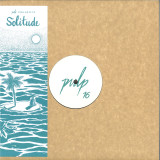
Lost private press gem "The Swimmer" by Florida native Danny Morgan, is a cool and breezy, beguiling easy glide from 1987. It should've been huge. It still could be. It's a mellow marina masterpiece and quintessentially Balearic. Over the past few years, it's gathered a cult following yet the album from which it derives is virtually impossible to come by.
Finally available on a standalone, fully remastered 12", it's been backed by an instant classic "Seahawks Swimming Through Space Remix", courtesy of those beloved cats Jon Tye and Pete Fowler.
These won't be around for long, limited to just 500 copies for the world, so don't drown in procrastination.
One listen and you'll want to dive in.
Fans of the deeply entrancing, nautically and narcotically-enhanced cuts of Dennis Wilson or Michael Nesmith’s The Prison will be instantly mesmerised by the sheer beauty of "The Swimmer". After tracking Danny down, we wanted to know more. How does something so magical come about? The man himself answered thusly:
"At the time I was running many miles on the Sanibel Island beach and doing a bit of swimming in the Gulf Of Mexico. Keeping my mind busy on a long run, I imagined a “what if” movie scene. Almost every run or swim someone is sitting there on the beach watching what goes by. Back at my desk I started finger picking some chords and the picture in my head showed up. I punched in a rhythm loop and the song was on its way.
Adrian Belew and I had the same manager Stan Hertzman so I was listening to some of Adrian’s work. I was a huge fan of Joni Mitchel and the unusual chord changes and melodies in some of her songs. All of this influenced the sound on “The Swimmer”
I had a support band at the time living in my house on Sanibel Island so we practiced a lot. We came up with an arrangement of the song and we took across the bridge to John McLane’s Important Studios and recorded it. I played finger picking acoustic guitar and sang, Tim Miller played drums, Jeff Holck played fretless bass, Dave Dust played lead guitar and John McLane played keyboards and sang harmony."
Our deep thanks must go out to Jon Tye (MLO / Seahawks / Ocean Moon) for first hipping Be With to this stunner. We returned the favour by giving him the keys to the stems and requesting a strung out remix to go on the flip - he returned having conspired with Pete Fowler to conjure a cosmically copacetic rerub with the subtropical chug of the "Seahawks Swimming Through Space Remix".
Putting together the artwork for this 12" release was an enjoyable process. It was nice to be able to flip the original sleeve for the Beach Life album by using previously unseen photos, sent to us by Danny. We wanted to create something that looks like it would've gone with the LP sleeve. We think we've cracked it. Simon Francis remastered Danny's original audio and Cicely Balston's precise cut for Alchemy at AIR Studios ensures this 12" sounds appropriately outstanding. The immaculate Record Industry pressing will ensure this previously lost masterpiece stays forever found.
Penguin Cafe kündigen heute ihr fünftes Studioalbum Rain Before Seven... an, das am 7.Juli 2023 bei Erased Tapes erscheinen wird.
Eine zuversichtliche Grundstimmung durchzieht das fünfte Studioalbum von Penguin Cafe, Rain Before Seven…, wobei es sich keinesfalls um jenen extrem selbstbewussten, fast schon prahlerischen Optimismus handelt, sondern eher um so eine auf bescheidene Art hoffnungsvolle Grundhaltung, die man den Menschen auf der Insel ja häufiger nachsagt. Auch wenn alle Anzeichen das Gegenteil behaupten, spürt man hier sofort diese Gewissheit, dass sich alles doch noch irgendwie zum Guten wenden wird. Vermutlich zumindest.
Der Titel des Albums geht auf eine alte Bauernregel zurück, wobei die gereimte Vorhersage – „… fine before eleven“: ab 11 Uhr also wieder alles klar – auf ein baldiges gutes Ende hindeutet, vollkommen unabhängig davon, was die Wissenschaft sagt: „Ich habe diesen Spruch in einem Buch entdeckt. Davor hatte ich ihn noch nie gehört“, erzählt Arthur Jeffes, der Kopf von Penguin Cafe. „Er hat so einen dezent optimistischen Beigeschmack, und das gefällt mir sehr. Man verwendet ihn heutzutage kaum noch, aber der Reim beschreibt tatsächlich Wetterphänomene in England, die vom Atlantik aus über die Insel ziehen.“
Angefangen beim leinwandgroßen und schwärmerischen Eröffnungstitel „Welcome to London“, der mit einem Augenzwinkern auf Morricone anspielt, bis hin zum „Goldfinch Yodel“, jenem „Maibaum-Banger“ (um es mit Arthurs Worten zu sagen), mit dem das neue Album ausklingt, zieht sich ein angenehmes Gefühl von Leichtigkeit und Lebensmut durch den Longplayer, unterfüttert mit der Ausgelassenheit exotischer Rhythmen. Alles wirkt spielerisch und verspielt, und selbst der Titel ist eine Anspielung – auf A Matter of Life… aus dem Jahr 2011, der letzten Veröffentlichung, deren Titel in eine Ellipse mündete Jenes Debütalbum von Penguin Cafe diente einst als Bindeglied und Brücke – zwischen dem legendären Penguin Cafe Orchestra, das einst Arthurs Vater Simon Jeffes leitete, und dem gefeierten Nachfolger, als dessen Mastermind seither Arthur verantwortlich zeichnet.
„Ich glaube, das wirklich Neue an seinem Ansatz bestand darin, spannende und schräge Ideen zu nehmen – und dann seltsame Dinge damit anzustellen“, meint Arthur, „dabei aber konstant im Blick zu haben, dass es hinterher auch schön klingt und emotional ansprechend bleibt.“ Dieses Ethos lebt weiter in der Musik von Penguin Cafe: „Dazu haben wir uns entschlossen, als ich daran anknüpfte, schließlich spielen wir die Sachen meines Vaters und machen dazu auch neue Musik, die im selben Klanguniversum angesiedelt ist. Das bedeutet, dass ich gewissermaßen moralisch dazu verpflichtet bin, den ursprünglichen roten Faden im Auge zu behalten – und dafür zu sorgen, dass wir nicht plötzlich in Richtung Thrash-Metal abbiegen.“
Dennoch waren die rhythmischen Elemente, die zum Teil sogar an elektronische Sounds erinnern, noch nie so präsent und tonangebend wie auf Rain Before Seven…, was durchaus auch dem Co-Produzenten Robert Raths geschuldet ist. „Find Your Feet“ etwa hat ein Beat-Fundament, das weit über einen bloßen Pulsschlag hinausgeht. Abgemischt von Tom Chichester-Clark, blitzt an Stellen wie diesen etwas auf, das Arthur selbst als „fast schon elektronischen Vibe“ bezeichnet, um dann ganz aufgeregt zu ergänzen: „Es geht vor allem auch einfach ums Spaßhaben, was auf den letzten drei Alben nicht so zu hören war.” Extrem ausgelassen klingt auch „In Re Budd“, das dem verstorbenen Ambient-Urgestein Harold Budd gewidmet ist. Arthur erfuhr von dessen Tod an jenem Tag, als er diesen feierlichen Ohrwurm komponierte, dessen Synkopen deutlich komplexer sind, als sie auf den ersten Blick wirken. Auf einem präparierten Klavier gespielt, wobei die Filzstücke dem Track zusätzlichen Bounce verleihen, setzt Jeffes hier auf einen Afro Cuban Cafe-Vibe – was wunderbar zum widerspenstigen Geist des verstorbenen Budd passt.
Und schließlich wäre da noch das bereits erwähnte „Welcome to London“, das seinen Titel erhielt, als sich die Welt gerade wieder zu öffnen begann und die Menschen auch wieder Fernreisen antreten durften. Jeffes, der somit nach langer Zeit endlich wieder einen Fuß auf britischen Boden setzen konnte, war sofort beeindruckt von filmischen Soundtrack-Qualitäten (à la John Barry) dieses Stücks, als er mit dem Taxi von Heathrow nach West-London fuhr und zur Musik die opulente, in Dämmerungslicht getauchte Metropolenkulisse auf sich wirken ließ. Hier kann man deutlich die eingangs erwähnte Zuversicht raushören – und dazu vielleicht auch einen Hauch von bissiger Ironie: „Robert Raths hat der Sache noch eine Nuance hinzugefügt, die ich interessant finde, weil doch so viele Londoner ursprünglich gar nicht aus London stammen. Man schlägt also in London als Zugezogener auf, man weiß noch nicht, zu welchem Lager man sich zugehörig fühlen soll, und dann wird man auf der Straße überfallen und ausgeraubt – und in dem Licht betrachtet, hat dieses ‘Welcome to London’ doch einen eher sarkastischen Beigeschmack.“
With the next number on its list, Exarde has brought to you the new blood from Italy. NND is carrying a robust warehouse vibe through the whole EP and this time it is even stronger than before.
All simply because this one is an excellent reminder about dark nights from back in the day. Since 2016 Mr. Moretti stepped in the game of his own music production and now he is presenting a 3rd solo release.
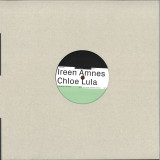
Tresor is proud to present the debut split 12" from Chloe Lula and Ireen Amnes. Meeting in the darker, harder-edged side of the Berlin techno scene in 2019, the pair have regularly collaborated and performed together, but Synergy marks the first time they've shared a record sleeve. Amnes describes Synergy as "the world we built while thinking about our journey as friends and the connection we share as people and artists," and while the record highlights their relationship and shared influences, it also showcases how each has grown into their respective lane.
Amnes' tracks lean into significantly more distorted territory, characterized by a dense fog of grainy pads punctured by sharp, expertly-programmed percussion. On "Our Bodies," these fragments are sculpted into driving hardware gear, replete with distant vocals and acidic squelches, where "Fragments of Desire" makes space for a more somber attitude, descending into murky, psychedelic electro.
In counterpoint to Amnes' deep atmospherics, Lula's contributions are driven by intricate sound design and a focus on dancefloor
impact. Taking cues from Regis and the Birmingham techno sound, she reins in the distortion of 2021's Errant Bodies for aufnahme + wiedergabe in favor of rolling techno and breakbeat-inspired rhythms that nod to her EBM influences. Making use of the extra space, she builds tension through heaving, textured basslines and crescendos of noise, and on EP closer "Event Horizon," she carves through the beat with her own metallic vocals.
Synergy includes a digital bonus track from each artist. Lula's sees her pushing deeper into finely-tooled techno territory, her drums at a swift, driving gallop, surrounded by ominous swaths of reverb. In contrast, Amnes crafts a gritty warehouse trip, sharpening the angles of her drums and detuning her synths until they sound bent and alien. Complete with the EP's physical cuts, these tracks are a testament to how the pair can simultaneously complement and contrast with each other, departing from their shared sonic origins and ending up in wildly dierent destinations.
Selected Classics presents a crucially curated cross section of Colorado producer Andrew Dahabrah, aka FOANS’ finest work, sourced from a nearly six-hour self-released vault of tracks posted to his Bandcamp in 2018. Simply called Classics, the sprawling 100-song digital collection was intended as the project’s final offering- a comprehensive culling of the hard drive, after which there’d be “no looking back”.
Fortunately, minds have changed, and FOANS remains extant, but an air of finality and desperation still haunts these tracks, born of bruised emotions and the burnout of working seven days a week “in the middle of nowhere” as an electrician in isolated oil fields. It’s music of hidden hours and private survival, slipstreaming through sleek cybernetic house, gauzy matrix ambience, low-slung dusty jack, and woozy fractal techno. Placeless and weightless, heady and kinetic, Selected Classics distills Dahabrah’s sidewinding inner vision to its swooning fiber optic essence.
"I cant believe its true" is a great uplifting Modern Soul tune produced, written and published by Gospel music veteran and Coconut record label owner Pastor Dr. Arris D. Wheaton from Dallas, Texas. He's now 77 years old, still kicking and licensing his stuff to respectful little labels like Stream Records. Counting on the vocals of Bobby Patterson’s of Pama and Jetstar labels fame, “I can’t believe it’s true” is a dancefloor destroyer of the highest order with perfect hooks and a production that still leaves you wondering why in the world these guys didn’t become acclaimed music stars as they sure deserved. Creators’ formation included Bobby Patterson (vocals), Andrew Jones (Guitar and background vocals), Timothy McNealy (Tambourine, Trombone, Organ and vocals), Ronnie Brewster (Drums), Robert (bobby) Simpson (Sax, Vocals and Band Leader), Billy ‘Sweet ‘Pea Thomas (Trumpet) and Michael Fugett (Bass and background vocals)
When he‘s not writing or recording, Baba Stiltz immerses in fearless fiction by the likes of Denis Johnson and Dodie Bellamy; prose where pedestrian details become transcendent in aggregate and the inner lives of marginal characters are examined as though they were kings.
A similar thesis runs through „Paid Testimony“, the essential second tape of minimalist guitar music from the FilipinoAmerican-Swedish artist.
In recent years, Stiltz has made like Lee Hazelwood‘s Cowboy In Sweden in reverse, making annual pilgrimages from Stockholm to California and reconnecting with his roots via a guitar and a Fostex 4- track. He‘s drawn to the less glamorous corners of the golden state, an observant habitué of unkempt streets and dive bars stretching from LA to Vacaville. It‘s a long stretch from the jetset techno clubs
where Baba originally plied his musical trade, but it‘s where he finds characters and ideas worth writing about.
The characters on „Paid Testimony“ are on the edge and on the run. Surrounded by flawed men with big schemes since childhood, he extrapolates characters who plot bank heists and order milk and vodka in AM hours, the type of confrontation- prone characters who „say some shit, make everyone uncomfortable and then just split.“ To focus on the rawness of this document would discount the humor and sympathy with which he treats his characters, not to mention the subtly- psychedelic songwriting recalling David Berman, early Smog, the original indie rock minimalist poets.
On the final song, Stiltz looks back on the city that raised him „Stockholm,“ referencing „young professionals carelessly living“ before adding „I can‘t say I‘m not jealous even though I live my life just like they do.“ There‘s an honesty in the small details revealed on „Paid Testimony“, and a defined sense of place, be it Stockholm, Sacramento or some dim barroom across from the Bank Of America.
Baba doesn‘t quite fit in anywhere. This outsider quality has often been used as a marketing tool, yet here, it lends a writerly aspect to the proceedings, an unreality to the everyday.
FEVR is a post-punk trio from L.A. that delivers what surely could be described as the best American post-punk album in years, the simplicity and quality of the arrangements and the very unexpected vocal works vocals transports immediately to the best of the best of the genre, not being at any time encapsulated in it, very surprising changes of style happens all the time making the listening a truly musical journey.
No doubts; this one will become a sure future jewel in the collectors market. Comes presented on deluxe DOUBLE GATED edition including lyrics in a one-off truly limited edition of 300 copies lacquered pressed on 180gr.
High quality solid black vinyl. All tracks have been specially remastered for long cut vinyl by Daniel Hallhuber at Young and Cold Studios.
Fates Warning’s ninth studio album, “Disconnected,” contain recurring images of separation and incompleteness reflective of the album’s title. “To do something similar to earlier release would have been an easy way out,” says guitarist Jim Matheos of the set. “The best thing for me to do, and the biggest inspiration, is to say, ‘Let’s do something different now and stretch ourselves in the other direction.’ ” Disconnected,” sees Fates Warning collaborate with ex-Dream Theater keyboardist Kevin Moore, as well Armored Saint’s Joey Vera on bass and backing vocals. Vocalist Ray Alder takes a more active role in the writing process for this album. Matheos, who writes the group’s music, has served as Fates Warning’s primary lyricist for years, but on “Disconnected” Alder pens the words to two songs, including the first single, “One.” Another “Disconnected” track, “Pieces Of Me,” is the first lyrical collaboration between Alder and Matheos. Throughout the band's career, Fates Warning has always cut a clear path, remaining steadfast in their vision to create inspired progressive metal. A must have for fans!
- Moanin’ (Bobby Timmons)
- Superstition (Stevie Wonder)
- Iko Iko (James Crawford)
- Señor Blues (Horace Silver)
- When A Man Loves A Woman
- (C. Lewis & A. Wright)
- Freedom Jazz Dance (Eddie
- Harris)
- Sidewinder (Lee Morgan)
- Brother Where Are You?
- (Oscar Brown)
- Wade In The Water (Traditional)
- Work Song (Nat Adderley)
- Land Of 1.000 Dancers (Chris
- Kenner)
- Gimme Some Lovin’ (S
- Winwood & S. Davis)
- Motherless Child (Traditional)
- New Orleans Strutt (Jack
- Dejohnette)
- La Place Street (Stanley
- Turrentine)
- Amen (Traditional, Arr. By Bob
- Belden)
- Jubilation (Junior Mance)
- Joshua (Traditional)
- Mr. Magic (Ralph Macdonald &
- William Salter)
- Theme From Shaft (Isaac
- Hayes)
- Nobody Knows The Trouble
- I’ve Seen (Traditional)
Who did Aretha Franklin not want to miss out on when she recorded
her most inspiring albums in the early Seventies? Who gave Steely
Dan the beat? Who did Isaac Hayes, Donny Hathaway, BB King,
‘Sweet’ Lou Donaldson and Joe Cocker give the chair behind the
drums? No drummer has seen the inside of a studio as often as
Bernard ‘Pretty’ Purdie.
Not for nothing do colleagues attribute the ‘funkiest soul beat on the
scene’ to the drummer, and consequently, Purdie has never relied on
the genre of jazz alone, but rather curiously looked beyond the
borders. Sessions with The Rolling Stones, James Brown, Jimi
Hendrix or Tom Jones are no problem for him, whose precise and
sensitive playing is synonymous with drive and groove. This is
probably one of the reasons why his rhythms are still sampled by
many DJs today.
Released on CD back in 1996 and 1997 (and now out of print), the
two ‘Soul to Jazz’ recordings have a cult factor today and sound as
fresh as they did back then. Now both albums are released together
for the first time as a 3LP set.
These recordings are peppered with lots of prominent star guests
from jazz and soul, from Eddie Harris, Michael Brecker and Nils
Landgren to Hank Crawford, Stanley Turrentine and Cornell Dupree.
Purdie’s ‘Soul to Jazz’ project takes two different approaches: The
first part focuses on the renowned WDR Big Band led by Gil
Goldstein. Soul classics such as Stevie Wonder’s ‘Superstition’,
‘When a Man Loves a Woman’, Eddie Harris’s ‘Freedom Jazz Dance’
and Lee Morgan’s famous groove tune, ‘Sidewinder’, are interpreted
in large scale sound. One discovery of these recordings amidst all the
renowned guest soloists is the New York-born singer, Martin Moss.
The great success of this first album, released under ‘Soul to Jazz’,
led to ‘Soul to Jazz II’, a more intimate record, but one that picks up
where the first recording left off, by exploring similar themes. Again,
Purdie has called together a notable band of kindred spirits, including
saxophonists Hank Crawford (BB King, Ike and Tina Turner, Ray
Charles), Stanley Turrentine (Jimmy Smith, Shirley Scott) and Vincent
Herring, as well as guitarist Cornell Dupree (King Curtis) to pianists
Benny Green and Junior Mance.
Bernard Purdie’s ‘Soul to Jazz’ is a timeless classic and a blueprint of
the soul jazz genre in all its facets. Above all, it is a portrait of one of
the most influential and best drummers in the world, who made jazz
groove with his inimitable funky soul beat
- La Ballade Du Zwin
- Ein Kleiner Mann
- Ud
- Piume Al Vento
- Nelle
- Granvelle
- Sabina And First Variation
- Un Instant Sous La Hache
- Geuzenlied
- Sabina And Second
- Variation
- The Ff Boom
Part fantastical historic sonic biopic, part anthropologic
journey into the deep roots of Belgium’s monstrous
cosmic rock sound, this wholly individualistic concept
album combines the lead members of the mighty COS
(Daniel Schell and Pascale Son) with studio genius
Alain Pierre (Ô Sidarta / Des morts) and celebrated
Dutch progressive rock singer Dick Annegarn, for what
many consider to be both the overlooked hiding place
of Belgium’s deepest psychedelic moment and
European prog’s lost map to the ‘Franco-Flemish
Boom’.
Emerging from the wider musical family that counted
Marc Moulin, Placebo and Marc Hollander amongst its
creative kin, Daniel Schell’s most profound conceptual
project ambitiously combines the tale of the heroic
historical figure of Count Egmont (1522–1568), while
simultaneously tracing the evolution of the ud, or oud,
(‘the grandfather of the guitar’) in this multifarious
hallucinogenic epic.
Featuring key members of other collectable groups
such as drummer Felix Simtaine from Solis Lacus and
bass player Jean-Louis Baudoin from the mythical
Classroom (COS predecessor), this best-kept secret
vinyl release also harbours the voices of Dirk Bogaert
(of Belgian hard rockers Waterloo), as well as Catalan
singer Ilona Chale (Marc Hollander / Aksak Maboul)
before her later tenure as the COS front woman.
Initially released in 1978 via Zeuhl school distributors
Free Bird alongside French pressings of Don Cherry,
Jacques Thollot and CAN, it is plain to understand the
niche nature of this maligned ‘lost COS’ LP as it finally
blooms from between the cracked branches of
European jazz-rock-synth-psych-prog-pop history…
and beyond
- A1: George Michael - Too Funky
- A2: The Shamen - Ebeneezer Goode
- A3: U2 - Even Better Than The Real Thing (The Perfecto Mix)
- A4: Annie Lennox - Why
- A5: Richard Marx - Hazard
- A6: Bon Jovi - Keep The Faith
- B1: The Klf - America What Time Is Love?
- B2: The Cure - Friday I'm In Love
- B3: Heaven 17 - Temptation (Brothers In Rhythm Remix)
- B4: Electronic - Dissapointed
- B5: Boy George - The Crying Game
- B6: Marc Almond - The Days Of Pearly Spencer
- B7: Elton John - The One
- C1: Bruce Springsteen - Human Touch
- C2: Sophie B. Hawkins - Damn I Wish I Was Your Lover (Radio Version)
- C3: Patty Smyth & Don Henley - Sometimes Love Just Ain't Enough
- C4: Manic Street Preachers - Motorcycle Emptiness
- C5: Paul Weller - Uh Huh Oh Yeh! (Always There To Fool You!) (Always There To Fool You!)
- C6: Simple Minds - Love Song
- C7: Tears For Fears - Laid So Low (Tears Roll Down) (Tears Roll Down)
- D1: Snap! - Rhythm Is A Dancer
- D2: Dr. Alban - It's My Life
- D3: Charles & Eddie - Would I Lie To You?
- D4: Shanice - I Love Your Smile (Driza Bone Remix)
- E3: Tori Amos - Crucify (Remix)
- E4: Crowded House - Weather With You
- E5: Ten Sharp - You
- E6: Simply Red - For Your Babies
- E7: Lisa Stansfield - All Woman
- F1: Jimmy Nail - Ain't No Doubt
- F2: Take That - Coult It Be Magic (Rapino Radio Mix)
- F3: Kylie Minogue - Give Me Just A Little More Time
- F4: Roxette - How Do You Do!
- F5: Go West - Faithful
- F6: Wet Wet Wet - Goodnight Girl
- F7: Vanessa Williams - Save The Best For Last
- F8: Whitney Houston - I Will Always Love You
- D5: En Vogue - My Lovin' (You're Never Gonna Get It) (You're Never Gonna Get It)
- D6: Cece Peniston - Finally
- D7: Dina Carroll - Ain't No Man
- D8: Lionel Richie - My Destiny
- E1: Shakespears Sister - Stay
- E2: Tasmin Archer - Sleeping Satellite
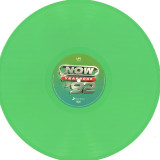
NOW Music is proud to present the next instalment in our ongoing ‘Yearbook’ series – and our first to celebrate the ‘90s, NOW – Yearbook 1992; 79 tracks from a brilliant year in Pop! Available as a Special Edition CD housed in ‘hard-back-book’ packaging, including a 28-page booklet featuring a summary of the year, a track-by-track guide, a quiz, and original singles artwork, a standard 4CD package, and a Limited edition 3-LP set pressed on green vinyl.
"I have such vivid memories of the early 90s when everyone in our community couldn't stop talking about that incredible movement called "La Ruta del Bacalao" or simply "La Ruta." My brother was a regular on the Ruta, and I can still feel the excitement when he brought home those tapes after a wild "destroy" weekend.
Those AC/TV, Spook Factory, and Spiral cassettes became my ultimate soundtrack back then, and they were probably my first taste of electronic music."
Armand is the debut of a sound collage project called PVNCTVM, which refers to Roland Barthes' term "Punctum". A handful of field recordings, taken during extensive walks through nature and landscapes of certain places, evoke memories in a similar way as sometimes photographs do. Based on this material, personal impressions, literature, photographs, sketches and more a process of various sound experiments begins to create soundscapes which reflect the deterioration of memories between various states of mind. Instruments and other sound sources are used symbolically, as are elements of musique concrete, ambient, glitch and drone.
»Don’t Ever Let Me Know« is Sheffield’s first solo release since 2018’s »Repair Me Now« (Glistening Examples) and is a work in a similar mode to that album in that it comprises two lengthy pieces of multiple movements and moods. For this new work, and as a kind of ode to his late father, Sheffield has employed samples entirely taken from (or inspired by) the city in which both men were born. In this way, the sounds have been utilized as a kind of shorthand for the specific subjects at hand. The two audio assembla ges, meanwhile, mirror the ways in which loss and memory are processed – with both melancholy and wonder in equal measure: at once beautiful and confounding.
Colin Andrew Sheffield (b. 1976, El Paso TX) is a composer whose work is focused on the recontextualization of samples derived from various commercially available recordings – generally those taken from his own expansive collection of records, tapes, and compact discs. Conceptually his output is akin to plunderphonics-style sound collage, though aesthetically it is seemingly closer to soundscapes of ambient drone. Since his earliest recordings from the 1990s, his work has developed into a kind of hybrid of the aforementioned approaches.
- A1: The Skatalites – El Pussycat Ska
- A2: Carlton & The Shoes – Love Me Forever
- A3: Sound Dimension – Rockfort Rock
- A4: Johnny Osbourne – Sing Jah Stylee
- A5: The Heptones – Pretty Looks Isn't All
- B1: Slim Smith – Rougher Yet
- B2: Lone Ranger – Automatic
- B3: Horace Andy – Fever
- B4: Prince Jazzbo – School
- B5: The Wailers – Simmer Down
- C1: Burning Spear – Rocking Time
- C2: Alton Ellis – I'm Just A Guy
- C3: Sugar Minott – Oh Mr Dc
- C4: Jennifer Lara – Consider Me
- D1: Don Drummond – Confucious
- D2: Michigan & Smiley – Rub A Dub Style
- D3: Sound Dimension – Full Up
- D4: Dennis Brown – No Man Is An Island
Bunker New York luminary Abby Echiverri joins the Patterns of Perception imprint with her Deformation EP, a diverse collection of playfully psychedelic techno tracks infused with a radiant cosmic energy.
Produced in 2021-22, Abby drew inspiration from the captivating physics simulations her partner was working on at the time, ultimately imbuing the music with an ethereal atmosphere that permeates the entire EP, and from which the tracks derive their names.
PTN03 presents a cohesive yet diverse collection of tracks, blending psychedelic energy with delicate and profound moments. Abby's music carries an almost hopeful quality, with drum programming that leans towards groove and shuffle, and the incorporation of diminished chords and progressions that pose questions to the listener. The Deformation EP is an intricate record that showcases Abby Echiverri's distinctive, three-dimensional approach to techno: one that never feels oppressive, but calls to mind a sense of exploration and freedom.
Cosmic afterburners dialled up to the max, Pamela Records voyage out to the ends of existence with their latest four track trip from Jo Sims. Taking the lead leap of faith is esteemed producer, remixer and DJ David Holmes, who provides a signature cinematic remix of the title track ‘Bass – The Final Frontier’. Like the climax of a sci fi space odyssey, Holmes molds the track into a synthtastic epic with otherworldly vocal refrains ringing around your brain and body. The original mix is up next, a new beat flexing stomper that will have any crowd begging for more.
Flip it for darker, twisted chugathon in the form of ‘Demons Of Dance’ before the trip hop tinged, downtempo delight with a distinctly space age touch ‘Mumbo Jumbo’, takes the final slot.
DJ Feedback:
AXEL BOMAN
Ouff amazing 12" !!!!!!! love love love it
JD TWITCH/ OPTIMO
Excellent stuff!
RON BASEJAM
Ruddy hell, Holmes with the spirit of weathers. love the hi-fi mixdown too, the music providing the power. epic.
JACQUES RENAULT / LETS PLAY HOUSE
Wow, demons of dance and the final frontier...killer 4 tracker
HOT TODDY/ CRAZY P
The David Holmes mix is superb!
EDDIE C/ RED MOTORBIKE
I love this!! The David Holmes Remix is outstanding!
JUSTIN ROBERTSON
Loving this very much
MAKE A DANCE
Huge yes from me. Loved the first release on this label so nice to see it back with more fire
PBR STREETGANG
Really feeling this e.p. every track is strong, and the DH remix is stunning. Can’t wait to play them out.
JKRIV / RAZOR-N-TAPE
I really like the machine boogie vibe of the original Bass and that remix really takes its time and builds to a beautiful peak. All winners here
SUB CLUB HARRI
Lovely stuff
LEO MAS/ AMNESIA
The Final Frontier (David Holmes Rmx) is great, love it
JAYE WARD
YES!!! Glad there’s another Pamela! David Holmes mix is deep and lustrous.. REALLY love the OG’s tougher more dance orientated version.. love the other two tracks too especially mumbo jumbo.. brilliant release!!!
- A1: Tramps!
- A2: Feel Of Time
- A3: Housewives
- A4: Blue Feather Boa
- A5: A Job For Derek
- A6: What A Life
- B1: Kind Of Beyond
- B2: Sportswear Couture
- B3: Typhoon
- B4: Peacock Punk
- B5: We Live Here
- B6: Boudicaaa
- C1: Dark Green
- C2: It's In Our Hands
- C3: Take The Toys From The Boys
- C4: Climbing The Walls
- C5: It's No Choice
- C6: March To Greenham
- D1: Peacemaker
- D2: Battle Lines
- D3: Life On Earth
- D4: We Will Fight
- D5: Women Standing Strong
A seismic, cinematic double dose from two sonic veterans with previous in Wire, Electrelane, and Better Corners. MEMORIALS’ kaleidoscopic debut covers broad musical territory, encompassing protest songs, fuzz-flooded pop, searing drone, and psychedelic freakouts whilst carving out a sound that is uniquely their own.
Both halves of this dynamic double album were originally conceived as individual film soundtracks but once the multi-instrumental duo of Verity Susan & Matthew Simms brought ‘Music For Film’ into a live space, the desire to shape it into a cohesive whole was more than they could resist. The resulting, intoxicating, musical odyssey can be viewed independently from the associated films and stands proudly as an ambitious artistic statement.
“The music we like and admire ranges from challenging to really tuneful, and we try to bring all that together in a way that sounds natural.” - MEMORIALS
‘Music For Film: Tramps! & Women Against The Bomb’ – is scheduled for release on May 12th 2023 via The state51 Conspiracy. The limited double LP (500 only) comes in an embossed reverse board sleeve and indie shop editions will also include an exclusive poster.
- A1: Schaue Dir
- A2: Insbesondere, Wenn
- A3: Deines Standortes
- B1: Besonderen Blick Werfe Bitte
- B2: Dürfen Vermeiden
- B3: Jetzt Einwände Kommen
- B4: Immer Wieder Situationen Geben, Bei
- C1: Haben Doch Keine Sorge
- C2: Werden Wir Auch Noch Ausführlich
- C3: Oder Mit Dem Rücken Zur
- C4: Oft Außerhalb
- D1: Durch Den Unscharfen Vordergrund
- D2: Immer An Derselben Stelle Gestanden
- D3: (Genau Genommen Die Erddrehung)
- D4: Orientieren
"Bastian Epple makes an eagerly anticipated return to marionette under his elusive MinaeMinae guise that imagines rich sonic architectures for the journeying spirit to voyage to. Räumlichkeit is Epple’s debut album and third release to date following Gestrüpp from 2020, venturing further into melodic electronic nostalgia and percussive beat oriented soundscapes.
Growing up in a small village in southern Germany, Bastian Epple was never interested in kitschy folk sounds, rather he took solace in the time he would spend meditating to repetitive and hypnotic patterns. His guitar strumming and what sounded to his mother like a young Philip Glass on a cheap Casio keyboard encouraged little Epple to tread on this self-taught path of developing his own musical language. This led him to start experimenting with a tape recorder and layering sounds with non-musical samples to eventually working with a DAW.
Bastian went on to study Media Art at the Center for Art and Media (ZKM) in Karlsruhe and graduated with a diploma in film and documentary media - where he now works as a freelance filmmaker and lecturer at Stuttgart Media University. However, this never stopped him from creating and playing with wide-eyed sounds, eventually amassing a vast collection of tunes and finally emerging from this anonymity.
Utilizing modular synth, self made tape echos, synthetic sounds, recordings of ethnic percussion and guitar, MinaeMinae understands musical material similar to documentary footage which he would splice, repitch, and rearrange intuitively into captivating worlds."
On their sophomore effort Tusky, surrealist duet Robbie & Mona ascend beyond the lo-fi scrawlings of their debut album to something altogether more grandiose. Between the lights down drama of sprawling opener ‘Sensation’, to the ‘roll credits’ coda of closer ‘Always Gonna Be A Dead Man’, Tusky exists as a glitzy, lucid journey playing out before the listener.
While debut album EW captured William Carkeet and Ellie Gray as they were finding their feet with one another, creating Tusky was a wholly symbiotic process from day one. “We got better at knowing what each other wanted,” William offers. “This was the album that we were trying to make from the beginning.”
Simultaneously evoking multiple eras of music, the album drifts through worlds of synth pop, jazz, trap, drill, ballroom waltz and leftfield electronica, with the scatterbrain sound palette melded by a peppering of instrumental motifs and William’s addiction to sampling sounds across multiple tracks. “I wanted there to be this weird dimensional thing going on,” William explains, “where songs from the album are playing in multiple places.”
The record sees an expansive cast of musicians assembled, with a much heavier focus on live instrumentation than previous outings. Alongside the expected fare of crackly synths, samplers and drum machines, Tusky gets its glossy sheen from a rich tapestry of jazz drums, double bass, grand piano and saxophone.
Most of the tracks are laden with improvised saxophone from Campbell Baum (Sorry, Broadside Hacks) and Ben Vince (Housewives, Joy Orbison), much of which was scrambled by William in post-production, lifting scraps from one song and layering them atop an entirely different track. Elsewhere, session musicians were cherry picked, including Bingo Fury, his drummer Henry Terrett, and a string ensemble led by Caelia Lunniss and Jo Silverston (Spindle Ensemble).
Most surprising is a rap feature from Monika (of South-East London collective Nukuluk), who brings album centrepiece ‘Mildred’ to new heights with a fiery verse on pain. Aside from being the most unlikely addendum to a sombre piano ballad, it demonstrates Robbie & Mona’s natural state of playfulness, forever following emotions and sensuality over any notion of traditional compositional boundaries.
Many of Tusky's tracks owe their inception to cinema, be it the soundtrack to Betty Blue, the glowing films of Wim Wenders, or the surprising parallels between La Belle Et La Bete and Bad Boys. Equally, much of Robbie & Mona's new-found sense of tension and spectacle comes from William’s recent work soundtracking independent filmmakers, while Ellie gave greater priority to threading a narrative through her stream of consciousness writing style.
In all its majesty, Tusky celebrates creativity with creation. “If you begin to see fiction as real, you can reincarnate and become different things. You can grow,” Ellie implores. “Nothing stays the same. You can shed old characters in yourself. There’s great joy in that.”
'BATSUMI’s 1974 classic. Repressed at Pallas in Germany on 180g black vinyl. Cover printed on reverse board and includes printed inner sleeve with liner notes from Francis Gooding. Initial copies shipped with exclusive 30cm x 30cm print of Batsumi performing in 1974.
Batsumi is a masterpiece of spiritualised afro-jazz, and a prodigious singularity in the South African jazz canon. There is nothing else on record from the period that has the deep, resonant urgency of the Batsumi sound, a reverb-drenched, formidably focused pulse, underpinned by the tight-locked interplay of traditional and trap drums, and pushed on by the throb of Zulu Bidi’s mesmeric bass figures. The warm notes of Johnny Mothopeng’s guitar complete a soundscape that is at once closely packed with sonic texture and simultaneously vibrating with open space, and in whose shimmer and haze Themba Koyana and Tom Masemola soar. A sonorous echo emanating from an ancient well, reverberant with jazz ghosts and warmed by the heat of soul and pop, Batsumi is nothing short of revelatory.
Many groups from this period did not issue recordings at all, and Batsumi are unusual in even having left an official recorded legacy. Out of print since the 1970s, and never issued outside of South African in its entirety, Batsumi is a landmark South African jazz recording, and a key musical document of its time.'
Quiet landscapes and deep perspectives.
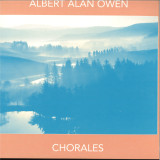
British composer Albert Alan Owen’s first widely available new work in many decades. Chorales is a meandering yet wonderful piano solo album recorded during the summer of 2020.
The album, through a series of beautifully simple piano pieces, features 20 ethereal compositions that are simply allowed to hang there in the air. Deeply emotional and spiritual, Albert Alan Owen’s Chorales ushers minimalism into the intimacy of aprofoundly elevating listening experience. Captivating.
Debut LP from fast rising Israeli pianist and producer Yoni Mayraz. "Dybbuk Tse!" combines jazz with the sound of 90’s New York hip hop. Yoni simultaneously interweaves unique Middle Eastern melodies, sophisticated structures and sounds, with beautifully crafted solos played by some of the scenes promising young talents. Fans of Alfa Mist should check!
Whitelands follow their acclaimed single ‘Setting Sun’ – which saw the London-based band added to the BBC Radio 6 Music playlist – with their first ever vinyl release, an EP of reworkings, which is released as a limited edition orange vinyl 10” on June 23.Simply titled Remixes, the EP features two reworkings of ‘Setting Sun’ by dreampop legends A.R. Kane – the short Initiation Dub and the epic Hero Remix, which comes in three parts, titled Departure, Initiation and Return and takes the song to some unexpected and exciting new places.“Whitelands came up in conversation three times in a week,” explains A.R. Kane’s Rudy Tambala of how he got to know the band and came to remix them. “Two times is coincidence, three times is a conspiracy, so I reached out to them on social media, and we started chatting. They’re cool, like baby Kanes. ‘Setting Sun’ was close to my heart, reminding me of ‘Fools Gold’ meets Slowdive versus Frank Ocean. Anyway, I heard several approaches in my head, so I thought, ‘Fuck it, let’s do ’em all’. “I knew I wanted to take a prog approach: Marvin Gaye’s What’s Going On, Pink Floyd’s The Dark Side Of The Moon, Sasha’s Involver2, Coltrane’s A Love Supreme, Frank Ocean’s Blond, etc. Even my own sixty nine. It’s that seamless drift from one part into the next, stretching the idea until it ruptures, creating space for a new way of perceiving; this has the first inklings of hive mind, telepathy, in a musical form; you dissolve into it as it dissolves into you. A fundamental dreampop construction and aim, whereby subject and object become one. Ahem. “As the extended mix took shape it suggested to me the three components of The Hero’s Journey, hence the titles. The three-minute pop song was determined by the technical limitations of the 7” vinyl single. Digital has obliterated that. The perfect dreampop song has no time limit. ‘Setting Sun’ A.R. Kane Hero Remix is timely.” Alongside Rudy’s reworkings is an equally dazzling drum’n’bass take on last year’s single ‘How It Feels’ by the band’s guitarist Michael in his howdogirlssleep guise.
Salt Peter, by Ruby (AKA Lesley Rankine), was originally released in 1995 to critical acclaim under the trip-hop and electronica tags,
quickly becoming the soundtrack to many a student, clubber and vinyl junkie’s life.
Roll on 25 years to find Rankine & her brother, Scott Firth (bassist with PIL) in Covid lockdown together following the death of their mother. What else would they do but make some music?
So, while noodling around with some ideas one night, Rankine remade one of her old Salt Peter songs and was so pleased with the result she decided to do the whole album.
Rather than simply remixing or remastering the original album she decided to rebuild it from the ground up with completely new production, arrangements and vocals.
With Scott’s additional production, engineering and mixing, Salt Peter 25 is a completely different album from the original, but still with Rankine’s distinctive vocals
and her ear for the quirky and the dark. With densely textured sounds and uncompromising arrangements, Salt Peter has matured into an exciting new and unique animal.
Salt Peter 25 is a deeply personal album, created during a very difficult time and so the cover, fittingly, features a striking photo of Lesley and Scotts’ mother,
as well as other family photos, again echoing the aesthetics of the original album.
Now released on delicious orange double vinyl with a beautiful gatefold sleeve, featuring additional art by Toronto based designer, Henry Faber.
Curious, he bid on the item and ended up winning it for a few dollars. Upon investigation, the simple and intuitive nature of its interface appealed to him, especially in comparison to the dense 'menus within menus' design of contemporary DAWs, and he soon began to seek out other programs from this 'first wave' of music software development. The result of over a year of study, experimentation, and creation (often involving direct correspondence with the software creators themselves), 'Universal Synthesizer Interface' is Roos's homage to this early era of algorithmic music making.
Those two prior releases were voted #4 and #5 best albums of the year, respectively, in the annual Francis Davis Jazz Poll of over 150 jazz critics. In two 4 1/2 Star reviews, Downbeat called Mesmerism "wonderfully simple, yet breathtakingly deep" and Off- Off Broadway (featuring saxophonist Greg Osby) "music robust enough to have you believe the energy generated by the group is its own discrete force."While the new release features the same musicians as on Mesmerism - Sorey on drums, pianist Aaron Diehl and bassist Matt Brewer - the result could not be more different.
Svitlana Nianio has been active in the Ukrainian and Polish underground music scenes since the early '90's both as a solo artist and a prominent member of the now disbanded avant-rock outfit Cukor Bila Smert (Sugar White Death). Her music draws on aspects of modern composition and traditional Slavic music, with songs and experiments from that early period culiminating in the 1999 album Kytytsi (Koka Records, Poland). Prior to that in 1995, Nianio recorded Lisova Kolekciya (Forest Collection) live in a simple home studio setting with Olexander Yurchenko and Konstantin Nazarenko.
Less indebted to folk tradition than Kytytsi, Lisova Kolekciya was performed using Casio keyboards, electronics, and voice, positioning itself more inline with Terry Riley's Shri Camel in its otherworldly reinterpretation of the ancient through modern means. Retaining aspects of traditionl music in its use of spare instrumentation and haunting vocal melodies, this largely unknown album pushes at the edges of what folk music might be, resulting in music previously described as being "deeply rooted in primeval myths, creating a world of magic realism, in which the temporal dimension and the other world constantly move and permeate."
Issued here officially for the first time after an extremely limited private cassette edition handed out to friends in 1996 - where the recording was twinned with the album Znayesh Yak Rozkazhi (Know How Tell Me) - Lisova Kolekciya comes packaged in a full colour offset printed sleeve featuring artwork by Svitlana Nianio and is limited to 300 copies. 100 copies are housed in a special edition sleeve handmade by Faraway Press and are only available to order direct from the label.
Repress!
Now available for the first time on vinyl since its original release in 1999 on Rawkus Records, Trescadecaphobia brings you the CLASSIC LP from Pharoahe Monch "Internal Affairs." Featuring production from DJ Scratch, Diamond D, and The Alchemist with verses from Canibus, M.O.P., Busta Rhymes, Common, and Talib Kweli.
Lewis II was the follow up to Lewis Taylor's epochal, self-titled debut album. It was initially released in 2000 and this double LP release, its first ever vinyl edition, has been heavily anticipated for nearly a quarter of a century. It's often years before most listeners catch up with an album's breathtaking vision and devastating execution, and so it has proved with Lewis II; it stands up exceptionally well today.
After Island rejected Lewis Taylor's second release (later released as The Lost Album), he returned to the studio to record Lewis II. Less esoteric than Lewis Taylor, Lewis II is a more polished, sophisticated funk and mature uptempo soul than the dark psych-soul of his debut. The production, whilst slicker, is a bit tougher, with more crisp, R&B-flavoured grooves and head-nod beats and more bass pumping up his voice. The vocal intensity present on album number one doesn't abate. Indeed, as Lewis himself noted, "my voice is better on Lewis II and the vocals are high in the mix."
The moody funk of "Party" sounds like a mad blend of Riot-era Sly Stone and Brian Wilson. It rides a stuttering drum machine groove with acapella harmony vocals arriving halfway through to stay for the duration. "My Aching Heart", with its clean, slick, late 90s R&B drums, could surely have been a single. Perhaps Lewis's idiosyncratic melodies would've been too challenging for the charts. Lewis *had hoped* "You Make Me Wanna" would be a single but the dank, organ-drenched groove, coupled with the growling eroticism of Lewis's vocals would've, again, made this beyond the pale for most mainstream music fans. Somewhat incongruous acidic synths and bleeps give way to a laconic summertime groove on breezy highlight "The Way You Done Me", all funky acoustic guitars and stunning, good-time vocals. Sumptuous ballad "Satisfied", a real fan favourite, marries unusual instrumentation with classic soul-ballad structure and closes with a monster guitar solo which almost out-Princes Prince in its gritty melodicism, set against sweeping strings of real majesty. Prog-Funk-Rock!
The dubbed-out, spaced-out "Never Gonna Be My Woman" is the closest the album comes to classic D’Angeloesque neo-soul, with echoes of the esoteric funk featured across Maxwell's contemporaneous Embrya. But what follows is on some next level business. As Lewis's biggest fan, Geoffrey Scull, noted, "the "I'm On The Floor" / "Lewis II" / "Into You" song cycle stacks up against any other consecutive 15 minutes of recorded music, ever!" And who are we to argue with that? These could've been hits for Justin Timberlake during his fascinating Timbaland-collaborating days, such is the sonic and textural pop experimentation at play here. The extraordinary title track sounds like an outtake from Marvin Gaye’s Trouble Man and spends its last third as a searingly dark piano-led psychedelic-guitar-crunching soul instrumental. Just astounding. And then. AND THEN! The way it segues into, er, "Into You" is just straight up genius. Goosebumps galore on this one, no words can describe its celestial brilliance. Just kick back and be beguiled by the "Let me come on over again" refrain that ornately adorns its sensational coda. Phew.
The swoonsome, lovelorn ballad "Blue Eyes", apparently written in the spirit of Marvin’s "Vulnerable", is a lush, slow swinger with some gorgeous noir touches. To close, Lewis completely retools Jeff Buckley’s beloved, beautiful "Everybody Here Wants You" and, while talking some liberties, even manages to surpass the original. Yes, really! With soaring, fiery vocals set against icy piano and psychedelic guitars, Lewis recasts Buckley's effort as dramatic, ethereal soul.
When it came to translating the original CD booklet into a 12 inch LP sleeve, thanks to some suggestions from Cally Callomon (head of Island’s art department, who designed all the sleeves for Lewis’s two Island albums and their singles) and his trusting us with his “Lewis Taylor” folder full of various negatives, test prints and whatever else he was able to salvage from the old Island art department, we’ve gotten pretty close to what the original LP sleeve would’ve looked like if it existed. Simon Francis’s vinyl mastering, presents the eleven tracks over a double LP so, as ever, the record sounds outstandingly good. The records have been cut by Cicely Balston at Air Studios and pressed at Record Industry.
Nothing compares to Lewis Taylor and nobody crafts a "B-Side" quite like him. Indeed, his long deleted B-Sides are the stuff of legend. So, gathered together for the first time on one slice of wax, we present The Damn Rest: an album's worth of B-Sides from the era of the 1996 Lewis Taylor ("Damn") album. More off-the-wall and abstract than the album proper, these rare, underheard tracks burst with Lewis's uncompromising genius. A lot more experimental, the music is still drop dead beautiful. The Damn Rest is the essential bridge between Lewis Taylor and Lewis II.
Lewis Taylor's self-titled masterpiece from 1996 was to be originally called Damn. You can see the word right there on the from cover. However, concerns over distribution in the US scuppered this desired title. When thinking about what to call this collection of essential B-Sides from the era of that first album, we thought The Damn Rest would be appropriate. But these tracks aren't simply throwaways or outtakes, as Lewis himself states: "each little group were recorded specifically for the release of each 'single'." These B-Sides were simply the next thing to happen after self-titled, and before Lewis II. In other words, you need this!
The collection opens with "Asleep When You Come", the A2 on the original "Lucky" 12". It's a slow-mo string-drenched soul offering, cast in cinematic soft-focus with a vocal performance from the heavens set against wonky, shuffling drums and delicate instrumental flourishes. Beautiful. Also from the "Lucky" single, "You Got Me Thinking" may actually be Lewis' funkiest moment and is definitely one of our favourites, a great, gently psychedelic funky club track, that's for sure. Next, the gorgeous, meandering "I Dream The Better Dream" is just sheer, metronomic bliss, with shades of Stevie Wonder. Just ask D’Angelo, who included the track on his Feverish Phantasmagoria show for Sonos. Not only a celebrity-fan-favourite, it's Lewis's, too: "My favourite has always been this track. In my fantasy it’s what early Soft Machine would’ve sounded like if Marvin Gaye was their lead singer."
As we move to the B-sides from the "Whoever" single, the first to feature is "Pie In The Electric Sky / If I Lay Down". It's a brilliantly sprawling classic. A head-nod funk workout in two parts; part psychedelic heavy soul jam, part breezy Marvin-esque near-instrumental of the deeply lush variety. It needs to be heard to be believed. Astonishing! Flip over for "Waves", a shimmering, dramatic, sweeping string-led fan favourite. The climax of the song is just too stunning for words. It's followed by the deep wyrd-soul of "Trip So Heavy" the final, dizzying track from the "Whoever" single and another celestial funk delight featuring strings, organ, twisted bass and heavy drums. From the "Bittersweet" 12", "A Little Bit Tasty" is a building, schizophrenic soul-jazz epic that starts out with Lewis performing a call and (distant) response with himself over a gentle mid-90s drum loop before snatches of heavy, crunching metal guitars blast apart the otherwise neat song structure. Ultimately, it's unarguable that The Damn Rest is worth it for the inclusion of the jaw-dropping "Lewis III" alone. A dazzlingly lush and stunningly sophisticated prog/soul hybrid that owes as much to "Pet Sounds" as "What's Going On" with arrangements that grow and unfold in layers. Just sparkling.
A compilation like this feels like one of those promo-only rarities they used to give out to a select few back in the good old days, so when it came to the artwork it only made sense to follow what Cally Callomon (head of Island’s art department) had done for the singles and promos back in the 90s. He even did us some fresh scribbles of “The Damn Rest” to match his handwriting that’s all over the first album and its singles. We hope you like it as much as the music contained within. Simon Francis’s vinyl mastering ensures these classic recordings sound as great as they deserve to. The record has been cut by Cicely Balston at Air Studios and pressed at Record Industry. We've lost Prince. We still have Lewis.
- A1: Lost (1 32)
- A2: Listen Here (4 18)
- A3: Hide Your Heart Away (4 52)
- B1: Send Me An Angel (4 48)
- B2: Leader Of The Band (4 29)
- B3: Yeah (4 46)
- C1: Please Help Me If You Can (4 20)
- C2: Let’s Hope Nobody Finds Us (4 42)
- C3: New Morning (5 45)
- D1: Say I Love You (4 43)
- D2: See My Way (4 01)
- D3: One More Mystery (4 49)
Lewis Taylor's legendary magnum opus: The Lost Album. "Now you're talking. That's my favourite LT album. Unlike all of the others, there isn't anything about it that embarrasses me." Straight from the genius's mouth. What can we say about this? Well, it's the most requested record ever at Be With Towers. The Lost Album was the intended follow-up to his first album but Island rejected it for fear of "confusing" the marketplace and its conception of Lewis as a soul artist. Their loss. It's a breezy sunset masterpiece.
The genesis of this incredible record needs unpicking a bit. Lewis stopped promoting the first album after a year and went home to record a completely different record that was the most un-R&B album you could probably ever hear: "I pushed in such an extreme direction the other way with what eventually became The Lost Album. It was a knee-jerk reaction to a perceived ‘trapped in R&B’ feeling I was going through at the time. Some people around me were in favour of it and others weren’t. In the end I think I lost confidence in it and did Lewis II instead." We did at least get Lewis II, which is a remarkable album, and he kept Island happy...for a bit. Not long after, Lewis was dropped. And what was to become The Lost Album could've been...er...lost. Forever.
Thankfully, however, Lewis and longtime partner Sabina Smyth revisited those scrapped demo tracks in 2003. They decided to re-arrange, re-record and then self-release them. So it was that the brand new version of The Lost Album finally dropped in late 2004. It's sheer perfection, and we don't say that lightly. The Lost Album was a fully 50/50 collaboration between Lewis and Smyth. As well as production, Sabina did a lot more writing on it, from the melody to "Listen Here" to the chord sequence for "Let's Hope Nobody Finds Us." Thankfully, Sabina is credited this time around.
No, it's not straight up "soul music" in the vein of his previous work. Yet, in its perfectly formed suite of one dozen songs, The Lost Album is dripping in soul. It's so warm, so effervescent and so alive with possibilities. It features deep, fresh imprints on well-loved, accessible sounds. It's a proper 70s style double album. Just one listen and the musical influences on The Lost Album are fairly self-explanatory, as Lewis recently told us, but it's always nice to hear that, in case we were in any doubt, he was definitely channeling Love, Yes, Brian Wilson, CSN, Laura Nyro and, of course, Todd Rundgren. The influences don't end there: "I’m particularly fond of my bass playing on that album, there’s a lot of Chris Squire going on which is cool."
Deep orchestral opener "Lost" is a sublime, harp-laced, string drenched gem, a cinematic, melancholic Axelrod-esque mini-epic that simply beguiles. Written by Smyth, it evokes Donny Hathaway's celestial "I Love The Lord, He Heard My Cry" from Extensions Of A Man. The only problem is the brief 90 seconds running time. It segues into the classic Brian Wilson-meets-power-pop-rock splendour of "Listen Here" which, with its outstanding extended harp-licked beatless intro, sounds like the younger cousin to Boston's "More Than A Feeling". We then drift into the ringing guitars of classic 70s rock anthem "Hide Your Heart Away". It's Lewis's personal favourite, "especially the multi-tracked guitar solo – I was listening to Boston at the time, which was fun." A-ha!
A new version of the heart-stopping, shoulda-been-a-massive-pop-hit "Send Me An Angel" opens Side B before the arrival of, in Lewis's completely correct words, "the clear standout, "Leader of the Band"; the perfect distillation of everything that album was trying to achieve." Soaring, piano-led Rundgren-esque power pop that makes the hairs on the back of your next stand on end. Truly, otherworldly. This is pure pop for now (and then) people. The simple jangly brilliance meets experimental prog-rock of "Yeah" sounds like simultaneously like prime CSNY and late 90s Radiohead (if they'd had a slightly more accessible bent and could write better tunes).
Oh, you wish The Beach Boys had continued writing amazing songs beyond Holland? Well, allow us to point you in the direction of the downlifting stunner "Please Help Me If You Can" and the warm textures and brilliant atmospherics of goosebump-inducer "Let’s Hope Nobody Finds Us". Words can't really describe the sheer beauty of these songs. So we'll stop trying. Just listen. Listen, listen, listen. Closing out this remarkable side of music, the accidentally Balearic "New Morning" should be blasting out at every sunrise set in Ibiza, this summer and forevermore.
The final side opens with the vaguely Beatlesey "Say I Love You". It's just classic, soaring pop-rock songwriting and should strictly be canonical. It's that good. The sassy, Stonesy swagger of "See My Way" injects enough rock'n'roll attitude to compensate for the rest of record's peace-loving, AOR sun-dappled vibe whilst album closer, "One More Mystery", emerging out of the rubble of the previous track, comes on initially like a Baroque-Pop George Harrison before piling crunching drums and screeching guitar solos atop the dreamy harmonies til close.
When asked what it means to have these records available on vinyl for the first time, Lewis is in no doubt: "It’s great and it’s really nice to be able to offer fans a different listening experience. There’s a whole other dimension with vinyl that taps into that whole nostalgia thing, well for me anyway. Something about the physical aspect of pulling it out of the sleeve and putting it on, it does tend to make you feel like you’re more engaged."
Lewis was adamant that he wanted all new artwork for The Lost Album vinyl sleeve and his brief was just the sort of classic tropical-beach-at-sunset you’d want to see on the front of a record that sounds like this. On the finished sleeve, the beach at sunset is just where we start out, before heading up through the painterly clouds and heading out into the stars. And yes, the lettering is a definite subtle nod to all those in-between-period Beach Boys bootlegs we all love. Simon Francis's sensitive mastering combines with Cicely Balston's precise cut for Alchemy at AIR Studios so the album sounds appropriately outstanding. The immaculate Record Industry double LP pressing will ensure this previously lost masterpiece stays forever found.
- A1: Kutiman - Badawee
- A2: El Khat - Ya Raiyat (Radio Trip Edit)
- A3: Boom Pam - Uniton
- A4: Baharat - The Egyptian
- A5: Les Dynamites - Pop Oud #2
- B1: Sababa 5 & Shiran Tzfira - Manginat Mahapeha (Feat. Matan Caspi)
- B2: Sababa 5 (Feat. Yurika) - Nasnusa
- B3: Sababa 5 - Baksheesh
- B4: Sababa 5 - Rosenzweig
- C1: Eje Eje - Saved From The Jazz
- C2: Yossi Fine & Ben Aylon - Peres
- C3: Yuz - Galgalit
- C4: Baharat - Parsley Disco
- C5: Romano - Six
- D1: Buttering Trio - Little Goat (Iza Ktana)
- D2: Koy Kardeşler - Shürük
- D3: Şatellites - Deli Deli
- D4: Cherry Bandora - Esý
Batov Records “Middle Eastern Grooves’ 7” series have become staples in the sets of DJs looking to broaden their sets to incorporate psychedelic and Middle Eastern sounds alongside the familiar funk, jazz, and soul catalogue. In the process, the series has enjoyed support across BBC 6 Radio Music, from Gilles Peterson to Gideon Coe, and made waves around the world, from Radio Nova and FIP in France, across the Atlantic to KEXP and Music Is My Sanctuary,
and laid the seeds for debut albums from series staples, Sababa 5 and Şatellites.
The compilation opens with the desert funk sound of "Badawee" by the iconic producer and multi-instrumentalist, Kutiman, followed by the instrumental edit of "Ya Raiyat" by Tel Aviv digging pioneers Radio Trip. Other highlights include the deranged & spooky synths of “The Egyptian” by Baharat, a prime example of the label's core sound, the
psychedelic Middle Eastern groove bomb "Deli Deli" by Şatellites, and “Nasnusa”, Sababa 5’s acclaimed collaboration with Japanese vocalist Yurika Hanashima.
Batov Records is thrilled to announce the release of ‘Middle Eastern Grooves’, a double gatefold LP compilation of standout tracks from the label’s highly successful series of 7” singles released
under the same name, hand selected by label co-founder DJ Kobayashi. Spanning from 2015 to the present day, the compilation features a mix of classic favourites, new releases, and neverbefore-heard gems from some of the most talented emerging artists.
The compilation also includes some exclusive tracks, released here for the first time. Following their recent collaborative EP, Sababa 5 back the newly discovered vocalist Shiran Tzfira with a simple but
effective combo of synths and percussion on the haunting “Manginat Mahepeha”.
Şatellites band leader Itamar Kluger contributes “Saved From The Jazz” from his new psychedelic funk project Eje Eje - watch out for the drums on this!
And finally, underground belly dancing princess turned Mediterranean psych chanteuse, Cherry Bandora, contributes the hypnotic “Esý”.
This first volume of highlights from the Middle Eastern Grooves 7" series offers a comprehensive look at the evolution of the label's sound and its place in the wider musical context. From surf rock
to Mediterranean psych, this collection showcases the diverse and captivating sounds of the Middle East and its influence on modern music. The compilation will be available on double gatefold vinyl and for digital download and streaming from 19th May, 2023.
When he isn’t managing Batov Records, DJ Kobayashi can be found digging for grooves and melodies that stand out from the norm, and sharing them at the likes of Brilliant Corners, Spiritland, and his biweekly show on Soho Radio. His vast collection spans funk and beats from across the globe, and reflects, of course, a particular
predilection for Middle Eastern grooves. His refined tastes have created a great demand for his selections, leading to him playing alongside the likes of Islandman, Balkan Beat Box, The Apples, and Baba Zula.
- A1: Opening Credits - Federico Jusid
- A2: Tâtačiksta - I Cherish You - Federico Jusid
- A3: A Chase Is On - Federico Jusid
- A4: Cornelia And Eli - Federico Jusid
- A5: Cheyenne Tree Burial - Federico Jusid
- A6: Coming For Eli Whipp - Federico Jusid
- A7: Crumbling Is Not An Instant’s Act - Federico Jusid
- B1: That's My Cattle! - Federico Jusid
- B2: And Yet Here We Are - Federico Jusid
- B3: Nothing Worth Dying For - Federico Jusid
- B4: Powder River - Federico Jusid
- C1: Soon Has Come - Federico Jusid
- C2: String Quartet No. 12 In F Major, Op. 96, B. 179, "American": Ii. Lento - Moyzes Quartet
- D1: Long Time Traveller - The Wailin' Jennys
- D2: Some Say (I Got Devil) - Melanie
- D3: American Tune - Crooked Still
- D4: Katie Cruel - Ora Cogan
- D5: You Cut Her Hair - Tom Mcrae
The English is Federico Jusid's sweeping, nostalgic and raw score to Hugo Blick's six part contemporary Western. Giving a nod to 1950s western soundtracks, the score is enriched by Dvořák’s String Quartet No. 12. known as the "American", written during Dvořák’s stay in America, and only three years after the events of the series. Also featured on the album are the beautiful folk songs by The Wailin' Jennys, Melanie, Crooked Still, Ora Cogan and Tom McRae. The second track on the album, Tâtačiksta_ - I Cherish You, features a tender reading by Emily Blunt.
Jusid’s music structure is based on leitmotifs, very simple and symmetric, constantly varied and developed to mirror the protagonists’ journeys. Big orchestral sounds underpin epic and romantic themes. Sound design, processed percussion and ethnic instruments effortlessly blend in with the orchestral material. Federico describes his compositional process – “Unlike other projects, I started working with Hugo Blick, at a very early stage, some time before he even started shooting. Inspired by the scripts, his story board and chatting about the classics, I wrote different piano tunes and first mock-ups and sent them over to him… Often, I have received scenes cut to my own music and that made the process deeply organic and profound. The music became a core element of the structure of the show, instead of a later addition. In the end, Hugo and I worked for an entire year to develop this score”.
Santana's self-titled debut album announces the arrival of a new Guitar God. Made during the legendary bandleader's most fruitful and creative period, the classic 1969 set functions as an accessible entry point into the tangy worlds of Latin music by way of an intoxicating blend of Afro-Cuban percussion, jazzy tempos, exotic leads, bluesy riffs, and psychedelic accents.
Indeed, separation between Carlos Santana's fluid fills, spicy solos, and broiling grooves and pianist Gregg Rolie's soulful Hammond organ runs allows the music to come alive with a newfound freshness and radiance. Songs simmer, with each passage bursting forth with vibrant colour. Just like the equally essential follow-up Abraxas, Santana also lays claim to one of the biggest (and unfortunate) production gaffes in music history.
For nearly four decades, copies were produced with the left and right channels reversed, meaning that everything was placed in a backwards manner. This even extended to compilations on which individual songs from Santana were included. Rest assured that, in addition to boasting reference audiophile sonics, this 180g 45RPM 2LP set gets all the specifications exactly right. And with a record of this magnitude, you want everything to be perfect.
Bound by natural chemistry and earthy spirituality, the record's innovative synthesis of myriad styles goes beyond anything that came before – as well as nearly everything that's followed. Playing with the finest band that the iconic guitarist ever had, Santana doesn't water down any exotic roots or simply incorporate mainstream Western styles into a Latin framework. This is a true hybrid, responsible for opening up borders, transcending cultural divides, and, most importantly, exhilarating the senses.
Released just weeks after the band blew minds at Woodstock, the groundbreaking record stands alongside Miles Davis' Bitches Brew and Jeff Beck's Beck-Ola as a pillar of rock fusion. Featuring the Top Ten radio smash "Evil Ways" and jam favorite "Soul Sacrifice," it hasn't aged a day. Hear like never before why Rolling Stone says Santana is #149 on its list of the Greatest Albums of All Time.
Marc Richter aka Black To Comm released his debut record 20 years ago. In 2023 he is still busy releasing music under various disguises and is currently signed to the Thrill Jockey label. To celebrate this anniversary his own Cellule 75 label is re-releasing some classic out-of-print vinyl albums that originally came out on the defunct Type and De Stijl labels. The LP will feature a full-colour printed inner sleeve exclusive to this edition.
In 2009 the Type Recordings label run by John Twells had just released seminal records by Grouper, Jóhann Jóhannsson and Yellow Swans when they signed Richter and put out his breakthrough Alphabet 1968 album. The LP sold out within two weeks, receiving a glowing full-page review in The Wire Magazine by the late Mark Fisher (later reprinted in his book Ghosts Of My Life), was selected for Boomkat's Top 10 releases of the year (alongside debut albums by Leyland Kirby, Demdike Stare and Oneohtrix Point Never) and was greeted with universal praise in the underground blog network as well as established magazines such as The New Yorker and Pitchfork.
The music itself played with the notion of nostalgia without being nostalgic itself. It's the sound of half-remembered dreams, a surreal distorted vision of the past, an aural polaroid of long forgotten musics, a ghostly voice from a non-existent era.
From the original Type one-sheet:
"The mission statement for Alphabet 1968 was to write an album of "songs" for want of a better word. Short tracks which represented genre points, the milestones which stuck in Richter's mind when he thought back to his favorite records. What we arrive at is a breathtaking 10-track album which, over the course of 45 minutes, explores world music, techno, noise, avant-garde, ambient music and even exotica. Each track is linked with a loose thread of radio static or environmental sound, dragging you through the album, as if tuning in to a stray broadcast or a particularly adventurous mix. Richter has pieced the album together from hours of recordings made at his studio with home made gamelan, small instruments and loops gathered from a collection of ancient vinyl and 78 records. The scope of the album is admirable, but ignoring this, it is simply a shockingly arresting collection of experimental oddities, with references ranging from Moondog to Basic Channel by way of Bernard Herrmann. It's not hard to fall in love with Alphabet 1968, far harder would be to place exactly where the record should fit into your collection."
Mark Fisher in The Wire:
"But what if we were to take Richter's provocation seriously - what would a song without a singer be like? What would it be like, that is to say, if objects themselves could sing? It’s a question that connects fairy tales with cybernetics, and listening to Alphabet 1968, I’m reminded of a filmic space in which magic and mechanism meet: JF Sebastian’s apartment in Blade Runner. The tracks on the LP are crafted with the same minute attention to detail that the genetic designer and toymaker brought to his miniature automata, with their bizarre mixture of the clockwork and the computerised, the antique and the ultramodern, the playful and the sinister. Richter’s musical pieces have been built from similarly heterogeneous materials - record crackle, shortwave radio, glockenspiels, all manner of samples, mostly of acoustic instruments. ….. JF Sebastian's apartment was itself an update of older spaces in which science and sorcery co-existed: the workshops of ETA Hoffmann's inventor-magicians, or of Pinocchio's creator, Geppetto. I think, too, of Auguste Villiers de l'Isle-Adam's astonishing 1886 tale The Future Eve in which Edison, using the expertise he has recently acquired from inventing the phonograph, sets himself the task of constructing an artificial woman. But if there are songs here, they are sung by the gramophone and other recording and playback machines. Richter so successfully effaces himself as author that it is as if he has snuck into a room and recorded the objects as they played (to) themselves. Rather than simply automating his music, as in the case of Pierre Bastien and his mechanical machines, Richter makes us feel that he has merely recorded the unlife of objects. ….. Indeed, the impression of things winding down is persistent on Alphabet 1968. Entropy has not been excluded from Richter's enchanted soundworld. It feels as if the magic is always about to wear off, that the enchanted objects will slip back into the inanimate again at any moment."
A kind of hush pervades throughout Standards Vol VI, the latest release by The National Jazz Trio of Scotland, the ironically named project helmed by Falkirk’s musical polymath, Bill Wells, that is neither a trio, nor a jazz band. If this collection of ten covers probably comes closest to the latter in its late night renditions of actual standards, the presence of long-term NJToS member and collaborator Aby Vulliamy as the record’s lone vocalist adds to its solitary air. This follows Standards Vol IV (2018), which featured fellow NJToS co-founder Kate Sugden as primary vocalist, while Gerard Black, a member of the group since 2016, took centre stage in similar fashion on Standards Vol V (2019). Wells has long been a fan of Vulliamy, both of her work as a viola player with numerous collaborators, and as a singer.
Vulliamy played viola on Everything’s Getting Older, Wells’ 2011 collaboration with Arab Strap vocalist Aidan Moffat. Wells went on to play melodica on Vulliamy’s solo record, Spin Cycle, released on Karaoke Kalk in 2018. With the intent of producing the saddest heartbreak record ever made, Wells sourced a back catalogue of miniature epics, reinterpreting each tale of everyday yearning to make a canon of melancholy loungecore designed for nights in alone, if not always lonely. Beyond the concept of isolation behind Standards Vol VI, practical concerns added to the affair, with Wells recording backing tracks at home in Glasgow, while Vulliamy added her voice from her home in Yorkshire. The result on Standards Vol VI is a thing of quiet beauty that sees Wells and Vulliamy reimagine a panoply of pop classics in their own aloof sounding image.
Shades of Margo Guryan and Claudine Longet abound in Vulliamy’s delivery over Wells’ woozy, low-slung guitar and piano, with samples culled from a session with Teenage Fanclub’s Norman Blake. Little electronic percussive clicks and hisses lend things an even more otherworldly air on a record bookended by opener, Donovan’s proto hippy classic, Catch the Wind, and Dixieland miniature, Careless Love. The eight points in between take in a first half led by The Beatles’ normally jaunty We Can Work it Out, flipping the loveable mop-tops’ perky optimism for something more soul searching. This is followed by I Wish You Love, Albert Beach’s English language version of French songwriter Charles Trenet’s evergreen, Que reste-t-il de nos amours. The Bee Gees lost classic, To Love Somebody, is up next, with more impossible to answer questions coming in Why Can’t I?
The latter is a Rodgers and Hart composition that first appeared in the duo’s 1930 Broadway musical, Spring is Here, in which the show’s two heroines commiserate each other over their shared loneliness. Wells stumbled on the song in a tatty Rodgers and Hart songbook, which, like its subjects, had been left on the shelf before he and Vulliamy brought it in from the cold. The second half of Standards Vol VI leads with Matchmaker, Matchmaker, Jerry Bock and Sheldon Harnick’s much covered evocation of a pre dating app era from their 1964 hit musical, Fiddler on the Roof. This is followed by Billy Rose and Dave Dreyer’s showbiz staple (with Al Jolson also taking a credit), Me and My Shadow. While made famous by showbiz double acts ranging from Frank and Sammy to Robbie and Jonathan, here it flies decidedly solo. Johnny Mercer and Hoagy Carmichael’s Skylark comes next, a song inspired by Mercer’s yearning for Judy Garland. We hear ya, bub. The most downbeat take on Bacharach and David’s The Look of Love you’re ever likely to hear comes next, ushering in the short farewell of Careless Love, before the lights are turned out forever. Yeah, well. Whatever gets you through the night…
- 1: The Only Thing Left 04:50
- 2: Angels Of Libra (Feat. Nathan Johnston) - Revelations 04:39
- 3: House Of Zeus 0:26
- 4: Angels Of Libra (Feat. Milo Milone) - Gabriel 0:30
- 5: Raphael 02:11
- 6: Ganimed 03:45
- 7: Angels Of Libra (Feat. Jean Cortis) - In & Out 03:38
- 8: Kung Fu Noir 04:13
- 9: Angels Of Libra (Feat. Jepka) - Where Did It All Go? 04:08
- 10: Ayahuasca 05:17
After the recently released cooperation album "Nathan Johnston & The Angels Of Libra", the Angels are now releasing their first own work. Warm analogue sounds and a lot of groove. Guest musicians include Milo Milone (Rhonda) and also Nathan Johnston on Revelations. The project came about in a Danish holiday home, where producer & guitarist Dennis Rux, keyboardist Chris Hartel, bassist David Nesselhauf and drummer Lucas Kochbeck spent two weeks together writing instrumental songs and recording them on a 1980s TASCAM 388 8-track tape recorder . A large number of songs were created, some of which the band released on an independent album with singer Nathan Johnston. Other songs, some with other guest musicians, are now finding their way onto this album. "Revelations" sounds so varied that it would simply not be enough to classify it as a soul album; soundtrack-like film noir passages can be found here as well as progressive space rock elements.
Selected by Jim O’Rourke for his Tone Glow list of 25 albums that “never got their due”, Org was founded in the early 90’s by Espen Jensen and Kjetil D Brandsdal who would later go on to variously record as Elektrodiesel, Noxagt and Ultralyd in the swirl of the highly active Norwegian underground. “Org" was the only album the pair recorded as a duo, pressed in a meagre edition of just over 100 copies which disappeared almost as soon as they were made, lodged in the memory of the select few who have managed to hear it in the years since.
Made up of three long tracks, the near 20-minute ‘001’ opens the album with an extended organ zone-out matched with scraping factory machinery saturated into a dense cloud of harmonic fuzz. There's something transcendental about the sound that intersects with microtonal Alice Coltrane (particularly the unfairly maligned organ-only edition of "Turiya Sings"), as well as Pauline Oliveros and Ramleh. It’s music that pulls you in subconsciously; before you know it, you're fixating on the uncomfortable grind of metal on metal, buried mechanical rhythms and liturgical organ vamps that wind between industrial cacophony and sacred ritual music. For its last few seconds, we go into a full death metal tearout that fades out before it takes full flight, a glorious wtf.
‘002’ connects between minimalist drone styles and shoegaze, distorting fuzzed organ into pliable, dreamlike warbles that end up sounding like Kevin Shields' ‘Loveless’-era glides, or even Sunn O))) at their most devotional. Never losing the numbing overdriven mettle, its a piece that sounds spiritually entwined with Matthew Bower's Skullflower - a minimalist re-reading of high-contrast guitar music that takes all the psychoacoustic power and none of the annoying posturing.
For ‘003’, subaqueous organ is joined by synth and drum machine, sounding like the inspirational spark for Religious Knives' screwed 'n chopped cosmic psychedelia. The choice of sounds links it to Antena's foundational electro samba recordings too, but the overwhelming drone - a constant on all three compositions - connects the music to minimalist spirituals that have simmered beneath the DIY/avant garde for decades.
‘Org’ sits heavy on the nerves with overproof levels of mulched amp worship and ungodly, palms-down organ chords and wheezing, bezonked lines of melodic thought. 25 years out of sight and marinading in the archives, with the benefit of hindsight we can better understand the role these sounds played in the development of music in the contemporary sphere. It’s an important piece of the puzzle, one that makes valuable connections that, over time, have looked progressively more faint.
Byard Lancaster was a composer/multi-instrumentalist born in Philadelphia in 1942. He started playing alto saxophone at an early age and later took up flute and bass clarinet. While attending Berklee College of Music, Lancaster and pianist Dave Burrell organized late-night jam sessions with fellow students and touring musicians. In 1965, he moved to New York and quickly became part of the city's burgeoning scene – playing with jazz luminaries such as Archie Shepp, Sunny Murray, Bill Dixon and Marzette Watts.
It's Not Up To Us, Lancaster's 1968 debut as a leader, was originally released on Vortex, a subsidiary of Atlantic responsible for first albums by Chick Corea, Keith Jarrett and Sonny Sharrock. Featuring guitarist Sharrock (another Berklee alum), It's Not Up To Us is true fire music – fusing elements of free jazz, soul/R&B and traditional folk song.
On the opening title track, Lancaster's luminous flute draws the listener in, while bassist Jerome Hunter grounds the tune with a simple descending theme over Keno Speller and Eric Gravatt's syncopated rhythms. "John's Children," a reference to the group's status as post-Coltrane players, showcases the modal strumming of Sharrock's steady drones as Lancaster cries into the void. After repeated listens, Lancaster's original compositions become visceral aural memories ingrained in the ear, while the standards ("Misty" and "Over The Rainbow") sound the most avant-garde pieces on the album.
This first-time vinyl reissue is recommended for fans of Albert Ayler, Don Cherry and Pharoah Sanders.
Das neue Album 'Systemic' von Divide and Dissolve untersucht die Systeme, die uns von Natur aus binden, und fordert ein System, das das Leben für alle erleichtert. Es ist eine Botschaft, die zur Kernintention der Band passt: Musik zu machen, die ihre Vorfahren und das indigene Land ehrt, sich der weißen Vorherrschaft zu widersetzen und auf eine Zukunft der Befreiung von Schwarzen und Indigenen hinzuarbeiten.
Wie sein Vorgänger 'Gas Lit' wurde auch 'Systemic' von Ruban Neilson von Unknown Mortal Orchestra produziert.
Man spürt die tiefe Absicht in der Musik von Divide and Dissolve. Ihr dichter Sound ist überwältigend schwer; ein dissonantes Hämmern von Schlagzeug, Gitarren, Klavier, Synthesizern und Saxophon, verwoben mit Passagen orchestraler Schönheit, die ein Gefühl des Aufatmens vermitteln. 'Systemic' ist ein dichter Klangteppich, der zu gleichen Teilen aus Schönheit und Angst besteht und selbst für Gelegenheitshörer ein umfassendes Erlebnis darstellt.
Die LP ist auf mintfarbenem Vinyl gepresst und wird in einer Deluxe-Hülle mit bedrucktem Einleger und Download-Karte geliefert.
Für Fans von Sunn O))), Low, Southern Lord Records.
- Col. LP: (Mint Colored Vinyl)
Little Beat More, Do It Youssef, Not a Pub & Un Rêve Nu labels are glad to introduce ÈCH's latest work, a stunning display of musical mastery that will capture your heart and soul.
Led by Heddy Boubaker, the Toulouse-based band has created a sound that defies categorization, blending elements of free jazz and psychedelic afro-latin rhythm, and more to create a truly unique musical experience which they self described as "post-pfunk-afro-voodoo-weird-free-rock".
With 'Au nombre de joie' and 'Le bonheur des uns fait le malheur des autres', the ÈCH make up two little gems of music that take us back to a time when every note, every instrument was carefully thought out, down to the last detail, a time when music was made simply right.
The EP's artwork, created by painter, trumpeter and percussionist Walkind Rodriguez, represents with colors and shapes blending together to create oneiric flames, archetypal symbol of the band's soul, whose name is derived from a Hebrew word meaning 'fire'.
If you love music done with care, of musicians who pour their hearts and souls into every note, then you won't want to miss out on ÈCH's latest release. So sit back, close your eyes, and let the sound wash over you.
Bobby's 2019 tour ended in New York City and he had two days off before flying home to Finland. Leon invited him to the Diamond Mine to record some music. Bobby had been talking about wanting to stretch out lyrically and write about more esoteric subject matter, Leon was game. They recorded "Reasons" in one session which put the chemistry between the two on the world stage and sparked the idea of doing a full length album together. More than halfway through the recording process, they have decided to treat us to another two-sider of the new material. On the A side, "Whatcha Know" Bobby explores death and the human experience, putting his philosophical ponderings into his music. Michels' production and overall ethos is the perfect complement to Bobby's desire to stretch out his sound. EMA provides a gorgeous backing track that compliments Bobby's style and simultaneously broadens its scope. The B side "Losing It" is a dramatic and moving number that Bobby sings in Spanish and English. A gorgeous guitar riff is countered with eerie sound effects that crescendo when the drums come in. Bobby professes he's "Losing It" over a love too strong and El Michels Affair's production turns the whole affair into a saga that thunders through speakers.
I Shall Die Here / Earth Triumphant is an expanded edition of the fourth full-length album by The Body, first released to widespread acclaim, and terror, in 2014. Sharing their moribund vision with Bobby Krlic, aka The Haxan Cloak, the tried and true sound of The Body is shred to pieces on I Shall Die Here, mutilated by process and re-animated in a spectral state by the collaboration.
This double album set is expanded with the previously unreleased Earth Triumphant, a full-length companion album that would become I Shall Die Here, showcasing The Body's brutality in its most primal form. With both albums revisited by The Body and Seth Manchester at Machines With Magnets and remastered by Matt Colton at Metropolis Studios, this is the definitive edition of a shocking classic of unbridled bleakness and innovation. Formed by drummer Lee Buford and guitarist Chip King in Little Rock, Arkansas in 1999, The Body soon relocated to Providence, Rhode Island. The duo remained in Providence for a decade before moving west to their current home of Portland, Oregon. Their debut self-titled album (Moganano, 2003) and on the widely-acclaimed, classification curtailing of All the Waters of the Earth Turn to Blood (At A Loss, 2011) readied the band for even more experimentations. The employment of the Assembly of Light Choir's classical chorales on All the Waters, alongside more industrial music techniques such as vocal sampling and drum programming, prompted RVNG to inquire with King and Buford which darker corners of the electronic universe they were presumably interested in exploring.
The undertaking of I Shall Die Here was aided by Seth Manchester and Keith Souza, The Body's long standing engineer and creative collaborator, and noted producer Bobby Krlic. Krlic's own work as The Haxan Cloak struck a similarly despairing chord to The Body with the celebrated Excavation (Tri Angle, 2013), itself a minimalist evocation of the afterlife. I Shall Die Here shares similar nether space with the morbidly deviating darkness of Excavation, but remains sculpturally frozen in a sort of earthen purgatory.
The Body's musical approach, engraved by Buford's colossal beats and King's mad howl and bass-bladed guitar dirge, became something even more terrifying with Krlic's post-mortem ambiences serving as both baseline and outer limit. I Shall Die Here sonically serrates the remains of metal's already unidentifiable corpse and splays it amid tormented voices in shadow. This expanded edition gives us a window into the creation of a classic with the inclusion of its in utero twin, Earth Triumphant. Recorded as a nearly finished album by Buford and King before The Haxan Cloak's transformation, it stands as a raw statement of intent, the original DNA for what would soon mutate into something wholly new.
Fans of I Shall Die Here will find familiar sonic fragments in a more primitive state - like seeing an out-of-context photograph of a family member taken well before you knew them - but the album stands on its own in its minimalist brutality, a natural bridge to what The Body was soon to become. The Body's I Shall Die Here / Earth Triumphant will be released in digital and vinyl formats on June 30, 2023. On behalf of The Body, The Haxan Cloak, and RVNG Intl., a portion of the proceeds from this release will benefit Intransitive, an organization that works to advance the cause of Trans liberation in Arkansas through art, education, advocacy, organizing and culture in order to create effective systemic change and on-the-ground impact.
I Shall Die Here / Earth Triumphant is an expanded edition of the fourth full-length album by The Body, first released to widespread acclaim, and terror, in 2014. Sharing their moribund vision with Bobby Krlic, aka The Haxan Cloak, the tried and true sound of The Body is shred to pieces on I Shall Die Here, mutilated by process and re-animated in a spectral state by the collaboration.
This double album set is expanded with the previously unreleased Earth Triumphant, a full-length companion album that would become I Shall Die Here, showcasing The Body's brutality in its most primal form. With both albums revisited by The Body and Seth Manchester at Machines With Magnets and remastered by Matt Colton at Metropolis Studios, this is the definitive edition of a shocking classic of unbridled bleakness and innovation. Formed by drummer Lee Buford and guitarist Chip King in Little Rock, Arkansas in 1999, The Body soon relocated to Providence, Rhode Island. The duo remained in Providence for a decade before moving west to their current home of Portland, Oregon. Their debut self-titled album (Moganano, 2003) and on the widely-acclaimed, classification curtailing of All the Waters of the Earth Turn to Blood (At A Loss, 2011) readied the band for even more experimentations. The employment of the Assembly of Light Choir's classical chorales on All the Waters, alongside more industrial music techniques such as vocal sampling and drum programming, prompted RVNG to inquire with King and Buford which darker corners of the electronic universe they were presumably interested in exploring.
The undertaking of I Shall Die Here was aided by Seth Manchester and Keith Souza, The Body's long standing engineer and creative collaborator, and noted producer Bobby Krlic. Krlic's own work as The Haxan Cloak struck a similarly despairing chord to The Body with the celebrated Excavation (Tri Angle, 2013), itself a minimalist evocation of the afterlife. I Shall Die Here shares similar nether space with the morbidly deviating darkness of Excavation, but remains sculpturally frozen in a sort of earthen purgatory.
The Body's musical approach, engraved by Buford's colossal beats and King's mad howl and bass-bladed guitar dirge, became something even more terrifying with Krlic's post-mortem ambiences serving as both baseline and outer limit. I Shall Die Here sonically serrates the remains of metal's already unidentifiable corpse and splays it amid tormented voices in shadow. This expanded edition gives us a window into the creation of a classic with the inclusion of its in utero twin, Earth Triumphant. Recorded as a nearly finished album by Buford and King before The Haxan Cloak's transformation, it stands as a raw statement of intent, the original DNA for what would soon mutate into something wholly new.
Fans of I Shall Die Here will find familiar sonic fragments in a more primitive state - like seeing an out-of-context photograph of a family member taken well before you knew them - but the album stands on its own in its minimalist brutality, a natural bridge to what The Body was soon to become. The Body's I Shall Die Here / Earth Triumphant will be released in digital and vinyl formats on June 30, 2023. On behalf of The Body, The Haxan Cloak, and RVNG Intl., a portion of the proceeds from this release will benefit Intransitive, an organization that works to advance the cause of Trans liberation in Arkansas through art, education, advocacy, organizing and culture in order to create effective systemic change and on-the-ground impact.
Shamanic call from the ethereal field where all shapes fluidly come to one. Inspired by the multilevel constant dynamics of slowed down and pushing forward energies of one frequency.
“Diamond Director” with clear edges and smooth surfaces turns slowly glittering like the transparent stone under the sun or the spots in the club.
“Ruby Director” is steady colored going deep into a simpler way of movement without losing its pressure of serious laziness.
“Shayde's remix” means the state of trance after the glitter of the turning diamond occupying the personal view with little sparkles.
“Dan Bay's remix” is the consequence of the deep slowed down original bringing the slow pressure back to faster laziness again.
“Le Rubrique's remix” as a fusion of the two originals shows how different similarity can be and rolls up everything in a new way.
International super group Bokanté, led by Grammy-winning Snarky Puppy founder Michael League, are set to release a brand-new studio album, History, via Real World Records consisting of nine tracks celebrating black history, global unity and the futility of war. The first single “Adjoni” is out today and you can watch the song’s official video below.
Consisting of members from five countries and four continents, different genders, races and generations working in harmony and celebrating individuality, Bokanté are united in the belief that music should be a voice for the voiceless. Recalling rhythms from West Africa as well as those of Guadeloupe’s drum-centric Gwo ka, lead single “Adjoni” is a story of a life on the spectrum and of brilliance in the margins; the lyrics of “Iliminé” speak to the protective properties of love, offer a mantra to keep us joyful regardless.
History finds them exploring further, dressing folkloric instruments including the Arabic oud, West African ngoni and North African guembri, the bass lute favored by Morocco’s Gnawa maalems, in western clothes. Interweaving layers of percussion with all the nuanced skill expected of four percussion maestros: André Ferrari of Swedish folk renegades Väsen. Ex-Berklee music professor Jamey Haddad (Sting, Paul Simon). Nagasaki-raised, New York-based Keita Ogawa (Cecile McLorin Salvant). Ghanaian-New Orleanian drum king Weedie Braimah (Christian Scott), a special guest on What Heat, a vital band member now.
- A1: Za Intro
- A2: Papercuts
- A3: Petrified Life And The Twice Told Joke (Decrepit Bricks)
- A4: Make Out Club
- A5: Taxi Driver
- A6: So Long Friend
- A7: Everyday's Forecast
- A8: Pillmatic
- A9: Simple Livin
- A10: Cupids Chokehold
- A11: Faces In The Hall
- A12: Graduation Day
- A13: Apollo 3-1-5
- A14: Wejustfreestylin' Pt. 2
- A15: To Bob Ross With Love
- A16: Papercuts
- A17: Kid Nothing Vs. The Echo Factor
- A18: Band Aids
Berlin-based artist Werner Soyeaux under his stage name Black Davil is a core part of the Berlin collective Ick Mach Welle. Schnall Schnall is his debut solo artist EP on Killekill, with own productions accompanied by collaborations with Bettina and DJ Normal 4, alongside remixes by Rhyw and Gesloten Cirkel.
The EP opens with the dark intro Alptraum, which Gesloten Cirkel transforms into an ill-tempered acid-electro monster. The title track Schnall Schnall provides a stark contrast to these, with bright overtones existing alongside deeply rooted sonic bedrock.
Rhyw adds a level of abstraction and futurism with his remix of this track, whilst retaining the dub-influenced vibe of the original.
Following on from this Geldschere is collaboration with Dusseldorf artist DJ Normal 4, with Black Davil contributing his own lyrics and voice, to create a track that could be fittingly described as "Acid Punk Rock"!
The final track on the release is a cheeky ode to the Ick Mach Welle family. Here the Davil's passion for Hardtekk, Gabber and similar rough styles of music become clear.
LYR return with their second, remarkable album, The Ultraviolet Age on Fri 30 June 2023 via Clue Records/EMI North. For a second, compelling time, the band concocts ethereal, pulse-altering, extraordinary sounds by combining the creative powers of British poet, Simon Armitage, singer-songwriter Richard Walters and multi-instrumentalist and producer Patrick J Pearson.
When Belgian Adolphe Sax invented the saxophone in the mid-19th century, he could not have imagined what he had set in motion with his invention. Neither in classical music nor in military music did his new woodwind instrument find much appreciation. It was only long after his death that it became the most important instrument in jazz music via swinging big bands. It would probably have amazed Mr. Sax if he had been able to witness a young trio from Germany playing loudly against climate change and the lack of political consequences with two noisy saxophones and a drum set on a stage in front of the Reichstag in Berlin in front of more than 50,000 people jumping up and down during the climate strike in September 2021: BRASS RIOT.
The trio around Constantin von Estorff (Sax), Simon Sasse (Drums) and Carl Weiß (Sax) have been a band since their school days in Lüneburg. What started there as street music became a permanent and sought-after formation through the proximity to political initiatives, above all the Fridays-For-Future movement, and appearances at countless demonstrations. The band's name is slightly misleading, as "brass" in music refers to brass instruments such as the trumpet or tuba, even though most brass bands always include a saxophone. Moreover, the word "brass" means something in the German language, which in turn fits perfectly with this young, energetic trio: Fury.
On the heels of their debut album "Matschsafari" (2018), their second studio album "The Never Acting Story" is now released on Fun In The Church. The album title, in critical allusion to the world-famous fantasy book by Michael Ende, sums up well what the music of BRASS RIOT is about at its core: the possibility to get a noisy outlet for all the fury about the failed politics of the last decades and the frustrations and fears that go with it, and to free oneself from it for a moment. That this path has produced the wildest live music on this crisis-ridden planet is an irony of history - and certainly not the first time it has happened. It's no different in the jazz of Charlie Parker than in the songs of Patti Smith, the raps of Little Simz or the Afro-beat of Fela Kuti.
Musically, BRASS RIOT move more in the area of the melodic ska-pop of Madness, the fake jazz of the Lounge Lizards and contemporary rave brass ensembles like MEUTE between house music and electro beats. The fact that they have managed to politicize their sound so strongly over the years, despite all the party that goes with it, and without any song lyrics at all, is truly phenomenal.
Debut Album Nottingham post-punks Do Nothing blend jerky, spidery rhythms with surreal, half-spoken vocals that recall the Fall 's Mark E. Smith . Do Nothing was formed in 2017 by four long-time school friends: frontman Chris Bailey, guitarist Kasper Sandstrøm, drummer Andy Harrison, and bassist Charlie Howarth. All had played in various acts around the city; the band got their start at the popular Maze Club. Bailey, whose father was a singer in an a cappella folk group, grew up listening to the sounds of Simon & Garfunkel , and his own biggest influence was Tom Waits . Initially attempting to copy big names like LCD Soundsystem (as heard on their first 7" single, "Gangs," released in 2019), they eventually became more confident about doing their own thing, and Bailey gave his stream-of-consciousness lyrics and outsider stage persona free rein. Associated with, but wary of, the then-popular post-punk revival, they made clear it was their intention to follow their own path. Their debut EP, Zero Dollar Bill, was released in 2020; another, Glueland, arrived the following year, with an album in the works.
Brand new EP by fast-rising UK act Bears In Trees, coming on the heels of a huge year for the band that included releasing their debut LP "And Everybody Else Smiled Back", sold-out headline shows across the UK, and their first ever US tour. The band will be releasing a new collection of songs alongside appearances at Slam Dunk and 2000 Trees Festival, their first US headline tour, and many more UK dates to be announced.
Black Vinyl[27,69 €]
Tucked in the heart of Koreatown, Los Angeles, lies The Libra Hotel—the titular architecture of Nick Malkin's new album and site of his musical and psychogeographic exploration. Unlike most musical "site-specific" studies, Malkin remains wholly ambivalent to the documentarian approach, instead sharpening an auteur-like focus on the site as a conceptual and highly expressive backdrop. The Libra is musically explored as a space that houses a noir fragmentation of identity—the exhausted trope of a complicated protagonist walking through rain-soaked street corners and fumy neon lights—where an inner monologue is rendered in both miniature and at a cosmic scale. Casting aside stifling tropes around field recording, ambient, and improvised music, Malkin's work finds its own unique fidelity and emotional core through the assembly and reassembly of memory. Nearly every sound on the album—from frayed saxophones, lambent pianos, and dissected jazz drum kits—are multiplied, shattered, and reconstituted into shapes that adorn The Libra in a motion-blurred fog. The narrative of the Hotel suddenly appears as if out of the mist, with intersecting characters interacting within its walls by happenstance. Adminst the languid set pieces, wraith-like sonic grains gravitate around wide subbass beams that give structural form to The Libra, a narrative tension like when a scene is shot from hundreds of different perspectives: an image both luminous and veiled.
Much like Frank Sinatra's own spatial residency immortalized on "Live at The Sands," "At The Libra Hotel" showcases an exuberant view of entertainment, hospitality, and a form of masculinity, one that can quickly detourn into darkness. Knowing this, Malkin extracts a melancholic core out of The Libra locale. The flickering shadows of American decadence are shown in their ephemeral honesty, lines that trace how even in everyday life virtue is tested, sanity is tested, even reality is tested within the confines of desire, within the night. The album is draped in fleeting textures, carefully arranged with a trance-like microtonality, the faint inflections and articulations of a jazz band cascading into dissipated stillness. Voicemails about changed locations and covert eavesdropping on guests' whispered conversations provide an atmosphere of missed connection and voyeurism—a purloined letter of desire receding into a vanishing point. Like the music itself, The Hotel, a chapel perilous at the intersection of desolation row, the center of it all, yet simultaneously at the edge of town, becomes a structure between libidinous virtuality and actuality—our inevitable half-light.
Ultimately, the pensive atmosphere of "At The Libra Hotel," powerfully asserts a plea for the kinds of intimacy only possible in transient spaces. Here, memory cascades into a force that feels like something supernatural, perhaps even religious, yet always subject to the infidelity of our imagination. Here, the album opens into its primary psychodrama, the transient nature of subjectivity itself and how this becomes fractured in the tumult between our commitments and desires. Within this nocturnal space, to quote Louise Bourgeois, "you pile up associations the way you pile up bricks. Memory itself is a form of architecture."
The Pina Edits crew return with another smash 7" jam-fest !
An the A side we get the super-funky old school cut-n-paste bump of 'Morrison Hotel' while over on the B, we're treated tro another retro sample-mash with precision engineered dancefloor dynamic
Simple, effective jams on limited edition 7"
Floor food for all moods...TIP !
Originally released in 1993 on DJ Phantasy’s Liquid Wax label, it has now been repressed in conjunction with Vinyl Fanatiks on coloured vinyl – options red/white/blue.
DJ Phantasy co-production alongside his mate Simon aka DJ Kid Twist. This was produced at Jack Smooth’s studio and engineered by a young Alex Reece, who later found fame on Metalheadz.
This record, as with most of the Liquid Wax backcat, is sought after on original press so we are delighted to be able to get this repress out to you in a high quality gloss Liquid Wax housebag and white inner sleeve. Released on either red, white or blue 180g heavyweight vinyl.
Debut album recorded for launch of new record label by award-winning mastering engineer Kevin Gray!
Recorded all-analogue/all-tube at Gray's new studio, Cohearent Recording, for Cohearent Records!
Shapes and Sound from jazz saxophonist Kirsten Edkins is the debut LP release from Cohearent Records — the new record label companion to famed mastering engineer Kevin Gray's latest enterprise, an all-valve (vacuum tube) recording studio (Cohearent Recording) adjoining his home-based mastering facility in California.
"It's the 'essence of an era' we are trying to recapture with today's musicians, not the sound of specific spaces, engineers or recordings," Gray told music reviewer Michael Fremer.
This album was produced all-analogue/all-tube at Gray's Cohearent Recording on December 10 and 11, 2021. Dave Connor produced, while Gray and Ryan Wirthlin co-engineered. Edkins on sax was joined by Gerald Clayton (courtesy of Blue Note) on piano, Ahmet Turkmenoglu on bass, Lemar Guillary on trombone and Chris Wabich on drums.
Edkins, a composer and saxophonist from Los Angeles, graduated from Eastman School of Music on scholarship. She studied composition and arranging with Bill Dobbins, as well as Walt Weiskopf and the legendary Ray Ricker. Before her time at Eastman she studied with Bob Sheppard, a jazz recording artist and woodwind specialist. Edkins is a sought-after improviser who has performed with Arturo Sandoval (Al "Tootie" Heath), Tim Hagans, Clay Jenkins, John Beasley, and Geoffrey Keezer.
She has performed with the Clare Fischer Big Band, Bill Holman Big Band, Bernie Dresel Big Band (The BBB), Sara Gazarek and others. She's appeard on television shows such as American Idol, Duets, Knight Rider, Glee, and Bones, plus The Tonight Show. She's also a music educator whose associations include Cal State Fullerton, Stanford Jazz Workshop, Saddleback College and Golden West College. She also direct the American Jazz Institute's community outreach program and teaches saxophone at Occidental College in Eagle Rock.
The album is an excellent showcase for Gray's new recording studio. Cohearent Recording was born from Gray's relentless passion to create the best sound recordings. It was that passion that has inspired Gray's long career cutting lacquers for such noted labels as Blue Note, Music Matters and Analogue Productions.
He spent 15 years building gear for the project. "I had a novel idea: In order to get the vintage sound we all love, (I'd) design and build an all-valve (vacuum tube) recording system from microphones through to the disc cutting head, NO transistors or IC's anywhere in the signal path. That took much longer than anticipated but it is finally complete."
Gray was inspired to use his own living room as the studio space when he realized it was similar in size and shape to legendary jazz recording engineer Rudy Van Gelder's Hackensack N.J. parents' home. Many classic jazz albums were recorded there by Gelder.
Some of the same microphones used on those earlier Gelder recordings are in use in Gray's setup. The custom vaccum tube electronics are different and for Shapes and Sound Gray used a tube-based Studer C37 rather than an Ampex.
Gelder's Hackensack recordings for both Blue Note and Prestige, Gray says, are "some of my favourite jazz records, and they are also exceptionally good sonically."
The first ever release of electronic Jaglara, an obscure dance music being innovated in an area near the Sudan, Ethiopia, and Eritrea border called Fashaga.
Among the most raucous, hypnotic, addictive, and celestial dance styles being made anywhere in Africa, this heavy, mysterious sound is being led by one man: Jantra, which translates as "craziness," a moniker bestowed to celebrate both his personality and sound. Jantra is a rather unknown quantity even in Sudan, outside of the circles which have granted him cult status to perform at their humble gatherings or at street parties far from the gaze of the cities.
Jaglara, which roughly translates as improvisation, has no songs. Jantra simply freestyles a combination of his melodies incessantly for hours on end, acting as a live producer and DJ for emphatic crowds, where the energy of his 155 - 168 BPM music is known to inspire the odd gunslinger to raise and fire his pistol in the middle of the dance floor. His music is hopeful in a hopeless world, uplifting in spirit, ancient and new, childish and mature, familiar yet refreshingly obscure, fueled by the hypnotic Sera rhythm. His Yamaha keyboard is specially tweaked to achieve what you're hearing — the perfect, sweet key tone, literally universal in its appeal.
A hybrid reissue-contemporary album, Ostinato combined extracted individual melodic patterns, rhythms, and MIDI data from Jantra's Yamaha keyboard with his older cassette and digital recordings to recreate his lengthy sessions into individual dance tracks for a worldwide audience to reach the enviable frenzy of Sudanese crowds. This promising new dance music emerging from the deepest reaches of Sudan has never made its way outside of Jantra's parties, let alone outside of the country.
This record is confirmation that the many electronic styles being exported from Africa have a worthy sibling and rival—Jantra's signature electronic Jaglara from the Fashaga underground. It is a privilege of the highest order to be exposed to this unheralded, incredibly well kept rural Sudanese secret.
- A1: Drawing Future Life - 1969
- A2: Ruutu Poiss - Ihatsin
- A3: Digital Distortion - Mellow Bug
- B1: French Audacity - The Final One (Feat. Valerie)
- B2: Dj Spike - Gaps In Space
- B3: Interdance - Kurz
- C1: Bad Behaviour - Living On Smoke (Edgware Mx)
- C2: Frequency - Systematic Input
- C3: Diffusion - Lushes
- D1: M.f.a. - Blue To Be Happy
- D2: R.i.p. - E.o.pan
- D3: Mad Professor - Oh Hell
Orpheu the Wizard has a magic touch at finding records that fall between the gaps in music - oddities, curios, the weird, the wonderful. But that's just half the trick. It takes a sensitive and selective ear to construct a coherent, accessible narrative from them. So you get DJs who can play for the crowd and "selectors" adept at mining the black gold. In Orpheu, you've got yourself someone who can do both. On a festival main stage, he can keep it weird enough for the heads. In an audiophile setting, he'll keep the flow.
These skill sets come into play on the fifth The Sound of Love International compilation. Jumping between genres, decades, continents, the truly rare, and many B-side cuts that passed you by. But never eclecticism for its own sake; this collection makes sense. Orpheu never loses sight of the listener - he's a friendly and knowledgeable guide to the cosmic outer reaches.
He opens his account with the warm, psychedelic electronics of Drawing Future Life, with ‘1969’. Tucked away on the B-side of an LP of ambient/trance hailing from Fukuoka, this is a very pretty piece of music on a truly rare piece of wax. Then, leapfrogging a couple of decades and timezones, we have Rutuu Poiss' "IHATSIN." Off-kilter, experimental sounds with an endearing melodic hook, followed up by the with lethargic ambient breakbeat of Digital Distortion's "Mellow Bug".
On the B-side, things start to get lively. French Audacity featuring Valerie's "That Fine One" is Gallic garage that has simultaneously got it hugely wrong and massively right. Owing as much to new wave as New York house, this is propulsive and quirky dance music at its finest. Next, we're on a ferry over the channel for DJ Spike and "Gaps In Space." Up-tempo electro with a fondness for sampled vocal cut-ups, like its predecessor.
lnterdance's "Kurz" (another B-side) is the perfect segway - house from 1990 with that sweet, slightly goofy naivete. Things move toward the gnarly with Bad Behaviour and "Living on Smoke," a lesser-known cut on the legendary Atmosphere records. The tempo edges upward on "Systematic Input" by Frequency, hectic hardcore techno that still retains a lightness of touch.
"Lushes" by Diffusion spins us off into space, filigree techno with an emotive trance edge. The chiming intro of "Blue to Be Happy" by MFA lulls us into a sense of false security before massively putting the boot in with a pounding kick drum, bassline, and arpeggiation. From there, it's a sharp left turn into the urban psychedelic dub of R.I.P's "E.O Pan" on cult label Digi Dub.
Sticking with UK sound system music but taking it down a notch, Orpheu closes proceedings with a leftfield reggae excursion from the master of the mixing desk, Mad Professor’s"Oh Hell".
It's a compilation as varied as the many moods and grooves of Love International itself - from sun-dappled olive groves to moments deep in the strobes. This is serious music for party freaks or party music for serious freaks. Tisno is calling.
Blue Vinyl[38,87 €]
- 1: Libertude
- 2: 100-99 (Ft. Goldlink)
- 3: Memo Of Hate
- 4: Downtown Fred
- 5: Old Man
- 6: Home Again
- 7: I Got You
- 8: Darlin
- 9: 5. Thoughtful Distress (Ft. Matt Helders & Steve Stevens)
- 1: Fast Kitten
- 2: Caught By Night
- 3: I'd Never Leave
- 4: Dead Air
- 5: One Chance
- 6: Never Stop
- 7: False Alarm
- 8: 13. Remember (Ft. Rainsford)
- 9: 818
- 10: 19. Alright Tomorrow (Ft. Rainsford)
Yellow/Green/Black[28,57 €]
Pop/rock singer, songwriter, and guitarist Albert Hammond Jr. is the lead & rhythm guitarist and songwriting member of the GRAMMY® and BRIT Awards-winning band The Strokes. He has released 4 solo albums to date, most recently the acclaimed “Francis Trouble” in 2018 which spawned the radio single “Far Away Truths”. In the 4 years, since then, The Strokes released their US Top 10 charting GRAMMY® nominated rock record “The New Abnormal” and toured the world extensively. Albert also began the songwriting process for his 5th solo album “Melodies on Hiatus”, a 19-track album, crafted in a most experimental style. Albert teamed up with his writing partner, Canadian songwriter, and poet Simon Wilcox (whom he never met during the process) and had lengthy conversations via the telephone; Simon would jot down notes from Albert’s stream of consciousness, and draft the lyrics on her typewriter, and drop them into his letterbox! Albert then added the lyrics to the melodies he had already crafted. The songwriting process became a long distant “anonymous love affair of ideas & lyrics.” The album covers themes of childhood, surviving adolescence, adulthood, vulnerability, fame, relationship with self and others, and is Albert’s “deconstructed broken down ego reaction” to “Francis Trouble.” The album also features songs with GoldLink, Matt Helders (of the Arctic Monkeys), Steve Stevens and Rainsford, and was mixed by Tony Hoffer (known for his work with Beck, Air, M83, The Kooks, Fitz and the Tantrums, Metric, Chromeo, etc.) and mastered by Dave Cooley at Elysian Masters (Paramore, Spoon, Tame Impala, Jimmy Eat World, Peanut Butter Wolfe).
- 1: The Wild Horses Of The Revolution Have Arrived Without A Knight
- 2: Central Crisis Management Cell
- 3: Painful Memories From The Past Need To Be Acknowledged
- 4: Dancing On The Head Of An Eagle
- 5: He Worked With His Eyes Lowered
- 6: Starting Something You’re Not Able To Finish
- 7: Diplomatic Cocktail Circuit
Repress!
N0!zy blighter Russell Haswell returns to Diagonal 5 years after his label debut with a spontaneously combusting follow-up to ’37 Minute Workout’ generated again from a mix of analog/digital synths and modular systems edited on a computer. It was inspired by a visit to CERN, The European Organisation for Nuclear Research, in Geneva; and dinner with Ted Nelson, whose theories of interwingularity and transclusion chimed with the direction recordings took.There are few artists who can genuinely make music that sounds like your needle and/or record is melting, but Russell Haswell is one of them. His 2nd volume of extremely kinky calisthenics is a potent example of daring to be different in a world where exponentially increasing production options are leading producers of all stripes to the exact same conclusions. But, with thanks to Russell’s iconoclastic intent, restless nature and ascetic aesthetics, he still sounds quite like nobody else, and, even better yet, doesn’t give a shit if you like it or not. For the record (this one in particular), we’re all over it like a hot rash.
Since reincorporating his early love of freestyle electro and Industrial dance music into his patented n0!ze matrices circa the 1st volume of ’37 Minute Workout’, Russell has steered that rhythm-driven style into a string of fizzy bangers for Diagonal and even applied it to his production for Consumer Electronics with typically radical results. Russell’s 2nd volume of ’37 Minute Workout’ is cut from similarly (but never the same) ragged material as the first batch, and spits, kicks and claws with equal amounts of eething, pent energy and rambunctiousness ready to jab the ‘floor in the eye or dissolve a party where needed.
Crowbarring cues ranging from the Latin Rascals to Incapacitants and Jeff Mills into 7 wickedly awkward designs, Haswell keeps his avant aerobics radically irregular as he hops from the tendon-twitching angularity of ‘The Wild Horses of the Revolution have arrived Without Knight’ to steel-hoofed clatter in ‘Central Crisis Management Cell’ and the lacquer-eating dynamics of ‘Painful
Memories From The Past Need To Be Acknowledged’, before toning a proper nasty acid special in the UR inversion ‘Dancing on the Head of an Eagle’, and seemingly sucking your brain out thru a straw with ‘Starting Something You’re Not Able To Finish’, with the dry witted, skeletal jazz-funk squirm of ‘Diplomatic Cocktail Circuit’ closing the party down in style.
blue + red marbled vinyl
"Dog Eared"! Named as such as it marks a turning point in my productions and releases. Made while moving from Bristol back to London this as a theme pops up throughout the EP.
"Ithaca Vox" is the name of my first ever favourite preset - a CMI-inspired pad from GarageBand which I've been using since I was 11 but never on a release. The track also samples the screeching of Victoria line on my way back from nights out.
"Bubble Trouble" caused many headaches to finish hence the addition of the word "Trouble". The track pops, floats and bursts into the space between simplistic cartoon sound sources and excessively over the top sound design and production.
"Dive" dives further into these production ideas swapping tight space tiny bubbles for wide grinning resonance. The twisting track cuts these resonances leaving a large valley of missing frequencies that gets suddenly filled by an unrelentingly simple bell centring the listeners balance.
"From Window to Wall" gives a not so subtle nod to one of my favourite excessive chart hits as well as a further nod to the source of some of the track samples (see if you spot them).
"Calpohol" is the first collaboration Ive released (another reason to Dog Ear this release). Made from an afternoon of recording with Delay Grounds on his custom Eurorack the track was shaped by us over the weeks that followed.
Back in 2018, two mysterious twelve-inch singles appeared in underground record sthops. Credited to Blotter Trax, a previously unknown outfit who cherished “faceless” anonymity, the pleasingly twisted and mind-altering music on show was a mutant form of electronic psychedelia. The included tracks were variously informed by analogue techno, acid, electro and minimal, but inhabited their own clandestine sonic space. These tracks were, we later discovered, lightly edited “straight to tape” jams, crafted on the fly by their creators in one of Berlin’s most admired studios.
By the time Blotter Trax delivered their follow-up on Clone offshoot Frustrated Funk a year later, the secret was out: the project was in fact a collaboration between two storied artists, techno titan Magda – a DJ/producer who should need little introduction – and serial underground aggravator (and man of many aliases) Jay Ahern, sometime Hauntologists member and acid techno royalty thanks to years spent releasing similarly shadowy EPs as T.B Arthur.
In the years that followed, and before the COVID-19 pandemic grounded them in Berlin, the pair took their incendiary, modular-driven live show to esteemed clubland institutions (Fabric included), on an acclaimed tour of Japan, and onto the stages of festivals across Europe.
Four years on from that appearance on Frustrated Funk, Blotter Trax are back in updated and expanded form. Now a trio thanks to the addition of bassist Hannes Strobl, the band is set to release their far-sighted, funk-fuelled debut album, Super Conductor – a pulsating, thrill-in-minute ride includes contributions from a swathe of notable guests (Nina Hynes, Ilhem Khodja and David Moss provided vocals, Shigeru Tanabu played guitar, Matthew Styles mixed the set and old friend John Tejada mastered it).
While rooted in electro and acid, the album is impressively low-slung, stylish and funky, with nods towards Blotter Trax’s mutual love of Arthur Russell, early ‘80s NYC downtown disco, leftfield new-wave pop and flash-fried punk-funk. Released by JD Twitch’s Optimo Music imprint, it charts the ongoing dancefloor evolution of a band whose days of mystery and mischief are now a distant memory.
Black Truffle is pleased to announce Symphony No. 107 –The Bard, a previously unheard archival recording of the legendary improvising ensemble MEV (Musica Elettronica Viva), captured in concert at Bard College, New York in 2012. Formed by a group of American expat composers in Rome in 1966, the MEV ensemble played an important role in the development of free improvisation, bridging the live electronics tradition begun by Cage and Tudor and the high-energy squall of free jazz. Early recordings like Spacecraft or The Sound Pool unleash volleys of metal and glass amplified with contact microphones, howling winds, primitive synthesizer bleep and raucous audience participation, the intensity of which puts much later ‘noise’ to shame. In later decades, the ensemble would go through many iterations, often including legendary free players like Steve Lacy and George Lewis. In its final years, MEV settled into the core trio of founding members heard here: Alvin Curran, Frederic Rzewski, and Richard Teitelbaum, using piano, electronics, and small instruments.
Curran, Rzewski, and Teitelbaum were life-long friends blessed, as Curran says, with ‘incompatible personalities’: major figures in the post-Cagean experimental tradition, they explored countless divergent and even contradictory paths as composers and performers, from agitprop songs to brainwave-controlled synthesis. MEV is the sound of these three personalities coming together, their contributions radically individual yet attaining a state of ‘fundamental unity’ that Rzewski, in a text written in the collective’s earliest years, defined as the ‘final goal of improvisation’. Of course, listeners familiar with aspect of the trio’s individual works might hazard some guesses about who is doing what: the crisp piano figures are probably Rzewski’s, the cut-up hip-hop samples most likely Curran’s, the sliding, squelching synth possibly Teitelbaum’s. But often these identities are dissolved in a constantly shifting hall of mirrors, the listener unable to tell which of these pianos is live and which is a sample of a past virtuoso, or whether a horn blast derives from ethnographic documentation or Curran cutting loose on Shofar. The two side-long sets here occupy a similar terrain of constantly shifting texture and instrumentation, unexpected interruptions, and moments of sudden beauty. The first set is sparser, at times almost ominous, as a bell repeatedly sounds across wheezing harmonica, seasick orchestral textures, and creaking wood, making room for episodes of yodelling and delicate prepared piano before exploding into a storm of buzzing synth and piano fragments. The second set is more frenetic, moving rapidly across centuries and continents: cars crash into post-serial piano pointillism, wailing voices collide with chopped and screwed hip-hop samples, Hollywood strings are buried under layers of electronic gurgles. The performance slows in its final moments, making way for a sampled voice repeating the phrase ‘protest and the good of the world’, reminding us that MEV’s idea of freedom was always more than musical. Symphony No. 107 –The Bard is a beautifully recorded example of the endlessly multi-layered later MEV sound, accompanied by new liner notes by Alvin Curran (now the only surviving member of the group) and a selection of previously unseen photographs from across the many decades of the group’s activity. Arriving in an elegant sleeve bearing a beautiful photograph by Francis Zhou of the Olin Hall at Bard College where the concert was recorded, this is an essential document from a major group in the history of experimental music. As Rzewski wrote, this music is ‘like life, unpredictable, sometimes making sense, mostly not’.
Collins and Collins were the American brother and sister duo (Bill & Tonee) who released the self-titled album in 1980, which was their first and final release. The soul/two-step classic "Top Of The Stairs" was written by the Songwriters Hall Of Fame duo Nicolas Ashford & Valerie Simpson. The single was released as a promo and commercial 7" single and became a massive hit in the UK soul scene. The album also contains other great soul, disco and boogie tracks by the duo, such as the cover of Harold Melvin's "You Know How To Make Me Feel So Good", "Please Don't Break My Heart" and "Do You Wanna Dance". The 8 track-set was produced by American disco producer John Davis.
For the first time, this sought-after album is being reissued on vinyl.
Robin Saville - one half of the influential duo ISAN - returns to Morr Music with »Lore«, his fourth solo album to date. After 2020’s »Build A Diorama«, the British musician takes his love for field recordings, whirring pads, hovering bells and subtle electronics further, adding extra depth to both his sonic palette and his storytelling, focussing on biological diversity and its implications for human life.
For many years now, ›look and listen‹ has been Robin Saville's motto on his regular environmental explorations. The avid ambler does not just enjoy being out and about in nature; it is an important inspiration for his creative work as well. Sounds, smells, colours and even soil properties add to the experience. Equipped with a microphone and a recording device, Saville documents his strolls, using these recordings as a base for his compositions. »The field recordings on the album were made very locally this time, for obvious reasons,« he says. Welcome to the sonic landscape of the UK's East Anglia.
»Judith Avenue«, the opening track, is a great example of how Saville evolved his perspective on the sounds of nature: »It is a residential street, fading into a scrubby, wild landscape. There, I made a recording of nightingales at dusk. Such romantic birds! The males fly here from Africa a couple of weeks ahead of the females. They find a good territory, and at dusk, when all the other birds are going quiet, they start to sing to tempt the females down from their migratory flight paths. This has happened for thousands of years. However, the patch of ground where I made the recordings is earmarked for development and I don't suppose it'll happen there again. The recordings therefore become part of the history of that place, the lore.«
Recording the sounds of nature and enriching them with electronic sorcery, Saville is not only a documenting preservationist; he also translates these recordings into meaningful musical miniatures. Building on the soundscapes that marked his previous LP »Build A Diorama«, »Lore« is dominated by both open-hearted melancholy and more upbeat rhythms. But even when the music sounds quirky and loose, there is always deeper meaning. The album is characterised by an ever present melancholy about the threatening loss of living spaces, and a celebration of their beauty. This simultaneity turns the tracks into existential meditations about our human habitat. Saville enriches our lives musically by addressing the very issues we often ignore. At the same time, he becomes an agent of hope and change. Moving between light and dark, »Lore« is a musical allegory of where we stand today.
»The album is a document of places and times and while it is certainly a celebration of those things, it is also a record of things we are losing. That's how interaction with nature feels to me nowadays: something precious and amazing, but with an underlying sadness about the destructive relationship that humanity seems inevitably to have with the world around it.«
Let's not lose any more things.
Did you know that if we go back 10 generations, we could count for each of us some 2,046 ancestors, going back 20 generations there would be 2.097.150 ancestors and going back 40 generations each of us would have more than a trillion ancestors, which is more than all the people who have ever lived on earth?
This complicated paradox, known as the Pedigree Collapse, however, leads to the simple conclusion that we all share at least one ancestor with each other.
Inspired by this reflection, "How many ancestors do we have?" is the latest EP by Woxow, sound mixologist and mastermind of Little Beat More, translating the concept into a profound journey in search of the roots of music, to find that ancestral vibration that has resonated in every human being since the dawn of time.
Jazz atmospheres, refined hip hop beats, world music overtones, dub rhythms and reggae reminiscences, all enriched by the dense and meaningful voices of London's Reggae RoastMC Natty Campbell, the eclectic and electric Raashan Ahmad and the legendary rapper and
performance poet Azeem, bringing to light the infinite connections that unite all humanity.
The album is further enriched by the precious remixes of underground legend Koralle, electronic shaman Deela, dub master Paolo Baldini Dubfiles, and gifted hip-hop head Luke Beats, who hybridise Woxow's ancestral vision with their skillful artistry, giving a new dimension to the tracks.
The artwork by visual artist and filmmaker Simone Brillarelli captures the essence of the album in a vibrant bloom of colourful flowers sharing the same soil, and ultimately the same planet, reiterating the message of shared family and unity that is celebrated in the music.
The EP is available both as a gatefold with two 7-inch vinyls and as a single 12-inch vinyl, as well as digital. Join the family now.
Did you know that if we go back 10 generations, we could count for each of us some 2,046 ancestors, going back 20 generations there would be 2.097.150 ancestors and going back 40 generations each of us would have more than a trillion ancestors, which is more than all the people who have ever lived on earth?
This complicated paradox, known as the Pedigree Collapse, however, leads to the simple conclusion that we all share at least one ancestor with each other.
Inspired by this reflection, "How many ancestors do we have?" is the latest EP by Woxow, sound mixologist and mastermind of Little Beat More, translating the concept into a profound journey in search of the roots of music, to find that ancestral vibration that has resonated in every human being since the dawn of time.
Jazz atmospheres, refined hip hop beats, world music overtones, dub rhythms and reggae reminiscences, all enriched by the dense and meaningful voices of London's Reggae RoastMC Natty Campbell, the eclectic and electric Raashan Ahmad and the legendary rapper and
performance poet Azeem, bringing to light the infinite connections that unite all humanity.
The album is further enriched by the precious remixes of underground legend Koralle, electronic shaman Deela, dub master Paolo Baldini Dubfiles, and gifted hip-hop head Luke Beats, who hybridise Woxow's ancestral vision with their skillful artistry, giving a new dimension to the tracks.
The artwork by visual artist and filmmaker Simone Brillarelli captures the essence of the album in a vibrant bloom of colourful flowers sharing the same soil, and ultimately the same planet, reiterating the message of shared family and unity that is celebrated in the music.
The EP is available both as a gatefold with two 7-inch vinyls and as a single 12-inch vinyl, as well as digital. Join the family now.
- A1: Solid As A Rock Feat Natty Campbell
- A2: Blueprint Feat Raashan Ahmad
- A3: Enough Is Enough Feat Azeem
- B1: Blueprint Feat Raashan Ahmad (Koralle Remix)
- B2: Enough Is Enough Feat Azeem (Deela Remix)
- B3: Solid As A Rock Feat Natty Campbell (Paolo Baldini Dubfiles Remix)
- B4: Enough Is Enough Feat Azeem (Luke Beats Remix)
Did you know that if we go back 10 generations, we could count for each of us some 2,046 ancestors, going back 20 generations there would be 2.097.150 ancestors and going back 40 generations each of us would have more than a trillion ancestors, which is more than all the people who have ever lived on earth?
This complicated paradox, known as the Pedigree Collapse, however, leads to the simple conclusion that we all share at least one ancestor with each other.
Inspired by this reflection, "How many ancestors do we have?" is the latest EP by Woxow, sound mixologist and mastermind of Little Beat More, translating the concept into a profound journey in search of the roots of music, to find that ancestral vibration that has resonated in every human being since the dawn of time.
Jazz atmospheres, refined hip hop beats, world music overtones, dub rhythms and reggae reminiscences, all enriched by the dense and meaningful voices of London's Reggae RoastMC Natty Campbell, the eclectic and electric Raashan Ahmad and the legendary rapper and
performance poet Azeem, bringing to light the infinite connections that unite all humanity.
The album is further enriched by the precious remixes of underground legend Koralle, electronic shaman Deela, dub master Paolo Baldini Dubfiles, and gifted hip-hop head Luke Beats, who hybridise Woxow's ancestral vision with their skillful artistry, giving a new dimension to the tracks.
The artwork by visual artist and filmmaker Simone Brillarelli captures the essence of the album in a vibrant bloom of colourful flowers sharing the same soil, and ultimately the same planet, reiterating the message of shared family and unity that is celebrated in the music.
The EP is available both as a gatefold with two 7-inch vinyls and as a single 12-inch vinyl, as well as digital. Join the family now.
100-150 TRANSPARENT ORANGE / BLACK VINYL EDITIONS Sunfruits are pleased to announce their forthcoming debut album, One Degree. In high anticipation ever since the Melbourne/Naarm band released their Certified Organic EP in 2020, the album sees their most mature and conceptual songwriting to date. As heard in recent singles ‘End Of The World’, ‘Believe It All’ and ‘Made To Love’, the album showcases Sunfruits’ knack for writing memorable pop songs and their desire to use their music for good. The album is filled with anthemic choruses, melodic psychedelia, harmonious ballads and danceable indie pop, interplaying with potent lyrical messages of hope and despair. Through the album’s 11 tracks the band explore environmental collapse, resilience, self-reflection, love and relationships, all textured with a coming-of-age feel. On their debut album One Degree, the band presents new-age, anthemic psychedelia and indie-pop, similar to MGMT and Pond. The album’s memorable guitar hooks and garage-rock grit nods to artists such as Ty Segall and 70s glam-rocker, T. Rex, while the album’s softer moments echo the cinematic folk of Weyes Blood. Sunfruits take this eclectic mix of influences and create something uniquely their own, branded by euphonious four part vocals that have become a big part of their new sound. One Degree lets the listener sit with their feelings and encourages them to experience the rawness of human existence — highs, lows and the in-betweens. Touring UK/EU in September, including a date at the Manchester Psych Fest.
- A1: Crossroads
- A2: Bell Bottom Blues **
- A3: Lay Down Sally
- B1: Holy Mother
- B2: I Shot The Sheriff
- B3: Hard Times **
- B4: White Room
- C1: Can’t Find My Way Home (Feat. Nathan East On Lead Vocals)
- C2: Edge Of Darkness**
- C3: Old Love
- D1: Wonderful Tonight
- D2: Layla
- E1: Concerto For Electric Guitar Part 1
- F1: Concerto For Electric Guitar Part 2
In 1990, Eric Clapton performed 18 nights at one of his favorite venues - the famous Royal Albert Hall in London. During the 18 run of shows Clapton performed with three different line-ups: a rock band, a blues band, and an orchestra. Eric returned to the same venue in 1991 with the same three line -ups and played a further 24 shows. The huge undertaking of rehearsing for performances of three distinctly different genres was made even more challenging by the line-up for the rock shows varying from 4, 9 or 13 band members.
Clapton has always played with superlative musicians, and these shows were no exception. The bands included Johnnie Johnson, Jimmie Vaughan, Chuck Leavell, Nathan East, Greg Phillinganes, Steve Ferrone, Ray Cooper, and Jerry Portnoy. Additionally, legendary special guests joined Clapton on stage: Phil Collins in the rock ensemble; Robert Cray, Buddy Guy and Albert Collins for the blues shows.
The Orchestral performances were arranged and conducted by Michael Kamen the highly regarded and successful composer who had worked with Clapton previously (Lethal Weapon, Edge Of Darkness). The set list included the epic 30 minute ‘Concerto For Guitar’ that Kamen composed especially for Clapton - released now for the first time.
Many of the performances in both years were filmed and recorded. The huge volume of audio and film material from the archive has been painstakingly restored and upgraded by Clapton’s team of Simon Climie (audio production and mixing), producer Peter Worsley (Slowhand at 70 and The Lady In The Balcony), and director David Barnard (The Lady In The Balcony).
This remarkable series of shows will finally be given the release that they deserve. A full concert of each genre (Rock, Blues, Orchestral) has been assembled from the hours of material available and will be released on audio (CD, LP, digital) and with an accompanying film on Blu-ray and DVD.
Orchestral show features a stunning version of ‘ Layla’, plus stand-out highlights of ‘Bell Bottom Blues’, ‘Edge Of Darkness’ and ‘Sunshine of Your Love’. Great covers of ‘Cocaine’, ‘I Shot the Sheriff’ and ‘Knockin’ on Heaven’s Door’ also feature.
- A1: Pretending**
- A2: Running On Faith**
- A3: Breaking Point
- B1: I Shot The Sheriff (Feat Phil Collins On Drums
- B2: White Room**
- B3: Can’t Find My Way Home (Feat Nathan East On Lead Vocals
- C1: Bad Love **
- C2: Before You Accuse Me
- C3: Lay Down Sally
- D1: Knocking On Heaven’s Door (Feat Phil Collins On Drums)
- D2: Old Love
- D3: No Alibis (This Version Was Released As A B-Side Of The Single ‘Wonderful Tonight’
- E1: Tearing Us Apart
- E2: Cocaine
- E3: Wonderful Tonight**
- F1: 1. Layla
- F2: Crossroads
- F3: Sunshine Of Your Love
In 1990, Eric Clapton performed 18 nights at one of his favorite venues - the famous Royal Albert Hall in London. During the 18 run of shows Clapton performed with three different line-ups: a rock band, a blues band, and an orchestra. Eric returned to the same venue in 1991 with the same three line -ups and played a further 24 shows. The huge undertaking of rehearsing for performances of three distinctly different genres was made even more challenging by the line-up for the rock shows varying from 4, 9 or 13 band members.
Clapton has always played with superlative musicians, and these shows were no exception. The bands included Johnnie Johnson, Jimmie Vaughan, Chuck Leavell, Nathan East, Greg Phillinganes, Steve Ferrone, Ray Cooper, and Jerry Portnoy. Additionally, legendary special guests joined Clapton on stage: Phil Collins in the rock ensemble; Robert Cray, Buddy Guy and Albert Collins for the blues shows.
Many of the performances in both years were filmed and recorded. The huge volume of audio and film material from the archive has been painstakingly restored and upgraded by Clapton’s team of Simon Climie (audio production and mixing), producer Peter Worsley (Slowhand at 70 and The Lady In The Balcony), and director David Barnard (The Lady In The Balcony).
This remarkable series of shows will finally be given the release that they deserve. A full concert of each genre (Rock, Blues, Orchestral) has been assembled from the hours of material available and will be released on audio (CD, LP, digital) and with an accompanying film on Blu-ray and DVD.
The Clapton classics performed with the rock band include ‘White Room’, ‘Lay Down Sally’, ‘Wonderful Tonight’, ‘Pretending’ and ‘Layla’
- A1: Pretending**
- A2: Running On Faith**
- A3: Breaking Point
- B1: I Shot The Sheriff (Feat Phil Collins On Drums
- B2: White Room**
- B3: Can’t Find My Way Home (Feat Nathan East On Lead Vocals
- C1: Bad Love **
- C2: Before You Accuse Me
- C3: Lay Down Sally
- D1: Knocking On Heaven’s Door (Feat Phil Collins On Drums)
- D2: Old Love
- D3: No Alibis (This Version Was Released As A B-Side Of The Single ‘Wonderful Tonight’
- E1: Tearing Us Apart
- E2: Cocaine
- E3: Wonderful Tonight**
- F1: 1. Layla
- F2: Crossroads
- F3: Sunshine Of Your Love
- G1: Key To The Highway
- G2: Worried Life Blues **
- G3: Watch Yourself **
- G4: Have You Ever Loved A Woman**
- H1: Everything’s Gonna Be Alright
- H2: Something On Your Mind
- H3: All Your Love (I Miss Loving)
- H4: Johnnie’s Boogie
- I1: Black Cat Bonei
- I2: Reconsider Baby
- I3: My Time After A While
- J1: Sweet Home Chicago
- J2: Watch Yourself (Reprise)
- Orchestral Show
- Side One
- 1: Crossroads
- 2: Bell Bottom Blues **
- 3: Lay Down Sally
- Side Two
- 1: Holy Mother
- 2: I Shot The Sheriff
- 3: Hard Times **
- 4: White Room
- Side Three
- 1: Can’t Find My Way Home (Feat. Nathan East On Lead Vocals)
- 2: Edge Of Darkness**
- 3: Old Love
- Side Four
- 1: Wonderful Tonight
- 2: Layla
- Side Five
- 1: Concerto For Electric Guitar Part
- Side Six
- 1: Concerto For Electric Guitar Part 2
In 1990, Eric Clapton performed 18 nights at one of his favorite venues - the famous Royal Albert Hall in London. During the 18 run of shows Clapton performed with three different line-ups: a rock band, a blues band, and an orchestra. Eric returned to the same venue in 1991 with the same three line -ups and played a further 24 shows. The huge undertaking of rehearsing for performances of three distinctly different genres was made even more challenging by the line-up for the rock shows varying from 4, 9 or 13 band members.
Clapton has always played with superlative musicians, and these shows were no exception. The bands included Johnnie Johnson, Jimmie Vaughan, Chuck Leavell, Nathan East, Greg Phillinganes, Steve Ferrone, Ray Cooper, and Jerry Portnoy. Additionally, legendary special guests joined Clapton on stage: Phil Collins in the rock ensemble; Robert Cray, Buddy Guy and Albert Collins for the blues shows.
The Orchestral performances were arranged and conducted by Michael Kamen the highly regarded and successful composer who had worked with Clapton previously (Lethal Weapon, Edge Of Darkness). The set list included the epic 30 minute ‘Concerto For Guitar’ that Kamen composed especially for Clapton - released now for the first time.
Many of the performances in both years were filmed and recorded. The huge volume of audio and film material from the archive has been painstakingly restored and upgraded by Clapton’s team of Simon Climie (audio production and mixing), producer Peter Worsley (Slowhand at 70 and The Lady In The Balcony), and director David Barnard (The Lady In The Balcony).
This remarkable series of shows will finally be given the release that they deserve. A full concert of each genre (Rock, Blues, Orchestral) has been assembled from the hours of material available and will be released on audio (CD, LP, digital) and with an accompanying film on Blu-ray and DVD.
The Clapton classics performed with the rock band include ‘White Room’, ‘Lay Down Sally’, ‘Wonderful Tonight’, ‘Pretending’ and ‘Layla’. The Orchestral show features a stunning version of ‘ Layla’, plus stand-out highlights of ‘Bell Bottom Blues’, ‘Edge Of Darkness’ and ‘Sunshine of Your Love’. Great covers of ‘Cocaine’, ‘I Shot the Sheriff’ and ‘Knockin’ on Heaven’s Door’ also feature. The 14-song Blues set includes standards such as ‘Sweet Home Chicago, ‘Have You Ever Loved A Woman’, and ‘Key To The Highway’.
The limited-edition ‘Definitive 24 Nights’ deluxe box sets include 47 songs and almost 6 hours of music on 6 CDs or 8 LPs and 3 Blu-ray’s.
Angel Deradoorian and Kate NV are Decisive Pink - Ticket To Fame is their highly anticipated debut. After teasing the single 'Haffmilch Holiday' the duo amassed a rapturous response, with The Guardian calling it "a space-age-dancefloor swoon that brings to mind Kate Bush's Waking the Witch" and the New York Times highlighting the single as "substantive and thoroughly hypnotic". On their first LP they do not disappoint, calling on Kate NV's experimental pop leanings and Angel Deradoorian's taste for atmosphere and otherworldliness, Decisive Pink have created a playful and abstract album designed for escape and enchantment. Electronic pop at it's finest, the debut points to the fact that life is a puzzle, but you can still get a lot from living it. 'Destiny' is a smart take on the nature of belief, built on a question-and-answer format, where Angel plays a role as the seer, and Kate the enquirer. The poppy beat is reminiscent of Talking Heads' 'The Great Curve', from Remain in Light. There again, it could be a sinister take on Will Powers' 'Kissing with Confidence'. The synth squeaks, squelches and toots sound like the timid affirmation of the initiate. Ticket to Fame is also unashamedly romantic in atmosphere and tone. Romance is to be found in the simple pleasures, such as listening to a blackbird on the instrumental 'Rodeo', where warm synths, a melancholic guitar pattern and hissing rhythm combine with some vocal snippets to form a soothing contemplation. Then there is 'Ode to Boy'; a perfect pop track. The walking into the room of "more than just an ordinary boy" (doubtless "drunk with fire") allows a set of initially different, and shortened synth patterns to build to a glorious affirmation of the power of love. "Perfect pop music" Marc Riley, BBC6 Music And guess what? The vinyl comes in pink!
- 1: Inexorable (Perracide)
- 2: The Grotesque (Benediction)
- 3: In The Eyes Of Suffering (Perracide)
- 4: Raped (Deströyer 666)
- 5: Satanic Sacrifice (Nifelheim)
- 6: Domedagen (Nasum)
- 7: The Decisive Slaughter (Perracide)
- 8: Horripilation (Perracide)
- 9: The Dreams You Dread (Benediction)
- 10: Black Evil (Nifelheim)
- 11: Cut To Fit (Nasum)
- 12: Torn From The Grave (Interment)
- 13: Silence The World (Perracide)
- 14: Satanic Speed Metal (Deströyer 666)
Jeder, der den extremen Metal-Underground in den letzten drei Jahrzehnten auch nur halbwegs verfolgt hat, sollte mit Schlagzeug-Phantom-Lord Perra Karlsson vertraut sein. Von seinen bescheidenen Anfängen bei Wortox/Altar über frühe Vorzeigebands wie Suffer und Nasum bis hin zur Präsentation seines einzigartigen Schlagzeugspiels bei legendären Bands wie Nominon, In Aeternum, Benediction und Deströyer 666 und dem Verleihen seines Könnens an neuere Bands wie Kvaen, Devil's Force und AngelBlast scheint die Liste seiner Beiträge zum Metal schier endlos.
Nach einem Leben, das er im Underground verbracht hat, mit einer nie erlahmenden Hingabe an das Handwerk des Metals, ist sein Name zum Synonym für harte Arbeit und eine wahre Liebe für alles, was mit Metal zu tun hat, geworden. Frustriert über den Mangel an Aktivität in seinen derzeitigen Stammbands, nutzte Perra seine Unzufriedenheit, um das Feuer der Kreativität zu schüren, und so wurde "Underdog" geboren.Um dieses Monster von einem Album zu realisieren, rief der außergewöhnliche Drum-Lord zu den Waffen, die von einem Geschwader von Legenden des Metal-Undergrounds beantwortet wurden, die selten auf einem Album versammelt sind.
Mit herausragenden Leistungen von Marc Grewe (Morgoth, Insidious Disease), Hellbutcher (Nifelheim), John Zwetsloot (Dissection, Cardinal Sin), Anders Jacobsson (Nasum, Necrony, Axis of Despair), Dave Hunt (Benediction, Anaal Nathrakh), Jörgen Sandström (Grave, Entombed, Torture Division), Simon Wizén (Valkyrja, Die Hard), K. K. Warslut (Deströyer 666, Bestial Warlust) und Gord Gord Olson (Darkened) wird dieses Biest weder verleugnet noch enttäuscht werden.
Richard Lamb’s second and (presumably) final release under this moniker is a bit of a special one. Lamb starts off with ‘Salt Lick’. A track with beautiful, lush, sunny sounds that lure you into an unexpected world of electro, heavy bass and more dance orientated tracks like ‘A Life In Harmony’.
Following up his first EP ‘Automatic Tango’ on his own Montreal based Temple imprint, there’s still hints of early Moog greasiness but overall it’s a more decisive production compared to the previous one. Intricately layered percussion mixed together with dreamy pads take you on a journey to a hidden Utopia where tight arrangements and tribal-esque rhythms dictate the pace. Once more we are shown how versatile Lamb’s productions are and how he juggles genres freely, ranging from dub to electronica, experimental, idm and techno.
The second side of this EP features two remixes by non other than Norwegian DJ and producer DJ Sotofett. A heavyweight in the electronic music scene who needs little introduction takes on the EP’s title track ‘A Life In Harmony’ and turns it into two electro-acid pieces ready to tear up any dance floor, or anything else for that matter. Surrender to the acid and indulge in these masterful tracks.
- A1: Only Love Feat Lou Rhodes
- A2: Letting Go Feat Andrew Ashong
- A3: Afronaut Feat Amp Fiddler & Laville
- A4: Babylonian Triangle Of Captivity Feat Ebi Soda
- A5: Time Gets Wasted Feat Sly5Thave & Denitia
- B1: Automation Feat Oscar Jerome & Joe Armon-Jones
- B2: Running Away Feat Jazz Ahmed & Laville
- B3: Petrol Head Feat Laville
- B4: Detroit Velvet Smooth Feat Yazz Ahmed
- B5: Jupiter Feat Kennebec
Four years on from his explorative third full-length ‘Aquamarine,’ Londoner Ash Walker returns with an equally ambitious follow-up, set for release via Night Time Stories on 30th June. Alongside a plethora of award-winning collaborators and combining a dizzy- ing array of sounds, ‘Astronaut’ hears Walker push his astral shower of rhythm and vibes to new heights. If 'Aquamarine’ was the take-off of his audial spaceship, ‘Astronaut’ is the cosmic voyage reaching terminal velocity; a rocket-powered masterclass spanning jazz, blues, soul, funk, and reggae.
An avid record collector, Walker has DJed far and wide... from the infamous Royal Mail squat party to the canals of Venice, spinning vinyl in Brixton with The Specials to scattering dub across San Francisco and LA. His own production output is similarly explor- atory: his journeys have taken him far and wide, from tunnels under the river Thames to recording local percussionists in the Atlas mountains of Morocco. Inspired by a deep dive of sounds from artists includ- ing Duke Ellington, Quincy Jones, King Tubby, Bo Diddley, 4Hero, J Dilla, Pete Rock, Curtis Mayfield, Philip Glass, and Steve Reich; his first two albums, ‘Augmented 7th’ (2015) and ‘Echo Chamber’ (2016) gained attention from the likes of BBC 6 Music DJs Gilles Peterson, Don Letts and Gideon Coe.
Abstrakce recover this lost gem recorded in 1999 and published by Keliehor himself in a very short-run CD named "Create Music", which had almost no diffusion.
An outstanding collection of exotic tracks with a wide range of influences from primitive cultures all over the world. An unexplored region where the Minimalism concepts developed by Steve Reich, La Monte Young, or Terry Riley and renewed by Midori Takada meet Jon Hassell's 4th world ideas.
You will find here repetitive patterns that evolve and transform the sound space, unlikely instruments gathered together in a perfectly harmonic way, making flow an unusual melodic sense when the uncommon combinations of these instruments interact with one another. Simple instruments, yet exotic, primitive sound makers with complex personalities, timeless sound treasures unchanging a hundred years. Crude or sophisticated, most of the instruments, compel us to listen to them. A more flexible and wider range of tonality is discovered by limiting the number of instruments that play together and choosing those whose tones and harmonics resonate together.
The record results from a didactic project for nursery and primary school environments while searching for ideas to guide children in following the details of music. The music architectures are often transparent, even repetitive, but the culminative effect soon becomes more than that. These pieces are aural landscapes for dreams and adventures, doorways to imaginative worlds.
The Artists:
Jon Keliehor and Signy Jakobsdottir performed together in Seattle, Venezuela, and Scotland. During their stay in Seattle, both had studied gamelan music with Gamelan Pacifica under the direction of Jarrad Powell. After returning to Scotland, they continued to study and perform with Gamelan Naga Mas, in Glasgow, in projects directed by dhalang Joko Susilo, dancer/director Nyoman Wenten, and Professor Matthew Issac Cohen.
In Scotland, they created adult and children's workshops under the banner of Luminous Music. Preceding the formation of Luminous Music, Keliehor had worked as percussionist and composer with contemporary dance companies, both in London and Seattle. Following on studies in percussion music at Dartington College of the Arts, Signy moved to Seattle to begin work with Jon. The partnership that ensued brought them to Caracas, Costa Rica, Brazil and Spain to create music for the dance company DanzaHoy. In 1996, they returned to Glasgow, and continued to work together at the newly created Luminous Music Studios. Signy's involvement with musicians/groups has continued beyond this to include genres in Scottish/Celtic traditions, in Jazz, as well as music innovations of her own design.
Simoncino is back again on SKYLAX with the volume 2 of the Resurrection series ! The made in Perugia prodigy delivers us once again 3 titles paying homage to the sound of chicago, the fabulous triplet lost tape 1, 2 & 3. On A1, the aptly named Lost tape 1 us leads into the meanders of the jungle house in direct tribute to the great marshall Jefferson all sprinkled with some "detroit" sauce, this peaktime track will delight the most humid and demanding dancefloors. Lost tape 2 is more airy with these sparkling bells and its bass that lifts your guts, mental we tell you ! A bit as if paris gray was remixed in a hovering dub version. On lost tape 3, it is clearly the quintessence of the spirit of simoncino, his genius. This way of creating a universe that is both a tribute to the original chicago house and the italian dream house straight from the 90s. Completely trippy. And cherry on the cake on B2, we have a remix of the now classic "on the dancefloor", a title created in collaboration with Merwyn Sanders from Virgo Four (Chicago), from Detroit legend : Marcellus Pittmann ! 9 mn of pure madness. The Detroit - Chicago axis has never been so obvious. A must. Comes out on clear vinyl. Note that on the label's bandcamp, with the purchase of the vinyl, you can get 1 exclusive bonus track (& what a track !) : Simoncino & Merwyn Sanders of Virgo Four "On The Dance Floor" (Marcellus Pittman smooth remix).
Green Vinyl
For its fifth release, french label The Bass Academy goes back into time!!! Originally written by legendary Man Parrish, "Boogie Down Bronx", a cult classic from 1984, sees a mighty resurrection with a "fresh mix" rework from UK Electro veteran Bass Junkie. Not the first time Phil Klein (Battle Trax, Breakin' Records) remixes Man Parrish as he committed in 2002 the heavy “Bass Junkie's Boogie Down Bass Mix” of “Hip Hop Re Bop”. Today, he serves up an uncompromising electro funk mayhem made of old schoolish samples, vintage synth melodies, retro congas, relentless scratches and pounding 808 beats. This brand new Sci-Fi anthem, enhanced with the legitimate legacy from the past, will invite you for some irresistible B-Boy breakdancing movements on the linoleum!!! Tuuuuuunnne! On the flipside, Phil teams up once again with long time partner in crime Simon “The Dexorcist” Brown. Together, as Gods Of Technology, (Battle Trax), they revisit another untouchable song, “Future Computer”, an exclusive to TBA track written by Jamie Jupitor and published in 2017 (TBA02). Metallic sororities melt with nasty vocoder sequences and imparable whispers turn the cut into an ode to the dancefloor thanks to harsh and hammering beats. What a timeless monster in pure West Coast tradition! With abrasive outings to appear on the forthcoming months including an incredible album with Matt Whitehead on Dominance Electricity, Phil Klein definitively returns to studios stronger than ever, putting a end to a short blackout. Rush in this hypnotizing collector 12”, limited as usual to 150 copies as it marks one of Phil Klein’s best releases to date!
The seven tracks, including a feisty remix by The HackerHome-made and self-invented instruments complete Michael's specific, extraordinary sound. Other Side was produced by Matia Simovich aka INHALT. Michael himself painted and designed the cover artwork.
In collaboration with Croatian label Sareni Ducan, Discom proudly presents an official reissue of a very rare self-titled album of Yugoslavian 80’s funk band Boom Selekcija.
Boom Selekcija was a short-living group of musicians from Belgrade, active from 1979 to 1983. They recorded their debut and only album for the label Diskos in 1983 and after that disbanded. The line-up included musicians from Boban Petrovic’s backing band and Silva Delovska from Kim Band on vocals. The quality of recorded material and the complete lack of information about the band set them as a cult act among DJs and crate diggers. This is one of the albums which makes you ask ”What is this?” when you hear it, but nobody around could tell you an honest answer.
A side of the record begins with a track called Moje Cake (eng. My Tricks). It is a groovy theme with mellow vocals-a story of the poser who thinks he is very interesting. The same groove continues in the song Rokenrol Štipaljke (Rock And Roll Easy Girls) where friends are preparing for a crazy go out in a discotheque. It ends in a Balearic atmosphere in the songs Studentski San ( eng. A Student’s Dream)- a song about dreaming luxurious life on the Adriatic coastline) and Vladina Gitara (eng. Vlad’s guitar)-a nice dreamy guitar instrumental in the 70’s Yugoslavian style.
Equally groovy and interesting B side portrays naive and charming 80’s Belgrade: discotheques, parties, girls, tough guys, urban stories about real-common people and their destinies … all packed with such style and grace like you are in New York City suburbs in the late ’70s and enjoy perfect funk/soul musicianship. In this sense, you can hear: amazing slap bass by Vladan Mracic in the song Zuljas Me ( eng. You Are Going To My Nerves); cool funky guitar licks by Aleksandar Stefanovic in the song Bora Klej; authentic soul singing style of Mile Perisic and beautiful electric piano solo of Oliver Polak in song Frizerka Nada (eng. Nada, The Hairdresser) and convincing funk rhythm drumming by Zoran SImovski all way through.
This record will remain a significant point for investigating Yugoslavian funk history and it will be welcomed on every dance floor in the world that favors lesser-known grooves. We hope that we will manage to bring it closer to the younger audience and show how people used to live and have a good time in Belgrade and Yugoslavia.
Twoonky, the brothers duo from Brescia (Italy) formed by Michele and Simone Bornati, is back on Macadam Mambo for a second album. After their brillantissimo ‘Dezzo’ from 2019, which was well noticed by the underground scene, the new opus ‘Ottico’ won’t leave you static. This is the kind of masterpiece that the more you listen, the more you love.
At the opposite of grandiloquent music that would have immediate effect, ‘Ottico’ is much more subtile, surfing on a cool wave of styles, a collage of vibes going from 70’s Kraut to 90’s Trip-Hop, where the analog sounds of guitars, synths, distorded voices, saxo, samples and electronics FX match so well, creating an ensemble in the unique mutant flow of the Twoonky’s that makes it so intemporal and so modern in the meanwile. It’s not about being curious, it’s about being open on crossing boundaries, like they are used to do with their unique place called Spettro in Brescia, where all the avant-garde of the electronic scene is coming to perform.
‘Ottico’ could be a kind of representation of the spirit of Spettro, and possibly one of the most interesting release of 2023. We don’t know why, but it’s true, Italians do it better
'Insight Into Mind And Space' is the latest full length project from techno producer and label owner 30drop. It's a 10 track collection compiled out tracks previously released on Jeff Mills' Axis imprint in digital formats. The original albums 'Soroban' and 'Photosynthetic Zone Manifesto' have been released in the years 2020 and 2021 and will now be available on vinyl in a limited edition for the first time. The compiled album includes pieces that, like the mind, evolve as a consequence of each other in an orderly way. Starting with the early origins represented by the track 'Dunkelblau' with which the album begins, going through 'Accepting The Future', which represent the complexity reached by the human brain. 'Insight Into Mind And Space' portrays those hypothetical and alternative molecular combinations in the form of songs. Exposed to different chemical elements, gravitational and environmental conditions, dormant genes and signaling pathways are activated and uncannily combined. And just like the molecular events, sounds are combined in different ways, whether simple or complex, to create songs that provide an artistic vision to that scientific concept that opens a hypothesis to other types of intelligence that are far from human and that could exist in the vast out there. About 30drop. In his formative years, the artist responsible for 30drop discovered new synthetic and electronic sounds that would later influence his work. From the year 1996, his activity as a DJ powered his link with music, focused on Detroit Techno and Techno sounds that held the transgressive references of Birmingham, UK. These impressions saw 30drop magnetize toward an industrial, experimental, noise-based sound, particularly in the mid-2000s. After a creative pause, 2014 brought his new project, '30drop', at this time his label 30D Records of which he is the Manager and joint A&R with Angel Molina, was also born. The conceptual part of this project has been done in collaboration and with the supervision of Meritxell Rosell, PhD in biochemistry and molecular biology.
Here we‘ve got two tunes that come with a fascinating story. Recorded in the late 70’s, but never released, this music was thought to be lost.But let’s go back to the beginning. Rose was originally a member of family affair called „The Cornelius Brothers and Sister Rose“ heralding from Dania Beach, Florida. The group had early success with a recording contract with United Artists, which produced two albums in 1972 & 73 respectively, plus an extensive number of single release taken from these albums, which included the million seller ‘Too late to turn back now’.
But Rose’s story starts even further back, singing solo and as part of the Gospel Jazz Singers in the late 60’s, with even a solo appearance on The Ed Sullivan TV show. In 1970, at her mother’s request, she returned home to form the family group and to use her contacts in the music industry to move things forward. The group stayed together until 1976. Soon after Rose returned to a solo career, but few further releases appeared. During this time she recorded a number of tracks in Miami at The Music factory with producer Shirley Cowell, who later received a grammy nomination for her work with Lena Horne. Arrangement was done by gold-certified studio veteran Frank Owens. By this time the Disco sound had taken over much of the music industry and these tracks had a Hi-Energy feel that was much in favour at the time. This session produced the titles ‘Here’ and ‘I want you to stay with me’ but no release was forthcoming.
For many years they became almost forgotten, until the next chapter of the story.In 2018 DJ and record collector Dave Thorley saw an old & dusty acetate disc for sale online, credited to Rose Cornelius. When listening to it he realised that this was indeed Sister Rose of the aforementioned group and purchased it, initially with the intention of simply playing it in his DJ sets. Dave offered the disc to his friends of the Disco Bizarre crew from KitKatClub / Berlin for their record label. Rose, in turn, was contacted and she was kind enough to give permission for its release and additional contemporary remixes/ re-edits. Thus New York producer veteran DJ Duke and San Francisco Disco authority Jim Hopkins landed on the bill. You now have the results of this story on Disco Bizarre’s latest release - a story that has spanned fifty plus years. We at Disco Bizarre are excited about the final results and are happy we‘re able to share it with you.
Black Vinyl[16,77 €]
A Colourful Storm presents Seance, a new set of songs by Maxine Funke.
Following a productive recording period beginning with Silk (2018) and ending with Forest Photographer (2020), Seance marks a remarkable levitation of Funke’s tender, softly spoken songcraft first documented on Lace (2008) and Felt (2012) into new creative heights. Folksong confessionals with the burden of memory. Ghostly confines, murmurs from the cracks. Soil, blood and skin. The beauty and mundanity of the everyday.
The voice of Funke is a distinctive instrument, one which perfectly elucidates her sometimes confessional, at other times deeply inward allusions to love, loss, joy and disquiet. Lyrics grounded in observation and adventure (“Eyeballs, asphalt, grass clippings, peppercorns”) unravel into uneasy truths daubed in self-consciousness and forbidden desire (“I’m not shy / There's just a sparkle in your eye and I don't feel right”). The simplest things can be the most difficult to express.
Opener ’Fairy Baby’ and ‘Homage’ are sensuous and probing, celebrating new beginnings while cautiously closing old chapters. ‘Quiet Shore’, a seven-minute reverie of guitar strum and poetry, conjures spirits long forgotten and shines as Funke’s first solo foray into longform songwriting. A perfect accompaniment to the album’s centrepiece, ‘Lucky Penny’, a euphoric, entrancing rush foreshadowing the delicate dreamspeak still to come.
An assertive, visionary recording by one of New Zealand’s most extraordinary voices, Seance is a lover’s lament, a revealing of self and a secluded wander through fields of enchantment.
Als Sänger mit einem außergewöhnlichen Stimmumfang (von Bassbariton bis Countertenor), der sich auf der Bühne mit einer New-Wave-Band oder bei einer Purcell-Arie wohlfühlt, mit dem Aussehen eines körperlosen Außerirdischen, der die Massen faszinierte, als Europäer, der aber in New York lebte, war Klaus Nomi ein komplexer und talentierter Künstler. 1979 hatte David Bowie, der damals gerade in seiner Berliner Zeit war, wie üblich vor fast allen anderen das aufkommende Phänomen wahrgenommen. Platin- und Goldplatten, ekstatische Konzertsäle, eine faszinierte Modewelt: Klaus erlebte zwischen '79 und '82 einen meteoritenhaften Aufstieg. Anlässlich des 40. Todestages von Klaus Nomi veröffentlicht Sony Music / Legacy seine gesamte offizielle Diskografie neu: Seine beiden Studioalben "Klaus Nomi" und "Simple Man" als Digipack-CD // Sein Album "In Concert" von 1986 zum ersten Mal als Digipack-CD // Sein Album "Encore" von 1986 zum ersten Mal als Digipack-CD. // Seine Kompilation "Encore: Nomi's Best" zum ersten Mal als CD Digipack und wieder auf Vinyl // zudem eine wunderschöne, limitierte 4LP Deluxe Box inkl. exklusive «In Concert-LP»
Lost soul phenomenon Lewis Taylor's Numb finally arrives on double vinyl! One of UK soul’s most fascinating artists, most enigmatic figures and most under-appreciated talents, Andrew Lewis Taylor is a prodigious multi-instrumentalist and eclectic polymath. He enjoys a fiercely loyal following which, over the years, has included celebrity champions like Bowie, Elton and D'Angelo. Numb is Taylor's sixth album, initially released on his own label Slow Reality (an anagram of his name) and licensed to Be With for this long-awaited physical edition. It captures Taylor's wholly unique, intoxicating take on lush, late-night psychedelic soul music.
Lewis wrote and recorded these 10 brand new tracks after a 17 year break from making music, although the album came together over a two-year period. The years away have done nothing to dull Taylor's unique musical vision. He still astounds. The lyrical themes, however, have shifted. Understandably, more than a decade and a half of soul searching and unflinching self-examination cannot fail to influence this most honest of songwriters, and boy does it show. Numb marks a return to the darker, more mysterious side of his output: "Brian Wilson-channels-Smokey Robinson atmospheres", as Mojo put it recently.
After playing a rapturously received gig at the Bowery Ballroom in NYC in 2006, Lewis unceremoniously walked away from music and disappeared completely. An interview in 2016 shed light on some of the reasons for Taylor’s withdrawal from the business, but there was no hint of a return anytime soon. Then in June 2021, news emerged out of the blue that he was readying new music alongside Sabina Smyth with whom he had worked first time around.
On Numb, Lewis deftly balances stark, soul-bearing lyrics with moody mid-tempo pop-soul sheen. He deals candidly with depression, mental turmoil, even thoughts of suicide - clearly more personal than Taylor's earlier songs. The music is rich, warm and layered, with infectious melodies and hooks that stick with you. A true grower of an LP, it really does reward repeated listens. As Jim Irvin in Mojo reflected, "despite the depths these plumb, it's a curiously uplifting experience, unfurling like a concept album about life's challenges with an optimistic beauty at its heart."
Triumphant dubwise horns ring out yet, almost instantly, “Final Hour” takes on a dark, downbeat vibe. With lyrics that confront (and, seemingly, confound) death head-on, Lewis ensures the groove is still there, the beats still swing and your head still nods, strings glissade. Woven around delicate yet insistent piano and subtle strings over a killer bassline, the title track “Numb” is a good example of the lyrical themes throughout the album. As Taylor reflects, "So removed I feel no pain / And for all I know I could be having the time of my life" with a coda that feels very much in conversation with Brian Wilson's finest harmonies. "Feels So Good" is sophisticated 90s-sounding soul of the highest order. The music and vocals feel simultaneously optimistic and despondent. Downlifting. A neat trick, and one Lewis has been so adept at over the years. "Apathy" is a mini-epic, a symphonic-soul gem which builds and glides and, eventually, soars. “Worried Mind" is another slow-builder, creeping out the gate in a sketchy, discordant fashion before climbing to half-crescendo but never quite breaking free of its disorientating restraint.
The brighter "Please" presents a more hopeful mood, with the refrain "I still believe" ringing out as Lewis harmonises with himself. "Brave Heart" quietly struts from step one, as Lewis's falsetto swaggers over a downtempo backdrop with ace echoey drums, beautiful strings and serene electric guitar. Closing out Side C, "Is It Cool" answers its own (non-) question with a spellbinding five and a half minutes of swoonsome deep soul that oscillates between a restrained, barely-there backdrop and a lushly full musical accompaniment of acoustic and electric guitar and organ over bass and slick drums. The penultimate track "Nearer" is a magical, soul-stirring ballad in which Lewis sings of reaching a sweet salvation and achieving a peace of mind. If the hairs on the back of your neck aren't standing up by the midway point, you might need to check your pulse. Album closer and true tear-jerker "Being Broken" places Lewis's gorgeous voice high in the mix and the wordless falsetto and melodies invite you to ponder what Pet Sounds might sound like if it were refashioned as a dubby 21st Century electronic soul album. Astonishing.
Simon Francis’s vinyl mastering spreads out the ten tracks over a double LP so, as ever, nothing is compromised. And as usual, the records have been cut by Cicely Balston at Air Studios and pressed at Record Industry. Turn it up and let the Lewis Taylor sound envelop you.
Australian vocalist Jo Lawry has forged an impressive solo career with a global fan base, while earning deep respect as a "musician"s singer" within and beyond jazz circles. She"s also spent nearly a decade performing and recording with Sting and has worked with Paul Simon and Peter Gabriel. The two albums she released as a singer/songwriter/producer, Taking Picture (2015) and The Bathtub and the Sea (2017) garnered critical acclaim. Now, more than 10 years since her last solo jazz album, Lawry presents "Acrobats", unequivocally returning to the genre alongside globally in-demand bassist Linda May Han Oh and versatile drummer Allison Miller.
- A1: The Giant Meteorite Draws Near
- A2: Main Title
- A3: The Ruins Of The Ayutthaya Dynasty
- A4: The Golden Statue Of Buddha
- A5: The Temple Collapses
- A6: The Iceberg Disaster
- A7: Infant Island
- A8: The Suspension Bridge Falls
- A9: Midori's Letter
- A10: The Mural In The Cave
- A11: Discovery Of The Giant Egg
- A12: The Legend Of The Cosmos
- A13: The Larval Battra Appears
- A14: The Giant Egg In Tow
- A15: Battra Attacks Nagoya
- A16: Battra Vs. The Self-Defense Forces
- B1: Godzilla Appears
- B2: The Larval Mothra's Birth
- B3: The Hotel In Manila
- B4: Mothra Crosses The Sea
- B5: Mothra's Landing
- B6: Mothra And The Cosmos
- B7: The Cocoon On The National Diet Building
- B8: Godzilla From The Fuji Volcano
- C2: Godzilla Vs. The Self-Defense Forces
- C3: The Luminous Fairies
- C4: Mothra Vs. Godzilla
- C5: The Ocean Halo
- C6: Mothra Heads Into Outer Space
- C7: Rolling Title – Ending
- D - Etched
- B9: The Appearance Of Imago Mothra
- C1: Imago Battra Emerges
The Big G is back, but has Godzilla bitten off more than it can chew? 1992's GODZILLA VS MOTHRA is a triple threat treasure, with Godzilla battling the legendary Mothra and its dark doppelganger Battra, unleashed by a meteorite and is intent on destroying Mothra and, subsequently, the world. Throw in a rogue archaeologist, his ex-wife, and a multinational company exploiting the minute Mothra Cosmos twins, and you have a thrilling kaiju adventure with a stunning score by the original Godzilla composer, the brilliant Akira Ifukube. GODZILLA VS MOTHRA is undoubtedly one of Ifukube's most outstanding scores, bringing together the traditional booming brass and bass that accompanies Godzilla and Battra with a more ethereal sensibility for Mothra and her mission to save the Earth. Godzilla's theme is stomping in the foreground, and Battra gets similar material with a gigantic doom-laden motif for his destructive power. But the "Sacred Springs" theme for Mothra is a match for any of them, with Ifukube using it in minor and major modes, with a gorgeous rendition with a female chorus at the climax of the score, illustrating once again that when it comes to the music of Godzilla, Akira Ifukube is the master.
Stoned Part I was the first self-released album from lost soul phenomenon Lewis Taylor. His third album proper, it was initially released on his own label Slow Reality in 2002 and it's been licensed to Be With for this long-awaited double LP release, its first ever vinyl edition. The songs are varied, hook filled and outstanding. Beloved by his legions of diehard fans, it's nothing short of a masterpiece.
After parting ways with Island, and without a label deal, Lewis went back to his home studio and began to record Stoned Part I in 2001. Co-written and co-produced with longtime collaborator Sabina Smyth, Lewis sings and plays all the instruments on this beautiful, emotional and very human album. It represents Lewis at his most accessible and finds him in the middle ground between his two Island releases. In some ways, Stoned Part I distills the best of his musical sensibilities. The flawless production is dense, layered and very early-2000s slick. The bottom end is thick, funky and sexy.
The complex, proggy-soul of title track "Stoned" opens the album and instantly captivates. Deep swinging funk with truly sweet soulful vocals, complemented by wah-wah guitar and swelling acidic synths. As Lewis himself told us, the ad libs at the end of the track were a nod to Paul McCartney at the end of "Hey Jude". Fan favourite "Positively Beautiful" has shades of Curtis and Marvin; its richly layered harmonies propelled by a simple, metronomic click-track that gives way to a more fully fleshed beat for the magnificent coda.
The slow, sweeping majesty of "Lewis IV" is all moody atmosphere, featuring dense, richly textured music and heavenly multi-tracked harmonies. The stop-you-in-your-tracks incredible "Send Me An Angel" could have been a huge AM radio hit, beautifully crafted sophisticated soul-pop songwriting in the vein of the very best Sade records. Yep! *That good* The smooth, psychedelia-lite "Til The Morning Light" is a gorgeous, sun-dappled love song, layered with Lewis' distinctive honey drenched vocals and, again, the type of record you could've easily heard all over the radio at the time of initial release.
The remarkable, wide-eyed "Shame" packs so many shifting styles into one song, it has to be heard to be believed. Opening in a laconic, breezy style, not unlike a Dallas Austin or Rodney Jerkins produced R&B hit of the day, it morphs into a heavy psych-soul Soulaquarians wig-out (the solo bearing an uncanny resemblance to Carlos Santana’s on "She’s Not There") before elegantly sliding into string-assisted symphonic soul and then back around again. And again. Sheer brilliance. The sublime, gentle head-nod funk-soul of "When Will I Ever Learn" (Part 1) is a strikingly well-turned-out tune, a neat, sweet bass-driven guitar-soul jam that ensures our jaw won't be leaving the floor anytime soon. "Lovin’ U More" sounds like a classic turn-of-the-century Neptunes production, the likes of which they'd lay on for JT BITD. A Latin-tinged groover with more than a little Nile Rodgers-driven slick funk stylings, it's yet another instant Lewis bomb with those gorgeous harmonies and chart-friendly irresistible key-changes to boot. Another indisputable (non-)HIT!
The funky seductive swagger of "From The Day We Met - Part II" opens the final side of wax, giving way to the gigantic buzzing synth-funk beast "Lovelight", a track so insouciantly mighty it should have been a massive hit for someone. Wait, what's that? Robbie Williams covered it? Ah, OK, well, I guess that says something about the effortless pop genius contained within. Containing a seemingly unnoticed nod to Kraftwerk’s "Computer World", it's Lewis's favourite song on the album. It's easy to hear why: "Sabina’s production totally nails it. I love the restraint and the subtlety, and that mixture of warmth and sweetness from the singing against the slightly cold, yet beautiful airy-ness of the backing track." To close this phenomenal album, the twisted electronic soul of "Sheneverdid" marries Lewis's beautiful falsetto to his virtuoso playing and an easy-cum-ominous musical backdrop. Stunning.
Simon Francis’s vinyl mastering, approved by Lewis himself, presents the eleven tracks over a double LP so, as ever, it sounds sensational. The records have been cut by Cicely Balston at Air Studios and pressed at Record Industry. Allow Lewis Taylor to get you Stoned.
- A1: Madman (4 22)
- A2: Keep Right On (5 30)
- A3: Reconsider (3 51)
- B1: When Will I Ever Learn 2 (3 44)
- B2: Out Of My Head Is The Way I Feel (3 05)
- B3: Carried Away (3 32)
- C1: Stoned Part 2 (4 13)
- C2: Positively Beautiful 2 (4 09)
- C3: Throw Me A Line (3 42)
- D1: Shame 2 (3 34)
- D2: Won’t Fade Away (4 05)
- D3: Keep On Keeping On (4 47)
Part 1[30,21 €]
Stoned Part II is Lewis Taylor's pure, perfect dance-pop album. His second self-released album and fourth album proper, it initially appeared on his own label Slow Reality in 2004. It's been licensed to Be With for this long-awaited double LP release, its first ever vinyl edition. Gravely misunderstood at the time by hardcore fans and the music press alike, it has aged quite magnificently. An experiment in the sounds of contemporary pop and dance music, Lewis's wonky take on funky pop would annihilate anything kicking around the charts, then or now. If only it were given half a chance.
Stoned Part II is brimming with Lewis's trademark soul, his singing as beautiful as ever, but the rhythms throughout are more upbeat, the overall sound a more smooth and slicker dance-funk presentation. Roughly half the tracks are absolutely essential, fascinating re-workings of tracks from the eternal Stoned Part 1, as Lewis explains: "When we were doing Stoned we were trying different approaches with everything so we ended up with more than one version of nearly all the songs which left us with more than an album's worth of material. There was a lot of really cool house tunes around at the time which we were both really into and that shaped the sound and production, some songs more directly than others." Amen to that.
The swoonsome, string-drenched opener "Madman" is quite the departure, a bleepy, bumping soulful disco-house record with a bassline to die for. Is there anything he can't do? It's followed by another huge dancefloor stomper, "Keep Right On" again riding another killer bassline over funky drums and featuring Lewis's dazzling vocals. There's no let-up with the sparkling "Reconsider" which sounds an awful lot like Daft Punk meets Nile Rodgers (prescient as ever, our Lewis). The wide-eyed French filtered house vibe is to the fore here, and how this wasn't picked up by someone like Kylie and taken wholesale to the top of the charts is something we'll never understand.
Opening the B-Side, "When Will I Ever Learn 2" really slaps, presenting a breezier, more upbeat funk take on the brilliant original and incorporating "From The Day We Met" from Stoned Part I. "Out Of My Head Is The Way I Feel" is absolutely fantastic and one of Lewis's very best songs. The vocals, self-harmonising and virtuoso playing are next level. To close out the side, "Carried Away" is a real standout, Lewis's gorgeous falsetto riding a quasi D&B groove to begin with before adorning a more classically funky 2-step rhythm. The marriage of undulating synths and guitars is stunning, giving way to Lewis indulging his goosebump-inducing Brian Wilson harmonies.
The funky, Rhythm King drum machine soul of "Stoned Part 2" refashions the original in the style of an unearthed Sly Stone classic, circa There's A Riot Going On. Yes, it's that good. On we then glide to "Positively Beautiful 2" which, if it's even possible, manages to be better than the original. The epic, orchestral opening truly captivates before Lewis truly gets down with kaleidoscopic dancefloor-slaying Philly soul-funk. It's surely tracks like this which help explain why he was soon to be tapped up by Dangermouse and Cee-Lo for the musical director role with Gnarls Barkley. "Throw Me A Line" closes out the side
"Shame 2" is a blissful, restrained version of the massive original, without the crazy psych-soul wig-out. Definitely more radio-friendly, that's for sure. The gorgeous mellow vibe continues with "Won't Fade Away", featuring more Beach Boys harmonies over a barely-there pulse (a version of which later pops up in an altered state on The Lost Album). The album bows out with - you guessed it - a psych-soul wig-out! "Keep On Keeping On", a real highlight, opens with looped sampled drums a la Massive Attack and Lewis's multi-layered self-harmonising again very much high in the mix. It amps up gradually to feature vocals dripping with tune and bite before screaming guitars and crashing drums really blast this whole set into the stratosphere.
Simon Francis’s vinyl mastering, approved by Lewis himself, presents the twelve tracks over a double LP so it sounds exactly as it should. The records have been cut by Cicely Balston at Air Studios and pressed at Record Industry. Allow Lewis Taylor to get you Stoned, Part II.
For his third album, 'Love You, Drink Water', Awir Leon opens a more direct and personal window on his music. The album is about inner monsters, the search for meaning, failure and hope. The music he proposes plays with the porosity of the lines, because it is at the same time complex, rich, stripped, raw, without compromise, and without pretense. It wants to express in the most vulnerable way what it means to be alive today.
Often compared to renowned explorers such as James Blake, Frank Ocean or Thom Yorke, Awir has spent the last two years travelling the world as the opening act for another great spirit, French artist Woodkid, on an international tour for his latest album S16. During this tour, Awir decided to write this new album, testing and perfecting the songs in front of a large audience that knew nothing about his music.
It is both this audacity and the constant desire to jump into the void that makes Awir an artist apart.
The seemingly simple title, which sounds like a joke, actually hides something much more vital and human.
"One day my three-year-old niece said goodbye to me with the exact words "I love you, drink water". It came out of nowhere, and I thought it was the most thoughtful thing anyone had ever said to me. It was like an epiphany; it was exactly what I wanted to express through my songs.
For Awir Leon, constant research and sincerity are the main drivers of a music that is undeniably singular and powerful. Music that he shapes and dances gracefully over chasms, as if it were necessary to make failures into new points of escape towards vitality.
Love You, Drink Water is silk sewn in pain, a raw and resilient jewel.
Blue Marbled Vinyl
Opening the EP we have a serious sensory treat from Aural Imbalance, as he ditches his own rulebook unleashing a myriad of rapidly combining elements synergising over glorious echoed intro-beats, before an uncharacteristically heavy slice of breaks punches its way into the track, electrifying the atmosphere while the trademark melodies dance above like fireflies in the night.
A2 - Luminosity
An airy intro slowly welcomes in snappy snares, staunch forthright bass tones and those delicious airy pads we know Aural
Imbalance so well for, gradually enveloping the listener in a luscious web of glorious serenity. Layers of intricate textures and rhythms build upon one another, creating a mesmerizing and hypnotic sonic journey inviting repeated listens.
AA1 - Moonscape
Aural Imbalance crafts a true gem here as Moonscape opens with a serene hit of soothing pads before the wonderfully analogue breakbeats join the party, laden with hi hats and subtle poise. The backdrop exudes whimsical birdsong until halfway we are treated to a true earworm melody carrying us through to the clean ritualistic outro.
AA2 - Sunlight Through Clouds
Simon closes the EP with Sunlight Through Clouds, opening with wistful muffled grooves before the bubbly apache break reveals itself and whisks us on a synthful audio feast, built on the immersive, meditative soundscapes he is so well known for. The track has a soothing, reflective vibe and fits perfectly as a curtain call for his latest extended player.
Words by Chris Hayes (Spatial / Red Mist)
AVKRVST wurde von Martin Utby und Simon Bergseth gegründet - zwei Musikern und Freunden, die zusammen aufwuchsen und einen Pakt schlossen, dass sie eine Band gründen würden, wenn sie älter sind. Jetzt, 22 Jahre später, ist ein Album fertig: 49 Minuten Musik, inspiriert von allem, was sie in ihrer Kindheit gehört haben - von Mew, Anekdoten und Porcupine Tree bis hin zu Opeth, Neal Morse und King Crimson. "The Approbation" ist ein Konzeptalbum über eine düstere Seele, die nur mit ihren Gedanken allein gelassen wird, isoliert in einer Hütte tief in den dunklen Wäldern, weit weg von der Zivilisation. Das Album führt den Hörer durch die Gedanken eines Mannes, der mit der Akzeptanz des Todes kämpft und in den Abgrund gezogen wird. Klanglich ist "The Approbation" ein wuchtig klingendes Stück Musik: Es bietet alles von üppigen, melancholischen Stimmungen bis hin zu schweren, aggressiven Atmosphären. Es versucht, das Gefühl eines kalten, düsteren Herbstes einzufangen - ein dunkler Himmel, gefüllt mit Sternen, die über dem Nebel schweben. Das gesamte Album wurde in einer Hütte in Alvdal (Norwegen) während eines regnerischen, kalten Herbstes und Winters geschrieben und aufgenommen. Während des gesamten Albums kann man Regengeräusche und das Hupen eines Zuges aus der Ferne hören, die tatsächlich nachts unter dem Sternenhimmel in der Hütte aufgenommen wurden. Das Artwork von "The Approbation" ist ein Werk von Mastermind Eliran Kantor, der Folgendes über das Cover zu sagen hat: "Ich wollte das Element der vergehenden Zeit während einer Zeit der Abgeschiedenheit und Selbstreflexion in einer Waldhütte finden und dachte an die Sterne über mir. Alles auf dem Boden schläft und schlummert, während direkt über uns das Universum auf niemanden wartet. Das passte gut zu vielen Texten, da in ihnen die Elemente des Himmels immer die Rolle spielen, die unaufhaltsam ist und ständig auf den Menschen da unten einwirkt, der nach oben starrt und sich von der Schwerkraft seiner Umgebung mitreißen lässt und wie sie ihn zum Nachdenken anregt."
Who would be better suited for remixing the Skudge classic? It's not a far-fetched idea, as we now see the remix 12" of Convolution featuring Levon Vincent.
Classic late 00s Levon Vincent style of rhythm and pace meets Skudge's hallmark sound.
It's been over a decade since Skudge took charge and urged us to "Give it all up". 'Convolution' forged two distinct genres while avoiding the trap of losing the attitude of both. The track was a strong take on Techno and House simultaneously and brought something new and interesting to the table.
Fast forward a decade since this effort marked the beginning of the Skudge journey, which not only caught the middle ground between Techno and House but also the ears of fellow producer Levon Vincent.
Levon is a prominent name in the oceanic underwater funk, touching strands of Dub, Techno, and House.
Levon delivers two versions, where the Scream Version captures the UK sound of anarchistic basslines similar to 'Basemental' from '95, on the A-side.
Flipping over to the B-side, one can hear the 'Convolution' atmosphere echoing between Levon and Skudge respectively.
In the digital age, words are no longer just symbols of communication, but a powerful tool that gives rise to meaningful interconnections between different universes.
Words have the power to transcend time and space, connecting two souls destined to meet.
Il Significato delle Parole (the meaning of words) is Adiel's new effort on her DanzaTribale, a crossover of two minds, generated together with musician Flavio Accorinti: techno sounds like the restless soul that pervades our days, deconstructed atmospheres like shattered generational dreams. The fusion of two cosmic currents, two ways of thinking and creating, characterized by an immanent power, pushing us to imagine new urban primitivism. Two creative processes, transcending individual boundaries to connect into a single overarching vision, to explore new forms of art and storytelling.
The EP, mixed by Donato Dozzy and mastered at Rome's Enisslab Studio by Giuseppe Tillieci, starts with Nulla Resta, a defragmented, dreamlike, ascending climax markedly cyberpunk: dense with references to 90s Progressive Dream, Nulla Resta, with its dulcet melodies, transports us to an artificial reality, a spiritual reality albeit dominated by technology. A reality suspended between fantasy and materialism.
Suspended, like the second track (Sospesa): dark trip-hop's echoes adorned by the voice of Jordie Devlin Mcmorrow. "Shadows on the walls orchestrate our downfall." Dystopian futures intertwine with mysteriously dreamy pasts in a fatal spiral of redemption.
But words remain the catalysing element of this EP.
Parole(words) represents a communicative rare faction that embraces tribes near and far. Black drums echo in the distance in an intimate ballad, in an epic ride, in an ethereal metaphysical journey to the dissolution of the boundary between time and space, between memory and perception.
Notturna, on the other hand, is the epilogue we all deserve; a solemn twilight, a lysergic, dragging escape from the objectivity of the real world.
The images of life do not simply exist in a vacuum. They are defined by the energy that surrounds them, and it is the explanation behind each of these words that we must find if weare to truly understand them. Thanks to the meaning of words, sooner or later, we will be all united again.
"Nobody wants to live a life that is disposable," says Taylor. "Everybody wants their life and their time to mean something, and I think in our daily lives, there's a choice that can be made to do small things every day so that you really do feel like, 'hey, my life has value." The title and the record's lyrics are partly a reframing of the average human experience. Modern culture has convinced us that a 'normal' life is unremarkable, but this paves over the beauty inherent in routine relations. "Everyone looks at their experience as like, 'I want something more," explains Taylor. "But any conversation that you have with anybody, there are things that you can pull out, or walking somewhere and just looking around and being alive- There's a lot of meaning to me in that, even if you go for a two block walk." The songs on Disposable Life came from ideas Taylor workshopped with lead guitarist Kevin Maida.
When the band gathered again post-pandemic restrictions, the goal was simple: write songs and hinish them without any external end goal. Between December 2020 and February 2021, the band wrote and demoed four songs before recording in Crown Point,
Indiana at longtime collaborator and producer Seth Henderson's Always Be Genius Recording Studio. Vince Ratti (Circa Survive, The Wonder Years) mixed the EP and Kris Crummett (Dance Gavin Dance, Mayday Parade) mastered.
Cinthie joins the Heist fam with an EP full of lush, epic house music with 3 originals and a St. David remix.
Cinthie is the kind of artist who seems to be everywhere all at once. In the past years, we’ve seen her compile a lush DJ Kicks compilation, release numerous EP’s on labels such as Aus music, run one of Berlin’s finest record stores (Elevate Records), tour the world fiercely, and create an all-new live show. Her EP for Heist has been in the works for a long, long time and it’s an absolute pleasure to finally present the ‘Music for Discotheques’ EP. Spoiler alert: It’s a no holds-back, ‘all killers, no fillers’ record. Just the way we like it.
In classic Cinthie fashion, this EP has the Berlin-based artist explore various sides of house music, starting with the vocal cut ‘Won’t u take me’. Lush pads, shuffling snares and a dreamy female vocal work together to bring a warm and classy house track with a clear nod to 90’s US house, but with its feet firmly rooted in the present.
Piano heaven takes you on an Italo-meets-deephouse excursion straight into…Drum roll…: Piano heaven. A driving 909 groove and a deceptively simple bass form the foundation of the track, but it’s the keys (and strings) that bring this track to its full peak-time potential. The energy in this track is of the ‘hands-in-the-air / screaming-out-loud’ type and it has already become one of the biggest tracks in Cinthie’s live-show.
On the flip, Cinthie explores the pacier electronic side of the dance spectrum, with the footwork inspired jam ‘Masterplan’. Think classic 808’s, loopy synths and a cheeky spoken word piece that lifts the song to a level where it’s extremely danceable and quite simply put; really fun.
The final track of the EP is the expertly crafted remix by Italian house maestro St. David; an artist Cinthie has always been a big fan of. He’s made a dazzling rework of ‘Piano Heaven’: A deep and driving deephouse version that’s layered in sweeps, fx and bleeps for an altogether mesmerizing effect.
We’re thrilled that we can share Cinthie’s music on the label and have her join the family after having played so many shows together and having spoken about doing something together for such a long time. As always, play it loud and dance, dance, dance!
Yours Sincerely,
Maarten & Lars
Northwind Splatter Vinyl! Isolated at the rural fringe of Northern California, Bailey's Nervous Kats took Shasta County by storm in the early '60s. Combining surf, rock n' roll, exotica, and R&B, the Kats were a teenage dream draped in Magnatone amplifiers and crisp white polo tees. Their self-titled_and only_LP came at the dead end of the band's run, issued on Orville Simmons' one-shot Emma imprint in 1965. The mid-century modern LP of your dreams.
Isolated at the rural fringe of Northern California, Bailey's Nervous Kats took Shasta County by storm in the early '60s. Combining surf, rock n' roll, exotica, and R&B, the Kats were a teenage dream draped in Magnatone amplifiers and crisp white polo tees. Their self-titled_and only_LP came at the dead end of the band's run, issued on Orville Simmons' one-shot Emma imprint in 1965. The mid-century modern LP of your dreams.
Silver marble vinyl, limited to 300 copies. Handnumbered, 180g. Australian vocalist Jo Lawry has forged an impressive solo career with a global fan base, while earning deep respect as a "musician"s singer" within and beyond jazz circles. She"s also spent nearly a decade performing and recording with Sting and has worked with Paul Simon and Peter Gabriel. The two albums she released as a singer/songwriter/producer, Taking Picture (2015) and The Bathtub and the Sea (2017) garnered critical acclaim. Now, more than 10 years since her last solo jazz album, Lawry presents "Acrobats", unequivocally returning to the genre alongside globally in-demand bassist Linda May Han Oh and versatile drummer Allison Miller.
More recently best regarded as soundtrack composer, Ben Frost here follows work with interdisciplinary sound artist Francesco Fabris on the »Dark« OST with a plunge into purest rock music, as in the actual sound of molten material rising to the surface and solidifying. With an impressionistic-artistic license also found in work by Chris Watson, Jana Winderen or Giuseppe Ielasi, the duo uncompromisingly revel in the sounds of nature’s biting point, using various production methods to make audible the sound of the earth beneath our feet in the process of creation, on location at Fagradalsfjall, Reykjanes Peninsula Iceland.
»As stable as we might choose to think it is, this planet is anything but that. A paper thin crust, the zone in which we find ourselves, and mostly concern ourselves with, exists as a modest veil cloaking a dynamic seismic turbulence that is as powerful as it is unknowable. There are moments though where ruptures occur. The pressure from within carves its way to, and through, the surface of the planet simultaneously delivering destruction and virgin landscapes, as primordial as any we might care to imagine. It is here, in these places, where we can literally see the living planet, that geologic time is condensed and world building is made visible, and audible to us, in an unrestrained and provocative detail.
These volcanic ruptures, such as those captured on Vakning by Francesco Fabris and Ben Frost, speak to the very living geology of Earth. These recordings, captured at close range, exist at a nexus where liquid rock becomes solid. They capture moments of transformation, of obliteration and of creation, often all at once. These are recordings of a living, material planet, dynamic and unrestrained«. (Lawrence English)
Tapestry is a work born from collaboration, homage and the best sound.
“La Collaboración” is created when Arturo Bambini, a producer, jazz bassist and full-time musician, meets a young Lynx 196.9 on the other side of the world, a poet and rapper from Philadelphia who captivates him with his rhymes. And its deep and melancholic tone.
From this understanding arises this work, “El Homenaje” by Lynx to Carole King's Tapestry album, whose sound accompanied him throughout his childhood.
“Tapestry” lives up to its name and like a good “Tapiz” it was built with scraps in the form of collaborations such as Dirty Winters, Simón Taibi or the masterful Kool Keith (AKA Dr. Octagon / Dr. Dooom!)
All this sewn with the mastery of Arturo Bambini, the Italian musician based in Barcelona, who with his red tracksuit and rat head wraps us through hip hop and jazz with an urban cadence taken from the very heart of the "best sound".
The next chapter of the Natural Information Society is here. Since Time Is Gravity, credited to Natural Information Society Community Ensemble with Ari Brown, presents a newly expanded manifestation of acclaimed composer & multi-instrumentalist Joshua Abrams nearly 15 year, 7 albums &-counting flagship ensemble. Joining the core NIS of Abrams (guimbri & bass), Lisa Alvarado (harmonium) Mikel Patrick Avery (drums) & Jason Stein (bass clarinet) are Hamid Drake (percussion), Josh Berman & Ben Lamar Gay (cornets), Nick Mazzarella & Mai Sugimoto (alto saxophones & flute), Kara Bershad (harp) & Chicago living legend of the tenor saxophone Ari Brown. Recorded live to tape at Electrical Audio & The Graham Foundation, cover painting Vibratory Cartography: Nepantla, by Lisa Alvarado. 2xLP on Eremite USA, 2xLP & CD on Aguirre/Eremite Europe. Out 14-04.
Since first developing Natural Information Society in 2010, Joshua Abrams has been gradually expanding the group’s conceptual underpinnings, its musical references & the sheer number of the group’s members. Its music is, in a sense, an expansive form of minimalism, based in repeated & overlaid rhythmic patterns, ostinatos & modality. Its roots, its scale & its meaning become clearer in time. If time is gravity, it also allows us to carry more. Having begun as fundamentally a rhythm section with Abrams’ guimbri at its core, the version here can stretch to a tentet, including six horns.
Abrams has been expanding his minimalism gradually, but he has long understood a key to minimalism’s potential: the breadth of its roots in the late 1950s & early 1960s, ranging from the dissatisfaction of young European-stream composers with the limitations of serialism to the simultaneous dissatisfaction of jazz musicians with the dense harmonic vocabulary of bop & hard bop. The former began exploring rhythmic complexity & narrow tonal palates in place of harmonic abstraction (Steve Reich’s Drumming, Philip Glass’ Music with Changing Parts; perhaps above all Terry Riley’s In C & his late ‘60s all-night organ & loop concerts); the later reduced dense chord changes to scales (signally with Miles Davis' Kind of Blue, but rapidly expanding with John Coltrane’s vast project). In the 1950s the LP record opened the world with documentation of Asian & African musics, key influences on both minimalists & jazz musicians. If John Coltrane’s soprano saxophone suggested the keening shehnai of Bismillah Khan, the instrument was rapidly taken up by two key minimalists, LaMonte Young & Riley, similarly appreciative of its flexible intonation, the same thing that kept it out of big bands.
If the guimbri, the North African hide-covered lute that Abrams plays with NIS, involves a rich tradition of hypnotic healing music associated with the Gnawa people, Abrams’ music also touches on other musics as well — other depths, memories & healings, different drones, rhythms & modes. As the group expands on Since Time Is Gravity, he has made certain jazz traditions in the same stream more explicit as well. If there is a mystical & elastic quality involved in the experience of time, both in direction & duration, you will catch it here. The parts for the choir of winds expand on the roles of Abrams’ guimbri, Mikel Patrick Avery & Hamid Drake’s percussion & Lisa Alvarado’s harmonium: at times, the winds are almost looping in the tentet version, each hitting a repeating note in turn, at once drone & distinct inflection on temporal sequence. The brilliance of the work resides in Abrams’ compositions, the NIS’ intuitive execution & in Ari Brown’s singular embodiment of the great tenor saxophone tradition, including the oracular genius of Eddie “Lockjaw” Davis, & Yusef Lateef. The three pieces by the expanded NIS featuring Brown —the opening “Moontide Chorus” & “Is” & the ultimate “Gravity”— have an immediate impact, & togther might be considered a kind of concerto for tenor saxophone. Here Brown presses almost indistinguishably from composed melody to improvised speech, getting so close to language that he might have a text. Everything here is a sign. Note the tap of the Rhythm Ace that links “Moontide Chorus” to “Is”, the attentive heart always present, even when signed by a machine. There’s a link here to the methodologies & meanings of dub music & the linear & vertical collage of beats, textures & tongues: treated with reverence, a sample of a beat-box can be as soulful, as hypnotic, as a mbira or a tamboura. If those pieces with Brown are heard as a suspended concerto, the three embrace & enfold the other works, like the sepals of a flower. That placement will also touch on the mysteries of our perception of time.
Particularly in “Is”, but elsewhere as well, a phenomenon of transcendence arises in which time appears to be tripartite, at once moving backwards & forwards & standing still. This is an act of technical brilliance certainly, but also an illumination of music’s ability to represent temporal consciousness through polymetrics. This particular listener has only heard it before in a few places, including the horn shouts & bowed basses of Coltrane’s Africa, in moments of Charles Mingus’ The Black Saint & the Sinner Lady, in certain pieces where tapes were literally running backwards, & earlier still in Dizzy Gillespie’s Cubana Be, Cubana Bop, in which the composer George Russell & conguero Chano Pozo found a music that spoke at once in the voices of Stravinsky’s Rite of Spring & the vestigial rites, rhythms & songs of the Yoruba language & Santeria religion of inland Cuba.
In Joshua Abrams’ compositions & the realization of them by the NIS, in the time of one’s close listening & memory thereof, distinctions between the “natural” & the “social”, the “quotidian” & the “transcendent” are erased, suspended or perhaps irrelevant. Consider two of the ensemble pieces, one named for nature, the other social science. In “Murmuration” the repeated wind figures of flute & alto saxophone combine with the interlocking patterns of harp, guimbri & frame drum (tar) to create a perfect moving stillness, not an imitation but a witness to the miracle of the starlings’ astonishing collective art, a surfeit of beauty that might be the ultimate defense tactic.
“Stigmergy” takes its name & concept from the Occupy movement’s Heather Marsh, who proposes a social system based on a cooperative rather than competitive models, one in which ideas are freely contributed & developed as ideas rather than an individual’s property. In its form, Abrams’ “Stigmergy” is the closes thing to traditional jazz, a series of accompanied solos by each of the wind players. However, the composed accompaniment is a radically collectivist notion: a repeated rhythmic figure, call it ostinato or riff, in which the different winds each play only a note or two of the figure, a concept both more collectivist & individualistic in its conception than any typical unison figure. It suggests another of the underlying recognitions that propel the Natural Information Society, the group as social organism, the teleology of hypnotic anarchy, all parts in place, functioning systematically, evolving & expressing itself, its nature & society, as a transformative organism.
George Lewis has described music as “a space for reflection on the human condition”. This suggests that, rather than a “distraction”, at least some music might serve as a distraction from distraction. It’s a focus, a clarity, a awareness, an external invitation to interiority, as if music itself is a model for form & contemplation, an organism contemplating for us or as us. If that is a possibility, & I am sure I have heard such musics, than this music is among them. How many of our rhythms, melodies & harmonies (cultural, historical, biological, psychic) might such music carry, translate & transform in the particulate ecstasy of our own murmuration? (Stuart Broomer, April 2022)
*The product of a move from South Carolina to Berkeley, CA and the subsequent extended separation from loved ones, Toro Y Moi's third full-length, Anything in Return, puts Chaz Bundick right in the middle of the producer/songwriter dichotomy that his first two albums established.
*There's a pervasive sense of peace with his tendency to dabble in both sides of the modern music-making spectrum, and he sounds comfortable engaging in intuitive pop production and putting forth the impression of unmediated id.
*The producer's hand is prominent- not least in the sampled "yeah"s and "uh"s that give the album a hip-hop-indebted confidence- and many of the songs feature the 4/4 beats and deftly employed effects usually associated with house music. Tracks like "High Living" and "Day One" show a considerably Californian influence, their languid funk redolent of a West Coast temperament, and elsewhere- not least on lead single, "So Many Details"- the record plays with darker atmospheres than we're used to hearing from Toro Y Moi. Sounding quite assured in what some may call this songwriter's return to producer-hood, Anything in Return is Bundick uninhibited by issues of genre, an album that feels like the artist's essence.
*Born and raised in Columbia, South Carolina, Chaz Bundick has been toying with various musical projects since early adolescence. Having spent his formative years playing in punk and indie rock acts, his protean Toro Y Moi project has been his vessel for further musical exploration since 2001. During his time spent studying graphic design at the University of South Carolina, Chaz became increasingly focused on his solo work, incorporating electronics and allowing a wider range of influences- French house, Brian Wilson's pop, 80s R&B, and Stones Throw hip-hop- to show up in his music. By the time he graduated in spring 2009, Chaz had refined his sound to something all his own. Music journals across the board touted his hazy recordings as the sound of the summer, and he released his debut album, Causers of This in early 2010.
*Since then, Bundick has proven himself to be not just a prolific musician, but a diverse one as well, letting each successive release broaden the scope of the Toro Y Moi oeuvre. The funky psych-pop of 2011's Underneath the Pine evinced an artist who could create similar atmospheres even without the aid of source material and drum machines. His Freaking Out EP, a handful of singles and remixes, and a retrospective box-set plot points all along the producer/songwriter spectrum in which he's worked since his debut, and Anything In Return is another exciting offering that shows he's still not ready to settle into any one genre.
The album Symposium Musicum is developed from field recordings, interviews, and observations collected in the villages of Podolínec, Lomnička, Levočské Vrchy, and Kolačkov - all areas of the eastern and north-eastern Slovakia with significant Romani enclaves. The pieces resulting from these interactions encourage the listener to tune in for a delicate negotiation of language, (audible) gesture, and storytelling.
The collaboration with the local participants appears lighthearted and whimsical on the records, but this seeming easiness is clearly a result of devoted fieldwork planning and committed post-production. The curated compositions represent and emphasize not only performative aspects of the acoustic activities but also point attention to seemingly non-productive aspects of creation, such as silence, hesitation, observation, perception, or waiting.
Sound experiment and preservation is not the only goal of the project. Some of the records capturing acoustic activities in peculiar places but also carry an element of social novelty that accompanied their making - according to the locals in Lomnička, the recording visitors were the first non-Romani persons who spent the night in the village.
In many instances, these recordings explore liminal spaces that have lost their original function (a church ruin or an out-of-business grocery store) and became a lively territory for acoustic exploration and playful reciprocity. For instance, in track 7, "Kavka", local children used crackling leaves as percussion devices.
Such moments betray a high level of engagement in the subtle details of the recorded spaces and their social ecologies. According to the creators, their creative processes involve "a social sound practice" as an attitude towards exploring sound in its social setting.
Symposium Musicum leaves behind many aesthetic conventions of sound capture and what is considered "musical", including the usual notions of a linguistic unit, narrative, memoir, and play. Instead, it engages in a self-reflective questioning of the way we listen to the world around us.
This project invites us to experience places outside the divided sociolinguistic provinces, resulting from multigenerational displacement and neglect of the Romani communities from the explored areas. The result is in many ways revelatory and poetically impactful.
After the acclaimed ΠΟΛΙΣ, Subheim returns with RAEON; a collection of eight new tracks for lonely evenings and long night drives. With RAEON, Subheim continues to expand into the sonic territory he has steadily been exploring since 2015’s Foray, the album that marked the project’s shift towards moodier, highly textured, lofi compositions through the use of sampling and heavy audio manipulation. While this EP feels like a natural continuation of the producer’s most recent work, it is intentionally stripped of any percussive elements, with the focus being entirely placed on space and melody.
Each composition feels like a distant, fading memory that unfolds faster than you expect it to and dissolves into an echoing nothingness before you’re able to hold on to it for more than a few seconds. Much like a long-distance train passing by or perhaps like a song you might hear in your sleep.
Every piece serves as a different chapter of the same open-ended narrative; one where stillness, grief and hope simultaneously coexist in perfect harmony. Intentionally imperfect, naturally gritty, spacious as ever, this new record balances between fragility and conviction, and once more illustrates the deeply human side of its creator.
In contrast to some of the producer’s darker work, RAEON is filled with an undertone of bittersweet hopefulness and a strong desire for new life. With the juxtaposition of nostalgic, synthesized, analog sounds and neoclassical elements, Subheim strikes the perfect balance between past and future, between melancholy and hope. And while the closing track is almost ironically called “Forget”, its ending will leave you longing for more and wondering what else is there.
- A1: German Army - A Thirsty Garden
- A2: German Army - Klamath River
- A3: German Army - Last Habitat
- A4: German Army - The Distant Unseen Impact
- A5: German Army - Urban Extent
- B1: Group - 000703_1472
- B2: Group - 220412_1401
- B3: Group - 211020_1176
- B4: Group - 210122_1308
- B5: Group - 210323_1397
- B6: Group - 220503_1432
- B7: Group - 220415_1405
- B8: Group - 211020_1181
Faith Discipline presents on the same release two of the proposals that best define its identity as a recording project. Two artists, or two bands, or a band and an artist, who coincide in some of their qualities and who also perfectly represent the sound line that the label has pursued since it was launched in 2015. German Army and Group have a lot in common, but their personalities are also unique, as are the objectives that influence their work.
German Army and Group coincide in several ways, both operate from anonymity and their approach to music production is also very similar. The style and sound of German Army and Group is mainly based on extreme and lo-fi treatments, and their music can be categorised as tribal, industrial, ethnic or experimental. However, German Army adds to their style a series of moral principles, as the project is based on a vindictive nature with continuous messages and appeals to the population and the rulers, the health of our planet is in extreme danger and with it the life and dignity of the underprivileged.
"To think, this all started with Posture, a record done with some minor misunderstandings in play. Primaruly due to the language barrier between Arturo Banbini and I. To now a fully conceived project, unbelievable and simply God's work. To be honest, I wanted to pay homage to one of the greatest album I've ever heard (Tapestry, Carole King). A Rose to you, you've been nothing short of an inspiration to my music."
"Here is our first album. A gleeful and quaint celebration, expressing our love for making music together."
This album simply named ‘MUSIC’ by ROLROLROL (Jameszoo & Niels Broos) is a puttylike exercise in pop, modern jazz and electronic music. Building on an already extensive and longtime collaboration ranging from their work on Jameszoo’s three albums for ‘Brainfeeder' and Niels Broos’s two EP’s for ‘Alpha Pup’.
‘MUSIC’ was created over the span of some years, working out of multiple places occasionally joined by friends.
More than four years after his previous EP and after having released some remixes and collaborations with Agar Agar, Black Devil Disco Club or the Italian design studio Burro Studio, LeonxLeon comes back with a new EP, passing to the electronic shaker the styles of music listened since the last release.
4 tracks all as different as each other with first Itanewa, where the Parisian producer tries for the first time to give voice, without vocoder, well aware that on a track inspired by South African productions of the 80s, an instrumental version only would not be enough to do justice. It is thus in a kind of invented Esperanto that the lyrics, a call to lightness and simplicity according to the artist, are distilled between synthetic bass, keyboards and other percussions.
On Piano Mondo, we leave rather in the direction of South America with pianos of Bossa inspiration on a bass italo-disco, rises and descents as if we were in Val d'Isere and breaks just long enough to catch its breath.
The idea of Solid Dose is completely different since it was a question of taking the post new-beat dance sound of the beginning of the 90s, with a big blow, hence the title, of the synthetic bass sound "Solid Bass" which will be used in a lot of ways at this period and which is coming back in force nowadays, and to mix it with the Nordic touch of dance music for a soaring, evolving track, with arpegios which cross each other and an acid line which finally makes its appearance here.
The last track is a wink to the well-known movie that gave its name to the whole project: it is indeed Luc Besson's Léon that we are talking about, re-cut on the dialogues of Nathalie Portman and Jean Reno, supported by a simple rhythmic, analogical bass and electronic kick at the service of a dark atmosphere, closing the record at the antipodes of the first track, without ever having left the universe of melodies and percussions that already characterized the previous releases of LeonxLeon.
Andrius Arutiunian’s debut album »Seven Common Ways of Disappearing« was first conceived as an installation for the Armenia Pavilion at the Venice Biennale in 2022. The Armenian/Lithuanian artist and composer uses hybrid forms of music, focusing on sonic vernaculars, hypnotic musical forms, and aural cosmologies. Arutiunian is known to work with installations, sound objects, and time-based collaborations with ensembles and performers. The piece on this record was written for two musicians, a retuned piano and analogue electronics, and it borrows an enneagram as its score—the world-ordering model introduced by the controversial Armenian-Greek mystic and composer G.I. Gurdjieff. The result is an album that is both aesthetically and spiritually intoxicating music of the spheres, at once reminiscent of the masterpieces of minimal music and improvised, if not stochastic music. G.I. Gurdjieff was one of the first thinkers and (quite possibly charlatans) to introduce a syncretic idea of Eastern philosophy into the West. His unique way of teaching was based on an esoteric blend of Middle Eastern, Buddhist, and Dervish philosophies, and oscillated between a genuine search for enlightenment and a complex form of trickery. Borrowing from Gurdjieff’s writing on the world ordering and musical tuning, Arutiunian used the enneagram to organise the musical and structural matter of the piece that was originally conceived as a live performance.»Seven Common Ways of Disappearing« is written for a grand piano—the epitome of Western composition and musical production—and follows a simple set of rules: the two musicians have to navigate the topography of the score, rendering the piece in a different configuration each time. In a sense, this gripping recording is thus only one of the potentially infinite versions of how it could be played, but also seems to take on different shapes and forms with each new listen. It documents a truly mystical composition that follows its own logic
Please take the five stars not as a statement that this is the best record of 2013, but as a delighted endorsement of a genre classic. With his fifth record (3 with Harpoons, and 2 solo) Ezra Furman has made an album of classicist rock'n'roll that never feels like an exercise, but a living, breathing piece of self-expression. The foundations are obvious, but the simple touches that adorn them are what elevates Day of the Dog. Been So Strange, for example, is the Velvet Underground's chugging R&B reincarnated, but with the delicious addition of a horn section. It leaves you wondering why Lou Reed never thought to do the same, so well does it work. Slacker/Adria is nervy, jittery powerpop until two minutes in, when the bottom drops out of the song and it turns into a doomy riff over which Furman appears to be telling us his nightmares: "I see white crosses burning across a dark landscape." He's seen his critics coming, too: the liner notes contain an index so you can check off the references. Clever, funny, sharp and tuneful – a great rock'n'roll record.” Michael Hann (The Guardian).
Stimela were a popular and successful South African Afro-fusion outfit led by guitarist, vocalist, songwriter, producer and arranger Ray Phiri. The band was formed under the name ‘The Cannibals’ during the 1970s when Phiri got together with drummer Isaac Mtshali, keyboard player Thabo Lloyd Lelosa and bass player Jabu Sibumbe. They initially started out as instrumentalists, but later evolved to Afro-fusion when they joined forces with vocalist Jacob “Mparanyana” Radebe in 1975. The story of ‘The Cannibals’ ends when Radebe died in 1978 but the ‘Stimela’ story was only just beginning.
In 1979, after a life-changing experience in Mozambique (where they were stranded for three months) the band members had to sell all their belongings to take a train home. This trip was a watershed moment as it was here where they conceived the new name for the band: The Zulu word for “locomotive-train” STIMELA.
Stimela would soon become little short of an institution in their home country of South Africa. With soulful tunes and gripping lyrics, the band has recorded platinum-winning albums such as Fire, Passion and Ecstasy, Shadows, Fear and Pain & Look Listen and Decide. In addition to recording their own material, the group supplied instrumental accompaniment on albums by a lengthy list of legendary artists. Stimela would go on to gain global fame after being featured on Paul Simon’s iconic 1986 ‘Graceland’ album and the mega tour that followed.
Ray Phiri would enter into many successful collaborations with major acts and artists such as Harari, Joan Baez, Willie Nelson and Manu Dibango. In 2017 he was diagnosed with lung cancer and died at the age of 70. Phiri has received many awards in recognition for his contribution in the music industry, one of these is the Order of Ikhamanga awarded to him by the South African president. This was to honor his sterling contribution to the South African music industry and the successful use of arts as an instrument of social transformation.
Stimela is the tale of a South African band who have battled their way through dark days to take their rightful place in the forefront of the South African apartheid-era music invasion. One of their most memorable tracks “Whispers in the Deep” was even restricted from being broadcasted by the old South African Broadcasting Corporation.
On the album we are presenting you today (Fire, Passion and Ecstasy from 1984) the unique sounds of Ray Phiri’s Stimela are fully showcased. Expect infectious hypnotic build-up grooves, cinematic lowdown jazz-funk, Afro-soul, delightful reggae, gospel influences and funky synth-boogie sounds…all with a touch of early eighties new wave and hints of Island disco mixed with sensual bubblegum pop. It comes as no surprise that the album has now become a sought-after item due to its addictive and original-sounding nature, a must-have for any self-respecting record digger!
These recordings completely encapsulate Stimela’s fusion style. They managed to craft a modern South African sound that continues to influence SA musicians to this day. Never in a rush, yet always with a sense of purpose and direction – like the steam train after which they took their name.
Tidal Waves Music now proudly presents the first reissue of this fantastic Afro-fusion classic since 1990 (originally released in 1984 on Gallo Records) & this is also the first time the album is getting a release outside of the African continent. This rare record (original copies tend to go for large amounts on the secondary market) is now finally back available as a limited 180g vinyl edition (limited to 500 copies) complete with the original artwork. Also included is a double-sided insert containing rare pictures of the band.
Audio Soul Project is back with their latest vinyl-only EP, Simurgh. With a title inspired by the mythical Persian bird, these four tracks fuse elements of house, R&B, dub, and drum & bass to create an ecstatic and hypnotic experience.
The EP kicks off with "Deliver Me," a dreamy house track with warm filtered chords and bouncing synth bass. R&B female vocal ad libs pepper the groove and the refrain "Deliver Me" adds a sense of yearning. The percussion, including morphing 4x4 and breakbeat drums, piano and synth stabs, nod to the cerebral Detroit and Chicago house compositions of the mid 90s.
"Azizam Dub" takes a more stripped-down approach with a subsonic bass line bump and Juno 106 stabs. Frantic percussion and deftly cut vocal samples accent the ebbs and flows of the arrangement, making for a dynamic and engaging dance.
The B-side of the record starts with "Internal Vybrations," a bass-heavy drum & bass track that winds and jumps with multiple layers of deep, fluttering bass and ambient pads and strings. Percussion layers like hi-hats, shakers, and maracas lift and relax the rhythm in parallel to the rest of the composition, making for a hypnotic and trance-inducing vibe.
The B2 track on the EP, "Celebration Dub," is a bass-heavy swinging house track with ecstatic diva "Whooo" samples that punctuate the ups and downs of the groove's energy. Classic reggae and dub-influenced vocal samples and heavy tape delay on certain key instruments add to the joyful and uplifting vibe of the track. The keyboard
and string section can transport a dancer to other realms of consciousness if they let themselves go to the groove.
Simurgh is a masterful fusion of various genres that showcases Audio Soul Project's production prowess and ability to create an entrancing sonic journey.
TL;DR: Audio Soul Project's Simurgh EP features 4 tracks of dub-infused house music. Deliver Me has dreamy chords and female R&B adlibs, Azizam Dub is stripped down with subsonic bass and vocal samples, Internal Vybrations is a bass-heavy drum & bass track, and Celebration Dub is a swinging house track with reggae and dub vocal samples.
- A1: Jpye & E11E - Freedom Ain't Free
- A2: Jpye & Da Roc - You Freak Out
- A3: Jpye & E11E - Shiver
- B1: Jpye & Da Roc - Xcuse My French
- B2: Jpye & Renato - Va La-Bas (Feat Michael T)
- B3: Jpye & Renato - Tutto Ok
- C1: Jpye & Leonidas - Lazyjack
- C2: Jpye & Renato - Take Off
- C3: Jpye & Da Roc - Spinnaker
- D1: Jpye & Iamrobd - Fingers Crossed
- D2: Jpye - Freedom Ain't Free (Instrumental)
- D3: Jpye & Da Roc - Spinnaker (Instrumental)
Jean-Philippe Altier’s first full-length excursion as Jpye, 2021’s Samba With You, was heralded a contemporary Balearic pop gem – a superbly summery, sun-kissed set full of atmospheric instrumentation, colourful synth sounds, strong songs and star turns from a wide variety of musical friends and guest performers.
Bleu Your Mind, his hotly anticipated follow-up, takes a similar sonic approach to its predecessor, with Altier being joined in the studio by friends old (vocalist e11e, keyboardist Michael T and fellow Twonk members Leonidas and Renato Tonini all reprise their roles from ‘Samba With You’) and new (Da Roc and Iamrobd) on a set that effortlessly mixes and matches elements of nu-disco, jazz-funk, laidback synth-pop, Italo-disco and Balearic beats.
Those who savoured ‘Samba With You’ will feel at home right away, as e11e sings softly and sweetly atop the gentle Latin infused shuffle, dusk-ready instrumentation and chiming vibraphone solos of ‘Freedom Ain’t Free’. French composer and keyboardist Da Roc make’s his first appearance on the following track, the duelling electric pianos and synths of sun-splashed instrumental Balearic pop gem ‘You Freak Out’, before e11e returns on the throbbing and suspenseful ‘Shiver’– a re-imagined and genuinely glassy-eyed cover of Marie Laure Sachs’ sleazy 1978 Italian disco jam of the same name. So, it continues, with Altier and his collaborators painting scintillating sonic pictures in kaleidoscopic colours.
Impeccable arrangements and pin-sharp instrumentation work in perfect harmony with seductive grooves that pack plenty of subtle swing. Even more impressively, ‘Bleu Your Mind’ is an album that genuinely rewards repeat listens, with each successive spin revealing more musical touches and cannily crafted melodic motifs. As a result, highlights come thick and fast throughout, from the delay-laden jazz-funk-goes-electrofunk fizz of ‘Xcuse My French’ (with Da Roc), and the humid afternoon heat of ‘Va Là-Bas’ – a gorgeous and immersive, sunset-ready affair produced alongside Renato and featuring dazzling kets from Michael T) – to the slow-motion Gallic/Italian reggae-pop of ‘Tutto OK’ (a nod to the tropical-tinged reggae sounds created in France during the 1980s), and the slap-bass sporting, smoothed-out (but low-down) grooves of Renato hook-up ‘Take Off’.
As ‘Bleu Your Mind’ progresses, the musical details become more refined, the grooves drowsier and the mood more horizontal. This subtle shift can be heard in Leonidas co-production ‘Lazyjack’ – all chiming lead lines, languid bass guitar, snappy drum machine beats and glistening guitar motifs – the vocoder-sporting stoner funk of ‘Spinnaker’, and the yearning brilliance of ‘Fingers Crossed’. The album’s most emotive and immersive moment by some distance, ‘Fingers Crossed’ sees Altier and collaborator Iamrobd (also a fellow Twonk member) tease out a slow-motion groove in combination with lilting Spanish guitar solos, ultra-dreamy chords, twinkling pianos and delay-laden drum machine hits. Bittersweet and brilliant, it’s a track guaranteed to send shivers down your spine. By the time it fades out, via a sustained piano chord, you’ll be sat or stood in wide-eyed, open-mouthed wonder.
Colombian sisters Elia and Elizabeth Fleta recorded a handful of songs between 1972 and 1973, accompanied by Jimmy Salcedo and his group La Onda Tres, mixing soft-pop with a touch of tropical-pastoral funk, singer-songwriter sweetened by the subtle perfume of Caribbean music and psychedelia. We are now happy to present two of the most celebrated songs by the Colombian sisters together on a 45 for the first time. A Tropical funk pop gem! Colombian sisters Elia and Elizabeth Fleta recorded a handful of songs between 1972 and 1973, accompanied by Jimmy Salcedo and his group La Onda Tres, mixing soft-pop with a touch of tropical-pastoral funk, singer-songwriter sweetened by the subtle perfume of Caribbean music and psychedelia. These elements blended graciously, brimming with freshness, in a perfect partnership of sharp melodies with lyrics inspired by a genuine juvenile curiosity about life's mysteries, love and nature in their simplest forms. The songs of Elia y Elizabeth remain among us as part of the most wonderful pop legacy of all time. ‘Alegría’ and ‘Ponte Bajo el Sol’ are two of the most celebrated songs by the Colombian sisters. We are now happy to present them together on a 45 for the first time. TRACKLIST Side A Alegría Side B Ponte bajo el sol
Als Sänger mit einem außergewöhnlichen Stimmumfang (von Bassbariton bis Countertenor), der sich auf der Bühne mit einer New-Wave-Band oder bei einer Purcell-Arie wohlfühlt, mit dem Aussehen eines körperlosen Außerirdischen, der die Massen faszinierte, als Europäer, der aber in New York lebte, war Klaus Nomi ein komplexer und talentierter Künstler. 1979 hatte David Bowie, der damals gerade in seiner Berliner Zeit war, wie üblich vor fast allen anderen das aufkommende Phänomen wahrgenommen. Platin- und Goldplatten, ekstatische Konzertsäle, eine faszinierte Modewelt: Klaus erlebte zwischen '79 und '82 einen meteoritenhaften Aufstieg. Anlässlich des 40. Todestages von Klaus Nomi veröffentlicht Sony Music / Legacy seine gesamte offizielle Diskografie neu.
- A1: Carlos Picklin - La Charanga Del Espacio
- A2: Tito Chicoma - Cumbia A Go Go
- A3: Choche Merida - El Rock De Los Chinos
- A4: Benny Del Solar, Melochita, Ita Branda - Rumba Espanola
- A5: Lucho Macedo - Rock & Roll Mambo
- A6: Nallye Fernandez - Batijugando
- A7: Nelson Ferreyra - Twist En Guaracha
- B1: Los Kintos - Kintos Boogaloo
- B2: Patty Pastel - Computador Electronico
- B3: Luciano Luciani - A Bailar Bump
- B4: Willy Marambio - Trompeta A Go Go
- B5: Los Vikingos - Go Go En Patines
- B6: Edgar Zamudio - Dia De Pago
- B7: Lucha Macedo - El Maestro Del Rock & Roll
Exotica, ye-yé cumbia, guaracha infused twist, rock’n roll mambo, Spanish rumba, boogaloo beat, tropical garage and other unexpected bastard genres are featured in this festive compilation of bizarre hits taken from the glorious catalog of records released during the 60s and 70s on the Peruvian label Discos MAG. Some clearly unite genres, others are projects with creative names, but all are bold musical initiatives that got and will always get people onto the dance floor. “Sabroso Go Go” brings together fourteen musical mixes created in the recording studios of Manuel Antonio Guerrero (MAG), in which music directors combine rhythm with alchemy in a quest to find the philosopher's stone of the dance. Exotica, ye-yé cumbia, guaracha infused twist, rock’n roll mambo, Spanish rumba, boogaloo beat, tropical garage and other unexpected bastard genres are featured in this festive compilation. Although this compilation begins in 1957, experiments like this (some more memorable than others) were not new in Peru. The songs on this album were however much more successful hybrids. Some clearly unite genres, others are projects with creative names, but all are bold musical initiatives that got and will always get people onto the dance floor. At the end of the fifties, rock music shook the foundations of Peru, and orchestras rushed to cover hit songs and explore the possibilities of mixing them with tropical music. Lucho Macedo's orchestra took up the mantle and reinterpreted a well-known guaracha by Celia Cruz ('Rock and Roll') in mambo style, renaming it 'Rock and roll Mambo'. 'Maestro de Rock and Roll', a hit by the Cuban Conjunto Casino, received similar treatment. Another mix in this vein is the rock tune 'El Rock de los Chinos' by the Mexican Manolo Muñoz (author of 'Speedy González') recorded by the Chilean Choche Mérida for MAG in 1961. The following year, Chubby Checker’s 'The Twist' hit the scene and was immediately fused with guaracha by maestro Nelson Ferreyra. A legendary MAG musician, Carlos Pickling, composed 'La Charanga del Espacio' in 1963. The space sounds are produced by Pickling and his inseparable Hammond. He himself is the one who leads the orchestra that accompanies Benny Del Solar, Lita Branda and Pablo "Melcochita" Villanueva in the tropicalized version of Spanish Rumba, when the beats of the Iberian rumba were still exotic in South America. Around that time, the Chilean Willy Marambio was already living in Lima. In the track included on this album, the go-go style showcases his virtuosity on the trumpet. Another outstanding trumpet player, Roberto "Tito" Chicoma from Chiclayo, played as a session musician with MAG from 1959. A few years later, he became one of the most popular Colombian cumbia players, a talent he demonstrates in the song on this compilation, which blends the fun of go-go with yé-yé beats. 'Batijugando' was a hit from Mexico and was played in all the rhythms played across the Hispanic world since 1967. Inspired by the "Batman" series, it was performed at MAG by the Betico Salas orchestra, with vocals by the Panamanian lady crooner Nallye Fernández. 'Computador Electrónico' is another surprise on this album, performed by Panamanian vocalist Patty Pastel, it is the only known version in Spanish of 'Der Computer Nr. 3', originally sung in German by France Gall. Two other songs feature Edgar Zamudio. The versatility of Zamudio y Los Vikingos (originally a Chilean group) is demonstrated in the guitar-heavy song composed specifically for the late sixties skate fashion ('Go Go en Patines') and in his idiosyncratic protest song ('Día de Pago') performed in beat style. In the mid-seventies, Los Kintos, led by guitarist Francisco Acosta, developed different harmonic ideas in an instrumental track that veers from boogaloo to salsa, the fashionable rhythm of the day. Finally, in 1976, when the bumping hips dance craze swept the continent, Manuel Guerrero was quick to jump onto the bandwagon, composing a Bump song, together with his son Carlos. The Italian musician based in Lima, Luciano Luciani performed the song 'A Bailar Bump' backed by his band of local musicians Los Mulatos.
Timo Kaukolampi, frontman for Finnish electronic rock group K-X-P and tireless sonic wanderer, is releasing his second solo album, this time on Optimo Music. Exquisitely rendered, shadowy, curiously claustrophobic and even occasionally paranoid, Inside The Sphere is an album wholly deserving of its name.
A sense of paranoia is one of the threads through this glittering, winking electronic maze. Kaukolampi says “I came up with this metaphysical concept of the “sphere”. When you are manipulated you are ‘Inside The Sphere’. It’s like this dome of ‘undue influence’ that you don’t know exists around you. It’s a bit like the inside of a cult.”
Indeed, it’s amazing the effects achieved with a few sparse electronic textures, the odd smattering of studio trickery, and two or three well-placed synthesizer parts. Though the result might sound ostensibly simplistic, Inside The Sphere is an album of reduction rather than addition. The rhythmic and textural scaffolding is based around what’s not there, rather than what is. Take ‘VCS3’. At first listen, it seems forged from a few synth lines and a simple percussion part – so far, so simple. But listen closer, enter the sphere, look behind the mask – notice the slightly detuned drones, the chattering percussive textures, that distant swell of bass, the way the central fugue shifts and mutates somehow statically, like a barber’s pole.
Might we be listening to an album within an album, a more complex song cycle hiding within the folds of an ambient electronic album? This ties in with another of Kaukolampi’s thematic frameworks – that of the mask. He references Oscar Wilde’s quotation that “Man is least himself when he talks in his own person. Give him a mask, and he will tell you the truth.”
Inside The Sphere is not a one-note album. For every moment where a clammy ambient space enters, a buttery analogue bassline is there to fill it. This clash seems to be the album’s engine room, its power supply.
Timo references devotional and choir music as an influence on this album. The paranoia and foreboding is tempered by these headier aspects. Kaukolampi mentions “empty and hollow spaces” in relation to several of the songs. Perhaps this is the very space behind the mask, where outward disguise merges with inner reality. Perhaps inside the sphere is not always such a bad place to be.
Laura Poitras’ Oscar-nominated film »All the Beauty and the Bloodshed« is an epic, emotional and interconnected story about internationally renowned artist and activist Nan Goldin. Told through intimate interviews, photography, and footage, central to the story is her personal fight to hold the Sackler family accountable for the opioid crisis. The film cuts to the bone with its incandescent celebration of life and condemnation of those who threaten it. Art and activism are one and the same.
Helping to interweave Goldin’s past and present, multi-disciplinary duo Soundwalk Collective soundtrack her personal and political struggles to sublime effect. The contemporary sonic arts platform of founder and artist Stephan Crasneanscki and producer Simone Merli, the pair work with a rotating constellation of artists and musicians, developing site-and-context-specific sound projects through which to examine conceptual, literary, or artistic themes. And for all the beauty and the bloodshed on show here, the duo strike the balance just right; their compositions in collaboration with Zacharias Falkenberg and Johannes Malfatti producing a trance that oscillates between grace and madness.
Within the score, Crasneanscki draws connections with the life and work of German poet Friedrich Hölderlin, who was removed from society through confinement in institutions. In his last poems, written as fragments while he was plagued by mental illness, Hölderlin renders nature, in all its fragility and ephemerality. Similar themes merge in Laura's portrait of Goldin and serve as an inspiration for the composition of the choral songs and cantus within the soundtrack. Through the repetition of words and the layering of voices, the lyric scansion operates like a language possessed, echoing various styles from sacred music to modern minimalist techniques. The music is characterised by quivering strings and swells, de-tuning and lingering, shifting around the surreal, and creating a spectrum of musical experience. Exerts of Nan’s narration are featured in two of the tracks, her powerful narration offering a more direct approach to the storytelling.
In »All the Beauty and the Bloodshed,« Poitras shows protest is really Goldin’s great artwork: Her entire life had been leading to this moment of passionate expression, an inspired situationist gesture which fused the personal and the political. Art can change the world, which Poitras and Goldin tell us with powerful results. While there are multiple threads in this remarkable portrait which could have carried entire films, the soundtrack provides a sonic identity that helps keep track of proceedings. Utterly unique in their approach, Soundwalk Collective have delivered a gripping and thoughtful score, helping turn Goldin’s personal pain into culture-rattling impact.
UK artist Jayson Wynters debuts on Pulp with four tracks of atmospheric house and funk that come complete with remixes by Jarren and Mogwaa.
Kung fu master Wynters hails from Birmingham and has been a key player on his local scene for years. More recently he has broken out with impressive EPs on mighty Dutch label Delsin and Adam Shelton's EON. He has a real love of hazy house and always brings his own unique take on that to his timeless analogue grooves. This latest EP was written during lockdown, which provided Jayson a chance to explore different sounds and delve into different styles.
Opener 'Solitude' proves that with its misty-eyed melodies and dreamy pads. The drums tumble loosely, the percussion has a frayed edge and the whole thing is coated in warmth and soul. Half Moon's Jarren is based in LA and brings plenty of that city's musical charm to his remix. It has far-sighted chords, soft-focus harmonics and well swung claps and drums that are simply irresistible.
Wynters then offers 'Corns Funk,' which pairs another dusty drum line with pinging kicks and woodpecker-like percussive hits. A superb twanging bass riff brings some real funk and retro-future feels as the groove builds and bright synths shine through the haze to enrich your soul.
'Night Drive' is a lush downbeat tune for sunset cruises. It has heart-melting chords that prompt deep inward reflection and features an aching guitar riff full of melancholy. The remixer for the one is Seoul musician and master beatmaker Mogwaa who layers in squelchy synth bass and dreamy, loved-up pads. Last of all, 'Uncle's Jam' is Dam Funk-style electro bliss doused in lo-fi chords and languid late-night funk and packed with romance.
Jayson Wynters shows off another superb side to his sound with his expansive Solitude EP.
white vinyl edition[39,87 €]
Johnny The Boy - aus einer simplen Idee entstanden, und im Laufe der letzten Jahre zu einer vollwertigen Einheit entwickelt - machen Musik, die weh tut. Bewaffnet mit einer kratzigen, aber ausgefeilten Mischung aus eiskaltem Black Metal, vernichtendem Sludge und sehnigem, knochentrockenem Rock'n'Roll hat das Trio seine musikalische Identität gefunden: perfekt unvollkommen und bereit zum Ausweiden. Johnny The Boy wurde um den kreativen Kern von Sängerin Belinda Kordic, Gitarrist Justin Greaves (beide Mitglieder von Crippled Black Phoenix) und Bassist Matt Crawford (CBP-Alumnus und Live-Bassist) gegründet und begann sein Dasein als instinktiver Griff nach etwas Dunklerem und Gemeinerem.
standard version[39,20 €]
Johnny The Boy - aus einer simplen Idee entstanden, und im Laufe der letzten Jahre zu einer vollwertigen Einheit entwickelt - machen Musik, die weh tut. Bewaffnet mit einer kratzigen, aber ausgefeilten Mischung aus eiskaltem Black Metal, vernichtendem Sludge und sehnigem, knochentrockenem Rock'n'Roll hat das Trio seine musikalische Identität gefunden: perfekt unvollkommen und bereit zum Ausweiden. Johnny The Boy wurde um den kreativen Kern von Sängerin Belinda Kordic, Gitarrist Justin Greaves (beide Mitglieder von Crippled Black Phoenix) und Bassist Matt Crawford (CBP-Alumnus und Live-Bassist) gegründet und begann sein Dasein als instinktiver Griff nach etwas Dunklerem und Gemeinerem.
Ruhig verlief die Karriere von Sieges Even nicht. Nach den ersten beiden Alben verzeichneten sie den ersten Besetzungswechsel auf der Sängerposition, auf den Album „Sophisticated“ (1995) und „Uneven“ (1997) betrieben die Holzwarth Brüder (Bass und Drums) die Band weiter.
Doch man fand sich wieder mit Gitarrist Markus Steffen zusammen
und rekrutierte den Ausnahmesänger Arno Menses, der zuvor als Schlagzeuger aktiv war. Mit diesem Line Up eroberte man die Herzen der Progfans, aber auch die von anspruchsvollen Metalheads. Erneut waren Sieges Even zum richtigen Zeitpunkt am richtigen Ort.
„The Art Of Navigating By The Stars“ wurde in dem Black Solaris Studio von Uwe Lulis (heute auch bekannt als Gitarrist von Accept) aufgenommen und erschien bei InsideOut Music, damals im SPV Vertrieb. Es folgten traumhafte Kritiken, auch für die im Anschluss stattfindende Tournee.
Natürlich war 2005 nicht an Vinyl zu denken, so dass diese Wiederveröffentlichung bereits von vielen Fans erwartet wird.
Aber auch die CD ist seit einigen Jahren „out of print“, so dass auch hier Handlungsbedarf bestand. Die Grafiken der Doppel-LP im Gatefold wurde vom Originalkünstler Thomas Ewerhard erstellt und das Audiomaterial getrennt für Vinyl und CD remastert.
Das Konzept rund um „The Art Of Navigating By The Stars“ begeistert heute noch ebenso wie die sowohl vertrackte und harte, aber eben auch gefühlvolle Musik. Hier waren Sieges Even einfach die deutschen Großmeister.
Sieges Even‘s career has not been quiet. After the first two albums, the band had its first change of singer. On the albums „Sophisticated“ (1995) and „Uneven“ (1997), the Holzwarth brothers (bass and drums) kept the band going. But they ended up with the guitarist Markus Steffen and recruited the outstanding singer Arno Menses, who was previously active as a drummer. With this line up, the band has won the hearts of prog fans, but also of demanding metalheads. Once again, Sieges Even was in the right place at the right time.
„The Art Of Navigating By The Stars“ was recorded in the Black Solaris studio by Uwe Lulis (also known today as Accept‘s guitarist) and released by InsideOut Music, then distributed by SPV. This was followed by dream reviews, also for the tour that followed.
Of course, there was no question of releasing a vinyl in 2005, so this reissue is already expected by many fans. But the CD has also been „out of print“ for a few years, so it was also necessary to act in this context. The graphics of the double LP in gatefold were made by the original artist Thomas Ewerhard and the audio material was remastered separately for the vinyl and the CD.
The concept of „The Art Of Navigating By The Stars“ is still exciting today, as is the music, which is both complicated and hard, but also full of emotion. In this sense, Sieges Even were simply the great German masters.
Der langjährige Fates Warning Frontmann Ray Alder kehrt mit seinem zweiten Soloalbum auf InsideOutMusic zurück. Das Album umfasst 9 melodische, aber dennoch modern-schwere neue Songs, die mit Unterstützung der Gitarristen Mike Abdow (Fates Warning Tourmitglied) und Tony Hernando (Lords Of Black) sowie Schlagzeuger Craig Anderson (Ignite, Crescent Shield) entstanden sind. "II" wurde von Simone Mularoni (Rhapsody, Michael Romeo, DGM) abgemischt und ist als limitierte Digipak-CD mit Bonustrack und als LP auf 180gr. Vinyl erhältlich!
Gacha Bakradze releases his third album on Lapsus entitled "Pancakes", and while the name may appear conventional at first glance, it actually contains esoteric philosophical concepts.
The Georgian producer perceives the making of pancakes -a transformative and healing parental activity that he loves to partake in with his son- as a metaphor for alteration, metamorphosis and change. A reflection that also accentuates the importance of balance during each process of preparing a simple recipe, which in turn highlights key human attributes such as patience, attention to detail and willingness to adapt to shifting circumstances.
On a sonic level, Gacha’s new album embodies precisely that: the contextual reworking of his music, while maintaining the essence of his previous work. "Pancakes" provides the typically melancholic yet vibrant genetics already recognisable in his music, but also embraces new genres, including his unique and personal take on hyper-pop and trance. It is an album of contrasting elements, where bucolic interludes make way for heavier tracks that are more suited to a club environment, an aural universe that hybridises IDM, electro, bass music and cutting edge techno, and once again demonstrates that trying to pigeonhole Gacha Bakradze's sound is a somewhat fruitless task.
Angel Deradoorian and Kate NV are Decisive Pink - Ticket To Fame is their highly anticipated debut. After teasing the single 'Haffmilch Holiday' the duo amassed a rapturous response, with The Guardian calling it "a space-age-dancefloor swoon that brings to mind Kate Bush's Waking the Witch" and the New York Times highlighting the single as "substantive and thoroughly hypnotic". On their first LP they do not disappoint, calling on Kate NV's experimental pop leanings and Angel Deradoorian's taste for atmosphere and otherworldliness, Decisive Pink have created a playful and abstract album designed for escape and enchantment. Electronic pop at it's finest, the debut points to the fact that life is a puzzle, but you can still get a lot from living it. 'Destiny' is a smart take on the nature of belief, built on a question-and-answer format, where Angel plays a role as the seer, and Kate the enquirer. The poppy beat is reminiscent of Talking Heads' 'The Great Curve', from Remain in Light. There again, it could be a sinister take on Will Powers' 'Kissing with Confidence'. The synth squeaks, squelches and toots sound like the timid affirmation of the initiate. Ticket to Fame is also unashamedly romantic in atmosphere and tone. Romance is to be found in the simple pleasures, such as listening to a blackbird on the instrumental 'Rodeo', where warm synths, a melancholic guitar pattern and hissing rhythm combine with some vocal snippets to form a soothing contemplation. Then there is 'Ode to Boy'; a perfect pop track. The walking into the room of "more than just an ordinary boy" (doubtless "drunk with fire") allows a set of initially different, and shortened synth patterns to build to a glorious affirmation of the power of love. "Perfect pop music" Marc Riley, BBC6 Music And guess what? The vinyl comes in pink!
Manuel Sahagun lives in Buenos Aires, Argentina and has a long history in the music industry. He is known for his unique sound signature which have landed him releases on great labels such as Freerange, True Romance, Minor Notes, Lazy Days and more. And this summer he tryst with Fortunea Records, bringing along his new 3-tracker ‚A Daily Noise‘.
The record starts off with ‚Dreams‘. Don’t expect with this title a fluffy, peaceful melancholic tale. This track pushes through the door with warm subs, galloping hi-hats, xylophones and an irresistible crunchy bassline that’ll get stuck in your head for hours and hours. An absolute belter!
The EPs title-track goes on in similar manner. This time built around an eerie pad that lurks from behind and comes more and more forward in the course of time. A sign for danger? Not at all. But an optimistic relief will come along when the climax hits the dancefloor.
Finally we have ‚Hostages‘ on B2. A deep house track which has a beautiful sense of gloom and curiosity to it. Manuel gives more drama to the track by adding abstract digital glitch noises and haunting synths. A substantial treat for the ears.
‚A Daily Noise‘ comes out on the 9th of June 2023. The vinyl is limited to 300 copies. There will be no repress!
"If you’ve ever wondered what Catharsis covering The 13th Floor Elevators might sound like, wonder no longer—and that’s only the start!" - Decibel Magazine GELD make their Relapse Records debut with their third full length, Currency // Castration! The Australian band distills a despairingly hellish vision of the world into a thundering crack to the temple through an unsparing fusion of hardcore’s bleakest violence with metal’s ruthless strength-through-conviction. GELD's abrasive take on the genre is distorted through a lense of fuzzed out psych soundscapes; vocals truly sound like unhinged barks, while guitars, bass, and drums crash against one another frenetically, each track burning brighter and brighter. Every moment of Currency // Castration is urgent. Tracks such as “Chained to a Gate” edge and scratch at a relief that is ultimately denied, toying with the nightmarish promise of a breakdown that never comes. Elsewhere, "Cut You Down" pulses with frantically itching riffs that stream forth. "Fog of War" snaps and snarls; while "Secret Prison" evinces the honed physique of Japanese hardcore fed through the broken brain of someone on a years-long Rrröööaaarrr-era Voivod spin-out. Despite the band's innovative approach to the genre, GELD makes no pretensions at being “interesting” for interesting’s sake - As vocalist Al Smith puts it, “One of the most boring things people can do is try to dress up what someone else has already contributed to a genre and make it ‘clever’… We’re more interested in finding our own position.” With Currency // Castration, GELD offers no promise of a higher purpose or resolve. Rather, they lean into dissociation, finding truth and meaning in the transcendental joy of simply escaping, surviving, existing.
Few bands have as enduring a legacy in the acoustic/newgrass/jam band
scene as Colorado-based Leftover Salmon
Carrying the torch passed down by the progressive bluegrass pioneers, The
Seldom Scene and Newgrass Revival, Leftover Salmon are true architects of the
contemporary jam grass scene, inspiring the careers of a generation of artists
including Billy Strings, Greensky Bluegrass and Yonder Mountain String Band.On
'Grass Roots', Leftover Salmon reflect on its bluegrass and festival campground
origins with a set of songs that draws from the repertoires that The Salmon
Heads and The Left Hand String Band played when they first jammed in a
Telluride Bluegrass Festival campground. Collaborating with jam scene icons Billy
Strings, Oliver Wood, and Darol Anger, and with the recent addition of Jay Starling
on resophonic guitar, lap steel and keys to the band's official line, Leftover Salmon
have all the instrumental firepower needed to deliver hard driving versions of
bluegrass standards and grassed- up versions of songs from Bob Dylan, David
Bromberg, and The Grateful Dead.
Featuring special guests BILLY STRINGS, OLIVER WOOD and DAROL ANGER
Pacific Northwestern doom metal monolith BELL WITCH will see the
release of their new album "Future's Shadow Part 1: The Clandestine
Gate" on 2LP/2CD, June 9th.For their new album, bassist/vocalist Dylan
Desmond and drummer/vocalist Jesse Shreibman exploded Bell Witch's
bounds
Like 2017's lauded "Mirror Reaper", "The Clandestine Gate" is a single 83-minute
track -- a composition that pulses and breathes on a filmic timeframe. It
constitutes the first chapter in a planned triptych of longform albums, collectively
called "Future's Shadow." While traces of organ and synthesizer hovered over
"Mirror Reaper" and Bell Witch's 2020 collaboration with Aerial Ruin, "Stygian
Bough Volume 1", "The Clandestine Gate" drew those instruments closer to the
center of its compositions.The band reunited with their longtime producer Billy
Anderson as they began negotiating these new compositional weights. On "The
Clandestine Gate", Bell Witch's twinned voices build off of the chantlike textures
of previous records while steering toward more developed melodic lines,
structured harmonies, and rhythmic death metal growls.
The immense gravity of a work like "The Clandestine Gate", which features
exclusive stunning cover art by Jordi Diaz Alama, allows ideas to simmer in a way
that feels profoundly and somatically intuitive -- not just a philosophical exercise,
but an embodied truth. By slowing down both their creative process and the
tempo of the music itself, Bell Witch digs even deeper into their long standing
focus: the way life spills on inside its minuscule container, both eternal and
fleeting, a chord that echoes without resolution.
- A1: Nocow Feat Fama87 - Memory
- A2: Nocow - Ko Mne
- A3: Nocow - Soon
- A4: Nocow Feat Shutta - Taina
- B1: Nocow Feat Fama87 - Ogni
- B2: Nocow - Blizhe
- B3: Nocow - Ne Dognat
- B4: Nocow Feat Kedr Livanskiy - Dengi Ne Sgorayut
- C1: Nocow - Circle
- C2: Nocow - Need U
- C3: Nocow Feat Fama87 - Temno
- C4: Nocow Feat Flaty - Naiti
- D1: Nocow Feat Shutta - Anymore
- D2: Nocow Feat Flaty - Pozovi
- D3: Nocow - Diver
- D4: Nocow - Flow
- D5: Nocow Feat Flaty - Breath
First rising to global acclaim in the latter half of the dubstep era with 'Ruins Tape', veteran St. Petersburg producer Nocow has fluidly moved across styles in the years since. Moving in a new direction from 2017s 'Ledyanoy Album', which saw the producer channel 90s ambient techno/IDM for GOST ZVUK, these 17 new tracks, and collaborations for the label instead hone in on a vocal-heavy type of ghostly R&B. As an album, Odinocow carries hints of trance, house and polished electronica ('Blizhe') as well as raw broken beat hybrids ('Dengi Ne Sgorayut'), though the primary unifying factor is the voice.
The heavy use of autotune, downtempo arrangements and wistful, machine-distorted human emotion are referenced in the album's title, which translates roughly to lonely Nocow. Whilst past albums have oscillated between steady dance structures and more wildly experimental arrangements, there is a recurring theme of simplicity at play here. Nocow aims to craft memorable songs by harmonising over contrasting ambient soundscapes, from glacial to warm, through to trap/rnb and 4x4 dance-pop.
With such an emphasis on exploring his voice and his songwriting craft, Nocow injects a new level of soul and integrity to his already well-established productions. Odinocow is a departure from his past work in some ways, though is also an example of a musician striving to reflect their truest vision of the self. "By finding yourself, you become able to love yourself, and, as a result, the world. So the album is really about love."
Eric Emm and Jesse Cohen of Tanlines are indie-rock lifers turned reasonable, happy middle-aged fathers of two, figuring out their place in a chaotic culture and industry that can no longer command their full attention. They are emblematic of a particular time and place that doesn't really exist anymore, yet here they are existing, and thriving, in 2023. The Big Mess came together when Emm and his family moved from Brooklyn to rural Connecticut, while Cohen launched a marketing career and a successful podcast and stayed in the city. Emm continued writing songs_hundreds of them _ through all the weirdness of the past few years, but he wasn't exactly sure who he was writing them for. "I spent years figuring out in my mind, `What is my musical life going to look like?'" he says. "I just kept writing." Cohen gave Emm his blessing to continue Tanlines, even if his own contributions would be limited due to his own non-musical obligations. "I'm like, `Whatever you can do to keep this thing going, do it,'" Cohen says. And with that, Tanlines was reborn. By January 2022 Emm felt he had a body of work that made sense as a Tanlines album. Cohen spent ten days with Emm at his Connecticut studio, along with unofficial third Tanline Patrick Ford (!!!). This was tied together with a sleek final mix from Peter Katis (The National, Interpol) at his famed Tarquin Studios, resulting in a clear vision of what Emm's musical life was going to look like: The Big Mess. The first sounds on The Big Mess are the title track's coiled guitars and thumping drums, building into the kind of outsize, choral rock anthem artists like Tanlines were almost a reaction to. It is warm and nostalgic, and Cohen likens a lot of the prevailing mood to "a sepia filter on a digital photo." He continues, "we were pretty intentional about making this the first song on the album, underlining the way that this is a new phase of the band." Cohen says. The moody, scintillating "Burns Effect" serves as one of the biggest pushes forward for the Tanlines sound, and for Emm as a lyricist. He says that the song is "deep and dark and dangerous, but in a fun way. It's one of the more personal tracks on the album where this ungrounded part of my personality surfaces, but with an over-the-top machismo, almost an ironic character." Other tracks like "New Reality" and closer "The Age of Innocence" are also demonstrably guitar-forward in ways that wouldn't seem obvious for Tanlines (despite Emm's pedigree in austere avant-garde math-rock outfits Storm & Stress and Don Caballero), but Emm is less sure The Big Mess is a total departure. "I'm trying to make these absolutely simple things," he says. "I think of these songs as Rothko paintings: They're big and they're bold and they're seemingly straightforward, but they have a lot of depth and they engage with you and make you feel something."
- A1: Permeate
- A2: Unity Gain
- A3: Eyes Shut Feat Faye Houston
- A4: What Is The State Of Our State (Part 1) Feat Repeat Beat Poet
- A5: Your Invasion Is A Lie Feat Idris Rahman
- B1: Unforgotten, Unforgiven
- B2: What Is The State Of Our State (Part 2) Feat Repeat Beat Poet
- B3: Flames Feat Faye Houston & Tamar Osborn
- B4: Refuge (Interlude)
- B5: Refuge
Albert’s Favourites label founder Scrimshire is set to release bold new album 'Paroxysm'. In the last few weeks of October 2022, Scrimshire wrote a new collection of songs with the descriptive working title "Scream". A direct response to the absurdity of the breakdown in the UK government, the horror of the treatment of refugees arriving on our shores and the callous disregard for the trauma being caused to low-income people or anyone considered "other". While self-preserving Conservative MPs fought for their jobs, record profits were announced by energy companies as they were gouging crippling amounts of money from people's pockets. The anger, sadness, mourning, and frustration he felt was poured into these recordings.
Originally named “Scream 8”, ‘Unity Gain’ was one of the early outpourings from those sessions. Piano and drums bubble up until it fully boils over with huge stabbing synthesiser and string sounds in an outburst of frenetic energy. "Division seems to characterise our daily experience”, says Scrimshire. “How does a society stop the callousness and corruption from seeping into its bones?".
Singer Faye Houston features on both ‘Eyes Shut’ as well as, alongside saxophonist, composer, and multi-wind instrumentalist Tamar Osborn, on ‘Flames’. About the latter Scrimshire explains, “One person can breathe fire into your life and the world, leaving an indelible mark. The album was influenced hugely by a friend we sadly have lost. I think of it like the heat you still feel after a fire has gone out”.
London-based poet and emcee The Repeat Beat Poet captures moments of time, thought, and feeling on ‘What Is The State Of Our State’, a furious yet succinct stream-of-consciousness diatribe in two parts. From afrobeat and reggae-influenced London band Soothsayers, clarinetist and saxophonist Idris Rahman features on ‘Your Invasion Is A Lie’, an ever-progressing, cosmic-jazz track.
The elegiac ‘Unforgotten, Unforgiven’ features saxophonist Nat Birchall, on which Scrimshire says "This is dedicated to the politicians who have forced refugees into life-threatening decisions. Pushing people into the hands of traffickers, into small boats and too many beneath the waves of our seas. Who force the lives of men, women, and children into more danger, in the hope of escaping war, poverty and persecution only to meet more cruelty and persecution. It won't be forgotten, and it won't be forgiven".
Scrimshire’s last album, 2021’s 'Nothing Feels Like Everything', received an Album of the Year nomination at the Gilles Peterson Worldwide Awards and last March he was named by the Guardian as one of three producers behind the new wave of UK soul, alongside Inflo (Michael Kiwanuka, Sault, Lil Simz) and Swindle (Joel Culpepper, Greentea Peng, Kojey Radical). Albert’s Favourites was formed by Adam, Dave Koor, and Jonny Drop, who designed the logo and artwork, and has released records by The Expansions, Hector Plimmer, Huw Marc Bennett, Pie Eye Collective, Qwalia, Ronin Arkestra.
Early support from Huey Morgan, Amazing Radio specialist playlist, Gideon Coe. Previous support from Gilles Peterson, Mary Anne Hobbs, Jamz Supernova
Repress!
It can take a while for an artist to find their musical voice. For Alex Andrikopoulos, it’s been a journey that’s taken the best part of two decades. Now he’s set to mark a major milestone in his transition from record store owner, label co-founder and DJ to producer with the release of his long-promised first solo album for Leng, Waving. The Greek artist first joined the Leng Records roster in the autumn of 2020 and has since gone in to release the acclaimed ‘Punta Allen’ EP for the imprint. Before that, he spent the first decade of the century running the popular Radical Sounds record shop in Athens, before refocusing on running Quantized Music with fellow DJ/producer Tolis Q and developing his DJ career, where his unique blends of disco, house and techno tracks earned him bookings at some of Europe’s most storied clubs.
Waving, which appears on the back of a handful of fine EPs for a variety of labels, is his boldest and strongest statement yet as a musician and producer. Created with a little help from guest musicians and collaborators including keyboardist Artis Boriss, bassist Brotha Gilla, percussionists Ilario Arnel and Harold Perez, pianist Luciano Ledesma and guitarist Alex Searle, the album brilliantly blurs the boundary between 21st century disco, afternoon-ready downtempo grooves, and the kind of dancefloor-minded Balearic fare that’s devilishly difficult to pigeonhole.
Fittingly, the set begins with previous single ‘Punta Allen’, an eight-minute chunk of organic dancefloor goodness which slowly unfurls before rising towards and gorgeous and joyous conclusion, and ends with the squelchy, slo-mo cosmic funk of ‘Patrol Di Caribe’, where trippy synthesizer lines, layered percussion and more tuneful style pan style lead ins catch the ear.
In between, highlights are plentiful, from the driving, piano solo-laden dub disco brilliance of ‘Down My Soul’ and the languid, sun-kissed, beach-ready downtempo grooves of ‘The Jamail Pass’, to the rubbery, pitched-down electrofunk of ‘Window Spells’ (featuring a fine lead vocal from Max Giovara, the flash-friend, dubwise Balearic funk of ‘Waving’, and the throbbing brilliance of ‘La Di Da Di’, whose crunchy Clavinet lines, fluid electric piano solos, snappy drums and pulsating, arpeggio-style bass encapsulate all that is good about the album.
The digital edition of the album also comes bundled with eight more tracks not featured on the double-vinyl LP. Featuring the same blend of expansive musicality, organic drums and dancefloor nous, this octet effectively extends the album via a string of similarly playable, club-ready and sofa-friendly tracks. Standouts include the non-stop, nu-disco-meets-house excellence of ‘Large Stacks’, Hammond-laced head-nodder ‘Take The High Road’, horizontal Balearic funk shuffler ‘Prezend’ and hazy, vocal-sporting dub disco roller ‘Angels of Rhythm’, which previously appeared on the flipside of Lex’s ‘Punta Allen’ 12”.
- 1: Colombus
- 2: Oiseau Du Matin
- 3: Les Amis De Poin
- 4: No California
- 5: Valparaiso
- 6: Cambodia
- 7: Autoroute
- 8: Pluie
The sun is shining, the heat is enveloping the body, something is still wrong. « L’Ete Suivant » (The Following Summer), the fourth album of the French quartet Limousine still maintains, as its predecessors, this mystery around indolent music difficult to circumscribe, between jazz, pop, easy-listening.
Limousine is a parallel project but essential for the musicians who participate. It is a recreation, a group without a singer, who over the years has become a ritual for these four boys trained in jazz, who have since drifted to many different shores, and who also follow varied careers - within well-known formations and with famous artists (Poni Hoax, Jeanne Added, Thomas de Pourquery, Joakim).
"The following summer ..." is today the fourth Limousine album after "Siam Roads" in 2014, already published at Ekleroshock. Where this previous project revolved around a trip to Thailand, an initiatory meeting with a traditional musician from the region of Isaan, this new record follows no path except that of fantasy and loitering. It is the result of a simple working method: the quartet met during the last three summers, between the end of July and the beginning of August, in the same studio of the 18th arrondissement of Paris.
In general, it is at this time of the season that Paris begins to empty and the atmosphere of the capital oscillates between lightness, spleen, impatience and serenity. It is among others what resonates in this disc: a form of graceful detachment, an exhilarating nonchalance.
Warehouse find!
Teenage Fanclub have announced news of their tenth studio album, Endless Arcade, released 5th March. Even if we weren’t living through extraordinarily troubling times, there is nothing quite like a Teenage Fanclub album to assuage the mind, body and soul, and to reaffirm that all is not lost in this world.
Endless Arcade follows the band’s ninth album “Here”, released in 2016 to universal acclaim and notably their first Top 10 album since 1997; a mark of how much they’re treasured. The new record is quintessential TFC: melodies are equal parts heart-warming and heart-aching; guitars chime and distort; keyboard lines mesh and spiral; harmony-coated choruses burst out like sun on a stormy day.
In the 1990s, the band crafted a magnetically heavy yet harmony-rich sound on classic albums such as “Bandwagonesque” and “Grand Prix”. This century, albums such as “Shadows” and “Here” have documented a more relaxed, less ‘teenage’ Fanclub, reflecting the band’s stage in life and state of mind, which Endless Arcade slots perfectly alongside. The album walks a beautifully poised line between melancholic and uplifting, infused with simple truths. The importance of home, community and hope is entwined with more bittersweet, sometimes darker thoughts - insecurity, anxiety, loss.
Such is life. But the title track suggests, “Don’t be afraid of this endless arcade that is life.”
A preview from the album came in February 2019 with Raymond’s ‘Everything Is Falling Apart’, an online single released at the outset of a six-month tour and a highlight of Endless Arcade.
Everything is falling apart? Well, yes, but the song was written long before COVID-19 arrived. Neither was Raymond’s inspiration political or social, but more, “the entropy in the universe, the knowledge that everything eventually decays,” he explains. But Raymond says relax. Or rather, “Relax, find love, hold on to the hand of a friend”.
Fortunately, Endless Arcade was virtually finished by the time lockdown was announced, bar the odd tinker under the engine hood. It seems timely, given how everyone had to initially stay home under lockdown, that the album starts with Norman’s ‘Home’, though it was chosen in part because of its opening line: “Every morning, I open my eyes...” The album’s longest track (at seven minutes) typifies TFC’s relaxed groove, culminating in Raymond’s peach of a guitar solo.
Norman’s search for ‘home’ could be literal: after all, he’s been living in Canada for the last 10 years. But it’s also figurative. Like Norman’s other Endless Arcade songs – The Sun Won’t Shine On Me’, ‘Warm Embrace’, ‘I’m More Inclined’, ‘Back In The Day’ and ‘Living With You’ – his words on ‘Home’ are etched by loss and yearning. “Without going into too much detail, the last eighteen months have been challenging for me on an emotional level,” he admits. “But it’s been cathartic channelling some of these feelings and emotions into song.”
In contrast, Raymond’s songs – he’s also responsible for ‘Come With Me’, ‘In Our Dreams’, ‘The Future’ and ‘Silent Song’ – are philosophical and questing. As he sings in ‘The Future’: “It’s hard to walk into the future when your shoes are made of lead”, but he’s still going to try, “and see sights we’ve never seen.”
In the band’s own near future, they’re already planning another new album given they can’t yet tour the one they’re releasing now. Welcome back, Teenage Fanclub, unafraid of this endless arcade that is life.
Warehouse find!
Teenage Fanclub have announced news of their tenth studio album, Endless Arcade, released 5th March. Even if we weren’t living through extraordinarily troubling times, there is nothing quite like a Teenage Fanclub album to assuage the mind, body and soul, and to reaffirm that all is not lost in this world.
Endless Arcade follows the band’s ninth album “Here”, released in 2016 to universal acclaim and notably their first Top 10 album since 1997; a mark of how much they’re treasured. The new record is quintessential TFC: melodies are equal parts heart-warming and heart-aching; guitars chime and distort; keyboard lines mesh and spiral; harmony-coated choruses burst out like sun on a stormy day.
In the 1990s, the band crafted a magnetically heavy yet harmony-rich sound on classic albums such as “Bandwagonesque” and “Grand Prix”. This century, albums such as “Shadows” and “Here” have documented a more relaxed, less ‘teenage’ Fanclub, reflecting the band’s stage in life and state of mind, which Endless Arcade slots perfectly alongside. The album walks a beautifully poised line between melancholic and uplifting, infused with simple truths. The importance of home, community and hope is entwined with more bittersweet, sometimes darker thoughts - insecurity, anxiety, loss.
Such is life. But the title track suggests, “Don’t be afraid of this endless arcade that is life.”
A preview from the album came in February 2019 with Raymond’s ‘Everything Is Falling Apart’, an online single released at the outset of a six-month tour and a highlight of Endless Arcade.
Everything is falling apart? Well, yes, but the song was written long before COVID-19 arrived. Neither was Raymond’s inspiration political or social, but more, “the entropy in the universe, the knowledge that everything eventually decays,” he explains. But Raymond says relax. Or rather, “Relax, find love, hold on to the hand of a friend”.
Fortunately, Endless Arcade was virtually finished by the time lockdown was announced, bar the odd tinker under the engine hood. It seems timely, given how everyone had to initially stay home under lockdown, that the album starts with Norman’s ‘Home’, though it was chosen in part because of its opening line: “Every morning, I open my eyes...” The album’s longest track (at seven minutes) typifies TFC’s relaxed groove, culminating in Raymond’s peach of a guitar solo.
Norman’s search for ‘home’ could be literal: after all, he’s been living in Canada for the last 10 years. But it’s also figurative. Like Norman’s other Endless Arcade songs – The Sun Won’t Shine On Me’, ‘Warm Embrace’, ‘I’m More Inclined’, ‘Back In The Day’ and ‘Living With You’ – his words on ‘Home’ are etched by loss and yearning. “Without going into too much detail, the last eighteen months have been challenging for me on an emotional level,” he admits. “But it’s been cathartic channelling some of these feelings and emotions into song.”
In contrast, Raymond’s songs – he’s also responsible for ‘Come With Me’, ‘In Our Dreams’, ‘The Future’ and ‘Silent Song’ – are philosophical and questing. As he sings in ‘The Future’: “It’s hard to walk into the future when your shoes are made of lead”, but he’s still going to try, “and see sights we’ve never seen.”
In the band’s own near future, they’re already planning another new album given they can’t yet tour the one they’re releasing now. Welcome back, Teenage Fanclub, unafraid of this endless arcade that is life.
German neo-classical techno trio Brandt Brauer Frick is back with “Multi Faith Prayer Room” their fifth album and probably their mots ambitious to date . Recorded over the past two years, it includes collaborations with Mykki Blanco, Azekel, Marina Herlop, Kom_I, Sophie Hunger and Duane Harden. Their new album is a great example of their modern and hybrid approach to electronic music. The band still combines acoustic drumming and drums machines, syncopated layered bass and hectic Steve Reich-inspired piano to create simultaneously analogic and synthetic techno tracks.
The album comes hand-in-hand with an audio visual art installation by the same name which will be debuted at Art Basel Miami on December 1st . The band will be presenting the album live starting February 2023 with an extensive European tour, and more dates to follow.
Like the winged half-man/half-bull that dominates its outrageous cover, Cleveland Eaton's Half And Half is a mutant bass-heavy monster that absolutely slays. Incredible jazz-funk from 1973, it's been largely overlooked for decades, and unfairly so. This is just sensational music - a crate digger's delight. It's super funky throughout, with lots of layers, jazz breaks for days, dripping with style and gritty class. This is the first reissue of what has been a hard to find record for many years; it's long overdue. Joyous music for mind, soul and body.
Cleveland Eaton was a revered bassist who played an active role in the backing of Count Basie, the Donald Byrd Quintet, The Ramsey Lewis Trio, Terry Callier and Minnie Riperton; amongst many, many others. Half And Half was the first album released under his own name, initially released as a private press record on his - awkwardly named - Cle An Thair Records. It was then picked up by Gamble & Huff for Gamble Records. Varied, string-adorned and with stupid funky grooves, it's just exceptionally good.
Whilst Half And Half is treasured for its famously brilliant interpretations of gold funk-soul standards, Eaton proves an imaginative composer in his own right. Indeed, the album opens with a striking original; the earthy, laconic jazz-guitar-funk fusion of "Keep It Funky". Cleveland and co. do exactly that. Up next is a properly moving cover of Aretha Franklin's eternal "Day Dreaming". The flute and guitar combo truly achieve celestial greatness here. "Here Comes Funky Lou" rides a bassline from the Gods and a driving soul-jazz groove allows the track to go off in all sorts of directions. Serene guitar soul of the breezy variety one moment, crazy hectic violin-driven wig outs the next, courtesy of Ed Green who played with Dorothy Ashby and Alice Coltrane.
His blistering two track salvo of Stylistics covers to close out this A-Side of A-Sides will leave your jaw dropped, and they're likely the reason you're here for this. And why not? "Betcha By Golly Wow", which uses a bed of acidy synths and harmonica to create a unique atmosphere, is on some next level business. Melancholic, wistful, beautiful. "People Make the World Go Round" is so good, dripping in wonderful horns and ace percussive breaks, it could even be regarded as the definitive version. Seriously!
Opening Side B, War's gigantic "Slipping Into Darkness" is tightly tailored to Eaton's funky flute fusion arrangement whilst the insistent "Missing You" is a swaggering horn-heavy version of Luther Ingram's track from the Dilla/Ghostface-linked LP, I've Been Here All The Time. The creeping, screeching guitar-drenched original "John's Groove" features more fantastic horn lines and neck-snapping percussion whilst "The Love Gangster", written by Bill Wyman and Stephen Stills for his seminal Manassas LP, contains a heavy break with slick drums high in the mix and fuzzy guitars.
The album closes with two more Eaton originals. Written with Johnny Guitar Watson, "Lie" is one hell of a funky string and guitar-driven gem whilst the wild, celebratory "Ah Movin' On" cleverly quotes "Wade In The Water" (which he'd recorded with Ramsey Lewis in 1966) folding it into his new free-jazz composition. A message to his old boss, perhaps, as a sign-off?
We've worked on this reissue for 3.5 years, spending the whole time making it sound super sharp and looking as perfect as it possibly can. An absolute must-have for fans of soulful jazz-funk, Half And Half was mastered for vinyl by Simon Francis and cut by Pete Norman at Final Tweak. The bizarre artwork, mutant beast and all, was restored at Be With HQ over many painstaking months! Hopefully, this new edition, a real labour of love, should bring Cleveland Eaton into the homes and record boxes of many more people.
Lucky For You is Bully's most close-to-the-bone album yet. It's an album that's searing and unmistakably marked by its creator's experiences, while still retaining the massive sound that Alicia Bognanno has become known for over the last decade. Her fourth album draws from personal pain and the universal struggle that is existing, learning, and moving on-and it's all soundtracked by Bognanno's rock-solid melodic sensibilities and a widescreen sound that's impossible to pin down when it comes to the textures explored. These ten songs are simply the most irresistible Bognanno's put to tape yet, making Lucky For You her greatest triumph to date in a career already packed with them. Work on Lucky For You began last year, when Bognanno brought some in-progress demos to producer J.T. Daly in his Nashville studio to see if they could strike creative kismet. "Authenticity is always on my mind, without even knowing it," she explains while discussing their recording process together. "It was great with J.T., because I could tell he was a genuine fan who wanted to emphasize what's actually good about my writing instead of changing it. I could tell how much he cared about the project, and it meant alot to me." The album came together over the course of seven months, the longest gestation process for a Bully record to date, but that time allowed inspiration to emerge in new ways. The result is a kaleidoscopic rock record spanning punk's grit, the crunchy bliss of shoegaze, explosive Britpop, and the type of classic anthems Bully has been known for. Lucky For You's thematic focus zooms in on grief and loss: The record is largely inspired by Bognanno's dog and best friend Mezzi passing away, at a time when her life already felt as if in metamorphosis. The oceanic first single "Days Move Slow" was written shortly after Mezzi's passing, reflecting the persistence of Bognanno's incisive wit in the face of adversity. "There was nothing I could do except sit down and write it, and it felt so good." And then there's the passionate opening track "All I Do," which kicks in the door with huge riffs atop her lyrical reflections on three years of sobriety. "Once I stopped drinking, I felt like I was still haunted by mistakes and things that had happened when I was drinking, and it's still taking me a long time to forget about that while existing in this house. How do I shed the skin from a path I've moved on from?" In that vein, Lucky For You is a document of perseverance in the face of the big and the small stuff. "I'm so overly emotional and sensitive, it's a blessing and a curse" she says with a laugh, but there's no downside to her expressions of vulnerability on this record; it's the latest bit of evidence that nothing can hold Bognanno back.
Wide Open Light Is a family of songs I've written. I've selected them with the care one might put into a personal photo album. To that effect, I'd call it a sonic family photo album, each track a close relative to the next.
The story behind this record is simple. I have been writing songs now forover 30 years. It's what I long to do, love to do, and at times feel I need to do, and hope to continue doing until the ink runs dry and the notes fade.
But for now, Wide Open Light. Deliberately minimalist, the songs themselves do as much of the heavy lifting as the production. (produced by myself, and my longtime collaborators Danny Kalb and Jason Mozersky) Featured guests on the album include: Jack Johnson guitar, vocals on 'Gone For Good'. Shelby Lynne vocals on '8 Minutes'. Piers Faccini vocals on 'Wide Open Light'.