FIRST STRIKE of TRSSX, co-founder of the Wodawater label and Glasgow’s underground club EXIT on ZHARK. An amalgamation of harmonic distortion and gruelling modular signals recorded live to embrace rawness and throw you off balance. Divergence versus sameness.Incongruity versus equilibrium Tautology versus chaos
Suche:smea
This reissue of ENV001 "Premise EP" is remastered from the original tapes and features the original artwork by Todd Sines. Featuring a remix from The Connection Machine, the 1995 EP was recorded in Ohio and originally mastered inDetroit by the legendary Ron Murphy. The release marked the end of four years of Geist living the midwest and his return to the metro area of New York City, a dramatic shift that would soon be reflected in Environ's sound.
In 1994, with only a single 12" in his discography, Morgan Geist decided to start his own record label. His debut on Dan Curtin's Metamorphic label was inspired by the sounds of Detroit techno and Chicago house. But Geist was equally fascinated by UK imports from labels like Warp, B12, and ART. He sought to combine these inspirations on the first release of his new label, Environ. Featuring a remix from The Connection Machine, whose unique "Bitflower" was released the year before on Carl Craig's Planet E, "Premise EP" (1995) was recorded in Ohio and mastered in Detroit by the legendary Ron Murphy. The release also marked the end of four years of Geist living the midwest and his return to the metro area of New York City, a dramatic shift that would soon be reflected in Environ's sound. This reissue of ENV001 "Premise EP" is remastered from the original tapes and features the original artwork by Todd Sines.
Repress!
Echospace Detroit is the label launched by Rod Modell (Deepchord) and Soultek's Steven Hitchell, two leading lights of the minimal dub techno scene. And as with anything Deepchord, the entire release has an air of mystery to it. Previously, as a near-mythical vinyl pressing with minimal packaging and restricted pressings, everything about Vantage Isle was geared toward the underground, or 'those who know.' However, there's nothing but love of craft driving these grooves, and now a lot more people will finally be able to hear this absolutely brilliant collection of spacial dub wonder on CD. Vantage Isle Sessions consists of a whopping 13 takes of the title track, reworked by Modell and Hitchell in various guises (cv313, Deepchord, Echospace, Spacecho), as well as a guest spot (and first ever remix) from Gerard Hanson (Convextion). Across their 13 versions, Modell and Hitchell manage to take the Deepchord template (analog synths, deep bass, gently throbbing beats, bursts of static and noise, and deep, deep chords) into a surprising variety of directions, akin to looking at the same giant glacier from a helicopter from every angle possible: some are beatless and undulating, some are pulsing and dynamic, some are looking up from under the ice and some are towering overhead. The aforementioned Convextion version is revelatory. It's built on cascading and echoing pieces of the original that are layered like shifting sands, for a distinctly dark and shimmering journey to the bottom of the frozen ocean and back. It's remarkable enough to get all these takes on one basic template to sound somewhat different, given that the source material is really just a skeletal array of sound sheets. Vantage Isle Sessions is for anyone looking for the logical successors to the Basic Channel throne, or just looking for something mellow for those steamy late summer nights. A stone-cold classic of the genre. Don't miss it." -Todd Hutlock, Stylus Magazine/Beatz by the Pound
"Steeped in mystery, Detroit musicians Rod Modell and Mike Schommer (aka Deepchord) are legendary for their hard to find twelve-inch dub techno releases. Their sound is heavily influenced by Berlin dub techno producers like Maurizio, Basic Channel, Chain Reaction, Rhythm & Sound, Blue Train and Pole. While the German sound often has a futuristic metallic edge, Deepchord are known more for the rust and grease, which is part and parcel of those metal parts. Static, analog sounds, deep bass thumps and, of course, deep chords blend in a timeless minimal manner. However, the real gems on this disc are the drifty ambient cuts devoid of beats. This is an excellent album that is on par with the classics from a decade ago!" -Exclaim
"In terms of ambient dub, if Basic Channel is the Father (the source, remote and inaccessible and very powerful) and Pole is the Son (dazzling but ultimately stranded halfway between man and the divine), than Rod Modell’s Deepchord and his Echospace label he run with Steve Hitchell is definitely the Holy Spirit." -Popmatters
"Deepchord’s dub-techno stealthily peels away melody, leaving a bare chassis of beats to ghost-ride down Woodward Avenue. Vantage Isle Sessions, which collects remixes of a 2002 Detroit Electronic Music Festival performance, finds the duo swerving through empty, neon-smeared streets, and recalls Berlin’s Chain Reaction label, minus the anemic minimalism." -XLR8R
"The album scales a magnificent peak in “Spacecho Dub II - Extended Mix” when smeary chords ricochet over a massively deep, bass-heavy pulse, and Hanson's light-speed missile of vaporous propulsion (“Convextion Remix”) is beautiful too.
Long may they run." -Textura
‘Vantage Isle’ is a tremendous achievement that will most likely be held up as a high water mark of the genre for years to come." -Resident Advisor
"My favorite mix is by Convextion (his first remix for another artist). Reedy, distant synth tones sound like a science fiction soundtrack overheard rooms away. An undercurrent of echoes, many difficult to describe, drift in a sonic syrup." -Gridface
"Modell’s music always seems to be in this suspended animation, adrift and afloat in a majestic emptiness." -Dusted Mag
CREDITS:
Written & Produced by Deepchord. Redesigned and Reshaped by Convextion (Gerard Hanson) cv313 (Stephen Hitchell) echospace / spacecho (Rod Modell + Stephen Hitchell)
Additional Mastering, Mixing and Engineering by Ron Murphy @ NSC Mastering, Detroit, USA. Side E/F Remastering and Lacquer cutting by Dietrich @ Complete, NYC, USA. (2018)
Neutral is the no wave / anti-rock duo of Dan Johansson (Sewer Election, Ättestupa, Amateur Hour, etc.) and Sofie Herner (Leda, Enhet För Fri Musik), both with deep connections to the Swedish noise scene. As Neutral, the two smear voice, guitar, organ, and smoldering noise into narcoleptic songs that rewire the strategies of Dome by way of Gate and Mars. Lågliv translates to ‘lowlife,’ an apt metaphor for neutral’s subterranean murk and shambolic discontent that they languidly manifest as a punk dourness emptied of all rock ’n’ roll theatrics. Desperate, demolished, and dejected.
Lågliv was originally published as part of the instantly out of print boxset, On Corrosion - a 10 cassette anthology from 2019 that was housed in a handcrafted wooden box and featuring full albums from Kleistwahr, Neutral, Pinkcourtesyphone, Alice Kemp, She Spread Sorrow, G*Park, Relay For Death, Francisco Meirino, Fossil Aerosol Mining Project, and Himukalt. The collection also stood as the 50th release for The Helen Scarsdale Agency.
Swedish talent Dold drops nuanced techno cuts on 10" via SHDW's Mutual Rytm X.
Stockholm-based Patrik Eriksson, aka Dold, is a cultured producer known for crafting hypnotic loops with a minimalist, emotive touch-bridging underground dancefloors and introspective listening.
As a DJ, producer, and co-founder of Arsenik, Dold has championed raw, unembellished techno since 2015. His releases on Key and Fuse blend Detroit techno's legacy with IDM's intricacy and ambient's ethereal tones, creating a style that is both timeless and forward-thinking. Whether it's crafting tapestry's recorded via hardware in the studio or performing live, Dold continues to innovate, honouring techno's roots while exploring its future, and his talent is on full display across his label debut on Mutual Rytm X.
'Grainy' opens the EP and showcases Dold's ability to craft deep and loopy techno with a stripped-back, emotive
edge. It's deft but enthralling, with innovative synths rising and falling through the minimal drums. 'Surface' is another compelling deep cut with hurried drum funk and subtle synth pulses, adding a futuristic edge to the groove. The fantastic 'Blush' brings smears of warm synth and machine soul to a dynamic dub techno rhythm that bends the
past with the present. Digital bonus cuts 'Dub at Heart (Club Version)' and 'Dub at Heart (Sofa Version)' offer
contrasting perspectives of the same track, with the first aiming directly for peak-time sessions, while the latter closes the package on a laid-back tip.
- A1: That Guy
- B1: Time Crisis Too
Seattle's Chastity Belt and Austin's Holy Wave split a dreamy 7-inch for Suicide Squeeze Records. Chastity Belt's offering, "That Guy," rings with the band's signature laid-back-yet-precise style. Jangly, intricate guitarwork plays off easy rhythms; an upbeat tranquility buoys wistful riffs. The lyrics are honest and introspective as Julia Shapiro admits to being "that kind of guy"_the type who just wants to feel alive, despite the pull of screentime, and the tendency to hold onto something until the life has been sucked out of it. "Maybe quitting is okay, but I don't like giving things away," she sings, backed by warm vocal harmonies. "I'd rather hold on for too long, until all the feeling's gone." For their side, Holy Wave contribute the lush and hypnotic slow burner "Time Crisis Too." Smears of warped synth over meticulous percussion and guitar form a dense tapestry of sound; melodic vibraphone perfects the cinematic nostalgia while the lyrics lament the too-hurried passage of time. Microdoses of experimentation tucked into the layers_seaside waves, swells of distortion, a disembodied second vocal_add intrigue and enhance the vibe.
Russian titan Monokle is back to once again traverse many different sound worlds with his new album Ultraflowers. It is one of a number of superb albums landing on Constellation Tatsu this summer and one defined again by its warmth. The title track is a lo-fi, scruffy and deep opener with persuasive breakbeats, while 'Glassy Eyed' is an ambient jungle trip that drips with watery melody. 'Night Objects' offers some introspection and 'Moths' is a glitchy future techno cut with smeared synth soul. '1000Work' layer sup more breaks with elegant ambient melodies and 'Predteche' casts you admit in the deepest corners of space.
Jacob Long’s fourth full-length for Kranky began as a notion to reimagine Earthen Sea as a “piano trio,” inspired by a year-long immersion in the ECM label catalog, but the compositions soon grew more complex.
Elements were chopped and resampled, then layered with bass, drums, percussion, and additional keys. The result is a fusion of live band acoustics and downtempo loops, sculpted into nine smoke-and-mirror dubs of fractured jazz, soft-focus noir, and trip-hop dust: Recollection.
Like the title implies, Long’s playing and production share a mood of pensive movement, shuffling and rippling like uncertain memories at strange hours.
From looming fog (“Present Day,” “Neon Ruins”) and shadowy breaks (“Another Space,” “Cloudy Vagueness”) to rosy glows (“Clear Photograph”) and smeared reverie (“White Sky”), Recollection deftly wields its palette of gradient color and subdued states of beauty.
His is a music of reduction and reflection, kinetic but oblique, attuned to the silhouettes of sound.
In the fall of 2022, celebrated UK chill-out institution Seahawks landed in Los Angeles for the first time in their 15-year history, with plans to record a sweeping new age downtempo "exploration of visionary California."
Instead, they immediately fell ill with flu (Fowler collapsed next to a taco truck; 911 was called), and were bedridden for the better part of a week. Upon recovering, they resituated at the synthesizer sanctuary of Brian Foote (Peak Oil, Kranky, Leech), channeling their post-sickness psychedelia into one of the band's lushest and most elevated creations to date: Time Enough For Love. Inspired by the "groove and mood" of Harry Nilsson demos, as well as its wider 70's wavelength - Rhodes, Wurlitzer, wood paneling - Seahawks transposed their classic post-rave ambient exotica onto a warm and woozy Golden State palette. Buoyed by the liquid touch of English maestro Kenny Dickenson on keys, the results rank high among the duo's smoothest and most multi-sensory voyages. "Sail Across The Moon" delivers on its title, a simmering, phaser-smeared cruise through the beauty of the night. "Messengers" echoes the cosmic lounge of Air's Moon Safari, shuffling, weightless, and ethereal, while "Falling Deep" reaches for the stars, pure cascading bliss, the ecstatic moment writ large.
The album skews steadily more astral as it progresses, drifting towards jazzy, galactic outer reaches. "Like A Grain Of Sand" opens with a spoken sample by the celebrated late American poet Rachel Sherwood ("The children watch, breathless / with the birds / They feel an emanation / from this shuddering place"), before taking flight on a Balearic trip through island house, PM Dawn gold dust, upright bass meditation, and kaleidoscopic light. A remix of the title track by Chicago trio Purelink closes the record in a suitably subdued and skittery state of mind. Time Enough For Love radiates color, complexity, and positivity, infused by the "life enhancing" nature of the band's time in Los Angeles - sunsets, sound systems, and sativa, framed by coastlines and cloudbanks, the city's mystic sprawl glittering beneath purple dusk.
Sweetheart is the first Cassie Ramone album in ten years, a crowning glory for a singular artist who has forged a unique path through the underground. Breaking out in the late 00s with the revered Vivian Girls, to her current status as a traveler on the
heartworn highway, Cassie Ramone has survived and thrived. Sweetheart is Ramone's greatest recorded statement to date:
focused songwriting shot through with American tragedies, distorted guitars and tear-stained fretboards. Recorded with
collaborator Dylan White in Richmond, VA in the latter's Valley Structures barn studio between December 2023 and March
2024, Sweetheart is Ramone's songwriting rendered direct but with a sweeping cinematic quality. Smeared with reverb and
scintillating like stars in the pitch black night, these songs fulfill the promise of Ramone's songwriting prowess.
Ranging from heart-stealers like I'm Going Home or Joy to the World to the riotous guitar scree of the titular Sweetheart,
Ramone's songwriting here is raw and direct, bolstered by White's perfectly balanced instrumentation. White's work on
Sweetheart blows up Ramone's songs to epic proportions, with waves of shoegazed guitars crashing and cresting with
emotion. As a result, Sweetheart fits effortlessly in with the best of Ramone's work with Vivian Girls and The Babies. With the
emotional vulnerability at its core, Sweetheart is Cassie Ramone emerging as one of the most honest and vital songwriters of
the underground.
Sweetheart, released on White and Ramone's new CD-R Records, builds on Cassie Ramone's legacy as a DIY pioneer. With Vivian Girls, Ramone and her bandmates forged a distinctive sound from 80s Punk, Shoegaze and 60s Girl Groups, delivering it with a dedication to world-building and Do It Yourself pragmatism. CD-Records and this first release are a continuation of Ramone's mission to maintain creative and aesthetic control over her art, communicating directly and honestly. Sweetheart may
also be the best record of her career.
Released on Cassie Ramone and Dylan White's label CD-R Records
- 1: Peach Blossom Paradise
- 2: Demon Cicadas In The Night
- 3: The Cold Curve
- 4: Saying Yes To Everything
- 5: Lighthouse
- 6: Revisionist Mystery
- 7: The Meander
- 8: The Wheel Of Persuasion
- 9: Another Tomorrow
- 10: Common Exotic
Prairiewolf make easy listening music for an age of fracture. They almost do it in spite of themselves. No one can seriously question the head music bona fides of the members of this Colorado-based trio.
Guitarist Stefan Beck has already assembled a formidable discography of jewel-toned guitar zone-outs under his Golden Brown moniker. And keyboardist and guitarist Jeremy Erwin and bassist Tyler Wilcox have both made their reputations as chroniclers of the vast world of out-music. Erwin helms the indispensable Heat Warps blog, a performance-by-performance archive of Miles Davis’s labyrinthine electric period. And Wilcox has been covering the ragged edges of psychedelia and experimental rock at Aquarium Drunkard and other publications, not to mention his own virtual basement for heads, the great bootleg blog Doom and Gloom from the Tomb.
These guys come by it honestly. And yet, given their backgrounds, Prairiewolf’s self-titled debut last spring was remarkably free of face-melters, brown acid blowouts, and ascendant spiritual jazz odysseys. Instead, they dropped a record of beautiful, elegant, low-key cosmic groovers that sounded like the piped-in background music to a resort hotel on Jupiter. It was an unlikely psychedelia, brocaded with mid-twentieth century sonic threading from the hi-fi era: vintage synthesizers, smears of spaghetti western, luxe tropical details, the faint schmaltz of space age pop. Imagine something like a Harmonia residency in the airport lounge. And yet somehow it all worked brilliantly. Prairiewolf became last summer’s cool-down standard. After a year woodshedding around Colorado’s Front Range region, the Prairiewolf boys have fired up their trusty Korg SR-120 drum machine for another outstanding collection of suborbital exotica. The appropriately titled Deep Time operates in its own chronology, unspooling at its unhurried pace. All its incongruous period and stylistic references—the new age pulses, Hawaiian steel, shaggy hippie rambles, lysergic guitar spirals, and orchestral synthesizer flourishes—float atop the album’s own singular temporality. Deep Time makes its own time.
From the moment Beck folds his slide guitar, origami-like, into a sound resembling the call of gulls on the tranquil album opener, “Peach Blossom Paradise,” there is a sense of departure from everyday life. The shimmering “Lighthouse” has a similar sunbaked nonchalance, like an afternoon passed day-drinking in a seaside bar. That they named their lush, kaleidoscopic downtempo track “The Meander” pretty much says it all. The ranging, propulsive “Saying Yes to Everything” seems like a nod in the direction of Rose City Band’s brand of wookie krautrock. And the motorik noir of “Demon Cicadas in the Night” also goes hard. Beck and Erwin’s intertwined guitar jam on the eerie album standout “The Cold Curve” evolves into something that sounds like primitive computer music. A genteel bassline from Wilcox on another album highlight, “Revisionist Mystery,” sets the stage for a loopy space jazz turn from guest clarinettist Matt Loewen of Rayonism. The title of post-rock cowboy tune “Another Tomorrow” might refer to the alternative future that so many critics heard in the music of Prairiewolf’s first album. Or it might simply refer to the persistence of time, however deep. Either way,
I’m thankful for the way Prairiewolf make each of their tunes a little oasis or sanctuary, each subsisting according to its own crystalline little logic for a few minutes. It is no simple task to filter out the omnipresent anger and anxiety of everyday life these days. But Prairiewolf are out here making it seem easy.
Brent S. Sirota
Kenny Hooper is a Detroit mainstay and formerly a part of Scan7 who now makes his solo debut on Acquit Records. It continues a purple patch of late that includes his remix work on Nate Nubia's 'Dracula and Frankenstein' and his trilogy on Elypsia Records. The title cut 'Neon Skies' opens with lush synths arp shimmering over crispy, punchy electro drum programming. 'Imagination' has a dubbed-out low end and kinetic kicks with smeared synth lines and intimate vocals bringing some seduction to the sounds. 'Binary Dreams' gets more raw and ragged with a reverberating bassline full of texture and more eerie synth designs up top that keep you on edge. 'How Far' brings a cultured EP to a close with more classy rhythms.
Mint Green Vinyl.[22,27 €]
Since first bonding over Slowdive at a Texas karaoke bar six years ago, musicians Uriel Avila and Jonathan Perez have grown trauma ray into Fort Worth's foremost flag bearer of crushing shoegaze. A five-piece rounded out by bassist Darren Baun, drummer Nicholas Bobotas, and guitarist Coleman Pruitt, the band's debut album, Chameleon, captures their evolving sound at an apex of majestic devastation. A fusion of downer hooks, gauzy melancholia, and bulldozer riffs, the album heaves and crashes across 50 minutes of stacked amplifier alchemy. Lyrically the songs trace similarly lofty and brooding terrain; Avila says "The theme is death. And a chameleon, like death, can shape-shift in and out our lives in different forms." Chameleon opens with "Ember," dreamy and distant, alternately anthemic and apocalyptic, defeated and deafening. Lead single "Bishop" perfectly encapsulates trauma ray's depth and dimension, ripping out of the gate with "the biggest, baddest, saddest wall of sound." Lyrics about being burnt at the stake and "tossed in the flame" float above a stop-start assault of precision distortion, eventually expanding into a lush, heavy, sorrowful end coda. "Spectre" is a mysterious, introspective dirge, envisioned as a "mellow, slowcore, Duster-thing," all feeling and heavy fuzz chords (with no lead guitar). Avila wrote it, "to be a hymnal" from the perspective of someone who won't let go - a ghost, an ex, a shadow self. Although the album is rich with subtleties, graceful lulls, and "breaths of air," the band's three guitar attack is its defining force, a power flexed to its peak on "Bardo." Perez's intentions were blunt: "I wanted to write a riff that was hard as fuck." The result is alternately mean and eerie, veering between noisy one string bends and surging headbang, mapping a middle ground between Unwound and early-Deftones. One of trauma ray's greatest gifts is their ability to make doomy, sledgehammer heaviness sound like an earworm, without production tricks or gimmicks: "Riff, verse, chorus, three guitar parts - that's all you need." This quality is particularly apparent on the title track, a churning slab of amplifier worship, swirling chords, and heavenly, defeated vocals about not belonging, shape-shifting, and death ("A twisted face / Void of attention / An empty space / In your reflection"). "U.S.D.D.O.S" closes the album, swaying across seven minutes of grey skied guitar and haunted voice, subtly thickening as it deepens. Feedback and shrapnel gradually begin raining down, like a satellite disintegrating in the atmosphere. Titled as an acronym after a poem by Chilean writer Roberto Bolaño that loosely translates to "a dream within a dream," the melody softens, smears, and then disappears, slowly swallowed by the gravity of eternal descent. Chameleon is a masterpiece of craft, balance, melody, lyricism, and gravity, flexing a fresh vision of loud-quiet-loud architectures and the vertigo depths of blasted harmonics. From Slowdive to Nothing, to Hum and beyond, the band absorb and expand on their influences into a rare and dedicated alchemy. trauma ray's cinematic tempest is a gathering storm only just taking flight.
Black Vinyl[21,22 €]
Since first bonding over Slowdive at a Texas karaoke bar six years ago, musicians Uriel Avila and Jonathan Perez have grown trauma ray into Fort Worth's foremost flag bearer of crushing shoegaze. A five-piece rounded out by bassist Darren Baun, drummer Nicholas Bobotas, and guitarist Coleman Pruitt, the band's debut album, Chameleon, captures their evolving sound at an apex of majestic devastation. A fusion of downer hooks, gauzy melancholia, and bulldozer riffs, the album heaves and crashes across 50 minutes of stacked amplifier alchemy. Lyrically the songs trace similarly lofty and brooding terrain; Avila says "The theme is death. And a chameleon, like death, can shape-shift in and out our lives in different forms." Chameleon opens with "Ember," dreamy and distant, alternately anthemic and apocalyptic, defeated and deafening. Lead single "Bishop" perfectly encapsulates trauma ray's depth and dimension, ripping out of the gate with "the biggest, baddest, saddest wall of sound." Lyrics about being burnt at the stake and "tossed in the flame" float above a stop-start assault of precision distortion, eventually expanding into a lush, heavy, sorrowful end coda. "Spectre" is a mysterious, introspective dirge, envisioned as a "mellow, slowcore, Duster-thing," all feeling and heavy fuzz chords (with no lead guitar). Avila wrote it, "to be a hymnal" from the perspective of someone who won't let go - a ghost, an ex, a shadow self. Although the album is rich with subtleties, graceful lulls, and "breaths of air," the band's three guitar attack is its defining force, a power flexed to its peak on "Bardo." Perez's intentions were blunt: "I wanted to write a riff that was hard as fuck." The result is alternately mean and eerie, veering between noisy one string bends and surging headbang, mapping a middle ground between Unwound and early-Deftones. One of trauma ray's greatest gifts is their ability to make doomy, sledgehammer heaviness sound like an earworm, without production tricks or gimmicks: "Riff, verse, chorus, three guitar parts - that's all you need." This quality is particularly apparent on the title track, a churning slab of amplifier worship, swirling chords, and heavenly, defeated vocals about not belonging, shape-shifting, and death ("A twisted face / Void of attention / An empty space / In your reflection"). "U.S.D.D.O.S" closes the album, swaying across seven minutes of grey skied guitar and haunted voice, subtly thickening as it deepens. Feedback and shrapnel gradually begin raining down, like a satellite disintegrating in the atmosphere. Titled as an acronym after a poem by Chilean writer Roberto Bolaño that loosely translates to "a dream within a dream," the melody softens, smears, and then disappears, slowly swallowed by the gravity of eternal descent. Chameleon is a masterpiece of craft, balance, melody, lyricism, and gravity, flexing a fresh vision of loud-quiet-loud architectures and the vertigo depths of blasted harmonics. From Slowdive to Nothing, to Hum and beyond, the band absorb and expand on their influences into a rare and dedicated alchemy. trauma ray's cinematic tempest is a gathering storm only just taking flight.
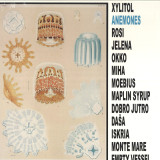
Xylitol is the alias of Catherine Backhouse, producer and DJ under the name DJ Bunnyhausen. She was a resident DJ at Kosmische, the now dormant Krautrock club and is a fan of jungle and hardcore. She currently co-hosts the radio show Slav To The Rhythm, which focuses on vintage central and eastern European pop and electronica and she's also co-writing a book on Yugoslavian pop culture. 'Anemones' is a total project from the cover to the music. Backhouse is fascinated by early botanical illustrations of anemones and other aquatic fauna, and how the act of taxonomy reveals as much about human psychology, desire and sublimation as it does about the organic specimen as a thing in itself. Each track is a microcosm of this 'other life', an allegory for the extraordinary potential latent within bodies that the dancefloor has the power to activate. Using early jungle and garage as starting points to connect dots and open up contrasts between dance music and vintage electronics, Backhouse finds a sweet spot which, in her words "feels like something that's simultaneously still and ancient yet propulsive and ecstatic." Not afraid of letting the the hiss and flutter of the music show, 'Anemones' holds attention with ancient bubbling synths and gracefully drifting arpeggiations, occasionally brought to heel by charming melodies, all accompanied by breakbeats that explode like fireworks. 'Anemones' has a lively and unpolished aesthetic that's a kindred spirit to Nondi_'s 2023 album of smeary, water-damaged footwork, 'Flood City Trax'. 'Moebius' pits the spaced out neon chords of the track's namesake against absolutely tearing breaks, allowing time for this almost overwhelming combination to become near enough transcendental, while the bleeping melody and sad slavic chorus motif in 'Okko' feels like an artifact from an alternative future. The Drexciya meets 2-step garage of 'Dobro Jutro' creates a welcome respite at the album's midpoint before the flow builds up again to 'Daša' with its glassy sounds from a lost radiophonic workshop miniature meeting bruising kicks and snares. Meanwhile 'Iskria' has purring synth chords and 8-bit melodies evoking the cosmonaut age. The subliminal influence of the Yugo era is felt in DIY synthesis and Mitteleuropean melody and seen in song titles such as 'Jelena', 'Miha', 'Daša' (named after novelist Daša Drndič) and 'Iskria' (taken from the fictitious Balkan region in Ottessa Moshfegh's bleak fable 'Lapvona'). 'Anemones' very effectively folds experimental genres from different times and places into a very enjoyable new sound.
Gepaart mit dem unermüdlichen Bestreben der Band, ihre Musik im ganzen Land unter die Leute zu bringen, wuchs der Ruf von Maul schnell und ein Pakt mit 20 Buck Spin wurde mit Blut besiegelt. Die ersten Früchte dieses Bündnisses wurden Ende 2023 mit dem Promo-Tape "Desecration and Enchantment" geliefert. Und nun führen alle Wege zu Mauls zweitem Album "In the Jaws of Bereavement".
Während der verrottete Death Metal im Kern der Band unbestritten ist, schämt sich die Band nicht, wenn es darum geht, eine Vorliebe für die härtere Seite des Hardcore mit moshtauglichen Riffs und massentauglichen Breaks zu zeigen. In the "Jaws of Bereavement" schafft es, die unheimlichen Erscheinungen und die melodische Leadarbeit der Größen des Death Metal mit den strafenden Rhythmen der gewalttätigen Kraft des Hardcore so gekonnt zu verschmelzen, dass es sich völlig organisch anfühlt. Zusammengehalten wird das Ganze durch die ungestüme Stimmgewalt der menschlichen Abrissbirne Garrett Alvarado.
FFO: Sanguisugabogg, Phobophilic, Fulci, Scorched, Warflurch, Kruelty, Terminal Nation, Obituary, Gatecreeper
Gepaart mit dem unermüdlichen Bestreben der Band, ihre Musik im ganzen Land unter die Leute zu bringen, wuchs der Ruf von Maul schnell und ein Pakt mit 20 Buck Spin wurde mit Blut besiegelt. Die ersten Früchte dieses Bündnisses wurden Ende 2023 mit dem Promo-Tape "Desecration and Enchantment" geliefert. Und nun führen alle Wege zu Mauls zweitem Album "In the Jaws of Bereavement".
Während der verrottete Death Metal im Kern der Band unbestritten ist, schämt sich die Band nicht, wenn es darum geht, eine Vorliebe für die härtere Seite des Hardcore mit moshtauglichen Riffs und massentauglichen Breaks zu zeigen. In the "Jaws of Bereavement" schafft es, die unheimlichen Erscheinungen und die melodische Leadarbeit der Größen des Death Metal mit den strafenden Rhythmen der gewalttätigen Kraft des Hardcore so gekonnt zu verschmelzen, dass es sich völlig organisch anfühlt. Zusammengehalten wird das Ganze durch die ungestüme Stimmgewalt der menschlichen Abrissbirne Garrett Alvarado.
FFO: Sanguisugabogg, Phobophilic, Fulci, Scorched, Warflurch, Kruelty, Terminal Nation, Obituary, Gatecreeper
- A1: Weltschmerz (Intro)
- A2: Sink Fast, Let Go
- A3: Fatalist
- A4: Puritanical Punishment Beating
- A5: When All Is Said And Done
- A6: Freedom Is The Wage Of Sin
- A7: In Deference
- A8: Short-Lived
- A9: Identity Crisis
- B1: Shattered Existence
- B2: Eyes Right Out
- B3: Call That An Option?
- B4: Warped Beyond Logic
- B5: Rabid Wolves (For Christ)
- B6: Deaf And Dumbstruck (Intelligent Design)
- B7: Persona Non Grata
- B8: Smear Campaign
- B9: Atheist Runt
Napalm Death's "Smear Campaign," released in 2006, stands as a powerful statement against religious dogma and societal oppression. This album delivers free-thinking, free-form grindcore from the grind majors that dismantles religious burden myth-by-myth.
With its relentless energy and incisive lyrics, "Smear Campaign" continues the band's tradition of merging ferocious soundscapes with thought-provoking themes.
- A1: Weltschmerz (Intro)
- A2: Sink Fast, Let Go
- A3: Fatalist
- A4: Puritanical Punishment Beating
- A5: When All Is Said And Done
- A6: Freedom Is The Wage Of Sin
- A7: In Deference
- A8: Short-Lived
- A9: Identity Crisis
- B1: Shattered Existence
- B2: Eyes Right Out
- B3: Call That An Option?
- B4: Warped Beyond Logic
- B5: Rabid Wolves (For Christ)
- B6: Deaf And Dumbstruck (Intelligent Design)
- B7: Persona Non Grata
- B8: Smear Campaign
- B9: Atheist Runt
Napalm Death's "Smear Campaign," released in 2006, stands as a powerful statement against religious dogma and societal oppression. This album delivers free-thinking, free-form grindcore from the grind majors that dismantles religious burden myth-by-myth.
With its relentless energy and incisive lyrics, "Smear Campaign" continues the band's tradition of merging ferocious soundscapes with thought-provoking themes.
- A1: Weltschmerz (Intro)
- A2: Sink Fast, Let Go
- A3: Fatalist
- A4: Puritanical Punishment Beating
- A5: When All Is Said And Done
- A6: Freedom Is The Wage Of Sin
- A7: In Deference
- A8: Short-Lived
- A9: Identity Crisis
- B1: Shattered Existence
- B2: Eyes Right Out
- B3: Call That An Option?
- B4: Warped Beyond Logic
- B5: Rabid Wolves (For Christ)
- B6: Deaf And Dumbstruck (Intelligent Design)
- B7: Persona Non Grata
- B8: Smear Campaign
- B9: Atheist Runt
Napalm Death's "Smear Campaign," released in 2006, stands as a powerful statement against religious dogma and societal oppression. This album delivers free-thinking, free-form grindcore from the grind majors that dismantles religious burden myth-by-myth.
With its relentless energy and incisive lyrics, "Smear Campaign" continues the band's tradition of merging ferocious soundscapes with thought-provoking themes.
- A1: Weltschmerz (Intro)
- A2: Sink Fast, Let Go
- A3: Fatalist
- A4: Puritanical Punishment Beating
- A5: When All Is Said And Done
- A6: Freedom Is The Wage Of Sin
- A7: In Deference
- A8: Short-Lived
- A9: Identity Crisis
- B1: Shattered Existence
- B2: Eyes Right Out
- B3: Call That An Option?
- B4: Warped Beyond Logic
- B5: Rabid Wolves (For Christ)
- B6: Deaf And Dumbstruck (Intelligent Design)
- B7: Persona Non Grata
- B8: Smear Campaign
- B9: Atheist Runt
Napalm Death's "Smear Campaign," released in 2006, stands as a powerful statement against religious dogma and societal oppression. This album delivers free-thinking, free-form grindcore from the grind majors that dismantles religious burden myth-by-myth.
With its relentless energy and incisive lyrics, "Smear Campaign" continues the band's tradition of merging ferocious soundscapes with thought-provoking themes.
2024 Reissue
"Hairway To Steven" was rleased for the first time in 1988. "Hairway to Steven" is a blast, ranging from the blood-smeared guitar-overload of "Jimi" to the acoustic guitar-based sing-along sweetness of "I Saw an X-Ray of a Girl Passing Gas" to the Fugs-like ranting of "John E. Smokes." Yet somehow, the album managed to get the straight media to actually notice. For all its strangeness, "Hairway" got rave notices in places that had never paid the band any attention previously. It was the Buttholes" last album of the "80s and marks the beginning of their ascendance into something akin to commercial success. Not that the band actually imagined anything at all like that occurring.
"Locust Abortion Technician" was relased for the first time in 1987. Without anyone looking over their shoulders, the band really rose to the occasion with "Locust Abortion Technician." From the opening track, "Sweat Loaf," which quotes Black Sabbath with results both hilarious and bowel-stomping, to the scuzz-guitar riven "found" vocals of "22 Going on 23," "Locust" is a non-stop face-full of hallucinogenic gas. Maniacal sludge guitar figures and Gibbytronix vocals are smeared everywhere, with most "Locust..." LP OLE-2058-LP 191401205818 excellent results. For many folks. "Locust" represents the album with which the Buttholes fully fulfilled their insane potential.
There are ghosts all across AVANTI, the debut album from Malice K. At points it's howling and unhinged, a grungy layer atop a lush foundation of melodic capital-s Songwriting, but in other moments it dissolves into a gentle, wistful haunting. Malice K's songs are blunt, uncomplicated and unflinching as he probes the interiority of memories, of mistakes - saturated with an innate intensity that sucks you into his gnarled and visceral world, so barbed it could draw blood. Malice K is helmed by visual artist and songwriter Alex Konschuh, New York-based but born and raised in Olympia, Washington. Following a stint living in Los Angeles, where he became a member of the artist collective Death Proof Inc., a trip to New York resulted in him simply never leaving the city. A period of chaos ensued, Malice K exhausted and unmoored and ultimately, unwell. The record is unpredictable across its 11 songs. The album opens with a jarring scream on "Halloween," Malice K's breathless vocals buried beneath a grungy, roving Nineties riff. The track emanates a manic energy, enveloping. It's a fitting entrypoint for the record, and for the vividness of Malice K. The snarling and obsessive "You're My Girl" has a swaggering paranoia: "I got so high I thought my hand touching my hand was your hand." But AVANTI exists in quieter moments too; "Radio," with its fluttering morose cello, moves at an almost glacial pace comparatively. The aching wistfulness of "The Old House" is an album stand-out, anchored in an acoustic guitar, an uneasy lullaby that never quite settles into itself: "I think to myself I got the things that I wanted, but I can't help think there's something else that I forgot to do." A recent press interview called Malice K a shapeshifter, but he's not amorphous in that way. He's decisive and intense, more concerned with carving his own path, and building his own world. Every part of Malice K is distinctly himself: from his sweaty high-octane shows to the high-flash high-contrast photos; from his gnarled and unsettling illustrations to the studio recordings that vacillate between grief and tenderness, there's an exceptional ferocity across everything Malice K touches. AVANTI feels lived in, like peering into an abandoned house through a window smeared with grimy fingerprints, relics of a life well-lived scattered inside - despite being a debut, there's the sense that Malice K arrived fully-realized, imperfections and all.
The all-new Dream Flight label embarks on its first voyage here and it does so in some style. 4:32AM - heavily associated with the Palace Vinyl shop in south London - is presumably named after that specific time in the night when only the deepest and most heady vibes will do, and that's exactly what we get here with 'Mitt Palms'. It's a delightful work of delicate and quiet deep house artistry with ambient pads and dreamy drums. 'Soft August Rain' is just as heady but brings some soft acid magic to the dusty beats and last of all 'Dream Flight' shows off some suburb drum programming with jostling broken beats and woody hits softened by smeared and painterly pads.
*REMASTERED ROUGH TRADE DEBUT LP LIMITED TO JUST 500 COPIES WITH EMBOSSED OUTER SLEEVE AND ORIGINAL INNER SLEEVE ON BLACK VINYL*
Dream POP, they called it. Given AR Kane’s Alex Ayuli once worked for advertising agency Saatchi & Saatchi, it’s no surprise that he and collaborator Rudy Tambala invented their own genre before critics could stick their oar in. It was a canny move, but more importantly, it was accurate: the music of AR Kane was made for dreamers, by dreamers, and its languor and longing made it particularly bewitching listening; their music is often smeared and blurry, happily lost in its own indefinable pleasures. “We wanted dream pop,” Tambala says, “that feeling of a dream where the rules are different. Dream logic.”
-UNCUT REISSUE OF THE MONTH
"A.R. Kane carved out a unique musical path, welding elements of pop, psych, dub, electronica, funk, noise, jazz, ambient and more in a way that had never been done before. Or since. Their debut in particular is a work of unbridled brilliance."
*Electronic Sound*
‘Sixty Nine’ the group’s debut LP that emerged in 1988 had critics and listeners struggling to fit language around A.R. Kane’s sound. As a title it was telling - the year of ‘Bitches Brew’, the year of ‘In A Silent Way’, the erotic möbius between two lovers - and as originally coined by the band themselves, ‘dream pop’ (before it became a free-floating signifier of vague import) was entirely apposite for the music A.R. Kane were making. Crafted in a dark small basement studio in which Tambala recalls the duo had “complete freedom - We wanted to go as far out as we could, and in doing so we discovered the point where it stops being music”. There was an irresistibly dreamy, somnambulant, sensual and almost surreal flow to ‘sixty nine’s sound, but also real darkness/dankness, the ruptures of the primordial and the reverberations of the subconscious, within the grooves of remarkable songs like ‘Dizzy’ and ‘Crazy Blue’. Alex’s plangent vocals floated and surged amidst exquisite peals of refracted feedback but crucially there was BASS here, lugubrious and funky and full of dread, sonic pleasure and sonic disturbance crushed together to make music with a center so deep it felt subcutaneous, music constructed from both the accidental and the deliberate, generous enough to dance with both serendipity and chaos. ‘sixty nine’ remains - especially in this remastered iteration - ravishing, revolutionary – Neil Kulkarni
"A.R. Kane made some of the most exciting, forward-thinking, and science fictional music of their era".s*
Innovative multi-instrumentalist and electronic luminary Mathew Jonson returns to Crosstown Rebels with ‘Tako Tako’.
The Canadian synth wizard returns to Damian Lazarus' renowned imprint with two magical and absorbing new productions, with the most excellent two-tracker.
Mathew Jonson has developed one of the most distinctive voices in electronic dance music. His take on house and techno is rich in synth craft and high on captivating emotions, all shaped by his notoriously extensive collection of analogue and hardware gear that he can play, manipulate and use like few others. An electronic mastermind renowned for releasing countless seminal tracks and albums, both solo and as a member of Cobblestone Jazz, he returns to a label that has been a constant throughout his career. With his ‘Tako Tako’ EP, he offers two more superb journeys on Crosstown Rebels.
The fantastic ‘Tako Tako’ kicks off with Jonson’s signature mix of elegant and refined synth craft, with dancing melodies bringing futuristic energy and neon colour to crunchy beats. They are smeared and smudged in a painterly fashion and help make this production a pulsating dancefloor thrill. Equally standout is ‘Just a Little Bit’, powered by a jostling broken beat with a warm bassline and wordless vocals sampled throughout. It’s funky, kinetic, always on the move, and rounds out another one of Jonson’s fantastically inventive yet effective EPs.
- A1: Hello 00 27
- A2: A Love From Outer Space 05 08
- A3: Crack Up 04 12
- A4: Timewind 00 15
- A5: What's All This Then? 04 03
- A6: Snow Joke 04 46
- A7: Off Into Space 00 04
- B1: And I Say 02 42
- B2: Yeti 00 11
- B3: Conundrum 02 32
- B4: Honeysuckleswallow 03 20
- B5: Long Body 01 21
- B6: In A Circle 04 37
- C1: Fast Ka 00 27
- C2: Miles Apart 03 01
- C3: Pop 03 40
- C4: Mars 00 20
- C5: Spook 03 10
- C6: Sugarwings 03 37
- D1: Back Home 00 07
- D2: Down 05 14
- D3: Supervixens 05 40
- D4: Insect Love 02 52
- D5: Sorry 00 05
- D6: Catch My Drift 05 40
- D7: Challenge 00 06
*REMASTERED ROUGH TRADE DEBUT LP LIMITED TO JUST 500 COPIES WITH EMBOSSED OUTER SLEEVE AND ORIGINAL INNER SLEEVE ON BLACK VINYL*
Dream POP, they called it. Given AR Kane’s Alex Ayuli once worked for advertising agency Saatchi & Saatchi, it’s no surprise that he and collaborator Rudy Tambala invented their own genre before critics could stick their oar in. It was a canny move, but more importantly, it was accurate: the music of AR Kane was made for dreamers, by dreamers, and its languor and longing made it particularly bewitching listening; their music is often smeared and blurry, happily lost in its own indefinable pleasures. “We wanted dream pop,” Tambala says, “that feeling of a dream where the rules are different. Dream logic.”
-UNCUT REISSUE OF THE MONTH
"A.R. Kane carved out a unique musical path, welding elements of pop, psych, dub, electronica, funk, noise, jazz, ambient and more in a way that had never been done before. Or since. Their debut in particular is a work of unbridled brilliance."
*Electronic Sound*
‘Sixty Nine’ the group’s debut LP that emerged in 1988 had critics and listeners struggling to fit language around A.R. Kane’s sound. As a title it was telling - the year of ‘Bitches Brew’, the year of ‘In A Silent Way’, the erotic möbius between two lovers - and as originally coined by the band themselves,
‘dream pop’ (before it became a free-floating signifier of vague import) was entirely apposite for the music A.R. Kane were making. Crafted in a dark small basement studio in which Tambala recalls the duo had “complete freedom - We wanted to go as far out as we could, and in doing so we discovered the point where it stops being music”. There was an irresistibly dreamy, somnambulant, sensual and almost surreal flow to ‘sixty nine’s sound, but also real darkness/dankness, the ruptures of the primordial and the reverberations of the subconscious, within the grooves of remarkable songs like ‘Dizzy’ and ‘Crazy Blue’. Alex’s plangent vocals floated and surged amidst exquisite peals of refracted feedback but crucially there was BASS here, lugubrious and funky and full of dread, sonic pleasure and sonic disturbance crushed together to make music with a center so deep it felt subcutaneous, music constructed from both the accidental and the deliberate, generous enough to dance with both serendipity and chaos. ‘sixty nine’ remains - especially in this remastered iteration - ravishing, revolutionary – Neil Kulkarni
"A.R. Kane made some of the most exciting, forward-thinking, and science fictional music of their era".
*Reissue Of The Week In The Quietus*
The inimitable Santonio Echols/Next Generation have penned many a great soulful house hit and one of them is 'Bad For Me' which now arrives as a remix package on the NCM Label out of Detroit. First up is Eddie Fowlkes's dub which brings nice warm, smeared chords and allows the vocal to pop out of the mix and bring the sunshine. Ron Carroll's club mix has a little more direct energy in the drums, then the Emanuell Groove mix is a funky one with steamy sax notes up top and nice loose drums. Last of all, the Mannywya Deep dub mix slows things right down to a late-night crawl.
Two Italians step into the Bordello. Both are armed. Their weapons of choice? The synthesizer sounds of italo, new beat and wave. LVCA and Otis have been raised on the sounds of their homeland, adopting its analogue sound while adapting it to their own style. The result is a brooding mix of addictive lines and vocoder fire.
“Ritmo Electronico” opens with a steel-edged snare driving smeared synths through the city dusk, robotic lyrics menace this sleazy neon-stained scene of cracked mirrorballs and flaring machines.
Listeners are pulled into the underbelly of A Promise In The Cold Night with the murky “Tanzen”. Alex Vincent’s words are shrouded in glitch, bright burbling bars and a clean clap offering a path of light to help the listener navigate their way. The true coldness of the night arrives with the stabbing keys of “Synthesised Emotion”. Through a haze of hi-hats, an electrical smoke of blacks and greys fizz with juddering volts as passions pour through cable and wire. That haze grows thick in the close. Through a mist of distortion, a “Sphere Of Light” penetrates. Pin-pricks of percussion are dowsed in aquatic tones before a syrup of static is poured across proceedings, lost vocals ghost in this fog of bending bodies and forms.
Octave One continues to visit some classic Never On Sunday tracks with a second installment of their Messages From The Mothership series. This latest 12" finds the pair release two different Mothership mixes of 'The Bearer' and 'Contemplate'.
The pioneering Detroit brothers have shown a different side to their sound with the Never On Sunday project, both back when it was devised in the early nineties, and more recently when they have looked back over some of the project's key tracks and added a contemporary spin to them. Already this year the Burden Brothers have offered up new takes on 'Price We Pay' and 'A Better Tomorrow' as well as dropping brand new cut 'Mirror Image' and now their fine form continues on this latest release on their own 430 West label.
The A-side features a new Mothership Remix of 'Contemplate' from 2022 that unfolds over an epic 11 minutes of enthralling deep techno. The synths bring classic Detroit soul and the impassioned vocals layer in emotion to the sleek, compelling drums. The Instruments Version strips out the vocals and places more focus on the sublime rhythm and drums.
On the B-side, ' The Bearer' from the 2023 album Never On Sunday gets a fresh Mothership Dub. It is another masterful and almost 12-minute journey that rides on compelling drums and is lit up with a majestic vocal that soars up high while the warm, dubby undercurrents keep things moving in dynamic fashion and smeared cosmic synths bring a great sense of scale. A Mothership Instrumentals version closes out the package.
These are for more fresh perspectives on timeless house and techno fusions from the ever-innovative Octave One.
Black Truffle is pleased to announce the first vinyl reissue of Trancedance, a wild slice of Swedish Afro-fusion from Christer Bothén, originally released in 1984. A major figure in Swedish jazz and improvised music since the 1970s, often heard on bass clarinet and tenor sax, Bothen studied doso n’koni (the large six-stringed ‘hunter’s harp’ of the Wasulu) in Mali in 1971-2 before turning to the guinbri (the three-stringed lute of the Gnawa/Gnauoua) in Marakesh later in the decade. In between, he performed extensively with Don Cherry during his Organic Music Society period and taught Cherry the doso n’koni. In the later 70s and 80s he worked with the most important figures in the distinctive Swedish jazz-rock-world fusion scene, joining Archimedes Badkar for their African-influenced Tre and participating in Bengt Berger’s legendary Bitter Funeral Beer Band. Many of the musicians who played on the Bitter Funeral Beer Band’s ECM LP (including Berger on drums, Anita Livstrand on voice and percussion and Tord Bengstsson on piano, violin and guitar) joined Bothén for one of the sessions that produced Trancedance, the first release under his own name, dedicated to his compositions. The other session introduced his seven-piece group Bolon Bata, heard on the second track of each side. The title track opens the album with the rubbery buzzing strings of the doso n’goni playing a hypnotic ten beat pattern, soon joined by bass and piano before the entire nine-piece group kicks in with a rollicking Afro-jazz workout, Berger’s drums driving an intricate, winding melodic line played by the horns with Mattias Helden’s cello throwing in pizzicato slides and smears. Bothén then takes centre stage on tenor sax, soloing with a wide, vibrating tone and moving seamlessly from soaring melodies to guttural stutters. After a return to the composed horn lines and a solo from Elsie Petrén on alto sax, the piece builds to an ecstatic conclusion of yelping voices and handclaps, gradually simmering down to return to the solo doso n’koni where it began.
The hypnotic sounds of the hunter’s harp carries over to ‘Mimouna’, where it is joined by Bothen’s overdubbed guinbri. The piece develops into a haunting whispered and sung invocation, gradually building momentum until the organic textures of strings, voices, and hand percussion are ruptured by Lennart Söderlund’s distorted guitar, which brings an unmistakable touch of 1984 to the otherwise timeless sound. Joined by chicken scratch guitar and increasingly dominated by the insistent clang of three of Bolon Bata’s members on karqab (a kind of cast-iron castanet), the grove develops frenetically.
The B side opens with the multi-part epic ‘9+10 Moving Pictures for the Ear’, at over 16 minutes the record’s longest piece. Though Bothen is heard only on horns on this piece, the hypnotic repeating bass line carries on the first side’s link to African musical traditions. Using an expanded 16-piece ensemble, the music balances untethered improvisation with carefully arranged passages of knotty ensemble playing that at points suggest Mingus, Moacir Santos or some of the ambitious post-free work being done in the same years by figures like David Murray or Henry Threadgill. The piece ends with a triumphant passage of looping unison melody reminiscent of the Scandinavian folk explorations of Arbete och Fritid (whose Kjell Westling is heard on bass clarinet and soprano sax here). The sound of Bjorn Lundqvist’s fretless bass introduces the odd left turn made by the record’s final track, a spaced-out expedition into bluesy horn lines and distant guitar atmospherics set to a semi-reggae beat, perfumed by the core Bolon Bata group and bearing the appropriate title of ‘The Horizon Stroller’. A must for fans of the Swedish scene around groups like Arbete och Fritid and Archimedes Badkar, as well as any listener who has been seduced by Louis Moholo’s Spirits Rejoice!, The Brotherhood of Breath, or, more recently, the guinbri grooves of Natural Information Society, Trancedance is a lost classic ripe for rediscovery.
First up in D’Julz’s ‘The School of Night’ EP on his Bass Culture label is 'Nu Bass', a fresh and upbeat house sound with kinetic percussion and well-swung drums. Steamy vocal coos and deft synth stabs build a compelling future vibe before 'Spooky Electrik' comes in with more punchy but deep house sound. Dancing hi-hats pepper the groove along with curious little synth motifs, bringing a cosmic feel while the all-important bassline powers things forward.
D'Julz's knack for cooking up killer grooves is evident again on 'Money, Honey, Monday?' which is jacked up and percussive but also hugely seductive, with the smeared vocals and warming pads keeping things classy and soulful. Last of all, 'Triperie' is more menacing and stripped back - a paranoid lead synth roams about the mix as the crisp drums rise and fall in a fashion that will get floors marching late into the night.
Julien Veniel, aka D'Julz, has been a mainstay of the European scene for decades. He has established his Bass Culture label as one of house music's finest, always with a focus on deep sounds and punchy drum work. As well as his effective and stylish club cuts, he dropped his ‘Silent Drums’ album of ambient back in 2020 and continues to DJ all over the world. He is an artist who knows how to get real feelings into his tracks and shows that again here.
SND & RTN brings it home on this new 12" for Lempuyang that explores their signature techno depths. 'Palantir' opens with fathoms-deep dub and ice-cold synths that snake their way over the face of the track, while 'Hyperdrive' has rumbling chords and smeared pads that keep you on the ocean floor and 'Dub Conjurer' allows in a little more light from the surface with delicate shards piercing the murk. 'Tales From The Outer Rim' shuts down with a nice gentle rhythm that undulates beneath rippling pad work and works well as perfect early evening warm up.
Full of Hell Coagulated Bliss bio Full of Hell burst forth with incredible force from the small, dagger-shaped city of Ocean City, Maryland, 15 years ago. Over five full-lengths, five collaborative full-lengths, and countless splits, EPs, singles, and noise compilations, they’ve evolved at extraordinary speed, their music becoming more complicated and technical without ever slowing down or losing its soul. Everything on a Full of Hell album feels like a blur: smears of guitar, harsh noise shaken like gravel in a bag, singer Dylan Walker’s snarl and bite carrying him into outer space or into the core of the earth. They’re coiled, interlocking, impossible to penetrate, and they move with alarming speed. They have now reached terminal velocity. Having created their own context, they’re now able to walk around within it, to survey its terrain, to visit far corners and see who’s nearby. Coagulated Bliss sounds like Full of Hell, but it’s nothing like any Full of Hell record that’s come before it. These songs are trimmer, less freighted with anxiety, more interested in opening up than speeding away. Its bile is sometimes funneled into traditional song structures. It never shies away from the extreme harsh noise, unrelenting spirit, and pitch-black sadness of previous Full of Hell records; if anything, the leanness of these songs makes them feel even heavier. Nevertheless, there are tracks here you might find yourself whistling hours after listening. It’s an extraordinary and unexpected evolution in sound for a band who made their name on rapid metamorphosis, and it’s the logical endpoint of everything Full of Hell has covered so far..

The latest suite by composer (and Stars Of The Lid co-founder) Adam Wiltzie took shape following a move north from Brussels into the Flemish countryside, although it was initially inspired by a recurring dream wherein “if someone listened to the music I created, then they would die.”
The album uniquely evokes and evades the allure of oblivion, keening between beauty and ruin, forever unresolved. Wiltzie cites the barbiturate of the title as both muse and sacred escape: “When you are sitting face forward on the daily emotional meat grinder of life, I always wished I could have some, so I could just fall asleep automatically and the feeling would not be there anymore.”
Recorded at Wilzie’s home studio, with strings added in Budapest at the old Hungarian National radio facility (Magyar Radio), the tracks feel simultaneously intimate and infinite, unfolding vistas glimpsed in an inner space.
Robert Hampson of English drone rock icons Loop mixed the album, further lending the music a sense of cinematic expanse and oblique hypnosis.
These are fugue states as much as fugues in a literal classical music sense—smeared epiphanies of uncertain memory and spatial dislocation, coaxed from the unconscious and set aloft.
Love Is Yes is the first album by Sander van der Toorn and Dax Niesten, an audio-visual duo de force of the same name.
This heady debut is rooted equally in the worlds of fine art and experimental music. Sound and image meld wonderfully across 10 tracks, with shifting movements of music accompanied by a wealth of paintings and animations.
Niesten's work summons the likes of Philip Guston and Maurice Sendak - with its crestfallen, cartoonish voids and cockle-warming grotesquery. Serenely contorted creatures are rendered on large canvases, and brought to fuzzy, maudlin life through a full-length animation that can be viewed alongside the record.
Musically, the pair cite influences ranging from Vashti Bunyan to Morton Feldman. There is an ornate fragility, smeared by zero gravity focus shifts. Some glimpses suggest a corroded grail of Boards of Canada samples; motorik guitar, whispered messages, euphoric vistas and tangled memories all bathing in atomic glow.
From out of nowhere - if nowhere is the febrile, warped and twilit imagination of Julia McFarlane - comes Whoopee, the second album by J.McFarlane’s Reality Guest. Whoopee is an esoteric, kaleidoscopic movie in music form directed by Julia McFarlane and co-conspirator Thomas Kernot. Full of life, breakbeats and smokey vignettes on the fragile nature of interpersonal relationships, Whoopee is a stylistic evolution from everything McFarlane has done before. Surreal, beautiful in parts and replete with the aching wisdom McFarlane’s songwriting has always promised, this Reality Guest pulls back the curtain on a whole scene of naked truth. Recorded in Melbourne in bursts since the release of 2019’s Ta Da, Whoopee features a new sound palette and band member in Kernot. The duo dive deep into electronic pop tropes, mining digital synths, samples, breakbeats and deep bass grooves, largely dispensing with live instrumentation. If Ta Da took twists and turns with your expectations, offering a Dada-ist, monochromatic take on pop music, Whoopee is McFarlane’s subterranean love-sick pinks, reds, greens, purples and blues. Becoming something of a tradition, the album starts with an instrumental intro pilfered from a 90s’ spy film or cinema intro music, puffing up the listener for the heart-squeezing bathos of Full Stops. Over a bleary backdrop of walking bass lines, jazz- inflected keys and smoked-out atmosphere, McFarlane’s poetry narrates the fragile state of a relationship: “You put a full stop where I thought there’d be a comma, I want the story to continue even with all the drama.” Over a palpable pain, the narrator is revelling in the drama of a relationship, addicted to tumult and heightened emotion. On Sensory, a space age bachelor lounge pad ballad, the converse state of the previous song is explored, here the narrator is battling the numbness of being out of the drama, stuck in a sensory-deprivation tank, anaesthesized and battling to emerge from the fog. Wrong Planet explores an otherworldly pop music, hewing a bright hook out of a sense of confusion. A bona-fide, sing-along chorus bursts out of the narrator musing on the absurdity of existing in this reality. It speaks of one of Julia McFarlane’s main talents, her knack of inspecting human relationships and states with a clear perspective, like an alien visiting Earth and realising everything we are is really, really strange. Whoopee is both more accessible than previous Reality Guest work and somehow more obfuscated. Where the production on Ta Da was dry, sharp and strange, this Reality Guest is blurred, almost smeared with the effluvium of 90s+00s culture and existence. Through it all, it’s hard to deny the undeniable pull of the songs. Precious Boy carries on the lounge theme with a whole sampler of cut up sounds fading in and out of the haze as McFarlane’s voice is right up to the speaker cooing and free- associating, maybe in love or maybe in confusion... maybe they’re the same thing? Sometimes the listener is invited to just bathe in the tone of the vocal, as on Apocalypse, where the texture and timbre of the vocal is luxurious, bathing in piano tinkles and double bass throb. On lead single Slinky, a cut up beat reminiscent of Washingtonian Go-Go drum patterns leads, the song slipping through your fingers, elusive and presenting sound as pure pleasure. Closer Caviar jumps back into the broken breakbeats of a surreal funk, fuelled by the sensory pleasure of the music, a hedonistic whirl in rapture, the narrator now living life to the fullest in all its giddy heights and deep troughs. This is the album’s main character fully-actualised and in the terrible, beautiful moment.
Finnogun’s Wake is the delightful portmanteau of a band fronted by Shogun (vocalist of Royal Headache, and later Shogun and the Sheets) and newcomer Finn Berzin. Decades apart in age but united in tutelage and outlook, they have mitigated the Joycean tome of What To Do Now, and crafted the four debut songs of the Stay Young EP from the inside out, sharing the spotlight for a riveting, deafening smear of melodic pop and buzzsaw guitars.
Mourning the departure of his best mate to a life overseas, Shogun started hanging out with his friend’s younger brother, Finn. The two of them started spending their free time together, one having seen a fair chunk of the world through music, the other just starting to figure it all out. They went through the essential lessons that could be gleaned from Definitely Maybe and Hüsker Dü, Finn got himself a guitar, and the songs simply fell out of both of them, with this initial batch as the result. Shogun sings on “Blue Skies” and “Strawberry Avalanche,” and Finn takes the lead on “So Nice” and “Lovers All,” and while there’s no mistaking Shogun’s striking delivery and fatalistic lyrics, Finn proves himself as a carousing foil, holding his ground like the natural he’s become.
Taking into account the fevered, quick-burning success of Royal Headache, this group is the most likely candidate to do it all again, giving the sense that some people can write bounding guitar leads that stick to you like burrs from the brush, and sing so effortlessly you’re embarrassed and a little mad about how great it all sounds. Backed on these recordings by keyboardist Gabrielle De Giorgio (a longtime collaborator of Shogun’s from back in the Sheets era), bassist Campbell Troy (who was in Shogun’s first hardcore band Nintendo Police back in the mid ‘90s), and DMA’s drummer Liam Hoskins (on some COVID-enforced boredom with no tour-dom), Finn and Shogun stare down a changed world from two very distinct poles, and aim to fill it with glorious songs just like these.