A Jazzman’s Blues is the 2022 Netflix drama film written, produced, and directed by Tyler Perry. It stars Joshua Boone, Amirah Vann, Solea Pfeiffer, Austin Scott, and Ryan Eggold a.o. The film centers on the forbidden romance between Bayou and Leanne who are best friends. They fall in love as soon as they cross paths, however Leanne’s mother forbids their union and forcefully takes Leanne with her to Boston.
The orchestral music in A Jazzman’s Blues was composed by the classically trained composer Aaron Zigman, who has previously scored music for films including The Notebook, The Company Men and Sex & the City. He has also written, arranged, and produced for artists including Quincy Jones, John Legend, Phil Collins, Christina Aguilera, and Aretha Franklin amongst many others. The songs of this score have been arranged and produced by Oscar-nominated trumpeter and composer Terence Blanchard. He has been nominated for composing the scores for BlacKkKlansman and Da 5 Bloods.
The soundtrack features vocals by the cast members, including Joshua Boone, Amirah Vann and Austin Scott.
AJazzman’s Blues is housed in a gatefold sleeve and includes an unfolded “paper plane” insert with lyrics of Ruth B.’s song “Paper Airplane”.
Suche:so many men
1000 black vinyl LPs. London-based ‘indie-supergroup’ SUEP announce their long-awaited debut mini-album Shop, a collection of 6 oddball, car-boot-sale pop songs with a sprinkling of theatrical storytelling. Led by Georgie Stott (of Porridge Radio, Garden Centre) and Josh Harvey, SUEP was born out of a near-decade of playing in sheds and barns with like minded personnel, holding a mutual love for Paul McCartney, Jona Lewie, the B-52s, Devo and other performative freaks enjoying themselves. Following a move to London from Brighton, the pair added George Nicholls (The GN Band, Joanna Gruesome, The Tubs), Will William Deacon (PC World, Garden Centre), and Ollie Chapman (Boil King) to the line-up. The 5 piece take turns writing songs and taking the lead vocal duties in a wonderfully playful but coherent collaboration, with their debut being a kaleidoscopic off kilter pop ride, taking the listener through haunted castles, deprived encounters, days lost to the imagination in bed, and through the integral friendships that give SUEP the energy to keep dancing to their own beat. The album was arranged and recorded in the Red Lion Boys Club, an ex-youth centre in which Georgie and Josh both lived. Using equipment collected by Josh in his travels as a bootsale and market trader, the sports hall was transformed into a makeshift studio for a few days, with sessions conducted by producer Matthew Green (Sniffany & The Nits, The Tubs, etc.) Mark Riley (BBC 6 Music) described SUEP’s debut single and album opener, ‘Domesticated Dream’ (2021) as “perfect pop music.” The joyfully kitsch track brims with a 70s Yamaha disco beat, deep bass, nostalgic drum machines, and hooky melodies. Possibly the most psychedelic and infectious track born out of lockdown, it tackles homelife, drinking too much, and making big plans that never come to fruition, but with a big technicoloured positivity for the future of the human-race, with the chorus’ refrain, “the psychedelic 4000s,” predicting the return of the psychedelic Age of Aquarius in a couple of millennia time. The following single ‘Misery’ (2021) is pure cosmic swing-pop wizardry in part inspired by spy music and The Supremes. Ollie, The track’s baritone vocalist, describes it as “A love song disguised as a song about loss. It's about cherishing the things that matter but it’s also about having the courage to say goodbye,” with each line of the song a small story about a different character. Whilst latest Shop taster ‘In Good Health’ is darkly euphoric like a pleasantly strange meeting of Siouxsie Sioux and Jona Lewie. It’s a playfully discombobulating mix of 80s jangly guitar, chirpy keyboard and moody post-punk tackling mental health, drug addiction, and the power of friendship, written after the song’s vocalist Georgie came out of hospital following a mental health crisis. “I wanted to write a song that encapsulated how important my relationships with my friends and boyfriend were at that time” she explains “…and one that also felt dark like I did at the time. I couldn’t go outside due to anxiety surrounding my health so I stayed inside for weeks. People would visit and watch films with me or let me tattoo them or make music with me. My community helped me recover.” Elsewhere on Shop is ‘Just The Job’ fronted by Harvey and described by him as “About the relief of accepting a menial existence, and allowing life to be boring - but (within that) how the small things are the important ones, how pulling a sicky or extra long lunch break are important things to do for yourself. It’s an anthem for working people who’ve had enough - and a crowd favourite at SUEP gigs. The darker undertones and post-punk angles of the Georgie-fronted ‘Onions’ is inspired by the crapness of cliques, with the band calling the song “A cry of welcome to all;” and finally the hooky ‘Friend of Mine,’ described as “A love letter to all the people that come and go throughout your life no matter how long you know them”. SUEP have received coverage in Independent & Clash, (among many others), with big support from Mark Riley and Steve Lamacq (BBC 6 Music) for early singles.
Australian 9-piece Spiritual Jazz group Menagerie announce their highly anticipated third album 'Many Worlds', released 15th January 2021 on esteemed U.K label Freestyle Records.
Menagerie is the Melbourne-based Jazz ensemble founded by producer, songwriter, guitarist, DJ and recording artist Lance Ferguson, also the driving force behind The Bamboos, Lanu, Rare Groove Spectrum and Machines Always Win.
Recorded at Union Street Studio by award-winning engineer John Castle, 'Many Worlds' features some of Australia's finest musicians, including pianist Mark Fitzgibbon (a regular performer at Gilles Peterson and Patrick Forge's original Dingwalls sessions), drummer Daniel Farrugia and renowned saxophonist Phil Noy (The Bamboos).
Inspired by both the post-Coltrane generation of the 70's, labels like Strata-East, Impulse! and Tribe, along with the current 'New Wave Of Jazz', Menagerie aligns with the world of Kamasi Washington, Shabaka Hutchings and Nubya Garcia, whilst also bringing their own unique twist.
Lead single 'Free Thing' leans heavily into the spiritual side of the band's sound. The hypnotic spoken word-poem is evocative of The Last Poets, an earthy yet futuristic meditation on the universal theme of freedom itself, set to a backdrop of insistent percussion, double bass and brooding piano voicings.
'Hope' carries forward the sound of spiritual jazz into the 21st century, with its epic vocal harmonies and melodic fanfare, it is an uplifting anthem for this period of global worldwide upheaval and uncertainty.
The title track 'Many Worlds' is a perfect example of how Menagerie incorporates their myriad influences, but manage to create a sound that feels uncannily fresh and contemporary. Book-ended by ambient, ethereal sections, the slow-burning groove builds over its 11-minute duration to create a standout crossover track.
Menagerie have received airplay and radio support from Gilles Peterson (BBC6/Worldwide FM), Don Letts (BBC6), Jamie Cullum (BBC Radio 2), Simon Harrison, Paul Miller and Ennio Styles (3RRR).
'Many Worlds' will be released on legendary U.K imprint Freestyle Records - home to jazz contemporaries Courtney Pine, Jessica Lauren, and keyboard legend Brian Auger.
Ready for a bit of new rocking punk with just a touch of garage psych thrown in for good measure? Well, if you are, then The Mundaynes debut album 'Love It' should do the trick. Recorded during Summer 2021 on the front line of Bexhill-On-Sea, 'Love It' is stuffed to bursting with 15 great new songs. During lockdown, Bevis Frond frontman Nick Saloman, having little else to do, found himself writing loads of songs. Some were used on the Fronds’ ‘Little Eden’ album, many were discarded, and some were kept with a view of doing something with them in the future. Nick felt that a batch of these songs were pretty good, but not really suitable for The Bevis Frond, maybe being a bit too punky. However, wanting to record these songs, he called up his mate Tony Page, the former lead singer with vintage punk bands The Ploy and Apocalypse, to see if he fancied doing some vocals. Tony was only to pleased to take part. Then Nick asked bandmate Paul Simmons if he’d do all the guitar parts. Paul agreed and the three of them went into Bexhills’ Graffite Studios and laid down the tracks. The results were so good that the trio decided to put them out as an album. The impromptu band needed a name, so they became The Mundaynes, thought up by Tony because it was a Monday! Bearing in mind that all three guys played in punk bands, Tony as mentioned above, Nick with The Von Trap Family & Room 13, Paul with The Cravats and Jello Biafra, and, of course his own band The Alchemysts, the pedigree here is pretty solid. So what do we have here then? I guess it’s a loud, angry, melodic, wry punk rock album full of great tunes. Hope you ‘love it’, and if you don’t, well, that’s life.
NO(w) Beauty is a jazz quartet in its most traditional form.
In the perfect continuity of the history of this music, these four young musicians have gathered in Paris, where Hermon Mehari, trumpeter of American origin, has settled, like many of his peers before him. There, in the detours of the jazz clubs, a dialogue was created, then a friendship, thanks to the common language of music. Their personalities and influences mingle and define their sound. Jazz standards, blues, French and European classical music, soul, hip-hop, but also modern jazz and the avant-garde. A traditional quartet, but one that wants to be in tune with the times, and that looks ahead.
The three Frenchmen, in addition to having studied jazz, are largely rooted in French popular and learned music and their influences range from improvised music to Olivier Messiaen via Claude Nougaro... Enzo Carniel and Damien Varaillon both studied at the CNSM in Paris, renowned for its excellence and its very "European" aesthetic. Stéphane Adsuar studied at the Berklee School of Music in Boston, the leading school in the United States. Hermon Mehari, originally from Kansas City, Missouri, brings his unique heritage to the table, while innovating in the tradition of the great American trumpeters.
Together they create a space where all these influences intermingle, without nationality, without borders.
- 1: Falling From The Sky With Ben Bridwell (Band Of Horses)
- 2: Bullets & Rocks With Sam Beam (Iron & Wine)
- 3: When The Angels Played With Pieta Brown & Greg Leisz
- 4: Tapping On The Line With Neko Case
- 5: Cumbia De Donde With Amparo Sanchez
- 6: Miles From The Sea With Gaby Moreno
- 7: Coyoacán
- 8: Beneath The City Of Dreams With Gaby Moreno
- 9: Woodshed Waltz With Greg Leisz
- 10: Moon Never Rises With Carla Morrison
- 11: World Undone With Takim
- 12: Follow The River With Nick Urata (Devotchka)
LP 180G HEAVY BLACK VINYL, INCL. 12 TRACK MP3 ALBUM
For the better part of two decades, the acclaimed band Calexico has crossed musical barriers, embracing a multitude of styles, variety in instrumentation, and well-cultivated signature sounds. With their forthcoming record Edge of the Sun, out April 13th via City Slang, they take inspiration from a trip to a place surprisingly unexplored by the band before in Mexico City, and with the benefit of many friends and comrades to help guide the way.
Encouraged by the experience, the guest list grew to include Ben Bridwell (Band of Horses), Nick Urata (Devotchka), Carla Morrison, Gaby Moreno, Amparo Sanchez, multi-instrumentalists from the Greek band Takim, and Neko Case. Burns' brother John Burns lent a hand to some lyrics and songwriting, and the band's keyboardist, Sergio Mendoza, stepped up to co-write and arrange certain songs, ultimately co-producing the album along with Burns, John Convertino, and longtime associate Craig Schumacher.
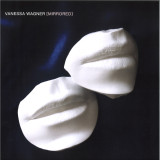
French pianist Vanessa Wagner collects solo piano studies of graceful minimalism and rare finesse for new album Mirrored.
Quickly following March 2022’s Study of the Invisible album, Vanessa Wagner returns with a new collection of work that paints in many colours. The application of shadow in Mirrored evokes haunting poignancy; the care and delicateness of its negative space leaves room for undulating melodic motifs to ebb and flow; its bold splashes of luminescence are striking and rich. And while the album collates re-interpretations of works by composers as varied as Philip Glass, Nico Muhly, Moondog, Leo Ferré and Camille Pepin, the potency and effect of the collection as a whole reflects only Vanessa Wagner and the extraordinary breadth of her abilities.
Performing solo, exposed to timbre, tempo and clarity, many of the pieces here - such as “Sea Horses” by (Vanessa’s one-time mentor) Moondog or Philip Glass’ “Etude 4” - demand virtuosic abilities as a performer and interpreter. But in Vanessa Wagner’s hands, they are not only made her own, but made mesmeric and magical by the sensitivity of her touch.
Coalmine Records, in partnership with Duck Down Music, is excited to announce the upcoming release of the deluxe edition of Sean Price & Small Professor’s collaborative classic, 86 Witness. Released as a limited edition gatefold 2XLP with both the main and instrumental versions, the album boasts several packaging accoutrements that involve an artwork overhaul designed with metallic inks. For those unfamiliar with 86 Witness, the album is a testament to both Hip-Hop's Golden Era and the unbelievable talents of Sean Price, one of the genre's biggest and best voices who was taken from us far, far too soon. His hilarious, tack-sharp rhymes are complemented by the imaginative and dusty production of Small Pro, who may just be rap's best kept secret. Like his previous projects, 86 Witness is brimming with classic lines and lyrical barbs from P. What's different here, however, is the depth of his references in addition to his incredible chemistry with Small Pro. From the verses to the beats, they have provided so many musical Easter eggs that each listen tips off something you've yet to discover. And that's not even mentioning the ambitious lineup of guests featuring Your Old Droog, Guilty Simpson, Rockness Monsta, Elucid, Castel, Reef the Lost Cauze, Curly Castro, Zilla Rocca, and more.
- A1: Bear Witness (Feat Dj Revolution - Intro)
- A2: Refrigerator P (Feat Rock & Dj Revolution)
- A3: Latoya Jackson (Feat Quelle Chris & Dj Revolution)
- A4: Midnight Rounds (Feat Elucid & Castle)
- A5: P's Theme (Interlude)
- B1: John Gotti (Feat Ag Da Coroner, Guilty Simpson & Your Old Droog)
- B2: Think About It (Feat Illa Ghee, Rock & Dj Revolution)
- B3: Word To Mother (Feat Dj Revolution)
- B4: John Gotti (Feat Reef The Lost Cauze, Curly Castro & Zilla Rocca - Philly Blunt Remix)
- B5: Refrigerator P (Feat Rob Kelly - Peaky Blinders Remix)
- C1: Bear Witness (Intro - Instrumental)
- C2: Refrigerator P (Instrumental)
- C3: Latoya Jackson (Instrumental)
- C4: Midnight Rounds (Instrumental)
- C5: P's Theme (Instrumental)
- D1: John Gotti (Instrumental)
- D2: Think About It (Instrumental)
- D3: Word To Mother (Instrumental)
- D4: John Gotti (Philly Blunt Remix - Instrumental)
- D5: Refrigerator P (Peaky Blinders Remix - Instrumental)
Side C/D / Disc 2: Instrumentals
Coalmine Records, in partnership with Duck Down Music, is excited to announce the upcoming release of the deluxe edition of Sean Price & Small Professor’s collaborative classic, 86 Witness.
Released as a limited edition gatefold 2XLP with both the main and instrumental versions, the album boasts several packaging accoutrements that involve an artwork overhaul designed with metallic inks.
For those unfamiliar with 86 Witness, the album is a testament to both Hip-Hop's Golden Era and the unbelievable talents of Sean Price, one of the genre's biggest and best voices who was taken from us far, far too soon. His hilarious, tack-sharp rhymes are complemented by the imaginative and dusty production of Small Pro, who may just be rap's best kept secret.
Like his previous projects, 86 Witness is brimming with classic lines and lyrical barbs from P. What's different here, however, is the depth of his references in addition to his incredible chemistry with Small Pro. From the verses to the beats, they have provided so many musical Easter eggs that each listen tips off something you've yet to discover. And that's not even mentioning the ambitious lineup of guests featuring Your Old Droog, Guilty Simpson, Rockness Monsta, Elucid, Castel, Reef the Lost Cauze, Curly Castro, Zilla Rocca, and more.
a 1 Bear Witness (Intro) feat. DJ Revolution
i 9 John Gotti (feat. Reef the Lost Cauze, Curly Castro & Zilla Rocca) Philly Blunt Remix
j 10 Refrigerator P (feat. Rob Kelly) Peaky Blinders Remix
VINYL COLOUR IS GREY. BORSTAL, the UK-Hardcore band featuring Nick Barker (Brujeria, ex-Dimmu Borgir, Cradle Of Filth) & Pierre Mendivil (Knuckledust) release details of brand new 2 track 7". Produced by Russ Russell (Napalm Death/The Exploited/At The Gates). The 2 songs are a follow up BORSTAL's debut EP "At Her Majesty's Pleasure". The 7" record is a collaboration between Rucktion Records & 4 Family Records. Both labels are offering different variants and bundles of the 7" in extremely limited quantities. Pressed on heavyweight Vinyl and including a free download code! Front man 'Pierre' comments on the new video 'No Surrender'; "This song is inspired by confronting the defeatist mentality that society seems to want to push on us, on so many levels! And even in ourselves as we battle everyday to try better and strengthen our mental attitude just to deal with life these days." BORSTAL Guitarist 'Lee' continues "It's nice to finally get some fresh music out there. We recorded these 2 songs in 2021 with our brother Russ Russell. But due to delays with pressing plants and so on, we got held up! I feel like our sound is really coming together now, and these new tunes are just a teaser for what's to come. We've nearly finished writing our full length too, so they'll be news to follow that soon". The cover artwork for the 7" is by Australian artist Mick Lambrou. Mick has recently designed t-shirts, flyers and artwork for the likes of hardcore legends Agnostic Front, Madball & Slapshot.
- A1: The Cotillions - Sahara
- A2: The Boys - Cobra
- A3: The Embers - Alexandria
- A4: The Checker Board Squares - Desert Land
- A5: The Kasuals - Port Said
- A6: Arabian Knights - Moroc-Kin
- A7: The Torrents - Snake Charmer
- A8: The Wild Men Of Marrakesh - Sandstorm
- A9: The Versatones - Cobra
- B1: The Sand Steppers - Misirlou
- B2: The Vaqueros - Desert Wind
- B3: The Royce Mcafee Combo - Cairo Twist
- B4: Roger King Mozian - Oriental Cha Cha
- B5: Vasilas & His Slaves - Ole Tsasa
- B6: Al Castelanos - Cha-Cha-Cha At The Harem
- B7: Griz Green - Morocco
- B8: Jol Coyes Boys - Istanbul
- B9: Ilo Kay & His Trio - The Bagdad Fantasy
More in the new series from Jazzman featuring the lowest of the lowball schlock n' roll 45s never known to exist!
After many years in hiding, notoriously shady Super Spiv of the record world Greasy Mike has finally opened up his vinyl dungeon, and we were first to raid it!
We have left no box untouched, no crate unrummaged, no pile unpilfered! Just the greasiest and grimiest, the most shocking and sordid 45s have made it onto our selections. Watch out for more!!!
In this adventure Greasy Mike finds himself lost in the wilderness; hot, thirsty and alone under the unforgiving desert sun. He's been days without food and water; the heat of the day stifling almost beyond endurance, the cold of night a trial of torment. Survival seems impossible - or does it? Staggering across the sandy plains, the eerie yet unmistakable sound of a snake charmer's reed curiously winds its way into his ears. Instinctively he turns his head towards the sound - and lo! An oasis just ahead! Music, laughter - and belly dancers!!!
Death Is Not The End launch sub-label 333 with a first-time vinyl reissue for the late Devon Russell's Darker Than Blue LP - put together as a tribute to the great Curtis Mayfield. First issued in 1993 but featuring material originally recorded as far back as 1979, the collection includes a cast of prominent players across it's 10 tracks - featuring musical contributions from Sly Dunbar, Aston "Family Man" Barrett, Earl "Wire" Lindo, Dean Fraser, Bobby Ellis, Leroy "Horsemouth" Wallace, Prince Lincoln Thompson and many others - plus production & arrangment from Earl "Chinna" Smith, Sly Dunbar & King Tubby's Firehouse Crew alongside Russell himself. Limited to 333 copies.
"The concept for Darker Than Blue dates back to 1979. Returning from South Amerrica with my partner (in duo Lloyd & Devon) Lloyd Robinson, we did "Red Bum Ball" which had been a massive hit in the 60's. It was around this time that Earl Chinna Smith (of The Wailers and Soul Syndicate fame) approached me with the idea of re-making some Curtis Mayfield songs. "Darker Than Blue" was the first track we did, followed by "Move On Up" in 1981, both of which received great reviews.
On returning to Jamaica from a UK tour in 1986, my good friend King Tubby had taken on five men from my school of music, from which the Firehouse Crew were born. Within 3 years they had matured to become Jamaica's No.1 instrumental band, winning the Rockers award. Then in the spring of 1990, together we managed to record the album "Money, Sex & Violence", during a tour of the UK & France, on which we did Mayfield's "Give Me Your Love". The track was played to Steve Barrow who suggested we do more Curtis tracks.
Sly Dunbar and I have known each other for as long as I can remember. We grew up in the same hood and used to jam regularly in our youth. I told Sly about the further Mayfield tracks I wanted to do and he agreed that it would be a good idea. So Sly, myself and The Firehouse Crew went to work at the Leggo Studios in Kingston, Jamaica and created the remaining tracks for the Darker Than Blue LP, a tribute to Curtis Mayfield.
We grew up on the sounds of Curtis Mayfield and The Impressions. Everyone in Jamaica loved them. His death was a terrible thing, but while there is life, there is hope."
- Devon Russell, 1994.
333, under license from Prestige Elite Records Ltd.
If you've been in the club scene for many years like David Dorad, you will one day face the big, essential, serious questions that each of us will ask ourselves sooner or later:
Are marmots pack animals?
Can marmots sign language?
Do marmots plan their lives according to European or Chinese zodiac signs?
Do marmots need a special passport, after all they don't have a thumb to turn the pages?
What happens when a marmot eats Coke and Mentos at the same time?
And with all those questions whistling, hissing and muttering in his head, David grabbed piano, baton and BioBassline to crochet his new EP.
This is called "Marble" and offers 6 different approaches to solve these big questions.
As a source of ideas, he has competent partners at his side in Roman Flügel, Mira, Christopher Schwarzwälder, Canson and Sascha Cawa.
A1 -
Murmeli - original
The marmot tribe awakens. Get up to brush your teeth. Gets your toes tapping. Makes you snap your fingers. Dare to roll your hips. Later rhythmically to turn. To look elegant at the same time. Eyes closed - eyes open.
Murmeli, the regular leader, sits at the piano.
Everyone is dancing, toothpaste in the corners of their mouths and a smile that takes the toothpaste by the hand.
A normal morning in marmot houses.
B1 -
Murmeli - Mira & Christoph Schwarzwald RMX
Mira and Christoph Schwarzwalder take over from Murmeli. They vary, combine and subtract. The first marmots raise their thumbless fists in the air - showing their passports, ready to take off.
B2 -
Murmeli - Canson RMX
Canson also sits next to Murmeli. Caress the theme, tickle the groove.
Murmeli has the best ideas early on: "Boy, let's try Mentos with Cola, we'll definitely take off."
Canon is in!
C1 -
Murmelot - Original
The sun goes down in Murmelhausen too. Then Murmelot is ready. Gives his advanced Pilates class, which the whole tribe takes. The village wants to remain mobile.
Murmelot's motto is "Why not stretch while walking?"
And so shall it be. He sets the rhythm on his wooden Fairtrade 303 and our furry friends shave shaky and obscene messages down each other's backs while impatiently hopping for the drop.
D1 -
Murmelot - Roman Flügel Remix
Roman Flügel and Murmelot are old buddies. Struck while carving the 303.
Roman happily takes over the Pilates class, the dancing crowd. Enchanted until the razor's batteries are empty and only dancing remains, only dancing is important.
D2 -
Murmelot - Sascha Cawa RMX
Sascha Cawa takes his trunk by the hand, wants to motivate her again shortly before the second sunset of the day. Whispers little obscene Pilates positions in their ears. That motivates. Murmelot switched from piano to percussion.
The marmots' sweat feeds the golden orchids in the clearing for the next six months.
Comprehensive box of 6 LPs / EPs and the band's first rare 7inch.
Aroma Di Amore is/was Belgian’s premier cult band. Since the early eighties ADA innovatively combined electronics with rock. With a mix of razor-sharp Flemish lyrics and unconventional song structures the group earned a cult status in Belgium and abroad. 40 years later they conclude their career with a few last concerts and a vinyl box set spanning the years 1983-1987.
At the notorious Rock Rally of 1982 Aroma Di Amore stands out with their wonderful handling of the Flemish language, a deep bass, typical cold new wave drums, biting guitar riffs with the occasional flavor of absolute madness. Frontman Jos Verlooy adopts the stage name Elvis Peeters. The explanation for this remarkable pseudonym choice: in 1977 – the period of the singer's musical awakening – one of the two famous rocking Elvises (not Costello, but Presley) succumbs to his pill addiction. So, dixit Verlooy, there is an Elvis vacant. A banal surname belongs next to that exotic first name. A combination that breathes rock 'n' roll, according to the singer.
His companion Gerry Vergult – who very much determines the sound with his metallic riffs, somewhat indebted to Jean-Marie Aerts – adopts the stage name Fred Angst. Completely in line with the depressing zeitgeist of the 1980s. Gerry eats and breathes music. Besides composing most of ADA’s songs, he records & self-produces a few fantastic dark en loner solo minimal wave tracks as Fred Angst. He is still musically active, more towards the electronic leftfield nowadays under the moniker Zool.
It is clear from an early age that companion Elvis Peeters possesses the gift of the word. As an adolescent he published the punkzine “Dus”. The punk spirit stimulates Peeters. He begins to transform the poetry that he has been entrusting to paper for some time into song lyrics. It is on a whim and without any stage experience that punk friends Peeters and Angst register for the Rock Rally as Aroma di Amore. On a bed of post-punk and cold wave (Joy Division, Wire and Sisters of Mercy are the main influences), they initially let out playful, minimalist and nonsensical slogans such as "Doe De Mafia" (1982) and "Gorilla Dans De Samba" (1983). Later on, the tone becomes more serious, although Peeters' choice of words continues to show a penchant for absurdism and sarcasm. No one in Dutch songwriting imitates this verbal elasticity, certainly at that time.
The numerous songs about war are downright horrifying. In the 1980s, an arms race is underway. When the Belgian government decides to install nuclear missiles in 1981, Aroma di Amore asks for one minute of silence in the hall during performances. In "Lauwe Oorlog" (1983), Peeters exposes the core of his unrest: “paraat voor de parade / de vrede wordt begraven / met militaire eer”. To this day, the frontman of AdA still proudly wears his at least 30 year old 'atomic energy, no thanks!' button.
In 1984 Aroma releases Koude Oorlog on the new and independent Brussels label Play It Again Sam. The traditional press and radio ignore the record, but in the alternative circuits the mini-album does not go unnoticed, and the group starts to build a solid fan base, resulting in more and more offers for gigs. There's also interest in the Netherlands, and due to the international contacts of PIAS, the record also ends up in France, Switzerland, Spain and Canada.
Encouraged by this modest success, the group returns to the studio for a 12" single. With new group member Frits De Cauter on sax, they record "Voor De Dood". To this day, Voor De Dood remains the most popular AdA song, as evidenced by the countless compilations on which the song has appeared.
AdA goes to the Netherlands to record their next album “De Sfeer Van Grote Dagen”. The people from Nasmak have built a new studio in Eindhoven and one of the members, Theo Van Eenbergen (later Henry Rollins), will be the producer. “De Sfeer Van Grote Dagen” is the group's most adventurous album, and the reviews are again unanimously favorable. However, sales are disappointing and PIAS proposes to recruit Chris Reed of Red Lorry Yellow Lorry and record a new single with him. "Zonder Omzien" is recorded at the prestigious Pyramid Studio. However, PIAS is waiting to release the album and in the meantime AdA is recording a number of extra tracks with producer Ludo Camberlin, including "Koekoek In De Stad". Towards the end of the year, Lo and Elvis travel to Africa for a few months and as a result the group comes to a standstill. In this period, Zonder Omzien is released.
At the beginning of 1986, Peeters and Meulen return, and Andrea Smits leaves the group. Luc Pillards is hired as a replacement, and when Ludo Camberlin presents himself as a new label boss and producer (Anything But Records), they start recording their first full album for the label. “Harde Feiten" kicks in immediately, and the group is back up to cruising speed. In the first week of release, the record even appears in the bestseller list of the record stores.
At the beginning of 1987 the recordings for the second album start, this time in a production by Peeters and Angst themselves. Shortly after the shooting, AdA goes to Switzerland for a short but successful tour, with Men 2nd and Cas & Organized Crime as support act. "Koudvuur" is published in the autumn and considered to be their strongest record so far by the group, the reactions are rather low. Both the reviews in the press and the sales are disappointing and put a damper on the joy. Nevertheless, the group is invited to perform in Valencia, Spain, where they have an unexpected success.
MUTANT SOUNDS BLOG
Aroma Di Amore have always been outsiders, even within the confinement of the alternative rock circuit. Their peculiar blend of raw guitars, electronics, Dutch lyrics and unconventional song structures was too hybrid for many. Those howewer who, without prejudice, would lend an ear to the band's music, discovered an energetic, authentic and uncompromising collective that stood above all trends. While so many Belgian "connaisseurs" had their doubts about the possibilities of international recognition for a band singing in Dutch, Aroma Di Amore toured France, Switzerland and Spain; their records figured in alternative charts from Poland to Canada.
From beginning to end the nucleus of Aroma Di Amore consisted of Elvis PEETERS, who in a inimitable, possessed way delivered his highly original lyrics, and Fred ANGST, guitarist mastering the heaviest riffs as well as refined tapestries of sound. Furthermore, the line-up varied throughout the band's carreer with:- H.K. (Guitarist from 1982 until 1983)- Andrea SMITS (Organ from 1982 until 1985)- Luc PILLARDS (Synthsizer in 1986)- Jan WANDELAAR (Guitar and synthesizer in 1986)- Pulcherie (Saxophone in 1983)- Wout DOCKX (Bass from 1987 until 1988)and especially- Lo MEULEN (Bass from 1983 until 1987)and the late Frits DE CAUTER (Saxophone from 1984 until 1986) contributing to the music.
Box Set includes: Gorilla Dans De Samba 7" (1983), Voor De Dood 12" (1984), Koude Oorlog LP (1984), De Sfeer Van Grote Dagen 12" (1985), Zonder Omzien 12" (1986), Harde Feiten LP (1986), Koudvuur LP (1987)
First-time reissue of Aroma Di Amore's debut album, originally released in 1984.
Aroma Di Amore is/was Belgian’s premier cult band. Since the early eighties ADA innovatively combined electronics with rock. With a mix of razor-sharp Flemish lyrics and unconventional song structures the group earned a cult status in Belgium and abroad. 40 years later they conclude their career with a few last concerts and a vinyl box set spanning the years 1983-1987.
At the notorious Rock Rally of 1982 Aroma Di Amore stands out with their wonderful handling of the Flemish language, a deep bass, typical cold new wave drums, biting guitar riffs with the occasional flavor of absolute madness. Frontman Jos Verlooy adopts the stage name Elvis Peeters. The explanation for this remarkable pseudonym choice: in 1977 – the period of the singer's musical awakening – one of the two famous rocking Elvises (not Costello, but Presley) succumbs to his pill addiction. So, dixit Verlooy, there is an Elvis vacant. A banal surname belongs next to that exotic first name. A combination that breathes rock 'n' roll, according to the singer.
His companion Gerry Vergult – who very much determines the sound with his metallic riffs, somewhat indebted to Jean-Marie Aerts – adopts the stage name Fred Angst. Completely in line with the depressing zeitgeist of the 1980s. Gerry eats and breathes music. Besides composing most of ADA’s songs, he records & self-produces a few fantastic dark en loner solo minimal wave tracks as Fred Angst. He is still musically active, more towards the electronic leftfield nowadays under the moniker Zool.
It is clear from an early age that companion Elvis Peeters possesses the gift of the word. As an adolescent he published the punkzine “Dus”. The punk spirit stimulates Peeters. He begins to transform the poetry that he has been entrusting to paper for some time into song lyrics. It is on a whim and without any stage experience that punk friends Peeters and Angst register for the Rock Rally as Aroma di Amore. On a bed of post-punk and cold wave (Joy Division, Wire and Sisters of Mercy are the main influences), they initially let out playful, minimalist and nonsensical slogans such as "Doe De Mafia" (1982) and "Gorilla Dans De Samba" (1983). Later on, the tone becomes more serious, although Peeters' choice of words continues to show a penchant for absurdism and sarcasm. No one in Dutch songwriting imitates this verbal elasticity, certainly at that time.
The numerous songs about war are downright horrifying. In the 1980s, an arms race is underway. When the Belgian government decides to install nuclear missiles in 1981, Aroma di Amore asks for one minute of silence in the hall during performances. In "Lauwe Oorlog" (1983), Peeters exposes the core of his unrest: “paraat voor de parade / de vrede wordt begraven / met militaire eer”. To this day, the frontman of AdA still proudly wears his at least 30 year old 'atomic energy, no thanks!' button.
In 1984 Aroma releases Koude Oorlog on the new and independent Brussels label Play It Again Sam. The traditional press and radio ignore the record, but in the alternative circuits the mini-album does not go unnoticed, and the group starts to build a solid fan base, resulting in more and more offers for gigs. There's also interest in the Netherlands, and due to the international contacts of PIAS, the record also ends up in France, Switzerland, Spain and Canada.
Encouraged by this modest success, the group returns to the studio for a 12" single. With new group member Frits De Cauter on sax, they record "Voor De Dood". To this day, Voor De Dood remains the most popular AdA song, as evidenced by the countless compilations on which the song has appeared.
AdA goes to the Netherlands to record their next album “De Sfeer Van Grote Dagen”. The people from Nasmak have built a new studio in Eindhoven and one of the members, Theo Van Eenbergen (later Henry Rollins), will be the producer. “De Sfeer Van Grote Dagen” is the group's most adventurous album, and the reviews are again unanimously favorable. However, sales are disappointing and PIAS proposes to recruit Chris Reed of Red Lorry Yellow Lorry and record a new single with him. "Zonder Omzien" is recorded at the prestigious Pyramid Studio. However, PIAS is waiting to release the album and in the meantime AdA is recording a number of extra tracks with producer Ludo Camberlin, including "Koekoek In De Stad". Towards the end of the year, Lo and Elvis travel to Africa for a few months and as a result the group comes to a standstill. In this period, Zonder Omzien is released.
At the beginning of 1986, Peeters and Meulen return, and Andrea Smits leaves the group. Luc Pillards is hired as a replacement, and when Ludo Camberlin presents himself as a new label boss and producer (Anything But Records), they start recording their first full album for the label. “Harde Feiten" kicks in immediately, and the group is back up to cruising speed. In the first week of release, the record even appears in the bestseller list of the record stores.
At the beginning of 1987 the recordings for the second album start, this time in a production by Peeters and Angst themselves. Shortly after the shooting, AdA goes to Switzerland for a short but successful tour, with Men 2nd and Cas & Organized Crime as support act. "Koudvuur" is published in the autumn and considered to be their strongest record so far by the group, the reactions are rather low. Both the reviews in the press and the sales are disappointing and put a damper on the joy. Nevertheless, the group is invited to perform in Valencia, Spain, where they have an unexpected success.
MUTANT SOUNDS BLOG
Aroma Di Amore have always been outsiders, even within the confinement of the alternative rock circuit. Their peculiar blend of raw guitars, electronics, Dutch lyrics and unconventional song structures was too hybrid for many. Those howewer who, without prejudice, would lend an ear to the band's music, discovered an energetic, authentic and uncompromising collective that stood above all trends. While so many Belgian "connaisseurs" had their doubts about the possibilities of international recognition for a band singing in Dutch, Aroma Di Amore toured France, Switzerland and Spain; their records figured in alternative charts from Poland to Canada.
From beginning to end the nucleus of Aroma Di Amore consisted of Elvis PEETERS, who in a inimitable, possessed way delivered his highly original lyrics, and Fred ANGST, guitarist mastering the heaviest riffs as well as refined tapestries of sound. Furthermore, the line-up varied throughout the band's carreer with:- H.K. (Guitarist from 1982 until 1983)- Andrea SMITS (Organ from 1982 until 1985)- Luc PILLARDS (Synthsizer in 1986)- Jan WANDELAAR (Guitar and synthesizer in 1986)- Pulcherie (Saxophone in 1983)- Wout DOCKX (Bass from 1987 until 1988)and especially- Lo MEULEN (Bass from 1983 until 1987)and the late Frits DE CAUTER (Saxophone from 1984 until 1986)contributing to the music.
First-time reissue of Aroma Di Amore's 2nd album, originally released in 1986.
Aroma Di Amore is/was Belgian’s premier cult band. Since the early eighties ADA innovatively combined electronics with rock. With a mix of razor-sharp Flemish lyrics and unconventional song structures the group earned a cult status in Belgium and abroad. 40 years later they conclude their career with a few last concerts and a vinyl box set spanning the years 1983-1987.
At the notorious Rock Rally of 1982 Aroma Di Amore stands out with their wonderful handling of the Flemish language, a deep bass, typical cold new wave drums, biting guitar riffs with the occasional flavor of absolute madness. Frontman Jos Verlooy adopts the stage name Elvis Peeters. The explanation for this remarkable pseudonym choice: in 1977 – the period of the singer's musical awakening – one of the two famous rocking Elvises (not Costello, but Presley) succumbs to his pill addiction. So, dixit Verlooy, there is an Elvis vacant. A banal surname belongs next to that exotic first name. A combination that breathes rock 'n' roll, according to the singer.
His companion Gerry Vergult – who very much determines the sound with his metallic riffs, somewhat indebted to Jean-Marie Aerts – adopts the stage name Fred Angst. Completely in line with the depressing zeitgeist of the 1980s. Gerry eats and breathes music. Besides composing most of ADA’s songs, he records & self-produces a few fantastic dark en loner solo minimal wave tracks as Fred Angst. He is still musically active, more towards the electronic leftfield nowadays under the moniker Zool.
It is clear from an early age that companion Elvis Peeters possesses the gift of the word. As an adolescent he published the punkzine “Dus”. The punk spirit stimulates Peeters. He begins to transform the poetry that he has been entrusting to paper for some time into song lyrics. It is on a whim and without any stage experience that punk friends Peeters and Angst register for the Rock Rally as Aroma di Amore. On a bed of post-punk and cold wave (Joy Division, Wire and Sisters of Mercy are the main influences), they initially let out playful, minimalist and nonsensical slogans such as "Doe De Mafia" (1982) and "Gorilla Dans De Samba" (1983). Later on, the tone becomes more serious, although Peeters' choice of words continues to show a penchant for absurdism and sarcasm. No one in Dutch songwriting imitates this verbal elasticity, certainly at that time.
The numerous songs about war are downright horrifying. In the 1980s, an arms race is underway. When the Belgian government decides to install nuclear missiles in 1981, Aroma di Amore asks for one minute of silence in the hall during performances. In "Lauwe Oorlog" (1983), Peeters exposes the core of his unrest: “paraat voor de parade / de vrede wordt begraven / met militaire eer”. To this day, the frontman of AdA still proudly wears his at least 30 year old 'atomic energy, no thanks!' button.
In 1984 Aroma releases Koude Oorlog on the new and independent Brussels label Play It Again Sam. The traditional press and radio ignore the record, but in the alternative circuits the mini-album does not go unnoticed, and the group starts to build a solid fan base, resulting in more and more offers for gigs. There's also interest in the Netherlands, and due to the international contacts of PIAS, the record also ends up in France, Switzerland, Spain and Canada.
Encouraged by this modest success, the group returns to the studio for a 12" single. With new group member Frits De Cauter on sax, they record "Voor De Dood". To this day, Voor De Dood remains the most popular AdA song, as evidenced by the countless compilations on which the song has appeared.
AdA goes to the Netherlands to record their next album “De Sfeer Van Grote Dagen”. The people from Nasmak have built a new studio in Eindhoven and one of the members, Theo Van Eenbergen (later Henry Rollins), will be the producer. “De Sfeer Van Grote Dagen” is the group's most adventurous album, and the reviews are again unanimously favorable. However, sales are disappointing and PIAS proposes to recruit Chris Reed of Red Lorry Yellow Lorry and record a new single with him. "Zonder Omzien" is recorded at the prestigious Pyramid Studio. However, PIAS is waiting to release the album and in the meantime AdA is recording a number of extra tracks with producer Ludo Camberlin, including "Koekoek In De Stad". Towards the end of the year, Lo and Elvis travel to Africa for a few months and as a result the group comes to a standstill. In this period, Zonder Omzien is released.
At the beginning of 1986, Peeters and Meulen return, and Andrea Smits leaves the group. Luc Pillards is hired as a replacement, and when Ludo Camberlin presents himself as a new label boss and producer (Anything But Records), they start recording their first full album for the label. “Harde Feiten" kicks in immediately, and the group is back up to cruising speed. In the first week of release, the record even appears in the bestseller list of the record stores.
At the beginning of 1987 the recordings for the second album start, this time in a production by Peeters and Angst themselves. Shortly after the shooting, AdA goes to Switzerland for a short but successful tour, with Men 2nd and Cas & Organized Crime as support act. "Koudvuur" is published in the autumn and considered to be their strongest record so far by the group, the reactions are rather low. Both the reviews in the press and the sales are disappointing and put a damper on the joy. Nevertheless, the group is invited to perform in Valencia, Spain, where they have an unexpected success.
MUTANT SOUNDS BLOG
Aroma Di Amore have always been outsiders, even within the confinement of the alternative rock circuit. Their peculiar blend of raw guitars, electronics, Dutch lyrics and unconventional song structures was too hybrid for many. Those howewer who, without prejudice, would lend an ear to the band's music, discovered an energetic, authentic and uncompromising collective that stood above all trends. While so many Belgian "connaisseurs" had their doubts about the possibilities of international recognition for a band singing in Dutch, Aroma Di Amore toured France, Switzerland and Spain; their records figured in alternative charts from Poland to Canada.
From beginning to end the nucleus of Aroma Di Amore consisted of Elvis PEETERS, who in a inimitable, possessed way delivered his highly original lyrics, and Fred ANGST, guitarist mastering the heaviest riffs as well as refined tapestries of sound. Furthermore, the line-up varied throughout the band's carreer with:- H.K. (Guitarist from 1982 until 1983)- Andrea SMITS (Organ from 1982 until 1985)- Luc PILLARDS (Synthsizer in 1986)- Jan WANDELAAR (Guitar and synthesizer in 1986)- Pulcherie (Saxophone in 1983)- Wout DOCKX (Bass from 1987 until 1988)and especially- Lo MEULEN (Bass from 1983 until 1987)and the late Frits DE CAUTER (Saxophone from 1984 until 1986)contributing to the music.
First-time reissue of Aroma Di Amore's 3rd album, originally released in 1987.
Aroma Di Amore is/was Belgian’s premier cult band. Since the early eighties ADA innovatively combined electronics with rock. With a mix of razor-sharp Flemish lyrics and unconventional song structures the group earned a cult status in Belgium and abroad. 40 years later they conclude their career with a few last concerts and a vinyl box set spanning the years 1983-1987.
At the notorious Rock Rally of 1982 Aroma Di Amore stands out with their wonderful handling of the Flemish language, a deep bass, typical cold new wave drums, biting guitar riffs with the occasional flavor of absolute madness. Frontman Jos Verlooy adopts the stage name Elvis Peeters. The explanation for this remarkable pseudonym choice: in 1977 – the period of the singer's musical awakening – one of the two famous rocking Elvises (not Costello, but Presley) succumbs to his pill addiction. So, dixit Verlooy, there is an Elvis vacant. A banal surname belongs next to that exotic first name. A combination that breathes rock 'n' roll, according to the singer.
His companion Gerry Vergult – who very much determines the sound with his metallic riffs, somewhat indebted to Jean-Marie Aerts – adopts the stage name Fred Angst. Completely in line with the depressing zeitgeist of the 1980s. Gerry eats and breathes music. Besides composing most of ADA’s songs, he records & self-produces a few fantastic dark en loner solo minimal wave tracks as Fred Angst. He is still musically active, more towards the electronic leftfield nowadays under the moniker Zool.
It is clear from an early age that companion Elvis Peeters possesses the gift of the word. As an adolescent he published the punkzine “Dus”. The punk spirit stimulates Peeters. He begins to transform the poetry that he has been entrusting to paper for some time into song lyrics. It is on a whim and without any stage experience that punk friends Peeters and Angst register for the Rock Rally as Aroma di Amore. On a bed of post-punk and cold wave (Joy Division, Wire and Sisters of Mercy are the main influences), they initially let out playful, minimalist and nonsensical slogans such as "Doe De Mafia" (1982) and "Gorilla Dans De Samba" (1983). Later on, the tone becomes more serious, although Peeters' choice of words continues to show a penchant for absurdism and sarcasm. No one in Dutch songwriting imitates this verbal elasticity, certainly at that time.
The numerous songs about war are downright horrifying. In the 1980s, an arms race is underway. When the Belgian government decides to install nuclear missiles in 1981, Aroma di Amore asks for one minute of silence in the hall during performances. In "Lauwe Oorlog" (1983), Peeters exposes the core of his unrest: “paraat voor de parade / de vrede wordt begraven / met militaire eer”. To this day, the frontman of AdA still proudly wears his at least 30 year old 'atomic energy, no thanks!' button.
In 1984 Aroma releases Koude Oorlog on the new and independent Brussels label Play It Again Sam. The traditional press and radio ignore the record, but in the alternative circuits the mini-album does not go unnoticed, and the group starts to build a solid fan base, resulting in more and more offers for gigs. There's also interest in the Netherlands, and due to the international contacts of PIAS, the record also ends up in France, Switzerland, Spain and Canada.
Encouraged by this modest success, the group returns to the studio for a 12" single. With new group member Frits De Cauter on sax, they record "Voor De Dood". To this day, Voor De Dood remains the most popular AdA song, as evidenced by the countless compilations on which the song has appeared.
AdA goes to the Netherlands to record their next album “De Sfeer Van Grote Dagen”. The people from Nasmak have built a new studio in Eindhoven and one of the members, Theo Van Eenbergen (later Henry Rollins), will be the producer. “De Sfeer Van Grote Dagen” is the group's most adventurous album, and the reviews are again unanimously favorable. However, sales are disappointing and PIAS proposes to recruit Chris Reed of Red Lorry Yellow Lorry and record a new single with him. "Zonder Omzien" is recorded at the prestigious Pyramid Studio. However, PIAS is waiting to release the album and in the meantime AdA is recording a number of extra tracks with producer Ludo Camberlin, including "Koekoek In De Stad". Towards the end of the year, Lo and Elvis travel to Africa for a few months and as a result the group comes to a standstill. In this period, Zonder Omzien is released.
At the beginning of 1986, Peeters and Meulen return, and Andrea Smits leaves the group. Luc Pillards is hired as a replacement, and when Ludo Camberlin presents himself as a new label boss and producer (Anything But Records), they start recording their first full album for the label. “Harde Feiten" kicks in immediately, and the group is back up to cruising speed. In the first week of release, the record even appears in the bestseller list of the record stores.
At the beginning of 1987 the recordings for the second album start, this time in a production by Peeters and Angst themselves. Shortly after the shooting, AdA goes to Switzerland for a short but successful tour, with Men 2nd and Cas & Organized Crime as support act. "Koudvuur" is published in the autumn and considered to be their strongest record so far by the group, the reactions are rather low. Both the reviews in the press and the sales are disappointing and put a damper on the joy. Nevertheless, the group is invited to perform in Valencia, Spain, where they have an unexpected success.
MUTANT SOUNDS BLOG
Aroma Di Amore have always been outsiders, even within the confinement of the alternative rock circuit. Their peculiar blend of raw guitars, electronics, Dutch lyrics and unconventional song structures was too hybrid for many. Those howewer who, without prejudice, would lend an ear to the band's music, discovered an energetic, authentic and uncompromising collective that stood above all trends. While so many Belgian "connaisseurs" had their doubts about the possibilities of international recognition for a band singing in Dutch, Aroma Di Amore toured France, Switzerland and Spain; their records figured in alternative charts from Poland to Canada.
From beginning to end the nucleus of Aroma Di Amore consisted of Elvis PEETERS, who in a inimitable, possessed way delivered his highly original lyrics, and Fred ANGST, guitarist mastering the heaviest riffs as well as refined tapestries of sound. Furthermore, the line-up varied throughout the band's carreer with:- H.K. (Guitarist from 1982 until 1983)- Andrea SMITS (Organ from 1982 until 1985)- Luc PILLARDS (Synthsizer in 1986)- Jan WANDELAAR (Guitar and synthesizer in 1986)- Pulcherie (Saxophone in 1983)- Wout DOCKX (Bass from 1987 until 1988)and especially- Lo MEULEN (Bass from 1983 until 1987)and the late Frits DE CAUTER (Saxophone from 1984 until 1986)contributing to the music.
First-time reissue of Aroma Di Amore's 3rd EP, originally released in 1985.
Aroma Di Amore is/was Belgian’s premier cult band. Since the early eighties ADA innovatively combined electronics with rock. With a mix of razor-sharp Flemish lyrics and unconventional song structures the group earned a cult status in Belgium and abroad. 40 years later they conclude their career with a few last concerts and a vinyl box set spanning the years 1983-1987.
At the notorious Rock Rally of 1982 Aroma Di Amore stands out with their wonderful handling of the Flemish language, a deep bass, typical cold new wave drums, biting guitar riffs with the occasional flavor of absolute madness. Frontman Jos Verlooy adopts the stage name Elvis Peeters. The explanation for this remarkable pseudonym choice: in 1977 – the period of the singer's musical awakening – one of the two famous rocking Elvises (not Costello, but Presley) succumbs to his pill addiction. So, dixit Verlooy, there is an Elvis vacant. A banal surname belongs next to that exotic first name. A combination that breathes rock 'n' roll, according to the singer.
His companion Gerry Vergult – who very much determines the sound with his metallic riffs, somewhat indebted to Jean-Marie Aerts – adopts the stage name Fred Angst. Completely in line with the depressing zeitgeist of the 1980s. Gerry eats and breathes music. Besides composing most of ADA’s songs, he records & self-produces a few fantastic dark en loner solo minimal wave tracks as Fred Angst. He is still musically active, more towards the electronic leftfield nowadays under the moniker Zool.
It is clear from an early age that companion Elvis Peeters possesses the gift of the word. As an adolescent he published the punkzine “Dus”. The punk spirit stimulates Peeters. He begins to transform the poetry that he has been entrusting to paper for some time into song lyrics. It is on a whim and without any stage experience that punk friends Peeters and Angst register for the Rock Rally as Aroma di Amore. On a bed of post-punk and cold wave (Joy Division, Wire and Sisters of Mercy are the main influences), they initially let out playful, minimalist and nonsensical slogans such as "Doe De Mafia" (1982) and "Gorilla Dans De Samba" (1983). Later on, the tone becomes more serious, although Peeters' choice of words continues to show a penchant for absurdism and sarcasm. No one in Dutch songwriting imitates this verbal elasticity, certainly at that time.
The numerous songs about war are downright horrifying. In the 1980s, an arms race is underway. When the Belgian government decides to install nuclear missiles in 1981, Aroma di Amore asks for one minute of silence in the hall during performances. In "Lauwe Oorlog" (1983), Peeters exposes the core of his unrest: “paraat voor de parade / de vrede wordt begraven / met militaire eer”. To this day, the frontman of AdA still proudly wears his at least 30 year old 'atomic energy, no thanks!' button.
In 1984 Aroma releases Koude Oorlog on the new and independent Brussels label Play It Again Sam. The traditional press and radio ignore the record, but in the alternative circuits the mini-album does not go unnoticed, and the group starts to build a solid fan base, resulting in more and more offers for gigs. There's also interest in the Netherlands, and due to the international contacts of PIAS, the record also ends up in France, Switzerland, Spain and Canada.
Encouraged by this modest success, the group returns to the studio for a 12" single. With new group member Frits De Cauter on sax, they record "Voor De Dood". To this day, Voor De Dood remains the most popular AdA song, as evidenced by the countless compilations on which the song has appeared.
AdA goes to the Netherlands to record their next album “De Sfeer Van Grote Dagen”. The people from Nasmak have built a new studio in Eindhoven and one of the members, Theo Van Eenbergen (later Henry Rollins), will be the producer. “De Sfeer Van Grote Dagen” is the group's most adventurous album, and the reviews are again unanimously favorable. However, sales are disappointing and PIAS proposes to recruit Chris Reed of Red Lorry Yellow Lorry and record a new single with him. "Zonder Omzien" is recorded at the prestigious Pyramid Studio. However, PIAS is waiting to release the album and in the meantime AdA is recording a number of extra tracks with producer Ludo Camberlin, including "Koekoek In De Stad". Towards the end of the year, Lo and Elvis travel to Africa for a few months and as a result the group comes to a standstill. In this period, Zonder Omzien is released.
At the beginning of 1986, Peeters and Meulen return, and Andrea Smits leaves the group. Luc Pillards is hired as a replacement, and when Ludo Camberlin presents himself as a new label boss and producer (Anything But Records), they start recording their first full album for the label. “Harde Feiten" kicks in immediately, and the group is back up to cruising speed. In the first week of release, the record even appears in the bestseller list of the record stores.
At the beginning of 1987 the recordings for the second album start, this time in a production by Peeters and Angst themselves. Shortly after the shooting, AdA goes to Switzerland for a short but successful tour, with Men 2nd and Cas & Organized Crime as support act. "Koudvuur" is published in the autumn and considered to be their strongest record so far by the group, the reactions are rather low. Both the reviews in the press and the sales are disappointing and put a damper on the joy. Nevertheless, the group is invited to perform in Valencia, Spain, where they have an unexpected success.
MUTANT SOUNDS BLOG
Aroma Di Amore have always been outsiders, even within the confinement of the alternative rock circuit. Their peculiar blend of raw guitars, electronics, Dutch lyrics and unconventional song structures was too hybrid for many. Those howewer who, without prejudice, would lend an ear to the band's music, discovered an energetic, authentic and uncompromising collective that stood above all trends. While so many Belgian "connaisseurs" had their doubts about the possibilities of international recognition for a band singing in Dutch, Aroma Di Amore toured France, Switzerland and Spain; their records figured in alternative charts from Poland to Canada.
From beginning to end the nucleus of Aroma Di Amore consisted of Elvis PEETERS, who in a inimitable, possessed way delivered his highly original lyrics, and Fred ANGST, guitarist mastering the heaviest riffs as well as refined tapestries of sound. Furthermore, the line-up varied throughout the band's carreer with:- H.K. (Guitarist from 1982 until 1983)- Andrea SMITS (Organ from 1982 until 1985)- Luc PILLARDS (Synthsizer in 1986)- Jan WANDELAAR (Guitar and synthesizer in 1986)- Pulcherie (Saxophone in 1983)- Wout DOCKX (Bass from 1987 until 1988)and especially- Lo MEULEN (Bass from 1983 until 1987)and the late Frits DE CAUTER (Saxophone from 1984 until 1986)contributing to the music
First-time reissue of Aroma Di Amore's 4th EP, originally released in 1986.
Aroma Di Amore is/was Belgian’s premier cult band. Since the early eighties ADA innovatively combined electronics with rock. With a mix of razor-sharp Flemish lyrics and unconventional song structures the group earned a cult status in Belgium and abroad. 40 years later they conclude their career with a few last concerts and a vinyl box set spanning the years 1983-1987.
At the notorious Rock Rally of 1982 Aroma Di Amore stands out with their wonderful handling of the Flemish language, a deep bass, typical cold new wave drums, biting guitar riffs with the occasional flavor of absolute madness. Frontman Jos Verlooy adopts the stage name Elvis Peeters. The explanation for this remarkable pseudonym choice: in 1977 – the period of the singer's musical awakening – one of the two famous rocking Elvises (not Costello, but Presley) succumbs to his pill addiction. So, dixit Verlooy, there is an Elvis vacant. A banal surname belongs next to that exotic first name. A combination that breathes rock 'n' roll, according to the singer.
His companion Gerry Vergult – who very much determines the sound with his metallic riffs, somewhat indebted to Jean-Marie Aerts – adopts the stage name Fred Angst. Completely in line with the depressing zeitgeist of the 1980s. Gerry eats and breathes music. Besides composing most of ADA’s songs, he records & self-produces a few fantastic dark en loner solo minimal wave tracks as Fred Angst. He is still musically active, more towards the electronic leftfield nowadays under the moniker Zool.
It is clear from an early age that companion Elvis Peeters possesses the gift of the word. As an adolescent he published the punkzine “Dus”. The punk spirit stimulates Peeters. He begins to transform the poetry that he has been entrusting to paper for some time into song lyrics. It is on a whim and without any stage experience that punk friends Peeters and Angst register for the Rock Rally as Aroma di Amore. On a bed of post-punk and cold wave (Joy Division, Wire and Sisters of Mercy are the main influences), they initially let out playful, minimalist and nonsensical slogans such as "Doe De Mafia" (1982) and "Gorilla Dans De Samba" (1983). Later on, the tone becomes more serious, although Peeters' choice of words continues to show a penchant for absurdism and sarcasm. No one in Dutch songwriting imitates this verbal elasticity, certainly at that time.
The numerous songs about war are downright horrifying. In the 1980s, an arms race is underway. When the Belgian government decides to install nuclear missiles in 1981, Aroma di Amore asks for one minute of silence in the hall during performances. In "Lauwe Oorlog" (1983), Peeters exposes the core of his unrest: “paraat voor de parade / de vrede wordt begraven / met militaire eer”. To this day, the frontman of AdA still proudly wears his at least 30 year old 'atomic energy, no thanks!' button.
In 1984 Aroma releases Koude Oorlog on the new and independent Brussels label Play It Again Sam. The traditional press and radio ignore the record, but in the alternative circuits the mini-album does not go unnoticed, and the group starts to build a solid fan base, resulting in more and more offers for gigs. There's also interest in the Netherlands, and due to the international contacts of PIAS, the record also ends up in France, Switzerland, Spain and Canada.
Encouraged by this modest success, the group returns to the studio for a 12" single. With new group member Frits De Cauter on sax, they record "Voor De Dood". To this day, Voor De Dood remains the most popular AdA song, as evidenced by the countless compilations on which the song has appeared.
AdA goes to the Netherlands to record their next album “De Sfeer Van Grote Dagen”. The people from Nasmak have built a new studio in Eindhoven and one of the members, Theo Van Eenbergen (later Henry Rollins), will be the producer. “De Sfeer Van Grote Dagen” is the group's most adventurous album, and the reviews are again unanimously favorable. However, sales are disappointing and PIAS proposes to recruit Chris Reed of Red Lorry Yellow Lorry and record a new single with him. "Zonder Omzien" is recorded at the prestigious Pyramid Studio. However, PIAS is waiting to release the album and in the meantime AdA is recording a number of extra tracks with producer Ludo Camberlin, including "Koekoek In De Stad". Towards the end of the year, Lo and Elvis travel to Africa for a few months and as a result the group comes to a standstill. In this period, Zonder Omzien is released.
At the beginning of 1986, Peeters and Meulen return, and Andrea Smits leaves the group. Luc Pillards is hired as a replacement, and when Ludo Camberlin presents himself as a new label boss and producer (Anything But Records), they start recording their first full album for the label. “Harde Feiten" kicks in immediately, and the group is back up to cruising speed. In the first week of release, the record even appears in the bestseller list of the record stores.
At the beginning of 1987 the recordings for the second album start, this time in a production by Peeters and Angst themselves. Shortly after the shooting, AdA goes to Switzerland for a short but successful tour, with Men 2nd and Cas & Organized Crime as support act. "Koudvuur" is published in the autumn and considered to be their strongest record so far by the group, the reactions are rather low. Both the reviews in the press and the sales are disappointing and put a damper on the joy. Nevertheless, the group is invited to perform in Valencia, Spain, where they have an unexpected success.
MUTANT SOUNDS BLOG
Aroma Di Amore have always been outsiders, even within the confinement of the alternative rock circuit. Their peculiar blend of raw guitars, electronics, Dutch lyrics and unconventional song structures was too hybrid for many. Those howewer who, without prejudice, would lend an ear to the band's music, discovered an energetic, authentic and uncompromising collective that stood above all trends. While so many Belgian "connaisseurs" had their doubts about the possibilities of international recognition for a band singing in Dutch, Aroma Di Amore toured France, Switzerland and Spain; their records figured in alternative charts from Poland to Canada.
From beginning to end the nucleus of Aroma Di Amore consisted of Elvis PEETERS, who in a inimitable, possessed way delivered his highly original lyrics, and Fred ANGST, guitarist mastering the heaviest riffs as well as refined tapestries of sound. Furthermore, the line-up varied throughout the band's carreer with:- H.K. (Guitarist from 1982 until 1983)- Andrea SMITS (Organ from 1982 until 1985)- Luc PILLARDS (Synthsizer in 1986)- Jan WANDELAAR (Guitar and synthesizer in 1986)- Pulcherie (Saxophone in 1983)- Wout DOCKX (Bass from 1987 until 1988)and especially- Lo MEULEN (Bass from 1983 until 1987)and the late Frits DE CAUTER (Saxophone from 1984 until 1986)contributing to the music.
- 1: Turpe Est Sine Crine Caput
- 2: Não Fale Com Parede
- 3: Espêlho
- 4: Lem - Ed - Êcalg
- 5: Ôlho Por Ôlho, Dente Por Dente
- 6: Metrô Mental
- 7: Teclados
- 8: Salve-Se Quem Puder
- 9: Animália
Módulo 1000 were not messing around when they made 'Não Fale Com Paredes’. It holds its own, not just as a raw, heavy, experimental “Brazilian” psychedelic rock album, but as a raw, heavy, experimental psychedelic rock album, full-stop!
Formed in Rio de Janeiro in 1969, Módulo 1000 honed their craft as the house band in clubs and resorts in São Paulo where they predominantly covered American artists such as Jimmy Hendrix as well as British giants, Led Zeppelin. After acquiring a taste for fame following the performance of one of their tracks at the Rio International Song Festival, the band focussed their attention on composing original material. Their manager, Marinaldo Guimarães, encouraged the band to explore their experimental and creative sides. This, in parallel with the explosion of experimental music in Brazil, resulted in the band performing alongside heavyweights such as O Têrço; there was a happening in the air.
Módulo 1000 recorded just one album. Released on Top Tape records in 1972, it featured Eduardo Leal on bass, Candido Faria on drums, Daniel Cardone on guitar, violin and vocals, and Luiz Paulo Simas on organ, piano, and vocals. 'Não Fale Com Paredes' was produced by the popular DJ, Ademir Lemos, and came housed in a fold-out cover featuring tripped-out artwork and design by Wander Borges. However, due the uncompromising nature of its wild, heavy psychedelic rock sound, the album was destined not to be played on the radio in Brazil. Rumours suggest that the label didn't understand the album, and as a result, it wasn't promoted or marketed. Thus, like many other underground cult classics, it was lost in the ether, only later to be rediscovered by a new audience at a different time.
One thing is certain, you definitely know when you've heard Módulo 1000. The sound is raw, heavy and at points quite aggressive, more Black Sabbath than Os Mutantes. It floats between psychedelic rock, prog rock, early metal, and dare we say, displays elements of proto-math-rock.
The band’s discography includes a 7" single, as well as their music being featured on several compilations for Odeon Records, additionally they released a 7" single under their alias 'Love Machine' for Top Tape Records. These compositions are included as bonus tracks on the CD version of our reissue.
Following two manifesto-albums, which quickly became an influence of marginal musics in France, Olivier Demeaux & Armelle Oberlé asked artists whose directions they share to revisit some of the flagship titles of their catalog.
We thus find there the priest of the English pysché Sonic Boom, the cantor of slow techno Toloose Low Trax, the experimenter of the modular_synths Le Crabe or Zohar, UVB76, PlimPlim and many others.
Formed approximately three years ago, before the world changed (temporarily?), Odd Men Out are something of a garage-psych international super-group, with members originally hailing from Italy, Spain and the UK, brought together in the sprawling megalopolis of London in the sticky heat of summer 2019. Lois (drums) and Alessandro (guitar, organ, vocals) had already been playing together in legendary freakbeat trio The Embrooks since '96 (with a 10-year hiatus between 2005 and '15), while bassman Bruno had served time with moody-psych-turned-spiky-British-Beat exponents The Liquorice Experiment and Looking Glass Alice. The untried 'x' factor in this equation is frontman, guitarist, songwriter Nicolino whose love of moody 12-string folk rock and florid psychedelia shapes the overall sound of the band. Late in 2019, the quartet gathered at North Down Sound Studios in south east Kent to record the material presented here. Engineer and State Records mogul Mole was at the controls, manipulating the analogue 8-track recorder to capture the best and most exciting vibes they could offer, in a swirling sea of reverb and audio compression. Tracked predominantly live with a bare minimum of overdubs, this is classic 60s-inspired garage-psych, with elements of The Lemon Drops, Basement Wall and The Baroques to name but a few, yet the four never let their influences get in the way of producing quality original material. The pandemic caused many cancellations and postponements, but Dirty Water Records and Odd Men Out are finally ready to unleash this almighty beast!
Track list:
1. Summer 2. Magic Fudge 3. Mary B 4. Can’t Get Over 5. Big Worries (Big Troubles) 6. Look At Her 7. No 8. Knock On My Door
Wah Wah 45s are proud to present a new set of remixes, as well as originals released on vinyl for the very first time, from Afrobeat supergroupEparapo. Having come togetherduring the unprecedented events of the pandemic and the Black Lives Matter movement, and despite being a project born from the privations of lockdown, their music is ultimately an expression of hope, resilience & resurgence.
The word "eparapo" means "join forces" in Yoruba, the language of Afrobeat. It's also the title of a track by the late, greatTony Allen- drummer for Afrobeat legendFela Kutiand lifelong friend and mentor of our very own "Afrobeat Ambassador",Dele Sosimi. Not only did Tony help to invent Afrobeat, he always looked for ways to push the boundaries, never content with recreating what had gone before but constantly expanding and developing the genre. This project hopes to pay homage to his legacy, and that of Fela Kuti himself. Its aim is to innovate, fuse and diversify while still retaining the essence of the music.
The force behind Eparapo is bassist, composer & producerSuman Joshi.He has been a member of Dele Sosimi's Afrobeat Orchestra for nearly a decade and has performed on stage with the likes of Tony Allen, Seun Kuti, Ginger Baker & Laura Mvula. He is also bassist with UK jazz ensemble Collocutor and fusion project Cubafrobeat.
Featured vocalist on both original tracks, and remixes, is the aforementioned Dele Sosimi - keyboard player and musical director for Fela's Egypt 80 as well as Wah Wah 45s recording artist on both his solo material and the recent collaboration with house music producer, Medlar.
The rest of the group comprises of bandleader ofAfrik Bawantuand percussionist for Ibibio Sound Machine and Keleketla,Afla Sackey; highly rated UK jazz vocalistSahra Gure; saxophonist, composer, producer and bandleader of the renowned forward thinking jazz outfit Collocutor,Tamar Obsorn; keyboard player, producer and front man for Lokkhi Terra and Cubafrobeat,Kishon Khan; one of the UK's finest and most in demand trumpeters,Graeme Flowers, who has played with Quincy Jones, Gregory Porter and many more; trombonist for Bellowhead and mainstay of Dele's Afrobeat Orchestra,Justin Thurgur; and finally drummer for Steamdown and Sons of Kemet, as well as the man behind the Nache project,Eddie Wakili Hick.
From London To Lagoswas inspired by a talk given by writerRoberto Savianoat the Hay Book Festival in 2016, just before the Brexit referendum. In it he described the UK as the "most corrupt country in the world". This was a reminder of how the leaders of so-called developed countries, conveniently suffering from colonial amnesia, still point disparagingly at the rest of the world and talk of "endemic corruption" and "Banana Republics". All the while the ill-gotten gains of organised crime syndicates, corrupt multinationals and military juntas across the globe are funnelled through financial centres such as London. Same trouble, different methods, greater scale. Of course the best way to divert the population from all this is to find distractions such as populist leaders who declare their countries "world beating" and scapegoats such as refugees, immigrants and other members of the underclasses. It has always been thus but it doesn't always have to be so.
This track was once more recorded remotely during lockdown and features an all star lineup of world class musicians from the UK Afrobeat and jazz scenes. Members of the Dele Sosimi Afrobeat Orchestra, Keleketla, Sons of Kemet and beyond have come together to create this powerhouse of a band. They encapsulate the meaning of "eparapo" and "join forces'' to fight a common enemy in the shape of corrupt and divisive ideologies.
Its remix comes fromWheelUP- the moniker of West London broken beat revivalist Danny Wheeler, who here delivers something of a smoother straight up Afro flavoured house workout that's sure to be heard across dance floors and festivals this summer. The Tru Thoughts signed artist adds gliding synths and tight drums that ride the original's hypnotic melody perfectly and make for a future club classic.
Black Lives Matterwas obviously inspired by the movement of the same name and was the first track to be released by Eparapo in late 2020. Dele's voice tell the story slave ships leaving West Africa in the fifteenth century, the brutal conditions that were experienced on board, and the continued suffering of the African diaspora today. As always, half of the artist's income for this song will be donated to the NAACP - a civil rights organisation in the United States, created for the advancement of black people by means of following judicial policies.
The remix here comes from Birmingham based producer signed to Jalapeno Records,Sam Redmore. Sam's love for breaks and beats comes into play well here, subtly chopping up the original to create a bass worrying version that still sends that very important message of justice and equality - Black Lives Matter!
a 01: From London to Lagos (WheelUP Remix) feat. Dele Sosimi
[c] 03: Black Lives Matter (Sam Redmore Remix) [feat. Dele Sosimi]
Caution alert! On the volume 3 of the Resurrection series, Simoncino teams up with one the greatest & biggest voice in House Music: the great Robert Owens. The voice behind Mr Fingers and so many other timeless titles. He alone sums up our history, all the greatest tracks that paved the way for our sound & community (yes still though instagram & the self worships) since 40 years. The master sang for Larry Heard but also Frankie Knuckles, Satoshi Tomiie, Photek, Layo & Bushwacka!, Mr. C, Quentin Harris, Marshall Jefferson, Michael Watford, DJ Spen, Gene Hunt, Soul Clap, K' Alexi Shelby, Sandy Riviera and so many others! He is simply the greatest soulful underground vocalist for a generation of househeads. The Italian prodigy simoncino gives us a daunting ep of 6 tracks (!) which navigate between deep techno (that could be a easily played in Berghain) and the purest original house where he excels. Its inimitable style is a clever mix of chicago house tinged with the most classy techno touches. The A side composed of Riccione Part I, Riccione Part II & Masonry is completely dedicated to this kind of techno sound, very pure, very mental and at the same time incredibly funky. It's a total trip. The B side explores the more house influences of the genius of peruggia, notably on All my soul & All My Soul (Riviera Ambient Mix) in direct homage to the italo dream house sound. Pure gold. An absolute marvel. I'll Be Your Friend 4 Ever, Skylax 4 Ever ! Note that on the label's bandcamp, with the purchase of the vinyl, you can get 1 exclusive bonus track : Simoncino "Love Me Forever Or Love Me Not"
- A1: Long Time Me No See You Girl
- A2: Love & Devotion
- A3: Jumping With Mr Lee
- A4: Hold Your Jack
- A5: Bangerang
- A6: Little Boy Blue
- A7: Story Of Love
- B1: A Change Is Gonna Come
- B2: Jumping With Val
- B3: Girls Like Dirt
- B4: Tribute To King Sterling
- B5: Somebody's Baby
- B6: Sounds & Soul
- B7: My Conversation
- B8: Sir Lee's Whip
The period of 1967 – 1968 when Rocksteady was in full flow, would also be a turning point for Bunny ‘Striker’ Lee, when he became a producer in his own right. Many of the great tunes during this eventful year came out of his stable and initially saw the light of day on his own imprint label ‘Lee’s’. This album has been assembled from some of those fine tunes and tells the story of reggae in what was a stellar time for both reggae and Mr Bunny Lee.
Edward ‘Bunny’ Lee later to become known as ‘Striker’ (b.23rd August 1941) got his introduction to the music business around 1962 when his future brother in law singer Derrick Morgan introduced Bunny to producer Duke Reid, who gave him a job as record plugger for his Treasure Isle label. 1966 saw Bunny Lee move on to working for producer Ken Lack who ran his own label Caltone. Bunny’s first credit as a producer was released on the label when he produced ‘Lloyd Jackson and the Groovers’ with a tune called ‘Listen To The Music’.
As we stated earlier by 1967 Bunny Lee was leading the way and his vast stable of singers, were producing hit after hit for him. Many of those artists are featured on this compilation. The Sensations ‘Long Time Me No See You Girl’, the Uniques that featured the great Slim Smith are here on some of their greatest cuts ‘Love and Devotion’ and ‘The Beatitude’, ‘Girls Like Dirt’. ‘My Conversation’ a song that would be a big hit for the Uniques would also go on to be of the most covered songs and redone over rhythms, in the history of reggae music. The great singer Pat Kelly features on ‘Somebody’s Baby’ and ‘Little Boy Blue’ all massive hits, when originally released. Bunny’s love of Jazz and the brass sections would also shine through with some of Jamaica’s finest musicians featured here with the excellent tenor sax work of Val Bennett which gave us our album title track ‘Jumping With Mr Lee’ and ‘Jumping With Val’. The Alto sax work of Lester Sterling are featured on the timeless cut ‘Bangerang’ and ‘Tribute To Scratch’. The big sound of Trombonist ‘Vin Gordon’ features on ‘Sounds and Soul’. Not forgetting the previously mentioned King of Ska Derrick Morgan on ‘Hold Your Jack’. A song that in a few years’ time would provide the backbone for Mr Max Romeo’s cross over and controversial hit ‘Wet Dream’. So yes, a fine collection of tracks from the great producer Bunny ‘Striker’ Lee. Sit back and enjoy the reggae music of 1967-1968 with of the best sounds in town.Sit back and enjoy…..
Green Vinyl
Föllakzoid are nearly unparalleled in the hypnotic lysergic drenched neo-psychedelic experience. On their debut it is mostly a rather bulky one, determined by the downright dirty, distorted electric guitar, which is also usually accompanied by a spacey, howling and herbaceous howling one. In addition, there is fat bass and powerful drums. During the prolific post-napster musical era dominated by myspace, the Chilean musical field opened up so that many bands could broaden their creative spectrum by taking global and timeless references as an aesthetic holy grail. This experimentation had the internet and specialized forums as a search engine, which not only provided the world parameters in trends, but also allowed to find true hidden gems, bands that were adored by a few connoisseurs of the real quality left behind by the record labels. In this context, a group of university students who have known each other from school began to rehearse in the Caracol Vip underground (Santiago, Chile), in a room owned by a local heavy-metal legend, Juanzer. Equipped with tube amplifiers, Marshall and other custom made, the members of that time: Gonzalo Laguna on vocals, Juan Pablo Rodriguez on bass, Domingo García-Huidobro on guitar, Diego Lorca on drums and Francisco Zenteno on second guitar, they began to play endless jams without a strict sense of songs or directed compositional notion. The rule was to follow the noise in a journey through valleys and peaks that allowed the spontaneous appearance of textures, lyrics, phrases and some invented chords that did not resemble anything that had been heard at that time. The rehearsals were transformed into true live performances without an audience, which were only seen by a few curious, among alcohol, smoke and deafening noise, which could only end when the owner of the room (Juanzer) entered to turn off the equipment. Over time he himself stayed as an auditor, witnessing how the musicians stripped themselves in their rehearsals. Considered at that time as play or fun, the idea of forming a band with a name came with the real live performances to which they were invited, without yet having songs made, at the end of 2006. The myth of their first live performance alludes to a numerical superstition, on July 7, 2007, in a small bar in Providencia (Santiago), which also provided the band with an upward recognition for the psychedelic-punk music they were doing, with a voracious vocalist who destroyed everything on stage and a band that stood firm on the endless songs they built. The name that was invented for that occasion was the result of a nonsense about the German word feuerzeug brought to the group by their close friend Alfredo Thiermann (who would later make the cover of the first album and become keyboardist), which the members of that time took and Spanishized at will. This neologism represents the second founding myth of the band since the interest in bands like Can, Neu! and AMON DUUL II and the characteristic motorik rhythm would soon arrive, in the form of kosmische musik. By 2008 the band had already added several live performances and some songs appeared, among which were Directo al Sol and Loop (nod to the English band), which allowed a greater deployment of ambient-noise resources, almost close to the 'concrete' music. The deconstructed rock of Spacemen 3 was also present in the form of repeated sequences on the bass and drums, as the layers of shrill guitars formed the foam of the tide bursting in the darkness of space. With the ideas and general feeling of the sound that they already had, the band made the decision to record their first album with the sound engineer and Juan Pablo's brother, Ignacio 'Nes' Rodríguez, who later together with JP would form the BYM label to make the first CDs of the forthcoming debut of Föllakzoid and other bands that Nes was recording. Sheltered that winter in the studio that Nes had built in an old house in Recoleta, the band recorded the bulk of the songs on the album with a new jam that emerged in that room composed of 1 note and moments of rising intensity: Sky Input I and II appeared to complete a set of songs that came from rock but were slowly passing to a level of trance and cacophony typical of orchestrated and atonal music. With three takes per song but only one take of the jam, the album was finished with a few extra takes and overdubs, some made in the house of Nes himself, who contributed a guitar to Loop, although it does not appear in the credits, and additional takes of "Pelao" Zenteno with delay and reverse for almost all songs. The names of the songs came from the lyrics that Laguna had worked from the live versions to the studio finals, except for Loop, Sky Input and El Humo. The cover of the album, which as mentioned was made by Thiermann, represents well the spirit of those days, when creative magma looked for an outlet through the instruments without any restriction or explicit direction from any of the members of the group. The image of the tree towards the sky speaks of the roots that rise towards the immensity, the nature projected towards the stratosphere. Ideas that the neo-psychedelia of those years seemed to capture well, echoing in the Chilean bands that at that time were gathering around the BYM label. Both the creative fluency and the lack of a musical director ensured that Föllakzoid was an original band that did not impose themselves a way of doing things or sounding, collective music took shape in the most wonderful way, without characters, without a record name, without faces. Just an instant in space. 2022 GALAXY GREEN coloured vinyl
Clear Vinyl[31,05 €]
With Maternity Beat, Hedvig Mollestad has surpassed herself, most significantly as a composer and arranger, and delivered her magnum opus so far. And with Trondheim Jazz Orchestra she found the perfect ensemble to perform it. They have a long tradition for collaborations like this, we can mention Chick Corea, Jason Moran and Marius Neset among many others. And as always, Hedvig truly shines as a guitarist. Maternity Beat is Hedvig’s third “solo” album. It was commissioned by Molde International Jazz Festival and premiered in July 2020, later the same year streamed at London Jazz Festival. The recording took place in Athletic Sound in Halden in October 2021. Since she received the festival’s talent price in 2009 and signed to Rune Grammofon the following year, we have had the great pleasure to release seven albums by her trio as well as two solo albums, all receiving wide international acclaim in both jazz and rock camps. To complete the circle, Hedvig has been chosen as next year’s Artist in Residence at the festival, a most prestigious institution in Norwegian jazz, held by John Zorn this year and initiated by Chick Corea in 2000 and Pat Metheny in 2001. Tracklist, all formats 1. On The Horizon, Part 1 2. On The Horizon, Part 2 3. Do Re Mi Ma Ma 4. Donna Ovis Peppa 5. Little Lucid Demons/Alfons 6. All Flights Cancelled 7. Her Own Shape 8. Maternity Beat 9. Maternity Suite
Black Vinyl[26,01 €]
With Maternity Beat, Hedvig Mollestad has surpassed herself, most significantly as a composer and arranger, and delivered her magnum opus so far. And with Trondheim Jazz Orchestra she found the perfect ensemble to perform it. They have a long tradition for collaborations like this, we can mention Chick Corea, Jason Moran and Marius Neset among many others. And as always, Hedvig truly shines as a guitarist. Maternity Beat is Hedvig’s third “solo” album. It was commissioned by Molde International Jazz Festival and premiered in July 2020, later the same year streamed at London Jazz Festival. The recording took place in Athletic Sound in Halden in October 2021. Since she received the festival’s talent price in 2009 and signed to Rune Grammofon the following year, we have had the great pleasure to release seven albums by her trio as well as two solo albums, all receiving wide international acclaim in both jazz and rock camps. To complete the circle, Hedvig has been chosen as next year’s Artist in Residence at the festival, a most prestigious institution in Norwegian jazz, held by John Zorn this year and initiated by Chick Corea in 2000 and Pat Metheny in 2001. Tracklist, all formats 1. On The Horizon, Part 1 2. On The Horizon, Part 2 3. Do Re Mi Ma Ma 4. Donna Ovis Peppa 5. Little Lucid Demons/Alfons 6. All Flights Cancelled 7. Her Own Shape 8. Maternity Beat 9. Maternity Suite
Twisted and irreverent, The Rabbits combined ear-splitting guitar shrapnel with one of punk’s greatest-ever snot-nosed vocalists. With hints of PIL or Chrome, but beamed in from a parallel dimension and filtered through the warped lens of visionary loner Syoichi Miyazawa. First-ever vinyl release, fully remastered from the band’s original early ’80s cassette releases, and housed in a sturdy tip-on sleeve. Includes a double-sided, printed insert. Edition of 500
Singer-songwriter Syoichi Miyazawa’s tale is a confounding one.
He grew up in a small town in Yamagata Prefecture (in northern Japan), loved Dylan and The Beatles, and had very little exposure to, or interest in, underground music. And yet, shortly after 24-year-old Miyazawa arrived in Tokyo in 1978, he began performing solo shows at tiny clubs in the city, singing and playing guitar. His performances quicky devolved from brisk acoustic jaunts to lengthy, heavy dirges sung in a snot-nosed wail over a blown-out electric guitar detuned to produce a kind of sonic sludge.
At one of his earliest gigs, a mutual friend introduced him to Endo Michiro, who would soon become the legendary front man of Japanese punk icons The Stalin. It turned out Miyazawa and Endo had attended Yamagata University at the same time just a few years earlier, but hadn’t known each other at school. In Tokyo, they became fast friends, moved into the same apartment building, and for years were inseparable. Endo played guitar and drums on Miyazawa’s debut release, the “Christ Was Born in a Stable” flexi disc. But while Endo was social and outgoing, Miyazawa preferred to be alone, avoiding concerts unless he was performing.
Despite these antisocial tendencies, Miyazawa came to despise playing solo. In 1982, an eccentric high school student named Chika introduced herself at one of Miyazawa’s gigs, and Miyazawa asked if she’d play bass. She agreed and drafted two of her friends to play second guitar and drums. The Rabbits were born.
Miyazawa wrote the tunes, and had a clear vision for the group, but struggled to get the sound he wanted from the other members. His second guitarist was more of a fusion player, and Miyazawa took great pains to get him to tone down the shredding. The group quickly went through multiple line-up changes. Frustrated with the sound of their first proper recording (self-released as the “X1(x)” cassette), Miyazawa spent a full year mixing their second cassette, “Winter Songs,” on his own.
The hard work paid off — the sound of “Winter Songs” is striking, and unlike anything the band’s peers produced. There’s liberal use of delay on the vocals, giving the music a psychedelic feel, but the guitars are caustic, cutting through the mix like metal shrapnel. The rhythm section seems on the verge of teetering out of control throughout, an overdriven and pummeling current below abrasive slabs of guitar and vocals. Even at their most aggressive, though, The Rabbits had strong pop sensibilities, complete with cooing backing vocals and the occasional harmonica solo. Miyazawa delivers his borderline nonsensical lyrics with equal amounts of menace and gaiety, consistently riding that fine line as only a natural oddball can. At times, the band sounds like a distant cousin of PiL, Chrome or The Homosexuals, but beamed in from a parallel dimension and filtered through Miyazawa’s warped lens.
Although The Rabbits briskly sold all 500 copies of the "Winter Songs" tape, live audiences at the time seemed dumbfounded by the group, and would stare at them in silence. After two years together, The Rabbits called it quits in 1984.
When asked if any of the many legendary groups (Les Rallizes Desnudes, G.I.S.M., etc.) he shared stages with left an impression, Miyazawa recently revealed that he always left the venue as soon as he finished performing, so he never caught any of the other bands…
All of which is to say —
The Rabbits are one of the great punk bands of the early ’80s, but their leader had no interest in the punk scene and always thought he was making “normal” music. They rubbed shoulders with a slew of notable groups of the era, and their singer was best friends with arguably the most famous Japanese punk of all time, but Miyazawa shunned fraternization and purposefully distanced himself from his peers.
Could this be why so few underground music fans are familiar with the group, even in Japan? Why they seem to have been written out of the official history of Japanese punk? One can never know for sure, but Mesh-Key hopes to remedy this travesty by offering this compilation, the first-ever official LP by The Rabbits, to a new generation of punk and psychedelic music connoisseurs.
credits
- A1: Breathe (Feat Lily James)
- A2: Coconut Grove (Feat Homeboy Sandman)
- A3: Don't Even Try It (Feat Liam Bailey)
- A4: Lesson 1956 (Feat Jamie Cullum & Dj Woody)
- A5: My Energy (Feat Eva Lazarus)
- B1: Feel Like Home (Feat The House Gospel Choir)
- B2: Airplane Mode (Feat Lily James & Choosey)
- B3: Harder I Rock (Feat Choosey)
- B4: Way Home (Feat O Love)
- B5: Don't Mean A Thing (Feat Beardyman)
Dressed in a powder blue suit with the frilly shirt to match, DJ Yoda invites you to be his +1 for ‘Prom Nite’, his new album promising retro Americana full of daydreaming reverie, international megastar guests, trip hop acknowledging the likes of Morcheeba and Nightmares on Wax, and the turntable extraordinaire’s bread and butter of cuts, beats and rhymes.
Certainly no stranger to retro sounds having famously peppered his DJ and AV sets with the unexpected the world over, and his ‘How to Cut n Paste’ mix series going all the way back to the 30s, Yoda’s harp-laden puppy love vibe spreads from the sweet and mellow sound of 2019’s ‘Home Cooking’, an album described as ‘boundary-breaking’ by Mojo upon slotting nicely into the UK’s blooming jazz canon. Think deliciously harmonised doo-wop murmuring ‘Goodnight Sweetheart’ with an eye for dreamboats en route to Makeout Point – on ‘My Energy’, Eva Lazarus takes the form of an earth angel, with Yoda on jukebox cut-ups, taking it back to starry-eyed, clean cut days of wonder (or more recently, Little Mix’s ‘Love Me Like You’).
Beginning enigmatically with the assistance of Hollywood A-lister (and former next-door neighbour) Lily James, ‘Breathe’ demonstrate Yoda’s continued evolution as a musician (not to mention shrewd decision maker), with James’ vocal confidence - a little Lana del Rey to her breathiness - returning on the velvet-smooth ‘Airplane Mode’. It’s a smartly executed soundclash accentuated by LA rapper Choosey, the star of the album’s straightest hip-hop shooter ‘Harder I Rock’. Homeboy Sandman adds some kick to the prom punch with typical wordplay sent down ‘Coconut Grove’, and Liam Bailey is perfectly cast for the darkly cinematic sway of ‘Don’t Even Try It’.
On an album of many talking points, the LP’s crowning glory is opening single ‘Feel Like Home’: featuring the vocal comforts of the House Gospel Choir, it’s your go–to pick-me-up when the chips are down, targeting the hairs on the backs of necks like a softer focus version of Jamie xx’s ‘Loud Places’. Extended into an alternative, equally uplifting form by Beardyman’s ‘Don’t Mean Thing’, summer festival season already has its homecoming anthem.
With tongues wagging, the twists and turns step away from Heartbreak Ridge when O Love tucks into the mouthwatering shopping list funk of ‘Way Home’; and ‘Lesson 1956’, featuring Jamie Cullum and DJ Woody, jauntily pays homage to classic Cut Chemist alchemy, Yoda’s celebrated turntable tomfoolery back in full effect and extending the flavours found in ‘Home Cooking’.
Again maximising the experience and enjoyment gained from recording live instruments and prioritising songs over beats, Yoda continues to progress with a mixture of risk-taking, elite musicianship, nostalgia brought bang up to date, and ultimately, good clean fun capable of stirring your soul, making ‘Prom Nite’ a date to remember.
Magpie artwork supplied by London’s ENDLESS, whose signature style has tagged Liberty and Lagerfeld as but two high profile clients, Yoda again maximises the experience and enjoyment gained from recording live instruments and prioritising songs over beats. His continued progress mixes risk-taking, elite musicianship, nostalgia brought bang up to date, and ultimately, good clean fun capable of stirring your soul, making ‘Prom Nite’ a date to remember.
Featured 7” Vinyl singles:
Feel Like Home (feat. The House Gospel Choir)/ Don’t Mean A Thing (feat. Beardyman)
My Energy (feat. Eva Lazarus)/Lesson 1956 (feat. Jamie Cullum & DJ Woody)
Eugene Lamont Johnson a.k.a E Lamont Johnson or Lamont Johnson holds the distinction of being the first internationally recognized fretless bassist in R&B music. Born April 20th 1955 in Highland Park, Michigan. Lamont rose to prominence as a session musician on Gloster Williams &The King Vision’s 1977 gospel album project “Together” (Gospel Roots -5005). In the same year Lamont featured as part of the celebrated Detroit based band Brainstorm their best-selling 1977 album “Stormin’” for Tabu Records. Brainstorm was initially formed during 1975 by bandleader and saxophonist Charles ‘Chuck’ Overton, and included lead vocalist Belita Woods, Lamont Johnson on Fretless bass, Renell Gonsalves on drums, Trenita ‘Treaty’ Womack on percussion, flute and backing vocals, Bob Ross (a.k.a Professor RJ Ross) on keyboards, Gerald ‘Jerry’ Kent on guitar, Jeryl Bright on trombone and ‘Leaping’ Larry Sims on trumpet and flugelhorn. The album was recorded during 1976 and released the following year. It contained the disco hit “Loving Is Really My Game” the popular “Wake Up And Be Somebody” and the radio hit “This Must Be Heaven” a beautifully crafted ballad featuring the lead vocals of Lamont which still receives continued airplay to this day. Lamont did not feature on the band’s two subsequent album projects “Journey To The Light” (Tabu 35327) in 1978 and “Funky Entertainment” (Tabu 35749) in 1979.
The year1978 was to prove to be one of the most prolific of Lamont’s recording career, playing bass on three studio albums. Firstly, on Hamilton Bohannon’s “On My Way” (Mercury SRM-i-3710), Jimmy McKee’s “First Time Out” (Champion- 8083N5) and Keith Barrows “Physical Attraction” (Columbia JC-35597) albums respectively. The final project of that year would be Lamont’s own album project “Music Of The Sun” (Tabu-35455) featuring Lamont on both bass guitar and vocals, the album also spawned two lead 45’s “Sister Fine/Yours Truly, Discreetly” and “Hey Girl/Differently”.
During 1979 Lamont would feature as a guest bassist on a further two studio album projects, firstly the self-titled debut album of fellow Detroit musicians Chapter 8 (Ariola 50056) followed by another self-titled album “Nightflyte” (Ariola 50060) who’s line-up included Howard Johnson prior to him embarking on a solo career. During 1980 Lamont began work on a second solo album for Tabu. Two lead 45 singles were recorded “Rock You Baby/Something More” (Tabu ZS9-5521) followed by the album’s title song “Rhumba” backed with the modern soul favourite “Masta Luva” (ZS9-5525) for whatever reason CBS/Tabu decided to shelve the remainder of the project. Later recording projects to feature Lamont instrumental talents were Was Not Was ‘s “Tell Me I’m Dreaming and Robert Lowe’s “Double Dip” jazz funk album. Later solo CD album projects from Lamont, “This Must Be Heaven” arrived in 2004 and “Amore’ Dance” in 2001 both on his own Allee Records Label. From the mid 70’s through to the present day, Lamont has been a notable electric bass instructor in the Detroit area and beyond. As well as the previously mentioned projects, Lamont and many of his prot’eg’es work can be found on many other world renown artists recording projects the most notable being, Earth Wind & Fire, The Dramatics, Anita Baker, Lady Gaga, Alicia Keys, Phyllis Hyman, Beyonce, Howard Johnson, David T. Walker, Aretha Franklyn, Stevie Wonder, Herbie Hancock, George Duke, The Temptations, The Winans amongst others.
Fast forward to the present and Soul Junction have licensed two previously unissued dance orientated Lamont Johnson produced compositions for this 45sinlge release with more to come. Under the project/artists name of “Lamont Johnson & Eugene” the recordings feature several different local Detroit musicians and vocalists. The a-side is a male vocally led early 90’s mid-tempo feel good dance number. While the b-side in contrast is a more synthesized bass driven 80’s female dancer which should appeal to the Boogie crowd,
Enjoy.
Charbel Haber is Lebanese musician, performer, visual artist and composer from Beirut. His work has seen him collaborate with artists from a wide range of disciplines - film, video art, visual art, theatre, dance - both in Lebanon and abroad.
As a solo artist and as a member of post-punk band Scrambled Eggs, he has composed music for directors Khalil Joreige and Joana Hadjithomas, Ghassan Salhab, Mohamad Malas, video artists Lamia Joreige and Akram Zaatari, Maqamat dance company and playwrights Rabih Mroueh and Lina Saneh, to name but a few. His prolific and collaborative career includes free improv group Johnny Kafta Anti-Vegetarian Orchestra, psychedelic Arabic music ensembles Malayeen and Orchestra Omar, cold wave band The Bunny Tylers and minimal ambient duo Good Luck In Death. He is the founder of Those Kids Must Choke and co-founder of Johnny Kafta's Kids Menu - two experimental record labels - and he has recorded and collaborated with notable artists from the fields of free rock and improv such as Oiseaux-Tempête, Radwan Moumneh, Tarek Atoui, Jean Francois Pauvros, The Ex, Michael Zerang, Mats Gustafson, Eddie Prevost, Xavier Charles and Tony Buck.
And once again, here I am telling you to go look for the truth and its beauty in the words of dead poets, in the little tales of ravaged cities, in aborted dreams, in the melancholy of the ruins of tomorrow, in meaningless plastic totems, in the enigmatic end of restless fools.
I'll be here long after you all disappear.
These are the first and last sentences from Charbel Haber's latest offering, A Common Misunderstanding of the Speed of Light: a multi-media musing on the chronic and the chronological, the subversive nature of time. This combination of a record and book observes the slow passing of life and the illusion of retrogradation in his every day. Simply by documenting - via image, text and tune - Haber assigns value to everything that is cast in amber by this project. There's an acceptance and appreciation of the destitution he witnesses, it is an homage given in overlapping forms.
ACMOTSOL has two parts. The book, hardcover in an embossed orange, features photographs and texts taken from Haber's personal digital diary spanning from 2020 to the start of 2022. Broken into six chapters - named for the six tracks on the record - the entries are an artist's log of sorts during a peculiar period of global hyper stagnation and navigating the aftermath of the Beirut explosions. The 96 pages highlight Haber's interest in decay, negative space and the temporality of the human condition. Instead of presenting the images and texts as they were originally paired online, they're reordered and recontextualized in the book. New connections are formed, as tenuous and fleeting as the content they surround. The images interrupt the texts in many instances, forcing pauses and inviting distraction.
At the center of the book is a sudden burst of orange pages, with stylized pluckings of the text framing a QR-code that grants access to the record. With the brilliant orange covers and matching innards, pregnant with the music at the core, it's almost as if these central pages act as a way to turn the book inside out. There, the book's purpose is altered, fixated on a mirror image of itself. It forms a self-completing arc for the project, a loop.
ACMOTSO's second half is that mirrored album. Six tracks totalling just under 52 minutes. The music could be a continuation of his solo albums Of Palm Trees and Decompositions (2016) and It Ended Up Being a Good Day Mr. Allende (2012), an exploration into the expansiveness of seemingly simple loops of a lilting guitar. Careful electronic effects add dimensions or reground the listener. There's a swelling of sound, the illusion of the push of space before it retracts back into itself or fades into the distance. Much like the images and texts the music complements, the songs challenge the purity of cycles. Endings are beginnings, beginnings are endings or is everything just the middle? Haber is quietly and elegantly grappling with the troublesome act of place-making. In music, in words and in visual storytelling.
ACMOTSOL is a work that can be calming or disorienting, depending on what is requested of it. Similar to the way loops and cycles can signify both meditation and mania. The tendrils of Haber's past - his home of Beirut, fictional and real characters encountered, authors read, films watched, composers listened, walks taken - knit themselves together for a presentation of our immediate present. An evidence of a happening. A considered project of time.
All photographs, texts and music by Charbel Haber. Album mixed by Radwan Ghazi Moumneh. Design by Maziyar Pahlevan. Printed by Albe De Coker in Belgium.
This dual-part project will be released on XX XXX 2022 on 'Other People.'
Description by Nereya Otieno.
With thirty years of active, nefarious service under their bulletbelts, NECROPHOBIC are undisputed legends of the death and black metal underground. Formed in 1989 by drummer Joakim Sterner, the Stockholm blackhearts propagated a singular and fearless vision from the very start, confirming their prowess with now legendary debut album The Nocturnal Silence in 1993. Eschewing the self-conscious amateurism and primitive sonics that many of their peers held dear, NECROPHOBIC established a bold and vivid identity of their own, conjuring a densely melodic but endlessly wicked take on macabre extreme metal that countless lesser bands have since emulated. With “Hrimthursum”, the 5th full-length album, NECROPHOBIC already injected its blasphemous attack metal with melody and atmospherics, not to mention a great attention to instrumental detail, in the first place when the album was released in 2006. The Swedish black death metal legends are re-releasing this full-length record as first out of nine upcoming re-issues in total. The album will be available as Ltd. CD Jewelcase in slipcase, Gatefold LP & Poster and Digital album. A must have for every black and death metal maniac out there!
The origins of Cos date back to the second half of the sixties when Daniel Schell joined forces with Jean-Paul Musette, Pascale Son and Robert Pernet to form Classroom. When Classroom split, Daniel Schell and Pascale Son moved ahead and formed Cos together with Charles Loos, Alain Goutier and Bob Dartsch. They produced an experimental jazz rock sound linked to the influences above mentioned, but without being mere copycats since they always managed to keep to their own personality.
Postaeolian Train RobberyI is an obscure classic from the 1970's Belgian jazzy prog scene that has become a much sought after piece in the collector's market since it was originally released in 1974. Highly inspired by both the UK's Canterbury scene and the Zeuhl sound, the debut album by Cos has been compared to the likes of Soft Machine, Gong, Hatfield & The North, National Health, Gilgamesh, Egg, Placebo, Magma or Zao, with Pascale Son's unique wordless vocals and nonsense syllables singing in a voice that some sources have compared to Flora Purim's.The album was released on the small obscure label Plus, and has arised interest not only among prog-rock psych-heads and jazz experimentalists, but also among those looking for breaks and bits to sample.
The Wah Wah reissue comes housed in a beautiful reproduction of the original gatefold sleeve, featuring a 4-page image booklet and an insert with photos and liner notes. Mastered from the original tapes. We did the first official LP reissue with its original sleeve of this album some time ago and it sold out so soon that many of you has been asking for a reprint since - here is another 500 copies, again licensed from and with the collaboration of Daniel Schell.
Comes with a reproduction of killer original poster.
Akae Beka's inimitable style of rich, deep, multi-layered songwriting, uncompromising devotion to RasTafari and soulful healing melodies developed over decades performing with St. Croix based band Midnite and countless recordings. At the point of his untimely passing in 2019, he had released over 70LP's. He is without a doubt one of the most prolific reggae artists ever known.
The stellar production trinity that is Zion I Kings have been involved collectively and individually in creating some of the most highly regarded contributions to the vast Akae Beka catalogue. The timeless songs of 'Mek A Menshun' amply reward the listener who can penetrate into the mystical musical realms of Rastafari. Longtime fans of Midnite and Akae Beka will note that Vaughn Benjamin's singing on 'Mek a Menshun' reached new heights of melodic delivery and emotional intensity. Coupled with his always poetic and insightful lyrics, these 10 original songs rank among his best recordings to date. The title track 'Mek A Menshun' includes vocals by Protoje Grammy (R)-nominated artist.
Mek A Menshun features the stellar musicianship of the ZIK distinguished in typical fashion by the rock-solid drumming of Lloyd "Junior" Richards. On this album, his playing is complemented by Aston Barrett Jr. ("By Day", "Only Now") and Kirk Bennett ( "Kagm Mystory", "Mek A Menshun"). The signature stylings of the other core ZIK musicians are augmented by horns (Andrew "Drew Keys" Stoch -trombone, Donald "Jahbless" Toney -saxophone), flute- Sheldon "Attiba" Bernard, kette- Andrew "Bassie" Campbell, and the guitar of Chet Samuel. ZIK guitarist Andrew "Moon" Bain contributes a string arrangement on "Only Now". Throughout the album, Laurent "Tippy I" Alfred's spot-on organ shuffle bubbles the rhythm forward. Many of the 'Mek A Menshun' tracks were among the last recordings done by the veteran engineer Gary Woung.
Originally released digitally and on CD, this LP is now being released for the first time on as a 12" vinyl LP courtesy of Before Zero Records.
For over two decades Bjørke has cut his own path, as a solo artist and enthusiastic collaborator. Bjørke’s Copenhagen home may be one of Europe’s great cultural hubs, and he’s certainly added a paragraph or two to that story, but his music is distinctly international. Even a cursory listen exposes an impressive, ever-evolving career. However, few expected him to initiate the collaborative ambient / neo-classical project Kasper Bjørke Quartet. In 2018 The Fifty Eleven Project was released on Kompakt Records, a deeply personal record that musically documents Bjørkes encounter with, and triumph over, cancer. The album topped many critics' lists, and was included among The Guardian’s Best Contemporary Albums of the year.
Mother, which will be released on October 28th, represents a quantum leap forward. Literally, when you consider the terrestrial shifts that informed it. Six compositions explore what the evolution of our planet sounds like. While Holst may have gotten there first, Mother singularly focuses on the orb where we reside, from its formation, to its likely conclusion. Other artists have tackled song cycles that parallel a day, a year, or even a lifetime. Mother spans a timeframe from 4.5 billion years ago up to humankind’s impending demise. It hints at how that may be sooner than we think, as well as the earth’s resilience, and the promise of another chapter.
Additional gravity comes courtesy of evocative choir arrangements - - and marimba recorded at the Copenhagen Opera House. “Formation” condenses 20 million years of runaway accretion into 20 minutes. It is sublimely padded by feature artist Sofie Birch’s gentle synths. “Abiogenesis” intimates a different type of emergence: the first life to inhabit our nascent planet. The entire cosmos is condensed into the layered vocals of Philip|Schneider. Birch returns on “Miocene,” which signals the divergence of proto-humans from primates not with foreboding, but rather cascaded notes and swells adumbrating a pure and curious being, revealing nothing of what the Catch-22 of knowledge will bring. That’s addressed in the diptych of “Anthropocene” and “Tipping Points,” respectively marking the dawn and foreshadowing the probable downfall of homosapians, through wondrous advancements and their climate damaging byproducts. It’s tempting to think the album’s finale, “Requiem,” implies only a dark conclusion, owing to its sparkling verrillon’s coronach, and the return of Philip|Schneider’s empyrean vocals, but its juxtaposition with revolving, enigmatic piano chords infers the earth will enter its next act.
Mother is a staggering achievement, encouraging contemplative thought. The album is released October 28th on Kompakt Records, both digitally and on limited edition double vinyl. The atwork is designed by multidisciplinary artist Trevor Jackson.
Seit mehr als zwei Jahrzehnten folgt Kasper Bjørke seinem ganz eigenen Weg, sowohl als Solokünstler als auch als umtriebiger Kollaborateur, während er gleichzeitig das Beste aus Techno, Pop, Elektro, New Wave, House, Ambient, Italo und klassischer Disco aufgreift und in seinen Produktionen zusammenfügt. Bjørke’s Heimat Kopenhagen gilt als eines der großen kulturellen Zentren Europas, und die Stadt hat dieser Geschichte sicherlich den einen oder anderen Absatz hinzugefügt, aber Kasper’s Musik ist eindeutig international. Schon ein flüchtiges Hineinhören gibt den Blick frei auf eine beeindruckende, sich ständig weiterentwickelnde Karriere. Nur wenige hätten jedoch erwartet, dass dieser Werdegang 2018 in der Gründung eines neoklassischen Quartetts gipfeln würde. In diesem Jahr wurde “The Fifty Eleven Project” auf KOMPAKT veröffentlicht. Ein sehr persönliches Album, das musikalisch dokumentierte, wie Bjørke seinen Kampf gegen den Krebs gewonnen hatte. Es wurde unter anderem in die Liste der besten zeitgenössischen Klassik-Alben des Jahres von The Guardian aufgenommen.
“Mother”, das am 28. Oktober erscheint, ist ein Quantensprung für das Kasper Bjørke Quartett. Im wahrsten Sinne des Wortes, wenn man die tektonischen Bewegungen bedenkt, die dem Album zugrunde liegen. Sechs Kompositionen erforschen, wie sich die Evolution unseres Planeten anhört. Gustav Holst (englischer Komponist, dessen bekanntestes Werk die Orchestersuite “Die Planeten” darstellt; Anm. des Übersetzers) war vielleicht zuerst da, aber “Mother” konzentriert sich ausschließlich auf die Erdkugel, auf der wir uns befinden, von ihrer Entstehung bis zu ihrem wahrscheinlichen Ende. Andere Künstler haben sich mit Songzyklen beschäftigt, die einen Tag, ein Jahr oder sogar ein ganzes Leben abdecken. “Mother” umfasst etwa 4,5 Milliarden Jahre, vom Anfang aller Zeit bis zum bevorstehenden Untergang der Menschheit. Das Werk deutet an, dass dies schneller geschehen könnte, als wir alle denken, aber auch die Widerstandsfähigkeit der Erde und das Versprechen auf ein neues Kapitel.
Für zusätzliche Erdanziehung sorgen stimmungsvolle Chor Arrangements und eine Marimba-Sektion, die im Kopenhagener Opernhaus aufgenommen wurde. "Formation" verdichtet 20 Millionen Jahre unkontrollierter Akkumulation in 20 Minuten, subtil untermalt von den sanften Klängen der Ambient-Künstlerin Sofie Birch. "Abiogenesis" beschreibt das erste Leben, das entsteht und unseren Planeten besiedelt. Der gesamte Kosmos verdichtet sich hier in den vielschichtigen Vocals von Philip|Schneider. Birch taucht erneut im Track "Miocene" auf, in dem das evolutionäre Streben des Proto-Menschen weg vom Primaten noch keine böse Vorahnung enthält, sondern mit kaskadenartigen Sounds und langsam anschwellenden Klängen musikalisch vom reinen und neugierigen Wesen des Menschen erzählt, in dem noch nichts von der Zwickmühle zum Vorschein kommt, in die ihn sein Wissen bringen wird.
Das wird im Diptychon "Anthropocene" und "Tipping Points" thematisiert, die den Anfang vom Ende, den Beginn des wahrscheinlichen Untergangs des Homo sapiens durch die Folgen des Fortschritts und seiner klimaschädlichen Nebenprodukte vorhersagen. Es ist naheliegend zu denken, dass das Finale des Albums, "Requiem", nur das düstere Ende von allem darstellt. Doch as funkelnde Glockenspiel und Philip|Schneiders eindringlicher Gesang in Gegenüberstellung mit sich windenden und erratischen Klavierakkorden deuten an, dass die Geschichte der Erde ein neues Kapitel aufschlagen wird.
Mother ist eine beeindruckende Performance, die zum Nachdenken anregt.
Repressed finally. Sometimes a single is released that reaches such dizzying heights of success that it becomes a pinnacle of the decade they're indelibly tied to. "Groove Is In The Heart" by dance-house trio Deee-Lite is one such single. The infectiously quirky, and eminently danceable track is prominently based around samples of "Bring Down The Birds" by Herbie Hancock, and "Get Up" by Vernon Burch, among many others, (Courtesy of dual producers DJs Dmitry and Towa Tei) paired with top-tier guest contributions from JB's veterans Maceo Parker and Fred Wesley, background vocals from Parliament-Funkadelic's own Bootsy Collins, and even a guest rap from Q-Tip, not to mention frontwoman Lady Miss Kier's own siren-like vocals. All disparate and disconnected elements, but ones that would come together to form dancehall greatness, and chart-topping success worldwide for Deee-Lite. "Groove Is In The Heart" managed to reach #4 on the Billboard Hot 100 chart, but excelled at its best on the Hot Dance Club Play chart, where it reached to the #1 spot. On top of its success in America it was a smash internationally, climbing the heights of the charts in the UK, Canada, Australia, and a variety of other countries. It remained in heavy rotation for much of 1990 on MTV as well. As the decades went on, "Groove Is In The Heart" would be ranked among the greatest dance tracks of all time, as well as one of the greatest songs of the 1990s by VH1, Pitchfork, Buzzfeed, and many more. "Groove Is In The Heart" was a potent single for Deee-Lite to lead with, but the album bearing it was nothing to slouch at either. The group's debut record, 1990's World Clique was released to major commercial and critical success, owing just as much to its addictive hybrid of seductive retro aesthetics, modern dancefloor flair, and esoteric, socially conscious messaging, on the back of celebratory club staples like "Power Of Love", "Good Beat", "E.S.P.", and of course "Groove Is In The Heart." World Clique would reach top 20 charts in the US, UK, and Canada in sales, as well as earn rave reviews from NME, Chicago Sun-Times, Rolling Stone, and Slant Magazine, who called it an "essential pop album." A1. Good Beat A2. Power Of Love A3. Try Me On…I’m Very You A4. Smile On A5. What Is Love? B1. World Clique B2. E.S.P. B3. Groove Is In The Heart B4. Who Was That? B5. Deep Ending
Following the reissue of the self-titled debut by Tülay German & François Rabbath in 2021, we're presenting the 2nd and final part of our Tülay German reissues: "Homage to Nazım Hikmet" (1982). Once again in a duo setting with François Rabbath, Tülay German pays tribute to one of Turkey's greatest poets of the 20th century: Nazım
Hikmet (1902-1963).
Recorded in the early 80s this two-album workcycle refers heavily on turkish poets and the tradition of aşıks (singer-poets and wandering bards) and consists of unique and modern interpretations of turkish folk songs unmatched to this day.
Back in the 60s Tülay German (*1935 in Istanbul, Turkey) shook the turkish music landscape with several 7" records. Most notably her first 7" record Burçak Tarlası (1964) is now considered
the cornerstone of what was to become the Anadolu Rock/ Pop movement and underlines her rebellious nature and sense of justice. But due to increasing repression Tülay German and her
lifelong partner and intellectual impetus Erdem Buri decided to leave Turkey a few years later.
In France Tülay German signs a major contract with Philips resulting in many 7" releases sung in french under her french moniker Toulaϊ. In the long run Tülay German doesn't feel quite comfortable with this major deal. And thus, despite the success and recognition she had gained, she decides to quit the contract with Philips!
Later on she signs to independent world-music label Arion to pursue her actual artistic goals more in line with her origin and temperament. Back to her mother tongue, Tülay German records above mentioned albums for Arion under full artistic freedom, the only full-lenghths in
her 20+ years career. Alongside with double-bass virtuoso and turkophil François Rabbath (*1931 in Aleppo, Syria) the albums consist of aşık traditionals and intonated poems mainly by
Nazım Hikmet. Her passionate voice and the restrained arrangements of François Rabbath turn these centuries old melodies and poems into glowing manifestos for love and justice. The fruitful collaboration of these artists-in-exile adds significantly to the rich heritage of turkish folk music.
Nazım Hikmet (1902-1963) is considered as one of Turkey's greatest poets of the 20th century, though during his lifetime his works were banned in Turkey for decades and he spent most of his life in prison or in exile. He is up to this day a huge reference for turkish writers,
musicians and intellectuals.
Tülay German ended her musical career in 1987. In 2021 Tülay German was awarded with the Lifetime Achievement Award by the Istanbul Foundation for Culture and Arts, Turkey.
Longtime underground star Francesca Lombardo steps up to Ovum with a trio of superb new signature sounds. Italian Lombardo has been crisscrossing the globe and headlining all its most tasteful clubs and festivals for many years. Her powerful, heartfelt grooves have come on the most influential labels of the day and her critically acclaimed debut album 'Life of Leaf' showed that she can do all sounds and styles from downtempo to pop with equal skills. Her mix of innovation and compelling grooves continues on this latest EP. The vocals on the opener 'Magic Moment' are a poem Francesca's friend Victoria sent to her. She kept them for four years before ?nding the special inspiration that encouraged her to use them in these writing sessions. They lend the tune an intimate feel and draw you in deep to the elegant house drums and warming synths. It's an uplifting and classy tune with a standout Moog bassline that will lock in the floor. After the dub version is 'Sea,' a much more twisted and peak time techno tune. The synths are spangled over jacked-up drums, with edgy textures and late-night menace all making it a sure-?re winner This is another tasteful take on techno from Francesca Lombardo.
Trauma and tragedy transfer from one generation to the next. As difficult as it may be, we still possess the power to break the cycle and start anew. Fit For A King ponder the pain of these cycles and the possibility to end them on their seventh full-length offering, The Hell We Create Solid State. The Texas quintet—Ryan Kirby [vocals], Bobby Lynge [guitar], Daniel Gailey [guitar], Ryan “Tuck” O’Leary [bass], and Trey Celaya [drums]—explore this ebb and flow with a deft, yet delicate balance of sharp metallic intensity and soaring melodic energy. Drawing on real-life experiences, the band members collectively rallied around Ryan and his family as they endured seemingly unending turbulence… “The album is a reflection of the events that happened throughout the pandemic,” recalls Ryan. “In short, my wife and I adopted children and had to homeschool them. She almost died from a stroke. The Hell We Create is by far the deepest and most personal record we’ve ever written.” “Falling Through the Sky" represents the mental struggles I had dealt with during the pandemic, and how little my upbringing prepared me to deal with it. Between adopting two children, my wife having constant health issues, and me losing almost 70% of my income, I was an absolute wreck. I thought my religious upbringing and faith would be enough to help me when adversity struck, but when the tidal wave came, I struggled immensely. So many think just having faith is enough to pull you through anything life throws at you, but the reality is, it makes a lot of us complacent in our personal growth.
„All The Colours“ was a concept that came about from Andy Ash bringing together his music and visual art in an attempt to try and identify the common ground between the two. In both mediums, Andy attempts to convey the full range of human identity – at first you see and hear euphoria and playfulness, but look a little closer and you will also notice anger, sadness and tension. On this album, Andy approaches house music as the vehicle to convey many different feelings. These tracks are designed to be played on the dancefloor and bring people together – this is what house music has always been about!
The whole album was made over a two-year period in Andy’s home studio using a mixture of analogue hardware and samples. During this period, Andy was suffering with some significant mental health problems and this album represents his attempts to channel this energy into something productive. This is also the first time Andy has worked with vocalists, bringing a new dimension to his music. Whether it is the old school inspired „The sound“ which features vocalist Erik Rico, or the deep and moody „I’m Here“ featuring Liverpool vocalist Amber Kuti, this album brings many different shades of house music to the table! A real statement!
Stellar Legions is four experienced space cadets from the Antwerp interstellar legion, led by Captain Andrew Claes (STUFF., BRZZVLL, Internal Sun). With a sound rooted in jazz, improv, hip-hop, dub and electronic music, brace yourself for an intergalactic trip through colourful musical worlds and allow yourself to be carried away to indefinable, otherworldly but always hospitable beacons.
Alongside Claes, the delegates on duty are all heroes from the Allied star: Bram Weijters (Raymond Van Het Groenewoud, Crazy Men), Klaas De Somer (Tourist Lemc, Selah Sue) and Fre Madou (ex-DAAU, Namid). With them, come stories and artifacts from the multidimensional cosmos to our beloved mother planet Earth and this autumn, they passionately present their first omnibus 'Stellar Legions', released 21st October via the groove-obssessed Sdban Ultra label.
The album consists of eight tracks recorded in the studio and live, resulting in one big cosmic experience that exhilarates down to every last arrangement. From Claes' twisted sax on the semi-electronic ecstatic dream world that is an 'An Arp in Tunisia' to the jazzy snatches of 'Wessel' where De Somer's hurried drum patterns and Weijters frenzied keyboard solos catch light, Stellar Legions unites the adventure and improvisation of jazz with contemporary sounds.
At the core of the Stellar Legions sound is a rhythm section Sly & Robbie would have approved of: loose and sticky, grinding and unwinding: De Somer's drums fizz with expectation while the relentless bass strokes from Madou provide the beating pulse. It's fresh, it's raw and it keeps us listening, grooving and wanting more. Elsewhere, 'Odyssey' is a cataclysmic mix of feverish sounds and melodies that take you to an extra-terrestrial place, while the live recording of 'Alcyone', basks in a spatial mix of futuristic grooves and ethereal soundscapes before album closer 'Covix', results in a spacious and wonderfully atmospheric affair.
Electronics wizard Andrew Claes has recorded music in a wide range of styles ranging from free jazz outfit Chaos of the Haunted Spire (duo with Teun Verbruggen) to techno icon Marco Bailey and New Wave hero, Marcel Vanthilt. In addition, he has collaborated with Zach Danziger, Zap Mama, Brussels Jazz Orchestra, Hermes Ensemble, Mauro Pawlowski, Josse De Pauw and many others and released music with the electro-jazz collective AAN/EOP and his solo project, Internal Sun.
Claes is also a teacher of 'Live Electronics' at the Conservatory of Antwerp and a doctorate in the arts, where he is currently investigating the possibilities of an electro-acoustic saxophone. He also regularly gives workshops on the Belgian synthesizer microcontroller platform, Axoloti. His latest achievement is AI-driven robot-jazz project 'BotBop' with Dago Sondervan and Kasper Jordaens, which explores the possibilities and limits of 'computer aided music performance'. Their latest project 'Integers & Strings' premiered at the Sònar festival in Barcelona in November 2021.
- A1: Rock This Mother
- A2: Talk To Me Girl
- A3: You Can Find Me
- A4: Check This Out
- A5: Jesus Going To Clean House
- A6: Hope You Understood
- A7: Is It What You Want
- A8: Love Is Everlasting
- A9: This Is Hip-Hop Art
- A10: Opposite Of Love
- A11: Do You Know What I Mean
- B1: Saving All My Love For You
- B2: Look Out Here I Come
- B3: Girl You Always Talking
- B4: Have A Great Day
- B5: Take My Hand
- B6: I Need Your Love
- B7: Your Town
- B8: Talk Around Town
- B9: Booty Head/Take A Little Walk
- B10: I Love My Mama
- B11: I Never Found Anyone Like You
Vinyl LP[23,49 €]
As the sun sets on a quaint East Nashville house, a young man bares a piece of his soul. Facing the camera, sporting a silky suit jacket/shirt/slacks/fingerless gloves ensemble that announces "singer" before he's even opened his mouth, Lee Tracy Johnson settles onto his stage, the front yard. He sways to the dirge-like drum machine pulse of a synth-soaked slow jam, extends his arms as if gaining his balance, and croons in affecting, fragile earnest, "I need your love… oh baby…"
Dogs in the yard next door begin barking. A mysterious cardboard robot figure, beamed in from galaxies unknown and affixed to a tree, is less vocal. Lee doesn't acknowledge either's presence. He's busy feeling it, arms and hands gesticulating. His voice rises in falsetto over the now-quiet dogs, over the ambient noise from the street that seeps into the handheld camcorder's microphone, over the recording of his own voice played back from a boombox off-camera. After six minutes the single, continuous shot ends. In this intimate creative universe there are no re-takes. There are many more music videos to shoot, and as Lee later puts it, "The first time you do it is actually the best. Because you can never get that again. You expressing yourself from within."
"I Need Your Love" dates from a lost heyday. From some time in the '80s or early '90s, when Lee Tracy (as he was known in performance) and his music partner/producer/manager Isaac Manning committed hours upon hours of their sonic and visual ideas to tape. Embracing drum machines and synthesizers – electronics that made their personal futurism palpable – they recorded exclusively at home, live in a room into a simple cassette deck. Soul, funk, electro and new wave informed their songs, yet Lee and Isaac eschewed the confinement of conventional categories and genres, preferring to let experimentation guide them.
"Anytime somebody put out a new record they had the same instruments or the same sound," explains Isaac. "So I basically wanted to find something that's really gonna stand out away from all of the rest of 'em." Their ethos meant that every idea they came up with was at least worth trying: echoed out half-rapped exhortations over frantic techno-style beats, gospel synth soul, modal electro-funk, oddball pop reinterpretations, emo AOR balladry, nods to Prince and the Fat Boys, or arrangements that might collapse mid-song into a mess of arcade game-ish blips before rallying to reach the finish line. All of it conjoined by consistent tape hiss, and most vitally, Lee's chameleonic voice, which managed to wildly shape shift and still evoke something sincere – whether toggling between falsetto and tenor exalting Jesus's return, or punctuating a melismatic romantic adlib with a succinct, "We all know how it feels to be alone."
"People think we went to a studio," says Isaac derisively. "We never went to no studio. We didn't have the money to go to no studio! We did this stuff at home. I shot videos in my front yard with whatever we could to get things together." Sometimes Isaac would just put on an instrumental record, be it "Planet Rock" or "Don't Cry For Me Argentina" (from Evita), press "record," and let Lee improvise over it, yielding peculiar love songs, would-be patriotic anthems, or Elvis Presley or Marilyn Monroe tributes. Technical limitations and a lack of professional polish never dissuaded them. They believed they were onto something.
"That struggle," Isaac says, "made that sound sound good to me."
In the parlance of modern music criticism Lee and Isaac's dizzying DIY efforts would inevitably be described as "outsider." But "outsider" carries the burden of untold additional layers of meaning if you're Black and from the South, creating on a budget, and trying to get someone, anyone within the country music capital of the world to take your vision seriously. "What category should we put it in?" Isaac asks rhetorically. "I don't know. All I know is feeling. I ain't gonna name it nothing. It's music. If it grabs your soul and touch your heart that's what it basically is supposed to do."
=
Born in 1963, the baby boy of nine siblings, Lee Tracy spent his earliest years living amidst the shotgun houses on Nashville's south side. "We was poor, man!" he says, recalling the outhouse his family used for a bathroom and the blocks of ice they kept in the kitchen to chill perishables. "But I actually don't think I really realized I was in poverty until I got grown and started thinking about it." Lee's mom worked at the Holiday Inn; his dad did whatever he had to do, from selling fruit from a horse drawn cart to bootlegging. "We didn't have much," Lee continues, "but my mother and my father got us the things we needed, the clothes on our back." By the end of the decade with the city's urban renewal programs razing entire neighborhoods to accommodate construction of the Interstate, the family moved to Edgehill Projects. Lee remembers music and art as a constant source of inspiration for he and his brothers and sisters – especially after seeing the Jackson 5 perform on Ed Sullivan. "As a small child I just knew that was what I wanted to do."
His older brother Don began musically mentoring him, introducing Lee to a variety of instruments and sounds. "He would never play one particular type of music, like R&B," says Lee. "I was surrounded by jazz, hard rock and roll, easy listening, gospel, reggae, country music; I mean I was a sponge absorbing all of that." Lee taught himself to play drums by beating on cardboard boxes, gaining a rep around the way for his timekeeping, and his singing voice. Emulating his favorites, Earth Wind & Fire and Cameo, he formed groups with other kids with era-evocative band names like Concept and TNT Connection, and emerged as the leader of disciplined rehearsals. "I made them practice," says Lee. "We practiced and practiced and practiced. Because I wanted that perfection." By high school the most accomplished of these bands would take top prize in a prominent local talent show. It was a big moment for Lee, and he felt ready to take things to the next level. But his band-mates had other ideas.
"I don't know what happened," he says, still miffed at the memory. "It must have blew they mind after we won and people started showing notice, because it's like everybody quit! I was like, where the hell did everybody go?" Lee had always made a point of interrogating prospective musicians about their intentions before joining his groups: were they really serious or just looking for a way to pick up girls? Now he understood even more the importance of finding a collaborator just as committed to the music as he was.
=
Isaac Manning had spent much of his life immersed in music and the arts – singing in the church choir with his family on Nashville's north side, writing, painting, dancing, and working various gigs within the entertainment industry. After serving in the armed forces, in the early '70s he ran The Teenage Place, a music and performance venue that catered to the local youth. But he was forced out of town when word of one of his recreational routines created a stir beyond the safe haven of his bohemian circles.
"I was growing marijuana," Isaac explains. "It wasn't no business, I was smoking it myself… I would put marijuana in scrambled eggs, cornbread and stuff." His weed use originated as a form of self-medication to combat severe tooth pain. But when he began sharing it with some of the other young people he hung out with, some of who just so happened to be the kids of Nashville politicians, the cops came calling. "When I got busted," he remembers, "they were talking about how they were gonna get rid of me because they didn't want me saying nothing about they children because of the politics and stuff. So I got my family, took two raggedy cars, and left Nashville and went to Vegas."
Out in the desert, Isaac happened to meet Chubby Checker of "The Twist" fame while the singer was gigging at The Flamingo. Impressed by Isaac's zeal, Checker invited him to go on the road with him as his tour manager/roadie/valet. The experience gave Isaac a window into a part of the entertainment world he'd never encountered – a glimpse of what a true pop act's audience looked like. "Chubby Checker, none of his shows were played for Black folks," he remembers. "All his gigs were done at high-class white people areas." Returning home after a few years with Chubby, Isaac was properly motivated to make it in Music City. He began writing songs and scouting around Nashville for local talent anywhere he could find it with an expressed goal: "Find someone who can deliver your songs the way you want 'em delivered and make people feel what you want them to feel."
One day while walking through Edgehill Projects Isaac heard someone playing the drums in a way that made him stop and take notice. "The music was so tight, just the drums made me feel like, oh I'm-a find this person," he recalls. "So I circled through the projects until I found who it was.
"That's how I met him – Lee Tracy. When I found him and he started singing and stuff, I said, ohhh, this is somebody different."
=
Theirs was a true complementary partnership: young Lee possessed the raw talent, the older Isaac the belief. "He's really the only one besides my brother and my family that really seen the potential in me," says Lee. "He made me see that I could do it."
Isaac long being a night owl, his house also made for a fertile collaborative environment – a space where there always seemed to be a new piece of his visual art on display: paintings, illustrations, and dolls and figures (including an enigmatic cardboard robot). Lee and Issac would hang out together and talk, listen to music, conjure ideas, and smoke the herb Isaac had resumed growing in his yard. "It got to where I could trust him, he could trust me," Isaac says of their bond. They also worked together for hours on drawings, spreading larges rolls of paper on the walls and sketching faces with abstract patterns and imagery: alien-like beings, tri-horned horse heads, inverted Janus-like characters where one visage blurred into the other.
Soon it became apparent that they didn't need other collaborators; self-sufficiency was the natural way forward. At Isaac's behest Lee, already fed up with dealing with band musicians, began playing around with a poly-sonic Yamaha keyboard at the local music store. "It had everything on it – trumpet, bass, drums, organ," remembers Lee. "And that's when I started recording my own stuff."
The technology afforded Lee the flexibility and independence he craved, setting him on a path other bedroom musicians and producers around the world were simultaneously following through the '80s into the early '90s. Saving up money from day jobs, he eventually supplemented the Yamaha Isaac had gotten him with Roland and Casio drum machines and a Moog. Lee was living in an apartment in Hillside at that point caring for his dad, who'd been partially paralyzed since early in life. In the evenings up in his second floor room, the music put him in a zone where he could tune out everything and lose himself in his ideas.
"Oh I loved it," he recalls. "I would really experiment with the instruments and use a lot of different sound effects. I was looking for something nobody else had. I wanted something totally different. And once I found the sound I was looking for, I would just smoke me a good joint and just let it go, hit the record button." More potent a creative stimulant than even Isaac's weed was the holistic flow and spontaneity of recording. Between sessions at Isaac's place and Lee's apartment, their volume of output quickly ballooned.
"We was always recording," says Lee. "That's why we have so much music. Even when I went to Isaac's and we start creating, I get home, my mind is racing, I gotta start creating, creating, creating. I remember there were times when I took a 90-minute tape from front to back and just filled it up."
"We never practiced," says Isaac. "See, that was just so odd about the whole thing. I could relate to him, and tell him about the songs I had ideas for and everything and stuff. And then he would bring it back or whatever, and we'd get together and put it down." Once the taskmaster hell bent on rehearsing, Lee had flipped a full 180. Perfection was no longer an aspiration, but the enemy of inspiration.
"I seen where practicing and practicing got me," says Lee. "A lot of musicians you get to playing and they gotta stop, they have to analyze the music. But while you analyzing you losing a lot of the greatness of what you creating. Stop analyzing what you play, just play! And it'll all take shape."
=
"I hope you understood the beginning of the record because this was invented from a dream I had today… (You tell me, I'll tell you, we'll figure it out together)" – Lee Tracy and Isaac Manning, "Hope You Understand"
Lee lets loose a maniacal cackle when he acknowledges that the material that he and Isaac recorded was by anyone's estimation pretty out there. It's the same laugh that commences "Hope You Understand" – a chaotic transmission that encapsulates the duality at the heart of their music: a stated desire to reach people and a compulsion to go as leftfield as they saw fit.
"We just did it," says Lee. "We cut the music on and cut loose. I don't sit around and write. I do it by listening, get a feeling, play the music, and the lyrics and stuff just come out of me."
The approach proved adaptable to interpreting other artists' material. While recording a cover of Whitney Houston's pop ballad "Saving All My Love For You," Lee played Whitney's version in his headphones as he laid down his own vocals – partially following the lyrics, partially using them as a departure point. The end result is barely recognizable compared with the original, Lee and Isaac having switched up the time signature and reinvented the melody along the way towards morphing a slick mainstream radio standard into something that sounds solely their own.
"I really used that song to get me started," says Lee. "Then I said, well I need something else, something is missing. Something just came over me. That's when I came up with 'Is It What You Want.'"
The song would become the centerpiece of Lee and Isaac's repertoire. Pushed along by a percolating metronomic Rhythm King style beat somewhere between a military march and a samba, "Is It What You Want" finds Lee pleading the sincerity of his commitment to a potential love interest embellished by vocal tics and hiccups subtlely reminiscent of his childhood hero MJ. Absent chord changes, only synth riffs gliding in and out like apparitions, the song achieves a lingering lo-fi power that leaves you feeling like it's still playing, somewhere, even after the fade out.
"I don't know, it's like a real spiritual song," Lee reflects. "But it's not just spiritual. To me the more I listen to it it's like about everything that you do in your everyday life, period. Is it what you want? Do you want a car or you don't want a car? Do you want Jesus or do you want the Devil? It's basically asking you the question. Can't nobody answer the question but you yourself."
In 1989 Lee won a lawsuit stemming from injuries sustained from a fight he'd gotten into. He took part of the settlement money and with Isaac pressed up "Saving All My Love For You" b/w "Is It What You Want" as a 45 single. Isaac christened the label One Chance Records. "Because that's all we wanted," he says with a laugh, "one chance."
Isaac sent the record out to radio stations and major labels, hoping for it to make enough noise to get picked up nationally. But the response he and Lee were hoping for never materialized. According to Isaac the closest the single got to getting played on the radio is when a disk jock from a local station made a highly unusual announcement on air: "The dude said on the radio, 107.5 – 'We are not gonna play 'Is It What You Want.' We cracked up! Wow, that's deep.
"It was a whole racist thing that was going on," he reflects. "So we just looked over and kept on going. That was it. That was about the way it goes… If you were Black and you were living in Nashville and stuff, that's the way you got treated." Isaac already knew as much from all the times he'd brought he and Lee's tapes (even their cache of country music tunes) over to Music Row to try to drum up interest to no avail.
"Isaac, he really worked his ass off," says Lee. "He probably been to every record place down on Music Row." Nashville's famed recording and music business corridor wasn't but a few blocks from where Lee grew up. Close enough, he remembers, for him to ride his bike along its back alleys and stumble upon the occasional random treasure, like a discarded box of harmonicas. Getting in through the front door, however, still felt a world away.
"I just don't think at the time our music fell into a category for them," he concedes. "It was before its time."
=
Lee stopped making music some time in the latter part of the '90s, around the time his mom passed away and life became increasingly tough to manage. "When my mother died I had a nervous breakdown," he says, "So I shut down for a long time. I was in such a sadness frame of mind. That's why nobody seen me. I had just disappeared off the map." He fell out of touch with Isaac, and in an indication of just how bad things had gotten for him, lost track of all the recordings they'd made together. Music became a distant memory.
Fortunately, Isaac kept the faith. In a self-published collection of his poetry – paeans to some of his favorite entertainment and public figures entitled Friends and Dick Clark – he'd written that he believed "music has a life of its own." But his prescience and presence of mind were truly manifested in the fact that he kept an archive of he and Lee's work. As perfectly imperfect as "Is It What You Want" now sounds in a post-Personal Space world, Lee and Isaac's lone official release was in fact just a taste. The bulk of the Is It What You Want album is culled from the pair's essentially unheard home recordings – complete songs, half-realized experiments, Isaac's blue monologues and pronouncements et al – compiled, mixed and programmed in the loose and impulsive creative spirit of their regular get-togethers from decades ago. The rest of us, it seems, may have finally caught up to them.
On the prospect of at long last reaching a wider audience, Isaac says simply, "I been trying for a long time, it feels good." Ever the survivor, he adds, "The only way I know how to make it to the top is to keep climbing. If one leg break on the ladder, hey, you gotta fix it and keep on going… That's where I be at. I'll kill death to make it out there."
For Lee it all feels akin to a personal resurrection: "It's like I was in a tomb and the tomb was opened and I'm back… Man, it feels so great. I feel like I'm gonna jump out of my skin." Success at this stage of his life, he realizes, probably means something different than what it did back when he was singing and dancing in Isaac's front yard. "What I really mean by 'making it,'" he explains isn't just the music being heard but, "the story being told."
Occasionally Lee will pull up "Is It What You Want" on YouTube on his phone, put on his headphones, and listen. He remembers the first time he heard his recorded voice. How surreal it was, how he thought to himself, "Is that really me?" What would he say to that younger version of himself now?
"I would probably tell myself, hang in there, don't give up. Keep striving for the goal. And everything will work out."
Despite what's printed on the record label, sometimes you do get more than one chance.
A deluxe, remastered, 20 year anniversary edition of the Heads’ third album proper, the under-rated gem in their canon that is “Under Sided”.
Originally released in 2002 on the Sweet Nothing label (SNLP/CD 11), Under Sided was recorded in 2001 at WhiteHouse Studios in Weston Super Mare, with Martin Nichols engineering. The band had previously recorded tracks for Mans Ruin 10” at these studios (also famous for Ripcord, Heresy, Slowdive, Hardskin, Decadence Within, Icehouse.. amongst many others!).
For the reissue, the original recordings were remastered for vinyl and CD by long time Heads Masterer (!) Shawn Joseph. The resultant 8 tracks, spread over 4 sides of vinyl are some of the best music the Heads have recorded, after a bit of a hiatus following their 2000 US tour / Peel session (included in the boxset / on the 2CD version here), the band regrouped and worked out the tracks for the album, relentless rehearsing for the recording. Very few shows happened in that 2001-2002 timeframe.. band members were busy, earning a living, getting on with life, but they still had some riffs/songs there.
Upon release in 2002 the album got great reviews in the press, from Kerrang and MOJO to the Sunday Times, all helping the Bristol fourpiece confirm their cult status, which has continued to current times..
The remastered album is being reissued as a 4LP + 2CD boxset. The extra 2LP features their Peel session from 2000, as well as a couple of compilation tracks (For Mad Men Only / Born To Go), and some unreleased demo versions, as well as 2 exclusive to this set CDS that feature nearly 150 minutes of Live recordings (mastered, but RAW!) from their gigs on the Thekla in Bristol and rehearsal room tapes in 2001 and 2002.
The boxset will also have a special slip-mat, stickers, and a 24 page booklet of photos /writings, including recollections by each band member, and others including Stewart Lee.
Under Sided is a pounding sike-nightmare that shows the Heads at the peak of their powers, there’s a flow throughout the album of melding psychedelic noise rock to unrelentin rhythms and creating a bad trip for all listening.. open battering-ram “Dissonaut” is a staple in their live shows to this day… even the gentle sooth of “Energy” is enveloped by a white noise fury.. the intensity of some of the tracks: the terror inducing “Bedminster” or “False Heavy” (a tour worn riffmonger from 2000) or the Magnet-esque “Heavy Sea”, showed the band as ferocious as any of the insurgent “stoner” genre of that time.
They were never going to make their living out of touring, record sales… as Hugo mentions in his notes for the booklet, “.. we had less boundaries and felt we could experiment more and not worry about commerciality…” but they were able to make this album.
A deluxe, remastered, 20 year anniversary edition of the Heads’ third album proper, the under-rated gem in their canon that is “Under Sided”.
Originally released in 2002 on the Sweet Nothing label (SNLP/CD 11), Under Sided was recorded in 2001 at WhiteHouse Studios in Weston Super Mare, with Martin Nichols engineering. The band had previously recorded tracks for Mans Ruin 10” at these studios (also famous for Ripcord, Heresy, Slowdive, Hardskin, Decadence Within, Icehouse.. amongst many others!).
For the reissue, the original recordings were remastered for vinyl and CD by long time Heads Masterer (!) Shawn Joseph. The resultant 8 tracks, spread over 4 sides of vinyl are some of the best music the Heads have recorded, after a bit of a hiatus following their 2000 US tour / Peel session (included in the boxset / on the 2CD version here), the band regrouped and worked out the tracks for the album, relentless rehearsing for the recording. Very few shows happened in that 2001-2002 timeframe.. band members were busy, earning a living, getting on with life, but they still had some riffs/songs there.
Upon release in 2002 the album got great reviews in the press, from Kerrang and MOJO to the Sunday Times, all helping the Bristol fourpiece confirm their cult status, which has continued to current times..
The remastered album is being reissued as a 4LP + 2CD boxset. The extra 2LP features their Peel session from 2000, as well as a couple of compilation tracks (For Mad Men Only / Born To Go), and some unreleased demo versions, as well as 2 exclusive to this set CDS that feature nearly 150 minutes of Live recordings (mastered, but RAW!) from their gigs on the Thekla in Bristol and rehearsal room tapes in 2001 and 2002.
The boxset will also have a special slip-mat, stickers, and a 24 page booklet of photos /writings, including recollections by each band member, and others including Stewart Lee.
Under Sided is a pounding sike-nightmare that shows the Heads at the peak of their powers, there’s a flow throughout the album of melding psychedelic noise rock to unrelentin rhythms and creating a bad trip for all listening.. open battering-ram “Dissonaut” is a staple in their live shows to this day… even the gentle sooth of “Energy” is enveloped by a white noise fury.. the intensity of some of the tracks: the terror inducing “Bedminster” or “False Heavy” (a tour worn riffmonger from 2000) or the Magnet-esque “Heavy Sea”, showed the band as ferocious as any of the insurgent “stoner” genre of that time.
They were never going to make their living out of touring, record sales… as Hugo mentions in his notes for the booklet, “.. we had less boundaries and felt we could experiment more and not worry about commerciality…” but they were able to make this album.
A deluxe, remastered, 20 year anniversary edition of the Heads’ third album proper, the under-rated gem in their canon that is “Under Sided”.
Originally released in 2002 on the Sweet Nothing label (SNLP/CD 11), Under Sided was recorded in 2001 at WhiteHouse Studios in Weston Super Mare, with Martin Nichols engineering. The band had previously recorded tracks for Mans Ruin 10” at these studios (also famous for Ripcord, Heresy, Slowdive, Hardskin, Decadence Within, Icehouse.. amongst many others!).
For the reissue, the original recordings were remastered for vinyl and CD by long time Heads Masterer (!) Shawn Joseph. The resultant 8 tracks, spread over 4 sides of vinyl are some of the best music the Heads have recorded, after a bit of a hiatus following their 2000 US tour / Peel session (included in the boxset / on the 2CD version here), the band regrouped and worked out the tracks for the album, relentless rehearsing for the recording. Very few shows happened in that 2001-2002 timeframe.. band members were busy, earning a living, getting on with life, but they still had some riffs/songs there.
Upon release in 2002 the album got great reviews in the press, from Kerrang and MOJO to the Sunday Times, all helping the Bristol fourpiece confirm their cult status, which has continued to current times..
The remastered album is being reissued as a 4LP + 2CD boxset. The extra 2LP features their Peel session from 2000, as well as a couple of compilation tracks (For Mad Men Only / Born To Go), and some unreleased demo versions, as well as 2 exclusive to this set CDS that feature nearly 150 minutes of Live recordings (mastered, but RAW!) from their gigs on the Thekla in Bristol and rehearsal room tapes in 2001 and 2002.
The boxset will also have a special slip-mat, stickers, and a 24 page booklet of photos /writings, including recollections by each band member, and others including Stewart Lee.
Under Sided is a pounding sike-nightmare that shows the Heads at the peak of their powers, there’s a flow throughout the album of melding psychedelic noise rock to unrelentin rhythms and creating a bad trip for all listening.. open battering-ram “Dissonaut” is a staple in their live shows to this day… even the gentle sooth of “Energy” is enveloped by a white noise fury.. the intensity of some of the tracks: the terror inducing “Bedminster” or “False Heavy” (a tour worn riffmonger from 2000) or the Magnet-esque “Heavy Sea”, showed the band as ferocious as any of the insurgent “stoner” genre of that time.
They were never going to make their living out of touring, record sales… as Hugo mentions in his notes for the booklet, “.. we had less boundaries and felt we could experiment more and not worry about commerciality…” but they were able to make this album.
- A1: Party Time- Dennis Brown
- A2: Fancy Make Up- John Holt
- A3: Can I Change Your Mind- Alton Ellis
- A4: Mean Girl- Jackie Edwards
- A5: Once Upon A Time- Delroy Wilson
- A6: Moving Away- Ken Boothe
- A7: Dancing Mood- Delroy Wilson
- B1: The Love Of A Woman- Horace Andy
- B2: Man Next Door (Got To Get Away)
- B3: Those Guys- Pat Kelly
- B4: I'm Still Waiting- Jackie Edwards
- B5: Why Birds Follow Spring- Cornell Campbell And The Eternals
- B6: Soul And Inspiration- Johnny Clarke
- B7: Riding For A Fall- Delroy Wilson
2022 Repress
The Sound of Studio One can be identified by the great singers that it cultivated along the many great songs that these singers released. But as studio 1's dominance was slowly pulled away by the up and coming new breed of producers many of the artists would inevitably end up working for these new camps and so the songs and singers found a new audience. The reggae sound of the Studio 1 would make a great combination and the man to pull this was together Bunny Lee.
The 1960's in Jamaica was run by two main factions, Coxsonne's Studio 1 and Duke Reid's Treasure Isle. These two leading protagonists saw what some of the other great Sound System men like ' Tom The Great Sebastian' had not taken onboard, that when the tunes they imported began to dry up from the USA, their future lied in producing music. Tunes that suited the musical styles that the people of Jamaica still enjoyed. By the late 1960's thse supremacy was being challenged by the up and coming new producers on the scene, Lee Perry being one, and the other being 'Ghost of the Studios' himself, Bunny Lee. Bunny 'Striker' Lee may have inherited the moniker 'Striker' from his liking of a particular TV show called 'The Hitch-Hiker', but it would soon stand also for the considerable hits he would obtain as he was declared producer of the year in Jamaica in 1969, 1970,1971 and 1972.
For this release, we have compiled many of the great Studio hits that Bunny Lee recorded with the singers that had originally cut at the famed Studio 1. Bunny Lee's sprinkling of magic over some classic tunes....the sound of Studio 1 backed up this time Bunny 'Striker' Lee's set of star musicians The Aggravators. Proving you can't keep a good tune down, or a great producer pushing forward.....Bunny Lee strikes back....
Hope you enjoy the set.....
Pressed on blue clear coloured vinyl. Limited edition of 2000 copies worlswide. Originally released in 1968 as an LA studio concept album, this instrumental album is a remarkable fusion of the psychedelic sounds of sitar and mellotron with angular guitar riffs and hard drum breaks. Featuring a lineup of Ry Cooder, Jim Gordon (Joe Cocker, Derek and the Dominos, George Harrison, Traffic, Frank Zappa, Alice Cooper and many more), Mike Deasy (Eddie Cochran, Phil Spector, Everly Brothers, Elvis Presley, The Monkees, The Beach Boys and many more), and The Wrecking Crew (Los Angeles' top studio session musicians). The band recorded only this one album and most of the personnel went on to greater achievements. The quintessence of psychedelic rock in its full-blooming 1968ness. Features original cover artwork by Rick Griffin (Grateful Dead, Jimi Hendrix, Neil Young). Tracks : Leyshem, Zendan, Ceyladd Beyta, Becal, Ddom, Toadda Bb, Dyl, Ralin, Tygstl, Pendyl, Jacayl, Menyatt Dyl Com.
GREAT LOST ALBUM BY NC LEGEND SAM MOSS IS DISCOVERED, MIXED
FOR DELUXE RELEASE produced by Chris Stamey In Winston-Salem, NC,
guitarist Sam Moss is a legend - A superior, highly versatile musician
whose advocacy for the blues and mastery of the nuances of electric
blues-based soloing somewhat paralleled Mike Bloomfield's in Chicago,
Moss was an inspiring, charismatic mentor to generations of North
Carolina rockers, including Let's Active and The dB's
He was a larger- than- life character whose club appearances astounded local
audiences, yet he never released a record in his lifetime. So, producer Chris
Stamey was thrilled to discover, in 2020, on the end of an old tape, forgotten
masters of Blues Approved, a spectacular Stax- and Muscle Shoalsinfluenced
solo record, made with Mitch Easter in 1977.This "great lost" record reveals that
Moss was also a soulful songwriter and singer. It has now been carefully remixed
and produced for release, with a deluxe booklet featuring detailed liner notes and
bio, session notes by Easter, and lots of vivid color photos. Peter Holsapple (The
dB's) says, "Sam Moss was an inspiration to so many of us; with the release of
Blues Approved, people everywhere will understand why.
Mitch Easter of Let's Active recalls: "Sam wrote interesting songs that almost
always had a blues angle, but he brought in a lot of elements from elsewhere." But
the material then sat on the shelf, unreleased, as Moss opened a vintage guitar
store, selling internationally to rock stars and other celebrities for several
decades.
On July 30, 2021, the City of Winston-Salem honored Moss with a sidewalk star in
the city's Walk of Fame downtown.
Trouble’s 2013 comeback album (feat. Kyle Thomas on vocals) is 100% quality Doom/Heavy Metal! Trouble’s last studio offering (from 2013) has proven to be quite extraordinary. After putting out the “Simple Mind Condition” and replacing Eric Wagner with Kory Clarke, Trouble looked like they were to reinvent themselves. After trying out Kory, Bruce Franklin and Rick Wartell decided to call Kyle Thomas of Exhorder and Alabama Thunderpussy fame to reprise his role as vocalist for Trouble since he had acted as their vocalist for 4 shows during the late 90’s but had never recorded with them. With Kyle Thomas, Trouble was able to truly reinvent themselves, and in a very positive manner. Obviously the first notable topic of interest is the mentioned Kyle Thomas. As this was the first album to not feature long-time vocalist Eric Wagner (who sadly passed away in 2021). With that said, Kyle does a stellar job. He possesses an incredible vocal range, and delivers his vocals in a powerful way. Many of his vocal melody’s soar over nicely layered chords, and a lot of Kyle’s harmonies mesh nicely with the music. Kyle certainly deserves credit for stepping into the lead vocalist position and delivers a stellar performance. Musically, the album sits between Trouble’s classic doomy metal sound and their psychedelia/rock infused material. Some Trouble fans do not like that era of Trouble too much while others embrace and love it moreover Trouble’s classic releases. “The Distortion Field” manages to effectively mesh Trouble’s classic sound and their psychedelic rock nods in a very balanced way. The song writing is more straightforward as far as arrangements go, and the album is full of powerful riffs; Bruce Franklin and Rick Wartell once again prove that they are the undisputed champions of heavy doomy riffing. Their powerful lead work can be heard throughout the album, and as always adds to the Trouble vintage sound. Upon its release in 2013 everybody gave Trouble the credit they deserve, and the album aged really well.
3am Recordings brings you its debut album, from label boss Al Bradley. While it would be much easier to get some huge name in for this who is previously unrelated to 3am, it was never going to be like that here. Staying true to the ethos of the label, it was important that this milestone was a reection of the label and what it has always stood for. The move back to vinyl in 2015 has rmly planted the label back
in its place as one of the UK's most consistent for house music, retaining its value of working with artists who have been involved with the label over its 19-year history, or who have been rm supporters of 3am during its time. Over the 9 cuts there are a variety of vibes, 'Little Treasures' aims to cover a selection of sounds that represent Al's inuences & styles, having been buying records since the mid-80s &
playing vinyl as DJ since he got his decks in 1991. The past is important as it represents where we started, the future is equally important, as it's the area of the unknown & we have to embrace it...
Covering deep house, dub techno, broken beats, raw machine funk, beatless ambience & more, the album is one that is danceoor-aimed, but works beyond that area too. With support from the likes of Placid (We're Going Deep), Carlo Gambino (We_R_House), Lolu Menayed
(Rawtrax), Lars Behrenroth (Deeper Shades of House), Loz Goddard (Oath), James Reid (Sonet), Moodymanc (2020Vision) & many more, the album reaches right across the spectrum of electronic music.
On his fourth solo album, much as in Oh! (2020), the French composer, pianist and vocalist follows his ongoing exploration of the crossroads between poetry and songs, piano and synth, old-time verses and contemporary sounds. Inspired by the rhythms, effects and speech patterns of urban music, he also delivers, with a warm and moving voice, the texts of three poetesses from the past.
Since 2013, Ezéchiel Pailhès has been crafting a unique French synth pop. On his first three albums, he switched between songs inspired by poetry, instrumental ballads and electronica with hummed
choruses. This latest record is a collection of eleven new songs, two of which he wrote: "Opaline" and "Ni toi, ni moi" (neither you nor me). The others are adaptations of poems written in the 16th, 18th and
19th centuries by French poetesses Louise Labé (1524-1566), Marceline Desbordes-Valmore (1786- 1859) and Renée Vivien (1877-1909).
Poetesses from the past...
From classical music to songs, poetry adaptation is an old French tradition. "My universe has always embraced the musicality of this literary genre," the artist recalls. He actually started this project in 2017 with poems and sonnets by William Shakespeare, Pablo Neruda, Victor Hugo and above all Marceline Desbordes-Valmore, who can be heard again on songs such as "Dors-tu?" (Are you sleeping?),
"Élégie" or "L'attente" (The wait). A figure of romanticism, the author left her mark on the early 19th century through the quality of her texts and her formal inventions, particularly praised by Balzac, and
apparently a decisive influence on Verlaine and Baudelaire. "Marceline's poetry is very musical," says Ezéchiel admiringly. "Her use of rhythm and repetition sounds great and takes on a new perspective when set to music. In fact, she wrote some of her texts with singing in mind.”
“Ces longs secrets dont l'amour nous accuse, Viens-tu les rompre en songe à mes genoux ? Dors-tu, ma vie ! ou rêves-tu de moi ?”
“These long secrets for which love accuses us, Do you come to my knees to break them in a dream?
Are you sleeping, my life! or do you dream of me” (“Dors-tu ?”, after “Les pleurs” (the tears), 1833)
Besides her, we find the more famous, and rebellious, Renée Vivien, whose texts inspired three songs, "Regard en arrière" (Looking backwards), "Mélopée" (Melopoeia) and "La fille de la nuit" (The
night girl). Sometimes nicknamed "Sapho 1900", this figure of lesbian culture and, more broadly, of female genius, combined in her work the themes of desire, dreams, melancholy and the relationship with nature.
“Ta forme est un éclair
Ton sourire est l’instant Tu fuis, lorsque l’appel
T’implore, ô mon Désir !”
"Your shape is a spark of lightning
Your smile, the very moment
You flee, when the calling
Begs you, O my Desire!"
(After “Parle-moi, de ta voix pareille à l’eau courante” (Speak to me, with a voice like flowing waters) and “Ta forme est un éclair” (Your shape is a spark of lightning), Renée Vivien, 1901)
Lastly, with "Tant que mes yeux" (As long as my eyes), Ezéchiel was inspired by a 1555 poem by Renaissance poet Louise Labé, whose main topic explored female love, physical and spiritual desire,
and the torments and pains they generate.
" At the start of the project ", Ezéchiel continues, " I was interested in many poets, men and women, past and present, before my selection was narrowed down to these three female authors. Their works,
often written in difficult or secret conditions, express a raging romanticism, a passionate soul, fuelled by desperate and tormented love. I found it interesting, as a man coming from another world and time, to face this otherness, to trade viewpoints. Obviously, I could loudly claim that the album was the result of a concept, that it reflects today's world, and that it allows me to explore the notion of gender,
giving visibility to the work of a few women, while at the same time pairing these ancient texts with a more modern and rhythmic music, and obviously, there is some truth in that. But more than anything, I
wanted to serve the text itself, to express the emotion and connection I felt with these works.”
Today's rhythms and prosody...
Ezéchiel Pailhès combines texts from French literature with electronic music, its effects and rhythms, as well as a form of scansion that echoes rap, R&B or the current fusion between hip hop and pop,
which is part of our musical background and that of younger generations. "I wanted to cross-reference texts from the beginning of the century with this type of music. I wanted to use today’s techniques to tell the tale of different daily lives and experiences.
The album is thus marked by contemporary electronic orchestrations, in which he drops his favourite instrument, the piano, and his digital collage technique to use more extensive synth melodies, enhanced by drum machines, bringing a gentle and bright vibe to the romantic texts. Lastly, we can hear slight digital tones of Auto-Tune, which Ezéchiel uses sparingly and inventively.
Beyond its sophistication, the term "melopoeia" means a "sung declamation", a "recitative song", sometimes interpreted in a monotonous way. On this album, it could also refer to a sense of phrasing, which does not come from rap, but rather from jazz, Ezéchiel's first love. " In the past, I tried to hide my jazz culture, but it naturally came back on this new album, as can be heard, for instance, in Regard en arrière.” With its verses anchored in our literary memory, the following track "Mélopée", perfectly illustrates the album's vision. It manages to transcend eras, mixing past romanticism with a modern
prosody, fuelled by the nonchalance of hip hop and the warm chords of jazz.
“Qu’un hasard guide enfin mon désespoir tranquille
Vers l’eau d’une oasis ou les berges d’une île,
Où je puisse dormir, mon voyage accompli,
Dans la sécurité profonde de l’oubli”
"May chance guide my quiet sorrow, at last
To the water of an oasis, the shores of an island,
Where I may sleep, having traveled my way,
In the safe depths of oblivion".
(After “Sillages” (Trails), René Vivien, 1908)
Long time supporters of Kniteforce will be well aware of the truly amazing series, Remix Records & Kniteforce presents ‘The Remix’s’, and here we have Part 17! All the records in this series are insanely good and this EP does not disappoint. To start we have the mighty Bay B Kane taking one of Phuture Assassins newer tracks and turning it into an amazing jungle track, using the original vibe and cranking it up to the maximum with a proper early Bay B Kane style. Next is an absolutely mental remix from Heavy Systems Inc. of an already mental track! One of NRG’s most insane tracks gets the rough and raw treatment that HSI is known for, drawing on the underground sound of 1992. The action doesn’t stop on the other side either! The living legend that is Austin takes an already hugely popular track from Sunny & Deck Hussy and absolutely sprinkles it with awesome. This is Austin at his best, and it shows how he has not missed a step in 3 decades of music production. Rounding out this installment is The BradderCase remix of Stu Chapman’s Rude Boy. The duo of BradderCase, aka Paul Bradley and The Lowercase, took this Stu Chapman track and flipped it on its head. Extracting the energy from the original and lighting a fire under it, showing that hardcore can be fun and serious at the same time.
Club / DJ Support
Jay Cunning, Billy Bunter, the Fat Controller, Liquid, Hyper On Experience, Glowkid, Slipmatt, Dj Jedi, Dj Luna-C, Dj Brisk, Paul Bradley, Jimni Cricket, Bustin, Jimmy J, Doughboy, Lowercase, Dave Skywalker, Ponder and many others
- 1: When Logic Rises Morality Falls Logic And Morality In J
- 2: A Shredded Coiled Cable Within This Cable Sincerity Cou
- 3: Into This Juvenile Apocalypse Our Golden Blood To Pour
- 4: Because The Evidence Of A Fact Is Valued Over The Fact
- 5: That Fuzz Pedal You Planted In Your Throat, Its Screw H
- 6: That "Regularity" Of Yours, Can You Throw It Further Th
Grey Vinyl[33,74 €]
Thrill Jockey Records is proud to present Into This Juvenile Apocalypse Our Golden Blood to Pour Let Us Never, the third collaborative album by Japanese free music provocateur Keiji Haino and expressionist metal trio SUMAC. Into This Juvenile Apocalypse finds the quartet navigating the push-and-pull of creative interplay with bolder strides and stronger chemistry. Recorded on May 21, 2019 at the Astoria Hotel on Vancouver BC"s notorious East Hastings Street as a one-off performance during a short North American tour for Haino, the six compositions comprising Into This Juvenile Apocalypse showcase a musical unit bouncing unfiltered ideas off of one another, mining a trove of textures and timbres from their armory to buoy and bolster these living and breathing pieces. Like so many albums documenting free music, the thrill here is in the tight rope walk, the wavering moments of uncertainty and the ecstatic moments of shared brilliance. Japan"s fearless multi-instrumentalist and cultural provocateur Keiji Haino has made a career out of his free-form musical improvisations and diverse collaborations. Whether deconstructing American blues, to a few rogue notes hanging across chasms of empty space in his solo endeavors, sparring with the nebulous fringes of psychedelia in Fushitsusha, or teaming up with musicians like Faust, Boris, Jim O"Rourke, Stephen O"Malley, John Zorn, and Peter Brötzmann for fleeting aural experiments. Haino"s work is never pre-planned or structured, but rather a completely spontaneous exploration of chemistry, texture, and dynamics. SUMAC"s tenure is much younger than Haino"s, though guitarist-vocalist Aaron Turner has covered a similarly large swath of musical territory across numerous projects and collaborations. From the sedated drones of recent projects with Daniel Menche and William Fowler Collins, to the modern compositions of Mamiffer and all the way back to the restless evolutions of post-metal stalwarts ISIS. With his cohorts Nick Yacyshyn (Baptists, Erosion) on drums and Brian Cook (Russian Circles) on bass, Turner has dissolved the rigid forms of heavy music, searching for a balance between disciplined precision and unhinged musical barbarism, crafting music that vacillates between meticulously detailed instrumentation and uninhibited forays into oblique abstraction.
- 1: When Logic Rises Morality Falls Logic And Morality In J
- 2: A Shredded Coiled Cable Within This Cable Sincerity Cou
- 3: Into This Juvenile Apocalypse Our Golden Blood To Pour
- 4: Because The Evidence Of A Fact Is Valued Over The Fact
- 5: That Fuzz Pedal You Planted In Your Throat, Its Screw H
- 6: That "Regularity" Of Yours, Can You Throw It Further Th
Black Vinyl[32,31 €]
Thrill Jockey Records is proud to present Into This Juvenile Apocalypse Our Golden Blood to Pour Let Us Never, the third collaborative album by Japanese free music provocateur Keiji Haino and expressionist metal trio SUMAC. Into This Juvenile Apocalypse finds the quartet navigating the push-and-pull of creative interplay with bolder strides and stronger chemistry. Recorded on May 21, 2019 at the Astoria Hotel on Vancouver BC"s notorious East Hastings Street as a one-off performance during a short North American tour for Haino, the six compositions comprising Into This Juvenile Apocalypse showcase a musical unit bouncing unfiltered ideas off of one another, mining a trove of textures and timbres from their armory to buoy and bolster these living and breathing pieces. Like so many albums documenting free music, the thrill here is in the tight rope walk, the wavering moments of uncertainty and the ecstatic moments of shared brilliance. Japan"s fearless multi-instrumentalist and cultural provocateur Keiji Haino has made a career out of his free-form musical improvisations and diverse collaborations. Whether deconstructing American blues, to a few rogue notes hanging across chasms of empty space in his solo endeavors, sparring with the nebulous fringes of psychedelia in Fushitsusha, or teaming up with musicians like Faust, Boris, Jim O"Rourke, Stephen O"Malley, John Zorn, and Peter Brötzmann for fleeting aural experiments. Haino"s work is never pre-planned or structured, but rather a completely spontaneous exploration of chemistry, texture, and dynamics. SUMAC"s tenure is much younger than Haino"s, though guitarist-vocalist Aaron Turner has covered a similarly large swath of musical territory across numerous projects and collaborations. From the sedated drones of recent projects with Daniel Menche and William Fowler Collins, to the modern compositions of Mamiffer and all the way back to the restless evolutions of post-metal stalwarts ISIS. With his cohorts Nick Yacyshyn (Baptists, Erosion) on drums and Brian Cook (Russian Circles) on bass, Turner has dissolved the rigid forms of heavy music, searching for a balance between disciplined precision and unhinged musical barbarism, crafting music that vacillates between meticulously detailed instrumentation and uninhibited forays into oblique abstraction.
- A1: Mad Town
- A2: Ultima Caccia
- A3: Amboseli
- A4: Space And Freedom
- B1: Zoo Folle
- B2: Chains
- B3: Red Old Skies
- B4: Slaves
- B5: Roma Londra Parigi
- C1: Amboseli (Versione Completa)
- D1: Zoo Folle (Titoli)
- D2: Red Old Skies (Versione Chitarra)
- D3: Roma Londra Parigi (Seconda Versione)
- D4: Chains (Versione Archi)
- D5: Space And Freedom (Versione Piano)
(Extended Reissue)
Double vinyl LP | Extended reissue
All tracks remastered from the original master tapes.
And here it is! For the first time ever, Zoo Folle in its full, extended glory.
This double LP contains both the soundtrack as released in 1974 (sides A and B) and previously unreleased gems (sides C and D).
Back in 2016 we put out the first official reissue of Zoo Folle. It sold out in a matter of months, leaving many vinyl collectors hungry for more. Quite serendipitously, the following year we found ourselves digging through Giuliano Sorgini's personal archives to prepare what would become Africa Oscura and stumbled upon a few mysterious reels that could be traced back to Zoo Folle. Imagine our joy when we realized that they contained the complete recording sessions of the original soundtrack, including unreleased material and never-before heard alternate versions! It was a no-brainer to start planning this extended reissue.
Already a phenomenon among collectors and experts, not only does Zoo Folle it keep winning more and more recognition, but, together with The Living Dead at Manchester Morgue and Under Pompelmo, it has established Sorgini as one of the great Italian composers of his generation.
And this is no coincidence. Zoo Folle is Sorgini's most committed and personal work. It reflects at once his beliefs as an animal rightist and his deep friendship with TV director and long-time collaborator Riccardo Fellini (brother of La Dolce Vita director Federico). It was Fellini himself who asked Sorgini to score his documentary on the living conditions of animals in zoos in Western metropolises (Rome, London and Paris in particular).
Originally broadcast by RAI in three primetime episodes, Fellini's exposé sharply contrasts the lives of caged animals with the freedom they experience in nature and wildlife reserves such as the Amboseli National Park in Kenya, Africa.
For his part, Sorgini offers perhaps his grandest score ever – a magnificent, multifaceted soundtrack that brings together a variety of instruments and the best musicians available at the time, from the lavish string orchestra recorded at the Fono Roma studios (a dream come true for someone who had not penetrated the inner circle of A-list composers like Morricone), to the angelic voice of Edda Dell'Orso, who conveys the sweetness and melancholy of the African sunset in Red, Old Skies.
Also performing on the soundtrack are exquisite soloists – all long-time friends of the composer. Nino Rapicavoli, for instance, whose flute adds a magical touch to the psycho-funk of Mad Town and the groove of Slaves, as well as Enzo Restuccia, whose afro-tribal percussions have made Ultima caccia a legendary track especially among lovers of Balearic grooves, and Enrico Ciacci, whose classical guitar soars beautifully over the nostalgic and poignant Chains. Not to mention the fact that Sorgini himself laid down the foundation tracks for the album in the small studio he had in the Prati neighbourhood in Rome, playing the piano, drums and several synthesizers.
So, what are you waiting for? Get your turntables ready for the full version of Amboseli (14 minutes of sheer bliss versus less than 6 in the original record) and for stunning, previously unreleased alternate versions of many other themes composed by Sorgini to celebrate the beauty of the savannah.
- A1: Wide Open Space Motion (2:19)
- A2: Incessant Efforts (2:28)
- A3: Pink Sails (2:09)
- A4: Relaxed Mood (4:18)
- A5: Transiency (1:14)
- A6: Driving Sequences (3:26)
- A7: Action And Suspense (2:06)
- B1: Southern Mentality (2:43)
- B2: Hovering (2:13)
- B3: Bows (4:30)
- B4: Outset (1:39)
- B5: Constellation (1:38)
- B6: Changing Directions (2:39)
- B7: Neutral Position (1:49)
- B8: Departure For Universe (2:10)Or Universe (2:10)
They say: "Contemporary synthesizer sounds illustrating wide open space activities, environment and research."
We say: Panoramic proto-techno underwater-electro library dynamite.
One of the hardest pulls on the seminal Coloursound, Open Space Motion (Underscores) isn't just regarded as one of the best releases from library-funk overlord Klaus Weiss. It's one of the very best library records ever.
As cult as it gets when it comes to library music, the Klaus Weiss sound was built on top of sometimes funky, sometimes frenetic, but always hard-hitting drums. AND YET! Open Space Motion departs from his drum-heavy approach by being completely...BEATLESS! That's right, the virtuoso beat smith, Mr "drumcrazy of Deutschland", a man known for snapping necks at will, crafted one of the most horizontally sumptuous, elegantly sweeping electronic masterpieces, sans-drums, a good decade before chill-out rooms became a thing. It features organic instruments married to pulsing synth bass atop brilliantly subdued yet irresistibly funky percussion. Possessing a very special vibe, that's at once futuristic yet cinematic, it overflows with atmosphere.
The highlights - unsurprisingly - are many. The very first track - the unstoppable "Wide Open Space Motion" - is a sinister, string-fried electro bomb that rides an unrelenting bass loop. "Incessant Efforts" is more reflective, with pastoral yet probing flutes atop strutting synth chords and head-nod percussion that really swings. The heavenly, uber-kosmiche "Pink Sails" hovers over swirling neon-synthy-strings and yet more unobtrusive percussion. The beautiful "Transiency" is a dramatic piano-led underscore, its creeping unease created by patient strings, unhurried percussion and some wonderfully strident keys. "Driving Sequences" is perhaps the key tune here, and if the Detroit crew weren't listening to this staggering piece then, well, imagine if they *were*.
The bubbling rhythms of "Southern Mentality", at first ominous, give way to a more optimistic vibe as the movement progresses. The lush, gorgeous "Bows" is deep-sea slow-motion magic whilst the bright-eyed "Outset" feels as fresh as the dawn, and no less beautiful. How these tracks haven't been gobbled up by sample-driven producers is beyond us. Equally calming is the sweeping majesty of "Constellation", again conjuring images of being at one with and fully beguiled by the wonders of nature, of space, of underwater worlds. "Changing Directions" is another fidgety, propulsive non-Detroit beatless bomb.
As with all our library music re-issues, the audio for Open Space Motion comes from the original analogue tapes and has been remastered for vinyl by Be With regular Simon Francis. Richard Robinson has brought the original Coloursound sleeve back to life in all its metallic silver glory.
‘Complex and dangerously catchy, lyrically sophisticated and provocative, noisy and somehow serene… Yankee Hotel Foxtrot… is simply a masterpiece.’ – Pitchfork, 10/10, April 2002
‘The looped chaos and plangent melodies... effectively heralded the birth of a new band, as Jeff Tweedy overhauled his compositional modus operandi. So tender was the emotional core of songs like ‘Jesus, Etc.’ that the record became wrapped up in America’s post-9/11 cultural discourse... Yankee Hotel Foxtrot embedded Wilco’s great American songwriter status.’
– Mojo
‘It's as if the Flying Burrito Brothers suddenly decided to cover Pavement songs. There is a gentle, rootsy beauty here that Wilco has buried in a box of vulnerability and covered with a handful of dirt.’ – New York Times
‘Born out of turmoil, Wilco’s fourth album was a stone-cold classic.’ – Uncut
Nonesuch releases seven special editions of Wilco’s landmark 2002 album Yankee Hotel Foxtrot. The now-classic record has been remastered and will be available as part of each set. The Super Deluxe version comprises eleven vinyl LPs and one CD – including demos, drafts, and instrumentals, charting the making of Yankee Hotel Foxtrot – plus a live 2002 concert recording and a September 2001 radio performance and interview. That box set includes eighty-two previously unreleased music tracks as well as a new book featuring an interview with singer/songwriter/guitarist Jeff Tweedy, drummer Glenn Kotche, and Jim O’Rourke, who mixed the acclaimed 2002 album; an in-depth essay by journalist/author Bob Mehr; and previously unseen photos of the band making the album in their Chicago studio, The Loft. For the Yankee Hotel Foxtrot recording, Wilco was Jeff Tweedy, John Stirratt, Leroy Bach, Glenn Kotche, and Jay Bennett with Craig Christiansen, Ken Coomer, Jessy Greene, Fred Lonberg-Holm, and Jim O’Rourke.
A live version of ‘Reservations’ from a legendary concert contained on Snoozin’ at The Pageant – Live 7/23/02 at The Pageant, St. Louis, MO – a recording that is part of the Super Deluxe LP and CD sets as well as the Deluxe LP and digital sets – is now available. A limited-edition vinyl 7” with versions of ‘I’m the Man Who Loves You’ and ‘War on War’, from the Super Deluxe box set, is available now from wilcostore.
Wilco marked the anniversary of Yankee Hotel Foxtrot – which was released commercially on April 23, 2002, after a circuitous and storied gestation, including a period of streaming for free on the band’s website – with a performance of the album’s ‘Poor Places’ on April 18’s Late Show with Stephen Colbert, which may be seen here. The band is currently performing Yankee Hotel Foxtrot in its entirety (plus a mix of concert favourites and rarities) in two limited runs at New York City’s United Palace and Chicago’s Auditorium Theatre. The Chicago show on April 23 will be available as a live stream here.
Yankee Hotel Foxtrot was widely acclaimed as one of 2002’s best albums, appearing in year-end lists of Mojo, NME, Q, Rolling Stone, and Uncut, among many others. Yankee Hotel Foxtrot also was featured in multiple decade-end lists, with Rolling Stone naming it #3 Album of the 2000s, as well as many Greatest Albums of All Time lists, including in the NME.
Among Yankee’s inspirations was a recording Tweedy bought at Tower Records in the late 1990s, The Conet Project: Recordings of Shortwave Numbers Stations. As Bob Mehr points out in his new album note, the record got “deep under Tweedy’s skin.” Tweedy said in his 2017 memoir, Let’s Go (So We Can Get Back), “It was as fascinating to me as anything being made by actual musicians using actual instruments… I wanted to know why it was so hypnotic to me. Why could I listen to hours of this stuff, even though I had no clue what any of them were saying. That question became the foundation for Yankee Hotel Foxtrot… the way people communicated or ultimately failed to communicate.” The album takes its title from a haunting recording of a woman repeating those words that is included in The Conet Project; that recording is sampled in the penultimate song on Yankee Hotel Foxtrot, ‘Poor Places’.
“Conceptually, Tweedy had decided to focus on a big idea for the next album: the state of America. His lyrics – often distilled from scribbled pages of free verse or poetry – became a form of inquiry,” Mehr continues. Tweedy said, in 2004, “I wanted to write about the stuff right in front of my eyes, microscopically looking at America and asking questions about each little thing… How can there be all these good things and things that I love about America, alongside all of these things that I’m ashamed of? And that was an internal question, too; I think I felt that way about myself.”
Mehr says, “Exploring those questions, while weaving in strands of Eastern philosophy and bits of autobiography – Yankee lyrics would be loaded with the pained imagery of someone suffering from migraines and mental health issues – Tweedy would conjure a deep examination of both country and self.”
Describing the uncanny, strangely prescient feeling of the album, which Wilco began offering as a free stream on its website in 2001, Mehr notes: “In the wake of 9/11, Yankee Hotel Foxtrot would be burdened with unintended meaning. The disc had originally been scheduled for a September 11 release. Its cover – a Sam Jones-shot image of Chicago’s twin Marina Towers angled in looming fashion – bore an eerie resemblance to the felled World Trade Center towers. And the songs – with titles like ‘Ashes of American Flags’ and ‘War on War,’ and lyrics about how ‘tall buildings shake, sad voices escape’ – took on a terrible new resonance.”
Yankee Hotel Foxtrot was the first Wilco release on Nonesuch Records following the band’s infamous split with Reprise (both labels are part of Warner Music Group). It was also the first release featuring the line-up of drummer Glenn Kotche and multi-instrumentalist Leroy Bach joining founding members Jeff Tweedy and John Stirratt. The 2002 Sam Jones film I Am Trying to Break Your Heart documented the fraught recording and mixing process, personnel changes, and label issues.
The relationship with Nonesuch would last nearly a decade and include three more studio albums – the Grammy Award-winning A ghost is born, Sky Blue Sky, and Wilco (the album) – along with a live album and a live DVD, plus reissues of earlier records, before Wilco began its own label, dBpm. The band’s current lineup of Jeff Tweedy, John Stirratt, Glenn Kotche, Mikael Jorgensen, Patrick Sansone, and Nels Cline has been together for nearly twenty years.
- E1: Anniversary (Nothing Up My Sleeve)
- G2: Not For The Season (Laminated Cat)
- H2: Not For The Season (Laminated Cat)
- K3: Remember To Remember (Hummingbird)
- N2: Love Will (Let You Down)
- A1: I Am Trying To Break Your Heart (2022 Remaster)
- A2: Kamera (2022 Remaster)
- A3: Radio Cure (2022 Remaster)
- B1: War On War (2022 Remaster)
- B2: Jesus, Etc. (2022 Remaster)
- B3: Ashes Of American Flags (2022 Remaster)
- C1: Heavy Metal Drummer (2022 Remaster) #
- C2: I'm The Man Who Loves You (2022 Remaster) #
- C3: Pot Kettle Black (2022 Remaster) #
- D1: Poor Places (2022 Remaster) #
- D2: Reservations (2022 Remaster) #
- E2: Venus Stopped The Train (American Aquarium Version) *
- E3: Poor Places (American Aquarium Version 1)
- E4: I Am Trying To Break Your Heart (American Aquarium Version) *
- F1: American Aquarium *
- F2: Cars Can't Escape (American Aquarium Version) *
- F3: Kamera (American Aquarium Version) *
- F4: War On War (American Aquarium Version) *
- F5: I'm The Man Who Loves You (American Aquarium Version) *
- G1: Ashes Of American Flags (American Aquarium Version) *
- G3: Shakin' Sugar (American Aquarium Version) * #
- G4: Let Me Come Home (American Aquarium Version) *
- H4: I Am Trying To Break Your Heart (Here Comes Everybody Version) *
- H5: Kamera (Here Comes Everybody Version) *
- K1: Cars Can't Escape (Here Comes Everybody Version) * #
- K2: A Magazine Called Sunset (The Unified Theory Of Everything Version) ** #
- K4: I Am Trying To Break Your Heart (The Unified Theory Of Everything Version)
- L1: Kamera (The Unified Theory Of Everything Version) ** #
- L2: Radio Cure (The Unified Theory Of Everything Version) ** #
- L3: War On War (The Unified Theory Of Everything Version) ** #
- L4: Jesus, Etc. (The Unified Theory Of Everything Version) ** #
- M1: Ashes Of American Flags (Stravinsky Mix) ** #
- M2: Heavy Metal Drummer (The Unified Theory Of Everything Version) ** #
- M3: I'm The Man Who Loves You (The Unified Theory Of Everything Version) **
- M4: Pot Kettle Black (The Unified Theory Of Everything Version) ** #
- M5: Poor Places (The Unified Theory Of Everything Version) ** #
- N1: Reservations (The Unified Theory Of Everything Version) ** #
- N3: Lost Poem Demo (Lonely In The Deep End Version) *
- N4: I’m The Only One Who Lets Her Down (Lonely In The Deep End Version) *
- N5: Has Anybody Seen My Pencil? (Lonely In The Deep End Version) *
- G5: Poor Places (American Aquarium Version 2) *
- H3: Remember To Remember (Hummingbird) (Here Comes Everybody Version)
‘Complex and dangerously catchy, lyrically sophisticated and provocative, noisy and somehow serene… Yankee Hotel Foxtrot… is simply a masterpiece.’ – Pitchfork, 10/10, April 2002
‘The looped chaos and plangent melodies... effectively heralded the birth of a new band, as Jeff Tweedy overhauled his compositional modus operandi. So tender was the emotional core of songs like ‘Jesus, Etc.’ that the record became wrapped up in America’s post-9/11 cultural discourse... Yankee Hotel Foxtrot embedded Wilco’s great American songwriter status.’
– Mojo
‘It's as if the Flying Burrito Brothers suddenly decided to cover Pavement songs. There is a gentle, rootsy beauty here that Wilco has buried in a box of vulnerability and covered with a handful of dirt.’ – New York Times
‘Born out of turmoil, Wilco’s fourth album was a stone-cold classic.’ – Uncut
Nonesuch releases seven special editions of Wilco’s landmark 2002 album Yankee Hotel Foxtrot. The now-classic record has been remastered and will be available as part of each set. The Super Deluxe version comprises eleven vinyl LPs and one CD – including demos, drafts, and instrumentals, charting the making of Yankee Hotel Foxtrot – plus a live 2002 concert recording and a September 2001 radio performance and interview. That box set includes eighty-two previously unreleased music tracks as well as a new book featuring an interview with singer/songwriter/guitarist Jeff Tweedy, drummer Glenn Kotche, and Jim O’Rourke, who mixed the acclaimed 2002 album; an in-depth essay by journalist/author Bob Mehr; and previously unseen photos of the band making the album in their Chicago studio, The Loft. For the Yankee Hotel Foxtrot recording, Wilco was Jeff Tweedy, John Stirratt, Leroy Bach, Glenn Kotche, and Jay Bennett with Craig Christiansen, Ken Coomer, Jessy Greene, Fred Lonberg-Holm, and Jim O’Rourke.
A live version of ‘Reservations’ from a legendary concert contained on Snoozin’ at The Pageant – Live 7/23/02 at The Pageant, St. Louis, MO – a recording that is part of the Super Deluxe LP and CD sets as well as the Deluxe LP and digital sets – is now available. A limited-edition vinyl 7” with versions of ‘I’m the Man Who Loves You’ and ‘War on War’, from the Super Deluxe box set, is available now from wilcostore.
Wilco marked the anniversary of Yankee Hotel Foxtrot – which was released commercially on April 23, 2002, after a circuitous and storied gestation, including a period of streaming for free on the band’s website – with a performance of the album’s ‘Poor Places’ on April 18’s Late Show with Stephen Colbert, which may be seen here. The band is currently performing Yankee Hotel Foxtrot in its entirety (plus a mix of concert favourites and rarities) in two limited runs at New York City’s United Palace and Chicago’s Auditorium Theatre. The Chicago show on April 23 will be available as a live stream here.
Yankee Hotel Foxtrot was widely acclaimed as one of 2002’s best albums, appearing in year-end lists of Mojo, NME, Q, Rolling Stone, and Uncut, among many others. Yankee Hotel Foxtrot also was featured in multiple decade-end lists, with Rolling Stone naming it #3 Album of the 2000s, as well as many Greatest Albums of All Time lists, including in the NME.
Among Yankee’s inspirations was a recording Tweedy bought at Tower Records in the late 1990s, The Conet Project: Recordings of Shortwave Numbers Stations. As Bob Mehr points out in his new album note, the record got “deep under Tweedy’s skin.” Tweedy said in his 2017 memoir, Let’s Go (So We Can Get Back), “It was as fascinating to me as anything being made by actual musicians using actual instruments… I wanted to know why it was so hypnotic to me. Why could I listen to hours of this stuff, even though I had no clue what any of them were saying. That question became the foundation for Yankee Hotel Foxtrot… the way people communicated or ultimately failed to communicate.” The album takes its title from a haunting recording of a woman repeating those words that is included in The Conet Project; that recording is sampled in the penultimate song on Yankee Hotel Foxtrot, ‘Poor Places’.
“Conceptually, Tweedy had decided to focus on a big idea for the next album: the state of America. His lyrics – often distilled from scribbled pages of free verse or poetry – became a form of inquiry,” Mehr continues. Tweedy said, in 2004, “I wanted to write about the stuff right in front of my eyes, microscopically looking at America and asking questions about each little thing… How can there be all these good things and things that I love about America, alongside all of these things that I’m ashamed of? And that was an internal question, too; I think I felt that way about myself.”
Mehr says, “Exploring those questions, while weaving in strands of Eastern philosophy and bits of autobiography – Yankee lyrics would be loaded with the pained imagery of someone suffering from migraines and mental health issues – Tweedy would conjure a deep examination of both country and self.”
Describing the uncanny, strangely prescient feeling of the album, which Wilco began offering as a free stream on its website in 2001, Mehr notes: “In the wake of 9/11, Yankee Hotel Foxtrot would be burdened with unintended meaning. The disc had originally been scheduled for a September 11 release. Its cover – a Sam Jones-shot image of Chicago’s twin Marina Towers angled in looming fashion – bore an eerie resemblance to the felled World Trade Center towers. And the songs – with titles like ‘Ashes of American Flags’ and ‘War on War,’ and lyrics about how ‘tall buildings shake, sad voices escape’ – took on a terrible new resonance.”
Yankee Hotel Foxtrot was the first Wilco release on Nonesuch Records following the band’s infamous split with Reprise (both labels are part of Warner Music Group). It was also the first release featuring the line-up of drummer Glenn Kotche and multi-instrumentalist Leroy Bach joining founding members Jeff Tweedy and John Stirratt. The 2002 Sam Jones film I Am Trying to Break Your Heart documented the fraught recording and mixing process, personnel changes, and label issues.
The relationship with Nonesuch would last nearly a decade and include three more studio albums – the Grammy Award-winning A ghost is born, Sky Blue Sky, and Wilco (the album) – along with a live album and a live DVD, plus reissues of earlier records, before Wilco began its own label, dBpm. The band’s current lineup of Jeff Tweedy, John Stirratt, Glenn Kotche, Mikael Jorgensen, Patrick Sansone, and Nels Cline has been together for nearly twenty years.
DISC 5: HERE COMES EVERYBODY – BUILDING YANKEE HOTEL FOXTROT (PART 2)
Side I: (TRAIN)
1. Radio Cure (Here Comes Everybody Version) *
2. War on War (Here Comes Everybody Version) *
3. Venus Stopped the Train (Here Comes Everybody Version) * #
4. I'm the Man Who Loves You (Here Comes Everybody Version) *
5. The Good Part (Here Comes Everybody Version) * #
Side J: (KETTLE)
1. Pot Kettle Black (Here Comes Everybody Version) *
2. Ashes of American Flags (Here Comes Everybody Version) *
3. Poor Places (Here Comes Everybody Version) *
4. Shakin' Sugar (Here Comes Everybody Version) *
5. Reservations (Here Comes Everybody Version) *
DISC 6: HERE COMES EVERYBODY – BUILDING YANKEE HOTEL FOXTROT (PART 2) / THE UNIFIED THEORY OF EVERYTHING – BUILDING YANKEE HOTEL FOXTROT (PART 3)
Side K: (ESCAPE)
1. Cars Can't Escape (Here Comes Everybody Version) * #
2. A Magazine Called Sunset (The Unified Theory of Everything Version) ** #
3. Remember to Remember (Hummingbird) The Unified Theory of Everything Version ** #
4. I Am Trying to Break Your Heart (The Unified Theory of Everything Version) ** #
Side L: (WAR)
1. Kamera (The Unified Theory of Everything Version) ** #
2. Radio Cure (The Unified Theory of Everything Version) ** #
3. War on War (The Unified Theory of Everything Version) ** #
4. Jesus, Etc. (The Unified Theory of Everything Version) ** #
DISC 7: THE UNIFIED THEORY OF EVERYTHING – BUILDING YANKEE HOTEL FOXTROT (PART 3) / LONELY IN THE DEEP END – DEMOS, DRAFTS, ETC.
Side M: (DRUMMER)
1. Ashes of American Flags (Stravinsky Mix) ** #
2. Heavy Metal Drummer (The Unified Theory of Everything Version) ** #
3. I'm The Man Who Loves You (The Unified Theory of Everything Version) **
4. Pot Kettle Black (The Unified Theory of Everything Version) ** #
5. Poor Places (The Unified Theory of Everything Version) ** #
Side N: (RESERVATIONS)
1. Reservations (The Unified Theory of Everything Version) ** #
2. Love Will (Let You Down) Lonely in the Deep End Version *
3. Lost Poem Demo (Lonely in the Deep End Version) *
4. I’m The Only One Who Lets Her Down (Lonely in the Deep End Version) *
5. Has Anybody Seen My Pencil? (Lonely in the Deep End Version) *
[l] E1. Anniversary (Nothing Up My Sleeve) [American Aquarium Version] *
[v] G2. Not for the Season (Laminated Cat) [American Aquarium Version] *
[y] H2. Not for the Season (Laminated Cat) [Here Comes Everybody Version] * #
[xe] K3. Remember to Remember (Hummingbird) [The Unified Theory of Everything Version] ** #
[xq] N2. Love Will (Let You Down) [Lonely in the Deep End Version] *
‘Complex and dangerously catchy, lyrically sophisticated and provocative, noisy and somehow serene… Yankee Hotel Foxtrot… is simply a masterpiece.’ – Pitchfork, 10/10, April 2002
‘The looped chaos and plangent melodies... effectively heralded the birth of a new band, as Jeff Tweedy overhauled his compositional modus operandi. So tender was the emotional core of songs like ‘Jesus, Etc.’ that the record became wrapped up in America’s post-9/11 cultural discourse... Yankee Hotel Foxtrot embedded Wilco’s great American songwriter status.’
– Mojo
‘It's as if the Flying Burrito Brothers suddenly decided to cover Pavement songs. There is a gentle, rootsy beauty here that Wilco has buried in a box of vulnerability and covered with a handful of dirt.’ – New York Times
‘Born out of turmoil, Wilco’s fourth album was a stone-cold classic.’ – Uncut
Nonesuch releases seven special editions of Wilco’s landmark 2002 album Yankee Hotel Foxtrot. The now-classic record has been remastered and will be available as part of each set. The Super Deluxe version comprises eleven vinyl LPs and one CD – including demos, drafts, and instrumentals, charting the making of Yankee Hotel Foxtrot – plus a live 2002 concert recording and a September 2001 radio performance and interview. That box set includes eighty-two previously unreleased music tracks as well as a new book featuring an interview with singer/songwriter/guitarist Jeff Tweedy, drummer Glenn Kotche, and Jim O’Rourke, who mixed the acclaimed 2002 album; an in-depth essay by journalist/author Bob Mehr; and previously unseen photos of the band making the album in their Chicago studio, The Loft. For the Yankee Hotel Foxtrot recording, Wilco was Jeff Tweedy, John Stirratt, Leroy Bach, Glenn Kotche, and Jay Bennett with Craig Christiansen, Ken Coomer, Jessy Greene, Fred Lonberg-Holm, and Jim O’Rourke.
A live version of ‘Reservations’ from a legendary concert contained on Snoozin’ at The Pageant – Live 7/23/02 at The Pageant, St. Louis, MO – a recording that is part of the Super Deluxe LP and CD sets as well as the Deluxe LP and digital sets – is now available. A limited-edition vinyl 7” with versions of ‘I’m the Man Who Loves You’ and ‘War on War’, from the Super Deluxe box set, is available now from wilcostore.
Wilco marked the anniversary of Yankee Hotel Foxtrot – which was released commercially on April 23, 2002, after a circuitous and storied gestation, including a period of streaming for free on the band’s website – with a performance of the album’s ‘Poor Places’ on April 18’s Late Show with Stephen Colbert, which may be seen here. The band is currently performing Yankee Hotel Foxtrot in its entirety (plus a mix of concert favourites and rarities) in two limited runs at New York City’s United Palace and Chicago’s Auditorium Theatre. The Chicago show on April 23 will be available as a live stream here.
Yankee Hotel Foxtrot was widely acclaimed as one of 2002’s best albums, appearing in year-end lists of Mojo, NME, Q, Rolling Stone, and Uncut, among many others. Yankee Hotel Foxtrot also was featured in multiple decade-end lists, with Rolling Stone naming it #3 Album of the 2000s, as well as many Greatest Albums of All Time lists, including in the NME.
Among Yankee’s inspirations was a recording Tweedy bought at Tower Records in the late 1990s, The Conet Project: Recordings of Shortwave Numbers Stations. As Bob Mehr points out in his new album note, the record got “deep under Tweedy’s skin.” Tweedy said in his 2017 memoir, Let’s Go (So We Can Get Back), “It was as fascinating to me as anything being made by actual musicians using actual instruments… I wanted to know why it was so hypnotic to me. Why could I listen to hours of this stuff, even though I had no clue what any of them were saying. That question became the foundation for Yankee Hotel Foxtrot… the way people communicated or ultimately failed to communicate.” The album takes its title from a haunting recording of a woman repeating those words that is included in The Conet Project; that recording is sampled in the penultimate song on Yankee Hotel Foxtrot, ‘Poor Places’.
“Conceptually, Tweedy had decided to focus on a big idea for the next album: the state of America. His lyrics – often distilled from scribbled pages of free verse or poetry – became a form of inquiry,” Mehr continues. Tweedy said, in 2004, “I wanted to write about the stuff right in front of my eyes, microscopically looking at America and asking questions about each little thing… How can there be all these good things and things that I love about America, alongside all of these things that I’m ashamed of? And that was an internal question, too; I think I felt that way about myself.”
Mehr says, “Exploring those questions, while weaving in strands of Eastern philosophy and bits of autobiography – Yankee lyrics would be loaded with the pained imagery of someone suffering from migraines and mental health issues – Tweedy would conjure a deep examination of both country and self.”
Describing the uncanny, strangely prescient feeling of the album, which Wilco began offering as a free stream on its website in 2001, Mehr notes: “In the wake of 9/11, Yankee Hotel Foxtrot would be burdened with unintended meaning. The disc had originally been scheduled for a September 11 release. Its cover – a Sam Jones-shot image of Chicago’s twin Marina Towers angled in looming fashion – bore an eerie resemblance to the felled World Trade Center towers. And the songs – with titles like ‘Ashes of American Flags’ and ‘War on War,’ and lyrics about how ‘tall buildings shake, sad voices escape’ – took on a terrible new resonance.”
Yankee Hotel Foxtrot was the first Wilco release on Nonesuch Records following the band’s infamous split with Reprise (both labels are part of Warner Music Group). It was also the first release featuring the line-up of drummer Glenn Kotche and multi-instrumentalist Leroy Bach joining founding members Jeff Tweedy and John Stirratt. The 2002 Sam Jones film I Am Trying to Break Your Heart documented the fraught recording and mixing process, personnel changes, and label issues.
The relationship with Nonesuch would last nearly a decade and include three more studio albums – the Grammy Award-winning A ghost is born, Sky Blue Sky, and Wilco (the album) – along with a live album and a live DVD, plus reissues of earlier records, before Wilco began its own label, dBpm. The band’s current lineup of Jeff Tweedy, John Stirratt, Glenn Kotche, Mikael Jorgensen, Patrick Sansone, and Nels Cline has been together for nearly twenty years.
DISC 5: HERE COMES EVERYBODY – BUILDING YANKEE HOTEL FOXTROT (PART 2)
Side I: (TRAIN)
1. Radio Cure (Here Comes Everybody Version) *
2. War on War (Here Comes Everybody Version) *
3. Venus Stopped the Train (Here Comes Everybody Version) * #
4. I'm the Man Who Loves You (Here Comes Everybody Version) *
5. The Good Part (Here Comes Everybody Version) * #
Side J: (KETTLE)
1. Pot Kettle Black (Here Comes Everybody Version) *
2. Ashes of American Flags (Here Comes Everybody Version) *
3. Poor Places (Here Comes Everybody Version) *
4. Shakin' Sugar (Here Comes Everybody Version) *
5. Reservations (Here Comes Everybody Version) *
DISC 6: HERE COMES EVERYBODY – BUILDING YANKEE HOTEL FOXTROT (PART 2) / THE UNIFIED THEORY OF EVERYTHING – BUILDING YANKEE HOTEL FOXTROT (PART 3)
Side K: (ESCAPE)
1. Cars Can't Escape (Here Comes Everybody Version) * #
2. A Magazine Called Sunset (The Unified Theory of Everything Version) ** #
3. Remember to Remember (Hummingbird) The Unified Theory of Everything Version ** #
4. I Am Trying to Break Your Heart (The Unified Theory of Everything Version) ** #
Side L: (WAR)
1. Kamera (The Unified Theory of Everything Version) ** #
2. Radio Cure (The Unified Theory of Everything Version) ** #
3. War on War (The Unified Theory of Everything Version) ** #
4. Jesus, Etc. (The Unified Theory of Everything Version) ** #
DISC 7: THE UNIFIED THEORY OF EVERYTHING – BUILDING YANKEE HOTEL FOXTROT (PART 3) / LONELY IN THE DEEP END – DEMOS, DRAFTS, ETC.
Side M: (DRUMMER)
1. Ashes of American Flags (Stravinsky Mix) ** #
2. Heavy Metal Drummer (The Unified Theory of Everything Version) ** #
3. I'm The Man Who Loves You (The Unified Theory of Everything Version) **
4. Pot Kettle Black (The Unified Theory of Everything Version) ** #
5. Poor Places (The Unified Theory of Everything Version) ** #
Side N: (RESERVATIONS)
1. Reservations (The Unified Theory of Everything Version) ** #
2. Love Will (Let You Down) [Lonely in the Deep End Version] *
3. Lost Poem Demo (Lonely in the Deep End Version) *
4. I’m The Only One Who Lets Her Down (Lonely in the Deep End Version) *
5. Has Anybody Seen My Pencil? (Lonely in the Deep End Version) *
DISC 8: LONELY IN THE DEEP END – DEMOS, DRAFTS, ETC.
Side O: (MAGAZINE)
1. The Good Part (Lonely in the Deep End Version) *
2. A Magazine Called Sunset (Lonely in the Deep End Version) *
3. A Magazine Called Sunset (Backing Track) [Lonely in the Deep End Version] *
4. Anniversary (Nothing Up My Sleeve) (Lonely in the Deep End Version) *
5. Kamera (Lonely in the Deep End Version) *
Side P: (DOOBY)
1. I'm The Man Who Loves You (Lonely in the Deep End Version) *
2. I Am Trying To Break Your Heart (Lonely in the Deep End Version) *
3. Jesus, Etc. (Lonely in the Deep End Version) *
4. Reservations (Backing Track) [Lonely in the Deep End Version] *
5. Let Me Come Home (Synth) [Lonely in the Deep End Version] *
6. Ooby Dooby (Lonely in the Deep End Version) *
DISC 9: SNOOZIN’ AT THE PAGEANT – 7/23/02 THE PAGEANT, ST. LOUIS, MO
Side Q: (SNOOZIN)
1. I Am Trying to Break Your Heart (Live at The Pageant, St. Louis, MO 7/23/02) **
2. I’m the Man Who Loves You (Live at The Pageant, St. Louis, MO 7/23/02) **
3. War on War (Live at The Pageant, St. Louis, MO 7/23/02) **
4. Kamera (Live at The Pageant, St. Louis, MO 7/23/02) **
Side R: (PAGEANT)
1. Radio Cure (Live at The Pageant, St. Louis, MO 7/23/02) **
2. A Shot in the Arm (Live at The Pageant, St. Louis, MO 7/23/02) **
3. She’s a Jar (Live at The Pageant, St. Louis, MO 7/23/02) **
DISC 10: SNOOZIN’ AT THE PAGEANT – 7/23/02 THE PAGEANT, ST. LOUIS, MO
Side S: (RUSTY)
1. I’m Always in Love (Live at The Pageant, St. Louis, MO 7/23/02) **
2. Sunken Treasure (Live at The Pageant, St. Louis, MO 7/23/02) **
3. Jesus, Etc. (Live at The Pageant, St. Louis, MO 7/23/02) **
4. Heavy Metal Drummer (Live at The Pageant, St. Louis, MO 7/23/02) **
Side T: (SWING)
1. Pot Kettle Black (Live at The Pageant, St. Louis, MO 7/23/02) **
2. Ashes of American Flags (Live at The Pageant, St. Louis, MO 7/23/02) **
3. Not for the Season (Laminated Cat) [Live at The Pageant, St. Louis, MO 7/23/02] **
DISC 11: SNOOZIN’ AT THE PAGEANT – 7/23/02 THE PAGEANT, ST. LOUIS, MO
Side U: (OUTTASITE)
1. Reservations (Live at The Pageant, St. Louis, MO 7/23/02) **
2. California Stars (Live at The Pageant, St. Louis, MO 7/23/02) **
3. Red-Eyed and Blue (Live at The Pageant, St. Louis, MO 7/23/02) **
4. I Got You (At the End of The Century) [Live at The Pageant, St. Louis, MO 7/23/02] **
Side V: (WHEEL)
1. Misunderstood (Live at The Pageant, St. Louis, MO 7/23/02) **
2. Far, Far Away (Live at The Pageant, St. Louis, MO 7/23/02) **
3. Outtasite (Outta Mind) [Live at The Pageant, St. Louis, MO 7/23/02] **
4. I’m a Wheel (Live at The Pageant, St. Louis, MO 7/23/02) **
BONUS CD: 9/18/01 SOUND OPINIONS WXRT-CHICAGO, IL WITH GREG KOT & JIM DEROGATIS
1. Interview, Pt. 1 **
2. War on War (Live in Studio) **
3. Interview, Pt. 2 **
4. Interview, Pt. 3 **
5. I'm the Man Who Loves You (Live in Studio) **
6. Interview, Pt. 4 **
7. Should've Been in Love (Live in Studio) **
8. Interview, Pt. 5 **
9. She's a Jar (Live in Studio) **
10. Interview, Pt. 6 **
11. Ashes of American Flags (Live in Studio) **
[l] E1. Anniversary (Nothing Up My Sleeve) [American Aquarium Version] *
[v] G2. Not for the Season (Laminated Cat) [American Aquarium Version] *
[y] H2. Not for the Season (Laminated Cat) [Here Comes Everybody Version] * #
[xe] K3. Remember to Remember (Hummingbird) [The Unified Theory of Everything Version] ** #
[xq] N2. Love Will (Let You Down) [Lonely in the Deep End Version] *
Limited Blue Sky Colour Vinyl LP Pressing. This release is strictly for Indie Stores Only. First reissue of Love Battery’s 1992 Debut Sub Pop Album. Remastered by Jack Endino from the Original Masters. Includes Liner Notes with photos, lyrics and more. Jackpot Records is proud to announce the upcoming vinyl reissue of the classic 1992 Sub Pop album: LOVE BATTERY “Dayglo”. In the middle of the wonderful sludge that was coming out of Seattle in the late 80s/early 90’s, Love Battery pierced through with something different to offer. They were more psychedelic, more tuneful, and even more...dare we say...British sounding than what Sub Pop was releasing at the time. We were listening. The results are crystal clear on the record Jackpot Records is reissuing, ‘Dayglo’. And like many of the Sub Pop records of the day, this has not been available on vinyl in the U.S. Until now. On 'Dayglo', inventive and underrated guitar wizard Kevin Whitworth and vocalist/guitarist Ron Nine slash and burn through 10 songs that would give bands like Blur, Swervedriver, and yes, Nirvana, a run for their money. It doesn't hurt that the focused driven energy of drummer Jason Finn (soon to be of The Presidents Of The United States) and ex-U-Men bass monster Jim Tillman add more than their weight to the sonic mystery of these songs. From the melodic battle cry of opener 'Out Of Focus' with its slippery, infectious chorus, it's obvious that Love Battery had an incredible knack for hypnotic hooks, cryptic lyrics, and propulsive grooves, ones that record obsessives still drool over when the needle hits the turntable. The record is as mysterious as early R.E.M., with equal hints of 13th Floor Elevators and Screaming Trees sprinkled throughout.
Reviews: “4 ½ stars out of 5 - Dayglo is imbued with a highly energetic style and creative force”. All Music Guide // “Two years later, Oasis made the same record and were called geniuses” SPIN Magazine // Track listing: 1 Out Of Focus 2 Foot 3 Damaged 4 See Your Mind 5 Side (With You) 6 Cool School (Trane Of Thought) 7 Sometimes 8 Blonde 9 Dayglo 10 23 Modern Stories
In their ever-expanding search for good electronic belters, Forbidden Dance Records went into building a bridge between two continents responsible for so many good artists in the last few decades, with some of them being true legends of the house sound. From Detroit to Napoli and Marseille. From Zurich and Bari to Chicago. Ladies and gentlemen, this is ‘Bridges: An American – European Dance Connection”
Megan Black is a Scottish musician, vocalist and songwriter - with the
kind of gritty,alluring vocal ability that recalls icons like Stevie Nicks and
Alannah Myles, she creates a powerful sonic bridge between her 70sinfluenced sound and contemporary views on feminism, mental health,
addiction and many other relevant topics in today's society
- A1: Rock This Mother
- A2: Talk To Me Girl
- A3: You Can Find Me
- A4: Check This Out
- A5: Jesus Going To Clean House
- A6: Hope You Understood
- A7: Is It What You Want
- A8: Love Is Everlasting
- A9: This Is Hip-Hop Art
- A10: Opposite Of Love
- A11: Do You Know What I Mean
- B1: Saving All My Love For You
- B2: Look Out Here I Come
- B3: Girl You Always Talking
- B4: Have A Great Day
- B5: Take My Hand
- B6: I Need Your Love
- B7: Your Town
- B8: Talk Around Town
- B9: Booty Head/Take A Little Walk
- B10: I Love My Mama
- B11: I Never Found Anyone Like You
Cassette[11,72 €]
As the sun sets on a quaint East Nashville house, a young man bares a piece of his soul. Facing the camera, sporting a silky suit jacket/shirt/slacks/fingerless gloves ensemble that announces "singer" before he's even opened his mouth, Lee Tracy Johnson settles onto his stage, the front yard. He sways to the dirge-like drum machine pulse of a synth-soaked slow jam, extends his arms as if gaining his balance, and croons in affecting, fragile earnest, "I need your love… oh baby…"
Dogs in the yard next door begin barking. A mysterious cardboard robot figure, beamed in from galaxies unknown and affixed to a tree, is less vocal. Lee doesn't acknowledge either's presence. He's busy feeling it, arms and hands gesticulating. His voice rises in falsetto over the now-quiet dogs, over the ambient noise from the street that seeps into the handheld camcorder's microphone, over the recording of his own voice played back from a boombox off-camera. After six minutes the single, continuous shot ends. In this intimate creative universe there are no re-takes. There are many more music videos to shoot, and as Lee later puts it, "The first time you do it is actually the best. Because you can never get that again. You expressing yourself from within."
"I Need Your Love" dates from a lost heyday. From some time in the '80s or early '90s, when Lee Tracy (as he was known in performance) and his music partner/producer/manager Isaac Manning committed hours upon hours of their sonic and visual ideas to tape. Embracing drum machines and synthesizers – electronics that made their personal futurism palpable – they recorded exclusively at home, live in a room into a simple cassette deck. Soul, funk, electro and new wave informed their songs, yet Lee and Isaac eschewed the confinement of conventional categories and genres, preferring to let experimentation guide them.
"Anytime somebody put out a new record they had the same instruments or the same sound," explains Isaac. "So I basically wanted to find something that's really gonna stand out away from all of the rest of 'em." Their ethos meant that every idea they came up with was at least worth trying: echoed out half-rapped exhortations over frantic techno-style beats, gospel synth soul, modal electro-funk, oddball pop reinterpretations, emo AOR balladry, nods to Prince and the Fat Boys, or arrangements that might collapse mid-song into a mess of arcade game-ish blips before rallying to reach the finish line. All of it conjoined by consistent tape hiss, and most vitally, Lee's chameleonic voice, which managed to wildly shape shift and still evoke something sincere – whether toggling between falsetto and tenor exalting Jesus's return, or punctuating a melismatic romantic adlib with a succinct, "We all know how it feels to be alone."
"People think we went to a studio," says Isaac derisively. "We never went to no studio. We didn't have the money to go to no studio! We did this stuff at home. I shot videos in my front yard with whatever we could to get things together." Sometimes Isaac would just put on an instrumental record, be it "Planet Rock" or "Don't Cry For Me Argentina" (from Evita), press "record," and let Lee improvise over it, yielding peculiar love songs, would-be patriotic anthems, or Elvis Presley or Marilyn Monroe tributes. Technical limitations and a lack of professional polish never dissuaded them. They believed they were onto something.
"That struggle," Isaac says, "made that sound sound good to me."
In the parlance of modern music criticism Lee and Isaac's dizzying DIY efforts would inevitably be described as "outsider." But "outsider" carries the burden of untold additional layers of meaning if you're Black and from the South, creating on a budget, and trying to get someone, anyone within the country music capital of the world to take your vision seriously. "What category should we put it in?" Isaac asks rhetorically. "I don't know. All I know is feeling. I ain't gonna name it nothing. It's music. If it grabs your soul and touch your heart that's what it basically is supposed to do."
=
Born in 1963, the baby boy of nine siblings, Lee Tracy spent his earliest years living amidst the shotgun houses on Nashville's south side. "We was poor, man!" he says, recalling the outhouse his family used for a bathroom and the blocks of ice they kept in the kitchen to chill perishables. "But I actually don't think I really realized I was in poverty until I got grown and started thinking about it." Lee's mom worked at the Holiday Inn; his dad did whatever he had to do, from selling fruit from a horse drawn cart to bootlegging. "We didn't have much," Lee continues, "but my mother and my father got us the things we needed, the clothes on our back." By the end of the decade with the city's urban renewal programs razing entire neighborhoods to accommodate construction of the Interstate, the family moved to Edgehill Projects. Lee remembers music and art as a constant source of inspiration for he and his brothers and sisters – especially after seeing the Jackson 5 perform on Ed Sullivan. "As a small child I just knew that was what I wanted to do."
His older brother Don began musically mentoring him, introducing Lee to a variety of instruments and sounds. "He would never play one particular type of music, like R&B," says Lee. "I was surrounded by jazz, hard rock and roll, easy listening, gospel, reggae, country music; I mean I was a sponge absorbing all of that." Lee taught himself to play drums by beating on cardboard boxes, gaining a rep around the way for his timekeeping, and his singing voice. Emulating his favorites, Earth Wind & Fire and Cameo, he formed groups with other kids with era-evocative band names like Concept and TNT Connection, and emerged as the leader of disciplined rehearsals. "I made them practice," says Lee. "We practiced and practiced and practiced. Because I wanted that perfection." By high school the most accomplished of these bands would take top prize in a prominent local talent show. It was a big moment for Lee, and he felt ready to take things to the next level. But his band-mates had other ideas.
"I don't know what happened," he says, still miffed at the memory. "It must have blew they mind after we won and people started showing notice, because it's like everybody quit! I was like, where the hell did everybody go?" Lee had always made a point of interrogating prospective musicians about their intentions before joining his groups: were they really serious or just looking for a way to pick up girls? Now he understood even more the importance of finding a collaborator just as committed to the music as he was.
=
Isaac Manning had spent much of his life immersed in music and the arts – singing in the church choir with his family on Nashville's north side, writing, painting, dancing, and working various gigs within the entertainment industry. After serving in the armed forces, in the early '70s he ran The Teenage Place, a music and performance venue that catered to the local youth. But he was forced out of town when word of one of his recreational routines created a stir beyond the safe haven of his bohemian circles.
"I was growing marijuana," Isaac explains. "It wasn't no business, I was smoking it myself… I would put marijuana in scrambled eggs, cornbread and stuff." His weed use originated as a form of self-medication to combat severe tooth pain. But when he began sharing it with some of the other young people he hung out with, some of who just so happened to be the kids of Nashville politicians, the cops came calling. "When I got busted," he remembers, "they were talking about how they were gonna get rid of me because they didn't want me saying nothing about they children because of the politics and stuff. So I got my family, took two raggedy cars, and left Nashville and went to Vegas."
Out in the desert, Isaac happened to meet Chubby Checker of "The Twist" fame while the singer was gigging at The Flamingo. Impressed by Isaac's zeal, Checker invited him to go on the road with him as his tour manager/roadie/valet. The experience gave Isaac a window into a part of the entertainment world he'd never encountered – a glimpse of what a true pop act's audience looked like. "Chubby Checker, none of his shows were played for Black folks," he remembers. "All his gigs were done at high-class white people areas." Returning home after a few years with Chubby, Isaac was properly motivated to make it in Music City. He began writing songs and scouting around Nashville for local talent anywhere he could find it with an expressed goal: "Find someone who can deliver your songs the way you want 'em delivered and make people feel what you want them to feel."
One day while walking through Edgehill Projects Isaac heard someone playing the drums in a way that made him stop and take notice. "The music was so tight, just the drums made me feel like, oh I'm-a find this person," he recalls. "So I circled through the projects until I found who it was.
"That's how I met him – Lee Tracy. When I found him and he started singing and stuff, I said, ohhh, this is somebody different."
=
Theirs was a true complementary partnership: young Lee possessed the raw talent, the older Isaac the belief. "He's really the only one besides my brother and my family that really seen the potential in me," says Lee. "He made me see that I could do it."
Isaac long being a night owl, his house also made for a fertile collaborative environment – a space where there always seemed to be a new piece of his visual art on display: paintings, illustrations, and dolls and figures (including an enigmatic cardboard robot). Lee and Issac would hang out together and talk, listen to music, conjure ideas, and smoke the herb Isaac had resumed growing in his yard. "It got to where I could trust him, he could trust me," Isaac says of their bond. They also worked together for hours on drawings, spreading larges rolls of paper on the walls and sketching faces with abstract patterns and imagery: alien-like beings, tri-horned horse heads, inverted Janus-like characters where one visage blurred into the other.
Soon it became apparent that they didn't need other collaborators; self-sufficiency was the natural way forward. At Isaac's behest Lee, already fed up with dealing with band musicians, began playing around with a poly-sonic Yamaha keyboard at the local music store. "It had everything on it – trumpet, bass, drums, organ," remembers Lee. "And that's when I started recording my own stuff."
The technology afforded Lee the flexibility and independence he craved, setting him on a path other bedroom musicians and producers around the world were simultaneously following through the '80s into the early '90s. Saving up money from day jobs, he eventually supplemented the Yamaha Isaac had gotten him with Roland and Casio drum machines and a Moog. Lee was living in an apartment in Hillside at that point caring for his dad, who'd been partially paralyzed since early in life. In the evenings up in his second floor room, the music put him in a zone where he could tune out everything and lose himself in his ideas.
"Oh I loved it," he recalls. "I would really experiment with the instruments and use a lot of different sound effects. I was looking for something nobody else had. I wanted something totally different. And once I found the sound I was looking for, I would just smoke me a good joint and just let it go, hit the record button." More potent a creative stimulant than even Isaac's weed was the holistic flow and spontaneity of recording. Between sessions at Isaac's place and Lee's apartment, their volume of output quickly ballooned.
"We was always recording," says Lee. "That's why we have so much music. Even when I went to Isaac's and we start creating, I get home, my mind is racing, I gotta start creating, creating, creating. I remember there were times when I took a 90-minute tape from front to back and just filled it up."
"We never practiced," says Isaac. "See, that was just so odd about the whole thing. I could relate to him, and tell him about the songs I had ideas for and everything and stuff. And then he would bring it back or whatever, and we'd get together and put it down." Once the taskmaster hell bent on rehearsing, Lee had flipped a full 180. Perfection was no longer an aspiration, but the enemy of inspiration.
"I seen where practicing and practicing got me," says Lee. "A lot of musicians you get to playing and they gotta stop, they have to analyze the music. But while you analyzing you losing a lot of the greatness of what you creating. Stop analyzing what you play, just play! And it'll all take shape."
=
"I hope you understood the beginning of the record because this was invented from a dream I had today… (You tell me, I'll tell you, we'll figure it out together)" – Lee Tracy and Isaac Manning, "Hope You Understand"
Lee lets loose a maniacal cackle when he acknowledges that the material that he and Isaac recorded was by anyone's estimation pretty out there. It's the same laugh that commences "Hope You Understand" – a chaotic transmission that encapsulates the duality at the heart of their music: a stated desire to reach people and a compulsion to go as leftfield as they saw fit.
"We just did it," says Lee. "We cut the music on and cut loose. I don't sit around and write. I do it by listening, get a feeling, play the music, and the lyrics and stuff just come out of me."
The approach proved adaptable to interpreting other artists' material. While recording a cover of Whitney Houston's pop ballad "Saving All My Love For You," Lee played Whitney's version in his headphones as he laid down his own vocals – partially following the lyrics, partially using them as a departure point. The end result is barely recognizable compared with the original, Lee and Isaac having switched up the time signature and reinvented the melody along the way towards morphing a slick mainstream radio standard into something that sounds solely their own.
"I really used that song to get me started," says Lee. "Then I said, well I need something else, something is missing. Something just came over me. That's when I came up with 'Is It What You Want.'"
The song would become the centerpiece of Lee and Isaac's repertoire. Pushed along by a percolating metronomic Rhythm King style beat somewhere between a military march and a samba, "Is It What You Want" finds Lee pleading the sincerity of his commitment to a potential love interest embellished by vocal tics and hiccups subtlely reminiscent of his childhood hero MJ. Absent chord changes, only synth riffs gliding in and out like apparitions, the song achieves a lingering lo-fi power that leaves you feeling like it's still playing, somewhere, even after the fade out.
"I don't know, it's like a real spiritual song," Lee reflects. "But it's not just spiritual. To me the more I listen to it it's like about everything that you do in your everyday life, period. Is it what you want? Do you want a car or you don't want a car? Do you want Jesus or do you want the Devil? It's basically asking you the question. Can't nobody answer the question but you yourself."
In 1989 Lee won a lawsuit stemming from injuries sustained from a fight he'd gotten into. He took part of the settlement money and with Isaac pressed up "Saving All My Love For You" b/w "Is It What You Want" as a 45 single. Isaac christened the label One Chance Records. "Because that's all we wanted," he says with a laugh, "one chance."
Isaac sent the record out to radio stations and major labels, hoping for it to make enough noise to get picked up nationally. But the response he and Lee were hoping for never materialized. According to Isaac the closest the single got to getting played on the radio is when a disk jock from a local station made a highly unusual announcement on air: "The dude said on the radio, 107.5 – 'We are not gonna play 'Is It What You Want.' We cracked up! Wow, that's deep.
"It was a whole racist thing that was going on," he reflects. "So we just looked over and kept on going. That was it. That was about the way it goes… If you were Black and you were living in Nashville and stuff, that's the way you got treated." Isaac already knew as much from all the times he'd brought he and Lee's tapes (even their cache of country music tunes) over to Music Row to try to drum up interest to no avail.
"Isaac, he really worked his ass off," says Lee. "He probably been to every record place down on Music Row." Nashville's famed recording and music business corridor wasn't but a few blocks from where Lee grew up. Close enough, he remembers, for him to ride his bike along its back alleys and stumble upon the occasional random treasure, like a discarded box of harmonicas. Getting in through the front door, however, still felt a world away.
"I just don't think at the time our music fell into a category for them," he concedes. "It was before its time."
=
Lee stopped making music some time in the latter part of the '90s, around the time his mom passed away and life became increasingly tough to manage. "When my mother died I had a nervous breakdown," he says, "So I shut down for a long time. I was in such a sadness frame of mind. That's why nobody seen me. I had just disappeared off the map." He fell out of touch with Isaac, and in an indication of just how bad things had gotten for him, lost track of all the recordings they'd made together. Music became a distant memory.
Fortunately, Isaac kept the faith. In a self-published collection of his poetry – paeans to some of his favorite entertainment and public figures entitled Friends and Dick Clark – he'd written that he believed "music has a life of its own." But his prescience and presence of mind were truly manifested in the fact that he kept an archive of he and Lee's work. As perfectly imperfect as "Is It What You Want" now sounds in a post-Personal Space world, Lee and Isaac's lone official release was in fact just a taste. The bulk of the Is It What You Want album is culled from the pair's essentially unheard home recordings – complete songs, half-realized experiments, Isaac's blue monologues and pronouncements et al – compiled, mixed and programmed in the loose and impulsive creative spirit of their regular get-togethers from decades ago. The rest of us, it seems, may have finally caught up to them.
On the prospect of at long last reaching a wider audience, Isaac says simply, "I been trying for a long time, it feels good." Ever the survivor, he adds, "The only way I know how to make it to the top is to keep climbing. If one leg break on the ladder, hey, you gotta fix it and keep on going… That's where I be at. I'll kill death to make it out there."
For Lee it all feels akin to a personal resurrection: "It's like I was in a tomb and the tomb was opened and I'm back… Man, it feels so great. I feel like I'm gonna jump out of my skin." Success at this stage of his life, he realizes, probably means something different than what it did back when he was singing and dancing in Isaac's front yard. "What I really mean by 'making it,'" he explains isn't just the music being heard but, "the story being told."
Occasionally Lee will pull up "Is It What You Want" on YouTube on his phone, put on his headphones, and listen. He remembers the first time he heard his recorded voice. How surreal it was, how he thought to himself, "Is that really me?" What would he say to that younger version of himself now?
"I would probably tell myself, hang in there, don't give up. Keep striving for the goal. And everything will work out."
Despite what's printed on the record label, sometimes you do get more than one chance.
This is a limited edition pressing of 500, 140-gram, black vinyl records in deluxe tip-on “old style” jackets. Exquisitely printed on textured, water color paper. Digital download included. Be Earth Now comprises forty minutes of potent poetic recitation by Joanna Macy and Anita Barrows from their seminal translation of Rainer Maria Rilke’s The Book of Hours. Channeled in a spiritual fervor in 1899, The Books of Hours remains a profound and highly prescient body of work. Rilke’s poems illuminate paths of embodied mysticism, passionately express ecological grief, and reveal the exquisite expanses of the human heart. The Book of Hours, and now Be Earth Now, offer a poetic map for navigating the heartbreak, rage, and soaring love that so many of us feel in these ecologically urgent and socially emergent times. Rilke’s poems surge with passion and pain for a world that was already teetering toward peril at the turn of the last century, due to the rapid industrialization of Europe, and humankind’s increasing alienation from nature. This work flowed through Rilke in a torrent with sometimes as many as five or six poems arriving in a single day, each self-complete and with no need for later revision. While truly mystical poetry, Rilke’s musings on spirituality overtly critique fundamentalism and organized religion. Instead, Rilke extolls what he finds sacred in the mundane and conjures a sense of wonder for both the more-than-human-world and simply for existence itself. So, who better to give voice to these mystic treasures than Joanna Macy and Anita Barrows? Not only because of their enchanted translations, but also because these women are unquestionably two of our righteous elders. Macy and Barrows have worked diligently for many decades, through art, activism, education, psychology, and spiritual practice, to bring some balance back to this world. The same world that Rilke pleaded with his God to sustain for “just a few more hours,” so that we might have time to mend our relationship with the natural world, to cherish and connect with what is good and real, and to possibly even learn to “be earth now.” A1 Anita Barrows Recites Selections from Rainer Maria Rilke's 'The Book of Hours' B1 Joanna Macy Recites Selections from Rainer Maria Rilke's 'The Book of Hours'
"Kontakt Audio and Infinite Fog Productions proudly present the 25-th anniversary reissue of the one of most unique albums on avantgarde/neoclassic music – Ihor Tsymbrovsky – Come, Angel.
Recorded in 1995 in Ukraine and released in 1996 just as a small run on cassette on Polish label Koka Records, the album without any promotion little by little became legendary and madly wanted by many fans all around the world. And from the first seconds, you can hear why it is so. Pretty hard to explain what songs play Ihor, moreover that would be senseless. “Come, Angel” is one of those albums which are so unique that takes you in a vacuum of verbal forms in an attempt to describe the record. In a few words, this is definitely very intimate and deeply emotional music with an absolutely incredible voice. The first associations could forward you to Antony Hegarty from Antony And The Johnsons, Marc Almond, Arthur Russell, Baby Dee, Bjork. Experienced listener familiar with these great artist knows that all of them are inimitable and Ihor Tsymbrovsky is totally inimitable as well.
In 2016 well-known German label Offen Music published 3 tracks from the album “Come, Angel” which brought a lot of attention to Ihor’s music. This time we’re excited to announce the first full album reissue on CD, Double vinyl, and tapes. Beside the full version of the album, you’ll find an exclusive bonus song from the cult compilation “Music The World Does Not See” – Nefryt Records 2000.
~
“For me, music is a certain way of cultural survival. Here I do not set myself theoretical problems or experiments.
The connotations of life are important: rhythms, melodies, their connection with language, poetry, real life, virtual or imaginary space. It is very important to me how the recitation of work sounds, how consonant and vowel sounds dissolve in singing, how they combine musically. I understand sound space as a field of my interpretations, preferences, priorities, and I do not use direct imitation. If I hear a melody or a musical phrase, and it is fixed in my memory, later I extract it in my own interpretation, as already formed by this field. In art, the goal is in the work itself, not outside it. For me, the expression “To be is to create a new reality” is another winged reality.” – Ihor Tsymbrovsky
~~
“Tsymbrovsky – an architect, musician, a poet, an artist; one of the most underestimated musicians in Ukraine’s artistic world. Many critics pulled their hair out trying to get to the bottom of Tsymbrovsky’s music. It has been inspired by jazz, minimal, modern, ethnic, and meditation music. Tsymbrovsky is not a virtuoso, however, he creates whole worlds with his astonishing falsetto. Although Cymbrovsky’s music is simple it is made of many elements. Filled with magic and unusual sensitivity and warmth it can be therapeutic for the listener. This is that kind of music, which can be listened to many times – in a different way each time.” – Koka Records.
~~~
“Igor Tsymbrovsky’s only album “Come Angel” (1995) still remains perhaps the most bizarre phenomenon in Ukrainian music since independence. The story of its author is a vivid example of cultural amnesia. In the pre-Internet era, Tsymbrovsky was a prominent figure in the Ukrainian underground, performed on the “Red Route”, went on tour in Germany. However, he left a minimum of evidence of his activity and became a silent legend for a few. We talked to Igor to find out where he came from and where he was going.
The album “Come Angel” is eight compositions performed with a falsetto to the accompaniment of a piano. (Tsymbrovsky’s falsetto is a legacy of the Lviv Dudaryk choir, where he sang as a child.) It would seem that it could be easier. But, despite such ascetic tools, Tsymbrovsky managed to create a phenomenon unique to Ukrainian culture. Some people compare him to Benjamin Clementine and Anthony Hegarty, but no comparison will be exhaustive. The lyrics of the songs attract special attention: two of them were written by Tsymbrovsky himself, the others demonstrate his remarkable literary knowledge. Here and Guillaume Apollinaire, and Mikhaijl Semenko, and even less obvious poets, such as Mykola Vorobyov or Jozsef Attila.
The young performer’s first performance took place in 1987 in the club of the Forestry Institute. It is quite symbolic that this room used to be a Jesuit church because such a chamber environment suits his songs about angels much better than the noise of big festivals. However, there were also many festivals in Tsymbrovsky’s career: in 1989, Chorna Rada and Chervona Ruta, in 1991, Kharkiv’s Nova Scena and Ukrainian Nights in Gdansk, Alternativa in Lviv. Ihor calls his first performances musical performances and notes that they sounded completely different. Unfortunately, we will never know exactly how.” – Amnesia
~~~~
“The magicians at Dusseldorf’s Offen Music pluck a madly beguiling pearl of late-night songcraft by Ukraine’s Ihor Tsymbrovsky to follow their vital releases by Toresch and Rex Ilusivii. Come Angel was first recorded in Lviv, Ukraine, in 1995, and issued on cassette by Poland’s Koka Records in 1996. There appears to be no prior mention of the release or artist on the internet and quite how it came into of Offen Music possession is not disclosed, and that only ratchets the record’s enigma to astonishing degrees once you’ve heard the music. In a quivering, high register, androgynous trill, Ihor Tsymbrovsky beckons heavenly beings in the remarkable A-side Come, Angel against a swirling backdrop of phasing, subtly delayed organ. It was recorded in one take (this is the 2nd version), and, if we’re not mistaken, you can hear the keys being pressed rhythmically in the background, which seems to be the song’s only tangible connection to this mortal world as Ihor vaults octaves high and close-in-the-mix with the sort of alien, dreamlike vocal that requires pinching oneself to make sure you’re awake. Spellbinding is definitely the word. On the other side he (we’re assured it is a ‘he’ in the promo text) sets two poems by Mykola Vorobyov and Mykhal Semenko, respectively, to emphatic piano keys, this time more shy of FX save for some delay, placing that willowing, avian vocal at a dreamy arms reach in Roses for the Poet, and with a sort of liturgical dark jazz feel, sorta like Lewis repenting his sins as a castrato monk, in the spare atmosphere in By the Sea. This is gold-seal business, we tell ya. Clock the clips and clear some swooning room.” – Boomkat
credits:
Music By – Ihor Tsymbrovsky
Lyrics By: Ihor Tsymbrovsky (tracks: C2, D1)
Atilla Joszef (tracks: B1)
Mychajl Semenko (tracks: B2, C1,C3, D2)
Mykoła Worobjow (tracks: A1,A2)
Engineer – Edward Hryhorjew
Remastering – Ihor Tsymbrovsky"
"What took you so long?" might be a valid question concerning the ten year gap between Zanshin's new album "In Any Case By Any Chance" and his first album "Rain Are In Clouds".
Of course it is a question that the Viennese musician has asked himself quite startled in his usual self-critical manner, just to realize at a closer look that it has not been a lack of creativity or laziness at least. He used the Zanshin moniker on four EP releases and several remixes, plus a game soundtrack. Not to forget all his output as one half of producer duo Ogris Debris (the album "Constant Spring" from 2016 and roughly two dozen singles and remixes) and the many, partly award-winning audiovisual installations and performances with Leonhard Lass as DEPART (depart.at). Furthermore he has also built two sound installations in 2021, "I Gong" at Elevate Festival and "Cymatic Sands" at Ars Electronica. In addition, Zanshin performs with the Max-Brand-Synthesizer from time to time as part of the compositions by Elisabeth Schimana, and together with label mate Dorian Concept he has also composed and performed the piece "Half Chance/Music for Moogtonium" for this unique instrument, built by Bob Moog himself.
Not spared by certain global developments of recent years, but rather invigorated by exploring his own resilience, Zanshin had a talk with Affine Records Operator Jamal in the beginning of 2021, speaking of future ideas and releases. And what was initially a single release spawned into a whole album in seemingly no time. An old skit ("Polar Polychrome") on the Roland MC-505 groove-box that had never really been forgotten, but was rather waiting patiently somewhere in the back of his mind, suddenly proved to be the initial spark for the album.
The term "Zanshin", roughly translated as un-focussed attention, is in fact more than just a pseudonym but rather a directive in the artists life. Zanshin really likes to go in several directions at once, kind of according to Wittgenstein's claim that "The world is everything that is the case.", to find out where his love for music might lead him this time. He also somehow went back to his roots with this album. Not necessarily in the sense of certain musical influences or genres, because then the album would be even more eclectic than it already is. More like a focus on the core values in the fabrication process of the music itself, the freedom to rather follow the structures and sounds than to shape them in a completely predetermined way. Somebody once called it, "to weave what the music demands."
In this regard, Zanshin often feels more like a sculptor and tries not toadhereto strongly to the rules of specific sub-genres of electronic music. Searching for sounds and designing them is one of the energies that fuels his interest the most, thus at the beginning of a lot of tracks there are small skits and ideas that have the freedom to grow in whatever direction.
Hence this album has no elaborate story to tell, there is no extensive "narrative" or big time "storytelling" at work. "In Any Case By Any Chance" is not a novel but rather a collection of short stories (which are certainly dense and have complex plots nonetheless). The result is a long-player where playful electronica, skillful songwriting, extrovert dance music and symphonic film music enter into a symbiotic relationship. Returning to another Wittgenstein quote, "Whereof one cannot speak, thereof one must be silent", the emotional impact of music is the main focus and the results can be quite solemn at times, but around the corner always lurks the next bone-breaking rhythm pattern and gnarly sound design.
The infamous saying, "writing about music is like dancing about architecture", is another brick in the wall of sound in Zanshin's approach to music. He rarely roots himself in traditions or uses them too overtly, he really likes to agglomerate sounds, to challenge the listeners. It seems like he tries to avoid classification on purpose, because he knows that everyone has their own perception anyway. The only thing that this music demands implicitly is a willingness to listen attentively.
Very dense, at times really heavy and massive, then again airy and playful. "Music for clubs that don't exist.", might be another fitting caption to describe this album, which lasts for a little more than an hour.
The opener "Heatseeker" rushes to a sudden head start with its steel pan extravaganza, tropical vibes meet a bass line drenched in electro funk, and electrified synth stabs support the declaration of love in the lyrics. Kind of Jamie XX meets Electro meets Diva House. The monster that is "Bronteroc Brawl" is up next, a serious test for the speakers and a wild ride with metallic, growling sounds. The aggressive sound design reminds of suspense ridden shark chases, vicious dogs and cunning dinosaurs, in any case a track for people who love a proper bass stomper.
A new approach for the "indie discotheque" brings the emotional roller-coaster "In Gloom" with snappy drums and hypnotic synth motives á la Alessandro Cortini, creating an epic atmosphere together with the multi-layered vocals. A psycho-acoustic treat is position 4, the crisp instrumental "Polar Polychrome", you could even go as far as calling this a Zanshin signature track. Like mentioned before, the roots of this track go back to 2002 and you can hear the unmistakable influence of beat wizards like Photek, a piercing bass line is supported by poly-rhythmic drums, while dense pads try to escape the claustrophobic lockdown mood of winter 2020/21.
Another round of intense pathos waits for the listeners in the ensuing track "In Search Of". Moderat say "Hello", a melancholy piano melody is rushed to a climax by a wild bass arpeggio and forceful drums, the desire for a perfect sunrise at the next after-hour to the max. Initially just an appendix to the preceding track, "Time After Thought" swiftly developed from a mere improvisation to an ambient epic with a croaking alien piano, as if Keith Jarrett were on his way to Alpha Centauri.
Up next is the first single "Because Why", a breakbeat driven, synth-heavy track with winged vocals and a popular film quote. The title refers to the movie "Alphaville" by Jean-Luc Godard, a dystopian science fiction film noir, in which an omniscient computer system named Alpha 60 is ruling society and humans can only say "because" but never "why". As if the gears of a galactic mechanism were spinning into motion sounds "Identity Slices". A raspy chord structure finds its counterbalance in a kind of stumbling, wonky beat, and Zanshin would never deny the huge influence that Autechre's sounds and structures always have had on his music. Micro- and macrocosm meet on the same level and this friction is also a metaphor for questions of identity and self-awareness, without using voices or lyrics.
Off we go into the IDM bubble bath of "Enzyme Enigma", the bass drum is stomping and a fizzy acid-line is twisting in all directions behind rolling dub-techno chords. "Corrosion Creak" is a kind of acoustic degradation process, the rave dogs are finally let loose and everything happens at once, funky synths shred, string sounds wail and then there is this bass that sounds like smashing a rusty metal plate in the junk yard with a vengeance.
Towards the end everything slows down a bit, the beat in "Whatever Words" is Warp school cerebral hop at its best and therefore loads of glittery, creaky sounds swarm out until the synapses are overloaded, cumulating in a mighty bass ending. Last but never least, "Rebus Redux" guides us into the limitless night sky, with long indulgent pads dotted by an aimlessly wandering piano, while a compact net of tamed resonances and meandering sub frequencies unfolds in the background, enticing navel-gazing imagination.
Very limited vinyl pressing, 500 copies in a full colour single outer sleeve and full colour printed lyric inner sleeve, housing a 2-colour blue and yellow cosmic swirl vinyl. Full download included as well. Blacklab are back. The self-proclaimed ‘Doom witch duo from Osaka’ are set to drop their 3rd album ‘In A Bizarre Dream’ this summer. Their debut ‘Under the Strawberry Moon 2.0’ saw them taking Sabbath inspired doom, mashing it with a Japanese sensibility and a fuzzed-up groove. It certainly caused a stir, but only hinted at their potential. Album two ‘Abyss’ added to the mix. A Stooges like squalor to the riffs, dollops of lo-fi hardcore punk and loose riffing, pointing the way towards a signature sound. So what of the ‘difficult’ third album? Not so difficult at all it seems. ‘In A Bizarre Dream’ ups the ante considerably, to let rip and define what Blacklab are about. The combined talents of Jun Morino on production and Wayne Adams (Big Lad, Green Lung, Pet Brick, John, Cold In Berlin) on the mix have conspired to produce a towering beast of a record. A real step forward for the ‘Doom Witch Duo’. The drums have a humungous ‘Fugazi’ like welly, and the guitars are a boiling maelstrom of fuzz dense riffola and warped psychedelics, with added synth. Yuko’s throat shredding snarls are as mean as a pissed off Satan, and melodious, often within the same song. This is doom meets hardcore punk, hooky melodies, and killer riffs, all cranked up to the max. Japan has always had a special take on ‘noise’ and ‘heavy’ and with ‘In A Bizarre Dream’ Blacklab add their own spin to that tradition. Gone is the lo-fi approach, here is Blacklab in full effect. ‘Cold Rain’ and ‘Abyss Woods’ (debuted at their storming set at London’s Desert Fest and appearing here in its full version) are two nuggets of epic fuzz heavy doom with added screamo and a neat and canny grasp of melody at its core. Very much a Blacklab trademark. ‘Dark Clouds’ is D-beat fuelled hardcore, fierce and ferocious, with Chia’s rolling thunder drumming underpinning the distorted guitar. It’s pretty exhilarating stuff that shifts the mood perfectly. ‘Evil I’ is just that, a riff as evil as it gets, morphing into a chugging punk wig out. Then followed by ‘Evil II’ a breather, almost mellow, melancholy, with layers of dark overdrive threatening to explode beneath a sweet yet menacing vocal. Then, the mid-point of the album drops a real surprise. Yuko has said before that the band’s name is a combination of her two favourite bands, Black Sabbath and Stereolab. Odd bedfellows to be sure, but if you want to know what that combination might sound like ... here it is. ‘Crows, Sparrows and Cats’ actually features Laetitia Sadier of Stereolab, no less, providing the lead vocal, adding a layer of cool over Blacklab’s Hawkwind meets krautrock sludge. It’s a stoner groove with pop at its heart ...Sludge Pop even, a surprising gem amongst the maelstrom of sound around it. The skewed, sludgecore of ‘Lost’ with its push-pull riffs and rolling thunder drumming, signals that it’s back to business as usual. And after the brief atmospheric instrumental interlude that gives the album its title, comes ‘Monochrome Rainbow’ a huge beast of a track so simple, yet so seductive, from its filtered bass intro to its massive ebb and flow groove and stomping ending. The vocals are all mystery and melody, and the music is kind of a Groundhogs meets Goatsnake ten-ton fuzz-fest, with a singalong, wave your arms in the air chorus. The new Japanese Doom-blues, and what could be the album’s defining moment. ‘In A Bizarre Dream’ closes with ‘Collapse’ verging on noise rock, complete with throat shredding vocals and a crushing wall of guitars, that switch from a stoner groove to full on punk assault, teetering on mayhem before finally ending with the sound of Yuko switching off her fuzz pedal. Perfect. Blacklab have negotiated that ‘difficult’ third album with aplomb and have created a sound that, despite their many influences, is all their own.
- 1: Haizea - Egunaren Hastapena
- 2: Izukaitz - Xori Bele
- 3: William S. Fischer - Pello Joxepe
- 4: Magdalena - Lanera Sartzen
- 5: Enbor - Agurra Ii
- 6: Itoiz - Ezekielen Ikasgaia
- 7: Koska - Ogia Eska
- 8: Itziar - Ameskoi
- 9: Errobi - Andere
- 10: Lisker - Amets Jazarriak
- 11: Amaia Zubiria Eta Pascal Gaigne - Itxasoan Laino Dago
- 12: Gontzal Mendibil - Hasperen Itun
- 13: Urria - Arrano Beltza Eta Amaia
1972-1985 KATEBEGIAK - Prog-Rock, Psych-Folk & Jazz-Rock Music from the BASQUE COUNTRY. The album KATEBEGIAK, now published by ELKAR, contains 13 tunes on double LP gatefold edition from Haizea, Izukaitz, William S. Fischer, Magdalena, Enbor, Itoiz, Koska, Itziar, Errobi, Lisker, Amaia Zubiria & Pascal Gaigne, Gontzal Mendibil & Taldea and Urria, and the CD-Book edition adds an extra bonus track by the great unknown artist Juan Arkotxa. Complied by Mikel Unzurrunzaga Schmitz aka DJ Makala. Music produced in the 70's in the Basque Country got trapped between two earth shattering artistic currents; Ez Dok Amairu in the 60s and Basque Radical Rock in the 80's, and unfortunately, most of the lovely discs and tunes created at that magical time have been pushed to a remote (and sometimes even despised) corner of our collective memory. 60's and 80's music currents are almost opposite, and both work as magnetic poles with a very strong power of attraction, and maybe also as a burden for any of the later artistic currents. 60's generation of artists searched within their rich and ancient cultural roots to acknowledge and update them, in proud, hopeful and unforgettable folk songs. The 80's one on the other hand, worked in a flammable environment in constant social and political conflict and found in punk the perfect way to express their anger and weariness for so many unfulfilled promises and the lack of opportunities into short, noisy, direct and corrosive songs, technically sparse but full of energy and expressive power. Most of the "classic" names engraved in our memory come from one or the other like Benito Lertxundi, Mikel Laboa, Lourdes Iriondo and Xabier Lete or Kortatu, Hertzainak, Zarama, Las vulpes, Eskorbuto or Cicatriz. 70's generation and their music work somehow as the "missing link" ("katebegia" in Basque) between the two. They loved folky tunes and don't forget their ancient roots, but they also look outside for inspiration and experimentation. Just as the 80's boys and girls found punk the 70's guys found a completely different sonic and aesthetic landscape in the works of Grateful Dead, Fairport Convention, King Crimson, Soft Machine, Gong_ and worked closely with keen souls in other neighboring regions such as Maquina!, Pau Riba or Sisa in Catalonia or Smash and Triana in Andalusia. This resulted in more abstract and poetic lyrical content, much longer psych-folk-prog-jazz tunes, full of complex instrumental passages and mesmerizing structures of sheer ambition and masterful execution in many cases. But, most important of all, they found a voice of their own, rich, unique, and fascinating, and that's what makes them so valuable to us. Not only to us, but also to lots of vinyl collectors and crate-diggers around the world, who have in many cases paid fortunes for some of the original editions of LPs that are the source of tunes in this compilation. Mikel Unzurrunzaga Schmitz aka DJ Makala, DJ and producer of worldwide scope and wisdom, noticed this fact first and decided to pay homage to these wonderful tunes through this masterful and dedicated selection for your pleasure and as an open invitation to dig deeper into your adventures in the dark and hidden side of Basque popular music.
Sought-after Brazilian classic originally released in 1974, "Molhado De Suor" is the first solo effort by Alceu Valença, mixing traditional northeastern Brazilian music and rhythms with folk rock and psychedelia. Aided by Lula Cortes and Geraldo Azevedo, Valença's rich vocals combine with driving guitar work, moody arrangements and unusual trips. Reissued again after years unavailable. DESCRIPTION In the early '70s tropicalia was going strong, a challenge to both the music establishment and the state. Música Popular Brasileira (or MPB) was firmly established. Up in the northeastern corner of Brazil, centered in Recife, was another exciting strain of Brazilian culture called Udigrudi. "Molhado De Suor" is the first solo effort by Alceu Valença, mixing traditional northeastern Brazilian music and rhythms with folk rock and psychedelia. Aided by Lula Cortes and Geraldo Azevedo, Valença's rich vocals combine with driving guitar work, moody arrangements and unusual trips, successfully integrating the sounds of his native region, Pernambuco. Valença followed its release with many albums, the latest from this year, each one establishing him more.
Born in march 2000, ANGELUS APATRIDA became in few years one of the most important Spanish thrash metal bands. Many demos and band members passed through the history of ANGELUS APATRIDA but it was in January 2003 that the band decided to write pounding thrash metal , mostly influenced by like Pantera, Megadeth, Overkill, Anthrax or Annihilator. ANGELUS APATRIDA released their 7th, self-titled album in 2021 and conquered the top of the official album charts in Spain (#1) and it also marked the band’s first ever chart entries in Germany (#49) and Switzerland (#41) . The band ’s classic album’ Clockwork’ , ’The Call’ and ‘ Hidden Revolution’ have been much sought after in vinyl format and reached ridiculously high prices online. Listenable is now happy to reissue those albums in limited edition coloured vinyls with brand new vinyl mastering and meet the huge demand ! . First come First served !
Nastia presents Lee Holman's latest EP on her rising record label "NECHTO".
As an artist whose music is firmly rooted in techno, Lee is not shy of mixing the broad range of sounds the genre presents. When taking his machines on an auditory journey, the music producer strongly depends on his inner self and aims to stir a range of feelings through his work.
With a focus on the dancefloor in terms of its rhythm, the "Footprints on the Moon" EP released via "NECHTO", delves into the theme of the cosmos. The experience one has on the dance floor is set side by side with a dream-like voyage through the infinite galaxy. The EP also includes a vocoder - the first time the artist has used such an element in his music production.
In terms of the process, completing the EP took 18 months of hard and diligent work. "I had to dig very deep working on this EP. I made so many tracks throughout the process to arrive at something that worked for the label, Nastia and myself", says Lee. "I worked night and day and in between, while out of the studio, listened back to my day's work over and over, finding the small details and making mental notes on what to target for my next studio session. It was a process."
During the last four years, MentPlus has released a string of sold-out 45s, cassettes and digi-singles including Stormy Nights EP and LP, A Spoonful EP, "Cali Summers"(feat. Planet Asia), and "King of Kings"(feat. Blu) to name a few. He's been featured in URB, OkayPlayer, DJ Booth, 2DopeBoyz and many more.
- A1: Jade 0R - Nie Kantshaietsa (Feat Bielka Nemirovski)
- A2: Karunesh - Solitude
- A3: Sina Vodjani - Straight To The Heart
- B1: Cantoma - Essarai
- B2: Zen Men - Une Table A Trois (Feat Caroline)
- B3: Mikael Delta - Mia Agapi Mikri (Feat Tania Tsanaklidou - Faithful Mix)
- B4: Al-Pha-X - An Indian Summer
- C1: Bliss - Breathe
- C2: Laidback - Happy Dreamer
- C3: Refractory - Road
- C4: Trumpet Thing - You Need (Right Now) (Right Now)
- D1: Angel Tears - Inshalla (Ya Salam) (Ya Salam)
- D2: La Roca - Drama In Japan
- D3: Oliver Shanti & Friends - Sacral Nirvana
- E1: David Visan & Carlos Campos - Irish Coffee
- E2: Jade Or - Opium
- E3: Cellar 55 - Close To Home
- E4: Afterlifev - Sunrise (Dj Thunda & K20 Allstars Mix)
- F1: Dos Hombres - The Alkemyst
- F2: Ravi Prasad - Indian Gypsy
- F3: Trumpet Thing - Far Away
Early fans, nostalgic, lounge-chill-world or deep house lovers... this new compilation is made for you! Relive the history of the Buddha-Bar through the titles that create the birth of the Lounge & Chill, melodic house and ethnic house movement. Among them are many forgotten tracks. A magic and captivating selection mixed by Ravin
For an artist whose career is flush with enigma, myth, and disguise, Nashville Skyline still surprises more than almost any other Bob Dylan move more than four decades after its original release. Distinguished from every other Dylan album by virtue of the smooth vocal performances and simple ease, the 1969 record witnesses the icon's full-on foray into country and trailblazing of the country-rock movement that followed. Cozy, charming, and warm, the rustic set remains for many hardcore fans the Bard's most enjoyable effort. And most inimitable. The result of quitting smoking, Dylan's voice is in pristine shape, nearly unidentifiable from the nasal wheeze and folk accents displayed on prior records.
Mastered on our world-renowned mastering system and pressed at RTI, this restored 45RPM analog version zeroes in on the shocking purity and never-again-replicated croon of Dylan's vocals. Enhanced, too, are the images associated with the calmly strummed and picked acoustic guitars and decay connected to the fading notes. The dimensions and ambience of the Columbia studio translate via subtle echoes and natural blend of instruments melding with one another, akin to honey integrating with tea. Providing comparably soothing effects, relaxing vibes pour forth from this reissue, which affords this masterpiece the fidelity it's always deserved. Wider grooves mean more information reaches your ears.
"Is it rolling, Bob?," Dylan famously queries producer Bob Johnston at the beginning of "To Be Alone With You," indicating the laissez-faire feelings that surrounded the sessions and helped yield the laidback, convivial music defining the album – arguably the most unique in the artist's vast catalog. While he dipped his toes into country waters on the preceding John Wesley Harding, Nashville Skyline throws its collective arms around the style in bear-hug fashion and drops any obvious folk references. Everything from the songs' moods to the amicable arrangements reacts against the era's turmoil and popular sounds.
This beautiful and beautifully executed effort might stand as Dylan's most effective protest ever, even if many missed the point upon original release. Advocating peace, love, and old-world allure without calling attention to any characteristic in an overly forward manner, Dylan frames the songs as ballads, rags, lullabies, and gentle honky-tonk dances. He adheres to expeditious brevity, keeping the arrangements tight and free of any filler, thus allowing the melodies to immediately work their magic and place hummable memories inside listeners' heads.
Indeed, if any Dylan masterpiece is overlooked, it's Nashville Skyline. In addition to his superb singing and infallible songs, Dylan enjoys backing from a crackerjack assembly of Nashville session musicians including Charlie Daniels, Marshall Grant, W.S. Holland, Charlie McCoy, Ken Buttrey, and Norman Blake. Country pros, and their respective performances, don't come any better.
As much as on any of his records, Dylan resides in a good place, mentally and emotionally. The idyllic, warmhearted environs of Nashville Skyline stand apart now just as they did in the late 1960s. The sincerity conveyed on the inviting "Lay Lady Lay," relief sighed on the romantic "Tonight I'll Be Staying Here With You," and unlimited promise expressed on the jittery "To Be Alone With You" parallel the lessons-learned yearning and genuine desire found on "One More Night," bracing "I Threw It All Away," and eternal "Girl From the North Country," performed to perfection with Johnny Cash.
“Irreverent and playful” MOJO // “...an utterly distinctive, mental world.” The Financial Times // “From keening ballads to haunting waltzes, Paradise has never seemed stranger” Shindig // “There’s a buoyancy to even the most lacerating lines now, a liberating relief in pressing on” Uncut // Way back when, before the pandemic, and before the release of Alex Rex’s last album Paradise escaped the confines of lockdown, Alex Neilson took a break from the road and set about putting together a record of poems extracted from the collapsed goldmine of his brain. Returning to his experimental roots, Mouthful of Earth’s cutting and oft heart-wrenching stanzas are set to music largely from underground legends Alastair Galbraith, Richard Youngs and Alex’s cult experimental drone record Belsayer Time (originally released on Time Lag Records in 2006. This is the first time that this music has ever been made available digitally). And for one track, Alex reunites with ex-Trembling Bells mucker Lavinia Blackwall for some free-form experimental jazz, reminiscent of the more psychedelically unhinged moments of Cammell/Roeg´s Performance soundtrack. To quote Stuart Maconie’s sleeve notes for the record, “One of the first things I learned about Alex’s musical imagination and modus operandi was a joy in collaboration, and Mouthful Of Earth continues in a tradition that has seen him work with many kindred spirits across many genres; Bonnie ‘Prince’ Billy, Current 93, Jandek, Kan Mikami, Shirley Collins, Six Organs of Admittance, Josephine Foster and Baby Dee. The list is disparate and stellar, the results are always interesting and alive.” Continuing in the spirit of collaboration, Mouthful of Earth’s words and music are accompanied by a digital book of drawings by Kent-based visual artist, musician and art psychotherapist, Benjamin Prosser (Insta: @benjaminprosser). These are not so much literal illustrations as reactions. The combination of poems and visuals works a suite of haunted vignettes, dense with bleak humour and hallucinatory images. “The phantom hand of a lover pressed over the mouth of your mother” / “the whole gurning universe” / “the collapsed farmhouse of my mouth”. Mouthful of Earth is both visceral and corporeal, flecked with blood, sweat and beers. Or as Alex puts it "a continuous project of describing the human spirit pushed to the point of crisis”. Mouthful of Earth finds beauty in scarring and peace in torment. It’s both an assault and a balm of sorts. Life, says Neilson “is not a golden arc / It's a bent aerial / connected to a vast and terrible machine/operated by a child”. But listen hard and you will also hear beauty… “The song of yourself, roaring like a cloud, explicable only by light”. With sleeve notes by BBC Radio presenter and author Stuart Maconie, Mouthful of Earth is released on limited edition vinyl (300 copies only) and digitally via Neolithic Recordings. Reminiscent of his early work with Trembling Bells, and again featuring Lavinia Blackwall on vox, the track is a red herring; a nod towards a lighter shade of darkness.
Quinn Oulton’s debut album ‘Alexithymia’ is a deconstruction of the struggle that many young men face when processing and expressing strong emotions. It takes the form of a linear story, pieced together from many moments of emotional intensity Quinn has faced throughout his life, existing within all types of personal relationships. This is a project that sees the stylistic and textural experimentation from his previous work fuse into a powerfully creative, personal, and emotive sound, channelling the albums title name: ‘Alexithymia’ is the inability to recognize or describe one's own emotions.
The album was written, performed and co-produced by Quinn Oulton, and it includes tracks featuring Moses Boyd and Genevieve Artadi.
“My album ‘Alexithymia’ dissects events from different relationships, whether family, friends, or romantic, presented as a single story from start to finish. Obsession, frustration, passion, false hope, grief, self-pity, helplessness, and acceptance are all part of this story.
I wrote it in this way because I was trying to work out why I connect so much with sad or melancholic music, and I realised that maybe listening to that music was filling a hole that I didn’t know I had. It was comforting to hear somebody process their own troubles outwardly when I didn't feel I had a way, or even a reason, to do so myself. Writing the album has been an extremely therapeutic process as I've been able to seek out difficult parts of my life that I'd buried because I couldn't process them at the time.
I think a lot of people, particularly men, struggle to recognise and process their own emotions. It makes it very hard to share them with others, and it’s something that needs addressing to allow for healthier relationships with other people and yourself.”
Lasse Marhaug is one of those characters that operates at the nexus of so much stuff that’s important to us here - working as a producer (over the last couple of years alone he’s helped shape albums by Jenny Hval, Kelly Lee Owens, Okkyung Lee, Hillary Woods etc etc), a mastering engineer (far too many releases to mention), a prolific sleeve designer (likewise), publisher (his occasional Personal Best magazine is still going strong) and, perhaps most importantly - a recording artist in his own right. ‘Context’ is his most substantial release in years - a crushing assembly of bone-dry/darkside drone/machine malfunctions that’s bursting with a visceral, throbbing, mass of feeling. If yr into anything on the spectrum from Mika Vainio to Grouper to Kevin Drumm or Deathprod - this one’s as good as it gets
Over almost three decades of activity, Marhaug has carved out notoriety as a solo performer, a prolific collaborator (working with everyone from Sunn O))) to Jim O'Rourke) and as a busy producer, who's notched up credits on some of the most striking-sounding albums of the last few years. This new album was created as a swan song for the infamous Oslo studio that he's inhabited for 17 years, prior to his move back to the Arctic Circle where he originally came from. Recorded over a 14-month period and painstakingly edited from hours upon hours of material, it might just be the most impressive, moving record we’ve heard from him so far.
The interplay between piercing softness and deafening noise is the key to "Context", displaying a philosophy Marhaug has been exploring for years. Few other artists are able to balance chaos and harmony with such ease; Marhaug does it without grandstanding, it's music that sounds as simultaneously beautiful and as daunting as the Arctic landscape he's returning to. At any moment a sound can be alluring or treacherous, like the frozen sun reflecting on a snowy mountaintop. Marhaug's deftness with rhythm and bass emerges on 'Context 3', as he pairs Vainio-esque low-end pulses with crumpled noise and widescreen tones; as disquieting music-box chimes absorbed into the blasted soundscape on 'Context 5', while we're thrust into the freezing cold on 'Context 6', subjected to punctuating gusts of white noise and trapped string loops.
Trust it’s a rare and near-mythical beast, conjuring vast, treacherous soundscapes illuminated with pangs of sentiment that naturally weave strands of his non-musical practice in their psychosensual lustre and gritty attrition. As he steps into a new phase of his career, we're left with a concluding chapter that stands as a summation and open-ended post-credits reveal.
- A1: Get Out Of My Way
- A2: Shimmy Shake
- A3: Brown Eyed Son
- A4: Pumps Purse And A. Pillbox Hat
- A5: Out Of Time
- A6: Mental Case
- A7: Häll
- B1: Rocket And A Rose
- B2: Do The Fast
- B3: I Need Action
- B4: Job For Me
- B5: You Don't Seem Real
- B6: If I Cant Have What I Want, I Don
- B7: Vicious Circle
- C1: Backstage Pass
- C2: I'm Bored
- C3: How Could You
- C4: Go Away Girl
- C5: Gå Til Gud
- C6: Dog Eat World
- C7: In With The Crowd
- D1: Supply And Demand
- D2: Big Burden
- D3: Slam
- D4: Can't Relate
- D5: Fight Or Flight
- D6: I'm A Reactor
- D7: 3 Chord Rock
- D8: Last Of You
In 1994, Sator released the cover album "Barbie-Q-Killers" where the band made their own versions of "obscure" punk songs!
The album quickly became a favorite among the band's fans and the demand for a sequel have followed the band ever since.
Now, the wait is over! We proudly present the album "Return of The Barbie-Q-Killers" the long-awaited sequel, which is the band's tribute to bands like Redd, Kross, Devo, Blitzkrieg Bop, 999, The Waves, Pointed Sticks, The Undertones, The Boys, Zero boys, The Last, Unnatural Ax, White Flag, Screamers, The Go-Go's, The Young Lords, Darby Crash Band, The Normals and many more!
Saturday Night pogo rules OK!
Sound Like: the nomads, wilmer x, docenterna, ksmb, dundertåget, mimikry, the scams, union carbide productions
The LP ‘All Welcome on Planet Ree-Vo’ due for release on 29th July could only really have been made in one city steeped as it is in Bristol’s decades of less conventional hip hop and bass music. Tweaked and fine tuned during the summer of 2020 the record punches with a mix of red eyed paranoia to a playful future funk.
The album was all recorded, produced and mixed by Andy at Christchurch Studios, Bristol (home of Mezzanine era Massive Attack) with all vocals written and performed by T. Relly.
During 2021 the first two singles from the LP were released. The first was the juggernaut that is ‘Groove With It’. T. Relly growling out polemic against the relentless cacophony spun by Andy Spaceland, The brutality of the bass and horns is temporarily smoothed with Relly’s soulful, swaggering placation of ‘Turn your speakers on/ Till ya speakers blown baby/ If you’re feeling strong baby/ We can keep it going baby’.
This was followed in April by the 12” release of Combat featuring a thumping remix by Surgeon (Tresor Records) and an extended electro remix by Ree-Vo themselves.
2022 began with the limited red 7” release of remixes by NØISE and Batbirds with stunning original artwork by Shepard Fairey who came to the project via mutual friend Joe Cassidy (Butterfly Child). The release was announced on OBEY’s website
‘Spacebox’ which will be the last single to be released in time with the album is their hookiest, a party throwing chorus spinning tipsy visitors around the intergalactic control booth of mission control.
“Lift off, blast off, shirt off, dance off! Naked in the dancehall SPACE BOX!” is the beamed mantra, Relly transmitting to all occupants of the galaxy.
“We wanted to make a hedonistic and colourful dancehall track, a bold response to the suppressive circumstances of the last two years”.
About Ree-Vo:
T. Relly is pure Bristol hip-hop royalty – known in the community variously for his links to all of the city’s major club nights, his passion and support for the most disadvantaged (through his work with the youth and prison leavers), through to compering stages at St Paul’s Carnival and his seminal 2018 LP with DJ Rogue ‘Let Them Know’. He collaborates with many crews including Innalife and Killer Crab Men.
Andy Spaceland (AKA Andy Jenks) got involved in Bristol bass music as soon as he moved to the city with Static Sound System and a collaborative 12” with Rudy Tambala (AR Kane) as Sugarboat Vs Sufi, before his band Alpha were signed to Massive Attack’s label Melankolic, whilst he also became one of their tour DJ’s. His CV of collaborations range from Smith and Mighty to Madonna. He has released music on Dj Die’s label, Gutterfunk as White Bully and he is also currently releasing music with US producer Butch Vig in the band 5 Billion in Diamonds, whilst working on new tracks with Mark Stewart (The Pop Group) including remixes by Adrian Sherwood. His signature sound can also be heard on this remix for Elizabeth Fraser -
The LP ‘All Welcome on Planet Ree-Vo’ due for release on 29th July could only really have been made in one city steeped as it is in Bristol’s decades of less conventional hip hop and bass music. Tweaked and fine tuned during the summer of 2020 the record punches with a mix of red eyed paranoia to a playful future funk.
The album was all recorded, produced and mixed by Andy at Christchurch Studios, Bristol (home of Mezzanine era Massive Attack) with all vocals written and performed by T. Relly.
During 2021 the first two singles from the LP were released. The first was the juggernaut that is ‘Groove With It’. T. Relly growling out polemic against the relentless cacophony spun by Andy Spaceland, The brutality of the bass and horns is temporarily smoothed with Relly’s soulful, swaggering placation of ‘Turn your speakers on/ Till ya speakers blown baby/ If you’re feeling strong baby/ We can keep it going baby’.
This was followed in April by the 12” release of Combat featuring a thumping remix by Surgeon (Tresor Records) and an extended electro remix by Ree-Vo themselves.
2022 began with the limited red 7” release of remixes by NØISE and Batbirds with stunning original artwork by Shepard Fairey who came to the project via mutual friend Joe Cassidy (Butterfly Child). The release was announced on OBEY’s website
‘Spacebox’ which will be the last single to be released in time with the album is their hookiest, a party throwing chorus spinning tipsy visitors around the intergalactic control booth of mission control.
“Lift off, blast off, shirt off, dance off! Naked in the dancehall SPACE BOX!” is the beamed mantra, Relly transmitting to all occupants of the galaxy.
“We wanted to make a hedonistic and colourful dancehall track, a bold response to the suppressive circumstances of the last two years”.
About Ree-Vo:
T. Relly is pure Bristol hip-hop royalty – known in the community variously for his links to all of the city’s major club nights, his passion and support for the most disadvantaged (through his work with the youth and prison leavers), through to compering stages at St Paul’s Carnival and his seminal 2018 LP with DJ Rogue ‘Let Them Know’. He collaborates with many crews including Innalife and Killer Crab Men.
Andy Spaceland (AKA Andy Jenks) got involved in Bristol bass music as soon as he moved to the city with Static Sound System and a collaborative 12” with Rudy Tambala (AR Kane) as Sugarboat Vs Sufi, before his band Alpha were signed to Massive Attack’s label Melankolic, whilst he also became one of their tour DJ’s. His CV of collaborations range from Smith and Mighty to Madonna. He has released music on Dj Die’s label, Gutterfunk as White Bully and he is also currently releasing music with US producer Butch Vig in the band 5 Billion in Diamonds, whilst working on new tracks with Mark Stewart (The Pop Group) including remixes by Adrian Sherwood. His signature sound can also be heard on this remix for Elizabeth Fraser -
Legendary American musician Brian Jackson announces his first solo album in over 20 years,
‘This Is Brian Jackson’, produced by Phenomenal Handclap Band founder Daniel Collás and
released on BBE Music.
Brian Jackson earned mythic status among music fans thanks to his pioneering work with Gil
Scott-Heron in the 70’s, where his flute and electric piano performances on ‘Pieces of a Man’
and ‘Winter In America’ virtually defined the sound of an era. From the 80s onwards he went
on to record with Kool & The Gang, Will Downing (whose debut album he produced), Roy
Ayers and Gwen Guthrie among many others, and while many veteran musicians tend to
stick with the sounds they know best at some point in their careers, Jackson remains an
unusually adventurous, vital and broad-minded artist to this day.
When the Phenomenal Handclap Band’s Daniel Collás first met Brian Jackson at a
performance in New York, right off the bat he said “I think I could produce you”. “I wasn’t
sure why he thought that,” says Jackson “but I considered it a challenge to find out. Turns
out that he was right.”
Early on in their friendship, Brian mentioned that he’d embarked on a solo project right
around the time he recorded ‘Bridges’ with Gil Scott-Heron in 1976. There were even some
unfinished demos, but the album had never materialised. Daniel leapt on the idea, asking
“what would a Brian Jackson album sound like if the 21st century Brian were to complete
that 1976 album today?” Completed in a series of twice weekly sessions over 11 months in
Daniel’s Williamsburg studio, ‘This Is Brian Jackson’ provides the answer.
“We sketched out musical ideas, drank way too much coffee, consumed way too many
tacos and sampled perhaps a few too many exotic whiskeys while talking about things that
were important to both of us personally. The lyrics for the songs are a result of those
conversations” says Jackson.
Contributors to the album range from Jackson’s guitarist, bassist and longtime friend Binky
Brice (Billy Ocean, Evelyn Champagne King, Roy Ayers), Collás’s occasional writing partner
Morgan Phalen, Latin Grammy-winning flautist Domenica Fossati, drummers Moussa Fadera
and Caito Sanchez, and Phenomenal Handclap Bandmates Juliet Swango and Monika
Heidemann.
And the music? Vintage, soul-stirring Brian Jackson, with the great man’s warm vocals,
distinctive flute and lyrical keys taking centre stage. The songwriting feels timeless, the
arrangement effortless, the production human and analogue. From golden-era soul-funk
opener ‘All Talk’, through soaring Afrobeat-inspired dreamscape ‘Mami Wata’ to compact
groover ‘Little Orphan Boy’ which closes the album, ‘This Is Brian Jackson’ is simply some of
the veteran artist’s best work yet, subtly and lovingly framed by Daniel Collás.
- A1: Tender Surrender (3:59)
- A2: Let's Talk About Privileges (4:03)
- A3: Mona-Lisa's Smile (3:10)
- A4: Memory Foam (3:45)
- A5: American Express (4:34)
- A6: Money Never Dreams (3:09)
- B1: Not Today Satan (4:28)
- B2: Think Pink (3:14)
- B3: Modern World (2:46)
- B4: Inner Cities (3:59)
- B5: Theory Of Life (3:41)
- B6: Afterlife (3:34)
Red Vinyl
That we live in a world changed is beyond question. Since 2015's Zenith, Berlin-based songwriter Molly Nilsson has surrendered to the world, traveling from Mexico to Glasgow, observing the changing socio-political landscape and imagining a better world. For an artist who has so successfully created her own environment and gradually let others in, her 8th studio album Imaginations sees Nilsson directly engaging with her surroundings, engendering change and allowing love in. Imaginations dreams big, recasting storming, stadium-sized pop into the internal language of the solo auteur. Imaginations is not escapism, it's a kaleidoscope and an alternative view, an agent of change.Opener Tender Surrender encapsulates Imaginations, a tango on the ruins of the past, like many of Nilsson's best songs a collision between the political and personal. Though potentially a love song, there's a glowing anger in the lines I want your ruin, I want destruction, I won't be through until we mend this...' this is rapturous transformation, order and chaos. Molly has built an almost 10 year career on perfectly summing up how we feel and this is no different... Who else could write a song about privilege (Let's Talk About Privileges) and make a heart-rending chorus of It's never being afraid of the police, it's expecting every thank you, every please.' The artist's vision on this album is perhaps more forceful than the emotionally fragile moments of previous album Zenith, at times exemplified on songs like Memory Foam, a bright, driving pop song that belies themes of nostalgia and the past, reminding us that Molly alone can make us feel so welcome in loneliness. If there's overt anger in songs like Money Never Sleeps, an anthem for a post-capitalist utopia if ever there was one, there's also seams of optimism sewn into the album's genetic code. Any revolutionary will tell you that anger alone achieves nothing - Nilsson's mission on Imaginations is to offer some alternatives we can hold close. Not Today Satan is a song about accepting love as the agent of change, Don't be sad, but do get mad at all the small men who act so tall, in the end they always fall, there ain't no sin in giving in to love, that's just how we're winning the fight.' Love can be visceral, a weapon with which to fight the power.On Imaginations Molly is recasting her interior monologue as a prism through which to see the world, a means to live differently and to reject the status quo. We can Think Pink, change our destiny together. This is an optimism about the future when we need it the most. New boys, new girls.. give me your smile and I'll give you mine' Clearly, we are living through a transformation but with alchemists like Molly Nilsson, we're never alone in the process.
- 1: Dark Day Road
- 2: I Need Help Feat. Sick Jacken
- 3: Waging War Feat. Rite Hook
- 4: Murdered Tonight
- 5: Stay True
- 6: Blind Feat. Q-Unique & Sadie Vada
- 7: Crispy Innovators Feat.vinnie Paz
- 8: Archie Bunker Feat. Nems
- 9: High Times Feat. Sick Jacken
- 10: America Feat.apathy
- 11: Now Or Never Feat. Skam2? & Rite Hook
- 12: To Thine Own Self Be True Feat. Rite Hook
Repressed
It's been four-years since La Coka Nostra released their sophomore album, Masters Of The Dark Arts, (the groups first project without Everlast was also their most critically acclaimed project - featured collaborations with Vinnie Paz, Sean Price & production from DJ Premier and Statik Selektah) and the music industry has changed considerably in that time. However, a few things still remain constant; La Coka Nostra will always be as their aptly-titled 2009 debut verified, A Brand You Can Trust, and the group will continue to dazzle their rapid fan-base with sold out shows around the globe with their rau-cous live performances. Always known for tackling controversial topic matter, the group’s new album, To Thine Own Self Be True, finds them once again in torchbearing mode, addressing subjects that most artists shy away from.“This album was created during a time of unique and individual transformation for each member of the group” ILL Bill stated. “Speaking for myself, it’s been a heavy last couple of years.It’s definitely the most personal record we’ve made under the La Coka banner and while we’re still making music that’s hard as fuck, there’s a maturity to this latest batch of songs that makes it different from a lot of the older stuff. I notice the biggest reactions come from the songs our listeners can personally relate to and we needed to make a record like this right now, not only for the fans, but for ourselves. I got alot off my chest on this one. Making music can be extremely therapeutic and making To Thine Own Self Be True was a rebirth and a re-ignition for me.” Slaine had a similar take on the projects thera-peutic manifestation “You don’t put as many years in the game as we have without having ups and downs. We all have gone through struggle and adversity—personally and professionally”Slaine la-mented. “This album was recorded as I walked out of a very dark time toward a place of truth and understanding. Music has been how I feed my family, my plane ticket around the world and a place I’ve built real friendships; but at the very core it’s a tool I use to get through life.This album is a moment in time. It is visceral and real.” While DJ Lethal continues to oversee the production end ofToThine Own Self Be True, the group also enlisted Statik Selektah, Marco Polo, Salam Wreck (D-12, Obie Trice, Proof, B-Real, Tha Dogg Pound) & ChumZilla (from the Demigodz) and get vocal contributions from extended family members such as Vinnie Paz, Apathy, Q-Unique, Sick Jacken, SKAM2? & Rite Hook.
Swedish progg is not to be confused with "prog" as in progressive rock music. When we are talking about progg, we are referring to the Swedish music movement influenced by the political climate of the late 60's, to some extent the hippie movement and in many cases also Swedish folk music. Music highly driven by a political agenda. Blod's Knutna Nävar, originally released in an edition of 150 copies on Förlag För Fri Musik in 2018 and later a small cassette run, is pretty much a lost progg classic from the 70's. This is not a case of copying a certain sound though, far from it, neither are ideas really rehashed nor does the album feel nostalgic in that sense. Rather it feels like if someone has read about the progg movement and all the records but never actually heard it, yet decided to do an album and somehow managed to succeed big time. Further developing the sound palette and ambience initiated with parts of the Leendet Från Helvetet recording, the music feels slightly louder and more in your face. It's like it's more of everything. The melodies are immediate and it's quite impossible to resist the brash catchiness of it all. Albeit mentioning progg music and its importance for this recording, the actual musical side of Knutna Nävar has in reality more in common with soundtrack/library music and Swedish composers like the late Björn Isfält when you attempt to break it down. The crude DIY approach and anything-goes mentality just adds an extra dimension to it all and ultimately places the music somewhere else. There's a rather blunt use of samples throughout the record (sources probably best to leave out, though you don't have to be a Einstein to figure these out), but then again this is made by the same guy that gave the world the ABBA album. Those samples has managed to become an integral part of the music through the few years that has passed and though well familiar with the records those snippets are now to me genuinely Blod and nothing else. It seems like everyone has their own favourite but Knutna Nävar is the Blod album I have returned to the most. It has that extra something that sets it apart and if I would have to pick up a few records that sums up why Gothenburg has been a pretty damn awesome place to be in the last 10 years or so, this would definitely be one of the top picks.
“Babygirl” is the new album by CTM out on Posh Isolation. In its composition channels a sensuous consciousness. The music is like a prism reflecting tactile perceptions, light, movements and memories. Relations between the composed structures and the undetermined of the improvisations, the cracks in the form and the digital glitches, create a poetic and open elsewhere. With a sensibility of pop, the musical landscape moves from nostalgic popballads through the austere pomp of a deconstructed baroque menuet for solo cello, to lingering piano ornamentations and distorted guitars. There is a soft and wild intimacy to the music. Common collective musical languages are weaved effortlessly into the musical canvas, while the form and perspective change and move. With a profound emotional resonance in the music, tenderness and devotion are reflected in the narrative. The sense of nostalgia comes like glimpses of pastimes revisited, when life cycles reveal themselves repeating in the now. Babygirl continues in the track of her latest album “Red dragon”, exploring feverish dreams and personal material through a digital ephemera. Digital effects splinter the intimacy and transform into something more than human, shaking the balance between the codes of the popsong and the unexpected digressions, guided by the voice of CTM that is central throughout the album. The album is produced by Holger Hartvig, Malthe Fischer and Cæcilie Trier. It features vocal and instrumental contributions by Ydegirl, Coco O., Johan S. Wieth (Iceage), ML Buch, Jakob Littauer (Yangze), Emil Elg, Claus Haxholm among others. The album, containing bits and pieces of recordings and compositions made over several years, is like a musical platform with expressions of many voices, and with relations and time weaved into the compositions. Trier is a Copenhagen based cellist, singer, and composer, with her classical training apparent across her many and varied projects and collaborations. Having received critical acclaim from the earliest moments of her career, Trier's previous album 'Suite For A Young Girl' was nominated for the prestigious Nordic Music Prize in 2017.
The first fully electronic album by the italian DJ/producer becomes physical in a very special vinyl containing 7 tracks of the "WAXTAPE" selected by the artist himself Ceri, alias Stefano Ceri, is currently one of the most influential personalities in the Italian music scenario: an eclectic musician and producer that redefined and “refreshed” the sound of the most recent years through his artistic
sensibility and innovative spirit.
He collaborated with some of the biggest Italian music icons such as Mahmood, Alan Sorrenti, Marco Mengoni, Salmo, Coez, Calcutta, Franco126, Frah Quintale, Crookers, Joan Thiele and many others:
If working as a producer gave him the chance to define the sound of the new urban/pop environment, his solo project got him to explore
more personal and deeper aspects while searching for his own original dimension.
His 2022 new project is named “WAXTAPE”: it’s an album published with a “4 movements structure” where new tracks have been added
each “movement” release, reaching a total number of 29 tracks.
In the 33rpm vinyl version he selected 7 tracks which, according to his vision, represented best the deepest soul of "WAXTAPE". A real journey from light to dark, from intimacy to community.
Highly awaited new album from longtime British Blues/
Americanastalwart Todd Sharpville
"Medication Time" explores a period of hislife 16 years ago, where the stress of a
child contact battle duringa messy breakup resulted in a total breakdown and a 2
month stayin a mental hospital in West Wales. "I wasn't emotionally prepared
forthe sudden separation from my children that came with the divorce. Upuntil
then I was somewhat of a control freak, so the realisation thatcontrol is but an
illusion never really dawned on me until I found myself floored by
reactivedepression, suicidal, & sectioned within a state- run facility. Men rarely
discuss these kindof emotions with one another, so they can often surprise the
hell out of us and prove tobe too overwhelming to cope with. Being a musician, I
was lucky that I was able to fit thepracticalities of my working life around my
predicament. I also have some amazing friends.I managed to get back on my
feet. Many people don't have these luxuries. Many fall by thewayside and never
get back up again." "Medication Time" examines & expresses many of the
emotions that led to thebreakdown, the hospital stay, and the slow climb back to
figurative normality. 12 relevant tracks (9 originals & 3 quirky covers), recorded in
West Greenwich Rhode Island,produced by 2-time Grammy nominee & multi BMA
winner Duke Robillard. Featuringtwo duets: one with Detroit artist Larry McCray,
the other with Rhode Island's own SugarRay Norcia.
Dark Entries presents a reissue of Shawn Pittman’s 1989 Dreams, an obscure and highly sought-after private press gem produced and written by Art Forest. An undersung figure in the development of the late 80’s Detroit techno sound, Forest collaborated with, produced, or penned material for many of the key players in the movement, including Inner City, Suburban Knight, and the Belleville Three themselves (on Kreem’s “Triangle of Love”). This reissue gives Forest’s own productions some shine while providing a thrill for both dancers and collectors.
Dreams features two songs, both written and produced by Art Forest and featuring Shawn Pittman on vocals. The A-side contains two mixes of “Dreams”, a smooth R&B/modern soul number driven by Pittman’s vocal. While the song is undeniably radio-friendly, it contains some of the hallmarks of the Detroit techno sound – sparse arrangement, lush reverb, and booming bass. On the B-side, we are treated to two different versions of the clubbier “I’m Losing Control”. The original mix leans towards boogie/freestyle, with syncopated 909 beats and sassy synth vamps, and wouldn’t sound out of place next to Forest’s work with Inner City. The Extended-Bass-ment Club Mix strips things down and dubs them out, leaving us with shards of bass synth, brooding strings, and Pittman’s vocals eerily warped to the edge of recognition; a perfect late-night warehouse anthem.
All songs were remastered by George Horn at Fantasy Studios. The sleeve is a replica of the original cover art. Also included is a 2-sided postcard with lyrics and photos of Art.
Without a brutal evaluation of their own becoming, TV Priest might have never made their second album. Heralded as the next big thing in post-punk, they were established as a bolshy, sharp-witted outfit, the kind that starts movements with their political ire. There was of course truth in that, but it was a suit that quickly felt heavy on its wearer's shoulders, leaving little room for true vulnerability. "A lot of it did feel like I was being really careful and a bit at arm's length," says vocalist Charlie Drinkwater. "I think maybe I was not fully aware of the role I was taking. I had to take a step back and realize that what we were presenting was quite far away from the opinion of myself that I had. Now, I just want to be honest." Having made music together since their teenage years, the London four-piece piqued press attention in late 2019 with their first gig as a newly solidified group, a raucous outing in the warehouse district of Hackney Wick. Debut single "House of York" followed with a blistering critique of monarchist patriotism, and they were signed to Sub Pop for their debut album. When Uppers arrived in the height of a global pandemic, it reaped praise from critics and fans alike for its "dystopian doublespeak," but the band - Drinkwater, guitarist Alex Sprogis, producer, bass and keys player Nic Bueth and drummer Ed Kelland - were at home like the rest of us, drinking cups of tea and marking time via government-sanctioned daily exercise. As such, the personal and professional landmark of its release felt "both colossal and minuscule" dampened by the inability to share it live. "It was a real gratification and really cathartic, but on the other hand, it was really strange, and not great for my mental health" admits Drinkwater. "I wasn't prepared, and I hadn't necessarily expected it to reach as many people as it did." As such, My Other People maintains a strong sense of earth-rooted emotion, taking advantage of the opportunity to physically connect. Using "Saintless" (the closing song from Uppers) as something of a starting point, Drinkwater set about crafting lyrics that allowed him to articulate a deeper sense of personal truth, using music as a vessel to communicate with his bandmates about his depleting mental health. "Speaking very candidly, it was written at a time and a place where I was not, I would say, particularly well," he says. "There was a lot of things that had happened to myself and my family that were quite troubling moments.Despite that I do think the record has our most hopeful moments too; a lot of me trying to set myself reminders for living, just everyday sentiments to try and get myself out of the space I was in." "It was a bit of a moment for all of us where we realised that we can make something that, to us at least, feels truly beautiful," agrees Bueth. "Brutality and frustration are only a part of that puzzle, and despite a lot of us feeling quite disconnected at the time, overwhelmingly beautiful things were also still happening." This tension between existential fear born from the constant uncertainties of life, and an affirmative, cathartic urge to seize the moment, is central to My Other People, a record that heals by providing space for recognition, a ground zero in which you're welcome to stay awhile but which ultimately only leads up and out. For TV Priest, it is a follow-up that feels truly, properly them; free of bravado, unnecessary bluster or any audience pressure to commit solely to their original sound.
Second Sub Pop album by acclaimed UK act TV Priest finds them building on the
post-punk of their early material and maturing into a powerhouse of tense, politically
caustic, and thoughtful rock music.
Without a brutal evaluation of their own becoming, TV Priest might have never made
their second album. Heralded as the next big thing in post-punk, they were
established as a bolshy, sharp-witted outfit, the kind that starts movements with their
political ire. There was of course truth in that, but it was a suit that quickly felt heavy
on its wearer’s shoulders, leaving little room for true vulnerability. “A lot of it did feel
like I was being really careful and a bit at arm's length,” says vocalist Charlie
Drinkwater. “I think maybe I was not fully aware of the role I was taking. I had to take
a step back and realize that what we were presenting was quite far away from the
opinion of myself that I had. Now, I just want to be honest.”
Having made music together since their teenage years, the London four-piece piqued
press attention in late 2019 with their first gig as a newly solidified group, a raucous
outing in the warehouse district of Hackney Wick. Debut single ‘House of York’
followed with a blistering critique of monarchist patriotism, and they were signed to
Sub Pop for their debut album. When ‘Uppers’ arrived in the height of a global
pandemic, it reaped praise from critics and fans alike for its “dystopian doublespeak,”
but the band - Drinkwater, guitarist Alex Sprogis, producer, bass and keys player Nic
Bueth and drummer Ed Kelland - were at home like the rest of us, drinking cups of
tea and marking time via government-sanctioned daily exercise. As such, the
personal and professional landmark of its release felt “both colossal and minuscule”
dampened by the inability to share it live. “It was a real gratification and really
cathartic, but on the other hand, it was really strange, and not great for my mental
health,” admits Drinkwater. “I wasn’t prepared, and I hadn’t necessarily expected it to
reach as many people as it did.”
As such, ‘My Other People’ maintains a strong sense of earth-rooted emotion, taking
advantage of the opportunity to physically connect. Using ‘Saintless’ (the closing
song from ‘Uppers’) as something of a starting point, Drinkwater set about crafting
lyrics that allowed him to articulate a deeper sense of personal truth, using music as
a vessel to communicate with his bandmates about his depleting mental health.
“Speaking very candidly, it was written at a time and a place where I was not, I would
say, particularly well,” he says. “There was a lot of things that had happened to
myself and my family that were quite troubling moments. Despite that I do think the
record has our most hopeful moments too; a lot of me trying to set myself reminders
for living, just everyday sentiments to try and get myself out of the space I was in.”
“It was a bit of a moment for all of us where we realised that we can make something
that, to us at least, feels truly beautiful,” agrees Bueth. “Brutality and frustration are
only a part of that puzzle, and despite a lot of us feeling quite disconnected at the
time, overwhelmingly beautiful things were also still happening.”
This tension between existential fear born from the constant uncertainties of life, and
an affirmative, cathartic urge to seize the moment, is central to ‘My Other People’, a
record that heals by providing space for recognition, a ground zero in which you’re
welcome to stay awhile but which ultimately only leads up and out. For TV Priest, it is
a follow-up that feels truly, properly them; free of bravado, unnecessary bluster or
any audience pressure to commit solely to their original sound.
By now counting more than four decades of constant activity, Pierre Bastien erected such a towering and influential body of work that any blurb attempt regarding his music could easily fall into redundancy. Not that his revolving soundworld, deeply personal and unique, has ever stalled into gimmick or self mimicry, being Bastien the tireless explorer whose vision can never be complete, only continuously redefined in a process of discovery equally playful and challenging. So, completely in touch with Discrepant's ethos.
Returning to the label after 2017 The Mecanocentric Worlds of Pierre Bastien, the french musician, composer and instrument builder, brings an array of instruments from different cartographies and legacies with the appropriately titled Sonic Folkways. Resorting to different types of horns, prepared trumpet, an army of percussion, from gongs and tambourine to castanets and maracas, violin and too many others to mention here, Bastien weaves together a highly textured and hypnotic mosaic that projects an exotica beamed from scraps of the future. 'Aha!' in the same interstellar wavelength as Sun Ra's cosmic tones, 'Moor's Room’ almost orchestral tapestry of small percussion and insects or the non-western strings and tunings salvaged from ancient alien ceremonies on 'Pan's Nap'.
In an era where so much ink has been shed about world building in experimental music, Bastien can actually claim that to himself. The otherworld is right here, indeed.
Having initially met more than a decade ago at a local community radio station, sometimes doing guest slots on each other’s live, improvised noise shows, Cormac Culkeen and Dave Grenon knew they had a mutual interest in working with sonic textures. They listened to each other’s bands for a handful of years, and in 2017, “made good on a threat” that they’d been making for quite a long time: to start a band. At Cormac’s gentle but clear urging—declaring that they’d gone ahead and booked a space in which to record a video—the two wrote their first song, “Sebaldus,” an ambitious 12-minute trip, which also serves as the fireworks finale to their self-titled debut album. With surges of pathos that smooth out into something more soothing in turn, Cormac goes: “The hunter, you’ve seen him / The archer, his arrows are strong / And hunger, you’ve known her / I know the winter is long.” The track is as much about enduring a Canadian winter as it is about the eponymous 8th century hermit, shot through with sublimated desire. As Cormac put it, Joyful Joyful’s songs are “a little bit outside of time.” But while the lyrics beg close, oblique reading unto themselves, there’s also a distinct sense that they’re only one of many more ways that the duo shapes sound. Cormac, whose voice is like a sea with irregular tides, lights up about an idea in traditional sean-nós Irish music that songs already exist and are out there; it’s up to the singer to become the conduit. This belief in music as something to be channelled, and something more than sound, resonates with the singer’s fundamentalist religious past. To paraphrase: lots of group singing, harmonies, no instrumentation, totally unmediated, no priest, congregational—not choral, not a performance, not about talent, the spirit moves through people. “Of course that informs how I think about singing,” Cormac says. So, when they were exiled from the church because of their queerness, they took the music with them, dislocating it from its dogmatic bounds but not from its transcendent potential. This record might be thought of, then, as a kind of queering of sacred, devotional traditions—or at the very least, a space where all of these things can be held at once. Perhaps perceivable by some as contradictions, these intersecting influences create the conditions for an incredibly singular sound. Dave is steady and exploratory in his handling of this multiplicity, arranging sounds as they’re revealed, corralling them, coaxing them into form. “Because Dave is there,” Cormac says, “I get to sing three times higher, and three times lower, and faster, and backwards, and all of these sounds! That are there. They’re all there.” When asked about early musical memories, Cormac recalled an immediate fascination with harmony: from demanding that the first person they ever heard singing it explain what they were doing, to always (still, to this day) singing in harmony with their twin sister around the house, to being part of a children’s choir that sang soprano in Handel’s Messiah—not realizing until they entered the room with all the other ranges that their learned melody was but one part of the whole. Just as tellingly, Dave reflects on his early attraction to “abstraction and becoming abstract,” describing childhood afternoons messing with microphone and speaker feedback loops, producing long, enduring sounds with almost undetectable variations. In a way unique to the coalescing of these two listeners, notions of harmony are central to their output. Dave samples field recordings, old keyboards and synths, and vocal drones, running the live singing through four or five parallel effects chains, sampling and treating everything again in the moment. “Another way to put it is that Cormac’s voice comes into the board and then comes back out shifted, delayed, and shattered; Cormac and I hear it, live with it, and respond,” Dave says. This work is contingent not only on a deep intuition (neither of them read sheet music) of polyphony and due proportion (something St Thomas Aquinas famously listed as an attribute of beauty) but also on their connection to each other and ability to read subtle cues. Dave says they’d hold each other’s hands while performing if it was more convenient to do so, riffing on something else Cormac mentioned about traditional Irish singing: that someone would always hold the singer’s hand, for fear that without a tether to the ground they might find themselves utterly lost, unsure how to return. Joyful Joyful doesn’t shy away from offering such experiences of departure; they’re willing to unsettle their audiences because they themselves are unsettled. Their shared penchant for spooky, heavy music, and self-described “omnivorous” listening practices equip them with an array of sonic concepts that support this effort; Diamanda Galás, The Rankin Family, Pan Sonic, Pauline Oliveros, Keith Fullerton Whitman, Yma Sumac, and Catholic hymnody were just a few that came up. Observing their audience gives them insight about the effect of each song—something they considered while arranging the album. Its arc is marked by soft, sometimes sudden oscillations between cacophony and euphony, day and night (listen for insects), and from sexual, visceral entanglements to more ephemeral, celestial ones. Front to back, it arouses expansion, unraveling. Of lightning, Vicki Kirby writes: “quite curious initiation rites precede these electrical encounters. An intriguing communication, a sort of stuttering chatter between the ground and the sky, appears to anticipate the actual stroke.” By all accounts, something similar seems to happen at Joyful Joyful shows, between those on the stage and those off it, between what’s earthly and what’s beyond. “A lightning bolt is not a straightforward resolution of the buildup of a charge difference between the earth and a cloud … there is, as it were, some kind of nonlocal communication effected between the two,” writes Karen Barad, extrapolating on Kirby’s thought. Cormac acknowledges that while they and Dave play a role in this mysterious charge that comes about, they’re not solely responsible. However ineffable it may be, it’s undoubtedly a form of communion—and a sensuously shocking one at that
Justin Thurgur has been at the heart of the UK's World Music scene for over twenty years; principally in his collaborations with the former Fela and Femi Kuti keyboardist, Dele Sosimi, and with the pianist and composer Kishon Khan, most recently in his groups Lokkhi Terra and Cubafrobeat. He has also worked with the likes of Afrobeat drum legend Tony Allen, and with the Cuban giants Giraldo Piloto, Julito Padron and Changuito. Thurgur is also a member of the seminal English folk group Bellowhead.
'Many Faces' brings together this musical journey, with Afro-infused grooves and nods towards Cuban Jazz and Dub, with Thurgur's early passion for the likes of Miles Davis, Coltrane, Lee Morgan, Wayne Shorter, Herbie Hancock, et al....
It features both Khan and Sosimi, who have contributed as co-writers as well as bringing their own inimitable sounds on piano, rhodes and hammond organ. Alongside them are some of the leading musicians on the UK's African, Cuban and Jazz scenes, plus collaborations with rising star singers Jade Pybus and Sahra Gure.
Justin Thurgur - trombone (and some additional keys)
Graeme Flowers - trumpet and flugel horn
Simeon May - tenor, baritone and alto sax
James Allsopp - bass clarinet
Jade Pybus - vocals (on 'Woman')
Sahra Gure - vocals (on 'Be A Little Wiser')
Kishon Khan - piano, rhodes and hammond organ (on tracks 1,3,4 and 5)
Dele Sosimi - piano (on tracks 2 and 6) and vocala (on track 6)
Phil Dawson - guitar
Suman Joshi - double bass (except track 5)
Jimmy Martinez - double bass (on track 5)
Tansay Omar - drums (on tracks 1,3 and 4)
Kunle Olofinjana - drums (on tracks 2 and 6)
Yoann Julliard - drums (on track 5)
Afla Sackey - congas and djembe (on tracks 1,2 and 6), shekere and cowbell, and vocals (on track 6)
Oreste 'Sambroso' Noda - congas (on tracks 3 and 5)
Evie Hilyer-Ziegler - violin and viola
Paul Sartin - violin
Track 1 written by J Thurgur and S Gure
Tracks 2 and 6 written by J Thurgur and Dele Sosimi
Track 3 written by J Thurgur
Track 4 written by J Thurgur and J Pybus
Track 5 written by J Thurgur and K Khan
Recorded at Fish Factory by Simone Gallizio and Sean Douglas, at Boneman Studios by Justin Thurgur, at Better Pass Your Own Studios by Phil Dawson, at Thank You Please Studio by Kishon Khan and at 224 Studios by Matteo Musetti.
Mixed at Hi Street Studio by Mauro Caccialanza.
Mastered at Gearbox by Caspar Sutton-Jones.
Artwork by Matthieu Dufour
Photos of by Siobhan Bradshaw, Justin Thurgur, Stephanie Sian Smith,
Chantal Azari, Alex Bonney, Heather Hoyle, Nicole Thurgur, Joanna Mendel, Tansay Omar, Richard Gearey, Faye Hilyer-Ziegler and Svetlana Onye.
- A1: Mentiras Con Carino (Feat Ile)
- A2: El Paraguas (Feat Gabriel Garzon-Montano)
- A3: Idolo (Feat Angelica Garcia)
- A4: Hielo Seco (Feat Marc Ribot & Money Mark)
- A5: El Payaso (Feat Girl Ultra)
- A6: Tus Tormentas (Feat Mireya Ramos)
- B1: Puedes Decir De Mi (Feat Gaby Moreno)
- B2: Eso No Lo He Dicho Yo (Feat College Of Knowledge)
- B3: Esclavo Y Amo (Feat Natalia Clavier)
- B4: Ya No Me Quieres (Feat Jaron Marshall)
- B5: El Leon (Feat Rudy De Anda)
- B6: El Muchacho De Los Ojos Tristes (Feat Tita)
Adrian Quesada announces the release of ‘Boleros Psicodélicos’,
a sprawling and singular tribute to the golden era of balada music.
The brand-new album from the GRAMMY-nominated guitarist,
producer and Black Pumas co-founder serves as a celebration of
the super funky, slightly delirious and deeply soulful sounds that
transcended the cultural boundaries of Latin America throughout
the late 1960s and early 1970s.
Featuring vocals from Puerto Rican icon, GRAMMY-winner and
former Calle 13 member iLe, Colombian-American visionary
Gabriel Garzón-Montano, Mexican R&B star Girl Ultra, as well as
Angelica Garcia, Gaby Moreno, contributions from living legends
such as Marc Ribot and Beastie Boys musician Money Mark, and
many more, ‘Boleros Psicodélicos’ consists primarily of original
Adrian Quesada compositions, as well as covers of La Lupe’s
‘Puedes Decir De Mí’, Jeanette’s ‘El Muchacho De Los Ojos
Tristes’ and other balada classics.
All twelve tracks were produced, engineered, mixed and largely
performed by Adrian Quesada, honouring and extending the
influence of a personal obsession that he has cultivated over the
past 20 years.
Similar to his acclaimed 2018 album ‘Look At My Soul’, which
traced the deep roots and relationship between Latin and Texas
music, Adrian Quesada sees every song on ‘Boleros Psicodelicos’
as both a history lesson and a step towards a newly imagined,
more united future: “I always wanted to pay tribute to that sound
that I was already hearing in my head without realizing that people
had already done it. Balada changed the face of Latin music
forever. If something like that happened today, it would be normal
because everyone’s connected on Instagram. Think how powerful
this sound had to be for everyone to be connected through the
songs. As someone who grew up speaking two languages and
living on both sides of the border, I love how much music can
transcend barriers and boundaries. It really is a universal
language, especially back then.”
Over the course of eight studio albums, Mary Gauthier has firmly planted herself as a truth teller, a songwriter unafraid to dive into the emotional core of her chosen subject. Her poignant songs move people deeply and often evoke an emotive response. It is one of the many things that connect her so deeply to her fans, and why they love her. On Dark Enough To See The Stars, she mourns the loss of dear friends that include John Prine, Nancy Griffith and David Olney, but Gauthier takes a slightly different course by offering an optimistic side of herself with songs that celebrate the joy of new love and personal contentment. With The Band-inspired opening track “Fall Apart World”, the tender and thoughtful “About Time” and the eternally grateful “Thank God For You”, it’s evident that with Gauthier’s life experience she takes nothing for granted. She also looks at love from a different perspective in remembrance of her departed colleagues and mentors with songs such as “How Could You Be Gone” and “’Til I See You Again”. The title track, co-written with Beth Nielsen Chapman, is a realization that through loss and darkness there can be a beautiful sense of clarity and an understanding about what truly matters.
»Darkness & Abstract Art« is the debut single by Berlin based producer and songwriter Venetian Green. And what a debut it is. Two pop-pearls from a parallel universe, in which grand pop gestures of past decades live in harmony with the more bleak and disturbing emotional rollercoasters of recent times. The songs embrace a deep sense of nostalgia, while remaining firmly and confidently rooted within a contemporary pop context.
»Darkness« may be the most uplifting pop song ever that deals with mental health issues and depression. A topic that many can surely associate with after a challenging period of lockdowns and lack of perspective. The opening moments seem like a flirty exchange between an early Vince Clarke and Jake Shears but with a more bouncy and ›present-day‹ sound aesthetic. The bridge, »Was I ever in control, did my feelings just go rogue. Is it you or is it me, you’ve stolen my identity«, brings some major glam moments front and center and finally culminates in a heartbreaking auto-tuned chorus, an ode to the »Darkness« in all of our hearts.
In »Abstract Art«, we are jumping effortlessly between different musical eras. From late Roxy Music elegance to the plasticy melancholy of early Robyn all the way to the slow-rolling pop anthems of Christine and the Queens. A classic pop song about intimacy, trust, boundary issues and physical connection. Easy to imagine the line »You watch me dance with someone else, cause only you have me in strings and belts« on a sweaty recently re-opened dancefloor celebrating the return to a ›new normal‹.
- A1: Sofie Birch - Willness
- A2: Hollie Kenniff - Embers
- A3: Clariloops - Today
- A4: Drum & Lace - Felt
- A5: Sachi Kobayashi - Scent Of Roses
- A6: Belly Full Of Stars - Charlie Day
- B1: More Eaze - Better
- B2: Marine Eyes - Doorways
- B3: Iksre - You Will Find
- B4: Inquiri - Ruminating
- B5: Clarice Jensen - Getting Lost Is Okay
- B6: Christina Giannone - Decor
- C1: Patricia Wolf - Cognitive Distortion
- C2: Penelope Trappes - Possession
- C3: Claire Deak - Dampen The Waves
- C4: Ami Dang - Cerulean
- C5: Pechblende - Glacial Lake Lullaby
- C6: Karen Vogt - I Know It Is Hard
- D1: Zoe Polanski - Liu
- D2: Nailah Hunter - Yaellan's Grove
- D3: Caminauta - Endless Tide
- D4: Ai Yamamoto - Yamaha To Yamamoto San
- D5: Cat Tyson Hughes - Almonta
Healing Together is a benefit compilation for mental health recovery featuring 23 ambient-electronic artists from around the world. Recognizing that music is a bridge to normalizing conversations about the challenges people are going through, each artist was prompted to create a song that would help someone with mental health struggles know they're not alone. This sprouted into a collection of ambient music holding space for the many emotional landscapes we experience as humans. Healing Together features new compositions specially prepared for the compilation from the incredible line-up of women artists Nailah Hunter, Penelope Trappes, Clarice Jensen, Drum & Lace, Sofie Birch, Hollie Kenniff, Clariloops, more eaze, Ami Dang, Karen Vogt, Patricia Wolf, Zoe Polanski, Sachi Kobayashi, Christina Giannone, Ai Yamamoto, Cat Tyson Hughes, IKSRE, Inquiri, Belly Full of Stars, Claire Deak, Pechblende, Caminuata and marine eyes. Net profits of the compilation will go to Sounds of Saving, a non-profit fueling hope for mental health both by celebrating the power of human connection to music and directing people towards the resources they need before it's too late.
Lowest Form of Animal — Kublai Khan TX
Texas metalcore band Kublai Khan TX recently released the new song "Resentment," and now they've announced a new EP, Lowest Form of Animal, featuring that song and four others. Along with the announcement comes new single "Swan Song," which features guest vocals from Terror (and Buried Alive and World Be Free) frontman Scott Vogel.
"'Swan Song' re-tells many of life's harshest realities — both from afar and close to home," says vocalist Matthew Honeycutt. "Seeing the mental and physical damage of the sex trade in every corner and pocket of the USA — most remaining nameless and unsung. For what it's worth, we seek to share a single story: To reflect the thousands of lives lost in the unforgiving system that operates, unrelentingly, day and night."
Some lucky folk managed to bag a copy of this when it was released as part of the Screamadelica 30th Anniversary 12" Singles Box. Suffice to say, many didn't. It's also probably a given to point out the British and global music scenes are still reeling from the untimely and sudden passing of Andrew Weatherall, a studio mastermind and club DJ icon who managed to influence everyone from ambient and techno heads to indie kids, classical fans and heads in just about any other sonic avenue you care to mention. Arguably, though, his most beloved work was around the Screamadelica era, carving out a landmark crossover album from Primal Scream's original material, making stars out of everyone involved and timeless, decade-spanning tracks from singles like 'Come Together' and 'Loaded'. 'Shine Like the Stars' brought that album to a close in spectacular, trippy, emotive style, and has never left our hearts since.
First album by this duo, known separately for their work in Mouse on Mars
and Gastr del Sol.
Two long-form pieces, utterly different from one another: one hyper-detailed
electronic music and sound poetry, and the other live-in-the-studio electric
guitar and laptop paint-peeling.
The exciting first chapter in a long-anticipated collaboration
David Grubbs and Jan St. Werner met in the mid-1990s when Grubbs was
playing with Gastr del Sol and The Red Krayola and St. Werner in Mouse on
Mars and Microstoria. After years of exchanging ideas, ‘Translation from
Unspecified’ marks their first time locking horns as a duo, and it’s clear this
deck-clearing collaboration was long overdue.
In January 2020 Grubbs arrived at Mouse on Mars’ Berlin studio Paraverse
with a guitar and ‘Translation from Unspecified’, an open-ended, seemingly
self-generating poem suggesting AI, one of the themes in St. Werner’s recent
work. This became the side-length title track, a winding corridor of electronic
fanfares and spontaneous musical miniatures urging Grubbs’s slow and
steady recitation to grow wings and graduate into song.
Who knows where this idiosyncratic mise-en-scène - day-glo, extrovert
electronics and task-oriented human - came from? Reference points - distant
ones - might include Robert Ashley and Paul De Marinis’s ‘In Sara, Mencken,
Christ and Beethoven...’ and the sound poetry of Anton Bruhin.
Flip the record and you have ‘Soixante Ooze’, a live-in-the-studio duo for
guitar and computer more recognizably St. Wernerian and Grubbs-like that
reconfigures elements of the title track before finally morphing into needlepinning monoliths of sound.
David Grubbs has released fourteen solo albums and appeared on more
than 200 releases. He was a member of the groups Gastr del Sol, Bastro,
and Squirrel Bait and has performed with Tony Conrad, Pauline Oliveros,
Luc Ferrari, Will Oldham, Loren Connors, the Red Krayola, Royal Trux, and
many others. His newest book is ‘Good night the pleasure was ours’ (Duke
University Press, 2022).
Jan St. Werner is an artist and electronic music composer best known as
one half of the group Mouse on Mars. He has collaborated with Oval’s
Markus Popp as Microstoria and written music for installations and films by
visual artist Rosa Barba. In 2013, St. Werner released ‘Blaze Colour Burn’,
the first of a series of experimental recordings called ‘the Fiepblatter
Catalogue’. Recently his work has prioritized installation and interventions
with spatialized sound, including a number of collaborations under the name
Dynamische Akustische Forschung (DAF).
Touch Sensitive is honoured to dig into the vaults of legendary cult French group Vox Populi! with a collection primarily pulling from their creative highpoint of 1986-1990. The vast majority of the works are unreleased and all make their first appearance on vinyl. The recordings have been licensed from the group's extensive archive, mastered by Rupert Clervaux and cut by Andreas Kauffelt at Schnitstelle. The release is completed by liner notes focusing on Vox Populi!'s creative process and prolific output. Springing from the rip it up restart of post-punk in 1980 and primarily active throughout that decade, Vox Populi!'s discography is a perfect showcase of an almost unclassifiable group. The often-used 'ethno-industrial' tag - even if not approved by the group - goes some way to describing a melting pot of primarily self-taught techniques and vast cultural influences. Founding member Axel Kyrou's parents were avant-garde musicians and filmmakers resulting in a heavy cultural immersion from a young age. His partner and bandmate Mitra moved from Iran to Paris in 1978 - followed a few years later by her virtuoso brother Arash who joined the group at the age of 14. Based in their 14th arronidissement studio - previously Axel and his brother's family playroom - Vox Populi! quickly became a lynchpin in the Parisian experimental scene and beyond through the burgeoning mail-art scene. The group contributed work to a huge number of independent labels. Their music and approach quickly progressed from rudimentary experiments to harness transcendental spiritual qualities and moments of intense beauty. In this collection, we can feel the vibrations of Don Cherry's Organic Music Society, Faust's communal explorations and King Tubby's forward-thinking studio experimentation. "We recorded everything - every idea. We would always have a cassette or a reel running. We made such different styles - freaky, alternative, experimental, industrial etc. We had no rules and no plans - our main motives were play and pleasure. I think that many people can feel that in the music." Three tracks recorded in 2017 by a reconfigured Vox Populi! sit perfectly with music from 30 years previous - "We were never defined by fashion or the zeitgeist. So we remained ourselves. Our sound is still natural. We had to be turned on by our own music and we wanted the music to have an impact on consciousness. We were the subjects of our own experiments and there was also a kind of mystery - even for us." The Psyko Tropix collection is another magical and mysterious addition to the open-hearted and open-eared world of Vox Populi! "The music of Vox Populi! found me several years ago and it was one of my record digging highlights. Their stark contrast of dark and light paints a beautiful picture of the physical and mental world we all live in. This new album doesn't miss a step in exploring further in both directions" Cut Chemist
After more than two decades flexing his muscles on the local underground scene and gaining a legendary cult status on his Tenerife home turf, the island’s most famous postman, as he’s affectionately known by his consorts, Tomás de la Rosa aka Postman breaks radio silence to bulldoze his way through the canyons surrounding his hometown of Santa Cruz into an unknown and unsuspecting world. We present thus, Postman’s first ever album of original bangers, micro chopped two steppers and rage induced breakbeat anthems.
Constructed over the course of global confinement, Seeds of Light marks a return to creative activity from the man who regularly delivers your post (its not just a random artist name). Postman aka Tomás de la Rosa has taken his time, compiling sketches and unfinished songs, rummaging through the deep ends of his hardrive, stitching early production sketches with recent compositions, revising, reediting and rebuilding with a more mature and concise attitude, eventually completing, almost unintentionally, the perfect self referential retrospective album. Far from being just a compilation album, Tomás managed to create an explosive document, suspended in time, in which styles are intertwined regardless of fashions and fads – letting go of the ‘modern’ or ‘up to date’ burden - so common these days in electronic music.
It is not an easy album, like many of his previous work it demands extra attention to experience the full crystallization of his complex sound structures. We find ourselves in front of a truly surgically precise work of art whose result comes as a waterproof war machine, refined and incisive, resonating deep with soul and groove.
Postman develops his sound palette throughout the album from very basic sound snippets into a concrete dance world of synthetic sounds eventually creating a parallel reality where J. Dilla could be living in Chemnitz instead of Detroit and releasing records for a label called Raster-Throw. Glitch sampladelics!
Incursions into Grime are also abundant with nods to the ineffable East Man, reunions with his beloved Funkstörung or many other stimulating revisions of lifelong genres and breaks populate this multidimensional sound space, see soul, dancehall, breakbeat, two step and the UK hardcore continuum.
Special mention to the magnificent fluid artwork by the very talented Catalan visual artist Alba de Corral. A still photo from one of her kinetic AI systems programmed directly in code, which matches perfectly the essence of Postman's brutalist alien sound.
Vinyl limited to 200 copies
Ramos, Supreme & Sunset Regime are names better known for making hardcore of all types throughout the 90s, but as so many did, they also made some epic jungle tracks, and here we have a couple of their sublime but never before released dubplate tracks. Morning Glory is a more traditional jungle track, with subtle hardcore influences. It has a pace and a feel that will put a smile on your face and make any morning feel glorious. Menawhile, Alien in the Jungle draws more on the early days of hardcore rave, mixing it with the jungle beats but keeping the aural soundscape that the early RSR tracks had. It is a journey of discovery and fulfilment.
Bear’s Den have today announced the release of their eagerly anticipated fourth studio album, Blue Hours.
Set for release on May 13th via Communion Records, the album sees the much-loved folk-rock duo – made up of Andrew Davie and Kevin Jones – once again team up with producer Ian Grimble on what is one of their most personal records to date.
Speaking about the new album, Davie says: “Blue Hours is a kind of imaginary space you get into at night, a place where you process difficult things or where you try to figure everything out.”
Themes on the album include both self-reflection and mental health after both struggled with the latter in recent years. “It’s the main over-arching theme with this record,” Davie explains. The group, who have worked with mental health charity CALM (Campaign Against Living Miserably) previously added: “It probably speaks to our struggles and hopefully many other people’s too. Men are not very good at talking. We’re not really taught how to – men have no idea how to talk about this stuff, certainly to each other.”
The pair describe the conceptual blue hours headspace that gives the new album its title as being “somewhere between a hotel, a mental health hospital, a bar that stays open later than anywhere else, a paradise, a dream, a nightmare and an endless sea of corridors and staircases leading you to rooms that represent memories – good, bad, happy or difficult.”
Despite the album’s challenging themes, it’s an album drenched in hope too. “We wanted this to be a celebration of music,” Jones continues. “I think that informed some of the bolder decision making on this record. At a time when music was so distant, it felt important to make an album that sounded hopeful, celebratory, ambitious and beautiful in spite of the heavy subject matter in some of the songs.” Jones adds: “It was almost like we needed to shout louder than before because we felt that there were more barriers between the audience and us. We needed something to transcend that.”
Following on from the album’s lead single, ‘All That You Are’, which was released late last year, the group have also given a further taster of what to expect from the new album with the release today of their bold, electronic-driven latest single, ‘Spiders’. Stream the new single here.
Speaking about the song, Davie says: “I started writing ‘Spiders’ around the time we left London. In my head, I thought moving would solve lots of problems, like everything will be better – almost like this Neverland vibe,” he laughs. “‘Spiders’ is a song dealing with the fact that this absolutely wasn’t the case. I had this vision in my head that I’d be at one with nature, that I’d be calmer – but all the things that were rattling around in my brain before were still there after the move. The song is about the fact you can’t run away from the things that are bothering you.”
Adding, “While making the record we wanted to get across a kind of simmering intensity with the song and the idea of someone trying to keep their shit together while wrestling with these darker thoughts and feelings. We wanted to get across a sense of bravery & triumph in saying, “sometimes I can’t pull myself out” of these difficult situations. To celebrate the difficult moments because we all have them. They are a universally shared experience even if it feels sometimes like they’re not and you’re the only one who feels them.”
Melodically, the song is a gentle Wurlitzer and guitar-driven track filled with hope thanks to the electronic elements added by long-term producer, Ian Grimble. “This song maybe sparked a lot of detail that ended up coming out on other songs on the album,” Davie says. “The sound of this felt exciting to us both,” Jones adds.
Bear’s Den have today announced the release of their eagerly anticipated fourth studio album, Blue Hours.
Set for release on May 13th via Communion Records, the album sees the much-loved folk-rock duo – made up of Andrew Davie and Kevin Jones – once again team up with producer Ian Grimble on what is one of their most personal records to date.
Speaking about the new album, Davie says: “Blue Hours is a kind of imaginary space you get into at night, a place where you process difficult things or where you try to figure everything out.”
Themes on the album include both self-reflection and mental health after both struggled with the latter in recent years. “It’s the main over-arching theme with this record,” Davie explains. The group, who have worked with mental health charity CALM (Campaign Against Living Miserably) previously added: “It probably speaks to our struggles and hopefully many other people’s too. Men are not very good at talking. We’re not really taught how to – men have no idea how to talk about this stuff, certainly to each other.”
The pair describe the conceptual blue hours headspace that gives the new album its title as being “somewhere between a hotel, a mental health hospital, a bar that stays open later than anywhere else, a paradise, a dream, a nightmare and an endless sea of corridors and staircases leading you to rooms that represent memories – good, bad, happy or difficult.”
Despite the album’s challenging themes, it’s an album drenched in hope too. “We wanted this to be a celebration of music,” Jones continues. “I think that informed some of the bolder decision making on this record. At a time when music was so distant, it felt important to make an album that sounded hopeful, celebratory, ambitious and beautiful in spite of the heavy subject matter in some of the songs.” Jones adds: “It was almost like we needed to shout louder than before because we felt that there were more barriers between the audience and us. We needed something to transcend that.”
Following on from the album’s lead single, ‘All That You Are’, which was released late last year, the group have also given a further taster of what to expect from the new album with the release today of their bold, electronic-driven latest single, ‘Spiders’. Stream the new single here.
Speaking about the song, Davie says: “I started writing ‘Spiders’ around the time we left London. In my head, I thought moving would solve lots of problems, like everything will be better – almost like this Neverland vibe,” he laughs. “‘Spiders’ is a song dealing with the fact that this absolutely wasn’t the case. I had this vision in my head that I’d be at one with nature, that I’d be calmer – but all the things that were rattling around in my brain before were still there after the move. The song is about the fact you can’t run away from the things that are bothering you.”
Adding, “While making the record we wanted to get across a kind of simmering intensity with the song and the idea of someone trying to keep their shit together while wrestling with these darker thoughts and feelings. We wanted to get across a sense of bravery & triumph in saying, “sometimes I can’t pull myself out” of these difficult situations. To celebrate the difficult moments because we all have them. They are a universally shared experience even if it feels sometimes like they’re not and you’re the only one who feels them.”
Melodically, the song is a gentle Wurlitzer and guitar-driven track filled with hope thanks to the electronic elements added by long-term producer, Ian Grimble. “This song maybe sparked a lot of detail that ended up coming out on other songs on the album,” Davie says. “The sound of this felt exciting to us both,” Jones adds.
The Diva Faïrouz.
Her real name Nouhad Haddad, she was born in the Zokak el Blat district of Beirut. The eldest of a modest Maronite family, she developed a passion for singing very early on. Her parents are too poor to afford the luxury of a radio, so she spends most of her time listening, her ear glued to the wall, to the neighbors. Nouhad quickly memorizes the songs she hears and gives a few samples at parties organized by her school. It was there that she seduced her comrades with her vocal abilities and that she was noticed in 1947 by the composer Mohammed Fleyfel.
The echo of his velvety voice reaches Halim el Roumi, talent scout, renowned singer-songwriter and director of Lebanese Radio, who asks to audition him immediately. Literally fascinated, el Roumi introduced him to the choir of Radio Beirut, baptized it with the name of Faïrouz and became its appointed composer. Then, he introduces her to Assi el Rahbani, a young avant-garde composer who, in the company of his brother Mansour, wishes to renew a Lebanese song under profound Egyptian influence.
The teenager Faïrouz succumbed to the personal charm of Assi, whom she married in 1954, and to that of his compositions (the model couple of Arab song would be separated by the death of their husband in 1986). The heavenly trio causes, from the publication of its first titles, a real musical revolution. Traditionalists howl at sacrilege and distortion while sympathizers of the rejuvenation and modernization of Lebanese folklore, weary of insipid refrains and pale copies, show their enthusiasm.
In 1957, Faïrouz opened the International Festival of Baalbek (a locality mentioned in one of his flagship titles) and sang in the middle of the six columns of the Roman temple. This initial encounter with his audience, who warmly welcomed him, earned him the nickname "seventh column". Faced with this fabulous galloping success, the Rahbanis are stepping up their offensive and courageously playing the card of constant innovation. They wrote for Faïrouz musical sketches, operettas and, from 1962 to 1976, about fifteen sung plays in which she plays the role of a woman in love with Love, the true, the pure, the innocent. , and that of hope. She also appears in a few films but she quickly interrupts her cinematic odyssey.
It is still and always one of the major references of Arabic song and many of its titles, such as "Bint el Chalabia", are hummed as much by the new generation as by the old.
Immortal Onion have already built a strong position as one of the most interesting, new jazz projects from Poland. After two well received albums ("Ocelot of Salvation" in 2017 and "XD ExperienceDesign" in 2020) we've had the pleasure of presenting the new re- lease called "Screens" recorded at the initiative of the saxophonist Michał Jan Ciesielski.
The songs composed by Michał confirm, that jazz electronic fusion can be still fresh and thrilling. The album, where beside Michał, Tomir, Wojtek and Ziemowit, you will find many guest instrumentalists. Thus resulting in a step forward made by the still young musician from TriCity.
It is worth mentioning, the song entitled "ZOZI" is enriched with the string parts recorded by Ola Szymańska on violin (Alfah Femmes, Ralph Kamiński, The Fruitcakes) and Weronika Kulpa on cello. Also, you can hear the brass section consisting of David Lipka on trumpet (Zgniłość, Bizzarre Penguin) and Paweł Niewiadomski on trombone (Power of the Horns). In the composition called "OK Boomer" you can hear characteristic guitar soundscape recorded by Marcin Gałązka (Tymon Tymański).
The whole album was recorded and mixed by Michał Jan Ciesielski. Mastering was done by Michał "Eprom" Baj. Graphic design was created by Marta "Martiszu" Ludwiszewska, who, like no one else senses the crazy spirit of immortal onion.
“I am most excited, that they got out of their formula and invited Michał Jan on saxophone who perfectly complements the ideas of guys from the Immortal Onion.”
Hania Rani —
Mura were a previously little-known group from Japan, formed by friends Kota Inukai (vocals, guitar), Masaki Endo (bass) and Sho Shibata (drums) in the late noughties. Performing mostly in small events in Sapporo, they were outsiders, and felt a kinship with few other groups, though Inukai mentions rock group Green Apple Quick Step, and hardcore band Ababazure as fellow travellers. This isolation surely feeds into the uniqueness of Mura’s music – they sound little like much that we know of the taggable Japanese underground of their times, and the music they recorded for this, their debut album, spanning a decade, is gloriously all over the shop, from delirious punk wig-outs to strange pop miniatures.
The group formed young – Inukai was only fourteen when they started, and Mura were his first ever band. When pressed on what they were listening to while making their music, Inukai recalls that he “used to listen to the works of Haruomi Hosono a lot”, and you can hear traces of this, perhaps, in the breadth of the sound Mura explores, from the lovely, country-esque shuffle of “In The Talk”, through the garage-y plunk of “Rest” and the reflective, melancholy “Younger Brother”. They were also big fans of video game music – “even orchestral covers of video games”, Inukai smiles – and that’s in there, too, in the split-second responsiveness of the playing, the way they flick through ideas and genres almost impatiently, taking minutes to cover terrain that other groups might spend albums and years exploring.
But the songs were also grounded in Japan’s history, with many of the songs inspired by “old Hokkaidō,” Inukai recalls, “from the Meiji, Taishō, Shōwa periods.” With Inukai coming up with the melodies, and Shibata fleshing out arrangements, all three members then contributed lyrics. You can hear that collective effort in the way the music moves, every player listening carefully to each other, the songs moving gracefully, but not without verve and vim. It’s a delightful album, full of pop songs that take unexpected turns, with glinting melodies sung out, here sweetly, there with gruff candour, guitars tangling together like an unholy union of Tom Verlaine and Jad Fair, every song charged with a new, unpredictable spirit.
Vinyl[16,77 €]
Tape
You can’t keep a good thing down: 99 marks the triumphant and long overdue return of Matthew Edwards’ Rekid project. More than just Radio Slave records slowed down, his alter ego preferably ploughs the field between ambient excursions, downtempo hypnotism, sample sculptures and the general space in between raves.
Since its first appearance with the Lost Star EP for Classic in 2004 and the still breathtaking follow up Made In Menorca opus on Soul Jazz Records, Edwards firmly established himself as a producer of many, if not all trades. Thought of, produced and conceived during the first lockdown of 2020, 99 is conceptual (with the tempo firmly set at that tempo), concise (34 minutes and 34 seconds long) and content with exploring the possibilities of limitation (one track a day, live takes, no editing).
Without departing the original Rekid ethos of glacial music, it presents a modernized and contemporary version of IDM tropes, chill out topics and a capturing sound of mesmerizing materiality.
After a while, it all made sense to Edwards as one piece, was presented to Running Back, where the A& R department thought the same and is now available as a continuous cassette mix and a separated vinyl single album as well as for streaming and downloads.
Jeep music for ballet dancers.
Chris Korda is an internationally renowned multimedia artist, whose work spans thirty years and includes electronic music, digital and video art, performance and conceptual art, and culture jamming. Chris pioneered the use of complex polymeter in electronic dance music, and invented a unique MIDI sequencer in order to explore polymeter composition techniques. Chris composes and performs music in a variety of genres, and has released many albums on labels such as Perlon, Mental Groove, and Gigolo Records. Chris also worked as a computer programmer for thirty-five years.
Her new album "Passion For Numbers" is one of the very few album in the world entirely composed in complex polymeter, meaning that each pieces of music uses several prime meters simultaneously. A unique way to compose music with a new generation of musical algorithmic, inside which Korda injects the DNA of neo classical, ambient and jazz music.
This refreshing album will please you whether you are into complex musical composition, experimental music or just seeking for a beautiful, emotional and accessible musical moment. This is a "In your hearts not the charts" album, as Irdial Discs once said.
Pleases read an extract of Chris Korda's letter about Passion For Numbers, included as insert in its entirety in this vinyl release:
This is an album of piano music, but I wrote it without a piano. Not having a piano turned out to be constructive, because I had to rely on my brain instead of my fingers, and particularly on my imagination and inner hearing. The album belongs to a category called phase music, and it’s also algorithmic, or more precisely rules-based generative music.
I don’t write music in the usual sense of the word “write.” I build kinetic sculptures, and the sculptures generate my music. My sculptures are virtual, meaning they’re invisible machines that exist only as data within my home-grown software.
My process is related to the work of a relatively obscure early 20th century artist named Thomas Wilfred. Like me, Wilfred was an engineer-artist, and built machines that generated art from phase shift.
My music is in complex polymeter, meaning it’s not just in odd time, but in multiple odd time signatures, and not one odd time signature after another sequentially, but all of them running concurrently. Most music isn’t constructed this way, which is why I needed to develop custom software in order to compose my music. My software is called The Polymeter MIDI Sequencer, and you can easily find it on the Internet. I also use music set theory, change-ringing and gray code, explanations of which can be found in Wikipedia.
Chris Korda
You can’t keep a good thing down: 99 marks the triumphant and long overdue return of Matthew Edwards’ Rekid project. More than just Radio Slave records slowed down, his alter ego preferably ploughs the field between ambient excursions, downtempo hypnotism, sample sculptures and the general space in between raves.
Since its first appearance with the Lost Star EP for Classic in 2004 and the still breathtaking follow up Made In Menorca opus on Soul Jazz Records, Edwards firmly established himself as a producer of many, if not all trades. Thought of, produced and conceived during the first lockdown of 2020, 99 is conceptual (with the tempo firmly set at that tempo), concise (34 minutes and 34 seconds long) and content with exploring the possibilities of limitation (one track a day, live takes, no editing).
Without departing the original Rekid ethos of glacial music, it presents a modernized and contemporary version of IDM tropes, chill out topics and a capturing sound of mesmerizing materiality.
After a while, it all made sense to Edwards as one piece, was presented to Running Back, where the A& R department thought the same and is now available as a continuous cassette mix and a separated vinyl single album as well as for streaming and downloads.
Jeep music for ballet dancers.
- A1: Mental Cube - Q
- A2: Yage - Quazi
- A3: Candese - You Took My Love (Earth Mix)
- A4: The Future Sound Of London - Papua New Guinea (Dumb Child Of Q)
- B1: Indo Tribe - Owl
- B2: Semi Real - People Livin' Today
- B3: Yage - Theme From Hot Burst
- B4: Indo Tribe - Shrink
- C1: Mental Cube - So This Is Love
- C2: Mental Cube - Chile Of The Bass Generation
- C3: Smart Systems - Tingler
- C4: Yage - Coda Coma
- D1: Indo Tribe - In The Mind Of A Child
- D2: Humanoid - Stakker Humanoid (Coby '94 Mix)
- D3: Smart Systems - Creator
- D4: Indo Tribe - Bite The Bullet Baby
This is a very significant 30th Anniversary issue of an iconic album from 1991. The Future Sound Of London broke boundaries with "Papua New Guinea", included here, influencing a whole new era of techno, ambient and electronic music. For the first time this album has been divided into four sides to comprise a double LP for higher end audio sound. There are only 1500 copies and each is individually numbered. It comes in a gatefold sleeve and includes new artwork exclusive to this limited edition.
Both the original single and album were a fixture on the end of year charts of many publications including Melody Maker, NME and Mixmag, whilst also achieving Best Techno Single at the Mixmag Awards in 1992.
The new album ‘Til The Oceans Overflow’
connects with the 40th Anniversary of Fischer-Z’s
iconic ‘Red Skies Over Paradise’ album. It is set
once again in Berlin and contrasts the personal,
political and social changes between 1980 and
2020. The internet and social media have radically
affected people’s freedoms and manipulability and
characters mentioned in the 1980s songs are
brought forward 40 years in their lives to illustrate
some of these changes.
The basics of this new album were recorded by
founding member / frontman John Watts in the
famous Hansa Studios in Berlin but the pandemic
put just about everything on pause. His
international band contributed parts from home
across the internet to John in Brighton, who
included them in his production.
John Watts, the heart and soul of the ever-evolving
Fischer-Z - by definition a live performer - has
spent the last year and a half getting his teeth into
making this new themed band album. He is more
eager than ever to promote the new songs, along
with all his classic hits, with a gigantic list of
upcoming shows.
Fischer-Z are stronger than ever. Their last album,
‘Swimming In Thunderstorms’ (2019), put them
back on the map big time with many festivalappearances and sold out club shows:
FLAPAAaaam!!! the first snare roll leaves no doubt: this is a dub album, reminiscing the pioneers of the genre like King Tubby, Lee "Scratch" Perry and Scientist and of course, it's a tribute to the revolutionary music of Bob Marley and the Wailers. The original record from which these dubs derive - "Bob" by Kapelle So&So feat. Cpt. Yossarian - was recorded in 2020, the year of Bob Marley's 75th birthday. Due to the strict lockdown all the tracks were recorded separately - which perfectly qualifies them for a dub rework. The musicians involved took great care to dig deeply into the original music, absorbing every note of the Wailers' recordings and translating it to their own instrument. But at this point we leave common paths, because what would be Aston Barrett's electric bass turns out to be a tuba and his brother Carly's distinguished bassdrum sound resurges on an old leather suitcase. We are talking of a traditional bavarian folk band (trumpet, cornet, tuba, accordion, guitar, drums) playing Bob Marley's sacred music. Simultaneously seriously sticking to the original score and adding color to the music by the masterful use of their rather uncommon instruments. What sounds like an impossible -almost blasphemous- endeavour actually sounds pretty neat and leads to the next big venture: A dub album paying tribute to the music of Bob Marley and the Wailers. The dub versions naturally lead on the abstract that was introduced by the uncommon orchestration by muting or emphasizing single instruments and sending them into the sonic orbit. The melody itself is almost completely left out. Nevertheless one never loses one's orientation since the defining elements of the songs alternate skillfully, vanishing in clouds of reverb, losing themselves in echo feedbacks and then popping up again, guiding us through the song. Despite being focused mainly on bass and drums you will catch yourself singing along Marley's part more than once thereby proving the profound impact of this divine music on our souls and our common musical knowledge. Bob Marley in Dub is the abstract of an abstract and still manages to transport the heart and soul inherent of the music. With all due respect to the original, Cpt. Yossarian manages to illuminate nuances of the material yet unheard and takes us on a trip through his conception of this otherwise well known material. Following the tradition of the before mentioned mentors of dub music he uses his mixing desk, a couple of studio effects and whatever odd sounding kids toys to present us with his approach to a musical genre that defined so many styles of music that followed.
- A1: Alcohall (Remixed By John Mcentire)
- A2: Your New Rod (Remixed By Rick Brown
- A3: Cobwebbed (Remixed By Casey Rice)
- A4: The Match Incident (Remixed By Steve Albini)
- B1: Tin Cans (The Puerto Rican Mix) (Remixed By Brad Wood)
- B2: Not Quite East Of The Ryan (Remixed By Bundy K. Brown
- B3: Initial Gesture Protraction (Remixed By Jim O'rourke)
- B5: Cornpone Brunch (Remixed By Mike Watt)
Yellow Vinyl[27,10 €]
Tortoise has spent nearly 30 years making music that defies description. While the Chicago-based instrumental quintet has nodded to dub, rock, jazz, electronica and minimalism throughout its revered and influential discography, the resulting sounds have always been distinctly, even stubbornly, their own. One of the throughlines that create that distinctive sound is what might be called a pervasive element of group play, or ensemble-mindedness, as opposed to emphasis on a virtuoso soloist or frontman. Rhythms, Resolutions and Clusters follows in this line as Tortoise turned their iconic early songs over to their friends to play with. The remixes by other legends including Bundy K. Brown, Steve Albini, Jim O'Rourke, Brad Wood (Liz Phair), Casey Rice, Mike Watt (Minute Men), and Rick Brown (75 Dollar Bill) create a sense of community, and unlimited creativity. It's been out of print since 1995. Tortoise...have spent the past 25 years and seven albums fusing dub, jazz, prog, and indie into an instantly recognizable and much-loved trademark sound. - Pitchfork As with the best of Tortoise, these tracks can be enjoyed on many levels, but when listened to carefully, they reveal seemingly infinite sonic treasures. - Pitchfork
- A1: Alcohall (Remixed By John Mcentire)
- A2: Your New Rod (Remixed By Rick Brown
- A3: Cobwebbed (Remixed By Casey Rice)
- A4: The Match Incident (Remixed By Steve Albini)
- B1: Tin Cans (The Puerto Rican Mix) (Remixed By Brad Wood)
- B2: Not Quite East Of The Ryan (Remixed By Bundy K. Brown
- B3: Initial Gesture Protraction (Remixed By Jim O'rourke)
- B5: Cornpone Brunch (Remixed By Mike Watt)
Black Vinyl[25,84 €]
Tortoise has spent nearly 30 years making music that defies description. While the Chicago-based instrumental quintet has nodded to dub, rock, jazz, electronica and minimalism throughout its revered and influential discography, the resulting sounds have always been distinctly, even stubbornly, their own. One of the throughlines that create that distinctive sound is what might be called a pervasive element of group play, or ensemble-mindedness, as opposed to emphasis on a virtuoso soloist or frontman. Rhythms, Resolutions and Clusters follows in this line as Tortoise turned their iconic early songs over to their friends to play with. The remixes by other legends including Bundy K. Brown, Steve Albini, Jim O'Rourke, Brad Wood (Liz Phair), Casey Rice, Mike Watt (Minute Men), and Rick Brown (75 Dollar Bill) create a sense of community, and unlimited creativity. It's been out of print since 1995. Tortoise...have spent the past 25 years and seven albums fusing dub, jazz, prog, and indie into an instantly recognizable and much-loved trademark sound. - Pitchfork As with the best of Tortoise, these tracks can be enjoyed on many levels, but when listened to carefully, they reveal seemingly infinite sonic treasures. - Pitchfork
7 years after debut album “Universes” on Ninja Tune, Seven Davis Jr. returns with the official follow up titled “I See The Future” on his own Secret Angels imprint.
The 11 song adventure provides a fun concentrated blend of deep house, soul, disco, funk, electronica and underground textures. The album brings together Sev’s different flavors into a finely aged familiar yet new atmosphere.
First two tracks “Records” featuring L3ni (member of Natasha Diggs Soul In The Horn collective in New York) and “U Already Know” featuring bassist Neil White (half of Canadian Rock duo The Carps), were originally produced in London early 2016 at a studio provided to Jr. by Domino Publishing located in the basement of a run down home rumored to formerly belong to The Rolling Stones.
Title track “I See The Future” was produced in Houston Texas early 2017 and features fellow Texan Oye Manny (Sure Shot, Secret Angels), who co-produced the track. “Figure It Out” featuring LA soulful house DJ Juliet Mendoza (Dusk Recordings), was recorded early 2021 post-lockdown. While “Escape The Matrix” was a demo produced around 2013 then reworked in 2020.
“Share Your Toys” featuring Toribio (front man of NYC live band Conclave), “Boys & Girls” and “N’Joy” were all produced in Los Angeles late 2019 pre-covid. “Mission Completed” was produced during 2020 in Seattle Washington, where Sev spent lockdown. “Let’s Travel...” the most recent of the recordings, was produced in Houston Texas over the summer of 2021 in a hotel room during a road trip.
Closing track “New Life, Who Dis” was produced in early 2019 and has a different origin. The moody instrumental was first made for a celebrity that Sev had been invited to ghost produce for. We cannot mention said celeb (because, NDA). After many sessions it became clear the celeb only wanted criminally watered down and copy cat ideas. So Sev respectfully declined the invitation and decided to save this track for something special.
All vocals were recorded between 2020 and 2021 after Sev recovered from Covid, gratefully with no long term damage. A situation that caused him to retrain his vocals and breathing skills. An experience that he considers to have had a rejuvenating effect on his life.
Cover art by Carlos Parra (a.k.a Kako, Sure Shot, Secret Angels)
“The album’s called *I See The Future* because it’s mostly a collection of songs I’d been keeping in my vault for whatever reason. Instrumentals I’d been really sitting on, letting cook longer than usual. Songs that needed more time, in this case years, to form. Usually it hasn’t taken too long to get ideas out but for this project I wanted different results. Plus so much happened in the world it’s made me become a different person/artist. So my process is different. All in all it’s fun uplifting vibes about enjoying life and moving on to better, hope people pick up on that. ” - Sev
- 1: Rock And Rolling This House
- 2: The Way She Loves A Man
- 3: A New Way To Love
- 4: Going Back To Reno
- 5: African Hunch
- 6: Just You And I
- 7: Messin' With The Blues
- 8: One More Time
- 9: Somebody Tell That Woman
- 10: Stewball
- 11: After While
- 12: Got You On My Mind
- 13: Don't Let The Music Die
- 14: Pigalle Love
- 15: I Aint Gonna Be No Monkey Man
- 16: I Got A Razor
- 17: Wish Me Well
Blues from Chicago to Paris pays rousing tribute to two of Chicago's
postwar blues legends, piano-pounding Memphis Slim and bass-slapping
powerhouse Willie Dixon
Focused in particular on the period when the two giants of the genre teamed up
to tour the globe during the late 1950s and early '60s, the album presents a wellrounded collection of favorite songs as well as those innovative tunes that have
inspired and influenced blues players ever since.
"Memphis Slim and Willie Dixon were a team, and their styles worked great
together," says Kenny. "Out of many other blues piano players that I've listened to,
I found a playfulness between these two men unlike the many other great blues
pianists." - Kenny Blues Boss Wayne
Legendary blues piano master Kenny "Blues Boss" Wayne was inducted into the
Boogie Woogie Piano Hall of Fame in Cincinnati, Ohio in 2017. He is recognized
by Living Blues Magazine for his six-decade career of bringing the piano back to
the front ranks of contemporary blues. This Juno Award winner, WCMA winner
and multiple Maple Blues Award winner is at the forefront of modern day blues
piano.
Advertising in Blues In Britain and RnR
Renowned agent and jazz pioneer Wim Wigt founded Timeless Records in 1975. This Dutch record label has specialized in bebop, although it also did a sub-series of releases of Dixieland, Swing and Classical recordings. As of today, Timeless Records has, together with its three sub-labels, released over 900 albums. Notable releases include Dizzy Gillespie Meets Phil Woods Quintet, McCoy Tyner's Bon Voyage, Lou Donaldson's Forgotten Man, Eastern Rebellion and albums by the George Adams-Don Pullen Quartet, Chet Baker, Bill Evans, Art Blakey's Jazz Messengers and many more.
To celebrate the legacy of Wim Wigt's Timeless Records, Music On Vinyl is releasing a 45th anniversary jazz series. The series features albums that are part of the Timeless Records legacy and will be released throughout 2021/2022. To kick off this series, Pharoah Sanders' Africa is released on the 19th of November 2021.
Pharoah Sanders possesses one of the most distinctive tenor saxophone sounds in jazz, which has earned him royal status amongst free jazz players, critics and collectors. Harmonically rich and heavy with overtones, his sound can be as raw and abrasive as it is possible for a saxophonist to produce. His 1987 album Africa is soulful but also searching for a strong groove at the same time. The album is recorded with John Hicks, Curtis Lundy and Idris Muhammad and was an explicit tribute to his late mentor John Coltrane, another giant of jazz.
Africa by Pharoah Sanders is available on black vinyl. The album includes an insert with upcoming Timeless Records titles from the Timeless Records 45th Anniversary Jazz series. The sleeve contains liner notes by Kevin Whitehead.
Remastered vinyl reissues of the two essential albums by Turkish folk singer Tülay German, starting with the self-titled release (1980) and followed by "Hommage to Nazım Hikmet" (1982) in early 2022.
Referring heavily on turkish poets and the tradition of aşıks (singer-poets and wandering bards) these two albums represent unique and modern interpretations of turkish folk songs unmatched to this day. A matured artist with full conviction at the height of her powers!
Back in the 60s Tülay German (*1935 in Istanbul, Turkey) shook the turkish music landscape with several 7" records. Most notably her first 7" record "Burçak Tarlası" (1964) is now considered the cornerstone of what was to become the Anadolu Rock/ Pop movement and underlines her rebellious nature and sense of justice.
But due to the increasing repression Tülay German and her lifelong partner and intellectual impetus Erdem Buri decided to leave Turkey a few years later. In fact, an impending prison sentence for Erdem Buri for translating Hegel's "Dialectic and Science of Logic" and
Plekhanov's "Fundamental Problems of Marxism" led the couple to emigrate to France.
In France Tülay German signs a major contract with Philips resulting in many 7" releases sung in french under her french moniker Toulaϊ. In the long run Tülay German doesn't feel quite comfortable with this major deal. And thus, despite the success and recognition she had
gained, she decides to quit the contract with Philips!
Later on she signs to independent world-music label Arion to pursue her actual artistic goals more in line with her origin and temperament. Back to her mother tongue, Tülay German records above mentioned albums for Arion under full artistic freedom, the only full-lenghths
in her 20+ years career. Alongside with double-bass virtuoso and turkophil François Rabbath (*1931 in Aleppo, Syria) the albums consist of aşık traditionals and intonated poems mainly
by Nazım Hikmet. Her passionate voice and the restrained arrangements of François Rabbath turn these centuries old melodies and poems into glowing manifestos for love and
justice. The fruitful collaboration of these artists-in-exile adds significantly to the rich heritage of turkish folk music.
The self-titled debut, which was awarded with the prestigious "Grand Prix du Disque" of Académie Charles Cros in 1981, is now seeing a vinyl reissue after 40 years.
Tülay German ended her musical career in 1987 and after the death of Erdem Buri in 1993 she retired from public life completely, leading a quiet life in Paris where she still lives to this day. In 2021 Tülay German was awarded with the Lifetime Achievement Award by the Istanbul Foundation for Culture and Arts, Turkey.
Previous album released on Dead Oceans. Previous album was a collaboration with Brian Eno. Past press coverage from Pitchfork, SPIN, The Guardian, Drowned in Sound, Dusted, The Quietus, and many more. Since the release of his last album 2017’s Finding Shore, a collaboration with Brian Eno pianist and singer-songwriter Tom Rogerson’s life has undergone a number of dramatic transformations. While writing his new album Retreat to Bliss, Rogerson had a child, lost a parent, and received his own diagnosis of a rare form of blood cancer. The new decade brought him from Berlin to the Suffolk of his childhood, composing profound pieces of minimal songwriting in the church next to his parents’ home. Rogerson studied composition at the Royal Academy of Music under mentors like Harrison Birtwistle, and he made his live debut as an improvising pianist in 2002, before releasing an improvised record with Reid Anderson (Bad Plus) and Mike Lewis (Happy Apple, Bon Iver) in 2004. He formed the band Three Trapped Tigers in 2007, expertly blending elements of electronic, jazz and noise rock into a cohesive whole. The band earned a reputation for innovative live shows and went on to perform and collaborate with artists like Brian Eno, Deftones, and the Dillinger Escape Plan. It was working with Eno, another Suffolk native, that eventually led Rogerson back to his roots and back to a place where he could write Retreat to Bliss, his solo debut album. “All my life, the piano has been my constant companion, my confessor, my best friend, and my worst enemy,” Rogerson explains. “I’ve always written music on and for the piano, but it felt too personal, too private to release.” Indeed, listening to Retreat to Bliss feels almost like eavesdropping, as though you’re crouched in the belfry of a Suffolk church, bearing witness to a form of musical bloodletting. For the first time in his noteworthy career, Rogerson has combined masterful piano playing and subtle electronics with the texture of his own voice, an attempt to express deeply private emotions that were difficult to articulate using instrumental music alone. “The last few years have brought some struggle, some joy, and a lot of change. My response has been to retreat to what I trust the most: the piano, my voice, and the landscape I grew up in. That’s how the album got its title, and how I came to be ready finally to release a solo record.” The eleven tracks that make up Retreat to Bliss were recorded by Leo Abrahams (Brian Eno, David Byrne, Grace Jones) over the course of just a few days, a process that emphasized spontaneity and the artist’s own commitment to improvisation. Secular yet devotional, intensely personal yet profound, the experience of listening to Retreat to Bliss seems to evade characterization. It’s physical and emotional, a glimpse into the mind of an artist who has chosen exposure over withdrawal, who uses his command of the piano to chart an unflinching path forward, never looking back. UK press campaign by Someone Great. Press Quotes "A meeting of minds that is full of rewarding surprises, challenging and surprising one another, and their listeners, with music that feels alive and wondrous…” Pitchfork // "Both mournful and dazzlingly optimistic, a taste of the conflict found so ofen in nature and reflected so elegantly across the course of the record.” The Line of Best Fit // "Many avant-garde instrumental albums exist to craf a mood; Rogerson and Eno merge these moods, sounds and themes together efortlessly and radiantly on Finding Shore” Exclaim // Track List 01 Descent 02 Oath 03 Buried Deep 04 Toumani 05 Drone Finder part 2 06 Chant 07 Rapture 1 08 Open Out Span Wide View 09 A Clearing 10 Retreat To 11 Coda
With thirty years of active, nefarious service under their bulletbelts, NECROPHOBIC are undisputed legends of the death and black metal underground. Formed in 1989 by drummer Joakim Sterner, the Stockholm blackhearts propagated a singular and fearless vision from the very start, confirming their prowess with now legendary debut album The Nocturnal Silence in 1993. Eschewing the self-conscious amateurism and primitive sonics that many of their peers held dear, NECROPHOBIC established a bold and vivid identity of their own, conjuring a densely melodic but endlessly wicked take on macabre extreme metal that countless lesser bands have since emulated. With “Hrimthursum”, the 5th full-length album, NECROPHOBIC already injected its blasphemous attack metal with melody and atmospherics, not to mention a great attention to instrumental detail, in the first place when the album was released in 2006. The Swedish black death metal legends are re-releasing this full-length record as first out of nine upcoming re-issues in total. The album will be available as Ltd. CD Jewelcase in slipcase, Gatefold LP & Poster and Digital album. A must have for every black and death metal maniac out there!
Andy Bey was one of the most sought-after vocalists in the era of jazz fusion. Between 1968 and 1973 he was first choice as a studio singer for Max Roach, Duke Pearson, Horace Silver, Gary Bartz and Stanley Clarke, to mention but a few. His warm and engaging baritone voice easily crossed the bridge from conventional blues and gospel to a pugnacious, politicising style of soul – Andy Bey was 'spiritual' in every sense of the word. "Experience And Judgment", his debut album under his own name, was recorded in New York in 1973 and quickly became a cult album. Bey delivers twelve songs in single length, which are full of relaxed, funky grooves, soulful and electrifying, and quite lacking in gimmickry – in many of them a blues number is lurking in the background as a basic idea. His most important colleagues are Wilbur Bascomb, who lets his electric slap bass really thump out, and Bill Fischer who joins in on an electric piano, synthesizer and various other keyboards and really sets off a little fusion firework display. The most powerful numbers come from Andy Bey himself, such as "Experience", "Judgment", "Celestial Blues", "Tune Up" and "Being Uptight" – often powering forwards with a vengeance. Bill Fischer – at that time Artistic Director at Atlantic Records – added a few soul ballads to balance out the LP. This album inspired numerous jazz singers, including Gregory Porter. Jamie Cullum says: »What I love about Andy Bey is that he creates an atmosphere. As soon as he opens his mouth, you’re transported to another place.«
- A1: Don't Take Me Home Until I'm Drunk
- A2: Everyone Thinks He Looks Daft
- A3: Something & Nothing
- A4: Palisades
- A5: The Thing I Like Best About Him Is His Girlfriend
- A6: Gone
- B1: You Jane
- B2: Mystery Date
- B3: Brassneck
- B4: The Theme From Cheers
- B5: Heather
- C1: Don't Take Me Home Until I'm Drunk
- C10: The Theme From Cheers
- C11: Heather
- C2: Everyone Thinks He Looks Daft
- C3: Something & Nothing
- C4: Palisades
- C5: The Thing I Like Best About Him Is His Girlfriend
- C6: Gone
- C7: You Jane
- C8: Mystery Date
- C9: Brassneck
It hasn't been long since The Wedding Present released their latest LP Going, Going... but there's already another LP in the pipeline, albeit a collection of old sessions. The Marc Riley Sessions Volume 1 collection comes out on 2nd December via Hatch Records and contains tracks from three memorable studio sessions with DJ Marc Riley from 2007, 2008 and 2010. The sessions feature songs that span the entirety of the cult indie band's career and the consistency of David Gedge's songwriting.
Marc Riley himself commented on the release of the new album: The release of The Wedding Present sessions done for our 6
Music programme over the years is something of an honour. In the great tradition of the Peel/Selwood releases on the Strange Fruit label this record proves that even without John the BBC can still be a place where great bands can continue to grow and be creative... amongst friends.' Riley also commented on John Peel's love of the cult band: There were many other bands who benefitted from the 'Peel Effect'. T oo numerous to mention. But one of those was — as if you can't see this coming — The Wedding Present. The constant support. Plays. Sessions. Encouragement. Friendship. John's love of the George Best LP (which was a heroic support considering John's affiliation to Liverpool — Manchester United's most hated rival) was well known... and until John passed away he remained a firm fan of all things 'Gedge'.'
Limited to 500 copies worldwide* 1980’s Australia were a blistering inferno of totally great powerpop, garage- and punkrock bands. Hoodoo Gurus, Stems and Lime Spiders were on top of their game and labels like Waterfront and Citadel put out albums and 45’s that most music aficionados would die for.
The Spliffs formed in Townsville, a small city on the northeastern coast of Queensland in Australia. In 1986 they unleashed their debut
45. Recorded all by themselves and released DIY style they got some rave reviews and got to play Sydney, Melbourne and Brisbane
opening for The Saints and Hoodoo Gurus. Their debut single is fab jangly 80’s powerpop right up there with Plimsouls or The Nerves.
Housed in a deluxe picture sleeve that comes with a printed inner sleeve filled with many rare and previously unpublished photos plus an interview with Spliffs main man and guitar-slinger Jamie Forsberg conducted by power pop guru Ric Menck. Orange color vinyl.
File under: ”beyond essential to any serious rock’n’roll, powerpop, garage and punk fan”.
Sweden’s One Way Ticket Records is a sister label to On The Dole Records who gave you “Jobcentre Rejects” (and more) and
to Sweet Mental Revenge Records who gave you Rodger Wilhoit. OWT is also a sub-division of Stora Skivmässan –
Scandinavia’s biggest record fairs
Italian artists Francesco Parente and Josh Kalker team up with vocalist David Blank as they get set to release Lost In Paradise on Hot Creations. Upcoming UK producer Wheats is also onboard to deliver a solid remix.
An infectious bassline entices you from the start on Lost In Paradise, as the uplifting chords and sensual tones of David Blank’s vocal make an invigorating and euphoric ride for the dancefloor. On the remix, intricate drum patterns set the pace. Minimal undertones bubble throughout, as the track unfolds with hypnotic vocal cuts, leading to a buildup that will be sure to make the crowd erupt.
Francesco Parente started producing at the age of sixteen and soon received support from the most respected artists in the underground scene like Nicole Moudaber and Marco Carola. In 2017 Francesco started playing in the famous clubs in his region followed by international bookings and support from his mentor Loco Dice, leading to releases on labels like Rawtentic, CUFF and HOTTRAX. Josh Kalker is influenced by the house and techno of the 90s. Since working full time in the studio and DJing in Europe, Josh has had the opportunity to release on labels such as La Pera Records, Nervous, Lost, Roush, Safe, Cryminal Hype, and many more. His music is supported by heavy-weights including Marco Carola, Loco Dice, Wade and Michael Bibi.
Wheats has become one of the most exciting new artists, sitting at the forefront of the UK’s surging wave of rising DJs and producers making an impact on the global scene. Releasing cuts on Hottrax, Kaluki, Circus and Solid Grooves, Wheats enjoys the backing of some of the biggest names in the underground scene.
2LP with a 4-page colour insert
As Guadeloupean vocalist and composer Marie-Line Dahomay writes in her liner notes to the compilation, gwoka is more than a style of music, it is “a way of living and thinking.” Rooted in the social, musical and ritual practices of enslaved African people and their descendants on Guadeloupe, gwoka has always sought to express the spirit of independence and resistance authentic to the island.Building on its traditional call-and-response form and the ideas of pivotal figures like Gérard Lockel and Christian Laviso, modern gwoka evolved throughout the second half of the twentieth century to include funk, jazz and electronic influences.
Defined by its propensity for innovation and experimentation, this compilation charts the most radical changes to modern gwoka, capturing a sensory riot of traditional répertoires, rhythms and makè techniques fused with genre-defying experimentation.Whether heard in the deeply cosmic, spiritual music of Dao, Freydy Doressamy and Gaoulé Mizik, or the jazz funk inflections of Gui Konket and Horizon, the music here is united by the feeling of santiman ka, crucial not only to gwoka music but the identity of Guadeloupe at large.
As co-curator Cédric Lassonde (Bueaty & The Beats) writes: “What unifies these selections is the depth of the compositions, the experimentation around the santiman ka, and the spirit of resistance and liberation against slavery, be it modern or ancestral. With a thirst for innovation typical of the island’s creole culture, the ka spirit is deeply rooted in collective history and in a quest for identity.”
Co-curator Brandon Hocura (Séance Centre) continues: “The creative energy of these musicians is powerful and demonstrates a universal pursuit of resistance, freedom and identity. Their voices are distinct, but the chorus rises high and carries their message far across the sea.”
Lèsprit Ka: New Directions in Gwoka Music from Guadeloupe 1981-2010 is the first compilation of its kind to bring the sound of modern gwoka to a wider audience, with many of the featured musicians still active today. Presented as a double LP, the release features a specially commissioned essay by Guadeloupean musician Marie-Line Dahomey, and extensive liner notes from Cédric Lassonde and Séance Centre’s Brandon Hocura.
True to the hybrid nature of the music, the compilation seeks not to provide a definitive sound, but express the variety of contemporary forms that have evolved from gwoka. Just as Guadeloupean trailblazers Kassav fused gwoka with funk and cadence to create zouk, so did the musicians on this collection push gwoka in new directions rarely heard beyond its shores.
In the words of Gérard Lockel, “gwoka is the soul of Guadeloupe”
In February of 1976 Eddie Carmichael left the group “The Voshays” after catching the bandleader/manager stealing from the band. Derry Shepherd and Duncan Bethel left at that time also. About a week later I asked Derry if he would be interested in starting another band and he said sure. At that point Duncan Bethel agreed to participate and he recruited his friend Flynn Emanuel to play trombone. Derry was the manager of the cafeteria at Sears Department Stores in The Pompano Fashion Square Mall and he met Sandy Ficca who was the manager at Chess King Men’s Clothing Store in the same mall. Sandy also agreed to join the group and we auditioned bass players and chose Dave Segal and only one keyboard player auditioned and that was Bob Groszer. We now had all of the personnel for the group and we commenced rehearsing in the recreation center in Pompano Beach, FL at Westside Park. We did a few “Chitlin’ Circuit“ gigs to fine tune the band and music and then moved over to the beach circuit. While there we would perform spring and summer months at “The Ocean Mist” on the Strip in Fort Lauderdale, FL and for the fall and winter months the Big Daddy’s 8600 Club on Miami Beach. After 18 months of constant gigging I suggested that the band go into the studio and record some original music. Now all we needed was some serious financial support and songs. I met a man by the name of Jerry Bullard and convinced him to back the project. We formed our own independent label “Get Off Records” and publishing company “Situated Music”. At that point Dave Segal and Sandy Ficca left the group and Bruce Saddler who was the drummer for The Voshays joined us on the drums for the first two recordings. Sandy Ficca returned as drummer and brought in his old friend and bandmate Daryl Walker to play Bass on five of the six remaining songs. We recorded the entire album in five days at SRS Studios and Triad Studios both in Fort Lauderdale, FL in August of 1977. The first single “Give It Up (Let Yo Funk Fly Free) was a winner released only in the New York tri state area where in two weeks it reached number 16 in the top 100 and was poised to go number one nationwide on the R&B charts in the next two weeks. Henry Stone, owner of TK Records in Hialeah, FL wanted to sign the group as did many other major record labels including Maurice White of Earth, Wind & Fire. But the usual problems of the music business reared its ugly head and the record was pulled from all radio airplay and the group who became disenfranchised with the business of the industry decided to call it quits. Derry Shephard went into Gospel Music production, Sandy Ficca went on to become the drummer for the Pop/Rock recording artists “Firefall”. Daryl Walker is a session player and music teacher, I did studio sessions and played in several cover bands and toured internationally. Bob Groszer toured with Sly Stone and other legendary recording artists. Dave Segal went on to start New York Bass Works in New York. Flynn Manuel became a music teacher in The Broward County School District and Bruce Saddler and Duncan Bethel left the Music industry completely. We were young and not good business people at that time and did not understand the rules of do’s and don’ts of the music industry. But we had three talented songwriters, a great arranger, a killer band and all the financial support that we needed. Looking back if we only had an experienced manager I truly believe Mirror would have gone on to create some great music over the years that followed.
Peace and love all the time,
- A1: Ricardo Bomba - Você Vai Se Lembrar
- A2: Vânia Bastos - Tabu (The Sweetest Taboo)
- A3: Rosana Mendes & Grupo Veneno - Reague
- A4: Grupo Controle Digital - A Festa É Nossa
- B1: Villa Box - Break De Rua (Versão Longa)
- B2: Batista Junior - Cheira
- B3: Dado Brazzawilly - Saramandaia
- B4: Anacy Arcanjo - Toque Tambor
- C1: Fogo Baiano - O Fogo Do Sol
- C2: Dodô Da Bahia & As Virgens De Porto Seguro - Africamerica
- C3: Via Negromonte - Love Is All
- C4: Electric Boogies - Electric Boogies
- D1: Os Abelhudos - Contos De Escola (Edit)
- D2: Nanda Rossi - Livre Pra Voar (Edit)
- D3: André Melo - Onda De Amor
- D4: Região Abissal - Feminina Mulher (Instrumental)
Some Crate-digging Compilations Are Often The Result Of Someone Hand-picking Their Choice Favourites From Another Country's Musical History, Perhaps Unaware Or Uninvolved With Its Cultural Lineage In The Process. On Soundway's Latest Release - A Treasure Trove Of Synth Jams, Pop, Samba Boogie, Balearic And Electro From 1980 & '90s Brazil - The Tracks Are Picked By Millos Kaiser, One Half Of The Brazilian Duo Selvagem, Who Are At The Helm Of Throwing Some Of The Country's Best Dance Parties. It's A Rare Compilation That Offers Brazilian Music Actually Picked By A Brazilian.
Whilst Names Such As Ricardo Bomba, Villa Box, Fogo Baiano, Electric Boogies And Batista Junior May Not Be Household Names, They Tell An Untold, Yet Rich And Important Part Of Musical History In Brazil. The Release Also Covers A Decade That Has Been Intentionally Forgotten And Brushed Aside By Many In The Country.
Onda De Amor Is A Release That Is Loaded With Smooth Grooves, Bubbling Bass, Glistening Synthesisers, Funk Strutting Guitar Lines And Sheen Of Production That Undeniably Marks It Of Its Time. For Kaiser This Compilation Is About Reintroducing Music During A Period Of Reappraisal, Catching A New Wave And Hoping Contemporary Listeners Will Ride It With Him. the Idea Is To Do Justice To These Songs. Songs That Combine All The Right Ingredients That Should Have Put Them On
Radio Playlists When I Was Growing Up Or At Least In The Cases Of More Adventurous Djs'.
Millos Kaiser Is A Dj, Digger, Vinyl Junkie/dealer Born In Rio De
Janeiro And Living In São Paulo For The Past 8 Years. He Launched The Dance Party/club Night Selvagem With Partner Trepanado In 2010, Bringing Thousands Of Dancers One Sunday A Month To A Public Square In The Heart Of São Paulo.
- 01: Jack Of Heart - Love In Vain
- 02: Les Bellas - Belladelic
- 03: Sonic Chicken
- 04: El Vicio - Longanisse
- 05: Pablo Escobar's Sons - Fuzz Rapid Fuzz
- 06: Destination Lonely - Vanessa
- 07: Migas Valdes - Marijuana
- 08: Sonic Chicken
- 09: Les Bellas - She's On My Track
- 10: The Mighty Go-Go Players - Fallin' With You, In Love Wi
- 11: Hair And The Iotas - Tell Her Lies
- 12: T. Time Fantasy - Shake With Me
- 13: Ultralove - Je Viens D'une Autre PlanÈTe
- 14: El Vicio - Darkside
- 15: Hair And The Iotas - Faster
- 01: Hushpuppies - You're Gonna Say Yeah
- 02: Hair And The Iotas - Head It On
- 03: White Ni***Rs - Don't Wanna Be Back
- 04: Men In The Moon - Meteorite Beat
- 05: Les Bellas - Mistrial Blues
- 06: Crank - Kill My Brain Make Me Smile
- 07: The Fatals - Feel Allright
- 08: Zoo Trash - Not Enough Noise
- 09: Jack Of Heart - Tell Me Lyres
- 10: Kung Fu Escalator - Get Off My Mind
- 11: Circles - Many In My Head
- 12: Migas Valdes - Gories
- 13: Los Santos - Henri
- 14: T.time Fantasy - San Francisco
- 15: Hushpuppies - Hushpuppies
Here we are! Back for the second volume of Back from the Canigó ! In the same spirit as Back from the Grave, our goal is to look back at what happened in the South of France near Perpignan at the beginning of the 21st century. As you can hear it in the first volume, the city of Perpignan (and its region, Northern Catalonia) has been a strong place for underground rock'n'roll for many years. In the 90's, there were a lot of garage bands and an important mods community. These guys created a spirit in the city that's still present today. This volume showcases the new bands created by Perpignan's city rockers and the country punks from the nearby villages. Bands like Les Gardiens du Canigou, The Ugly Things, The Likyds, The Toxic Farmers, The Vox Men, The Feedback, heard on the first compilation, spawned plenty of new formations. This time the scene has its own labels - Nasty Products and Profet Record are two of them. It has never been easier to record music and put it on vinyl. There are live venues all over the city. The beginning of the internet also makes life easier, even when you're in a town in the South of France near the Spanish border and the Mediterranean. Myspace is growing fast and local bands make contact with the other side of the Atlantic. The Sonic Chicken 4 are signed by In the Red and Trouble in Mind. Parisian labels are also interested in the work of bands from Perpignan. The Hushpuppies, ex-Likyds, go to the capital and are signed by Diamondtraxx. They're certainly the best known band of that era with their hit "You're Gonna Say Yeah", featured on Guitar Hero and in several commercial ads. Boosted by international touring, Catalan bands make their way into the world. The Fatals go on tour in Italy and Canada. The Sonic Chicken 4 are booked for a US tour while Jack of Heart, signed on Born Bad, play all over Europe. The whole world listens. This is the story told by our compilation. Just put the needle on the record and let the music do the talking...
- 01: Los Gatos - Tiggy
- 02: Los Joviales - Libre De Ti
- 03: Los Geminis - Eres Algo Salvaje
- 04: Los Gatos Negros - Ring Dag Doo (Anillo De Voodoo)
- 05: Los Tiburones - Tacones Altos
- 06: Los Bohemios - QuÉ Chica Tan Formal
- 07: Els 4 Gats - El Miner
- 08: Los Pirombodas - EsperarÉ
- 09: Los Watts - Al Rojo Vivo
- 10: Los Flecos - Correr
- 11: Locomocion - Mentirosa
- 12: Es Amics - Un RomÁNtico Amor
- 13: Els Xocs - Mes ÉNllÀ
- 14: Los Pasos - NacÍ De Pie
- 15: Los Diana - Minifalda
- 16: Los Pajaros Locos - Silvia
- 17: Los Nivram - Un Amor Sin Igual
- 18: Los Brujos - Solo Quiero Amor
- 19: Los Shakers - Me ReirÉ
- 20: Los Yunios's - Miguel
- 21: Los Zooms - Algo MÁS
- 22: EscÚChame Atardecer
- 23: Los Protones - No Te DejarÉ
- 24: Los Yetis - MontaÑA Y Mar
- 25: Los No - La Llave
- 26: Bertas - Me Has Perdonado Por Fin
- 27: Los Faros - Golpes
- 28: Los Watusi - Bohemio
The long awaited third volume of our "Algo salvaje" series, featuring untamed 1960s beat and garage nuggets from Spain. "Algo salvaje" is an anthology devoted to a rich period when hundreds of bands appeared all over Spain and, after paying attention to what their US and British contemporaries were doing, found their own way to vent their teenage rebellion through loud guitars. With amazing results! Many of the 28 tracks are reissued for the first time, including very hard-to-find records. This double LP gatefold package includes extensive notes by Vicente Fabuel featuring all the original record sleeves and artist photos. "Algo salvaje" ("Something Wild"), now reaching its third volume, celebrates the darkest, neglected and rebellious side of Spanish beat. Internationally labelled as nuggets (after the original compilation of the same name concocted by Jac Holzman and Lenny Kaye in 1972 for the Elektra label), the more common garage rock label has been used to place and describe one of the most fertile chapters of rock & roll history during its most creative years. An underground story which has luckily become known, with participants from all around the globe which included anonymous musicians, independent record labels with impossible names and ridiculously limited pressings, often not more than a few hundred copies. The tracks chosen for the occasion, a selection filtered strictly by their musical value, adhere to the rules of the classic nugget genre while demonstrating the permeability of garage sound and its inevitable evolution at the turn of the decade (1967-1974) through mixes that embraced psychedelia, soul and even prog rock. Epic and pretty wild. Just the kind of material that this record label usually handles. Many of the 28 tracks are reissued for the first time, including extremely hard-to-find records. This double-LP package includes extensive notes by genre-expert Vicente Fabuel featuring all the original record sleeves and artist photos. So let the band play...
All-conquering Dutch superstars Kraak & Smaak have taken the electronic music world by storm, sealing their international pedigree with a slew of sought-after tracks, remixes, and killer collaborations (Parcels, Mayer Hawthorne and many more). Their live show has seen them play every festival and club worth a mention from Glastonbury to Coachella and beyond. Before that, the three guys from Leiden released their debut album 'Boogie Angst', which established them in the spotlight and led to the longstanding support they receive from tastemakers worldwide today. This latest 7" release showcases a couple of gems from the era that started it all.
- A1: The Sky Without You
- A2: It Gets Easier
- A3: World Of Echo
- A4: Something Like Love
- A5: Jenny Holzer B. Goode
- B1: Way Of The World
- B2: Riverside
- B3: We All Fall Down
- B4: No Getting Out Alive
- C1: The Looking Glass
- C2: Love Is The Frequency
- C3: Gyre And Gimble
- C4: Lifeline
- C5: She Calls The Time
- D1: Sidewinder
- D2: When The Lights Go Down
- D3: This Is Our Year
- D4: Holiday In The Sun
‘Flicker’ is the second album from Ride guitarist and songwriter Andy Bell. Written almost as a conversation with his teenage self, it follows the triumphant solo debut that was 2020’s ‘The View From Halfway Down’. This 18-track double album finds Andy moving towards classic songwriting, notably on the reflective lead single ‘Something Like Love’, the strident harmonies of ‘World of Echo’, the joyous refracted loops of ‘Jenny Holzer B. Goode’ and the fuzz-laden late-’60s balladeering of ‘Love Is The Frequency’. Stylistically, the four sides of ‘Flicker’ take in everything from modern psychedelia to fingerpicked folk, whimsical baroque pop, and Byrdsian 12-string beauty. It’s a breathtaking array and makes it even more abundantly clear that Andy has entered a purple patch in his songwriting, hitting a new velocity in contrast to his initial inhibitions about becoming a solo artist. He gradually overcame these after the passing of David Bowie in 2016, with the Thin White Duke’s bountiful 50 years of music providing inspiration from beyond the grave. ‘Flicker’ is also an apt description for the genesis of the album. At the start of 2021, Andy returned to the stems of the recording sessions he made at Beady Eye and Oasis bandmate Gem Archer’s North London studio and added fuel to the fire, writing melodies and lyrics and turning them into fully formed songs. The same sessions were also the starting point for ‘The View From Halfway Down’ and this album picks up where that one left off, quite literally, with the very first words being “I was halfway down…”. This is the first of several playful, possibly intentional, references to albums and song titles that litter the record like a musical breadcrumb trail. As much as this is a modern sounding and forward-looking record, it’s also very much about looking back, something that is clear from the first glimpse of the front cover – a previously unseen outtake from Joe Dilworth’s photo sessions for the inner sleeve of Ride’s debut album, ‘Nowhere’. “When I think about ‘Flicker’, I see it as closure,” explains Andy. “Most literally, on a half-finished project from over six years ago, but also on a much bigger timescale. Some of these songs date back to the ’90s and the cognitive dissonance of writing brand new lyrics over songs that are 20-plus years old makes it feel like it is, almost literally, me exchanging ideas with my younger self.” This conversation takes place across ‘Flicker’’s 18 tracks. Essentially it advises us to stop worrying about the future and enjoy each day as it comes, embracing the crushing, unpredictable lows of life as much as the almighty highs of being in love. Some of it remains unspoken, taking place sonically rather than verbally: the album has a reflective, meditative feeling throughout, exploring many aspects of mental health, and the beautiful stillness of first single ‘Something Like Love’ could almost be a musical salve to the heartache 19-year-old Andy poured into ‘Vapour Trail’ in 1990. “The ‘Flicker’ I’m talking about in the lyrics is that flame that makes a person who they are,” explains Andy. “I wanted to find that in myself, so I went back to the teenage me – a technique I learned in therapy and have been doing ever since – and got some advice on how to live and be happy in the 2020s.“‘The View From Halfway Down’ was about turning 50 in a very weird time of introspection. ‘Flicker’ is about gathering the tools to equip myself mentally for life in 2022 and beyond – post-pandemic, post-Brexit, post-truth.”
Brand new album by the legendary Swamp Dogg.In 1954, 12 year old
Jerry Williams, then performing under the name Little Jerry Williams,
made his first recording for Mechanic Records, a blues stomp with a
shockingly mature vocal performance - Through the 60"s Williams' career
developed with a number of successful singles, including 'I'm the Lover
Man' and 'Baby You're My Everything', as well as writing and producing
hits for Dee Dee Warwick, Doris Duke, and Patti LaBelle and the Blue
Belles. It was in 1970, however, that the full extent of Williams' eccentric
creative genius was unleashed on the world for the first time, with the
birth of his musical alter-ego, Swamp Dogg
Created to 'occupy the body while the search party was out looking for Jerry
Williams, who was mentally missing in action due to certain pressures, maltreatments and failure to get paid royalties on over fifty single records,' the
Swamp Dogg alias, still in use today, allowed Williams to create music that was
bolder, raunchier, and more honest to his creative instincts. The Dogg's cult
classic debut 'Total Destruction to Your Mind' struck a powerful blend of Williams
classic soulful sensibilities and the blooming psychedelia of the time. Infused in
the swirling brew is Swamp's blink- and- you'll- miss- it humor, a number of acid
odes, and a heavy dose of sharp political insight. Though the psychedelic
strangeness alienated R&B fans of the time, and the authentic R&B infrastructure
prevented it from clicking with hippie audiences, it has retroactively received
legendary status in cult music circles.Now, 50 years after Total Destruction
introduced Swamp Dogg to an unprepared world, and nearly 70 since Little Jerry
Williams went into the studio for Mechanic, Williams brings us I Need A Job' So I
Can Buy More Autotune. A spiritual successor to 2018"s hit Love, Loss and
Autotune, this album continues to push Swamp's sonic exploration of the effect
as one of his many creative weapons. In the extended tradition of Total
Destruction, Swamp Dogg's 2021 LP neatly balances sleek modern production
techniques with that classic Dogg sound that has anchored William's music since
the 70s. Subtle yet soulful drumming, skin- tight horn grooves and meandering
funk guitar leads create a sonic landscape fitting Swamp Dogg's iconic croon,
occasionally drenched in the titular autotune. At 78, Swamp Dogg is as sharp of a
singer and songwriter as ever. His raunchy yet charismatic sense of humor takes
a more forward role on I Need a Job' So I Can Buy More Autotune, with earnestly
delivered lyrics about all day sex and an entire song dedicated to the perils of
'Cheating in the Daylight.' Many of the record's most charming moments emerge
from the juxtaposition of Swamp's left field humor with genuine messages of
love, such as 'She Got That Fire', which weaves descriptions of imagined sex acts,
including but not limited to an encounter involving edible underwear, in between
relatively wholesome proclamations like 'she must be an angel on earth,' and
'when she looks at you, it's like sunshine from her eyes'. I Need a Job does more
than prove that Swamp's still got it, it proves he's still getting better.
- A1: The Blue Planet
- A2: Family Theme
- A3: Surfing Dolphins
- A4: Abyssal Plain
- A5: Mobula Rays
- A6: Race To Feed
- B1: Albatross Flight
- B2: Big Blue
- B3: Turtle Spa
- B4: Ducks & Currents
- B5: Humboldt Squid
- C1: A Foresta Awekens
- C2: Scavengers Of The Deep
- C3: Kobudai Transformation
- C4: Clownfish
- D1: Baby Turtle
- D2: Weedy Sea Dragon
- D3: Portuguese Man Of War
- D4: Walrus The Right Piece Of Ice
A sequel to the 2001 series Blue Planet, it took 4 years to complete this seven part new exploration of the underwater worlds, with 125 expeditions across 39 countries and 6000 hours of underwater filming. The series was broadcast on BBC One on 29 October 2017 with viewing figures exceeding 10m and its exposure of plastic pollution in our oceans has started a global conversation about reducing plastic waste.
With over 120 soundtracks to his credit which have grossed 24 billion dollars at the box office, Hans Zimmer has been honoured with many accolades: an Academy Award, two Golden Globes, three Grammys, an American Music Award, a Tony Award and The Henry Mancini Award for Lifetime Achievement. His Academy Award nomination for Interstellar marked his 10th Oscar nomination.
The composition is completed by Jacob Shea and David Fleming from Emmy and BAFTA nominated Bleeding Fingers Music. Bleeding Fingers has created original music for productions including the Fox’s The Simpsons, BBC’s Planet Earth II, National Geographic’s Princess Diana In Her Own Words, NBC’s hit Little Big Shots, Sony’s Snatch (TV), Amazon’s American Playboy, AMC’s The Making Of The Mob, Netflix original Roman Empire and History Channel’s Mountain Men.
Kapingbdi came together in Liberia, West Africa, during the late 1970’s and had their own unique style. This six to seven-piece band played original compositions in a vibrant mix of African Rhythms, Soul, Spiritual Jazz, Funk and Rock. Led by Kojo Samuels on sax, flute and vocals “Born in The Night” presents the essential tracks from their rare studio LPs produced between 1978-1981. The work has been carefully edited and remastered in 2019 for vinyl LP and a 6-Page Digipack CD, which includes two additional recordings. Kapingbdi toured through Europe and the U.S. and were the only Afro funk band to ever come out of Liberia.
Kapingbdi hail from Liberia, West Africa and have their own imitable style. They effortlessly combine traditional African music in a modern mix of Jazz, Funk, Soul and Rock. The band is a fusion of the old and the new.
The word "Kapingbdi" is taken from the Sierra Leone language Mende and means "born in the night". Kojo Samuels was given the name by his Latin teacher whilst attending high school in Freetown, They often meet and debate at night in the city and soon after Kojo is called Kapingbdi. The name serves as a description of his origin. Born In Lagos, Nigeria in 1943. The son of slave children. His mother from Nigeria and father from Sierra Leone who moved the family to Liberia, during the 1950’s.
Kojo has played music for as long as he can remember. He starts with the harmonica and later becomes a drummer and percussionist in his first band at school. During his art studies 1965-1972, he tours Germany and works as an art teacher in the USA. His band Kapingbdi is reorganized five times and consists of up to seven musicians. In a VW-Bulli he drives the group from concert to concert and if the drummer fails, he jumps in himself. Between 1978 and 1981 three Kapingbdi LPs are produced for the independent label Trikont, recorded in Hamburg and Munich. During this creative period, the band plays at festivals in Africa and Europe. In 1984, the band tours the United States and shortly after, they came to an end.
At their best, Kapingbdi would rouse the audience with original compositions like "Human Rights", justice for all, especially for South Africans, and "You Go Go You Go Come". The officials and employees in the government departments have no time for the common man, for any questions such as job search, scholarship or similar, he receives the answer "go, come back tomorrow" and the same thing the following day. Or "Now Is The Time For Cry For Love." Now it is time to scream for love and finally, time for humanity and justice. Despite immense difficulties, the musicians consciously live and work in Africa and are at home in Liberia.
On April 12, 1980, ordinary soldiers and non-commissioned officers organize a coup against the government. This is an attempt to put an end to a policy of exploitation of the Liberian people. Whilst efforts to eradicate poverty, lawlessness and illiteracy are obvious throughout the country, Liberia is still Americanized to a high degree. This is evident, as the radio programs of that time almost exclusively played American disco music. Under these conditions, the people seek a reconnection to their folk music, and Kapingbdi were aware of this. Kojo tried many times to come together with traditional Liberian musicians. This passion takes him north of the country. Meeting and playing with the old hornblowers and playing music on traditional instruments, such as the elephant tusk.
Kapingbdi make high quality tape copies of their own vinyl LPs and patiently try to displace all unauthorized tapes from the domestic "market". Nevertheless, it is hard to make a living through music in Liberia. Kapingbdi, is now celebrated. The radio plays are in abundance, but royalties are not forthcoming. Their musical link is the feeling of Afrobeat and Highlife, which is found in each of the many Kapingbdi pieces. They embody Jazz, which is understood to be the most refined example of black music outside of Africa. In Liberia, Jazz is virtually impossible to hear. Bright shining names such as John Coltrane, Charlie Parker or Miles Davis were widely unknown. Thus, the Black Jazz, including its Back-To-Africa movement of the 60’s and 70‘s, passes by without leaving a trace in Africa itself.
Kojo's claim at the time, was to make African music with the depth, sensitivity and the freedom of the technical level of Jazz. This makes Kapingbdi the torchbeares. The underpaid prophets in small Liberia. It is the passion with which the founder of the band continues to work on their music for years. Tirelessly, stimulating and encouraging his fellow musicians. This is ultimately responsible for the success of Kapingbdi in Liberia itself. The local audience seems to listen to the band in fascinated astonishment. One wonders about the ability to develop as demonstrated by Kapingbdi on the basis of their music. It is African and unusually jazzy, danceable and better than the American disco music heard on the radio.
Rather than chase the money and the job opportunities in Europe, Kapingbdi are firmly rooted in Africa. The musicians live in Monrovia, the capital of Liberia, at the Kabingbdi workshop, located in the Congotown area on the eastern edge of the sprawling city. Kojo works here as a sculptor, painter, batik artist and musician. The sales revenue that his activities generate, gives him the opportunity to support the development of African Jazz music. The highest percentage of funds are from Germany and Kojo’s work ethic is “to work on your own thing“. The stance taken aims to support the welfare of Liberians and Africans. The other musicians of the group live in a second house that is nearby.
For the sake of consistency, Kapingbdi is a full-time band. However, the revenue, from all of the sources, could not keep them afloat. Equally, as important to the group are Kojos's knowledge of traditional African music and his sculpting skills. His knowledge is shared with others at the afternoon workshops. It is here that they discuss new lyrics, engage in political debate and the self-imposed task of improving conditions in Africa. At times the debate became heated, especially during rehearsals. This was regarded as good and integrative, sowing the seeds of innitiative to keep the band together.
From 1980 to 1985 Kojo also opened and ran the club "Panjebota", located on the grounds of the U.S. Consulate in Monrovia. Almost every evening Kapingbdi perform the song "Wrong Curfew Walk", whose lyrics lament the killing of citizens during the curfew imposed by the Liberian government. When the head of state Samuel Doe hears the song, he behaves agressively and forces Kojo to close the "Panjebota". Kojo had already moved on. Soonafter he meets Fela Kuti at the Africa-Festival and plays concerts in Germany with Cecil Taylor's workshop band.
Kapingbdi is for thinking, dreaming, dancing. What they sing about is what they have experienced. Kojo Samuels is 76 years old today and still follows his vocation as a critical musician, artist and activist.
Ekkehart Fleischhammer / Sonorama 2019 (with the help of original press sheets and the memories of Kojo Samuels)
Tripe. It’s what graces the cover of Cassels’ third album, A Gut Feeling. It looks gross. And Cassels are a rock band who’ve often sounded gross. You know the adjectives. ‘Discordant’. ‘Angular’. ‘Cynical’. Shellac quickly mentioned. I’ve done it already, see?Listening to A Gut Feeling, though, Cassels sound different. Not too different – the molten riff of advance single ‘Mr Henderson Coughs’ puts paid to the idea that the London-based duo have taken a hard 180. But instead of writing as quickly as possible, riding the churn forced on DIY bands by an indifferent ecosystem, the Covid-19 pandemic gave the brothers Beck (Jim, guitar/vocals, and Loz, drums/BVs) some time to mull things over. Instead of sticking with the stripped-back recording approach of previous LPs, Jim and Loz spent time at Tom Hill’s Bookhouse Studios in South London, considering tone, layering tracks, and bringing new instruments into the fold. Lyrically, the approach has changed too. Rather than presented as personal experience, Jim notes that his words this time around “are an intentionally muddy mix of experience, opinion, red herrings and fiction,” adding, “I found that setting myself the brief of writing character pieces offered a nice way of sneaking quite personal things into the songs without being explicitly autobiographical.” The result is the most satisfying and unexpected collection of songs in the Cassels catalogue. Instruments at turns razor-sharp and bludgeon-blunt provide the backing track to a savage, hilarious, and tender collection of short stories. Jim notes that “writing can be a great way of unearthing hang-ups and becoming acquainted with your own anxieties”. Hardly new ground for a rock band, but presented in this third person format – unbiased and filled to the brim with human warmth – these songs are more empathetic than anything the band have written before. You might have been Michael on his daily commute. Perhaps you’re Sarah, or have a mum like her. And many of us will recognise ourselves in the heart-breaking ‘Family Visits Relative’. It’s clear that the band still aren’t afraid to tackle weighty subjects too, with A Gut Feeling picking up where their previous album, The Perfect Ending, left off. ‘Charlie Goes Skiing’ pulls a similar trick to Future of the Left’s ‘Goals in Slow Motion’ – setting a screed against consumerism to one of the most propulsive, catchy tracks on the record. It’s followed by ‘Dog Drops Bone’, a rustling loop overlaid with sad, simple chords reminiscent of a Sparklehorse tune, which uses the internal monologue of a beloved canine companion to question the true depth and sincerity of human relationships. This kicks into the breakneck ‘Beth’s Recurring Dream’ – a track exploring a sexual identity crisis which owes as much to early Los Campesinos! as it does Steve Albini. Of ‘Your Humble Narrator’, the album’s punishing, pulsing opener and A Gut Feeling’s thematic frame, Jim explains: “I liked the idea of introducing an unreliable narrator who frames the album as an exercise in manipulation for personal gain. When a person engages with a piece of art they are invariably being manipulated by the artist to some degree – that’s part of the fun. The artist aims to elicit some sort of emotional response, the audience buys into the conceit at the promise of experiencing some form of escape.” as listeners, we experience that manipulation first-hand on A Gut Feeling. But the fact Cassels have packaged it up as offal feels like another bleak wink. This is far from a stinking by-product, salvaged and sold to maximise profit. It’s nothing less than the most complete, relatable, and fully realised piece of art the duo has produced to date. Emotional response elicited. Conceit embraced.
- Followup to 2015's Insides. - RIYL: Jacques Greene, Leon Vynehall, DJ Seinfeld, Project Pablo - Features cover art by Salvador Dalí protégé Steven Arnold. - Silver halide (gray + black marble) vinyl limited to 1,500 copies worldwide - Vinyl is housed in a black dust sleeve inserted in to a matte varnish jacket with metallic silver spot color // After a run of critically-acclaimed singles and EPs, British producer Michael Greene, aka Fort Romeau, returns to the full-length format with Beings of Light, the long-awaited follow-up to 2015's Insides and his second LP on Ghostly International. While a prolific DJ who orients many of his productions for the dancefloor, Greene still sees the album as the ultimate statement of intent, "a space to stretch out, to speak in full paragraphs rather than stunted sentences." He has explored several stylistic fragments in recent years (including the summer 2018 anthem "Pablo," hailed a Best New Track by Pitchfork), but when faced with the extended pause to the dance community in 2020, Greene felt compelled to focus on a larger body of work. Embracing a back-to-basics mentality, he amassed over a dozen hours of sounds, asking himself throughout the sessions: "Does the music move you? Is it honest?" He came out the other end with Beings of Light, an expressive collection traversing rainy day ambient, moonlit disco, and dream-like techno in pursuit of the power found within our subconscious. Album opener "Untitled IV" ushers in a sprinting tempo in its exploration of the human voice, a recurring device in the Fort Romeau project. Greene uses it as a compositional layer, disembodied with its context often opaque or reduced to a single phrase. Here the voice is scattered in percussive twitches, colliding with a kick drum to induce a near state of hypnosis as horns sound off in the distance. Propulsive standout "Spotlights'' is Greene's ode to the romanticised New York City that lives in our hearts, nocturnal and carefree. A vocal snippet repeats the title with a breezy poise, reminiscent of classic house cuts. "Ramona'' honors the beloved Robert Johnson club in Offenbach, Germany. Hazy, spacious, and sustained, Greene designed the beat with their system in mind, "also with a strong nod to the more modern lineage of exceptional minimal house music from Frankfurt," he says. Two ambient pieces surround the track, "(In The) Rain" sets the scene and "Porta Coeli" (a Latin phrase which loosely translates to "heaven's gate") soundtracks the comedown. The album's closer, the title track, is an arc constructed with atmospheric textures, euphoric swings of percussion, and a well-placed piano refrain, "Beings of Light" is adaptive; one could imagine it reverberating from a club, scoring the emotional apex of a film, or radiating through the realm of dreams.
- A1: Elizabethan
- A2: Speed Of Light
- A3: Made In The World
- A4: Arriving At The End
- A5: Bored Wife
- B1: Broke In Many Parts
- B2: Telegraph Pole
- B3: Raise Your Glasses
- B4: Penal Colony
- B5: Ray Davies And The Kinks
- C1: Moon And Star
- C2: Methylated Spirit
- C3: Tell Me
- C4: What Falls Away
- D1: Camel Rock
- D2: Shiny Armour
- D3: With Good Reason
- D4: Mean Time
- D5: Aqualine
Fronted by brothers Peter O'Doherty and Reg Mombassa, Dog Trumpet have been playing, writing and recording their music since the
early 90s. Reg and Pete were founding members of iconic Australian band Mental As Anything, who hit the charts around the world
with “Live It Up”. The band made a mark with their left field mix of music, art, video and humour and leading eventually to ARIA
awards and induction into the Hall of Fame in 2009.
Recorded and produced by Peter at home in his 'South Road' studio, the brothers have created an inventive and original body of work
distinguished by an eccentric and offbeat harmonic warmth and melodic drive propelled by Reg's distinctive slide guitar and Peter's
elegant acoustic guitar and mandolin. Their poetic, yet at times absurdist lyrics are set against a sonic backdrop that could loosely be
described as a meld of rock and roll, psychedelic folk, country and semi-abstract blues.
Released in 2013, double album “Medicated Spirits” was their sixth album, and features “Speed Of Light”, “Made In the World”,
“Bored Wife” and “Ray Davies And The Kinks”.
- A1: Bobby Cole A Perfect Day
- A2: Helmut Pistor's Big Rock Jazz Band There's A Promise For The Future
- A3: Ladykiller Mercy Mercy Mercy
- A4: Portraits In Sound It's Time For Music
- B1: Sebastian Good Time City Nights
- B2: Harve And Charee Got To Turn Away
- B3: Allison & Shaffer Moon Madness
- B4: Klaas Craats Six Water Gardens Of The Moon
- B5: Gemini If You're So Smart
- C1: Flash Around This Time
- C2: Garndarf Song For A Girl
- C3: Fang Buzbee & Sutton Frozen Love
- C4: Penn Central Make It Happen
- C5: The Menagerie They All Seem To Know
- D1: Hans Hass Welche Farbe Hat Der Wind
- D2: Ron & Sally Price California Feeling
- D3: Kris 'N Dale Memory Shelf
- D4: David White I Want To Have You A Long Time
- D5: Vision Girl We Really Done It This Time
After 6 years and 7 volumes, the Tramp Records crew invites you to join them on yet another enlightening journey into soulful Jazz, Folk and Funk from the 1970s.
This 8th volume contains nineteen Jazz, Soul and Folk nuggets from between the late 1960s and the late 1970s. One of the many highlights is the opening track by Bobby Cole which is most likely one of the finest independently produced vocal jazz recordings ever put on wax. So true. Oscar Brown Jr. and Mark Murphy sends its regards. But that's just the beginning. Praise Poems Vol.8 covers a wide selection of genres, from big band jazz (Helmut Pistor's Big Rock Jazz Band and Germany's own Ladykiller) to psych-pop (Portraits in Sound, Harve and Charee and Allison & Shaffer), from folk-rock (Flash, Garndarf and the incredible Fang Buzbee) to AOR (The Menagerie and Penn Central), completing the set with a handful of melancholic folk beauties, most notably Hans Hass Jr.'s mind-blowing "Welche Farbe hat der Wind".
Very few compilation series' release as many as eight volumes and those that get that far often start to run out of quality music or meander too far from their original artistic direction. That certainly is not the case with the "Praise Poems" series which leaps from strength-to-strength as our team of compilers and researchers continue to unearth lost and often overlooked music from an era long gone. Many of these records were released in small quantities as private pressings or by small regional labels. Obviously, those labels neither had the budget, expertise, nor options to promote their releases in a sweeping way. Therefore the majority of these artists failed to find the wider audience their music so richly deserved.
Angel Olsen covers “Something On Your Mind,” while Karen Dalton’s version is found on the flip.
The latest release in Light in the Attic’s 7" Covers Series.
Artwork by Los Angeles-based fine artist Robbie Simon.
Pressed at Third Man Pressing. Non-Returnable.
Didn’t you see, you can’t make it without ever even trying? — Dino Valenti, lyrics from “Something On Your Mind”
Light in the Attic is honored to be releasing Angel Olsen’s gorgeous cover of Karen Dalton’s moving interpretation of ‘Something On Your Mind,’ a song that enduringly underscores the unspoken thoughts, painful truths and buried emotions between people and within oneself. Thematically, the song is universal and resonates as much with listeners today emerging from a post-pandemic world as it did for Karen Dalton when she first recorded it in 1971 for her second and final studio album, In My Own Time. “‘Something On Your Mind’ for me is about letting yourself face something that keeps setting you back,” says Angel Olsen, who has come to the forefront of Karen Dalton appreciators around the world, both in her contribution of this new interpretation and as the voice of Dalton’s personal journals in the recent documentary, Karen Dalton: In My Own Time. As part of the latest installment of LITA’s long-running cover series, Angel’s cover is found on the a-side, while the flip includes Karen’s 1971 version.
Previous singles in Light in the Attic’s Covers Series includes musician, poet, and author Leslie Winer collaborating with Manchester-born composer Maxwell Sterling on a truly gorgeous cover of Tim Buckley’s 1967 forlorn love song “Once I Was,” Bill Callahan & Bonnie ‘Prince’ Billy covering Johnnie Frierson’s beautiful and inspiring tune “Miracles,” BADBADNOTGOOD with Jonah Yano covering “Key To Love (Is Understanding)” by Milwaukee’s funk/soul pioneers Majestics, Charles Bradley & the Menahan Street Band covering Sixto Rodriguez, Mac DeMarco covering Haruomi Hosono’s “Honey Moon,” and Iggy Pop with the Zig Zags transforming Betty Davis’ dirty funk into a heavy Sabbath grind, amongst many others.
Six months on from the release of their critically-acclaimed fourth album, ENTERTAINMENT, DEATH, Philadelphia trio SPIRIT OF THE BEEHIVE closeout 2021 with brand new 7” THE DOOR, comprising two previously-heard but never physically released songs in “THE DOOR IS OPEN” and “THE DOOR IS CLOSING”.
A special and limited release, 500 copies of the single have been pressed on cloudy teal vinyl. The 7” is led by “THE DOOR IS OPEN”, a 2020 single that marked a new chapter for the band ahead of the release of ENTERTAINMENT, DEATH. The song “continues to defy definition”, Stereogum said upon its initial release, before adding: “It’s amazing that they made such a short track feel like such a dreamy journey.”
It’s backed by “THE DOOR IS CLOSING”, a bright and skewed gem of a track that was originally released earlier this year via Through The Soil, a charity compilation that benefited the NAMI COVID-19 Mental Health Support Fund.
Whether opened or closed, THE DOOR is a bold reminder of SPIRIT OF THE BEEHIVE’S many layered and colourful ideas. It also ribbon-ties a brilliant 2021 for the band, one which saw ENTERTAINMENT, DEATH labelled as “an intensely beautiful, intensely difficult record” by Pitchfork, a “sprawling odyssey of haunting dissonance and blissful euphoria” by Flood Magazine, and a "storm of sound with a deep humanity coming through” by Fader.
SPIRIT OF THE BEEHIVE is Zack Schwartz, Rivka Ravede and Corey Wichlin.
REPRESS!
Marcos Valle - Mentira
Valle is a Brazilian singer, instrumentalist, songwriter and record producer of the highest order. His roots lie in Bossa Nova and he was one of the youngest talents in the scene, extensively touring the USA and residing there for many years. Valle's music crosses touches many styles including samba, rock, soul, jazz, boogie and disco.
Signed by Odeon in 1963, he recorded ten studio albums for them between 1964 and 1974. He also recorded for Verve, Warner and Som Livre among others.
Mentira is a re-record of his own song 'Mentira Carioca' - released four years earlier by Odeon - and appears on his 1973 LP 'Previsão Do Tempo' on Odeon.
Toni Tornado - Me Libertei
This is the second track that we have re-issued by the one and only Toni Tornado, master of Brazilian Funk.
His career began as 'Tony Checker', lip syncing to rock 'n' roll hits and touring extensively outside of Brazil. Whilst in New York he met Tim Maia and became involved in the 'Black Rio' movement. Toni also worked with Ed Lincoln and Antonio Adolfo amongst many others. He had a successful acting career and starred in many soap opera's.
It appears alongside 'O Jornaleiro' on his sought after BR-3 LP from 1971 on Odeon. 'Me Libertei' has never been released on a 7.
Bossk are a metallic post-everything band from Ashford, Kent, England. In many ways all of us are migrating. To who, or from, is unique to the individual. "Migration" from Bossk is a soundtrack to that herculean journey we all take. Opener "White Stork" is a haunting swirl of analog synth noise and guitars, painting an ominous and fantastic atmosphere. "Menhir" then kicks open the door as a sludge-metal giant of a track, featuring guest vocalist Johannes Persson of Cult Of Luna. Machine-like "Iter" serves as an otherworldly interlude, a pathway to the post-metal masterpiece "HTV-3". Featuring Palm Reader vocalist Josh Mckeown, the song conjures the spirit of Tool and even late-era Faith No More in its sonic twists and turns. Experimental "Kibo" offers a deeper glimpse before fading into the horizon. "Lira" then emerges, a towering giant of a song (nearly 10 minutes in length) that contains one of their most unforgettable riffs to date. All of this leads to the epic "Unberth". A beautiful slow-build closer that brings to mind Pink Floyd in its vast sonic expanse.
The third release for Stroboscopic Artefacts in 2014, SA22 is the new cut from Italian producer Chevel. 'One Month Off' is an EP built around the abstract themes of construction, starting with demolition and ending on perspective. Opening track 'One Month Off' combines a warm thump with skittering percussion. Ragged cymbals build pressure. As the track continues to strut, through insistence as much as confidence, it gives out. 'The Wall', next up, is perhaps misleadingly a more unsettled affair. There is little linear impetus, a panoply of syncopated beats and foreign noises from the undergrowth. This is a wall of multitudinous surface, a front concealing the unsettled and unsure within. 'Cave Dwellings' is a more organic construct, building from the traditional basics of a kick drum and hi hat. Like the opening number this is a confident piece, but the Caves resonate with greater darkness and menace. The kick squelches at the bottom, the snare drips; glistening echoes bound through the chamber. 'Marker Shop' is fourth up, uniting disparate urges and glorious moods. The beat is uncomfortable, and repeatedly gives way. The record closes on 'Viewpoint', a piece of warmer perspective. It is not, however, a calm scene: in many ways this is a view of something more unsettled than what has come before. It is both jungular and industrial, an uncompromising marriage of nature and noise. Chevel lands, then, on SA, with a discussion of construction and constructs.
Habibi Funk presents a selection of works by Algerian-born, Amazigh artist Majid Soula. Majid’s music blends the best of Arab-disco, highlife and groovy funk into something wholly unique.
Born in Kabylie, Algeria - a place that remains fundamental to his career - Majid Soula is a self-made musician, artist and producer. With no formal music education, Majid’s tenacity has led to a career that is still blossoming. His synths, driving drums, guitar & strong lyrics make a unique sound. A strong proponent for the rights of the Amazigh, he has a band that to this day plays shows, most linked to cultural events of the Amazigh diaspora in France, as well as in Belgium, Russia the UK and Sweden. He was part of a new wave of widely popular and successful Kabyle artists in the 1980s, such as Ait Menguellet, Lounès Matoub, Takfarinas, Idir and many more.
Habibi Funk as a label is dedicated to re-releasing music from “The Arab World”, but this release shows how reductive this term can be, as the countries from North Africa and West Asia being summarized under this term include a vast number of languages and identities. Obviously, headlines sometimes come with limited space, and one can’t avoid using terms that paint a half-finished picture. That being the case, however, we are even more happy that Majid Soula liked our idea to work on a release of a selection of his music with us. The tracks here are incredible and need to be introduced to a new generation of listeners.
For Majid Soula music is more than just entertainment. He considers himself an activist through music, and foremost a “chanteur engagé”, as he says of himself: „I take my inspiration from the daily life of my people and I share all their aspirations, mainly the official recognition of Tamazight as a language, culture and identity.”
He still works on new music in his small home studio in Belleville and occasionally plays concerts for the Amazigh community of the city.
We sincerely hope that for you reading this and listening to Majid’s album, his music will have the same revelatory feeling it had on us, and that this will be part of a momentum that will allow Majid to keep on working, playing, and sharing his message for many years to come.
- A1: Halo Maud - Des Bras (Andy Votel Remix)
- A2: Boy Azooga - Face Behind Her Cigarette (Mikey Young Remix)
- A3: Doves - Jetstream (Lindstrom Remix)
- B1: The Orielles - It Makes You Forget (Itgehane) (Itgehane)
- B2: Katy J Pearson - Take Back The Radio (Flying Mojito Bros Mojito Refrito Dub)
- B3: Confidence Man - First Class Bitch (Raf Rundell Party Nails Remix)
- C1: Audiobooks - Friends In The Bubble Bath (Gabe Gurnsey Gamma Ray Remix)
- C2: Gwenno - Chwlydro (R Seilog Remix)
- C3: Working Men's Club - Valleys (Graham Massey Acid Mix)
- D1: Saint Etienne - Filthy (Monkey Mafia Mix)
- D2: Night Beats - Sunday Morning (Jono Ma Remix)
- D3: M Craft - Chemical Trails (Beyond The Wizards Sleeve Re-Animation)
It’s incredibly easy to get a remix wrong — as the back catalogues of far too many major labels, whose slapdash commissioning of the latest hot remixer half-guarantees an unsympathetic mangling of the song, can attest. At their best, remixes can make you look at an artist as though positioned from a different angle or using a different camera; sometimes hearing a song in a different context gives it a completely new meaning. “So you take a piece of a vocal…blah” says master remixer David Morales. “That’s a remix? That represents the artist? That doesn’t represent the artist, it represents you.” In the hands of the insensitive a remix is like chucking a song into the washing machine for a 100 extra spins.
In the hands of a master, things are a little more complex. Heavenly was all but founded on the art of the remix; our departed friend Andrew Weatherall remixed the first ever release, and the label has built up an immense catalogue in the intervening years that demonstrates all that is good about the art form.
Assembled on this compilation are twelve sterling examples of the remix, from Hanspeter Lindstrøm’s reading of Doves’ ‘Jetstream’, which turns their glistening pop into Lieutenant Pigeon meets Italo-disco (in a good way), to Andy Votel’s gentle folk-funk version of Halo Maud’s délicieuse ‘Des Bras’. We delve deep into the vaults for Saint Etienne’s ‘Filthy’, Monkey Mafia turning it into a rump-shaking groove perfectly suited to Q-Tee’s rap, while more recently, Flying Mojito Bros, purveyors of Tex-Mex house groove, reimagine Katy J. Pearson as a lonesome Lone Star lover.
Though not purposely themed, beyond being judiciously chosen as the catalogue’s finest gems, there’s a tiny hint of psychedelia about this set that is hard to ignore. Firstly, there are the acid contributions from Gabe Gurnsey, who knows his way around a coruscating bassline, and from Graham Massey, whose impeccable credentials in 808 State are brought to bear on ‘Valleys’, by young turks Working Men’s Club (acid house being modern psychedelia, whether the rock press approves or not).
Jono Ma, meanwhile, flips Night Beats’ amazing ‘Sunday Mourning’ into ‘Warm Leatherette’ on benzos, creating a disorienting glimpse of a dystopian Sunday that most definitely doesn’t include a genteel read of the papers and a nice cup of tea. On the other side of the miasma is Beyond The Wizard’s Sleeve’s redemptive re-interpretation of M. Craft’s ‘Chemical Trails’, which, alongside Boy Azooga’s ‘Face Behind Her Cigarette’ (Mikey Young remix), Gwenno’s ‘Chwlydro’ (R. Seiliog remix) and and Katy J. Pearson’s ‘Take Back The Radio’ (Flying Mojito Bros Refrito Dub), is issued on vinyl for the very first time.
This dozen tracks — each one curated, remixed and delivered with love (and a teensy bit of impertinence) — is just a glimpse into the catalogue of one the UK’s finest indie labels.
In the alternative reality in which I’d prefer to exist, this what Top of the Pops might sound like; or, at the very least, the jukebox in the Korova Milk Bar. Pop disruption at its best.
Repress in soon, note new price. For Fans Of: The Gaslight Anthem, Jawbreaker, Bouncing Souls, The Lawrence Arms, Bayside. Still a red-hot release more than 10 years later, Chamberlain Waits is now back in stock! Here’s what we had to say about the release when rst issued in 2010: After releasing an especially lauded EP and touring much of 2009, The Menzingers have been dubbed a “Band You Need To Know” in 2010 by Alternative Press and now they have a brand new full length proving why. Chamberlain Waits may very well be the most important record released so far by Red Scare and on it The Menzingers combine many of the genre’s styles (punk, hardcore, folk) to make for an undeniably infectious hybrid of hits. Produced by Matt Allison at Atlas Studios (Alkaline Trio, Less Than Jake, Lawrence Arms), this new album is destined for great, great things.
- 1: Blackness Of The Night (Feat. Azita)
- 2: Od'd In Denver (Feat. Matt Sweeney)
- 3: I've Made Up My Mind (Feat. Alasdair Roberts)
- 4: Red-Tailed Hawk (Feat. Matt Kinsey)
- 5: Wish You Were Gay (Feat. Sean O'hagan)
- 6: Our Anniversary (Feat. Dead Rider)
- 7: Rooftop Garden (Feat. George Xylouris)
- 8: Deacon Blues (Feat. Bill Mackay)
- 9: I Love You (Feat. David Pajo)
- 10: Sea Song (Feat. Mick Turner)
- 11: I've Been The One (Feat. Meg Baird)
- 12: Miracles (Feat. Ty Segall)
- 13: I Want To Go To The Beach (Feat. Cooper Crain)
- 14: Night Rider's Lament (Feat. Cory Hanson)
- 15: Arise, Therefore (Feat. Six Organs Of Admittance)
- 16: Night Of Santiago (Feat. David Grubbs)
- 17: The Wild Kindness (Feat. Cassie Berman)
- 18: Lost In Love (Feat. Emmett Kelly)
- 19: She Is My Everything (Feat. Sir Richard Bishop)
Cassette[19,96 €]
The Blind Date Party hosted by Bill Callahan and Bonnie ‘Prince’ Billy
and featuring AZITA, Matt Sweeney, Alasdair Roberts, Matt Kinsey,
Sean O’Hagan, Bill MacKay, George Xylouris, Dead Rider, David Pajo,
Mick Turner, Meg Baird, Ty Segall, Emmett Kelly, Cory Hanson, Six
Organs of Admittance, David Grubbs, Cassie Berman, Cooper Crain and
Sir Richard Bishop happened online in the autumn and winter of 2020 -
2021 but the party planning dated back to the spring of 2020.
Stuck at home, with no gigs in the foreseeable future, Bill, Bonnie and
Drag City needed an outreach program to keep themselves busy, not to
mention sane. In the absence of any company or anything on the
calendar, playing songs they loved was an idea; playing with people they
loved, the desire. And making it fun - so pairing someone with someone
else having no say in the matter, the essence of the blind date, was the
plan. Favourite songs were chosen; players from around the Drag City
galaxy were messaged. Pretty soon, songs were flying back and forth -
music in the air.
By autumn, the songs started to appear online: Bill and Bonnie singing a
song by someone they loved and admired; each song cut by another
artist they loved and admired, then sent to Bill and Bonnie to provide the
finishing touches. The spotlight pointed in every direction each week:
toward the singers and writers who’d originally played the songs (Yusuf
Islam, Hank Williams Jr., Dave Rich, The Other Years, Billie Eilish,
Steely Dan, Lou Reed, Bill Callahan, Jerry Jeff Walker, Robert Wyatt,
Lowell George, Johnnie Frierson, Air Supply, Will Oldham, Leonard
Cohen, David Berman, Iggy Pop and John Prine), toward their featured
collaborators, the artists whose artwork adorned each digital single and
videos made by still more collaborators.
Like the best parties, it turned out to be everything and more than they’d
even hoped for. So many more people were involved in the process that
would on the page here. Suffice to say, making records over the years
has required a broad sense of community and an always-surprising mix
of independence and unity, inspiration and utility. Some of the best
memories are those where as many of our folks as possible were
together in one place at one time. The Blind Date Party was one of
these, maybe the most improbable one yet. It’s for everyone who’s here
and it’s in the name of everyone who’s gone but will never go and will
always live with us here. This album will too.
- 1: Blackness Of The Night (Feat. Azita)
- 2: Od'd In Denver (Feat. Matt Sweeney)
- 3: I've Made Up My Mind (Feat. Alasdair Roberts)
- 4: Red-Tailed Hawk (Feat. Matt Kinsey)
- 5: Wish You Were Gay (Feat. Sean O'hagan)
- 6: Our Anniversary (Feat. Dead Rider)
- 7: Rooftop Garden (Feat. George Xylouris)
- 8: Deacon Blues (Feat. Bill Mackay)
- 9: I Love You (Feat. David Pajo)
- 10: Sea Song (Feat. Mick Turner)
- 11: I've Been The One (Feat. Meg Baird)
- 12: Miracles (Feat. Ty Segall)
- 13: I Want To Go To The Beach (Feat. Cooper Crain)
- 14: Night Rider's Lament (Feat. Cory Hanson)
- 15: Arise, Therefore (Feat. Six Organs Of Admittance)
- 16: Night Of Santiago (Feat. David Grubbs)
- 17: The Wild Kindness (Feat. Cassie Berman)
- 18: Lost In Love (Feat. Emmett Kelly)
- 19: She Is My Everything (Feat. Sir Richard Bishop)
Vinyl[42,98 €]
The Blind Date Party hosted by Bill Callahan and Bonnie ‘Prince’ Billy
and featuring AZITA, Matt Sweeney, Alasdair Roberts, Matt Kinsey,
Sean O’Hagan, Bill MacKay, George Xylouris, Dead Rider, David Pajo,
Mick Turner, Meg Baird, Ty Segall, Emmett Kelly, Cory Hanson, Six
Organs of Admittance, David Grubbs, Cassie Berman, Cooper Crain and
Sir Richard Bishop happened online in the autumn and winter of 2020 -
2021 but the party planning dated back to the spring of 2020.
Stuck at home, with no gigs in the foreseeable future, Bill, Bonnie and
Drag City needed an outreach program to keep themselves busy, not to
mention sane. In the absence of any company or anything on the
calendar, playing songs they loved was an idea; playing with people they
loved, the desire. And making it fun - so pairing someone with someone
else having no say in the matter, the essence of the blind date, was the
plan. Favourite songs were chosen; players from around the Drag City
galaxy were messaged. Pretty soon, songs were flying back and forth -
music in the air.
By autumn, the songs started to appear online: Bill and Bonnie singing a
song by someone they loved and admired; each song cut by another
artist they loved and admired, then sent to Bill and Bonnie to provide the
finishing touches. The spotlight pointed in every direction each week:
toward the singers and writers who’d originally played the songs (Yusuf
Islam, Hank Williams Jr., Dave Rich, The Other Years, Billie Eilish,
Steely Dan, Lou Reed, Bill Callahan, Jerry Jeff Walker, Robert Wyatt,
Lowell George, Johnnie Frierson, Air Supply, Will Oldham, Leonard
Cohen, David Berman, Iggy Pop and John Prine), toward their featured
collaborators, the artists whose artwork adorned each digital single and
videos made by still more collaborators.
Like the best parties, it turned out to be everything and more than they’d
even hoped for. So many more people were involved in the process that
would on the page here. Suffice to say, making records over the years
has required a broad sense of community and an always-surprising mix
of independence and unity, inspiration and utility. Some of the best
memories are those where as many of our folks as possible were
together in one place at one time. The Blind Date Party was one of
these, maybe the most improbable one yet. It’s for everyone who’s here
and it’s in the name of everyone who’s gone but will never go and will
always live with us here. This album will too.
repressed !
Biogen's a different kind of musician, always travelling the road less trodden. All law's broken - no chords, no build-ups and no traditional drum patterns. Instead Biogen offers listener's fragmented shredding's, constant irritations, glitches, imbalance—and enough creative ideas to supply a whole battalion of electronic musicians. His works are full of contrast. Occasionally soft and mellow - like a cloud in trousers - Biogen would call that 'sofa-trance'. Other times the music's harsh and uncompromising with uncomfortable, irrational beats and glitches - 'Weird-core' - a vast uncharted territory. Some might be tempted to connect the contrast and contradictions in his music to his long battle with manic-depressive disorder. But the disparity in his music is its strength, confounding and delighting the listener.
It's five years since Biogen passed away, but his influence is keenly felt among Icelandic electronic musicians. In the early '90s, Sigurbjörn 'Bjössi' .orgrímsson was a pioneer of the modern electronic scene as a member of the old skool hardcore band Ajax, who for a short time counted Goldie as vocalist, and cemented his reputation for pushing the limits under his Biogen pseudonym. His musical creations weren't made to serve the past or the present, but the future.
Each release and concert offered something different. Concerts were supposed to be challenging and engaging. His releases were not easy to come by and often he'd sell his music on Laugavegur - to unsuspecting tourists intrigued by his Viking-like appearance or mesmerised by his big blue eyes. He was a friend and a mentor to many; in 1995 he was a founding member of Thule Records, and in 2007 one of the leading forces in the Weird-core movement, a group of artists focusing on the unconventional. He'd encourage young artists to release their music into the cosmos - to make mistakes and learn from them - and that wouldn't be done while sitting in a basement. Many have memories of their first gig, watching a tall and comforting figure hovering above everyone else in the crowd. That was him, and it happened rarely that he wasn't there.
A fair amount of tracks on 'Halogen Continues' are previously unreleased, or self-released in very small amounts. The music moves from 'Irrelevant Information' where Biogen illuminates on 'Stabastab" a mysterious international institute he dreamt up, originally on the 'Mutilyn' LP that he handmade and sold himself. It was an anti-LP, a non-linear album of drones, crackles and weirdness. 'Bliss' is from the 1996 double CD compilation entitled "Icelandic Dance Sampler' that he helped compile. '303 Ambient' one of the recent works of the "Weird-core" era - also a regular event showcasing abstract electronica. He was the front man of the movement; regularly performing in Reykjavik with shows included lots of break-beats and 303's.
His creativity and freedom from tradition have seen Biogen gathering appreciation as an artist with the passing of time, and are hand in hand with the concept of . The artwork by Tombo is inspired by the idea of eternity and reverence after death. Nina compiled the tracks much like other album journeys on - 'I was in the car driving in the middle of nowhere in Iceland when I heard Biogen's music for the first time. Dramatic weather conditions outside probably influenced that instant emotional connection that I had with his music. Later navigating through a large archive of his recordings it took me some time until the album took form. I picked the most idiosyncratic cuts that show his creative approach most brightly. Some of them are short cuts ending obnoxiously with a lot of temper and others gorgeous atmospheric narratives - so deep and haunting that it feels like they are not familiar with a notion of time and dissolve slowly into the eternity. It's been an honour and felt exciting to have complied his work, a responsibility I feel keenly, and I hope he would like his music together in this album.'
Biogen's friend the Icelandic musician Ruxpin (Jonas Gudmundsson) who has worked to collect together Biogen's musical legacy through his DAT recordings and hard drives, and kindly granted Nina access to the files, provided much of the text for the press release. Following the album release of 'Halogen Continues', a further album of Biogen's ambient and experimental works will be released on GALAXIID later this year.
By now you’re probably familiar with our wildly popular Brown Acid series of rare, lost and unreleased proto-metal and stoner rock singles from the 60s-70s. In the endless pursuit of those glorious gems, we often uncover equally brilliant rarities from the late-70s to late-80s Golden Age of Heavy Metal that also just must be heard, but they don’t fit the series’ aesthetic. Scrap Metal, Volume 1 collects some of the greatest unknown and lost Heavy Metal tracks, long buried beneath the avalanche of the era’s classic output.
We all know the old adage that history is told by the winners. But sometimes the losers tell the best stories. And while none of these bands found fame and fortune, this artifact and the volumes to come are testament to the enduring power of heavy music. You can hear the blood, sweat and beers that went into each of these singles. The recordings may be low budget, but the inspiration and talent is immutable. Not only are the amps turned up to 11, the boyish sexual innuendo is cranked to 69. You can hear the convergence of influences — NWOBHM, thrash, glam metal, doom, etc — colliding at once as the era birthed a wellspring of subgenres.
Many of these singles are self-released and were thus limited to a small run of copies. Those that remain are hoarded by collectors and sold for exorbitant amounts. We’ve collected the best of the best for you here. As with Brown Acid, all of these tracks are licensed legitimately and the artists all get paid. Because it’s the right thing to do.
LINER NOTES:
Rapid Tears launch this series with the perfect christening. The Toronto, ON quintet’s 1981 single “Headbang” is such the pinnacle of heavy metal madness that it almost sounds like a spoof. There’s also enough of the rapid-fire sputum that inspired Metallica to bang the head that doesn’t, as such, engage in said practice, to be found on the band’s sole full length Honestly. But “Headbang” is a straightforward glammy anthem for the ages.
Air Raid’s “69 In A 55” may be lyrically so sophomoric that it’s actually pretty clever, but this 1983 Bay Area power metal single is loaded with sleek Judas Priest riffs and interwoven melodies that are downright sublime. The band’s sole release, the 2-song Rock Force 7” features a curious band photo in which 3 band members — dolled up in Crüe makeup and leather — are sexually menacing the lead singer/guitarist tied to a bed. Another low budget highlight is when singer/guitarist Tommy “Thrasher” Merry imitates a delay effect on his vocals as he sings, “tonight!...tonight...night.”
Hades’ “Girls Will Be Girls” has a real demo cassette feel to its vastly uneven mix, but the energy to the performance makes this an undeniable keeper. The long running Paramus, NJ quintet’s 1982 2- song debut 7” titled Deliver Us From Evil features this blistering thrasher dominated by shimmering leads and confident vocals that show why the band went on to near-fame on Metal Blade Records.
Resless don’t need no T to prove that they’ve got “The Power” with this 1984 driving mid-tempo rocker in the vein of Mötley Crüe and Ratt. The River Vale, NJ quartet’s tight crunch wails all over Bon Jovi posers but it’s the band’s unique and subtle deployment of background vocals that gives this rager its staying power.
Pittsburgh, the Steel City, is home to Don Cappa, a band that pays tribute to the burgh, the metal, and the awesomeness of both with “Steel City Metal.” Their lone single, issued in 1987 with only 300 copies released, sounds like the work of some serious steel driving men, with a drummer who might’ve forgotten to wear a hard hat one too many times on the construction site.
The Beast has more of a punk feel to their aggressive “Enemy Ace” track from the 4-song Power Metal EP from 1983 — something like Dr. Know meets D.O.A. But their look, artwork and lyrics all prove that Heavy Metal is where their hearts lie. And this hook filled monster delivers repeated lines like, “I command them all in my lofty realm,” with commendable conviction.
Dead Silence from Denver, Colorado, debuting in 1984 is not to be confused with Dead Silence from Denver, Colorado, who also debuted in 1984. The former a workman’s hard rock bar band, the latter a political peace punk band and neither knowing of the other’s existence throughout their tenure. The pre-internet days were a marvel, indeed.This Dead Silence spits out a slick, Nugent tinged rocker called “Can’t Stop” about life on the road.
The Danger Zone is, by all accounts, not the place to be. And, Hazardous Waste of Boston, MA saw fit to add their two cents on the matter with this 1986 single that combines Van Halen’s flashy musicianship with NWOBHM aggression that sounds so awesome it teeters on itself entering the “Danger Zone.”
Czar’s heavy, doomy “Iron Curtain” single from 1982 hearkens to the sleazy sounds of Saint Vitus and Pentagram with its cranked up DOD Distortion pedal in a Peavey combo amp guitar tone and meaty, barking vocals. The upstate NY quintet only issued this 2-song single, but its driving rhythm, nosedive whammy-bar guitar solos and comparatively mature Cold War subject matter show they had real potential.
Not much is known about Real Steel’s majestic “Viking Queen” from 1987, other than it rocks hard and the 7” 45 sells for upwards of a grand on the collectors market. The Flint, Michigan band recorded at the home studio of local radio personality Bill Lamb, who primarily released Christian Gospel recordings. So, perhaps the band was struck down by a bolt of lightning shortly after this rare single’s release. Whatever the case may be, it’s a must have for fans of classic metal mayhem.
Does returning to a place have a sound? Can the ear have a memory? And what if places which we return to are just empty shells? Choreographed rooms which we need to play, fill from scratch each time with fragments from the past and present, layer upon layer, familiar and still somehow always new and differently assembled. Paula Schopf’s Espacios en Soledad are acoustic walks around present day Santiago de Chile, the city where she was born - which she always left, had to leave and to which she always returns - but more than anything also through her own memories which resonate throughout the public places, squares, streets though still in their own way remain strange.
„Every immigrant in the world has a piece like this - a kind of missing link, something which is incomplete. And every time one returns to the home country you are looking for it. For me it was a matter of sound.“ (Paula 2019).
In the mid 70s leaving Santiago was a flight of exile as a child with her family. Leaving in 1990 was an autonomous decision to head for Europe, Berlin, where the wall fell, where the heavens opened up all at once and electronic music became a kind of new home to so many. Paula Schopf belonged there. For her the Ocean Club at Tresor club was a central place where friends and mentors like Gudrun Gut and Thomas Fehlmann made it possible for her to get really into it. Dancing, being and feeling your body, forgetting oneself in the bass and beats, who one is and where one’s from, to becoming the DJ Chica Paula. Chile was very far away during this time, Latin America was more just a code, a musical and habitual cliche to be cautious of. This was especially true for the culture of the Chilean exile, the pathos of the “Canto Nuevo”, the sound and ideologically charged instruments of the „música andina“, for example the Zampoña, Quena or Charango. Techno was the greatest thinkable alternative to this even if or perhaps because so many kids exiled from Chile became key figures in the German and European scene: Ricardo Villalobos, Dandy Jack, Cristian Vogel, Matias Aguayo and many more.
How does returning to a place sound? Does the ear have its own memory? The field recordings which were recorded in Santiago de Chile in 2016 and form the central sonic material for Espacios en Soledad represent the paradox for Schopf’s return to her home country after emigrating: the inevitable drifting apart of her own lived time from that of her former home. Already the Venezuelan and Colombian hawkers are unmistakable signs of the deep change in Chilean society which has happened in recent years due to immigration. Which is in contrast to the old lady who sits on the floor in a pedestrian zone and without break sings the same three songs by Violeta Parra and then keeps falling asleep while doing so. The fragile presence of her voice is joined with a repertoire which is almost mythologically timeless in Chile in a particularly moving way.
By layering, ordering and conjoining such found sounds from modern day Santiago this piece become about the urban sound of Chile’s present. But more than anything by doing this Paula Schopf becomes an arranger of her own sonic memory or sound-triggered memories of returning to this city. Just as techno and Berlin helped her for such a long time to get away from too strong of an identification as a Chilean in exil, now with Espacios en Soledad she has found a way to bring these two seemingly disparate lives and remembered worlds together.
Matthias Pasdzierny
Restlessly awakening from the depths of a feverish slumber, doomed heavy metal masters KHEMMIS return to reveal their fourth full length studio album, DECEIVER, arriving via Nuclear Blast Records in November 2021. Six tracks of desolate, soul-awakening heaviness encapsulate a project that has been nearly three years in the making. With a title that reflects the internal struggles that many of us battle in our daily lives, DECEIVER is a ferociously honest and appetizingly raw piece of musical artistry.
The first single LIVING PYRE signifies far more than just the beginning of another musical endeavour for the band; it is a substantial benchmark for emotional struggle and growth. “When it comes to my own mental health, when I’m in a bad place, I can’t access the part of me that creates art. After reaching that understanding of myself, the bulk of this song came out in one sitting. I was feeling stable. I was feeling hopeful–even though so much outside in the world was not exactly inspiring. All of us needed a reason to feel a glimmer of hope,” recounts Hutcherson. With a big, quintessentially KHEMMIS chorus embellished by a swampy sorrow, this song incorporates familiar elements of the band’s sound with a touch of Swedish death metal in its latter half. “The reason that this was the song that came first lyrically was because I was juggling all the things that were happening with the inside and outside world intersecting. All the lyrics for me feel very ‘of the time.’ So much was happening in this world, and they were just my efforts to contend with it,” explains Pendergast. “Like Ben, this was a breakthrough moment for me. Once I got the song out, it allowed me to write other songs for the album. It’s less about the fire metaphor implied by the title than about the fact that in order to escape fire you have to find water. You find the deepest, darkest cavern…you just want to stay there forever. It slowly fills up and you eventually drown.”
HOUSE OF CADMUS was another deeply collaborative writing effort between all three members of KHEMMIS. “I thought the opening riff had this cool almost-swing to it...but evil,” recalls drummer Zach Coleman. “I was drawn to the atmosphere of that first riff, and it felt like it needed to be a song that was dark the whole way through. Ben and I discussed getting some New Orleans-style sounds somewhere on the album, and I think this is where we were able to sneak some in to tie together other aspects of the song.”
“I knew that I wanted the lead guitar line in the second half of the song to tie two very different parts together,” explains Hutcherson, “but the idea was all really abstract until we were in a room together. It wasn't until we jammed out that big funeral/death doom bridge and the slow, sad coda that we found out what we wanted that lead line to be: memorable and emotive. It was a very honest musical moment together.” The writing and recording processes of HOUSE OF CADMUS were so emotionally driven that even producer Dave Otero of Flatline Audio (Cephalic Carnage, Cattle Decapitation, Act Of Defiance) encountered his own deeply personal and intense connection with the song. “With the lyric turn at the end, I was inspired by Dave’s imagery,” says Pendergast. “This idea of a person leaving some important part of themselves behind as they float away and leave the thing they love on the shore. The sound of this song is like a lighthouse beam cutting through the fog in a dark night on the ocean.”
While the lyrical themes of DECEIVER;sorrow, pain, longing for hope, will no doubt be familiar to longtime fans, these six songs display a broader collection of musical influences than on any other KHEMMIS record to date. “It being our 4th album, especially after the transition between the last two albums, it felt really freeing. We felt that we could really do anything on this record,” explains Coleman. “There’s a lot here that we’ve never done before,” adds Pendergast. “In some areas it gets darkly psychedelic. I think we found a cool way to mutate things using transitions that feel really natural. There is a subtle symmetry between the first and last songs which is one of the things that makes listening to the full album a satisfying holistic experience. It builds from almost nothing, becomes very dark, and then you slowly crawl out of that lowest circle of hell.” KHEMMIS’s DECEIVER is a beautiful, musically ambitious journey from beginning to end drenched in impassioned melody and complex, unrestrained variations of sonic savagery adorned with chilling, intensely tragic cover art by frequent collaborator Sam Turner.
Restlessly awakening from the depths of a feverish slumber, doomed heavy metal masters KHEMMIS return to reveal their fourth full length studio album, DECEIVER, arriving via Nuclear Blast Records in November 2021. Six tracks of desolate, soul-awakening heaviness encapsulate a project that has been nearly three years in the making. With a title that reflects the internal struggles that many of us battle in our daily lives, DECEIVER is a ferociously honest and appetizingly raw piece of musical artistry.
The first single LIVING PYRE signifies far more than just the beginning of another musical endeavour for the band; it is a substantial benchmark for emotional struggle and growth. “When it comes to my own mental health, when I’m in a bad place, I can’t access the part of me that creates art. After reaching that understanding of myself, the bulk of this song came out in one sitting. I was feeling stable. I was feeling hopeful–even though so much outside in the world was not exactly inspiring. All of us needed a reason to feel a glimmer of hope,” recounts Hutcherson. With a big, quintessentially KHEMMIS chorus embellished by a swampy sorrow, this song incorporates familiar elements of the band’s sound with a touch of Swedish death metal in its latter half. “The reason that this was the song that came first lyrically was because I was juggling all the things that were happening with the inside and outside world intersecting. All the lyrics for me feel very ‘of the time.’ So much was happening in this world, and they were just my efforts to contend with it,” explains Pendergast. “Like Ben, this was a breakthrough moment for me. Once I got the song out, it allowed me to write other songs for the album. It’s less about the fire metaphor implied by the title than about the fact that in order to escape fire you have to find water. You find the deepest, darkest cavern…you just want to stay there forever. It slowly fills up and you eventually drown.”
HOUSE OF CADMUS was another deeply collaborative writing effort between all three members of KHEMMIS. “I thought the opening riff had this cool almost-swing to it...but evil,” recalls drummer Zach Coleman. “I was drawn to the atmosphere of that first riff, and it felt like it needed to be a song that was dark the whole way through. Ben and I discussed getting some New Orleans-style sounds somewhere on the album, and I think this is where we were able to sneak some in to tie together other aspects of the song.”
“I knew that I wanted the lead guitar line in the second half of the song to tie two very different parts together,” explains Hutcherson, “but the idea was all really abstract until we were in a room together. It wasn't until we jammed out that big funeral/death doom bridge and the slow, sad coda that we found out what we wanted that lead line to be: memorable and emotive. It was a very honest musical moment together.” The writing and recording processes of HOUSE OF CADMUS were so emotionally driven that even producer Dave Otero of Flatline Audio (Cephalic Carnage, Cattle Decapitation, Act Of Defiance) encountered his own deeply personal and intense connection with the song. “With the lyric turn at the end, I was inspired by Dave’s imagery,” says Pendergast. “This idea of a person leaving some important part of themselves behind as they float away and leave the thing they love on the shore. The sound of this song is like a lighthouse beam cutting through the fog in a dark night on the ocean.”
While the lyrical themes of DECEIVER;sorrow, pain, longing for hope, will no doubt be familiar to longtime fans, these six songs display a broader collection of musical influences than on any other KHEMMIS record to date. “It being our 4th album, especially after the transition between the last two albums, it felt really freeing. We felt that we could really do anything on this record,” explains Coleman. “There’s a lot here that we’ve never done before,” adds Pendergast. “In some areas it gets darkly psychedelic. I think we found a cool way to mutate things using transitions that feel really natural. There is a subtle symmetry between the first and last songs which is one of the things that makes listening to the full album a satisfying holistic experience. It builds from almost nothing, becomes very dark, and then you slowly crawl out of that lowest circle of hell.” KHEMMIS’s DECEIVER is a beautiful, musically ambitious journey from beginning to end drenched in impassioned melody and complex, unrestrained variations of sonic savagery adorned with chilling, intensely tragic cover art by frequent collaborator Sam Turner.
Proximity is a 12-track album of richly textured and 100% analog electronic music that will appeal to fans of Daniel Avery, Andy Stott, Jon Hopkins and Max Cooper. Whilst the debut release from DEFSET - the producer has spent many years experimenting with electronic music & equipment and the album demonstrates a mastery in using modular synthesizers and outboard gear to create a pallet of evolving melodies over syncopated, glitched out rhythms - resulting in a deeply accomplished sonic blend of immersive techno and atmospheric electronic music.
The album features singles including 'Deadlines' - a dark & brooding pitched down slice of menacing techno; the airy and light 'Shira2', a piece of dreamy electronica that dances over a shuffling backbeat; 'Bathtime' - a unique piece of slo-mo dub-techno featuring live bass and instrumentation inter-woven with trance-like vocals and the tough & atmospheric 'HoneySwede'.
- A1: Blank Gloss - Coiling
- A2: Yui Onodera - Cromo 6
- A3: Markus Guentner / Joachim Spieth - Kari
- A4: Reich & Würden - Grainscan
- A5: Triola - Mutterkorn
- B1: Thomas Fehlmann - Rosen Fliegen
- B2: Morgen Wurde Feat Maria Estrella - Weiht
- B3: Thore Pfeiffer - Isola
- B4: Max Würden / Pepo Galán - Seis Minutos Mas
- B5: Andrew Thomas - Kiss The Horizon
IMPORTANT NOTE: UNFORTUNATELY THE SIDES ARE REVERSED ON THE VINYL, I.E. THE A-SIDE IS THE B-SIDE AND VICE VERSA. WITH THE PURCHASE OF THE VINYL OR THE CD YOU WILL GET THE SINGLE MP3 FILES AS WELL AS A CONTINOUS MIX VIA E-MAIL.
With the cover artwork for Pop Ambient 2022, longtime KOMPAKT graphic artist Veronika Unland has once again outdone herself. Following the almost baroque, blood-red and jet-black, extremely physical sculptures of Pop Ambient 2021, which emerged from a dark, floral sea like bodies erect for dancing, the front of 2022 is adorned with a pastel-white form, intertwined, folded many times and crisscrossed with delicate shading, which seems to float on a pale pink background; soft, gentle waves woven from Venetian colors that leave the viewer puzzled: Is it a flower, a coral, a mollusk?
Again, the current edition of the tradition-steeped compilation series curated by Wolfgang Voigt is about the persistent and ever-necessary definition of beauty, of reduction, of electronic music of heavy lightness and light heaviness, of ambient's eternal promise of a state of physical and acoustic weightlessness and Pop's of redemption. And about the question why a never arbitrary combination of soundscape, drones, samples and loops, put together in a certain way, can create this feeling of warmth, depth and space, - something three-dimensional, where the imagination feels at home as a fish in the water or a bird in the sky. A key aesthetic stimulus that sends all the senses into a slow glide and drift, after which your synapses feel like they've been bathed in essential oil. Next to Soul, Ambient is probably the most effective musical healing plant of mankind.
Behind the aural test tubes, the who's who of Pop Ambient is once again at work, led for the first time by the highly trafficked Californian duo Blank Gloss, whose debut album "Melt" this year was certified by The Guardian as nothing less than "heartaching beauty". Yui Onodera's "Chrome" as well as "Kari", a cooperation of Markus Guentner and Joachim Spieth, could also be imagined in the score of Denis Villeneuve's new film version of DUNE - however, colleague Hans Zimmer managed that quite well without the three. After such wonderful and stylish contributions by Reich & Würden, Triola and Thomas Fehlmann, the ear then lingers a bit longer on the ghostly "Weiht" by Morgen Wurde feat. Maria Estrella, a track like a temple of sound, a deep electronic immersion in a Japanese onsen. In this sea of unnameable time you could sink forever, but with the tracks of Andrew Thomas, Thore Pfeiffer and Max Würden & Pepo Galán the journey slowly comes to an end.
Mit dem Cover-Artwork für Pop Ambient 2022 hat sich die langjährige KOMPAKT-Grafikerin Veronika Unland einmal mehr selbst übertroffen. Nach den geradezu barocken, in blutrot und tiefschwarz gehaltenen, äußerst physischen Formationen von Pop Ambient 2021, die wie zum Tanz aufgerichtete Körper aus einem dunklen, floralen Meer auftauchten, ziert die Vorderseite von 2022 eine pastell-weiße Skulptur, in sich verschlungen, vielfach gefaltet und von zarten Schattierungen durchzogen, die auf einem blass-rosa Hintergrund zu schweben scheint; weiche, sanfte Wellen aus venezianischen Farben gewebt, die dem Betrachter Rätsel aufgeben: Ist es eine Blüte, eine Koralle, eine Molluske?
Natürlich geht es auch in der aktuellen Ausgabe der traditionsreichen, von Wolfgang Voigt kuratierten Compilation-Reihe um die beharrliche und immer wieder notwendige Definition von Schönheit, von Reduktion, um elektronische Musik von schwerer Leichtigkeit und leichter Schwere, vom ewigen Versprechen des Ambient auf einen Zustand körperlicher und akustischer Schwerelosigkeit und dem von Pop auf Erlösung. Und um die Frage, warum eine nie beliebige Kombination aus Klangfläche, Drones, Samples und Loops, auf eine bestimmte Art zusammengefügt, dieses Gefühl von Wärme, Tiefe und Raum entstehen lassen kann, - etwas dreidimensionales, in dem die Fantasie sich so zuhause fühlt wie ein Fisch im Wasser oder ein Vogel in der Luft. Ein ästhetischer Schlüsselreiz, der alle Sinne in ein langsames Gleiten und Driften versetzt, wonach sich deine Synapsen wieder anfühlen, als habe man sie in ätherischem Öl gebadet. Neben Soul ist Ambient die wahrscheinlich wirksamste musikalische Heilpflanze der Menschheit.
Hinter den auralen Reagenzgläsern hantiert einmal mehr das Who-is-Who der kompaktschen Pop Ambient-Riege, erstmals angeführt vom hoch gehandelten kalifornischen Duo Blank Gloss, deren diesjähriges Debüt-Album “Melt” der englische Guardian nichts weniger als “herzergreifende Schönheit” bescheinigte. Yui Onodera’s “Chrome” sowie “Kari”, eine Kooperation von Markus Guentner und Joachim Spieth, könnte man sich auch gut im Score von Denis Villeneuve’s Neuverfilmung von DUNE vorstellen, - das hat der Kollege Hans Zimmer allerdings auch ohne die drei ganz gut hinbekommen. Nach so wundervollen wie stilsicheren Beiträgen von Reich & Würden, Triola und Thomas Fehlmann verharrt das Ohr dann etwas länger beim geisterhaften “Weiht” von Morgen Wurde feat. Maria Estrella-Weiht, ein Track wie ein Tempel aus Klang, ein tiefes elektronisches Eintauchen in einen japanischen Onsen. In diesem Meer aus unnennbarer Zeit könnte man ewig versinken, doch mit den Tracks von Andrew Thomas, Thore Pfeiffer und Max Würden & Pepo Galán geht die Reise langsam zu Ende.


![Eparapo - From London To Lagos (Remixes) [feat. Dele Sosimi]](https://www.deejay.de/images/l/1/5/1008215.jpg)