Bush Tetras have made punk music at the fringes for over four decades. Flashes of reggae, bursts of noise, guitars that rattle, shake and snake, born out of a gutter behind CBGBs. Over the years they have respawned time and time again, contorting their sound, tweaking the vision, remaining singular and indispensable. In the late 2010s the group-Pat Place, Cynthia Sley, and Dee Pop-reformed again, releasing an EP, Take the Fall, in 2018. It was their first offering of new music in over a decade. A few years later in, 2021, they released a career spanning box set called Rhythm and Paranoia. The New York Times called the box set an artifact that "proves for decades that Bush Tetras continued to evolve in surprising yet intuitive directions." Around the same time, the band began working on a full length record, writing sessions during the pandemic over Zoom. Right before the release of the box set, beloved drummer Dee Pop passed away. Determined to complete the record to honor his memory, the Tetras went into the studio to finish what they'd started, once the timing was right. They brought in a new drummer, Sonic Youth's Steve Shelley, who also served as producer. Enter They Live in My Head. The band's 3rd official LP (a misleading fact when viewed along - side a catalog as expansive as it is influential), They Live in My Head is a collection of songs that sometimes reflect on the past and sometimes reckon with our current reality. From "Ghosts of People," on which Pat Place's legendary guitar meanders through closed doors and portals, to the scorching "2020 Vision," a matter- of-fact call to arms to get on the streets and get something done, the album addresses new and old, in both abstract and specific terms. But whether they're looking forward or backward, Bush Tetras have always been a political band, a band that calls out all kinds of bullshit. And, in that sense, They Live in My Head is absolutely no exception.
Search:som sam
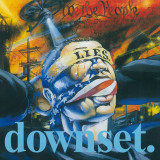
Downset. (originally called Social Justice) is an American rap metal band from Los Angeles, California. The band's music blends hip hop, funk, hardcore punk, and heavy metal with 'socially aware lyrics'.
In 1994 Downset. began gaining popularity in Europe after touring there with Biohazard and Dog Eat Dog, followed by a tour with Pantera and The Almighty later that year. They released their self-titled effort in the same year. A year later, Downset. returned to Europe with Sullen for a massive headlining tour. In 1995 they also appeared at some major rock festivals throughout the continent including Roskilde and Dynamo.
The band is still regarded as a noteworthy influence on the then-nascent nu metal and rap metal subgenres. In addition to headlining the second stage at Ozzfest in 1997, Downset. toured with prominent bands such as Linkin Park, Pantera, Slayer, Metallica, Red Hot Chili Peppers, Korn, Snoop Dogg, Testament and Anthrax.
The Counts formed in Michigan in 1964 as the Fabulous Counts, releasing two singles, ‘Jan Jan’ and ‘Get Down People’ on the Moira label in 1968 and 1969 that became R&B chart hits. This led to the album “Jan Jan”, issued by Cotillion in 1969.
Snapped up by Westbound, the line-up that recorded “What’s Up Front That Counts” included Mose Davis (Organ), Leroy Emmanuel (guitar), Demetrius Cates (sax) and Andrew Gibson (drums). Although tenor player Jim White is on the front cover, he left the band shortly before the album was recorded. Extended, mostly instrumental tracks like ‘Why Not Start All Over Again’ and the title track are now recognized as some of the juiciest funk ever laid down in the studio. Shorter tracks like ‘Rhythm Changes’, ‘Thinking Single’ and ‘Bills’ are equally sweet. What gives the album such powerful musical chemistry was the fact that the Counts were jazz players weaned on the likes of Miles Davis who were also into the funk of James Brown and Sly & The Family Stone so every track features groove-driven interplay. One might argue this is the sound that Miles Davis was trying to find on his early 70s albums.
The Counts were to tour with Funkadelic and record more singles and albums but it is this 1971 offering that is, and remains, an all-time classic. Indeed, the track ‘What’s Up Front That Counts’ has been sampled by artists like Queen Latifah and Eric B & Rakim, keeping the music of the Counts firmly in the minds of a young contemporary audience.
Out of print on vinyl for nearly two decades, Ace is proud to reissue this beauty
The year is 1989. Techno’s second generation has begun to permeate the globe leading a young Carl Craig to a tiny village in the countryside of Belgium. It is here, undistracted and determined to break out, that Craig encounters one of the country’s only drum machines, an Alesis controlled midi-808. In a single session he composes and mixes a handful of records that are still to this day regarded as some of his most raw and explosive contributions to the fabric of electronic music history.
Carl revisits this fateful chapter through the lens of a famed cut from his Psyche alias ‘From Beyond’, with a ‘C2 2023 Mix’ and remixes from Seth Troxler, Ataxia and Admn, out July 14 on Planet E Communications.
The Psyche alias, known for early Transmat releases like ‘Crackdown’ and ‘Elements’, embodied a stripped back, less sample based yin attitude to the yang of Carl’s more aggressive 69 and sample-forward BFC and Paperclip People identities. ‘From Beyond’, first released in 1990 via the ‘Crackdown’ 12” on Transmat, offers an eerie glimpse into the simplistic production that came through Carl’s mastery of the 808 and the sonic value of restricting himself to this movement defining tool.
This new ‘From Beyond’ package sees Carl lift and bend the original in his ‘C2 2023 Mix’ alongside a package of remixes from artists near to the hearts of Detroit and the Planet E fold. Seth Troxler brings a subdued acid tinge to the package, while label regular Ataxia pays homage to the source material with a renewed percussive energy, followed by a soulful rework by Admn.
Whether it be through the 30 year repertoire of his seminal Planet E, his Party / After-Party sound and light installation now on display at Los Angeles’ MOCA, or his continuous work as a champion of Black-led creativity, the Carl Craig mission remains the same: to always rep Detroit and be the realest mutha f***a alive.
Why fiddle and voice? They say the fiddle is the instrument that most resembles the human voice. It’s like I get to sing three part harmony with myself, preparing to be able to play the songs with others. I have played violin as long as I can remember… it changed to fiddle in college after being inspired by so many great fiddle players I ran into at camps and festivals. About a decade ago, when I first heard Bruce Molsky, I remember vividly listening to his album, Soon Be Time over and over, and then going down a rabbit hole to watch videos of him playing and singing at the same time. Then, as I saw others perform in this way, notably Tim O’Brien, Laura Cortese, it would continually floor me. The way the two voices weave as one. The threads of the double stops often accounted for two unique voices, lifting the authenticity of the lyrics. I could feel the lyrics, so vulnerable and exposed, cut through. I was scared to perform this way for years, finally giving it a go in a situation where I was asked to perform and my band members were unavailable. I have always felt that as a musician I want to have strength as a collaborator… Now I am realizing that requires a musician to be able to carry the song alone. If you can feel the groove, the chords, the melody and the meaning all at once, then it makes it easier for others to connect to the song, and lift it up. How is this album a natural progression for you at this point in your career? For years, I have been fortunate enough to play with some extremely talented collaborators. My hope is that never ends, and that this album gives me the chance to learn how to stand firmly on my own two feet, rooted in the song in my heart, calling in friends and collaborators with the resonance of my spirit as naturally as they appear in my life.
Available for the first time on vinyl - a 20th anniversary release of The Mystic Chords Of Memory's seminal, unique DIY psych-folk debut. By Beachwood Sparks singer/songwriter Chris Gunst & Aislers Set's Jen Cohen. Mastered at Abbey Road. The seeds of this exquisite album are scattered among the tracks of Make The Cowboy Robots Cry - the LP Beachwood Sparks hung their hats on before a ten year break. A further step forward from west coast country psych towards something with folkier roots but new, mysterious and above all free. Chris and Jen's conjuring of magical, unforced, domestic spirituality. Recorded in a little wood cabin amongst the redwoods overlooking a running creek with a range of collected musical toys. Just give it 5 minutes once you’ve dropped the needle & you’ll be right there. Here’s Amanda Petrussich’s brilliant write up in Pitchfork - “With its soft melodies, sweet vocals, and scratchy DIY production, Mystic Chords of Memory is also an overwhelmingly intimate record, focused and domestic - much closer to Elliott Smith than former-benchmarks the Byrds and Buffalo Springfield…. The duo's wordy moniker was lifted from Abraham Lincoln's first inaugural address, a lecture delivered in the spring of 1861 and boldly eternalised at the base of Mount Rushmore... Appropriately, the band's sound is just as archaic as a truly striking political speech: Gunst and Cohen blend tinkling bells, melodica, harp, keyboards, bits of samples, tinny drums, and strummy guitars, presenting a vaguely contemporary update on the British folk phenomenon of the late 1960s with more blips. Mystic Chords of Memory is a surprisingly coherent re-introduction to Gunst, and his professional coupling with Jen Cohen has proven both a freeing and inspired move.” Two decades later it’s obvious how seminal a record they conjured up. They forged a path that came to define the wave of US indie that followed for a while. In our opinion, the original has a natural, guileless, effortless beauty that trumps them all. Without a whiff of Starbucks. "Mystic chords of memory speech I interpreted the meaning as the underlying psyche fabric we are all creating on this land together. Jen and I thought it would be a great name to inspire our music together. This was really close to post 9/11 times and we were thinking about all of this and also wanting to improve our own contribution to the psychological fabric of the world.” Chis Gunst.
- A1: Elevator Up
- A2: Delta 5
- A3: Gorellas
- A4: Double Xx
- A5: Knc
- A6: Heavy Defication
- B1: I Get
- B2: Clap Your Hands
- B3: Tons Of Drums
- B4: 2 Minutes Left
- B5: King Brain
- C1: Trash Out
- C2: Rolls Royce White
- C3: Hip Hop And R&B Broke Up
- C4: Get Down With Me
- D1: A Pllace
- D2: Delta 6
- D3: Hard Future
- D4: 125Th Street
- D5: Give Me Frequencies
- D6: The Rap-Up
Ced Gee & Kool Keith, both members of the legendary Ultramagnetic MC's, regroup for a new Ultramagnetic MC's record. The resurgence of classic Hip hop moves strong into 2022 with new release from Ultramagnetic MC's "Kool Keith x Ced Gee." Arising from the Boogie Down Bronx in the mid-'80s as a far-flung hip hop trio with a heap of new ideas to try out, Ultramagnetics Kool Keith, Ced Gee, and DJ Moe Love occupy something of a singular place in the old-school pantheon. Combining funk-heavy tracks with jeep-rocking beats and obscure lyrical references, Ultramagnetic MCs have a list of firsts to their credit: the first rap group to employ a sampler as an instrument, the first to feature extensive use of live instrumentation, the first to feature a former psychiatric patient (Kool Keith) on the mic. Early singles like "Something Else" and "Space Groove" were block-party staples and created waves in the underground, eventually landing the group on the disco-dominated Next Plateau label, where they released their underappreciated debut. The following years found the group shuffling from label to label, releasing albums on Mercury and Wild Pitch before splitting to pursue various projects. This special event will feature Kool Keith and Ced Gee performing classic Ultramagnetic MCs songs and sharing stories and history about the making of their iconoclastic catalogue.
- A1: Onde Ando O Meu Amor - Bossa Três 02 13:00
- A2: Cochise - Ed Lincoln 02 27:00
- A3: A Felicidade Breno Sauer Quinteto 02 14:00
- A4: Os Grilos - Marcos Valle 02 14:00
- A5: Samba De Uma Nota Só -Lalo Schifrin & Orchestra 03 46:00
- A6: Samblues - Sambalanço Trio 02 16:00
- A7: So Danco Samba (Jazz 'N' Samba) - Wanda De Sah 02 11:00
- B1: Bert's Bossa Nova - Bert Kaempfert & His Orchestra 02 25:00
- B2: Oba-Lá-Lá - Sérgio Mendes 02 28:00
- B3: Lamento - Nelson Riddle 03 03:00
- B4: Chora Tua Tristeza - Geraldo Trio 02 58:00
- B5: Mas Que Nada - Elza Soares 02 25:00
- B6: The Man From T H. R. U. S. H. - Lalo Schifrin 02 55:00
- B7: O Pato - Pedrinho Mattar E Seu Conjunto 01 53:00
- C1: Groovy Samba - Cannonball Adderley And The Bossa Rio Sextet With Sérgio Mendes 05 05:00
- C2: Amanhã -Edgard E Seu Conjunto 02 45:00
- C3: Caminho De Casa - João Donato 02 28:00
- C4: É Bom Assim - Os Cobras 02 47:00
- C5: Você - Roberto Menescal 01 58:00
- C6: Reza - Paul Winter Feat Luiz Bonfá, Roberto Menescal & Luiz Eça 03 19:00
- D1: Tarde Em Itapoã - Amilton Godoy 03 50:00
- D2: Wave - Toots Thieleman & Elis Regina 03 08:00
- D3: Baia - Bill Perkins 03 34:00
- D4: So Nice (Samba De Verão) - Sérgio Mendes & Wanda De Sah Feat Bud Shank 02 11:00
- D5: Mentira - Marcos Valle 03 43:00
- D6: The Bobo ( Bossa Nova ) - Francis Lai 02 13:00
Brazilia Maravilha... A real wonder of selected Brazilian tunes.
You will feel the mood and breeze like you were over there!
28 songs including some great classics as "Lamento" by Nelson Riddle, "Mas Que Nada" by Elza Soares, "Groovy Samba" by Cannonball Adderley and "So Nice (Samba De Verao) by Sérgio Mendes as well as more unique ones.
Kindly remastered tracks from master tapes to keep the dusty roots of the original sound. Double vinyl in a balanced mix of vocals, instrumentals, bossa nova and some jazzy beats tunes.
An incredible 45 of Latin disco – recorded in Peru during the late 70s by funk pioneers Black Sugar, and right up there with the best from New York and LA of that era! It’s taken over four decades 'Baila' to become a winner spin at international events in the soul and disco scenes, a sought-after collector's item and, above all, the dancefloor hit that should have always been. First time reissue. Black Sugar is a Peruvian band, considered a pioneer group in Latin America in mixing funk influences with rock and Latin rhythms. In 1976, following their gig at Coliseo Amauta in Lima, opening the night for the legendary Spanish band Barrabás, they started to show a growing interest in disco music, resulting in some line up changes with members leaving the project due to their lack of interest in the new sound and new ones joining in. Word is that Sono Radio, home to a bunch of local Tamla MoTown releases for the Peruvian market, thought that Black Sugar's prestige, and their credibility in the new orientation towards disco sound, would benefit from seeing their new single pressed with the labels of the famous record company from Detroit. And so it was. Under certain lights and shadows, ‘Baila’ was finally released in Peru only in 1978, sporting the same look as the releases of the likes of Marvin Gaye, Diana Ross, Commodores or Thelma Houston. A clever marketing ploy that however failed in boosting the sales of the single…Only a few original copies have survived to this day, of either the first and the second edition from 1979 released on the US label Libra, and reached the collectors market. It’s now, over four decades later, when the interest on this recording has gone stronger and ‘Baila’ is getting regular spins at international soul/disco scene events, having become a very sought-after collectors item and, on top of that, the dance floor anthem that should have always been. The stunning piano arrangements of the intro, the outstanding brass sections —faithfully copied from the disco recordings coming from the States—, a very catchy chorus… ‘Baila’ has all the necessary ingredients to become an addictive invitation to join the dance floor. On the B side, a cover version of Barry White’s hit ‘Sha La La (Means I Love You)’ —as appeared on the original issue of this record— shows what the interest of the band was at the time. First time reissue. TRACKLIST Side A Baila Side B Sha La La (Means I Love You)
Die Autofenster sind heruntergelassen, die Luft ist warm, und die Möglichkeiten sind grenzenlos. Auf Cut Worms, dem neuen, selbstbetitelten Album des aus Brooklyn stammenden Max Clarke, setzt der Singer-Songwriter und Musiker seine Erkundung dessen fort, was er "Pop-Essentialismus" nennt. Indem er die goldenen Hits vergangener Tage für einen zeitlosen Doppel-A-Seiten-Sound ausgräbt, betrachtet er uralte Fragen durch eine moderne Linse. Hier lässt er das legendäre Studio und die gefragten Produzenten hinter sich und arbeitet mit einer Reihe von begabten Freunden und Kollaborateuren zusammen, um seinen eigenen Ansatz zu finden. Das Ergebnis ist eine kompakte Sammlung von Tagtraum-Hymnen, die zwischen den hoffnungsvollen Anfängen des Sommers und dem flüchtigen Ende der Saison angesiedelt sind. Anstatt das gesamte Album in einem Stück in einem Studio aufzunehmen, variierte Clarke seine Methoden. Drei der Songs wurden von Anfang bis Ende in seinem gemeinsamen Proberaum aufgenommen. "Don't Fade Out" und Living Inside" wurden in Brooklyn von Brian und Michael D'Addario von den Lemon Twigs aufgenommen, die bei diesen beiden Stücken auch Klavier bzw. Bass spielten. Weitere grundlegende Aufnahmen wurden von Rick Spataro (von der Indie-Folk-Band Florist) in seinem Studio Onlyness Analog im Hudson Valley gemacht, mit Beiträgen der langjährigen Live-Band Cut Worms - Keyboarder John Andrews, Bassist Keven Louis Lareau und Schlagzeuger Noah Bond (der bei allen drei Sessions mitwirkte). Die neun Songs sind von einem jugendlichen Geist durchdrungen. Die mit Nelken geschmückte Schulball-Serenade "I'll Never Make It", die sternenklare Verliebtheit von "Is it Magic?", das erste Herbstlaub auf der Busfahrt zur Schule in "Living Inside" - sie alle beschwören einen Ort der Wärme und Sicherheit. Erklärungen wie "Don't Fade Out", "Let's Go Out On The Town" und "Use Your Love" stellen hohe Anforderungen an das Leben, um es zu verändern, bitten aber gleichzeitig darum, das zu bewahren, was uns als Menschen ausmacht. Clarke ringt mit einem Paradoxon: Die Freuden der Erfahrung können nicht ohne den Verlust der Unschuld gewonnen werden.
- A1: Zoos Of The World
- A2: The Big Game Hunters See The Cheetah
- A3: Western Dragon (Pt 3)
- A4: Western Dragon (Pt 2)
- A5: Moon Journey
- B1: Music For Advertising #6
- B2: Black Eye (Main Theme)
- B3: Western Dragon (Pt 1)
- B4: Music For Advertising #7
- B5: Captain Dj Disco Ufo (Pt Ii)
- B6: Three Tv Ids
- B7: Music For Advertising #8
- B8: Love Is A Garden
- B9: The D-Bee's Cat Boogie
- B10: Black Eye (End Credits)
red LP[24,79 €]
LP includes Poster.
When Sacred Bones first began their Mort Garson reissue project in 2019 with a proper reissue of Plantasia, the Garson-naissance began in earnest. Soon after, you could hear Mort Garson and his Moogs bubbling up on TV shows, documentaries, podcasts, hip-hop tracks, or anywhere else, the man a cultural phenomenon once more.
Like a perennial that returns with each new spring, the Mort Garson archives have brought to bear yet another awe-inspiring bloom.
Journey to the Moon and Beyond finds even more new facets to the man's sound. There's the soundtrack to the 1974 blaxploitation film Black Eye (starring Fred Williamson) alongside some newly unearthed music for advertising. Just as regal is "Zoos of the World," where Garson soundtracks the wild, preening, slumbering animals from a 1970 National Geographic special of the same name.
The mind reels at just what project would have yielded a scintillating title like "Western Dragon," but these three selections were found on tapes in the archive with no further information. The crown jewel of the set is no doubt Garson's soundtrack to the live broadcast of the 1969 Apollo 11 moon landing, as first heard on CBS News. That's one small step for man, one giant leap for Moogkind. But for decades, this audio was presumed lost, the only trace of it appearing to be from an old YouTube clip. Thankfully, diligent audio archivist Andy Zax came across a copy of the master tape while going through the massive Rod McKuen archive.
So now we get to hear it in all its glory. Across six minutes, Garson conjures broad fantasias, whirring mooncraft sounds, zero-gravity squelches, and twinkling études. It showcases Mort's many moods: sweet, exploratory, whimsical, a little bit corny, weaving it all together in a glorious whole.
Maybe at the time it scanned as crass and opportunistic for Garson to apply his keyboards to subjects like astrological signs, the occult, hippiedom, houseplants, or the moon landing. But more than most other electronic music pioneers of his ilk, Garson foresaw the integration of such electronics into our daily lives, how they would allow us to engage with the world.
- A1: Zoos Of The World
- A2: The Big Game Hunters See The Cheetah
- A3: Western Dragon (Pt 3)
- A4: Western Dragon (Pt 2)
- A5: Moon Journey
- B1: Music For Advertising #6
- B2: Black Eye (Main Theme)
- B3: Western Dragon (Pt 1)
- B4: Music For Advertising #7
- B5: Captain Dj Disco Ufo (Pt Ii)
- B6: Three Tv Ids
- B7: Music For Advertising #8
- B8: Love Is A Garden
- B9: The D-Bee's Cat Boogie
- B10: Black Eye (End Credits)
black LP[21,22 €]
LP includes Poster.
When Sacred Bones first began their Mort Garson reissue project in 2019 with a proper reissue of Plantasia, the Garson-naissance began in earnest. Soon after, you could hear Mort Garson and his Moogs bubbling up on TV shows, documentaries, podcasts, hip-hop tracks, or anywhere else, the man a cultural phenomenon once more.
Like a perennial that returns with each new spring, the Mort Garson archives have brought to bear yet another awe-inspiring bloom.
Journey to the Moon and Beyond finds even more new facets to the man's sound. There's the soundtrack to the 1974 blaxploitation film Black Eye (starring Fred Williamson) alongside some newly unearthed music for advertising. Just as regal is "Zoos of the World," where Garson soundtracks the wild, preening, slumbering animals from a 1970 National Geographic special of the same name.
The mind reels at just what project would have yielded a scintillating title like "Western Dragon," but these three selections were found on tapes in the archive with no further information. The crown jewel of the set is no doubt Garson's soundtrack to the live broadcast of the 1969 Apollo 11 moon landing, as first heard on CBS News. That's one small step for man, one giant leap for Moogkind. But for decades, this audio was presumed lost, the only trace of it appearing to be from an old YouTube clip. Thankfully, diligent audio archivist Andy Zax came across a copy of the master tape while going through the massive Rod McKuen archive.
So now we get to hear it in all its glory. Across six minutes, Garson conjures broad fantasias, whirring mooncraft sounds, zero-gravity squelches, and twinkling études. It showcases Mort's many moods: sweet, exploratory, whimsical, a little bit corny, weaving it all together in a glorious whole.
Maybe at the time it scanned as crass and opportunistic for Garson to apply his keyboards to subjects like astrological signs, the occult, hippiedom, houseplants, or the moon landing. But more than most other electronic music pioneers of his ilk, Garson foresaw the integration of such electronics into our daily lives, how they would allow us to engage with the world.
Chrome dishes up two servings of heavy Hip Hop instrumentals. The A side track ‘Don’t stop, get it’ kicks off with the familiar reggae sample from Stranger Cole’s ‘Crying every night’ (made famous by Reflection Eternal’s classic ‘Fortified live’), and proceeds to kick in with heavyweight drums and vocal cuts a plenty! The B side unearths a Funkadelic track from ‘Let’s take it to the stage’ and brings it to life with some disco lead drums from the Atmosphere classic ‘Dancing in outer space’ and links them up with the Funky ‘Sesame street’ drum break from Blowfly.
Both tracks are pounding dance floor bangers!
Sometime in 1984, San Diego native Anthony "Antone" Williams found himself sitting alone at Pure Sound Studios, tinkering around with a drum machine. Eventually he landed on a "sinister groove" which would lay the propulsive foundation for his hauntingly melodic tour de force, "Windows of My Mind." Released the following year as a seven-inch single on his own Unity Records label, the song features Antone's otherworldly production. Some have referred to the result as "post punk soul," but we'll let you be the judge.
Coming up in San Diego in the Seventies, part of an extensive musical family, Antone's creative fuse was lit by the sounds of Stevie Wonder, Earth Wind & Fire, and the Jackson 5.. At the age of 13, he was performing in area clubs, making a name for himself. By age 22, he had opened his own recording studio, Pure Sound. The influence of Sly and the Family Stone was decisive for Antone, who took to wearing a star-shaped gold necklace, not unlike the one famously worn by Stone on his epochal 1975 LP High on You.
"Windows of My Mind" was Antone & The Underworld's sole release. Limited to 500 copies and handed out as a promotional tool for a purported album of the same name, the single didn't get much traction. (A story as old as time.) Perhaps the music was ahead of its time and Antone's visionary message will finally sink in 2023. "I didn't want to make a song like Shake Your Booty", he says now. And yet we think that this long-lost record with its "sinister groove" is eminently danceable, almost 40 years later. We challenge you to take a listen to this home-grown 1985 7", remastered directly from the original tape, and make an assessment of your own.
- A1: Dry (Demo - Lp1 - B Sides Demos & Rarities - Record 1)
- A2: Man-Size (Demo)
- A3: Missed (Demo)
- B1: Highway '61 Revisited (Demo)
- B2: Me-Jane (Demo)
- B3: Daddy (Demo)
- C1: Lying In The Sun (Lp2 - B Sides Demos & Rarities - Record 2)
- C2: Somebody's Down, Somebody's Name
- C3: Darling Be There
- C4: Maniac
- C5: One Time Too Many
- D1: Harder
- D2: Naked Cousin
- D3: Losing Ground
- D4: Who Will Love Me Now
- D5: Why D'ya Go To Cleveland
- E1: Instrumental #1 (Lp3 - B Sides Demos & Rarities - Record 3)
- E2: The Northwood
- E3: The Bay
- E4: Sweeter Than Anything
- E5: Instrumental #3
- E6: The Faster I Breathe The Further I Go (4 Track Version)
- E7: Nina In Ecstasy 2
- F1: Rebecca
- F4: Memphis
- F5: 30
- G1: 66 Promises (Lp4 - B Sides Demos & Rarities - Record 4)
- G2: As Close As This
- G3: My Own Private Revolution
- G4: Kick It To The Ground (4 Track Version)
- H1: The Falling
- H2: The Phone Song
- H3: Bows & Arrows
- H4: Angel
- H5: Stone
- I1: 97° (Lp5 - B Sides Demos & Rarities - Record 5)
- I2: Dance
- I3: Cat On The Wall (Demo)
- I4: You Come Through (Demo)
- I5: Uh Huh Her (Demo)
- I6: Evol (Demo)
- J1: Wait
- J2: Heaven
- J3: Liverpool Tide
- J4: The Big Guns Called Me Back Again
- J5: The Nightingale
- J6: Shaker Aamer
- K1: Guilty (Demo - Lp6 - B Sides Demos & Rarities - Record 6)
- K2: I'll Be Waiting (Demo)
- K3: Homo Sappy Blues (Demo)
- F2: Instrumental #2
- K4: The Age Of The Dollar (Demo)
- K5: The Camp
- L1: An Acre Of Land
- L2: The Crowded Cell
- L3: The Sandman (Demo)
- L4: The Moth (Demo)
- L5: Red Right Hand
- F3: This Wicked Tongue
Am 4. November veröffentlicht PJ Harvey eine Sammlung von B-Seiten, Demos und Raritäten.
Die Sammlung beinhaltet 59 Tracks der letzten drei Jahre und wurde von Jason Mitchell zusammen mit dem langjährigen Produzenten von PJ Harvey neu gemastered. Zusätzlich enthält die Sammlung 14 zuvor unveröffentlichte Songs und gibt Fans die Möglichkeit, die bereits veröffentlichten Songs erneut zu genießen.
Zudem zeigt das Artwork bisher unveröffentlichte Archivfotos.
Diese Sammlung ist als 3CD und LP Box Set erhältlich.
La Bestiole comes back with her dancefloor eclectism: 4 tracks celebrating friendship with various producers & musicians and different approaches.
BEST006 musical journey begins with a classic sample-based latin house track, including a cheesy Pleyel grand piano introduction. An oriental & electronic downtempo track follows, to bring some mystery on the classic foor of the floor pattern.
B-side changes the rhythm with two breakbeat productions: deep & sweet electro on B1, and a funky jam to conclude, with the help of Paris jazzmaster Anthony Honnet for the fire synth solo.
As always, a bunch of loops are included, for the skilled DJ to play with and to do your remix yourself.
Limited to 100 copies with stencil handsprayed cover art.
Repress!
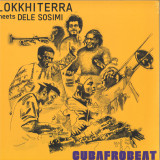
Funkiwala Records presents the third in the series of "Lokkhi Terra meets"albums, with the London fusionistas creating another unique sound-clash, this time with ex-Fela Kuti keyboardist and legendary UK Afro-beat ambassador Dele Sosimi, and members of his critically acclaimed Afro-beat Orchestra.
This particular collaboration has been bubbling away for a few years now, teasing audience expectations with a handful of sold out shows each year in between both bands busy schedules.
Featuring the two pianos of Kishon Khan and Dele Sosimi – Cuban percussionists/vocalists Geraldo De Armas (Yoruba Andabo), Oreste Noda (Ariwo), Javier Camilo (Ibrahim Ferrer) - a horn section led by Justin Thurgur (Bellowhead) featuring Yelfris Valdes (Sierra Maestra) and Graeme Flowers (Kyle Eastwood) to name a few – this is an All-star cast.
Kishon Khan's Lokkhi Terra have over a number of years now been quietly establishing themselves as one of London's more unusual heavyweight outfits, described as "Stunning Headliners… A majestic multi-cultural blend of sounds… effortlessly builds bridges between rolling Indian raga rhythms, Afro-Cuban grooves, Acid Jazz/funk and free flowing improvisation" (Timeout London). Included amongst the band members are London's top Cuban musicians, adding their infectious rich musical history to the city's melting pot.
When the band wanted to explore Cuban links with another of their favourite traditions, Afrobeat, who better to bring in then one of the Afrobeat originators – maestro Dele Sosimi – "Sosimi creates some of the most bewitching grooves in modern African music" E Jazz News.
Bringing together two Yoruba speaking musics - with different accents, from different sides of the Atlantic - Havana meets Lagos in London – A Cuban-Afrobeat-Experience. CUBAFROBEAT.
All About Jazz 4star review
A younger version of London's Grand Union Orchestra, founded by world-jazz pioneer Tony Haynes in 1982, Lokkhi Terra was put together by keyboard player Kishon Khan in 2005. Both ensembles have made a specialism of jazz / South Asian fusion, with Lokkhi Terra also giving as much attention to music from Cuba, where Bangladeshi-born, London-based Khan lived for a while in the early 2000s.
Cubafrobeat, as the title foretells, is a blend of Cuban dance music and Nigerian / Yoruban Afrobeat—a fusion rendered seamless by the synergies existing between Afro-Cuban and Yoruban music, language and mythology. The album is Lokkhi Terra's third and partners the band with the keyboard player and vocalist Dele Sosimi .
A young-going-on-child-prodigy member of Fela Kuti's Egypt 80, Sosimi went on to become musical director of Femi Kuti's Positive Force, before relocating to London and setting up Dele Sosimi's Afrobeat Orchestra, the finest Afrobeat band outside Nigeria, bar none, now with a string of consistently engaging albums under its belt. Cubafrobeat features Sosimi as lead vocalist on all four tracks, and on Fender Rhodes on two of them. His singing plays a prominent role in the Afrobeat Orchestra, but, such is the whirlwind impact of the band in full instrumental flight, that Sosimi is often thought of first and foremost for his keyboard and arranging talents. That may change by the time 2018 is over. Cubafrobeat is the third album in as many months to feature Sosimi as guest vocalist, spotlighting the gravitas, air of mystery, intimacy and ferocity his voice can bring to an occasion.
The first of these albums was the genre-bending spiritual-jazz band Emanative's Earth (Jazzman). One of the stand-out tracks, "Ìyáàmi," features Sosimi making obeisance to the titular Mother Goddesses of the Yoruba spirit worlds. His raw and intense invocations carry the track for nine mesmerising minutes. Otherwordly is not the half of it. Next up was dub / reggae / jazz band Soothsayers' Tradition (Wah Wah 45s), which featured Sosimi as lead vocalist on the compelling "Sleepwalking (Black Man's Cry)." Earth and Tradition are both outstanding albums and have previously been reviewed here.
Cubafrobeat is a total stonking blinder, too. It is an effectively nuanced affair, opening with the fiery "Afro Sambroso" and closing with the relatively reflective "Rumbafro." Sosimi's vocals light up the music, as do the several solos from trumpeters Graeme Flowers and Yelfris Valdes Espinosa and trombonist Justin Thurgur (a member of both Lokkhi Terra and the Afrobeat Orchestra). Sosimi and Kishon Khan's intertwining Fender Rhodes solos on "Cubafro" are also a delight, as is the drum and percussion section throughout.
The sound of summer, for sure, Cubafrobeat has enough depth and variety to make it something for all seasons.
Songlines 4star review
Lokkhi Terra are one of London's most authentic groups. They are a Latin-flavoured collective whose keyboard player and bandleader Kishon Khan segues from percussive montunos to complex Bengali rhythms and back, with jazz chops sparking funky and outward-looking fusions. Their collaboration with Dele Sosimi, Britain's foremost Afrobeat ambassador, has been bubbling for a while; here four tracks at ten minutes see musical conversations that never lose their sense of flow. An extensive line-up of stellar players, including trumpeter Yelfris Valdés, conguero Oreste Noda and trombonist Justin Thurgur, highlights the genre-crossing potential of world traditions. Opener 'Afro Sambroso' showcases batá drums from Gerardo de Armas Sarria before the track links Cuban grooves with Afrobeat. 'Timbafro' crackles and sways via Khan's organ, Sosimi's vocals and Oscar Martinez's timbales. 'Cubafro' features dazzling interplay between Khan, Sosimi and Javier Camillo's Spanish-language vocals. 'Rumbafro' is all rumba choruses, Yoruba vocals and Afrobeat horns. Rooted in their sources, but with musical threads intertwining, separating and reconfiguring – with grooves at a premium – this is a fusion lover's dream
The sixth edition of Defected’s vinyl series continues to commit the labels’ biggest digital releases to wax, delivering upfront packages of house heat previously unavailable on vinyl. Kicking off the A-Side is Ferreck Dawn’s solo Defected debut ‘You Are The One’, a self-assured club track featuring a cut-up sample from Jocelyn Brown’s timeless classic ‘Somebody Else’s Guy’. Up next is Qubiko’s ‘U R’, a bumping, grooving dancefloor cut from the Italian DJ. On the B-Side Todd Edwards & Sinden storm in with their UKG influenced ‘Deeper’, featuring chopped-up vocal sampling, time shifts and kick drums. The release is rounded off with Alaia & Gallo’s ‘Trippin’’, with an irresistible deep and driving bassline, the gospel vocal trio Dames Brown lend their soulful tones to cover the Y2K classic ‘It’s Love’ by Jill Scott.
Representing Seattle Funk. The Oscillators' debut album is deep, raw and energetic. Led by drummer oLLi kLoMp, the line up features members of the polyrhythmics, Rippin' Chicken, the Pulsations, Lucky Brown, the Trueloves, 45th Street Brass, The S.G.'s, and more...
REAL, DEEP FUNK WITH A PSYCHEDELIC NUDGE.
As of yet, as these words were written, the Oscillators is not a band. the Oscillators is an experimental recording collaboration that turned out swimmingly.
Our gauge was this: "Do we like it?" No agenda or goal. The main mode being simply; create what we like out of thin air. Yet the air was heavy therefore create what we like out of thick air. Magical, gravy-thick air. Molecules, olli'cules. Alchemically thick. Apparently, we needed to sample something out-of-the-ordinary… the process is called, "stackin- phat". Minimal gear, maximum vibe. In fact, this process and this gear would make most educated sound engineers cringe but the players know.
Pushing the tape…yes, tape! 4 track to be exact, pushing the tape to it's edge. First, stack two drum tracks. bounce them to one primal track. Sometimes one drummer, sometimes two; "a great drumbeat already contains melody." This is your first layer of phat. Generally, unless the muse says otherwise, you wanna bring in your bass player next, gently caress guidance and encouragement (maybe a beer or a hit a grass), then he or she can stack the next layer of phat. The next few layers are where things really take off. Maybe it's guitar then horns, maybe keys. Maybe just horns. Whatever the tune calls for. Whatever the muse "calls" for. Everyone stacking is simultaneously inspired, while hindered, by the previous layer; "constricted genius" works of magic from thin/thick air.
Most of the time the players weren't in the same room at the same time, and in some cases, haven't seen each other in years, but it sounds like a family and feels like a band. Create what we like.
The natural unfolding of this creation was affirming, in that the process of creation proved most relevant. An expression of faith and appreciation of the experiMENTAL process with no preparation for something else. Beyond fortunate for the allowance of time. "never underestimate the power of positive thought"
-Ned Blanski
Doris Duke's version of Marlena Shaw's seminal, powerful “Woman Of The Ghetto” originally appeared on her third album 'Woman' in 1975. It's a searing version, Duke's full-bodied and fierce voice adding even more urgency to the searing social commentary embedded in the lyrics.
On the flip is another SAM Records classic. “Free” by Rhyze is a disco-monster. A sure-fire staple for some of the biggest DJs and diggers out there.
Remastered by Phil Kinrade and presented in a 12” official SAM labels and picture sleeve. Part of the Demon Records Singles Club.
Don Glori, a.k.a multi-instrumentalist Gordon Li, returns with a remix EP that tears open five tunes from his groundbreaking debut, Welcome.
Taking an opportunity to sink into some of the ideas explored on the original album, the five remixes featured here sees some of Europe and Australia’s finest throw open the shutters and shine a light on Li’s inventive compositions and remarkable instrumentation.
Rosie from the Block, a.k.a Belgian multi-instrumentalist, producer and DJ Roselien, leans right into the percussion and drum kit playing that made Welcome so infectious, layering this with cheeky bubblegum-beat bass lines that lend the whole affair an incredibly smooth, street-soul styling.
Other key players include Swedish duo Mount Liberation Unlimited, lending their take on things an introspectively dark, brooding atmosphere that evolves into one of their trademark acid-house extended journeys; Australian radio DJ and producer Ennio Styles working alongside Liam de Bruin, hip-hop/soul duo Man Made Mountain, led by MC Cazeaux O.S.L.O, and an insanely infectious organic house take on hit single Dlareme by one of Melbourne’s finest, Teymori.
A perfect companion to an album that broke open the Melbourne scene and laid out new parameters for the quality of jazz, samba and funk-inspired music emerging from that city, Welcome Remixes breathes fresh life into this incredible album and reminds us just how goddamn fun making, playing and performing music can be.
- A1: Let 'Em Know (Produced By Domino)
- A2: Live And Let Live (Produced By Domino)
- A3: That's When Ya Lost (Produced By Del Tha Funkee Homosapien)
- B1: A Name I Call Myself (Produced By Del Tha Funkee Homosapien)
- B2: Disseshowedo (Produced By Domino And Jay Biz)
- B3: What A Way To Go Out (Produced By Domino)
- B4: Never No More (Produced By A-Plus)
- C1: 93 'Til Infinity (Produced By A-Plus)
- C2: Limitations Feat. Casual (Produced By Jay Biz)
- C3: Anything Can Happen (Produced By A-Plus)
- D1: Make Your Mind Up (Produced By Del Tha Funkee Homosapien)
- D2: Batting Practice (Produced By Casual)
- D3: Tell Me Who Profits (Produced By Domino)
- D4: Outro (Produced By Domino)
Repress!
Repressed, note price increase. Remastered from the original masters and pressed extra loud for DJs. There are very few albums across any genre that stand the test of time better than 93 ‘Til Infinity, the classic debut record from the Hieroglyphics crew’s very own Souls of Mischief. In an era where Gangsta Rap and G-Funk dominated the West Coast Rap scene, Souls broke ground on a completely unique and thoroughly west coast sound. While the Dr. Dre’s and the Snoop Doggs were garnering much of the mainstream attention, Souls were quietly forging a charismatic, critically acclaimed, and cohesively shaped record that when categorized, sounded much closer to A Tribe Called Quest than N.W.A. The sound of their debut is characteristic of the distinct style explored by the collective, including a rhyme scheme based on internal rhyme and beats centered around a live bass and obscure jazz and funk samples. 93 ‘Til Infinity was propelled into success by its title track and lead single, which reached #32 on the Billboard Hot 100. It also featured singles “That’s When Ya Lost” and “Never No More” which also reached the Hot Rap Singles. In 1998, the album was selected as one of The Source’s 100 Best Rap Albums of All Time. Considered by many to be a textbook “slept-on” classic Rap record, 93 ‘Til Infinity has only grown better with age. The album simply defines the Hiero golden age with a sound that would later be fine tuned with strong releases from MCs Del The Funkee Homosapien, Casual and Pep Love. It takes some serious bravado to name your album 93 ‘Til Infinity, but certainly the goal of creating a Hip Hop “classic” must have been on the collective minds of group members A-Plus, Tajai, Opio, and Phesto when recording this landmark moment in Hip Hop history. It’s true, even seventeen years after the album’s initial release many people are still discovering it, and with this re-mastered reissue on double vinyl, fans all over the world will once again discover the brilliance that 93 ‘Til Infinity delivers and will continue to deliver beyond infinity. A1. Let ‘Em Know (Produced by Domino) A2. Live and Let Live (Produced by Domino) A3. That’s When Ya Lost (Produced by Del tha Funkee Homosapien) B1. A Name I Call Myself (Produced by Del tha Funkee Homosapien) B2. Disseshowedo (Produced by Domino and Jay Biz) B3. What a Way to Go Out (Produced by Domino) B4. Never No More (Produced by A-Plus) C1. 93 ‘til Infinity (Produced by A-Plus) C2. Limitations feat. Casual (Produced by Jay Biz) C3. Anything Can Happen (Produced by A-Plus) D1. Make Your Mind Up (Produced by Del tha Funkee Homosapien) D2. Batting Practice (Produced by Casual) D3. Tell Me Who Profits (Produced by Domino) D4. Outro (Produced by Domino)
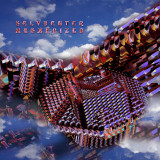
Wisdom Teeth co-founder K-LONE returns with his second full length project, ‘Swells’: a kaleidoscopic and expansive record that looks to deep house, synthpop, leftfield R&B and beyond for a spellbinding masterwork of melodic electronica.
His debut LP ‘Cape Cira’ became the accidental soundtrack of the long strange summer of 2020 - its lush marimbas, hazy atmos and synthesised bird calls providing the ideal soundtrack for some much needed collective escapism. The record was widely deemed one of 2020’s standout electronic LPs, gaining glowing reviews in Pitchfork, DJ Mag, Mixmag and Resident Advisor, and ranking highly in end of year lists by Crack Magazine.
Approaching its follow up, the Brighton-based producer felt a fresh perspective was needed. Originally landing on the name ‘Swells’ as a secret pen-name to write the record under, the intention was to keep the project as separate as possible from ‘Cape Cira’ to avoid settling into familiar territories - but as the record took shape it became clear that it made perfect sense amongst his already diverse discography.
Like ‘Cape Cira’, there is a distinct and intentionally limited sound palette at play on ‘Swells’. Looping vocal cuts, rich cluster chords and undulating arpeggios sit front and centre here - as does the lo-fi plonk of of the CR78 drum machine. But while the record clearly takes influence from a range of vintage sound sources, its overall aesthetic is unmistakably contemporary. Sounds are not artificially degraded nor obscured under washes of sampled tape hiss. Rather, everything is processed with a gloss, hi-fidelity sheen. The record’s rhythms are bright, dry and snappy, and its melodies are processed with a neon poppy glow.
The producer’s unabashed love of contemporary pop music is most obviously exemplified by the appearance of British singer-songwriter Eliza Rose. The pair met for a session at a North London studio back in 2021, and the now Brit Award-nominated singer’s warm, emotive vocal takes became an immediate source of inspiration early in the record’s conception. As such, Rose’s voice is heard in various states of manipulation throughout its duration - initially as reduced and looped phrases, and then finally in full form on ‘With U’: a low-lit, dubbed-out slice of leftfield R&B that beckons comparisons with Tirzah, Little Dragon and even Erykah Badu.
Elsewhere, there are references to G-Funk (‘Oddball’), Autonomic drum and bass (‘Shimmer’), hip-house (‘Love Is’) and even Metronomy-era electro pop (‘Love Me A Little’).
As always, the true magic of K-LONE’s artistry is to present complex, subtle and original ideas in ways that feel familiar and immediate. Melodies are introduced as effortless earworms, only to be twisted out of shape into strange and unusual formulations. Looping rhythms unspool into washes of hazy, dubbed-out ambience before rebuilding themselves. Refined and endlessly creative, ‘Swells’ marks a captivating next step for a producer and record label that have both reliably positioned themselves at the very forefront of contemporary electronic music.
- Musical Train – Roy Shirley
- Conversation - Uniques
- Till I Die- Delroy Wilson
- Daddy’s Home – Pat Kelly
- Run Come Dance – Glen Adams
- Forst Gate Rock- Lester Sterling
- Rock, Rock And Cry – Raving Ravers
- Trying To Find Me A Home - Uniques
- Warming Up The Scene- Roy Shirley
- I’ll Get You – Dawn Penn
- It’s Been So Long – Winston Samuels
- Long Life – Bill Gentiles
- She’s So Fine – Glen Adams
- Forever – Cynthia Richards
- How Could I – Ken Parker *
- Super Special – Lester Sterling
Fever hit Jamaica around 1966 when the jerky Ska rhythms slowed down to a more leisurely, sexy pace. Some say due to the extreme heat that hit the island that year, making frenzied dance routines of the earlier sounds seem like hard work in the all night Sound System Sessions. Others would say Reggae’s beat is always evolving and changing into something slightly different and moving with the times.
Whatever the reasons were, this two year period that ran until 1968, would see some of the power escape from then big three producers, Clemet ‘Coxone’ Dodd, Prince Buster and Duke Reid, who ruled the airwaves. They had to finally make room for the new wave of up and coming producers who had something to say.
Such names as Joel Gibson (Joe Gibbs), Sonia Pottiger, Derrick Harriot and the most prolific of them all, Mr Bunny Lee, would unleash some fine music in this fascinating, if short lived period in Reggae;s history. We have compiled some of the biggest hits from the Rocksteady era alongside some lesser known cuts we believe deserve to be re-evaluated.
Rocksteady was an inspirational time and some may say a little overlooked, but we hope you agree with us when we say that it brought us some outstanding music. So sit back and enjoy some Rocksteady straight from the dancefloors of Jamaica.
Hope you enjoy the set…..
- A1: The Uniques - Love And Devotion
- A2: Roy Shirley - If I Don't Know
- A3: Glen Adams - Taking Over Orange Street
- A4: Lester Sterling - It Might As Well Be Spring
- A5: The Uniques - Girl Of My Dreams
- A6: Roy Shirley - Good Ambition
- A7: Lester Sterling - Soul Voyage
- B1: Glen Adams - Hold Down Miss Winey
- B2: Errol Dunkley - I'm Going Home
- B3: George Dekker - Foey Man
- B4: The Uniques - Hooray
- B5: Don T Lee - It's Reggae Time
- B6: Webber Sisters - My World
Rocksteady took Over Orange Street, Jamaica around 1966, the same time that an extreme heatwave hit the Jamaican island. Some say the previous jerky Ska Rhythms proved too strenuous of an activity to partake in, during the all night Sound System sessions .So it proved a winning formula to slow the beat down to a more leisurely pace.
Whatever the reasons were this two year period that ran until 1968, would see some of the power escape from the big three producers, Clement ‘Coxone’ Dodd, Prince Buster and Duke Reid, who up until this period had ruled the airwaves .It was time to make room for a new wave of up and coming producers that also had something to offer the people. Such names as Joel Gibson ( Joe Gibbs ), Sonia Pottinger, Derrick Harriott and most prolific of them all Mr Bunny Lee.
These new names would unleash some fine music in what would be a short lived chapter in the ever changing and moving beat that is reggae’s history. We have compiled some of the biggest hits from the Rocksteady period, alongside some lesser known cuts we believe deserve to be re-evaluated. Rocksteady was an inspirational and somewhat over looked sound that provided us with some outstanding music. So sit back and enjoy some Rocksteady straight from the dances of Jamaica.
R&B, funk and soul icons Kool & The Gang are returning with a new album release – People Just Wanna Have Fun is out July 14, 2023 on Astana Music Inc. With six decades of hits, the internationally celebrated group continues to tour the world and recently performed on Good Morning America. The band is led by founding members Robert “Kool” Bell (bassist) and George “Funky” Brown (keyboardist, drummer & producer of this album), whose book Too Hot: Kool & the Gang & Me will be released on July 11, 2023. Continuing to release music that makes the good times better and the bad times more bearable, this collection will be the band’s 34th studio album, featuring some of the last studio work by founding horn players, Kool’s brother Ronald “Khalis” Bell and Dennis “D.T.” Thomas, who passed in 2020 and 2021. Lead vocals on the album also include Sha Sha Jones, Shawn McQuiller, Lavell Evans, Dominique Karan, Rick Marcel and Walt Anderson, plus rappers Ami Miller & Ole’. Both Bell and Brown view People Just Wanna Have Fun as a summation of their long career, during which they sold 70 million albums worldwide with hit singles like “Celebration,” “Ladies Night,” “Get Down on It,” “Hollywood Swinging” & beyond. Since their start in 1964, the group has amassed two Grammy Awards, seven American Music Awards, a BET Soul Train Lifetime Achievement Award and star on the Hollywood Walk of Fame. Kool’s bass guitar is even featured in the Smithsonian Museum of African American History and Culture in Washington, DC. From Newark to Nairobi, Kool & the Gang have performed continuously longer than any R&B group in history and are the most sampled R&B band of all time, including by Madonna, Jay-Z, Beastie Boys, Janet Jackson, Cypress Hill and P. Diddy.
Experimental hip-hop/jazz quartet Bokoya team up with Colognebased producer / guitarist Gianni Brezzo (Jakarta Records) for collabo album on Melting Pot Music. Bokoya describe themselves as a four-headed human drum machine that play improvised beat music.
You can call it jazz if you like (all four members are graduated jazz musicians btw) but be ready to stumble over some Dilla, kraut rock, ambient or dub in the mix. We recommed their their doublealbum “Hausensession” (MPM, 2022) as a reference point.
Gianni Brezzo's music is a bit easier to access but not less leftfield. Jazz is a major influence too but it goes way further. On his album “Tutto Grosso” (Jakarta, 2022) Brezzo rides a sonic wave similar to Matthew Halsall, Surprise Chef, El Michels Affair and BadBadNotGood.
The recording sessions for “Minari” took place at the Gottesweg Studios in Cologne where Bokoya and Gianni Brezzo jammed for three days and nights based on some basic sketches and beats. The sessions were edited and arranged after by Bokoya and Brezzo but no overdubs added.
Improvised & produced by Bokoya & Gianni Brezzo.
Mixed & mastered by Roe Beardie.
Artwork by Jens Roth & Jeremias Diekmann.
Leon Raum - Drums
Darius Heid - Fender Rhodes, Synth
Lukas Wilmsmeyer - Guitars, Bass
Ferdinand Schwarz - Trumpet, Synth
Gianni Brezzo - Guitars, Sampler, Effects
Keni Burke's seminal Changes yielded the eternal club classic "Risin' To The Top". You need this record for this iconic steppers anthem alone. However, it's crucial to acknowledge that the whole of Changes, first released in 1982 on RCA but now a tricky one to find, is something truly special. It's a masterpiece of sophisticated 80s groove, containing first class funky soul that sounds as fresh as ever. This is multi-tempo soul music conceived in heaven.
Ace bass player, songwriter, arranger and producer, Keni Burke was discovered by Curtis Mayfield and a childhood member of the Five Stairsteps. Emanating from that magical 81-83 era and pristinely recorded at Philadelphia's legendary Sigma Sound Studios, his third solo album Changes really perfected Keni's groove. It incorporated tight, snappy rhythm arrangements which, despite the era, featured *real drums* courtesy of Steve Ferrone (from Average White Band) to compliment Keni's meaty bass lines. With Dean "Sir" Gant on synths and keyboards and Ed Walsh handling the Vocoder-OBX and Prophet 5, wonderful lines from Earth, Wind & Fire's legendary horn section and hooky rhythm and lead guitar riffs courtesy of Ed "Tree" Walsh, Keni was truly spoiled for excellence. With Doc Gibbs on percussion and Vince Montana on vibes elevating the sensational writing and arrangements, Keni couldn't really go wrong.
“Risin’ To The Top” is undoubtedly the defining crown and lasting legacy of this album. Wth its instantly captivating bassline, slowly creepin' groove and uplifting lyrics, it was a favourite among both the 80s soul steppers and hip-hop crowd and remains canonical to this day. Written by Burke, Allan Felder, and former Chic member Norma Jean Wright, it incredibly failed to garner much American radio play or really trouble the soul charts. Whilst it was an instant classic in the U.K., in the States it took the hip-hop generation and later R&B and hip-hop samples of the tune to finally make it popular, many years later. Of note, Big Daddy Kane sampled it for "Smooth Operator", LL Cool J for "Around The Way Girl", Pete Rock & CL Smooth for "Take You There" and O.C. with "Born 2 Live".
But the highlights are not restricted to this one behemoth. For example, the track which precedes "Risin'" on Side B is another steppers favourite. "One Minute More" is a perfect mid-tempo ballad and the epitome of deep modern soul. A truly timeless work of genius. We, for one, struggle to think of a better song segue than the moment you're still reeling from the intense beauty of "One Minute More" and "Risin'" elegantly stirs into action. Frisson in excelsis. The propulsive, bass-heavy opener "Shakin" is an indisputable cracker and its followed by the timeless mid-tempo class of "Hang Tight". Just gorgeous. Next up, "Can't Get Enough" is another emotional, horn heavy chugger. The side closes with the sparse, tender, floating sl-o-o-w jam "Who Do You Love"; a truly divine ballad. The B-side beings with the title-track, "Changes", a squelchy, melodic boogie banger with fantastic keys, incredible vocals, ace shuffling percussion and spacey synths. It's followed by the ultimate one-two in "One Minute More" and "Risin'" before this sensational set closes with the glorious easy glide "All Night".
An absolutely essential record for fans of deeply soulful modern-funk, Changes was mastered for vinyl by Simon Francis and cut by Cicely Balston for Alchemy at AIR Studios. The artwork was restored at Be With HQ over many painstaking months so, hopefully, this fresh new edition ensures this long-lusted after album is no longer so awkward to find.
RAR001 was featured in Resident Advisor's Best music of July list
RANT & RAVE
An enigmatic new sound is oozing out of your speakers. Seemingly self-tasked with reviving the essence of the techno rave style, Rant & Rave Records presents the world with an updated vision that sounds exactly like it should. Based in Berlin, the techno epicenter, It's a dangerous new label, unafraid to stir things up and break the rules. Run by Tresor resident and Sonic Groove recording artist Maedon, the label intends to inject some hard-hitting fun back into the techno underground. About to be revealed; EPs from Maedon, Lady Starlight, JoeFarr (of Turbo fame), and veteran industrial techno guru Mark Crumby, (aka Codex Empire, Konstruktivitis). Look for Rant & Rave records this summer at all fine record shops.
RAR 001
Berlin-based American expat Maedon (Tresor, Sonic Groove) ushers in the arrival of Rant & Rave Records with a slickly produced debut EP entitled 'Cease and Desist'. '1989' opens with booming kicks, driving mechanical percussion, and hallelujah samples interspersed throughout. The droning rave synths sound eerily akin to kamikaze dive bombers heading directly for your brain. 'Grandstand' and the title track 'Cease and Desist' continue in this direction, abundant with hypnotic electronics and relentless energy. On 'The Worlds So', Maedon shares her thoughts on the state of world current events with looped vocals 'The worlds so fucked... all we can do is dance'. Gritty, dark rave tracks for peak time workout that provide a nice blueprint of what to expect from this label. No prisoners taken.
In 1990, a friend was thinking about acquiring a synthesiser...
Synthesisers... mysterious keyboard instruments with lots of knobs that made strange sounds. Something we’ve always known about but never really had an opportunity to experience up close. Most of the music we grew up listening to and loved featured synths.
So we trawled through the Trading Post and found an old Roland JX-8P going cheap. I had a car, my friend had the cash - now we had a synth! We wanted to make electronic music, but something was missing...
Shortly after, a drum machine was acquired. Like the synth, we had no clue about them but very soon a Roland TR-707 was acquired. Pooling our remaining funds, we purchased a 4-track tape recorder and began to learn how to use these instruments to compose music.
Fast forward to 1991, SWLABR was born. I'd fallen down the techno rabbit hole and amassed several more electronic devices... synths, samplers, sequencers and began composing tunes with a techno flavour in my bedroom studio - some of which feature on this EP in all their original glory, tape hiss included!
- A1: The Matheus Combo - Adericó (03 27)
- A2: Christian Knobel - Sambomambo (08 17)
- A3: Wütrio - Hallo Höppel (03 35)
- B1: Midnight Gigolos - Brother Samba (05 57) - *Exclusive
- B2: Marcia Maria - Brasil Nativo (05 09)
- B3: Debbie Cameron & Richard Boone - Stop Foolin' Yourself (03 15)
- C1: A Bossa Elétrica - Sob A Luz Do Sol (05 02)
- C2: Guillermo Reuter - Mr. Jenkins (03 39) - *Exclusive
- C3: Jean-Marc Jafet - Offering (05 45)
- D1: Jon Lucien - Come With Me To Rio (04 14)
- D2: Sonzeira - The Mystery Of Man (Rainer Trüby & Corrado Bucci Pres. Truccy Remix) (08 24)
- D3: Grupo Ébano - Pé No Chão (03 28)
Clear Vinyl[28,15 €]
Die mega-erfolgreiche Compost-Compilation Serie erfährt eine Fortsetzung. Nach 20 Jahren eine neue Glücklich! Rainer Trüby hat tief in brasilianisch, lateinamerikanisch angehauchter Musik gefischt und macht uns damit mehr als glücklich.
Zurück im ganz großen Stil – denn eine Pause von zwei Jahrzehnten bedeutet ja auch, dass man besser stark zurückkommt, wenn man denn zurückkommt. Aber wir reden hier ja auch von Rainer Trüby, und er hat einen ganzen Sack voller brasilianischer und brasilianisch angehauchter Leckerbissen mitgebracht! Einige dieser Leckerbissen waren auf obskuren, von Vinylsammlern ignorierten CDs vergraben, andere sind bisher noch auf keiner Compilation zu finden aber alle werden uns den Sommer über auf‘s angenehmste begleiten und „Glücklich“ machen. Nebenbei bemerkt: Das Auto ist ein VW SP2, der zwischen 1972 und 1976 von Volkswagen do Brasil hergestellt wurde.
- A1: The Matheus Combo - Adericó (03 27)
- A2: Christian Knobel - Sambomambo (08 17)
- A3: Wütrio - Hallo Höppel (03 35)
- B1: Midnight Gigolos - Brother Samba (05 57) - *Exclusive
- B2: Marcia Maria - Brasil Nativo (05 09)
- B3: Debbie Cameron & Richard Boone - Stop Foolin' Yourself (03 15)
- C1: A Bossa Elétrica - Sob A Luz Do Sol (05 02)
- C2: Guillermo Reuter - Mr. Jenkins (03 39) - *Exclusive
- C3: Jean-Marc Jafet - Offering (05 45)
- D1: Jon Lucien - Come With Me To Rio (04 14)
- D2: Sonzeira - The Mystery Of Man (Rainer Trüby & Corrado Bucci Pres. Truccy Remix) (08 24)
- D3: Grupo Ébano - Pé No Chão (03 28)
Black Vinyl[27,69 €]
Clear Vinyl
Die mega-erfolgreiche Compost-Compilation Serie erfährt eine Fortsetzung. Nach 20 Jahren eine neue Glücklich! Rainer Trüby hat tief in brasilianisch, lateinamerikanisch angehauchter Musik gefischt und macht uns damit mehr als glücklich.
Zurück im ganz großen Stil – denn eine Pause von zwei Jahrzehnten bedeutet ja auch, dass man besser stark zurückkommt, wenn man denn zurückkommt. Aber wir reden hier ja auch von Rainer Trüby, und er hat einen ganzen Sack voller brasilianischer und brasilianisch angehauchter Leckerbissen mitgebracht! Einige dieser Leckerbissen waren auf obskuren, von Vinylsammlern ignorierten CDs vergraben, andere sind bisher noch auf keiner Compilation zu finden aber alle werden uns den Sommer über auf‘s angenehmste begleiten und „Glücklich“ machen. Nebenbei bemerkt: Das Auto ist ein VW SP2, der zwischen 1972 und 1976 von Volkswagen do Brasil hergestellt wurde.
Rollover Milano is back with another killer release from Lorenzo Morresi entitled ‘Isla’ EP. The label is still kicking up the cosmic disco dance dust at their longstanding weekly party at the Apollo Club, Milan.
This glam affair has hosted a long list of luminaries, which is mirrored on the labels roster and output of dark disco, deep house, and Italo space funk. Lorenzo Morresi, a producer, and DJ who is constantly searching for new sounds, blending genres, merging analog and new technologies. With releases on 22a Records, Fly by Night Music, Roots Underground, Wall of Sound, INRI, and SuperEclectic, his sound spans other worldly vibes, jazz-funk sonics, and blazing electronica as a DJ and live performance. Isla is one of the main protagonists of the movie ‘The Holy Mountain’ by Alejandro Jodorowsky.
She is a companion of the Alchemist who tries to find the Holy Mountain to find the secret of immortality. This whole EP is inspired by Jodorowsky’s work. Morresi imagines transforming the dreamlike atmospheres that accompany Jodorowsky’s dystopian vision into music, bringing them to the club, primed to be played at high volume, in dark light, on discerning dancefloors. 'Jodo' is recorded live, and flows between electronica and experimental jazz, but with a dark and ritualistic core.
'Odissey Venezia' originates from studio recordings that Lorenzo made while playing the Loutar – a Moroccan stringed instrument - combined with a deadly dancefloor backdrop made up using a Roland TT303. 'Isla' is based on slower rhythms, organic percussion, and decontextualized voices of old sampled records. The 'Outro' uses some quotes from Jodorowsky’s books, robotic and digitally generated phrases combined with a rhythmic beat that encapsulates the meaning of this EP, being Lorenzo Morresi’s life long focus on the fusion between dance rhythms, psychedelia, and musical transcendence.
Everything about her her, the first full length album by Berlin-based Australian artist L.Zylberberg seems at first a little bit strange—in the best possible way. A little bit off yet playful, intriguing and perhaps a touch deceptive. Sounds, arrangements and images cajole the listener to second guess themselves and re-evaluate the listening experience as it's happening. It's a trip, it’s transcendental, but her her does not stylistically fall into such simple catagorisations. her her is a meticulously-crafted egress into a sonic world that is at times tense, lush, dense, and sometimes just hush.
This is the third offering by Zylberberg on Swiss publishing house Präsens Editionen, following a split tape with producer and singer Belia Winnewisser and a digital release that was accompanied by a silk foulard. Zylberberg has strong ties to Berlin's Sameheads family and Tbilisi’s Mutant Radio. She also co-runs the infamous party series Twista and is a deadly DJ.
“if one day Adele was free to make more experimental music, she would sound something like November Ultra, a Parisian singer-songwriter with a marvellously expressive voice that glides serenely over a mixture of offbeat ballads and darkly dramatic confessionals. Nova grew up in France with a Spanish mother and Portuguese father and has been singing since she was three. Add to that a love of Frank Ocean – whose legendary Nostalgia, Ultra mixtape inspired her name – a proficiency in professional songwriting for acts such as Jaden Smith, and Nova’s intensely vivacious personality, and you get her fascinating debut. They say that when you change, everything changes - is it the same with love? Do your ideal shift with time and age? November Ultra's "Corazón Caramelo" questions and explores the fluctuation of the heart through this cinematographic and poignant Spanish piano-ballad anchored in both traditional copla and soaring modular synth pop.
Malian and French duo Siraba drop the second single from their debut album on Secret Teachings, ‘Kômo Fôlly’, backed by a rare remix from electronic music icon St Germain.
A new alias from Malian hunter Boubacar Samake and Damien Vandesande, one half of French electronic band dOP, Siraba is a unique and expansive project set to merge ancestral music passed down by Malian hunters with electronic-leaning spheres with nods towards the future. Recently debuting on the label with their debut single ‘Ngana Fôlly’, the first single from their forthcoming album set to arrive in September this year, the pairing return to Damian Lazarus’ alternative imprint Secret Teachings for their follow-up single, ‘Kômo Fôlly’ - once again unveiling a tapestry of traditional and modern soundscapes as they deliver a tribute to Boubacar’s father, Sibiri Samake.
With Boubacar returning to the Ngoni and uncovering further lyrics and words in Bamabra, ‘Kômo Fôlly’ builds from traditional Malian tones into an expansive trip through shimmering synths and crisp, organic percussion. It’s a spellbinding and captivating trip into the minds of typically contrasting worlds while uniting the two effortlessly to provide and produce a slice of electronic excellence. A true pioneer of the electronic realm, Ludovic Navarre, known to many under his legendary St Germain alias, is an artist who needs little introduction, having been responsible for some of house and techno’s most iconic productions across a 30-year career on labels such as F Communications and Blue Note. Turning his hand to the track and providing an extremely rare remix, the renowned talent brings his typically vibrant sound palette to the fore as he harnesses the original’s vocals and weaves excellently worked drums, subtle snaking grooves and resonant chords effortlessly for typically classy interpretation while rubber-stamping the fascinating and exciting project in the process.
Derrick Jamerson was the son of Motown bassist James Jamerson Jr. and grandson of Motown Funk Brother's house band bassist James Jamerson. He himself made a select few house records back in the mid-nineties which have been unearthed by some contemporary deep diggers.
A couple of his tunes now get reissued on this The Legacy Continues EP on Endangered Musique. 'So Hard' is traditional US house with organ chords, chattery claps and well-placed vocal samples, then 'Hot House' gets a bit more loose and soulful. On the flip are three different versions of Derrick's biggest tune, 'Adventures Of A Disco Diva', all of which bring some form of piano house magic.
Marc Richter aka Black To Comm released his debut record 20 years ago. In 2023 he is still busy releasing music under various disguises and is currently signed to the Thrill Jockey label. To celebrate this anniversary his own Cellule 75 label is re-releasing some classic out-of-print vinyl albums that originally came out on the defunct Type and De Stijl labels. The LP will feature a full-colour lyric sheet / poster exclusive to this edition.
After releasing the critically acclaimed Alphabet 1968 on the seminal Type label (Grouper, Jóhann Jóhannsson, Yellow Swans), Richter chose De Stijl for this 2012 album, an American label that had just put out future classics by the likes of Circuit Des Yeux, Hype Williams and Wolf Eyes.
EARTH is a 2009 silent film by Ho Tzu Nyen, one of Singapore's foremost visual artists. After hearing Black To Comm's Alphabet 1968 Ho Tzu Nyen invited Richter to accompany the film at Berlin's Asian Film Festival, Unsound in Krakow and several other art biennals and music festivals around the world.
In his own words: "Most of the music was composed under the influence of heavy pain killers while recovering from a broken leg (the recordings literally took place in bed). The music (like the film) is about slowness and decay, states of unconsciousness, sleeping and waking up, dying and being reborn. The film is a post-apocalyptic collage based on paintings by classical European painters (Caravaggio, Delacroix, Rembrandt, Gericault) -- the music translates this concept employing corresponding collage-based sampling techniques using loops made from vintage vinyl and shellac records combined with acoustic and electronic instrumentation and voice."
From the original De Stijl one-sheet:
"Richter’s already formidable expressive power stretches over all of EARTH. Reflecting the countless cyclical forces that make up, oh, more or less everything we know and are, the music on EARTH is bracing, lovely, bustling and still, and at times bittersweet, a commingling of sensations and emotions that can’t be neatly separated from one another. (EARTH is complex, as you know.) Guests on EARTH include David Aird, a.k.a Vindicatrix (on the Mordant Music label), contributing startling vocal work; Renate Nikolaus on an array of instruments and noise devices; Rutger Zuydervelt (singing bowls); and Christopher Kline (singing saw). EARTH is Black to Comm’s seventh album and his debut for De Stijl, following the acclaimed Alphabet 1968 (on Type) and last year’s vinyl-only collaboration with Mike Kelley of Destroy All Monsters (on the En/Of label)."
Alex Neilson in The Wire:
"The most marked aspect of Earth is the voice of David Aird, aka Vindicatrix. Imperious and dolorous, he has the gravity of post-Climate Of Hunter Scott Walker, David Sylvain or Klaus Nomi stripped of the pathetic ritz. This is something that's easy to do badly, but Aird pulls it off with aplomb. On "The Children" he breaks into a morose yodel, rolling the words around his palate and colouring each syllable black before gifting them to the air. The meaning isn't understood verbally as much as viscerally. Beneath Aird's ululations, Richter casts handfuls of angelic debris from keyboards and digital devices, generating a celestial electronic tapestry reminiscent of Japanese musician Nobukazu Takemura. Sounds vie and twist at frequencies you can't so much hear as feel in the bridge of your nose, and the variety and full-bloodedness of the accompaniment is what prevents Aird's vocal from occassionally lapsing into shtick."
Spaceman, otherwise known as Stephen Munson or Stephan James, is the former lead singer of English cult glam punk band Living In Texas, one of the very first bands to play an MTV Europe session when MTV was in its infancy, one of the last bands to play at the legendary Elixir Festival in France, once #3 in the Italian charts (1985.),...
At the end of Living In Texas, Munson continued to form other projects without such conviction and to write songs, until meeting Christelle Canot aka Confused, a moment which he describes as his epiphany. He entrusted her with the production of his first (double) solo album.
This follows during the pandemic by the production of a double album featuring 9 songs already recorded in 2000 and the composition of 16 others with musicians from all over the world, carried by the same punk and DIY spirit that has always lived with him.
Poet, director, an artist touching everything and a great lyricist, his songs are personal and universal, love letters to his children, to nature, to our addictions, confessions of weakness, regrets, his life passes through these 25 songs that range from the folk lo-fi masterpiece "frEND" to pure postpunk sound straight out of the 80s "Everybody's Hooked On Something", to folk-rock ballads like Martin's Garden, eternal songs with "Loving Ways" or ballads of Lynchian love... As many universes as eras crossed with the greatest sincerity through the eyes of an eternal child.
Lost private press gem "The Swimmer" by Florida native Danny Morgan, is a cool and breezy, beguiling easy glide from 1987. It should've been huge. It still could be. It's a mellow marina masterpiece and quintessentially Balearic. Over the past few years, it's gathered a cult following yet the album from which it derives is virtually impossible to come by.
Finally available on a standalone, fully remastered 12", it's been backed by an instant classic "Seahawks Swimming Through Space Remix", courtesy of those beloved cats Jon Tye and Pete Fowler.
These won't be around for long, limited to just 500 copies for the world, so don't drown in procrastination.
One listen and you'll want to dive in.
Fans of the deeply entrancing, nautically and narcotically-enhanced cuts of Dennis Wilson or Michael Nesmith’s The Prison will be instantly mesmerised by the sheer beauty of "The Swimmer". After tracking Danny down, we wanted to know more. How does something so magical come about? The man himself answered thusly:
"At the time I was running many miles on the Sanibel Island beach and doing a bit of swimming in the Gulf Of Mexico. Keeping my mind busy on a long run, I imagined a “what if” movie scene. Almost every run or swim someone is sitting there on the beach watching what goes by. Back at my desk I started finger picking some chords and the picture in my head showed up. I punched in a rhythm loop and the song was on its way.
Adrian Belew and I had the same manager Stan Hertzman so I was listening to some of Adrian’s work. I was a huge fan of Joni Mitchel and the unusual chord changes and melodies in some of her songs. All of this influenced the sound on “The Swimmer”
I had a support band at the time living in my house on Sanibel Island so we practiced a lot. We came up with an arrangement of the song and we took across the bridge to John McLane’s Important Studios and recorded it. I played finger picking acoustic guitar and sang, Tim Miller played drums, Jeff Holck played fretless bass, Dave Dust played lead guitar and John McLane played keyboards and sang harmony."
Our deep thanks must go out to Jon Tye (MLO / Seahawks / Ocean Moon) for first hipping Be With to this stunner. We returned the favour by giving him the keys to the stems and requesting a strung out remix to go on the flip - he returned having conspired with Pete Fowler to conjure a cosmically copacetic rerub with the subtropical chug of the "Seahawks Swimming Through Space Remix".
Putting together the artwork for this 12" release was an enjoyable process. It was nice to be able to flip the original sleeve for the Beach Life album by using previously unseen photos, sent to us by Danny. We wanted to create something that looks like it would've gone with the LP sleeve. We think we've cracked it. Simon Francis remastered Danny's original audio and Cicely Balston's precise cut for Alchemy at AIR Studios ensures this 12" sounds appropriately outstanding. The immaculate Record Industry pressing will ensure this previously lost masterpiece stays forever found.
ME LOST ME led by Newcastle-based artist Jayne Dent announces a new album RPG via Upset The Rhythm on 7th July, and is touring across the UK including support dates with Pigs x7. RPG (recorded in Blank Studios with Sam Grant of Pigs x7) is ME LOST ME’s fourth outing as a collective, having transitioned from an ambitious solo project in 2017, Jayne now regularly collaborating with acclaimed North-East jazz musicians Faye MacCalman and John Pope.
ME LOST ME delights in experimenting with songwriting and storytelling, creating a beguiling mix of soaring vocals and atmospheric electronics that playfully weave together disparate genres, drawing influence from folk, art pop, noise, ambient and improvised music. Hauntological in part, RPG is concerned with tales and with time - are we running out of it? Does insomnia cause a time loop? Do the pressures of masculinity prevent progress? Jayne Dent asks these questions and more on RPG, her homage to worldbuilding and the story as an artform, calling back to those oral traditions around a campfire, as well as modern day video games - bringing folk music into the present day as she does so.
ME LOST ME presents sound reaching in opposite directions, straddling time towards the archaic and timeless traditions of folktales, and towards the possible and potential futures of pastoral Britain and the world at large. Part speculation, part reminiscence, what results on the new album RPG is music that sounds ultimately displaced and yet omnipresent, adjacent to a hapless Vonnegut hero whose life is scattered throughout time and history, but full of wonder and curiosity rather than fear.
On track “The Oldest Trees Hold The Earth”, we see time stretched out between the branches of impossibly old beings in the woods. This track was co-written in Aarhus, Denmark with fellow Newcastle folk musician (with Danish heritage) Ditte Elly. The pair wordlessly passed a sheet of paper between each other to write the lyrics, inspired by Højbjerg and Mosegård, the woods they were sitting in. “How long should I wait/Before the moss grows?/On my skin, on my outstretched arms,” the lyrics are sung in a round, the close harmonies delicate and detailed.
A central thesis of this album is the joy of creation, something which is paid homage to in the album’s final track, “Science And Art” (Not because we need it to last/just because we needed to make it - so we invented the words/this language). It is also reflected in the definition that Jayne gives for “folk” itself. She comments, “To me, folk is quite an expansive idea. I think of it as creative work that's often made ad-hoc, with things that are at hand and more often than not it's born of a DIY ethos. It is songs and stories of the people, as in the traditional sense, but also creative coding, game design etc. Whatever outlet someone has for their creative expression could be described as folk. It's the things we make because humans need to make things, and the stories we tell about ourselves and the world around us.”
Crucially, on latest album RPG, Dent expands her songwriting and looks towards the unreal locations of worldbuilding in video games for inspiration. She comments, “I think the main similarity is the importance of a song's setting/environment to inform its narrative and textures, I'm often most inspired when out walking in the natural landscape, in cities and travelling to places I've never been before - the environment I'm in really impacts the work I make. While writing this album, however, I found myself inspired by imaginary landscapes, those in video games, paintings, etc. I was writing stories into these unreal locations instead. Even the songs inspired by real places, like The Oldest Trees Hold the Earth, have a very surreal quality to them in the songs, like they're being warped and turned into something not of this world. I think that's the main difference for me in terms of the thematic content and inspiration behind this album - I've been getting more and more interested in balancing surreal and fantastical environmental elements with ordinary and everyday settings.”
RPG upends the concept of the eternal return - we may be in the midst of inevitable repetition, but we tell stories whilst awaiting the passage of time.
"Being familiar with, and a fan of Jayne's earlier work, it was great to get the opportunity to work with her on the production of her new record. I had in mind a sense of what the record might be, but what came of the sessions, led by the vision Jayne had for the record, totally exceeded my expectations. As far as albums go, it has a breadth of writing and a sonic depth that made it a truly brilliant record. Having Jayne join us on a leg of the Pigs x7 tour in April is going to be ace. The creative nature, the sincerity and bold strokes of ME LOST ME put it in that space outside of any genre pigeonholes, and between our two sets I imagine the audience is going to have a proper sonic bath..."
Sam Grant, Pigs Pigs Pigs Pigs Pigs Pigs Pigs, 2023
“The music of Me Lost Me is beguiling, idiosyncratic and cinematic - or should that be video-game-omatic? This suite of songscapes often hits the sweet spot between ancient and modern with its masterful blend of stark folk, neon electronic burbling and unusual arrangements. Jayne's singing is refreshingly straightforward and nuanced - it's exquisite! - and perfectly punctures the nebulae of synths and brass which billow around the old wooden frames of the songs. Whilst listening I had images in my mind of what Northumberland might look like through the eyes of Simon Stalenhag - foggy moors, a robot looking across the sea to Lindisfarne, twinkling lights on metal towers.... that sort of thing. It's a really great album.”
Richard Dawson, 2023
In collaboration with Timmion Records, Daptone is proud to present My Echo, Shadow and Me, the debut album from the soulful Chicano brother, Johnny Benavidez. Hailing from San Diego (via El Paso, TX), Johnny's desire to sing was influenced by his grandfather, John Lorenzo Guzman, who as a teen in the early sixties spent some time harmonising with groups in El Paso, most notably Sonny Powell and the Night Dreamers. When he was 13, Johnny was given a record player and a box filled with R&B, Doo-Wop, and Soul 45s that he studied obsessively, employing the harmonies and melodies therein to cultivatehis own unique voice. After a chance encounter with the legendary Dimas Garza, Johnny's career began to blossom and soon he would find himself singing alongside stars like Eugene Pitt and Archie Bell, garnering the interest of Timmion Records..
Backed by the incomparable Cold Diamond & Mink (Bobby Oroza, Pratt & Moody) two incredibly successful singles were cut and plans for a full length were struck, culminating in 11 original songs penned by Benavidez. From the uplifting bounce of the title track, the doo-wop dinged "Dedicated to You", the Latin flare of "Uncle Sam," to the Sweet Soul masterpiece "Somebody Cares" (licensed and released on a Penrose Records 45), My Echo, Shadow and Me is not only an aweinspiring display of Jonny's versatility as an artist but also serves as a window into the eclectic array of soulful sounds that inspired him to fall in love with music and become a singer. A must have for fans of Daptone, Timmion, Penrose, et al.
Recorded in the early 2000s, The Sand Dollars' two Tropicália-inspired remakes of classic late 60's nuggets by The Kinks and Donovan are paired together for the first time here on F-Spot Records' new subsidiary label Pangea International Recording Co., which focuses on world and global groove inspired releases, curated by David M Celia and Dan Ubick.
From the vaults of Dan Ubick's Lions Den Studios, we get the crown jewel in Ray Davies' catalog, "Waterloo Sunset" from Something Else by The Kinks, redone as a funky Tropicália-inspired track and re-named "Waterloo Bossa" complete with fuzzy compact organ, bouncy Fender bass, funky drums from Connie Price, a lush horn arrangement by Ubick's former Keystones cohort and trumpeter Todd M. Simon (Dap Kings, El Michels Affair, Macy Gray), string arrangement by mix guru and multi-instrumentalist Steve Kaye (The Lions, Inara George, Hepcat, Marley Bros.) and topped off with stereophonic vocals by jazz chanteuse Gretchen Parlato (Herbie Hancock, Wayne Shorter, Esperanza Spalding, Lionel Loueke).
Side B's "Get Thy Bearings" was initially pressed on Now-Again Records back in 2003 and quickly sampled by Lily Allen on her track "Sunday Morning" due to the raw and heavy drums and Fender bass courtesy of Connie Price and Richard "Doo" Lee along-side inventive horn arrangement by Todd Simon flipping the original on its heady head. Now freshly mastered, this B-side instrumental is available again as the hard-hitting remake of Donovan's classic from 1968's The Hurdy Gurdy Man LP that may inspire you to sample it as Biz Markie did on "I Told You."
El Nido: a welcoming embrace in uncertain times. The world changed forever in the second quarter of 2020. The life we were used to ceased to be, as we were overcome by constant fear, distrust in all that surrounded us and a fatalist attitude towards the world we lived in. With the pandemic came lockdown, mandatory isolation for months, empty streets, face masks, hand sanitizer, the fear of going out, an absurd roll call of Covid fatalities, the daily tension of not knowing when it would all end and the urge to "get back to normal," something that certainly never happened. Out of that pandemic saturation and that urge for "normality" came El Nido ("The Nest"), the third album by Italy-based Colombian producer Montoya, who describes this record as "becoming virgins of destiny again, facing up to that fatalist world and creating that longing for tranquility. Savoring that moment prior to the pandemic, that instant when the most important thing wasn't the immediate reality or the global situation." Montoya sees El Nido as that quiet place that you think of when you close your eyes; it is a beach or a mountain, a sunrise or a sunset, a wave in the sea refreshing your body, or an almost-whispering wind that immediately silences everything around you. On his previous records, Iwa in 2015 and Otún in 2019, his work as a producer prevailed, feeding the growing wave of Latin American electronica, fusing IDM and techno with indigenous root music, Andean folklore and rhythms from the tropical Caribbean coast and ancestral Pacific in terms of instrumentation. But on El Nido Montoya splits the balance, offering us five merely instrumental tracks and six collaborations with Latin American artists, including Colombians Nidia Góngora on "Soñé," Montañera on "Sierra" and Pedrina on "Nubecita." It also features Mexican artist Pahua on "Flor del Mar," the Peruvian Lara Nuh on "El Faro" and the Franco-Venezuelan La Chica on "Palosanto." Starting from the name itself ("The Nest"), an evocation of home, El Nido is also a Filipino municipality on the island of Palawan, a place that turned out to be Montoya's last live experience before the pandemic. That place with crystal clear seas and white sand became the scene and starting point for this work, reflecting on the abstraction of a chaotic world and proposing blurred destinations with each song, like places that exist within memories when we close our eyes, letting us inhabit them, for a couple of minutes at least. On the other hand, it's a record that approaches love; as a yearning and a refuge, as a guide and an anchor, but also as a rhetorical figure that makes us vibrate and elevates us, while at the same time keeping us grounded and letting us settle in the place that we can use as our shelter.
N8noface is globally acclaimed as one of the most fresh and raw acts of the United States. For his debut in Oráculo N8noface presents an album where reviews some of his classic tracks exploring his most dark and minimal side, but not forgetting his unique new-punk sound for the likes of Sleaford Mods.
His proposal is extremely minimalistic but effective at the same time with that classic 90’s west-coast attitude that could remind even to the best era of Cypress Hill.
The whole thing surely deserves a place in the best vinyl collections. Presented in a one-off truly limited edition of 300 copies, lacquered pressed on 180gr. high quality solid black vinyl. All tracks have been specially restored and remastered for long cut vinyl by Daniel Hallhuber at Young and Cold Studios.
Originally reissued as part of the Promise Kept: The Complete Artist House Recordings boxed set, now available separately LP contains the original 5 tracks – CD/Digital include an additional 3 bonus tracks Remastered by Grammy® winner Michael Graves, with vinyl cut by Jeff Powell Producer John Snyder had always wanted to record Pepper and booked him into a week at the Village Vanguard in New York. At the time, Pepper was under contract to Contemporary Records and label head, Les Koenig, decided he would record the gigs, quashing any notion Snyder had of doing the same. However, Art promised Snyder that he’d record an album for Snyder’s label, Artists House, at some point down the road. Together they wound up making four. Here again on vinyl, CD & Digital are the original albums drawn from these sessions, lovingly recreated in their original form, remastered by Grammy® winner Michael Graves and recut by Jeff Powell. So In Love (originally issued in 1980) features Pepper’s takes on classics from Thelonious Monk, Cole Porter, and Hoagy Carmichael, plus a pair of originals including “Blues For Blanche.” The CD and Digital add three bonus performances from the sessions. The AllMusic review by Scott Yanow noted: "Pepper is in excellent form throughout the album, giving these songs heart-wrenching interpretations". “John and Art both kept their promises. John brought Art into the wider world; he put him on the road. Just as he said he would, he brought him to New York and to the Village Vanguard, got his picture in the papers, got him on the radio. From Art, John got his dearest wish. He made these recordings.” —Laurie Pepper
[f] 6. Yesterdays (Take 2) [Bonus Track]
[g] 7. Landscape [Bonus Track]
[h] 8. Straight, No Chaser (Take 4) [Bonus Track]
- Moanin’ (Bobby Timmons)
- Superstition (Stevie Wonder)
- Iko Iko (James Crawford)
- Señor Blues (Horace Silver)
- When A Man Loves A Woman
- (C. Lewis & A. Wright)
- Freedom Jazz Dance (Eddie
- Harris)
- Sidewinder (Lee Morgan)
- Brother Where Are You?
- (Oscar Brown)
- Wade In The Water (Traditional)
- Work Song (Nat Adderley)
- Land Of 1.000 Dancers (Chris
- Kenner)
- Gimme Some Lovin’ (S
- Winwood & S. Davis)
- Motherless Child (Traditional)
- New Orleans Strutt (Jack
- Dejohnette)
- La Place Street (Stanley
- Turrentine)
- Amen (Traditional, Arr. By Bob
- Belden)
- Jubilation (Junior Mance)
- Joshua (Traditional)
- Mr. Magic (Ralph Macdonald &
- William Salter)
- Theme From Shaft (Isaac
- Hayes)
- Nobody Knows The Trouble
- I’ve Seen (Traditional)
Who did Aretha Franklin not want to miss out on when she recorded
her most inspiring albums in the early Seventies? Who gave Steely
Dan the beat? Who did Isaac Hayes, Donny Hathaway, BB King,
‘Sweet’ Lou Donaldson and Joe Cocker give the chair behind the
drums? No drummer has seen the inside of a studio as often as
Bernard ‘Pretty’ Purdie.
Not for nothing do colleagues attribute the ‘funkiest soul beat on the
scene’ to the drummer, and consequently, Purdie has never relied on
the genre of jazz alone, but rather curiously looked beyond the
borders. Sessions with The Rolling Stones, James Brown, Jimi
Hendrix or Tom Jones are no problem for him, whose precise and
sensitive playing is synonymous with drive and groove. This is
probably one of the reasons why his rhythms are still sampled by
many DJs today.
Released on CD back in 1996 and 1997 (and now out of print), the
two ‘Soul to Jazz’ recordings have a cult factor today and sound as
fresh as they did back then. Now both albums are released together
for the first time as a 3LP set.
These recordings are peppered with lots of prominent star guests
from jazz and soul, from Eddie Harris, Michael Brecker and Nils
Landgren to Hank Crawford, Stanley Turrentine and Cornell Dupree.
Purdie’s ‘Soul to Jazz’ project takes two different approaches: The
first part focuses on the renowned WDR Big Band led by Gil
Goldstein. Soul classics such as Stevie Wonder’s ‘Superstition’,
‘When a Man Loves a Woman’, Eddie Harris’s ‘Freedom Jazz Dance’
and Lee Morgan’s famous groove tune, ‘Sidewinder’, are interpreted
in large scale sound. One discovery of these recordings amidst all the
renowned guest soloists is the New York-born singer, Martin Moss.
The great success of this first album, released under ‘Soul to Jazz’,
led to ‘Soul to Jazz II’, a more intimate record, but one that picks up
where the first recording left off, by exploring similar themes. Again,
Purdie has called together a notable band of kindred spirits, including
saxophonists Hank Crawford (BB King, Ike and Tina Turner, Ray
Charles), Stanley Turrentine (Jimmy Smith, Shirley Scott) and Vincent
Herring, as well as guitarist Cornell Dupree (King Curtis) to pianists
Benny Green and Junior Mance.
Bernard Purdie’s ‘Soul to Jazz’ is a timeless classic and a blueprint of
the soul jazz genre in all its facets. Above all, it is a portrait of one of
the most influential and best drummers in the world, who made jazz
groove with his inimitable funky soul beat
A1 - Burst Transmission
ASC returns with another stellar solo EP and Burst Transmission dives straight in head first to kick things off, pulsing crafted breakbeats and computer FX intertwine and stack with smooth synths, keys and trademark vocal hits. A powerful undertone bassline perfect for the dancefloor keeps the momentum going with blissful speckles of detail in the composition, including expertly tuned bongo drums scattered throughout.
A2 - Whispers
Sci-fi vibes take center stage as ASC channels that classic 720 energy with Whispers, a track which utilises sharp stabbing snares in distinct, forceful drum patterns which develop and adapt over halcyon synthwork. Respite comes in the middle of the track as the breaks change and settle the vibe briefly, before we are thrust forward again with those epic breaks commanding our attention once more.
AA1 - Psionic bond
ASC continues the retro sci-fi vibes with Psionic Bond, entering with zapping laser FX and a haunting vocal sample echoing before thunderous breaks thrash their way into the track, epic kicks and sharp thrusting snares dominate proceedings while through the wooshing layers of synthwork a distinctive bassy melody elevates the composition. This one is going to send the lucky discerning dancefloor into extra-sensory fever.
AA2 - Future Music
Ending the EP with something a little different, Future Music gives us a true taste of the old school brand new. A building intro lashes you with jabbing bass and effects, classic hi-hats rattle and slowly the 90's jungle breakbeat edits are released in waves as the piece progresses. The construction of the breaks is staggered sparingly, weaved with an influx of effects and samples creating a truly unique experience.
- A1: The Carver Area High School Seniors - Get Live '83 (The Senior Rap)
- A2: Mike T - Do It Any Way You Wanna
- B1: Chapter Iii - Real Rocking Groove (Rap & Breaks)
- B2: Sinister Two - Rock It, Don't Stop It
- C1: Sangria - To The Beat Y'all
- C2: Funky Four Plus One More - Rappin' And Rocking The House
- C3: The Just Four - Girls Of The World (Genius Rap & Breaks)
- D1: Eye Beta Rock - Super Rock Body Shock
- D2: Funky Constellation - Street Talk (Madam Rapper)
- E1: Kool Kyle The Starchild - Do You Like That Funky Beat (Ahh Beat, Beat)
- E2: The Just Four - Jam To Remember
- F1: Grandmaster Flash And The Furious Five - Super Rappin' No 2
- F2: Silver Star - Eei Eei O
- A1: Magic's Trick - Magic's Rap - Mono (7")
- B1: Magic's Trick - Magic's Rap - Stereo (7")
Yo! Boombox is the new instalment of Soul Jazz Records’ Boombox series on the early days of hip-hop on vinyl and features some of the many innovative underground first-wave of early rap and disco rap records made in the USA in the period 1979-83.
The album includes the first releases of seminal groups such as Grandmaster Flash & The Furious Five and The Funky Four Plus One More through to a host of rarities and little-known obscurities such as the Carver Area High School band’s ‘Get Live 83’, an awesome record made at a Chicago high school.
The album is released as a deluxe triple LP complete with 3x full inner sleeves of extensive sleeve notes, exclusive photography and original label artwork. There is also a very-limited one-pressing only special deluxe version that comes with an extra bonus super-rare 7” single of ‘Magic’s Rap’ by Magic’s Trick, aka ex-marine Magic Fraga, a record that was only ever available on US military bases!
Yo! Boombox also features the stunning photography of Sophie Bramly, one of a very select group of photographers (alongside Henry Chalfant, Martha Cooper, and Joe Conzo) who were allowed full access to document the exciting early days of hip-hop in New York.
These first exuberant wave of innocent, upbeat, party-on-the-block rap records were the first to try and create the sounds heard in community centres, block parties and street jams that first took place in the Bronx in the mid-1970s. Where the first DJs – Flash, Kool Herc and Bambaataa – were back-spinning, mixing and scratching together now classic breakbeat records like The Incredible Bongo Band’s Apache or Babe Ruth’s The Mexican, these first pre-sampling rap records were all made using live bands, often replaying then current disco tunes.
As Chic’s ‘Good Times’ was to ‘Rappers’ Delight’, the songs here feature then-current dancefloor hits such as the Tom Tom Club’s ‘Genius of Love’, Cheryl Lynn’s ‘To Be Real’, MFSB’s ‘Love Is the Message’ while MCs rapped over the top, creating a unique new sound. In fact, the links between disco and rap date back earlier to the ‘party style’ MCing of figures such as the legendary DJ Hollywood or radio DJs like Frankie Crocker.
This new Soul Jazz Records collection
celebrates these first old-school rap
records, bringing together rare, classic
and obscure tracks released in the
early days of rap.
Singular Texan musician Craig Clouse hurtles unstoppably towards the 20th birthday of his dancefloor-splintering electronic project Shit And Shine, releasing a landmark LP, his first full-length for The state51 Conspiracy, ‘2222 And AIRPORT’. Acid house, minimal techno, electro, funk, krautrock, hip hop, found sound, spoken word, live percussion and industrial are blown apart stupendously and then reassembled – mad-scientist style, in a way peculiar to Clouse – into 13 hypnotic and transportative tracks.
Lead single SWISS, out 24 March, is a gloriously minimalist funk jam that sounds like the exact point at which someone turns the lights off at a lowkey house party and a wild night for the ages gets under way. An almost scornfully skeletal riff, sounding like a misfiring Cyberdine Systems Model 101 summoning up a Prince circa Sign “O” The Times riff while crashing head first into the hyper-processed early work of Prefuse 73, also featuring a cheeky sample of revered Mancunian DJ Luke Una talking about “existential fucking darkness”.
This is followed on 4 April by INFINITE SHITE, arguably the epic central track to the album, is a Shit And Shine banger for the ages, its dancefloor affect, undeniable. An unforgiving, pulsating Byetone-style bass drone worthy itself of being blasted on a Funktion-One rig, is just the background for a colossal acid b-line, destroying all in its path.
Micro details bristle at the liminal level, threatening to only reveal themselves to those in a club, those listening on headphones or those experiencing a heightened sensory state.
Somewhere in the Lower-Franconian vineyards lies a hidden and mostly unknown canyon, a place that often returns to the thoughts and dreams of Läuten der Seele’s Christian Schoppik. Though a much rarer occurrence now as a consequence of environmental change, chance encounters upon the area in the past would sometimes reveal small ponds amongst the reeds, teeming with life and populated by colonies of newts and the now endangered yellow bellied toad. The transience of the water and the wildlife it hosts, dependent on season or climate, lends the area an almost fantastical, dream-like quality. Was it ever even there at all? A secret place that may or may not be present holds vast appeal to some enquiring minds… Ertrunken Im Seichtesten Gewässer, the third Läuten der Seele album in two years, is inspired directly by these experiences. Translating as ‘drowned in the shallowest stretch of water’, a title as pregnant with dread as it is wonder, the themes present speak both to personal memories and a wider understanding of place and time, and how we might interpret our own position within an ever-changing, sometimes disappearing world.
The record is presented as two long-form pieces divided into four separate movements, each titled so as to reflect this natural environment and its intersection with imagination, relying on processes of collage that draw from myriad indeterminable samples, field recordings and various recorded instruments. Those familiar with Schoppik’s work, both as Läuten der Seele and with Brannten Schnüre, will find present many of his signature tropes - the way deeply layered collages render abstracted visions of the past alive in the present - though what is always significant about his approach is not so much aesthetic as the wider concepts it attempts to express and emote. Indeed, emotional response is key to the Läuten der Seele sound, how overlapping notions of nostalgia, memory and identity calibrate experience and understanding of who we are and the world around us, whether it’s a world that’s gone or another imagined into being. If you observe the artwork closely enough, you may find a clue as to the canyon’s location, though such specifics are besides the point. The music itself infers a wider sense of the impermanence that characterises hidden worlds, wherever they might be or whoever they might belong to.
On their sophomore effort Tusky, surrealist duet Robbie & Mona ascend beyond the lo-fi scrawlings of their debut album to something altogether more grandiose. Between the lights down drama of sprawling opener ‘Sensation’, to the ‘roll credits’ coda of closer ‘Always Gonna Be A Dead Man’, Tusky exists as a glitzy, lucid journey playing out before the listener.
While debut album EW captured William Carkeet and Ellie Gray as they were finding their feet with one another, creating Tusky was a wholly symbiotic process from day one. “We got better at knowing what each other wanted,” William offers. “This was the album that we were trying to make from the beginning.”
Simultaneously evoking multiple eras of music, the album drifts through worlds of synth pop, jazz, trap, drill, ballroom waltz and leftfield electronica, with the scatterbrain sound palette melded by a peppering of instrumental motifs and William’s addiction to sampling sounds across multiple tracks. “I wanted there to be this weird dimensional thing going on,” William explains, “where songs from the album are playing in multiple places.”
The record sees an expansive cast of musicians assembled, with a much heavier focus on live instrumentation than previous outings. Alongside the expected fare of crackly synths, samplers and drum machines, Tusky gets its glossy sheen from a rich tapestry of jazz drums, double bass, grand piano and saxophone.
Most of the tracks are laden with improvised saxophone from Campbell Baum (Sorry, Broadside Hacks) and Ben Vince (Housewives, Joy Orbison), much of which was scrambled by William in post-production, lifting scraps from one song and layering them atop an entirely different track. Elsewhere, session musicians were cherry picked, including Bingo Fury, his drummer Henry Terrett, and a string ensemble led by Caelia Lunniss and Jo Silverston (Spindle Ensemble).
Most surprising is a rap feature from Monika (of South-East London collective Nukuluk), who brings album centrepiece ‘Mildred’ to new heights with a fiery verse on pain. Aside from being the most unlikely addendum to a sombre piano ballad, it demonstrates Robbie & Mona’s natural state of playfulness, forever following emotions and sensuality over any notion of traditional compositional boundaries.
Many of Tusky's tracks owe their inception to cinema, be it the soundtrack to Betty Blue, the glowing films of Wim Wenders, or the surprising parallels between La Belle Et La Bete and Bad Boys. Equally, much of Robbie & Mona's new-found sense of tension and spectacle comes from William’s recent work soundtracking independent filmmakers, while Ellie gave greater priority to threading a narrative through her stream of consciousness writing style.
In all its majesty, Tusky celebrates creativity with creation. “If you begin to see fiction as real, you can reincarnate and become different things. You can grow,” Ellie implores. “Nothing stays the same. You can shed old characters in yourself. There’s great joy in that.”
Official re-release, retrieved from original cassette tape (1988). First time on vinyl! Includes Turkish musicians like jazz & percussion star Okay Temiz.
Brought to you by the compiler of the Saz Beat series as well as the Bosporus Bridges series.
A Danish-Lebanese Afro-American who has learned Turkish and knows how to play the saz? Who entered the Anatolian Pop scene in Istanbul right in the heyday, the early 1970s? And who got so much musical credit that the renowned Turkish producer Nazmi Senel released a solo album with him in 1988, recorded in Istanbul and including musicians like Turkish percussion star Okay Temiz? Sounds pretty unlikely. Sometimes miracles happen and highly improbable music gets released. A person with a diverse heritage as Nyofu Tyson can be seen as a 'melting pot', as a 'synthesis'. Yet, he can be also seen as someone who is able to step out for new paths.
This is the case for TÜRK LOKUMU - TURKISH DELITE. Like nobody before, Tyson connects and opens up Anadolu Pop towards a whole range of styles: Synth-Pop, New Wave, Reggae, Hip Hop/Break, Latin, Disco Boogie… He shows us how vital, compatible and versatile one could think Anadolu Pop at the end of the 1980s. The compositions are basically all Türkü-s, traditional Anatolian folk songs, yet updated with a poly-cultural music practice, which involved a lot of the then current musical trends. So, this is Turkish folk music and it has at the same time all what you like about the late 1980s pop music: cold electronic drum sounds, crisp-flashy synths, crunchy bass - all in contrast with warm distorted saz tones, wooden Turkish wind instruments, and a disco-soul proven female choir. This is crazy music. This is a miracle. This is Anatolian-Synth.
Antonin Appaix's songs oscillate between pop, acoustic experimentation and electronic ballads. After "???????????", his first EP released in April 2020 on Cracki Records, the singer from Marseilles returns with "????????".
A debut album of soft, hybrid, organic and strange productions, somewhere between Miel de Montagne, Domenique Dumont and Sébastien Tellier, evoking childhood, friendship, adventure, the intoxication of the deep and the wounds of the heart.
Niemand hätte im Jahr 2023 damit gerechnet, dass beim Keep It True Festival die ganze Halle den Refrain von „Somewhere Up In The Mountains“, die heute sehr rare Single aus dem Jahr 1981, mitsingt und dann auch noch ein neues, quasi erstes Album erscheint! Gute Zeiten für NWOBHM Fans!
MARQUIS DE SADE aus London wurden 1979 gegründet neben der heute unbezahlbaren 7“ Single „Somewhere Up In The Mountains/Black Angel“ gab es 1981 auch noch ein Tape mit vier Songs. Bassist Pete Gordelier ging in Folge zu Angel Witch und ist auf diversen Alben zu hören. Keyboarder San Remo startete 1982 mit Sanctus, deren gesammelte Werke (zwei Tapes) 2015 bei High Roller veröffentlicht wurden.
2005 wurden die Aufnahmen von MARQUIS DE SADE (Single und Tape) als Bootleg veröffentlicht. High Roller Records folgten schließlich 2012 mit einer offiziellen Version auf CD und LP. 2015 coverten Roxxcalibur den Song „Somewhere Up In The Mountains“ auf ihrem dritten, erfolgreichen Album „Gems Of The NWOBHM“ und verhalfen dem Titel zu zusätzlicher Popularität. Diese Umstände führten schließlich 2019 zur Reunion von MARQUIS DE SADE, nach einem Todesfall nun zu fünft mit drei Originalmitgliedern. Alte und
neue Ideen wurden ausgearbeitet und man nahm nach all den Jahren endlich das erste Album „Chapter II“ auf. Zeitgleich konnte man nach Corona die ersten erfolgreichen Clubshows spielen und schließlich, im April 2023, der Ritterschlag auf dem renommierten Szenefestival Keep It True bei Tauberbischofsheim.
„Chapter II“ ist nicht nur ein Fest für NWOBHM Fans und Liebhabern von britischem Heavyrock im Allgemeinen, sondern weist auch epische und pompöse Elemente der Marke Magnum auf. Die natürlich gehaltene Produktion, getrennt für CD und Vinyl gemastert, sorgt für ein authentisches und dennoch druckvolles Hörerlebnis.
Nobody would have expected in 2023 that at the „Keep It True Festival“ the whole hall sings along the chorus of „Somewhere Up In The Mountains“, the now very rare single from 1981, and then also a new, practically first album is released! Good times for NWOBHM fans!
MARQUIS DE SADE from London were founded in 1979 and besides the today priceless 7“ single „Somewhere Up In The Mountains/Black Angel“ there was also a tape with four songs in 1981. Bassist Pete Gordelier subsequently joined Angel Witch and can be heard on several albums. Keyboardist San Remo started Sanctus in 1982, whose collected works (two tapes) were released by High Roller in 2015.
In 2005, the recordings of MARQUIS DE SADE (single and tape) were released as a bootleg. High Roller Records finally followed up in 2012 with an official version on CD and LP. In 2015, Roxxcalibur covered the song „Somewhere Up In The Mountains“ on their third successful album „Gems Of The NWOBHM“ and helped the track gain additional popularity.
These circumstances finally led to the reunion of MARQUIS DE SADE in 2019, now with five original members after a death. Old and new ideas were worked out and they finally recorded the first album „Chapter II“ after all these years. At the same time they were able to play the first successful club shows after Corona and finally, in April 2023, the accolade at the renowned scene festival Keep It True near Tauberbischofsheim.
„Chapter II“ is not only a feast for NWOBHM fans and lovers of British heavy rock in general, but also features epic and pompous elements of the Magnum brand. The naturally kept production, mastered separately for CD and vinyl, makes for an authentic yet powerful listening experience.
A wild and funky collection of Afro grooves that was ahead of its time in 1977 and has become a collector’s item in recent years, especially due to the growing international interest in Colombian picó sound system culture. Fruko and his studio bands Wganda Kenya and Kammpala Grupo treat us to a diverse set of African and Caribbean styles, laced with crazy synths, psychedelic guitar and infectious pan-African polyrhythms. By the time Discos Fuentes released the album “Wganda Kenya Kammpala Grupo” in 1977, Wganda Kenya’s discography was expanding with many 45 singles and appearances in various artists collections. The group’s 1975 debut record “África 5.000” was a full length LP in the U.S. and a various artists compilation in Colombia, which was followed by the self-titled long player the following year. However, Kammpala Grupo, which shared the album’s title and was credited to three songs on the record, had never appeared before, yet was basically the same studio group as Wganda Kenya. Most likely the creation of this short-lived studio band was just a ploy by the label to make it seem like there were more groups playing the type of exotic afro tracks favored by the picotero DJs of Colombia’s Caribbean coast (especially in Barranquilla and Cartagena). 1974 Discos Fuentes’ management had sent musician, band leader and producer Julio Ernesto “Fruko” Estrada to the coast on an A&R mission to discover what people were dancing to in the verbenas (communal open air neighborhood parties) run by the owners of picó sound systems (decorated mobile DJ rigs). Always game for an adventure, Fruko was tasked with bringing some popular examples of these esoteric, hard-to-find African, French and Dutch Antillean records back to Medellín to serve as inspiration (or to outright copy) so that the label could enter into the growing regional market and spread its popularity to the interior of Colombia and other Latin American countries via its own studio creation, Wganda Kenya. Fuentes was always returning to exploit the rich African-rooted culture of the coast as it had with the cumbia and other regional genres before, so in a way it was not surprising that they were attuned to this particular niche phenomenon from a marginalized sector of the population. The most popular genres with the champeta dancers in the 70’s and 80’s were styles like Congolese rumba, highlife, afrobeat, juju, mbaqanga and soukous as well as the music of Haiti, Guadeloupe, Martinique, Curaçao and Dominica, all of which were fiercely guarded by the DJs who had managed to acquire them often through extreme means of travel, barter and intense digging. The record kicks off with the joyful ‘El Gallo Africano’ which features exquisite interplay between Sepúlveda’s highlife style guitar and an authentic-sounding African style saxophone, perhaps played by Carlos Piña. In reality it was ‘Go Call Police Chief’ by prolific Nigerian highlife guitarist Chief Oliver Sunday Akanite, aka Oliver De Coque. Next up is Kammpala Grupo’s ‘La Yuca Rayá’ (‘Grated Yuca’), written by Isaac Villanueva in a style he termed son haitiano which sounds much more like Zimbabwe Shona mbira music. Wganda Kenya’s ‘Caimito’ (star apple, a type of tropical fruit), on the other hand, is actually a cover of a relatively well-known Haitian merengue song. Kammpala Grupo then takes us from the French Antilles to the multi-cultural discotheques of Paris, where a cover version of Black Soul’s Afro-boogie anthem ‘Black Soul Music’ is retooled and renamed ‘King Kong’, perhaps in a nod to the 1976 remake of the monster flick of the same name. Side two introduces us to the infectious merengue rebita of Angola via ‘La riphyta’ with “Paparí”, aka Mariano Sepúlveda, doing the vocals and faithfully replicating the Angolan guitar style. ‘La Trompeta Loca’ (‘The Crazy Trumpet’), probably the nuttiest track on the album, is an ingenious cover of ‘Ye Gbawa Oo Baba (Tribute To Nigeria)’ by Joe Mensah of Ghana. As with all their covers of African tunes, this rendition tightens up the original with some pop sheen, more consistent drumming and higher production values, remaking it into a powerful slow-burning dance floor filler. This is followed by one of the most powerfully original songs to come out of the entire Wganda Kenya project, Mike Char’s reggae anthem ‘El Nativo’ with Joe Arroyo on vocals. The record ends on a more authentically Caribbean sounding note with the instrumental ‘El testamento’, a cheerful islands banger with bright brass, syncopated calypso beats and chunky cuatro guitar (or ukulele). The original was in the mento genre and titled ‘Sweet meat’, written and recorded by Jamaican trumpeter Bobby Ellis. First time reissue. 180g vinyl.
After performing at the same Boiler Room a cool decade ago and connecting through a love of the same genre-blurring sonics that have defined their respective careers to date, King Kashmere and Letherette were always destined to make music together.
It was only a matter of time.
And space.
As an artist who champions a dozen or so sounds, rooted in gripping pop culture aesthetics, genre-smashing production and impeccable versemanship, King Kashmere’s quest to perfect the unperfectable has seen him carve out a unique (and ever-shifting) point on the rap map.
Letherette are a duo; two school friends from Wolverhampton, with a rich release history spanning Ninja Tune and beyond, however, their current form fluxes and shifts with each creative endeavour (depending on where either they find themselves at any given fork in the road).
King Kashmere x Letherette’s collaborative EP represents something of a distillation process; avenues of thought and feeling presented as ‘TR3B’; a 7-track EP that feels more like a tapestry than a record, weighted in the experiments of the aforementioned decade, expertly presented for 2022 and beyond.
Available for the first time since originally released in 2006 via Stones Throw, Dudley Perkins & Madlib are pleased for the reissue of their sophomore collaborative LP, Expressions (2012 A.U.), their acclaimed follow-up to their 2003 debut effort, A Lil’ Light. And albeit the former can be accused of being excessively avant-garde, it’s Expressions where both Perkins and the Beat Konducta find a more fluid symmetry.
In everything from his collaborations with MF Doom and the late Jay Dee to his more recent pairing with Freddie Gibbs, Madlib is easily one of hip-hop's golden revolutionaries. At times his production has been accused of being sparse, but that's not the case with Expressions. This time around, Madlib's production is hitting all the funky corners with layered grooves that evoke the attitudes and emotions of A Tribe Called Quest's The Low End Theory.
Perkins's objective to keep the grooves flowing on Expressions is laid down with first lines of opener "Funky Dudley": "A little bit of funk and a dash of soul/ A little bit of George borrowed from my Ol' gran' pappy's stack of old school/ One nation under a groove." From there on the funk samples dance famously with Dudley's vocal style, which cross-pollinates the worlds of D'Angelo and Ol' Dirty Bastard. From "Get on Up" to the James Brown vocal sample in "Dolla Bill," Expressions uses Perkins's voice as if it were a sample itself, incorporating it in the production and the rhythms.
Madlib's production works flawlessly, his semi-psychedelic influence on R&B, soul and hip-hop keeping Perkins's style fresh and original. All the parts seem to be in place on Expressions as producer and emcee work side-by-side to create a cohesive sound that not only represents the creativity of the underground but could also awaken the tired ears of the mainstream.
- A1: Kutiman - Badawee
- A2: El Khat - Ya Raiyat (Radio Trip Edit)
- A3: Boom Pam - Uniton
- A4: Baharat - The Egyptian
- A5: Les Dynamites - Pop Oud #2
- B1: Sababa 5 & Shiran Tzfira - Manginat Mahapeha (Feat. Matan Caspi)
- B2: Sababa 5 (Feat. Yurika) - Nasnusa
- B3: Sababa 5 - Baksheesh
- B4: Sababa 5 - Rosenzweig
- C1: Eje Eje - Saved From The Jazz
- C2: Yossi Fine & Ben Aylon - Peres
- C3: Yuz - Galgalit
- C4: Baharat - Parsley Disco
- C5: Romano - Six
- D1: Buttering Trio - Little Goat (Iza Ktana)
- D2: Koy Kardeşler - Shürük
- D3: Şatellites - Deli Deli
- D4: Cherry Bandora - Esý
Batov Records “Middle Eastern Grooves’ 7” series have become staples in the sets of DJs looking to broaden their sets to incorporate psychedelic and Middle Eastern sounds alongside the familiar funk, jazz, and soul catalogue. In the process, the series has enjoyed support across BBC 6 Radio Music, from Gilles Peterson to Gideon Coe, and made waves around the world, from Radio Nova and FIP in France, across the Atlantic to KEXP and Music Is My Sanctuary,
and laid the seeds for debut albums from series staples, Sababa 5 and Şatellites.
The compilation opens with the desert funk sound of "Badawee" by the iconic producer and multi-instrumentalist, Kutiman, followed by the instrumental edit of "Ya Raiyat" by Tel Aviv digging pioneers Radio Trip. Other highlights include the deranged & spooky synths of “The Egyptian” by Baharat, a prime example of the label's core sound, the
psychedelic Middle Eastern groove bomb "Deli Deli" by Şatellites, and “Nasnusa”, Sababa 5’s acclaimed collaboration with Japanese vocalist Yurika Hanashima.
Batov Records is thrilled to announce the release of ‘Middle Eastern Grooves’, a double gatefold LP compilation of standout tracks from the label’s highly successful series of 7” singles released
under the same name, hand selected by label co-founder DJ Kobayashi. Spanning from 2015 to the present day, the compilation features a mix of classic favourites, new releases, and neverbefore-heard gems from some of the most talented emerging artists.
The compilation also includes some exclusive tracks, released here for the first time. Following their recent collaborative EP, Sababa 5 back the newly discovered vocalist Shiran Tzfira with a simple but
effective combo of synths and percussion on the haunting “Manginat Mahepeha”.
Şatellites band leader Itamar Kluger contributes “Saved From The Jazz” from his new psychedelic funk project Eje Eje - watch out for the drums on this!
And finally, underground belly dancing princess turned Mediterranean psych chanteuse, Cherry Bandora, contributes the hypnotic “Esý”.
This first volume of highlights from the Middle Eastern Grooves 7" series offers a comprehensive look at the evolution of the label's sound and its place in the wider musical context. From surf rock
to Mediterranean psych, this collection showcases the diverse and captivating sounds of the Middle East and its influence on modern music. The compilation will be available on double gatefold vinyl and for digital download and streaming from 19th May, 2023.
When he isn’t managing Batov Records, DJ Kobayashi can be found digging for grooves and melodies that stand out from the norm, and sharing them at the likes of Brilliant Corners, Spiritland, and his biweekly show on Soho Radio. His vast collection spans funk and beats from across the globe, and reflects, of course, a particular
predilection for Middle Eastern grooves. His refined tastes have created a great demand for his selections, leading to him playing alongside the likes of Islandman, Balkan Beat Box, The Apples, and Baba Zula.
A kind of hush pervades throughout Standards Vol VI, the latest release by The National Jazz Trio of Scotland, the ironically named project helmed by Falkirk’s musical polymath, Bill Wells, that is neither a trio, nor a jazz band. If this collection of ten covers probably comes closest to the latter in its late night renditions of actual standards, the presence of long-term NJToS member and collaborator Aby Vulliamy as the record’s lone vocalist adds to its solitary air. This follows Standards Vol IV (2018), which featured fellow NJToS co-founder Kate Sugden as primary vocalist, while Gerard Black, a member of the group since 2016, took centre stage in similar fashion on Standards Vol V (2019). Wells has long been a fan of Vulliamy, both of her work as a viola player with numerous collaborators, and as a singer.
Vulliamy played viola on Everything’s Getting Older, Wells’ 2011 collaboration with Arab Strap vocalist Aidan Moffat. Wells went on to play melodica on Vulliamy’s solo record, Spin Cycle, released on Karaoke Kalk in 2018. With the intent of producing the saddest heartbreak record ever made, Wells sourced a back catalogue of miniature epics, reinterpreting each tale of everyday yearning to make a canon of melancholy loungecore designed for nights in alone, if not always lonely. Beyond the concept of isolation behind Standards Vol VI, practical concerns added to the affair, with Wells recording backing tracks at home in Glasgow, while Vulliamy added her voice from her home in Yorkshire. The result on Standards Vol VI is a thing of quiet beauty that sees Wells and Vulliamy reimagine a panoply of pop classics in their own aloof sounding image.
Shades of Margo Guryan and Claudine Longet abound in Vulliamy’s delivery over Wells’ woozy, low-slung guitar and piano, with samples culled from a session with Teenage Fanclub’s Norman Blake. Little electronic percussive clicks and hisses lend things an even more otherworldly air on a record bookended by opener, Donovan’s proto hippy classic, Catch the Wind, and Dixieland miniature, Careless Love. The eight points in between take in a first half led by The Beatles’ normally jaunty We Can Work it Out, flipping the loveable mop-tops’ perky optimism for something more soul searching. This is followed by I Wish You Love, Albert Beach’s English language version of French songwriter Charles Trenet’s evergreen, Que reste-t-il de nos amours. The Bee Gees lost classic, To Love Somebody, is up next, with more impossible to answer questions coming in Why Can’t I?
The latter is a Rodgers and Hart composition that first appeared in the duo’s 1930 Broadway musical, Spring is Here, in which the show’s two heroines commiserate each other over their shared loneliness. Wells stumbled on the song in a tatty Rodgers and Hart songbook, which, like its subjects, had been left on the shelf before he and Vulliamy brought it in from the cold. The second half of Standards Vol VI leads with Matchmaker, Matchmaker, Jerry Bock and Sheldon Harnick’s much covered evocation of a pre dating app era from their 1964 hit musical, Fiddler on the Roof. This is followed by Billy Rose and Dave Dreyer’s showbiz staple (with Al Jolson also taking a credit), Me and My Shadow. While made famous by showbiz double acts ranging from Frank and Sammy to Robbie and Jonathan, here it flies decidedly solo. Johnny Mercer and Hoagy Carmichael’s Skylark comes next, a song inspired by Mercer’s yearning for Judy Garland. We hear ya, bub. The most downbeat take on Bacharach and David’s The Look of Love you’re ever likely to hear comes next, ushering in the short farewell of Careless Love, before the lights are turned out forever. Yeah, well. Whatever gets you through the night…
I Shall Die Here / Earth Triumphant is an expanded edition of the fourth full-length album by The Body, first released to widespread acclaim, and terror, in 2014. Sharing their moribund vision with Bobby Krlic, aka The Haxan Cloak, the tried and true sound of The Body is shred to pieces on I Shall Die Here, mutilated by process and re-animated in a spectral state by the collaboration.
This double album set is expanded with the previously unreleased Earth Triumphant, a full-length companion album that would become I Shall Die Here, showcasing The Body's brutality in its most primal form. With both albums revisited by The Body and Seth Manchester at Machines With Magnets and remastered by Matt Colton at Metropolis Studios, this is the definitive edition of a shocking classic of unbridled bleakness and innovation. Formed by drummer Lee Buford and guitarist Chip King in Little Rock, Arkansas in 1999, The Body soon relocated to Providence, Rhode Island. The duo remained in Providence for a decade before moving west to their current home of Portland, Oregon. Their debut self-titled album (Moganano, 2003) and on the widely-acclaimed, classification curtailing of All the Waters of the Earth Turn to Blood (At A Loss, 2011) readied the band for even more experimentations. The employment of the Assembly of Light Choir's classical chorales on All the Waters, alongside more industrial music techniques such as vocal sampling and drum programming, prompted RVNG to inquire with King and Buford which darker corners of the electronic universe they were presumably interested in exploring.
The undertaking of I Shall Die Here was aided by Seth Manchester and Keith Souza, The Body's long standing engineer and creative collaborator, and noted producer Bobby Krlic. Krlic's own work as The Haxan Cloak struck a similarly despairing chord to The Body with the celebrated Excavation (Tri Angle, 2013), itself a minimalist evocation of the afterlife. I Shall Die Here shares similar nether space with the morbidly deviating darkness of Excavation, but remains sculpturally frozen in a sort of earthen purgatory.
The Body's musical approach, engraved by Buford's colossal beats and King's mad howl and bass-bladed guitar dirge, became something even more terrifying with Krlic's post-mortem ambiences serving as both baseline and outer limit. I Shall Die Here sonically serrates the remains of metal's already unidentifiable corpse and splays it amid tormented voices in shadow. This expanded edition gives us a window into the creation of a classic with the inclusion of its in utero twin, Earth Triumphant. Recorded as a nearly finished album by Buford and King before The Haxan Cloak's transformation, it stands as a raw statement of intent, the original DNA for what would soon mutate into something wholly new.
Fans of I Shall Die Here will find familiar sonic fragments in a more primitive state - like seeing an out-of-context photograph of a family member taken well before you knew them - but the album stands on its own in its minimalist brutality, a natural bridge to what The Body was soon to become. The Body's I Shall Die Here / Earth Triumphant will be released in digital and vinyl formats on June 30, 2023. On behalf of The Body, The Haxan Cloak, and RVNG Intl., a portion of the proceeds from this release will benefit Intransitive, an organization that works to advance the cause of Trans liberation in Arkansas through art, education, advocacy, organizing and culture in order to create effective systemic change and on-the-ground impact.
I Shall Die Here / Earth Triumphant is an expanded edition of the fourth full-length album by The Body, first released to widespread acclaim, and terror, in 2014. Sharing their moribund vision with Bobby Krlic, aka The Haxan Cloak, the tried and true sound of The Body is shred to pieces on I Shall Die Here, mutilated by process and re-animated in a spectral state by the collaboration.
This double album set is expanded with the previously unreleased Earth Triumphant, a full-length companion album that would become I Shall Die Here, showcasing The Body's brutality in its most primal form. With both albums revisited by The Body and Seth Manchester at Machines With Magnets and remastered by Matt Colton at Metropolis Studios, this is the definitive edition of a shocking classic of unbridled bleakness and innovation. Formed by drummer Lee Buford and guitarist Chip King in Little Rock, Arkansas in 1999, The Body soon relocated to Providence, Rhode Island. The duo remained in Providence for a decade before moving west to their current home of Portland, Oregon. Their debut self-titled album (Moganano, 2003) and on the widely-acclaimed, classification curtailing of All the Waters of the Earth Turn to Blood (At A Loss, 2011) readied the band for even more experimentations. The employment of the Assembly of Light Choir's classical chorales on All the Waters, alongside more industrial music techniques such as vocal sampling and drum programming, prompted RVNG to inquire with King and Buford which darker corners of the electronic universe they were presumably interested in exploring.
The undertaking of I Shall Die Here was aided by Seth Manchester and Keith Souza, The Body's long standing engineer and creative collaborator, and noted producer Bobby Krlic. Krlic's own work as The Haxan Cloak struck a similarly despairing chord to The Body with the celebrated Excavation (Tri Angle, 2013), itself a minimalist evocation of the afterlife. I Shall Die Here shares similar nether space with the morbidly deviating darkness of Excavation, but remains sculpturally frozen in a sort of earthen purgatory.
The Body's musical approach, engraved by Buford's colossal beats and King's mad howl and bass-bladed guitar dirge, became something even more terrifying with Krlic's post-mortem ambiences serving as both baseline and outer limit. I Shall Die Here sonically serrates the remains of metal's already unidentifiable corpse and splays it amid tormented voices in shadow. This expanded edition gives us a window into the creation of a classic with the inclusion of its in utero twin, Earth Triumphant. Recorded as a nearly finished album by Buford and King before The Haxan Cloak's transformation, it stands as a raw statement of intent, the original DNA for what would soon mutate into something wholly new.
Fans of I Shall Die Here will find familiar sonic fragments in a more primitive state - like seeing an out-of-context photograph of a family member taken well before you knew them - but the album stands on its own in its minimalist brutality, a natural bridge to what The Body was soon to become. The Body's I Shall Die Here / Earth Triumphant will be released in digital and vinyl formats on June 30, 2023. On behalf of The Body, The Haxan Cloak, and RVNG Intl., a portion of the proceeds from this release will benefit Intransitive, an organization that works to advance the cause of Trans liberation in Arkansas through art, education, advocacy, organizing and culture in order to create effective systemic change and on-the-ground impact.
Far Out Recordings proudly presents Hermeto Pascoal’s remarkable self-titled debut album. Recorded in 1970 at A&R studios in New York, the album features certified North American titans including Ron Carter, Hubert Laws, Joe Farrel and Googie Coppola, and Brazilian stars Airto Moreira and Flora Purim (who also produced the album).
While it was Hermeto’s first album released under his own name, he had spent the decade or so prior making a name for himself in Brazil and internationally as a composer, arranger and instrumentalist with groups including Sambrassa Trio, Quarteto Novo and Brazilian Octopus, before going on to work with (amongst countless others) Edu Lobo, Antonio Carlos Jobim, Donald Byrd, Airto Moreira and Miles Davis, who allegedly called Hermeto “one of the most important musicians on the planet”.
With Hermeto’s otherworldly orchestral arrangements, ghostly vocal performances from Flora Purim and Googie Coppola, and the inimitable drumming and percussion stylings of Airto Moreira, Hermeto easily rivals some of the oft-celebrated MPB albums of the early 1970s, sitting somewhere between the string-heavy magic of Arthur Verocai’s 1972 debut and the unplacable early experimentalism of Pedro Santos’ 1968 album Krishnanda.
With his phenomenal natural musical genius and a ceaseless sense of creative freedom, Hermeto is widely known for using unconventional objects to make music. In the album’s sleeve notes, Airto highlights the track “Velório (Mourning)” explaining how Heremto filled 36 apple juice bottles with different amounts of water and tuned them to precise pitches in order to create the beguiling harmonies heard.
The reissue of Hermeto Pascoal’s Hermeto, follow’s Far Out’s recent unveiling of a previously unheard Hermeto Pascoal live concert Planetario da Gavea from 1981, and 2017’s release of Hermeto Pascoal’s lost 1976 studio album: Viajando Com O Som.
Hermeto will be available on vinyl LP and CD from the 20th May 2022 via Far Out Recordings.
Ghanas Linda Ayupuka spielt zeremonielle Fra Fra-Musik über schnelle Feuertempi und hypnotische Drumloops, die auf eine internationale Palette elektronischer Tanzstile verweisen, vom DJ-geführten Balani Show-Straßensound Malis über Electro-Acholi bis zu modernem Dancehall/R&B. Auf 'God Created Everything' fängt sie die Unmittelbarkeit früher Aufnahmen von Größen wie Oumou Sangaré und Rokia Traoré ein, um sich als neues westafrikanisches Gesangstalent zu präsentieren. Ihr Produzent Francis Ayamga (Top Link Studios), Live-Drummer von Ghanas King Ayisoba und Produzent der meisten Tracks auf dessen jüngstem Album für Glitterbeat, hebt Lindas Gesang mit seiner spielerischen Produktion von Laptop-DJ-Samples und abstürzenden Drum-Pads in den Himmel.
"(Linda) exists somewhere between the Malian singer Oumou Sangare´ and the lo-fi-to-the-future beats heard on the Nyege Nyege Tapes label." - NPR - All Songs Considered - Best Of 2022
"Combining traditional instrumentation and call-and-response vocals with sparkling synths, rapid-fire beats, and drum machine polyrhythms. Ayupuka achieves an electrifying syncretism on this album, giving Fra Fra gospel its rightful place on the global dance music stage." - BANDCAMP, Best Of 2022
"An uptempo blend of choral chants and sparkling, 80s electro synths." - THE GUARDIAN, Albums Of The Month
"Linda Ayupuka fait du gospel façon disco au Ghana et chante son amour de Dieu sur des synthés entêtants." - LE MONDE
"A mashup of gospel, disco and savannah sounds, produced with all the D.I.Y vim of Balani Show, Nyege Nyege Tapes and the Awesome Tapes roster." - PAN AFRICAN MUSIC - Best Of 2022
"Super interesting!" - GILLES PETERSON, BBC 6MUSIC
Die US-Hardrock Spezialisten Throw The Fight melden sich mit ihrem fünften Studioalbum "Strangeworld", produziert von Josh Gilbert und Joseph McQueen (As I Lay Dying, Bad Wolves, Light The Torch, Upon a Burning Body), zurück. "'Strangeworld' refers to the odd state of the world we have all been living through these past few years," erzählt die Band. "Sometimes we can feel like we aren't on the same planet. It's a strange world, but through music and art, we can express emotions we feel and deal with daily."
Mit über 50.000 verkauften Alben, mehr als 700.000 monatlichen Spotify-Hörern und über 100 Millionen Streams, können Throw The Fight bereits beeindruckende Zahlen vorweisen. Vor allem Live erwachen Throw The Fight wirklich zum Leben. Das Quartett hat bereits unzählige Kilometer auf der Straße zurückgelegt, um sich eine treue Fanschar zu erspielen. Throw The Fight begleiteten unter anderem Bullet For My Valentine und Black Veil Brides auf der Monster Energy Outbreak Tour und tourten als direkter Support für All That Remains durch Kanada. Darüber hinaus spielte der Vierer
mit Bands wie Avenged Sevenfold, Papa Roach, Nonpoint, The Red Jumpsuit Apparatus und vielen mehr und überzeugte auf Festivals wie der Vans Warped Tour, dem Rock Fest oder Rock USA.
Going past musical genres and instead straight towards something more elemental - Selvhenter’s music creates a strikingly direct, physical experience of sound composed of polyrhythms, acoustic and electric melodies, heavy music and improvised beauty.
Since forming in Copenhagen in 2010, drummers Jaleh Negari and Anja Jacobsen, saxophonist Sonja LaBianca and trombonist Maria Bertel have forged a unique approach to making music that starts with their instrumental setup: two drummers that interlock as frequently as they go their own way, a trombone put through a bass amplifier loud enough to rattle your chest and a saxophone put through a range of effects so that it often sounds unrecognisable. Selvhenter work within their own idiom, drawing from the individual players’ personalities and interests to make a highly collective music, where all four musicians are absorbed into a total sound where an improvised free jazz approach collides with experimental electronic music and avant-garde noise/post-punk sonorities.
Their new LP Mesmerizer - which marks their first physical album release in nearly a decade and their debut on the French label Hands in the Dark - carries forward this process of exploration, deploying original and complex patterns of rhythm through various percussive instruments and finely textured horns and synths. The attention to sonic details is also almost pushed to an extreme on this new offering, making the open auditory adventure suggested by the title of the album all the more captivating. These creative developments have brilliantly kept Selvhenter’s music alive to new uncharted moods and possibilities, while at the same time strengthening their core elements: a propulsive, dense and often ecstatic music.
Marc Richter aka Black To Comm released his debut record 20 years ago. In 2023 he is still busy releasing music under various disguises and is currently signed to the Thrill Jockey label. To celebrate this anniversary his own Cellule 75 label is re-releasing some classic out-of-print vinyl albums that originally came out on the defunct Type and De Stijl labels. The LP will feature a full-colour printed inner sleeve exclusive to this edition.
In 2009 the Type Recordings label run by John Twells had just released seminal records by Grouper, Jóhann Jóhannsson and Yellow Swans when they signed Richter and put out his breakthrough Alphabet 1968 album. The LP sold out within two weeks, receiving a glowing full-page review in The Wire Magazine by the late Mark Fisher (later reprinted in his book Ghosts Of My Life), was selected for Boomkat's Top 10 releases of the year (alongside debut albums by Leyland Kirby, Demdike Stare and Oneohtrix Point Never) and was greeted with universal praise in the underground blog network as well as established magazines such as The New Yorker and Pitchfork.
The music itself played with the notion of nostalgia without being nostalgic itself. It's the sound of half-remembered dreams, a surreal distorted vision of the past, an aural polaroid of long forgotten musics, a ghostly voice from a non-existent era.
From the original Type one-sheet:
"The mission statement for Alphabet 1968 was to write an album of "songs" for want of a better word. Short tracks which represented genre points, the milestones which stuck in Richter's mind when he thought back to his favorite records. What we arrive at is a breathtaking 10-track album which, over the course of 45 minutes, explores world music, techno, noise, avant-garde, ambient music and even exotica. Each track is linked with a loose thread of radio static or environmental sound, dragging you through the album, as if tuning in to a stray broadcast or a particularly adventurous mix. Richter has pieced the album together from hours of recordings made at his studio with home made gamelan, small instruments and loops gathered from a collection of ancient vinyl and 78 records. The scope of the album is admirable, but ignoring this, it is simply a shockingly arresting collection of experimental oddities, with references ranging from Moondog to Basic Channel by way of Bernard Herrmann. It's not hard to fall in love with Alphabet 1968, far harder would be to place exactly where the record should fit into your collection."
Mark Fisher in The Wire:
"But what if we were to take Richter's provocation seriously - what would a song without a singer be like? What would it be like, that is to say, if objects themselves could sing? It’s a question that connects fairy tales with cybernetics, and listening to Alphabet 1968, I’m reminded of a filmic space in which magic and mechanism meet: JF Sebastian’s apartment in Blade Runner. The tracks on the LP are crafted with the same minute attention to detail that the genetic designer and toymaker brought to his miniature automata, with their bizarre mixture of the clockwork and the computerised, the antique and the ultramodern, the playful and the sinister. Richter’s musical pieces have been built from similarly heterogeneous materials - record crackle, shortwave radio, glockenspiels, all manner of samples, mostly of acoustic instruments. ….. JF Sebastian's apartment was itself an update of older spaces in which science and sorcery co-existed: the workshops of ETA Hoffmann's inventor-magicians, or of Pinocchio's creator, Geppetto. I think, too, of Auguste Villiers de l'Isle-Adam's astonishing 1886 tale The Future Eve in which Edison, using the expertise he has recently acquired from inventing the phonograph, sets himself the task of constructing an artificial woman. But if there are songs here, they are sung by the gramophone and other recording and playback machines. Richter so successfully effaces himself as author that it is as if he has snuck into a room and recorded the objects as they played (to) themselves. Rather than simply automating his music, as in the case of Pierre Bastien and his mechanical machines, Richter makes us feel that he has merely recorded the unlife of objects. ….. Indeed, the impression of things winding down is persistent on Alphabet 1968. Entropy has not been excluded from Richter's enchanted soundworld. It feels as if the magic is always about to wear off, that the enchanted objects will slip back into the inanimate again at any moment."
Selected by Jim O’Rourke for his Tone Glow list of 25 albums that “never got their due”, Org was founded in the early 90’s by Espen Jensen and Kjetil D Brandsdal who would later go on to variously record as Elektrodiesel, Noxagt and Ultralyd in the swirl of the highly active Norwegian underground. “Org" was the only album the pair recorded as a duo, pressed in a meagre edition of just over 100 copies which disappeared almost as soon as they were made, lodged in the memory of the select few who have managed to hear it in the years since.
Made up of three long tracks, the near 20-minute ‘001’ opens the album with an extended organ zone-out matched with scraping factory machinery saturated into a dense cloud of harmonic fuzz. There's something transcendental about the sound that intersects with microtonal Alice Coltrane (particularly the unfairly maligned organ-only edition of "Turiya Sings"), as well as Pauline Oliveros and Ramleh. It’s music that pulls you in subconsciously; before you know it, you're fixating on the uncomfortable grind of metal on metal, buried mechanical rhythms and liturgical organ vamps that wind between industrial cacophony and sacred ritual music. For its last few seconds, we go into a full death metal tearout that fades out before it takes full flight, a glorious wtf.
‘002’ connects between minimalist drone styles and shoegaze, distorting fuzzed organ into pliable, dreamlike warbles that end up sounding like Kevin Shields' ‘Loveless’-era glides, or even Sunn O))) at their most devotional. Never losing the numbing overdriven mettle, its a piece that sounds spiritually entwined with Matthew Bower's Skullflower - a minimalist re-reading of high-contrast guitar music that takes all the psychoacoustic power and none of the annoying posturing.
For ‘003’, subaqueous organ is joined by synth and drum machine, sounding like the inspirational spark for Religious Knives' screwed 'n chopped cosmic psychedelia. The choice of sounds links it to Antena's foundational electro samba recordings too, but the overwhelming drone - a constant on all three compositions - connects the music to minimalist spirituals that have simmered beneath the DIY/avant garde for decades.
‘Org’ sits heavy on the nerves with overproof levels of mulched amp worship and ungodly, palms-down organ chords and wheezing, bezonked lines of melodic thought. 25 years out of sight and marinading in the archives, with the benefit of hindsight we can better understand the role these sounds played in the development of music in the contemporary sphere. It’s an important piece of the puzzle, one that makes valuable connections that, over time, have looked progressively more faint.
Little Beat More is thrilled to announce the release of 'Bad Room Beats' EP by young and mysterious rough diamond of Italian beatmaking Nike Bongiorno, stashed somewhere among the woods and cliffs at the foothills of the Western Alps.
The work features four tracks, four little jewels of hip hop craftsmanship that range from a more street, underground sound, such as the opening track featuring Danish-based American rapper Blacc El, to more jazzy and chill vibes. Refined samples, beats and sounds that tell of superior taste and an eclectic and comprehensive musical culture, combined with masterful skills. Don't miss the absolute debut of this 'new cat' and his journey in search of the purest and smoothest hip hop sound essence!
Little Beat More is thrilled to announce the release of 'Bad Room Beats' EP by young and mysterious rough diamond of Italian beatmaking Nike Bongiorno, stashed somewhere among the woods and cliffs at the foothills of the Western Alps.
The work features four tracks, four little jewels of hip hop craftsmanship that range from a more street, underground sound, such as the opening track featuring Danish-based American rapper Blacc El, to more jazzy and chill vibes. Refined samples, beats and sounds that tell of superior taste and an eclectic and comprehensive musical culture, combined with masterful skills. Don't miss the absolute debut of this 'new cat' and his journey in search of the purest and smoothest hip hop sound essence!
From Alehouse to Playhouse Bjarte Eike and his barnstorming Barokksolistene capture the vital spark of Restoration London’s entertainment scene with a captivating new recording for Rubicon Classics! The Playhouse Sessions will be released on 23 September 2022 to coincide with Barokksolistene’s concert double-bill at London’s Southbank Centre.
‘A smattering of Purcell, dances from Playford’s Dancing Master, shanties, reels and ballads succumb to a nine-piece ensemble drawing on Baroque, jazz and folk styles for a no holds barred hooley of riotous improvisatory give and take,’ (BBC Music Magazine review of The Alehouse Sessions, August 2019)
London’s musicians, pushed in the 1650s, to the margins of society by order of Oliver Cromwell, found room for new forms of entertainment in city-centre taverns and alehouses. They remained there long after the restoration of the monarchy, performing sets of dances, theatre songs and bawdy ballads to audiences glad to be free from Puritan constraints on pleasure.
Norwegian violinist Bjarte Eike and his Barokksolistene have restored the spirit and substance of those long-forgotten performances with their Alehouse Sessions, hailed by The Times as ‘irresistible’ and ‘fabulously unrestrained’ by The Guardian. Five years ago the Norwegian violinist and his band scored a best-selling album with The Alehouse Sessions on Rubicon Classics. They return to the label with another compelling collection of music and words of the kind on offer more than three centuries ago at Henry Purcell’s favourite Westminster watering holes. The Playhouse Sessions, set for release on Rubicon Classics on 23 September 2022, reflects the uplifting energy and engaging emotional contrasts of Barokksolistene’s Alehouse performances.
“The album contains a sort of inner narrative that runs through the recording,” says Bjarte Eike. “It has become like a play in its own right, with each track being a small tale within a larger story.” The recording’s tracklist includes Eike’s beguiling arrangements of music from Purcell’s semi-opera The Fairy Queen and his own original compositions on words from the play on which it is based, Shakespeare’s A Midsummer Night’s Dream; popular songs and ballads such as ‘The Irish Washerwoman’, ‘I often for my Jenny strove’ and ‘The Three Ravens’; tunes from Purcell’s welcome odes and stage shows, Come ye sons of art and Dido and Aeneas among them; the ‘Willow Song’ from Shakespeare’s Othello; Eike’s own voice in Puck’s monologue from Act 5 of A Midsummer Night’s Dream; and John Dowland’s sublime air ‘Can she excuse my wrongs’.
London’s theatres were closed at the start of the English Civil War in 1642 and remained shut until the Restoration. Alehouses offered redundant musicians, actors and dancers a place to scrape a precarious living and soon became their creative refuge. “Although a few surviving theatres reopened in 1660 with the return of Charles II, there was little money around to rebuild those that had been demolished,” observes Bjarte Eike. “And a generation of musicians had already found an audience in places like the Black Horse in Aldersgate Street. So popular were their alehouse sessions that Cromwell tried to abolish them! But they outlived him and became part of Restoration musical life.” The form of a Barokksolistene Alehouse, he adds, is like a creative room. “Within its framework I can frequently refurbish the show with new contents. The Playhouse project is likewise an extension of the ever-evolving Alehouse Sessions. Together they tell the story of music and theatre in London during Cromwell’s time and after the Restoration. Of course there’s an historical context to what we do. But there’s also the practical context – which is even more important to me – of connecting with a contemporary twenty-first century audience. An Alehouse / Playhouse performance is not something for the museum; it's about music made in the present moment, just as it was in the London alehouses of Purcell’s day -- with their playhouses annexed to the rear of the beer-drinking saloons. The encounter of musicians onstage and the audience in the hall is the real magic of it. We have to fuse the audience into the action of our performance!”
The Playhouse Sessions will be launched on Friday 23 September with a late-night concert at the Purcell Room and a post-concert Alehouse Session in the foyer of the Queen Elizabeth Hall. Soprano Mary Bevan is set to join Eike and his Alehouse Boys for the first half of their Southbank Centre double-bill, offering unique interpretations of songs from Purcell shows and other hits from the late seventeenth-century London stage. “The Southbank Centre is a direct descendant of concerts given in the 1650s in the alehouses of London,” notes Eike. “These alehouses after all staged some of the world’s first public concerts. Later, after the Restoration, it became common for promoters to advertise alehouse concerts in the press and offer subscription tickets. Purcell and his fellow musicians were thus just as at home performing there as they were in the chambers of the royal court or in London’s new theatres.”
Bjarte Eike launched his Alehouse Sessions in company with like-minded musicians 15 years ago. The ensemble comprises a core of regular performers, all of whom have committed to memory a huge setlist of up to four hours of music. Typically they meet a day or so before a concert tour to share a meal and make music together; then next day, re-grouping thirty minutes before the show, they discover Eike’s select-menu for the evening. “That ensures that every show is fresh,” he notes. “I make sure we never repeat the same programme twice. It’s therefore essential to work with people who share my outlook and dare to adventure. We’re into a high-risk sport, with lots of traps and places where the unexpected appears - for good or for ill. And so the audience knows we’re vulnerable. But our skill is seen in how we re-act on the hoof to the unpredictable. That’s authenticity and honesty - and above all it’s a performance that’s genuine.”
Armed with a classical training and a background in folk music and improvisation, Bjarte Eike was drawn naturally to Early Music in all its stylistic variety. “I never really felt at home with only one genre,” he recalls. “Early Music allowed me to study profound, complicated compositions, but performing it has also opened up the chance of rebellion and uproar! Early music offers wide, multi-faceted areas of musical exploration for me. You find, for instance, links to different types of music wherever you look in seventeenth-century English repertoire. And I am fascinated by all these connections. They offer a foundation for the Alehouse Sessions and for all Barokksolistene performance more generally. Every member of the group plays, sings, dances and improvises without limitation. We’re all interested in the many different fields of being a stage performer and pushing hard at the ‘normal’ boundaries of what it means to be a classical musician.”
The apartheid boycott In the 80s, the world – rightly - stepped up its boycott against South Africa’s apartheid government. But this had unexpected and sometimes adverse consequences for South Africa’s music professionals and consumers. Musicians still needed to work live shows both at home and abroad, and to make and sell records. The youth still aspired to clubbing and partying at the weekend after hard, poorly paid jobs under the thumb of an oppressive government. Music was their sanctuary: specifically, African- American inspired soul, jazz, boogie, disco and funk. Unique diversity Producing musical excellence was nothing new for South Africa, even in the 80s: both traditional and jazz music of various genres had been performed, showcased and recorded for decades with the assistance of some of the most skilled and ingenious sound-engineers and producers in the world, the jazz players rivalling their American peers in many cases. But what makes Mzansi 80s popular music unique is that it had to – and for the most part, did- appeal to a multi-ethnic, multilingual population almost like no other in the world, for its geographical size. There may have been many tribal and political differences between Zulu, Sotho, Xhosa, Tsonga and others day-to-day, but when it came to the weekend, those differences often melted away for a while on the dancefloor. Paul Ndlovu had kwaZulu fans as well as Shangaan followers; Black Moses and the Soul Brothers had followers and fans with everyone..and so on. And everyone- detractors and lovers alike- were content to settle on the monicker ‘Bubblegum’ as a general description. Mzansi took disco- and slowed it down a bit.. ..exactly as 90s and early 2000s South African DJs and mixers took House- and slowed it down a bit to develop Kwaito, Gqom and – later – Amapiano. The Roland TR-707 sampler came along in 1985- at just the right time for the flowering of Mzansi disco and boogie. And in the artful hands of arrangers, engineers and producers such as Peter “Hitman’ Moticoe, whose work figures on several of the tracks here, it became something unique to South Africa. 'Yebo! Rare Mzansi Party Beats from Apartheid's Dying Years' compiled by John Armstrong is out BBE Music on x3 vinyl set in a gatefold sleeve, CD, and across digital platforms for download and streaming.
New York City's loudest band A Place to Bury Strangers have had their intense live performance captured and immortalized directly to 12” wax. The post-punk legends are the 9th & latest entry in the Live at Levitation archival vinyl series. “Levitation 2021 was our second show as a new band and I felt so psyched to bring the new band members to such an epic festival. It was like a homecoming for me. Bob Mustachio was doing lights and playing with Ringo Deathstarr, Kikagaku Moyo & the Black Angels all on the same bill had me so rev’d up and excited. I knew it had to be an epic show. I remember right when we started I was flailing around so much like a freak on speed that I almost flung my guitar off the stage. By the time we got out into the crowd I thought I was gonna pass out. I remember we rented this PA speaker from Rock N Roll Rentals and for some reason they trusted us with this top of the line like $5000 12” monitor that we rolled around in the crowd while I was screaming at the top of my lungs. I love Levitation and Austin Psych Fest. They are always a UFO of a good time.” - Oliver Ackermann (APTBS)
- 01: Introduction / Purple Haze Feat. Zdechly Osa
- 02: Slayaz / Elf Island
- 03: Fifi Feat. Lil B
- 04: House On The Hill
- 05: Pet Cemetery
- 06: The Cheshire Cat
- 07: Wipeout
- 08: Afro Samurai / Quest
- 09: Cat Kingdom
- 10: Magic Carpet
- 11: Pinocchio Feat. Jehst
- 12: The Horsemen
- 13: Ice King Feat. Lealani
- 14: Cat In Oz
- 15: Heaven's Gates
- 16: Outsiders
- 17: Psychosis City
- 18: Age Of Aquarius
Psych-rap enigma Onoe Caponoe returns with his fifth studio album ‘Concrete Fantasia’ on High Focus Records. In crystal clear communication with the mothership; littered with striking references to fantastical realms and uncommon lore, but very much anchored in the inner city blocks and smoggy roadsides that inform his everyday, ‘Concrete Fantasia’ is a dark fantasy tape that expertly blurs the lines between genres, tones, moods and character profiles.
Of this world and out-of-this-world perfectly poised; Onoe offering up escape portals, before quickly pulling the listener back in with wave-upon-wave of catdelix riptides. ‘Concrete Fantasia’ is something of a tug-of-war; peppering movie samples, vignettes and complex go-betweens tickling the senses, combining with a cacophony of mind-bending lyricism resulting in a singular journey, with Onoe confidently filling the shoes of both author and narrator.
Pinocchio ducking feds in the hood, an Ice King ruling over a frostbitten kingdom, The Cheshire Cat trying to clean up Alice’s act, sweet serenades to off-shore mermaids, the trials and tribulations of life in a haunted trap house, big booty witches, flying carpets and beyond, ‘Concrete Fantasia’ is a real trip through the imaginative mind of Onoe Caponoe. With an eclectic line-up of featured artists and productional talent propping up the fictional cast, ‘Concrete Fantasia’ has all the makings of an alt-rap odyssey for the ages.
- 01: Introduction / Purple Haze Feat. Zdechly Osa
- 02: Slayaz / Elf Island
- 03: Fifi Feat. Lil B
- 04: House On The Hill
- 05: Pet Cemetery
- 06: The Cheshire Cat
- 07: Wipeout
- 08: Afro Samurai / Quest
- 09: Cat Kingdom
- 10: Magic Carpet
- 11: Pinocchio Feat. Jehst
- 12: The Horsemen
- 13: Ice King Feat. Lealani
- 14: Cat In Oz
- 15: Heaven's Gates
- 16: Outsiders
- 17: Psychosis City
- 18: Age Of Aquarius
Psych-rap enigma Onoe Caponoe returns with his fifth studio album ‘Concrete Fantasia’ on High Focus Records. In crystal clear communication with the mothership; littered with striking references to fantastical realms and uncommon lore, but very much anchored in the inner city blocks and smoggy roadsides that inform his everyday, ‘Concrete Fantasia’ is a dark fantasy tape that expertly blurs the lines between genres, tones, moods and character profiles.
Of this world and out-of-this-world perfectly poised; Onoe offering up escape portals, before quickly pulling the listener back in with wave-upon-wave of catdelix riptides. ‘Concrete Fantasia’ is something of a tug-of-war; peppering movie samples, vignettes and complex go-betweens tickling the senses, combining with a cacophony of mind-bending lyricism resulting in a singular journey, with Onoe confidently filling the shoes of both author and narrator.
Pinocchio ducking feds in the hood, an Ice King ruling over a frostbitten kingdom, The Cheshire Cat trying to clean up Alice’s act, sweet serenades to off-shore mermaids, the trials and tribulations of life in a haunted trap house, big booty witches, flying carpets and beyond, ‘Concrete Fantasia’ is a real trip through the imaginative mind of Onoe Caponoe. With an eclectic line-up of featured artists and productional talent propping up the fictional cast, ‘Concrete Fantasia’ has all the makings of an alt-rap odyssey for the ages.
- 01: Introduction / Purple Haze Feat. Zdechly Osa
- 02: Slayaz / Elf Island
- 03: Fifi Feat. Lil B
- 04: House On The Hill
- 05: Pet Cemetery
- 06: The Cheshire Cat
- 07: Wipeout
- 08: Afro Samurai / Quest
- 09: Cat Kingdom
- 10: Magic Carpet
- 11: Pinocchio Feat. Jehst
- 12: The Horsemen
- 13: Ice King Feat. Lealani
- 14: Cat In Oz
- 15: Heaven's Gates
- 16: Outsiders
- 17: Psychosis City
- 18: Age Of Aquarius
Psych-rap enigma Onoe Caponoe returns with his fifth studio album ‘Concrete Fantasia’ on High Focus Records. In crystal clear communication with the mothership; littered with striking references to fantastical realms and uncommon lore, but very much anchored in the inner city blocks and smoggy roadsides that inform his everyday, ‘Concrete Fantasia’ is a dark fantasy tape that expertly blurs the lines between genres, tones, moods and character profiles.
Of this world and out-of-this-world perfectly poised; Onoe offering up escape portals, before quickly pulling the listener back in with wave-upon-wave of catdelix riptides. ‘Concrete Fantasia’ is something of a tug-of-war; peppering movie samples, vignettes and complex go-betweens tickling the senses, combining with a cacophony of mind-bending lyricism resulting in a singular journey, with Onoe confidently filling the shoes of both author and narrator.
Pinocchio ducking feds in the hood, an Ice King ruling over a frostbitten kingdom, The Cheshire Cat trying to clean up Alice’s act, sweet serenades to off-shore mermaids, the trials and tribulations of life in a haunted trap house, big booty witches, flying carpets and beyond, ‘Concrete Fantasia’ is a real trip through the imaginative mind of Onoe Caponoe. With an eclectic line-up of featured artists and productional talent propping up the fictional cast, ‘Concrete Fantasia’ has all the makings of an alt-rap odyssey for the ages.
- A1: Renaud Mayeur Dago Theme
- A2: The Nick Leonardo Orchestra Ghost City Blues
- A3: The Nick Leonardo Orchestra The 12 Bastards Of Lucifer
- A4: Jean-Marc Lederman Immaculate
- B1: Moaning Cities Easter
- B2: The Nick Leonardo Orchestra Hellhounds
- B3: Jean-Marc Lederman Man Behind The Curtain
- B4: Jean-Marc Lederman Blackout
- C1: Jack O'roonie Man Alone
- C2: Renaud Mayeur Murder One
- C3: Renaud Mayeur I Wish I Was With You
- C4: Renaud Mayeur Soulless
- C5: Jean Marc Lederman - Raw Deal
- D1: Ashtoreth Threnody V
Director's note : "My encounter with Wild Dee, the main actor in DOUBLEPLUSUNGOOD, was a determining factor in the making of this film. Not only are we strongly influenced by the same literary atmospheres - Among them American authors like Harry Crews, Iceberg Slim, N.Tosches and Belgian horror author Jean Ray - we also share the same cinematic tastes - low budget cinema be it French, Japanese or Spanish. Our main aim was to recreate the spirit, and play with and even subvert, the codes of Exploitation cinema. We also share the same taste for Rock & Roll, as our parallel musical backgrounds show. We were both singers in emblematic Belgian rock bands of the 80's and 90's - Wild Dee in The Wild Ones and me with Marine (79/81 - 3 singles with Les Disques du Crepuscule) and La Muerte (84/94 - 6 albums with Pias). The film's soundtrack, inspired by Francois de Roubaix, John Carpenter, Lalo Shiffrin, is like its second layer of dialogue: the original compositions of Renaud Mayeur (winner of the Magritte 2013 Belgian cinema awards for best soundtrack) and of J-M Lederman (Fat Gadget, TheThe, ... ), Moaning Cities, Ashtoreth, The Nick Leonardo Orchestra, The Manarays, Jack'O'Roonie. " A further thing that brings us together is something that has been with us since childhood and that we Belgians call: Belgitude...
Kitchen sink Scuzz n’ Bass from 1998 Tokyo. Existing somewhere between Drum n Bass, Musique Concrète, Free Jazz and Noise, Jigen (aka Taro Nijikama) ran the cult Shi-Ra-Nui imprint and was a lynchpin of Tokyo's underground music scene, working as much behind the scenes as in front of them.
There is an inherent grit to the work on display here. Jazz-inflected drums, echoing bells, dissonant flutes, and haunting piano work coarsely interact with skipping breaks and industrial atmospherics, punctuated by tense gasps of silence. Samples disintegrate and reappear, creating a kind of elliptical narrative, and the 9 tracks here perhaps trigger a disorienting sense of dèjá vu.
Originally released on CD by Shi-Ra-Nui in 1998, Double Circumflex is proud to present the first officially licensed reissue of Stone Drum Avantgardism by Jigen and introduces the prescient sound of Shi-Ra-Nui for deeper excavation into its shadowy fissures. Mastered and cut with maximum precision by Beau Thomas at Teneightseven.
A growling echo came from deep within the tunnel. There was movement, he was sure of it, but was it living? The wind brushed the darkness, stroking his ears as it passed through the entrance where he stood. Whispers of air danced along the concrete walls and he felt the presence of another. Something stirred down there, but whether it was friend or foe, he could not be sure...
As the name suggests, this EP guides the listener with voices, vocal samples, and choral pads, glueing dub techno soundscapes together. The work brings a dark and brooding, yet warm sonic structure. Distortion provides textured atmospheres, while analogue rhythms build on sturdy 4/4 foundations in meditative cycles.
Guided By Voices: The title track beats with heartthrob kicks, gently arpeggiated melodies, and flecked, illusive vocal samples. Messier808 builds curiosity in the listener, as we try to catch hold of the voices. Each time they remain out of reach. Understated and subtle, the release marks a new outlet - bringing psychedelic, dub, and meditative techno under one roof.
Road to Frederikshavn: Driving, robust and punchy. This track comes with a clarity and forward motion that energises the meditative feel of the previous song. Falling choral pads juxtapose sturdy drums to combine meditation with movement.
Redshift: Bleepy stutters chime like electronic birdsong, looping in with the cyclical soundscapes of the EP, inducing another trance-like state.
This engaging and thoughtful release from the Dutch producer, Messier808, marks the first imprint on The Messier Objects. The tone has been set with breathtaking artwork and intricate soundscapes for what is to become an absolutely intriguing record label and a talented emerging artist.
Debut album recorded for launch of new record label by award-winning mastering engineer Kevin Gray!
Recorded all-analogue/all-tube at Gray's new studio, Cohearent Recording, for Cohearent Records!
Shapes and Sound from jazz saxophonist Kirsten Edkins is the debut LP release from Cohearent Records — the new record label companion to famed mastering engineer Kevin Gray's latest enterprise, an all-valve (vacuum tube) recording studio (Cohearent Recording) adjoining his home-based mastering facility in California.
"It's the 'essence of an era' we are trying to recapture with today's musicians, not the sound of specific spaces, engineers or recordings," Gray told music reviewer Michael Fremer.
This album was produced all-analogue/all-tube at Gray's Cohearent Recording on December 10 and 11, 2021. Dave Connor produced, while Gray and Ryan Wirthlin co-engineered. Edkins on sax was joined by Gerald Clayton (courtesy of Blue Note) on piano, Ahmet Turkmenoglu on bass, Lemar Guillary on trombone and Chris Wabich on drums.
Edkins, a composer and saxophonist from Los Angeles, graduated from Eastman School of Music on scholarship. She studied composition and arranging with Bill Dobbins, as well as Walt Weiskopf and the legendary Ray Ricker. Before her time at Eastman she studied with Bob Sheppard, a jazz recording artist and woodwind specialist. Edkins is a sought-after improviser who has performed with Arturo Sandoval (Al "Tootie" Heath), Tim Hagans, Clay Jenkins, John Beasley, and Geoffrey Keezer.
She has performed with the Clare Fischer Big Band, Bill Holman Big Band, Bernie Dresel Big Band (The BBB), Sara Gazarek and others. She's appeard on television shows such as American Idol, Duets, Knight Rider, Glee, and Bones, plus The Tonight Show. She's also a music educator whose associations include Cal State Fullerton, Stanford Jazz Workshop, Saddleback College and Golden West College. She also direct the American Jazz Institute's community outreach program and teaches saxophone at Occidental College in Eagle Rock.
The album is an excellent showcase for Gray's new recording studio. Cohearent Recording was born from Gray's relentless passion to create the best sound recordings. It was that passion that has inspired Gray's long career cutting lacquers for such noted labels as Blue Note, Music Matters and Analogue Productions.
He spent 15 years building gear for the project. "I had a novel idea: In order to get the vintage sound we all love, (I'd) design and build an all-valve (vacuum tube) recording system from microphones through to the disc cutting head, NO transistors or IC's anywhere in the signal path. That took much longer than anticipated but it is finally complete."
Gray was inspired to use his own living room as the studio space when he realized it was similar in size and shape to legendary jazz recording engineer Rudy Van Gelder's Hackensack N.J. parents' home. Many classic jazz albums were recorded there by Gelder.
Some of the same microphones used on those earlier Gelder recordings are in use in Gray's setup. The custom vaccum tube electronics are different and for Shapes and Sound Gray used a tube-based Studer C37 rather than an Ampex.
Gelder's Hackensack recordings for both Blue Note and Prestige, Gray says, are "some of my favourite jazz records, and they are also exceptionally good sonically."
- A1: 20
- A2: Little Love (Ft Roland Faunte)
- A3: I Looked Into Her Eyes (Ft Ural Thomas & The Pain)
- A4: Bonxair
- B1: Nomadics
- B2: See You Dancing In The Dark
- B3: Emotional
- B4: Don’t Smoke
- C1: Thinking Of
- C2: Memories (Ft Lord Apex)
- C3: Dreams
- C4: Mo1994By
- D1: Cuzratatat
- D2: Aye
- D3: When My Heart In Your Heart
- D4: Outro (End Of The Part 1)
Three years after his last album ‘I Need Space’, Mounika. is back on his favorite playground: electronic music, which arouses his curiosity since his beginnings. He is now ready to unveil ‘Don't Look At Me’, a new opus that takes us, by other paths, to his unique universe. Recorded during the confinement in the intimacy of his home studio, the French artist reveals little by little another facet of his artistic personality, more raw and affirmed, without totally abandoning the cottony sounds already proposed on titles like ‘Cut My Hair’ (diamond single) or ‘Tender Love’ (gold single). We discover sensitive compositions, still inspired by his love for trip-hop, piano and artists who made his musical culture during his youth: Moby, Ratatat, Air or Bonobo. After all, a Mounika. album without a tribute to these figures is not really an album...
But something new was needed to distinguish this opus from the previous ones. From the very first tracks, we can clearly feel this need for exploration that has always guided the French producer. ‘BonXair’ or ‘Nomadics’ take us, for example, in a more straight electronic, more heady than usual. In the same spirit, the rhythms close to the deep house of a track like ‘See You Dancing In The Dark’ offer to the album a new direction, and yet is quite representative of the work undertaken by Mounika. these last years.
In this new record that will also satisfy the fans of the first hour (a sample loop well felt, as on ‘Little Love’ or ‘I Looked Into Her Eyes’, always makes its effect), the French artist has also opened to collaborations of choice. Mounika. works on the heart, and thus wished to welcome those who have particularly marked him during his more or less recent discoveries. The American artist Roland Faunte lends his voice to the effective ‘Little Love’, while Ural Thomas & The Pain (discovered notably on the series ‘It's Bruno’) takes care of the chorus of ‘I Looked Into Her Eyes’. The British rapper Lord Apex delivers a spellbinding performance on ‘Memories’.
Finally, if you listen carefully, you can even hear Mounika. singing on some tracks... like ‘20’ or ‘Don't Smoke’. Put together, these appearances perfectly complement the energy transcribed by Mounika. throughout ‘Don't Look At Me’.
And what could be better than an amazing graphic universe to open the doors of this album like no other? Meet Carl & TJ, two cartoonish characters created in collaboration with Berlin-based artist Joe Taylor, who take care of guiding the listener through this new adventure. One is dreamy and contemplative, the other asks himself a lot of questions... and between them, they form a colorful duet illustrating with tenderness the universal emotions that punctuate this third opus, and that Mounika. will notably defend in the first part of Wax Tailor's French tour starting next April.
The successive pianos composing the productions of ‘When In My Heart In Your Heart’ then ‘Outro’ come, at the end of the record, to conclude the setting in orbit proposed by this ‘Don't Look At Me’. One more step in the sensory journey that Mounika. is committed, from the intimacy of her room to the international success, to build relentlessly.
In the quiet surrounding the pandemic, Madeline Kenney made sonic sketches in the basement studio she shared with her then-partner. She arranged phrases that called her—the sharp knife of a synth cutting a path along a blooming arpeggio, drums stuttering firm and tight. Working this way, she amassed a collection of songs she had no particular aims for. Some formed her 2021 EP Summer Quarter, others languished.
But in 2022, Kenney’s partner left suddenly and without warning, plunging her into the solitary act of untangling what happened. In the wake of her ensuing depression, she revisited these songs and found in them something prescient. She’d already laid the foundation for A New Reality Mind.
That her relationship’s end came without warning is only half true, though. The warnings were in the feelings and fears that inspired Kenney’s critically-acclaimed third album, Sucker’s Lunch (2020), which was co-produced by Jenn Wasner (Flock of Dimes) and centered around the idea of flinging oneself freely into the seemingly-assured destruction of new love, come what may.
If sonically Sucker’s Lunch was letting yourself be pulled into the warm bath of a good story, A New Reality Mind reflects the harsh light of truth coming to break the spell. But as sobering as morning light can be, there’s brilliance to it, too. To see in the clarity of day is a gift. A revolution. Rather than reckoning with love lost, the songs on A New Reality Mind grapple with the self that chose to fall. “I guess I only needed to look twice / Reflected in my attitude, my constant compromise,” Kenney sings on “Red Emotion,” the musical landscape screeching and gasping around her observations of how she made herself small to keep the dream of love alive.
These notions of sight and vision pervade the record as Kenney stands before the infinity mirror of selves she’s been to preserve bonds in her life. On “I Drew a Line,” Kenney contends with the stories she’s told herself to keep plodding along, and the way those stories shape her perceived reality. She invokes John Berger’s Ways of Seeing—“Everything around the image is part of its meaning,” we hear him say. “Everything around it confirms and consolidates its meaning.” Here, Kenney isn’t interested in shaming herself for being carried away by the fantasies of the heart, but rather in investigating the unavoidably human propensity to do so. “I, like everyone else, am muddling through my most ordinary disaster of a life,” she acknowledges, a sentiment which reverberates through album opener “Plain Boring Disaster.” “I don’t need to start again,” she sings at the song’s close. “But I can change when it ends.” We may all be doomed to repetitive, ordinary heartbreaks, Kenney realizes, but at least we can cultivate a capacity to witness our missteps and build new realities for ourselves.
This is Kenney’s most expansive work, while also her most solitary. Produced and recorded alone in her basement, these songs are manifestations of what it feels like to be transformed by pain. Textures collide and collude; sonic ornaments emerge and dissipate capriciously; saxophones soar untamed, as on the 80s pop elegy to self-sacrifice, “Reality Mind”. These songs beg you to dance, then pull the rug out from under you once you’ve caught the beat, leaving you dizzy like the whiplash of love’s end.
But in the propulsive power of A New Reality Mind, there’s also acceptance, self-forgiveness, and a willingness to move forward into life, with all its ways of making a sucker of you. “That way of living, I’m over it,” Kenney declares of the habits that hold her back on “Superficial Conversation”. “I do not need to be reminded of what I did,” she assures, the song opening wide and beaming, like a smile expanding to taste a new breath of air.
On October 24th only Jimmy Bond was still with Chet : Peter littman had returned to America, and his seat was now accupied by Nils-Bertil ‘Bert’ Dahlander, a Swedish drummer who’d accompanied Lars Gullin. At the Keyboard was an almost-unknown pianist named Gérard Gustin who’d just been signed to a contract by Eddie Barclay. Given the context, they were obliged to fall back on standards. Chet knew how to play these better than anyone. He chose eight : ‘These Foolish Things’, wich stayed in his quartet’s répertoire for a while ; five others, wich the trumpeter performs here for the first time – ‘There’s a Small Hotel, Autumn In New York, Summertime, You Go To My Head, Tenderly – and two – I’ll Remember April and Lover Man – that he’d done less than tend ays earlier together with Lars Gullin and Dick Twardzik, whose disappearance was still something Chet refused to accept. Given this state of affairs, the whole session exudes a kind of sadness that’s impossible to put down, whatever the choice of tune or tempo.
Never before had Chet been as totally moving as he is throughout ‘You Go To My Head’.
Hand the king of re-edits Late Nite Tuff Guy the keys to an unreleased Silk recording from the ‘70s hey days and you’ve got yourself a recipe for greatness. A’s and Bees line up their second heavyweight 12 inch pressing, with two exhilarating edits from LNTG alongside the first ever release of the original recording. As ever 50% of the profits from this release will be donated towards the British Beekeepers Association.
It's rare to crack the vaults on a recording that’s as good as this, that never saw the light of day. Courtesy of ‘70s Philly International wonders Silk, most famed for their soul sensation ‘I Can't Stop (Turning You On)’ that was sampled by LF System for their 8 week strong number 1 release, ‘Somethin' 'Bout The Way’ has all the elements of a smash hit. As catchy as they come, singalong sensibilities and musicianship of the highest order with vocal harmonies to match, it’s genuinely astonishing that this never got released. Who better to tweak this into an all-out disco stomper, than re-edit royalty Late Nite Tuff Guy. His Disco Dub teases in, loops up and adds extra punch to all the elements that make the original such a standout track, before letting loose those joyous vocals. Big room, full body, DJ friendly business this!
On the B side, the original mix gets it’s first ever release, with LNTG providing a shorter edit of his full throttle re-work to round off the package.
Freestyle Records are proud to reissue Ambiance II Fusion's mid-80s fusion rarity "Come Touch Tomorrow" - originally recorded in Hollywood CA October/November 1984 and released in 1985.
Following a yearly run of 4 albums self-released between 1979 and 1982, Nigerian-born saxophonist, flutist, and clarinettist Daoud Abubakar Balewa then took a few years off before returning with 1985's "Come Touch Tomorrow", the first of two albums issued under the updated name of Ambiance II Fusion. Combining the afro-spiritual jazz & be-bop inflected fusion of his earlier work as Ambiance, this record took the project into more modern & distinctly cosmic planes with the introduction of spacey pads and drum machines working alongside somewhat tighter arrangements and solid rhythm sectons. Of particular note here is the B1 track "Boy What a Joy" on which a sublimely funky synth & drum machine throwdown is presented in prophetically lo-fi fashion - recalling recent stylistic approaches from the likes of Dâm-Funk among others.
Participating Musicians:
"AMBIANCE II FUSION"
Stanley Dominguez - Guitars
Dr. Isacc Ford - Drums/Electric Drums
Ralph Rodriguez - Percussion
Juliian Breeton - Bass
Jardin Wilson - Bass
Lee Williams - Keyboards/Syntheziers
Daoud Abubakar Balewa - Alto & Tenor Saxophone/Percussion
Larry Dominguez - Alto Saxophone
Suzanne Daniels - Vocal Sounds
"AMBIANCE II FUSION ENSEMBLE"
James "Kino" Cornwell - Keyboards
Randy Landis - Basses
Rick Smith - Percussion
Jim Lum - Guitars
Arnold Ramsey - Drums
Daoud Abubakar Balewa - Soprano Saxophone/Percussion
Recorded at Sound Images Recording Studios - Sound Images Entertainment Complex - North Hollywood, CA & Classic Sound Studios - Hollywood, CA. October/November 1984.
Miles Away Records are proud to introduce our latest single to land on the label: the cosmic soul gem "Super Star" by Ruth Waters and the State of Mind Show Band.
A Texas native, Ruth "Silky" Waters was best known for her two disco-infused album's "Never Gonna Be The Same" and "Out In The Open"- produced by the late, great John Davis (John Davis Orchestra). It was however some of Ruth's early material that caught our interest when we started the label as far back as 2018. "Super Star", released on the tiny independent KMBA Recordings label in the late 1970s, draws from the wells of modern soul and gospel with a touch of cosmic synthy goodness. An proper ear turner, it was like nothing we'd heard before. Flip it and "Super Star Pt.2" goes deeper into the cosmic essence of the track with extended guitar and synth solos making this a crackin' little 45.
The track has been lovingly remastered by Phil Kinrade at the legendary AIR Studios and the lacquer was cut deep by Jukka at Timmion Records. It's now presented in our custom teal green labels and house bag.
- A1: Drawing Future Life - 1969
- A2: Ruutu Poiss - Ihatsin
- A3: Digital Distortion - Mellow Bug
- B1: French Audacity - The Final One (Feat. Valerie)
- B2: Dj Spike - Gaps In Space
- B3: Interdance - Kurz
- C1: Bad Behaviour - Living On Smoke (Edgware Mx)
- C2: Frequency - Systematic Input
- C3: Diffusion - Lushes
- D1: M.f.a. - Blue To Be Happy
- D2: R.i.p. - E.o.pan
- D3: Mad Professor - Oh Hell
Orpheu the Wizard has a magic touch at finding records that fall between the gaps in music - oddities, curios, the weird, the wonderful. But that's just half the trick. It takes a sensitive and selective ear to construct a coherent, accessible narrative from them. So you get DJs who can play for the crowd and "selectors" adept at mining the black gold. In Orpheu, you've got yourself someone who can do both. On a festival main stage, he can keep it weird enough for the heads. In an audiophile setting, he'll keep the flow.
These skill sets come into play on the fifth The Sound of Love International compilation. Jumping between genres, decades, continents, the truly rare, and many B-side cuts that passed you by. But never eclecticism for its own sake; this collection makes sense. Orpheu never loses sight of the listener - he's a friendly and knowledgeable guide to the cosmic outer reaches.
He opens his account with the warm, psychedelic electronics of Drawing Future Life, with ‘1969’. Tucked away on the B-side of an LP of ambient/trance hailing from Fukuoka, this is a very pretty piece of music on a truly rare piece of wax. Then, leapfrogging a couple of decades and timezones, we have Rutuu Poiss' "IHATSIN." Off-kilter, experimental sounds with an endearing melodic hook, followed up by the with lethargic ambient breakbeat of Digital Distortion's "Mellow Bug".
On the B-side, things start to get lively. French Audacity featuring Valerie's "That Fine One" is Gallic garage that has simultaneously got it hugely wrong and massively right. Owing as much to new wave as New York house, this is propulsive and quirky dance music at its finest. Next, we're on a ferry over the channel for DJ Spike and "Gaps In Space." Up-tempo electro with a fondness for sampled vocal cut-ups, like its predecessor.
lnterdance's "Kurz" (another B-side) is the perfect segway - house from 1990 with that sweet, slightly goofy naivete. Things move toward the gnarly with Bad Behaviour and "Living on Smoke," a lesser-known cut on the legendary Atmosphere records. The tempo edges upward on "Systematic Input" by Frequency, hectic hardcore techno that still retains a lightness of touch.
"Lushes" by Diffusion spins us off into space, filigree techno with an emotive trance edge. The chiming intro of "Blue to Be Happy" by MFA lulls us into a sense of false security before massively putting the boot in with a pounding kick drum, bassline, and arpeggiation. From there, it's a sharp left turn into the urban psychedelic dub of R.I.P's "E.O Pan" on cult label Digi Dub.
Sticking with UK sound system music but taking it down a notch, Orpheu closes proceedings with a leftfield reggae excursion from the master of the mixing desk, Mad Professor’s"Oh Hell".
It's a compilation as varied as the many moods and grooves of Love International itself - from sun-dappled olive groves to moments deep in the strobes. This is serious music for party freaks or party music for serious freaks. Tisno is calling.
Egyptian-Australian DJ/producer moktar announces his second boundary-pushing five track EP, ‘Immigrant’. An expressive and considered journey that combines his Middle Eastern heritage and influential club sounds in one.
‘Immigrant’ sees moktar continue to bring traditional Arabic instrumentation into the club by weaving samples like polyrhythmic drumming and the Arabic Oud into experimental club music which has captured the attention of many tastemakers. Giant Swan, Anz, Tash LC, Raji Rags, Jamie XX, Bonobo, Groove Armada, Hudson Mohawke, Mary Anne Hobbs and Jamz Supernova all championed his highly favoured self-titled EP in 2021, which topped the Australian community radio charts as a number #1 most played alongside the global support it received. The release represented re-learning the value of his Egyptian heritage following racism and stereotyping growing up. ‘Immigrant’ expands on the story.
Debut single ‘Immigrant’ was released in September and served as a backdrop for moktar to air the stories of many as well as his own, told through a chopped vocal sample of Arsenal Football Club’s host and hype man, Frimpon. ‘North Africa’ and ‘Al-Duqqi’ are a homage to moktar’s roots. ‘Crossroads’ represents his need to push himself and grow in life and music, and ‘Send it’ (a term in Australia that means you're about to do something wild) also aims to represent Middle Eastern communities in Bankstown, Sydney.
moktar explains - “Through Immigrant I wanted to highlight the struggle many people all over the world go through to be accepted, while representing the community in Egypt, North Africa and Australia. Fusing Middle Eastern sounds into sounds into my music has been a big part of helping me become proud of who I am. I feel passionate about bringing these sounds to a wider audience in the hope it helps others in the identity struggle feel a sense of pride too”
The EP falls just as moktar’s highly anticipated debut EU tour comes to a close, playing b2b with DJ Plead at Phonox for Yung Singh, Adaptations Festival, Repercussions Festival, Werkhaus Festival, b2b with Mr Scruff at Field Day, Lost Village, Amsterdam for ADE with Kode 9, Rex Club in Paris, and Takseer festival Berlin.
- Asking Is There Anything You Believe That You Would Be Willing To Die For, And The Difference Between The Way That Most Beliefs Have Been Accepted/Tolerated And
- A1: Broken And Beaten In 5/8 Time Part 1. Beaten 6:34
- 2: What's It All For?10:39
- 3: Broken And Beaten In 5/8 Time Part 2. Broken 7:6
- 4: Mass Exodus (A Hymn)
- Acceptance Is Not Respect Part One: The Revolution Of Defiance(23:19)
- 1: Anthem For A New Beginning
- 2: Slide Down To Power Off
- 3: What Failure Looks Like
- 4: And So We Rise Again Part Two: Three Martyrs: Pressing, Stoning And Saltire 1/St. Stephen 6:29
- 2: St. Andrew 7:7
- 3: St. Margaret 7:50
In August 2020, following some typical delays at the plant, Fourth Dimension Records released the limited edition 2LP (and now sold out) set of Kleistwahr's This World Is Not My Home and Over Your Heads Forever albums, originally released by the same label in 2014 and 2016 respectively. Packaged together in a single sleeve with printed inners reproducing all the artwork found on the original CDs, the 2LP was always designed to represent the first volume in a series of them. This next volume gathers everything on the next two albums, Down But Defiant Yet and Acceptance is Not Respect, both also initially released on CD in, respectively, 2017 and 2018, and presented in the exact same way. 2017's long sold out at source album, Down But Defiant Yet, collects four lengthy cuts which catch Gary Mundy (also known for Ramleh, Breathless and Broken Flag Records) furrowing his distinct and recognisable take on a kinda contemporary psychedelia with dystopian leanings. Each piece nods towards the fug generated by certain ‘krautrock’ groups whilst retaining threads of those uncompromising power-noise surges he built his reputation on, this is music guaranteed to take you to new spaces before forcing you to nervously look over your shoulder. 2018's Acceptance is Not Respect collects two lengthy pieces themselves broken down into seven parts often tempered to the point restraint assumes new, often disturbed (and disturbing) psychedelic or even filmic, properties, this music arrives like a spitting and foaming scream into the insanity of the void and the myriad challenges and questions it inexorably keeps hurling at us. Whereas Ramleh captures the sound of at least two people dealing as best they know how with the constantly rising rivers of shit around us, Kleistwahr is akin to one man having scaled a great height poking out of an infinite chasm and wondering why he bothered. This is uneasy listening sometimes renderedvirtually elegiac by dint of a prowess rarely found in such realms. Of this, Gary himself quite prophetically, in light of how events have shaped the world since said, “I was trying to make the music more spiritual sounding this time as the album is about belief. The first half is about personal and political belief and the second half about religious belief. I was wondering about whether in the 21st Century, you can seriously get anyone to completely change their beliefs and [am] asking is there anything you believe that you would be willing to die for, and the difference between the way that most beliefs have been accepted/tolerated and [are] supposedly respected in recent times in [the UK]. Now our society is starting to break down, it becomes clear that that acceptance tends not to actually be the same thing as respect at all.”
- 1: The Wild Horses Of The Revolution Have Arrived Without A Knight
- 2: Central Crisis Management Cell
- 3: Painful Memories From The Past Need To Be Acknowledged
- 4: Dancing On The Head Of An Eagle
- 5: He Worked With His Eyes Lowered
- 6: Starting Something You’re Not Able To Finish
- 7: Diplomatic Cocktail Circuit
Repress!
N0!zy blighter Russell Haswell returns to Diagonal 5 years after his label debut with a spontaneously combusting follow-up to ’37 Minute Workout’ generated again from a mix of analog/digital synths and modular systems edited on a computer. It was inspired by a visit to CERN, The European Organisation for Nuclear Research, in Geneva; and dinner with Ted Nelson, whose theories of interwingularity and transclusion chimed with the direction recordings took.There are few artists who can genuinely make music that sounds like your needle and/or record is melting, but Russell Haswell is one of them. His 2nd volume of extremely kinky calisthenics is a potent example of daring to be different in a world where exponentially increasing production options are leading producers of all stripes to the exact same conclusions. But, with thanks to Russell’s iconoclastic intent, restless nature and ascetic aesthetics, he still sounds quite like nobody else, and, even better yet, doesn’t give a shit if you like it or not. For the record (this one in particular), we’re all over it like a hot rash.
Since reincorporating his early love of freestyle electro and Industrial dance music into his patented n0!ze matrices circa the 1st volume of ’37 Minute Workout’, Russell has steered that rhythm-driven style into a string of fizzy bangers for Diagonal and even applied it to his production for Consumer Electronics with typically radical results. Russell’s 2nd volume of ’37 Minute Workout’ is cut from similarly (but never the same) ragged material as the first batch, and spits, kicks and claws with equal amounts of eething, pent energy and rambunctiousness ready to jab the ‘floor in the eye or dissolve a party where needed.
Crowbarring cues ranging from the Latin Rascals to Incapacitants and Jeff Mills into 7 wickedly awkward designs, Haswell keeps his avant aerobics radically irregular as he hops from the tendon-twitching angularity of ‘The Wild Horses of the Revolution have arrived Without Knight’ to steel-hoofed clatter in ‘Central Crisis Management Cell’ and the lacquer-eating dynamics of ‘Painful
Memories From The Past Need To Be Acknowledged’, before toning a proper nasty acid special in the UR inversion ‘Dancing on the Head of an Eagle’, and seemingly sucking your brain out thru a straw with ‘Starting Something You’re Not Able To Finish’, with the dry witted, skeletal jazz-funk squirm of ‘Diplomatic Cocktail Circuit’ closing the party down in style.
Acid Steve's Avinit Records returns with 4 warehouse thumpers direct from the squat party underbelly of London's Acid Techno scene. Acid Vigilantes ramp up the 303's and add some neat vocals, whilst Techsia slams it out nu-style with hard kicks and plenty of venom. On the flip side Acid Steve and Sam DFL go gnarly with some proper Acid Techno, whilst Bubbless and Nesbit go old-school with firing 909 and 303 analogue mayhem.
blue + red marbled vinyl
"Dog Eared"! Named as such as it marks a turning point in my productions and releases. Made while moving from Bristol back to London this as a theme pops up throughout the EP.
"Ithaca Vox" is the name of my first ever favourite preset - a CMI-inspired pad from GarageBand which I've been using since I was 11 but never on a release. The track also samples the screeching of Victoria line on my way back from nights out.
"Bubble Trouble" caused many headaches to finish hence the addition of the word "Trouble". The track pops, floats and bursts into the space between simplistic cartoon sound sources and excessively over the top sound design and production.
"Dive" dives further into these production ideas swapping tight space tiny bubbles for wide grinning resonance. The twisting track cuts these resonances leaving a large valley of missing frequencies that gets suddenly filled by an unrelentingly simple bell centring the listeners balance.
"From Window to Wall" gives a not so subtle nod to one of my favourite excessive chart hits as well as a further nod to the source of some of the track samples (see if you spot them).
"Calpohol" is the first collaboration Ive released (another reason to Dog Ear this release). Made from an afternoon of recording with Delay Grounds on his custom Eurorack the track was shaped by us over the weeks that followed.
Did you know that if we go back 10 generations, we could count for each of us some 2,046 ancestors, going back 20 generations there would be 2.097.150 ancestors and going back 40 generations each of us would have more than a trillion ancestors, which is more than all the people who have ever lived on earth?
This complicated paradox, known as the Pedigree Collapse, however, leads to the simple conclusion that we all share at least one ancestor with each other.
Inspired by this reflection, "How many ancestors do we have?" is the latest EP by Woxow, sound mixologist and mastermind of Little Beat More, translating the concept into a profound journey in search of the roots of music, to find that ancestral vibration that has resonated in every human being since the dawn of time.
Jazz atmospheres, refined hip hop beats, world music overtones, dub rhythms and reggae reminiscences, all enriched by the dense and meaningful voices of London's Reggae RoastMC Natty Campbell, the eclectic and electric Raashan Ahmad and the legendary rapper and
performance poet Azeem, bringing to light the infinite connections that unite all humanity.
The album is further enriched by the precious remixes of underground legend Koralle, electronic shaman Deela, dub master Paolo Baldini Dubfiles, and gifted hip-hop head Luke Beats, who hybridise Woxow's ancestral vision with their skillful artistry, giving a new dimension to the tracks.
The artwork by visual artist and filmmaker Simone Brillarelli captures the essence of the album in a vibrant bloom of colourful flowers sharing the same soil, and ultimately the same planet, reiterating the message of shared family and unity that is celebrated in the music.
The EP is available both as a gatefold with two 7-inch vinyls and as a single 12-inch vinyl, as well as digital. Join the family now.
Did you know that if we go back 10 generations, we could count for each of us some 2,046 ancestors, going back 20 generations there would be 2.097.150 ancestors and going back 40 generations each of us would have more than a trillion ancestors, which is more than all the people who have ever lived on earth?
This complicated paradox, known as the Pedigree Collapse, however, leads to the simple conclusion that we all share at least one ancestor with each other.
Inspired by this reflection, "How many ancestors do we have?" is the latest EP by Woxow, sound mixologist and mastermind of Little Beat More, translating the concept into a profound journey in search of the roots of music, to find that ancestral vibration that has resonated in every human being since the dawn of time.
Jazz atmospheres, refined hip hop beats, world music overtones, dub rhythms and reggae reminiscences, all enriched by the dense and meaningful voices of London's Reggae RoastMC Natty Campbell, the eclectic and electric Raashan Ahmad and the legendary rapper and
performance poet Azeem, bringing to light the infinite connections that unite all humanity.
The album is further enriched by the precious remixes of underground legend Koralle, electronic shaman Deela, dub master Paolo Baldini Dubfiles, and gifted hip-hop head Luke Beats, who hybridise Woxow's ancestral vision with their skillful artistry, giving a new dimension to the tracks.
The artwork by visual artist and filmmaker Simone Brillarelli captures the essence of the album in a vibrant bloom of colourful flowers sharing the same soil, and ultimately the same planet, reiterating the message of shared family and unity that is celebrated in the music.
The EP is available both as a gatefold with two 7-inch vinyls and as a single 12-inch vinyl, as well as digital. Join the family now.
- A1: Solid As A Rock Feat Natty Campbell
- A2: Blueprint Feat Raashan Ahmad
- A3: Enough Is Enough Feat Azeem
- B1: Blueprint Feat Raashan Ahmad (Koralle Remix)
- B2: Enough Is Enough Feat Azeem (Deela Remix)
- B3: Solid As A Rock Feat Natty Campbell (Paolo Baldini Dubfiles Remix)
- B4: Enough Is Enough Feat Azeem (Luke Beats Remix)
Did you know that if we go back 10 generations, we could count for each of us some 2,046 ancestors, going back 20 generations there would be 2.097.150 ancestors and going back 40 generations each of us would have more than a trillion ancestors, which is more than all the people who have ever lived on earth?
This complicated paradox, known as the Pedigree Collapse, however, leads to the simple conclusion that we all share at least one ancestor with each other.
Inspired by this reflection, "How many ancestors do we have?" is the latest EP by Woxow, sound mixologist and mastermind of Little Beat More, translating the concept into a profound journey in search of the roots of music, to find that ancestral vibration that has resonated in every human being since the dawn of time.
Jazz atmospheres, refined hip hop beats, world music overtones, dub rhythms and reggae reminiscences, all enriched by the dense and meaningful voices of London's Reggae RoastMC Natty Campbell, the eclectic and electric Raashan Ahmad and the legendary rapper and
performance poet Azeem, bringing to light the infinite connections that unite all humanity.
The album is further enriched by the precious remixes of underground legend Koralle, electronic shaman Deela, dub master Paolo Baldini Dubfiles, and gifted hip-hop head Luke Beats, who hybridise Woxow's ancestral vision with their skillful artistry, giving a new dimension to the tracks.
The artwork by visual artist and filmmaker Simone Brillarelli captures the essence of the album in a vibrant bloom of colourful flowers sharing the same soil, and ultimately the same planet, reiterating the message of shared family and unity that is celebrated in the music.
The EP is available both as a gatefold with two 7-inch vinyls and as a single 12-inch vinyl, as well as digital. Join the family now.
In collaboration with Timmion Records, Daptone is proud to present My Echo, Shadow and Me, the debut album from the soulful Chicano brother, Johnny Benavidez. Hailing from San Diego (via El Paso, TX), Johnny's desire to sing was influenced by his grandfather, John Lorenzo Guzman, who as a teen in the early sixties spent some time harmonising with groups in El Paso, most notably Sonny Powell and the Night Dreamers. When he was 13, Johnny was given a record player and a box filled with R&B, Doo-Wop, and Soul 45s that he studied obsessively, employing the harmonies and melodies therein to cultivatehis own unique voice. After a chance encounter with the legendary Dimas Garza, Johnny's career began to blossom and soon he would find himself singing alongside stars like Eugene Pitt and Archie Bell, garnering the interest of Timmion Records..
Backed by the incomparable Cold Diamond & Mink (Bobby Oroza, Pratt & Moody) two incredibly successful singles were cut and plans for a full length were struck, culminating in 11 original songs penned by Benavidez. From the uplifting bounce of the title track, the doo-wop dinged "Dedicated to You", the Latin flare of "Uncle Sam," to the Sweet Soul masterpiece "Somebody Cares" (licensed and released on a Penrose Records 45), My Echo, Shadow and Me is not only an aweinspiring display of Jonny's versatility as an artist but also serves as a window into the eclectic array of soulful sounds that inspired him to fall in love with music and become a singer. A must have for fans of Daptone, Timmion, Penrose, et al.
First ever commercial releases of New Orleans’ legend Alvin Batiste’s Spiritual Jazz albums created with the college band he instructed and led in Baton Rouge - Goes To Africa With Love and Live at The 1971 American College Jazz Festival Originally given away as souvenirs at Southern University, these albums contains deep Batiste originals and are some of the most sought after albums of Americas 70s jazz underground.
Each album contains extensive booklet detailing Batiste’s life and his time spent honing and recording this remarkable band of young students. Goes To Africa With Love was mixed from the original multi-track tapes and is now presented as a 2xLP with never-before-released instrumentals.
That one of the great Spiritual Jazz albums of the era could be found in duplicate New Orleans thrift store in the 1980s goes a long way in illustrating the lack of acclaim this special and overlooked album maintained, even in a city where the Batiste name is musical royalty. The Southern University albums Alvin Batiste offered the world were novelies, not worthy of serious consideration, a moment captured, but not necessarily worthy of being collected or preserved by anyone not immediately involved in its creation. That changes now.
With the release of the two Southern University albums, Now-Again continues a conversation begun with the late Kashmere Stage Band director Conrad O. Johnson and the issue of his high school students’ music as Texas Thunder Soul, and the continued belief that beautiful music created by youth - even under the most adverse circumstances - can always inspire us.
- A1: Pretending**
- A2: Running On Faith**
- A3: Breaking Point
- B1: I Shot The Sheriff (Feat Phil Collins On Drums
- B2: White Room**
- B3: Can’t Find My Way Home (Feat Nathan East On Lead Vocals
- C1: Bad Love **
- C2: Before You Accuse Me
- C3: Lay Down Sally
- D1: Knocking On Heaven’s Door (Feat Phil Collins On Drums)
- D2: Old Love
- D3: No Alibis (This Version Was Released As A B-Side Of The Single ‘Wonderful Tonight’
- E1: Tearing Us Apart
- E2: Cocaine
- E3: Wonderful Tonight**
- F1: 1. Layla
- F2: Crossroads
- F3: Sunshine Of Your Love
- G1: Key To The Highway
- G2: Worried Life Blues **
- G3: Watch Yourself **
- G4: Have You Ever Loved A Woman**
- H1: Everything’s Gonna Be Alright
- H2: Something On Your Mind
- H3: All Your Love (I Miss Loving)
- H4: Johnnie’s Boogie
- I1: Black Cat Bonei
- I2: Reconsider Baby
- I3: My Time After A While
- J1: Sweet Home Chicago
- J2: Watch Yourself (Reprise)
- Orchestral Show
- Side One
- 1: Crossroads
- 2: Bell Bottom Blues **
- 3: Lay Down Sally
- Side Two
- 1: Holy Mother
- 2: I Shot The Sheriff
- 3: Hard Times **
- 4: White Room
- Side Three
- 1: Can’t Find My Way Home (Feat. Nathan East On Lead Vocals)
- 2: Edge Of Darkness**
- 3: Old Love
- Side Four
- 1: Wonderful Tonight
- 2: Layla
- Side Five
- 1: Concerto For Electric Guitar Part
- Side Six
- 1: Concerto For Electric Guitar Part 2
In 1990, Eric Clapton performed 18 nights at one of his favorite venues - the famous Royal Albert Hall in London. During the 18 run of shows Clapton performed with three different line-ups: a rock band, a blues band, and an orchestra. Eric returned to the same venue in 1991 with the same three line -ups and played a further 24 shows. The huge undertaking of rehearsing for performances of three distinctly different genres was made even more challenging by the line-up for the rock shows varying from 4, 9 or 13 band members.
Clapton has always played with superlative musicians, and these shows were no exception. The bands included Johnnie Johnson, Jimmie Vaughan, Chuck Leavell, Nathan East, Greg Phillinganes, Steve Ferrone, Ray Cooper, and Jerry Portnoy. Additionally, legendary special guests joined Clapton on stage: Phil Collins in the rock ensemble; Robert Cray, Buddy Guy and Albert Collins for the blues shows.
The Orchestral performances were arranged and conducted by Michael Kamen the highly regarded and successful composer who had worked with Clapton previously (Lethal Weapon, Edge Of Darkness). The set list included the epic 30 minute ‘Concerto For Guitar’ that Kamen composed especially for Clapton - released now for the first time.
Many of the performances in both years were filmed and recorded. The huge volume of audio and film material from the archive has been painstakingly restored and upgraded by Clapton’s team of Simon Climie (audio production and mixing), producer Peter Worsley (Slowhand at 70 and The Lady In The Balcony), and director David Barnard (The Lady In The Balcony).
This remarkable series of shows will finally be given the release that they deserve. A full concert of each genre (Rock, Blues, Orchestral) has been assembled from the hours of material available and will be released on audio (CD, LP, digital) and with an accompanying film on Blu-ray and DVD.
The Clapton classics performed with the rock band include ‘White Room’, ‘Lay Down Sally’, ‘Wonderful Tonight’, ‘Pretending’ and ‘Layla’. The Orchestral show features a stunning version of ‘ Layla’, plus stand-out highlights of ‘Bell Bottom Blues’, ‘Edge Of Darkness’ and ‘Sunshine of Your Love’. Great covers of ‘Cocaine’, ‘I Shot the Sheriff’ and ‘Knockin’ on Heaven’s Door’ also feature. The 14-song Blues set includes standards such as ‘Sweet Home Chicago, ‘Have You Ever Loved A Woman’, and ‘Key To The Highway’.
The limited-edition ‘Definitive 24 Nights’ deluxe box sets include 47 songs and almost 6 hours of music on 6 CDs or 8 LPs and 3 Blu-ray’s.
Mike Parker is one of underground Techno's most vital luminaires. His hypnotic aqua-pulsing, live hardware approach has undeniably influenced the direction of Techno since the late 90's and spurned some of the genre's definitive tracks.
Sabre-Tooth sees Mike Parker arrive on Samurai with 4 tracks that follow on from his essential Devils Curators series for Donato Dozzy & Neel's Spazio Disponible label where he unveiled his initial experiments with the 85/170 BPM tempo.
Sabre-Tooth is a stylistic re-calibration of Mikes's machine funk hinted at with his remix of Presha's Mainliner in 2022 but previously unheard in stand-alone tracks.
Steadfast cyber-rhythms, precision percussion, and trademark oscillating analogue waves are the magic ingredients on each track. Sparse elements honed to maximum effect, the Mike Parker science.
Repress!
Japanese crustpunk and grindcore icon Eri Fuzz-Kristiansen, aka Gallhammer’s Viviankrist, keeps
the curveballs coming on Diagonal with a bloodied mastication of charred noise and and rhythmic
electronics, following up the label’s acclaimed sides by Sote and Not Waving/Jim O’Rourke
Co-released with the metal-minded Ritual Productions label, ‘Cross-Modulation’ is a brutal
testament to the acridly personalised sound that Viviankrist has explored solo since 1995 in Tokyo,
when she performing vocals, sax and SP-202 sampler in her first industrial/noise unit. 23 years
later her music is still sorely raw, yet riddled with a new found poignance and atmospheric unease
that places her music sometimes as close to Kali Malone’s see-sawing dissonance as the power
electronics of Pan Sonic or the possessed pulses of Conrad Schnitzler and Merzbow.
Since the demise of Eri’s main project Gallhammer at the start of this decade, when she moved
from Tokyo to Oslo (home of her husband and bandmate in Sehnsucht, Maniac - also former
vocalist for BM legends Mayhem), she returned to her early Viviankrist alias from 2017 as a place
to express her primitivist-futurist urges, resulting a trio of CDs including the vicious solo strike
of ‘Morgenrøde’ for Cold Spring. Now on ‘Cross-Modulation’ she intuitively tempers that album’s
phosphorous burn with a deadly incisive application of what Black Metal/Techno pioneer Black
Mecha terms “mentation electronics.”
Alloying avant-metal with rhythmic noise, ambient techno and mind-bending drone to a
metallurgic tang, ‘Cross-Modulation’ serves a dense flux of energies in seven parts, piercing a path
thru maelstrom electronics in ‘Eleventh’ to churn up grizzled Vainio-esque rhythms in ‘Blue Iron’,
while the tenderly bruised ambience of ‘Midnight Sun’ provides a bittersweet palette cleanser for
the tart technoid prang of ‘Insects’, a bout of slow gripping psychedelia in ‘Out of Body’, and the
rugged North European pastoralism of ‘Behind Mirror.’
Black Truffle is pleased to announce Symphony No. 107 –The Bard, a previously unheard archival recording of the legendary improvising ensemble MEV (Musica Elettronica Viva), captured in concert at Bard College, New York in 2012. Formed by a group of American expat composers in Rome in 1966, the MEV ensemble played an important role in the development of free improvisation, bridging the live electronics tradition begun by Cage and Tudor and the high-energy squall of free jazz. Early recordings like Spacecraft or The Sound Pool unleash volleys of metal and glass amplified with contact microphones, howling winds, primitive synthesizer bleep and raucous audience participation, the intensity of which puts much later ‘noise’ to shame. In later decades, the ensemble would go through many iterations, often including legendary free players like Steve Lacy and George Lewis. In its final years, MEV settled into the core trio of founding members heard here: Alvin Curran, Frederic Rzewski, and Richard Teitelbaum, using piano, electronics, and small instruments.
Curran, Rzewski, and Teitelbaum were life-long friends blessed, as Curran says, with ‘incompatible personalities’: major figures in the post-Cagean experimental tradition, they explored countless divergent and even contradictory paths as composers and performers, from agitprop songs to brainwave-controlled synthesis. MEV is the sound of these three personalities coming together, their contributions radically individual yet attaining a state of ‘fundamental unity’ that Rzewski, in a text written in the collective’s earliest years, defined as the ‘final goal of improvisation’. Of course, listeners familiar with aspect of the trio’s individual works might hazard some guesses about who is doing what: the crisp piano figures are probably Rzewski’s, the cut-up hip-hop samples most likely Curran’s, the sliding, squelching synth possibly Teitelbaum’s. But often these identities are dissolved in a constantly shifting hall of mirrors, the listener unable to tell which of these pianos is live and which is a sample of a past virtuoso, or whether a horn blast derives from ethnographic documentation or Curran cutting loose on Shofar. The two side-long sets here occupy a similar terrain of constantly shifting texture and instrumentation, unexpected interruptions, and moments of sudden beauty. The first set is sparser, at times almost ominous, as a bell repeatedly sounds across wheezing harmonica, seasick orchestral textures, and creaking wood, making room for episodes of yodelling and delicate prepared piano before exploding into a storm of buzzing synth and piano fragments. The second set is more frenetic, moving rapidly across centuries and continents: cars crash into post-serial piano pointillism, wailing voices collide with chopped and screwed hip-hop samples, Hollywood strings are buried under layers of electronic gurgles. The performance slows in its final moments, making way for a sampled voice repeating the phrase ‘protest and the good of the world’, reminding us that MEV’s idea of freedom was always more than musical. Symphony No. 107 –The Bard is a beautifully recorded example of the endlessly multi-layered later MEV sound, accompanied by new liner notes by Alvin Curran (now the only surviving member of the group) and a selection of previously unseen photographs from across the many decades of the group’s activity. Arriving in an elegant sleeve bearing a beautiful photograph by Francis Zhou of the Olin Hall at Bard College where the concert was recorded, this is an essential document from a major group in the history of experimental music. As Rzewski wrote, this music is ‘like life, unpredictable, sometimes making sense, mostly not’.
Robin Saville - one half of the influential duo ISAN - returns to Morr Music with »Lore«, his fourth solo album to date. After 2020’s »Build A Diorama«, the British musician takes his love for field recordings, whirring pads, hovering bells and subtle electronics further, adding extra depth to both his sonic palette and his storytelling, focussing on biological diversity and its implications for human life.
For many years now, ›look and listen‹ has been Robin Saville's motto on his regular environmental explorations. The avid ambler does not just enjoy being out and about in nature; it is an important inspiration for his creative work as well. Sounds, smells, colours and even soil properties add to the experience. Equipped with a microphone and a recording device, Saville documents his strolls, using these recordings as a base for his compositions. »The field recordings on the album were made very locally this time, for obvious reasons,« he says. Welcome to the sonic landscape of the UK's East Anglia.
»Judith Avenue«, the opening track, is a great example of how Saville evolved his perspective on the sounds of nature: »It is a residential street, fading into a scrubby, wild landscape. There, I made a recording of nightingales at dusk. Such romantic birds! The males fly here from Africa a couple of weeks ahead of the females. They find a good territory, and at dusk, when all the other birds are going quiet, they start to sing to tempt the females down from their migratory flight paths. This has happened for thousands of years. However, the patch of ground where I made the recordings is earmarked for development and I don't suppose it'll happen there again. The recordings therefore become part of the history of that place, the lore.«
Recording the sounds of nature and enriching them with electronic sorcery, Saville is not only a documenting preservationist; he also translates these recordings into meaningful musical miniatures. Building on the soundscapes that marked his previous LP »Build A Diorama«, »Lore« is dominated by both open-hearted melancholy and more upbeat rhythms. But even when the music sounds quirky and loose, there is always deeper meaning. The album is characterised by an ever present melancholy about the threatening loss of living spaces, and a celebration of their beauty. This simultaneity turns the tracks into existential meditations about our human habitat. Saville enriches our lives musically by addressing the very issues we often ignore. At the same time, he becomes an agent of hope and change. Moving between light and dark, »Lore« is a musical allegory of where we stand today.
»The album is a document of places and times and while it is certainly a celebration of those things, it is also a record of things we are losing. That's how interaction with nature feels to me nowadays: something precious and amazing, but with an underlying sadness about the destructive relationship that humanity seems inevitably to have with the world around it.«
Let's not lose any more things.
...And I Mean It is an amalgam of girl group, new wave, blues, pop, and folk-rock by Genya Ravan. To hear her exquisite voice on "Night Owl" soaring above her own backing vocals is intense, imagine Etta James backed by the Sex Pistols doing a rock version of "Earth Angel." Of all Ravan's work, ...And I Mean It is possibly the most concise and picture-perfect statement of what the woman is musically about. A girl group pioneer who worked with Richard Perry prior to his finding the Pointer Sisters groove, there is no doubt Ravan influenced that major producer, and his work did the same for her. "Pedal to the Medal" is high-end treble rock before it came into vogue. This is the other side of Siren, the album Genya produced for Ronnie Spector, with more emphasis on a good-time rocking party. "I'm Wired, Wired, Wired" is a rock & roll anthem for people who burn the candle at both ends, while "I Won't Sleep on the Wet Spot" embodies the unbridled sexuality of this album. The music crunches while Ravan uses her voice, her production skills, and her legacy to create something far removed from her days in Ten Wheel Drive. The horns are replaced by searing guitars and Charlie Giordano's magical piano work. The sound of the keyboard and its erratic splashes really are key to "I Won't Sleep on the Wet Spot," while the guitar and bass battle it out. "Steve...," on the other hand, is Goldie & the Gingerbreads ten years after. This Ravan/Conrad Taylor composition was the 45 from the album, and it has "hit" written all over it. 20th Century just didn't have the right mechanisms in place to get some of the great music they put out on radio, such a pity as Harriet Schock, Randy Edelman, and the fake soundtrack for All This and World War II (a Beatles tribute album) contained songs that should have been big hits. What did hit off this album, on FM radio as an album track, is the brilliant duet by Ian Hunter and Ravan, the subtle and folky "Junkman." Released on Hunter's excellent Once Bitten Twice Shy CD on Legacy in 2000, the song and the performance are timeless. Ravan once said: "I was asleep with the tv on, and was saying to myself...that's my voice...that's my song...that's me! I woke up to find "Junkman" on TV in a film." The song got placed in a cable movie without the producer's knowledge! "Junkman" was a sound not heard on FM radio prior to its release, much like MTV's "unplugged" versions of songs, but it is more unplugged than most of this material -- take the rocked-out version of Motown that is the cover of Marvin Gaye's "Stubborn Kinda Girl," or the Springsteen-style blast that is "It's Me," a tune Springsteen should cover.
- A1: Key To The Highway
- A2: Worried Life Blues
- A3: Watch Yourself
- A4: Have You Ever Loved A Woman
- B1: Everything's Gonna Be Alright
- B2: Something On Your Mind
- B3: All Your Love (I Miss Loving)
- B4: Johnny's Boogie
- C1: Side Three: Black Cat Bone
- C2: Reconsider Baby
- C3: My Time After A While
- D1: Sweet Home Chicago
- D2: Watch Yourself (Reprise)
Bei »24 Nights: Blues« handelt es sich um eine 2LP Standalone-Version aus dem »The Definitive 24 Nights« Boxset. Die Sammlung aus dem diese Version entstammt destilliert die Essenz aus Claptons Residencys in der Albert Hall von 1990-91, indem sie die besten Performances aus den Rock-, Blues- und Orchesterabenden zu den kompletten Konzerten für jedes dieser Genres versammelt.
»24 Nights: Blues« umfasst die Aufnahmen des Blueskonzerts. Beim Blueskonzert wurde Clapton durch die Special Guests Buddy Guy, Albert Colins und Robert Cray begleitet. Geboten wurde eine Meisterklasse des Genres mit glühenden Versionen von Standards wie »Key To The Highway«, »Sweet Home Chicago«, »Black Cat Bone« und »Reconsider Baby«.
Green Vinyl
For its fifth release, french label The Bass Academy goes back into time!!! Originally written by legendary Man Parrish, "Boogie Down Bronx", a cult classic from 1984, sees a mighty resurrection with a "fresh mix" rework from UK Electro veteran Bass Junkie. Not the first time Phil Klein (Battle Trax, Breakin' Records) remixes Man Parrish as he committed in 2002 the heavy “Bass Junkie's Boogie Down Bass Mix” of “Hip Hop Re Bop”. Today, he serves up an uncompromising electro funk mayhem made of old schoolish samples, vintage synth melodies, retro congas, relentless scratches and pounding 808 beats. This brand new Sci-Fi anthem, enhanced with the legitimate legacy from the past, will invite you for some irresistible B-Boy breakdancing movements on the linoleum!!! Tuuuuuunnne! On the flipside, Phil teams up once again with long time partner in crime Simon “The Dexorcist” Brown. Together, as Gods Of Technology, (Battle Trax), they revisit another untouchable song, “Future Computer”, an exclusive to TBA track written by Jamie Jupitor and published in 2017 (TBA02). Metallic sororities melt with nasty vocoder sequences and imparable whispers turn the cut into an ode to the dancefloor thanks to harsh and hammering beats. What a timeless monster in pure West Coast tradition! With abrasive outings to appear on the forthcoming months including an incredible album with Matt Whitehead on Dominance Electricity, Phil Klein definitively returns to studios stronger than ever, putting a end to a short blackout. Rush in this hypnotizing collector 12”, limited as usual to 150 copies as it marks one of Phil Klein’s best releases to date!
U.S legendary producer Debonaire returns to Fdb Records to deliver his third EP to date!!! Thirteen years after “The Rise Of The Bass Planet” on French imprint run by Vstee, one of the Miami Bass pioneers, Claudio Barrella introduces “Badass”, a future classic EP taken from his eponymous album published in 2022 on Debonaire Records Inc.
Fulfilled with timeless electro references, this collection of four untouchable joints pushes once again the boundaries of old-school sound to the next-level. Ode to the glorious days of electrofunk, relentless “He Is The Master” on A side serves up a brilliantly dancefloor Hip-Hop/Electro monster enhanced by a nice flow of cut’n’paste samples featuring Newcleus, Schooly D, Dynamix II, Man Parrish, Cybotron and thousands of other unmissable classics. Here comes an outstanding Time Machine that will definitely break out your linoleum.
Second tune of the opus, slow “Badass Reprise (Wax Version)” signs a hip-rock masterpiece a la Rage Against The Machines characterized by a dirty Californian spirit. Fat!On the flipside, robotic “Computer Program”, written along with his partner in crime DJX aka Maggotron, offers a cutting-edge mayhem bas(s)ed upon crystal clear sororities, some heading vocoder robot lyrics fusing with Sci-Fi tones in the background. Ace!
The Absolute climax of the 12’’, “You Feel Me Now” brings a massive cocktail of beats and low frequencies, injecting serious 80's vibes over frantic scratches and sharp 808 programming.
Packed in a beautiful white sleeve and brilliantly illustrated by DJ and Plastic designer Julien Dumaine, this collectible wax will provide intense cyber vocals and retro flavored electro to your subwoofers! Must have!
Brazilian soul, psych, bossa and jazz, reimagined from Berlin, via the Dead Sea, on Moriah Plaza’s dreamy first album for Batov Records.
Moriah Plaza co-founders Tamir Chen and Moosh Lahav first encountered and fell in love with the beautiful and hypnotic sounds of Brazilian bossa nova and samba as children in Tel Aviv in the nineties, via the many local bands and tribute groups that had sprung up since the first wave of bossa had hit swept across the world. Likewise
they developed a fascination with elevator muzak, film soundtracks, and even the hotel pianist performing day-by-day in the lobby of the Sheraton Moriah where Tamir’s mother worked, overlooking the Dead Sea.
Relocating years later to the vastly different environment of Berlin, capital of a country that enjoyed its own Brazilian moment, Tamir and Moosh’s shared passion for Brazilian music would encourage them to create their own songs inspired by the warm pulse of Brazil, albeit a world apart, through a vastly different lens.
Whilst the initial inspiration for Moriah Plaza can be traced back to Tel Aviv and the Dead Sea, the band itself was conceived by Tamir and Moosh in Solarium Studio, Berlin, from the broken fragments of their former shoegaze band, Soda Fabric, who had the honour of backing outsider legend Daniel Johnston. They would go on to write and record their debut album in close collaboration with two Brazilians and fellow Berlin residents,, poet and singer Cecília Erisman, and singer, songwriter, synth operator and Tropical Disco Club founder Flavia Annechini.
The album opens with “Desendereçada”. Dirty drum machine beats thud away under flutes and extraneous noises and a spoken word commentary. The oddness and allure of the intro is a perfect introduction to the world of Moriah Plaza.
The pace picks up on “Mais Amor”. A beautiful Brazilian soul jazz number with a sublime vocal from Flavia Annechini that will surely appeal to the global dancefloor jazz scene. “Te Peço” daws us in deeper with sweetest jazz vocal over an irresistible bassline and bossa drums that transforms halfway through into a modern soul rhythm crowned by flute and horns. A flute solo from Moosh Lahav leads us into the final uplifting refrain.
The Pharoah Sanders meets Ravi Shankar in Rio grooves of “Estelar”
have that fresh feeling that will certainly appeal to fans of modern favourites Rebecca Vasment and Ruby Rushton. Next up, the mysterious “Lagoon de Merim” is practically two songs in one, the first half an atmospheric string-topped number somewhere between Arthur Verocai and Cinematic Orchestra, before snappy drums beats and playful organ chords introduce a slow brassy samba that fills the whole sonic room.
“Teu Porto” is a must for all DJs, mixing calypso, highlife and house, lilting guitars and smooth vocals by Cecilia Erismann.. The deep samba house grooves of “Samba Moosh” close us out. The rich blend of sweet vocals, soaring flute and gritty synths carry us off into the sunset.
Moriah Plaza’s self-titled debut album is a major addition to the global soul and jazz scene. providing the perfect summer soundtrack for music lovers around the world.
The leader of the European Dancehall/Shatta scene is still as productive as ever after his latest project Mad Ting 2 and a Europe/Latin America tour in 2022. By delivering multiple hits and appearing at major festivals, Blaiz Fayah is starting 2023 the same way he ended the previous year. The hit maker confirms his notoriety through his appearance in mixes played in clubs by the best DJs of the moment. His exponential growth on social networks, especially Tiktok, is also noteworthy.
A few digits: Blaiz Fayah has 850k monthly listeners on Spotify, 36M Spotify listens and 56M views YouTube for his hit "Bad", more than 9 million TikTok videos under the #blaizfayah.
For his upcoming project "Mad Ting 3" scheduled for June 2, 2023, which concludes the "Mad Ting" series, Blaiz Fayah highlights the vast range of his musical references by bringing in Dancehall, Kompa, Moombahton, Reggae, Shatta and Zouk influences.
For the occasion, some of the most renowned artists of their genre have been invited, such as Busy Signal, Jahyanai King and Nesly.
More than a mere sensation, the artist has seduced Dancehall fans all over the world with hits powered by a dancing energy that only he knows the formula. A unique energy that he was able to spread on some of the best European stages in 2022 (Solidays, Garorock) and that he will be able to continue to broadcast during some fifteen European dates in 2023 (Dour Festival, Reggae Sunska, No Logo...).
By collaborating with international DJs for the production of the tracks on his album (Netherlands, United Kingdom, Mauritius, West Indies...), the artist from the Parisian suburbs extends his influence across different international music stages, as shown by the success of his tour in Latin America (Colombia, Costa Rica, Chile...) and in the Indian Ocean (Mauritius, Reunion, Seychelles...).
In the five years since Creep Show’s acclaimed Mr Dynamite album was released it’s fair to say that we’ve all been through a fair bit. Sitting here, in 2023, things don’t seem to be getting any better. There’s the cost of living crisis and political meltdowns; we're in deep water with global warming and to top it all there’s a war on our doorstep.
Back in 2018 everything seemed less complicated. Sure, there was stuff to get riled about, but we knew nothing about what was to come. Mr Dynamite was a fairground ride into the dark corners of a world that was on the brink of being blitzed in a blender. It was a record teetering on the edge. Five years down the line you’d expect the follow-up, Yawning Abyss, would double-down and bring the white-knuckled, teeth-gritted fury of the last five years to the boil. And yet….
A quick recap? No problem. Wrangler + John Grant = Creep Show. And Creep Show? “A band of musical misfits who have found a voice or two”, says Wrangler’s Ben “Benge” Edwards, whose Bond villain studio on the edge of a moorland is Creep Show Grand Central as well as home to an analogue synth arsenal that could sink ships.
Wrangler have known each other for a while. Tunng’s electronics wizard Phil Winter and Cabaret Voltaire’s trailblazing, pioneering frontman Stephen Mallinder go way back, while Phil and Benge crossed paths in the 21st century when they seemed to be increasingly in the same venues at the same times. Meanwhile, Mal had been living in Australia since the mid-90s and when, in 2007, he returned to the UK his old pal Phil suggested he meet Benge and the three of them immediately began working together.
Wrangler collectively bumped into Grant at their soundcheck for Sheffield’s Sensoria Festival in 2014 where they were playing with Carter Tutti. A friendship blossomed and when they were invited to perform together for Rough Trade’s 40th anniversary show at London’s Barbican in 2016, well, they jumped at the chance... and Creep Show was born.
Let’s talk about the new album... What is the ‘Yawning Abyss’? You might well ask. According to Mal, it’s “a cosmic event horizon that I can see from my attic window when stand on a chair”. Yeah. Thanks.
“On this album”, offers Benge, feet firmly on the floor, “Wrangler wrangled some vintage synths, mostly Roland, Moog, and the ‘Crystal Machine’ - then John Grant joined in the fun at Memetune Studios where lots of musical experiments were carried out. Then Mal and John ran off to Iceland with the master tapes and recorded a load of madcap vocals. Back at Memetune, me and Phil were left to try and make sense of it all. Which wasn’t hard because what they did in Iceland was totally magnificent.”
Which kind of brings us back to where we began. You’d imagine ‘Yawning Abyss’ would be blowing steam out of its furious ears. Mr Dynamite but kicking a wasps nest. Repeatedly. And yet…
Opener ‘The Bellows’ comes on like a modular ‘Radio Ga Ga’, the singalong ‘Moneyback’ (“You want your money back? / I didn’t think so”) sounds like Godley & Creme’s ‘Snack Attack’ meets Prince Charles And The City Beat Band (“Pennies, pounds, dollar bills, signed agreements, death wills”). ‘Yahtzee!’ is an unhinged electro breakdance party in four minutes and nine seconds.
Where Mr Dynamite was menace, a mélange of mangled voices, with Grant and Mallinder being heavily treated, pitched up or down, rendering their contributions largely indistinguishable, Yawning Abyss takes a more direct approach. You hesitate to say feelgood, but there’s a skip in the step here for sure.
The title track plays John Grant’s vocal straight. Completely. It’s good, so very good. Like ‘Axel F’ covered by Vangelis. The delicious shimmering synths of ‘Bungalow’ also plays those Grant pipes with a straight bat. ‘Matinee’ delves into darker, very funky territory. With Mal upfront it comes on like ‘The Crackdown’. Choice lyric: “You are starting to breakdown / And it’s so fun for me to see / You should have thought of that / You should have come prepared / You can see what’s happening and you look a little scared”.
So, you know, not all feelgood. But it does feel good. It’s probably best to draw your own conclusions... This is Creep Show after all.
Percy Sledge’s 1966 worldwide smash “When A Man Loves A Woman” did more to internationally establish southern soul than any record up to that time. The man from Leighton, Alabama subsequently became one of Atlantic’s biggest artists, charting 11 R&B/Pop hits in three years.
Nevertheless, as the 60s drew to a close, Atlantic’s interest in Percy inexplicably dwindled. Very few masters that his producer Quin Ivy sent from Sheffield, Alabama to New York saw contemporaneous release, although some eventually appeared in countries like South Africa, where Percy was revered.
The tracks on this exceptional ‘maxi single’ waited till 2010 to debut digitally. Percy’s terrific take on Aretha’s “Baby, Baby, Baby” dates from August 1969, the others from his penultimate session for Atlantic. Great songs too from Swamp Dogg and the late Gordon Lightfoot; either of which could have given Percy a hit in 1972.
We’ll never know why they weren’t issued then – but let’s be grateful to Soul4Real for making them available on vinyl now…
- A1: Madman (4 22)
- A2: Keep Right On (5 30)
- A3: Reconsider (3 51)
- B1: When Will I Ever Learn 2 (3 44)
- B2: Out Of My Head Is The Way I Feel (3 05)
- B3: Carried Away (3 32)
- C1: Stoned Part 2 (4 13)
- C2: Positively Beautiful 2 (4 09)
- C3: Throw Me A Line (3 42)
- D1: Shame 2 (3 34)
- D2: Won’t Fade Away (4 05)
- D3: Keep On Keeping On (4 47)
Part 1[30,21 €]
Stoned Part II is Lewis Taylor's pure, perfect dance-pop album. His second self-released album and fourth album proper, it initially appeared on his own label Slow Reality in 2004. It's been licensed to Be With for this long-awaited double LP release, its first ever vinyl edition. Gravely misunderstood at the time by hardcore fans and the music press alike, it has aged quite magnificently. An experiment in the sounds of contemporary pop and dance music, Lewis's wonky take on funky pop would annihilate anything kicking around the charts, then or now. If only it were given half a chance.
Stoned Part II is brimming with Lewis's trademark soul, his singing as beautiful as ever, but the rhythms throughout are more upbeat, the overall sound a more smooth and slicker dance-funk presentation. Roughly half the tracks are absolutely essential, fascinating re-workings of tracks from the eternal Stoned Part 1, as Lewis explains: "When we were doing Stoned we were trying different approaches with everything so we ended up with more than one version of nearly all the songs which left us with more than an album's worth of material. There was a lot of really cool house tunes around at the time which we were both really into and that shaped the sound and production, some songs more directly than others." Amen to that.
The swoonsome, string-drenched opener "Madman" is quite the departure, a bleepy, bumping soulful disco-house record with a bassline to die for. Is there anything he can't do? It's followed by another huge dancefloor stomper, "Keep Right On" again riding another killer bassline over funky drums and featuring Lewis's dazzling vocals. There's no let-up with the sparkling "Reconsider" which sounds an awful lot like Daft Punk meets Nile Rodgers (prescient as ever, our Lewis). The wide-eyed French filtered house vibe is to the fore here, and how this wasn't picked up by someone like Kylie and taken wholesale to the top of the charts is something we'll never understand.
Opening the B-Side, "When Will I Ever Learn 2" really slaps, presenting a breezier, more upbeat funk take on the brilliant original and incorporating "From The Day We Met" from Stoned Part I. "Out Of My Head Is The Way I Feel" is absolutely fantastic and one of Lewis's very best songs. The vocals, self-harmonising and virtuoso playing are next level. To close out the side, "Carried Away" is a real standout, Lewis's gorgeous falsetto riding a quasi D&B groove to begin with before adorning a more classically funky 2-step rhythm. The marriage of undulating synths and guitars is stunning, giving way to Lewis indulging his goosebump-inducing Brian Wilson harmonies.
The funky, Rhythm King drum machine soul of "Stoned Part 2" refashions the original in the style of an unearthed Sly Stone classic, circa There's A Riot Going On. Yes, it's that good. On we then glide to "Positively Beautiful 2" which, if it's even possible, manages to be better than the original. The epic, orchestral opening truly captivates before Lewis truly gets down with kaleidoscopic dancefloor-slaying Philly soul-funk. It's surely tracks like this which help explain why he was soon to be tapped up by Dangermouse and Cee-Lo for the musical director role with Gnarls Barkley. "Throw Me A Line" closes out the side
"Shame 2" is a blissful, restrained version of the massive original, without the crazy psych-soul wig-out. Definitely more radio-friendly, that's for sure. The gorgeous mellow vibe continues with "Won't Fade Away", featuring more Beach Boys harmonies over a barely-there pulse (a version of which later pops up in an altered state on The Lost Album). The album bows out with - you guessed it - a psych-soul wig-out! "Keep On Keeping On", a real highlight, opens with looped sampled drums a la Massive Attack and Lewis's multi-layered self-harmonising again very much high in the mix. It amps up gradually to feature vocals dripping with tune and bite before screaming guitars and crashing drums really blast this whole set into the stratosphere.
Simon Francis’s vinyl mastering, approved by Lewis himself, presents the twelve tracks over a double LP so it sounds exactly as it should. The records have been cut by Cicely Balston at Air Studios and pressed at Record Industry. Allow Lewis Taylor to get you Stoned, Part II.
For his third album, 'Love You, Drink Water', Awir Leon opens a more direct and personal window on his music. The album is about inner monsters, the search for meaning, failure and hope. The music he proposes plays with the porosity of the lines, because it is at the same time complex, rich, stripped, raw, without compromise, and without pretense. It wants to express in the most vulnerable way what it means to be alive today.
Often compared to renowned explorers such as James Blake, Frank Ocean or Thom Yorke, Awir has spent the last two years travelling the world as the opening act for another great spirit, French artist Woodkid, on an international tour for his latest album S16. During this tour, Awir decided to write this new album, testing and perfecting the songs in front of a large audience that knew nothing about his music.
It is both this audacity and the constant desire to jump into the void that makes Awir an artist apart.
The seemingly simple title, which sounds like a joke, actually hides something much more vital and human.
"One day my three-year-old niece said goodbye to me with the exact words "I love you, drink water". It came out of nowhere, and I thought it was the most thoughtful thing anyone had ever said to me. It was like an epiphany; it was exactly what I wanted to express through my songs.
For Awir Leon, constant research and sincerity are the main drivers of a music that is undeniably singular and powerful. Music that he shapes and dances gracefully over chasms, as if it were necessary to make failures into new points of escape towards vitality.
Love You, Drink Water is silk sewn in pain, a raw and resilient jewel.
The next chapter of the Natural Information Society is here. Since Time Is Gravity, credited to Natural Information Society Community Ensemble with Ari Brown, presents a newly expanded manifestation of acclaimed composer & multi-instrumentalist Joshua Abrams nearly 15 year, 7 albums &-counting flagship ensemble. Joining the core NIS of Abrams (guimbri & bass), Lisa Alvarado (harmonium) Mikel Patrick Avery (drums) & Jason Stein (bass clarinet) are Hamid Drake (percussion), Josh Berman & Ben Lamar Gay (cornets), Nick Mazzarella & Mai Sugimoto (alto saxophones & flute), Kara Bershad (harp) & Chicago living legend of the tenor saxophone Ari Brown. Recorded live to tape at Electrical Audio & The Graham Foundation, cover painting Vibratory Cartography: Nepantla, by Lisa Alvarado. 2xLP on Eremite USA, 2xLP & CD on Aguirre/Eremite Europe. Out 14-04.
Since first developing Natural Information Society in 2010, Joshua Abrams has been gradually expanding the group’s conceptual underpinnings, its musical references & the sheer number of the group’s members. Its music is, in a sense, an expansive form of minimalism, based in repeated & overlaid rhythmic patterns, ostinatos & modality. Its roots, its scale & its meaning become clearer in time. If time is gravity, it also allows us to carry more. Having begun as fundamentally a rhythm section with Abrams’ guimbri at its core, the version here can stretch to a tentet, including six horns.
Abrams has been expanding his minimalism gradually, but he has long understood a key to minimalism’s potential: the breadth of its roots in the late 1950s & early 1960s, ranging from the dissatisfaction of young European-stream composers with the limitations of serialism to the simultaneous dissatisfaction of jazz musicians with the dense harmonic vocabulary of bop & hard bop. The former began exploring rhythmic complexity & narrow tonal palates in place of harmonic abstraction (Steve Reich’s Drumming, Philip Glass’ Music with Changing Parts; perhaps above all Terry Riley’s In C & his late ‘60s all-night organ & loop concerts); the later reduced dense chord changes to scales (signally with Miles Davis' Kind of Blue, but rapidly expanding with John Coltrane’s vast project). In the 1950s the LP record opened the world with documentation of Asian & African musics, key influences on both minimalists & jazz musicians. If John Coltrane’s soprano saxophone suggested the keening shehnai of Bismillah Khan, the instrument was rapidly taken up by two key minimalists, LaMonte Young & Riley, similarly appreciative of its flexible intonation, the same thing that kept it out of big bands.
If the guimbri, the North African hide-covered lute that Abrams plays with NIS, involves a rich tradition of hypnotic healing music associated with the Gnawa people, Abrams’ music also touches on other musics as well — other depths, memories & healings, different drones, rhythms & modes. As the group expands on Since Time Is Gravity, he has made certain jazz traditions in the same stream more explicit as well. If there is a mystical & elastic quality involved in the experience of time, both in direction & duration, you will catch it here. The parts for the choir of winds expand on the roles of Abrams’ guimbri, Mikel Patrick Avery & Hamid Drake’s percussion & Lisa Alvarado’s harmonium: at times, the winds are almost looping in the tentet version, each hitting a repeating note in turn, at once drone & distinct inflection on temporal sequence. The brilliance of the work resides in Abrams’ compositions, the NIS’ intuitive execution & in Ari Brown’s singular embodiment of the great tenor saxophone tradition, including the oracular genius of Eddie “Lockjaw” Davis, & Yusef Lateef. The three pieces by the expanded NIS featuring Brown —the opening “Moontide Chorus” & “Is” & the ultimate “Gravity”— have an immediate impact, & togther might be considered a kind of concerto for tenor saxophone. Here Brown presses almost indistinguishably from composed melody to improvised speech, getting so close to language that he might have a text. Everything here is a sign. Note the tap of the Rhythm Ace that links “Moontide Chorus” to “Is”, the attentive heart always present, even when signed by a machine. There’s a link here to the methodologies & meanings of dub music & the linear & vertical collage of beats, textures & tongues: treated with reverence, a sample of a beat-box can be as soulful, as hypnotic, as a mbira or a tamboura. If those pieces with Brown are heard as a suspended concerto, the three embrace & enfold the other works, like the sepals of a flower. That placement will also touch on the mysteries of our perception of time.
Particularly in “Is”, but elsewhere as well, a phenomenon of transcendence arises in which time appears to be tripartite, at once moving backwards & forwards & standing still. This is an act of technical brilliance certainly, but also an illumination of music’s ability to represent temporal consciousness through polymetrics. This particular listener has only heard it before in a few places, including the horn shouts & bowed basses of Coltrane’s Africa, in moments of Charles Mingus’ The Black Saint & the Sinner Lady, in certain pieces where tapes were literally running backwards, & earlier still in Dizzy Gillespie’s Cubana Be, Cubana Bop, in which the composer George Russell & conguero Chano Pozo found a music that spoke at once in the voices of Stravinsky’s Rite of Spring & the vestigial rites, rhythms & songs of the Yoruba language & Santeria religion of inland Cuba.
In Joshua Abrams’ compositions & the realization of them by the NIS, in the time of one’s close listening & memory thereof, distinctions between the “natural” & the “social”, the “quotidian” & the “transcendent” are erased, suspended or perhaps irrelevant. Consider two of the ensemble pieces, one named for nature, the other social science. In “Murmuration” the repeated wind figures of flute & alto saxophone combine with the interlocking patterns of harp, guimbri & frame drum (tar) to create a perfect moving stillness, not an imitation but a witness to the miracle of the starlings’ astonishing collective art, a surfeit of beauty that might be the ultimate defense tactic.
“Stigmergy” takes its name & concept from the Occupy movement’s Heather Marsh, who proposes a social system based on a cooperative rather than competitive models, one in which ideas are freely contributed & developed as ideas rather than an individual’s property. In its form, Abrams’ “Stigmergy” is the closes thing to traditional jazz, a series of accompanied solos by each of the wind players. However, the composed accompaniment is a radically collectivist notion: a repeated rhythmic figure, call it ostinato or riff, in which the different winds each play only a note or two of the figure, a concept both more collectivist & individualistic in its conception than any typical unison figure. It suggests another of the underlying recognitions that propel the Natural Information Society, the group as social organism, the teleology of hypnotic anarchy, all parts in place, functioning systematically, evolving & expressing itself, its nature & society, as a transformative organism.
George Lewis has described music as “a space for reflection on the human condition”. This suggests that, rather than a “distraction”, at least some music might serve as a distraction from distraction. It’s a focus, a clarity, a awareness, an external invitation to interiority, as if music itself is a model for form & contemplation, an organism contemplating for us or as us. If that is a possibility, & I am sure I have heard such musics, than this music is among them. How many of our rhythms, melodies & harmonies (cultural, historical, biological, psychic) might such music carry, translate & transform in the particulate ecstasy of our own murmuration? (Stuart Broomer, April 2022)
*The product of a move from South Carolina to Berkeley, CA and the subsequent extended separation from loved ones, Toro Y Moi's third full-length, Anything in Return, puts Chaz Bundick right in the middle of the producer/songwriter dichotomy that his first two albums established.
*There's a pervasive sense of peace with his tendency to dabble in both sides of the modern music-making spectrum, and he sounds comfortable engaging in intuitive pop production and putting forth the impression of unmediated id.
*The producer's hand is prominent- not least in the sampled "yeah"s and "uh"s that give the album a hip-hop-indebted confidence- and many of the songs feature the 4/4 beats and deftly employed effects usually associated with house music. Tracks like "High Living" and "Day One" show a considerably Californian influence, their languid funk redolent of a West Coast temperament, and elsewhere- not least on lead single, "So Many Details"- the record plays with darker atmospheres than we're used to hearing from Toro Y Moi. Sounding quite assured in what some may call this songwriter's return to producer-hood, Anything in Return is Bundick uninhibited by issues of genre, an album that feels like the artist's essence.
*Born and raised in Columbia, South Carolina, Chaz Bundick has been toying with various musical projects since early adolescence. Having spent his formative years playing in punk and indie rock acts, his protean Toro Y Moi project has been his vessel for further musical exploration since 2001. During his time spent studying graphic design at the University of South Carolina, Chaz became increasingly focused on his solo work, incorporating electronics and allowing a wider range of influences- French house, Brian Wilson's pop, 80s R&B, and Stones Throw hip-hop- to show up in his music. By the time he graduated in spring 2009, Chaz had refined his sound to something all his own. Music journals across the board touted his hazy recordings as the sound of the summer, and he released his debut album, Causers of This in early 2010.
*Since then, Bundick has proven himself to be not just a prolific musician, but a diverse one as well, letting each successive release broaden the scope of the Toro Y Moi oeuvre. The funky psych-pop of 2011's Underneath the Pine evinced an artist who could create similar atmospheres even without the aid of source material and drum machines. His Freaking Out EP, a handful of singles and remixes, and a retrospective box-set plot points all along the producer/songwriter spectrum in which he's worked since his debut, and Anything In Return is another exciting offering that shows he's still not ready to settle into any one genre.
After the acclaimed ΠΟΛΙΣ, Subheim returns with RAEON; a collection of eight new tracks for lonely evenings and long night drives. With RAEON, Subheim continues to expand into the sonic territory he has steadily been exploring since 2015’s Foray, the album that marked the project’s shift towards moodier, highly textured, lofi compositions through the use of sampling and heavy audio manipulation. While this EP feels like a natural continuation of the producer’s most recent work, it is intentionally stripped of any percussive elements, with the focus being entirely placed on space and melody.
Each composition feels like a distant, fading memory that unfolds faster than you expect it to and dissolves into an echoing nothingness before you’re able to hold on to it for more than a few seconds. Much like a long-distance train passing by or perhaps like a song you might hear in your sleep.
Every piece serves as a different chapter of the same open-ended narrative; one where stillness, grief and hope simultaneously coexist in perfect harmony. Intentionally imperfect, naturally gritty, spacious as ever, this new record balances between fragility and conviction, and once more illustrates the deeply human side of its creator.
In contrast to some of the producer’s darker work, RAEON is filled with an undertone of bittersweet hopefulness and a strong desire for new life. With the juxtaposition of nostalgic, synthesized, analog sounds and neoclassical elements, Subheim strikes the perfect balance between past and future, between melancholy and hope. And while the closing track is almost ironically called “Forget”, its ending will leave you longing for more and wondering what else is there.
- A1: German Army - A Thirsty Garden
- A2: German Army - Klamath River
- A3: German Army - Last Habitat
- A4: German Army - The Distant Unseen Impact
- A5: German Army - Urban Extent
- B1: Group - 000703_1472
- B2: Group - 220412_1401
- B3: Group - 211020_1176
- B4: Group - 210122_1308
- B5: Group - 210323_1397
- B6: Group - 220503_1432
- B7: Group - 220415_1405
- B8: Group - 211020_1181
Faith Discipline presents on the same release two of the proposals that best define its identity as a recording project. Two artists, or two bands, or a band and an artist, who coincide in some of their qualities and who also perfectly represent the sound line that the label has pursued since it was launched in 2015. German Army and Group have a lot in common, but their personalities are also unique, as are the objectives that influence their work.
German Army and Group coincide in several ways, both operate from anonymity and their approach to music production is also very similar. The style and sound of German Army and Group is mainly based on extreme and lo-fi treatments, and their music can be categorised as tribal, industrial, ethnic or experimental. However, German Army adds to their style a series of moral principles, as the project is based on a vindictive nature with continuous messages and appeals to the population and the rulers, the health of our planet is in extreme danger and with it the life and dignity of the underprivileged.
Paul Terzulli & Eddie Otchere
Who Say Reload: The Stories Behind The Classic Drum & Bass Records Of The 90s
• Contributions from over 40 of the biggest names in jungle/drum & bass such as Andy C, Fabio, LTJ Bukem and DJ Fresh
• In-depth commentary on the anthems and classics that defined the scene
• Previously unseen images from photographer Eddie Otchere’s extensive archive
• Deluxe coffee table hardback book in full colour on 130 gsm matt art paper.
Who Say Reload is a knockout oral history of the records that defined jungle/drum & bass straight from the original sources. The likes of Goldie, DJ Hype, Roni Size, Andy C, 4hero and many more talk about the influences, environment, equipment, samples, beats and surprises that went into making each classic record.
This is the story of music forged from raw breakbeats and basslines that soundtracked a culture of all-night raves, specialist record shops and pirate radio stations. It’s the story of young producers embracing and re-appropriating new technology, trying to best their peers and create something that would have hundreds of people screaming for a rewind on Saturday night.
Photography is provided by Eddie Otchere who has an extensive archive of images from the period in question, having been the photographer at Goldie’s seminal Metalheadz nights. His previously unseen visuals capture the essence of the music in a way that only someone who was fully immersed in the culture at the time could, and are the perfect accompaniment to the story being told.
“Who Say Reload is essential reading for fans of the golden era of 90s drum n bass” - J Majik
“Nice to see a different take on DnB’s history as Who Say Reload captures the early productions that laid down the music’s foundations.” - LTJ Bukem
“Jungle is the most unique and influential musical movement to come out of England. It’s important that the pioneers get to tell their stories like this. It’s great to see underground legends represented and put on a platform that highlight their contributions to a music genre that has become a worldwide phenomenon.” - Mampi Swift
- A1: Hip Hop Delivery Intro
- A2: Global Chemistry (Feat Craig G)
- A3: Go Move (Feat Andy Cooper)
- A4: Wild Thing (Feat Birdapres)
- A5: Who`s Nice Kid (Feat Chrome)
- A6: King Of Rock
- B1: Chasing The Funk (Paul Sitter`s Version)
- B2: B-Boys Impressions
- B3: It`s On Like That (Feat Dr Syntax)
- B4: Bollywood Cannot Carry Double
- B5: Nothing Gonna Change (His Way)
- B6: Outro
Breakbeat Paradise Recordings has teamed up with hip-hop legend Paul Sitter who has gather some of dopest MCs on the planet to feature on the epic LP: Hip-Hip Delivery.
The LP is a celebration to the oldskool hiphop vibes that started it all by cutting and scratching up the classic funk record, twisted in a brand-new way with MCs from around the world dropping fire on the mic.
Starting out with the intoxicating Global Chremistry with Craig G and some big funky grooves. Moving on to the Go Move featuring the awesome Andy Cooper on a smooth boom bap joint. The classic Wild Thing gets a oldskool hiphop twist with some big rhymes by Birdapres and cuts by DJ Robert Smith. The breaks are about to get serious as Chromedrops some high paced rhymes on the Who's Nice Kid track. Finally the A-Side finishes up paying some respect to some of the classics beat and breaks from the early hip days on the King Of Rock jam.
The flip side kicks off with more groovy, soulful hip hop featuring Andy Cooper on the catchy Chasing the Funk. Paul Sitter breaks is down nice on another slick hip hop anthem B-Boy Impressions before letting Dr Syntax take it over on the mic on the It's On Like That jam.
The last 3 joints on the album lets Paul Sitter get busy on some funky hip-hop creations showcasing his classic breakbeats and heavy sample techniques.
Breakbeat Paradise Recordings' first full album release since 2019 to drop on 12" vinyl but with an instant classic release like this we felt there was no other way to do it.
- A1: Jpye & E11E - Freedom Ain't Free
- A2: Jpye & Da Roc - You Freak Out
- A3: Jpye & E11E - Shiver
- B1: Jpye & Da Roc - Xcuse My French
- B2: Jpye & Renato - Va La-Bas (Feat Michael T)
- B3: Jpye & Renato - Tutto Ok
- C1: Jpye & Leonidas - Lazyjack
- C2: Jpye & Renato - Take Off
- C3: Jpye & Da Roc - Spinnaker
- D1: Jpye & Iamrobd - Fingers Crossed
- D2: Jpye - Freedom Ain't Free (Instrumental)
- D3: Jpye & Da Roc - Spinnaker (Instrumental)
Jean-Philippe Altier’s first full-length excursion as Jpye, 2021’s Samba With You, was heralded a contemporary Balearic pop gem – a superbly summery, sun-kissed set full of atmospheric instrumentation, colourful synth sounds, strong songs and star turns from a wide variety of musical friends and guest performers.
Bleu Your Mind, his hotly anticipated follow-up, takes a similar sonic approach to its predecessor, with Altier being joined in the studio by friends old (vocalist e11e, keyboardist Michael T and fellow Twonk members Leonidas and Renato Tonini all reprise their roles from ‘Samba With You’) and new (Da Roc and Iamrobd) on a set that effortlessly mixes and matches elements of nu-disco, jazz-funk, laidback synth-pop, Italo-disco and Balearic beats.
Those who savoured ‘Samba With You’ will feel at home right away, as e11e sings softly and sweetly atop the gentle Latin infused shuffle, dusk-ready instrumentation and chiming vibraphone solos of ‘Freedom Ain’t Free’. French composer and keyboardist Da Roc make’s his first appearance on the following track, the duelling electric pianos and synths of sun-splashed instrumental Balearic pop gem ‘You Freak Out’, before e11e returns on the throbbing and suspenseful ‘Shiver’– a re-imagined and genuinely glassy-eyed cover of Marie Laure Sachs’ sleazy 1978 Italian disco jam of the same name. So, it continues, with Altier and his collaborators painting scintillating sonic pictures in kaleidoscopic colours.
Impeccable arrangements and pin-sharp instrumentation work in perfect harmony with seductive grooves that pack plenty of subtle swing. Even more impressively, ‘Bleu Your Mind’ is an album that genuinely rewards repeat listens, with each successive spin revealing more musical touches and cannily crafted melodic motifs. As a result, highlights come thick and fast throughout, from the delay-laden jazz-funk-goes-electrofunk fizz of ‘Xcuse My French’ (with Da Roc), and the humid afternoon heat of ‘Va Là-Bas’ – a gorgeous and immersive, sunset-ready affair produced alongside Renato and featuring dazzling kets from Michael T) – to the slow-motion Gallic/Italian reggae-pop of ‘Tutto OK’ (a nod to the tropical-tinged reggae sounds created in France during the 1980s), and the slap-bass sporting, smoothed-out (but low-down) grooves of Renato hook-up ‘Take Off’.
As ‘Bleu Your Mind’ progresses, the musical details become more refined, the grooves drowsier and the mood more horizontal. This subtle shift can be heard in Leonidas co-production ‘Lazyjack’ – all chiming lead lines, languid bass guitar, snappy drum machine beats and glistening guitar motifs – the vocoder-sporting stoner funk of ‘Spinnaker’, and the yearning brilliance of ‘Fingers Crossed’. The album’s most emotive and immersive moment by some distance, ‘Fingers Crossed’ sees Altier and collaborator Iamrobd (also a fellow Twonk member) tease out a slow-motion groove in combination with lilting Spanish guitar solos, ultra-dreamy chords, twinkling pianos and delay-laden drum machine hits. Bittersweet and brilliant, it’s a track guaranteed to send shivers down your spine. By the time it fades out, via a sustained piano chord, you’ll be sat or stood in wide-eyed, open-mouthed wonder.
“Come, Sweet Death” alternates between brutality and winding single string melodies that brings you back to the golden age of Swedish Death Metal! They say that the more things change the more they stay the same. If there’s one thing that has remained stable despite living in 2023 is that we love Swedish Death Metal. The style has become a favorite of ours over the past 35 years. Something about the guitar tone just makes you want to devour any release that can be described as “Inspired by early Entombed and Dismember”. The good thing is that there’s an incredible wealth of bands that draw from that well. The bad thing is that said wealth leads to a lot of bands becoming indistinguishable due to how same they are. Thankfully, Imperishable’s “Come, Sweet Death” manages to stand out from the pack, in no small part due to breaking away from the genre’s usual trappings. And in a way this is no surprise since the band members were or are involved in Vampire, Portrait, Nominon and Dr. Living Dead! As you might have already gathered, the band draws a lot from the Stockholm scene, more specifically Dismember, that is undeniable. What’s really interesting though is that they draw from their later, and more melodic influenced era as much as from the early days. Imperishable, like their peers effortlessly blends the aggressive buzzsaw riffing with leads brimming with melody, which most modern bands in the style avoid in favor of pure aggression. Said blend can be seen throughout their debut album, though it can be felt more on the longer tracks, like “Teeth of the Hydra” and “Fangs”, where the band has more room to develop their ideas and mix grinding Death Metal with NWOBHM-inspired leads and riffs. In short: Imperishable has great songs, great melodies, well-arranged structures and still is brutal, just like the great old bands were. And the production is spot on for this release. It is good to hear a band experiment beyond the confines of the original old school Swedish Death Metal sound. “Come, Sweet Death” is an extremely promising release, and a small breath of fresh air in an otherwise stale scene. Imperishable’s love for the more melodic aspects of the style make them worth keeping an eye on now and in future.
Donovan Woods’ album is a study in contrasts, as one would expect from its name: Both Ways. That push-and-pull, especially in relationships, has long been Woods’ stock in trade. As the lead track of Both Ways, “Good Lover” unfolds with acoustic instruments and Woods’ quietly compelling delivery -- not what a listener might expect from the title alone. That masterful perspective has led to nominations for the Polaris Prize and the Juno Awards. In addition, his single “What Kind of Love Is That?” climbed to No. 1 on the CBC Top 20 Chart, while his catalog has accrued over 45 million streams. Woods is also a notable songwriter in Nashville with credits by Billy Currington, Charles Kelley, Tim McGraw and Charlie Worsham. NPR Music stated, "There are very few writers who can make you laugh and break your heart in the same song.” No Depression noted that Woods’ style is “as fresh and captivating as any out there.” Asked if he writes differently for himself than he does for other artists, Woods replies, “I used to think that there was a difference. I know now there's no difference. You just try to write the best thing. Everything I wrote where I said, ‘This is mine and I’m going to put it out’ – every song like that gets recorded by somebody else. I know now that I just try and write a song that I would want to do.”
- 1: Elevator Up
- 2: Delta 5
- 3: Gorellas
- 4: Double Xx
- 5: Knc
- 6: Heavy Defication
- 7: I Get
- 8: Clap Your Hands
- 9: Tons Of Drums
- 10 2: Minutes Left
- 11: King Brain
- 12: Trash Out
- 13: Rolls Royce White
- 14: Hip Hop And R&B Broke Up
- 15: Get Down With Me
- 16: A Pllace
- 17: Delta 6
- 18: Hard Future
- 19 12: 5Th Street
- 20: Give Me Frequencies
- 21: The Rap-Up
»Ced Gee X Kool Keith«, beide Mitglieder der legendären Ultramagnetic MC's, haben sich für eine neue Ultramagnetic MC's-Platte zusammengefunden. Das Wiederaufleben des klassischen Hip-Hop wird im Jahr 2022 mit der neuen Veröffentlichung von Ultramagnetic MC's »Kool Keith x Ced Gee« fortgesetzt Die Ultramagnetics Kool Keith, Ced Gee und DJ Moe Love, die Mitte der 80er Jahre in der Boogie Down Bronx als weit verstreutes Hip-Hop-Trio mit einem Haufen neuer Ideen auftraten, nehmen so etwas wie einen einzigartigen Platz im Pantheon der alten Schule ein.
Die Ultramagnetic MCs kombinieren funkige Songs mit rockigen Beats und obskuren lyrischen Anspielungen und können auf eine Reihe von Premieren verweisen: Sie waren die erste Rap-Gruppe, die einen Sampler als Instrument einsetzte, die erste, die ausgiebig mit Live-Instrumenten arbeitete und die erste, die einen ehemaligen Psychiatriepatienten (Kool Keith) am Mikrofon hatte.
Frühe Singles wie »Something Else« und »Space Groove« wurden zum festen Bestandteil von Blockpartys und schlugen Wellen im Underground, so dass die Gruppe schließlich bei dem von Disco dominierten Label Next Plateau landete, wo sie ihr unterschätztes Debüt veröffentlichte. In den folgenden Jahren wechselte die Gruppe von Label zu Label und veröffentlichte Alben auf Mercury und Wild Pitch, bevor sie sich trennte, um verschiedene Projekte zu verfolgen. Bei dieser besonderen Veranstaltung werden Kool Keith und Ced Gee klassische Ultramagnetic MCs-Songs vortragen und Geschichten über die Entstehung ihres ikonoklastischen Katalogs erzählen.
Two stone cold classics right here from the Roy Ayers masterminded RAMP, taken from the holy grail album Come Into Knowledge. Sampled the world over, influentially positive and as prized as they get, South Street’s new sub-label South Street Soul couldn’t have picked a more perfect double header to reissue as their inaugural release.
Although the RAMP acronym Roy Ayers Music Productions bared Ayers’ name, he did not perform with the Ohio band instead writing, arranging and producing the tracks alongside Edwin Birdsong and also William Allen. Drafting in some of the best session musicians in the game, from vocalists Sibel Thrasher and Sharon Matthews, The Spinners drummer John Manuel, guitarist Landy Shores and Cincinnati bass maestro Nate White, the result was pure ethereal excellence.
Rare groove at its finest ‘Daylight’ is one of the standout cuts from RAMP’s only album - soulful, sumptuous and laced with a celestial touch that takes this track to another realm of conscious. A track that was famously sampled by A Tribe Called Quest for their hit ‘Bonita Applebum’ and J Dilla’s remix of Common – Come Close.
On the B side, a Roy Ayer’s masterpiece 'Everybody Loves The Sunshine' given the RAMP revamp, an end of the night masterpiece, a hazed-out dreamer - just downright blissful grooves from start to finish. Ready-made to ride out into the sunset with.
Limited to 100 copies only. A Harbour Cove is a place of refuge from a storm. A place of peace and calm; where people gather to findprotection and safety from storms out in the open water.The music on this EP was produced from samples and concepts that took shape between 2018-2021. The music is longer form, hypnotic, and with melodic elements that bring warmth and positive energy.I hope you find something that inspires you in this music.Much love and respect.-Jordan Sauer aka Segue
Repress!
It can take a while for an artist to find their musical voice. For Alex Andrikopoulos, it’s been a journey that’s taken the best part of two decades. Now he’s set to mark a major milestone in his transition from record store owner, label co-founder and DJ to producer with the release of his long-promised first solo album for Leng, Waving. The Greek artist first joined the Leng Records roster in the autumn of 2020 and has since gone in to release the acclaimed ‘Punta Allen’ EP for the imprint. Before that, he spent the first decade of the century running the popular Radical Sounds record shop in Athens, before refocusing on running Quantized Music with fellow DJ/producer Tolis Q and developing his DJ career, where his unique blends of disco, house and techno tracks earned him bookings at some of Europe’s most storied clubs.
Waving, which appears on the back of a handful of fine EPs for a variety of labels, is his boldest and strongest statement yet as a musician and producer. Created with a little help from guest musicians and collaborators including keyboardist Artis Boriss, bassist Brotha Gilla, percussionists Ilario Arnel and Harold Perez, pianist Luciano Ledesma and guitarist Alex Searle, the album brilliantly blurs the boundary between 21st century disco, afternoon-ready downtempo grooves, and the kind of dancefloor-minded Balearic fare that’s devilishly difficult to pigeonhole.
Fittingly, the set begins with previous single ‘Punta Allen’, an eight-minute chunk of organic dancefloor goodness which slowly unfurls before rising towards and gorgeous and joyous conclusion, and ends with the squelchy, slo-mo cosmic funk of ‘Patrol Di Caribe’, where trippy synthesizer lines, layered percussion and more tuneful style pan style lead ins catch the ear.
In between, highlights are plentiful, from the driving, piano solo-laden dub disco brilliance of ‘Down My Soul’ and the languid, sun-kissed, beach-ready downtempo grooves of ‘The Jamail Pass’, to the rubbery, pitched-down electrofunk of ‘Window Spells’ (featuring a fine lead vocal from Max Giovara, the flash-friend, dubwise Balearic funk of ‘Waving’, and the throbbing brilliance of ‘La Di Da Di’, whose crunchy Clavinet lines, fluid electric piano solos, snappy drums and pulsating, arpeggio-style bass encapsulate all that is good about the album.
The digital edition of the album also comes bundled with eight more tracks not featured on the double-vinyl LP. Featuring the same blend of expansive musicality, organic drums and dancefloor nous, this octet effectively extends the album via a string of similarly playable, club-ready and sofa-friendly tracks. Standouts include the non-stop, nu-disco-meets-house excellence of ‘Large Stacks’, Hammond-laced head-nodder ‘Take The High Road’, horizontal Balearic funk shuffler ‘Prezend’ and hazy, vocal-sporting dub disco roller ‘Angels of Rhythm’, which previously appeared on the flipside of Lex’s ‘Punta Allen’ 12”.
As the siren’s song echoes out of systems worldwide, perhaps we are (re)turning to the liquid age of dance; with natural ephemera such as moss, sentiments for ecology such as swamps, and mercurial aspects of water all absorbing the aesthetic forefront. A return to nature, a deep dive under the lily pads. Here Marijn with her debut EP guides our plunge, a trip previously taken via her podcasts on Kulture Lab, where you can also find her previously released music.
Whispers from the ethereal plane drift around the headspace, a rumble in the distance of sound traversing the water, voices to guide and to keep you from floating too far from the line. Audio hallucinations are aplenty when submerged, a serenity of space, yet distant growls assure that peace is not always 2 be found. The melancholia within the daydream, the pang of loss caught in reflections, internal and from the water, with the lily pads floating above as a guiding entity, an anchor, something to hold. Under the lily pads we rumble.
On the flip everyone’s fav casual breaks n rave hooligan Luca Lozano asks the recurring thought within dance music, a question we quest, yet rarely want the answer. Abstraction via squeaks and tweaks, you better bop your bleepin’ head to this 1.
‘Leave A Message’ leaves the tranquil waters disturbed and rippling to the outer edges, providing jumps for the lily pads to ride on the incoming tide, with the ebb and flow making way for a storm surge. Aka big beats are the best, a notion the directly honest final track ‘Made (Drums)’ follows, bringing a twisted jack attack logic to a deranged assembly of samples, a manic orchestra of tumbling drums who have conspired to freak out, albeit with cute bubbles underneath to revel in the allure of sonic mania.
Originally released in 1996, Come's third album 'Near Life Experience' was the sound of a band heading into new territory, refining their dense mix of hypnotic noise-rock, blues and rock'n'roll song-writing. Lovingly remastered, this new version features three incredible bonus tracks 'Prize', 'Strike', 'Hurricane II' stemming from the same era, additional liner notes and photographs. After Come's seminal 1994 release 'Don't Ask Don't Tell', bassist Sean O'Brien and drummer Arthur Johnson left the band to pursue other careers. Remaining members Chris Brokaw and Thalia Zedek recorded Near Life Experience with two different rhythm sections: one half of the album was recorded with drummer Mac McNeilly of the Jesus Lizard and Bundy K. Brown of Tortoise and Gastr Del Sol, the other half recorded with Kevin Coultas and Tara Jane O'Neil of Rodan and The Sonora Pine. Other contributors to the album included Edward Yazijian from Kustomized and Jeff Goddard from Karate, both rock bands hailing from Boston, MA. The title of the album resulted from "a slip of the tongue, as Zedek states, she "was telling someone she had had a 'near life experience,' but meant to say near death experience. Chris [Brokaw] was cracking up at the imagery of that. Thus, the phrase was chosen as the album's title. "Near-Life Experience is heavier, and at the same time prettier, than Come has ever sounded." CMJ New Music Monthly. "Come is a re-energized, even more powerful band than they used to be, and Near Life Experience is their most concise and affecting release yet." All Music. Zedek and Brokaw might have compensated the loss of band members by recruiting new blood but the reward was huge, 'Near Life Experience' is Come's most cinematic, diverse and accessible album.
- A1: A Beautiful Thought (Pt 1)
- A2: Harry Dreams The Dream
- A3: A Wolf Of The Steppes
- A4: Interlude
- A5: The Title On The Cover
- B1: Divided
- B2: Magic Theatre
- B3: Soul Track
- B4: The Mothers And The Fathers
- B5: A Beautiful Thought (Pt 2)
- C1: Stupid Steppenwolf (Pt 1)
- C2: Stupid Steppenwolf (Pt 2)
- C3: Human Avatars (Pt 3)
- D1: Human Avatars (Pt 1)
- D2: Human Avatars (Pt 2)
Factory Benelux presents the very first vinyl edition of the only soundtrack album recorded by The Durutti Column, the Factory Records ensemble fronted by lauded guitarist and composer Vini Reilly. A limited edition of 1000 copies on 180gm black vinyl have been pressed for Record Store Day 2023. (NonReturnable) Treatise on the Steppenwolf is a soundtrack to the performance piece of the same name by experimental theatre group 12 Stars, written and directed by Gerard McInulty (of fellow Factory band The Wake), first staged in Glasgow in May 2003. Freely adapted from the celebrated counter-culture novel by Hermann Hesse, the performance is a portrait a divided character in an ongoing state of conflict.
‘Steppenwolf was something I’d read recently and when we approached Durutti Column with the idea it turned out they were interested too,’ explained McInulty. ‘People have described their music as ambient, although that’s a description they don’t care much for. It’s certainly atmospheric and there’s something about their sunny-sounding guitar that seemed appropriate to a book that, although published in 1927, didn’t become popular in America until the 1960s.’
This expanded vinyl edition combines the studio recordings of the 12 pieces performed live by The Durutti Column during the Glasgow run, along with 3 long and previously unreleased tracks from the Human Avatars art installation at Manchester MOSI in 2005.
Newly mastered for vinyl by Peter Beckman at TechnologyWorks, this limited Record Store Day edition also features new gatefold artwork by Howard Wakefield.
- A1: The Scene Is Now - Words
- A2: Howe Gelb - Wolf Pup
- A3: Mark Mulcahy - Elephantine
- A4: Sigmatropic Featuring Edith Frost - Haiku 4 (Alt)
- A5: Mark Eitzel - Bought A Book
- A6: The Real Tuesday Weld Featuring Sephine Lo - Dreaming Of You
- B1: For The Working Class - In Defense Of Abstractions
- B2: Nina Nastasia - I Will Never Marry
- B3: David Grubbs- Aging Young Lovers
- B4: Brokeback With Chicago Underground Duo- Chomsk, Live!
- B5: Blanche -Never Again (Demo)
- B6: Songs: Ohia - Untitled
- C1: The American Analog Set - Everything Ends In Spring (Edit)
- D1: Low - Walk Into The Sea (Acoustic Version)
Various Artists - A Giant Has Nowhere To Go: Tongue Master Records Presents Selections From Comes With A Smile (2000-2006) LP + 7' + 4 page booklet insert describing the legacy of the magazine, 500 only pressed. A vinyl only release. "A Giant Has Nowhere To Go: Tongue Master Records Presents Selections From Comes With A Smile (2000-2006)" is a celebratory vinyl-only release drawn from the magazine's sixteen cover-mounted compilation CDs. Across some 300 tracks, the magazine presented previously unheard tracks from its eclectic array of interviewees drawn from the worlds of the Singer Songwriter, Americana, Post-Rock, Electronica, and all things Indie. Comes With A Smile's designer/editor Matt Dornan's association with Tongue Master Records began with the first TM 7" and has continued to the present day. In some ways the association has come full circle with this curated release. The selections on this album represent the place where the worlds of Tongue Master and CWAS converge. Most remain exclusive to the magazine, and all appear on vinyl for the first time. Side one features artists who appear in the Tongue Master discography - from established masters Mark Eitzel, Mark Mulcahy and Howe Gelb to the equally idiosyncratic stylings of New York's The Scene Is Now, Athens' Sigmatropic (featuring Edith Frost) and London's cinematic The Real Tuesday Weld. The latter revisits a CWAS favourite, featuring a newly recorded vocal by Sephine Llo, exclusive to this release. Other contributions include intimate demos from Eitzel and Gelb (better known in embellished form by American Music Club and Giant Sand respectively), to standalone gems like Mulcahy's "Elephantine" (which gives this collection its title) and the bruised avant-garde blues of The Scene Is Now's "The Word". The tracks on side two and the accompanying 7" are a diverse selection drawn from the 16 CDs CWAS issued between 2000 and 2006 that reflect and complement the oeuvre of Tongue Master Records. Here you will find the dense literature-infused art-folk of Lullaby For The Working Class, the sparse acoustic balladry of Nina Nastasia and the curious Matmos-enhanced stylings of veteran polymath and fellow New Yorker David Grubbs. In their wake comes an epic jazz-tinged duel between Douglas McCombs's Brokeback and sometime labelmates Chicago Underground Duo, and the raw gothic Americana of Blanche. The LP concludes with a haunting lo-fi lament by the sorely missed Jason Molina in his Songs: Ohia guise. The 7" presents two further gems: a concise edit of the lengthy title track from a 2005 12" tour EP from CWAS regulars The American Analog Set, and an acoustic rendition of a track from the album 'The Great Destroyer' by shapeshifting veterans Low from the same year. Together the 14 tracks hint at the breadth of the CWAS archive, a treasure trove from a not-too-distant musical past. With full lyrics, a special four page insert tracing the history of the magazine, and an Alex Wharton Abbey Road cut, this quality release is a testament to the legacy of CWAS. 'Probably the best independent music magazine in the world '- ESQUIRE // Tracks: SIDE ONE: 1 The Scene Is Now - 'Words' (3:10) 2 Howe Gelb - 'Wolf Pup' (4:42) 3 Mark Mulcahy - 'Elephantine' (4:12) 4 Sigmatropic featuring Edith Frost - 'Haiku 4 (Alt)' (2:31) 5 Mark Eitzel - 'Bought A Book' (3:36) 6 The Real Tuesday Weld featuring Sephine Lo - 'Dreaming of You' (3:47). SIDE TWO: 7 Lullaby For The Working Class - 'In Defense Of Abstractions' (3:18) 8 Nina Nastasia - 'I Will Never Marry' (3:29) 9 David Grubbs- 'Aging Young Lovers' (2:53) 10 Brokeback With Chicago Underground Duo- 'Chomsk, Live!' (7:08) 11 Blanche -'Never Again (Demo)' (3:26) 12 Songs: Ohia - 'Untitled' (3:01). 7" SIDE 3: The American Analog Set - 'Everything Ends In Spring (Edit)' (4:41). SIDE 4: Low - 'Walk Into The Sea (acoustic version)' (3:07) For indie stores only!
- 1: Colombus
- 2: Oiseau Du Matin
- 3: Les Amis De Poin
- 4: No California
- 5: Valparaiso
- 6: Cambodia
- 7: Autoroute
- 8: Pluie
The sun is shining, the heat is enveloping the body, something is still wrong. « L’Ete Suivant » (The Following Summer), the fourth album of the French quartet Limousine still maintains, as its predecessors, this mystery around indolent music difficult to circumscribe, between jazz, pop, easy-listening.
Limousine is a parallel project but essential for the musicians who participate. It is a recreation, a group without a singer, who over the years has become a ritual for these four boys trained in jazz, who have since drifted to many different shores, and who also follow varied careers - within well-known formations and with famous artists (Poni Hoax, Jeanne Added, Thomas de Pourquery, Joakim).
"The following summer ..." is today the fourth Limousine album after "Siam Roads" in 2014, already published at Ekleroshock. Where this previous project revolved around a trip to Thailand, an initiatory meeting with a traditional musician from the region of Isaan, this new record follows no path except that of fantasy and loitering. It is the result of a simple working method: the quartet met during the last three summers, between the end of July and the beginning of August, in the same studio of the 18th arrondissement of Paris.
In general, it is at this time of the season that Paris begins to empty and the atmosphere of the capital oscillates between lightness, spleen, impatience and serenity. It is among others what resonates in this disc: a form of graceful detachment, an exhilarating nonchalance.
unique cut, record plays inside/out and has big engraved grooves between the tracks
Rude 66 dusted off some of his vintage digital samplers and came up with probably one of the most anomalous releases of his discography. In these tracks you can hear influences of early 90s Meat Beat Manifesto and Coil weaving with the typical West-coast vocoder and synths, making "Fragmented Living" sound like it could have been produced anytime from the early days of industrial music to a few decades ahead from now. Another essential release on Pinkman.
Boudica is a platform founded and curated by DJ and producer Samantha Togni, that aims to give visibility to women, trans* and non-binary artists. It was launched in 2019 and has since evolved into a series of club events in London at The Pickle Factory, FOLD and E1, a radio show, a music conference and a record label.
Their mission is to promote greater gender equality within the music industry. By showcasing diverse role models from marginalised communities, they aim to inspire the new generations of artists from all backgrounds to pursue their talents.
Their second vinyl is the reflection of the continuous evolution of Boudica throughout the years and its commitment to pioneering uniqueness in the electronic music industry with a forward-thinking vision.
Following the previous vinyl artwork cover, they showcased another member of the Boudica LGBTQIA+ community, bringing the vinyl to life and fully capturing the essence of what the Boudica project represents.
The second vinyl opens up with a song by Infinity Division, which title "Dreams That I Can't Quite Remember" inspired the name of the VA itself. The track opens up with pulsating percussions and a rave infused melody, the two marry together perfectly into an hypnotic journey.
"Love Q", the second track of the project, is an uplifting and dreamy adventure by Copenhagen based artist Peachlyfe. In the artist's words "I made this track as a declaration of love to someone very special to me and played it for her on her birthday on a big sound system. It's an over-the-top, melt-where-you-stand, dance-your-heart-out, unapologetic love song!"
Side two opens up with a fast paced journey by Sentimental Rave, the song is called "Miles Away". The vocal snippet in the track guides the listener on a march led by distinctive Hardcore kicks and a fierce groove that the artist is a master at creating. Guided by the vocal snippet, the listener is led on a march by the artist's mastery in creating fierce grooves accompanied by their unique kicks.
Yazzus delivers a phenomenal end to the vinyl, with a track that's already a psychedelic anthem. "Grand Theft Audio" constantly evolves but never drops momentum, instead it demands a non-stop feet mover from the listener. This mind-blowing uncompromising Electronic track is due to be an unmissable gem in everyone's playlist.
This release will come in 10 alternative sleeves limited to 100 copies of each so the bedroom design of the front cover has been painstakingly adapted for devotee’s of; 1. Sex Pistols 2. The Clash 3. The Jam 4. Buzzcocks 5. The Damned 6. The Stranglers 7. Siouxsie & the Banshees 8. Generation X 9. Ramones and 10. Blondie… and that design comes with a signed and stamped print of that design inside…
Mal-One’s new five track 12’’ offering has broached the tender subject of the bedroom wall and what as a teenager we would cover it with, as we revelled in our teenage glory. During what we now fondly remember as the Punk Rock period, this would have been the promo posters, gig tickets, flyers, badges, t- shirts anything we could find to extend our allegiance to the Punk Rock cause. Track one of this extended play covers this dilemma in fine style:
Side One
1. Punk Rock Pictures on my Wall …from floor to ceiling and ten feet tall !!!
2. JJ’s Alright relates a true story of Mal-One’s run in with the Euroman Cometh himself and finding out first hand that
even if his band The Stranglers were to become Punk’s social outcasts that in fact JJ was Alright and so in fact was
Hugh….
Side Two
1. The Buzz-Cocks Are Coming tells the Buzzcocks connection to this movement and their entry point into the affray.
2. Damned Disciple tells what is required to become a Damned devotee. Which includes amongst other requirements
and as stated on one of their early badges ‘skipping off school to see them play’
3. The Satellite Kid tells the engaging story of Mr Paul Weller coming to London seeing the Sex Pistols for the first time
at the Lyceum Ballroom on The Strand. In doing so he found some likeminded souls and more importantly people the
same age that he could relate to and forge an identity with.
Hopefully to hang on your bedroom wall… it’s never too late Punk….
Originally released as part of Perc's Greed Dance 12" in late 2021 Resistor has since taken on a life of it's own, receiving plays & support from I Hate Models, Randomer, Somniac One, Cera Khin, Umwelt, New Frames, Cassie Raptor, Ghost In The Machine and of course Perc himself. Now Resistor returns with three brand new remixes, each taking the original mix to entirely new places.
First up is UK underground hero and Skuxx Records main man Tassid delivering a festival slaying slice of sub heavy UK techno which has been Perc's closing track at his gigs, including at Awakenings in April, from the moment he heard it. Next Jensen Interceptor takes a completely differed approach dropping subtle elements of the original mix of 'Resistor' and a sprinkling of science fiction samples over a hard jackin' groove sitting perfectly between techno and electro.
Finally Berlin based Wallis, shows why she is leading the new school of French producers with a gritty industrial groove, with just the slightest hint of 'Resistor's infamous lead lines breaking through the dirt, to round off a diverse, yet satisfying remix collection.
- 1: Secretly Bad 03:08
- 2: I Like To Pretend 0:53
- 3: Rude Body 02:57
- 4: If I Ask Her 02:18
- 5: Stripey Horsey 03
- 6: Lean 03:2
- 7: I Have A Lot To Say 03:09
- 8: Born To Care 03:00
- 9: Done With The Day 03:30
- 10: Lighter Better 03:12
- 11: Wakey Wakey 01:57
PURPLE VINYL[22,65 €]
In a world of endless, bottomless content, to find something that stands out from the crowd is a rare thing. But it’s something that 7ebra manage without breaking a sweat. Based in Malmö, twin sisters Inez and Ella Johansson deal in sparkling indie-rock that’s pretty without being soft, sweet without losing its edge and catchy without being cheap. With Inez on guitar and vocals and Ella on keys, organ and Mellotron, their minimal set-up makes a virtue of simplicity – with a sliver of guitar fuzz, and organ lines snaking around stark, striking vocals, augmented by shivering harmonies, they don’t need a lot to make music that’s colourful, kaleidoscopic, and effortlessly original.
7ebra debuted in 2022 with the double-single “I Have A Lot To Say”/ “If I Ask Her”, two helpings of psych-tinged, street-smart rock and roll, and the music scene around them wasn’t slow to notice. They opened for the Future Islands and the Dandy Warhols, were picked out by Apple Music’s Matt Wilkinson as a Hidden Gem of 2022 and were booked for prestigious showcases SXSW and Eurosonic. With a packed schedule of shows across Europe and the UK already planned for 2023, their world looks set to get a lot bigger – something that their debut album Bird Hour makes certain. The record is a warm, elegant introduction to the sound 7ebra have crafted. The songs are full of personality and character, but also retain a little bit of enigma, a sense of keeping something secret to themselves. To unwrap that elusiveness is a daunting task, but one the listener can’t resist leaping into.
Ella and Inez’s parents played in bands as they were growing up, so picking up music was a natural thing for them. The origins of 7ebra start with Inez whiling away the hours playing guitar in her bedroom. “I learned by playing covers by myself in my room”, she says. “Ella didn’t do that as much, but we sometimes played and sang together, country songs”. Eventually she would start writing her own. Ella wasn’t involved originally (“we did play together a few times”, she says, “and it just went to shit laughs. We fought a lot”), and Inez was originally reluctant: “I was a bit unsure whether I wanted to be in a band with my sister. Because you get clumped together all the time, when you’re twins”. But Ella was keen to join, and eventually persuaded Inez to let her join for a show. It went – so well that producer Tore Johansson (The Cardigans, Franz Ferdinand), saw it and asked if they’d like to record with him. That changed things, says Ella: “It made us think there might be something in this music”. As a duo, 7ebra were in flight. “In the end, it’s kind of a nice thing too being sisters in a band”, Inez says. “It doesn’t bother me anymore. It just made sense to play together”.
On the album that they eventually came up with, the talent that caught Johansson’s eye is immediately obvious. Opener “Secretly Bad” has a way of walking along your nerves, an eerie echo of a hymn in Inez’s vocal backed by a swirl of woozy blend of guitars and organ. That’s followed up by “I Like To Pretend”, an easily charming song that has a sleepy brightness about it, like morning sunlight breaking through a window. They take a couple of different genres for a whirl on Bird Hour – they’re tense and snappy on “If I Ask Her”, breezy and cocky on “Lighter Better”, and there’s even a couple of droplets of blues and folk in the mix, in the raw intensity of the emotions in the slower songs, the vulnerability and aching of songs like “Lean” and “Stripey Horsey”. The record has a way of sweeping you along in its mood and tones, fuelled in part by the band’s use of repetition, sometimes fast and fevered, sometimes crawling and hypnotic. The duo’s musical input blends perfectly, with Inez’s guitar and vocals forming the core, and Ella drawing in the detail with keys, organ, and harmonies, to really bring out the vivid nature of the songs. Indie rock that’s melodic and sweet, but with enough shadow mixed in to make it really compelling.
On Bird Hour, what strikes you first about 7ebra’s sound is how fully formed it is, how much they’ve carved out their own sonic territory, perfected by trial and error in the studio with Johansson. “Tore wanted us to try everything possible”, says Ella. “We had moments where things weren’t working. But that was necessary in order to find the good stuff”. 7ebra’s signature might be found in the deft way they deal with emotion – unafraid of being open, but a little too clever to make things too clear cut: “You can’t take yourself that seriously. It’s too emotional to take it seriously, to start hating yourself. But at the same time, it is quite serious”, says Ella. Another trademark is the simplicity – a 7ebra song has just enough to make it work, and nothing more. “I think it was important for me that our voices were at the centre of the songs”, says Inez, “that all the little melodies have their place, and don’t get overwhelmed. With lyrics, I sometimes come up with something, and just feel ‘there’s no need to add more to this’. Sometimes a line works by itself. You don’t have to add a bunch of lyrics”. Finally, the album’s themes are ones that will resonate with most people that have set foot on this planet. “I guess it’s about trying to understand yourself, in relation to others. Just life. ‘Why am I not good at this, why is this thing happening to me, why is this thing so hard, why am I so stupid?’”, laughs Ella.
7ebra haven’t been around for very long – but a handful of songs and their fizzing live shows have stirred up the biggest buzz in Scandinavian music in quite a while. Their debut album justifies it all. It showcases the magic they’re capable of conjuring up, and hints at even more to come in the future. But from where they are right now, they’ve made something very special. Bird Hour takes all that promise and turns it into something concrete, in the form of one of the year’s best rock debuts.
In a world of endless, bottomless content, to find something that stands out from the crowd is a rare thing. But it’s something that 7ebra manage without breaking a sweat. Based in Malmö, twin sisters Inez and Ella Johansson deal in sparkling indie-rock that’s pretty without being soft, sweet without losing its edge and catchy without being cheap. With Inez on guitar and vocals and Ella on keys, organ and Mellotron, their minimal set-up makes a virtue of simplicity – with a sliver of guitar fuzz, and organ lines snaking around stark, striking vocals, augmented by shivering harmonies, they don’t need a lot to make music that’s colourful, kaleidoscopic, and effortlessly original.
7ebra debuted in 2022 with the double-single “I Have A Lot To Say”/ “If I Ask Her”, two helpings of psych-tinged, street-smart rock and roll, and the music scene around them wasn’t slow to notice. They opened for the Future Islands and the Dandy Warhols, were picked out by Apple Music’s Matt Wilkinson as a Hidden Gem of 2022 and were booked for prestigious showcases SXSW and Eurosonic. With a packed schedule of shows across Europe and the UK already planned for 2023, their world looks set to get a lot bigger – something that their debut album Bird Hour makes certain. The record is a warm, elegant introduction to the sound 7ebra have crafted. The songs are full of personality and character, but also retain a little bit of enigma, a sense of keeping something secret to themselves. To unwrap that elusiveness is a daunting task, but one the listener can’t resist leaping into.
Ella and Inez’s parents played in bands as they were growing up, so picking up music was a natural thing for them. The origins of 7ebra start with Inez whiling away the hours playing guitar in her bedroom. “I learned by playing covers by myself in my room”, she says. “Ella didn’t do that as much, but we sometimes played and sang together, country songs”. Eventually she would start writing her own. Ella wasn’t involved originally (“we did play together a few times”, she says, “and it just went to shit laughs. We fought a lot”), and Inez was originally reluctant: “I was a bit unsure whether I wanted to be in a band with my sister. Because you get clumped together all the time, when you’re twins”. But Ella was keen to join, and eventually persuaded Inez to let her join for a show. It went – so well that producer Tore Johansson (The Cardigans, Franz Ferdinand), saw it and asked if they’d like to record with him. That changed things, says Ella: “It made us think there might be something in this music”. As a duo, 7ebra were in flight. “In the end, it’s kind of a nice thing too being sisters in a band”, Inez says. “It doesn’t bother me anymore. It just made sense to play together”.
On the album that they eventually came up with, the talent that caught Johansson’s eye is immediately obvious. Opener “Secretly Bad” has a way of walking along your nerves, an eerie echo of a hymn in Inez’s vocal backed by a swirl of woozy blend of guitars and organ. That’s followed up by “I Like To Pretend”, an easily charming song that has a sleepy brightness about it, like morning sunlight breaking through a window. They take a couple of different genres for a whirl on Bird Hour – they’re tense and snappy on “If I Ask Her”, breezy and cocky on “Lighter Better”, and there’s even a couple of droplets of blues and folk in the mix, in the raw intensity of the emotions in the slower songs, the vulnerability and aching of songs like “Lean” and “Stripey Horsey”. The record has a way of sweeping you along in its mood and tones, fuelled in part by the band’s use of repetition, sometimes fast and fevered, sometimes crawling and hypnotic. The duo’s musical input blends perfectly, with Inez’s guitar and vocals forming the core, and Ella drawing in the detail with keys, organ, and harmonies, to really bring out the vivid nature of the songs. Indie rock that’s melodic and sweet, but with enough shadow mixed in to make it really compelling.
On Bird Hour, what strikes you first about 7ebra’s sound is how fully formed it is, how much they’ve carved out their own sonic territory, perfected by trial and error in the studio with Johansson. “Tore wanted us to try everything possible”, says Ella. “We had moments where things weren’t working. But that was necessary in order to find the good stuff”. 7ebra’s signature might be found in the deft way they deal with emotion – unafraid of being open, but a little too clever to make things too clear cut: “You can’t take yourself that seriously. It’s too emotional to take it seriously, to start hating yourself. But at the same time, it is quite serious”, says Ella. Another trademark is the simplicity – a 7ebra song has just enough to make it work, and nothing more. “I think it was important for me that our voices were at the centre of the songs”, says Inez, “that all the little melodies have their place, and don’t get overwhelmed. With lyrics, I sometimes come up with something, and just feel ‘there’s no need to add more to this’. Sometimes a line works by itself. You don’t have to add a bunch of lyrics”. Finally, the album’s themes are ones that will resonate with most people that have set foot on this planet. “I guess it’s about trying to understand yourself, in relation to others. Just life. ‘Why am I not good at this, why is this thing happening to me, why is this thing so hard, why am I so stupid?’”, laughs Ella.
7ebra haven’t been around for very long – but a handful of songs and their fizzing live shows have stirred up the biggest buzz in Scandinavian music in quite a while. Their debut album justifies it all. It showcases the magic they’re capable of conjuring up, and hints at even more to come in the future. But from where they are right now, they’ve made something very special. Bird Hour takes all that promise and turns it into something concrete, in the form of one of the year’s best rock debuts.
Carole King’s The Legendary Demos will be released April 24th, 2012 via Hear Music / Concord Music Group. A previously unreleased collection of 13 history-making Carole King recordings of some of her most celebrated songs, The Legendary Demos traces King's journey from her days as an Aldon staff writer in the 1960's, where she crafted hit after hit for other artists, to the dawn of her own triumphant solo career in the 1970's, and contains her original recordings of future standards like "(You Make Me Feel Like) A Natural Woman," "It's Too Late," and "You've Got A Friend." Featuring liner notes by acclaimed author and Rolling Stone contributing editor David Browne, the collection brings to light a heretofore missing link in the chain of King's career. Fittingly, The Legendary Demos serves as a companion to King’s long-awaited memoir, A Natural Woman, which is being released April 10th, 2012 via Grand Central Publishing.
Aldon Music used these demos—short for “demonstration records”—to pitch King's material to other artists, from Gene Pitney and Bobby Vee to Aretha Franklin and the Monkees. While the recordings have long been coveted and collected within the industry, they have never before been released to the public.
Whether it was a potential single for the Monkees or a solo performer like Pitney, King’s demos were remarkable in their completeness. “When she sat down to the piano and played a demo of one of her songs, the whole arrangement appeared right in front of your eyes magically,” recalls Brooks Arthur, who engineered a number of these efficient sessions for King at one of several midtown Manhattan studios. “A lot of the smarter producers would adhere to Carole’s demos. If you stuck to that, you’d come home a winner.”
King and then-husband / songwriting partner Gerry Goffin signed with Aldon Music in 1959, and anyone who listened to the radio during the first half of the ‘60s will recognize the songs of teen passion and devastating heartbreak heard in King’s original recordings. “Take Good Care of My Baby” was a No. 1 hit for Bobby Vee in 1961. Goffin’s gift for tapping into teen anguish—in this case, hiding behind a stoic public face—was never conveyed better than in “Crying in the Rain,” which the Everly Brothers took into the top 10 in early 1962. “Just Once in My Life” was the Righteous Brothers’ follow-up to their still-spine-tingling “You’ve Lost That Lovin’ Feelin’,” and King’s demo reveals how she and Goffin were instantly able to tap into the duo’s (and producer Phil Spector’s) dramatic, impassioned sound.
Like many of their fellow songwriters at the time, King and Goffin wrote songs for Don Kirshner’s TV show about a fictional, Beatles-derived pop band that debuted in September 1966. The Monkees turned out to be more credible singers (and musicians) than anyone initially expected, as their high-charting 1967 version of King and Goffin's “Pleasant Valley Sunday” revealed. The Monkees also cut “So Goes Love,” a dreamier ballad heard here, but the track didn’t make their first album and wasn’t released until long after they’d disbanded.
The Legendary Demos includes early takes of six tracks that formed the basis for King’s world-wide solo breakthrough Tapestry. King and lyricist Toni Stern’s ever-poignant “It’s Too Late” is here, along with King’s own “Way Over Yonder,” “Beautiful” and “Tapestry,” all three bursting with the artistic and spiritual renewal infusing King’s life during this period.
Among the collection’s numerous gems is the original 1967 demo for Goffin, King, and producer Jerry Wexler’s “(You Make Me Feel Like) A Natural Woman,” a song that would later appear on Tapestry and of course be famously cut by Aretha Franklin later that same year. King’s version offers several different takes from the Franklin and Tapestry versions. Her delivery in the opening lines is looser (check out the way she stretches out “Lord” in “Lord, it made me feel so tired”), and the bridge is even more imbued with palpable romantic and sexual heat.
And finally, there’s King’s initial take on “You’ve Got a Friend,” a classic entry in the Great American Rock Songbook. Milling around in the Troubadour balcony during soundcheck, her friend James Taylor heard King perform the song on a bare stage and was immediately taken with it; his own version, a massive hit, would arrive the following year.
Jack Vegas is the sixth album by Swedish electro/post punk outfit Agent Side Grinder. It marks the band’s first exploration of American culture, drawing heavily on the beatnik-era works of Jack Kerouac and William S. Burroughs, as well as the proto-punk and avantgarde movements — while maintaining a contemporary storytelling perspective.
The American dream becomes a symbol for escape from a Europe ravaged by pandemics, war and financial instability. Lyrical themes revolve around boredom, resilience, government and corporate intrusion, and mental health — with the occasional glimmer of light. It’s a drum machine-driven road movie, plotting its course through the desperate heart of rural Sweden.
The name Jack Vegas’ is derived from a Swedish chain of low-stakes slot machines.
The album has been produced by former ASG member Henrik Sunbring, and recorded in Stockholm during 2022.
Genre-wise Agent Side Grinder has always existed in some kind of twilight zone. Deeply rooted in early electronic and industrial music as well as proto- and post punk, their sound is driven by iterative, suggestive beats and sudden bursts of untamed ferocity, built on equal parts dissonant samples and elegant melodies.
Back in 2019, Leng Records offered a debut to a previously unheralded producer, Takovoi. Three years on, the Russian nu-disco specialist returns to the label with a five-track EP that displays the depth and quality of his rapidly evolving trademark sound.
The Perfect Match EP delivers a range of grooves and stylistic approaches while showcasing the producer’s love of dreamy Balearic chords, soft-touch synth sounds and colourful melodies.
He sets the tone with the EP-opening title track, ‘Perfect Match’ where sustained, sun-down chords, yearning lead lines, cascading piano motifs and twinkling electronics ride a shuffling, post-electro beat and a warm, undulating bassline. ‘Homesickness’ sees Takovoi wrap waves of rising and falling synth sounds and melancholic melodies around a deep, hypnotic nu-disco groove, while the slow-motion sensation that is ‘Dreams’ brings throbbing analogue bass, sustained piano chords, sparkling electronics and the gentlest of beats.
Takovoi’s dancefloor credentials come to the fore with ‘Bubbles’, a slowly building Balearic nu-disco gem that layers up echo-laden percussion hits, eyes-closed melodies, and drowsy synth sounds over a bustling beat that sits somewhere between deep house and TR-808-driven broken beat.
This off-kilter approach to beat programming continues on the EP’s inspired closing cut, ‘Another The Same’, where hazy female vocal samples, immersive chords and reverb-heavy musical motifs gingerly dance on a bouncy and densely layered 4/4 beat. When the main melody makes its presence felt midway through, the track is elevated to a whole new level altogether. It’s a fittingly impressive end to Takovoi’s new EP for Leng.
The 1975 album "That's The Way Of the World" was also the soundtrack for a 1975 motion picture of the same name which featured some of the band members of Earth, Wind, & Fire in cameo roles. The album includes the ballad "Reasons" alongside the #1 US pop and R&B hit single "Shining Star" as well as the title track which reached #12 on the pop chart.
"Earth, Wind & Fire has delivered more than its share of excellent albums, but if a person could own only one EWF release, the logical choice would be That's the Way of the World, which was the band's best album as well as its best-selling. Open Our Eyes had been a major hit and sold over half a million units, but it was World that established EWF as major-league, multi-platinum superstars. Fueled by gems ranging from the sweaty funk of "Shining Star" and "Yearnin' Learnin'" to the gorgeous ballad "Reasons" and the unforgettable title song, EWF's sixth album sold at least five million units. And some of the tracks that weren't major hits, such as the exuberant "Happy Feelin'" and the gospel-influenced "See the Light," are equally powerful. There are no dull moments on World, one of the strongest albums of the 1970s and EWF's crowning achievement."
Sasu Ripatti presents the third volume in his "Dancefloor Classics" series with five 10" releases coming throughout 2023. Music for imaginary dancefloors, released on Ripatti's own label "Rajaton".
--
”Look up, into the light” she said, while the camera shutter clicked. ”Like this? Does it look holy?” His neck felt stiff. Her reply: ”Yes, just like that. What do you mean holy? Like religious? ”No, more like trying to look very far, somewhere beyond what we can see.” ”Okay, stand still, I’m going to come close to you now. The light hits your face great.” click, click, click.
He noticed her fingernails. They were not polished. Natural. Even somewhat rugged, as if something wore out the fingers slightly. What had these hands held besides the camera? What made the edges of her fingernails drift off?
He thought it’s weird to look straight into the camera. The photographer had closed her left eye, the one not looking into the lens. Then it opened, she looked up, perusing the surroundings, then she closed her eye again, then looked up, closed, looking up, very quickly. It all seemed very professional. Maybe she calculated the light, making sure it’s close to perfect. ”What will these photos look like?” – the thought popped into his head briefly. It was liberating to think it wouldn’t matter.
”What’s that song playing?” he asked. ”Wait a sec, Ol’ Dirty Bastard?” she replied. ”Oh yeah, right. But the sample?” ”Hey, could you look up again, like that. No, lower.”
New directions: ”Look out from the window, turn left.” ”My left or yours?” ”Yours, I always try to think from the direction of my model.” How professional! This is a good shoot, so natural. Should I worry about how the photos look like? No, I don’t want to. His thoughts bounced around. What would the story be like? It’s a big newspaper, everyone will read it. Maybe someone drinks coffee and eats a stroopwafel while they do it. Will they place the waffle on top of the mug for a brief while, so that it gets hot and the syrup melts a little? Then it feels wet, and you can bend the cookie.
She broke his train of thought off midway through: ”Now turn right, but look left, and slightly up, but don’t turn your face right.” ”Umm, like this? Sounds like a set of pilates instructions.” she laughed ”You do pilates?” ”Yeah, it’s hard sometimes. Have you tried?” ”No”, she said. ”I’m not good for sports that are done in groups.” ”Yeah, but in pilates you can just be inside your mind, drowning in your private thoughts.”
”What are you thinking in pilates?” she asked, taking more photos. ”Well, mostly just which way is right. And which left.” click, click.
--
Vladislav Delay presents the third EP in his "Hide Behind The Silence" series with five 10" releases coming throughout 2023. Intuitive and raw music, momentary and reflective, released on Ripatti's own label "Rajaton".
--
Stillness is a myth. Consider concepts such as ”still water”, or ”still air” for that matter. Go to a restaurant, ask them for a glass of still water, hold it against the light and see where we’re at. Even though the water itself has been captured and imprisoned in the glass, it never stops breathing. It’s filled with tiny particles, dancing. Everything can be explained on a molecular level, but since we’re not scientists – and even if you happen to be – it’s the natural world of perception that moves me.
Still air is very similar. A hot summer’s day with zero wind feels completely still. It’s the closest I have felt to complete stillness. Or for a more urban adaptation, imagine the same vibe inside a normal apartment. In those moments, revelations and mind- blowing experiences can be had with experiments in stillness.
Try this: Just sit down for a minute on a sunny day, making sure there’s enough natural light. Do absolutely nothing. Try not to breathe for a bit. (If you need a mental anchor, you can play Cage’s 4’33” in your head but nothing else.) Watch the tiny dots of dust dancing :..’ ̈.:; ́ ́*°.,’:,. ̈ ̈ ̈ ̈:,.’
The movement is crazy, but the feeling of stillness comes from witnessing how subtle it is. In (perceived) complete stillness, every act of microscopic mobility seems to speak volumes. Yet, it feels both reassuring and oddly threatening that the stillness is never complete. What if we would need absolute stillness? Or is it just enough that we can perceive something as such? Extremes attract, so for both water and air, extraordinary movement is equally fascinating. That is also a luxury item of sorts. For us to enjoy a very ”loud” body of water or air, we need to be safe, in enough control of the situation. So when you are, it’s worthwhile to pay attention and take it all in.
A rapid flowing free with extreme strength and just barely in control. Look at that water go! No still water on this one, only ”sparkling”. A windy day when birds seem surprised how hard it is to fly, but in the end they make it. Trees bend but don’t break. The wind shows you its movement but doesn’t hurt you. It feels friendly, like a big clumsy dog that doesn’t quite understand its size.
It’s beautiful to be a guest of the elements, but not at the mercy of them. A new kind of dialogue forms.
- A1: Waves On Every Chain
- A2: Wonderful Wayne/Jackie Boy (Feat Lil Druk)
- A3: Rap Politics
- A4: Nice Guy
- A5: Brand New Benz
- B1: Vonnie Skit
- B2: Vonnie Song
- B3: Spend It (Feat Blxst & Nija)
- B4: Bitch Wyd?
- B5: Crazy World
- C1: Massacre
- C2: Masterpiece
- C3: Wavy Gang Immortal (Feat Samuel Shabazz & King Hendricks)
- C4: Code + Love Me Some More
- D1: Spill My Cup
- D2: Corner Suite
- D3: Hallelujah (Feat Gmo Stax)
- D4: Famous
Back with his second full-length release of 2022 and follow-up to the wildly successful album, “FACE,” Babyface Ray gifts fans with “MOB,” an 18-track album featuring tightly selected appearances by Lil Durk, Blxst, Ninja, Doe Boy, Samuel Shabazz,King Hendrick$ & GMO Stax. 2022 was a banner year for Ray, with him being named to XXLs Freshmen class of 2022, as well as being elected to be part of the 2022 class for YouTube Music’s Black Voices Fund. He also embarked on his first sold out nationwide headlining tour, and appeared at several notable festivals, including Rolling Loud, Lyrical Lemonade's Summer Smash, Made In America, Wireless Fest, Broccoli City and others. After making a late night appearance on Jimmy Fallon, Ray announced his second headline tour slated for 2023, entitled “Courtesy of the MOB.” If one thing is clear, it’s that Babyface Ray is a force to stay for years to come.
- A1: Goin Bad
- A2: Switch
- A3: Opposite
- A4: Goofy
- B1: Cater (Feat. 2 Chainz)
- B2: Throwback
- B3: Mine (Feat. Muni Long)
- B4: 25 Reasons Interlude
- C1: Cum See Me
- C2: Oooh Triflin (Feat. Fabolous)
- C3: Balance
- C4: Drunk Text’n (Feat. Layton Greene)
- D1: News (Feat. Russ)
- D2: Ghetto Luv (Feat. G Herbo)
- D3: Cum’n 2
- D4: I Choose Me
You never have to guess what Tink’s thinking. The Chicago-born songstress and rapper says it all in her music. She spits, speaks, and sings straight from the heart without filter or apology. At the same time, she breaks boundaries, dropping off bars with uncontainable charisma and belting out hooks with show-stopping range. She can be romantic in one crescendo before getting raw in a bout of wild wordplay. This versatility consistently affirms her as a force in her own lane. Following her 2011 debut mixtape Winter’s Diary, she dropped projects at a prolific pace, including Alter Ego, Blunts & Ballads, and Boss Up. 2014 saw Winter’s Diary 2: Forever Yours arrive to widespread critical acclaim, landing on year-end R&B album lists from Billboard and Rolling Stone. It also yielded “Treat Me Like Somebody,” which gathered 64 million Spotify streams and counting. A year later, XXL touted her among its coveted “Freshman Class.” Following a stint in the major label system, she embraced independence again with Winter’s Diary 4 2016, Voicemails [2019], Hopeless Romantic [2020], and A Gift And A Curse [2020]. She collaborated with everyone from Sleigh Bells and Pentatonix to Future, G Herbo, 6lack, and K Camp. During 2021, she served up Heat of the Moment powered by “Rebel” [feat. Jeremih] and “Might Let You” [feat. Davido]. After raking in streams in the hundreds of millions and earning acclaim from Pitchfork, The FADER, HYPEBEAST, and more, she opens up like never before on her 2022 album, Pillow Talk.
A long side from Win in his Hardfloor kick-changes psychedelic roughtness...
A Kvasir kind of same vibe thick fat kicker... (dare playing it at 45 : you will get an Enrbyoneer feeling)
Extra one is Pijlen and a lightspeed driver psychedelic 70's synths sound...
A1 here is the last you can listen, probably because it's a short tune (2min) and not a bad one... Ambient intro to place some XP in this already quiet XP record :)
ENJOY !
* In Katta's music, ancient and modern worlds come together, the sacred meets the profane, and technological chasms are crossed: you might hear her play on some of the world's most treasured pipe organs in churches and cathedrals, or on her state-of-the-art, custom-built electric touring organ - and whether the ambience is provided by the dreamy acoustics of vaulted sacred spaces, or electronic soundscapes weaving in and out of her organ lines, the spirit of her music is unmistakable: ethereal, experimental, arresting.
* Katta first came to international prominence as a classical organist and harpsichordist, performing with orchestras such as Anima Eterna (with Jos van Immerseel), Zurich Chamber Orchestra (with Sir Roger Norrington), the Royal Flemish Philharmonic, and the Prague Symphony Orchestra - but it was when she started writing and performing her own music that her artistic identity truly asserted itself. 2016's 'Veni Sancte Spiritus' album was the first to showcase her compositions – other-worldly, spiritual works featuring distinctive vocals and tinkling, percussive bells: by turns lyrical and jarring, they seemed to come from a distant and mysterious past, and yet to belong entirely to the present. Katta’s original vocal/instrumental project Vox Organi won a prize at 2018 Classic Prague Awards.
* Katta also finds inspiration in collaborating with other artists, from British violinist Daniel Hope to American organ sensation Cameron Carpenter. This year she performed at Olavsfest in Norway, taking the stage right after a set from Björk. Her new album 'Vox Organi' will be released soon on Berlin label Emika Records, and Katta has been performing material from the album on her recent tour of the same name.
Bristol multi-instrumentalist, producer and nature freak Will Yates offers a new record from his Memotone alias, an expansive, hypothetical revue titled How Was Your Life?
Launching from terrains recognizable to fans of Will’s extensive, restless discography, How Was Your Life? packs up his penchant for baroque druid folk, homespun electronics and weightless woodwinds and explodes them into glistening, fractal star dust.
Instigated by the purchase of an antiquated Y2K era guitar synthesizer, the record was produced over the first half of 2022, in a large part a result of in-studio improvisation and carved by equipment that offered both possibilities and parameters that Will relished and explored to the nth degree. The Roland GR33 not only provided sublime guitar sounds but also empowered the guitar to convincingly mimic fretless bass, tabla and a vast percussive array, also summoning an artillery of uniquely outre atmospheres over the course of the record. The resulting concoction sounds familiar yet subtly, unshakeably otherworldly, shaping up as perhaps the most honed, energized and beatific Memotone album to date.
Paradise Drips gently lifts off with wobbly guitar, randomized sequences and unidentifiable percussive elements situating us somewhere in an unearthly realm, before Open World zaps the serotonin receptors and gushes with ecstatic warmth, it’s quietly insistent soft disco shuffle and levitational fretless driving towards a totally blissed and very soft “drop”. Forest Zone sees Memotone deep in the green, with a loose, propulsive groove and dancing flutes stumbling into a medieval ritual in the clearing halfway through, and Glow In The Dark deftly bounces between spacey ambience and an undulating no wave vamp. Carved By The Moon is a delightfully melted classical cut, while Canteen Sandwich offers the record’s most explicitly nod to modernity in the form of a nimble drum workout with samurai synths and melodic percussion that heaves towards a genuine peak. Lonehead immediately backs right off, viscerally melancholic clarinet and bubbling fx making for the records most hefty introspective moment, before Walking Backwards simmers all the way down on an wistful arpeggio, rooting back in earthly reality with charmed rhythms and jazzy tunings. Catharsis complete, Memotone is onto the next incarnation.
Will Yates has been making music as Memotone since 2010, releasing music on labels like Black Acre, Disktopia and Accidental Meetings, also releasing music as O.G. Jigg and Half Nelson. He’s worked as a producer, session musician and live performer on a broad spectrum of projects, and recently provided source sounds that made up Batu’s “Opal” on Timedance.
How Was Your Life? was written, produced and mixed by Will Yates. It was mastered by Chris Wang. Art and design by Hugo Bernier.
Bowling out of Offenbach with a swing in his step, Dogpatrol returns for round three on Sneaker Social packing another four-strong payload of mutant rave clout. If you caught the previous missives then you should have some idea of where he's coming from, getting freaky with rave signifiers and laying down ear-snagging swerves to juice up the dance good and proper.
On this latest release we dip-dive into the grime-licked garage-tech shuffle of 'Non PGR' only for the script to get flipped at the mid-section in favour of diced up Think breaks. The pressure doesn't ease once Nasty King Kurl comes on board for a rolling remix strapped to a disgustingly massive kick drum impulse.
'Sassafras' takes a leaner approach to bleepy breakbeat contortions on the B side, holding down the arrangement and letting the track rip when everyone's wound up and hungry. NKK returns again to partner up with our resident Dog for the collab joint 'Creepin', chopping out the RnB samples and whipping up square wave synth flurries shouting out that overlooked substrata of dubstep - the Purple sound. It's a cheeky hint at the deep-level affinity for all rave gear which powers this EP, another sure step on from your favourite canine soundsystem practitioner.
Sergio Fazio has been the driving force behind a string of early 90s high octane releases sitting somewhere between breaky rave indulgences and early progressive trancey sounds.
Starting with “The Factory” project which we had the pleasure of releasing last year, we continue this relationship with an unreleased EP from the same time, finally allowing it to see the day of light 30 years after it was produced. To compliment the occasion we bring Berlin's specialist Trent to cook a new remixed version in his studio - Italy at it's best.
Heavy percussive elements flowing in and out of driving bass line patterns, hearing is believing, can't go wrong. Remastered and with full cover artwork.
"prog stalwarts deliver the goods" KKKK Kerrang!
"an album of Muse-like, slow burning guitar anthems" Rock Sound
"TPT take the baton of Pink Floyd & run with it, with the same dream- like atmosphere on the cusp of a nightmare." TERRORIZER
"the sound of a band reaching the height of their powers" Classic Rock "a high- class, mature, up to date & consistently melancholic album in between Porcupine Tree & Muse...warm, popular, contrived" Metal Hammer (DE).
The Pineapple Thief are one of the leading lights of Europe's experimental rock domain, led by post-progressive mastermind Bruce Soord, the band have built an incredibly loyal fanbase over the past 23- years through extensive touring & consistently lauded recordings. Founder Bruce Soord started The Pineapple Thief as an outlet for his music back in 1999 & has since released over 15 studio albums.
'All The Wars' saw frontman Bruce Soord mature as a songwriter & grow in confidence, allowing him the use of a 22- piece string section & a choir. Soord explains, "no expense has been spared regarding the production of this record but at its heart it's still a rock record. It's very heavy in parts & very delicate & beautiful in others." Following Storm Thorgerson's cover for 'Someone Here Is Missing', the
artwork for this album features images created by the award- winning
photographer Mark Mawson as part of his 'Aqueous' series, which was projected onto Buckingham Palace as the background to Paul McCartney's performance of 'Magical Mystery Tour' during the diamond jubilee celebrations.
Kscope are now proud to present a newly remastered LP edition of 'All The Wars'
Altered Circuits dives deeper in the world of playful and versatile club music with roots in the early 90's! There's an obvious parallel between Ildec's DJ performances and his own music.
Part of a scene with a focus on extended, broad-minded sets, the Ibiza-based artist lets his yearning to unearth and play obscure gems flood into his production process. The "Ahora Si EP" is testament to this adventurous spirit as it tackles a wide array of tempos, styles and moods.
Opener "El Principio" and closer "Grt Plschr" display Ildec's fondness of hazy, recondite atmospherics. With its sustained ambient chord, delay-washed newsreader samples and manipulated themes, the former sounds like a fever dream radio bulletin.
On the latter, a broody motif meanders alongside loosely played drums, while a buried bass guitar occasionally reveals itself. "El Break Del Dia" furtherly explores some of these elements, but this time with the dance floor front of mind.
Languidly morphing bass sequences and staccato synth salvos build up anticipation. When a slowly emerging, ceaselessly arpeggiating organ lead finally materialises, the track explodes. Natural flow is partly traded for sturdier form on the remainder of the EP. "El Break De La Noche" lets an ever-modulating lead groove alongside rigid, dry drum beats.
Descending tom fills, truncated squeaks and a top layer LFO gone haywire complete this sparse yet exciting cut. "La Nueva Version" has a similarly efficient bassline as its bedrock. An interplay of zaps, risers, transposed percussion, and other dusty cartridge samples pulls it left and right while subtle disorienting hints of speech thicken the mix.
On "Modificacion", Ildec moulds his take on progressive and tech house into its toughest shape. A druggy, bleepy lead twirls in and out of the track, carried by the road-tested combo of a taut drum pattern and a piercing backbeat bass. Ominous chords and equally menacing vocals mark its aim: to create tension in the club. It is a standout on a diverse, daring EP we are delighted to present as the fifth release on our label.
A dynamic configuration of rhythms plus melodies, overlaid with musings on repetitive neverlands: R.i.O. welcomes KXB, aka Sam Gill and Wes Holland, a duo that, as they put it, “was born and baptised on the balcony at Robert Johnson in 2019, while Wes lived in London and Sam in Melbourne.” “Areas of Uncertainty” is their first musical outcome. It carries a rhythmic show bag, that circumnavigates streamlined track architecture. From Can-ish live drumming submitted by guest rhythmist Graeme Pogson to sequenced synth spheres, the three multilayered groove landscapes of the Australian duo punch severely arcane. Sometimes techno frankness messes with the big bad dub universe. Or Hacienda- Breakbeats cut tellingly through looped vocal waters, sanctified sung in by “Thrush”, one third of the Melbourne based Aussie/Deutsch swamp beat trio Concentration. Additionally, their buddy Richard Fearless added a remix for the premiere, fishing in dark dub zones, bringing in anxious cosmic tones. All recorded in a deeper shade of space somewhere in Melbourne, Berlin, and Fearless’ Metal Box studio in London, while diving into an avalanche of infinitely hyperlinked cadences.
Bournemouth foundation Jungle Label -Underdog Recordings (est 1993) brings you the "Ghosts of Future Past" EP from unknown quantity Ghost Unit.
2x 170Bpm Jungle tunes on side A are complimented by 2x 130bpm breakbeat hardcore influenced tracks re-visitng some of the most well known vocal samples from the Rave Era repackaged for 2021 but still in the authentic Old Skool style
Released on a limited run of 300 electronic blue 12" vinyl.
A cult icon on the international film scene, Japanese actress Meiko Kaji, born in Tokyo, has been put into the spotlight internationally by Quentin Tarantino when he heavily based his Kill Bill film on the 1973 revenge genre film 'Lady Snowblood,' one of Kaji's most famous films. By the time she appeared in it, she had already made almost fifty feature films (she began her career in 1965) among which the cult 'Stray Cat Rock' and 'Female Prisoner Scorpion' film series and she was one of the most famous exploitation actresses in Japan doubling as a sex symbol. This gave the studios the idea of getting her to start a singing career and release music closely associated with the films she starred in often singing the theme songs. Thus she began releasing records at the dawn of the 70s, recording several 7" singles and five albums for Teichiku which have become sought-after and almost as cult as her films.
Drawing on her film roles, the music on these albums were an uber-cool mix of kayokyoku (Japanese Pop), traditional Enka Music, Acid Folk and Funky beats arranged by the best producers of the time in a cinematic way that could sound like Ennio Morricone or Jean-Claude Vannier. that explosive cocktail is featured in full blow on the first album from the Meiko Kaji reissue program, 'Hajiki Uta' released by Teichiku in 1973.
The album featured two film songs, namely 'Urami Bushi' used for the film series "Female Prisoner Scorpion" and 'Onna No Jumon' featured in the film 'Female Prisoner Scorpion - Jailhouse 41,' which have been composed by Shunsuke Kikuchi who also composed the score for these films. At first Kaji was unsure of her singing talents as told to Hashim Bharoocha in an interview but she quickly rose to the challenge: "I told Shunsuke Kikuchi that I couldn’t imagine myself singing the songs. He said I could ignore the melody that he wrote, and just sing it the way I wanted to. That really lifted the pressure off my shoulders, and I decided to sing the song as the character in the film. The director was also happy with that idea.”
The rest of the album follows the same pattern with atmospheric songs such as "Onna Hagure Uta" or "Onna Somuki Uta" displaying Meiko's sombre singing over a superb slow-burning groove, which precedes the funkier "Hitori Kaze" featuring a wah wah guitar, a breakbeat-like rhythm section and slick string arrangement, shaping the unique Meiko Kaji signature sound.
Wewantsounds is delighted to reissue "Hajiki Uta" and the rest of Meiko Kaji superb early 70s albums for the first time in fifty years in their glorious original Japanese artwork, with remastered audio, cementing further the actress' reputation as a true international pop culture icon.
Foghornia is the sequel to Tapani Rinne's previous album Radioton, which was received well by both critics and fans last year. It will be the second album to be released on the Signature Dark label, first digitally and later on vinyl.
The musical basis of the new album remains the same as earlier, consisting mainly of bass clarinet and electronic soundscapes. However, this time Tapani Rinne dives deeper into melancholic waves all the way to the depths of dark ambient.
The current state of the world has influenced the music of Rinne as well, while some of the songs are based merely on personal experiences and memories. The track Kirjurinluoto for example could be heard as the soundtrack of Tapani’s childhood hometown Pori, known both from its industrial nature as well as the home turf of internationally acknowledged Pori Jazz Festival. Tapani says ”The song is dedicated most of all to the festival and its two founders, Tapani Kontula and Jyrki Kangas, who both deceased during the last years. Without their influence i would had never made this particular album neither.” Another track, Confirmation, was originally composed for the confirmation ceremony of Tapani’s nephew. As often within art that makes strong impression, private things mold into public and vice versa. "Music is not a separate island of its own but a part of everyday life", Rinne describes.