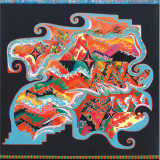
Der Star aus den TV-Serien “Homeland”, “Band Of Brothers” und “Billions” mal anders: als SingerSongwiter mit erdigem Roots-Pop.
Der britische Schauspieler Damian Lewis ist Serienfans auch in Deutschland als Nicholas Brody aus der Serie „Homeland“ bekannt. Vor seiner erfolgreichen Laufbahn in der Schauspielerei war Lewis vor allem ein Musiker, inspiriert von den Rockbands seiner Jugend und jahrelang unterwegs als Straßenmusiker.
Jetzt kehrt Lewis zu seinen Ursprüngen zurück. Sein Debütalbum bietet eine originelle Sammlung von rootsigen, rockigen und manchmal auch etwas jazzig angehauchten Songs aus eigener Feder plus zwei großartigen Coverversionen: ”Harvest Moon” von Neil Young und ”After Midnight” von J.J. Cale.
Eindringliche Melodien durchziehen Pendant World, das mit Spannung erwartete zweite Deutsche GrammophonAlbum der texanischen Band Balmorhea. Die 13 Tracks offenbaren ein breites Spektrum an Stilen, Texturen, Rhythmen und Farben und lösen Genregrenzen auf. Gefundene Sounds, Samples, Vinylaufnahmen, Synthesizer, Blechbläser und Flöten ergänzen Balmorheas reguläre „Stimmen“ aus Klavier, Akustikgitarren und Streichern. Zusätzlich gesellen sich zu Rob Lowe und Michael A. Muller auf Pendant World auch die Geigerin/Sängerin Aisha Burns, die Cellistin Clarice Jensen sowie eine ebenso herausragende Besetzung anderer Gastkünstler: der experimentelle Jazzsaxophonist Sam Gendel, Joseph Shabason an Tenorsaxophon und Flöte, Klarinettist Jonathan Sielaff, Schlagzeuger Jason Treuting, die Sängerinnen Steph Jenkins und
Lisa Morgenstern. Produziert wird das Album vom Grammy-Gewinner und Produzenten Jonathan Low, der auch noch Synthesizer und Schlaginstrumente einarbeitet. Pendant World erscheint digital, auf CD und auf Vinyl.
Silver marble vinyl, limited to 300 copies. Handnumbered, 180g. Australian vocalist Jo Lawry has forged an impressive solo career with a global fan base, while earning deep respect as a "musician"s singer" within and beyond jazz circles. She"s also spent nearly a decade performing and recording with Sting and has worked with Paul Simon and Peter Gabriel. The two albums she released as a singer/songwriter/producer, Taking Picture (2015) and The Bathtub and the Sea (2017) garnered critical acclaim. Now, more than 10 years since her last solo jazz album, Lawry presents "Acrobats", unequivocally returning to the genre alongside globally in-demand bassist Linda May Han Oh and versatile drummer Allison Miller.
The next chapter of the Natural Information Society is here. Since Time Is Gravity, credited to Natural Information Society Community Ensemble with Ari Brown, presents a newly expanded manifestation of acclaimed composer & multi-instrumentalist Joshua Abrams nearly 15 year, 7 albums &-counting flagship ensemble. Joining the core NIS of Abrams (guimbri & bass), Lisa Alvarado (harmonium) Mikel Patrick Avery (drums) & Jason Stein (bass clarinet) are Hamid Drake (percussion), Josh Berman & Ben Lamar Gay (cornets), Nick Mazzarella & Mai Sugimoto (alto saxophones & flute), Kara Bershad (harp) & Chicago living legend of the tenor saxophone Ari Brown. Recorded live to tape at Electrical Audio & The Graham Foundation, cover painting Vibratory Cartography: Nepantla, by Lisa Alvarado. 2xLP on Eremite USA, 2xLP & CD on Aguirre/Eremite Europe. Out 14-04.
Since first developing Natural Information Society in 2010, Joshua Abrams has been gradually expanding the group’s conceptual underpinnings, its musical references & the sheer number of the group’s members. Its music is, in a sense, an expansive form of minimalism, based in repeated & overlaid rhythmic patterns, ostinatos & modality. Its roots, its scale & its meaning become clearer in time. If time is gravity, it also allows us to carry more. Having begun as fundamentally a rhythm section with Abrams’ guimbri at its core, the version here can stretch to a tentet, including six horns.
Abrams has been expanding his minimalism gradually, but he has long understood a key to minimalism’s potential: the breadth of its roots in the late 1950s & early 1960s, ranging from the dissatisfaction of young European-stream composers with the limitations of serialism to the simultaneous dissatisfaction of jazz musicians with the dense harmonic vocabulary of bop & hard bop. The former began exploring rhythmic complexity & narrow tonal palates in place of harmonic abstraction (Steve Reich’s Drumming, Philip Glass’ Music with Changing Parts; perhaps above all Terry Riley’s In C & his late ‘60s all-night organ & loop concerts); the later reduced dense chord changes to scales (signally with Miles Davis' Kind of Blue, but rapidly expanding with John Coltrane’s vast project). In the 1950s the LP record opened the world with documentation of Asian & African musics, key influences on both minimalists & jazz musicians. If John Coltrane’s soprano saxophone suggested the keening shehnai of Bismillah Khan, the instrument was rapidly taken up by two key minimalists, LaMonte Young & Riley, similarly appreciative of its flexible intonation, the same thing that kept it out of big bands.
If the guimbri, the North African hide-covered lute that Abrams plays with NIS, involves a rich tradition of hypnotic healing music associated with the Gnawa people, Abrams’ music also touches on other musics as well — other depths, memories & healings, different drones, rhythms & modes. As the group expands on Since Time Is Gravity, he has made certain jazz traditions in the same stream more explicit as well. If there is a mystical & elastic quality involved in the experience of time, both in direction & duration, you will catch it here. The parts for the choir of winds expand on the roles of Abrams’ guimbri, Mikel Patrick Avery & Hamid Drake’s percussion & Lisa Alvarado’s harmonium: at times, the winds are almost looping in the tentet version, each hitting a repeating note in turn, at once drone & distinct inflection on temporal sequence. The brilliance of the work resides in Abrams’ compositions, the NIS’ intuitive execution & in Ari Brown’s singular embodiment of the great tenor saxophone tradition, including the oracular genius of Eddie “Lockjaw” Davis, & Yusef Lateef. The three pieces by the expanded NIS featuring Brown —the opening “Moontide Chorus” & “Is” & the ultimate “Gravity”— have an immediate impact, & togther might be considered a kind of concerto for tenor saxophone. Here Brown presses almost indistinguishably from composed melody to improvised speech, getting so close to language that he might have a text. Everything here is a sign. Note the tap of the Rhythm Ace that links “Moontide Chorus” to “Is”, the attentive heart always present, even when signed by a machine. There’s a link here to the methodologies & meanings of dub music & the linear & vertical collage of beats, textures & tongues: treated with reverence, a sample of a beat-box can be as soulful, as hypnotic, as a mbira or a tamboura. If those pieces with Brown are heard as a suspended concerto, the three embrace & enfold the other works, like the sepals of a flower. That placement will also touch on the mysteries of our perception of time.
Particularly in “Is”, but elsewhere as well, a phenomenon of transcendence arises in which time appears to be tripartite, at once moving backwards & forwards & standing still. This is an act of technical brilliance certainly, but also an illumination of music’s ability to represent temporal consciousness through polymetrics. This particular listener has only heard it before in a few places, including the horn shouts & bowed basses of Coltrane’s Africa, in moments of Charles Mingus’ The Black Saint & the Sinner Lady, in certain pieces where tapes were literally running backwards, & earlier still in Dizzy Gillespie’s Cubana Be, Cubana Bop, in which the composer George Russell & conguero Chano Pozo found a music that spoke at once in the voices of Stravinsky’s Rite of Spring & the vestigial rites, rhythms & songs of the Yoruba language & Santeria religion of inland Cuba.
In Joshua Abrams’ compositions & the realization of them by the NIS, in the time of one’s close listening & memory thereof, distinctions between the “natural” & the “social”, the “quotidian” & the “transcendent” are erased, suspended or perhaps irrelevant. Consider two of the ensemble pieces, one named for nature, the other social science. In “Murmuration” the repeated wind figures of flute & alto saxophone combine with the interlocking patterns of harp, guimbri & frame drum (tar) to create a perfect moving stillness, not an imitation but a witness to the miracle of the starlings’ astonishing collective art, a surfeit of beauty that might be the ultimate defense tactic.
“Stigmergy” takes its name & concept from the Occupy movement’s Heather Marsh, who proposes a social system based on a cooperative rather than competitive models, one in which ideas are freely contributed & developed as ideas rather than an individual’s property. In its form, Abrams’ “Stigmergy” is the closes thing to traditional jazz, a series of accompanied solos by each of the wind players. However, the composed accompaniment is a radically collectivist notion: a repeated rhythmic figure, call it ostinato or riff, in which the different winds each play only a note or two of the figure, a concept both more collectivist & individualistic in its conception than any typical unison figure. It suggests another of the underlying recognitions that propel the Natural Information Society, the group as social organism, the teleology of hypnotic anarchy, all parts in place, functioning systematically, evolving & expressing itself, its nature & society, as a transformative organism.
George Lewis has described music as “a space for reflection on the human condition”. This suggests that, rather than a “distraction”, at least some music might serve as a distraction from distraction. It’s a focus, a clarity, a awareness, an external invitation to interiority, as if music itself is a model for form & contemplation, an organism contemplating for us or as us. If that is a possibility, & I am sure I have heard such musics, than this music is among them. How many of our rhythms, melodies & harmonies (cultural, historical, biological, psychic) might such music carry, translate & transform in the particulate ecstasy of our own murmuration? (Stuart Broomer, April 2022)
out of Stock
Last delivered 3 years ago available to reorder, subject to availability
Paperback: 288 pages
Product Dimensions: 12.9 cm x 19.8 cm x 2.3 cm
• A global view of Discovery as a cultural phenomenon, placing the album at the centre of celebrity culture, fan clubs, video, the music business etc., while also examining its profound musical impact.
• An examination of Discovery as a flawed jewel, rather than blatant hagiography, as the album celebrates its 20th anniversary.
• An antidote to the revisionist history about Daft Punk and Discovery, from a journalist who has lived with the idea of Daft Punk for more than 20 years and interviewed the band.
Daft Punk’s Discovery is a record that looked into the future and liked what it saw; an album that predicted the electronic music explosion, YouTube and the end of privacy, while dragging soft rock back into vogue. Discovery was not only one of the best albums of the 2000s, it was one of the most prophetic, the kind of record that makes you wonder: how did they know?
You can draw lines from Discovery to Glass Swords, Kanye West, EDM, Autotune, iTunes, Beyoncé, Guilty Pleasures, social media and more. Discovery's footprints can be found all over the modern world but it also looked back to Daft Punk’s childhood, to Van Halen records, Japanese cartoons and even Johann Sebastian Bach.
Discovery was a record that confounded many fans when it was released in 2001, thanks to its blatant pop hooks and unlikely sonic bricolage. It was a record that was - and still is - widely misunderstood; Discovery’s impact has only become clear with the passing of time, as Daft Punk have been proved right time and time again.
This book is a homage to a fascinating, troubled beast of an album that casts a huge shadow over the 21st Century, as Discovery reaches its 20th anniversary.
“Incredible biography of the most colossal electronic act of our generation, by one of the best music writers of our time. Ben Cardew charts the history of Daft Punk from their humble rock band beginnings, to starting the groundbreaking and genre-defining Roulé records, to achieving stadium status as superhuman robot selectors.” Sinjin Hawke
*The product of a move from South Carolina to Berkeley, CA and the subsequent extended separation from loved ones, Toro Y Moi's third full-length, Anything in Return, puts Chaz Bundick right in the middle of the producer/songwriter dichotomy that his first two albums established.
*There's a pervasive sense of peace with his tendency to dabble in both sides of the modern music-making spectrum, and he sounds comfortable engaging in intuitive pop production and putting forth the impression of unmediated id.
*The producer's hand is prominent- not least in the sampled "yeah"s and "uh"s that give the album a hip-hop-indebted confidence- and many of the songs feature the 4/4 beats and deftly employed effects usually associated with house music. Tracks like "High Living" and "Day One" show a considerably Californian influence, their languid funk redolent of a West Coast temperament, and elsewhere- not least on lead single, "So Many Details"- the record plays with darker atmospheres than we're used to hearing from Toro Y Moi. Sounding quite assured in what some may call this songwriter's return to producer-hood, Anything in Return is Bundick uninhibited by issues of genre, an album that feels like the artist's essence.
*Born and raised in Columbia, South Carolina, Chaz Bundick has been toying with various musical projects since early adolescence. Having spent his formative years playing in punk and indie rock acts, his protean Toro Y Moi project has been his vessel for further musical exploration since 2001. During his time spent studying graphic design at the University of South Carolina, Chaz became increasingly focused on his solo work, incorporating electronics and allowing a wider range of influences- French house, Brian Wilson's pop, 80s R&B, and Stones Throw hip-hop- to show up in his music. By the time he graduated in spring 2009, Chaz had refined his sound to something all his own. Music journals across the board touted his hazy recordings as the sound of the summer, and he released his debut album, Causers of This in early 2010.
*Since then, Bundick has proven himself to be not just a prolific musician, but a diverse one as well, letting each successive release broaden the scope of the Toro Y Moi oeuvre. The funky psych-pop of 2011's Underneath the Pine evinced an artist who could create similar atmospheres even without the aid of source material and drum machines. His Freaking Out EP, a handful of singles and remixes, and a retrospective box-set plot points all along the producer/songwriter spectrum in which he's worked since his debut, and Anything In Return is another exciting offering that shows he's still not ready to settle into any one genre.
out of Stock
Last delivered 3 years ago available to reorder, subject to availability
After the acclaimed ΠΟΛΙΣ, Subheim returns with RAEON; a collection of eight new tracks for lonely evenings and long night drives. With RAEON, Subheim continues to expand into the sonic territory he has steadily been exploring since 2015’s Foray, the album that marked the project’s shift towards moodier, highly textured, lofi compositions through the use of sampling and heavy audio manipulation. While this EP feels like a natural continuation of the producer’s most recent work, it is intentionally stripped of any percussive elements, with the focus being entirely placed on space and melody.
Each composition feels like a distant, fading memory that unfolds faster than you expect it to and dissolves into an echoing nothingness before you’re able to hold on to it for more than a few seconds. Much like a long-distance train passing by or perhaps like a song you might hear in your sleep.
Every piece serves as a different chapter of the same open-ended narrative; one where stillness, grief and hope simultaneously coexist in perfect harmony. Intentionally imperfect, naturally gritty, spacious as ever, this new record balances between fragility and conviction, and once more illustrates the deeply human side of its creator.
In contrast to some of the producer’s darker work, RAEON is filled with an undertone of bittersweet hopefulness and a strong desire for new life. With the juxtaposition of nostalgic, synthesized, analog sounds and neoclassical elements, Subheim strikes the perfect balance between past and future, between melancholy and hope. And while the closing track is almost ironically called “Forget”, its ending will leave you longing for more and wondering what else is there.
out of Stock
Last delivered 7 months ago available to reorder, subject to availability
‘Y Dydd Olaf’, which is sung entirely in Welsh,
apart from one song penned in Cornish, draws
inspiration from Owain Owain’s 1976 novel of the
same name. The book is set in a dystopian future
where robots enslave the human race through the
use of medication, while Gwenno’s album covers
such themes as patriarchal society, governmentfunded media propaganda, cultural control,
technology, isolation and the importance of
minority languages.
‘Y Dydd Olaf’ was initially released by Peski
Records in October 2014, before being released
worldwide in 2015 by Heavenly Recordings.
Now available on crystal clear vinyl. Includes
digital download of ‘Y Dydd Olad’ plus nine bonus
tracks of remixes and rarities.
“This record demands what’s left of your time.” - Q
(★★★★)
“Blissful, dreamy psychedelia, full of twinkling
electronics and metronomic drums.” - Evening
Standard (★★★★)
“Language as a metaphor for political defiance…
floats beautifully over the krautrock/space-rock
soundscape, a Goldfrappian album you should
hear.” - The Sunday Times (★★★★)
After the success of Codeine's Frigid Stars LP, the trio of Stephen Immerwahr, John Engle, and Chris Brokaw booked time at Harold Dessau Recording in June 1992 to track an eight-song sophomore album. A few days and a couple of unexplainable high-pitched frequencies later, the record was scrapped, shelved, and forgotten about. Brokaw left the band shortly after, and these songs were re-tracked in various iterations for Codeine's final LP. On its 30th anniversary, Numero has unearthed these recordings, restoring the original White Birch to the band's exacting standards with producer Mike McMackin. A slowcore masterpiece hidden in plain sight.
Robin Lee makes his most organic disco sounds as Andromeda Orchestra and Faze Action Records have tapped him up for more sonic treasure here. His signature sound is apparent from the off with the dancefloor dub vibes of EP opener 'Bad Girl.' It's bold bass, string stabs and robust pianos are all run through with a fine Moog solo. There is then plenty of cello and vocal delight to 'Twilight Lady' and a fiery dance floor cut 'Mozambique' as well as a full vocal mix of 'Bad Girll' to close out the EP.
out of Stock
Last delivered 3 years ago available to reorder, subject to availability
LSDF sound system and l'Hallucidité offers you the repress of some good oldschool tribe. Before the Cds and the hitek:) Something roots and dusty... like freedom !
The Endless Coloured Ways is a collection of songs by legendary singer/ songwriter, Nick Drake, performed and recorded by over 30 incredible artists from a range of different backgrounds, genres, age groups and audiences. From Fontaines D.C to Guy Garvey, and Aurora to Feist, each artist has offered their own incredible take on a timeless classic. - Fifth in a collection of five 7" singles - - Limited stock - - Gatefold lancing sleeve -
Boheme is the second studio album of the French duo Deep Forest. The album combines samples of Eastern European gypsy songs with electronic music. It became the duo's most successful album, selling over 4 million copies, achieving Platinum, Gold, and Silver certifications in multiple countries and winning the Grammy Award for Best World Music Album in 1996.
out of Stock
Last delivered 3 years ago available to reorder, subject to availability
On June 16th, 2023, Steven Julien and Kyle Hall return with their first EP together in ten years, CROWN. The record follows earlier EPs the duo created under their former alias Funkinevil, 2013's Ignorant and 2012's Night/Dusk. The record once again brings together two artists from opposite sides of the pond—Julien hailing from London and Hall representing Detroit—with a shared love for soul in its purest essence.
Opening "Page 1", a pitched-down vocal by James Massiah pronounces, "My plan—won't let you take it from hand." That alone could be considered the nut graph of a record about taking ownership, created by two vanguards in the electronic music scene that, a decade ago, insisted on infusing their music with soul in a commercial club circuit lacking in it.
Assembled from a few years-worth of studio jams in Julien's studio, Crown dials up the staticky warmth present on earlier Funkinevil tracks like "Dusk" and "In The Grid." Across seven songs, Funkinevil shaves off some of their tougher elements, instead shooting for pastoral melodies and funky basslines, like on "Page 2", where Vicky Flint's flute flutters sleepily over breaks and a groovy Korg synthesizer. But the atmosphere on the EP is also grander than ever—on "Page 5," Cloud's wistful melisma soars over Flint's bleating saxophone and wandering sci-fi synths.
With all this attention to funky musicality, it's only fitting that two legends specializing in the craft would land on the B-side—Däm Funk revs up "Page 3" with a slamming kick and his unmistakable coolness, and Reggie B turns "Page 5" into a sludgy, jazzy dance party.
In the words of Julien, "I think a lot of people have forgotten about what this whole thing is about. Musically, artistry and everything. So I'm happy this is what we represent on this project."
out of Stock
Last delivered 2 years ago available to reorder, subject to availability
Bone colour vinyl version of the recently released album (CD was released in May). Produced by Rick Rubin, this is a full bodied collection that flows like a stream of conscious journey through the psychedelic dark depths of the human psyche followed by basking in the cleansing light when finally reaching the surface. Continued promo/marketing activity.
Since we've known him, Robert Lloyd has made quite clear his enormous affection for the songs and sounds of Freakwater, the duo of Janet Beveridge-Bean and Catherine Irwin who've been wrongly denied their place as rightful and willful progenitors of alt-country's 'movement', which (frankly) is to their credit. Their genius in offering absolute authentic to the sound old-time Appalachian folk music with a modern façade that in no way negates tradition (one of their albums is titled Feels Like The Third Time) is unparalleled within the genre, and Freakwater remain under-appreciated. After the start of Covid, Robert dared approach Janet with the idea of recording together. Over the course of the long pandemic, songs were bandied about for months, and when recording was finally practical, a band was assembled with dates set up for a recording session in Valencia, Spain. Robert and Janet were joined by Robert's long-time ally, Pete Byrchmore, the musical foil for Robert's solo album on Virgin and a former Nightingale, Mark Bedford, the bassist for Madness and Terry Edwards' Near Jazz Experience, and Pablo Roda, Spanish mystery drummer, couldn't have worked out more perfectly. Tracks were selected without regard for collective presentation, just the goal of walking out of the studio with an album of perfect gems. Forget Lee & Nancy or George & Tammy, Rob and Janet have an immediate chemistry that only sounds long-lived - and too uniquely them to merit any comparison. The title track, Black Cat, Dark Horse is the sole Lloyd / Bean / Byrchmore composition and one of the record 's highlights. Jim Elkington, collaborator with Jeff Tweedy and Richard Thompson, contributes Heavy Reckonings and a song written with Janet, The True Lovers' Knot And The Lie, while Robert adds reworkings from past releases - Sweet Georgia Black and Black Country (with Pete) - not to mention the unreleased Eggs And Bacon. Janet brought One Shot and the unheard Freakwater song Arc Of A Smile. Covers of tunes from Dion and The Monkees and a magnificent Jon Langford song, "Tears Like Stars" round out the album. We daresay the album is among the finest you'll hear in 2023. That it doesn't fit perfectly into any preconceived genre is a testament to its quality. "Songcraft" is a word used infrequently today, yet Black Cat, Dark Horse will show that good songs endure. We're proud that Robert and Janet will find some new admirers through this album's release. The Michael Cumming / Stewart Lee film King Rocker made a case for Robert Lloyd-as-losthero; this album furthers that idea and shows a compelling side of Janet's talent and abilities which will be a surprise to her fans and serve as an entry point to exploring her many other compelling projects.
Teenage Waitress returns with the new album 'Your Cuckoo'. This album is the follow up to the critically acclaimed debut Love & Chemicals. “Melodies and storytelling. . basically" is how Daniel J. Ash of Southampton’s Teenage Waitress describes his eagerly anticipated second album Your Cuckoo. “It’s a bunch of characters singing songs about love, youth, drugs, boredom and of course, dancing”. ‘Your Cuckoo’ is a leap forward in every way for Teenage Waitress. Ash’s trademark ‘story songs’ are set to a backdrop of irresistible melodies, colourful arrangements and impeccable production. While noticeably a more focused effort than Ash’s previous effort Love & Chemicals, this album still offers a little something for everyone. For the recording of ‘Your Cuckoo’ Ash recruited some of his musical friends to join him in the studio, adding a rich new layer of musicianship to his latest songs. “We basically wanted to go a step ahead from where we got to last time. . and I think we’ve done that” smiles Ash “I’ve been a perfectionist in every sense and annoyed a lot of people to get to this point. I hope it was worth it!
Jay - Jay Johanson 's 14th album is one of the most refreshing of his discography. After an introspective and intimate trilogy (“Bury the hatchet” (2017), “Kings Cross” (2019) “Rorschach Test” (2021), FETISH open a new era for the iconic Swedish artist. With this new album Jay - Jay Johanson explore the melancholic, aerial atmosphere that makes the DNA of his music with a cinematographic view. On the other side he offers songs made for the most elegant dancefloors with "Stars Aligns" and "Jeopardize" with their electronic hypnotic melodies. The new Album will drive you from intimate and lounge atmosphere to the dancefloor. An epic journey on the line of the most popular album of the artist. The opening track "Seine" is inspired by the one who disappeared in the water of the Seine in Paris in the 19th Century. It opens with all the romantism of Jay - Jay. "Finally“ sounds like a new classic, sampling the famous 3rd Symphony by Brahms, it reminds all the movies of the 50's calling the phantom of Chet Baker, one of his inspirations. The First part of the album is based on quartet of modern Jazz mixed with Jay - jay's Touch like in Puppet on a String. With the Uptempos "Jeopardize", "The Stars Align", "Summer Night of Love", he brings us from the NY voguing scene to the decadent Berlin clubs. Flesh For Frankenstein offers a rendition of the piano melody by Andy Wharol. One of the icon of the artist. The Album close on Happy Birthday, a smooth and shiny song, with his crooner and lovely voice that will ravish all the lovers. After 27 years of career, the prolific artist continue to deliver an ambitious and marvellous album that would be appreciate by the fans of the first area and the new ones who discovers him this last decade and with his live performances
Stimela were a popular and successful South African Afro-fusion outfit led by guitarist, vocalist, songwriter, producer and arranger Ray Phiri. The band was formed under the name ‘The Cannibals’ during the 1970s when Phiri got together with drummer Isaac Mtshali, keyboard player Thabo Lloyd Lelosa and bass player Jabu Sibumbe. They initially started out as instrumentalists, but later evolved to Afro-fusion when they joined forces with vocalist Jacob “Mparanyana” Radebe in 1975. The story of ‘The Cannibals’ ends when Radebe died in 1978 but the ‘Stimela’ story was only just beginning.
In 1979, after a life-changing experience in Mozambique (where they were stranded for three months) the band members had to sell all their belongings to take a train home. This trip was a watershed moment as it was here where they conceived the new name for the band: The Zulu word for “locomotive-train” STIMELA.
Stimela would soon become little short of an institution in their home country of South Africa. With soulful tunes and gripping lyrics, the band has recorded platinum-winning albums such as Fire, Passion and Ecstasy, Shadows, Fear and Pain & Look Listen and Decide. In addition to recording their own material, the group supplied instrumental accompaniment on albums by a lengthy list of legendary artists. Stimela would go on to gain global fame after being featured on Paul Simon’s iconic 1986 ‘Graceland’ album and the mega tour that followed.
Ray Phiri would enter into many successful collaborations with major acts and artists such as Harari, Joan Baez, Willie Nelson and Manu Dibango. In 2017 he was diagnosed with lung cancer and died at the age of 70. Phiri has received many awards in recognition for his contribution in the music industry, one of these is the Order of Ikhamanga awarded to him by the South African president. This was to honor his sterling contribution to the South African music industry and the successful use of arts as an instrument of social transformation.
Stimela is the tale of a South African band who have battled their way through dark days to take their rightful place in the forefront of the South African apartheid-era music invasion. One of their most memorable tracks “Whispers in the Deep” was even restricted from being broadcasted by the old South African Broadcasting Corporation.
On the album we are presenting you today (Fire, Passion and Ecstasy from 1984) the unique sounds of Ray Phiri’s Stimela are fully showcased. Expect infectious hypnotic build-up grooves, cinematic lowdown jazz-funk, Afro-soul, delightful reggae, gospel influences and funky synth-boogie sounds…all with a touch of early eighties new wave and hints of Island disco mixed with sensual bubblegum pop. It comes as no surprise that the album has now become a sought-after item due to its addictive and original-sounding nature, a must-have for any self-respecting record digger!
These recordings completely encapsulate Stimela’s fusion style. They managed to craft a modern South African sound that continues to influence SA musicians to this day. Never in a rush, yet always with a sense of purpose and direction – like the steam train after which they took their name.
Tidal Waves Music now proudly presents the first reissue of this fantastic Afro-fusion classic since 1990 (originally released in 1984 on Gallo Records) & this is also the first time the album is getting a release outside of the African continent. This rare record (original copies tend to go for large amounts on the secondary market) is now finally back available as a limited 180g vinyl edition (limited to 500 copies) complete with the original artwork. Also included is a double-sided insert containing rare pictures of the band.
Andrius Arutiunian’s debut album »Seven Common Ways of Disappearing« was first conceived as an installation for the Armenia Pavilion at the Venice Biennale in 2022. The Armenian/Lithuanian artist and composer uses hybrid forms of music, focusing on sonic vernaculars, hypnotic musical forms, and aural cosmologies. Arutiunian is known to work with installations, sound objects, and time-based collaborations with ensembles and performers. The piece on this record was written for two musicians, a retuned piano and analogue electronics, and it borrows an enneagram as its score—the world-ordering model introduced by the controversial Armenian-Greek mystic and composer G.I. Gurdjieff. The result is an album that is both aesthetically and spiritually intoxicating music of the spheres, at once reminiscent of the masterpieces of minimal music and improvised, if not stochastic music. G.I. Gurdjieff was one of the first thinkers and (quite possibly charlatans) to introduce a syncretic idea of Eastern philosophy into the West. His unique way of teaching was based on an esoteric blend of Middle Eastern, Buddhist, and Dervish philosophies, and oscillated between a genuine search for enlightenment and a complex form of trickery. Borrowing from Gurdjieff’s writing on the world ordering and musical tuning, Arutiunian used the enneagram to organise the musical and structural matter of the piece that was originally conceived as a live performance.»Seven Common Ways of Disappearing« is written for a grand piano—the epitome of Western composition and musical production—and follows a simple set of rules: the two musicians have to navigate the topography of the score, rendering the piece in a different configuration each time. In a sense, this gripping recording is thus only one of the potentially infinite versions of how it could be played, but also seems to take on different shapes and forms with each new listen. It documents a truly mystical composition that follows its own logic
French electronic post-punk/krautrock trio Veik recruit Sonic Boom and Vanishing Twin to reimagine tracks from their 2021 debut album, 'Surrounding Structures'. Both remixes have been pressed to wax by Fuzz Club, due out June 9 2023 on a heavy clear-blue 7" limited to 250 copies. On the A-side Sonic Boom (aka Pete Kember of Spacemen 3 and Spectrum) takes album-opener 'Difficult Machinery' and deconstructs it into a spaced-out, oscillating drone. Shifting gear on the B-side, 'Honesty (I Don't Wanna Know)' was already a piece of throbbing and discordant proto-punk and on this remix London psych-pop experimentalists Vanishing Twin turn it into an even more abrasive and unpredictable beast. Now being revisited via these remixes, Veik's 'Surrounding Structures' album was rooted in avant-garde krautrock and 70s no wave and inspired by brutalist and modernist architecture. It came highly praised by the likes of Loud & Quiet, Line of Best Fit, Louder Than War, BBC 6 Music, KEXP, France24, France Inter and more.
Much anticipated debut album from this Leeds-based electronic duo, following high-profile UK festival slots, and shows alongside luminaries The Brian Jonestown Massacre, Warmduscher, Sea Power, Moonlandingz, The KVB, with multiple plays across BBC6/BBC Introducing and Amazing Radio, jellyskin are finally ready to unleash ‘In Brine’, their first full length release. The result of four years spent writing, recording, and refining the album between Leeds, Liverpool, Bristol, Palamos, and Berlin, ‘In Brine’ showcases the many talents of Will Ainsley and Zia Larty-Healy in a work straddling iridescent electronica, tungsten-tipped techno, art pop, and queasy, brown acid folk. The songs are pieced together with themes of longing, misadventure by the sea, desire and aquatic apparitions that showcase Larty-Healy’s warm but urgent vocal range, as at home around the campfire as it is in the club. The pair’s meticulous arrangement and rearrangement, sculpting, recording, and mixing was a glacially slow process of adaptation, mutation, cooperation, growth, and, yes, natural selection. First single ‘Bringer of Brine’ thumps from the speaker anthemically and forcefully, pitched somewhere beautiful and uncanny; Larty-Healy’s vocals soar and skim off the production like a smooth stone across choppy waves. The radio-ready pop electronica of ‘I Was The First Tetrapod’ bursts into the world with an urgency in line with the lyrics. An aquatic tale of crawling onto land for the first time, desperate to make new life forms, it’s also a positive, joyful rebuke to the despair of the world around us. “Growing my legs...”. The fuzzed-out psychedelic keys and forward-moving, Knife-like structure echo throughout while beautiful lyrics detail visions of where this would all lead life as we know it-“I can run freely, white horse behind me. Flexing my bones and artery twine, find human tone and reach for the vine.” ‘Fox Again’ opens with chopped alarm clocks segueing into a lurching rhythm, before exploding into skittering beats and a soaring chorus. The effect is like waking up drowsily, going over to the window in your room and yanking open the curtains to be blasted by searing sunshine. The pair brought in Berlin based co-producer, mixer and masterer Lewis D-t to help finesse the tracks into fat-free hunks of ecstasy and sonic exploration, their rich depths marking ‘In Brine’ as an album everyone should be talking about this summer and beyond-all nine tracks will have feet moving and hearts swelling in equal measure. As opening track ‘Lift (Come In)’ positively opines “Going up!/Just want to keep going up!”. It’s time to get in on the ground floor
Please take the five stars not as a statement that this is the best record of 2013, but as a delighted endorsement of a genre classic. With his fifth record (3 with Harpoons, and 2 solo) Ezra Furman has made an album of classicist rock'n'roll that never feels like an exercise, but a living, breathing piece of self-expression. The foundations are obvious, but the simple touches that adorn them are what elevates Day of the Dog. Been So Strange, for example, is the Velvet Underground's chugging R&B reincarnated, but with the delicious addition of a horn section. It leaves you wondering why Lou Reed never thought to do the same, so well does it work. Slacker/Adria is nervy, jittery powerpop until two minutes in, when the bottom drops out of the song and it turns into a doomy riff over which Furman appears to be telling us his nightmares: "I see white crosses burning across a dark landscape." He's seen his critics coming, too: the liner notes contain an index so you can check off the references. Clever, funny, sharp and tuneful – a great rock'n'roll record.” Michael Hann (The Guardian).
Das selbstbetitelte Debüt von ENVY OF NONE, der bunten Zusammenrottung von Gitarrist/Keyboarder Alf Annibalini, Rush-Gitarrist Alex Lifeson, Bassist Andy Curran (Coney Hatch) und Singer/Songwriterin Maiah Wynne war eine der spannendsten Grenzgänger-Platten des Jahres 2022 und hat sich bis heute nicht abgenutzt. Die Band schreibt schlicht verdammt gute, emotional greifbare und musikalisch fesselnde Lieder in einem Spannungsfeld aus State-of-the-Art-Elektronik und Rock/Pop-Tradition.
Die nun nachgeschobene EP "That Was Then, This Is Now" dient ihrem Titel entsprechend als Standortbestimmung und enthält zwei Tracks aus den Debüt-Sessions, zwei Remixe und das erste nach "Envy of None" komponierte ´That Was Then´. Stilistisch war das Quartett von Beginn an so vielseitig, dass man nun nicht von einer zusätzlichen Erweiterung ihres Repertoires sprechen kann - doch das famose Songwriting bleibt erhalten, und für Rush-Fans noch besser: Lifesons Spiel schimmert noch einen Tick präsenter durch.
´Lethe River´ ist dem Album-Opener ´Never Said I Love You´ relativ ähnlich, aber insgesamt doch ruhiger. Darauf folgt mit ´You´ll Be Sorry´ sachte brodelnder und zischender Industrial light, der ebenfalls auf "Envy of None" hätte stehen können - was ja auch plausibel erscheint, weil beide Stücke im gleichen Rutsch entstanden sind.
Pitch language - Modular synth wizard Blawan brings his brand of distorted, syncopated electronic productions. Toast introduces the EP with a playful head bopper with ethereal sounds and menacing overtones. One of the biggest acts in dance music playing international festivals such as Pitchfork 2022, ADE, Nuit Sonores.
Plays from Mary Anne Hobbs on BBC 6 music and coverage from Resident Advisor, Pitchfork, Dekmantel, CRACK, The Face “losing himself in modular synthesis without ever sacrificing soul for science”
out of Stock
Last delivered 10 months ago available to reorder, subject to availability
Colombian sisters Elia and Elizabeth Fleta recorded a handful of songs between 1972 and 1973, accompanied by Jimmy Salcedo and his group La Onda Tres, mixing soft-pop with a touch of tropical-pastoral funk, singer-songwriter sweetened by the subtle perfume of Caribbean music and psychedelia. We are now happy to present two of the most celebrated songs by the Colombian sisters together on a 45 for the first time. A Tropical funk pop gem! Colombian sisters Elia and Elizabeth Fleta recorded a handful of songs between 1972 and 1973, accompanied by Jimmy Salcedo and his group La Onda Tres, mixing soft-pop with a touch of tropical-pastoral funk, singer-songwriter sweetened by the subtle perfume of Caribbean music and psychedelia. These elements blended graciously, brimming with freshness, in a perfect partnership of sharp melodies with lyrics inspired by a genuine juvenile curiosity about life's mysteries, love and nature in their simplest forms. The songs of Elia y Elizabeth remain among us as part of the most wonderful pop legacy of all time. ‘Alegría’ and ‘Ponte Bajo el Sol’ are two of the most celebrated songs by the Colombian sisters. We are now happy to present them together on a 45 for the first time. TRACKLIST Side A Alegría Side B Ponte bajo el sol
out of Stock
Last delivered 2 years ago available to reorder, subject to availability
Death Is Not The End's 333 sub-label drops a much needed reissue of Rupie Dan's My Black Race 12" from 1982. A huge Shaka selection featuring one of the heaviest dubs available from this era of UK roots production. Originally written and produced by Rupie for his Flag Records label, with engineering from Tony Addis (later of Addis Posse and the Warriors Dance label).
"The lyrical idea for My Black Race came about during the 1980/81 social/racial revolution that took place in several cities all over England, including London, Liverpool, Birmingham, Leeds etc. I was living in Bradford, West Yorkshire at the time and was a DJ/Sound System operator on Jah Scorcher International Sound. I also co-hosted a Reggae show on an independent radio station Called Pennine Radio 235. In my regular job I was a youth and community leader with the Bradford education council. I was fully connected and in touch the community.
Seeing how the media used the events of the social uprising as a weapon to further discriminate against the African & Caribbean community committed me to say and do something to elevate the minds of especially young people who were already demoralised by the rhetoric that brought about the so called "riots" of the time. It was during this time that the lyrical foundation of "My Black Race" was laid. The rhythm came later after hearing Barry Brown's "No Wicked Shall Enter the Kingdom of Zion". In the summer of 1982 I entered into the Addis Ababa recording studio on Harrow Road, Paddington and recorded the song having moved to London the previous year. Musicians featured included Victor Cross on bass and Mark Wright on drums (both from the Ariwa band), Rizzo on guitar, Tan Tan and Bami on Horns (all 3 from Aswad band), Bubblers on Piano/Organ (Undivided Roots/Ruff Cutt Band). Lead vocals were provided by myself, with backing vocals Jenifah Gad and Niomi who was working with David Bowie at the time. The engineers were Bubblers and Tony Addis (later of Addis Posse & the Warriors Dance label).
Jah Shaka was in the studio during the entire recording session. I was aquatinted with him as I was previously involved in a 3 way soundclash with Shaka, Quaker City and my sound at the time Jah Scorcher. Some years later I was in Terry's Dub studio in North Acton cutting some dubs when King Jammys and Bunny Lee walked in and heard the song. Bunny was responsible for the production of Barry Brown's "No Wicked Shall Enter the Kingdom of Zion". Thankfully they were both impressed by the track which delighted me as a young up-and-coming artist/producer. The rest is history as we know it. Jah Shaka was mystically constant hence his attachment and love for the song. Jah bless and guide him."
out of Stock
Last delivered 3 years ago available to reorder, subject to availability
Exotica, ye-yé cumbia, guaracha infused twist, rock’n roll mambo, Spanish rumba, boogaloo beat, tropical garage and other unexpected bastard genres are featured in this festive compilation of bizarre hits taken from the glorious catalog of records released during the 60s and 70s on the Peruvian label Discos MAG. Some clearly unite genres, others are projects with creative names, but all are bold musical initiatives that got and will always get people onto the dance floor. “Sabroso Go Go” brings together fourteen musical mixes created in the recording studios of Manuel Antonio Guerrero (MAG), in which music directors combine rhythm with alchemy in a quest to find the philosopher's stone of the dance. Exotica, ye-yé cumbia, guaracha infused twist, rock’n roll mambo, Spanish rumba, boogaloo beat, tropical garage and other unexpected bastard genres are featured in this festive compilation. Although this compilation begins in 1957, experiments like this (some more memorable than others) were not new in Peru. The songs on this album were however much more successful hybrids. Some clearly unite genres, others are projects with creative names, but all are bold musical initiatives that got and will always get people onto the dance floor. At the end of the fifties, rock music shook the foundations of Peru, and orchestras rushed to cover hit songs and explore the possibilities of mixing them with tropical music. Lucho Macedo's orchestra took up the mantle and reinterpreted a well-known guaracha by Celia Cruz ('Rock and Roll') in mambo style, renaming it 'Rock and roll Mambo'. 'Maestro de Rock and Roll', a hit by the Cuban Conjunto Casino, received similar treatment. Another mix in this vein is the rock tune 'El Rock de los Chinos' by the Mexican Manolo Muñoz (author of 'Speedy González') recorded by the Chilean Choche Mérida for MAG in 1961. The following year, Chubby Checker’s 'The Twist' hit the scene and was immediately fused with guaracha by maestro Nelson Ferreyra. A legendary MAG musician, Carlos Pickling, composed 'La Charanga del Espacio' in 1963. The space sounds are produced by Pickling and his inseparable Hammond. He himself is the one who leads the orchestra that accompanies Benny Del Solar, Lita Branda and Pablo "Melcochita" Villanueva in the tropicalized version of Spanish Rumba, when the beats of the Iberian rumba were still exotic in South America. Around that time, the Chilean Willy Marambio was already living in Lima. In the track included on this album, the go-go style showcases his virtuosity on the trumpet. Another outstanding trumpet player, Roberto "Tito" Chicoma from Chiclayo, played as a session musician with MAG from 1959. A few years later, he became one of the most popular Colombian cumbia players, a talent he demonstrates in the song on this compilation, which blends the fun of go-go with yé-yé beats. 'Batijugando' was a hit from Mexico and was played in all the rhythms played across the Hispanic world since 1967. Inspired by the "Batman" series, it was performed at MAG by the Betico Salas orchestra, with vocals by the Panamanian lady crooner Nallye Fernández. 'Computador Electrónico' is another surprise on this album, performed by Panamanian vocalist Patty Pastel, it is the only known version in Spanish of 'Der Computer Nr. 3', originally sung in German by France Gall. Two other songs feature Edgar Zamudio. The versatility of Zamudio y Los Vikingos (originally a Chilean group) is demonstrated in the guitar-heavy song composed specifically for the late sixties skate fashion ('Go Go en Patines') and in his idiosyncratic protest song ('Día de Pago') performed in beat style. In the mid-seventies, Los Kintos, led by guitarist Francisco Acosta, developed different harmonic ideas in an instrumental track that veers from boogaloo to salsa, the fashionable rhythm of the day. Finally, in 1976, when the bumping hips dance craze swept the continent, Manuel Guerrero was quick to jump onto the bandwagon, composing a Bump song, together with his son Carlos. The Italian musician based in Lima, Luciano Luciani performed the song 'A Bailar Bump' backed by his band of local musicians Los Mulatos.
out of Stock
Last delivered 3 years ago available to reorder, subject to availability
Jean-Philippe Altier’s first full-length excursion as Jpye, 2021’s Samba With You, was heralded a contemporary Balearic pop gem – a superbly summery, sun-kissed set full of atmospheric instrumentation, colourful synth sounds, strong songs and star turns from a wide variety of musical friends and guest performers.
Bleu Your Mind, his hotly anticipated follow-up, takes a similar sonic approach to its predecessor, with Altier being joined in the studio by friends old (vocalist e11e, keyboardist Michael T and fellow Twonk members Leonidas and Renato Tonini all reprise their roles from ‘Samba With You’) and new (Da Roc and Iamrobd) on a set that effortlessly mixes and matches elements of nu-disco, jazz-funk, laidback synth-pop, Italo-disco and Balearic beats.
Those who savoured ‘Samba With You’ will feel at home right away, as e11e sings softly and sweetly atop the gentle Latin infused shuffle, dusk-ready instrumentation and chiming vibraphone solos of ‘Freedom Ain’t Free’. French composer and keyboardist Da Roc make’s his first appearance on the following track, the duelling electric pianos and synths of sun-splashed instrumental Balearic pop gem ‘You Freak Out’, before e11e returns on the throbbing and suspenseful ‘Shiver’– a re-imagined and genuinely glassy-eyed cover of Marie Laure Sachs’ sleazy 1978 Italian disco jam of the same name. So, it continues, with Altier and his collaborators painting scintillating sonic pictures in kaleidoscopic colours.
Impeccable arrangements and pin-sharp instrumentation work in perfect harmony with seductive grooves that pack plenty of subtle swing. Even more impressively, ‘Bleu Your Mind’ is an album that genuinely rewards repeat listens, with each successive spin revealing more musical touches and cannily crafted melodic motifs. As a result, highlights come thick and fast throughout, from the delay-laden jazz-funk-goes-electrofunk fizz of ‘Xcuse My French’ (with Da Roc), and the humid afternoon heat of ‘Va Là-Bas’ – a gorgeous and immersive, sunset-ready affair produced alongside Renato and featuring dazzling kets from Michael T) – to the slow-motion Gallic/Italian reggae-pop of ‘Tutto OK’ (a nod to the tropical-tinged reggae sounds created in France during the 1980s), and the slap-bass sporting, smoothed-out (but low-down) grooves of Renato hook-up ‘Take Off’.
As ‘Bleu Your Mind’ progresses, the musical details become more refined, the grooves drowsier and the mood more horizontal. This subtle shift can be heard in Leonidas co-production ‘Lazyjack’ – all chiming lead lines, languid bass guitar, snappy drum machine beats and glistening guitar motifs – the vocoder-sporting stoner funk of ‘Spinnaker’, and the yearning brilliance of ‘Fingers Crossed’. The album’s most emotive and immersive moment by some distance, ‘Fingers Crossed’ sees Altier and collaborator Iamrobd (also a fellow Twonk member) tease out a slow-motion groove in combination with lilting Spanish guitar solos, ultra-dreamy chords, twinkling pianos and delay-laden drum machine hits. Bittersweet and brilliant, it’s a track guaranteed to send shivers down your spine. By the time it fades out, via a sustained piano chord, you’ll be sat or stood in wide-eyed, open-mouthed wonder.
out of Stock
Last delivered 2 years ago available to reorder, subject to availability
Audio Soul Project is back with their latest vinyl-only EP, Simurgh. With a title inspired by the mythical Persian bird, these four tracks fuse elements of house, R&B, dub, and drum & bass to create an ecstatic and hypnotic experience.
The EP kicks off with "Deliver Me," a dreamy house track with warm filtered chords and bouncing synth bass. R&B female vocal ad libs pepper the groove and the refrain "Deliver Me" adds a sense of yearning. The percussion, including morphing 4x4 and breakbeat drums, piano and synth stabs, nod to the cerebral Detroit and Chicago house compositions of the mid 90s.
"Azizam Dub" takes a more stripped-down approach with a subsonic bass line bump and Juno 106 stabs. Frantic percussion and deftly cut vocal samples accent the ebbs and flows of the arrangement, making for a dynamic and engaging dance.
The B-side of the record starts with "Internal Vybrations," a bass-heavy drum & bass track that winds and jumps with multiple layers of deep, fluttering bass and ambient pads and strings. Percussion layers like hi-hats, shakers, and maracas lift and relax the rhythm in parallel to the rest of the composition, making for a hypnotic and trance-inducing vibe.
The B2 track on the EP, "Celebration Dub," is a bass-heavy swinging house track with ecstatic diva "Whooo" samples that punctuate the ups and downs of the groove's energy. Classic reggae and dub-influenced vocal samples and heavy tape delay on certain key instruments add to the joyful and uplifting vibe of the track. The keyboard
and string section can transport a dancer to other realms of consciousness if they let themselves go to the groove.
Simurgh is a masterful fusion of various genres that showcases Audio Soul Project's production prowess and ability to create an entrancing sonic journey.
TL;DR: Audio Soul Project's Simurgh EP features 4 tracks of dub-infused house music. Deliver Me has dreamy chords and female R&B adlibs, Azizam Dub is stripped down with subsonic bass and vocal samples, Internal Vybrations is a bass-heavy drum & bass track, and Celebration Dub is a swinging house track with reggae and dub vocal samples.
out of Stock
Last delivered 3 years ago available to reorder, subject to availability
A kaleidoscope of harmony vocals - as Crosby, Stills and Nash might have sounded with a funky back beat. Delicate acoustic fingerpicking, warmed by a swell of brass before a drama of electric unfolds. Guitar band music, delivered with the sensibilities of someone who knows how to make you dance. Sun-kissed blue-eyed soul, reminiscent of Ned Doheny, but emanating from a beach far from California.
These are the sounds of Jim, as heard on debut album 'Love Makes Magic'.
Debuting in 2021 on the folk-informed 'Falling That You Know' EP, Jim is the latest alias of songwriter, multi-instrumentalist and renowned DJ Jim Baron. Famed as co-founder and musical director of festival-stunning favourites Crazy P, his latest Jim project is a musical journey unlike anything he has done before.
out of Stock
Last delivered 3 years ago available to reorder, subject to availability
Als Sänger mit einem außergewöhnlichen Stimmumfang (von Bassbariton bis Countertenor), der sich auf der Bühne mit einer New-Wave-Band oder bei einer Purcell-Arie wohlfühlt, mit dem Aussehen eines körperlosen Außerirdischen, der die Massen faszinierte, als Europäer, der aber in New York lebte, war Klaus Nomi ein komplexer und talentierter Künstler. 1979 hatte David Bowie, der damals gerade in seiner Berliner Zeit war, wie üblich vor fast allen anderen das aufkommende Phänomen wahrgenommen. Platin- und Goldplatten, ekstatische Konzertsäle, eine faszinierte Modewelt: Klaus erlebte zwischen '79 und '82 einen meteoritenhaften Aufstieg. Anlässlich des 40. Todestages von Klaus Nomi veröffentlicht Sony Music / Legacy seine gesamte offizielle Diskografie neu.
Detroit’s Eddie Fowlkes returns to Rekids this June with ‘Bahama Man EP’
Hot on the heels of his recently released ‘Forever EP’ on Radio Slave’s evergreen Rekids, Eddie ‘Flashin’ Fowlkes returns to the label with ‘Bahama Man EP’, another four-track EP of red-hot dancefloor cuts. From the swinging opening title track through to the jacking low end of closer ‘Cube’, Eddie’s knack for crafting his unique style of club-friendly cuts is on full display across the record, some of his finest work to date.
As one of Techno’s originators, Eddie Fowlkes has shaped the Techno genre for over 36 years. With his releases on Metroplex, Tresor, Sony, Peacefrog, and his own imprints CityBoy Records and Detroit Wax, Fowlkes' contribution to the blueprint of modern electronic music cannot be overstated.
out of Stock
Last delivered 5 months ago available to reorder, subject to availability
Carla Durisch unveils her debut EP ‘I Just Wanna Dance’ on Crosstown Rebels, with long-standing label favourite and close friend Seth Troxler on remix duties.
An exciting name who looks set for a breakout year in 2023, DJ/producer Carla Durisch is an artist whose passion and deep- rooted understanding of electronic music led to her being marked as a talent to keep an eye on. An integral part of the Swiss electronic and club landscape through residencies at the likes of Nordstern (Basel), plus both Hive and Zukunft (Zurich), her recent explorations within the studio have seen her deep and groove-led style translate into her own productions. These explorations are on display for the very first time as she debuts on Damian Lazarus’ renowned Crosstown Rebels imprint, following appearances at Get Lost in Miami and Watergate Berlin, plus forthcoming Ibiza sets alongside the label boss this summer at Hï.
Led by the captivating words of Nanghiti and Carla’s own vocals ‘I Just Wanna Dance’ is a warping and colourful ride through rich synths, refined drums and bright stabs as it builds and descends across an engrossing near-seven-minute journey. Next, ‘Be The Thing is a stripped-back, hypnotic house effort as snaking percussion merges with sharp lead melodies and further vocal interjections.
Needing little introduction, Seth Troxler’s remix of the title cut is an example of the American at his best, fusing bubbling acid-dipped bass patterns with skittering percussion and surging synth lines for a trippy, late-night take. To close, ‘4AM’ picks up those early hours sonics as crisp claps, echoed vox snippets and dubby grooves take a hold.
out of Stock
Last delivered 20 months ago available to reorder, subject to availability
Spanning a decade of sophisticated funk from the Motor City, two midtempo picks from the crates of Mr. K get his trademark classy edit treatment on this Detroit-themed 7-inch.
G.C. Cameron was a solid singer in the Motown stable, a vocal chameleon whose range extended from clear tenor to soaring falsetto. Though this agility is most easily heard via his lead vocal on the Spinners’ “It’s A Shame,” he shows off the same versatility in the rare groove classic “No Matter Where,” a 1973 Curtis Mayfield-esque burner that’s the subject of Mr. K’s latest release on Most Excellent. For Krivit this has been a lesser known & hard to find floor filler for years. Intro cleanly extended, now ready for the big stage and modern club play.
Our flip side stays in midtempo, rare groove Detroit territory but jumps ahead a decade to the early ’80s with Candye’s “Time Is What You Need.” Candyce Edwards got her start in the Detroit funk powerhouse One Way (her predecessor was Alicia Myers) and soon became connected with the group’s wunderkind songwriter/multi-instrumentalist Kevin McCord. McCord had already taken Myers to the top with “I Want To Thank You,” and seeing if lightning could strike twice with Edwards. Although only resulting in this solo debut, time and the untiring excavations of latter-era vinyl junkies have subsequently made her collaboration with McCord (a union that briefly included marriage) a sought-after boogie gem in the rough. Mr. K plucks perhaps the most winsome LP-only cut and subtly extends intro and outro to provide a useful 7-inch version that should get plenty of warm weather play.
Both tracks have been carefully remastered for this release & have never sounded better.
out of Stock
Last delivered 14 months ago available to reorder, subject to availability
Donovan Woods was curious: What if he re-recorded Both Ways, his acclaimed 2018 record that won him a Juno Award for contemporary roots album, and distilled its 12 songs to their bare essence? An “acoustic reimagining,” if you will. “We started from scratch,” he says, from the instrumentation to his vocals to a fresh understanding of the heartache and regret that underpinned those songs. “There are no recording elements carried over from that album. It’s all brand-new.” Woods ended up with The Other Way, his album that brims with inspired interpretations of Both Ways that are intimate yet startling in their urgency. Released on May 3, 2019 on Meant Well, this release is a reminder of why the Canadian artist has become such a sought-after songwriter whose work has been recorded by Tim McGraw (“Portland, Maine”) and Lady Antebellum’s Charles Kelley (“Leaving Nashville”), with Spotify streams approaching nearly 90 million. You’ve always been able to hear and connect with Woods’ words. But an odd sensation washes over you when the varnish is wiped off of Woods’ songs. Somehow the lyrics burrow with even greater resonance and then linger like little smoke rings. For a producer, Woods enlisted ace guitarist Todd Lombardo, who produced Woods’ song “Portland, Maine” in 2015 and wrote and played most of the guitar parts on Kacey Musgraves’ Grammy-winning Golden Hour. Woods gave Lombardo artistic license not only to change the chords and song structures but to overhaul the arrangements with acoustic instruments and Lombardo’s luminous guitar work as the centerpiece. “I think this album draws out the pain and the darkness of these songs,” Lombardo says. “The record is about loss and failure and feeling like you fucked it up, and there’s no mistaking that. You hear every single word – and feel it, too.” Coming on the heels of “Go to Her,” Woods’ first song of 2019, The Other Way is so revelatory that it makes you wonder why he didn’t try this approach sooner. “It’s always been an interesting idea to me, especially when you’re an artist like me who inherently disappoints some people anytime your sound gets bigger,” Woods says. “But a really good song is a good song in any arrangement. It’s like a beautiful hardwood floor. You can put any furniture in there, and it’s going to look good.”