Orange Vinyl
Kero & Steph’s landmark collaboration Syndrome now sees a sumptuous release on vinyl and evocative music video, spinning data into densely layered visual treats.
Steph’s coolly ethereal voice and poignant writing drift in harmonies atop the sliced-up, glitched, hard-hitting precision of Kero’s productions. The unforgettable directness of her compositional sense is here, as her long resume of scores and placements would suggest. It finds an urban-technological counterpart in Kero’s frenetic sounds. The DU label boss is in full force straight from the chilling post-pop of the opening titular cut. “Walk in the park” is a production masterwork, punchy organic percussion against grinding bass. “Who am I to complain” is at once arresting and vulnerable with vocals, but still packs an emotional gut-punch in the accompanying instrumental. “Count down from 7” is more stripped down and urgent, melodic hooks propelled by lo-fi rhythmic mechanism’s menace.
For the remixes, Oberman Knocks unleashes utter digital destruction - computer memory banks dropped through a wormhole. That thoroughly deconstructs Mtch into composite textures -- and opens “Walk in the Park” to near-unrecognizable, yet somehow danceable mayhem.
The new physical and motion elements find a visual language for these sonic strata of imagination and digital construction. From designer Christoph Grünberger, known for his tome The Age of Data: Embracing Algorithms in Art & Design, we get the packed outer sleeve and 2D design. These enshroud a calm-looking Steph in a Shibuya Crossing-style trip inside Defasten’s geometries, opposite a catalog of branching visualizations and glyphs.
Defasten, known for his live AV work fusing virtual reality and performance, here explodes faceted 3D cubes, in the cover and further in the music video. These pulsing crystalline hyper-geometries delve into data as expressive medium, shifting and vibrating with the glowing tones and crisp percussive hits of Kero and Steph’s composition. It’s a rare music video that matches the music in intricacy and form - a world that can only exist in virtual space, but that feels as immersively dreamy as the sound score.
“Sugar coated fabric … in braided covers” and “silver linings” were never so tempting.
Search:sonic element
Inspired by three movies of avantgarde cinematographer Maya Deren (At Land, Ritual in Transfigured Time and A study in Choreography for Camera), Francesca Bono (vocalist, performer, founder of Ofeliadorme and member of the Donnacirco collective) and Vittoria Burattini (percussionist, multi-faceted drummer and member of influential Italian avant-rock band Massimo Volume) created a dense hypnotic transfixing collection of songs based upon the sole use of the Juno 60 synthesizer and the organic linear pulsating sound of a drum kit.
These apparent limitations set the scene for an incredibly rich and rewarding voyage that immediately establishes a strong identity that oscillates between circular dream soundscapes and psychedelic rhythmic architectures. Bono / Burattini excels in threading magical images where objects transform without warning (Your House Is A Ghost) and collapse into kosmische grooves (La Trama Del Desiderio) or when humming electronics mold into temporal dimensions (Sogno Nel Vigneto). Burattini’s astonishing use of the drum kit and her mallet driven timbre produce space and tension (Dinner Illusion) perfectly complementing Bono’s synthesized realm made of nuance and reflection (Dancing Demons). One of the album’s key elements is the sparse use of Bono’s singing, an intricate mix of measured phrasing, breathing, spiral structures and extrasensorial-like choirs that seem to reference the rich Italian tradition of cosmic jazz, library music and the unmatched work of the RAI engineers in the 70s working with Gruppo Di Improvvisazione Nuova Consonanza, Morricone, Daniela Casa. The driving Can-like pulse of Le Ossa shows force and flow while Stella’s haunting piano recreates a futuristic horror-movie OST.
Suono In Un Tempo Trasfigurato is beautifully recorded and mixed by Italian composer Stefano Pilia, a perfect match for Bono / Burattini’s sonic explorations and for a record that intersects experimental wave, alien grooves, contemporary electronics and futuristic sci-fi. Their blend of analog electronics and organic pulses place them in a time out of joint where dancing remains the one constant ritual.
Less of Everything was released on April 3rd 2020 on Upset The Rhythm and sold out quickly. This limited repress on sun-yellow vinyl sees the album finally available on vinyl again, around the release of the group's new EP and upcoming tour plans.
Less of Everything. The title of Es’ first full length LP could be interpreted as a manifesto pledge, an outright demand or a purely literal sonic descriptor of the London quartet’s glacial form of punk rock music. This tension between intent and interpretation has been a fundamental element of the group’s output from their formation.
Es is Maria Cecilia Tedemalm (vocals), Katy Cotterell (bass), Tamsin M. Leach (drums) and Flora Watters (keyboards). Their 2016 debut EP, Object Relations, released on influential London punk label La Vida Es Un Mus, was described as “mutant synth-punk for our dystopian present” (Jess Skolnik, Bandcamp, Pitchfork). The band has since become a vital presence in London’s underground DIY music scene, as well as having toured the UK with the Thurston Moore Group in 2017.
After a period with members split between Glasgow and London, Es recorded Less of Everything with Lindsay Corstorphine (Sauna Youth, Primitive Parts) in Tottenham in 2019. As in Object Relations, the dynamic between Cotterell’s bass and Watters’ keyboard is at the heart of Less of Everything’s sound: intertwining sub-zero melodies, gothic anarcho-punk influences (think KUKL, MALARIA, X-MAL DEUTSCHLAND) and some kind of entirely unlocatable aquatic component. When combined with Murray Leach’s precise drumming, the outcome is original and immediately recognisable. Es are a group who know how to leave space, how to strive for minimalism without sacrificing aggression or dynamism. This dynamic provides the perfect backdrop for Tedemalm’s relentless, pointed vocal style. While comparable ‘cold’ sounding groups might affect an impersonal, safer mode of lyrical or vocal detachment, Tedemalm’s strategy is to “push the lyrics as far as I can thematically until they become absurd … overly dramatic ... while still being sincere in the feeling they’re trying to invoke. I try to apply as much emotion as I can.” The result is something intense but nuanced, confrontational but complex. Owen Williams, 2020
Sacramento, CA duo Blank Gloss’s third album, Cornered, is an exquisite statement of pop ambient starkness, an album that oscillates between lush beauty and spare melancholy. It follows from their 2021 debut for Kompakt, Melt, an album that saw Morgan Fox (piano, synths) and Patrick Hills (guitar) aligned, loosely, with the cosmic pastorale of the ‘ambient Americana’ movement. Cornered feels like a significant step forward, though – by peeling back the layers of their music, they’ve revealed both its restful core and its solemn gravitas. It is unendingly lovely, but with something disquieting at its centre.
Cornered was recorded quickly, over two days in December 2020. There’s nothing rushed or haphazard about the album, though; everything has its place, with each sonic element contributing profoundly to these nine miniature dioramas. It signals change, quietly but perceptibly, through the way the duo sculpts their material, building out of loose improvisations that morphed into songs. While there was no plan in mind when Blank Gloss settled into the studio, Fox recalls that “right away we realised that things were sounding and feeling a bit different than any of the sessions we had previously.”
That difference can be heard in the increased amount of space Blank Gloss gift to their sound sources. Some of the most moving moments on Cornered come when Fox and Hills strip everything back – see, for example, “Crossing”, which sets pensive piano across a shyly humming drone and quiet arcs of guitar, recalling the driftworks of Roger Eno. Curiously, the album’s distinctive shape and mood develops, at least in part, from a change in instrumentation, with Hills using a MIDI pick-up on his guitar. “This resulted in making things happen a lot quicker,” Fox says. “It also helped create what I think is a bit more sombre, dark feeling to some of the songs.”
Elsewhere, on songs like “Salt”, the piano tussles with flecks of guitar, single tones sent out to mingle with the stars, like Morricone at 16 RPM, while Cornered’s centrepiece, the eleven-minute “No Appetite”, lets long arcs of electronic texture breathe and sigh, tangling together in a cat’s cradle of bliss. Throughout, it feels as though the music is blossoming as you hear it, like watching time-lapse footage of flora in bloom. But perhaps the most seductive thing about Cornered is the sense you get, listening, that the music was something unexpected, a visitation. “It almost felt like we weren’t dictating where the music went and how it sounded,” Fox agrees. “We were just there in a room together in December and these sounds were happening, and we were lucky enough to be recording the process.”
Cornered, das dritte Album des kalifornischen Duos Blank Gloss aus Sacramento, ist ein exquisites Statement von pop ambienter Krassheit, ein Album, das zwischen üppiger Schönheit und sparsamer Melancholie oszilliert. Es folgt ihrem 2021er Debüt für Kompakt, Melt, einem Album, auf dem sich Morgan Fox (Klavier, Synthesizer) und Patrick Hills (Gitarre) locker an der kosmischen Pastorale der „Ambient Americana“-Bewegung ausrichteten. Cornered fühlt sich jedoch wie ein bedeutender Schritt nach vorne an – indem sie die Schichten ihrer Musik abschälen, haben sie sowohl ihren ruhigen Kern als auch ihre feierliche Schwere offenbart. Es ist unendlich schön, aber mit etwas Beunruhigendem in seiner Mitte.
Cornered wurde relativ schnell aufgenommen, über zwei Tage im Dezember 2020. Es klingt jedoch nichts überstürzt oder willkürlich an diesem Album; alles hat seinen Platz, wobei jedes Klangelement einen wesentlichen Beitrag zu diesen neun Miniaturdioramen leistet. Es signalisiert Veränderung, leise, aber wahrnehmbar, durch die Art und Weise, wie das Duo sein Material formt und aus losen Improvisationen aufbaut, die sich in Songs verwandeln. Als Blank Gloss sich im Studio niederließen, gab es zwar keinen Plan, aber Fox erinnert sich: „Uns war sofort klar, dass sich die Dinge etwas anders anhörten und anfühlten als bei allen vorherigen Sessions.“
Dieser Unterschied ist in der größeren Menge an Raum zu hören, die Blank Gloss ihren Klangquellen bietet. Einige der bewegendsten Momente auf Cornered kommen, wenn Fox und Hills alles zurücknehmen – siehe zum Beispiel „Crossing“, wo ein nachdenkliches Klavier über einen schüchtern summenden Drone und leise Gitarrenloops setzt und an die Driftworks von Roger Eno erinnert. Seltsamerweise entwickelt sich die unverwechselbare Form und Stimmung des Albums zumindest teilweise aus einer Änderung der Instrumentierung, bei der Hills einen MIDI-Tonabnehmer an seiner Gitarre verwendet. „Dies führte dazu, dass die Dinge viel schneller abliefen“, sagt Fox. „Es hat auch dazu beigetragen, einigen der Songs ein etwas düstereres, dunkleres Gefühl zu verleihen.“ An anderer Stelle, bei Songs wie „Salt“, spielt das Klavier mit Gitarrenfetzen, einzelne Töne werden ausgesandt, um sich mit den Sternen zu vermischen, wie Morricone bei 16 U/min, während Cornereds Herzstück, das elfminütige „No Appetite“, lange Bögen schlägt, elektronische Texturen atmet und seufzt, um sich in einem Katzenkörbchen der Glückseligkeit zu verheddern. Während des Hörens fühlt es sich an, als ob die Musik blüht, als würde man sich Zeitrafferaufnahmen von blühenden Pflanzen ansehen. Aber das Verführerischste an Cornered ist vielleicht das Gefühl, das man beim Zuhören bekommt, dass die Musik etwas Unerwartetes war, eine Heimsuchung. „Es fühlte sich fast so an, als hätten WIR nicht diktiert, wohin die Musik geht und wie sie klingt“, stimmt Fox zu. „Wir waren just im Dezember zusammen in einem Raum, als diese Geräusche passierten, und wir hatten das Glück, dass die Aufnahme mitlief.”
Dropping as the second standalone EP ahead of Len Faki’s highly anticipated debut album Fusion (due out later this year), this release provides a new outlook on the producer’s sounds, going far beyond the confines of techno that he previously has been known and lauded for.
Opening the record in bold yet sensible style, Gamma subtly transcends the dancefloor functionality by anchoring its driving momentum in a wistful and enigmatic melody; a regular of Berghain, Faki also occasionally plays the upstairs room - where the bumping house of his own It's Time (to Move Your Body) could well go down as the highlight of a long night, whizzing with of colourful synths and anthemic vocals. Yantra then is a reminder of the powerful, loopy and trippy techno, which Faki (amongst all the newfound sonic explorations) has still not lost his appetite and knack for. A genuine counterpart, Shri Yantra then picks up elements of its predecessor, reframed in an enveloping breakbeat journey through time and space.
Going past the constraints of his previous work, Faki’s signature style is still very much audible on this EP, while also showing how there are still endless possibilities to develop. Stay tuned for one more special EP (x35) before the final release of the Fusion double album!
First time reissue of a legendary and undeservedly obscure salsa collector’s album from 1969. Led by rebel accordionist Alfredo Gutiérrez and featuring singer Lucho Pérez of Sonora Dinamita fame, “Así es… Con salsa!” is just that: raw, heavy duty NYC salsa performed through a Colombian “Costeño” tropical filter, with trombone, accordion and deep bass. Contains three hot bonus tracks in the same style and insert with liner notes. “¡Así es… Con salsa!”, by Colombia’s Alfredo Gutiérrez y Los Caporales del Magdalena, is a legendary collector’s album, yet still undeservedly obscure (and perhaps sonically surprising) for the uninitiated. It’s an experimental mash-up of seemingly disparate genres from different origins that on paper would seem to be at cross purposes. Yet at the same time the release is a masterpiece of raw pan-Latin fusion from the dawn of Colombian salsa that holds its own as a bonafide heavy duty pioneering record of the genre, despite its outsider status. Probably the most shocking musical element is Alfredo Gutiérrez’s fiery accordion, an unexpected instrument in the idiom of salsa, as it’s usually associated with the tropical music of Gutiérrez’s Caribbean home region of Sucre. Gutiérrez has always been a provocateur, never shying away from the controversial or outlandish, which has earned him the richly deserved sobriquet, “El Rebelde Del Acordeón” (The Rebel of The Accordion). Gutiérrez started Los Caporales in 1968 as a rival to Discos Fuentes supergroup Los Corraleros de Majagual, and the band had made three popular albums prior to “¡Así es… Con salsa!”, yet most of the repertoire on those records consisted of typical Colombian tropical and coastal rhythms and genres, none were purposely devoted to the newly minted genre of salsa. From the start, Gutiérrez lays down a salsa manifesto when the album kicks off with ‘Guadelupe no va’, a four-minute workout with pile-driving force that demonstrates the uncompromising power of this 14 piece orchestra. The listener is instantly hooked by the rawness of the sound, the bouncy energy, heavy brass and piano arrangements and the looseness of the improvisational sections. Gutiérrez was given the green light by Codiscos A&R head Humberto Moreno to dedicate an album to New York style salsa, giving more prominence to the voice and compositions of Lucho Pérez, an already proven expert in Cuban genres who previously had been only one among many vocalists in the band. Several tunes on the record are remakes of older compositions by Lucho Pérez from his early tenure with Discos Fuentes group La Sonora Dinamita, the new versions are much more raw and menacing, as if put through a Bronx filter. The band was made up of Codiscos’ regular stable of ace studio musicians from Medellín for the recording date. The album was both a success and also not abnormal in its mixing of salsa and costeño Colombian sounds, as there were several other similar hybrid records by other artists at the time. Both the desperation of the lyrics (about not being able to afford anything) and Lucho Pérez’ forceful delivery leave an indelible impression of street wise authenticity, which is backed up by the fact that both band members grew up poor
Gondwana Records announces 'Goodbyes' the debut album from Estonian pianist and composer, Hanakiv, a deeply beautiful, meditative piano album featuring special guest Alabaster dePlume
"This is an album about healing. It is about saying your goodbyes to everything that doesn't serve you anymore. Each of these songs has a little goodbye in it. So, these are very beautiful and necessary goodbyes".
Hanakiv is a young composer and musician from Estonia (now based in London) who creates meditative piano-based ambient music with elements from classical and electronic music. 'Goodbyes' is her debut recording and draws on influences as diverse as Tim Hecker, Björk "Vespertine", Kara-Lis Coverdale, Arvo Pärt, Erkki-Sven Tüür and Aphex Twin as well as her own cultural heritage. Music has an important part in Estonian culture, especially choir music and its traditions, but Hanakiv also draws on her love of nature – the beautiful Estonian seaside and forests - and on her time in Iceland. However, it was moving to London that gave her the freedom to make her own music: "London gave me the freedom and courage to really be who I am (as a person and musically)" and her heritage and her new home both offer inspiration to Goodbyes, as Hanakiv moves between these two opposite places, a bustling metropolis and a small country full of nature, drawing inspiration from both as she sculpts her own voice.
Hanakiv had an unconventional music education – she started studying music at a school for handbells when she was nine and was part of a handbell ensemble for eight years. Starting on piano at the same time she went on to study composition at high school, and later at the Estonian Academy of Music. Eventually switching to electroacoustic composition, she studied in Reykjavik, and did internships in Malmö, and again Reykjavik before moving to London. She grew up in a musical family and her grandmother was a piano teacher and choir conductor.
"I would always ask her to take me to her choir rehearsals. I remember sitting under the grand piano, listening to the choir and just being mesmerised by the sounds. She also teaches in a local music school in the south of Estonia with about ten pianos, and I'd spend a lot of time there as well. I believe this was the starting point for me to get to where I am now. The last two pieces on the album (Home II and Home I) are composed in this same music school, so it feels like a full circle.
An early influence was Regina Spektor "the first artist who made me really want to play piano" alongside dream pop and Sigur Rós' as well as Estonian contemporary composers such as Erkki-Sven Tüür and Arvo Pärt. Later her studies took her to Reykjavík: "There is this amazing record shop called 12 Tónar in Reykjavik where you can drink espressos and listen to all their vinyls. I spent quite a lot of time there. There is something about Icelandic music that really excited me (the mixture of contemporary electronic sounds with melancholy, emotionality). This is when I started getting more into electronic music, and experimenting outside of classical music". Following a year long break from studying and inspired by making an electroacoustic soundtrack for a friend's abstract video, she was inspired to complete a masters in electroacoustic composition, diving fully into the worlds of sound recording and mixing and focusing on surround sound and how to position and move sounds in space, eventually doing an internship with composer Kent Olofson in Malmö, who works with multi-speaker systems for theatre productions. "I learnt a lot from him and he introduced me to some of my favourite plugins I've used a lot on this album as well."
Hanakiv moved to London just as the pandemic hit and found herself trapped, in a big new city, without any network or family and so just concentrated on making music. "I stayed in my room with my basic equipment - keyboard, Korg minilogue, SM 58 and Rode nt1-a microphones, laptop and speakers. I was reading about mixing, and trying out different things and listening to a lot of music to get the sense of the mixes and production and finishing a commission piece for 5.1 multi speaker system at that time so I set up four speakers for quadrophonic surround sound in my room!". She also found her way back to piano - my instrument – and started practicing again, playing the pieces she used to play, but also just improvising, and this was the beginning of what would become her debut album, 'Goodbyes'.
"I started appreciating everything about music again (even melody!), and everything just came together naturally, and I arrived to a point where I finally found my voice, and I had something that I wanted to say and share. I composed "Meditation I" first and started with "Goodbye", and all the other pieces are derived from that. Without "Meditation I" there wouldn't be this album. If you listen closely, "Meditation I" starts where "Goodbye" ends; "Meditation II" is born from "Meditation I".
But it was meeting Fi Roberts, a sound engineer based at the legendary Strongrom Studios in Shoreditch, London in December 2020 that really brought the album into focus. The pair bonded over an interest in prepared piano and a similar approach to production ideas (a balance of not overdoing it, and letting the songs speak for themselves, but being open to explore) and Fi became a friend but also a confidant and eventually co-producer
"Fi has a big impact on this record but I don't know how to really explain that properly. Of course, this album is sonically stunning thanks to her amazing mixes and recording skills, but she also believed in this music so much and it created something very special - that's difficult to measure with words. She just works with heart, and I really appreciate that"
This then is 'Goodbyes', the first offering from a major new voice, who offers us a meditative work full of space and tranquillity but also life and friendship and meaning. And we are very proud to welcome her to the Gondwana family.
Scottish composer and multi-instrumentalist Bill Wells and virtuoso tuba player Danielle Price once more team up for Karaoke Kalk under the name The Sensory Illusions. The two further explore the affinities between their idiosyncratic musical approaches across a variety of styles and genres while also expanding their sound palette. After its predecessor saw Wells working strictly with his electric guitar, on the »Sensory Illusions II« the piano enters the mix on two of the eleven pieces. Much like his brass-heavy collaboration album »Osaka Bridge« with Japanese collective Maher Shalal Hash Baz—made available again on vinyl by the German label Karaoke Kalk in February 2023—this album injects melancholic atmospheres with a sense of playfulness. Picking up on elements from jazz, pop, blues, and classic songwriting while acknowledging their debt to techniques from the worlds of avant-garde and improv music, The Sensory Illusions weave together disparate elements into a colourful, imaginative suite of songs.
Starting with the folky chords of opener »Four Chord Dream,« the track titles spell out Wells’ characteristic use of ideas that literally come to him in his sleep (the project was even named after a record he found while browsing a store in a dream). The National Jazz Trio Of Scotland leader then fleshes them out together with Price, who again serves as a one-woman rhythm section, as she does throughout most of the album. When Wells enters 1960s spy movie territory with a swirling rendition of John Barry’s »Theme from Vendetta« and picks up on those dynamics with a rolling riff in the next song, her versatile playing provides the backdrop for that. Once Wells sits down at the piano for the tender »Flotsam Bodes,« however, their roles are being reversed and Price—a seasoned and multifaceted musician who was one of only six applicants chosen to attend Chilly Gonzales' Gonzervatory in 2019 and who is currently working with acclaimed London-based trumpet player and composer Laura Jurd—takes the lead. »I’m the Urban Spaceman« makes it even more apparent how seamlessly these two experienced players leave each other space to showcase their respective talent and expand on their individual ideas: Marked by Wells’ soloing and exploring different sonic possibilities of the guitar, it also sees Price showcasing her reduced yet agile solos before they both return to the idea at the heart of the song.
It is precisely those ideas that guide the duo’s way through the individual pieces, but their sometimes widely different approaches yield very distinct results. While working with the piano once more on »Mr. Sophie« results in a fuller and more anthemic sound, they opt for a more restrained, melancholic one the album closer »Desk Aunt«. It is precisely these kinds of variations in mood and tone that underscore how these two musicians are perfectly attuned to each other. As the second duo record in their six years of working together, »The Sensory Illusions II« proves once more how much musical ground they are able to cover with their instruments and open minds alone.
After three years of breakout touring at some of the biggest roots festivals in the United States and Canada, and another three years locked out of the live performance world they have so ambitiously cultivated, Doolin', France's premiere practitioners of Irish and Celtic music, return with a new album entitled CIRCUS BOY. Recorded in part in the US (Chicago, Kansas City and Pittsburgh) during their 2019 tour, the album was completed at the legendary Studio Ferber in Paris, France, under the direction of two legendary producers, Olivier Lude and Patrice Renson, both of whom have collaborated with some of the biggest names in French music. While their 2016 album drew its inspiration from the fusion of traditional Irish music, French chanson, and American roots music, CIRCUS BOY is resolutely more adventurous, as evidenced by their original compositions ("Circus Boy", "When I'm Gone", "A Place Where We Belong"), as well as by the added punch and sonic elements that were brought to the project by producers Lude and Renson. Powerful, full of emotion, and eminently appealing, Doolin' is poised to take their career to the next level with the release of CIRCUS BOY.
Belgium's Ahl Iver has become synonymous with the Lenske name since founder Amelie Lens singled out one of his demo submissions back in 2018. Since then, the young DJ/producer has dropped two EPs on Lenske whilst holding down a busy international touring schedule including regular appearances at Amelie's revered Exhale party series. 'Paradox' contains four dance-floor orientated cuts with the typical Ahl Iver sound that's steadily become a Lenske staple.
Opening the record is 'Reverse Psychology', featuring a thunderous kick drum, whirring sonics and industrial slams. Ahl includes a stripped back rave synth and siren combo with sharp stabbing sequences. Next up is 'Paradox', kicking off with a distant alarm, wicked keys and another blistering kick drum. The elements build together to form the foundation for the jacking vocal sample that dominates and drives the track onward, always with a singular acid line buzzing menacingly in the background.
On the flip is 'Rumble In The Jungle', kicking off with twisted and devilish effects that snicker and shoot across the hurried pace of the roaring kick. The track develops into a battlefield, with the initial mischievous sounds mimicking a frenetic laser fight, before stripping back the focus onto the main kick drum and singular percussive slap. Rounding off the record is 'No Salvation'. The track builds on the initial kick drum combo as well as an ever-present melody that gradually rises to the forefront of the track in a powerful takeover. There's a cinematic feeling to the cut created by airy elongated pads as the hook of the track, gliding and ascending under the harsher elements.
BITE label head Phase Fatale aka Hayden Payne drops his first EP in 5 years 'Nailed To The Net' and his first solo release on his own record imprint. The Berghain and Khidi resident develops his sound further into the dancefloor and techno sphere while still maintaining his signature post-punk influence. The innovative techno producer and DJ combines his spectrum of dystopian, gritty, industrial electronics with his deep understanding of synthesis and sound design. This sonic approach is all the more exemplified in Rrose's remix of 'Desecrating Vows'. The release finds Payne taking his productions to new levels by including different musical elements such as breakbeats, arpeggiations, and massively layered chordal sequences. Reflecting the last year when he produced it in Berlin, injecting all broken hearted emotions from then, each track contains more groove and nuance while having dense, shoegaze-alike atmosphere and melodies. Even containing distant voice and guitar elements, 'Nailed To The Net' maintains his trademark balance between the dancefloor and his eclectic influences.
Cosmic Romance is the first LP from Los Angles producer MoodHay that beams down to planet Earth in a swirl of lush synthesisers, hypnotic melodies and warm grooves. It’s a journey of emotions, contemporary and classic all the same. The album orbits around earthly elements of R&B, funk and house, seamlessly blurring in a unique way that MoodHay pulls off with an endearing ease here in the early 21st century. It’s a sonically beautiful love note with a lot of attitude that pilots right to the center of your soul, while keeping your body rocking out real smooth.
MoodHay’s hilltop studio is like a hidden oasis out in the desert, mystical and soothing, where he brings gems (like the ones you’ll hear on this album) to life. He sings and plays all the instruments on this record (minus the hot sax on ‘Melodies’) and is truly blooming as a songwriter.
MoodHay has such a fresh energy around him that is certainly felt throughout Cosmic Romance and these songs were methodically crafted to maximise the vibe out on the dance floor on this planet and others out there.
Electric Light Orchestra leader Jeff Lynne did more than figuratively reach for the sky on Eldorado. Daring to be bold, and creating imaginative worlds that invite the listener to escape the mundane, the visionary composer-musician achieved a multidisciplinary fantasia and, in the process, a prog-rock landmark. Nearly 50 years later, the concept album's brilliance can be experienced like never before in cinematic, IMAX-worthy fashion.
Sourced from the original analogue master tapes, pressed on MoFi SuperVinyl vinyl at RTI, housed in a keepsake box, and limited to 10,000 numbered copies, Mobile Fidelity's UltraDisc One-Step 180g 45RPM 2LP set of Eldorado allows the long-time audiophile staple to resonate with reference-setting dynamics, tones, and colours. Conjuring the feeling of journeying to different horizons, the record's songs teem with layer upon layer of details, which can now be heard as the producers intended. This very special release both pays tribute to the record's merit and enhances the spectacular program for generations to come.
Presenting the album with breathtaking clarity yet retaining the warmth, texture, and emotion that differentiate live music from reproduced sounds, the collectible reissue features beguiling levels of in-the-moment presence, grand-scale sound-staging, and instrumental balance. Bursting with a veritable cornucopia of stimuli, MoFi's Eldorado package also benefits from superb separation and immersive atmospherics that stem from the meticulous remastering process – as well as an ultra-low noise floor, industry-leading groove definition, and dead-quiet surfaces courtesy of the MoFi SuperVinyl properties.
The premium packaging and gorgeous presentation of the UD1S Eldorado pressing befit its extremely select status. Housed in a deluxe box, it features special foil-stamped jackets and faithful-to-the-original graphics that illuminate the splendour of the recording. No expense has been spared. Aurally and visually, the reissue exists as a curatorial artefact meant to be preserved, touched, and examined. It is made for discerning listeners that prize sound quality and production, and who desire to fully immerse themselves in everything involved with the album.
An artistic breakthrough that established Electric Light Orchestra as a pioneering band (and confirmed Lynne as the leading practising Beatles disciple), the 1974 effort remains notable for its involvement of a full orchestra and choral section, the range of which are captured with exquisite results on this LP. Eldorado distinguished itself from the band's first two works not only via Lynne's sharpened songwriting but due to the hiring of an orchestra that augmented the group's three string players. Co-arranged by Lynne and conductor Louis Clark, the symphonic movements bolster the contagious fare without ever drowning it. The accents also act as transports into the varied narrative universes.
Finished as a story before Lynne put notes down on paper, Eldorado ironically owes its inspiration to Lynne's father. In response to his dad's criticisms about the band, Lynne conceived a melodic tour de force that, like The Wizard of Oz, which informs the cover art, emphasizes the power of everyday dreams and everyman heroism. It's no coincidence that the sonic journey begins with an overture punctuated by the words of a cynic who condemns "the dreamer, the un-woken fool."
Beautiful yet fun, ambitious yet consistent, Eldorado proceeds to celebrate such romantics and escapists. A Technicolour escapade marked by lush melodies, fluid crescendos, and an intoxicating blend of energetic rock and sweeping orchestral elements, the album weds rich imagery and sweeping sounds in manners that make the two inseparable. In Lynne and company's hands, reality and fantasy collide, and dissolve any dividing lines. The proof is not just in the epic production, but in the timeless (and catchy) nature of songs such as the balladic "Boy Blue," power-pop packed "Illusions in G Major," and, of course, the aptly titled hit, "Can't Get It Out of My Head."
Decades later, Eldorado doubles as an invitation to break away from monotony whether you're listening to your Mobile Fidelity reissue on a large system or an excellent pair of headphones.
MoFi SuperVinyl
Developed by NEOTECH and RTI, MoFi SuperVinyl is the most exacting-to-specification vinyl compound ever devised. Analogue lovers have never seen (or heard) anything like it. Extraordinarily expensive and extremely painstaking to produce, the special proprietary compound addresses two specific areas of improvement: noise floor reduction and enhanced groove definition. The vinyl composition features a new carbonless dye (hold the disc up to the light and see) and produces the world's quietest surfaces. This high-definition formula also allows for the creation of cleaner grooves that are indistinguishable from the original lacquer. MoFi SuperVinyl provides the closest approximation of what the label's engineers hear in the mastering lab.
More About Mobile Fidelity UltraDisc One-Step and Why It Is Superior
Mobile Fidelity Sound Lab's UltraDisc One-Step (UD1S) technique bypasses generational losses inherent to the traditional three-step plating process by removing two steps: the production of father and mother plates, which are created to yield numerous stampers from each lacquer that is cut. For UD1S plating, stampers (also called "converts") are made directly from the lacquers. Since each lacquer yields only one stamper, multiple lacquers need to be cut. Mobile Fidelity's UD1S process produces a final LP with the lowest-possible noise floor. The removal of two steps of the plating process also reveals musical details and dynamics that would otherwise be lost due to the standard multi-step process. With UD1S, every aspect of vinyl production is optimized to produce the best-sounding vinyl album available today.
BROODING PSYCHEDELIC REVELATIONS FROM THE STAVANGERIAN OUTSIDERCORE
The uncanny is never out of bounds in the debut release by shadowy Norwegian duo Firmaet Forvoksen. Gaute Granli and Thore Warland, two archetypes of the Stavanger experimental scene long active through solo work (Gaute Granli’s recent Ultra Eczema notoriety, for one) and other collaborative projects (Thore Warland’s ongoing drum devolutions with Golden Oriole, for another), have joined forces under multiple configurations over the years in order to finally coalesce under the FF banner. Together they project an ever-unfolding vision that sonically erodes into a radiant abyss, like some serious atonement from probable jazz school fugitives.
Undone Shal is an unfurling tapestry of erratic guitar pickings, muffled percussive conjurings, barging synths, and moans that are part lamentation, part incantation. These arrangements evoke a definite psychedelia, plunging the listener into unsettling yet luminous expanses of liminality that recall only the most brooding of outsiders. Like craggly rocks piled on top of each other forming an incomprehensible, gravity-defying tower, Firmaet Forvoksen’s disjointed musical deployments forge something lucid and concrete while grazing the edges of complete inscrutability. This strange relic of a record follows the lineage of KRAAK rosterees past and present - the KRAMPs, Ignatzes, Red Bruts and Calhau!s of our hearths - through its assemblage of crude elements that incite the universe to vomit its hidden harmonies and forcibly test the boundaries between fluency and unintelligibility. No Norwegian wood wisecracking to be made here, for these two dwell in a malleable zone where chaos aligns to draw you in, hinting at all that is obfuscated like a marching band to nowhere.
Blackploid has become one of Central Processing Unit's stalwarts in the past couple of years. Martin Matiske's project contributed a trio of EPs to the Sheffield label across 2021 and 2022, with each of them showing off the kind of electro chops and production sensibilities that made Blackploid an ideal fit for an imprint which also boasts the likes of Cygnus, Silicon Scally and Bochum Welt among its catalogue.
Now, for CPU's first release of 2023, Matiske levels things up with the debut Blackploid LPEnter Universe. Across these twelve tracks, Matiske leaves us in no doubt that he's a prime mover in the world of modern electronic music.Enter Universedoes not let up from start to finish, delivering a dozen pieces of leftfield electro that draws from the sound's greats while also showcasing an unpredictability and flair that is all of Blackploid's own.
The tone is set from the first frosty chords of opening cut 'Pulsation'. The track traverses the starscape on pitter-patter drums and chirruping synths, a lively and slightly dystopian roller with an adventurous undercurrent reminiscent of classic Rephlex drops. It's a style which Blackploid often draws for throughout the rest ofEnter Universe, albeit with elements added or subtracted at each stage.
Indeed, this album features some of the most unusual production you will hear on any record this year. While the grooves pulse away in a manner reminiscent of Drexciya or Legowelt, Blackploid layers the mixes with a whole cornucopia of synth tones. 'The Mission' boasts a bleep-bloop breakdown that sounds like malfunctioning rotary telephones; 'Silent Room' is a ghoulish jam which harks back to Warp's legendary Artificial Intelligence compilations; 'Automatik' and 'Wormhole' are defined by some brilliantly strange low-ends - you'll be thinking of Mr. Oizo's 'Flat Beat' with the wiggly former, while the gurgling, writhing anti-lead that dictates 'Wormhole' is oddly thrilling and more than befits the track's title.
This inventive approach is also apparent in some of the structural choices onEnter Universe. While the tracks here all keep a steady, dancefloor friendly pulse, several of them surprise you by switching up the approach after a minute or two. 'Pulsation', 'Automatik' and 'The Mission' all feature moments where a new element - extra hi-hats, a synth line entering from leftfield - inject fresh impetus into the tune to keep the listener on their toes.
Blackploid may push the sonic envelope onEnter Universe, but this does not mean there is no room for melody. In particular, the cuts here which most strongly channel 'Computer World'-era Kraftwerk do so by fronting some slyly tuneful work, particularly in the low end of the mix. 'Unidentified' serves up delightfully springy chords, 'Cell Mutation' leads from the bassline, and 'Space Curve' features little cells of melody and counter-melody working together to closeEnter Universeout on a high.
Blackploid's debut LP Enter Universe marries Drexciyan electro and Warp-school electronica with some brilliantly inventive production choices.
In the midst of a wave of hybridizing ambient, drone, folklore and experimental electroacoustic music, Roxane Métayer has gained a cult following with only a couple of releases to date. Following her debut album (Éclipse Des Ocelles) for Morc with a split EP and a limited cassette for Wabi-Sabi, Roxane now turns to Marionette with her intimate narrative based multi-instrumental recordings, a match made in the heavens if you ask us. With her violin, woodwind, voice and various effect pedals, Métayer takes the listener on a newfound journey into the ancient, medieval, and primordial.
Perlée de sève is Métayer’s second full length, a sophomore to the critically acclaimed Éclipse Des Ocelles, where Métayer continues to sonically realize the map of the fictional habitats that inhabit her mind. Coming from a background of studying narration and different animation mediums, it’s no surprise that her recordings evoke vivid imagery and carry a trace of the environment they were conceived in. The instruments morph as extensions of her body and ultimately become new organs, a means of communicating these bio-memetic stories and creating a dialogue between herself and her surroundings. Meandering melodies intertwine with accompanying drones, mantra-like fragments and a handfeel percussion lend themselves as living and breathing elements in Roxane’s beguiling and spellbinding anecdotes.
Roxane is an observer of the world, her projects conceived from elements that inform her reality, such as the organic imagery and sounds of nature, then transforming that into a strangely familiar parallel universe that would not exist otherwise. Whether it's active research or taking her instruments to the forest, Métayer opens up her imagination by taking this mental journey to discover locations, creatures, and time periods then channeling that into her own fairy tales. The album and track titles act as a portal into those worlds, like chapters in a book where the protagonists are animalia, plantae, and fungi. As Métayer wrote in an interview: “Stories are a privileged way to create an awareness of a specific subject.”
Still transmitting from Lockdown in the UK. Banoffee Pies Records 14th release in the original series comes from London based ANGEL D'LITE. A deep passion for rave and NRG with an established high-octane approach to music, heavily influenced by hardcore and early pop bangers, her debut EP further reflecting this mood. Three heavy club tracks and a broken beat dubbed remix from JAY to round things off.
The A side is laced with harmonic 90's vocals and euphoric trance synth lines with two versions of "CRYSTALZ". The original, heavily packed with punching drum patterns and UK hardcore builds, followed neatly by the "DIAMANTÈ MIX". A nostalgic UK Garage take with building pads and rolling hats, partnered by murmuring emotional vocals. Perfect late night club fodder.
The B side flips the mood with "DANCE LIKE DOLPHIN" - the original version setting the tone for early AM adventures. Junglists, sonic communications and club lazers setting in throughout the growing euphoric 90's blends, aquatic frequencies and swirling sub bass. The remix from JAY, another London based producer, follows with an energy shift to a more minimal and rough edged depth of textures and colour, with splatters of surprise elements throughout. Everyone has a crystal and dolphin side right? Love core music from BP xx
Roe Deers presents his fascinating debut full-length Salt Town Boy, a leftfield collection of wild sonic tales filled with dusky moods and punk attitude. The first LP to be released on Good Skills, the label Roe Deers runs with BDHBTS co-conspirator Titas Motuzas, the album brings together tracks produced in his Vilnius studio over the past six years. It also features a series of unique storytelling vocal contributions from an international list of friends and colleagues.
Roe Deers is a Lithuanian-based project led by Liudas Lazauskas. A regular at Vilnius institution Opium and a key member of the city's fertile scene, he's long been breaking the rules of genre in his explorations of the uncharted territories of murky electronic music, releasing on labels like Omnidisc, Turbo, Nein Records and Throne Of Blood.
The Salt Town of the album's title is Druskininkai, the Lithuanian spa resort where Roe Deers grew up and first began DJing at a venue run by his parents. The breadth of styles and moods he was exposed to from an early age can be heard across these 12 intriguing tracks, which blend elements of beat science, electroclash, post punk, italo, krautrock and EBM into a deliciously intoxicating brew.
The skewed motorik pulse of opener and lead single 'Trident', featuring apocalyptic intonations by French-Canadian lyricist C.A.R., sets an offbeat, ominous tone that prevails for the rest of the album. Vocal contributions from Israeli producer Niv Ast ('Late Night Tale'), Norwegian troublemaker Sex Judas ('Rodeo King') and Berlin-based singer Aquarius Heaven ('Walking Down The Streets') each bring out the moods - vampish, febrile, industrial - that permeate Roe Deers's textured, percussive productions. At the album's centre are two tracks that point to the past and possible future of the Roe Deers project: first, 'Theme' features French post punk band Order89 in a compelling disco-noir moment that recalls his earlier club EPs; then, regular collaborator Palmes Ziedas provides Lithuanian vocals for 'Tarp Raudonu Sviesu' ('Between Red Lights'), a frenzied howl of a track that fits an entire film score into its short three minutes.
The instrumental pieces on the album have their own stories to tell, from the dusty dive bar meditation of 'Flying Carpets' to the paranoid proto-techno pulse of 'Celebrity Theme' and the 11-minute cyclical epic 'Never - Ending -'. As the last moments of cinematic closer 'Fin' play out, we realise that our trip down the twisted paths of Roe Deers's beguiling sound world is coming to an end; but we also know that to go back in again all we have to do is press play.
* Hypnotic and seductive, Emika crafts Earthy Melodic Techno track 'Breath Cuts' using her breathy vocals, kick and devilish sub bass.
* Pleasure and pain, the euphoria Emika knows how to create sonically in order for her to lose her mind through the music and escape reality, composed and produced during the darkest chapter in her life, she mixes in the inevitable pain of a once locked-down Berlin.
* Breath Cuts is a journey-style dance track, for song-lovers or DJs that like to tell stories on their dance-floors. Emika reveals a poem in the middle of the song, a dream about being free again; 'I like to look out the window.. I like to imagine the clouds..'
* Norman Nodge, Berghain resident by night and lawyer by day, pulls out and enhances the lush ethereal vocal elements, remixing them further into an angel-like chorus, one can imagine the dancefloor in Berghain - people rushing from the sound while spirits float above them looking down.
* The two producers decided to provide listeners and DJs with a functional kick-less mix for advanced mixing pleasure.
- 1: Anthem
- 2: I Like That - Janelle Monáe
- 3: Outernet
- 4: Spider
- 5: Ballet Memory
- 6: I Got 5 On It (Feat. Michael Marshall) - Luniz
- 7: Beach Walk
- 8: First Man Standing
- 9: Back To The House
- 10: Keep You Safe
- 11: Don't Feel Like Myself
- 12: She Tried To Kill Me
- 13: Boogieman's Family
- 14: Home Invasion
- 15: Once Upon A Time
- 16: Run
- 17: Into The Water
- 18: Spark In The Closet
- 19: Escape To The Boat
- 20: Femme Fatale
- 21: Silent Scream
- 22: News Report
- 23: Zora Drives
- 24: Death Of Umbrae
- 25: Somber Ride
- 26: Immolation
- 27: Down The Rabbit Hole
- 28: Performance Art
- 29: Human
- 30: Battle Plan
- 31: Pas De Deux
- 32: They Can't Hurt You
- 33: Finale
- 34: Les Fleurs - Minnie Riperton
- 35: I Got 5 On It (Feat. Michael Marshall)
Waxwork Records is proud to present the Us Original Motion Picture Soundtrack featuring a score by composer Michael Abels. Us, released in March 2019, is an original nightmare written, directed and produced by Academy Awardr-winning visionary Jordan Peele (Get Out). Set in present day Santa Cruz on the iconic Northern California coastline, the film, starring Oscarr winner Lupita Nyong'o and Black Panther's Winston Duke, pits an ordinary American family against a terrifying and uncanny opponent: doppelgängers of themselves. A blockbuster that earned raves from critics and audiences alike, Us earned more than $250 million at the worldwide box office to become one the highest grossing R-rated horror films of all time, buoyed by an unexpected and innovative soundtrack and by a groundbreaking, terrifying original score by Abels. Us marks the second collaboration between composer Abels and Peele, who first worked together on Peele's 2017 Oscar-winning horror film, Get Out. For the Us score, Abels explored themes of duality and discord. "Sonically, what defines 'scary' is the unfamiliar," Abels says. "It is the things that we can't place, and that we don't expect, that take us to that place of fear. We wanted to really strike terror into the audience." Central to the score was the opening track, an anthem for the doppelgängers, known in the film as The Tethered. Abels hit on the idea of using choral elements. "Jordan really loves the sounds of voices, and the human voice is an incredibly expressive instrument that anyone can relate to," Abels says. "The anthem sounds a little like a march of people preparing for battle, like an uprising maybe, but the sounds are not in a recognizable language. In other parts of the film there are vocal effects, just these strange sounds. They're designed to really freak people out." Abels featured a 30 person choir, a third of them children, in the "Anthem," and implemented Eastern European instruments, violins, percussion and a virtual instrument called a Propanium drum. "It makes this trashy metal sound, but you can also play melodies on it," Abels said. "The Propanium drum has a sound that's both otherworldly but not electronic or like science fiction. It's a sound you can't quite put your finger on, which is why it works well in this film." Also included on the soundtrack is the 1995 hip-hop hit "I Got 5 On It" by Luniz and the stand-out track "I Like That" by Janelle Monáe. Abels also helped with a new arrangement of the Luniz hit, which is featured on the soundtrack as the 'Tethered Mix from Us'.
[xi] 35 I GOT 5 ON IT (FEAT. MICHAEL MARSHALL) [TETHERED MIX FROM US] - LUNIZ
After a year and a half writing and recording rock music, I needed to clear my head. I listened to and made music where things generally happen gradually rather than suddenly. I would set up patches on a Monomachine or Analog Four and listen to them, hearing one sound morph into others, making changes to a patch only after having listened for quite a while, gradually adding elements, and finally manipulating the sounds on the fly. All tracks were recorded live to CD burner, with no overdubs, and executed on one or two machines.
While I was almost exclusively listening to artists such as Chris Watson, Peter Rehberg, Bernard Parmegiani, CM Von Hausswolff, Jana Winderen, Oren Ambarchi, Hazard, Bruce Gilbert, Klara Lewis, Ryoji Ikeda, and so on, I was also inspired by my mental image of John Lennon's tape and mellotron experiments he made at home during his time in the Beatles, as well as events like the first minute of Bowie's Station To Station, ...And The Gods Made Love by Jimi Hendrix, the synths in the song Mass Production by Iggy Pop, and the general idea of Eno's initial concept of Ambient music.
Music being a solitary sculpture in sonic space was the main motivating thought. I was looking at pictures of sculptures and trying to make music that simultaneously conveyed both movement and stillness. I refrained from sudden musical changes, especially avoiding sequences of notes and rhythms. In fact, this music was made from sequences which never exceed a single note, many of these pieces being made on a single pattern. The movement which a good sculptor conveys when the shape of his medium meets the eyes of the viewer who walks around the piece, or the sun changes its position, are the kinds of movement which it was the role of the synth patches to communicate.
I've been listening to music like this since I was 13 or so, but I felt that making it was out of my reach because of the amount of restraint I imagined it required. Once I found myself making this music, it did not feel like a matter of restraint at all. I wanted to build a certain type of building, and hear certain types of movement, and I knew when it was complete. There was no place for sequences of notes and rhythms in my plans.
I also cannot overstate the role that being in my band played. I had previously spent 12 years programming and engineering my own music, and then spent a year and a half making music where my role was basically to write songs and play guitar. When the band's recording phase was completed, I needed to go back to my adopted language. I had done enough with chords, rhythms, notes, defined sections, sharp transitions, etc.. What I needed was to create music from the ground up with nothing but sound, and have that music reflect "being" rather than "doing". It was a therapeutic way of re-balancing myself, before and during my band's mixing process.
This music seeks to just exist, and is not attempting to manipulate or grab the listener in any way. I believe it works well if one listens loud and focuses on it, but also works well at soft volumes and in the background. It can compete with silence on silence's own terms, and it can also happily wipe silence out.
There are two versions of this album. The CD version is pronounced "two" and called : I I . This is the longer version. The vinyl version is pronounced "one", and called . I : This version is shorter, but contains one vinyl-only track. The reason the vinyl is shorter is that some of the tracks have sounds that can not be pressed on vinyl.
John Frusciante
Following up on reissues of the 2000 compilation »Multila« and 2001’s »Anima,« Sasu Ripatti has thoroughly revisited the classic »Whistleblower« for its first ever vinyl issue on the German Keplar label. Ripatti created entirely new mixes of previously unheard-of alternative versions of the tracks that first appeared on CD through his own Huume imprint in early 2007. He thus shines a new, different light on a record that was as much an expression of reaching a turning point in his life as it also showcased a new, more direct and perhaps more abrasive side of his Vladislav Delay project. »Whistleblower« was marked by the insertion of more noise and disruptive elements into Ripatti’s slowly moving take on intricate electronic music that heavily leaned on dub techniques. Fittingly for an album written at the threshold between one life and the other, »Whisteblower« seems at once melancholic and forward-looking in both tone and style.
»Whisteblower« was the follow-up record to 2005’s »The Four Quarters« and produced in the German capital. »I had quite a hard time in Berlin towards the end and I'm sure the track titles and the music reflect some of that uneasiness,« Ripatti says 15 years later. Changes in his personal life had a profound impact on him when making the record. The fifth track, »Lumi,« was dedicated to his daughter who was born shortly after the album was finished. »I had to reconsider what my life had been,« he recalls this watershed moment in his biography. Having already previously embraced a sober lifestyle—hinted at with the last piece’s title, »Recovery IDea«—Ripatti started questioning his life choices more thoroughly. This is also expressed in »He Lived Deeply,« a track inspired by Miles Davis’s love for Duke Ellington whose title can be read as an implicit question that Ripatti nowadays paraphrases thusly: »Had I been living fully, or fully not living?«
The seven tracks also marked a musical turning point in Ripatti’s work as a producer, not only because it was the last one for which he primarily used analogue and vintage equipment. They are also more straightforward on a music level, more demanding and at times more concerned with subtle rhythms than with the thick textures that were so integral to his earlier work. »Whisteblower« represented the first step in a process of focusing less on sonic abstraction and more on direct (self-)expression. While Ripatti admits that he found working on the album difficult back then, he also points out that he was surprised to hear how »gentle and peaceful« it sounded when he started revisiting the original files he used as a basis for these newly mixed versions. »It probably proves how much more comfortable I had become with sound.«
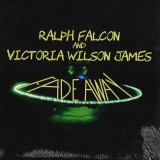
Ralph Falcon last collaborated with Victoria Wilson James on the Number 1 Billboard charting tune “I Need Someone.”
With its distinctively hypnotic, dark pulsating beat and haunting vocal, “I Need Someone” went from being a Club Space Miami anthem to a worldwide club hit. Now Ralph is back with Victoria Wilson James on a new song that is destined for greatness but with even more potential given the unending worldwide demand for fresh house sounds.
“Fade Away” has all the unique sonic elements that Ralph Falcon fans have come to expect over the years. Heavy Kick drums combined with synth sounds that you wont find in any software program. Ralph’s sounds are creations that only he could produce. This vinyl release gets a uniquely international remix treatment. Included are a remix from Ralph’s Murk partner Oscar G, rising Dutch producer star Dennis Quin, and emerging French producer star Ténéré.
- A1: Bloodhunt Main Theme
- A2: Prague
- A3: Fight Night
- A4: Chasing Shadows
- B1: Theme Of Brujah
- B2: Theme Of Nosferatu
- B3: Theme Of Toreador
- B4: Theme Of Ventrue
- C1: Targeted For Bloodhunt
- C2: Vampire Blues
- C3: The Entity
- C4: Next Time
- C5: The Ultimate Predator
- D1: Bloodhunt Main Theme (Classical Version)
- D2: Elysium
- D3: Ambient Threa
Born of the overarching World of Darkness and the tabletop phenomenon Vampire: The Masquerade, Bloodhunt is Sharkmob’s thrilling spin on the multiplayer action genre that sees players take part in a ruthless war between vampire factions.
Bloodhunt boasts a sonically rich score sired by acclaimed Polish-Bulgarian composer Atanas Valkov, and featuring the Sofia Session Orchestra & Choir. The city of Prague provided much of the aesthetic inspiration for Bloodhunt’s soundscape: classical and romantic, yet with many a shadowy corner in which a vampire might secrete themselves. Valkov enjoyed creating contrast between modern
electronic musical elements and old world ones, as well as layering guitars and using irregular rhythmic structures. The overall soundtrack is both cinematic and brutal.
This deluxe double LP set features a deluxe gatefold sleeve (individually inkjet numbered) and printed inners dripping with stylish artwork by Sharkmob. 16 tracks have been mastered specially for vinyl, and pressed onto heavyweight, red and transparent LPs with a cloudy effect. Also included are composer liner notes.
One of These Nights occupies an important, unique place in the Eagles' discography given it represents the final album the group made before releasing the bajillion-selling Their Greatest Hits (1971-1975) compilation. The timing is telling. A coming-out party for Glenn Frey and Don Henley's songwriting skills, the studio record – the band's fourth, and its first to hit #1 on the charts – signifies the group's ascent to superstar status. Home to three massive singles (the title track, "Lyin' Eyes," and "Take It to the Limit") and nominated for four Grammy Awards, the quadruple-platinum 1975 effort solidified the Eagles' Southern California-reared sound and made the band a household name.
Mastered from the original analog tapes, pressed on MoFi SuperVinyl, and limited to 10,000 copies, Mobile Fidelity's UltraDisc One-Step 180g 45RPM 2LP vinyl box set takes One of These Nights to the limit. And then some. Playing with reference sonics and a practically indiscernible noise floor thanks to MoFi SuperVinyl's special formula, it provides a rich, dynamic, transparent, and three-dimensional view into a release that moved country-rock ahead by leaps and bounds – and paved the way for the Eagles' ascendancy to global superstardom. The opportunity to zero in on the particulars of the Eagles' golden harmonies, distinct vocal timbres, and cohesive interplay has never been better.
Visually, the premium packaging and presentation of the UD1S One of These Nights pressing befit its esteemed status. Housed in a deluxe box, it features beautiful foil-stamped jackets and faithful-to-the-original graphics that illuminate the splendour of the recording. From every angle, this UD1S reissue exists as a curatorial artefact meant to be preserved, touched, and examined. It is made for discerning listeners that prize sound quality and production, and who desire to fully immerse themselves in the art – and everything involved with the album, from the renowned cover art to the meticulous finishes. As much as any Eagles LP, the connection between the imagery and the music and the band on One of These Nights runs deep. No wonder it led to a Grammy Nomination for Best Album Package.
Devised by West Texas artist Boyd Elder, the striking skull-and-feathers themed piece gracing the front of One of These Nights represents where the Eagles have been and where they were headed. Album art director Gary Burden explained: "The cow skull is pure cowboy, folk, the decorations are American Indian-inspired, and the future is represented by the more polished reflective glass beaded surfaces covering the skull." Moreover, Elder had met the group years earlier when Henley and company performed at one of his gallery openings in California. MoFi's UD1S box set allows Elder's vision (and Burden's debossed treatment of the image) to pop and appear as if it was a stand-alone object.
Of course, what's inside the sleeves, and in the grooves, proves equally compelling. Though One of These Nights marks the final appearance of band co-founder Bernie Leadon on an Eagles LP and contains three of his tunes, the record's tremendous success owes to Frey and Henley's timeless contributions. Taking the next step in their maturation and evolution, the pair crafted several songs while living together as roommates in a rented house in which they converted a music room into a recording studio.
The duo's bond and chemistry pulse throughout the record – particularly in the tight arrangements, tasteful instrumental flourishes, and seamless blending of the folk, country, and rock elements. The musical combinations and partnership not only produced the Eagles' first million-selling single (the slow-dancing "Take It to the Limit," co-written with bassist-vocalist Randy Meisner) and the Frey-led cheating classic "Lyin' Eyes," but the famed title track, which nods to the era's nascent disco scene as well as Kenneth Gamble and Leon Huff's Philly soul platters.
Frey named "One of These Nights" as his favorite Eagles composition of all-time; Meisner's high harmonies alone send the track into a galaxy of its own. Speaking of the latter, Leadon's instrumental "Journey of the Sorcerer" ventures into another universe and was soon used by Douglas Adams as the theme to his "The Hitch-hiker's Guide to the Galaxy" radio series. Inspiration and creative experimentation also dragged the Eagles into the blues. Another Frey-Henley gem, the self-probing "After the Thrill Is Gone" serves as a response song to B.B. King's signature track and more evidence the band was turning the lens inward for lyrical narratives. Like everything on One of These Nights, the song confirms the Eagles were breathing rare musical air.
More About Mobile Fidelity UltraDisc One-Step and Why It Is Superior
Instead of utilizing the industry-standard three-step lacquer process, Mobile Fidelity Sound Lab's new UltraDisc One-Step (UD1S) uses only one step, bypassing two processes of generational loss. While three-step processing is designed for optimum yield and efficiency, UD1S is created for the ultimate in sound quality. Just as Mobile Fidelity pioneered the UHQR (Ultra High-Quality Record) with JVC in the 1980s, UD1S again represents another state-of-the-art advance in the record-manufacturing process. MFSL engineers begin with the original master recordings, painstakingly transfer them to DSD 256, and meticulously cut a set of lacquers. These lacquers are used to create a very fragile, pristine UD1S stamper called a "convert." Delicate "converts" are then formed into the actual record stampers, producing a final product that literally and figuratively brings you closer to the music. By skipping the additional steps of pulling another positive and an additional negative, as done in the three-step process used in standard pressings, UD1S produces a final LP with the lowest noise floor possible today. The removal of the additional two steps of generational loss in the plating process reveals tremendous amounts of extra musical detail and dynamics, which are otherwise lost due to the standard copying process. Every conceivable aspect of vinyl production is optimized to produce the most perfect record album available today.
MoFi SuperVinyl
Developed by NEOTECH and RTI, MoFi SuperVinyl is the most exacting-to-specification vinyl compound ever devised. Analogue lovers have never seen (or heard) anything like it. Extraordinarily expensive and extremely painstaking to produce, the special proprietary compound addresses two specific areas of improvement: noise floor reduction and enhanced groove definition. The vinyl composition features a new carbonless dye (hold the disc up to the light and see) and produces the world's quietest surfaces. This high-definition formula also allows for the creation of cleaner grooves that are indistinguishable from the original lacquer. MoFi SuperVinyl provides the closest approximation of what the label's engineers hear in the mastering lab.
With this release the label celebrates the return to the ranks of the founder Worg. A triumphant homecoming comparable to that of Jason, the main character of the Argonautica, who travelled in search of the Golden Fleece (Il Vello d'Oro) aboard the ship Argo. After many vicissitudes, the hero returned to Iolco, his homeland, to reclaim the throne usurped by his half-brother Pelias.
This new chapter in the Lykos saga focuses on the deeds of Jason and the Argonauts, but also on a key figure who was indispensable to the success of this quest, Medea. Thanks to her and her magical skills, the fellowship of heroes succeeded in grabbing the Golden Fleece. Through careful sound design, hinted melodic cells and complex rhythms, Il Piano di Medea by Worg, sums up details and facts related to this extraordinary legend. Starting from the prophecies of the Oracles, to the tragic and bloody ending of the epic poem, which took place with the death of King Pelias by his own daughters, hypnotized and manipulated by Medea's magic.
The narrative begins with the track Oracolo, characterized by a syncopated groove, nebulous atmospheres and the presence of a dark anthropomorphic synth, which alludes to the solemn, grave and authoritative voice of an entity. A prophetic spirit that warns the listener of the dangers that lurk for those who dare to enter this new sonic adventure. In order to foretell the future and to spread their word, the gods took possession of the bodies of priests who had fallen into ecstasy, using them as intermediaries. In his reinterpretation of Oracolo Neel, the grand Maestro of techno, in a similar way uses musical elements such as a harsh and acid bass line or a tight rhythm to lead the listener into a psychic state of suspension and mystical elevation.
In the music piece Il Vello d'Oro, Worg draws attention to the rare preciousness of this magical relic, rumored to have the power to heal all wounds and for this reason longed by Jason. To evoke the purity of the golden mantle, the artist uses shimmering percussion, radiant textures and the omnipresence of an FM synth bass, full of brilliant harmonics. All enhanced by sound details scattered throughout the arrangement.
Eryx, the record's final track, has a fluid and sinuous flow, with sound elements that recall water, a natural element, protagonist of the Argonauts' journey to the remote Colchis. A melody echoes in the distance, disappears and resurfaces to then collide, like waves on the rocks, with the complex and jagged rhythms that mark the gradual evolution of the
track.
Felicity is an Australian sound artist, composer and educator based in Berlin and her latest effort "Train Tracks Recorded And Edited By Felicity Mangan" will be out world wide on tape and digital December 9.
"Train Tracks Recorded And Edited By Felicity Mangan" composed of field recordings was made during a Green Tour, while traveling only by train and ferry through Denmark, Sweden, Finland and Norway in June 2022.
For this release Felicity utilised raw and sampled field recordings to create a sense of slow travel by train, train networks, train delays and the moments in between waiting for trains or missed train connection in cities and small towns.
Felicity has presented projects in many different settings from galleries, gardens, clubs, festivals and online platforms throughout Europe, including National Gallery Denmark, Technosphärenklänge CTM/HKW, Sonic Acts Academy, RIVERSSSOUNDS.org and recently sound design for 100 Climate Conversations , Powerhouse Museum, Sydney, Australia.
““Stations In Between” establishes a pulse early, recreating the initial excitement that turns to tedium. Four minutes in, the drums disappear, swept away by chimes; no longer stuck, the passenger is moving forward again. The station comes to life: another radio, a street musician, a bicycle, a cough ~ the last sound bearing a reminder of the last two years.”
Richard Allen — A Closer Listen
“the elements of sound are manipulated for effect, and the performance nature of Mangan’ work tends to be an effects driven construction of collated and improvised sounds.”
INNERVERSITYSOUND — Cyclic Defrost
“Throughout the album, it sounds rather as if Mangan had written elaborate electronic music permeated by discreet rhythms and pulsating drones equipped with a whole range of devices. The fact that this is not the case is as impressive as the actual music itself.”
— Fieldnotes Berlin
The debut from new splinter alias of Manchester producer, sequencer designer, and Cong Burn label boss John Howes was made entirely on a Nord Modular G2, Elektron Machinedrum, and Monomachine – a rig he characterizes as “an authentic 2006 studio, best listened to on Windows XP Media Player or Winamp.” Paperclip Minimiser’s self-titled full-length collects eight elusively multi-dimensional constructs of stereo panned synthetics and slithering ambient techno, born of a web of generative patches subjected to improvisational alterations. Taking things further, Howes’ process involves “planting ghosts in the machines,” instilling each element with “some self-correcting behavior in a cybernetic / lo-fi AI / semi-autonomous agent kinda way.” The result is an ambiguous and dynamic hybrid of accident and intention, chaos and control, shuffling through an innerspace wilderness of psychic circuitry.
The title alludes to a 2003 thought experiment about the existential risk of artificial intelligence; how even a mundane objective, algorithmically extrapolated, could culminate in catastrophe. Here the notion is inverted, demonstrating the sonic infinities to be mined by “pushing and pulling at the strings” of musical systems. Howes aptly samples a vintage interview with electronic music pioneer Bebe Barron – co-composer of the Forbidden Planet soundtrack – discussing the anthropomorphic potential of randomized audio generation: “We thought of our circuits as actors in a script.” Paperclip Minimiser descends from a similar family tree, coaxed as much as crafted, flickering rhythmic synchronicities glimpsed in a mirage of wires and glass.
Cardinal Fuzz and Centripetal Force (North America) announce First Welcome, the eighth full length album from the ever evolving, veteran psychonauts White Manna. The album is being presented in a 500 copy vinyl pressing and will be made available for preorder on November 12th. The official release date is December 10th. White Manna's longevity as one of the leaders of the modern psychedelic movement is attributed to their willingness to introduce new elements to their sonic repertoire. Initially, these moves were subtle, but as the band has moved on through the years, these moves have become much more pronounced, always leaving listeners wondering what is in store for them as new releases are announced. So, here we are with First Welcome, an album that features warbled country leanings, airy blooms of ambience, and occasional hints of a German yesteryear, all implemented into the band's signature hazy and spacey mosaic of sound. None of these developments are unexpected, as they do build off of their previous album ARC, but here we see the band expand these elements and really make them their own. It should be noted that First Welcome is a product of the COVID era, with much of the recording happening in quarantine or while socially distanced. The band's process relied on communicating via email and sending music files back and forth. For White Manna this made the world of COVID both more fun and challenging, and they used the opportunity to get friends in different places to overdub tracks. Backing vocals and slide guitar were recorded while camping in the Mojave Desert. The saxophone was recorded in Liverpool. England. The trumpet sounds and some of the passages on the Rhodes were laid down in Northern California, and much of the vocals, piano, and synthesizer tracks were recorded in Costa Rica. As a result, the sound of First Welcome is reflective of the circumstances of these contemplative times. White Manna is recommended for listeners of everything from Hawkwind to Harmonia - and everything in between.
'It sounds like Roedelius remixing a Spacemen 3 track'
The old adage about Elvis Presley is that his soundtrack work never held a candle next to his studio albums. Though true for a majority of his film-related outings, the traditional notion is forever disproved by his Blue Hawaii set. Originally released in 1961 in support of the film in which he starred, the triple-platinum LP spent nearly five months at the top of the Billboard album charts; outsold his two prior studio efforts; and ultimately, remains the second-best-selling soundtrack of the musical-dominant 1960s. And now, it has received sonic treatment befitting rock royalty.
Recorded before the King started to burn out on soundtracks and go into a creative tailspin, Blue Hawaii presents him in tremendous voice. The newly uncovered layers of detail, body, emotionalism, and tonality on this SACD bring that treasured element – as well as the brilliance of the arrangements and accompaniment – to light like never before. Presley's warm crooning alone warrants unmitigated attention. It's not for nothing that this record – replete with panache, whimsy, romance, and seriousness – forever altered the course of his career.
Much like the film itself, the music on Blue Hawaii subscribes to a feel-good aesthetic. Presley plunges into a stylistic deep end with equal parts fearlessness and fun. He delves into early rock ‘n' roll ("Rock-A-Hula Baby"); touching balladry ("Hawaiian Wedding Song"); playful rumba ("Beach Boy Blues"); relaxing luaus ("Hawaiian Sunset"); and naturally, island-inspired fare ("Ku-U-I-Po"). It becomes immediately evident that the King is enjoying himself and committed to the mission. Is Blue Hawaii all serious art? No, but it was never intended to be. Rather, it serves as a showcase of Presley's outgoing personality and chameleon-like ability – like that of Frank Sinatra – to inhabit different roles and entertain.
Of course, Blue Hawaii remains timeless for another reason: The inclusion of the timeless, gorgeous, and still-untouchable staple "Can't Help Falling in Love." Penned by Hugo Peretti, Luigi Creatore, and George David Weiss, the love song quickly transformed into an international standard – with Presley's definitive version hitting No. 2 on the charts and ultimately becoming the closing song to his concerts. Ranked among the 500 Greatest Songs of All Time by Rolling Stone, its conviction, sentiment, and depth testify on behalf of why Presley still reigns as the King.
However subtly, the staple also underscores another reason Blue Hawaii should never be overlooked in Presley's canon: the ace musicians involved in its creation. Guitarists Scotty Moore and Hank Garland; drummer D.J. Fontana; percussionist Hal Blaine; pianist Floyd Cramer; bassist Bob Moore; and iconic gospel backing vocalists the Jordanaires all contribute masterful performances. Hearing them with such expressiveness, openness, and realism on this 2LP 45RPM & SACD should forever alter how Presley's 1961 soundtrack – the finest of his career – is viewed. As he sings in the title track, dreams come true, indeed.
Gold Vinyl
No binaries, no simple opposition. Either/or is subsumed by infinite relations and dizzying possibilities, by the perpetual crest of and/and. Freedom is the key to bring about all complex and incongruous multiplicities. Embodied, embedded, relational freedom is the key.
Mue is a duo based in Tiohtià:ke/Montréal composed of Catherine Debard and Léon Lo. Formed in the Spring of 2020, the electronic musical project merges two distinct practices and explores the way they interact with each other. Drawing on early-IDM, illbient, minimalism, and natural phenomena, the resulting real-time hardware improvisations weave asymmetric patterns, create spaces, and digest various sounds.
Recorded in 2020, Les vasières explores unsynchronized hardware electronic impro-visations where individual sonic elements come to life by creating new and complex layers and organizational logics — melodically and rhythmically modulating each other.
The French album title translates to “The mudflats.” Sounds from disparate sources form an aural silt that is brought to life by waxing and waning cycles, each improvi-sation presenting a new, different mudflat scenario.
Mue asked visual artist Katherine Melançon to create the album’s artwork, which was the artist’s first dive into compost as source material. The resulting image—an otherworldly organic smear, both intimate and alien — was incorporated into graphic designer Haley Parker’s montage, hard frames recalling the flatbed scanner used by Melançon, and branch-like typography nodding to the organic concerns of all the artists involved.
Released on the heels of her breakthrough album Tapestry, Carole King's Music is every bit the equal of its more famous predecessor: a No. 1 smash that features impeccable songwriting, beautiful melodies, and extraordinary piano playing. In short, everything that's made King an institution. After of years of being overshadowed, this 1971 singer-songwriter classic has been given the audiophile treatment it's long deserved.
Sourced from the original master tapes and pressed on dead-quiet vinyl at RTI, Mobile Fidelity's numbered-edition 180g LP of King's second solo masterpiece is rife with intimacy, transparency, soulfulness, and you-are-there sound. Never before remastered, Music seems like a brand-new album as King's familiar voice, intelligent arrangements, and ace support band presented on a deep, three-dimensional soundstage. Your appreciation for and understanding of the depth of King's inspirational lyrics and performances will doubtlessly increase — this reissue brings you that much closer.
Accompanied by percussionist Bobbye Hall, drummer Russ Kinkel, guitarist/vocalist James Taylor, and a multitude of other professional wind musicians, King delves further into R&B and jazz-derived pop. Warm and cohesive, songs echo with simplicity and honesty. And as is typical of much of King's work, several of tunes here were later covered by other artists, including "It's Going To Take Some Time" (the Carpenters). Yet the originals trump the later renditions, and King's rendition of the standard "Some Kind of Wonderful" stands among the best ever recorded.
With Taylor lending more of a hand on Music than he does on Tapestry, King expands her reach on the piano and peppers the songs with graceful touches of saxophone, flute, pedal-steel guitar, and woodwinds. Ballads sway ("Surely"), gospel raises spirits ("Brighter"), and backup vocals float amid pop arrangements like clouds ("Song of Long Ago"). The most irresistible aspect? King's voice, infused with fondness, concern, joy, and a quiet power that parallels the delicacy and deliberate nature that define Music.
Mobile Fidelity's 180g LP is free of the limiting artifacts that have helped keep this record in the dark for the better part of the 80s, 90s, and early 2000s. Acoustic guitars, subtle brass elements, and soft percussion contribute to the enjoyment of the songs, and King's voice —pleasant, assuring, emotional — comes through with incredible clarity and inflection. The brilliance of Lou Adler's original production is restored to its full glory.
Aptly named, this companion to Tapestry is an aural and sonic delight.
To confuse parts for the whole is inevitable with Palm. Drummer Hugo Stanley, bassist Gerasimos Livitsanos and guitarists/vocalists/high school sweethearts Eve Alpert and Kasra Kurt started making music together as teenagers, and spent much of their twenties in the kind of proximity unusual for adults, outside of touring bands and the International Space Station. For a number of years the band consumed the lives of its members to a point of exhaustion: “To be honest I think we got a little burnt out. There were times where it wasn’t clear if we’d make another record,” says Alpert. It was only after multiple freak injuries followed by a pandemic, forced a pause - from touring but also from writing, rehearsing, even seeing each other- that the four were able to regroup and see a way forward again.
On their latest effort, Nicks and Grazes, Palm embrace discordance to dazzling effect. “We wanted to reconcile two potentially opposing aesthetics,” Kurt says. “To capture the spontaneous, free energy of our live shows while integrating elements from the traditionally gridded palette of electronic music.” In order to avoid what Kurt refers to as “Palm goes electro,” the musicians spent years educating themselves on the ins and outs of production by learning Ableton while also experimenting with “the percussive, textural, and gestural potential” of their instruments. To this end, the band continued the age-old tradition of instrument-preparation, augmenting guitars with drumsticks, metal rods and, at the suggestion of Charles Bullen (This Heat, Lifetones), coiling rubber-coated gardening wire around the strings. The unruliness of the prepared guitar on songs like “Mirror Mirror” and “Eager Copy” contrasts with the steadfast reproducibility of the album’s electronic elements.
While Palm cite Japanese pop music, dub, and footwork as influences on this album’s sonic palette, they found themselves returning time and again to the artists who inspired them to start the group over a decade ago. “When we were first starting out as a band, we bonded over an appreciation of heavy, aggressive, noisy music,” Alpert reflects. “We wrote parts that were just straight-up metal.” Kurt adds, “I found myself rediscovering and re–falling in love with the visceral, jagged quality of guitars in the music of Glenn Branca, The Fall, Beefheart, and Sonic Youth, all important early Palm influences.” Returning to the fundamentals gave Palm a strong foundation upon which they could experiment freely, resulting in their most ambitious and revelatory album to date.
A joint release by LA's Hippos In Tanks and Montreal's Arbutus Records, the Darkbloom EP is a thrilling split by d'Eon and Grimes. Harnessing the dark energy of her sophomore album Halfaxa, along with the shimmering dream pop of her debut Geidi Primes, Grimes' side represents a synthesis of her two sonic personalities. Displaying a level of clarity and craftsmanship heretofore unseen in her releases, Boucher presents a stunning new collection of ethereal dreamscapes that expand her creative palette without compromising the spectral presence she is known for. Following the Middle-Eastern-tinged R&B of 2010's Palinopsia, d'Eon broadens his stylistic breadth through reference to a number of electronic genres - for example, he simultaneously incorporates elements of Chicago footwork and new jack swing, but surprises the listener with strange forays into bygone genres such as UK drum and bass and trip hop. Presently available worldwide on CD and Digital formats, Darkbloom will be available on vinyl, for the frst time in many territories, on May 20th, 2016.
“A rather gorgeous and engrossing collection, that borrows stealthily from a rich history of sound effect and soundtrack to build a tender poem to the night time.” - CLASH
“The plan was to make twenty 90-second tracks designed as TV themes,” says Arab Strap’s Aidan Moffat, of the initial thought behind his new instrumental album as Nyx Nótt “But it wasn't a satisfying listen, it was too gimmicky and silly.”
So instead, Moffat decided to stretch the idea out, plunge deeper, and expand the music into full tracks, “making some of them quite long and dramatic, with the odd swift turn here and there.” In fleshing these tracks out into more fully realised songs he began sourcing samples from professional TV and film music libraries. “The focus then turned to making a proper album out of these modern library sounds,” he says. “I decided to stick with the Themes From title and named the tracks after the sorts of shows they made me think of when I listened back.”
The result is a record that explores genre themes such as: ‘Thriller, ‘Porno’, ‘Caper’ and Swashbuckler’, and acts as an audio equivalent of channel hopping through a unique TV station programmed by Moffat. “I still wasn't sure about all this until I did the album cover, which brought it all together,” he says, of the artwork that places an old smashed TV unit front and centre with a woman perched on top. “It has echoes of old TV compilations but is pretty cheeky and slightly sexy in that old 70s compilation style. I wanted this one to look a bit more fun than the last one, as well as hopefully sound a bit more fun too.”
Aside from being a fun experience, it is also a stirring and immersive listen, one that allows the listener to imagine their own accompanying visual scenarios to each musical theme. The opening ‘Docudrama’ marries a gently creeping beat with strings that glide from tense to sweeping, while ‘Porno’ is all seedy smoky jazz that feels plucked right out of Travis Bickle’s late night trips to porn cinemas in Taxi Driver.
Touches of jazz pop up in other places too, on ‘Hardboiled’ this merges with subtle pulses and gargles of electronics that build to a rousing crescendo of horns and bleeps, and on ‘Caper’ there’s a vivacious full jazz band skip to the lively swinging rhythms. “There's a few more jazzy elements here,” Moffat says. “Although I'm not quite sure where that came from. Although, like everyone else, I've had plenty of time to be introspective recently, so I decided the next Nyx Nótt album should be more upbeat and encourage some occasional foot-tapping.”
However, what becomes apparent, the longer you spend in the world of Themes From, is how singular and unique the tone of each composition is. “Each track has its own individual feel,” says Moffat. “The idea was to sound like a different composer and band throughout.” It’s a stylistic leap that continues Nyx Nótt’s trajectory as one that shares no direct link to Moffat’s other projects. “I approach them in completely different ways and with a different purpose in mind,” says Moffat. “I don't think Nyx has ever heard of Arab Strap, and certainly doesn't own any of their albums.” It’s also a notable shift from the debut album under this moniker, and suitably given the theme, Moffat has created a visual comparison between these two sonic worlds. “If the first Nyx Nótt album was like looking out on dark prairies before dawn, this is more like a walk through a neon Soho after a few cocktails.”
Alga Marghen presents the last chapter from the Feedback Works documentation series, a brand-new LP including "In Memoriam-Ostinato" and "Danse des Dakinis", two previous unreleased tracks by Eliane Radigue. Among the works of fixed duration from the feedback period, "In Memoriam-Ostinato" is the link between "Jouet Electronique" (ALGA 029LP) and "Opus 17" (ALGA 045LP), and allows you to understand the evolution of her approach. "In Memoriam-Ostinato" is a game of mirroring symbols which glide into a non-measured, bent and elastic, temporality. Eliane Radigue's working method and her aesthetic direction are evident in this work from 1969: her very own unique temporal space of sonic experiences. Even though it bears the same name as the third part of "Adnos III", "Danse des Dakinis" is a peculiar work in Eliane's oeuvre. Conceived in a short time, with all kind of tapes from the composer's past work, it fluently shows a kaleidoscopic vision of Radigue's sensibility for sound. In 1998 she put together a curious self-portrait in sound. There is a feedback ostinato conceived around 1969 and which refers to "In Memoriam-Ostinato" and "Opus 17". All through "Danse des Dakinis" you plunge into the sound of a creek recorded at Mills College campus that brings you back to the field-recordings from the beginning of the 1960s, made on the coasts of the Mediterranean Sea. Such elements construct "Elemental1" (ALGA 029LP) as well. There are also some discreet interventions on the ARP 2500 synthesizer. It is indeed a peculiar work, which doesn't have the same features of her other compositions, especially at that time of her compositional path. There is an explanation for the composer producing this kind of sound material in 1998, and not limited to the sound waves of the ARP synthesizer. Invited to a workshop at Mills College in 1998, Eliane Radigue could not load herself down with her bulky instrument on such a trip. So, she left with just a few tapes taken from her own collection, drawn from different periods, and composed "Danse des Dakinis" with those old elements. There is tension in this composition, a certain wildness, an unpredictability of elements, those which are recognized as fundamental elements, which give structure to the universe. "Dance des Dakinis" is an intimate and wild symphony, alive and unpredictable, which is to be the next-to-last gesture of the composer before completely stopping her work with electronics.
Adam BFD first burst onto the scene with his colourful, emotive driven productions; making a name for himself as an artist bridging the gap between electro, breaks and house. Now based in Paris, his work continues to put a nostalgic and animated spin on his far-reaching influences, from London to Mexico City and beyond. In the time since Adam’s introduction a series of singles and a recent EP on Running Out of Steam has seen the musician further refine and develop his sonic palette and Embrace coming by way of Distant Horizons is no exception. The five track EP covers many life cycles and no matter how mature, Adam’s tracks never lose the ability to make people move.
Adam starts by embracing the unknown in Le Voyage with its frenetic breaks and glistening melodies opening up a pathway to the stars, before space opens and time resides in Flotus; a special heart-searching moment, balanced by springly, danceable grooves. I Mean It gently unravels with tangible percussion and daydreaming textures, vocal loops becoming increasingly hypnotic as time stands still.
It’s not just Adams pacing that’s impressive, but his ability to turn real world sounds into fully functional elements heard in title track Embrace. Water moves freely over tightly packed drums and arpeggiated synths; a piece of tranquility ready when needed. Which Gate follows with pensive field recordings and cloud-formations; jerking breaks leaping back and forth in another special EP from a producer just getting started.
On his follow-up to his inaugural Running out of Steam Release, No Advice, French DJ and producer Adam BFD lets imagination thrive with five mesmerizing breaksy house cuts, best heard under a star-lit sky. Duality flows seamlessly throughout the whole record, Adam harnessing the power to connect everyday experiences with a higher state of consciousness.
The EP kicks off with ‘Digital Tales’ which layers wistful secrets over mood-altering pads; it’s hypnotic undertone grounding and continuous. ‘Cirrus Dreamz' ascends even further into the clouds, it’s steady pace expertly infused with cosmic melody and shuffling rhythms. In a world driven by hyper-connectivity, Adam’s productions are a welcome reminder to stop and explore, none more so than in the immersive world of B side opener ‘1st Sight’. Dynamic percussion provides the movement, while meditative sonics produce the feeling of being swept up in a magic carpet and taken along for the ride. Adam’s depth of field widens in title track ‘Rose’, a quasi-epic composition combining all the best elements of house and breakbeat.
The record comes to a contemplative halt with ‘Siniestro’ - an ambient bubble-bath with field recordings poignantly placed across developing pads yearning for connection; showcasing another side to a producer who knows how to tug at the heartstrings.
Imaad Wasif returns with his sixth and most accomplished album to date. Produced by Bobb Bruno (Best Coast) and featuring appearances by Karen O (Yeah Yeah Yeahs) and Jen Wood (The Postal Service, Tattle Tale), So Long Mr. Fear is a sublimely intimate and rewarding listen.
Whether it’s the Eastern mysticism of album opener “Elemental,” the harmonic majesty and soaring catharsis of the single “Fader,” or the dark americana of “Poet of the Damned,” Wasif and company mesmerize with a perfect blend of artistry, timeless arrangements, masterful musicianship and pure songcraft. This is an album to get lost in.
Recorded in the summer of 2020 whilst the world was in flux, the album is drenched with a feeling of freedom as Garwood and drummer Paul May sheltered from the world outside. It was, Garwood explains, “a heat soaked fever dream of our soul nectar in sonic form”. Recalling the past, gathering the elements from the present, the two artists – whose knowledge of one another’s playing is apparent throughout – work together with exquisite tones and percussive detail in this intimate recording. Garwood expands, “In the deep summer heat wave of ‘20, when everything was closed and people were hiding, I hit the road West to join my brother in music in his place, bungalow magic. We knew we had to play - for our souls, for the soul of humanity, to bring down the machine and tyranny, to invite the angels in, to save ourselves from insanity. Play we did, the guitars detuned until bee’s wings would make the strings sing. We began with the drum, and the things that shake and rattle, the drones of the heat, we sweated and we worked it until the night calmed us.This is not a lock down album, for we were free in our spirits when this was created, free from any desires to conquer and fill our pockets with the booty of success.”
A collaborative melting-pot takes the form of a luminous, candy-coated rhapsody
Drivetrain (Detroit, USA) The Greatest (Hard Times Mix)
taking flavorful elements from his deep house original, this is a killer dose of thick-set, granular house-meets-techno; blissfully wrapped in plush, woozy, jazz-flecked overtones.
Motomitsu (Paris, FRANCE) - Bless
perfectly appointed, synthetic strings rise and fall; back-dropping deep, purling bass, anesthetic keys and distant, wraithlike vocals drifting in and out of view.
Jani Ho (MELBOURNE, AUSTRALIA) - Mono Charge
club weaponry delivering an exhilarating, full-throttle ride through a menagerie of ever-shifting layers, which themselves are in a constant state of leg-sweeping flux.
Owen Ni (ATHENS, USA) - Another Sunny Afternoon
a stratospheric, psyched-out house heater, fired up of aerial synthesizers, whisking off to beatific and unearthly sonic euphoria.
San Diego born and raised DJ/Producer, Dillon Marinez, today releases his latest EP ‘Wormhole’, out now on Dirtybird.
Curated by Claude VonStroke, the compelling two-track project presents a dynamic soundscape showcasing the sonic duality of one of Dirtybird’s newest rising stars. The chaotic, high-energy sound of its titular track ‘Wormhole’ is instantly mesmerizing, while its companion ‘Facelift’ is a deep, rolling burner.
Regarding the EP, Dillon Marinez said, “My first Dirtybird Campout inspired both tracks. Claude’s set especially was full of some thick stabby bass which was right up my alley. This sound gave me an idea for each lead and the rest flowed naturally.”
Continuing to grow as a consistent member of the Dirtybird flock, Marinez’s latest EP, ‘Wormhole’ marks his fifth release on the esteemed label following last year’s ‘No Pressure’ EP and earlier singles like ‘Dance For Me.’
Taking inspiration from funk, hip hop, and reggae, Marinez credits his father and brother for exposing him as a kid to the multi-genre sounds that shape his music style today. A bassist since childhood, it was only natural for Dillon to be drawn to the ebbs and flows of house music. Learning Ableton in college, Marinez was able to incorporate a blend of rhythmic elements to create his unique bass lines and incredibly catchy beats known to captivate crowds.
Releasing music on Dirtybird marks a full circle moment for Dillon, as he has previously named Dirtybird’s artists Justin Martin and Shiba San as major sources of inspiration for his music.
Marinez invites fans to join him on his rhythmic journey and stream ‘Wormhole’ today.
- A1: Zion Gates- Jacob Miller
- A2: Satta Massaganna- Don Carlos
- A3: Dem Say A Rasta- Johnny Clarke
- A4: Its Gonna Be Dread- Horace Andy
- A5: Decleration Of Rights- Dennis Brown
- A6: Two Faced Rasta- Cornell Campbell
- A7: Every Rasta Is A Star- Bonnie Davis
- B1: This World - Horace Andy
- B2: Man Like Me- Johnny Clarke
- B3: Satta And Praise Jah- Frankie Jones
- B4: Never Conquer Jah- Linval Thompson
- B5: Bightess Rasta Man- Cornell Campbell
- B6: Live On Jah - Wayne Jarrett
- B7: Wicked Babylon - Linval Thompson
Rastafarianism came to prominence in the late 1960's/ 1970's and had a huge influence on the musical culture in Jamaica. The sentiments of the songs reflected the struggles of life, as reggae music always did but now with an added spiritual/conscious element to the lyrics. By the mid 1970's most, if not all the top flight singers were following the doctrine and growing their har to dreadlocks.
Everything was truly 'Dread'.
At the heart of this musical explosion was again Bunny 'Striker' Lee a man who was always at the heart of the action and many times in his career ahead of the musical game. As Bunny Lee's stable of singers were at this time nearly all Rasta's and with the worldwide acceptance of Bob Marley, in especially the foreign territories, this musical style was the way forward for reggae music in the mid 1970's. The visual focal point of this new turn in reggae music would be a call to all things 'Dread'. Add to the mix Bunny Lee's close working relationship with studio wizard King Tubby, again not a Rasta himself, but someone who could sonically bring what was needed to the table and enable the whole musical chemistry to fall into place.
Heavy rhythms were created to match the heavy and serious lyrics and 'Versions Galore' as they say were coming out fast and furious.
We have compiled a set of conscious tunes that not only match the 'Dread' criteria, but also are just great tunes. The great Jacob Miller's 'Zion Gates', Cornell Campbells 'Two Faced Rasta', Horace Andy's 'It's Gonna Be Dread' alongside Linval Thompson's 'Never Conquer Jah'. Two timeless cuts from the 'The Abyssinians' get a fresh outing by two great singers, firstly Don Carlos' cut to 'Satta Massaganna' and the prince of reggae himself, Dennis Brown works 'Declaration of Rights' in fine style. Johnny Clarke's 'Man like Me' and 'Dem Say Rasta' still sound as fresh today as when they were first laid down and Wayne Jarrett's 'Live On Jah' and Frankie Jones 'Satta and Praise Jah' add to this great selection. All great 'Dread' tunes that were cut or voiced at King Tubby's giving them that extra shine.
So if you are Rasta or not this is a great set of tunes to make you move and also like all of the best things in life, make you think.........
Track 14 WICKED BABYLON - LINVAL THOMPSON
Felix Laband’s The Soft White Hand is the masterwork of an artist who expresses himself through musical and artistic collage acting together to reinterpret his sources and to express significant elements of his own personal story.
Released by Munich-based Compost Records, the 14-track album is Laband’s first full-length offering since the critically acclaimed Deaf Safari in 2015. It is heralded by the single “Derek and Me”, and is being pressed on vinyl for distribution globally.
In The Soft White Hand Laband works with source materials that will be familiar to those who know his previous four records – Thin Shoes in June (2001), 4/4 Down the Stairs (2002), Dark Days Exit (2005) and especially Deaf Safari which reached deep into the South Africa scene and its political culture to inspire its vocal and music sampling. However, the disengagement he felt from his homeland during his latest album’s creation – an abiding sense of untethered-ness to place and space, exquisitely rendered in tracks like “Death of a Migrant” – is perceptible in Laband’s desire to illuminate instead aspects of his own life.
“For this album, my source material became almost autobiographical as opposed to African statements I’ve worked with previously,” says the artist. “I have sampled a lot from documentaries from the 80s crack epidemic in impoverished African American communities and believe my work speaks unapologetically for the lost and marginalised, for those who are the forgotten casualties of the war on drugs. In the past, I have had my issues with substance abuse, and I know first-hand about the nightmares and fears, what it feels like to be isolated and abandoned.”
Few artists have managed to air these intimate aspects of their life so luminously as Laband does in tracks like “5 Seconds Ago”, “They Call Me Shorty” and in the strange and meditative “Dreams of Loneliness”. “I’ve been building this weird, autobiographical story using other people talking. It’s kind of humorous but it is also sad and beautiful,” says Laband.
Yet, as in all of Laband’s recorded output, the delineations between emotions are never starkly drawn and The Soft White Hand is also shot through with beauty. Nature appears in recordings made in his garden in the intimate early morning hours, whether as in the calls of the Hadada Ibis and other birdsong in “Prelude” or of the vertical-tail-cocking bird in “Derek and Me”. The last is a wonderful track with Derek Gripper, the South African experimental classical guitarist of international renown, whose 2020 song “Fanta and Felix” imagines a meeting between Fanta Sacko and Laband.
Laband’s eloquence in reinterpreting classical composers such as Beethoven in “We Know Major Tom’s a Junkie” is another thrilling aspect of the new record. “I’ve been properly exploring classical music on this album,” explains Laband, “taking melodies from classical compositions and reinterpreting them”. A fresh quality comes to his work through this sonic adventuring: the tender manipulation of the mundaneness of the computer’s AI voice to reimagine and reinvent iconic lyrics and melodies in strange and unexpected configurations.
The Soft White Hand is Laband’s most cohesive body of work to date. Yet it remains, in its sheer artistic scope, impossible to describe fully. Darkness abuts the gossamer light. A song that summons the sunrise and all the hope of a new day could also be about the final dipping down of the sun that portends a troubled night ahead. Interludes are invitations to expand outwards or shift inwards. Mistakes and “weird fuckups” in the sound are cherished as convincing statements against what Laband calls the “grossness” of perfect sound in modern music.
For this world-leading electronic artist, the boundaries are unfixed. He is inspired by the German Dada artist, Hannah Höch, who memorably declared: “I wish to blur the firm boundaries which we self-certain people tend to delineate around all we can achieve.” His music consequently reflects a primal artistic impulse that is also visible in Laband’s considerable visual art output as seen recently in several solo exhibitions such as that held in the No End Gallery in Johannesburg in 2019 and in the works he produced during his 2018 Nirox Foundation Artists Residency. “My music is always about collage, as is my art,’’ he affirms. “Everything I do is collage. It is a medium I find very interesting because you are taking history and distorting it and changing its meaning and turning it upside down and back to front.” In her book Recollections of My Non-Existence, Rebecca Solnit calls collage “literally a border art”; it is “an art of what happens when two things confront each other or spill onto each other”.
With The Soft White Hand, Laband is confirming his singular ability to achieve this in both art and music, melting the divisions between the two creative disciplines until they become one. He is also affirming his belief that an album of music should be more than a collection of unrelated tracks, but should unfold a fully integrated, cohesive story as in the song cycles of the great classical composers. In doing so, he claims his position as one of the most significant artists working today.
Artist Statement – Felix Laband – August 2022
When the Khmer Rouge took their captives for processing, they identified their class enemies by looking at their hands. If they were sunburned, rough and calloused, they were those of a peasant, a proletarian to be spared. But if they were soft and white, then they were those of a city-dweller, an intellectual or bourgeois, an adversary to be liquidated.
In calling this album The Soft White Hand, I was reflecting on the Cambodian genocide and how it resonates in contemporary South Africa. The apartheid era is over, and gone with it is white political domination. Yet economic and social privilege is still held in soft white hands. But those who grasp it know just how tenuous is their hold, how it singles them out, and my music reflects their subconscious fears, the stress and guilt of clinging on to what others envy and desire.
The soft white hand of the title suggests to me a further image, one that relates to all of postcolonial Africa. In my mind’s eye, I see the soft, duplicitous handshake of the smooth representatives of the superpowers making deals and promising gifts that benefit only them, and not their African dupes.
Yet, soaring above the wailing of sirens sampled from the first day of the invasion of Ukraine, my music is also about love gained and passion lost. It is about the tender caress of a soft white hand that conducts you into a place of dreams to be enfolded by nocturnal melodies.
- A1: Love Song
- A2: Young Bastards
- A3: Stop It
- A4: Blind Man
- A5: Skin O Daayba - Complex Habits No.3
- A6: We Are Waiting
- B1: Mantra
- B2: Skin O Daayba - Feedbackless World
- B3: Cupping Glass
- B4: Half Monk Half Herring
- B5: Ukoidm - Fishing (Edit)
- B6: Eric
- B7: In The Garden
- B8: Sequencer
- C1: Who Are We
- C2: Hit
- C3: Yozti 2
- C4: Voices Cricket
- C5: Attempt To Raise Hell
- C6: Anna's Assignment
- D1: In Our Culture (Surname Version)
- D2: Lesson 4 Voices
- D3: Intermission
- D4: Chicken
- D5: Untitled
- D6: Against Soap
- D7: Bereshit
- D8: Caretakers
Black Truffle is pleased to announce Uri Katzenstein’s Audio Works, produced in collaboration with Holon’s Centre for Digital Art. Spanning sculptural installation, performance, video art, and many other media, Katzenstein’s absurdist, poetic, and often hilarious work made extensive use of sound and music. This, however, is the first release dedicated to the artist’s audio work, collecting 28 tracks produced between the early 1980s and 2017. Compiled from dozens of hours of recordings left uncatalogued (and in some instances unheard) at the artist’s death in 2018, these four sides are a treasure trove, offering a captivating glimpse into a uniquely uninhibited creative practice. Predominantly recorded alone, with some contributions from regular collaborators such as Ohad Fishof on the later pieces, many of these tracks stem from Katzenstein’s time living in New York in the 1980s. Feeding on the cross-pollination of post-punk energy, radical art practice, and new media possibilities that characterised the New York scene at this time, many of Katzenstein’s recordings squeeze multilayered vocal experimentation into synth-based miniatures with a distinctively pop twist, their forms ruptured with anarchic bursts of free-form electronics, sounds from self-built instruments, and field-recorded snatches of the outside world. Katzenstein’s electronic production calls up touchstones of skewed 80s art pop like Laurie Anderson, Ambitious Lovers, and Scritti Politti, but imbued with DIY directness and economy of means. The arrangements of synths, percussion, and noise elements are invigoratingly raw and, at times, almost austerely minimal. On ‘Intermission’, thick distorted chords accompany a wandering portamento melody, inhabiting the wayward carnival space of Roedelius’ most unhinged efforts. Many of the tracks centre on Katzenstein’s multi-tracked vocal performances, often moving between multiple languages, (most commonly English, German, French, and Hebrew). A bewildering range of vocal approaches are present on these pieces, from sweet wordless harmonies to hammed-up growls and monastic recitations. On ‘Skin O. Daayba – Complex Habits no. 3’, improvised resonance singing against a backdrop of echoing electronics and radio snatches. ‘Half Monk Half Herring’ layers multi-lingual syllabic fragments, crossing sound poetry techniques with melodic invention in a way rarely heard outside of Caetano Veloso’s Araçá Azul. On ‘Attempt to Raise Hell’, Katzenstein’s distorted voice spits out streams of alliterative nonsense (‘the hemlock of Henry, he was a hermit…purple pumpkin pulsates to pops’), while on the hilarious ‘Eric’, Katzenstein appears to instruct a small boy simultaneously in basic French and German conversation. On ‘Chicken’, vocal harmonies accompany the pecking and clucking of the titular fowl. Moving from bent, outsider synth pop to snatches of Jo Jones-esque automated instrumental clang and absurdist linguistic experiments, these are far more than footnotes to an artist’s gallery works. Accompanied by extensive, beautifully written liner notes by Roee Rosen and the little information that exists on the individual tracks, Katzenstein’s Audio Works inhabits an outer fringe of DIY pop and sonic experiment reminiscent of Pascal Comelade or Die Welttraumforscher, where accessible forms convey radical interrogations of song, word, and sound.
Black Vinyl[33,57 €]
Smoked Coloured Vinyl[36,09 €]
Raspberry Ripple Coloured Vinyl[28,15 €]
Yellow Vinyl[26,01 €]
Pink Vinyl[26,01 €]
Black Vinyl[26,01 €]
Black Vinyl[23,11 €]
Red Vinyl[24,79 €]
Phoxjaw return with their second studio album ‘notverynicecream’, to be released November 11th via Hassle Records.
Written mostly in various states of lockdown, the album addresses themes of depression, addiction, nihilism, nostalgia and suffering, served in a sugary cone. The most eclectic and schizophrenic Phoxjaw release to date, combining progressive and punishing sonics, with hyper glossy pop influences whilst still retaining the organic noisey elements that Phoxjaw have made a signature.
Black Vinyl[33,57 €]
Smoked Coloured Vinyl[36,09 €]
Strawberries & Cream Coloured Vinyl[28,15 €]
Yellow Vinyl[26,01 €]
Pink Vinyl[26,01 €]
Black Vinyl[26,01 €]
Black Vinyl[23,11 €]
Red Vinyl[24,79 €]
Phoxjaw return with their second studio album ‘notverynicecream’, to be released November 11th via Hassle Records.
Written mostly in various states of lockdown, the album addresses themes of depression, addiction, nihilism, nostalgia and suffering, served in a sugary cone. The most eclectic and schizophrenic Phoxjaw release to date, combining progressive and punishing sonics, with hyper glossy pop influences whilst still retaining the organic noisey elements that Phoxjaw have made a signature.
- 1: Return Of The Mozabites (From The Album "Revenge Of The Mozabites)
- 2: Acid Tabla (From The Album "Revenge Of The Mozabites")
- 3: Pablo's Lament - Youth Dub Mix (From "Hindu Pict")
- 4: Ark Of The Arqans (From "Ark Of The Arqans")
- 5: Sanskrit Hymn (From "Ark Of The Arqans
- 6: El Horto Part 2 (From "Universe City)
- 7: Brujo Magic (From "Wadada Magic
- 8: Sostenuto Ft. Professor Stanley (From "Tributey")
- 9: Paradisum In Dub (From "Seven")
- 10: Hear The Call (From "Shabda")
Suns of Arqa is a sonic mission created by luminary Michael Wadada, who began in 1979 after receiving higher guidance in Jamaica while working with roots reggae chanter Prince Far-I. It is a prolific traveling music collective that has seen over 200 collaborators, meant to connect people from all cultures and walks of life through a "deeply spiritual vibration that merges cultures, faiths and musical genres". Wadada combines ancient Hindustani raga systems with Piobaireachd and Nyabinghi roots drumming, creating ritualistic world music infused with dub and reggae. The lyrics combine both mystical and sensory elements, often including prayer and referencing a higher power but finding root in experiences common to all people- memory, sight, and physical sensation. Their first album, Revenge of the Mozabites, was a collaboration between Wadada and On-U Sound creator Adrian Sherwood. Following its 1980 release, Peter Gabriel invited them to perform at the first WOMAD festival. Today, the record is regarded by some as a cult classic.
Beatservice Records are thrilled to present the hotly-anticipated third album from Oslo-based production maestro, Third Attempt. 'The Novel Sound' follows on from the widely acclaimed 'Beats From The Quarantine' album released in April 2021, and further compliments the young artist's deserved reputation as one of the dance underground's most exciting talents to emerge in recent years.
Third Attempt (aka Torje Fagertun Spilde) has been dazzling us with his far-reaching music since arriving in the Beatservice fold with 'Shoreline' back in 2018, and since then his ever-evolving repertoire has continued to serve up immaculate sonic surprises. The fast-rising 23-year old artist has wasted no time making his indelible mark, displaying a frenetic work rate alongside an impeccable ear for constructing compelling leftfield grooves.
'The Novel Sound' opens with the rolling deviance of 'Freak Out', where a dusty string sample makes way for vocal samples, scratches, and searing sirens permeating a bass-heavy groove, setting the tone magnificently for the music that's primed to unfold. Next, we arrive in the mid-tempo chug of 'Age Of Steam'. Evolving over a crisp, club-ready rhythm, heavy funk guitars, dancing keys and distant vocal stabs cascade over driving bass before soaring strings herald the arrival of a slick breakdown section. The icing on the cake arrives as bubbling acid joins sensational horn motifs, breaking down once again for a starry-eyed beatless passage that leaves us yearning for a reprise.
'My Girl' features amorous vocal samples hovering over an irresistible disco beat, with alluring rhythm guitars and dreamy e-piano chords setting the scene for rousing horns to blast off into blissful summer skies. Before we've found time to catch our breath, 'Nu Funk' arrives with snappy hip hop samples scratched over tight beats and a delectable bass guitar hook. The groove pauses for dubbed-out space delays to echo into the night before a singing lead guitar joins the rhythm elements to burst back into life, with flute motifs, elegant strings, and otherworldly sweeps elegantly meandering across the panorama.
Set over a groove that arrives like a cool summer breeze, 'Sunbeam Symphony' drifts over soul-soothing chords, weighted bass and slick, rolling beats. Hypnotic keys guide us into position as the drums build energy and the bass notes power us forward. Third Attempt's dextrous keyboard solo dazzles momentarily before subsiding for a dub-infused break, with spaced-out vocal chops and rising sweeps building tension before the groove resumes and the virtuoso solo once again majestically soars. Maintaining the sun-kissed meditations, 'Definite' effortlessly floats through waves of thick bass, funk guitar chops and elegantly fused samples, with seductive chords, hypnotic horns and laser-tight drums combining to create a near overpowering dream state.
The heavy trip-hop rhythms of 'Nightfall' enrapture the listener as rich chords discreetly beckon, with cascading congas, mysterious melodies and exotic refrains building before the glorious lead vocal appears like a hyper-luminous flash of light. The chords disappear into the nothingness, before the carefully selected sample of 'Working Man' drifts in to fill the empty space. Smokey drums soon arrive, joined by weighted bass, foggy chords and an enigmatic whistle lead, fusing to conjure a half-lit world lifted from the pages of an evocative film noir novel.
The enlivening tablas, glitchy effects and saucer-eyed sweeps of 'Greed' hide subliminal messages casting a knowing eye over the consumer-driven society and self-help culture that pervade our society, before we arrive at the album's charmed finale. 'Last Winter Of My Childhood' yet again manages to transport the listener into a gently hallucinatory realm, with drowsy bass notes, tripped out pads and emotive strings building to a profound and rush-inducing crescendo.
'The Novel Sound' once again sees Third Attempt dextrously merging expansive musical aesthetics that fuse trip-hop, funk, soul and disco to deliver a sound that – although endowed with vintage sensibilities – feels proudly up to date. Continuing his breathtaking development in dazzling style, the album feels destined to echo over blissed-out sunsets, back-room excursions and twilight skies for many years to come.
Mondays at The Enfield Tennis Academy, x2 LPs of long-form, lyrical, groove-based free improv by acclaimed guitarist & composer Jeff Parker's ETA IVtet. Recorded live at ETA (referencing David Foster Wallace), a bar in LA’s Highland Park neighborhood with just enough space in the back for Parker, drummer Jay Bellerose, bassist Anna Butterss, & alto saxophonist Josh Johnson to convene in extraordinarily depth-full & exploratory music making. Gleaned for the stoniest side-length cuts from 10+ hours of vivid two-track recordings made between 2019 & 2021 by Bryce Gonzales, Mondays at The Enfield Tennis Academy is a darkly glowing séance of an album, brimming over with the hypnotic, the melodic, & patience & grace in its own beautiful strangeness. Room-tone, electric fields, environment, ceiling echo, live recording, Mondays, Los Angeles. Jeff Parker's first double album & first live album, Mondays at The Enfield Tennis Academy belongs in the lineage of such canonical live double albums recorded on the West Coast as Lee Morgan’s Live at the Lighthouse, Miles Davis' In Person Friday & Saturday Night at the Blackhawk, San Francisco & Black Beauty, & John Coltrane's Live in Seattle.
While the IVtet sometimes plays standards &, including on this recording, original compositions, it is as previously stated largely a free improv group —just not in the genre meaning of the term. The music is more free composition than free improvisation, more blending than discordant. It’s tensile, yet spacious & relaxed. Clearly all four musicians have spent significant time in the planetary system known as jazz, but relationships to other musics, across many scenes & eras —dub & Dilla, primary source psychedelia, ambient & drone— suffuse the proceedings. Listening to playbacks Parker remarked, humorously & not, “we sound like the Byrds” (to certain ears, the Clarence White-era Byrds, who really stretched it).
A fundamental of all great ensembles, whether basketball teams or bands, is the ability of each member to move fluidly & fluently in & out of lead & supportive roles. Building on the communicative pathways they’ve established in Parker’s -The New Breed- project, Parker & Johnson maintain a constant dialogue of lead & support. Their sampled & looped phrases move continuously thru the music, layered & alive, adding depth & texture & pattern, evoking birds in formation, sea creatures drifting below the photic zone. Or, the two musicians simulate those processes by entwining their terse, clear-lined playing in real-time. The stop/start flow of Bellerose, too, simulates the sampler, recalling drum parts in Parker’s beat-driven projects. Mostly Bellerose's animated phraseologies deliver the inimitable instantaneous feel of live creative drumming. The range of tonal colors he conjures from his extremely vintage battery of drums & shakers —as distinctive a sonic signature as we have in contemporary acoustic drumming— bring almost folkloric qualities to the aesthetic currency of the IVtet's language. A wonderful revelation in this band is the playing of Anna Butterss. The strength, judiciousness & humility with which she navigates the bass position both ground & lift upward the egalitarian group sound. As the IVtet's grooves flow & clip, loop & repeat, the ensemble elements reconfigure, a terrarium of musical cultivation growing under controlled variables, a tight experiment of harmony & intuition, deep focus & freedom.
For all its varied sonic personality, Mondays at The Enfield Tennis Academy scans immediately & unmistakably as music coming from Jeff Parker‘s unique sound world. Generous in spirit, trenchant & disciplined in execution, Parker’s music has an earned respect for itself & for its place in history that transmutes through the musical event into the listener. Many moods & shapes of heart & mind will find utility & hope in a music that combines the autonomy & the community we collectively long to see take hold in our world, in substance & in staying power.
On the personal tip, this was always my favorite gig to hit, a lifeline of the eremite records Santa Barbara years. Mondays southbound on the 101, driving away from tasks & screens & illness, an hour later ordering a double tequila neat at the bar with the band three feet away, knowing i was in good hands, knowing it would be back around on another Monday. To encounter life at scales beyond the human body is the collective dance of music & the beholding of its beauty, together. – Michael Ehlers & Zac Brenner
On their debut LP “Pome”, Liai has given us a stunning work of expertly crafted rhythmic ambience, inspired by the intimacy and solitude of the midwestern countryside. Having grown up in rural Missouri, Liai channels the mixed feelings that can accompany solo contemplation in nature - expansiveness, sentimentality, vulnerability and eeriness. This deeply personal set of tracks took 3 years to make, revealed in the precision of sound design and use of space. The work feels at once familiar and organic, yet technical and futuristic, almost alien - a product of digital melodies, granular processing and frequent sampling of their own previous works.
Bio:
By way of rural Missouri to Chicago to New York, Liai melds sonic elements of each city from pastoral, expansive drones to Chicago experimentalism and the rhythmic ambient that’s arriving on both coasts of the US. With two albums forthcoming, their work marks the meeting point of experimental sound design with emotional pop-like melodies.
As three souls plunge down from the heavens, death and destruction can be felt hanging in the air like a foul stench. Red clouds swirl around a black sun that never sets and an erratic clock ticks off-tempo, moving faster and slower before rewinding and starting anew.
“Let me paint you a picture…” vocalist Mikey Arthur sings, welcoming listeners with a dramatic opening scene. It takes a skillful guide to navigate the darkest depths of hell. And, as The Gloom In The Corner depict in their second full-length album Trinity, death is merely the beginning of the series of chilling adventures
Purposefully aligning their song count with unlucky number thirteen – a reoccurring symbol in the ever-unfolding Gloom Cinematic Universe or GCU – it comes as little surprise to longtime fans that each of the Australian quartet’s enticing tracks intertwine to form an interlocking tale; this time centered around the appropriately labeled unholy trinity.
Comprised of previously deceased characters Rachel Barker, Ethan Hardy, and Clara Carne, the group’s bloody battle is woven throughout the album as the anti-heroes determinedly claw their way back to Earth from the Rabbit Hole dimension, slashing, shooting, and extinguishing anyone who dares to oppose their quest. Yet, for the Girl of Glass, Ronin, and Queen of Misanthropy, there is clearly more to the story than what can be contained within a single package.
Projecting a wide and complex web of lore, plot twists, and tongue and cheek humor, frontman Mikey Arthur, guitarist Matt Stevens, bassist Paul Musolino, and drummer Nic Haberle, have been producing highly detailed concept releases since their formation. And, consistently filling in more missing pieces of the puzzle with every body of work, the band equate each new record to a fresh season of The Umbrella Academy dropping on the streaming service of your choice. Because, just as a great TV series captivates viewers with its music and storytelling, the quartet’s work provides a complete experience designed to allow fans to check in with their favorite characters, all the while enjoying a cinematic new soundtrack.
For those just joining the GCU, as well as those looking for a quick refresh, 2016 debut album Fear Me introduced listeners to main protagonists Julian “Jay” Hardy, a Section 13 agent consumed by anger over his girlfriend Rachel’s death, and Jay’s gloom (later known as Sherlock Adaliah Bones), a demonic entity who at times takes over Jay’s body as a host vessel. 2017 EP Homecoming tells the tale of Jay’s brother Ethan, a war veteran suffering from PTSD, who upon discovering his brother’s struggle, kills himself as part of a Dante-style rescue mission to bring Rachel back to life. In 2019 EP Flesh and Bones, we’re introduced to Clara Carne, a past witness to one of Jay and Sherlock’s crimes, who instead of taking revenge, began a twisted love story with Sherlock, only to be murdered by his forced hand. And 2020’s Ultima Pluvia EP where we finally learn of Sherlock’s past as an ancient warlord under the tyrannical King Baphicho, and see Sherlock and Jay’s deaths ushered in by Section 13 opponent and New Order leader Elias DeGraver and his gloom Atticus Encey.
After 2016’s Fear Me, the band admit that their original intention was to jump straight into the events of Trinity before pivoting to create Homecoming, Flesh and Bones, and Ultima Pluvia. However, upon reflection, primary storywriter Mikey Arthur believes that pushing the timeline back actually provided greater opportunity for the group to properly flesh out the songs and plotlines for their sophomore studio record.
Indeed, while Trinity re-introduces the three central “heroes” of this new arc, it’s important to understand that while familiar, the characters are not carbon copies of who they were earlier in the story. And neither is the band who brought them to life.
Fully embracing the weird and whacky has never been a struggle for The Gloom In The Corner. Rather, it’s together with this attitude that the group come away with special moments such as the fascinating old and new dynamic between neighboring tracks “Red Clouds” – a song whose initial version predates the formation of The Gloom In The Corner as an official band – and “Gravity” in which a demo intended for future material was adjusted to fit the sonic drop.
Mirroring this evolution in the band’s musical approach, a sense of growth can also be seen projected in the characters and story that the quartet chronicle across the thirteen tracks.
Classifying their individual sound as an intricate form of “cinema or theater-core” due to the depth and breadth of their musical approach, features, samples, symphonic elements, and conceptual nature, The Gloom In The Corner continue to prove that they’re more than just a simple concept band.
In fact, similar to character theme music in movies and video games, the group seamlessly play off their diverse sonic story in a variety of ways. Continuing to breathe new life into older staples from their catalog, the quartet reworked their infamous “Oxymøron” breakdown from Fear Me into an impactful moment in Trinity’s “Nor Hell A Fury” and sprinkled audio easter eggs of this sort all throughout their new music for fans to discover.
Listeners are also brought further into the world of the GCU with the help of what The Gloom In The Corner call their “casting process.” Like picking actors for a musical, the band meticulously selected eleven different vocal features and several additional voice actors to bring the album and characters to life. Described as a 50/50 split between notable talents such as Ryo Kinoshita (Crystal Lake), Joe Badolato (Fit For An Autopsy), and Lauren Babic (Red Handed Denial), as well as talented friends and family like Elijah Witt (Cane Hill) and Mikey’s sister Amelia Duffield, each featured artist brought their own touch and realistic spark to the characters they portrayed.
For in the end, as much as Trinity and it’s cast live within the confines of their own supernatural worlds, themes such as falling out of love (Gatekeeper), battling depression (Obliteration Imminent), and standing behind women’s empowerment (Nor Hell A Fury), are ones that many can relate to or understand. And, while most individuals may avoid drowning their woes by way of transforming into full-on egotistical murderers like the Queen and King of Misanthropy and the gang, The Gloom In The Corner have illustrated that time and time again, life’s a little more fun when you can crack a smile. Taking a page from the trinity’s playbook: try to avoid the end of the world. But if you can’t…at least spend it with a killer soundtrack.
Commissioned for Fela Day in Amsterdam Paradiso Noord, Raul Monsalve y Los Forajidos celebrates the legacy of the father of Afrobeat, Fela Anikolapu Kuti, with this new 10’’ vinyl on Super Sonic Jazz Records, where Nigerians rhythms travel the Atlantic ocean to meet Venezuelan Calipso , sangueos, and more.
First in Venezuela, Monsalve played with a number of bands before forming the first incarnation of his Forajidos band. A move to Paris, via London, led to opportunities to share stages with a vast array of musical giants, not least of all the legendary Nigerian saxophonist Orlando Julius, as well as the Heliocentrics, Venezuelan master percussionist Orlando Poleo and members of Fela Kuti’s legendary bands, Afrika 70 and Egypt 80.
“Calipso Time” is none other than a cover of Fela’s Koola Lobitos’ “Highlife Time. Taking the original track to the region of El Callao in Venezuela, where the population from Trinidad & Tobago and other islands in the Caribbean settled themselves at the end of the 19th century when they started to work in mineral exploitation. As a result, this region of Venezuela has a particular language, mixing English and Spanish elements, and of course the celebration of the Carnival and the birth of Venezuelan calipso .
Side B brings the Afrobeat madness of “Deo e’ Mono”, the very first track Monsalve did for the project back in the day. As Raul says “I just took the opportunity to celebrate Fela’s anniversary by recording this track as I dreamed it should sound when I was starting the project, learning Afrobeat only through records” . For this Monsalve called Chief Uduh Essiet, the original percussionist of the Egypt 80 and with the Forajidos’ Mario Orsinet on drums the rhythm section was without doubt cooking immediately. As on their last record, “Bichos” on Olindo Records, these two tracks are full of psychedelia, rough electronics, powerful vocals and tons of traditional Venezuelan percussion.
Moiré's rain-streaked and masterful Circuits album dropped this past September. RA's Andrew Ryce stated the eight-track album cast the shadowy producer into "a rarefied air occupied by the only the finest and most influential of ambient techno artists."
Now, in short order, the label returns with a remix EP charting out multiple hubs of oblique dance floor innovation. If there's a sonic motif on the A-side, it's vastly reactive interpretations of the "factory floor" element that inspired techno's pioneers. Matthew Herbert, a pioneering force in his own right, mixes steam engine percussion with the dreamy atmospherics of "Circuit 15" and comes up with eight minutes of cerebral machine funk. Tolouse Low Trax, meanwhile, continues his masterclass in modern motorik on his remix of "Circuit 7," integrating a chiming piano into a fascinating, perfectly-timed 110 BPM rhythm.
The B-side, meanwhile, doubles down on the oneiric nature of the original material. Workshop head and Avenue 66 alumnus Lowtec builds allows "Circuit 04"'s synths to billow into Gas-like immersive layering, sheets of melody are anchored by a restrained beat for an ambient techno track that doesn't tip the scales too far in one direction or the other. Rather, it achieves a perfect balance. Hamburg/Dial mainstay Lawrence closes things out with his version of "Circuit 18," which also concludes the original album. While the original has a wistful, Deckard's dream quality, Lawrence's version is deeply-rooted in the late-night German style; a low-slung bassline will keep dancers deeply rooted while those wistful chords sweep in like the violet before dawn.
- A1: Enslaved - Eon
- A2: Mono - Er Eb Os
- A3: Ihsahn - Dark Awakening
- B1: Jo Quail - Prime
- B2: Bohren & Der Club Of Gore - Plateau
- C1: Hackedepicciotto - Trinity Past
- C2: Ulver - Godeater
- D1: Jonas Renkse - Er Eb Os
- D2: Zola Jesus - Prime
- D3: Spotlights - Of Eons
- E1: The Ocean - Primal (State Of Being) (State Of Being)
- E2: Crown - Element
- E3: Jaye Jayle - Er Eb Es
- F1: Godflesh - Ashen
- F2: Steve Von Till Aka Harvestman - Testament
- F3: Arabrot - The Last Days (See The Light) (See The Light)
The Others (Lustmord Deconstructed) is a celebration of the fearless attitude of being different and the expression of unique ideas which have never existed before. Over 13 years after the release of O T H E R , Pelagic Records has gathered 16 bands and solo artists to record their own unique takes on tracks from the Other-sessions. The result is an album that is more than a compilation, and more than the sum of its parts; covering a wide range of musical niches and directions, but sharing the same underlying mood and vibe defined by Lustmord's timeless soundscapes: from the ambient solo performances provided by IHSAHN, ENSLAVED or JONAS RENKSE to the subdued voice of ZOLA JESUS woven into Lustmord's sombre fabric to the industrial carnage that is GODFLESH's version of `Ashen'. LUSTMORD is the artistic moniker of Brian Williams. Born in North Wales, he started his musical career in 1980 and soon became a pioneer in the early industrial music scene in the UK. He was a former member of SPK during arguably their most crucial era, and went on to work with THROBBING GRISTLE members Chris & Cosey as well as appearing on early albums by CURRENT 93, NURSE WITH WOUND and others. After relocating to Los Angeles in 1993, Williams worked on dozens of motion picture soundtracks including The Crow, Underworld and Paul Schrader's First Reformed. Additionally he created several video game soundtracks, television scores and solo albums, as well as collaborating with artists as varied as THE MELVINS, CLOCK DVA, JARBOE, John Balance of COIL, Paul Haslinger (TANGERINE DREAM), PUSCIFER, Wes Borland and more, including Grammy Award-winners TOOL on their much acclaimed effort Fear Inoculum. To this day, Lustmord is actively recording and releasing music, his latest release being the collaborative album Alter with Karin Park of A°RABROT, and he is considered to be the founding father of the dark ambient music genre. The original O T H E R was released by independent record label Hydra Head Records, founded by ISIS frontman Aaron Turner and former home of bands such as CONVERGE, PELICAN, JESU, SUN O))) or BORIS. As one journalist put it at the time, O T H E R is a "grim example of a consummate artist who is working frmly within the parameters that he has laid out for himself over the years." This album shows Lustmord at his most characteristic, and the icy, ominous guitar playing of Jones, Turner and Ozborne resonates perfectly within the deep soundscapes that make up this frightening yet inspiring journey. What demonstrates the profound influence of Lustmord on this contemporary music underground showcased here is that artists from disparate ends of the sonic spectrum all feel inspired to explore the essence of his idiosyncratic sounds within their own realm: experimental electronica icons ULVER excel on a stunning, hazy rendition of `Godeater', while Japanese post-rock act MONO deliver a crushing version of `Er Eb Os', and THE OCEAN take us on a cathartically heavy mindtrip back to our `Primal State of Being'. In the end, each of these 16 artists delivers an interpretation that pays the deepest respect to this pivotal artist, while also standing out as a new track of its own.
Limited edition white vinyl w/download.
This is van Wyk’s 5th full-length and first following a plethora of soundtrack work.
The followup to “Threads”, his 2021 debut on n5MD, Descendants advances the narrative of van Wyk’s broad- er-scope, atmospheric sound.
This new work brings into focus an approach that builds on van Wyk’s production methods. Underlying elements are taken further and pushed to the extremes while the influence of his film composition work continues to shine through.
Descendants is a slow dive into enigmatic depths; disarming, explorative, evolved. A tentative descent into introspection, with each track a sonic rumination of drifting elements, tunneling into a subterranean wilderness.
Several things happened before a warm day when I met the four members of Frankie Cosmos in a Brooklyn studio to begin making their album. Greta Kline spent a few years living with her family and writing a mere 100 songs, turning her empathy anywhere from the navel to the moon, rendering it all warm, close and reflexively humorous. In music, everyone loves a teen sensation, but Kline has never been more fascinating than now, a decade into being one of the most prolific songwriters of her generation. She's lodged in my mind amongst authors, other observational alchemists like Rachel Cusk or Sheila Heti, but she's funnier, which is a charm endemic to musicians. Meanwhile Frankie Cosmos, a rare, dwindling democratic entity called a band, had been on pandemic hiatus with no idea if they'd continue. In the openness of that uncertainty they met up, planning to hang out and play music together for the first time in nearly 500 days. There, whittling down the multitude of music to work with, they created Inner World Peace, a collection of Greta's songs changed and sculpted by their time together. While Kline's musical taste at the time was leaning toward aughts indie rock she'd loved as a teenager, keyboardist Lauren Martin and drummer Luke Pyenson cite "droning, meditation, repetition, clarity and intentionality," as well as "'70s folk and pop" as a reference for how they approached their parts. Bassist/guitarist Alex Bailey says that at the time he referred to it as their "ambient" or "psych" album. Somewhere between those textural elements and Kline's penchant for concise pop, Inner World Peace finds its balance. The first order of business upon setting up camp in Brooklyn's Figure 8 studios was to project giant colorful slides the band had made for each track. Co-producing with Nate Mendelsohn, my Shitty Hits Recording partner, we aimed for FC's aesthetic idiosyncrasies to shine. The mood board for "Magnetic Personality" has a neon green and black checkerboard, a screen capture of the game Street Fighter with "K.O." in fat red letters, and a cover of Mad Magazine that says "Spy Vs. Spy! The Top Secret Files." On tracks like "F.O.O.F." (Freak Out On Friday), "Fragments" and "Aftershook," the group are at their most psychedelic and playful, interjecting fuzz solos, bits of percussion, and other sonically adventurous ear candy. An internal logic strengthens everything, and in their proggiest moments, Frankie Cosmos are simply a one-take band who don't miss. When on Inner World Peace they sound wildly, freshly different, it may just be that they're coming deeper into their own. Inner World Peace excels in passing on the emotions it holds. When in the towering "Empty Head" Kline sings of wanting to let thoughts slide away, her voice is buoyed on a bed of synths and harmonium as tranquility abounds. When her thoughts become hurried and full of desire, so does the band, and she leaps from word to word as if unable to contain them all. As a group, they carry it all deftly, and with constant regard for Kline's point of view. Says Greta, "To me, the album is about perception. It's about the question of "who am I?" and whether or not the answer matters. It's about quantum time, the possibilities of invisible worlds. The album is about finding myself floating in a new context. A teenager again, living with my parents. An adult, choosing to live with my family in an act of love. Time propelled us forward, aged us, and also froze. If you don't leave the house, who are you to the world? Can you take the person you discover there out with you?" - Katie Von Schleicher
Heist Recordings has been pushing the envelope for house music since day one and we’re always on the lookout for artists that represent our vision on electronic music. Our next guest on the label fits that profile and more. He is the embodiment of modern-day electronic funk and a true wizard on the keys: Atlanta raised cool guy Byron the Aquarius.
Byron has a solid history on the label: He remixed Parker Madicine back in 2017 and did a mad solo on the 2019 released Dam Swindle track ‘The life behind things’. We’ve done some shows together and stayed in touch while Byron was working together with Jeff Mills on his 2020 jazz crossover record ‘Ambrosia’ on Axis. Now, after a solid string of releases on labels like Shall not Fade and Purveyor Underground, Byron is making his solo appearance on Heist. His ‘Akira’ EP goes from dark basement grooves to dreamy broken beats and features a remix by New York dance music wizard Kush Jones.
The Akira EP kicks off with ‘I love yo’. In this track, Byron decides to leave his keys at home and goes in deep with a moody club workout. ‘I love yo’ is a track that juxtaposes dreamy samples with rough percussion and vocal chops with a clear nod to the work of Mr. G. The melody is mellow, but don’t be deceived; clever drum programming and plenty of sub take this track into the club vibe just the way Byron likes it: warm, hazy and sexy AF.
Byron is not known for delivering straightforward house tunes, but when he does deliver them, he does it in style. Enter ‘Get up’; the A2 of the EP. There’s everything we love about house music: smart vocal chops, driving percussion, classic house keys and a booming sub to get you bumping to this beat.
The B-side sees Byron up the tempo and take a deep dive into bass territory with ‘Love’. In this track, there’s lush pads running over a percussive broken beat and chopped R ’n B vocals to add some serious sex appeal. It’s deceptively simple and clean but ever so catchy, which clearly shows Byron’s prowess as an electronic music producer.
Going back to classic house mode, we’ve got ‘Success’: A spoken word house track that fits right in with the classics. Byron sets the mood with some bumpy key-and synth work while brainstorming about originality and blackness throughout the track. Even though the message underneath might be a serious one, Byron succeeds in delivering this in a fun, uplifting way that never gets pretentious or divisive.
The EP finishes with a remix by New Yorker Kush Jones. This is an artist who understands how to build a groove. He could take you anywhere from house to juke, footwork and techno, which is exactly why he’s been getting so much love for his music recently. Kush is an artist who sees no boundaries in his music and still manages to create his own sonic universe. His remix of ‘I love yo’ takes a dreamy approach with soft chords running over an electronic groove with a pure and improvised feel. All elements fit together perfectly and it’s the clever ad-hoc programming and arrangement that suck you into his unbounded world from the first beat.
As always, enjoy the music and play it loud.
Yours sincerely,
Maarten & Lars
Cassette[13,40 €]
‘Stumpwork’ is the follow-up to 2021’s ‘New Long Leg’. The
South London-based group’s first studio album, recorded in
just two weeks with producer John Parish at the iconic
Rockfield Studios, became a huge critical and commercial
success reaching #4 in the UK Album Charts and featuring in
Best Of 2021 polls across the board. Buoyed by its success,
Nick Buxton (drums), Tom Dowse (guitar), Lewis Maynard
(bass) and Florence Shaw (vocals) returned to rural Wales in
late 2021, partnering once more with Parish and engineer
Joe Jones. Working from a position of trust in the same
studio and with the same team, imposter syndrome and
anxiety was replaced by a fresh freedom and openness to
explore beyond an already rangy sonic palette, a newfound
confidence in their creative vision. A longer period in the
studio afforded the time to experiment, improvise, play,
sharpen their table tennis skills.
‘Stumpwork’ was inspired by a plethora of events, concepts,
and political debacles, be they represented in the icy mess of
ambient elements reflecting a certain existential despair, or
the surprising warmth in celebrating the lives of loved ones
lost through the previous year. Surrealist lyrics are as ever at
the forefront - but there is a sensitivity now to the themes of
family, money, politics, self-deprecation, and sensuality.
Furious alt-rock anthems combine across the record with
jangle pop and ambient noise, demonstrating the wealth of
influences the band feed off and their deep musicality. With
the pressure of their debut album behind them, Dry Cleaning
have crafted an ambitious and deeply rewarding new work
that marks them out as one of the most intelligent and
exciting acts to come out of the UK.
LP pressed on white vinyl.
White Vinyl LP[29,83 €]
‘Stumpwork’ is the follow-up to 2021’s ‘New Long Leg’. The
South London-based group’s first studio album, recorded in
just two weeks with producer John Parish at the iconic
Rockfield Studios, became a huge critical and commercial
success reaching #4 in the UK Album Charts and featuring in
Best Of 2021 polls across the board. Buoyed by its success,
Nick Buxton (drums), Tom Dowse (guitar), Lewis Maynard
(bass) and Florence Shaw (vocals) returned to rural Wales in
late 2021, partnering once more with Parish and engineer
Joe Jones. Working from a position of trust in the same
studio and with the same team, imposter syndrome and
anxiety was replaced by a fresh freedom and openness to
explore beyond an already rangy sonic palette, a newfound
confidence in their creative vision. A longer period in the
studio afforded the time to experiment, improvise, play,
sharpen their table tennis skills.
‘Stumpwork’ was inspired by a plethora of events, concepts,
and political debacles, be they represented in the icy mess of
ambient elements reflecting a certain existential despair, or
the surprising warmth in celebrating the lives of loved ones
lost through the previous year. Surrealist lyrics are as ever at
the forefront - but there is a sensitivity now to the themes of
family, money, politics, self-deprecation, and sensuality.
Furious alt-rock anthems combine across the record with
jangle pop and ambient noise, demonstrating the wealth of
influences the band feed off and their deep musicality. With
the pressure of their debut album behind them, Dry Cleaning
have crafted an ambitious and deeply rewarding new work
that marks them out as one of the most intelligent and
exciting acts to come out of the UK.
LP pressed on white vinyl.
Charlotte Dos Santos announces debut album Morfo with lead single 'Hello Hello'. Described as 'as assured as Solange' by The Guardian, Charlotte Dos Santos is a formidable multi-faceted producer, single and composer who has worked with the likes of Blood Orange and Gotts St Park and makes music free of any confines
“MORFO is a sonic tale about transformation, about love and pain. It's a playful journey through my deepest inner thoughts combined with elements of music I admire, such as Soul, R&B, Funk, MBP/Samba and Classical. I am a child of the world, born in two cultures and on this album I am digging deeper into my ancestral roots and into my consciousness, and MORFO is the result”. – Charlotte Dos Santos
To confuse parts for the whole is inevitable with Palm. Drummer Hugo Stanley, bassist Gerasimos Livitsanos and guitarists/vocalists/high school sweethearts Eve Alpert and Kasra Kurt started making music together as teenagers, and spent much of their twenties in the kind of proximity unusual for adults, outside of touring bands and the International Space Station. For a number of years the band consumed the lives of its members to a point of exhaustion: “To be honest I think we got a little burnt out. There were times where it wasn’t clear if we’d make another record,” says Alpert. It was only after multiple freak injuries followed by a pandemic, forced a pause - from touring but also from writing, rehearsing, even seeing each other- that the four were able to regroup and see a way forward again.
On their latest effort, Nicks and Grazes, Palm embrace discordance to dazzling effect. “We wanted to reconcile two potentially opposing aesthetics,” Kurt says. “To capture the spontaneous, free energy of our live shows while integrating elements from the traditionally gridded palette of electronic music.” In order to avoid what Kurt refers to as “Palm goes electro,” the musicians spent years educating themselves on the ins and outs of production by learning Ableton while also experimenting with “the percussive, textural, and gestural potential” of their instruments. To this end, the band continued the age-old tradition of instrument-preparation, augmenting guitars with drumsticks, metal rods and, at the suggestion of Charles Bullen (This Heat, Lifetones), coiling rubber-coated gardening wire around the strings. The unruliness of the prepared guitar on songs like “Mirror Mirror” and “Eager Copy” contrasts with the steadfast reproducibility of the album’s electronic elements.
While Palm cite Japanese pop music, dub, and footwork as influences on this album’s sonic palette, they found themselves returning time and again to the artists who inspired them to start the group over a decade ago. “When we were first starting out as a band, we bonded over an appreciation of heavy, aggressive, noisy music,” Alpert reflects. “We wrote parts that were just straight-up metal.” Kurt adds, “I found myself rediscovering and re–falling in love with the visceral, jagged quality of guitars in the music of Glenn Branca, The Fall, Beefheart, and Sonic Youth, all important early Palm influences.” Returning to the fundamentals gave Palm a strong foundation upon which they could experiment freely, resulting in their most ambitious and revelatory album to date.
Corrie Dick, a musician and composer specialising in euphoric, sonically-inventive drumming, is at the rhythmic epicentre of a new era of innovative British jazz. He is lauded for his dynamism, his melodic slant and for his playfully subversive take on style and genre. An artist of prolific and varied output, Corrie has long been an essential component of Laura Jurd’s music including Mercury Prize shortlisted Dinosaur; is a crucial co-pilot in Elliot Galvin Trio and Rob Luft Group; and co-writes music with an abundance of artists including alternative Indie band Ink Line. His 2015 release Impossible Things which skilfully fused Celtic folk and contemporary jazz with new takes on African rhythms culminated in sold out touring and concerts across the UK. Now Corrie resets for an album which further embraces the eclectic whims of a child of the iPod shuffle generation - finding cohesion among disparate elements. Concerning the idea behind Sun Swells, his latest project, Corrie explains: “I wanted to write a jazz album that had rock instrumentation at its core: guitar-bass-drums. Rob Luft (guitar), Tom McCredie (bass) and I have been improvising and writing together for years and years and we’ve forged a sound that is uniquely crunchy yet summery, so I wanted that sound at the centre but decorated with all sorts of elements. I basically wanted to make folk-rock-jazz but treat it how electronic music producer Mura Masa treats his tracks--chucking the whole damn fruit bowl at the thing but somehow keeping space and air in the arrangement and the mix.” The music on Sun Swells is highly unique in a way that is becoming a trademark for the highly gifted artist.
Following on from last year’s acclaimed Sylva Sylvarum, the epic double LP from Ora Clementi (her collaborative project with James Rushford), crys cole returns to Black Truffle with Other Meetings. Originally commissioned and released on cassette by Boomkat Editions in 2021, Other Meetings is a major addition to the body of carefully hewn solo work cole has released over the last decade, offering up two side-long suites of her radically intimate approach to sound. After many years dominated by touring and travel, cole found herself in lockdown in her Berlin apartment, working in a limited space with minimal equipment. Digging through archives of recordings taken overseas and exploring the sonic potential hidden in the objects surrounding her (including a coffee pot and a vase of dying flowers), she crafted what in her liner notes she calls ‘an internal dérive, a journey that drifted through many places without a defining compass’. Totalling over 50 minutes, the two pieces unfold at an unhurried pace, each containing four individually titled subsections. Beginning with a sequence of the highly amplified small sounds characteristic of much of cole’s work, the opening moments of ‘The time between two durations of sleep’ are underpinned by a gentle rocking motion, weaving together contact mic crunch, metallic resonance, glimpses of bird song, and isolated drum machine hits, the sonic space expanding and contracting as focus moves between elements. Briefly side-lined by a tactile but unplaceable sizzling, this complex weave of voices then returns in a kind of dubbed-out ‘version’, the percussive accents echoing around the stereo space. In one of the record’s most beautiful and unexpected moments, these sounds are joined by a sparse melodic line performed on a broken 1980s digital synth, the vaguely New Age timbres being taken on a long, tonally ambiguous wander. Cole’s immersion in memories of travel comes to the fore in the final section of the first side, titled ‘Wat Paknam’ after a royal temple in Bangkok, where snatches of voices, ringing bells and distant waves of chanting blur together with synth tones into an increasingly abstracted wave of sound. The second side, ‘Slices of cake’, opens in a similarly hallucinatory outdoor space of echoing bird song and liquified traffic before abruptly zooming in on a microscopic world of subtly processed and highly amplified objects, explored with a starkness and quiet insistence that calls to mind the fringe not-quite-concrète of outsiders like Paul A.R. Timmermans or Knud Viktor, whose obsessive interrogation of dripping water might also serve as a point of reference for the following sub-section, the aptly titled ‘magischer Abfluss’ (magic drain).
While Other Meetings develops many aspects of cole’s previous work – the hyper-magnification of small gestures, the unsettling edits and fades partly inspired by hypnagogic states, the location recordings smeared into oneiric haze – it is almost as if these pieces are somehow songs, the remnants of an evaporated music of which nothing remains except isolated hits from a synthetic drum, a handful of notes, or simply a duration of emptied atmosphere. Radically reductive yet deeply musical, Other Meetings is a major work from an artist driven by an uncompromising and idiosyncratic vision.
Presented with an inner sleeve with photos and liner notes from the composer and remastered audio.
DUBFIRE ANNOUNCES HIS DEBUT SOLO ALBUM ON HIS SCI+TEC IMPRINT
With a career spanning over 3 decades, Dubfire has achieved global success as an artist with relentless drive, talent, and intuition. Pioneering commercial notoriety came initially as one half of the Grammy award (2001) winning duo Deep Dish, before embarking on a truly groundbreaking solo career in 2007. A career filled with timeless tracks include his early works ‘Ribcage’ (2007), ‘Emissions (2007), ‘Roadkill’ (2007) and the highly acclaimed ‘Exit’ (2014) a debut collaboration with Kiss Kitten. Collaborative work highlights include Luke Slater, Moscoman, Oliver Huntemann, Chris Liebing, Tiga and co-producing two tracks on the legendary Underworld’s ‘Barking’ album. A true artist, he has always been heavily invested in exploring boundaries or audio and visual technologies, which he displayed more than ever with his HYBRID show. A two-year world tour with a goal to reinvent the concert experience in 2015, also became his muse for his retrospective album ‘A Decade Of Dubfire’. A collection of all his biggest tracks and remixes from the last decade, released in 2017. It may come as a surprise to many, with so many landmark releases, that Ali ‘Dubfire’ Shirazinia hasn't yet released a totally solo album, until now.
EVOLV is an 11-track visionary into the mind of Dubfire to be released on his long-standing label SCI+TEC. It’s concept? The journey of the ‘hybrid’ being and its evolution, which kicks off with ‘Dark Matter’ and ‘Dust & Gas’ set a brooding atmosphere. The rougher percussion, and eerie lead in ‘Dark Matter’ is accompanied by a stripped back sound and glitchy vocals sitting in a spaced-out atmosphere in ‘Dust & Gas’. Its deep and minimal drum work is exceptional. ‘Escape’, a deep, dark and pulsating track that sets the tone for the body of work on the album. Coupled with ‘Elevation’ and it’s understated arpNew Release Information and crisp percussion for the second single. ‘Bottom Dweller’ give you two different versions, the original is straight forward, yet effective for a late-night head down cut, where the ‘Meltdown Mix’ takes a minimal path, and faster pace. ‘Swerve’ sees Dubfire return to that stripped back sound with heavy swinging
percussion, a landmark and much-loved element in his music. Sonically, the journey so far has been like a dystopian landscape, but ‘Decent’ brings a kaleidoscope of colour and sound before dropping into the ‘CHALLNGR’ duo. ‘CHALLNGR 1.1’ is perhaps the most contemporary track on the album. Dubfire picks up the rhythm for a full-on dancefloor focused track. It’s no-nonsense techno at its best, with heaps of pure energy. Two versions appear on the album, ‘CHALLNGR 1.2’ retains the BPM but reigns in the percussion with a snappier approach and a more euphoric warped effect. Closing out, is a special digital only track ‘The Bells Tolls’. This one drives the energy back to ground level, into a more unsettling and mysterious end to a killer 11 track debut album. The music will also be accompanied by a new audio-visual show from the revered DubLab team based in Portugal. Test shows at DGTL (Amsterdam),
Caprices (Crans-Montana) and in Sofia between 2018 and 2019 had created lots of buzz just before the COVID-19 pandemic shut the world down for two years. But now the stage is firmly set for the new album
and live shows. As music evolves, so does Dubfire. EVOLV is a special project from this pioneering producer showing his interpretation of techno in his own unique vision.
Ranging from sanguine emotional clarity to distortion and unrest, Wow Sailor voyages through sunlight and storms in this mindful and explorative album. Happy Fear is an intricate tapestry of emotional experience, where fear and joy clash heads in the pursuit of self-understanding. Scattered field recordings of literature, ambiance and chance encounters provide atmospheric depth to enrich a resonant and meditative soundscape.
This tale begins with fond yet powerful nostalgia, before segueing into a range of hybrid instrumental explorations in which guitar, voice, violin, and trumpet blossom alongside refined electronic foundations. The album closes off with indulgent melancholia reminiscent of the opening, providing lifelike circularity to the album.
All songs remain connected; one leading into another without pause or silence. This urges the listener to digest the work in a single sitting as elements of the story seem intrinsically connected.
The first half is studded with gems of atmospheric conversation and recordings, providing a living and textured environment for the crafted synthetic sounds of Wow Sailor to evolve. Most songs are free from percussive structures, but In Her Gaze breaks the mold with clear percussive dictate. The middle and latter titles are connected by ominous frequencies that err on the darker side of curiosity - encouraging exploration into the transformative power of fear.
All in all, the work glimmers with spontaneity and diversity that resembles real-life experience. Carefully crafted sonic interplays bare semblance to the fluctuating emotional life of the ever sensitive and sentient human being.
Dugnad Rec sits at the helm of yet another wonderfully creative and philosophical work. This release gives verity to the artistic integrity, sound design, and mental exploration of the label. Wow Sailor’s work radiates an enticing, authentic, and indelible mark of individuality.
Contrast gives art dimension. The juxtaposition of two seemingly disparate elements sparks friction, bringing life to any canvas. The Devil Wears Prada rely on contrast as they nimbly balance metallic turbulence, hardcore spirit, provocatively eloquent lyricism, and melodic exorcism. In between these opposing extremes, the band—Mike Hranica vocals, Jeremy DePoyster [guitar, vocals], Kyle Sipress [guitar], Jonathan Gering [keys, synths, programming, production], Giuseppe Capolupo [drums], and Mason Nagy [bass]—have fashioned an ever-evolving signature style buttressed by layers of sonic hues. Such dynamic divergence defines the group’s eighth full-length offering, Color Decay [Solid State]. “It’s about contrast,” observes Mike. “We’ve really tried to create individualism within the songs and make them distinct. The title references the disintegration and discoloration we experience from daily struggles. Those feelings come with mental health, getting older, and dealing with it.”
The ‘A Day At’ concept, from Parallelle, started in 2017 when they were helping their uncle in his leather factory, manufacturing belts. The variety of melodic sounds during the manufacturing process, from small tools to big machinery, quickly became the soundtrack to their day and the inspiration behind their very first song – The Factory.
Little did they know it would lead them on a sonic expedition to explore places where unexpected sounds became the centre of their musical pieces. A carpentry, a ski station, a supermarket, an airport, or a kitchen were their creative playground. The sawing of wood, the chopping of carrots, the rustling of plants, the click of a ski-shoe and the shaking of quinoa are just some examples of sounds that inspired their creativity.
After years of gathering sounds and composing the basis of their album. They teamed up with conservatorium musicians Nicolo Ricci on Sax tenor, Alessandro Mazzieri on Base and Simone Cesarini on Guitar who helped them sculpt the final touches to the album.
A fusion of jazzy vibe with concrete sound recording and electronic elements is the foundation of their first album “A Day At”
Impulse is the first work of Ilya Artemov released on Amatori and it's the label's second cassette release. It also represents a successful collective effort realized through different members of the collective scattered in different parts of the world.
Impulse is a sonic investigation focused on space and cosmos as fundamental themes, but not exclusively. Impulse is also a reflection on the human need for inner escape and how this evasion can lead to new discoveries.
- 1: Help Me Please
- 2: Mr.x
- 3: Cluster Fuxa
- 4: Sun Is Shining
- 5: Shadazz
- 6: Mary
- 7: Real Wild Child
- 8: Mari
Limited edition picture disc in full colour printed sleeve
Covered In Stars featuring members of Luna, Spacemen 3, Slowdive, Spectrum, Add N To (X), The Vacant Lots, Spiritualized, Slipstream and more.
This is a wonderfully colourful, beautiful fun and powerfully transcendent album by Fuxa, Featuring driving drum machines, gritty fuzz bitten guitars on The Sun Is Shining and Mary, 80's neon midnight post-punk disco grooves on Shadazz and perfectly blissed out floating in space vibes (Help Me Please and Cluster Fuxa). The synths shimmer and elevate, guitars attack and sparkle and the vocals deliver dark romanticism which evoke often David Cronenberg inspired fantasies such as photographs of car crashes, crushes on perfect strangers and unknown futures.
- Simon Scott (Slowdive)
Fuxa returns in 2022 with a new album 'Covered In Stars'
Eight new songs and several years in the making, of what can best be described as a full on sonic explosion. Mixing space-rock elements, krautrock rhythms, punchy beats and swirling electronic sweeps and beeps that would make for a perfect soundtrack for any warp speed travelling cosmonauts with phasers set to fun!!
For the past 25 years Fuxa front man Randall Nieman has no doubt been on a cosmic journey in sound and space. from his early beginnings a part of Detroit locals Windy and Carl as a guitarist/synth player, running and releasing close to 100 releases on his own label Mind Expansion, to later joining Sonic Boom's (Spacemen 3) group Spectrum for close to a decade. Performing the songs that Spacemen taught him touring across North America and Europe as well as recording and releasing several releases with Sonic under the Spectrum moniker.
Randall has since worked with and released numerous amounts of material with the likes of Martin Rev (Suicide), The Telescopes and Dean and Britta (Luna) to name a few.
It is no surprise that Randall would once again build this new album with friends that he became close to over the years musically and there's certainly no shortage of indie royalty star power on this album
Produced by Randall Nieman, Richard Formby and Stefan Persson.
Mastered by Simon Scott (Slowdive)
This album features guest appearances from Britta Phillips and Dean Wareham (Luna), Ann Shenton (Add N to (X)), Mark Refoy and Jonny Mattock (Spiritualized, Slipstream), Roger Brogan (Spectrum/Dean Wareham), Jared Artaud (Vacant Lots) and more! Each adding an unmistakable and timeless element that Fuxa's core members have created.
It would be hard not to notice the sheer aesthetic glory of this release as once again Randall has chosen the amazing James Marsh (most would remember him as the phenomenal artist responsible for all the Talk Talk albums over the years. His artwork is not only featured on the jacket but on both sides of the limited edition picture disc vinyl.
Covered in stars is a celebration of 25 years of music and friendships made along the way.
Ladies and gentlemen, welcome to the Fuxa!
Björk announces her tenth studio album Fossora -
each album always starts with a feeling that i try to shape into sound
the feeling was landing ( after my last album utopia which was all island in the clouds element air and no bass ) on the earth and digging my feet into the ground it was also woven into how i experienced the "now" this time around 7 billion of us did it together
nesting in our homes quarantining being long enough in one place that we shot down roots my new album "fossora" is about that
it is a word i made up it is the feminine of fossore ( digger, delver, ditcher ) so in short it means "she who digs" ( into the ground )
so sonically it is about bass , heavy bottom-end , we have 6 bass clarinets and punchy sub i would like to especially thank bergur þórisson and heba kadry and side project , el guincho , hamrahlíð choir , soraya nayyar , clarinet sextet murmuri , siggi string quartet ensemble , emilie nicolas , serpentwithfeet viibra and last but not least : sindri and dóa .
visuals were made by viðar logi , james merry , m/m , nick knight , andy huang , edda , isshehungry , tomi , sayaka , sunna , sara and heimir and my ever so loyal and magnificent team : derek , rosamary , catherine , chiara , hilma and móa
"After embarking on her solo journey with the release of her enchanting first solo album, Tales From Six Feet Under (2021), former Delain frontwoman and songwriter CHARLOTTE WESSELS is now about to unveil her second full length album in two years, Tales From Six Feet Under Vol II, to be released on October 7, 2022 via Napalm Records. As on its predecessor, instruments and vocals were performed or programmed and produced by Wessels herself in her very own Six Feet Under Studio, fueled by her tight-knit Patreon community. On that platform, she releases a new song every month, and Tales Vol. II is a collection of the second year of this endeavor. On the new album, Wessels’ styles range from melancholic alt pop to synth-infused rock and connects atmospheric elements with harder sounds, crossing genre boundaries with ease. The album sets off with the captivating synth-flavored track “Venus Rising”, luring into CHARLOTTE WESSELS’ world of sound, immediately showcasing the multifaceted nature of her music as it’s followed by “Human To Ruin”. The song starts with a sweet melody that breaks into a propelling metal track, where calmer parts alter with powerful break outs. Wessels releases her power on other commanding tracks like “The Phantom Touch” and “Good Dog”, while on “The Final Roadtrip”, she presents the full range of her vocal prowess atop carefully balanced electronic beats and indie soundscapes. Her softer, poetic side is shown on the intimate “Against All Odds” – a gentle ballad featuring calm vocals and an acoustic guitar strummed delicately by Timo Somers. “Toxic” comes with an obscure, captivating whispering sound that turns into a strong sonic wall, as the album then fades out with the honest atmospheric gems “I Forget” with cello performance by Elianne Anemaat and “Utopia”. This eclectic wealth of songs proves Wessels’ exceptional ability to express the most sincere feelings and emotions within her art and her distinct intuition for the combination of seemingly different genres. Tales From Six Feet Under Vol II is an enchanting portent of CHARLOTTE WESSELS’ further multifaceted endeavors."
Björk announces her tenth studio album Fossora - each album always starts with a feeling that i try to shape into sound the feeling was landing ( after my last album utopia which was all island in the clouds element air and no bass ) on the earth and digging my feet into the ground it was also woven into how i experienced the "now" this time around 7 billion of us did it together nesting in our homes quarantining being long enough in one place that we shot down roots my new album "fossora" is about that it is a word i made up it is the feminine of fossore ( digger, delver, ditcher ) so in short it means "she who digs" ( into the ground ) so sonically it is about bass , heavy bottom-end , we have 6 bass clarinets and punchy sub i would like to especially thank bergur þórisson and heba kadry and side project , el guincho , hamrahlíð choir , soraya nayyar , clarinet sextet murmuri , siggi string quartet ensemble , emilie nicolas , serpentwithfeet viibra and last but not least : sindri and dóa .
visuals were made by viðar logi , james merry , m/m , nick knight , andy huang , edda , isshehungry , tomi , sayaka , sunna , sara and heimir and my ever so loyal and magnificent team : derek , rosamary , catherine , chiara , hilma and móa
Lee Baggett began a new chapter of his eclectic and varied songwriting career with the 2021 release of Just A Minute, and he’s continuing his experimental streak with his latest full length, Anyway. The seasoned musician is changing his stripes again with this 10-song collection by leaning into a more rollicking sound at times, as evidenced by the brisker feeling “Fruit Dog,” the album’s lead single, and the bustling and twangy penultimate track, “Highway Roll.” By embracing more country-tinged sonic elements like banjo, organ-sounding keys, and harmonica, Baggett is able to weave through winding narratives that poignantly parse through the challenging nature of change and evolution. On “Highway Roll,” he confronts how landscapes and settings he once knew are now unrecognizable, and takes that motif a step further on “Earlier Than The World” by achingly and vividly describing “concrete and rubble” amongst a sea of delicate, yet biting guitar riffs. Escape seems to be a viable option for Baggett with “Sink In My Dreams” and “Dust In The Wind” serving as the album’s soothing remedies, inviting the listener to sit back and get lost in Baggett’s mesmerizing guitar playing. His nimble guitar work is a prominent fixture on Anyway, acting as a crux at several key points. It resonates forcefully and feels emotionally charged. Just take the meandering bridge on “Earlier Than The World” as a prime example of how Baggett can aptly convey feeling through riffs.
Delving deeper into Anyway finds some familiar sounds, with songs like “Oh Well” and “Anyway” evoking the seaside melancholy of Baggett’s prior works. But there’s decidedly more intimacy hidden in the crevices of his words and hooks. Throughout, Baggett uses his refined storytelling skills to share his relatable fears and coping mechanisms, his river-like path to unexpectedly finding love, and his musings on an ever-changing world, amongst other experiences. His conversational disposition, folk-styled lyricism, and emotive sonic backdrops make for an immersive listening experience. - Tom Gallo
Oakland, California dark punk trio TENSION SPAN unites Noah Landis (Neurosis, Christ On Parade) on vocals, Geoff Evans (Asunder) playing guitar and synth, and Matt Parrillo (Dystopia, Kicker) providing bass, guitar, synth, and additional vocals.
Infusing classic elements of punk and post-punk, fans of Killing Joke, T.S.O.L., Subhumans, Conflict, Rudimentary Peni and The Wraith will be instantaneously addicted to TENSION SPAN’s dire urgency and infectious hooks.
During the isolation of Covid, the newly formed trio crafted The Future Died Yesterday, an album that sounds both varied and cohesive, combining musical and emotional heaviness with melody, samples, and synth. Sonically unique and riveting, The Future Died Yesterday sees the band ripping through thirteen doomed anthems.
Debut solo album from Julia Kugel (The Coathangers). Limited edition first LP pressing on heartbeat pink color vinyl, includes DL (1500 copies). If you can’t trust yourself, who can you trust? This is the crucial question at the core of Julia, Julia, the moniker for Julia Kugel, founding member of garage punk icons The Coathangers and the dream pop duo Soft Palms. On her first solo full-length album Derealization, Kugel shifts her focus from collaboration and band dynamics towards a singular artistic vision and private self-discovery. Steeped in the beguiling pop elements of her past work, Derealization is a meditative deep dive into the mind of a person struggling to understand a crumbling internal and external world. The album traverses a landscape of ethereal folk, atmospheric deconstructed pop, and dubbed-out country ballads, all centered around straight forward and direct lyrics. This juxtaposition of nebulousness and lucidity gives the album a sense of clarity emerging from the haze, an apt refection of Kugel's personal growth and journey toward self-acceptance. Derealization is based on weaving the unreal, unsaid, and unknown into an undulating sonic fabric. Vocal layering and abstract instrumentation convey a blurred desperation to connect to an emotional and psychological focal point. Moody, dark, and sumptuous, the record is a flow chart of Julia Kugel coming into herself as an artist and songwriter. The album finds Julia playing almost all the instruments and taking her first stab at engineering at COMA, her and her husband's home recording studio in Long Beach, CA. “You know how touring musicians often speak of whether home is real or tour is real? Well, it can lead you to lose grasp on ‘reality,’ especially when touring is taken away and you are left to wonder if anything was ever real, including yourself. Like you we're just playing a character,” Kugel says of her headspace leading up to the creation of Derealization. “Honestly, I kinda lost it, and through making this record I made peace with it and reconciled myself as a real person. I forgave myself and in turn forgave those around me. The song ‘Forgive Me’ is the apology I wanted to say and to hear. I wrote every song from that place and gained the confidence I was pretending to possess.” This raw and personal approach to the lyrics is present throughout Derealization. On the opening track "I Want You," Kugel creates a woozy sense of space with reverb-soaked drums and spaghetti western guitars while she lists off her desires for a mysterious “you.” Is she actually listing off her desires for herself? For the people around her? As she repeats "do you feel it?" in the song’s chorus, it feels as if she’s conjuring a magical thread by which we are all connected, showing us how our desires are all the same. On "Fever In My Heart" the listener is treated to a lush, acoustic techno track detailing the exhilarating madness of an emotional breakdown. Simple truths percolate to the surface on "Words Don't Mean Much,” as if clearing away the murk of platitudes and empty gestures. The journey continues on the detached and conflicted "Do It Or Don't,” an alluring walk through the winding road of lonely choices. The name for the project Julia, Julia is a look in the mirror, a reflection of what is hidden and unanswered, of what is real and what is transient. The experience of living life not as you planned it but as it unfolded, and the mysterious, magical pain that creates meaning.
Tracklisting 1. I Want You 2. Forgive Me 3. Impromptu 4. Fever In My Heart 5. Words Don’t Mean Much 6. Do It Or Don't 7. No Hard Feelings 8. Big Talkin' 9. Paper Cutout 10. Where Did You Go 11. Corner Town
- A1: Ragz Nordset - You Started It All (Ron Basejam Rework)
- B1: Captain Sunshine - The Ocean Inside (Part One)
- C1: B J. Smith - Hold On To It (Jonny Nash Remix)
- D1: B J. Smith - Over Land And Sea (Original)
- E1: Ryo Kawasaki - Hawaiian Caravan (Andi Hanley Rework)
- F1: Torn Sail - Disconnected (Original)
- G1: George Koutalieris - Early Morning Ferry (Sun Fanatics Beatless Mix)
- H1: Jim - Whisper In The Wind (Begin Remix)
- I1: My Friend Dario - Fenice (Willie Graff Beatless Remix)
- J1: Tambores En Benirras - Camino A Cala Llonga (Original)
A decade is a long time in music, but it feels less epic when the music in question is timeless, picturesque, and immersive. Founded in London, run from Bali for a period, and now based in Ibiza, NuNorthern Soul has grown from humble roots to become one of the most popular outlets for Balearic music on the planet.
NuNorthern Soul started in the late 1990s, long before the label launched, NuNorthern Soul was a regular Sunday session in a bar in Chester, UK where label founder Phat Phil Cooper and school friend Jim Baron (Ron Basejam, Crazy P, JIM) sat behind the decks and played laidback, eclectic musical selections to wind down the weekend. The name was suggested by one of the event’s regular punters, who likened the community feel of the event to his experiences as a Northern Soul dancer.
Fast forward to 2011. Following a move to London, Cooper was introduced to Ben Smith, a singer-songwriter and producer whose music he’d long admired. After bonding over a few pints of Guinness, Smith offered to hand over a hard drive full of unreleased tracks; together, the pair put together what would become the NuNorthern Soul label’s first ever release: a fine album of beautiful, boundary-free music entitled The Movedrill Projects.
Another EP from Smith, Dedications to the Greats, followed in early 2013, with the sometime Fug and Akwaaba band-member recording emotive, life-affirming cover versions in his signature style. It was followed by an EP of opaque, sunset-ready songs from Ragz Nordset, and NuNorthern Soul was on its way. While the label has subtly moved around musically since, offering up EPs and albums that incorporate elements from a multitude of becalmed and blissful styles, the core ethos remains the same. Significantly, those early Ben Smith and Ragz Nordset releases still stand up to scrutiny all these years on.
Smith has remained a big part of the NuNorthern Soul family ever since, and it’s fitting that two of his tracks – the stunning, undulating downtempo epic ‘Over Land & Sea’, from improvised 2019 album From The Ash, and Jonny Nash’s glistening, shuffling 2015 rework of ‘Hold On To It’ – are featured on this 10th birthday celebration of the NuNorthern Soul story so far.
It’s right, too, that Jim Baron, whose stints behind the decks with Cooper in Chester began the NuNorthern Soul story, also makes two appearances. His chugging, jangling, wide-eyed 2014 Ron Basejam rework of Ragz Nordset’s ‘You Started It All’ – a track that has so far racked up over three million streams on Spotify – was an early label hit, while his fragile, softly spun masterpiece as JIM, ‘Whisper in the Wind’ (featuring none other than Ben Smith on guitar), features here via a deliciously stretched-out, sunrise-ready remix from James Holroyd under his Balearic-friendly BEGIN guise.
Sentimentality aside, the success of NuNorthern Soul is rooted in Cooper’s ability to pick music to release from a wide variety of artists that fits the label’s colourful, atmospheric, and tactile sonic vision. This lovingly curated box set is testament to that, with immersive, yearning efforts from veteran musicians such as Jon Tye (here appearing as Captain Sunshine, via the breath-taking ‘The Oceans Inside’) and the late, great Ryo Kawasaki (remixed by Mancunian, former Body & Soul NYC resident DJ Andi Hanley) being joined by wonderfully on-point productions from relatively recent signings such as Torn Sail (the Balearic folk swell of ‘Disconnected’), George Koultalieris, My Friend Dario and Tambores En Benirras.
10 Years, 5 EPs, 10 tracks, exclusives, previously unreleased and hard to find NuNorthern Soul treasures. Packaged in a full colour commemorative designed box with full colour inner sleeves. 1 track per side of vinyl for maximum audio pleasure. Comes with 4 page NuNorthern Soul insert. Limited edition.
Lisbon's purveyor of dance incantations Paraiso are back with an EP that packs a meeting of 3 legends of the local and global underground - a trio of fearless pioneers and cultural agitators from different eras. Yen Sung and Photonz have partnered up in 2020 to collaborate on new music and start a record label. Fast forward to today and this Paraiso EP is their third release, further exploring their mutual penchant for ethereal house music drenched in subtle but fiery grooves and acid basslines. Opener 'A Temperanca' taps into moody yet bouncy motifs, punctuated by crisp claps and an infectious 303 line in the vein of DJ Pierre's record 'What is House Music', their confessed influence for this track. Things get slower on the A2 where the title track gets reworked with alternative elements - aptly named Gravity Mix. The B side continues the metallic acid exploration via 'Akasha', twisting and turning like only expertly crafted basslines do before things blossom into a sunny house groover with enticing percussion and variegated hats. Legendary Angolan-Portuguese producer DJ Satelite steps in for remix duties, adding his iconic deep afro house edge to a wonderful effect, all blissful motifs and broken percussive sonics.
The first collaboration album between Noveliss and Dixon Hill comes in the form of a concept album based on the I Ching or Book of Changes. The track list was constructed using the ancient text and its overall theme stems from the wisdom therein. Conceived, written, and recorded in isolation, Book of Changes sets Noveliss as a hermetic sage seeking balance and enlightenment over Dixon Hill's ethereal musical backdrops. Dixon Hill used samples, live instruments, and field recordings to create the sonic template for this record. Each song transition smoothly from one to another using melodic elements and natural sounds to tether the songs together for a cohesive listening experience. TRACKLIST: 1. Empty 2. Feng Shui 3. Loss for Words 4. Sincerity and Reverence 5. Scheminonameanin' 6. Truthsayer 7. Escaping 8. Spirit Bomb 9. Cold Mountain 10. Permanent Waves
Spanish producer Divorce From New York (AKA Alvaro Granda) returns with his brand new LP ‘Sausalito’ on London’s High Praise. With his previous full-length 2021 offering ‘This Ain’t Jazz No More’ having gained support from Tom Ravenscroft (BBC 6 Music), Jamz Supernova (BBC Radio 1Xtra), Worldwide FM, BBC Radio 1, Errol (Touching Bass), DJ Mag & many more - the stage is set for this heady and potent sophomore release.
Known for his work as one half of San Sebastian based production duo Reykjavik606 (who have previously collaborated with the likes of Tenderlonious and Ishmael Ensemble) Granda creates a rich web of broken beat flavours, uplifting sonics and syncopated rhythms - melding elements of jungle, house and bruk with jazz sensibilities.
Featuring seven brand-new and flavour-packed tracks, ‘Sausalito’ is an uplifting and joyous listen from start to finish. Immersing himself in his extensive collection of Jazz, Soul and Disco vinyl, Alvaro channels golden sunshine-injected influences into a wonderfully cohesive and infectious record. First single ‘Last Ray Of Sunset’ sees Alvaro join forces with long-term collaborator Piek. As its classic disco sounds meet jaunty, MPC- driven drums, and an irresistible bassline - leaving us dreaming of hazy summer terraces, and those last fleeting moments of daytime as evening takes hold.
‘Holly Grove’ evokes a sense of mystery and intrigue with it’s celestial rhodes and flute flourishes, before being joined by syncopated bruk-beats and the alluring vocals of Sarah Zoyaya, who’s tones entwine with some wild synth playing and twisting polyrhythms. Final single ‘I Haven’t Recovered From Last Night With You’ entrances the listener with it’s hypnotic saturated percussion, swirling vocals and reverb-laced key stabs. Creating visions of endless and vast expanses, it shows Alvaro’s ability to weave textures and melody to incredible effect.
With this record, Divorce From New York solidifies his position as one of Europe’s most authentic and original beatmakers. With a range of styles and influences ‘Sausalito’ takes us on a dancefloor leaning journey from sun drenched rhythms through to detroit-techno esque programming. With extensive live performances scheduled for Summer 22 (including a performance at Kala Festival) you can expect to hear this one doing damage on the world’s dancefloors.
Captained by Hugo Mari and Josh Byrne, High Praise is a london-based record label and party. A vessel for uplifting music, made with good energy - they have released music from Yadava, EVM128, Lay-Far, Partner Music & more.
Divorce From New York will release ‘Sausalito’ on 2nd September ‘22 via High Praise.
Unstoppable Ukrainian metalcore unit SPACE OF VARIATIONS ascend to the next level of mind-bending modern metal on their upcoming, in-your-face full-length, IMAGO, out March 18, 2022. Following their 2019 Napalm Records debut, the XXXXX EP, the unbridled outfit breaks new ground and transcends all expectations with their exciting and undeniably fresh second studio album. IMAGO’s multifaceted, cathartic delivery seamlessly mixes gut-punching hardcore riffs and catastrophic breakdowns with colorful electronics, brutalizing vocals and, at times, trance-like synth – exploring elements of djent, hip-hop and even hyperpop influence along the way. The album’s addictively erratic, emotive atmosphere echoes their spontaneous live performance; having previously toured with modern metal giants JINJER, the four-piece relentlessly smashed European stages while captivating each listener with futuristic stylings reverberating the likes of Bring Me The Horizon, Architects, Norma Jean and LANDMVRKS. Furiously crashing opener “SOMEONE ELSE” sets free the uncompromising spirit of SPACE OF VARIATIONS – instantly breaking down genres and placing a forceful exclamation mark at the start with smashing instrumentation and a feverish vocal and lyrical assault by Dmytro Kozhukhar and Olexii Zatserkovnyi. Devastatingly heavy “1M followers” takes no prisoners from the first second and features a hefty appearance from former Asking Alexandria vocalist Denis Stoff, resulting in a fearless, addictive metalcore banger. Tracks like eponymous “IMAGO” and intense mid-tempo “Serial Killer” emphasize the multifaceted nature of SPACE OF VARIATIONS with sporadically scaled-back instrumentation and emotion turned to 10. On the contrary, previously released penultimate post-hardcore dystopia “Ultrabeat” delivers bone-crushing beats and is by far no stranger to the band’s devotees. Closing with an insane verse from Ukrainian rap sensation ALYONA ALYONA, the track undeniably marks a milestone in the unit’s soon-to-be revered history while representing the seething desire to expand all limits of songwriting and creativity. This mindset embodies SPACE OF VARIATIONS and their sonically boggling ode to the future, IMAGO. 1. SINGLE - EN Unstoppable Ukrainian metalcore unit SPACE OF VARIATIONS steps up its game with hard-hitting opener “SOMEONE ELSE” from the upcoming full-length album IMAGO. Previously touring with modern metal giants JINJER, the five-piece already smashed numerous stages across Europe. “SOMEONE ELSE” promises aggressive screams, charging transitions and deadly synth parts straight to your face. Stay tuned for this futuristic metal monster called SPACE OF VARIATIONS! 2. SINGLE - EN Unstoppable Ukrainian metalcore unit SPACE OF VARIATIONS drifts off into distant universes with their second single “vein.mp3” from the upcoming full-length IMAGO. Previously touring with modern metal giants JINJER, the five-piece already smashed numerous stages across Europe. Like a bestial alien, "vein.mp3" goes wild with its shattering drums, thudding bass, heavily distorted guitars and evil screams. Beware of this musical demon called SPACE OF VARIATIONS! 3. SINGLE - EN Unstoppable Ukrainian metalcore unit SPACE OF VARIATIONS reveals its album title track “IMAGO” from the upcoming full-length IMAGO. Previously touring with modern metal giants JINJER, the five-piece already smashed numerous stages across Europe. With melodic, yet distorted and heavy riffing, booming drums and deep growls, "IMAGO" proves itself as SPACE OF VARIATIONS’ anthem!
David Lovato’s first outing as LOVA, the superb Gypsophilia EP, was one of NuNorthern Soul’s most lauded and cherished releases of 2021 – a gorgeous collection of emotive, sun-soaked sounds from the mind of a producer who got his chance on the imprint after handing a USB of tracks to Phil Cooper at Hostal La Torre in the summer of 2020.
Now, the EP returns for 2022 in expanded form, with a trio of fresh, mood-enhancing remixes joining the three original tracks featured on last year’s release. It’s those – ‘Cecilia’, Lovato’s glistening, emotionally resonant musical tribute to his baby daughter, mid-tempo nu-disco gem ‘Echoes of Memories’ and the stunning, sunset-inspired ‘Esperanza’ - that form the first half of the EP, with a trio of reworks following in hot pursuit.
Long-time friends of the label Leo Mas and Fabrice, an Italian duo famed for their brilliant Balearic reworks whose individual and collective histories stretch right back to the late 1980s (Mas, for example, was one of the resident DJs at legendary White Isle venue Amnesia at the back end of that decade). Given this shared Balearic history, it’s fitting that they step up first and give their spin on ‘Cecilia’. Making the most of Lovato’s stunning, reverb-drenched guitar licks, dreamy chords and atmospheric pads, the pair delivers a shuffling, club-ready interpretation underpinned by a locked-in dub disco groove. It’s a fine take on a track brimming with positivity and joy.
Hear & Now, an Italian duo best known for delivering a trio of brilliant albums on Claremont 56, give their interpretation of ‘Echoes of Memories’. Beginning with a mixture of quietly colourful chords, enveloping sonic textures and hazy guitar motifs, the mix gently builds as it progresses, with the pair introducing a pitched-down house groove, chiming electronic melodies and alluring elements from Lovato’s original version. Like much of Hear & Now’s work, it sits somewhere be-tween Balearica, slow-motion electronic disco and the Rimini-friendly dream house sound that marked out Italian club cuts at the turn of the ‘90s.
To close out the EP, rising star Danilo Braca – an Italian producer based in New York City who began DJing in his home country way back in 1996 – gently leads ‘Esperanza’ towards the dancefloor. Braca is a member of production duo Synth & Soda, whose 2020 remix of DJ Harvey presents Locussolus track ‘Berghain’ was selected by the man himself as the winner of an online competition. On this solo revision, Braca wraps a punchy, Latin-tinged house beat in cascading melodic motifs, bubbly synthesizer arpeggio lines, rising and falling electronics and pads so sumptuous you might want to marry them. Simultaneously morning fresh and sunset-ready, Braca has delivered a classic-sounding chunk of Balearic nu-disco/deep house fu-sion.
Gypsophilia Remixed is the latest volume in NuNorthern Soul’s Myths of Ibiza series of EPs, which all feature specially commissioned artwork from illustrator Emily McGuinness. This time round, McGuinness’s distinctive artwork depicts Tanit, the ‘protector goddess’ of Ibiza. A warrior deity of dance, fertility, creation and destruction, her spirit is said to watch over the island’s West Coast, particularly the area around Atlantic and the mysterious Es Vedra rock.
Emotional Rescue celebrates its 10th Anniversary with a repress of one of its most cherished reissues, in the first ever collection of works from Spanish song writer Javier Bergia. As a member of Finas Africae his name is finally coming to prominence, now with this selection of his music from 1985 to today, the depths of his acoustic, folk and balearic writing can be heard.
Born in Madrid to a family steeped in both classical and Spanish traditional music, Javier 's mastery of guitar, percussion, voice, poetry and composition is drawn from both this grounding and upon his lifelong musical inquisitiveness'.
Since 1980 he has been an integral part of the ancient music group 'Atrium Musicae', while in 1984 he founded, with Juan Alberto Arteche and Luis Delgado, the groundbreaking group 'Finis Africae' as a sonic investigation into a fusion of diverse ethnic musical forms incorporating both indigenous instruments and electronic elements.
As a solo artist, his career blossomed when, in 1985, he recorded his first LP, the acclaimed 'Recoletos' and with Luis Delgado he recorded the now classic album 'La Fl or De Piedra' under the name Ishinohana (ERC025).
Today Javier is active, participating in the Sephardic music groups 'Halilem' and 'Alquibla', as well as diverse alternative chamber music groups, as well as working around as composer, arranger and producer and appears regularly with Manolo HH on Radio Nacional de Espana.
Leaving Records presents Under the Lilac Sky, the debut LP by Arushi Jain, an India-born, US-residing composer, modular synthesist, vocalist, technologist, and engineer. At six songs spanning 48 minutes of ambient synth ragas intended to be heard during the sunset hours, Under the Lilac Sky invites the listener to transport themselves through intentional listening. Jain states, “You know that moment when the sun is bidding farewell to the sky, and the colors turn into beautiful hues of purple and pink and everything in between? That is the moment that this album will shine the most. The deeper you listen, the more shades you’ll see.”
Jain’s work focuses on reinterpreting traditional Indian classical music through the lens of electronic instrumentation. She re-contextualizes ancient sounds in a modern framework, carrying the torch of electronic luminaries such as Suzanne Ciani and Terry Riley while pursuing personal explorations of her musical heritage and upbringing. Under the Lilac Sky is a cinematic statement of intent, an album that reverently nods to Jain’s musical history while presenting a bold sonic point of view. Jain states, “This album is the coming together of two distinct cultures of Hindustani classical and modular synthesizers representing the two parts of me that evolved into one whole in between my time in India and California”
Voice is emphasized as an essential element of the album, not just for the lyrics or the melodies but also as a source of texture. It is most recognizable when Jain sings aalaaps or sargam of the different ragas the songs are composed in, however her voice is deeply embedded in other, sometimes quieter layers of the record. Jain, who spent her childhood studying indian classical as a vocalist says, “At any given point, there is at least one layer in the record that carries my voice. The human voice is powerful and unique to every individual. My voice is unique to me, so I decided it should be present at all times even if it’s unrecognizable.”
Another core theme of Under the Lilac Sky is the time of day, and the role it plays in influencing how one interacts with the music. “Intrinsic to Indian classical music is the concept of Time and Seasonality. For each raga, there is a specific time of the day when it is meant to be heard for it to shine in it’s authenticity. It harkens to the question of when the environment around you is most in tune with your own sound and breath, and how it supports you in realizing your vision of the moment. This album is meant to be an ode to those timely rituals, and is best heard while you take a moment to do what you love.”
Jain’s exploratory musical ethos finds a like-minded home within Leaving Records’ “All Genre” philosophy. Jain is acutely aware of her role as a composer and modular synthesist reinterpreting a historical art form. “For Indian classical music, this is atypical. The music I compose is inspired by a centuries old tradition, yet aestheticized in a novel way, using the tools and technical innovations of analog synth movements. My art is crafted using machines that I’ve slowly fallen in love with and made my own.”
Grey Marbled Vinyl
Clear water hits the surface of a grainy ball. The stream slowly dissolves and flows down the spherical structure until it finally drops on a candle. The flame extinguishes; fragile streaks of smoke ascend until they hit the rough surface of the colossal globe again.
The cover art to Marble Arch, the second long-player of Vienna- and Berlin-based artists Oberst & Buchner, depicts masterly the dramatic juxtapositions the musicians have always been reflecting in their musical outcome.
The massive density of a giant sound wall is contrasted by spacious openness. Fragile sonic details are sparkling out of colossal pitch-black clouds. The songs are filled with gentle warmth and cold roughness, bright digital clarity and deep analogue crackle, ranging in style from pulsating dark-disco over classic pop to experimental ambient.
The duo's two-week artist residency in a 250-year-old house, located in the mystic landscape of the Bavarian woods set this specific mood for the 10-track album which became a mixture of electronic synthesis, organic instrumentals and field recordings. Heavy-weight basslines in combination with bitter-sweet orchestral instrumentation and the minutiae of precise percussion recordings and drum programming are the characteristics that formed the sound of Marble Arch.
Oberst & Buchner's way to deal with tension is in how they compose their song structures as extreme arcs of suspense in a near classical manner. Their intense dynamic arrangements always alternate between rise and explosion or implosion and fall. This way the compositions pick up the motive of creation and destruction throughout the long-player in the same way as the cover-art.
Taken together, all these fragments form the duo`s signature cinematic articulation of dramatic slowed down club music and moments of surprise.
BIO
Oberst & Buchner are two friends and musicians living in Vienna and Berlin. They look back on a mutual musical journey that is as rich in variety as it is more then 15 years long. For one thing, countless high-energy DJ sets in clubs and at festivals all over Europe in recent years have earned them a reputation as a dynamic duo infernale. At the same time, their own productions draw from the full palette of moods and emotions.
Boiled down to the very essence, there's one common denominator running through the duo's musical works: colossally massive elements are masterfully set against a shimmering backdrop of incredibly detailed layers. Each so full of subtle suspense that they feel like the first raindrops before a monstrous thunderstorm. You can literally hear the calm before the storm in every break they build up, then feel the force of the wind in your face when it hits you.
Ranging from pulsating electronica over slow organic sounds derived from both nature and acoustic instruments to deep dance pop ballads, their songs are full of suspense and packed with drama. In their productions, the two friends conjure up soundscapes that are extremely dense and at the same time infinitely open and spacious. Within this framework, they play with stark contrasts of antithetic elements: repetition and improvisation, functionality and emotions, emptiness and overload, clarity and crackling.
Finally it’s here! After many years, the repress arrived. This time how it was supposed to be. With new cover artwork and newly mixed songs. It's a rare but exhilarating occasion when you put on a new LP and are utterly blown away by what you hear. Every now and then, music makes you feel magically alive -- makes you want to jump around, pound your fist in the air, and shout "Oh, yeah!" Listening to Grand Fury, the second major release by Los Angeles quartet the Bellrays, is such an experience. Imagine the Funhouse-era Stooges fronted by a female R&B singer instead of Iggy Pop, and you'll have a vague understanding of what the Bellrays call "maximum rock 'n' soul". Although they've drawn comparisons to the Stooges or the MC5 fronted by Tina Turner, Etta James, or Aretha Franklin, the Bellrays rightly point out that soul was an important element in those Detroit-area punks' sounds. So, in some ways, the Bellrays are just bringing out an element of early punk music that was there all along. Nonetheless, the resulting sound is startlingly unique. Lead singer Lisa Kekaula has also sung jazz, and it's obvious she has technical skill, but she tears into these songs with a venom and passion that is pure rock 'n' roll. Bandmates Tony Fate, Bob Vennum, and Ray Chin provide a raw, blues-edged backing that is loose enough to allow Kekaula considerable room to go wild. And does she ever. With her raucous voice and the aggressive songs penned by guitarist Fate, Kekaula makes you believe she'd sooner spit in your face than look at you. "I'm stuck inside a moment / Can't find my way out / And time keeps draggin' on" she sings on "Fire on the Moon", but the confident way she spits out the words makes you believe she could claw her way out of anything. Likewise, Kekaula's indictment of "Stupid Fuckin' People" is so fierce it's almost scary. When she snarls, "Stupid fuckin' people always get in my way / Want to ruin my piece of the world" you know you'd better get out of her way. The only time this sonic assault slows down is on "Have a Little Faith in Me", a sexy soul number that Janis Joplin would have been proud to sing. While Kekaula's amazing voice and charisma are key to the Bellrays' sound, the rest of the band has to be commended for rocking so hard without drowning out that fierce set of pipes. With all the over-produced pap dominating the airwaves, hearing a band this raw and raucous is a dream come true.
This album presents two multichannel works recorded at the seminal INA GRM Studio in Paris and ZKM Institute in Karlsruhe respectively, mixed to stereo at the composer's Cellule 75 Studio in Hamburg with excellent mastering by Rashad Becker. While his releases under the Black To Comm moniker often touched the fringes of acousmatic techniques and Musique Concrete this is Richter's first foray into a more abstract spatial music.
Recorded in the week leading up to the Paris terror attacks at the GRM studio, "Diode, Triode" (21:57) is loosely based on a reading of (and, in parts, a failure to understand) "Le Parasite" (1980) by Michel Serres, a philosophic metaphor about human interaction and communication (which can also be interpreted as a lyrical essay on capitalism; part confusion, part enlightenment).
As core elements Richter is using speech synthesis and the transformation and distortion of concrete sounds, instruments, voices and breathing. Abstract incognisable sounds are combined with strings, reeds and percussion while dismembered musical fragments emerge and vanish rapidly. Chunks of interfering noise are followed by long periods of silence; chaos and order are alternating. Choirs of synthetic and processed human voices are recounting stock market values, seemingly random sequences of numbers and inscrutable lyrics while parasitic sounds are trying to crack, collapse and fractionise the compositional stream and sonic interactions. Finally, a haunting piano chord is wrestling with a broken Publison machine. Like the book, it's part confusing, part enlightening - and a radical piece of sonic art.
"We are buried within ourselves; we send out signals, gestures, and sounds indefinitely and uselessly. No one listens to anyone else. Everyone speaks; no one hears; direct or reciprocal communication is blocked." (Le Parasite)
"Diode, Triode" was premiered on the Acousmonium at INA GRM's Akousma Festival in Paris, January 22, 2016 alongside new works by François Bayle, Robert Hampson, Leo Kupper and Ragnar Grippe.
The second piece "Spiral Organ of Corti" (17:00) has been composed in 2014 for the 47-speaker Klangdom concert hall at ZKM Karlsruhe at the foot of the Black Forest (where Richter was born and raised).
How does one listen with closed ears? Sine tones, alienated human voices and breathing noises build a labyrinthine puzzle alternating between the natural and the artificial. Human sounds merge with winds and strings, sine tones morph into metal sounds. Acoustic illusions confuse the listener, and dense noise-clouds slowly emerge from deceptive silence. Deep base sounds define space. Temporary focus glides into chaos. "Spiral Organ of Corti" is yet another extended composition that proves Richter is on a path of his very own.
"Spiral Organ of Corti" is dedicated to the late Gary Todd.
"Tongues that came from wind and noise. To speak in tongues after the fire." (Le Parasite)
Marc Richter records as Black To Comm for Thrill Jockey, Type and Dekorder and under the Mouchoir Ètanche and Jemh Circs monikers for his own Cellule 75 imprint. He collaborated with visual artists such as Ho Tzu Nyen, Jan van Hasselt and Mike Kelley. Under his own name he is composing for film and installations.
For EPMmusic's 100th release we're throwing it back to another milestone. Last year, EPM celebrated 20 years in the business of Digital Distribution and Rights Management with a series of vinyl EPs and a compilation on our in-house label. Now we've enlisted Shed, CYRK, Inigo Kennedy and Works of Intent – all artists who we've had the pleasure to work with in the last 2 decades – to remix some of those 'EPM20' tracks.
On the A-side, the highly acclaimed and always uncompromising Shed (one of the many aliases of Berlin's René Pawlowitz) delivers a raw and tribal take on Regis 'Beyond The Reach Of Time'. From one legend to a current Electro phenomenon CYRK, fresh off the back of their collaborative 'Freundschaft' album on Burial Soil turn their hand to Freddie Fresh's 'ProMars' adding their own style of tuff 'lectro funk.
Flip over for one of the UK's Techno warriors, Inigo Kennedy, as the Asymmetric man goes all out on his ominously epic and bass laden remix of 'Io' by Bryan Chapman. To close the EP is UK electronic artist and DJ, Works of Intent (f.k.a. R.O.S.H) with a twisted remix of Paul Mac's 'Nothing Remains' bringing in elements of rave, breaks and sci fi sonics.
Pretty Girl is in some sort of purple patch. Storming off the back of stellar releases ‘Arc’ and ‘Sun Phase’, the Naarm neophyte has officially arrived with her debut EP ‘Middle Ground’. What is now becoming somewhat of a signature, the artist lathers the debut in her very own saintly vocals. This is a four-track exposé of emotive dance music.
The A1 ‘Arc’ sets the tone. Flexing her muscles in sound design, PG pieces together a shimmering house runner. Featuring laser-like chords and delectable drum patterns, ‘Arc’ sends you skyward. Racking up giant streaming numbers and snaring features on more than 20 Spotify Editorial playlists, this one’s an underground bullseye.
'Empathy’ is the next to arrive. A call and response record that walks a lovely tightrope, perfectly balanced in both vocals and production. As the name suggests, the piece is stacked with deep motif’s that act as a window into Pretty Girl’s day-to-day. Her standout vocal production to date is met with her distinctive driving percussion and melancholic chord progressions.
'Lavender’ is a sharp percussive creation and a fitting welcome to the B-side. A one-line affair that burrows deeper and deeper. Once again, showing off her prowess in production, PG plays masterfully with sub-bass and glitchy drums resulting in a stellar display of late-night audio.
Although devoid of lyrics ‘The Only Way Is Through’, brims with feeling and is the perfect climax. Here’s a record full of hope and promise. Manipulating an array of judiciously chosen synths, PG shapes a vast interstellar space. Over the 8 minute trip, a palette of tight drum patterns come knocking, pleasantly surprising you with each visit. With time on her side, the producer gives each sonic element its moment in the spotlight. And girl do they shine! Where there is light, there is darkness and PG plays with both moods to perfection. Listen closely and you can almost hear the concentration involved in piecing this moving galaxy together.
With staggering streaming numbers across multiple platforms along with additions to some of the world’s most sought-after playlists, the time is now for Pretty Girl and the release of ‘Middle Ground’.
Guber is a blue-collar bass music producer from Paris. While you may think he’s newcomer in the local electronic scene, he has already released several records from Paris-based Beat X Changers, Bad Winners Records labels as well as several self-releases that has been heard all around Europe. His influences come from the 90’ metal scene to the UK Bass 2010 decade bangers, both following common paths of massive sub-frequencies shocks and obsessional drum loop. When Guber is self-releasing, his visual identity is heavily influenced by asset plants & machinery from the Energy Industry and enable to finally produce overall tracks with a universe deeply reflecting his own day-to-day work environment.
Wrong Ibiza EP follows 2 opposite dynamics from mental endothermic deployments to spontaneous exothermic loop deliveries. One face that is more uncertain, with bass lines densely packed with Brazilian-influenced drums, while the other is composed with tech-house cuts dimensioned and played around different rhythms and tempos. Guber shows in 'Wrong Ibiza' he is a savant in creating an engaging tapestry of sample loops, a sonic magic carpet ride of forgotten genres, a ride that does not lean on nostalgia to create magic but utilizing his uncompromising ears to weaves and waves decades of dance music sounds into a new end-product for the here and now.
The final remix from Ploy is overarching and consolidates the whole EP around sharp resequenced loops based on the main sample cuts. Diligent 148 bpm-remix, the track focuses on the development of hard cut vocals from the original mix, mechanically deployed among muddy atmospheric breaks. Side elements moving forward enhance the whole structure to deliver pure mental vibe construction.
In the gutter lie sun dried leaves, scraps of paper, burnt matches and cigarette butts. It is early morning; the sun rises with warm grace. you've come to the right party... you see, the body of a young man sitting by a pool, nobody important, really. Just a movie writer with a couple of "b" pictures to his credit. He always wanted a pool. Well, in the end he got himself a pool, but let's go back some time and find the day when it all started in “Hollywood,” the place where they pay a thousand dollars for a kiss and fifty cents for your soul.
Three years after he celebrated “Sketch of Japan” EP, Superpitcher returns to Mule Musiq, bringing an epic super-pitched 40 minutes trip named “Hollywood”, that perfectly works as the score for the above remixed opening scene of a famous movie on the trances of Hollywood, the cage, that catch our dreams. It’s a slow grower, incorporating some of core elements of the city of celluloid dreams: action, drama, romance - all epic noir and yet so flooded by light. As ever the producer and DJ from Paris garnished his long building up and going down voyage with se-ducing melodies, glamorous pop, and psychic rhythms, creating the hippy dance ambiences he is famed for. Even though the twelve inch comes in accustomed a/b chapters, “Hollywood” should be perceived in one go to feel the depth of Superpitcher’s tropical leaning story arc, that stretches the idea of a track into a dream of satin teardrops on flickering velvet lights. It paints sonic celluloid pictures of ghostly creatures, while a female/male voice is the music’s constant melodic companion, injection Janus-faced longing dream pop spheres on the overall tripping house melancholy. A heroic electronic drama, elegant as Tamara de Lempicka painting. It asks for endless rides on the Hollywood freeways. in the back the sun – a big orange ball – sinking slowly below the horizon.
You've come to the right party... you see, the body of a young man sitting by a pool, in the back a long, graceful bar, bathed in soft light, filled with elegant customers. There's nothing else, just us and the music and those wonderful people out there in the dark, ready for a divine dance in closeup.
Madfish are extremely proud to present:
LAURA NYRO - AMERICAN DREAMER
An 8LP Deluxe Vinyl Box Set housing 7 of Laura’s breathtaking original albums - More Than A New Discovery, Eli And The Thirteenth Confession, New York Tendaberry, Christmas And The Beads Of Sweat, Gonna Take A Miracle, Smile & Nested, alongside an original LP of Rarities & Live Recordings.
During the singer/songwriter movement in the late ‘60s and early ‘70s, Laura Nyro was one of the most celebrated tunesmiths of her day. She penned soulful, literate songs that took the folky introspection of her peers and infused it with elements of soul, R&B, jazz, and gospel, giving them an emotional heat that set her apart. Nyro was a hugely respected recording artist, whose confident piano work and rich, expressive vocals made other sonic trailblazers such as Miles Davis and Alice Coltrane navigate towards her. She has influenced the greatest of songwriters - Bob Dylan, Joni Mitchell, Elton John, Neil Young, Carole King, Kate Bush and Elvis Costello among them. That influence continues today being heard in the works of Alicia Keys, Tori Amos, Suzanne Vega, Jenny Lewis and more. Nyro’s wonderfully
expressive and poetic songs – of which many became major hits by other artists, most notably The 5th Dimension, Three Dog Night and Barbra Streisand – remain hallmarks of outstanding quality. ‘Eli’s Comin’, ‘Gibsom Street’, ‘Wedding Bell Blues’, ‘And When I Die’, ‘Stoned Soul Picnic’, ‘Map To The Treasure’, ‘Sweet Blindness’ and ‘Stoney End’ are magnificent examples. Nyro was 18 years old when
she signed her first recording contract and wrote the songs for which she is likely to be best remembered. By the time she was 22, she had become one of the most successful composers in American popular music. But at the age of just 24, she drew back from her creativity and fame, battered and drained by the sheer energy and nerve required to sustain her career. Fortunately for those of us who loved her music, that was not the end of the story. She returned briefly to the fray for three turbulent years in the mid-to-late 1970s, and then enjoyed a final decade of artistic achievement and public acclaim, before illness took her from us at the tragically early age of 49 in 1997. Nyro found her early fame challenging yet despite living under an unrelenting spotlight, she was able to create this series of utterly beautiful
and stunningly unique albums.
"His music filled me with the urge to connect with the world," Kaitlyn Aurelia Smith says of Emile Mosseri. She first heard his work while watching the 2019 film The Last Black Man In San Francisco; just minutes in, she paused it to look up who did the score and wrote to him immediately. "I love Emile's ability to create melodies that feel magically scenic and familiar like they are reminding you of the innocence of loving life." Those talents saw recognition in 2020 with an Oscar nomination for Mosseri's original score to the film Minari. He was already a fan of Smith's and became increasingly intrigued by her impressionistic process as they started to talk. "The music feels so spiritual and alive and made from the earth," Mosseri says. "I think of her as the great conductor, summoning musical poetry from her orchestra of machines." I Could Be Your Dog / I Could Be Your Moon, their two-part collaborative album, introduces an uncanny fusion of their sonics. Constructed using synthesizer, piano, electronics, and voice, this soft-focus dream world is lush, evocative, and fleeting. It finds two composers tuning their respective styles inward as an ode to mutual inspiration, a celebration of the human spirit and its will to surrender to the currents of life. As a full album set, I Could Be Your Dog / I Could Be Your Moon moves fluidly from track to track, panning through textural vignettes. Two roughly 17-minute halves, the set evokes the bittersweet sense of something too bright or rare to last, a short-lived glimpse into a golden hour. There is a dreamy, elemental intention to this music, which Smith and Mosseri say came naturally, as they both embraced intuitive interplay throughout their creative back-and-forth. The stylistic threads of each composer are recognizable yet become more ambiguous as the album progresses, sewn into a singular vision.
Smokey Marbled Vinyl[29,62 €]
With their sophomore full-length "Gotta Light?", dark rock innovators CRONE are cruising in a high octane fuelled hotrod. Channelling their personal musical inspirations that range from ALICE IN CHAINS, via KILLING JOKE, NEW MODEL ARMY, and JOY DIVISION to PINK FLOYD among many others, the Germans leave their very own and personal mark on the genre that has been brought back to the forefront of interest by acts such as GHOST in recent years. While composer, guitarist, and singer Phil Jonas had felt tired, burned out, and empty, working on new songs for CRONE provided the spark that kindled the firestorm of fresh ideas and led to the creation of "Gotta Light?". The album title was inspired by the haunting eighth episode of David Lynch's masterpiece TV series "Twin Peaks". A corresponding element of the mysterious and surreal permeates all of the new songs that revolve around topics such as the hope of receiving signals from the afterlife ('Waiting for Ghosts'), shattered dreams ('Abyss Road'), and a guiding last will ('Gemini'). CRONE was conceived out of a musical collaboration between Phil "sG" Jonas and EMBEDDED drummer and guitarist Markus Renzenbrink. Both musicians wanted to explore musical horizons beyond the metal limits of their regular bands at the time. As a result the "Gehenna" EP was released in 2014 and sparked a first wave of interest. Critics labelled the first effort post-rock, post-punk, and even as shoegaze. The well-received debut full-length 'Godspeed' hit the streets in 2018 and its more focussed and consistent songs got often filed under "post-rock". With CRONE having been elevated to the main band of each protagonist, the band's renewed focus and urgency is clearly audible on "Gotta Light?". With Christian Schmidt a permanent keyboard player has been added to the line-up that now also features lead guitarist Kevin Olasz for added sparkle and sonic depth. From the ashes of SECRETS OF THE MOON a dark reborn phoenix is rising with CRONE and this bird of prey is ready to rock humanity's unstoppable descent into madness: "Gotta Light?"
Black Vinyl[28,36 €]
With their sophomore full-length "Gotta Light?", dark rock innovators CRONE are cruising in a high octane fuelled hotrod. Channelling their personal musical inspirations that range from ALICE IN CHAINS, via KILLING JOKE, NEW MODEL ARMY, and JOY DIVISION to PINK FLOYD among many others, the Germans leave their very own and personal mark on the genre that has been brought back to the forefront of interest by acts such as GHOST in recent years. While composer, guitarist, and singer Phil Jonas had felt tired, burned out, and empty, working on new songs for CRONE provided the spark that kindled the firestorm of fresh ideas and led to the creation of "Gotta Light?". The album title was inspired by the haunting eighth episode of David Lynch's masterpiece TV series "Twin Peaks". A corresponding element of the mysterious and surreal permeates all of the new songs that revolve around topics such as the hope of receiving signals from the afterlife ('Waiting for Ghosts'), shattered dreams ('Abyss Road'), and a guiding last will ('Gemini'). CRONE was conceived out of a musical collaboration between Phil "sG" Jonas and EMBEDDED drummer and guitarist Markus Renzenbrink. Both musicians wanted to explore musical horizons beyond the metal limits of their regular bands at the time. As a result the "Gehenna" EP was released in 2014 and sparked a first wave of interest. Critics labelled the first effort post-rock, post-punk, and even as shoegaze. The well-received debut full-length 'Godspeed' hit the streets in 2018 and its more focussed and consistent songs got often filed under "post-rock". With CRONE having been elevated to the main band of each protagonist, the band's renewed focus and urgency is clearly audible on "Gotta Light?". With Christian Schmidt a permanent keyboard player has been added to the line-up that now also features lead guitarist Kevin Olasz for added sparkle and sonic depth. From the ashes of SECRETS OF THE MOON a dark reborn phoenix is rising with CRONE and this bird of prey is ready to rock humanity's unstoppable descent into madness: "Gotta Light?"
Rose City Band is celebrated guitarist Ripley Johnson. A prolific songwriter, Johnson started Rose City Band to have an outlet to explore songwriting styles apart from Wooden Shjips and Moon Duo, where he is often not the lead songwriter. Rose City Band allowed him to follow his musical muses as they greet him and not be bound by the schedule of bandmates and demands of a touring group. Stepping out from behind the psychedelic haze that envelops his other output, Rose City Band"s lean yet richly textured arrangements lay bare the beauty of his songcraft. On Earth Trip, Johnson reveals more of himself than ever before, coloring the project"s country-rock twang with a melancholic, wistful undertone. It charts a journey of personal growth and introspection with surprising honesty, from pining for summers spent with friends to meditations on space, stillness and the splendor of the natural world. It continues Rose City Band"s celebration of summer warmth and the great outdoors, seen from a new vantage point, and with newfound appreciation for the freedom and joy that nature provides. Earth Trip was written during a period of sudden shocks and drastic lifestyle changes for Johnson. Forced to cancel extensive touring plans for 2020, the guitarist found himself home for an extended period for the first time in years. No longer in constant motion, he was able to experience and enjoy the simple pleasures of home life, of being in one place: hikes in nature, bathing outside, and waking with the dawn. Forming new connections to his surroundings, from tending to a garden to sleeping out under the stars, Johnson found hope and healing in a more mindful relationship with the natural world. Themes of recalibration and finding personal space are equally mirrored in Earth Trip"s lean production. Recorded at his home studio in Portland and mixed by Cooper Crain (Bitchin" Bajas, Cave), Johnson makes deft use of space while experimenting with new sonics. Shimmering pedal steel, woozy harmonica melodies, and stately piano enhance the album"s introspective tone without ever clouding arrangements. Psychedelic elements that nod to Johnson"s other projects and influences still appear throughout, but hover at the edge of perception, a subtle halo adding colour and texture to Johnson"s songwriting rather than taking centrer-stage. He elaborates: "I told Cooper I was trying to capture that feeling when you take psychedelics and they just start coming on - maybe objects start buzzing in the edges of your vision, you start seeing slight trails, maybe the characteristics of sound change subtly. But you"re not fully tripping yet. He got the idea right away and his mix really captures that feeling." Johnson"s lithe guitar playing throughout treads a fine line between country and cosmic, taut melodies spiralling out into long reverb trails or free-form solos buoyed by a breeze, radiating summer warmth. Through its daring honesty and masteful arrangements, Earth Trip cements Johnson"s place as a singular songwriter of inimitable skill. It"s message of mindfulness and our interconnectedness to the environment expands on a long country and blues music tradition that draws a symbiotic relationship between storyteller and the land, capturing the beauty of the natural world while also emphasising our responsibility in preserving it for future generations
Nastia presents Lee Holman's latest EP on her rising record label "NECHTO".
As an artist whose music is firmly rooted in techno, Lee is not shy of mixing the broad range of sounds the genre presents. When taking his machines on an auditory journey, the music producer strongly depends on his inner self and aims to stir a range of feelings through his work.
With a focus on the dancefloor in terms of its rhythm, the "Footprints on the Moon" EP released via "NECHTO", delves into the theme of the cosmos. The experience one has on the dance floor is set side by side with a dream-like voyage through the infinite galaxy. The EP also includes a vocoder - the first time the artist has used such an element in his music production.
In terms of the process, completing the EP took 18 months of hard and diligent work. "I had to dig very deep working on this EP. I made so many tracks throughout the process to arrive at something that worked for the label, Nastia and myself", says Lee. "I worked night and day and in between, while out of the studio, listened back to my day's work over and over, finding the small details and making mental notes on what to target for my next studio session. It was a process."
incl. mp3
A deepening sense of life, love, health, loss, and luck shaped the outlines of Tuttle’s fifth, and most collaborative album to date. Following a surprising exhilaration and exhaustion from the hitherto most innocuous of moments in mid-2020 - a half-hour drive to collect an online order, the furthest distance he’d traveled in months; Tuttle commenced working on new musical ideas loosely based around navigating the aftermaths and interregnums of a restless era. “I was thinking about what’s going on in the world and how localised it has become for so many of my friends in different places,” Tuttle explains. “Not in a negative way but more so focusing on how lovely it is when things are good.”
Thinking of musician friends and peers around the world – each confined to their own immediate surroundings – Tuttle’s generative and collaborative musical practice became a silvery through-line, connecting American innovators Steve Gunn, Chuck Johnson, Luke Schneider and Michael A. Muller (Balmorhea), to French/Swedish violinist Aurelie Ferriere and Spanish guitarist Conrado Isasa, back to Australian friends such as Voltfruit (aka Flora Wong and Luke Cuerel) and Darren Cross (Gerling) – among many others – each fitting seamlessly into Tuttle’s vibrant musical world.
Whilst previously a feature of Tuttle’s music, the exploration of space and texture found within Fleeting Adventure feels particularly vast and generous. The involvement of Chuck Johnson and Lawrence English mixing and mastering the album respectively, as with their work on Tuttle’s previous and breakthrough album Alexandra (Room40, 2020), inspired Andrew to develop songs that are as serene and patient as he’s ever sounded. Stripping elements back, the idea of pulling the songs apart somewhat, was just as important as adding the work of Andrew’s collaborators. “It is spacious through intent, process and assistance,” he confirms. "I thought carefully about what instruments - both what I played and what I asked others to provide based on my unadorned banjo track - would best work with what I was wanting to create.”
The road to Fleeting Adventure has been both long and short, but it sits as a tender and perhaps even vital reflection of an era in progress, in retrospect and in anticipation. A poignant contemplation on the many bonds that make up our lives from friends and family to the myriad places we inhabit and pass through along the way. The idea that an adventure doesn’t necessarily have to be a grand statement Andrew Tuttle has gathered up a number of his contemporaries and crafted something quietly spectacular, a new beginning to familiar habits.
“Tuttle’s plaintive banjo is encircled by an array of majestic sounds: serpentine electric guitar from Steve Gunn, enveloping electronics courtesy of Balmorhea’s Michael A Muller, violin swirls from Aurelie Ferriere , and the gentle saxophone of Joe Saxby. The result is a lush and unabashedly beautiful sonic landscape.’’ 8/10 UNCUT LEAD REVIEW
Andrew Tuttle's new single New Breakfast Habit is the perfect sonic condiment for the most important meal of the day. A banjo flecked ambient/cosmic journey with a psychedelic video courtesy of Matmos
His new album 'Fleeting Adventure' is the soundtrack of the world re-emerging and getting a release on Basin Rock (Julie Byrne, Aoife Nessa Frances, Johanna Samuels) this summer.
Shelter Press and INA grm are pleased and moved to present two previously unreleased recordings of Peter Rehberg, two live performances given at the GRM which, each in their own way, vividly illustrate the extent of his sonic palette.
On 22 July 2021, Peter Rehberg passed away, leaving a great emptiness in his wake. Many initiatives have already celebrated or will soon celebrate his memory and the titanic work he put at the service of so many artists - a whole musical community, in fact - through Editions Mego. INA grm, Shelter Press and Stephen O’Malley, who are continuing some of the collaborative Editions Mego sub-labels (Recollection GRM, Portraits GRM and Ideologic Organ), wanted to pay tribute more specifically to the musician Peter Rehberg, and to his immense talent.
Peter Rehberg, as an artist, has collaborated with the GRM on numerous occasions, both with Stephen O’Malley (as KTL) and solo. This release features two concerts given for the GRM, each time as part of the Présences électronique festival. The first concert, given on 15 March 2009 at the Maison de la Radio in Paris, marked the first collaboration between Peter Rehberg and the GRM and the beginning of a long and fruitful friendship. The second concert took place on 6 March 2016. Between these two concerts, 7 years have passed, 7 years in which the ties between Peter Rehberg and the GRM have been strengthened, 7 years in which Peter Rehberg’s music has flourished. What is striking in these two concerts is how Peter Rehberg’s unique musical sensitivity and ‘grammar’ can be heard beyond the instruments. For while the first concert is pure laptop music, the second is extended to the field of modular synthesis. However, in both concerts, the elements that are so personal to Peter Rehberg’s music are present and combine in a layering of sonic abrasions, raw sensations and a sensitivity that is as much about formal awareness as it is about the invocation of overwhelming emotions, even though a little hidden behind a radicality that is always a bit provocative. Peter Rehberg offers us a “portrait music”, a music that gives some clues about the personality of its author and whose absence continues to deepen an inconsolable sadness.
Live performances by Peter Rehberg at le Centquatre-Paris for INA grm’s Présences électronique festival, recorded on March 15, 2009, and March 6, 2016.
Mastered by Giuseppe Ielasi
Cut by Andreas Kauffelt at Schnittstelle, Berlin
Photo by Magdalena Blaszczuk
Sleeve design by Stephen O’Malley
Back in 2016, producer Seth Applebaum released two EPs that marked the inauguration of the band Ghost Funk Orchestra. `Night Walker' and `Death Waltz' were conceived as one-man-band, reel-to-reel tape recorded experiments that would bring together elements of all the sounds that Seth most adored at the time: tape-saturated drums, gratuitous spring reverb, surfy guitar, Latin-style percussion, odd time signatures, and Spanish-language female vocals. Initially released only in the digital domain and on a short run of cassette tapes, these two EPs that defined the early era of GFO are now finally available together on a single LP via Colemine Records. The tracks have been lovingly remastered by Doug Krebs. We invite you to take a dive into the humble beginnings of a project that has continued to grow, shape shift, and accrue new and exciting sounds for its sonic palette.
- A1: Stephen Brown – Level Steps
- B1: Claude Vonstroke – Moody Fuse
- C1: Denis Horvat – Monomono
- D1: Daniel Avery – Your Future Looks Different In The Light
- E1: Jeroen Search – Subversive Elements
- F1: Marco Bailey – Kanai
- G1: Damiano Von Erckert – 500 People, 500 Hearts, 1 Love
- H1: Yokto – Vision99
- I1: Jonathan Kaspar – Ccc
- J1: The Emperor Machine – The Art Of Electronics
- K1: Carl Finlow – Surface Control
- L1: Defekt – Terraform
Cocoon Recordings presents: Cocoon Compilation T
Limited Vinyl Box Set including 6x blue vinyl & download code
Another year, another expertly curated compilation touches down courtesy of Cocoon Recordings. Somehow, the world keeps turning and with it the Cocoon universe keeps expanding, causing subtle yet persuasive shifts in the sonic soundscape that continue to
capture and captivate the imagination. In time-honored tradition the old guard and the new combine with devastating effect, to define the current state of play…
Veteran Techno producer Stephen Brown makes it clear the compilation series is back with a bang, opening things up in epic fashion with the lucid dreamscape ‘Level Steps’ - a true work of art. Another heavy-weight hitter steps straight up in the form of Claude von Stroke, who adds his own unique swagger to proceedings with those trademark shuffling beats and freaky, hypnotic bleeps scuffling for dominance on ‘Moody Fuse’. Denis Horvat then slows things down on ‘Monomono’, with post-raveNew Release Information
abstractions and disobedient synth-patches causing mayhem before the track finally unfolds in all its terrifying beauty.
Motoring on, the collection wastes no time reaching that familiar tipping point as we enter the techno phase of the journey. A very special appearance from Daniel Avery makes it all the more worthwhile amid a dense forest of chiming melodies and blistering electrical surges on ‘Your Future Looks Different In The Light’, before Jeroen Search’s aptly titled ‘Subversive Elements’ lead us deeper and
deeper, into the matrix.
Marco Bailey then kicks off a triptych of trance with some massive filtered piano action on ‘Kanai’ that’s destined to trigger a serotonin smile with everyone it touches. Revisiting the huge,
ever-growing pulsating brain of planet Orb, Damiano van Erckert continues the loved-up vibe on the gorgeously titled ‘500 People 500 Hearts 1 Love’, expertly complimenting the classic ambience with
some slick 909 snare and cymbal interplay. The melodic pull of ‘Vision99’ then signifies that the party is peaking at just the right moment as YOKTO concocts a glistening, psychedelic groove. The
emotional resonance climbs ever higher with brittle melodies endlessly circling a lush, throbbing bass drone to create the sense of something stirring out of reach.
Just when you think the acid sound is done and dusted, up pops a track like Jonathan Kaspar’s ‘CCC’ that somehow manages to offer an entirely new perspective. Riding in on a wave of expectant
arpeggios, the squelching bass and noise filter go toe to toe before Kaspar gets busy with a freaky tempo excursion that’ll be destroying dance floors all year long. ‘The Art of Electronics’ is, as the title
suggests, another superlative example of pure analogue fire, served up by UK legend, Andrew Meecham aka The Emperor Machine. The funk starts to flow as the bass drops, the machines cut loose and a swarm of cascading bleeps ride the trans-europa express to oblivion.
Electro overlord Carl Finlow, has come to define the UK take on the genre over the last couple of decades. Here, he makes his long overdue label debut, taking us into the closing straight with a
nervous sliver of dystopian futurism, complete with molten basslines and a fuzzy logic that underpins the tight, laser-guided groove on ‘Surface Control’. DeFeKT then draws this great adventure to a close
with the deliciously dark robo-disco overtones of ‘Terraform’ creating a dusky landscape that skillfully seduces the listener before the tension finally breaks in a wash of ecstatic chords.
All in all, it’s a supremely ambitious collection of tracks, generously featuring some of the most inspirational and durable artists of their respective generations. In fact, is this perhaps the best Cocoon
Compilation to date
On Goose Bumps, Connecticut's Boyscott present ten upbeat tracks that
forge together elements of surf rock and bedroom pop
Weaving these supple sounds of yore into the techniques of today, Boyscott's
distinct bedroom- recorded bops betray the limitations of their modest studio
situation with a sonic depth not commonly associated with lo- fi
projects.Originally released in 2015, Goose Bumps is getting its first vinyl reissue
with a co-release by Topshelf Records and Babe City Records. Although it took a
few years of rotating casts, various makeshift studio experiences, and over a
hundred shows, Boyscott have clearly carved out their own place in the world,
garnering millions of streams and selling out many DIY physical pressings in the
process. Pressed on Dark Blue & Powder Blue Galaxy vinyl.
Audio Link:
Jacob Long’s third Earthen Sea outing for Kranky, Ghost Poems, further refines his fragile, fractured palette into fluttering arrhythmias of dust, percussion, and yearning.
Composed during the first wave of lockdowns in New York, the pieces took shape patiently from samples of piano, texture, and domestic sounds (sink splashing, room tone, clinking objects), filtered through live FX to imbue them with an intuitive, immaterial feel. Wisps of melody splinter, shimmer, and refract, like light on water; pulses accrue and dissipate, as if mapping shifting sands. Throughout, there’s a sense of matter made animate, of absences felt.
Long cites notions of “the studio as a dub instrument” and the melancholy of “7th chords on a fake Rhodes patch” as central elements in his process, transforming raw materials into rare thresholds of symbiosis and hypnosis. This is music for night skies in hollowed out cities, for views across rivers towards unknown shores: restless, placeless, and profound.
track listing:1. Shiny Nowhere 2. Stolen Time 3. Felt Absence 4. Oblique Ruins 5. Snowy Water 6. Rough Air 7. Slate Horizon 8. Ochre Sky 9. Fossil Painting 10. Deep Sky
press quotes for previous album Grass and Trees:
“Jacob Long’s vaporous, lo-fi ambient tracks feel like snapshots of stillness made of moving parts.” Pitchfork
“As light as a warm breeze on skin, Earthen Sea’s latest album for Kranky showcases Jacob Long’s natural sensitivity for low-key, enchanting electronic sound craft.” Boomkat
“It’s exciting to hear such a significant change in his sound without sacrificing a personal touch and sonic character.” Igloo
New album from South London producer, multi-instrumentalist and vocalist Wu-Lu.
Leader of the punk-rap awakening, Wu-Lu pulls inspiration from personal hardship and the underrepresented on his latest for Warp entitled 'LOGGERHEAD'. Miles Romans-Hopcraft based his artistic moniker on the Amharic word for water, “wu-ha”. True to his fluid sound and nature, he decided to change it to something that felt more liquid. He ended up with Wu-Lu, a name he has been using since 2015. His first record GINGA opened the floodgates to a career that would take him to various places, people, and genres. From breaking bones at skateparks as a teenager, to DJing as one of the original members of Touching Bass, and eventually getting signed to Warp in 2021.
As an artist, Wu-Lu seems concerned with feeling and communicating the full spectrum of human emotion. Throughout his varied discography, he touches on disparate themes and sounds, straddling a divide between blissed-out beats and grungy guitar dirges, and often mixing both into one amorphous, unclassifiable sound of his own.
On ‘'LOGGERHEAD'’, Wu-Lu hones his unique sound. On ‘Take Stage’, a despondent spoken word intro opens with sombre strings and underlying bows dragged delicately across them. Then the lights flicker to life on ‘Night Pill’, and the mosh pit with them - the bassline approaches like a hungry shark and the guitars snarl with a homemade 90s grunge energy. This grunge drawl and punk spirit is peppered with dry old-school drum sounds of classic hip-hop, with laid-back beat-oriented tracks are spread amongst those with intermittent growls, scratches, and shrieks. Sonic elements are constantly rearranged and juxtaposed throughout the album, like on ‘South’ where the fluctuating pitch of squealing guitars and screaming vocals is contrasted with the steady flow of Lex Amor.
Listening through the album you are constantly greeted with about-turns, and through the element of surprise and deft use of contrast 'LOGGERHEAD' sits at an exciting point in Wu-Lu’s genre-defying artistry.
Dutch pioneer Sp@sms returns to U-TRAX with 'From A 20th Century Box' LP, backed with remixes from Bloody Mary and Cosmic Force
On 'From the 20th Century Box' Arno Peeters, aka Sp@sms, returns to U-TRAX with his debut full-length album. Showcasing years of sonic exploration stemming from his time in various groups including Random XS and Voltage Control amongst others, the LP also draws from his experience studying and teaching music at the Centre for Electronic Music as well as his work in project-based sound design.
Filled to the brim with pulsating arpeggios, crunchy drums and dark, moody atmospheres, the LP is marked by a retro yet timeless feel. Inbetween its snaking, squelchy synth lines and old school electro grooves Sp@sms masterfully incorporates playful textures and elements from found recordings and unused projects, resulting in a vastly versatile and experimental album fusing all things techno, acid and EBM.
An expert lesson in sound design and composition taught by one of the Netherlands' most trusted and experienced artists, the LP also contains remixes from Dame Music's Bloody Mary and Utrecht electro stalwart Cosmic Force and arrives via heavyweight, colored double vinyl, digital, CD and cassette mediums.
As is typical for a U-TRAX release, each physical version has its own set of tracks. The vinyl and CD versions also come with a in-depth interview with Arno Peeters, as well as extensive background notes for each track (on the album's inner sleeves and a 24 page booklet, respectively).
Sound designer, DJ & Producer Hermanez is in constant evolution, always looking for new targets and challenges to experiment with uncommon, innovative languages through music. For his latest imaginative offering, the Belgium-based artist is teaming up with equally whimsical imprint All Day I Dream to send listeners off into sublime grooves via the Remedio EP.
The project embarks on its placid journey with ‘Alavanca,’ an intentionally introspective track complete with soft-touch percussion and vast soundscapes. This breathable atmosphere offers curative melodies and other sonic elements that lend to the idea one can experience a journey through sonic suggestion. ‘Tale of the Unexpected’ steers the project back into a more punchy, attentive direction. Slowly rising synths build over the first few minutes, before bending into the forefront with warped and winding arp effects. ‘Areia’ is yet even more lively, with woofering percussion leading the listener into deep progressions that spill out into a melodious keys-based arrangement. ‘Wutaf’ wraps up the EP with a lighthearted conclusion that reminds fans of the joyous feeling of wellness experienced in this All Day I Dream universe.
Debut full-length collaboration from Jack Burton and Rory Glacken (Tourist Kid)
Follows Jack Burton's solo LP on Analogue Attic and Tourist Kid's solo LP on Melody As Truth
Early support from Ben Fester, Best Effort/DJ Earl Grey, Biscuit (Good Morning Tapes), Brian Not Brian, Ewan Jansen, Kato, Merve, Sleep D & Wax'o Paradiso
Dentistry is the dual energies of Rory Glacken and Jack Burton, Boorloo originals now living in Naarm. The pair have previously released an EP, "Ribbons," on their own Deep Water label, and a track on its local showcase comp "Greenhouse Vol. I" at the end of 2021. This transmission is their debut full length offering, channeled through hometown beacon Good Company Records.
"LP1" was created in unusual conditions between September and December of 2020, when the duo's shared Northcote studio became a site of remote collaboration. One person would start working on a track and leave the session open for the other, with no overlap of physical space shared. Responding to an invitation from GCR to make a record, the initial impulse was to write dance music. But what dance floor were these incorporeal partners writing for?
The album takes a spectral approach to the dance space, wrapping up air in a strata of textural tech, pulsing dub house and fractal illbience. Drawing on dub production techniques, "LP1" combines the structure of an ambient record with intricate percussive elements. Results are both atmospheric and material, abstract and palpable: a synthesis which expresses sonic relations of surface and depth, with the correlating mirage of light and shadow.
At times tinkering methodically and others in mercurial lurch, there is an immediacy to this album that stems from the way it was produced, using a mixing desk and outboard gear to rich and living effect. When we listen, we commune with the artists in the heat of working out of an otherworldly space, and feel every tweak and and turn. "LP1" is a current which carries the substance of process in communicable form. Intuitive and moving, breathing, dancing.
Cheri Knight's music emerges from the outskirts of late seventies / early eighties Olympia, Washington, offering sound that is both performative and meditative, electronic and organic, collaborative and self-contained, and richly rewarding. Nestled in the nascent milieu of Evergreen State College, where Cheri studied music composition, her practice developed between campus studios and expeditions to San Francisco and Mt. Temper, New York, where she apprenticed and collaborated with Pauline Oliveros and Linda Montano; always adapting to the musical and philosophical timbre of those times and places. American Rituals captures an artist's environmental emergence, unearthing a unique compositional voice and spotlighting regional sonic ethos. The seven works collected here, largely from various DIY cassette and vinyl compilations, range from polyvocal chants, pensive instrumental works, spoken-word collages, primal post-punk excursions, and hymn-like incantations. All are bound by a performative energy, expressing a Cage-ian commitment to the present moment, but also harboring a meditative interior. Marrying the seeing and hearing senses, Cheri's early work primarily plays with words-spoken, sung, recited, incanted, chanted, instructed, whispered - expressing the ritualized patternings of everyday material turned beautiful and strange, musical and hummable, conceptual and devotional. Freedom to Spend excavates this verdant period of experimentation, meeting Cheri at a moment of elemental evolution. Restored and remastered from original tape sources by Josh Bonati, the vinyl edition includes comprehensive liner notes by Steve Peters, a high quality, multi-format digital download, and a future world of past possibilities.
First Word Records is pleased to welcome back Souleance with a brand new single for Summer 2022!
'GUILI GUILI' is a double AA side 7" single, with an additional remix by Art Of Tones on the digital version.
French slang for "tickle", 'GUILI' is an epic disco-funk piece inspired by the likes of Azymuth, Herbie Hancock and Marcos Valle, but incorporated with Souleance's trademark sounds of fuzzy bass-heavy electronica, synths and samples, giving the track a fresh contemporary twist. Meanwhile, the (digital only) Art Of Tones mix ramps up the disco elements heavily, incorporating some vocals, strings and horn stabs to create some sure fire heat for the summertime. The flipside 'TORO' is a much more tweaked-out, synth-heavy bomb, influenced by artists such as Prince, Parliament and French electronic club music. All tracks mark the evolution of the duo into a full live band, whilst remaining true to their sonic mission of producing music crafted especially for the dancefloor.
The band have been performing live at various festivals and venues across Europe, with upcoming appearances scheduled at the Pura Vida Festival, Greece in August and Jazz à Vienne in July.
This two-track vinyl 7" / three-track digi-single is released on First Word Records, worldwide on May 27th 2022. Another essential one for your record bags.
Credits:
Bass guitar, synths and programming by Fulgeance.
Scratches and programming by Soulist.
Wurlitzer, Moog grandmother, ASM Hydra synth & Roland Juno 60 by Vincent Choquet.
Mastered by DJ VAS.
Felicia Atkinson’s music always puts the listener somewhere in particular. There are two categories of place that are important to »Image Langage«: the house and the landscape. Inside and outside, different ways of orienting a body towards the world. They are in dialogue, insofar as in the places Atkinson made this record—Leman Lake, during a residency at La Becque in Switzerland, and at her home on the wild coast of Normandy—the landscape is what is waiting for you when you leave the house, and vice-versa. Each threatens—or is it offers, kindly, even promises? —to dissolve the other. Recognizing the normalization of home studios these days, she revisited twentieth-century women artists who variously chose, and were chosen by, their homes as a place to work: the desert retreats of Agnes Martin and Georgia O’Keefe, the life and death of Sylvia Plath. Building a record is like building a house: a structure in which one can encounter oneself, each room a song with its own function in the project of everyday life.
At times listening to »Image Langage« is immediate, something like visiting a house by the sea, sharing the same ground, being invited to witness Atkinson’s acts of seeing, hearing, and reading in a sonic double of the places they occurred. In an aching moment of clarity in »The Lake is Speaking,« a pair of voices emerge out of the primordial murk of piano and organ, accompanying the listener to the edge of a reflective pool that makes a mirror of the cosmos. "I open my feet to fresh dirt, and the wet grass. I hold your hand. You hold his hand. In the distance without any distance. The comets, the stars." At other times, listening to »Image Langage« is more like being in a theatre, the composition a tangle of flickering forms and media that illuminate as best they can the darkness from which we experience it. On »Pieces of Sylvia,« a noirish orchestra drones and clatters beneath and around a montage of vocal images, stretching the listener across time, space, subjectivities. Atkinson says that "Image Langage" is like the fake title of a fake Godard film. There is indeed something cinematic about Atkinson’s work—not cinematic in the sense that it sounds like the score for someone else’s film, but cinematic in the sense that it produces its own images and langage and narratives, a kind of deliberate, dimensional world-building in sound.
»Image Langage« is built from instruments recorded as if field recordings, sound-images of instruments conjured from a keyboard, instruments Atkinson treats like characters, what she calls “a fantasy of an orchestra that doesn’t exist.” And then, speaking of Godard, there are the monologues, operating as both experimental-cinematic device and a literary style of narration. Voice can be a writerly anchor or a wisp of a textural presence. Atkinson’s capacious and slippery speech plunges into and out of the compositional depths, shifting shapes, channelling the voices of any number of beings, subjectivities, or elements of her surroundings—not unlike her midi keyboard, able to speak as a vast array of instruments.
»Image Langage« is an environmental record, in the vastest sense of the world. It is about getting lost in places imagined and real; it registers, too, the dizzying feeling of moving between such sites. It puts forth a concept of self that is hopelessly entangled with the rest of the world, born of both the ache of distance and the warmth of proximity.
For Félicia Atkinson, human voices inhabit an ecology alongside and within many other things that don’t speak, in the conventional sense: landscapes, images, books, memories, ideas. The French electro-acoustic composer and visual artist makes music that animates these other possible voices in conversation with her own, collaging field recording, MIDI instrumentation, and snippets of essayistic langage in both French and English. Her own voice, always shifting to make space, might whisper from the corner or assume another character’s tone. Atkinson uses composing as a way to process imaginative and creative life, frequently engaging with the work of visual artists, filmmakers, and novelists. Her layered compositions tell stories that alternately stretch and fold time and place, stories in which she is the narrator but not the protagonist.
Tape
Charlemagne Palestine (born Charles Martin ni 1947 in Brooklyn, New York) wrote intense, ritualistic music in the 1970s, intended by the composer to rub against audiences' expectations of what is beautiful and meaningful in music. A composer-performer, he always performed his own works as soloist. His earliest works were compositions for carillon and electronic drones, and he is best known for his intensely performed piano works. He also performs as a vocalist. Palestine's performance style is ritualistic; he generally surrounds himself (and his piano) with stuffed animals, smokes large numbers of kretek (Indonesian clove cigarettes) and drinks cognac.
Oren Ambarchi (born 1969 in Australia) is a composer and multi-instrumentalist with longstanding interests in transcending conventional instrumental approaches. His work focuses mainly on the exploration of the guitar, "re-routing the instrument into a zone of alien abstraction where it's no longer easily identifiable as itself. Instead, it's a laboratory for extended sonic investigation". (The Wire, UK).
Oren Ambarchi's works are hesitant and tense extended songforms located in the cracks between several schools: modern electronics and processing; laminal improvisation and minimalism; hushed, pensive songwriting; the deceptive simplicity and temporal suspensions of composers such as Morton Feldman and Alvin Lucier; and the physicality of rock music, slowed down and stripped back to its bare bones, abstracted and replaced with pure signal.
From the late 90's his experiments in guitar abstraction and extended technique have led to a more personal and unique sound-world incorporating a broader palette of instruments and sensibilities. On releases such as Grapes From The Estate and In The Pendulum's Embrace Ambarchi has employed glass harmonica, strings, bells, piano, drums and percussion, creating fragile textures as light as air which tenuously coexist with the deep, wall-shaking bass tones derived from his guitar.
Ambarchi works with simple constructs and parameters; exploring one idea over an extended duration and patiently teasing every nuance and implication from each texture; the phenomena of sum and difference tones; carefully tended arrangements that unravel gently; unprepossessing melodies that slowly work their way through various permutations; resulting in an otherworldly, cumulative impact of patiently unfolding compositions.
Ambarchi has performed and recorded with a diverse array of artists such as Fennesz, Otomo Yoshihide, Pimmon, Keiji Haino, John Zorn, Rizili, Voice Crack, Jim O'Rourke, Keith Rowe, Phill Niblock, Dave Grohl, Gunter Muller, Evan Parker, z'ev, Toshimaru Nakamura, Peter Rehberg, Merzbow, Kassel Jaeger, Anthony Pateras, Crys Cole, Giuseppe Ielasi, Judith Hamann, Sunn 0))), James Rushford, Stephen O'Malley and many more.
For 10 years together with Robbie Avenaim, Ambarchi was the co-organiser of the What Is Music? festival, Australia's premier annual showcase of local and international experimental music. Ambarchi now curates the Maximum Arousal series at The Toff In Town in Melbourne and has recently co-produced an Australian television series on experimental music called Subsonics. Ambarchi co-curated the sound program for the 2008 Yokohama Triennale. Ambarchi has released numerous recordings for international labels such as Touch, Southern Lord, Table Of The Elements and Tzadik.
Belgian drummer Eric Thielemans is one of the most idiosyncratic figures in Belgian music, someone who not only demonstrates that special musicians always seek out (and find) their own place, but above all that they always remain students of the art of questioning and listening. No musician better illustrates the difference between playing music and playing with music than percussionist Eric Thielemans. He gets to the heart of the matter with an at times extremely minimalist approach, but on the other hand he frequently relies on a range of objects beyond the regular drum kit: a drum placed on its side, a bicycle wheel with a bow, hands and the body.
Tape
Charlemagne Palestine (born Charles Martin ni 1947 in Brooklyn, New York) wrote intense, ritualistic music in the 1970s, intended by the composer to rub against audiences' expectations of what is beautiful and meaningful in music. A composer-performer, he always performed his own works as soloist. His earliest works were compositions for carillon and electronic drones, and he is best known for his intensely performed piano works. He also performs as a vocalist. Palestine's performance style is ritualistic; he generally surrounds himself (and his piano) with stuffed animals, smokes large numbers of kretek (Indonesian clove cigarettes) and drinks cognac.
Oren Ambarchi (born 1969 in Australia) is a composer and multi-instrumentalist with longstanding interests in transcending conventional instrumental approaches. His work focuses mainly on the exploration of the guitar, "re-routing the instrument into a zone of alien abstraction where it's no longer easily identifiable as itself. Instead, it's a laboratory for extended sonic investigation". (The Wire, UK).
Oren Ambarchi's works are hesitant and tense extended songforms located in the cracks between several schools: modern electronics and processing; laminal improvisation and minimalism; hushed, pensive songwriting; the deceptive simplicity and temporal suspensions of composers such as Morton Feldman and Alvin Lucier; and the physicality of rock music, slowed down and stripped back to its bare bones, abstracted and replaced with pure signal.
From the late 90's his experiments in guitar abstraction and extended technique have led to a more personal and unique sound-world incorporating a broader palette of instruments and sensibilities. On releases such as Grapes From The Estate and In The Pendulum's Embrace Ambarchi has employed glass harmonica, strings, bells, piano, drums and percussion, creating fragile textures as light as air which tenuously coexist with the deep, wall-shaking bass tones derived from his guitar.
Ambarchi works with simple constructs and parameters; exploring one idea over an extended duration and patiently teasing every nuance and implication from each texture; the phenomena of sum and difference tones; carefully tended arrangements that unravel gently; unprepossessing melodies that slowly work their way through various permutations; resulting in an otherworldly, cumulative impact of patiently unfolding compositions.
Ambarchi has performed and recorded with a diverse array of artists such as Fennesz, Otomo Yoshihide, Pimmon, Keiji Haino, John Zorn, Rizili, Voice Crack, Jim O'Rourke, Keith Rowe, Phill Niblock, Dave Grohl, Gunter Muller, Evan Parker, z'ev, Toshimaru Nakamura, Peter Rehberg, Merzbow, Kassel Jaeger, Anthony Pateras, Crys Cole, Giuseppe Ielasi, Judith Hamann, Sunn 0))), James Rushford, Stephen O'Malley and many more.
For 10 years together with Robbie Avenaim, Ambarchi was the co-organiser of the What Is Music? festival, Australia's premier annual showcase of local and international experimental music. Ambarchi now curates the Maximum Arousal series at The Toff In Town in Melbourne and has recently co-produced an Australian television series on experimental music called Subsonics. Ambarchi co-curated the sound program for the 2008 Yokohama Triennale. Ambarchi has released numerous recordings for international labels such as Touch, Southern Lord, Table Of The Elements and Tzadik.
Belgian drummer Eric Thielemans is one of the most idiosyncratic figures in Belgian music, someone who not only demonstrates that special musicians always seek out (and find) their own place, but above all that they always remain students of the art of questioning and listening. No musician better illustrates the difference between playing music and playing with music than percussionist Eric Thielemans. He gets to the heart of the matter with an at times extremely minimalist approach, but on the other hand he frequently relies on a range of objects beyond the regular drum kit: a drum placed on its side, a bicycle wheel with a bow, hands and the body.
Led by vocalist/multi-instrumentalist Simi Sohota, Healing Potpourri specialize in effervescent guitar pop that incorporates elements of ‘70s soft rock, chamber pop, lounge, and more, to create songs that are all but guaranteed to leave the listener in a better mood. But on the San Franciscobased band’s sophomore LP, Paradise, the group offers more than just sonic escapism. Written and recorded over the past two tumultuous years, Paradise finds Sohota and company processing the often overwhelming deluge of stress, frustration, and despair that’s become a part of modern life—but rather than be completely deflated, the band have created some of their most vibrant and instantly appealing music to date. The result is eleven hopeful songs that seek to imagine a better world and strive to make it a reality, while still taking the time to appreciate the moments of brightness that can shine through in hard times.
Kari Faux is a multi-faceted artist - rapper, singer, producer, DJ and
clothing designer - from Little Rock, AR - She is known for her bold
fashion and genre-bending music, fusing elements of southern hip-hop,
funk, and alternative soundscapes
Her unique style of rhyming, dashes of sultry vocal harmonizing and confidence
have helped garner a cult following and make her a force amongst the new
generation of hip-hop's most fearless and outspoken female voices. At the start
of her career, Kari's hit 'No Small Talk' was remixed by Childish Gambino and
featured on HBO's Insecure. Since then, she has made an imprint on the music
industry as an independent artist who has released four projects, headlined tours,
opened for acts such as Steve Lacy and Mick Jenkins, and has written or
produced on tracks for artists such as The Internet. Kari Faux's forthcoming
album, Lowkey Superstar Deluxe, drops September 24 and features fellow heavyhitters Smino, J.I.D, Yung Baby Tate, Jazz Cartier and Deante' Hitchcock. Lowkey
Superstar represents a new chapter along Kari Faux's creative journey. What
started as a phrase has turned into two independent albums, a record label,
clothing line and identity representative of Kari's innate superstar qualities mixed
with her lowkey demeanor. The Lowkey Superstar Deluxe album is a sonic
conglomeration of Kari's longtime influences, including funk, alternative, and
southern rap soundscapes and covers a range of topics from self-preservation to
dating to braggadocious raps.
"Insane and heavy beats by the og don Pixelord featuring great remixes by an all-star line-up comprising Dj Ride, Dj Pound, Starkey and Dranq!
Like a lightning bolt in the middle of a dark sea, PIXELORD has returned once again from the frozen lands to shock and disquiet the tides of Futuristic Bass Music. Perhaps the best thing about Russian electronic music godfather Alexey Devyanin's PIXELORD project returning to SATURATE! for this "Demonslayer" release is not simply the exciting and hard-hitting beats contained within, but the simple fact that it shall be offered on delicious, glorious VINYL. An artifact for all time, perhaps to be found in future wastelands by those who would consider this "Demonslayer" to be the VanHelsing (or perhaps Trevor Belmont) of the 21st century bass music scene.
The last decade has seen PIXELORD riding the wave of forward-thinking bass music, and always staying at the crest, and 2020 is no different. "Doomguy" comes tearing straight in with menacing, distorted synth weaponry, assaulting with ballistic beats (even some nods to Junglism) until finally bestowing some glittering melody atop the fray, showing that not only is Alexey an elder-statesman of the genre, he's still the eager bass monster that explores his own depths. The depths are again evident in "Pain Elemental" where the vibe is established immediately, and only delves deeper into the slightly-detuned bass signals and ominous creeping atmosphere. The melodic elements are no longer here to sooth, they are newly charged laser beams that sear the flesh, scorching the eardrums.
This foreboding, demon-dispatching vibe is indeed present throughout this entire release, as you enter the "Bonus Stage" of this deadly game, where the aggression does not abate, and the bass plays backseat to the synth bell sonic geometry on display. The drums especially feel the wrath of PIXELORD on this track, where some impossibly tortured tambourines take a beating, and the chopping and relentless reorganization of the rhythm keeps you churning with intensity. The title track brings the "wild style", even though the drums are less frantic, the bass frequencies and laser blasts from our protagonist, the ever-ready "Demonslayer", are sure to dismantle any submissive subwoofer in range.
"BFG" rounds out this collection in a disheveled fashion, dishing out low frequency divebombs and squelches, whilst otherworldly transmissions from synth realms afar come leaping in trying to assert their dominance, only to be eaten alive by daemonic bass and telluric currents of seismic drum activity. An utterly destructive end to this tale… BUT WAIT, IT GETS WORSE! We have here on hand SATURATE! stalwarts DJ Ride, DJ Pound, DRANQ and big daddy STARKEY on remix duty, who all take the tracks down their own rabbit holes to parts unknown, with equal aplomb. The result is equal in intensity and aggression, but the textures by which this is conveyed are wholly transformed and re-imagined skillfully.
All this on one slab of gorgeous VINYL. No demon shall stand a chance against PIXELORD's battalion of beats and bass."
»Sull’Accordo Mimetico (On the Mimetic Chord)« dates back to the end of the 80’s. It was commissioned by the artistic director of the ParcoScenico Festival, held in Treviso, Italy. Since the area where artists and the public gathered after the Festival was located to a very busy street, Marco asked me for a sound installation that could work as some sort of a defensive barrier for the street noise. I suggested that my work, rather than hiding the noise, should aim to harmonize the disturbances coming from the street within musical structures and forms, without burdening or saturating too much the acoustic spectrum of the place. In this way, I thought about sonic veils, consisting of repetitive – but also light and discreet – harmonic-rhythmic structures. Since the Festival took place in a beautiful centenary park, I also integrated the music with natural sounds and animal calls, always as an attempt to bridge these sound events and the other materials that made up the composition. The human voice constitutes a central element in this musique d'ameublement project, as a constant source of memory of places and times – here with many references to traditional music for children.
A pearl of ambient electro-acoustic mimimalism with field recordings components in which the nostalgia of Maestro Tiziano Popoli shines through in painting landscapes that slowly change to be seen with the ears. Nocturnal, emblematic, Lynchian.
After having released solo albums on Western Vinyl and Preservation, Domes presents the first entirely instrumental work of the California based multi-instrumentalist Heather Woods Broderick.
Domes is a collection of meditative pieces based around the cello. While not being her primary instrument, the cello holds a very special place for the artist. Throughout the past 2 years, Heather often felt the need to find moments of respite in response to the chaotic and turbulent times we all faced in that period. Her days started or ended with the cello. A single melody initiated a process in which new elements were gradually added to the initial loop until the sounds filled her up. This process and the instrumental nature of these pieces opened the path for self-reflection and enabled her to express emotions outside the world of words or lyrics:
“The cyclical nature of the loop combined with the sound feeling like it’s surrounding me feels serene and safe. My hope is that listeners experience this as well.” - Heather Woods Broderick
Domes is a documentation of that period and offers 7 pieces which to the artist feels like dense masses – strong grounding sounds that can hold weight or be used to disperse weight - in an emotional sense. The album title, Domes, reflects this idea as domes are made out of triangles – the strongest shapes in the physical world. Coincidentally, there are 7 different triangles. As such, the pieces on Domes each reflect a different triangle, a different strongest shape which offers the listener a solid basis to find rest and calmness.
Heather Woods Broderick is a composer, songwriter, and multi-instrumentalist. Growing up in a family of musicians, music took root in Heather’s life at a very young age. Evenings spent singing along to her parents folk music collection began to shape her sense of song as a child. After many years of classical piano training, she began to expand her musical toolkit by learning to play guitar, cello, and flute among others. Deeply influenced by rich tapestries of the natural world, she excels at crafting sonic landscapes that reflect both lushness and intimacy. Heather has released three solo albums to date, and over the years has recorded and toured extensively around the world with a multitude of artists including Sharon Van Etten, Efterklang, Alela Diane, Horse Feathers, Damien Jurado, Lisa Hannigan, Laura Gibson, and more.
MASTERED FROM THE ORIGINAL ANALOGUE MASTER TAPES AND PRESSED ON MOFI SUPERVINYL
· A Bold Celebration of Romantics, Escapists, and Dreamers: Electric Light Orchestra’s Eldorado Marries
Rock and Symphonic Elements, Includes the Aptly Titled Hit “Can’t Get It Out of My Head”
· Mastered from the Original Analog Master Tapes for Audiophile Quality: Mobile Fidelity 180g Vinyl LP and
· Melodic, Beatles-Inspired Tour de Force Features Full Orchestra and Choral Section: Arrangements and Lyrics
Transport the Listener to Faraway Horizons
Electric Light Orchestra leader Jeff Lynne did more than figuratively reach for the sky on Eldorado. Daring to be bold, and creating imaginative worlds that invite the listener to escape the mundane, the visionary composer-musician achieved a multidisciplinary fantasia and, in the process, a prog-rock landmark. Nearly 50 years later, the concept album's brilliance can be experienced like never before in cinematic fashion.
Mastered from the original analogue master tapes, pressed on MoFi SuperVinyl vinyl at RTI, and housed in a tip-on jacket, Mobile Fidelity's numbered-edition 180g LP of Eldorado allows the long-time audiophile staple to resonate with previously unheard dynamics, tones, and colours. Conjuring the feeling of journeying to different horizons, the record's songs teem with layer upon layer of details, which can now be heard as the producers intended.
Presenting the album with breath-taking clarity yet retaining the warmth, texture, and emotion that differentiate live music from reproduced sounds, this collectible reissue features reference-quality levels of in-the-moment presence, grand-scale sound-staging, and instrumental balance. Bursting with a veritable cornucopia of stimuli, MoFi's Eldorado LP also benefits from superb separation and immersive atmospherics that stem from the meticulous remastering process – as well as an ultra-low noise floor, industry-leading groove definition, and dead-quiet surfaces courtesy of the MoFi SuperVinyl properties.
An artistic breakthrough that established Electric Light Orchestra as a pioneering band (and confirmed Lynne as the leading practicing Beatles disciple), the 1974 effort remains notable for its involvement of a full orchestra and choral section, the range of which are captured with exquisite results on this LP. Eldorado distinguished itself from the band's first two works not only via Lynne's sharpened songwriting but due to the hiring of an orchestra that augmented the group's three string players. Co-arranged by Lynne and conductor Louis Clark, the symphonic movements bolster the contagious fare without ever drowning it. The accents also act as transports into the varied narrative universes.
Finished as a story before Lynne put notes down on paper, Eldorado ironically owes its inspiration to Lynne's father. In response to his dad's criticisms about the band, Lynne conceived a melodic tour de force that, like The Wizard of Oz, which informs the cover art, emphasizes the power of everyday dreams and everyman heroism. It's no coincidence that the sonic journey begins with an overture punctuated by the words of a cynic who condemns "the dreamer, the unwoken fool."
Beautiful yet fun, ambitious yet consistent, Eldorado proceeds to celebrate such romantics and escapists. A Technicolor escapade marked by lush melodies, fluid crescendos, and an intoxicating blend of energetic rock and sweeping orchestral elements, the album weds rich imagery and sweeping sounds in manners that make the two inseparable. In Lynne and company's hands, reality and fantasy collide, and dissolve any dividing lines. The proof is not just in the epic production, but in the timeless (and catchy) nature of songs such as the balladic "Boy Blue," power-pop packed "Illusions in G Major," and, of course, the aptly titled hit, "Can't Get It Out of My Head."
Decades later, Eldorado doubles as the equivalent of an out of body experience, an invitation to break away from monotony whether you're listening to your Mobile Fidelity reissue on a large system or an excellent pair of headphones.
MoFi SuperVinyl
Developed by NEOTECH and RTI, MoFi SuperVinyl is the most exacting-to-specification vinyl compound ever devised. Analog lovers have never seen (or heard) anything like it. Extraordinarily expensive and extremely painstaking to produce, the special proprietary compound addresses two specific areas of improvement: noise floor reduction and enhanced groove definition. The vinyl composition features a new carbonless dye (hold the disc up to the light and see) and produces the world's quietest surfaces. This high-definition formula also allows for the creation of cleaner grooves that are indistinguishable from the original lacquer. MoFi SuperVinyl provides the closest approximation of what the label's engineers hear in the mastering lab.
Numbers will release ‘Clear’, the debut album by FFT, on 24th June 2022.The result of three years of focused writing and programming by the London-based producer, ‘Clear’ is deeply psychedelic, defined by a mature sense of melody and structures crafted at a monumental scale.
Though FFT has previously released a handful of tracks under various names, it wasn’t until 2017’s ‘FFT1’ EP on theUncertainty Principle label that his production talents began to fuse into a distinct and personal style, especially evident in FFT’s‘Regional/Loss’ EP on The Trilogy Tapes in 2019, multiple releases on Bruk Records and2021’s ‘Disturb Roqe,’also released on Numbers.Through it all, FFT has mastered a complex sense of mood catalyzed by sound itself: He builds patches and presets from scratch, and feels these synths and software have their own objectives and reactions, creating a kind of compositional feedback loop.The result is an album that brings to mind a collision of electronic pioneers like Delia Derbyshire and Bernard Parmegiani, 2000’s braindance, the Max-imized wares of an OPN or Objekt and the rough rhythmatics of SND or Mika Vainio
The layering of sonic elements and intentions is starkly audible across these nine tracks.They can be seismically concussive and grandiose, but granular and fluid - echoing the Icelandic volcanic eruption that features in the artwork photography byGeorge Cowan. ‘Clear (Eight-Circuit Mix)’sets a euphoric tone immediately accelerated by the jagged sounds and vocal textures of ‘Redeemer’. ‘3 Sided’ channels hyper-urbanity from its almost entirely analogue palette, and by contrast ‘Disturb Roqe 2’is bracingly digital, gyrating in random cycles between clustered percussion, metallic splinters of audio and artificial vocal tics.
Opening side two, ‘You’ve Changed’ adheres to a more abrasive core, while ‘Heal’ and ‘Heal (Alt Mix)’evolved out of linked pieces in FFT’s live sets that grew into complete tracks in the months before Covid-19.The significant intensity of ‘Heal’ in particular was refined during strobe-heavy live performances and is the album at its most turbulent, the claustrophobia interrupted by dazzling arpeggios.The overall impact of 'Clear' is cinematic and precise, marking the arrival of an impressive electronic musician who is not new but has come into his own as a fully developed artist
“I’m closing a chapter in my life,” Barbie Bertisch says to me from a park bench in Greenpoint, “I spent the last four years working towards gaining confidence around my ideas and my creative perspective. This feels like a culmination of that process” The “this,” in question is Bertisch’s debut record Prelude, a collection of eleven songs that chronicle 5 years of Bertisch’s life. The legendary musician Anna Domino describes the record best: “Prelude is a record of layers and depths. The melting phases and soaring distances.”
Raised in Buenos Aires and Miami, Bertisch has called New York home for most of her adult life. When she started piecing together Prelude, she was in her Brooklyn kitchen. It was early quarantine. Stuck at home instead of DJing at clubs, she found the space to parse through the archives. What she previously considered unworthy of attention in the era of distractions, finally made sense as a whole once all the noise was turned down. Compiling a list of songs in various states of completion, Bertisch dreamed up an album, a chronicle in growth and healing frustrations of the past, an honest account of someone trying to find her own voice. That in and of itself was a journey. It took years for Bertisch to accept that she was an artist. “I felt like I was surrounded by men who ruled every space. I constantly felt like I had to ask permission to enter, always around bands but never the girl in the band” she says.
Prelude is an introspective record. It explores all of the valences of being and feeling. Some songs are chaotic and choppy. Others are soft and searching. There is rage and innocence, and moments of forced stillness, like capturing the aftermath of panic attacks, as in “After The Storm”. Bertisch also focuses on rhythm, bass guitar being her main instrument, and no stranger to the power of the beat. The record also draws on influences as varied as Kaitlyn Aurelia Smith, Cocteau Twins, Berlin School, and pioneering producer François Kevorkian. Both sonically and conceptually, Prelude is a portrait of who Bertisch is as a person.“Is This What You Wanted?” is fiery, a pointed provocation to domineering figures from her past. It’s full of strobing, strident synths, and heady lines of bass. It gives off the same vibe as a fire alarm, as a big room dance track that subverts your expectations of what it means to dance in a sea of bodies. “28,” the record’s opening track is more peaceful. It’s all languid keyboard arpeggios with the occasional flourish of a cascading synth effect.
Since most of the songs already existed in some form or another, Bertisch’s job on Prelude was to refine and reimagine music that had previously been private. She spent time rearranging, rewriting, adding elements newly available to her, such as the saxophone, and pushing the limits of the rough mixes to mold the universe she envisioned. Along the way, Bertisch grew more excited about her abilities as a musician. The resulting record is one that is inherently confident.
Prelude is also a homespun release. It’s coming out on Bertisch’s own label, Love Injection Records, which she runs with her partner Paul Raffaele. The two also DJ and make zines under the name, which started in 2015. Love Injection is a love letter to New York. Prelude is a word of encouragement to those struggling with self-actualization. The record was mixed by Justin Van Der Volgen and mastered by Walter Coelho. Love Injection Records holds the remix tradition in high regard, and they’ve enlisted reworks by some of Barbie’s favorite producers. It’s all a labor of love for Bertisch. Prelude is her: Barbie the musician.
©℗ Love Injection Records 2022
THE CULT 1990 DEBUT ALBUM OF INFLUENTIAL UK GRINDCORE FROM
PROPHECY OF DOOM - PRESENTED ON THE VINYL FORMAT WITH
COVER ARTWORK FROM THE ORIGINAL 1990 PRESSING.UK grind/death
veterans Prophecy Of Doom formed in Gloucestershire, 1988, with
bassist Martin Holt & vocalist Shrew Schroder uniting to embark upon a
journey to create something challenging & memorable to stand out in the
UK scene
After a few personnel changes whilst looking to establish a permanent recording
line-up after their 1988 demo & the 1989 EP, 'Calculated Mind Rape' (which had
brought the band to the attention of legendary DJ John Peel), the time had come
to create their debut full- length album. And so 'Acknowledge the Confusion
Master' came to be & was released in 1990 on the burgeoning Peaceville Records
& their then newly established sub- label, Deaf Records. A highly effective
concoction of blasting amid a titanic wall of raw grinding riffs & chaos propelled
Prophecy Of Doom to the forefront of the scene, also leading to two recording
sessions with John Peel & further enforcing Prophecy Of Doom's position on the
map of notable British grind acts.
As a further distinguishing factor, there was a great depth & consideration to the
themes of the album, perhaps in stark contrast to how the tracks were presented
sonically. Written by mainman/vocalist "Shrew", there with a strong philosophical
element to the lyrics, an exploration of awareness & intuition amid an era of
increasingly suppressed feelings & an urge to rise above mental restrictions.
This vinyl edition of 'Acknowledge the Confusion Master' contains cover artwork
from the 1990 release with printed inner sleeve containing lyrics & receives its
first vinyl pressing on Peaceville since that initial 1990 edition.
‘4-Vesta’ is the brightest asteroid visible from Earth. Measuring around 500km in diameter, it’s one of the four largest objects in the asteroid belt between Jupiter and Mars. Fragments of Vesta have been found on Earth, as meteorites that were ejected into space after two collisions that left huge craters on its surface. These fragments show that Vesta was probably once a planet itself, made of the same material as the four terrestrial planets (Mercury, Venus, Earth and Mars).
It was an encounter with one of these fragments that inspired the name for Azu Tiwaline’s latest EP for I.O.T Records, ‘Vesta’, which features tracks that were written and recorded around the same time as ‘Magnetic Service’, her break-through EP for Livity Sound. Holding a piece of Vesta that had been found in the Saharan Desert - already a place of deep significance for her - she felt a sense of wonder, on a cosmic scale. In her hands, was an object so apparently familiar, of the same age and made of the same fundamental materials as the Earth on which she stood, yet from somewhere else entirely. A perfect name for the four tracks that make up ‘Vesta’. And also the perfect source material for the EP’s cover, an electron microscope image of a razor-thin slice of that same cosmic fragment that Azu held in her hand.
‘Vesta’ is familiar, yet distinct. It’s recognisably Azu Tiwaline from the very start, yet the unexpected always finds a way in. A booming, echoing kick opens ‘Low’, followed by the rattling, shivering sound of a tanbur hand-drum, courtesy of his regular collaborator, Franco-Iranian percussionist and producer Cinna Peyghamy. But then, tentatively at first, a jazzy synth line emerges, and disappears again, only to reappear later. An another colour to add to Azu Tiwaline’s already rich palette?
Azu Tiwaline’s music has always explored the dynamics between space and depth, and the contrasts between light and density. ‘Vesta’ often feels like a high-wire act, an exercise in finding space even as the air fills with drum patterns and synth lines. ‘Medium Time’ builds from a chorus of buzzing insects into a thick percussive track across eight minutes, without ever losing that initial wide-open sound of the dusk. ‘Into The Void’ pays homage to her well-worn collection of Rhythm & Sound and Basic Channel 12-inch singles, all swaying dub echoes and languid kick drums. Then mid-track, it pivots in intensity, each element suddenly expanded and magnified: a psychedelic shift. Those who’ve had the chance to see Azu Tiwaline perform in the past few years might get a few flashbacks - it’s been a key part of her live set.
But it’s the final track ‘Deep Theko’ that best fits the EP’s cosmic title. A shape-shifting ‘ambient’ track that never seems to settle, it drifts restlessly, sporadic percussion and synth washes injecting random bursts of activity. A sonic representation of planetary debris floating through space? Here, as with the airless void of space, emptiness enables a certain perspective. If the distances between the stars weren’t so enormous, we wouldn’t be able to gaze upon them in their entirety, after all.
"Blues styles have been used and adapted extensively throughout country music’s recorded history. In fact along with elements of Southern rock, the core of Country Music Hall of Fame member Hank Williams Jr.’s sound has always been the blues, and his latest album, Rich White Honky Blues, is a sonic testimony to that. Having used these same blues elements on his early albums, this raw and gritty new studio album returns to those roots. The project came together this past summer over three hot days in Nashville, Tennessee inside producer Dan Auerbach’s legendary studio, Easy Eye Sound. The vibrant and raucous album was recorded live with some of the finest blues session players in the country with Kenny Brown (guitar), Eric Deaton (bass) and Kinney Kimbrough (drums) all joining Bocephus and Auerbach in the studio. Never one to rest on his laurels, even after 56 studio albums and induction into the Country Music Hall of Fame, the acclaimed singer/songwriter and musician is still finding new creative ground to explore.
"
"Prime Sequences" is the latest album by dj and electronic music producer GummiHz, real name Alexander Tsotsos. Alex has an ear for what he describes as elastic frequencies, thus gummi-hertz! In other words, low bass lines, airy synth phrases and shuffle rhythms, playfully arranged within loose forms. A philosophy that comes across throughout this long player. Elements fall in and out of order, time swings back and forth, all together in perfect harmony! Pushing the boundaries of what has become his signature sound, a fusion of house and techno all the way from Berlin to Detroit! This package features underground music coming straight from the heart, or the Hertz more appropriately! The story unfolds within no less than nine tracks showcasing Alex's versatility in making waves!
The opening track titled "Berlinopolis" is a sonic portrait of the city of Berlin, where Alex lives since more than a decade. A smooth soundscape produced by combining abstract melodies with field recordings of the city's ambience. "'Second Wave" follows airy jazz chords and drum parts to launch the listener into trajectory. It feels like the sort of track that would probably make it into Herbie Hancock's deep house collection! The title track "Prime sequence" is a Detroit brewed piece with some Berlin minimalism rawness in the rhythm section! Combining a mixture of drama, suspense and shaking drums to dominate the dance floor. Next up comes "Submerge", a tight and hypnotic affair carrying the right amount of subtle release. It locks in right from the start and doesn't let go! "Prime Dub" dives deeper into the frequency spectrum. Rhythm and sound stimulate the brain waves as a heavy chord phrase cycles to infinity. "Proto Sequence" follows a simple still infectious groove laced with various modulations. This track has party written all over it! Inspired by proto-house motifs pioneered by artists like Chi-town's Ron Hardy. "Metafunk" reaches out to Berlin's club culture at its core. That is, the youth and street culture! The phrase on repeat signifies the urge to reclaim the streets, while endlessly flowing within finely tuned electronics. "Mindloop" is a track written for the after hours looping state of mind. Another minimal house cut with a fair dose of psychedelic sound design. Lastly, "Descension" relaxes the mood through deep pulsating rhythms and playful arpeggios. Pushing towards a meditative state by stimulating mind, body and soul!?
"Prime Sequences" covers a wide range of styles like ambient electronics, peak time house and techno, as well as seriously effed up after hour minimalism! Made for both djs and music lovers, this is the second long player by GummiHz to come out on vinyl after his debut album "Sleepless Nights" back in 2009! While it succeeds his latest EP, "Groove is in the Hertz". What makes it even more special is that it comes out on brainchild Claap, giving the artist total freedom of expression.
- Eye For An Eye
- No Hope = No Fear
- Bleed
- Tribe
- Bumba
- First Commandment
- Bumbklaatt
- Soulfly
- Umbabarauma
- Quilombo
- Fire
- The Song Remains Insane
- No
- Prejudice
- Karmageddon
- Back To The Primitive
- Pain
- Bring It
- Jumpdafuckup
- Mulambo
- Son Song
- Boom
- Terrorist
- The Prophet
- Soulfly Ii
- In Memory Of…
- Flyhigh
- Downstroy
- Seek 'N' Strike
- Enterfaith
- One
- L.o.t.m
- Brasil
- Tree Of Pain
- One Nation
- 9-11: 01
- Call To Arms
- Four Elements
- Soulfly Iii
- Sangue De Bairro
- Zumbi
- Prophecy
- Living Sacrifice
- Execution Style
- Defeat U
- Mars
- I Believe
- Moses
- Born Again Anarchist
- Porrada
- In The Meantime
- Soulfly Iv
- Wings
- Cangaceiro
- Ain't No Feeble Bastard
- Possibility Of Life's Destruction
- Chaos
- Soulfire
- I Will Refuse
- Under The Sun
- Tribe (Tribal Terrorism Mix)
- Quilombo (Zumbi Dub Mix)
- Umbabarauma (World Cup Mix)
- Terrorist (Total Destruction Mix)
- Berimbau Jam
Driven by Max Cavalera's unrelenting energy, unmistakable growl, and instantly recognizable riffage, the earthy tones and motivational rhythmic bounce of Soulfly maintain a gritty spiritual heart while pushing the boundaries of what's possible in metal. Nowhere is that more apparent than on the four triumphant, redemptive, and crucial eclectic offerings presented in this brand new box set, celebrating the first six years of the band career.
Soulfly (1998) was a riotously heavy escalation of the innovation established on Max's final album with Sepultura, launching a brand-new era. Primitive (2000) and 3 (2002) stomp with tribal groove; Prophecy (2004) is as unsettling but evocative as the tombs of the martyrs across Europe. Max introduced metalheads to the berimbau. His music is brutal yet unapologetically transcendent punk-infused extremity. To commune with the burning muse of metal's shamanistic tribal leader is to envelop oneself inside a post-modern sonic sweat lodge. Brutal riffs, trippy esoteric ritual, unrelenting percussion, primal screams; no matter what Cavalera hammers out on his four-string guitar, it always sets souls free.
Unrestrained by notions of style or genre, there is a distinct air of freedom that permeates Picture Music, the new project from André Bratten. On what is his fifth album, the electronic visionary didn't enter the studio with the notion of making a particular type of record. Conversely, it was viewed as an opportunity to simply create - to let the music take over and guide the journey. Bringing together sparse strings, meditative synths, lingering piano chords and fleeting field recordings, the result is a collection of captivating sonic vignettes - deftly assembled into something profound and endearing. Eschewing the darker, more abrasive elements of most recent LP Silvester, Picture Music features some of Bratten's most accessible and melodic music to date - a shift in outlook no doubt expedited by the isolation of multiple Covid-19 lockdowns. These minimalist compositions ruminate on how the past two years have forced people to reconsider the concept of "normal life", as well as the birth of Bratten's second child - an experience he describes as "like death in reverse". The album title is taken from a compilation on the legendary Sky Records, a label that has been an enduring source of inspiration for Bratten along with that of Klaus Schultze's Innovative Communication. But rather than mimicking the work of these electronic luminaries,Picture Music sees him forge his own path: one that uncovers beauty in the simplicities of everyday life. Norwegian electronic artist André Bratten released his debut album Be A Man You Ant on Prins Thomas' Full Pupp label in 2013. He has since released three albums on Smalltown Supersound, and more recently produced Cracks, the acclaimed project from avant-garde saxophonist Benedik Giske. On June 10th Bratten returns with fifth studio album Picture Music.
- A1: Signe" (Eric Clapton) - 3:13
- A2: Before You Accuse Me" (Ellas Mcdaniel) - 3:36
- A3: Hey Hey" (Big Bill Broonzy) - 3:24
- A4: Tears In Heaven" (Clapton, Will Jennings) - 4:34
- B1: Lonely Stranger" (Clapton) - 5:28
- B2: Nobody Knows You When You're Down And Out" (Jimmy Cox)
- B3: Layla" (Clapton, Jim Gordon) - 4:46
- B4: Running On Faith" (Jerry Lynn Williams) - 6:35
- C1: Walkin' Blues" (Robert Johnson) - 3:37
- C2: Alberta" (Traditional) - 3:42
- C3: San Francisco Bay Blues" (Jesse Fuller) - 3:23
- D1: Malted Milk" (Robert Johnson) - 3:36
- D2: Old Love" (Clapton, Robert Cray) - 7:53
- D3: Rollin' & Tumblin'" (Muddy Waters) - 4:10
Strictly limited to 10,000 numbered copies, pressed on MoFi SuperVinyl at RTI, and mastered from the original master tapes, Mobile Fidelity's ultra-hi-fi UltraDisc One-Step 180g 45RPM 2LP collector's edition enhances the blockbuster work for today – and the ages to come. Surpassing the sonics of any prior version, it peels away any remaining limitations to provide a transparent, lively, ultra-nuanced presentation of a record that won six Grammy Awards – including prizes for Album of the Year, Best Male Rock Vocal Performance, and Best Rock Song. The expanse and depth of the soundstage, fullness of tones, natural snap and extension of the guitar strings, realistic rise and decay of individual notes, and roll of Clapton's vocals all attain demonstration-grade levels.
Housed in a deluxe box, the UD1S Unplugged pressing features special foil-stamped jackets and faithful-to-the-original graphics that illuminate the splendor of the recording and the reissue's premium quality. No expense has been spared. Aurally and visually, this UD1S reissue exists as a curatorial artifact meant to be preserved, touched, and examined. It is made for discerning listeners that prize sound quality and production, and who desire to fully immerse themselves in the art – and everything involved with the album, from the images to the finishes.
Truly, everything about Unplugged matters. Having sold more than 10 million copies in the U.S. and more than 26 million copies worldwide, the 1992 work resonates with listeners of all generations and speaks a universal language. Recorded for MTV before a very small audience on January 16, 1992, the 14-track set became the signpost for future acoustic-based endeavours that witnessed artists of all stripes re-examining their catalogues and, in many instances, as Clapton does here, placing familiar originals in fresh contexts and unveiling spirited versions of cover material. Needless to say, Clapton's session turned MTV's series into can't-miss programming for which the likes of Rod Stewart, Tony Bennett, Nirvana, Pearl Jam, and more would soon participate.
Kicking off his performance with a spirited instrumental to establish the mood, Clapton immediately wades into the style that originally caught his attention as a British teenager in the early 1960s: American blues. Backed by a superb band that includes guitarist Andy Fairweather Low, pianist Chuck Leavell, bassist Nathan East, and drummer Steve Ferrone, Slowhand delivers a rhythmic, toe-tapping rendition of Bo Diddley's "Before You Accuse Me" that announces he's come to reconnect with his muse. What follows over the course of nearly the next hour stirs the heart, shakes the soul, moves the mind, and invigorates the senses.
Of course, there's no talking about Unplugged without keying in on "Tears in Heaven," the striking ballad Clapton penned about the death of his four-year-old son. More emotional, direct, spare, and healing than the studio version released a year prior, it crackles with an intimacy, maturity, poignancy, honesty, sweetness, and integrity that inform the entire concert. Indeed, how Clapton frames other favorites here – transforming "Layla" into a relaxed, comfortable stroll and ruminating on the seasoned ripples flowing throughout "Old Love," for example – indicate both a creative rebirth and gleeful acceptance of the next phase of his career.
And that very direction (two of Clapton's next three albums would be all-blues projects) is what really makes Unplugged so indispensable. Equivalent in mastery if not in volume to the output that earned him his "God" nickname, interpretations of Jesse Fuller's "San Francisco Bay Blues" (complete with kazoo!), Big Bill Broonzy's "Hey Hey," Robert Johnson's "Walkin' Blues" and "Malted Milk," and Muddy Waters' "Rollin' & Tumblin'" showcase a learned professor in his element and all the wheels turning.
In every regard, Clapton's Unplugged session was appointment listening when it came out in August 1992. With the arrival of MoFi's UD1S pressing, that sensation is more urgent than before.
More About Mobile Fidelity UltraDisc One-Step and Why It Is Superior
Instead of utilizing the industry-standard three-step lacquer process, Mobile Fidelity Sound Lab's new UltraDisc One-Step (UD1S) uses only one step, bypassing two processes of generational loss. While three-step processing is designed for optimum yield and efficiency, UD1S is created for the ultimate in sound quality. Just as Mobile Fidelity pioneered the UHQR (Ultra High-Quality Record) with JVC in the 1980s, UD1S again represents another state-of-the-art advance in the record-manufacturing process. MFSL engineers begin with the original master tapes and meticulously cut a set of lacquers. These lacquers are used to create a very fragile, pristine UD1S stamper called a "convert." Delicate "converts" are then formed into the actual record stampers, producing a final product that literally and figuratively brings you closer to the music. By skipping the additional steps of pulling another positive and an additional negative, as done in the three-step process used in standard pressings, UD1S produces a final LP with the lowest noise floor possible today. The removal of the additional two steps of generational loss in the plating process reveals tremendous amounts of extra musical detail and dynamics, which are otherwise lost due to the standard copying process. The exclusive nature of these very limited pressings guarantees that every UD1S pressing serves as an immaculate replica of the lacquer sourced directly from the original master tape. Every conceivable aspect of vinyl production is optimized to produce the most perfect record album available today.
MoFi SuperVinyl
Developed by NEOTECH and RTI, MoFi SuperVinyl is the most exacting-to-specification vinyl compound ever devised. Analog lovers have never seen (or heard) anything like it. Extraordinarily expensive and extremely painstaking to produce, the special proprietary compound addresses two specific areas of improvement: noise floor reduction and enhanced groove definition. The vinyl composition features a new carbonless dye (hold the disc up to the light and see) and produces the world's quietest surfaces. This high-definition formula also allows for the creation of cleaner grooves that are indistinguishable from the original lacquer. MoFi SuperVinyl provides the closest approximation of what the label's engineers hear in the mastering lab.
SACD
Mastered from the original master tapes, Mobile Fidelity's numbered hybrid SACD enhances the blockbuster work for today – and the ages to come. Peeling away remaining sonic limitations to provide a transparent, lively, ultra-nuanced presentation of a record that won six Grammy Awards (including prizes for Album of the Year, Best Male Rock Vocal Performance, and Best Rock Song), it places Clapton and company in your room. The expanse and depth of the soundstage, fullness of tones, natural snap and extension of the guitar strings, realistic rise and decay of individual notes, and roll of Clapton's vocals all attain demonstration-grade levels. A perennial audiophile favourite, Unplugged now tosses its hat into the ring as a demonstration disc.
Following on from the success of 2018’s epic triple album The Saving Of Cadan, Cornwall’s space/psych/folk-rock/post-punk cross-pollinators HANTERHIR are back with a new studio album. After more than a decade, …Cadan finally found the band breaking out of their Redruth bolthole, playing a major headline show at London’s Kernow In The City festival in March 2020, just before lockdown. As with many others, this enforced break from gigging encouraged the band to get creative and the new album was soon progressing…Its Cornish title Nyns Eus Denvydth Bys Trest roughly translates as ‘There is no-one to trust’ – “Writing and recording the album was done over the backdrop of Brexit, a falling apart relationship and then Covid lockdowns,” explains singer, guitarist, and songwriter Ben Harris. “With all the wacky things that have come out of people’s mouths over the past few years I think the title pretty much sums everything up.” A massive labour of love for Ben, …Cadan was a sprawling concept based on Cornish legend, which required him to write within a theme. The creation of this album has therefore been a breath of fresh air, a more organic experience allowing him to write from a more personal and immediate perspective. Displaying elements of Hawkwind’s sturm und drang spacerock and Psychedelic Furs’ sax-driven post-punk squall, opener ‘Always On’ finds the septet celebrating themselves: “We play so many gigs with so many other bands and one thing that strikes me about us is that we're always ready, we don't spend hours soundchecking, just point us in the direction of a stage and we'll play there. “‘Honeybees’ is us singing to the people that it's possibly time to stop voting for the same political parties and following the same failed systems,” he continues. “As far as I can see nothing's got better over the past year, or ten years or whatever, things just get slowly worse and people accept it. ”The song ‘Yeah’, which fuses Steeleye Span folk-rock melody and Sonic Youth chaos with spiralling psych guitar, has backing vocals which translate as “I am the same as you”, which Ben thinks is very important: “We're all the same and no-one is more important that anyone else”. Recorded at MHRCC, The Chapel and VIP Lounge by Peasy and Dare Mason; produced by Peasy and mastered by Anders Petersen at Ghost Sounds, Stockholm.
"The dazzling symphonic album he always threatened to produce" UNCUT 5/5
"A soulful symphonic masterpiece" ROLLING STONE
Originally released in Japan only on CD in 2002, Plush's Fed lives up to the cult-like adulation it has garnered ever since. A stunning symphony of Bacharach-inspired pop, Toussaint-swing andMelody Nelson-era-Gainsbourg, it's an album bound together by Liam Hayes' maverick genius, an uncompromising Brian Wilson-esque quest for sonic perfection. Positively indulgent in every way, this sumptuous record has long deserved to be treated to a deluxe vinyl edition. Lovingly overseen by Hayes and recent collaborator Pat Sansone (Wilco/The Autumn Defense), it will finally be available on the format it should've always been, this Record Store Day 2018. Remastered and presented as a double LP - cut specially at 45rpm - it comes housed in a beautiful gatefold jacket with expanded artwork throughout.
Its expansive, singular vision infamously took years to realise, involving Earth Wind & Fire's horn arranger (the legendary Tom Tom MMLXXXIV) amongst other elite personnel. Recorded with five different engineers (including Steve Albini and John McEntire), Hayes meticulously extracted every ounce of pop from each note. A long list of renowned studio ringers (including soul drummer Morris Jennings) and Chicago regulars (McEntire, Rizzo, Parker) among many others provide playing of demonstrably professional precision. As such, Hayes' complex, meandering melodies are rendered far more coherent and satisfying than they otherwise might have appeared, bringing his epic, anguished pop to a rarely seen level of perfection and depth. This unstinting dedication to the overarching vision was rewarded handsomely - artistically, at least.
However, as might have been expected, his deluxe approach resulted in a bill too steep for any American or European label to ultimately support. It has since seemed unlikely that it would see the light of day on either side of the Atlantic. Yet we were determined not to allow Hayes' lifetime achievement to go unnoticed or let music fans across the world miss out on one of the finest albums of this century.
A wide-eyed opus of stunning intensity, Fed oozes Hayes' impeccable influences without ever becoming overwhelmed by them. Incredibly, it touches upon Blaxploitation soul, Boz Scaggs-soft-rock, hints of jazz and blues, timeless baroque and skewed pop. In one long minute, the stabbing, soulful "So Blind" moves through five different melodic segments, horns shift easily from haunting backdrop to explosive forefront, smoothly giving way to strings as Hayes' voice casts its bewitching spell. The ambitious soul of "Having It All" has been described as the diffident cousin of Marvin Gaye's "Save The Children" whilst the breezy "Greyhound Bus Station" is pure 70s AM Gold, evoking the easy warmth of Jimmy Webb's beloved Land's End period. The sublime resignation of "No Education", a beautifully slow number that begins, "Never read a book in my life/ But I feel just fine" is post-rock ballad heaven. Arriving towards the end, the title track arrives as a majestic suite, moving from a horn-and-guitar-led instrumental via shifting melodies to Hayes' compelling vocal bursts.
An album of such brilliance, Fed can comfortably sit alongside such staggering statement pieces as David Bowie's Young Americans, Randy Newman's 12 Songs or Harry Nilsson's Nilsson Schmilsson. Indeed, for all the sprawling elements that went in - lengthy guitar builds, exploding horn sections, solemn strings, female backup chorus - it is a deeply personal and original record. Employing a distinct "more is more" aesthetic, he demonstrates remarkable restraint in producing an album of such intimacy. "My creation has drowned me," he memorably sings on languid opener "Whose Blues", yet he navigates the shifting styles and ideas with enviable ease.
Reordering musical elements, patterns, and machines, Permutation is a duo of music producers from Barcelona who bridge inuences from electro and techno to 90s IDM and ambient electronica. Their second release presents three tracks developing a nuanced sonic palette of syncopated electro rhythms and intricate percussion immersed in a
dreamy contemplative atmosphere.
- A1: Live At The Sahara Tahoe, 1973 (Remaster 2022)
- A2: Farben Says Love To Love You Baby (Remaster 2022)
- A3: Muskeln (Remaster 2022)
- B1: Suntouch Edit (Remaster 2022)
- B2: Farben Says As Long As There's Love Around (Remaster 2022)
- B3: 6Ff (Remaster 2022)
- C1: Beautone (Remaster 2022)
- C2: Farben Says So Much Love (Remaster 2022)
- C3: T Microsystems (Remaster 2022)
- D1: Raute (Remaster 2022)
- D2: Silikon (Remaster 2022)
- D3: Farben Says Love Oh Love (Remaster 2022)
On textstar+ Jan Jelinek brings together the material from the CMYK series, four EPs he released between 1999 and 2002 under the pseudonym farben (the German word for both colours and paints), on a vinyl double LP for the first time. The selection of tracks has been remastered from the original tapes, joined by two additional pieces that appeared on compilations during the same period.
A Polaroid. Still life with tangled leads and consumer electronics, late twentieth century. Black and various shades of dirty white are the dominant non-colours. The image’s spatial depth remains diffuse, the links between its elements speculative. A note stuck to the wall (a legend, perhaps, or an all-explaining blueprint in text form?) is impossible to decipher. You can’t see what connects the picture’s signs. You have to hear it.
farben says: Every sound is a text. A bearer of meaning in search of a reader. Hoping the ideas inscribed in its autonomous existence will be understood as intended. While its beauty lies precisely in misunderstanding, in reading the coded message a new way every time. A thousand colours of sound, a thousand different ways to hear, to see, to understand.
On textstar+ Jan Jelinek brings together the material from the CMYK series, four EPs he released between 1999 and 2002 under the pseudonym farben (the German word for both colours and paints), on a vinyl double LP for the first time. The selection of tracks has been remastered from the original tapes, joined by two additional pieces that appeared on compilations during the same period. Another new element is the Polaroid, showing the origins of a world: Jelinek’s home studio in Berlin at the time.
farben says: Move your body! The project has its roots in Jelinek’s love of house as a reductionist vision of soul. Of four to the floor as a proposition that can be accessed anywhere. Of electronic dance music as a realm of possibility that can be continually expanded. farben was written as contemporary house music. As a text about excitement and euphoria. The arrangements were made directly while recording to DAT, on a twelve-channel mixing desk. Several track titles suggest a link to live concerts, coupled with the context of machine music and bedroom recording. Others affirm pop music’s most extravagant stock phrases about various states of love.
Jelinek produced the tracks with the aim of making music for dancefloors. An idea that failed very productively. In the locations to which it was originally addressed, the project barely figured. But people did listen, and they listened all the more closely to this music that opened up new acoustic and associative scope for house. farben is the opposite of genre: a music spawning new terms (clicks & cuts, micro-house) that never manage to fully capture it.
farben says: Signifiers. The four CMYK EPs are designed as a network of references that cannot be missed but that can also never be precisely deciphered. The vectors of sound, word and image point to Isaac Hayes and Ornette Coleman, to Detroit and the first generation of the Red Army Faction, to Karl Marx and Friedrich Engels. So multifarious that they are distorted to the point of recognition. Overall we hear sonic docufictions whose appealing vagueness derives precisely from this oscillation between clarity and ambiguity, which is also the source of their poetry: the lyricism of the pure circulation of signs.
The artwork is based on photographs of former Red Army Faction members, broken down into the four colours of the CMYK model. The motifs dissolve into individual dots of a single colour, so close to the faces that their expressions are only hinted at. Taken together, the individual colours compose a new whole out of fragmentary material, defying definition and thus maintaining their vibrancy. The same occurs on the level of sound. The sampler Jelinek used for these tracks had to be fed with floppy disks, imposing a memory limit of 1.44 megabytes per audio quotation from soul or jazz records. As a necessary consequence of this, the individual references, like the dots of colour, are dissolved into details and abstractions. They appear as splinters that recombine in new ways to create new meanings. The joy of collapsing metaphors.
farben says: New departures. Even two decades after its original release, textstar+ does not come across as an epitaph to the modern era. Instead, it appears as a euphoric affirmation of the utopias of the twentieth century, translated into new sound texts via the aesthetic strategies of abstraction, collage, networking and speculation. 1.44 megabytes of history, one thousand signifiers, one album. From “Live ...” to “... Love”.
Arno Raffeiner, 2021
"His music filled me with the urge to connect with the world," Kaitlyn Aurelia Smith says of Emile Mosseri. She first heard his work while watching the 2019 film The Last Black Man In San Francisco; just minutes in, she paused it to look up who did the score and wrote to him immediately. "I love Emile's ability to create melodies that feel magically scenic and familiar like they are reminding you of the innocence of loving life." Those talents saw recognition in 2020 with an Oscar nomination for Mosseri's original score to the film Minari. He was already a fan of Smith's and became increasingly intrigued by her impressionistic process as they started to talk. "The music feels so spiritual and alive and made from the earth," Mosseri says. "I think of her as the great conductor, summoning musical poetry from her orchestra of machines." I Could Be Your Dog / I Could Be Your Moon, their two-part collaborative album, introduces an uncanny fusion of their sonics. Constructed using synthesizer, piano, electronics, and voice, this soft-focus dream world is lush, evocative, and fleeting. It finds two composers tuning their respective styles inward as an ode to mutual inspiration, a celebration of the human spirit and its will to surrender to the currents of life. As a full album set, I Could Be Your Dog / I Could Be Your Moon moves fluidly from track to track, panning through textural vignettes. Two roughly 17-minute halves, the set evokes the bittersweet sense of something too bright or rare to last, a short-lived glimpse into a golden hour. There is a dreamy, elemental intention to this music, which Smith and Mosseri say came naturally, as they both embraced intuitive interplay throughout their creative back-and-forth. The stylistic threads of each composer are recognizable yet become more ambiguous as the album progresses, sewn into a singular vision.
Just as one can smell a storm swelling on the horizon, the cataclysmic tremor that is IMMOLATION approaches to unleash its latest, immense creation: ACTS OF GOD. Due to be released in winter of 2022, this 11th studio album serves as the next chapter of IMMOLATION’S Death Metal epic. With 5 long years passed since the most recent studio album, ATONEMENT, ACTS OF GOD vigorously showcases IMMOLATION’s ability to consistently create fascinating sounds, while still keeping their feet firmly rooted in the old school, New York Death Metal for which they are renowned.
Emblazoned with a haunting new masterpiece by artist Eliran Kantor, ACTS OF GOD displays a trifecta of angelic beings desperately trying to prevent one another’s flesh from melting in a blackened light from above. The muted colors and ethereal images will ring familiar to fans of IMMOLATION’s previous album covers. “We wanted this cover to feel much darker; more melancholy and hopeless. The music has always been very dark, and a lot of Kantor’s work had the feeling that we were going for; the semi-surreal colliding with a classic, almost renaissance feel,” explains founder and vocalist/bassist Ross Dolan. “It’s unnerving. It really reflects the music perfectly,” agrees founder and guitarist Robert Vigna.
The album’s third track “The Age Of No Light” is a powerful, hard hitting song with an extreme yet catchy melody. “It’s quick, hits hard, and gets straight to the point” explians Vigna. Consistently changing speeds and patterns throughout, the song is short but remains both dynamic and memorable.
“Blooded” has all the usual IMMOLATION elements: the slow, the fast, the explosive, the big overlaid sections of groovy harmony eventually dropping into evil, ripping guitar work. “It’s a little powerhouse,” describes Vigna, “it’s straightforward, and it has all the elements you would expect from us in a nice, neat package.”
A song like “Immoral Stain” is a slightly mid-paced track with an intense, creepy atmosphere. Equipped with plenty of unusual moments, the beat is catchy, dark, and echoing. Searing guitar starts to recite a story and then quickly begins a conversation with thunderous vocals and a vociferous beat. “That whole section of build up just needed to be done exactly as it is. That’s what makes it sound different and interesting,” describes Vigna. Much like the rest of the album, while the lyrics cover the usual, general topics of genuine evil and the great deception of religion, the specifics are most certainly left to the listener’s interpretation. Fortunately for IMMOLATION fans, there is no shortage of corruption and catastrophe in this world.
Fittingly, the concluding track “Apostle” was the last song written for the album. “Some of those chorus sections have a weird almost dream-like quality,” describes Dolan. Its steadily growing momentum discharges rounds of guitar solos and relentless vocals which eventually lead way to an explosive finale to the album.
The creative journey for ACTS OF GOD began with years of notes, and an abundance of inspiration. With Vigna at the helm of the structural writing as usual, further composing and concepts were tossed back and forth amongst all 4 members. Eventually, they began to skeletonize the beginning of what would become a full length, studio album. While the recording process and entering the studio can be a very sterile experience for some musicians, the ferocity of the demos combined with the expertise of long time friend and recording counterpart Paul Orofino of Millbrook Studios (BLUE OYSTER CULT, BAD CO, GOLDEN EARRING), assured that this would not be an issue for IMMOLATION. “Having such a level of comfort is key,” remarks Dolan. Final touches were brought about on the mixing and mastering by Zack Ohren of Castle Ultimate Studios.
Firmly aligned with Nuclear Blast Records, the often coveted sound of IMMOLATION has reemerged from the depths of a cursed and cruel world to illuminate our minds and ears with exquisite, sonic destruction.
The second LP by California rock n roll unit SPICE expands their palette of damaged anthems and addiction poetics with a more bristling, visceral sound, distilled from years in the trenches of bands, break-ups, and breakdowns. Singer Ross Farrar explains their chemistry succinctly: "We all got in a room and this is what came out." Viv is named for a precursor project of bassist Cody Sullivan and violinist Victoria Skudlarek, but also alludes to broader notions of vividness, sonic, visual, and otherwise. Engineered by Jack Shirley and mixed/mastered by Sam Pura in Oakland, the mix achieves that rare balance of every element being elevated but distinct, with voices, strings, and drums each given space to blaze parallel paths. Opener "Recovery" captures SPICE at their stormy, weathered best, booming drums and East Bay riffs skidding out in a rockslide of rapture, regret, and bruised melody ("You sacrifice perfect days to laugh through the night / you have to get out of bed / and it's hard / and it's hard / it's so hard to admit"), peaking in Ian Simpson's poignant single-note vibrato guitar solo; Farrar agrees: "The guitar says what we cannot." Other tracks embrace the group's shredded pop potential ("Any Day Now," "Dining Out," "Live Scene") and their speedway ripper mode ("Threnody"), with detours into oblique instrumentals ("Melody Drive") and orchestral balladeering ("Ashes In The Birdbath"). But what unites and ignites these songs across different energies and arrangements is their specific sense of emotion. Rawness refined into reckonings, approaching truth, born of cold mornings, bad luck, and too many wrong turns. Waking up where you're not supposed to be, living a life you don't recognize. The album ends with no end to its narrative, still fighting, still slipping. Farrar calls "Climbing Down The Ladder" a "relapse song - telling people you're okay but you're still fucking up." Heartbeat drums march under heartbroken guitars in an elegant downward spiral of defeat, delusion, and desperate hope, dreamed more than believed: "I said it was the last time / but I was up so high / 100 miles / 1000 miles / no me in sight / I saw into the next life / I wasn't dead / I felt so vivid in the next life."
“Modern Primitive” is the new album by SEPTICFLESH who present a stunning combination of symphonic and cinematic music with aggressive yet catchy Death Metal. Picking up on the group’s sonic evolution in the past decades, “Modern Primitive” proves to be more emotional, epic and heavy than ever.
SEPTICFLESH was formed as “Septic Flesh” in Greece in the early '90s by Spyridon Antoniou (a.k.a. Seth Siro Anton): vocals/bass, Christos Antoniou: guitar and Sotirios Vagenas (a.k.a. Sotiris Anunnaki V.): guitar/ clean vocals. A debut Ep was released in 1991, entitled "Temple of The Lost Race". Their first full-length album "Mystic Places of Dawn" was released in 1994, followed by "EΣΟΠΤΡΟΝ" that was released in 1995. With the release of "Ophidian Wheel" in 1997, a female soprano vocalist (Natalie Rassoulis) was introduced, as the band moved towards a more symphonic style. "A Fallen Temple" (1998) continued in the same musical direction. In 1999, "Revolution DNA" was released, followed by “Sumerian Daemons” in 2003, both albums produced by Fredrik Nordström (At The Gates, Opeth, In Flames). Although the band's popularity was growing, the band members decided to disband, in order to focus on other personal projects and goals. But that was not the end of the story... After a reunion, the band returned with the album "Communion" in 2008, again with Fredrik Nordström at the helm of production. From that point onwards, the symphonic element (composed by Christos Antoniou, that has a Master Degree in Concert Music) was fully implemented in the structure of the songs, with the collaboration of Filmharmonic Orchestra of Prague. “The Great Mass” (2011) followed with Peter Tägtgren (Hypocrisy, Pain) producing, "Titan" (2014) with Logan Mader (ex-Machine Head) as producer and "Codex Omega" (2017) which started the group’s collaboration with Jens Bogren that continues to the very day. In 2020, the recording of the epic and fully orchestrated Live in Mexico entitled "Infernus Sinfonica MMXIX", was released on CD/LP/DVD/Blu-Ray.
Now, SEPTICFLESH has joined forces with Nuclear Blast Records and initiates the next phase in the band’s history, with a new album to be released in May 2022. Once again Jens Bogren is responsible for the bombastic mix and sound whereas Seth Siro Anton - who is also in charge for the visual aesthetics of the band and worked for artists like Nile, Paradise Lost or Moonspell - has crafted a really intense cover and over-the-top artwork for this release. The new songs impress with many layers, gloomy and empowering atmosphere while being heavy and memorable. Besides the continuous collaboration with the Filmharmonic Orchestra of Prague, the band used a full adult choir, a full children choir and a variety of ethnic instruments.
Classic 1987 album is one of the band’s most beloved releases. Includes a cover of Crime’s “Hot Wire My Heart”. “Let’s get something straight. There is no album in the entire corpus of indie rock not Loveless, not Surfer Rosa, not Psychocandy that reaches the heights of invention, joy, and magic of Sonic Youth’s sublime fifth album.... The haunted reveries of Sister remain with you for years, even if you only hear them once” Stereogum // 1987’s Sister was another notch in the band's move away from No Wave, yet still maintained their experimental approach. Gordon, Moore, Ranaldo and Shelley were coming into their own at this point, combining elements of noise, punk and pop. They had also become better songwriters since their previous album, providing better context for their noisier elements and incorporating the dissonance of their earlier releases into more traditional song structures. To quote Stereogum once again, “Sister is the sonic manifestation of refracted light. It’s a record that changes you.”
JOYFULTALK returns with its third album for Constellation; another vibrantly divergent stylistic take on the analog materiality and sensibility of electronic composer-producer Jay Crocker, whose previous two records forged trance-inducing polyrhythmic intricacy, each from a distinct angle and sound palette, each enlisting a single instrumental collaborator. Familiar Science rallies contributions from a larger cast of musicians into a looser, cosmic recombinant combo_still shot through with JOYFULTALK's singular mixing desk kinetics, but this time deep-diving into gnarled and twisted, spliced and diced out-jazz. Crocker draws inspiration from 1980s M-Base music and Ornette Coleman's harmolodic funk period, while his own prior history as an improv guitarist also resurfaces for the first time in many years_an element in this polyvalent artist's chemistry set that hasn't appeared prominently in his own music for over a decade. Familiar Science finds Crocker folding time (as lockdown will do), immersed in his present-day kaleidoscope of solitary art and music practices in rural Nova Scotia, while channeling his former life as a bustling jazz collaborator in Calgary, Alberta. Building outwards from roiling resampled acoustic drums, Crocker extracted additional sonic and rhythmic textures, then formed the head of each song using dusted-off archival recordings and his own bass, keys and midi sequencing. Albertan percussionists Eric Hamelin (Ghostkeeper, Chad Vangaalen) and Chris Dadge (Lab Coast, Alvvays) provided improvised drum tracks to be chopped and harvested; Nova Scotia-based Nicola Miller (Ryan Driver, Doug Tielli) laid down resplendent excursions on saxophone and flute; Crocker's own dexterous guitar appears on several cuts. Familiar Science also poignantly features samples from live recordings by the late Calgary saxophonisticonoclast Dan Meichel, catalysing some of the album's heaviest contortions. Crocker weaves all these raw materials into exuberant compositions that blur the line between sizzling corporeal combo and sampledelic futurist jamz, variously conjuring (leftfield) Flying Lotus, (later) Tortoise, BADBADNOTGOOD and Squarepusher's Music Is Rotted One Note. The rubbery hyper-compression of boom-bap opener "Body Stone" initiates the séance, and the album offers a panoply of skittering grooves and soaring melodic pathways thereafter, through quags of heady jazz alternately streaked with dayglo delirium and other more vaporous states of revelry. Crocker's own wordless stacked vocals are the giddy secret sauce on several cuts, and his lead guitar work (in kinship with the lean progressions of Mary Halvorson or Jeff Parker) features on "Take It To The Grave", "Stop Freaking Out!" and the album's title track. More honeyed passages on songs like "Blissed For A Minute" and "Ballad In 9" center around Miller's bouyant alto sax and flute. Familiar Science is a rousing feast of noise-tinged polychrome electronic avant-jazz: richly harmolodic compositions teeming with intersecting textures and turbulences; exploratory, exhilarated and indeed joyful.
Light Green Vinyl[25,34 €]
New album from South London producer, multi-instrumentalist and vocalist Wu-Lu.
Leader of the punk-rap awakening, Wu-Lu pulls inspiration from personal hardship and the underrepresented on his latest for Warp entitled 'LOGGERHEAD'. Miles Romans-Hopcraft based his artistic moniker on the Amharic word for water, “wu-ha”. True to his fluid sound and nature, he decided to change it to something that felt more liquid. He ended up with Wu-Lu, a name he has been using since 2015. His first record GINGA opened the floodgates to a career that would take him to various places, people, and genres. From breaking bones at skateparks as a teenager, to DJing as one of the original members of Touching Bass, and eventually getting signed to Warp in 2021.
As an artist, Wu-Lu seems concerned with feeling and communicating the full spectrum of human emotion. Throughout his varied discography, he touches on disparate themes and sounds, straddling a divide between blissed-out beats and grungy guitar dirges, and often mixing both into one amorphous, unclassifiable sound of his own.
On ‘'LOGGERHEAD'’, Wu-Lu hones his unique sound. On ‘Take Stage’, a despondent spoken word intro opens with sombre strings and underlying bows dragged delicately across them. Then the lights flicker to life on ‘Night Pill’, and the mosh pit with them - the bassline approaches like a hungry shark and the guitars snarl with a homemade 90s grunge energy. This grunge drawl and punk spirit is peppered with dry old-school drum sounds of classic hip-hop, with laid-back beat-oriented tracks are spread amongst those with intermittent growls, scratches, and shrieks. Sonic elements are constantly rearranged and juxtaposed throughout the album, like on ‘South’ where the fluctuating pitch of squealing guitars and screaming vocals is contrasted with the steady flow of Lex Amor.
Listening through the album you are constantly greeted with about-turns, and through the element of surprise and deft use of contrast 'LOGGERHEAD' sits at an exciting point in Wu-Lu’s genre-defying artistry.
Milanese producer Nelson of the East sets out on a deeper exploration of percussive house/techno on Sub Erotic, the first release on Tartelet Record’s new dance floor-focused sub-label DANCEMPORIUM – out May 6th.
Following his 2021 album release of Kybele, Nelson of the East (Nicolas Meyer) is embarking on a new area of sonic exploration rooted in club music motifs. His forthcoming EP, Sub Erotic, builds on his accomplished artistic imprint, balancing the urgent pulse of dance music with the rhythmic sensibilities of non-Western cultures. “After the release of Kybele, it took me a while to figure out what would be a good sequel, and I found myself deconstructing tracks from the album,” says Nelson. “I came to the conclusion that the most important thing on the new EP would be the relationship between the different elements, while trying to use fewer layers.” While the lilt and sway of organic musicality remains at the heart of his sound, the Berlin-based producer applies these qualities in a variety of ways. On “Ellipsis”, for example, live percussive patterns were recorded and recreated using synthesis, which Nelson found to be more effective than the acoustic originals. The result is three tracks that pivot around danceable structures while moving well outside the established norms of house and techno. From the pinging textures and staggered beat impulses of “Ellipsis” to the Go Go-flavored funk of “Sub Erotic” and the trance-inducing acid incantation of “Memoria”; Nelson’s distinctive inspirations spill out of his music in intriguing formations.
Danish mainstay Kasper Marott rounds out the EP, applying a seductive pulse to push “Ellipsis” towards a psychoactive peak. The perfect brooding partner to the original, while reinforcing Nelson’s vision of an electronically minded album. Sub Erotic marks the first release on DANCEMPORIUM, Tartelet Records’ new home for dance floor-oriented music. Having grown to become a broad church of musical modes and expressions, the label is now breaking out into more focused sonic spheres. With his use of rich timbres and adventurous spirit, Nelson of the East is the perfect inaugural candidate.
»Tides« marked a radical change in direction for Arovane. After Uwe Zahn had made a name for himself with cutting-edge IDM rhythms and slick ambient textures on a slew of releases, his sophomore album saw the prolific producer opt for a sample-based approach that resulted in a more organic sound and laid-back downbeat grooves. Having reissued Arovane’s seminal »Atol-Scrap« as a double LP in 2021, the Berlin-based Keplar label now makes »Tides« available on vinyl for the first time since its original release in 2000 through the legendary City Centre Offices. The new version has been remastered by Kassian Troyer at Dubplates & Mastering and comes with a brand new cover artwork. It shines a new light on a release for which Zahn quite literally ventured into previously unknown territory — »Tides« is an album that emits a timeless, quiet calm and nonetheless stays constantly in motion.
»The idea for the album came to me after a vacation in France«, says Zahn. Inspired by the landscape, especially the coastline and the sea, he made field recordings throughout his trip that were also used on the record, giving it its sensual feel. The foundation of the album however, the loose yet gripping grooves at the heart of every track, result from Zahn working extensively with samples. »I wanted to make use of drum sounds and small excerpts from old jazz vinyl records«, he explains. He maintained the unique sound signatures and rhythmic flutter of the source material while building intricate beats with them. Most of the material was culled from the record collection of Christian Kleine, whose spontaneous guitar improvisations over the first musical sketches were recorded and edited by Zahn and can be heard on four tracks. Also employing the occasional cembalo or spinet sound, he worked with a hardware sequencer and a delay to integrate the different, discrete elements into nine tracks that feel both dense and light at once.
What’s astonishing still 22 years later is how spacious »Tides« sounds. This is due to the fact that Zahn not only paid close attention to the sonic idiosyncrasies of his source material, but also to what happened in between those sounds. »Mark Hollis’s solo album was a huge inspiration at that time«, says Zahn. »What I find fascinating about it until this day is how silence and the subtle hiss of the mixing boards were being used on that record.« Silence was also an important stylistic element on »Tides« and adds greatly to the overall atmosphere of an album that with the appropriately named »Theme« immediately sets the mood with intricate spinet melodies: Zahn opens a door for his listeners and invites them to follow him to see a specific part of the world through his very own lens.
As a whole, the album mirrors Zahn’s trip that took him along the steep cliffs on a foggy day (»Seaside«), to an abandoned house in which he found old maps (»A Secret«), along the coastline during a long car ride (»Deauville«), to a sleepy village and the slowly moving sea (»Tides«) and finally back home to his native Germany where he started reflecting upon his experiences, ultimately deciding to translate them into music (»Epilogue«). »Whenever I listen to this album now, the images and memories it evokes are incredibly vivid and vibrant«, he says. It’s not hard to see — or rather hear — why. »Tides« may have been a deeply personal project, but it effortlessly evokes universal feelings by (re-)building an entire world in the course of only a few pieces of music.
Marta Sanchez's creative voice is strikingly original - circling rhythms,
elaborate forms and criss-crossing counterpoint distinguishes her sonic signature on the crowded New York contemporary music scene
Following three critically acclaimed quintet releases, the Madrid- born pianistcomposer presents 'SAAM (Spanish American Art Museum)' on Whirlwind Recordings, an album driven by emotional candour and boundary- pushing compositions. A talented cast realises her knotty, technical writing - frontline partners Alex Lore and Roman Filiu meet Sanchez, Rashaan Carter and Allan Mednard on backline duties.'SAAM' riffs on the Smithsonian American Art Museum, on an album that's an exhibition of Sanchez's life in musical form: "It's made up of all the elements of society from both countries Spain and America that impact my life and make me who I am." Matters internal and external are realised in musical expositions of complex feelings. The pieces took shape in lockdown, as Sanchez exchanged fortnightly composition tasks with a pen- pal.
"Those compositions express all the phases I was going through at that time. I was reflecting super deeply on what's important, and how we might give some sense to life."
There is a tendency within modern electronica to pigeonhole and categorise, to package music into easily digestible formulae. In direct revolt comes Dutch artist Satori and his new album Dreamin’ Colours, released globally April 22nd, 2022, on renowned imprint Crosstown Rebels. Recorded at the esteemed Sonic Vista Studios in Ibiza, the nine-track LP has been greatly anticipated off the back of its proceeding’s singles: Yellow Blue Bus ft. Laska, Lalai ft. Ariana Vafadari and most recently Gin Song.
An ethereal, swirling body of work, Dreamin’ Colours is rich in texture, colour and imagination. Satori stretches himself out through languorous, mystical explorations of both the digital and the analogue elements of music, the result a beautifully conspired collection of world music, steeped in electronic and Balkan roots, and straddling a multitude of genres from blues and indie electronic to opera, folk and beyond.
Colourful Dream begins proceedings, taking the form of a gently-building opener. From the pluck of a guitar string to hypnotic flute-like elements, we soon arrive at the enchanting world of Lalai ft. Ariana Vafadari. Recorded in a four-hundred-year-old water well, it showcases the transcendent sound with which Satori has become best known, meandering through rustling hats and tribal-like drum patterns whilst the dulcet tones of Ariana shimmer softly throughout.
Tuti ft. Kalima takes on a harder edge, with gritty drum patterns opening into melancholic chords early on. Kalima’s vocals add an emotive touch to the piece, paving the way for Moj Dilbere: a euphoric cut that feels tribal and reflective in one.
We land at a similarly ethereal soundscape on The Gin Song ft. Mybaby, as star-like synths pulse alongside punchy percussion before Yellow Blue Bus ft. Laska takes its place. It begins with real-life ambience, made up of sounds recorded live in Ibiza as a bus passes and birds chirp merrily in the background. This swiftly gives way to a guitar-flecked bassline, opening neatly into the vocal offerings of both Satori and Laska.
Troublemaker ft. El Mundo retains an inherent melodic quality, progressing through poignant strings and whispering kick-hat combos. Powerful and poignant, the mesmeric sounds of Ora Dea and Moshe meander subtly into Lonely Boy (Redux) ft. Hugo Oak. The closing saga brings things to a wonderfully subdued finish, rounding off the album on a wholeheartedly calming note.
Although raised in the Netherlands, where commercial electronic music is of course king, on Dreamin’ Colours it is undeniably Satori’s Balkan heritage that layers his production with dreamy, ethereal, Eastern European influences. The album’s overriding voice lies in his exultant celebration of Eastern European music, weaving vibrant threads of its earthy, melodic, rhythmic sounds into his thick musical tapestry. Written during the pandemic and driven by the ache of separated love, the album is, Satori says, his most personal yet.
From holding down an eighteen-month residency at Heart, Ibiza to having nearly four-hundred-thousand listeners on Spotify each month, Satori is a truly worldwide artist in today’s electronic music scene. Having been championed by Damian Lazarus early on in his career, he has emerged as a must-see live act for fans from all corners of the globe. November 2021 marked the start of his USA tour, where his Maktub concept adorned some of the country’s most iconic clubbing institutions, whilst his discography speaks for itself, with a plethora of acclaimed releases on labels including Crosstown Rebels, Sol Selectas and DGTL Records to name a few. As Dreamin’ Colours introduces him to an ever-growing audience, Satori remains one of the most exhilarating, untamed and truly authentic forces in music.
Curtis Electronix is proud to present "Destroy Your Future", the new LP from the one and only Galaxian. In the last years Mark Kastner aka Galaxian has become a prominent figure in the underground scene because of his high quality productions and his unique take on electro. We all know electro started with futurism and well, this work is pure futurism. Each cut is a trip into his restless creativity. Each track is a mind altering exploration of a deeply cinematic soundscape with a massive number of elements perfectly fused together with his "one of a kind" sci-fi aestethic that immediately pulls you out of the schemes. Caustic distortions, post industrial environments, mind expanding electronics and primitive drum patterns are only the main elements of this sci-fi masterpiece. There is no "Detroit Nostalgia" in it. This is sonic militance. The same that inspired the originators back in the days. When you play it, time runs faster and future looks closer. We are on board, but Galaxian is the only pilot of the ship.
FLAPAAaaam!!! the first snare roll leaves no doubt: this is a dub album, reminiscing the pioneers of the genre like King Tubby, Lee "Scratch" Perry and Scientist and of course, it's a tribute to the revolutionary music of Bob Marley and the Wailers. The original record from which these dubs derive - "Bob" by Kapelle So&So feat. Cpt. Yossarian - was recorded in 2020, the year of Bob Marley's 75th birthday. Due to the strict lockdown all the tracks were recorded separately - which perfectly qualifies them for a dub rework. The musicians involved took great care to dig deeply into the original music, absorbing every note of the Wailers' recordings and translating it to their own instrument. But at this point we leave common paths, because what would be Aston Barrett's electric bass turns out to be a tuba and his brother Carly's distinguished bassdrum sound resurges on an old leather suitcase. We are talking of a traditional bavarian folk band (trumpet, cornet, tuba, accordion, guitar, drums) playing Bob Marley's sacred music. Simultaneously seriously sticking to the original score and adding color to the music by the masterful use of their rather uncommon instruments. What sounds like an impossible -almost blasphemous- endeavour actually sounds pretty neat and leads to the next big venture: A dub album paying tribute to the music of Bob Marley and the Wailers. The dub versions naturally lead on the abstract that was introduced by the uncommon orchestration by muting or emphasizing single instruments and sending them into the sonic orbit. The melody itself is almost completely left out. Nevertheless one never loses one's orientation since the defining elements of the songs alternate skillfully, vanishing in clouds of reverb, losing themselves in echo feedbacks and then popping up again, guiding us through the song. Despite being focused mainly on bass and drums you will catch yourself singing along Marley's part more than once thereby proving the profound impact of this divine music on our souls and our common musical knowledge. Bob Marley in Dub is the abstract of an abstract and still manages to transport the heart and soul inherent of the music. With all due respect to the original, Cpt. Yossarian manages to illuminate nuances of the material yet unheard and takes us on a trip through his conception of this otherwise well known material. Following the tradition of the before mentioned mentors of dub music he uses his mixing desk, a couple of studio effects and whatever odd sounding kids toys to present us with his approach to a musical genre that defined so many styles of music that followed.
- A1: Alcohall (Remixed By John Mcentire)
- A2: Your New Rod (Remixed By Rick Brown
- A3: Cobwebbed (Remixed By Casey Rice)
- A4: The Match Incident (Remixed By Steve Albini)
- B1: Tin Cans (The Puerto Rican Mix) (Remixed By Brad Wood)
- B2: Not Quite East Of The Ryan (Remixed By Bundy K. Brown
- B3: Initial Gesture Protraction (Remixed By Jim O'rourke)
- B5: Cornpone Brunch (Remixed By Mike Watt)
Yellow Vinyl[27,10 €]
Tortoise has spent nearly 30 years making music that defies description. While the Chicago-based instrumental quintet has nodded to dub, rock, jazz, electronica and minimalism throughout its revered and influential discography, the resulting sounds have always been distinctly, even stubbornly, their own. One of the throughlines that create that distinctive sound is what might be called a pervasive element of group play, or ensemble-mindedness, as opposed to emphasis on a virtuoso soloist or frontman. Rhythms, Resolutions and Clusters follows in this line as Tortoise turned their iconic early songs over to their friends to play with. The remixes by other legends including Bundy K. Brown, Steve Albini, Jim O'Rourke, Brad Wood (Liz Phair), Casey Rice, Mike Watt (Minute Men), and Rick Brown (75 Dollar Bill) create a sense of community, and unlimited creativity. It's been out of print since 1995. Tortoise...have spent the past 25 years and seven albums fusing dub, jazz, prog, and indie into an instantly recognizable and much-loved trademark sound. - Pitchfork As with the best of Tortoise, these tracks can be enjoyed on many levels, but when listened to carefully, they reveal seemingly infinite sonic treasures. - Pitchfork
- A1: Alcohall (Remixed By John Mcentire)
- A2: Your New Rod (Remixed By Rick Brown
- A3: Cobwebbed (Remixed By Casey Rice)
- A4: The Match Incident (Remixed By Steve Albini)
- B1: Tin Cans (The Puerto Rican Mix) (Remixed By Brad Wood)
- B2: Not Quite East Of The Ryan (Remixed By Bundy K. Brown
- B3: Initial Gesture Protraction (Remixed By Jim O'rourke)
- B5: Cornpone Brunch (Remixed By Mike Watt)
Black Vinyl[25,84 €]
Tortoise has spent nearly 30 years making music that defies description. While the Chicago-based instrumental quintet has nodded to dub, rock, jazz, electronica and minimalism throughout its revered and influential discography, the resulting sounds have always been distinctly, even stubbornly, their own. One of the throughlines that create that distinctive sound is what might be called a pervasive element of group play, or ensemble-mindedness, as opposed to emphasis on a virtuoso soloist or frontman. Rhythms, Resolutions and Clusters follows in this line as Tortoise turned their iconic early songs over to their friends to play with. The remixes by other legends including Bundy K. Brown, Steve Albini, Jim O'Rourke, Brad Wood (Liz Phair), Casey Rice, Mike Watt (Minute Men), and Rick Brown (75 Dollar Bill) create a sense of community, and unlimited creativity. It's been out of print since 1995. Tortoise...have spent the past 25 years and seven albums fusing dub, jazz, prog, and indie into an instantly recognizable and much-loved trademark sound. - Pitchfork As with the best of Tortoise, these tracks can be enjoyed on many levels, but when listened to carefully, they reveal seemingly infinite sonic treasures. - Pitchfork
Following hot on the heels of his recent mini-album for Elephant Gait, Italian producer Joseph Tagliabue is back with a full-length album on Glasgow's Invisible, Inc.
With Un' Altra Forma Di Vibrazioni Tagliabue continues to expand on the cosmic foundations laid by such pioneering experimental forefathers as Franco Battiato and his ground-breaking abstract ambient work of the '70s and Klaus Schultze whose legendary Innovative Communications label birthed the “Berlin school” sound at the start of the '80s, then tracing a path toward later luminaries like Boards of Canada and Plaid. There's a personal, emotive and ethereal quality also present here conjuring feelings of 4AD's glory years and the likes of This Mortal Coil and Dead Can Dance. However, backwards-looking music this is not. It's fair to say the Milan-based producer is developing his very own distinct sound as he matures from one release to the next and regardless of his wide range of influences, it's Tagliabue's firm grasp of sound design and audio engineering that takes this album far beyond the realm of just “electronica” or “psychedelia” and plants it firmly into a distinctly forward-looking contemporary space of its very own that's as much music for the heart as it is music for the head.
Tagliabue provides some insight: “Un' Altra Forma Di Vibrazioni (meaning Another Form Of Vibration in Italian) is a concept album inspired by one of the most sensational scientific discoveries of recent years, namely evidence of the existence of the "Cosmic Web". The album is comprised of ten tracks, each linked to one another, much like the various forms of matter in the cosmic web, and whose meaning can only be understood by listening to them as a collective whole, rather than as separate pieces of music. The album therefore is a well constructed sonic experience fusing elements of ambient, psych, rock, experimental and trance and is designed to be listened to continuously from start to finish; the album's journey through the universal elements is reflected in each track, whose rhythms resonate in harmony with the phenomena they represent, whilst a backdrop of drones and mesmeric grooves contribute to an atmosphere of otherworldly mechanical oneirism."
The idiosyncratic musical style and production practices by Sheldon, Sidney Thompson (aka Sid Le Rock) are shaped by the DIY electronic-music movement that has encouraged his creativity to develop and thrive since the late ’90s. This is a contributing factor to his impressive discography that currently stands at twelve albums under his various aliases, including Sid’s collaborations with artists from various fields and musical genres such as Depeche Mode, DJ Koze, Placebo, and persistent impressions of the journeys he has made throughout the world as a result of his live music performances.
These invaluable experiences are the supplements for his next important leap forward as follows: As a tribal member of the Algonquin First Nations, Sid seeks to explore his ancestral heritage to uncover the traditional, ceremonial soundscapes of the Native American indigenous peoples as an integral component for his new solo album project – Invisible Nation. It is his respectful endeavour to bind this seamlessly together through his knowledge of music theory and his own distinctive production sound. Sid Le Rock’s current album concept is a fusion of traditional music and organic elements utilised by the Aboriginal peoples of Canada, combined with the modernisation of electronic-based music. Mixing of both sound styles achieve balance with a shared importance to rhythm as a source of impulse and functionality. It is his equitable attempt to produce and deliver a complementary synthesis of sonic peculiarities, modern electronic methods and the repurposed use of ceremonial music, to showcase a profound pride and pay homage to his forebears.
The Algonquin First Nations otherwise referred to as Anishinaabe, are a group of indigenous peoples present in the Great Lakes region of Canada. They consider music and dance to be sacred and an integral part of their lives. It is a culture in which it heavily relies on rich oral traditions to pass on its stories, teachings, history, and cultivates their verbal language. Membranophone, idiophone, aerophone, and chanting are traditionally essential components to our sacred sound, "Drumming is the heartbeat of Mother Earth, chanting is the heart”. This musical connection produces a narrative depth that can transport an effective atmosphere to dance-floors, bridged by the unconventional virtues, to which electronic music permits limitless possibilities. Sid Le Rock’s latest release, marks his eighth studio album – Invisible Nation, is an exploration into his cultural roots, combining myth and musical expression to bring forth a prideful nation.
Vol. 1[26,68 €]
Meaning all things magic and supernatural, the root of the word occult is that which is hidden, concealed, beyond the limits of our minds. If this is occult, then the Occult Architecture of Moon Duo’s fourth album - a psychedelic opus in two separate volumes released in 2017 is an intricately woven hymn to the invisible structures found in the cycle of seasons and the journey of day into night, dark into light.
Offering a cosmic glimpse into the hidden patterning embedded in everything, Occult Architecture reflects the harmonious duality of these light and dark energies through the Chinese theory of Yin and Yang.
Following the Yin (feminine, darkness, night, earth) represented on Occult Architecture Vol. 1, Vol. 2 presents the Yang. Yang means “the bright side of the hill” and is associated with the male, sun, light and the spirit of heaven, and as such Vol. 2 explores the light and airy elements of Moon Duo’s complex psyche.
“In production we referred to Vol. 1 as the fuzz dungeon, and Vol. 2 as the crystal palace,” guitarist Ripley Johnson explains. “The darkness of Vol. 1 gave birth to the light of Vol. 2. We had to have both elements in order to complete the cycle. We’re releasing them separately to allow them their own space, and to ensure clarity of vision. To that end we also mixed Vol. 2 separately, in the height of Portland summer, focusing on its sonic qualities of lightness, air, and sun. Listeners can ultimately use the two volumes individually or together, depending on circumstance or the desired effect.”
Wretched, bleak, hopeless and incredibly dark. Canadian dark hardcore crust bruisers Dark Circles and American black sludge destroyers Abstracter bring forth waves upon waves of utter misery and horror on this crushing 12" split. Dark Circles' stark, rabid and virulently embittered dark hardcore is a firestorm of crust punk, grindcore and black metal that marvelously brings together the best and most confrontational elements of bands like Catharsis, Gehenna, Cursed, The Secret, etc. On the other hand Abstracter's bleak and hallucinatory side fuses doom, crust, drone and black metal to incarnate a staggering twenty minutes of total and horrific devastation, yielding a similar sonic hell as seen in dark and miserable slower bands like Triptykon, Primitive Man, Coffinworm, Indian, etc
- 01: Through The Timehole
- 02: Distant Reflections
- 03: Tribal Call
- 04: The Turning Point
- 05: Mutated Perception
- 06: Untrodden Pesonance
- 07: Elemental Waveshore
- 08: Glittering Embalming
- 09: Squirlich Stroll
- 10: Return Of The Mystic Channeler
- 11: Chosen Ones
- 12: The Field Of Draflinis
- 13: Forgotten Valley
- 14: Cavern Of Morphing Stones
- 15: Hovering Over The Magnetic Ground
- 16: New Dawn - Return
Following the release of Collision and Coalescence, Slovakian label mappa commits to the duo Grykë Pyje, releasing their third LP "Squirlich Stroll". Maintaining the fabled tone of their debut on the label, Jani Hirvonen (Uton) and Johannes Schebler (Baldruin) dig deeper into the sonic vein of myth and fabric of yonder. The music in "Squirlich Stroll" unravels as a yarn brought back from a wild voyage.
On uncharted areas of medieval maps where potential dangers were thought to exist, the inscription "Here be dragons" was used to warn as much as to tempt explorers willing to cross limits. Myth awaited them as a blank page of dormant territory, yet also to be proved unlike and reinvented. In such pliable borders, wonder had the favorable conditions to blend experience and imagination, crafting creatures with an eye instead of a bellybutton, arms instead of ears and ears instead of fingers, hypnotizing spirals where a mouth should have been. These chimeras, though fictitious, allowed explorers to express their delusions along with their fears. "Here be dreams", we hear nightmares. Here be mushrooms the size of pyramids that sing lullabies for mountains. Here be talking roads that lead to volcanoes throats and spit you back to flight. Here be art of bending trees into braided bridges like in Meghalaya, and the time gap between seed and living ruins.
Let that be the compass, the astrolabe. Yet, the music in Squirlich Stroll comes with these journeys already embraced, unraveling as a story told by wanderers visiting town, nourishing fantasy. The sonic language and diction employed here are crystal clear. Sounds are sharp and pure. Growls, howls, shrieks, tingles, rattles, moans, excretions and even hymns sung by landscape and creatures alike do not run over each other. There is no chaos, but ambience, cohabitation. The duo masters dramaturgy, providing every voice with focused turns and character, guarding their parley with caution and care, convoking them mainly through soothing synth melodies that enable an analgesic, sedative mood. Clusters of sounds gathered are articulated through the album with the inherent luminosity and required stability to accomplish what peaks in, as the title of the final track reads, a new dawn.
A pulversing album that not only increases their sonic intensity tenfold, but expands their palate from a chaotic hardcore base into grindcore, noise rock and even figurative elements of death and black metal.
This is not for the faint of heart. ‘Caged In Gold’, is a 10 song excursion in dissonance, does everything it needs to in the time it takes most bands to open up. Their sophomore album is supremely dark, engagingly short, sharp, shock to the system. If further musical pointers are needed then perhaps the menace of early gaza and the turn- on- a- dime musical dexterity of breather resist often combined with grindcore would be a good place to start.
2001’s »Anima« was the third album released by Sasu Ripatti under his Vladislav Delay moniker and marked a turning point in the stylistic development of the prolific producer. Clocking in at roughly 62 minutes, the single piece draws on dub aesthetics while working with Musique concrète-like methods through the liberal use of samples to create a dreamlike logic. Muffled voices, lush chords, subtle rhythms and indefinable sound events are not so much integrated into a composition with a predetermined outcome but rather engage with each other freely in a constant sonic flow, forming constellations in one moment before moving on to connect with other elements in the next one. »Anima« marked the first time Ripatti was using a DAW in his working process, creating a piece constantly in motion that subtly evolves over time. This vinyl reissue on the German Keplar label follows up on the 20th anniversary edition of 2000’s »Multila« and will be complemented by a ten-minute long version of the original piece, previously only available on the CD version released by the artist on his own Huume label in 2008.
After the release of his »Ele« and »Entain« albums in 1999 and 2000, respectively, Ripatti took the 1998 independent movie »Hurlyburly« as a conceptual starting point to experiment with different gear and production methods. »Until then I had worked with an old MSQ-700 MIDI sequencer and an Ensonic EPS16 sampler/sequencer that had one or two MB of sampling memory and mixed the music live on a Mackie, which was very limiting arrangement-wise,« says Ripatti. Loading a slightly shortened version of the film into his DAW however allowed him to play along to it with the DrumKAT MIDI controller, triggering and playing all the sounds that can be heard on »Anima« while also contributing synths, bass and other sounds during repeated playthroughs before mixing a total of six stereo tracks together. »This way, after I had edited out most of the few parts that had music in them, I was in the movie; almost like an extra character playing music,« explains Ripatti. »This was certainly the most organic way in which I have ever made music, and I have never again approached another record like this.«
While »Anima« sounded like an unusual Vladislav Delay record at the time of its release, it also prefigured many of the developments Ripatti would go through in the course of his long career. Combining visceral immediacy with a sense of abstraction, it is far more than a mere missing link in his discography but rather a conceptually and musically outstanding piece of work that remains as engaging as it was 21 years ago.
All tracks composed and recorded by Vladislav Delay.
Originally released on Mille Plateaux in 2001.
Remaster and cut by Kassian Troyer @ D&M.
Art direction and design by Marc Hohmann.
Text by Kristoffer Cornils.
After their debut full-length album, Puritan Masochism, took the entire doom and heavy metal scene by storm upon its release in 2020, critically acclaimed Danish blackened death doom outfit KONVENT returns with a sophomore offering that doubles down on the band’s songwriting talent and brutal, heavy sound! The sonic evolution of KONVENT over the course of just two years is immediately evident on Call Down The Sun, surprising with new elements at every turn. Undoubtedly inspired by recent dark times, the ongoing pandemic and cancellation of live performances, the new album sees the Copenhagen-based band more pissed off, fast-paced and pitch black throughout. Rikke Emilie List’s guttural, sublime growls and fierce screams perfectly integrate with a heavy as hell wall of blackened death and funeral doom metal riffs from guitarist Sara Helena Nørregaard, backed by a thick, profound rhythm section provided by bassist Heidi Withington Brink and drummer Julie Simonsen. Tracks such as “Grains” – a ground-shaking, stomping black doom metal epos that will be a must-hear on KONVENT’s upcoming live setlists – showcase the band’s deep black soul with a hint of post-metal and even progressive elements. Featuring a haunting violin and cello guest performance by Felix Havstad, the band creates dark, eerie yet epic atmosphere on “Harena”, revealing threatening yet beautiful facets of their sound. With songs such as “Pipe Dreams” and massive album opener “Into the Distance”, the four-piece unleashes hurricanes of blackened death doom metal. Recorded and mixed by Lasse Ballade at Ballade Studios, Sweden and mastered by Brad Boatright at Audiosiege Studio, the new album’s thunderous apocalyptic sound is impossible to escape. Call Down The Sun a refreshing, vibrant record that is not only poised to top 2022 Album Of The Year lists, but reign as one of the best death and blackened doom metal records of modern times!
Bristol based band Cousin Kula announce their debut album Double Dinners. With co-signs from the likes of BADBADNOTGOOD and newly signed to Rhythm Section, Cousin Kula have created their own musical universe of otherworldly pop serenity with vastly distinct, but complementary elements: “the possibilities of jazz, the emphatic energy of club culture, and the sonic tapestries of psychedelia” CLASH Magazine remark.
Living and recording together, nestled in the sun-drenched hills on the outskirts of Bristol, Cousin Kula are masters of their craft, and also of restraint; widely regarded by their fans for their superior live show. Having performed live in various bands for the past 10 years since their early teens, not being able to hit the stage during lockdown took its toll on these musicians. Ever resourceful, however, Cousin Kula began a series of their own home-made live sessions, which lead in turn to a Boiler Room Session and further a request from XL signees BADBADNOTGOOD to record a live adaptation of their new single.
Now, Cousin Kula flutter into the collective consciousness with a timeless slice of psychedelic soul on debut album Double Dinners. The latest band to emerge out of the buoyant Bristol music scene,
they have stripped back all excess baggage for their most accomplished recordings to date. Existing on a similar plane to contemporaries such as Connan Mockasin, Mildlife, Toro Y Moi, Mac DeMarco and HOMESHAKE, the band caught the attention of renowned tastemaker Bradley Zero with their 'Casa Kula Cassette' EP at the end of 2020, with the Rhythm Section founder swiftly taking the 5 piece under his wing, with him commenting:
“The band balance an outsider approach with more hooks than you can shake a stick at... the result being a gently beguiling sound that effortlessly draws you in, revealing more character with each listen.”
The new record by Eric Chenaux is his most immaculate and pristine. Say Laura perfectly incarnates the counter-intuitive interplay of instrument and voice that Chenaux has been revealing and revelling in throughout the past decade: his gently unhinged juxtaposition of resplendently smooth, seductively assured singing and puckish, frazzled, thoroughly destabilized guitar could come from no other musician. The five wandering, wondering ballads on Say Laura bring Chenaux's semi-improvised but keenly intentional songwriting to its fullest, clearest, warmest and coolest articulation; uncompromising and generous, hyper-specific and loose, spartan and luxurious, elemental and ornate. Say Laura might as well be a jazz record_certainly as much as his previously acclaimed albums Slowly Paradise and Skullsplitter tread that genre-adjacent territory_though it also features moments and melodies that come as close to pop flirtation as Chenaux is likely to get. But above all, Say Laura breathes like no other Chenaux album. Voice and guitar are inscribed with elemental clarity in a wondrously open, symbiotic sonic space. His pure tenor croon glides through a crisp, reverberant ether while his fried guitar careens dizzily and giddily, every gesture and timbre captured in unflinching detail by engineer Cyril Harrison. Chenaux has also made his most minimal, controlled, regulated and rhythmic record.
Band of Horses’ sixth studio album and first record in more than five years. Sonically, the album is a return to their earlier work and the kind of raw ethos that lies at the heart of Band of Horses. Emotionally intense, both on a personal and elemental level, on Things Are Great we find band founder Ben Bridwell more autobiographical than he’s ever been on record detailing the nebulous frustrations and quiet indignities of relationship changes and what a person will do to make things right.