THE 2017 SEVEN TRACK RELEASE MARKING 30 YEARS OF AURAL
SICKNESS FROM US GORE LEGENDS AUTOPSY - PRESENTED ON MIDPRICE CD
A deformed sonic journey awaits that will make your flesh crawl & your speakers
puke. Chris Reifert (Autopsy) Marking 30 years of depravity, the highly influential
US death metal pioneers returned in 2017 with the Puncturing The Grotesque'
mini-LP, containing 7 tracks of blistering sickness & their first new material since
the pulverising Skull Grinder'. With the returning line- up of Chris Refiert, Eric
Cutler, Danny Coralles & Joe Trevisano, Autopsy once more delivered a rancid
concoction of slow brooding doom & high- octane metal madness injected with
twisted solos & an overdose of vocal insanity. As a nod to their origins for this
release, Autopsy also included a cover version of € Fuck You!!!', originally by West
Oakland 80's outfit, Bloodbath (the former band of Danny Coralles). Bloodbath
was an influential act in the lead up to the formation & early years, of Autopsy &
so it was ideal to include a rendition of this rarely ever heard track on Puncturing
The Grotesque'. Puncturing The Grotesque' was recorded at Earhammer Studios
(Violation Wound), in Oakland CA with engineering & coproduction duties carried
out by Greg Wilkinson. The delightfully distasteful artwork comes courtesy of
Dennis Dread (Darkthrone/Abscess). This edition of 'Puncturing The Grotesque' is
presented on mid-price CD.
Triathalon's new album Spin is cavernous, warm to the touch — aglow in
Rhodes pianos, Wurlitzers, and fuzzed out guitars.
The New York based trio recorded Spin live, with mixing by Gabe Wax
(Adrianne Lenker, Fleet Foxes) and mastering by Zeroh (Pink Siifu,
Eyedress)
It was written, produced and recorded by the band themselves. The album is an
inherently transformative record — the product of years of work, both on the self
and as a collective, a band. Spin is cavernous, warm to the touch, aglow in
Rhodes pianos, Wurlitzers, and fuzzed out guitars.
Triathalon will hit the road on a month- long North American tour at the end of
August with stops in 27 cities including Los Angeles, Brooklyn, Chicago,
Philadelphia and more.
Forming in Savannah, the band—which began as the solo project of Adam Intrator
before Chad Chilton and Hunter Jayne joined in 2011—relocated to New York City
after performing together for nearly a decade in Georgia. Their new music is a
snapshot of Triathalon's evolution and growth — tracing a journey of sonic selfreflection, of being lost in your thoughts and watching the world around you
change.
"brooding, romantic, lush — and deeply sensual" Billboard
Triathalon's new album Spin is cavernous, warm to the touch — aglow in
Rhodes pianos, Wurlitzers, and fuzzed out guitars.
The New York based trio recorded Spin live, with mixing by Gabe Wax
(Adrianne Lenker, Fleet Foxes) and mastering by Zeroh (Pink Siifu,
Eyedress)
It was written, produced and recorded by the band themselves. The album is an
inherently transformative record — the product of years of work, both on the self
and as a collective, a band. Spin is cavernous, warm to the touch, aglow in
Rhodes pianos, Wurlitzers, and fuzzed out guitars.
Triathalon will hit the road on a month- long North American tour at the end of
August with stops in 27 cities including Los Angeles, Brooklyn, Chicago,
Philadelphia and more.
Forming in Savannah, the band—which began as the solo project of Adam Intrator
before Chad Chilton and Hunter Jayne joined in 2011—relocated to New York City
after performing together for nearly a decade in Georgia. Their new music is a
snapshot of Triathalon's evolution and growth — tracing a journey of sonic selfreflection, of being lost in your thoughts and watching the world around you
change.
"brooding, romantic, lush — and deeply sensual" Billboard
7" Black Vinyl in Fold-out Concertina Sleeve, 500 copies only. An anachronism in current times where individualism reigns supreme, Teeth Machine are a rare band knitted together through close camaraderie: a collective in the truest sense of the word, whose intricate, improvisational style resolutely resists being reduced to one single contributor. Teeth Machine found its beginnings in the close friendship and musical collaborations of Arthur Bently (saxophonist/lead guitarist) and Gray Rimmer (lead vocals/guitar). Having played together in various other projects since the age of 17 and disaffected with the music industry, the pair’s first furtive experimentations with the music that would later become Teeth Machine took place at a deliberate distance from the Outside world. This early incubation period, and the music made through endless bedroom sessions and demos recorded on laptops and tapes, became the spine of the project, fostering a sound that still retains both a precious intimacy and a large, expansive sonic scope. The band’s lineup as it stands today features long term friends and collaborators Anthony Boatright (Bass), Jamie Staples (Drums), and Ciara Reddy (Vocals/Synth). On their first self-assured, recorded offering to the wider world, Teeth Machine still bear the imprint of their origins, the band’s sound firmly grounded in the ethos of mutually weighted contribution, as well as the closeness cultivated in their early experiences, always retaining an air of uninhibited creativity and adolescent intimacy. ‘Gumball’, their first release on RaRaRok (Wulu, The Goa Express) was self-produced, mixed by Dilip Harris (King Krule, Mount Kimbie). It’s a song that conveys the tension and impossibility of communication and language, even when attempting to connect with those closest to us. Despite this, and however much the track itself bristles with an unmistakable air of friction, the listener gets the strong sense that there has not been a love lost, but rather one renegotiated, even expanded. Speaking about ‘Gumball’, Teeth Machine said: “‘Gumball’ is about the impossibility of talking. It was written during quite a chaotic period, and the lyrics came about after we had a big argument in the kitchen while trying to record a demo at the time - it tracks the madness and intensity of trying to make sense to someone you care about, or to yourself in your head. There’s a kind of antagonistic self help mantra that resonates throughout; it’s about internal and external conflict. It’s angry, but it’s also full of love too
-European fall tour is sold out across all venues, with a U.S. tour set for 2023. Supported by fans and listeners of Thundercat, Silk Sonic, Jungle and Steely Dan. Album single, “Rolling Back” has been featured across multiple editorial playlists via major DSPs, including Spotify’s Soul ’n’ the City, Retro Pop, Stay Tuned!, Happy Stroll and Ready for the Day. Young Gun Silver Fox, the acclaimed indie duo from the UK with yacht-rock tendencies comprising of Andy Platts of Mamas Gun and Shawn Lee (vagabond award-winning video game composer) announce their highly anticipated fourth studio album Ticket to Shangri-La. The album showcases a band at the very top of their game, fine-tuning their potent brew of sun-kissed pop-soul, west coast AOR and natural groove with a skill for composition and production that sees them forging ahead down a musical highway blessed with blue skies and positive vibrations. For both participants, the chance to make a new record together is always a liberating experience, as Andy explains; “I always come back to Young Gun Silver Fox like taking a drive to the coast and I just smell the ocean and the air and it’s like ‘wicked I’m back here again’ and I can just kick back and enjoy it.” The chemistry and craftmanship on Ticket to Shangri-La means that Young Gun Silver Fox do exactly as the title suggests, transporting the listener to a magical, mythical world of sunshine and good vibes, a musical and spiritual ethos born from the minds of two gifted musicians that stand as the embodiment of all they do best, whilst providing the perfect invitation into their unique world.
Mastered from the original master tapes and pressed at RTI on dead-quiet 180g vinyl, Mobile Fidelity's numbered-edition 180g LP of Local Hero gives the beloved effort audiophile-grade sound on a par with the reference-quality sonics afforded Dire Straits' Mobile Fidelity reissues. In each arrangement, Knopfler's methodical guitar lines emerge with supreme transparency and multi-hued textural detail. The intricate notes, finger-picked passages, and cosmopolitan lines come across as if they're transmitted just feet away from you in real time.
Ditto the diverse accompaniment, including the Celtic-themed effects, supplemental jazz accents, and folk inflections. The keys to the nearly 44-minute effort's success and continuity relate not only to Knoplfer's laidback style and low-key approach, but his ear for uncanny melody and blues traces. Woven acoustically and electrically, his tapestries benefit from the newfound airiness, openness, and balance that live on this reissue. No matter the instrument or treatment, the music arrives with pinpoint imaging and vibrant liveliness. Close your eyes, and the Mobile Fidelity version of Local Hero projects movies in your head.
For instance, take the closing "Going Home," a cherished instrumental whose proud spirit resonates with English football fans and features saxophone playing by the late, great Michael Brecker. Heard before every Newcastle United F.C. home game, it has become an anthem on both sides of the Atlantic. Or, look to "The Ceilidh: Louis' Favorite Billy's Tune" on which Scottish-flavored vibes and dance tempos conjure a festive jig until a transition gives the number a more subdued, romantic feel. Then, the pattern repeats. Seeking to expand beyond the parameters of Dire Straits, Knoplfer taps into a global economy of structures and sounds, and takes anyone with a sense of adventure along for the ride.
Not that his hallmark six-string is absent from the proceedings. It frames the lovely tin-pan whistle motif of the aptly titled "Whistle Theme," acts as a beacon for the elegant, vibraphone-kissed "Smooching," and pushes forward the jovial, top-down momentum of "Freeway Flyer," among other highlights. Knopfler also receives assistance from session pros Mike Mainieri, Steve Jordan, and Terry Williams, as well as vocalist Gerry Rafferty on the set's sole vocal tune, "That's the Way It Always Starts."
Singer-songwriter Amos Lee draws inspiration from soul music, contemporary jazz and 1970s folk artists such as James Taylor. The Philadelphia native honed his song writing skills while waiting tables and bartending after graduating from the University of South Carolina with a degree in English. He eventually landed some high-profile gigs as an opening act, including an extended tour with pianist/vocalist Norah Jones, whose bassist, Lee Alexander, agreed to produce Lee's first album.
With Alexander's help, Amos Lee released his self-titled debut on Blue Note in 2005. The album won Lee a small following for his blend of acoustic funk, folk, and light jazz. Norah Jones herself plays the piano on two tracks; "Keep It Loose, Keep It Tight" and "Colors."
A notable debut like Amos Lee deserves the Analogue Productions reissue treatment. This beauty was cut by Bernie Grundman in Los Angeles from the master tape, and is now pressed at 45 RPM on two glorious sides of 180-gram vinyl by Quality Record Pressings, makers of the world's finest-sounding LPs. QRP is noted for deep-black backgrounds and pristine clarity. If you're already familiar with Amos Lee, get ready — you've never experienced it with such lifelike sonics and premium richness. This is how all vinyl should sound.
The songs on the album incorporate themes of folk, soul, gospel and jazz. Amos's style is a mix of Bill Withers, Arthur Lee, and James Taylor. Amos has recently toured with Bob Dylan, Paul Simon, Elvis Costello, Van Morrison, Adele, Dave Matthews and many others.
The old adage about Elvis Presley is that his soundtrack work never held a candle next to his studio albums. Though true for a majority of his film-related outings, the traditional notion is forever disproved by his Blue Hawaii set. Originally released in 1961 in support of the film in which he starred, the triple-platinum LP spent nearly five months at the top of the Billboard album charts; outsold his two prior studio efforts; and ultimately, remains the second-best-selling soundtrack of the musical-dominant 1960s. And now, it has received sonic treatment befitting rock royalty.
Recorded before the King started to burn out on soundtracks and go into a creative tailspin, Blue Hawaii presents him in tremendous voice. The newly uncovered layers of detail, body, emotionalism, and tonality on this SACD bring that treasured element – as well as the brilliance of the arrangements and accompaniment – to light like never before. Presley's warm crooning alone warrants unmitigated attention. It's not for nothing that this record – replete with panache, whimsy, romance, and seriousness – forever altered the course of his career.
Much like the film itself, the music on Blue Hawaii subscribes to a feel-good aesthetic. Presley plunges into a stylistic deep end with equal parts fearlessness and fun. He delves into early rock ‘n' roll ("Rock-A-Hula Baby"); touching balladry ("Hawaiian Wedding Song"); playful rumba ("Beach Boy Blues"); relaxing luaus ("Hawaiian Sunset"); and naturally, island-inspired fare ("Ku-U-I-Po"). It becomes immediately evident that the King is enjoying himself and committed to the mission. Is Blue Hawaii all serious art? No, but it was never intended to be. Rather, it serves as a showcase of Presley's outgoing personality and chameleon-like ability – like that of Frank Sinatra – to inhabit different roles and entertain.
Of course, Blue Hawaii remains timeless for another reason: The inclusion of the timeless, gorgeous, and still-untouchable staple "Can't Help Falling in Love." Penned by Hugo Peretti, Luigi Creatore, and George David Weiss, the love song quickly transformed into an international standard – with Presley's definitive version hitting No. 2 on the charts and ultimately becoming the closing song to his concerts. Ranked among the 500 Greatest Songs of All Time by Rolling Stone, its conviction, sentiment, and depth testify on behalf of why Presley still reigns as the King.
However subtly, the staple also underscores another reason Blue Hawaii should never be overlooked in Presley's canon: the ace musicians involved in its creation. Guitarists Scotty Moore and Hank Garland; drummer D.J. Fontana; percussionist Hal Blaine; pianist Floyd Cramer; bassist Bob Moore; and iconic gospel backing vocalists the Jordanaires all contribute masterful performances. Hearing them with such expressiveness, openness, and realism on this 2LP 45RPM & SACD should forever alter how Presley's 1961 soundtrack – the finest of his career – is viewed. As he sings in the title track, dreams come true, indeed.
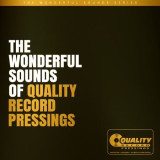
Celebrate the technical expertise of the world's finest LP pressing plant — Quality Record Pressings — with the finest LP sampler ever assembled!
The Wonderful Sounds Of Quality Record Pressings includes music hand-picked by Acoustic Sounds CEO Chad Kassem and classical music tracks chosen by the team at Reference Recordings.
Every song meets the criteria of excellent performance, perfect recording and flawless mastering. What better way to celebrate such a monumental anniversary for one of the absolute leading brands in analog high fidelity than with this to-die-for LP sampler? Contains most genres of music — blues, jazz, classical, R&B and female vocal. From now on, you'll only need to carry one demo record around with you.
Vinyl expert Michael Fremer, of Analogue Planet and Stereophile, gives you a track-by-track tour of the history and production of the songs on this special album.
What separates our world-renowned Quality Record Pressings LPs from other manufacturers? Since Acoustic Sounds CEO Chad Kassem launched QRP in 2011, the focus has been on producing consistently virtually silent vinyl playing surfaces, as well as reproducing details that were hallmarks of vintage labels — the "deep groove" label of Blue Note LPs, for example.
The craft of pressing fine vinyl is perfected in such details. Such as plating lacquers within 24 hours of their arrival at the plant. Cut grooves are prone to change with temperature fluxuations, high humidity and time. The sooner that lacquers are plated, the better the fidelity of the final pressing. Other keys include using a proprietary silver spray formulation, made fresh daily. And incorporating computer microprocessors on our presses to precisely control press functions with absolute precision. And an imbedded temperature sensor in the dye cycles the press with just as much control. The result — more consistency in each LP, high fidelity and reduced distortion. The ultimate sonic advantage.
If it's really a post-genre world, why does everything sound the same? The two halves of Tampa rap duo They Hate Change_Dre (he/him) and Vonne (they/them)_first came together in front of the apartment complex where they both lived as teens. Dre had just moved down from Rochester, NY; Vonne was trying to sell him bad weed. It was clear from the start that the two listen to music differently from most people_they're sonic omnivores, obsessive deep-divers, lovers of rare and radical sounds. Starting as kids trawling the internet for tracks, they've been collecting music from around the world and across the decades, amassing a shared sonic knowledge so deep that "encyclopedic" barely begins to cover it _ not just the East Coast hip-hop that Dre grew up on, or the hyperlocal bass-music variants like jook (the Gulf Coast's twerkably raunchy answer to house) and crank (think "Miami bass meets NOLA bounce"), but also drum `n' bass, Chicago footwork, post-punk, prog (they're, like, seriously into prog), grime, krautrock, emo, and basically any genre on the map. Once they graduated to DJs on the Tampa DIY scene _ which includes everything from punk rock house parties to the black "teen nights" that pop up in rec centers and ballrooms _ they figured out how to pull all these disparate sounds together into a cohesive style. More importantly, they figured out how to make it something people will actually move to. When they made the transition to rapping and making beats, they brought that pleasure-seeking approach to sonic experimentation with them. "With this album, Vonne says, "it's really like, okay, you know how you talk about the internet breaking down borders? Here's what that actually sounds like. It's not just a hip-hop record with a couple more weird sounds. You want homegrown DIY? This is a record that was written, produced, and recorded in a 150-squarefoot bedroom from the least cool city you could think of." Finally, New is what a truly post-genre musical landscape is supposed to be: building deep connections that transcend outdated distinctions between them, spilling over with the joy of exploration and possibility, and daring other artists to think broader, go deeper, take bigger risks. Let the rest of them keep playing by the old rules_They Hate Change will keep changing the game.
out of Stock
Last delivered 3 years ago available to reorder, subject to availability
Written and recorded between 1972 and 1982 in Western Oregon, Back to the Woodlands is a previously unreleased, and nearly lost, album made by Ernest Hood during the same era as his near mythical album Neighborhoods . A visionary combination of field recordings, zithers, and synthesizers, Back to the Woodlands offers an unprecedented depth of access to this singular artistic mind. Born into a musical family, Ernest Hood began a promising career as a jazz guitarist during the 1940s, touring internationally with his brother Bill Hood and the saxophonist Charlie Barnet , before contracting polio in his late twenties. The disease left Ernest unable to play the guitar and confined him to a wheelchair for the rest of his life. It also forced him to adapt and innovate around his musical practices in the face of adversity; Hood's value of sound matured with a remarkably democratic and nonhierarchical approach and application. Taking up the zither, a less physically-demanding stringed instrument to the guitar, embarking upon the unprecedented process of incorporating field recordings into his work as early as 1956, and eventually discovering the synthesizer, Hood's music became imbued with optimism and subtle cultural critique. This ethos and technique - refined over the coming decades - would lay the groundwork for a sprawling body of radio work, mail order recordings for homebound listeners, and Neighborhoods , self- issued as a small vinyl edition in 1975. Where Neighborhoods , a nostalgic opus, drawing from a well of collective memory of the 1950s, is defined by traces of human activity, Back to the Woodlands leaves the modern world behind, delving into Hood's love for nature. Only recently discovered in his archives, the album dramatically expands his concept of "musical cinematography," imagistically triggering states of sensory memory from within its zither and synthesizer melodies, intertwined with field recordings made during Hood's extensive travels throughout Oregon. If Neighborhoods is a retreat into the gauzy joys of a romanticized past, Back to the Woodlands is an immersion in the timeless sanctuary of the natural world. A fascinating counterpoint to its predecessor, Back to the Woodlands brings us even closer to Hood's belief in the transportive qualities of sound; that field recordings could serve as a vehicle for the imagination and liberation, particularly for those with similar mobile disabilities as his own. Across the album's twelve compositions, the rippling instrumental harmonics - shifting between abstraction and playful melody - fold so seamlessly into the birdsong, bubbling brooks, and other environmental ambiences, that they often give the impression of having been recording within the landscapes toward which they whisper. Falling somewhere between the immersive calm of healing music and New Age, the creative field recording practices of sound ecologists world building for Folkways, and the jazz infected ambiences during Obscure / Editions EG's highest heights, Back to the Woodlands sculpts an singular proximity of music for its moment; a form of ambient sonic realism that draws the consciousness toward its surroundings as much as within. Working closely with his estate to maintain his original vision, Freedom to Spend has restored and remastered this never before released, lost masterpiece by Ernest Hood from the original tapes. Ernest Hood's Back to the Woodlands will be issued on vinyl, as well as on CD in combination with its contemporary Where the Woods Begin , with new liner notes by Michael Klausman . On behalf of Ernest Hood and Freedom To Spend, a portion of the proceeds from this release will benefit Oregon Wild, an organization dedicated to protecting and restoring Oregon's wildlands, wildlife, and waters as an enduring legacy for future generations.
out of Stock
Last delivered 3 years ago available to reorder, subject to availability
No binaries, no simple opposition. Either/or is subsumed by infinite relations and dizzying possibilities, by the perpetual crest of and/and. Freedom is the key to bring about all complex and incongruous multiplicities. Embodied, embedded, relational freedom is the key.
Mue is a duo based in Tiohtià:ke/Montréal composed of Catherine Debard and Léon Lo. Formed in the Spring of 2020, the electronic musical project merges two distinct practices and explores the way they interact with each other. Drawing on early-IDM, illbient, minimalism, and natural phenomena, the resulting real-time hardware improvisations weave asymmetric patterns, create spaces, and digest various sounds.
Recorded in 2020, Les vasières explores unsynchronized hardware electronic impro-visations where individual sonic elements come to life by creating new and complex layers and organizational logics — melodically and rhythmically modulating each other.
The French album title translates to “The mudflats.” Sounds from disparate sources form an aural silt that is brought to life by waxing and waning cycles, each improvi-sation presenting a new, different mudflat scenario.
Mue asked visual artist Katherine Melançon to create the album’s artwork, which was the artist’s first dive into compost as source material. The resulting image—an otherworldly organic smear, both intimate and alien — was incorporated into graphic designer Haley Parker’s montage, hard frames recalling the flatbed scanner used by Melançon, and branch-like typography nodding to the organic concerns of all the artists involved.
out of Stock
Last delivered 3 years ago available to reorder, subject to availability
The Belgian minimal synth band's three releases – a cassette and two vinyl EPs – were all titled »Against The Dark Trees Beyond«. This compilation collects the songs from these records.
"They were interesting times, the early eighties. Against a backdrop of cold war and economic crises, the DIY attitude of the earlier punk movement had spawned near countless new genres where artists and bands broke the three-chord guitar mould and experimented with new content matter, singular song structures and – in many cases – new instruments. Synthesizers became affordable and were no longer the sole privilege of rock millionaires. All around the globe, musical creativity boomed as never before, and Belgium was no exception: Digital Dance, Snowy Red, The Names, Pseudocode, Marine, 1000 Ohm, De Kommeniste, M.Bryo & D.M.T., De Brassers, Struggler, Siglo XX are but a few legendary names of bands and artists who started making a name for themselves.
In Leuven, things were happening as well. Until then, the music scene in this rather provincial town had been dominated by straightforward rock and blues acts. Not for much longer, though: in places like Arno'z and (later) The Gladhouse, where young budding artists met with kindred spirits, bands were often formed on the spot and, more importantly, started to make ripples.
Ludo Camberlin and Karel 'Bam' Saelemaekers already had a certain track record in Leuven's burgeoning music microcosm. But what they shared would become the cornerstone of A Blaze Colour (Against The Dark Trees Beyond): a fascination for new forms and instruments, a penchant for sonic adventure and a profound love for gripping songs. The full band name, by the way, was inspired by a phrase from the Irish-American novelist J.P. Donleavy, a writer who belongs in the definitely-worth-checking-out section.
After appearing on the first No Big Business LP (1981) with the instrumental 'Fisk', A Blaze Colour's first proper release, as was so often the case in those days, was a self-produced cassette. The music – which would later be dubbed 'minimal' – was characterized by the use of basic rhythm machines (Boss Dr. 55, mainly) and analog synthesizers (for the synth geeks: Korg Delta and MS20, Roland SH-2 and Jupiter IV, and the infamous Casio VL-1). Camberlin’s vocals, meanwhile, displayed an aloofness totally in sync with the zeitgeist. Equally important, though: all five tracks on this cassette were bona fide songs with a clear sense of structure, aided by a sonic mastery that demonstrated a high level of experience: 'Means To An End' started out as a proto-industrial track before bursting out into a moroderesque finale. The remix of 'Fisk' was as sprightly as the next river salmon, while 'Or Lie Again' proved the perfect soundtrack to a nightly walk through wet deserted streets. On the other hand, 'Through With Life', rife with disturbing sound effects countered by a slow portamento, could have been a prize track on a post punk 'Lamb Lies Down On Broadway'. And in true dramatic fashion, 'Follow The Signs' was the perfect ending of this five-song cycle: a driving sequencer and gripping chord progression coupled with a simple but powerful vocal line. Considering the limited technical means the duo was working with, this was no less than a triumph.
A few months later, the band released a seven-inch single on its own ABLACO label. 'Dark Trees Beyond', a quirky pop song, was coupled with 'Addict Of Time', a dark and brooding spoken word piece. Not the kind of single to storm hit parades, but it didn't go unnoticed. The Minny Pops' Wally van Middendorp, who had founded the Plurex label in 1978, invited A Blaze Colour to his studio in the Netherlands, to record an EP. It would prove to be a massive step forward: recording in a semi-professional studio offered great possibilities, the recently acquired TR-808 drum machine allowed for a broader rhythm palette, and the three new tracks (next to the re-recording of 'Through With Life') showed a band on the top of their game: 'The New Ones' was a wry and haunting song built around a live drum loop and an ominous bass pattern, while 'Nowhere Else' was a near-pop track with very un-minimal vocal harmonies. And it's a mystery why 'Altitude' – another instrumental – was never used in a stylized, high-profile detective soundtrack.
Another song from these sessions, the revved-up 'Cold As Ever' turned up on the high-profile Plurex "Hours" compilation, where it shone brightly, next to songs of a.o. X-Mal Deutschland, Nasmak, Minny Pops and Section XXV.
Meanwhile, Camberlin had already carved out a bit of a reputation for himself as a producer, while Saelemaekers was a respected graphic designer. It remains uncertain if this played a big part in the end of A Blaze Colour, but the fact remains: as studio recordings go, 'The Ultimate Fight' on the "No Big Business 2" compilation, was to be their swan song. What a way to go, though: maybe their best song ever, this was a synthetic bastard funk groove, complete with shout-out chorus and punch-drunk middle-eight. It shut a door, for sure, but it did so with a resounding bang.
So there it is and there it was. Short, sweet, visionary, pioneering and highly influential. And as anybody listening to this first ever compilation will be able to assess probably one of the most colourful electronic acts of its time.
On a more a personal note, A Blaze Colour proved to be instrumental in my own coming of age as a lyric writer, when Ludo and Bam graciously adopted some of my earlier writings, warts and all. To hear them translated into songs was no less than magic, and it certainly gave me the confidence to start our own band a bit later. And the magic continued when Ludo became our producer and Bam designed our record sleeves. But that’s another story, obviously. Because this is the place and the time to dive back into the wondrous world of A Blaze Colour!"
Bart Azijn (Aimless Device)
out of Stock
Last delivered 3 years ago available to reorder, subject to availability
A potentially surprising release on Editions Mego. Another planned prior to the untimely passing of Peter Rehberg in 2021.
Melvin Gibbs is the renowned bass player and producer from Brooklyn who’s vast resume includes playing with Sonny Sharrock, John Zorn, The Rollins Band, Dead Prez, Caetano Veloso and Femi Kuti amongst others. A solid resume, no doubt, but what is Gibbs doing on Editions Mego?
Behind the scenes, those who know Gibbs knew that amongst all this he was also tinkering away at another form of music, one which skirts around the border between music and sound design. The Wave is the first release that reveals this side of Gibbs’ creative output to those outside his inner circle.
The driving force for this output is Gibbs’ multi-decade friendship with acclaimed American video artist and cinematographer Arthur Jafa. Over the course of time Gibbs and Jafa have had many conversations about music and the connection between film and music. Jafa’s desire to make film that worked the way Black (as in Black/African-American/ Afro-diasporic peoples) music worked inspired Gibbs to study the filmmakers Serge Eisenstein and Dziga Vertov and incorporate their philosophies and tactics when recording his own music. The two discussed sound design which directly informed Gibbs’ choice of music making tools and led to him acquiring Symbolic Systems Kyma software and hardware, incorporating this as a composition tool and sound design and component in his work. These conversations bore concrete fruit through Gibbs’ work for TNEG, the film studio Jafa ran with filmmakers Malik Sayeed and Elissa Blount Moorhead. Gibbs created the soundtrack for their very first project, the short film “Deshotten 1.0” (2009 - directed by Jafa and Sayeed) as well as their Martin Luther King-inspired meditation on Black life “Dreams Are Colder Than Death” (2013, directed by Jafa)
The bass-forward music, or ‘sonics’ as Gibbs calls it, emerged from an alternative mode of contemplation, a mode that he sees as closer to the mindset of a rootworker, an African-American herbal doctor who cures psychic ailments using means derived from African spiritual practice, entering a forest to find the right plants for a suffering client than a mediator attempting to invoke mindfulness. Gibbs says this practice yields results that suggest an aural form of creation akin to coagulation, a formal movement that gives the sense that a flow of sounds can emit something bearing resemblance to solidifying objects.
In 2020 Jafa asked Gibbs to work on the soundtrack for a work in progress called “The Wave''. When they got together to work on the soundtrack, Jafa played Gibbs a selection of sounds that included random moments of (probably unwanted) feedback on 70's Miles Davis records, Pop Smoke's Brooklyn drill, the music of Bernard Gunter and Darmstadt-style compositions made with test equipment. Those sounds, filtered through years of conversation with Jafa about Black creativity and the possible evolution of Black music, formed the sonic vocabulary of “The Wave”.
out of Stock
Last delivered 3 years ago available to reorder, subject to availability
Nearly 10 years on since his last solo LP, Berlin techno icon Marcel Dettmann arrives on Dekmantel with an expansive album captured in a flash of inspiration.
In many ways Fear Of Programming is a reflection on the artistic process – the critical hurdles one has to overcome, the constant strive for originality, the ability to capture inspiration in its pure moment of inception. Bar the closing title track (and we all know Marcel loves a surprise closing), these 13 tracks came together during a period in which our hirsute host was able to immerse himself in studio practice and set the intention to record an album’s worth of material every single day. From the resulting mass of work there were many options to choose from, and Fear Of Programming stood out as one of the most complete statements on Dettmann’s approach in the here and now.
Unconcerned with an overarching concept, it was the work in the studio which drove the musical direction. No labouring over knotty arrangements, no painstaking mix downs – just honest expression, a moment caught, a groove locked, a stroke of synth sent pirouetting over a cavernous bed of texture. The results are varied, and while you might well hear plenty of bruising machinations in line with the techno Dettmann has made his name on, there are plenty of other shades expressed across the album.
Ambient sojourns, beatless epics and angular electronica have equal footing with strident, floor-friendly workouts. Standout piece ‘Water’ offers an icy ballet of swinging minimal and drip-drop melodics fronted by Ryan Elliott on lesser-spotted vocal duties, urging, ‘give me a sign, just a little something to let me know that you’re mine’. It’s playful, but still underpinned with the sincerity that comes with Dettmann’s work.
Running on instinct, Dettmann presents an honest version of himself in the here and now, speaking through the sonics and not over-thinking the results. His decades of experience helming a thousand techno parties speak for themselves, while his evolution as a musical entity through collaboration and his own BAD MANNERS label demonstrate his appetite for change. Indeed, the working method which resulted in the album also spurred him on to create a live set beyond his well-established DJ practice. Without resorting to a conceited overhaul, Fear Of Programming opens up the idea of what Dettmann represents in the modern techno landscape.
out of Stock
Last delivered 55 days ago available to reorder, subject to availability
Employing a vast array of advanced vocal and instrumental techniques, Broken Gargoyles is arguably Galas" most intellectually, sonically and viscerally formidable work to date. The album finds the visionary artist deftly probing the weaving, warping transformation on the nervous systems of her post-traumatic soldiers and dying diseas ed. Composed in 2020 during the beginning of the Covid-19 pandemic, the first presentation of Broken Gargoyles featured verses by German poet Georg Heym, "Das Fieberspital" and "Die Dämonen der Stadt." The work was finalized in 2020 in collaboration with the artist and sound designer Daniel Neumann. In "Das Fieberspital" Heym describes the horrific state of people suffering from yellow fever who live in paralyzing fear of death and swirling delirium owing to their brutal treatment and isolation in medical wards in early 20th-century Germany. "Die Dämonen der Stadt" also addresses such grim portents of World War I; in this poem, the god Baal observes (like a gargoyle) a town from a rooftop of a city block at nighttime and lets a street burn down during dawn. The final incarnation of the work was played as a sound installation at the Kapellen Leprosarium (Leper"s Sanctuary) in Hanover, Germany
Teno Afrika's 2020 debut Amapiano Selections drew an international wave of support sparked by the producer's deftly minimal take on the emergent style. Amapiano combines the South African predilection for deep house alongside a melange of endemic influences like kwaito, jazz and gqom. The 20-year-old's new crop of songs Where You Are expands on his rhythmic subtlety hooded in warm bass adorned by amapiano's telltale shakers, hi-hats and mid-tempo shuffle. Lutendo Raduvha hails from Pretoria, South Africa, where he produces music incessantly and DJ's parties around Gauteng province. He hangs with a crowd of musical friends, many of whom join him on Where You Are. For his second album Teno Afrika brings more vocalists into the sonic picture, unlocking an emotive and timbral escalation to his rapidly mushrooming catalog of work. Singers Leyla and KayCee feature on the title track and "Fall In Love," respectively. Regular cohort Diego Don joins for two driving, pad-propelled works of significant vibrancy, "SK Love" and "AK Love." The album's dramatic closer "Duma ICU" features another returning collaborator, Stylo MusiQ, who helps bring an icy, almost cinematic conclusion to a slice of the sound Teno Afrika is pushing at the moment. There's a palpable feeling of not knowing where the young producer might go next.
out of Stock
Last delivered 2 years ago available to reorder, subject to availability
Sonido Verde De Moyobamba feature on the second volume of Analog Africa's Sonic Expedition into the Peruvian Amazon, as well as being behind this brilliant new collection which drops on the same day from the same label. It is a coming together of eight super-rare cuts of guitar and organ inventiveness taken from the five albums the band recorded between 1981 and 1987 for Discos Universal. You would beard pushed to find any Cumbia from the Peruvian jungle that hits as hard as this with its incessant rhythms, mad acoustic guitars and bustling percussion.
Released on the heels of her breakthrough album Tapestry, Carole King's Music is every bit the equal of its more famous predecessor: a No. 1 smash that features impeccable songwriting, beautiful melodies, and extraordinary piano playing. In short, everything that's made King an institution. After of years of being overshadowed, this 1971 singer-songwriter classic has been given the audiophile treatment it's long deserved.
Sourced from the original master tapes and pressed on dead-quiet vinyl at RTI, Mobile Fidelity's numbered-edition 180g LP of King's second solo masterpiece is rife with intimacy, transparency, soulfulness, and you-are-there sound. Never before remastered, Music seems like a brand-new album as King's familiar voice, intelligent arrangements, and ace support band presented on a deep, three-dimensional soundstage. Your appreciation for and understanding of the depth of King's inspirational lyrics and performances will doubtlessly increase — this reissue brings you that much closer.
Accompanied by percussionist Bobbye Hall, drummer Russ Kinkel, guitarist/vocalist James Taylor, and a multitude of other professional wind musicians, King delves further into R&B and jazz-derived pop. Warm and cohesive, songs echo with simplicity and honesty. And as is typical of much of King's work, several of tunes here were later covered by other artists, including "It's Going To Take Some Time" (the Carpenters). Yet the originals trump the later renditions, and King's rendition of the standard "Some Kind of Wonderful" stands among the best ever recorded.
With Taylor lending more of a hand on Music than he does on Tapestry, King expands her reach on the piano and peppers the songs with graceful touches of saxophone, flute, pedal-steel guitar, and woodwinds. Ballads sway ("Surely"), gospel raises spirits ("Brighter"), and backup vocals float amid pop arrangements like clouds ("Song of Long Ago"). The most irresistible aspect? King's voice, infused with fondness, concern, joy, and a quiet power that parallels the delicacy and deliberate nature that define Music.
Mobile Fidelity's 180g LP is free of the limiting artifacts that have helped keep this record in the dark for the better part of the 80s, 90s, and early 2000s. Acoustic guitars, subtle brass elements, and soft percussion contribute to the enjoyment of the songs, and King's voice —pleasant, assuring, emotional — comes through with incredible clarity and inflection. The brilliance of Lou Adler's original production is restored to its full glory.
Aptly named, this companion to Tapestry is an aural and sonic delight.
After previously releasing stand-out music on labels such as VEX, DPR, Rhythm N Vibe, Obstacle Records and on his own imprint Moodwing, DJ Perception has decided the time is right to truly express himself via the album format. As the standard bearer of modern UKG and after 1.5 years in the making Timehri is extremely proud to finally unveil DJ Perception's debut album, Journey To The Star. A 2x12" LP built for millennia in the future, retrieved during Perception’s deep exploration through space, guided by a faint starlight in the outer reaches and beamed back to earth for your listening pleasure.
As a forward thinking bridge between UK Garage and House music, Timehri Records has established itself as a fiercely independent, leading contributor to the underground scene in the UK and overseas since its inception. Three records deep, production guest mixes via cassette and events for the sonic purist provide the output for this label, who’s emphasis on heritage and the afrofuturistic ideas that underpin it, hold huge importance.
out of Stock
Last delivered 3 years ago available to reorder, subject to availability
My Idea with these series of 10” records was to do 5 in around a year to 18 months. This got scuppered by the situation at world pressing plants with the extreme wait for records.
The tracks are all taken from my live set which I’ve been doing over the last few years which has taken in some huge gigs and festivals including Houghton, Dimensions, Ion and extensive club gigs too.
All of them have the dance floor funk and the artwork is from long term design partner Lung.
The vibe on these is rolled plasticine using a different coloured vinyl each time. So making the series quite collectable too.
Lord of Dem Tings is a tribute to the late great Lee Scratch Perry and theres a nod to him on the sticker for this one.
out of Stock
Last delivered 3 years ago available to reorder, subject to availability
Teno Afrika's 2020 debut "Amapiano Selections" drew an international wave of support sparked by the producer's deftly minimal take on the emergent style. Amapiano combines the South African predilection for deep house alongside a melange of endemic influences like kwaito, jazz and gqom. The 20-year-old's new crop of songs "Where You Are" expands on his rhythmic subtlety hooded in warm bass adorned by amapiano's telltale shakers, hi-hats and mid-tempo shuffle. Lutendo Raduvha hails from Pretoria, South Africa, where he produces music incessantly and DJ's parties around Gauteng province. He hangs with a crowd of musical friends, many of whom join him on "Where You Are." For his second album Teno Afrika brings more vocalists into the sonic picture, unlocking an emotive and timbral escalation to his rapidly mushrooming catalog of work. Singers Leyla and Kaycee feature on the title track and "Fall In Love," respectively. Regular cohort Diego Don joins for two driving, pad-propelled works of significant vibrancy, "SK Love" and "AK Love." The album's dramatic closer "Duma ICU" features another returning collaborator, Stylo Musiq, who helps bring an icy, almost cinematic conclusion to a slice of the sound Teno Afrika is pushing at the moment. There's a palpable feeling of not knowing where the young producer might go next. Also Available From Teno Afrika: Amapiano Selections LP/CD. Track listing: 1 Teno Afrika ft Leyla “Where You Are” 2. Teno Afrika & Diego Don “SK Love” 3. Teno Afrika “Bells” 4. Teno Afrika ft KayCee “Fall in Love” 5. Teno Afrika “Gomora Groove” 6. Teno Afrika “Halaal Flavour” 7. Teno Afrika & Diego Don “AK Love” 8. Teno Afrika ft Stylo MusiQ “Duma ICU”
Terapia Records is thrilled to introduce you the very first release of its catalogue, a stunning LP by the two founders Luca and Michele (aka Complementary Minds) called Butch Haynes introduces Complementary Minds Vol. 1. The newborn label launches its ambitious, yet very much considered project, after the debut of one of the two head-honchos Luca Ferrara aka Butch Haynes on Apparel Music and Sistrum Recordings. He metaphorically introduces the first LP by the Milan born and bred duo, who share a deep love for music and a great productive connection. They deliver a brilliant eleven-track album, full of diversified sonic influences and quite representative of their bright talent. The record, which will be presented to you both on vinyl and digital, starts with a couple of masterly produced beats (Fantastic/Teacher Carey), both with an analogous mellow, warm energy, some brilliantly crafted bass-lines and a substantial harmonic presence. The album keeps rolling with the Deep feeling of Flower Diva: its soulful, skilfully arranged vocals and the dreamy synthetic chords help the pair to perpetuate this passionate, balmy vibe. Insomnia ends the first quartet of sexy tunes with some seductive improvised spacey key stabs and its delicate pensive chords while Q Orchestra (the lost tape mix) speeds up the heartbeat and leads to the closing track of the A side, Bebi: a gorgeous groovy interlude. B side kicks off in style with the slightly darker feel of Myers Boogie Man where the pitched sampled vocals, the solid rhythm section, a profound array of sonic details and a marvellous warm synth melody towards the end of the track make it a true ghetto hit! Right On, with its broken-beat and a radiant harmonic progression, Contact 911 with its tight kick-snare connection and some far-out, whimsical chord evolution and G Buster with its irresistible slightly acid driving force, pave the way for the grand finale where Maam, a proper club banger, ends this amazing LP in epic fashion. Butch Haynes introduces Complementary Minds Vol. 1. is such a cohesive, yet incredibly diversified album and their authors, Luca Ferrara and Michele Fallabrino, achieve the challenging task of telling their sonic story with a flawless work. What a way to start Terapia Records’ experience.
out of Stock
Last delivered 3 years ago available to reorder, subject to availability
A joint release by LA's Hippos In Tanks and Montreal's Arbutus Records, the Darkbloom EP is a thrilling split by d'Eon and Grimes. Harnessing the dark energy of her sophomore album Halfaxa, along with the shimmering dream pop of her debut Geidi Primes, Grimes' side represents a synthesis of her two sonic personalities. Displaying a level of clarity and craftsmanship heretofore unseen in her releases, Boucher presents a stunning new collection of ethereal dreamscapes that expand her creative palette without compromising the spectral presence she is known for. Following the Middle-Eastern-tinged R&B of 2010's Palinopsia, d'Eon broadens his stylistic breadth through reference to a number of electronic genres - for example, he simultaneously incorporates elements of Chicago footwork and new jack swing, but surprises the listener with strange forays into bygone genres such as UK drum and bass and trip hop. Presently available worldwide on CD and Digital formats, Darkbloom will be available on vinyl, for the frst time in many territories, on May 20th, 2016.
Volker Bertelmann and Hildur Guðnadóttir hardly need an introduction - their distinct styles have graced the speakers of pretty much anyone enamored with experimental music in the last decade, and between them the two have chalked up an enviable canon of successes. Bertelmann, under the Hauschka moniker has explored the extremities of prepared piano improvisation, and Guðnadóttir has taken cinematic, explorative cello music into a new era of depth and passion, so to hear them both together is a rare and unexpected treat. Rare is putting it lightly even - „Pan Tone“ is a recording of a single concert which the duo performed on the 26th of February 2010 as part of Arctic Circle - Bubbly Blue and Green festival at Kings Place in London, and documents an event that would truly never be repeated. Sure, they could attempt to re-create the event, but the spontaneity and glorious serendipity in this particular recording is a pleasure to behold.
Bertelmann and Guðnadóttir decided to create a set of compositions which based on the idea of the ocean, and took a book of Pantones to extract exact references to the specific colors of the sea. These watery tones form the backbone of the performance and inform the direction of the collaboration, guiding us through rich blues, glassy greens and frothy whites. In listening to the music it seems incredibly appropriate that the artists should choose blue as the middle ground in their work; the ineffable lightness that Bertelmann brings to the table is a stark contrast to Guðnadóttir's sinking darkness, and as the two styles collide we witness a plethora of tones, shades and hues. It sounds as if the two artists have been playing together for decades, and their sound is so perfectly matched you might wonder why it's taken them this long to collaborate. All that's left for us to do is to soak in the tidal beauty of this very exclusive body of music, to listen to it sing, bubble and crash through its duration before settling in total silence. When the record reaches its conclusion there is an unsettling calm, a sense that you have witnessed something very special indeed, and that is a feeling to prize amongst all else.
Somewhere between the late 1990s and the early 2010s, the rif largely disappeared from mainstream rock & pop. Its transformative power - the rif as a means to transport the listener into another dimension - became an art cherished only in the underground of rock and metal. One of the strong proponents of that transformative power is ASTROSAUR, an overlooked gem in the international heavy psyche rock and post- metal scene. The Norwegian power trio has been employing the rif as their principal mode of transport since their 2017 debut album Fade In // Space Out. Now, with the release of their third album Portals, ASTROSAUR are sounding more expansive and convincing than ever, delivering an intuitive exploration of the infnite powered by soaring guitars and surging grooves. With their third full-length album, ASTROSAUR have delivered an incredibly diverse and musically challenging and satisfying experience, showing that this band is greater than the sum of its truly great parts. Over the course of fve tracks and 48 minutes, the band use the best traits of the aforementioned genres to take you on a sonic journey into the deepest caverns of space and time. First single «Black Hole Earth» is masterclass soaring post-rock guitars, with its magnifcent main melody, which is ofset against a blistering desert rock rif, like a star ship phasing in and out of hyperspace, alternating between crushing your guts and showing you the most marvellous views of deep space. From a compositional viewpoint, «Eternal Return» is a mind-blowing afair. This giant psychedelic prog epic has been built from diferent themes and motifs that take turns in appearing, shifting form and developing as they go along. Segueing into new themes or returning to earlier ones, «Eternal Return» gloriously comes full circle, ending the mind-boggling journey of Portals. With the addition of vibraphones, Moog and acoustic guitars, the sound of ASTROSAUR is fuller and more diverse than ever before. From the soaring overture of «Opening» to the glorious fnale of «Eternal Return», Portals shows the next great post-metal band at their most accomplished. Fans of dynamic rifs and intricate compositions can once again rejoice as they're able to tune in and fade out once more with another wild ride courtesy of this exciting Norwegian powerhouse. Limited Eternal Return Vinyl Edition!
Somewhere between the late 1990s and the early 2010s, the rif largely disappeared from mainstream rock & pop. Its transformative power - the rif as a means to transport the listener into another dimension - became an art cherished only in the underground of rock and metal. One of the strong proponents of that transformative power is ASTROSAUR, an overlooked gem in the international heavy psyche rock and post- metal scene. The Norwegian power trio has been employing the rif as their principal mode of transport since their 2017 debut album Fade In // Space Out. Now, with the release of their third album Portals, ASTROSAUR are sounding more expansive and convincing than ever, delivering an intuitive exploration of the infnite powered by soaring guitars and surging grooves. With their third full-length album, ASTROSAUR have delivered an incredibly diverse and musically challenging and satisfying experience, showing that this band is greater than the sum of its truly great parts. Over the course of fve tracks and 48 minutes, the band use the best traits of the aforementioned genres to take you on a sonic journey into the deepest caverns of space and time. First single «Black Hole Earth» is masterclass soaring post-rock guitars, with its magnifcent main melody, which is ofset against a blistering desert rock rif, like a star ship phasing in and out of hyperspace, alternating between crushing your guts and showing you the most marvellous views of deep space. From a compositional viewpoint, «Eternal Return» is a mind-blowing afair. This giant psychedelic prog epic has been built from diferent themes and motifs that take turns in appearing, shifting form and developing as they go along. Segueing into new themes or returning to earlier ones, «Eternal Return» gloriously comes full circle, ending the mind-boggling journey of Portals. With the addition of vibraphones, Moog and acoustic guitars, the sound of ASTROSAUR is fuller and more diverse than ever before. From the soaring overture of «Opening» to the glorious fnale of «Eternal Return», Portals shows the next great post-metal band at their most accomplished. Fans of dynamic rifs and intricate compositions can once again rejoice as they're able to tune in and fade out once more with another wild ride courtesy of this exciting Norwegian powerhouse. Limited Eternal Return Vinyl Edition!
Tape
Hailu Mergia & Dahlak Band's Wede Harer Guzo is the third release on Awesome Tapes From Africa for Ethiopian keyboard and accordion maestro. In the years since Shemonmuanaye, Mergia has revamped his touring career, playing festivals and clubs worldwide, including a recent tour supporting Beirut. By 1978, Addis Ababa's nightlife was facing challenges. The ruling Derg regime imposed curfews, banning citizens from the streets after midnight until 6:00 am. But that didn't stop some people from dancing and partying through the night. Bands would play from evening until daybreak and people would stay at the clubs until curfew was lifted in the morning. One key denizen of Addis' musical golden age, Hailu Mergia, was preparing a follow-up to his seminal Tche Belew LP with the famed Walias Band. It was the band's only full-length record and it had been a success. But his Hilton house band colleagues were a bit tied up recording cassettes with different vocalists. Still Mergia, amidst recording and gigs with the Walias, was also eager to make another recording of his instrumental-focused arrangements. So he went to the nearby Ghion Hotel, another upmarket outpost with a popular nightclub. Dahlak Band was the house band at Ghion at the time. Together they made this tape Wede Harer Guzo right there in the club during the band's afternoon rehearsal meetings, with sessions lasting three days. Dahlak Band catered to a slightly more youthful, local audience, while Mergia's main gig with the Walias at Addis' swankiest hotel had a mixed audience that included wealthy Ethiopians, foreign diplomats and older folks from abroad. Therefore, their sets featured lighter fare during dinnertime and a less rollicking selection of jazz and r&b. Meanwhile, Dahlak was known more for the mainly soul and Amharic jams they served up for hours two nights a week to a younger crowd. Mergia released Wede Harer Guzo ("Journey to Harer," a city in eastern Ethiopia) with Sheba Music Shop, which was located in the Piazza district but has long since shut down. His cassette copy is the only known source we could find. Jessica Thompson at Coast Mastering managed to restore the recording to clean up layers of hiss, flutter and distorted frequencies, made worse by years of storage. Although there are some remaining sonic artifacts of the era's recording and cassette duplicating quality, this reissue captures the band's inimitable vibe. Recalling the audience's positive reaction to Wede Harer Guzo's novel arrangements, he says it sold well and found many fans. However, as no trace of the tape can be found online, there's no indication as to why the cassette appears largely forgotten until now
Afro-Finnish band Maajo return with their third album, "Water of Life," a fluid celebration of various influences. Supported by two preceding singles, "Better Days" and "Unelmissani," the album is the group's first release with the Brooklyn, NY-based tastemaker label Wonderwheel Recordings. Maajo's signature Afro-Balearic sound meets late eighties new age and fusion, with touches of modern soul. The addition of two band members, Waina and Gilbert K, as well as featuring artists Issiaka Dembele and Ismaila Sané, has rooted the album's stories in a diverse range of backgrounds, featuring vocals in no less than six different languages.
Gilbert K's drum grooves pay tribute to the late Tony Allen's legendary heritage and the percussion experiments on a more melodic and atmospheric tip. Cold synth pads and 303 squeaks blend with warm guitars, fretless bass, and Issiaka Dembele's sublime kora harps and balafon mallets. "Water of Life" shows a band at its maturation point, reaching the cross-cultural coalescence of Finnish-African sound that's ready for the dancefloor or home-listening.
The three vocalists take centre-stage on the album: Waina hails from Zambia and sings in Nyanja, English and Finnish; a renowned musician in Zambia for over two decades who now calls Finland home, Waina wrote a song that reached the finals of the 2020 Afrimusic contest. Gilbert K primarily sings in his native Mauritian Creole while comprising part of the percussion line. He made his way to Finland by way of South Africa and China, eventually winning the Voice of Finland show. Gilbert K has played with such legends as Tony Allen, Andy Summers, Diana King, and Suzanne Vega. Ismaila Sané is from the Casamance region of Southern Senegal and sings in Wolof (a widely-spoken language in West Africa) on "Ndekete," and in Jola (a smaller language in Casamance) on "Èwàn".
Maajo is a sonic, linguistic, and cultural melting pot that has come together in Tampere, Finland, like a tropical breeze from the cold north. Their musical explorations lead from equatorial soundscapes to the woods and moods of their native Scandinavia. African influences, electronic beats and organic rhythms, ethereality and the sounds of nature all make up the patchwork sound of Maajo.
Not only is Maajo's music a way of travelling to faraway places, the songs themselves have travelled all over the globe. Maajo has evolved from a sample-based electronic music project to a full-sized band, including African vocalists and musicians. The group has put out two full-length albums and three EP's on Queen Nanny records, in addition to a release on German label Permanent Vacation. Maajo has received the remix treatment from artists such as Luke Vibert and Call Super, and has toured festivals and clubs internationally. The band has built a dedicated international following having been championed by the likes of Gilles Peterson (Worldwide FM), Tom Ravenscroft (BBC Radio 6), and Tim Sweeney (Beats In Space), while they've been featured by KEXP (Song of the Day), Resident Advisor, Ransom Note, and Pan-African Music.
"Water of Life" is out on Wonderwheel Recordings October 14th, 2022, both digitally and as an exclusive, limited-run 2xLP.
d 04: Better Days (Kumba) feat. Waina & Gilbert K
out of Stock
Last delivered 3 years ago available to reorder, subject to availability
Alga Marghen presents the last chapter from the Feedback Works documentation series, a brand-new LP including "In Memoriam-Ostinato" and "Danse des Dakinis", two previous unreleased tracks by Eliane Radigue. Among the works of fixed duration from the feedback period, "In Memoriam-Ostinato" is the link between "Jouet Electronique" (ALGA 029LP) and "Opus 17" (ALGA 045LP), and allows you to understand the evolution of her approach. "In Memoriam-Ostinato" is a game of mirroring symbols which glide into a non-measured, bent and elastic, temporality. Eliane Radigue's working method and her aesthetic direction are evident in this work from 1969: her very own unique temporal space of sonic experiences. Even though it bears the same name as the third part of "Adnos III", "Danse des Dakinis" is a peculiar work in Eliane's oeuvre. Conceived in a short time, with all kind of tapes from the composer's past work, it fluently shows a kaleidoscopic vision of Radigue's sensibility for sound. In 1998 she put together a curious self-portrait in sound. There is a feedback ostinato conceived around 1969 and which refers to "In Memoriam-Ostinato" and "Opus 17". All through "Danse des Dakinis" you plunge into the sound of a creek recorded at Mills College campus that brings you back to the field-recordings from the beginning of the 1960s, made on the coasts of the Mediterranean Sea. Such elements construct "Elemental1" (ALGA 029LP) as well. There are also some discreet interventions on the ARP 2500 synthesizer. It is indeed a peculiar work, which doesn't have the same features of her other compositions, especially at that time of her compositional path. There is an explanation for the composer producing this kind of sound material in 1998, and not limited to the sound waves of the ARP synthesizer. Invited to a workshop at Mills College in 1998, Eliane Radigue could not load herself down with her bulky instrument on such a trip. So, she left with just a few tapes taken from her own collection, drawn from different periods, and composed "Danse des Dakinis" with those old elements. There is tension in this composition, a certain wildness, an unpredictability of elements, those which are recognized as fundamental elements, which give structure to the universe. "Dance des Dakinis" is an intimate and wild symphony, alive and unpredictable, which is to be the next-to-last gesture of the composer before completely stopping her work with electronics.
“This is for the family,” Abe Linx says. “It’s not really about who doesn’t love us, it’s about those that do. The ones we motivate and inspire. It’s for those people.” The World Famous La Familia Forever is the powerful sophomore effort from Abe Linx & Tully C., two incredibly gifted emcees who have crafted a contender for the best release of 2022. Across this EP’s 10 tracks, the Indianapolis-repping duo showcase their worldview, dig into their personal histories, and firmly plant themselves on the hip-hop map. And as Abe Linx spits on the stunning track “WORLDWIDE”: “Who the f*ck gon’ tell me different?” In addition to the passion of Abe Linx & Tully C. and their collaborators, TWFLFF stands on its own because it is just so sonically engaging. The production is equally crunchy and fascinating, because it flirts with sounds crafted by legends without sounding dated. This is timeless, raw hip-hop helmed by two talented rappers and their favorite producers like Nomstks & AWSME J, as well as longtime collaborators Baleboy Geechie & DJ GB.
You can tell that Abe & Tully took their time with these songs, meticulously piecing them together in the two years since their previous release. Each cut moves seamlessly into the next, bringing that special kind of cohesion. Just listen to how “RABIES” moves into “400MPH (skit)” and then “SKYSCRAPER,” a brilliant slice of showin’-out rap elegance. While there are only three guest features on the project, they’re used to great effect and make as much of an impact as their hosts. Planet Asia stomps all over the aptly titled “SHOWOFF,” while Willie The Kid complements the smoked-out vibes of “CHANDELIER.” And when Bub Rock shows up on “RABIES”? It’s a wrap as soon as he hops on that piano-laced, dusty instrumental. TWFLFF is a mission statement, with pieces that also sound like a word of warning to anyone looking at these two sideways. Or, as Tully C. raps so perfectly on “CHANDELIER”: “I be in this b*tch, with my clique/ So don’t act stupid.” The World Famous La Familia Forever drops on vinyl right in time for the holidays through their recent partnership with Fat Beats.
Che spent her formative years living the troubadour life playing local clubs in
Vancouver, becoming embroiled in the Toronto indie music scene and touring
worldwide as a solo artist and with her critically acclaimed band 'Casualties of
Cool', a joint venture with prog behemoth Devin Townsend.
The Crowned shows a side to Che seldom seen on record before. A more
confident and determined thread runs through these songs, signalling the birth of
a new era for Che.
Inspired by her love of Trip Hop, Folktronica and Soul, The Crowned has Che's
signature all over it whilst reaching out into new sonic environments. Half of The
Crowned's tracks produced by Bob Rock pre-pandemic and half of the tracks selfproduced post pandemic, this album tells a story of an artist's evolution and
growth.
You are looking at a woman who still has a sense of individualism combined with
a drive and vision that is growing increasingly rare in this day and age. An artist in
the truest sense of the word, a product of passion and not curation.
She has previously worked with LA with hitmakers Greg Wells, David Foster and
Kara Dioguardi; performing with Michael Buble, Kim Churchill and Dan Mangan
and releasing music with industry heavyweights Andrew Loog Oldham (Rolling
Stones) and Tom Sarig (Lou Reed). Most recent work includes a collaboration
with Juno nominated EDM duo Young Bombs, a darkly lit duet with the late Gord
Downey (The Tragically Hip) and a featured performance on Devin Townsend's
'Lightwork'. She also collaborated with Townsend on 2014's Casualties Of Cool.
Many Worlds Interpretation is a collection of cosmic Americana for electronics, guitar, and percussion culled from Jon Iverson’s extensive home-studio archive. 1984, Los Osos, California. In a small cinderblock cottage, hand-painted with bright psychedelic flora, Jon Iverson created vibrant new worlds. He spent long days and nights immersed in sound, perfecting home recording on his 8-track reel-to-reel, combining his love for kosmische and Berlin School electronics with an infatuation with ethnographic sounds and expansive guitar music. In a duo with fellow sonic traveler Thomas Walters, Iverson released missives from the studio on a self-titled LP released on country legend Guthrie Thomas’ Eagle Records. That release featured
three electro-acoustic compositions (“Naningo”, “River Fen”, and “Fox Tales”) as well as a gathering of guitar duo tapestries. Many Worlds Interpretation re-imagines those interplanetary works alongside several unreleased compositions that also feature synthesizer, guitar, and percussion, creating a re-visioned album which leans into Iverson’s electronic studio wizardry.
All songs have been carefully transferred from analog tape to high resolution digital, retaining their vintage studio warmth, but mixed and mastered for modern ears and audio systems. The album is pressed at 45rpm, further enhancing the audiophile experience.
Artist Statement
I worked in a Harley Davidson parts warehouse in the summer of 1976 in the San Francisco Bay Area. The goal was to save enough money to buy transportation for college and a Teac 4 track 1/4" reel to reel tape machine. By September there was a rusting monkey-vomit green car in the driveway and shiny new Teac with a Sony condenser microphone in the bedroom. At this point I had been playing guitar for a dozen years and like most children of the sixties, dreamed of joining
a band.
Went to college instead to study business.
But all was not lost. 1978-1979 was spent as Weird Al Yankovic's roommate and we recorded and created enough songs to play shows around San Luis Obispo, California, where we were attending college. Many of those recordings have yet to be heard by the public, including the first performances of My Bologna and many other parodies of pop songs of the day. We sent tapes to Dr. Demento, we auditioned for The Gong Show and were barred from playing at the local college after one memorable performance. Wild times.
I, however, was more intent on working on "serious" music, with albums from Vangelis, Tangerine Dream and Jean Michel Jarre providing inspiration. DJing at the local college radio station and then public radio outlet provided exposure to an endless stream of obscure albums (Sky Records from Germany was a particular favourite). Most of them would never make it to the air, but my buddies and I would pass them around like exotic treasure.
Fast forward a couple more years and I had picked up a Mini-Moog and eventually a Prophet V synthesizer as well as starting a collection of instruments from around the world. The Teac and synths formed the basis for a growing DIY studio that had taken over a modest-size garage (pictured on the cover) that had been converted into a two room cottage in Los Osos, California.
The Teac was eventually joined by a rented Otari 1/2" 8-track and then finally a vintage MCI JH-100 2" 16-track. The compositions on this album were recorded on these three machines between 1982 and 1989. At some point an Apple II computer with Alpha Syntauri sound card and keyboard were added and then later the first personal computer sampling hardware/software kit, the Decillionix DX-1. The DX-1 forms the rhythm track for “Fox Tales” and the Alpha Syntauri was programmed to create the pulsing synth for “Naningo”. “River Fen” was tracked with both the Alpha Syntauri and the Prophet V.
I knew this music wasn't commercial, but didn't care. It was inspiring working with the first computer-based synths and semi-pro gear. Home studios were still rare in the early 80s until the Tascam Portastudio blew the DIY door wide-open. But I was more interested in sound quality so stuck with reels of tape instead of lower fidelity cassettes.
During the time these songs were recorded, I was also collaborating with my good friend and mandolinist, Tom Walters. “River Fen”, “Naningo” and “Fox Tales”, were solo recordings that also ended up on the first Iverson & Walters album, First Collection. The other four pieces on this new LP were never fully finished or released until now.
— Jon Iverson, September 2022
out of Stock
Last delivered 3 years ago available to reorder, subject to availability
Songs that inspired Flicker by Yoko Ono, Pentangle, The Kinks and Arthur Russell. “The idea was that I would be covering songs which helped in some way to colour in the edges of the picture of the influences that make up Flicker,” explains Andy. "The song ‘Jenny Holzer B. Goode’ on the album refers to a few of the female artists from the music and art worlds who I find inspiring, including Yoko Ono, so it felt right to include a cover of ‘Listen, The Snow Is Falling’, my favourite Yoko Ono song. “Pentangle’s ‘Light Flight’ came out in 1970, the year I was born, and I’ve loved it ever since I heard it on the 1997 folk compilation Transatlantic Ticket. “Nat Cramp, the head honcho of Sonic Cathedral, requested that I cover ‘The Way Love Used To Be’. I’d never heard this song despite being a big fan of The Kinks, but it’s lovely and it felt very natural to do a version of. All hail Ray Davies! “Arthur Russell has been a big reference point for all my music away from ‘band world’. There is something impressionistic and open-ended about his records. I guess you could describe the production style I’m trying for on ‘Our Last Night Together’ as ‘World Of Echo meets This Mortal Coil doing Skip Spence’.” A1 Listen, The Snow Is Falling A2 Light Flight B1 The Way Love Used To Be B2 Our Last Night Together
NYC´s Superbloom debut LP Superbloom is Brooklyn’s latest entry into the alternative rock scene. Their debut album, “Pollen” is a 12-track love-letter to heavy alternative music that spans infectiously bouncy hard rock, instantly nostalgic acoustic songs, sing-along choruses and undeniable hooks. The album was mastered by Will Yip (Quicksand, Mannequin Pussy, Code Orange), mixed by Joe Reinhart (Remo Drive, Joyce Manor, Hop Along) and produced by Superbloom. The album’s two recent singles, “Whatever” and “Mary on a Chain” have both landed in several Spotify curated playlists including All New Rock, New Alt-Rock Mixtape, Noisy and Alternative Noise. While the album’s feedback-laced instrumentation is hard-hitting at every turn, the band’s sonic signature is embedded in the vocal performance that fills each track with complex layering, earworm melodies and lush harmonies that deliver discoveries of nuanced detail with each listen. Press Quotes: "Your next grunge revival obsession." -The Noise "...buzzing guitars that aren’t too far away from the ones that dominated DGC Records during their heyday... reminiscent of a bygone era when rock dominated the airways. Superbloom are most definitely a guitar band and they play their instruments loud and with the urgency of a ticking time bomb, it’s aggressive and in-your-face, but also catchy as hell." -The Alternative "The group's sonic approach is rooted in the fuzzy guitar atmospherics of bands like Hum and Amusement Parks on Fire. The hooks are plentiful, the arrangements lean and mean, and there's a bouncy rhythmic quality to much of their work so far." -No Echo
"Her voice is a mesmerizing thing, deep and plummy enough to shake
trees and stir hearts" " PitchforkThis wildly acclaimed Istanbul-based
artist, delivers an unforgettable 4th album Anadolu Ejderi (Anatolian
Dragon)
Building upon her mellange of Turkish psychedelia, empowered commentary and
retro-futurist sonics, her vision is more personal and uncompromising than ever
before.Courage. Bravery. Daring. Those are the watch words that guided Turkey's
Gaye Su Akyol when she was making Anadolu Ejderi, her first full-length release in
four years. Already lauded for her startling, innovative mix of Turkish psychedelia
and folk song, surf music and E 90s Western rock, a global sweet spot where
Anatolian music heroine Selda Ba can rubbed shoulders with Kurt Cobain, Akyol
was ready to expand her vision after a relentless period on the road.
ONLINE. LondonJazz News - Album review due PRINT
Mojo magazine - Album review due (should be a half-page) + Album included with
a photo in the "Coming Next Month …" section at the end of their reviews pages
(December 2022) / Uncut magazine Album review due (January 2023 issue) +
Album mentioned in 'Coming next month' box in review section (December 2022)
+ pitched her for a 'I'm New Here' feature, is being considered / The Wire
magazine - Want her to do the 'Inner Sleeve' column + still considering her for a
feature at a later stage + might be included in a possible Istanbul feature + is
being considered for an album review / Songlines magazine - 'Spotlight' (1 page)
feature due (issue out December 2022) + album review due (issue out December
2022) / New Internationalist magazine - Considering her for a 'Spotlight' feature +
Might review the album / Hi-Fi Choice magazine Album review due (January 2023
issue, out 1 December 2022))
Adam BFD first burst onto the scene with his colourful, emotive driven productions; making a name for himself as an artist bridging the gap between electro, breaks and house. Now based in Paris, his work continues to put a nostalgic and animated spin on his far-reaching influences, from London to Mexico City and beyond. In the time since Adam’s introduction a series of singles and a recent EP on Running Out of Steam has seen the musician further refine and develop his sonic palette and Embrace coming by way of Distant Horizons is no exception. The five track EP covers many life cycles and no matter how mature, Adam’s tracks never lose the ability to make people move.
Adam starts by embracing the unknown in Le Voyage with its frenetic breaks and glistening melodies opening up a pathway to the stars, before space opens and time resides in Flotus; a special heart-searching moment, balanced by springly, danceable grooves. I Mean It gently unravels with tangible percussion and daydreaming textures, vocal loops becoming increasingly hypnotic as time stands still.
It’s not just Adams pacing that’s impressive, but his ability to turn real world sounds into fully functional elements heard in title track Embrace. Water moves freely over tightly packed drums and arpeggiated synths; a piece of tranquility ready when needed. Which Gate follows with pensive field recordings and cloud-formations; jerking breaks leaping back and forth in another special EP from a producer just getting started.
out of Stock
Last delivered 4 years ago available to reorder, subject to availability
Matthew Doty didn't set out to write a solo album. His first batch of weightless and brightly lit material under the name Deserta began to take shape in 2017. Shortly after finding out he was going to be a father, Doty started working on a batch of songs inspired by the joy and the unknown of the world he was about to enter. That inspiration is the sonic and emotional backbone of debut album Black Aura My Sun.
Like a hot air balloon headed straight for the stratosphere, Deserta reveals yet another side of the songwriting Doty has spent decades refining. As experimental as it is enthralling, Black Aura My Sun applies the vapor-trailed production values and sublime dynamics of Doty's previous group projects (including post-rock band Saxon Shore and the synth-laced post-punk of Midnight Faces) to a shoegaze-y sound that splits the difference between Slowdive and Sigur Rós.
Doty began finding his own musical voice in the early '00s with the sky-piercing efforts of Saxon Shore. While it was initially a collaboration with Josh Tillman (a.k.a. Father John Misty), Doty was Saxon Shore's only consistent member over the course of five acclaimed records. His responsibility spilled over into everything from booking shows to the songs themselves. He was never completely alone in his pursuit of post-rock perfection, however, so Deserta is very much a new endeavor: a trial-by-fire that was written, recorded, and mixed in total solitude.
Deserta expands and contracts, with chords that drift like clouds, drums that drag and dissipate, and hooks that hang in the air for what feels like forever. That doesn't mean Black Aura My Sun is a subtle or soft record. It actually whips up quite a racket and is particularly heavy when piped through a pair of headphones.
Deserta is Doty's main creative outlet right now and a one-way ticket to another dimension entirely.
Ltd edition Double Sky Blue Vinyl, Gatefold sleeve w/ spot gloss, liner notes + DL card. Classic Double Black vinyl, Gatefold sleeve w/ spot gloss, liner notes + DL card. Bending scuzzy boundaries, ‘Good Bad Not Evil’ is a coming-of-age garage rock classic record. Full of hedonistic delinquent anthems, the fourth studio album from Atlanta punks Black Lips reaches it’s 15 year anniversary. This deluxe edition includes unearthed photos and new liner notes from Jared Swilley and King Khan. The second disc features B-sides and rarities including ‘Cruising’, ‘I Wanna Dance With You’ and ‘Leroy Faster’. ‘Good Bad Not Evil’ perfectly encapsulates the disillusionment of the mid-00s America, slammed between warehouse parties, DIY generator shows and scattered party pics, which was recorded in a little house in Atlanta that had been converted into a studio called the Living Room. Referencing Shangri-Las in the title, this is where their knack for garage gems met Motown; with bass heavy grooves (later remixed by Diplo), a certified country twang and unabashed bravado. Instant hits like ‘Veni Vidi Vici’, ‘Cold Hands’, ‘Bad Kids’ and ‘O Katrina!’ immediately became Black Lips staples. This was a band caught in the eye of the storm, the touring continued, the parties didn’t stop, this was a band bending the scuzzy boundaries of their chosen genre. The record was hailed by the likes of Pitchfork, who proclaimed, “Black Lips are a go-to band for vintage lo-fi freaks, and their raucous live shows have helped them cross over outside of crusty dive bars. ‘Good Bad Not Evil’, however, is the record where naysayers, disinterested friends and acquaintances, people on the street, and anyone else within earshot has to sit up, shut up, and listen.” …and, shut up and listen they did. “A perfect tapestry of sordid pleasure.” NME // “The same rapturous energy as the Sonics and the 13th Floor Elevators.” The Guardian // Track List: Disc One – Good Bad Not Evil. A1 I Saw A Ghost (Lean) A2 O Katrina! A3 Veni Vidi Vici A4 It Feels Alright A5 Navajo A6 Lock and Key A7 How Do You Tell a Child That Someone Has Died B1 Bad Kids B2 Step Right Up B3 Cold Hands B4 Off The Block B5 Slime and Oxygen B6 Transcendental Light… Disc Two - B-Sides & Rarities. C1 Cruising C2 Make It C3 I Wanna Dance With You D1 Best Napkin I Ever Had D2 My Trouble D3 Leroy Faster D4 Buried Alive
Ltd edition Double Sky Blue Vinyl, Gatefold sleeve w/ spot gloss, liner notes + DL card. Classic Double Black vinyl, Gatefold sleeve w/ spot gloss, liner notes + DL card. Bending scuzzy boundaries, ‘Good Bad Not Evil’ is a coming-of-age garage rock classic record. Full of hedonistic delinquent anthems, the fourth studio album from Atlanta punks Black Lips reaches it’s 15 year anniversary. This deluxe edition includes unearthed photos and new liner notes from Jared Swilley and King Khan. The second disc features B-sides and rarities including ‘Cruising’, ‘I Wanna Dance With You’ and ‘Leroy Faster’. ‘Good Bad Not Evil’ perfectly encapsulates the disillusionment of the mid-00s America, slammed between warehouse parties, DIY generator shows and scattered party pics, which was recorded in a little house in Atlanta that had been converted into a studio called the Living Room. Referencing Shangri-Las in the title, this is where their knack for garage gems met Motown; with bass heavy grooves (later remixed by Diplo), a certified country twang and unabashed bravado. Instant hits like ‘Veni Vidi Vici’, ‘Cold Hands’, ‘Bad Kids’ and ‘O Katrina!’ immediately became Black Lips staples. This was a band caught in the eye of the storm, the touring continued, the parties didn’t stop, this was a band bending the scuzzy boundaries of their chosen genre. The record was hailed by the likes of Pitchfork, who proclaimed, “Black Lips are a go-to band for vintage lo-fi freaks, and their raucous live shows have helped them cross over outside of crusty dive bars. ‘Good Bad Not Evil’, however, is the record where naysayers, disinterested friends and acquaintances, people on the street, and anyone else within earshot has to sit up, shut up, and listen.” …and, shut up and listen they did. “A perfect tapestry of sordid pleasure.” NME // “The same rapturous energy as the Sonics and the 13th Floor Elevators.” The Guardian // Track List: Disc One – Good Bad Not Evil. A1 I Saw A Ghost (Lean) A2 O Katrina! A3 Veni Vidi Vici A4 It Feels Alright A5 Navajo A6 Lock and Key A7 How Do You Tell a Child That Someone Has Died B1 Bad Kids B2 Step Right Up B3 Cold Hands B4 Off The Block B5 Slime and Oxygen B6 Transcendental Light… Disc Two - B-Sides & Rarities. C1 Cruising C2 Make It C3 I Wanna Dance With You D1 Best Napkin I Ever Had D2 My Trouble D3 Leroy Faster D4 Buried Alive