in a trio of records by Andrew Wasylyk which unearth and reshape the landscape of Eastern Scotland as shimmering and inventive instrumental music.
Where Themes for Buildings and Spaces (2017) toured the architecture and industry of Dundee, evoking a place caught between decay and regrowth, the Scottish Album of the Year Award shortlisted The Paralian (2019) explored the littoral exchanges between sea and shore on the North Sea coastline.! !
Fugitive Light And Themes Of Consolation carries a trace of this arc on a return upriver, drifting back inland along the River Tay's inner estuary: a record of the low light on winter fields, empty suburban streets at dawn, the deep clear waters of the quarry excavated to build the city.
Ten songs circling landscapes for meaning, channelling half-heard melodies and misremembered memories; caught somewhere between settling down and setting out towards the shining levels of the estuary and beyond.! ! The record is threaded with the influences of people, place and musical lineages – David Axelrod, John Barry, Virginia Astley, Mark Hollis, Alice Coltrane – yet as with all of Andrew's solo work it has a deft, clear voice all of its own. Recorded between Summer 2019 and January 2020, Fugitive Light…
displays his talent as a multi-instrumentalist and composer: all hushed drum grooves, rolling waves of plucked acoustic guitar, cascading upright piano, Bob James-inspired Fender Rhodes, rippling clàrsach harp, and ECM-worthy electric guitar motifs. As on The Paralian, string arrangements are by fellow Tayside musician Pete Harvey, known for his work with King Creosote, Modern Studies and The National Theatre of Scotland.! !
Suche:spac
Along with its sister imprint Fluid Electronics - dedicated to all things more muscularly 4x4 oriented, from house to techno via ambient, Fluid Funk will offer a platform of choice for creators and lovers of soulful house, hip-hop, jazz, funk, disco et al. The goal of the label is to bring a community of like-minded people together, cleared from the complexities that sometimes hamper the good course of the label-artist relationship.
First to grace Fluid Funk's dance floor-ready grooves is Rotterdam-based emerging talent Beau Zwart. Fresh off a choice inaugural sortie on INI Movements that hit the streets a few weeks ago, Beau steps in with his debut 12", "Beyond Two Souls" - an infectiously smooth and solarpowered six-track platter featuring Dutch duo Fouk on remix duty.
Expect lavishly orchestrated cascades of ankle-twisting breaks, prismatic synthwork and summer-flavoured melodies to wrap your ears around as your feet and body give in to the power of that funky bass. Brewing elements of fuzzy pop, pixelated soul and tropicalised rhythms, Beau Zwarts sound takes us on a wildly enjoyable ride across luxuriantly flowered scapes and fluttering cosmic house horizons. Interlaced with sugary Rhodes stabs and 8-bit harmonics a la "Floating Points", Sykes' warm vox intonations shows us the way into a pulsating heart of wonky, bop-infused boogie.
Expanding to further out-there, club-optimised bravura, Fouk's take on the title-track is the kind of track that'll make an impact in the sweatbox as well as in a more cabaret-like setting. Pulling out the weirdo harmonics and left-of-centre jazz aerobatics, "Ixodus" lets its free spirited sense of playfulness take over completely. Flip sides and here's "Marble Book" unbolts the spacious pads and whirling alien riffs as a sturdy sub-bass and gut-churning kicks beat time onto further estranged
dimensions.
A slightly more muscular but thoroughly sensuous workout, "Bustin Out" fuses classical two-step-indebted breaks with lascivious "P-Funk" tropes into one compelling club heater, before the EP's sluggish closer "Illustrate My Way" sends us into orbit for good with its slowed down romanticism and otherworldly piano fantasy.
Appearing on Echovolt for the very first time, Vancouver-based producer Wolfey offers up a four-track excursion that draws direct inspiration from the often-rainy climate of his sleepy home city.
"Powell St. Blues" E.P. is a dance record of rare emotional depth that sees the Canadian bring out an impressive amount of warmth and soul from the machines he uses to make music. Drawing inspiration from early house and techno producers out of Chicago, NY and Detroit, Wolfey likes to work with a small selection of synthesizers, drum machines and outboard effects processors - only using the computer to record, edit and mix-down long multi-track takes and improvised jams. The resultant tracks bristle with vivid detail and texture while evoking distinctly hypnotic and alluring atmospheres.
Side A opener “Powell St. Blues” is a bittersweet melancholic chunk of deep house with spacey chords and subtle acid style motifs slowly undulating over dusty drum machine rhythms. Wolfey’s deep and emotive electro influences come to the fore on “No Fun City”, where tech-jazz style electric piano motifs, bleeping lead lines and dubby rhythmic delays dance around a tactile 808 groove. On languid B-side opener “Overcast”, aural storm clouds gather menacingly above a moody bassline and the crunchiest of machine rhythms. S.M.P (Slim Media Player) guests on the EP’s lusciously loved-up conclusion, “Southlands Transmission”, where morphing synth arpeggios, rich sunrise-ready chords and swinging skittering hi-hats recall the pitter-patter of rain on the windows of Wolfey’s Vancouver studio. It’s a fitting conclusion to an atmospheric, mood-enhancing EP.
- A1: Azu Tiwaline - Violet Curves (Feat Cinna Peyghamy)
- A2: Khalab - Sorry
- A3: Dengue Dengue Dengue Aka Dngdngdng - Hiperborea (Quixosis Remix)
- A4: Jd Twitch - Agyapong
- A5: Bkclx - Sisters Brew
- B1: Edrix Puzzle - Jonny Buck Buck
- B2: Don Korto - Samosa Beat 2
- B3: Rebecca Vasmant - Teen Town
- B4: Uffe - City's Dead (Wrapped In Plastic) (Wrapped In Plastic)
- C1: Planet Battagon - Wezlee's Disco Inferno
- C2: Clive From Accounts - The Rain
- C3: Jose Marquez - La Negra Lorenza
- C4: Guedra Guedra Presents Taxi Kabir - Couscous Curtain
- D1: Tamar Collocutor V - Everywhere (Live - Black Classical Speedbump Mix)
- D2: Don Korto - Samosa Beat 1
- D3: Ariwo - Flameback Dance
- D4: Batida - Aquecedor (Feat Karlon)
- E1: Petwo Evans - Wheels
- E2: Dengue Dengue Dengue - Semillero (Nicola Cruz Remix)
- E3: Sunken Cages - Sounds For Zanzi (Iyer Remix)
- E4: Babani Soundsystem - Touni Minwi
- F1: Collocutor - Lost & Found (Afrikan Sciences Remix)
- F2: Dengue Dengue Dengue - Amnative
- F3: Tamar Collocutor & Tenesha The Wordsmith - Yemaya (Vasmant Mixmaster) (Vasmant Mixmaster)
On the Corner goes beyond being a record label. It is a story of innovative artists from hotbeds of ancient-future* music across the globe. This 'Door to the Cosmos' compilation is the 10th full release (and an eclectic array of 20 EPs). OtCs rawkus sonic explorations are brought to the fore via 24 tracks making a heady blend of label mainstays and fresh family recruits. The label is an inimitable mixture of Miles Davis' 'call it what you want' attitude, the afro centric futurism of Sun Ra and the evolving electronic frontier where black music kicks it to the dance floor. 'Door to the Cosmos' expresses On the Corner's adventure; future sounds referencing the source, be it Detroit, UK bass culture, New Orleans or the Niger delta. The title riffs off of the otherworldly, afro futurist jazzer Sun Ra's infamous chant 'dare to knock at the door to the cosmos'. Sun Ra's sound and narrative bending inspires us to kick at the rules and push at the infinite, the ecstatic and the unknown through music by knock, knock, knocking at the door to the cosmos. The compilation is the first outing for a new raft of artists who are celebrated by the label and welcomed to a creative space brimming with the tales of unsung pioneers of the past and champion sonic explorers of the future.
The Story Itself
On the 12th of April 1961, Yuri Gagarin was launched into orbit for the first and - so they tell us - the last time. Upon returning to Earth, Yuri became a global hero, travelling the world to tell of his adventure.
Secretly, he was plagued by strange hallucinations and a persistent glow around his vision; a cornucopia of colour in a constant corona. In 1964 - following a silent coup by Leonid Brezhnev - Yuri was banned from embarking on further manned missions into space. At first fearing madness, the cosmonaut came to see these apparitions as a signal, an invitation, a welcoming beacon from a distant lighthouse blinking across the cosmic void.
On the 27th of March 1968, aided by trusted friends within the space program, Yuri Gagarin swapped places with another cosmonaut on a secret test flight and was once more blasted into outer space. Knocked unconscious by the extreme velocity of his experimental craft, Yuri awoke a mere 15 minutes later in view not of the rapidly shrinking Earth, but an entirely alien vista; he was elsewhere...
About Tony Neptune
Tony Neptune is a multi-media persona created by the Leeds-based artist and producer Sam Jefferies who, inspired by the narrative and musical legacies of early Detroit techno culture, aims to tell a complete story for the senses through a combination of image, sound and text. Asa member of the DimensionsDJ Directory three years running, some know Jefferies for his notorious DJ sets—whether he’s playing new wave or booty bass; as Tony Neptune or Yuri; solo or alongside Mark ‘Turbo’ Turner in another peak time marathon b2b, it doesn’t take long for crowds to catch on to his deep knowledge of all things riddled with Hi-Tech Funk and Soul. But this isn’t the only storm he’s cooking up: in his visual work, Jefferies uses oil paint to unveil the surreal and celestial adventures of the original cosmonaut and space pioneer, Yuri Gagarin, capturing every aspect of their dream-like surroundings with an eye devoted to detail and depth. This painting lies at the heart of his debut EP, Reflections on a Daring
The Danish label/imprint arbitrary announces the release of Framework 3 (arbitrary11) by Mads Emil Nielsen. Framework 3 is the latest instalment in Nielsen’s sequence of graphic scores and recordings. The series includes the Danish composer’s own subjective translations of visual materials and sound pieces accompanied by visual notations.
On this release he collaborates with Katja Gretzinger and Nicola Ratti. Published as a limited edition art print folder, Framework 3 consists of risographed scores and recordings on 10” vinyl and CD – with recordings by Nielsen, along with graphic scores by Gretzinger and contributions by Ratti.
Raised in a family of architects Nielsen has for several years been occupied with the question of “how do you intuitively sonify an image?” along with the complementary processes of translating sounds and music into illustrations and scores. In early 2019, he produced various drawings and sound pieces which formed the starting point for the three tracks on this 10” vinyl EP. The audio is derived from synthesizer recordings and basic electronic sound sources (sine waves, feedback, noise) and percussive loops combined with recordings made in the studios at EMS (Elektronmusikstudion, Stockholm).
The audio material was translated by graphic designer Katja Gretzinger into a series of visual notations made while listening to the music. Gretzinger developed various symbols, forms and structures, such as points, bars, 3D balls, irregular patterns / “swarms” and regular patterns (vertical hatchings). These were combined with found image materials and cut-outs from old prints and layered with large geometric forms, which define the individual character of each of the three parts. The resulting 18-page graphic score is included in the release in the form of risograph printed sheets.
Nielsen then invited musician Nicola Ratti, who is also trained as an architect, to create sonic re-interpretations of the graphic score. Ratti reinterpreted the imagery as a selection of sound elements positioned in a three-dimensional area; which he visualized as the space between the composer / artist, Ratti himself and the loudspeakers. These recordings are included on the CD.
1, 2, 3 written & produced by Mads Emil Nielsen, Copenhagen / Berlin, 2019 / 2020 (reworked and combined with a live recording from Standards, Milan, September 2019). Recording by + thanks to URSSS. CD: 1, 2, 3 written & produced by Nicola Ratti, Milan, 2020.
Scores by Katja Gretzinger. Artwork/design (packaging, discs, text) by Mads Emil Nielsen.
Linda “Babe” Majika’s insanely brilliant Don’t Treat Me So Bad is a tight six tracks of blistering electro-flavoured bubblegum and synth-drizzled solar-powered machine-funk. It has become increasingly hard to find, with copies currently moving for over £200. But this is definitely a case of eye-watering price equalling heart-thumping quality.
Once of the Hot Soul Singers, Don’t Treat Me So Bad was Linda’s debut LP as a solo artist. It was produced by Ace Mbuyisa of boogie-funk maestros Freeway and was originally released on Umkhonto Records in South Africa in 1988.
The enormous “Let’s Make A Deal” is probably the best known track here, and it’s definitely the best one if you ask us. Linda’s vocals drip with attitude over warm, breezy synths and an urgent, edgy electro beat to create a timeless club-ready bomb that sounds as fresh as ever. But the rest of the album is far from filler.
Opening track “Kunzima (Tabalaza Mjita)” instantly brings the sunshine vibes, strutting out the gate with that unmistakable South African steppers groove. It’s a deceptively simple song, with multiple instrumental elements arriving and taking leave with admirable restraint.
“It’s Our Home” is a powerful showcase for Linda’s vocals, enhanced by some life-affirming call and response backing vocals throughout. In fact they’re a joyous presence on the whole album. The insistent pipes and swirling, bubbling synths of title track “Don’t Treat Me So Bad” follow. A spacious proto-piano house banger that closes out the first side in phenomenal fashion.
Arriving as track two on the second side, “Unga B’Omthemba Umuntu” has the unenviable task of following the huge “Let’s Make A Deal”. It does the job with class, bringing the tempo down to a mid-paced tropical bounce with lilting harmonies and welcome traces of hi-life guitar. Wonderful stuff. “Playboy” is is another unbeatable head-nod groover rounds out the set wonderfully. That bassline high in the mix is to die for, and the chorus will make any dancefloor smile.
As ever, Simon Francis on mastering duties elevates this release, adding heft and elegance in all the right places with his customary deft touch. The memorable cover art, in which Linda appears straight out of the 1950s with her polka dot skirt and butter-wouldn't-melt pose, has been faithfully restored. But don’t let the innocent styling fool you - Don’t Treat Me So Bad is the work of one badass woman who can hold her own, and then some.
- A1: Miami - Chicken Yellow
- A2: The Sunshine Band - Black Water Gold
- A3: Freedom - Get Up And Dance
- B1: Joe Thomas - Polarizer
- B2: Herman Kelly & Life - Dance To The Drummer's Beat
- C1: T-Connection - Groove To Get Down
- C2: George Mccrae - I Get Lifted
- C3: Queen Samantha - Take A Chance
- D1: Ralph Macdonald - Jam On The Groove
- D2: Blowfly - Rapp Dirty
Presenting a collection of stone-cold classic breakbeats and b-boy jams from the sunkissed vaults of Miami's legendary TK Disco label!
NYC in the late 70's and early 80's saw a nascent street subculture fully evolve, a movement with it's own language, art, aesthetics, dances, fashion and way of living.
What would become what is now globally known as 'hip-hop' was in its infancy, with it's own legends and history being forged on an almost daily basis across the city's Black and Hispanic neighbourhoods. Music was central to hip-hop, the DJ was king and at the hands of people like Kool Herc, Grandmaster Flash, Grandmaster Flowers, Mean Gene, Jazzy Jay, Afrika Bambaataa, Charlie Chase and numerous other groundbreaking DJ's of the era, music took on a whole new meaning that would reverberate through popular culture for the rest of time.
The breaks - minute sections or breakdowns of a record where we get to the unadulterated groove and the band on the record cut loose - is what it was all about! Unlike the discotheque DJ's who favoured the long mixes and blends in their club scenarios, hip-hop DJ's were amassing huge collections of records that had these magical sections on them, often x 2 copies of each, so that they could elongate the best part of the record ad infinitum by cutting them up live - all killer no filler! These special on the fly mixes and edits were then unleashed in the local parks of their neighbourhoods, on gargantuan DIY sound systems for all of their friends and neighbours to party on down until the wee small hours. These breakbeat segments also gave the MC's space to address the gathered masses without their voices colliding with lavish string arrangements or vocals underneath. A clear, concise, stripped back slab of funk on which to put forth their ideas, feelings and rhymes for all to enjoy.
Collected here are some of those most infamous breakbeats, all from the TK vaults. These records were studied by these young DJ's, coveted, covered up, hunted down, whispered about in darkened corners by those who needed and obsessed over the freshest of beats. There's a good chance you will have heard these records in some form or another as they have been covered, sampled, recreated and spun in clubs across the galaxy for over 4 decades. These are the very building blocks upon which popular culture and club music have been built, and here they are all in one place for your listening enjoyment!
Released with love and respect by: Above Board and TK Disco, Miami FL. 2020.
When your roots have a broad geographical diversity, it’s very likely this will resonate in the music you make. This is certainly the case with Alma Negra and their new release on Heist. It seems they have embraced all their cultural influences more than ever in their new ‘Dakar Disco EP’. The whole record oozes class and musicality and feels like a carefree collage of the rich musical lives they live. The three originals on this EP vary in tempo and energy, giving you something for each moment of the day or night. They are accompanied by a remix from none other than the Japanese master of cosmic funk: Kuniyuki.
The EP kicks off with the title track ‘Dakar Disco’; an island style mid-tempo burner, rich with filtered guitars, bells and bleeps. Soothing chords and synth melodies are introduced for a lovely build up, but it’s the live horn section that takes centre stage. Here, the track really comes to full fruition, with a squeaky lead accompanying the horns for an electronic twist to what is above all a lovely summer jam.
‘Contra’ ups the pace and moves more into dance floor territory with loose claps, spacey pads and faraway chants. This track really gets to you with the live percussion and extremely catchy lead running throughout the track. This is afro house just the way we like it.
We’re very proud to have Kuniyuki remixing ‘Dakar disco’. This master of his craft has done an outstanding job with his cosmic take on ‘Dakar disco’. He lays down a great riff on bass guitar, while playing around with all the live elements and adds a serious bit of reverb for a stunning effect. This track is a perfect example of Kuniyuki’s musical skills and we can almost see him jamming this out, eyes closed and directed towards a distant point in space only he can see.
The EP’s closing track ‘Back in town’, is perhaps the clubbiest track of the set. A friendly acid line squeaks over tribal drums & chants and you immediately get pulled in by a great balafon hook. You can really hear how the guys feel at ease combining these worldly elements with modern electronics and ‘Back in town’ is a great example on how to blend these sonic worlds.
So there we are. A taste of the Alma Negra summer with a healthy dose of Japanese funk. Enjoy!
Yours sincerely,
Maarten & Lars
2020 marks the 30th Anniversary of ‘Bossanova’, the third studio album by Pixies.
The band continued to work with Gil Norton after collaborating to such success on their platinumselling second album ‘Doolittle’; this time choosing to record in Los Angeles over their native Boston
(the track ‘Blown Away’, however, was recorded at the Hansa Tonstudio in Berlin during a European tour in 1989).
Their third album in as many years, 1990 was a particularly fertile time for the band with Kim Deal also having success with The Breeders, who released their debut album ‘Pod’ just a few months prior.
Featuring the singles ‘Allison’ (a tribute to jazz and blues pianist Mose Allison), ‘Dig For Fire’ and ‘Velouria’, plus the first cover to feature on one of their albums, ‘Cecilia Ann’ (originally by The Surftones), ‘Bossanova’ showed a less primal side to the band, with surf and space rock rising to the fore. Lyrically, Black Francis is even more cryptic with a recurring sci-fi theme running throughout, which in turn influenced Vaughan Oliver’s classic planet design for the sleeve.
To celebrate ‘Bossanova’ hitting its third decade, 4AD are releasing a special red vinyl edition with the original 16-page booklet being reinserted, having previously only been available with the initial UK LP pressing.
For Farsight, California’s bucolic San Geronimo Valley was the space that allowed for the creation of this handpicked selection of artistic output. Following a period of deep interest in abstract painting and its relationship to music, the artist found this lush and sparsely populated region to be an ideal location for contemplation and composition.
Although the majority of the work was executed in the first two months of 2020 in this forested setting, some of the pieces were based upon drafts created as early as Summer 2017. United in their eclecticism, the six cuts that comprise “Not Here, But Somewhere'' reveal a broad spectrum of musical influences. They are statements in an age in which influence is omni-directional, and in which the pace of artistic invention outstrips the ability of observers to identify and reify sub-genres. Although each track presents a unique approach, “Cadena,” “Sans Titre,” and “Door to the River'' reflect the continuing global suffusion of Latin American and Carribean styles such as reggaeton and dancehall. Simultaneously, the duo of “While” and “Hot Half” suggest the ongoing dialogue of techno, electro, and industrial music and the interstices between them. “Mid-Winter Burning Sun”
invokes the intensity of American trap music with its booming bass while touching equally upon the feel of early dubstep.
Ultimately, the idea that there is a “space for each artist” can be taken both in a literal sense— One’s physical environment— And also in the figurative sense that there is room enough for the ideas of all artists, who are kindred spirits in the endeavor of radical self-expression. In this way, “Not Here, But Somewhere” exists as an acknowledgement and gesture of goodwill towards every artist daring enough to explore the unknown.
Recumbent Speech, Ezra Feinberg’s second album, opens with a lament. Named for the Robert Frost poem, “Acquainted with the Night” was written during one of the many devastating spectacles of injustice under our current regime. Repeating flutes and synths beam out of a low-end darkness, reflecting a collective sense of loss and alienation. Rising slowly, thickening with guitars and strings, “Acquainted with the Night” lifts off, and so too does the album from there. The second track, “Letter to my Mind,'' features the dynamic interplay of Feinberg's guitar with the loose and playful drumming of Tortoise's John McEntire, both pushing and pulling atop a looping bass figure. "Palms Up" begins with a lockstep pulse recalling early Terry Riley before jumping into an Ashra-like jam with Afrobeat accents. Side B opens with "Ovation," a tryptic with McEntire on drums which sets a wide lens onto a sweeping landscape, with soaring flutes, wordless vocals, and a hypnotic bassline played on a humming fretless that recalls classic ECM jazz-fusion. The piece plunges into an ambient, interior space before reemerging with a guitar solo fried through an old Space Echo effects processor, conjuring lidded Pompeii-era Pink Floyd. The album's title-track finale, "Recumbent Speech," features the magical pedal steel of Chuck Johnson. Unwinding atop a Balearic analog synth pattern, Feinberg stretches textures of Fender Rhodes and acoustic guitar around Johnson’s lyrical steel, with nods to Japanese ambient legend Hiroshi Yoshimura, as well as Cluster & Eno. Recumbent Speech refers to the possibilities, pleasures, fears, and fantasies that occur the moment the noise dies down, when we are recumbent, in repose but still awake, still speaking, and still aware of ourselves as part of the maddening world. Ezra Feinberg is a guitarist, composer, and psychoanalyst living in Jackson Heights, NY. Feinberg was the founding member of the San Francisco psychedelic rock collective Citay, releasing albums on Important Records and Dead Oceans throughout the 2000s. After relocating to NYC, he issued his first solo record, Pentimento and Others, on his imprint Related States and on cassette on Stimulus Progression in 2018. The release, his first since Citay folded in 2012, earned praise from numerous music outlets including Paste Magazine, The Wire, Stereogum, Vice, and Aquarium Drunkard. In recent years, Feinberg has performed and toured near and far with Jefre Cantu-Ledesma, Steve Gunn, Alexander Turnquist, Cruel Diagonals, Daniel Carter, Jonas Reinhardt, Christopher Tignor, Kath Bloom, Robbie Lee, High Aura’d, Glasser, Ava Mendoza, Buck Curran, Real Estate, and many others, and has ongoing studio collaborations with Jefre Cantu-Ledesma and Arp, contributing both guitar and songwriting to the last Arp album Zebra.
For the third installment of Henk, the two DJ’s and producers from Cologne, Germany showcase once again a wide variety of styles in their production. With the A1 being a collaboration of the two, the 3 other tracks are solo works by Stikdorn. “Reset” quickly makes it’s way into any raver’s heart. Fast-paced drums and percussions meet mellow pads and 90’s vibe arpeggio’s, making this a sure shot on any dancefloor in summer. It’s clear that the A-Side on this one is reserved for the bangers once you dive into “Come Closer”. A haunting 303 acid line garnered by steadily pounding drums and vocal snippets reminding you of the early hardcore days making this a must-have for any DJ-Set. On the B-Side things slow down significantly. But only in tempo, not in deepness for sure. “Anemia” is one of these tracks that evolve while floating through space and time, taking you to the trippier and more thoughtful places, either on the dancefloor or wherever you are. “Low Lights” highlights Stikdorn’s affinity for breakbeats once again. Perfectly suitable to take your DJ-Set into another direction or for the early/late hours in the club.
ALTER is proud to present ‘Tendrils’, the first LP release from London based artist & musician Malvern Brume. After gathering some hushed praise from the UK underground for a couple of excellent cassette releases and strong local live performances, ‘Tendrils’ is the first definitive document of the Malvern Brume sound world. His instrumentation and sound sources would be considered familiar staples in the world of “experimental” music, but Salter does an admirable job of making them his own. Comprised of 8 pieces, this is electronic music at its core but a kind that sounds as if it’s being played through fog. Like spores growing on a damp surface. Densely composed and thick with an almost asphyxiating atmosphere - even during the record’s more minimal moments - track titles like ‘Caught In The Exhaust Trails’ and ‘Sunk Into Plastics’ only heighten the tone further.
Salter was originally born in the countryside and since relocated to London, a place he finds “over stimulating in every sense”. Much of ‘Tendrils’ could be taken as a response to the city and a means of equating the two. Camberwell is listed as the location for composition, but field recordings are attributed to rural landmarks. The Rollright Stones on the Oxfordshire / Warwickshire border and Seven Sisters Cliffs by the English Channel are two in case, but despite their picturesque origins Salter renders them into abstract clatter. As if dubbed from the private tape archive of an old eccentric. In addition, synthesised electronic tones hum and buzz, occasionally giving away to strange, slurring sequences that sound like lost transmissions from the radiophonic workshop. Despite the nod to this electronic music institution, it’s lacking the sincere level of esteem that can turn one into a heritage act. There is a strangeness and distant other worldliness to the music that feels unselfconscious and keeps Malvern Brume from being easy to define by contemporary terms.
Salter says the album is defined by movement and the environments that have inspired him over the years. In his own words, “each of these tracks is inspired by a journey or moving through a space, not in a wishy-washy cosmic sense but more as a practical A to B.” With that in mind, ‘Tendrils’ is perfect music for solitary inner-city marshland walks and urban bike rides to forgotten local suburbs.
Welcome to the curious world of Peter Graf York: a world full of city centre safaris and epic train journeys, Soviet cosmonauts and Oakland rappers, filtered synths and plucked mbiras. It's a wild ride inspired as much by Jamaican dub sorcery as by playful minimalism outta the Pacific Northwest.
Many of these tracks were composed on the hoof - literally en route across sections of the ever-reliable Deutsche Bahn network. As such, there’s a certain travellin-without-moving dynamic across this collection, capturing that cinematic feel of window frames flickering past graffiti'd signal exchanges, morphing into rolling hills and green forests. Expedition Bahn is the sound of ideas being set in motion, each track heralding the arrival of an uncanny destination. Blazed beats give way to acid-fuelled electro, and dub rhythms step aside for 4th world meditations as readily as sleepers on a train track.
We can leave the last word to heroic USSR cosmonaut Vladimir Komarov, who spent the final moments of his fateful re-entry giving the administration an earful of righteous proportions (regarding the technical failures of the spacecraft). Taking his place as the first martyr of space travel, Komarov accepted the Soyuz mission despite safety concerns, in order to protect the other cosmonauts. It's an attitude that echoes throughout PGY’s sonic universe - make the most of the trip you're on... ‘cause you never know just which way it will go.
Gear used: Tascam MIDISTUDIO 644, MPC1000, Roland JX-3P, MODE MACHINES DT200, Electro-Harmonix MEMORY BOY analog delay, Nord Drum 3P, MacBook Pro, Logic Pro 9
Kelly Lee Owens' meisterhaftes zweites Album "Inner Song" lässt die Techno-Produzentin und Sängerin/Songschreiberin tief in ihre eigene Psyche eintauchen - sie widmet sich den Kämpfen, die sie in den letzten Jahren durchlebt hat, und erforscht ihren persönlichen Schmerz, während sie gleichzeitig die Schönheit der Natur umarmt. "Inner Song" folgt ihrem selbstbetitelten Debüt aus dem Jahr 2017, einer Mischung aus körperbetonten Beats und introspektivem Songwriting, das von der Musikpresse mit zahlreichen Auszeichnungen bedacht wurde. Seither hat sie Björk & St. Vincent neu abgemischt, 2019 einen unauslöschlichen Club-Zwei-Tracker, "Let It Go" s/w "Omen", veröffentlicht und sich mit dem gleichgesinnten Autor Jon Hopkins für das Unikat "Luminous Spaces" zusammengetan. Ihr neues Album entstand auch aus den, wie Owens es beschreibt, "schwersten drei Jahren meines Lebens", einer emotional sehr belasteten Zeit, die, wie sie sagt "mein kreatives Leben und alles, wofür ich bis dahin gearbeitet hatte, definitiv beeinflusst hat." Während also das schöne Cover von Radioheads "Arpeggi" manchem als unkonventionelle Art und Weise erscheinen mag, ihr zweites Album zu eröffnen, repräsentiert Owens' gewundene Interpretation der klassischen Melodie - aufgenommen ein Jahr bevor die Arbeit an "Inner Song" richtig losging - die Art von klanglicher Wiedergeburt, die für die Aura von "Inner Song" so wesentlich ist. "Inner Song" wurde größtenteils über einen Monat im vergangenen Winter geschrieben und aufgenommen. Wie bei ihrem Debüt verschanzte sich Owens zusammen mit ihrem Koproduzenten James Greenwood im Studio - um dort loszulassen und offen zu sein für jede klangliche Laune. Der beschwörende Titel des Albums ist dem Opus von Free-Jazz-Maestro Alan Silva von 1972 entlehnt. Der Bass und die kitzelnden Texturen von "Inner Song" machen deutlich, dass Owens mehr denn je darauf bedacht ist, maximalen Klanggenuss zu bieten - wie die Entscheidung, die Vinyl-Veröffentlichung des Albums zu einem Sesqui-Album oder einem dreiseitigen Album zu machen, beweist: "Ich bin immer noch besessen von Frequenzen, die auf Vinyl nicht gut klingen, wenn sie den Platz dafür nicht haben". "Die Kraft, zu konzeptualisieren, wer du bist, hat dieses Album wirklich geprägt", sagt Owens über das Wesen von "Inner Song", und ihr zweites Album ist eine Entdeckung des Selbst - die jüngste Aussage einer faszinierenden Künstlerin, die weiterhin überrascht und auf eine reiche und vielfältige Karriere hinweist, die noch vor uns liegt.
LTD. WHITE VINYL
Kelly Lee Owens' meisterhaftes zweites Album "Inner Song" lässt die Techno-Produzentin und Sängerin/Songschreiberin tief in ihre eigene Psyche eintauchen - sie widmet sich den Kämpfen, die sie in den letzten Jahren durchlebt hat, und erforscht ihren persönlichen Schmerz, während sie gleichzeitig die Schönheit der Natur umarmt. "Inner Song" folgt ihrem selbstbetitelten Debüt aus dem Jahr 2017, einer Mischung aus körperbetonten Beats und introspektivem Songwriting, das von der Musikpresse mit zahlreichen Auszeichnungen bedacht wurde. Seither hat sie Björk & St. Vincent neu abgemischt, 2019 einen unauslöschlichen Club-Zwei-Tracker, "Let It Go" s/w "Omen", veröffentlicht und sich mit dem gleichgesinnten Autor Jon Hopkins für das Unikat "Luminous Spaces" zusammengetan. Ihr neues Album entstand auch aus den, wie Owens es beschreibt, "schwersten drei Jahren meines Lebens", einer emotional sehr belasteten Zeit, die, wie sie sagt "mein kreatives Leben und alles, wofür ich bis dahin gearbeitet hatte, definitiv beeinflusst hat." Während also das schöne Cover von Radioheads "Arpeggi" manchem als unkonventionelle Art und Weise erscheinen mag, ihr zweites Album zu eröffnen, repräsentiert Owens' gewundene Interpretation der klassischen Melodie - aufgenommen ein Jahr bevor die Arbeit an "Inner Song" richtig losging - die Art von klanglicher Wiedergeburt, die für die Aura von "Inner Song" so wesentlich ist. "Inner Song" wurde größtenteils über einen Monat im vergangenen Winter geschrieben und aufgenommen. Wie bei ihrem Debüt verschanzte sich Owens zusammen mit ihrem Koproduzenten James Greenwood im Studio - um dort loszulassen und offen zu sein für jede klangliche Laune. Der beschwörende Titel des Albums ist dem Opus von Free-Jazz-Maestro Alan Silva von 1972 entlehnt. Der Bass und die kitzelnden Texturen von "Inner Song" machen deutlich, dass Owens mehr denn je darauf bedacht ist, maximalen Klanggenuss zu bieten - wie die Entscheidung, die Vinyl-Veröffentlichung des Albums zu einem Sesqui-Album oder einem dreiseitigen Album zu machen, beweist: "Ich bin immer noch besessen von Frequenzen, die auf Vinyl nicht gut klingen, wenn sie den Platz dafür nicht haben". "Die Kraft, zu konzeptualisieren, wer du bist, hat dieses Album wirklich geprägt", sagt Owens über das Wesen von "Inner Song", und ihr zweites Album ist eine Entdeckung des Selbst - die jüngste Aussage einer faszinierenden Künstlerin, die weiterhin überrascht und auf eine reiche und vielfältige Karriere hinweist, die noch vor uns liegt.
The debut release from Detroit native DJ Holographic and Detroit transplant Alex Wilcox, Parallel Shiftingstrives to changeour thoughts so that we can breakfree fromnegative psychological programming. This feel-good EP aimsto reprogram the mind to be fresh and new. You may experience dimensionalshifts in your mind and reality as you defy space and time. Side effects of this may includereduced mental chatter and a better future selfand society.
A powerful and lofty goal such as this deserves a strong beat, and A-side “Parallel Shifting” delivers this in spades. Featured in DJ Holographic’s 2020 Mixmag Lab set, Holographic and Alex found themselves inspired by Thomos and Derrick Carter when crafting the track. “Parallel Shifting” is about shifting the gears in our minds and hearts, and allowing ourselves to be open to changes in how we perceive reality.
With “My Feels,” Holographic expresses her current attitude towards the connections between all of us. “Our feelings control our surroundings and reality more than we give them credit for. When we feel abundant, abundant things happen to us. However, if you feel empty, then you bring about empty situations. As a DJ, I do my best to be mindful of the feelings I project into a room, while also being mindful of everyone in the room with me. Everyone is coming in with different experiences, but when I play I want people to feel high vibrations.”
“Because Of Detroit” taps into the rich history of Detroit, which has informed Holographic and Alex’s own musical DNA. The seeds that we are all given in life are a product of our heritage. In order to bloom properly, it's important to know your full story and what kind of seed you are in this world’s vast garden. If you know how to properly nurture your seed, then you can take care of yourself and others. Knowing their roots helps both producers to grow stronger than their ancestors.
Hitchhiker is an independent record label out of Detroit that delivers a diverse range of sounds, and strings them together into a story that reflects where the artist has been, is presently, and where the future is taking them.
Erweiterte 25-Jahres-Reissue des Kollabo-Albums "Spinner" (1995) von Brian Eno und dem legendären Public Image Ltd.-Bassisten Jah Wobble, featuring Jaki Liebezeit (Can) on drums. Basierend auf dem Brian Eno-Soundtrack zu Derek Jarmans Filmtribut "Glitterbug" (1994), übergab Eno Stereo-Mixe der Sequenzen an Wobble, der diese mit Hilfe von Instrumenten ausschmückte und zu den "Spinner" Tracks verarbeitete. Das Resultat fusioniert eisigen Ambient mit einer Art psychogeografischem Funk. Physische Formate waren seit 15 Jahren nicht mehr erhältlich und enthalten nun die Bonustracks "Stravinsky" (ein Original aus Enos "Glitterbug" Soundtrack) und den brandneuen, exklusiven Jah Wobble-Track "Lockdown" auf CD und als LP-Download-Code.
Das Debütalbum des Briten Jake Storm Glover aka Stametshroom, der von Alex Paterson (The Orb) gebeten wurde, einige Ambient/Downbeat-Tracks für dessen Resident-DJ-Sets bei WNBC Radio zu erstellen. Das Ergebnis sind diese fünf entspannten Tunes zwischen Balearica, Space-Electronica und Ambient/New Age in Längen zwischen drei bis acht Minuten.
- A1: Trapped In The Sun
- A2: Hitek Tek
- A3: Touch The Sky
- A4: Solitaires (Feat Travis Scott)
- A5: Ridin Strikers
- A6: One Of My
- B1: Posted With Demons
- B2: Hard To Choose One
- B3: Trillionaire (Feat Youngboy Never Broke Again)
- B4: Harlem Shake (Feat Young Thug)
- B5: Up The River
- C1: Pray For A Key
- C2: Too Comfortable
- C3: All Bad (Feat Lil Uzi Vert)
- C4: Outer Space Bih
- C5: Accepting My Flaws
- D1: Life Is Good (Feat Drake)
- D2: Last Name (Feat Lil Durk)
- D3: Tycoon
- D4: 100 Shooters (Feat Meek Mill & Doe Boy)
- D5: Life Is Good (Feat Drake, Dababy, Lil Baby - Remix)
Released via the Epic/Firebrandz label, this is the 8th studio album from US hip/hop/singer/songwriter/producer/former Dungeon Family member. A 21 track album on standard CD & double LP (was released digitally earlier this year). Collaborators include Drake, Travis Scott, Young Thug, Da Baby, Lil Baby and more. Specialist radio support. Online/social media activity. Video plays across MTV/Vevo/Vimeo/YouTube. Streaming playlists. Ads, features, interviews and reviews across all press outlets. Poster and database campaigns.
This compilation features music from artists who perform regularly at the Diane's Hunting Club annual gatherings. Heavily inspired by and indebted to the influence of the natural world and open spaces, this is music for motivation, movement, and meditation. Conoley Ospovat (Kimochi Sound) begins with a breezy slow-house theme, followed by some similarly slow but a much more tangled webs by sug (Hausu Mountain). Lokua contributes a melodic deep-space techno roller, Area (Kimochi Sound) offers gentle ambient rhythms, Mukqs (Hausu Mountain) produces a shimmering sunshine beat, and K-rAd closes out with an vast dub house journey. Enter the zone.
Tokyo-based producer Omar Santis returns for his 3rd Karakul EP following on from releases on Dionysian Mysteries and Envelope Audio.
'Thursday Night Funktion' is the 6th release on the imprint and really embodies the ethos of Karakul, soulful deep house workouts designed for the dance floor.
The EP is dedicated to his Tokyo club night 'Funktion'; a cultural party that's held every Thursday at one of the world's top ten small clubs, Oath in Shibuya.
Their events have caught the attention of Tokyo's local community and their international guests by its unique branding and "mature but wild" party atmosphere.
The EP starts on a high with the groovy sample heavy disco/house jam 'Nira'. Vocal chops and guitar licks build and culminate until a massive string section releases a second rush of energy taking the track to even higher ground.
The follow up 'Sakura Blossom' is the deepest cut of the release with washed out pads and bleeps cascading while a hypnotic bass keeps the track grooving.
Iron Curtis adds his personal touch and ups the energy on his remix of 'Cameo Appearance', adding a breakbeat, ethereal melodies and vocal snippets floating atop a plucky bass line.
Ending the release on a blissful note 'SpaceColorPalette' is a flurry of melodic synths and muffled percussion that swirl around over the top of a solid kick and bass groove.
New album of one of the biggest Reggae/Dub french soundsystem starring MacGyver, Rooty Step & Pupajim (who worked with Alpha Steppa, Biga Ranx, High Tone, Mungo's Hi-Fi ...).
Available as super limited edition including 60x60cm Poster !
Since their inception at start of the 2000s, Stand High Patrol have rocked sound systems to their own riddim, assimilating and re-purposing the codes of the genre in their own unique style. From tiny bars in Brittany to huge festival stages, on independent radio or across national airwaves, the crew have quietly trod their own path, never compromising their core value of independence. Connoisseurs have long recognised Stand High’s credentials both as a dub group and a leading sound system, but they stand out from the crowd because of their ability to deliver the unexpected, whether live or on record. Their ability to draw such a diverse audience is testament to this atypical approach to making music.
In 2020, almost 20 years since their humble beginnings, the collective presents their fifth album, “Our Own Way”. As with their first two albums “Midnight Walkers” and “Matter Of Scale”, now considered as classics in their genre, this new opus asserts itself as the latest representation of the crew’s versatile approach to crafting sound. Their music, a blend of its own known as “Dubadub”, has always borrowed influences from multiple sources, and over the course of their career their roots in dub and reggae have intertwined with hip-hop, jazz, new wave, trip-hop and numerous other genres. The ‘Dubadub Musketeers’ have never ceased experimenting, forever seeking to increase the sonic territory they cover, day after day. Both live and recorded, they’ve made it a point of honour to never offer up the same thing twice. Any resemblance that “Our Own Way” might bear to those first two albums is a consequence of this obvious creative continuity, rather than of going “back to basics”.
In contrast to the last two Stand High Patrol records, the hip-hop inspired “The Shift”, or the Bristol indebted “Summer On Mars”, “Our Own Way” doesn’t have a unifying concept or theme. Rather than being limited to a single aesthetic, the LP pays respect to the entire canon of Jamaican music, all unified under Stand High’s inimitable production values. With the wealth of experience gained during the recording of their last two records, the collective decided to aim for a freer project, letting themselves be guided by their own music and their own instincts. The end result is a musical portrait of what Stand High Patrol is in the present moment.
The tracks that make up the new LP burst out of the studio, each born out of unbridled, impulsive creativity. Previously unheard compositions and specially re-tooled dub plates have been assembled into a tracklist that shifts and moves like a classic Dubadub Musketeer live set. Each step of the process has been refined by years of practice : composition, effects, and the final mix. Throughout “On Our Way”, the brutal dub stepper, though still a favourite for sound system sessions, is noticeable by its absence. Instead, it’s the full weight of the crew’s reggae heritage that’s expressed in the mix. It's not just the depth and weight of each tune that strikes the listener, but also the spaces heard between the notes that grab and hold their attention.. The sense of a trip, whether musical, internal or geographic, is omnipresent throughout the LP, linking each track to those before and after. “Our Own Way” finds Stand High Patrol exploring as usual, yet also narrating their journey as they’ve rarely done before
Four intergalactic cuts from Natasha Kitty Katt on Ghetto Disco Records.
Kosmic Oscillations
A deeper Kosmic vibe from Natasha, Kosmic Oscillations puts your head in space. Designed to transcend the dancefloor and take your mind on a Kosmic trip.
Larry’s Code
Paying homage to the one and only, Larry Levan, this dancefloor number is guaranteed to set floors alight. With heavy synth use and a funky bassline, this is one to make you move.
Up There?
An upbeat number centered around the idea of UFOs and glitterballs. A feel-good mover that’s out of this world.
Katt Nip
This bizarre, yet wonderful Italo trip has everything from cat sounds to a thumping bassline. Perfect for the dancefloor, this number is sure to turn a few heads and move feet.
Released during the late 1970's Disco era, Milton Wright's sophomore long player has always stood out as a singular, innovative example of the deepest, rarest grooves known to underground Soul lovers all over the globe. This often overlooked body of work has found a whole new audience who revisited the man's work retrospectively, pushing the LP into the domain of "holy grail" status amongst Black music lovers and Funk fanatics. "Spaced" has been at the top of the wants lists of serious music lovers for decades, often unattainable and commanding stellar collectors prices on-line, sometimes fetching amounts of upwards of £400. This unique LP could be perceived as being Wright's most personal work, tragically overshadowed by the burgeoning successes of his then label mates on Miami's Alston Records imprint. The sheer craftsmanship and songwriting prowess on show is undeniable, as is the top level musicianship and production, sounding ridiculously fresh almost some 40 years later. Above Board distribution has collaborated with Alston / TK Records to ensure the quality of this fully legitimate repress of this long lost Soul / Funk classic has been maintained. Remastered, reissued and represented with the full cooperation of the license holders for 2016. Do not pass up the chance to own a true gem, a pivotal, lost LP like "Spaced", now made available again to be enjoyed by all. "Magic Music".
Will Saul, DJ/Producer and Aus Music label head primes the 150th release for the longstanding British label with a stellar cover of the 1990 seminal techno record of the same name by Yolanda on seminal label Underground Resistance.
With the original record being one of Saul's all time favorites and UR being a constant source of inspiration it was beyond a dream to get his version fully approved by Mike Banks to celebrate the landmark anniversary. Saul then worked with Berlin based vocalist Gilli.jpg - who has recently worked with Cinthie - to re-vocal Yolanda’s song.
As a former intern at Skint in the late 90s heyday, this up-streamed anthem feels extra special finally landing digitally on the label where Saul began learning his trade over twenty years ago. The vinyl will be released on Aus. There is also a version expected later this year which see's Saul collaborate with Paul Woolford and additional remixes by Move D and Space Dimension Controller that will land shortly. The release features artwork by Trevor Jackson, the man behind the Output label, who’s releases launched careers for huge artists like Four Tet and LCD Soundsystem to name just a few. His iconic, pop art influenced work has been seen on releases including the undisputable 80’s dance classic, Raze ‘Break 4 Love’ and S'Express 'Theme from S'Express'.
Society of Silence is a duo that became involved in the French electronic scene for a few years. They are already known for the wide range of style explored on several French labels and the power and spontaneity of their lives. Too Many Daddies is the ninth release in Activities Record's catalogue, following some previous releases by The Acid Mercenaries, Silicon Vallée, LL321 and two VA's. It is also the eleventh EP of Society of Silence.
Too Many Daddies is a like-minded electronic space saga with strong emotional textures, between hard key sweeps and dark harmony. This record kicks of with A1 Hormone Database, which is a strong funky electro track with a powerful ongoing groove. A2 Iron Penis is a hard hitting acid and hypnotic driven techno track. Undoubtedly another dance floor friendly stomper. B1 Octomom is at the edge between electro and techno. This track sounds paranoid in a very good way. A great nasty dark track with some of freaky vocals in the background. B2 Baby Cluster is a true electro track which demonstrate SOS's penchant for experimentations or No Future, or both...
Too Many Daddies is the evidence that the French duo adeptly understands the language of the machines.
ebut full length LP from Japan's favorite underground native son. A fixture in the Japanese beat scene & known by those in-the-know for years now, PEPIN lands his spaceship in Chicago courtesy of STAR CREATURE for his debut, modern funk meets space boogie anchored by Japanese King, SAUCE81.
- A1: Time Slips Away
- A2: What Do We Care (Feat Tom Sanders)
- A3: Wish I Was In Tokyo
- B1: Eyes Wide Shut (Feat Wooze)
- B2: Maker Baker Faker Taker
- B3: Myths Still Exist (Feat Niki Kini)
- C1: Sense Of Time
- C2: Turning Tides (Feat Vanity Fairy)
- C3: Back & Again
- D1: Natural Born Losers (Feat Wooze)
- D2: Violet Candy
- D3: Golden Hours (Feat Nuphar)
Moscoman aka Chen Moscovici, Wahlberliner aus Israel und DJ der Panorama Bar (Berghain), Space Miami und Pacha Ibiza, liefert nach Releases auf Because, Life & Death, Greco-Roman, ESP Institute (Debütalbum " A Shot In The Light" 2016) und seinem eigenen Label Disco Halal nun sein zweites Album auf Moshi Moshi ab. Auf "Time Slips Away" erweitert er seinen Sound aus Maschinen-Disco, Melodic Techno und wonky House um neue Klangstrukturen, die die 12 Tracks samt Vocalfeatures von Tom Sanders (Teleman), Vanity Fairy, Wooze, Niki Kini und Nuphar direkter und zwingender machen, was auch seinem frühen Indie-Rock-Background geschuldet ist.
Sublime, unique, sexy and peculiar unreleased scores by electronic and jazz pioneer Ron Geesin, made for the sublime, unique, sexy and peculiar films by maverick director Stephen Dwoskin. There. we’ve said it. And if you have not heard of one or either of these two dudes it doesn’t really matter. Geesin made great music and worked with Pink Floyd. Dwoskin made odd films, most of them are in the BFI permanent collection. They are great and a bit strange.
These superb unreleased soundtracks come from a fascinating, progressive and important period in British film history. They represent an intriguing collaboration between the lively Ron Geesin from Scotland and the American Stephen Dwoskin, who both met in London.
Musically they are minimal, charismatic and quite groundbreaking. Here is the story…
HISTORY:
Steve Dwoskin arrived in London in 1964, aged 25, with several 16mm films in his trunk, shot in the cold-water flats of Greenwich Village. He had been on the fringe of the Factory scene, and some of his films starred Beverly Grant, ‘the queen of the underground’. But they had scarcely been seen, and they didn’t have soundtracks. For almost a year they stayed in the trunk, and stayed silent. Then he met Ron Geesin, somewhere around Portobello Road.
‘Slept last night, completely dressed after working over 12 hours on sound tracks at Ron’s,’ wrote Dwoskin in his diary for 29 July 1965. ‘My films are not anywhere near being anything. I need more energy, more concise and positive ideas and less inhibition. And of course space, money and people.’ Dwoskin, who taught and practised graphic design by day, had recently decided to stay in London beyond the term of the Fulbright scholarship that had brought him there.
Ron, living with Frankie in a basement flat in Elgin Crescent – they would marry the next year, with Dwoskin as best man – was about to leave the Original Downtown Syncopators, the trad jazz band he had joined aged seventeen-and-a-half, and was trying to go solo. On stage he would make vigorous use of piano and banjo; at home Frankie had bought him a new kind of instrument – a tape recorder. ‘Soon I had one tape recorder, two tape recorders, three tape recorders.’
Ron, wrote Dwoskin in his unpublished autobiography, ‘loved to record, and to cut and splice the quarter-inch recording tape to make new sounds. This triggered in me the idea of getting back to my films and finishing them’. Soon he was living in a dank basement in Denbigh Road, a few minutes’ walk from Elgin Crescent. Ron’s soundtracks for Dwoskin’ films, recorded in the Geesins’ flat, encompassed Ron’s very eclectic range of styles – madcap piano and fretted banjo as well as tape manipulation.
Aside from Ron’s soundtracks, some of which belong to films that no longer exist (including Pot Boiler), Frankie would act in one of the films that Dwoskin either lost or never finished during these years. He was disabled, having contracted polio as a child, and Ron and Frankie were both carers and collaborators; Ron had met him when he was struggling into his car.
There was no London equivalent to the underground film scene that Dwoskin had known in New York, and his films remained unseen until such a scene began to come into being, in the autumn of 1966. Some of them made their debut at the Mercury Theatre, near Notting Hill Gate, that September. Dwoskin wrote that Alone, starring Zelda Nelson (from Ron Rice’s Chumlum), and Chinese Checkers, with Beverly Grant and Dwoskin’s friend Joan Adler, went over best.
Soon both Dwoskin and Geesin became involved in the nascent London Film-Makers’ Co-op, which put on screenings in Better Books on Charing Cross Road – ‘if you can call them screenings,’ Ron recalls; ‘I’d call it fifteen blokes in various stages of disarray, peering through the smoke’. One or more of the films had been ‘striped’ with magnetic audiotape; with others ‘we had no means of direct syncing to the picture, so he started the film and I started the tape recorder’.
In the same autumn, Dwoskin moved into a flat almost opposite the Geesins on Elgin Crescent. More collaborations followed, including Naissant, on which Gavin Bryars, whom Geesin had met during a stint on the northern club circuit with novelty act Dr Crock and His Crackpots, played double bass.
Around the end of 1967 Geesin released his first solo LP, A Raise of Eyebrows, and Dwoskin won recognition the Fourth Experimental Film Competition, aka EXPRMNTL 4, an occasional film festival staged at Knokke-le-Zoute in Belgium. By now the films had optical soundtracks.
It was only after this that Dwoskin completed his first ‘British’ films, including Me Myself and I, with Barbara Gladstone, an American dancer who had appeared in Barbara Rubin’s Christmas on Earth, and with whom Dwoskin and Geesin had at one point devised a stage show, never produced. For Moment, a single-shot film, Geesin provided his most experimental score yet. At the time of its debut in 1970, Dwoskin and the Geesins were sharing a house in Ladbroke Grove.
By then, Ron was working with Pink Floyd, and soon afterwards he and Frankie moved out to the country, to be replaced by Bryars both in the house and as Dwoskin’s principal collaborator.
Until now these scores have remained part of the Geesin Archive and have never been issued.
Hold tight, Cimm's back at the controls. For the fifteenth physical release and his third 12" on the revered Sentry Records imprint, the prodigious UK-based artist reveals some of his finest high-grade sound system combustibles yet. DJ Youngsta's label demonstrates how it's done once again, proceeding with the consistent stream of quality excursions and another four mammoth-sized tracks to shake a leg to and light up the audience. Super-charged, Cimm's murderous sound design in all its glory.
South London’s Lianne La Havas re-entered our musical consciousness at the end of February with her emotionally stirring soul-gem ‘Bittersweet’. This came in conjunction with an Annie Mac Hottest Record, a mind-blowing live show at the Barbican with the BBC Symphony Orchestra & Jules Buckley and an incredible Colors session – all of which helped put Lianne firmly back on the cultural map for 2020.
‘Lianne La Havas’, Lianne’s third album and her first in five years and is an album of startling beauty and insight—made entirely on her own terms which has been quite a journey. In one sense, geographically: La Havas spent a lot of time moving back and forth between the UK and the States working on writing and exploring her own identity. As a result, ‘Lianne La Havas’ feels spacious and luminous. Its sunbaked sounds recall, in places, the Brazilian singer, songwriter, and guitarist Milton Nascimento (on “Seven Times”). You might also hear the curveball chords of Joni Mitchell and Jaco Pastorious’s jazz explorations (“Green Papaya”), or the puttering drums and inviting warmth of golden-era Al Green (“Read My Mind”). And throughout the record, there’s a sense of empowerment that has its roots in the crisp ‘90s R&B of Destiny’s Child.
This first album proper from Polish composer/violinist Olga Wojciechowska was originally released on CD only by Time Released Sound, and has been out of print for some years. We are very pleased to be bringing you this long overdue vinyl re-press, in an edition of only 200 copies, each of which comes in a beautiful 24pt heavyweight jacket, with translucent 180gm disc.
Maps and Mazes is a stunning collection of 10 pieces that were originally written for various international theater and dance productions, and their overall feel reflects this performative nature. These electronically treated, modern-classical beauties are somewhat dark and moody at times, and with their elegiac violin and haunting horns are both elegant and absorbing, and the ultimately lingering effect is one of series of spine tingling, late night serenades.
Queried on his favourite word in the German language, Masayoshi Fujita will pick ‘getragen’ – without a sliver of hesitation. Further questioning will reveal that he loves the term’s semantic signifiers, its inherent sense of “expansive, deep, quiet and sombre.” And yet, ‘getragen’ leaves plenty of room for interpretation: depending on context, it might also indicate wearing apparel or the state of being carried – two more mundane interpretations that I would rather keep from him. Does Masayoshi’s own definition, however, apply to ‘Bird, Lake, Objects’? Only to a limited extent. Compared to previous Faitiche releases, ‘Bird, Lake, Objects’ is certainly the most ‘getragen’ of them all. Nevertheless, this is by far not the first association that comes to mind. From a distance, these tracks seem rather introspective, cautious even – and reflect the recording situation: deliberately pared down, reduced to a single microphone in space and a separate track for all other instruments, each movement and action is chronicled by the treacherous mike. This confronted me with some unexpected and unfamiliar problems. For example, we had to swap out the seating in the studio as my favoured chair had a characteristic creak. Other, external influences were proved our control: fire engine klaxons, street noise and footfall became part of the recordings and their improvisatory nature. Each movement required careful orchestration, fully aware of its irrevocable nature. Space itself was always present and an audible entity, except on ‘Stripped to RM’ (recorded without a microphone or vibraphone track). After extensive deliberations, we decided to forgo the vibes on this piece – a very similar version had already been released in 2008 (on the compilation ‘Enjoy The Silence’, Mule Electronic, 2008). Jan Jelinek, February 2010
The man in the crowd is a wonderer with relaxed habits. In him the course of things and movement of the city is reproduced. The Düsseldorfer Detlef Weinrich is such a man in the crows. Some one who is constantly listening to future winds through rushes of the past. He loves the night for its free will. And his music tells stories about it. You might know him as a member of the band Kreidler. As a solo artist he goes under the name Tolouse Low Trax. And he's already got three Eps and two albums under his belt. His first solo album „Mask Talk“ thrives on a feathery beat frequency and cool new-wave-strength. His recently released piece „Corridor Plateau“, which appeared as a limited edition to accompany the exhibition „Corridor Plateau“ contains percussive electronics and Industrial sounding like its from the second industrial revolution. His third album „Jeidem Fall“, is also not from here. It sounds like music brought down to earth from the heavens. But its a dark cosmos in which there are only fleeting glimpses of light. All eight tracks were composed in a short space of time over the period of just a few months and fit together perfectly atmospherically. With a musical expressiveness that undoubtedly twists your emotions, „Jeidem Fall“ attacks the subconscious and clouds the mind. The drums have more movement that on „Mask Talk“. Along with the constant tapping of drumsticks goes melodical arpeggios dancing dark and dirty. At times longing vocals drift abstractly through the room, as on „Sa Seline“ or „Geo Scan“, without telling any obvious story.
To sound like stylistic cross references from the present and past is all just speculation for nothing on „Jeidem Fall“ really sounds like anything that has gone before. You could compare the dark minimal timbre of the drum computer aesthetic with Craig Leon's first reductive album „Nommos“. There is also a hint of the minimallist industrial of the Spanish band Esplendor Geometrico in the bubbly textures. But Tolouse Low Trax is still looking from the present into the future and filter and filters all his personal preferences through his MPC and his small synth setup to make them come alive here and now in a new way. Again Tolouse Low Trax has created a truly mysteriously vibrating drum computer music which offers hypnotic magic for the shadowy dance floor. Only a little light should illuminate the whole thing and the bodies that move above them should have no fear from threatening percussion which are displaced into a misty trance. A dark swaying shadowy mass, ideal for a journey at the end of the night and all those non-places where longing sleeps and the last romantics dance while getting drunk.
Originally conceived by Danish beat maker KVBeats for his critically acclaimed debut producer album ""The Résumé"" (SoulSpazm 2010), the blazing Slum Village track ""We Do It"" featuring Elzhi & T3 gets officially remixed by legendary DJ Spinna and UK's own Jazz Spastiks for this limited edition 45 release. DJ Spinna has been a staple for the underground scene; handling highly praised remixes for Mary J. Blige, Michael Jackson, De La Soul, and Stevie Wonder. He collaborated with an array of lyrical giants such as Eminem, Talib Kweli, Pharaohe Monch, Mos Def, and many more throughout his career. This time the Brooklyn producer lends his signature spaced-out, genre crossing boom bap feel to the A-side of this 45, instantly taking the listener back to the great late 90's indie era. On the B-side, the Jazz Spastiks place their typical jazzy flavored sound behind this highly lyrical Slum Village track. The UK based production duo have released quality boom bap projects on a string throughout the last few years as well as re-introducing indie icon Godfather Don to the hip-hop scene in 2018 with a smashing album and two brand new singles. Both remixes are a sure treat for any 90's hip-hop follower.
RSD2020 TITLE
After collaborating on a number of award winning vinyl albums, box sets and singles totalling over 80 songs together. They are back once again with this special, limited edition Vinyl Dub album.
Taking the original multi-track recordings of their co-produced 2016 sell out Roots Album for Max Romeo, ‘Horror Zone’. Lee & Daniel have created a new analogue Dub journey from those multi-tracks.
The original album was recorded live, using vintage Black Ark equipment to recreate Lee’s famous Lo-Fi Drum sound. With veteran Upsetter and Bob Marley and the Wailers musicians –
Glen Da Costa, Vin Gordon and Robbie Lynn, alongside Daniels Rolling Lion All Stars session band.
It has now been Deconstructed and Dub mixed live on Rolling Lion Studios SSL mixing console, using entirely vintage analogue equipment including the same pieces from Lee’s original Black Ark Studio. Driven by the idea to merge Lo-Fi and Hi-Fi. Merging the absolute best in class Analogue equipment available on the planet, with the very best Vintage equipment from the 1950’s-1970’s They have Dubbed these Bass heavy Lo-Fi recordings live, using space, depth and width. Paired with Phasers, Filters and Delays, resulting in a deep meditative, cinematic, psychedelic Dub journey into the stars.
Bought to you on super rare Glow in the Dark Vinyl, with a hand painted cover by Ellen G, the result sees the pair jumping into Lee’s Dub Starship to drive it straight through the Horror Zone!
Outfitted with anthemic romps, tongue-in-cheek pastiches, and percussions that pivot from rolling adventures to rain hitting the windowpane, Intimacy's 'Across the Bridge' marks the artist's fifth release on vinyl and first release on Bouquet.
A grab bag of fun, dancefloor-ready tracks written across 2019, the EP delivers his aesthetic of old computers, sci-fi movies, and science class educational videos configured into deep, spacey line-toting bedroom techno and melancholic house.
The title track features a catchy electroclash-esque (!!!) saw wave bassline, complete with emo Roland D50 strings and bells, all laid over a very beefy electro beat. It crossbreeds a Drexciya strain of low-end thump with a chewy, Eurotrash bassline evoking that time you lost your wallet at Tresor in '98. Strings and bells from the Roland D50 introduce the same euphoric high found in most of the products crawling out of Perdue's lab these days.
'Angelo's House' is a full-forced banger built around a well-traveled sample of Angelo Badalamenti's theme from Twin Peaks, recorded from an Intimacy live set early last year.
The flipside leads with the spiritual acid techno masterpiece 'Datalore 66'. Bubbling basslines hit a boiling point when placed in sequence with flutes showing genetic linkage to the Hartnoll family. Highly reactive material.
'Eternal September' opens a portal to the earliest hours of morning via synthesis of swirling pads and snapping drums. Closing the EP in introspective fashion, the track shows just how much emotional range Intimacy can pull out of decades-old disciplines.
ABOUT THE ARTIST
Parks Perdue is a Memphis-born electronic musician. A culmination of internet research and home listening in the club-barren Tennessee city, his style draws from stoned out Dutch West Coast concept albums, video game soundtracks, and old-school midwest house and techno. Perdue made his vinyl debut under the alias Intimacy in 2016 on the short lived UK, DJ Haus-run label Vector Works. Perdue is now based in Los Angeles, California.
Denise Rabe has quickly attracted attention with her distinctive approach to techno: powerful percussive force, detailed sound design, and slowly modulating compositions crafted to induce dancefloor hypnosis. Following acclaimed releases on Arts Collective, Stroboscopic Artefacts, and her own Rabe label, Denise joins Blacklabel Distillery with a new 12” that digs deep into the hypnotic dimensions of her sound. “Brilliance” is a shimmering monolith, serpentine sounds woven through head-nodding beats. “Outta Body” delivers on its promise of transcendence with slowly evolving drones unfolding over a driving rhythm. Perc brings things back down to earth with a relentless remix that conjures images of malfunctioning, mutating machinery, while Sverca freezes “Brilliance” into suspended animation, captivating with just a few layers of sound. The digital tracks highlight Rabe’s exceptional compositional skills, exploring subtly shifting alien soundscapes on “Spacetrouble” and mesmerizing with the massive cosmic sounds of “Fully In”. Track list 12″ A – Outa Body AA – Brilliance B – Outa Body (Perc remix) BB – Brilliance (Svreca remix)
2020 reboot for Detroit's legendary Metroplex.
The Label Say "Cologne based producer Bas Grossfeldt has crafted an outstanding release perfectly aligned with Juan Atkin’s brilliant Metroplex aesthetic. As a relatively new name in the scene, Bas Grossfeldt’s music sounds as if it were the results of decades of focused experience in the studio.
With a background in installation, choreography and performance art, Bas Grossfeldt is the artists alias to focus on the musical side of things. His deeply rooted interest in the relation of space and body is also translated into his music. The fusion of spaced-out textures, rhythmical distortions, cold waves of synthesis, and enough modern production prowess ensures a release saturated with innovation and abundant imagination. A rare release for the seminal Detroit label, which also represents Juan Atkins’ interest in the arts world and new, different approaches.
The exchange between the label head and the artist, initially came to life because internationally renown conceptual artist Mischa Kuball, knowing Juan from a joint project, sent him the demo of Bas Grossfeldt. Especially intrigued by the track „Lost In Translation“, Juan and Bas started exchanging, approaching the record as an „art project“ and a classical EP at the same time, for example leading into the cover being made by Bas Grossfeldt/Søren Siebel himself and including numerous hidden references to the sound.
Each track embraces an incredible array of sounds and styles, from soundscapes to mind-bending Techno – all equally as effective for the brain as the dancefloor.
“Lost In Translation” opens the release with a cinematic piece of electronica permeating with frozen emotion and melancholic soul. The beautiful track captures a foggy morning’s haze, the first chill of winter with only a gentle kick-drum keeping the cold from completely taking over. It is also accompanied with a hypnotizing abstract video by film-artist Svenja Voß.
Continuing in a dubby, winter haze is “Lost In Sensation” which floats alongside a sharp, metallic rhythmic arrangement and a gentle, ever-present kick drum. Deep, heavily saturated atmospheric textures sleep underneath the sounds while lucid melodies float in and out.
“Your Orbit” rounds out the release with the most club-ready production. Disorienting melodies and gritty synths capture a dreamlike perception while a tough kick drum and clattering percussion drives the music deeper into undiscovered dancing territories just left of center. "
- A1: Shanti Celeste & Saoirse - Solid Maass
- A2: Persian - Morning Sun (Feat Hannah Small)
- A3: Seekers International - Furdamurda
- B1: Ebe - Thinking
- B2: Gideon Jackson - Taj-Mahal
- C1: Perpetual - Awakenings
- C2: Mark Seven - Crank
- C3: Paco Pack - Slap That Bass
- D1: Cari Lekebusch - Output 2
- D2: Pauline Anna Strom - In Flight Suspension
Shanti Celeste is a vibe. She’s got that magic lightness of touch even when things are getting Jacques Cousteau deep or panel beating heavy. This makes her the perfect candidate for the Sound of Love International 3, channelling the spirit of both those after-hours sessions and the more frivolous daytime boat parties. This is serious music for serious music heads but, after all, everyone is still on holiday. It’s linear and cohesive but plays with the emotions -carnivalesque fun, psychedelic flow-states, heads-down rhythm trax, playful skipping garage, and more abstract moments. Deep joy to deep space and back, often in the space of 3 or 4 well-selected records.
There’s a deep musical and personal connection to the festival - as she says of her first time playing at the Beach Bar, “there’s a heavy Bristol crew there and it all feels easy and nice. It was just good
vibes all round”. And she does make it sound easy too, which belies a DJ with some very serious skills and an ear for a killer tune that others might well overlook. And it’s this that makes the 3rd instalment of the Sound of Love International such a joy - a welcome panacea to all of us suffering from the Croatian blues this year.
To which end, we get a cheeky exclusive collaboration between Shanti and her sister-in-arms Saoirse in the shape of ‘Solid Mass’. Persian’s uniquely British paean to the post-rave Sunrise ‘Morning Sun’, cavernous dub runnings outta the Bokeh camp from Seekers International. These are the lift- off tunes, setting the mind-state for the journey ahead.
Things tighten up with cult underground hero Lucas Rodenbush under his E.B.E alias giving us the taught, grooving, dubby tech-house and Gideon Jackson’s ‘Taj Mahal’, crisp, spatial, mystical and criminally slept-on. We go deeper into the night with Perpetual’s Awakenings’, one of those records that is so much more than the sum of its parts. And who knew that Mark Seven was such a dab hand with the dank machine funk? Check 1998’s ‘Crank’ for the skinny. By the time Paco Pack’s rubberised ghetto house reimagining bounces into play it’s GAME OVER.
The final side leaves us with the soft landing - Cari Lekebusch ‘Output 2’ is both pacey and drifting and Pauline Anna Strom’s ‘In-Flight Suspension’ does what it says, whips away the drums and leaves us floating in space. Will we ever touch down?
To overuse a phrase, this compilation arrives in strange times but is a glorious reminder of what brought us all together and will again. The music and dancing under the stars. See you in 2021.
Tachyon Audio 005 is another installment of the Mutations Volumes by Tachyon Audio creators
Nick Payne and Paradaux A1
The second track A2 Sputnik presented on vinyl as a locked groove.
B1 and spares no one as Inhabitants dive into a deep dark chasm of acid throttled driving rhythms with subtle yet apparent drums driving the track forward into the sci-tech space realm.
Mutations III closes with Mut19 an emotional pulsing and broken beat track featuring the vocal of U.S. free speech and civil rights activist
Mario Savio from a speec in Berkley CA in 1964.
While Nat Birchall is naturally best known for his jazz work, he's no stranger to the world of dub and reggae. In fact, "Tradition Disc In Dub" is his second full-length collaboration
with roots reggae musician, producer and mixer Al Breadwinner (the first, "Sounds Almighty", dropped in 2018). It's a little more spaced-out than its predecessor,
with both Birchall and Breadwinner emphasizing weighty riddims, echoing instrumentation (sax, flute, organ etc.) and the kind of analogue effects
that marked out the golden age of dub. In fact, the "golden age" reference is particularly relevant, because while there's plenty of subtle variety on show throughout,
it's closer in tone to King Tubby and Lee 'Scratch' Perry's 1970s work than, say, Mad Professor or Iration Steppas. More importantly, it's also superb.
The next release in the Phonica Special Edition series comes from Ukrainian duo Asyncronous who first came to our attention after hearing their critically acclaimed debut on Berlin label Slow Life, 'The Art of Fighting In A Dream'.
A Phonica favourite, it provided the soundtrack to many days in the shop throughout the year, culminating in its inclusion in our top ten Best Singles of 2019!
The Phonica Special Edition series is focused on one-off projects, special remixes or collaborations, highlighting music that is slightly left of the dance floor and pairing it with unique artwork.
This time featuring a beautiful piece by celebrated Ukrainian artist, Mykyta Storozhkov.
The pair initially joined forces in an effort to explore human imagination and life experiences through music, focussing on creating feelings and atmosphere rather than be constrained by genre limitations. The result on this EP is a hazy cosmic trip through their universe of synth swells, deep sub bass and meticulous percussion.
The journey begins on 'Padma Kirtanam' with a constant drone providing the backbone to a building tension scattered with drums. The tension releases and makes way for A2 'Shinkansen', a beautiful track with minimal drums and dubbed out synths which echo around the listener's ear. Closing the A side 'Volta' continues this aesthetic but adds a 4x4 kick drum upping the groove to a cosmic deep house jam.
'Avalanche' kicks off the B side of the record with a syncopated bass line and skitterish hi hats. The energy is at its highest level here and only stops to make way for the next track 'Blocks of Despair'. The tempo drops and drum hits reverberate above stretched out bass notes creating arguably the most heartfelt tune of the release.
The EP ends with 'Midnight Sun' an ambient excursion that invites you to drift off with Asyncronous into outer space.
Today we have many opportunities to discover the world and travel through it without leaving your own room. In the age of globalisation, with the help of knowledge, technology and imagination, you can instantly teleport yourself to mystical temples of India or see the sun above the polar desert at midnight. No more borders - we are connected like never before, as if we are not at different ends of the globe, but on a single and indivisible continent that is not mapped but exists in a plexus of global events, information flows and digital environment.
This is our common home. Our new Pangaea.
Queried on his favourite word in the German language, Masayoshi Fujita will pick 'getragen' - without a sliver of hesitation. Further questioning will reveal that he loves the term's semantic signifiers, its inherent sense of "expansive, deep, quiet and sombre." And yet, 'getragen' leaves plenty of room for interpretation: depending on context, it might also indicate wearing apparel or the state of being carried - two more mundane interpretations that I would rather keep from him. Does Masayoshi's own definition, however, apply to 'Bird, Lake, Objects'? Only to a limited extent. Compared to previous Faitiche releases, 'Bird, Lake, Objects' is certainly the most 'getragen' of them all. Nevertheless, this is by far not the first association that comes to mind. From a distance, these tracks seem rather introspective, cautious even - and reflect the recording situation: deliberately pared down, reduced to a single microphone in space and a separate track for all other instruments, each movement and action is chronicled by the treacherous mike. This confronted me with some unexpected and unfamiliar problems. For example, we had to swap out the seating in the studio as my favoured chair had a characteristic creak. Other, external influences were proved our control: fire engine klaxons, street noise and footfall became part of the recordings and their improvisatory nature. Each movement required careful orchestration, fully aware of its irrevocable nature. Space itself was always present and an audible entity, except on 'Stripped to RM' (recorded without a microphone or vibraphone track). After extensive deliberations, we decided to forgo the vibes on this piece - a very similar version had already been released in 2008 (on the compilation 'Enjoy The Silence', Mule Electronic, 2008). Jan Jelinek, February 2010
For this project called 'the joint venture', Inner Shift are teaming up alongside Deep Explorer. This part on Inner Shift follows the first part which was released earlier this year on Deep Explorer. .Mahal. is a Japanese producer and dj with a history of playing music with previous releases on Rough House Rosie. The "Space Space Ep Part 2" contains 3 original tracks that dive into deep house with a more abstract edge. Red & Blue immediately captures your attention with original sensual guitar and vocal lines. Remix duties are courtesy of the Deep Explorers Above Smoke and Dubbyman taking Red & Blue into a broken beat downtempo space. On the B side Behind the Scene has a more abstract edge, and Mind Games with its driving acid bassline is complimented by lush chords keeping it warm and deep.
L’Escalier des Aveugles, or The Stairway of the Blind, was commissioned in November 1990 by Spanish National Radio (Radio Nacional de España). Asked for a piece to premiere as part of the European Day of Music, Luc Ferrari returned with a radiophonic concept that organised his anecdotal music into montage form, sequencing short, elusive narratives in a successive way.
The completed composition is formed of thirteen chapters containing a mixture of environmental and synthesised sound, commentary, chatter, and encounters with people and places. Each focuses on a small event within this playbook, and Ferrari notes that each “in addition to being a realistic photograph, will be the subject of a ‘setting to music’: fragments of voice and atmosphere will be sampled and will produce musical matter or a ‘song’.”
The sonic language of Madrid forms the setting to which Ferrari lays out the persistent theme of the piece, that of the composer being guided throughout the city by a young woman. Using a game-like structure (liners for this edition include Ferrari’s “Regles de Jeu”, or “Rules of the Game” which act as a script or score to the piece) the motivation is posed: imagine that one day you are told “I know a place in Madrid that sounds amazing (or bizarre)”, to which you reply “Let’s go to it together.” The recordings toy with the relationships between guide and tourist, translator, director and actress, and masculine and feminine that emerge as Ferrari and the actresses follow this action, documenting the shared experience and connections they make as they visit these places.
Six actresses guide Ferrari (and the listener) through locations simultaneously ordinary and sonically rich: the metro; the El Corte Inglés department store where we hear the gossip from changing rooms set against music emanating from the PA; vagabonds declaiming their political stance in the Conde de Barajas plaza; interactions buying apples in a market; the reverberant and spacious halls of the Prado Museum where one actress gives a moving description of her favourite painting - Goya’s The 3rd of May 1808.
Ferrari replies in French to their comments in Spanish, and there are several self-referential plots, devices, and word games that flirt with the poetics and rhythm of language and sound. A recital of Lorca’s poem "La Casada Infiel" in “Hommage À Lorca” in amongst the location recordings feels striking, and the call and response of “La Nouvelle de L’Escalier”, where one of the actresses descends the staircase of the blind - a long stone stairway in Madrid proposed to Ferrari as an interesting location to visit during the trip by producer José Iges. She replies to Ferrari’s vocal enunciation of the place (and title) in French - L’Escalier des Aveugles - with the place-name in Spanish: La Escalera de los Ciegos.
Using this repeated title and image of the staircase of the blind as a symbolic place, a line is drawn to a situational landscape experienced and diffused through snapshots and allusion rather than holistically overviewed, sound conjuring pictures within the imagination. In the sensorial qualities of Ferrari’s treatment of emotion and language—fortified with electro-acoustic motifs and musical properties—the piece accelerates towards a render that is truthful, beautiful, yet also surreal; somewhere between theatre and reality, a gonzo cinema of the ear.
O YAMA O explores a certain domestic and democratic quality of everyday life, born through associations to folk music of Japan and a folding of myth, tradition, and routine; the non-spectacular and the sublime.
Formed of musician and artist Rie Nakajima and Cafe OTO co-founder Keiko Yamamoto, the group has performed since 2014 at venues and festivals such as noshowspace, Ikon Gallery, Wysing Arts Centre, Supernormal, Borealis Festival, Mayhem, and allEars Festival.
Nakajima’s performance often focuses on the use of found and kinetic objects, using modest items such as rice bowls, toys, clockwork, balloons and small motors as instruments to create a “micro orchestra”. Elements are layered into impressive and immersive atmospheres. Yamamoto alternatively floats and charges through this with body and voice; chanting, incanting, thundering, whispering, stamping on the floor.
Their debut album consolidates their musical conversations into keenly paced studio music, the duo working with additional instrumentation and a resolved focus on melody to provide vivid portraits of folkloric Japan in song.
They move between pop and the philosophical, defined by the overall space afforded to texture and movement. In small, delicate sound an intimate musical climate is established that reflects on life, telling stories of improvised clockwork, whispered dreams, small movements of the hand and the rhythm to be found in the shuffle of a deck of cards.
Grandly theatric and dramatic flourishes add solidity to these illustrations, operas driven by the swooping energy and power of Yamamoto’s voice can be playful or emotionally charged, particularly when the duo arrange themselves in ensemble with violinist Billy Steiger and percussionist Marie Roux. Production by David Cunningham creates the shadowy presence of a leftfield Flying Lizards dubwise depth that adds subtle strangeness to the atmosphere. The result is something raw, full-bodied; full of energy, grace and mystery.
Bélver Yin's soul mining odysseys have been unjustly overlooked for three decades. An anomaly in the Spanish alt-pop scene, their forlorn instrumentals and ethereal romanticism would have struck a chord in the British league of Felt, The Chameleons, Cocteau Twins and Dif Juz, leaving their 1991 debut Luz Bel deserving of reappraisal.
While coining their band name from a Jesús Ferrero novel and quoting Laozi philosophy on album sleeves, Bélver Yin create illuminating textures that unlock a wordless language of memory and adolescent emotion. Formed in Salamanca by self-taught musicians Pedro Ortega Sánchez and José María Martín, the guitar-bass duo spent two years crafting their divine interplay with interim drummers before submitting a demo to Noisex Music, their only attempt at label courting. The phone rang mere days later with owner and producer Bernar Marks (The Dust Sessions) offering to cut an album and the band ventured to Valencia with cloud-touching optimism soon after.
Championed by local press, the release fell short of expectation, fueling the mythology of a vanished band known only to the initiated. Varying lineups would, however, continue to work in the shadows under Pedro's direction, recording two spatially arranged follow-ups at their own pace in 1996 and 2005.
A glorious debut that undeniably set a high watermark, Luz Bel is finally available again, faithfully remastered by Mikey Young and featuring bilingual liner notes from John Gómez, the authoritative ear behind Outro Tempo.
- A1: Yehlisan'umoya Ma-Afrika (Afrikan Nation Calm!) (Afrikan Nation Calm!)
- A2: Yapheli'mali Yami (My Money Is Gone) (My Money Is Gone)
- A3: We Baba Omncane (If You Don't Obey Your Parents) (If You Don't Obey Your Parents)
- A4: Yise Wabant'a Bami (Father Of My Children) (Father Of My Children)
- B1: Uganga Nge Ngane (You're Playing Around With This Child) (You're Playing Around With This Child)
- B2: Ngadlalwa Yindoda (He's Toying With Me) (He's Toying With Me)
- B3: Zithin'izizwe (What Are People Saying About Us?) (What Are People Saying About Us?)
- B4: Oxamu (The Crocodile) (The Crocodile)
• Busi Mhlongo’s chart-topping, award-winning 1999 album
• Heavyweight 180g vinyl with remastered audio, inner sleeve with photographs and new notes by Kwanele Sosibo
Urban Zulu changed South Africa’s music forever, rewiring Zulu migrant roots music for the 21st Century. Busi Mhlongo’s powerful voice and challenging lyrics soar over driving bass lines and glittering guitars of an all-star South African maskanda line-up, backed by a multi-national cast including Lokua Kanza, Brice Wassy, Jacques Djeyim and Will Mowatt.
With this album Busi Mhlongo subverted and then claimed Maskanda music’s previously patriarchal space, voicing a new social blues narrative. Her songs cut to the essence of simple joys, unrequited love, abuse in the name of love, and month-end money blues.
Topping charts in Europe and South Africa, Urban Zulu struck critical and commercial success.
Yehlisan'umoya Ma-Afrika “creates a sensation of being inevitable because the riffs are so organic, it feels like it would be a crime against nature if they fell together any other way” (AllMusic).
'We Baba Omncane' became the sound track for a global Adidas campaign, while a later re-mix became a smash hit for Black Coffee.
For that 15th Acid Avengers split EP, we welcome two providers of acid music who know each other very well, as they're also associated in the duo Nite Vision.
On the A-Side, English producer Perseus Traxx, known for his raw house & electro bombs on Bunker, Solar One, I Love Acid or his own imprint Future Flash.
On the B-Side, Barcelona-based producer Mantra, also know under his aliases Myriadd or Acid Phreex, and responsible of several ravey bangers on Pinkman, Creme Organization, Bunker and Polybius Trax.
Two virtuoso producers for five acid pearls!
Label say : We couldn’t be happier to put this disc out there. Kush’s first time on wax (his Strictly 4 My CDJs series on his Bandcamp site is essential) is four tracks that just relentlessly provide for the DJ in you. Representing the new era of NYC dance music along with artists like AceMoMa and DJ Swisha, mixing footwork and other influences with classic house and techno forms to get busy._
_The whole 12” is lethal stuff that recalls Dance Mania at it’s most melodic and spaced out, or prime-time Boo Williams. “Earth Note” pulls bright synths thru swinging Chi foundations, “Ari Dub” rocks the bells and the bass in Bronx fashion, “Worldly Rhythm” piles UR melodies and techno grandeur on a vicious bassline, and “Reso”
closes things out with a devastating mixer full of blue-hot string work. Relentless and essential. TIP TIP TIP!_
- A1: Flying Between The Clusters Of Trees Without Buoyoant, Floating Wing Beats
- A2: He Was Beginning To Despair Of Ever Knowing
- A3: Like Sleepwalkers Ghosting Through A Dreamscape
- A4: Lions In The Supermarket Don‘t Sound Like Humans
- B1: Misty Fog Covering The Side Window
- B2: He Or She Will Then Drill Into The Pulp To Reach The Root Canal
- B3: Into Your Brain - A News Report Said The Line Carried 13,000 Volts Of Electricity
- B4: The Film Is About A Clown Who Leaves His Circus And Lives In A Building Near The Railway Station
- B5: She Wanted Her To Grow Up In A Nice House With A Backyard, So She Could Play
- C1: The Drawings Were Rearranged, As If By Magic
- C2: He Didn‘t Seem The Kind Of Guy Who Would Just Get Talking To A Stranger
- D1: Pigeons Dancing On The Roof
- D2: When They Returned Home After Midnight
- D3: I Wanted To Hold Her Close And Whisper In Her Ear That She‘d Be Fine
- D4: Good Bye My Love
This time, RØDHÅD tunes into a place of reflection and reformation on his most avant-garde project to date: WSNWG – BACK TO ZERO. Intended to provide a space for solo releases, the imprint comes at a crucial turning point, as society circles in on itself during the pandemic.
RØDHÅD christens the label with MOOD, his first ambient experimentalist release, comprised of his own solo archival material mostly from 2017/2018, working on a plane of spontaneity, devoid of set structures. The result is a life-giving, intimate and solipsistic work. Awash with field recordings, droning loops and subtle granulations, the sparse soundscapes on the 18- track album are deeply profound and satisfying.
Collating a myriad of emotions through this sonic venture, RØDHÅD demonstrates his kaleidoscopic nature as a producer of atmospheric and ambient soundscapes, as well as his legacy provider of dance floor energies. The album will have unique artwork contributed by DJ & producer Silent Servant.
Can you truly believe this record was released in 1965 ? Forging a brand new hybrid of space-age, easy listening and spy jazz the American pianist and composer born in New York in 1927, put together one of the cornerstone of the genre. Before switching to the Moog synthesizer ( right on time with the moon landing in 1969) he had some very influential theme music releases on MGM Records and Command. But The Man From O.R.G.A.N. was a monster in itself. How could you go wrong with this trio of guitars, a bassist and three guys playing percussion? And Dick himself bringing the Lowery Organ (and the Theater model in particular) to the front of the stage ? Dig yourself !
Fredfades and Jawn Rice call on the extended family for a remix package. Featuring material from their sizzling 2019 LP Jacuzzi Boys, a track from their upcoming swelter Luv Neva Fades, and some previously unreleased pieces, the Norwegian House duo gets the remix treatment from Chmmr, Deep88, and Hugo LX while Fredfades & Jawn Rice goes OG on a demo version from their highly anticipated LP.
Basking in the warmth of the duo’s analogue sounds, Chmmr transports Show me How to the farthest recesses of the galaxy with some spacy synths and cool reverbs blowing through Dreamcast’s sensual vocal before Fredfades & Jawn Rice tempers Travels through Air with an OG lean on the A side.
Meanwhile on the B-side; Deep 88 carve a yawning a trench for Stimulator Jones’ airy vocal before Hugo LX puts a bounce in the step of Mutual Love to close out the exciting remix package.
The sound of Fred and Jawn peek through consistently, with each artist putting their own distinctive stamp on the originals. Elements of Jazz, Soul and Hip Hop create a heady fusion of sounds breaking loose from the House foundations for this series of heavy steppers.
Siti of Unguja tells the story of pioneering women, of the ‘golden
voice’ of Siti Muharam, heiress to the singular legacy of her great
grandmother, the mother of taarab, Siti Binti Saad.
On the Corner teases this first taste of a landmark recording that the
label embarked upon two years ago on Zanzibar. Siti of Unguja has a
transformative atmosphere, brimming with romance, passion and
protest.
Zanzibar is an Island archipelago that lies 6 degrees South of the
equator and 30 miles off the East African coast out in the Indian
Ocean. Known for its spices, traditional Dhow sailing boats and being
a mercantile trading capital of Swahili culture.
The modern history of Zanzibar can be animated through the life and
legacy of one artist, Siti binti Saad. Born in 1890 in the small fishing
village of Fumba, on Unguja (Zanzibar’s largest island), she became
the first Zanzibari recording artist and her recordings sold in tens of
thousands across the swahili world.
The tracks recorded for Siti of Unguja demonstrate Siti Binti Saad’s
eclectic influence on Zanzibari taarab and her great granddaughter,
Siti Muharam imbues the compositions with feeling. Siti Muharam’s
golden voice carries the poetry and invects a timeless passion. It is
Muharam’s deep humility and love that brings the spirit of these two
women together.
With Sam Jones at the controls, taarab’s conservative layers were
opened up and given more than a little wiggle room. Under the
direction of Matona, the recording of this album paid homage to Siti
Binti Saad’s innovations by bringing back the percussive Kidumbak
style of music that originated on the streets of Zanzibar. By strippping
back the typically dense string section of taarab a space was created
for Muharam’s beguiling timbre that is gilded with emotion.
- A1: Oneness Of Juju - African Rhythms (Album Version)
- A2: Oneness Of Juju - Follow Me
- A3: Oneness Of Juju – Nooky
- B1: Oneness Of Juju – River Luv Rite
- B2: Roach Om – No Name #3 / Love Is… / My Nigger & Me
- B3: Juju – Nairobi / Chants
- C1: Oneness Of Juju – Chants / Don’t Give Up
- C2: Oneness Of Juju – Be About The Future
- C3: Juju & The Space Rangers – Got To Be Right On It (Original 45 Version)
- D1: Oneness Of Juju – Space Jungle Funk
- D2: Oneness Of Juju – West Wind (Previously Unreleased)
- E1: Juju & The Space Rangers – Plastic (Original 45 Version)
- E2: Plunky & Oneness Of Juju – Every Way But Loose (Original Version)
- E3: Okyerema Asante Feat Plunky – Sabi (Black Fire Mix)
- F1: Okyerema Asante Feat Plunky – Asante Sana
- F2: Oneness Of Juju – Bootsie’s Lament (Unreleased Version)
Strut kick off a brand new deal with the seminal independent black jazz and soul label Black Fire in May with 'African Rhythms 1970-1982', a comprehensive 2CD / 3LP compilation of Oneness Of Juju, led by Plunky J. Branch. Tracing their career from the band's earliest work in 1970 with South African exiled jazzman Ndikho Xaba in San Francisco, the compilation covers the band's journey to New York's loft jazz scene, forming Juju and releasing two landmark albums of hard-hitting percussive jazz on Strata-East. "I saw myself as a cultural warrior," explains Plunky. "We studied about Africa and tried to infuse our music with an African spirit." Moving back to his hometown of Richmond, Virginia during the mid-'70s, Plunky drew in a superb new group of musicians and vocalists and created the band's new incarnation, Oneness Of Juju, retaining the African influence but fusing his sound with funk and R'n'B on the classic 'African Rhythms' album. "We realised that, if we put a backbeat to the Afro-Cuban rhythms, people in Richmond and Washington D.C. could be drawn into it; it didn't change anything about our message." The change would lead to a series of enduring soul-jazz classics on Jimmy Gray's Black Fire label, including 'River Luv Rite', 'Plastic' and 'Don't Give Up' and their biggest crossover international hit, 'Every Way But Loose' in 1982, later famously remixed by Larry Levan. The band received renewed interest in their music during the mid-'80s as Washington D.C.'s go-go innovators cited the band as a major influence and rare groove DJs revived their albums for London dancefloors.
It's no big secret: The elements of trance music have always played a vital part in the music of Prins Thomas. In fact, there are scholars who argue that these stylistic attributes were the ramp that shot his disco into space. But let's not pour hot coffee onto the cold one. When the king they call Prins sent a loose bunch of tracks to Gerd Janson to get some sort of feedback, it was like an epiphany: the calling for the missing link between "Logic Trance" compilations of yesteryear and the honey for the strobe light bees of today has finally been answered. Naturally, it's not all ice cannons and glow sticks, endorphins and euphoria. The private and poetic Prins stands just one step behind the sweaty one - in alphanumeric track list order. If there has ever been something like thinking-(wo)mans-trance, this is the album for it.
Bari's based Dj/Producer, Innocent Soul, brings his Disco, Italo and House influenced sound to French label Happiness Therapy’s eight release. Having previously teamed up with Black Loops on a few acclaimed productions on labels such as Toy Tonics, Rough Limited and Defected’s sub-division Classic Music Company, his biggest impact has possibly been with his DJing. Having found success and notoriety as a resident in Barcelona’s club scene, Innocent Soul, makes a bigger name for himself as a producer with his latest release ‘Poison’.
Opening up is title track ‘Poison’ a throwback to the 80’s dance music with an italo touch, driving percussion and mesmeric synths. This track highlights the diversity of Innocent Soul’s production style. The following track is ‘Don’t Make It’ a heart pounding, trance inducing progressive disco track with a prominent foot stomping kick drum, looping Afro-Caribbean percussion, rolling bassline and spacey synths. Next up on the release is a heater, ‘Feelin’ Love’ is a raw soulful house track with an infectious rhythm that gets your head nodding from the get go, beautiful female vocals with bright and uplifting melodies. If you’re looking for a feel good track this is it! Closing out the EP is ‘Bring Your Mind’ a bumpin loop oriented house track with hypnotic basslines, horns and vocals. The perfect after hours track.
Like many electronic artists, Ryan Lee West aka Rival Consoles spent his early years experimenting with IDM, glitch and dance, but one consistent element in his musical journey has been his desire to create a more organic, humanised sound. Through these experimentations he has found a process of producing electronic music that feels close to this urge. Restricting himself to a small selection of analogue equipment, West engages his hands directly with instruments and is very selective about what he then records into the computer. He reduces musical parts even further, leaving enough space around the sound for it to breath.
‘Odyssey’ is a reflection of West’s quest to create atmosphere and space from minimal arrangements. ‘I don’t like music to sound overly laboured, so I restrict how much is going on. I’m kind of obsessed with the idea of reduction.’ The new 5-track EP was mastered by Naweed and will be released worldwide on October 21 in the form of a 12" Vinyl and Download via Erased Tapes.
‘Odyssey’ and ‘Voyager’ are both incredibly stripped down and have a great sense of space throughout them. It's all about using the right ingredients at the right points in time. A lot of these ingredients are short recordings, such as ice cracking, mechanical clicks, clicks from synth errors, sounds of debris, guitar plucks etc., which interact with the simple arrangements and create little hints of rhythm. I also love the technique of swelling in music, but I realised that hardly anyone has done that in electronic music. So when I first got the synth to swell in and out with the opening chords of ‘Philip’, it was a great moment. Because it creates a human mood in a matter of seconds, which is very difficult to do with electronic sounds. That track is very important to me, and I think it will influence how I make music in the future.’ – Ryan Lee West
West will perform alongside his contemporary composer mates Ólafur Arnalds and Nils Frahm for a special electronic Erased Tapes night as part of London’s The Hydra series on October 18. The same day will also see a special in-store event at Phonica Records, where West will showcase the ‘Odyssey’ EP amongst other tracks on his beloved analogue gear, joined by South London artist Supermundane creating a live art piece in the shop window.
With our first vinyl release in 15+ years, RESOURCE RECORDS is excited to welcome back San Francisco’s THE TOURIST for MEASURED SPACE, with serious remix support by DAVE AJU (Circus Company, Mule Musiq, MFF, Planet E), JAY TRIPWIRE (Mr. Barcode, Kwench Records, Superfreq, Motuer Ville Musique) and CHRIS JACKSON (Resource Records, Sonic Groove, Cloned Vinyl). 4 fresh mixes, all tech influenced!
Operating Manual for Floating in Space is a project by Mylan Hoezen, researching the ecstasy of our existence through manually operating a sequence of bodily movements. This record is the soundtrack to the performative operations performed by Lili Ullrich, Bergur Thomas Anderson, Ratri Notosudirdjo, Noelle Lakshmi and Alex Chater at Roodkapje Rotterdam in September last year. Musical direction by Bergur Thomas Anderson. Limited to 200 copies with operating manual insert and transparent moonrock sticker.
- A1: Tape Seq 17
- A2: Codertrax Seq.x
- A3: E H. 5000 Pulse
- B1: Alpha 1 1 Copy
- B2: Future Love-Ec-280 Seq 09
- B3: Drumtraks-Spacetip
- B4: The Mechine's Frequency Memory
- C1: Slowon Edit 02
- C2: Esq-1-Cr8000 (Guitar Mix)
- C3: Cs1-Effectrons
- D1: Rds3600-565 Filter Beat 1
- D2: Madd-Init Edit
- D3: Madd 04-Daruma Mix
- D4: Slowon X-Edit
Across two 12" slabs come long buried vignettes, motorik experiments and sketches from deep within the SVN archives. A continuation from his previous EP of the same name (c. 2017), this latest collection's smoked-out ambience, skeletal stuttering rhythmic workouts and smudged stoned melodies are some of the myriad parts that make up this most mysterious 'Mechine'.
Recorded at the now infamous Neues Deutschland Studio in Berlin, this collection of tracks continues the unique sonic explorations that SVN is known for and has deftly showcased through various respected electronic outlets including Apollo, Acido, Sex Tags Mania and more. An essential collection of DIY and contemporary German electronics.
Gudu Records returns with its fourth release, courtesy of a debut EP from London-based newcomer, JRMS. His music will already be anyone who has caught Gudu boss Peggy Gou's DJ sets over the past couple of years, with JRMS tracks being mainstays of her mixes, including her 2019 DJ-Kicks compilation.
The memorable title track is a percussive, elasticated house delight, blending springing breaks with disorienting rave stabs. This taste for naive melody is further cemented on the loose-limbed 'Shake', while '3' defies it's purely numeric title with gleefully offbeat electro and a shuffling card deck of drums leading forward delicious oscillations. Finally, 'Solo' cruises on with space and sunsets in mind, a rich house journey that underscores both the distinct and versatile promise of JRMS.
Milton Wright's perfect deep Soul classic "Keep It Up" has always been a top shelf record, everything about it is almost flawless! Whether it's Milton's silky vocal delivery, the incessant guitar driven back beat or the total space Funk vibe of his omnipresent ARP-2600 synthesizer this record has it all. Originally released on TK Disco's more Soul and Funk orientated Alston label which was home to many legendary artists and records, this 1975 sunshine classic never fails to make people move. A classic rare groove indeed. "The Silence That You Keep" takes up side-B, a jazzy, flute driven love song that again features Milton's perfect voice and some fantastic arrangement. A real gem of a record, with the original 45 changing hands for over £100 a time in used condition.
This is the first time "Keep It Up" has been re-issued in it's original 45 rpm format with the original Alston label artwork. It's been re-mastered, re-pressed and made available again with the permission of TK Disco / Alston Records, Miami Florida, USA.
Fully immersive electronic music by US composer Maggi Payne, inspired by the arctic winds. Maggi Payne's sound worlds invite the listeners to enter the sound and be carried with it, experiencing it from the inside out in intimate detail. The sounds are almost tactile and visible.
The music is based on location recordings, with each sound carefully selected for its potential—its slow unfolding revealing delicate intricacies—and its inherent spatialization architecting and sculpting the aural space where multiple perspectives and trajectories coexist. With good speakers, some space in your schedule, and a mind-body continuum willing to resonate with Payne’s electroacoustic journey, but then it will take you to places that other music can’t reach.
From the sounds of dry ice, space transmissions, BART trains, and poor plumbing she immerses the listener in a world strangely unfamiliar. Maggi Payne is a composer, video artist, recording engineer, photographer, and flutist and is Co-Director of the Center for Contemporary Music and a faculty member at Mills College, in the San Francisco Bay Area.
Ju/Na is a collaborative project between Juri Corrado and Nathan Dawidowicz and was borne in Berlin where both of them live. It's a conjunction of free verse and analog soundscapes - which could be described as 'analog poetry'
This debut album 'Haiku' is an exploration of contemporary narcisism which unfolds against a backdrop of different facets of contemporary life in imaginary/imagined or concrete urban spaces. Each side of the record contains three tracks - reflecting the three phrases of Japanese Haiku poetry. With a surreal language and quotes from mythology, the opus potrays the dreamy delirium of the Ego, from Love to disenchantment.
Rose Colour Vinyl[19,96 €]
Repress
MARA is the debutalbum of Munich-based jazz group FAZER. The young musicians combine African and Latin rhythms with dubby basslines and melancholic melodies. The unusual lineup with two drummers (Simon Popp, Sebastian Wolfgruber), bass (Martin Brugger), guitar (Paul Brändle) and trumpet (Matthias Lindermayr) leaves an open space for unfettered improvisation. Through the concept of repetition and finely measured dynamics, Fazer create a drawing energy that can be felt directly at their live shows and has been captured perfecty on this record.
Forma by Lucy Railton, is a work that digs into us. It disorients us, plays with us, but without malice. It is like a nocturnal butterfly whose wings reflect a dark light, thus projecting fleeting hallucinations, which nevertheless persist on the surface of our retina. Its trajectories, too, are unpredictable. But such disorientation is not that of a chaotic space, it is rather a mysterious reason that presents itself to us, an imperious unfolding whose logic escapes us, but which nevertheless fascinates. It is also a history of shapes and their becomings. A story, also of their own vanishing.
Metabolist Meter (Foster, Cottin, Caetani and a Fly), by Max Eilbacher is a teeming piece, a matrix where textures and structures merge together, where the polyrhythmic instances become timbre, where the formal abstraction of the harmonic volutes coagulates around a vibrating form that is actualized in the dramatic reality of a dying fly. And this formal mastery is not disembodied in Max Eilbacher's work and the kaleidoscopic forms of the sound spectra that he has deployed know how to resonate in the sensations and experiences of each one.
These two pieces have this in common, but each with their own agenda, that they evolve with grace and inspiration in the vast domain of the sound world and it is a great pride for us to present them in this new collection.
Released in association with Editions Mego.
Coordination GRM: François Bonnet, Jules Négrier
Executive Production: Peter Rehberg
Warning! This record contains traces of acid and spaced out tripping techno!
Classic unpredictable SW. goodness straight outta SUED: Detroit hitek soul & UK broken beat vibes meet subtle swinging & warm sounding lo-fi house. Artist Info: - SW. is one of the heads behind SUED records - his album from 2017 got voted by Rolling Stone Magazine to the top 20 electronic music albums of the year - this year he is releasing also on Kimochi and a famous label from Salzburg - his past remixes were on Kimochi, Acid Test, Klasse Wrecks, Bright Sounds, and Kalahari Oyster Kult
Re-Release
Black Truffle is honoured to present the premier recordings of two recent works by legendary American experimental composer Alvin Lucier. A friend and contemporary of pioneers like Robert Ashley, David Behrman, Gordon Mumma, and Christian Wolff, Lucier has been crafting elegant explorations of the behavior of sound in physical space since the 1960s. Lucier is perhaps best known for I Am Sitting in a Room (1970), in which he repeatedly re-recorded his own speaking voice being played back into a room until the room's resonant frequencies entirely obscure the spoken text. Beginning in the early 1970s, he has written a remarkable catalogue of instrumental works that focus on phenomena produced by the interference between closely tuned pitches, such as audible beating, often using pure electronic tones produced by oscillators in combination with single instruments.
Demonstrating the restless creative drive of an artist now in his 80s, the two recent works presented here both feature the electric guitar, an instrument Lucier has just recently begun to explore. In Criss-Cross, Lucier's first composition for electric guitars, two guitarists using e-bows sweep slowly up and down a single semitone, beginning at opposite ends of the pitch range. The piece is a model of simplicity, exemplifying Lucier's desire not to 'compose' in the conventional sense, but rather to eliminate everything that 'distracts from the acoustical unfolding of the idea'. In this immaculately controlled performance of Criss-Cross by Oren Ambarchi and Stephen O'Malley, (for whom the piece was written in 2013), a seemingly simple idea creates a rich array of sonic effects - not simply beating patterns, which gradually slow down as the two tones reach unison and accelerate as they move further apart, but also the remarkable phenomenon of sound waves spinning in elliptical patterns through space between the two guitar amps.
In the comparatively lush Hanover, Lucier draws inspiration from the beautiful photograph that provides the LP with its cover, an image of the Dartmouth Jazz Band taken in 1918 featuring Lucier's father on violin. Using the instrumentation present in the photograph, Lucier creates an unearthly sound world of sliding tones from violin, alto and tenor saxophones, piano, vibraphone (bowed) and three electric guitars (which take the place of the banjos present in the photograph). Waves of slow glissandi create thick, complex beating patterns, gently punctuated by repeated single notes from the piano. The result is a piece that, like much of Lucier's instrumental music, is simultaneously both unperturbably calm and constantly in motion.
Stunning LP design by Stephen O'Malley including an inner sleeve with a portrait of Alvin Lucier by Kris Serafin.
Criss-Cross' recorded at Studios Ina GRM, Paris by Francois Bonnet and mixed by Alvin Lucier. Hanover' recorded in Zurich and mixed by Alvin Lucier.
Mastered and cut by Rashad Becker at D&M Belin.
Criss-Cross' recorded at Studios Ina GRM, Paris by Francois Bonnet and mixed by Alvin Lucier. Hanover' recorded in Zurich and mixed by Alvin Lucier.
Mastered and cut by Rashad Becker at D&M Berlin.
Hanagasumi - hazy curtain of flowers, cherry blossoms appearing from a far like a white mist - this phenomenon can be seen during the sakura blossom in Japan. The mysterious musician Shine Grooves inspired by Japanese culture is launching a label of the same name. Shine Grooves owns the underground Quadrat label, his tracks were released on the labels such as Kimochi, Rough House Rosie, Udacha, etc. Hanagasumi's first release is a mix of abstract rhythms with an influence of ambient tracks of the 90s. Each track is filled with magical synth chords with a cozy mood. Compositions with a smooth, atmospheric rhythm prevail on the first side of the vinyl, while the tracks on the second side will make you to get lost in zero gravity.
All tracks written and produced by Andrey Kurokhtin at 2019.
Mastered by Shine Grooves.
Limited 12" hand stamped vinyl, 150 copies, vinyl only.
Our first vinyl will go with a big bang!
Early support from Mano Le Tough, Dave DK, Maceo Plex, John Digweed, Gardens of God, Ame, Silicone Soul, Hunter/Game, Kevin De Vries, Massimiliano Pagliara, Fideles, Paul Ritch, Shall Ocin, Raxon, Mind Against, Ae:ther, Ilija Djokovic, Jeremy Olander, Frank Maurel, Alexi Delano & more
Barcelona based producer Adwer returns to his Bolygo Records imprint in 2020 with five alluring cuts entitled "Our Genome" EP with remixes from Amandra and Marc Pinol. Adwer has left his mark on the overall electronic music scene in the last few years through his melodic leaning productions that've picked up support from the likes of Sasha, John Digweed, Joris Voorn and Laurent Garnier. Adwer aims to capture emotion within his music with his synth focused tracks and euphoric vibrations that continue to solidify his reputation of being a purveyor of innovative sound design and gentle sonics.
"Our Genome" EP sees him deliver the first release of the new decade on his Bolygo label where he invites remixes from the Ahrpe Records label boss and French producer Amandra and Spain's Marc Pinol who is renowned for releases on John Talabot's Hivern Discs imprint.
"Messing with the DNA" begins proceedings with thudding kicks, growling bass rolls and dreamy oscillations fluttering underneath before "Recombinant" deploys undulating euphoria through tranquil tones, deep vibrations and progressing synth notes that unravel escapist intentions.
Amandra's remix of "Recombinant" lays focus on raw, crunchy percussion, lo-fi experiments and murky pads that keep you locked throughout whereas Marc Pinol's remix of "Messing with the DNA" offers up electro-styled grooves, cosmic waves and acid-tinged oscillations that carry outer space feels.
"Our Genome" then rounds things off with meandering, 80s styled synths, ethereal, revolving modulations and rumbling bass frequencies to finish.
Black Truffle’s documentation of the prolific recent work of legendary American composer Alvin Lucier continues with Works for the Ever Present Orchestra. This is a very special release for the composer, as it presents pieces written for the thirteen-member Ever Present Orchestra, formed in 2016 exclusively to perform Lucier’s works. At the heart of the ensemble are four electric guitars, an instrument Lucier began composing for in 2013 with Criss-Cross (recorded by two core members of the Ever Present Orchestra, Oren Ambarchi and Stephen O’Malley, for whom it was composed, on Black Truffle 033). Through the use of e-bows, the guitars take on a role akin to the slow sweep pure wave oscillators heard in many of Lucier’s works since the early 1980s, but with added harmonic richness. Like much of Lucier’s instrumental music, the pieces recorded here focus on acoustic phenomena, especially beating patterns, produced by the interference between closely tuned pitches. The work presented here is some of the richest and most inviting that Lucier has composed. Though all of the pieces clearly belong to the same continuing exploration of the behaviour of sound in physical space and make use of related compositional devices, each takes on a strikingly different character. Titled Arc, for the full ensemble of four guitars, four saxophones, four violins, piano and bowed glockenspiel inhabits a world of sliding, uneasy tones, punctuated by a single piano note. Where Double Helix, for four guitars, rests on a pillow of warm, low hum, EPO-5, for two guitars, saxophone, violin, and glockenspiel possess a limpid, crystalline quality. Accompanying the four new compositions are two adaptations of existing pieces for radically different instrumentation, demonstrating Lucier’s excitement about the new possibilities suggested by this dedicated ensemble. Works for the Ever Present Orchestra is an essential document of the current state of Lucier’s continuing exploration, as well as offering a seductive entry-point for anyone who might yet be unacquainted with his singular body of work.
Presented in a deluxe gatefold sleeve with cover artwork and liner notes from Alvin Lucier. Includes a download code featuring hi-res vesions of the LP material. The download code also includes the bonus Adaptions for the Ever Present Orchestra featuring two pieces (“Two Circles” and “Braid”) that are not included on the LP version. Mastered by Rashad Becker. Design by Lasse Marhaug.
Ghent's Steiger are a piano trio, but not in the classical sense. With their versatile style, influenced by different musical genres such as jazz, rock, pop, classical and electronic music, they try to find a balance between composition and improvisation through the use of experimentation and electronics.
Considered pioneers of the Belgian jazz crossover scene, Steiger have been active for 6 years and have recently found themselves performing at major jazz venues in Flanders, picking up numerous accolades along the way.
The trio's highly anticipated sophomore album 'Give Space', released 14th September on Sdban Ultra, was recorded at 7 different locations, with the music composed to fit and fight these locations within a dialogue of acoustics, atmospheres and appetition. Field recordings, reverbs, ambient sounds, all collected within the search for the unpredictable, were given space within this dialogue as the essential part of the encounter. As a result, the locations emerge somewhat as a fourth member of the trio. The music - sometimes fixed, sometimes completely free - takes on an ever-changing journey into their multi-faceted world.
Startisha introduces Naeem as a restlessly creative artist with an impressionistic, genre-bending album. As a complete work, Startisha exemplifies artistic daring and emotional intelligence while exploring new ideas and sounds, and philosophically excavating the artist's histories. Startisha may be loaded with impressive collaborations and left-field sounds, but don't get it twisted_this music comes straight from Naeem's heart, representing the journey he's taken to get to this point as well as what lies in the future for him. Baltimore-hailing Naeem Juwan has spent much of the last decade stretching his creative legs in a variety of ways: he's hit the road with artists ranging from the Avalanches and Bon Iver to Big Red Machine and Mouse on Mars, took part in a 37d03d residency in Berlin, and was selected as the music resident in 2019 for New York's Pioneer Works space. Through it all, he's been building the songs that make up Startisha, a record a half-decade in the making that featured Juwan pulling from creative circles all across the U.S. to craft a truly unique document of sound. After studio sessions in Philadelphia and New York, Juwan decamped to Minneapolis and holed up in Justin Vernon's home studio, where Startisha continued to come together with contributions from Vernon, Ryan Olson (Gayngs, Polica), Swamp Dogg, Velvet Negroni, Francis and the Lights, and regular collaborators Amanda Blank and Micah James.
Multidisciplinary NYC artist Gavilán Rayna Russom launches her own label Voluminous Arts, dedicated to highlight electronic and experimental artists whose work challenges fixed categories of genre and categorization. Her aim is to create a platform for multidisciplinary work and events. The inaugural release being her second solo album as Gavilán Rayna Russom 'Secret Passage', following up last years 'The Envoy, an homage to the East Side Rail Tunnel in Providence, Rhode Island, and the friendships she made there.
In Rayna’s words:
“I grew up in Providence, Rhode Island in the 1970’s and 80’s. The booming jewelry and textile industries of the previous decades had pulled out by that point. The Italian mob ran most details of the day to day operations of the city. As kids coming up in that environment, before the internet, me and the people I hung out with didn’t know anything else and we worked with what we had to entertain ourselves. We found places that had been forgotten by market interests and made them spaces of creative community building. One of the most special of these places was the East Side Rail Tunnel. Running for almost exactly one mile beneath the city’s streets, the tunnel and nearby Crook Point Bridge were unsupervised autonomous zones where I tasted the possibilities of a world without surveilance. The tunnel was particularly important in my creative development because not only was it a marginal zone apart from monetized spaces of creative consumption, but it also had specific experiential properties. It had a bend in it which meant that when you got to the middle of it you were in complete darkness, and I learned quickly that when you spend enough time in complete darkness you start to hallucinate, which I liked. The acoustics were also remarkable; long natural delays and harmonic-reinforcing reverberances. Making any sound in there added layers of acoustic effects which made noises physical and fluid and, combined with the complete darkness, absolutely dissolved boundaries between internal and external experience. I started hanging out there when I was 14 and continued to return there regularly until development, gentrification and policing eventually made it inaccessible. By the mid ‘90s it was sealed off with progressively more impenetrable barriers. Nowadays it looks very different. This music is about some of the significant experiences I had in this beautifully neglected place and the people I had them with.”
The latest project by belgo-moroccan producer Reda Senhaji, alias Cheb Runner, focuses on breeding a new style of music between electronics and Gnawa. Taking inspiration from New Beat to Techno, Acid House and Gabber, the grooves are relentless, stiff and club oriented, relying heavily on analog synths and drum-machines. The sound is darker, more experimental and mature than his previous Gan Gah project.
Cheb Runner digs into the acoustic sounds of his youth, for an organic feeling of warmth and celebration. The syncopation of the classic Gnawa percussions, the “Tagnawit”, its groove is undeniable. Featuring two traditional Gnawa singers based in Brussels, Mâalem Driss and Mâalem Hicham, the EP is a reunion for the belgian Gnawa scene, keeping the vibe alive.
In a world of dematerialized culture, we tend to forget where we come from : by putting Gnawa music at the center of his production, Cheb Runner creates a bridge with the past. The young producer is a son of Gnawa himself, this is the music he grew up with and played as a kid.
Now he brings it to the club scene; Cheb Runner’s first EP is experimental, brutal, innovative. Getting past definitions and genres, it opens new horizons for North-African producers, showing them how to use their roots to make new beats. It encourages both tradition and modernity in Music. In 2019, Gnawa music, dance and culture was added to the UNESCO Intangible Cultural
Heritage list, demonstrating both the relevance of the genre and the necessity to preserve it.
of the genre and the necessity to preserve it.
Cheb, the Arabic word for “young boy”, is traditionally used to describe the young generation of Raï singers – like Cheb Hasni, Cheb Mami or Cheb Khaled. It means the new generation is here, to create something new with something old. The reference to the Ridley Scott movie Blade Runner is just that: while the Cheb comes from the bled, a moroccan village in the Agadir region, the beats come from the club scene of an industrial city, like Berlin, Detroit or Molenbeek/Brussels.
Cheb Runner takes you on a trip through space and time, as well as to pass on ancient rhythms to inspire the next generations.
Repress
First up is a reinvention from Coby Sey - the Lewisham, South London musician who's founded the Curl collective alongside Mica Levi and Brother May and collaborated with Babyfather, Klein and Tirzah, noted as one of the 50 best new artists of 2019 by the guardian. The tone and atmospherics of the original’s combination of synthesiser and woodwind are sliced into ghostly, mesmeric fragments and refitted in layers around loping, propulsive rhythms with something like UKG's steppiness - languid despite being uptempo, bright and almost gleeful despite the inescapable mournfulness of the source material.
Who’s The Technician? of Ireland's Wah Wah Wino label - turns in a remix that wrestles with the original over seven- and-a-half-minutes of relentlessly captivating deep digi-dancehall, less of a remix than a rebirth cycle, with the latent soul-splitting lament of Kolida Babo’s duduk copy-pasted onto a delirious mercurial lead rotating through hedonistic ecstasy and burnout, a snake-eating-its-own-tail of a version cracking open the third eye with a crowbar, plus a post- apocalyptic, ruthlessly space-invading dub that blasts the remix’s scale out to the starkest retreats of the universe in search of...
Reemerging from the threshold of the cosmic vortex, Black Lodge returns with another sonic artifact that is charged with vigorous chaotic energy, known as EXPERIMENT_ZERO. Accounts of the radiant object's origin are as mysterious as the raw energy that utters from its core. Following a close study, the guardians of the portal suspect that "Experiment Zero" was a primordial experiment rooted in the slam jack pits and DIY warehouse rituals of ages passed. A sonic dialog constructed of various languages, spanning from roots-house jak to bare-knuckled electro are revealed across the artifact - a revolutionary tale that surpasses the constructs of ephemerality, with a refusal to be ignored. Across the release the listener is confronted with fearless acid lines that are underscored by a tone of revolution, and sets the stage for a human voice that switches between modes of a sharp and mutated presence. The power of such sonic objects are both celebrated and rejected by various tribal societies. It is all dependent on the belief structures and traditional histories of its members. Those that belong to the cult of Ron Hardy, Mad Mike Banks, Traxx, and JTC will welcomingly be drenched in its riotous energies. It is for the dedicated, not the light-hearted. After further research it has been discovered that, Experiment Zero is the product of Dona, aka Dj Plant Texture and Mike Tansella Jr. of Son of Traders, both products of the ancient mercantile city of Bari in Southern Italy. Previous works from these artists have been featured on Creme Organization, Gravitational Waves, Unknown to Unknown, and Illian Tapes. All sonic experimentation was recorded in one take to capture the raw energy of instantaneous collaborative sound craft operating in flux. Black Lodge's 4th release is sure to find a space in the music collections of those seeking to travel within the uncanny portals that unforgivingly defy the status quo. Mastered by: Alex J Michalski Label design: Kosmik Pressing: Deepgrooves (NL)
A focal point for the unique punk-funk that was coming together in Bristol as the bridge from the 70s to the 80s arrived, Maximum Joy was formed by Glaxo Babies multi-instrumentalist Tony Wrafter and 18 year old vocalist Janine Rainforth. Soon they drafted in additional Glaxo Babies in the form of drummer Charlie Llewellin and bassist Dan Catsis, along with guitarist John Waddington, fresh from The Pop Group. The group set about making a one-of-a-kind mix of funk, punk, pop, jazz, dub, soul, afrobeat and reggae; creating a brilliant burst of danceable tunes wrapped around elastic basslines and complex percussion, punctuated by melodic horns and stabs of guitar, all of it highlighting Rainforth’s naturally enthusiastic vocal style. They immediately took their place on the rosters of influential labels like Y and 99 with iconic debut single Stretch, as the band had clearly captured something special.
Entering 1982, Kevin Evans had replaced Catsis as Maximum Joy set out to make what would be their only full length LP. Recording at Berry Street and The Lodge with producers Adrian Sherwood (On-U-Sound legend), Dave Hunt (Flying Lizards, Pigbag, This Heat) and Pete Wooliscroft (Kate Bush, Talk Talk, Peter Gabriel, OMD, This Heat) the band would mix practiced grooves with imaginative improvisation. The results were absolutely jaw-dropping.
Station M.X.J.Y. kicks things off with Dancing On My Boomerangand promptly sets forth the blueprint for bands like !!! and The Rapture to capitalize on nearly twenty years later. In fact, those bands can only dream of the mix of driving percussion and spectral shards of guitar that Maximum Joy has clearly already mastered. Do It Todayannounces itself immediately with Rainforth delivering a looping and infectious vocal melody that the others dance around playfully, as handclaps keep the stomping groove intact, leaving a dancehall hit for outer space circling your turntable.
If you ever wondered what it would sound like if ESG and The Slits combined forces, Let It Take You There has the answer for you. Llewellin periodically delivers a cascade of marching band percussion while Waddington’s classic R&B riffs are transformed into a slithering snake trying to keep pace with Evans locked in groove as Rainforth’s singsong vocals are reduced to whispered echoes. They close out side one with the delicious slab of pop that is Searching For A Feeling. Clearly pronouncing the band’s intention to find the positives in a dire time for England, they look to rally those around them to focus on making real change in the face of opposing voices via one of Rainforth’s most delightful deliveries.
Side two sees Wrafter stretching out on Where’s Deke?, showcasing what had already been obvious, as he is the band’s secret weapon, often coloring each tune with his horns, sometimes in several styles just seconds apart. He underlines that feeling with the raucous and bouncy Temple Bomb Twist, before they hit a straight groove in Mouse An’ Me, like a dub infected Train In Vain. Well, if The Clash had ever allowed themselves to properly lose their minds on the dancefloor.
A funky afrobeat flute and guitar battle breaks out (way cooler than it sounds) before Rainforth rallies the troops to not only fill up the disco, but also the surrounding streets in political resistance to Thatcherism via All Wrapped Up. It is entirely genuine and their activism has none of the menace of the others in their scene, but rather a feeling of sharp optimism amongst this danceable masterpiece. It is that optimism that always set Maximum Joy apart, and makes their grooves all the more irresistible today.
Sadly, the upward trajectory of the band was cut short as Rainforth left the group, and soon afterwards seemed to stop making music altogether. The reasoning seemed destined to remain a mystery, until earlier this year when she gave a brave interview to The Guardian where she revealed that an assault by someone in the industry caused her to retreat entirely from music for nearly three decades. Luckily, Janine has embraced music once again, and she refuses to let the magic that was Station M.X.J.Y. be lost as well.
For the second instalment of Subaltern’s 2020 program, we welcome one of the scene’s best-kept secrets – Imajika. The three hard-hitting tracks take listeners on a sonic journey through tribal rhythms, punchy drums and immaculate sound design. Calling upon ancient forces, Imajika makes a powerful statement with the Stagger EP.
Stagger
Ethereal glass chimes sing in the distance underneath an airy pulse to create an eerie intro until the groove enters to break the tension. We are offered a moment to breathe before being submerged by staggering drums driven by powerfully persistent bass-waves. Playful dubby FXs, gritty wobbles and naughty drum fills keep the head nodding throughout this stomper. After offering one last breath, the second drop hits with a relentless grunt that leaves us gobsmacked and then proceeds to devastate any sub to cross its path.
Unti Pundi
Mystical textures set a ghostly tone, overlaid by the meditative ‘Unti Pundi’. We are whisked through the caverns of time - space is created through reverbs and echoes of snares and droplets. A sinister pitch-oscillating synth takes your hand and as Imajika takes you deeper down the rabbit hole. Evolving basslines and masterfully placed drum fills add new depth to this monstrous beat before a shattering second drop wreaks havoc - Imajika shows no mercy.
Inside the Sycamore Root
Foreboding voices whisper in a secret language, seemingly summoning ancient spirits in a circular tree-based ritual. A cataclysmic drop fused with a tribal rhythm and propels us deep Inside the Sycamore Root. The spirits have been awoken. A gnarly bass pulsates as calls of the wild and menacing laser-synth stabs respond to the ancestral voices. The summoning continues and takes us even deeper into the wilderness as rumbling bass and tribal percussion take over - the descent into the great unknown continues.
Lascelle 'Lascelles' Gordon - the driving force behind Vibration Black Finger – astonishes us yet again with a magnificent second album. Once more his inspiration is drawn from the obscure spiritual jazz collectives of the 1970s where he employs a vast array of like-minded collaborators to create a listening experience infused with an ever-present undercurrent of personal expression and cultural empowerment that's as enriched with ideas as it is progressive in its form.
Having earned his chops as founding member of the Brand New Heavies, Campag Velocet and Heliocentric World, Lascelle's latest album Can You See What I'm Trying to Say bursts with energy and vivid contrasts, flowing effortlessly between beat-laden grooves, oscillating improvisations, soulful recitations, audio verité and moody atmospherics. The album drops like a post-hip-hop reimagining of foundational genres, with a prayer to the future.
''Can You See What I'm Trying to Say' is a quote from Marion Brown, the great alto saxophonist' explains Gordon. 'The album was put together over the last three years, not in the conventional way of going into the recording studio with musicians, but starting from ideas I had on various formats (cassettes, mini disc, DATs & reel to reel). I also used field recordings. I did a lot of home recording with long time musical friends Ben Cowen & Diana Gutkind, some of them going back 20 years. The voices of my nieces (heard on Law of the Universe) were recorded 25 years ago. 'Only in a Dream' and 'Empty Streets' are the only songs that were recorded live in the studio.'
'I was blown away by the New Life Trio 'Empty Streets' (from 1978) and was fascinated by the vocals' continues Lascelles. 'I always thought it would be great to cover this tune'. Such is the power of this song, it's used to open the album, with vocalist Ebony Rose turning in a thoroughly haunting vocal performance. While not a concept album as such, Lascelles has nonetheless conceived and presented Can You See What I'm Trying to Say to be heard as a complete listening experience, with each track blending into the next, resulting in a seamless expression of music.
Following 'Empty Streets', some instrumental interludes segue into a dimensional drift of beats, space synths, horns and electronics; there's a vocal reprise of 'Acting For Liberation', sung with gusto by Maggie Nichols, and then there's the album's momentous finale, 'Only In A Dream', which takes off as an ominous drone before a delicious bassline from the late Ken Kambayashi transforms it into an intense, soaring epic which finally descends onto another world.
In a career spanning several decades, Lascelle Gordon remains an omnivorous musical force, whether as DJ, collaborator or radio broadcaster. As amply demonstrated on Can You See What I'm Trying to Say, he refuses to rest on his laurels and continues to impress with music that is as rich, vital and contemporary as anything he's done before, covering an incredible amount of musical ground in the process.
Josh Wink joins Ellum Audio for a stellar new single backed with a remix from DJ Seinfeld.
Josh Wink needs little introduction to fans, or even occasional listeners to dance music. The American DJ and producer has been one of the most enduring figures in the scene with a catalogue of music on labels like R&S, Strictly Rhythm, Nervous, Pokerflat, MNus and of course his own long standing Ovum Recordings imprint. As a DJ, he has travelled the globe since the mid-nineties, headlining festivals and clubs wherever he goes. What he has never done in his almost 30-year career is ever lose touch with the roots of underground dance music, something he demonstrates once again here with a standout new single for Maceo Plex’s label.
As Josh says, “Eric and I have known each other since the 90’s, when I would come to Dj in Houston Texas, and now so many years later, I’m excited to have my music released on his mighty Ellum imprint, including a great remix from Dj Sienfield”.
‘Feel’ is classic Josh Wink, near eight minutes of spacey, hypnotic dancefloor wonderment fuelled by syncopated percussion and arpeggiated bass which builds the tension before a spacious drop and meditative, spoken word vocal take the reins. Timeless and heartfelt this is a gem from the Philadelphia legend.
Remix duties fall to Sweden’s DJ Seinfeld, the lo-fi house pioneer and Young Ethics label boss who chops things up with a warped bassline, wonky FX and dancing synth lines to bring a brilliant alternative to the table.
‘Reality Tunnels’ is a concept that was originally introduced by Robert Anton Wilson in his 1983 book ‘Prometheus Rising’. In essence, the concept of a reality tunnel relates to an idea on how we create our own perspective – the subjective filter that we each apply to the world around us; the things we perceive and what our consciousness deems worthy of attention, IE what we see and hear is entirely relative to what we do not.
At points angular and uncompromising with levels in the red, frequencies pushed out and EQ curves stretched into strange new shapes, Pinch mixes both low and hi fi on this boldly distinct sonic statement. It sees him flexing years of production skills – but unconventionally so – knowing well that safe predictability and rounded polish don’t get the most interesting results.
Dark trip hop Bristolia segues into blistering jungle on album opener ‘Entangled Particles’, before planet-hopping onto the spiky insidious grimestep of ‘All Man Got’, featuring the rugged rasp of OG warhorse Trim.
Beginning a triptych of future techno, ‘Accelerated Culture’ offers the album’s most relatively straightforward moment, albeit one of scorching, anthemic dancefloor heat. Delving deeper into the vortex is the synapse sparking wobbler ‘Returnity’, before ‘Finding Space’ reaches to the cosmos’ far-flung, glowing outlands.
Back to an urban reality is ‘Party’, where a subtly menacing sense of dread is ignited by Killa P’s incremental flow, which ramps-up and pairs-back the intensity in unexpected ways. Still moving freely between different realities, ‘Back To Beyond’ is beautiful gloaming ambience, executed with equal fine-tuned grace as the genre’s masters.
Jamaican vocalist Inezi lends sweet tones to the slow burning, roots-meets-modern-bass spiritual ‘Change Is A Must’, and on ‘Non-Terrestrial Forms’ an atmospheric, misty steppers intro segues stealthily into fiercely dystopian, amen-fuelled jungle tekno; marking one of several surprise attacks on the album, where a subtle-slight-of hand shoots the intensity level dynamically up.Closing as it begins, the album is bookended by a piece that recalls the dark, intricate soundscapes of Massive Attack’s ‘Mezzanine’ and Tricky’s ‘Maxinquaye’ – found here in ‘The Last One’s scorched, smoky rocker.
Hit the vinyl double pack for an exclusive and quite unique sounding 120bpm glitchy techno roller featuring man like Trim once again and live cello recordings.
‘Reality Tunnels’ is a concept that was originally introduced by Robert Anton Wilson in his 1983 book ‘Prometheus Rising’. In essence, the concept of a reality tunnel relates to an idea on how we create our own perspective – the subjective filter that we each apply to the world around us; the things we perceive and what our consciousness deems worthy of attention, IE what we see and hear is entirely relative to what we do not.
At points angular and uncompromising with levels in the red, frequencies pushed out and EQ curves stretched into strange new shapes, Pinch mixes both low and hi fi on this boldly distinct sonic statement. It sees him flexing years of production skills – but unconventionally so – knowing well that safe predictability and rounded polish don’t get the most interesting results.
Dark trip hop Bristolia segues into blistering jungle on album opener ‘Entangled Particles’, before planet-hopping onto the spiky insidious grimestep of ‘All Man Got’, featuring the rugged rasp of OG warhorse Trim.
Beginning a triptych of future techno, ‘Accelerated Culture’ offers the album’s most relatively straightforward moment, albeit one of scorching, anthemic dancefloor heat. Delving deeper into the vortex is the synapse sparking wobbler ‘Returnity’, before ‘Finding Space’ reaches to the cosmos’ far-flung, glowing outlands.
Back to an urban reality is ‘Party’, where a subtly menacing sense of dread is ignited by Killa P’s incremental flow, which ramps-up and pairs-back the intensity in unexpected ways. Still moving freely between different realities, ‘Back To Beyond’ is beautiful gloaming ambience, executed with equal fine-tuned grace as the genre’s masters.
Jamaican vocalist Inezi lends sweet tones to the slow burning, roots-meets-modern-bass spiritual ‘Change Is A Must’, and on ‘Non-Terrestrial Forms’ an atmospheric, misty steppers intro segues stealthily into fiercely dystopian, amen-fuelled jungle tekno; marking one of several surprise attacks on the album, where a subtle-slight-of hand shoots the intensity level dynamically up.Closing as it begins, the album is bookended by a piece that recalls the dark, intricate soundscapes of Massive Attack’s ‘Mezzanine’ and Tricky’s ‘Maxinquaye’ – found here in ‘The Last One’s scorched, smoky rocker.
Hit the vinyl double pack for an exclusive and quite unique sounding 120bpm glitchy techno roller featuring man like Trim once again and live cello recordings.
Various Artists: Lisene, Hartta, Sourpuss & Interplanetary Criminal
"Banoffee Pies Records" drop the 13th release in the original series. This VA aptly entitled "Common Ground" is a crossover of influences from 4 artists with a selection of tracks all above 150 bpm from producers of a similar generation giving a nod to their youth and early musical journeys, largely inspired by Drum & Bass and Jungle raves across the UK.
The release divided in two with a Dark A side and Light B side offering parallel moods of depth and liquidity. The opening track "Class Of '92" from Lisene, one half of the Space Cadets duo, with previous releases on Seven Hill Records and an EP lined up with Planet Euphorique later this year, pushes complex drum patterns and pulsing synths evolving in energy levels throughout. The A2 from Bristol based Hartta offers a more spooked out bass heavy cut with "Hauntology", ready for powerful system rumbling.
The B side begins with title track "Common Ground", an ode to dusted jungle and liquid drum & bass from Leeds based Sourpuss, known for running the Stretchy Dance Supply parties, - this track serving hedonistic eye rolling gurner euphoria, sounding more like an og 90's prodcution. The last track on the disc "Vapour" comes from Manchester's Interplanetary Criminal. With his UKG EP "Move Tools" on BP010 landing on the label and many dance floors at the end of 2019, this nostalgic drum scattered jungle cut stylishly closes off the compilation. Ltd. Press. BP x
Mastered: Optimum, Pressed: MPO & Distributed by KUDOS.
Apron new signing “Quaid”
From South London to Outer Space.
~ Dreem Static: residual signal from machines in standby mode ~
Having conjured up a virtual paradise in his last release ‘The Technological Afterlife’ Quaid’s third long player ‘Dreem Static’ takes us on a machine-funk odyssey to inner space:
“Every good story has a dream sequence. Where the narrative gets deep & surreal. This is mine. I made all the music through this lens. I wanted the tracks to be connected thematically in mood - so there’s a thread if you listen all the way through. Hope u feel it. Sweet dreems.”
• Quaid 2020
Recorded & Produced by J.Quaid at ‘The Odyssey’ London / Metropolis. Additional synths from Alex M. Mastered by Jason at Transition.
"Lost Ark Music" proudly present to you another labour of passion "Praying for the Angels" by Pura Vida. 'The heart of the Last Ark' is beating on the riddim of the drums" ... Play it loud!
"Crawling" is about Puraman's personal struggle in life (...) trying to blend a stepping, jazzy reggae groove with some psychedelic stuff, Pieter De Naegel & Mathieu Vilain provide some "Last Ark Fyah Horns". "Song to Bob" is Puraman's tribute to Bob Marley, with a haunting Bassline provide by Aston "Familyman" Barrett, Orginal Wailer (...) His son Aston Barrett Junior hits the drums like Lightening!
"When the right time come" was recorded in an oldschool fashion, Recording the riddim in one take (...) Puraman on Vocals and Guitar, Boris Perck on the bass, Xan Albrecht on the drums, Wouter Rosseel on Lead Guitar. Bos Debusscher provides a wicked synthline!
Are you ready?
"Pretty Stranger I wrote this song for you... You shurely look like danger but that's what I like about you". Pura Vida goes Psychedelic Rock (...) "Les Eaux Sauvages" is a Love-Song with the Wonderfull voice of Nina "Vitalia" Schelfthout!
"O sopro de Inae" features the warm voice of Alessandra De Queiroz...Straight from Brazil she came to the Mare Altar forest under the guidance of Maarten Rosa in search for the "Arka Perdida".
This song has Portugese Lyrics, praying for the Spirits of Iemanja and Inae (...) The Spirits of the Ocean! "Find a way Home" is a Soultune features Alessandra De Queiroz!
The Title Track "Praying for the Angels" is another combination of Puraman & Alessandra's voice. In a Sixties Psychedelic Spirit (...) Singing about the Lost Souls dwelling the streets of the Ancient City! It was recorded on Puraman's Birthday (...)
"And the lights of the city, drive them crazy. And there's nowhere to run (...) And they're praying, hear them praying for the Angels...".
"Blessings from the Last Ark" features the amazing voices of Roydel "Ashanti Roy" Johnson, Derrick "Watty" Burnett & Kenroy "Tallash" Fyffe from 'The Congos'. Ashanti Roy provides the Bassline and Percussion. Watty & Tallash provide extra magic percussion. Puraman on Vocals, Melodica & Guitar. Pieter De Naegel & Mathieu Vilain play humble and bright on this Deep Roots Tune. Blessings from the Ark. Beyond Time & Space (...)
"Ancestor Spirit Dance" is an Afrobeat inspired tune features the voice of Puraman's Great-Grand-Mother Mathilde Spruytte, who
was a local folk singer.
Pleamar(Spanish for high tide) is the first collaborative release between Chancha Vía Circuito and El Búho for Wonderwheel Recordings, and stands as one of the most refreshing EP's within the Latin American downtempo electronic genre.
On this release the vision of both artists is united as one. This unity is reflected through "Real Fun, Wow!"'s artwork, presenting an image of a centered eye, reminiscent of historic drawings from tide studies. The representation of Earth, with a central circle surrounded by two ellipsoids that rotate and align in perfect harmony, mirrors the meeting of the two producers, the moment when the seawater reaches its apex andPleamaroccurs.
Like a metamorphosis that - without knowing it - we had been waiting a long time for, the EP reconstructs Pedro and Robin's encounters over the years. It transports us into the history of migrant sounds, the salvaged sound of floral jungles, high mountain forests and the ocean deep. We hear a sonic beauty filled out by deep personal stories - four humble and honest tracks that demonstrate the fusion of these artists and both them and the genre into new territory.
Starting with "Oruga"'s deep ambience, dub atmospheres and space echo reverberations, the album follows this line of reverberated rhythms and relaxed percussion lines throughout, carrying us along with a pulsating, deep, natural tempo. "El Mago Georges", perhaps the Pleamar'sjewel, is bursting with life - impactful depth and perfectly tuned melodies yet tribal and delicate at the same time. "Murga del Viento'' recalls another meeting of these two minds: El Búho's much-loved remix of "Sueño en Paraguay" a beautiful track from Chancha Vía Circuito ("Amansará" 2014). Here the whistle meets the owl from the previous track and the two birds take us a step forward in this collaboration with chords superimposed on a haunting bass. The release ends with "Una Pulgada de Silencio", a track of cosmic synthesizers, trickling water samples and the voice of argentine folk singer Gus Goncalves. Through Pleamar we come to find a much needed peace and clarity hidden beneath the rolling waves, a deep-sound escape to get lost in.
Fantastic first album of Tunisian producer Azu Tiwaline, melting psychedelic dub, industrial and hypnotic techno deeply rooted in her berber culture, supported by Lena Willikens, Nicola Cruz, Toma Kami and Violet, to name a few!
Azu Tiwaline is a new name for a new spirit: one of a producer inspired by the need to explore her origins, rooted in the Tunisian Sahara. The Call to a different sound, organic and raw, vibrating in the great spaces of the African desert where trance music resonates... Ecstatic ritual.
Her first album, Draw Me A Silence, conceived as a diptych, reveals the multiple facets of her identity. Uniting the bonds that connect Berber music, dub culture and techno hypnosis, Azu Tiwaline invites us to refocus on our senses and our Nature. She knows how to use contrasts between light and the invisible, exploring the complexity of our emotions and the mystery that emanates from them, in a polyrhythmic chiaroscuro that runs through each one of her tracks, and of which we discover, as we go along, all the outlines.
Draw Me A Silence Part. I (to be released in February 2020), delivers the most hypnotic variant of her music, centered on dark percussive rhythms and a skillful use of repetition; each of the 5 tracks ineluctably carrying the listener into a trance. Two major tunes particularly illustrate the artist's imagination: "Itrik" and "Berbeka", perfectly synthesizing the heritage of Berber trance music and her techniques derived from minimalist and repetitive electronic music.
The continuation, Draw Me A Silence Part. II (to be released in April 2020), gives prominence to a deep heritage drawn from the dub culture and its numerous bass music filiations. This second part thus gives a new breath in the use of sound space, exploited in a much broader way, leaving all their space to complex syncopated percussive lines, supported by massive basslines dedicated to the best sound-systems. Omok, the first of the five tracks of this Part II is the perfect demonstration of this, playing here the essential role of a bridge to the darker waters of this album's end.
Each of these two parts exist as an Entity, and it is only when they are united that they will reveal their full meaning. Thus, in May, Draw Me A Silence will find its final form in a double-vinyl unifying them. Listening to this album in its entirety offers us a wide panorama of the sound landscapes visited by Azu Tiwaline, who seems to breathe primitive sounds of a faraway desert into a music with modern tones - and vice versa. A resolutely hybrid sound and a singular experience, playing with contrasts and nuances to catch the listener in vast and so far unexplored territories.
Long-time collaborators, longer-time best friends, lifelong analog appreciators; the German duo Iron Curtis & Johannes Albert join cosmic forces once again for another LP mission 'Moon II', a heartfelt voyage through the sounds, movements, styles and machines that created this music in the first place.
Think late 80s New York, early 90s Sheffield and the perennial sounds of Italo and Detroit, 'Moon II' is a lunar safari that celebrates the deepest foundations of house, techno and electronic soul while resolutely refusing to get nostalgic. Written and recorded during an intense two-and-a-half month session in Berlin last autumn, there's a consistency and tangible narrative running throughout as the pair play inspiration ping-pong over the course of 10 tracks.
A little Drexcyian glacial nod here, a hazy Boards Of Canada wink there. The Other People Place, Kerrier District, Environ Records, the Hacienda, Sub Club, Heaven 17, classic electro… All these ingredients are constantly bubbling in the mix for both Curtis and Albert (as individuals and even more so as a duo) and the end result is an album that works as a proper album should. Peaks, troughs, dreamy departures and all beautiful things in between.
Taking off where their debut collaborative album 'Industrie & Zärtlichkeit' (soon to be retitled 'Moon I') left us three years ago, the opening modem sounds on the intro track 'Canggu Laundry Club' dial us into a special sense of time and space.
It's a space where anything feels possible; Visual-inspired acid lines on 'Tiger Trek', lino-spinning body pops and windmills to the street sounds electro style of 'The Ultimate Seduction', the club-focused, Traxx-style Cutie Schamuthie collaboration 'Hurting', the melancholy plucks and struts of 'Feingold', the provocative, slinky, smoky finale piece 'Nektar'… The list of intergenerational and cross-genre landmarks on this adventurous body of work go and on, each track complementing the last as they fuse to create a bigger collective picture. A picture that's charmed together through the consistent use of key classic studio machines.
They call it Introverted Electronic Body Music, we call it warm, free-spirited and ultimately timeless. Perfect for your sets, your afterhours or your headphones alike; it's time to let Iron Curtis and Johannes Albert take you to the Moon and back… Once again.
White vinyl, picture sleeve, limited pressing of 500 copies, includes Peaking Lights remix
Montaine’s “Mount Nod” is a delicate, shimmering slice of DIY pop music. The lo-fi charm sits on that knife-edge between happy and sad, its repeated “I’m on the bottom line but I’m doing fine” changing meaning as the song goes on, plotting the course of Mr Montaine’s sensitivity. What starts out small gently unfolds into an understated English confidence by the end. On the B side Peaking Lights dive into the mysterious undercurrents beneath the surface of Montaine’s worldview. Like all good remixes it sets the artist in a parallel universe, this one a utopian disco slowscape, complete with bubbling clouds and dayglow fountains. We have to sincerely thank Sam Potter of 00s band Late of the Pier for coming to Be With with the story of February Montaine back in the spring of 2017. When we first heard “Mount Nod” our jaws dropped. We immediately thought of all the people that would love it. Of friends and family, far and wide. Of fans of timeless, soulful pop music everywhere. Championed by Trevor Jackson and Efficient Space, it’s perfect, addicitve pop which generously gifts the listener eternal goosebumps. Three years later, we are absolutely delighted to finally bring this out as the second release in our Be Pop series of 12″s. In Be Pop fashion it’s pressed on white vinyl and this time limited to 500 copies for the World.
With a hybrid jazz based on African grooves, Ethio-oriental melodies and psychedelic dub this Belgian five-piece creates an atmosphere where ancient and modern sounds fuse into a powerful, hypnotic and groovy sensation.
Receiving critical acclaim for their second album 'Artifacts' (2017), the Belgian quintet are pleased to announce the release of their much-anticipated third album entitled 'Future Flora', released 12th April via Sdban Ultra on vinyl / cd / digital.
Piloted by saxophonist/flutist/composer Nathan Daems (Ragini Trio, Dijf Sanders, Echoes of Zoo), the input of notorious musicians, drummer Simon Segers (MDC III, De Beren Gieren, Stadt), cornet player Jon Birdsong (dEUS, Beck, Calexico), keyboardist Wouter Haest (Voodoo Boogie) and bassist Filip Vandebril (Lady Linn, The Valerie Solanas) leads to the specific universe that only Black Flower is able to create.
Where debut album 'Abyssinia Afterlife' (2014) and 'Artifacts' (2017) bathed in an atmosphere of psychedelics, mythical figures, ancient sounds and modern cultures, new album 'Future Flora' refers to the power of plants and their importance for the future.
"'Future Flora' is a metaphor for the importance of feeding and watering powerful and revolutionary ideas and initiatives that can save our world. You can compare it with plants that fight between the paving stones of the city for their future. These "urban warriors" need water to survive and grow. Their future and ours depends entirely on how we look at the plant world", says Daems.
Black Flower's musical cross-pollination of sounds and rhythms remain on 'Future Flora', but there is still room for a more Western touch with Romanian and Maloya (Réunion) influences. Daems developed his own arrangements where Western, Oriental and Ethiopian scales and chords are fused together to create a real mix of traditional instrumentation and modern electrical vibrations.
The strong underlying groove is omnipresent, but the room for psychedelics, folklore and experimentation grows. Songs like new single 'Hora de Aksum' combine modern western rhythms with doses of Balkan eccentricities while 'Future Flora' takes you on a psyche-delicious 21th century Ethio-dub-jazz trip with echoes of Mulatu Astatke and Fela Kuti.
"The general feeling that dominates is that of strength and perseverance. The feeling that we have to fight for our future and that we have to do it now! The whole album is interspersed with this atmosphere and sounds swirling, haunting and ecstatic. For those who once saw Black Flower live at work, this energy will be extremely recognizable", he adds.
As witnessed in the preceding decades of electronic music fragmentation, it is a bit of a phenomenon that entire threads of sound exist elusively between the tempos and syncopation of rhythm and percussion of each respective genre. just as dubstep was evolved into & somewhat stumbled upon it is somewhat certain that many more areas of illumination lurk in the echoes & shadows of sound.
As has been hinted on sonically with Surface Tension I, Clubroot's previous release & first foray into the second decade of the new millennium, the elusive aforementioned producer from St. Albans has managed to alloy a new sound with the swing and BPM of uk garage, space, air and atmosphere of true dubstep, and with all the unparalleled virtuosity and unmistakable aural DNA of Clubroot, which we dare say is rarely equaled. in doing so, clubroot illuminates the realm of uk garage and electronic music in general towards a currently unforeseen future.
Surface Tension: II further explores these discoveries and further reinvents them in the process. starting with the expansive 'Infatuated'; with its gradual, intensifying movements towards the ultimate reveal, and supported by the equally singular 'Explorer' and 'For You', Surface Tension: II is as much an additional high watermark in clubroot's overall discography as it is a companion piece to Surface Tension: I in both its genre-straddling style and overall ethos, with the vinyl release being pressed on one-time 'solar flare' color vinyl featuring moving original art which stylistically continues the narrative through the as of yet not fully revealed tetraptych.
This 3rd of the Motordiscs opens with a slow and delighted beat by The JuanMacLean, which turns into an electro mesmerizing track. Is it slow trance or is it some kind of house ? Are we early in the night or late in the after party ? Are we still dreaming ? A2 « Mark 211 » by Javi Redondo takes the energy level up with some acidy synth and punchy snares, proving that the power of a track does not necessarily lies in its speed. It is now time to flip the disc, Naduve takes us later in the night, bringing a murky vibe, thanks to haunting pads and low frequency instruments, picturing a proper underground club. The sun now starts to rise on the Seine river, the last track sounds like an ode to the dawn, where voices and shiny synths will emerge and open the crowd’s eyes. It was « Peppi » by Fairmont. This was a night at Garage
Mameen 3 are soFa and Cheb Runner from Brussels. Both versatile players in the rather niche scene of oriental electronic music in the European capital, they only ran into each other at the Nyege Nyege Festival in Uganda two years ago. They clicked and after a first jam session they immediately launched Mameen 3.
Cheb Runner is the young Moroccan producer previously known as Gan Gah, now focussing on giving a modern outfit to various MENA music traditions. soFa is a true digger between all crates (his Pingipung Podcast is a gem!), as well as the curator behind the highly recommended Elsewhere vinyl compilations, released on labels such as Emotional Response or Music For Dreams. Following the Mameen 3 debut singles on Bongo Joe with excellent spaced out reggae- disco hybrids, Pingipung proudly unearths the Collapse EP featuring two collabs with legendary musicians.
A side: "Impostrazione" is a collaboration with Claudia Radulescu and Walter Hus. Radulescu is a Romanian visual artist who has written the lyrics for the song, boldly interpreted by the legendary Walter Hus on the occasion of her exhibition 'Hit' in Kanal - Centre Pompidou Brussels in 2019. Hus gained international reputation as a pianist in the 1980s and works as an avantgarde composer today, among many projects he created an opera for the graphic novel “Lint” by Chris Ware. Walter Hus performs an effusive vocal style accompanied by his modified Decap organ which became his trademark sound in the past decade. This jam delivered the material which Mameen 3 subsequently transformed into a hypnotic oriental slow-mo banger.
B side: "Wireless C" features another music veteran, Rodion GA, who describes himself as „Romania’s first one man band". He produced a remarkable electro-prog output in the 1970s and 80s. “Rodion GA sounds like he learned about music from hearing someone describe it in their second language, drunk. It sounds like nothing else: wrong in all the right ways,“ says The Guardian about his music. His collab with Mameen 3 turns out as a balearic, space reggae trip, with dreamy vocals by Rodion and solid bass, definitely a hymn in this year’s festival season, if only there was one...
- A1: Ihabogi Rawaly (Feat Aboubacar Sylla)
- A2: Karabali (Feat Isis Apache Montero & Roque Martinez)
- A3: Olwakhutando (Feat Zama & Dj Fudge)
- A4: Okere (Feat Nina & Benji Habichuela)
- B1: La Fatiga (Feat Miguel Cano)
- B2: Ekobio Monina (Feat Ivan St Ives)
- B3: Berede (Feat Aboubacar Sylla)
- B4: Para Mama (Feat Caridad De La Luz Aka La Bruja)
Carving out an enviable reputation across the globe for his distinctive and highly personal brand of House music, Kiko Navarro's voyage of sonic discovery has been going strong for almost three decades now. From London to the Far East, Kiko has travelled far and wide with his music, embracing sounds from each continent as he goes. Kiko's new album, Afroterraneo- also named after his music label- defines the sound of his home. The album incorporates sounds touched by the Mediterranean Sea, drawing influences from Europe, Africa and his roots in the Balearic Islands. Afroterraneo is all about fusion. It includes Afro-Cuban songs like "Okere", "Karabali" and "Ekobio Monina", Midwest-African flavour on "Ihabogi Rawaly" and "Beréde", Flamenco with "La Fatiga", Balearic emotions with maestro Joan Bibiloni on "El Salto Del Martin" and "Vida", South African vibes on "Olwakhuthando", Afro Mbira lines with European TB303 acid blips on "Cacao Ceremony" and it all ends with his own tribute to his mother on "Para Mama". Born on Mallorca, Kiko's sound reflects the sun-drenched, slow living atmosphere of the Balearic island he still calls home. Obsessed from an early age with the more soulful side of US House music, Navarro's DJ skills soon attracted the attention of nightlife behemoth Pacha who offered him club residencies both in Palma and in Ibiza. Next came a monthly gig at Space Ibiza and the rest, as they say, is history. A true Renaissance Man; now also a family man, today's Kiko Navarro is perhaps even more focused and dedicated to his life in music than ever before. An album tour this year will see him play DJ sets in Italy, Bulgaria, Macedonia, Greece, Japan, South Korea, China with many more to be confirmed. Whether in the studio crafting records or in the club controlling the dance-floor, Kiko's musical mission has become the habit of a lifetime.
After he hit their sweet spot with a little 3/4 psychedelia on the ‘Kraut Jazz Futurism’ compilation, new Berlin based imprint Kryptox founded by the Gomma & Toy Tonics crew (yes, that new label dedicated to new jazz electronica phenomenas from the uprising German scene) do the sensible thing and tie down nomadic percussionist Niklas Wandt for his first ever solo EP. Anyone with a dancing shoe dipped in the underground will recognize the dungareed Berliner from collaborative outings with Bufi-body popper Wolf Muller, synth shaman Sascha Funke or his NDW dream team Neuzeitliche Bodenbeläge (whose funky bassman Timo Hein helps out here), and now he’s rolling (mostly) solo with four tracks of far out head music. Largely built around improvised drum jams recorded in Wandt’s rehearsal space in Berlin, the sounds on the EP mutated and matured before assuming their final form under the mix
The 7th release is a solo EP of Elad Magdasi, label owner and passionate raver.
Elad showcases four different tracks that share his core essence of groove and drive. Each track brings something different to the table. "Free Your Mind" is the trippy rumbly one. "Let's Go" will take you back to love parade times. "Teleport" will send you to space, and "Galactic Tools" is a total acid trip celebration.
Front Left Love.
When people talk about Italian dance music, they tend to focus on Rome and Napoli rather than Bologna. Yet the city in Northern Italy not only played a key role in the development of “Italo-house” in the late 1980s and early ‘90s, but also boasts a vibrant contemporary scene. To prove the point, Boogie Café has put together “Bologna On The Move”, a four-track selection of sizzling hot cuts from some of the city’s latest wave of deep and soulful dance music talents.
Leading the charge is Sam Ruffillo, a producer who first appeared on Boogie Café last year following an impressive 2018 debut on Irma Dance floor. He kicks off proceedings with the infectious “U Make Me Sing”, a heavyweight slab of rolling breakbeat goodness rich in tight vocal samples, jazzy guitar licks and wonderfully warm and weighty bass.
Later in the EP Ruffilo returns to action alongside Brine, another rising star with links to legendary Italian label Irma. “Request Line” is a fine slab of chunky, U.S garage-influenced deep house that sees the duo pepper swinging drums and toasty bass with heady organ stabs, cut-up vocal samples and trippy electronics.
Fittingly, Brine gets a chance to showcase his skills as a solo producer via “Star Chaser”, a looser and jazzier house excursion that doffs a cap to the glory years of jazz-funk whilst championing rich deep house synth riffs, jaunty bass and more spaced-out vocal snippets.
You’ll hear a similar jazz-funk influence at the heart of the EP’s only contribution from Red Rooster founder and former House of Disco artist D’Arabia. The most experienced of the three artists on show, he offers up “Straight Outta Fire”, a bouncy, deep and percussive affair that wraps drowsy male vocals, sustained chords and harmonica samples around disco-influenced house beats and what may well be the squelchiest bassline ever to emerge from Bologna.
DJ Support:
Bedmo Disco, Lord leopard, Melon Bomb, Dave Harvey, Haze City, Aroop Roy, Lay Far , Danvers, Kassian, Dave Jarvis,
Jimmy The Twin & Cengiz.
As we travel further along the murky 2020 time-continuum we are pleased to deliver the next release for Pure Space Recordings. This time from one of Melbourne’s most acclaimed producers, Rings Around Saturn.
Rings Around Saturn delivers us with two club focussed tracks that skilfully toe the line between electro and bass music.
On the A-sde you will find ‘Grip’, a heavy hitter that’s weight comes from the deep sub-rhythms and hefty drum programming. The melodic, acid-infused arpeggios that fill the tracks body seemingly pull you further and further off the ground until finally the suspension is released through a glistening breakdown.
On the flip you will find ‘Subterranean Electro’, a track titled aptly to describe its heady electroism. Here deep bass is met with skittering pads, and tension fuelled melodies whilst a constant rhythm that feeds the tracks subterranean ecosystem. The gritty melody is fast and jittery keeping you on your toes whilst you complete your journey.
A1 was first played at Inner Varnika Festival 2019. B1 was included in Andy Garvey’s RA Podcast.
It's auspicious that Sonic Boom-the solo project and nom-de-producer of Peter Kember (Spectrum, Spacemen 3)-returns in 2020 with its first new LP in three decades. Kember's drawn to the year's numerological potency, and this intentionality shines into every corner of All Things Being Equal. It's a meditative, mathematical record concerned with the interconnectedness of memory, space, consumerism, consciousness-everything. Through regenerative stories told backwards and forwards, Kember explores dichotomies zen and fearsome, reverential of his analog toolkit and protective of the plants and trees that support our lives. Sonic Boom's second album and first for Carpark began in 2015 as electronic jams. The original sketches of electronic patterns, sequenced out of modular synths, were so appealing that Stereolab's Tim Gane encouraged Kember to release them instrumentally. "I nearly did," confesses Kember, "but the vibe in them was so strong that I couldn't resist trying to ice the cake." Three years later, a move to Portugal saw him dusting off the backing tracks, adding vocals inspired by Sam Cooke, The Sandpipers, and the Everly Brothers (which he admits "don't go far from the turntable pile"), as well as speculative, ominous spoken word segments. His new home Sintra's parks and gardens provided a different visual context for Kember's thoughtful observations, and he thematically incorporated sunshine and nature as well as global protests into the ten resulting tracks. "Music made in sterility sounds sterile," he says, "And that is my idea of hell."
2x12"
It’s taken Yotam Avni a little while to get to his debut album; almost a decade, really, since his debut 12”, “That’s What The World Needs”, on California’s Seasons Limited imprint. During that time, the Tel-Aviv based producer has refined his productions, tightening the groove and paring everything back to bare essentials; the power in an Avni cut is its combination of piston-pulse propulsion and a deep, but gently applied, musicality. This combination gives his techno productions added heft on the dance floor, but also a lyrical sensibility that places him squarely in a tradition of techno legends who somehow manage to make the four-to-the-floor a space of poetic intensity, of rigorous joy.
Avni’s been on Kompakt’s radar for a while, first appearing on the label last year, with his Speicher contribution, “Mañana Mañana”. (“Track For Agoria”, from that EP, also appeared on Total 19.) The connection immediately made sense – dance music that managed to feel both lush and streamlined across the same great gasp of late-night energy. But with Yotam Avni Was Here, he’s taken a huge leap. After a brief intro, Avni sets his stall with “Beyond The Dance”, which features slow-moving vocal melisma over sculptural, melting tonalities, a tintinnabulating, harpsichord-like two-note phrase pacing out the track. Then “It Was What It Was” comes into view, its strip-light textures suddenly placed into sharp relief by a muted trumpet figure that hangs in the air, melancholy and pensive.
It’s no surprise, at this point, to discover that Avni’s inspirations for Was Here took in the histories of both techno and jazz. “I wanted to try something more around Detroit Techno meets ECM,” he reflects, when explaining the motivating forces behind the album. “Carl Craig’s Just Another Day EP and Kenny Larkin’s Keys, Strings, Tambourines came out during my high school years and had huge impact on me.” Avni’s also appeared on Transmat compilations, and remixed artists like the Midwest’s Titonton Duvanté, and Orlando Voorn – the latter particularly important for the way he connected the Detroit and Amsterdam techno scenes – his career path is marked by ongoing connections, direct and indirect, to Detroit’s storied history.
“I always wanted to go back to those hi-tek soul roots on a full album,” he continues, and he’s definitely exploring that terrain here, with the sky-strafing brass on “Free Darius Now”, morse-code keys on “Vortex” and glitchy, microhouse tickles of “Know Hope” all contributing to an oblique narrative that seems to arc across Was Here – one fleshed out by guest musicians, who include dop and Gerog Levin on vocals, and trumpets by Greg Paulus (of Beirut and No Regular Play). The cover art makes the jazz connection explicit, riffing on the text-based, minimal design of The Modern Jazz Quartet’s 1955 album for Prestige, Concorde. But the way Avni has gathered around him both inspiring musicians and intriguing reference points makes me think of his broader career as well, the collectivism behind his AVADON nights in Tel-Aviv, his many and wide-ranging releases on labels like Innervisions, Hotflush and Stroboscopic Artefacts, and the openness of his productions, which seem to be all about the multiple, the possibilities of cross-pollination, of fusing this with that, of adding and subtracting, all under the pulsating thumbprint of techno.
Good things, after all, are worth waiting for.
If Galaxy Lane’s first EP didn’t send the portals of time and space upside down, then the second EP will throw you down a vortex of hypnotic grooves juxtaposed with eerily erratic rhythms built in outer space.
The first of two EP’s to be trusted in the hands of Lone Romantic, ‘Night’ and ‘Later That Night’ will explore the concept of capturing moments in time.
Maybe Galaxy Lane can best summarise…
“I want people to really feel the mistakes in this music, the dirt, the rough and raw approach, the ‘sitting on the floor surrounded by wires at 3am messing with synths’ approach. That to me is the magic of this music, the interaction of man and machine, to hear the nuances, the tweaking of knobs and pushes of faders. I think we have lost that somewhat with digital technology, and have lost a lot of feeling in the process”
‘Night’ will propel the listener into ethereal textures layered over rough and raw beats, as outlined on opening track ‘Deep Space Nine’. If that sets you up for thinking this will be a dreamy ride, ‘Communication’ hits hard at the rear of the spaceship, coming at you with intergalactic bleeps, zaps and back cracking rhythms made for getting down.
Side 2 sets off on an exploration of wild eyed boundary flexing in the shape of ‘Enter The Light’. Pushing the machines to near breaking point whilst just hanging on, it’s a track that shows what can be done when the spaceship is left to drive itself, you can do nothing more than go with it and and see what happens.
‘Snow Day’ is perhaps the perfect way to round us back in. A more calmer, smoother ride, it’s unmistakable polyrhythms soothing the soul and setting us up for the next chapter…
If Galaxy Lane’s first EP didn’t send the portals of time and space upside down, then the second EP will throw you down a vortex of hypnotic grooves juxtaposed with eerily erratic rhythms built in outer space.
The first of two EP’s to be trusted in the hands of Lone Romantic, ‘Night’ and ‘Later That Night’ will explore the concept of capturing moments in time.
Maybe Galaxy Lane can best summarise…
“I want people to really feel the mistakes in this music, the dirt, the rough and raw approach, the ‘sitting on the floor surrounded by wires at 3am messing with synths’ approach. That to me is the magic of this music, the interaction of man and machine, to hear the nuances, the tweaking of knobs and pushes of faders. I think we have lost that somewhat with digital technology, and have lost a lot of feeling in the process”
‘Night’ will propel the listener into ethereal textures layered over rough and raw beats, as outlined on opening track ‘Deep Space Nine’. If that sets you up for thinking this will be a dreamy ride, ‘Communication’ hits hard at the rear of the spaceship, coming at you with intergalactic bleeps, zaps and back cracking rhythms made for getting down.
Side 2 sets off on an exploration of wild eyed boundary flexing in the shape of ‘Enter The Light’. Pushing the machines to near breaking point whilst just hanging on, it’s a track that shows what can be done when the spaceship is left to drive itself, you can do nothing more than go with it and and see what happens.
‘Snow Day’ is perhaps the perfect way to round us back in. A more calmer, smoother ride, it’s unmistakable polyrhythms soothing the soul and setting us up for the next chapter…
Kohib is an important member of the Tromsø electronic music scene, equally as a club organizer, DJ, and producer. His debut was on the Prima Norsk 3 compilation in 2005, followed by an album, a remix-album, and a string of highly regarded EPs and singles. Kohib has had success both with his electronica-style releases (the track "Hear This" from his debut album was licensed to the Buddha Bar XIV compilation) as well as his dance floor releases for Beatservice, Sprechen, Cibicaldi, and SpinSpin NYC.
In Mountains is a desire to seek horizon. The album was written and recorded in November, December and January. A time when the sun is absent in Tromsø. However, the origin of lots of the rhythms in the music, are harvested during summer, from the same area. Sound samples are taken from Kohib's surroundings, from creaking in worn-out doors, to ambient silence along the coast. An electronic album, yes. But all the rhythms and instrumentation are analog. The goal has been to give leeway to all elements, by limiting the amount of information. So, if it follows a dogma with this album, it has been to limit the number of tracks to each song to the bare minimum. A sound weighs the most when alone.
The album will be promoted in UK / worldwide by Shine PR (UK) + social media marketing by Beatservice Records.
- A1: Wu Xiu Zhu - Track 1
- A2: Hua Yi Bao - Track 2
- A3: Cui Tai Jing - Track 3
- A4: Zou Juan Juan - Track 4
- A5: Chen Lan Li - Track 5
- A6: Wang Xiang Ling - Track 6
- B1: Tian Lu Lu - Track 7
- B2: Liu Guan Lin - Track 8
- B3: Wu Xiu Zhu - Track 9
- B4: Luo Yan Li - Track 10
- B5: Yu San Shan - Track 11
- B6: Zhang Bei Xin - Track 12
Disco divas, Funky queens and Glam ladies in 70's and early 80's Taiwan!
Due to it's extremely complex history, Taiwan in the 70´s saw the creation of some incredibly special music in which the sounds coming at the moment from the west collided with the special sensitivity of Taiwanese musicians, creating a delicious mixture you´ll need to hear to believe.
"Taiwan Disco" shines a light on the music created by Taiwanese women during those years (70´s & early 80´s) to present a mind-blowing collection of songs with sounds ranging from wild Funk to Space Glam, exotic Disco or fuzzed out Soul. Here´s the ticket to some crazy Taiwan nights, get those dancing shoes ready, it´s time to shake it!
The 2018 Meakusma Festival in eastern Belgium saw the first
ever joint live performance by Dman and Roger 23. »222« sees
the recorded rehearsal takes for that performance edited and
enhanced, conjuring up an album that consciously swerves in
and out of concrete and dreamlike states, updating 90s-like
ambient house and techno with a cavernous and conceptual
stance. Over the course of twelve tracks and two locked
grooves, »222« brings concrete ideas to conclusions that are
as coincidental as they are intentional. It is this dichotomy that
drives the album, its experimental nature touching upon
simplicity and complexity in equal measure. Infused by a
desire to fully execute ideas or have the ideas reach their own
conclusion, »222« has an explicit album structure, giving
space to long stretches of echo-laden experimental
soundscapes and beats that are introspective yet forward,
while its short tracks break open the mold and reset attention.
This is an album made by two forces of underground club
music in Germany. Their shared knowledge informs it with a
sense of history while at the same time updating and
commenting on that same history. It uses house and techno
as a portal into more experimental terrain. The album’s cover
image is taken from the book »Das Hohe Venn - Bilder einer
Landschaft« by Willi Filz. All track titles make explicit reference
to villages and towns in the Eifel region in western Germany
and eastern Belgium. All rehearsals and recordings took place
in Saarbruecken, exactly 222 km from Eupen. Roger 23 has
been carving out his own particular club music niche since
1998. In recent years, his production work has shown an everexpanding interest in ambient and experimental music. Dman
used to run the legendary HD800 club in Mannheim, Germany,
a catalyst for electronic club music in the south of Germany
In the late 90’s, east-side LA was in the throws of a post-indie explosion; a network of stoned bands ranging from neo-psychedelia to pseudo-country overran Spaceland (our generation’s Troubadour) and the local Silverlake Lounge. I was playing freakbeat records twice a week in dive bars, half of Spacemen 3 was crashing at my house (my drop-out roomate was Sonic Boom’s tour drummer) and it was during this blur that I met Raymond Richards, a clean-cut all-American pedal steel guitarist playing in Mojave 3 (the country-tinged side project of 4AD shoegaze royalty, Slowdive). I was instantly swept off my feet, head over heals in love with Raymond's weeping tone—the most chill-inducing, emotionally responsive dialog I’d had with music since discovering Satie as a child—it was then and it is now, truly haunting. After a year of personnel trials, my roomate and I stole Raymond for our own band, and not only did he smother our songs with his enchanting steel, he was virtuosic with a variety of atypical instruments such as baritone guitar and theremin, he utilized them all. The band was short-lived—I joined Ariel Pink, Raymond fled to Portland and me subsequently to New York City—but in founding the ESP Institute years later, there was always a recurring mental note; we must make Raymond’s pedal steel album. I had managed to wrangle his blessed performance on a remix for Project Club’s El Mar Y La Luna, but it took almost a decade until I once again wore the producer hat and we began working on The Lost Art Of Wandering, a title borrowed from Sam Shepard’s Stories. Spiritually candid, expansive yet enveloping, this is the strung-out, visceral country music that simply radiates from Raymond. Each song is his set of coordinates in a vast open terrain, holding a sentimental familiarity, a truthful longing for the simple comforts that diffuse life’s complications, a place to get lost. –Lovefingers
- A1: Desierto (Feat Sobrenadar)
- A2: Soy Lo Que Soy (Feat Sotomayor)
- A3: Flores No Mar (Feat Emmanuelle)
- A4: Fuera De Mi (Feat Kaleema)
- A5: House Of Keta (Feat Myss Keta/Riva/Kenjii)
- B1: Banda (Feat Barda)
- B2: Petalo (Feat Weste)
- B3: Out Of Space (Feat Cuushe)
- B4: Getting Lost (Feat Lim)
- B5: Roma (Feat Matilde Davoli/Lucia Manca)
As Ociya, hardware freaks Tin Man (Johannes Auvinen) and Patricia (Max Ravitz), come together in unholy acid matrimony on a definitive double-album, Powers Of Ten.
We know both sides well. Over a prolific run of records for Acid Test and his own Global A, Auvinen has expounded upon the promise of "Nonneo" (recently named one of Resident Advisor's 2010-19: Tracks Of The Decade), unearthing new, emotional vistas from the Roland TB-303. Ravitz, meanwhile, matches Tin Man in studio ethic, establishing himself as one of North America's hardware masters on records for Ghostly and Opal Tapes.
What we couldn't have predicted is how well the parts merge. Cuts like "Ghost Moons" channel the hazy IDM legacies of the past, while "Hopeful Galaxy" mixes a plaintive Rhodes motif with a hopeful 303 line for the perfect "tears on the dance floor" cut. The track titles on Power Of Ten— a perfect melodic techno LP generously spread across two records—are celestially minded ("Gravity Knots," "Star Scraping") and indeed, the cosmic metaphor is apt or the newly-formed duo. On Powers Of Ten, Tin Man's acid lines rocket through space like brilliant, shooting stars. His signature orchestral acid moments are given the perfect backdrop, the nebula of Patricia's rich atmospherics and melodies.
The album was recorded live to 2 track in Patricia’s studio in New York, no edits.
Volker.live ’s debut and final release
“My Love Will Set You Free” Final release? We see the question mark popping up over your head. Well yes, these four tracks are a time capsule, a historic cache which takes you back to one hot summer of 2019. When this care-free boy band formed and made it their goal to climb up the world’s stages to play an all-hardware live set & have f.u.n. while doing so. This endeavor went swimmingly. Festival gigs were pocketed and crowds intrigued. The stand-out track of their gigs was always “My Love Will Set You Free”, an acid-house stomper with uplifting, yet melancholic vocals from their friend ÆN.
Friends and neighbors were quick to re-interpret the song and the idea of a record took shape.
Lehult’s Lucky Charmz propels the listener into the void by upping the acidity. Closing in on a playtime of 10 minutes, we’re readily giving up our sense for time and space. Whirring drum hits meet feedbacking tape delay while riding the rock solid bass line.
Erobique liked the song so much, he quickly drew up two versions of his own. His “Disko Mix” oozes that saccharine, danceable magic mélange of days past. Warm keys, hand claps, and Aen’s intimate voice are stirred into an exquisite cocktail. You know that Carsten Meyer would never forget the umbrella on top. He’ll keep the cherry though.
The “Black Velvet Mix” closes the curtains for a slow dance. This is personal, it’s just between you and the song. Sub rosa.
In the meantime, Volker.live decided to follow separate paths of their adventure, but everyone agreed to release these songs into the world. May they serve as a reminder of what can be created out of care-free energy that’s driven by a deep connection to music. Please check out their other musical undertakings as Echoel and Goodmemory.live .
Kristian Craig Robinson, aka Capitol K, is a multi-instrumentalist and record producer with a long history in London’s most interesting under-the-radar music places and spaces. With a musical story like his, you can expect side streams. New record ‘Birdtrapper’ is “the sound of an initiation rave in a utopian hidden village”, and his latest exploration of Mediterranean audio mythos following from ’Goatherder’ (2018). The six track mini-album was similarly formed from ritualistic improvisations performed in Malta (where Capitol K was born), using home-made flutes, reed pipe, bamboo percussion, drum machine, bass guitar, but this time features a wider use of synthesizers, with the alternative dance floor in mind. Where ‘Goatherder’ was an awakening of genetic primitivism, ‘Birdtrapper’ is an evocation of sonic bird callers, proto-rave abandon, ambient resonance and an ecstatic captive state, along with the previous work's visions of hunters, temples and scrub land music
‘Goatherder’ caused a quiet kind of quake and was beloved by The Quietus, BBCR3 and 6Music. Vinyl Factory described it as “like a series of manipulated field recordings that have an ancient, ritualistic quality … Goatherder shimmers with Balearic strangeness, rooted in an earthy outer-national dance music tradition”. For the last seven years K has been behind the consoles at the heavily influential Total Refreshment Centre, recording and mixing records with the likes of Trash Kit, The Comet Is Coming, Rozi Plain, Alabaster DePlume, Dry Cleaning, Flamingods Cykada, Ibibio Sound Machine, BAS JAN and John Johanna. It’s not just recording. He’s also become an influential if understated mentor to a new wave of producers and bands. His experience in studio environments is long and storied, including stints at Studio Plateaux on an island in the middle of the Thames and in the Royal Symphonia’s squatted rehearsal rooms. Capitol K has released seven albums and the 'Birdtapper EP' follows a legacy of influential releases on early 2000s electronica labels including Planet Mu and XL. Aside this he also runs the record label Faith & Industry. It’s a friends and family, love not money affair and he has released music by Champagne Dub, John Johanna, Super Best Friends Club, Blue House & Clémentine March.
Los Angeles based artist Evan Caminiti returns with the follow up to 2017’s Toxic City Music.
Living in the wrong timeline, dreaming of possible utopias; Varispeed Hydra beams in like a collection of broken transmissions, terrestrial sounds melting into the abstract and rising again as vaporous specters. Three years in the making, Hydra was recorded utilizing a variety of electroacoustic processes and honed in live performances ranging from the sound art setting of NYC’s Issue Project Room to the future-club environment of DOMMUNE in Tokyo. While thematically following Toxic City Music, it moves past that album’s emphasis on superfund sites and the proverbial rat race to turn an ear towards more rural environs.
With a focus on some of the sounds we stand to lose if we continue on our current trajectory of ecological destruction, birds, insects, and water are most often found among the glowing synthesizers and warped electric guitar that comprise the album’s melodic and rhythmic core. Connecting a thread between musique concrete and dub, these sounds are atomized and diffused before being woven together with a sense of urgency, a colorful and restless haze. Phasing percussion and blurred melodies are wrapped in a fog as they tumble and glitch, occupying a space where ominous rumblings and bucolic bliss blur together. An offering of cautious optimism in the age of anxiety.
Written and produced by Evan Caminiti, featuring electronics by Lisa McGee.
Mastered by Rafael Anton Irisarri at Black Knoll Studios.
Artwork by Michael Vallera and Zane Morris.
Vinyl cut at Dubplates and Mastering Berlin.
hree years on from their debut collaborative album “Passive Aggressive“, Jonny Nash and Suzanne Kraft return with "Knife", the lead single from their forthcoming album, “A Heart So White”.
The single comes with an exclusive bonus digital track, "Processing The Negative", which will not appear on the full album.
“A Heart So White” represents a continuation of the working philosophy adopted during the recording of their debut; immersion in an unfamiliar recording environment with a limited set of tools and the goal of exploring the possibilities that lie within these limitations.
The album was written and recorded in the Willem Twee Concertzaal, a converted synagogue in Den Bosch, Holland. Whilst “Passive Agressive” explored virtual instruments and environments, “A Heart So White” shifts the focus to acoustic instrumentation, breath, air and physical space. Using the hall’s mechanical drawer organ and Steinway piano, the pair craft a delicately balanced suite of compositions, stripping things back to reveal the bare essence of their shared musical language.
Words from Ransom Note...
Undivided, unified, the overwhelming sense of oneness. Feeling and experiencing this was her strongest desire since the departure, a deep longing. Walking back to base, she knew this had been obtained, it was clear and ran through her like water. Though she did not feel complete, she did not feel intergrated or a part of the whole, as it were. The collective 'one' disected, distributed and proliferated without her. Did she feel spaciousness or emptiness?
Part inspired by the prose of his favourite author James Baldwin, South Brooklyn's Korre 's experience of being a black man in America forms an integral part of his work, even if it's largely instrumental. "I always make sure my music has elements of pain, beauty, and darkness," says Korre in his bio. That vibe is certainly felt across his stunning debut EP for Utrecht's 030303 Records. 'End of Time' is a deep, dystopian piece of club music, as much suited for the floor as it is for the introverted mind. With virtually no intro, the listener gets sucked into the intenseness of the track right away. 'Crimson' is equally dark, filled with spooky vocal snippets and washed out acid sounds. 'Don't Wanna Wait' is a heartfelt ambient spacer, not unlike the eeriest work of Burial. 'Silver Exo' then is probably the best track on the record even if it's hard to pick a favourite. Korr? slowly brings the dancefloor back with this beautifully crafted builder, again filled with abstract vocal snippets. Closing this beast of a debut record is 'St Blues', consisting of a male monologue, captivating droney melodies and acid bubbles in the background. It's the conclusion of the first chapter by this artist we will no doubt hear more of in the future.
"Aix" is an outstanding piece of work by Italian electro-acoustic savant Giuseppe Ielasi, originally released in 2009 on Taylor Deupree's 12k label, the follow-up to 2007’s "August" (12k) and Ielasi's first collaboration with Nicola Ratti as "Bellows", also out in 2007 (Kning Disk). Originally only released on CD (12k), the album got a very limited vinyl issue on Czech label Minority Records in 2010. Keplar presents this extraordinary and timeless collection of 9 evocative minimalist soundscapes on vinyl again after 10 years.
From the original press release in 2009:
"With Aix we see Ielasi building his layered, atmospheric music around rhythmic grids. Most of the time these are quite irregular and the pulses are not neccessarily stable or clear. Where his previous work approached sound in a linear fashion Aix imposes a strong vertical development with the aforementioned grid and a production consisting of ons and offs, employing as much improvisation as Ielasi’s previous work, but in a different way.
Despite the self-imposed grid structure, Aix relies heavily on randomization. Not in the traditional sense of sound placement but instead of the spatialization of sounds, echoes, reverbs and the stereo image. As a result, Aix has an amazing sense and clarity of space as the small fragments of sound breathe and find their own place in the mix, thanks to Ielasi’s sublime skills as a mixer and engineer.
Ielasi relied heavily on numerous short samples and combining them in ways that fell into his groove; some found from others' recordings and many more recorded during the past year. We hear fragments of percussive (acoustic) objects, drums, piano, trumpet, guitar, and, of course, synthetic textures. Although there is a distinct rhythmic pulse to Aix, Ielasi manages to mold it into something wonderfully languid and warm... and strangely inviting."
Composed and recorded by Giuseppe Ielasi in Aix-en-Provence, Autumn 2008. Remaster by Giuseppe Ielasi. Cover photograph "Construction, Barcelona" by Taylor Deupree. Layout by Dan Dudarec/Marco Ciceri.
For more than 20 years Giuseppe Ielasi has been releasing his recordings on labels like Erstwhile Records, Häpna, Kning Disk, Dekorder, 12k, Entr'acte or Editions Mego, as well as on his own label Senufo Editions.
The label Keplar has been on a long hiatus and is now back with its KeplarRev series presenting vinyl re-issues of essential electronic albums from the 90's and 00's, as well as new recordings by momentous electronic and ambient artists.
- A1: Lucid Dream - 04 54
- A2: La Marbrerie - 06 22
- A3: Sophora Japonica - 02 47
- A4: Ginkgo Biloba - 03 31
- B1: Nouveau Monde - 06 45
- B2: Room With A View - 03 31
- B3: Le Crapaud Doré - 03 30
- B4: Liminal Space - 04 05
- C1: Human - 06 55
- C2: Babel - 04 18
- C3: Esperenza - 04 22
- D1: Raverie - 07 56
- D2: Solastalgia - 04 00
- D3: Human 07:25
Color Vinyl[20,63 €]
2x12"
„Room With A View“ sees Rone returning to his musical roots and the set-up of his early albums: purely electronic, solitarily conceived without any musical collaborators. At the same time he was able to leave his comfort zone through a new kind of artistic liaison. The album was produced alongside a live show commissioned by the Théâtre du Châtelet in Paris and developed together with choreography collective (LA) HORDE and 20 dancers of the Ballet National de Marseille. This new kind of collaborative approach allowed Rone to produce his most sincere and far-reaching music in some time. Inspired by discussions of collapsologie and climate change, „Room With A View“ offers food for thought on how to deal with one of the most pressing issues of humanity.
The Fenchman manages to let his trademark sound shine in a new light, pleasing early fans as well as every electronica enthusiast. Typically melodic beats like „Ginkgo Biloba“ nestle against tracks that exhibit classic influences from Boards of Canada („La Marbrerie“) to SAW-era Aphex Twin („Raverie“), euphoric dancefloor rhythms sit next to contemplative synth work. Tracks like „Sophora Japonica“ showcase Rone’s mastership in atmosphere, which sometimes requires no drums at all. Elsewhere, Rone is clearly reviving the club-centric vibe of „Tohu Bohu“ and experimenting with elements of dub. It all makes for and adventurous and rewarding listen.
Most importantly, Rone is redefining the notion of „organic“ in electronic music through use of field and voice recordings. Be it his own child chattering, Aurelien Barrau or Alain Damasio debating, or the dance troupe rehearsing and discussing the show. "Because the writing process of the album was very machine focused, it seemed appropriate to feed back a human touch into the music and to still have bodies involved". Thus „Esperanza“ uses the steps of the dancers as a rhythm to start a new track, while in „Human“ they serve as a choir. This idea of extended human collaboration becomes apparent also on the album cover.
- A1: Lucid Dream - 04 54
- A2: La Marbrerie - 06 22
- A3: Sophora Japonica - 02 47
- A4: Ginkgo Biloba - 03 31
- B1: Nouveau Monde - 06 45
- B2: Room With A View - 03 31
- B3: Le Crapaud Doré - 03 30
- B4: Liminal Space - 04 05
- C1: Human - 06 55
- C2: Babel - 04 18
- C3: Esperenza - 04 22
- D1: Raverie - 07 56
- D2: Solastalgia - 04 00
- D3: Human 07:25
Black Vinyl[17,10 €]
2x12" Marbled Vinyl
„Room With A View“ sees Rone returning to his musical roots and the set-up of his early albums: purely electronic, solitarily conceived without any musical collaborators. At the same time he was able to leave his comfort zone through a new kind of artistic liaison. The album was produced alongside a live show commissioned by the Théâtre du Châtelet in Paris and developed together with choreography collective (LA) HORDE and 20 dancers of the Ballet National de Marseille. This new kind of collaborative approach allowed Rone to produce his most sincere and far-reaching music in some time. Inspired by discussions of collapsologie and climate change, „Room With A View“ offers food for thought on how to deal with one of the most pressing issues of humanity.
The Fenchman manages to let his trademark sound shine in a new light, pleasing early fans as well as every electronica enthusiast. Typically melodic beats like „Ginkgo Biloba“ nestle against tracks that exhibit classic influences from Boards of Canada („La Marbrerie“) to SAW-era Aphex Twin („Raverie“), euphoric dancefloor rhythms sit next to contemplative synth work. Tracks like „Sophora Japonica“ showcase Rone’s mastership in atmosphere, which sometimes requires no drums at all. Elsewhere, Rone is clearly reviving the club-centric vibe of „Tohu Bohu“ and experimenting with elements of dub. It all makes for and adventurous and rewarding listen.
Most importantly, Rone is redefining the notion of „organic“ in electronic music through use of field and voice recordings. Be it his own child chattering, Aurelien Barrau or Alain Damasio debating, or the dance troupe rehearsing and discussing the show. "Because the writing process of the album was very machine focused, it seemed appropriate to feed back a human touch into the music and to still have bodies involved". Thus „Esperanza“ uses the steps of the dancers as a rhythm to start a new track, while in „Human“ they serve as a choir. This idea of extended human collaboration becomes apparent also on the album cover.
‘Garlands’ was the Cocteau Twins’ debut album, released in the early autumn of 1982. It was the only album they made with original bassist Will Heggie. Describing it as “haunting,” “spellbound,” “diaphanous” and discerning a “frosting of sweetness,” the critics wore out their adjectives; this was rock music - just - but it was conjured in the unlikeliest environment from the strangest of material.
This is ‘Garlands’ first vinyl pressing in over ten years, remastered from the original analogue tapes, pressed on 140g black vinyl and includes a digital download code. ‘Victorialand’, Cocteau Twins’
fourth album, was released in spring 1986. The largely acoustic, nonpercussive album was made with Elizabeth and Robin, while Simon was working on This Mortal Coil’s second album.
Dif Juz labelmate Richard Thomas guested on tabla and saxophone. The Guardian said “It’s not quite ambient, but it’s definitely not rock’n’roll even by the Cocteaus’ standards, building on the moments of guitar shimmer from the previous years’ EPs, while also stripping back at points to where it’s nothing but a Guthrie guitar line and Fraser’s voice.
‘Victorialand’ is remastered from the original analogue tapes,
pressed on 140g black vinyl and includes a download code.
If you’ve visited Ibiza in the last few years, there’s a fair chance you’ll have encountered DJ Pippi and Willie Graff. The experienced duo has been DJing together on the White Isle for years, finding time between sundown sets to make music together in Italian veteran Pippi’s home studio. The pair’s first collaborative EP dropped on Drumpoet Community way back in 2007, with the belated follow-up appearing a decade later on Compost Disco. Here they make their bow on Leng with the “Lunares EP”, a typically warm and woozy collection of cuts named after the Spanish word for “polka dots” (a fashionable item in Spain and the Balearic islands throughout the 1980s).
They begin with the slow-burn sunrise bliss of “Lunares”, a shuffling and glassy-eyed affair in which evocative, emotion-rich strings, heady vocal samples, echoing sitars and lilting guitars slowly rise above a thickset backing track rich in dubby bass, swelling pads, starry electronics and snappy drums. Capable of tugging at the heartstrings, it’s a sublime slab of mood-enhancing bliss perfect for both weary dancing and sofa-bound relaxation. “Saxolicious” lives up to the premise of the title, with Pippi and Willie wrapping snaking, effects-laden saxophone solos around a languid, slow motion groove bristling with hazy intent. Expect chiming electric piano chords, dreamy pads, rolling grooves and another fine bassline that will worm its way into your subconscious, spark up a spliff and stay there for days.
The EP’s final musical moment is, if anything, even more spaced-out and intoxicating. Employing extra-slow beats and a prominent jazzy bass guitar part, the pair invites us to get locked in to a chuggy rhythm. Throw in druggy synth lines, tactile electric piano stabs and some suitably cosmic effects and you have a hallucinatory treat that would no doubt have gained the approval of the late, great Andrew Weatherall.
- A1: Harold Berty - Django
- A2: Ti L'afrique - Pop Soul Sega
- A3: Claudio - Qui Fine Arrive
- A4: Paul Labonne - Ti Malgache Ti Madras
- A5: Georges Gabriel - Pop Sega
- A6: The Features Of Life - Soul Sabattah
- B1: Roland Fatime - Silvie
- B2: Jean-Claude - Machin Sex
- B3: Joss Henri - Apollo Pop 76
- B4: Coulouce - Beau Pere
- B5: John Kenneth Nelson - Change To Maniere
- B6: Lelou Menwar - Capito
- B7: Daniel Delord - Maria
Killer 13-track compilation of 70's music from Mauritius that evolved from the original sega genre - the music of the slaves as well as their descendants, sung to protest against injustices in Mauritian society.
Created at the crossroads of Afro-Malagasy, the 70s strain fused Western and Indian cultures, pop, soul and funk arrangements, syncopated polyrhythms, saturated guitars, psychedelic organs and Creole vocals. Although the exact origins of sega remain unknown, it contains vocal and percussive practices that originated from Madagascar, Mozambique and East Africa. A social escape and a space for improvisation, satire and verbal jousting, it transcended everyday life and made room for the expression of conflicts and the transgression of taboos.
The main instrument of sega is the ravanne, a large tambourine-like drum made of a large wooden frame and goat skin. It is accompanied by the maravanne, a rectangular rattle filled with seeds, and other homemade forms of percussion. Eric Nelson a solo guitarist and arranger, set up the band Features Of Life which, in the mid 70’s, gave birth to a new sound. Fuzzy distorted guitars and funky beats invite each other to play over the unbridled beats created by fabulous drummer Raoul Lacariate.
The band accompanied a new wave of singers, including the atypical Joseph Roland Fatime aka Ti L’Afrique, a hyperbolic and hyperactive character, a fan of blues and James Brown who launched an explosive raw, and funky style of sega.
The debut original album from Australian left-field instrumental funk outfit Karate Boogaloo. Combining shades of library music, deep funk and a reverse-engineered hip hop headspace with an off-kilter sense of humour, Karate Boogaloo will appeal to fans of El Michels Affair and Badbadnotgood.
Named for the catch-cry of devoted Karate Boogaloo fans, 'Carn The Boogers' was self-recorded and produced; tracked live to tape in the band's DIY attic studio in Melbourne, Australia. Their debut LP follows their popular 'KBs Mixtape' series.
Karate Boogaloo have seen support from NTS and Worldwide FM, and are billed to perform at Gilles Peterson's We Out Here festival in August 2020.
Your fundamental natural nature is pure chaos, without any concepts being added to it. The actions you perform were formed when time began. And so the light is merely a temporary twin of the darkness. And therefore evil is a part of you. Do not try to seperate it from you , for then it is given agency. Permisssion to be.
Embrace the tiger that exusts within you, it will only strike from a distance.
In Zen, the sword that kills is used to kill that which can be killed. To remove that which can be removed.
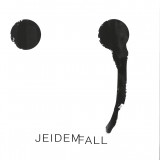
That which gets in the way of nature.
Veteran Techno producer *’Heretic’ returns with his solo project CATHARSIS and has evidently succeeded in refining his musical vision. With INTO THE HEART OF NOTHING he compliments a soundasthetic which had been initiated with his previous release A Purging of Demons.
Mastered by Black Mononlith Studios…
**LP FORMAT IS VERY LIMITED - PLEASE BE AWARE THAT UNFORTUNATELY THERE MAY BE CUTS TO ORDERS**
For Los Angeles' The Black Queen, the depths of isolation and loss have always functioned as a gateway to being born anew. Much has transpired since the band released their cold, cutting debut album Fever Daydream (a record that Revolver described as 'a haunting exploration of the darker side of pop music'). But throughout it all, the trio of Greg Puciato (former frontman of the now-defunct The Dillinger Escape Plan), Joshua Eustis (of Telefon Tel Aviv, Puscifer, and Nine Inch Nails), and Steven Alexander (a tech member for Nine Inch Nails, Ke$ha, and A Perfect Circle) have emerged as triumphant and intense as ever, documenting their journey via the synth-streaked industrial anthems of their sophomore release, Infinite Games.Formed in 2011 after a chance meeting between Puciato and Eustis backstage at a Dillinger show in which they both realized they were huge fansof each other's work, The Black Queen became a labor of love for its members to explore sounds and emotions that they couldn't quite fit into their full-time projects. Injecting a pained, twilit edge into slick new-wave tracks as fit for the dance floor as they are for some imagined dystopian skyline, the trio have managed to channel their scattered, eclectic influences into a surprisingly cohesive vision. 'We've got a pretty weird cross section,' Puciato says of the band's musical chemistry. 'We can go out for food and listen to Power Trip on the way there, then Baltimore club music on the way back, and then talk about how killer Maxwell's Embrya album was, and then get sidetracked and talk about the Celeste video game soundtrack, then all have to be quiet so that we can grab a voice recording of some weird sounding radio interference. It's all over the place and unusually far reaching,and there's a lot of passion for discovery.'After releasing their 2016 debut album Fever Daydream to critical acclaim however, the trio underwent several major upheavals that cast the project in a completely new light. Puciato's main project The Dillinger Escape Plan disbanded. Chris Cornell of Soundgarden killed himself while Puciato was on tour with him. Eustis put out music under his beloved Telefon Tel Aviv monikerfor the first time since his former bandmate Charles Cooper died in 2009. Thetrio's storage space was robbed. Puciato suffered a relapse into crippling anxiety and paranoia. Once again, in the face of tragedy, The Black Queen had to rebuild everything from the ground up.The first step was acquiring a new studio space, which immensely helped the band get back into the rhythm of freely collaborating with one another, and experimenting with sounds for as long (and as loud) as they wanted. The resulting album, Infinite Games, marks a massive leap forward for The Black Queen. Not only are the band's icy R&B instincts more sharply pronounced; they've also rendered their morbid electronics in more lush detail than ever before, filling out the corners of their songs with chilling ambient passages
that create a wide-screen backdrop for Puciato's eerie, tortured vocals. 'I think this album is actually hookier, but more insidious in that it reveals itself over time,' Puciato says about Infinite Games. His choice of words says something about the album's creeping, pitch-black approach to pop music.With this release, the group have also announced a new undertaking in the form of their new label, Federal Prisoner. Resisting the more marketing-centricapproach that feels standard at this point for the record label game, the goal of Federal Prisoner is to provide an outlet for projects that emerge naturally from The Black Queen's own creative endeavors and collaborations with otherartists. In a way, Federal Prisoner solidifies TBQ's commitment to creating music on their own terms, following the same organic sense of inspiration that led them to forming in the first place. As Puciato puts it, 'It's just an expression of passion and individualism in a way that opens more doors for us to create and to own what we create with minimal compromise. It's as much an act of refusal as it is a statement of intent.'Infinite Games, the second album from experimental Los Angeles synth-pop trio The Black Queen, comes out on September 28th
- A1: Fists Of Fury
- A2: Can You Hear Him
- B3: Hub-Tones
- B4: Connections
- C5: Tiffakonkae
- C6: The Invincible Youth
- D7: Testify
- D8: One Of One
- E1: The Space Travelers Lullaby
- E2: Vi Lua Vi Sol
- F1: Street Fighter Mas
- F2: Song For The Fallen
- G1: Journey
- G2: The Psalmnist
- H1: Show Us The Way
- H2: Will You Sing
- I1: The Secret Of Jinsinson
- I2: Will You Love Me Tomorrow
- J1: My Family
- J2: Agents Of Multiverse
- J3: Ooh Child
Kamasi Washington's wide-reaching double album Heaven & Earth arrives on Young Turks. Much like his previous releases, Heaven & Earth once again finds Kamasi setting out to expand the minds and horizons of all who encounter his music. Recorded as a double album, this expanded canvas gives his trademark tones the opportunity to offer a wider than ever before selection of fully immersive, freestyling psychedelic jazz that carries a distinctly spiritual edge.In an instant, Heaven and Earth really burrows deeper into the external cosmos that we were left circling around the edge of with his debut long-player, The Epic (released in 2015 via Flying Lotus's Brainfeeder label), yet it also carries us further into the distance of the deeply cinematic overtones that his debut Young Turks EP, Harmony of Difference pointed us in the direction of. While it is both instantly recognisable as a Kamasi Washington recording, Heaven and Earth's luxurious running time matched with a searching narrative sees Kamasi breaking out of any sounds or scenes he may be associated with, smoothly transcending into new, dynamic and sonically experimental levels and counterpoints of his now widely praised signature sound.
Washington convened his band, The Next Step, as well as members of the long running collective The West Coast Get Down at Henson Studios in Los Angeles to record the 16 tracks on Heaven & Earth. The music was composed, written and arranged by Washington, with new arrangements of jazz and bebop legend Freddie Hubbard's 'Hubtones' and iconic kung fu film theme 'Fists of Fury,' as well as one song by bandmate Ryan Porter. Thundercat, Terrace Martin, Ronald Bruner, Jr., Cameron Graves, Brandon Coleman, Miles Mosley, Patrice Quinn, Tony Austin and many more contribute to the album.Stretching out at two and a half hours of entirely newly recorded music, Kamasi Washington paints a vision of Heaven and Earth that is spread across two sections with eight movements apiece. It sees him wrestling with and attempting to make sense of the meaning of both Heaven and Earth within his mind and his place within the wider universe as a whole, with the Heaven side representing the world Kamasi sees inwardly, the world that is a part of him, while the Earth side represents the world he sees outwardly, the world that he is a part of. An existential experiment with saxophones that's set to take you on a journey that is as widely thrilling as it is deeply searching.
ADULT. make a triumphant return after their 2018 album "This Behavior", dubbed "_one of the best records of their career_" by Ryan Lathan of Pop Matters. This chilling continuation takes the form of "Perception is/as/of Deception", an anxiety fueled cyclone of pandemonium that only ADULT. would know how to harness. While "This Behavior" was recorded in the isolated snowcovered woods of northern Michigan, "Perception is/as/of Deception" was given life in a temporary space the duo created by painting their windowless basement entirely black, with the sole intention to deprive their senses, question their perceptions, and witness the resulting ramifications. With over 23 years and a sprawling discography left in their wake, Adam Lee Miller and Nicola Kuperus have spent their entire career as ADULT. obscuring any defined genre or style. With a history as uncanny as ADULT., the pieces that making up "Perception is/as/of Deception" might be perceived as their most punk-infused and introspective work to date. The elements of frustration and apprehension that have consistently woven throughout their material are at full mast, although augmented by a strident and more "head-on" approach. Tracks like "Have I Started at the End" successfully maintain the duo's classic EBM signatures and synthesized aggression, cradled by a suspicious mantra that questions_.what's the point? "Why Always Why" offers a disorienting mutation of the heralded sounds of classic dance music, like a remix that escaped prison and is on the run. The dystopian anthem, "Total Total Damage", comes in full force with an frantic energy which jolts any bystanders to attention, with only the defiant chants of Kuperus' vocals outlining the ever-degenerating state of societal affairs. The dramatically glam synth parts scattered throughout the album, while at times ominous in nature, seem to also act as a merciful reminder that through the journey of "Perception is/as/of Deception", one can still enjoy the chaos. With the rampant sense of emptiness on the minds of many these days, there continues to be few attempts at scoring these common, unfortunate human qualities with pure sincerity. Thankfully, ADULT. has a long-standing reputation for creating the soundtrack for our insecurities, and "Perception is/as/of Deception" further solidifies their apprehensive position.
LTD. GREEN VINYL
ADULT. make a triumphant return after their 2018 album "This Behavior", dubbed "_one of the best records of their career_" by Ryan Lathan of Pop Matters. This chilling continuation takes the form of "Perception is/as/of Deception", an anxiety fueled cyclone of pandemonium that only ADULT. would know how to harness. While "This Behavior" was recorded in the isolated snowcovered woods of northern Michigan, "Perception is/as/of Deception" was given life in a temporary space the duo created by painting their windowless basement entirely black, with the sole intention to deprive their senses, question their perceptions, and witness the resulting ramifications. With over 23 years and a sprawling discography left in their wake, Adam Lee Miller and Nicola Kuperus have spent their entire career as ADULT. obscuring any defined genre or style. With a history as uncanny as ADULT., the pieces that making up "Perception is/as/of Deception" might be perceived as their most punk-infused and introspective work to date. The elements of frustration and apprehension that have consistently woven throughout their material are at full mast, although augmented by a strident and more "head-on" approach. Tracks like "Have I Started at the End" successfully maintain the duo's classic EBM signatures and synthesized aggression, cradled by a suspicious mantra that questions_.what's the point? "Why Always Why" offers a disorienting mutation of the heralded sounds of classic dance music, like a remix that escaped prison and is on the run. The dystopian anthem, "Total Total Damage", comes in full force with an frantic energy which jolts any bystanders to attention, with only the defiant chants of Kuperus' vocals outlining the ever-degenerating state of societal affairs. The dramatically glam synth parts scattered throughout the album, while at times ominous in nature, seem to also act as a merciful reminder that through the journey of "Perception is/as/of Deception", one can still enjoy the chaos. With the rampant sense of emptiness on the minds of many these days, there continues to be few attempts at scoring these common, unfortunate human qualities with pure sincerity. Thankfully, ADULT. has a long-standing reputation for creating the soundtrack for our insecurities, and "Perception is/as/of Deception" further solidifies their apprehensive position.
The Current Inside”, Marja Ahti's sophomore album for Hallow Ground, plays with the theme of currents - connecting and animating movements in the form of air, water and electricity. It approaches sound as a poetic medium, focusing both on the experience of sound as form and energy and on a loosely narrative arc, suggesting a riddle on the relations between the sounds. It implements alternative as well as intuitive tunings, analog and digital synthesis, recordings of sonorous spaces and vessels, electromagnetic fields transduced into audio, acoustic close-ups of elements in motion and other field recordings. Fluently connecting quite diverse sound sources, Ahti's music lingers in a zone between abstract sonorities and vaguely familiar acoustic environments.
The first half of the album consists of ”The Altitudes”, a piece commissioned by Ina GRM for Présences Électronique and Sonic Acts. It was inspired by descriptions of the layers of Earth's atmosphere. Imagining a movement through layers of air, the piece unfolds with a slow intensity, interweaving concrete sounds and closely tuned electronic sonorities. Traversing the altitudes, a landscape of entangled elements, masses and currents emerges. The air around us has weight and it presses against everything it touches. As gravity pulls it to Earth, it is sensed as pressure. The rotation of the planet, the angle of the sun at any new moment sets the elements in motion in a chain reaction.
The other side consists of four shorter pieces. ”The Currents” opens with a dance of trembling charged movements. ”Lost Lake” extracts resonant tones from a trail of close-up recordings of winter environments, while ”Fluctuating Streams” channels streaming air in different forms. The closing track, ”Sundial”, could be construed as the steady turning of the planetary angle towards the sun, unfolding through fragments of everyday activity against the backdrop of piercing, slowly twisting, suspended tone.
Marja Ahti (b. 1981) is a musician and composer based in Turku, Finland. Originally from Sweden, Ahti has been a part of the Finnish experimental music scene for more than ten years in different constellations. She is currently active in the duo Ahti & Ahti with her partner and as a member of the Himera artist/organizer collective. Her critically acclaimed 2019 solo debut, Vegetal Negatives, explored a new formal language and sonic palette inspired by a short text by René Daumal.
Golden Days is the late completion of Ethimm’s EP trilogy on Light of Other Days and it continues exactly where the group left off 4 years ago. What started as the groups signature „tension music“, oscillating between dark repetition and moody improvisations is slowly morphing into a production style that features a heavy pop sensibility infused with conciliatory optimism.
The opener and title track of the EP recounts the meeting of a new lover in an autumn sunset. Starting with dreamy piano chords, a rhythmic bass and handclaps, it provides a beautiful musical backdrop for Tizi’s longing voice. During the course of the track, modulating synths and plucked guitars join her vocals as she sings about the „Golden Days“ spent with her lover.
Over & Out starts off in typical Ethimm fashion. Dubbed guitars, minimal beats and a sparse piano melody sets the tone for Elisabeth Thimm’s fragile vocal. In Over & Out Elisabeth negotiates her wish for freedom and how she breaks with her daily constraints. Albeit initially being drained in melancholy, the track ends on a musically hopeful note when a beautiful chord progression suddenly appears, colliding with an extended synth solo from outer space.
On Echoes in the Distance, glorious arpeggios accompany a sophisticated 303-style bass line and haunting vocals. The track follows one of Elisabeth’s dreams into a frantic, nondescript, deserted backdrop and slowly morphes into the most ecstatic piece of the EP. The multi-layered arrangement combined with Ethimm’s yearning voice on top, sound like about 3 tracks seamlessly sticked together. The track ends in pure ecstasy and the listener is left with the exciting feeling of wanting more.
The EPs finale is made up of the hopeful and minimalistic Day by Day, a track reminiscent of the balearic pop from the 1980ies. Gracefully and drained in beachside sunshine, Ethimm reminds us not to waste our days with unnecessary actions and focus on the beautiful small things in life.
Curtis Electronix delivers his second release. 4 originals from one of the most remarkable and reliable artists in the game, Rotterdam dungeon master DJ Overdose. The A side drops two club ready electro tracks molded with his unique cyberfunk style, punchy analog drums, heavy dystopian basslines and gently spaced out melodies. On the flip side things turn into a murky slow tempo affair. Industrial solid drums and distorted sonic grounds will turn your captivating journey into a dark machine odyssey.
First album in 8 years from legendary Dearborn duo . Windy and Carl have been crafting inner space electric guitar and bass vistas for nearly three decades now, but their latest feels as vital and vaporous as any peak opus in their vast catalog. Written and recorded across six years, the songs swirl between shoegaze minimalism and stargaze drift, over which Windy Weber whispers veiled poetic narratives of transformation, isolation, and escape. Allegiance and Conviction is their first album since 2012's We Will Always Be. The six compositions are something of outlier in their catalog, shorter in nature than most on their previous releases. All of the tracks are saturated with Hultgren's signature guitar work, intimate constructions of murmurs, drones and his trademark layered filigree, gently amassed into alternately lighter and heavier than air atmospheres. Despite being their first full-length in more than half a decade,the album fully belongs to the bewitching galaxy of sound Windy and Carl innovated and within which they remain the sole occupants: music of thresholds and peripheries and eternities. Allegiance and Conviction is the multifaceted, contemporary take on their sound.
2x12"
Having made initial waves on Cold Recordings and Osiris, Eric Baldwin returns now to Tectonic to release his eponymous album ’Cocktail Party Effect’, bringing his South London roots to Berlin for an all-weekender, under strobe lights.
Drawn by his appetite for powerful rhythmical forms and inspired by the likes of Daphne Oram, The Residents and Captain Beefheart - Eric takes uses background in sound design, knowledge of hacking VST software and adapted spring reverbs and other hardware, to create a truly unique vision of contemporary electronic music. It sits somewhere between Jeff Mills, Aphex Twin & Squarepusher - held together by a connective UK Bass Music spinal chord. A weird but intriguing beast.
We open the track with Japanese cocktail recipes, before moving into the only vocal track of the album, ‘Talking To Bricks’ featuring Bristol vocalist Redders on fine form - charged with disjointed energy and run ragged across a technologically charged dancehall style beat. The LP progresses through the rolling breaks and bleeps of ‘For The Memory Exchange’, into an IDM side-step in the shape of ‘Brutalism’, moving into the gentle, beautiful flickering glitches of ‘PDA’, before we get to the hyperactive twitching alien charge of ‘War On Codex’.
Taking a leap in another direction, we reach ‘Cause For Bad Shelving’, which sounds a bit like Squarepusher when he was on late 90s, immaculate form - taking the tempo up a few notches, while building melancholy. ‘Lack Of Wrong Format’ then gives us a moment to breathe, before diving into ‘Deerhorn’ which brings us right back to the dancefloor. Things are then turned inside out with the jittery wonder of ‘I Get It (Lost Banknote)’, redirected via the industrial clangs of ‘Low_Rise’, before rounding off our sonic adventure with the ponderous tones of ‘Loner’ - which leave you glowing and drifting off into space.
A bold album that’s just brim with a strong sense of originality, direction and grand narrative. From international dancefloors to post-clubbing ear-worms, Cocktail Party Effect is just getting started and you’ll be hearing his name more and more now.
Industries Of The Blend is the latest project from Dj Luna-C, and it a step back into the original sounds of 1990 and 1991 old skool. Slower bpm and all hardware lead to an entirely authentic sound for this EP, and that authenticity continues with the style of sleeve (Spined like an old Euro EP) and in the overall concept. Proper underground, original, rave music. For those who know.
Billy Bunter, the Fat Controller, Glowkid, Slipmatt, Dj Jedi, Dj Luna-C, Dj Brisk, Clayfighter, Jimni Cricket, Bustin, Sc@r, Doughboy, Saiyan, Dave Skywalker, Ponder and many others
Ital Tek (a.k.a. Alan Myson) returns to Planet Mu with his sixth album ‘Outland‘. The album was written during a period of new beginnings following a move out of the city to a quieter space and the birth of his first child. During this time of self-imposed isolation Alan recorded a huge amount of source material and spent weeks and months sitting up at night with his newborn, listening back and making notes on how the new record should take form, focusing and developing ideas to shape this lean ten-track album.
Alan talks of the record being a collaboration between two parts of himself, something that definitely comes across as the album unfolds. Textures are something Alan excels at and on his last album, the largely beatless ‘Bodied’, it felt as if he was building a new sound-world. On ‘Outland’ he expands upon this. The album brings together the extremes of Alan's sound, contrasting roughened bass and beats with starker more detailed atmospheres and emotions.
The most beat-driven song here is ‘Deadhead’, with its gnarled bouncing bass, angular distorted melodies and cavernous textures. On tracks like ‘Bladed Terrain’ the contrasts are even more defined with buzzing drones and razor sharp drums plunging into a grainy fog, giving the track a dramatic 3D feel.
Then there are the stop-start pauses of ‘Leaving The Grid’, where the song evaporates into space before reemerging with shuddering rhythms and ghostly textures. Melodies crawl around these tracks as if they’re just waking up, as heard on the atmospheric ‘Angel In Ruin’.
The sleep-deprived fraying of the senses became Alan’s routine and one which he says gave him a renewed creative energy; half-asleep, working through the night, and then into the daytime super-focused but exhausted. Prone to audio hallucinations whilst writing the album, he aimed to capture these distortions in his perception of pitch and time, and you can hear these effects interpreted on tracks like ‘Endless’ and ‘Open Heart’ as melodies phase and slip out of time like an emotional Doppler effect.
This is also true of the soaring atonal synths at the peak of ‘Diamond Child’, which feel like the aural equivalent of eye floaters. These intuitive feelings and functions are a difficult thing to capture in sound, but Alan manages it beautifully and always makes the result feel warm and adventurous, heartfelt and epic.
2011 album available on vinyl for the first time. Master percussionist Bonjo Iyabinghi Noah joins forces once again with dubmaster Adrian
Sherwood at the controls and a whole host of guest musicians, including contributions from dancehall pioneer Jazzwad and electronics from Adamski.
All the elements of a classic African Head Charge album are present: spaced out dub, tribal chants, ecstatic trance but updated with a rugged sound system undercarriage. Arguably some of the hardest hitting AHC rhythms laid down in the studio to date.
Cut as a double LP for maximum dynamics by King Kevin Metcalfe. Includes digital download card for full contents and double-sided poster insert containing new interview with Bonjo on the making of the record.
Portuguese- Italian Producer "Vhycepicks" up where he left off,
once again teaming up with the talentedvocalistYves Paqueton Kraak & Smaak's very own Boogie Angst imprint.
He's already got an impressive list of top DJ fans in the shape of
Pete Tong, Claptone, Gorgon CityandSatin Jackets, and it's no surprise given his clean, pop aesthetics and catchy dancefloor sensibilities.Indeed it has led to releases on some of today's most respected dance labels like Kitsune, Future Disco and Casablanca Sunset.
As well as collaborating on their previous single 'Duran Duran' together, Brazilian born soulful vocalist Yves Paquethas previously collaborated with the likes of Aeroplane,and scored #1 in the Belgian dance charts with The Subs. He provides the perfect foil to Vhyce'sbeats with just the tonic – a melodic toplineall about the good times, having a drink and getting high…
In addition to the original mix there's another special treat as stepping up to provide a stellar remix is none other than PrinsThomas, a true pioneer of 'space disco' and regular bandmate of nu disco royaltyLindstrømin their imaginatively titled project 'Lindstrom & PrinsThomas'.
Yes, he takes his arpsynth lines out for a spin and serves up a prime cut of good time, ethereal, dancefloor fire. With all the hallmarks of his crisp and upbeat spacey productions it's not one to miss out on.
For those who are all about the beats, fear not we got you covered as there's an instrumental safely stowed in there too …
You have reached the Infolines. Tonight, you will be given links to preview a reverence to the venues that helped shape an industry and generations of musical technological wizardry. ‘Packard’ features a compilation of cuts fitting to the experiences by those who once frequented the halls of Detroit’s urban decay.
Bendersnatch, kicks things off with a ‘Homage’ fitting of the mainstay venue paying reverence to the classic Detroit Techno sound. ADMN’s Machine 8 shows a lust for a bass grind synonymous with the engines machined in the halls of its urban decay. Remote Viewing Party’s minimal break ‘fuxwiddit’ whistles echo to us through the warehouse former machine shops. Maxlow makes sure you ‘heard’ what they must say pushing air from the subs ensuring you feel the room.
Keep an eye on this space and be sure to call in for the waypoint to the party.
After 3 months holed up in the studio Blair French has emerged to bring you Genes/Space Conductor 7” in support of his forthcoming album The Art Of Us on Rocksteady Disco. The A-side holds the “Loose Fit” mix of “Genes”, where Blair channels his inner Tony Allen for an expertly executed modern psychedelic Afrobeat cut featuring a heavyweight cast of Detroit characters including Todd Modes, John Arnold, and Paul Randolph. On the flip is “Space Conductor”, a cosmic afro broken beat joint with heavy drums, a huge bassline, kora, and Blair’s vocals, exclusively available on this 7” only. Housed in a full color jacket, cut loud to lacquer, and pressed heavy with pride at Archer on Detroit’s east side.
"BRUK" is a new platform for fresh variations on the soundsystem ethic, in particular where high-end sound design intersects with formidable bassweight. It's an artist-focused endeavour geared towards producers with range, depth and ingenuity in their sound.
The first transmission comes from "FFT", the latest alias from accomplished producer Josh Thompson. Thompson established the Super Hexagon label with long time friends J. Wiltshire and Arthur Scott-Geddes and he's also released on heritage label R&S (as Alma Construct) and the excellent offbeat techno upstarts Power Vacuum, and more recently developed the FFT moniker via essential drops on The Trilogy Tapes as well as Super Hexagon.Thompson helps launch BRUK with a two-pronged attack that shows off the breadth of his artistic scope.
The lead 12" is a dynamic club release that pivots between razor-sharp drum programming, hyphy synth acrobatics, breakbeat science and dub-loaded atmospheres. If there's one constant that runs through all Thompson's work, it's a resounding confidence with melody, and that comes through even in the rowdy chops of "Month" – a track that exudes hope even in its gnarliest bars. From the dreadweight minimalism of "Fask" to the expansive electronica shock out of "Sacrifice (The Truth Mix)", this is a head-twisting release that feeds into the vital new energyreverberating around the 150+ axis.
Accompanying that 12" is a cassette album which provides that polar opposite side to FFT – a collection of compelling beatless ruminations under the banner of Total Self-Fulfilment. Gliding from low frequency industrial textures to expressive synth modulation, this is far from static music, even as it moves without the aid of a traditional rhythm section.
It's a strong first chapter for BRUK, with future releases lined up from artists similarly poking at the fabric of contemporary club music to find their own unique spaces for expression.
On a collision course with earth from the furthest reaches of the universe, The Colours That Rise announce their debut album “Grey Doubt’ on the inimitable Rhythm Section International. Comprised of producer duo Simeon Jones and Nathanael Williams, The Colours That Rise have previously turned heads with 2017’s “2020” EP released on Breaker Breaker (the label credited with breaking Ross From Friends).
Returning with their most accomplished offering to date, “Grey Doubt” features acclaimed guests such as Yazmin Lacey, Yussef Dayes and Andrew Ashong, each respectively complementing the incredible musicianship on display here, capturing the true zeitgeist of present day UK. Combining live instrumentation and analogue synths, intricate, intertwining textures and melodies run deep throughout this beautifully crafted afrofuturist voyage, exploring the darkest recesses of the galaxy, through weatherbeaten and asteroid damaged synth waves and broken drum patterns reverberating out into the vastness of space.
Pre-announcement single ‘Home Time’ has picked up steam with support across BBC 6 Music and 1Xtra through the likes of Benji B, Tom Ravenscroft, Jamz Supernova and Mary Anne Hobbs, who awarded it as her ‘Near Future’ track. The duo are also set for a live performance at Rhythm Section’s showcase at SXSW 2020.
Hendrik Weber aka Pantha Du Prince (‘a fantasy character...a poetic transporter for the concept behind the music’) has carved a niche for a style of techno he calls, ‘layered and cinematographic.’ He released the Diamond Daze (2004) and This Bliss (2007) albums on Berlin dance label Dial before signing to Rough Trade and widening his audience with Black Noise (2010) and The Element of Light (2013).
On “Conference of Trees”, Pantha Du Prince explores the communication of trees and creates a sound concept based on it. What we experience here is a break through recording of experimental music, visual poetry, club culture and speculative science.
Amsterdam might be susceptible to grey skies and rain as any other, but cup your ear to the music flowing out of the Dutch capital, and another story emerges. The Mauskovic Dance Band are a prime example of an act who have been dialing up the sunshine over the river Amstel in recent years.On Shadance Hall, their first release of 2020, they concoct a tantalising brew of no-wave, psych rock, cumbia, power dub and numerous other colourful shades of global grooves.
No stranger to Dekmantel as one of half of electro-grouping Bruxas, Nicola Mauskovic leads his percussive troupe through a heavy, trippy, disco fiesta with this, their first debut on Dekmantel Records.
The Mauskovic Dance Band’s epic sonic journey on Shadance Hall began deep in the Welsh valleys. Partnering dusty drum machines alongside phat layers of congas, assorted bric-a-brac of percussive tools, and distortion-soaked guitars, Mauskovic’s ensemble suspend the tempo and turn up the grooves. on this soundsystem-inspired, post-punk odyssey. The resulting soundsystem-inspired concoctions are a mixture of 130bpmbeats (‘Ventura Phase’), Jah Wobble-influenced bass rhythms (‘Squeeze Dogs’) and Carnival-ready soca-jams (‘Theorie Amerikaan’).
Taken back to Amsterdam’s famed Electric Monkey Studio (a favourite for Ghanian great Ebo Taylor and Dutch youngbloods Jungle By Night alike, Mauskovic teamed up with engineer Kasper Frenkel to mix down the record. Here the two acted as Mad Professors, experimenting with the recordings and making multiple versions of each track by creating tape loops, bouncing the audio back and forth and layering the resulting recordings in waves of reverb and echo. In classic dub style, the band ended up with dub edits, rich in space echo, reverb, crush, and dub-goodness, completing the second half of Shadance Hall like a funky palindrome. It rounds off an expressive EP steeped in musical history, bursting with inventiveness, projected at the listener as a maze of influences to get lost within.
French Duo "Dub Striker" make their debut on 'Happiness Therapy' with a solid 5-track EP backed by a remix by Chicago based House producer- and Smart Bar resident Garrett David.
'Dub Striker' reignite the French House scene on their latest release with their raw sound influenced by artist like Gerd, Milton Jackson and Fabio Monesi. The opening track to the Birds Of A Feather EP, Wild Rhythm, showcases the duo’s diverse style with this tropical infused track featuring tribal rhythms, light and airy chords and bright melodics. A refreshing opening track that transports you to another place.
The following track is "Mood Pt. 2", a raw loungey house track with Icey high hats, a punchy kick drum and hypnotic chord sequences.
Opening on the flip side of the EP is, Computer Games, with a change of pace from the A side with its pulsating kick drum, floating bassline and spacey chords and melodies. ‘Would You ?’ follows, again showcasing the duos diverse style with this Jazzed up house track with its rhythmic raw percussions, classic house chord progressions, trippy vocals and dissonant synth stabs.
Closing the EP is Garrett David’s take on Wild Rhythm, his interpretation takes you deep into the jungle with this upbeat percussion driven track, with it's soothing bird calls, tropical
melodies and enchanting chords.
One Sided 7", Limited edition of 200 copies on black vinyl, handstamped whitelabel with additional photo inlay.
Tribe'n'Bass? Tech'n'Bass? Drum'n'Tech? Whatever you might call it, the first ever vinyl release of the freshly launched imprint Freebreakz.FWD is a quite trip, a journey into the unknown and unexplored.
For their conjunctional studio effort that is „Alien Swamp“ we see Hamburg's baze.djunkiii and Berlin-based Donna Maya draw influences from spiralling TribeTekno and the freeform approach of the teknival scene, pay homage to their love for advanced, experimental Drum'n'Bass and fuse these elements with a stripped down high tech vibe somewhat reminiscent of early Minimal Techno coming out of Motor City Detroit. Imagine all these bits falling together at breakneck speed and with a well psychedelic notion and you'll be
captivated by one of the most unique dancefloor cuts from a space-exploring future, the electroid soundtrack for illegal raves taking place under the two suns of life-bearing exoplanets in binary star systems far far away.
• 180g Picture Disc in Die-Cut Sleeve • Best of Bowie’s legendary performance from the Universal Amphitheater, Los Angeles • Broadcast on KMET-FM • Digitally remastered for greatly enhanced sound quality • Background liners
“Come out of the garden, baby”, and revel in the sounds of David Bowie’s spectacular Diamond Dogs Tour. Protus very proudly brings together the best of Bowie’s gig at the Universal Amphitheatre in Los Angeles, 5 September 1974, broadcast live by 'KMET' radio station, which featured an extraordinary set list showcasing work from several key Bowie albums including Ziggy Stardust and the Spiders from Mars, Aladdin Sane, Hunky Dory, and of course, Diamond Dogs.
One of the most expensive tours in popular music history, the tour and the album helped the star to crack the North American market.
David Bowie – Vocals
Michael Kamen – Electric Piano, Moog Synthesizer, Oboe
Mike Garson – Piano, Mellotron
Earl Slick – Guitar
Carlos Alomar – Rhythm Guitar
David Sanborn – Alto Saxophone, Flute
Richard Grando – Baritone Saxophone, Flute
Doug Rauch – Bass
Greg Errico – Drums
Pablo Rosario – Percussion
Gui Andrisano – Backing Vocals
Warren Peace – Backing Vocals
Ava Cherry – Backing Vocals
Robin Clark – Backing Vocals
Anthony Hinton – Backing Vocals
Diane Sumler – Backing Vocals
Luther Vandross – Backing Vocals
Pilo returns to BNR in 2020 with the “A.R.E.A.” EP. Since his first release for the label in 2013 at a very young age, each subsequent record could be seen as a milestone of growth - the “A.R.E.A. EP” feels confident, produced with consummate skill, focusing on the LA-producers strongest themes and devices. This is not, however, the sort of “maturity” that sees things get boring, more restrained. Pilo’s drum is the beat of LA’s unhinged underground techno scene - they don’t do boring - and this drum is always banging.
A-side examples: “Acid by Mouth.” A stuttered kick and a gated, uncanny valley voice form the backbone for increasing layers of texture and percussion. It’s a rollercoaster, as viscerally satisfying on the way up as on the way down. Pilo’s production journey has been increasingly cinematic, and you can see the songs here - “Acid by Mouth” is suited for a Gaspar Noe nightclub scene, and you love to hear it as long as no one gets murdered. “Ruhig” is tribal, made for spaces with 4 story high ceilings and sparse but blinding flashes of light. You can hear steel beams buckling under pressure, a breath too close behind you. The workers of the factory in fit of madness started raving to the sounds of their own machines. They’ve been dancing, without pause, for years now.
The B-side opens with “Exit the Artificial.” Headbanging broken beat kick, aggressive Skinny Puppy snares, ghost voices in hallucinatory bursts too short to confirm to be real. The draw-distance of the stereo spread seems infinite - listen at the very edges and a whole other (ominous) world is taking place. The ghosts mock you in gated laughs by the end. “Adapt Tactics” leads you out - low tempo, hissy percussion, haunted again at the fringe. Things break down, reduced to grain - brain short-circuits, “will I feel like this forever?” It’s a warning - turn back, there’s nothing for you out there. You embrace the madness, and start Pilo’s “A.R.E.A.” EP again from the beginning.
- A1: Hot Sand Shuffle (3:50)
- A2: Sky Blue Sky (2:52)
- A3: Mystic Beach (2:44)
- A4: Crystal Forest (3:18)
- A5: Distant Shore (4:38)
- A6: River Run (2:24)
- B1: Catch A Wave (2:12)
- B2: Paradise Bird Bath (2:40)
- B3: Smooth Runnings (3:31)
- B4: Spirits Have Flown (3:21)
- B5: Rolling Deep (2:26)
- B6: Island Blues (3:29)
- B7: Sun Salute (3:14)
Jon Tye and Pete Fowler have been making music as Seahawks for a decade now. Given the sounds they’ve been exploring over those ten years it was a cosmic inevitability that they would be asked to contribute to the catalogue of the legendary library label KPM.
They replied with Island Visions, an exploration of sound for vision where they construct “audio micro-worlds to explore and inhabit”. A way to transport the listener away from the everyday without the bother of getting on an aeroplane. Mind travel is space travel after all, and much better for the environment.
Mostly recorded at The Centre Of Sound in Cornwall, with additional recording at Studio 34 in London, Jon and Pete’s travelling companions on this particular trip were boogie wunderkind Sven Atterton on fretless bass and keys, Nick Mackrory on percussion and the Seahawks live team of Dan Hillman and Alik Peters-Deacon.
From the grooves of Brian Bennett to the moog vibrations of Mike Vickers, the lush textures of Les Baxter to the experimental sounds of Delia Deryshire and David Vorhaus, this new music channels sounds and moods from across the KPM universe.
The spacious “Hot Sand Shuffle” opens the record with some of Seahawks’ familiar “deck-shoegaze”. The slinky digi-dub of “Sky Blue Sky” follows, gently encouraging us to lay back and relax. “Mystic Beach” is a refreshing ocean spray of a synthetic groove that clears the head, priming a pathway to receive “Crystal Forest”, a new age house groove of birds and flutes.
Dense, deep and dreamlike, “Distant Shore” is ambient rainforest house with a 90s vibe, its dense foliage clearing to let us bask in the shimmer and shine of “River Run”. Hang drum, electric gamelan, flute and loon close side A.
Side B bounces into being with “Catch A Wave”, an upbeat beach groover of synthetic guitar, effervescent synth and snappy drums. Equatorial bubbler “Paradise Bird Bath” soon glides in with marimba, crisp beats and fat synth bass. Fender rhodes, space echo and fretless bass make “Smooth Runnings” a laid-back poolside groove.
“Spirits Have Flown” conjures a hazy vibe with marimba, sax, synth funk bass and chilled beats before “Rolling Deep” serves up a light cocktail of sultry rhythms, refreshing textures, cooling sax and fretless bass. Almost-title track “Island Blues” brings the horizontal poolside feels with melodic chimes, oboe and more fretless bass for maximum vibrations. The marina drone of modular electronics, celestial trumpet and jungle ambience pay the album’s final respects to the cosmos on “Sun Salute”.
Like many KPM suites, this is a record of two distinct sides. The sunrise of side A brings a deep meditation, a journey within to renew the jaded self. Side B refreshes with cocktails by the pool and a chance to groove away the evening at some sunset beach party before dancing under the stars in the house of dreams.
Pete’s front cover for the LP is part map, part postcard: “the record has five different sections and I wanted to reference those in the worlds they created, musically and physically. From beach campfire, to poolside hanging and nighttime dancing. A kind of portal to those places and the pictures they inspired in my mind. All places we’d like to be in this turbulent year”. The track descriptions on the back help guide the way.
2020 marks 10 years since Ocean Trippin’, the first Seahawks release, and Island Visions is the perfect distillation of the sounds, sights, textures and moods that Jon and Pete have been exploring over the last decade. Sunrise to sunset condensed to two sides of an LP. The normal rules of space and time don’t apply here.
This is the first time Be With has worked with Seahawks, but individually Jon and Pete have been members of the extended Be With family since forever (Pete did those posters for our Ned Doheny tour and we worked with Jon on the vinyl version of Hatchback’s Colors Of The Sun). Of course we were going to put this out on vinyl.
Mastered by balearic engineer of choice (and Be With’s regular audio co-pilot) Simon Francis, cut by the legendary Pete Norman and pressed in the Netherlands by Record Industry, the sonic frequencies of these Island Visions have been precision tuned and encoded for optimum travelling conditions. Take the trip.
Following on from an excellent debut in 2019, with ‘Karoussel’, Mow Records unveils its second album. A further exploration of label head Mowgan’s penchant for house music and authentic African sounds, ‘Soya’ features percussion and vocals from Solo Sanou, an artist whose roots lie in Burkina Faso - though he’s based in Toulouse, where the album was recorded.
Comprised seven Afro house cuts that utilise organic instrumentation and Solo’s raw, emotive voice, the album is the second installment in a series of five long-players recorded by Mowgan in the space of a year. This new LP goes deep into the heart of Africa’s rich musical culture, delivering contagious rhythms, rousing atmospherics and a pure, organic, unadulterated sound that has been cultivated through electrifying jam sessions at Mowgan’s studio. Also featured on ‘Soya’ are Yoan Hernandez and Yaya Dembele who play guitar, Gauthier Djalate on bass, alongside Mamadou ‘Madou’ Dembele, a multi-instrumentalist who plays flute and ngoni, while also handling backing vocals with Adama Coulibaly aka Demsi and teaming up for a duet with Solo on ‘Badenya’. Another vocalist, Fanta, was intrinsic to this LP. The granddaughter of renowned Malian performer Kandia Kouyaté, Fanta appears on ‘Fatanya’ and is a crucial component of the album’s conception…
The story goes that Mowgan was making an album with Fanta when he realised he needed a percussionist. Fanta brought in Solo Sanou, who was very timid to begin with. Mowgan liked his style and decided to work on some music with Solo separately. As the relationship blossomed, and they recorded more music, Solo brought more and more instruments to Mowgan’s studio. During those sessions Mowgan gently encouraged Solo to try using his voice, eventually he did and, when he heard how good it sounded, ended up singing across the whole LP. So, the beauty of this album, beyond the wonderful instrumentation, is the fact that you’re hearing Solo Sanou sing for the very first time.
With all the songs recorded in his native languages, Bobo and Bambara, ‘Soya’ is an exhilarating blend of electronic production and African influences that emanates a feeling of authenticity throughout. From the opening cut ‘Adamine’, which is about Solo’s first meeting with Mowgan, to ‘Badenya’ which refers to family bonds - “There may be quarrels, but it will never catch fire,” Solo says.
There is social commentary, such as that featured on ‘Fantaya’, which is about poverty - “While some people worry about what they will eat at night, others have fun without worrying about them,” he says.
A soul-nourishing, vibrant and utterly contagious collection of raw, authentic Afro house, ‘Soya’ marks another step forward for Mow Records and a triumph for all the artists involved. Look out for further installments…