Since the first release 5 years ago, Jazz Room Records has released an eclectic and interesting selection of releases.
From the Jazzy commercialism of the Take Vibe version of The Stranglers "Golden Brown" (5,000 vinyl single sales) to the 1960's Headshop Sounds of West Coast Fluteman Eric Ghost.
Other notable releases on Jazz Room include the critically lauded album by Vibraphonist Khan Jamal "Infinity", a compilation of Japanese tough funk fusionists indigo jam unit put together by DJ Colin Curtis, Nuyorican Latin House from Tata Vasquez, Jazz Dance Madchester Rave from Cruisic and some South African Holy Grail grooves from Abacothozi! The latest release is the Underground Latin J-Jazz of Copa Salvo, first introduced to London by DJ & Music Legend Jean-Claude.
Next up is an in demand Jazz Funk Obscurity from Educator and Trumpet Player John Lamkin whose self released album "Hot" saw the light of day in 1984 then disappeared into the Rare Jazz ether.
Currently changing hands for €300 and upwards it's again about to see the light of day in 2025!
This is an album that is aptly named with all the elements we love: Latin, Funk, Soul, Jazz and all round Double Hipness. What a Hot item it is too. From the Funky as it gets opening bars of "Ticket" through the Rio bound flight "722", taking in a visit to Wonderland with some Soul Jazz Vocal stylings on "Flower Power" and the Funkiest 17 minute Journey to Trumpet Enlightenment in the Title track "Hot" which is, true to its name, Scorching by the finish line is reached.
Already getting Big Ups on UK Jazz Funk Scene Founder Colin Curtis's Cult Radio Show "Jazz Dance Fusion" it's gonna be getting plenty of plays worldwide at the "Hottest" radio stations and funkiest jazz dance nights near you soon!
Ross Allen: It's brilliant!! Perry Louis: Massive! Dr Bob Jones:I Love Big Time!Colin Curtis: Killer!
Поиск:stat
Все
Source of an all-time 'Breaks and Beats' classic, Mr Bongo reissue Herman Kelly’s timeless 1978 album Percussion Explosion!. Immortalised in hip-hop folklore, when the anthemic 'Dance To The Drummer's Beat’ was featured on the influential Ultimate Breaks & Beats compilation series in 1986.
Percussion Explosion! was the brainchild of drummer, percussionist, producer and arranger, Herman Kelly and his percussive disco-funk group from Miami, 'Life', that featured Aaron McCarthy, Oliver Well, John DeMonica, Michal Cordoza and Travis Biggs. The album houses a collection of disco, funk and Latin-inspired cuts that were destined for greatness. Nestled within the grooves is the B-Boy and B-Girl’s anthem, 'Dance To The Drummer's Beat’, which contains a now legendary break. A cursory glance at Whosampled will show that it has been sampled in over 125+ songs. These include Double Dee & Steinski on their groundbreaking 1985 production 'Lesson 3 (History Of Hip Hop Mix)', as well as by DJ Shadow, N.W.A, Masters At Work, Run D.M.C. and a whole host of heavyweights across hip-hop, dance and pop music.
When the album was released in 1978 it came out on two different labels, Alston Records and Electric Cat. Each label pressed different versions of 'Dance To The Drummer's Beat’, with the former featuring a 4:12 version and the latter a longer 5:09 version that has a different structure, crowd noise at the start and overdubbed percussion.
For this Mr Bongo reissue, we have chosen the classic 4:12 version from the Alston Records release, which would later find its way on to the illustrious Ultimate Breaks & Beats compilation. To make matters even more confusing the Alston version art on the back cover also states the track length as 5:09, whilst the centre label lists it correctly as 4:12.
Aside from the much celebrated 'Dance To The Drummer's Beat’, the album includes a range of other fantastic overlooked cuts. From the percussive soul stepper 'Share Your Love', to the beautiful Latin-flavoured 'A Refreshing Love' or the party disco-funk groover 'Who's The Funky D.J.?'.
This wonderful and inspirational record features an important piece of hip-hop heritage and deserves a place in every collection.
The album’s title deftly gestures to the sheer vastness of astronomical dimensions, while simultaneously capturing the musical breadth within, where the eight planets are imagined as the eight notes of an octave. The work draws inspiration not only from earlier compositions —most notably Gustav Holst’s The Planets—but also from the rich astronomical and cultural contexts surrounding these celestial bodies. Here, the focus transcends direct citation of melodic motifs, instead embracing an intriguing conceptual approach on a meta level, unfolding in a series of vividly contrasting soundscapes. These contrasts shape a sweeping sonic journey, one that fully embraces the album format with both arms, inviting the listener to venture into realms both strange and wondrous, feeling the immensity of the interstellar space that lies between them. Contrast, after all, is the brushstroke that enriches our world.
Embarking on an auditory voyage, "Astral Guide" establishes the sonic framework that propels us into the boundless expanses of the cosmos. Its ethereal tones evoke the vastness of space, crafting a mood ripe for exploration within the realms of sci-fi. The subsequent tracks unfold like constellations, weaving a rich tapestry of sound that seamlessly marries cinematic soundscapes with pulsating, club-oriented rhythms. This album invites listeners to traverse its immersive landscapes, whether nestled in the comfort of home or dancing under the starlit sky, each note a guide through the transcendent experience of a nocturnal journey.
"Solar Flares" draws its inspiration from the awe-inspiring expanse of solar phenomena, capturing the majestic power of the sun as it reaches into the cosmos. This track resonates with the idea that energy, while vital, can also be a force of destruction when unleashed with overwhelming intensity. The composition beautifully mirrors the sun’s duality, where brilliance and devastation coexist, inviting listeners to reflect on the delicate balance between creation and annihilation. Through its rich textures and dynamic shifts, "Solar Flares" serves as both a homage to the celestial and a poignant reminder of nature's formidable power.
"Mercury – The Winged Messenger" embodies a meticulously crafted soundscape where artistry meets astronomy. The tempo of 173.6 BPM, derived from precise astronomical data, propels the composition into a vibrant realm that resonates with cosmic energy. Synthwave sound design intertwines seamlessly with the fluid rhythms of Drum’n’Bass, imbuing the piece with an uplifting dynamism that evokes the ethereal grace of Mercury itself. In this sonic exploration, listeners are invited to ascend on wings of sound, navigating the celestial tapestry of the universe with each invigorating beat.
"Venus, The Bringer of Peace" strikes a decidedly cozy note, presenting a poignant contrast to the more tempestuous themes often found in cosmic narratives. This composition evokes a nostalgic vision of an optimistic era, one in which humanity transcended borders and embraced the infinite possibilities of space exploration, where no destination felt too distant. The dense, languid atmosphere envelops the listener, creating a tangible sense of serenity that unfolds gradually, allowing for a meditative journey through sound. Each note serves as an invitation to linger in this tranquil embrace, reflecting on the harmonious potential of our collective aspirations and the beauty of connection in a vast universe.
The central theme of „Gaia, The Bringer of Life“ —originally not part of the planetary cycle— is the profound enabler of life on Earth. The arrangement delicately mirrors the slow, tentative unfolding of this potential, marked by an initially sparse orchestration that gradually builds in momentum. This progression crescendos, embodying the explosive dynamism of the Cambrian burst of life, ultimately culminating in a euphoric fanfare—a triumphant, celebratory flourish echoing life’s victorious emergence.
"Blue Moon" unfolds as a contemplative reverie on the tranquil clarity of a night sky, now seldom glimpsed in its natural purity, unclouded by the relentless haze of urban light. The listener is drawn into the vast embrace of the star-strewn firmament, a journey that sways between euphoric awe at nature’s sublime beauty and a profound melancholy for its fragile and imperiled state. Musically, this duality finds expression in the delicate interplay of modal mixtures, while an ever-shifting triplet groove, poised at the intersection of Outrun and melodic house, lends a pulse that is both nostalgic and forward-looking—echoing the beauty and transience of a world on the brink.
Rather than replicating the original composition of „Mars, The Bringer of War“, this interpretation seeks to evoke its profound, foreboding atmosphere. Cyberpunk emerges here as an ideal genre, channeling the dark, relentless march synonymous with Mars, the ancient god of war. The piece reverberates with intensity, as distorted vocalizations rise, embodying the anguish and visceral torment that shadow war’s violent crescendo. This auditory descent into conflict captures the relentless pulse of warfare, where sound itself becomes an embodiment of suffering and fury.
Majestically, "Jupiter, the Bringer of Jollity" emerges on the celestial stage, sweeping away the somber tones with its radiant vigor. Drawing inspiration from the triumphant strains of the original, and borrowing a melodic motif in the refrain, the piece expresses joy and buoyancy through a shift to a major key and the lilting sway of a danceable 12/8 meter. Spirited and exuberant, it leaps boldly from major to minor and back again, playfully shifting time signatures to capture a mood of unbridled festivity and jollity.
Here, a more conciliatory concept is chosen than in the original inspiration. „Saturn“ aligns with the number six, being the sixth planet from the Sun and bearing the iconic hexagonal pattern at its northern pole. What, then, could be more fitting than to render this piece in a 6/8 time signature? The arrangement unfolds with a multifaceted richness, mirroring the countless stones and ice fragments that form the foundations of Saturn’s majestic rings.
„Uranus“ adopts the theme of a light-footed, dancing instrumentation, giving the impression of perpetual motion, never quite settling. This musical choice harmonizes with the planet’s own orbit, as it spins with breathtaking velocity, teetering and swaying, seemingly unable to attain rest or stability.
The chill and vastness of the cosmos find expression in „Neptune, The Mystic“. At its core, an electronic soundscape envelops a classical arrangement, its unreachability intensified by an ethereal, otherworldly choir. Hovering at the outermost boundaries of the solar system, where warmth is but a distant memory, the composition lingers in a slow, contemplative tempo, evoking a realm where space for speculation stretches wide and silence reigns supreme.
Though Pluto may have lost its planetary status, and its companion Charon never achieved one, this shift in classification subtly aligns with the cosmic scale invoked here—one that mirrors the musical tradition of an eight-note sequence. Fittingly, the album closes with „Kuiper Belt“, a composition emblematic of the turbulence and vitality of countless smaller
celestial bodies that, though diminutive, find their rightful place within the vast architecture of the solar system.
They say nature is the greatest composer, shaping the universe with a symphony of chaos and order, beauty and danger. It is this duality that fuels the artistic vision of Edictum—a producer who, armed with a doctorate in chemistry, delves as deeply into the mysteries of molecules as he does into the depths of sound. In the tension between the vastness of the cosmos and the microscopic processes that dictate life’s rhythm, Edictum creates sonic landscapes that dissolve the boundaries between science and art.
His music is a story of contrasts—a sonic tale where the raw forces of nature clash with the intricate structures of human culture. Opposites intertwine to form a harmonious whole: the primal rhythms of the earth meet the celestial melodies of the cosmos, the rigid laws of physics blend with the boundless freedom of art. Edictum explores these polarities with meticulous devotion, each composition an expedition into uncharted soundscapes—a quest to give voice to the unfathomable.
With over 20 years immersed in the realms of electronic music, Edictum has honed a keen sense for rhythm and movement. His driving beats compel both body and mind into a hypnotic flow. Yet beyond the pulse of dance lies a complex framework of conceptual thought. Today, his creative focus revolves around holistic album projects—self-contained worlds with overarching narratives that embrace contrast and complexity. Each track stands alone as a fragment of the whole, but together, they weave a cohesive tapestry, much like the chapters of a novel that guide the listener on an emotional and sonic journey.
Edictum’s distinctive musical signature has earned him international recognition. With over 150 releases, many on prestigious platforms like the iconic *NewRetroWave* label, and collaborations with artists such as Jan Johnston, Azumi Inoue, Powernerd, and Turbo Knight, he has solidified his place in the global electronic music scene. His latest work, *A Cosmic Scale*, marks his seventh vinyl album and is released under his own label, *Echoes of Expanse*. The label’s name is no coincidence—it captures the essence of his art: echoes of infinity, the vibrations of the universe distilled into a singular sonic experience that carries the listener ever further into the boundless expanse of sound and space.
Love Raid is first in a series of cassette-only mixtapes with the cult WFMU show and blog Bodega Pop collecting assorted digs from across New York's bodegas and cell-phone stores. This first edition is focused on leftfield, novelty, and protest 45s from across the Arabic world recorded between 1960 & 1974.
"A series of random discoveries in the mid-1990s led me to abandon American and British pop and focus on non-English-language music, predominantly Arabic, for the next two decades.
Feeding my ears required biking down to Bay Ridge, Brooklyn, or hopping on the subway to Steinway Street in Queens, where I would pop into a handful of the local bodegas and immigrant-run cell-phone stores, some of which offered music from North Africa and the Middle East on cassettes and compact discs.
When CDs spiralled into obsolescence in the mid-2010s, I reluctantly made the switch to vinyl, concentrating on 45s and intentionally filling holes not well represented in the digital era – more artists than not hadn't made the transition from analog in the 1980s. This meant focusing on singles by a lot of artists I'd not heard of, and it quickly became evident just how much of the era – from approximately 1960 to 1974, when 7" records were all but abandoned in Egypt and Lebanon – had been forgotten.
What also became evident was the breadth of popular music issued by even hegemonic titan Sono Cairo. The consensus is that state radio and music publishing ignored traditional folk, shaabi, and other lowbrow pop in favor of the exalted art song we associate with Oum Kalthoum, Abdel Halim Hafez, and Farid al-Atrash.
While this active neglect of the broadest Arabic pop spectrum is mostly true, I accumulated a not inconsequential number of what I can only describe as "novelty" records by mostly one- and two-hit wonders. From catchy gimmicks like the "doktor, ya habibi" of Maha's "Doktor" and the "boom boom boom" of twins Thunai Badr's "Love Raid," to the Monty Python-level silliness of Sayed Mandoline's fake Italian crooning and maniacal laughter in "I Present to You the Mandolin," these were sounds I was genuinely surprised to hear.
Even more remarkable were the songs recorded in English: Karim Shukry's celebratory "Ramadan" and Motyaba & Nada's civil-rights plea "No Black No White" are two of my favorites, and thus included in the present collection.
The tracks compiled here are often as beautiful as they are beguiling, but while the intention was to absolutely put together a solid listen, it was also my hope to slightly expand our understanding of Arabic music of this period beyond not just the usual suspects, but also subjects – and treatment of same."
--Gary Sullivan.
Kim Rapatti, aka Mono Junk, is a key figure in Finnish techno, known for his deep, hardware-driven sound. A firm believer in analogue synthesis, he has been shaping raw and hypnotic club tracks since the early '90s, drawing inspiration from Detroit pioneers like Derrick May and Juan Atkins. His releases have appeared on his own imprint, DUM Records, as well as Skudge, Forbidden Planet, and most recently, Cold Blow—earning him a dedicated following among DJs and collectors.
Recorded in Turku in 2002 using the Korg Minikorg 700s, Loving Your Mind showcases Mono Junk's signature stripped-down grooves and live hardware improvisation—an essential pick for anyone seeking an authentic slice of early-2000s machine funk. Alongside the title track is Gamma, a previously unheard production that was commissioned as an exclusive for a highly regarded mix series, further cementing Mono Junk's status as a trusted name in underground techno. Built around a percussive groove, a deep electro-funk bassline, and a four-to-the-floor pulse, the track unfolds in an atmospheric haze, balancing dancefloor functionality with hypnotic depth.
The B-side features remixes from Katerina and Sansibar, two of Finland's most notable international breakthroughs in recent years, known for their modern yet timeless club productions that nod to classic techno and house.
Katerina, a versatile DJ and producer with releases on Rekids, Running Back, and Cómeme, transforms Loving Your Mind into a high-energy techno duet, layering her own vocals over the original vocal track, with her infectious synth lead as the icing on the cake.
Sansibar, one of the fastest-rising names in the underground with releases on Kalahari Oyster Cult, WARNING, and Émotsiya, delivers a darker, four-to-the-floor rework—bringing a sinister edge while maintaining the raw energy of classic machine funk.
Soulful hip hop instrumentals from Italy on Best Record-affiliated Quattro Bambole! "The "Moderna Sonorizzazioni" series by Quattro Bambole Music continues its investigation of the infinite expressive possibilities of instrumental hip-hop, recognizing it as the most contemporary form of library music. After the first two chapters - signed by Biga and JayBee Vibes - the third volume of the series, "Sport & Calcio", features the Roman producer Delphi for whom there was a lot of anticipation on the part of both Italian and scattered beatmakers everywhere in Europe and the United States. With the subtitle which is already a declaration of intent ''Tales of a boy from Rome....'' etc. etc., "Sport & Calcio" is an instrumental fresco in which football and sport become narrative pretexts to evoke images, memories and suggestions. The twelve tracks that make up the album are real cinematic sketches, in which Delphi (born Valerio Del Prete) combines raw beats, nostalgic loops, sample-delia and a narrative that evokes family Sundays, spent on the street as well as stadium, and the heat of the crowded stands. Therefore a work that is musically declined based on moments and emotions.. ''Sport & Calcio'' is therefore a deliberately introspective and not very ''danceable'' work. Sound photographs, short descriptions, themes, small fragments associated with television reports on sport... with which the artist touches chords that allow him to express a different compositional depth, a conceptual work, more descriptive and functional to the line of "Moderna Sonorizzazioni" series."
Ten years of history, sweaty nights, and raw techno are celebrated with a very special vinyl. Umwelt, Silex92, Ancient Methods, and Phase Fatale come together to pay tribute to Lanna Club and its legacy in the underground scene.
This vinyl isnt just a collection of tracks its a statement. A decade of passion, resistance, and club culture in northern Spain. Dont miss the chance to own this unique piece of Lannas history.
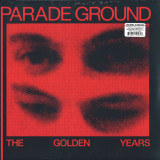
Parade Ground has always been the duo of brothers Jean-Marc and Pierre Pauly from Brussels, Belgium formed in 1981. Taking cues from Post-Punk, Coldwave, Dada and Surrealism, Parade Ground channeled suffering, tension and rage through pulsing synthesizers, skeletal guitar, severe bass and Jean-Marc’s expressive vocals as the most melodic and emotional instrument. The Golden Years is an 11-song, career-spanning collection of Parade Ground’s long out-of-print 7” and 12” singles as well as rare compilation tracks from the pioneers of electronic body music created during 1982-1988.
Parade Ground first appeared on the Nationale Rockmeeting LP in 1982, striking straight to the heart with the passionate plea “I Shut My Eyes.” Later that year the brothers met Daniel B. and Patrick Codenys of Front 242 beginning a collaborative partnership that continues to present day. In 1983 they released their debut 3-song 7” EP Moan On The Sly on the New Dance label, musically a hybrid of Joy Division and Fad Gadget. 1984 brought further explorations into the world of electronic body music with the 3-song Man In A Trance EP and 2 tracks on the live concert compilation Mask Promotion both records released on Front 242's Mask Music label. The following year the single Took Advantage/Moral Support 12” was released incorporating then, state-of-the-art modular synthesizers programmed by Daniel B. and back-up vocals from Flo Sullivan (A Formal Sigh, Shiny Two Shiny). Then in 1987 the brothers collaborated with Colin Newman of British post-punk band Wire, who produced and lent his vocals, guitars and keyboards to two songs ("Moans"/"Action Replay") while Daniel B. produced flipside "Gold Rush" on the Dual Perspective EP that stands alongside 80s anthems from Tears for Fears, Modern English, Echo & The Bunnymen. Finally in 1988 their debut album Cut Up was released on Play It Again Sam Records and featured the singles Strange World and Hollywood. In 1993 the brothers wrote and composed the vocals on two Front 242 albums Up Evil and Off. After 15 years of silence the boys released their second album Rosary in 2007 and continue to write new material and tour with their extensive catalog of dark dance classics. Each LP includes a 6-page press kit with lyrics, discography, photos and liner notes by Daniel B. of Front 242. The history of Belgian electronic music would not be complete without a trip through “The Golden Years” of Parade Ground.
ascha Funke is creating a long overdue monument to an almost forgotten cultural artefact of the GDR: the ‘Germina Speeder’ was the only skateboard made in East Germany before reunification and was launched in 1986. It was produced by VEB Schokoladen-Verarbeitungsmaschinen (a state-owned chocolate processing machine factory) in Wernigerode and was therefore affectionately known as the ‘chocolate board’. However, it was hardly suitable for actual skateboarding due to technical inadequacies. It is not known whether Sascha himself owned such a board, but the tracks on the ‘Germina Speeder’ EP definitely roll better than the original. The opener ‘Blaupunkt’ breathes the euphoric spirit of the legendary Berlin club ‘E-Werk’, while the title track would have been more at home at the ‘Dubmission’ parties in the Turbine. Sascha leaves the 90s behind with radiant positivism; ‘Bo Knows’ sounds more like a 2000s open air at Café Schönbrunn. The EP closes with ‘Mastermind’, a high-octane psy-proghouse banger that, like all four tracks, quotes the past but still has both feet on today’s dance floors. Or rather, is dancing. 4:1 for love!
Sascha Funke setzt einem nahezu vergessenen Kulturgut der DDR ein längst überfälliges Denkmal: Der “Germina Speeder” war vor der Wende das einzige in Ostdeutschland hergestellte Skateboard und kam im Jahre 1986 auf den Markt. Es war ein Erzeugnis des VEB Schokoladen-Verarbeitungsmaschinen aus Wernigerode und wurde daher liebevoll auch als “Schoko-Board” bezeichnet. Zum eigentlichen Skateboardfahren war es allerdings aufgrund von technischen Unzulänglichkeiten kaum zu gebrauchen. Ob Sascha selbst ein solches Board besaß ist nicht überliefert, aber die Tracks auf der “Germina Speeder” EP rollen allemal besser als das Original. Der Opener “Blaupunkt” atmet den euphorischen Geist des legendären Berliner Clubs “E-Werk”, während der Titeltrack eher bei den “Dubmission” Parties in der Turbine gelaufen wäre. Mit strahlendem Positivismus verlässt Sascha die 90er; “Bo Knows” klingt eher nach einem 2000er Open Air am Café Schönbrunn im Volkspark Friedrichshain. Die EP schließt mit “Mastermind”, einem hochoktanigen Psy-Proghouse Knaller, der wie alle vier Tracks zwar das Vergangene zitiert, aber dennoch mit beiden Füßen auf den Tanzflächen von heute steht. Beziehungsweise tanzt. 4:1 für die Liebe!
In ihrer bisher zwölfjährigen Band-Historie veröffentlichten Nicolás Jaar und Dave Harrington, zusammen bekannt als DARKSIDE, die beiden Alben ""Psychic" (2013) und ""Spiral" (2021). Mit ihrem langjährigen Freund und Kollaborateur Tlacael Esparza als neues Bandmitglied und Schlagzeuger kommt jetzt ihr drittes Album ""Nothing". Das Ergebnis ist faszinierend und vielschichtig. DARKSIDE schmücken ""Nothing" mit prägnanten Rhythmen, verzerrten Vocals und kreieren eine ganz eigene, wie ungewöhnlichen Ästhetik.
Um die Entwicklung zu verstehen, muss man die Hintergrundgeschichte kennen: Jaar und Harrington lernten sich in den frühen 2010ern während ihrer Schulzeit in Providence kennen. Während der Tour zu Jaars Solo-Debütalbum fand eine spontane Aufnahmesession an einem freien Tag in einem Berliner Hotelzimmer statt. Die Session war wortwörtlich brandheiß, denn sie endete mit durchgeschmorten Lautsprechern. Der Raum füllte sich mit Rauch und der an diesem Tag entstandene Song wurde ihre erste gemeinsame Single ""A1", DARKSIDE war geboren.
Zwischen den ersten beiden Alben legte das Duo eine sechsjährige Pause ein. In dieser Zeit verfolgten Jaar und Harrington jeweils eigene kreative Wege: Jaar etablierte sich als Solokünstler und Produzent, während Harrington als innovativer Gitarrist und Experimentalmusiker die Underground-Szene in L.A. aufmischte und die Rock-Band Taper"s Choice gründete. Die Geschichte setzt sich dann im Herbst 2022 in Los Angeles fort als das Duo eine Reihe von Shows buchte, um sich nach acht Jahren erstmals wieder als Live-Band zu vereinen. Esparza kam als festes Mitglied hinzu und veränderte grundlegend den Klang und die Energie der Band. Die Idee von ""Nothing" entstand während der Suche nach Achtsamkeit und Harringtons stillen Momenten mit seiner neugeborenen Tochter, in denen er Schönheit im Nichtstun fand. Für Jaar wurde ""Nothing" zu einem Symbol für die allgegenwärtigen, wie überwältigenden Probleme, unausgesprochene Gefühle und den Stillstand in globalen Krisen wie Klimawandel, politischer Heuchelei und wiederkehrender Gewalt.
Born in 1989 in Bamako, Mali, Nfaly Diakité is a member of the Donsow, Bambara animist hunters. Nfaly Diakité is named after his grandfather, the late Nfaly Diakité, one of Mali’s most respected donso chiefs. His grandfather did not play, but as a leading figure in the donso brotherhood, he was always accompanied by musician Yoro Sidibé. Nfaly grew up alongside Yoro Sidibé, who became his first master of the donso ngoni, a type of eight-stringed antelope skin harp. After leaving school to devote himself to his instrument, Nfaly continued his apprenticeship with Diakaria Diakité and Oumar Sidibé, two donso masters from the Wassolo region.
He quickly made a name for himself in the donso community and was much asked to play at the traditional ceremonies of his brotherhood. He then met percussionist Ibrahim Sarr and joined the BKO Quintet, with whom he recorded an album and toured Europe and the United States. His virtuosity on the donso ngoni soon attracted attention, and he took part in numerous music and dance festivals in Mali and abroad, with the aim of raising awareness of this little-known traditional instrument.
Nfaly Diakité is also a Kônô, meaning that he is responsible for passing on the history and culture of the Bambara people through music and song. He pursues his mission by combining tradition with more contemporary sounds and by collaborating with artists from a wide range of musical backgrounds. For him, music is a means of conveying messages of peace, love and harmony, and his compositions evoke the values of respect, tolerance and open-mindedness.
‘Tribute to Toumani Koné’ is Nfay Diakité’s first solo album, recorded in Bamako in June 2020. On the album, Nfaly is the only singer, providing backing vocals and playing the donso ngoni and keregne. The album is a tribute to the storyteller and poet Toumani Koné, the greatest donso ngoni player since N’gonifo Bourama. Nfaly Diakité is a representative of the new generation of donso ngoni players and he wishes to pay tribute to Toumani Koné, who throughout his long career has been a symbol of courage, daring, loyalty and honesty.
The nine-track of this solo album leaves no room for hesitation. Three instruments (donso ngoni, voice and keregne) manage to carry one into another dimension without ever tiring. The fitting and precise rhythm is a deep but melodious transe. Nfaly’s voice plays between expressive urgency and calm wisdom, and the choruses with his own voice multiply the planes of dimension of the music. The donso n’goni, of which Nfaly is an excellent player, sounds rough and earthy but always clear and sharp. All the strength of a music that does not belong to a single musician but to a long cultural tradition of which he is the spokesman is expressed here. The young Nfaly, thanks to his experience and sensitivity, succeeds on his own in pushing us into this world without feeling the weight of tradition but only the liberation of music that sounds all the more contemporary. This album is to be listened to in its entirety as one tight journey between repeated formulas, highlights and moments of rest within the same relentless rhythm. The densest moment is probably found in the heart of the album, between the tracks Nankama (the predestined one) and Mogote Diabeye (no one can please everyone). Here, the message, which can be deciphered from the translation of the lyrics, seems to transcend language barriers and intepret us directly about our human condition, urging us to move our bodies to the dense rhythm of life.
- A1: Gamelan Guru, Transglobal Underground - Go South (The Karahi King Remix By Tgu)
- A2: Sam Dodson - Bj In Space
- A3: Mad Jym - Groove Of The Muddyman
- B1: Zion Train - Zula
- B2: Prior State - No World (Orcan Cerulean Mix)
- B3: Voyetra - Bird Of Paradise
- C1: 601 - Let Yourself Go (Orcan Cerulean Mix)
- C2: Banco De Gaia - Qurna (Haj Ali's Birthday Mix)
- C3: The Mighty Zulu Nation (Mzn), Lv - Abantu (Lv Raw Remix)
- D1: Ret Frem Ensemble - Unusual(Ly) Light (2023 Revision)
- D2: Echoflex, Transglobal Underground - Flight Pattern 3 (Transglobal Underground Remix)
- D3: Zyklen - Hidden Amulet
Dajusch unleashes the 'Ambition EP', a raw and uncompromising statement of techno tradition. Berlin-based producer, DJ and sound engineer Dajusch returns with his latest four-track EP, a high-powered offering that channels the essence of Detroit and Chicago techno while pushing the boundaries of contemporary club sound. Known for his deep connection to electronic music's pioneering roots and his work behind the scenes as a mastering engineer, Dajusch brings an intense and refined energy to this release. The EP opens with the single 'No Mas', a relentless percussive workout where hypnotic synths intertwine with driving drum patterns, setting the stage for an unyielding ride. The title track 'Ambition' follows suit with a high-octane groove, combining raw machine-funk aesthetics with a pulsating bassline and intricate, evolving textures that command the dance floor. On the flip side, 'Split' takes a darker and more cerebral turn, layering industrial-tinged sonics over a tight, rolling beat, blurring the line between peak-time energy and introspective depth. Closing out the EP is '36g', a heady, propulsive cut that builds into a whirlwind of syncopated rhythms and distorted stabs, rounding off the record with a powerful, no-holds-barred climax. With Ambition, the Spandau20 artist Dajusch reinforces his position as a purist and innovator, delivering a release that feels both timeless and forward-thinking. Whether experienced in the heart of a sweaty warehouse or through the pulse of a late-night drive, this EP stands as a testament to the raw, unfiltered power of techno.
- A1: Drama (Mortal Kombat Fatality)
- A2: C'mon Wit Da Git Down
- A3: Wrong Side Of Da Tracks
- A4: Heavy Ammunition
- B1: Attack Of New Jeruzalum
- B2: Notty Headed Nigguhz
- B3: Whayback
- C1: Flexi Wit Da Tech(Nique)
- C2: Cummin' Thru Ya F-Kin' Block
- C3: Lower Da Boom
- D1: What Goes On?
- D2: Dynamite Soul
- D3: Whassup Now Muthaf--Ka?
Between A Rock And A Hard Place is the debut studio album by American hip hop duo Artifact, originally released in 1994. The recording sessions took place at Soundtrack Studios in New York, except for the song ""Cummin' Thru Ya Fuckin' Block"", which was recorded at Chung King Studios. The album was produced by T-Ray, Buckwild, Drew and Redman, with co-producers Rockwilder and Artifacts. It features guest appearances from Jay Burns Jaya, Redman and Busta Rhymes. The album debuted at number 137 on the Billboard 200, number 17 on the Top R&B/Hip-Hop Albums and number 2 on the Heatseekers Albums charts in the United States. It was supported with three singles: ""Wrong Side of da Tracks"", ""C'mon wit da Git Down"" and ""Dynamite Soul"". Between A Rock And A Hard Place is available as a limited edition of 1500 individually numbered copies on gold coloured vinyl and includes an insert.
The year is 1974 and we are in Kingston, Jamaica: Lee Scratch Perry has just presented Susan Cadogan's album 'Sexy Suzy' on his Upsetters label. The Jamaican singer, who is just under 25, sees her cover of 'Hurt So Good' flirt with the top of the UK and JA charts but has no idea that 50 years later, she would still be a household name among Jamaican music fanatics.
On the B-side of this LP, produced by Mr Perry himself, the penultimate track is a cover of Little Willie John’s "Fever". Over the years this song has taken an unshakable place in the hearts of reggae lovers worldwide. With nearly 700 different versions referenced to date, Fever already enjoyed classic status at the time, mainly thanks to the success of Peggy Lee’s version released in 1958. Since then, in all styles, across all continents, the song has been reinterpreted, so much so that it's rare to find a year since 1956 without a new version hitting the market! Universal, timeless, this love song is known to all music enthusiasts, but in the reggae scene, it’s Susan Cadogan and Lee Scratch Perry’s version that still reigns supreme.
50 years after its release, Stand High Patrol offer us their own version. Recorded at the end of 2023, the Susan Cadogan / Stand High Patrol collaboration wasn’t initially meant to move beyond its dubplate status. However, due to the track’s success in the dance and a growing demand, it became the first pressed collaboration on record between a Jamaican artist and the Dubadub Musketeerz. Accompanied by its dub version, Stand High’s take on Fever is a creative reimagining and brings to mind that classic 90s UK dub style. Its sits firmly on its foundations, a stepper roots-flavored drum beat. Some might find the interpretation ‘more jazzy’ than Lee Perry’s, but everyone will have their own take. One thing’s for sure—its impact on the dancefloors is undeniable!
- A4: Where They At (Ft Dj Twan)
- A6: I’ll Write The Hook
- B1: Trust Me
- B5: Talaban
- A1: Kill Da Dj (Ft Bobby Skillz & Sinjin Hawke)
- A2: Trax Da Prophet
- A3: I Want U To Ghost
- A5: House Of Werkz
- A7: We Can Go
- A8: Round 1
- B2: Tha Wolf
- B3: It’s Mine!!
- B4: I Bet U Think This Track Is About U!!
- B6: It Never Rains (Ft Dj Twan)
- B7: Day And Night Time
Anyone with a passing interest in footwork and juke will know of Traxman. Corky Strong has a long history of deep involvement in Chicago house, first releasing on the legendary Dance Mania label in the mid nineties, and since then splitting his productions between ghetto house, juke and footwork, releasing alongside Steve Poindexter and Fast Eddie and the late DJ Deeon and DJ Rashad, including an seemingly endless supply of self-released juke edits of whatever direction his deep knowledge of Black American music takes him. The third volume of 'Da Mind Of Traxman' is his first since 2014. In the intervening years he's kept things rolling, DJing regularly, releasing lots of music, becoming a grandfather and being a mentor for younger artists coming up in the scene.
This new album was crafted with the help of fellow Planet Mu artist Sinjin Hawke, who took on A&R duties to collate the best from hundreds of tracks dating back to 2005. Sinjin holds Traxman's status in high regard; "This album series is important and holds real documentarian value—working on it feels like the modern equivalent of curating a piece of Miles Davis’s catalog in the '60s and '70s." Volume 3 showcases Traxman's uncanny ability to take old music into the future without losing the feeling and energy of his samples and influences. He knows how to add a hi-definition modern chassis with the skill of someone who deeply and intuitively understands the craft of dance music. These are some of the purest, most innovative ideations of Chicago footwork.
a A1 Kill Da DJ (ft. Bobby Skillz & Sinjin Hawke) explicit
[d] A4 Where They At (ft. DJ Twan) [explicit]
[f] A6 I’ll Write The Hook [explicit]
[i] B1 Trust Me [explicit]
[m] B5 Talaban [explicit]
28th April 2022 marks the 50th anniversary of the release of David Bowie’s STARMAN, the first single from THE RISE AND FALL OF ZIGGY STARDUST AND THE SPIDERS FROM MARS. To celebrate, Parlophone Records is proud to announce release details to mark the album’s Golden Jubilee.
On 17th June 2022, 50 years and one day after the original U.K. release date, THE RISE AND FALL OF ZIGGY STARDUST AND THE SPIDERS FROM MARS will be issued as a limited edition 50th anniversary half speed mastered LP, cut by John Webber at AIR Studios.
THE RISE AND FALL OF ZIGGY STARDUST AND THE SPIDERS FROM MARS is the breakthrough album that catapulted David Bowie into the international spotlight. Over the past 50 years it has remained a touchstone record, growing in stature with each passing year. It is now ingrained in popular culture, its undeniable influence spanning musicians from Arcade Fire to Lady Gaga, to Harry Styles’s androgynous fashion sense to Noel Fielding’s shirts on The Great British Bake-Off to Ziggy make-up challenges on Tik-Tok.
David Bowie laid to rest the Ziggy Stardust persona in July 1973 at his infamous last show with the Spiders From Mars at London’s Hammersmith Odeon, but Ziggy’s impact reverberates to this day.
The world became another since the release of »Decadent yet Depraved« and Belief Defect’s reflection of it: now darker, political, honest – end times in Cinemascope. When the duo reunited in the studio after the 2 year fracture COVID inflicted on reality, the album that had been on pause all this time seemed insufficient against whatever life had morphed into, while humanity hid from itself. Finishing an album coherent to the present moment took prolonged studio shut-ins that proved to be as cathartic as the struggle sessions of the cultural revolution must have been. »Desire and Discontent« unfolds like a parable, structured by subsonic frequencies that give arrangements a solid gravity, dissonant chord progressions resulting in coherent movements, punctuated by human-like voices over slow, suspenseful melodies that come into being without the listener’s awareness. Contributing to the album with machine-like precision drumming is Merlin Ettore, vocals from Anna Gartner and the artwork of Juan Mendez (Silent Servant).
Last May, Hard Times captivated us with The Lost D.A.T.S (Part One)—a remarkable collection of unreleased and freshly unearthed gems from the vaults of NYC legend DJ Romain. But the story didn’t end there. To our surprise and delight, Romain had delivered an even larger treasure trove of beats—too many to reveal all at once.
Now, Hard Times is proud to present the next chapter: DJ Romain – The Lost D.A.T.S (Part Two).
"1996-97? Yeah, that’s when New York was still NEW YORK!
That was around the time we really started to get hold of exotic herbs. Copper Haze, hydroponic! The vibes in the studio were always lovely. I had hair at the time! Dread-Locs down to my shoulders... I was still rockin’ the Wallabees, or British Walkers as we called them - representing for Brooklyn and my West Indian roots!
There was no social media, no supervision, nobody all up in our business… It was classic "mind your own business" NYC Vibes! I was DJing at a lot of the hot clubs and THE hottest afterhours in the city. There were nights when I saw Micheal Douglas roll into the afters with Grace Jones - they were there to party and unwind and I was there dropping the dope tracks for the people.
When it was studio time, with my homie Matt Echols...I was probably setting things off with some quality herbage, a big ass bag of Funyuns and my trusty SP-1200, lol. I had picked up some tips and tricks from Todd Terry and by '96-'97 I was a Shaolin with it myself! This was around the time tracks like "Flowers" and "Only Love Can Break Your Heart (Dub)" were tearing up the clubs. I wanted to be able to get my ideas out with no problem, and by then I had a lot of confidence...
Being able to Dj in some of the hottest NY hot spots at the time, I was able to really see what worked and what didn't on the dancefloor. The best House Dancers from around the world and around the Tri-State area would be at my jams. I'm talking Ejoe, Voodoo Ray, maybe kids from the Mop-Top Crew... I was definitely taking note of the kind of rhythms and sounds that would make them go crazy on the dancefloor!
And that's how we went about it - I laid down the rhythms that made it happen in my sets and translated the vibes I was picking up from NYC itself. Matt threw down musically and we were just being as creative and inventive as possible! But we always kept in mind that our job was to make the people on the dancefloor jump!
A lot of the jams from those days got signed to various record labels, we dropped a lot of them on our own label...and some of them ended up in the archives - until now!"
While they’ve been active for more than two decades, it’s only been in recent years that the Berlin and New York based contemporary sonic arts platform, Soundwalk Collective, has begun to gather the accolades and attention that they rightfully deserve. Firmly rooted within a multi-disciplinary practice that engages the narrative potential of sound within the contexts of visual art, dance, music and film, as well as tapping anthropological, ethnographic, and psycho-geographic research, they’ve gained great note for collaborations with Jean-Luc Goddard, Nan Goldin, Sasha Waltz, Charlotte Gainsbourg, and numerous others.
Building on the back of 2023’s brilliant “All the Beauty and the Bloodshed”, Soundwalk Collective now returns with “Khandroma”, one of their most fascinating and singular endeavours to date, which re-engages their enduring creative partnerships with Patti Smith. Issued by Ubi Kū, a brand new imprint founded by the Italian Buddhist Union dedicated to the relationships between Buddhist cultures, music, and sound, across the album’s stunning two sides this incredible ensemble draws inspiration from and conjures Tibetan deities, the Himalayan Plateau, the valleys of Nepal and the highest peaks where the most ancient Buddhist temples reside, culminating as a sprawling sonic tapestry like little else. Issued as a beautifully produced, limited edition vinyl LP and CD, mixed and mastered by Giuseppe Ielasi, complete with a booklet featuring liner note essays penned by Chiara Bellini and Filippo Lunardo, and images by Stephan Crasneanscki, it’s hands down among our favourite releases by Soundwalk Collective to date and not to be missed!
An international experimental sound art collective founded in 2001 by the artists Stephan Crasneanscki, who was joined in 2008 by producer Simone Merli, Soundwalk Collective is a contemporary sonic arts platform, featuring a rotating constellation of artists and musicians, that, in vastly varied number of ways, has continuously explored the remarkable potential of sound within the contexts of visual art, dance, music and film, offering particular emphasis to anthropological, ethnographic, and psycho-geographic research, examining conceptual, literary or artistic themes. In addition to their many collaborations and accolades that attend to an increased ambitious catalog of releases, they scored Laura Poitras’ film, “All the Beauty and the Bloodshed”, which won the Golden Lion at the 2022 Venice Film Festival, as well performed and exhibited at Berghain, CTM Festival, documenta, Manifesta, New Museum, and Centre Pompidou, where they notably opened “Evidence”, a exhibition with Patti Smith comprising an audio-visual journey from the work of French poets Arthur Rimbaud, Antonin Artaud and René Daumal. While Soundwalk Collective’s output and use of sonority - sometimes original composition and others manipulated archival recordings - and context is varied, the project’s endeavours are unified by a focus on sound as material that is both tactile and poetic, pursuing layered narratives that address ideas of memory, time, love and loss. Their latest, “Khandroma”, enlisting Patti Smith’s contribution on one of its tracks, stands among the most exciting and rich of these explorations yet.
Perhaps the best way of approaching “Khandroma” is through Soundwalk Collective’s longstanding focus on the discipline of psycho-geography - a practice that interrogates the impact of an environment’s embedded histories and meanings on the psychology of the present - as well as the group’s integration of observations of nature, and uses of non-linear narrative, as a vehicle for recording and the synthesis of meaning. Like previous projects that have encountered them traveling extensively across the world, occupying diverse environments for long periods of investigation and fieldwork, during which they source materials for subsequent works, the material roots of “Khandroma” are a body of field recordings made by Crasneanscki, Francisco López, and Merli at altitudes between 2,760 and 4,500 meters, in varying locations across Upper Mustang during 2016.
Drawing the album’s title from the Tibetan feminine deity who reigns the skies, the album’s two compositions weave a stunning sonic tapestry from collaged sounds of nature, bells, drones, unplaceable tones and vocals, and in the case of its second piece, “Chasing the Demon”, the voice of Patti Smith, culminating as a deeply emotive and imagistic expanse that taps something far more profound than any of its single parts. As the collective states: “the album traces the continuous morphing of the wind into sound expressions. The Himalayan Plateau seems designed to amplify and echo the encounter of the breaths, the prayers, and the chants emerging from around and within those temples; amid the sounding of bells, the turning of prayer wheels, and the billowing of flags. A resonant musical body that we recorded so as to capture its boundless mutations; an unstoppable force that cries, whispers, and blows through and over stones, wood, empty halls and monastic robes, etching an ever-changing sonic landscape onto the surfaces it encounters.”
Immersive, stunningly beautiful, and haunting, “Khandroma” draws the ancient and distant into the consciousness of the present, close to home, bordering on the profound. Issued by Ubi Kū as a beautifully produced, limited edition vinyl LP and CD, mixed and mastered by Giuseppe Ielasi, complete with a booklet featuring liner note essays penned by Chiara Bellini and Filippo Lunardo, and images by Stephan Crasneanscki, we can’t recommend it enough.