Music as the main vibration
the world shapes through its continuous flow,
able to lead the human mind,
who perceives its manifestation
through its physical properties,
into a deep state of trance,
enabling a connection to the soul,
who experiences space-time
alongside this sound flow,
to transmute it
in the image of itself.
Cerca:state of trance
- A1: Pupper
- A2: The Beautiful World
- A3: Stray
- A4: Piano Tree
- A5: Introverts As Leaders
- A6: Our Secret
- B1: Good Afternoon
- B2: Oh Lauren
- B3: The Door
- B4: Look
- B5: Elevation
David Allred is a prolific composer and producer based in Portland, Oregon. His new album The Beautiful World captures an enriched, realised understanding of why he composes in the first place. Dedicated to the expression of existential themes such as death, grief, longing and loss, the album’s core theme centres around the suicide of a young girl Lauren, who was a family friend to Allred. For as long as he could remember, Allred always created music out of a kind of dissociative state which he finds alluringly easy to lapse into. A repetition of a motif is usually where he begins composing. But unlike his previous works, The Beautiful World firmly has one foot in reality and is deeply intertwined with Allred’s relationships, past and present. Through his correspondence with Erased Tapes label head and the album’s producer, Robert Raths, over the past year, he came to realise that everyone has a Lauren in a way – someone they’d lost. Through writing to Raths, Allred was able to draw out this thread from the work and position it more clearly as the central concept to this work. The music doesn’t reflect the chaos of trauma, instead it has a therapeutic quality. It was through this dialogue that Allred was able to create what may be his most cohesive body of work to date. The 11 track album unfolds around Oh Lauren, providing the core of the album’s sentiment – how grief returns to us throughout life over and over. Embedded more than halfway through the album, Allred allows listeners to cohabit a meditative space through ambient textures, drones and ballads echoing the vocal sincerity of Arthur Russell, Daniel Johnston and the hypnotic storytelling of Robert Ashley. To truly reckon with The Beautiful World’s emotional position, listeners must understand the importance of the figure of Lauren, and the significance she has had throughout Allred’s life. Lauren’s suicide as a child provided the catalyst for Allred’s lifelong grief. But it was death anxiety and grief itself which provided Allred a link to a universal relationship that people have with each other and the world they live in. Impermanence and loss are the driving force behind all of our connections. The trance-like nature of the album perhaps comes from David Allred’s time sense – particularly when it comes to memory and trauma. Time becomes non-linear rather than a straight line – where one can repeat or return to the same themes but older and in a different frame of mind. Grief continues to manifest itself in life and despite personal growth, there will always be moments where the same feeling will manifest itself again. The album encourages listeners to sit with the concept of grief, and Allred is hopeful they can find comfort and learn to process it in a healing way. The Beautiful World is therefore heavily influenced by Allred’s work in therapy, particularly his relationship to writing music. In the past, Allred would be composing music as a means to dissociate from his life, but the album sees him engaging and connecting more authentically than ever with others and himself. Despite his prolific previous works being made in the company of others, Allred needed to step back from the scenes that he’s worked in to discover what he really wanted to create. Allred concludes: “In the power of love, curiosity, humour, and reconciliation, we give you The Beautiful World.”
Faszinierend, energiegeladen und hypnotisch! Prepared - ein freigeistiges Trio, das in kammermusikalischer Besetzung unkonventionell und instinktiv Tanzimpulse weckt und den Hörer in einen tranceartigen Klangraum entführt!
Ein Pianist, der auf dem Flügel unablässig hämmert, klopft und zupft. Ein Klarinettist, der in den Tiefen seiner Bassklarinette mehr Bass als Klarinette spielt. Und ein Drummer, der wie eine gute Schallplatte immer weiterläuft und die Grooves fortwährend im Kreise dreht.
Drei Münchner Jazzmusiker, vereint in Ihren Gegensätzen. Wo der eine mit Quadro Nuevo argentinischen Tango, der andere mit Dreiviertelblut "folklorefreie Volksmusik" oder der dritte mit Moop Mama deutschen Hip-Hop spielt, lassen sie in ihrem neuen Projekt Prepared gemeinsam zyklische Motive und raffiniert geschichtete Muster in minimalistischen, aber höchst virtuosen Kompositionen zu einem faszinierenden Gesamtkunstwerk verschmelzen. Als hätte man Jonny Greenwood, Dawn of Midi, Nik Bärtsch und Steve Reich in einen Topf geworfen.
Line-Up:
Chris Gall • prepared piano
Flo Riedl • bass clarinet
Christoph Holzhauser • drums
The Recording: Für eine "state-of-the-art" immersive Musikproduktion wurde die Musik "live" in einem Raum ohne jegliche Overdubs aufgenommen. Dieses Album wurde mit erstklassigen 3D-Aufnahme- und Mikrofonierungstechniken für Dolby Atmos aufgenommen und von renommierten Toningenieuren gemischt und gemastert.
Recorded by Kseniya Kawko at Kyberg Studio, Munich, mixed by Kseniya Kawko at MSM Studio, Munich and mastered by Christoph Stickel at csmastering, Vienna
Format: Schwarzes Vinyl inklusive Downloadkarte
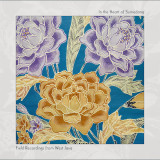
"We are delighted to be able to bring you these gorgeous field recordings from the Sumedang Province of West Java which, over their 50 minutes, present two distinct sides of Sundanese musical and devotional culture.
Although West Java is a Muslim country, these recordings highlight currents of pre-Islamic animist beliefs and practices that continue to flourish in the small towns and villages of the highlands of West Java. The recordings showcase two forms of trance music that are essential to the spiritual life of the Sundanese people in the highland regions.
Tarawangsa trance music is a traditional ceremonial genre known for its deep spiritual and hypnotic qualities. This music is made using only two instruments, the tarawangsa, a two-stringed fiddle, accompanied by the jentreng, a seven-stringed zither, creating a unique blend of resonant, droning sounds. Historically, tarawangsa music has been performed as part of sacred rituals and agricultural celebrations to honor local deities and ancestors, particularly associated with the Sunda culture. The minimalist, repetitive melodies gradually build, guiding participants and listeners into a meditative, trance-like state, during which dancers can be possessed by the spirits of ancestors or deities from the spirit realm, the music serving as a link between the two worlds.
In stark contrast to the calm, medititive sound of tarawangsa, we also present here two long pieces from Panca Buana Reak Group. Sundanese Reak trance music is like the punk rock of Sunda folk music, combining powerful and driving rhythms played on a number of hand drums and percussion instruments with the buzzing sound of the tarompet, a double reed wind instrument often amplified through whatever mobile speaker system might be at hand. Sometimes the group will play gamelan gongs, as heard on the first piece on the album, although this remains a music that is popular mainly with the working class youth of the rural villages, many of whom will also be fans of Indonesia's burgeoning metal and punk scenes. Reak performances are often wild, anarchic events that feature masked dancers, costumes, public trancing and spirit possession.
These recordings were made by Xenia At during her travels through West Java earlier this year. The tarawangsa recordings were made in a home in the village of Rancakalong on the evening of 17th January 2024, while Panca Buana Reak Group were recorded during rehersals in the village of Cinunuk on 19th and 20th January 2024."
Limited edition of 100 copies.
The musicians:
Overture (played by Panca Buana Reak Group, musicians: Rian Hidayat, Daffa, Rendi, Haswa, Doni, Aconk, Bayu, Zidan, Iwan Uwak, Mahadewa Sehu, Bebet, Adi, Bebet).
Reundeu - Master Yayat (kacapi), Tedi Kurniadi (tarawangsa).
Degung - Master Yayat (kacapi), Teguh Permana (tarawangsa).
Pamapag__Gelar Mataram__Panimang__Limbangan - Akbar Nendi (kacapi) & Tedi Kurniadi (tarawangsa).
Reak Lugay Pusaka Pajajaran (played by Panca Buana Reak Group, musicians: Aconk (tong), Rendi (brung), Hendrik (tarompet), Ade (kecrek), Riki (bedug), Doni (talingtit), Adi (badublag).
Xenia would like to extend gratitude to:
Master Yayat, Tedi Kurniadi, Akbar Nendi, and Teguh Permana for their incredible talent that turned this recording into a magical experience.
Ibrahim Adi Surya for technical support.
The Juarta Putra and Panca Buana Reak groups for explaining the cultural significance of local traditions.
Anggun Tresnasari for sharing her deep knowledge of regional music traditions.
Igor Moskalenko, Kate Snap, Stasya Frolova, Roman Gold, Misha Maltsev, Ilona Popychko, Galih Muhammad, Wildan Wiliansyah, Rizalu Ramadhan, Rahi Rahmat, Fahmi Solihin and Muhammad Ismael whose unwavering belief made this project possible.
Hive Mind would like to thank Luigi Monteanni (Artetetra) and Palmer Keen (Aural Archipelago) for their invaluable work and research in this region.
For the fifth release of Organic Signs, we pay tribute once again, in an even more special way, to our beloved Digitalis, aka Seb Taylor. Two years ago, we launched the first EP of our label, Digitalis - Soma Junkies, recovering a gem from the British artist. This time, we wanted to go further by presenting a new album concept with impeccable sound, thanks to the mastering by Damian Schwartz. Comprising both released tracks and some unreleased material, The Fourth State serves as a tribute and evolution of Digitalis's only album released in 1998, reminding us of the urgent need to remain vigilant against the most insidious powers of social control.
Spacehop, the starting point. In 1994, after hearing a demo tape, Andy Guthrie (aka 100th Monkey / Funkopath) connected Digitalis with the team of the Spacehopper party at the Que Club in Birmingham. There, Digitalis quickly became a resident, dazzling audiences with his live sets. A premature first track from the early days of his career was never officially released, but many had the chance to enjoy it live on numerous memorable nights.
In Loup Garou, the exquisite taste and mastery of breakbeat rhythms manifest. It's an explosion of rhythm interwoven with trance patterns, and you can also listen to an unreleased digital version, exclusive to Bandcamp. Closing the first side of the record is Repeater, the first track ever released by Digitalis, which laid the foundations for his distinctive sound.One of the most surprising parts of the album unfolds on the B side. Just as we had finalized the selection of tracks, Seb surprised us with a message revealing that he had found old tapes.
This led to a collaboration with Hugh Newman, rich with influences from his alias Shakta, featuring vocal and acid synths that open the portal to a new dimension of auditory frequencies. Osho Drums combines live percussion from Osho, half of the Japanese group UNI, with psychedelic trance riffs and breakbeat rhythms that intertwine without relying on typical formulas.
Figments Of Reality (Trance Mix) would bring the vinyl album to a close, featuring nearly 146 BPM of trance and synth sounds that resonate like thrown objects falling from the sky, landing on the rhythmic grill.
As a final addition to the release, we also present Genetics, a digital exclusive track, another unreleased gem from his early days that deserved to come out of the vault of memories.
On December 6, 2024, Randomer will return with a new EP titled MTY-012: Everything Happens for No Reason, released via Anetha’s label, Mama Told Ya.
After a reflective hiatus, the UK prodigy is highly anticipated and ready to deliver meaningful music. The EP features five emotionally charged tracks—four produced by Randomer and one co-produced by Randomer and Anetha. Presented on a single vinyl, the release conveys a deeper message: life’s unpredictability can be embraced, reminding us that we can find our way even in chaos and randomness.
Torn between the meaningful and the meaningless, Randomer channeled his time into crafting music shaped by his extensive study of melodies, subconsciously
seeking to bring harmony to the world. The result is a cathartic journey across five tracks, each evoking a broad spectrum of emotions and inviting listeners to explore the depth of their feelings. Drawing from the music that deeply influenced him, Randomer traverses various genres and moods, seamlessly blending techno, trance, techstep, and sacred choral music in a perpetual act of personal reinvention.
Let the choir sing I Saw the World Melt (A1) right before my eyes, and let the people chant my melancholic melody. Nervous Breakdown. Lost in the riffs with dis ting from London, DHM Jam (A2) fuels me with adrenaline, I’m flying through memories, urged to move on. Yet, I’m still trapped : the clock shows Home Invasion (A3)—better start running. We will survive. But where’s my harmony? I Can’t Believe (B1) it. Why me? Why us? In this trance state of mind, I have so many questions, but those voices on the other side won’t answer. We’re doomed anyway, so why not plug in like the Two Perfect Machines (B2) we are, until the end.
For this new EP, Australian visual artist Nic Hamilton has been commissioned to create a poignant artwork alongside two melting teasers for MTY-012. As always, the design is expertly crafted by Diplomatie Studio, while the mastering is entrusted to Six Bit Deep, ensuring a polished and immersive listening experience.
Red Vinyl. Since emerging in 2015, Sextile have been a party-provoking force on the LA underground, capable of kicking up a riot with the raw-edged squall of a synth or the sharp-elbowed jerk of a guitar. Sextile are now ready to rage with a serotonin-boosting new album, a new group dynamic, faster BPMs, and an even wilder new direction. Recorded in Yucca Valley, Push bounces and bops at the fringes of hardcore dance music, with the hallmarks of drum & bass, gabber and trance illuminating the record like glowsticks at a `90s Fantazia rave. "Contortion" introduces the album with shadowy vocals from Keehn and a `00s-ready twist of dirty electro bass, setting the tone for the dance-punk rave-up that unfolds across 11 attention-grabbing tracks. There's plenty of historic teen angst and biting social commentary written into the album's vivid tales and misadventures. Balancing storytelling with face- melting synths that turn the tune into an acid trance character study, "No Fun" is penned from the perspective of a teenager trying to flee their town. A punk spirit underscores the album. The clue's in the name with "Crassy Mel," which partly serves as a high-energy dedication to `70s anarcho-punk legends Crass . The track's headbang - ing heft, vocal yelping, and Prodigy -shaped breakbeats accentuate the album's overwhelming sense of fun. Plus, the dreamy ambient wash at the end of the song is the ultimate palate- cleanser. Push was inspired by the kind of pleasure-seeking music fans whose social calendar comprises both the punk show and the rave. Josh Wink, Iggy Pop, Goldie, and early XL Recordings have all been namechecked as influences on Push , and the dancefloor remains a constant pres - ence. Repping their place of origin, "New York" brings these musical touchstones off the page, guiding the album like an acid-soaked lodestar with its grinning nod to "Higher State of Consciousness" and a whirlygig of music-box synths. There are still nods and "hellos" to the caustic post-punk of Sextile's earlier work. Sextile haven't relinquished their punk credentials, they've just given them a smiley-faced revamp.
Developing on the trance-induction and brainwave entrainment techniques explored on the first Ethernet album 144 Pulsations of Light, Opus 2 moves into deeper, more introspective and emotive territory. A stronger focus on melody and harmonic structure results in pieces that almost approach, but never quite arrive at, traditional song forms, while still leaving much to the imagination of the listener, evading mental categorization and revealing new sonic experiences with each listen.
The bulk of recording took place during the darkest months of winter in the Pacific Northwest, between late-night shifts providing technical support for hospital operating rooms. The pieces on the album each formed gradually and spontaneously during extended improvised sonic meditations as part of the composer’s own trancework (or self-hypnosis) practice, this in an effort to remove specific compositional intention from the process, instead just allowing them to “happen".
If 144 Pulsations… was about expansion of awareness and opening to the light that surrounds us, Opus 2 is intended to induce inner contemplation and internalized focus on the light within us. It is also a statement on the gradual darkening and inexorable decay of our modern world, and the need to look within to find true support and sustenance from one’s own energetic source. Patience and perseverance.
It’s abundantly clear from the first bars of their 5th studio album Through Other Reflection, that this is, and could only ever be, The Soundcarriers. From the enchanting vocal duets of folk-bidden Chanteuses Leonore Wheatley and Dorian Conway; to the precise bass lines of Paul Isherwood and the limber, jazz-cool, Hal Blaine-esque drums of his his co-songwriter Adam Cann; from the fairy-like flutes, 60s-garage guitars and organ sounds pilfered from the archives of exotica - listening to the Soundcarriers resembles a rediscovery of all the most prized, esoteric corners of the 1960s, all bundled up, warped and refracted through the quartet’s astutely modern cultural lens. Channelling Tropicalia, Middle Eastern psychedelic Jazz/Funk, The French Library sounds of Nino Nardini, and a whole host of lavish obscurites beside, Through Other Reflection delivers another sonic adventure from one of the most unique and distinctive voices of British Psychedelia. After an 8 year wait for their album 4 - 2022’s Wilds - it thankfully didn’t take so long for the follow-up this time round. In many ways, this feels like a companion to Wilds; recording again at their Nottingham warehouse studio, Through Other Reflection retains that same organic glow, all the passions and imperfections of a tightly clipped unit jamming out these living, breathing pop-art nuggets as if straight onto the acetate.”We wanted to keep an air of spontaneity with this album and not get too bogged with the recording process”, explains Cann, “It was more a case of getting the songs as tightly written and arranged as possible first so we could get them down quickly in the studio. It always takes longer than you think” Less packed with strident pop hooks as its predecessor however, the music of Through… has been given extra licence to breathe, stretch out, and wander more uncharted terrains. While gleaming psych-pop of tracks like ‘The City Was’, or ‘Already Over’ confidently carry on from where they left off, from the album’s 2nd track ‘Always’, the trip becomes a little less predictable. Starting out as a smoky Procol Harum-meets-French-Psych organ ballad, the music drifts, as if of its own accord into an eerie, garage trance that lingers, cycles, and hypnotises, growing ever stranger, reaching ever-further away from its point of conception. And almost every track on Through Other Reflections holds that outer-body moment, where the band fix themselves on a limber, lysergic groove, lose all grip on time and reality, and melt themselves away into a liquid state of blind euphoria. There are sequences on this record that feel more like rituals than songs, built upon a single hypnotic rhythm which, like the centre of a vortex, pulling everything under its beatific command. Take the finale to ‘What We Found’ for instance, sounding like a ghostly march across the psychedelic moors, or ‘Feel The Way’, where a single athletic drum-loop rises and rises, growing ever more urgent and suspenseful underneath its frantic harpsichords and rasping flutes. Full of such rich stylisms as these, The Soundcarriers showcase themselves as abstract storytellers par excellence by virtue of their textures and arrangements alone. Resembling Romantic composer Maurice Ravel, but if he had just a four-piece rock band at his disposal, Through Other Reflects is rich with detail; there’s shakers, rattles, clarinets, booming drums; there’s synthesiser swarms, chiming xylophones, vintage organs and experimental Cluster & Eno-esque ambiences. Within all this nuance the music flows like some undisclosed narrative swathed in a magnetic secrecy. “It almost comes across like a story in some ways”, says Cann of the album, “the music is quite sectional with elements of exotica and cinematic type layers, it's a good balance of grooves, tunes and weirdness”. No more is this “epic cinematic feel” heard more proudly than on short instrumental ‘Sonya’s Lament” - its innate, hauntological atmospheres befitting a Peter Strickland soundtrack, or the classics of Lex Baxter, the so-called ‘Founder of Exotica’ himself. On the other hand, providing a greasier undercurrent to all these bucolic sounds is a leaning towards a more “direct” lyricism referencing more “external concerns. Laying down the first tracks for the album in the wintry gloom of pre-lockdown 2020, and drawing inspiration from time spent in Berlin, Through Other Reflections returns to some of the post-apocalyptic futurism explored in 2014’s Entropicalia - a loose concept album inspired by J.G Ballard’s The Drowned World. “The songs explore a disillusionment with the way things are going particularly after 40 years of neoliberalism”, says Cann, “They follow that folk-song tradition of wanting to escape to an imagined time, but here it’s more urban than pastoral. The first couple of ideas I came up with when doing some music in Berlin and had some time to wander aimlessly. And think the atmosphere seeped in, particularly on The City Was and Already Over. He continues, “One aspect of the title, ‘Through Other Reflections’ is about synthesis and layers of influence. How things can be filtered through other things and change the perspective. This is something you get in cities as well.” Though, as with everything The Soundcarriers make, “It can mean anything. It also just sounds kind of cool.”
- A1: The First Stone
- A2: Whistleblower
- A3: Resurrected
- A4: Clickbait
- A5: Learning Deutsch
- B1: Being Alive
- B2: It Is Finished
- B3: The Great Reset
- B4: The Devil Is A Liar
- B5: 322 B6. Shitstorm
- C1: 1984
- C2: (What If God Was) One Of Us
- C3: Saturday
- C4: Nah Nah Nah
- C5: Friendly Fascism
- C6: Under The Bridge
- D1: Trance D2. Unmasked
- D3: Archangels
- D4: Game Boy
- D5: Jc
- D6: A Long Way Out
DERO GOI kehrt mit einem Paukenschlag zurück! Der ehemalige OOMPH!-Frontmann liefert mit "1984" ein bis zum Rand mit Synthie-Hits vollgepacktes Doppelalbum ab. Das Debüt seiner Solo-Karriere ist zugleich sowohl in musikalischer als auch lyrischer Hinsicht ein starkes Statement zu seiner künftigen Ausrichtung als Künstler. "1984" bietet eine faszinierende Verschmelzung von feinen Retro-Synth-Sounds, EBM und Synth-Wave mit zeitgenössischen elektronischen Elementen, die sogar mit einer Prise seines früheren Lebens als Rock- und Metal-Musiker gewürzt ist. DERO GOI, der schon immer als herausragender Songwriter gefeiert wurde, hat sein musikalisches Handwerk noch weiter verfeinert. Die Songs dieses umfangreichen Werks werden ihre Hörer zum Tanzen und Mitsingen bringen und sich als Ohrwürmer in den Köpfen festsetzen, wo sie noch jahrelang feiern. DERO GOI bleibt dabei seinem unbeugsamen Willen treu, als nonkonformistischer Künstler zu arbeiten. Sein Coming-out als wiedergeborener Christ, der jeder organisierten Religion nach wie vor kritisch gegenübersteht, und seine libertäre politische Einstellung haben ein breites Spektrum von Reaktionen hervorgerufen. Dazu gehören leider auch massive Hindernisse bei der Suche nach einem Label und einem Booking-Agenten. Zudem musste der Künstler erleben, dass bereits bestätigte Konzerte nur aufgrund seiner Meinung wieder abgesagt wurden. Das wirft die unbequeme Frage auf: Wie tolerant ist eigentlich eine Szene, die sich rühmt, für jede Gesellschaftsschicht und jeden Lebensstil offen zu sein, wenn diese Werte einer kritischen Probe unterzogen werden? Natürlich haben auch Worte Konsequenzen und jede Freiheit hat ihre Grenzen, aber was ist mit einem Künstler, der fest auf dem Boden der Verfassung seines Landes steht und keine Gesetze bricht? Beinhaltet Freiheit nicht auch das Recht auf Widerspruch gegen den Zeitgeist? Dass DERO GOI bei Themen eine andere Meinung vertritt, ist kein Verbrechen. Bevor der Musiker, der am 16. April 1970 als Stephan Musiol in Wolfsburg geboren wurde, im Jahr 1989 OOMPH! gründete, spielte er bereits im Alter von 15 Jahren in einer Band mit seinem Freund Thomas Döppner (alias OOMH!-Gitarrist und Mitbegründer Crap), als beide noch Gymnasiasten waren. Seine musikalischen Einflüsse zeigen einen offenen Geist für stilistische Vielfalt. DERO GOI zählt unter anderem D.A.F., NITZER EBB, FRONT 242, THE CURE, FAITH NO MORE, KILLING JOKE, EINSTÜRZENDE NEUBAUTEN, AC/DC, DEPECHE MODE, EXTRABREIT, KRAFTWERK, THE BEATLES, ELVIS PRESLEY und ABBA zu seinen musikalischen Vorbildern. DERO GOI hat mit seinem neuen Werk einen Weg eingeschlagen, der elektronischer ist als die meisten seiner bisherigen Songs. "1984" ist das Zeugnis eines Künstlers, der sich einer breiten Palette diverser Einflüsse bedient, der aber zugleich auch seine weithin respektierte Fähigkeit, äußerst eingängige Melodien zu schreiben, noch weiterentwickelt hat. Was auch immer die Hörer von diesem massiven Beitrag zur elektronischen Szene halten werden, DERO GOI wird sich als Sänger und Künstler nie den Mund verbieten lassen. Liebt oder hasst "1984" - aber was auf diesem Album zu hören ist, wird immer zu 100% DERO GOI bleiben!
Leng’s San Francisco connection has long been strong, with the 40 Thieves collective – and their friend Cole Odin – providing some of the label’s most memorable releases of the last decade. That Bay Area connection comes to the fore once more on the imprint’s latest release, which sees Odin join forces with fellow San Francisco resident Marshall Watson, a long-serving producer, engineer and live performer known globally for his Balearic-minded productions.
‘Voyager’, the pair’s first collaborative single, is a genuine meeting of minds. It combines Odin’s love of low-slung dub disco, dancefloor psychedelia and low-tempo cosmic house with Watson’s
picturesque Balearic synths, sparkling piano riffs and immersive sound design. It’s this blend that dominates on the EP-opening Original Mix, an infectious workout that gets progressively more blissed-out and saucer-eyed as it progresses. Listen carefully and you’ll hear some suitably psychedelic guitar solos nestling amongst the heady washes of sound, sun-bright piano riffs and weighty bass.
Those languid, stretched-out guitar parts naturally take a more prominent role on the Extended
Guitar Mix. On this alternative take, the pair deliver a lightly tweaked take on the original groove, stretching it out while overlaying eyes-closed guitar solos, pots-and-pans percussion and a more DJ-friendly outro. It’s effectively an extended club mix – the club in question being a Bay Area basement at 5am. To round off the EP, Odin and Watson dust off their dancing shoes and pay tribute to San Francisco great Patrick Cowley. On the appropriately titled Cosmic Rave Mix, the pair swap their bass guitar for a pulsating sequenced bassline, trance-inducing synth sounds, and locked-in electronic loops designed to take you to a higher state of consciousness. By the time the track’s familiar piano refrain drops midway through, you’ll be reaching for the lasers in no time at all.
In 1997 a CD compilation called Calambre Techno was released in Spain which included a track called Utopia. Its producers were two Spanish brothers who had been making electronic music since 1991 under the name INTRO. The track of the compilation was a remix of the original included in the Ep Intro - @Utopia from 1994. @UtopiaRemix is a simple but perfect Techno-Trance anthem, Retro-Psychedelic but futuristic, one of those timeless tracks that always sound original despite its 30 years. Now UFC is proud to re-issue this techno-trance gem on vinyl as its eighth release accompanied by remixes from current producers of different visions.
About the remixes; The duo The MFA give us their '94 On The Floor Remix', a perfect “hit” to hear at dawn where they perfectly combine IDM, Indie-House and Experimentalism. Spanish producer Promising/Youngster presents 'Electric Shock Remix', a titanic version of the original remix where powerful Electro rhythms collide with Experimental and Futuristic IDM.
In the case of Brassica we left the way free to experiment with the original remix and he gives us his 'Psytalo Remix', a perfect fusion of Techno, Breaks and Psychedelia, originality in its purest form as this producer has accustomed us to in all his productions. To close the Ep, we find 'FutureCosmicalAscension Mix' by R.I.P. Bestia, truly a different version that is difficult to include in a specific style where the main melody is progressively guided towards a state of euphoria.
Original Track Produced by Intro: Francisco & Nacho Sotomayor. Liscensed with permission of Absolute Ambient (ES) 1994
- A1: New Gold Dream (81-82-83-84)
- A2: What Can You Do For Me
- A3: Soulution
- B1: Believe In Me
- B2: Too Much To Swallow (Part 1)
- B3: Something Good
- B4: I Want You
- C1: States Of Mind
- C2: Trance Atlantic Glide
- C3: Kinetic Synthetic
- C4: My Mind Must Be Free
- D1: Highlander - Cj Bolland Mix
- D2: Ohio - Dj Misjah Mix
- D3: Star - Union Jack Mix
" Utah Saints are one of the most important acts since the inception of electronic dance music. Early adopters of sampling, they brought the artform - used chiefly in hip-hop in the 1980s - into new realms.
" Incorporating rock, dance and hip-hop elements into their music, they scored 5 Top 40 UK singles including 'Something Good' and 'What Can You Do For Me' and a Top 10 album in the space of just two years.
" Out of print since its original release over 30 years ago, Utah Saints' eponymous debut album returns on 2LP - remastered & extended with 3 sought after remixes by CJ Bolland, DJ Misjah and Union Jack. Includes special limited edition mirror board packaging, for National Album Day 2024.
After a successful first release, Metallic States is back with a new black-smith joining the forge : Rambal Cochet. The producer shows again how prolific he is at the moment with a mini LP composed as a tribute to Need For Speed. At this occasion he crafted 6 surprising tracks, including 4 of his typical Neo Goa / Progressive Trance tracks and 2 aery Drum’n’bass experimentations to open the sonic spectrum of Metallic States.
Only one question remains : what’s coming next?
By the time Chick Corea - the venerated 27-time Grammy winner and National Endowment for the Arts Jazz Master - went into Mad Hatter Studios in Los Angeles to record the third album with his Elektric Band, the lineup had been solidified through constant touring the previous year. Dedicated to his father Armando, a trumpeter who led a Dixieland band in Boston in the 1930s and 1940s, Eye of the Beholder reflected a tightening of the ensemble playing and a greater showcasing of the individual solo prowess of these consummate musicians.
With this fresh sounding five-star recording, it is clear that Corea was more open to showcasing this band’s collective muscle and individual virtuosity. The group rips, in no uncertain terms, on showcases like “Cascade, Part II,” “Trance Dance,” and the staggering “Amnesia.” There are experimental excursions into the kind of atmospheric, ambient music realms that Brian Eno pioneered on “Cascade, Part 1” and may be the most profound musical statement of the collection, on par with past Corea high points, “Beauty.”
Originally released on GRP Records in 1988, the album is a high-water mark for Corea and his Elektric Bandmates.
Samosa Records dips its toes back into the Afrikano waters with Volume 3 of the Afro themed, genre-busting series and features four deadly tracks from some of Samosa’s most trusted lieutenants.
Breaking the ice as the first track of this exceptional EP is Vincent Galgo and ‘African Rebel’. Mr Galgo has clearly read the brief here – giving us a 125bpm marauder that’s a melting pot of unstoppable horns, furious rhythms and an Afro-pop style bass that is the beating heart of the track.
Track 2 is Samosa regular Frank Virgilio who introduces us to his ‘Mistress’. As a straight up jazz-infused, mid-tempo rhythmic chugger, ‘Mistress’ quickly gets down to the important business of racking up the beats and instrumentation. The generous spread of guitar riffs, assertive bass and organ stabs are expertly lifted by the layered and always rolling drums and bongos induce a trance-like state of mind, so be warned!
On the B-Side Samosa newcomer Casper Leo wears his Tribal heart on his sleeve with the enchanting and utterly captivating jangler - ‘Tom Tom’. You can never have too much Kora guitar and ‘Tom Tom’ has lashings of it, with delicious sprinkles of melodic Marimba – perfect for West African sunsets.
Closing the EP off in style is Afro beats grand master, Lego Edit and the filthy-sexy ‘El Safari’. No other producer can take the essence of the Afro beat structure and bend it to their will like Lego Edit can. Like a late night fist-fight in Club Coco Bongo, ‘El Safari’ punches its way out of the doors. A slinky, wily alley cat of a tune that digs deep with its claws and doesn’t let go and another masterpiece from Lego Edit.
Afrikano Vol.3 has done the impossible and set the bar even higher for this wonderfully diverse Samosa series. We want more. We want ‘4’. With this in your record box, you’ll come with a warning.
Through X Scroll Era, Gabo Barranco, aka AAAA, conducts a rigorous overhaul of the aesthetics and statements of low-profile IDM, trance, and progressive-acid music typical of the early 2000’s. In addition to this inherent and undeniable veneration for the era, the pieces on this album — which originated from recordings and experimental exercises with gear and accidentally became an album — serve also as a kind of retrospective inspection of Mexico City's suburbs (Lomas de Sotelo), with landscapes full of indiscriminate concrete, highways of two and three levels, factories, and parking lots that have supplanted nature with their own detached beauty. It is a sound memory, a specific melancholy that praises skate squads of the area, friends from the past, parties, and substances. It reviews the decline of rave culture but also its resilience and capacity for transformation. What AAAA offers us with X Scroll Era is an almost multigenerational soundtrack, a memory that feels collective and recollects euphoria, ecstasy, and nostalgia.
After several LPs and EPs (Acid Test, Omnidisc, Janushoved) and several years active in the dance and contemplative electronic music circuit (MUTEK, BERGHAIN, iii Points, RBMA), X Scroll Era is the first album by Gabo Barranco, aka AAAA, published on the Mexican label Umor Rex.
It’s abundantly clear from the first bars of their 5th studio album Through Other Reflection, that this is, and could only ever be, The Soundcarriers. From the enchanting vocal duets of folk-bidden Chanteuses Leonore Wheatley and Dorian Conway; to the precise bass lines of Paul Isherwood and the limber, jazz-cool, Hal Blaine-esque drums of his his co-songwriter Adam Cann; from the fairy-like flutes, 60s-garage guitars and organ sounds pilfered from the archives of exotica - listening to the Soundcarriers resembles a rediscovery of all the most prized, esoteric corners of the 1960s, all bundled up, warped and refracted through the quartet’s astutely modern cultural lens. Channelling Tropicalia, Middle Eastern psychedelic Jazz/Funk, The French Library sounds of Nino Nardini, and a whole host of lavish obscurites beside, Through Other Reflection delivers another sonic adventure from one of the most unique and distinctive voices of British Psychedelia. After an 8 year wait for their album 4 - 2022’s Wilds - it thankfully didn’t take so long for the follow-up this time round. In many ways, this feels like a companion to Wilds; recording again at their Nottingham warehouse studio, Through Other Reflection retains that same organic glow, all the passions and imperfections of a tightly clipped unit jamming out these living, breathing pop-art nuggets as if straight onto the acetate.”We wanted to keep an air of spontaneity with this album and not get too bogged with the recording process”, explains Cann, “It was more a case of getting the songs as tightly written and arranged as possible first so we could get them down quickly in the studio. It always takes longer than you think” Less packed with strident pop hooks as its predecessor however, the music of Through… has been given extra licence to breathe, stretch out, and wander more uncharted terrains. While gleaming psych-pop of tracks like ‘The City Was’, or ‘Already Over’ confidently carry on from where they left off, from the album’s 2nd track ‘Always’, the trip becomes a little less predictable. Starting out as a smoky Procol Harum-meets-French-Psych organ ballad, the music drifts, as if of its own accord into an eerie, garage trance that lingers, cycles, and hypnotises, growing ever stranger, reaching ever-further away from its point of conception. And almost every track on Through Other Reflections holds that outer-body moment, where the band fix themselves on a limber, lysergic groove, lose all grip on time and reality, and melt themselves away into a liquid state of blind euphoria. There are sequences on this record that feel more like rituals than songs, built upon a single hypnotic rhythm which, like the centre of a vortex, pulling everything under its beatific command. Take the finale to ‘What We Found’ for instance, sounding like a ghostly march across the psychedelic moors, or ‘Feel The Way’, where a single athletic drum-loop rises and rises, growing ever more urgent and suspenseful underneath its frantic harpsichords and rasping flutes. Full of such rich stylisms as these, The Soundcarriers showcase themselves as abstract storytellers par excellence by virtue of their textures and arrangements alone. Resembling Romantic composer Maurice Ravel, but if he had just a four-piece rock band at his disposal, Through Other Reflects is rich with detail; there’s shakers, rattles, clarinets, booming drums; there’s synthesiser swarms, chiming xylophones, vintage organs and experimental Cluster & Eno-esque ambiences. Within all this nuance the music flows like some undisclosed narrative swathed in a magnetic secrecy. “It almost comes across like a story in some ways”, says Cann of the album, “the music is quite sectional with elements of exotica and cinematic type layers, it's a good balance of grooves, tunes and weirdness”. No more is this “epic cinematic feel” heard more proudly than on short instrumental ‘Sonya’s Lament” - its innate, hauntological atmospheres befitting a Peter Strickland soundtrack, or the classics of Lex Baxter, the so-called ‘Founder of Exotica’ himself. On the other hand, providing a greasier undercurrent to all these bucolic sounds is a leaning towards a more “direct” lyricism referencing more “external concerns. Laying down the first tracks for the album in the wintry gloom of pre-lockdown 2020, and drawing inspiration from time spent in Berlin, Through Other Reflections returns to some of the post-apocalyptic futurism explored in 2014’s Entropicalia - a loose concept album inspired by J.G Ballard’s The Drowned World. “The songs explore a disillusionment with the way things are going particularly after 40 years of neoliberalism”, says Cann, “They follow that folk-song tradition of wanting to escape to an imagined time, but here it’s more urban than pastoral. The first couple of ideas I came up with when doing some music in Berlin and had some time to wander aimlessly. And think the atmosphere seeped in, particularly on The City Was and Already Over. He continues, “One aspect of the title, ‘Through Other Reflections’ is about synthesis and layers of influence. How things can be filtered through other things and change the perspective. This is something you get in cities as well.” Though, as with everything The Soundcarriers make, “It can mean anything. It also just sounds kind of cool.”
- A1: In A World Full Of Dreams, Huh?
- A2: Tropical Trance Makes Me Wanna Dance
- A3: Angel Calling
- A4: Wie Ein Sonnenstrahl In Meinem Gesicht
- B1: Paul Seul Remix - Tropical Trance Makes Me Wanna Dance
- B2: Pax Remix - Wie Ein Sonnenstrahl In Meinem Gesicht
- B3: Vp Allowed Remix - Wie Ein Sonnenstrahl In Meinem Gesicht (Liquid Mix)
This ambitious production represents Aexhy's vision of a dazzling state of modern hardcore - literally a world full of dreams. Enter this unique adventure and discover the intricate 'heart-core' futuristic interpretation of new rave-style music.
The concept features Laze and H369, with additional remixes by Paul Seul, PAX, and vp allowed, making the project even more brilliant and valuable.
Archeo Recordings' rewarding relationship with Tony Esposito continues on AR027, as the label provide a remastered reissue of his transcendent fusion-pop masterpiece "Pagaia" alongside a trio of brand new reworks from Perugia's mighty Feel Fly. Whether you're looking for cosmic house, mellow acid, trancey techno or dubby downbeat, these remixes have you covered, and the original remains a true work of art. Available in all good record stores on 12th July as a 50 copy super limited edition on Solid Blue Vinyl (including gadget scarf) and limited black vinyl edition.
50 copy Solid Blue Vinyl Edition (including gadget scarf), and also limited black vinyl run "Pagaia" hails from the Neapolitan percussionist's 1982 LP Tamburo, his first release for the brilliant Bubble imprint. Though the album delights and excites from start to finish, dancing through jazz-funk, Mediterranean pop, slow disco and smooth fusion, it's "Pagaia" which is first among equals. Esposito's nuanced hand drums lay the foundation for Claudio Pizzale, Sara Borsarini and Simona Pirone's wordless vocals, a life affirming chorus which carries us onto the swell of bass, piano and horns which drive the track through four and a half minutes of emotional release. Emphatic and expressive, the track transports the listener into a state of body moving rapture, all driven by Tony's rhythmic fluency. The song found its way into Italian living rooms over the credits of TV show Domenica In, and found its way into club culture thanks to fanatical support from the likes of Daniele Baldelli, who even included it on his first official Cosmic compilation.
Following a string of essential releases for the likes of Internasjonal, International Feel and New Interplanetary Melodies, Daniele Tomassini, better known as Feel Fly, now joins the Archeo family with a trio of contemporary club translations of the killer "Pagaia". The Perugian's "Cosmical Remix" extends that familiar introduction into a deep and DJ-friendly blend of drum and voice, awash with airy reverb and augmented by additional percussion, building through the original piano and bass into the churn of a dance floor wormhole. Driven by an unstoppable sequencer throb, the interpretation skirts the dark side of space before landing in the light of the miracle, those heavenly vocals and lush keys leading the way. The "Instrumental Cosmical Remix", not entirely instrumental, but utterly cosmical nonetheless, sees Daniele serve a tense and tracky arrangement of his first rework, perfect for deep space exploration. Stripped of the joyful exuberance of the original, this variation is a complex blend of shadowy trance idents and the mature techno we'd expect from the likes of François K. Not content with soundtracking either side of the peaktime, Feel Fly serves up a third version, following the Compass Point through a musical map of club-dub to turn out an immersive interpolation of deep bass, spring reverb and stabbing keys that sits perfectly beside the Rhythm & Sound catalogue. Each interpretation is an emphatic demonstration of Tomassini's musical talent, production prowess, and stylistic range, and furthermore a fitting tribute to the lasting genius of Esposito's original.
Sun Reflector is the debut LP collaboration by Heffernan (Ivan The tolerable, All Structures Align, King Champion Sounds, University Challenged) and Pärk (Black Tempel Pyramid, Teeth Of Glass, Kosmonaut). Sun Reflector is steeped in a haze of primitive drum machines, fanned phase and sustained scuzz-rippled guitar chimes, an ambient electronic creation with emphasis on repetitive trance-inducing rhythmic pulsations of electronic sound and subtle counterpoints that slowly unfold as the rhythmic drive marches forth utilizing the Motorik 4/4 beat with the lysergic kosmische sonic textures of Cluster. With Heffernan (bass, guitars and drones) based in the Northeast of England and Pärk (synths, drones and loops) based in Colorado USA on the border with New Mexico - the portal they opened up between these environments creates a travelogue that unites physical and inner space, a series of trance induced states rendered in vivid colour, a delirious portal into the ether. ‘Harmonic Coast’ opens and is a heady downtempo affair, an earthly vibration that slips effortlessly between peyote peaking trekking trips & Balearic sunset vibes. The somnambulistic drift of 'The Sun' sets the stage with a series of shimmering, circular synth pulses where hidden details slowly emerge over multiple listens. Album closer ‘Fever Mirage’ creates a clear-eyed appreciation of the pastoral beauty that surrounds us, it’s a journey that summons up an occult-like dream of glacial arpeggios and whispering synths that pull your attention in to this hypnotizing listening experience. Sun Reflector is a collective sound in which a lot is allowed, and a lot is done. That combined with the compositional ingenuity where the heterogeneous timbres create a time travelled cosmic mysticism that summons up the spirits and visions of Harmonia, Cluster, Eno and Phillip Glass. Shimmering and transcendent we present to you for your listening experience ‘Sun Reflector’
- A1: Jun Sato - Lorang
- A2: Fumihiro Murakami - Miko
- A3: Tadahiko Yokogawa - Stop Me
- A4: Love Peace Trance - Yeelen
- B1: Ichiko Hashimoto - Lete
- B2: Yosui Inoue - Pi Po Pa
- B3: Eiki Nonaka - Phlanged Vortex Clip
- C1: X Cara - Night In Aracaju
- C2: Poison Girl Friend - Nobody
- C3: Dream Dolphin - Take No Michi
- D1: Keisuke Sakurai - Harai Cd Version
- D2: Hiroki Ishiguro - Unity
- D3: Dido Shizuru Ohtaka Michiaki Kato - Mermaid
- D4: Keisuke Kikuchi - Retro Electric
2024 repress
Music From Memory is excited to announce a special compilation that they’ve been working on for some time now; MFM053 – VA – Heisei No Oto – Japanese Left-field Pop From The CD Age (1989-1996). Compiled by long-time friends of the label, Eiji Taniguchi and Norio Sato, Heisei No Oto delves into a world of music released almost exclusively on CD and brings together a fascinating selection of discoveries from a little known and overlooked part of Japan’s musical history.
The last ten or so years have seen a global wave of interest in Japanese music encompassing ambient, jazz, new wave and pop records from the 1980s, some of which is increasingly considered the most innovative and visionary music of that time. Although some music from this period, in the form of ‘City Pop’ or ‘rare groove’ records, had been coveted by collectors and DJs for a number of years, most Japanese music from the time was little known outside and often even within Japan.
Sometime around the mid 2000s, two Osaka record store owners, Eiji Taniguchi of Revelation Time and Norio Sato of Rare Groove, along with a handful of deep Japanese diggers such as Chee Shimizu of Organic Music records in Tokyo, began to explore beyond the typical ‘grooves’ or ‘breaks’. Much like their counterparts in Europe and the US, they began delving into home-grown ambient, jazz, new wave and pop records, discovering visionary music, often driven by synthesizers or drum computers, that broke beyond the typical confines of their genres.
Spending tireless hours in local record stores and embarking on digging trips across the country, Eiji Taniguchi and Norio Sato, much like Chee Shimizu, have been at the forefront of unearthing and introducing many of the very Japanese records now loved and sought after around the world. Yet as YouTube algorithms and vinyl reissues would transport such music into the global consciousness and demand and therefore scarcity intensified for such records, so Eiji and Norio have recently begun to turn their attention to CDs.
The title of the compilation Heisei No Oto refers to the sound of the Heisei era, which began in 1989 and corresponds to the reign of Emperor Akihito until his abdication in 2019. Marking the culmination of one of the most rapid economic growths in Japanese history, 1989 also coincided with the music industry’s final shift away from vinyl in favour of CDs. And, although compact discs were first introduced seven years earlier it wasn’t until late into the ‘80s that, beyond dance music labels, CDs became the exclusive format for major and independent labels in Japan and throughout the world.
This however didn’t signal the end of the innovation in Japan. Many of those same musicians who have become known for their work in the ‘80s would continue to produce outstanding music well into the mid ‘90s, as greater innovation and advances in musical equipment allowed Japanese musicians and producers to refine and explore new sounds. While musicians such as the seminal Haruomi Hosono, whose productions feature on a number of tracks, would continue to push the boundaries of these new technologies, these technological advances also meant less established musicians were able to make use of increasingly affordable but state-of-the-art equipment.
Including music by Haruomi Hosono as well as Yasuaki Shimizu, Toshifumi Hinata and Ichiko Hashimoto who have become known and loved around the world in recent years, Hesei No Oto also features Japanese pop star Yosui Inoue, producers Jun Sato and Keisuke Kikuchi in aaddition to less established artists from the contemporary, jazz, new wave, pop and dance music scenes. Bringing together a selection of tracks that seem to define these specific genres and in fact move fluidly between a number of them, the music on the compilation is again underscored by experimentations with synthesizers and drum computers though with something of a gentle Pop sensibility. Reimagined here then under the encompassing term ‘Left-field Pop’, this is an exciting chapter in Japanese musical history that has only just begun to be fully explored.
VA - Heisei No Oto - Japanese Left-field Pop From The CD Age (1989-1996) is a 2xLP/2xCD that includes liner notes by Chee Shimizu and artwork by Hagihara Takuya and is released on February 28th.
From the deep confines of the universe, we receive emissions of HC Records’ 21st release - Those Dark Whims by UHF, the production duo and Gladio Operations label heads José Castillo and David Aragón. An exciting digital LP from which a selection of tracks have been extracted for vinyl along with remixes by two label regulars, Estrato Aurora and The Lost Boys.
Skynet Was Shy opens both the LP and the vinyl, a hypnotic starting point in which the most vibrant and crystalline electro fuses with acid sequences to generate a state of pure trance, complimented and driven by spiralling sequences and mantra-like vocals. The second track on the LP and A2 on the vinyl is The Lost Boys' remix of Skynet Was Shy. A rough and sharp reinterpretation where the use of 303 sequences continues but focuses on more of a physical than a mental dance.
Hanging Baskets reactivates the state of infinite mental suspension that underlies this powerful and bold composition with deft and minimalistic use of elements: sharp broken rhythms, a dense melodic environment but with occasional moments of pure light and a new vocal message that ignites in our minds.
The B-side kicks off with Estrato Aurora's remix of Day Dream, which as usual in the work of the acclaimed Valencian producer, extends the original version to 8 minutes, giving it an unusual emotionality created by an amalgam of sound textures that interweave multiple pads, mutant melodies and pulsating percussion. Closing the vinyl, UHF's machines join forces with the lyrics of another electro heavyweight in Protestas En Las Redes Feat. Dark Vektor, a combative discourse in which the powerful and robotic vocal message of the Terrassan producer ascend alongside the futuristic melodies, extra-dimensional violins, spatial arpeggios, and metallic rhythms of the Madrid duo.
ChôKô Enûma composition is a 170 BPM sweet captivating sparkling acid Hardtek tune exploring sweetness : Instead of getting more and more violent, it goes more and more Trance with its evolution... Rare kind of tune !
Statek composition is a roaring threatening acid tribal track, mental stable secret weapon.
This time again, Cult Collective deliver a super sound :
Mastered by StefanZMK
Cut by Simon Davey at The Exchange.
Visuals by Collision.
Pressed at records Industry.
Runar Magnusson is an Icelandic/Danish sound artist and musician, currently based in Austria. With a masters degree in Electronic Music Composition from The Royal Academy of Music, Aarhus, Denmark, he is inspired by the sounds of nature, noise, and meditation. Magnusson specialises in atmospheric disturbances through minimalist compositions. A sly humour cuts through the dark hues of his works.
Magnusson writes: "The two works which make up "Inside Out of Chaos" are somewhat related. They were made at the same time and share the same source materials somewhat – a pool of sounds I had been experimenting with for a couple of years. Two separate projects created the opportunities for me to realise them in these finished forms.
At the beginning of 2020 I was invited to participate in an acousmatic concert series at the Traktorfabrikken in Vienna. Curated by Austrian composer Christian Tschinkel and performed on his Akusmonautikum sound system this particular event, titled Kill & Kaoss, was the last in the series. I named my piece after the event and dedicated it to Tschinkel´s Akusmonautikum system. Without my knowing, I had witnessed this system in action half a year earlier at a concert at the Hermann Nitsch Museum in Mistelbach, with Hermann Nitch playing the organ and Tschinkel operating the sound system – a profoundly enjoyable performance. I was very happy when I connected the dots soon after the invitation to participate. I intended my work for Kill & Kaoss to be a way to greet the new lunar year of the rat – a year which held many surprises… The event took place on 22nd of February 2020 at Traktorfabrikken, Vienna.
"Inside Out (for Trattner)" was composed for Austrian artist Josef Trattner. It was the soundtrack for a film that was a part of his exhibition "Inside Out" at the Kiesler Foundation in Vienna, 2020. I assisted with the installation of the exhibition, itself a filmed action that evolved into the movie of which this is the score. The installation was a very hard physical process that left me bloody and blistered. It was also a fascinating, trance-inducing experience. Mining with ones bare hands, digging out this huge structure and creating a womblike cave, a tunnel system, a playground, a hideaway while experiencing ever-increasing pain in the fingers and hands. The exhibition ran from 27 February 2020 until 23 December 2020.
I consider this release as the final part of a trilogy I refer to as "the three sisters of sorrow". These three releases are an insight into my state of mind at the time – a mental collapse, somewhat triggered by a move to a new country, the death of my friend Jóhann Jóhannsson and the loss of my father a year later. Between 2018 and 2021 I had the trilogy almost ready but had not been able to finish them. I sought professional help to lift me up from the deep and was diagnosed with ADHD, which explained many things in my life. Only after the darkness had lifted could I see that these three releases were connected. They depicted both the mental state I had been in – an incapacitating downward spiral, a crushing chaos – and also my search for the light, a way out of the maze and my path up to the surface."
Runar Magnusson, Vienna, 13 November 2023
- A1: Goldne Abendsonne, Wie Bist Du So Schön
- A2: Aprilnacht
- A3: Urin Deiner Blüten 1
- A4: Mutter Maria Zwischen Den Himmeln
- A5: Requiem Für Eine Ringelnatter
- A6: Urin Deiner Blüten 2
- B1: Apfelbaum, Kuh Und Backofen
- B2: Nie Kann Ohne Wonne, Deinen Glanz Ich Sehn
- B3: Requiem Für Ein Schwalbennest
- B4: Morgensonne
- B5: Afra Altar Maidbronx
Originally released on tape by SicSic in 2014, Aprilnacht commemorates a decade of music from Brannten Schnüre and marked the spring in a tetralogy of albums about the four seasons when it came out. Back then the Würzburg-based project consisted solely of Christian Schoppik, who later welcomed Katie Rich to take over the vocals. He used to perform as Agnes Beil, but dropped the name when, while making this album realized his music was becoming "much gentler and more fragile". Aprilnacht already captured the particular musical ideas that Schoppik would thoroughly keep exploring, delving deeper and deeper into the use and manipulation of samplers from sources so diverging as to wander between the five continents to post-war German family television and cult cinema. Heir of the ritualistic intensity of Coil, of the intricate sampler assemblies of Ghédalia Tazartès', and of the dusty, dismal old ballads from around the world, Brannten Schnüre manages to make these paths cross in a territory that is as inherent as it is uncanny; sieged by the past and intimate as a hearth. An organic approach to folk, ambient, and sound collage, where ethereal yet thoroughly textured pieces coalesce in enthralling, delicate, and innermost musical rituals.
The album cover paintings reveal the temper: dreary old towns where shadows come to dim the slow passage of crepuscular colors, a soft area of reanimation where wind and light come close and foresee the night of spring. Aprilnacht was inspired by the stories of German philosopher and writer Friedrich Alfred Schmid Noerr, whose work exhaustively examines the conflict between paganism and Christianity, safeguarding myth in a way that Schoppik describes as boldly modern, humorous and unpredictable in its variations of the Germanic folklore motifs. "I wanted to do the same with the music," he states, and the music here could as well be suitable for a night when household deities welcome wandering will-o'-the-wisps, water nymphs, and gyrovagues to discuss Perchta's leadership of The Wild Hunt, but this album is not a folk tale, it's not an elegy to worlds already gone, hidden in years; it's an intersection of routes that open mysteriously before our ears like a congregation of vapors. Aprilnacht is a gathering of voices; "There are too many children, and none of them keeps quiet," reads the last verse of «Requiem für eine Ringelnatter.»
Sensuality drips over the music to celebrate both the voluptuousness and tragic quality of nature; "It's raining on me, urine from your flowers," Schoppik sings in «Urin deiner Blüten» and later on, faced with a snake's erotic features, as if he wanted to be embraced by it: "Your quick, sharp tongue and your warm venom; that's what the pond is missing." Orality is where this profusion of contents thrives. When the voices get closer and condense, the words reveal the saliva employed to pronounce them; we feel the mouth and the tongue, but when breath envelops them in sorrow and softens their edges, they sound distant, diffused in the atmosphere, letting go of the body that held them. These two vocal facets oscillate permanently and interact naturally with the fertile assembly of samplers and instruments that develop throughout the album, which condense and disperse impersonating each other, interweaving to search for a specific syntax. Tangled whisperings of enigmatic phrases, timid voices that stick out to check the scene but hide away quickly, shivering trance chants and monastic ambiances, distant screams and clamors in between chaos and warfare swirl until bursting into subtle songs where even Mother Mary comes forth softly. Soothed by foggy atmospheres and crackling punctuations, these voices shape a vulnerable crowd, an occasion of fragility. Along this swarm of songs thrown into thin air, accordions sound like heavy-breathing lungs; clarinets sigh like curtains shaking; violin solos wander around like bees; Gjallarhorns cries distend like fleeing cattle; glockenspiels evoke remote music boxes and inherited toys; backward emanations emerge like slender waves retreating. On the banks of stretching loops and ember textures is where the songs slowly nest, collecting the words to find their tone.
A poem by Jorge Teillier says, "To talk with the dead you have to choose words that they recognize as easily as their hands recognized the fur of their dogs in the dark. To talk with the dead you have to know how to wait: they are fearful like the first steps of a child. But if we are patient one day they will answer us with a flame that suddenly revives in the fireplace." This may be Brannten Schnüre's main purpose: To find the voice to speak to those of whom we were a vision. Not in mourning, but acknowledging the obscure and volatile nature of spring's regenerative force, searching for the treasure of balance, as evidenced in the lyrics of «Requiem für ein Schwalbennest,» "Its nest was destroyed so many times before it was finished, and despite that, the shallow builds as if it is infatuated." The same idea is here in the words of Schmid Noerr, who made poetry an act of resistance to the horror of Nazism; "Since having seen the ability of a brilliant spirit to die, with a calm mouth that everyone saw, health is true again and we affirm it, even if rivers of blood flow." And as we call for the dusk's kindness, waiting to return home and eat with our kin by the stove, our ears become used to the games of the night. We feel like we're rowing on wetlands, while the "moon musick" keeps us vigilant against the slightest movement of water or sweet moan because eeriness here is imperative for survival. Do not succumb to the insipid howl of death, for nothing may last but mutability. You see, the rock has moved a little during the night; the rest is just wind fleeing from the void.
Following on from 2022’s Sweat Your Prayers, Byron Yeates returns to Radiant Records with Time Machine, his second full release. The label head has established a signature production sound in an impressively short amount of time. Motifs teased in his previous output and that frequent his DJ sets are all at play here in a delightfully restrained fashion: Astral atmospherics, slick, pumping rhythms, playful basslines with skitting and flitting vocal chops are condensed into lush, club-ready arrangements that demonstrate Yeates’ deep dancefloor knowledge and razor-sharp production chops.
EP opener Liquid Sky drifts beyond the clouds and into the club for a hot and heavy hard-house hybrid workout: undulating low end, sumptuous stabs and ethereal pads are meshed together into a mature, modern any-time-of-the night club tool for discerning deejays and dancers alike.
The groove keeps giving-giving on Hyper-Hyper with stomping in-your-face drums, marching bass and vintage house themes stripped apart and put back together to form a track that sits comfortably in the sweet spot between contemporary techno and the more classic club moods Yeates’ has built a reputation for.
So too with Time Machine- the track’s swung bass and percs lay the foundation for a potent dance floor-ready number that touches on the classier strands of 90s tech and euro house, warped and reconstructed for 2023 dancefloors through Byron’s sleek and flirtatious sensibilities.
The EP rounds off with a collaboration Trip To Eclipse with fellow Irish trance auteur Spray. The result is a sophisticated exercise in groove control: Spray’s signature rolling bass sits delicately alongside Yeates’ vox chops and celestial synth moods to form a cutting edge, dreamy, trance-not-trance roller that concludes a sophisticated and refined statement of intent from Byron Yeates.
In the third release of Organic Signs, we embark on a direct journey to the musical heart of Refractor: the annual gathering held in a forest on the outskirts of Madrid to celebrate dancing under the sun and stars for 24 uninterrupted hours.
With four tracks that encapsulate the sound of different mental states you may experience firsthand on this expedition, we begin with label manager Jan Swam's track. He introduces us to ancestral sounds featuring a flute played by himself, gradually accompanied by a penetrating bassline and synth, along with various elements spread across the stereo field. All of this leads to an unexpected finale. Next, we delve into the track by French artist based in Seoul, Pyramid Of Knowledge aka K.O.P. 32, who has crafted a perfect progression of sounds to immerse us in a trance towards the depths of the subconscious. The intensity builds up gradually until reaching its peak in the final moments.
On the other side, we welcome back our beloved Digitalis, responsible for the label's first release. This time, he presents a lost gem from '97 never before released, transporting us directly to the UK rave scene. Get ready to feel the unleashed pulse of the English artist who left an indelible mark on psychedelic music. Finally, we venture into the last chapter where Tadan pilots an interdimensional ship towards the hidden face of a moon that orbits a planet beyond the solar system. Close your eyes to appreciate the depth of the atmospheres and textures, intertwined with a constant rhythmic line that will guide us to the final moments of the record.
The epochal energy of "Ascension" captivated us from the very first moment, making it an ideal intro track. With its cinematic soundtrack reminiscent of "Vangelis", Italian producer Riccardo De Polo has crafted a sublimely ethereal experience that transports listeners into the vast expanse of space. As stars and planets drift by, the music beckons us to explore further, to surrender ourselves to the moment. The low strings serve as a booster until the rocket engine roars to life and the spaceship disappears into another galaxy.
Subsequently the polyrhythmic sequence of "Wahnstimmung" spirals abstractly far below the cerebral cortex. The driving bass drum, paired with shakers and percussion, propels the composition forward at a steady pace. The tension intensifies, painting a picture of liquid metal pouring into a melting pot.
Pure, stripped-down techno as we know it from its origins.
"Inception" hypnotically takes you into a deep state of trance, engulfing you in a tribe's energy. It’s truly a classic Cocoon sound that has its very own place in Sven's sets. The vigor is palpable, the shimmering sequence will make the dust visibly glow above the open-air dance floors while the air begins to shimmer. Noisy snare drums heat the narrowed arrangement to the absolute boiling point. This is the energy we have been looking for!
About 20 years ago, Carlos Giffoni quickly made a name for himself both as a noise guitarist and a laptop noisician upon arriving in New York (via Florida and Venezuela). His expertly curated annual No Fun Festival, as well as his No Fun label, further solidified him as a key figure in the international noise scene. The festival's success proved the formula for experimental and improvised music fests could work with the noise underground as well, but it also capitalized on the faster rate of connections being made between geographically disparate artists as a result of the (still relatively nascent) internet. Back then Carlos would play his laptop like a pinball machine, in contrast to the static stage presence of most laptop performers, and his solo music, like many others' at that time, expressed a less dark and dour vision of the implications of harsh noise. By the close of the 2000s, he had stopped doing the festival, switched gears musically to playing the lighter No Fun Acid sets, and moved to LA. Now he has re-emerged in a big way with Dream Walker, his first full-length since 2018's Vain (and only his second since 2010). Inspired by the masterful performances and diffusions he heard at the February 2023 GRM electronic music festival in Paris, particularly sets by old friends Lasse Marhaug, Jim O'Rourke, and Eiko Ishibashi, he began conceptualizing new music of his own in response, turning to synthesizers and other hardware to produce a work more firmly in the tradition of European electronic music than anything else he's done. Intended as a late night listen that evokes the edge of consciousness, with Carlos getting as close as possible to a trance state during the actual recording and mixing, each of the eleven tracks transition into one another rather than being standalone discrete pieces, forming two side-long suites that proceed like stages of a dream. Unabashedly tonal and repetitive, the glistening opener "Now Dream," the droning "Sleep Walker," and the closing triptych of "Lost in Descanso," "Sunrise," and "The Hidden Path" occupy a power electronics-ambient nexus that feels spiritually close to the Mego label. Elsewhere, "Ticking Clock" is reminiscent of Stereolab's non-easy listening vintage electronic side, while the two-part arpeggiated "Euphoria" recalls early Oneohtrix Point Never (which Carlos released on No Fun). The contrast between "One Breath"'s crackling opening and its remarkably fluid and soaring sustained synthesized chords is a distillation of the album's lingering tension between electronics' ability to project mechanical rupture as well as the organic and the infinite _or "walking between dreams," as Carlos himself puts it. Produced by Lasse Marhaug (who also mastered Carlos' first solo album, Welcome Home, back in 2005), released by Stephen O'Malley (who I remember DJing at the No Fun fest), with cover art and photos by personal friends, Carlos considers the album a family affair. But Dream Walker most of all heralds a maturation of the artist, and stands as a record that exists out of pure desire, rather than obligation or force of habit; a statement of reconnecting with music not by merely revisiting it, but by building on what's come before, both in his own work and in the music he loves. -Alan Licht, New York, December 2023
Scottish Techno wizard Astro joins PIFF Records on their landmark tenth release, with 5 cosmic and groovy belters.
Having recently found success with his own Neptune Discs imprint and regularly performing up and down the country, Astro has firmly established himself as one to watch in the techno sphere.
Opening with the title track, Astro combines a relentless bassline with dubbed-out chords and spacey leads. Echoing space-age soundscapes and futuristic sounds of 70s kosmische musik and 90s techno, Astro makes good on the aesthetic promised by his artist name.
Astro brings down the tempo for the hypnotic Cloned Substance. A mesmerising hat pattern combines with delay-drenched leads and a bouncy bassline to create a track intent on capturing the listener in a state of trance.
Thunderstorm adheres to the tried-and-tested Astro combination of a thick bassline, spacey stabs, and continuously evolving drums. As to be expected, the results are spectacular. Irresistible grooves and rich soundscapes are the order of the day as Astro delivers once again.
A haunting and proggy FM-lead acts as the foundation for Pluto, underpinned by a sub-heavy kick and tranquil chords. The meditative ebb and flow of various elements masterfully expresses the solitude of the track’s namesake.
Planetary Blitz closes the EP as a digital bonus track. Expanding on the spaced-out motifs of the previous track (as reflected in the track title), Astro substitutes chord stabs and warm basslines for a driving blend of punchy kicks and a subtle glittery guitar.
Earth, Our Planet?”: A call for environmental awareness. This time, Pedro Vian - the founder of Modern Obscure Music - presents his fourth solo album (following his 2020 release, "Ibillorca"). Due for release in spring 2024, "Earth, Our Planet?" promises to immerse us in a moving odyssey, crossing the boundaries of musical genres to provoke an urgent meditation on the protection of our planet. On this occasion Vian has composed the album influenced by the myth of the eternal return, the compositions are long and repetitive, generating states of pure trance.
Pedro Vian, singular for his fusion of genres and styles, ventures into even more complex territories in "Earth, Our Planet?". From the first listen, it is evident that this work treads the line of convention and breaks the boundaries of electronic and experimental music with artistic dexterity. The album weaves together texture, hypnotic rhythms and melody. Each track reveals his distinctive ability to create immersive landscapes, guiding the listener into deep emotional introspection. This is not just music; it is a transformative experience.
The beauty of this album lies not only in the musical vision. The album features high-calibre collaborations that add layers of creativity and elegance. Trumpeter Pierre Bastien, whose early productions left an indelible mark on Aphex Twin's Reflex label, infuses "A Day in Rotterdam" with a unique emotional resonance. Violinist, Asia, renowned for her avant-garde approach and ability to conjure unique landscapes, elevates the album's opening tracks "Urobóros" and "Les Tambours Subterraniens". Their skill and sensitivity intertwine perfectly with Vian's artistic vision. In addition, Italian producer Daniele Mana, with whom Pedro Vian collaborated closely on his previous album "Cascades", known for his experimental approach and talent for creating extraterrestrial atmospheres also contributes to "Les Tambours Subterraniens". His artistic perspective adds more complexity and texture to the piece, pushing the boundaries of contemporary electronic music. There is also a collaboration with Raül Refree, an artist with whom Vian worked with last year, presenting “Font De la Vera Pau”, an album that The Guardian defined as "a wonderful piece of electroacoustic music, a captivating mix of strings and analogue synth drones which sometimes flirts with Alice Coltrane-ish spiritual jazz". With "Earth, Our Planet?", Pedro Vian not only offers up some of his best work to date, but it is also a call to reflect on our relationship with the natural world. As a part of a planet where environmental awareness is more crucial than ever, he urges us to protect and preserve our world as an extension of ourselves. This extensive work is a statement, Vian addresses the notion that too often we prioritise immediate needs over the well-being of the planet. It highlights the fact that we often consider the Earth as a possession when, in reality, we are but a part of it.
DJ ROSS and ERIKA present “Who I Wanna Be”, an uptempo song inspired by Eurodance 2000, with both techno trance influences and sounds and an ethereal piano, all crowned by Erika's sweet voice.
This is not a tribute to the past, but a novelty that will make their fans dance again.
DJ Ross and Erika have collaborated on several musical tracks in the past, they have reached the top of the charts not only in Italy, but in many countries around the world and which has led them to perform from Brazil to the United States, in several European countries, from 'Egypt to Russia.
The first was "Relations", then "Save My Heart", "Ditto" and "I Don't Know", among the most representative of the 2000s. Subsequently, in 2015 they also collaborated on the song "I Think About You", published with Warner Music and which reached the official Italian top 50 airplay.
In general, the collaboration between DJ Ross and Erika has always been very positive and gave birth to some of the greatest hits in dance music which are still among the most danced to today together with the HITs of that time.
The vinyl containing the original version and the new remix by Rudeejay & Da Brozz who gave a more club/festival twist to the song, both in an extended version. Writers: Rossano Prini, Erika de Bonis, Andrea Mitidieri Published by: Briscolas Publishing Sas
Axis of Time is the stunning debut album from Philadelphia mallet percussionist and poet Angelo Outlaw. Featuring Eraserhood Sound's signature synth & soul production, Axis of Time is a dazzling blend of jazz, rare groove, funk, soul and r&b. According to Outlaw, the album is meant to transport the listener to a dream-like state, where space and time slowly fade away and reality is merely a distant memory. Each song sets a unique scene, as the pace of the music swells and sways_from the euphoric highs of lead single "Free My Mind" and uninhibited groove of "Speed of Light" to the trance-like meditation of "Dreams" and mournful melodies of "Invisible Clock," Angelo and the Eraserhood Sound house band truly go to the cosmos and back. The record is an extraordinary debut from Outlaw, a young gay Black man who hopes to serve as an inspiration to others who might be perceived as different or other. His work transcends race, creed, religion, and politics, and has the power to speak to the universality of time, space, and human connection.
Le jazz homme is the 2nd album of Black To Comm related entity Mouchoir Ètanche. This time heavily influenced by French Jazz (?) as well as the usual suspects: Nurse With Wound, Luc Ferrari, JG Ballard, Surrealism. The human entity has finally been replaced.
"Program music, instrumental music that carries some extramusical meaning, some “program” of literary idea, legend, scenic description, or personal drama. It is contrasted with so-called absolute, or abstract, music, in which artistic interest is supposedly confined to abstract constructions in sound. It has been stated that the concept of program music does not represent a genre in itself but rather is present in varying degrees in different works of music." (Encyclopædia Britannica)
Prompt 1: Pascal Comelade's toy piano falling down the stairs , Hector Zazou pushing from behind, laughing
Prompt 2: Cool jazz played on antique mellotron, low in fidelity, and sad, Glenn Miller‘s grandma crying silently
Prompt 3: A hippie commune version of jazz as played by a cheap computer fed by Chat GPT with medieval buisine fanfare information and samples, trained on the entire Amon Düül II history, heavily looped yet unsynchronized
Prompt: 4: Same, but flutes and synths and trance and chants
Prompt 5: French female artist philosophizes about Shirley Temple, mysterious atmosphere, insensitive homme laughing nervously, heavily looped, hynotic 18th century orgue de salon underneath
Prompt 6: Cool jazz, Echoplex, strange rhythm, Blue Note daydreaming
Prompt 7: Hammond jazz with fake Cyro Baptista loop, Madagascar indri indri lemurs chanting fake sax solos in Malagasy language, electronic bells
Prompt 8: German jazz and artificial prayers, and Shirley Temple returning, with defect Publison recorded at GRM, destroying the voice recording
Prompt 9: Andrei Tarkovsky's moustache meets Johann Sebastian Bach's wig, a well gently lapping in the background, fifths, car crashing into a poor violent onsen geisha
Marc Richter records as Black To Comm for Thrill Jockey and under the Mouchoir Ètanche and Jemh Circs monikers (and solo) for his own Cellule 75 imprint. He collaborated with visual artists such as Ho Tzu Nyen, Jan van Hasselt and Mike Kelley. He also produces soundtracks and acousmatic multichannel installations for institutions such as INA GRM Paris, ZKM Karlsruhe and Kunstverein Hamburg.
Starting his career with appearances on BBC Radio 1 and signing with Elton Johns label as a teenager, Maldwyn Pope's presence in music has been rich and productive from an early age eventually leading to working with people like Cliff Richards, Art Garfunkel and Bonnie Taylor. However, his presence in Italo-Disco has been quite scarce, but completely on point. "Altered State" is a masterpiece amongst enthusiasts and collectors of dancefloor sleaze and downtempo wellness. Heavy rock influence meets Rimini with this one off experiment from the seasoned multi instrumentalist. Original instrumental remix done by none other than Alessandro Novaga, the entity responsible behind one of Ron Hardy's favorite DJ tools (Faces Drums). B-side features an 11 minute excursion into a completely new altered state of dubby delayed trance, for special cosmic holes only. Re-issued with new full artwork.
Fire! have always been about finding the essence by getting to the core of the music. Their 8th album sees the trio - for the first time on record - stripped down to the bare-bones essentials; with no flutes, no electronics, no guests and no extras, recorded live in the studio to analogue tape - the Steve Albini way - with the master himself at the controls in Electrical Audio in Chicago. Thus, this album stands as a true testament to the group's expressive power and glowing intimacy. Musically, Testament can be seen as an extension of their previous full length album Defeat, released two years ago, to the month. A solitary bass figure from Johan Berthling, quickly joined by a stout drum groove, gets it all going in a familiar fashion before Gustafsson adds desolate cries and whispers from his baritone sax. This approach is even more honed on the second track, with the most simplistic groove you're likely to hear in jazz and Gustafsson shifting between extended, lonely, tortured lines, only once abrupted by a series of short bursts. The third track starts with loose and relatively lively drums that continue throughout, but the mournful saxophone maintains a subdued atmosphere. Track four is a real beauty with the trio slipping into a trance-like dream state before shifting gear halfway into its nine minutes. The final track is the most dynamic of the lot, shifting between bursts of energy and lyrical beauty. Fire's debut album, You Liked Me Five Minutes Ago, was released in 2009 to wide international acclaim. "The basic strategy of pairing the expressive energy of free jazz with a sturdy sense of groove has yielded something potent and self-contained" (New York Times). Between this and Testament there's been six albums, including collaborations with Jim O'Rourke (Unreleased?) and Oren Ambarchi (In The Mouth A Hand), as well as the Requies EP with Stephen O'Malley and David Sandström in 2022. Testament was recorded and mixed during a three-day stint at Steve Albini's Electrical Audio studio in Chicago in December 2022. Mats Gustafsson - baritone sax Johan Berthling - bass Andreas Werliin - drums.