In a history that stretches back some 25 years, Faithless have long occupied a pivotal position in the world of British electronica. Marrying elements of house, trip-hop, dub and a songwriting flair into arena-filling, explosive, euphoric dance floor classics. Their accomplishments tell their own story: seven Top 10 singles, six Top 10 albums (three at Number 1), a Mercury Prize nomination for their brilliant sophomore album, 1998’s ‘Sunday 8PM’ and their impressive four times Platinum certified ‘Forever Faithless -The Greatest Hits’ adding to a career total in excess of 15 million sales worldwide
out of Stock
Last delivered 9 months ago available to reorder, subject to availability
In Guadeloupe, many people think that jazz and ka music are like a ring and a finger. To some extent, the same could be said about so called Latin music and the music played in the French West Indies.
Both aesthetics were born in the Caribbean and bear so many connections that they can easily be considered cousins. In constant dialogue, there are lots of examples of their fruitful alliance and have been for a while. The English country dance that used to be practiced in European lounges came to be called kadrille in Martinique and contradanza in Cuba. They both featured additional percussion instruments inherited from the transatlantic deportation. Drawing from shared feelings about the same traumatized identity – later to be creolized – it would be hard not to assume that they were meant to inspire each other. The golden age of the orchestras that graced the Pigalle nights during the interwar period further proves the point. As soon as the 1930s, Havana-born Don Barreto naturally mixed danzón and biguine music in a combo based at Melody's Bar. In the following decade, Félix Valvert, a conductor who was born and raised in Basse-Terre in Guadelupe, also worked wonders in Montparnasse with La Coupole, which was an orchestra made up of eclectic musicians. Afro- Caribbean performers of various origins were often hired on rhythm and brass sections in jazz bands, which used to enliven the typical French balls of the capital. In the 1930s and onwards, Rico’s Creole Band was one of them.
Martinican violinist-clarinettist Ernest Léardée, who would become the king of biguine music as well as the main figure of French Uncle Ben's TV commercials (a dark stigma of post-colonial stereotypes), had musicians from the whole Caribbean sphere play at his Bal Blomet – and they all enchanted "ces Zazous-là" (according the words of Léardée's biguine-calypso piece). In les Antilles (French for French West Indies), music history started to speed up in the 1950s, when trade expanded and radio stations grew bigger. The Guadelupean and Martiniquais youth tuned in their old galena radio sets to South American and Caribbean music. As for the women traders, les pacotilleuses, they bought and sold goods across different islands (the "passing of items through various hands" was thought to be most pleasurable) and brought back countless sounds in their luggage. Such was the case of Madame Balthazar, who once returned from Puerto Rico with the first 45rpm and 33rpm to ever enter Martinique.
Out of this adventure was created the famous Martinican label La Maison des Merengues, a music business she opened and undertook with her husband and which proved to be a major landmark. At the end of the 1950s, in Puerto Rico, Marius Cultier competed in the Piano International Contest playing a version of Monk's Round 'Midnight. He won the first prize and this distinction foreshadowed everything that was to come. Cultier, the heretic Monk of jazz, was quickly praised for writing superb melodies, always tinged with a twist that conferred a unique sound to his music. It didn't take long for the gifted self-taught musician to get to play with Los Cubanos, making a name for himself thanks to his impressive maestria on merengues.
The rest is history. Besides, in the late 1950s, Frantz Charles-Denis, born into the upper middle class in Saint-Pierre and better known by his first name Francisco, went back home after working at La Cabane Cubaine – a club located rue Fontaine where he had caught the Latin fever. Francisco's music was therefore heavily marked by his Cuban cousins' influence, which gave the combos he led a specific style and also led to renewal. Things were swinging hard in La Savane, located in the main square in Fort-de-France. He set up the Shango club close by and tested out the biguine lélé there, a new music formula spiced up with Latin rhythms. Soon afterwards, fate had him fly to Puerto Rico and Venezuela.
As for percussionist Henri Guédon (percussions were only a part of his many talents), he was born in Fort-de-France in May 22nd 1944, the day marking the celebration of the abolition of slavery. As an old man, he could remember that in " his father's Teppaz, a lot of hectic 6/8 music was constantly playing...". In the opening lines of his Lettre à Dizzy, a small illustrated collection of writings published by Del Arco, he highlighted the huge impact that cubop had on him as a teenage boy, around 1960. He eventually turned out to be the lider maximo in La Contesta, a big band steeped in Latin jazz. He was also the one who originated the word zouk to describe music which brought the sound of the New York barrio to Paris. It was the culmination of a journey that started in Sainte-Marie: "a mythical place for bélé, the equivalent of Cuban guaguancó". In the early 1960s, the tertiary economy developed to the detriment of agriculture. Yet rural life was where roots music emerged in Martinique and in Guadeloupe.
Record companies played a major part in the process of Latin versions sweeping across the islands – before reaching everywhere else. Producer Célini, boss of the great Aux Ondes label, and Marcel Mavounzy, both the head of Émeraude records - a firm which was founded in 1953 - as well as the brother of famous saxophonist Robert Mavounzy, were big names to bear in mind. Although there were many of them - all of whom are featured on this record - Henri Debs was definitely the major figure in the recording adventure. He proved to be so influential that he even got compared to Berry Gordy. In the mid 1950s, when he acquired his first Teppaz, he worked on his first compositions: a bolero and a chachacha. Then, he became the one man who made people discover Caribbean music, from calypso to merengue. He was among the first ones to rush out to San Juan, Puerto Rico, to buy records and distribute them through a store run by one of his brothers in Fort-de-France. He had members of the Fania All Star come and perform there, which he was madly proud about. He was also the first one to pay attention to Haitian music, such as compas direct and various other rhythms which would soon flood the market. As a result, many of the combos hitting his legendary studio would end up boosted by widespread "Afro-Latin" rhythms. However, he never denied his identity: gwo ka drums were given a major role, although they were instruments which had long been banned from the "official" music spheres. The present selection bears witness to such a creative swarming. Here are fourteen tracks of untimely yet unprecedented cross-fertilization: all types of music rooted in the Creole archipelago have found their way, whatsoever, to the tracklisting. Whether originating from the city or being more rural, they all go back to what Edouard Glissant, in an interview about the place of West Indian music in the Afro-American scope, called "the trace of singing, the one which got erased by slavery." "It is so in jazz, but also in reggae, calypso, biguine, salsa... This trace also manifests through the drums, whether Guadelupean, Dominican, Jamaican or Cuban... None of them being quite the same. They all point to the idea of a trace, seeking it out and connecting to each other through it. This is the hallmark of the African diaspora: its ability to create something new, in relation to itself, out of a trace. It may be the memory of a rhythm, the crafting of a drum, a means of expression which doesn't resort to an old language but to the modalities of it." The opening track features one of the emblematic orchestras of this aesthetic identity, criscrossing many music types from the archipelago. The 1974 Ray Barretto guajira – Ray Barretto was a major New York drummer influenced by Charlie Parker and Chano Pozzo – is magnificently performed by Malavoi, a legendary Fayolais group (i.e from Fort-de-France). Additionally, the compilation ends on a piece by Los Martiniqueños de Francisco. It symbolically closes the circle as it is a genuine potomitan of Martinique culture which also functions as a tireless campaigner for Afro-Caribbean music. Practicing the danmyé rounds (a kind of capoeiria) to the rhythm of the bèlè drum, it delivers a terrific Caterete, a kind of champeta of Afro- Colombian obedience which was originally composed by Colombian Fabián Ramón Veloz Fernández for the group Wgenda Kenya. The icing on the cake is Brazilian Marku Ribas, who found refuge in Martinique in the early 1970s, bringing his singing to the last trance-inducing track. These two "versions" convey the whole tone of a selection composed of rarities and classics of the tropicalized genre, swarming with tonic accents and convoluted rhythms. It is the sort of cocktail that the West Indians never failed to spice up with their own ingredients. For instance, the Los Caraïbes cover of Dónde, a famous Cuban theme composed by producer Ernesto Duarte Brito, has a typical violin and features renowned Martinique singer Joby Valente and his piquant voice.
The track used to be – or so we think – their only existing 45rpm. The meaningful Amor en chachachá by L'Ensemble Tropicana, a band which included Haitian musicians among whom was composer and leader Michel Desgrotte, also recalls how Latin music was pervasive in the tropics in the mid-1960s. They were the ones keeping people dancing at Le Cocoteraie in Guadelupe and La Bananeraie in Martinique. Around the same time, another "foreign" band, Congolese Freddy Mars N'Kounkou's Ryco Jazz, achieved some success on both islands by covering Latin jazz classics – such as their adaptation of Wachi Wara, a "soul sauce" by Dizzy Gillespie and Chano Pozo whose interweaving of strings and percussions can have anyone hit the dancefloor. How can you resist Dap Pinian indeed, a powerful guaguancó by Eugene Balthazar, performed by the Tropicana Orchestra and published by the Martinique-founded La Maison des Merengues? It also acts as a symbol of the maelstrom at work. Going by the name Paco et L'orchestre Cachunga, Roger Jaffory used to play guaguancó too: his Fania-inspired Oye mi consejo is one example of his style. Baila!!!!! Dancing was also one of the Kings' focus points. Oriza is a Puerto Rican bomba and a "classic" originally composed by Nuevayorquino trumpeter Ernie Agosto, which reserves major space for brasses, giving it a special sheen.
Emerging from the New York barrios crucible was also La Perfecta, a Martinique group originating from Trinidad, whose name directly references the totemic Eddie Palmieri figure as well as his own band, also called La Perfecta. Here they borrow Toumbadora from Colombian producer and composer Efraín Lancheros and interpret it by emphasizing percussions, which set fire to the track even more than the wind instruments. The same goes for Martinique's Super Jaguars, who use Tatalibaba – a composition by Cuban guitarist Florencio "Picolo" Santana which was made famous by Celia Cruz & La Sonora Matencera – as a pretext for sending their cadences into a frenzy. In a more typically salsa vein, the Super Combo, a famous Guadelupean orchestra from Pointe-Noire that was formed around the Desplan family and had Roger Plonquitte and Elie Bianay on board, adapt Serana, a theme by Roberto Angleró Pepín, a Puerto Rican composer, singer and musician also known for his song Soy Boricua. Here again, their vision comes close to surpassing the original. In the 1970s, L'Ensemble Abricot provided a handful of tracks of different syles, hence reaching the pinnacle of the art of achieving variety and giving pleasure. They played boleros, biguines, compas direct, guaguancó and even a good old boogaloo - the type they wanted to keep close to their hearts for ever, "pour toujours", as they sang along together in one of their songs. Léon Bertide's Martinican ensemble excelled at the boogaloo which had been composed by Puerto Rican saxophonist Hector Santos for the legendary El Gran Combo.
Three years later, in 1972, Henri Guédon, with the help of Paul Rosine on the vibraphone, tackled the Bilongo made famous by Eddie Palmieri. Such a classic!!!!! And so were the Aiglons, the band from Guadelupe: choosing to execute Pensando en tí, a composition by Dominican Aniceto Batista, on a cooler tempo than the original, they noticeably used a wonderfully (un)tuned keyboard in place of the accordion. On the high-value collectible single – the first one released by Les Aiglons under the Duli Disc label – there is a sticker classifying the track under the generic name "Afro". Now that is what we call a symbol. Jacques Denis
out of Stock
Last delivered 7 months ago available to reorder, subject to availability
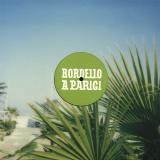
Balearic sounds and Mediterranean warmth are the inspirations for Bruno Belissimo’s Bordello A Parigi debut. Drawing on disco, house and funk, Ottimo! is a four tracker of electronic exuberance with Belissimo’s musical ability and range immediately spilling from the speakers. Guitar strings curve around synthlines in the title piece, percussive textures giving way to the mantra-like refrain of “Ottimo!” Thick bass echoes into beaming keys for “Meduse.” Bright notes cascade, grooves melting with vocoder lyrics as classic disco tones are reimagined in this modern mirrorball medley. Organic rhythms introduce the flip. “Mirage” opens to ripples of bongos and toms as a loose structure takes hold. Hedonistic chants rise to a shimmering chord, kicks and snares funnelling the building energy as bold blasts and samples shriek with delight. “Las Piramides De Ibiza” brings the quartet to a close. Clean drum patterns support joyous notes, a machine dipped voice calling time.
out of Stock
Last delivered 7 months ago available to reorder, subject to availability
Was passiert, wenn man die apokalyptische Euphorie des Raves mit den Ruinen der Popkultur kurzschließt? Fat Dog liefern die Antwort – oder vielmehr: Jimmy Cauty tut es. Unter seinem Alias TowerBlock1 hat die legendäre Ikone des anarchischen UK-Sounds (The KLF, The Orb) sich den ohnehin schon exorzistisch-schwelenden “Peace Song” vorgenommen – und ihn in einen dystopischen Bastard aus Jungle, Sirenengeheul und dogmatischer Sample-Strategie verwandelt.
I was aware of Submerse from a long time ago, mainly for when he was making hip-hop & footwork tunes but I had noticed that a few years ago, on his SoundCloud page, he was uploading jungle tunes that he had started making, which got me interested in keeping tabs on what he was doing.
But it wasn't until I met him in Tokyo where he's based, when I played after him at an event at Circus (venue in Osaka & Tokyo) and then met up with him again later on that week that I realised how much he had been making.
He sent me some of the stuff he'd been doing that wasn't available publicly yet and I was really impressed by how strong the melodies were and how much influence from video game soundtracks he had in his tunes, I knew I had to get him on Future Retro London for a release.
Big up to Submerse for allowing me to put out this EP of his on Future Retro London, look out for more music from him to come on Future Retro London and other labels!
out of Stock
Last delivered 13 months ago available to reorder, subject to availability
Phantasy are delighted to introduce Greek duo Boys' Shorts for their debut EP on the label, ‘Athena’. The project of music obsessives Vangelis and Tareq, the Boys’ Shorts sound has helped redefine timeless strains of disco, house and Italo for Europe’s queer club underground, with similar charisma spilling into their collaborative productions on labels including Live at Robert Johnson, Permanent Vacation and Polari.
Boys' Shorts appearance on Phantasy is coupled with their most ambitious and fulfilling songwriting to date. Featuring a rare vocal performance from beloved selector and cosmic disco expert Budino, appearing alongside Elisa Paradiso, the instantaneous lead cut ‘Summer’s Here and Summer’s Missing’ recounts a sun-drenched romance cut short. The duo’s soft, bittersweet synthesis mingles with Budino’s Italian-language lyrics, gently pulsing to find closure, or at least further pleasure, while up late in a Balearic discoteque.
Under those same hot lights, Boys' Shorts go deeper still with the leading oscillations of ‘Stereo on Acid’, in which classic, wobbly-hearted 808 sounds flirt playfully with a bassline that bumps like downtown traffic on a sweltering Athens afternoon. Reflecting the hidden pleasures and true underground culture of the city after nightfall, title track ‘Athena’ is a sensual and sophisticated groove with an epic yet understated touch, that one can imagine soundtracking a future soiree or centuries of ancient history alike.
out of Stock
Last delivered 6 months ago available to reorder, subject to availability
Nachpressung 2025, klassisch schwarzes Vinyl mit Obi-Banderole! Seit ihrer Gründung 2004 hat sich das dänische Instrumentalquartett CAUSA SUI zu einem verehrten Act in der fruchtbaren Psychrock Szene Europas gemausert und eine loyale Fangemeide erschlossen, die bereit ist horrende Preise für die ersten Pressungen der sieben LPs der Band zu zahlen. Die Saat wurde auf Festivals wie dem Roadburn, Roskilde und Burg Herzberg gelegt und Lob und Ehre aus den Federn von Uncut, Mojo und der Psych-Legende Julian Cope geerntet. Es versuchen sich viele Psych- und Stonerbands an der perfekten Imitation dieses alten Heavypsych Sound, der sich circa im Jahr 1979 verorten lässt, doch CAUSA SUI haben sich ihren ganz eigenen Weg erschlossen. CAUSA SUI bedienen sich aus einem deutlichen größeren Pool, als nur die üblichen Verdächtigen BLACK SABBATH Riffs und dem klischeebeladenen Krautrock-Gejamme. Kollaborationen reichen von Mitgliedern von TORTOISE und dem CHICAGO UNDERGROUND ENSEMBLE bis zu SUNBURNED HAND OF MAN; die Band fügt zu ihrem experimentellen Sound stetig unerwartete Elemente hinzu. CAUSA SUI sind als der Sound einer Monsterwelle beschrieben worden, die über die letzten vier Jahrzehnte der Rockmusik hinwegrollt. Das war niemals wahrer als jetzt, mit ihrem neuesten und ambitioniertesten Album ,Euporie Tide". Die harten Riffs sind auf jeden Fall präsent, aber es wird schnell klar, dass hier nicht in den Gewässern des ,Retrorock" verharrt wird. Das hier geht tiefer. Wo frühere Alben eher spontan daherkamen, wurde ,Euporie Tide" mit größter Sorgfalt verwirklicht. CAUSA SUI weben einen üppigen und komplexen Soundteppich aus Fäden, die den Electric Jazz, Post Rock, Exotica, Heavy Rock, Raga und alle Arten des Psych seit den frühen Siebzigern zugrundelegen. Ob die Band sich nun für straighten Rock entscheidet oder sich ins Territorium der Free Form begibt, so herrscht jedoch immer die besondere Wärme und Atmosphäre vor, die so typisch für CAUSA SUI ist. Das Album wurde mit Jonas Munk aufgenommen und produziert, der einen Sound erschaffen hat, der gleichzeitig naturalistisch und äußerst detailreich daherkommt.
Second part of second album! Originating from Normandy, France, psychedelic noise-pop quartet You Said Strange presents a unique blend of indie rock that incorporates elements of psych pop-rock, shoegaze, and proto-grunge. Thousand Shadows volume 2, a second chapter was needed to highlight the many shadows that still linger everywhere. The shadows that linger on the borders, hiding the violence of the fights for them. The shadows that time has on the relationships and their persistence, because the shadows move. Plato's cave, modern version, would be the one of toxic relationships, antidepressants and the acceptance of the regression of freedom and/or the vision of a dying world... Between shoegaze, noise pop and psychedelic rock, You Said Strange absorbs its time to incant a music in which melancholy, love and the search for plenitude meet. The band recorded their first album, Salvation Prayer, in 2018 in Portland (USA), with Peter G. Holmstrom from The Dandy Warhols, which saw release via Fuzz Club Recirds. In 2022, the band shared their LP Thousand Shadows Vol. 1. Mythomaniac kings, the Mediterranean, the colors of mourning _ these are the detailed subjects, described against a backdrop of psychedelic pop, proto grunge, and shoegaze. The first part of a powerful, reverberant, melodious second album, drawing its inspiration and production stem from encounters during their 2022 European and North American tours, between Normandy, New York, and Oregon. Most recently, You Said Strange shared the second part of their sophomore release, a follow-up to Vol. 1 entitled Thousand Shadows Vol. 2.
Pleasure of Love reissue imprint, New Islands, is back with another stunning restoration of a sought-after 12” gem. Originally produced by Paul Robb of Information Society in 1987, Venus II emerged as an otherworldly girl group in the Minneapolis scene. The mysterious duo wrote, programmed/sequenced, and performed everything live in the studio and on stage, including their local hit “Oh Boy.” Over the years, balearic heads have come to know and love this rare 12”. Now New Islands, sourcing from the original multi-track tapes, delivers a wicked, lush reissue of the original songs along with a pair of Justin Strauss remixes. Recommended if you like Nu Shooz, Tom Tom Club, and Torch Song.
out of Stock
Last delivered 3 months ago available to reorder, subject to availability
First part of second album! Originating from Normandy, France, psychedelic noise-pop quartet You Said Strange presents a unique blend of indie rock that incorporates elements of psych pop-rock, shoegaze, and proto-grunge. The band recorded their first album, Salvation Prayer, in 2018 in Portland (USA), with Peter G. Holmstrom from The Dandy Warhols, which saw release via Fuzz Club Recirds. In 2022, the band shared their LP Thousand Shadows Vol. 1. Mythomaniac kings, the Mediterranean, the colors of mourning _ these are the detailed subjects, described against a backdrop of psychedelic pop, proto grunge, and shoegaze. The first part of a powerful, reverberant, melodious second album, drawing its inspiration and production stem from encounters during their 2022 European and North American tours, between Normandy, New York, and Oregon. Most recently, You Said Strange shared the second part of their sophomore release, a follow-up to Vol. 1 entitled Thousand Shadows Vol. 2.
Emil Friis’ neues Album Moving Images, seine erste Soloveröffentlichung für das Klassik-Imprint 130701 des Labels FatCat, ist ein Zeugnis der menschlichen Verfassung und der Dinge, die uns als Spezies zusammenbringen. Es ist inspiriert von den Bewegungen des menschlichen Geistes und den Geschichten, die wir durch Musik, Worte, Kunst und Film teilen.
Das Album umfasst ein breites Spektrum an Instrumenten und Emotionen: düstere Kammermusikstücke wie „For Goodbyes“, bedrohliche, aber hoffnungsvoll hypnotische Ambient-Stücke wie „Zero“, sanfte Solo-Piano-Stücke wie „Dancing“, poetische und verspielte Flöten- und Synthesizer-Stücke wie „Through Air“ und spannungsgeladene, filmische Streicher-, Synthesizer- und Klavierstücke wie „An Upward Motion“.
„Moving Images“ ist auch ein gemeinsames Projekt zwischen Friis und ausgewählten Filmemachern. Jeder der 15 Albumtracks wird von einer Videoarbeit begleitet. Die Filmemacher Kevin Brooks, Shaun Hart, Morgan Jon Fox und Jonathan Meyers hatten kreative Freiheit, die Stücke zu interpretieren, die ihnen am meisten zusagten.
Das aus nur wenigen Elementen bestehende Arrangement sorgt für ein enges Zusammenspiel aus Instrumenten und Emotionen sowie der Tiefe der Texturen. Die Originalkompositionen werden auf Synthesizern, Streichern, Holzbläsern und Klavier dargeboten. Mit Beiträgen von Künstlern wie dem renommierten Streicher Davide Rossi werden sie in cineastische, moderne klassische Werke verwandelt. Die Stücke sind so voller Helligkeit, Sensibilität, Spannung und düsterer Schönheit, dass es oft den Anschein hat, als würden die Instrumente miteinander sprechen. Die Phrasen wirken manchmal einsam. An anderer Stelle schweben und fliegen sie. Trotz ihrer Kürze sind die Resultate von Wärme und Inbrunst erfüllt.
Jesper Munk – Claim (10th Anniversary Edition) | Streng Limitierte Yellow Coloured VinylZum 10-jährigen Jubiläum seines bahnbrechenden Albums "Claim" aus dem Jahr 2015 präsentiert Jesper Munk eine streng limitierte Anniversary Edition auf leuchtend gelbem Vinyl! Diese exklusive Auflage, weltweit auf nur 500 Einheiten begrenzt, ist ein absolutes Sammlerstück für Fans und Vinyl-Liebhaber. Das Highlight: Persönliche Liner Notes von Jesper Munk selbst gewähren faszinierende Einblicke in das Making Of von "Claim".
The talented Canadian vocalist Tara Laine recorded the funky gem “You Made Me Believe” with members of the band Change, an Italian-
American post-disco group that was heavily influenced by Chic. Recorded in 1985 for the legendary Street Level label, featured here is he
original 12” version complete with bonus instrumental. This session was produced by in-demand session drummer Leslie Ming, whose fine work
can be heard on the records of Kashif, Melba Moore, B.T. Express and many others.
Local Philadelphia singing sensations Al and Tyrone Chestnut self produced the classic 12" single "Sweet Little Rita” mixed in New York in 1983
by the highly regarded Steve Goldman, who was the chief engineer for Mighty M productions and whose mixes for Kashif, Evelyn Champagne King, Melba Moore, George Benson and others, became radio staples. Like most Street Level releases,
"Sweet Little Rita" was recorded inPhiladelphia, mixed in New York, and originally released in Canada. Presented here is the original 12" version plus bonus instrumental version.
A hard-hitting slab of electro-boogie released on the legendary Street Level label in 1985, Lemuria’s Thunder In Your Love was written and
produced by Phil Valentine, who also provides the gritty lead vocals, and features backing from members of the influential Italo-American post-
disco outfits B. B. & Q. Band and Change, including New York session aces Leslie Ming (drums), Timmy Allen (bass) and guitarists Kevin
Robinson and Ira Siegel, whose impressive fret work powers this highly addictive track. This is a must-have for collectors of funky sounds and
rare groove from the mid-1980s.
Though Toronto rockers Hot Garbage’s signature tinge of moody, heavy psychedelia remains present on Precious Dream, their forthcoming sophomore album careens at high speeds into a darker world of searing post-punk riffs, grappling with themes of dread, loss, the resilience of the human spirit and the highs and lows of solitude. From the onset, elegant yet brutalist sonic architectures provide the scenery for an escape route, while cryptic poetic spurts act as surreal signage. By the end of the journey, we are left with a strangely pleasant void, but also with an uncontrollable urge to backtrack into the outfit’s beautiful 36-minute musical trap. True to form, prolific producer Graham Walsh (Holy Fuck, No Joy, !!!, etc.) – with whom, Hot Garbage recorded their critically-acclaimed debut full-length, RIDE – does right by the band, masterfully harnessing the four-piece’s unique brand of rock & roll, setting in motion a parallel universe where phones are not what they seem, lobotomy has its merits, lower is actually better, and tunnels stretch the very fabric of spacetime. Fans of Sonic Youth, Frankie and the Witch Fingers or Joy Division should welcome a confused stroll down this romantic if dystopian opus, for a cathartic and tender sense of resolution awaits.
Limited Edition Three Blind Mice Premium Re-issue Collection
180g vinyl LP with obi and insert
Remastered and cut by Bernie Grundman
Pressed and printed in Japan
Orig. Rel.: 1973
A memorable first album by the very accomplished yet restrained artist, Naosuke Miyamoto. Thrilling straight-ahead jazz with Takashi Furuya and other Kansai-based members!
With Generation Of The Void, NAILED TO OBSCURITY have crafted their most mature and expansive album to date. Set for release on September 5th, 2025, the album reflects the turmoil of the post-pandemic era, the shadows of war in Europe, and the relentless changes affecting all of humanity. Beyond its political and social commentary, the album also dives deep into personal struggles, confronting themes of dark emotions, depression, and fear. Every note, every lyric carries the weight of uncertainty and disillusionment, while no one knows what one will find within the void or beyond. After the success of 2019’s ‘Black Frost’, Germany’s doom/death metal veterans return with their new album ‘Generation of the Void’. First single ‘Overcast’ drips with a brutal, melancholic, apocalyptic intensity which the band have perfected over their 25 years together. After sharing the stage with legends Dark Tranquillity, Amorphis, Jinjer, Arch Enemy and At the Gates, Nailed To Obscurity will embark on their first EU headline tour at the end of this year.
It"s been six years since LA DISPUTE released their last album, Panorama. Since then, the Michigan post-hardcore band-made up of Jordan Dreyer on vocals, Brad Vander Lugt on drums, Chad Morgan-Sterenberg and Corey Stroffolino on guitar, and Adam Vass on bass-dealt with the stagnance of the pandemic, celebrated the ten-year anniversaries of Wildlife and Rooms Of The House, and began working on NO ONE WAS DRIVING THE CAR. The fifth studio LP is the first entirely produced by the group, and it came together in Grand Rapids and Detroit, the United Kingdom, Australia, and the Philippines: "I think the change in environment was really helpful to breathing new life into the process each time we came back to it," Dreyer says. Partly inspired by the 2017 psychological thriller First Reformed, NO ONE WAS DRIVING THE CAR reckons with malaise in the shadow of the looming apocalypse, which has noticeably been worsened by the advancement of tech. The title comes from a quote from a police officer Dreyer read in a news article about a lethal self-driving Tesla crash, an absurd event which raises questions about the amount of control we have in our own lives. In fourteen dynamic tracks, the band grapples with the existential topic and the human need to find comfort and a sense of security in an existence where we"re often thrust into chaos without permission.
Suede have announced details of their 10th studio album ‘Antidepressants’. Due for release on 5th September via BMG, the album is a milestone achievement that sees the band at the top of their game. It follows the success of their critically-acclaimed ninth top 10 album ‘Autofiction’ released in September 2022, which charted at No.2 on the UK Albums Chart and was their highest-charting release in over 20 years.
Suede will celebrate the release of ‘Antidepressants’ with a takeover of London’s Southbank Centre, through a series of exciting live performances kicking off in September, Suede’s four-night residency will commence with two consecutive nights at the Royal Festival Hall on September 13th and 14th, followed on September 17th by an intimate stripped-back performance at the Purcell Room, culminating in a collaboration with the Paraorchestra on September 19th at the Queen Elizabeth Hall.
Suede have announced details of their 10th studio album ‘Antidepressants’. Due for release on 5th September via BMG, the album is a milestone achievement that sees the band at the top of their game. It follows the success of their critically-acclaimed ninth top 10 album ‘Autofiction’ released in September 2022, which charted at No.2 on the UK Albums Chart and was their highest-charting release in over 20 years.
Suede will celebrate the release of ‘Antidepressants’ with a takeover of London’s Southbank Centre, through a series of exciting live performances kicking off in September, Suede’s four-night residency will commence with two consecutive nights at the Royal Festival Hall on September 13th and 14th, followed on September 17th by an intimate stripped-back performance at the Purcell Room, culminating in a collaboration with the Paraorchestra on September 19th at the Queen Elizabeth Hall.