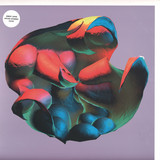
Atangana Records's back with its second release, once again a long-awaited reissue, once again digging into the Caribbean music with a classic track from Les Maxel's (from Guadeloupe), Le Retour de Toto'. As usual, the remastered tune comes with a remix and a B2 just' coming with the remixer's add parts.
Originally out in 1976, Le Retour de Toto' on Disques Debs International is a brilliant dancefloor killer, magnifying the cross-world between zouk and latino music, biguine and calypso. You can hear from the prominent hi-hat all the energy of the dance moves you could improvise on that kind of joint. With a lot of break, wonderful horns and backing vocals, Le Retour de Toto' will enjoy all the summer dancefloor and airwaves for some time...
Deni Shain says : When we discovered this gem with my friend Likkle Ben, over a night of digging, it's mainly the keyboard break that drove us nuts! We were already hearing the edit that we'd make for our gigs... It didn't take long for me to contact the family of Henry Debs, introducing Atangana's project. They loved it, and at that time I went to studio with my friend Papastomp to start remixing it... I love how we added step by step the addparts, giving respect to the original tape...
Hot On The Heels Of The First New Album From The Last Poets In Over 20 Years, The Title Track "understand What Black Is" Gets The Remix Treatment From Digital Mystikz, Dmz And Deep Medi Legend "mala" And Uk Dance Music Innovators And Legends "dego And Kaidi Tatham".
The fifth release on the Animals Dancing label is a special one. Sourced from recordings of a live set from 2014, Animals Dancing famiglia Jonny Nash & Suzanne Kraft (Diego Herrera) originally created these tracks in L.A. ahead of a series of live performances together. After some finishing touches made in Jonny's studio in Bali in 2016, Animals Dancing are very excited to finally launch these two to the club.
The newstyle invented by the Espylon familly is a real new style as a scene... no excitation and no minimal. This is just let-it-go-pur-techno... They sell loads of their stuff on direct to the public and we are only re-seller. Real proud to have a chance to do it... but yes : original creation we got here. Pure Perfect musical design for parties... full of love and precision... needed music for dubbers as well as for Hardcorers... No frontier no blame, no bad vibes no darkness... maybe sometime a pinch of nostalgy but it's « just a game ». Original hard life transformed into bloody good vibes ! I love you guys !
In 2006 Salvador Breed and Stijn van Beek met while studying Sound Design and Music Technology at the Utrecht School of the Arts. Ever since then the pair have been beavering away behind an arsenal of blinking banks in Amsterdam. The musical fruit of this twelve year friendship Breek. A partnership that smears the boundaries of styles and sounds with festive flare. For their vinyl debut, a candy coloured cornucopia of elements are swirled and whirled. Braindance, electronica and neo-classical are festooned with dubby tones and underground grit in a unique sound of diverse textures and deep tones. Faster works, like the swooping joy of "Yokai", are countered by more contemplative "Ama." "Hang" is a whimsical dreamscape of squirming acid lines, crisp drums and angular notes that combine to produce a brilliantly bright piece. "Mu-Onna" and "Oiwa" are more abstract works that melt vocals with sweet strings before the final piano swells and ambient rains of "Burabura." A daring and dynamic vinyl debut from this eccentric duo with stunning artwork from Warren du Preez and Nick Thornton Jones (Massive Attack, Bjork en UNCLE).
Record Kicks Is Extremely Proud To Present You A New Outfit That Will Take The Soul Scene By Storm: The Faithful Brothers. Coming Straight From The Brainchild Of Tel Aviv Soul Club, The Faithful Brothers Is Man Of North Country's (acid Jazz Records) Side -project And Its Leaded By Singer "soul Boy" Yashiv Cohen. Monc Teamed Up With Record Diggers The Neeman Brothers To Form This New Eight-piece Deep Soul Combo. Their Official Debut On Record Kicks Is Expected With 2 Brand New Singles That Will Be Available On Digital Download And Limited Edition 45 Next 15 Of June.
On The A Side "crossroads Of Love" Is A Northern Soul / R&b Stormer That Will Set All The Dancefloor On Fire. On The Flip Side The Stunning Crossover Soul Single "one More Time" Penned To Be An Instant Classic On All Rare Soul Dancefloors Across The World.
Don't Sleep Though, This 45 Will Be Limited To 500 Copies, So First Come First Served...watch Out!
Oktave Records returns for the third installment from the label, once again featuring owner and proprietor Jeff Derringer at the helm. The 'Factions' EP shows Jeff at his most direct and robust, with three tracks of meticulously constructed techno.
'Factions' starts the EP and goes straight for the heart of the dance floor, with a tunneling groove that lures the listener into hypnosis before a devastating break takes the track to a whole new level of intensity. This one is for the ravers, no doubt.
The flip side starts with 'Penalty Phase', another floor-focused stunner that features Jeff's signature kick drum and drive, coupled with evolving synth arpeggios and melancholy vibes for those early club mornings as the sun comes up. Finally, 'The Second Plane' slows the tempo down a bit and ends the record with a thoughtful broken beat arrangement reminiscent of early Warp.
'Factions' was written during the winter of 2018 and mastered by Tim Xavier at Manmade Mastering.
It's been over 10 years since the release of Gui Boratto's breakthrough full length debut 'Chromophobia'. As to what its title suggests, he shook up the techno game with a contrast of lushly coloured minimal grooves and melody, whilst many will recall that the album included the highlight single Beautiful Life' which became a dance floor anthem for that era. Four albums in and countless EPs and remixes under his belt, the Brazilian producer's unique savoir-faire in carving out a functional album out of diversely routed singles and features is back at it on his fifth studio LP, 'Pentagram'. Here Gui Boratto lays down a nuanced 12-track narrative that reinvigorates his signature sound into a refreshingly different perspective that feels all too familiar - including the return of Beautiful Life' vocalist (and Gui Boratto's wife) Luciana Villanova on the single "Overload".
Through his signature kaleidoscopic approach, Boratto delivers an album built as a far-reaching hub-and-spoke system, broadly inclusive as can be. From the opening cut, 'The Walker' - hot on the trail of Tears For Fears 'Elemental' (one of Boratto's "favourite 80's bands") - to the hi-NRG euphoria of 'Forgotten' and its pounding tech alter ego 'Forgive Me'. "I was going into 2 different directions", Boratto says, "the typical indie- electronic-rock' Boratto kind of production like It's Majik' or Like You' and a much more techno approach." He goes on, "I decided to split them into two twin sister songs. When I play live I always put these two songs together."
The Brazilian Producer further embraces the pop-friendly essence of his past work on tracks like 'The Phoenix', featuring vocalist Nathan Berger, and 'Overload', both melding acidulous synthlines with laser-precise breaks, vox hooks and drops calibrated for extended radio and club use, although sieved through his distinctive rainbow-hued musical prism. For the symbolists out there, the album's pared-down closer '618' duration accidentally happens to equate the proportions of the said pentagram. "Coincidence" Boratto questions, and capsulises, "not so ufanista and supporter of Brazilian neo-concretism, but I guess the brazilian sculptor Lygia Clark also inspired me a lot. Not the meaning of her sculptures, but the shape of the hinge of most of her work. I've wanted to transmit the scientific pentagram's point of view. It's not a religious kind of thing."
Whereas 'Spur' (a field-tested 808 and 909-heavy "purist track", "very, very old school" Boratto insists) and 'Alcazar' are sheer smooth-edged four-to- the-floor epics, the album also shares its lot of startling moments, such as with the John Barry'esque 'Scene 2' (with a hint of Amon Tobin, 'Easy Muffin' style, throw in) and its refined string-laden buildup, 100% fitted for a 007 opening credit sequence, or with 'Hallucination' (feat B.T.) and the further James Holden-ish title-track 'Pentagram' (think 'The Idiots Are Winning'), "one of those exercises I did when I got my Buchla modular synth" Boratto analyses, "I think I've used more then 30 different snares, with different delays and reverbs. The whole song is alive". And so is 'Pentagram' in its entirety: alive and definitely just as manifold and hopeful as its architectonics are the stuff of science and dreams all at once.
Es ist zehn Jahre her seit der Veröffentlichung von Gui Borattos bahnbrechendem Debütalbum - Chromophobia . So wie der Titel vermuten ließ, war das Album mit seinen kontrastreichen Minimalgrooves und den üppig gefärbten Melodien ein Schocker im besten Sinne. Ihr erinnert euch sicher noch an die Hit-Single - Beautiful Life , eine Dancefloor-Hymne aus dieser Zeit. Nach vier Alben und unzähligen EPs und Remixen ist das einmalige Savoir-faire des brasilianischen Produzenten, aus vielfältigen Singles und Features stimmige Alben zu schaffen, auch auf seinem fünften Studioalbum - Pentagram zu hören. Hier legt Gui Boratto ein Zwölf-Track-Narrativ vor, das seine Handschrift auf erquickende Weise wiederbelebt. Wiederbelebt wird auch die Stimme von - Beautiful Life (die der Frau Gui Borattos gehört) auf dem Stück - Overload .
Durch seinen charakteristisch kaleidoskopischen Ansatz liefert Boratto ein Album, das gebaut ist wie die Speichen deines Fahrrads, von dem Opener - The Walker - direkt auf der Spur von Tears For Fears - Elemental (einer von Borattos - favourite 80's bands ) - zur Hi-NRG-Euphorie von - Forgotten und seinem stampfenden Counterpart - Forgive Me . - Ich bin in zwei unterschiedlichen Richtungen gegangen , sagt Boratto: - den typischen ,Indie-Electronic-Rock'-Weg wie in - It's Majik oder - Like You und den Techno-Weg. Er fügt hinzu: - Ich hab mich entschieden jedem Track seinen Zwillings-Track an die Seite zu stellen. Immer wenn ich live spiele lege ich die zwei Stücke zusammen.
Der brasilianische Produzent erschließt weiter die Pop-Essenz seiner vergangenen Arbeit auf Tracks wie - The Phoenix (feat. Nathan Berger) und - Overload . Beide kombinieren zwitschernde Synthi-Melodien mit lasergenauen Breaks, Hooklines, Drops und sind wie gemacht für die Rotation und den Club. Und für die Symbolisten da draußen: die Länge des reduzierten Closers - 618 beträgt zufälliger Weise genau die Proportionen des besagten Pentagramms. - Fügung , fragt Boratto und fasst zusammen: - Ich bin kein Anhänger des brasilianische Neo-Konkretismus , aber ich glaube die brasilianische Künstlerin Lygia Clark hat mich sehr inspiriert. Nicht die Bedeutung ihre Skulpturen aber die Form der meisten ihrer Arbeiten. Ich wollte den wissenschaftlichen Blickwinkel auf das Pentagramm übersetzen. Nicht im religiösen Sinne oder so."
Während - Spur (ein erprobter - purist track auf der Basis von 808 und 909, - sehr, sehr old school , wie Boratto betont) und - Alcazar glatte Vierviertel-Epen sind, hält das Album auch Überraschungsmomente bereit. Z.B. das John Barryschen - Scene 2 (auch eine Spur von Amon Tobins - Easy Muffin ist darin zu hören) und seinem Streicher-Aufbau, der hundertprozentig geeignet wär für eine Eröffnungssequenz in einem Bond-Film. Auch - Hallucination (feat. B.T.) oder der James-Holden-hafte Titeltrack - Pentagram (wir denken da an - The Idiots Are Winning ) wäre da zu nennen. - Einer dieser Übungen, die ich gemacht habe, als ich meinen Buchla-Modular-Synthesizer bekommen habe, war , erinnert sich Boratto, - mehr als 30 verschiedene Snares, Delays und Reverbs zu verwenden. Der ganze Song sollte am Leben sein. Und so ist - Pentagram im Ganzen: lebendig und sicher genau so vielfältig wie sein Bauplan, der auch der Wissenschaft und den Träumen zugrundeliegt.
out of Stock
Last delivered 3 years ago available to reorder, subject to availability
A New Chapter Begins For Our Best Work Records Artist Fabian Dikof With His New 12 Inch Release "Into You".
Both Of The Tunes Again Clearly Show-off His Creative Skills.
His Signature Sound With Its Playfulness Surely Will Get Stuck In Your Ears.
With His Perfect Mixture Of Electronic And Organic Sounds
Pressure On The Dancefloor Is Guaranteed.Peaktime - A1 & B1!
out of Stock
Last delivered 6 years ago available to reorder, subject to availability
LB aka LABAT is a regular cat in the french circuit with releases on Disques Solaires, DKO or recently WOLF Music. This ep highlights once again his unique style with an all inside MPC production blending samples with sharp signature beats. The opener is stone cold disco house jam in the deep Parrish tradition. Nothing New is a spacey hip hop joint taking you a ride to destination Spice Go- a detroish hip house beat. On flipside, CELESTIAL PLAN is a special party break with deep jazz samples mixed with a mpc signature that gives this track a very uncommon signature and groove. Better be ready for this one before landing to STICKY GREEN countryside.
Bluestaeb's Evolution From A Beatmaker To A Producer Is His Sophmore Album everything Is Always A Process'.
He Is One Of The Key Figures Of A New Generation Of Up And Coming Hiphop Beatmakers, Who Have Emancipated From Genre Thinking And Instead Merge Old School Aesthetics With A New School Attitude And Organic Instrumentation.
Everything Is Always A Process Re-iterates Bluestaeb's Overall Approach To Life (and Thinking), But Also Has Direct Reference To The Making Of The Album Itself, Which Began With Moving From Berlin To Paris In 2015 In The Search Of New Influences And A New Creative Environment.
Created Between 2015 And Early 2018, Eiaap Embodies The Process Of This Transition - As Well As Collaboration With Instrumentalists And Vocalists From All Over The World And Recording In Different Studios In Paris, London & Berlin.
"meeting All Those Musicians And Trying Out New Ways Of Producing By Using Real Analogue Synths, Rhodes, Drums And Percussion Etc. Made It Possible To Overcome The Creative Boundaries Of A Home Studio With Just A Midi Keyboard" / Bluestaeb
Influenced By Madlib's "shades Of Blue" And Trained In African Drum Techniques Such As Djembé And Daruka, Bluestaeb Had Been Crafting His Own Beats Since His Teenage Years And Gradually Found His Sound Identity Through Experimenting With Hiphop And Jazz - First To Be Heard By A Broader Music Community In 2013, When He Released His Debut Album "1991 Extraterrestrial" (radio Juicy). Since Then The Prolific Young Artist Has Released Numerous Solo And Collaboration Projects ("b.l.u.e. Friday" In 2015 And - sidekicks With S. Fidelity In 2016). In 2016, He Produced Collaborative Album "lit - Lost In Translation With Rapper Juju Rogers, A Keen Manifesto Against Racism, Xenophobia And The Rise Of Anti-heroes Such As Donald Trump.
Today, Bluestaeb Lives And Works In Paris And Berlin And Is Set To
Release His Third Solo Album everything Is Always A Process', A
Smooth Neo Soul-induced Epic Featuring Artists Such As Noah Slee, Harleighblu And Melodiesinfonie, Via Jakarta Records In 2018.
Colin Potter Is A Sound Engineer And Musician Currently Based In London. He Has Worked Within The Fields Of Electronic And Experimental Music For Over 35 Years, Collaborating With The Likes Of Current 93, The Hafler Trio, Organum, Andrew Chalk, And Most Notably As A Key Part Of Nurse With Wound Alongside Steven Stapleton. He Started The Esteemed Icr (integrated Circuit Recordings) Label In 1981 Releasing A Clutch Of Wonderful Home Recordings Of His Own, Over Half A Dozen Small Run Cassette Only Releases.'the Where House' Was Recorded In 1981 At Ic Studio, A Converted Wash House In Sutton On The Forest In North Yorkshire. The Album Was Self-released On Cassette That Same Year Via Icr. This Expanded Double Lp Edition Features All 13 Tracks From The Original Tape On Vinyl For The First Time Plus 4 Bonus Tracks. 'the Where House' Is A Prime Example Of Early Uk Post-punk/industrial Electronic Music. combining Dub, Electro, And Krautrock Rhythms With Psychedelic, Kosmische Noise In Multiple Mutations Ranging From Almost Pop-wise Songcraft To Horizon-scanning Motorik Flights,' Says Boomkat. Most Of The Damage Was Done By Colin Using Guitars, Synths, Sequencers, Drum Machines, Percussion, And Modified Toy Keyboards With Fairly Primitive 4-track Recording Equipment. He Was Assisted On Some Of The Tracks By Stephan Jadd-parry (guitar, Percussions), Jon Caffery (guitar, Bass, E-bow, Percussion) And Nick Jackson (synth). All Songs Have Been Remastered For Vinyl By George Horn At Fantasy Studios In Berkeley. The Record Is Sleeved In A Replica Of The Original Cassette Artwork By Jonathan Coleclough. Every Copy Includes A Double Sided Postcard Insert With Notes From Colin.
Music and Poetry of the Kesh is the documentation of an invented Pacific Coast peoples from a far distant time, and the soundtrack of famed science fiction author, Ursula K. Le Guin's Always Coming Home In the novel, the story of Stone Telling, a young woman of the Kesh, is woven within a larger anthropological folklore and fantasy. The ways of the Kesh were originally presented in 1985 as a five hundred plus page book accompanied with illustrations of instruments and tools, maps, a glossary of terms, recipes, poems, an alphabet (Le Guin's conlang, so she could write non-English lyrics), and with early editions, a cassette of field recordings' and indigenous song. Le Guin wanted to hear the people she'd imagined, she embarked on an elaborate process with her friend Todd Barton to invoke their spirit and tradition.
For Music and Poetry of the Kesh, the words and lyrics are attributed to Le Guin as composed by Barton, an Oregon-based musician, composer and Buchla synthesist (the two worked together previously on public radio projects). But the cassette notes credit the sounds and voices to the world of the Kesh, making origins ambiguous. For instance, The River Song' description reads, The prominent rhythm instrument is the doubure binga, a set of nine brass bowls struck with cloth-covered wooden mallets, here played by Ready.' According to writer and long-time friend of LeGuin, Moe Bowstern (who pens the liners for the Freedom To Spend edition of Kesh), Barton built and then taught himself to play several instruments of Le Guin's design, among them the seven-foot horn known to the Kesh as the Houmbúta and the Wéosai Medoud Teyahi bone flute.' Barton's crafting of original instruments lends an other-worldly texture to the recordings of the Kesh, not unlike fellow builders Bobby Brown and Lonnie Holley. Bowstern notes, Other musician / makers have crafted their own Kesh instruments after encountering the earlier cassette recordings that accompanied some editions of the book.' Both Barton and Le Guin are sensitive to the sovereignty of indigenous Californians and were careful not to trample the traditions of the Tolowa people who lived in the valley long before the Kesh. You research deeply, and then you bring your own voice to the table,' said Barton. Within the Kesh culture, the numbers four and five shape the lives, society and rituals. Barton composed loosely around these numbers, patiently listening to the land of Napa Valley for signs and audio signals from the natural elements. Todd incorporated ambient sounds of the creek by Le Guin's house and a campfire they built together. The songs of Kesh are joyful, soothing and meditative, while the instrumental works drift far past the imaginary lands. Heron Dance' is an uplifting first track, featuring a Wéosai Medoud Teyahi (made from a deer or lamb thigh bone with a cattail reed) and the great Houmbúta (used for theatre and ceremony). A Music of the Eighth House' sends gossamer waves of the faintest sounds to float on the wind.' Like the languages invented in the vocal work of Anna Homler, Meredith Monk, and Elizabeth Fraser, the Kesh songs and poems play with the shape of voice.
The Music and Poetry of the Kesh cassette was meant to accompany and enhance the experience of reading Always Coming Home. Presented in this edition as a long-playing album, where only traces of the book linger (the jacket offers some of Le Guin's illustration, and a letterpressed bookmark featuring the the narrative modes of western civilization and the Kesh valley is included), the music alone breaking the silence of what might be. It can transport—offering a landscape for imagining a future homecoming. One in which we are balanced, peaceful, and tend to the earth and its creatures. A line from the Sun Dance poem reminds us, We are nothing much without one another.' Freedom To Spend gives new life to the recordings of the Kesh people in the first ever vinyl edition of Music and Poetry of the Kesh, out on LP, and digital formats on March 23, 2018. The LP will include a deluxe spot printed jacket with illustrations from Always Coming Home, a facsimile of the original lyric sheet, liner notes by Moe Bowstern, multi-format digital download code and a limited edition bookmark letter pressed by Stumptown Printers in Portland, OR.
This past Monday, January 22, Ursula passed from this realm to another leaving a life spent building and exploring other worlds while challenging social concepts of the real word she inhabited.
Freedom To Spend had been working under Ursula's enthusiastic endorsement and with Todd Barton, her musical collaborator on Kesh, to give the music that accompanied her 1985 epoch a new life. With the Le Guin family's encouragement to move forward with our planned release, we are humbled to play this small role in sharing Ursula's work.
As Pete Swanson, one third of Freedom To Spend, stated, Ursula's legacy is her work which transformed the world, and this is another piece of the universe that her imagination birthed becoming real.' Listen to A Teaching Poem / Heron Dance' below.
Dynamic composer Neil Cowley is set to release 'Spacebound Tapes' a four track EP featuring remixes of his Trio's 'Spacebound Apes' album ("A miss- this-at-your-peril release" Drowned In Sound 9/10) by Rival Consoles, Throwing Snow, Christian Löffler and Vessels
'Spacebound Apes' was written by Cowley for his trio and long-time bandmates drummer Evan Jenkins and bassist Rex Horan, with contributions from Brian Eno collaborator Leo Abrahams on guitars and FX. A bold exercise in atmosphere and emotion, the album was woven together with some of the most breathtaking, impassioned music that Neil has created. Originally inspired by Arthur C Clarke's 1956 sci-fi book 'The City and the Stars' the album was recorded at Cooper Hall, a studio and cinema set deep in the Somerset countryside with Stanley Kubrick's '2001 A Space Odyssey' running on permanent rotation.
The sci-fi aesthetic is firmly grasped by the four remixers, echoing the theme in their own reinterpretations. The reimagined tracks retain the inventiveness of the originals while exploring progressive but considerate paths. In his version of 'Weightless', Erased Tapes signed Rival Consoles feeds off of the electronic songwriter's critically lauded humanised techno, while rising German musician Christian Löffler brings new dimensions of space and scale to 'Death To Amygdala'. Houndstooth's Throwing Snow delights in deconstructing 'Duty To The Last' with pulsing energy and Vessels' take on 'Echo Nebula' applies machinic facets to the delicate sounds of the original.
Soul Jazz Records' latest album 'Yoruba! Songs and Rhythms for the Yoruba Gods in Nigeria' is newly recorded in Lagos, Nigeria. The album is co-produced by Soul Jazz Records label head Stuart Baker and Laolu Akins (founding member of the legendary 1970s Nigerian Afro-Funk/Rock group Blo). Yoruba! features an array of local master drummers led by Olatunji Samson Sotimirin and singers (featuring the lead vocals of Janet Olufanmilayo Abe) performing heavyweight Afro-rhythms, with talking drums, Bata and Dundun drums and a mass of percussion in these deep spiritual and sacred songs used to honour and worship the traditional and ancient Yoruba gods in Nigeria, West Africa.
The enormous impact of Yoruba and West African music and culture is worldwide - from the first Afro-centric explorations of African-American jazz musicians in the 1950s such as Art Blakey, Randy Weston and Dizzy Gillespie, the explosion of Nu Yorican Latin music in New York City starting in the 1960s - Mambo, Boogaloo, Latin funk and soul - through to the sacred and powerful Afro-derived music of the religions of Santería in Cuba, Candomblé in Brazil and Voodoo in Haiti, which all came into existence on account of the Atlantic slave trade which began over 400 years ago. On a wider scale West African music remains the primary root of all African-American musical forms - from New Orleans jazz to Bronx rap, gospel, soul and more.
This album features songs honouring the Nigerian gods of the Yoruba traditional religion - Yemoja, Obatala, Ogun, Sango and others - as well as a selection of instrumental cuts focussing on the Bata and Dundun drums. The album comes complete with extensive text and photography included in the 40-page outsize booklet/gatefold double vinyl + inners showing the influence of Yoruba culture throughout the world and the social and historical context for the music contained here.
Watch out for a limited edition remix of the project by Osunlade, also forthcoming on Soul Jazz Records.
Enigmatic producer Waxwood has a genuinely global outlook. Born in Russia, resident in Brooklyn and a regular visitor to Los Angeles, he can often be found jetting off to far-fung parts of the World in order to make feld recordings and immerse himself in different musical cultures.
You can hear these disparate global infuences and inspirations in
Waxwood's frst single for Claremont 56, which comes on the back of a near legendary 2015 cassette for NYC's Styles
Upon Styles, Sahasraha, which magically fused tropical hand
percussion and densely layered feld recordings with lilting ambient chords, hypnotic electronic rhythms and all manner of intoxicating
aural fourishes. 'Kama' is a slightly different beast from its' predecessor, with a sunny disposition and laidback breeziness throughout. Although underpinned
by a sturdy kick-drum pattern, its chiming melodies and metallic
percussion fourishes - reminiscent of indigenous music from far-
fung nations such as Malaysia and Indonesia - combine with gentle acoustic guitar motifs and waves of acid-esque electronics to create a beguiling and life-affrming mood. It offers more proof that Waxwood is a producer with a unique musical vision. The track's inherent gentle breeziness is explored in greater detail on the accompanying remix, which has been provided by Phantom Island regulars Fuga Ronto (AKA Swiss musicians/producers Ron Shiller and Tobi Schweizer). Riffng on Waxwood's original, they've added superb new vocals and instrumentation - think dreamy harmonies, tumbling synthesizer melodies and mesmerizing guitar parts - to create a sunset-friendly Balearic revision that's both stunningly beautiful and dazzlingly sun-kissed.
The remarkable thing about BELP's new album is its two-dimensional function. It works both on a loud and a quiet volume. Some tracks would go down well as a club track, like opener 'Travelling Thru Galaxies'. This track brings back memories of the best work released on the Hyperdub label, with it's fine combination of synths and irresistible, dubby beats. Elsewhere, 'Off Ending' might start off as 'dancehall-but-not-quite dancehall' track but when half way the synths kick in they change the feeling of the track to a more cerebral level.
BELP is the artist name of Sebastian Schnitzenbaumer. Born in Munich, he partially grew up on the Seychelles islands off the coast of East Africa. Educated in classical piano, those two gravitational poles, European and African influences, form the basis for his musical development. Currently he has close ties to the (dub) Sausage Studio in Hackney, London. In his hometown Munich, the Bavarian capital, BELP took a central role in a series of discussions and events aiming to improve the image and possibilities of Munich, which to his regret is a predominantly posh and hedonistic city where optimistic and uplifting music take central role.
In different guises Schnitzenbaumer works as a much needed antidote. Since 2013 he runs the Schamoni label, focusing on supporting local artists like Leroy and Protein. Its sublabel Jahmoni is responsible for recent works by international artists like Aaron Spectre and DJ Marcelle/Another Nice Mess.
BELP's music is dark, serious and layered. His love for dub and dancehall shines through in his broken beats. At the same time the synth layered tracks give the album an atmospheric feeling.
This also is what makes this album essential: it's refusal to be pigeonholed. The last track on side A, 'By Beauteous Softness', is an a cappella rendition of a 17th century Henry Purcell piece, beautifully sung by Alexander Schneider. This track is preceded by 'Transmission', which is a brilliant abstract work, sounding like wind closing on you from all sides. And you can sip a cocktail whilst listening to the jazzy 'Time And Again' (BELP once worked as a jazz pianist).
It's clear to hear BELP took a long time recording this album. Every note, synth, drum beat, is carefully placed. But what the album might lack on spontaneity it more than compensates this with its sheer musical beauty. This also reflects on the abstract sleeve, like 'Elephants' designed by BELP himself.
Enjoy this album on big speakers, as background music or simply on headphones. There will always be new sounds and layers to be discovered!
Crosstown Rebels celebrate their fifteenth year with their monumental 200th release. American DJ and producer Arthur Baker reunites with Rockers Revenge for the first time in thirty years. To complete the package, dance music heavyweights Francois K and Michael Mayer take on remix duties.
On A Mission is exactly that, 'a mission of love, a mission of peace'. The positive vocals hark back to those of early 90s house tracks, which created unity through music and clubbing. The rhythmic beat of the drum is determined, as percussive layers build and the vocals bleed into the synths. Francois K provides two variations of the track. His remix features more prominent drumbeats driven by a growling bassline. On his rockers dub version, Francois goes all out and dubs us into the stratosphere. Up next is the Michael Mayer remix, with a more electronic take on the original with driving synths and a whirring, throbbing bass-line.
Created in 1982, Rockers Revenge was the brainchild of Arthur Baker and Donnie Calvin. Donnie provided lead vocals with Baker's wife, Tina B, Dwight Hawkes and Adrienne Dupree Johnson on backing vocals. Their most prominent track, Walking On Sunshine, was a post-disco hit reaching #1 in the US dance charts and #4 in the UK charts.
Three years ago Baker and Hawkes reconnected through social media with Baker sending through his original Mission idea. Baker is known for his work with hip hop artists like Afrika Bambaataa, Planet Patrol, and New Order whilst also remixing the Pet Shop Boys' 1986 hit In The Night. Fast forward to 2018 and the group performed a monumental live show at Get Lost Miami, and are currently in the studio working on new material. This Summer they will shoot a new documentary and perform live at various events.
Miss Kittin & The Hacker are the Electro duo of Caroline Hervé and Michel Amato from Grenoble, France. The pair met during the early 90s at a rave and soon after bought turntables and began DJing. In 1996, they started writing music heavily influenced by 1980s synthpop and post-punk bands like Fad Gadget, DAF, Liaisons Dangeuresues, and Yazoo, as well as Italo Disco. Bored by the techno scene at the time, they set out out to lighten the serious tone and bring a campy sexiness to the dour musical landscape. Upon hearing their demos DJ Hell signed them to his Munich-based International DJ Gigolo label and released their first 2 EPs in 1998 and 1999. Their debut album 'First Album" was released in 2001 followed by . in .
Lost Tracks Vol. 2' contains 4 previously unreleased demos recorded between 1997 and 1999. The duo fused 80's European New Wave/Italo Disco with 90's Detroit Electro acts like Le Car and Dopplereffekt. By utilizing verse-chorus structures, they playfully shook up the loop based hard techno and electro that was popular at the time. Their studio set up at the time was a Korg MS-20, Roland SH-101, TR-606, TR-808, Siel DK80, and Boss DR-660 drum machine. The songs are direct, spontaneous, seemingly improvised in places. Miss Kittin sings about falling in love in the new millennium, snuff movies and controlling the unknown trip to death, all in her cheekily derisive French accent.
All songs have been transferred from the original DAT tapes by the band and remastered for vinyl by George Horn at Fantasy Studios. The vinyl comes housed in a glossy jacket featuring a black and white photo of the duo taken in 1996. Each LP includes a postcard with liner notes from Miss Kittin and The Hacker designed by Eloise Leigh. As Miss Kittin says of these demos, We were naive, innocent, adventurous and we didn't expect anything in return'
For our next Excursion, we're off to the library. In search of library records that is - you know the type, the crazy rare records used for soundtracks and such and such. We have a sick selection of synthed-up beats and pieces chopped together by one Earl Jeffers, making the most out of his international library digging card* (*not a real thing).
For those that don't know, Cardiff's Earl Jeffers is one half of Darkhouse Family, regular family at our sister label, First Word, on which they released their debut album 'The Offering' late last year. Earl is a prolific producer in his own right, also releasing over the years under the aliases Chesus and Metabeats on labels like MCDE, Fat City and Local Talk, collaborating with artists like Byron The Aquarius, Action Bronson and Kamaal Williams / Henry Wu, turning his hand ably to house, hip hop, jungle, jazz and more. All this in addition to running his own label, Mélange Records.
A dedicated digger and record collector first and foremost, Earl has provided us with a quadruple set of heavyweight stuttery sci-fi boom bap. In Earl's words: "This record was mostly inspired by my penchant for the more electronic / synthesized jams, mostly replayed from the original compositions then thrust in to 2028 and beyond...."
Lowfish is back! The electro veteran, who's been programming 808s since the early '90s, returns to Suction Records, the label he co-founded and debuted on in 1997, for his first release since 2011. This is suction046 - the 'Hypersensitivity' EP. It's been a while, but as the sprinkling of Lowfish compilation appearances - on labels like Analogical Force and Fundamental Records - over the intervening years have shown, Lowfish isn't interested in radical changes; it's all about quality and consistency. Flawlessly produced 808 drums, meticulously processed for maximum slam, combine with Lowfish's trademark synthesizer melodies and heavily-manipulated dialogue samples... best heard on standout cuts 'Apr294ms' - a melodic techno/electro dancefloor killer - and 'Favourable Reports' - a slice of 808 synthpop with melodic nods to vintage OMD and Gary Numan.
Fresh on Francis Harris' Kingdoms imprint comes Rasmus Juncker's 'Ophold' - six tracks of sublime atmospheres and textures. The Danish musician, sound composer and DJ fits perfectly with the label's aesthetic, joining the dots between ambient, leftfield electronica and modern classical.
Juncker has a background in studying jazz drumming and has been playing improvised music within the jazz domain for many years. He also started to DJ at the age of 14 and was introduced to the world of electronic music production at the same time.
When Rasmus started to think about his debut album he spent several months trying to find his own way to combine his favourite musical influences, improvisation, electronics and classical music. 'Almost a year later', Juncker says, "I went to a sensory deprivation floating tank in Copenhagen while researching for another performance and while I was lying there, floating in the water, deprived from most of my senses, I got the idea to do something drastic in my musical process. Philosophers like Immanuel Kant describe this deprived state as a mental 'Cesura', which became some sort of guideline for the album."
So Juncker decided to start working on the album by leaving the process as well as the final result completely open. 'I wanted to create sounds and music that I had no idea what they would sound like, but would feel like a mental 'Cesura', an 'Ophold' (in Danish)' he states.
He invited musicians, one after the other, to his studio. "I had an electronic musician to improvise patterns and new interesting sounds based on my experience in the deprivation tank. I chose some of the takes and some weeks later I invited a jazz guitarist to listen and improvise on top of what he heard. Then a classical string quartet and a double bass player came to my studio months later, and finally I recorded myself on percussion and drums.
Throughout the recording process I've been experimenting with special microphones in various setups, used noises from the recordings and the room became absolutely essential for the pieces." Juncker states.
"The material I used was all first take improvision which I arranged, layered and edited into compositions. The final pieces were mixed by Andreas Pallisgaard with the same improvised and experimental approach of the recording and the production. None of the musician met each other, but their sounds developed into something completely fantastic I think. The presence of the acoustic instruments and the depth and complexity of the synthesized layers gave some kind of an indescribable sounding music from another galaxy.
Track by track:
'Norddrum' starts proceedings - ethereal, grainy sounds merge and disassociate, as a distant rhythm gradually finds its way to the fore.
The second track, 'Sora' , clocking in at under 2 minutes, is an interlude full of strings, pads, and percussive hits, rich in feeling. This strong sense of sound design and seemingly disparate sounds woven together into a whole carries through into 'Eksotisk Tirsdag' - the strings, plucked instruments and electronics harking back to 4th world adventurers like Jon Hassel and Brian Eno.
'Cyklus' dives into drone textures, pulsing and modulating to create an unearthly soundtrack.
'Havekunst' is another 2 minutes interlude, this time bringing a fully charged rhythmic barrage to the front.
'Cesura', the final track is in essence the EP's centerpiece - a sprawling 8 minute journey that traverses tense, fibrous sections and on into pulsing modular passages, before opening up into glorious moments of wonder and brightness. It's a hugely bold yet fragile endeavour, in line with the whole release.
Two of Russian electronic music's rising stars, Phil Gerus and Alexander Lay-Far, invite you to join them at the Solitary High Social Club. While table service is provided, they'd much rather you throw caution to the wind and head to the dancefoor.
Before joining forces in the studio, both Moscow-based musicians have delivered a string of memorable solo productions. Lay-Far has previously released a wealth of material on such labels as Local Talk, City Fly, Lazy Days and 4Lux Black, while synthesizer fetishist Gerus has showcased his electrofunk and disco-fred cuts on Futureboogie Recordings, Sonar Kollektiv, Public Release
and Superior Elevation Records.
The fve tracks that make up Solitary High Social Club deliver a perfect marriage of the two producers' distinctive solo styles, combining the rich musicality of Lay-Far's house productions with the spacey, intergalactic electronics of Gerus's discoid adventures. In many ways, it's a marriage made in heaven - or in Lay-Far's celebrated In-Beat-Ween Studio, at least.
The duo's spacey and melodious musical fusion is arguably best exemplifed by lead cut City 2 City, Star 2 Star', a widescreen, mid-tempo disco epic rich in tactile Rhodes riffs, supernova synth solos, delay-laden drum beats, tumbling melody lines and heavy analogue bass. Fittingly, the track returns in Reprise' form - think sweeping, weightless ambient bliss - to round off the EP.
Elsewhere, the duo provides further proof of their combined musical talents.
Check, for example, the gentle drum machine electro beats, cascading new age melodies and sparkling, stretched-out synthesizer chords of the impeccably beautiful Am I Tripping', or the devilishly percussive, mind-altering brilliance of Love Life', where mutant electro bass, wide-eyed chords and alien melodies rise above a heavy, Afro-infuenced groove. As for Snowfakes On Her Lips', you'll struggle to fnd a more confdent and positive dancefoor workout all year. Blessed with killer piano parts, darting analogue synth-bass and a range of disco-tinged musical fourishes, it's by far and away the most celebratory moment on an already happy-go-lucky EP. It confrms, too, our initial hunch: at the Solitary High Social Club, life is always good.
The War On Drugs announce their fourth full-length album, A Deeper Understanding, out August 25th on Atlantic Records. A Deeper Understanding is the band's first album since 2014's universally acclaimed Lost In The Dream, and their debut album with Atlantic. Following the Record Store Day release of the 11-minute Thinking of a Place,' The War On Drugs present the album's lead single, Holding On.'
For much of the three and a half year period since the release of Lost In The Dream, The War On Drugs' frontman, Adam Granduciel, led the charge for his Philadelphia-based sextet as he holed up in studios in New York and Los Angeles to write, record, edit, and tinker—but, above all, to busy himself in work. Teaming up with engineer Shawn Everett (Alabama Shakes, Weezer), Granduciel challenged the notion of what it means to create a fully realized piece of music in today's modern landscape. Calling on his bandmates - bassist Dave Hartley, keyboarding Robbie Bennett, drummer Charlie Hall and multi-instrumentalists Anthony LaMarca and Jon Natchez -- continuously throughout the process, the result is a band record' in the noblest sense, featuring collaboration, coordination, and confidence at every turn. Through those years of relocation, the revisiting and reexamining of endless hours of recordings, unbridled exploration and exuberance, Granduciel's gritty love of his craft succeeded in pushing the band to great heights.
Factory Benelux presents a new vinyl edition of Swimming, the debut album by Belgian new wave group The Names, originally issued in June 1982, and now issued in a limited edition of 300 copies on clear vinyl.
Between 1979 and 1982 The Names recorded a string of excellent records for Factory, Factory Benelux and Les Disques du Crepuscule, all helmed by legendary producer Martin Hannett. Recorded at Strawberry Studios in Manchester, Swimming has come to be regarded as a European cold wave classic, combining strong songwriting from Michel Sordinia and poised, tasteful delivery by guitarist Marc Deprez and keyboards player Christophe Den Tandt.
"Exhibits many of the fine qualities of early 80s avant-rock: icy brutalism, spectral reverb, tormented vocals, techno-tribal rumbles" (Uncut, 12/2000); "Swimming retains a gorgeously shrouded, sepulchral mood" (Mojo, 12/2011); "Intelligent and imaginative" (The Face, 7/1982)
Bonus tracks include the popular singles Calcutta, Nightshift, Spectators of Life and The Astronaut, as well as the band's John Peel session from February 1982 - the first ever recorded by a Belgian band. The gatefold sleeve features original artwork and poster design by Benoit Hennebert, and photographs by Marc Portee.
Camea's latest release on her imprint Neverwhere pays homage to her hometown Seattle's original underground rave warehouse, NAF Studios, where she went dancing in the late 90s and began her journey that ultimately landed her in Berlin. Also where Nirvanna's 'Smells Like Teen Spirit' video was filmed (and ironically now a Catholic publishing house), the hedonistic venue is legendary to those who picked up rave flyers scattered on the streets of Seattle and took a chance on an emerging new electronic music scene. Both originals reflect the raw warehouse vibe of this era, and Matrixxman and Markus Suckut have weighed in with heavy remixes. Markus puts his signature on the NAF 97 original with a deep space atmospheric techno banger, and Matrixxman reworks the original 303 recordings in Jack U, sending it into another dimension - and even further.
Max Loderbauer, who has so far made consistently engaging contributions to the Arjunamusic family, is back to lend his unique interpretive skills to the master recordings for the Brightbird album by João Paulo Esteves da Silva, Mário Franco and Samuel Rohrer. Loderbauer has set himself up for a chal- lenge, since the original album's completely improvised flow of small-ensemble, conversational jazz feels complete enough without outside intervention. However, Loderbauer's role as electronics operator in the similarly attuned Ambiq trio has already shown that, through his mastery of tone color, he has a talent for teasing out the additional hidden details within an apparently 'complete' sonic environment. It's a task he mana- ges to accomplish without ever overriding or contradicting the cohesive message provided by his collaborators.
Adding to the challenge here, Loderbauer chooses to re- mix using only sounds from the original recordings. By doing so, it might seem he is willfully denying himself the chance to use his own signature tools and turn Brightbird's source materi- al into stunningly new electro-acoustic hybrid blooms. Yet Loderbauer succeeds here by becoming something more like a translator than an augmenter - he finds a way to make mea- ningful syntactical changes to the trio's rich and versatile vo- cabulary, and once again unveils a verdant world of hidden details in the process.
The A-side 'Trusting Heart/Cosmos' has an anxious tone introduced by a set of Doppler-effected piano notes that seem to melt in the sun, and is soon complemented by a va- riegated, chattering rhythm line. Here Loderbauer builds up a tactile tension between rhythmic certainty and sharp-angled, de-tuned, and occasionally scrambled instrumentation, framing a disorienting (yet engaging) virtual space where ob- jects' bright hues rapidly change as they contract and expand along multiple dimensions. For the b-side 'Noontide', Lo- derbauer switches to a more focused and streamlined idiom with an uncanny ease, riding along steady waves of sequencer patterning and silvery, resonant shiverings. Reverberating, ho- lographic piano again provides the tonal center here, and the notes ring with a forward-thinking optimism not far removed from classics of the 'Krautrock' era.
Current supporters of all the artists involved will find this to be an invigorating synopsis of their work to date, while newcomers will be treated to a soundworld where skillful fu- sion (the act itself, rather than the music genre with the same name) is constantly on display.
This ridiculously soulful Summer-House EP is the first installment by Peter on Big Bait since 2015. We baked the essence of 3 years of studio work on 12 vinyl. Amongst two brilliant solo tracks, Peter brought in two coops with some exclitingly interesting producers:
Arpeggio Funk' is the first co-production by the Columbian shooting star Felipe Gordon with Big Bait label boss Peter Clamat. The guys met up on soundcloud and immediately started working out some tunes together.
She hates Getting Photos' and Tanzflächengebet' are solo productions by Mr. Clamat. Outstanding, colorful, perfect work as usual. Last but not least track no. four is the uplifting, 90's flavored remix of an unpublished Clamat-gem by Ugly Drums and Chesney. The two guys are old-stagers of the German House Culture and well known for their releases on Kalakutta Soul, AVA, Quintessentials etc.
Twenty-eight Years Ago, Pissed-off Twelve-year-olds Around The Universe Discovered A New Planet, A Black Planet. Public Enemy's Aggressive, Benihana Beats And Incendiary Lyrics Instilled Fear Among Parents And Teachers Everywhere, Even In The Border Town Of Laredo, Texas, Home Of The Future Founders Of The Latin-funk-soul-breaks Super Group, Brownout. The Band's Sixth Full-length Album (out May 25th) Fear Of A Brown Planet Is A Musical Manifesto Inspired By Public Enemy's Music And Revolutionary Spirit.
Chuck D., The Bomb Squad, Flava Flav And The Rest Of The P.e. Posse Couldn't Possibly Have Expected That Their Golden-era Hip Hop Albums Would Sow The Seeds For Countless Public Enemy Sleeper Cells, One That Would Emerge Nearly Three Decades Later In Austin, Texas. Greg Gonzalez (bass) Remembers A Kid Back In Junior High Hipped Him To The Fact That Public Enemy's bring The Noise' Is Built On James Brown Samples, While A Teenaged Beto Martinez (guitar) Alternated Between Metal And Hip-hop In His Walk-man, And Adrian Quesada (guitar/keys) Remembers Falling In Love With Public Enemy's Sound At An Early Age. when I Got Into Hip Hop, I Was Looking For This Aggressive Outlet . . . And I Didn't Even Understand What They Were Pissed Off About, Because I Was Twelve And Lived In Laredo . . . But I Loved It And I Felt Angry Along With Them.'
Joseph Abajian (fat Beats' Owner) Must Have Sensed The Deep Hip-hop Well Lying Beneath The Versatile Band's Latin-funk Veneer. i Thought Their Sound Would Work Covering Public Enemy Songs,' Abajian Says, And, it Was Good To Know They Were P.e. Fans . . . We Came Up With A Track Listing And They Went To Work.' Despite The Band's Eagerness To Work On New Original Material (an Album Of Original Songs Is Slated For Next Year), They Couldn't Pass Up The Opportunity To Pay Homage To This Iconic And Influential Posse.
Translating Sample-based Music To A Live Band Turned Out To Be More Of A Challenge Than They Anticipated. Adrian Tried To Get Inside The Bomb Squad's (public Enemy's Producers/beat-making Team) Head In Order To Find The Inspiration To Reinterpret P.e.'s Songs: imagine The Bomb Squad Going Back In Time And Getting The J.b.s (james Brown's Funky Backing Band) In The Studio And Setting Up A Couple Analog Synths And Then Playing Those Songs.' While Some Songs Closely Follow The Original Musical Blueprint, Others Use The Source Breakbeats As Jumping-off Points Later Sweetened By Trombonist Mark speedy' Gonzales' Horn Arrangements, Synth Wizardry Courtesy Of Friend-of-the-band Peter Stopschinski, And Dj Trackstar's Turntable Scratches. But Don't Listen Expecting To Hear Paint-by-numbers Recreations Of Classic Public Enemy Jams. our Approach Is Never In The Tribute Sense,' Adrian Explains. we've Always Taken It And Made It Our Own, Whether It's The Brown Sabbath Thing Or This Public Enemy Thing.' Coming Off Numerous Tours As Brown Sabbath And Even A Stint Backing The Late Legend Prince, Brownout Is Arguably The Tightest And Funkiest Band On The Road Today And They're Psyched To Bring This Revolutionary Music To The People. For A Band Without An Overt Political Agenda, They Collectively Couldn't Resist The Opportunity To Play This Music Live, Especially Now. if There's Any Way That We Can Use The Already Political And Protest Nature (of P.e.'s Music), We Would Like To Try,' Beto Says. the Album's Title, Fear Of Brown Planet Is Definitely A Relevant Idea Today And We're Not Afraid To Put It Out There, Because We Want To Speak Out.' By Reinterpreting These Hip Hop Classics In Their Unique Style And Channeling The Spirit Of Public Enemy That First Echoed Around The World And Captured Their Imaginations All Those Years Ago, Brownout Is Doing Exactly That.
Electronic duo Spring Heel Jack return with a collaboration with the legendary American trumpeter and Pulitzer Prize nominee Wadada Leo Smith.Wadada was born in the Mississippi Delta and became immersed in the music of the great blues masters as a young musician. He then moved to Chicago and became an early member of the AACM alongside the likes of Muhal Richard Abrams, Anthony Braxton, Malachi Favors and Roscoe Mitchell. Recorded last year in London, this LP sees Smith's authoritative trumpet joined by Steve Noble's drums and Pat Thomas' piano, to make a stunning piece of aural theatre in six acts.
Kornél Kovács Debuts On Unknown To The Unknown With Three Original Cuts - Reportedly Named After Legendary Nightlife Spots Remembered From The Studio Barnhus Man's Years Spent As An Underage Clubber In Stockholm, Sweden. Loud, Proud And Slightly Subversive Club Music For All The Daredevil Djs Out There.
out of Stock
Last delivered 3 years ago available to reorder, subject to availability
Recorded in the Autumn of 2017 at their studio in Vancouver's Deep Blue, MVX / U41A' is the first new music from Minimal Violence to be released on Ninja Tune's Technicolor imprint and the first to be recorded outside their usual home production space. The result is a record that intends to reduce pop music to its emotive qualities and apply that abstract nostalgia back into dance tracks. Their penchant for the heavier and more aggressive side of dance music is most evident in its infiltration of the duo's often raw and disorientating live set. Formed in 2015 the duo, consisting of Ashlee Luk and Lida P, have a string of releases to date with labels such as Lobster Theremin, 1080p and Jungle Gym Records. Drawing on Luk's years of experience playing in punk bands, they combine hardware sequencers, drum machines and synths, to weave together acid tinged compositions that derive inspiration from early electronic and minimal synth through to heavier UK rave and hardcore.
with »redsuperstructure«, robert lippok created a new foundation for his musical endeavors. now - 7 years later - this system properly comes to life on »applied autonomy«. the title of the new album is a clear indicator as to what the berlin-based producer has been up to during the last couple of years, both on a conceptual level as well as how he molds his ideas into tracks.
»applied autonomy« orchestrates a certain state of frantic standstill, which occurs once a structure is set. has this state been reached, the artist is free to focus on other equally important aspects, balancing the various shades, pushing ideas even further to really make them shine and blossom in their self-declared autonomy. the more light one lets in, the more layers become visible.
layers are key when it comes to understanding »applied autonomy«. big chunks of the material with which the album has been produced derive from sketches specifically made for a club performance. rather than meticulously devising each and every detail, lippok focussed instead on recording as many fragments as possible in a short period of time, elements which he could later combine and layer on stage. based on this material and his experience experimenting with it in a live environment, the album slowly began to shape. an album culminating in a collaboration with klara lewis, with whom lippok spent 2 days at the EMS studios in stockholm, approaching the idea of autonomy from yet another angle. during the session, both musicians played and performed simultaneously, yet not explicitly together, lost in their own thoughts and ideas, only subconsciously taking in what the other one was coming up with. the result is »samtal«, 14 minutes of a constantly evolving state of poise, magically connecting all the dots Lippok had already defined as »applied autonomy«.
Recorded by unknown at the University of Washington, HUB Auditorium, Seattle, Washington 15 March 1986 , concert co-sponsored by the UW Ethnomusicology Division and Ragamala.
Original digitally processed audio recording made with Panasonic PV-9000 VCR, Sony PCM-F1, PZM mics. Mastered & Cut by Rashad Becker at Dubplates & Mastering 1117 & 0318.
Liner notes by Renaud Brizard, Stephen O'Malley & Ian Christe.
Front and back cover photos by Niranjan B. Benegal, Seattle Center Folklife Festival 1979. Elizabeth Reeke & Annie Penta on tanpuras.
Inner gatefold photography by Niranjan B. Benegal & Ira Landgarten.
Around ten years ago, deep into a cozy and hazy night following a concert with my sound brothers Daniel O'Sullivan and Kristoffer Rygg in London (as Æthenor), they graciously introduced me to a recording of rudra veena (a kind of noble deeper bass relative to the sitar, in a way) as performed by dhrupad master Zia Mohiuddin Dagar.
Dhrupad, for those who do not know, is a branch of Hindustani classical music said to "show the raga in its clearest and purest form". It's pacing concentrates heavily on the slow, contemplative alap section and works with specific microtonal gestures and deep characteristics of resonance ... in short I was hooked on this new (to me) and ancient form of music from the first listen, and feel that a more or less continual listening & reviewing of Zia Mohiuddin Dagar's recordings in the years that followed have influenced my own approach to music quite heavily (if, albeit, indirectly).
In early 2015 I was able to make contact with Zia Mohiuddin Dagar's son Bahauddin and some of his American students/disciples, primarily Jeff Lewis. Over time we developed a friendly and educational exchange, access a massive archive of recordings and developed these two paired titles for my label. It's been a long path to arrive at actually releasing them but also probably in many ways one of the most significant releases I've worked on. And I'm proud to be able to reveal these to date unreleased archival recordings of one of the masters of dhrupad, Z. M. Dagar, to the public for the first time.
Zia Mohiuddin Dagar was the nineteenth generation in a family tradition known as Dagar gharana, a rich lineage which continued and performed the musical form of dhrupad (Bahauddin Dagar continues the lineage as a master rudra veena dhrupad player of note today). Initially, dhrupad was a rigorous, austere, devotional genre that was sung in Hindu temples. But between the 16th and the 18th centuries, it became the preeminent genre in royal courts in North and Central India, and the Dagar gharana developed and continued publicly following the eventual loss of court patronage for dhrupad in the 19th century. The French ethnomusicologist Renaud Brizard covers the story of Zia Mohiuddin Dagar's life and teaching (a long story also in Seattle, my hometown!), the Dagar family and gharana, the rudra veena and more topics in an extensive set of liner notes in this release.
Raga Yaman was recorded at a public concert in Seattle at the HUB Ballroom at the University of Washington in March 1986 (the week after the accompanying release SOMA028 Ragas Abhogi & Vardhani was recorded) at the end of his last tour of the United States. Yaman was a special raga for Zia Mohiuddin Dagar, one of his signature raags. For centuries, Yaman has been considered as one of the most fundamental ragas in Hindustani music and is one of the first ragas which is taught to students. A deep knowledge of Yaman gives a key for understanding many other ragas. It's filled with tranquility, contemplation, pathos and spiritual yearning. .
Mgun, Or Manuel Gonzales To His Friends, Has Long Been A Fixture Artist For Dba. Since Making His Uk Debut On The Label In 2012, Having Already Featured On Detroit's Celebrated Wild Oats Imprint, He Has Smoothly Yet Slowly Progressed Through The Presses Of Fellow Dance Music Tastemakers Third Ear Recordings And Kiev's Wicked Bass. Following 2016's Warmly Received 'gentium', 'axiom' Finds Manuel Gonzales Back On Dba With An Index Of Offbeat Jams That Couldn't Have Emerged From The Mind Or Studio Of Any Other Producer.
Once More Envisioned And Engineered In His Native City Of Detroit, The Record Finds Mgun In More Auspicious And Domestic Circumstances. Now Firmly A Father And A Homeowner, 'axiom' Allows Gonzales To Flex His Party Muscle, While Further Pushing The Elastic Boundaries Of His Notoriously Unpredictable And Brilliantly Raw Production Style. Across Twelve Tracks, Listeners Are Offered An Unpredictable Trip Into The Restlessly Experimental Snatches Of Studio Time Gonzales Is Afforded Away From His Day Job At The Legendary People's Records Store. It's Here That Gonzales Absorbs Endless Releases And Rediscoveries Passing Through The Stock, Trading The Occasional Tip With Some Of Detroit's Best Known Producers.
Beginning With The Off-kilter Funk Of 'you Inside Me', 'axiom' Expertly Toes The Line Between Full-bodied, Soulful Club Weapons ('you're Never Home', 'nichrome'), And The Sort Of Lo-fi Tinged Jams That Enable Gonzales's Unusual Weirder Hooks And Rhythms To Extend Into Something Altogether More Hypnotic And Psychedelic ('kartwheel', 'sil').
There Are New Sounds And Approaches Throughout. Centrepiece Track 'see It For Myself' Finds Gonzales On Vocal Duties For The First Time, And The Dystopian Tinted 'vap' Finds His Sound Expanding Into Weightless, Dreamlike Electro. And While Certain Tracks Date Back Years, Having Slowly Matured To Full Funk, Others, Such As The Gloriously Unhinged '359' Were Rapidly Produced To Capture The Inspiring Energy Of A Late-night Glaswegian Rave.
Simply Put, 'axiom' Does The Work Of Representing Mgun At His Musical Best, An Analogue Celebration Of Pure Party Potential.
Zia Mohiuddin Dagar : rudra veena
Annie Penta : tanpura
Concert recorded at the home of Shantha and Niranjan B. Benegal, Seattle, Washington 9 March 1986.
Recorded by Niranjan Benegal. Files obtained from Jeff Lewis.
Mastered & Cut by Rashad Becker at Dubplates & Mastering 1117 & 0318.
Liner notes by Renaud Brizard, edited by Stephen O'Malley & Ian Christe.
Front and back cover photos by unknown.
Interior photography by Niranjan B. Benegal, Dan Neuman & unknown, Seattle 1978-1980. .
Around ten years ago, deep into a cozy and hazy night following a concert with my sound brothers Daniel O'Sullivan and Kristoffer Rygg in London (as Æthenor), they graciously introduced me to a recording of rudra veena (a kind of noble deeper bass relative to the sitar, in a way) as performed by dhrupad master Zia Mohiuddin Dagar.
Dhrupad, for those who do not know, is a branch of Hindustani classical music said to "show the raga in its clearest and purest form". It's pacing concentrates heavily on the slow, contemplative alap section and works with specific microtonal gestures and deep characteristics of resonance ... in short I was hooked on this new (to me) and ancient form of music from the first listen, and feel that a more or less continual listening & reviewing of Zia Mohiuddin Dagar's recordings in the years that followed have influenced my own approach to music quite heavily (if, albeit, indirectly).
In early 2015 I was able to make contact with Zia Mohiuddin Dagar's son Bahauddin and some of his American students/disciples, primarily Jeff Lewis. Over time we developed a friendly and educational exchange, access a massive archive of recordings and developed these two paired titles for my label. It's been a long path to arrive at actually releasing them but also probably in many ways one of the most significant releases I've worked on. And I'm proud to be able to reveal these to date unreleased archival recordings of one of the masters of dhrupad, Z. M. Dagar, to the public for the first time.
Zia Mohiuddin Dagar was the nineteenth generation in a family tradition known as Dagar gharana, a rich lineage which continued and performed the musical form of dhrupad (Bahauddin Dagar continues the lineage as a master rudra veena dhrupad player of note today). Initially, dhrupad was a rigorous, austere, devotional genre that was sung in Hindu temples. But between the 16th and the 18th centuries, it became the preeminent genre in royal courts in North and Central India, and the Dagar gharana developed and continued publicly following the eventual loss of court patronage for dhrupad in the 19th century. The French ethnomusicologist Renaud Brizard covers the story of Zia Mohiuddin Dagar's life and teaching (a long story also in Seattle, my hometown!), the Dagar family and gharana, the rudra veena and more topics in an extensive set of liner notes in this release.
Ragas Abhogi & Vardhani were recorded in a private house concert in Seattle at the home of the Benegals in March 1986 (the week before the accompanying release SOMA029 Raga Yaman was recorded). The Benegals were friends (& Shantha Benegal was also a student) of Dagarsahib who sometimes hosted Hindustani music concerts in their home. It's a rare glimpse of a more intimate, personal and perhaps different kind of performance considering the form of dhrupad.
-Stephen O'Malley, March 2018, Paris, France
Stephen O'Malley would like to especially thank Bahauddin Dagar, Jeff Lewis & Jody Stecher for their enthusiasm, cooperation, patience, insight & advice toward developing these editions. Thank you also to Laurel Sercombe & John Vallier from the University of Washington Ethnomusicology Archives, Shantha Benegal, Philippe Bruguière, Dan Neuman, Ira Landgarten, Renaud Brizard, Ian Christe, Peter Rehberg, Rashad Becker, Daniel O'Sullivan & Kristoffer Rygg, all for their direct or indirect cooperation, assistance & patience.
Acid Jazz is pleased to announce that it has teamed up with the legendary Fania Records for our latest 7 inch release.
June 1st will see us release Ray Barretto's Mercy Mercy Baby lifted from his classic album Acid produced by Harvey Averne.
It is backed by an astounding and previously unreleased instrumental version,which is longer than the released version and has a stunning trumpet solo making it a summer dance-floor cooker.
Released on a specially designed label, which pays tribute to the first Gold Fania labels, this will be limited to a run of a 1000.
A near-perfect record, White Magic was the lauded CD-only debut album by Sorcerer (Californian native Dan Judd, one half of Windsurf with Hatchback). Just in time for Spring/Summer, we present the first ever vinyl issue, released as a deluxe double LP.
Back in summer 2007, this majestic set gently nestled itself into the Balearic soundtrack-to-summer slot for many, making him a household name for Cosmic Disco heads alongside the likes of Lindstrom, Metro Area, Todd Terje, Mudd, Studio and Quiet Village. In the intervening years, exceptional producers have created vibrant variations on the dreamy, dubby, melodic nu-disco theme. Happily, the emergence of such luminaries as Jex Opolis, Harvey Sutherland, Suzanne Kraft, Tornado Wallace et al has only served to make the master - Sorcerer - sound ever more brilliant and vital.
Utilising his array of guitars, drum machines, synths, and trusty MPC, the loved-up Sorcerer sound inspires halcyon memories of warm days, endless sunsets and pure youthful abandon. Influenced by surf, 80s dance pop, acid-R&B, space jazz, krautrock, disco, dub, and am radio gold, his music maps a tour through a uniquely Californian lifestyle. Yet when music so vividly captures a vibe and a feeling, it can make writing about it appear almost redundant. Instead, to glean the full colour of what your turntable will soon gratefully radiate, we prescribe the generous soundclips presented here.
And, for a unique insight into the process behind the wonderful sounds conjured up, here's Sorcerer himself:
"White Magic is a reflection of personal freedom and discovery. Having been in bands for years, this was a chance to develop music that stood alone and for me to be in full control.
I was living alone and worked on jams whenever I could. I was highly inspired by a new openness to music as a pure inspiration, not being part of any scene. I tapped into the mixes I was hearing coming out the UK where deejays were playing "cosmic" sounds that were so strangely familiar.
I was picking up all kinds of $1 vinyl and throwing bits of it into my sampler almost randomly to see what would come out.
In my mind, I was making music to be played at my friend's Broker/Dealer Pop nights where they fused golden German techno sounds with the new disco emerging at the time. Also, I took vacations and reconnected with the Pacific Ocean where I spent so much time as a kid: it spilled out into the sounds.
Lastly, I forged a partnership with Hatchback (Sam Grawe) who was working on music in the same way. I learned so much about arrangement and the colors of music. We began recording together as Windsurf and released our own stuff. It all seems like a small glorious moment in time, so I am so excited to keep the legacy alive and I continue to work on my music with these spirits inside of me."
Lovingly remastered by the esteemed Simon Francis, cut reassuringly loud on to heavyweight double vinyl and presented in a deluxe gatefold jacket with freshly commissioned artwork throughout from original designer Rich Robinson, this limited edition of 500 copies is sure to fly.
out of Stock
Last delivered 3 years ago available to reorder, subject to availability