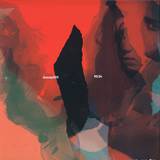
The long-awaited new vinyl release from Daniel Broesecke features three original tracks and one remix by Ki.Mi., delivering a technically precise and energetic deep-tech statement. Built for the club yet flexible enough for any moment in a set, the record balances drive, groove, and atmosphere with confidence. Side A focuses on modern, immersive deep-tech — forward-moving, hypnotic, and immediately engaging. Side B explores broken rhythms, controlled tension, and deeper movement, closing with a distinctive reinterpretation by Ki.Mi. that adds a new perspective while preserving the core energy of the release. VAM13 isn’t just another vinyl — it’s a focused, cohesive label gem with a strong signature sound. A reliable companion for DJs and a powerful addition to the Afterme catalogue.
Kashatskikh Studio Mastering
Design & Illustration by Kirill Kashatskikh
A phantom never announces its return. It first emerges as a barely perceptible pulse within the silence - a movement without a source, a presence without a shape. Slowly, the space begins to respond: distant textures draw closer, the rhythm finds its contours, and the invisible takes on weight. What seemed to have vanished was never truly gone; it was simply waiting for the right moment to be heard again.
Kashatskikh Studio Mastering
Design & Illustration by Kirill Kashatskikh
The “Late Loop” LP by Andy Stott is released on Modern Love and marks the producer’s return after a five-year break from the studio. The album brings Alison Skidmore, Stott’s long-time vocal partner, and for the first time Elaine Howley to the forefront; their voices are used partly as full vocal performances and partly as fragmented, pitch-shifted loops, forming the emotional center of the record. Stott largely avoided established production tricks: no basslines, no reverb, just a delay as the sole effect, giving the arrangements an unusual clarity and fragility.
“Late Loop” sits somewhere between downbeat, electronica, and leftfield, and emerged from an experimental process that ranged from drone passages and brass-like concrète moments to song-oriented structures. Rhythm often emerges indirectly here: a drum machine was played back into the room, re-recorded, and pitched down; a pump organ was recorded with a microphone placed on the floor; valves and an aging mixing console audibly contribute to the atmosphere. Lyrically, themes of separation predominate; the voices were layered multiple times, then pared back until only the essentials remained. Mastering was handled by Rashad Becker, and the cover photo is by Myriam Boulos. With “Late Loop,” Modern Love presents an austere, meticulously crafted album whose details gradually reveal themselves with repeated listening.
On the 9th instalment of MAXIMILIAN’s vinyl-only MIKROKOSMOS EP series, he returns with two atmospheric tracks: speedy Deep House and spaced-out Acid House. It’s time to squeeze the Roland TB-303 once again with our boy MAXIMILIAN, delivering two tracks that move from raw acid basslines and hypnotic grooves to deep, atmospheric territory.
The Doobie Brothers faced a serious predicament as they prepared to record Takin’ It to the Streets. That the group navigated a potentially serious personnel problem that would’ve tanked lesser bands and scored its fourth straight Top 10 album — while again expanding its range — speaks to the collective’s chemistry, broad-mindedness, and songwriting abilities. Known as the effort on which vocalist-keyboardist Michael McDonald makes his debut, the 1976 set stands as an all-encompassing representation of the various styles the Doobie Brothers explored during their heyday.
Sourced from the original analog master tapes, mastered by engineer Krieg Wunderlich, pressed at Fidelity Record Pressing in California, and housed in a Stoughton gatefold jacket, Mobile Fidelity’s numbered-edition 180g 45RPM 2LP presents Takin’ It to the Streets in definitive sound. Given the luxurious room of a 45RPM version for the first time and benefiting from the wider grooves, the music unfolds amid large soundstages replete with ultra-quiet backgrounds, big dynamics, and accurate imaging. By then a key component of the Doobie Brothers' success, Ted Templeman’s production is brought to light with stellar clarity and definition.
As is the case on Mobile Fidelity's four other acclaimed Doobie Brothers 45RPM reissues, myriad facets that help make Takin’ It to the Streets timeless, natural, and organic — minimal overdubs, voices that realistically rise and fall, notes that properly carry and decay, warm tones, bass lines that pop with color, well-placed percussive accents, defined separation between the players — emerge with incredible presence, openness, and fullness. Nothing is overdone or out of place. No small feat given Templeman and company didn't know how everything would unfold when they first met up in Southern California.
Confronted with a change in plans by co-founder Tom Johnston, whose contributions to the band up to that point in its career identified him as an indispensable member, the Doobie Brothers were thrown for a loop when he curtailed pre-planning work and retreated home to deal with ongoing health problems. Thankfully, Jeff "Skunk" Baxter, the group's newest full-time recruit, had a possible solution in his former fellow Steely Dan colleague McDonald. The singer-keyboardist had already sat in with the Doobie Brothers on their recent tour. So, why not give it a shot?
McDonald's prodigious talents notwithstanding, he couldn't technically replace Johnston. For starters: McDonald's soulful timbre bore little resemblance to Johnston's grittier voice. And McDonald played keyboards, not guitar. No wonder Templeman initially expressed reservations. He also knew the Doobie Brothers needed additional material before they could consider wrapping the record. Yet the skepticism began to dissipate on the first day of the sessions. Still waiting for second drummer Keith Knudsen, the band gathered in the studio with former roadie Bobby LaKind on congas and Little Feat drummer Richie Hayward for a live run through "Wheels of Fortune." The instrumental parts of that take landed on the record. Johnston would even return to share the lead vocal duties with Patrick Simmons.
Those magical results, and the experience of hearing McDonald woodshed the title track at the piano, turned Templeman into a believer and cheerleader. Spurred by their veteran producer's encouragement and McDonald's ideas for songs, the Doobie Brothers embraced new directions just as they did after their debut LP and on subsequent efforts with orchestral and horn treatments. The latter return on Takin’ It to the Streets courtesy of the five-piece Memphis Horns. Yet outside of viola accompaniment on "Losin' End," string elements step aside in favor of McDonald's pianos, synthesizers, and clavinet. And, on five cuts, lead singing.
As the new face of the band, McDonald ended up crafting all or portions of four tunes. His fingerprints are all over two of the singles, including the jazzy, blue-eyed-soul delight “It Keeps You Runnin’” and irresistibly melodic title track, which cracked the Top 15 and became one of the Doobie Brothers’ signature numbers. He and Baxter’s penchant for smoothness, and a precursor to the band’s coming transition into rhythmically oriented yacht rock, informs the brassy sway of “Carry Me Away.”
Further enriched by Tiran Porter’s gorgeous, time-signature-shifting ballad “For Someone Special,” Simmons’ peppy, spring-loaded “8th Avenue Shuffle,” and Johnston’s “Turn It Loose” — the move-your-feet boogie serving as kind of apt farewell to the band’s prior rock ‘n’ roll sound — Takin’ It to the Streets spun uncertainty into gold. Altered yet unbowed, the Doobie Brothers once again offered countless listeners “the best kind of remedy” with feel-good music that holds up amid any era.
Move in Stereo: The Cars’ Eponymous Debut Album Functions as a Greatest-Hits Set with Classics Such as "You're All I've Got Tonight," "Good Times Roll," and "Just What I Needed"
Experience the Six-Times-Platinum Record in Definitive Sound on
Mobile Fidelity’s UltraDisc One-Step 180g 45RPM 2LP Box Set:
Strictly Limited to 4,000 Numbered Copies,
It Plays with Reference Definition and Presence
1/4” / 15 IPS analogue master to DSD 256 to analogue console to lathe.
Among the most critically and commercially successful debuts in history, the Cars' eponymous album doubles as a greatest-hits collection. Not one song on it is widely unrecognized or unknown. Consider the list: "You're All I've Got Tonight." "Good Times Roll." "Just What I Needed." "Moving in Stereo." "My Best Friend's Girl." "Don't Cha Stop." “Bye Bye Love.” Just call The Cars the best new-wave rock album ever made. And a natural candidate for preservation on a Mobile Fidelity UltraDisc One-Step pressing.
Sourced from the original analog tapes, pressed at Fidelity Record Pressing in California, mastered by engineer Krieg Wunderlich, and strictly limited to 4,000 numbered copies, MoFi’s UD1S 180g 45RPM 2LP box set presents the six-time platinum record in the most vivid, wide-spanning, three-dimensional sound it has enjoyed on vinyl. Compared to the label’s outstanding and out-of-print 180g 33RPM version, this collectible edition features richer textures, broader openness, greater presence, and bigger dynamics.
Benefitting from the extra groove space on 45RPM by playing with enhanced definition, deep-black backgrounds, and ultra-quiet surfaces, this reissue portrays the band’s oscillating rhythms, futuristic keyboard passages, and panned images with stunning realism. Songs take on an absolutely surreal quality. The Cars and producer Roy Thomas Baker manipulate arrangements at will to mesmerize listeners' senses. The concept of "moving in stereo” has likely never been truer.
The industry-leading packaging of the UD1S set gives fans another reason to gravitate towards the 1978 album. A deluxe slipcase, two foil-stamped jackets, faithful-to-the-original graphics, and MoFi inner sleeves make for a premium tactile experience. It invites you to immerse yourself in everything about the record, including the now-familiar cover art depicting Nataliya Medvedeva behind the wheel. Enhanced by her glistening ruby-red lips, her face flashes an expression caught between surprise, ecstasy, and disbelief — an apropos way of responding to The Cars whether you’re hearing it for the first or 1,115th time.
Introduced in 2024 into the National Recording Registry for its significance, and ranked the 353rd Greatest Album of All Time by Rolling Stone, The Cars explodes with emotion, energy, and hooks. Its songs unite then-disparate styles: bubblegum melodies, art-rock angularity, progressive structuralism, terse minimalism, and power-pop sheen. The stylish arrangements also benefit from a laidback cool and understated irony that remain uncommon in the world of contemporary mainstream music.
Equally rare is the deep chemistry the members shared before they entered London’s AIR Studios and knocked out the record in less than a month. Benjamin Orr and Ric Ocasek began their first band together in the early ‘70s. A subsequent group with future Cars keyboardist Greg Hawke preceded Orr and Ocasek bonding further by temporarily performing as a duo. One final pre-Cars ensemble, Cap’n Swing, brought guitarist Elliot Easton into the fold. A decision by Ocasek to take the band in a rock direction, a crucial lineup shuffle, and a name change begat the Cars so many listeners know and love.
Already a going concern in Boston, the quintet cut its teeth and woodshopped songs for nearly a year and a half before signing with Elektra and partnering with Baker. The Cars enjoyed success right out of the gate, hitting No. 18 on the Billboard Top 200 chart and netting a pair of Top 40 singles in the form of “Just What I Needed” and deceptively happy “My Best Friend’s Girl.” The sarcastic “Good Times Roll” climbed to No. 41, but soon enough, almost every track on The Cars became a radio staple — an honor far more meaningful than chart positions.
Obsessed with incorporating the latest technologies and sounds into its palette, the band spiced tunes with delightful and quirky accents — country-tinged guitar fills, echoing Syndrums, reggae splashes, hard-rock tones, robotic pulses. Orr's low, nuanced deliveries and Ocasek's cool, detached vocals lend shades of doubt and double meaning to the lyrics, which are further counterbalanced by synthesizer flourishes and electronic beats.
Accessible and eccentric, edgy and catchy: The results comprise a landmark whose characters come to vivid life with nuclear boots, dry-drip gloves, ribbon-festooned coiffures, suede-blue eyes, and rock ‘n’ roll hair. It's practically impossible to avoid humming along to every song, all enhanced by Baker's stellar production. Best known for his work with Queen, he ensured the record packed a punchy midrange, opened up with instrumental and vocal separation, and breathed with airy harmonies.
Indeed, from the timeless music to the sleek production and sonic restoration, The Cars on UD1S is just what you needed.
Step back into 1998 with this studio rehearsal of Pleiadians Live. Recorded as a safety for our global tours. It captures a legendary time when we carried our entire studio across the world to bring you raw, live remixed versions of our tracks! Get ready for the ultimate travel experience!" Because Pleiadians is simply the best of the best, this Live set from 1998 deserved a proper full release! Now available on Limited 2-LP at the Suntrip Records label in collaboration with the Flatlife Records Labelgroup.
As Selofan's fifth studio album, Vitrioli, from 2018, is a testament to the tragedy of life. The Greek duo, Joanna Pavlidou and Dimitris Pavlidis, who recorded the album in the Fabrika Records home studio, continue on in their poetic, but heartbreaking, music set to a dance beat. Between languages (Greek, English, German, and Spanish), Selofan feels on the brink of mania with Vitroli. However, the madness is controlled, the songs are restrained hysterics that culminate into the alchemic perfection of the band's specific moody sound.
From synthpop to synthpunk elements, the twelve-track LP leads listeners through dark corridors and into haunted, empty beds. There is a resignation to a doomed destiny with Vitroli—a trait that connects all Selofan releases—as a bitter pain and loneliness that cannot, or will not, subside.
The album begins with "Give Me a Reason" whose lyrics feel universal in this day and age: Give me a reason, to get out of bed / I could just watch the ceiling instead. Its heartbreak is profound as bells and voice pads echo under Joanna's voice. The adjacent music video for the song was directed by Dimitris Chaz Lee, and the band describes the video as "depicting the fragile nature, conflicts, emotional demands, and vulnerability of each person in a relationship."
"Billie Was a Vampire" is a story about an undead creature who works at a nightclub followed by the urgency of "Black Box." Brass sounds moan against the fast beat and suggest a frenzied need to escape.
"I'm Addicted" became the second single for the LP. I am addicted, you are mine, Joanna demands of the lover. The music video, also directed by Dimitris Chaz Lee, depicts a clean, white photoshoot primed for the most beautiful creatures of the Athenian wave scene. Alex Macharias, from the legendary Greek band In Trance 95, acts as the photographer for the session, as the models pose and flail under the bright bulbs. The director states: "Addiction is a mental state, something inside all of us. It altered our perception and created a parallel world of avant-garde beings and flashy lights making us part of this everlasting bond."
Machine Affairs is an expansive dance record informed by classic hardware and deep studio collaboration, with the soulful side of Detroit’s dance music legacy serving as a key inspiration. Crafted by long-time friends Willem Mulder and Grover Duvall over an intensive two-week studio session, the project represents a new generation of artists interpreting dance music heritage with a fresh perspective.
Willem Mulder works from the raw functionality of house and pulls warmth from electronics across eras. With releases on Apron Records and Salon Recordings, he’s steadily been building a name with his soul-infused productions. Grover Duvall is a new name, but not a new story, with years spent deep in the craft of sound. Together, the two bring their distinct worlds into a shared space, united by a love of analogue hardware, dancefloor energy, and the kind of music that lives somewhere between feel and function.
‘Perfect We Are Not’ the latest track from Soulwax, emerges directly from the band’s recent Abbey Road After Hours project - a unique collaboration with the iconic London studio that saw Soulwax take over the building for a series of recording sessions and a landmark live event.
Working across Abbey Road’s historic spaces - from Studio Three, to Studio Two, to Studio One - the band used all three rooms as a continuous creative environment, moving fluidly between them in pursuit of new material. It was within these sessions that ‘Perfect We Are Not’ was written and recorded with their full live band (including three drummers).
The track was cut using the studio’s vast array of analogue equipment before being pressed direct to vinyl and played as the opening moment of their 2manydjs set inside Studio One
Now released as a standalone single, ‘Perfect We Are Not’ carries that immediacy forward — a driving, full-bodied track that reflects the band’s instinctive, performance-led approach in the studio, and will also be released as a limited edition 12” via DEEWEE.
In StockReady to ship
Ready to ship
16,39 €
0 Cart
Lena Willikens & Sarah Szczesny feat. Viktoria Wehrmeister and Detlef Weinrich
"Phantom Seance Ballett is a boombox orchestra, Nō mimes, Vicky’s protection spells, Detlef’s psychic shuffles, a smoke machine, a strobe light chamber, painting, Margit Carstensen’s chiffre, Susie Greene’s insults, Schleim, Ebichu’s echoes and Anna Oppermann’s limbo."
Thus we welcome Lena Willikens & Sarah Szczesny's ethereal Phantom Kino Ballett project to Utter with 'Phantom Seance Ballett', an unusually tangible manifestation of what has become an on-going series of live performances and installations that incorporate sound, video, costume, still imagery and beyond. The themes explored weave in and out of grasp, touching on the otherworldly and mysterious, on hypnotic rites and ceremonies, on the fetishisation of cultural tropes and curios.
While carefully documented, these happenings had not been distilled or presented in a cohesive format until now. Of course, an attempt to harness and package such an experience required an imaginative leap beyond the traditional 'record-in-sleeve' approach and Lena and Sarah have overseen every aspect of this remarkable collection themselves.
Working with designer Till Sperrle, Lena and Sarah have conjured up a fold-out box containing an LP, a riso-printed credits poster detailing the samples and snippets collaged into the sound, a 36 page book with imagery from various shows and an essay by Thomas Vorreyer plus sticker pack. The limited 50 copy artist edition contains an additional 10 special riso-prints within an artist stamped hand-numbered box. For all, the LP contains twenty hidden locked grooves cut into the run-out on each side presenting snippets from the artists' archive.
The first of these pieces - 'Identikit Arkaden Seance' - took place on the 2nd of October 2019 at NAK Neuer Aachener Kunstverein and is a live recording. This performance was part of their exhibition "Chambers of Phantom Kino Ballett", where they showed new video works and displayed the now infamous costumes and slippers worn by Lena, Sarah and a rotating cast of guest phantoms.
At this performance, the seven performers carried boomboxes playing individual audio tracks inside and outside the Kunstverein, while Viktoria Wehrmeister and Detlef Weinrich improvised music alongside the phantoms' moving soundtracks of sonic snippets, poetry, field recordings and soundscapes.
The second piece - 'Studio Chamber Seance' - contains diverse audio tracks of performances that were held by Willikens and Szczesny in collaboration with Wehrmeister and Weinrich. It has been deconstructed and rearranged with additional sound material from the Lena Willikens & Sarah Szczesny archive, then edited and mixed by Lena and Sarah in Amsterdam and Cologne last year. Additional music by Detlef Weinrich and Viktoria Wehrmeister features throughout, recorded live in Aachen 2019 and Frankfurt 2020.
Mastered by Gordon Pohl. Transfer, additional mastering & lacquer cut by Helmut Erler at D&M.
Repress of the 13th chapter of this highly acclaimed compilation series, originally released in 2017.
As usual FSOJ is compiled by Compost head honcho Michael Reinboth with a solid sense of leftfield tracks, punchy floorfillers, ghostly, cinematic, balearic, frazzled, bitter-sweet or mind-shaking hybrid tunes.
Several magazines voted FSOJ as the one of the best compilation series of all time. With this series starting 1995 the term Future Jazz became a genre landmark.
FSOJ 13 including some exclusives, sought-after tracks and previously unreleased tracks. Some highlights are: First of all the Van Hai track in a Ripperton remix is a perfect opener into a tranquil music venture. A sheer bliss tune. Montezumas Rache „Wu Du Wu“, which was only released on vinyl before - still difficult to find the original 12“ - is a freaky outstanding funk hybrid. Karim Sahraoui – with a punchy Detroit-ish track, picked up from Derrick May’s Transmat label - is currently in the works with a follow up 12“ later in 2017 on Compost. Acid Pauli delivers a brand new dubby balearic remix, which he recently did for Matanza, a live band from Chile. Peter Kruder came up with something special exclusive, a warm breath in the open air tune, which drives listeners into a chilled wormhole. Beside new names, bigger names like Axel Boman, Tony Allen with a Ricardo Villalobos & Max Loderbauer remix, you’ll find more lefties tracks from respected labels like Studio Barnhus, Innervisions, Lovemonk, Transmat, Mule, Tru Thoughts, Rebirth, Ninja Tune and m.o. next to other exclusive deliveries by Manuel Tur, Marsmobil, coupled up with semi exclusives: the first time on vinyl or digital.
Diso Gram is based in Barcelona and deals in global disco, nu-disco and edits with in-house production from we don't know who, but we do know they're skilled in the studio. 'Bobby' is a life-affirming opener with proud trumpets and classic disco vocals before 'The King' taps into a funky bassline and slapping hits that all feel wonderfully live. 'Me Enciendes' brings more strutting disco house with massive claps and falsetto vocals that will take any crowd to a better place and 'Tropical' closes the account with a more subdued, early evening dub-disco builder with Afro flourishes.
London groover Sam Shelly plays everything from new jack swing to boogie, disco to soul, jazz funk to soulful house, and much of that feeds into his work in the studio. After outings on the likes of Midnight Riot, he now features on Soul Service Sabrosura with a new 7" full of love, life and soul. 'Spirit Love' is a life-enriching funk and jazz fusion with positive messages in the celebratory vocals, drama in the horns and killer groove in the drums and bass. On the flip, 'The Latin Strut' is a much quicker funk workout with shades of 60s styles and the narrative flow of a cop chase. It's a brilliant flip side to complete a gorgeous 45.
Chronicles Diary returns with WAYF VOL.2, the second chapter in its ongoing When Are You From? series. Exploring the idea of duality, the compilation unfolds across four tracks that balance tension and release, density and space, movement and stillness. Tensal opens with the driving Suspense, followed by Stanislav Tolkachev’s shifting and elusive Invisible Shapes. On the B-side, MMSS & Time Traveler deliver the hypnotic Interval, while Conceptual & Mohamad Kafarsoussa close with Sezione Aurea, a deep study in proportion and restraint. Four distinct visions converge around transformation, continuity and contrast, further expanding the sonic narrative of Chronicles Diary’s contemporary underground techno aesthetic.
DJ support: Pete Tong, Roger Sanchez, Eran Hersh, Francis Mercier, KSHMR, Korolova, ReMan, Faul & Wad, HUGEL, Felix Jaehn, Dan Tanev, and more.
MESTIZA return with their highly-anticipated second studio album Spanish Chica. Following the release of singles, ‘Enamorá’, ‘Báilame’, ‘Qué Calor qué Calor’, and their latest, ‘Salam’, the electronic duo finally unveiled their new album. With this record, they aim to showcase and celebrate the empowered Spanish woman to audiences all around the world.
Building on the momentum of their breakout success, the project further defines the duo’s unmistakable sonic identity. Across the fifteen tracks, a myriad of influences blend together from melodic techno, Latin house grooves intertwining with Spanish percussion, Afro House influences and sweeping Arabic-inspired melodic lines - creating a rich and immersive cultural fusion.
Celebrated British producer O’Flynn presents his highly anticipated 3rd album ‘Kairos’ on his Panthus imprint.
‘Kairos’ comes off the back of some of the biggest success O’Flynn has seen so far in career: his January single ‘Fara’ shot into the top 40 in the UK’s Shazam Dance chart after landing BBC R1 Breakfast Track of the Week and adds to the Radio 1 Dance & Capital Dance playlists, plus a Headliner Mix on BBC R1Dance, with support on over 30 editorial playlists including the cover of Spotify’s key tastemaker playlists ‘Altar’. O’Flynn’s recent single ‘Sekete’ was an instant hit among A-listers, with support from Bonobo, Floating Points, Caribou, Barry Can’t Swim and Gilles Peterson; hitting #1 in the Beatport Bass/Club Top 100 and peaking at #47 in Shazam’s UK Dance Chart; it premiered with a first play by Sian Eleri on BBC R1’s Future Artists before seeing support from Danny Howard, Jack Saunders, Arielle Free and Jaguar as well as X6 Spins from Nick Grimshaw on BBC 6 Music and X3 plays from Jenny Greene on RTÉ 2.
Upcoming events include an exclusive in-person listening event at the Devon Turnbull Room @ 180 Studios, the sold out Cirque du Soul Summer Party (The Cause) and Glitterbox Ibiza on the day of release.
A counterculture movement united by an expansive, experimental and deeply soulful sensibility, Japan’s rebel protest music challenged the status quo and changed the country’s music industry in the process.
The birth of Japan’s nascent acid folk scene was rooted in the messy and invigorating political climate of the late 1960s. It is a story of Dadaists, communists, pharmacists and cult leaders, led by a young generation of upstart students, artists and dreamers hellbent on turning their world upside down.
Born on the campuses of Tokyo, Kyoto and Osaka, and centred around newly formed independent label and left-wing stronghold URC, this uniquely Japanese form of folk expression provided an outlet for musicians who were tired of aping Western sounds and instead found ways to sing in Japanese and integrate traditional forms in new ways.
At the forefront of this movement was Yellow Magic Orchestra’s Haroumi Hosono, a polymath innovator whose band Happy End released the first Japanese language rock album, and whose influence would go on to be felt across Japanese music for decades. Alongside, and informed by the Kansai scene’s Takashi Nishioka and Happy End collaborator Ken Narita, they experimented with cadences and accents of the Japanese language to open the door for others to experiment with their own forms of psychedelic folk too.
Some, like Nishioka, were more inspired by Dadaism than drugs, while others, like Kazuhisa Okubo, would ultimately find work as a chemist, having founded two further folk groups that flirted with varying levels of success. Obstinately uncommercial, relentlessly creative, the music featured on Time Capsule’s Nippon Acid Folk represents a broad church of influences.
Perhaps the wildest addition to this congregation however was Hiroki Tamaki, a classically-trained violinist and committed iconoclast, whose synth-prog odysseys hinted at his obsession with the divine. Subsumed by the teachings of Bhagwan Shree Rajneesh, he penned an album in praise of the infamous religious leader of which two superbly mind-bending tracks are featured on this compilation.
Charting the decade from 1970 to 1980 as the dreams of political and spiritual liberation seeded in the ‘60s turned to dust, Nippon Acid Folk surveys a little explored corner of Japanese music history, but one which ultimately laid the foundations for an independent music industry, launching the careers of Hosono and others in the process.
Nippon Acid Folk 1970-1980 is pressed on 12” vinyl and represents the start of Time Capsule’s deep dive into Japan’s rich history of folk and psychedelic soul music.
Straddling an intriguing intersection of Drum & Bass, Jazz, Fusion and unidentifiable electronica, ‘You Won't Find Your Way From Here’ is the debut album from Jhauk.
An extremely talented multi-instrumentalist from Sheffield, UK, Jhauk came to Blu Mar Ten’s attention when, in 2017, he created a wild prog-rock inflected remix of BMT’s track ‘Titans’
Further conversations with Jhauk revealed the depth of his unorthodox approach to electronic music and unearthed a treasure trove of production skills, culminating in the album before you.
Oscillating between the late-night, moody calm of late 50s Miles Davis, John Coltrane & Bill Evans, the riotous 70s instrumentation of Weather Report, the modern cool stylings of Matthew Halsall and the gritty edges of modern D&B production, it’s scarcely believable that this collection of tracks came from one person working alone in their studio. With tempos and time signatures skittering all over the place, Jhauk uses genres as catalysts rather than containers, he finds the interesting stuff in the hinterlands of their structural relationships and tensions.
Talking about the album, Jhauk has strong opinions:
“Drum & Bass emerged as club music, and club music comes with its own logic. Specific structures, specific build-ups, a formula that supports that context.
That's fair enough, but almost 40 years later, why is 99% of D&B still made the exact same way when 99% of the time it's never heard in a club? The same structure, the same formula, barely any development beyond the core idea. Tracks where you can hear 10 seconds of the drop and know almost beat-for-beat how the next 5 minutes sound. No real musical depth or exploration. People regurgitating the same material ad-nauseum but never actually saying anything for themselves.
This period of composition for me was about taking what I love about D&B, the rhythmic energy and potential for creative freedom it presents and really stretching it to its limits. Of taking drum & bass as a starting point and seeing where it ends up without an idea of what that destination might be. Most people would probably never call a lot of the results D&B, but that's okay because it was never the point.”
Dripping with melancholy, euphoria, longing and pure urgency ‘You Won't Find Your Way From Here’ is unlike anything else you’ll hear this year. The sound of an artist entirely unconcerned with impressing peers or performing on ‘socials’; you're hearing a true musician at work, expressing ideas through the skill of his hands, mind and ears. The album’s secrets aren’t revealed with a single play-through, but bears (or even requires) multiple listens to expose its layers.
In previous times, they called this ‘art'.
Curió Curió came to flight by chance. Two artists, Rio-born, Austria-based singer and actress Luiza Monteiro and German producer Dustin Braun, had separately reached a fork in their journeys. An opportune encounter soon blossomed into an uplifting, heartfelt Brazilian MPB-groove project shaped by psychedelic disco and studio experimentation. In their own words Curió Curió’s sonic vision “is not straight disco, not straight samba, not strictly old-school but inspired by all of them, creating something contemporary but still nostalgic”.
A modern fusion influenced as much by Gal Costa and Jorge Ben Jor as Say She She and Bala Desejo, their sound deftly plots a course all of its own. A celebration of freedom, movement, love and life, intertwined with introspective moments of reflection. Treating tradition as something alive, migratory and unresolved, the album is not simply bound by a shared love of Brazilian music, but by a deeper question that runs through every track; where does one belong when home becomes plural? As a Brazilian living in Europe, Luiza's lyrics explore themes of identity, culture, and existence. The tracks move between cities and emotional registers without settling, tracing a sense of identity that shifts rather than resolves. Songs like ‘Amor Doente’ and ‘Mar sem Dar Pé’ circle around relationships that resist clarity, while ‘Menina Passarinho’ captures the fear and necessity of committing to music as a path. For Luiza, deepening her commitment to music alongside years in theatre was both inevitable and difficult. Braun’s production follows a similar logic. Initial ideas were often built without obvious reference points, only later incorporating rhythmic and vocal elements that hint at Brazil without reproducing it. Analogue techniques, tape, ribbon microphones and live ensemble recording bring a tactile quality that reflects the duo’s interest in process as much as outcome. Highlights include ‘Bem Querer’, built on an authentic samba street vibe with a super-catchy sing-along chorus, and ‘Vem pra Casa’ with its cosmic-tinged Brazilian boogie flavour. The album closes with ‘A Cor do Meu Sonho’, a quiet act of insistence. A refusal to shrink in unfamiliar environments, and a belief in the strength of difference. It is less a conclusion than a continuation, leaving the central question open. “I started to understand that I can belong to many places at once”, Luiza reflects. “And that can be something to embrace”. Lyrics from the song ‘Raiz’ translate in English to “I value a burning sun and the cold in the air. Constant change is my companion”. With Curió Curió, that idea is lived through sound, story and collaboration. A debut that feels both searching and assured, grounded in heritage yet shaped by distance.
Emotional Response presents the first of 2 EPs by Laura Sparrow aka LNS, the Calgary raised, Berlin based producer and DJ with 8 acid-tinged cuts that are equally expansive and inspiring, personal and inventive.
After her debut Malinge Range (cassette) on fellow native Canadian 1080p label in 2016, LNS moved to Berlin and has released a steady stream of 12”s, exploring ambient, dub, electro and techno. Initially appearing on Vancouver émigré’s Jayda G’s (alongside Fett Burger) Freakout Cult label before settling at DJ Sotofett’s cult WANIA label and more recently on the legendary and ‘original’ German techno label, Tresor.
A love of the Roland TR-303, alongside deep diving into breakbeat creation, manipulation, mutation and production, plus some intrepid mixing and post-production assistance, development and support with DJ Sofofett, have led to a collection of some of her favourite music to date.
LNS-ID 1 and LNS ID 2 are the result. Recorded during a burst of creativity through dedication, new studio equipment and learning techniques, as well the necessity of artistic expression in the moment.
Two sets of four tracks based on the acid tradition in the more restless corners of 90s and early 00s Braindance. Acid lines drive the melodies, while drums move between sliced break fragments and the familiar sounds of the Rolant TR-606 and TR-808.
Pads drift in with a warm glow or at times, quiet ghostly tension. The results are music that leans towards atmosphere and memory, something almost nostalgic that was built for those of us who still chase the more expressive edges of acid.
Straddling an intriguing intersection of Drum & Bass, Jazz, Fusion and unidentifiable electronica, ‘You Won't Find Your Way From Here’ is the debut album from Jhauk.
An extremely talented multi-instrumentalist from Sheffield, UK, Jhauk came to Blu Mar Ten’s attention when, in 2017, he created a wild prog-rock inflected remix of BMT’s track ‘Titans’
Further conversations with Jhauk revealed the depth of his unorthodox approach to electronic music and unearthed a treasure trove of production skills, culminating in the album before you.
Oscillating between the late-night, moody calm of late 50s Miles Davis, John Coltrane & Bill Evans, the riotous 70s instrumentation of Weather Report, the modern cool stylings of Matthew Halsall and the gritty edges of modern D&B production, it’s scarcely believable that this collection of tracks came from one person working alone in their studio. With tempos and time signatures skittering all over the place, Jhauk uses genres as catalysts rather than containers, he finds the interesting stuff in the hinterlands of their structural relationships and tensions.
Talking about the album, Jhauk has strong opinions:
“Drum & Bass emerged as club music, and club music comes with its own logic. Specific structures, specific build-ups, a formula that supports that context.
That's fair enough, but almost 40 years later, why is 99% of D&B still made the exact same way when 99% of the time it's never heard in a club? The same structure, the same formula, barely any development beyond the core idea. Tracks where you can hear 10 seconds of the drop and know almost beat-for-beat how the next 5 minutes sound. No real musical depth or exploration. People regurgitating the same material ad-nauseum but never actually saying anything for themselves.
This period of composition for me was about taking what I love about D&B, the rhythmic energy and potential for creative freedom it presents and really stretching it to its limits. Of taking drum & bass as a starting point and seeing where it ends up without an idea of what that destination might be. Most people would probably never call a lot of the results D&B, but that's okay because it was never the point.”
Dripping with melancholy, euphoria, longing and pure urgency ‘You Won't Find Your Way From Here’ is unlike anything else you’ll hear this year. The sound of an artist entirely unconcerned with impressing peers or performing on ‘socials’; you're hearing a true musician at work, expressing ideas through the skill of his hands, mind and ears. The album’s secrets aren’t revealed with a single play-through, but bears (or even requires) multiple listens to expose its layers.
In previous times, they called this ‘art'.
Istanbul-based producers Grup Ses and Gökalp K present their collaborative album on SOUK Records, showcasing a distinctive fusion of musical styles such as hip hop, grime, dubstep, and jungle. Two years in the making, their self-titled album features contributions from Cologne-based multi- instrumentalist Elektro Hafız, Marseille-based DJ Syr from Scratch Bandits Duo and Ethnique Punch, a Turkish MC & producer now based in Bremen.
Grup Ses project began in 2007, initially focusing on edits and breakcore mash-ups. By 2008, it evolved into a beatmaking project incorporating elements of humor and local materials such as records, tapes, and radio broadcasts, which have become the signature Grup Ses sound. Grup Ses has previously collaborated with sub-labels of Discrepant, releasing two albums on SOUK and three mixtapes on Sucata Tapes.
Gökalp K, the alias of composer and sound designer Gökalp Kanatsız, has been releasing music since 2011. Under this name, he has released two albums and performed as a DJ. Alongside his beat production, he also composes electro-acoustic music and collaborates with creative studios as a sound artist on various interdisciplinary projects.
“Twenty-five years into their existence, The Album Leaf are an old comfy sweater. It might not be the most fashionable thing in your collection but it always feels good when you put it on. Jimmy LaValle’s synth textures are warm, nostalgic and steeped in Boards of Canada / Ulrich Schnauss-style soundscapes that are relaxing, otherworldly and melodic” – Brooklyn Vegan
The Album Leaf shares his new ambient LP, Rotations. The record is a mediative experiment into atmospheric sound. Creator Jimmy LaValle explains, “This collection of music is a true reflection of my creative process—rooted in sound exploration, experimentation, and spontaneous response. Each track captures a moment of creative discovery, free from the pressure of achieving a polished result. Throughout my career, I’ve often placed significant weight on what an album should be. With this release, I’ve let go of those expectations to share a body of work that feels genuine and authentic.
The Album Leaf began as the solo project of Jimmy LaValle, who came up in the San Diego music scene playing in hardcore bands and the instrumental rock band Tristeza. He had inked a deal to release his next solo album through the indie label Tigerstyle Records, so he put the modest advance towards a self-recording starter setup, building out the sound with occasional studio access. The music that emerged — vivid, rhythmic, soaring instrumentals guided by lines of Guitar and Rhodes — not only set the path for The Album Leaf over the next two decades of acclaimed releases (for Sub Pop, City Slang, and others), it became a touchstone for the next generation's wave of melodic and meditative electro-organic music.
Originally composed by Collage in 1985, Herzschlag returns in a newly recorded cover version by Berlin-based synth-wave duo Bionda e Lupo. Describing themselves as a “boy/girl band like no other,” Lupo recreated the NDW-electro tune from the ground up using an impressive array of vintage instruments and studio equipment, including classic synths such as a Pro-One, a Roland Juno-60, and a Farfisa Syntorchestra. Bionda’s distinctive voice adds a new emotional depth to Katrin A. Kunze’s lyrics while still remaining true to the original spirit of the song.
Lupo of Bionda e Lupo has long been a devoted fan of Mit den Puppen tanzen, Collage's only release at the time, originally issued as a 12" single in 1984. Despite never managing to acquire an original copy, he considers the record unique within the German NDW landscape thanks to its unmistakable "Bravo-breakdance-meets-synth-pop" character. Indeed, Markus Kammann, Jürgen Grah, and Katrin A. Kunze drew significant inspiration from the electro-funk pioneers of the era, particularly Afrika Bambaataa's iconic Planet Rock. When we approached Bionda e Lupo about re-editing a track from the Collage's Motel d'amour release, they instead proposed recording an entirely new cover version.
Work on the project began in spring 2025 in coordination with Markus Kammann, who, together with Jürgen Grah, originally composed the music. Sadly, Kammann, born in 1958, passed away unexpectedly on October 17, 2025. This release is dedicated to his memory.
The liner notes reveal additional details about Kammann's remarkable life and achievements. He was the founder of the legendary Beatbox club in Wuppertal, which was once recognized as the "Best Club in Europe," and a co-founder of the Groove Attack record store. Groove Attack would later grow into one of the world's most influential music distributors, especially for Hip-Hop.
The 12" release is limited to 200 copies. Pressed on transparent red vinyl with black "smoke" effects, it comes housed in a picture-disc sleeve with an accompanying sticker. As an additional highlight, the record includes a previously unreleased NDW bonus track recorded around 1983 by Collage. It features Katrin A. Kunze as well as Thomas Kohl, the vocalist of Schwarze Bewegung.
- Red transparend vinyl with black smoke
- Housed in a picture-disc sleeve with large sticker
- Released in memory of Markus Kammann (1958-2025)
- Contains A4-sheet with liner notes
- 5 tracks, including the vinyl only bonus track "Hallo E.T.",
- Quality lacquer cut by Manmade Mastering
Bruno Berle is a singer, songwriter, producer, multi-instrumentalist and figurehead of a contemporary Brazilian music movement. With a quiet mastery of songwriting and an astonishing voice, his music has won hearts around the world. Since the release of his debut album No Reino Dos Afetos (2022), Berle has performed across the UK, Europe, Japan, South Korea, and China, only leaving his home country for the first time in 2023. Shaped by these journeys, Berle’s third studio album, Sem Fronteiras (Without Borders), reflects a utopian vision of a unified world.
Recorded across London, São Paulo, Minas Gerais, Germany, and Maceió, the album–co-produced alongside his longstanding musical partner Batata Boy–is the most expansive canvas Berle has worked on to date. Shot through with the imagery that has always animated his songwriting: open skies, morning light, vivid colours and the magic of human connection, Berle’s carefully crafted poetics and warm, delicate instrumentation drive this vivid body of work.
“I came from nothing”–Berle doesn’t take his rise to global prominence for granted.
Born to a working class family from Brazil’s northeastern Alagoas state, one of Brazil’s most economically deprived, Bruno moved frequently in his youth to follow any job opportunities his parents could find, before eventually settling in the coastal capital of Maceió. “I used to travel to Caruaru, Santa Cruz, Recife, Garanhuns, Arapiraca, which I loved and feel it made me ready to be in this rhythm i’, but at the same time I think not having friends from childhood and being in constant change made me a little numb to the constant upheaval”. On Sem Fronteiras, there is a similar duality at play. The album celebrates the collective joy and human connection that live touring brings, but it also sits with the darker realities of crossing borders. While music moves more freely around the world than ever before, our bodies are not granted the same privilege.
Though he’s never lacked self-belief, Berle recognises that talent alone doesn’t guarantee opportunity. “Before my second album No Reino Dos Afetos 2 everything I had ever recorded was made with the help and kindness of people who believed in my ability”. Determined to pay that kindness forward and help others from the sharp end of Brazil’s desperately unequal society, Berle produced and featured on the recent self-titled albums by his northeast Brazilian compatriots, Nyron Higor and Phylipe Nunes Araújo (both 2025), helping propel both onto the international stage. In turn, following the successes of Nyron & Phylipe’s albums alongside his own, Bruno finds himself at the forefront of a thriving community of artists now based in São Paulo, but primarily originating from northeastern states like Alagoas and Pernambuco.
Much like the famed Clube Da Esquina movement that spawned in 1970’s Minas Gerais, they operate with a free-exchange of ideas, writing songs with and for each other, performing on each other’s albums and on the live circuit together. Lead single ‘Manha’ flows from this ethos. It was written by Berle’s friend and fellow Alagoan João Menezes (writer of ‘Ate Meu Violao’ and ‘Te Amar Eterno’ from Bruno’s previous albums) and Marvin Viera, and originally recorded on their 2018 album Areia e Mar.
Sem Fronteiras opens with ‘Você Já Sabe Que Eu Te Amo’, just six beats of one nylon guitar chord ring out before changing key, paving the way for the gentle strike of fender rhodes and the arresting call & response duet between Berle and Higor. On ‘Amor Inteiro’, the album reaches a celebratory burst of catharsis, with the punch-packing drums of Pedro Lacerda and Nina Maia’s joyous backing vocals encapsulating the live energy that Berle and his band bring to the stage.
With the abundant talents of this musical community at its heart, Sem Fronteiras releases 10th July 2026 via Far Out Recordings, supported by a summer tour across Europe. Bruno Berle will perform in a four-piece band alongside Nyron Higor, Phylipe Nunes, and Batata Boy, culminating in an appearance at Roskilde festival, Berle’s biggest live show to date. He’ll continue to carry a hopeful vision of a world where artists and musicians can move as freely as their music flows.
Tracklist:
A1 “Você Já Sabe Que Eu Te Amo”
(Nyron Higor / Bruno Berle)
Nyron Higor – drums, bass, acoustic guitar, electric piano, synthesizers, vocals
Bruno Berle – piano, vocals
Batata Boy – piano
Jorik Bergman – score preparation and conducting
Klara Gronet – violin
Ségolène de Beaufond – violin
Cristina Ardelean Montelongo – viola
Ilektra Stevi – cello
A2 “Não Posso Viver Sem Você”
(Batata Boy / Bruno Berle)
Batata Boy – electric piano, organ, synthesizer
Bruno Berle – drums, bass, synthesizer, vocals
Jorik Bergman – score preparation and conducting
Klara Gronet – violin
Ségolène de Beaufond – violin
Cristina Ardelean Montelongo – viola
Ilektra Stevi – cello
A3 “A Noite de Estrelas”
(Nyron Higor / Bruno Berle)
Nyron Higor – synthesizers
Bruno Berle – bass, drums, vocals
A4 “Outra Noite”
(Bruno Berle)
Nyron Higor – drums
Bruno Berle – acoustic guitar, bass
Felipe Berle – congas
Lucca Francisco – guitar, vocals
B1 “Amor Inteiro”
(Bruno Berle)
Pedro Lacerda – drums, choir
Nyron Higor – bass, choir
Batata Boy – guitars, organ, electric piano, choir
Nina Maia – choir
Bruno Berle – guitars, acoustic guitar, congas, vocals
B2 “Ideias Mágicas”
(Batata Boy / Bruno Berle)
Heloisa Alvino – trombone
Batata Boy – synthesizers, beats, electric piano, organ, bass
Bruno Berle – synthesizer, vocals
B3 “Vim Dizer”
(Batata Boy / Bruno Berle)
Batata Boy – electric piano, organ, synthesizer
Thomas Stankiewicz – synthesizer
Nyron Higor – synthesizer
Bruno Berle – acoustic guitar, bass, vocals
B4 “Tô Assim”
(Bruno Berle)
Bruno Berle – acoustic guitars
Batata Boy – synthesizer
Nyron Higor – bass, synthesizer
B5 “Manhã”
(João Menezes / Marvin Silva)
Bruno Berle – acoustic guitar, vocals, congas, shaker
Batata Boy – piano, shaker, electric piano, vibraphone, synthesizers
Nyron Higor – drums, bass
B6 “Sem Fronteiras”
(Bruno Berle)
Filipe Mariz – guitar
Bruno Berle – acoustic guitar, vocals, bass
Jennifer Souza – vocals, acoustic guitar
Rudson França – drums
Credits:
Produced by Bruno Berle and Batata Boy
Mixed and mastered by Bruno Berle, Batata Boy and Felipe Berle
Audio engineering:
Nyron Higor (track 1 – production; track 4 with Felipe Berle)
Joe Osborne (tracks 7 and 9)
Victor Gelling (strings on tracks 1 and 2)
Filipe Mariz (track 10)
Photography: Claudio Virgínio
Design: Minchai
Recorded in:
Maceió, Alagoas, Brazil
Tamandaré, Pernambuco, Brazil
Belo Horizonte, Minas Gerais, Brazil
São Paulo, São Paulo, Brazil
London, England
Cologne, Germany
Echoes (1984) is the debut solo album by Wally Badarou, a keyboardist and producer closely associated with the Compass Point Studios scene.
This re-issue faithfully replicates the original Island Records UK release and is pressed on 180g vinyl.
Echoes has since gained cult status for its forward-thinking production and genre-defying style. Built around early digital synthesizer technology and fluid composition, the album remains a notable example of 1980s electronic music that continues to resonate with modern audiences.
Acclaimed British ambient / neo-classical artist Digitonal (aka Andrew Dobson) returns with The Night Album - a deeply introspective and transportive new full-length, marking his fifth studio album across a 25-year journey and his first to be written, performed and produced entirely solo. With The Night Album, Dobson turns inward Created in solitude and shaped by generative processes alongside his own musicianship, the record is a study in quietude, self- reflection and artistic reconciliation. Jazz-inflected in spirit (though never confined by genre), it captures a sense of peace and acceptance. The sound of an artist settling into his own voice after decades of evolution.
RITUAL is a poetic and political gesture by Antonio Marotta: a sonor resurrection where archaic meets electronics. Drawing on Campanian roots and European club culture, the album blends the trance of Ritual with the ecstasy of the dancefloor.
Seven beats and seven loops inspired by the Seven Madonnas of Campania, where the drum remains the visceral beat that connects the earthly to the divine.
An act of resistance that delivers new life to tradition.
The limited edition Vinyl LP contains a special insert with the visionary graphics conceived by Andrea Maddaloni, the lyrics of the 8 songs and Marotta's personal manifesto.
Grab your copy before it's too late.
Written & Created by: Antonio Marotta
Tammorra, Chitarra Battente, Chitarra Elettrica, Voci, Scetavajasse, Castagnette, Tromba degli Zingari & Live Looping by: Antonio Marotta
Lyrics Transcription & Dialect Revision by: Alessandra Ruggiero
Mixed & Mastered by: Antonio Marotta and Peter De Girolamo
Mask Artwork by: Atelier Antise
Photography: Let's Pic Studio
Art Direction & Design by: Andrea Maddaloni
Club Consulting by: Alfredo Maddaloni
Produced by: Antonio Marotta and Maledetta Discoteca
Executive Production by: Maledetta Discoteca
Large Kimono by Praecox touches down on BPitch, channeling austere textures,head-down minimalism, and relentless floor pressure into a widescreen, afterhours voyage.
Warsaw’s Jurek Prze?dziecki, aka Praecox, fuses abstraction with dancefloor intensity. On this record, tension, groove, and subtle emotion weave into a club-focused yet expansive narrative - acid-tinged motifs, rolling subs, and textured synth layers crafting immersive sonic spaces for both peak-time impact and deep listening.
Opening track, Large Kimono, sets the tone immediately: arpeggios surge and retreat in a restless rave-like momentum, anchored by a sense of harmonic balance. Funeral Buddy collapses time, conjuring a 1968 bar scene. Haunting, playful synths twist around a voice that blends memory and imagination. On System Combi, acid melodies crash into robotic chants, while fractured percussion tears through colliding sonic worlds. From there, Lorenz Attractor expands the scope, weaving Brazilian favela vocals into rolling percussion and a deep, kinetic bassline. Warm analog chords meet raw emotional edge, crafting a dancefloor architecture that feels both intimate and expansive.
Taken as a whole, the EP is a study in contrast and continuity: physical yet introspective, precise yet unruly. It reinforces Praecox’s position as an artist unconcerned with trends, focused instead on building immersive electronic worlds that hit hard on the dancefloor while offering layered detail for those who dive in.
AMERICA!' wurde von Gabriel Roth live bei Penrose Recorders eingespielt und baut auf den klassischen Mambo-Klängen auf, für die die Band bekannt geworden ist – eine Mischung aus Latin Soul, Boogaloo und Salsa, wobei sie ihren kubanischen Wurzeln treu bleiben. Auf ihrem vierten Studioalbum präsentiert die Band eine All-Star-Besetzung neuer Sängerinnen, darunter Mariam Elhajli und Carolina Oliveros (von Combo Chimbita). Elhajli und Oliveros schöpfen beide aus der rohen Energie von Celia und La Lupe, richten den Blick jedoch auf etwas Intimeres: Themen wie Verlust, Umbrüche und die Last der Einwanderererfahrung.
Filth’s returns from the golden era, bringing renewed attention to Daniel Poli’s and Paul Stubbs longstanding contribution to UK underground house. Originally released on Suspect Package in 2002, and now getting a new lease of life due to popular demand.
Voodoo brings that background into focus. Nag Kirinde handles the title-track remix, while “Dancin’” earned a place on Terry Francis’s fabric 02. “Whispas Dub” completes the original release. Back in circulation more than two decades later, the record offers a direct connection to the Swag Studios chapter of a producer, engineer and label owner’s wider history in underground music.
Life In Patterns welcomes Amsterdam-based live act and producer VNTM for his debut appearance on the label with “Ostbahn”, a five-track EP arriving on vinyl and digital formats on 24 July 2026. For VNTM, Ostbahn marks a departure from his usual creative process. While most of his productions are conceived and developed within the familiarity of his studio, every track on this release originated elsewhere — each one tied to a specific place, encounter, or moment beyond its walls. These external sparks became the foundation for a collection that feels both deeply personal and unmistakably geared towards the dance floor. Across the EP, VNTM explores the intersection of emotional depth and physical intensity. Dark, immersive pads and melancholic atmospheres are woven into powerful techno frameworks, driven by heavy low frequencies, tightly locked grooves, and a precise sense of movement. The result is a body of work that balances introspection with impact, equally suited to peak-time systems and solitary listening. Based in Amsterdam, VNTM has established himself as one of techno's most distinctive live performers, appearing at major festivals and clubs worldwide with a hardware-focused setup dedicated entirely to his own productions. His sound combines harmonic exploration and narrative-driven composition with distorted percussion, futuristic sound design, and a constant embrace of emerging synthesizer technologies. Beyond his performances, VNTM is the driving force behind the acclaimed Mindscape events at Amsterdam's Lofi, where he has hosted artists including Len Faki, Kangding Ray, Sterac, Âme, Recondite, Polygonia, Luigi Tozzi, Vril, and JakoJako. Recent highlights include his debut on the Awakenings Festival Mainstage, an all-night-long live set at Lofi Amsterdam, and a sold-out debut performance at Refuge in New York City. With “Ostbahn”, VNTM delivers a compelling first chapter on Life In Patterns — a release shaped by experiences beyond the studio, translated into hypnotic, emotionally charged techno built for deep immersion and maximum physicality.
Following "The Edge" & "Void", french producer and Goldmin Music label owner Romain Lanteaume aka EinKa delivers his first album "To Waken Doubt In One".
X-Coast unveils 9-track 2xLP The Riviera Collection on his label Riviera Records.
Hot on the heels from remixing instant dance hits such as Shygirl's '4eva' and DJ Gigola's 'La Batteria' and spotted in the studio with adored vocalists Eartheater and Miss Bashful, Serbian-born, NYC-based DJ/producer X-Coast returns with a collection of signature tracks that feel like the lost treasure chest of his dance island.
X-Coast is your favorite DJ's favorite producer, whose tracks you’ve undoubtedly danced to, whether on a massive festival stage or at an intimate, underground rave. Over the past decade, he has quietly but consistently shaped the pulse of dancefloors worldwide, with a distinctive style that traverses genres like house, techno, electro, drum and bass, and trance. This rare versatility has led X-Coast to release on the likes of Mall Grab’s Steel City Dance Discs, Diplo’s Higher Ground, Anetha’s Mama Told Ya and DJ Haus’s Unknown To The Unknown, to name a few.
What sets X-Coast apart is not just his ability to move fluidly between styles but the unique character embedded in every track. His productions have an undeniable warmth and authenticity, often evoking the raw, euphoric spirit of the 90s and 00s rave era. This nostalgic yet forward-thinking approach makes his music feel timeless, effortlessly blending old-school rave energy with modern production techniques. It's a quality that has made him a go-to for DJs across the board, whether they’re playing peak-time techno sets or deep, groovy house sessions.
On The Riviera Collection, released on his own label, Riviera Records, X-Coast opens the vault to reveal a diverse range of tracks that showcase his deep connection to multiple eras of electronic music. This collection reflects the breadth of his eclectic DJ sets, where various sounds and styles converge into a cohesive journey. Each track feels like a contemporary reimagining of a classic moment in dance music history.
From the early 2000s tribal influences layered with X-Coast’s signature chord work on ‘Neapolis,’ to the soaring, synthetic trance energy of ‘Desert Storm,’ and the infectious, camp vibe of the diva house ‘Hold Me Baby,’ the collection takes us on a nostalgic trip back to the origins of rave culture. It echoes a time when DJs crafted a journey through genres, playing everything from house to trance to techno in one seamless night.
The collection’s first hidden gems and long-awaited singles are “Da Boing Boing Trak” and "Put Your Hands Together". Both staples in his sets at iconic venues and festivals like Pitch Music & Arts, fabric, Circoloco, AVA Festival, Melt!, and Intercell, this track has been in high demand among fans, finally seeing its release. With The Riviera Collection, X-Coast continues to cement his status as a versatile producer capable of bridging the gap between past and present, while delivering music that moves crowds everywhere.
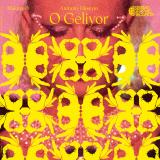
Anthony Hüseyin presents their new album O Geliyor (Making O), in which they return to the rediscovery of their gender, their childhood, and their attachment to Zeki Müren.
Müren is widely regarded as the most important queer exponent in the history of Turkish Art Music (Türk Sanat Müzigi). This genre of music was open to musical hybridism, and Müren himself also included elements of jazz and pop music.
Stylistically, O Geliyor (Making O) is a combination of contemporary discoid electro-pop music, based on Turkish Art Music by Zeki Müren. After successful current re-interpretations of Turkish music styles like neo-Anatolian pop and neo-Arabesk, this album provides a first take on neo-Turkish Art Music.
The album title is referring to the third genderless person pronoun in Turkish called "O", which encompasses all gender possibilities in one word. The album reflects on the memories that haunt us and the indescribable wounds of displacement. Set against the backdrop of Berlin, home to many immigrants and political and queer refugees, it exposes the profound emptiness in a metropolis wishing to imagine itself as a safe haven for the free-spirited, yet always reminding the Other that they don't belong. At the same time, it delivers anthems for the displaced, for the queer migrants who traverse internal and external landscapes in search of a place called home.
Anthony Hüseyin is a non-binary musician and performance artist of Kurdish-Turkish and Arabic descent who works with voice, text, film, dance, and installation. Raised in Urfa in Southeastern Turkey, where they learned traditional local music, they went on to study both classical and jazz singing in Istanbul and Rotterdam. Their works combine the personal and political to explore memory, identity, community, collective consciousness, and the body.
The second instalment of the recent Mixrace studio sessions!!! Session 2 continues the Paradox and Trax partnership with trademark razor sharp breaks and blissful atmospherics.
How much weight does it take before something finally shifts? Character Builder EP is Voorman's introduction to Stelus, four functional studies arranged as a single passage. The A-side carries weight: 'Dense' opens with compressed momentum, focused and unrelenting; 'Pressure' follows with restrained propulsion, austerity with distance held deliberately between the music and any release. The B-side turns inward. 'Angst' sits inside psychological friction without resolving it, letting the feeling stand on its own terms. 'Relief' closes the EP with a gradual lift, not resolution exactly, but the slow return of space. Personal development is built under load.