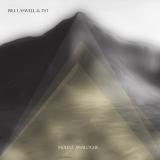
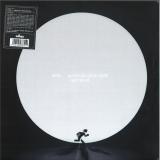
For his new full-length on Second End Records, Lyon-based artist Jonnnah turns deeply inward. Conceived as a form of therapy, as much as a reflection and a testimony, the record retraces a process of introspection and confrontation with one’s own history, looking back at origins, DNA, and the invisible ties that connect us to our ancestors, while opening paths toward new connections.
The double-sided structure of the album makes this journey tangible. The first side lingers in uncertainty : opaque atmospheres, fragmented rhythms, and restless textures mirror the doubts, questions, and fragile states of self-analysis. The second side, in contrast, embraces clarity and resolution, dense yet luminous soundscapes where reconciliation and acceptance take shape, culminating in The Blue Comet, a piece charged with finality and revelation.
Opening with the multipart suite N-zero, symbolizing the beginning of therapy, and closing with O-one, evoking the soul’s original purity, the record traces a complete emotional and spiritual cycle. Between them, the third edition of Insomnia Never Ends once again portrays the struggle between sleep and the irresistible pull of musical distraction, a fragile tension that runs through the album as a whole.
The record condenses Jonnnah’s language into something rawer and more direct. Layers of dub and dub sonic resonate against ethereal ambient passages, while techno impulses maintain tension and forward motion. Each piece feels at once intimate and expansive, designed as much for solitary listening as for collective experience.
A new chapter in Jonnnah’s trajectory, the album is a document of transformation : from shadow to light, from questioning to acceptance.
Search:symbol one
- A1: Les Masques - Il Faut Tenir (1969)
- A2: Isabelle Aubret - Casa Forte (1971)
- A3: Christianne Legrand - Hlm Et Ciné Roman (1972)
- A4: Jean Constantin - Pas Tant D'chichi Ponpon (1972)
- A5: Billy Nencioli & Baden Powell - Si Rien Ne Va (1969)
- B1-: Marpessa Dawn - Le Petit Cuica (1963)
- B2: Jean-Pierre Sabar - Vai Vai (1974)
- B3: Sophia Loren - De Jour En Jour (1963)
- B4: Isabelle - Jusqu’à La Tombée Du Jour (1969)
- B5: Sylvia Fels - Corto Maltesse (1974)
- C1: Frank Gérard - Comme Une Samba (1972)
- C2: Ann Sorel - La Poupée Des Favellas (1971)
- C3: Charles Level - Un Enfant Café Au Lait (1971)
- C4: Andrea Parisy - Les Mains Qui Font Du Bien (1970)
- C5: Audrey Arno - Quand Jean-Paul Rentrera (1969)
- C6: Aldo Frank - T’as Vu Ce Printemps (1970)
- D1: Christianne Legrand - Cent Mille Poissons Dans Ton Filet (1972)
- D2: Clarinha - Lemenja (1970)
- D3: Hit Parade Des Enfants - Aquarela (1976)
- D4: Jean-Pierre Lang - Tendresse (1965)
- D5: Magalie Noël - Une Énorme Samba (1970)
- D6: Françoise Legrand - La Lune
Ever since the late 1950s bossa-nova revolution, Brazil’s influence on French music has been undeniable. Pierre Barouh, Georges Moustaki and a vast array of lesser known artists, all made the Musica Popular Brasileira (MPB) an axis of promotion at the service of a cool and metaphysical, modern and mixed Brazilian lifestyle. Some were seduced by the poetic languors of the bossa, some were looking for fun, and others just loved the American hybridization of jazz-bossa, jazz-samba.
What is bossa nova? One of its creators, Joao Gilberto said: "Its style, cadence, everything is samba. At the very start, we didn't call it bossa nova, we sang a little samba made up of a single note - Samba de uma nota so .... The discussion around the origins of bossa nova is therefore useless”. It is nevertheless useful to remember that these magnificent Brazilian songs, which the guitarist describes as samba, were shifted and balanced around improbable chords. "I like things that lean, the in-betweens that limp with grace," said Pierre Barrouh, quoting Jean Cocteau.
With emotion, arrangements for violin and supple guitar licks, bossa nova rapidly changed. A transformation that can be heard in the Tchic, tchic, French Bossa Nova 1963-1974 compilation, the result of a cultural reappropriation, which traveled through the United States and supplemented itself in France.
A musical revolution that has remained significant, bossa nova was born in Rio. From 1956 to 1961, Brazil lived through its golden years. In five years, the country had invented its modernist style. Elected president in 1956, Juscelino Kubitschek de Oliveira, an elegant man with a broad forehead, brandished a promising slogan: "Fifty years of progress in five years". He quickly got to work. Not worried about increasing debt, he launched the project for a new federal capital, Brasilia, designed by the communist architect Oscar Niemeyer. Volkswagen opened state-of-the-art factories and created the “fusquinha”, the Beetle. In Rio, the Vespa made its first appearance. The Arpoador Surf Club crew run into the “girl” from Ipanema, Helô Pinheiro - the tanned garota ("chick"), between a flower and mermaid, who at 17 walked by the Veloso bar, where the fiery author and composer, Tom Jobim and Vinicius de Moraes, were getting drunk on whiskey. From then on, bossa symbolized cool.
In 1958, Joao Gilberto recorded Chega de Saudade, which the directors of Philips denied, calling it "music for fagots". The marketing director, who believed in it, secretly pressed 3000 78-inch vinyls and distributed them at schools around Rio, creating a tidal wave.
American jazzmen then took over. In particular, trumpeter Dizzy Gillespie and guitarist Charlie Byrd. In November 1962, the Brazilian Ministry of Foreign Affairs funded a "Bossa-Nova" concert at Carnegie Hall in New York, inviting the genre’s pioneers. Unprepared, the show soon turned to disaster. But the troupe was invited to the White House by Jackie Kennedy. The first lady loved "the new beat" and in particular Maria Ninguem, a song by Carlos Lyra, later covered by Brigitte Bardot.
In Brazil, the 1964 military coup quickly ended this euphoria. The destructive atmosphere that ensued pushed many Brazilian musicians to leave, if not to exile. Thus, Tom Jobim, Sergio Mendes and Joao Gilberto arrived to the United States. In New York, Joao Gilberto met saxophonist Stan Getz. At the time, he was married to the Bahianese Astrud Weinert Gilberto, who had a German father. She had never sung before, but she knew how to speak English. Getz therefore asked her to replace her husband on The Girl From Ipanema. The Getz/Gilberto record with Tom Jobim on piano, was released in March 1964. Phil Ramone, the "pope of pop" was in charge of sound.
Bossa nova arrived in Paris through the classic “guitar-voice” channel (Pierre Barouh, Baden Powell, Moustaki…) But France loved jazz and Paris had already welcomed its American contributors. All these good people were to pass through Saint-Germain-des-Prés. The cabaret l'Escale became the Mecca of Latin American sound where one could find Pierre Barrouh and his friends, such as the Camara Trio, samba-jazz aces, whose only record was published by the Saravah label. With a band strangely called Les Masques (a band that included Nicole Croisille and Pierre Vassiliu, among others), the Camara Trio recorded an interesting Brazilian Sound, including the track Il faut tenir which is present on this tasty compilation of rarities.
Other enlightened musicians can also be found on the compilation, such as Jean-Pierre Sabar (songwriter for Hardy, Auffray, Leforestier ...) and the French pop rock organist Balthazar. In 1975, Sabar recorded Aurinkoinen Musiikkimatka on a Finnish label, which featured the crazy Vai, Vai, included on this record. We are now following the footsteps of Brazilian electronic musicians such as Sergio Mendes, Eumir Deodato or Marcos Valle who created funk and disco sounds on their keyboards and synthesizers. A style that influenced Véronique Sanson when she wrote Jusqu’à la Tombée de la nuit in 1969 for Isabelle de Funès, the niece of Louis and a great friend of Michel Berger - Sanson did end up singing this track on her 1992 Sans Regret record.
The pinnacle of exoticism and travel, Sylvia Fels’ Corto Maltese includes bongos, sea mist and ocean sounds. The title was taken from Jacky Chalard’s concept album written in 1974, Je suis vivant, mais j’ai peur (I am alive, but I am scared), based on Gilbert Deflez’s science fiction novel.
However, bossa nova extended the scope of popularity. "In the 1970s, I was a fan of Sergio Mendes, Getz / Gilberto. I fell in love with this music that I knew because I had been an orchestral singer, " explained Isabelle Aubret, who in 1971 delivered a composite record of covers by the very funky Jorge Ben, Orfeu Negro, Tom Jobim, Vinicius de Morais and Jean Ferrat. "I recorded this album for Meys Records in Paris, far from Brazil, with wonderful musicians, François Raubert, Roland Vincent, Alain Goraguer...". The latter wrote the arrangements for Casa Forte, a very percussive title borrowed from Edu Lobo, one of the initiators of the bossa who spent time in California. "Jazz and bossa came together and produced very rhythmic music. I love singing, it allows me to dream, to have fun, to feel a high on stage, and these songs brought me joy, made me swing, my singing felt like a dance.”
The world tours of French singers and their desire for the tropics, often brought them to Rio with its hills, forests, caipirinhas and tanned bodies. There are surprises though, like this Iemenja (Iemenja is the goddess of the sea in the Afro-Brazilian candomblé religion). Not unlike the composer and musician Jean-Pierre Lang, based in Sao Paulo, Claire Chevalier taught Brazil to Brazil. In 1970, the singer and painter published a 45-inch vinyl, Mon mari et mes amants (My husband and my lovers), under the improbable pseudonym of Clarinha (little Claire). She was then living in Rio, with her husband, Joël Leibovitz, who founded a band called Azimuth, and who owned a record label specialized in "sambas enredos" songs for samba school parades.
For its B side, she asked Pierre Perret to come up with lyrics for a song composed by Carlos Imperial: "Oh goddess of the sea, o goddess Iemenja, I bring a white rose to adorn your long hair ..." . "Perret came to see us, and we had fun, remembers Joël Leibovitz. We wrote Lemenja for fun, we recorded it at the Havaí studio, behind the Central do Brasil the central station. Erlon Chaves, the arranger who worked with Elis Regina, joined us" adding his share of Afro-Brazilian percussions and funky brass to the mix.
There is a common misunderstanding in Franco-Brazilian history: that bossa, admittedly hedonistic, is perceived as funny, even though the poets who wrote the texts are often philosophizing on the human condition. Its French interpreters pull it towards a carnival inspired universe, far removed from its fundamental essence. Thus, Jean Constantin covered the famous Samba da minha terra, an ode to the art of samba written by the classic Bahian composer Dorival Caymmi, renaming it with the enticing title of Pas tant de tchi tchi pompon: "On your pier there is no tchi tchi / when you arch your back, you know everything is alright ”(lyrics by Gérard Calvi). This expedited bossa aims for the absurd, but retains a certain elegance.
Indeed, Jean Constantin was not an idiot, the rather large man had a huge mustache and liked fantasy, (Les pantoufles à papa, Le pacha, inspired by cha-cha-cha-cha, salsa and jazz) but he was also the lyricist of Mon manège à moi interpreted by Edith Piaf, the composer of Mon Truc en plume by Zizi Jeanmaire and the soundtrack of François Truffaut’s 400 Blows. Le Poulpe, published in 1970, from which this bossa is extract, was arranged by Jean-Claude Vannier, an accomplice of Serge Gainsbourg’s Melody Nelson. In short: "There is enough of samba / By looking at the parasol / Because my poor cabeza / Is going to die in the sun".
Even the American actress Marpessa Down, who was at the heart of the bossa nova revolution with her role as Euridyce in Marcel Camus’ film Orfeu Negro, winner of the 1959 Cannes Palme d'or, fed the clichée with Je voudrais parler au petit cuica - "Tell me how you manage to always make people want to dance / It's true, I must admit that I cannot resist your magic" - in consequence, once can hear the cuica, a little drum inherited from the Bantu.
But bossa nova had many angles. Societal, of course, pushing actresses who were symbols of women's liberation like Brigitte Bardot, Jeanne Moreau, or Sophia Loren to engage in the exercise of accelerated bossa. In February of 1963, Sophia Loren made a record in French in Rome, Je ne t'aime plus, featuring the song De jour en jour, a bossa written by two Italians, Armando Trovajoli and Tino Fornai, which was released a little later by Barclay. Bossa accompanied the 1960s, a decade of moral liberation. Ann Sorel, who interpreted La Poupée des favellas, caused a sensation with L’amour à plusieurs, a provocative song written by Frédéric Bottom and Jean-Claude Vannier. As for the actress Andrea Parisy, she displayed her bourgeois cheekiness in Marcel Carné's Les Tricheurs before interpreting Les mains qui font du bien. And Magalie Noël, the friend of Boris Vian, who sung Johnny fais-moi mal, was hired to sing Une énorme Samba, composed by Alain Goraguer (arranger to Gainsbourg, Bobby Lapointe and Jean Ferrat) with lyrics by Frédéric Botton.
But in the end, of what wood is bossa nova made of? The answer is given by Christianne Legrand, daughter of Raymond the conductor, and sister to Michel the composer: "With me, with jà" - jà means "immediately" in Portuguese. In 1972, the singer, an expert in vocal jazz and a member of the Double Six, published Le Brésil de Christianne Legrand. Two songs included on the Tchic Tchic compilation that demonstrate how bossa, jazz, funk, rock, etc. work like a swiss army knife: the music is used to denounce broken systems, or miracles, HLM et ciné roman, Cent mille poissons dans ton filet, two songs from the O Cafona soundtrack, a successful telenovela broadcast, at the time in black and white, on TV Globo. The first was adapted in French by the fighter and friend of the Legrand tribe, Agnès Varda. The second is content with a play on words, jostling them into a summer fun.
Véronique Mortaigne
From Wisdom Teeth’s recent compilation nagoyaka na kaze / 和やかな風 (quiet wind)—which cast a spotlight on the Japanese city of Nagoya—emerges “2++”, a new label launched by abentis, who curated the compilation alongside Facta and K-LONE as a central figure in the scene. Conceived as a series introducing facets of Nagoya’s underground electronic music to the world on vinyl, its inaugural release is abentis’ debut album, Dim Grow.
Across the album, intricately designed electronic mallet sounds—created using Ableton Live’s physical-modeling synthesizer—take center stage. Fresh and percussive like marimba or kalimba, yet simultaneously carrying an otherworldly, unreal quality, these tones form the core of the record’s sonic identity. In moments of near-silence, a crystalline resonance poised between glass and metal shimmers with subtle shifts in temperature, giving the album its distinctive texture.
While resonating with the sonic sensibilities of fellow Wisdom Teeth affiliates such as K-LONE, Tristan Arp, and Salamanda, abentis’ uniquely strange palette can be traced back to one of his strongest influences: Haruomi Hosono. In particular, Hosono’s mid-’70s tropical-infused solo albums — Tropical Dandy (1975), Bon Voyage Co. (1976), and Paraiso (1978) — serve as a key reference point. Symbolically reflected in Hosono’s marimba and vocal performance at a 1976 live show in Yokohama Chinatown, the marimba functioned as a central instrument for constructing imagined exotic landscapes inspired by Martin Denny and Hawaiian music.
For abentis—who worked at a local jazz bar before becoming active as a hip-hop beatmaker—the language of “tension chords,” a harmonic vocabulary rooted in jazz and R&B that hovers ambiguously between brightness and darkness, forms a consistent grammar throughout Dim Grow.
Behind the album’s core theme of “mallets + tension chords” lies a broad musical lineage: the harmonic sensibility of Claude Debussy, who anticipated the tensions of jazz; the proto-minimalist spirit of Erik Satie; the marimba-centered structures of Steve Reich; their continuation in Japan through Mkwaju Ensemble (with Midori Takada and production by Joe Hisaishi); and the subsequent branches into post-rock, electronica, and ambient music.
Growing up in Nagoya—an industrial city where creative independence is deeply valued—and being rooted in punk and hip-hop counterculture scenes naturally fostered abentis’ affinity with these predecessors. His practice between genres, combined with an encounter with the highly cross-pollinated musical perspective cultivated around Wisdom Teeth, provided the framework through which his own musical language crystallized. Dim Grow stands as the natural culmination of that journey.
Sound Records proudly presents ‘Morpho’, the debut LP from UK-based producer Benyayer, formerly one-third of celebrated electronic trio Dark Sky. A deeply personal record and a symbolic transition, Morpho captures the emotional and sonic evolution of an artist in metamorphosis.
Having stepped into the solo spotlight following his successful Infiltrator EP, Benyayer (aka Matt) delivers a bold, vinyl release that combines seven previously digital-only tracks with a brand new cut, ‘The Return’, all meticulously curated and pressed for the first time on wax.
Bridging influences from techno, UK bass, Afrofuturism, and electronica, Morpho is a meticulous exploration of rhythm designed to excite, cause chaos, personal reflection and movement. Each track is a raw, rhythmic exploration that draws on his time spent busking on the streets of London with found objects, experimentation with modular synths and years of experience honing his craft as a performer at some of the finest establishments in the electronic music landscape.
This initial vinyl edition is limited to just 300 copies. Designed in collaboration with Harry Cresswell, each sleeve features a deconstructed butterfly motif, laser-cut on both sides of heavy matte stock, paired with a matte-printed inner sleeve and a transparent vinyl disc, making each copy a true collector’s item.
The LP arrives amid support from tastemakers like Gilles Peterson, Benji B, and Tom Ravenscroft (BBC 6 Music), as well as heavyweight artists including Ben UFO, Bicep, Laurent Garnier, Bonobo, and Modeselektor.
Benyayer's new live show, built around these very tools, has already been trailed to great acclaim across Europe, adding a powerful performative dimension to the record. With previous performances at Berghain, Fabric, Glastonbury, MUTEK, Dimensions and Melt Festival. Benyayer's solo trajectory continues to rise with intent, mystery, and a fierce sense of artistic purpose.
Artist and multi-instrumentalist Flaer looks to the landscape to explore pastoral melancholy on debut release, Preludes. It is released in a second edition black vinyl, with an alternate cover artwork.
Ensconced in his family home in rural Leicestershire in the early months of 2020, painter and musician Realf Heygate (b. 1994) picked up his childhood cello for the first time in several years and began to play. Setting himself parameters to only record onto 4-track tape with acoustic instruments – cello, piano and acoustic guitar – he assembled a suite of instrumental compositions that form the basis of Preludes, his debut album as Flaer and the inaugural release on Odda Recordings.
Channelling the tension and unease between the pastoral idyll of the English countryside and the darkness which lurks beneath the surface, the mini-album draws inspiration from the analogue aesthetic of 1970s folk horror films, weaving field recordings of birdsong, church bells and the natural environment into chimerical melodies that reflect on Heygate’s childhood experiences of rural England.
“It was really important not to isolate the sound from its environment,” he explains, describing the compositional and recording process as “site-specific”. Developed over a series of intuitive musical enquiries, the mini-album’s uncanny quality emerges from combining raw demo takes with overdubs of almost orchestral grandeur.
Heygate points to the final track as indicative of the work as a whole: “‘Follow’ really is the mantra for the release and embodies the practical approach I was taking to music making: not to force the music but see where it takes you.”
As a painter, Heygate’s practice takes artefacts through sequences of reproduction that embrace the fluctuating materiality of the copy. Since obtaining a degree in Fine Art from Central Saint Martins in 2017, he has exhibited solo at Peter von Kant and Springseason galleries in London, and has participated in group shows at Saatchi Gallery, Cob Gallery and Senesi Contemporanea.
Describing his artistic practice as one of self-erasure, music instead provides Heygate with a more personal and autobiographical outlet. Where the two worlds combine is on Preludes’ striking artwork, which features paintings of 13th century stone carvings from the font of the church in the town where he grew up.
Speaking to a time where people were connected to the land in a more profound way, each symbol is assigned to a track on the album, which Heygate likens to giving them a title.
“To add that one juxtaposition might open a whole new interpretation or language that might be hard to find otherwise,” he explains.“Over time it might reveal itself to you, which is why I'm excited about it being released. To throw them out there and see what comes of it.”
Some words from Nat about the music – “For this recording I composed some songs using more “exotic” (for want of a better word) modes,
which I have always meant to explore in more depth but never really got around to very much. The first song for instance, Red, Gold & Green, uses an Ethiopian scale.
The title comes from the colours of the Ethiopian flag, which is also symbolic in Rastafari so has a kind of double meaning, like a lot of my songs.The title track, Path of Enlightenment, uses several modes,
starting in a major key then moving to the Phrygian mode, then to a minor key. The piano solo is in a 28 bar minor blues form. Menat is based on a mode of the Byzantine scale,
I’m not sure if it has a particular name or not. Amenhotep was the name of several Egyptian pharaohs,
Amenhotep IV being the original given name of Akhenaten.When I was writing this song it put me in mind of my song, Akhenaten, simply because they are both in 5/4 time,
so I decided to give this one a pharaonic name too. Spheshile is a Zulu word (and sometimes name) that means “beautiful gift”, the title was suggested by a friend from South Africa.
All this means nothing of course if the music doesn’t tell a story, I think the unfamiliar modes allowed us to speak of interesting things that may not have come to us otherwise.
Finally, I chose to use the quartet format for this recording because it occurred to me that it tends to make for a more cohesive group sound, and it had been a while since we recorded this way.”
- A1: Me Pega
- A2: Tem Carnaval
- A3: Sexy Doce
- B1: Coeur
- B2: Então Tá Bem
- B3: Para Ser Feliz
- B4: Tô Nem Aí
Fresh from releasing projects on Method 808 and Future Classic, landing a huge collaboration with Chloé Caillet, and delivering an official remix for Fatboy Slim, PPJ are entering a new chapter in full force. Their expansive take on global street sounds, ranging from neoperreo to Miami bass, gets a cool re-coating.
Led by the magnetic vocalist Páula, with production from Povoa (individually supported by Four Tet, Ben UFO, and Barry Can't Swim, with recent releases on Live From Earth), the duo operates in maximalist mode: playful, sensual, and slightly unhinged.PPJ’s new era, JOKER, embraces a figure that appears everywhere from card decks to carnival culture as a symbol that mirrors their own DNA: funny, eerie, seductive, unpredictable. The EP leans further into club territory, but rather than polishing their edges, PPJ amplify them.
At the emotional core of the record sits “Coeur,” co-produced with Chloé Caillet. It begins with an MPB-tinged foundation flirting with bossa nova. It’s unmistakably Brazilian, bathed in sunset hues before being sped up and twisted into a dance-floor-ready electronic form. The groove shimmers with tension: warm percussion, elastic basslines, and Páula’s voice hovering between intimacy and tease. It feels like a remix of itself, romantic, but slightly untrustworthy.
If “Coeur” glows, “To Nem Ai” is a slow burner. A very deep and downtempo house cut, it unfolds slowly, almost luxuriously, guided by sensual vocals that feel whispered directly into the ear of the listener. A hypnotizing piano sample that feels like a late-night confession. It’s the kind of record that transforms a dancefloor into something tactile.
Elsewhere, “Me Pega” is a high-energy reinterpretation of the tech-house sounds from Santa Catarina, one of southern Brazil’s most feverish party states, twisted and accelerated for ferocious impact. Drawing direct inspiration from Sarro, a raw and vibrant Brazilian street dance, the track captures physical intensity in its purest form: sweat, bass pressure, collective release.
Its counterpart, “Tem Carnaval” channels Páula’s vivid storytelling into a thunderous ode to Rio’s carnival spirit, euphoric, chaotic, cinematic landed just in time for this year’s celebrations.
On “Sexy Doce,” rugged electroclash melodies collide with unexpected references. “It was inspired by Budots, which is dance music from the streets in the Philippines,” Povoa explains. “Then we mixed it with Páula’s Brazilian vocals. Baile funk is similarly from the streets, so there is a connection.” The result is raw yet futuristic, a cross-continental flirtation that feels both underground and explosive.
With this new EP, PPJ make music like they’re tuning into a dozen pirate frequencies at once. Pirate radio from Rio to Berlin to Manila intercepting fragments of street culture, sensuality, and chaos, and stitching them into something deliriously cohesive.
JOKER doesn’t just nod to club culture. It challenges it, twists expectation and leaves a lasting impression.
- 1: Macaia
- 2: Piazza Centrale
- 3: Il Lungoriva Di Genova
- 4: Amar
- 57:
- 6: Congelati
- 7: Seia
Preceded by Piazza Centrale and the subsequent Seia the album of the singer-songwriter, producer, and multi-instrumentalist, new promise of the Italian music scene, moves along the traces of memories to tell a timeless story, using a very personal language in which singer-songwriter music, pop, and electronic experimentation naturally coexist. Hypnotic and magnetic, her music is a subtle, elusive seduction, an emotion that delicately insinuates itself into the mind, an invitation to get lost in its beauty. A passion that touches the deepest chords of the soul, without the overwhelming rush of the senses, but with the intensity of a pure and profound feeling. Gaia Banfi was born in Milan, has been living in Bologna for years, but in her album, it is Genoa that resonates, the place of her childhood, which here becomes an imaginary setting for a symbolic dimension in which everyone can recognize themselves, through seven tracks in which all those melancholies that swell as we grow up, the lacks, the turbulent and dark loves, the unrequited ones, but also the vitality, the discovery, the absence of judgment, and finally the awareness, the inner conquests, the clemency, and the love for oneself, take voice.
- A1: Moonlight Feat. Elena Moroder
- A2: Side To Side
- A3: Darkness
- B1: Here For The Summer
- B2: Miraflores
- B3: It's Time For A Change
- C1: Fantasy Feat. Kučka
- C2: Believe In Yourself
- C3: Mesmerized Feat. Jessica Care Moore
- D1: Tryna Find A Way Feat. Leanne Louise
- D2: Keepin' Me High Feat. Tropics
- D3: Wide Awake Feat. Tom Did It
- E1: Linger (Interlude)
- E2: Distant Within
- E3: If You Doubt Me
- F1: Destination (Interlude)
- F2: What Makes You Feel
- F3: Set Sail On Another Ship
- F4: It Feels Natural
After years of shaping dancefloors worldwide and carefully curating the sonic and visual identity of Up The Stuss, Dutch favourite Chris Stussy presents his most expansive and personal statement to date with his debut album, ‘Lost, Found & Forgotten...’. Landing on 3rd April, the album unfolds across three interconnected chapters - ‘Lost’, ‘Found’, and ‘Forgotten’ - each revealing a different side of his creative world across 19 tracks while remaining tethered to a singular wider vision.
At its core, ‘Lost, Found & Forgotten...’ is an exploration of creative freedom. Visually and conceptually guided by the image of a kite, the album reflects movement, perspective, and balance. Floating freely yet always anchored, the kite mirrors Chris’s approach to music: unrestricted in emotion and imagination, but grounded in groove, craftsmanship, and intention. It’s a symbol that naturally extends the Up The Stuss identity; pointing skyward, embracing openness, and encouraging curiosity.
“This album has been a long time in the making, and I’m excited to finally share it with you. The process behind it - exchanging ideas with other artists and creating music outside of my comfort zone - has been an incredible experience. It gave me a true sense of freedom, allowing me to not think about boundaries or expectations. I’ve never been more proud of a project than this one. It’s deeply personal, and it represents my sound as a whole. I hope you listen with an open mind and find something in it that resonates with you.” - Chris Stussy.
The ‘Lost’ chapter opens the album by giving new life to music once left behind. These are tracks written across different moments in Chris’s journey, ideas that never quite found a home until now. Rather than relics of the past, they emerge re-discovered, refined, and fully realised. ‘
Found’ represents inspiration in motion. Sparked by collaboration, digging, and shared creative exchange, this chapter captures the moment when ideas connect, and colour floods the sky.
The album closes with ‘Forgotten’ - a nod to the deeper cuts, the B-sides, and the moments that reward patience. This chapter is for the heads and diggers; tracks that may not demand immediate attention but reveal their value over time.
- Shopping For An Avant-Garde Identity In The Bazaar Of Life
- Are You Ready To Know That Seen From Up Close Things Have No Shape
- One Fine Day The Sun Admitted She Was Just A Shadow
- Oh Sweet Martyrdom Of Not Knowing How To Speak But Only Bark
- A Pile Of Dumbstruck Faces Watching The Universe Function Without Them
- Every Epoch Dreams The Next One Even If It Becomes The Nightmare Of The Other
- My Tongue Pronouncing Words Without Consenting To Their Utterance
- Working Through Disappointment To Further Disappointment To Defeat
Sergeant ventures deeper into the chaos, occasionally emerging with something dangerously close to catchiness.
Symbols further explores the technique the band calls “dj-shadow-in-reverse”. Instead of digging for samples, they dig through themselves. Things are cut apart and glued back together: kraut drums, plunderphonics fragments, dance floor killers and dub chambers. This time, the wreckage has rhythm and the rhythm has an opinion. Ferre sings through the songs like he’s looking for an exit and having a great time not finding it. Somewhere in there, a flute appears: it sounds slightly worried about the bassline. But the band is more in charge of its plot than ever before. Sergeant finds bliss in losing it over and over again.
DISPLACES represents Fabris' most personal musical journey to date, inspired by the concept of hyperobjects and cartographic practices. The album sculpts a high-dimensional phased time-space composed of concrete materials and digital archetypes in a state of constant displacement. It delves into the symbolic and philosophical realms of mapping as one of the greatest sense-making mechanisms for life, in dialogue with object-oriented environments, superimposition and non-locality applied to cosmic, temporal, and emotional memory.
The sonic ecosystem expands on the image of navigating a path through a set of places, from the microcosm of quanta to the macro force of dark matter, from underwater depths to overland terrains, encapsulating the cyclical flow between birth and death, both in ecological and anthropological sense. The intersection of these shifting states is explored through the extensive processing of the langspil, Iceland's only traditional instrument, intertwined with manipulated field recordings of biophonies and geophonies captured across Icelandic and Venetian territories. These recordings form the backdrop for a meditative process that relocate familiar objects into unfamiliar realms, reflecting on the transformative power of self-reflection while encapsulating the fragmentation and entanglement found in nature and the human state. The record plunges the listener into a disconcerting and physical soundscape, as a “ghostly spectrality that comes in and out of phase with normalized human spacetime,” evoking sensations of suffocation and release as each layer continuously unfolds the palimpsest of the enclosed labyrinth.
“Extraction of the I” embodies a subatomic reaction—erupting as a molecular force that rises, only to re-submerge with a solitary exhale underwater. In this mutated dark space, beluga whales breathe into "Xanadu Phasing," creating a pulsating tension that releases only to unveil a frozen landscape.
In “Barricading the Ice Sheets” the glacial material morphs into a liquid tunnel of digital artifacts, building a wall of noise that shatters into scattered fragments of ice, resembling bird calls from another world.
A moment of stasis is offered with the appearance of an asymmetrical loop in Monolith I, evoking a primitive rite before an unknown force emerges.
The physical intensity of subsonic material in "A Quake in Being" interrupts the hieratic tone, detuning into polluted sonic matter sourced from relics of the First World War in the Venetian Prealps. The geography of this place reconciles with the original homeland in "The Map is the Territory," blending negative space with anthropogenic elements and exploited sounds of the langspil.
The burning density of "Wolf-Rayet" projects into the void, echoing the residual sounds of a local church as relics of fossilized religions. Wolf tones are the remains in Monolith II, introducing the final track, "Topography of Extinction," where evolving psilocin textures invite the listener to uncover deeper layers of meaning and dislocation.
- Sea Ceremony (With Karen Vogt)
- Coral And Bones (With Laryssa Kim)
- Heartsea (With Vargkvint)
- Naiade (With Mt Fog)
- Moon And Mirrors (With Elska)
- Daughter Of The Abyss (With Singer Mali)
- Serpentine (With Nightbird)
- Their Voices Rise Above The Waves (With Yellow Belly)
- For All The Sea-Girls (With Nadine Khouri)
- Ondine (With Astrid Williamson)
- Coda (With Camilla Battaglia)
Oceanine, Jolanda Moletta’s third album and her first for Beacon Sound, is a powerful and ethereal statement of artistic community. Expanding on her previous work, each track represents a collaboration with a different female vocalist, with the foundational elements being generated entirely by her own voice. By turns haunting, enchanting, and inspiring, you won’t want to come up for air once you’ve been pulled under. Representing a
musical practice that is distinctly feminist, this is an album with a longer view in mind, to an age when the altars were to goddesses and women were centered as powerful beings representing the earth’s cycles of regeneration and renewal. Oceanine then, in all its beauty, can be viewed as an album of survival. It is deeply transportive, accessing something that lies within all of us. As the late, great Lithuanian folklorist and archaeologist Marija Gimbutas noted, “We must refocus our collective memory. The necessity for this has never been greater as we discover that the path of 'progress' is extinguishing the very conditions for life on earth.”
Jolanda Moletta is a multimedia artist and one-woman electronic choir. She creates wordless compositions through extended vocal techniques, integrating wearable-controlled live processing, alongside symbolic visuals. Moletta considers her performances to be a collective ritual and creates her Sonic & Visual Spells following the cycles of nature and the moon. Jolanda's 2022 critically acclaimed album Nine Spells was released on the Ambientologist label, followed by Night Caves on Whitelabrecs in 2025. Moletta’s artistic practice is a radical and spiritual journey through sound art, ritual, and the symbolic archaeology of the feminine.
Oceanine is inspired by sirens, water nymphs, and the timeless call of the sea. At its core lies Jolanda’s deep, lifelong connection to the Mediterranean Sea and to the ancient and modern myths and folklore that have emerged from its waters. Growing up by the Mar Ligure, Jolanda was surrounded by stories carried by salt, wind, and waves: legends of sirens, echoes of ancient voices, and the sea as both origin and oracle. This intimate relationship with the Mediterranean is not merely a backdrop, but a living source that shapes Oceanine’s emotional, symbolic, and sonic world.
Each track features a different female vocalist, creating a rich tapestry of voices, styles, and perspectives. This artistic choice not only broadens the album’s sonic palette, but also deepens its narrative core: celebrating the power, beauty, and mystique of feminine energy through myth, history, and sound.
The entire album is built exclusively from the human voice, processed and layered, yet always remaining voice, and nothing else. For each piece, Jolanda invited every vocalist involved to contribute a raw stem: a short, unedited melodic fragment of just a few seconds, inspired by the album’s themes. These intimate vocal seeds became the foundation of each track: the guest artists’ voices appear as brief, melodic stems, while the entire surrounding “orchestral” fabric is created solely from Jolanda’s own layered and processed voice. In this way, Jolanda’s voice becomes the Ocean itself, embracing, absorbing, and carrying the sirens’ calls within a vast, immersive soundscape. Every song is a unique expression of the feminine experience, revealing its depth, complexity, and emotional range, echoing the call of the sea and the many faces of the siren archetype.
The figure of the siren has transformed across centuries. In myths of Ancient Greece and Rome, sirens were hybrid beings, part woman, part bird, whose irresistible songs lured sailors to their doom. During the Middle Ages, the image shifted toward the half-woman, half-fish figure, often associated with temptation and danger. Historically, the voice of women has often been feared. Sirens were considered harbingers of misfortune not simply because they seduced or destroyed, but because they were powerful liminal beings.
In Ancient Greek, sirens functioned as psychopomps: figures who existed between worlds and guided souls, especially between life and death. Their songs were believed to carry forbidden knowledge, including prophetic insight and the ability to reveal truths about fate and the future. The danger of the sirens lay in what they revealed: knowledge that humans were not meant, or ready, to hear.
Oceanine confronts this legacy head-on. The voices heard throughout the album are not merely beautiful: they are dark and luminous, wild and enchanting, magical, soothing, dreamy, and at times fractured or distorted. They whisper, lament, beckon, and enchant. Like sirens, they skim the surface of the water and sink into its depths, hovering on the edge between tenderness and danger, vulnerability and power. They rise toward the sky, dissolve into mist, and return as echoes charged with raw, elemental emotion: voices that seduce, warn, mourn, and remember. They refuse to be reduced to decoration.
Alongside the album’s release in May, Oceanine will also unfold as a visual and performative work through a short art film. The film includes a live session recorded inside a sea cave facing the Mar Ligure, the very coastline where Jolanda spent her childhood, dreaming of sirens and listening to the sea as if it were speaking directly to her. This site-specific performance reconnects the music to its place of origin, allowing the voice to resonate within stone, water, and air, and transforming the cave into both a sanctuary and a threshold between myth and reality.
What if the sirens’ songs were considered dangerous because they carried another truth, an ancient truth long forgotten?
Oceanine embraces the idea that we are still deeply woven into myth. Though we may see ourselves as rational and modern beings, our world is saturated with ancient symbols and archetypes, often distorted, simplified, or stripped of their original meaning. And if those symbols are allowed to shift, if the mirror once held by the siren becomes an invitation to look beyond appearances and into what has been obscured, then we may finally uncover a deeper truth and reclaim the voice that was always ours.
Oceanine is not just an album. It is a reclamation, a spell, and a call from the depths.
- A1: They Found One Of My Graves (05:17)
- A2: Pre-Historic Metal (04:19)
- A3: Siberian Thaw (06:45)
- A4: Deeply Rooted (04:58)
- B1: The Dry Wells Of Hell (06:12)
- B2: So I Marched To The Sunken Empire (03:21)
- B3: Eat Eat Eat Your Pride (04:51)
- B4: Eon 4 (05:24)
In a year which marks the 40th anniversary since the initial formation - under the moniker of Black Death - of what would subsequently grow into influential genre legends, 2026 marks the return of the imperishable Norwegian duo of Fenriz & Nocturno Culto for their new opus of high calibre old metal, under the banner of ‘Pre-Historic Metal’. As Fenriz himself proclaims of the title’s symbolic origin, “Prehistoric is a loose term. I just figure it’s our VIBE, our take on things & it’s more a statement that we use old style to create something new”.
‘Pre-Historic Metal’ contains eight tracks of primal epics & gargantuan riffs with organic sound & the ever-present permeating spirit of the 70’s & 80’s, for a new continuation of the mastery witnessed on 2024’s ‘It Beckons Us All’. This next chapter in Darkthrone’s extensive & ongoing catalogue presents a vast odyssey through the sonic landscapes of Thrash, Black, Heavy & Doom Metal &, adorned with a punishing & “in your face” guitar presence, Darkthrone stirs the cauldron of savage creativity with a nod to the writing methods which were indicative of their earlier works of the late 80’s, but with a more refined craft.
'Pre-Historic Metal' was recorded at Chaka Khan Studios, Oslo, with production work conducted by Ole Øvstedal, Silje Høgevold & Mads Luis. Mastering was carried out by Jack Control at Enormous Door, & Maor Appelbaum Mastering.
This edition of 'Pre-Historic Metal' is presented on black vinyl.
- A1: Archangel (Feat. Sølv)
- A2: Split In Two Minds (Feat. Seantommy)
- A3: Yosemite (Feat. Interplanetary Criminal)
- A4: Take Me
- B1: Fade Away (It’s A Feeling)
- B2: Man With A Second Face
- B3: If U Want My Heart (Feat. Dj Heartstring)
- B4: Do Not Go Gentle
- C1: 11Th Of January
- C2: Air Maxes (Feat. Shady Nasty & Fred Again..)
- C3: Gotta Have It
- D4: I Believe (Feat. Prospa)
- D1: It Gets Better
- D2: Air Maxes (Kettama Mix)
- D3: Sort It Out (Feat. Clouds)
One of electronic music’s most sought-after names, producer and DJ KETTAMA today announces the release of his long-awaited debut album, Archangel, out 3rd of October. The announcement arrives in tandem with new single “Sort It Out” featuring Clouds, and a landmark moment in his career: his biggest ever London headline show, taking over Brixton Academy on Saturday, October 4th, followed by an expansive tour across Europe, North America, and Australia.
A decade in the making, Archangel is the definitive statement from KETTAMA (Evan Cambell), the Galway-born, London-based artist. The 15-track project is a powerful blend of hard-house energy, trance-inflected euphoria, hip-hop sample-based attitude, and unmistakable emotional depth—sonic signatures that have placed KETTAMA at the cutting edge of contemporary dance music.
The album showcases a curated roster of collaborators who reflect KETTAMA’s reach and relevance across today’s underground and mainstream scenes, including Interplanetary Criminal, Fred again.., Clouds, Prospa, DJ HEARTSTRING, Shady Nasty, SØLV and seantommy. Their contributions amplify the project's scope, offering a multi-sided view into KETTAMA’s musical universe.
Among its early singles, the Interplanetary Criminal collaboration “Yosemite” is a high-velocity anthem marrying speed-garage grit with ecstatic rave melodies, while his track “Air Maxes” with Fred again.. And Shady Nasty blends introspective vocal sampling with wide-eyed club emotion. On “If U Want My Heart” with DJ HEARTSTRING featuring KLP, the ensemble channels high-energy trance, breakbeats, and vocal euphoria into a soaring anthem that fuses emotional intensity with peak-time club energy. Meanwhile, his collaboration with Clouds, released today, “Sort It Out” dives headfirst into industrial-techno territory, conjuring a dark, cathartic energy destined for warehouse euphoria. And reigning as one of the undeniable anthems of the summer so far, “It Get’s Better (Forever Mix)” delivers euphoric waves of uplifting synths and relentless rhythm, bringing an irresistible surge of energy that’s become synonymous with this summer’s club moments.
Archangel has already found a home on the world’s biggest stages and radio airwaves, with early support from key tastemakers including Jack Saunders, Danny Howard, Sarah Story, and Tim Sweeney. Simultaneously, a grassroots groundswell continues to bloom across social platforms—where viral snippets and show footage capture the visceral reaction of a fast-growing, global fanbase.
This year, KETTAMA has elevated his status to a full-blown festival phenomenon, performing at major stages including Coachella, Glastonbury, Creamfields, Portola, Seismic, and ARC Festival, to name a few. In June, he played to 20,000 people in Belfast for a b2b with Chris Stussy—one of the UK’s largest DJ events in recent memory—and is currently mid-way through a 16-week Ibiza residency at Amnesia, playing every Monday night throughout summer. Full list of upcoming live dates can be found below.
Perhaps the clearest signal of his surging popularity is the jaw-dropping response to his upcoming Boiler Room live set, with over 15,000 fans signing up to attend— the set’s release is now highly anticipated as a time capsule moment in a breakout year for the artist.
KETTAMA’s rise to prominence has been anything but conventional. Eschewing the traditional gatekeepers of the industry, KETTAMA cultivated an underground following through the likes of SoundCloud and TikTok, where raw uploads, bootlegs, and viral edits generated a tidal wave of grassroots momentum. Over the years, these platforms became launching pads for a fiercely loyal global community, drawn to his unfiltered energy and boundary-pushing sound. This subversive path to recognition has made him not just a fixture of the scene but a symbol of how new-generation artists can forge success on their own terms.
From his humble roots in the Irish underground to the world stage KETTAMA is now pushing the limits of what a next-gen DJ-producer can achieve. With Archangel, he fuses the sound of his native ‘G-Town’ with a futuristic vision that’s unapologetically global—marking a creative milestone that cements his place among electronic music’s most compelling voices.
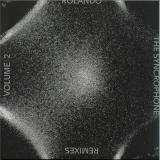
Rolando’s back in the game with Syncrophone Remixes Vol.2—flipping DJ Qu’s “Undescribed3,” Detect Audio’s “Synchronize,” and Anthony Shake Shakir’s “Arise.” Three exclusive remixes, pure underground techno for real heads. Detroit spirit, cop this 12” before it disappears!
DJ Feedbacks :
Honey Dijon : DJ Qu is the one for me. Will def support!
Raresh (ar:pi:ar) : super! thanks
Truncate : Thanks!
The Advent : Smooth bgrooves on here.. 3 - Anthony 'Shake' Shakir - Arise (Rolando Remix)
Anika Kunst (Symbolism / RSPX) : Cool release. Arise rmx is beautiful. Thanks!!
Harvey Sutherland (MCDE / PPU / Voltaire Records) : DJ Qu flip for me, thanks!
Scott Grooves : The Shake is the one
Satoshi Tomiie (Abstract Architecture) : Wooow hot hot hot
Roman Fluegel (Roman Fluegel, Dial, Cocoon, Playhouse, Robert Johnson) : The Remix for Shake is the one for me.
Erol Alkan (Phantasy Sound) : Downloading Thanks!
Enrica Falqui (ERIS, Plexus 4) : I like it!
Daniel Avery (Phantasy / Fabric) : Awesome
Laurent Garnier : cool release
Elisa Bee : Only love for Rolando, thanks x
Slam (Soma) : Brilliant - thanx
San Proper (Perlon / Rush Hour / Proper's Cult) : Totally what i needed to hear, Rolando remixing Shake & Q, my heroes lined up. I will enjoy playing all 3 mixes. One Love.
Axel Boman (Studio Barnhus) : killer remixes!
Terry Farley : DJ Qu mix my fave - heads down LETS GURN
D'Julz (Bass Culture) : great work !
gilbr (Dj Gilb'R / Chateau Flight (Versatile)) : Like the Shakir remix thanks for sending
Ben Sims : Now downloading... will check asap!
Lea Lisa (Phonica Records / Folklor Club) : mental, really good one
Dj Deep (Deeply Rooted) : Super nice package! Dj Qu's Undescribed3 remix for me here! Thank you
Mike Shannon (Cynosure) : Rrrrreeeeemix!! Thx
Efdemin (Dial) : Wonderful remix package!
Inland (Inland) : Hellooo. These are great. Qu and Shake versions both killer! Thanks
Kai Alce (Real Soon) : DJ QU remix bangin
Uncertain (RSPX, WRKTRX, Suara) : remix 1 for me
Harri (Sub Club) : very nice all three will play and support
Blasha & Allatt (Meat Free) : Thank you!
Marcel Dettmann : thx
Richie Hawtin (M_Nus) : downloaded for r hawtin
Luke Solomon (Classic / Freaks / Music For Freaks) : all killer
Luke Slater : Thanks Ro!
Ame (Innervisions) : thanks
Felix Dickinson (Futureboogie, Rush Hour, Cynic) : I like this
Geir Aspenes (G-Ha (Sunkissed)) : Thank u
Alienata (about blank) : Very nice remixes, all of them, thx!
Nat Wendell (Depth of My Soul, Courtesy of Balance, Love & Loops) : Dope remixes!
Dave Clarke (white noise radio) : Not my sound, but please keep them coming !
Between Faith and Noiz represents the exact point where faith and inner chaos coexist.
It's an introspective journey toward the center of the mind: the space where thought becomes distorted, where sound turns into a reflection of doubt, where faith is tested within one's own noise.
Noiz symbolizes that internal, mental, and emotional noise that distorts reality - the voices, the interference, the overload of stimuli.
Faith, on the other hand, is the thread that keeps direction, the spark that survives when everything vibrates and collapses.
The EP portrays that invisible struggle between believing and falling apart, between the silence that soothes and the noise that purifies.
Each track acts as a stage of that journey: the oath (Faith and Oath), the wound (Ulcerate), the essence (Oxeo), the connection (Captures Spirits), and finally, the release (Noiz).
It's not about finding faith outside, but rebuilding it from within the noise.
Isa Gordon and Tony Morris were first brought together through their individual releases on Optimo Music, which established mutual respect within the label’s community. While they had not previously performed live together, they were invited to take part in a fundraiser hosted by Queen’s Park Arena in support of Glasgow NW Foodbank and later for JD Twitch’s end-of-life care. Tony asked Isa to contribute guitar and backing vocals to his set, including a track then called Last Night I Had a Dream. That performance became the seed for their collaboration.
The first phase of fleshing it out, recalls Tony: “Somebody said Isa sang like Shania Twain. That got me thinking about country music and call and response, prompting me to come up with alternative lyrics.” Isa remembers: “I cycled over to Tony’s house with my guitar, and we spoke about what the tune meant. It was about him being wrapped up in dreamland, luxuriating in his subconscious, while my character — impatient and trapped in her own routines — barely had time to remember her own dreams.” Tony continues: “Brilliantly I realised that I could never collaborate with anyone in situ and so I sat in the garden for two hours watching my wife tend to plants. Every now and again I would creep up the stairs and put my ear to the door. I could hear Isa warbling away and so would resume my garden watch. After two hours I went back upstairs to see how she was getting on, only to find that she had written one of the greatest songs I’d ever heard. I still think that.” Tony adds: “My overwhelming sentiment about Wake Up Baby is pride. I can honestly say that I’m more proud of it than anything else I have done. It ticks a whole load of boxes. Isa’s singing in various Scottish modes is unique. The way her electric guitar adorns the dance beat makes it a rock song as well as a dance and a C&W song — truly multi-genre.”
The B-side of the 12” release, Syringe Moustache, is a surreal, darkly playful counterpart to Wake Up Baby. The track was inspired by a dream Tony had: “I was in a shopping mall, in a two-level shoe shop, and my attention was taken by a little girl with a syringe taped beneath her nose like a moustache. She went about her business trying on shoes, confident and wise beyond her years. In the dream, I imagined her as the daughter of cultured, intelligent parents determined to raise her independently. I was struck by my own feelings of inadequacy — I knew I could never have coped with such a contraption myself.” Isa’s take on the meaning of this song somewhat differs: “Tony sent me the tune over Instagram months before I met him, and I was spooked — as far as I knew, he didn’t know anything about me, but the story felt like it was written about me as a little girl, growing up around heroin addiction. The syringe beneath the girl’s nose became a symbol of the inescapable constraints of that environment, literally written on her face, yet something you just have to carry on through. On a buzz from the serendipity, I added a full instrumental backing to this most bizarre of works.”
The result is absurd, unsettling, and strangely empowering, staking out its own surreal, cinematic space. The 12” dance single is a format Tony had long wanted to explore — a tangible artefact to leave for family, a medium that celebrates the physicality of sound and the ritual of listening. It allowed the artists to maximise the format’s potential: a strong, multi-genre A-side, a surreal B-side, and remixes that expanded the record’s sonic world. Glasgow music staples Auntie Flo and 100% Positive Feedback were invited to reinterpret the tracks, bringing their distinctive touch — Auntie Flo transforming the A-side into a luscious, dancefloor-ready meditation, and 100% Positive Feedback twisting Syringe Moustache into absurd, playful shapes with false-start drops and over-the-top vocal editing.
The cover photograph, taken at the University Café by Harrison Reid, captures Isa and Tony embodying the characters they brought to life in the songs — a visual reflection of the record’s narrative and emotional stakes. The Café also holds personal significance: it’s where all of Isa’s meetings with Keith McIvor took place, where she first remembers visiting Glasgow as a child, and a place Tony fondly likes to go to drip egg yolk down his tie and watch the world go by. Together, the 12” format, the remixes, and the artwork create a cohesive, tactile experience, amplifying the duality, theatricality, and emotional breadth of the collaboration.
Inspired by Sam Kidel’s ›mimetic hacking‹ concept, Berlin-based composer Jasminev Guffond pipes opiated brass and woodwind motifs into a reverb chamber modelled on an Amazon fulfilment centre.
»Muzak for the Encouragement of Unproductivity« is a poetic inversion of Muzak’s traditional role in stimulating seamless productivity in the workplace. Beginning as a pre-radio music distribution network (1934, U.S.), Muzak was transmitted along electrical wires with the intention of being at once ubiquitous and indiscernible, always present yet easily ignorable. As a pseudo-science the aim was to capitalize on the potential of music to have a psychological effect on listeners, and with the goal of maximum productivity, was employed as a sonic disciplinary force in the work place.
Previously installed for Dystopia Sound Art Biennial (2024), at the Amazon Packing Station located before HAUNT-Frontviews in Berlin, Muzak for the Encouragement of Unproductivity sonically addresses utopic notions of seamless, efficient productivity, inherent to capitalist cultures, and their very real dystopic effects from labour exploitation to the impacts of over-production on the environment. This poetic inversion, further developed as an album, is not meant as a kind of melodic control but rather a reflective space in which to consider the benefits personally, globally and environmentally, of slowing down.
Reverb, essential to the Muzak aesthetic, is programmed (using convolution reverb) with the dimensions of the Berlin Amazon fulfillment centre, DBE2. Amazon fulfillment centers are global contemporary factories, promising a consumer utopia of next day delivery of almost any product imaginable. Inspired by Sam Kidel’s concept of »mimetic hacking«(1), the reverberation characteristics of the DBE2 facility perform a symbolic sonic break-in to the guarded Amazon fulfillment center, a trespass to the flow of production.
Guffond’s ambient Muzak with its drifting horn, clarinet and synth-like modulations is just too down-tempo for upbeat spending. If this is Muzak it is possibly Muzak for the end of the world, thoughtfully seeking transcendence through implied questioning after all avenues for shopping have been exhausted.
- A1: Any Sof
- A2: Baphomet
- A3: Black Ny
- A4: The Smiling Knife
- B1: Thelema
- B2: The Name Will Be Adrian
- B3: Do The Mussolini (Headkick)
- B4: Mega Therion
- B5: Leather Mask
- C1: Aiwass
- C2: Scarlet Woman In Disguise
- C3: Suburban Ritual
- C4: We Are Stars
- D1: Stuck In Malkhut
- D2: Triad Of Gods
- D3: The Book Of Law
- D4: White Stains
- D5: Unveiled
Possibly one of the best Mental Groove releases to date. Symbols & Sacrifice is raw, beastly, and savage — a cinematic and esoteric journey from the depths of Sindaco’s universe. A masterfully crafted experience across four sides, this release blurs the lines between ritual electronics, hypnotic repetition, and uncompromising raw techno. A powerful and immersive statement, pressed on audiophile-grade vinyl for full heavy sonic impact.
Under the name of Sindaco is hidden a complex yet mysterious project where different styles and cultures live together.Obscure kraut rock, no wave, black metal and Detroit techno collide in what can be considered songs more than simple tracks. All is played by Sindaco with analog equipment without the help of computers. All is driven to create the best soundrack possible. The idea is to avoid all the typical cliches of the contemporary electronic productions and push the boundaries into a new way of tropical futurism. Be involved by the unespected waves of sounds coming from another world!
- A1: Borai & Denham Audio - Make Me
- A2: Smoke City - Mr. Gorgeous (And Miss Curvaceous) (Mood Ii Swing Vocal Mix)
- B1: Chris Raven - I Know You Love Me Too (Bruce Norris Remix)
- B2: Grooveyard - Mary Go Wild
- C1: Dave Swayze - Last Flight To Paris
- C2: Joe Goddard - Music Is The Answer (Hot Since 82 Remix)
- D1: Just A Man - I'm Sorry (Original Club Mix)
- D2: Teddy Pendergrass - Life Is A Song Worth Singing (Jamie Jones Remix)
Since 2020, 12 Inch Lovers have been releasing new samplers every year, eagerly anticipated by collectors. These samplers have now become a staple and are easily added to vinyl collections across Europe. They offer timeless classics and rare tracks that are often hard to find elsewhere.
With Samplers 11 & 12, they surprise again with a mix of modern classics and tracks that have never been released on vinyl or are difficult to find. By adding unique and exclusive tracks, the 12 Inch Lovers samplers remain innovative and high-quality. They are a must-have for DJs, collectors, and fans of contemporary classics!
SAMPLER 12
A1) Borai & Denham Audio - Make Me (original release 2023)
Released in 2023 on the British label Room Two Records (catalogue R212001) on twelve inch vinyl, Make Me combines breakbeat, house and speed garage with high energy, featuring clear use of Amen breaks, rumbling sub bass and sharp rave sounds. At the heart of the track lies an instantly recognisable vocal hook from the mid eighties, a sample taken from Donna Allen - Serious (1986). The result feels like a long forgotten rave anthem from the nineties wrapped in a modern sound.
The original twelve inch pressing quickly became a highly sought after collector's item and received a limited pink vinyl repress in 2025. This track, first issued only on orange vinyl in 2023, was officially re released once all samples were cleared. It has every ingredient of a future classic, a true underground anthem for fans of modern UK rave and jungle energy.
A2) Smoke City - Mr. Gorgeous (and Miss Curvaceous) (Mood II Swing Vocal Mix) (original release 1997)
Originally released in 1997 on the album Flying Away by Smoke City. The Mood II Swing Remix, produced by New York house duo John Ciafone and Lem Springsteen (also the producers behind Ultra Naté - Free), takes the song straight to the dance floor with a smooth groove, soulful vocals and a deep, hypnotic flow.
The iconic line "Cool and calm, Mr Gorgeous..." remains untouched, while the remix enriches the original Latin and trip hop influences of the band with that distinctive late nineties house atmosphere. The result is a timeless club favourite, almost nine minutes of pure vibe (the Mood II Swing Vocal Mix runs 9minutes and 20 seconds), adored by DJs who like to bring a touch of soul to their house sets.
Released on Jive Records, the track received great praise. Music Week highlighted its "tight ay ay ay hook" and noted that the Mood II Swing and Hyperspace mixes made it a real standout. The original version reached number one in Italy in 1997, and the Mood II Swing Remix has since gained cult status in the Belgian club scene and beyond as the perfect marriage between soul and dance floor energy.
B1) Chris Raven - I Know You Love Me Too (Bruce Norris Remix) (original release 1997)
Christian Raabe, better known as Chris Raven, is a German producer who made his name in the late nineties progressive trance scene.
The Bruce Norris Remix of I Know You Love Me Too (Additive Records, catalogue 12AD 027) first appeared in late 1997 and was officially released in early 1998. The remix builds an euphoric atmosphere witha beautiful melody, dreamy pads and powerful drums, all typical of the progressive trance sound of that period.
The track gained extra attention when it appeared on Northern Exposure 3: Expeditions by Sasha and John Digweed in 1999. Many fans first discovered it there (especially the Van Bellen Remix version), helping to cement the cult status of I Know You Love Me Too within the progressive and trance community.
B2) Grooveyard - Mary Go Wild (original release 1996)
One of the most recognisable and iconic club tracks in Belgian and Dutch underground house history is without a doubt Mary Go Wild, released in 1996 on EC Records. The track quickly became the defining anthem of the rave scene in the Low Countries.
With a raw groove around 133 BPM, pumping four to the floor drums and the hypnotic vocal sample "Mary... go wild!", the record set dance floors ablaze in the nineties. Producer Jeroen Verheij, also known as Secret Cinema (from the classic Timeless Attitude), perfectly captured the raw energy of the European house movement of that era.
To this day Mary Go Wild stands as a symbol of pure rave power, a timeless anthem that, as one Discogs collector put it, "still works on any dance floor." Original twelve inch pressings on EC Records and later issues on Blanco Y Negro are highly sought after, and the track remains a staple in retro house and classic DJ sets.
C1) Dave Swayze - Last Flight To Paris (original release 2000)
Dave Swayze, best known for his classic Goldwave, has several hidden gems to his name, and Last Flight To Paris is certainly one of them. Released in November 2000 on the Belgian label Yeti Records, the track is a subtle blend of trance and progressive house. It is known for its emotional melody, dreamy build up and strong percussion, built on the foundation of progressive trance but with thewarmth and groove of house.
At the time, Last Flight To Paris was frequently played by progressive trance DJs and soon became a cult favourite among vinyl collectors within the genre. Original pressings on Yeti Records are now extremely rare and much sought after. The mix of emotion, euphoria and timeless club energy makes Last Flight To Paris a hidden treasure from the late trance era of 1999 and 2000.
C2) Joe Goddard - Music Is The Answer (Hot Since 82 Remix) (original release 2017)
This remix by Hot Since 82 (Daley Padley, from Barnsley in the north of England) for Music Is The Answer by Joe Goddard is partly based on the original classic Celeda - Music Is The Answer (in the Danny Tenaglia Remix). It was released in February 2017 as a digital exclusive through Domino Records.
Hot Since 82 reworked the original, a vocal house track by Hot Chip member Joe Goddard, into a deep, grooving house track with a warm rolling bass line. The soulful vocals of Joe Goddard (featuring SLO) take on a subtle melancholic tone in his remix, creating a modern house classic filled with emotion and drive.
The remix became a major club favourite in 2017 and 2018, supported by leading names in the tech house scene and heard at festivals around the world. Interestingly, this popular version had never been released on vinyl, which only increased its cult status among collectors. Music Is The Answer (Hot Since 82 Remix) remained a digital classic for years, until now, finally available in this long awaited vinyl edition.
D1) Just A Man - I'm Sorry (Original Club Mix) (original release early 2000s)
The French project Just A Man consists of brothers Hervé and Nicolas Subrechicot. Their track I'm Sorry is an emotionally charged house record that perfectly captures the early 2000s club atmosphere.
Released in 2003, the song combines soulful male vocals with a warm, rhythmic production that blends UK garage and classic club house influences. The Original Club Mix (6 minutes and 14 seconds) builds gradually towards a powerful, uplifting climax, carried by rich chords and an irresistible groove.
Although I'm Sorry stayed somewhat under the radar at the time, it is regarded by connoisseurs as a hidden gem, a perfect balance of melody and groove. The twelve inch vinyl release (on RKG / Motor Music, 2003) is now hard to find and highly prized among vinyl and house collectors, which only adds to its appeal.
I'm Sorry embodies the pure sound of early 2000s vocal house: sincere, funky and danceable, with that unmistakable UK garage touch, even more evident in the G Box Garage Club Remix on the same EP. An unfairly overlooked track that has always remained a true timeless classic since the very beginning of 12 Inch Lovers.
D2) Teddy Pendergrass -Life Is A Song Worth Singing (Jamie Jones Remix) (original release 2019)
In 2019 Jamie Jones breathed new life into the classic soul song by Teddy Pendergrass with a contemporary house rework. The remix was released in March 2019 as part of the digital EP Mixmag Presents: Teddy Pendergrass - The Remixes, issued in honour of the documentary If You Don't Know Me, a film about the rise of Teddy Pendergrass, the first African American male artist to achieve five consecutive platinum albums in the United States during the seventies.
Jamie Jones stayed true to the feel good essence of the 1978 original but wrapped it in a modern club sound, with pulsing synths, a warm rolling groove and a tight four to the floor beat providing the perfect base for Teddy's powerful and instantly recognisable voice.
The result is a captivating, soulful house track that effortlessly bridges past and present without losing the emotional power of Pendergrass's vocal delivery.
Despite its widespread popularity in the international club scene, where it became a favourite among DJs who love to blend soul with house, this remix never had a physical vinyl release. Until now, with its long awaited appearance on 12 Inch Lovers Sampler 12.
Some records are answers to questions no one asked out loud. With Where is Acid Eric, Cornelius Doctor & Tushen Raï deliver a psychedelic missive from a parallel timeline — a time-traveling tribute to Goa’s golden age, filtered through their unmistakable signature.
Returning to their home base, Hard Fist, the duo steps into new territory with this release, and yet, it feels like they’ve been heading here all along. This isn’t a retro-fetishist trip, nor a copy-paste homage. It’s a reimagination of a sound, a space, and most of all, a spirit.
The EP is rooted in the mythic nights of late-80s and early-90s Disco Valley, where British acid house collided with Indian hedonism, where freedom wasn’t a pose but a necessity, and where dancefloors became temporary utopias. But in the hands of Cornelius Doctor & Tushen Raï, this past gets warped, stretched and reanimated with 2025’s tools and sensitivities.
Across three extended tracks, the duo summons a sound that’s dense yet breathable, tribal yet precise, nostalgic yet futuristic.
They weave Goa’s swirling trance lines with broken rhythms, analog squelches, and post-industrial textures. The acid lines are sharp, but never cliché — more mantra than gimmick. Voices float in and out like half-remembered chants. Basslines slide, hypnotize, and then vanish in a cloud of smoke. It’s not a flashback. It’s a vision.
The title, Where is Acid Eric, feels like a lost broadcast — part question, part invocation. Eric is a symbol. IS Eric a ghost ? The true legend of a forgotten raver on a dusty Anjuna morning. What matters is the search. The longing. The dance.
Hard Fist, true to its form, continues to blur the lines between ritual and rave, tradition and invention. And with this record, Cornelius Doctor & Tushen Raï don’t just revive a genre — they reconnect with an ideal: dance music as exploration, as transcendence, as resistance.
One foot in the dust, one foot in the cosmos. The answer isn’t important. The trip is.
- A1: Yellow Days
- A2: Find A Way
- A3: Everyday Words
- A4: It’s Ok, Feel It
- A5: Windup
- B1: Get Along
- B2: Smile Today
- B3: Inner Meaning
- B4: Nostalgia
'Find a Way' is the new album from Manchester-based pianist, composer, and producer Matt Wilde, released via his own imprint Hello World Records. The album serves as a reminder that creativity should be accessible and the importance of opening yourself to the unexpected as you 'Find a Way' through all endeavours. Digging into improvisation and jazz harmony on the LP, he crafts a sound that bridges jazz, hip hop, and electronic music, adding: "The creative act is not a matter of waiting for the perfect conditions, but of moving gently, insistently, through the imperfect".
Focus and title track "Find a Way" encapsulates this journey of process. Humans are known for adaptation and response when they face challenges, seeking solutions towards a better world. "Find a Way" leans into our instinctive reaction to improvise and reshape, taking the listener on an unexpected journey. The opening loop could as easily feel at home as part of an electronic soundscape, developing into a clock-like effect from the drums. This keeps time, allowing a duet between keys and trumpet to unfold, symbolising the individual, imperfect and non-linear paths we all carve out day to day.
The album was funded by Arts Council England and created in close collaboration with trumpeter and composer Aaron Wood, with the pair recording in Aaron's rural DIY studio in Huddersfield. Through improvising upright piano, Rhodes and trumpet over intricately programmed beats, the duo captured the spontaneity that makes jazz feel alive, but with the forward-facing touch of Ableton live production. "I actually had live drums recorded for this project and then deleted all of them and instead programmed intricate drums on Ableton live myself to create the kinds of drum sounds I could hear in my head," Matt adds, explaining the onerous process that truly made 'Find a Way' a labour of love.
Matt Wilde discovered jazz through an unconventional journey, and 'Find a Way' is an introspective map of this musical development. Starting out as a self-taught beatmaker, growing up Matt made tracks for friends in the grime scene before falling in love with jazz through the sample-heavy works of Madlib, J Dilla, and Pete Rock. Hints of this influence can be found on "Windup", driven by a deeper bass and a glitchy intensity not commonly associated with jazz. There are also nods to the weekly DJ residencies Matt had in his late teens, establishing a love for club music at iconic Manchester venues like Sankeys. "It's Ok, Feel it" incorporates pitched-up kicks and crisp, papery snares that pay tribute to UK dance culture and the foundation of connection in this world.
Guided by values of accessibility and creativity, Matt has become a key voice in the UK's boundary-pushing jazz and beats scene. His debut album 'Hello World' alongside EPs and single releases, have been championed by the likes of BBC Radio 1, Jamie Cullum and Soweto Kinch (BBC Radio 2), 'Round Midnight (BBC Radio 3), and across BBC 6Music, Jazz FM and Worldwide FM. He has performed headline shows at Band on the Wall (Manchester) and The Lower Third (London) and showcased his music at Brick Lane Jazz Festival and London's iconic Jazz Café.
A proud Mancunian with Polish roots, Matt's values-driven approach reflects his passion for community and empowering others through the arts. Matt founded the UK's first youth-led charity and is a trustee of Manchester music charity Brighter Sound. Driven by these values of equality and inclusion, Hello World Records strives to champion grassroots music with a backbone of fairness built into the business model. The imprint is named after Matt's debut album, released via Band on the Wall Recordings; simultaneously championing the music scene and global musical footprint of Manchester and highlighting the importance of artists reminding people: Hello World, I've made it. I'm still here.
- Martha Cleary, Glow Artists
Ritual Dance - is a sound journey, where futurism and the obsolete merge into a new world. Arash & Quasar (truth and star) - is a duo of electronic producers, friends, DJs, rare record collectors and artists, Pavel Grachev and Vitaly Zhul'kov. Their approach for music making compiles elements of various cultures and eras, resulting in fresh and trippy sonic labyrinths. The title track puts the listener in a state of trance and wild fields, where shaman dance moves take over the existense. Powerful percussion, rich synth textures and traditional instruments are mixed in one. 'Acid Krishna' extends the trip, adding acid basslines and meditative flavour. A true morning anthem of a proper rave trip. 'Lokum' is exploring the deepness of the East through melodies, that sweeten up your adventure away from the daily reality. The flip side starts with 'Opium', where slow beats suck you in the abyss more and more. 'Truth & Star' - is an energy exchange ceremony, where Arash & Quasar become rhythm wizards and dictate how you move and feel, just like snakes dance to the magic flute... The Truth refers to the inner awakening and The Star is the symbol of the external shine. 'Desert' is the final chapter of the trip, evolving into eternity, just like a caravan dissolves in the endless desert, hot air and the blue night... Besides studio work, Arash & Quasar share videos of their own trips and adventures via Youtube-chanel, called DIG LOTO. Together with their best friend, the portative Vestax Handy Trax vinyl player, they search for rare records in remote destinations.
In the heart of a post-apocalyptic city, Spacelunch was making his way through the ruins, wearing a heavy armour of metal plates and flickering circuitry. Cat settled on his shoulder, listening intently to every sound. This time, they weren't just looking for an artefact — their target was the Singularity Echo, a mysterious device created right before the catastrophe. Legend had it that the scientists of the past, sensing the impending collapse, had put all their accumulated experience and knowledge together to create it. It was said that one day “Echo” would awaken and allow descendants to touch the wisdom of the ancients, learn the secrets of forgotten technologies and, perhaps, avoid the fatal mistakes of the past.
— We’ve been wandering around for how long? — muttered Cat, looking around warily. — And nothing.
— Sitting up there complaining, aren’t you? — Spacelunch grinned, deftly bypassing the debris and intertwined roots that poked out from under the asphalt.
Suddenly, a glow flashed before them, gradually taking the form of a palm-sized transparent crystal. It floated in the air, surrounded by silver lining that wove into intricate patterns, like a network of ancient runes. The symbols on its facets, flickering, cast soft reflections on the debris around them. As the professor slowly reached out his hand, the crystal shone brighter, and the low whisper of distant voices cut through the silence. Their minds were enveloped by the echoes of past events, filling their minds with images of the vanished world.
The friends froze for a moment, overwhelmed by shock and a sense of profound change.
— Well, — said Cat, not hiding his surprise. — It seems we've gotten a little smarter.
— A little? Now we have what has been lost for an era.
— So, we have a new adventure ahead of us. Where do we start?
The ghost town, once seemingly lifeless, now seemed to come to life: every collapsed building and every corner sparked with traces and clues as if the world itself was holding its breath, waiting for a sign.
- 01: Tafese Tesfaye - The Dove &Amp; The Pigeon
- 02: Yetemwork Mulat - Heathen &Amp; Earth
- 03: Alemu Aga - The World Is But A Place Of Survival
- 04: Sosena Gebre Eyesus - Save Us From Our Death
- 05: Abiy Seyoum - The Last Judgement
- 06: Tafese Tesfaye - You Who Take Good Care Of Me
- 07: Sosena Gebre Eyesus - When I Say Your Name
- 08: Akalu Yossef - Who Can Doubt
- 09: Abiy Seyoum - We Are All Mortals
- 10: Yetemwork Mulat - The Second Coming Of Christ
- 11: Akalu Yossef - Our Father
- 12: Alemu Aga - Song Of Praise Played With A Plectrum
LP 2x12"[28,36 €]
The begena is a large ten-stringed lyre which is part of the traditional Amharic heritage of Ethiopia. The Amharas, who have long formed the politically and culturally dominant people of Ethiopia, mainly inhabit the central and northern part of the country. In the majority, they follow the monophysite Orthodox Tewahido Church established in the early fourth century AD.
Music plays a very important part in the life of the church. Most of the liturgy is sung and, contrary to secular music, it is accompanied by percussion instruments only. The begena occupies a special place because it is the one melodic instrument exclusively dedicated to the spiritual repertory. Because of its mythical origin, it is highly respected. Tradition holds that the begena was given to king David by God, and brought to Ethiopia by Menelik I, together with the Ark of the Covenant. It has always been the instrument of kings and nobles. Played by pious men and women of letters, it never became widespread. But it never disappeared either, not even under the Derg regime (1974-1991) which had banned the instrument.
Among Amhara string instruments, the begena is the most carefully crafted, especially with regard to the ornately sculpted crossbar. Its ten gut strings are cleaned and twisted several times. The characteristic buzzing timbre equalled by no other Amhara instrument is due to the enzirotch, that is, small bits of leather placed between each string and the bridge. This plays an important part in the sound production by creating a brief contact between the string and the upper rim of the bridge, thus modifying the vibrating properties of the string. In this manner, the spectrum of the sound is considerably enhanced (up to over 10 kHz).
The begena is a very powerful instrument, it keeps the devil thirty steps away, and its presence in the home wards off malicious spirits. Priests and preachers recommend its presence, especially during Lent (Fassika Tsom) when the Orthodox Amharas ponder their sins and repent. Because of its spiritual import, the begena generates intense emotion. According to some musicians, playing the begena brings them into direct contact with God or the Virgin Mary. The religious role of the begena is underscored by the shape of the instrument, each part symbolises an important element of the faith. The crossbar for instance, which reaches across the entire width of the instrument, represents God who is above all things. The belly which "gives birth" to the sound represents the Virgin Mary, and the ten strings recall the Ten Commandments.
Recorded by Stéphanie Weisser in Addis Ababa, Ethiopia, March 2002-December 2005.
Mastered by Renaud Millet-Lacombe.
Issued under license from VDE-Gallo, Switzerland.
- A1: Tafese Tesfaye - The Dove &Amp; The Pigeon
- A2: Yetemwork Mulat - Heathen &Amp; Earth
- A3: Alemu Aga - The World Is But A Place Of Survival
- B1: Sosena Gebre Eyesus - Save Us From Our Death
- B2: Abiy Seyoum - The Last Judgement
- B3: Tafese Tesfaye - You Who Take Good Care Of Me
- C1: Sosena Gebre Eyesus - When I Say Your Name
- C2: Akalu Yossef - Who Can Doubt
- C3: Abiy Seyoum - We Are All Mortals
- D1: Yetemwork Mulat - The Second Coming Of Christ
- D2: Akalu Yossef - Our Father
- D3: Alemu Aga - Song Of Praise Played With A Plectrum
Cassette[16,18 €]
The begena is a large ten-stringed lyre which is part of the traditional Amharic heritage of Ethiopia. The Amharas, who have long formed the politically and culturally dominant people of Ethiopia, mainly inhabit the central and northern part of the country. In the majority, they follow the monophysite Orthodox Tewahido Church established in the early fourth century AD.
Music plays a very important part in the life of the church. Most of the liturgy is sung and, contrary to secular music, it is accompanied by percussion instruments only. The begena occupies a special place because it is the one melodic instrument exclusively dedicated to the spiritual repertory. Because of its mythical origin, it is highly respected. Tradition holds that the begena was given to king David by God, and brought to Ethiopia by Menelik I, together with the Ark of the Covenant. It has always been the instrument of kings and nobles. Played by pious men and women of letters, it never became widespread. But it never disappeared either, not even under the Derg regime (1974-1991) which had banned the instrument.
Among Amhara string instruments, the begena is the most carefully crafted, especially with regard to the ornately sculpted crossbar. Its ten gut strings are cleaned and twisted several times. The characteristic buzzing timbre equalled by no other Amhara instrument is due to the enzirotch, that is, small bits of leather placed between each string and the bridge. This plays an important part in the sound production by creating a brief contact between the string and the upper rim of the bridge, thus modifying the vibrating properties of the string. In this manner, the spectrum of the sound is considerably enhanced (up to over 10 kHz).
The begena is a very powerful instrument, it keeps the devil thirty steps away, and its presence in the home wards off malicious spirits. Priests and preachers recommend its presence, especially during Lent (Fassika Tsom) when the Orthodox Amharas ponder their sins and repent. Because of its spiritual import, the begena generates intense emotion. According to some musicians, playing the begena brings them into direct contact with God or the Virgin Mary. The religious role of the begena is underscored by the shape of the instrument, each part symbolises an important element of the faith. The crossbar for instance, which reaches across the entire width of the instrument, represents God who is above all things. The belly which "gives birth" to the sound represents the Virgin Mary, and the ten strings recall the Ten Commandments.
Recorded by Stéphanie Weisser in Addis Ababa, Ethiopia, March 2002-December 2005.
Mastered by Renaud Millet-Lacombe.
Issued under license from VDE-Gallo, Switzerland.
- 1: When The Night Falls
- 2: I'm Rowed Out
- 3: The Immediate Pleasure
- 4: My Degeneration
- 5: Man With Money
- 6: You're Too Muc
- 7: Good Day Sunshine
- 8: Please Don't Cry
- 9: When The Night Falls (Demo)
- 10: I'm Rowed Out (Demo)
- 11: The Immediate Pleasure (Demo)
- 12: My Degeneration (Alternate Version)
- 13: Radio London Jingle
- 14: The Pupils - Route 66
- 15: Shakin' All Over
- 16: When The Night Falls (Demo 2)
Retrospective of British mod / fReakBeat / pop-aRt heroes the eYes including all their cult classic 45s (“When the night falls”, “i’m RoWed out”, “MY degeneRation”...) plus cool rare tRacks souRced fRoM demos and acetates.
foRmed in london in 1964, the eYes took the earlY feedback experiments and pop aRt iMage of bands like the Who one step further. the band wore dyed parkas in various pastel colouRs and bRightly colouRed rugBY shiRts with huge eye symBols on the chest.
theiR raw, eneRgetic sound and distinctive stYle comBined aggRessive, fuzz-dRiven guitaR riffs with catchy melodies and a Youthful defiance that captuRed the eneRgy of the london mod scene. theiR music bRidged rawness fReakBeat with the eMeRging psYchedelic sound that would dominate the latteR half of the decade.
tracks like the feedback-laden “When the night falls” oR the fuzzed-out “you’re too Much” sounded YeaRs ahead of its time and they would influence the mod, garage revival and indie / shoegaze scene of the folloWing decades.
the eYes only released a handful of singles betWeen 1965 and 1966. theY disBanded in 1967 and unfortunatelY they never released a full album during their shoRt lifespan. heRe it is!
*ReMastered sound / *eight-page color insert with liner notes by paul “smiler” andeRson and rare photos / memorabilia / *doWnload card
Makhunik Records Presents: "Withdrawals" - A Bold New Vinyl Release by RAKANS Withdrawals, the highly anticipated follow-up to Emergence EP and Deep State (Midnight Stallion) EP, marks a bold new chapter in RAKANS's ever-evolving sonic journey.
Set for release on I Makhunik Records, Withdrawals explores the tension between desire and detachment, featuring five tracks that blur the lines between electronic, experimental, and club sounds. Available on vinyl, Withdrawals invites listeners to experience the raw and intimate emotions that inspired its creation. Following the success of Emergence EP (Gently Leftfield Techno from a Core Dresden Artist - Resident Advisor/Single Review by Andrew Ryce) and Deep State (Midnight Stallion) EP on Boudica, which gained recognition for their atmospheric intricacies and deep, immersive textures, Withdrawals delves deeper into personal and societal themes, paired with the artist's signature ethereal soundscapes and captivating beats. Each track carries a narrative, from late-night reflection to hedonistic encounters, with a pulsating intensity that mirrors the artist's own process of creative and emotional release. With Withdrawals, RAKANS continues to push boundaries, creating a profound listening experience that resonates both in its melancholy and its intensity.
Description of the Title: The title Withdrawals reflects a state of emotional and mental transition, where one is caught between the craving for connection and the unsettling effects of isolation. It symbolizes the artist's inner turmoil and process of reclaiming personal agency after experiences of burnout and separation. The tracks are an expression of that journey-tracking the highs and lows of life in a world that constantly demands more. Through these melodies, RAKANS has captured the intensity of longing and the aftermath of desire, inviting listeners to confront their own internal conflicts. The narrative is personal yet universally relatable, and the title speaks to the often painful but necessary process of letting go, detoxifying from past habits, and learning to be at peace with oneself. "With Withdrawals, He wanted to channel the emotions that often come from the struggle between desire and self-preservation, between the drive to connect and the need to retreat. he's journey, both as an artist and as an individual, has been filled with moments of intense reflection, self-discovery, and sometimes, disconnection.
These tracks are the culmination of that inner conflict, a raw exploration of what it means to both lose oneself and find a deeper, often painful, form of clarity. Like the music he's created before, the sound of Withdrawals speaks to the space between tension and release, the liminal space where truth is often revealed in its most vulnerable form. He's always believed that music is a mirror to the soul, and in this EP, He's tried to reflect that feeling of being both pulled in and out of something greater. It's a raw and intimate look at the way we navigate modern life, often feeling like we're running toward something that we can't quite reach, yet constantly pulled back into our own personal truths.
This EP is personal, but it's also for anyone who's ever felt caught between two worlds, the one they want and the one they need. I hope it resonates with listeners who are experiencing their own form of withdrawal, whether it's from people, places, or even from themselves.
Slowly yet firmly blooming into focus, An Unfinished Rose is the new album from Australian duo Troth.
This is their first since relocating to Hobart, Tasmania and their introduction to Night School Records. With a detailed web of past releases on labels A Colourful Storm, Mammas Mysteriska Jukebox, Knekelhuis and Bowman’s own Altered States Tapes imprint, An Unfinished Rose is the group’s most realised and composed work thus far. While still drawing on the improvisatory and DIY practices that informed Troth’s beginnings, it points to a new incarnation of the duo’s music; an intentional language emerging from the fog of obfuscation and mists of uncertainty.
Over these 9 meditations on change, acceptance, renewal and rebirth, An Unfinished Rose finds Amelia Besseny and Cooper Bowman peeling back some of the roughhewn architecture that defined their earlier releases to reveal a masterful - if auto-didactic - use of space and melody. Composition and improvisation compliment and feed each other throughout, with locked-loop earworms providing the springboard for lines of clarinet or synth melody, and the negative space between chord clusters giving ample room for Besseny’s most confident vocal performances to date. Shaving off a little of the defining dissonance and tape compression of old reveals Troth’s music in radiant daylight, humbly accepting of its place in the world while yearning for better, more sympathetic modes of living. Leaning more heavily on acoustic instrumentation and post-production processes than previously, the result is a transcendent body of work infused with an almost zen-like presence.
Troth’s music exists in the border between forming and becoming, its goal to project a kind of preternatural beauty, leaving interpretation open to the listener. Field recordings, happenstance and improvisation may provide seeds for the duo’s compositions, particularly on Side A, but there is a deft touch of songcraft on show. Loam Loom Leaf Litter opens An Unfinished Rose, directly referencing natural cycles of life, death and regeneration, before the blissed-out drum machine groove of Gold Plum continues a discussion concerning the totality of nature and one’s place in it. Besseny’s vocal, swelling like an ocean churn in duet with itself is adorned with synthesised harp and a revolving synth pattern, conjuring plumes of medieval smoke. Thistle’s rounded, bass-heavy drums, nodding to the vast echo of dub, is a relatively new terrain for Troth. It’s propulsive and thumping, pulsing with a meaning and symbolism consistent with Troth’s past work, referenced overtly in Bessey’s lyrics - “Say it too much and it loses its meaning…”. Similarly, the sprawling modern-classical suite, Tides Reflected In Her Eyes, is intentional in its lyrical themes while traversing new ground, revelling in layers of bowed cello and vocal intonations. Side B’s 4 tracks feel like Troth’s most thoroughly accessible and affecting music to date. Leaning into their own detoured version of Synth Pop, Cocoonist explores downtempoisms via a crunchy low frequency synth, and dream-like, fuzzy trip-hop modalities, not unlike Besseny and Bowman’s other group, Th Blisks. Following on, Myrtle Mystes is an open and searching DIY pop song, forged out of drum machine, bass guitar and cello. (An) Unfinished Rose’s title-track is a clear stand-out, built upon an evocative rhythm sample that appears to change emotional resonance with each undulating repetition. Its cascading waves of affect, interjected with a subtle breeze of synth, bowed instrumentation and soaring, densely-layered vocals.
An Unfinished Rose is enveloping, warm, forgiving. Difficult, yet retaining a unique beauty. Troth’s music aims to celebrate the duo;s shared experiences of being in the world, despite the complexity often surrounding us all. Theirs is a message of hope and perseverance, learning and patience.
"After being praised as one of the best releases of 2025 by multiple platforms, the highly praised debut album from Obeka lands on vinyl via YUKU.
The rhythmic dynamics and emotive attitudes of A World No More captures the density of soundsystem culture in Obeka's ancestral roots. YUKU presents the Bermudians debut album capturing a Neo-Colonial dystopia, protest and Afro-Futurism hyperextended through decaying sonic structures of a dark past and its grievances which very much exist today.
Growing into adulthood within the walls of British and European Colonial systems meant the disconnection and lostness in a new country hid me from the world at a young age. Unlike London's vast and culturally engaging migrant communities, the industrial milling town of Stockport introduced a coldness towards people from other countries I experienced in my first year after relocating from Bermuda. I couldn't understand why. Whether cold words thrown towards me or actions upon other people who look like me, it has shown to be a dooming societal virus with no cure. The most comfort was found through what was familiar - drums and rhythmic spirituality of my homeland. It was a safe-haven, a place to empty the anger and confusion. It's been 15 years since relocating and as my sound evolved, it seems classism, racism, oppression and civil control of ethnic peoples has become worse - even now more legalised and normalised. Ogun (a powerful Yoruba deity associated with anger, justice and war) acts as the opening sequence of the record and its symbolism. Using distorted bass frequencies and dissected Regga-Dub immersed in live-sampled ghostly voices of the lost ones. This sonic exercising is also applied in Drillaman - a stampede of industrial framework and metallic instruments wielded over moody Dancehall MC'ing, magnifying two parallel worlds in cocooned evolution. The resurrection of Transatlantic African cultures and identity have never been silenced, rather carried elsewhere through trade routes of enslavement, which was pivotal when composing and completing the album upon returning home to the Caribbean for the first time ever. After reconnecting with my heritage my blurred vision of what's wrong in the world became so clear. Guidance in empty plains seek truth throughout the pain - A statement of finding oneself expressed on the poetic closing track A World No More.
On Fawohodie (A West African Adinkra symbol that represents independence, freedom, and emancipation stamped on the album cover) the motive and atmosphere begins to change. Afro-Caribbean idealism which refers to the philosophical concept that emphasizes the interconnectedness of individuals and the importance of community, often contrasting with Western individualism, begins to take shape in a new universe. We can co-exist. The track framework uses machine-led software forming frequencies we have no control over, then manipulated through decomposing soundscapes, scattered hand-drums and human-made weapons of control - exposing the hidden disparity that's been carried over generations whilst balancing hopeful and musical foundations towards equality and peace. On Pressure and Kuduro! the writing direction attempts to wake people up. Not settling for a composed approach like in past projects, quite the opposite. A call for native sonic awareness, dismantled vocals of protests, eroded percussion using chains, gears and motorised harmonies sculpted in challenging abstract behaviors far outside my comfort zone. A direct abrasiveness and weight I want people to feel, whilst finding hope and solace through enchanting choirs and hypnotic basslines in complete synchrony.
"Purity in sound manifests when you least expect it. The smallest memory or feeling grows from a seed into a sonic language that you, and only you can interpret and release back into the world." "
Gradually, the latest album by Julien Mier, is a sonic journey that delves into the transitions of life, identity, and the blurred boundaries between art and personal growth. With a trilingual brain, Mier reflects on how language shifts have shaped his sense of self throughout his life and the music that he writes. Gradually is his exploration of shapelessness—an urge to break free from rigid musical genres and get closer to his most fundamental expression. The album is composed of nine tracks, each representing a distinct cultural and linguistic influence, all tied together by the theme of gradual evolution.
The first section, Ciel, Soleil, and Espace (French for Sky, Sun, and Space), draws on Mier’s French heritage, evoking the feeling of childhood memories bathed in a warm, nostalgic glow. This fluid, atmospheric section mirrors the soft, ever-changing air, symbolising a time of pure, untainted intention. It feels like a hazy, sepia-toned dream, as fleeting and elusive as the scent of an old friend. The gentle flow of the music mirrors the flow of wind, effortlessly shifting from one element to the next, a reflection of the innocence and clarity of youth.
The second section, Steen, Zee, and Zand (Dutch for Stone, Sea, and Sand), channels the influence of Mier’s childhood in a small Dutch dune village. These tracks are grounded in the hard-edged textures of electronic dance music, a genre that introduced him to a world of rhythm and movement. With a sonic palette of blues, greys, and more defined shapes, this section captures the solid, enduring forces of nature—earth, water, and stone. It’s a sonic landscape rooted in stability, a foundation from which everything can grow. The tracks build from the fluidity of the first section into more structured, rhythmic territories, mirroring the natural transition from childhood innocence to the discovery of deeper, more grounded musical influences.
The final section, Scrap (a collaborative track with the Japanese producer Daisuke Tanabe), Soil, and Spark, dives into the exploration of the world beyond familiar borders. Mier’s relocation from the Netherlands to Australia in 2016 is reflected in these pieces, which grapple with the contrast and complexity of different cultures and environments. These tracks are tinged with rust-red hues and a sense of eroded beauty, evoking a more fragmented, distorted view of the world. The music here is marked by tension, conflict, and the erosion of once-solid forms—symbolic of the digital and ecological storms that shape our modern existence. The closing piece, Spark, signals a new beginning, a hopeful initiation into the cycle of renewal.
The album artwork for Gradually is a conclusive visual representation of this journey, captured in the final frame of an analog film roll that began in the Netherlands and concluded with an image of the streets of Sydney, Australia—a perfect metaphor for the album’s narrative of gradual transition and discovery.
Kerrie is back on James Ruskin's Blueprint for her third EP. The "Act Of Resistance" EP showcases Kerrie's refined approach to techno, blending moody industrial tones with dub overtones and intricate sound design. Kerrie's in-depth knowledge and unwavering dedication to music shines through her notable back catalogue and bolshy, unforgiving DJ and Live sets. Honing her craft for over a decade, Kerrie achieved a milestone at the start of 2024 when Tresor announced her as a resident DJ.
Irish-born, Manchester-based Kerrie is a multidisciplinary artist and DJ. Having garnered a rich musical education through working at and holding a DJ residency for one of the UK's most respected record shops, Eastern Bloc, Kerrie's in-depth knowledge and unwavering dedication to music shines through her notable back catalogue and bolshy, unforgiving DJ and Live sets. Honing her craft for over a decade, Kerrie achieved a milestone at the start of 2024 when Tresor announced her as a resident DJ.
Following well-received releases on labels such as Don't Be Afraid, Cultivated Electronics, I Love Acid and Symbolism, Kerrie launched her imprint Dark Machine Funk DMF in 2020, and also debuted on Blueprint Records with her "Raw Regimen" EP.Truly welcomed to the Blueprint family, Kerrie delivered her second EP "Transient Belief" in 2023 and joined the crew at label showcases around the globe.
Since 2023 she has been fully committed to the studio and accommodating her increasingly busy tour schedule, forging a long-lasting path fuelled by drive, passion, authenticity and a community-first way of thinking.
She's now back on James Ruskin's label for her third Blueprint outing. The "Act Of Resistance" EP showcases Kerrie's refined approach to techno, blending moody industrial tones with dub overtones and intricate sound design.
"Are You in Heaven?" was famously shouted by Roxy DJ Eddy de Clercq to the crowd at one of the very first legendary house parties in Amsterdam. This phrase not only symbolizes an iconic moment that captured the spirit of the era—it’s also the title of one of the three tracks featured here.
In 1991, inspired by the dance music craze that swept across Europe at the time, Arnoud Winkler and Jochem Peteri (who would later become the one-man supergroup Newworldaquarium) produced music that is equal parts euphoric, emotive, vital, and vibrant—youthful in spirit, naive yet clever. A European translation of a US-American art form, born from pure enthusiasm and concentrated passion for a culture that, to this day, continues to resonate universally.
Originally released on Lower East Side Records, the story told here is full of rave symbolism, after-party joy, and literal can-you-feel-it moments: rattling sub-bass, blissful pads, whispering voices, dub techniques, and subconscious peak-time signals.
Complemented by a new edit of Ulysses Horizon by Gerd Janson (alongside a revised version of the original), alongside Flowerdale Beach, and Are You in Heaven?, the music here hasn’t lost a single inch of its charm or allure. A taste of Dutch house deluxe.
Brussels-based artist Adja Fassa releases her debut album, two years after her well-received EP IRONEYE - and it is promising to be quite a ride.
This contemporary body of work showcases 11 stories, each telling their story of the impact our capitalistic society has on our most intimate moments: from dystopian neo-soul tales of Deliveroo-drivers being stalked by telemarketers (both of them selling/delivering literal 'hope and dreams'), to re-imagined jazz standards and classical songs about conditional friendships, based on time and money. We even get her take on the 'stick-it-to-the-man-sing-along-rock-song', which she called 'Sucking on my Emphatitties'. And then we have the title song 'Golden Retrieve Her' which is as much an accumulation of feelings as of musical curiosities
" 'Golden Retrieve Her' is a wordplay on wanting to retrieve my kindness in a violent social system. Simultaneously, it is criticizing the fact that we, the masses, are often asked to either be naive or pretend we are. All of this accumulated in a visual image of what our social system considers 'the perfect, obedient nuclear family': a kind couple with 2.4 children, a house in the suburbs and... a Golden Retriever." ~ Adja
Serious and concrete topics, wrapped up in a symbolic package, as Adja values both straightforwardness, critical thinking and, paradoxically, a bit of mysticism. For her visual artwork, she created four, self-made tarot cards, that represent the four themes on the album:
'The Wheel Of Fortune', embodies the desire to get the upper hand in a system that doesn't align with your values. 'The Mirror', represents projection and likeness within lost connections (whether with strangers or with friends), 'The Dark Wheel' embodies the turning point of the wheel of fortune, where one is completely surrendered to their own moral demise and 'The Cave' stands for the - sometimes painful, sometimes blissful - return to one's own mind and heart.
Musically, this album contains as much variety as song titles, as Adja continues to explore her own depths as an artist and musician, together with her partner-in-crime, guitarist, composer and jazz-arranger Alexis Nootens. She collaborated with music producer Adam Scrimshire, who was featured in the Guardian as UK's one of three most significant soul music producers alongside Swindle and Inflo, and renowned Belgianproducer, mixer and musician Koen Gisen, who both mentored her into deepening her own productional skills. Last but not least, she gathered 13 musicians to deliver the sound she brings to her album, among them her 5 steady band members and 8 studio musicians from all over Europe. As we said: it promises to be quite a ride.
LIVE:
09/05 : Ancienne Belgique, Brussels
11/05 : Jazz à Liège
More tba.
Born in 1989 in Bamako, Mali, Nfaly Diakité is a member of the Donsow, Bambara animist hunters. Nfaly Diakité is named after his grandfather, the late Nfaly Diakité, one of Mali’s most respected donso chiefs. His grandfather did not play, but as a leading figure in the donso brotherhood, he was always accompanied by musician Yoro Sidibé. Nfaly grew up alongside Yoro Sidibé, who became his first master of the donso ngoni, a type of eight-stringed antelope skin harp. After leaving school to devote himself to his instrument, Nfaly continued his apprenticeship with Diakaria Diakité and Oumar Sidibé, two donso masters from the Wassolo region.
He quickly made a name for himself in the donso community and was much asked to play at the traditional ceremonies of his brotherhood. He then met percussionist Ibrahim Sarr and joined the BKO Quintet, with whom he recorded an album and toured Europe and the United States. His virtuosity on the donso ngoni soon attracted attention, and he took part in numerous music and dance festivals in Mali and abroad, with the aim of raising awareness of this little-known traditional instrument.
Nfaly Diakité is also a Kônô, meaning that he is responsible for passing on the history and culture of the Bambara people through music and song. He pursues his mission by combining tradition with more contemporary sounds and by collaborating with artists from a wide range of musical backgrounds. For him, music is a means of conveying messages of peace, love and harmony, and his compositions evoke the values of respect, tolerance and open-mindedness.
‘Tribute to Toumani Koné’ is Nfay Diakité’s first solo album, recorded in Bamako in June 2020. On the album, Nfaly is the only singer, providing backing vocals and playing the donso ngoni and keregne. The album is a tribute to the storyteller and poet Toumani Koné, the greatest donso ngoni player since N’gonifo Bourama. Nfaly Diakité is a representative of the new generation of donso ngoni players and he wishes to pay tribute to Toumani Koné, who throughout his long career has been a symbol of courage, daring, loyalty and honesty.
The nine-track of this solo album leaves no room for hesitation. Three instruments (donso ngoni, voice and keregne) manage to carry one into another dimension without ever tiring. The fitting and precise rhythm is a deep but melodious transe. Nfaly’s voice plays between expressive urgency and calm wisdom, and the choruses with his own voice multiply the planes of dimension of the music. The donso n’goni, of which Nfaly is an excellent player, sounds rough and earthy but always clear and sharp. All the strength of a music that does not belong to a single musician but to a long cultural tradition of which he is the spokesman is expressed here. The young Nfaly, thanks to his experience and sensitivity, succeeds on his own in pushing us into this world without feeling the weight of tradition but only the liberation of music that sounds all the more contemporary. This album is to be listened to in its entirety as one tight journey between repeated formulas, highlights and moments of rest within the same relentless rhythm. The densest moment is probably found in the heart of the album, between the tracks Nankama (the predestined one) and Mogote Diabeye (no one can please everyone). Here, the message, which can be deciphered from the translation of the lyrics, seems to transcend language barriers and intepret us directly about our human condition, urging us to move our bodies to the dense rhythm of life.
- A1: Head Rush
- A2: Black & Mild
- A3: Joyful Noise
- B1: Traffic
- B2: Cactus Water
- B3: Candy Paint Feat. Thundercat
- B4: Berghain Feat Barney Bones
- C1: Holy Moly Feat. Ty Dolla $Ign
- C2: I’m Him
- C3: Chain Hang Low Feat. Teezo Touchdown
- C4: Need U 2 Know Feat. Ravyn Lenae
- C5: Two Ways
- D1: Aspen Feat. Toro Y Moi
- D2: We Hungry Feat. Estelle
- D3: Type
- D4: Gold Daytonas Feat. Watr
- D5: Here
- Channel Tres releases his debut album Head Rush via RCA Records.
The album, which features the previously-released singles "Berghain" featuring Barney Bones and "Cactus Water" is the culmination of Channel's steady ascent since he first broke through to public consciousness with his cult-classic debut single "Controller." Head Rush features all of the sounds that have come to be hallmarks of Channel Tres songs, but finds him incorporating musical influences not heard in his prior catalog, as evidenced by "Berghain" and other songs from the album including the Ty Dolla $ign-featuring “Holy Moly,” a visualizer for which is out now. The album arrives on the heels of two recent head-turning Channel Tres collaborations as well -- his contribution to KAYTRANADA's "Drip Sweat" and Jay Worthy, DāM FunK & ATrak's "105 West" alongside fellow LA legends Ty Dolla $ignand DJ Quik exemplify his versatility. Head Rush is a richly layered record, but one that feels totally intuitive, without a trace of doubt or self-consciousness.
The way “I’m Him” shimmers is balanced by the Estelle-featuring “We Hungry,” which nearly growls; the spare, percussion-forward Ravyn Lenaeduet “Need U 2 Know” (the stylization of its title a nod to Prince, one of Tres’s major influences) at delightful odds with the easy ride of “Gold Daytonas.” Head Rush shows the staggering array of styles Channel Tres can evoke. But that versatility is not the point in and of itself—the point is that all these component parts can be reassembled into something that feels uniquely personal, and honest. Through his career, Tres has blended recognizable genres, textures, and points of view into a truly singular form all his own. Longtime listeners will recognize in Head Rush the hallmarks of a Channel Tres record: a mastery of rhythm, the rare ability to make songs sinister and fluorescent at once.
But this LP also opens a new sonic world, one rife with unexpected terrain and hairpin turns—see the way “Type” takes what sounds at first to be a simple romantic boundary and stretches it out into an alien landscape. Or take “Berghain,” a song that nods to the kinetic live shows that became must-see events—a crescendo of interest that included his momentous Coachella 2022 performance and culminated, at least symbolically, with his early 2023 set at Berghain, the legendary Berlin club that has long been a musical hub of the Western world. “Berghain” is delirious but thumps almost impossibly hard, in line with the album as a whole—always molting, always ready to turn from the claustrophobic to the communal, as the pivot on “Joyful Noise” accomplishes so seamlessly. Head Rush also features some of Tres’s most deeply felt vocals to date, like the veritable bloodletting on “Two Ways.” And so the record, which also features Ty Dolla $ign, Thundercat, Teezo Touchdown, Watr, Barney Bones and Toro y Moi, marks a new era for Channel Tres, personally as well as artistically. “I’m older now, and the things that I’ve accomplished tell me I’m ready to do this,” he says. “You’ve worked your whole life for this, you’ve been able to do these shows and walk into these rooms and make these songs. There’s no reason you have to live by the same insecurity that you had to use in years past.” Shedding that baggage accomplished exactly what it was meant to—lightening the load so we’re free to get heavier than ever
THE DEBUT RELEASE FROM PLANET JUSTICE IS A 2-TRACK EP BY ORESTIZ. MADE WITH A LOT OF LOVE FOR THE BREAKBEAT CULTURE, THE RELEASE EMPHASIZES MELODY AND STORYTELLING. WE'RE VERY PROUD OF THIS ONE.
UP IN THE AIR – THE TITLE SYMBOLIZES THE BEGINNING OF THE LABEL. THE TRACK TAKES YOU THROUGH DIFFERENT PHASES AND TO DIFFERENT PLACES - A FINE EXCHANGE BETWEEN THE UPLIFTING AND THE DARKER SIDE OF THINGS.
PLANETS AND STARS – WE'RE ON AN ADVENTURE OUT THERE, AND YOU NEVER KNOW WHAT WILL HAPPEN ON AN ADVENTURE. FULL OF SURPRISES AND THRILLS, THIS ONE WILL LET YOUR IMAGINATION RUN WILD.
Dennis Anthony Thomas, better known as King Kong, is a renowned Jamaican singer known for tracks such as "Trouble Again" and "Legal We Legal". "Song of Love" is an iconic obscure track from King Kong's discography, released under Pisces Productions. This track is one of the era's most cherished anti-apartheid anthems, embodying the spirit of resistance and solidarity.
The lyrics of "Song of Love" capture the urgency and emotional depth of the struggle against apartheid in South Africa. The song references then-President P.W. Botha, expressing a direct appeal for human rights and unity among South Africans. Through themes of harmony and love, King Kong emphasizes the resilience of people and the beauty of cultural solidarity.
In reggae's tradition of addressing political struggles, "Song of Love" resonates as an artistic and symbolic statement against apartheid.
The song captures the shared aspirations for peace and freedom, representing how the South African struggle echoed worldwide — including in Jamaica, where reggae artists like King Kong amplified these calls through music.
“Song of Love” is more than just a song; it’s a historical message and testament to reggae’s role in the global fight for human rights. King Kong’s “Song of Love” epitomizes a generation of reggae artists who leveraged music to advocate for justice, spreading messages of hope, resilience, and change that resonate to this day.
Originally released in 1989 Produced and Arranger by: R. (Briggs) Fergusen, S. Small, Y. (Polly) Linton Sleeve artwork by Parade Studio
Label artwork by Florian Weigel
Licensed courtesy of Dennis Anthony Thomas aka King Kong
“Raggamuffin Soldier” was recorded at Channel One Recording Studio in 1983 with Soldgie as engineer and a rhythm track played by Jolly Stewart and Daniel “Axeman” Thompson. Growing up in the Waterhouse neighborhood of Kingston, Jolly Stewart obviously developed this singing style and gave us a killer early digital dancehall missile with pure conscious lyrics “Raggamuffin soldier, big ina your area...me no deal with badness, me nah deal inna war, me is a raggamuffin soldier...mi raggamuffin ina foreign, raggamuffin sit down pon di riddim...how you know the raggamuffin? Me no wear no gold chain, me no wear no gold ring...”. “Raggamuffin Soldier” was produced by Fitzroy Peterkin who also produced the digital lover tune "Angie".
The Waterhouse style is a particular style of singing that emerged in the late seventies and early eighties within the Jamaican reggae scene. The Waterhouse style is commonly described as a plaintive, groaning and fluctuating vocal style, often nasal and strident, characteristics that will give it a sound that is distinct from the rest of the reggae singers. The commonly recognized founders of the Waterhouse style are the singers Michael "Mykal" Rose, Junior Reid and Don Carlos. The name derives from the famous neighborhood of the same name in Kingston, the capital of Jamaica, the place where the three pioneers were born and emerged. The Waterhouse style influenced many dancehall reggae artists of the eightiesvsuch as Tenor Saw, Half Pint, Nitty Gritty, Anthony Red Rose, King Kong, Yami Bolo, Andrew Bees...
Vincent Stewart aka “Jolly Man” is a reggae singer from Kingston 11, born december 16 1960 at Hunts Bay Lane, 4 Miles, Jamaica. Jolly started singing at age 13, he was placed in an approve School for 3 years and at the age of 16 he was released.
He started his musical career in the late 70's with Ossie Thomas, Phllip Morgan and Tristan Palmer from Black Solidarity label. Jolly Stewart recorded his first song entitled "Money Pyaka" on the classic "Pretty Looks" riddim which was recorded for Oswald Thomas on Ganja Farm label and released in 1979. Tristan Palmer who has another tune "Disappointed Lover" on the same riddim backed by The Soul Syndicate made the link with Jolly Stewart because he liked his style of song writting.
Jolly Stewart wrote three songs for Black Solidarity label: "Collie Man", "Bad Minded" and "Symbol Of Justice". All three tracks were covered by Triston Palmer. As a song writter, Jolly Stewart is behind Yami Bolo's hit on Stalag riddim “When A Man Is In Love” released on Winston Riley's label Techniques.
Jolly Stewart then decided to move on with his singjay career. He ventured to Tuff Gong studio where he met two producers. One was Prince Jazzbo from Ujama label, and the other was John John who owned the Bun Fi Bun label. He recorded "Praise jah" for Ujama and "Poverty Rush" for Bun Fi Bun. Still not satisfied with how his career was heading, he moved on to Lannaman's Preparatory School. There he learned to play guitar from a man named Fred McMurray aka Faf and Donald Jackson. Later he learned to play the keyboards by watching other musicians.
In the late 80's and early 90's, Jolly Stewart recorded many songs for various labels such as “Do Me Like So” for Bunny Gemini's label “Bun Gem Records” in 1987, “Late Last Night” and “War” for producer Zelma Rust and his label Myotta Ruff.
He also recorded for Augustus Pablo on his label Rockers International just before he died in the late 90's but we never heard about this release so probably Addis Pablo have it on old master tapes in the Rockers International archives....only Jah knows!
The world was a different place in June 2020. Most of us were coming out of a first lockdown and accepting limitations, new fears, and changes in our lives. There was some hope things were going to be better, optimism in the summer, a new beginning. For some, like Molero, it was. He released his first album in June 2020, one he had been working on over the previous years. “Ficciones Del Trópico” felt like a discovery, the synths approached a new world, raw, full of wonder, fresh. It was the sound we needed, the horizon we were longing for.
Four years have passed. Molero spent most of that time thinking about and creating the music for “Destellos Del Éxtasis”. If “Ficciones Del Trópico” lived in the depths of the Amazon jungle, “Destellos Del Éxtasis” releases itself from a physical location/idea and creates upon symbolism and the abstract. The more we listen to it, the more we get lost in how he created music that is shapeless, no angles, constantly morphing, transforming into something else.
Like magic, alchemy, but also like visions, hallucinatory visions, or dreams if dreams could step out into reality. And the more we get lost, the more we are convinced the music from “Destellos Del Éxtasis” is part of us, of our body, present as a permanently passing cloud. It gets into dark places, moving constantly into new ground, testing feelings, emotions and how they gravitate with sound. There’s something different in each track. Like magic. Not magical music (but there’s an argument for that). We prefer music for magic. Ritualistic, celebratory, transformative and increasingly visual. Close your eyes, it will open your perception. Follow the ecstasy, let yourself go. The reward is here.
"Trauma and the shock effect of it - the leftover residue of harsh reality so impactful that it shapes the way you imagine, envision and calculate your position in regard to everything and everyone around you.
A new type of psychological radius evolves. Boundaries are reinforced. Relationships are recessed. A damaged brief system float aimlessly. Vulnerable to and for anything reminiscent of a worthy cause. The truth about facts became satirical monologue, dead end expressions that have no critical arrangement. We all know someone that either has been or will be"
- Jeff Mills
The Eyewitness reveals a habitual pattern in the way it symbolizes a mirror reflection of mankind in our most vulnerable moments. It is the forthcoming album of Jeff Mills and it is composed from the perspective of an unknowingly complicit bystander and it is at the very least, psychologically pathological in nature. What this release is essentially proposing is an admission to the diagnosis that no one is immune to shock and trauma. Not the accuser or the accused. And this abnormality s culturally and generally transmittable - handed down and passed over to one another disguised as righteous theatre.
As an artist, what Mills is notoriously known for is the perspectives and paths he chooses to approach hefty, complex, and sometimes, awkward subjects. The best way to recognize the narratives of his mostrecent album works such as "The Clairvoyant", an eerie transcending album that plays through like a Seance for creating a bridge to reach another dimension or "Mind Power Mind Control", a cautionary warning about the consequences of supporting deceit, mind control and mass mental persuasion is to start by first taking a moment to look at yourself in a mirror. He's suggesting sound as a reflection and what we might be able to see in ourselves. Proposing that we might be the problem and a solution. In the same vicinity of his recent solo albums, the direction, scope or target of The Eyewitness is first about us, then about it.
More than the few previous albums he's released lately, this one has a unique relationship in terms of imagery and visual treatments that represent the concept. The front cover shows Mills, neatly dressed in a black suit that appears to be caught in the act of doing something methodically as he cohorts to supportwith a bright white type of surgical light towards the viewer. Stark and in the act of.......something offensive - it could be some type of hypnotic machine at work. Other photos show him in darkened spaces. Remote and deep in thought.
Other clues are the titles of the tracks such as "Sacred Iridescent Mirror (The Pledge)": this refers to the act of installing value and credit to something ambiguous and "Menticide" which means the systematic effort to undermine and destroy a person's values and beliefs. In the opening track, "in A Traumatized World" we hear the narration spoken by Mills. In a language he specifically created for this album. It's a dialect that is designed to be undistinguishable, but spoken with a compassion that it could be sympathized with. In the latter part of the track, it reaches a climatic point. Meaning, "it" has happened. And the album is the evidence.
On extra note:
In this day and age,it's comforting to see a musician like Jeff Mills administer music conceptually without any conditions attached. The artistry and craft of using sound and rhythm to bring forth a concern, a warning or the result of a diagnosis to the listener.
"Deep Dancefloor Jams of African Disco, Funk, Boogie, Reggae & Proto Electro Music 1977-1986reggWhen a passionate DJ and crate digger intuitively selects music for a DJ compilation, without artistic compromise and without the burden of trends, AfroMagic vol.1 emerges from the depths of his soul. Herewith we present the new favorite phonomancer’s tool for all the DJs who experience the dance floor as a sanctuary and a source of freedom and love.
The most fundamental thing that defines African music is that it was created for dancing. In African dance, there is often no clear distinction between ritual celebration and social recreational entertainment – one can seemlessly merge with the other. Because dance and rhythm have more power than gesture and more richness than words, and because they express the deepest experiences of human beings, dance is in itself a complete and self-sufficient language. It is truly an expression of life with all of its emotions – joy, love, sadness and hope – without which there is no African music and dance. For the African people, dance and music are integral parts of the body and soul, thus depicting the expression of life, current emotional states, visions or dreams. Through hypnotic repetitive music and dance, people communicate with each other and with the souls of the dead, the animals, the plants, the stars, the Gods… They free the body and the spirit through ecstatic states, reaching a healing sense of freedom, happiness, and satisfaction.
Throughout history, this transcendental perception of rhythm and dance originating from Africa, influenced popular music worldwide, thus creating new living and breathing forms of musical genres – freeing them from their industrial mold. Funk, disco, soul, boogie, reggae, dancefloor jazz etc., developed in parallel all over the world. It is foolish to perpetually discuss where they originated from and who were the creators of all these fiery dance floor genres – being obvious that they directly or indirectly originate from the African continent and its people who were as well, over the centuries, influenced by disturbing socio-cultural factors of colonialism. However, no one can enslave the soul. The seeds of free and uninhibited dance and rhythm, true to their original form, initially first sprouted onto the USA’s fertile fields of clubbing and popular music while later evolving in other parts of the world.
The disco funk club culture manifested itself as a phenomenal explosion of artists and grooves in the second half of the 70s in the USA. Shortly it spread around the world continually reigning over charts in its various forms – to this day. Clubs emerged where the DJ is an almighty shaman and the dancers are a tribe united under one roof. This urban ritual had and still has a single goal: togetherness, freedom, and love. Clubs have evolved into temples where we free ourselves from the burden of a consumerist lifestyle and suppressed emotions – a place where we receive love and give love – to be who we really are.
Disco funk clubbing was such an influential global phenomenon that its influence can be observed in various other genres from the disco funk era i.e. progressive rock, which mutated by layering complex rock arrangements with a disco funk groove resulting in hybrids, highly sought by today’s diggers, producers and collectors. The profit-hungry music industry of the 80s very quickly commercialized the original disco funk sound by amputating of its original Afro groove to be able to easily ‘sell’ it globally. So, the original disco funk groove became underground again, and it has remained so until this day. Today, for a DJ to unearth that ravishing groove that will lead the dancers to the stars, he must dig passionately like a true musical archaeologist in search of that groove that picks you up after just a few initial beats. That groove which forces the atoms in your body to vibrate, that groove which unites the body and releases the burden.
The AfroMagic compilation series is created as a tool for real DJs who stick to the aesthetics and essence of clubbing.
This continuation of the Afromagic compilation by DJ Borovich was created in a private jam session which served as an escape route from intense and complex love problems.
Unconsciously driven by intuition and emotion and following a live mix tape framework where many tunes are arranged instantaneously, Borovich narrates his story with a strong rhythm that cuts loose even the most blocked off energy nodes and restores happiness to the spirit and the body.
The musical experience of the groove is completed by the lyrics of the songs, which symbolically give DJ Borovich universal answers to his questions arising from questioning the boundaries, nuances and other forms of love.
When considering that Borovich’s selection was created to facilitate an escape from the burdens of reality through rhythm and dance, we can be sure that Afromagic Vol. 2 will have a 100% uplifting, energized and spaced-out effect on the listeners.
The intro to A1, “Feeling Happy” by the Apostles, introduces us to an experienced and slow, cool and irregularly tight groove containing a confidently sung chorus that instantly gives a sense of freedom and hints at the remainder of Afromagic Vol. 2: “I’m gonna feel happy, ´cause I know I’m gonna be myself.” After the anthemic song mantra of the Apostles, Aigbe Lebarty uncompromisingly continues with a dirty disco rhythm. Acidified by accented synths that elevate it to shamanic levels and held together by a female tribal choir, we embark on an uncompromising ritual disco journey. Without a moment to take a breather the prog funk band Mighty Flames and their Road Man launch a highly vicious and raw, thick funk groove spiced with acid synths and dirty RnR breaks, raising the bar for the A side. Jimi Hendrix himself would surely praise it given the ultimate freedom and virtuosity in the solo sections. With the last tune on A side DJ Borovich decides to burn the floor with Geraldo Pino’s psychedelic, acid furious groove and lyrics which describe this HEAVY part of love problems: “The way she walk, the way she talk, the way she does a funky dances, she is really really heavy – that woman”.
While the A side represents a compact intoxicating afro groove machine that separates us from reality and lifts us up to the stars in over 23 minutes, the B side is a treasure trove of proto sub-genres gems. This selection represents the mission of the Afromagic: to find singular events in African recorded discography of popular music from the 70s and 80s that give evidence to the birth of new modern genres on the Dark Continent even before they emerged in the U.S.A. or Europe. The beginnings of electronic music influenced genres are represented back to back with 80s synth jazzy pop, all painted in African colours.
The B side opens big with Jake Sollo and a huge reggae blues number singing about the humiliation of a man – goosebumps guaranteed! “You think I’m nobody that’s why, you don’t know the way for me, I’m somebody I know, I found myself at last”. Adolf Ahanotu then enters the scene with a hard sliding tackle at B2 and an exotic rare disco funk dancefloor napalm. A ‘Sensation’ that would ignite even the coldest of introverts. While we approach the end of the compilation the narrative revolves again and takes a different turn. No less and no more than to the proto-electro that Baad John Cross serves us in “Give Me Some Lovin´”. The fat and repetitive broken electro synth groove, championing many early 90s electro tracks, is presented here without hesitation and with constant tension accompanied by a mantric chorus “Gimme some, gimme some, gimme some looooovin’, EVERBODY!!!”. Finally, we’re guided to the end of Afromagic Vol. 2 by Eji Oyevole’s 80s synth pop style presented in an authentic afro manner, giving us a glimpse at yet another released Afromagic edition, as well as giving an answer to DJ Borovich’s love problems. A smoothly broken electronic rhythm resembling electrified highlife sounds, carried on the wings of a virtuoso dreamy saxophone on top of which Eji presents the most intimate parts of himself. Finalizing the track with a symbolic chorus, on the surface referring to the dancefloor and simply having fun, but in actuality referring to the skill and happiness of living: “I´m a dancer, I can dance”. So, get up and dance among the stars with DJ Borovich and Afromagic.
To be released on Ransom Note Records and marking the debut album of Wave Arising project , "(The) Rooted Sky" is an invitation to an initiatory journey where intuitions are channeled into grooves and otherworldly sonic landscapes . A sound where intense rhythms meet circular expansions .
From various improvisations, the experienced & avant-garde musician Sebastian Vaughan decided to take a fresh look and avoid the use of sampling third parties by crafting compositions. An approach to music as a spiritual path driven all the way long by psychedelic dubby vibes , acidic frequencies & hypnotic repetitions coming from his sound-system culture heritage .
While the tracks "It Comes and Goes" , "Ronde Cinétique" , "Electric Shrine" and "Golden Black" draw contemporary almost cinematic ambiences with vibrant and spacious feelings , "Monin Yiri" , "Sound Loves Dance" & "Grow with the Flow" represent a series of energetic deconstructed leftfields , with the omnipresence of a singular tribalism that emphases the african side of Wave Arising .
On its own "Music without chains" is , as the title underlines , a joyful jam free from any boxes or attempts at confinement .
Finally "Subconscience" arrives like a probe , a dreamlike piece full of endless reverbs from Kynsie's voice ; generating mysterious environments and resonating directly with "Soul Whispers" .
Taking on the challenge of fusion , "(The) Rooted Sky" asks the listener to open up through a collection of progressive tracks reflecting the core of Wave Arising’s spirit : Music & Body as a portal . Through this consciously chosen wide range of dynamics , the producer shows his musical ability to create an unique sonic palette yet staying true to his own personality .
Regarding the cover, the outside is a minimalist yet symbolic photograph of the duo’s hands. As for the interior, Wave Arising is very grateful to welcome primitive artworks by the talented artist Rapoon , one of the founder members of the legendary group Zoviet*France . Continuing with this global vision of intertwined arts, the videos accompanying this record are created by Wave Arising .
Ultimately , the recurrent animistic vibes of "(The) Rooted Sky" give to the album a spiritual ethos directly driven by the book of Nature reminding us that, we are all connected to the Source .
Whatever the "Source" means for each one . . .
'Din Izvor EP' invites you on an introspective sonic journey, each track unfolding like a chapter with glimpses into the past, present, and future of our collective experience.
The title track, 'Din Izvor', combines distant future Sci-Fi elements with a solemn ambiance and religious undertones. It's a musical exploration of humanity's quest for both outer and inner understanding, as we simultaneously venture to the edges of space and the depths of the Self.
Drawing inspiration from a vivid dream, 'Margelatu' unfolds in three distinct parts. It begins with a nostalgic reflection on the influence of role models from the past on the the development of one's own personality. A sudden, playful break provides an unexpected diversion before the track refocuses on an epic final scene set in a vast, abandoned, open space. Here, a haunting choral melody intertwines with sounds of nature, to symbolize a poignant, cinematic farewell to one's origins and the past.
When listening to 'Memories of a String', imagine a guitar string bearing the memory of every note and melody it's ever played. The closing track weaves a tense, nostalgic melody conjuring the evocative image of a bygone moment from a bustling mid-century Tokyo street, captured and perpetually replayed in a mesmerizing loop.
'Din Izvor EP' leaves you with a profound sense of reflection, taking you on a meditative odyssey that explores the essence of memory, influence, and transformation.
Supported by: Swoy - Herck - Vern - ckb - Suolo - Userunknwn - Cipo - Massud Matin
New joint artist and label project from 3 underground Hip Hop heavyweights, Dillon (Full Plate) and Tom Caruana (Tea Sea Records) with a little help on turntables on ‘Russshhh!!!’ from Mr Fantastic (AE Productions).
2 different yet perfectly complementary songs – the main cut ‘Russshhh!!!’ is a fast rap burst of adrenaline – a somewhat scarce beast this side of the 1980’s and only the most capable of MC’s have the breath control to do the style justice. The flip-side is a much more introspective and laid-back Jazzy number to bring the listener back down to earth – Duval County, Florida to be exact.
Both artists have released projects with AE previously – Dillon along with Paten Locke on their Rap Safari J-Zone Remix single and Tom Caruana produced Oxygen’s Age-Appropriate album. This one is not from a larger album project (although we did hint to Dillon and Tom Caruana to do some more!) so both tracks are currently exclusive to this 7” release or download.
The sleeve artwork by Mr Krum features striking photography captured by Mr Krum during a taxi ride in Japan which sat waiting for the suitable project until now. The inclusion of the fast forward symbol is a stroke of genius as when flipped it works as the rewind symbol ideal for the B-side – Let’s Go Back, creating a crisp sleeve design.
Standing firm on a steady driving rhythmic section, Over The Leap symbolizes the awakening of the life on Earth, the arrival of the morning sun. A deep chord brings in the necessary warmth to prepare the ground for the life on earth to emerge, a bright uplifting pad signs in the beginning of a new day as the light surely gains intensity. Steve O Sullivan adds his signature steady sound to the original track. Emphasizing the comfort and warmth of the early hours of a summer day; extending time as if to focus the attention on the beauty of a world not yet awakened but ready to be. Original hovering over, remix going deep into the leap that the world is about to take every single day when the birds sing. Original Behold, Begin will be available as free download, which offer the necessary well deserved space to Heavenchord to fully express his deeper interpretation of it, giving a massive push to the Jazz influences of the track to then introduce to the audience the depth of a reshape that could only come from one of the most profound artists that Dub Techno has in store today. A release aiming to bring together the two principles of life according to ancient Philosophy : ground the feet on the soil, extend to the sky, and come back to being with a deeper focus on the feeling of being alive.
Perc Trax's scene leading Forever series returns for its third instalment. Taking a more curated approach to your typical 'release 30 random tracks and see what sticks' approach of most VA projects, the Forever series keeps the track count tight and the quality control even tighter. Featuring four artists new to Perc Trax plus new material from label regulars Perc and EAS, Forever 3 is essential as a summary of where both Perc Trax and the wider techno scene are at right now.
Opening up proceedings is Somniac One, making her Perc Trax debut after well received releases on RAW, Ghostly International, PRSPCT and her own newly launched Somniverse label. 'Junkyard Shift' is everything you'd expect from Somniac One on Perc Trax, huge kicks, hardcore synths and just the right amount of dance floor drama. Next up another Perc Trax Exos debutant, well known for his releases on Trip, Symbolism, Force Inc and more serves up something from the rougher extremes of his musical range with 'Warlion' a 4/4 stomper relying on swooping synths to drive the track forward.
On the B-side Perc collaborates with new Perc Trax signing Million on 'Rotopod'. Working together for the first time the newcomer influence pushes Perc's sound to a faster, more aggressive place. Closing the vinyl is 'Ryu Acid' by Perc Trax regular EAS, an acid fuelled monster that has been a highlight of Perc's sets for over a year now.
Tehran-born, NY based brothers Mohammad and Mehdi collaborate with Ian McDonnell, a.k.a. Eomac on a new record entitled "Patience of a Traitor". Inspired by the traditional bath houses in their native Tehran, the brothers say: "This record speaks to preserving the things that are timeless, through revisiting the past. The traditional Persian bath house — its architecture, the role it played in keeping, building community, the bathing rituals — served as our ultimate symbol. Now we drink from one cup, and fill the jar with the other."
Saint Abdullah is the moniker of Mohammad and Mehdi, New York based Iranian-Canadian brothers working across sound. Inspired by Iran’s religious, political and cultural history, the project was formed out of “a deep frustration with the way the West perceives – and treats – Muslims and the Islamic faith”. They aim to “challenge stereotypes and act as a conduit between unnecessary enemies”. They have released on labels such as Purple Tape Pedigree, Cassauna, Psychic Liberation, Important Records and Room40. Ian McDonnell, a.k.a.
Eomac, is a composer, producer, DJ and label owner. He has released genre-spanning music via The Trilogy Tapes, Stroboscopic Artefacts, Bedouin Records, Killekill, his own Eotrax imprint and the iconic label Planet Mu with his 2021 album, 'Cracks'. His music draws from obscure samples and raw sound design in an ongoing search for musical and collective unity through intense, visceral music for body and soul.
Coloured Vinyl
The tenth, jubilee release of "Instrument" series is a sudden turning point and immediately changes the rules of the game, anticipating emerging trends. Oleg Buyanov - one of the main GOST contributors responsible for prominent records "True White" and "Height Difference" makes his debut in "Instrument" framework. OL's new release creates a path of complete diverseness - a unique mix of ambient, dub and mutational electronica, though the author's hip-hop DNA is still recognisable.
The release title as well as its symbol flirts with the privacy of communication in the context of its facilities and tools of the present world. Music acts as the info-channel, which provides unseen and coded data to a person from aside. The vagueness of mood, recurrent rhythm changes, and order of arrangement seem to rhyme with the paranoid feeling of being wiretapped. OL (along with another GOST ZVUK resident Flaty) recently had a similar experience of sound synthesis with their Serwed project whose recent LP was released via West Mineral Ltd. The groove of "SORM" is swirling, distorted and sometimes "disengaged"; sound guided by its waves exists in a constant process of decomposition, dissolution and then reassembles in new configurations.
- A1: Black Feat Caitlin
- A2: Around Feat Hayze
- A3: Let It Go Feat Caitlin
- B1: Real Feat Symbol
- B2: Found Out Feat Richard Davis
- B3: Time Feat Hrrsn
- C1: Explode Feat Chris James
- C2: In A Vacuum Feat Richard Davis
- C3: My Fault Feat Hrrsn
- D1: Angel Feat Hayze
- D2: Glass Feat Symbol
- D3: Out Of Control Feat Cari Golden
2x12" Vinyl + full cover artwork
One of the world's most in demand DJs and producers, Noir has been responsible for some of the most poignant - as well as explosive moments in clubland's recent history. Arguably best known for his huge dancefloor bomb 'Around', Noir now drops his debut studio album, a project that has been nearly half a decade in the making.'Around', a sexy, synthesizer-tinted groove featuring vocalist Hayze dominated dancefloors across the world for close to two years, making Noir a household name across clubland. And it's still as popular as ever - the Solomon Vox remix of 'Around' has amassed more than 12 million views on YouTube.
As well as 'Around', Noir includes further club hits 'Around feat. Hayze', 'My Fault feat. HRRSN' and current single 'Black feat. Caitlin', evidencing Noir's desire to work with a variety of vocalists to create something far 7 weightier than simply a collection of club tracks. Noir is about telling stories, boating 12 completely unique productions that chart the artist's evolution over the course of his expansive career. With many of its cuts moving away from the strict four-to-the-floor parameters of house music production, the horizons of Noir stretch way beyond the dancefloor. Taking cues from a range of artists from Depeche Mode to Kraftwerk, and Massive Attack to Timbaland - all of whom have heavily influenced Noir's aesthetic - Noir is an emotionally charged and
utterly engrossing body of work. Says Noir of working on the album: 'The album has been in the making since I started working on 'Around' back in 2010, so for me it's a body of work that spans nearly 5 years, with changes to productions, melodies and moods before I was happy with the final tracks. 'What you hear on the album is the culmination of all the music and influences I grew up and have lived with over the years: it is absolutely my identity and honestly represents my musical passions. Unlike many 'dance' albums that are little more than a collection of thrown-together club tracks, Noir combines tirelessly creative songwriting with multi-faceted production that reveals fresh delights with every listen: a timeless release from a truly singular artist.
Laputa, a title taken from the fantastical floating island of Gulliver's Travels is aptly named as 'The album that never landed' for, apart from a limited touchdown in Japan, Laputa was never released. This mystical world is a summation of Yokota's journey so far, a complex and at times challenging work but immeasurably rewarding. Beguiling and bewitching in equal measure.
Over fifteen undulating sonic fugue states, he guides listeners round a liminal world, made up of familiar materials but formed in a way defying all laws of perspective and physics. Background murmurings give way to almost uncomfortably foregrounded chattering, and one perceived soundstage segues into another impossible tableau of sonic apparitions, some recognisable in form, but all boldly decontextualised and arranged in expertly cluttered amalgams.
Laputa's obscurity was a prime reason Lo Recordings decided on the Skintone retrospective. Falling as it did between The Boy and the Tree on The Leaf Label and our own debut of Symbol. It was something of an audio crime that the album had never been properly explored and discovered. Lo Recordings hope Laputa can now ascend to its rightful place... hovering above us.
Ella Langley, who has redefined the next wave of country music with her magnetic, unmistakable voice, and fearless songwriting, has announced her highly anticipated sophomore album Dandelion, out April 10 on SAWGOD/Columbia Records. Co-produced by Ella, Miranda Lambert and Ben West, this 18-track album, which features her #5 Billboard Hot 100 hit “Choosin’ Texas,” is one about growth, and carries a deeper symbolism of hope, healing, and resilience. In Ella’s own words: "I've thought about this record every single day for the last year and a half, and I'm so excited to finally say: 'Welcome to Dandelion.’"
2026 Repress!
(Long awaited 2026 repress, Black vinyl) While the original, 2013 version of Robert and Lyric Hood's bittersweet banger had already managed to leave tear stains on dancefloors across the globe, the 2014-released “Re-Plant” of 'Never Grow Old' has undeniably lived up to its name. As likely to be rolled out by Carl Cox as Ricardo Villalobos, 'Never Grow Old''s quickening synth stabs and piercing symbols wrap tenderly around a heart-wrenching vocal to make up a track that is both poignant and euphoric. It's the ultimate crying in the club track, the cheat code to getting crowds to embrace each other, and the track you'll probably want to ring your loved ones to tell them about, all wrapped into one.
Ltd edition - Random Coloured Vinyl..
“Eternal Almost” is a collaborative album by Japanese musician Tomo Katsurada and Estonian composer Misha Panfilov. Born from the simple joy of songwriting and creative exchange, Tomo and Misha had long admired each other’s music from afar.
When the opportunity to collaborate finally arrived, it felt completely natural, and by the time the album was finished, it almost seemed as though the two had known each other always.
United by a shared sense of humour and musical curiosity, Tomo and Misha poured a raw, honest energy into these songs — one shaped by their intuitive rapport. In an increasingly artificial world, “Eternal Almost” subtly celebrates the qualities that make music feel most alive.
Amid the weight of our current times, the pair hope this album brings listeners a sense of lightness, joy, and of course—a gently surreal journey from beginning to end.
INDUSTRIAS MEKANIKAS is back with the third instalment of the ANTIKHRIST VISIONS saga. This release is particularly symbolic: it’s the ninth in the catalogue, marked by the infernal numerology that runs right through the whole series. It’s a descent into a sonic underworld, where noise becomes ritual and pleasure is just pure agony.
The artist tasked with opening this new chapter of the saga is the mighty Óscar Mulero, an essential figure on the national electronic scene and one of our biggest international ambassadors, whose career has left a deep mark on contemporary music. Here, with Faceless, he delves into dark, precise, and devastating electro territory; a spiritual machine that dictates the pulse of chaos.
Next up, we’ve got Pressurized Modulator with Reddrum: hard, crunchy, industrial electro, absolutely buzzing with electrical tension and twisted sonic matter.
Closing out the A-side is Jacko Volvone (aka Hoax Believers) with Quieren Cerrar Las Fábricas: a track that expertly blends electro, techno, and post-punk echoes, resulting in a tense, distorted, and combative sound, like a working-class echo shouting from the abyss.
Flipping over, the B-side opens with Hanging Nuts (made up of Waje Martín, Fake Robotik, and Ruben Montesco). They unleash a murky descent of filthy, distorted, primal electro, slashed through with guitars and raw, guttural vocals: a genuine chant from beyond the grave. The second cut marks the debut of Techselektah & Phil Fork with Champagne No Potable: a raging street anthem packed with fury, energy, and social criticism, where Spanish vocals emerge amidst EBM structures that have that ‘80s spirit, reinterpreted with today’s raw edge. And the big finish is down to HBK1 alongside Rigor Mortis, with Instinto Caníbal: a full-on explosion of electro-industrial and EBM that awakens the body’s most primitive urges.
Antikhrist Visions Vol. III is a sonic summoning from the lands of Hades: ritualistic matter, organic sound, and primal force. A testament to pleasure and torment—Tormento do Gostar—etched into the vinyl as if it were molten iron.
Memento Mori.
- 1: Minimize Interhuman Violence
- 2: Manipulated Reality
- 3: Bodies
- 4: War On The Poor
- 5: Europe's Guilt
- 6: Deranged Thoughts
- 7: Deinstitutionalization
- 8: Symbols Of Peace
- 9: Secondhand Future
- 10: Western Dystopia
"Since their formation in the latter half of 2023, Berlin’s Industry have quickly emerged into the foreground as one of the more exciting groups of the European DIY punk scene. Having released their 2024 debut LP, touring and playing festivals all over the continent, they are now back with a follow up record that’s every bit as bruising and bleak as the first.
Much has been made of how ‘on point’ Industry sound - a mid-paced cocktail of heavy toms and churning riffs recalling ‘No Sanctuary’ era Amebix or classic Killing Joke. But Industry use these sounds as a springboard rather than a template, utilising the form for genuine expression where others are tempted by retro cosplay. Their sound is pared back, pulsing, relentless but danceable. But it’s the words that result in a listen that’s engaging from start to finish, an album that’s both expressive and polemic. Just as people often describe Discharge’s lyrics as Haiku, Industry uses the band’s repetitive grooves as a wide-open canvas on which their exasperated observations are given space to land with precision. The litany of criticisms are familiar to us all - violence exacted on the poor and vulnerable by those in power, the ongoing industrialised slaughter of humans and animals, the disastrous consequences of colonialism, the list goes on… The world in 2025 is fucked, and even though they say they ‘can’t even look’, this band has got their eyes wide open."
- A1: Welcome To The Mood
- A2: Sundown
- A3: Diamonds
- A4: Missing You
- A5: The Colour Of The Sound
- B1: Dominoes
- B2: Beach House
- B3: Tenderness
- B4: Desert Moon Sky
- B5: One In A Million
They also embraced a more organic, live- recording approach on Welcome to the Mood. The group explains, "Off the back of touring the last album, we had played more shows than ever and wanted to bring more of the live element into the process, so we didn't use drum breaks and loops as much as previous records and tracked live." They continued expanding their sound by bringing in specialist musicians -- string sections, brass, pianos, and backing vocalists -- pushing the sonic possibilities beyond their individual skill sets. Yet at its core, the album remains deeply personal. Written in remote hideaways, the songs carry the tranquility of escape while capturing a newfound confidence in emotional vulnerability.
Thematically, Welcome to the Mood is a rich sonic auditory tapestry woven with threads of authenticity, humanity, and creative celebration. Lyrically, the album explores universal experiences -- love, loss, connection, hope, and purpose -- drawn from the everyday yet rendered in LEISURE's distinct palette of lush tones and laidback groove. Tracks are anchored in realness but elevated by a sonic landscape that feels simultaneously nostalgic and futuristic, mirroring the ethos of Frank Lloyd Wright, whose Taliesin West provided literal and symbolic inspiration during the album's visual journey.
Turma da Bênção – A Semba Gathering Across Generations
Conjunto Angola 70 & Paulo Flores
The Turma da Bênção project brings together Conjunto Angola 70, a collective dedicated to recreating and preserving the golden-era sound of Angolan music from the 1970s, and Paulo Flores, one of the most important ambassadors of semba worldwide and one of the creators of kizomba. Throughout his career, Flores has built bridges between tradition and modernity, helping shape the global understanding of contemporary Angolan music.
Recorded in Lisbon in 2018 in an intimate “roda de semba” setting, informal jam sessions rooted in collective rhythm and storytelling, Turma da Bênção gathers legendary musicians such as Botto Trindade (guitar), Joãozinho Morgado (congas) and Teddy N’Singui (guitar); mid-generation artists including Galiano Neto (percussion), Paulo Flores (vocals and artistic direction) and Pirika Duia (viola); and younger creators such as Mayo Bass (bass), Jéssica Pina (trumpet) and Armando Gobliss (keys).
The result is a powerful dialogue between eras. Classic Angolan repertoire meets new compositions, all deeply rooted in semba — the rhythmic and poetic foundation from which kizomba later emerged.
The album revisits emblematic songs such as Runfo da Liberdade, Memórias de Gui and Lamento de Duia, while introducing new works including Morgadinho, Catuta 45, Boas Festas Conterrâ and Réveillon, the latter awarded Semba of the Year at the Angola Music Awards in 2020.
Before this LP, Keep On Pushin Records released the singles Turma da Bênção presents: Joãozinho Morgado and Turma da Bênção presents: Botto Trindade, building anticipation for what now becomes the label’s first full-length vinyl release.
Issued on vinyl in the year Angola celebrates 50 years of Independence, Turma da Bênção stands as a symbolic statement, honoring the elders, empowering the present generation, and ensuring that the pulse of semba continues to resonate across borders.
Turma da Bênção is more than an album. It is a rare intergenerational encounter and a living celebration of Angola’s musical heritage.
Period Music is a research process involving Susanna Gonzo, Merma Suelo, Tuce Alba, Elizabeth
Gallon Droste, Agnese Menguzzato, and Farah Hazim. The six artists aim to attune to the different
temporalities experienced through our bodies, drawing from multiple meanings of period – from the
menstrual cycle to musical repetitions and astronomical revolutions.
r'tu
A central meaning of the Sanskrit word for ritual, r'tu, is menstruation, the original ritual. The root of
r'tu is in arithmetic and rhythm/.
Period Music has been staying with essential matters on how we listen to time and rhythms in our
bodies and in the world. Questioning the tempo of everyday life in an accelerated system like that of
modern society, the group has opened up co-creation spaces to listen to embodied memories.
Through dialogue, improvisation and jam sessions, the six artists attuned to e ach other’s processes,
composing music, word scores and drawings – ultimately sounding together.
This work embodies other notions of community through archetypes, embracing the impermanence
that reveals the countless rhythms of life. Period Music speaks of friendship and connection, and
invites you to take on a journey of interconnectedness between our rhythms and the broader social
structures influencing our lives.
The project emerges from conversations that began in Berlin in the fall of 2023, including a one-week
residency at Atelier Josepha in Ahrenshoop by the Baltic Sea in April 2024. The first physical iteration
of this project will consist of a book and a vinyl. The album features looping improvisational compositions encoded with messages about multiple temporalities. The accompanying book gathers poetic memories, letters, photographs, symbols, and drawings that emerged during the process
1. Special remarks: 116 pages A5 format, risograph printing with thread binding, exposed spine
2. GENRE/S: Poetry/Art/Photography
3. SHORT INFO:
Period Music is a research process involving Susanna Gonzo, Merma Suelo, Tuce Alba, Elizabeth Gallon Droste, Agnese Menguzzato, and Farah Hazim. The six artists aim to attune to the different temporalities experienced through our bodies, drawing from multiple meanings of period – from the menstrual cycle to musical repetitions and astronomical revolutions.
r'tu
A central meaning of the Sanskrit word for ritual, r'tu, is menstruation, the original ritual. The root of r'tu is in arithmetic and rhythm1.
1Judy Grahn, Blood, Bread, and Roses: How Menstruation Created the World (Boston: Beacon Press, 1993), 45.Period Music has been staying with essential matters on how we listen to time and rhythms in our bodies and in the world. Questioning the tempo of everyday life in an accelerated system like that of modern society, the group has opened up co-creation spaces to listen to embodied memories.
Through dialogue, improvisation and jam sessions, the six artists attuned to each other’s processes, composing music, word scores and drawings – ultimately sounding together.
This work embodies other notions of community through archetypes, embracing the impermanence that reveals the countless rhythms of life. Period Music speaks of friendship and connection, and invites you to take on a journey of interconnectedness between our rhythms and the broader social structures influencing our lives.
The project emerges from conversations that began in Berlin in the fall of 2023, including a one-week residency at Atelier Josepha in Ahrenshoop by the Baltic Sea in April 2024. The first physical iteration of this project will consist of a book and a vinyl. The album features looping improvisational compositions encoded with messages about multiple temporalities. The accompanying book gathers poetic memories, letters, photographs, symbols, and drawings that emerged during the process
French artist Trypheme debuts on Impatience with “Odd Balade”, a darkly-hued collection of songs drawn from human delicacy and dreamworld mythology.
“Odd Balade” is Trypheme’s most ambitious and boldest record to date - both lyrically and musically. The album’s thirteen tracks resist rigid genre boundaries and flutter from medieval folk realms, sprawling synths, gothic 80s wave, leftfield pop, haunted vocals, mutant electronica to reverbed guitars - all reflected through her own shadowy prism. Especially album closer “A Walk In The Vercors” evokes a soothing serenity that echoes the sonic balm of Julee Cruise.
Trypheme’s musical repertoire trends heavily electronic and somewhat abstracted, but on “Odd Balade”, the artist slips into the role of the modern troubadour with a shift to a more poetically and personal songwriting that is infused with symbolism and dreamlike fantasies. The connective tissue of the album is the audacity to love and the vulnerability that ensues. As intimate and introspective as the lyrics are, the themes remain universal and human to the core: the fear of losing a loved one, the melancholia of leaving places and t“the fear of losing a loved one, the melancholia of leaving places and the cycles of life. The record was largely composed in Chars, stirred by the French village’s eerie atmosphere and frequent trips to the seaside in Brittany, where Trypheme resides. Drawing inspiration from the rugged terrain of the seaside landscapes, the writings of Allen Ginsberg and Mark Fisher and the hyperrealist art of Scott Prior, Trypheme uses her songs to depict life with broad strokes of rhythm.
On “Odd Balade” Trypheme consolidates herself as a gifted, nimble songwriter, masterly producer and subtly powerful vocalist. The record combines her skill for crafting lush, alien sound worlds and efficient, alluring arrangements with stealthily devastating songs. Belin’s voice becomes a key ingredient, appearing on eleven of Odd Balade’s thirteen tracks, by turns heavily manipulated, sampled and replayed as a form of percussion, or basically bare.
“Odd Balade” is the manifestation of Trypheme’s roving artistic practice, a ceremonial-grade sacrament cast in a rich nocturnal glow. Pairing the mundane with the mythic, the album stays true to its core: odd and strangely familiar.
RIYL - Riding off into the sunset to an unknown destination, hauntology, present, tales told by the fireside, hot summer rain, adventures, to feel a warm presence when you are walking in the forest or in the mountain, coastal landscapes, sailor’s stories, slow motion, vitesse, heavy blossoms, colors, the warmth of the sun, the tenderness of the moon, getting lost in unfamiliar streets, city’s lights, motorway rest area by night, magic numbers, rendez-vous, picnic, serendipity, poetry, the smell of old records and old books.
Tiphaine Belin has been releasing music as Trypheme since 2016. Odd Balade was written and produced by Belin, and mixed by Belin and Abel Roux. It was mastered by Amir Shoat. Cover art photography is by Ariane Kiks, with art direction by Ariane Kiks in collaboration with Mathilde Chaize.
"And what about you? What are you looking for?" - René Daumal
This musical journey pays tribute to René Daumal and his enchanting world of mysteries and magic. The album shares its title with Daumal's novel, Mount Analogue: A Novel of Symbolically Authentic Non-Euclidean Adventures in Mountain Climbing, published posthumously in 1952, eight years after the author's untimely death.
Mount Analogue is a classic allegorical adventure novel. The novel describes an expedition undertaken by a group of mountaineers to travel to and climb the titular Mount Analogue an enormous mountain on a surreal continent, that is invisible and inaccessible to the outside world and can be perceived only by the application of obscure knowledge. The central theme of mountaineering is extensively explored through literary and philosophical lenses. Daumal died before the novel was completed, providing an uncanny one-way quality to the story, which ends abruptly in the middle of a sentence.
The first disc features a fifty-minute composition divided into six chapters: Introduction, Meeting, Supposition, Crossing, Arrival, and Conclusion. This album weavestogether a rich tapestry of diverse instruments, sounds, and voices that collectively tell the story of this conceptual work, loaded with a synesthetic multitude of colors, aromas, meanings, textures, and moods.
Contributors to this musical poem include Bill Laswell (bass), Henry Kaiser (guitar), Anna Clementi (vocals), Percy Howard (voice), Hideo Yamaki (percussion), Graham Haynes (cornet), Dorian Cheah (violin), Nils Petter Molvaer (trumpet), Peter Apfelbaum (keyboard), and P.ST (concept, electronics), who all lend their talents to a series of excerpts from Daumal's text.
A truly global project, the recordings took place across various locations in Europe, North America, and South America, culminating at Orange Music Studio in New York, thanks to the collaborative efforts of Bill Laswell, James Dellatacoma, and Michael Fossenkemper.
The second disc presents five improvisations for solo electric guitar by Henry Kaiser. The first solo, Jodorowsky's Peradam, draws its inspiration from Alejandro Jodorowsky's 1973 film The Holy Mountain, which was inspired by the Daumal novel. Kaiser's initial forty-eight-minute guitar solo serves as a foundational guide for his four subsequent, Rashomon-esque, solo musical interpretations of Mount Analogue, as seen through the psychedelic labyrinth of Jorodrowsky's cinematic masterpiece.
"And what about you? What are you looking for?" - René Daumal
This musical journey pays tribute to René Daumal and his enchanting world of mysteries and magic. The album shares its title with Daumal's novel, Mount Analogue: A Novel of Symbolically Authentic Non-Euclidean Adventures in Mountain Climbing, published posthumously in 1952, eight years after the author's untimely death.
Mount Analogue is a classic allegorical adventure novel. The novel describes an expedition undertaken by a group of mountaineers to travel to and climb the titular Mount Analogue an enormous mountain on a surreal continent, that is invisible and inaccessible to the outside world and can be perceived only by the application of obscure knowledge. The central theme of mountaineering is extensively explored through literary and philosophical lenses. Daumal died before the novel was completed, providing an uncanny one-way quality to the story, which ends abruptly in the middle of a sentence.
The first disc features a fifty-minute composition divided into six chapters: Introduction, Meeting, Supposition, Crossing, Arrival, and Conclusion. This album weavestogether a rich tapestry of diverse instruments, sounds, and voices that collectively tell the story of this conceptual work, loaded with a synesthetic multitude of colors, aromas, meanings, textures, and moods.
Contributors to this musical poem include Bill Laswell (bass), Henry Kaiser (guitar), Anna Clementi (vocals), Percy Howard (voice), Hideo Yamaki (percussion), Graham Haynes (cornet), Dorian Cheah (violin), Nils Petter Molvaer (trumpet), Peter Apfelbaum (keyboard), and P.ST (concept, electronics), who all lend their talents to a series of excerpts from Daumal's text.
A truly global project, the recordings took place across various locations in Europe, North America, and South America, culminating at Orange Music Studio in New York, thanks to the collaborative efforts of Bill Laswell, James Dellatacoma, and Michael Fossenkemper.
The second disc presents five improvisations for solo electric guitar by Henry Kaiser. The first solo, Jodorowsky's Peradam, draws its inspiration from Alejandro Jodorowsky's 1973 film The Holy Mountain, which was inspired by the Daumal novel. Kaiser's initial forty-eight-minute guitar solo serves as a foundational guide for his four subsequent, Rashomon-esque, solo musical interpretations of Mount Analogue, as seen through the psychedelic labyrinth of Jorodrowsky's cinematic masterpiece.
Alex Rex, the project of acclaimed musician and former Trembling Bells bandleader Alex Neilson, is set to release his fourth and final studio album, The National Trust, on March 28th. Written in the wake of the sudden death of his younger brother, Alastair, the album is a poignant reflection on loss, love, and renewal, deeply rooted in the landscape of Carbeth—a cabin community in the Scottish countryside that Alastair called home. For Neilson, the cabin became both a physical and emotional project, a symbol of restoration and reconnection.
"For the first four years after Alastair died, his cabin lay empty and exposed to the remorseless Scottish weather. It came to look like a rotten tooth in a beautiful mouth. Cladding was dropping off its veneer, the ashen baubles of dead wasps nests clung to the rafters, all his possessions were just as he'd left them but eaten by mice, moths and time. Ashtrays still carried the crushed centimetres of his old tab ends. The cabins are so joyfully animated by their host's specific personality and this one looked like a haunted house. Guilt, unrealised hopes and encroaching nature yoked together in a wandering sadness. Combined with the fact that I didn't know the right way round to hold a hammer made the project of its restoration seem hopeless.”
Neilson, however, gradually began chipping away at the task, determined to transform the cabin into something he hoped would resemble “a National Trust site occupied by a psychopath,” with a little help from some friends, including Lavinia Blackwall and Marco Rea.
“They poured love into the cabin and helped restore Alastair's original vision. The project also helped restore my relationship with Lavinia which had fractured after Trembling Bells broke up in 2017. Alongside long-term Rex lieutenant Rory Haye, we applied the same intensity of dedication that we did in renovating the cabin, into creating The National Trust.”
As with Neilson’s previous albums, the recording process was intentionally unpolished, with songs presented in the studio with no rehearsals and captured in just a few takes. This raw, immediate approach amplifies the emotional weight of the album, which Neilson describes as being at a “personal apex of sour self-reflection, mock misanthropy, and self-exposure.” Longtime collaborators Lavinia Blackwall, Marco Rea, and Rory Haye return, alongside guest musicians like Jill O’Sullivan (Jill Lorean) and Trembling Bells guitarist Mike Hastings, to bring Neilson’s vision to life. The result is a deeply personal and multifaceted work, blending acid wit with haunting introspection.
The songs on The National Trust traverse a wide emotional and thematic range. The title track opens the album with a sharp and confessional edge, exploring love, loathing, and cultural critique with Neilson’s signature wit. “Boss Morris” pays tribute to the all-female Morris dancing troupe that reinvents British folk with vibrant energy, while “Two Kinds of Song” turns self-referential humour into an avalanche of remorse, culminating in the unforgettable chorus: “I’ve got two kinds of song. Which one will it be; one where I hate myself or one where you hate me?” Elsewhere, tracks like “Psychic Rome” draw from the decadence and hysteria of ancient Rome, while “The Coward in the Tower” breaks new ground as the only song Neilson has composed on an instrument before recording.
Throughout the album, Neilson’s lyricism is as vivid as ever, transforming personal tragedy into poignant and often darkly humorous art. Yet, there is a sense of finality to this work. "Songwriting has encouraged me to see the whole world as a resource. The things people say and throw away can be chiselled and polished and plopped into a lyric. It’s the same with building the cabin- scouring the edges of society for pallets, discarded wood, ornaments for the garden. But while song writing brings to life orphaned parts of my personality, the cabin is a synthesis of all my interests – nurturing my emotional health instead of exploiting it. With that in mind, I think this will be my last album as Alex Rex.”
With The National Trust, Neilson closes a significant chapter of his career, blending masterful musicianship with deeply personal storytelling. Known for his collaborations with artists such as Bonnie "Prince" Billy, Shirley Collins, and Current 93, as well as his decade-long tenure leading the psych-folk outfit Trembling Bells, Neilson has long been celebrated for his eclectic and uncompromising vision. This final album serves as a fitting culmination of his journey as Alex Rex, capturing the essence of his artistry while offering a profound exploration of loss, renewal, and the enduring power of love.
- 1: Timeless
- 2: Peony Garden
- 3: Marrow
- 4: Moonflower
- 5: Linen
- 6: Boy Beneath
- 7: Mirrors
Intricate structures with an intertwining of spontaneity and randomness, meeting the diverse genre influences of the band members from mediaeval music to shoegaze to noise. That is Unravel, the new album, and first in six years, from Czech band Manon Meurt.
"Unravel reflects the different stages of dissociation, a person's thoughts, observations - whether of the environment or of oneself - and admiration for the beauty and cruelty that nature mirrors," multi-instrumentalist and lyricist Kateřina Elznicová says of the album.
Produced by Eddie Stevens (Freakpower, Zero 7, Moloko, Roisin Murphy) the album was pieced together from recorded fragments, meticulously pieced together. The title Unravel refers to the development of the band, unravelling what they are to find the full potential of their music as well as uncovering the layered nature of the songs and emotions.
"Eddie Stevens’ approach to recording was a big surprise. We understood that there was no one right version of the songs. Each of our themes carries a certain energy that can manifest and blossom in many ways. Compared to previous records, the vision of each member was much more evident, while we learned not to cling to our individual ideas of a signifying break or a nu-metal bounce at the end of an ambient song. The main thing was a common concept," adds keyboardist David Tichý on creating the seven songs on the record.
Abum producer Eddie Stevens describes the collaboration, “Each album is an adventure. You do some preparation, check the route over and over, prepare for any eventuality that your packing space and imagination will allow, plan some places to stop and rest en route, places to eat, sleep, then consider the challenges - the ice wall, the summit, even just finding your way in foreign land. But despite all that planning, you can never really say for sure what’s going to happen, what unexpected path you might take, what strangers might invite you in for a cup of tea and to what ends. So it was making Unravel with Manon Meurt and engineer and studio owner Lukas Martinek at Svárov studios and of course back home in the relative safety of my studio. Musicians who quickly became friends showed me more than I showed them, people with ideas, with creativity seeping from their pores. Music making the right way: no blinkers, no walls, no preconceptions, no barriers, no rules. What a pleasure, and what a magical, technicoloured,
kaleidoscopic album we’ve made together, “
The combination of industrial material with plant motifs in the work Untitled_1 by Ukrainian artist Liza Libenko, which adorns the cover of Unravel, strongly attracted the band. After all, floral motifs have always been close to Manon Meurt's music. Libenko, a student of the Academy of Fine Arts and a finalist of the prestigious Austrian Strabag Artaward International Prize, has recently been working on overcoming the narrative boundaries of the canvas, the paintings "attack"the viewer. Sunflowers are a powerful symbol of life and the sun; in Libenko's paintings they are black and burnt, serving as an allegory for contemporary conditions. The work was photographed by photographer and artist Marcel Rozhoň, and the final processing of the Unravel album was done by graphic artist Zuzana Malá.
Crystal Tides’ long-awaited debut album Toothpaste is the sound of a band truly coming into their own. Written and recorded completely independently, the record embodies the spirit of resilience, creativity, and raw honesty that has carried the Portsmouth outfit through their journey so far. “We wanted the focus of this album to showcase our independence as a band. We felt it important, given our journey thus far, that it come from us in as raw form as possible.” The seeds of Toothpaste were planted back in 2022 with rough voice notes on lead singer Billy’s phone, evolving into a collection of songs that capture both the band’s infectious energy and their most personal reflections to date. From collaborative writing sessions in the practice room to late-night home demos, every track carries the DNA of Crystal Tides’ unity and determination. Working with long-time collaborator and producer David Evans, the result is a bold, heartfelt body of work that celebrates their independence while delivering polished, stadium-ready anthems. The album takes its name from one of its most intimate tracks. Toothpaste was born out of Billy’s battle with Ulcerative Colitis, which led to life-changing surgery. A passing joke about naming the album after the song became a moment of clarity. It's unusual, striking title felt like the only choice, a symbol of the band’s authenticity and ability to find meaning even in the unexpected.
Swiss artist Lukas Traxel releases his powerful debut album One-Eyed Daruma on We Jazz Records, March 10. The trio features Traxel on double bass, Otis Sandsjö on sax and Moritz Baumgärtner on drums. Compact, deep, and organic to the bone, Traxel & co's sound echoes the innovations of rhythmically driven avantgarde jazz while keeping things moving at all times. There's both drive and freedom to this sound.
ONe-Eyed Daruma features eight new compositions by Traxel, who crafted the outline for the album while dealing with the loss of his father. The group came together after an open invitation from the Zurich jazz club Moods to present a new group. The trio of Traxel, Sandsjö and Baumgärtner creates a full, symphonic, and powerful body of sound despite the instrumentation without a harmony instrument. The trio functions as a collective where the boundaries between composition, melody, and accompaniment are in flux, while keeping the common goal of creating new music together in sight at all times. Traxel reports that after playing bass in various groups with guitar and/or piano, he wanted to create a counterpoint of sorts with his new group and specifically go about it with a more sparse setup. As One-Eyed Drama proves, the idea behind the trio dynamic is a strong one and the unit makes use of their extra space in creating evocative, moody, swinging creative jazz with a distinguishable fingerprint of its own.
Lukas Traxel says:
"The process of composing this music while dealing with the loss of a loved one resulted in a writer's block at first. The notes would just not flow out of my pen until I noticed a mysterious-looking figure in the right upper corner of my piano. It was a daruma, an eyeless figure that in the Japanese tradition brings luck and prosperity. According to the myth, the first eye must be drawn onto the figure while expressing a wish. The second eye can be added only if the wish comes true. My daruma is meant to stay one-eyed as my wish, strongly connected and intertwined with my now gone father, is not meant to be fulfilled. The feeling of unfulfillment and imperfection of life serves as a common thread throughout this album, right down to its title. In a similar fashion, a composition remains incomplete until it is interpreted by musicians, and given form as music. That being said, for me playing together with this trio symbolises the upside: the sense of fulfillment in music and life.
Our musical influences include the American composer and singer Caroline Shaw, Swiss pianist Colin Vallon's trio, and composer/singer-songwriter Gabriel Kahane. In addition, I have listened a lot to the trio albums of Jimmy Guiffre and Sonny Rollins. Besides that, my musical heroes like Charlie Haden, John Coltrane, and Keith Jarrett always flow into the music. Another very important influence in the music is the work of American visual artist Agnes Martin, in whose works the imperfection of a multiplicity of repetitions results in a lively big whole in the end. (See "Wild Flower")
Live, the trio takes a lot of freedom in interpreting this music, yet we have a deeper, almost pop-like attitude towards the live performance as an experience. For me it's always important to build a strong narrative with the band while on stage."
One-Eyed Daruma by Lukas Traxel is released on 10 March 2023 by We Jazz Records on LP/CD/digitally. The LP edition is shelved in an inside-out sleeve and pressed on white vinyl. The CD is housed in a cardboard digisleeve with UV lacquer finish.
Audio taken from a live performance by Anar Band (Jorge Lima Barreto and Rui Reininho) with E.M. de Melo e Castro in November of 1978 at Cooperativa Árvore, Porto. The performance was filmed. A segment was included in »Obrigatório Não Ver«, a weekly programme presented by Ana Hatherly on Public Television’s Second Channel. It was not possible to determine the exact date of the event, and no documentation seems to be available in the relevant archives.
»Encontro que Tenho« and »Profissões«: these titles are specific to this release. Having failed to locate the respective poems after a thorough search in E.M. de Melo e Castro’s body of work, it was deduced both texts were created for the occasion.
Even without a full contextualisation, the sound transmits the spirit of cultural agitation proper to these sessions. When this show happened, Anar Band were Jorge Lima Barreto (ARP Odyssey synthesizer) and Rui Reininho (Ibanez double-neck guitar), with the addition of E.M. de Melo e Castro, whom we shall call a poet but whose creative intervention was far reaching. Besides poetry, also continued his efforts in linking up diverse artistic areas (painting, drawing, collage, performance, video) and his official training in textile engineering. He was one of the artists featured in Henri Chopin's »OU Revue« in 1966, establishing his natural connection to the European concrete/visual/sound-poetry avant-garde. Melo e Castro was also proficient in the agitation of minds and political awareness. A good example in »Profissões«, where initially separate professionals (an intellectual, a fisherman, a soldier, a factory worker) are gradually mixed in a show of interdependency. Symbolically, through his words one listens to a transformation of society, although the same conclusion arises twice: surplus always finds its way to the hands of the capitalists.
That was the state of affairs many were looking to change, an economic and social malaise that the 1974 Revolution in Portugal fully uncovered, when dissident voices could finally be heard in public. Each in his own way, all three participants in this recording were non-believers in the structure of society such as it was presented. Through his books and press writings, mainly concerned with Jazz, Jorge Lima Barreto pushed his way into Portuguese artistic and critical circles since the late 1960s. Consciously and unwittingly, he collected enemies and pointed them by name, people he labelled as reactionary, people who delayed progress, social and cultural mixes, the avant-garde; they even delayed the chaos from which new forms and attitudes arise.
Rui Reininho, a non-conformist by heart, experienced incomprehension from an early age. His anarchic ways, a tendency to baffle others, were revealed through the choice of clothes and accessories, public behaviour, and »real life« performances. Just as Lima Barreto, and even together with him, he enjoyed provoking the extremes: Maoists on one side, right-wing conservatives on the other. He translated leftist books and joined Anar Band precisely on the day a duck or swan or goose (one of them) was thrown on stage in Porto, 1976.
This record documents a concrete action, a snapshot of the agitation, something we have no problem calling punk activism, something which allowed two people with little to no musical training to play and record music. By then, Anar Band had managed to release their only LP in 1977. It’s this performance, however, that reveals the naked rawness of the music: improvisation, mutual listening, and choice of intervention between both musicians and Melo e Castro, clearly sensing when the synth has to change tone, the voice has to make pauses, the guitar punctuates both and finds the space to… scream. The sound was captured by the film crew, adding to the rawness: the instruments are palpable, the voice often too close to the mic. Everything was preserved. First time on disc.
- A1: Skyscraper
- A2: Subways Of Your Mind
- A3: Goldrush
- A4: Heart In Danger
- A5: Dirty Slapstick
- B1: I Got My Eyes On You
- B2: Talking Hands
- B3: Strange Feeling
- B4: Jenny
- B5: Subways Of Your Mind (Tmms Darius Version)
Yellow Vinyl[25,17 €]
The incredible story that began with The Most Mysterious Song on the Internet (TMMS) now enters an exciting new chapter: Skyscraper, the debut album by FEX.
Skyscraper features ten original tracks recorded in the early to mid-1980s-carefully re-transferred, remastered, and brought back to life. The album cover, designed by Darius S., brings the story full circle. Darius is the very person who preserved the now-iconic track Subways of Your Mind by recording it from NDR radio in the mid-80s. Without him, FEX may never have been discovered.
FEX's debut opens with its namesake, Skyscraper-a brooding, previously unreleased track the band once described as part of their "psychedelic phase." With haunting synth-helicopter textures and deep guitar riffs, it immediately sets the tone and raises tension.
The release flows naturally into the energetic and fully remastered studio version of Subways of Your Mind. This version of the TMMS - re-discovered on the "yellow label tape" by Reddit user Marijn-was long believed to be from a smaller home studio, but was actually recorded in November 1984 at Hawkeye Studios in Ganderkesee, near Hamburg.
Goldrush, first teased in raw form on FEX's YouTube channel, bends toward mechanical rhythm and shimmering synths, a snapshot of the band's experiments with programmed drum machine sound. Rückwardt's lyrics point to greed and criticizes materialism, and while the music leans toward pop sensibilities, it carries a raw, fractured edge.
Heart in Danger and I've Got My Eyes On You offer contrasting experiences-one rooted in classic post-punk tension, the other floating in melodic synth layers. The latter in particular feels like a fragment from a parallel radio history: a precise and one of a kind synth pop love song with a progressive touch.
From a rehearsal tape comes Dirty Slapstick, its urgency intact. Missing keyboard parts were later reconstructed by Michael Hädrich using his original DX7 synthesizer-recovering lost elements without rewriting the past. The lyrics take a wry look at forced optimism. Also included are the songs Talking Hands, Jenny and Strange Feeling, the latter being a slower blues-tinged cut, revealing yet another facet of the band's reach and Rückwardt's songwriting diversity.
The album closes where the legend began-with the original radio recording of Subways of Your Mind from Darius' cassette. This version of The Most Mysterious Song features alternate vocal effects, contributing to the track's enigmatic aura. Digitally transferred using a high-end Revox machine and carefully remastered, it now has its long-deserved official release.
The cover features a photo of the Eichenberg Bunker in Kiel-one of FEX's original rehearsal spaces and a symbolic monument to their sonic legacy.
- A1: Arsen Dedić - Onaj Dan
- A2: Zdenka Vučković - Bosonoga
- A3: Bogdan Dimitrijević - O Barquinho
- A4: Nino Robić - Jedna Nota (Samba De Uma Nota Só)
- A5: Milan Bačić - Hō-Bá-Lá-Lá
- B1: Beti Jurković - Ljuljačka
- B2: Elda Viler - Senca Tvojega Nasmeha (The Shadow Of Your Smile)
- B3: Arsen Dedić - Često Te Sretnem
- B4: Bogdan Dimitrijević - Hershey Bar
- B5: Zdenka Vučković - Izgubljeno (Desafinado)
- C1: Drago Diklić - Moja Draga
- C2: Krunoslav Kićo Slabinac - Tko Si Ti
- C3: Plesni Orkestar Rtz - Plava Krizantema
- C4: Gabi Novak I Radojka Šverko - Za Mene Je Sreća (Samba Da Rosa)
- C5: Dubrovački Trubaduri - Ljuven Zov
- D1: Vikica Brešer - Sunčano Ljeto
- D2: Drago Diklić - Nitko Na Svijetu
- D3: Višnja Korbar - Subotnje Veče
- D4: Arsen Dedić - Večeras
- D5: Jimmy Stanić & Glenn Rich Orchestra - The Girl From Ipanema
Rich musical history of Yugoslavia reveals a long-lasting love for the music of Latin America.
Entwined in Afro-Cuban rhythms, ballrooms were shakin', swayin' and swingin', gathering musicians who were heavily into jazz bands and orchestras, most notably in Ljubljana, Zagreb, and Belgrade. Jazz could be heard on the streets of Split way back in 1919 when dancing became a symbol of freedom. Radio was the most loved household item, newest sheet music was in demand and collecting records was hip like today. In the aftermath of Second World War, jazz went underground but little by little, things changed and Ella, Satchmo, Dizzy and Miles came to visit, among others. Music festivals shaped the music for entertainment and variety of popular styles showed influences from all over the world. In the early sixties, one particular rhythm crashed on the coast of the Adriatic Sea: the rhythm of bossa nova!
In the whirlwind of various musical styles, Latin American music still played important part of the scene in the early sixties Yugoslavia. Beguine, tango, rhumba, samba, calypso, mambo and cha-cha-cha all found their place on the festivals inspired by famous Sanremo, festival of Italian popular song that largely shaped the musical taste of Europe. It was the era of instrumental rock, R & B and rock'n'roll - sounds of "imperialist America" now played freely on imported and hand-made electric guitars. While dancing halls had been turning into concert venues, bossa nova has come! Eydie Gorme with Blame It on the Bossa Nova and Paul Anka with Eso Besso (That Kiss!) tried to make us learn some new dance moves but it was Joao Gilberto's gentle singing and his new way of playing samba songs, along with Tom Jobim's modern dissonant harmonies and poetry of Vinicius de Moraes that created the magic. When American alto saxophonist and flautist Bud Shank visited Zagreb and Ljubljana in 1963 (with Boško Petrović in his quintet) "it was the first time we heard bossa nova!" remembers Stjepan Braco Fučkar. Jugoton, the biggest record company in Yugoslavia, released 4-track EP Bossa Nova by Bogdan Dimitrijević and his ensemble that same year! While not being fully accepted or understood completely, the archives of Jugoton reveal to us various interpretations of this new trend from their vast catalogue.
- A1: And The Storm Started
- A2: Her Certain Uncertainty
- A3: That Feeling From Before
- A4: I Off The Path
- A5: Ii Into The Night
- A6: We Carried One Another
- A7: With All The Love Left
- A8: Our Lives Entwined
This new chapter marks Gordon’s first solo release as Leaving Laurel - a deeply personal and instinctive body of work born from a period of rediscovery. The record began as an open exploration of whatever music naturally came through, a process that became both freeing and revealing to Gordon. The album is a wordless love story told through sound. An emotional arc that mirrors the stages of falling for someone: the spark, the curiosity, the vulnerability, and the quiet realisation that your heart has opened without you even noticing. The album carries an uplifting, hopeful energy, reflecting both personal growth and newfound love - ‘our lives entwined' is a tribute to Gordon’s journey of finding “the one.” Following the loss that inspired ‘when the quiet comes’, Gordon’s eulogy to his late friend and musical partner Pierce, this album finds light emerging from grief. Where the previous record lingered in somber reflection, this album begins in that same emotional landscape but quickly blooms into something more vibrant and full of life. The opening track transitions from the cold, atmospheric tones of mourning into a more radiant energy - a sonic awakening symbolising the shift that came after meeting someone who changed everything. Sonically, the record expands Leaving Laurel's signature sound while embracing new textures. Gordon moved away from the lo-fi experimentation of earlier works, leaning instead into a more expressive palette driven by synths and fresh instrumentation, while still preserving the nostalgic warmth that defines Leaving Laurel. The result is a collection that feels both renewed and rooted - a reflection of growth, optimism, and the timeless beauty of connection.
Two musicians, two different folk music traditions, two soundscapes hundreds of miles apart and one nightingale song. Nightingale melodies inspired this intoxicating folk album by Slovakian flautist Michaela Antalová and Norwegian double bassist Adrian Myhr. The Oslo-based duo’s album follows their meditative 2021 debut Zvony (Bells), which featured harmonium, field recordings of crickets and a Slovak male choir.
Sing Nightingale is a translation of ‘Zaspievaj Slavicku’, a traditional Slovakian song. The duo experiments with this theme of the songbird; exploring instrumentation from around the world and its rich tonal textures. On ‘Night Singing’, Michaela plays a Slovakian fujara, a tall, upright wooden bass flute originally played by shepherds. The fujara’s smooth, deep tones are laid over a recording of a nightingale by musicologist Tomáš Šenkyřík, with Michaela’s flute mimicking the bird’s nocturnal chirps and warbles to attract a mate. Michaela is carefully imitating the bird, who is in turn improvising his melody. In ‘Worm Moon’, named after the springtime full moon in March, when nightingales return from Africa where they have spent the cold winter, Adrian’s slow and resonant double bass is brightened by the sweet trills of a real nightingale and Michaela’s fujara.
The Norwegian Hardanger fiddle or hardingfele, features on two specially written songs; ‘Lament’ and ‘Rosenhave’ (rose garden) which bring together the nightingale’s symbolic associations with undying love, sacrifice, deep sorrow and loss. Celebrated Hardanger fiddle player Helga Myhr plays alongside Adrian’s double bass and Michaela’s seljefløyte or willow flute. Helga also plays on ‘Flagre’ (Flutter) and ‘Dance Nightingale’. The seljefløyte is very similar to the Slovak overtone flute koncovka. By using this Norwegian instrument, Adrian and Michaela’s new compositions are reminiscent of both countries’ folk traditions. Folk music often comes from unknown sources; the original writer may not be known and the melodies are typically passed down orally. Michaela and Adrian’s project merges the different folk musics from their respective countries, finding common ground in the sonic qualities of instruments and evolving a new hybrid folk style, authentic in its own right.
For the stunning adaptation of the traditional Slovakian fujara song ‘Dolu Ovce Dolinami’ (‘Sheep down the valleys’), Adrian’s friend Javid Afsari Rad plays the Iranian santur, similar to the traditional Slovak string instrument cimbalom. By coincidence, Iran’s national bird is the nightingale, making another unexpected connection to the symbolic bird. These 11 tracks are a beguiling fusion of traditional folk styles, approached by musicians from an avant-garde, improv and jazz background. The album pays tribute to a hugely expressive bird and finds a strange, soothing universality in the folk sounds of different countries.
- A1: Beef Rapp
- A2: Hoe Cakes
- A3: Potholderz Feat Count Bass D
- B1: One Beer
- B2: Deep Fried Frenz
- B3: Poo-Putt Platter
- B4: Fillet-O-Rapper
- B5: Gumbo
- C1: Fig Leaf Bi-Carbonate
- C2: Kon Karne Il - Guinnessez Feat Angelkia & 41Ze
- C3: Kon Queso
- D1: Rapp Snitch Knishes Feat Mr. Fantastik
- D2: Vomitspit
- D3: Kookies
Cross merchandise with Rhymesayers, KMD, Viktor Vaughn, Madvillain, JJ DOOM, King Geedorah & Dangerdoom. LP packaging: Case wrapped tip-on gatefold vinyl jacket, new purple vinyl colour double vinyl, 2000 only for the UK. In celebration of the album’s 20th anniversary, MM..FOOD has been repackaged with all new artwork by Sam Rodriguez! Produced by MF DOOM, except "One Beer" produced by Madlib, and "Kon Queso” produced by PNS of the Molemen. Guest features include Count Bass D, Mr Fantastik, Angelika and 4ize. QR-activated immersive AR experiences with album artwork. Brand new music video for "Hoe Cakes" planned for album street date. Originally released in 2004, MF DOOM's MM..FOOD is hailed as a classic hip-hop album full of inventive production, brilliant wordplay, and unique themes. Celebrated for its seamless blend of humor, wit, and social commentary, the album ushers listeners into a bizarre world of food-related metaphors, painting a bitterly comedic portrait of a life tainted by vice, violence, and jealousy. It was a brilliant and novel concept that gave DOOM plenty of room to explore the album’s subjects. Throughout MM..FOOD, DOOM embeds complex ideas within seemingly simple narratives. Album opener “Beef Rapp” is a multi-pronged metaphor reminding listeners of the dangers involved in the glorification of conflict, especially within the rap game. “Hoe Cakes” borrows its name from the sweet, hot water cornmeal patties, which he uses as a symbol to rhyme about indulgence and excess. Continuing the motif, DOOM uses the Madlib-produced “One Beer” to fold layers of depth about escapism and ego, while the popular “Rapp Snitch Knishes” critiques the self-incrimination and contradictory behaviors of some rappers. Overall, MM..FOOD is both a social commentary and a piece of social satire, showcasing MF DOOM’s ability to blend serious themes with his unique, playful lyrical style. MM..FOOD album sales history over 820K+ units sold (RIAA-certified gold). MM..FOOD streaming history over 1.2M+ streams. MF DOOM’’s catalog sales history over 1.7M+ units sold. MF DOOM’s catalog streaming history over 3B+ streams.
- A1: Happy Christmas (Extended Noel Mix)
- A2: Happy Christmas (Radio Noel Edit
- B1: Zombie Lady (A P. Mono Extended Monster Mix)
- B2: Zombie Lady (A P. Mono Monster Radio Edit)
Stylóo celebrates Christmas 2025 with the new single "Happy Christmas" and an exclusive surprise on the
B-side.
Following the sensa%onal success of "Sweat," which was awarded Italo Disco Record of the Year 2025 and
sold out completely, Stylóo returns to surprise the audience with a special gi, dedicated to all their fans.
For Christmas 2025, Stylóo presents "Happy Christmas," a fes%ve single conceived as a sincere tribute to
their fans and a wish for light, hope, and energy for the new year that is fast approaching. The track merges
the ar%st's melodic sensi%vity with their unmistakable musical elegance, accompanying the holiday
atmosphere with a unique and recognizable touch.
Despite being a Christmas song, "Happy Christmas" maintains all the energy and dance imprint that have
always characterized Stylóo's produc%ons, combining rhythm, melody, and sophis%ca%on in a unique
balance.
The release is already accompanied by an elegant Christmas cover and its physical version, pressed on a
completely black vinyl, a refined and symbolic choice to wish a Merry Christmas and Happy Holidays 2026
through a sober and high-class aesthe%c.
Making this special vinyl even more exclusive is the surprise on the B-side: the unprecedented remixed
version of "Zombie Lady," signed by A.P. Mono, an interna%onally renowned DJ and producer. A,er producing one of the most appreciated versions of "Sweat" and recently contribu%ng an excep%onal remix
to Savage's latest produc%on, A.P. Mono gives "Zombie Lady" a unique and irresis%ble touch, making the
vinyl a true collector's item.
With "Happy Christmas," Stylóo officially opens the doors to a prolific, crea%ve, and even richer 2026,
confirming the special bond with their audience.
Merry Christmas and Happy Holidays 2026 from Stylóo.
- A1: Summer1 (2:29)
- A2: Autumn (3:29)
- A3: Winter (2:18)
- B1: Spring (2:42)
- B2: Summer2 (3:18)
Goodbye Matters retraces Silly Boy Blue’s intimate journey through a year shaken by the loss of a loved one and the emotional transformation that follows. This EP explores the emptiness left by this sudden absence, and how, over time, that void slowly fills with acceptance.
Each track represents a stage of the grieving process, associated with a color and a season, reflecting the emotion that accompanies it.
Summer 1 opens the story with an apparent calmness of everyday life that hides an inner turmoil. Autumn dives deeper into the tangible pain of absence, as memories gradually fade away with the falling leaves of the season.
With Winter, the EP reaches a breaking point. The music is stripped down to its bare essence, conveying an emotional landscape emptied out, where the outer cold mirrors inner loneliness.
Then comes Spring, where sadness still lingers but gives way to a glimmer of hope, symbolizing the struggle between memory and renewal.
Finally, Summer 2 marks acceptance — a last imaginary conversation, a gentle farewell. The cycle closes, yet light returns, offering a peaceful conclusion to this journey through loss and reconstruction.
"“Veruschka” is a unique film within the Italian cinematic landscape of the early 1970s — halfway between experimental cinema, visual art, and fashion. Directed by photographer Franco Rubartelli, it tells (in a highly symbolic and almost dreamlike way) the story of Veruschka von Lehndorff, the famous model and muse of the director, who plays herself in a journey of inner exploration and alienation through Africa and the world of fashion photography.
It is not a narrative film in the traditional sense, but rather a visual and sensory experience, made of extraordinary imagery, contemplative rhythm, and a constant sense of aesthetic melancholy. And for this very reason, Ennio Morricone’s score plays a fundamental role: it is the true emotional voice of the film.
For Veruschka, Morricone composed one of his most delicate and spiritual works. The soundtrack is a perfect balance between avant- garde and lyricism, between melody and sonic experimentation."
The Sator Arepo, or Sator Square, is an ancient word puzzle comprising five palindromes that's etched on various historical sites throughout the Western world. Its origins are unknown, but the square has long been thought to hold magical properties, used as a charm against illness and evil, to cure insanity or to determine whether someone was guilty of witchcraft. Self-styled "punk ethnomusicologist", acoustician and musician Julien Hairon uses this mystical symbol as the starting point for his debut Judgitzu album in an attempt to reconnect with his Celtic heritage, exploring how its hallowed messages might harmonize with contemporary Tanzanian dance music.Hairon has been traveling across the world for over a decade, collecting field recordings from countries such as Indonesia, Australia, Cambodia, China and Bangladesh, and presenting them on his Les Cartes Postales Sonores label, re-issuing any curious cassettes and CDs he came across on the PetPets' TAPES imprint. It was during this time that he became fascinated by rituals that involved spirits, prompting him to examine his own ancestry when he returned to Brittany. "Many artifacts in the landscape remain," Hairon explains, "and the power of spirits is still palpable." He represents this Celtic mysticism on 'Sator Arepo' with murky drones and magickal synth tones, using xenharmonic scales (tuning outside of standard 12-tone equal temperament) that reach back to the ancient world. These sounds are augmented with fast-paced, sci-fi rhythms informed by his time in Tanzania; "Singeli has contaminated me," admits the producer.The most astonishing example of this is 'Miracle', a thrusting soundsystem experiment that layers serpentine, bagpipe-esque electronic wails over extravagant clusters of blocky percussion. Driven by the frenetic 175BPM pulse that echoes through the streets of Dar Es Salaam - popularized globally by forward-thinking producers like Sisso, Duke and Jay Mitta - Hairon opens up a rare conversation, seeking to draw parallels between today's most urgent dance forms and the archaic rituals of antiquity. On 'Vitalimetre', Hairon drives his sonic palette into the red, harmonizing with Dutch hardstyle and gabber, and splaying distorted drones over maddeningly blown-out kicks and ratcheting percussion. 'L'or Des Fous' takes a more meditative route, prioritizing Hairon's eccentric tonality with expressive sheets of pitch-warped sound that ghost walk across energized, rattling beats.If you heard Hairon's last Judgitzu release 'Umeme / Kelele', described by Boomkat as "one of 2019's deadliest dancefloor sessions," then you'll know how mindboggling this material can be. And with 'Sator Arepo', the French producer deepens his reach, grasping a world that we've almost forgotten and juxtaposing it with a landscape most of us barely comprehend.
Zelienople frontman Matt Christensen returns to Miasmah with Constant Green - a record of reverberant country inspired songs that puts the weight somewhere between Johnny Cash and Slowdive. Matt pours out his soul through flashes of life - small and large. His voice roaming over the guitars in a way which feels like a floating poetic deluge.
Appearing fresh from last years Zelienople album Hold You Up, Matt has made a very personal record that arrives as perfectly as it could be. It is full of beautiful sparse moments that capture the feeling of time standing still while simultaneously flashing in front of your eyes. As a child of the 70ies, growing up with country influenced AM rock on the radio, riding around in cars without seatbelts, Matt creates this nostalgic feeling of free riding through the city streets at dusk : a dream world where one can see green as a symbol for humanity and optimism. Not to say the album doesn't have it's share of darkness. Christensen always lingers deep in melancholy, driving his fears and anxieties out through music.
Visions of being able to move anywhere, picking his mother up from jail, family matters, change, the small things in life - all outtakes from what he sings about. Although it's hard to pick up on unless you really listen, as his ramblings can at one moment be fully clear while in the next drowned or muffled - becoming a mere meditative element to the music. Steady collaborators Brian Harding and Eric Eleazer from Zelienople accompanies on pedal steel and keys to further fill the sound into a warm dream, following in the footsteps of Matt ́s previous Miasmah album Honeymoons (2016). That said, while Honeymoons used drum machines and vast open spaces, Constant Green is another step closer towards the classic singer-songwriter folklore. Timeless gold from an artist that never stops creating.
Unknown Waveforms is the forthcoming album from Belgian trio KAU, set for release on October 10, 2025. Marking an evolution since their 2023 release The Cycle Repeats, this new record captures a more personal, immediate, and unfiltered version of the band's sound. In an increasingly digital world, KAU takes a different route, with an album rooted in human connection, live energy, and creative spontaneity. Here, the trio reflect their take on instrumental music, drawing heavily fromjazz, hip hop, and electronic influences.
At the heart of Unknown Waveforms lies the starting point of three musicians in a room, writing and composing music on the spot. For KAU, this idea mirrors their working method: long jam sessions, free-flowing experimentation, and shared moments of inspiration. Songs often take shape slowly, unfolding over hours or days, but always built collaboratively as a trio.
The album's title reflects the mystery behind how music comes together, but is also both literal and symbolic. Unknown waveforms are the sounds that arise when machines and people interact in unpredictable ways. Whether you're an experienced musician or just starting out, the creative process often feels elusive and hard to fully understand. But there are also certain moments: creative sparks that can't be planned or programmed. It ends up being more than notes, gear, or structure, it's about the process, the tension and energy that builds when people connect and create in the same room.
The title track, Unknown Waveforms, captures that exact process. It opens with a quote from synth pioneer Wendy Carlos: "I'm just trying to show you how we get some of these sounds", inviting listeners directly into the creative space. The track focuses less on a polished outcome and more on the moment before a song is "finished": it's a portrait of experimentation, feeling, and raw expression.
This commitment to honesty permeates the entire album. KAU kept overdubs to a minimum, avoided excessive editing, and prioritized spontaneous choices over calculated ones. In a time when the future of live, improvised music feels uncertain, they double down on the physical, the real, and the immediate. The album resists the pristine polish of modern production, favoring the warmth and imperfection of analog synthesis. The band embraces the character of their instruments, particularly vintage gear, where subtle flaws add beauty, depth, and personality.
One standout track, cr_eye, is driven by the Moog Subphatty-a key instrument in the band's toolkit for its analog warmth and powerful sub-bass. The track centers around the conversation between bass and drums, allowing the keyboards to recede and create space. It draws emotional threads from earlier KAU tracks like Kampala and Kautokeino, bridging past and present with a shared atmosphere and rhythmic interplay.
Another highlight, Stratford, finds inspiration in London's transport system and the UK jazz scene that has long influenced KAU. A field recording snippet of the London Underground kicks off the track, connecting it to the rhythm of everyday commutes. Built around a hypnotic sequencer line from the Roland JX-3P, the track evokes the motion of a metro journey. Artists like Nubya Garcia, Yussef Dayes, and Alfa Mist, giants of the scenethat the band has admired for years, resonate subtly throughout.
Above all, Unknown Waveforms is a statement of intent from KAU: a celebration of imperfection, creative honesty and an insight in the process.
A new Toy Tonics artist! Brazilian DJ, vinyl collector, party promoter, and style aficionado Martha Pinel has joined the Toy Tonics family.
Originally from Rio de Janeiro, where she is a well-established DJ and a prominent figure in the lifestyle scene, Martha also resides in Berlin, where she became friends with the Toy Tonics crew.
She is the creator of Assembleia, a celebrated party in Rio de Janeiro known for its laid-back and unpretentious atmosphere. Assembleia has also become a Carnival sensation, hosting unforgettable annual editions that are now a highlight of the season. In Brazil, she is also known as the co-founder of the Croma project, where fashion and music merged to revolutionize Rio de Janeiro's alternative scene. She has been featured on the cover of GQ Brazil, which named her one of the "13 artists giving voice to the generation that is changing the world."
Martha has been DJing worldwide at festivals such as KALA Festival, Paris Fashion Week, DGTL, and Boiler Room. She has made a name for herself in the diggers scene, sharing the stage with DJs such as Hunee, Antal, Yusu, Sam Ruffillo, Prins Thomas, and many others.
Martha is passionate about discovering music daily and crafts dynamic, non-linear sets that play with the audience's emotions. Known for her bold approach, her sets are always powerful and brimming with personality. They seamlessly blend ethnic musical influences with cutting-edge productions from Brazil and beyond, incorporating African and Middle Eastern sounds, space disco, Italo disco, Balearic beats, house, and its subgenres.
Martha Pinel's debut EP, Real Rio, was born during a moment of rediscovery in her hometown, Rio de Janeiro, after spending a long time abroad. This project is a celebration of that reconnection, capturing the city's most authentic and visceral aspects-a place where beauty and chaos coexist, with dramatic highs and lows.
In the track "Uber Moto," Martha reflects on the urban phenomenon of app-based motorcycles, which have become a symbol of the city.
"Espírito de Estado," on the other hand, is a track that embodies the spirit of the Carioca Carnival, the greatest party in the world.
Finally, "Assim" offers a personal reinterpretation of Marcos Valle's classic Estrelar. In this track, Martha and Gabto leave their mark on this Brazilian music icon, reflecting on the concept of Body Culture-it's often said that it's impossible to walk along Ipanema Beach without noticing the Carioca cult of the body.
Das 2004 erschienene MM..FOOD von MF DOOM wird inzwischen als Hip-Hop Klassiker-Album voller einfallsreicher Produktion, brillanter Wortspiele und einzigartiger Themen gewürdigt. Gefeiert für seine nahtlose Mischung aus Humor, Witz und sozialem Kommentar, entführt das Album den Hörer in eine bizarre Welt voller Lebensmittel-Metaphern und zeichnet ein bitter-komödiantisches Porträt eines Lebens, das von Laster, Gewalt und Eifersucht verdorben ist. Ein brillantes und damals neuartiges Konzept, das DOOM viel Raum zur Erkundung der Themen des Albums gab. Im Verlauf von MM..FOOD bettet DOOM komplexe Ideen in scheinbar einfache Erzählungen ein. Der Album-Opener "Beef Rapp" ist eine vielschichtige Metapher, die den Hörer an die Gefahren erinnert, die mit der Verherrlichung von Konflikten verbunden sind, insbesondere im Rap. "Hoe Cakes" leiht sich seinen Namen von den süßen, mit heißem Wasser gefüllten Maismehlfladen, die er als Symbol benutzt, um über Genuss und Exzess zu reimen. Mit dem von Madlib produzierten "One Beer" setzt DOOM das Motiv fort, um Schichten von Tiefe über Eskapismus und Ego zu falten, während das populäre "Rapp Snitch Knishes" die Verkaufsdiskriminierung und widersprüchlichen Verhaltensweisen einiger Rapper kritisiert. Insgesamt ist MM..FOOD sowohl ein sozialer Kommentar als auch ein Stück Gesellschaftssatire, das MF DOOMs Fähigkeit unter Beweis stellt, ernste Themen mit seinem einzigartigen, verspielten lyrischen Stil zu verbinden. Zur Feier des 20-jährigen Jubiläums des Albums wurde MM..FOOD mit einem komplett neuen Artwork von Sam Rodriguez neu verpackt!
- A1: Diamonds Are A Girl's Best Friend
- A2: I Wanna Be Loved By You
- A3: My Heart Belongs To Daddy
- A4: Do It Again
- A5: A Fine Romance
- A6: Two Little Girls From Little Rock (With Jane Russell)
- A7: You'd Be Surprised
- A8: After You Get What You Want, You Don't Want
- B1: River Of No Return
- B2: Some Like It Hot
- B3: Heat Wave
- B4: One Silver Dollar
- B5: When Love Goes Wrong (Nothing Goes Right)
- B6: I'm Gonna File My Claim
- B7: I'm Through With Love
- B8: Happy Birthday, Mr. President
Many have followed in her stiletto-heeled footsteps, yet there is, was and only ever will be one Marilyn Monroe. Amazing as it now seems, Hollywood’s greatest ever sex symbol enjoyed less than a decade at the peak of the acting profession. The movies she made and the iconic images they contained, such as the billowing skirt from The Seven Year Itch, remain staples of popular culture. Andy Warhol turned her image into pop art, but Marilyn’s ‘15 minutes of fame’ made an unprecedented impact. Music was another gift she left the world, and this collection of songs reminds us she could do much more than merely look good
- A1: Malavoi - Te Traigo Guajira
- A2: Los Caraibes - Donde
- A3: Tropicana - Amor En Chachacha
- A4: Ryco Jazz - Wachi Wara
- A5: Eugene Balthazar - Dap Pignan
- A6: Roger Jaffort - Oye Mi Consejo
- A7: Les Kings - Oriza
- B1: Les Supers Jaguars - Tatalibaba
- B2: Super Combo De Pointe A Pitre - Serrana
- B3: L'ensemble Abricot - Se Quedo Boogaloo
- B4: Henri Guedon - Bilonga
- B5: Les Aiglons - Pensando En Ti
- B6: Los Martiniquenos - Caterate
In Guadeloupe, many people think that jazz and ka music are like a ring and a finger. To some extent, the same could be said about so called Latin music and the music played in the French West Indies.
Both aesthetics were born in the Caribbean and bear so many connections that they can easily be considered cousins. In constant dialogue, there are lots of examples of their fruitful alliance and have been for a while. The English country dance that used to be practiced in European lounges came to be called kadrille in Martinique and contradanza in Cuba. They both featured additional percussion instruments inherited from the transatlantic deportation. Drawing from shared feelings about the same traumatized identity – later to be creolized – it would be hard not to assume that they were meant to inspire each other. The golden age of the orchestras that graced the Pigalle nights during the interwar period further proves the point. As soon as the 1930s, Havana-born Don Barreto naturally mixed danzón and biguine music in a combo based at Melody's Bar. In the following decade, Félix Valvert, a conductor who was born and raised in Basse-Terre in Guadelupe, also worked wonders in Montparnasse with La Coupole, which was an orchestra made up of eclectic musicians. Afro- Caribbean performers of various origins were often hired on rhythm and brass sections in jazz bands, which used to enliven the typical French balls of the capital. In the 1930s and onwards, Rico’s Creole Band was one of them.
Martinican violinist-clarinettist Ernest Léardée, who would become the king of biguine music as well as the main figure of French Uncle Ben's TV commercials (a dark stigma of post-colonial stereotypes), had musicians from the whole Caribbean sphere play at his Bal Blomet – and they all enchanted "ces Zazous-là" (according the words of Léardée's biguine-calypso piece). In les Antilles (French for French West Indies), music history started to speed up in the 1950s, when trade expanded and radio stations grew bigger. The Guadelupean and Martiniquais youth tuned in their old galena radio sets to South American and Caribbean music. As for the women traders, les pacotilleuses, they bought and sold goods across different islands (the "passing of items through various hands" was thought to be most pleasurable) and brought back countless sounds in their luggage. Such was the case of Madame Balthazar, who once returned from Puerto Rico with the first 45rpm and 33rpm to ever enter Martinique.
Out of this adventure was created the famous Martinican label La Maison des Merengues, a music business she opened and undertook with her husband and which proved to be a major landmark. At the end of the 1950s, in Puerto Rico, Marius Cultier competed in the Piano International Contest playing a version of Monk's Round 'Midnight. He won the first prize and this distinction foreshadowed everything that was to come. Cultier, the heretic Monk of jazz, was quickly praised for writing superb melodies, always tinged with a twist that conferred a unique sound to his music. It didn't take long for the gifted self-taught musician to get to play with Los Cubanos, making a name for himself thanks to his impressive maestria on merengues.
The rest is history. Besides, in the late 1950s, Frantz Charles-Denis, born into the upper middle class in Saint-Pierre and better known by his first name Francisco, went back home after working at La Cabane Cubaine – a club located rue Fontaine where he had caught the Latin fever. Francisco's music was therefore heavily marked by his Cuban cousins' influence, which gave the combos he led a specific style and also led to renewal. Things were swinging hard in La Savane, located in the main square in Fort-de-France. He set up the Shango club close by and tested out the biguine lélé there, a new music formula spiced up with Latin rhythms. Soon afterwards, fate had him fly to Puerto Rico and Venezuela.
As for percussionist Henri Guédon (percussions were only a part of his many talents), he was born in Fort-de-France in May 22nd 1944, the day marking the celebration of the abolition of slavery. As an old man, he could remember that in " his father's Teppaz, a lot of hectic 6/8 music was constantly playing...". In the opening lines of his Lettre à Dizzy, a small illustrated collection of writings published by Del Arco, he highlighted the huge impact that cubop had on him as a teenage boy, around 1960. He eventually turned out to be the lider maximo in La Contesta, a big band steeped in Latin jazz. He was also the one who originated the word zouk to describe music which brought the sound of the New York barrio to Paris. It was the culmination of a journey that started in Sainte-Marie: "a mythical place for bélé, the equivalent of Cuban guaguancó". In the early 1960s, the tertiary economy developed to the detriment of agriculture. Yet rural life was where roots music emerged in Martinique and in Guadeloupe.
Record companies played a major part in the process of Latin versions sweeping across the islands – before reaching everywhere else. Producer Célini, boss of the great Aux Ondes label, and Marcel Mavounzy, both the head of Émeraude records - a firm which was founded in 1953 - as well as the brother of famous saxophonist Robert Mavounzy, were big names to bear in mind. Although there were many of them - all of whom are featured on this record - Henri Debs was definitely the major figure in the recording adventure. He proved to be so influential that he even got compared to Berry Gordy. In the mid 1950s, when he acquired his first Teppaz, he worked on his first compositions: a bolero and a chachacha. Then, he became the one man who made people discover Caribbean music, from calypso to merengue. He was among the first ones to rush out to San Juan, Puerto Rico, to buy records and distribute them through a store run by one of his brothers in Fort-de-France. He had members of the Fania All Star come and perform there, which he was madly proud about. He was also the first one to pay attention to Haitian music, such as compas direct and various other rhythms which would soon flood the market. As a result, many of the combos hitting his legendary studio would end up boosted by widespread "Afro-Latin" rhythms. However, he never denied his identity: gwo ka drums were given a major role, although they were instruments which had long been banned from the "official" music spheres. The present selection bears witness to such a creative swarming. Here are fourteen tracks of untimely yet unprecedented cross-fertilization: all types of music rooted in the Creole archipelago have found their way, whatsoever, to the tracklisting. Whether originating from the city or being more rural, they all go back to what Edouard Glissant, in an interview about the place of West Indian music in the Afro-American scope, called "the trace of singing, the one which got erased by slavery." "It is so in jazz, but also in reggae, calypso, biguine, salsa... This trace also manifests through the drums, whether Guadelupean, Dominican, Jamaican or Cuban... None of them being quite the same. They all point to the idea of a trace, seeking it out and connecting to each other through it. This is the hallmark of the African diaspora: its ability to create something new, in relation to itself, out of a trace. It may be the memory of a rhythm, the crafting of a drum, a means of expression which doesn't resort to an old language but to the modalities of it." The opening track features one of the emblematic orchestras of this aesthetic identity, criscrossing many music types from the archipelago. The 1974 Ray Barretto guajira – Ray Barretto was a major New York drummer influenced by Charlie Parker and Chano Pozzo – is magnificently performed by Malavoi, a legendary Fayolais group (i.e from Fort-de-France). Additionally, the compilation ends on a piece by Los Martiniqueños de Francisco. It symbolically closes the circle as it is a genuine potomitan of Martinique culture which also functions as a tireless campaigner for Afro-Caribbean music. Practicing the danmyé rounds (a kind of capoeiria) to the rhythm of the bèlè drum, it delivers a terrific Caterete, a kind of champeta of Afro- Colombian obedience which was originally composed by Colombian Fabián Ramón Veloz Fernández for the group Wgenda Kenya. The icing on the cake is Brazilian Marku Ribas, who found refuge in Martinique in the early 1970s, bringing his singing to the last trance-inducing track. These two "versions" convey the whole tone of a selection composed of rarities and classics of the tropicalized genre, swarming with tonic accents and convoluted rhythms. It is the sort of cocktail that the West Indians never failed to spice up with their own ingredients. For instance, the Los Caraïbes cover of Dónde, a famous Cuban theme composed by producer Ernesto Duarte Brito, has a typical violin and features renowned Martinique singer Joby Valente and his piquant voice.
The track used to be – or so we think – their only existing 45rpm. The meaningful Amor en chachachá by L'Ensemble Tropicana, a band which included Haitian musicians among whom was composer and leader Michel Desgrotte, also recalls how Latin music was pervasive in the tropics in the mid-1960s. They were the ones keeping people dancing at Le Cocoteraie in Guadelupe and La Bananeraie in Martinique. Around the same time, another "foreign" band, Congolese Freddy Mars N'Kounkou's Ryco Jazz, achieved some success on both islands by covering Latin jazz classics – such as their adaptation of Wachi Wara, a "soul sauce" by Dizzy Gillespie and Chano Pozo whose interweaving of strings and percussions can have anyone hit the dancefloor. How can you resist Dap Pinian indeed, a powerful guaguancó by Eugene Balthazar, performed by the Tropicana Orchestra and published by the Martinique-founded La Maison des Merengues? It also acts as a symbol of the maelstrom at work. Going by the name Paco et L'orchestre Cachunga, Roger Jaffory used to play guaguancó too: his Fania-inspired Oye mi consejo is one example of his style. Baila!!!!! Dancing was also one of the Kings' focus points. Oriza is a Puerto Rican bomba and a "classic" originally composed by Nuevayorquino trumpeter Ernie Agosto, which reserves major space for brasses, giving it a special sheen.
Emerging from the New York barrios crucible was also La Perfecta, a Martinique group originating from Trinidad, whose name directly references the totemic Eddie Palmieri figure as well as his own band, also called La Perfecta. Here they borrow Toumbadora from Colombian producer and composer Efraín Lancheros and interpret it by emphasizing percussions, which set fire to the track even more than the wind instruments. The same goes for Martinique's Super Jaguars, who use Tatalibaba – a composition by Cuban guitarist Florencio "Picolo" Santana which was made famous by Celia Cruz & La Sonora Matencera – as a pretext for sending their cadences into a frenzy. In a more typically salsa vein, the Super Combo, a famous Guadelupean orchestra from Pointe-Noire that was formed around the Desplan family and had Roger Plonquitte and Elie Bianay on board, adapt Serana, a theme by Roberto Angleró Pepín, a Puerto Rican composer, singer and musician also known for his song Soy Boricua. Here again, their vision comes close to surpassing the original. In the 1970s, L'Ensemble Abricot provided a handful of tracks of different syles, hence reaching the pinnacle of the art of achieving variety and giving pleasure. They played boleros, biguines, compas direct, guaguancó and even a good old boogaloo - the type they wanted to keep close to their hearts for ever, "pour toujours", as they sang along together in one of their songs. Léon Bertide's Martinican ensemble excelled at the boogaloo which had been composed by Puerto Rican saxophonist Hector Santos for the legendary El Gran Combo.
Three years later, in 1972, Henri Guédon, with the help of Paul Rosine on the vibraphone, tackled the Bilongo made famous by Eddie Palmieri. Such a classic!!!!! And so were the Aiglons, the band from Guadelupe: choosing to execute Pensando en tí, a composition by Dominican Aniceto Batista, on a cooler tempo than the original, they noticeably used a wonderfully (un)tuned keyboard in place of the accordion. On the high-value collectible single – the first one released by Les Aiglons under the Duli Disc label – there is a sticker classifying the track under the generic name "Afro". Now that is what we call a symbol. Jacques Denis
Tasmin - Tezeta
The debut album is a journey through layers of influences connected by the band members bringing the sound of Ethio-Jazz, Afrobeat, Percussion, Dub and Tribal Music with an electronica sauce are interwoven, all mixed together in a delicate balance that creates a cinematic soulful and one-of a kind aesthetic blend from the connection of several worlds
The name "Tezeta" is taken from the well-known Ethiopian musical scale, which served as a major inspiration for the writing. This scale symbolizes nostalgia, longing & love songs and serves as a starting point that resonates a quiet pain and longing for a far away place, but still feels like home. In the case of Hadar and Tushiner, this is a tangible longing and the African sounds are woven into them like a second language
The approach to the production of the album reflects loyalty to the tradition of classic studio recordings that include tape reels, field recordings, African percussion, flutes, saxophone and old synthesizers combined with guitars and drums. Every recorded sound went through a filter of precision, listening, and searching for depth that is both technical and emotional
Their music always takes place in the present, it is a living, open moment, connected at the same time to what is heard in the distance from the winds of the Gulf of the African continent and through the streets of Tel Aviv, inviting listeners into a space where emotion and rhythm move together as one
Eran Hadar guitars, synths, percussion, sound
Eylon Tushiner saxophone, flute, keys
Dror Tshuva bass guitar
Omri Gondor drums
Russell Haswell and Florian Hecker have both a long history with Mego/Editions Mego. Individual releases have peppered the Mego catalogue since Haswell’s Live Salvage 1997->2000 cd release (MEGO 012) in 2001 and the debut Hecker release IT ISO161975 (MEGO 014) in 1998.
The individual exploration of sonic phenomena by these two practitioners has resulted in both being highly regarded for their uncompromising approach to sound as matter. Russell Haswell and Florian Hecker came together as a collaborative duo with the now-legendary record Blackest Ever Black, somewhat inexplicably, on the classical imprint of Warner Brothers.
In 2025, Hecker and Haswell return with a new album featuring the two-channel edit produced initially for their UPIC DIFFUSION SESSION #23, performed as a live diffusion across 8-channels at the X100 Festival, Berlin, 2023, celebrating the 100th anniversary of Xenakis' birth.
This record furthers the duo's exploration of Xenakis's UPIC system as the sole instrument. The UPIC is a computer music system that generates sound from visual input. The original intention of the system developed by Xenakis was to make a utopian tool for producing new sounds accessible to all, independent of formal training. One can locate footage of Xenakis and a group of children making drawings for the system in the 70's.
The duo set off experimenting with a diverse array of hand-drawn images to feed the UPIC system including news photographs of disasters and atrocities, "food porn" through to depictions of the natural world and microscopic images of molecular structures (including 'the blackest ever black'). The resulting eccentric audio from these images is claimed by the artists to heighten synaesthesia and is as mysterious as it is baffling.
Throughout UPIC DIFFUSION SESSION #23 frequency clusters move and morph in the most unusual manner, shifting and stretching into shapes that hint at some kind of magical process. What starts out deceptively simple soon unravels into a large array of sonic mayhem. Symbolic jet planes are shredded by a swarm of insects, a metal bowl howls into the void, a tiny tin toy crawls into a thicket with the resolute aura of a black hole. A burning geyser of laser forms liquid shrapnel. This is sound as an alchemical process, a constant chimerical flow into the netherworld and is the net result of the decades long radical investigations by the two artists involved. UPIC DIFFUSION SESSION #23 is a direct, rich and rewarding listen for those willing to invest time into the outer limits.
A“This album is about what it means to be human, and its creation is my offering. I attempt to tell a tale of the human experience in the reflection of my own.”
‘In the Andean mythology, condors are believed to be immortal. It is said that once they feel old, without energy, and useless, they climb to the highest peak and let themselves fall to death.’
The Allegorist is a visionary, enigmatic, transmedia, and boundary-pushing artist known for crafting deep, immersive dark sonic tales. Embracing a wide array of influences, weaving together the mysteries, art and spirituality, the art project defies categorisation, resonating with those who seek the unconventional.
From Birth Until Death is an introspective and immersive concept album that reflects on the essence of the human experience. Crafted over six years by The Allegorist (aka Anna Jordan), the album traces the arc of life—from its fragile beginnings to its inevitable end—using sound art to explore existential and philosophical terrain. Inspired by the Andean mythology of the condor – a symbol of immortality – the album blends electronic soundscapes with raw field recordings, evoking a deep sense of connection between the natural world and human existence.
The album’s progression mirrors the stages of life, starting with the birth of new beginnings and culminating in death, with each track offering a unique reflection on the moments in between. From the dynamic energy of Momentum, to the ethereal, illusionary world of Fata Morgana, the tracks guide the listener through emotions, perceptions, and experiences that shape the human condition.
A distinctive feature of From Birth Until Death is its intricate production. The album incorporates field recordings from Grunewald Forest, a distant roar of a jet, barking dogs, blending the sounds of nature – footsteps in the snow, birdsong, ocean waves – with layered synthesisers and electronic beats. The bass and ambient textures are crafted using an array of analog hardware, while all vocals, both lead and backing, are performed and recorded by Jordan. Some of the vocal takes were intentionally left raw, capturing the spontaneous energy of early recordings, while others were re-recorded to balance the album’s organic yet polished feel. Each element is meticulously crafted, revealing its deeper meaning as the album unfolds like a multidimensional, living sculpture.
At its core, From Birth Until Death is a meditation on the full spectrum of life. The album’s title track, From Birth Until Death, encapsulates this journey, reflecting on the passage of time and the unique experience of being human. The final track, Death, offers a melancholic yet beautiful exploration of endings, not as finalities, but as moments in the grand cycle of life. With its combination of evocative sound design and deeply personal themes, From Birth Until Death invites listeners to contemplate their own lives, offering a moving experience of reflection, growth, and transformation.
About From Birth Until Death
Words By Robin Rimbaud (Scanner)
From Birth Until Death is a deeply personal and reflective album and beautifully crafted. A detailed listen reveals that Jordan was in search of a profoundly human and authentic expression. In an era when so much around us seems defined by speed, Anna Jordan, aka The Allegorist, stands apart – aware that skimming the surface of life is neither sufficient nor rewarding. She reminds us of the value of deep, authentic listening.
The track Andean Condor seductively draws us into a smoky, blurred rhythmic soundscape, capturing the essence of the darkest Berlin nightclub, while Birth pulses with an almost shamanic transformation of sound, moving from the organic to the musical. It features a recording of Jordan’s footsteps in the snow in Grunewald Forest, Germany.
At times, the music feels almost sculptural in shape and tone – lifting, pushing, lilting, opening, and closing – where each piece is given room to fully develop. Many of the works blend synthetic sound with the natural, incorporating the human voice alongside environmental recordings: the wild waves of the ocean, a jet flying overhead, and barking dogs.
With From Birth Until Death, Jordan, like an alchemical architect revealing in the process of getting lost and relinquishing control, leaves us with a taut, immersive soundtrack in which to lose ourselves.
About the album ‘From Birth Until Death’
words by The Allegorist
“The album From Birth Until Death did not come easily to me. I started working on it in 2019, and it underwent many alterations over the years. I produced multiple versions of the tracks each year, but the album name, the track titles, and the album cover art stayed the same for 6 years. Not everything I did fit into the album’s final form, but I hope the heavy selection just made it better. I played this piece live in my techno live set between 2019 and 2020, and in the years after, I performed different art, ambient, and vocal versions of it, most notably the one at the church St. Marienkirche in Berlin in 2022. It just wanted to live and didn’t want to be finished. As I aged, this album aged with me. And now I’m ready to let it go.”
- Silhouettes
- Every Wave To Ever Rise (Feat Elizabeth Powell)
- Uncomfortably Numb (Feat Hayley Williams)
- Heir Apparent
- Doom In Full Bloom
- I Can’t Feel You (Feat Rachel Goswell)
- Mine To Miss
- Life Support
The quietest voices can be the most durable.
American Football’s original triumph, on their 1999 self-titled debut, was to reunite two shy siblings: emo and post-rock. It was a pioneering album where lyrical clarity was obscured and complicated by the stealth musical textures surrounding it.
Like Slint’s Spiderland, or Codeine’s The White Birch, even Talk Talk’s Laughing Stock, American Football asked far more questions than it cared to answer. But there wasn’t a band around anymore to explain it, anyway. The three young men who made the album – Mike Kinsella, Steve Holmes, and Steve Lamos – split up pretty much on its release.
Fifteen years later, American Football reunited (now as a four-piece, with the addition of Nate Kinsella). They played far larger shows than in their original incarnation and recorded their long-anticipated second album, 2016’s American Football (LP2). The release was widely praised, but the band members still felt like their best work was yet to come.
‘I feel like the second album was us figuring it out,’ says Nate. ‘For me, it wasn’t quite done. I knew there was still more.’
Enter American Football (LP3). ‘We put a lot of time and a lot of energy into it,’ says Mike. ‘We were all thoughtful about what we wanted to put out there. Last time, it was figuring out how to use all of our different arms. This time, we were like – Ok we have these arms, let’s use them.’ The band used the same producer, Jason Cupp, and recorded the album at the same studio (Arc Studios in Omaha, Nebraska) as its predecessor – yet they approached it in a markedly different way. There was a determination to let the songs breathe, to trust in ideas finding their own pace. The final result is a definite, and deliberate, stretching of the band.
As a result, LP3 is less obviously tethered to the band’s past than the second album. An immediate contrast between LP3 and its two predecessors is its cover. The two previous albums featured the exterior and interior of a residence in the band’s original hometown of Urbana, Illinois (now attracting fans for pilgrimages and photo opportunities), by the photographer Chris Strong. But American Football knew that LP3 was an outside record. Instead of the familiar house, this time the cover photo (again by Strong) features open, rolling fields on Urbana’s borders. It is a sign of the album’s magnitude in sound, and of the band’s boldness in breaking away from home comforts.
American Football also joked that LP3’s genre was ‘post-house’, because of this very conscious visual break. But, in a strange way, there are links in LP3 with an actual post-house genre: shoegaze. The more exploratory members of the original British shoegaze scene were inspired by the dreamtime and circularity of house music (ambient house in particular), cherishing its sonic possibilities. That spirit drips into LP3, most obviously on ‘I Can’t Feel You’, a collaboration with Rachel Goswell of Slowdive.
The album also features Hayley Williams from Paramore on the album’s catchiest moment, ‘Uncomfortably Numb’, and Elizabeth Powell, of the Québécoise act Land Of Talk. Mike wrote lyrics in French especially for her.
LP3 is contemplative, rich, expressive, yet with a queasy undercurrent. It is heavy with expectancy, revealing its ideas slowly, eliciting the hidden stories people carry around with them. ‘I feel like my lyric writing has changed a lot over the years,’ says Mike. ‘The goal is to be conversational, maybe to state something giant and heavy, but in a very plain way. But, definitely in this record, I keep things a little more vague.’ As on the first album, the lyrics on LP3 may seem confessional and concentrated, but the more you scrutinize them, the further their meaning slinks away. Or, as Mike tellingly sings on ‘I Can’t Feel You”: I’m fluent in subtlety.
‘Somewhere along the way we moved from being a reunion band to just being a band,’ says Steve Holmes. American Football is now a bona fide ongoing focus, and they are making some of the best music of their lives. American Football (LP3) stands with two other rare reunion successes – Slowdive and My Bloody Valentine’s mbv – as a fine example of how a band refinding one another can augment, rather than taint, their legacy.
‘I think that there are those albums, or the music that you heard when you were younger, and they imprint on you,’ says Nate. ‘And no matter where you go, or what you do they’re always there.’ He is talking of Steve Reich – an early and ongoing influence on American Football – but he might as well be reflecting what is said of his own band, and the ardent following they inspire. American Football stands as an enduring symbol of elusive emotional landscapes, where introspection can be as dramatic as confrontation
- Saddle Up The Grey
- Herrarna I Hagen
- Nu Är Det Sommar
- Långbacka-Jans Polska
- Ljusne
- Gärdet 1970
- Jan Jan Dagobert
- 8: Missnöjet
- Children Playing
- Tripp Harley
- Var Försiktig
- Militär
- Ute Bland Folket
- Dagen Är Över
- Bosses Låt
- T-Doja
- Take Your Fingers Off It
- Ute Bland Folket
- Polyanka
- If The River Was Whiskey
- Minns Du Förra Året
- Farmer Jack
- Gör Som Du Vill
- Ute Bland Folket
Silence present a reissue of legendary live album from Sweden's own Woodstock, Gärdesfesterna, the start of the Swedish alternative music movement. It's hard to imagine an album with a greater symbolic significance than the 2LP set "Festen på Gärdet", recorded at the second of the two festivals held at the Gärdet field in Stockholm in 1970, with Träd Gräs Och Stenar and especially Bo Anders Persson as the driving force behind them both. Those festivals are often regarded as the starting point of the music movement. It's convenient having a fixed date of course, but as with any historical event, it was the product of a process, with one thing evolving into something else. So while the date isn't historically valid, the Gärdet festivals' importance to the music movement is unquestionable. This was the first time that several of the soon to be most important bands presented themselves to a larger audience. Most bands didn't have a record contact at the time, and some of them would never get one, such as Det Europeiska Missnöjets Grunder and Låt Tredje Örat Lyssna In & Tredje Benet Stampa Takten.
The incredible story that began with The Most Mysterious Song on the Internet (TMMS) now enters an exciting new chapter: Skyscraper, the debut album by FEX.
Skyscraper features ten original tracks recorded in the early to mid-1980s-carefully re-transferred, remastered, and brought back to life. The album cover, designed by Darius S., brings the story full circle. Darius is the very person who preserved the now-iconic track Subways of Your Mind by recording it from NDR radio in the mid-80s. Without him, FEX may never have been discovered.
FEX's debut opens with its namesake, Skyscraper-a brooding, previously unreleased track the band once described as part of their "psychedelic phase." With haunting synth-helicopter textures and deep guitar riffs, it immediately sets the tone and raises tension.
The release flows naturally into the energetic and fully remastered studio version of Subways of Your Mind. This version of the TMMS - re-discovered on the "yellow label tape" by Reddit user Marijn-was long believed to be from a smaller home studio, but was actually recorded in November 1984 at Hawkeye Studios in Ganderkesee, near Hamburg.
Goldrush, first teased in raw form on FEX's YouTube channel, bends toward mechanical rhythm and shimmering synths, a snapshot of the band's experiments with programmed drum machine sound. Rückwardt's lyrics point to greed and criticizes materialism, and while the music leans toward pop sensibilities, it carries a raw, fractured edge.
Heart in Danger and I've Got My Eyes On You offer contrasting experiences-one rooted in classic post-punk tension, the other floating in melodic synth layers. The latter in particular feels like a fragment from a parallel radio history: a precise and one of a kind synth pop love song with a progressive touch.
From a rehearsal tape comes Dirty Slapstick, its urgency intact. Missing keyboard parts were later reconstructed by Michael Hädrich using his original DX7 synthesizer-recovering lost elements without rewriting the past. The lyrics take a wry look at forced optimism. Also included are the songs Talking Hands, Jenny and Strange Feeling, the latter being a slower blues-tinged cut, revealing yet another facet of the band's reach and Rückwardt's songwriting diversity.
The album closes where the legend began-with the original radio recording of Subways of Your Mind from Darius' cassette. This version of The Most Mysterious Song features alternate vocal effects, contributing to the track's enigmatic aura. Digitally transferred using a high-end Revox machine and carefully remastered, it now has its long-deserved official release.
The cover features a photo of the Eichenberg Bunker in Kiel-one of FEX's original rehearsal spaces and a symbolic monument to their sonic legacy.
Whispers of Granite is the exciting new collaboration between Norwegian vocalist and vocal composer Trude Eidtang and German keyboardist and composer Andreas Hack. Their debut album, Liquid Stone, offers a unique fusion of melancholic folk, indie and progressive rock, enriched by Trude's expressive vocals and Andreas' atmospheric instrumentation. Trude Eidtang is renowned for her evocative, haunting voice and deep emotional resonance within the progressive rock genre. She first gained recognition as the lead vocalist of White Willow, later founding her own project When Mary, where she crafts vocal-driven organic-electronic music that blends art-pop, indie, and conceptual storytelling. Andreas Hack is a celebrated German composer and keyboardist known for his innovative work in progressive rock. As a founding member of Frequency Drift, Andreas helped shape the band's distinctive, atmospheric sound. He has also expanded his creative range through projects like Feeling of Presence, which delves into ambient and post rock, and most recently, Haven of Echoes, known for its progressive and evocative sound. The collaboration between Trude and Andreas in Whispers of Granite brings together their individual strengths to create a compelling and immersive musical experience, drawing influences from folk, indie, and cinematic music, combining melancholic progressive rock with lush, atmospheric textures. Trude's vocals are at the heart of the music, intertwining seamlessly with Andreas' atmospheric keyboard work and intricate guitar arrangements. Together, they craft a sound that balances melancholy and hope, fragility and strength. The album's title, Liquid Stone, reflects the thematic duality that runs throughout the project. It symbolizes the tension between fluidity and permanence, capturing the transformational shifts Trude explores in her lyrics. The fusion of organic and industrial elements in the music mirrors the interplay between raw human emotion and the rigid structures of the world. Liquid Stone marks a bold step into new musical terrain.
- A1: Aguita Clara
- A2: Cervecita
- A3: Chofercito Carretero
- A4: Dime, Dime
- A5: El Aguajal
- A6: El Solitario
- B1: Fruto De Amor
- B2: La Novia
- B3: Ladrón De Amor
- B4: Marujita
- B5: Porque Eres Mujer
Discos Fantástico presents: Los Shapis – The Electric Pulse of Peruvian Chicha In 1980s Peru, during a time of crisis and mass migration, chicha music emerged as a joyful, rebellious sound from the people. A fusion of Andean cumbia, huayno, and psychedelic rock, the genre found its most iconic expression in Los Shapis. With electric guitars, emotionally charged lyrics, and rainbow-colored outfits inspired by Incan symbolism, they reshaped Peru’s popular music landscape. Discos Fantástico proudly presents an exclusive compilation of their best singles—restored and remastered for vinyl. A vital tribute to one of the most colorful and revolutionary movements in Latin American music history.
80s synth magic for the the four-track mind. DIY outsider Rick Cuevas was a post-punk refugee on a vision quest for a hit. Tracked at home in 1984, "The Birds" is that 40-year-delayed viral smash, one of eight retro-futurist anthems that make up Cuevas' debut album. Remastered from the analog masters, this 40th anniversary edition replicates the 200copy original for max teleportation value.
- A1: Kisk - I Wanna Dance With You
- A2: Osunlade - Cucumber Sweat
- A3: Tuccillo - Stray
- A4: Hnqo, Collateral Lab - Whisper
- A5: 2Ks - Saynomore
- B1: Ghosten - Iii Steps Ii Ecstazi Feat Francesca Touré & Izzy Nu
- B2: Marcel Vogel & Lyma - Keep The Lid On
- B3: Eduardo - Wdac
- B4: Erin Buku & Inkswel - Find Your Way Feat Leon And Charles
LP - First Pressing in White Color Vinyl - Limited to 150
Includes: Gatefold. stickers + poster (60cm x 60cm) + download code
5 Years, All Ears, All Heart. Fifteen years ago there wasn't a grand plan, no vision board or 10-year strategy. It wasn't about fame and acclaim, it has always been about feelings and encounters. Meeting people who made music, loved music, were music. Fast forward a bit and the family just kept expanding. It wasn't just producers and DJs anymore, designers, writers, random hype people, "vinyl faced" ones... Everyone brought something different to the table and somehow, through our filter, it took us here. House, Jazz, Techno, Experimental, it didn't matter. The only rule was that the music had to feel alive, with a Jazzy twist, where "Jazzy" means a propensity to improvisation, not just music. This is not a story about numbers or streams. It's about people and places. Every track has a face behind it: the producer who turned a three-note loop into gold, the designer who nailed an album cover in one chaotic night, the heads who spun the story for the release and the friends who supported and listened. That is the soul of Apparel Music and that's why the cover for this "B-Day15" isn't gleaming or shiny, it's real. It's a celebration of encounters. The messy, magical moments when people connect and make something bigger than themselves. It's a big THANK YOU to all the characters who hopped on this ride. This record, dropping in both vinyl and digital formats and featuring artists from all over the world, is the symbol of the Apparel Music essence. From the USA with Osunlade to Australia with Erin Buku & Inkswel; from Denmark with Ghosten (featuring Francesca Touré and IZZY NU) to Italy with 2KS and Kisk; Argentina and Brazil with Eduardo and HNQO (with Collateral Lab), Spain with Tuccillo, Germany and The Netherlands with Marcel Vogel & LYMA. It's about exploring genres, diving into far-off worlds, being curious about other places, other people and figuring out how to make them all feel comfy under the same roof, chilling in the same room. A room we've been furnishing for a while with our little treasures, some fancy furniture, some not-so-fancy, but always with passion. There's more music to make, more stories to discover, more people to meet. Apparel Music is not just a label anymore, it's a big, instinctive, unplanned love letter to everyone who's been and who'll be a part of it. 15 Years, All Ears, All Heart.
Iori Wakasa, one of the leading lights of the Tokyo club scene is set to release his second 12” from his own label, “BOTANICA” which he established to express his own primal sensibilities.
The Concept of the Label:
Tokyo-based DJ/producer, Iori Wakasa launched BOTANICA to assert that his label’s activities in itself is art and a palette for his creative, self-expression. It is also based on 2 main concepts: To integrate the sensibilities of both "nature" and “artificial and human activities" and to “contribute music that presents a scenery from the listener's point of view”.
For Iori, his label is an interface of some sort and is also a symbol of his own personal musical expectations.
Iori produced these 2 new tracks during the recent pandemic when the world was under severe restrictions. While taking into account and focusing on both 'his current outlook' and returning to “the roots of his own production aesthetic', he strived to produce something that would substitute it and as a result, created these two new tracks and the artwork that are presented in the label's second release, 'The Party Is Here EP’.
In this EP, he also attempts to express the sentiment that 'the experience that music provides to people is invaluably infinite' and that 'if you truly want to go out and party, it will happen, then and there!’.
About the tracks:
For the track, ’Bedroom Disco’, Iori tries to express his memories of 'a virtual night of partying’ that he experienced during Covid and created this track while being ‘in a state of wanting to break free from oppression’ and reminiscing about a party in a bedroom at night.
He also wanted to express the idea that no matter what situation or environment you are in, you can go to anywhere you want if you really want to and with that sentiment, he wanted to express a scenerio that transcends it and at the same time, he also wanted to convey his feelings of nostalgia for the past, rebellion against the environment and his feelings of desire.
For this track, Iori did not use any sampled voices or field recordings and created it by layering pure sonic imagery repeatedly folded and desolved which triggered the creation of new developments while imagining the thought that “a party actually begins when you step out” and the swaying of emotions that take place from it.
’Tropica' is a track that Iori produced by heavily mixing a utopian feel that people have inside of them with his own sensuality and is designed to ‘guide you to a tropical seaside', regardless of what the listener may have experienced in the past.
Unlike 'Bedroom Disco', this track uses a variety of samples and envisages "many elements intertwining with each other, working together to create this sound structure”. And it also expresses that equal opportunity exists for anyone who wants to visit an imaginary tropical land as well as the hope that even a brief break of the mind can be created by yourself and those close to you, if one pursues it.
About the artwork:
The cover of this new EP, the concept text 'Is your window open?', and the label's logo was designed by illustrator, HILOSHI SHINOZAKI who also worked on the first release, BOTANICA EP. For over 10 years, he has been a regular visitor of Hawaii, where he tries to cultivate his "true way of life” in his art.
And, artwork for the cover and label design of the EP is complemented by the label design and art direction of the record by hiro, a graphic designer who has been his partner and best friend since the first Botanica EP.
hiro expresses Bedroom Disco track's shifting compositional changes and its complex series of sound waves by creating an intricately multi-layered design that is a perfect representation of the way he sees it.
Also initially inspired by the fluctuations of waves, islands, sun, rays, sky and time, the artwork of Tropica also found inspiration from a drawing that made by Iori’s daughter who drew a picture of a scenery when she listened to the track. So through this design, one of the label’s concept of “the label’s activities is in itself art” was realised via the surprising contribution coming from his own family.
Charlotte de Witte’s unrelenting single ‘No Division’ featuring XSALT drops digitally on May 29th while she plays six NYC shows in four days (vinyl on 6th June) – with different DJ sets across venues from small and intimate to big and uncompromising. The vinyl version (including the Original Mix and Instrumental Mix as a B-side) gets an early release and will be on sale at the shows.
Why the NYC connection? Says de Witte: ‘Launching this single while I’m in New York feels symbolic. There’s something about the city, its chaos, its diversity, its constant movement, that perfectly mirrors the spirit of ‘No Division’. It’s a place where differences collide and coexist.’
‘No Division’ is the second single from Charlotte’s eponymous long-awaited debut album (out November 7th). ‘This track is another chapter of my upcoming album, and like the others, it reflects a part of who I am. ‘No Division’ is both a call and a celebration. It’s a reminder of what’s possible when we lose ourselves in the music and come together on the same frequency. It reminds us that we are one.’
‘No Division’: Brimming with an overwhelming, penetrating techno power, this track demands our full attention, with spacey hoover sounds, piercingly hooky main theme, a classic organ sound and hissy robotic spoken vocal lyrics like ‘…cut the wire/break the system/fight the fire/no division…’ It’s a manifesto you can dance to. Charlotte de Witte has an agenda as well as making a killer track; ‘‘No Division’ comes from a place of unity and the understanding that when we come together through music, the barriers between us start to dissolve. It’s about erasing the invisible lines that separate us, whether cultural, emotional, or personal.’
XSALT was previously sampled by de Witte on her tracks ‘Overdrive’, ‘High Street’, ‘Roar’ and ‘How You Move’. Here he provides exclusive vocals for her for the first time.
A bit of background on how this release came about: I was touring Australia & New Zealand and for one of the shows, I was performing in Melbourne, which is where Kloke is based. I finally got the opportunity to meet him in person for the first time ever, after many years of collaborations with him online and having supported/enjoyed a lot of his music.
I got to visit his studio where we worked on a tune together and afterwards, he was playing me some of the music he had been working on recently and I noticed that they were all in one big folder, where he explained that every time he works on music, he exports what he's done so far into this one folder with multiple versions/iterations of each track he does. There were 1000s & 1000s of files in this folder... ????
Of course, I was insistent on taking this folder away with me haha, and even though I didn't get everything off him, he was generous enough to give me a lot of what was in there. After the tour was done and I was back home, I listened through everything I had from him, which took weeks (if not months) of ploughing through it all, with the aim of putting together an album of my favourites and after a lot of back & forth between us, we were able to come up with this release, On Rhythm, which I'm really pleased with & I hope he is too!
Anyway, big respect to Kloke for consistently creating some amazing music, thank you to my girlfriend Marta who handled the design for this release & a special mention to Nergal who brought me to Australia & New Zealand, which led to me meeting Kloke in person, visiting his studio and then putting this release together.
- A1: Patina Shift
- A2: Blistex
- A3: Rust Halo
- A4-: Lesio
- B1: Sightjacker Ft. Visio
- B2: Here Used To Be A Star
- B3: Spume (Formerly An Icefield)
- B4: Hypnoxia
- C1: Astral Trepidation Ft Jiyoung Wi
- C2: Spotshadowsphere
- C3: Cable Eater
- C4: Velvet Myst Ft. Heith
- D1: Nerveghost
- D2: Relaxus
- D3: L’ Inaperçu Nous Traverse Ft. Bernardino Femminielli And Habib Bardi
Corrosiv, the sophomore album from Orchestroll, reveals the duo at their most mature and vulnerable. Originally conceived as a reflection on hybridity and bastardization, the album deploys New Age and ambient compositional tropes as a launchpad, exposing their trite sanctity to the realities of corrosion. Having come of age in the 1970s and 1980s, the New Age movement perdures today as a domain of contradictions; its promise of transcendence riddled with the very commercialized dogma from which its adherents claim to flee. Healing modalities such as reiki, crystal therapy, and sound baths are simultaneously pathways to solace and sites of exploitation; their sonic counterparts—ethereal synth pads, shimmering textures, celestial drones—claim to facilitate meditation and enlightenment while devolving into empty signifiers of vitality. With Corrosiv, Orchestroll displays neither reverence nor disdain toward New Age: they exhume it instead, revealing the saccharine effervescence and commodified murk undergirding its aesthetics. The result is intoxicating—disquieting.
Born from a two-week residency at EMS Studios and expanded through a performance at MUTEK Montreal’s 25th anniversary, Corrosiv has since outgrown its original conceptual nucleus, taking on a broader scope. Its inquiry into New Age ideology’s voided rhetoric and aesthetic mysticism now informs a broader interrogation of cultural mediocrity, anti-authoritarianism, gatekeeping, music industry toxicity, and the crumbling edifice of late capitalism and techno-feudalism—all the mechanisms by which meaning is stripped from ceremony, and once-potent forms of knowledge are subsumed into the machinery of economic extraction, severed from their original essence, and transformed into hollow simulacra. Corrosiv distills these themes through a loose narrative: a soul, fixated on wellness as dictated by cosmetic economism, becomes ensnared in an endless afterlife, unable to transcend and shed its dilapidated consciousness.
Framed as an act of audio dissolution, the album thus engages in an alchemical process, whereby complex waveshaping, morphing synthesis, and distortion enact a ritual of fragmentation. There is also friction: between the rigid, mechanical imposition of systematized order and the untamed, chaotic force of organic metamorphosis. Here corrosion and confinement are not solely conceptual motifs; they are enacted in real time, sculpting the album’s terrain. Scraping, tarnishing, degradation—the languid wear of form and substance—become instruments in their own right: buffing as abrasion, entrapment as transformation, corrosion as a means of reconfiguration. The ‘protagonist,’ if there must be one, is the listener, caught within the throes of structural determinism and the potential for emancipation, unable to pass into something greater as the specters of collapsed futures accumulate in the margins.
Corrosiv extends its reach through collaborations with familiar voices: Heith (PAN), VISIO (Haunter), Femminielli (Drowned by Locals), Habib Bardi (Interzone), and Jiyoung Wi (Enmossed, Psychic Liberation, Doyenne) each leave their imprint on its sprawling landscape. At 1h16m, it is a procession, dense with earworms that burrow into the listener’s unconscious.
Misshapen, broken-down metals leach copper into blood, acid reflux burning through the core. Psyche disaggregates into cosmic turmoil, drifting between planes—tongue on rustline, gullet laced with solvent hymns, molars unlatching, bitcrushed to marrowspill. A spasm of brine, ferrous scripture, venomtext blooming in leaden rivulets, cartilage smoldering in phosphor decomposition, synapses drowning in a quicksilver choir. Crest of bile, churning ore, breath clotting into arsenic mist, vein-thread cinched, a corrosive gospel, limb by limb, oxidized to silence.
Ultimately, as the music exhales its final breath, its residue refuses to dissipate—and stillness alone remains. There are no conclusions here—no resolution, no collapse—only the slow drift outward of a vessel unmoored, lost in the sea of symbolic souring. Corrosiv sings the song of a world barren of prophecy, littered with aesthetic detritus. Whether this magic has been transfigured or simply worn away is unclear: the last breath dissipates, but the oxidation does not stop. The silence, too, will decay.
Conceptualized, composed, performed, recorded, mixed, engineered and produced by Jesse Osborne-Lanthier, and Asaël Richard-Robitaille in 2023 and 2024 at Elektron Musik Studion (EMS) - Stockholm, Sweden and Landsc8pe Studio - Montréal, QC, Canada.
Artwork by Jesse Osborne-Lanthier.
Mastered by Stephan Mathieu @ Schwebung Mastering.
- A1: Tocotronic - Pure Vernunft Darf Niemals Siegen (Superpitcher / Wassermann Mix) (Edit)
- A2: Kaito - Everlasting (Edit)
- A3: Terranova - Paris Is For Lovers (My Love) Feat Tomas Høffding (Edit)
- A4: Justus Köhncke - Timecode (Edit)
- A5: Heiko Voss - I Think About You (Edit)
- B1: Leandro Fresco / Thore Pfeiffer - Neo (Edit)
- B2: The Bionaut - Everybody’s Kissing Everyone (Edit)
- B3: Ada - Lovestoned Feat Raz Ohara (Edit)
- B4: Superpitcher - Mushroom (Edit)
- B5: Rex The Dog - Prototype (Edit)
- C1: Dettinger - Blond 1 (Edit)
- C2: The Field - Over The Ice (Edit)
- C3: Robag Wruhme - Calma Calma (Edit)
- C4: Saschienne - Unknown (Dixon Mix) (Edit)
- C5: Max Würden - Circles (Edit)
- D1: Gas - Pop 1 (Edit)
- D2: Triola - Ag Penthouse (2 Epoche) (Edit)
- D3: Thomas Fehlmann - Making It Whistle (Edit)
- D4: Scsi-9 - All She Wants Is (Wighnomy Bros Mix) (Edit)
- D5: Jürgen Paape - Reval 1 (Edit)
- E1: The Modernist - Pearly Spencer (Edit)
- E2: Aril Brikha - Berghain (Edit)
- E3: T Raumschmiere - Augen Zu (Edit)
- E4: Reinhard Voigt - Superskunk (Edit)
- G1: Mike Ink - Rosenkranz (Edit)
- G2: Reinhard Voigt - Stille Hände (Edit)
- G3: Forever Sweet - The Bionaut (Edit)
- G4: Wassermann - W I.r. (Sven Väth Mix) (Edit)
- G5: Blank Gloss - Coiling (Edit)
- H1: Michael Mayer / Matias Aguayo - Slow (Edit)
- H2: Wighnomy Bros - Wurz + Blosse (Edit)
- H3: John Tejada - Unstable Condition (Edit)
- H4: Sam Taylor-Wood Produced By Pet Shop Boys - I’m In Love With A German Film Star (Gui Boratto Mix) (Edit)
- H5: Jürgen Paape - So Weit Wie Noch Nie (Edit)
- I1: Matias Aguayo - Walter Neff (Edit)
- I2: Voigt & Voigt - Tischlein Deck Dich (Edit)
- I3: Gui Boratto - Beautiful Life (Edit)
- I4: Kölsch - Goldfisch (Edit)
- I5: Gusgus - Rivals (Dj Hell Mix) (Edit)
- K1: Closer Musik - Maria (Edit)
- K2: Wassermann - Fackeln Im Sturm (Edit)
- K3: Jürgen Paape - Take That (Edit)
- K4: Superpitcher - Happiness (Michael Mayer Mix) (Edit)
- K5: Markus Guentner - Regensburg (Edit)
- E5: Schaeben & Voss - Dicht Dran 1 (Edit)
- F1: Dj Koze - Brutalga Square (Edit)
- F2: The Orb - Masterblaster (Edit)
- F3: Michael Mayer - Pride Is Weaker Than Love (Edit)
- F4: Laurent Garnier - From The Crypt To The Astrofloor (Edit)
- F5: Anna & Kittin - Forever Ravers (Edit)
Over the decades, the image of Kompakt as a pirate ship has taken root in our minds, braving the dangers of the seven seas of the music market. Sometimes it glides with a tailwind through calm waters, sometimes it has to survive violent storms. When we set sail in 1993, we never would have dreamt that our journey would still be going on after more than three decades and with 500 releases to date.
In our fast-paced business, the 500 mark is rarely reached, so we want to celebrate it with a lavish 5LP box set. In a democratic process, we have selected 50 pearls from the thousands of tracks released over the last 33 1/3 years and pressed them onto 5 brightly coloured vinyls. Alongside many Kompakt evergreens, there are also some real rarities from the early ‘Kompakt Sound of Cologne’, which have been lovingly remastered here to shine in new splendour.
The box also contains a 144-page book that tells the story of Kompakt from 1993 to today with detailed texts and images. In addition to the manifold musical and graphic achievements of Kompakt, the multidisciplinary links to the visual arts are also highlighted here.
The Bonus Picture Disc opens with the symbolic tolling of 500 bass drums, followed by 50 locked grooves from the 5 Kompakt founders, looping into infinity at 133 1/3 BPM, and the ‘33 1/3 Years Loop Opera’ – in which the loops are combined into one track that, in its reduced essence, is more than the sum of its individual parts. The magic of groovy loop minimalism and the ‘art of omission’ are once again brought to the proverbial point.
On 23 May 2025, the big KOMPAKT 500 art exhibition will open at the venerable Kölnischer Kunstverein to coincide with the release. The entire visual cosmos of Kompakt will be shown here in an unprecedented way on three floors, with the participation of many renowned artists. Of course, there will also be dancing and partying at the vernissage party, with DJ sets and live shows by the Kompakt Allstars.
The last one turns off the bass drum.
Im Laufe der Jahrzehnte hat sich in unseren Köpfen das Bild von Kompakt als Piratenschiff festgesetzt, das den Gefahren der sieben Weltmeere des Musikmarktes trotzt. Mal gleitet es mit Rückenwind durch ruhige Gewässer, mal muss es heftige Stürme überstehen. Als wir 1993 die Segel setzten, hätten wir uns nicht träumen lassen, dass unsere Reise nach über drei Jahrzehnten und mittlerweile 500 Veröffentlichungen immer noch andauert.
Die 500 ist in unserem schnelllebigen Geschäft eine selten erreichte Katalognummer und soll daher mit einer üppigen 5LP-Box gebührend gefeiert werden. In einem demokratischen Prozess haben wir aus den tausenden Tracks der letzten 33 1/3 Jahre 50 Perlen ausgewählt und auf 5 knallbunte Vinyls gepresst. Neben vielen Kompakt-Evergreens finden sich auch einige echte Raritäten des frühen “Kompakt Sound of Cologne”, die hier liebevoll remastered in neuem Glanz erstrahlen.
Die Box enthält außerdem ein 144-seitiges Buch, das mit ausführlichen Texten und Bildern die Kompakt-Geschichte von 1993 bis heute erzählt. Neben den mannigfaltigen musikalischen und grafischen Errungenschaften von Kompakt werden hier auch die multidisziplinären Vernetzungen zur bildenden Kunst beleuchtet.
Die Bonus Picture Disc wird mit einem symbolischen Glockenschlag von 500 Bassdrums eröffnet, gefolgt von 50 Endlosrillen der 5 Kompakt-Gründer, die sich bei 133 1/3 BPM in die Unendlichkeit schleifen sowie der “33 1/3 Years Loop Opera”, in der die Loops zu einem Track zusammengefügt werden, der in seiner reduzierten Essenz mehr ist als die Summe seiner Einzelteile. Die Magie des groovenden Loop-Minimalismus und die “Kunst des Weglassens” werden einmal mehr auf den sprichwörtlichen Punkt gebracht.
Am 23. Mai 2025 eröffnet parallel zum Release die große KOMPAKT 500 Kunstausstellung im ehrwürdigen Kölnischen Kunstverein. Der gesamte visuelle Kosmos von Kompakt wird hier unter Beteiligung vieler namhafter Künstler*Innen in nie gesehener Form auf drei Etagen gezeigt. Selbstverständlich darf zur Vernissagenparty auch getanzt und gefeiert werden zu DJ Sets und Liveshows der Kompakt Allstars.
Der Letzte macht die Bassdrum aus.
Each release from the label follows a spiritual trajectory, inspired by the chakra system. This third EP is dedicated to the solar plexus chakra, symbolizing self-confidence, action, and connection to one's inner power. Its name, "Chiron Key", refers to the Chiron key in astrology, associated with healing deep wounds and resilience.
This vinyl-only EP features four deep, hypnotic, and percussive tracks, crafted for both dancefloor energy and immersive listening. It brings together a mix of international and emerging artists:
* Luca Ruiz
* Cakkou
* Monile
La Pambelé Unveils Nací Mestizo, A Bold New Album Reviving Salsa with a Contemporary Twist Bogotá’s heavy guaguancó orchestra, La Pambelé, proudly presents their highlyanticipated second studio album, Nací Mestizo, now available on all major digital platforms as of November 27th. This album pays tribute to the golden era of salsa, particularly the 1970s, while breathing new life into the genre with modern lyrics and stories that resonate deeply with Latin communities.
All while maintaining a distinct Bogotan essence that highlights the city’s unique cultural flavor. Nací Mestizo seamlessly blends the timeless salsa brava sound with contemporary themes, reflecting the everyday lives of people across Latin neighborhoods. The album’s songs capture the struggles, passions, and joys of ordinary people, presented through the vibrant rhythms of salsa, creating a musical experience that connects the past with the present. Building on Their Rising Popularity Prior to the album’s release, La Pambelé debuted the singles “Amargura” and “Perdí mi Corazón”, which quickly captivated audiences and set the stage for the full album's success. The band’s electric performance of these tracks at the MedPlus Coliseum in Bogotá, before an audience of 22,000 attendees awaiting Marc Anthony, was met with enthusiasm as fans danced and applauded.
This moment marked a significant milestone for the orchestra, cementing their place as a rising force in the global salsa scene. Additionally, La Pambelé’s growing visibility has been marked by their appearances at major festivals such as Salsa al Parque and features on prominent radio stations, including Radio Nacional de Colombia and Latina Stereo. These platforms have helped introduce La Pambelé’s signature sound to a wider audience, building anticipation for the release of Nací Mestizo and reaffirming their influence in Colombia’s tropical and alternative music scenes. A Contemporary Salsa Sound with Classic Roots La Pambelé’s unique blend of traditional salsa brava and contemporary Latin storytelling is showcased through their distinctive nine-piece orchestra, which includes piano, conga, flute, trumpet, trombone, timbales, bongos, and baby bass. The dynamic vocals of Miguel RoRebolledo and Lorena Contento elevate the album’s themes, creating a sound that invites listeners to their feet and onto the dance floor. Under the direction of Camilo Toro Morato, the orchestra has honed its signature style, pushing the boundaries of salsa while staying true to its roots. As a proud defiance of stereotypes about Bogotá’s musical abilities, La Pambelé’s name pays homage to legendary Colombian boxer Kid Pambelé, symbolizing resilience and strength.
The name also draws from the Bantú language, meaning "defender of one's own," reinforcing the band’s connection to their Colombian heritage and pride in their distinctive sound. Global Recognition and Continuing Influence Since the release of their self-titled debut album in 2022, La Pambelé has gained international recognition, especially within the vinyl collector community. Theirdebut album was released in both 45” and LP vinyl editions, further solidifying their unique position in the contemporary salsa movement. Influenced by salsa greats such as Markolino Dimond, Eddie Palmieri, Edy Martínez, and Ismael Miranda, La Pambelé has carried forward the torch of salsa brava with passion and innovation. Nací Mestizo marks a significant evolution in the orchestra’s journey, melding the old and the new, and cementing La Pambelé as a driving force in the future of salsa music. A Collector’s Dream With their 2022 debut album garnering international recognition, La Pambelé’s vinyl releases—including 45” and LP editions—have become coveted items for salsa collectors worldwide. Their music is a bridge between classic salsa traditions and a modern vision, appealing to seasoned fans and new listeners alike. About La Pambelé La Pambelé is a heavy guaguancó orchestra from Bogotá, Colombia, known for their vibrant, rhythm-driven sound that blends 1970s salsa brava with modern Latin influences. With a unique nine-piece lineup and powerful vocals, the band continues to break boundaries, defying expectations and inspiring audiences around the world
- 1: Symbolic
- 2: Zero Tolerance
- 3: Empty Words
- 4: Sacred Serenity
- 5: 1,000 Eyes
- 6: Without Judgement
- 7: Crystal Mountain
- 8: Misanthrope
- 9: Perennial Quest
To celebrate the 30th Anniversary of its release in 1995, Roadrunner Records is making available again the sixth album by legendary Florida metallers Death on vinyl.
“Symbolic” received widespread critical acclaim when it was originally released and has been regarded as one of the greatest death metal albums of all time.
- The Stars' Shelter
- Light's Blood
- Shores Of Otherness
- The Stars' Shelter (Ii)
- 9: Th Episode
- Darkness In Movement
- A Flowery Dream
'Atmospheric death metal'. Three simple words to describe one's music, chosen by JADE mainman J. himself, although they don't seem to quite pay justice to the gigantic scope of their music. Because ever since the release of their debut demo back in 2018 they've proven again and again to be more. Much more. Historically speaking, the word 'jade' referred to a rare but valuable mineral in ancient times all over the world. From Mesoamerican cultures to Chinese and Southern Asian ones, the greenstone was conferred with deep spiritual symbolism and used to connect the earthly level to the unknown. The history of countless traditions, legends and cults remain as an endless source of topics in terms of lyrics for the band, with a rich historical narrative also poetized. JADE's music is described by J. as "a tribute to the timeless obscure metal language, from early death/doom manifestations to later atmospheric black acts, in a really heavy, intense and epic form which transcends ages, as the greenstone cult has endured." The sophomore album, and second full-length after last year split LP with SANCTUARIUM, Mysteries Of A Flowery Dream carries an ominous wave of darkness, redefining heaviness with new levels of musical production and arrangements, compared by J. to "a journey into the dialogue between conscious and subconscious dreaming states and the mysteries around." The album's lyrics are in direct line of those themes, echoing the celestial world and how it can help us overcoming ominous times ("The Stars' Shelter"), how dreams can be interpreted as omens ("Light's Blood") and how they allow us to travel the Mayan cosmovision and its various worlds for guidance, healing and messages ("Shores Of Otherness"), among others. You can even find on the cover artwork elements of the ancient Mesoamerican cosmovision, mainly the powerful moon goddess Ixchel, a creative yet destructive entity, portrayed here as the Spider and threading human fate like an umbilical cord, determined to give life but also to destroy it if needed. A frightening, fragile yet utterly fascinating balance perfectly illustrated by Mysteries Of A Flowery Dream.
Annie A, the one-off collaborative project between Félicia Atkinson, Time is Away, Christina Petrie and Maxine Funke, arrives on A Colourful Storm with an inquisitive, exploratory composition evoking questions of inconstancy and reconciliation, vastness and finitude and the sometimes cruel deception of human perception. Who will conduct our dreams if we never wake?
It is a geographically diverse yet like-minded ensemble whose seeds were sown during an A Colourful Storm show in London, where time on stage was shared by Atkinson, Time is Away and Petrie. Atkinson had previously found solace in Time is Away's Ballads (ACOLOUR041), Funke's Seance (ACOLOUR035) and particularly the voice of poet Petrie, whose delivery drifts from a wide-eyed stream of consciousness to crystalline sensory expression. It is the perfect accompaniment to Atkinson's hushed tones, spoken sensitively like a mother to a resting child.
Atkinson's evocative sonic landscapes are formed from keyboard, voice and organic materials collected from life on the dramatic coast of Normandy, as well as field recordings from places far and wide. She breathes life into liminal spaces, the sound of wind, whispers and the distant clatter of rocks conjuring visions of places both beautiful and eerily familiar. Time is Away delicately arranges the field of sounds, their weaving and layering likened to the assembly of an Anni Albers textile. The spirit of Albers guides the piece, Petrie's recounting of her loom and thread a symbol of her endurance, vitality and seeking wonder in intricacies. The piece also features an exclusive concluding track by Maxine Funke, whose meditation on vulnerability confronts and surrenders herself to the enchanting natural world.
- This War Of Mine
- Some Place We Called Home
- When The Night Comes
- These Cold Days
- No Good Choice
- We Keep Going
- Things Right And Wrong
- Alone
- Still Alive Inside
- A Girl From Pogoren
- Never Forget
- Not A Game (Outro)
This record marks not only the first-ever release of the This War of Mine original game soundtrack but also a milestone 10th anniversary of the game. With its bestselling status, cult following among players, educational usefulness and recognition as a poignant symbol of war's threat to human lives-underscored by honours such as the recent Special Award from Amnesty International-it has been a decade of remarkable success. Yet, we cannot truly celebrate while wars continue to claim lives, stripping away humanity with relentless and senseless cruelty. To mourn in silence, however, would be equally futile. Instead, we're once again using This War of Mine as a platform for change through the Forget Celebrations charity DLC, now available for the PC (Steam) version of the game. Composer Piotr Musia? is looking back at the creation process for the music of This War of Mine and points out the significance the soundtrack still has for him: "This War of Mine was one of those projects, where picking up an electric guitar and playing on it felt like a good idea, although I'd never done it before. It gave the music this unpolished character - it's rough around the edges to match the grim atmosphere of the game. Just like its characters, I felt lost at first and it took me a while to figure it all out. For this and many reasons, it was an emotional ride and the music still feels special to me."
Hüma Utku returns to Editions Mego with her new album. The title Dracones makes reference to the mediaeval latin term "Hic sunt dracones" (Here be dragons), marking the unexplored, dangerous places on world maps, expressing the fear of chaos, the unexpected and the unknown.
This new work by the Istanbul sound artist is a sonic journal of an expedition into uncharted territory, one which occupies self and domesticity. Inspired by Utku’s experience of matrescence, Dracones explores the themes of familial demonology, metamorphosis and homecoming as well as human relationship to the experience of love woven layers of euphoria, alienation and consumption.
Musically, Dracones traverses a wide array of sonic tools whereby industrial sounds are imbedded with certain psychological angles, this is an album where, all matter meshes into a sly snapshot of the human experience with a tension and release exposure occurring frequently with dark corners opening up to bright layers of electronic experimentation.
The haunting opening track ‘A World Between Worlds’ tackles pregnancy, of which Utku was experiencing when making this record. The emotional, physical, spiritual and mental experience of this journey is all documented here.. This track features the ‘Lyraei’, an electromagnetic string instrument and modern interpretation of the ancient lyre, that was built and played by Mihalis Shammas. ‘Comfort of The Shadows’ moves from within to without, what was once hidden is now exposed. Utku’s ability to conjure the visual in the sonic is at the forefront as howling electronics give a distinct impression of movement. ‘A Familial Curse’ presents a desire to break the cycle of generational trauma with a creeping sense of dread that rolls into an industrial rhythm prior to landing in a beautiful place represented with shimmering guitar tones. ‘Here be Dragons’ is a rich and dark evocation, a spooked surrender to the themes of the record whereby Utku’s wildly distorted voice beckons all manner of phantasmagoria over cello and recordings of her ultrasound. ‘Care in Consume’ engages in further sonic exploration as a means of conjuring ‘matriphagy’, with its unique psychic energy coursing through electronic veins. ‘A House within a House’ could also be read as a body within a body as the pulse of ultrasound audio rattle amongst a cage of thudding rhythms and swirling electronics, one also ending in optimism as an exquisite melody is born from the prior fire. The striking journey ends with the more soothing ‘Ayaz’a’, a track embracing love and all the hardships that a period of fundamental metamorphosis brings, this is a heartfelt dedication to her son and concludes an album draped in life, experience, joy and pain.
Dracones is a deeply visual journey through inner and outer worlds, a space where symbolic evocation is supreme and passive listening is not an option.
All tracks composed,performed and recorded by Hüma Utku
Buchla 100, vocals, cello, electric guitar performed by Hüma Utku
‘’A World Between Worlds’’ features the ‘Lyraei’ built, played and recorded by Mihalis Shammas
Buchla 100 recorded in EMS Stockholm 2022-2023
Mixed by Enyang Urbiks
Mastered by Heba Kadry, NYC
Cover Artwork by Marco Ciceri
Design by Tina Frank
SATYA is thrilled to announce the next chapter in its vinyl-only catalog: an evocative EP by São Paulo-based producer Dru. Scheduled for release on March 21, 2025, this record captures the serene yet dynamic energies of Dru's distinctive sound, blending aquatic themes with dubby textures and grooves.
Dru is a producer and DJ with a passion for minimal and microhouse. He has steadily risen through the scene, earning the support of luminaries such as Mihai Pol, Arapu, and Barac. With previous releases on his own labels, Totoyov and Microdots, Dru has honed a sound that is both personal and universal, reflecting his unique journey.
Rooted in the calming beauty of Brazil’s pristine beaches, Dru explains that the EP emerged during a reflective chapter of his life. "I was looking to produce tracks on a more dubby vibe," he shares. "The aquatic and fresh feel of the tracks reflects my connection to the sea and the tranquility I find there." This theme flows through the EP, offering listeners a refreshing escape into soothing yet intricate soundscapes.
The EP comprises two standout originals:
"Lax" captures a serene moment in Dru’s life, characterized by personal harmony and simplicity. The title itself is an
abbreviation for "Relax," reflecting the calm state of mind during its creation.
"Afterbreak" marks a transitional period post-breakup, yet the track maintains a composed energy, symbolizing growth,
renewal, and forward momentum.
Dru draws on a broad spectrum of influences for this EP, from the African-reggae-inspired percussive touches to the intricate dubby aesthetics of Andrey Pushkarev’s Luck of Access label. These elements intertwine with Dru’s Brazilian roots, creating a fusion of global sounds with a personal twist.
One of the most exciting milestones during the production process was securing remixes from Nicolas Duvoisin and Superlounge, both of whom enthusiastically joined the project early on. With contributions from these respected artists, the EP transcends boundaries, bridging dubby minimalism and deep house groove.
The vinyl-only release marks an exciting new chapter for Dru and SATYA. With its aquatic themes, dubby energy, and heartfelt storytelling, this EP promises to captivate both seasoned collectors and fresh ears alike.
- Invocación
- Viaje Sideral
- Urmah
- Cumbia Espacial
- El Porro Del Olvido
- Cuando El Río Suena
- Sofi Entre Constelaciones
- El Tigrillo Mono
- La Perica
It's hard to imagine El León Pardo, a loyal advocate of some of the most advanced projects in which folklore is the road map and the destination itself, without his kuisi. It's hard to see him with his hands free. Always holding on to that ancestral instrument, that pre-Colombian flute that survived the conquest and has become a symbol of resistance, overcoming the ravages of time, the imposition of ideologies, dogmas and religions. Despite all that, the kuisi continues with its liberating sound, the power of its cry, its invitation to dance, its sound a cure and a blessing. That's why it leads the way in this Viaje Sideral ("Space Voyage"), an astral journey in which the kuisi is the vehicle and the life force of the rhythm. Viaje Sideral feels like floating eternally in the infinite cosmos. This second long player from El León Pardo is inspired by humanity's relationship with the stars, escaping to mythical planes and led into a trance by Caribbean percussions, analog synths, deep bass, electric guitars and the hypnotic vibrations of the kuisis and trumpets that complete the soundtrack of this voyage. Through these nine songs, El León Pardo continues to create a sound of his own, evolving in his intention to pay tribute to the psychedelia of the tropical world of the Caribbean in the 1970s and 80s, but this time also taking as reference artists like Terry Riley, Kraftwerk and Mad Professor, including the roots of ambient and electronic music with the characteristic sound of the kuisi, an encounter of dreamlike and astral sounds, with the music of the bandas pelayeras of the tropics and figures like Pedro Laza and Juan Lara. In this new universe the Cartagena trumpeter dialogs with the past, processing the ideas that have emerged over the years and morphed into his personal search that gives an identity to his ideas, nurtured by figures like producer Diego Gómez (Llorona Records, Discos Pacífico, Cerrero) who awoke his interest in electronic instruments, Edson Velandia and kuisi maestros like Juan Carlos Medrano and Fredy Arrieta. In his sound there is a particular feature, one that contains histories of personal experiences, accompanied by the kuisi, including ancient Zenú flutes dating from between 600 and 800 AD and which helped create the atmosphere of "Invocación." "Viaje Sideral," the song that gives the album its name, was born from a dream in which two stars speed towards the earth and an imminent collision. As the record continues, the stellar connection becomes clear with songs like "Urmah" with Edson Velandia, inspired by an article about extra-terrestrial races and how the Urmah were a race of hominid felines, the greatest geneticists of the universe; and "Cumbia espacial," featuring rapping from N. Hardem, seeking to create that aura of immensity and consciousness of the infinity of the universe.
Demonstrating the poignant power of experience + human connection + innate musicality + operating in the present moment, Jeff Mills' Spiral Deluxe collective unveil their second album - The Love Pretender. Driven by the free expression and creativity of improvised performance, Spiral Deluxe is an electronic jazz fusion project comprised electronic music visionary Jeff, along with legendary keyboardist Gerald Mitchell (Underground Resistance/ Los Hermanos), Japanese rocker Yumiko Ohno (Buffalo Daughter/Cornelius) on Moog synthesizer and the Japanese bassist, adopted New Yorker, Kenji "Jino" Hino - son of Terumasa Hino, the world famous jazz trumpeter. Together, the four key players formed a band centred around completely improvised journeys through sound.
During their unrestrained performances, what Jeff describes as sonic "conversations" arose between the musicians, as they each contributed to full-length live shows, and studio sessions. Within the boundless parameters of freeform spontaneity, they developed an unspoken understanding of one another, finding balance and poise within the unplanned performances. The resulting recordings have been used for three releases so far: Two EPs, Kobe Session (2016) and Tathata (2017), and their debut album Voodoo Magic in 2018. With The Love Pretender, we're presented with another stunning collection of "tracks" extracted from one long improv session.
With each musician proficient in their specialism and, of course, an all-out music lover, the communication between the group members became almost telepathic. Very little preparation was needed, and their performances flowed naturally and organically. This can be heard, and felt, throughout The Love Pretender. Tracks like 'The Soloist' evolve effortlessly, each new shift subtly influenced by one of the musicians nudging the conversation into a different phase, and the rest responding accordingly, or vice versa. It's music that embodies the true nature of mindfulness and letting go of fear. In their unstructured, liberated cocoon the artists thrive and create musical moments that have, fortunately, been captured for us all to immerse ourselves in. Jazzy notes fill the air, combined with electronic bass, synthesised beats, sparkling keys and an all-round warm and welcoming atmosphere, with the slight edge you can only get from improvised performance.
Sylvain Luc's posthumous appearance on the album is of significance too. The French guitarist died in March 2024 at the age of 59. His natural flair adds another dimension to the album, bringing a touch of that laid back 1980s American California Coast feeling to tracks such as 'Society's Man'. These contributions to the LP, recorded separately, add character - a final sprinkling of humanity to complement the aliveness and presence of this body of work. Three other musicians also added their creative energy to the project. They were; TOKU, a Japanese jazz musician who specialises in wind instruments, especially the cornet, trumpet and flugel horn. And there's Masa Shimizu, who also has wide-ranging with the guitar, as well as being a producer.
Themes on the album include the optimism one can have by simply trusting the process and trusting that everything will work out in the end. By playing together in the way they do, Spiral Deluxe place their trust in the mystery of what will happen next. Getting comfortable with not knowing is key to a sense of peace with regard to the future and this energy is vital to their collective musical output. By embracing the notion of the unknown, you become an eternal optimist, living in the moment, rather than projecting into the future. This cultivates excitement, an antidote to anxiety.
Meanwhile, the title alludes to the shifts and changes that have occurred in today's society, whereby it's possible to achieve success through pretending. The superficiality, and falsehood, that can often be presented via social media, can lead to questions about what's real and what's not. From AI to the fake personas that populate the dominant platforms, The Love Pretender speaks to a process that is symbolic of the time we're living in. Behaviour that has become acceptable in today's world, which may not have been as welcomed a few decades ago. But this is part of the cycle of life...
Jeff's intention with this music is to present it in high-fidelity, to be listened to over and over and over again. In post-recording he worked for hours to ensure the audio quality was as high as it could be. The goal is to create music that people can live with their entire lives, from his solo work to these masterful improvisations. Music that comes to life, music that has a voice we can replicate with our own vocals. Expressive, unstructured, and alive...
With The Love Pretender Jeff Mills continues his mission to experiment with music outside the bounds of what is typically expected. It's freeing, enlivening, vibrant and uniquely human. As ever, Jeff's visionary outlook and bold approach to musical performance and recording has produced a body of work that epitomises his often revolutionary capabilities. There's no pretending here, just pure unadulterated sonic transmissions from a wonderfully daring, inspiring and optimistic ensemble...
In late 2023, Tokyo-based musician, Daigo Sakuragi, temporarily relocated to London, where he revisited material recorded with fellow Japanese musicians in Tokyo, drawing inspiration from the city’s energy, music, and atmosphere. This new perspective culminated in Togenkyo, a 28-minute work blending early 2000s folktronica and contemporary ambient styles. Sakuragi crafts immersive sonic textures with synthesisers and spatial production, while the organic groove of drums and bass anchors the piece, subtly inviting physical movement. Floating above this foundation, the saxophone weaves through the soundscape, leading the music with an elegant yet exploratory presence.
The session took place at aLive recording studio in Tokyo, with the following personnel:
Daigo Sakuragi: synthesiser, guitar, post-production
Jinya Ichikawa: bass
Shoei Ikeda: saxophone
Kazuya Ooi: drums
The lineup reflects a network of notable Japanese artists: Ichikawa, Sakuragi’s longtime collaborator in D.A.N.; Ikeda, known for his work with Maya Ongaku; and Ooi, a drummer for yahyel.
Sakuragi is best known for his band project D.A.N., where he contributes vocals, guitar, and production alongside bassist Jinya Ichikawa and drummer Teru Kawakami. Since its formation in 2014, D.A.N. has gained recognition for their unique fusion of indie rock/pop, dub, and electronic music. Under his solo moniker Daigos, Sakuragi explores electronic dance music through DJing and production, experimenting with Eurorack modules and samples in a refined, microscopic aesthetic. Recently, his creative output has expanded into diverse fields, including advertisements, artist collaborations, and films.
The term Togenkyo resonates with the concept of utopia, yet it diverges—it does not symbolise a flawless paradise but rather an attainable state of peace within oneself. Sakuragi reflects on finding his own Togenkyo in London, far from his hometown of Tokyo. The EP brings a sense of comfort and calm, reminding listeners that such a space exists not far from reach.
- A1: Para No Olvidar
- A2: La Bella Y La Culebra
- A3: El Mañana
- B1: Nací Mestizo Ft. Nicoyembe
- B2: Amargura
- B3: Son Cimarrón
- B4: Perdi Mi Corazón
Black[32,73 €]
La Pambelé Unveils Nací Mestizo, A Bold New Album Reviving Salsa with a Contemporary Twist Bogotá’s heavy guaguancó orchestra, La Pambelé, proudly presents their highlyanticipated second studio album, Nací Mestizo, now available on all major digital platforms as of November 27th. This album pays tribute to the golden era of salsa, particularly the 1970s, while breathing new life into the genre with modern lyrics and stories that resonate deeply with Latin communities.
All while maintaining a distinct Bogotan essence that highlights the city’s unique cultural flavor. Nací Mestizo seamlessly blends the timeless salsa brava sound with contemporary themes, reflecting the everyday lives of people across Latin neighborhoods. The album’s songs capture the struggles, passions, and joys of ordinary people, presented through the vibrant rhythms of salsa, creating a musical experience that connects the past with the present. Building on Their Rising Popularity Prior to the album’s release, La Pambelé debuted the singles “Amargura” and “Perdí mi Corazón”, which quickly captivated audiences and set the stage for the full album's success. The band’s electric performance of these tracks at the MedPlus Coliseum in Bogotá, before an audience of 22,000 attendees awaiting Marc Anthony, was met with enthusiasm as fans danced and applauded.
This moment marked a significant milestone for the orchestra, cementing their place as a rising force in the global salsa scene. Additionally, La Pambelé’s growing visibility has been marked by their appearances at major festivals such as Salsa al Parque and features on prominent radio stations, including Radio Nacional de Colombia and Latina Stereo. These platforms have helped introduce La Pambelé’s signature sound to a wider audience, building anticipation for the release of Nací Mestizo and reaffirming their influence in Colombia’s tropical and alternative music scenes. A Contemporary Salsa Sound with Classic Roots La Pambelé’s unique blend of traditional salsa brava and contemporary Latin storytelling is showcased through their distinctive nine-piece orchestra, which includes piano, conga, flute, trumpet, trombone, timbales, bongos, and baby bass. The dynamic vocals of Miguel RoRebolledo and Lorena Contento elevate the album’s themes, creating a sound that invites listeners to their feet and onto the dance floor. Under the direction of Camilo Toro Morato, the orchestra has honed its signature style, pushing the boundaries of salsa while staying true to its roots. As a proud defiance of stereotypes about Bogotá’s musical abilities, La Pambelé’s name pays homage to legendary Colombian boxer Kid Pambelé, symbolizing resilience and strength.
The name also draws from the Bantú language, meaning "defender of one's own," reinforcing the band’s connection to their Colombian heritage and pride in their distinctive sound. Global Recognition and Continuing Influence Since the release of their self-titled debut album in 2022, La Pambelé has gained international recognition, especially within the vinyl collector community. Theirdebut album was released in both 45” and LP vinyl editions, further solidifying their unique position in the contemporary salsa movement. Influenced by salsa greats such as Markolino Dimond, Eddie Palmieri, Edy Martínez, and Ismael Miranda, La Pambelé has carried forward the torch of salsa brava with passion and innovation. Nací Mestizo marks a significant evolution in the orchestra’s journey, melding the old and the new, and cementing La Pambelé as a driving force in the future of salsa music. A Collector’s Dream With their 2022 debut album garnering international recognition, La Pambelé’s vinyl releases—including 45” and LP editions—have become coveted items for salsa collectors worldwide. Their music is a bridge between classic salsa traditions and a modern vision, appealing to seasoned fans and new listeners alike. About La Pambelé La Pambelé is a heavy guaguancó orchestra from Bogotá, Colombia, known for their vibrant, rhythm-driven sound that blends 1970s salsa brava with modern Latin influences. With a unique nine-piece lineup and powerful vocals, the band continues to break boundaries, defying expectations and inspiring audiences around the world
- 1: Canto De Enramada
- 2: A Temple By The River
- 3: Exuviae
- 4: Burial Of The Patriarchs
- 5: Siphonophores
- 6: Despe?Aperros
- 7: O Rubor
- 8: Fiat Lux
- 9: Kwisatz Haderach
Coloured Vinyl[29,20 €]
Maud the moth, the solo project of Spanish-born and Scotland-based pianist, singer and songwriter Amaya Lopez-Carromero announces her new album, The Distaff, to be released via The Larvarium (digital +CD) and La Rubia Producciones (vinyl) Amaya has long used the mantle of Maud the moth as an alter-ego, a séance-like conduit to explore themes of rootlessness, identity and trauma. The Distaff in particular refers to the stick or spindle onto which wool or flax is wound for spinning, and an object which has historically been used across multiple cultures as a symbol wielded by the “virtuous woman”, an authoritarian ideal around which much of the trauma surrounding the feminine coalesces. The album takes the form of a sort of self reflective and surreal autobiography. It was in part inspired by the poem of the same name written by the Greek poet Erinna, as she mourns her friend's loss of individuality and agency in exchange for marriage - and therefore safety and acceptance in the eyes of society. The album exists in an ethereal but violent world of aesthetic overlaps where time stands still and fictional and reimagined folk sits at the table with Maud the moth’s usual sonic menagerie. It is the result of a lifetime of obsession with sound and music, where glimpses of musical genre offer insight into Amaya’s artistic interests and her participation in the underground European scene for many years, in bands such as healthyliving. Heavier, darker, and more exposed than any of her previous works it features some highly accomplished artists, such as Seb Rochford (Patti Smith, Polar Bear, Sons of Kemet, Pulled by magnets, etc.) on drums, Alison Chesley (Helen Money) on cello, Fay Guiffo on violin and Scott McLean (Ashenspire, healthyliving, Falloch) on guitar, saxophone and synthesiser. Maud the moth shares the video for "Siphonophores". About the track, Maud the moth says; I wrote "Siphonophores" on guitar, during the first lockdown, a period where I was kind of trapped between an almost empty flat in Edinburgh and Dresden. It was an incredibly harrowing time, but also one of hope and where important new things were being birthed. I felt incredibly sensitive to everything, almost like life was happening in slow motion. I´m not a confident guitarist since I am completely self-taught, but, probably because of this, I feel that this instrument allows me to focus on aspects of the songwriting that I normally overlook when writing on piano, and I think it was a necessary step for this song to exist. Something else which I've been really exploiting lately and features strongly in the album is the percussive capabilities of the piano, and in particular, of the sustain pedal when mic'd up. This can be heard very clearly at the beginning of "Siphonophores". Written and arranged by Amaya, with some contributions in the later role from the aforementioned collaborators, the album presents nine tracks originally written entirely on acoustic piano as accompanied voice pieces, in pure singer-songwriter fashion. The album was co-produced and recorded by Scott and Amaya in different studios across the UK between January and July of 2024, in a process that started shortly after the 2020 pandemic and finished alongside the album recordings in a detailed, organic and at times obsessive process aimed primarily at capturing the natural dynamics and expression of free performance. The Distaff was mixed in its entirety by Scott and mastered at Abbey Road by Alex Wharton (Radiohead, My Bloody Valentine, Aurora, Kathryn Joseph etc.) Despite being born of a very personal point of view, the album lacks a specific narrator and was conceived almost as a sonic trousseau, where the needle point, silks and other family heirlooms have been swapped for out-of-the-corner-of-the-eye memories of rural Spain by the vineyards, family disputes, old tales of wartime pains, generational breaches and finally the conflict of migration and estrangement. The songs paint dystopian pastoral scenes which evolve throughout the span of one fictional day outside of time and coherent locations and where imagination (often the only account surviving from traumatic events and gaslighting) has become indistinguishable from fact. The Distaff attempts to acknowledge past trauma, comprehend and process some of the more difficult aspects which have contributed to our darker self and offer closure and solace through creative catharsis.
‘Insides is a cracking album of shifting ambient moods, riding on the cusp of technology without forgetting emotive credence’ 9/10 FUTURE MUSIC
Originally released in 2009 Insides is Jon’s third solo album and will be made available from the 18th December 2020 on the Just Music label, following on from his first two Just Music albums, Opalescent and Contact Note. It paved the way for both Immunity (his hypnotic breakthrough solo album) and Diamond Mine (his collaboration with King Creosote) which attracted Mercury nominations and for his recently released fifth solo artist album, Singularity.
The epic Light Through The Veins from Insides, which bookends Coldplay’s Viva La Vida album, is always a crowd favourite and is played by Jon as one of the closing tracks at almost all of his venue and festival shows. Small Memory, also from Insides has been streamed almost 57 million times on Spotify alone where Jon has 355, 462 followers and nearly 2 million monthly listeners.
Cited by The New Yorker as “One of the most celebrated electronic musicians of his generation”, electronic artist, producer and composer Jon Hopkins has forged a reputation for music that marries the dance floor to the devotional, and for live performances that are visceral, generous and charged with a rapt, sensuous beauty.
Jon has remixed artists as diverse as Flume, David Lynch, Moderat, Disclosure, Four Tet, Wild Beasts and Purity Ring. Other projects include collaborations with Natasha Khan of Bat For Lashes and Bonobo, as well as productions for London Grammar and Coldplay. His film credits include his Ivor Novello nominated score for the indie sci-fi classic Monsters, The Lovely Bones (scored with Brian Eno and Leo Abrahams), How I Live Now, Uwantme2killhim? and Rob and Vanentyna in Scotland. He also scored the National Theatre Live production of Hamlet and his work has appeared in many films and adverts.
‘Lilting piano and strings give way to industrial glitch with a calculated force, shifting the mood from tranquillity to terror’ 7/10 CLASH
‘Hopkins is a conjurer, an illusionist, symbolically combining imagery and sounds that shouldn’t work together, creating new dimensions of listening’ KRUGER
Especial welcomes new artist DJ 1985 to the label. As so often, the idea of pushing new music has been the raison d'etre of the past decade. An EP of a love for Acid, from the breaks anthem of the title We Trippin’ to exploring the ethereal and even mind-melting Ambient House and Balearic of how the Roland TB-303 has become a fundamental element in the history of electronic music.
Soviet born; Belgrade exile Stanislav Grishchuk is DJ 1985. A man of many monikers, came to House later, originally progressing from Breaks, Hardcore and onto Drum and Bass as DJ Saint Man, a Mixmaster in the truest sense, switching it up to include Ghetto House and Booty, DJing led to producing, finally seeing DJ 1985 emerged to encompass Acid, Bleep, Breakbeat, Chicago and beyond.
A DJ supreme from the old school – check his Boiler Room mix for live vinyl dexterity – his productions nod to Aphex Twin and the Rephlex / UK lineage, the Techno. Electro of masters Underground Resistance and Drexciya and on to Italo, Italian House and early 90s New Jersey and New York’s golden period and of course the masters Kraftwerk, all influence the sounds of this debut EP.
Starting as 808 and 909 Electro and Techno jams, all the tracks are recorded live, MPC, synth and drum machines, no computers involved. We Trippin’ is built around the “Think” break, with trippy 303 line, some 808, synths and off we go “we trippin”.
Dolphin and Sirens was inspired by the Boka Bay dolphins of Montenegro, near where the recording was made. A flotation bath of warm dreamy acid beats and aquatic found sound, fast, shifting breaks, the Adriatic Sea of Croatia and beyond beckoning.
Catland’s title is a nod to Stanislav’s love of all the feline, but the breaks’n’303 cut is an endlessly uplifting spark, celestial, a cosmic evolutionary odyssey.
DJ 1985 completes his debut EP with the aptly titled The Last One. Spherular, mysterious, this rise of spatial breaks is a reawakening of symbolic music that is touched by both East and West. Stanislav’s music intersects, trans-national, almost spiritual and psychedelic. Live jamming, more hearted, the snap electro percussion, dream-laden pads are twinned with an ethereal otherness via the endless possibilities of the TB-303.
Beirut Birds (طيور بيروت) is a sonic memory capsule honoring (inter)personal stories of migration, displacement, and the cyclical turbulent circumstances in Lebanon. Transforming her multi-year project, multidisciplinary artist and composer Nour Sokhon crystallizes the performance Beirut Birds (طيور بيروت) into her long-awaited debut album. When presented and performed live, it is accompanied by juxtaposed images of the Lebanese capital’s city life and avian migration across the Mediterranean Sea, representing themes strongly woven into the music.
In her variegated artistic process, Nour has undertaken and recorded interviews with diasporas and repatriates to commemorate, share, heal, and envision. These source materials become the album’s core elements that loop, narrate, and return throughout time, with Nour responding with both instruments and her voice. Chanting in dialogue with the interviewees, crafting near-mantras, Nour further congregates these materially-rooted soundscapes by including field recordings that she gleaned during 2018–2021 in Lebanon and her subsequent move to Berlin.
Embedded within the composition are manipulated sounds from objects that symbolize migration, such as office bells, a luggage wheel, car parts, and bureaucratic paperwork. Musically, the songs are enriched by Nour’s improvisations on classical piano, electronics, synthesizers, violin, and various percussion instruments. As time is sculpted and the layers blur, words become specters, while an entropic orchestra of drums and melody rises, giving shape to an in-between space for those who have left, and stayed.
Music and artistic research by Nour Sokhon, 2018–2024. Recording, editing, and mixing by Rabih Beaini at Morphine Raum, Berlin. Mastered by Rashad Becker at Clunk.
- A1: Don’t Expect To Be Feat Ely Bruna 3 56
- A2: Wiser Feat Wendy D Lewis 4.01
- A3: Lost In Music Feat Sweet Candies 3 57
- A4: Let’s Fall In Love Feat Nadyne Rush 3 30
- A5: You Came Along Feat Stevie Biondi 3 44
- A6: Now Imagine Feat Erika Scherlin 4 03
- B1: Touched By Your Love 4 20
- B2: Nothin Better Than You Feat Anna Fondi, Erika Scherlin 4 49
- B3: Touch The Sky Feat Sweet Candies 4 31
- B4: Never Give Up Feat Laura Lanzillo 3 40
- B5: Summer Madness Feat Anna Fondi 5 07
The Soultrend Orchestra is a side project of the producer and musician Nerio ‘Papik’ Poggi.
Owner of the main project, Papik, Nerio Poggi has been one of the most internationally renowned Italian producers for the Nu Jazz
Lounge sound for over ten years, with around forty albums under his own name and those produced by him with solo artists or
with monothematic collections such as the ‘Cocktail’ series.
With the project The Soultrend Orchestra, Nerio Poggi has dedicated himself in particular to the Soul Jazz and Disco sound, with
a particular eye on the 70s/80s sound that starts from artists such as Roy Ayers, George Benson and Donald Byrd to arrive at the
Acid Jazz sound of Incognito and The Brand New Heavies.
The first album '84 King Street', released in 2017, was the one most dedicated to the Disco sound, also for the title that reports the
address of the legendary New York club Paradise Garage from where Disco music in the late 70s was definitively launched all over
the world by the deejays David Mancuso and Larry Levan in primis.
With the second album of 2022 'Live For Funk' the sound ranges more towards Soul and Jazz thanks to some songs that have driven it such as About Love openly inspired by the sound of Roy Ayers.
This third album, produced like the second Live For Funk together with Peter De Girolamo (aka P.A. Jeron) is due out at the beginning of 2025 and is titled Non Imagine where he continues in the search for these same sounds.
With some of his closest collaborators such as Alfredo Bochicchio, Massimo Guerra, Simone ‘Federicuccio’ Talone and vocalists
Laura Lanzillo, Erika Scherlin and Anna Fondi, the album as always also has other illustrious guests such as Wendy D. Lewis, Ely
Bruna, Nadyne Rush, Filippo Perbellini, Stevie Biondi and Nicole Magolie on lead vocals.
In the tracking list we also find some covers in this album: Lost In Music, a symbolic song of Disco by Neil Rodgers and Bernad
Edwards (Chic) made famous in the 70s by Sister Sledge, and Summer Madness, a very particular song by Kool And The Gang,
famous for its magical atmosphere here perfectly rendered by Peter De Girolamo's keyboards and Anna Fondi's voice.
Debut collaborative album from Troth, the Nipaluna-based duo of Amelia Besseny and Cooper Bowman, and kindred spirit and legendary Mancunian free-form guitarist Jon Collin. A lavish dreamscape conjuring the dramatic beauty of uncharted mountains and streams, it documents both the crystilisation of ideas first shared during an Australian encounter in early 2023 and years of mutual appreciation.
Troth’s sonic universe, a constellation of drifting atmospherics, bedroom pop impulse and modern classical motifs, is deeply intimate and never rushed. Recent sides Forget The Curse and Idle Easel and live performances supporting the likes of Maxine Funke and Treasury of Puppies have seen Besseny’s soaring, celestial voice take centre stage, delicately adorned with Bowman’s synthesiser flourishes and homespun instrumentation. At their heart lies Bowman’s tireless collaborative instinct: his decade-long involvement in the Australian underground and his countless musical outfits (including contemporary trio Th Blisks, with Besseny and Yuta Matsumura).
Summer 2023 saw the duo host two shows for Collin in their former home of Mulubinba, regional New South Wales. Collin is perhaps best known for his playing, deconstructing and reconfiguring of the guitar and other stringed instruments, realised in solo works on his own Early Music and Winebox Press imprints, and collaborations on a trio of albums with Demdike Stare and live sessions with Sarah Hughes and Bill Nace. His unique style of playing, sometimes delicate, at other times frictional, refutes expectations of traditional instruments and fits perfectly within both Troth’s ethos and their lush sonic mise-en-scène.
The objects of devotion perhaps symbolise the group’s devotion towards each other during their music-making process, and the fruits from which they are borne. “I think, any music I have a hand in, is a dialogue with by the people I'm making it with. It's an ongoing conversation between people and sound”, reflects Bowman. The sacredness and ominousness of remote Tasmania is just as affecting, the interplay of Besseny’s haunting vocal washes, Bowman’s sparse instrumentation and Collin’s ritualistic strum evoking the eeriness that lurks beneath the seemingly limitless Australian landscape. “When I think about it, it sounds like being together at the bottom of the Earth. Watching, listening and playing together with no-one else in sight."
- A1: Tous Les Garçons Et Les Filles 3:06
- A2: Le Temps De L'amour 2:22
- A3: Le Premier Bonheur Du Jour 1:51
- A4: J'aurais Voulu 2:08
- A5: Pourtant Tu M'aimes 2:18
- A6: Et Même 2:11
- B1: Mon Amie La Rose 2:15
- B2: Je N'attends Plus Personne 3:15
- B3: Je Veux Qu'il Revienne 2:39
- B4: La Nuit Est Sur La Ville 2:13
- B5: Dis-Lui Non 2:33
- B6: All Over The World 2:29
- C1: L'amitié 2:21
- C2: Le Temps Des Souvenirs 2:29
- C3: Tout Ce Qu'on Dit 2:09
- C4: Ce Petit Coeur 2:06
- C5: Je Ne Suis Là Pour Personne 2:55
- C6: Il Est Des Choses 2:30
- D1: La Maison Où J'ai Grandi 3:38
- D2: Comme 1:53
- D3: Je Changerais D'avis 2:55
- D4: Rendez-Vous D'automne 2:38
- D5: Au Fond Du Rêve Doré 1:57
- D6: Voilà 3:20
Francoise Hardy's Vogue years have marked the history of French and international music. Even today, the five years between 1962-67 remain an exceptional moment in her career, the one when she exploded in the eyes of a generation that was born during or just after the Second World War, the generation that would be part of the May 1968 Paris protests. Hardy exploded not only in France alongside her fellow 'Yeyes', but also internationally where she became the symbol of French elegance, talent and charm: the United States, Japan, the United Kingdom, Germany, Italy, Spain... no one could resist Francoise, and she recorded most of her hits in English, Italian and German. 'Tous les garcons et les filles', 'Mon amie la rose', 'L'amitie', 'Le temps de l'amour', etc. are songs that have crossed generations and can be heard in recent movies (Wes Anderson loves Francoise Hardy and has included her songs several times in his films), international television series ('The Walking Dead', 'Industry', 'Week-end family') and advertising spots (Dior 2022 campaign). Available on x24 trk, double Black LP Vinyl & single CD formats. Marketing activity.
Amorphic & Tensal join James Ruskin's Blueprint Records family with their "Distant Landscapes EP" this November, which closes out the label's 2024 catalogue.
Amorphic is the pseudonym of Scottish artist Vince Watson, aimed at exploring more raw and hypnotic signatures. Launched in 2022, Amorphic has featured on labels like Token, Symbolism and Modularz as well as Vince's self-formed labels Amorphic and Morph. With almost 30 years in the industry, Vince has released over 1000 tracks, which has allowed him to work and gig with some of the very best. He now teams up with Spanish artist Tensal for this new EP.
Tensal is the alias of Héctor Sandoval (who is also one half of Exium, Komatssu and Selección Natural), created togive space to his more cyclical and modern vision of Techno in which he combines different rhythms and textures. After a handful of works released on his own label, he has recorded for the likes of Mord, Modularz, Arcing Seas, Warm Up, Perc Trax, Cabrera, Polegroup (of which he is a founding member) and Soma, where he released his first LP in 2018.
Together they've drawn on their individual skills to deliver 4 deep and driving Techno cuts that perfectly fit James Ruskin's influential label.
"VOLUME 1" ist eine denkwürdige Einführung in die Welt von MRCY. Ihre Vision von Soul lässt sich von den Größen der Kindheit (SAM COOKE, MARVIN GAYE) bis hin zu Genre-verschmelzenden Modernisten wie KHRUANGBIN oder SAULT inspirieren - "it's like hearing a distant memory," sagt Barney, "but one that speaks to where you are now". Auf ihrem Debüt blickt der Sound von MRCY tiefer nach innen und weiter nach außen: Die Debüt-Single "Lorelei" war eine ätherische, jenseitige Geschichte über eine Liebe, die in einer Katastrophe enden sollte, während "Flowers In Mourning" Afrobeats und Northern Soul in einer ergreifenden Meditation über Familie und Verlust zusammenbrachte. Das Album wird von einer auffälligen, visuellen Ästhetik begleitet, die in Zusammenarbeit mit Harris Elliot entstand und KI, Adinkra-Symbolik und britische Ikonografie zu einem Look - und Sound - verbindet, der bereits unverkennbar MRCY ist. Auch wenn MRCY sich mit einer ausgereiften Vision präsentieren, haben sie auch hart daran arbeiten müssen. Barney, der inmitten der Schmelztiegel-Kultur von Huddersfield aufgewachsen ist, hat sich als einer der gefragtesten, eklektischsten jungen Produzenten Großbritanniens etabliert; von einem Ivor Novello Award für seine langjährige Zusammenarbeit mit Obongjayar bis zu Mercury-nominierten Künstlerinnen wie Joy Crookes und Olivia Dean. Der in Süd-London aufgewachsene Kojo verdiente sich seine Sporen in der Kirche und sang mit ebenso illustren einheimischen Künstlerinnen wie Cleo Sol und Little Simz. Nachdem sie sich während der Pandemie über Instagram kennengelernt hatten, trafen sich MRCY zwischen den Abriegelungen in Brixton, wodurch sich der Sound der Band - und ihre Verbundenheit - vertiefte. Und obwohl das soziale und politische Chaos unweigerlich in ihr kommendes Projekt einfließt, geht es bei MRCY auch um das Bedürfnis nach einer gemeinsamen Basis: universelle, aber höchst individuelle Erfahrungen mit Klasse, Gemeinschaft und der Qualitätsmusik, die gute Menschen schon immer zusammengebracht hat.
Das 2004 erschienene MM..FOOD von MF DOOM wird inzwischen als Hip-Hop Klassiker-Album voller einfallsreicher Produktion, brillanter Wortspiele und einzigartiger Themen gewürdigt. Gefeiert für seine nahtlose Mischung aus Humor, Witz und sozialem Kommentar, entführt das Album den Hörer in eine bizarre Welt voller Lebensmittel-Metaphern und zeichnet ein bitter-komödiantisches Porträt eines Lebens, das von Laster, Gewalt und Eifersucht verdorben ist. Ein brillantes und damals neuartiges Konzept, das DOOM viel Raum zur Erkundung der Themen des Albums gab. Im Verlauf von MM..FOOD bettet DOOM komplexe Ideen in scheinbar einfache Erzählungen ein. Der Album-Opener "Beef Rapp" ist eine vielschichtige Metapher, die den Hörer an die Gefahren erinnert, die mit der Verherrlichung von Konflikten verbunden sind, insbesondere im Rap. "Hoe Cakes" leiht sich seinen Namen von den süßen, mit heißem Wasser gefüllten Maismehlfladen, die er als Symbol benutzt, um über Genuss und Exzess zu reimen. Mit dem von Madlib produzierten "One Beer" setzt DOOM das Motiv fort, um Schichten von Tiefe über Eskapismus und Ego zu falten, während das populäre "Rapp Snitch Knishes" die Verkaufsdiskriminierung und widersprüchlichen Verhaltensweisen einiger Rapper kritisiert. Insgesamt ist MM..FOOD sowohl ein sozialer Kommentar als auch ein Stück Gesellschaftssatire, das MF DOOMs Fähigkeit unter Beweis stellt, ernste Themen mit seinem einzigartigen, verspielten lyrischen Stil zu verbinden. Zur Feier des 20-jährigen Jubiläums des Albums wurde MM..FOOD mit einem komplett neuen Artwork von Sam Rodriguez neu verpackt!
Camelot, the legendary seat of King Arthur's court in Early Middle Ages Britain, was probably not a real place. A corruption of the name of a real Romano-Briton city, the word "Camelot" accumulated symbolic, mythic resonances over centuries, until achieving its present usage as a near-synonym of "utopia." In the mid-20th century alone, Camelot inspired an explosion of representations and appropriations, among them the violent, affectless Arthurian court of Robert Bresson's 1974 film Lancelot du Lac and the absurdist iteration of Monty Python's 1975 Holy Grail, both of which feature armored knights erupting into fountains of blood; the mystical Welsh world of novelist John Cowper Powys's profoundly weird 1951 novel Porius, with its Roman cults, wizards and witches, and wanton giants; and the nationalist nostalgia of President John F. Kennedy's White House. Unsurprisingly there are fewer Camelots in more recent memory. Camelot, Canadian songwriter Jennifer Castle's extraordinary, moving 2024 chronicle of the artist in early middle age, charts a realer, more rooted, and more metaphorical place than the fabled Camelot of the Early Middle Ages (or its myriad depictions), but it too is a space more psychic than physical. In Castle's Camelot, the fantastic interpenetrates the mundane, and the Grail, if there is one, distills everyday experience into art and art into faith, subliming terrestrial concerns into sublime celestial prayers to Mother Nature, and to the unfolding process of perfecting imperfection in one's own nature. Co-produced by Jennifer and longtime collaborator Jeff McMurrich, her seventh record is at once her most monumental and unguarded to date, demonstrating a mastery of rendering her verse and melodies alike with crisply poignant economy. For all their pointedly plainspoken lyrical detail and exhilarating full-band musical flourishes, these songs sound inevitable, eternal as morning devotions. "Back in Camelot," she sings on the lilting, vulnerable title track, "I really learned a lot / circles in the crops and / sky-high geometry." The album opens with a candid admission of sleeping "in the unfinished basement," an embarrassing joke that comes true. But the dreamer is redeemed by dreaming, setting sail in her airborne bed above "sirens and desert deities." If she questions her own agency_whether she is "wishing stones were standing" or just "pissing in the wind"_it does not diminish the ineffable existential jolt of such signs and wonders. This abiding tension between belief and doubt, magic and pragmatism, self and other, sacred and profane, and even, arguably, paganism and monotheism, suffuses these ten songs, which limn an interior landscape shot through with sunstriped shadows of "multi-felt dimensions" both mystical and quotidian. The epic scale and transport of "Camelot," with its swooning strings, gives way dramatically to "Some Friends," an acoustic-guitar-and-vocals meditation in miniature on Janus-faced friends and the lunar and solar temperatures of their promises_"bright and beaming verses" versus hot curses_which recalls her minimalist last album, 2020's achingly intimate Monarch Season. (In a symmetrical sequencing gesture, the penultimate track, the incantatory "Earthsong," bookends the central six with a similarly spare solo performance and coiled chord progression, this time an ambiguous appeal to _ a wounded lover? a wounded saint? our wounded planet?) Those whom "Trust" accuses of treacherous oaths spit through "gilded and golden tooth"_cynics, critics, hypocrites, gurus, scientists, doctors, lovers, government, the so-called entertainment industry_sow uncertainty that can infect the artist, as in "Louis": "What's that dance / and can it be done? What's that song / and can it be sung?" Answering affirmatively are "Lucky #8," an irrepressible ode to dancing as a bulwark against the "tidal pools of pain" and the "theory of collapse," and "Full Moon in Leo," which finds the narrator dancing around the house with a broom, wearing nothing but her underwear and "big hair." But the central question remains: who can we trust, and at what cost faith, in art or angels or otherwise? Castle's confidence in her collaborators is the cornerstone of Camelot. Carl Didur (piano and keys), Evan Cartwright (drums and percussion), and steadfast sideman Mike Smith (bass) comprise a rhythm section of exquisite delicacy and depth. This fundamental trio anchors the airiness of regular backing vocalists Victoria Cheong and Isla Craig and frames the guitars of Castle, McMurrich, and Paul Mortimer (and on "Lucky #8," special guest Cass McCombs). Reprising his decennial role on Castle's beloved 2014 Pink City, Owen Pallett arranged the strings for Estonia's FAMES Skopje Studio Orchestra. On the ravishing country-soul ballad "Blowing Kisses"_Pallett's crowning achievement here, which can be heard in its entirety in the penultimate episode of the third season of FX's The Bear_Jennifer contemplates time and presence, love and prayer_and how songwriting and poetry both manifest and limit all four dimensions: "No words to fumble with / I'm not a beggar to language any longer." Such rare moments of speechlessness_"I'm so fucking honoured," she bluntly proclaims_suggest a state "only a god could come up with." (If Camelot affirms Castle as one of the great song-poets of her generation, she is not immune to the despairing linguistic beggary that plagues all writers.) Camelot evinces a thoroughgoing faith not only in the natural world_including human bodies, which can, miraculously, dance and swim and bleed and embrace and birth_but also in our interpretations of and interventions in it: the "charts and diagrams" of "Lucky #8," a daydreamt billboard on Fairfax Ave. in LA in "Full Moon in Leo," the bloody invocations of the organ-stained "Mary Miracle," and all manner of water worship, rivers in particular. (Notably, Jennifer has worked as a farmer and a doula.) The album ends with "Fractal Canyon"'s repeated, exalted insistence that she's "not alone here." But where is here? The word "utopia" itself constitutes a pun, indicating in its ambiguous first syllable both the Greek "eutopia," or "good-place"_the facet most remembered today_and "outopia," or "no-place," a negative, impossible geography of the mind. Utopia, like its metonym Camelot, is imaginary. Or as fellow Canadian songwriter Neil Young once sang, "Everyone knows this is nowhere." "Can you see how I'd be tempted," Castle asks out of nowhere, held in the mystery, "to pretend I'm not alone and let the memory bend?"
. For Fans Of: The Weather Station, Weyes Blood, Adrianne Lenker, Phoebe Bridgers, Joan Shelley, Lana Del Rey, Cass McCombs, Angel Olsen & Neil Young. Camelot, the legendary seat of King Arthur’s court in Early Middle Ages Britain, was probably not a real place. A corruption of the name of a real Romano-Briton city, the word “Camelot” accumulated symbolic, mythic resonances over centuries, until achieving its present usage as a near-synonym of “utopia.” In the mid-20th century alone, Camelot inspired an explosion of representations and appropriations, among them the violent, affectless Arthurian court of Robert Bresson’s 1974 film Lancelot du Lac and the absurdist iteration of Monty Python’s 1975 Holy Grail, both of which feature armoured knights erupting into fountains of blood; the mystical Welsh world of novelist John Cowper Powys’s profoundly weird 1951 novel Porius, with its Roman cults, wizards and witches, and wanton giants; and the nationalist nostalgia of President John F. Kennedy’s White House. Unsurprisingly there are fewer Camelots in more recent memory. Camelot, Canadian songwriter Jennifer Castle’s extraordinary, moving 2024 chronicle of the artist in early middle age, charts a realer, more rooted, and more metaphorical place than the fabled Camelot of the Early Middle Ages (or its myriad depictions), but it too is a space more psychic than physical. In Castle’s Camelot, the fantastic interpenetrates the mundane, and the Grail, if there is one, distills everyday experience into art and art into faith, subliming terrestrial concerns into sublime celestial prayers to Mother Nature, and to the unfolding process of perfecting imperfection in one’s own nature. Co-produced by Jennifer and longtime collaborator Jeff McMurrich, her seventh record is at once her most monumental and unguarded to date, demonstrating a mastery of rendering her verse and melodies alike with crisply poignant economy. For all their pointedly plainspoken lyrical detail and exhilarating full-band musical flourishes, these songs sound inevitable, eternal as morning devotions. “Back in Camelot,” she sings on the lilting, vulnerable title track, “I really learned a lot / circles in the crops and / sky-high geometry.” The album opens with a candid admission of sleeping “in the unfinished basement,” an embarrassing joke that comes true. But the dreamer is redeemed by dreaming, setting sail in her airborne bed above “sirens and desert deities.” If she questions her own agency whether she is “wishing stones were standing” or just “pissing in the wind” it does not diminish the ineffable existential jolt of such signs and wonders. This abiding tension between belief and doubt, magic and pragmatism, self and other, sacred and profane, and even, arguably, paganism and monotheism, suffuses these ten songs, which limn an interior landscape shot through with sunstriped shadows of “multi-felt dimensions” both mystical and quotidian. The epic scale and transport of “Camelot,” with its swooning strings, gives way dramatically to “Some Friends,” an acoustic-guitar-and-vocals meditation in miniature on Janus-faced friends and the lunar and solar temperatures of their promises—“bright and beaming verses” versus hot curses which recalls her minimalist last album, 2020’s achingly intimate Monarch Season. (In a symmetrical sequencing gesture, the penultimate track, the incantatory “Earthsong,” bookends the central six with a similarly spare solo performance and coiled chord progression, this time an ambiguous appeal to … a wounded lover? a wounded saint? our wounded planet?). Those whom “Trust” accuses of treacherous oaths spit through “gilded and golden tooth” cynics, critics, hypocrites, gurus, scientists, doctors, lovers, government, the so-called entertainment industry sow uncertainty that can infect the artist, as in “Louis”: “What’s that dance / and can it be done? What’s that song / and can it be sung?” Answering affirmatively are “Lucky #8,” an irrepressible ode to dancing as a bulwark against the “tidal pools of pain” and the “theory of collapse,” and “Full Moon in Leo,” which finds the narrator dancing around the house with a broom, wearing nothing but her underwear and “big hair.” But the central question remains: who can we trust, and at what cost faith, in art or angels or otherwise? Castle’s confidence in her collaborators is the cornerstone of Camelot. Carl Didur (piano and keys), Evan Cartwright (drums and percussion), and steadfast sideman Mike Smith (bass) comprise a rhythm section of exquisite delicacy and depth. This fundamental trio anchors the airiness of regular backing vocalists Victoria Cheong and Isla Craig and frames the guitars of Castle, McMurrich, and Paul Mortimer (and on “Lucky #8,” special guest Cass McCombs). Reprising his decennial role on Castle’s beloved 2014 Pink City, Owen Pallett arranged the strings for Estonia’s FAMES Skopje Studio Orchestra. On the ravishing country-soul ballad “Blowing Kisses” Pallett’s crowning achievement here, which can be heard in its entirety in the penultimate episode of the third season of FX’s The Bear Jennifer contemplates time and presence, love and prayer and how songwriting and poetry both manifest and limit all four dimensions: “No words to fumble with / I’m not a beggar to language any longer.” Such rare moments of speechlessness “I’m so fucking honoured,” she bluntly proclaims suggest a state “only a god could come up with.” (If Camelot affirms Castle as one of the great song-poets of her generation, she is not immune to the despairing linguistic beggary that plagues all writers.) Camelot evinces a thoroughgoing faith not only in the natural world including human bodies, which can, miraculously, dance and swim and bleed and embrace and birth but also in our interpretations of and interventions in it: the “charts and diagrams” of “Lucky #8,” a daydreamt billboard on Fairfax Ave. in LA in “Full Moon in Leo,” the bloody invocations of the organ-stained “Mary Miracle,” and all manner of water worship, rivers in particular. (Notably, Jennifer has worked as a farmer and a doula.) The album ends with “Fractal Canyon”s repeated, exalted insistence that she’s “not alone here.” But where is here? The word “utopia” itself constitutes a pun, indicating in its ambiguous first syllable both the Greek “eutopia,” or “good-place” the facet most remembered today and “outopia,” or “no-place,” a negative, impossible geography of the mind. Utopia, like its metonym Camelot, is imaginary
2024 Reissue
The second album of songs resulting from the collaboration between Teho Teardo and Blixa Bargeld was released in 2016, three years after the celebrated debut with "Still Smiling". Often the nature of collaborations is fleeting, usually not involving a sequel; in this case, however, we are faced with the evident settling of a bond, human and artistic, that is no longer occasional but has reinvented itself to explore other territories and will not stop there either. The album cover is inspired by the famous 1533 painting by Holbein the Younger, "The Ambassadors": a work celebrating an official visit, a meeting between two friends, the pride of their gazes still strong despite time, distance, despite everything. Teho and Blixa return with an album of new songs, sung in German, English and Italian. "Nerissimo" is the superlative of black in Italian and there is something rather black about the music on this album. Not in the sense of dark, an adjective often used to define certain sounds, but just as it happens with the colour black, which contains all other colours, so this music contains a multitude of possibilities."Nerissimo" is also the title of the track in English that opens the album and closes it, as if between two parentheses, in Italian. A temporal passage between languages that links Rome and Berlin, where the album was recorded, ever more intimately. A crossing of the last three years of work together for Teho and Blixa. This record is also a nocturnal story of apparitions, of colours that disappear from the world just by naming them, of aeroplane flights with the lights off in the cabin, of objects whose symbolism represents the passions and interests of the two artists (starting with the objects reproduced on the cover); a sort of tale through objects, continuous movements and the discovery of sounds, even random ones. Sounds intercepted in the space of these three years and which ended up on the disc as interferences that challenged the structure of some songs, resulting in their adaptation to the invasion of foreign sound bodies. "Nerissimo" does not only contain songs but also features experimental tracks, such as "Ulgæ", in which the lyrics explain, like a subtitle, the sounds that follow one another in a story.
Strange Power!, the fifth record from Durham, NC-based songwriter and poet Anne Malin Ringwalt, emerges from the darkest waters of the self into a world remade. Releasing in conjunction with her second book of poetry, What Floods (Inside the Castle, Oct. 2024), Strange Power! overflows with Ringwalt's teeming and sensuous personal symbolry: glowing lilacs and gentle queens, dolphins wild and girls who grew up brave _ T.S. Eliot sung by Cat Power, backed by Mount Eerie. She sings: "I rose up from water." Ringwalt writes and performs with the authority of a lifetime spent harnessing the alchemy of storytelling; her belief in the power of words to heal and transform is palpable in each achingly- delivered lyric. Made amidst profound inner and outer change, Strange Power! also sees Ringwalt taking up the role of self-producer for the first time, mirroring and supporting the record's Orphic quest by gathering contributions from a coterie of friends wielding an electric range of American instruments. Violins, vibraphones, drum machines, electric guitars dappled with spring reverb, wind-blown shells, and a host of other numinous sounds form an unfurling and shadowy world which was then carefully honed during the mixing process (shepherded by Michael Cormier-O'Leary and Lucas Knapp) _ settling the final record in an eerie meridian between spareness and verdancy. The result is a beguiling and darkly blooming realm: the sound of a personal cosmos being remade, piece by piece. Ringwalt is at the height of her spirit as both songwriter-poet and singer, her willowy voice by turns conjuring and keening as she reckons with her deep past and the stories told since. Opening track "The Pines" sets the stage for a record of truly life-long scope: "I was a child, now I hold her / I was asleep for many years." Some songs, like the gorgeous "North Carolina" and "The Saint," were written as early as 2013 but, Ringwalt says, "insisted upon being remembered" as the record took shape; in its final form, they serve as inciting moments of self-discovery before the journey to come. "The Visionary" recalls one of Ringwalt's earliest musical breakthroughs _ her re-rendering of an Emily Brontë poem into a song at age 15 _ and, she says, "`cites' the melody of that song in the context of this new one _ a holding of the past and present and every layer in between/beyond, in utter solitude _ a solitude that reflects certain aspects of abandon as a child and an adult..." This unusually lengthy time-scale lends Strange Power! a deeply moving sense of narrative fullness. Stretches of the record _ particularly the "Judgment Day" ? "River" ? "Lilac Bloom" trifecta that form the black heart of Side 1 _ may recall familiar wanderings of personal underworlds such as Mount Eerie's Lost Wisdom Pt. 2 or Neil Young's Ditch Trilogy. Yet this hollowed landscape is in turn exorcized by the a capella "I Know," in which Ringwalt sings "I won't be gutted by you / For giving and trying to heal / I won't be gutted, I am not a fool / I deserve a love that is new" before the song concludes with a piano passage that recalls hymnal music _ suggesting a faith in life itself to offer new beginnings. Side 2 features some of Ringwalt's most powerfully introspective writing to date, as the songwriter casts off myth after myth in her search for personal transformation. By the final song, "Stories," the energy that has been gathering all throughout the record breaks loose as Ringwalt reflects: "I wrote so many stories, not knowing what the end was." But at this stage in the journey, we know there is no such thing as an ending; if the healing process is never complete, the storyteller's strange power is what finally offers liberation.
William Tyler is a Nashville guitarist and composer. He spent years woodshedding and touring with Nashville groups like Lambchop and Silver Jews before breaking away to focus on his own version of instrumental guitar music. In the summer of 2022 he was fortunate to have an artist residency at Epicenter in Green River, Utah, a tiny high desert town three hours from anything, One of the other non-profit friends of Epicenter was The Tank is Rangely, Colorado. The Tank itself is a giant and tall disused water tower from the high days of train travel and used to store water to cool train engines and such. Empty for decades, it is now an internationally recognized destination for sound art and almost unparalleled echo/acoustics. William Tyler decided to book recording time there and chose to re-interpret all of the songs of hie 2019 album "Goes West" in a sparse yet cavernous solo acoustic setting: "Something about the frailty and space I wanted the songs to imply was lost in the over-production of the studio record, This felt like a reclamation of the songs and also a symbolic tribute to the stunning, haunted and vast possibilities of the American West, especially at the twilight of American Empire.’
Einmal im Jahr muss uns GOAT den Weg weisen - das selbstbetitelte neue Album im Oktober 2024! Der Ouroborus - also das Symbol der Schlange oder des Drachens, der seinen eigenen Schwanz frisst - erscheint den einen als Ausdruck der Brutalität der Natur. Für andere, die gnostisch veranlagt sind, symbolisiert er die Dualität des Göttlichen und des Irdischen im Menschen. Am häufigsten wird er jedoch einfach als Symbol für die endlosen Zyklen von Tod und Wiedergeburt verstanden, die das Leben auf diesem Planeten kennzeichnen. In der Welt von Goat, dem geheimnisvollen und immer wieder neu belebenden Kollektiv, das mit seinem neuesten Album ein weiteres Abenteuer jenseits dieser Ebene der Realität erlebt, ist dieses Bild von großer Bedeutung: Die Band, die bereits Alben mit den Titeln Requiem und Oh Death veröffentlicht hat, beweist mit ihrem gleichnamigen Album erneut, dass Transzendenz und Metamorphose ihre Leitmotive sind. Mit Goat beschwört die stets unberechenbare Band rhythmisch getriebene Rituale in einem unverwechselbaren, erhebenden und schillernden Stil herauf, der die Tanzfläche ebenso wie den Geist zu beflügeln vermag. "One More Death" und "Goatbrain` sind spektakuläre Vorboten, die einen hedonistischen Geist verkörpern, der von prägnantem Funk angetrieben wird und von einer gnadenlosen Fuzz/Wah-getränkten Gitarre besessen ist. An anderer Stelle ist die Liebe der Band zum Hip-Hop der Treibstoff für den epischen Albumabschluss ,Ourobourus", der ansteckenden Gesang mit atemloser Breakbeat-Action im Stil von Lalo Schifrin verbindet. Und das bedeutet auch, dass wir am Ende, wie das älteste allegorische Symbol der Alchemie, wieder dort sind, wo wir angefangen haben. Wie Brad Dourifs Figur Hazel Moates in dem Film Wiseblood von 1979 sagt: ,Wo du herkamst, ist nicht mehr da. wo du dachtest, dass du hingehst, war niemals. Und wo du bist, ist es nicht gut, es sei denn, du kannst davon wegkommen". In Goats ewigem Jetzt der Erneuerung und Offenbarung gab es nie ein wirksameres Mittel zur Flucht. Limitiertes, schwarzes Vinyl!
Caroline Says' haunting new album, The Lucky One, is a poignant exploration of how the ghosts of past relationships linger, sometimes holding more sway over our hearts and minds than our current connections. We revisit these ghosts through evocative landscapes of our memories - hometown bars, road trips, and late-night swims. Through a series of fractured and persistent memories these songs capture the bittersweet realization that the past, though imperfect, can sometimes be a more comforting and meaningful companion than the present. Opening track, "The Lucky One," confronts death's role in shaping our memories head-on, as it ponders the way death freezes a person in time, forcing us to confront the complexities of grief and its lasting impact on our relationship with the one we lost. Other tracks delve into the complexities of relationships that naturally grow apart as life takes us in different directions. For example, "Faded and Golden" reflects on the bittersweet nature of reunions with old friends, where the idealized memories of youth can clash with the realities of the present. Then, "Actors" takes this a step further, acknowledging the influence of perception and desire in friendships, and the idea that in many ways "all friendships are imaginary friendships," as it confronts the disappointment of inauthentic connections, and the facades we sometimes put on in relationships. "Roses" began when Caroline was looking through her grandma's collection of commemorative Kentucky Derby glasses, each one etched with the name of a winner. The song delves into the story of "Sunday Silence," the horse that won the year Caroline was born. Researching the horse's journey from near-Triple Crown glory to retirement in Japan sparked a metaphor - a pressured being (the horse) desperately trying to please but ultimately disappointing. The owners eventually selling the horse becomes a relatable symbol of unmet expectations, and the sting of falling short despite our best efforts. Album closer, "Something Good," revisits Caroline's Alabama childhood. Lost on a recent trip to Birmingham, unable to find the familiar path to a riverside hangout, the experience becomes a powerful metaphor; we can't always retrace the paths in our memories, but those memories, however unreliable, continue to shape us. In the end, The Lucky One celebrates this enduring power, acknowledging how past relationships and experiences, even those lost to the haze of time, continue to inform the stories we tell ourselves, and the way we navigate the present.
Coke Bottle CLear Vinyl. The breakout success of 2016's Puberty 2 saw Mitski hailed as the new vanguard of indie rock, the one to save the genre from the white dudes who've historically dominated it. But the often overlooked aspect of being a rising star is the sheer amount of work that goes into it. "I had been on the road for a long time, which is so isolating, and had to run my own business at the same time," Mitski explains, "a lot of this record was me not having any feelings, being completely spent, but then trying to rally myself and wake up and get back to Mitski. I was feeling really nihilistic and trying to make pop songs."We want our artists to be strong but we also expect them to be vulnerable. Rather than avoiding this dilemma, she addresses directly the power that comes from appearing impenetrable and loneliness that follows. "With a lot of the romantic infatuations I've had," she says, "when I look back, I wonder, Did I want them or did I want to be them? Did I love them or did I want to absorb whatever power they had? I decided I could just be my own cowboy figure that I so desire." In Be The Cowboy, delves into the loneliness of being a symbol and the loneliness of being someone, and how it can feel so much like being no one.
Longtime enthusiasts of ambient music have much to celebrate as Rafael Anton Irisarri's cherished out-of-print cassette, "Midnight Colours," returns in a meticulously remastered edition and makes its inaugural debut on vinyl. The significance of this album's announcement is accentuated by its historical resonance, coinciding with the same day in 1952 when the world bore witness to the first-ever test of the hydrogen bomb.
"Midnight Colours" is far more than a mere album; it's an exploration of the enigmatic relationship between humanity and time. Conceived as a sonic interpretation of the Doomsday Clock, which symbolizes the world's existential vulnerabilities, Irisarri's work beckons listeners to contemplate the gravity of our existence and the delicate balance that envelops it.
"I wanted to capture the essence of humanity's relationship with time, both the anxiety and the serene beauty that coexists within the shadows of the night," explains Irisarri. "The vinyl format adds a tactile dimension to the experience, inviting listeners to physically engage with the music."
Known for his contributions to the ambient and electronic music genres, Irisarri often explores themes of introspection, nostalgia, and the interplay between sound and emotion.
Recorded in 2017, when the Clock was at 2½ minutes-to-midnight (and at the time, the second-closest to midnight since the Clock's inception in 1947), "Midnight Colours" permeates with the melancholy of memories resurfacing as one approaches the end of life: the regrets, the closure, the uncertainties, the anxieties.
Originally released as a limited tape on the beloved Atlanta-based label Geographic North, "Midnight Colours" swiftly garnered praise and acclaim within the ambient music sphere. Now, with this newly remastered edition on his own Black Knoll imprint, fans, both longstanding and newfound, can rediscover the album's captivating beauty in unprecedented clarity and depth.
"I've wanted to release 'Midnight Colours' on vinyl since it first came out, and I'm thrilled to finally be able to. The remastering process, brilliantly done by Stephan Mathieu, has breathed new life into the work, and I'm eager for listeners to experience it in this format."
The reissue of "Midnight Colours" features band-new artwork and design by the renowned Mexican visual artist Daniel Castrejón. A frequent collaborator and friend of Irisarri, Castrejón's imagery impeccably complements the album's mood and themes, extending a compelling invitation for listeners to explore its aural world visually.
This landmark release serves as a testament not only to Irisarri's enduring impact on the ambient music genre but also as a long-awaited gift to those who have patiently anticipated the album's vinyl debut.
Carla Boregas is a Brazilian musician, composer and sound artist. By merging synthetic and acoustic instrumentation and techniques, Boregas builds up sonic scenarios driven by an invisible force, where the sensation of presence and discovery lies between density and delicacy. Her work spans composition, improvisation, performance, sound installation and radio art, and aims to transport the listener to different subjective perspectives of time and space, to invoke memories and to reflect about the nature-human relationship.
Carla Boregas writes: "Using a Tascam Portastudio 4-track cassette recorder, I invited three musicians to improvise alone with the sound recording of the sea that I did in Massaguaçu, the place where I used to live in Brasil. The recorder that I used had a defect in one of its tracks, therefore I could only invite two musicians – Vinicius Cajado (double bass) and Réka Csiszér (cello), plus the sea in another track. While listening to the tracks together, I felt a deep sense of absence ("ausência" in Portuguese). Perhaps due to their sonorous answers surrounded by the tape hiss? Because that's one of the symbolic meanings of the ocean? Maybe "saudades do mar, de estar ao seu outro lado"? Who knows – listening can be something very mysterious. Afterwards I played with and interweaved them all: the sonorous sea, Vinicius Cajado, Réka Csiszér and the absence - "Absência Tape" is the final result." – Carla Boregas, Berlin, 8 August 2024.
Get Nuff Nuff Data is a series of books exploring positive forces in contemporary music in relation to place and culture.
This book opens the series with the stories of musician I Jahbar and his surrounding community, set in the outskirts of Spanish Town, Jamaica. In 2011 I Jahbar collaborated with a duo of California based experimental musicians, and his acrobatic performance on their track ‘Spy’, inspired the founding of a record label named ‘Duppy Gun’. Their music captivated me like nothing had before. It was difficult to frame, drawn towards an innovation in sound, while embodying some ancient energy. 'Duppy Gun’ has paved its own unique path in dancehall music ever since, showcasing the power of international creative collaborations, by linking Jamaican lyricists with producers from different parts of the world.
There’s a little family formed around those musical projects, of goodhearted, talented individuals.
Led by a growing curiosity, I came to Jamaica, offering to create a visual aspect to the ongoing dancehall movement. During 3 weeks of collaborating with I Jahbar, we worked on a shared vision of promoting the voices of emerging vocalists and documenting their creative spirit.
The feeling of being welcomed to step into an unfamiliar narrative inspired the creation of this series, examining the perceptions of ones belonging and idea of home. Through segments of monologues and conversations, nature and portrait photographs, the book portrays a bond between people and their surrounding land, what they seek to change or wish to cherish and preserve. Get Nuff Nuff Data is dedicated to the simple lines that connect us all, each individual story exists as a universal one.
* Part of the book takes place online, including access to ‘unprintable data’. Exclusive video, audio, and downloads.
Details:
Self published
Designed by Matúš Hnáts
Printed by Tiskárna Helbich
500 copies, Swiss binding, 120 pages, 16x24cm
Printed on Fedrigoni 135gsm Symbol Tatami White
ISBN 978-965-598-736-2
(Barcode on the Last page of the book)
Death and the Maiden’s Uneven Ground draws back the velvet curtain on the trio’s crepuscular dreamworld with nine songs of their distinctive shadowy slow-motion fusion of underground electronic dance music and post-punk guitars washed through with psychic unease. The trio’s name is taken from that of a nineteenth century engraving by Edvard Munch: an artwork steeped in mythology, exploring the dark boundaries between love and death, strength and frailty, beauty and decay. Their three albums to date each reinforce the symbolism of the name, and Uneven Ground’s title could apply as much to their own journey in the years since Wisteria, their previous album, as to the times in which we live. Bassist and vocalist Lucinda King is the bedrock, guide and storyteller. Guitarist Hope Robertson weaves swooping, soaring motifs and sometimes deconstructed layers of noise to build analogue atmosphere for these alternate worlds. Danny Brady’s beats mix old-school drum machines with electronic tones and distortion, while his synth arrangements blend elements of psy-trance and acid house with more amniotic ambient and industrial textures. While Uneven Ground may be the most overtly “pop”-sounding album in their catalogue, it also ratchets up the ominous atmosphere, noise and experimentation. Once again King’s evocative lyrics appear as cryptic stories, built from events, memories, dreams, moments, warnings, regrets; where questions raised are left unanswered, and possibilities remain open.
Isik Kural returns with Moon in Gemini, a luminous scrapbook of slow-flowing narratives couched in intuitive and symbolic storytelling. Bending a playful take on environmental music to the folk song form, Isik's vocals coo atop pastoral field notes, airy chamber instrumentation and archival recordings culled from a curious musical life. A tender pastiche coalesces across the suite of Moon in Gemini's fourteen pieces, and Isik invites the listener to daydream as-deep-as-possible. "The songs on Moon in Gemini don't mind being slower or taking their time to reach the listener," says Isik, who wanted the title to speak to the album's dreamy, liminal nature. "I enjoyed how the phrase could be used to describe an object, a time or a place simultaneously," he explains. Similarly and subsequently, these songs contain a multiplicity of sonic artifacts, moments and spaces that span Isik's rich musical career to date. With the bulk of the album realized between Amasya, Turkey and Isik's current home in Glasgow, in both domestic and studio recording environments, additional tracks unearthed from his personal recording archive lend their lush patina. The record emerged as a fertile space to reimagine a handful of previously unreleased songs and unfinished ideas spanning the past fifteen years of his life and work, including streetside sounds documented while growing up in Turkey and recordings made while studying music engineering in Miami, Helsinki and Glasgow. Looking to the more recent past, Isik found himself wanting to build upon some of the methodologies and textures explored on his 2022 album in february, seeking a newly intimate, vocal-forward sound. He points to the track "film festival" from that album as a door through which to enter Moon in Gemini, where sample-based arrangements are presented in the context of asymmetrical "build ups and progressions" and ambience and vocals intertwine. Inspired in part by listening to iconic, if not sometimes misunderstood, singers such as Nina Simone, Aldous Harding and Ed Droste of Grizzly Bear, Isik aimed to carve out a new space for his voice on Moon in Gemini, experimenting with novel recording and mixing techniques. Captured at his aunt's farmhouse in Amasya during an extended three week recording session, we find Isik's vocal high in the mix, front-and-center and on newly expressive terms. As a songwriter, Isik is an intuitive and playful lyricist who allows his deep love of literature to flow through his off-kilter texts. Here, echoes of Silvina Ocampo's poem "Dialogues of the Silence" reverberate from the margins of "Most Beautiful Imaginary Dialogues". Likewise, Elliott Smith and Virgina Astley shapeshift through "Behind the Flowerpots," some lines of which were based on misheard lyrics from Smith's "Stickman" and Astley's "Some Small Hope." Attuned to the magic of happy coincidences, other unexpected "themes and connections between tracks flourished" during the recording process, resulting in some songs being more "thematically and lyrically connected to each other compared to previous records." The duos "Prelude" and "Interlude" as well as "Grown One Iota" and "After a Rain" explore connected stories, while "Almost a Ghost" and "Behind the Flowerpots" serendipitously emerged out of a conversation with Stephanie "Spefy" Roxanne Ward, whose balmy vocals heard highlighting in february return and call out to Isik's in sweet dialogue. Plumbing these new potentials of structure and songwriting, Isik also developed a taste for an expanded sonic palette, one enriched by the lulling undertones of live woodwinds and strings. The resulting collaborations with flutist Tenzin Stephen, harpist Kirstin McCarlie and clarinet player Giulia Tamborino envelop the record in an altogether "dreamier sound," swaying pastel and awash in lunar light. Moon in Gemini, brimming with natural imagery and lullaby-inflected tones, tunes into states of being where the wonder filled sound of everyday is heard and felt, perfectly imperfect in its poetry; where the invisible steps forward; where dauntless ghosts wait around every corner and play enriches the soul; where bird song fills sun-soaked afternoons and carries us on its wings into each enchanted evening. Isik Kural's Moon in Gemini will be released on vinyl, Japanese import CD, and digital editions on September 6, 2024. On behalf of Isik and RVNG, a portion of the proceeds from this release will benefit Mor Çaty Women's Shelter Foundation, whose social work at their solidarity centers and shelters supports women building lives unhindered by gender-based discrimination and male violence under free and equal conditions.
Ever wondered what music would sound like if it was ripped from the space directly preceding sleep? The tracks within this album are your gateway to discovery. These recordings, which were laid down especially for the USA radio stations WFMU and WGXC, will melt your speakers and your mind. Released on the ever excellent Feeding Tube Records (USA) & Cardinal Fuzz (UK). BHAJAN BHOY (aka Ajay Saggar) symbolises boundless creative freedom in all the music he has produced to date. This LP is no exception to that rule….in fact, this album showcases an even wider spectrum of sounds and ideas than could ever be imagined. From heavy lysergic guitar excursions, to dub inflected guitar pedal pop, to nu-age minimalism, to electronic experimentalism….all the terms and descriptions in the world don’t do justice to the originality that lies within. When USA radio station WFMU asked Ajay to contribute tracks to a session for the show “Feelings” (co-hosted by Michele and Creamo Coyl), he turned in 5 tracks that received tremendous feedback from around the world on the station’s live chatline when broadcast. In addition, a session for WGXC further showcased the songwriting talent of Ajay. The ensuing 3 week tour of the USA cemented BHAJAN BHOY’s status as one of the most innovative musicians around. This LP marks another giant leap forward in BHAJAN BHOY’s musical development. He’s brimming with ideas and the imagination runs wild. This music is for the listeners who want to follow a path of discovery and be mesmerised and blown away by what they hear. Be sure to be one of the listening party. Presented in a high gloss outer sleeve with 2 sided insert.
2024 REPRESS
Fourth corner. Physically, it's where four states in the U.S. come together at one singular point. Symbolically, it's where the four great rivers in China come together as one. Or, it could be the cycle of life during the four seasons of the year. For Trixie Whitley, it's a metaphor for trying to find balance and belonging from the songs that make up her scintillating debut album, Fourth Corner.
Whitley burst into public consciousness in 2011 as the lead singer of Black Dub, super-producer Daniel Lanois' (U2, Bob Dylan) project, blowing people away with a voice and presence beyond her now-25 years.
And it's that voice: an emotional, blues-drenched instrument that ranges from a lilting slap to a knock-you-backwards uppercut. On Fourth Corner, Whitley explores the range of human emotion in another set of four: utter love, total rage, unadulterated happiness, and crippling loneliness. "It's those elements of life I keep coming back to," she says. "Both as a person and musically as well."
Recorded in New York with producer/keyboardist Thomas Bartlett (aka Doveman, who's also worked with Glen Hansard, Antony and the Johnsons, Grizzly Bear and the National) engineer Pat Dillett (David Byrne, St. Vincent, Mary J. Blige), and string arrangements by Rob Moose (Antony, Bon Iver), aching songs like "Need Your Love" have Whitley working from a spare beginning that explodes into a blossom dripping with pleading vocals and delicate piano. On tracks like the sassy "Irene" and the sinister "Hotel No Name," Whitley lays down a snarling guitar line on top of scuzzy beats while her voice veers from defiant to remorseful.
It's a tantalizing mix of sounds that can come only from someone who says: "I'm from everywhere but have never felt like I belong." Whitley lived a nomadic life: born in Belgium, she split her time growing up there and in New York but also frequently visiting family in France, Texas, and Mexico. Her mother came from an artistic European gypsy family, filled with musicians, painters, writers, and sculptures, while her father, renowned singer-songwriter Chris Whitley, thrust her into the world of music as a toddler when she joined him onstage in Germany at age three.
After a few years of touring and recording experience with some of the most inspiring artists around, Trixie is ready to presenther anticipated first solo full length.
"I'm psyched and petrified," says Whitley in her archetypal wide-eyed wonderment mixed with a fierce determination. "As a songwriter, I want to go to places people don't expect and with that is complete freedom of expression." Perhaps that place is another version of a fourth corner: something spiritual perhaps, certainly emotional, but most definitely real.
The EP lands hot on the heels of her relocating to London after selling out three
Australian headline shows in Melbourne, Sydney & Brisbane and a packed out
summer of touring across the UK/ EU festival circuit. The multi- hyphenate has
been releasing left- leaning house & techno over the last few years which has
been causing a stir on dancefloors worldwide alongside playing dozens of
festivals across the UK, Europe & Australia (Glastonbury, Lost Village, AVA,
Parklife, Gottwood & more) With DJ support from Bonobo, Fred Again.., Barry
Can't Swim, George Fitzgerald, Romy (from The xx), Confidence Man alongside
international media support from Resident Advisor, Mixmag, BBC Radio 1, DJ
Mag, Triple J, Dazed & more.
Enveloping the space between all-out bangers and bittersweet love songs, Pretty
Girl's new EP is a six- track missive that demonstrates her ability to balance
romantic mood pieces with euphoric club moments. Glittering vocals, high-energy
drums and masterful production provide the musical backdrop for the new EP,
which is laced with symbols of transformation and personal development.
Presenting 3+5, the long-awaited eighth album from Tokyo-based noise-rockers Melt-Banana on their own A-Zap label! The album showcases the duo’s visionary musical approach and extraordinary abilities as performers: Yasuko Onuki’s giddy, hyperactive vocalizing and Ichiro Agata’s glitchy, cyberpunk guitar, delivered at dizzying speed, bathed in aggressive electronic sounds. Their aesthetic approach is exultantly experimental, fusing diverse genres imbued with chaotic energy. As on their previous works, the music on 3+5 is unpredictable, always filled with surprises and excitement. 3+5 synthesizes elements of a variety of extreme music, hyper-pop, classic punk, vintage metal, and noise. It partakes of Japanese culture overall, especially the subcultures of gaming, anime and underground music. Melt-Banana seek to offer possibilities to musicians who won’t start a band if they can’t find a drummer, young women afraid to express themselves in their own unfiltered and unique voices, bedroom musicians and egg punks seeking to blend electronic noise with live instrumentation. 3+5 provides a fresh experience and perhaps inspiration for all. While Melt-Banana hasn’t explicitly explained the meaning behind the album’s title, 3+5, prime numbers symbolize mathematical integrity and independence, which could represent the band’s uniqueness and freedom. Why “3+5” and not “1 + 7”? One is left to ponder.
Kompakt is proud to announce, finally, a reissue of the first, self-titled GAS album. Originally released on electronica imprint Mille Plateaux back in 1996, it’s been unavailable in its original form ever since – the version of GAS included in 2008’s Nah Und Fern box featured several different tracks. Here, however, GAS is restored in all its glory, the debut full-length from Wolfgang Voigt’s most enigmatic, quixotic project.
There had, of course, been signs of what was to come. Back in 1995, Voigt essayed the first GAS release, a slender, yet remarkable four-track EP, Modern. Its centre label featured a reduced symbol – an overhead or lamp light, switched on, its glow radiating outwards in four bold black lines – a perfect representation of the tight, stylised ambient electronic pop contained on that 12”. A few curious compilation tracks were floating around, too, for Mille Plateaux’s Modulation & Transformation and Electric Ladyland series. If you were attentive enough, you could tell something was up.
But nothing quite prepared us for the languorous, effervescing loops and regular-like-clockwork beats that Voigt folded together on GAS. Its six long tracks, all untitled, neither begin nor end but hazily fade into earshot, vibrate majestically in your cochlea for fifteen-or-so minutes – some a bit shorter, some longer – and then meander away, reading the mise-en-scène for the next example of Voigt’s drift and dream logic to unfold. The material is referential in the most distant way, and you can sense only the most evanescent of ghostly presences, haunting these six compositions.
GAS feels, also, like a more pliable hint at what’s to come, as the GAS concept really solidified on its successor, 1997’s Zauberberg, and reach its apotheosis on Königsforst and Pop. Those three albums share a very similar palette – blurred, hazy samples, often of classical music, stacked and cross-thatched across a muted 4/4 thud. GAS, then, is an outlier of sorts: it’s more expansive in its remit, lighter in its mood, perhaps more fleet of foot. This, of course, is part of its charm.
In clearing space for Voigt, by preparing the terrain, GAS sits both at the edge of the forest, and at the verge of an expansive, wide-eyed future; one where GAS would become truly eternal.
Text by Jonathan Dale
Kompakt ist stolz, endlich eine Neuauflage des ersten, selbstbetitelten GAS-Albums ankündigen zu können. Ursprünglich im Jahr 1996 auf dem Electronica-Label Mille Plateaux veröffentlicht, ist es seitdem nicht mehr in seiner ursprünglichen Form erhältlich – die gleichnamige Version von GAS, die 2008 in der Nah Und Fern Box enthalten war, enthielt verschiedene andere Titel. Nun liegt das 3er Album in seinem naturbelassenen Originalzustand wieder vor.
Bereits 1995 zeichnete sich mit der Maxi GAS - Modern auf Profan, sowie einigen Kompilation-Beiträgen auf Modulation & Transformation und Electric Ladyland auf Mille Plateaux dieser frühe, weltentrückte, rätselhafte GAS Sound ab, der sich erst in den sechs scheinbar endlosen, majestätisch-sprudelnden Tracks des Albums voll entfaltete. Die Musik ist von ätherischer Leichtigkeit, in der wie aus einer anderen Sphäre abstrakte Referenzen aus weiter Ferne nur andeutungsweise herüberzuwehen scheinen.
Dieser frühe, eher sphärisch-leichte, gleich einer sonnendurchfluteten (Wald-)Lichtung anmutende GAS Sound, stellt gewissermaßen den Ausgangspunkt der audiovisuellen „Welt“-Reise in den düster-romantischen Acid-Wald dar, in den sich GAS ab 1997 mit den Alben Zauberberg, Königsforst, Oktember und ab 2000 mit Pop an anderer Stelle wieder hinaus und in seine ganz eigene Ewigkeit begeben hat.
Not everybody has not one, not two, but twelve producers attached to her debut release. Not everybody has her one and only album pranked by British artist Banksy (who substituted a topless photo for the cover). Nope, not everybody is Paris Hilton, who has lived in the public eye since, well, forever. She first announced plans to make an album in 2003, during her run on the reality TV series The Simple Life. Originally entitled Screwed, and then Paris Is Burning, the record—finally simply entitled Paris—came out in 2006. And it was…uh… good? Yeah, for real. This record goes expensively pedicured cuticle to cuticle with anything Britney Spears, Jessica Simpson or any other pop culture chanteuse of the like ever put out, and the Paris the heiress displays some real savvy both in her taste of material and the Madonna-like manipulation of her sex symbol image. And her voice? Definitely respectable despite what the haters said. Indeed, the single “Stars Are Blind” went top 20, and the album itself went all the way up to #6, selling over 600,000 copies worldwide. Since Paris has finally answered the pleas of her fans and made a second album, we thought the time was right for a revival of Paris, so we’ve taken the fetching photos from the CD package and given them plenty of acreage to show their stuff, with a gatefold jacket and 4-color printed inner sleeve. And for this release, we’re pressing Paris’ album in her favorite color, pink…and of course it’s hot! A pop culture keepsake from an enduring pop culture icon!
Not everybody has not one, not two, but twelve producers attached to her debut release. Not everybody has her one and only album pranked by British artist Banksy (who substituted a topless photo for the cover). Nope, not everybody is Paris Hilton, who has lived in the public eye since, well, forever. She first announced plans to make an album in 2003, during her run on the reality TV series The Simple Life.
Originally entitled Screwed, and then Paris Is Burning, the record—finally simply entitled Paris—came out in 2006. And it was…uh… good? Yeah, for real. This record goes expensively pedicured cuticle to cuticle with anything Britney Spears, Jessica Simpson or any other pop culture chanteuse of the like ever put out, and the Paris the heiress displays some real savvy both in her taste of material and the Madonna-like manipulation of her sex symbol image. And her voice? Definitely respectable despite what the haters said. Indeed, the single “Stars Are Blind” went top 20, and the album itself went all the way up to #6, selling over 600,000 copies worldwide.
Since Paris has finally answered the pleas of her fans and made a second album, we thought the time was right for a revival of Paris, so we’ve taken the fetching photos from the CD package and given them plenty of acreage to show their stuff, with a gatefold jacket and 4-color printed inner sleeve. And for this release, we’re pressing Paris’ album in her favorite color, pink…and of course it’s hot! A pop culture keepsake from an enduring pop culture icon!
Boxed set of five 7-inch vinyl records, 300 copies limited edition. Artwork poster included.
All tracks remastered from the original master tapes.
Alessandro Alessandroni is no longer remembered simply as 'the whistler' in Morricone's spaghetti western soundtracks – and rightly so, since he was the key figure behind much of Italian 'secret music' from the 60s and 70s, always there in the studio during recording sessions, whether as a multi-instrumentalist or as the leader of session vocal group I Cantori Moderni di Alessandroni. Today his pervasive presence and important role has been finally recognized by music professionals and enthusiasts alike, so much so that he is now considered the true father of Italian library music – a genre whose sound he shaped since 1968.
As a film composer, Alessandroni often worked for small productions that had very limited (and often regional-only) distribution, and whose budgets were worlds apart from those in the 'top league' where friends and colleagues like Morricone, Bacalov, Trovajoli or Piccioni thrived. Rarely released as a soundtrack, this music ended up, at best, forgotten inside dusty ¼-inch reels or, at worst, disappearing into thin air.
After a string of releases that have brought back to life forgotten or lost works by Alessandroni (Sangue di Sbirro, Afro Discoteca, Lost and Found, etc.), it was pretty natural for us at Four Flies to start delving into a little investigated area of his filmography: his scores for erotic films, the last genre to gain popularity in the flourishing Italian film industry of the 60s and 70s, and perhaps the most extreme too, the one that, by pushing things too far, eventually put an end to that industry and its genres.
So, we're now very proud to present Alessandroni Proibito, an exclusive boxed set of five 7-inch records. It contains a total of 14 previously unreleased tracks from the soundtracks of 4 soft-core erotic films that included hard-core sequences and, therefore, fell somewhere in-between normal commercial distribution and the underground scene of adult movie theatres.
Taking an artisanal approach to his musical craft, Alessandroni was not afraid of having to deal with spicy subject matter, wobbly productions, implausible plots, improvised actors, or cinematographers who were clearly no disciples of Storaro. And he was so good at making a virtue out of necessity, at turning budget constraints into creative advantages, that he created soundtracks that far surpass the films' quality, with music that at once captures and elevates the spirit of the erotic genre as if into a condensed symbol.
More specifically, the maestro recorded many of the pieces in a DIY fashion at home, using a 4-track Teac tape machine to arrange his compositions. The Teac allowed him to play different instruments on each track, which meant he could basically put an entire soundtrack together all by himself, or almost all by himself.
These recordings often feature drum machines – which provide that retro, early electronic music vibe – as well as funk guitars and exotic-sounding percussion in the rhythm tracks. In addition, there is an extensive, almost bewildering use of synthesizers to replace solo instruments that would have required a paid session player. On top this minimalist arrangement, Alessandroni layered what he could: some piano chords, a little flute and, most importantly, his signature 12-string guitar phrasing.
The result is just stunning: a unique mixture of electronic music and acoustic instruments, in a style that stops short of kitsch and ranges from cinematic ambient pieces like "Tensione erotica" to disco-funk tracks like "Snake Disco" and "One Sunday Morning", both of which feature vocals by Alessandroni himself.
Alessandroni Proibito comes with artwork by Eric Adrien Lee and a matching 30x70cm folded poster inspired to the insert-size posters which used to be hung outside movie theatres to attract cinema-goers.
The boxed set is being released in a limited edition of just 300 copies and will never be reissued. First come, first served.
Temperature On Arrival. The immediate sensory impact as you enter the venue. The vibe, energy and intensity. The movement of the crowd, the atmosphere of the space, the initial impression when stepping onto the dancefloor. The surge as the music hits you.
Temperature On Arrival is here to deliver the feels and control the climate, with the coldest beats and toastiest grooves. The UK-based duo are set to soundtrack the seasons, kicking off with two scintillating house cuts that resonate within the intimate confines of smaller venues, to the vast openness of clubs and summer terraces. Featuring the soulful vocal talents of London's Deli OneFourz on 36 Degrees and the inspirational Minister and singer, Anthony Hainsley on The Tunnel, with Adrian McLeod on keys across both tracks.
The sunshine vibes are high on '36 Degrees’ as Temperature on Arrival move the mercury, whilst setting the vibrations of the dancefloor. Throbbing drums and a thick bottom-heavy bassline are adorned with chimes, rhodes chords and the velvety vocals of Deli OneFourz. All fused together with a serious serving of bump.
Spirits rise further on the Gospel-infused, ’The Tunnel’, as Anthony Hainsley inspires with his message of perseverance.The track's relentless four-four stomp symbolises the resilience and collective spirit to keep moving, “somehow”, and serves as a joyous reminder of the celebration of dancing together.
TOA, the new tone setters, tastemakers, and temperature takers – and the heat is undeniably rising.
The limited edition Deep Purple “Pictures Of You” 12” Maxi Single contains the 2024 Deep Purple songs ‘Pictures Of You’ and ‘Portable Door’ as well as two unreleased live recordings recorded live in Milan, Italy in 2022.
'=1' is the highly anticipated new album from one of the greatest rock bands of all time, Deep Purple. Produced by the legendary Bob Ezrin, this album captures the band's seminal classic sound without relying on nostalgia, embodying the essence and attitude of their 1970s incarnation possibly more than any other recent album. The enigmatic title '=1' symbolizes the idea that in an increasingly complex world, everything can eventually be reduced to a single, unified essence. Everything adds up to one. With three consecutive No.1 albums behind them and a new energy driving them forward, '=1' represents Deep Purple at their peak.
- Azoka Eguna (Feat. Toots)
- Euskal Herria Jamaika Clash (Feat. U-Roy)
- Baxua Eta Lurra (Feat. I-Threes)
- Plastic Turkey
- Askatasun Parabolikoa (Feat. Luciano)
- Mongolian Barbacue
- La Fille Du Quartier Populaire (Feat. Lisa Dainjah)
- Yalah, Yalah, Ramallah! (Feat. Yacine Belahcene)
- La Línea Del Frente (Feat. Masta Blasta)
- Basque Xamuraia (Feat. I-Threes)
- Beamon Jauzia (Feat. Sorkun+Masta Blasta)
- Le Mouv'dub
- Azoka Eguna - Remixed By Xabi Pery
- Baxua Eta Lurra - Remixed By Rob Smith
- Plastic Turkey - Remixed By Neil Perch (Zion Train)
- Mongolian Barbacue - Remixed By Peter Rose
- Yalah, Yalah, Ramallah - Remixed By Dmd (Nebukhednezzar & Daniel Díaz)
Remastered edition on 180 grams double vinyl of 'Euskal Herria Jamaika Clash', released by Talka Records & Films in 2006. To the 12 tracks that appeared in the original CD edition we have added 5 remixes made by producers as renowned as Xabi Pery, Rob Smith, Neil Perch, Peter Rose or Nebukhednezzar and Daniel Díaz. DESCRIPTION "On the wall of the toilet a freshly made graffiti, "Get out of the ghetto, organize the hate", reminded me of the rage we owe to this society. However, I was also at ease, savoring our Original Soundtrack: "ROOTS, ROCK, RAP, REGGAE". This phrase belongs to the song "B.S.O." from the album "Gure Jarrera" by Negu Gorriak. For music fans, the real ones, the ones who spend their fingers searching for rare vinyls in second-hand shops, there are records that have a special meaning. That record has special meaning for me for several reasons, but one of them is singular: it has helped me to discover a multitude of music. It turns out that the credits of that album were full of fundamental names in rock, hardcore, funk, Hip Hop, soul, ska, Latin music... a good guide for the young man of musical discoveries that I was fifteen years ago. But there was also that song, "B.S.O.", with the word "REGGAE" at the end of the chorus. A genre that I had never paid much attention to and that since then, slowly, I have been tasting... from classic figures to new trends, from Jamaican reference records to admirable peninsular formations (Basque Dub Foundation, Lone Ark or The Starlites). A few years ago I had the opportunity to interview Fermín Muguruza and in one of his answers he said: "It's clear that the basis of reggae is going to remain firm, because it's been a constant since Kortatu's first album. Reggae will be there in any of its expressions or derivations, of which there are already many". And it's true. Going through Fermín Muguruza's discography, and his groups, forwards or backwards, we come across reggae in different doses, proportions and orientations, but it has been present in all his albums. And in his "solo" stage, in a more prominent way. Now he releases "Euskal Herria Jamaica Clash", a coherent link in his chain of albums, where he accentuates that proportion of reggae, looking more than ever at the classic conception of the genre, but with some mestizo nuances present (rock strength, some Hip Hop drums or the sound of the trikitixa). The album has been recorded in Jamaica and has featured some renowned figures from those lands: U-Roy, Luciano, Lisa Dainjah, Masta Blasta, Yacine, Toots and the I-Threes (the usual female vocal trio in Bob Marley's albums, to which Rita Marley belongs). The new album offers twelve tracks, where, apart from reggae, one can also feel the optimism of the new lights that illuminate the future of the Basque Country ("Euskal Herria Jamaika Clash")... an optimism that is intertwined with descriptions of local customs ("Azoka Eguna"), rebellious spirit ("Mongolian Barbecue", "Basque Xamuraia", "La Fille Du Quartier Populaire"), songs of hope ("Yalah Yalah Ramallah"), a snapshot of a symbolic triumph ("Beamon Jauzia"), criticisms of alienation ("Askatasun Parabolika"), to the dictatorship of the empire ("Plastic Turkey"), a poetic air of rest on music and feelings ("Baxua eta Lurra"), a final instrumental ("Le Mouv Dub") and a luminous and hopeful revision in reggae key of an old song by Kortatu ("La línea del frente"). "Euskal Herria Jamaika Clash. The soundtrack of the present: DREAMS, HOPE, ROOTS, REGGAE." FM-Hop (2006)
The color green can represent many things. It can symbolize money, of course, but also weed. And envy. It implies newness, the rebirth of spring, but it can also evoke illness and infection. It’s an apt name for a band that is defined by its adaptability, by its knack for doing many different things all at once. On the Color Green’s second full-length—their first as a quartet—they ground their cosmic jams in earthy melodies, drawing from ‘60s SoCal folk-r0ck, ‘70s classic rock, ‘80s underground rock, ‘90s psychedelic dance-rock, and many other sources.
In the two years the band has been touring, it has already shared stages with a range of groups that reflect both the sophistication and the wild malleability of their sound, including Fuzz, Kikagaku Moyo, Circles Around the Sun, and Young Guv. “When we play live, I don’t really know what’s going to happen,” says guitarist Noah Kohll. “You really have no idea what you’re going to get with this band, which keeps things fresh for us and maybe makes the live experience special.”
Adds drummer Corey Rose, “One thing about this band that I really appreciate is that we can camouflage into any environment or any show. We can play with Hiss Golden Messenger and lean into that funky country vibe, or we can play with the Brian Jonestown Massacre and get evil. We all love a variety of music, so let’s not put ourselves in a box.”
That wild, mercurial quality is reflected on Fool’s Parade, a meditation on loss, grief, confusion, frustration, and the clarity to which they all lead. Their songs are vehicles for self-explorations, not just a means of putting their feelings into lyrics and notes but molding them, night after night, into different shapes to get different insights.
“More than ever, people need to hear songwriters talk about their lives. We don’t always have to search for monster hits. We can just write about our lives and maybe that might actually work. That’s what this record is a lot of. A lot of massive songs, but also a lot of me just writing authentically and honestly about my life. Flyin symbolizes the next phase of my career. I feel like I'm flying into this chapter where I’m the best version of myself that I've ever been. Y’all better catch-up or you’re getting left behind. I’m on fire!”
SABÏRE has now returned in 2024 with a 15 track epic, self-styled "half-concept" album, "Jätt", 5 years in the making. SABÏRE began at the tail end of 2010 as an idea to have a band that played simply what came naturally on guitar to Scarlett Monastyrski with no set genre or category. Simply the natural music. Shortly thereafter, the concept grew to accompany that sound with a big show and distinctive stylisation. The biting and sharp sound production, along with their personal lyrics, birthed for them a label for their music: ACID METAL. Not to be confused with the mind altering substance, Acid Metal took its name from the concentrated corrosive fluid not unlike the blood of the Xenomorph in the Alien films. The instruments are awash with acidic modulation, "like a drop of acid in the dark." The lyrics all hold a tinge of biting realism that once realised by the listener, stings them like a droplet of acid resting upon their skin. To take their metaphor further, their distinctive production style let's stand apart from the rest of the "modern" sound that degrades the potentcy of many new bands. They call it "brick culture," because it all sounds the same. Concentrated acid burns all the way through anything solid leaving a hot trail behind it, like the band continues to do so with garnering the attention of the world of heavy music. Band leader Scarlett Monastyrski comments : " 'Jätt' is meant to be THE sound of SABÏRE. A monolith to what we stand for artistically. We wanted this album to be its own art piece rather than simply a collection of arbitrary songs, a really 'blue' coloured sound. The physical copies hold beautifully styled texts detailing the concept for those chosen songs, as well as small epistles to accompany each track," says . “ 'Jätt' is a “blue” sounding album; the colour. You may understand that more when listening to the album yourself. The cover of 'Jätt', “Dante and Virgil in the Ninth Circle of Hell” - Gustav Doré, 1861, could be seen through a symbolic lense in which the listener is symbolised as Dante, the artist as Virgil, and the bodies locked within the ice of frozen lake as the music surrounding them; we as the artist are shepherding the listener through the mire. This could be perceived like this, or you may just see it as an attractive album cover. “ "We put our heart and soul into this one and can't wait to give our Wild Ones and Acid Fiends what they've been so patiently waiting for
- A1: Bye Bye Betty
- A2: Moments Of Joy
- A3: Lemongrass Citronella
- A4: Cant Stand In The Past
- A5: Besafe Airtel
- A6: Today Only Happens Once
- A7: Incense Holder
- A8: Salt And Sugar Look The Same
- A9: A Lead Balloon
- B1: Sandalwood In The Summer
- B2: How They Made It
- B3: Somewhere In Time
- B4: Old Plates And Desirable Traits
- B5: Drawing To Relax And Pass The Time
- B6: The Maybes Are Endless
- B7: Yume-No-Yume
- B8: Twice
- B9: Expected To Fade
Music From Memory is pleased to announce the upcoming release of ‘Salt And Sugar Look The Same’, a collaborative album from Tim Koh and Sun An.
Tim Koh is an American multi-instrumentalist and visual artist born and raised in Los Angeles. He has been touring, releasing music and showing art works internationally for nearly two decades. Sun An is a Southern California-based graphic designer, art director, and sound designer who has self-released music since 2012.
‘Salt And Sugar Look The Same’ plays somewhat like a dreamlike collage; across 18 short compositions, finger-picked guitars melt with electronics and warped samples to create a form of American Primitivism bent and refracted through Tim and Sun’s unique lens.
Their collaborative journey unfolded gradually, exchanging snippets via email over the span of a year or so, Sun in LA and Tim in Berlin. Amidst personal struggles and uncertainties, the act of recording and composing became a refuge, a safe space where they could navigate life's complexities together. Though they didn't converse much, mostly just sending music, their musical dialogue spoke volumes, shaping a narrative that evolved naturally over time. As they shared their musical ideas, they discovered a profound sense of connection and understanding with one another. The music became a conduit for healing, bridging the gaps between them and offering comfort in times of need.
Their musical influences and backgrounds anchored them. From reminiscing about past scenes to exploring cultural intricacies of being Korean American in Los Angeles, infused with a natural sense of shared identity, their collaboration reflected a mergence of old and new memories into a hallucinatory, dream-like experience. Across the 18 compositions that make up the album, incense emerges as a poignant motif, symbolizing the passage of time. Each incense stick becomes a vessel carrying the essence of moments gone by, while the holder becomes the custodian of these ephemeral memories.
‘Salt And Sugar Look The Same’ invites the listener on a boundary-transcending journey of introspection, joy, and pain, creating an experience that lingers long after the last note fades.
Sleeve art by Brian DeGraw, design by David McFarline.
Any reasonably knowledgeable fan of post-punk will likely recognise the name of Una Baines. A founder of both The Fall and Blue Orchids, Una's influence in the development of both bands is a matter of historical fact . . . so much so that people scarcely realise how few recordings she's actually made - a solitary 7" with The Fall, one LP and a few singles by Blue Orchids, and that's it, barring her most recent recording, The Fates' obscure album "Furia", released nearly forty years ago on a tiny label until its rediscovery a few years back on the Finders Keepers label. Una's spent much of the last four decades working in community organising, raising a family, and functioning as a symbolic godmother to many Mancunian artists and musicians who cite her as an aspiration and mentor. Her band Poppycock has undergone several line-up changes between their sporadic - almost exclusively local - live appearances. Una was never shy in describing her personal ideals and artistic expression in terms of feminism - even if the term was occasionally derided by some female punk artists. "Magic Mothers" displays a consistency of vision rare traceable back to interviews she did during The Fall. Hearing it, we're reminded of the emotional fierceness set against pop arrangements from acts like Look Blue Go Purple and Dead Famous People, or the spare pop jazziness found in songs by Marine Girls, Tracey Thorn's pre-fame combo. The arrival of "Magic Mothers" will come as a surprise to many. Though recorded in fits and starts over the last fifteen years, it's a cohesive statement with an expansive cast of friends and allies, including Blue Orchids' Howard Jones and The Fall / House Of All's Simon Wolstencroft, plus many others. The original keyboardist for both The Fall and Blue Orchids, Una Baines returns with her brilliant musical partners for her first album in 39 years
repress!
Signed by the Cogo protagonist Tonske, Anatman is a work of depth, intensity and a great attention to detail. Defined as well-formed, knowledgeable character with a strong artistic and technical background, Tonske produced a powerful, future oriented techno with atmospheric inserts.
The release is also rounded with two remixes by well known techno pillars.
Most known for his work in the famous Cassegrain project, Magna Pia is a composer, producer and a DJ whos combative dance floor trips are ripping through underground scene for some time now. He left his mark on variety of labels such as Infrastructure NY, Prologue, Killekill, Ostgut Ton, Counterchange and Semantica. His interest in combining contemporary techno music with archaic symbolism and unorthodox sonic nmoods with subtle 90s techno references is making him a true gem of the scene today. Co-founder of the infamous Traum nights in Croatia and Secession label boss, Volster is also a well established protagonist in techno circles. Somewhat mysterious, this broad but no nonsense techno artist is most known for his hypnotic, spiral and somewhat detroit sound which earned him an impressive list of feedback till this day. After two decades of continuous work and dedication, he is pawing his mark further with collaborations with names like Cassegrain, Aubrey and Anthony Linell and gigs from Croatia to the rest of the Europe, most notably the latest one in Berghain.
Longtime enthusiasts of ambient music have much to celebrate as Rafael Anton Irisarri's cherished out-of-print cassette, "Midnight Colours," returns in a meticulously remastered edition and makes its inaugural debut on vinyl. The significance of this album's announcement is accentuated by its historical resonance, coinciding with the same day in 1952 when the world bore witness to the first-ever test of the hydrogen bomb.
"Midnight Colours" is far more than a mere album; it's an exploration of the enigmatic relationship between humanity and time. Conceived as a sonic interpretation of the Doomsday Clock, which symbolizes the world's existential vulnerabilities, Irisarri's work beckons listeners to contemplate the gravity of our existence and the delicate balance that envelops it.
"I wanted to capture the essence of humanity's relationship with time, both the anxiety and the serene beauty that coexists within the shadows of the night," explains Irisarri. "The vinyl format adds a tactile dimension to the experience, inviting listeners to physically engage with the music."
Known for his contributions to the ambient and electronic music genres, Irisarri often explores themes of introspection, nostalgia, and the interplay between sound and emotion.
Recorded in 2017, when the Clock was at 2½ minutes-to-midnight (and at the time, the second-closest to midnight since the Clock's inception in 1947), "Midnight Colours" permeates with the melancholy of memories resurfacing as one approaches the end of life: the regrets, the closure, the uncertainties, the anxieties.
Originally released as a limited tape on the beloved Atlanta-based label Geographic North, "Midnight Colours" swiftly garnered praise and acclaim within the ambient music sphere. Now, with this newly remastered edition on his own Black Knoll imprint, fans, both longstanding and newfound, can rediscover the album's captivating beauty in unprecedented clarity and depth.
"I've wanted to release 'Midnight Colours' on vinyl since it first came out, and I'm thrilled to finally be able to. The remastering process, brilliantly done by Stephan Mathieu, has breathed new life into the work, and I'm eager for listeners to experience it in this format."
The reissue of "Midnight Colours" features band-new artwork and design by the renowned Mexican visual artist Daniel Castrejón. A frequent collaborator and friend of Irisarri, Castrejón's imagery impeccably complements the album's mood and themes, extending a compelling invitation for listeners to explore its aural world visually.
This landmark release serves as a testament not only to Irisarri's enduring impact on the ambient music genre but also as a long-awaited gift to those who have patiently anticipated the album's vinyl debut.
"IHR SPIEL HAT FÜR MICH ETWAS, WAS FLORIAN SCHNEIDER UND RALF HÜTTER GEMACHT HABEN, ALS SIE NOCH EXPERIMENTELLE MUSIK RODUZIERTEN." - WOLFGANG FLÜR (EX-KRAFTWERK)
Die Band Chogori aus Düsseldorf verschmilzt auf ihrem Album "Minor Green" analoge Synthesizer und Kontrabass zu einem fesselnden Klang. Aufgenommen in den legändären Hansa Studios /Berlin, strahlt die Live-Session des Trios eine zenartige Leichtigkeit aus. Mit dem Bruch des 12-Ton-Systems erhebt sich ihre Musik in himmlische Sphären, angeführt vom visionären Ralf Stritt. Gregor Kerkmanns Bass sorgt für Bodenhaftung. Jeder Track präsentiert Chogoris Synergie und symbolisiert das Gleichgewicht zwischen Mollakkorden und Natur. In einem digitalen Zeitalter feiert "Minor Green" den analogen Reiz und lädt die Zuhörer zu einer immersiven Reise ein. Begleiten Sie Chogori auf eine kosmische Erfahrung, eingehüllt in klangliche Wunder.
- A1: Gwaing Reverie
- A2: Lucelle Sista Of The Soil
- A3: Mantis Praise
- A4: Amaseh Amen
- A5: For Peter & Ruth
- A6: Terug Blik
- A7: Threnody For The Khoisan
- A8: Ambient Khoi
- B1: Mcinci Song I
- B2: Morenga
- B3: Evidence Of Things Unseen
- B4: Lockdown Duet Milano-Cape Town
- B5: Roesdorp Requiem
- B6: The Ascension Of Milford Graves
Garth Erasmus is an artist and musician based in Cape Town, South Africa. 'Threnody for the KhoiSan' is his first album under his own name. Since 1985 his artistic interests have broadened to include music-making, designing and making his own instruments based on indigenous KhoiSan knowledge. From 1999 to 2012 he was a member of the South African First Nation activist group Khoi Khonnexion. In the past couple of years Garth Erasmus has also been a pivotal part of various international performance pieces and exhibition projects which brought him regularly to Europe. Most of these activities were developed and performed in collaboration with the Hamburg based band Kante and his band Khoi Khonnexion. In April 2024 Garth Erasmus will be part of the group exhibtion 'Oscillations' at Akademie der Künste, Berlin.
His works in music are predominantly characterized by a restless quest for alternative forms of expression and materials including self build instruments, field recordings or various electronic music devices.
In this context the music on 'Threnody for the KhoiSan' takes on a primal and metaphorical meaning. Rather than a formal, physical initiation, this process is more spiritually inclined, yet it is a spirituality which is consistently put into action.. “Ever since I was an art student I have experimented with alternative materials to release me from the Western education values I received. When I started to make these instruments in the 1980s, my intention was to create art objects but when I discovered the sound they made, it unlocked a door that transported me deeper in my quest in the realization that I was on the right path.
In fact all instruments which appear on 'Threnody for the KhoiSan' are products of a process of discovery starting from square one. All this is based and founded on the beauty of simplicity and minimalism as symbolized by the single string Khoisan musical bow and arrow as trance musical instrument. In this sense it soon became manisfest for Garth Erasmus to combine the bow instruments with various electronic instruments. Besides developing his own unique language in music he also shared an expressed interested in experimental sound aesthecis, Avantgarde composition and Free Jazz. However, his non - academic approach towards sound and music was always fueled by the desire for a reconnection to the land and to the idegenious knowledge of the KhoiSan, whose struggle for First Nation status continues.
Song for Morenga
This song is dedicated to a guerilla leader, named Jacob Morenga, who was the leader of the nama/herero anti-german uprisings that occured between 1904 and 1907.
Amaseh Amen
This is a classic mouthbow piece that conjures the spiritual nature of Khoisan cultural praxis.
Gwaing Reverie
It was composed as a personal gift to the other members of newly formed electro-acoustic trio „Gwaing". „Gwaing" is an ancient Khoisan place name, meaning the mouth of the river.
Mcinci Song
A typical meditation on the traditional Mcinci flute. This flute was originally played by shepherds and was made of reed.
The Ascension of Milford Graves
This piece attends to capture the risen spirit of the legendary African American drummer Milford Graves. It was composed soon after his death in 2021.
Song for The Sisters of the Soil
A live improvisation dedicated to Lucelle and Melissa (The Sisters of the Soil) on the occasion of visiting them at their residence, known as „Oppieyaart" on the Cape Flats. On 10 September 2022 there is an online event with them at Kunsthaus Hamburg.
Cathartic avant-rock, literate DIY folk & experimental composition exploring displacement, love, climate change, belonging & the places we call home - RIYL Jim O’Rourke, Richard Youngs, This Heat, Richard Dawson, Flying Nun. ‘Real Home’ is the new album by the Manchester-born, London-based artist Kiran Leonard. His sixth album proper (not including innumerable tour-only CD-Rs and short-run cassettes), since his precocious debut in 2013, ‘Real Home’ finds Leonard invigorated by inspiration and experience, making passionate, literate, and mercurial music that explores displacement, love, memory, climate change, connections to home and more. Encompassing songs recorded after moving to South London, ‘Real Home’ reflects on ideas of belonging and domesticity through folkloric, stream-of-consciousness songwriting. Across nine tracks, Leonard traces lived impressions of the household and the city, expressing sentiments of dislocation, alienation and stasis, but contentment too. Infusing the avant-rock effervescence, terraced dynamics and visionary lyricism of his music with what he defines as a greater sense of openness, Leonard is as versatile, fervent and imaginative as ever on ‘Real Home’, yet his music is somehow more intimate, affecting, and acutely expressive. Shaped by dual considerations of simplicity and formalism, ‘Real Home’ is by turns beautiful, allusive, and ruminative, an album on which Leonard considers what his songs have resembled in the past and what they mean now. In recent years, Leonard has crafted eloquent chamber music inspired by the likes of James Joyce and Clarice Lispector (‘Derevaun Seraun’), responded to contemporary politics and communication breakdown in the digital age (‘Western Culture’), and compiled solo works and ensemble recordings for a longform ode to Jonas Mekas and to one of Leonard’s enduring themes; home (‘Trespass On Foot’). On ‘Real Home’, Leonard reiterates this abiding thematic focus yet ascends to new, different heights, in music of cathartic delicacy and dissonance where all the myriad dimensions of his work to date seem to crystallize. There are sinuous songs about struggle and defying the pace of city life through drift and diversion (‘Pass Between Houses’), stirring songs of intense feeling and crescendo, described as a form of speculative detective fiction (‘Theatre for Change’). There are touching solo piano ballads (the title track), symbolic contentions with carbon capture and climate change (‘Utopia of Bog’), modes of experimental minimalism (‘Void Attentive’), and other profuse feats of compositional range, embroidered with wild tendrils of narrative and lyrical depth. A record to pore over, and get lost in. Exemplifying the vast aesthetic scope of Leonard’s music, lead single ‘My Love, Let’s Take The Stage Tonight’ is inspired by country lodestar Hank Williams, Russian poetry and a late period love poem by William Carlos Williams. Yet for Leonard, the song signals a sense of accessible materiality, and is the product of a more linear approach to writing songs: “My imitation of the great Hank Williams, in spirit if not in substance…This is one of the best efforts on Real Home at a song-as-object. Looking at it now I realise I was trying to write a song that made itself known as a song to the listener, and I wonder whether that’s crucial if you want a song to transcend its context. And that this is either accomplished through a total openness – by being inviting, by laying the tricks of the song out plain to see, as Williams and his many ghostwriters did so well – or by adopting a knowing aloofness, positioning oneself against the listener but letting it be known that that’s what it’s doing. In this song I try both, but mostly the former: as in, I wanted to write a song where every line follows on from the next.” Imbuing the endlessly elaborate and inventive qualities of his music with a newfound streak of candid, clear-cut melodicism, Leonard has reached a special place in his artistry, on a record that feels familial, and expresses closeness. Assembled with affiliates including Lauren Auder, Otto Willberg, Jasper Llewellyn (caroline), Tom Hardwick-Allan (Shovel Dance Collective), Magda McLean (caroline, The Umlauts), Alex Mckenzie (caroline, Shovel Dance Collective), Isabelle Thorn (Dear Laika) & more, the recording process had a significant influence on the subject matter of ‘Real Home’, in sessions defined by close-knit camaraderie and artistic eccentricity: “The theme of the home obviously recurs throughout the record; the album was mostly recorded in domestic spaces with friends, and the name of the album is Real Home. I like the qualifier ‘real’, like you’re getting past the cloak of the word and towards the thing-itself…also nearly all the percussion in this record was recorded on items from my dad’s shed (jam jars, sandpaper, blocks of wood, etc). Real home record!” ‘Real Home’, like anything by Kiran Leonard, is a record of dazzling multiplicity. Yet it’s a companionable prospect with a central premise; a collection of songs where listeners old and new can find a home. An album led by a scene; of Leonard standing at the threshold, ready to welcome you inside. “Exceptional songs that linger” - The Guardian // “An autodidact of amazing talent & energy” – Pitchfork // “A ridiculous amount of talent…confrontational, celebratory, provocative or perverse – he manages all of these emotions & more” - The Quietus /
- A1: Magic Momentum
- A2: Rockets To Mars
- A3: The News These Days
- A4: Life (Skit)
- A5: Love Vibration
- B1: Original Flow
- B2: Hold On
- B3: Surviver (Skit)
- B4: Tatamaka Pt.1
- B5: Tatamaka Pt.2
- C1: Time (Skit)
- C2: Time
- C3: Jinja (Skit)
- C4: Kochirakoso
- C5: Our Tactus
- C6: Nah Personal
- D1: No Chains
- D2: Push Comes To Shove
- D3: We No Let Y'all In
- D4: Mexico (Skit)
- D5: Future For Our Children
We Release JAZZ is very happy to announce an exciting new body of work by Joseph Deenmamode aka Mo Kolours. The singular musical spirit’s new 21-track album Original Flow is available as a double LP housed in a heavy 350gsm sleeve with original artwork by Mo Kolours himself and the classic WRJ obi strip, as well as in digipack CD and digital formats.
A catalog of critically acclaimed records, including his self-titled debut (2014), ‘Texture Like Like Sun’ (2015), 2018 album ‘Inner Symbols’ and three companion EPs, established Deenmamode as a prodigious musician and vocalist. Pitchfork extolled his “hypnotic, tribal-infused dance grooves”, DJ Mag appreciated the “colourful celebration of soundsystem culture”, and Resident Advisor advocated that “no one sounds quite like Mo Kolours”. Musical analogies were drawn by The Guardian as “The best album Curtis Mayfield never made with A Tribe Called Quest and Lee Perry” and Mojo as “like Marvin Gaye produced by J Dilla”.
Five years ago, Deenmamode moved to the Japanese countryside. Far away from familiarity, he contemplated his place and further questioned his identity. “I had none of my ‘own’ people around. I had time to really find what makes me tick musically. Japan has helped me go back to those subconscious leanings, really go deep, and reflect the aspects that make up my story”.
The tracks on ‘Original Flow’ have been constructed from sessions, improvisations and soundbites captured around the world during this time; collecting contributions from musicians including Deenamode’s brothers Reginald Omas Mamode and Jeen Bassa plus Andrew Ashong, Charles Bullen, Dwaye Kilvington, Eddie Hick, Stefan Asanovic, Myele Manzanza, Ross Hughes, and Tom Dreissler. Deenamode says “I’m proud of this album’s creative process. Coming from a tradition of scouring through hours of records, I wanted to create my own samples, to find that perfect loop that no other producer could put their hands on. I decided to invite a group of friends and acquaintances, who also happen to be incredible musicians, to a studio in Crystal Palace to improvise based on some loose ideas I had. We spent all day, and recorded everything”.
‘Original Flow’ is an album of UK street-soul nouveau, future indigenous jazz fusion, Rasta Segga, Nyahbinghi jazz, Malagasy Hebrew hip hop. While retaining a spirit of exploration and improvisation, it sees Deenmamode grow and flex beyond beat tape brevity, expanding composition and stretching his musical muscle to play live with other musicians. Themes of empowerment, overcoming adversity, and mental liberation coexist with notes from ancient history, futurism, and science, as well as musings on family and togetherness.
‘Magik Momentum’ springs from a discussion that features at the start of the song, an inspiring mentor answering a question from Deenmamode about improvisation and what role it plays in life when planning and manifesting the future. ‘Rockets to Mars’ questions the lack of care for the billions of people with nothing, while governments plan to explore space. “This sparked a comparison in my mind to a Sonny Okuson song that I would reference when performing. Okuson’s song talked of the lack of resources in many communities in the world, while governments go to the moon”.
He says the music behind ‘The News These Days’ is “possibly my favourite on the album”. Looped like he would a late sixty jazz-fusion sample, there was nothing added and the track was complete within a matter of minutes. “It was the first and best moment from the entire Crystal Palace session”, he adds. The album’s contrasting title track with minimal instrumentation played solo by Deenamode. While frustratingly searching for gems in past recordings, he thought in a burst of ego, “I don’t need no-one else to make a dope beat!” picked up his ravanne, (the traditional frame drum of his fathers home-land of Mauritius), pressed record, and started to play. He says, “In my thoughts were the rhythms of the Nubians in Upper-Egypt and Sudan, the swing of the huge drums played by Mauritanian women, of-course the Sega beat of Mauritius, and the ever inspiring beat of James Yancey”.
Driven by UK broken beat, Cuban congas, Nigerian and Mauritian inflections, ‘Love Vibration’ follows the concept that all emotions carry a vibratory frequency and pays homage to the frequency of creation and the power of love. The two part ‘Tatamaka’ tells of the history of Deenmamode’s ancestors, the maroons of Mauritius. “We are people who managed to run from our oppressors and find refuge in a corner of the island called ‘Le Morne’ where they could not reach us. One bloody day they came in numbers to re-capture, to revenge. Many of us chose to jump to our deaths, rather than be taken back into subjugation. The poem by Creole Richard Sedley Assonne says; “there were hundreds of them, but my people, the maroons chose the kiss of death over the chains of slavery”. Tatamaka was the name of a famed maroon leader who was murdered for claiming his, and our people’s freedom. The song is the imagined journey of escape and freedom by an ancestor of the maroons of Le Morne”.
Born in the west midlands and raised on the traditional sega music of his father’s Indian Ocean homeland of Mauritius alongside records by the likes of Jimi Hendrix, Santana and Michael Jackson; his influences expanded with late 90s jungle and drum and bass nights in Bristol, experiments at art college in Camberwell, and the rich culture of Peckham, “at the time we called it the Afro Quarters of London” says Deenmamode, adding hip hop, dub, soul and soundsystem styles to his individual sound.
He explains, “I love drum music, from hand-drums to 808s. I love music from the ancient past, heritage music, indigenous music, traditional music passed down from the beginning of time. Music from the body, hand claps, grunts and foot stomps. Music with audible depth, busy, bustling, highly charged. Music from the soul, the music from beyond. I love music from the islands and the mountains. The music of the streets, hustle music, alleyway beats. Club music”.
He describes the creative process as thinking in images. “The visual world and the world of sound seem to intermingle in my thought process. When I play the drum with my eyes closed, a world of imagery dances and moves with beat. Improvised drumming feels like I am listening to what I want to hear, rather than trying to play what I want to hear. Following the rhythm and finding new pathways to walk within the patterns is what I experience. In this way I often feel I am just a listener, instead of the player”.
Original Flow is pressed on biovinyl, a sustainable alternative to traditional vinyl. Biovinyl replaces petroleum in S-PVC by recycling used cooking oil or industrial waste gases, resulting in 100% CO2 savings in bio-based S-PVC production. Furthermore, it is 100% recyclable and reusable, embracing the circular economy ideology.
"Nothing and no one can extinguish this flame within you," sings Emilie Simon from the opening title of Polaris, her first true album in ten years. An apparent long eclipse that the French singer, musician, and producer has nevertheless used to explore new territories, open uncharted paths, and reinvent her musical vocabulary and narrative threads. Like Ariane in a dreamlike world, she stretches these threads along her journey, inviting us to blindly follow.
After composing music for the film "The Jesus Roll" with John Turturro, and a musical journey between Earth and Mars through a series of singles, in 2023, Emilie Simon chose to revisit her debut album, both in the studio and on stage, to definitively close a chapter begun twenty years earlier. She also published "Phoenix," a gothic tale with a "vampiric" theme, sung and spoken in alexandrines. The central character, Lily Mercier, is the same one found at the heart of the Polaris adventure. Clearly, Lily is a projection of Emilie, on a quest for the North Star that symbolizes the never-extinguished desire to find her way. The dazzlement too, when one is a musician always eager to ignite again for the infinite mysteries of sound and to translate its shivers into songs.
This album, sung in both French and English, succeeds in combining the clarity of melodies with the demands of production. It immediately captivates (the irresistible burn of the Sun) and enchants over repeated listens, like a lasting iridescence of a thousand sonic fragments. Recorded in New York (where Emilie lived for a long time), Los Angeles, Montreal, Rome, and Paris (where she returned to settle), Polaris has its own cartography. Its universe is the standard scale, its pulsation inspired by cosmic rhythms, and its unique poetry both disturbs and captivates. A sign that nothing and no one can extinguish this flame within her.
Northwest & Nebulous is Liverpool-based musician Luce Mawdsley’s sixth studio release, a lush and accomplished instrumental album suffused with radiant and fluid possibilities, where expansively cinematic instrumentals conjure queer cowboy landscapes via the Northern English coastline. The album is a world-building piece of work, pulling from folk, Americana and soundtrack influences, fusing their romantic and exploratory energies to signal the beginning of a new journey for composer, with an open invitation for listeners to come along for the ride. The album was recorded and mixed by Luce Mawdsley in the Grade II listed Scandinavian Church in Liverpool, with a core chamber trio of Luce on guitar, organ and percussion, Nicholas Branton on clarinets, and Rachel Nicholas on viola. A self-taught musician, Mawdsley has released a host of both solo and collaborative albums (Mésange, Cavalier Song), and in 2023 started Pure O records, an independent record label dedicated to the nurture of queer and curious music based in the Northwest of England. “Wordlessly fashions heady, droney atmospheres that could soundtrack a film where a man walks through a monochrome desert” - The Quietus “The spindly guitars and knotty progressions of ‘Insect Fire Dance’ and ‘Heathen’ explore an unprissy English prog with soil under its fingernails” - 8/10 UNCUT "A triumph of imagination – a wide-eyed stare at the skies, in love with sound and possibility." - **** The Skinny “It’s not a stretch to suggest that no one is making music like Mawdsley. While the Liverpool visionary’s 2020 release, Vulgar Displays of Affection (Maple Death Records), was something likened to splintered bones passing through a meat grinder, Mawdsley’s Luke Two is far removed, solidifying the notions of an artist leaping from one sound world” - Sun 13 “Hallucinatory echoes of Alejandro Jodorowsky’s dream-realism symbolic El Topo share room with otherworldly portals and the all-too real depressive, bleak traps of a run-down, unloved English seaside town.” Monolith Cocktail