Pietro 'Bingo' De Lisi and Alex Carpentieri aka Italian duo System of Survival, have long been renowned for their raucous live cuts, the likes of which have firmly established their name amongst fans of discerning house and techno. Regulars at Ibiza institution, Circoloco at DC10, the boys knack for a tune has also brought them to the attention of respected label outlets such as Bpitch Control, Freak n'Chic, Moodmusic, Rawax and Get Physical. However, their latest release - released here via the emerging Deset Music - might just be their best yet. The label's inaugural release sees the boys perk up with two stunning originals and are back by remixes from none other than two Chi-town legends, Boo Williams and Ricardo Miranda.
Opening up the sounds of the release is 'Nu Soul Era'. A raucous, deep cut that displays all that's excellent about System of Survival, this one goes firmly down the rabbit hole in search of kicks. Characterised by its quite brilliant and catchy baseline, the action is dark and trippy throughout, with a firm emphasis placed on a groove that never lets its guard down throughout. A majestic start to the EP, it gets us underway with some distinction.
System of Survival's other original is 'Funky Left Funky Right'. Again, the duo expertly showcase their penchant for melodic structures, this time via a bleepy baseline that's perfectly suited to peak-time floors. Ricardo Miranda's interpretation goes deep and off-kilter, but remains true to the original's full-on characteristics. A stunning indication of the producer's eclecticism and studio mastery, it's an intoxicating take on a track that's never lacking in suspense.
Seeing us out the door is Boo Williams' remix of 'Nu Soul Era'. The 'Mortal Trance' producer can always be relied on to bring the heat in his own inimitable way, and he does so here with the sort of panache for which he's best renowned. Injecting the original with every more bounce, he wastes no time in getting down to business, setting his stall out via an acid-led, 909-flavoured remix that offers up a tantalising version of what's arrived before. An all-round stunning EP of various shapes and sizes, there's plenty here for fans of discerning house and techno to get stuck into on this one.
Поиск:system x
Все
'syncho Sound System & Power' Features The Music Of Nigeria Fuji Machine,
Which Includes Some Of The Country's Finest 'fuji' Master Drummers And Singers, And Is Newly Recorded By Soul Jazz Records In Lagos, Nigeria. Fuji Is The Heavily Percussive And Improvisational Style Of Nigerian Popular Music, At Once Modern And Yet Deeply Rooted In The Traditional Islamic Yoruba Culture Of Nigeria.
Here On This Album Nigeria Fuji Machine's Striking And Powerful Lead Vocalist Taofik Yemi Fagbenro Soars Above A Wild And Energetic Backdrop Of Polyrhythms Played On Traditional Talking Drums, Trap Drums, Electronic And Street Percussion To Create A Powerful Wall Of Intense Sound. Fuji Is A Hi-energy Street Music, Heavily Percussive Which Evolved Out Of The Islamic Celebration Of Ramadan, Which Became A Major Event In Mid-20th Century Lagos. Groups Of Young Men Walked Through Muslim Neighbourhoods At Night Singing Improvised 'wéré' Music To The Accompaniment Of Pots, Pans, Drums, Bells
And Anything Else Available, Waking Believers For The Early Morning Prayer. By The Early 1970s This Music Had Crossed-over Into Popular Nigerian Culture Where It Came To Be Known As Fuji, First Made Popular By The Artist Alhaji Sikiru Ayinde Barrister, As The Music Began To Be Performed Commonly At Parties And Social Events. In The 1970s And 1980s Three Nigerian Artists - King Sunny Adé, Chief Ebonezer Obey And Fela Kuti - All Secured International Major Record Deals Bringing Popularity To The Nigerian Musical Styles Of Juju (adé And Obey) And Afro-beat (fela Kuti's Unique Mixture Of Highlife, Funk And Jazz) Abroad, But In The Process Ignoring Much Of Nigeria's Rich Musical Landscape. Fuji Is, Alongside Highlife, Juju, Afro-beat, Sakara, Afro-reggae, Waka, Igbo Rap, Apala And Numerous Others - One Of These Central Styles Of Nigerian Music. The Singer Barrister Described The Music As Follows: 'fuji Music Is A Combination Of Music Consisting Of Sakara, Apala, Juju, Aro, Afro, Gudugudu, And Possibly Highlife.' Juju Performer King Sunny Adé Described The Difference Between The Two
Styles Of Fuji And Juju Somewhat Competitively Thus: 'fuji Music Is More Or Less Like My Music Without Guitars. It's Like I'm Singing In A Major Key And They Are Singing In A Minor. The Music Itself Is The Music Of Juju Music.' Today Fuji Remains A Powerful Popular Music With Deep And Powerful Islamic Roots
Which Continues To Modernise And Attract New Generations Of Young Nigerians And Nigeria Fuji Machine's 'syncho Sound System & Power' Is A Powerful And Intense Musical Experience. This Album Is Released As A Limited-edition Heavyweight Vinyl Edition (+free Download Code), Deluxe Cd And Digital Format.
Having recently relocated to the remote redwood forests of Northern California in order to set up a satellite mixing studio for his old stomping ground, Glasgow's Green Door Studio, Sordid Sound System returns to Invisible Inc with 4 cuts of Psychedelic Dungeon Disco.
The EP opens with his most blissed out track to date 'Die Ewige Nacht', an eight and a half minute inverted sun ritual based around shimmering cascades of dubbed up electronic percussion and an overdriven tintinnabulated FM arp.
Hi-NRG meets 80s B-Boy electro on 'Crescent City' with a careering off-road excursion into tripped out mutant carnival cavalcade territory.
Dia De Muertos's offbeat eerie percussion and driving low frequencies are met with spectral buzzing melodic refrains from the furthermost reaches of a decaying Oaxacan cemetery.
The acid drenched ambient lullaby 'You & Me' brings proceedings to a fittingly fucked up close.
Sordid Sound System's last release on Invisible Inc, 2017's 'Fear Eats The Soul', received plays and praise from the likes of Manfredas, Trevor Jackson, Sascha Funke, Optimo's JD Twitch and Thomas Von Party.
Originally issued as a cassette on the ROIR label alongside the likes of Bad Brains, Suicide and The Contortions, this second album from 1983 is an uncompromising collection of heavy dub manners and experimental studio soundscaping. Dreader than dread roots rhythms sit alongside delay-baked post-punk instrumentals such as Drilling Equipment' and Synchroniser'.
.
First ever international vinyl edition, re-cut as a double LP at 45rpm for improved frequency response, includes bonus track Blood Shed Dub' from the classic disco plate series, download card, and gatefold sleeve with sleevenotes by Michael Dub' Shore and Steve On The Wire' Bar
We deliver an electrobraindancehybrid: 8 tracks of gorgeous analogue machinery music recorded during midnight jams. YUYAY's third vinyl installment steps back three catalognumbers and brings this LP to physical life upon heavy request. Including the hit 'Chord Memory' and gems like 'Sunrise Faders' and 'Accumulator'. Comes in silkprinted and handnumbered cardboard sleeve
After a decade's absence, spent working in commercial sound design, New York based electronic musician and producer Joseph Fraioli returns to his Datach'i alias for a brand new album entitled 'System'. Featuring 16 tracks of beautiful yet unsettling electronic music recorded exclusively on a Eurorack Modular synth, 'System' will be released on August 19th via Venetian Snares' Timesig imprint. Speaking about the album Fraioli said, 'I've spent much of the past decade building up my own sound design company, Jafbox Sound, and in recent years have become fascinated by modular synths. I'd been making a series of performance videos, showing how they work and that inspired me to start making music as Datach'i again. I suddenly realized I had a growing collection of tracks that worked together and had something new to say. Aaron heard some of them and encouraged me to start thinking of them in terms of an album and here we are.' Venetian Snares says of the album 'Joseph's special take on live modular production has had me really excited this past year. There are so many great tracks, it was nearly impossible to compile this album. I'm tickled he agreed to release them with Timesig!' The first non-VSnares-related release on Timesig, 'System' will be available on double vinyl, CD and digital download. Those who pre-order the physical release via the Planet Mu website will also receive a bonus CD featuring 19 more tracks recorded around the same time as 'System'. In addition Timesig and Datach'i have partnered with TipTop Audio and everyone who pre-orders the album will also be entered into a draw to win a Z3000 Smart VCO oscillator and 'Happy Ending' kit, the perfect introduction to building your own modular system. Having released 6 albums between 1999 and 2006 on labels including Planet Mu and Sublight, Fraioli has spent the past ten years running award-winning sound design company, Jafbox Sound, where his productions for film, TV and adverts have been recognized by the likes of the Cannes Film Festival and the CLIO Awards. In 2014, Fraioli also joined forces with Interpol's Daniel Kessler, forming 'Big Noble.' Their freshman release entitled, 'First Light," combined Fraioli's approach to sound design with Kessler's guitar work to create cinematic, ambient soundscapes.
Repressed !
This awesome 3rd compilation vinyl contains high energy tracks ! A great colab with Acid Ted & Jack Wax is the 1st track on this release. After this pounding acid trance techno track; System Rejects kicks in with this mindblowing acid techno trip !! Then on the flip a very special acid oldschool goa track from Ajna that brings you back to the 90's ....like we like on Flatlife Records the most !!
Lucretio´s first solo release on Memento, the 'System Pressure E.P.' is a piece of carefully handcrafted nightclub music.
The late-hours anthem 'Addict to the dancefloor' combines the early 90s heart-felt grooves with the state of the art of contemporary electronic production.
'2bpad1' is a relentless ride of voltage controlled oscillators and hexadecimal quirks over hefty bare drums processed with a juicy analogue filter.
Finally 'Love don't leave' bring back together House and Techno, melting their rhythm and blues essence into an absolute peak-time conjunction.
(2x 180 gr LP in a gatefold sleeve with download card) The debut album of Talamanca System, aka Gerd Janson + Mark Barrott + Philipp Lauer. Their past is your future!
On the white island, between Ibiza Town and the infamous fish shack high up on a rock next to a bird sanctuary, you will find the beach of Talamanca. Plagued by too much seaweed, anchored middle-class yachts and joggers, it is also surprisingly the spiritual home of a correspondent post-Balearic group. As luck would have it, a remix request by Mark Barrott bedded the International Feel boss in a trio with Philipp Lauer and Gerd Janson, alias Tuff City Kids. A highly sought-after 12-inch later ("Balanzat"), as well as fantasies of getting together to work on more material, led to a fruitful and effortless studio session on the non-Balearic outskirts of Frankfurt am Main.
The outcome of that meeting forms the homonymous debut album of Talamanca System. A documented vision, or a sunburned imagination of a day and night spent on said island, during a moment in time that probably never was or will be. Still summed up best by dungarees, long hair, yellow sunglasses, espadrilles or that famous picture of people grouped around roofless Amnesia's pyramid well, it is the food of the Balearic gods. But, dear nostalgia, stop right here! Even though Talamanca's debut flies the Balearic flag, it is not about turning back the clock, but rather about a past that could be the future. Dusted, danceable, driving, dreamy and dapper at the same time, this is an album for the club, the car, the beach, the (coke)float and the fountain.
Coined by the colourful and respective talents of the three individuals behind Talamanca, you will hear nine tracks ranging from up to downtempo, piano house smashers that would have deserved the prefix Italo-, percussion rituals captured by a group of Zoo animals on the loose, soundtracks for dusk and dawn, hushed vocals, rites of ambient passages, powerful synth ballads and vamp choirs. If this album were a car, it would be a Citroen 2CV remade by Tesla.
We've said it before and we'll say it again: their past is your future!
Based in Bath, UK and born out of a love for drinking tea and dusty rhythms. Mint Tea is a platform that searches for up and coming talent within an emerging scene. In this blend, a various artists release with producers from four different countries curated into the perfect accompaniment for late nights or early mornings. With tracks from Moda, Raar, Akasha System and James Henry the release combines a beautiful balance of influences from ambient, lo-fi, techno and house.
(180 gr) Talamanca System are the unlikely trio of Gerd Janson, Phillip Lauer of Tuff City Kids and Mark Barrott. Their sole release in late 2014 became one of the best selling on the International Feel imprint. My Past Is Your Future brings them back together for a trio of magical productions that cumulate the power of their production skills and winks at a forthcoming album coming on the imprint this summer.
Talamanca System are the unlikely trio of Gerd Janson, Phillip Lauer of Tuff City Kids and Mark Barrott. Their sole release in late 2014 became one of the best selling on the International Feel imprint. My Past Is Your Future brings them back together for a trio of magical productions that cumulate the power of their production skills and winks at a forthcoming album coming on the imprint this summer.
Talamanca System's debut set them alight across the dance music press and the follow up catapults their distinctive take on modern dance music back into the current consciousness. The EP delivers a nirvanic state, with My Past Is Your Future's use of delicate chords, cascading keys and effortless groove. This is a divine record, paired with a Beatless Stars Is Space mix that strips it back to its core and the Chukka Chukka Dance mix squares up to the dancefloor with an end of night classic.
Best known for his burgeoning Running Back imprint, Gerd Janson is a DJ's DJ, a connoisseur of dance music with an inimitable style that cross genres. His production partner Phillip Lauer forms part of Tuff City Kids and Black Spuma, who have also released on International Feel, with a style that fuses the rhythms of house music with bold melodies to form structured songs. The result is music that can sit comfortably in many worlds.
Mark Barrott started out in the mid 90's as Future Loop Foundation and since has composed music for numerous films & TV shows and founded one of the world's leading music consultancies. His highly-respected International Feel label has featured albums from the likes of DJ Harvey and Jose Padilla, with a huge portion of the releases dedicated to Barrott's own anonymous pseudonyms. Barrott's Sketches from an Island project has gained support from Pitchfork, the Fader, the Guardian and even the Financial Times for its bold and quirky take on Balearic music.
The three of them form an exhilarating partnership in Talamanca System and this EP gives a snapshot into their forthcoming album due to be released on International Feel in May 2017.
SYSTEM boss Mike Gervais releases the Drift EP for round five of the US based label.
Drift - Loopy synth sets the pace while airy tones and verbed out hats move in and out of the mix.
Breaking Point - Heaving muscular hits chugging along to slinky synth stabs
Resonate - Just what you think a b-side track is. Pulled back, deep resonating basslines with sprinkled hats in the reverb.
Future Tool - Loopy, delayed vocal tool with subtle changes and rhythmic swirls. Highly useful as a straight layer or as a pulse in your delay / reverb pedal.
And and Voices Tool - mangled mess of audio clips and loops
Hot on the heels of System of Survival's latest album and exclusively on vinyl comes the D-Votion EP to Get Physical Music. The influential House duo present cuts from the album, 'D-Votion' and 'No Time To Waste', 'D-Votion' is laid out first; a deep and groovy dancefloor track with low end grit and a funky swing it its step . A collaboration with Salvatore Stallone the track is very moving and nearly impossible to resist. 'No Time to Waste' plays a hypnotically rhythmic synth over a steamy stage of sweaty percussion. Next we turn to the brand new vinyl-exclusive acid house number 'Phantom Power' for a heavy dose of midnight action. With a very technoid feel, the acid's presence suspensefully builds a tension throughout while the bassline chugs the track further. Next SuRFBiT joins to present 'Searching for a Wave', another track featured on the album. This one shines more sun with warm synths, soft vocals and gentle melodies. The collaboration ends the EP on a warm note, a special sound for a special dancefloor moment.
Brotherhood Sound System Records is back with its third 12" offering and the first in a series of compilations entitled 'Percussive Parameters', delivering percussion heavy sonics focused directly at the dance floor.The lead track of the EP, Callahan's 'Kudzu', opens with a chopped, atmospheric vocal layered intelligently over rolling percussion and a hypnotic flute. A pounding 808 kick drum is teased underneath until the track switches into a relentless, chugging club tool.
This one's destined to tear up dance floors for a long time...
Next up are label bosses Silas & Snare with 'Eastern Shores'. An unassuming and innocuous introduction with lush pads and clean percussion that ricochets neatly off vocal cuts dramatically shifts pace and turns into a weighted, rolling cut of UK Techno. On the flip, A:Tonal leads the charge through an acid tinged stomper entitled 'Perfect Imbalance'.With driven percussion and firing synths in equal measure, this is unquestionably a peak time weapon in any DJs arsenal. Finally, Bristol locals SYZ & LKY deliver 'Turbulence', a groove and sub laden roller that's meditative and hypnotic whilst maintaining an assertively club ready focus.We're very excited about the start of this new project and chapter for the label, and would like to thank you for all your on-going support. Enjoy the music!
System boss Mike Gervais is back at it, and he's bringing a crew of talented conspirators to surround you on four sides with an original cut and three distinctly different interpretations.
Surrounded drops in with a thumping kick following a relentlessly rolling synth through taut drum programming, sizzling ride cymbals, and crisp claps to build tension on the dance floor.
Annie Hall takes the suspense of the original deep underground, for a subterranean journey through throbbing bass, corroded synths and filthy atmospherics, straight to the nucleus of the netherworld.
Jesse Jakob pumps up the kick for a jacking reinterpretation laden with warehouse synths and a barrage of claps for big rooms.
Project 313 slips into a shadowy maze of smoke and mirrors to bend their remix into a lithe and rubbery lowdown groove, perfect for heating things up early or when it's time to stay long and get weird.
Our next release is by a young Brussels based artist that will be a new name to most of you.
Foreign Material has been into music since his youth. After studying percussions at the Conservatory and graduating in history, his interest in dark atmospheres led him to techno music. The spirit of his music is a mix of ancient myths and futuristic visions. Conceptual music, both mystical and cosmic, with a link between past and future. Here's what he had to say about his EP:
"'Omega System' is a journey to deep space and beyond, to the unknown destinations allowed by the mythical and mysterious Omega relay that's been turning around Omega's red sun since ages. But beware, the path that you will follow is dangerous and nobody ever came back. Some say that you will find death. Others that you will find great treasures. But some wise people think you will finally find Truth."
On remix duties are label friends Hiver, also known for their residency at Milan's Dude Club. Whereas the original tracks are more deep and floating, the Hiver remixes will be of high interest to many a dancefloor, you can trust us on that one.
First pressing on marbled vinyl.
DJ FEEDBACK
Early support from
Sven Väth: Nice spacey sounds !
Len Faki: awesome deep down grooves! beyond omega system are great. thX Len
Ame (Kristian): thanks
Marcel Dettmann: thx
Nick Höppner: I'm really into Hiver recently. Remix 2 is beautiful, will play for sure!
Locked Groove: great stuff
Baikal: remixes are nice especially 2
Pablo Bolivar: Serious tracks here, Hiver remix 2 is my pick!
Bruno Dietel (Radio Fritz / BLN.fm): Hiver Remix 1 is my favourite!
Tomaz (22tracks): love both hiver mixes
Deg (Fuse club): Thanks Tom !
After the killer club versions of Bella Ciao, Leo Mas & Fabrice team up with Italian ambient master Gigi Masin to deliver the already legendary Laguna Mix.
As you probably know Gigi has worked on the label with Tempelhof (watch out for their sophomore album Tsuki...), has made albums as Gaussian Curve (with Young Marco and Johnny Nash) and has worked on many great modern classical albums.
His version is super slow, littered with emotive piano chords and breezy ambient atmospheres that make it perfect for sunsets.
Also on this 12", Leo and Fabrice combine once more for an On Air Remix that is invitingly sparse and gentle sways to and fro with gorgeous trumpets, twinkling keys and a slowly, blissfully building sense of Balearic tension.
Heralding from Brighton, married (production) couple Sam and Tracy presented Classic with some music Classic was very familiar with. Not only is Sam a member of the legendary Gramme, but has also featured on a number of past Luke Solomon originals for Classic...so are already part of the extended family.
Classic immediately warmed to the music and the music already felt at home. Looking for the right remixer begun - Classic played the tracks to long-time member of Crazy P - a certain Mr Basejam and immediately leapt to them and remixed not one - but both of the records on the EP as he loved them both so much.
The result is a meeting of minds sounds and words.
Finally the dudes behind the fantastic Hell Yeah recordings step out into the limelight on their own with their debut EP of on Golf Channel. And what a debut !
Tracks range from blissful, boogie influenced house music (Adriatic Bolt) to the 1992 style Primal Scream psychedelic chugging banger (Quando) via sunny acid (Quiet Force) and deep emotional vocal led ambience (I Don't Care Who You Are).
Just as you'd expect from the amazing sounds their label has put out over the years, this ep is uncategoriseable in the best possible way We look forward to hearing more from the aptly titled Balearic Gabba Sound System, this is just an aperitivo, or is it a selection of antipasti...either way, it leaves you ready for the next course.
Golf Channel every time !
Three tracker of primers. Top Tune Mixmag Germany
On My Own - a heaving banger with filled with gloomy stabs and strobe-filled crescendos, slapped with heavyweight claps in all the right places.
Cut and Thrust - frenetic synths spin in a shower of sparks around razor sharp hi-hat barrages. Duck and cover!
Relax - A deeper, organic feeling permeates this lights-out groove filled with wooden hits, simmering shakers, and warm synth washes.
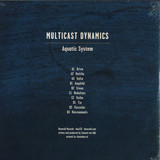
"Aquatic System"" is the second installment of the series, written and composed in two remote geographical places - namely at waters in Finland and Fuerteventura. Inspired by the complexity of water, its movement, various forms, inhabitants and hidden energy, the album was assembled mainly using synthesizers and processed field recordings of the ponds, streams, lakes and oceans of the different locations. With a vibrant story and conceptualization the focus lies in taking the listener on a observing, thoughtful and reflective journey through the aquatic system of our waters. Aquatic System opens with an impression of a frozen surface imagining icy and calm underwater movements underneath. Soon a slow process of melting begins and while the water starts to move in tiny streams of sound, small lifeforms evolve, curiously sending out small pulses in their flowing and constantly moving habitat. The aquatic nature awakens. Zooming out to larger waters high frequencies arise and colliding forms become audible. Larger marine life forms can be faintly heard when entering a much wilder environment, sensing sound-swirls of wind, foaming water tops and impressive large waves crashing on dark rocks. Finally ending at the shore, where the great ocean appears on the horizon, the environment is surrounded with moisture. From the calm reflective landscape derives an inward moment, recalling the organic and atmospheric quality of the sound journey. ""Aquatic System"" has been developed into an audiovisual performance together with visual artist Emilia Kwiatkowska and was performed several times in Spain and Finland, before the music has been finalized for the tracks.
Leisure System presents rising talent Will Ward's Interval One EP, the second in our 2015 GRIDLOCK series of dance floor 12"s and the British producer and DJ's most exuberant record to date. In addition to two prior solo releases, Will Ward is a member of the esteemed electronic trio Circle Traps along with Jack Wyllie and Duncan Bellamy of Portico. He has previously collaborated with the likes of My Panda Shall Fly and gained support from tastemakers such as Rob Da Bank and Gilles Peterson for dazzling productions that blur the lines between pumping house and windswept techno. The Interval One EP is a strong representation of that sleek sound, with tracks that are bursting with emotion and memorable detail. "Digital Design" is an aural kaleidoscope, with a shimmering melody line refracted in squiggly arcs next to murmured female vocals and resonant chords. It's a fittingly varied introduction, drifting between hot and cold poles. "Portion" features Circle Traps member Jack Wyllie, and subtle additions accrue to create waves of unease, while the melody line bounces energetically through a maze of ossified handclaps and buoyant chord stabs. Closing things out, the EP's title track builds from a woozy introduction to an ebullient peak, as if rolling out of bed and stepping immediately onto a throbbing dance floor. It's a cleansing and exhilarating feeling, the type of rare emotional response that Will Ward has proven himself thoroughly capable of creating with Interval One.
JoeFarr inaugurates Leisure System's new GRIDLOCK 12' series with the Longanimity EP, an invigorating exploration of broken techno released April 20th, 2015. Farr has a diverse history, with three well-received releases on Turbo as well as records with DSNT and Power Vacuum. Few producers can claim to have both remixed Tiga and been remixed by Truss, and the Longanimity EP continues Farr's recent drift towards streamlined brutality, leavening intense drum programming with crystalline bursts of color. The clinical and kinetic Oleum' kicks things off and hurdles towards a shatteringly powerful peak, while Mormon Shuffle' boasts twisted functionality without sacrificing roughness in the brittle loops. The monolithic Standard Issue' has an aggressive edge enhanced by whiplash percussion, and the broken piano melody of FS3+4' inverts the joy typically found in that rave standby, preferring to drop the instrument from the fifth floor and let the chords scatter and shatter as they please. The first release in Leisure System's 2015 GRIDLOCK series representing our ongoing interest in melding the freaky and the functional on the dance floor, JoeFarr's Longanimity EP is stocked with tested and tenacious late-night weapons.
Hubie Davison returns to Leisure System December 1st, 2014 with the Khayyam Grey EP, his second release for the Berlin-based label and one that marks both his and Leisure System's funkiest output to date.Following on his 2013 debut of pastoral electronics and muffled house, Khayyam Grey highlights Davison's vivid production skills, drawing from a deep well of influences varying from Werkdiscs and Sound Signature to Bill Withers and Otis Redding. The three tracks here are also the strongest representative document yet of the 26-year-old Davison's DJing, which incorporates all manner of memorable house and assorted wonkiness and has seen him play in Panorama Bar, Corsica Studios, and Gaité Lyrique in Paris amongst numerous others.The title track takes cues from Daphni's stand-up-and-shout, sample-heavy house, while "Get On" is a comparatively restrained yet incredibly funky mid-tempo number. "Vowels", which first appeared as the opening track on the LSR-LSD1 compilation, appears here in extended and altered form, breaking down vocals on a syllabic level from smooth to percussive.These three tracks of addictive house have been on constant rotation at Leisure System for the past few months - it's high time everyone else joined the party
- A1: Bad Boy-Triston Palma
- A2: Never Trouble Trouble-Tony Tuff
- A3: Single Life-Robert Ffrench
- A4: String Up The Sound System-Michael Palmer
- A5: Champion Bubbler-Puddy Roots
- A6: Police Police-Ashanti Waugh
- A7: Fancyness-Triston Palma
- B1: A Little Bit Of Love-Phillip Frazer
- B2: Barrel Mentality-Bill Blast
- B3: Inner City Blues-Cutty Ranks
- B4: Reggae Fever-Michael Forbes
- B5: Ethiopia-Tony Carver
- B6: Strawberry-Eddie Constantine
- B7: The Lord Is My Light-Rod Taylor
In the beginning of the 80's reggae music became increasingly in tune with what was happening in Kingston's dancehalls....probably more so than at any time since the sound system operators had started to make their own shuffle and boogie in the late 50's..
The international audience and the critics were too busy looking for a new Bob Marley to appreciate what was happening downtown and failed to acknowledge that this was a return to the real,raw roots of the music...brash,confidient,young record producers who were totally in tune with the youth audience stepped forward and seized the moment...
Oswald'Ossie'Thomas began his apprenticeship in the music business at the age of fourteen and served his time as a record salesman for Bunny 'Striker 'Lee and Winston 'Niney the Observer' Holness before moving on to Miss Sonia Pottingers Tip Top Records...
'I ended up working in three record stores on Orange Street from 1976 to 1981...Yeah man,Me deh 'pon me bicycle till I buy my motorcycle..Them days records were coming out left right and centre..everyday'
Ossie Thomas...
It was during his time with Miss Pottinger that Ossie began to produce records for himself and in 1979 Ossie and Phillip Morgan began The Black Solidarity label based deep in the Kingston ghetto on Delamere Avenue.
And the man who had made his name in the business selling other people's records now became one of the most important and influential record producers of the era..
Jimmy Edgar and Travis Stewart (aka Machinedrum) reunite as JETS for a new and limited 12"Jimmy Edgar and Travis Stewart (aka Machinedrum) reunite as JETS for a new and limited 12' on
Leisure System, featuring vocals from chameleonic soul singer Jamie Lidell.
'Midas Touch' debuted as the opening track on Machinedrum's Essential Mix in November 2013, but
the track has been popping up at Leisure System gigs in various forms for the past six months. This 12'
is only the second release from the JETS project following their self-titled debut on Leisure System,
but as solo acts both Jimmy Edgar and Machinedrum had breakthrough years in 2013, the former
launching his Ultramajic imprint and the latter releasing the Vapor City LP on Ninja Tune. The result of
serendipitous recording sessions, 'Midas Touch' will sound familiar to many but has been given a
unique spin by the restlessly creative duo, buoyed by a powerhouse earworm vocal by Lidell.
'Midas Touch' is a vinyl-only release featuring the original JETS version of 'Midas Touch' and a
shimmering Machinedrum remix that smoothes out the soulful track for the dancefloor.
freshly repressed!
Leisure System, the collective, label and famed Berghain club night of four years standing, is back with their third release from co-founder and resident, Sam Barker. Known for its genre-defiant lineups, Leisure System's quarterly residency has consistently brought together artists with varying styles. Flying Lotus, Autechre, Afrika Hitech, Jackmaster, Surgeon, Jimmy Edgar, Blawan, 808 State, Dopplereffekt, Clark, Machinedrum, Surgeon, Venetian Snares, Objekt and Egyptian Lover have all graced the decks, showing off the collective's commitment to the exploration of new and experimental sounds in EDM. The development of the label, and now this release from Barker, is no exception. After discovering computers and raves in the late '90s, Barker began making tracks at age 13, building up a sizable collection of vintage analogue synths, paving the way for his future solo work and collaborations with artists like Tim Exile, Clark, Shitmat, Scotch Egg, The Field, Leafcutter John and Jimmy Edgar. Shortly after his 2007 move to Berlin, Barker began collaborating with fellow Berghain resident nd_baumecker, resulting in their ongoing project Barker & Baumecker. Their first EP 'Candyflip', was released on Ostgut Ton in 2010, followed up by a live show tour throughout Europe. The duo is currently readying their second EP and have a long player due out in August 2012. For this new solo EP, mastered by electronic music legend Pole, Barker presents a creative three-track lesson in diversity and highlights Leisure System's ever-evolving aural curiosity. The opener and title track 'Like An Animal' is a number that builds and builds, quickly changing course and mutating into a percussive and texturized melting pot of sounds. Up next the hypnotic 'I Feel', which is filled with moody pads and syncopated breakbeat rhythms, paving the way for the mechanical, yet smooth half-step rhythm of 'Hot Lover'. Siimilar to the collective, this offering pushes boundaries and mirrors the progressive ideals of the collective. Just like Leisure System's first two 12's from Pixelord and Eprom in 2011, Barker's 'Like An Animal' EP is a clear statement of the label's simple and distinct commitment : to be a platform for timeless, thrilling and soulful dance music in the fields of house, techno and electronica, disregarding media hype and genre borders. In keeping with this clear sonic manifesto, Leisure System's design aesthetic is equally individual, with all vinyl releases housed in deluxe die-cut jackets.
freshly repressed!
"PositiveNoise" is collaboration between System 7 and British house music legend A Guy Called Gerald who now lives in Berlin, and is one of two tracks on the new System 7 "UP" album that they worked on together. The original club mix's exuberant sounds and crisp beats exude an infectious feel-good quality and a bright tech confidence inspired by Berlin's leaner sounds - already gaining plaudits and plays for its modern club sound. *The Carl Craig remix strips down the original, and twists and turns for the dancefloor with dubby deep techno in Carl's own legendary style. A.Mochi's remix is a darker interpretation, with a long dropdown featuring shimmering S7 trademark sounds and a breakbeat build-up
- A1: Divorce A L'italienne Ft. Marina P
- A2: Don't Let Them Break Your Heart Ft. Kenny Knots
- A3: Herbalist Ft. Top Cat
- A4: Herbalist Dub
- B1: How You Bad So~ Ft. Ranking Joe
- B2: Under Arrest Ft. Mc Ishu
- B3: Old Time Dance Ft. Mikey Murka
- B4: Old Time Dub
- C1: Ruff Mi Tuff Ft. Tippa Irie
- C2: Rasta Meditation Ft. Kenny Knots
- C3: Rooster Ft. Aya Faith
- C4: Rooster Dub
- D1: Did Your Really Know Ft. Soom T
- D2: Songs Of Zion Ft. Ras Charmer
- D3: Around The World Ft. Suncycle
- D4: Around The Redub
8 straight sound system wreckers from Dionysian Mysteries , with each artist commanding their own sonic terrain. Embracing intensity on the dance floor by devolving ravers from a flock to a pariah of freaks. Dedicated to the outcasts, weirdos, and big booty cadets generating all that steam heat. 400 vinyl copies NO REPRESS (12'' Featuring tracks by DJ DISRESPECT , Kovyazin D , Wee DJs , DJ DR-660, and Nastia 6.9)
Mastered by DECODE BERLIN. Artwork work by Michael Idehall. Distribution by Lobster Distribution.
" Modularz returns with a new release. the return of the limited project - Dead Architect Series " Portfolio Two
focusing the entire release on Historic Architectural marvels and attempting to release tracks fueled by how they have influenced each of the producers and redistributing the energy through the language of techno.
As one of the most enigmatic figures of the 1970's Italian soundtrack and library music network Emma De Angelis and her short recording career provides thirsty fans of speedball psychedelic rock and drum heavy instrumental funk with a tight discography rivalling many of the long-standing bastions of the otherwise male-orientated business. * Strictly limited to 1000 copies.*
.
Born in Rocca di Papa, near Rome, into a flourishing musical environment Emma was the younger sister of future award-winning composers Guido And Maurizio De Angelis, a duo, who under names like Oliver Onions and Dream Bags, would write chart-topping lyrical theme tunes for a wide range of Italian crime, Giallo and Spaghetti Western films featured alongside full scores by Ennio Morricone and the Magnetic System composers (Bixio Frizzi Tempera).
With encouragement from her brothers, Emma, who would also write music under the pseudonym of Juniper, would record a tight clutch of solo-penned material and seldom credited studio contributions to Guido And Maurizio's film commissions, such as the score for Giuliano Carnimeo's Simone e Matteo: Un gioco da ragazzi (aka Convoy Buddies). While simultaneously pursuing a career as an illustrator and set designer the De Angelis family contacts would lead Emma to the offices of Romano Di Bari, whose up-and-coming Flirt label was finding success providing custom built mood music for use in TV and film. Alongside important composers like Alessandro Alessandroni, Gerardo Iacoucci and A. R. Luciani, the young Emma Di Angelis would record a small number of tracks for a compilation called Underground Mood (credited in the small print to E De Angelis - not to be confused with Italian singer Edoardo De Angelis). It is from this rare LP that the record you are now holding is compiled. Within the Flirt family of labels Emma De Angelis would also share schedules with other important female composers such as Daniela Casa and Giulia Kema' De Mutiis - both of whom have appeared on dedicated Finders Keepers releases.
The tracks on this record provide us with a rare glimpse into Emma De Angelis' short musical career before she became a full-time visual artist. With an unknown personnel or studio date it is easy to speculate a potential family jam in Piero Umiliani's Sound Workshop studio in 1972. One only has to take a listen to Guido And Maurizio's instrumental theme Gangster Story from Enzo G. Castellari's 1973 thriller High Crime (which later appeared on Tarantino's Death Proof soundtrack) or the trippy title theme to Paolo Poeti's kinky 1976 drama Inhibition to spot the family resemblance
It's the year 2003. the world is bad and it would only be your fault if it stays that way. but the ärzte are doing what they've never done before: a double album. Everything has to be included! Punk, jazz, rumba, hard rock ... so many ideas, so many songs ... Even "Als ich den Punk erfand..." (When I invented punk ...) clarifies some aspects of human cultural history that have been clearly neglected up to now. The light-heartedly silly "Jag Älskar Sverige!" is a crowd favorite, "Geisterhaus" plays in the league of the great goth rock anthems, "Deine Schuld" provides the soundtrack to the clenched-fists-in-the-air resistance that is as permanently valid as it is double-edged, while "Die klügsten Männer der Welt" is more of a subtle dialectical critique. "Nothing in the World" is the official heartache cracker. There's also the bundle of pitch-black, cynical "Der Tag" with the blazingly amorous "Die Nacht" and two of the most good-humored zombie homage rock smashers of all time. And the absolutely compelling "Unrockbar" is instantly one of the signature hits of the best band in the world.
Brewing another supremely heavy release on the horizon, Moonshine Recordings is stealing the spotlight once again. Proudly presenting Violinbwoy's first solo album, unadulterated sound system pressure at its finest. Slavic chants and drum rhythms meet the unrivalled power of Violinbwoy's eccentric take on modern bass music 'Fyetisov' kicks off the stellar 3x12' release with a high-powered Stepper emission. Setting the tone with a rumbling bassline and supremely energetic lead instrumentation, full force sound system music down to its core. Shining in a different light, 'Moonspell' reveals its melancholic nature - gradually intensifying through otherworldly percussion and anthemic vocal sample placements. Stripped down to its bare bones, 'Dubplate' unleashes its detuned, percussive shackles for a massive onslaught of four-to-the-floor, while keeping true to Jamaica's music roots. Warbling tape echo spheres and excellence in emotive expression Violinbwoy's collaboration with singer Marina P turns out to be an anthem by itself enthralling, whoever gets caught into the midst of this hymn of a track. Not backing down one step from the established level of quality, 'Sound System' featuring Junior Dread excels once more in a crystal-clear demonstration of modern roots music - mandatory repeat listening. Rejoicing in simplicity, 'Rig Alert' holds true to what the name suggests - cinematic bass meditation, fluidly scaling with the size of its speaker counterpart. Moving on to Dan's vocal skills in 'Wanted': Rastafarian wisdom chanting along a skanking rhythm and orchestral atmosphere. Ethereal bells being submerged in moving air and scattered white noise, 'Run & Hide' demonstrates a more experimental side within the LP - exhibiting Downtempo/Ambient inclinations in a magnificent combination with Dub characteristics, only increasing in energy to the call of the dub siren. Ready for more, the title track 'død' captures us within the expressive, introductory playing of the violin, deserting it for echoes and sub oscillations alike. Calling upon the prowess of Rider Shafique, his harmonic toasting is being escorted by a forward-minded halftime groove in 'Find The Way'. Topping the LP off with Sis' excellence in telling a story through song on a hypnotic instrumental. The nature of last tunes is often powerful, serving to concede with an explosion, appropriate of the session - as is the case with 'Surfacing' closing off the monumental EP with visceral lead movements, setting the tone alongside driving drums and one more murderous bassline, sure of receiving countless rewinds in the near future. Encompassing a plethora of current Roots- Dub- and Steppa- influenced styles, Moonshine's next LP installment is sure to be received for what it is: a definitive, quality expedition of what's firing up dance floors around the globe.
Repress
Microfunk EP Volume 3 takes minimal drum n bass to a whole new level. While the starting track by Subwave and Bop has a strong summer flavor that's perfect for meeting the sunrise, the second one by Abstract Elements & Electrosoul System takes you on a spacey journey and drops you into its clean, minimalistic groove. On the flipside we have deep, smooth vibes by Dissident (aka Kontext) and a trippy IDM track by Microfunk Crew. You can easily drop the A-side to impress a party with the deeper side of drum n bass, whereas the B-side is well suited to home listening and chill-out rooms.
- A1: P Lion - Happy Children
- A2: Duke Lake - Do You
- A3: 50 & 50 Brothers - Red Man
- A4: Anthony's Games - Sunshine Love
- A5: Flexi Cowboys - Domination
- A6: Jimmy & Suzy - Come Back
- A7: Spy 71 - Take Me...mr Love
- A8: Koto - Dragon's Legend
- B1: Valerie Dore - The Night
- B2: Radiorama - Vampires
- B3: Brian Ice - Talking To The Night
- B4: Scotch - Pictures
- B5: One System - Life Is Very Short
- B6: Dario Diviacchi - Waiting For Heaven
- B7: Arm - Number One
- B8: Ken Laszlo - Hey Hey Guy
Der legendäre Italo Boot Mix ist zurück !!
ZYX Italo Disco Boot Mix Vol. 1 knüpft an die großen Zeiten dieser Kult-Serie an. Zuerst gibt es die beiden Mixe als CD, einige Wochen später veröffentlichen wir die Boot-Mixe für alle Vinyl-Liebhaber als LP.
Auf Vol. 1 vertreten sind P. Lion, Duke Lake, Koto, Valerie Dore, Radiorama uvm.
- A1: The Boomin' System
- A2: Around The Way Girl
- A3: Eat Em Up L Chill
- A4: Mr Good Bar
- A5: Murdergram (Live At Ropmania)
- A6: Cheesy Rat Blues
- A7: Farmers Blud (Our Anthem) (Our Anthem)
- B1: Mama Said Knock You Out
- B2: Milky Cereal
- B3: Jingling Baby (Remixed But Still Jingling) (Remixed But Still Jingling)
- B4: To Da Break Of Dawn
- B5: 6 Minutes Of Pleasure
- B6: Illegal Search
- B7: The Power Of God
Following the success of Vol 2 the bearded man in disguise returns with another powerful 4 tracker for the labels 3rd release. Vol 3 keeps the energy levels in the red with catchy bass stabs, sexy vocals and feel good synths. All pieces of course carry the signature Soul in diguise dressed with lashings of Frazer's signature shuffling 909 drums. A perfect record for the peak time dance session.
The first release on a new label: Pura Vida Sounds founded by Guts, in conjunction with Heavenly Sweetness. El Tipo Este is a pioneer of Hip Hop in Cuba and Al Quetz, a leading French beat maker.
This canny combo have drawn from the local musical currents, absorbing Afro-Cuban sounds, adding the freedom of jazz, the metronome of hip hop and a healthy bass shake of neighbouring island Jamaica.
For Cubans, El Tipo Este is the pioneer of all things hip-hop. As founding member of Obsesion, one of the nation's most notable hip hop exports. Early champions of his music included Gilles Peterson, who selected a track
to include in his 'Havana Cultura; New Cuba Sounds' compilation. Hot off the heels of this, El Tipo Este was enlisted to assemble the full band of musicians for the Havana Cultura tour. This unit played stages across Europe, USA and
closer to home in Latin America, and in turn this led to collaborations with The Roots and Mos Def For this long player, El Tipo Este he has enlisted beat maker France's Al Quetz to carry his rhymes. Originally known as Quetzal, Al Quetz is a crucial figure in
the world of beat making. A sound scientist whose cut, loop, program, paste compositions has seen him collaborate with the likes of Onra, Guts, La Fine Equipe and Milk Coffee & Sugar.
b1 Regla Sound System
[|] b2 Tu Vera
[] b3 Dicen
[~] c1 Usame
[] c2 Interludio En El 106
[] c3 Inflowencias
[] d1 Ya No Me Pertenezco
[] d2 Revolucion Vivencial
[] d3 Tierra, Semillas Y Frutas
[{] b1 Regla Sound System
[|] b2 Tu Vera
[}] b3 Dicen
[~] c1 Usame
[] c2 Interludio En El 106
[] c3 Inflowencias
[] d1 Ya No Me Pertenezco
[] d2 Revolucion Vivencial
[] d3 Tierra, Semillas Y Frutas
[{] b1 Regla Sound System
[|] b2 Tu Vera
[}] b3 Dicen
[~] c1 Usame
[] c2 Interludio En El 106
[] c3 Inflowencias
[] d1 Ya No Me Pertenezco
[] d2 Revolucion Vivencial
[] d3 Tierra, Semillas Y Frutas
After a long wait, Melbourne's Public Opinion Afro Orchestra (The POAO) is set to release their second album, 'Naming & Blaming', a pulsing, percussive journey into classic afrobeat. Recorded by a 17 piece ensemble, led by fierce vocals and a howling horn section, it's a fitting 21st-century response to the world-shaking music of 1970s Nigeria. The result is true to the afrobeat blueprint of hypnotic, extended songs, improvisation and political comment but adds to the formula a host of pan-African influences and hip-hop elements that reflect the deep ranging roots of the band. As the title suggests, and in true afrobeat tradition, Naming & Blaming pulls no punches. It is an outspokenly political record, a cauldron of strong opinions where indignation and optimism coexist. Led by the vocals of MC One Sixth and singer Lamine Sonko, the critique of colonialism is applied to both the African and Australian experience, the battles of many cultures informing the group's ethos as does the importance of community and staying true to one's convictions. Uplifting visions of a brighter possible future as laid out in 'No Passport,' the album's rambunctious opening song, are balanced with honest reflections on injustice like guest Robbie Thorpe's take on Australia's chequered history in the title track.For the Naming & Blaming cover, the band was honoured to have the opportunity to work with one of the originators of the Afrobeat movement Lemi Ghariokwu, the legendary collage artist and illustrator responsible for all of Fela's most famous album covers of the 1970s. This relationship is what the POAO is all about, paying respects to the culture and keeping it alive and relevant in the 21st century. Over the last decade, The POAO have established themselves as a firm festival favourites with their contemporary approach to Afrobeat.
- A1: Farin Urlaub: Der Lustige Astronaut
- A2: Soilent Grün: Fdj-Punx
- A3: Soilent Grün: Erwin
- A4: Eva Braun
- A5: Claudia Hat `Nen Schäferhund
- A6: Das Allererste Radio-Interview
- B1: Gib Mir Nichts
- B2: Nur Geträumt
- B3: Die Ulkigen Pulkigen: Füße Vom Tisch
- B4: Verlierer Müssen Leiden
- B5: Monsterparty
- B6: A | Die Spinne
- B6: B | Auf Dem Bauernhof
- B7: A | Französischkurs
- B8: A | Hörspiel
- B8: B | Sommer, Palmen, Sonnenschein
- C1: Helgoland
- C2: You Want To Kiss Me
- C3: Rennen, Nicht Laufen
- C4: Buddy Holly`s Brille
- C5: Norma Jean
- C6: Peter Parker
- D1: Wie Am Ersten Tag
- D2: Sweet Sweet Gwendoline
- D3: Für Immer
- D4: Ich Bin Reich
- D5: 2000 Mädchen
- E1: Brigitte
- E2: Du Und Ich Und Walter
- E3: Ein Mann Mit Gipsbein
- E4: Komm Zurück
- E5: 13 Antworten Von Die Ärzte
- F1: Die Wahrheit Über Mädchen
- F2: Schrei Nach Liebe
- F3: Ja
- F4: Dumme Sache
- F5: Knäckebrot
- F6: Staub (Aka 13!)
- G1: Let´s Go Too Far
- G2: German Punks
- G3: Love & Pain
- G4: Close Your Eyes Again
- G5: Superman
- H1: Hair Today, Gone Tomorrow
- H2: Fafafa
- H3: No Secrets
- H4: Ein Schwein Namens Männer
- H5: Bingo Lady 2.0
- I1: Bang Bang (Instrumental)
- I2: Sahnie (Ein Bisschen Schwierig So)
- I3: Angriff Der Fett-Teenager
- I4: Attack Of The Fat Teenagers
Mit - They`ve Given Me Schrott! - Die Outtakes' erscheint nun zusätzlich eine Edition als 3er CD und
5er LP mit den bisher nur in der Seitenhirsch-Box veröffentlichten Outtakes. Vom allerersten
Cassettenrecorder-Demo - Der lustige Astronaut' (1978), über bislang nur auf Vinyl erhältliche Songs
aus der Frühphase der Band, mit - Helgoland' die Demo Ur-Fassung von - Westerland', sowie zig
weitere seltene und kuriose Demos, Radiotracks und Gimmicks, und das oft erwähnte und nie
veröffentliche englische Album.
Anmerkung: Bitte erwarten Sie hier keine durchgängig hochwertige Audioqualität: Diese Raritäten sind
zum Teil Kellerfunde auf Basis von alten Audiocassetten oder Vinylplatten, die aufwendig restauriert
und neu gemastert wurden. Allerdings kann man aus einem Toaster kein Rennrad machen.
[ZZA] I5 | Smash the System, fuck the Police
[ZZB] I6 | Nie wieder Krieg, nie mehr Las Vegas!
[ZZC] I7 | Eine Botschaft von Die Ärzte
[ZZD] J1 | I laugh if you die
[ZZE] J2 | Herrliche Jahre (Das Leben ist `ne Party)
[ZZF] J3 | Yoko Ono
[ZZG] J4 | Techno ist die Hölle, mein Sohn
[ZZH] J5 | Worum es geht
Tikita return with more of their deep and groovy techno, this time from Lapien, who is one half of Artefakt and a master of deep voodoo sounds. His 'Brumal' EP includes a remix from label mainstays natural/electronic.system. that completes a deep and powerful three track disc.
Lapien s 'Brumal' kicks off with deep, swirling pads and punchy drums. It s soft and atmospheric techno with a dubby bottom end and cosmic moods that is soothing and warm. The natural/electronic.system. remix of 'Moonset' is simmered down into an absorbing ambient soundscape with rolling, rubbery drums deep down below. It s thoughtful mind music to get utterly lost in. Last of all, the original 'Moonset' is another richly layered and spacious techno groove, with gentle percussion over underlapping drums and synths smearing out in all directions. It s brilliantly expansive music for intimate dance floors.
From the redwood forests of Big Sur and the industrial warehouses of downtown Los Angeles comes PFEIFFER, a label dedicated to quality and a diverse musical output. Pfeiffer has quickly built a name for itself by releasing a wide range of techno and house with a common thread of unique and unpredictable energy. Pfeiffer draws inspiration from the raw simplicity and effortless magnetism of its namesake location on the central coast of California.
Pfeiffer's fourth release brings a prolific U.K. producer to the fold, Manchester's own Jozef K. Following recent signings to some of the biggest labels in house and techno, we are excited to share this latest record from Jozef. A-Side 'Devotion' is a straight club killer, 90's house affair. You can definitely feel Mr. K's early acid house connection with Manchester institution the Hacienda in this jam. Already racking up support from Kim Ann Foxman on Boiler Room, this cut is sure to continue setting dancefloors alight across the globe. On the flip, 'Anti-Star System' (taken from Daft Punk's mistaken translation for the word 'underground') is true to Jozef's underground roots with jacking 909 drums and uplifting old school piano hits.
Keysound Recordings are proud to announce the unearthing and release of a collection of lost deep tech dubs from Hugo Massien. After releases on labels such as XL Recordings, E-Beamz, Tectonic and Audio Rehab comes a 12' of tracks that date from 2014 -2016. Dark, percussive yet catchy, the productions originate from the peak years of London's underground deep tech scene, at a time where the movement bubbled with an abundance of energy and creative possibilities. Massien was one
- A1: La Bush - Disco Bush
- A2: System Love - System Love
- A3: Cora Corona - Jungle Love
- A4: The Diskery - Star
- B1: The Rogers - Cosmos 81
- B2: Rendez-Vous - My Blue Bird
- B3: Raymond Joniaux - All' A Bi Bi
- C1: Manuel Ferrero - Fela
- C2: Rayon Laser - Funky Meteor
- C3: Autumn - The Third Autumn
- C4: Afro-Disiak - Chant Vaudou
- D1: Patrik - The Joymaker
- D2: Roland Delys - Love
- D3: Dj Bert & Eagle - I Am Your Master B
Compiled by cratediggers Loud E & The Wild, Discophilia Beligica' is a collection of next-door-disco and local spacemusic from Belgium 1975-1987. The tracks on this delightfully obscure collection are from ordinary folk. Most have day jobs. Yet as musicians, they go as far out as possible in to the disco universe and back again.
Broken District is a new label launched by the creative minds of Jus Jam, Momla and Antwan. The project is born with the idea of exploring alternative music styles that blend the influences of the label's creators, including Jazz, House-Music, Hip-Hop, Funk, Soul, and more experimental sounds.
In order to give a global overview of the label's territory, Broken District kicks-off with a series of VA EPs, here delivering its second volume.
Coming back for another round after his first EP for Figure last summer, Shlomi Aber continues to explore different avenues of his multi-faceted sound, tying it all up in a nicely rounded package. Setting the pace is driving opening track Whistler, the producer showcasing his ability to craft something big but undoubtedly refined. He then lets old school drums cruise along gentle sways of washed out ambience, giving the deep heads something to really get into... Back with more techno on the B-side, this time in true Figure-style: lean, sharp, and utterly effective Penetrate The System is sure to leave its mark and comes complete with an extended, separate intro, making for quite an experience. Staying atmospheric to the end, Aber chooses to step out in half-time, taking cues from dubstep as hollowed kicks carve out an endless tunnel that leads only ever deeper down the rabbit hole.
Dilated Pupils is a collective group of likeminded friends home-based in the Netherlands. When forces are joined in one of their many studios each individual brings his own influences and styles to the table. Together they share a distinct flavor in productions and raw one-take jam sessions created with the use of analogue machines and often recorded on tape. Each of them have their own solo productions as well as other collaborations, but when united as Dilated Pupils they prefer to be known jointly as one entity with their own unique and distinguished sound. Since 2014 the group has developed an interesting and widespread discography with releases on labels such as Fear of Flying, Sol Asylum, Mode of Expression, Tabla, Music is Art, Dorcas, Make Sense and Mayak.
Following on from OTIS002 Jon & Hugh - Another view, one half of the production duo and OTIS label boss Hugh B steps out on his own for OTIS003. Floating On a Trippy Biscuit is a 4 track excursion through deep textures, roaming drum machines, sliced breaks and dub echoes. With a nod to early Jungle duos (RIP), a psychedelic love letter to UK Broken Beat, a remix from OTIS family member Sean Thomas that pays respect to the UK Deep scene of the late 90s and a deep, valium-laced House groove designed for post-rave reflection. OTIS003 is a dreamy meditation amidst the occasional chaos of the rave, a blissful trip through the styles of 'dance music' this label holds dear.
Early support from: Ben Fester, Simon Caldwell, Adi Toohey and a load of other selectors that are keeping it deep in twenty seventeen...
"The kind of melancholia I'm talking about, by contrast, consists not in giving up on desire, but in refusing to yield. It consists, that is to say, in a refusal to adjust to what current conditions call 'reality' - even if the cost of that refusal is that you feel like an outcast in your own time." (Mark Fisher, Ghosts Of My Life, Zero Books 2014, p. 24) In Ghosts of My Life: Writings on Depression, Hauntology and Lost Futures', the author Mark Fisher outlines - to put it in a big way - a resistant melancholy. This stands in contrast to leftist melancholy resignation', as well as something which Fisher does not talk about: its common masculine counterpart, habitual post-left cynicism - as in seen it all before'. Fisher calls this hauntological melancholy. Haunting, spooks, ghosts and apparitions are an almost constant presence on I Started Wearing Black', the second album by the Cologne-based artist Sonae (pronounced so-nah'). The term hauntology shares a fate with retro-futurism when it comes to inflationary overuse and abuse. It's a conceptual container that looks good and can hold a lot, indeed, too much. Furthermore, hauntology has its peak season behind it, a term on the threshold of its expiration date. Nevertheless, I would like to rehabilitate hauntology and use it properly to characterize I Started Wearing Black', because the term is rarely as compelling to describe music as is the case here. The most recent other example could be Asiatisch' by Fatma Al Qadiri, but with a completely different frame of reference. What are the ghosts of this music It rustles, crackles, ruffles, crunches, rattles, scrapes, sometimes a beat emerges from the constant noise, sometimes an obscure voice mumbles incomprehensibly, sometimes a melancholy piano figure is prevented by this noise from coming too much to the foreground. It definitely is eerie - to bring into play another term used by Fisher in the title of his latest book, The Weird and the Eerie'. In British pop-jargon, eerie first occurred to me more often when referring to particularly leftfield, spooky and... well... ghostly dub, a bass-heavy, echoing noise, from Augustus Pablo to Creation Rebel to Burial. Unlike the Wald & Wagner records by Wolfgang Voigt, Sonae is not a kind of neo-romantic veiling with a tendency for escapist nebula. It is more a noise of latency. The noise signals a latent - not necessarily acute - threat, a latent uneasiness about... yes... about what About a System Immanent Value Defect' That's the name of a track on I Started Wearing Black' where something that sounds like a French Horn (or a foghorn) battles for attention through or against the background noise. An email from Sonae: The piece 'System Immanent Value Defect' should actually be called 'I See Turkey'. I wrote it for my fellow student Elif - she is a pianist and Gezi Park activist from Istanbul. Through her I witnessed the inner conflict and agitation that political circumstances can create: her feelings of guilt when there was an attack, with her safe in Germany as a student, watching the events from afar. It was horrible. When her mother begged her not to come home because she feared for her safety, I felt a cold shiver run down my spine. I started with the piece from this mood, beginning with the piano, then the noise (modulated sinusoidal curves), which reminded me of waves and the then heatedly discussed Mediterranean sea: atmospheric, melancholy motifs. In contrast is the anger, the pressure, represented in corresponding sounds - hopefully audible! - During this time I started to think about world views as they can be found around the globe, in how far they held by societies and their political representation. I realized that I know of no political system that is actually about the people and what would do them good. It's always about positions, power, money. I thought that was a lot more frightening on a global scale than merely viewing Turkey in isolation. That's why the piece is called "System Immanent Value Defect", because our world suffers from precisely that. Everywhere, it's all about the wrong things.' Between the wrong things there are happy moments. In the title track, after 184 seconds of rattling and hissing, a beat is unleashed, like an arrow released from a spanned bow, a beatific relief, if there is such a thing. White Trash Rouge Noir' first meanders along spookily, then after 144 seconds it transforms itself into a distant cousin of Einstu¨rzende Neubauten's Yu¨ Gung', but there is no Big Male Ego to be fed here, and the black in the album title is a completely different type of black from that of the Neubauten. Furthermore, I Started Wearing Black' was finished long before the black dresses were worn at the Golden Globes as a sign of protest against sexual violence. Sonae writes that she herself started wearing black some time ago. Her reasons are so-called personal ones: ... resulting from an individual situation (lovesickness), I started to wear black (gaining weight and feeling ugly).' The political dimension of gaining weight, feeling ugly and therefore dressing in black in I Started Wearing Black' lurks within the noise and never becomes explicit and only rarely manifest - or a manifesto. Sonae writes about the track We Are Here': A piece for minorities... in this case, considering the current pop-feminist discourse, explicitly for women. Female artists have long been saying loud and clear that 'we are here' and 'electronic music is not a boys club!' But this pop-feminist moment should only be seen as one part of the dedication of the piece. It is for minorities, for the oppressed, who didn't belong enough.'
Klaus Walter
ALEX is a dark, haunting and brooding synthwave record that sets the night on fire, taking you from darkness all the way to the shining lights of Broadway. With hints of cyberpunk, outrun and other 80's inspired retrowave influences, ALEX has developed a true signature sound that is funky, groovy and totally rocking. X takes you on a futuristic, electronic music trip that's filled with nostalgia and suspense. Artist bio: Originating from Edinburgh Scotland, ALEX is a Scottish born electronic music producer, composer and DJ. After spreading his sound to every channel and label possible, ALEX broke through in the most significant way possible. If you get the attention of Playmaker and NewRetroWave in the Synthwave scene, you're doing something right, and ALEX's unique approach to composition and production led to his debut release with NRW, the 'Blood Club' EP. And things haven't slowed for the young producer, with two more EP's and an album since his debut, each showing another side to the artist. After the release of his Drive inspired EP 'Youth', fans of the powerful vocal tracks 'Rebel of the Night' and 'Youth' can get excited for the pair of major budget music videos ALEX has in store, with filming having taken place in Russia and New York City. ALEX grew up listening to the likes of Daft Punk, Justice, Underworld, Chromatics, Deadmau5, absorbing the sounds of Disco, House, Hip-Hop, and Rock, cherry picking his favourite elements to blend into the new retro haze of his own material. He also cites film composers, such as Disasterpiece, John Carpenter, Vangelis, Johan Johansson, and John Williams.
Dutch artist Mokona returns to Templar Sound for his third release on the label with 'Love in Restricted Areas', described as being set in a private laboratory complex deep inside a forest, recorded during the summer after long nights of medical research.
* 'Love in Restricted Areas' continues the lush and serene soundscapes explored on 2015's 'Breathless' EP, while mixing more club friendly tracks like 'Perfumed Steel' and 'A.N.G.E.L. Guard System' with the meditative as found in 'Heart Sync' and 'Natalie's Aquarium Lab'. With a strong cinematic feel permeating throughout, and having taken his name from a character of the manga xxxHOLiC, which explores Japanese mythology and culture, it makes perfect sense that a track like 'Cupid's Bow' feels like it could have been lifted from a Studio Ghibli soundtrack.
* Though hard to pin down to a single genre, Mokona has produced a beautifully layered record that is just as fitting for head phone listening as the chill out room.
Typically outstanding, cultured, listenable techno by the co-founder of this excellent Finnish label, adroitly traversing dub and ambient. Nothing lunky or domineering, dystopian or Gothic, this debut LP generates senses of immediate, natural being out of field recordings (Waiting Halls, Winners, Temple) and the foibles and hiccups of the music-making process itself (New to the System, Sloth, A Small Flood).
- A1: Shiver
- A2: I Experienced Love
- A3: Pillow Talk
- A4: Swedish Modern
- A5: I Beat The System
- A6: The Dossier On Virna Lindt
- B1: Attention Stockholm
- B2: Underwater Boy
- B3: Letter To Sergei
- B4: Intelligence
- C1: Windmills Of Your Mind
- C2: Model Agent
- C3: Young & Hip
- C4: Man Talk
- C5: Groom
- C6: Episode 1
- D1: Attention Stockholm (Inst.)
- D2: Shiver (Inst.)
- D3: The Dossier On Virna Lindt (Inst.)
- D4: I Beat The System (Inst.)
- D5: Underwater Boy (Reprise)
Les Disques du Crepuscule present an extended double disc reissue of Shiver, the acclaimed debut album by seminal Swedish artist Virna Lindt, originally released by The Compact Organization in 1983.
Written and produced by Virna Lindt and Tot Taylor, Shiver offers 12 slices of chic orchestrated pop informed by 'foreign film' soundtracks, movie composers John Barry and Ennio Morricone, Modernist musique concrete and Cold War spy thrillers. The album spawned three singles: Attention Stockholm, Intelligence and I Experienced Love. For the most part Lindt provides the voiceover for her own narratives, occasionally striking reflective poses amid orchestral swells and multi-layered atmospherics; a clear influence on later acts such as Pulp, St Etienne and Air.
This new edition of Shiver showcases acoustically-enhanced mixes prepared by Taylor and Lindt in 1997, augmented with non-album singles Model Agent and Young & Hip, and immaculate instrumental versions of key album tracks such as Underwater Boy and The Dossier on Virna Lindt. The extended tracklist also finds room for a leftfield cover of Windmills of Your Mind, originally written by Michel Legrand and Alan & Marilyn Bergman for The Thomas Crown Affair and recorded for the Crepuscule compilation album Moving Soundtracks.
Cover photography is by E.A. Janes. The 2xCD edition is housed in a 6 panel digipack with a 12 page booklet. The double vinyl set comes in a stylish gatefold sleeve and includes a free digital copy.
Praise for Shiver: 'Eurocentric Virna Lindt casts herself as a mysterious blonde in a loving pastiche of Continental movie music' (Sounds); 'I think of Shiver as Ingmar Bergman's All These Women cast as 50-odd minutes of musical dialogue. Tot Taylor's fantastic orchestrations cast a brilliant pale of modern love throughout' (Fond/Sound); 'Instead of mere cool styles, there's far more here than a restrictive stereotype' (All Music Guide);
- A1: Tala A.m. - Get Up Tchamassi
- A2: Eko - Bowa'a Mba Ngebe
- A3: Uta Bella - Nassa Nassa
- A4: Charly Kingson - Nimele Bolo
- A5: Manu Dibango - Sun Explosion
- B1: Kemayo & K. System - Biram
- B2: Momo Joseph - Africain
- B3: Jake Sollo - Tinini Yanana
- B4: Pierre Didy Tchakounte - Soul Magabe
- B5: The Monstars - Funny Saga
It's just over 3 years since we launched the Africa Seven label in Paris and London. Our first release back then (Airways One) is still our best seller and had to be repressed 4 times so far. Forty or so releases later it is time to take to the clouds again. Being the unimaginative bunch we are, the fourth installment of our African sky filled musical cornucopia is called African Airways Four (Disco Funk Touchdown - 1976 - 1983). This time around all tunes have the Disco flavour. As ever it's all about the music... the skies are wide and funky and the air is filled with musical goodness. Your flight is about to leave.
Your flight opens with a punchy disco funk assault from Paris based Cameroonian Tala AM. Here with his drive bass and guitar funk riff 1981 stomper "Get Up Tchmassi". Next up and staying with the Cameroonian connection is Eko with "Bowaa Mba Ngebe". The lyrics talk of accomplishing the things in life for your family and yourself. The sweeping strings and gloriously uplifting music matching the sentiments of the words perfectly. Uta Bella began singing in the 60's and by the time disco hit in the 70's she was already established a singer in her native Cameroon, here the locked on groove of "Nassa Nassa" is a perfect snapshot of the sound and the African disco times.
Charly Kingson (cousin of Manu Dibango) is next with his "Nimele Bolo". Recorded in Germany with the cream of Munich's session musicians the bass synth is out in force on this one. Punchy brass, rock solid grooves and jazzy Rhodes add all the right ingredients for a fine disco synth excursion. Next is the musical heavyweight from Cameroon cousin Manu with his 1978 Disco, jazz funk masterpiece "Sun Explosion".
Side two opens with a blast of Elvis Kemayo and his piano and guitar funk bomb "Biram". Next Momo Joseph gives us "Africain". Best known in France as an actor, this disco funk groover was released on his self pressed LP "War For Ground" in 1983. A true gem indeed. Nigerian, ex Funkees member Jake Sollo is next with "Tinni Yanana". Recorded in the UK in 83 its slick and smooth with a hint of "at the car wash" groove. Pierre Didy Tchakounte follows on with his soul funk 'golden years' style groover "Soul Magabe". Produced by one of our favourite Parisian producers Slim Pezin. We close off our journey with the tribal chant disco-funk special from the Monstars "Funny Saga".
Ladies and Gentleman, we have landed at your destination, please remain seated until the aircraft has reached the terminal. We look forward to welcoming you aboard Africa Airways again soon.
- A1: Violinbwoy - Fyetisov
- A2: Violinbwoy - Moonspel
- B1: Violinbwoy - Dubplate
- B2: Violinbwoy Feat. Marina P - Gone
- C1: Violinbwoy Feat. Junior Dread - Sound System
- C2: Violinbwoy - Rig Alert
- D1: Violinbwoy Feat. Dan I - Wanted
- D2: Violinbwoy - Run & Hide
- E1: Violinbwoy - Død
- E2: Violinbwoy Feat. Rider Shafique - Find The Way
- F1: Violinbwoy Feat. Sis I-Leen - Babylon
- F2: Violinbwoy - Surfacing
Brewing another supremely heavy release on the horizon, Moonshine Recordings is stealing the spotlight once again. Proudly presenting Violinbwoy's first solo album, unadulterated sound system pressure at its finest. Slavic chants and drum rhythms meet the unrivaled power of Violinbwoy's eccentric take on modern bass music 'Fyetisov' kicks off the stellar 3x12" release with a high-powered Stepper emission. Setting the tone with a rumbling bassline and supremely energetic lead instrumentation, full force sound system music down to its core. Shining in a different light, 'Moonspell' reveals its melancholic nature gradually intensifying through otherworldly percussion and anthemic vocal sample placements. Stripped down to its bare bones,'Dubplate' unleashes its detuned, percussive shackles for a massive onslaught of four-to-the-floor, while keeping true to Jamaica's music roots. Warbling tape echo spheres and excellence in emotive expression Violinbwoy's collaboration with singer Marina P turns out to be an anthem by itself enthralling, whoever gets caught into the midst of this hymn of a track. Not backing down one step from the established level of quality, 'Sound System' featuring Junior Dread excels once more in a crystal-clear demonstration of modern roots music mandatory repeat listening. Rejoicing in simplicity, 'Rig Alert' holds true to what the name suggests - cinematic bass meditation, fluidly scaling with the size of its speaker counterpart. Moving on to Dan s vocal skills in 'Wanted': Rastafarian wisdom chanting along a skanking rhythm and orchestral atmosphere. Ethereal bells being submerged in moving air and scattered white noise, 'Run & Hide' demonstrates a more experimental side within the LP exhibiting Downtempo/Ambient inclinations in a magnificent combination with Dub characteristics, only increasing in energy to the call of the dub siren. Ready for more, the title track 'dod' captures us within the expressive, introductory playing of the violin, deserting it for echoes and sub oscillations alike. Calling upon the prowess of Rider Shafique, his harmonic toasting is being escorted by a forward-minded halftime groove in 'Find The Way'. Topping the LP off with Sis' excellence in telling a story through song on a hypnotic instrumental. The nature of last tunes is often powerful, serving to concede with an explosion, appropriate of the session as is the case with 'Surfacing' closing off the monumental EP with visceral lead movements, setting the tone alongside driving drums and one more murderous bassline, sure of receiving countless rewinds in the near future. Encompassing a plethora of current Roots- Dub- and Steppa- influenced styles, Moonshine's next LP installment is sure to be received for what it is: a definitive, quality expedition of what's firing up dance floors around the globe.
At the third New Interplanetary Melodies' astral journey stopover, it was mandatory to catch an Italian project deeply inspired by the Sun Ra visionary realm, expressing contemporary trials of hybridising jazz with artful electronica. So Ra Toth and The Brigantes' Orchestra landed on vinyl grooves for the label, after having previously appeared on the likes of Mathematics and Berceuse Heroique. Behind the sound, we find the elusive and unpredictable genius of the well-respected producer Marcello Napoletano. NIM received the distorted sound signal from Napoletano taken over by the Egyptian deity born from the lips of Ra. Who knows if those noises were coming from a parallel dimension, outer space, or some otherworldly sphere... Submerged in dark bottom waters, the stormy waves of the 'Acid Sea' are made of convulsive afro-flavoured percussion with sharp synths looming out like the ivories of some freakish abyssal creatures.
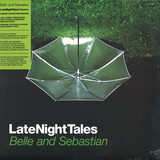
- A1: Rehash - Gratuitous Theft In The Rain
- A2: Rjd2 - Here's What's Left
- A3: Lootpack - Questions
- A4: Demis Roussos - O My Friends You've Been Untrue To Me
- B1: Stereolab - French Disko
- B2: The Butch Cassidy Sound System - Cissy Strutt
- B3: The Ethiopians - Free Man
- B4: Mary Love - I'm In Your Hands
- B5: Novi Singers - Cos Specjalnego
- B6: Gal Costa - Lost In The Paradise
- C1: Innerzone Orchestra - People Make The World Go Round (Kenny Dixon Jnr Remix)
- C2: Donovan - Get Thy Bearings
- C3: Múm - Green Grass Of Tunnel
- D1: Belle & Sebastian - Cassaco Marron
- D2: Space Jam - Let Your Conscience Be Your Guidance
- D3: Big Star - Watch The Sunrise
- D4: Johann Sebastian Bach - Suite No. 2 In B Minor, Badinerie
- D5: David Shrigley - When I Was A Little Girl
Under the moniker Shed, Pawlowitz published three highly ambitious albums in which he defined his work more and more as his own way of musical narration. 'The Final Experiment' is definitely the temporary highlight of this evolution. As musical work it does establish Shed conclusively as one of the most interesting and substantial electronic music artists of our time. It carries a vibe, that links Shed to other boundary breaking artists such as Ryuichi Nakamoto, Brian Eno and Carsten Nicolai. However, Shed found a way to develop a highly individual way of communicating electronic music, that is self-sufficient. 'The Last Experiment' is a mostly homogeneous piece of work, a meditation, where the stylistic confusion seems less important than then musical statement that it represents.
Born out of a love for Disco records and odd electronics, Casino Times is the project of producers Joseph Spencer and Nicholas Church - a musical partnership that is rooted in House and Techno but often treads into the weird and wonderful.
Since first starting the project in 2010 Spencer and Church have steadily been crafting a back catalog that reflects their varied tastes and unique approach to electronic music. This has seen them release on a wealth of respected labels such as Wolf Music, Futureboogie Recordings & Permanent Vacation, just to name a few.The debut on Omena, 'Decoded EP', consists of four tracks highlighting a distinct development of their musical style.
No need to dissect each and every track here to explain how it sounds, just play it and enjoy. Everyone from your grandparents to your neighbour and best friend will ask for track IDs.
An old hero at INT HQ, Andy Meecham(Bizarre Inc, Big 200, Chicken Lips etc.)releases his debut for Internasjonal with Vol.1 of a 2 part series entitled "2500". All synth noodles and doodles written, performed and produced by Andy Meecham and one rework by yours truly. Prins Thomas, INT HQ 24th of October 2016
The Europe-centered techno scene might be thinking: Where is techno in a city as vast, dynamic and electric as New York It's alive and well, and keeps growing through aptly-named NEW YORK TRAX. Founded in 2016 and based in Brooklyn, NEW YORK TRAX is an outlet for New York music, by New York artists, in New York city.
New York Trax 02 was written by Boris Brenecki (Ontal, Impulse Controls), who has recently relocated to New York, starting a new chapter in his life and artistic career. This record is the very first material he produced in New York, heavily inspired by the city and its people. 'The Oven', with its continuous filthy groove intensified by metallic percussions, is a serious candidate for an instant classic and a deadly weapon when used on a dancefloor. The grittiness of "The Oven" was depicted through images of the less beaten paths of New York in a well-received official video published recently by the label. Dark yet insanely dynamic "Transit System", based on field recordings of the New York City subway, opens with a bang the B side of the record, followed by "Strictly Hardcore", a sonic manifesto of brutality. Get it while it's hot!
In times where a compilation of 12-inch bangers passes as an album, Telephones "Vibe Telemetry" opts for a different approach. Without being a departure from his 12's for Sex Tags Ufo, Full Pupp and yours truly or his brilliant remix work for José Padilla and Vangelis Katsoulis, the Norwegian producer from Bergen who calls Berlin his home, hones sound, skills and aesthetics on his debut long-player.
"Vibe Telemetry" is inspired by the pure feeling of listening to house, disco and techno, prior to knowing what it actually was: ambiguous, euphoric, mystical and melancholic. Sonic and physical experiences, which names and origins were yet to be discovered.
- A1: Pascal Comelade - Mouvement Decompose D'un Coup De Marteau
- A2: Stereo - Moonshine
- A3: Francis Lai - Young Freedom
- A4: Rosebud - Main Theme From More
- A5: Queen Samantha - Take A Chance (Remix - Instrumental Edit)
- B1: Nicolas Peyrac - Rite
- B2: Heldon - Les Soucoupes Volantes Vertes
- B3: Roger Roger - Vadrouillard (3)
- B4: Arpadys - Monkey Star
- B5: Video Liszt - Fade In Hong Kong
- B6: Pierre Porte - Love Is All
- C1: Richard Pinhas - Ruitor
- C2: Christophe - Harp Odyssey
- C3: Grand Prix - Grand Prix
- C4: The Peppers - Pepper Box
- C5: Joel Fajerman & Jan Yrssen - Asteroide
- C6: Moon Birds - Cristal No 3
- D1: Araxis - Theme D'araxis (Instrumental)
- D2: Anarchic System - Pop Corn
- D3: Georges Rodi - Indian Love Melody
- D4: Michel Magne - Signaux Codes Non Identifies
- D5: Pierre Schaeffer - Moins Banal (Interlude - Ou Impromptu)
Common Edit makes a thunderous return with their 10th release and to celebrate, they're going big! 5 A whole extra 5 inches to be exact, extended cuts to keep the party going !
Some of the usual suspects providing the bits and pieces on this 4 course meal. Supplies for the A Side brought to you by the winsome duo of Khotin & Dane, and their two terrifically Eastern numbers 'IMHO' and 'System'.While the one and only Eddie C and Dane team up for a cut each on the B Side. Dane hands over a familiar giant with I Want More' and Eddie ends the trip with his psychedelic guarantee in his endearingly titled 'One For Dane'. No stamps this time, Dane's wrists need a break but no expense was spared in this deluxe offering.As usual, copies given away at the release party in Edmonton, Canada at "The Common"
- A1: Nils Frahm - 4:33
- A2: The Baka Forest People Of South-East Cameroon - Liquindi 2
- A3: Carl Oesterhelt / Johannes Enders - Divertimento Fur Tenorsaxophon Und Kleins Part 4
- A4: Four Tet - 0181 (Excerpt)
- A5: Boards Of Canada - In A Beautiful Lace Out In The Country
- A6: Bibio - It Was Willow
- B1: Dictaphone - Peaks
- B2: System - Sk20
- B3: Rhythm & Sound - Mango Drive
- C1: Victor Silvester - It's The Talk Of The Town (Nils Frahm's '78' Recording)
- C2: Miles Davis - Générique
- C3: Colin Stetson - The Righteous Wrath Of An Honorable Man
- C4: Penguin Café Orchestra - Cutting Branches For A Temporary Shelter
- C5: Nina Simone - Who Knows Where The Time Goes
- C6: Gene Autry - You're The Only Star (Nils Frahm's '78' Recording)
- D1: Dinu Lipatti - O Herr Bleibet Meine Freunde, Bmv 147
- D2: Nina Jurisch - Cleo The Cat
- D3: Dub Tractor - Cirkel
- D4: The Gentlemen Losers - Honey Bunch
- D5: Nils Frahm - Them (Solo Piano Edit)
- D6: Cillian Murphy - In The Morning (Exclusive Spoken Word)
Composer, musician and producer Nils Frahm steers the new edition of Late Night Tales, set for release on 11th September. A hypnotic voyage through modern and classical composition, experimental electronics, jazz, dub techno, soundtracks and soul; Frahm's Late Night Tales haunts and beguiles. It's not mixing, so much as gently layering, like a particularly fluffy goose-down duvet folding in on itself, the folds part of the attraction, the layers part of the overall picture being painted. Many of the tracks have been edited, effected and re-made. The subtly overdubbed parts on Rhythm & Sound's 'Mango Drive' adding to the haunting hypnosis, while choral interruptions aid Miles Davis' 'Générique' on its journey towards the light. Meanwhile, on Boards Of Canada's 'In A Beautiful Place Out In The Country', the tempo is somewhat sluggish, the organs slurred, as Frahm slows it down to a funereal 33rpm that nevertheless fits perfectly. The purring of his girlfriend's cat Cleo transitions playfully between Nina Simone's definitive version of 'Who Knows Where the Time Goes' and unearthing the gentle electronics of Dub Tractor. Eddy Arnold's 'You're The Only Star', a country tune that sounds like its transmitting from a mid-west diner wireless circa 1947, is straight from the soundtrack to an imaginary David Lynch movie, comforting and dismaying all at once. This crackly reality abounds, as on Finnish band Gentleman Losers' 'Honey Bunch', that adds an unsettling texture, with a sound that is modern but as nostalgic. Frahm's own tracks bookend the mix, opening with an inspired "rework" of the infamous silent John Cage piece '4:33' ("I sat at the piano in silence and worked from
there. I listened and took in the atmosphere and this is what came out of it") and ending with a solo piano version of 'Them', taken from his recently released score of the film 'Victoria'. The traditional Late Night Tales spoken word epilogue is voiced by actor Cillian Murphy (Inception, Batman, 28 Days Later), reading a short story by Edna Walsh (Hunger, Disco Pigs).
- CD 1-1: S.p.y 'One Last Quest
- CD 1-2: Joe Syntax Feat. Jono Mccleery 'Sightlines
- CD 1-3: Lsb Feat. Sophia Wardman 'If You're Here
- CD 1-4: Fred V & Grafix 'Green Destiny
- CD 1-5: Keenofeat. Whiney 'Hold Ya
- CD 1-6: Netsky 'Memory Lane
- CD 1-7: Logistics Feat. Nightshade And Sarah Callander 'Crystal Skies
- CD 1-8: Mistabishi 'She Lied
- CD 1-9: Muffler 'Waves Breaking
- CD 1-10: Fred V & Grafix Feat.etherwood'forest Fires
- CD 1-11: Nu:logicfeat. Robert Manos 'Shoot Me Down
- CD 1-12: High Contrast 'Everything's Different' (Feat. Ian Shaw) (Calibre Remix)
- CD 1-13: Metrik'borealis
- CD 1-14: Etherwoodfeat. Rockynti'spoken
- CD 1-15: Nu:logic'what I've Always Waited For
- CD 1-16: Anile'to Live Without
- CD 1-17: Camo & Krooked 'Afterlife
- CD 1-18: Cyantific & Matrix 'Cover Story
- CD 1-19: Nu:tonefeat. Ben Westbeech 'The Feeling
- CD 1-20: High Contrast 'Kiss Kiss Bang Bang
- CD 1-21: London Elektricity 'Had A Little Fight
- CD 1-22: Fred V & Grafix 'Recognise
- CD 1-23: Camo & Krooked 'Change Me' (Submorphics Remix)
- CD 2-1: London Elektricity 'Rewind' (Makoto Remix)
- CD 2-2: Logistics 'Together
- CD 2-3: Stray 'Frost
- CD 2-4: Etherwoodfeat. Georgia Yates And Bev Lee Harling 'Falling Out Of Consciousness
- CD 2-5: Hugh Hardie Feat. Kyan 'Tearing Me Apart
- CD 2-6: Logistics 'Over And Out
- CD 2-7: Subwave 'Stars Get Down
- CD 2-8: Nu:logic'morning Light
- CD 2-9: S.p.y 'Love Hurts
- CD 2-10: Phuturistixfeat. Jenna G 'Beautiful' (Nu:toneremix)
- CD 2-11: Netsky 'Endless Search
- CD 2-12: Nu:tone'system' (Matrix And Futurebound Remix)
- CD 2-13: Makoto &T-Ak'voyager
- CD 2-14: London Elektricity 'Fast Soul Music
- CD 2-15: Etherwood'weightless
- CD 2-16: Keeno Feat. Pat Fulgoni 'As One
- CD 2-17: Danny Byrd (Feat. Brookes Brothers) 'Gold Rush
- CD 2-18: Technimatic'the Golden Section
- CD 2-19: High Contrast 'Lovesick
- CD 2-20: Logistics 'Sendai Song
- CD 2-21: Tokyo Prose 'Songbird
- CD 2-22: Sinistarr & Kiat 'Black Diamonds
- CD 2-23: Danny Byrd 'Soul Function
* Hospital Records present their latest compilation 'Fast Soul Music' - a welcomed lesson in the art of soul-inspired drum & bass of the high-speed variety. After nineteen years spent building upon it's lounge-core esthetic their extensive library of smooth-rolling sounds is at the ready, now it's time to get retrospective.
* From the work of thirty artists, a carefully selected forty-six tracks highlight the quintessential sounds of soul music in the Hospital Records back catalogue. Not only effortlessly blending classics from Hospital mainstays London Elektricity, High Contrast, Danny Byrd, Nu:Tone, S.P.Y and Logistics but also showcasing the fresh wave of talent that's reached our ears in recent years. The work of Fred V & Grafix, Hugh Hardie, Keeno, Etherwood, Anile, Tokyo Prose and Technimatic showcasing just how prominent soul music is in drum & bass today.
* Accompanying this two-CD collectors item is a perfectly polished mix by longstanding practitioner and newest member of the Hospital A+R team, Nu:Tone. With over two hours of soul-inspired sounds that effortlessly create the ideal soundtrack for any daydream-filled afternoon.
* With a nod back to London Elektricity's '03 classic 'Fast Soul Music' and a look forward to the fresh influx of talent passing through, Hospital Record's latest compilation provides any drum & bass fan with a chance to rediscover those once forgotten gems and dust off the cobwebs from their favourite nostalgia-fuelling drum & bass anthems.
* Digital Marketing: Youtube upload schedule for music and video content on Hospital Records YouTube channel - (260k subscribers), cross promotion exclusive mix upload with UKF Youtube channel.
* Press / Promotion: Comprehensive campaign in-house serving all UK music and dance titles as well as national, regional and student press - Mixmag, DJ, Trap, Notion, Music Week, Future Music, Time Out, Metro, London Evening Standard, The Guardian, The Independent, Dazed + Confused, Vice, The Wire, The Fly, Vice Magazine, Clash. Kmag (interview), D&BA (interview). UKF Website and Youtube Channel. Reddit AMA, FACT Mag TV interview.
* Radio / Internet: Comprehensive in house campain from Hospital Records. BBC Radio1 & 1Xtra support from Mistajam, Friction, B Traits, Annie Mac, Andi Durrant (Kiss), Eddy Temple-Morris (X-FM), DJ Hype (Kiss), D&BA TV Takeover, Rinse FM Hospital Records Show, Hospital Podcast Hospital Records Podcast USA series, Kmag Podcast, Ministry of Sound Podcast. D&BA Podcast, Hospital records Website, Hospital Facebook (262K Likes), Twitter (64K Followers), Soundcloud (48k followers), YouTube (238k subscribers), Hospital Records Mailing List (53k Subscribers)
aG CD 1-7 | Logistics feat. Nightshade and Sarah Callander 'Crystal Skies'
DISC 2
UK imprint belonging to the 'Stay Up Forever Collective' of labels, upon which remixes of tunes were released that were previously available, some of which are from it's sister imprint 'Stay Up Forever'. This time Wipeout's, A.P., Geezer and Bosh & Josh Inc on the remix for the Chris Liberator & Sterling Moss anthem 'I'm Bored'.
About the sound you'll certainly remember this Pimouss record for a long time too... Part of the Fanatik Sound System this EP starts with the long remix of "Emporté Par La Foule" (Edith Piaf) . A real good french Techno style. On the B side you'll hear 2 excellent tracks as well... A pure diamond for the dancefloor ! Loud cut. STRONG STUFF !!
A1 Dawn Razor x Electrosoul System - Hiper Dob. Progressive breaks in the best traditions of Layo & Bushwacka! Atmospheric, fiery, harmonious.
A2 Electrosoul System - #electrobidon. Powerful electro breaks with paranoid melodic harmonies and an original, memorable voice sample by the 46th President of the USA.
B1 DJ Brix - Under Attack (Electrosoul System Remix). Crisp breakbeat with an old-school touch, echoing early Chemical Brothers and Prodigy, acid house and the acid revolution.
B2 Dissident - Alter Samadhi (Eklektika Remix). Gloomy, mesmerizingly hypnotic future garage remix of a drum'n'bass classic by Dissident.
Death Is Not The End collaborate with Uzbek label Maqom Soul to deliver an LP counterpart to last year's mixtape of the same title, compiling specially picked & fully licensed individual belters from the ex-soviet studios of Central Asian republics between 1978 and 1989 - incl. Uzbek, Tajik, Kurdish & Uyghur artists pulling traditional folk motifs together with pop & rock and psych elements.
"These recordings do not form a smooth or coherent history. They feel more like a sequence of discoveries made at different moments and in different circumstances. Songs and instrumental pieces that once lived inside specific contexts radio broadcasts, philharmonic programs, touring routes now sit side by side, revealing hidden connections as well as clear fractures between them.
Nasiba Abdullaeva appears here as a voice from the end of an era. Trained within a conservatory system, she worked inside the format of the Soviet pop song while filling it with melodic logic that did not come from Moscow or Leningrad. Her voice is soft and sustained, shaped by Eastern melisma, and it never functions as decoration. Even in tightly structured songs there is a sense of resistance, an effort to preserve a musical language rooted in Uzbek tradition rather than fully adapted to an all Union standard.
The ensemble Sintez, later renamed Navo, represents a different path. Beginning as a student rock group, the band was gradually absorbed into the official VIA system with all its limitations and compromises. Yet it was precisely within those boundaries that Sintez and Navo developed a recognizable sound. Electric guitars and jazz rock harmonies do not overpower the folk material but remain in tension with it. Their recordings feel like negotiations between what the musicians wanted to play and what they were allowed to perform.
The Tajik ensemble Gulshan reflects an institutional approach carried to a high professional level. Formed under television and radio structures, the group treated folk material almost as a written score. Carefully constructed arrangements, close attention to orchestration, and restrained use of pop techniques define their sound. There is less spontaneity here, but a strong sense of discipline and structure, where national melody becomes part of a carefully controlled sonic framework.
Koma Wetan occupies a very different space. Formed in the 1970s, this Kurdish rock group approached poetry and folklore as tools of cultural assertion. Their psychedelic rock never feels like a stylistic borrowing. Instead it functions as a contemporary vessel for language and themes that might otherwise have remained unheard. Even today these recordings sound fragile and stubborn at the same time.
The Uyghur ensemble Yashlik, closely connected to a musical drama theatre, operated somewhere between stage performance and popular music. Their songs are built on folk melodies but shaped for wide audiences. What emerges is a constant attempt to preserve the recognizability of Uyghur musical identity without freezing it in a folkloric frame. Yashlik's music exists in a state of balance between representation and development.
Digging Central Asia does not attempt to establish hierarchies or offer a single wayof listening. Names and dates matter less than the sound itself. Tape noise, abrupt transitions, and unexpected timbres remain part of the material rather than flaws to be corrected. This music existed at the crossroads of multiple routes geographic, cultural, and ideological. Heard today in a new context, it no longer feels peripheral. Instead it stands as a reminder that the history of popular music is far more fragmented, layered, and polyphonic than it is usually allowed to be."
- Data - Ja Nisam Kao Ti
- Data - Izumi
- Data - España
- Data - Damage In My Head
- Data - France
- Data - Strahovi
- Data - Ne Želim Da Tako Žive
- The Master Scratch Band - Break War (The First Version)
- The Master Scratch Band - Jailbreak (The First Version)
- The Master Scratch Band - Computer Break (The First Version)
- The Master Scratch Band - Mad Scratch
Despite its tragic breakup, Yugoslavia as a political, social and cultural phenomenon still inspires generations, especially those who were born or lived at the time of this utopian land of South Slavs. Those who didn’t enjoy the privilege are still amazed by its 1970s and ’80s music scene and the number of very modern, high quality acts that were so often ahead of their time. Two such acts were Data and The Master Scratch Band, both founded by Zoran Jevtic and Zoran Vracevic, who introduced synth-pop, breakbeat, and hip-hop music in Yugoslavia in 1984 with their releases: SP Neka Ti Se Dese Prave Stvari/Ne Zovi To Ljubavlju and miniLP Deogut (Jugoton). Our latest release, “It Was Ridiculous, It Was Amazing!” gathers their earliest unreleased material from 1981-1983, showcasing a broader range of genres – alongside synth-pop and breakbeat/hip-hop, they also experimented with industrial, EBM, minimal synth, and electro-funk!
The whole record is divided into two parts: on A side there are 7 previously unpublished songs by group DATA, and on B side there are 4 previously unreleased recordings by The Master Scratch Band.
The Data side opens with two unexpected “shocker” tracks: Ja Nisam Kao Ti” (eng. I am Not Like You) and “Izumi” (eng. “Inventions”) from 1981, where they sound like early Deutsch-Amerikanische Freundschaft with unusual vocal pan sound effects on Serbian lyrics and uncompromising synth-based sound. Equally unpredictable are the next two songs: atmospheric “España” and dusty “Damage In My Head,” where Zoran Jevtić boldly steps into the lead vocal role. But the surprises don’t end there. The next two songs, France and Strahovi (eng. “Fears”), bring a mysterious and nostalgic atmosphere, elevated by the irreplaceable sound of the modular Roland System-100M. At the end comes the greatest surprise of all: Data covers YMO-Ballet in a song called Ne Zelim Da Tako Zive (eng, I Don’t Want Them Living Like That) and puts some extra energy in rhythm without losing the original song’s sensibility. Like in the original, the lyrics are tender and yet mysterious and provocative.
The Master Scratch Band side contains the very first versions of the songs Break War, Jailbreak, and Computer Break, originally recorded in studio Druga Maca in Belgrade in 1983. These versions were not released on their mini-LP album Dégout (Jugoton, 1984), and they are actually the first ever hip-hop/Breakbeat recordings in Yugoslavia. With great enthusiasm, every sound was uniquely crafted from scratch using the finest analog gear available in the early ’80s. The two young artists, aiming for international success, chose to write their lyrics in English. The album’s final track, “Mad Scratch,” showcases their talent for creating impressive sound effects, which would be a delight for contemporary DJs and producers who specialize in sampling and scratching old-school hip-hop.
This release is truly a “100% digger’s gem” – 11 previously unreleased tracks from legendary pioneers of electronic, hip-hop, and breakbeat. A collection to discover, enjoy, play, and treasure forever!
Siren Selector launches its mixtape series with a companion release to Remy Solar’s - ‘Heavy Terrain’ cassette.
“Jamaican music grows in rings like an old tree. From a core of early riddims, the genius of Studio One, versions of original basslines and melodies evolve over time New releases of the same tune follow each other through the 70s, 80s, 90s, into this millennium. Generations of the same family. And then there’s the unreleased versions, the frontier dubs built strictly for sound systems, held close by those who got them and only gradually circulated into the wider audience of selectors and collectors. These are the ones where the bass is heavier, the echoes more mind- bending, the effects wilder and the drums harder. Older sound followers tell stories of how these dubs defined dances, flattened opponents in clashes, inspired a dozen rewinds. Younger followers remember these tales and pass them down. These dubs are folklore.
Who knows how many such versions there are in the vast worldwide archives of Jamaican music? Not me. But as a little taster of a lifetime’s musical journey you can open your ears right now to a few moments: Lacksley’s Castell’s “Unkind”, transported from the sprightly riddim which underpinned it on his Princess Lady album and reengineered into a thunderous version of Ras Michael’s None A Jah Jah Children; “Deceivers” by the Heptones, stripped back into something simultaneously ethereal and bathyspheric; Keith Hudson’s “I’m No Fool” emerging from a pressure cooker of bass and drum; Jah Lloyd’s “Black Moses”, busting down walls with its epic echo and siren opening.
I started collecting these dubs in the late 90s. We were going to Shaka at the Rocket, Aba Shanti in the Arches, then Imperial Gardens. Entebbe somewhere off Mare Street. Iration Steppas in Kingsland Road, Jah Tubby’s in the Rec. We were doing our own parties at the time in east London, Bohemia Place, then Trenz, Dungeons, the old social services office by London Fields. Building up a sound, taking it on the road, crew sitting on the speaker boxes in the back of a Mercedes 508. Under the stars or in warehouses with sweat dripping from the ceiling, lugging crates and amps across fields or up flights of stairs, stringing up boxes under bridges, in car parks or on roundabouts. Waiting for the moment to drop the dubs.
This tape is dedicated to my crew and all the music providers and anyone who also knew or wants to know these moments.“
Fifty Physical Copies - 60 mins - No digital
This isn’t a compilation—it’s a vinyl conversation between cities, generations, and musical bloodlines. This inaugural release embodies the spirit of collaboration, community, and cross-generational artistry that defines each artist’s deep musical legacy.
A statement on wax bringing together Glenn Underground, Coflo, Jon Dixon, Kevin Reynolds and sillygirlcarmen, this four-song project documents the shared language of five Artists through deep house, jazz roots, and forward-looking soul. Though these artists have shared DJ booths and dance floors around the world, this release marks a rare moment where their creative voices intertwine on wax. Each track stands on its own, but together they form a continuum—past, present, and future etched into wax. Pressed with intention and made for real systems, this release exists for the heads, the selectors, and anyone who still believes vinyl is where the story lives. Meant to be played—not archived. The kind of tracks that feel alive in the room and grow every time you hear them.
‘Ease’ EP tracks:
Glenn Underground ‘Dive (Into The Deep)’; the Chicago legend & Strictly Jaz Unit co-founder combines deep house, freeform jazz & soul, here in a jazz-infused, laid-back, hypnotic melange of house beat, synth chord riff, rippling arps, with a whisper of disco in the bassline and 80’s electro in the high, singing strings.
Coflo x sillygirlcarmen ‘Never Forget (That Feelin’)’; East Bay CA-based Coflo combines Hawaiian & Portugese roots with a global reach. A collaborative skipping house beat, pattering percussion & melodic jazz synth piano embrace sillygirlcarmen’s soulful voice and heartfelt lyrics. This collaboration marks a merging of emotional storytelling and percussive sophistication.
Jon Dixon ‘Saturday At Northland’; Detroit’s modern jazz & techno fusionist, rooted in long study and prestigious performance of classical & jazz piano both in orchestral and electronic contexts, employs his keyboard virtuosity in a thrilling wave of melodic piano improvisation & complex lively percussion, combining sheer craft with spiritual heft.
Kevin Reynolds ‘I Got Music’; from an Irish/US Detroit family, producer/live artist Reynolds blends techno, jazz, soul, from influences as diverse as 90s underground techno, Kraftwerk & John Coltrane, and roles/performances in multiple prestigious venues & positions. Here, a stealthy beat & Kraftwerk-evoking robotic electro synth theme are joined by a dual vocal used as a riff, while clusters of piano chords flower into jazz motifs.
- A1: The End
- A2: Polonium
- A3: It's All Over
- A4: Addis Abba Ft. Vinnie Paz
- A5: Imminent Danger (Interlude) Ft. Sunez Allah
- B6: Black Caesar Ft. General Steele & Maitre D
- B7: Spilled Sphinx Ft. Nejma Nefertiti
- B8: Bombardians Ft. Cf & Dontique
- B9: Think Dominant Ft. Skam2, Innocent & Maitre D
- B10: Water Seeds (Interlude) Ft. Eloh Kush
- B11: Masked Assassin
- C12: Tough Skin - Napoleon Da Legend Ft Skyzoo
- C13: Break The Chains Ft. Gregg Green
- C14: Kill Bots Ft. Passport Rav
- C15: Star Wars Ft. Crazy Dj Bazarro & Maitre D
- C16: Sinners And Saints
- C17: Mind War Ft. Goretex
- D18: G.a.m.o
- D19: System Error (Interlude)
- D20: Ultimate Power
- D21: Alan Wattage Ft. Ghost Machine
- D22: Save Point
- D23: The Beginning Ft. Bbass
G.A.M.O. (Gods Against Man's Oppression) recounts events leading to Napoleon Da Legend transformation after being bestowed a metal helmet, which is a weapon against our modern dystopia. The album features a blend of soulful and dystopic grit featuring the likes of Vinnie Paz, Goretex, General Steele, Skyzoo, Passport Rav, Nejma Nefertiti, Innocent?, SKAM2?, Eloh Kush, CF, Dontique and more. It has production from Dub Sonata, Maitre D, Homage Beats, Passport Rav Proffeny and Napoleon Da Legend. The result is 23 tracks that blend retro-sci fi "Noir Wave" and modern Boom Bap. It features an exclusive 2 page comic illustrated by UK's Dan Lish. Limited to 300 copies only.
Gems return with another superb signing from the 90’s the mighty Eagles Prey. The release reworks a 1992 underground classic, originally produced by John Kennedy (Apple Records) alongside Lee Grainge (Fat Cat Records) and Paul Coleman (Rocket Science , Rehab/Offshoot , Zoom Records) — a lineage deeply rooted in UK electronic history.
On remix duties, the Circulation Mix delves deep and hypnotic already receiving heavyweight support from Laurent Garnier and John Digweed, underlining its club and tastemaker appeal.
Jim Rivers, a proven serial producer and DJ, adds his signature depth and precision, balancing modern floor functionality with timeless underground sensibility.
Rounding out the package Ranj Kaler continues his standout run, currently omnipresent across production, remixes, and DJ sets, delivering contemporary drive while respecting the original’s DNA.
A release that bridges heritage and forward momentum, built for discerning DJs, specialist radio, and late-night systems.
- A1: Les Masques - Il Faut Tenir (1969)
- A2: Isabelle Aubret - Casa Forte (1971)
- A3: Christianne Legrand - Hlm Et Ciné Roman (1972)
- A4: Jean Constantin - Pas Tant D'chichi Ponpon (1972)
- A5: Billy Nencioli & Baden Powell - Si Rien Ne Va (1969)
- B1-: Marpessa Dawn - Le Petit Cuica (1963)
- B2: Jean-Pierre Sabar - Vai Vai (1974)
- B3: Sophia Loren - De Jour En Jour (1963)
- B4: Isabelle - Jusqu’à La Tombée Du Jour (1969)
- B5: Sylvia Fels - Corto Maltesse (1974)
- C1: Frank Gérard - Comme Une Samba (1972)
- C2: Ann Sorel - La Poupée Des Favellas (1971)
- C3: Charles Level - Un Enfant Café Au Lait (1971)
- C4: Andrea Parisy - Les Mains Qui Font Du Bien (1970)
- C5: Audrey Arno - Quand Jean-Paul Rentrera (1969)
- C6: Aldo Frank - T’as Vu Ce Printemps (1970)
- D1: Christianne Legrand - Cent Mille Poissons Dans Ton Filet (1972)
- D2: Clarinha - Lemenja (1970)
- D3: Hit Parade Des Enfants - Aquarela (1976)
- D4: Jean-Pierre Lang - Tendresse (1965)
- D5: Magalie Noël - Une Énorme Samba (1970)
- D6: Françoise Legrand - La Lune
Ever since the late 1950s bossa-nova revolution, Brazil’s influence on French music has been undeniable. Pierre Barouh, Georges Moustaki and a vast array of lesser known artists, all made the Musica Popular Brasileira (MPB) an axis of promotion at the service of a cool and metaphysical, modern and mixed Brazilian lifestyle. Some were seduced by the poetic languors of the bossa, some were looking for fun, and others just loved the American hybridization of jazz-bossa, jazz-samba.
What is bossa nova? One of its creators, Joao Gilberto said: "Its style, cadence, everything is samba. At the very start, we didn't call it bossa nova, we sang a little samba made up of a single note - Samba de uma nota so .... The discussion around the origins of bossa nova is therefore useless”. It is nevertheless useful to remember that these magnificent Brazilian songs, which the guitarist describes as samba, were shifted and balanced around improbable chords. "I like things that lean, the in-betweens that limp with grace," said Pierre Barrouh, quoting Jean Cocteau.
With emotion, arrangements for violin and supple guitar licks, bossa nova rapidly changed. A transformation that can be heard in the Tchic, tchic, French Bossa Nova 1963-1974 compilation, the result of a cultural reappropriation, which traveled through the United States and supplemented itself in France.
A musical revolution that has remained significant, bossa nova was born in Rio. From 1956 to 1961, Brazil lived through its golden years. In five years, the country had invented its modernist style. Elected president in 1956, Juscelino Kubitschek de Oliveira, an elegant man with a broad forehead, brandished a promising slogan: "Fifty years of progress in five years". He quickly got to work. Not worried about increasing debt, he launched the project for a new federal capital, Brasilia, designed by the communist architect Oscar Niemeyer. Volkswagen opened state-of-the-art factories and created the “fusquinha”, the Beetle. In Rio, the Vespa made its first appearance. The Arpoador Surf Club crew run into the “girl” from Ipanema, Helô Pinheiro - the tanned garota ("chick"), between a flower and mermaid, who at 17 walked by the Veloso bar, where the fiery author and composer, Tom Jobim and Vinicius de Moraes, were getting drunk on whiskey. From then on, bossa symbolized cool.
In 1958, Joao Gilberto recorded Chega de Saudade, which the directors of Philips denied, calling it "music for fagots". The marketing director, who believed in it, secretly pressed 3000 78-inch vinyls and distributed them at schools around Rio, creating a tidal wave.
American jazzmen then took over. In particular, trumpeter Dizzy Gillespie and guitarist Charlie Byrd. In November 1962, the Brazilian Ministry of Foreign Affairs funded a "Bossa-Nova" concert at Carnegie Hall in New York, inviting the genre’s pioneers. Unprepared, the show soon turned to disaster. But the troupe was invited to the White House by Jackie Kennedy. The first lady loved "the new beat" and in particular Maria Ninguem, a song by Carlos Lyra, later covered by Brigitte Bardot.
In Brazil, the 1964 military coup quickly ended this euphoria. The destructive atmosphere that ensued pushed many Brazilian musicians to leave, if not to exile. Thus, Tom Jobim, Sergio Mendes and Joao Gilberto arrived to the United States. In New York, Joao Gilberto met saxophonist Stan Getz. At the time, he was married to the Bahianese Astrud Weinert Gilberto, who had a German father. She had never sung before, but she knew how to speak English. Getz therefore asked her to replace her husband on The Girl From Ipanema. The Getz/Gilberto record with Tom Jobim on piano, was released in March 1964. Phil Ramone, the "pope of pop" was in charge of sound.
Bossa nova arrived in Paris through the classic “guitar-voice” channel (Pierre Barouh, Baden Powell, Moustaki…) But France loved jazz and Paris had already welcomed its American contributors. All these good people were to pass through Saint-Germain-des-Prés. The cabaret l'Escale became the Mecca of Latin American sound where one could find Pierre Barrouh and his friends, such as the Camara Trio, samba-jazz aces, whose only record was published by the Saravah label. With a band strangely called Les Masques (a band that included Nicole Croisille and Pierre Vassiliu, among others), the Camara Trio recorded an interesting Brazilian Sound, including the track Il faut tenir which is present on this tasty compilation of rarities.
Other enlightened musicians can also be found on the compilation, such as Jean-Pierre Sabar (songwriter for Hardy, Auffray, Leforestier ...) and the French pop rock organist Balthazar. In 1975, Sabar recorded Aurinkoinen Musiikkimatka on a Finnish label, which featured the crazy Vai, Vai, included on this record. We are now following the footsteps of Brazilian electronic musicians such as Sergio Mendes, Eumir Deodato or Marcos Valle who created funk and disco sounds on their keyboards and synthesizers. A style that influenced Véronique Sanson when she wrote Jusqu’à la Tombée de la nuit in 1969 for Isabelle de Funès, the niece of Louis and a great friend of Michel Berger - Sanson did end up singing this track on her 1992 Sans Regret record.
The pinnacle of exoticism and travel, Sylvia Fels’ Corto Maltese includes bongos, sea mist and ocean sounds. The title was taken from Jacky Chalard’s concept album written in 1974, Je suis vivant, mais j’ai peur (I am alive, but I am scared), based on Gilbert Deflez’s science fiction novel.
However, bossa nova extended the scope of popularity. "In the 1970s, I was a fan of Sergio Mendes, Getz / Gilberto. I fell in love with this music that I knew because I had been an orchestral singer, " explained Isabelle Aubret, who in 1971 delivered a composite record of covers by the very funky Jorge Ben, Orfeu Negro, Tom Jobim, Vinicius de Morais and Jean Ferrat. "I recorded this album for Meys Records in Paris, far from Brazil, with wonderful musicians, François Raubert, Roland Vincent, Alain Goraguer...". The latter wrote the arrangements for Casa Forte, a very percussive title borrowed from Edu Lobo, one of the initiators of the bossa who spent time in California. "Jazz and bossa came together and produced very rhythmic music. I love singing, it allows me to dream, to have fun, to feel a high on stage, and these songs brought me joy, made me swing, my singing felt like a dance.”
The world tours of French singers and their desire for the tropics, often brought them to Rio with its hills, forests, caipirinhas and tanned bodies. There are surprises though, like this Iemenja (Iemenja is the goddess of the sea in the Afro-Brazilian candomblé religion). Not unlike the composer and musician Jean-Pierre Lang, based in Sao Paulo, Claire Chevalier taught Brazil to Brazil. In 1970, the singer and painter published a 45-inch vinyl, Mon mari et mes amants (My husband and my lovers), under the improbable pseudonym of Clarinha (little Claire). She was then living in Rio, with her husband, Joël Leibovitz, who founded a band called Azimuth, and who owned a record label specialized in "sambas enredos" songs for samba school parades.
For its B side, she asked Pierre Perret to come up with lyrics for a song composed by Carlos Imperial: "Oh goddess of the sea, o goddess Iemenja, I bring a white rose to adorn your long hair ..." . "Perret came to see us, and we had fun, remembers Joël Leibovitz. We wrote Lemenja for fun, we recorded it at the Havaí studio, behind the Central do Brasil the central station. Erlon Chaves, the arranger who worked with Elis Regina, joined us" adding his share of Afro-Brazilian percussions and funky brass to the mix.
There is a common misunderstanding in Franco-Brazilian history: that bossa, admittedly hedonistic, is perceived as funny, even though the poets who wrote the texts are often philosophizing on the human condition. Its French interpreters pull it towards a carnival inspired universe, far removed from its fundamental essence. Thus, Jean Constantin covered the famous Samba da minha terra, an ode to the art of samba written by the classic Bahian composer Dorival Caymmi, renaming it with the enticing title of Pas tant de tchi tchi pompon: "On your pier there is no tchi tchi / when you arch your back, you know everything is alright ”(lyrics by Gérard Calvi). This expedited bossa aims for the absurd, but retains a certain elegance.
Indeed, Jean Constantin was not an idiot, the rather large man had a huge mustache and liked fantasy, (Les pantoufles à papa, Le pacha, inspired by cha-cha-cha-cha, salsa and jazz) but he was also the lyricist of Mon manège à moi interpreted by Edith Piaf, the composer of Mon Truc en plume by Zizi Jeanmaire and the soundtrack of François Truffaut’s 400 Blows. Le Poulpe, published in 1970, from which this bossa is extract, was arranged by Jean-Claude Vannier, an accomplice of Serge Gainsbourg’s Melody Nelson. In short: "There is enough of samba / By looking at the parasol / Because my poor cabeza / Is going to die in the sun".
Even the American actress Marpessa Down, who was at the heart of the bossa nova revolution with her role as Euridyce in Marcel Camus’ film Orfeu Negro, winner of the 1959 Cannes Palme d'or, fed the clichée with Je voudrais parler au petit cuica - "Tell me how you manage to always make people want to dance / It's true, I must admit that I cannot resist your magic" - in consequence, once can hear the cuica, a little drum inherited from the Bantu.
But bossa nova had many angles. Societal, of course, pushing actresses who were symbols of women's liberation like Brigitte Bardot, Jeanne Moreau, or Sophia Loren to engage in the exercise of accelerated bossa. In February of 1963, Sophia Loren made a record in French in Rome, Je ne t'aime plus, featuring the song De jour en jour, a bossa written by two Italians, Armando Trovajoli and Tino Fornai, which was released a little later by Barclay. Bossa accompanied the 1960s, a decade of moral liberation. Ann Sorel, who interpreted La Poupée des favellas, caused a sensation with L’amour à plusieurs, a provocative song written by Frédéric Bottom and Jean-Claude Vannier. As for the actress Andrea Parisy, she displayed her bourgeois cheekiness in Marcel Carné's Les Tricheurs before interpreting Les mains qui font du bien. And Magalie Noël, the friend of Boris Vian, who sung Johnny fais-moi mal, was hired to sing Une énorme Samba, composed by Alain Goraguer (arranger to Gainsbourg, Bobby Lapointe and Jean Ferrat) with lyrics by Frédéric Botton.
But in the end, of what wood is bossa nova made of? The answer is given by Christianne Legrand, daughter of Raymond the conductor, and sister to Michel the composer: "With me, with jà" - jà means "immediately" in Portuguese. In 1972, the singer, an expert in vocal jazz and a member of the Double Six, published Le Brésil de Christianne Legrand. Two songs included on the Tchic Tchic compilation that demonstrate how bossa, jazz, funk, rock, etc. work like a swiss army knife: the music is used to denounce broken systems, or miracles, HLM et ciné roman, Cent mille poissons dans ton filet, two songs from the O Cafona soundtrack, a successful telenovela broadcast, at the time in black and white, on TV Globo. The first was adapted in French by the fighter and friend of the Legrand tribe, Agnès Varda. The second is content with a play on words, jostling them into a summer fun.
Véronique Mortaigne
4am Kru make a return to vinyl with the Love On The Line EP, an exploration of the familiar, bittersweet story of a romantic relationship between two people, from start to finish.
Across seven tracks led by collaborator Layla Sibelle, we feel every facet of this universal human experience. Exploring the more vulnerable shades of 4am Kru’s proven dancefloor technique, each track on the Love On The Line EP shakes sound systems, while staying true to the record’s emotional core.
From the tingle of excitement depicted on 'Rush', to the disappointment of being let down on ‘Boy’, the relationship ending on ‘Hush Now’, alongside everything in between, Love On The Line EP keeps bodies moving, while pushing the sound and songwriting of 4am Kru in unexpected new directions.
REPRESS!
Exceptional music from Lance Desardi on his very own Legwork imprint.
Live Trax Vol. 1 is the first in a series of new releases that come from his live hardware sets. It’s rough & ready deep house that’s been road-tested on cultivated dance floors, including Heidigluhen, Block 9, Sunset Sound System and Love International.
With Dispersion, Loom & Thread return to the volatile architecture of the expanded piano trio - and quietly fracture it from within.
Daniel Klein (drums), Tobias Fröhlich (double bass) and Tom Schneider (keys, sampler) remain the sole agents on stage and in the final recording. The triangle holds. And yet, the field has expanded. For their second studio album, the trio fed their improvisations with the timbral signatures of guest saxophone and vibraphone players - not just as additional voices to be featured, but also as material to be absorbed, atomized and redistributed. The result is not augmentation but thorough refraction.
Where the debut album explored the recursive labyrinth of Schneider's live sampling of his own piano, Dispersion introduces an external grain into the feedback system. Breath and metal. Reed turbulence and struck resonance. The trio sampled extended improvisations by saxophone and vibes players: Victor Fox, Asger Nissen, Volker Heuken, and L&T's own Daniel Klein; dissected their attacks, overtones and decay curves, and integrated these fragments into the trio's internal circuitry. What emerges is a play of presences without bodies - instrumental ghosts circulating through the dense weave of rhythm and keys.
At first, one might hear the familiar relational tension: Klein's polyrhythmic elasticity interlocking with Fröhlich's tensile double bass figurations, Schneider poised at the hinge between tonal field and percussive impulse. But soon, the surface splinters - again. A vibraphone shimmer appears, yet no mallets are visible. A reed multiphonic surges through the texture, bending space between bass and drums. These events are neither quotations nor overlays; they are redistributed energies, dispersed across the trio's grammar. A digital multidimensional interplay ensues.
If the first album unfolded as a two-tiered game - live phrase and sampled reflection - Dispersion adds a further axis. The sampled materials from other improvisers are stripped of their erstwhile two-way interaction and reconstituted as malleable particles. Signifier detached from origin, resonance detached from gesture. The trio navigates a constantly shifting topology in which acoustic memory and electronic manipulation are indistinguishable.
Crucially, the album never abandons the physical urgency of three musicians reacting in real time. The additional timbral layers do not thicken the texture into opacity; rather, they introduce stark points and arrows of diffraction. Density opens into prismatic clarity. Lines splinter and regroup. What seems like a quartet or quintet collapses back into three bodies negotiating an expanded field.
Dispersion is not about addition but about distribution - of agency, of timbre, of temporal perspective. It is an album in which the trio setting becomes a site of multiplicity without surrendering its immediacy. A dissolution not only of the divide between present experience and memory, but between inside and outside, self and other.
Three musicians. Countless vectors. A music that fractures in order to cohere.
CREDITS:
Tom Schneider: piano & sampler
Tobi Fröhlich: double bass
Daniel Klein: drums & percussion
sample sources:
Victor Fox: tenor saxophone
Asger Nissen: alto saxophone
Volker Heuken: vibes
Daniel Klein: vibes
Recorded by Martin Dressler at Bauer Studios, Ludwigsburg.
Mixed & mastered by Martin Ruch.
Artwork by Viet Hoa Le.
Sally C steps up to inject CC:DISCO!’s sensual anthem ‘Chez Moi (feat. Confidence Man)’ with an inimitable streak of pumping house flavour. Originally released on Phantasy as CC’s debut single in the summer of 2024, the scene-setting Irish DJ and producer’s remix ticks like a Balearic bomb, riding waves of rushing chords and shuffling drums, built for the biggest sound systems.
After years of demand, Spray takes two wildly alternate approaches to ‘Chez Moi’, pressed to wax for the first time. His euphoric ‘Club Spriitzz’ mix fizzes toward the undistilled euphoria already beloved to festival crowds worldwide. In contrast, a swampier ‘Witching Hour’ cut recalls the experimental acid of early Hardfloor or Plastikman, for a heavyweight treat.
Solar Operandi is a new Parisian label born from a B2B project and developed into a curated platform rooted in electro and exploring its darker intersections with techno, acid and trance. It's focusing on peak-time energy with depth and character.
Its first various artists release, Carnal Savana Vol. 1, brings together standout producers from across the globe, each delivering a distinctive yet cohesive vision of modern electro. The compilation balances raw club functionality with refined sound design, built for powerful systems and late-night intensity.
Analog Tara’s Life of the Mother is a sonic meditation on the depth, expansiveness, complexity, and power that this phrase holds. This album is made from layers of generative processes and interactions with them. Analog Tara uses a Zillion sequencer and Xone mixer as system guides, and sounds of the ARP 2500, Jealous Heart, Access Virus, Oberheim OB-6, Jomox XBase, Moog DFAM, and more to create a compelling electronic narrative.
Composed, recorded + mixed by Tara Rodgers. Mastered by Piper Payne, assisted by Colby Gustafson, at Neato Mastering in Nashville, TN. Art by Jackie Milad, She Goes Ancient, mixed media, 2019.
- A1: Joe Yorke & Yaksha – Rocking Ship
- B1: Alpha Steppa – Wrecking Ship (Dub Mix)
Hailing from North-west UK, singer and producer Joe Yorke is classed as one of the most promising UK reggae artists of his generation. His exceptional and unique falsetto voice paired with his profound and poetic lyrics have caught the attention of some of the best producers and labels and an ever-growing fanbase. Joe has entered the stage with support from reggae/dub legends such as David Rodigan, Don Letts, Dennis Bovell, Nick Manasseh and Stand High Patrol. His latest single comes via Steppas Records in collaboration with upcoming UK dub producer Yaksha, “Rocking Ship” is a poignant and compassionate commentary on the plight of refugees. Mixed by Alpha Steppa, featuring a heavyweight, stripped back dub mix for company. A crucial 7” for collectors, home listening and sound systems alike.
The Fuga compilation returns to Token with its seventh installment by a fresh batch of artists emphasizing the cryptic sound of the Belgian record label. The V/A displays urgency as its focal point, expanding and contracting its acoustic space throughout to channel instability. With eight contributions, Fuga VII sifts through nail biting arpeggios, frenzied percussion, and obscure ambiance to recalibrate techno's current soundscape.
Opening the compilation is contemporary techno mainstay Rene Wise with his debut contribution to the record label 'Rough Rider'. In this A1, Wise plays to his strengths by blending deep techno influences with hyper-focused rhythmic work. With a hint of tribalism, he conjures up synthwork from far off to whip motion into heavy drum patterns. Following this first track, STIPP and Sandrien take control in presenting 'Corrie', a sequence-forward groover that slides through drum programing to streamline rhythm. A shrill pad comes in at the halfway mark, completely lifting the energy of 'Corrie' to strain the track's obscurity with an ethereal counterweight. The brief passage of these kinds of elements provides a lot of dynamic to what would otherwise be a powerfully straightforward piece. Diving deeper, Red Rooms unveils 'Limited Sensory' as the next chapter of the compilation. Always swift and exact, the German artist continues to push into the ultra immersive with a web of elements that whiz by for a peaktime lock in. Cold in attitude, Red Rooms tunnels through 'Limited Sensory' with quick drumsand far-off percussive hits that rumble through the track. Stepping up afterwards is Lindsey Herbert with 'Oscillations in Space' - an appropriately named recording that experiments with mania as a tool for the dancefloor. Fast and spiraling, Herbert keeps her hands on the arpeggio's filter to contain tension through thunderous reverb transitions, balancing panic with pace. AgainstMe then stretches out the followup with the commanding 'Phase Shift' to double down on weight. Textural intimidation and stomping percussion is given the space it needs to perform on heavy weight sound systems, making it an austere middle point for Fuga. MAL HOMBRE then guides the listener to more elastic sound design in 'Critical Velocity', in a most appropriate Token fashion. Snowballing in intensity halfway through, MAL HOMBRE pushes the cutoff of his melody and programs snare rolls for vintage craze through the second section. Bells clash with ringing hats to fly the track along its course without looking back or letting go. Conor Wall takes control with 'The Strategy' that focuses on pace rather than melody, weaponizing metallic texture for a deep dancefloor experience. The ambiance does a lot of story telling here, marking breaks and riding through drops to provide grit to an already substantial record. This leads us to the final contribution in Fuga VII - 'Ad Libitum'. Here, Porteix emphasizes the conclusion of the compilation with mystery. The synths slither around pulsating rhythm, creating uninterrupted motion throughout the track's entirety. Porteix draws the curtains on an inquisitive note, keeping the suspense high until the next Fuga compilation comes around.
Zeb & Scotty without a doubt belong to the unsung heroes of the Jamaican-Caledonian underground, running tings during sound system nights all over Scotland in the 2010s – most notoriously for Mungo’s Hifi in Glasgow and Big Toe’s Hifi in Edinburgh. Wherever a heavy bass could be heard through wet nights, you could be sure the duo was tearing the place down inside.
Always getting the vibes best on a small stage next to a blasting rig, their vinyl releases remained scarce however. Luckily one of their magic moments, “Bring Di Sensi” on a Jahtari 8bit chip hop jam, was captured on tape in 2008 at the Glasgow School of Art during a Mungo’s Hifi session.
Now pressed to fine 7″ wax with an all new Dub cut on B and alongside beloved oddball reggae outro “Roll That Shit“, this heavyweight delivery is scheduled to arrive at all sound systems shortly!
Lenxi's debut album on Nous'klaer Audio receives a well-deserved remix treatment, breathing new life into its original dream world. Kindred spirits Polygonia, oma totem, Human Space Machine, and Daisy Moon each reimagine the material through their own distinct sound. A powerful and diverse collection of reinterpretations: From intricate, hypnotic textures to driving, dancefloor-ready energy, each remix opens a new pathway towards a vibrant second life primed for club systems and festival stages alike.
For her new and most radical album »Electroacoustic Works for Halldorophone«, Martina Bertoni used the electronic instrument at EMS Stockholm to create four pieces that are massive in scale and incredibly intimate, sonically restrained and emotionally overwhelming—almost ambient and always demanding your full attention.
Martina Bertoni returns to Karlrecords with »Electroacoustic Works for Halldorophone,« her most radical album yet. The foundation for the four electroacoustic pieces was laid during a residency at Stockholm’s legendary Elektronmusikstudion (EMS) that the Berlin-based cellist and composer used to explore the curious instrument, originally designed by Halldór Úlfarsson in 2008, as an algorithmic system in order to examine tunings and the mathematical relationships between Aiming to analyse and understand their interaction beyond the composer’s control, Bertoni sought to engage more deeply with the concepts of time, tuning, and, most importantly, control. Accordingly, her four »Electroacoustic Works for Halldorophone« seem both massive in scale and incredibly intimate, sonically restrained and emotionally overwhelming— almost ambient and always demanding your full attention.
While the halldorophone—famously used by Hildur Guðnadóttir for her »Joker« score—roughly resembles a cello and can be played like one, it is an electronic instrument. The vibration of its strings is being picked up, amplified, and then routed through a speaker. This creates a feedback loop that becomes increasingly complex depending on how much gain is added to individual strings. Úlfarsson gave Bertoni a carte blanche for how to handle the instrument, but she stresses that she relied on »minimal interventions—some string strumming and plucking« that set the interactions of different sounds and frequencies into motion. »I decided to not approach it like a cellist would,« she explains. »Instead I used it as a kind of generative organ by turning it into a feedback machine, with tuned feedback triggering more feedback depending on the tuning, which was based on tetraphonic scales that I could apply on the four main strings as well as the sympathetic group of strings.«
Bertoni recorded the material in the EMS studio, later composing and arranging the four complex pieces in her home in Berlin, after which they were mixed and mastered by Ciaran O’Shea. While this can be considered a compositional abstraction process, traces of her concrete work as a performer are firmly ingrained in the music. »The halldorophone doesn’t have a line output, just a double set of speakers, which is why I recorded all sounds with two microphones in the EMS studio,« she explains. »That’s why there’s plenty of breathing sounds here and there—label owner Thomas Herbst and I jokingly refer to the album as my ›chamber music record‹.« And indeed, there is a striking sense of intimacy to these four pieces throughout which individual sounds, harmonic frequencies, and even subtle rhythmic figures seem to move both on their own accord but also according to a underlying vision that steers their interplay.
Indeed, »Electroacoustic Works for Halldorophone« is an album built on and marked by contrasts. The soothing polylogue of single sounds in the higher register on opener »Omen in G« is counterpointed by massive bass drones, while the second piece, »Nominal in D,« plays a cunning game of repetition and difference by combining thick textures with all kinds of rhythmic elements. »Fades in C«—the longest of the four pieces, clocking in at 17 minutes—unlocks the emotional potentials of the sonic qualities of the halldorophone, sounding at once serene and anthemic, and »Organon in D« closes the album by underscoring how Bertoni’s unconventional approach allows her to seamlessly transform simple, quiet tones into complex, towering walls of sound.
- 1: Pulse Repetition
- 2: Absolute Elsewhere
- 3: The Proxy
- 4: Progress Report
- 5: Buran
- 6: Tesseract
- 7: Backscatter
- 8: Frequency Shift
On a remote gravel-covered spit of land on the east coast lie the abandoned buildings of a government facility for weapons testing and experiments with radar.
In the mid 1960s this site witnessed the construction of an over-the-horizon radar, a technological marvel bouncing signals off the ionosphere, built to covertly monitor the activities of other nations.
The reflectivity of the ionosphere is a function of frequency, time of day, time of year and of the solar cycle. In essence, a sympathy for the celestial was required to fully exploit this man made construction.
Plagued by noise that created false returns on the monitors, the intended performance was never achieved, and despite several investigations the system was shut down and eventually dismantled in the early 1970s.
The long dormant Cobra is now a nature reserve.
- Land Of Eternal Delight
- Teleportation
- Black Hole In, White Hole Out
»Cosmogonical Ears« is Amosphère's first album for Hallow Ground. Following her contribution to the Swiss label’s »Epiphanies« compilation and her 2021 full-length debut »More Die of Heartbreak« on 33-33, it features three expansive pieces. The Paris-based composer and multidisciplinary artist delves deeper into themes of time, space, cosmology, human perception, and psycho-physical effects, crafting profound sonic meditations. Drawing on a minimalist approach while blending electronic and acoustic elements, Amosphère’s long-form compositions are living, breathing entities whose sonic richness and evocative power unfold gradually over time, putting »Cosmogonical Ears« in direct kinship with previous Hallow Ground releases by artists such as Kali Malone and FUJI|||||||||||TA.
The album opens with its longest piece, »Land of eternal delight,« composed for the Buddha10 exhibition at the Museo d'Arte Orientale in Turin. Written during three years of isolation—a period in which Amosphère explored meditation practices and diverse belief systems—it merges mythology with personal transcendental experiences, reflecting on a challenging time for humanity. »By blending Buddhist philosophy and sculpture with my own meditation practices, I sought to explore a way for people to transcend the boundaries of space and time—not as a believer, but as an observer,« she explains. Featuring handmade ceramic instruments and recorded by Thomas Lefevre, the piece combines Amosphère’s electronic organ with Marc Lochner’s flute contributions, creating a sound that is simultaneously minimalist and expansive.
The concept of teleportation and how it challenges traditional notions of time and space serves as the foundation for the second piece. »Recent advances in quantum physics suggest that teleportation might be possible through quantum entanglement,« Amosphère notes. »What if science fiction is becoming reality—or has already existed in ancient times?« Drawing inspiration from theories proposed by physicists such as Roger Penrose, Amosphère again worked together with flutist Lochner, this time using her VCS 3 synthesizer. »Teleportation« weaves single notes into intricate, non-linear patterns that defy conventional logic, creating a complex auditory tapestry. The last piece »Black hole in, white hole out« was recorded on Corsica and features Miao Zhao’s bass clarinet drones alongside Amosphère’s church organ. It imagines the possible sound of crossing a black hole while also suggesting the study of its theoretical exit and its potential applications for large-scale time and space travel.
The questions posed by »Cosmogonical Ears« do not yield straightforward answers. Instead, Amosphère’s restrained yet intricately layered compositions require full immersion and concentration from the listener. As expressed by the album’s title—which envisions the birth of a new universe through listening—»Cosmogonical Ears« offers an experimental approach to auditory perception as a tool for seeking truth, freedom, and harmony between the outer world and the inner self.
Protocolo SysEx aka Fabio Vinuesa lanza este EP en su sello con cuatro pelotazos originales y dos remixes de Boris Divider y Heinrich Mueller.
GEOMETRÍA VIRTUAL documents a scenario in which mechanisms of control cease to function as external layers and instead become the very foundation of the system. The album does not propose a future dystopia, but rather a reality in which decision-making is automated and artificial intelligence is established as a structure of social control.Protocolo SysEx, a project by Fabio Vinuesa, is conceived as a narrative and sonic framework from which to examine the political and philosophical implications of a world governed by artificial intelligence. The release includes reinterpretations by Boris Divider and Heinrich Mueller and constitutes the first chapter of a trilogy focused on the progressive normalization of algorithmic control.
Geometría Virtual EP – Distrito 91 15
a A1 - Geometría Virtual Part I
[b] A2 - Geometría Virtual [Part II]
Fresh off an EP on Semantica and an album on MORD, Uun returns to his imprint Ego Death with the Panopticon EP. Uun showcases his range on these 6 tracks, running the gamut from dissonance to chord driven grooves.
The A side focuses on intensity. “Aesthetic Descent” features dual synth lines, slipping between melody and atonality. The straightforward percussion allows the listener to focus on the everchanging dynamics in the leads. “Structural Obedience” begins with a chugging groove, out of which a buzzsaw synth emerges. This track is a display of Uun’s ability to walk the line between minimalism and maximalism.
The B side focuses on the interplay between melody and groove. “Ralph’s Track” channels the dub chords of Basic Channel while applying a modern edge. “The Hidden System” features the lone vocal on the EP, sampled from the work of the late great David Lynch. The interplay between the 7⁄8 lead synth and 4/4 percussion creates a feeling of anticipation, where the patterns develop in unpredictable ways.
The digital exclusive tracks go into more experimental territory. “Queen’s Chamber” is a broken beat dirge, consisting of reverb drenched percussion and synths reminiscent of Dead Can Dance. The final track, “Shokunin”, is the counterpoint to Aesthetic Descent, closing out the release on a crushing yet hopeful note.
Pressed onto a unique custom turquoise and black hand poured color mix record inside a full printed jacket. The evocative artwork was created by Minneapolis based graphic designer Ryote.
“It’s been on my wishlist for a while that the incredibly talented Julienne Dessagne does a techno EP for us,” Michael Mayer says. You can hear why, straight up, on Speicher 139, as Dessagne’s project Fantastic Twins is finally let loose on Kompakt’s storied series. The key words: psychedelic acid trax. “False Index” is peeled back to core: a fearsome rhythm, with an endlessly helixing synth pattern twisting around your skull, crinkling like cellophane and warping like burnt plastic, while Dessagne’s Sprechstimme floats above everything – detached but effortlessly perceptive. “New Systems” is a new kind of Europe Endless – hypnotic and lush, its deep drones pinpricked by sonar bleep. “Uninhibited” is catchy in a way that only Dessagne can make possible, its vocal tattoo burnt into your mind as it echoes through massive architectures, tones dropping from scaffold and splashing at your feet as glitch-work burrows its way up through the floor, directly into your earholes. Uninhibited? Everything here’s simultaneously under control, all under the watchful, guiding eye of Dessagne, and playfully, wildly out of control, little arrangements of phenomena let loose to build new worlds. Organised chaos, and chaotic organisation.

„Es stand schon seit einiger Zeit auf meiner Wunschliste, dass die unglaublich talentierte Julienne Dessagne eine Techno-EP für uns produziert“, sagt Michael Mayer. Auf Speicher 139 kann man sofort hören, warum, denn Dessagnes Projekt Fantastic Twins erscheint endlich in der legendären Serie von Kompakt. Die Schlüsselwörter: psychedelische Acid-Trax. „False Index“ ist auf das Wesentliche reduziert: ein furchteinflößender Rhythmus mit einem sich endlos windenden Synth-Pattern, das sich um den Schädel dreht, wie Zellophan knistert und sich wie verbranntes Plastik verzieht, während Dessagnes Sprechstimme über allem schwebt – distanziert, aber mühelos wahrnehmbar. „New Systems“ ist eine neue Art von Europa Endlos – hypnotisch und üppig, seine tiefen Drones von Sonar-Pieptönen durchbrochen. „Uninhibited“ ist eingängig auf eine Weise, wie es nur Dessagne möglich macht, ihre Stimme brennt sich in dein Gedächtnis ein, während sie durch massive Architekturen hallt, Töne fallen vom Gerüst und spritzen an deinen Füßen, während sich Glitch-Work seinen Weg durch den Boden bahnt, direkt in deine Ohren. Hemmungslos? Hier ist alles gleichzeitig unter Kontrolle, alles unter dem wachsamen, leitenden Blick von Dessagne, und spielerisch, wild außer Kontrolle, lassen sich kleine Arrangements von Phänomenen los, um neue Welten zu erschaffen. Organisiertes Chaos und chaotische Organisation.
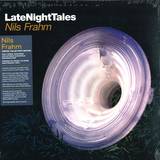
Francesco Skip's debut EP delivers a focused, club-ready sound that draws from contemporary UK club music while embracing the simplicity and raw energy of early 2000s techno and dubstep. Each track explores a different underground electronic direction and highlights include 'Ocean Explorer' with late-90s techno vibes and swingy dub stabs, 'Kronplatz', which is a dark, bouncy bass journey, 'Hondra B' a stripped-down jungle and drum & bass tool, and 'Wrong Glidez', a post-dubstep homage with 2-step drums. This great debut is also well mastered with bass depth and mid and high texture for loud deployment on peak-time systems.
Stop playing games and get your hands on this new 6-track Various Artists EP. From Electro-Wave in Dutch, to rolling synths in the club (anthem alert!), to Breakbeats that are hard to tame, to a contemporary version of the Moonlight Sonata, to a guided Tryp by Varum and Hayter's freezing cold Fortune Four. What you want is what we got.
A delve into the murky avenues of sonic territories, exploring off-grid zones & askew worlds – Daisy Moon leans harder into her 4/4 vision in this dancefloor-ready EP – the first release for Off-Kilter.
Each track pulses along to its own singular logic, with Daisy’s distinctive voice and vocal manipulations playfully drizzled throughout, marking an elegant collision of her sonic worlds.
Spirit Princess is a breakneck peak-time explosion – club-ready and bouncy with a pulsing bassline fit to burst from the subs of any system underpinning waves of textured ambience, nagging synths and granular gusts of found sound.
Fuelled with late night techno energy, Grain Pip offers a heads down counterpoint to the title track, while the B side serves up different energies again. Perhaps the most playful track on the record – The Stuff – demonstrates Daisy’s cheekier side as a producer and person, as inspired by a summer of fun with friends on festival dancefloors: a house banger stuffed with melodic stabs, pitched vocals and swung hats, made for the joys and follies of the 3am dancefloor. Drop Cycle rounds things off with a trippy, rolling excursion of delays and warped synths.
Dizzying sonics and relentless dancefloor energy with razor-sharp precision and uncompromising force.
Entering the abandoned warehouse full of haze and blinded by the strobe lights, you feel the rush when the bass kicks in. You have no idea if the year is 1996 or 2026, but it doesn't matter as long as you are alive.
Indeed, another batch of forgotten and previously unreleased radioactive acid techno has surfaced on the anonymous, vinyl-only Kilotoni imprint — possibly their strongest release so far.
A1 The peak of acid techno is perhaps found in its most stripped-down form. As the bass line throbs your breath out, you try to chase the kick drum in a game of hide-and-seek until complete exhaustion. It's something you play after the copies of Betty Ford and Sync In start to melt during a nuclear reactor accident.
A2 A ravey or hard-techno-oriented approach is applied to the acid techno formula here. The squelching, pulse-width-modulated synth makes for an eerie yet irresistible call to the dance floor. The snare rolls might just be your guilty pleasure.
B1 The flip side opens with funkier techno that the Voyager probes could bump to in outer space a million years from now. A wild acid line is accompanied by playful chords and beats. Detroit influences meet Nordic melancholy.
B2 The kick drum keeps pounding its way through while a lonely TB-303 is traveling in its own space and time. Influenced perhaps by the Midwest acid techno style, this could be a mid-90s DAT-tape lost inside the transatlantic postal system on its way to the Analog Records USA headquarters.
2026 Repress
Akusmi is the project moniker of French-born, London based composer, multi-instrumentalist and producer Pascal Bideau, who signs to the new Tonal Union imprint for the release of his album 'Fleeting Future.' With its hallucinatory, genre-defying blend of minimalism, cosmic jazz and Fourth World influences, and in its quest for optimism in the face of unknown and limitless possibility. 'Fleeting Future' stands apart as an inventive and inspirational debut.
The creation of the album's richly colourful and multi-layered sound world was originally inspired by Bideau's journey to Indonesia, where he immersed himself in traditional Gamelan and gong music. Many of the themes, motifs and melodies on 'Fleeting Future' seed from the 'Slendro' scale, one of the essential tuning systems used in Gamelan. However it is not musical scales, but scales as in the size or extent of things that most fascinates Bideau, specifically he explains; "the compelling way things dramatically change when you shift from any given scale to another."
The album connects directly to nature and the wider world in its evocation of perceptive shifts and transitions from microscopic to macro scale, as evidenced by the opening title track 'Fleeting Future', on which a simple dotted saxophone line morphs and billows into synths, brass and strings, indicating the musical voyage that lies ahead. Like the start of a journey or adventure it is full of anticipation, its arborescent growth conveying the optimism of the unknown and of limitless possibility. The album centrepiece 'Neo Tokyo' is a vibrating, ebullient mass of colliding elements which feels like zooming in to the electron level, as it teeters on the edge of chaos. The title is a reference to Katsuhiro Otomo's Akira, a dizzying work of art set in a sprawling futuristic metropolis.
'Yurikamome', meanwhile, is an imaginary soundtrack inspired by Bideau's yearning to visit Japan which he fuels by watching Youtube videos of drives and rides through Japanese landscapes and cities. "It's amazing" he adds, "that we have the ability to access almost anywhere in the world and see what it's like, that people document it and upload it. It's never going to be any replacement for the real thing, but with places that really touch you, it works." The track is named after a Japanese monorail train line which rides from Shinbashi to Toyosu, a last journey that feels like a new beginning.
'Fleeting Future' was composed and recorded by Bideau between 2017 and 2019 in his North London studio and features additional contributions recorded in Berlin by Florian Juncker (trombone), Ruth Velten (saxophone) and regular collaborator Daniel Brandt of Brandt Brauer Frick (drums / electronic percussion). Having been living through uncertain times, one thing that keeps spiralling into the unknown is the future, about which Bideau leaves us with a final thought:
"The future is fascinating: It is constantly readjusting to new events. I feel we left a linear approach to the future to enter an arborescent one where all the data and information we have about what could happen is exponentially ever-growing. Following a branch might allow you to glimpse into what it may become, but the evolution of the whole picture might very well render the prediction totally obsolete, and even meaningless. In that sense, there is not one future but innumerable ones all cancelling each other. That's what makes it fleeting."
On a planet far beyond our solar system lies a volcanic tropical island, a glowing mirage where alien tides crash against molten shores and the sky pulses in time with the rhythm below. E.T.H (Italy) inaugurates the first-ever
Basement Beats vinyl release with Neon Inferno. The A-side opens deep and progressive, dense with atmosphere and tension, before pivoting into the playful, radiant Cumbia Poderosa, where the artist’s roots surface through Italian vocals. As the land shifts, lava carving new paths through jungle terrain, Utrecht-based Tifra reshapes thetitle track into a hypnotic, tribal ritual meditation built for the late hours.
Closing the portal is Osaka’s Paperkraft, whose vibrant remix injects uplifting energy and subtle Asian influences, bringing the journey to a euphoric, otherworldly conclusion.
Joe Fujinoki centered the compositions of his latest album Glass Torso round the idea of the fragility of the human body. Fujinoki described the narrative thread of the album as that of “holding the shape of a human body as if it might shatter like glass”. The precariousness of the body, the essence of the body as defined by Fujinoki as the torso, and the object relations between the boundaries of dialectical exercises pack themselves into his creative process.
Fujinoki recorded Glass Torso exclusively with analog synthesizers, stumbling in and out of structural loops to find space for accidental discoveries. The ten pieces of recorded material feel somewhere on the edge of typified form, feeling like a vascular system pumping in and out its undulating liquidities. Maybe this is the hollowed space held together by Fujinoki’s notion of the torso where you hear a microscopic world, dubby and generative. Fujinoki is adept at organizing this realm of subtle sound sources, giving proper considerations of shared tonal space. Seemingly, this handling of the precarity of sonic material elucidates Fujinoki’s mature attention to detail.
Ambient music genre tropes often affirm the listeners vessel for escape and dissociation. It provides an intoxicating allure by respite from an overwhelming exterior reality far outside the listeners controls. Here this space becomes apolitical, or its protest vocabulary softer and subtle. Fujinoki does not aim to tackle hyperobject topics on how to course correct the world, but he does something increasingly rarer to come across. On Glass Torso an alternative space is created not as shelter, but as a meditation on negotiation and compromise. This twenty eight minutes of audio lays down a foundation for imagination, for imagining how to negotiate the fragility of the self. Zoomed out, the implications of his negotiative sonics can be a playground for broader reflections on distributive care and attention.
Fujinoki says he feels “alert” to his physicality and placement in the world amidst vast digital cultures creating impositions on him and his surroundings. On Glass Torso he creates a concretized space on a vinyl record, where the virtual and the tangible antagonize one another that create the spectacle of the listening experience. This spectacle is a soft one, a considered one, and an utmost enjoyable one. Fujinoki juggles opposing forces brilliantly, and formulates an exquisite palette of soft passing music so he can also help the listener with the exquisite burden of their own Glass Torso.”
- Nick Klein, January 2026
We are excited to continue our work with Art P / Art Programming by finally offering the first full-length work from this Bremen-based electronic group. Originally released only on cassette in 1983, the self-titled album has now been fully restored and remastered, complete with bonus tracks and unreleased mixes unearthed from a rare demo.
The LP opens with "Wesen vom anderen Stern" ("Beings from Another Planet"), a downtempo, 808-driven electro synth wave track with German lyrics telling a story of aliens capturing earth, becoming the new "Herren" (lords), while humans are reduced to mere "objects." Art Programming founding member Jens-Markus Wegener notes that this track has always been a favorite during live performances, and it's easy to imagine how the futuristic sounds would have blown people away at the time.
Next is the electro/proto-techno title track "Art Programming," which we previously issued on a limited 12" in its full-length form. With its straightforward Roland 808 rhythms, catchy synth lines, and vocoder vocals, it's a classic example of German electro, and one of the earliest proto-techno tracks - long before Cybotron claimed the techno mantle. Its extensive break and electronic twist make it an early precursor to the genre. Wegener recalls that this track was created exclusively by him and Grotelüschen, with Grotelüschen contributing most of the melodic elements, while Wegener focused on drum machine programming and vocoder vocals.
On "That's Me," the album welcomes back singer Claudia Roebke. Although it's an electronic composition, Roebke adds a rock-infused, almost psychedelic vibe to the song. The lyrics, written by Wegener, depict a person obsessed with their appearance, using irony to critique societal beauty norms, questioning the obsession with perfection and attraction.
The album continues with a series of uptempo electro tracks: "Videoscreen," "La Gare," and "Genscher Pull 'N' Push." The first two feature slightly different mixes from an earlier demo that we personally prefered over the versions that were available on the final cassette release. "Videoscreen" expands on the theme of social isolation, with lyrics reflecting on a world obsessed with watching video all day - a topic that resonates strongly with today's culture of doom scrolling and social media addiction.
Next up, "Genscher Pull 'N' Push" is an incredible electro/wave/proto-techno track recorded in October 1982 with a political edge. Originally omitted from the album, it was only available on the demo cassette we mentioned earlier. The song takes aim at German politics, with lyrics that shout "bitte geh nach links / bitte geh nach rechts" ("please go to the left" and "please go to the right"), referencing the shifting political allegiances during the 1982 coalition change, when Genscher's party, the FDP, left the Helmut Schmidt cabinet to join the CDU/CSU opposition. The track was never released as the political topic had become outdated just a few months later.
The album closes with "Light and Fire," which originally served as the album's opening track. Its quirky, upbeat vibe now makes for a fitting outro.
The gear used on this album reads like a dream list for early 80s electronic music production: Roland Jupiter 4, TR 808, TB 303, System 100, SVC 350, Korg Mono/Poly, Moog Prodigy, FRICKE-Sequenzer, Roland CSQ-100 Sequenzer, Coron DS-8, MM 12/2, Sony TC 399, TEAC-244 Portastudio, Ibanez DM 1000, EH-Electric Mistress, EV-Micro. This unique lineup of equipment sets the album apart from NDW releases of the era, lending it a distinct sound with heavy proto-techno leanings and that straightforward electro vibe we all love.
The album is being released as a very limited edition of 300 copies on transparent red vinyl, complete with a full picture sleeve and lyrics inlay. This is yet another rediscovered and restored 80s gem on our label that you definitely don't want to miss!
Gute Neuigkeiten für Good Riddance-Fans! Nach sehr limitierter Verfügbarkeit der Erstauflage (schwarzes Vinyl) gibt es noch eine Nachpressung. Die zweitauflage kommt als Apple Red Vinyl. Die aus Santa Cruz, Kalifornien, stammende Band ist eine feste Größe in der Punkszene und bekannt dafür, die Lücke zwischen rasantem Skate-Punk und der rohen Intensität des Hardcore zu schließen. Sie werden für ihre ,intellektuelle Aggression" gefeiert, einen einzigartigen Sound, der rasante Drum-Geschwindigkeiten und scharfe Gitarrenriffs mit überraschend eingängigen Melodien verbindet. Für neue Hörer repräsentiert die Band den Goldstandard des Genres und beweist, dass Punk unglaublich schnell und aggressiv sein kann, während er gleichzeitig musikalisch ausgefeilt und technisch präzise bleibt. Über ihre klangliche Strahlkraft hinaus dient die Band als wichtige Einführung in die aktivistischen Wurzeln des Punkrocks. Unter der Leitung von Sänger Russ Rankin tauchen ihre Texte tief in Themen wie soziale Gerechtigkeit, Tierrechte und politische Kritik ein und bieten eine viel tiefgründigere Perspektive als typischer Alternative Rock. Durch die Auseinandersetzung mit klassischen Alben wie "A Comprehensive Guide to Moderne Rebellion" können Fans genau hören, wie Punk als kraftvolle Stimme für Marginalisierte und als engagierte Plattform für die Infragestellung des Status quo dient. Die Relevanz der Band ist nach wie vor ungebrochen, seit 2015 ungebrochen zurück, das letzte Album kam 2019, 2024 veröffentlichten sie "No More System to Believe In", eine melodische Punk-Hymne, die moderne Desillusionierung in einen kraftvollen Aufruf zum Handeln kanalisiert. Nach einem strapaziösen Tourplan für 2025, bei dem sie neben ausverkauften Clubkonzerten in Europa und Nordamerika auch auf großen Festivals wie dem Hellfest und der Warped Tour Orlando auftraten, zeigen sie keine Anzeichen einer Verlangsamung. Im Jahr 2026 wird Good Riddance diese globale Dynamik mit umfangreichen Auftritten auf Festivals in der EU und insbesondere in Deutschland fortsetzen. Aufgenommen mit Bill Stevenson (Descendents) im The Blasting Room.
With acute focus on dance floor hypnotism and percussive pressure, SIDEB003 offers German collaboration IGLO and Paul Hauck's debut vinyl release. A third project for this duo, 'Stable Fusion' plays to the producers strengths as biting sound design unfolds through reliable groove.
'Stable Fusion' - and, in turn, its title track - presents as an uncompromising dance floor record, complete with pressing arrangements and powerful tension shifts. The infectious nature of club music comes largely from the power and insistence of its minimal elements and IGLO & Paul Hauck put chisel to stone to showcase just that. To add soul to skill, 'Neustadt' claims the A2 with added color and a silver lining in the its mood. Festive chord stabs stutter along with percussion riding up and down the spectrum, maintaining energy without losing impact. Flipping sides, 'Initiator' returns to minimalism and spaced out sequences. Dub chords boom through a low lying swing, complete with unfolding ambient textures. The track is focused and its intentions aren't shy, the slow creep to the EP's conclusion 'Celestis' is met with intrigue. Warbly synth work warms up a pulsating core, creating a more tonal sound system experience than any of its predecessors. Here, ferocity hides behind humility, and 'Celestis' is a crowd pusher with deceptive arrangement to close out 'Stable Fusion' with confirmation of quality and effect.
Words by Noah Hocker
In discotheques and dark rooms across Europe, Boys’ Shorts have earned the trust of the queer and wider clubbing communities as generous stewards of a timeless sound that, like themselves, never stops moving forward. The duo of Vangelis and Tareq initially met at an underground club in their native Greece. Sensing a rare sonic connection, the pair became friends, forming Boys’ Shorts to meet again and again, travelling from their adopted cities of Thessaloniki and London to appear as far afield as Berlin’s Panorama Bar and New York’s Le Bain, as well as supporting Goldfrapp and Hot Chip on tour. Their motivation? In their own words, “we make people dance!”
Following years of gradual, thoughtful studio sessions, and EP releases on tastemaking electronic labels including Phantasy Sound and Live At Robert Johnson, Boys’ Shorts establish their own imprint, ALL SORTS, in order to deliver a fantastically ambitious debut album, ‘What Does It Take To Make These Men Happy?’
The LP opens with the grandiose, cosmic vista of ‘The Space Between Us’, a classic passage of strings and synthesis, before the shared Boys’ Shorts vision falls back to earthier territory with deep groove of ‘Let’s Fall In Love’, mixing universal sentiment with a patient vision of human potential and the voice of Greek electronic pioneer, K.BHTA. ‘Come’ aligns with NYC’s Michael Cignarale, offering an excitable invitation to the mind and body sculpted by the way of a throbbing, warehouse-sized statement of nineties house sensuality. Channeling heroes Lowe and Tennant at their most introspective, ‘Short Life’ maintains the dance, yet dares to ask, “what if the parties aren’t enough anymore… Can you ask for something more?”
Out of the pet shop and straight into the strobe lights, ‘Disco Romantica’ makes true on the promise of its title, a lovelorn monologue giving way and slipping into rave stabs and whirring synthesis that looks forward to a memorable, emotionally-charged night ahead. Underpinning this feeling of anticipation, ‘Going Out Hoping To See You’ introduces the voice of Justin Strauss to Boys’ Shorts' musical world. A certified icon of club culture, spinning from The Mudd Club to modern day DJ booths, Strauss’s generation spanning experience of nightlife leans into the fundamentals of human connection and the pleasure of musical discovery, wrapped in irresistible chug.
Another transformative figure in club music, Fischerspooner’s own Casey Spooner dips into French for the Motorik cyber sleaze of ‘MECANIMAUX’, their own vocals pitching up and down with playful EBM abandon. ‘Montage’ offers a different kind of composition, conjuring an ecstatic club banger that finds inspiration in nineties indie rock motifs alongside the rave scene, while ‘Run’ promises to blow out sound systems before its weighty electro bassline succumbs to waves of glistening synths.
Such bombast into beauty perfectly sets up the record’s blissful conclusion; ‘The Stars Are Out For You’ is electro-pop so delicate as to heal aching feet (and mend broken hearts), while offering the final tender moments of the album as a form of tribute on ‘Untitled (For Mitsi)’. It’s a thoughtful ending to a thrilling trip through a shared passion for electronic and pop music in all its glorious potential. What does it take to make these men happy? It’s a pleasure to find out.
- A1: Micah Shemaiah, The 18Th Parallel - To Be Free
- A2: Micah Shemaiah, The 18Th Parallel - Freedom Dub
- A3: Rod Taylor, The 18Th Parallel - Guiding Star
- A4: Rod Taylor, The 18Th Parallel - Shooting Dub
- A5: Var, The 18Th Parallel - Let Thy Kingdom Come
- A6: Var, The 18Th Parallel - Kingdom Dub
- B1: Keith Rowe, The 18Th Parallel - Love Gets Sweeter
- B2: Keith Rowe, The 18Th Parallel - Dub Gets Harder
- B3: Itral Ites, The 18Th Parallel - No More Will I Roam
- B4: Itral Ites, The 18Th Parallel - Roaming Dub
- B5: Hezron, The 18Th Parallel - Keep On Keeping On (Extended Mix)
Swiss powerhouse The 18th Parallel presents another slice of fine modern roots reggae! All Fruits Ripe is a heavyweight showcase album rooted in the foundations of reggae while firmly anchored in the present. Recorded between 2015 and 2025, the project brings together a powerful lineup of Jamaican vocalists — Micah Shemaiah, Keith Rowe (from rocksteady duet Keith & Tex), Rod Taylor, Var (Inna De Yard, Pentateuch), Hezron, and Itral Ites — each representing a different generation of conscious reggae music.
The album features six vocal cuts and five dub versions, highlighting both lyrical strength and sound system culture. Carefully mixed by master engineer Roberto Sánchez, All Fruits Ripe stands as a transnational reggae statement: Jamaican voices carried by a European band deeply connected to the roots with a profound respect for the culture that gave birth to reggae and dub. It features legendary guest Jamaican musicians Leroy ‘Horsemouth’ Wallace, Scully Simms, Dalton Browne, or Errol ‘Blacksteel’ Nicholson.
A mature and carefully crafted release where every track feels essential — like fruit finally ready to be harvested.
XKatedral Anthology Series II (An Anthology Of Slowly Evolving Timbral Music), featuring exclusive music from Kali Malone, Jessica Ekomane, Mats Erlandsson, Theodor Kentros, Wilma Hultén, and Maria W Horn.
"XKatedral Anthology II is the second instalment in a series of archival releases dedicated to presenting music by composers affiliated with XKatedral working within the realm of slowly evolving harmonic and timbral music. This double-vinyl set contains an array of pieces dating from 2018 - 2020. This collection of pieces focuses on the use of synthetic sound and algorithmic composition languages as tools for precise work within the realm of spectral exploration. In addition to this, the electronic instrumentation in many of the pieces is augmented by acoustic instruments.
The first piece on side A is Kali Malone’s Music for Low Quartet. This piece is an adaptation of the composition “Rose Wreath Crown” originally released on The Sacrificial Code in 2019. In this iteration, the music is scored for two double basses played by Vilhelm Bromander and Zach Rowden, and sine tone electronics performed by Malone herself. The recording of this piece was made at EMS in 2019.
Closing side A is Jessica Ekomane’s ‘First Light’. This computer music piece focuses exclusively on digital sound, layering razor sharp synthetic textures into an otherworldly dynamic weave. The music heard here is a reworked version of a piece originally commissioned by Semibreve in 2020.
Side B contains the work ‘Hands Melt In The Sun’ by Mats Erlandsson. This composition is built from electronically processed tuned zithers and synthetically generated tones arranged in a series of chordal inversions over a sustained fundamental tone. This music, written as a love-letter to the localized drone tradition of Stockholm in the years 2008-2012, was composed and recorded in seven days while in residence at Ställbergs Gruva in Bergslagen, in the summer of 2018.
Opening the second half of the collection is Rough Draft v.7 by Theodor Kentros. Kentros’ compositional practice usually combines acoustic and electronic source material and in this piece he molds the sound of the Buchla 200 and a collection of recorded wind instruments into a molten mass of sound. In its original form, this music was presented as a multichannel immersive work and even in the current stereo configuration it retains some of that enveloping sense of depth.
The second piece on side B, Inertia, is by Wilma Hultén, who makes her debut on record here. An exclusively synthetic piece, Inertia utilizes internal digital feedback in a sealed synthetic system to manifest a harmonic field that swells and abates throughout the length of the piece, interspersed by small gestural elements.
Closing Anthology II is Maria W Horn's work ‘Dies Irae’ for female vocal quartet, pitched glass and synthesis. ‘Dies Irae’ uses a modified form of traditional tonal harmonic language to invoke an uncanny and restless middle ground between the classical western polyphonic vocal tradition and contemporary electronic music. The version heard here is a live recording from Eric Ericssonhallen in Stockholm on May 30th 2020. Performing the piece here are the vocalists Katarina Henryson, Lisa Holmgren, Vilma Ogenblad and Paula Wegmann, as well as Maria herself on glass and electronics."
Roland Leesker reimagines a House Classic with Vinyl-Only Cover of ‘What You Need’.
Definitive Recordings presents a special vinyl-only release as Roland Leesker delivers his cover version of ‘What You Need’, the seminal house anthem originally released in 1990 by Soft House Company. This release is a respectful homage to one of house music’s defining records, crafted for DJs and collectors alike.
On the Original Mix, Leesker stays close to the spirit of Soft House Company’s classic, faithfully honoring the original arrangement but properly pumping.
On the flip, Leesker presents his ‘Mysterious Eastern Force Edit’, an expansive, eleven-minute journey designed for deep dancefloor moments. While retaining the essence of the original, this version introduces a more energetic bassline before weaving in a subtle 303 acid line, bridging different eras of house music history into one hypnotic, evolving arrangement.
This vinyl-only release is a tribute to the legacy of house music — respectful, powerful, and made to be played loud on a proper sound system.
Guidelines launches its 2026 schedule with a heavyweight two-tracker from Toby Ross, pairing two cuts built for very different corners of the dance.
On the A-side, “Can’t Do It” lands as a straight-up dancefloor heater rolling low-end pressure, clipped vocal stabs and a hook that locks in quickly and refuses to let go. Built with peak-time intent, it’s direct, physical and engineered to hit hard on proper systems.
Flip it over and “Interruption” dives headfirst into classic amen territory. Chopped, urgent and restless, the track drives forward on tight edits and raw break energy, balancing precision programming with that unmistakable rough-edge jungle feel.
Together the two tracks showcase Ross’ approach: future-focused jungle rooted in foundation sounds — modern production, classic DNA, and zero filler.
Splatter Vinyl[23,74 €]
Baby T is a space away from her work as B.Traits in which Brianna Price can lean more into the junglist, drum ‘n’ bass and hardcore sounds which she loves so dearly. With BSHEE02, the second drop on Price’s own Banshee label, Baby T delivers a darkside masterclass of an EP. This record is a quartet of system blowers which doesn’t let up for a single second from start to finish.
Opener ‘Times Up’ is urgent from the off - the initial strains of this joint find sirens wailing in the monitors over a twitchy kick/drum/hats combo. From here on it’s distilled raver perfection, the drums taking us on a wild Wipeout-style ride as the subbiest of bass skulks at the bottom of the mix. Imagine a more technoid take on the classic breakbeat freerides of Skanna and you’re not far off the ‘Times Up’ sound.
A remix of ‘Times Up’ from man like Aloka leans with devilish glee into the murky underworld that lurks beneath Baby T’s original. Aloka’s version is extremely eerie in a manner which makes you think of the darkest corners of a DMZ party. When things really kick into gear, driven by an irresistible kick dembow, the effect is hypnotic - think the dubwise junglism of the UVB-76 cohort.
BSHEE02’s B-side kicks off with ‘Coercive Control’. This is a cut which delivers on its title in spades, putting the listener in a trance with an interplay of low-slung bass, whirligig synth tones and more of those perfectly executed broken beats. The acid starts to kick in around the minute mark, and it turns out to herald a total earworm of a lead melody.
There’s plenty of dimly-lit malevolence to BHSEE02 closer ‘Dense Dickwood’s grinding atmospherics and gurgling bass throbs. However, Baby T opting for a half-time drum break here gives the cut a vibe not dissimilar to the weightiest jams of classic Massive Attack - that is, until an absolutely remorseless switch-up occurs halfway through, delivering volley after volley of intense drum hits.
Neon Green Vinyl[16,39 €]
Baby T is a space away from her work as B.Traits in which Brianna Price can lean more into the junglist, drum ‘n’ bass and hardcore sounds which she loves so dearly. With BSHEE02, the second drop on Price’s own Banshee label, Baby T delivers a darkside masterclass of an EP. This record is a quartet of system blowers which doesn’t let up for a single second from start to finish.
Opener ‘Times Up’ is urgent from the off - the initial strains of this joint find sirens wailing in the monitors over a twitchy kick/drum/hats combo. From here on it’s distilled raver perfection, the drums taking us on a wild Wipeout-style ride as the subbiest of bass skulks at the bottom of the mix. Imagine a more technoid take on the classic breakbeat freerides of Skanna and you’re not far off the ‘Times Up’ sound.
A remix of ‘Times Up’ from man like Aloka leans with devilish glee into the murky underworld that lurks beneath Baby T’s original. Aloka’s version is extremely eerie in a manner which makes you think of the darkest corners of a DMZ party. When things really kick into gear, driven by an irresistible kick dembow, the effect is hypnotic - think the dubwise junglism of the UVB-76 cohort.
BSHEE02’s B-side kicks off with ‘Coercive Control’. This is a cut which delivers on its title in spades, putting the listener in a trance with an interplay of low-slung bass, whirligig synth tones and more of those perfectly executed broken beats. The acid starts to kick in around the minute mark, and it turns out to herald a total earworm of a lead melody.
There’s plenty of dimly-lit malevolence to BHSEE02 closer ‘Dense Dickwood’s grinding atmospherics and gurgling bass throbs. However, Baby T opting for a half-time drum break here gives the cut a vibe not dissimilar to the weightiest jams of classic Massive Attack - that is, until an absolutely remorseless switch-up occurs halfway through, delivering volley after volley of intense drum hits.
- 01: Dancelwerk - Back To Eighties
- 02: Dancelwerk - Breikaut
- 03: Cmos34 - Cem3340
- 04: Cmos34 - Lm13700
- 05: Jorganes - Spirits
- 06: Jorganes - Beds
- 07: Sunday German Flowers - Don’t You Know I’m The Devil (He Said)
- 08: Sunday German Flowers - Amor Sin Gluten
- 09: Nico Hernández - Rdk-Lz 1
- 10: Nico Hernández - Rdk-Lz 2
- 11: Nico Hernández - Rdk-Lz 3
Yearly compilation series RADAR KEROXEN return with its sixth volume of theme-driven releases, continuing to chart the fractured sonic terrain of the Canary Islands’ undergrowth.
After digging through indie, psychedelia, shoegaze, and site-specific drone, Vol. 6 dives headfirst into the after-hours circuitry of the islas afortunadas, assembling a hand-picked selection of underground club mutations from five long-standing operators within the local electronic ecosystem.
If Vol. 5 was shaped by the cavernous resonance of Santa Cruz’s obsolete gasoline tank, Vol. 6 is fuelled by late-night club aesthetics and mid-90s hardware obsession. Opening the record, Dancelwerk — one of the archipelago’s early modular practitioners — delivers tightly wound structures nodding to Warp-era golden agefuturism and southern Tenerife’s rave boom. Cmos34 follow with their first-ever published material, injecting instability into the system through improvised techno rituals built on friction and feedback.
Jorganes drags the narrative deeper into hypnotic territory, stripping club music down to its skeletal pulse and channeling disciplined repetition and late-90s minimalism into austere, trance-inducing momentum. From Gran Canaria, Sunday German Flowers bends the mood toward cinematic dub: heavy low-end pressure, spoken word, and nocturnal atmospheres stitched into slow-burning club noir.
Closing the circle, Nico Hernández pulls the compilation back to volcanic ground with ambient compositions shaped by Lanzarote’s raw geological landscape — basalt echoes, tectonic silence, and island isolation rendered in sound.
As always, the release is housed in a post-tropical collage artwork by Pura Márquez.
Master by Daniel García
Artwork by Pura Marquéz
Sekhem opens a new portal. We are pleased to welcome Multivoq’s debut as Omega Tribe. He delivers four cuts engineered for the dancefloor, driven by razor-sharp grooves and strong basslines, with every element precisely tuned. Analog machines bring warmth, sequences pulse like coded transmissions, vocals drift through the mix as signals from space... Each detail shapes a journey built for powerful sound systems.
- A1: Derfor Tok Det Aldri Slutt
- A2: Til Noens Dype Muskelvev
- A3: Skal Jeg Følge Deg Til Havet
- B1: Muskelminner Fra Arkanoidepoken
- B2: Venus Er I Håret
Venus er i håret is the third solo record from Norwegian multi-instrumentalist, composer and singer Espen Reinertsen and it arrives about ten years after his second solo record was released via Susanna Wallumrød’s SusannaSonata label. Simultaneously tender and powerful, Venus gives the impression of being, in itself, a complete system –– full of beautiful digressions and compositional trustfalls. Melancholic in the truest sense of the word, Reinertsen’s songs are ruminative, enveloping and uncanny. Venus er i håret seems to glow, gently. Espen Reinertsen is deeply embedded in the creative music scene in Norway, performing as a member of Christian Wallumrød Ensemble and Streifenjunko. As a saxophonist and collaborator, he a mainstay in Oslo’s experimental scene, performing with artists like Jennifer Walshe, Jenny Hval, Toshimaru Nakamura, Christian Wallumrød, and many more, in addition to offering his own exploratory pop compositions both solo and in collaboration.
Three years after the release of Volume 1, Innershades returns to home turf with a second entry in his Heritage series. The New Beat territory that its predecessor tackled serves as the starting point for the A-side of Volume 2 as well. The glistening arpeggios and choir patches on "Mind State", alongside the unyielding kicks, alarm-like synth lines and plodding tempo of "System Breakdown," reaffirm how the genre's hallmarks smoothly align with the artist's own inclinations. The B-side draws from the broad spectrum of styles that emerged a bit later, in the beginning of the nineties, when it seemed the dance floor would move unimpeded between and bridge genres, its boundaries often not as firmly established. "Fuse Memory" nudges the pace forward, driven by the 909 and a staple hypnotic lead. When the drums come to a halt, a 303 emerges to flesh out the break. "Rhythm Composer" continues in a similar early techno vein, but pulls the track into outer space via its formant-heavy leads and Detroit-tinged sci-fi sweeps. On ALT023 Innershades appears in fine fettle, providing another batch of up-front club tracks that approach history as motion rather than memory, translating the past into forward momentum.
Tone Dropout Records kick off the new year in emphatic style with a brand-new 6-track vinyl EP that stays true to the label’s unmistakable dancefloor-driven sound.
Packed with heavyweight grooves, acid lines, breaks, and bleeps, this release delivers six high-impact tracks designed for late-night systems and packed floors. The EP also marks an exciting moment for the label, welcoming two new artists into the Tone Dropout family while celebrating the return of long-standing contributors.
Joining the roster for the first time are KWAKE and Harry Light, both making a powerful debut on the label. They sit alongside Tone Dropout regulars SkyWave Transmissions and XOTR, while label co-owners DAWL and SWEEN reunite once again, delivering an acid-fuelled opener and a special bonus breaks track on Side B.
As always, the EP is overflowing with breaks, bleeps, acid, and raw rave energy.
Side A – The Head Side
Side A opens strong with DAWL and SWEEN at the helm, laying down a driving four-to-the-floor acid groover that would warm up any dancefloor with ease. It’s a statement opener — and a sign of much more to come from the duo throughout the year.
Next up, SkyWave Transmissions brings his trademark experience and finesse, delivering a tightly produced acid-bleep track that showcases depth, quality, and character. Following seamlessly is long-time collaborator XOTR, who rounds out the side with a pure slice of northern bleep excellence — unmistakably Sheffield in style and sound.
Side B
Side B introduces the first of the new Tone Dropout members, KWAKE. A long-time friend of the label, this marks his first official appearance, and he doesn’t disappoint. His track is a full-force breaks banger, capturing authentic rave energy and guaranteed to ignite the floor.
Next comes Harry Light, making an immediate impact with a pounding house-and-breaks hybrid. Impeccably produced and relentless in energy, the track lives up to its name perfectly — “POWER HOUSE.” Both newcomers arrive firing on all cylinders, delivering two massive dancefloor weapons back-to-back.
Closing out the EP, DAWL and SWEEN return with Tones Breaks 5, a three-minute breaks workout and the latest installment in the label’s breaks series. This track also serves as a respectful nod to one of their musical heroes, Frankie Bones, rounding off the release on a high.
Six tracks. All killers. No fillers.
In challenging times, this EP delivers exceptional value — a complete package of club-ready music pressed to vinyl and built for real dancefloors.
Another quality release from Tone Dropout Records.
Continuing his inspired path into fractalised micro-dub-techno, John Howes lands his Paperclip Minimiser project amongst kindred spirits on Blank Mind. Crooked rhythms and tender machine hums hang in crisply defined virtual space — a gallery of science and soul that follows a natural lineage from the breakthrough years of the clicks n' cuts era by way of UK bass permutations.
Operating out of the UK's North West, Howes has been incubating a singular sound through his ongoing development of intuitive production and performance tools under the Cong Burn banner. The sometime record label and software stamp has a long-standing friendship with Blank Mind—the affinity is easy to hear in their shared exploration of modernist broken techno. Having just released a second album under his Paperclip Minimiser alias for similarly spirited West Coast US lodestar Peak Oil, Topology Transform extends the project's sound world with three tracks carved from the same period of studio orienteering. Free of the constraints of the LP format, these three tracks open up broader possibilities from Howes' customised systems, navigating the outer edges of the Paperclip paradox.
The A side opens on a 150BPM cascade of crunchy percussion and pin-prick ripples, driven by twitchy kinesis while maintaining a light-footed dexterity. If the first track finds its locomotion through double-time intensity, the second track celebrates the space that opens up around half-time pacing — two sides of the same tempo that radiate distinct energies. Conversely, the B side stretches out into an extended ambient repose. The consistency between this beatless excursion and the more propulsive A side speaks to the clarity of Howes' craft—a shimmering, blue-hued pool of advanced sonic treatment from a producer in command of a truly personal studio practice.
With absolute joy we can announce that one of our favorite dubplates of the last years is finally going to be released. If you heard Lion’s Den play, you heard this one. This is Violinbwoy’s take on a Belarusian traditional song. A beautiful interpretation by Laboratorium Pieśni remixed for sound system play by Violinbwoy in his laboratory.
A tune gathering the ancient spirits - from that time to this time… play it loud and feel the vibrations!
This new Mysteries drop is pure Mental Neo Hard Trance! Bringing you 4 producers that at the moment are pushing their own style thereby referencing oldschool HardTrance and PsyTrance - in a good way minus the cringy cheese. Gateway tunnel vision stuff, mental in the true sense.
A: Eat Your Mind & L'Enfant D'La Plèbe – Up Into The Ether, 33 rpm; Pulse 160
A 15 Minute epic journey into the upper spheres of the ether with a superb break and a completely new track beginning, screams of ecstasy guaranteed. Sublime!
B1: Neurotribe – Thetra 6:41 Pulse 165
A driver to push the crowd forward, pure dancefloor energy! Stripped down for efficiency the track is building the tension and ascending the stairway to full Noom. Commander Tom would approve.
B2: Pneumatix – The Return Of Mich 7:05 Pulse 170
A driving minimal workout, heavily tinted with Psytrance swirls. Focusing on a few outstanding sound sculptures, bringing them to the front, holographic and vivid. A finely calibrated system will drive the audience crazy. Be careful with the minds of other people, license required.
12“ Vinyl release is limited to 300 copies, includes digi-codes and comes in a unique full cover artwork with 2 sided inlay /poster and sticker by Darkam and TDSiGNZ,
Mastering Stefan ZMK. Transparent blue vinyl.
Mastering: Stefan ZMK
Artwork: Darkam
Another massive offering from the one and only Mick Harris, continuing on in his Culvert Dubs Sessions experimentations with a new 2xlp. Once again Mick delves deep into the shadow realm of slow beat, psychedelic heavily textured, grinding dub techno. Eight tracks of absolute industrialized, delay swept, full pressure, sound system shaking murk ridden, dark water dubs. Top form work when Mick lets loose in this wild style, just the right balance of beauty, restraint and brutality. Total heavy weight music!
The first album ever to release on Jahtari vinyl, back in circulation for the first time since it’s original release in 2009.
Twelve meticulously crafted lofi Dub oddities by disrupt, off-the-grid riddims with lots of SciFi samples, cheap synths and effects from another world, all soaked in gnarly but deeply cosmic textures and with expert low end mastering by peak time CGB1 at D&M in Berlin.
This new album version includes all-time classics like “SEGA Beats”, a killer chiphop dub cut of Misora Hibari’s “Ringo Oiwake”, as well as “Berzerk Dub” and “Echobombing” (the instrumental to Kiki Hitomi‘s “Nighwalkers“), which only have been released on CD or limited 7″ before.
“The Bass Has Left The Building” comes with iconic cover art by Jimmy Cauty (KLF) – and an inlay poster with an exploding sound system…
- A1: Organ Yn Dy Geg
- A2: Fix Idris
- A3: Crys Ti
- A4: Blerwytirhwng?
- B1: Pam V?
- B2: God! Sho Me Magic
- B3: Sali Mali
- B4: Focus Pocus/ Debiel
The vinyl version of this release compiles the tracks from their two earliest EPs originally released by Ankst whilst the 22 track CD features further unreleased & unheard bonus tracks from this early era.
Super Furry Animals also recently announced additional festival dates to follow their sold out Supacabra Tour dates including stops in Llangollen, Bristol, York, Glasgow and London (their first since late 2016. See full 2026 dates below.
Holding the world record for the longest ever EP title the first EP -Llanfairpwllgwyngyllgogerychwyndrobwllantysiliogogogochynygofod (In Space), was released in 1995, followed in the same year by Moog Droog, with both EPs making up the eight-song track listing of the vinyl version of Precreation Percolation.
Later that year, with a record deal on the table and future classics such as God! Show Me Magic and Hangin’ With Howard Marks already making up the SFA’s set list, the band’s path following “two years of chaos” (including a legendary 1993 debut ‘gig’ at Bangor University’s Banana Lounge, lasting all of five minutes due to technical and chemical misadventure) was set. In the album’s liner notes, singer, Gruff Rhys writes: “It would have been the best gig ever, had we not daisy chained so many synthesizers together, that it resulted in a terminal systems failure.”
By summer they’d joined Oasis, Primal Scream and The Jesus and Mary Chain in the Creation Records family, leading to a huge London signing party that saw members of the band famously thrown out of.
The term of intriguing genre experimentation, spanning long-form electro, blissed out instrumentals and expansive prog-influenced rock, heard across much of Precreation Percolation was subsequently refined and channeled into their thrilling, 1996 debut album, Fuzzy Logic and their untamed live performances.
While consciously and frequently referring to the unheard, untold and unforeseen as a naturally nostalgia-resistant band, Super Furry Animals look ahead to reconvening with fans to celebrate their shared history as the Supercabra Tour gets underway.
(the vinyl comes with a copy of the CD in a slim card wallet)