There's one thing that everyone readily agrees on: Live concerts are the icing on the cake for musicians and fans alike. Every show is a very special experience and sometimes even creates an almost magical performance. Such moments are beyond explanation, you just have to be there to believe it or, in a best-case scenario, have them recorded for posterity – as American metal act Prong have done with their latest live album. Which is exactly what guitarist/vocalist Tommy Victor and bandmates Christopher Dean (bass) and Tyler Joseph (drums) have achieved on ‘Live And Uncleansed’: Recorded over seven nights in July and August 2025, they are now ready to present eleven powerful live songs (plus three live bonus tracks), all pure and unadulterated, authentic and honest, which is the reason why the result is so incredibly captivating.
Michel Houellebecq is, of course, well-known for his novels, translated into more than 40 languages, and his Goncourt Prize (The Map and the Territory, 2010), but perhaps less so for his debut album, released exactly a quarter of a century ago on Tricatel label. One can sense the influence of Serge Gainsbourg's L'Homme à la Tête de Chou, a disillusioned Procol Harum and a world-weary Burt Bacharach hovering over Houellebecq's poems in Présence Humaine, a now cult classic album orchestrated by Bertrand Burgalat and the musicians of Eiffel. Twelve thousand copies sold and a few concerts later, the writer decided (or so we thought) to bid farewell to the stage, only to generate more media attention though his literary success. Frédéric Lo is, of course, known as an exceptional lyricist, composer, arranger, and producer, author of a sublime fourth solo album (L'Outrebleu, released last March) and a master of collaborative work, notably with Bill Pritchard, Peter Doherty and Daniel Darc. Initially, Michel Houellebecq and Frédéric Lo met for the tribute album that the latter was planning for the tenth anniversary of Daniel Darc's death, but their recording of "Psalm XXIII" was, to their great disappointment, rejected by the label and therefore did not appear on the final version of Cœur Sacré (2023). Fortunately, every cloud has a silver lining, and the two men decided to take their collaboration a step further. Lo decided to set the writer's words to music, in his studio in Pantin. Raw, stripped-down music draped in electronica, adorned with piano and antediluvian drum machines, often minimalist, sometimes repetitive, provides the perfect backdrop for twelve tracks that question and reflect on humanity's past and future (if indeed there is one). Reflections on the human condition, 21st-century style, a work of speculative fiction conceived by two eternally modern "young lads," Souvenez-Vous de l'Homme (Remember Man) is an album that might occasionally evoke The Stranglers' La Folie, and, given the title, that's probably no coincidence. But above all, it's a hypnotic and melancholic album, uncompromising and captivating. Most importantly, it's an album like no other.
8-page lyric / drawing booklet, glossy poster, download card (inc. mp3s), white inner paper bags, sticker on cover.
After 7 strange years of relative silence, and 13 years of being a band, Dog Chocolate have returned with ‘So Inspired, So Done In’. Their fourth album is their most focused, cohesive and song-y yet. They still sound like a bin full of wasps, but now the bin has double-cream or a Viennetta or something at the bottom. While many of the 16 songs on here barely make it past the 3-minute mark, each one is bursting with all the textures and colours of an office cupboard: full of old sweets, fluorescent markers, and multiple ways to fix paper together.
Thematically, a lot of ground is covered, with songs tackling subject matter as diverse as overheard conversations, healing fungal toenails, the Rogerian concept of the Actualising Tendency, bronze age living conditions, dreaming songs into being and human-plant relations. Work (and anti-work) is a recurring theme, as is artistic inspiration and burnout. Dog Chocolate revel in the mundane and incidental, to explore bigger, existential questions. Recorded and mixed by POZI’s Toby Burroughs and mastered by Sofia Lopes, ‘So Inspired, So Done In’ charts a long and confusing period in the band’s collective life, marked by major life changes, losses and shifts, colouring the band’s trademark frantic, daft and anxious energy with a contemplative glaze. Dog Chocolate continue to investigate their internal and external landscapes with playful curiosity, frustration, silliness and empathy.
Pre/history of the band: In the early 2000’s Andrew (vocals), Rob (guitar, vocals) and Matthew (guitar, vocals) played together as teenagers in South-East London-based maximalist, costumed surrealist punk band Yeborobo. They met drummer Jonathan playing with his instrument-swapping masked band Limn at art space Utrophia in Deptford. Later, when both bands had split, Dog Chocolate formed with a shared desire to make a band that was simpler than their theatrical past: small amps and light guitars, no more than 2 drums at any one time, a keyboard no longer than a ruler and a shared ethos… “it’s about giving a shit, but at the same time not giving a shit, but not ‘whatever’, not giving up never!”. The band floated the term “pencilcase punk” to describe their jumbled, colourful, dense and instant music.
Dog Chocolate built on this early scrappiness, bedding into their sound over several albums. Their first “Or” (2014) was a split with Ravioli Me Away, soon followed by “Snack Fans” (2016) and “Moody Balloon Baby” (2018). Along the way they played gigs with bands as wide ranging as Deerhoof, No Age, Dry Cleaning, Palm, Daniel Wakeford, Shopping and Pozi.
With a tendency to converse with each other both lyrically and musically cultivated over many years, the members of Dog Chocolate bounce off each other, respectfully disagree, try to make each other laugh and share some of their most vulnerable feelings with each other. ‘So Inspired, So Done In’ is their own unique offering during these unsteady times: a language of friendship translated into songs.
out of Stock
Last delivered 7 months ago available to reorder, subject to availability
Another Thought was the first collection of Arthur Russell’s music to be released after his death in 1992. Released in 1993 on Point Music it marked the beginning of nearly 30 years of work to let the world hear the enormous archive of unreleased recordings Arthur left behind. Be With revisits this first compilation for a new gatefold double vinyl version and a triple-fold digipak CD reissue.
Both versions of Be With’s 2021 reissue of Another Thought have been mastered by Simon Francis and the vinyl cut by Pete Norman. The original artwork has been restored and tweaked at Be With HQ for the gatefold sleeve and the triple-fold digipak, with the essential help of Janette Beckman. Each version comes with an insert reproducing the liner notes and lyrics from the original CD release.
Together with Calling Out Of Context, Soul Jazz’s World of Arthur Russell, and much of the ongoing work of Audika, Another Thought is absolutely essential for even the most casual Arthur Russell collection. In fact we’d argue it’s essential for any fan of non-obvious pop music. This is the only place where you can hear some of Arthur’s most recognisable tunes and it’s an album that absolutely deserves to be kept in press.
We’ll assume that by now you’re all at least a little familiar with the story of Arthur Russell, the farm boy from Iowa who moved to 1970s New York. Arthur Russell the genuine musical genius who died just 40 years old, leaving behind a wealth of music that dwarfed the few 12"s and LPs that were released during his short life.
Although Arthur had been working on an album for Rough Trade during his last years, with the label no-longer operating it was Point Music (Philip Glass and Michael Riesman’s label set up together with Philips) who stepped in to help Arthur’s partner Tom Lee start working out exactly what Arthur had left behind.
Tom suggested that Arthur’s friend Mikel Rouse was the right person to make the first catalogue. Working in Tom and Arthur’s apartment he had only two weeks to go through what turned out to be around 800 tapes.
As Tom explained “at the end of each day he would generally wait for me to come home and I would, to the best of my knowledge, name and identify pieces in question from that day’s work. As he worked Mikel compiled about a dozen cassettes that he thought would present the most finished sounding songs for Don/Point to use. As Don listened he would then suggest and ask me and thus we collaborated on the choices.”
Don is Don Christensen, Another Thought’s producer. With a final selection of songs from recordings made between 1982 and 1990, including sessions with some of Arthur’s regular collaborators Peter Zummo, Steven Hall, Mustafa Ahmed, Elodie Lauten, Julius Eastman, Jennifer Warnes and Joyce Bowden, it was then Don’s job to turn these into a finished album.
Another Thought is a little different from the compilations of Arthur’s music that came out since. In our conversations with Steve Knutson (who founded Audika Records and who manages Arthur’s estate together with Tom), he explained that “more than any project released by Arthur during his lifetime or posthumously by Audika, ‘Another Thought’ is the most worked over. The material was significantly edited and rearranged from the original source tapes”.
If the aim was to release a comprehensive exploration of every facet of Arthur’s music, from the most avant-garde of his avant-garde compositions through to the most disco-not-disco of his disco-not-disco tunes then the project was a spectacular failure. But as a coherent album of non-obvious pop music Another Thought is wonderful.
Starting with the sparse voice-and-cello of the title track, A Little Lost adds some guitar along with the sneaking suspicion that we’re listening to something nowhere near as simple as it first sounds. By the time we get to This Is How We Walk On The Moon - it could be the moment you notice the congas, or the percussion that’s been building behind them, or maybe it’s that blast of trumpet and trombone - we realise we’ve gone from splashing around to being completely submerged in the musical world of Arthur Russell.
From here the album heads off on its journey around the sounds of the left-field contemporary classical music of the time, re-directed towards pop ears, with minor detours through the swirling woozy disco of the half-remembered night before on In The Light Of The Miracle and My Tiger, My Timing. Whether it’s just Arthur, his cello and some bleeps on Just A Blip, or whether he has some vocal help as he does on the bounding Keeping Up, this is difficult music made so, so easy. And through it all is Arthur’s voice and cello. Sometimes drowned in distortion and sometimes clear as a bell, but always there somewhere.
A Sudden Chill finally returns us to the calmer waters we started in and this last track closes the album with a melancholy that’s not surprising given how soon after Arthur’s death the album was put together.
Whilst Another Thought holds together with the consistency of a proper album, there’s still no getting away from the fact that this was put together from audio recorded in different ways, in different places, with different people at different times. Those with keen ears will hear traces of tape hiss, the occasional blown-out note and some digital fuzz, all fingerprints of those original recordings as well as of the 1990s digital equipment that was used to piece Another Thought together.
Add to this Arthur’s obvious pleasure in making music from the sort of sounds that can make microphones, speakers and ears uncomfortable, it’s no surprise that Another Thought isn’t glossy and pristine. Don Christensen’s productions have been careful to not scrub up those original recordings so much that they lose their original vibe, understandable given that Arthur wasn’t around as a guide. We’ve applied a similarly light touch with the mastering for these Be With versions, just working to make sure they sound like they should on both the vinyl and the CD.
Despite the Discogs rumours, Another Thought was never originally released as an LP. So when it came to the sleeve for this Be With vinyl version we took the original CD artwork as a starting point to come up with something that looks like it could have been in the record racks back in 1993.
We have to thank Janette Beckman for helping us reproduce her iconic photograph of Arthur in his newspaper boat hat. One of many photographs she took of Arthur, Janette shot this in her New York studio back in 1986 for a short article in the January ’87 issue of The Face Magazine. Those with eagle-eyes will notice we’ve used an ever-so-slightly different shot from the one that appeared in The Face and then again on the original cover of Another Thought. The original has long since been lost so we’ve worked with what is left in Janette’s archives. And we also have to thank Tom Lee for giving us permission to reproduce his liner notes from the original CD booklet, together with Arthur’s lyrics.
out of Stock
Last delivered 4 years ago available to reorder, subject to availability
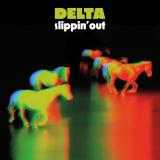
“From Birmingham and centred around the extraordinary songwriting talent of James and Patrick Roberts – initially as The Sea Urchins and since 1993 as Delta – they’ve only just got round to releasing their debut album, Slippin’ Out. It is a work of some beauty”. 9/10 NME ALBUM OF THE MONTH, 2000
“It’s classicist for sure, shot through with the influence of The Beatles, Byrds and Buffalo Springfield. In James’ downright beautiful closing ballad ‘I Want You’ one can also discern the school of ambitious English balladry that peaked in about 1968: The Casuals, Love Affair, Barry Ryan. The impression of accomplished old-schoolery is only furthered by the dizzying string arrangements penned by Louis Clark Jnr, son and namesake of the one-time orchestral chief of Electric Light Orchestra” – Mojo lead review, 2000
Having ended the 90s with the spirited ‘Laughing Mostly’ compilation of singles and demos (Guardian Album Of The Week) Delta finally released their debut studio album of twelve songs in the summer of 2000 on the Dishy Recordings label. Accepting that this might be their sole studio album the band threw everything at these recordings allowing it to exist in its own sphere, unbothered by their contemporary generation and disregarding the idea of even releasing a single.
Recorded at DEP International there was a notable difference to the scruffier, looser charm of their 1990s recordings, a tighter focus developed by having the experienced Lenny Franchi mixing the LP with them. Lenny had been working with a number of Island artists including My Bloody Valentine and Tricky so knew his way around a desk. There was also the question of budget (a few months passed between recording and mixing whilst funds were raised) so every day counted. Ultimately though you can hear the joy in the recordings, even amongst the melancholy and angst. As James recently recalled in an interview in Shindig! Magazine: “It was such a big deal for us. It’s one of my fondest memories doing that record. Everyone was happy. If there’s anything that I’d stand by, I think it would be that”
Louis Clark Jr joined the band towards the end of the ‘90s and brought a classically-trained element to the recordings particularly with his string arrangements. For ‘Cuckoo’, ‘I Want You’ and the prophetic ‘We Come Back’ Louis brought in eight players from the Birmingham Conservatoire; the baroque style is partly why the record often receives comparisons to Love’s ‘Forever Changes’.
On release ‘Slippin’ Out’ was a big favourite with writers at the NME, Mojo and The Guardian again and before long the band were signed to Mercury/Universal for their second studio album ‘Hard Light’, a far more expensive and expansive love affair. It was a temporary palatial home where things quietly fell apart again, but that’s another chapter.
“If long-term memory is nothing more than selective editing and only pop’s most weighty visceral works are built to last then it’s quite possible that in 50 years the Britpop era will be best recollected for the two bands it ostracised. Earlier this year we met Shack and thought their story of mercurial brilliance indicated the biggest music biz oversight of the 90s. We were wrong because we hadn’t met Delta yet. This is richer and more engrossing than anything by Shack”
Hidden away amidst the bustle of Rio de Janeiro’s Catete neighbourhood is a small alleyway behind a cast iron gate. At its end is Bairro Saavedra, the courtyard surrounded by Neo-colonial houses where Brazilian guitar virtuoso Fabiano do Nascimento spent much of his childhood. Built in 1928, this secluded neighbourhood with its wooden shutters, tiled floors and tranquil benches, provides the inspiration for the title of Do Nascimento’s new album VILA, a collaborative project with a sixteen piece orchestra led by trombonist and arranger Vittor Santos.
Recorded between Rio de Janeiro and Los Angeles, VILA is grand, tender, warm, playful and nostalgic. On this stunningly ambitious work, the delicate compositions led by Nascimento's guitar, which sits central in the mix, are surrounded by Santos’ breathtaking orchestral arrangements which swirl in all directions: complimenting, questioning, responding; in constant conversation.
Like the eclecticism of the architecture Do Nascimento grew up surrounded by, his music straddles many worlds at once. He is known as a Brazilian acoustic guitar master and as such has collaborated with Arthur Verocai, Airto Moreira and Itibere Zwarg. But equally at home in Los Angeles's jazz and experimental music scenes, Do Nascimento is also known for his work with artists like Sam Gendel and Carlos Nino.
Vittor Santos is an arranger and Trombonist who has worked extensively with many of the greats of Brazilian music, including João Donato, Marcos Valle, Toninho Horta, and Elza Soares.
=====================================
Credits:
Fabiano do Nascimento – 6, 7 and soprano guitars.
All orchestral arrangements and production by Vitor Santos.
Recorded at Electro-Sound studio, Los Angeles and Estúdio Fibra, Rio de Janeiro
Engineered by Jason Hiller and Garbiel Lucchini
Mastered by Mike Bozzi
Oboe – Francisco Gonçalves
Contrabaixo – Rodrigo Villa
Drums – Márcio Bahia
Violino - Ricardo Amado
Violino – Thiago Teixeira
Violin – Daniel Albuquerque
Violin – Márcio Sanches
Viola – Ivan Zandonade
Viola – Dhyan Toffolo
Cello - Hugo Pilger
Cello – Janaína Salles
Double Bass – Rômulo Gomes
Clarinet – José Batista
French Horn – Philip Doyle
Trombones - Vittor Santos
Violin – Daniel Guedes
out of Stock
Last delivered 4 months ago available to reorder, subject to availability
From out of nowhere comes a unique collaborative album from Edvard Graham Lewis (WIRE) & Mark Spybey (ZOVIET FRANCE). Mixing lush electronic rhythms, sonic collage, ambient soundscapes and manipulated field recordings, these six compositions form an album with a strong identity. That this is such a vital and fertile partnership should come as no surprise. After all, both men have made careers out of creating confidently questing musics. Lewis with Wire, He Said, Hox, Dome etc. and Spybey with Dead Voices on Air, Beehatch, Altered Statesmen, Zoviet France and so on. This new album however, is something different again: experimental, yet tightly focused, and not averse to the groove or the sly hook. The pair met via an appearance on a podcast in November 2022, hosted by cEvin Key of Skinny Puppy. They hit it off immediately. “We did a live chat with Graham - which I think, went on for about three days” jokes Spybey. It was Spybey who first broached the idea of collaboration. “It was a bit like shy bairns get nowt: I just said ‘maybe we should make something together.’” And so, with no plan other than to see what might develop, the duo began to assemble the compositions at long distance. Indeed, Lewis and Spybey only met in the real world after the album had been completed. “Mark sent half a dozen tracks in a stereo mix,” says Lewis. “And I looked at the ’topography’, to see where the spaces might be. So then I’d add to those areas. But then, when do you take it away? Sometimes you let it drop off a cliff, land in the shingle, and it gets washed out to sea again.” The process moved at a pace. “Almost everything each of us brought, ending up being incorporated in some way.” Says Spybey. “We didn’t really go down any cul-de-sacs.” As Lewis observes “We have such a sympathetic tone.” Full of inventive sonics that draw on both men’s previous work, ‘Lewis/Spybey’ offers up a richly detailed soundworld
out of Stock
Last delivered 7 months ago available to reorder, subject to availability
Do You Want More?!!!??! Is the second studio album and the major-label debut from The Legendary Roots Crew. The album, recorded with the original crew, including Scott Storch, was released January 17th, 1995, and was immediately welcomed with open arms by critics, the Chicago Tribune wrote, “This is an impressive display of skills, intelligently arranged and performed.” Do You Want More?!!!??! prepped fans for what The Roots were capable of, and would later show on their magnum opus, Things Fall Apart.
Born in Casablanca, Oum is a talented songwriter and melodist, whose songs are deeply rooted in the complex rhythms that can be found in Moroccan traditional music. Over the years, she has crafted a unique signature, with songs infused with sensual themes, carried by a voice that is both powerful and warm. While she sometimes borrows from jazz, soul or trance music, Oum defies categorization. Her music is that of a singular, free and universal artist.
A dedicated artist, Oum champions freedom, the rights of women and minorities, as well as an ecological and humanist vision of the world. As a UNAIDS Goodwill Ambassador, she makes her art a space of resistance and sharing, where spirituality and poetry rise as a life force. With Dialddar ("homemade"), Oum takes on a radical approach: composing an album without strings or wind instruments, relying solely on voice and percussion. A choice that constitutes both a technical challenge and an artistic manifesto. The percussions used are mostly handcrafted in Marrakech. Their tuning, sensitive to variations in temperature and humidity, make each recording fragile, vibrant, and unpredictable. It is precisely this organic dimension that Oum wanted to preserve: music that breathes, escapes control, and finds its true expression in the moment. With Dialddar, Oum continues her quest for a universal, rooted, and visionary music that invites a sensitive listening to the world. TER004 - CD comes with a 44 page book.
Zürich-based musician Angelo Repetto returns with his new album Between Worlds: Interference, released on Subject to Restrictions Discs. The record is the result of a unique collaboration with Argentinian visual artist Clara Grabowiecki, extending their immersive live project Between Worlds into a sonic and tangible form.
«This album is a continuation of the deep conversations Clara and I had about concepts of perception that led us to question silence, time, transcendence, and the future», says Repetto. «It’s not about finding answers, but about opening spaces where sound, image, and emotion can flow freely.»
Between Worlds: Interference oscillates between hypnotic rhythms, kraut-inspired synth layers, and psychedelic atmospheres – hallmarks of Repetto’s style that listeners may recognize from earlier releases such as Sundown Explosion and Kamiokande. At its core it is an invitation into an open dimension where disciplines, experiences, and realities dissolve into one another. It is both a deeply personal statement and a collective journey into new perceptual spaces.
out of Stock
Last delivered 8 months ago available to reorder, subject to availability
Based on an unbelievable true story, Roofman follows Jeffrey Manchester (Tatum), an Army veteran and struggling father who turns to robbing McDonald's restaurants by cutting holes in their roofs, earning him the nickname: Roofman. The film's score was composed by Grizzly Bear multi-instrumentalist Christopher Bear, with contributions from The War on Drugs' Jon Natchez. Christopher Bear is a drummer and multi- instrumentalist member of the Brooklynbased indie-rock group Grizzly Bear. He continues developing his independent career, most recently working on arranging soundtracks for the HBO series High Maintenance, and scoring the 2023 film Past Lives alongside his bandmate Daniel Rossen.
Malena Zavala is an Argentinian-born, London-based artist, producer, and filmmaker, known for crafting ethereal, genre-blending music that navigates the space between her Latin heritage and her British upbringing. With the forthcoming album If This Life Could Start Again set for release on 30 January 2026 on Paraná Records, Zavala presents her most intimate, cohesive, and accomplished work to date, marking a significant evolution in her artistic journey.
With her new album, Malena creates an atmospheric dream pop world, weaving singer-songwriter intimacy with synth pop, Argentine folk, indiepop, rock and experimental music, threaded together by her blissful vocals and dreamy guitar work. Gorgeously warm and vivid, If This Life Could Start Again charts the journey from pain to acceptance, mapping out the non-linear nature of healing through a sonic landscape. Each song embodies a distinct emotion within that journey, from grief and chaos to feeling lost, seeking refuge, finding confidence, and finally acceptance and letting go. Drawing on her Argentinian roots, Malena uses the Andes mountains as both a visual and thematic anchor – the difficult climb towards higher ground becomes a metaphor for healing, whilst being lost at rock bottom reflects the darkest moments of the journey.
Completely composed and performed by Malena herself, the album was recorded in Girona’s L’Empordà countryside in Spain with producer Luke Smith. As a professional producer and audio engineer, this was Malena’s first time relinquishing production control – an intimate creative shift that allowed their shared vision to shape the album’s rich, enveloping sound.
However, Zavala’s career to date has been a testament to self-sufficient artistry. Her critically acclaimed debut, Aliso (2018), was written, recorded, and produced alone in her parents’ garage, which honed her dreamy bedroom pop sound. The album, praised by The Guardian for its “gently warped and beguilingly melancholy guitar pop,” ****, immediately catapulted her from DIY beginnings to prestigious stages, supporting acts like Lord Huron at London’s Roundhouse and Men I Trust at Village Underground and subsequently continuing on their UK/EU tours. Later with standout performances at Latitude, Green Man, and All Points East. Her consistent radio support from key influencers including BBC Radio 6 Music, BBC Radio 1's Huw Stephens, and Steve Lamacq has solidified her presence on the airwaves.
Her second album, La Yarará (2020), saw Zavala delve deeper into her roots, exploring Latin traditions like Cumbia and Bolero. This exploration of identity continues powerfully on the new album, but with a newfound lyrical depth and sonic confidence. The new album, If This Life Could Start Again, is a raw and transformative eight-track journey that maps the emotional landscape of healing. Written after a period of personal upheaval, the album traverses themes of grief, hereditary trauma, and self-discovery. The record’s narrative is structured like a mountain ascent. A challenging climb through varied emotional terrain, posing the central question: “Will you join the journey?” Sonically, this journey mirrors the non-linear path to acceptance, evolving from acoustic folk and synth-pop to funk-infused rhythms and rock anthems.
As a formidable live performer, Zavala has built a robust touring profile across the UK and Europe. She will embark on an extensive tour in February and March 2026 to support the album, with dates spanning major cities from London and Glasgow to Berlin, Paris, and Barcelona.
With If This Life Could Start Again, Malena Zavala fully realizes her artistic vision as a self-taught producer to an autonomous artist commanding her career through Paraná Records whilst reflecting the vast landscapes of her heritage and affirming her place as a compelling and evolving voice in contemporary music.
out of Stock
Last delivered 7 months ago available to reorder, subject to availability
Toronto-based musician and producer David Psutka’s long dormant Egyptrixx alias returns, with How Tidal. A compendium of sorts, which retells the story so far, reworks of highlights from his catalogue sit alongside brand new tracks, serving as a bridge between the past and the future, preceding more fresh music in 2026.
With the originals still sounding remarkably current, a straight best-of wouldn’t have been out of question, but ever the tinkering student of sound, Psutka thought he’d break them apart, just to see how he could put them back together again.
The music on is How Tidal is cutting-edge and futuristic, but never difficult, instead offering accessible gems where multiple strains of bass music are infused with a zingy, techno-pop bounce, whilst ambient moments gift sonic lozenges for maximum contentment. Psutka creates optimistically welcoming environments, where synthetic birds chirrup in cyan skies over babbling rainbow brooks, as 15 inch subwoofers boom by.
Egyptrixx gained renown across the 2010s with his hard hitting yet tranquil experimental dance music dubbed ‘celestial jeep music for a Saturn moon’. Colourful sound design was braided with dancefloor structures, creating an exhilarating tension between melodic and dissonant, euphoric and inward. The debut album Bible Eyes was released in March of 2011 to critical acclaim.
As Egyptrixx, Psutka has released four studio albums, collaborated, remixed, and toured with some of the biggest names in electronic music.
The widely acclaimed moniker is foundational to Psutka’s complex body of work that encompasses multiple solo projects, plus a diverse range of collaborative work. He has performed live at Sonar Festival, Roskilde, Mutek, MOMA PS1 Warm-UP and CTM Festival, and presented sound installations at Galeria Civica Commune di Modena and Art Gallery of Ontario (AGO).
In 2015, Psutka launched Halocline Trance as a home for his various sound projects, events and collaborations. In recent years, the label has quietly established itself as a platform that facilitates many of Canada’s most exciting creative music projects.
out of Stock
Last delivered 6 months ago available to reorder, subject to availability
A house is something that is so deeply temporary, yet it can hold so much energy. How do we carry or leave behind those energies while transitioning into new spaces? How does each space we occupy for some time shape us and how do we tear ourselves away from it and its influence once it’s time to go? These are some of the core questions behind CC Sorensen’s new album for mappa, ‘Phantom Rooms’ – it’s a record about movement, change, transformation, family, juxtapositions… but most of all, home.
CC Sorensen was reflecting a lot on their childhood home in rural Kansas, USA while working on this music. The album could be characterised by a familial, chamber feel and both of CC Sorensen’s brothers, Ryan and Nyal Ruehlen, make an appearance on ‘Phantom Rooms’, among other instrumentalists. Using a wide palette of sounds – CC Sorensen alone in charge of keyboards, software instruments, voice, electronics, percussion, trumpet, guitar and field recordings, in addition to guests on pedal steel, voice, chimes, saxophone and drumset – the American musician crafts music as mysterious as it is inviting. The idea behind it would be almost surrealist – ghostly rooms in houses where we live – if we all didn’t know exactly what CC Sorensen means. Home isn’t something concrete, but it’s also not just an abstract concept. It’s a space beyond space; home in itself is a phantom room we enter. And what enables us to enter is the object of exploration here.
CC Sorensen’s approach is playful – tracks like “Beat Bot” and “Plastic Portals” are almost fun – but also contemplative. They make thoughtful, meandering chamber music intertwined with field recordings and electronics. Reeds, strings and percussion often set the atmosphere – sometimes airy, gentle, at other points more insistent – as the music grapples with departure, instability, deep reflection and imagined future spaces. Especially in the closing “Bexar” there’s a tangible yearning for a stable home, a longing to rekindle and keep ablaze this beautiful familial connection to a physical place. It’s both music that invites to reflect and music that in itself reflects; desires, hopes and dreams.
out of Stock
Last delivered 7 months ago available to reorder, subject to availability
When you listen to birds, they usually talk about food, sex/family, or anxiety. If they knew about the true nature of humanity's cruel and exploitative relationship with birds, they would be discussing rebellion. Humanity's current trajectory about birds is to cause the extinction of one-third of all bird species by the end of this century.
This record crystallises the borders between memory, beauty, and anxiety. At the core is an amalgam of all the birds we have met and heard, their sounds synthesised from a blend of memories. Esthetically it simulates the qualities of bird sounds, hitting similar frequential sweet spots. There is a great variety of birds captured here, from high to low frequencies, from solo voices to groups, from birds standing on their own to complex world-building, where the bird voices are part of an ecosystem, becoming one of the instruments.
You could stop there, enjoying this record on a musical level, but it invites us to do one step further, to consider reconfiguring our relationship with the Earth and its inhabitants. To question our impact, and to ask why we need synthetic bird music. Is it just a visionary endeavour or is it because we are failing at fostering a world in which organic birds and other creatures can thrive?
32 artists from the whole world, including our favourite artists from Eastern Europe, have contributed to this compilation both with new and previously released music. Their music is ordered from dawn to dusk and into the night. For many of the artists it's their first time on mappa, but some have previously released an album with us.
out of Stock
Last delivered 7 months ago available to reorder, subject to availability
On Hungry Animal, Luke Temple continues to trace the invisible lines between the personal and the cosmic _ between what we feel, what we observe, and what we inherit simply by being alive. The album reunites Temple with Doug Stuart (bass) and Kosta Galanopoulos (drums), the core of his Cascading Moms ensemble, whose instinctive chemistry anchors the record's balance of rhythmic precision and melodic drift. Together they shape a sound that feels handmade and fluid, delivering sharp observations in soft focus. The album opens with "Clean Living," a tenderly libidinous groove, unraveling purity myths and self-discipline _ less a confession than a celebration of the futility of striving for perfection in a flawed world. From there, "Echo Park Donut" shifts into the memory of an unsettling vignette drawn from a violent incident outside Temple's Los Angeles home. The band moves with a quiet pulse beneath the story, suggesting both detachment and the surreal intimacy of fear. The title track, "Hungry Animal," grounds the album's broader questions: how well can we really know one another, or ourselves? Temple's lyrics circle around the idea that we are animals among animals, driven by instinct and affection alike. It's both playful and philosophical, one of the record's emotional centers. Temple's bandmates bring an understated mastery to these pieces. Stuart's melodic, infectious grooves converse fluidly with Galanopoulos's drumming, which breathes life into each song even as it gently propels them forward. The trio's interplay feels both weightless and deeply rooted _ commanding the listener's attention and empathy without ever forcing it. With Hungry Animal, Luke Temple and the Cascading Moms create a world where reflection becomes rhythm and consciousness gains texture _ a record of quiet revelations and deliberate grace.
'Flowers', the new EP from Elizabeth Davis, finds itself at the cross-section of many factors. In part, it’s the result of Davis’ obsession with a seminal folk song. But it also coincides with her rediscovery of the voice and language as an instrument. It was recorded during an autumn residency at Sternhagen Gut, the cultural refuge run by Gudrun Gut and Thomas Fehlmann, located deep in the Uckermark countryside halfway between Berlin and the Baltic coast.
The six tracks on 'Flowers' all take Pete Seeger’s ‘60s protest-folk song 'Where Have All The Flowers Gone' as their starting point. However, they veer off in different directions, from vocal loops and deconstructed lyrics, to instrumental drones and glitchy, manipulated rhythm tracks. Like many musicians, Davis has learnt composition by a process of disassembly, analyzing musical works piece by piece, and 'Flowers' began as one such forensic exercise. “But sometimes,” says Davis, “a source is so loaded up on meaning that the studies and experiments can become worthwhile and meaningful works in their own right.” 'Flowers' began to take on a life of its own, raising renewed questions about age-old themes such as war, authorship, translation and historical structures.
Davis is no stranger to cover versions. From studying violin to playing in free jazz and punk bands, interpreting other artists’ works has long been a key part of her musical approach. And since her radio show 'Deep Puddle' recently drew to a close after seven years, her experiments with narration and sound collage have found their way into her musical work once again. For 'Flowers', she cut up the source material (with a nod to Gysin and Burroughs), and reassembled the lyrics, the musical notes, and recordings by different performers, to create uncanny new forms.
But perhaps the biggest influence on 'Flowers' was conversations about music, art and pop subcultures with Gut. These dialogues helped Davis find a balance between far-out sound design experiments and catchy melodies, combining a certain avant-garde element and modern day songcraft. And it’s this sense of conversation, this revisiting of topics and renewal of ideas, that will keep us coming back to 'Flowers' long into the future.
A moonstone glow infuses Boy Golden’s Best of Our Possible Lives, an album that finds its flow state. A pensive, questioning collection, Best of Our Possible Lives is informed by the artist’s intuitive, observational worldview, beaming honesty and levity in its quest for emotional balance. Buoyant, smooth and disarming, the music of singer-songwriter/producer Boy Golden is charmingly undefinable, drawing lines from the Tulsa sound to North Carolina indie, New Jersey DIY to swampy New Orleans folk. From opening riff to swirling final notes, Best of Our Possible Lives ripples like sun on the lake, an invitation to seek each our own bliss. Produced by Robbie Lackritz (Feist, Bahamas, Weather Station), Best of Our Possible Lives brought Boy Golden to Lucy’s Meat Market in Los Angeles with Pino Palladino (D’Angelo), Gabe Noel (Father John Misty), Joseph Shabason (Destroyer) and Abe Rounds (Meshell Ndegeocello) alongside Church of Better Daze founding members FONTINE and Austin Parachoniak. RIYL - Mk.gee, Waxahatchee, MJ Lenderman, Plant & Krauss’ Raising Sand, Paul Simon
Turner Cody first collaborated with Nicolas Michaux and the Soldiers of Love (Clément Nourry, Ted Clark, and Morgan Vigilante) on his album Friends in High Places (2021). This album marked a turning point for Turner Cody, in which he started to incorporate country influences to his songwriting. But that was only the beginning, and Out For Blood is without question a country album. This new album offers the perfect canvas for him to express his poetic lyricism, and to paint portraits inspired by American mythologies. The songs explore such themes as freedom, individualism, destiny, sin and redemption. Rooted in traditional narratives yet resonating with our times, these songs are to be seen as parables: imaginary characters faced with the dichotomy of good and evil. In the vein of Kris Kristofferson, Townes Van Zandt, or John Prine, Out For Blood stands as a major contribution to the great repertoire of American song. ut For Blood bears witness to a transformation in Turner Cody"s life. While his songwriting already hinted at a certain Americana, it primarily reflected his twenty years spent in New York and the legacy of the anti-folk scene-closer to the Velvet Underground than to Hank Williams. Then came the move: Cody and his family left New York to settle in St. Louis, on the banks of the Mississippi. This change of scenery and perspective fueleda new way of writing. The challenge was clear: maintaining the subtlety and textural work characteristic of his previous works while integrating the country heritage of the new songs. The collaboration between Turner Cody and Nicolas Michaux signs the perfect communion between an artist who writes in the language of poetry and another who crafts sound and textures. The Soldiers of Love, far more than a backing band, have influences ranging from jazz to fusion, from pop to Congolese rhythms. Their subtle, atmospheric sound merges with Turner Cody"s "three chords and the truth" to create this unique magic!
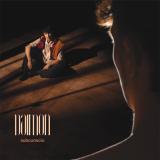
Subconscio left the smallest town in Gargano to begin a new life in uncharted Bologna.
Leaving mother earth, he still retains a strong sense of that distant world, expressed through the senses of his inner child. The Subconscio
project finds its expression in music, where it blends Neo Soul, Hip Hop, and Electronica into a sound deeply influenced by individual experiences. Soft vibrations and relaxed lyrics are the means through which he expresses his devotion to creative freedom, moving with the urgency of someone who has finally found his voice. The word dáimōn originates from Ancient Greek and means divine messenger, a guiding
spirit that hovers in a middle ground, called metaxu, the same place where the soul resides, and acts as a link between God and humanity.*
"Daimon" is Subconscio's debut album, produced by Luzee. It's the intimate vision of a person suspended in his imagination, questioning
the identity of his own memory and how the places that led him to his NOW are actually his future. The present doesn't exist in the narrative.
It exists only in the connection between childhood memories and the adult perspective.
Giulio is his son and also his parent: the Subconscious; the "daimon" is the musical journey that connects these two ways of observing the
same memory. Nostalgic turmoil meets the desire to recognize oneself and fuel the obsession with music, because only this—albeit the least
apparent art—is the only one that can be the voice and bearer of the dimensions of consciousness.
Featuring on the album: Madbuddy and Claver Gold
Dear friends, What’s left of a genre when you drop the posturing and keep nothing but feeling, space and rhythm? Freudenthaler answers that question straight up with a stripped-back, no-nonsense take on UK garage. With a sharp ear for space, swing and restraint, he boils the sound down to its core — nodding to the golden age of sound system culture while lacing it with the jazz-tinged touches that run through his productions. The result is a record that feels both timeless and personal. Freudenthaler plays with expectations, flips them neatly, and leaves just enough room between the beats for the atmosphere to breathe and the dancefloor to lock in. One for lovers of vinyl, heavy sub and subtle moves. Sincerly yours, Brombért P.S.: The physical release comes with handcrafted, screen-printed artwork by the fabulous graphic artist Zatina Kessl
out of Stock
Last delivered 8 months ago available to reorder, subject to availability
Islaja presents her new album ”Angel Tape”, her debut release on the new Helsinki-based label Other Power. Drawing inspiration from childhood epiphanies while listening to an alleged recording of angels singing, Islaja has crafted an album that stands out as a major work in her expansive and celebrated catalogue, which includes previous releases on labels such as Ecstatic Peace!, Fonal and Svart.
Islaja, aka Finnish artist Merja Kokkonen, describes her new album as a “counterwork” to her most recent albums, where the mode of composing was more song-based. This time around, she goes more in the direction of vast fields of sound where the human voice is a key ingredient of music that breaks free of strict stylistic guidelines and traditional song forms. Rough around the edges, atonal and otherworldly, "Angel Tape” is the result of a lifetime of inspiration from something beyond the immediate realm of our experience, an attempt to catch the elusive essence of musical otherness.
”As a child, I listened to the ’angel tape’ my mother played, and I never thought that the human voices I heard on it were angels singing. Instead, all the aural debris lying just beneath the surface caught my attention as I thought it was mysterious and something from a different world than ours, and so that was probably what was referred to as the ’angels’ so miraculously caught on tape”, Kokkonen explains. ”I think this was one thing that led me on this lifelong quest to find new sounds and forms in music.”
The tape she is referring to, a mid-80s church recording, was passed around in religious circles. Each time the tape was copied, it became slightly more distorted. It was believed that this recording of religious music had accidentally captured for the first time the voices of actual angels singing. The tape was rumoured to have originated in Kansas City and to have made its way to Finland.
Whereas Islaja has often thought of albums as being collections of recent songs presented together, ”Angel Tape” has a strong sense of conceptual coherence. The music comes from a place. That doesn’t mean that one must take a single path from one place to the next, as close listenings of the album reveal layers upon layers of not only sound but also of mood and meaning. From the human voice in its barest form, to the rising dense walls of sound moving and reshaping, ”Angel Tape” is a captivating album that unveils new contours with each repeated listening.
Koma Saxo, the explosive quintet led by Berlin-based Swedish bassist/producer Petter Eldh, returns on We Jazz Records with their new album, cut live at We Jazz Festival in Helsinki, December 2019. Whereas their lauded debut was a triumph of remapping the goal posts for an acoustic jazz combo for the 2020's, "LIVE" takes you right to the heart of the actual ensemble sound, with 5 musicians tearing the place down, no post production. From the fiery opening sequence kicking off with "Euro Koma", on to the much calmer beauty of "Waltz Me, Waltz Me Baby, All Night Long" and the first single "Fiskeskärsmelodin", the 8-song set is pure fire, never failing to convey the extraordinary intensity of the group: Eldh on bass, Otis Sandsjö (Y-OTIS), Jonas Kullhammar and Mikko Innanen on saxes, and Christian Lillinger on drums.
An excerpt of liner notes by Peter Margasak:
"When I first saw Petter Eldh's quintet Koma Saxo in Berlin in September of 2019 I was floored. The raw, sprinting energy of the band was both infectious and astonishing, but what I most remember was a sense of cognitive dissonance. Was this the same combo that recorded a fantastic eponymous 2019 studio album that represented one of the most convincing, pleasurable, and driving hybrid's of searing post-bop and the production ethos of hip-hop? There have been endless stabs by producers trying to remap the machinations of an organic, all-acoustic jazz band with electronic post-production, but Eldh, channeling a sonic language heavily informed by J Dilla, nailed it in a way I'd never experienced before. Having the trust of his three imaginative, high-octane saxophonists—Jonas Kullhammar, Otis Sandsjö, and Mikko Innanen—he used their grainy sound as raw material, smudging and smearing it like a painter creating new hues on a palette, and then extending, editing, and powering it up within the imperturbable grooves meted out by he and drummer Christian Lillinger. He didn't really alter the essential core of the band's performances. There's no question that a seriously burning quintet had laid the tracks down, even if the performances reflected the kind of concision many jazz groups adapt for a studio endeavor. But the way his jacked-up bass lines and Lillinger's impossibly peripatetic, stuttering rhythms buffeted the massed saxophones elevated Koma Saxo to plane all its own, and I repeatedly returned to that place—half the time trying to figure out what the hell Eldh had done, and the other half lost in giddy ecstasy.
The live show, on the other hand, featured the band without any production tricks. Its soaring, pithy repertoire came alive in a different way, and this excellent live recording from the 2019 We Jazz Festival, has reminded me of how fun and visceral that experience was."
Koma Saxo "LIVE" is released by We Jazz Records on 30 April 2021 on two vinyl editions (silver + black), as a bundle with an unreleased 7" (+ silver vinyl edition), on CD and digitally. The vinyl versions plus the CD come complete with silver embossed lettering. The vinyl is delivered on heavy-duty tip-on sleeve, complete with an insert featuring liner notes by Peter Margasak, Andreas Müller, Matti Nives and Petter Eldh.
a 01: Euro Koma (Live) feat. Otis Sandsjö, Jonas Kullhammar, Mikko Innanen & Christian Lillinger
b 02: Puls Koma (Live) feat. Otis Sandsjö, Jonas Kullhammar, Mikko Innanen & Christian Lillinger
c 03: Fanfarum for Komarum III (Live) feat. Otis Sandsjö, Jonas Kullhammar, Mikko Innanen & Christian Lillinger
[d] 04: Waltz Me Baby, Waltz Me All Night Long (Live) [feat. Otis Sandsjö, Jonas Kullhammar, Mikko Innanen & Christian Lillinger]
[e] 05: Otis and Christian (Live) [feat. Otis Sandsjö & Christian Lillinger]
[f] 06: Blumer (Live) [feat. Otis Sandsjö, Jonas Kullhammar, Mikko Innanen & Christian Lillinger]
[g] 07: Fiskeskärsmelodin (Live) [feat. Otis Sandsjö, Jonas Kullhammar, Mikko Innanen & Christian Lillinger]
[feat. Otis Sandsjö, Jonas Kullhammar, Mikko Innanen & Christian Lillinger]
out of Stock
Last delivered 5 years ago available to reorder, subject to availability
Koma Saxo, the explosive quintet led by Berlin-based Swedish bassist/producer Petter Eldh, returns on We Jazz Records with their new album, cut live at We Jazz Festival in Helsinki, December 2019. Whereas their lauded debut was a triumph of remapping the goal posts for an acoustic jazz combo for the 2020's, "LIVE" takes you right to the heart of the actual ensemble sound, with 5 musicians tearing the place down, no post production. From the fiery opening sequence kicking off with "Euro Koma", on to the much calmer beauty of "Waltz Me, Waltz Me Baby, All Night Long" and the first single "Fiskeskärsmelodin", the 8-song set is pure fire, never failing to convey the extraordinary intensity of the group: Eldh on bass, Otis Sandsjö (Y-OTIS), Jonas Kullhammar and Mikko Innanen on saxes, and Christian Lillinger on drums.
An excerpt of liner notes by Peter Margasak:
"When I first saw Petter Eldh's quintet Koma Saxo in Berlin in September of 2019 I was floored. The raw, sprinting energy of the band was both infectious and astonishing, but what I most remember was a sense of cognitive dissonance. Was this the same combo that recorded a fantastic eponymous 2019 studio album that represented one of the most convincing, pleasurable, and driving hybrid's of searing post-bop and the production ethos of hip-hop? There have been endless stabs by producers trying to remap the machinations of an organic, all-acoustic jazz band with electronic post-production, but Eldh, channeling a sonic language heavily informed by J Dilla, nailed it in a way I'd never experienced before. Having the trust of his three imaginative, high-octane saxophonists—Jonas Kullhammar, Otis Sandsjö, and Mikko Innanen—he used their grainy sound as raw material, smudging and smearing it like a painter creating new hues on a palette, and then extending, editing, and powering it up within the imperturbable grooves meted out by he and drummer Christian Lillinger. He didn't really alter the essential core of the band's performances. There's no question that a seriously burning quintet had laid the tracks down, even if the performances reflected the kind of concision many jazz groups adapt for a studio endeavor. But the way his jacked-up bass lines and Lillinger's impossibly peripatetic, stuttering rhythms buffeted the massed saxophones elevated Koma Saxo to plane all its own, and I repeatedly returned to that place—half the time trying to figure out what the hell Eldh had done, and the other half lost in giddy ecstasy.
The live show, on the other hand, featured the band without any production tricks. Its soaring, pithy repertoire came alive in a different way, and this excellent live recording from the 2019 We Jazz Festival, has reminded me of how fun and visceral that experience was."
Koma Saxo "LIVE" is released by We Jazz Records on 30 April 2021 on two vinyl editions (silver + black), as a bundle with an unreleased 7" (+ silver vinyl edition), on CD and digitally. The vinyl versions plus the CD come complete with silver embossed lettering. The vinyl is delivered on heavy-duty tip-on sleeve, complete with an insert featuring liner notes by Peter Margasak, Andreas Müller, Matti Nives and Petter Eldh.
a 01: Euro Koma (Live) feat. Otis Sandsjö, Jonas Kullhammar, Mikko Innanen & Christian Lillinger
b 02: Puls Koma (Live) feat. Otis Sandsjö, Jonas Kullhammar, Mikko Innanen & Christian Lillinger
c 03: Fanfarum for Komarum III (Live) feat. Otis Sandsjö, Jonas Kullhammar, Mikko Innanen & Christian Lillinger
d 04: Waltz Me Baby, Waltz Me All Night Long (Live) [feat. Otis Sandsjö, Jonas Kullhammar, Mikko Innanen & Christian Lillinger]
[e] 05: Otis and Christian (Live) [feat. Otis Sandsjö & Christian Lillinger]
[f] 06: Blumer (Live) [feat. Otis Sandsjö, Jonas Kullhammar, Mikko Innanen & Christian Lillinger]
[g] 07: Fiskeskärsmelodin (Live) [feat. Otis Sandsjö, Jonas Kullhammar, Mikko Innanen & Christian Lillinger]
[feat. Otis Sandsjö, Jonas Kullhammar, Mikko Innanen & Christian Lillinger]
[a] 01: Euro Koma (Live) [feat. Otis Sandsjö, Jonas Kullhammar, Mikko Innanen & Christian Lillinger]
[b] 02: Puls Koma (Live) [feat. Otis Sandsjö, Jonas Kullhammar, Mikko Innanen & Christian Lillinger]
[c] 03: Fanfarum for Komarum III (Live) [feat. Otis Sandsjö, Jonas Kullhammar, Mikko Innanen & Christian Lillinger]
[d] 04: Waltz Me Baby, Waltz Me All Night Long (Live) [feat. Otis Sandsjö, Jonas Kullhammar, Mikko Innanen & Christian Lillinger]
[e] 05: Otis and Christian (Live) [feat. Otis Sandsjö & Christian Lillinger]
[f] 06: Blumer (Live) [feat. Otis Sandsjö, Jonas Kullhammar, Mikko Innanen & Christian Lillinger]
[g] 07: Fiskeskärsmelodin (Live) [feat. Otis Sandsjö, Jonas Kullhammar, Mikko Innanen & Christian Lillinger]
[feat. Otis Sandsjö, Jonas Kullhammar, Mikko Innanen & Christian Lillinger]
out of Stock
Last delivered 5 years ago available to reorder, subject to availability
Yore Records proudly presents Yore 060 by DJ Alone Again from NYC - four deep, driving cuts channeling the essence of 90s New York House. Fusing raw groove, crisp percussion, and soulful undercurrents, this EP delivers pure dancefloor authenticity with a modern touch.
out of Stock
Last delivered 6 months ago available to reorder, subject to availability
On her debut LP 'Memoria', songwriter/producer Lilian Mikorey aka PILLBERT contemplates themes of identity and belonging, hardships and heartbreak in her signature blend of bendy folk guitars, field recordings and intimate vocals.
Moving to London from Munich, not yet 20 years old, Mikorey realized she was leaving her home behind for good. The subsequent state of being lost and alone in a place too temporary to start building the foundation for a new one led her to question the concept of home itself.
Is it friends? Family? A house?
"I started collecting objects, bones, sticks, stones and kept them close", she says, as to create a cosmos traveling with her.
"I was tracing the actual feeling of being home to the point where I built a dreamhouse in my head, as an idea, just to evoke that feeling." Soon enough she would learn that yielding to the yearning of actually going to that house, must be an inevitably sad experience.
A photo she took on a family visit to East-Munich became a reference and starting point for Memoria. It was a small house in her neighbourhood, the windows lit as dusk sets in. To Mikorey, it looked haunting, radiating warmth but somehow looking abandoned at the some time.
"I wanted to make music that sounds like this photo"
She started recording the sounds of the objects she had gathered and of her surroundings, building an archive and sonic material to work with.
From her mid-teens she had learned to produce with Ableton and now she picked up the guitar, too, learning it autodidactically by playing around, creating sounds.
At some point in the process, she realized it's okay to be lost for a while and by enduring the feeling, there's room for something new to grow, far off from any general idea of what home should mean.
The album, over the course of 10 tracks, traces these three phases of building a home in your head, realizing it's not a remedy, nor forever and coming to terms with it. You've grown in the process and the album is a guiding light for everyone who strives to do so, too.
Practitioner, educator, DJ, and researcher, Femke Dekker (also known as Loma Doom) has long been immersed in both sound and education. Across lecture halls, archives, festivals, art galleries, independent radio stations, and dance floors, she orbits a central question: What if listening itself were an artistic practice? What might unfold when listening becomes method, medium, and material?
Open Field Listening takes shape around these ideas. Presented as a collaboration between Page Not Found—an artist-run platform dedicated to publishing and experimental practices—and the record label Osàre! Editions, the text originates from Dekker’s graduation thesis for the Master Education in Arts at the Piet Zwart Institute, Rotterdam.
There, she honed her skills as a pedagogue, inviting students into improvisational jam sessions, radio-making, and exercises that activate new modes of attention and a heightened sense of sonic curiosity.
Drawing on the work of scholars and artists—most notably Pauline Oliveros—Dekker approaches listening as a call to action: a way of tuning into one’s surroundings, one’s body, and the urgencies that contour our political and social worlds. She emphasizes the radical potential of reorienting knowledge toward collective attunement: the we rather than the I (or the eye). Inspired by Oliveros’s concept of Deep Listening—a way of expanding awareness through focused, embodied perception—Dekker acknowledges the composer as a foundational feminist figure whose insights continue to reverberate through the classroom, the studio, and beyond.
~~~
Page Not Found kindly thanks Mondriaan Fonds and the Municipality of The Hague for their generous support. Page Not Found is a centre for artistic and independent publishing, approaching these practices as vital, collaborative forms of cultural exchange.
Osàre! Editions is a music label founded by Elena Colombi. With a passion for diverse and experimental sounds, Osàre! Editions showcases unique artists and performers from around the world.
Technological agitation. Narcissism fatigue. A galaxy of isolation. These are the new norms keeping Weyes Blood (aka Natalie Mering) up at night and the themes at the heart of her latest release, And in the Darkness, Hearts Aglow. The celestial-influenced folk album is her follow-up to the acclaimed Titanic Rising. (Pitchfork, NPR, and The Guardian admiringly named it one of 2019's best.) While Titanic Rising was an observation of doom to come, And in the Darkness, Hearts Aglow is about being in the thick of it: a search for an escape hatch to liberate us from algorithms and ideological chaos. "We're in a fully functional shit show," Mering says. "My heart is a glow stick that's been cracked, lighting up my chest in an explosion of earnestness." And in the Darkness, Hearts Aglow opens with the wistful, winsome "It's Not Just Me, It's Everybody," a song about the interconnectivity of all beings, despite the fraying of society around us. "I was asking a lot of questions while writing these songs. Hyper-isolation kept coming up," Mering says. "Our culture relies less and less on people. Something is off, and even though the feeling appears differently for each individual, it is universal." Other tracks follow in kind. The lullaby-like "Grapevine" chronicles the splintering of a human connection. The otherworldly dirge "God Turn Me into a Flower" serves as allegory about our collective hubris. "The Worst Is Done" is an ominous warning, set against a deceivingly breezy pop melody. "Chaos is natural. But so is negentropy, or the tendency for things to fall into order," she says. "These songs may not be manifestos or solutions, but I know they shed light on the meaning of our contemporary disillusionment."
out of Stock
Last delivered 3 years ago available to reorder, subject to availability
The 2 Smooth World Vol. 1 Album broadcasts a highly addictive tale of electronic frequencies. A whole universe of musical explorations, ranging from twisted electro to more dubby compositions, beatless ambient ballads, classic house nostalgia - naturally flowing into oceans of acid & bass.
out of Stock
Last delivered 8 months ago available to reorder, subject to availability
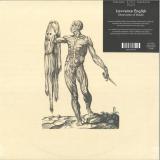
Do you remember the last time you were breathing consciously? Either way, you are likely doing it now. On his new album Observation of Breath« for the Swiss-based Hallow Ground label, Lawrence English worked exclusively with an organ for four compositions that are exercises in »maximal minimalism,« as their creator himself notes in a nod to Charlemagne Palestine, who coined this term. While it seems somewhat fitting that those four pieces based on a steady flow of air were conceived and recorded in a situation of accelerated standstill caused by a respiratory disease, the Room40 founder is not so much concerned with capturing the zeitgeist than rather incorporating the spirit of time itself. »It is a record about presence and patience,« he explains. Exploring the unique sonic affordances of a singular instrument, »Observation of Breath« is not only devoted to the durability of sound but also to its density. That it marks his debut on Hallow Ground after having shaped its sound by mastering most of the label’s releases in recent years is just as fitting then as its release following albums by Kali Malone and FUJI|||||||||||TA, whose innovative work with organ instruments have facilitated a rediscovery of their possibilities.English’s compositions however are neither directly indebted nor responding to these musicians. His exploration of the organ’s many facets started a decade ago when the composer was given access to an instrument built in 1889 that is presently housed at The Old Museum in Brisbane. After it had already played a crucial role on his seminal albums »Wilderness Of Mirrors« and »Cruel Optimism,« last year’s self-released »Lassitude« was the first record that English entirely composed and recorded with that instrument. »During the soft lockdowns, I spent many days playing to an empty concert hall, recording the pieces that became ›Lassitude‹ and then, this album,« says English in regards to an unfortunate situation that fortunately provided him with time and space—two major themes but also key qualities of the four new compositions. In this sense, he goes on, »Observation of Breath« resolves a number of the questions originally raised by »Lassitude.
out of Stock
Last delivered 8 months ago available to reorder, subject to availability
Inspired by Sam Kidel’s ›mimetic hacking‹ concept, Berlin-based composer Jasminev Guffond pipes opiated brass and woodwind motifs into a reverb chamber modelled on an Amazon fulfilment centre.
»Muzak for the Encouragement of Unproductivity« is a poetic inversion of Muzak’s traditional role in stimulating seamless productivity in the workplace. Beginning as a pre-radio music distribution network (1934, U.S.), Muzak was transmitted along electrical wires with the intention of being at once ubiquitous and indiscernible, always present yet easily ignorable. As a pseudo-science the aim was to capitalize on the potential of music to have a psychological effect on listeners, and with the goal of maximum productivity, was employed as a sonic disciplinary force in the work place.
Previously installed for Dystopia Sound Art Biennial (2024), at the Amazon Packing Station located before HAUNT-Frontviews in Berlin, Muzak for the Encouragement of Unproductivity sonically addresses utopic notions of seamless, efficient productivity, inherent to capitalist cultures, and their very real dystopic effects from labour exploitation to the impacts of over-production on the environment. This poetic inversion, further developed as an album, is not meant as a kind of melodic control but rather a reflective space in which to consider the benefits personally, globally and environmentally, of slowing down.
Reverb, essential to the Muzak aesthetic, is programmed (using convolution reverb) with the dimensions of the Berlin Amazon fulfillment centre, DBE2. Amazon fulfillment centers are global contemporary factories, promising a consumer utopia of next day delivery of almost any product imaginable. Inspired by Sam Kidel’s concept of »mimetic hacking«(1), the reverberation characteristics of the DBE2 facility perform a symbolic sonic break-in to the guarded Amazon fulfillment center, a trespass to the flow of production.
Guffond’s ambient Muzak with its drifting horn, clarinet and synth-like modulations is just too down-tempo for upbeat spending. If this is Muzak it is possibly Muzak for the end of the world, thoughtfully seeking transcendence through implied questioning after all avenues for shopping have been exhausted.
out of Stock
Last delivered 8 months ago available to reorder, subject to availability
Have you noticed that Western music emphasises linear time? Melody is a continuous sequence of sounds. Harmony and rhythm follow a progression from beginning through climax and resolution. Is it possible to have an art that is based on non-linear time? Can we even experience non-linear time? Efrain Rozas' Still posed this question in the form of an installation made for quadraphonic sound, architecture and light. A document of his installation at Queenslab--part of a one-month residency with The Kitchen, New York City in April 2021--the album is a live, stereo room recording of Still as it was presented over three one-hour viewings. Efrain Rozas is a Peruvian interdisciplinary artist working with Latin American music, robotics, sculpture and installation. He holds a PhD in composition and ethnomusicology from New York University, and is a 2023-2024 Jerome Hill Artist Fellow. He has published Fusi?n: a soundtrack for Peru, a publication, video documentary, and music compilation; and has released several albums internationally via Names You can Trust, the Ethnomusicology Institute of Peru, the Embassy of Spain and Buh Records.
out of Stock
Last delivered 8 months ago available to reorder, subject to availability
Flickering in ultraviolet, there is an elusive place where blue pill meets red, ups become downs, and day merges with night. Those liminal spaces where anything is possible is where you’ll find Nightbus and their hypnotic debut album Passenger. Doom, uncertainty, and opportunity lurk in the shadowy corners of their murky existence with stops at disassociation, co-dependency, and addiction before reaching its final destination - a glimmer of hope.
The in-between of Nightbus’ own Gotham lies where Manchester’s city pulse meets Stockport’s outer realm. An audio-visual entity formed among a musical family of friends, freaks, and foes in messy mills and after hours on dancefloors alike, their sound bleeds from tension where collective creative forces are bound together and collide with the fallout of being torn apart. Before even playing a show, their So Young released single ‘Mirrors’ – a knowing nod of respect to some well-known gloomy Northerners - may have made old school indie heads shimmy at shows in Salford’s The White Hotel but also signalled the duo’s knack for offering listeners a Bandersnatch approach to hitchhiking their own personal Nightbus in whatever direction they choose to take. “Everyone can have their moment with our songs; the music is our response to who we are as young people, living in the city full of this energy right now,” they say.
Whilst reverb hefty melodies and dread-filled loops embody isolation from writing at each of their home studio set-ups, magic happens in the ether across 90s trip-hop, indie sleaze and electronica; Jake’s production layers Olive’s pop sentimentality with drums and samples whilst tales of a cast of faceless characters place Olive as puppet master; her severed self’s perspective manipulating their stringed limbs at arm’s length to see how their stories play out when scenes reflecting her own lie close to the bone. “It’s a bit fucked; like having this out of body experience with a made-up movie running through my head,” she says. “As I write I can see they’re all from a similar world, but they allow me to explore different feelings without giving away part of myself.”
Recorded at The Nave in Leeds with producer-engineer Alex Greaves (Heavy Lungs, Working Men’s Club), surprise and danger lies in every crevice. Brooding whispers turn to chants on 6-minute opus ‘Host.’ Improvised when performed live, its immersive shift in tempo leads to hefty dub courtesy of Jake’s pedals. Even then, you won’t know shit’s hit the fan until its mid-point reveal when ominous bass blasts a thunderous soundtrack as its protagonist defiantly walks away after committing the perfect crime. “It makes you wait, and more songs should have sirens,” Olive grins.
Leaning deeper into alter-egos via the video game-psychological horror of a Silent Hill dystopia, the band’s Fight Club moment ‘Angles Mortz’ turns its literal translation of death angles on its head as it reflects upon kink and internalised shame reincarnated as pride. Elsewhere the ice cool ‘Landslide’ is a Requiem for a Dream about the addiction of being in a band; ‘The Void’ explores co-dependency and estranged relationships; and carefully selected samples revive house track ‘Just A Kid’ from the band’s early incarnation. Passenger’s every direction is to face challenges head on. “That is what’s so great about horror; you can see through predictable patterns so when the unexpected occurs it's more realistic and uncomfortable… I want to own the dark stuff!”
As for Passenger’s first single, the pulsating ‘Ascension’ is a spiralling deep dive into death, suicide, and legacy around who or what we leave behind. A noughties club banger by way of NYC beats - ergonomically designed for those who like to stay out a little too often and too late - it throbs like a house party’s partition wall as the literal levelling up undergoes a neon transformation; blue glitching to pink, diffusing the white construct of the Nightbus Matrix. “It really does feel like the end of something and was purposely written that way,” they say, “the ascension is like a firework going off!”
With wheels in motion, Nightbus has become a movement surpassing sonic realms. Between shows from Porto to Brighton taking in The Great Escape, Rotterdam’s Left Of The Dial and Paris’ Supersonic; DJing; remixing; guesting (BDRMM’s Microtonic album); and even enlisting talented like-minds to craft a 3-part queer coming-of-age music video series which ties in with a new ‘hyperpop’ phase in the evolution of their popular Nightbus Soundsystem club night, heads are now being turned from sports brands to high-end fashion designers. “There are things we can’t reveal just yet,” tells Olive, “but we’re excited about the direction this beast we’ve created is heading.” As the album philosophises and asks one ultimate question; what does it truly mean to be ‘Passenger’? Nightbus may not claim to offer a definitive answer, but it might make you feel a bit better about those demons.
With WHERE IS MY HEAD?, his first full-length album since 2019, Indonesian-born artist Rich Brian redefines success on his own terms. No longer chasing hits, he turns inward — creating the most vulnerable and honest music of his career. The result is a cohesive, deeply personal body of work that strengthens his bond with an ever-growing fanbase. Brian handled most of the production himself, shaping an analog-forward sound rooted in his self-taught mastery of synthesizers and keyboards. He sings more than ever before, with a newfound confidence and maturity that signals real artistic growth. WHERE IS MY HEAD? isn’t just a return — it’s a revelation. Each track answers one central question: how can I make art that truly makes me happy? To visually explore this feeling of self-reflection, the album introduces two versions of Brian — a MAESTRO who scores music for the dreams of MOVIE BRIAN, who exists unaware inside the world the Maestro has created. This surreal, introspective concept is brought to life through a series of cinematic music videos and visualizers, all directed by Jared Hogan, expanding the depth of the album into a fully realized narrative world.