Baro Sura’s Today & Always is a cinematic album told in three parts; it’s cosmic, cyclical, and impossibly human. As Baro writes, “Love is the universe… it is not linear… it can be lonely… it is recursive & contradictory yet eternal.” This album moves through devotion, doubt, persistence, and quiet reconciliation with each track as a signpost in an astrological journey. “Yours Now, Yours Next” opens the project with a Taurus-like groundedness, capturing the paradox of steadfastness and emotional weight. “i Still Care” teeters like Libra’s scales, a reflection on indecision, contradiction, and the heart’s refusal to let go. Blending spiritual storytelling with an ambient soul, Baro invites listeners into a world of intentional vulnerability where silence speaks and love echoes, today & always.
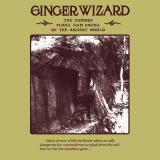
Crypt of the Wizard is proud to present Ginger Wizard - The Curious Flora and Fauna of the Ancient World on vinyl and digital formats.
About ten years ago in a record store in Prague, the Ginger Wizard discovered a copy of Bo Hansson’s Lord of the Rings LP. Although initially unfamiliar with the record, the reference to Tolkien’s masterwork and the incredible cover art drew him in and, rather fittingly, sent him off on a journey of discovery that would reshape his creative trajectory.
Years later while working in cassette tape manufacturing, Ginger Wizard noticed that most fantasy-inspired music fell into two camps: metal and dungeon synth. With little interest in the former, but intrigued by the latter, he began writing a few songs imagining a beautifully packaged and tactile cassette tape. However, dungeon synth he soon realized was “the most boring music to make”.
So began the Ginger Wizard’s own mythological discography. In 2022 came The Feast for the Dead King and Other Musical Themes recorded at home in a cold kitchen, is conversely an album full of warmth drawn from sheer exploration. A year later Can I Choose My Own Psychopompos? was recorded for the legendary Stoned to Death label - a 7” séance of semi-improvised noise and melody featuring allies from the Ginger Wizard’s live backing band The Peter Jacksons. The following year with Bathysburg Tales, a new approach was needed in order to keep the project interesting. Drawing inspiration from Popol Vuh and the inclusion of vocals lent by Protomartyr’s Joe Casey and Jakob Battick, a new more cinematic sound began to emerge.
Now, we present The Curious Flora and Fauna of the Ancient World marking a step into something stranger while still channeling the spirit of Bo Hansson. The new album rejects swords and sorcery for the mythology of the natural world “the ancient stuff,” he explains in the record’s insert, “has a similar taste for me as fantasy.” These songs bloom, creep, and shimmer like forgotten plants under distant suns while rooted in something real and organic. Inspired by the myths of nature rather than heroic quests, it’s an album that feels alive, equal parts archaeological dig and psychedelic garden.
Currently at work on a soundtrack for an imagined 1970s fantasy film in collaboration with The Peter Jacksons, the Ginger Wizard continues to expand his strange universe while The Curious Flora and Fauna of the Ancient World serves as a new map to somewhere ancient, beautiful, and unknown.
Editions Mego is proud to release the new album by Australian producer Jasmine Guffond. Developed over a two year period, Microphone Permission is an unsettling musical journey utilising contemporary tools of communication to display Guffond's ongoing research into online surveillance and sound as a method of investigation.
Source material on Microphone Permission are from various projects Guffond has been working on; a commission to sonify the data of the city of Melbourne, a dance performance about the future sounds of an extinct forest, an installation that sonifies Twitter meta data in real time, a job as a composer for a theatre work about music and feminism by five young female identifying performers in Western Sydney and a site specific installation at the Linachtalsperre dam that employed the harmonic frequencies of electric currents.
The results are a stark, brooding, disorientating journey into a paranoid musical field that sits somewhere between ambient club music and a dystopian soundtrack. Elements of techno, classical music and sound art form a dark intriguing masterwork that questions the nature of invasive, algorithmic and computational listening practices.
For example Microphone Permission refers to the consent we routinely give when installing various apps. onto our smart devices. Inspired by a 2018 scandal in which fans of Spain's most popular soccer team were effectively turned into unwitting spies by granting the La Liga application microphone permission. No matter which make or model, all smart devices are built with a microphone that is by default, forever listening. Listening in these situations often takes on an algorithmic form that enables tech developers to bypass public response to what is intuitively considered invasive practice, that is, traditional modes of eavesdropping such as using the microphone to listen and record audio.
out of Stock
Last delivered 9 months ago available to reorder, subject to availability
Gonzen, uminari or retumbos. Perhaps you've heard these sounds? They're known to occur all over the world and, as one might expect, humans have strained to offer various explanations for these unsettling emissions that materialise unbidden from the sky.
We like to say that we've understood what's happening so that we can move on. Tidy up the loose ends and don't scare the horses. Nothing wrong with that in good measure, but there's something to be said for the Haudenosaunee peoples' explanation. They pointed out that the Great Spirit hasn't finished their work of shaping the earth and is making a fair bit of noise while they're at it.
If you accept that many questions never truly get answered, in fact can or should never truly be answered, you may be able to tune your mind to this collection of lingering sonic detonations. If you accept that the work is ongoing, our labours seldom done, that there's not much point talking about the end of anything, you may be ready to join us. It's not our task to finish it, nor are we free to desist.
out of Stock
Last delivered 9 months ago available to reorder, subject to availability
The vinyl LP at the heart of this éthiopiques 31 tracks 2 to 11 was one of the very last vinyl records ever released in Ethiopia. But above all it represents, we felt, the absolute masterpiece of the Ethiopian Groove – the Swan Song of Swinging Addis. The album leaves a clear idea for posterity of the level of sophistication and mastery that modern Ethiopian music had achieved, before being crushed under the Stalino-military heel of the Derg – as the bloody revolution that was unfolding came to be called.
Ethiopia1976.
The Revolution that broke out in February 1974 rolled on in a ruthless march. The whole of Ethiopian society was utterly stunned. The bouquets of flowers handed joyfully to the first tanks of the coup d'état were to wilt very rapidly. From September 1976 to February 1978, 18 months of Red Terror (the name given by the junta itself) spilled blood throughout the country. This fratricidal conflict took its heaviest toll among students and youth. The shift from feudalism to a cruel and primitive Stalinism left the country's citizens deeply traumatised, and snuffed out any pretence of activism, whatever the sector of society. This ice age was to last for seventeen long years.
ሙሉቀን፡መለሰ Mulukèn Mellèssè Muluqän Mälläsä
It was three tracks by Muluken that served as the opener for éthiopiques-1 more than 25 years ago. Seven more tracks appeared on éthiopiques-3 and 13, all accompanied by The Equators, which was soon to become the Dahlak Band.
The first track, Hédètch alu, also the very first piece that Muluken ever recorded, left audiences both unsettled and amazed. Reflecting the singer's extremely young age (he was just 17 at the time), this angelic voice mystified many, who thought they were in fact listening to a feminine voice. He was not yet 22 when he released his last vinyl record in 1976 with Kaifa Records (KF 39LP), one of the very last to be issued in Ethiopia, before the cassette tape became the dominant medium for music distribution – and before the new revolutionary regime put a stop to all independent musical life, via an unspeakable barrage of prohibitions and other persecutions.
Mulu qèn, literally, “A well filled day”. This tender maternal intention wasn't enough to ward off the cruelty of fate. His mother's premature death drove Muluken to leave his native Godjam, in northeast Ethiopia, to live with an uncle in Addis Ababa. Born Muluken Tamer, he took his uncle's last name – Mèllèssè.
The spelling Muluken appeared in his administrative records. Transcription of Amharic to the Latin alphabet, both in Ethiopia and for scholars, gives rise to controversies and quibbles that can never be neatly settled. French allows for a closer approximation of the original pronunciation, thanks to its battery of accent marks, confusing as they may be to anglophones.
Between rather accommodating administrative record-keepers and the various versions that pop up in interviews given by the artist, Muluken's year of birth oscillates between 1953 and 1955…
1954? One thing is certain: the artist's talent made itself known very early indeed, because he got his start in 1966-67, at the age of 13 or 14. Photos from the period attest to his extreme youth. It's a strange sort of initiation for a very young teenager to become a sensation in the heart of Addis's nightlife at the time, Woubé Bèrèha – the Wilds of Woubé. And what's more, in the club of the Queen of the Night, the Godjamé Assègèdètch Alamrèw herself, the very same that was portrayed by Sebhat Guèbrè-Egziabhér in his novel-memoir Les Nuits d’Addis Abeba2… The legendary female club owner who is remembered to this day by the capital's ageing boomers.
Muluken first tried his hand at the drums, before he grabbed the microphone. He emigrated briefly to the Zula Club, across the street from the old Addis Post Office, one of the ground-breaking bars of the burgeoning musical scene, before joining the Second Police Band in 1968, for around three years. He spent a few months with the short-lived Blue Nile Band founded by saxophonist Besrat Tammènè. As the musical scene grew increasingly successful, and pulled slowly but decisively away from its institutional ties, Muluken released his first 45rpm single in February 1972 (Amha Records AE 440). It was included in two LP Ethiopian Hit Parade compilation albums in September of the same year. All in all, Muluken released eight two-track 45s and the same number of original cassette tapes between February 1972 and 1984, the year that he departed for permanent exile in the USA. After converting to Pentecostalism in 1980, Muluken gradually abandoned all secular musical activity. In 1985, at the end of a concert in Philadelphia, he decided to quit concerts and recording for good. Mèlakè Gèbré, the historic bass player from the Walias band who was playing with him that night, recalls that everything appeared so irredeemably diabolical in Muluken's eyes, that it was to be the end of his contribution to Ethiopian Groove.
The end of the story, the beginning of a legend.
Dahlak Band, forgotten by History
Aside from his personal history and vocal talents, it must be remembered that Muluken Mèllèssè was one of the biggest names in the musical innovations that marked the end of the imperial period. These éthiopiques aim to convince those who are just discovering this hidden gem... As for Ethiopians themselves, they are to this day captivated by this singular and atypical figure in the Abyssinian pop landscape – even though he withdrew from public life some 40 years ago. Incorrigible devotees of poetic twists, of more or less hidden meanings, Ethiopians appreciate above all the care Muluken took in choosing his lyrics and the writers who penned them, such as Feqerte Haylou, Alemtsehay Wodajo and, here, Shewalul Mengistu (1944-1977). Love songs, written by women, a far cry from the conventional drivel that pleases sappy sentimentalists.
Muluken is equally acclaimed for his perfectionism when it came to music, the opposite of the overly casual approach that is all too common. He remained a faithful partner of musicians who came from a lineage that borrowed from several inventive and pioneering bands (Venus, Equators, Dahlak). Amongst them were certain artists who began their musical lives with Nersès Nalbandian at the Haile Sellassie Theatre and who come of age in around 1973 – at just the wrong time, you might say. Among them were the pillars Shimèlis Bèyènè (trumpet), Dawit Yifru (keyboards) and Tilayé Gèbrè (sax & flute). Most notably Tilayé Gèbrè, certainly one of the most important musicians, composers and arrangers of his generation, of the end of the imperial era, and of the early years of the Derg.
It was only in 1981 that a miraculous opportunity arose for Tilayé to escape the Stalinist paradise of the dictator Menguistou Haylè-Maryam. Once again it was Amha Eshèté (1946-2021) who provided a solution. The spirited and courageous producer, who had been in exile in Washington since 1975, succeeded, thanks to his incredible perseverence, in bringing the Walias Band to the USA. It was, in fact an extended Walias Band comprising ten musicians3, six of whom chose to slip away after a few concerts and the recording of an LP (The Best of Walias, WRS 100). Tilayé Gèbrè was one of these. He has been living in the USA ever since. There he joined the then-nascent Ethiopian diaspora, which lived largely unto itself, and was making only very modest headway in the American musical market. It seems unfair that Tilayé Gèbrè and the Dahlak Band were not able to benefit earlier from the public recognition that they do deserve.
A similar draining away of the top-rate talents would lead to the reorganization of the major groups of the “Derg Time”. The remaining artists spread themselves around between Ibex Band (renamed Roha Band), Ethio Star Band and a remodeled Walias Band. That spelled the end of the Dahlak Band.
With this record, produced by the essential Ali Abdella Kaifa a.k.a. Ali Tango, we can appreciate everything that the Derg not only destroyed, but also prevented from flourishing. This gem of Ethiopian-style afrobeat came out in 1976 (and, by way of a parenthesis, before the FESTAC 1977 in Lagos, which was attended by an impressive delegation of Ethiopian musicians — although Fela was already personna non grata in his own country). Despite everything that might distinguish this ethio-groove from Fela’s music – no colonial axe to grind, no question of political confrontation with the authorities, no claims to negritude or Africanism for the Ethiopian musicians, and less extrovertion! –, this LP fits beautifully into the saga of intense and electrified soul of the new “African” groove that Fela and Manu Dibango embodied so well from that point onwards.
In restoring this record to its place in the afrobeat epic, it can be seen that, if nothing else, the timeline bestows a legitimate pedigree and a historical primacy to works that had no international impact when they were originally released.
Warning! Masterpiece!
out of Stock
Last delivered 3 months ago available to reorder, subject to availability
“So, how did this band even happen?” That’s the question most often asked of Winged Wheel, a creatively and geographically scattered collective who have somehow congregated to make a noise that’s unexpected but undeniable. The band includes Whitney Johnson (Matchess, Circuit des Yeux), Cory Plump (Spray Paint, co-owner of the dream venue Tubby’s), Matthew J. Rolin (solo guitar wizard and half of the Powers/Rolin Duo), Steve Shelley (Sonic Youth), Lonnie Slack, and Fred Thomas (Idle Ray, Tyvek), each player living in a different city and bringing their own unique element to the group’s chain reactions. Early long distance file-trading between a few members yielded 2022’s No Island, a debut album that was accidentally really good. Good enough for the band to expand their membership and meet in person for the sessions that became 2024’s Big Hotel, a surgically-assembled murk of high energy kosmische rock with jammed-out tendencies.
Fast forward just a little and all of a sudden the band that started out as a passing idea has completed multiple tours, become a taper’s dream with sets that drift through structure and improvisation, and ridden the momentum to places unforeseen on their third album, Desert So Green. After a run of shows across the Midwest in the spring of 2025, the group settled into a studio on the outskirts of Chicago to track their next record. Though the full lineup had only been solidified for a little over a year at this point, time together on stage led to a quickly-expanding sound and a unified vision of always going somewhere new. To this end, Winged Wheel abandoned the play-now-sort-it-out-later approach of Big Hotel and instead spent hours refining flashes of inspiration into coherent songs.
First ever vinyl release from the fourth member of ATCQ. Consequence, featuring Kanye West, Mobb Deep, Q-Tip and Phife Dawg (R.I.P.)
Released on Orange vinyl a must have for all Boom Bap classic 90’s golden era NYC hip hop from a Native Tongue affiliate.
The pinnacle of total art pop, "yes, mama ok?", celebrates its 30th anniversary.
The album includes a 14-track best-of LP featuring a comprehensive selection of tracks released between 1995 and 2000 on labels like LD&K, Nippon Columbia,
and Etiquette Recordings; a 26-track cassette tape featuring more best selections; a 7-inch single featuring the band's best killer tunes; and a long-awaited
two-disc CD featuring the works of legendary songwriter Takeshi Kongochi. These four titles, overseen by Takeshi Kongochi and Wataru Sawabe (Skirt), who
self-proclaims himself the world's biggest fan, are officially released in celebration of the band's 30th anniversary.
The long-awaited "yes, mama ok?" best-of album, a 14-track vinyl LP, is now available!
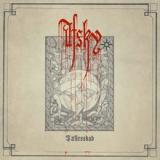
Faellesskab reveals their most critical and emotionally charged work to date, a deeply personal voyage into the heart of Nordic black metal, where raw emotion and melodic depth keep reveling in sorrow and longing beauty. Translating to "Community", Faellesskab's six tracks weave a strong musical oeuvre within the Afsky canon; their walls of haunting melancholia, interwoven with vital intensity, have never been more powerful. Yet, this new work also sees the band at its sharpest in social criticism, as Ole Luk of Afsky notes: Faellesskab - Overture to the Downfall. Here, community is praised like herd animals fleeing responsibility.
A parade of moral superiority, where truth is trampled in the name of consensus. Where unity means silence, and doubt is a crime. Six songs of shame disguised as care, of freedom suffocated, and of the solitary few who still dare to question. A chorus of hollow words, where silence screams the loudest. Welcome to the celebration - the curtain hasn't just risen, it's been torn away! Afsky will mark the release with a special show in Copenhagen on October 17, graced by a full European album release tour kicking off the following week. Two singles are set to be unveiled in the lead-up to the release. While Afsky continues to refine their signature sound, this release is set to be another landmark in the band's uncompromising discography.
Lego Dave du Shit, a noble aristocrat from the vallée du Shit, traveled to the RCK JUMEAUX planet to answer the Bleast’s question: “Qui A Dub Maman?”
To do so, he had to explore the Îles Nvlles, inhabited by robots, where he learned the ancestral chant of the Witches of Good: “Which is Good.”
He’s waiting to return to Earth in September to reunite with his friend Loba from Gagra, and to take part in the LAST JAM of October.
That being said, he must also visit in November the guardian Mezacidub III, son of Mezacidub II and Valprius Organo (a clone of the Bilrituel Cyborg of Tarza Y7).
In a few words, APR7S is simply an expression used after the party – or “after” in English.
out of Stock
Last delivered 8 months ago available to reorder, subject to availability
Live music needs to offer you something that you cannot get on a studio recording. It's the sense of freedom and intimacy, wondering how the songs will be played and what the reaction will be. Live concerts give you the tingle where the hair stands up on the back of your neck. "Live audiences give you the tension and responsibility to be creative, for me that's the challenge I like," says the iconic Dutch guitarist. After all of these years, you ponder what keeps Jan going out there, night after night. "It's my love to play for people all around the world," he smiles. The supremely gifted guitarist is equaled by very few, and his legendary ability makes him impossible to pigeonhole. His position as Dutch royalty has been cemented; he received the Golden Harp Award in early 2005, Holland's most prestigious music prize, and in 2012, he was appointed Knight in the Order of Orange-Nassau. This royal honour recognized his contributions to Dutch music and his influence on musicians worldwide.
The debut album by the 8-bit music unit YMCK, which caused a sensation when it was released in 2004, is now available on vinyl! This classic album, which laid the foundation for 8-bit music/chiptune, is a collection of pop music that combines retro game sounds with cute whispery vocals and stylish melodies!
“From Birmingham and centred around the extraordinary songwriting talent of James and Patrick Roberts – initially as The Sea Urchins and since 1993 as Delta – they’ve only just got round to releasing their debut album, Slippin’ Out. It is a work of some beauty”. 9/10 NME ALBUM OF THE MONTH, 2000
“It’s classicist for sure, shot through with the influence of The Beatles, Byrds and Buffalo Springfield. In James’ downright beautiful closing ballad ‘I Want You’ one can also discern the school of ambitious English balladry that peaked in about 1968: The Casuals, Love Affair, Barry Ryan. The impression of accomplished old-schoolery is only furthered by the dizzying string arrangements penned by Louis Clark Jnr, son and namesake of the one-time orchestral chief of Electric Light Orchestra” – Mojo lead review, 2000
Having ended the 90s with the spirited ‘Laughing Mostly’ compilation of singles and demos (Guardian Album Of The Week) Delta finally released their debut studio album of twelve songs in the summer of 2000 on the Dishy Recordings label. Accepting that this might be their sole studio album the band threw everything at these recordings allowing it to exist in its own sphere, unbothered by their contemporary generation and disregarding the idea of even releasing a single.
Recorded at DEP International there was a notable difference to the scruffier, looser charm of their 1990s recordings, a tighter focus developed by having the experienced Lenny Franchi mixing the LP with them. Lenny had been working with a number of Island artists including My Bloody Valentine and Tricky so knew his way around a desk. There was also the question of budget (a few months passed between recording and mixing whilst funds were raised) so every day counted. Ultimately though you can hear the joy in the recordings, even amongst the melancholy and angst. As James recently recalled in an interview in Shindig! Magazine: “It was such a big deal for us. It’s one of my fondest memories doing that record. Everyone was happy. If there’s anything that I’d stand by, I think it would be that”
Louis Clark Jr joined the band towards the end of the ‘90s and brought a classically-trained element to the recordings particularly with his string arrangements. For ‘Cuckoo’, ‘I Want You’ and the prophetic ‘We Come Back’ Louis brought in eight players from the Birmingham Conservatoire; the baroque style is partly why the record often receives comparisons to Love’s ‘Forever Changes’.
On release ‘Slippin’ Out’ was a big favourite with writers at the NME, Mojo and The Guardian again and before long the band were signed to Mercury/Universal for their second studio album ‘Hard Light’, a far more expensive and expansive love affair. It was a temporary palatial home where things quietly fell apart again, but that’s another chapter.
“If long-term memory is nothing more than selective editing and only pop’s most weighty visceral works are built to last then it’s quite possible that in 50 years the Britpop era will be best recollected for the two bands it ostracised. Earlier this year we met Shack and thought their story of mercurial brilliance indicated the biggest music biz oversight of the 90s. We were wrong because we hadn’t met Delta yet. This is richer and more engrossing than anything by Shack”
out of Stock
Last delivered 10 months ago available to reorder, subject to availability
Harrison BDP stands as one of the true masters of that off-world deep house sound. Easily one of the most consistent producers, so having the Welsh wizard launch the first 12” on Jupiter’s Depth is iconic. The EP delivers it all — from deep, trippy journeys to pacey dub-techno rollers. No question, another Discogs relic in the making — 300 press, so move quick.
out of Stock
Last delivered 5 months ago available to reorder, subject to availability
Spike Lees neuester Film ,Highest 2 Lowest" zeigt das Leben des Gründers des fiktiven Plattenlabels Stackin Hit's, gespielt von Denzel Washington. Der Soundtrack hat eine coole Auswahl an Original-Songs von etablierten Musikgrößen und neuen Künstlern. Die aufstrebenden Sängerinnen Jensen McCrae und Aiyana-Lee bringen ihre einzigartigen Stimmen ins Album ein, während die Harlem-Legende Eddie Palmieri mit seinem Salsa-Orchester für energiegeladene Auftritte sorgt. Das absolute Highlight ist der ebenfalls aus New York stammende A$AP Rocky (der auch in dem Film mitspielt), der zwei knallharte Ohrwürmer beisteuert, die uns daran erinnern, warum er einer der modernen Superstars des Rap ist. Die Starpower des Soundtracks wird durch eine mitreißende Orchesterpartitur von Howard Drossin untermalt und durch ein vom Jazzpianisten Fergus McCreadie angeführtes Trio ergänzt.
World Party was a musical group, predominantly the solo project of its sole consistent member, the songwriter, producer and multi-instrumentalist Karl Wallinger. Wallinger started the band in 1986 in London after leaving the Waterboys.
Featuring the #2 most downloaded/ streamed hit Is It Like Today?, small limited runs of each World Party album (5 total) will be pressed on white vinyl, with the run marketed as “The White Albums”, cheekily referring to Karl’s re-recording of The Beatles and his fans eternal quest to hear them.
When the ghost in the machine meets the breath in the reed, expect sparks. Electronic sound artist Robin Rimbaud – Scanner joins forces with acclaimed British bass clarinetist Gareth Davis to create an album where circuitry hums, wood vibrates, and the air between notes crackles with possibility.
This is no polite meeting of minds — it’s an elegant collision. Scanner’s intricate electronic textures weave around Davis’s deep, resonant tones, blurring the boundary between acoustic breath and digital pulse. The result is a sound world that’s at once intimate and expansive, familiar yet thrillingly unpredictable.
Think late-night conversations in abandoned buildings. Think fog rolling over neon. Think sound that slips through your fingers even as it takes hold of you.
The songlines in question , memories and distorted images of travels across various continents, form an imagined biography of places that might or might not have been but somehow seem to exist . Landscapes of blurred statements , lost words and echoes of meandering structures.
"If Miles Davis had been raised on shortwave radio static and midnight phone calls, it might have sounded like this."
Their original pop-infused songs blend rock, punk, and garage rock, and--together with their wild stage presence--have made them unforgettable to anyone who sees them live. Last year, the power trio even provided the soundtrack for a Ryukyu Nissan commercial--appearing in it themselves. Now, it's time for their debut LP: "Best Answer"! The album is incredibly catchy and versatile. From wild, lo-fi punk instrumentals like "Beehive!!" and "Howling Bowl", to cool pop- punk tracks like "I Want You", "45", and "Questions- theme".
There are also danceable garage punk songs like "Brighton Beach", "Koi no yokan", and "Yoakenotori ga naita". The track "I am I" references the SONICS' guitar sound and adds cool Japanese female vocals, screams, and harmonies. The album also includes two wild, punky cover versions: the R&B classic "I Got My Mojo Working", and a charming yet incredibly cool take on Jacques Dutronc's "Les Cactus". And with "Honey Pye", they even deliver a catchy off- beat tune with a feelgood pop-punk attitude. This album is top-quality Japanese rock--from beginning to end!
Xexa is still undefined, gliding over her origins, influences, and points of reference. Her music is informed by uploads from all that, processing heritage and future in much the same democratic way, sure of its (her!) path. Synthetic as it may sound, »Kissom« contains the very human element of Xexa's presence, not only through her instantly recognizable ethereal vocals but also manifest in the web of grooves stopping short of »dance«. »Kizomba 003« is the closest she comes to the dancefloor, a reduced take on the popular style of kizomba, a low-key interpretation but with the vocals atypically high in the mix. A brief breath of nostalgia. »Kissom« (title track) prolongs the slow pace, almost as an extended mix of »Kizomba 003«, stretching the sexy bounce for close to 4 extra-delightful minutes.
Everything seems to dissolve into space, as if every track gently expires only to be reconfigured somewhere else, molecule by molecule, perhaps in a different location within our mind. The artist somehow corroborates the feeling, particularly regarding »Será«, »Xtinti«, and »Txe«, which she says »finish exactly where I wanted. They all end with an EQ that mutes the frequencies until they cease to exist«. Here, there, sparse beats, successive waves of ambience, half-machine lips singing close to our ears, a blend of classic 4AD and a metallic environment warmly wrapping around the music. Extra-long, »Quem és tu?« poses the question – Who are we? Who is she? And the title »Kissom« stems from another question Xexa often hears from people, »Ki som é este?« (What is this music?). The answer might well be the artist's own paste of the words »kiss« and »som«. Lovely.
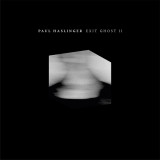
Die Cut Sleeve with download. It’s a strange betweenworld, bookended by sleep and the jolt of being wide awake in a place where you wonder how you got there. You know the feeling… It seems familiar but the colours are, well, unreal. In a high-ceilinged room, a grand piano plays lush melodies as, meanwhile, somewhere, an Alice In Wonderland clock ticks, cellos are bowed, a swarm of something vibrates and the hallucinatory crowd around Rosemary’s Baby babble. An echoey electronic hum builds and falls like a 50s refrigerator passed through and effects board, things run backwards, staccato strings are plucked… and that’s not the half of it. “I’ve never been happy staying in one particular school of musical thought. The fun has been turning things on their heads, to try something you were not supposed to do.” We’re on an immersive and adventurous travelogue with the former member of the legendary Tangerine Dream, Paul Haslinger - this is a man who knows how to build tension, hold moods, illustrate contempt, lies, passion and pleasure; He can create fear, loathing and love - he’s been unlocking the nuances of such emotions in a hugely successful career as a TV and film soundtrack composer (Halt And Catch Fire, Underworld and the Golden Globe-nominated Sleeper Cell). ‘Exit Ghost’ is his long thought out opus, a moment caught in time, flicking through reference points, taking an ethereal excursion that permeates musical genres as it becomes awash with intricate sounds and cross-pollinating rhythms. Built originally from the warmth of his grand piano ‘Exit Ghost’ resonates with purity and power, from an eerie and evocative betweenworld, that’s at once expansive and rolling, then intoxicating and suffocating in equal measures; modern composition at its most uplifting; cerebral, celebratory, intense and beautiful. “The soul searching in connection with this record was extensive. Finding places of resonance, giving a colour to your memories. It was more challenging because it’s not somebody else’s narrative. Finding the core of your own story can be the most difficult task of all.” Created over the span of eight years and filled with literal and personal references, the album itself is a testament to the search - a quest filled with hints, particles and suggestions.
'In collaboration with the children of Nico Kasanda, better known as Docteur Nico, Planet Ilunga proudly presents an anthology dedicated to African Fiesta Sukisa, available as a 3LP set and a digital release with bonus songs. This release is the result of many years of preparations and was realized in close partnership with Liliane Kasanda, Nico’s eldest daughter. Marking forty years since his passing, we felt that the year 2025 was the right time to honor Docteur Nico’s legacy with this original collection.
'Almost all of the African Fiesta Sukisa songs were released on Nico’s Sukisa label which translates in Lingala for “the final accomplishment”. The music on Sukisa, crafted by Nico and legendary vocalists such as Chantal, Sangana, Apôtre, Mizele, Lessa Lassan and Josky, embodies the essence of that powerful phrase with genius, class and depth. The label ran between 1966 and 1975 and released approximately 280 songs. Ngoma also issued the group between 1967 and 1971 and, in addition, reissued material from the Sukisa label. Many of these songs have become part of the collective memory of Congolese society and are still heard, discussed, and analyzed daily across digital platforms worldwide, as well as on numerous Congolese radio and TV stations.
'The album we put together features some of Nico’s signature songs alongside never before reissued tracks from the Sukisa catalog. It furthermore contains a large booklet with song commentary, testimonial interviews from well-known musicians, journalists, fans and Nico’s entourage, besides never before published photography about his personal and musical life.
'Alastair Johnston, author of the book ‘A Discography of Docteur Nico’ and longstanding Planet Ilunga collaborator, designed a stylish booklet and cover using all our collected material. Audifax Bemba, longtime admirer, compiler and connoisseur of Nico’s music, and the author of most of the song commentary in our accompanying booklet, offers his portrait of Docteur Nico:
“After displaying technical virtuosity with African Jazz, expert and accomplished guitar with African Fiesta, which musicologist Sylvain Bemba described as a dream guitar, Nico Kasanda was consecrated ‘dieu de la guitare’ by the public in the late sixties. With his band African Fiesta Sukisa, Docteur Nico displays his wide palette of unusual sounds. While exploring the Hawaiian guitar with its clear, airy, plangent, psychedelic effluvia, he continues to replicate the piano comping technique, and adds two missing strings to his bow: a simulation of the sanza (likembé or thumb piano), whose sounds he reproduces right down to the noisemakers of the tiny tin rings, on the one hand, and the sounds of the Luba balafon on the other. The right note, in the right place, at the right time, is the triptych on which Nico Kasanda’s playing is based, a note dressed in the perfect sound. A guitar of pure emotion. With African Fiesta Sukisa, his playing takes a ‘Chopin-esque’ turn, sending out more notes in a sublime adagio. The true artist is the one who simplifies everything. Docteur Nico is a genius of our time, whose style makes him the supreme exponent of the most important guitar school in Congolese music. He is recognized by his peers as the greatest African solo guitarist of all time. Sculpting sound in a tireless quest for beauty, Nico Kasanda has sublimated the guitar throughout his career.”
The former conscientious objector has long used his music to denounce the abuse of power and advocate for humanity and peace. Now, at a time when war has once again become part of our daily lives - at least in the news - the successful singer-songwriter dedicates an entire album to the subject: Fra guerra e pace (Between War And Peace). " War is a dimension from which humanity has never truly freed itself. A place where destruction and annihilation intersect with other aspects of life - love, birth, hunger, or thirst," writes the artist in the foreword to the album booklet. With this musically and thematically rich album, Pippo Pollina brings us closer to the people behind the headlines, giving life to what we only hear in the news. We are confronted with fear, pain, and grief - but also with hope, love, and poetry
Featuring the otherworldly vocals of the legendary jazz singer Norma Winstone whose vocals were recently sampled in Drake's 2023 chart topping single IDGAF (feat. Yeat) and Leo Taylor (Floating Points, Hot Chip, Joy Crookes) on drums, the EP is the amalgamation of Barrott's long term fascination with sunset music, and the ways the change of seasons impact the way we co-exist with the sun. As winter draws closer and we move on from the Autumn equinox to Winter solstice, Barrott's latest release captures the transformative yet paradoxical feeling of melancholy over the end of Summer and the start of winter while creating an eerie sensation of serenity.
The EP follows from the release of Barrott's critically acclaimed and deeply personal 2024 album Everything Changes, Nothing Ends.
The new EP sees Barrott return to his beloved sunset music, as he continues his eternal quest to find new ways to soundtrack this sacred Ibiza moment.
Crowned as the"master of sunset music"by Pitchfork, Barrott's new EP is filled with celestial grandeur that stops you in your tracks. A profound musical meditation and an homage to the sunsets of the Autumn months, the EP captures the sonic poetry of the changing skies and the seasons.
The haunting combination of Barrott's production & arrangement skills, Taylor's jazz drums and Winstone's endlessly ethereal vocals soar in a harmonious union across the title track of the EP while the openerI Am The Starssummons you in for a brief respite from the cacophony of the modern world. The wistful second trackMy Blue Heartlingers with you with its melancholic jazz horns swelling side by side with Winstone's vocals while the closing trackI Am The Airfloats through your ears with its sublime contemplativeness. I Am The Sun, You Are The Moonsees Barrott returning to his sonic ruminations on sunsets, however they are more profound and life affirming than ever.
"At the end of the summer, on a clear bright starry night I climbed to the top of a mountain in Ibiza with a pair of headphones and listened to these tracks and lost myself in the vastness of the night sky and the endlessness of Norma's voice. At that moment everything made sense in my world for the first time in a long while and it just felt right",Mark Barrott says.
"I was surprised and delighted to be asked to participate in this very musical project and to be given such a free hand. Trying to integrate the voice into what were already beautifully formed pieces was creatively very interesting", Norma Winstone says
Paul Murphy’s Claremont 56 label welcomes a genuine legend of UK music to its roster – Chaz Jankel, the man whose dizzying musicality and love of soul, funk and disco did much to shape the sound of Ian Dury’s Blockheads band in the late 1970s and early ‘80s.
A virtuoso keyboardist with a deep love of Black American music, Jankel’s arrangements and compositional skills were key to the success of their records, the funkiest of which not only became crossover pop hits – see ‘Hit Me With Your Rhythm Stick’ and ‘Reasons To be Cheerful, Part 3’ in particular – but also saw heavy rotation in now iconic New York clubs including the Paradise Garage and Studio 54.
This continued during the formative years of his solo career, with ‘My Occupation’, ‘Questionnaire’ and ‘Glad To Know You’ (later famously re-edited and dubbed out for nu-disco dancefloors by Todd Terje) all becoming club hits. The great Quincy Jones also covered Jankel’s infectious single ‘Ai No Carrida’, while experimental, club-ready synth-jam ‘3,000,000 Synths’ was also influential during the early years of the electro movement.
For his Claremont 56 bow, Jankel has delivered an all-new workout recorded earlier this year, the simply titled ‘Rhumba Jam’. A typically warm, groovy and rolling affair, it features Jankel delivering infectious, stretched-out Rhodes electric piano solos over toasty bass, clipped guitar licks, warm bass, accordion-style synth motifs and a densely layered Rhumba rhythm. While relaxed and sun-soaked, it also has bags of Balearic dancefloor potential.
Murphy remixes under his now familiar Mudd alias, leaning into the track’s languid Balearic vibe while keeping a firm focus on the dancefloor. Beginning with an enticing mix of metronomic drums and jangly acoustic guitars, Murphy slowly layers up key elements of Jankel’s original – think rubbery bass, rhythmic handclaps, mazy synth sounds and those wonderful, stretched-out solos. It’s a version that pays due reverence to the quality of Jankel’s musicianship, production and arrangement while subtly extending it and reframing it for 21st century Balearic dancefloors.
out of Stock
Last delivered 3 days ago available to reorder, subject to availability
No Speakers scores a major coup here by signing a Detroit legend from Underground Resistance's Galaxy 2 Galaxy. This guy's shared stages with figureheads like Jeff Mills, Carl Craig and Goldie so his creds cannot be questioned. His signature fusion of jazz and electronic fire burns bright here with A-side bangers 'Layers to This' and 'Bridgehouse' primed for future classic status as well as peak-time destruction. Flip it for South London's L.A. Synthesis remix. No stranger to dropping their own iconic techno, their take twists and turns into otherworldly soundscapes. Label boss El Prevost closes the EP with a savage twist of 'Bridgehouse' that is dark and twisted in all the right ways.
DJ Feedback
Kai Alce:
"Bridgehouse is just that, a bridge to the future."
Chris Udoh:
"Bridgehouse is an exceptional cut! "
Kosh:
"Nice release."
D'Julz:
"Best EP I heard in a long time. Lovely."
Radio Slave:
"So good to see La Synthesis here !!! and another great EP. from Jon. Full support."
ICYKOF:
"This is really fun. Love the first track."
Barbara Preisinger:
"The original tracks are sounding great to me and will go into the box. Thanks a lot!"
Orlando Voorn:
"Dopeness, all killer no filler."
Okain:
"Classy stuff."
Cristi Cons:
"Very nice, thanks."
Ryan Crosson:
"El Prevost remix is great, also enjoying the la synthesis remix."
Harri:
"Nice, will play and support."
Domenic Cappello:
"Jon is Detroit royalty, love this."
DJ Hutch:
"Love this release. Bridgehouse remix is crazy."
Harvey Sutherland:
"Bridgehouse is hot, thanks!"
Colin Dale:
"Excellent EP. All the cuts rock."
Greg Gow:
"Nice soulful tracks full support."
Laurent Garnier:
"Cool deepness."
Aleqs Notal:
"Jon Dixon, always on fire!!!"
Man Power:
"Layers to this is great."
DJ Bone:
"Smooth and funky release. Very nice."
out of Stock
Last delivered 10 months ago available to reorder, subject to availability
Enter a world unknown! Birdfriend is a cassette label run by Japanese musician/composer Koshiro Hino, aka YPY, who is also a founding member of the Osaka band goat. This compilation, available on CD and double vinyl, features 18 tracks by Japanese artists, from 2013-2017, previously available only on hard-to-find cassettes on the Birdfriend label, now available to you, the curious and courageous listener, worldwide on EM Records. Rejoice and enjoy the fractured rhythms and future-now timbres, questing intelligences and D.I.Y. energy, conveyed to you through hand-made synths, custom electronics, synths and samplers. Compiled by Hino, who also provides liner notes and cover art, these Japanese artists share a love of texture, semi-skewed rhythm, simple-yet-evolving structure, and a sense of humour; yet despite these similarities, there is a great variety across this release, making for an exciting and cohesive musical experience.
out of Stock
Last delivered 6 years ago available to reorder, subject to availability
The 3rd and final chapter in Cochemea's epic quest to explore and express the spiritual connection between his art and ancestry. For Vol 3: Ancestros Futuros, Cochemea entrusted his vision to a core group of longme collaborators-a powerful octet composed of New York-based percussionists and members of Daptone's famed rhythm section. Gabriel Roth (aka Bosco Mann) reprised his role as producer, recording and mixing the album live to 8-track analog tape. Cochemea continues to push the boundaries of his sound, blending past, present, and future into a ritual offering-an evolving sonic narrative where memory, survival and creativity converge.
Sugaring a Strawberry, the sophomore record from Julia, Julia, is a study in coming undone—on purpose. Recorded at COMA, Julia Kugel's home studio, and mixed through a custom Flickenger clone, the album drifts in and out of clarity like memory itself. It's emotionally retrospective, creatively unvarnished, and deeply human. You can hear it in the hiss, the warmth, in the vocals so raw they're like an open window. These songs weren't engineered for perfection. They were built to breathe. Her long-time collaborator and husband, Scott Montoya, mixes it all so loosely that you can hear the air between tracks— a space that makes the music feel inhabited rather than recorded.
"Bound" opens the album like a secret passed between sisters, solemn and unspeakably close. It begins with the softest of touches: hushed guitar, a near- whispered delivery that carries the intimacy of someone singing only for one other person. It's a love song, but not romantic, more ancestral in the way long bonds can be. All glow and undercurrent, "I Know," is like hearing someone hum through a wound. The track arrives as if it had been waiting, coiled and complete, to be sung. Its pulse is slow but insistent, anchored on a hypnotic loop and a vocal that's half-incantation, half-confession. One of the most outward-facing songs on the record, "Feeling Lucky," opens like a cigarette flicked in the dark– smoky and a little bit slick. Built on a skeletal beat and a nearly detached vocal, it leans into a sarcastic swagger that barely masks the ache beneath. The delivery is droll and glazed, the instrumentation is sparse and a little woozy, leaving space for her voice to sway—a shrug of a song, stylish in its sadness. "A Love That Hurts" drifts in on soft, fingerpicked guitar and a dry, close-mic vocal that feels both haunted and immediate. The mix is stripped down and analog-warm, letting tape hum and silence frame the emotion. Julia sings like she's remembering something she doesn't want to, each line a slight unraveling. Like the rest of the album, "A Love That Hurts" doesn't push toward resolution. It sits in the ache, sifts through it, makes it beautiful.
Sugaring a Strawberry doesn't seek catharsis so much as stumbles into it. There's a quiet volatility to these songs like they might fall apart if you press too hard. It moves in shadow and softness, asking questions it doesn't answer. It doesn’t end with closure. It ends with truth.
»La Traversée« (»The Crossing«) is Matthias Puech’s second album for Hallow Ground and follows up on 2023’s »Mt. Hadamard National Park.« Profoundly inspired by re-reading »The Odyssey,« the French composer, instrument designer, and scholar used a Eurorack modular synthesizer to create four pieces that are by far the most intuitive and emotionally charged in his ever-expanding catalogue. Puech’s masterful command of sound comes to the forefront with even more urgency on this record. A wandering meditation on the human condition, »La Traversée« is an album that is constantly in motion—complex electronic music at its most gripping and evocative.
The foundation for »La Traversée« was laid when Puech prepared a live set for a tour organised in collaboration with Hallow Ground in support of »Mt. Hadamard National Park.« Before writing the first three pieces—»Ennosigaios,« »Polyphármakos,« »Nekuia«—the 18½-minute-long »Ithâké« was composed in near-total isolation in the South of France at the end of 2023. Puech performed the material live several times before taking a step black from it for a while. He revisited the pieces when preparingthem for a release. »I was struck by how the technical process and the intention behind the music had completely vanished from my memory,« he says.
What remained intact, however, was Puech’s association of the material with one of the most influential texts of Western literature. Reading a graphic novel adaptation of »The Odyssey« with his two four-year-olds, he noticed the effect that it had on them and himself. »Its themes of longing, fear of and attraction to the unknown, unresolved quests, and the struggle for control felt topical,« he says. »I was completely taken. Every story ever told seemed contained in this ancient tale; every story I have ever tried to tell as a composer seemed inscribed in this framework.« This also extended to formal motifs such as the repetition of incidents, narrative developments, or dramatic effects that also mark »La Traversée.«
Puech says that he perceived Homer’s writing as musical, »like an old Delta blues or a Renaissance counterpoint,« which inspired his writing process. »With a couple of knobs on my Eurorack system, I could control the unfolding of a story,« he notes. »This made me pass through different emotional statesand led to moments in which everything made sudden sense—when you as an artist get a glimpse atsomething essential, can touch upon something universal.« This shines through »La Traversée,« a wildly imaginative album that is deeply personal while also telling a story far more wide-reaching than that of its creator.
out of Stock
Last delivered 10 months ago available to reorder, subject to availability
Do you believe in spring? Simon Wangen (cello) and Philipp Sutter (piano) pose this question as the title for their new project. Whereas Bill Evans made a demand in 1981, the two Cologne-based musicians believe that in times of uncertainty, crisis, and environmental destruction, it is ok to set a questin mark here. But politics and world events aside: Do you believe in spring? Of course! It's never too late to start something new, get creative, and test your own limits. Simon Wangen is a classically trained cellist, Philipp Sutter a trained jazz pianist. Their different musical roots merge on this instrumental album into a lively mix of neoclassical, new jazz, and Cinéma Nordique. Ten pieces come across as sometimes dark, sometimes wild, sometimes delicate, always focusing on the dialogue between the two instruments that harmonize so well. The subtle use of electronic effects constantly opens up new perspectives and builds a bridge to contemporary sound aesthetics. Cello and piano—this combination has been established for centuries, but can still add new facets today. Do you believe in spring? begins stormily and turbulently, oscillating between romantic, sad, and beautiful moments, and leads from a rather dark beginning to the final and eponymous piece in C major, which leaves the listener with a glimmer of hope. Do you believe in spring? From October 24, 2025!
Do you believe in spring? Simon Wangen (Cello) und Philipp Sutter (Klavier) werfen den Titel für ihr neues Projekt als Frage in den Raum. Wo Bill Evans 1981 eine Forderung formulierte, sind die beiden Kölner Musiker der Ansicht, in Zeiten der Unsicherheit, der Krisen und Umweltzerstörung durchaus ein Fragezeichen setzen zu können. Aber abgesehen von Politik und Weltgeschehen: Do you believe in spring? Natürlich! Es ist nie zu spät, etwas Neues zu beginnen, kreativ zu werden und die eigenen Grenzen zu testen. Simon Wangen ist klassisch ausgebildeter Cellist, Philipp Sutter studierter Jazzpianist. Die unterschiedlichen musikalischen Wurzeln verschmelzen auf diesem Instrumentalalbum zu einer lebendigen Mischung aus Neoklassik, New Jazz und Cinéma Nordique. Zehn Stücke kommen mal düster, mal wild, mal zart daher, stets die Zwiesprache der beiden so gut harmonierenden Instrumente im Fokus. Der dezente Einsatz elektronischer Effekte öffnet immer wieder neue Perspektiven und schlägt eine Brücke zur zeitgenössischen Klangästhetik. Cello und Klavier - diese Besetzung ist seit Jahrhunderten etabliert, aber kann auch aktuell immer wieder neue Facetten hinzubekommen. Do you believe in spring? beginnt stürmisch und aufgewühlt, changiert zwischen romantisch - traurig - schönen Momenten und führt von einem eher düsteren Beginn hin zum letzten und namensgebenden Stück in C-Dur, das die Zuhörenden mit einem Hoffnungsschimmer entlässt. Do you believe in spring? Ab 24.10.2025!
Brand new music from the space cavern for 2025. "Intersatelital" is the new exploration in sound from Vinnum Sabbathi, encompassing the relationship between us humans and the machines we have created to aid in our quest towards the expansion and conquest of space beyond our home planet, taking special focus on a pivotal point in time for Mexico. Back in 1985, two satellites (Morelos I & II) were put in orbit under the NASA missions STS-51-G and STS-61-B. These satellites became crucial for advancing communications in Mexican territory and were controlled and monitored by Mexican engineers in the heart of Mexico City. Mission STS-61-B also featured the first-ever Mexican astronaut, Dr Rodolfo Neri, who set several experiments in orbit as well as taking photo documentation of the country from space, and, with all of this, Mexico entered a new era of technology and communications. A sonic testament of the intricate human-machine comradeship from the last century.
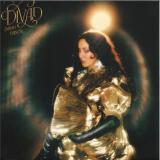
After two self-produced EPs, Sarah Maison (2018) and Soleils (2021), and the EP Karma (2021) with Anoraak, French singer, musician, author, composer, arranger, and producer Sarah Maison finally unveils her first album, DIVAD, the fruit of four years of creation. Sarah opens up, tackling personal themes through an exploration of the soul and existential questions. She also ventures into more autobiographical subjects such as melancholy, derealization, the search for meaning, and the breakdown of romantic or friendly relationships: often through coded language but always with a touch of humor. DIVAD is a manifesto of artistic independence, boldly and uncompromisingly fusing French chanson, Egyptian music, 70s disco, synth-pop, and English pop. Her influences draw on musical history while reinventing it, bringing together Alan Vega and Martin Rev, the 70s Egyptian band Al Massrieen, the king of Iranian psychedelia Kourosh Yaghmei, as well as Brigitte Fontaine and Françoise Hardy. Each track is a cinematic tableau, where the artist"s theatrical voice, both imperious and vulnerable, carries an intimate narrative with universal overtones. Co-produced with Steve Surmely (sound engineer) and Timotée Pédron (sound designer), the album blurs the lines and asserts an artist who defies categorization. Throughout these twelve tracks, we witnessa rebirth, with Sarah fully embracing her character as a dark, grandiose, and tragicomic diva straight out of a Dario Argentofilm, a sort of tribute to her Italian muses. Danceable, elegant, and elusive, DIVAD is a flamboyant work that reflects Sarah Maison"s image: free, sunny, and daring.
out of Stock
Last delivered 10 months ago available to reorder, subject to availability
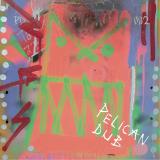
PD002 takes flight in the form of a lost, deadeye jungle bird scavenging for his next trinket. It captures the raw energy and playful, feral sound that defines the Pelican Dub aesthetic: a blend of primal rhythms, hypnotic textures, and experimental intensity.
Pelican Dub 002 features three original tracks by DJ Merlín, alongside one co-production with Adam Pits:
Obsession
Obsessed once again… Nearly lost my head rocking it like a madman.
These drums weren’t simply made. They were forged by a blacksmith with a big blade and a bad temper. It boasts a peculiar flow and a three verse arrangement. Not a mix tool, or is it?
Down the Wrong Road
A futuristic techno-dub track featuring pinched, glassy drumwork wrapped around a pseudo-acid riff. Born during the aftermath of a questionable decision of two friends meeting early in the morning after separate all-night adventures, hence the title: Down the Wrong Road…..
Dirt Bubble
Dirty, unpredictable, and uncompromising. The original version of Dirt Bubble is a raw and visceral workout, chaotic in just the right way.
Dirt Bubble (DnB Mix)
The younger sibling that has outgrown its original prototype. This DnB rework has rightfully become a flagship for the Pelican Dub sound. Expect primal rhythms, wild experimental drum design, and a savage, stretched-out analog bassline that dominates the low end.
out of Stock
Last delivered 6 months ago available to reorder, subject to availability
After establishing himself as one of Europe's most distinctive voices in instrumental hip-hop, Mr. Käfer is ready to tell a different story. His third solo album, A Past Sense, arriving via Melting Pot Music on 11th November, shows a bold creative evolution from his signature lo-fi aesthetic into lush, collaborative territory that spans continents and genres.
His sixth project for Melting Pot Music marks a creative leap from the mood-driven, jazz-tinged instrumentals that built his reputation on releases like Lost Reflections (2019), Orientation (2020), and Now/Again I and II (2021, 2023). Now he's orchestrating a 14-track journey that weaves together hip-hop, soul, jazz, and North African rhythms through collaborations with carefully selected artists including Novine (GER), J-Tek (US), Kenji (US) and Cloudhead (AT).
Thematically, the album explores how memory reshapes identity, questioning the gap between who we were and who we've become. The visual side comes courtesy of acclaimed photographer and art director Robert Winter, capturing this nostalgic-yet-progressive spirit. A Past Sense will also be released on LP.
With A Past Sense, Mr. Käfer steps out from behind the boards and into the spotlight—trading lo-fi playlist comfort and algorithm-driven streams for something deeper. A past sense, maybe. But definitely a future sound.
Infotext DE
Europas instrumentaler Hip-Hop bekommt einen neuen Sound. Mit seinem dritten Soloalbum „A Past Sense“ verabschiedet sich Mr. Käfer von seiner lo-fi-geprägten Vergangenheit und erschafft ein Werk, das über Genres und Kontinente hinausgeht.
Wo frühere Veröffentlichungen wie „Orientation“ (2020) und die „Now/Again“-Serie (2021/2023) durch intime, jazzgetränkte Instrumentals bestachen, öffnet sich „A Past Sense" neuen Horizonten. Auf 14 Tracks verschmelzen Hip-Hop-Fundamentals mit Soul-Harmonien, Jazz-Improvisationen und nordafrikanischen Rhythmus-Patterns.
Die Kollaborationen mit Novine (Deutschland), J-Tek und Kenji (beide USA) sowie Cloudhead (Österreich) sind dabei keine Gastauftritte, sondern organische Begegnungen, die Mr. Käfers Musik in unerwartete Richtungen lenken. Er bricht bewusst aus der Blase algorithmusgetriebener Lo-Fi-Playlists aus und setzt auf echte musikalische wie menschliche Verbindungen.
Thematisch kreist „A Past Sense" um die Macht der Erinnerung und die Frage, wie Vergangenheit unsere Gegenwart formt. Diese konzeptionelle Tiefe spiegelt sich auch in der visuellen Umsetzung wider: Fotograf und Art Director Robert Winter entwickelte eine Bildsprache, die Nostalgie und Zukunftsvision in perfekter Balance hält.
Mit „A Past Sense" positioniert sich Mr. Käfer neu im internationalen Beat-Kosmos. Das Album erscheint am 11. November über Melting Pot Music – digital und auf Vinyl.
Noumen returns to Central Processing Unit after a six-year absence with Altum. This bumper record, the Ukrainian artist's fourth release for the Sheffield label and first since 2019 double-LPObscurium, serves to remind us all why Noumen's music has been lauded by the likes of Mixmag and Resident Advisor in the past.Altumis a consummate piece of contemporary electronic production, a technoid exploration of outer-edges electronica that nods to genre greats like Autechre while still maintaining its own unconventional charm.
Across well over an hour of music here we find Noumen repeatedly playing punchy mid-tempo beat work off of some more cerebral tuned synths.Altumkicks off with the epic 'Oion' - beginning in that Autechre/AFX mid-tempo zone, full of deep-sea bangs and whirrs, the track slowly builds to a final stretch of delay-drenched keys which set us free amidst the outer cosmos, almost Sun Ra-style. It's a perfect liminal-space roller and an apt scene-setter forAltum.
'Oion' provides a blueprint for several of the album's other highlights - plenty of the joints here adopt that same approach of hitting hard with the drums and soft with the synths. Second track 'Splitter' takes on the baton from 'Oion' while souping up the kick to warehouse levels; the beats in 'Far Wind' splutter like a needle skipping on a mid-90s Tresor drop; 'Fate Carette', all eerie looped synth leads, is a highlight as the album enters the home straight.
The rhythm production (which, it should be noted, is exemplary throughoutAltum) is ratched up in intensity on a handful of numbers. 'Telemask' displays a delightful breakbeat - if you'd told me this was sampled from golden age A Tribe Called Quest, I'd have believed you. Mid-section anchors 'Awe' and 'Axis' are glitchers in the Mike Paradinas mould, with the latter showing off some pleasing steel pan-esque synth leads for good measure. And whileAltumgenerally maintains a processional pace throughout, there are points where Noumen toughens up the drums for club deployment - 'Unveilness' shows off a real chunkiness in the low end, closer 'Spurling Sign' plays a satisfying rolling groove off of ever-layering synths, and the title-track is an alien machine-funker in keeping with fellow CPU electronauts like Silicon Scally and Cygnus.
Noumen's third album for Central Processing Unit is a pleasingly hefty double-LP which builds on the zany invention of acts like Modeselektor and Autechre to delightful effect.