Drumcode has become a label synonymous with some of the most-cutting edge and forward-thinking techno over the last 20 years. Their artists include both emerging and established names, and one of those well recognised is Enrico Sangiuliano. Now announcing the very first concept album of his career.
iomorph is born. A very special concept album designed to take the listener on a journey of evolution. A musical adaptation describing how biological and technological advances over numerous generations of time have all started from the same first step in our own biological journey.
Divided into 4 parts, Organisms opens with atmospheric tones, gradually blending complex textures and timbres to begin the evolutional process. The beginning of this section combines full sounding arrangements before stripping it all back to basics. From here it dissolves into the atmosphere. Organisms then progresses into a break-beat influenced, down tempo track using synths to add complexity to the straight, broken rhythms.
Galactic, futuristic elements are found in both tracks in Cosmic Forces. Upbeat, groovy, electronic synths resonate, before 'Hidden T' brings the tension to get things pumped up with stratospheric swirls and twirls to lay down one of the most mind meltingly deep drops.
Metamorphosis is mysterious, its opening beat is a deep and piercing tone that sends the listener into a sensory awareness of their surroundings before breaking into a fully charged, techno track, with Enrico's trademark sounds and textures.
All evolution has an ending.
Two Probabilities shows the positive, starting out evocative and emotional, with a gentle harmony, gazing towards a 'New Dawn'. On the other side of the spectrum lies the negative. This is influenced with a rhythm that articulates the beat of death, mathematical, cold and metallic in texture, it shows the unsustainability of its nature, with a hectic, anxious break beat influenced ending.
The - here & Now Ep' Is The Second Instalment Of A Three-ep-series Coming Up In 2018. Christophe Salin Is Taking Us On His Musical Journey And Paves The Way For Cooperation With Future Artists On His Very Own Imprint - salin Records' That He Runs With His Wife Daria Salin As A Platform For Electronic Music And Art.
No Intro Needed As - dreams Sometimes Come True' Instantly Takes Us On The Groove Line. - astra Perle' Keeps The Groove Alive With Some Heavy Jazz Samples. You Maybe Remember Sitting In Your First Car (christophe's First Car Was Named - purple Pearl' And Was An - opel Astra ) And Just Cruising Thru The City. Imagine To Be Suddenly Overwhelmed By A Creative Hole, - ohh No, Not You ... Turn Over To - can You Pay My Bills' The Journey Continues With More Jazzy Vibes To End Up With A Downtempo Lounge-dub-work Which Is Indeed - different But Sweet .
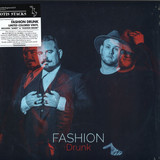
Otis Stacks, three syllables. A name and a first name that recall a mythical singer as much as the Memphis music label that got him to it's days of glory. A name that evokes him in particular and soul music in general. Behind a name that sounds familiar are Elias Wallace and Justmike, two men united to become one: Otis Stacks. In truth, the optimized version of a work started long ago, when Justmike was producing the Danish hip-hop sound of Dafuniks and decided to get in touch with Elias after hearing his voice on a friend's tune. He first wanted him to lay his voice on a
chorus, then a verse, and ended letting him take over the lyrics of 'All I Want', the song that would later bring Dafuniks on air and around Europe. After traveling miles and miles across the ocean and the seas separating California from Denmark, Elias undeniably became a member of the group. As gigs went on, stages after stages, Justmike got inspired by Elias's voice and presence. Thus, the idea of a duo collaboration between the two men geminated and grew in his mind. As the evidence of their getting along, 'Fashion Drunk' became the first tune to
infiltrate Nova and FIP radio playlists, as its music video reached 8 million views. This now obvious complicity as extended in the form of an album, also called Fashion Drunk, released by Underdogs Records. With this French stopover, the line between California and Denmark is now completed. The result is an artistic fusion in which Justmike has plugged his instruments to the machines he uses to compose, letting Elias in charge of the
lyrics and singing. Here, the soul music is printed as a guideline in an organic and digital composite matter. In an ethereal and aerial production that perches its arrangements in the air of the mix or buries them in its bases, letting electro music spread on a groove punched with black and white keys. Each element intervenes with discretion to let Elias stories be related with elegance. Frustrated, disappointed or aborted love stories.
Instant is the trio of Bernd Schöll (Bass, Vocals, Rhythm), Mike Hauer (Guitar, Synth, Percussion), and Marion Siekmann (Vocals) from Munich, Germany. They formed in 1980 after meeting through mutual friends attending the local art and graphic design school. The trio were dissatisfied with their surrounding musical environment. Inspired by the Velvet Underground, Kraftwerk, and Giorgio Moroder, they set out to create their own brand of Neue Deutsche Welle fusing Dada, disco, and Krautrock.
Over the course of 2 weeks in Summer 1980 the band teamed up with local producer Mario Strack to record 6 songs. These would make up their debut eponymous album that was originally self-released on 10' vinyl in 1981. They utilized a simple set up of guitar, bass, and keyboards, plus the BOSS DR-55 Dr. Rhythm drum machine. Metal scraps clanging appear on the tracks 'Do Not' and 'Optimate Minimum', and a washing machine was sampled on the track 'Joyboy', which features Marion reading from the appliance's instruction manual. The A-side features 4 tracks in 11 minute, while the B-side hosts 2 songs in the same stretch of time. 'Charade' features no wave saxophone accompaniment from Kai Taschner of Munich New Wave band Luna Set. Marion's vocals are between Nico's Teutonic chill and Alison Statton's (Young Marble Giants) playfulness, while Bernd takes a monotone approach. Lyrics for 'My Boy' and 'Everybody's Gotta Mutate' were adapted from 'Rotwang', a fragmented novel written by Tim Hildebrandt, one of the brothers famous for illustrating the works of Tolkien.
All songs have been remastered for vinyl by George Horn at Fantasy Studios in Berkeley. The vinyl comes housed in a replica of the original jacket design, which features a neon red screen-printed drawing of a cut-out doll family on a stark white background. Each LP includes a postcard insert with lyrics.
(en) Good things take time - ideally, including a great deal of oomph. At least when it concerns new tracks from within Monkey Maffia's inner circle. It has been four whole years since we received the momentary last piece of the 'Monkey Maffia Music Club', 12 inches full of funky nasty beasts dedicated to the best dancefloors of this world. In the meantime, a remix was released here and a track was presented there, but now we may once again enjoy a full load of Monkey Maffia. And on top of that the now 75th release of Freude am Tanzen!
Monkey Maffia is personally providing the soundtrack for this ceremonial occasion. His tracks continually supply tremendous amounts of oomph to parties as well as loads of gravity and funk. After all, as an experienced DJ he simply knows what an awesome night looks like - a straight bass drum fractured while simultaneously amplified with infinitely warm synths. On one track, bass and percussion are throwing all our worries overboard, on the next one pads and vocals are shimmering to the bet. Whatever may happen, it can be said with utmost certainty that it will never become boring on either secular flat earth.
A1 - Bad Or Good
A total brain and leg screw, that spins and spins and spins. Any DJ willing to test how much funk a dancefloor can bear up to the third decimal place, will be perfectly served with this track as proof.
A2 - Fake Heroes
Short reminder, but detailed clattering minimal with soul does still exist. At first, 'Fake Heroes' frostily shines through aerial heights; however, then submerges all the more into unforeseen depths.
B1 - MiniMi
Somehow jazzy, but was meant as house. Similarly hypnotic, equally free. Common thread is the bass drum, along which anything is possible. File under: secret weapon for truly late hours and DJs with guts.
B2 - Schörless
This is a track that sends Larry Heard on an Orient trip and thereby extends over a much longer period than its brief four-and-a-half-minute length. For all those who are still serious about 'deep' in house.
(de) Gut Ding will Weile haben - und reichlich Wumms am besten gleich noch mit dazu. Zumindest dann, wenn es sich mal wieder um neue Tracks aus dem engsten Kreis der Monkey Maffia handelt. Ganze vier Jahre ist es inzwischen her, dass uns von dort aus der vorerst letzte Teil des - Monkey Maffia Music Club' erreichte, eine 12-Inch voll funky-garstiger Biester für die besten Dancefloors dieser Welt. Zwischendurch erschien ein Remix hier und ein Track dort, doch nun gibt's endlich wieder Monkey Maffia satt. Und das nunmehr 75. Release auf Freude Am Tanzen gleich noch mit dazu!
Der Soundtrack zu diesem feierlichen Anlass kommt von Monkey Maffia höchstselbst. Stichwort Wumms: den bringen seine Tracks stets genauso mit zur Party wie massig Tiefe und Funk. Denn als routinierter DJ weiß der Mann einfach, was eine lange Nacht alles braucht - hier wird die gerade Bassdrum gebrochen, dort mit endlos warmen Synths unterfüttert. In einem Track klappern uns Bass und Percussion die Sorgen aus dem Leib, im nächsten flirren die Pads und Vocals sehnsüchtig um die Wette. Was auch immer passiert, langweilig wird's auf dieser wie jener weltlichen Erdscheibe mit Sicherheit nicht.
A1 - Bad Or Good
Totale Hirn- und Beinschraube, die dreht und dreht und dreht. Wer als DJ testen will, wieviel Funk bis auf die dritte Kommastelle genau so ein Dancefloor eigentlich aushält, ist mit diesem Track als Messgerät bestens bedient.
A2 - Fake Heroes
Kleiner Reminder, aber kleinteilig-klappernder Minimal mit Seele, das gibt's noch immer. - Fake Heroes' schimmert zunächst kalt durch die luftigen Höhen, taucht dann aber umso weiter vor in ungeahnte Tiefen.
B1 - MiniMi
Irgendwie Jazz, aber als House gedacht. Ähnlich hypnothisch, genauso frei. Als roter Faden dient die Bassdrum, entlang dieser geht aber eigentlich alles. File under: Secret Weapon für die ganz späten Stunden und DJs mit Mumm.
B2 - Schörless
Ein Track der Larry Heard auf Orient-Reise schickt und dabei viel weiter trägt als seine knapp viereinhalb Minuten Spielzeit. Für alle, die das - Deep' im House noch ernst meinen.
Tessellate is a South London party that has been running for the last four years predominantly at Corsica Studios in Elephant and Castle. The label is a natural progression of their events, featuring artists and friends they have booked and met over the years.
The debut release comes from a new alias of a regular guest to their nights. Firmin crafts two tracks for the club - La Selva for the sunrise and Energetic Solution for the peak time.
Brassica (Feel My Bicep) and Tel Aviv's Moscoman both deliver with two different takes of La Selva on the B-side.
Dark Entries returns to the New Jersey basement studio of Smersh to unearth an 18-minute jam session from 1989, backed with two contemporary remixes. Smersh was the duo of Mike Mangino and Chris Shepard from Piscataway, NJ who began making music together in 1978. They were uninterested in traditional notions of songwriting or live performance. Between 1981 and 1993 they released over 40 cassette albums on their own Atlas King imprint. As these tapes traded their way across continents, Smersh developed a devoted following in places far beyond New Jersey, leading to releases on dozens of other labels from around the globe.
Sideways' was taken from a cassette titled '100', which refers to a 100-minute jam session the band recorded to tape on June 12, 1989 in Piscataway. The track was composed and performed by Mike, utilizing a Roland TB-303, TR-606, SH-09 and an ARP 2600. A frenetic hybrid of techno and acid with driving EBM style beats, Sideways' weaves intricate industrial noises with synth melodies that drift in and out of phase. On the flip are two fresh remixes by different aliases of prolific Ann Arbor producer Tadd Mullinix. As JTC, he expands the sound palette, adding organ stabs and lush pads, drawing on Detroit deep house and UK garage.The Charles Manier remix features chanted vocals on top of an array of pulsating synths, stark percussion, and post-punky guitar effects. Each song has been carefully remastered for vinyl by George Horn at Fantasy Studios in Berkeley. The record is sleeved in a replica of the '100' artwork, which designer Eloise Leigh modified using motifs and textures sourced from the original cassette. Also included is an oversized postcard with notes.
'an incredible, funked-out live show and production team with their own modern take on boogie, Philly soul, and NY disco.' - XLR8R The Possé are a new face to many people. The five piece run by Andrew Elston and Ross Ferraro is comprised of veterans from all over Australia's music scene. After a year of knuckling down in the studio and a string of sold out shows they've boiled down their favourite influences into an in-credible, raw, funked out live show and production team. Watch out for The Posse's debut EP, Our Thing, featuring contributions from Andrew Elston (Phy-sique/Toni Toni Lee/Catcall), Ross Ferraro & Jarrol Renaud (The Goods), Michael Di Francesco (Touch Sensitive/Van She) and NZ jazz keys prodigy Andrew Bruce.
Music has always coursed through Roman Lindau's blood. Even if he weren't the accomplished producer and respected DJ he is today, the German audiophile would still be spending all his money on the stuff; giving over all his time to the art form. ''I'm a music junkie. I need music to live'' he states matter-of-factly. ''For me it's the elixir of life.''
Good job, then, that he gets to spend his ..
Roman Lindau is a German techno DJ, artists and producer, as well as being a core member of the infamous Fachwerk Records from Berlin.
Music has always coursed through Roman's veins ever since he was a young boy so it is no suprise that he became the accomplished producer and highly respected DJ that he is today.
In the late 2000´s Lindau became active in the Berlin electronic music scene, beginning to play music in clubs as well as producing his own music.
The first track he released in 2008 on his home label Fachwerk Records appeared in one the world famous Berghain Mix Compilations, mixed by Len Faki.
Following from this Berghain invited Roman to contribute an exclusive Track for Ben Klock´s Berghain Mix in 2009. After this success the gates opened for him to play regularly as a DJ at Berghain.
At the same time he continued to work on music for Fachwerk Records. He produced dance floor smashers like ´Crasse´ in 2011 and ´Rave on´ in 2014, which were charted by the likes of Ben Klock, Sven Väth & Chris Liebing, afirming his deserved place amongst the techno elite.
More recently in 2015 the well known Victor Calderone from NYC invited Roman to release on his label Matter+.
The reason why Roman is such a great DJ is because of the fact he knows what the people want! ''I love to dance and that's very important: as DJ you need to feel what the crowd want so you can help them to party and have fun.''
Combining a varied selection of raw house and techno in his sets, recent bookings have taken Roman across the world; from the hallowed techno Mecca that is Berghain to dark underground clubs as part of the recent Fachwerk label tour.
He has performed at every legendary Berlin venue, past and present from Tresor to Berghain, and it is this that gives Roman the edge above the rest. If you can do it there, you can do it anywhere!
From 2014 Till the closing he was a resident DJ at Stattbad, one of Berlins findest adress for Electronic Music.
Immersed in the early days of the 90s midwest rave scene, Bill Converse began DJing at a young age in Lansing, Michigan. Luminaries such as Claude Young, Traxx, and Twonz were key early influences. Since moving to Texas in 1998, he has experimented with analog techniques in varied studio bunkers. Early techno, noise, ambient, tape, and paranormal processing are all part of his uncanny sound palette. Warehouse Invocation' is Converse's debut 12 release, collecting material from a cassette release on Obsolete Future plus a new unreleased song. Three of the tracks, Warehouse Invocation', Senys Magick' and Consulted Acid', were recorded in Austin TX between 2012-2013 at home and direct to tape with no overdubs or multi-tracking. Riverbank' was also recorded at home in early 2014 in one take with a mic placed outside of the window to record the the sounds of the river late at night. Bill is informed by his surroundings, influenced by scenes of desolation in nature, the sea, the desert, and places of industry, like power stations, old factories, and warehouses. The songs on this EP length reveal a sublime influence from Detroit techno, early Chicago house, and Acid. The album was recorded and mixed by Bill at his home studio in Austin and mastered by Dave Alex. All songs were EQed for vinyl by George Horn at Fantasy Studios in Berkeley. A custom-made jacket designed by Eloise Leigh features a mystical collage by Josua Dorje Ngodup with acid yellow hues on a deep blue-purple background. Each copy includes a postcard with notes and a Buddhist mandala
Cute Heels is the solo project of Victor Lenis, a contemporary artist living in Barcelona, Spain. He grew up in Bogotá, Columbia during the 1990s, surrounded by the radial punk scene. Over the years, Victor's passion and fascination for synthesizers and drum machines to produce and compose resulted in various digital-only releases as well as his debut album Spiritual" for Dark Entries in 2014. Cute Heels has been called ''the new blood and spirit for the next step in techno music'' by Electro/Techno pioneer Juan Atkins. Third Skin' is a 4-track EP that connects the dots between Detroit techno, early Chicago house and Belgium electronic body music. Inspired by equal parts Liaisons Dangereuses, Drexciya and Black Devil Disco Club. On the A-side are two fresh compositions recorded in 2015. Third Skin' kicks things in a metallic EBM funk with a pounding bottom end. Lipstick Information' takes the listener on a dark, psychedelic and twisted journey through thrillingly intense arpeggiations. On the flip we present two remixes. The first is from Steffi, House and Techno DJ and producer born in The Netherlands and residing in Berlin. She picks up the pace for an uplifting, percussion-driven, DAF-eque dystopian stomper. The second remix comes from Michel Amato aka The Hacker, French born DJ and producer and frequent collaborator with Miss Kittin. His early musical influences of bands such as Cabaret Voltaire, Throbbing Gristle and Front 242 shine through on this pumping and sophisticated remix ready for any dance floor.
All songs have been mastered for vinyl by George Horn at Fantasy Studios in Berkeley. The record comes in a custom-made jacket designed by Eloise Leigh featuring a photograph by Corinne Schiavone printed with hi-gloss finish. Each copy includes a postcard with with notes and image for fetish lovers
Rating 4/5 "Independent UK"
This solo debut by Air’s Nicolas Godin explores various elements of Bach, but without slavishly transposing his music to modern instruments in the manner of Wendy Carlos.
Instead, Godin uses themes and fragments from Bach as the jumping-off point for diverse musical explorations. In “Club Nine”, he borrows the “Take Five” rhythm, brushed out behind a cyclical piano figure, stained with resonant Bach chords on vibes and keyboard; and for “Clara”, the husky Latin croon of Brazilian singer Marcelo Camelo swoons over a stately dub arrangement of strings and woodwind.
The seven-minute “Bach Off” is the most dramatic piece, a suite shifting between interlocking Latin percussion, African highlife sax, stalking piano and harpsichord/woodwind interplay; while the blend of music-box, cellos, French horn, pizzicato and vocal pad makes “Elfe Man” sound like an outtake from Pet Sounds. A rich, rewarding indulgence.
Today we bring the debut single from Gutti Legatto & Mike Denitz called - El Pasacalle . The exciting original is backed by two excellent remixes from Lucio Spain and Fideles.
- El Pasacalle crawls up your neck like dark anticipation. Delicate beats smoothly build to a deep bassline, this track is a pure dancefloor rocket. We already know that this track will raising some roofs throughout the summer.
Following that, it's Lucio Spain on the remix, dropping a different groove but with equal impact. Perfectly reflecting his style, deep but powerful and with passion. This techie edge gives the track a little more bite and drive, making it perfect for late night sessions.
The Fideles remix takes the original even deeper and with it's super-low bassline. Fideles brings his own distinctive sound to the track with high-hats that snap and clap over some ultra-funky, bouncing bass. This remix takes - El Pasacalle deep underground, rubs it raw, and delivers it back to us in a package that is, well, just fabulous!
- Pasamontanas the second original explores a deep, tribal vibe with darker elements that drive the tension to crowd pleasing levels. It is a straight up, in your face monster. There's no way to get around it, so we recommend to relax and undergo the sonic punishment.
These tracks will be absolutely essential to DJ's who want to go beyond the summer anthem clichés while giving dancefloors hungry for estival vibes something truly special. Enjoy!
Midgar is proud to introduce a newcomer for the third release. A great debut for the maltese Cloned, delivering Sapphire 1990 E.P. The record, way more straightforward and groove centered than the previous Midgar outputs, opens with - Sapphire 1990 - , track that sounds like very nostalgic memories from a timeless rave. On the same side, a live out-take from Cloned's repertory, - The Pendulum - swinging synth-lines which dominate pretty direct rhythmics over a costant background noise. - Belgassem - as the first cut on the B side, is an absolutely heavy one for the label's standards, empowered by a really strong and obsessive acid-line. Closing the vinyl, the slow - Submerging - , groovy drums embraced by very brights heavenly pads.
Cute Heels is the solo project of Bogota´ born, experimental producer Victor Lenis. Since the early 2000's Lenis has been working on a myriad of electronic projects, including the management of the labels Black Leather Records and Romance Moderne, in his current home of Brussels. Drawing on the influences of the radical punk scene that surrounded him growing up in Columbia while nurturing his passion for synthesizers and drum machines, Lenis developed the broody, gloomy brand of electro-techno that is Cute Heels. Deemed by Juan Atkins as ''the new blood and spirit for the next step in techno music'' Cute Heels has released various digital only releases over the years, as well as his first vinyl release, an EP on Gooiland Elektro. His debut album Spiritual, rides the line between cold electro-techno and left field electronic body music. Inspired by equal parts Liaisons Dangereuses and Drexciya, Spiritual takes the listener on a journey over 8 tracks and 40 minutes of music. Listening to "Spiritual" you can see why. The songs on this full length reveal a sublime influence from Detroit techno, early Chicago house and new wave; advanced electronics for the dance floor, pumping and sophisticated. The album was recorded and mixed by Victor at Sensorium Studio in Zagreb, Croatia in November 2013. Each song has been mastered for vinyl at Fantasy Studios in Berkeley by George Horn. Each LP is packaged in a custom-made jacket by our in-house designer Eloise Leigh and incorporates the geometry of analog synthesizers and celestial rose patterns.
Musik Krause, the label with that special funk and the wide view releases the fourth album in their 10-year history. The circle is complete. In 2002 they started with Metaboman. Now there is the album. As a part of the record-spinning Krause Duo he's known a number of escapades having to do with the 'bash' or rather party culture. Inventively they go about things on a winding path. The have a developed a completely singular metaphoric like a Krauzy schroud and trashno effect. Even if on this long player there is a good deal of gravitation and disengaged handbrake, the beloved notorious krause-vibe swings in every beat, as Metaboman forges the iron. He wants to go further and let himself be taken away, and above all with the musicians he has won over with his live-project to massage the masses from the stage. Krause Duo remains. The album comes in this regard as a gesture providing the direction. Solo here is the conductor, the arranger and the composer in one. Various artists is the keyword, good ol' Metaboman. On all ten songs our friendly neighborhood sonic meister sets the notes and vibes between the skillful, grooving rhythms. In this way there is a bonafied club album in the room that understands rhythm-feeling. Music that in the club context brings an attribute that stands far above the plain acoustic shock and scream. Party But of course, yet still both feet in the game with not a little insubordination, depth, plumes of smoke and indulgence. Metaboman has always had his own vision, which plays out and mirrors his own authentic uniqueness. He doesn't find sounds. He finds shapes and forms and that is the progressive aspect, not the new sounds but rather the new forms. He 's not merely about the subteranean bassdrum, but rather telling his own story. He gives his pieces space and depth. The music itself is positioned somewhere within a sonic cosmos. The listener can functionally hear the record in a club. A freak and his freaks invite you and in your heart you know long before it is apparent that you belong. You can clearly hear that this dude and his folks want me to be there! This album encompasses the moment and keeps it safe for posterity. This music is the language of Metaboman and it is the understood. inkl. digital download code
This LP, the second set from Soul4Real based on songs mostly associated with Jackson, MS label Malaco, is another stunning showcase of the breadth of soul music. Featuring tracks ranging from the 70s through to the new millennium and from the deepest of blues-tinged ballads to disco beats, there is something on this LP for all soul enthusiasts to relish. The biggest name here is undoubtedly Bobby “Blue” Bland. A towering presence in both soul and blues for over 50 years, his influence – and sales – were immense. Other hitmakers are here as well, such as the prodigious vocal talent of Shirley Brown, whose massive “Woman To Woman” kick-started her long and successful career, and the delightful Dorothy Moore, whose immortal “Misty Blue” saved Malaco from bankruptcy in the mid-70s. Moore’s lovely duet with star Eddie Floyd was a one-off, as was Natural High’s Malaco subsidiary Chimneyville album. Always welcome on sets like this are lesser-known artists like sometime funk band Solid Gold Revue member Ray Crumley, who released a small handful of solo 45s,New Orleans singer Richard Caiton, who has had Northern soul plays, and mystery Mississippi native J.J. Lewis. Cult southern soul heroes such as the outstanding Tommy Tate – memorably described by Malaco boss Tommy Couch as “America’s best kept secret” – and the gifted and prolific down home songwriter George Jackson, whose BMI catalogue runs to over 400 songs, are prominent here. Jackson’s effort is previously unissued, and the more obscure item from Marvin Morrow is a first time on vinyl. Like Jackson, Morrow earnt his living as a writer for such luminaries as Gladys Knight and Chaka Khan. A treat for all connoisseurs. Malaco gave themselves the byline of “The Last Soul Record Company”, and listening to their output of over 50 years and the way they outlasted every other southern independent label, it’s impossible to disagree.
After a long-awaited break from the format, Smokin’ Sessions returns to vinyl with a very special limited-edition pressing of Rowl’s Signal EP.
Since launching in 2007, Smokin’ Sessions has built a reputation for deep, bass-driven music and a vinyl catalogue that has become an important part of the label’s history. After quite some time away from pressing records, SMOKE046 marks the label’s return to wax — presented on limited-edition transparent blue vinyl.
At the centre of the release is longtime Smokin’ Sessions and Deep Heads artist Rowl, returning with four cuts rooted in the deep 2-step, garage and bass sound that has defined both his own productions and the label over the years.
Opening the record is Versa & Rowl – “If You (Rowl’s Grey Skies Remix)”, a weighty reworking of an unreleased Versa & Rowl dub. Raw, swung drums, deep sub pressure and a distinctly old-school UK garage atmosphere run throughout — a sound described in early feedback as a “future retro garage classic” with that early deep dubstep / 2-step crossover feeling. The remix has also picked up support from Mat The Alien, BunZer0, Deep Tempo and Richard Dorfmeister, amongst others.
“Signal” follows — a heavy, stripped-back 2-step roller built around swinging drums, commanding low-end and Rowl’s unmistakably deep production style. The track represents the classic Smokin’ Sessions sound while pushing it forward with the precision Rowl has developed over more than a decade of production. The track has received strong DJ support, including J:Kenzo, who called it a “Great track”, Synkro, BunZer0, Mat The Alien and others.
On the B-side comes “Sierra” featuring Bristol lyricist and vocalist P.A.B MC. Written and recorded together in Bristol, Sierra takes things into warmer territory: chilled two-step garage rhythms, dubstep-weight low-end and an almost astral atmosphere underpin P.A.B MC’s melodic, conscious vocal delivery. It sits somewhere between soundsystem music and reflective storytelling — equally suited to a late-night system or headphones.
Early response to “Sierra” has already included Synkro, who described the track simply as “Killer”, alongside further underground DJ support.
Exclusive to the vinyl is the instrumental version of “Sierra”, giving the full production room to breathe and making this pressing an essential version of the EP for DJs, collectors and anyone wanting to hear the depth of Rowl’s production without the vocal.
Rowl first appeared on Smokin’ Sessions in 2011 and has remained closely connected to both Smokin’ Sessions and Deep Heads ever since. His catalogue includes collaborations with Versa such as Lunar, Jupiter and Solstice, alongside his 2013 Cosmic Visions EP. His music has previously received support from Don Letts on BBC Radio 6 Music, Tim Parker on NTS, Synkro and J:Kenzo.
For the physical release, no corners have been cut. The record has been vinyl cut and mastered by Beau Thomas at Ten Eight Seven (Ten Eight Seven Mastering) — one of the most respected engineers in UK bass music and someone whose experience with low frequencies and vinyl makes him the perfect choice for a Smokin’ Sessions pressing.
Beneath the sleek, confident guitar line that powers “Overdrive,” the lead single of All Over You, another guitar marks the time more impatiently, as if the groove its locked into is the timebomb- tightness of a pre-hookup heartbeat. Its energy isn’t nervous — after all, it’s hard to be nervous with Will Schwartz cooing come-ons like “I just wanna get you in the bed / Light you up like a cigarette” in your ear — but it is urgent. Excited. Titillated.
That’s the word that best describes the prospect of a new Imperial Teen record: titillating. They come out every five or six years, each new album acting as, to quote Roddy Bottum, “an episodic piece of where we are now, where the world is now, who we have become, and the geography of our collective consciousness.” There is considerable distance between Imperial Teen, its members — Bottum (guitars, keyboards, vocals), Schwartz (vocals, guitars, keyboards), Jone Stebbins (bass, vocals), and Lynn Truell (drums, vocals) — having made lives for themselves in different cities, but the collective consciousness that exists between them makes distance and time seem immaterial to the listener.
Time, especially time together, is not immaterial to Imperial Teen: it is precious. “For the last few records,” Stebbins explains, “the process has been similar. We live great distances away from each other, so initially, we get together to collaborate, write, and create. When we have enough material, we reconvene to record. Both scenarios, creating and recording, take multiple trips, sometimes with big lapses of time in between due to our various schedules.” Bottum concurs: “The biggest challenge in writing and recording is the distance between us, but the longing and desire and the ultimate coming together becomes more potent as a result.”
All Over You is a triumph of maximized moments together, four people bringing the force of their personalities to bear on years of built-up ideas. Title track “All Over You,” initially built over the computer, gained its charming sneer in the studio, where Stebbins’ buoyant, fuzzed out bassline added bounce to the song’s punchy, sloganeering lyrics, a perfect set-up for Truell to drive the song home, screaming the last line of the chorus, “We’ve got nothing to do,” like a rallying cry for a generation that’s been given nothing and told to deny themselves everything. “In my head,” Truell says, “I just went back to punk, to that feeling of prowling around looking for anything to do and being so mad about how boring everything is that you just have to yell.” The track had an attitude, it had an unexpected texture thanks to Truell’s playing improvised percussion, but her scream is what took it to the next level, transforming it into a signature Imperial Teen song.
One of Imperial Teen’s less magical concerns on All Over You is the effect capitalism has on the creation of art. This expresses itself in the headspinning rush of music industry success and disappointment that plays out in “Hands All Up,” and also in Imperial Teen’s sound. All Over You features the band’s most expansive, textured palette to date, and much of it’s steeped in — bubblegum music and boy/girl harmonies, electro beats and grungy distortion, power pop mall anthems and kiss-off lyricism — has been dismissed, at one point or another, as a fad. Time, of course, has proven otherwise, and All Over You makes a case for Imperial Teen as four of that time’s architects, inheriting, preserving, and pushing the boundaries of what pop music can be from one song to the next.
“We want to make people dance and think and feel,” says Schwartz. In all of those ambitions, All Over You crushes, brought to life by four musicians who found each other in the clubs of San Francisco over three decades ago and have remained family ever since. It is less a return from hiatus than a broadcast from the sonic utopia Imperial Teen has long ruled over, where the music is bratty and sexy and the parties don’t stop until everyone’s found euphoria. A raveup for mind, body, and soul, best enjoyed in a dark room packed with as many sweaty bodies as possible
Beneath the sleek, confident guitar line that powers “Overdrive,” the lead single of All Over You, another guitar marks the time more impatiently, as if the groove its locked into is the timebomb- tightness of a pre-hookup heartbeat. Its energy isn’t nervous — after all, it’s hard to be nervous with Will Schwartz cooing come-ons like “I just wanna get you in the bed / Light you up like a cigarette” in your ear — but it is urgent. Excited. Titillated.
That’s the word that best describes the prospect of a new Imperial Teen record: titillating. They come out every five or six years, each new album acting as, to quote Roddy Bottum, “an episodic piece of where we are now, where the world is now, who we have become, and the geography of our collective consciousness.” There is considerable distance between Imperial Teen, its members — Bottum (guitars, keyboards, vocals), Schwartz (vocals, guitars, keyboards), Jone Stebbins (bass, vocals), and Lynn Truell (drums, vocals) — having made lives for themselves in different cities, but the collective consciousness that exists between them makes distance and time seem immaterial to the listener.
Time, especially time together, is not immaterial to Imperial Teen: it is precious. “For the last few records,” Stebbins explains, “the process has been similar. We live great distances away from each other, so initially, we get together to collaborate, write, and create. When we have enough material, we reconvene to record. Both scenarios, creating and recording, take multiple trips, sometimes with big lapses of time in between due to our various schedules.” Bottum concurs: “The biggest challenge in writing and recording is the distance between us, but the longing and desire and the ultimate coming together becomes more potent as a result.”
All Over You is a triumph of maximized moments together, four people bringing the force of their personalities to bear on years of built-up ideas. Title track “All Over You,” initially built over the computer, gained its charming sneer in the studio, where Stebbins’ buoyant, fuzzed out bassline added bounce to the song’s punchy, sloganeering lyrics, a perfect set-up for Truell to drive the song home, screaming the last line of the chorus, “We’ve got nothing to do,” like a rallying cry for a generation that’s been given nothing and told to deny themselves everything. “In my head,” Truell says, “I just went back to punk, to that feeling of prowling around looking for anything to do and being so mad about how boring everything is that you just have to yell.” The track had an attitude, it had an unexpected texture thanks to Truell’s playing improvised percussion, but her scream is what took it to the next level, transforming it into a signature Imperial Teen song.
One of Imperial Teen’s less magical concerns on All Over You is the effect capitalism has on the creation of art. This expresses itself in the headspinning rush of music industry success and disappointment that plays out in “Hands All Up,” and also in Imperial Teen’s sound. All Over You features the band’s most expansive, textured palette to date, and much of it’s steeped in — bubblegum music and boy/girl harmonies, electro beats and grungy distortion, power pop mall anthems and kiss-off lyricism — has been dismissed, at one point or another, as a fad. Time, of course, has proven otherwise, and All Over You makes a case for Imperial Teen as four of that time’s architects, inheriting, preserving, and pushing the boundaries of what pop music can be from one song to the next.
“We want to make people dance and think and feel,” says Schwartz. In all of those ambitions, All Over You crushes, brought to life by four musicians who found each other in the clubs of San Francisco over three decades ago and have remained family ever since. It is less a return from hiatus than a broadcast from the sonic utopia Imperial Teen has long ruled over, where the music is bratty and sexy and the parties don’t stop until everyone’s found euphoria. A raveup for mind, body, and soul, best enjoyed in a dark room packed with as many sweaty bodies as possible
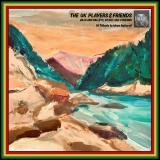
The UK Players & Friends Hills and Valleys, Rivers and Streams (A Tribute to Idren Natural) 9 brand new tracks by The UK Players. Voiced by Singers and Poets who knew Idren Natural personally. Recorded and Mixed by Supa Yout’ at Earth Works Studio, Amsterdam. Sleeve artwork and written testimonials from close friends and associates. Idren Natural aka Ras Natural aka InI Oneness, DJ, Singer, Chanter, Musician, was a pivotal player and pillar of UK/European Roots, Reggae, Dub, Sound System Culture. A humble Rastaman who did so much for so many, inasmuch as inspiring, encouraging, and connecting. He selflessly helped those less fortunate than himself. A strong advocate of the culture and philosophy of Rastafari. He was a commanding presence who lit up the stage, giving JAH all the glory. His passing was a great loss to the community. The UK Players Dub Band formed in 1996. They teamed up with Ras Natural/InI Oneness to record their debut 7” single ‘Further’ for Jah Works with Producer Jah Rej. This single gained exposure via Jah Shaka, Abashanti, and King Shiloh Sound Systems, even the famous Radio 1 DJ ‘John Peel’ played it. More recordings with Jah Rej at Seventh Sense Studio led to the debut album ‘Take Heed’. During the halcyon days of InI Oneness & The UK Players (1997-2004) they toured the UK and Europe, clocking up over 250 gigs in that time. Amongst brethren within the Rastafari community, the band became affectionately known as Ras Naturals band. Friends of Natural like Ras Iyah, Tony Roots, Sister Aisha, Wayne McArthur, and Barry Isaacs (among others) performed with them during this time. Members of InI Oneness & The UK Players never split up, throughout the years they branched out into other projects, reconvening for specials and one offs. Following Idren Naturals passing in 2022, the band stepped up to play his memorial show, where the idea formulated of making a tribute album to him. Ben King offered the use of Earth Works studio to help realise the vision. Work began with longtime live sound engineer Supa Yout’ in March 2024. Jah Rej assisted production on a number of these recordings, and sadly passed during the making of it, the last album he worked on. Various vocalists who were close to Natural, submitted vocals across the following year. The album was mixed and dubbed in March ‘25 at Earth Works by Soupa Yout' & Kingsway. Artwork and written memories/testimonials were then assembled. Everyone involved in the creation of this album knew Idren Natural personally. This album shines a spotlight on his spirit. Carrying songs of tribute, and messages for the times. ALPHA DUB: Every time the band played a gig, Natural would insist on starting with a dub. In that tradition, this album is no different. ‘Mandlion’ passing through the studio, headtopped a Melodica cut on it. Dubbed to the max by Supa Yout! NATURAL VIBE: The ‘Forward Fever’ crew from Belgium were one of the first collectives that Natural affiliated with in Europe. Here, Ras Cloud cleverly weaves all of Naturals song titles into the lyrics, creating a song in itself. WORD & FLESH: Fellowdread was born and raised in Kingston, Jamaica. Now living in Bristol, England, residing with Natural in his last days. His Poetry is rich in inflection, knowledge and wisdom, teachings that spark up the divine. ALL ABOUT LOVE: A pause for contemplation, this one stills the listener. Rootsman Rak’s words warn against complacency, and encourages action. A completely (natural) acoustic track featuring the skilled percussionist Jonah Dan. REMEMBER HIM: Inna Dubplate style, Barry Isaacs toasts to Idren in personal remembrance, reminding us all of the man he was. The track also features snippets of a phone call from Naturals oldest friend ‘Fergie Greenspears’ recounting memories. RISE UP RASTA CHILDREN: The legendary Tony Roots, graces the album with his unique delivery. Natural, The Players, and Tony go back a long way. A song of strength to affirm the soul, and rally against Babylon. Livicated to the one (Natural) SONG FOR THE RIVER MAN: During those halcyon days, many stages were shared with Albaroot, whom the band met whilst on tour in Scotland. Clark Innes (lead singer/songwriter) reminisces about the force of nature that was Natural, times shared, and that knowing, to never meet again. ONE STEP AHEAD: An interpretation of the ‘Look Inside’ riddim by Reuben Addis. Built for Sound System, it is the only track on the album that rolls into a dub. Lyrical Benjie literally entered the studio, rode the riddim without hearing it first, cutting his vocal in one take! A message for the times that sends shivers up your spine. THE PRAYER: Iman Onedub AKA Iman Gebre Iyesus, member of the Ethiopian Orthodox Tewahedo Church, met Idren Natural at Fairfield House in Bath. Here he seals the album with a recital of the Lord's Prayer in English, with Amharic. His rich textural tones elevated with a one away riddim to carry the listener home.
Composer and multi-instrumentalist Koen Holtkamp has spent more than two decades shaping a body of work at the intersection of ambient, experimental, and electroacoustic music. Known for his role in the influential duo Mountains, as well as a solo catalog defined by texture and spatial awareness, Holtkamp has long explored how sound interacts with environment and perception. With Nightlife, he enters a new phase of that inquiry, one shaped as much by physical relocation as artistic evolution.
After leaving Brooklyn for the relatively rural setting of New York’s Hudson Valley, Holtkamp found himself immersed in nature and embracing a slower way of life, a shift that directly informed the album’s creation. Rather than rushing into a new project, he allowed the space itself to guide him, focusing on experimentation and play instead of a fixed outcome. Over time, a new instrument emerged from his modular system, built around physical modeling techniques that emulate plucked string sounds. Drawing on a deep affinity for acoustic traditions, from guitar soli to the kora and other chordophones, he began translating those influences into an electronic language, creating music that feels tangible, effusive, and even intimate, despite its synthetic nature. As the pieces took shape, Holtkamp expanded the project into a kind of imagined ensemble. Composed with specific collaborators in mind, the album features extensive contributions from drummer Greg Fox and saxophonist and flutist Matt Bauder, whose performances subtly reshape the material and draw it toward more fluid, song-like forms, alongside a guest appearance from Ben Vida on synth bass. Yet even as Nightlife occasionally resembles a band in motion, its construction resists traditional cohesion. Acoustic and electronic sources coexist to create a hyper-dimensional sense of space, with each element deliberately placed in its own distinct environment, yielding a complex yet inviting setting that feels both otherworldly and completely natural.
Much of the album was created during late-night sessions, which became a kind of personal ritual and ultimately inspired its title. Nightlife unfolds as a series of finely detailed environments, where stillness, texture, and subtle interplay take precedence over momentum. Each piece invites close listening while remaining open and unforced, reflecting both a change in pace and a deepening of focus. The result extends Holtkamp’s ongoing interest in how sound can shape, and be shaped by, the spaces we inhabit.
Cologne based DJ and producer Barnt has been bottling his own weather system since 2010: captivating techno where melodies flirt, rhythms evaporate, and structure is something to tease rather than obey. An attitude, that pierces the average definition of techno. With an album and endless EP’s, he turned club orthodoxy inside out. Barnt has sent his tracks out via labels like Cómeme, Mule Musiq, Hinge Finger, Hivern Discs, Kompakt, or Magazine from Cologne, the enterprise he co-runs with a bunch of friends.
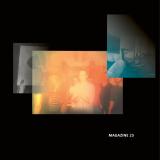
After his 2014 debut album on Magazine, that came out as catalogue number 13, Barnt is back with number 25, a new album, titled “After completing the Hex”. Eleven tracks, each grinding lowkey skewed. This is techno for dramatic entrances. Dance music for confusion. Freely played chords oscillate with intention. Alluring melodies glide across stoic beats. Peaktime vibes stripped to the bone. An album that provides Barnt’s most complete release until today, displaying his unique sound world effortless assembled. Mastered by longtime accomplice, producer Matt Karmil, it features playful, seemingly unintentional, meandering club spirits. There are melodies made from 100 notes and hooklines fashioned from just one. In-between calmer electric enchanters, minimal, free-spirted, tempting. His slinky madness occasionally presents sublimely embedded environmental sounds or oral samples, taken from sources like Torn Hawk’s “Trustfall” TTT cassette album. There is a touch of sadness, that veils the recordings at times, always defied by lightness and optimism. A record made with true inspiration, that overrides all fears. Drawn frankly from emotions, bringing the ultimate flow state, that unlocks a new techno gate.
Creole Culture is the triumphant return of Dawn Richard’s King Creole era. Steeped in history but with its flag planted firmly in the future, Creole Culture pulls elements from Richard’s heritage as a Black and Native American woman who has spent a lifetime making and engaging with music. Following New Breed (2019) and Second Line (2021), Creole Culture is akin to a panel of a triptych: a fully-realized sonic and narrative universe in which Richard, as King Creole, rebuilds her hometown of New Orleans in her image. She not only honors her city for what it was or what it gave her, but stakes a claim for it as a cradle of global culture now and for all time.
Creole Culture follows two acclaimed avant-garde R&B albums with composer Spencer Zahn — the later of which, 2024’s Quiet in a World Full of Noise, found Richard exorcising the specters of grief and trauma in the wake of her father Frank Richard’s health struggles and the killing of her cousin Cisco. It is a softer take on the brass-soaked swagger of Richard’s previous King Creole efforts, an evolution brought about when she realized she had left a crucial viewpoint out of her exploration of New Orleans: her own. “New Breed was the story of New Orleans through my father’s eyes,” Richard explains. “I used his samples, his music, his cultures, his work with Chocolate Milk, his side of the family. Second Line was my mom — her interludes riddled the album with her depiction of what is meant to be a Creole woman in New Orleans. The masculine and feminine sides of King Creole had expressed themselves through them, but the story felt unfinished, like my version of the story was untold.”
That story is, for lack of a better word, complex: at turns triumphant and tragic, sexy and mournful, braggadocious and contemplative. Creole Culture presents Richard’s New Orleans as a utopian soundscape — an intoxicating blend of R&B, soul, hip-hop, pop, and jazz — that’s survived and thrived despite the dystopian circumstances visited upon it. Richard presents the melange of influence and artifact on Creole Culture with the care of a botanist nurturing new hybrids in a rose garden.
What emerges from that care is at once delightful and unexpected, enlisting a crew of guest stars including Big Freedia, Anjelika “Jelly” Joseph, Tarriona “Tank” Ball, and Durand Bernarr for features that play against type. Tank’s turn at spoken word verse on “l v r” serves to add dimension to King Creole’s New Orleans, as does Joseph’s undeniable voice on “chuuuurch.” “I’m not normally a features girl,” says Richard, ”but King Creole can’t build a world from scratch without help. What’s beautiful about the features here — which is also true of my band and producers — is they come from people who understand the materials of the world they’re from, they’re people I love, and they’re people who are just extraordinary at what they do. They’re part of the atmosphere of this place. You need them for the record to breathe.”
In the end, that’s what King Creole creates: a space where Dawn Richard can breathe, can be at peace with herself, and let loose with others. From finding love in opening single “enough” to relishing in the Afrocaribbean futurism of “fiesta,” Creole Culture is a tremendous, freeing breath of fresh air. It captures the resolve of a woman and a place who’ve survived the unimaginable and sees the future not as something to be endured, but as something to be created. Dawn Richard has been making that future one album at a time over the course of her career. Creole Culture is her most stunning one yet.
Creole Culture is the triumphant return of Dawn Richard’s King Creole era. Steeped in history but with its flag planted firmly in the future, Creole Culture pulls elements from Richard’s heritage as a Black and Native American woman who has spent a lifetime making and engaging with music. Following New Breed (2019) and Second Line (2021), Creole Culture is akin to a panel of a triptych: a fully-realized sonic and narrative universe in which Richard, as King Creole, rebuilds her hometown of New Orleans in her image. She not only honors her city for what it was or what it gave her, but stakes a claim for it as a cradle of global culture now and for all time.
Creole Culture follows two acclaimed avant-garde R&B albums with composer Spencer Zahn — the later of which, 2024’s Quiet in a World Full of Noise, found Richard exorcising the specters of grief and trauma in the wake of her father Frank Richard’s health struggles and the killing of her cousin Cisco. It is a softer take on the brass-soaked swagger of Richard’s previous King Creole efforts, an evolution brought about when she realized she had left a crucial viewpoint out of her exploration of New Orleans: her own. “New Breed was the story of New Orleans through my father’s eyes,” Richard explains. “I used his samples, his music, his cultures, his work with Chocolate Milk, his side of the family. Second Line was my mom — her interludes riddled the album with her depiction of what is meant to be a Creole woman in New Orleans. The masculine and feminine sides of King Creole had expressed themselves through them, but the story felt unfinished, like my version of the story was untold.”
That story is, for lack of a better word, complex: at turns triumphant and tragic, sexy and mournful, braggadocious and contemplative. Creole Culture presents Richard’s New Orleans as a utopian soundscape — an intoxicating blend of R&B, soul, hip-hop, pop, and jazz — that’s survived and thrived despite the dystopian circumstances visited upon it. Richard presents the melange of influence and artifact on Creole Culture with the care of a botanist nurturing new hybrids in a rose garden.
What emerges from that care is at once delightful and unexpected, enlisting a crew of guest stars including Big Freedia, Anjelika “Jelly” Joseph, Tarriona “Tank” Ball, and Durand Bernarr for features that play against type. Tank’s turn at spoken word verse on “l v r” serves to add dimension to King Creole’s New Orleans, as does Joseph’s undeniable voice on “chuuuurch.” “I’m not normally a features girl,” says Richard, ”but King Creole can’t build a world from scratch without help. What’s beautiful about the features here — which is also true of my band and producers — is they come from people who understand the materials of the world they’re from, they’re people I love, and they’re people who are just extraordinary at what they do. They’re part of the atmosphere of this place. You need them for the record to breathe.”
In the end, that’s what King Creole creates: a space where Dawn Richard can breathe, can be at peace with herself, and let loose with others. From finding love in opening single “enough” to relishing in the Afrocaribbean futurism of “fiesta,” Creole Culture is a tremendous, freeing breath of fresh air. It captures the resolve of a woman and a place who’ve survived the unimaginable and sees the future not as something to be endured, but as something to be created. Dawn Richard has been making that future one album at a time over the course of her career. Creole Culture is her most stunning one yet.
The title of Ghost Bridge, the East-Coast-spanning chamber ensemble Hour's fifth record, is less metaphorical than one might expect. Bandleader Michael Cormier- O'Leary repurposed it from an unrealized movie concept about a bridge that inexplicably starts disappearing. On the nearly-ten-minute title track of this richly imaginative suite of songs_written for a 13-piece ensemble that includes woodwinds, strings, and vibraphone as well as a rock rhythm section_Hour conjures up this central image with spectral string harmonics and free-time percussion gestures. While writing the keyboard pieces that became the takeoff point for the album, Cormier-O'Leary also found himself reflecting on the loss of loved ones or even his own mortality. The six kaleidoscopic instrumental pieces on Ghost Bridge, though, feel more cosmically inquisitive than straightforwardly elegiac, sketching a progression from existential doubt toward understanding and acceptance. Ghost Bridge forms a contrast with Hour's art-rock-informed, more improvisatory early releases, representing a step further into intricate chamber orchestration. Known for his work with Friendship, Wendy Eisenberg, and 2nd Grade, Phillybased multi-instrumentalist and Dear Life Records founder Cormier-O'Leary has made Hour a home for increasingly cinematic instrumental compositions since the mid-2010s. With dazzling production by Lucas Knapp, Ghost Bridge delivers plenty of the live ensemble's trademarks, especially cyclically developing guitar and keyboard melodies. However, even more than on Hour's last studio album, unconventional harmonies and sophisticated counterpoint take center stage here. These emotionally multifaceted compositions feel as rooted in contemporary classical and film soundtrack music as in indie rock. One of the most striking elements of Ghost Bridge is the more significant developmental role the orchestral instruments assume in each piece. Instead of underscoring Cormier-O'Leary's central hooks, there is a new mesmerizing level of detail to the group's conversational interactions and kinetic energy. "Centralia" is a stately and idiosyncratic fugue built from repeated and overlapping phrases, while Ghost Bridge's compositions are full of unexpected pivots in harmony that allow recurring melodic motifs to sound continually reshaded. On "Pearls," the chords modulate drastically around Cormier-O'Leary's inviting central melody in a way that emulates cuts in a film telling several parallel stories. There is an unsettled quality to the chords on Ghost Bridge, with Cormier- O'Leary's progressions avoiding firm grounding in either clearly sunny or melancholy tonalities. This mood is made more concrete by the record's sole vocal track, the jazz-inflected "Sky is Blue," featuring an uncannily gorgeous performance by Heeyoon Won. The song seems to be a communication from a person who has departed, offering consolation or perspective to someone left behind. Though its sonic palette is often tranquil, Ghost Bridge explores heartbreak, grief, anger, and helplessness in a distinct and pretense-free way. The project represents a bold step forward for Cormier-O'Leary as a composer and arranger, and on Ghost Bridge Hour reaches its most fully realized form to date, connecting soaring themes with an inventiveness that perfectly suits the searching nature of the subject matter.
Come Back Down, the new album by Nashville experimental-pop duo Total Wife, was born from the edge of sleep. When composer and producer Luna Kupper would begin to fall asleep during late-night mixing sessions, the songs would follow her into the halfway place between dream and lucidity. Like Dale Cooper in Twin Peaks, she'd wake with a new perspective on the puzzle she was piecing together. "I'm a psychological mixer - I'm trying to think of how someone's experiencing the sound, versus getting stuck in trying to make all these different tones and using all this gear to make something sound a certain way," Kupper says. And like a spiral from waking life into dream, the songs on Come Back Down are endlessly self-referential, building whole universes from a single point. Kupper sold all of her synths to make rent before she started working on the album, and so every inorganic sound is instead built from samples of the band's own work. A guitar on one song may be reprocessed and used as a synth on the next, while everywhere on the album vocal samples are taken from a single unreleased cover of Elliott Smith's 'Between the Bars.' In tribute to this process, the album was almost named The Julia Set after the mathematical equation which feeds into itself again and again, creating beautiful fractal images. The intention was to create something complex but accessible; experimental, yet precise and without abstraction. In her lyrics, too, lyricist and vocalist Ash Richter is as straightforward as she's ever been. She drew on her experience of pandemic isolation to write about connection and disconnection, using her lyrics as a tool for the communication that was missing in everyday life. On the soaring, shoegazey track 'peaches,' a storm that forced the cancellation of a recording session became a metaphor for emotional distance. 'still asleep' chronicles Richter's euphoria after Total Wife's first tour, and watches it begin to curdle into paranoia. "Thank the full moon, my heart is overflowing," she sings, before: "Is there such a thing as too happy?" The experience of isolation was prompting Richter to think back to her childhood, a time marked for her by solitude and natural play - climbing trees, making mud pies, getting lost in the woods. On tracks like 'in my head' and 'second spring,' she uses the imagery of nature to recall that time and forge a connection with her lonely inner child. "I feel connected with transcendentalist writing and magical realism - trying to convey things in a concrete way, but with that element of psychology and mystery," she says. Richter and Kupper, friends from high school, formed Total Wife in 2016, relocating from Boston to Nashville in 2020. Both are visual artists as well as musicians, which they incorporate into their work with Total Wife via layered and purposeful visuals. A DIY streak underpins everything that they do - from handling their own artwork and music videos to recording their own music, releasing tapes through their label Ivy Eat Home, and hosting house shows in the basement they've christened Ryman 2. In Nashville they've settled into a weirdo scene living under the record industry's floorboards, a hive of collaborative and creative energy that has made them excited to call the city home. They also assembled a live band for the first time shortly after moving to Nashville, consisting of Ryan Bigelow, Sean Booz and Billy Campbell - injecting their creative process with a jolt of spontaneity and aliveness that has fed back into Come Back Down.
Come Back Down, the new album by Nashville experimental-pop duo Total Wife, was born from the edge of sleep. When composer and producer Luna Kupper would begin to fall asleep during late-night mixing sessions, the songs would follow her into the halfway place between dream and lucidity. Like Dale Cooper in Twin Peaks, she'd wake with a new perspective on the puzzle she was piecing together. "I'm a psychological mixer - I'm trying to think of how someone's experiencing the sound, versus getting stuck in trying to make all these different tones and using all this gear to make something sound a certain way," Kupper says. And like a spiral from waking life into dream, the songs on Come Back Down are endlessly self-referential, building whole universes from a single point. Kupper sold all of her synths to make rent before she started working on the album, and so every inorganic sound is instead built from samples of the band's own work. A guitar on one song may be reprocessed and used as a synth on the next, while everywhere on the album vocal samples are taken from a single unreleased cover of Elliott Smith's 'Between the Bars.' In tribute to this process, the album was almost named The Julia Set after the mathematical equation which feeds into itself again and again, creating beautiful fractal images. The intention was to create something complex but accessible; experimental, yet precise and without abstraction. In her lyrics, too, lyricist and vocalist Ash Richter is as straightforward as she's ever been. She drew on her experience of pandemic isolation to write about connection and disconnection, using her lyrics as a tool for the communication that was missing in everyday life. On the soaring, shoegazey track 'peaches,' a storm that forced the cancellation of a recording session became a metaphor for emotional distance. 'still asleep' chronicles Richter's euphoria after Total Wife's first tour, and watches it begin to curdle into paranoia. "Thank the full moon, my heart is overflowing," she sings, before: "Is there such a thing as too happy?" The experience of isolation was prompting Richter to think back to her childhood, a time marked for her by solitude and natural play - climbing trees, making mud pies, getting lost in the woods. On tracks like 'in my head' and 'second spring,' she uses the imagery of nature to recall that time and forge a connection with her lonely inner child. "I feel connected with transcendentalist writing and magical realism - trying to convey things in a concrete way, but with that element of psychology and mystery," she says. Richter and Kupper, friends from high school, formed Total Wife in 2016, relocating from Boston to Nashville in 2020. Both are visual artists as well as musicians, which they incorporate into their work with Total Wife via layered and purposeful visuals. A DIY streak underpins everything that they do - from handling their own artwork and music videos to recording their own music, releasing tapes through their label Ivy Eat Home, and hosting house shows in the basement they've christened Ryman 2. In Nashville they've settled into a weirdo scene living under the record industry's floorboards, a hive of collaborative and creative energy that has made them excited to call the city home. They also assembled a live band for the first time shortly after moving to Nashville, consisting of Ryan Bigelow, Sean Booz and Billy Campbell - injecting their creative process with a jolt of spontaneity and aliveness that has fed back into Come Back Down.
A quick scan of the world’s favourite crowdsourced discography reveals that Sonic Youth co-founder Lee Ranaldo was not a total stranger to crackling electric experimentation in the years following his songwriting turns of the 20-teens. Yet »The System«, ingeniously culled and sequenced from Ranaldo’s soundtrack work for Dutch filmmaker Joris Postema’s ›eco-doc‹ of the same name, nonetheless feels like a reawakening. Quietly released in a vastly different (and much more ›filmic‹) form by Doxy Music/Riva Media Records in 2025, this LP reimagines and reconfigures the initial release, including unreleased material written and recorded for the film, to lend it new stature as both a return to drone-improv form and a reunion with introspective Downtown angst.
Given the state of the world, it’s not surprising that the film Ranaldo scores – a documentary on three climate activists bruising their fists on the black iron prison of techno-fascist deathkultur – is a study in despair and futility. But rather than wallowing in navel-gazing doom and gloom, the film documents the unstoppable spirit that has animated human resistance since the time of the Pharaohs.
As it turns out, the gorgeous scope of Lee Ranaldo’s guitar palette is a perfect manifestation of the hope and despair that animates the film. But like other high-water marks in the guitar-centric soundtrack canon – the high plains raga of Bruce Langhorne’s »Hired Hand«, Neil Young’s sparse and ghostly solo transmissions on »Dead Man«, or the monolithic mantras of Popol Vuh’s »Nosferatu« – its devotion to spectral gestures and meditative song forms launches it firmly outside of the OST orbit into a universe fully its own.
It might seem like a long journey from the Lower Manhattan rhythmic grime of the album’s opener »Tajikistan (Nice to Meet You)« (reminiscent of guitar opuses like Robert Quine and Jody Harris’s »Escape«) to the ringing cowboy chords of the final track, but the narrative logic of the LP pulls the listener along as solidly as a pack horse. As the LP unwinds, and collaborators like Jim Jarmusch, cellist Leila Boudreil, Yeah Yeah Yeahs snare shaman Brian Chase, and guitarist Yonatan Gat take their places, new vistas unfurl: the ritualistic thrum of »Berlin Blockade«, the haunted overtone palaces of »Bergelmir«, and the cavernous acoustic strumming of »Instruments of Violence«. It all winds up with the high lonesome standard »Cool Water«, each unhurried note trailing off into long-tail reverb, layers of shifting vocal harmonies pulling everything skyward – a hopeful note in an album where existential dread never lurks too deeply below the surface.
In the end, »The System« functions both as a film score and a hallucinatory (mostly) instrumental guitar record, revealing a sensibility not too often spotted in the 21st century – a liminal space where the song, the jam, and the meditation merge into a blurred whole. »The System«’s expansive fabric, emerging from a collective sound circling around Ranaldo’s signature tones, envelops and ampl amplifies the contributions of its community of creators – the perfect antidote to narcissistic despair. Much like the subjects of the film light the way towards intra-generational resistance, the music of »The System« reveals a path through gathering darkness. The world could be yours if you follow.
A quick scan of the world’s favourite crowdsourced discography reveals that Sonic Youth co-founder Lee Ranaldo was not a total stranger to crackling electric experimentation in the years following his songwriting turns of the 20-teens. Yet »The System«, ingeniously culled and sequenced from Ranaldo’s soundtrack work for Dutch filmmaker Joris Postema’s ›eco-doc‹ of the same name, nonetheless feels like a reawakening. Quietly released in a vastly different (and much more ›filmic‹) form by Doxy Music/Riva Media Records in 2025, this LP reimagines and reconfigures the initial release, including unreleased material written and recorded for the film, to lend it new stature as both a return to drone-improv form and a reunion with introspective Downtown angst.
Given the state of the world, it’s not surprising that the film Ranaldo scores – a documentary on three climate activists bruising their fists on the black iron prison of techno-fascist deathkultur – is a study in despair and futility. But rather than wallowing in navel-gazing doom and gloom, the film documents the unstoppable spirit that has animated human resistance since the time of the Pharaohs.
As it turns out, the gorgeous scope of Lee Ranaldo’s guitar palette is a perfect manifestation of the hope and despair that animates the film. But like other high-water marks in the guitar-centric soundtrack canon – the high plains raga of Bruce Langhorne’s »Hired Hand«, Neil Young’s sparse and ghostly solo transmissions on »Dead Man«, or the monolithic mantras of Popol Vuh’s »Nosferatu« – its devotion to spectral gestures and meditative song forms launches it firmly outside of the OST orbit into a universe fully its own.
It might seem like a long journey from the Lower Manhattan rhythmic grime of the album’s opener »Tajikistan (Nice to Meet You)« (reminiscent of guitar opuses like Robert Quine and Jody Harris’s »Escape«) to the ringing cowboy chords of the final track, but the narrative logic of the LP pulls the listener along as solidly as a pack horse. As the LP unwinds, and collaborators like Jim Jarmusch, cellist Leila Boudreil, Yeah Yeah Yeahs snare shaman Brian Chase, and guitarist Yonatan Gat take their places, new vistas unfurl: the ritualistic thrum of »Berlin Blockade«, the haunted overtone palaces of »Bergelmir«, and the cavernous acoustic strumming of »Instruments of Violence«. It all winds up with the high lonesome standard »Cool Water«, each unhurried note trailing off into long-tail reverb, layers of shifting vocal harmonies pulling everything skyward – a hopeful note in an album where existential dread never lurks too deeply below the surface.
In the end, »The System« functions both as a film score and a hallucinatory (mostly) instrumental guitar record, revealing a sensibility not too often spotted in the 21st century – a liminal space where the song, the jam, and the meditation merge into a blurred whole. »The System«’s expansive fabric, emerging from a collective sound circling around Ranaldo’s signature tones, envelops and ampl amplifies the contributions of its community of creators – the perfect antidote to narcissistic despair. Much like the subjects of the film light the way towards intra-generational resistance, the music of »The System« reveals a path through gathering darkness. The world could be yours if you follow.
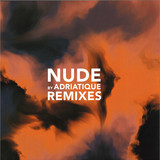
A year after the release of Adriatique’s debut LP, ‘Nude’, Afterlife presents a seven-track remix package to breathe new life into the originals.
The album found Adriatique, the duo of Adrian Shala and Adrian Schweizer, explore a more downtempo, contemplative sound than they were known for. Its profound musicality makes rich source material for a set of dancefloor interpretations, which Tale Of Us have curated together with Adriatique for the label’s 30th release.
First is Tale Of Us and Mathame’s version of ‘Mystery’, where they extend the blissful tones and Jono McCleery’s vocals into a euphoric dancefloor cut. Next Solomun brings some electro flair to the vocoder-led title track, before Kobosil toughens up ‘Tachykardia’ with a warehouse-ready kick drum and twists the serene voice of Delhia De France. Rampa is another new name for Afterlife Recordings; he gives ‘Nude’ a slick, techy overhaul to complete the vinyl release in fine style.
The digital release contains an Agents Of Time epic in their remix of ‘Buchla’s Dreaming’, Johannes Brecht’s shimmering take on ‘Ray Reincarnation’ and a chopped-up remix of Mystery by Isoleé. A diverse, tastefully-executed remix EP which does justice to the quality of Adriatique’s album.
out of Stock
Last delivered 6 years ago available to reorder, subject to availability
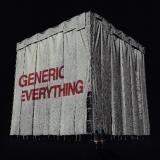
Chase & Status announce their forthcoming album Generic Everything, out 9th October 2026, alongside new single “Gone Too Far” featuring Debbie. The 10-track project brings together an expansive cast of collaborators including J Hus, Little Simz, Skrillex, Giggs, D Double E, Blanco, IRAH, Col3trane and more, continuing the duo’s long-standing ability to connect scenes, generations and sounds across British music.
Generic Everything follows a landmark period for Chase & Status, which has seen “Baddadan” spend over 15 weeks in the UK Top 10 and achieve Platinum status, while “BACKBONE” featuring Stormzy became their first ever UK Number One single. Alongside a BRIT Award for British Producer of the Year, a record-breaking sold-out UK arena tour and their Milton Keynes National Bowl takeover, the duo continue to operate at a career-defining level more than two decades in.
Built around the idea of resisting creative conformity in a world increasingly shaped by algorithms, endless content and more, Generic Everything sees Chase & Status once again refusing to be confined by genre.
Moving between rave, rap, soundsystem culture and electronic music, the album pairs their unmistakable production with some of the most distinctive voices in UK music and beyond, capturing a duo still driven by the instinct to keep evolving, collaborating and pushing their sound forward.
out of Stock
Last delivered 5 days ago available to reorder, subject to availability
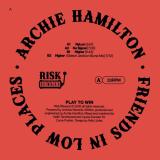
Risk/Reward’s fourth release sees one of the UK’s most prolific and recognizable Producer/DJ’s take the elevator all the way down to the basement of the Tech House sonic spectrum…
Archie Hamilton has achieved superstar status after over a decade of consistently excellent musical output. As the name suggests, Friends in Low Places sees him return to the underground with the rolling, acid-laced, “for the heads” sound that first saw him explode on to the scene 10+ years ago, supplying 3 original tracks that will surprise and delight in equal measure!
A1: NyLon blends the dreamy shades of 90s Italo with the rugged bounce of golden era UK Tech House, to create a beautiful, bold fever dream. Intricate synth melodies, rudeboy vocal cuts and transcendant pads play out over crunchy swinging drums. A bold opening statement to kick off the EP.
A2: The energy kicks up to 11 on Trance-Tech bomb No Signal, a certified weapon of mass dance floor destruction! Vintage Archie rolling 303 bass layered with complex acid lines, haunting siren calls and relentless, gritty drums make for a powerful peak time standout that will have jaws dropping!
B1: On the flip side Archie takes you Higher with another signature roller that’s instantly familiar yet enigmatic. Punchy yet intricate drums, deeply groovy bass, a variety of ear worm melodies and an oh so familiar voice take you up, up and away in to the atmosphere. An instant classic from a man who’s made his fair share.
B2: Returning to the scene he played a key role in building after almost a decade out, UK Tech House DON Gideon Jackson delivers a gargantuan remix that could very easily reduce the club to rubble if not handled carefully. No element of Higher was spared in this rework, but the weight and pressure get cranked up to the absolute fullest - tougher than tough stuff from the OG!
out of Stock
Last delivered 4 days ago available to reorder, subject to availability
After a couple of Echo Labs 45s and an ECR release - the ECHO EDITS sub-label is back once again, with the BREAK CRACKER in 2026
After the last latin flavoured joint on the label, we head to an all out Funk and Jazz party with a couple of cover versions of dancefloor favourites, never on a vinyl 7” before - given an added makeover for a double sided 45 bomb.
“I Want You Forward” takes a big band version of the Jackson 5 monster hit originally released on an LP. After being chopped,looped and layered with sound FX plus JA hype vocals to take it to the next level - this has been a favourite dubplate to start DJ sets with a bang !
“Psychedelic Drummer” is the Horace Silver penned soul-jazz cut that spawned various other vocal and instrumental versions that have been dancefloor favourites in mod clubs and funky jazz sessions over decades. Originally a very short track on a private press LP - it was the massive drums that made this ripe for more exposure with nothing more added - just cut-up, rearranged and extended for club play.
out of Stock
Last delivered 4 days ago available to reorder, subject to availability
"Prior to the vinyl release of the debut work “Vapor Curve”, which suffered a one-year delay due to manufacturing errors, the release of the mini-album “grainy film” has been confirmed."
Following the artist's previous release, this album completely eschews the use of computer-based DAW (Digital Audio Workstation) software. By relying exclusively on a strictly limited setup of hardware—synthesizers, samplers, and delay units—the artist pursues a meticulously woven, highly original take on minimal harmony.
At the core of this record lie exquisite ambient textures and beautifully shimmering synthesizer arpeggios. These are layered with the organic warmth of the sampler, vividly sketching out the contemporary "sound of Tokyo." As the album title suggests, the gritty, Lo-Fi texture of the sampler evokes the imagery of a vintage, low-fidelity film reel in the listener's mind. Pushing further than the predecessor, this approach embraces a more abstract, dubby, and deep soundscape aesthetic, elevating the album's artistry to new depths.
Describing this stoically refined electronic music, Maruyama reveals that it is "music for a cigar." It is not an assertive sound that demands to be the center of attention in the room. Instead, the moment the needle drops, it possesses an overwhelming power to transform the very particles of the room's air. The nostalgic and melancholic melodies, much like the shifting and fading trails of cigar smoke, embody the aesthetic of shogyo mujo (the impermanence of all things). Amidst a constantly changing world, it offers a desire to simply drift away in the slumber of sound—a supreme deep-listening experience guaranteed to transport you.
GoldFord’s soul music is rooted in truth. His raw, unvarnished songs are a balance of introspection and catharsis, grappling with heartbreak, healing, and the quiet revelations that come with growth. After spending a decade in corporate America, the St. Louis native (now based in Los Angeles) turned to music as a means of survival following a devastating personal loss. “I was more afraid of dying with regret than I was of failing,” he says of his decision to finally choose the path at 30, a choice that set his entire trajectory in motion.
That initial fearlessness has since fuelled extraordinary momentum. With over 4 million monthly listeners on Spotify, GoldFord has rapidly become one of the most compelling emerging voices in contemporary music. His breakout EP, Orange Blossoms (Oct 2024), has surpassed 100M streams, and his latest project, Space of the Heart (Sept 2025), has already generated 90.8M streams, 2.7M saves, and over 153,000 pieces of user-generated content across TikTok and Instagram. The standout track “Easy Does It” has reached 43.5M streams and continues to accelerate with more than 250K new weekly discoveries on Spotify.
GoldFord’s touring trajectory has followed the music's rapid ascent. He began in intimate rooms like Los Angeles’ Moroccan Lounge and New York’s Baby’s All Right before embarking on a debut North American tour that sold over 25,000 tickets. This momentum carried over to his first UK and European run, which required multiple venue upgrades in cities like London and Manchester. The international momentum continued with an Australian debut in March 2026, alongside key festival appearances at Austin City Limits and Noah Kahan’s Out of the Blue. He is currently headlining 1,000+ capacity venues on the Space of the Heart North American tour, including sold out shows in historic rooms like The Fonda and Webster Hall, with upcoming festival slots at Shaky Knees and Oceans Calling.
Marking their first new material of 2026, Alien Chicks are back with a glorious new EP 'Toys Taken At Birth' - available on CD as well as gloriously limited glow in the dark vinyl (strictly limited to 500 copies ever in this version), with recent standout Live EP 'Live At The Windmill' included on the B Side 'Toys Taken at Birth' is about the injustice that leaves some people with everything and some with nothing. Power doesn't present itself cleanly; it leaks through spectacle and symbolism - flags appearing overnight on high streets, headlines flipping within hours, slogans that feel less like belief and more like control tactics nobody agreed to. Even everyday life starts to feel slightly repurposed, like familiar things have been quietly reassigned for a different agenda.
Stone Age Is Now: Poems from Lithic is the new album by musician and poet Caleb Nichols - both a companion piece to his book Lithic: A Hyperballad (Harbor Editions 2026) and a follow-up to his album Stone Age Is Back (Royal Oakie 2025). Across twelve tracks Nichols interpolates poems from Lithic: A Hyperballad with tracks from Stone Age Is Back, bringing new depth to his indie-rock and alt-folk compositions. A meditation on grief, but not in the ways you’d expect, the album explores what it means to be living and dying right now, in this moment of extraordinary change.
Inspired by the raw immediacy of Neil Young, early REM, and Califone, Nichols adhered to a first-take best-take rule and tracked the album in just five days. Produced by Nichols, the album was engineered by Jay Pellicci (Deerhoof, Om, Sleater-Kinney) at Brother’s (Chinese) Recording in Oakland, CA, with Nichols later recording the spoken word overdubs after hours at an empty bar in San Luis Obispo, CA. Pellicci later mixed the tracks and David Glasebrook (Patti Smith, Peter Case, Sugar Candy Mountain) mastered the album at The Garden Shed in Oakland, CA.
Featuring even more experimentation than Stone Age Is Back, the album is peppered with field recordings captured by Nichols from many locations, including Kew Gardens, London; Llan Tysilio, Yns Mon; Treborth, Gwynedd; a secret beach in Bangor; Kelvingrove Park, Glasgow; and Broad Street in San Luis Obispo, CA. In addition to contributions from band members John Metz and Aaron Kroeger, the album features saxophone by Lorenzo Coretese , and Rhys Trimble provides the Welsh translation and performance you hear on “Orme Dream At The Car Park”. Additionally, Nichols took some liberties adapting the poems from the book to the recordings. “You’ll notice that there are differences between the printed poems and the poems recorded here. That is because a poem is never finished and can exist in multiple instances at the same time, like in quantum mechanics. The cat in Schrodinger’s box is both alive and dead; at the bottom of the cliff, our eyes are both: closed and open” says Nichols.
The single is the latest collaboration from the pioneering electronic artist and follows “Intertwine,” which featured TT, aka Theresa Wayman of Warpaint. Other collaborations on A Body Of Voices include “Turns,” featuring the ethereal vocals of Nicole Miglis (Hundred Waters), and “True Love, Don’t Be Afraid” featuring Stephen McBean (Black Mountain & Pink Mountaintops), “Fight or Flight” ft. Aisha Badru, “Falling” ft. Maiah Manser and multi-instrumentalist Aaron Shaw, “Floating” ft. multi-instrumentalist and composer Spencer Zahn, and the unreleased track, “Take Me” ft. Raphaelle Standell-Preston (Braids, Blue Hawaii). A Body of Voices delivers the most collective and melodically driven project of his acclaimed quarter-century. Having spent decades mastering his natural instincts for space, tempo, and timing, LaValle set a deliberate goal to break beyond his usual parameters by inviting an expansive community of vocalists and marquee indie players into his realm. The resulting record pushes his sonic map entirely, seamlessly blending his signature, textural synthesis with a vibrant tapestry of voices spanning dream-pop, alternative, and R&B. Nearly thirty years into the project, A Body of Voices proves that while The Album Leaf remains unmistakably his, it is a pioneering musical universe he is never afraid to redefine.
This songwriting-focused approach on A Body of Voices marks a natural evolution for an artist who has been steadily making his mark as a soft-spoken innovator since 1999. Now based in Los Angeles, LaValle started out in the San Diego music scene, creating vivid, rhythmic, soaring instrumentals centered around the Rhodes piano. Over more than two decades of acclaimed releases on seminal labels like Sub Pop, City Slang, and others, he has become a definitive touchstone for meditative electro-organic music. While earlier milestones like 2023’s Future Falling and 2024's Blast EP found him increasingly renewed by outside perspectives, A Body of Voices brings that collaborative spirit to its full, unbridled potential.
At this point, the vast swathes of unreleased Muslimgauze material Bryn Jones left behind when he passed away over 25 years ago are as legendary as any of his work. And sure enough, there's still some being unearthed today.
The fourth entry in a 7" single series is taken from one of Jones' customary completely unlabelled DATs, which he sent to labels seemingly as fast as he finished them.
A new series of singles collecting one of Bryn Jones’ innumerable DAT tapes that would show up at the labels he worked with sans any identifying marks.
Side A layers multiple voices (a background, faraway wail that either is or is akin to a muezzin, and a flatly declaimed two-word phrase that periodically halts proceedings) over his classic, slightly brick-walled hand percussion for a strangely meditative experience, as Jones phases elements in and out, more or less prominently in the mix. Side B however, open in a surprisingly dreamy place for Muslimgauze, with a looped ascending synth pad and beautiful sampled singing only gradually acquiring percussive accompaniment. As with the other side, Jones is content to let these elements interact and swap spaces in the mix for the duration, trusting in the sturdiness of his chosen components to carry the listener through.
'Quiet Pieces' initiates Abul Mogard’s personal imprint Soft Echoes with a definitive self-portrait of calm, contemplative, and discreet inner landscapes made audible. It is the first solo album on vinyl in four years. RIYL Alessandro Cortini, William Basinski, The Caretaker.
While sifting through archived material left idle from earlier projects, a chance encounter with a late uncle’s trove of beloved 78rpm classical and opera records prompted the reworking and completion of what would eventually become the album. Spinning dusty records at 33 and 45rpm, Abul Mogard recombined their enduring spectres with unfinished sketches from his archive. The resulting soundscape blurs distinctions between his memories and those of another, exquisitely short-circuiting the senses with its waking, dream-like lucidity.
This was a process I hadn’t explored in my earlier works. I began sampling brief moments from these records, altering them with studio effects and playing them at slower speeds. In many cases, I wasn’t entirely sure how the original music sounded. These fragments, once further processed, became a source of inspiration for my new compositions. Over time, I realised that the old pieces from the archive and the new material derived from the samples naturally complemented each other.”
The resulting pieces hover over a threshold, a liminal space that harmonises the old and older material. Voluminous waves of quiet and loud undulate between consonance and dissonance, conjuring imagery of a decaying grandeur that humanity’s decadence has surrendered to the elements. Abul Mogard’s seemingly abandoned yet vast landscapes are nevertheless intimate with timbral frissons of red-lined distortion. Elusive, yet as tangible as sea spray or smog, they affect the olfactory senses with a rarified, synesthetic quality that modestly engages one’s emotional register – a hypnotic, distinguishing feature long hailed as one of the hallmarks of his work. A fidelity to memory and dream recall is sensitively probed in the journey from the stately symphonic stasis of 'Following a dream' to the almost industrial, untethered brutality evoked by a looming silhouette that’s never fully visible in 'Constantly slipping away', culminating in the foreboding coda of 'Like a bird'. Those pieces appear to shield the album’s sentimental core, where the tempestuous play of light and shadow of 'In a studded procession' escalates to breathtaking, panoramic climax, while 'Through whispers' evokes an out-of-body-like experience encountered with visceral poignancy.
Looking back, Mogard notes an unexpected influence: “I realise being inspired by Phill Niblock, whose work I had barely known at the time but explored after his passing in 2024. His album 'Boston Tenor Index' changed the way I approached dissonance. It encouraged me to push my sound further, to the edge of a space where I began to feel uncomfortable.”
The album artwork, created by longtime collaborator Marja de Sanctis, features a photograph taken at the Temple of Jupiter Anxur, an archaeological site overlooking the Mediterranean Sea. Captured with an iPhone, the image traces the residual presence of construction techniques and architectural forms of the Romans, where material history is transcribed through contemporary tools. The convergence of ancient and modern technology aims to reverberate the site’s lasting spiritual presence – an echo persisting in what is now perceived as a quiet, emptied space. The spiral gestures towards infinity and light. Past and present dissolve into one another, reflecting 'Quiet Pieces' meditation on sound, memory, and time.
RIYL Alessandro Cortini, William Basinski, The Caretaker
out of Stock
Last delivered 8 months ago available to reorder, subject to availability
Surprises are nice. Unexpected, delightful - Vision Fortune last released music in 2015, and so odds were off that we’d hear from them again.
But against all odds, Vision Fortune III is coming out on Gringo Records, following the release of their last album ‘Country Music’ on ATP Records.
The trio first agreed to record a new album as somewhat of a dare over a marathon pasta and wine heavy luncheon in Palermo, Sicily. Waking up with sore heads, they realised in mild panic that flight tickets had been purchased, a cottage in rural Wales was booked, and it was too late to pull out.
And so it was - the Fortunes arrived in Machynlleth Wales in Spring of the following year. The rules were simple - takes were live, songs minimal and the fireplace kept roaring.
Drummer Andres Ayerbe’s strict roast lamb dinner cooking schedule resulted in an album less frenetic and agitated than previous work - instead, III explores a softer, more subdued and subtle side of Vision Fortune. Additional overdubs were recorded in New York City and Birmingham, by AC Williams and Alex Townend. III was completed - a new, leaner Vision Fortune. Like a good lamb dinner - more meat, less fat.
Press Quotes for Country Music:
"An impressively brutal record" NME 8/10
"Immersive and introspective musique concréte rippling rippling with dub rhythms, orchestral strings, tolling bells and discordant drones coming close to the alien beauty of Mica Levi's sonically extreme soundtrack work." Uncut 7/10
"Unsettling, strangely cathartic and hook-free (in a good way)." Dazed ("Twenty albums to look out for in 2015")
"Assembling whole scrapyards of sound and turning them into something better than what went before" The Guardian
"Swaddling the senses in soundwaves, Minimal ambient sketches and harsh electronics abound on this fascinating 12-song affair" The FADER
"Basically just one long, connected droney throb. But it's an awesome long droney throb." Brooklyn Vegan
“One day, I’ll be a ghost, a spirit, that moves with you along the winds,” pines Twin Atlantic’s Sam McTrusty on the beautiful and cinematic ballad ‘Your, The End’, the fitting opener to the Scottish alt-rockers’ eighth album ‘Separation From The Animals’. “It’s about the responsibility I feel around being a parent,” he says, revealing that he cried while recording his vocal over bandmate Ross McNae’s tender Beatles-y piano part. If the album says anything, it’s ‘All You Need Is Love’, told with maturity and reckoning with the past to make sense of the present. ‘Separation From The Animals’ is an album born of two tales of triumph and perseverance – one of McTrusty grappling with his own ghosts, and the other of their finest album to date coming after a time when band morale was at an all time low. When their friends’ bands and peers were all calling it quits, words of wisdom from those close to the band were urging them to take time off. The album started out as a McTrusty solo effort, isolated in his new home. The day the band finished work on their last album, 2024’s ‘Meltdown’, was also the day McTrusty packed up his entire life and studio to start a new life in Toronto with wife and two kids, unaware of the rich seam of songwriting that it would inspire.
Baxter Dury’s eighth album, 'Allbarone', seemed to be done and dusted after release last autumn, yet super-producer Paul Epworth (Adele, U2) decided it was a good idea to work on extensions of five of tracks from the album. Not just extensions - full on electro-disco mixes that take tracks apart from the edges and reorder them into relentless dance floor tools built to perfectly soundtrack the small hours.
Each track finds a groove and takes its journey right through the middle of the original track, to create classic 12" extended remixes, adding a whole load of echoing dub over flickering percussion tracks, madly addictive basslines and gloriously languid disco rhythm tracks. From 'Kubla Khan’s hefty low-end groove to 'Alpha Dog’s deconstructed nightclub dub via 'Schadenfreude’s Eurodisco bass and fizzing hi-hat pulse, Paul Epworth’s phenomenal new mixes lift Baxter’s tracks up to another level.
Written in collaboration with British jazz pianist and organist Kit Downes, the album was recorded in the hushed, reverberant atmosphere of Bragernes Kirke in Norway in November 2024 - a setting that lends the record an intimate, almost sacred stillness. The album was mixed and mastered by Jorgen Traeen. The album takes its title from the landmark 14th- century mystical text by Julian of Norwich - the first book known to have been written in English by a woman. Sundfor encountered Julian's writing around the same time she and Downes were performing together in churches in 2024, and the timing felt fated. Drawn to the text's extraordinary themes of hope, resilience, and its quietly radical feminine perspective, she found in Julian's words a natural spiritual and artistic continuation from her acclaimed 2023 album Blomi . The connection felt so immediate and profound that she invited Downes to join her as a full collaborator on the project.
Love is not soft. It was never meant to be. It sweats, it pulses, it burns through skin. It lives in the space between bodies. In friction, in tension, in heat that doesn’t ask for permission. LOVE AS A PHYSICAL FORCE is not about romance as an idea, but as an experience. Something you feel at 5AM, when the night has already taken everything from you, and still asks for more. Across four tracks, DJ Hermano moves between intimacy and impact. From the longing of Vem pro meu amor to the rupture of No encontrarte nunca mas, love reveals itself as contradiction: tender and aggressive, distant and consuming. The collaboration with Cuerpos brings a raw edge. Where visceral collides with desire. Voices don’t just sing; they confront, they provoke, they touch. On the B-side, the body takes over. Friction Lovers and Desire and Heatwave at 5AM dissolve the emotional into the physical. Where connection happens through movement, sweat, repetition. This is not love you write about. This is love you survive. A record for the late-night moments, between the club and sleep. For the moments where the line between pleasure and exhaustion disappears. For when desire becomes the only language left. Love, here, is not a promise. It’s a force.
Roughly two years after the release of their initial statement of intent, debut single “Toutpartout PT2” with its hypnotic ripples, Andi Haberl and Florian Zimmer aka Bella Wakame have successfully channeled the magic of a 2024 live recording (captured at Berlin’s Donau115 & Silent Green) into their first proper studio offering. You can hear inspirations ranging from Bitchin Bajas, Jeremiah Chiu to Groupshow (Jelinek, Leichtmann, Pekler), the hypnotic, intricate battle between form and freedom (the fun of momentary formlessness) continues to unfold over the course of 10 new tracks, featuring album guest Indra Dunis (Peaking Lights). Their first single "Shades of Nambei" was very much inspired by the wonderful band Spirit Fest and their song "Nambei".
You can either shorten the reins, or you can loosen them – and give things more slack. With Bella Wakame, it’s definitely the latter. Constantly challenging each other, they’re tapping a whole new energy. Tons of different energies.
Based on the impulsive, propulsive interplay between drums/sensory percussion (Andi Haberl) and modular synthesizer (Florian Zimmer), the frenzied, free-form results take listeners into completely new dimensions – sonic worlds that don’t really sound anything like their other musical outlets (The Notwist, SUN, Saroos, Driftmachine etc.).
Whereas most bands tend to notoriously overthink names/monikers, these guys obviously only care about the ecstatic push-and-pull that occurs once their instruments meet and overlap: it’s wildly explosive textures with a booming heart. Moving restlessly between motorik club, electro-acoustic jazz experiments, ambient excursions, and fast-paced instrumental anthems that seem to explode at the seams, one can immediately tell how much they enjoy the newfound freedom, the turbulent encounters born on the spur of the moment.
It’s all about a quick-paced exchange of friendly blows, a chasing of tails into ever-new musical terrains. Relying on just enough form for that wildness to blossom within, their just-in-time dashes continually unfold, refold, return, grow bigger – and leave you startled.
out of Stock
Last delivered 11 days ago available to reorder, subject to availability
1982 4-Piece Demo' is the first official, fully-licensed and unreleased material to be released under the name Strawberry Switchblade in 30 years. Since disbanding amid major record label acrimony and personal differences in 1986, the already-cult band have since grown in stature and legend. Trailblazers in many ways, the band's mythology justifiably centers around the charismatic duo of Jill Bryson and Rose McDowall, but that isn't a complete picture. Bryson and McDowall's growing friendship, having met some years earlier on the punk scene, became a creative partnership: Bryson's art school background and McDowall's history in avant-punk group The Poets meant Strawberry Switchblade was a band pitted against many established norms. The band's very first incarnation, an all-female 4 piece, recorded one demo at Glasgow's Hellfire Club and played a handful of gigs. Friends Janice Goodlett and Carole McGowan completed the line up on bass and drums respectively. Strawberry Switchblade would eventually pair down to a duo and go on to chart success but it's in these raw, passionate recordings that the songwriting and vocal elements were being hammered out and explored in real time.
Spanish Song' is a previously unreleased song. With Rose McDowall's instantly recognizable lead vocal dovetailing with Bryson's harmonies and lead guitar, it's the first glimpse at an alternative history of Strawberry Switchblade. This incarnation could easily have been featured on a Nuggets compilation or a precursor to the indie-pop revolution that would take over British bedrooms a couple of years later. "Trees & Flowers" is instantly recognizable, a bona fide classic that would earn the band its first record deal. Here it's given a more forceful rhythm section: Goodlett and McGowan's playing is in fact accomplished and doesn't hint at the bands' youth. "Go Away" would also surface later on the band's debut LP but here it is a moody-garage stomper with a psychedelic, haunting refrain. These 3 songs point to a tantalizing future of the band that was never realized.
Remastered and restored by Sean Pennycook from the original cassette, with artwork based on a single photographic contact sheet (the only visual evidence of the band in this form) and with a booklet of photographs and new text. Pa
out of Stock
Last delivered 12 days ago available to reorder, subject to availability
Terminal Recordings launches with a four-track split release.
The A-side, produced by Luis Malon, delivering two cuts driven by heavyweight basslines, broken rhythms and machine-controlled tension. Make Shoot sets the system in motion with relentless groove and low-end pressure, while Inside Your System dives deeper into a darker, more hypnotic environment where fractured percussion and synthetic textures take control.
On the B-side, Molen takes over the signal with a pair of electro transmissions. Pathcord unfolds through precise sequencing, robotic funk and evolving circuitry, building a dynamic journey across interconnected rhythms. Codec closes the release with sharper frequencies, coded melodies and futuristic electro architecture designed for late-night dance floor communication.
It’s as sure as night follows day, one of the last truly reliable things in these uncertain times, a rock in the storm of information overload, and still one of the best things you can make from PVC: The new TOTAL compilation is here!
The cheerful opener “Xtasy” comes from the up-and-coming Cologne-based DJ H0TLINE. If it says ‘Ecstasy’ on the label, that’s exactly what’s inside. The term ‘legend’ is all too often bandied about lightly. In the case of ORLANDO VOORN, it’s almost an understatement. His ‘So Deep Remix’ is a goosebumps-inducing masterpiece in its purest form. Simply wow. FRANKEY & SANDRINO haven’t visited us for a while, but their key still fits the lock. Watch out – “Disruption” might expand your consciousness! Ah, nobody grapples so beautifully with life’s big questions as TEE MANGO, but what would the world be without melancholy? A Disneyland of triviality! TEAM 85E, newly formed around JÖRG BURGER, takes on a classic from the German songbook by Ton, Steine, Scherben and opens hearts with the same ease as others open tins of beer. Speaking of hearts, MICHAEL MAYER pays tribute to the successful Artemis 2 lunar mission, as a small thank-you for reminding us that it should really always be about love. SOG, aka WOLFGANG VOIGT, agrees wholeheartedly. Sometimes all it takes is a bass drum, eight notes and a bit of love for total satisfaction. ROBAG WRUHME does what he does best: luring us down the proverbial rabbit hole like the White Rabbit, just not quite so frantically. JÜRGEN PAAPE, together with FENJA LUDWIG, doesn’t pull a rabbit out of the hat, but rather a modern dub-techno hit. We watch in amazement as a new genre takes shape. Finally, it’s time to sit back and relax with REINHARD VOIGT and just let things be. Cocktail or beer? The main thing is: it’s cold.
At the outset of the project, Jupp assembled a palette of instruments and sounds which evoke a moment in musical history when digital studio technology just started to take over from analogue. Eschewing Belbury Poly’s earlier mid 70s obsessions, to focus on that period around 1983, when artists who could afford it started to experiment with samplers. It was a musical moment dominated by the sounds of Prophet 5, DX7 & PPG synthesizers, Fairlight & Synclavier music computers, TR808 drum machine & Simmons Drums (those ubiquitous hexagonal drum pads) and of course the much-maligned fretless bass.
It’s also an era that’s now seen as something of a golden age for fantasy, sci-fi, comics, book, TV, movies and games (particularly in Britain where it was often fuelled by a post punk reaction to Thatcher’s regime). In Jupp’s memory these things go hand in hand; as a child his nerdy fandom was soundtracked not as it was for most by Heavy Metal, but by the electronic pop of Bill Nelson, Yellow Magic Orchestra, Japan, and Frank Chickens. Also, by otherworldly TV soundtracks & production music of the era: Elizabeth Parker and Paddy Kingsland at the BBC, The Parry Music Library, Rod Argent’s new age library albums and even Clannad’s Robin of Sherwood score.
Bonding over a shared love of soul, jazz, funk and hip-hop, rapper Essa and producer / multi-instrumentalist J-Felix assembled a dream-team of top notch vocalists and players for this collective effort.
The result? Driving beats, poignant bars, soulful hooks and stirring brass.
The collective includes vocalists Avijè, Vanya Lyma, Marshall Mandiangu and Jerry Clavier, with Jack Kendon on horns and a guest appearance from your favourite drummer’s favourite drummer, Richard Spaven.
With his customary wit and masterful flow, Essa speaks on finding truth, confronting ego, eloping to the tropics and breaking generational curses. The esteemed lyricist was a key figure in UK Hip-Hop’s heralded “golden era”, alongside contemporaries and collaborators Jehst, Klashnekoff and TY, performing and recording with such luminaries as De La Soul, Wu-Tang Clan, Guru, Slum Village and Pharoahe Monch, winning praise from Nas and Mark Ronson.
J-Felix’s rich production takes in neo-soul, UK Jazz, boogie and hip-hop. His signature “J-Funk” style evokes classic samples but with all-original playing from the versatile multi- instrumentalist, who has worked with Swindle, Kojey Radical, Mahalia and Alice Russell.
The Fifth Foundation’s explosive live experience ranges from a versatile MC/DJ set-up to a full live band, with horns and multiple vocalists, mixing originals from this bold debut with inspiration from timeless soul, jazz, funk and rap classics.
Montréal-based sound artist Steve Bates expands his strategies and stylistic influences on An Infinite Antenna, his second solo album for Constellation, giving freer reign to melodic components and textural dynamics: leftfield synth work, deconstructed drum machine, pointillist electric guitar, and radiostatic blur are all part of the new brew swirling around his bruitist signal-bending and field-recording sensibility. Arguably a more ambient album than his acclaimed 2022 Constellation debut, An Infinite Antenna is at the same time more densely packed with ideas, dynamics, evocations and earworms. Coming out of the anarcho-punk scene of the Canadian Prairies in the 1990s, Bates founded Winnipeg’s experimental sound festival Send + Receive in 1998 before moving to Montréal to become Sound Coordinator at Hexagram (Concordia University), delving further into sonic research and theory, tape-based composition, and installation work. Alongside the curatorial arc of his own sound art label The Dim Coast, Bates released several solo and collaborative albums on ORAL_records leading up to All The Things That Happen, the 2022 Constellation debut praised by Boomkat for its “grittily iridescent ambient billow rendering maximalist panoramas” and by Backseat Mafia as “extraordinary soundscapes of unstable, destructive cacophony and tender calm, echoes of the threat of power.” Where that album was noisier and single-minded, made with the self-imposed limit of a Casio SK-1, Bates plays more widely with instrumentation and atmospheres on An Infinite Antenna, also drawing on his post-hardcore roots in seeking a sort of track-by-track concision nonetheless driven by the album’s coherence as a seamless work. “I was trying to set durations I associate with punk rather than the longer, sprawling music coming from more ambient styles (that I very much love), and while I wasn’t able to quite pare it down to Minutemen durations, I had that reduction to essential elements as a sort of whisper over my shoulder.” Incorporating source recordings made throughout 2023-2025, including at artist residencies and site-specific sound installation visits in Bosnia and Herzegovina (the album’s cover photo was taken in Sarajevo), Austria, Greece, and Saskatchewan, An Infinite Antenna combines Bates’ “idea of slowly scanning a radio dial” with a soundworld of recurring timbral and textural touchstones that forge an integrated whole.
The album’s 12 tracks work effectively as stand-alone pieces, replete with shifting undercurrents, buried melody, and stuttering kinetics, and as a sequential flow where the brief interstitial silences between them are like short pauses to flip the next page in a sketchbook of perspectival studies of a wide but singular tableau. The glistening atonal synth expressionism of opener “Pink pink pink pink…pink pink” drifts gently toward submerged ambience, darkened by the noised rumble and static interference of “Green as a ghost”, which introduces broken beats and piano chords in its denouement. Tracks like “Battles and sieges and street trees” and “Easier sad than done” work the foundations of low-end field-recording resonance, but dappled with lovely melodic droplets of treated guitar and synth. “Waste, songs of the world” and “Disaster loans” are among the album’s most explicit stylistic references to posthardcore, with distorted ambient bass and gently abrasive drum sampling. Closing track “Swamps and factories”, the album’s longest piece, is perhaps most reminiscent of Bates’ previous record with its sustained dissonant glimmer-drone, but the journey An Infinite Antenna traces to get there is Bates at his most dynamic, diverse, distinctive, and engaging. Thanks for listening.
Recorded in Los Angeles over the course of a single day at a studio in the Eagle Rock neighborhood, Dois Desertos was produced by Mario Caldato Jr. and emerged without a predetermined plan or schedule. The project took shape during Portuguese musician João Pimenta Gomes' stay in Los Angeles with his family. During that time, through Rodrigo Amarante, João met Mario and Samantha Caldato, as well as musicians Abe Rounds (drums and percussion) and Gabe Noel (bass and cello). From those encounters, the album began to unfold organically.
Working from simple scores—some containing little more than chord progressions—the sessions left plenty of room for improvisation. Every performance was captured live, in a single take, with no overdubs. The mixing process, also carried out live by Mario Caldato Jr., followed the same philosophy: effects and level adjustments were performed in real time and printed directly to the final two-track master.
At the heart of the album's sound is the Cristal Baschet, a rare instrument played by rubbing glass rods with the hands, causing metal resonators to vibrate and produce an ethereal, resonant tone. João describes its sound as "a trace, almost like a shadow." Rather than taking the lead, the instrument serves as a textural foundation, while the bass and cello carry the melodic lines. Some of these melodies are original compositions, while others draw from traditional Portuguese fado, reimagined through an open and exploratory approach.
The album has a dreamlike atmosphere, reflecting the perspective of someone experiencing Los Angeles from the outside—not in a rush to belong, but fully receptive to the city's unique energy. Two films helped shape this imaginary landscape: Model Shop (Jacques Demy, 1969), in which the French filmmaker uses Los Angeles as a pretext to simply observe and inhabit the city, and Thom Andersen's Los Angeles Plays Itself. The result is Dois Desertos, an album that, in João's own words, "could never have been made anywhere else."
With Dois Desertos, João Pimenta Gomes invites listeners into a deeply immersive experience, revealing a more exploratory side of his artistic practice while reinforcing Amor in Sound's commitment to releasing original works that engage with the many languages of contemporary music.
Montréal-based sound artist Steve Bates expands his strategies and stylistic influences on An Infinite Antenna, his second solo album for Constellation, giving freer reign to melodic components and textural dynamics: leftfield synth work, deconstructed drum machine, pointillist electric guitar, and radiostatic blur are all part of the new brew swirling around his bruitist signal-bending and field-recording sensibility. Arguably a more ambient album than his acclaimed 2022 Constellation debut, An Infinite Antenna is at the same time more densely packed with ideas, dynamics, evocations and earworms. Coming out of the anarcho-punk scene of the Canadian Prairies in the 1990s, Bates founded Winnipeg's experimental sound festival Send + Receive in 1998 before moving to Montréal to become Sound Coordinator at Hexagram (Concordia University), delving further into sonic research and theory, tape-based composition, and installation work. Alongside the curatorial arc of his own sound art label The Dim Coast, Bates released several solo and collaborative albums on ORAL_records leading up to All The Things That Happen, the 2022 Constellation debut praised by Boomkat for its "grittily iridescent ambient billow rendering maximalist panoramas" and by Backseat Mafia as "extraordinary soundscapes of unstable, destructive cacophony and tender calm, echoes of the threat of power." Where that album was noisier and single-minded, made with the self-imposed limit of a Casio SK-1, Bates plays more widely with instrumentation and atmospheres on An Infinite Antenna, also drawing on his post-hardcore roots in seeking a sort of track-by-track concision nonetheless driven by the album's coherence as a seamless work. "I was trying to set durations I associate with punk rather than the longer, sprawling music coming from more ambient styles (that I very much love), and while I wasn't able to quite pare it down to Minutemen durations, I had that reduction to essential elements as a sort of whisper over my shoulder." Incorporating source recordings made throughout 2023-2025, including at artist residencies and site-specific sound installation visits in Bosnia and Herzegovina (the album's cover photo was taken in Sarajevo), Austria, Greece, and Saskatchewan, An Infinite Antenna combines Bates' "idea of slowly scanning a radio dial" with a soundworld of recurring timbral and textural touchstones that forge an integrated whole. The album's 12 tracks work effectively as stand-alone pieces, replete with shifting undercurrents, buried melody, and stuttering kinetics, and as a sequential flow where the brief interstitial silences between them are like short pauses to flip the next page in a sketchbook of perspectival studies of a wide but singular tableau. The glistening atonal synth expressionism of opener 'Pink pink pink pink_pink pink' drifts gently toward submerged ambience, darkened by the noised rumble and static interference of 'Green as a ghost', which introduces broken beats and piano chords in its denouement. Tracks like 'Battles and sieges and street trees' and 'Easier sad than done' work the foundations of low-end field-recording resonance, but dappled with lovely melodic droplets of treated guitar and synth. 'Waste, songs of the world' and 'Disaster loans' are among the album's most explicit stylistic references to posthardcore, with distorted ambient bass and gently abrasive drum sampling. Closing track 'Swamps and factories,' the album's longest piece, is perhaps most reminiscent of Bates' previous record with its sustained dissonant glimmer-drone, but the journey An Infinite Antenna traces to get there is Bates at his most dynamic, diverse, distinctive, and engaging. Thanks for listening
Release description Chesster lands on Rutilance Recordings with a four-track EP rooted in classic deep house. Blending old-school influences with a modern touch, the project captures the essence of his sound: groove-led, warm, and true to its foundations. Originally from Italy and now based in Los Angeles, Chesster has been building strong momentum across the global house scene, with a run of standout releases and defining moments over the past year. This EP marks an important step in that journey - not only as his first on the label, but also as a more personal statement. After a run of highenergy, peak-time records, the project sees him step into a deeper, more refined lane. The EP also features a special contribution from Rutilance boss DJ Steaw, adding an extra layer of character and tying it closely to the label’s identity.
out of Stock
Last delivered 17 days ago available to reorder, subject to availability
After his contribution to Tangled Waves Vol. 2 with “Grit Wave”, Little Sea returns to Bosconi for his first solo EP.
A producer, vinyl collector and lifelong student of electronic music, Little Sea has spent over two decades refining a sound shaped by the Italian progressive and techno scene of the ’90s, filtered through a contemporary approach. In 2025 he launched his own imprint, Sea Horse Records, followed by the Mental Tools Series.
Ritmo Divino moves across progressive house, breaks and trance without leaning on nostalgia, drawing naturally from a musical language that still feels relevant today.
“Minx” opens the record with rolling grooves, hypnotic sequences and a powerful electro-tinged breakdown. “Vital” shifts into broken rhythms, combining UK-inspired breaks with spacious pads and uplifting progressive melodies.
On the flip, “Shields” explores darker territory through restrained percussion, deep basslines and whispered vocal textures, before the title track “Ritmo Divino” closes the EP with a warm, emotional take on late-’90s progressive—melodic, expansive and perfectly suited to the final moments of a set.
Four tracks that bridge classic influences and contemporary production, confirming Little Sea as a distinctive new voice within the Bosconi catalogue.
out of Stock
Last delivered 17 days ago available to reorder, subject to availability
Some recordings herald the future in ways that are impossible to see in real time. Teodros Makonnen With His Organ (ቴዎድሮስ መኮንን ከኦርጋኑ ጋር), by the artist Teodros Makonnen, also known as Teddy Mak, is one of those. Today, electronic sounds, synthesizers, and digital production are taken for granted in Ethiopian music, but in the early 1980s, they were novelties that polarized opinion. Even to this day, the story of Teodros Makonnen’s legacy has never been properly told. He played a decisive role in defining the sound of the digital era of Ethiopian music that emerged in the 1980s and beyond, both as a keyboard player and as a producer, songwriter, performer, and sound designer.
Ethiopian music was at a crossroads in the early 1980s. Much like music in the rest of the world, technology and automation heralded either a quantum leap in musical development or the annihilation of musicianship, depending on who you’d ask. The changes were incremental nonetheless, but with the benefit of hindsight one can clearly see that the changes meant different things in different contexts. Drum machines and electric organs came to replace many hotel bands because, all of a sudden, one musician could control drums, melody, and accompaniment. Teodros was one of the first musicians in Ethiopia to explore the possibilities this opened up.
Teodros’ father, Captain Makonnen Beri, was a chief pilot at Ethiopian Airlines and a music enthusiast at that. This would prove important to his development, as Makonnen brought back a piano from Germany, which would lead to the first steps in Teodros’ long musical career. Captain Makonnen’s work as Head of Flight Operations and as a pilot exposed him to the wider world that was far from commonplace for most Ethiopians. In a house where music captivated the whole family, the piano gave Teodros’ talent an outlet. Not only was a piano at home rare in Ethiopian households, his father also brought an Indian teacher to their home to teach Teodros and his brother, Captain Samuel Makonnen, music theory (solfeggio or ear training) and piano. Teodros and his youngest brother, the late great Dereje, a member of both the legendary Ibex Band and the Ethiopian reggae group Dallol, took up music from that point onward, with Teodros beginning to develop his proficiency at the age of eight. His father encouraged him to practice tirelessly at home, and Teodros later received musical schooling at the German School in Addis Ababa. His obvious talent led to studies and formal education at the Yared School of Music, followed by continued studies in American jazz at Northern Virginia Community College in Virginia. Teodros cut his teeth professionally in his mid-teens, not only as a keyboardist, but also as an arranger for the Wabi Shebelle and Dahlak bands in the 1970s. He mastered electronic sequencing early, rising to prominence through the midnight recording sessions held during the military curfew. The pressures imposed by the curfew required precise and disciplined recordings, and Teodros delivered just that. This, in turn, led to collaborations with iconic artists such as Mulatu Astatke, Aster Aweke, Menelik Wossenachew, Tilahun Gessesse, Mahmoud Ahmed, and Alemayehu Eshete. In those days, he sat in as a keyboardist with the Dahlak Band when Dawit Yifru took a hiatus to study in Russia, and also with the Ethiostar Band. He secured a residency at the Wabi Shebelle Hotel with the Shebele Band, together with Zelalem Tadese (drums), later succeeded by Elias Bekele, Mulugeta Hailu (bass), Teferi ‘Bibisha’ Mengesha (guitar), Kumelachew G/Selassie (trumpet), and Teshome Deneke (saxophone). A friendly competition developed between the bands associated with the Ras Hotel (the Ibex Band), Ghion Hotel (the Dahlak Band), and Wabi Shebelle Hotel (the Shebele Band). The music scene at Wabi Shebelle saw teenagers commanding the spotlight in an industry otherwise dominated by musicians of an older generation. At the Wabi Shebelle Hotel, Teodros met a diplomat from Saudi Arabia and later visited him at his home in Addis Ababa, a meeting that had unexpected musical consequences. The man owned a Yamaha double-deck keyboard. That evening, they recorded Teodros Makonnen With His Organ (ቴዎድሮስ መኮንን ከኦርጋኑ ጋር) in one take. This recording, a cornerstone in the early digital sound of Ethiopian music, came about almost by chance, simply because Teodros got the opportunity. Traditional Ethiopian songs were cast in a wholly electronic style. Once freed from backing duties, Teodros’ keyboards could explore dreamlike soundscapes that took Ethiopian music in new directions. Even though the cassette contained well-known Ethiopian songs, they were given highly original arrangements, performed on an electric organ with drum machine backing and rhythm patterns that left the listener with suggestive, lingering sounds. “Libesh Kabashen” (also known as “Anchi Bale Game”) and “Odu Gol Golesa” wrap you in the very stuff that dreams are made of. Originally released on cassette only, this recording exudes a mystique that surpasses even some of the most obscure Ethiopian recordings of the day. It remained more or less unknown outside of Ethiopia until now. Some of the tracks, like “Addis Fikir,” are permeated with an almost naive buoyancy, free-floating sounds that lost contact with the ground the moment they were conceived. Others, like “Meche New Hageren Yemayew” and “Lelitu Alnega Alegn,” carry a moodier, quirkier timbre, with pulsating rhythms in the background. Yet even the darker pieces contain an unmistakable wave, something essentially Ethiopian. If most recordings of Teodros’s contemporaries at the time were teeming with atmosphere, his songs seem instead at home in the stratosphere, almost ethereal. Some of the music here could be filed under “lullabies,” were it not for the recurring, almost brooding feeling that engulfs the listener on the aforementioned tracks. You could easily be forgiven for drifting into a blissful haze as the music washes over you.
Up to the advent of electronic music production, Ethiopia was totally dominated by big bands on the one hand, and small groups on the other. The former were tied to large institutions such as the military, the latter emerged from the entertainment industry, in hotel bars and nightclubs. These groups were commercially driven, and bands ultimately had to foster a mercenary approach to employment, albeit not to the passion for music. In the light of this, Teodros’ musical legacy can be seen in two ways. On the one hand, he is a key player in Ethiopian music from the 1970s onwards, leaving an indelible mark through hundreds of compositions and arrangements, including soundtracks for numerous documentary films and advertisements for different companies. On the other hand, the way he and others employed electronics brought Ethiopian music onto a fork in the road.
The replacement of traditional instruments with electronic equipment was seen as impending doom by some. Others, like Teodros, saw new avenues for performance, production, and creativity. Just as later producers like Abegasu Shiota of Admas, Teodros was a trailblazer who opened paths that it took Ethiopian music as a whole more than a decade to rush into. The hotel scene had already been pushed toward electronic music by financial necessity and cost-cutting. Today’s revived global interest in Ethiopian music from the seventies and eighties, alongside a broader resurgence, has changed the reasons for using digital means of music production. They have become tools for musical dreaming. This is where the dreaming began.
out of Stock
Last delivered 7 days ago available to reorder, subject to availability
Two of the most prolific remixers in the world of Disco,Dave 'Love' Lee and John Moraleshave teamed up for one of their biggest projects to date - 'Mixed To The Maxxx'. After gaining access from the legendary original artists, the pair take the multi-track tapes of many classic Disco, Funk & Soul tracks and re-work them...to the Maxxx!
Where Remixed With Love stands as Dave Lee's own gold-standard body of work, Mixed To The Maxxx sets that legacy alongside Morales' own decades-deep M+M body of work: Lee brings his musically dense, groove-first touch to the likes of Harold Melvin, Syreeta, Lenny Williams and The Brand New Heavies, while Morales applies his extended, dancefloor-built M+M treatment and crushes the likes of Barry White, The Temptations and Loleatta Holloway, plus Dennis Coffey's breakbeat classic "Scorpio" for the DJs and collectors alike. Both work from original tapes, surfacing parts barely audible or entirely unheard in the source mixes, and both know when to let a classic breathe rather than bury it under modern production. It's a pairing a long time in the making. Lee and Morales first talked about working together around a decade ago, and getting Mixed To The Maxxx off the ground took five years of patient work: tracking down usable stems, securing approvals, and navigating a licensing landscape where much of the best material is now tied up with major labels increasingly cautious about clearing remixes. What's landed here is the product of that graft as much as the pair's shared ear for a great record, the sound of two people who know exactly what they're looking for and are willing to put in the time to find it.
A double 12" sampler in summer 2025 previewed the record's range. A bass-driven overhaul ofThe Brothers Johnson's "The Real Thing" and an extended mix of Philly legends Bell & James' "Livin' It Up (Friday Night)" showcased Lee's side, while an anthemic take on Inner Life's "Ain't No Mountain High Enough" and a tempo-lifted Light Of The World"London Town" flew the flag for Morales. Both drew strong early support ahead of the full LP.
Two of the most prolific remixers in the world of Disco,Dave 'Love' Lee and John Moraleshave teamed up for one of their biggest projects to date - 'Mixed To The Maxxx'. After gaining access from the legendary original artists, the pair take the multi-track tapes of many classic Disco, Funk & Soul tracks and re-work them...to the Maxxx!
Where Remixed With Love stands as Dave Lee's own gold-standard body of work, Mixed To The Maxxx sets that legacy alongside Morales' own decades-deep M+M body of work: Lee brings his musically dense, groove-first touch to the likes of Harold Melvin, Syreeta, Lenny Williams and The Brand New Heavies, while Morales applies his extended, dancefloor-built M+M treatment and crushes the likes of Barry White, The Temptations and Loleatta Holloway, plus Dennis Coffey's breakbeat classic "Scorpio" for the DJs and collectors alike. Both work from original tapes, surfacing parts barely audible or entirely unheard in the source mixes, and both know when to let a classic breathe rather than bury it under modern production. It's a pairing a long time in the making. Lee and Morales first talked about working together around a decade ago, and getting Mixed To The Maxxx off the ground took five years of patient work: tracking down usable stems, securing approvals, and navigating a licensing landscape where much of the best material is now tied up with major labels increasingly cautious about clearing remixes. What's landed here is the product of that graft as much as the pair's shared ear for a great record, the sound of two people who know exactly what they're looking for and are willing to put in the time to find it.
A double 12" sampler in summer 2025 previewed the record's range. A bass-driven overhaul ofThe Brothers Johnson's "The Real Thing" and an extended mix of Philly legends Bell & James' "Livin' It Up (Friday Night)" showcased Lee's side, while an anthemic take on Inner Life's "Ain't No Mountain High Enough" and a tempo-lifted Light Of The World"London Town" flew the flag for Morales. Both drew strong early support ahead of the full LP.
je prie pour que la goutte ne tombe pas
(I pray that the drop does not fall) is the first international release by Japanese trio Chi To Shizuku. While they have released five albums and a 7” in Japan, their spectral, haunted rock songs haven’t yet reached a much wider audience overseas. With this album, then, a live recording taken at Koenji HIGH, Suginami, Tokyo on 23rd November 2021, the unique, quartz-like character of Chi To Shizuku’s music is writ large, the bleak bliss of their songs carved onto twelve-inch vinyl.
Perhaps the best-known member of Chi To Shizuku, at least for audiences with an ear turned to Japanese psychedelia, is drummer Takahashi Ikuro, known for his membership of almost every group worth a damn from that scene – Fushitsusha, Nagisa Ni Te, Ché-SHIZU, Kousokuya, High Rise, Maher Shalal Hash Baz, LSD March, the list goes on. But the core of Chi To Shizuku’s music is the collaboration between vocalist, bassist and lyricist Morikawa Seiichirou, and guitarist and arranger Yamagiwa Hideki. Morikawa is a member of long-running punk/goth group Z.O.A., and has also played with YBO , Zzzoo, and as collaborator with Takeshi and Atsuo of Boris in A/N; he’s also recently been performing with Mitsuru Tabata. Yamagiwa’s history takes in stints with Katsurei and Cock C’ Nell, and he also recently guested with la scene 裸身.
All this contextual information does relatively little, though, to prepare you for the unique vibration of Chi To Shizuku’s lustrous songs. They shimmer in the same half-light, perhaps, as Shizuka and the quieter moments of LSD March, sharing a similar poise and classicism, and there’s a tenderness and wracked poetry to Morikawa’s voice that reminds of the emotional intensities both of traditional Japanese folk, and of British folk music: on “Musuu No Nemuri No Naka De Kumo Wo Tukamu”, the combination of his singing, backed with gorgeously plangent guitar, reminds of no-one so much as it does The Pentangle or Spriguns Of Tolgus. Chi To Shizuku’s love for the ballad as form gifts their music an archaic, sometimes arcane resonance, and from what you can hear on this album, it’s clear they’re in love with graceful melancholy.
But this is not a folk album, by any means; it just shivers with the same eternal spirit. There are also hints of prog rock, and you can catch some passages of scratchy, distended free rock, on the extended spirit invocation of “Nanhito Hanhito”. je prie pour que la goutte ne tombe pas is an extraordinary album, a melancholy surprise, that reminds dedicated listeners of the seemingly bottomless well of great music to be found via the Japanese underground in its many forms. Perhaps Michel Henritzi says it best, though, in his liner notes, when he writes, “Chi To Shizuku’s music reminds us that our life is a dream that lasts only a season, and that oblivion will follow.”
Recorded at Koenji High Suginami, Tokyo, 23 November 2021
Mix & Mastering: Taku Unami, photography : Noriko Akiyama
Liner notes by Jon Dale Printed by Alan Sherry
In the ever-evolving landscape of the underground music scene, few bands have made an impact quite like Selofan, an immensely talented duo of Joanna Pavlidou and Dimitris Pavlidis, has carved a niche for themselves within the international pantheon of darkwave, post-punk, and '80s synthpop, blending these influences to create a sound uniquely their own. Their journey, marked by a commitment to artistic integrity and evolution, has taken them from the cozy confines of local venues to the grand stages of international festivals, earning them a dedicated following and critical acclaim along the way. Their sixth album, Partners in Hell, released in October 2020, navigated the band through unprecedented times, testing their adaptability and resilience. Despite the hurdles to performing live and the global pandemic's challenges, Selofan emerged stronger, embarking on international tours with a newfound appreciation and connection with their global audience, during this period of introspection and isolation, Joanna Pavlidou embarked on a new venture, GIOVANNA, released under Selofan’s house label, Fabrika Records. GIOVANNA, which places Pavlidou at the helm of vocal and lyrical composition, represents a full on foray into synth-pop. showcasing a different facet of her artistic identity, with lyrics entirely in Greek. In 2023, Selofan hit the circuit hard, lighting up revered festivals with their presence. They stood shoulder to shoulder with heavy hitters like Molchat Doma and Lebanon Hanover at Grey Scale and performed with with the likes of The Sisters of Mercy, VNV Nation, and She Past Away at the Death Disco fest in their hometown of Athens. With each album they have released Selofan made significant strides in their evolution, deepening their engagement with their art. And their forthcoming seventh full length studio release, Animal Mentality, is poised to be their most compelling work yet. Animal Mentality unfolds as a labyrinthine journey through the elemental aspects of human emotion and experience, set against the backdrop of Selofan's signature darkwave sound. Each track on the album delves into different facets of the human condition, from the depths of desire to the pangs of isolation, encapsulating the duo's profound understanding of the intricate spectrum of human emotion and subjective experiences. The album kicks off with "Sticky Fingers," a track that melds cinematic scope with a haunting storyline, reminiscent of Jean-Michel Jarre's icy synths and a lyrical nod to Joy Division. This opening salvo revisits the tragic allure of classic car accident songs, weaving a tale of joy turned to sorrow amidst the snowy Alps. "Love's Secret Game" delves into the depths of forbidden desire, with vocals that echo the melancholy timbre of Xmal Deutschland, Lebanon Hanover, and Nico. It's a tale of passion and ephemeral connection, promising an enduring presence despite the inevitable fracture of time and distance. In "Lucille," sung by Dimitris Pavlidis, the plot is ensnared in the machinations of a tempestuous affair, with gothic undertones evoking the dramatic soundscapes of Ultravox and Clan of Xymox. The lyrics are steeped in danger and desire - a dance with the shadows. "Sacrifice Me" plunges into the abyss of despair, driven by a Bauhaus-esque bassline. It's a plea for release from the chains of alienation, a yearning for a final gesture of solace in the face of overwhelming darkness. "Bluebirds" offers a poignant reflection on solitude, with the fleeting imagery of bluebirds symbolizing the elusive quest for happiness. The song serves as a meditation on the internal struggle to maintain hope in a world shaded by sorrow. The narrative shifts with "Glassplitter," where German lyrics paint a portrait of deceptive allure and toxic entanglement. We are confronted with irresistible danger, masked by a veneer of beauty. "Ignoranz" continues the exploration in German, pondering the universality of misunderstanding. It's a reflection on the subjective nature of truth and the shared human experience of ignorance. "Behind My Eyelids" closes the odyssey, a contemplation on melancholy and metamorphosis. The phoenix rises from the ashes of betrayal to the brighter realm of renewal - a beautiful homage to the resilience of the human spirit amidst the often harrowing cycles of life. More than just an album, Animal Mentality is a milestone in Selofan's career, marking a decade of musical innovation and growth. It's a testament to their enduring spirit and a bold step into new realms of artistic expression. As Selofan continues to evolve, they remain at the forefront of their genre, pushing boundaries and exploring the depths of the human psyche through their haunting melodies and poignant lyrics.
Forest Swords' debut album 'Engravings' is back in print on vinyl and CD for the first time in years, newly remastered by Rashad Becker with previously unheard bonus tracks exclusive to this edition.
Created by electronic producer and composer Matthew Barnes, and originally released via Tri Angle Records, 'Engravings' received instant acclaim from the likes of Resident Advisor, Pitchfork, The Guardian and saw Barnes take his hypnotic live show across festivals like Sonar, Glastonbury, Unsound and Le Guess Who.
While much of British electronica is defined by its inner cities, 'Engravings' was recorded in Barnes' hometown on the banks of an ancient river in Merseyside, the album's earthy, organic soundscape reflected the landscape and climate: all silt and sandstone, woodlands and wind, with the ghosts of Liverpool's pop music and clubbing history echoing in the near distance.
The album was a prototype for a sonic vocabulary Barnes has expanded on over the next few years: in critically acclaimed studio albums ('Compassion' and 'Bolted' via Ninja Tune), collaborations with Massive Attack and Neneh Cherry, remixes for the likes of Bjork, as well as commissions for video games, ballet and film scores - of which he has carved a career as an in-demand composer and sound designer.
'Engravings' is a snapshot of an artist confidently defining their own language: a piece of work that distills influences like dub, ambient, rave, post-rock and psychedelia into an ancient-futurist musical vision that feels timeless and vital.
American DJ, producer and Lone Romantic / Ellum Audio label boss Maceo Plex joins Radio Slave’s Rekids with the ‘Monster’ EP.
Maceo Plex opens the ‘Monster’ EP with 'Flute Jam', a muscular, progressive cut with broken beats and subtle chords lighting up the airwaves. Drifting vocals and widescreen synths add great scale to this intergalactic journey while textured bass brings the weight. The hyper-real and aptly named 'Baby Monster' then features vocals from Baby Monsta, refracted through a full-bodied Electro-Techno fusion. The chords dance over fizzing bass, all with future-facing sound design and an outer space atmosphere. Closer 'Cold Flow' is a prickly breakbeat cut with dehumanised, trap-style vocals and precision engineering in the groove. It's a cinematic sound that takes breaks, techno and electro into new realms while retaining a soulful, melancholic core.
Active since the 90s, Maceo Plex haș long been operating in his own musical world, where Electro, Techno and House all fuse into something futuristic and fresh. He's been shaping the underground for three decades as a DJ and producer but also head of the infl ential Ellum Audio and Lone Romantic labels. Already this year he has dropped the dark 2-step sounds of his 'The Plan EP' via the latter, which also features Baby Monsta, and continues his purple patch with a standout debut on Rekids that finds him exploring yet more new ground.
out of Stock
Last delivered 6 days ago available to reorder, subject to availability
Continuing in its series of Yoko Ono reissues, Secretly Canadian has announced that Ono’s seminal 1982 album It’s Alright (I See Rainbows) will be released August 28, 2026, in expanded CD and digital versions, and on vinyl for the first time in more than forty years, with expanded and enhanced artwork. Influenced equally by 1960s girl group vocals and 1980s synthesizer experimentation, It's Alright (I See Rainbows) is an album of “adventurous… lush… committed and convincing avant-gardism” (Rolling Stone). As Ono said in her 1992 Onobox liner notes, “It was ’82 and it seemed as though I was finally in sync with the world.” Vacillating from a widow’s never-truly-over grief, to the necessary uplift for an artist and mother to continue her life’s missions, tracks like “Loneliness” and “Spec of Dust” make way for poptimism via “Let the Tears Dry,” and title track “It’s Alright.” As Ono said of the album in 1983, “It’s like my diary that I went through… and I’m just saying, hey, I’ve got the same kind of emotions that you’ve probably got too, and here I am saying hello… Around December 8th or whatever, I was feeling really heavy and feeling sort of down, you know… and then, side two, it’s all right… It was Sean Lennon who says, ‘Wake up, wake up, mommy.’ Like an angel that came and said, ‘Wake up!’… Wake up and dream love, and let the tears dry and I see rainbows. And sort of I’m saying all that. In result of Sean waking me up, see?” Lennon, speaking of his mother in a more recent interview with NPR in 2025, “She would say that energy is just energy, so you can turn it into anything you like. And she always said that she would take that negative energy and turn it into something productive and creative… It never stopped her from creating and putting herself out there, and I really think that it paid off… You never know how long it'll take for people to appreciate you if you just kind of hang on and don't give up.”
Coloured Vinyl. Harsh Reality - the fourth studio album by Seattle's The Drowns - is an unapologetically political punk record, coming this September from Pirates Press Records. Recorded at The Blasting Room in Fort Collins, CO by punk rock legend Bill Stevenson (Descendents, Black Flag) and mixed by Jason Livermore (Teenage Bottlerocket), this collection of 13 new songs fuses everything fans have loved about the band's previous sonic experimentation and focuses it into laser-tight melodic songwriting firmly rooted in punk rock, but with the potential to reach listeners from all walks of life. Singer-guitarist Rev Peters, singer-bassist Andy Wylie, and drummer Jake Margolis largely bashed out the tracks themselves, with the exception of additional guitar work on "Vengeance" by Zach Blair (Rise Against, Only Crime, GWAR), and a touch of accordion on "3rd & Pike" courtesy of Matt Hensley (A-100s, Flogging Molly). While the title of lead single "Relentless" could easily refer to The Drowns' infamously non-stop touring regimen, it refers instead to something far more humanitarian: the crushing weight of capitalism on the working poor. The song acknowledges the toll it takes on one's mental health, struggling day in & day out with no breaks only to be left farther & farther behind. "I wish life would just give it a rest", laments Rev. The album contains its fair share of venom, however, like all great political punk in the tradition of The Clash or Stiff Little Fingers, the lyrics prioritize people over polemic, reaching out with compassion in an age where it is in distressingly short supply. "I'm sure that we could change it all if we only had a heart", implores Andy on "Have a Heart". This is life-affirming music for hard times, made for everyone that could sorely use it right now, and a record poised to give the band's hard-earned position as a fan-favorite in the global punk scene an even greater trajectory. For a band that has won over fans around the globe, record by record and show by show, it is a big statement, but simply put: Harsh Reality is The Drowns at the top of their game.
I’dgained some notoriety as a music producer and DJ but I hit a horrible case of writers block around 2018.
The problem I was finding was that I was trying to shoe horn every smart arsed clever dick musical reference I had into the music I was making, but the function of dance music is to make people dance, not to show people who broad your musical references are, so I was making pretty shitty music that landed in the middle and didn’t achieve either aim.
To tackle this I ended up committing to just trying to make the most expressive and wanky experimental stuff I could. I was immersed in club culture at the time so the whole enterprise started as a joke, hence the name “Bed Wetter”. However when I fully submitted to just naked exploration the really unexpected thing that happened was that I found myself unavoidably having to deal with a lot of my own bullshit. That bullshit turned into the “Billy Mill is Dead” album, which was essentially the sound of me excavating my own life and looking at how I felt about where I was from, where I was headed, my family, my history, my region and all of the things i have conflicting feelings about.
It was partially catharsis and also a bit of deprogramming around being able to call myself an artist after being raised to believe that wasn’t an option for me.
I self released Billy Mill is Dead in the months before the pandemic and it found it’s fair share of love in the places I hoped would connect with it, and just the right amount of being ignored by people who I’m pleased didn’t feel it. This all lead to me being emboldened enough to apply for an artist in residence position at a big regional opera house months later in the middle of lockdown.
My feeling was that if my DJ career was potentially over for the remainder of my lifetime then there was no harm in exploring this alternative method of expression to see where it could take me.
I submitted a ridiculously ambitious plan for what I would like to do as a project, and to my absolute shock I was selected for the position.
I was 40 years old and from a scarcity background so I had a potentially unique response to that kind of validation for the first time and what followed next was a process of me just coming back with bigger and more ridiculous ideas just to find out at whatstage they’d tell me to stop.
The thing is, nobody did. I got as far as suggesting writing a full symphony to be performed by an orchestra before my own nerve gave out and I decided that was probably as far as I should push things.
The problem with people giving you permission to do things is that you then need to go out and figure out how to do those things.
The biggest issue for me, beyond raising the money to pay for everything, was how does a person actually write a symphony?
I was introduced to Fiona Brice, a multi instrumentalist and orchestral arranger. She’s also a recording artist who releases on Bella Union. On top of that she’s a violinist who used to be part of the band Placebo and who used to appear regularly playing for other bands on things like Top of the Pops.
Not only was Fiona uniquely placed to not look down on the strange provenance of someone from an Acid House background wanting to write a symphony, but more to the point we really hit it off from day one.
Fiona coached me in the essentials of writing for an Orchestra, and then I went off and wrote the 8 movements.
I’d love to say I laboured for years over this bit, but it took about 2 weeks in total. I’d also love to say what I wrote was a complete symphony, but the version of this which is solely me feels like looking at something without your glasses on. The shape,feel and borders were all there, but the definition was absent. Fiona taught me the broad language of a symphony, but without her it would have lacked all intonation, nuance and detail. Where I had shaped ideas with a hammer, she brought out my meaning with precision using a scalpel.
I think the prodigiously quick turnaround for the music is as much proof of how conceptually and musically aligned Fiona and I are. I know we’re both incredibly proud of what we’ve created.
It took nearly 2 more years to stage the debut performance in what was potentially the most traumatic period of my life which saw me embroiled in an international crisis with my own family and the death of my father, all with the backdrop of COVID.
The work itself is inspired by the working class experience, but it’s also a comment on how we get to decide what we are and how we’re defined, and we get to choose what we do to prove these things.
The original recording was contractually impossible to ever share again, so we re-recorded it in a working men’s club with jobbing (albeit world class) players. In many ways it’s a record that feels like it shouldn’t exist, which is why we’re all so happy that it does.
Lovemonk and Barcelona’s Marula Café bring back their Marula Soulfood 7" series with two standout tracks taken from The Jade’s debut album, "Love Harder". Behind The Jade is Oli Stewart, aka Casbah 73, leading a transatlantic ensemble of top-tier musicians equipped with heart and heat, bridging worlds while remaining firmly centered around home base Madrid.
‘Let The light In’ is a radiant burst of sunshine and a riotous cross-pollination of sounds. Nebraska’s Josh Hoyer delivers a powerhouse vocal performance, soaring over exuberant rhythms and fluid grooves that feel right at home in sweat-filled basement clubs or an open-air set as the sun dips low over the horizon. On the flip, ‘At The Queensboro’ is a beautiful jazz-funk instrumental that stretches out with elegance, giving its wonderful groove plenty of room to breathe. It was highlighted as one of BBC 6 Craig Charles’ favourite tracks of 2025.
Palace return with their most open-hearted collection yet, 'Ox', out September 18th. The announcement of the new album arrives alongside the release of its latest single, ‘Dream On’. Palace’s fifth album, Ox, finds beauty and wisdom in the most human of revelations: watching a child encounter music for the first time, feeling overcome by gratitude, or sensing that the possibilities ahead are endless The album arrives as Palace continue to thrive as an independent act. What began in 2016 as Palace Presents, a monthly takeover at The George Tavern in London, has evolved into a worldwide community. This autumn, the band will embark on a major North American run, following a sold-out homecoming show at London’s iconic Somerset House this summer. 'Ox' will be available on CD and in four LP formats including 180g heavyweight black vinyl from the official store and a black cherry vinyl available from independent record stores.
In einer Zeit, wo alles immer mehr Digital und von KI dominiert wird, setzt Angelo Kelly auf Authentizität
und zwar auf allen Ebenen.
Die Songs auf dem neuen Album „ALIVE“ wurden komplett von ihm geschrieben, arrangiert und produziert. Wer sich die Texte der Lieder anschaut wird schnell merken, dass sich einiges in seinem Leben
verändert hat. Er öffnet sich in seinen Songs mehr, als er es jemals in einem Interview tun würde. Die Art,
wie dieses Album produziert wurde, könnte auch nicht authentischer sein!
AK: „Mir war es wichtig das Album komplett analog auf einer Bandmaschine aufzunehmen ganz ohne
Computer. Meine Band und ich waren dabei alle im gleichen Aufnahmeraum und haben meine neuen
Songs gemeinsam in „One Takes” aufgenommen. Nichts wurde korrigiert und es gab auch keine Overdubs
/ Zusatzaufnahmen! So sind die Aufnahmen sicherlich nicht perfekt,
und im Radio werden sie höchstwahrscheinlich nicht laufen, aber das ist die einzige Art Musik zu machen,
die mich heute noch reizt und interessiert.“ Das Album wurde dann auch komplett analog auf Band gemischt. Und für alle, die sich dieses Werk auf Vinyl holen: Das Mastering wurde im letzten Schritt von Chris
Bellman analog vollendet.
Remastered limited edition double vinyl with double-sided screenprinted poster-cover (sleeve folds out to be one huge poster). A real collectors item!
When Off Off came out around June 1984, one couldn’t speak of an independent music scene in Portugal. Warm Records’ vague existence didn’t have any impact and Dansa do Som’s inaugural release appeared only in December. 10 years after the revolution, after two IMF interventions, a lot of political instability (not to say turmoil, in the first couple of years) and the natural excesses of a sudden burst of freedom, the Portuguese consumer had more choices but a generally poor standard of living. There was no entrepreneurial culture and serious second thoughts about investing private money in risky ventures.
After many complaints about the whole music scene (institutions, critics and record label executives, popular and classical music alike), something that would continue well beyond the end of the decade, Telectu decided to finance, record, produce, release and sell an album with complete independence from outside structures. Their karmic reward was profit. According to Vítor Rua, Off Off was the only album fully payed by the duo and the only one that really payed off. Not an easy accomplishment for a double LP housed in a large (also double-sided) screenprint with complicated cuts and folds. The artwork was conceived by António Palolo, a friend and multidisciplinary artist. It was based on a collage of heavily saturated and xeroxed polaroids framed in shocking pink and green. Palolo was considered the third member of Telectu, regularly producing slides, video and other visual support for their shows. The inspiration for the type of cover came from GRM’s Gramme series.
Off Off is divided in four distinct sides, each one corresponding to a “theme” or “function” related to Telectu’s manifold artistic interests and interactions. The titles are also gateways to influences and a small portion of Portuguese cultural life:
- Side 1 / “Diagonale” is dedicated to Egídio Álvaro, art critic and gallery director (he opened Diagonale in Paris). Performance art was arguably his main artistic concern over the years, so the music on this side is suggested for use by one or more performers in live or playback situations. The three tracks segue into each other, linked by a synth arpeggio much in the same way as Telectu’s previous “Belzebu” álbum (1983);
- Side 2 / “Anarké” is dedicated to the composer Filipe Pires, one of Jorge Lima Barreto’s recurring invocations when asked about worthwhile contemporary music in Portugal. It is subtitled “concert music”, proposing «a new form of listening». Three tracks also, and these are separated by “clap interludes”, which basically consisted in the following: JLB and VR each had a pair of headphones on, and they clapped their hands according to the rhythm of the music each one was listening. Both musicians were interacting with a different Steve Reich piece: Vítor with “Music for Mallet Instruments”, Jorge with “Six Pianos”. The result is disjointed clapping, an awkwardly deliberate celebration of their own music. Telectu applauded themselves.
- Side 3 / “Cornucópia” is subtitled “music for theatre” and dedicated to Luís Miguel Cintra and Luís Lima Barreto (JLB’s brother), both connected to the Cornucópia theatre company. The side consists of several short pieces previously used as interludes in the Cornucópia staging of “Mariana Espera Casamento” (1983). Field recordings, mood pieces, ambience and a numeric poem (“Soneto Soma 14x”, by E.M. de Melo e Castro) read by João Perry, a quite well-known stage actor. His voice is treated with a flanger effect;
- Side 4 / “Palolo” is “video music”. It’s a one-take mix recorded from cassette sources (Telectu studio experiences) and done live while watching António Palolo’s Om film (1978) projected on the living room wall. It’s a deep, immersive, quasi-mystical 20-minute piece perfectly suiting the meditative, abstract, fluid images created by Palolo by mixing paint and water inside a bathtub. One imagines the Cosmos, hardly suspecting the technique. The film is 90 minutes long, so the music on the LP is of course edited.
The six titles on sides 1 and 2 evoke demons, all of them with conflicting symbolism, since it varies from culture to culture, religion to religion. No explanation is given and Vítor Rua has no idea where this imagery comes from. During virtually the whole stretch of the 1980s, Jorge was the one in charge of titles and concepts, and Vítor didn’t bother too much even reading the liner notes :) In any case, when you synchronize the listening experience with the imagery, a powerful impression emerges, a feeling of being in the presence of these entities while placing yourself inside the sonic narrative.
Off Off is undoubtedly a seminal album in the history of electronic music, as much Heldon as Fripp & Eno, jazz and American minimalism, cosmic out-thereness, mantric miniatures. Telectu at the height of their powers, still very early on, delivering an album-manifesto advocating intermedia art and the fierce independence of Portuguese musicians «from the scum of capitalist music industry monopolies. It’s a path to follow, albeit one that requires enduring hardships and retaliation from music industry gangsters.» Despite a few journalists deemed «capable of being free», the media are «enslaved by the dominant and fascist imbecility of the speculators of light music.» Off Off is addressed to those journalists «and to an audience angry at the cultural misery imposed upon us ..., certain that this music will open new horizons of musical pleasure in the conception of Portuguese avant-garde music, and in the open consciousness of us all. OFF OFF repeats Freedom.»
Those two words are a direct lift from Alberto Arbasino’s 1968 book Off Off, the basis of which is a critical analysis of Theodor Adorno’s and Dwight MacDonald’s ideas concerning the stratification of culture in different levels (high, mid and low) and the pervasiveness of mass culture in the form of a culture industry. In very simplistic terms, and that is precisely the point that inspired Jorge, Arbasino argued that it was possible and desirable to effect a revolution from below, cultivating alternative circuits completely cut-off from what he termed the in-in reality. Telectu’s record was a deliberate demonstration that it could be done, displaying Freedom in the face of all the gatekeepers and other human obstacles.
Pioneering Ghanaian musician King Ayisobareturns September 4, 2026 with his forthcoming seventh album Pure Confusion, recorded and produced by On-U-Sound’s Adrian Sherwood.
Ayisoba is one of Ghana’s most distinctive musical voices. The world’s foremost player of the kologo - a homemade two-string lute fashioned from a calabash and covered in goatskin - he delivers fiercely political and socially observant songs using three different voices, including the voice of his grandfather that possessed him as a child. Sherwood meanwhile is the pioneering British producer and founder of On-U Sound whose hugely influential career has connected dub, post-punk, industrial, hip hop and experimental music through collaborations with artists including Lee “Scratch” Perry, Mark Stewart, Horace Andy, Sinéad O’Connor, Nine Inch Nails and Depeche Mode.
Ayisoba and Sherwood first collaborated during a BBC Radio 3 Late Junction session at Maida Vale in 2017, organised by Ayisoba’s long-time collaborator Arnold de Boer/Zea of The Ex. The pair immediately connected, and during the pandemic, when Adrian’s long-time African Head Charge collaborator Bonjo Iyabinghi Noah was in Ghana looking for musicians to collaborate with Sherwood suggested Ayisoba, who eventually featured on two tracks on African Head Charge’s 2023 album A Trip To Bolgatanga (Bolgantanga is the region Ayisoba is from). Ayisoba then returned to the UK in late 2024 and travelled to Sherwood’s Ramsgate studio where the pair laid down the songs that would become Pure Confusion: “All the songs were already in my head,” says Ayisoba. “This album is all recorded live, over one afternoon. Adrian only plays live, and I like that. And he works hard - he doesn’t sleep. I woke up in the night and he was still working.”
“In my role producing it, I just let it roll to make a good vibe,” says Sherwood. “We recorded it completely live, did some programming and processing on some tracks, using dub techniques live on the mixing desk and adding some slick touches. We wanted the colours on the album to swing off what Ayisoba was doing, so we invited some friends to participate. Doug Wimbish (Sugar Hill Gang) arrived from America and lent his services playing bass on a couple of tracks; the wonderful Ivan Hussey (Celloman) played bass, keyboards and cello - cello is not really featured on African recordings so we thought it would be really cool to try it. I'd been working with Alex White (Fat White Family/Primal Scream) on my album (The Collapse of Everything) and so he added sax to a few tracks and I brought Alan Glenn down especially - Alan was in Little Axe but also Nine Below Zero and played in the Yardbirds – to add some mouth organ; Mark Bandola added a bit of flavour with his Juno, Ayisoba’s long-time Ghanian collaborator Ayuune Sule added some percussion and vocals and Matt Smith did some programming.”
“King Ayisoba is quite amazing, so unique,” Sherwood continues. “He’s got his own handmade instrument and three different voices - when you’re listening you think it’s three different people. He’s a breath of fresh air, full of love for the music which he wants to share with everybody. Some tracks we kept very straight and others we experimented with - adding dubby psychedelic little touches to trip you out a bit. The added production we did at On-U has given it a shine while still keeping it vibrant, live and spontaneous. I’m really proud of this record”.
On Pure Confusion, Ayisoba documents the anxieties, contradictions and changing social realities of contemporary Ghana. “Land is a problem for everyone,” says Ayisoba of the opening track “Property”. “If you don’t build on your land they will take it away. Plenty corruption in Ghana, plenty confusion. They sell the land to two, three, four people and then everybody fights.”
Elsewhere Ayisoba explores illness, spirituality and social stigma on “Bemba”, warning against hiding sickness out of shame or fear of “bad juju”: “People hide their sickness and the sickness kills them.” “Tewigiloge” reflects on cultural difference and open-mindedness encountered through world travel: “We will tour the whole world and we will see many things we may not like or understand… your eyes will see, but don’t talk - you have to be open-minded.”
Spirituality runs deeply throughout the album. Ayisoba’s grandfather was a respected spiritual healer whose presence the musician says still guides him today. “The grandparents’ spirits are the ones you can contact,” he explains of the spiritual chant “Nkaase”. “This song talks about the forefathers.” The closing track “Leeda-Mampanga (It’s Not My Strength)” acts as a statement of humility and gratitude: “You have to be humble, even if you have talent. God gives you the power.”
For more than two decades, King Ayisoba has been one of Africa’s most distinctive musical innovators, transforming northern Ghanaian kologo traditions into a bold contemporary sound rooted in hypnotic rhythms, social commentary and spiritual intensity. Since the breakthrough success of 2006’s Modern Ghanaians, Ayisoba has built an international following through acclaimed albums, relentless touring and collaborations with artists including Lee “Scratch” Perry, Orlando Julius and African Head Charge. Performances at Roskilde, WOMAD, Le Guess Who? and the Barbican have further cemented his reputation as a singular live performer and cultural force.
Moving between lo-fi experimental songwriting, sparse post-punk textures and intimate recordings; Ukrainian artist Regina Collage’s new album ‘Horizont’ is a personal and honest document of rebuilding a life and creative voice in Bristol. The record holds space for themes of burnout, quiet shame, tenderness and the courage of staying emotionally open when the world feels unstable. Sung entirely in Ukrainian, ‘Horizont’ does not ask the listener to understand every word. Feeling carries the songs forward. Across bedroom recordings and borrowed studios, Regina moves between cloudy dissonance and stark minimal arrangements built around bass, fragments of guitar, and an exposed voice. The recordings hold onto their rough edges. Mistakes remain and imperfection becomes part of the story. “Music for me is about not being scared to be vulnerable,” Regina says. “Almost every song I have is about what it means to be open and emotional. I really do not think it is a weakness. I hope people can listen and feel welcome to take a break and just let their emotions exist.” The album takes its name from the Ukrainian word for “horizon,” that unreachable line where sky meets earth. For Regina, the horizon became a quiet metaphor for living with distance and uncertainty. Inspired by one of her collage artworks showing a figure lying in grass and staring toward that far line, the title track reflects a feeling of moving toward something that never quite comes closer. Even without understanding the lyrics, the song carries a slow sense of longing and suspended arrival. m‘Vpiznavaty’, by contrast, initially feels almost light. Beneath that surface is a candid portrait of burnout and depressive exhaustion. The song looks at those moments when even greeting friends feels overwhelming. It captures the quiet embarrassment of withdrawing from people you care about, and the slow recognition that sometimes stepping away is simply how you survive. Other songs reveal different sides of the same emotional landscape. ‘Weak’ strips everything back to bass, a hint of guitar, and a bare vocal. Written and recorded in a single instinctive session, the track circles around the idea that softness might be its own kind of strength. Repetitive and intentionally unpolished, it quietly sets the tone for the whole record. Running through ‘Horizont’ is the reality of Regina’s life between Ukraine and the UK. Her hometown Kharkiv continues to face attacks, and many of her friends remain on the front line.
The first new material from Krash Slaughta since last autumn finds our man dropping a tuff 45 featuring two dope ATCQ remixes. And what else to call that but ATCK a.k.a. ‘A Tribe Called Krash’! First up is Scenario which gets a gritty guitar-led new beat making it sound closer to something by Gravediggaz at their noisiest (or even DMX) than the Afro-centric jazz-hope vibes of Native Tongues. Over on the flip, a co-production with, and tribute to, the now sadly departed Del the Soul Condor, takes Low End Theory’s Buggin’ Out and sticks with the jazzy vibes but swaps Buggin’s minimal double-bass dominated shenanigans for something rather more Latinate and Bonita Applebum-esque. Naturally these are as cheeky as they come so it’s a strickly limited affair. Don’t sleep…
out of Stock
Last delivered 26 days ago available to reorder, subject to availability
Mr Bongo proudly presents a first-time worldwide vinyl and CD issue of Rubel’s debut album Pearl. Self-released on YouTube in 2013, the album quietly became a huge hit in Brazil with the lead single and accompanying video for ‘Quando Bate Aquela Saudade’ amassing over 85 million views to date. Pearl laid the foundations for Rubel’s path to greatness - a first glimpse into the brilliance of a modern-day troubadour and ever-evolving Brazilian artist who deftly mixes classic and contemporary influences. Fusing MPB, folk, pop, and indie, it charts Rubel at his purest and most personal.
The journey of Pearl begins with Rubel in his early 20’s studying film in Austin, Texas. Immersing himself in the city’s vibrant DIY music scene and surrounded by countless musicians who he shared a large house with, he set up a home studio with an assortment of rented gear and recorded the album without any expectations. It was inspired by an environment of youth, music and experimentation Rubel found himself within. The seven songs are an attempt to record and take with him a little of what he lived and learned whilst there. He uploaded the album to YouTube, didn’t think much of it and continued to pursue a career in film in LA. Over the next few years however it became a viral hit in Brazil, with a subsequent Brazil only vinyl and CD issue, drawing him both back to Rio and a trajectory to musical stardom.
out of Stock
Last delivered 27 days ago available to reorder, subject to availability
Oscar Later is the solo project of one half of Once Twice, formerly known as Parallels. The EP takes its premise from the 1967 Outer Space Treaty, which ruled that no nation could claim ownership of the Moon or any other celestial body. Across six tracks, that idea of ownership, distance and free imagination runs through the record, which combines breakbeat and shimmering synths with processed vocals and clips from vintage ads and obscure films.
"I wanted the record to feel like public-domain myths, commercial promises and space-age optimism all colliding," Oscar says, "blurring the line between memory and fantasy."
Opener 'Air Time for Andre' channels chopped-up breaks reminiscent of Skee Mask, combined with processed found audio. 'Wenlocked', named after the East London street where it was written, develops from a downtempo sketch into a heavier club track as the bassline builds, inspired by releases on Voam and Floating Points' live sets. 'It Never Made Sense' steps away from the dancefloor, built around a granulated Orion Sun vocal that, as Oscar puts it, "ties the track into quite a surreal space," leaning towards Burial, Overmono and Radiohead.
The title track, 'The Moon Belongs to You', runs a vocoded 90s ad through a detuned one-note synth. It's the track Oscar says "best encapsulates the intention of the EP as a whole: surreal, wacky and clubby." 'Yaya' keeps the energy up as a straight techno cut, its gated bassline locking in around a chopped vocal and pitched samples. Closer 'That's Quite A Lot Of Zeroes!' expands from a stripped-back Buchla line into something huge, driven by chopped samples and inspired by sci-fi scores like Dune and Annihilation.
The cover is designed by art director Will Millner with designer Josh Lowe, a homage to space food and 80s industrial design geared to survive life on the moon. It's available as a limited vacuum-packed 12" record.
The EP launches alongside a music video for 'It Never Made Sense', directed by Louis Mackay, telling the story of a group of kids who steal the moon for themselves.
out of Stock
Last delivered 27 days ago available to reorder, subject to availability
"Dance On", the latest single from Canopy continues the label's enthusiasm for re-issuing vintage Afro-tropical funk, reggae & disco, paired with modern remixes and remakes.
Two long out of print and previously un-reissued musical gems from Malian musician Nawari, get an overdue second life. Those gems being the eponymous "Dance On", an upbeat Afro-reggae-disco dancer originally self-released in 1987, and "Fanta Cini", originally released in 1989, which takes a deeper, tougher "proto-Afro-electro-funk" direction.
Sharing creative duties is Russian producer Valique, aka "V" from the best-selling "V's edits series, appearing on Canopy for the first time with a strong contribution to the label. Taking the title tune he reimagined & recreated it, building from Nawari's vocals and recording live horns, skanking guitars and percussion, blended with his signature classy production: crisp, warm, groovy & punchy.
Valique turns in 3 different mixes of Dance On, ranging from reggae disco, to cosmic Afro beat, timbale percussion workouts and beyond.
The release spans a range of moods, segueing between the past & present, organic and electronic, proving itself to be well suited for many environments, from the kitchen party to the bars, clubs & festivals of the world.
out of Stock
Last delivered 7 days ago available to reorder, subject to availability
Two deep, meditative house tracks built on warmth and repetition. Comes with insert in a silver sleeve.
On “Ritual of Dance,” Nhojj’s voice guides the listener onto a (makeshift) dance floor, as the track builds in intensity, mirroring the rising energy of a dance session. On the flip, “Groove Extracts” leans further into a stripped, hypnotic space. Driven by percussion, bass, and a wandering key solo. It draws you inward towards the more meditative side of losing yourself in the groove. Inviting the body to take over where the mind dissolves.
Ritual of Dance EP is about the journey of dancing alone or together.
out of Stock
Last delivered 28 days ago available to reorder, subject to availability
There is a pivotal scene in “August in the Water” (dir. Sōgo Ishii, 1995) where the surface of a pool turns into a stone wall. The water that gave the protagonist's life its meaning becomes a threat. As you fall through this stone wall, you appear in a set of underwater coral-reef corridors, and one of the most beautiful musical themes begins to play: Aquatic Ambience, composed by David Wise for Donkey Kong Country (1994). It's a theme that represents the weightless vibe of your new deep-sea life, where you go about your mundane errands, collecting bananas while driving on a swordfish, or, as HerzMayhem put it: "Poor monkey... always swimming, never going anywhere..."
Synthetic Water Music is the second of three compilations, following Synthetic Bird Music and timed to mappa's 10th anniversary. As with the birds, it gathers friends of the label, artists who have released with mappa or played our shows. Most of the music is new, made to measure for this compilation, much of it from Central and Eastern European hands. Birds and water mix well, so please feel invited to play them together, creating your own environments.
Where the birds were in one flock, water is dispersed across four chapters. You live your life as a droppity drop: vapour in the heavens, condensing in clouds, falling into a swamp, trickling into the deepest sea.
Tlālōcān (Cassette 1, Side A)
A place of eternal spring, of aquatic energy that nourishes everything and allows all things to bloom. Bubbly and splishy-sploshy, it is full of dripping sounds and moist caverns (“Emerald Pool” by Pauline Anna Strom), a landscape filled with living fountains (“Oh, to be a Fountain” by Eva Sajanová) and winding streams that flow through the area, forming part of its organic architecture. It is also a paradise reserved for those whose deaths were water-related, where the aquatic and terrestrial beings live in symbiosis and perspectives shift rapidly, from observing a single droplet (Shakali, Lau Nau) to dew (Feronia Wennborg & Lucy Duncombe) and on to flowing currents (Visible Cloaks) that gradually transform into river music (Ursula K. Le Guin & Todd Barton).
Nephelora (Cassette 1, Side B)
A celestial anti-gravity sound world made of evaporation, steam and the formation of clouds, as if looking at “The Sky At The Bottom of the Well” (by Natalia Beylis) or at “The Cloud That Never Rains” (by Henrique Vaz).
If a cloud never rains,
it is not a cloud at all, but a veil that parches the earth with its gaze.
It generates only its own shadow —
a looming mass of suspended longing,
a sky that hoards but never yields,
a reservoir that swallows every river and returns nothing but echoes.
The water in this world is often invisible but sometimes all the more present, as Bint Mbareh describes it: “Recently been obsessed with invisible waters because I come from a place where you have to imagine the water is there even though you cannot see a river, a sea, usually no rain, so water is in the air, the voice and the imaginal realm, drought is imagined to be negotiable.”
Žaboglach Zha-bo-glahch (Cassette 2, Side A)
A fusion of Scottish lochs and Slovak ponds: a misty, foul-smelling, swampy realm, the kind of place that swallowed Artax from The NeverEnding Story. Stagnant waters full of decay become a blooming habitat for sirens (“thereby losing the weightless delight of being swept along with it” by Adam Badí Donoval) and beings straddling the line between fauna and flora, inventing their own communication systems (“Water-lily phase” by Action Pyramid).
R'lyeh (Cassette 2, Side B)
A brooding sunken city at the bottom of the ocean. It’s a journey to get there. Let this chapter guide you, from the shore down to the depths, to the gates of an unexplored world that is inherently dark, unfathomable, and beyond the limits of human perception: starting with seasickness ("Seasick" by Nikolaienko), passing through a classic Poe-esque maelstrom ("Flurry at the Whirl-pull" by Atte Elias Kantonen), a gateway into the darkness and emptiness of the ocean floor, and finally traversing the city itself (“last waves of 2025” by Jules Reidy).
But what is pulling you to a place like this that only a few explore and even fewer leave? Maybe “the darkness that water can contain, the expanse of things we don't know and that can trigger fear instincts even as we try to rationalise them and think we are in control of the rest of nature” (“supercritical fluids” by Diane Barbé).
Dive in and surface wherever you like. Always swimming, never going anywhere. Just don’t forget to take water breaks.
P.S. Birds, then water, can you guess what comes next? Synthetic Soil Music, an elegy for insects and worms? Synthetic Glaciers, or maybe Pollinators? Which sounds would you miss the most if they disappeared? Or what if the third one never comes at all, and somebody, or something, makes Synthetic mappa Music instead. Don't you worry, with the right training data, it can all be replicated, better than the real thing.
Brighton’s Moon Attendant team up with Go! Team's leader and drummer Ian Parton for new LP ‘Dum Evol’. Following their debut ‘One Last Summer’ with this incendiary, heart-pounding, drum-led masterwork full of untutored surf-guitar, Scarlet Rivera style fiddle, psychedelic orchestration and sharp-playful lyrics, all within just over 30 thrilling minutes.Since their debut, Paul Blewett and Nick Holton had been knee-deep in experimental music and needed something or someone to smash the shit out of the new songs. Instead of making heavier music, the result left lofty but wobbly structures teetering on fractured Giacometti-like frames, exposed, more arresting. Paring back the Musical palette from previous wash of synths and reverb to surf guitars, Moog, and violin, leaving Blewett's vocal (often compared to Colin Bunstone) leaning into an unvarnished, direct sound like Jimmy Campbell. Thematically, Dum Evol turns inward. Where their debut asked questions, this record sits with the answers, exploring love, conflict, and growth as experiences that must be lived first hand - “It’s such dumb evolution, you still have to learn the hard way”. Their lyrics get under the skin and under The Establishment in a wistful worm like way. Nudging at the truths. Smiling but always ready to bare some fangs.The fantastic instinctive violinist, Roger Proctor, joined as fourth member, bringing raw fragile beauty to ‘Look The Other Way’ & ‘Difficult Ifficult’, blending swooping string lines with the monster-surfing-Sonic Youth racket elsewhere. They explain - “We kept to a first take policy generally as it keeps everything just fresh and daisy like.” Dum Evol’s restraint allows the band’s more experimental instincts to land with greater weight. Musically, the record occupies a space somewhere between the slacker-rock nonchalance of Pavement and the gypsy swagger of Dylan - 'Desire' through a lens that is consciously, almost defiantly, English. It’s a sound that channels the 60's pastoral folk tradition alongside the sharp-edge of The Auteurs, an honest version of England, one to be proud of, existing in stark contrast to the hollow jingoistic nationalism of flag-shaggers climbing lamp posts. Jagged, lived-in, and entirely vital, Dum Evol is a record that feels fully realised, yet remains dangerously built to unravel in a hair's breadth.“Psychelelic grungy synth-pop - Moon Attendant marry analogue electronics to a lovely burbling pop sound, like Felt exploring the recesses of krautrock. Trippy, ramshackle and a cult in waiting.” Shindig!
Brighton’s Moon Attendant team up with Go! Team's leader and drummer Ian Parton for new LP ‘Dum Evol’. Following their debut ‘One Last Summer’ with this incendiary, heart-pounding, drum-led masterwork full of untutored surf-guitar, Scarlet Rivera style fiddle, psychedelic orchestration and sharp-playful lyrics, all within just over 30 thrilling minutes.Since their debut, Paul Blewett and Nick Holton had been knee-deep in experimental music and needed something or someone to smash the shit out of the new songs. Instead of making heavier music, the result left lofty but wobbly structures teetering on fractured Giacometti-like frames, exposed, more arresting. Paring back the Musical palette from previous wash of synths and reverb to surf guitars, Moog, and violin, leaving Blewett's vocal (often compared to Colin Bunstone) leaning into an unvarnished, direct sound like Jimmy Campbell. Thematically, Dum Evol turns inward. Where their debut asked questions, this record sits with the answers, exploring love, conflict, and growth as experiences that must be lived first hand - “It’s such dumb evolution, you still have to learn the hard way”. Their lyrics get under the skin and under The Establishment in a wistful worm like way. Nudging at the truths. Smiling but always ready to bare some fangs.The fantastic instinctive violinist, Roger Proctor, joined as fourth member, bringing raw fragile beauty to ‘Look The Other Way’ & ‘Difficult Ifficult’, blending swooping string lines with the monster-surfing-Sonic Youth racket elsewhere. They explain - “We kept to a first take policy generally as it keeps everything just fresh and daisy like.” Dum Evol’s restraint allows the band’s more experimental instincts to land with greater weight. Musically, the record occupies a space somewhere between the slacker-rock nonchalance of Pavement and the gypsy swagger of Dylan - 'Desire' through a lens that is consciously, almost defiantly, English. It’s a sound that channels the 60's pastoral folk tradition alongside the sharp-edge of The Auteurs, an honest version of England, one to be proud of, existing in stark contrast to the hollow jingoistic nationalism of flag-shaggers climbing lamp posts. Jagged, lived-in, and entirely vital, Dum Evol is a record that feels fully realised, yet remains dangerously built to unravel in a hair's breadth.“Psychelelic grungy synth-pop - Moon Attendant marry analogue electronics to a lovely burbling pop sound, like Felt exploring the recesses of krautrock. Trippy, ramshackle and a cult in waiting.” Shindig!
Recorded in Los Angeles over the course of a single day at a studio in the Eagle Rock neighborhood, Dois Desertos was produced by Mario Caldato Jr. and emerged without a predetermined plan or schedule. The project took shape during Portuguese musician João Pimenta Gomes' stay in Los Angeles with his family. During that time, through Rodrigo Amarante, João met Mario and Samantha Caldato, as well as musicians Abe Rounds (drums and percussion) and Gabe Noel (bass and cello). From those encounters, the album began to unfold organically.
Working from simple scores—some containing little more than chord progressions—the sessions left plenty of room for improvisation. Every performance was captured live, in a single take, with no overdubs. The mixing process, also carried out live by Mario Caldato Jr., followed the same philosophy: effects and level adjustments were performed in real time and printed directly to the final two-track master.
At the heart of the album's sound is the Cristal Baschet, a rare instrument played by rubbing glass rods with the hands, causing metal resonators to vibrate and produce an ethereal, resonant tone. João describes its sound as "a trace, almost like a shadow." Rather than taking the lead, the instrument serves as a textural foundation, while the bass and cello carry the melodic lines. Some of these melodies are original compositions, while others draw from traditional Portuguese fado, reimagined through an open and exploratory approach.
The album has a dreamlike atmosphere, reflecting the perspective of someone experiencing Los Angeles from the outside—not in a rush to belong, but fully receptive to the city's unique energy. Two films helped shape this imaginary landscape: Model Shop (Jacques Demy, 1969), in which the French filmmaker uses Los Angeles as a pretext to simply observe and inhabit the city, and Thom Andersen's Los Angeles Plays Itself. The result is Dois Desertos, an album that, in João's own words, "could never have been made anywhere else."
With Dois Desertos, João Pimenta Gomes invites listeners into a deeply immersive experience, revealing a more exploratory side of his artistic practice while reinforcing Amor in Sound's commitment to releasing original works that engage with the many languages of contemporary music.
Six drum-forward, tape-warped club constructions from the elusive Comandante engineer. Sampled 80s wreckage crushed through hardware and heavy compression: club-chug weapons + late-nite astral howling.
12″ edition of 200, individually hand-stamped and numbered. No represses.
Strange and sepulchral, Pedronium has crafted a mini-album on an astral flight, looping in and around macabre wormholes, from the strange sepulchre of opening serenade ‘4D VISION 1987’ to the deranged primal scream of ‘Nixe’ [dusk in the studio, crooning drunk on mic, disturbed sonics dragged up at the warbled gates]
‘Churms’, an unrelenting club chug banger that we’ve already heard send Lisbon’s best club systems into overdrive; ‘Finesse [The Right People]’, a teknicolor weapon hitting like a jackhammer on the concrete floor.
The grotesque charm of ‘Naked / Afraid’, the rickety jilt of ‘Snav’, all tape delay and foreboding pads, an imminent threat, a polysonic picture in a weird forgotten theatre.
The sanity of reason is already a distant dream on the late-night floor or the morning after. All tracks meticulously arranged and recorded live in one take.
Two tracks extending towards the 10 minute marker, very much in the unique style of Robert Mononom which was already being refined throughout his previous 3 EPs, now culminating in 2 excursions throughout deep hypnotic/psychedelic machine made sounds. A side is built on an aggressive triple and double beat kick drum with a very dubby "big room" presence upon which waves of other nuances in noise get overlayed slowly transforming the 165+ BPM experience throughout what sounds like an extended live mix. B side goes in more spacial/atmospheric direction where hi hats take control over the kick, capturing the witness in a whirlwind of dubbed out overlaying rhythmic patterns. A sound so raw and pure in its introspection, clearly showing Robert's capacity of developing an aesthetic of his own.
out of Stock
Last delivered 35 days ago available to reorder, subject to availability
Poem by Alea Coble (February 2026) - Written for Andrew Weathers, Chattonooga Recording Project
Listen to my story and everything will come out true. - Bessie Smith
35° 02' 44.27" N -85° 18' 34.85" W:
Howl. Hammer strikes firing pin. Its echo ricochets over river bend. The woodpecker’s syncopated pop-pop-pop clink and thwap in time with cops practicing prayer at the firing range.
Quick. Sketch a few constellations onto a postcard: empty shotgun shells, these pre-forgotten fossils snaking rusted railroad spikes, like snagged rosary, fallen poplar petals draped over cerulean glass ashtray scattered along glittering fractures, ignored like a treaty. Train tracks reverberate necrophilic boomerang-hunger for mountain air without that coal dust. Eat. Eat. Everything is real estate. Even the air is for sale. Buy it cheap while I.C.E. carves through the valley along the Trail of Tears in unmarked SUVs, traffic stops.
Howl. Callback to estranged entanglements oscillating over holler and highway. Meet on the porch. Haint-blue ceiling. Some ghosts can’t get through anyway. They got tied up on the Walnut Street Bridge by a mob of white spit. Howl. The South should scare you.
But the woodpecker is still nesting, hungry, typing uncannied punctuation marks into black oak: a deed. Home? Takes a side-eyed knowing to call by name. The moon sickles in a sweating glass of iced tea.
Speculation cycle: symmetry as ancient as sour-dank betrayal of the tongue, bitter bones binding blood and lead, alchemical forgetting like I found a hairbrush in the yard while planting wild irises, like someone is charging $10 for an old glass Coke bottle, like semicolons itching restless under new sod from no-one-knows-where. Howl. Sing back. History is soil-in-stereo.
How will this line end? Like riverbank? Like atlatl arching hope smash-through a stained glass window? Words fall out of the sky, and 30 American flags snap at attention on the bridge. Howl. A shift in the wind gallops through the streets tossing her head back, laughing.
Tennessee River, who once kissed Pangea, how she softens at the knuckle-suck of it all, that secret-sweet stowed in the feathers of sandhill cranes lifting up on warm summer breeze: slow-shooting stars bending toward unbothered brevitas.
Howl. The red wolf knows her truest kin is always her shadow’s shadow.
In a world increasingly shaped by disposable content, Chat Pile answer with something defiantly real and organic, a mentality that permeates Who Loves The Sun, their third full-length record. Since the band’s formation just over six years ago, the Oklahoma City-based quartet Chat Pile has grown from a scrappy passion project into one of the defining heavy acts to emerge from the 2020s underground. Ray B. (vocals), L. Manhole (guitar), Stin (bass), and Cap’n Ron (drums) create a crushing, crass, and cathartic take on noise rock that captures a raw, undeniably human essence in an age marked by technological overreach and the cold state of society. Nothing about Who Loves The Sun feels synthetic.
Whereas their debut album God’s Country depicted a particularly American flavor of dread, and the follow up Cool World showed a cruel planet defined by global systemic violence, Who Loves The Sun peels the skin back on how collective indifference defines this new century. Spanning imagery of coastlines devouring cities, dead-end jobs, and submission to data-driven inauthenticity, the album dissects the apathy-bloated state of 21st-century existence as a slow-motion apocalypse. As with much of Chat Pile’s work, Oklahoma City itself looms over the album like a character, its sprawling isolation, economic contradictions, and underlying sense of decay embedded in the fabric of the record. The perfect allegory for the thematic essence of Who Loves The Sun is the photo embossed on the record’s cover, where Devon Tower, a glassy, largely vacant monolith, looms high above the Oklahoma City skyline while a burnt-out home or storefront envelops the foreground. The album remains lyrically and sonically confrontational, but Chat Pile approached the songwriting with hooks in mind, drawing on melodic tones of pre-2000s indie rock, alt-rock, and new wave. From the blood-soaked vocal passages of “Christabel ’26” to the eerie trip-hop pulse of “Same Rules,” Who Loves The Sun is deeply human despite its allusions to a dying, divided .
In a world increasingly shaped by disposable content, Chat Pile answer with something defiantly real and organic, a mentality that permeates Who Loves The Sun, their third full-length record. Since the band’s formation just over six years ago, the Oklahoma City-based quartet Chat Pile has grown from a scrappy passion project into one of the defining heavy acts to emerge from the 2020s underground. Ray B. (vocals), L. Manhole (guitar), Stin (bass), and Cap’n Ron (drums) create a crushing, crass, and cathartic take on noise rock that captures a raw, undeniably human essence in an age marked by technological overreach and the cold state of society. Nothing about Who Loves The Sun feels synthetic.
Whereas their debut album God’s Country depicted a particularly American flavor of dread, and the follow up Cool World showed a cruel planet defined by global systemic violence, Who Loves The Sun peels the skin back on how collective indifference defines this new century. Spanning imagery of coastlines devouring cities, dead-end jobs, and submission to data-driven inauthenticity, the album dissects the apathy-bloated state of 21st-century existence as a slow-motion apocalypse. As with much of Chat Pile’s work, Oklahoma City itself looms over the album like a character, its sprawling isolation, economic contradictions, and underlying sense of decay embedded in the fabric of the record. The perfect allegory for the thematic essence of Who Loves The Sun is the photo embossed on the record’s cover, where Devon Tower, a glassy, largely vacant monolith, looms high above the Oklahoma City skyline while a burnt-out home or storefront envelops the foreground. The album remains lyrically and sonically confrontational, but Chat Pile approached the songwriting with hooks in mind, drawing on melodic tones of pre-2000s indie rock, alt-rock, and new wave. From the blood-soaked vocal passages of “Christabel ’26” to the eerie trip-hop pulse of “Same Rules,” Who Loves The Sun is deeply human despite its allusions to a dying, divided .
In a world increasingly shaped by disposable content, Chat Pile answer with something defiantly real and organic, a mentality that permeates Who Loves The Sun, their third full-length record. Since the band’s formation just over six years ago, the Oklahoma City-based quartet Chat Pile has grown from a scrappy passion project into one of the defining heavy acts to emerge from the 2020s underground. Ray B. (vocals), L. Manhole (guitar), Stin (bass), and Cap’n Ron (drums) create a crushing, crass, and cathartic take on noise rock that captures a raw, undeniably human essence in an age marked by technological overreach and the cold state of society. Nothing about Who Loves The Sun feels synthetic.
Whereas their debut album God’s Country depicted a particularly American flavor of dread, and the follow up Cool World showed a cruel planet defined by global systemic violence, Who Loves The Sun peels the skin back on how collective indifference defines this new century. Spanning imagery of coastlines devouring cities, dead-end jobs, and submission to data-driven inauthenticity, the album dissects the apathy-bloated state of 21st-century existence as a slow-motion apocalypse. As with much of Chat Pile’s work, Oklahoma City itself looms over the album like a character, its sprawling isolation, economic contradictions, and underlying sense of decay embedded in the fabric of the record. The perfect allegory for the thematic essence of Who Loves The Sun is the photo embossed on the record’s cover, where Devon Tower, a glassy, largely vacant monolith, looms high above the Oklahoma City skyline while a burnt-out home or storefront envelops the foreground. The album remains lyrically and sonically confrontational, but Chat Pile approached the songwriting with hooks in mind, drawing on melodic tones of pre-2000s indie rock, alt-rock, and new wave. From the blood-soaked vocal passages of “Christabel ’26” to the eerie trip-hop pulse of “Same Rules,” Who Loves The Sun is deeply human despite its allusions to a dying, divided .
In a world increasingly shaped by disposable content, Chat Pile answer with something defiantly real and organic, a mentality that permeates Who Loves The Sun, their third full-length record. Since the band’s formation just over six years ago, the Oklahoma City-based quartet Chat Pile has grown from a scrappy passion project into one of the defining heavy acts to emerge from the 2020s underground. Ray B. (vocals), L. Manhole (guitar), Stin (bass), and Cap’n Ron (drums) create a crushing, crass, and cathartic take on noise rock that captures a raw, undeniably human essence in an age marked by technological overreach and the cold state of society. Nothing about Who Loves The Sun feels synthetic.
Whereas their debut album God’s Country depicted a particularly American flavor of dread, and the follow up Cool World showed a cruel planet defined by global systemic violence, Who Loves The Sun peels the skin back on how collective indifference defines this new century. Spanning imagery of coastlines devouring cities, dead-end jobs, and submission to data-driven inauthenticity, the album dissects the apathy-bloated state of 21st-century existence as a slow-motion apocalypse. As with much of Chat Pile’s work, Oklahoma City itself looms over the album like a character, its sprawling isolation, economic contradictions, and underlying sense of decay embedded in the fabric of the record. The perfect allegory for the thematic essence of Who Loves The Sun is the photo embossed on the record’s cover, where Devon Tower, a glassy, largely vacant monolith, looms high above the Oklahoma City skyline while a burnt-out home or storefront envelops the foreground. The album remains lyrically and sonically confrontational, but Chat Pile approached the songwriting with hooks in mind, drawing on melodic tones of pre-2000s indie rock, alt-rock, and new wave. From the blood-soaked vocal passages of “Christabel ’26” to the eerie trip-hop pulse of “Same Rules,” Who Loves The Sun is deeply human despite its allusions to a dying, divided .
Over the course of more than four decades, Andrew Chalk has created one of ambient and experimental music's most distinctive, influential, and enduring bodies of work. Though his recordings have taken many forms—from the raw, post-Industrial sounds of Ferial Confine in the 1980s to the fragile guitar meditations, blurred keyboard studies, and richly textured collages that populate the Faraway Press catalogue—they remain united by a singular sensibility: an uncommon attentiveness to atmosphere, nostalgia, and the power of restraint.
Mystical Obscurant offers a rare opportunity to encounter the expansive character of that oeuvre in miniature. Rather than documenting a single period or methodology, it functions almost like a survey of Chalk's musical language—a collection of new music that illuminates the breadth of his practice while distilling the singular vision that unites it.
“The Sea of Sorrow” and “Peacemaker” feel cut from the same cloth as the sacred guitar minimalism of The River That Flows Into the Sands, while “Against the Tide” would sit naturally alongside the smudged and distant keys of Blue Eyes of the March. Other pieces draw upon environmental sound and loop-based constructions, hallmarks of Chalk's more recent, vignette-like compositions. Though these recordings emerge from different moments in his long creative journey, each inhabits a recognizable world: one where melodies drift in diffuse, unhurried forms and sound gathers with painterly grace.
What is most striking when these pieces are heard together is not their difference but their coherence. Across changing instruments, collaborators, and approaches, Chalk has consistently pursued a subjunctive music of suggestion rather than declaration, creating spaces where memory and imagination are allowed to unfold at their own pace.
Long Slow Distance is an album about finding peace, and making peace where it can’t be found. It’s inspired by change, grief, acceptance, forgiveness, love, and running.
Dawson began running around the same time he started making records. At this point it’s unclear where one practice ends and the other begins. The album’s title has become the ethos he’s embraced for all things in life.
Long Slow Dance unravels the woven collage of his previous work. Here each song consists of three long guitar takes, panned across the stereo-field with minimal overdubs. “I remember my grandmother always kept a rain barrel on the farm. Just a simple vessel that served as a means for gathering water for the garden and the flowers. I wanted to instill that sentiment on this record. Other than some panning and recreational EQing, the computer was just a vessel to gather sounds.”
There is a distant grace to the album. A soft expanse, a quiet contrast. Guitars dissolve and then recalibrate. Sparse melodic motifs bloom and fracture. Warm chords clash and make amends. Alpenglow textures shimmer against tones that feel weathered by salt air. The songs are lightly propulsive, yet drift at a glacial pace. Fields and artifacts ground the material, like keeping your eyes on the horizon. Long Slow Distance feels intuitive, sentimental, and like Dawson is one step closer to whatever distance he is chasing.
Downloadable Assets
ELEPHANT is an album that doesn’t ask for space, it takes it.
Built on weight, grit, and undeniable presence, ELEPHANT moves like its namesake: loud, heavy, and impossible to ignore. There’s a swagger to it, a confidence that leans into chaos, desire, and the pull of living all the way, even when it leaves a mark.
But like an elephant, it’s not all brute force. Beneath the heavy stomp is something more human. There are moments of vulnerability, cracks where emotion slips through, where longing, doubt, and reflection take over. The album balances power with sensitivity, and strength with softness. A notion that even the biggest presence can feel deeply.
Like the massive creature pushing through brush and unbroken paths, ELEPHANT is about confronting what’s right in front of you; the noise, the weight, the truth, and choosing to move through it anyway.
raum…musik welcomes Jaffa Surfa back for its 121st release with ‘Tribal Diesel EP’, a four-tracker moving through progressive techno, industrial-tinged minimal, house and broken beat. Rather than treating these as fixed genres, Surfa reshapes them into something uncanny and unmistakably tribal, while keeping the groove firmly at the centre.
That approach is clearest on the A-side. “Diggers Diesel” has a ritual pull and, as the EP’s title suggests, finds Jaffa Surfa at his most tribal. Processed drums and splintered voices gradually lock into a hook while murky synths shift beneath them. “Lidl Sin” takes a leaner, slightly industrial but definitely understated route. Its reduced arrangement leaves enough room for each detail to register, with drums, synth stabs and sequenced lines appearing to exist in a state of constant mutation. On the b-side, “NGLZ” is the EP’s most direct house cut, driven by heavy low end, syncopated rhythms and flashes of phased samples. Breakbeat accents and old-school vocal fragments nod towards US house, though the track’s restless movement keeps it from settling into anything conventional. “Upstarz Galeri” closes on a wider screen, carrying traces of krautrock and decades-old sci-fi and cyberpunk soundtracks without ever feeling nostalgic. Airy and expansive, it pairs breakbeats and growling basslines with densely layered samples, giving its machine funk an unexpectedly emotional charge.
'Tribal Diesel EP' never overstates the contrast between its parts. Jaffa Surfa holds everything together through texture, rhythm and an almost cybernetic atmosphere. It is clearly built for the club, but carries enough personality and ambiguity to reward closer listening.
out of Stock
Last delivered 3 days ago available to reorder, subject to availability
LP includes double-sided print insert. Thorn Wych makes instruments from tree branches; bowed strings, flutes and percussion that she runs through a chain of loopers, pitch bending glitches and delay pedals. Strange songs sung in tongues, mashed up chewed and spat out. As the adder weaves her way through the dirt and mycelium hum, we play in the mud and converse with insects. 'Aesthesis' is Thorn Wych's debut LP that she recorded and mixed herself at home, often performing long improvised pieces, then later editing them down, cutting and pasting and overlaying other instruments. This album takes inspiration from such works as 'The Secret Book of John', the 1940 film 'The Thief of Bagdad', and Lata Mangeshkar's 'Meera Bhajans'. She dedicates her work to the Divine Mother Asherah, Holy Spirit, Guardian of the Tree of Life.
Bristol's Ben Pest returns to Co-Accused Records with four drops of full-pelt electro and techno on Lacquer of Empathy EP. A respected live artist and producer known for his production nouse, he’s taken his sound to Co-Accused’s Glasgow parties, Tresor and Glastonbury and released across respected imprints that include Mechatronica, Cultivated Electronics, I Love Acid and more. This release is exactly what he’s become known for turning out: rave-touched and highly effective dancefloor material.
The EP opens with 'D-Transfer', a pacey piece of machine funk which leads into ‘Mam Assid’ which right off the bat is an intensive, driving acid techno number. Over on the B Side, ‘Shruthi EB’ is a twisted machine workout, building and rebuilding through distorted synths before locking into a relentless groove. After being self-released on digital format on his own label The Glutch now gets a vinyl pressing on this EP riffing off a mechanical melody over an air-tight beat. To close out the EP is a digital bonus track with a ‘Rolling Edit’ of Shruthi EB.
out of Stock
Last delivered 19 days ago available to reorder, subject to availability
Others take years to reveal why they belong together.
PLNK008 is the first solo release by Natural Goofy on Planka Records. Following a series of appearances across various labels and collaborations, this record offers a deeper look into the sound he has been quietly shaping over the years.
A collection of recordings gathered over time, connected less by genre than by a shared sense of mood and movement.
Rather than chasing functionality, the record follows instinct. Loops are allowed to breathe. Details appear slowly. Tension builds almost unnoticed. Elements drift in and out of focus. The intention was never to arrive somewhere quickly, but to stay inside a feeling for as long as it remains interesting.
The release also includes a special reinterpretation of one of the EP's tracks by dear friend and talented Italian producer Shkedul.
The original version of the track will be available exclusively as a digital bonus on Planka's Bandcamp.
These tracks were not designed to demand attention. They reward it.
For those willing to spend time with them.
Limited edition. Vinyl only.
out of Stock
Last delivered 5 days ago available to reorder, subject to availability
“Ruins are the style of our future cities, future cities are themselves ruins.” - Izosaki Arata
A note from Lawrence English: Nostalgia is not an ideology, though in this moment, we could be mistaken for thinking it might be just that. Over the past years, the idea of nostalgia has been filtered through various political and technological lenses and has become a tool used for forgetting, rather than remembering. Instead of embracing histories’ complexities and inconsistencies, this version of nostalgia seeks only singular recollection. This contemporary phenomenon of nostalgia has become a methodology at best, and a weapon at worst, used to erode the past and project forward a collapsed and unimaginably sanitised version of things, places, and ways of being from former times. It’s this projection that sees it playing a mounting role in a social pathology associated with reducing the imagined possibilities of future.
The Rest Is My Ghost is a record that interrogates the manifestations of this reductive futuring and celebrates those that have tried (and failed), and those who continue to push back against decayed and revisionist positions. It’s a record that considers the weaponisation of nostalgia for the purposes of cloaking possible futures.
In recent times, I’ve proposed a term for this weaponised use of nostalgia, something I have called Acid Nostalgia. I offer it as a shorthand to describe the de-contouring of the future through a corrosive fixation on a flatten rendering of the preceding times. It is, in part, a certain type of lazy cultural scripting where tropes of the past are presented in the absolute, as empty pictorials; photocopies without any original from which to draw actual meaning, or useful detail.
Acid Nostalgia describes an increasingly common political projection of nostalgia that exists without any subjective connection to the memory surrounding and contained within it. Like acid poured onto a surface, this use of nostalgia seeks to erodes and smooth out the complexity and texture of lived connection and longing, which has until recently guided contemplations of nostalgia. Acid Nostalgia instead erases the texture of histories and de-contours the past, and in doing so dematerialises the horizon of possibility, which by its very nature marks the beginning point for any (and all) imaginable futures. Acid Nostalgia is a dreamless screen, where uncertainty, restlessness and aspiration are subjected to corrosion, breaking down and neutralising the wellspring of futures which are birthed from within the ambiguously charged, complex and at times chaotic atmospheres of the present.
The Rest Is My Ghost is not however some universal reading of these things and happenings. Rather it draws its breath from a very personal pathway carved through my own fraught experiences of nostalgia and framed through a disparate collage of chance encounters, situations, places and provocations. It takes oblique notes from civic and architectural references such as Japan’s Metabolist movement, Hong Kong’s ‘one line sky’ and Los Angeles’s vanished Sodium Vapour lights. It interpolates texts – factual and fictional – by authors such as Franco Berardi, Kate Crawford, JG Ballard, Katsuhiro Otomo, Mark Fisher and Alexei Yurchak who have each so wonderfully sought to rupture the familiarity of now, and push us towards other ways of imaging ourselves, our surroundings and our very ways of being in this world.
I also owe a debt of thanks to Adam Curtis in helping launch what has become this edition. It was his provocation, in a conversation we shared about an overwhelming and profound sense of uncertainty around being able to predict the immediate future and how to respond to that, which sparked the earliest inklings of this edition.
The Rest Is My Ghost is ultimately a record about the promise of constructions and connections to come, material, social and political. It's a record that accepts the fragility of failure as a source of ultimate potential, and a position from which the deepest freedom of imagination might be sought and summoned forth to conjure even the most unimaginable, (but) possible futures.
out of Stock
Last delivered 40 days ago available to reorder, subject to availability
Culoe De Song brings ancestral rhythm to his Crosstown Rebels debut EP, ‘Moonhound’.
The Afro house veteran delivers a three-track excursion, featuring remixes from Manoo. One of South Africa’s most storied house exports, Culoe De Song, lands on Crosstown Rebels for the first time with ‘Moonhound’, a three-track EP fusing organic, electronic textures around a minimal core. His take on deep, Afro-house has carried him from a breakout year in 2008 to an acclaimed run of albums via labels including Innervisions, Mule Musiq and his own De Song Music. With a career spanning more than fi fteen years, he has shared line-ups with the likes of Black Coff ee, Seth Troxler, Louie Vega, Carl Craig, Âme, and, in particular, label boss Damian Lazarus, at some of the world’s most renowned festivals and venues. His arrival this August feels like a natural convergence of two paths that have long run in parallel, less like a debut and more like an overdue reunion that channels percussive rhythms into a stripped-back, hypnotic core.
Title track ‘Moonhound’ eases in slowly, layering organic textures over brooding rhythms as whimsical, drifting elements and soft synth lines pull it into a steady ebb and fl ow. ‘The Spiker’ follows, driven by a punchy bassline and animalistic vocal calls and chants, before crisp percussion builds and breaks down into panning melodies for a blissful close. With releases on MoBlack, Classic Music Company and Deeply Rooted, French house mainstay Manoo brings his instinct for groove to ‘The Spiker’, with his ‘Abstrakt Remix’ showcasing a hypnotic rework that stretches the original’s key elements into a tone-setter for the evening ahead. He then doubles up via his ‘Club Remix’, a digital-only addition that trades the ‘Abstrakt’ interpretation’s slow build for echoing synths and syncopated rhythms, bringing a heads-down, functional cut built squarely for the club.
What is Buck? Buck is a state of mind, a way of life, a demeanor that gets you through the good times and the bad. If you ask Brainstory, It is also the energy that permeates their debut album. Kevin, Tony, and Eric are a trio of brothers bounded by blood, fate, and a small town with nothing to do. Their story begins in the long lost lands of the San Bernardino Valley, in the twilight zone known as Rialto, California: An arid wasteland of boredom and empty lots. Through punk rock and skateboarding they found temporary liberation from the local monotony. However, it wouldn't be long before a hunger for more led them to explore musical realms beyond that of the hardcore punk they admired. After stints at music school and steady disappointment trying to navigate their local jazz scene they moved to Los Angeles and Brainstory was born. Through a introduction from Chicano Batman's bassist, Brainstory caught the ears of Big Crown head honchos Danny Akalepse and Leon Michels. Shortly thereafter they were on their way to Queens, to record at The Legendary Diamond Mine with Michels at the helm. An instant chemistry yielded 10 songs in 10 days and now Brainstory has gifted the world with one hell of an introduction to all things Buck. Highlights include the sublime slow burner, "Dead End" which was the A-side to their first 45 on Big Crown that sold out in a matter of days. With Kevin's sublime falsetto floating atop Tony and Eric's unflappable and unmistakable backbeat, this tune has become a favorite with the ballad heads, the low-riders, and the slowie collectors. "Breathe" showcases another side of their sound taking a page out of the Shuggie Otis playbook and flipping the script with some stoned out west coast swag. Kev and Tony's father, Big Tone, an accomplished performer himself, steps in on "Peter Pan" to sing lead vocals over a chorus of friends and family. Bassist extraordinaire, Tony, takes over lead vocal duties on "Sorry", a smoked out, G Funk groove that is just waiting to be sampled. These guys have come a long way from their self released EPs and opening tours with Chicano Batman. Their musical growth is undeniable, and taking their California sunshine vibes and mixing them with Michels' NYC aesthetic has proven to be an amazing combination. It's a debut record that pulls influences from so many genres seamlessly it's hard to nail down. Call it Funk, call it Rock, call it Soul, but over here at Big Crown HQ, we've decided to call it BUCK.
American experimental composer Stephen O’Malley releases Avaeken, two sides of immense, immersive, self-annihilating music via Dais Records.
The record preserves site-specific work: O’Malley installed Avaeken as part of Wish You Were Here, the exhibition by renowned American artist Banks Violette, underscoring the tension between presence and absence, life and loss.
O’Malley and Violette have developed a distinct language of sound, space, and sculpture over the past two decades, reverberating through the walls of world-class institutions from The Guggenheim and Centre Pompidou to prominent galleries such as Maureen Paley in London, Gladstone Gallery in NYC, and Antwerp’s TICK TACK, the brutalist space where Wish You Were Here unfolded in early 2026.
Emerging now as an LP, Avaeken presents power and phenomena: low-frequency vibrations, deep oscillations, and phase cancellations that translate as innately effective in any environment. Violette’s visual expression — the impossibility of locating yourself within the loss of a friend and the broader decay of culture — now fills the LP sleeve and feels inextricable from O’Malley’s sound, both still without resolution.
“Natural harmonic tone coloured by the valves of the amplification is the one desired characteristic,” reads the initial notes.
“At first I asked, why would I write for another guitar player?” he says. “I realized how amazing it is to be a listener on the other side of the music; together we were able to try all these precisions with intonation, harmonics, specific microtonal ideas.”
The quartet performed Avaeken several times before O’Malley joined them for a recording session at Muziekcentrum De Bijloke, a 13th-century former hospital with modern acoustics in Ghent.
LIMITED THIRD PRESS. 300 ONLY CLEAR VINYL WITH RED BLOOD SPLATTER, HOUSED IN A RED AND METALLIC SILVER SLEEVE.
The Swedish underground legends return with a brand new album. Let this reddit user take over …
“Listening to Brainbombs has been one of my weirdest experiences with music. Brainbombs are most definitely a band. I guess at the core they’re a hardcore punk/noise rock hybrid I guess? But… It's so unlike anything I’ve ever heard and I still don’t know if it's good or bad. I saw the edgelord Ed Gein album cover, and it intrigued me, so I listened to their biggest song and it was easily THE WORST thing I had EVER FUCKING HEARD. I shut it off as soon as it got to the vocals. I was shocked by the fact that it had almost a half million streams. But, a few hours later, I clicked on it again and didn’t know why.
Over the past few days, I’ve listened to all of their discography and looped a lot of it. And I don’t even think I like them. The music is abysmal, it's the same single riff and verse repeating for 5 minutes. To make it worse, the vocals are just a guy with a swedish accent awkwardly talking about murder and rape. That sounds awful right? It is awful. But at the same time I want to keep listening? It’s so childishly edgy and obnoxiously repetitive but so.. intriguing? Catchy? I’m not even sure. It's one of if not the weirdest experience I’ve ever had with music and I don’t know how to feel about it.”
Big Crown Records is proud to present the debut full length offering from Les Imprimés, Rêverie. The stirring and ethereal sounds of Les Imprimés have been making fans of anyone who hears them since their first 7" single hit the speakers. Morten Martens is the man behind the band. Born, raised, and working in Kristiansand, Norway, he keeps a low prole while making his heart felt, highly infectious, and unique music. This album is a long time coming for Martens and it is sure to make him a name to be reckoned with. The first thing you notice listening to Les Imprimés is the high level of musician-ship. Martens plays nearly every instrument on the recordings and handles the production and arranging. He has been making records for decades, winning a Spellemann Award (aka, the Norwegian Grammy) in 2006 for producing a HipHop album as well as getting nominations across three other genres. While awards and accolades speak to the level of his talent, this new album really shows who he is an artist on his own terms. Moving away from being a hired gun on the touring scene naturally led him to start doing more studio work. Slowly collecting gear and getting more experi-ence behind the boards he built his own studio on the island of Odderoya and was making a living playing with and recording other people's music. As the story goes, after those sessions would end he would work on his own project into the wee hours of the night. From these late night sessions, Les Imprimés was born and Rêverie began to take shape. However, "it wasn't until COVID, when things locked down, that I was really able to nd the time to focus on Les Imprimés" Morten says about creating and leading his own solo project. "It was a scary time. But I knew I had to do something with it." He took the sum of his inuences, combined them with his own vibe and got busy writing the music, playing the instruments, and singing the songs. "It's soul music, but I don't exactly have the soul voice," Morten explains humbly. "But I do it my own way, in a way that's mine. "It is his sound, his fingerprint, his sensibility, that makes his music hard to put in a box. The album showcases both Martens' range and his ability to make a cohesive album. The lead single "Falling Away" starts with a raw drum break and turns into a lushly arranged tune that paints the picture of love when it slips away. On "Still Here" he professes his resilience through life's twists and turns over a thundering track that puts a new spin on the B side ballad genre. Songs like "You" and "Our Love" mix tones from 60s and 70s Soul with arrangement nods to Doo Wop records while Martens' lyrics and delivery leave you singing the melodies long after they finish. "Love & Flowers" finds Martens in a moment of clarity with a song that ts the niche sub genre of happy break up tunes, the four on the floor track will move the dancefloor or while the message will resonate with anyone who put too much effort into the wrong situation in their lives. However, it is songs like "Muse" and "Chess" that really encapsulate the uniqueness of Les Imprimés as they push the boundaries of genre, one a profession of love for music and the other a cover of an electronic record respectively. Martens' lyrics, emotion, and delivery truly make the whole thing come together and stand out from any of his peers. There's an infectiousness and a pop sensibility in the writing that is done with the utmost class and taste giving Les Imprimés the rare quality of immediate attraction that only deepens the more you listen.
Some people change your life in every way that a life can be changed. David Lynch is one of those people. When Alicia Witt first worked with him at age 7 in his classic Dune (1984) she had no idea what he meant to anyone as a filmmaker, nor that she would work with him 3 more times over the course of his life and that he would become one of her greatest influences. She only knew that she had found a kindred spirit and that she loved him. Between Heaven & Earth is a tribute to his energy, his legacy, and most of all, his love. When Alicia attended his memorial gathering shortly after his passing in 2025, she was struck by the depth of the relationships in that space. The knowing that if you were loved by David, you stayed loved. As those in the room spoke of their shared experience that David was still among them - directing from beyond - Alicia became ever more aware that she was being encouraged to create an album from this space of eternal unconditional love. ‘Use my name,’ David whispered. And so it was. Produced by renowned producer and singer-songwriter Joe Henry (Emmylou Harris; Milk Carton Kids; Bonnie Raitt; Rodney Crowell), this album was recorded live in studio in 5 days in New York City in January 2026. Alicia Witt on piano and vocals, accompanied by a band of 5 musicians, take you on a sonic journey that could never be recreated, channeling the energy that was brought together in this moment to honor the immeasurable effect that David Lynch had and still has on the world. He was palpably present in every moment of the making of this album. The 13 songs that were chosen reflect everything Alicia feels she learned about love from David - the acceptance, the insistent optimism, the curiosity, and the permanence. The final song, The Director, recounts messages he has sent to her from beyond over the year since he passed away.
Broshuda returns on the newly born label Ballads Infinite with another array of absurdist vignettes, lowercase hi-tech ambience and textural degradations of radio transmissions from the bicameral mind. Weaving multiple sonic timelines into silky yet slippery articulations, he sculpts each sound with deliberate care making it breathe, slither and shimmer. Spells conjures a subterranean force through its vanishing presence, with the restraint in the sonic palette feeling utterly refreshing, as watering, drop by drop, a ghostly flower in the dromoscopic netscape of overreaching stimuli.
Deliriously patching fragments of unnoticed memories, gliding freely— slightly inebriated—through the ocean of sound: what does it take to capture the transitory entities inhabiting the latent space of this hyperconnected manifold? An assemblage of mechanical debris reduced to their bare-bone essentials; the Tao of discharge brings life to corrupted data, unpacked through textural ruminations.
Broshuda doesn’t just cast the spell, he patiently coils it around you, dissolving each and every thought in the hiss, manipulating subtle energies by making them move beyond and outward. What’s the sound of matter silently falling apart? The serpent sheds its subtle yet solid armor, revealing the space between each spire blooming with gentle eruptions of broken melodies. Where do we land now? What are we turning into? An ontological enigma still awaits to be solved.
God Bless The Band is released on 28th August 2026. God Bless The Band celebrates an incredible two decades of Courteeners, featuring tracks from their seven studio albums - St. Jude (2008), Falcon (2010), Anna (2013), Concrete Love (2014), Mapping the Rendezvous (2016), More. Again. Forever. (2020) and Pink Cactus Cafe (2024) - along with two brand new tracks ‘The Luckiest Man Alive’ and ‘Plus One Forever’ produced by Liam Fray and James Skelly. Formats include heavyweight black 2LP and CD plus retail exclusive Crystal Clear 2LP.
Few bands have defined the sound of American melodic rock quite like Night Ranger. From the thunderous riffs of “Don’t Tell Me You Love Me” to the soaring anthem of “Sister Christian,” this new Best Of collection captures the very essence of their decades-long career — now reimagined for 2026. Featuring the classic hits alongside fan favorites and standout tracks from their most recent albums, this compilation spans the full spectrum of Night Ranger’s signature sound: anthemic choruses, blazing guitar solos, and unforgettable melodies. Highlights include the power-pop perfection of “(You Can Still) Rock in America,” the heartfelt balladry of “When You Close Your Eyes,” and the cinematic sweep of “Four in the Morning.” But “Best of the last 20 years… and Some Hits” is not just a look back. It also celebrates the band’s creative output over the last 20 years, spotlighting tracks like “Time of Our Lives,” “High Road,” “No Time to Lose,” “Somehow Someway,” and “Truth,” proving that Night Ranger’s energy, songwriting, and musicianship have only grown stronger with time. These songs show that the band continues to innovate while staying true to the melodic rock roots that made them legendary.
The current lineup — Jack Blades (bass and vocals), Kelly Keagy (drums and vocals), Brad Gillis (guitars), Eric Levy (keyboards), and Keri Kelli (guitars) — delivers every track with the energy and precision that have kept Night Ranger at the forefront of rock for more than four decades. This edition also features two bonus tracks that make this compilation truly special: a fresh studio take on “Wasted Time” recorded at Sweetwater Studios, accompanied by an exclusive music video, and a festive live performance of “Feliz Navidad” that showcases the band’s playful side. Perfectly timed ahead of their summer 2026 tour, this Best Of serves as both a definitive introduction for new fans and a must-have collection for longtime followers. Whether revisiting the classics or discovering the new 2026 renditions and recent masterpieces, Night Ranger – Best of the last 20 years… and Some Hits is a celebration of enduring melodies, electrifying performances, and the unforgettable spirit of one of rock’s most iconic bands.
For years, singer-songwriter Riley Downing has collected stories about life’s overlooked moments and underappreciated people. He’s unearthed these tales of castaway truths and once-faded recollections for Landfill Poetry, a sophomore solo album and Oh Boy Records debut.??A native of small-town Missouri who once worked as a backroad trashman before becoming one of music’s weathered journeymen, the husky-voiced Downing may be best known as a member of noisemaking Americana outfit The Deslondes, a New Orleans-born band that he co-founded after a clandestine meeting with likeminded musicians at a folk festival in Oklahoma.??On Landfill Poetry, his six-string worldbuilding takes listeners to the back of the trash truck (“Landfill Poetry”), inside the lonely hours of the graveyard paycheck (“Night Shift”) and to the quiet moments after a hard day of work (“Porch Song”). He sings for the restless ones who stay up way too late (“Hay Hay Hay”) and the grandchildren who admire a hard-working compassion once shared between late loved ones (“Helen & Gene”). With each song, Downing uncovers sketches of life that once might’ve been lost to the landfill but instead?are shared anew.
A ferocious beat struck out by Takeo Moriyama, a treasure of the Japanese jazz world and one of its most powerful drummers.
This important work, recorded in April 1994 and serving as the catalyst for Takeo Moriyama’s revival, is being released on analog for the first time.
Together with a rock-solid lineup of players including Fumio Itabashi (P), Yoshihiko Inoue (S.Sax & T.Sax), Eiichi Hayashi (A.Sax), and Hiroshi Yoshino (B), Moriyama delivers an overwhelming performance that condenses the entire universe of his fighting spirit into what became “Moriyama’s body.”
The original liner notes by Kazutomi Aoki from the album’s first release in 1994 are also reprinted for this LP edition.
¡Hola amigos! ¡Dieciséis guarniciones de chile picante, peyote loco y tequila helado! ¡Hermoso!
If there's one thing I'm good at it's finding records. It doesn't matter where in the world I am, I find records, the best records, the rarest records. And always in Mint condition. I have a knack for it. One place I like to hunt for records is South of the Border, in Mexico. You can find great records there, way out in those pequeños pueblos del desierto. Another great thing you can find is cactus.
Mexico is famous for cactus. You got your Ariocarpus, your Turbinicarpus, your Mammillaria. You got cactus of all kinds, big and small. Little ones like Eplithelantha, psychedelic ones like the peyote Lophophora, and rare ones like Aztekium. But my favourite is Mammillaria humboldtii. Now this one is very hard to find. The villagers over in Hidalgo know where it is, and they go high up in the mountains to look for it.
Now these guys, they take their time. But when they come down from those mountains, they bring back the most beautiful specimens. I really mean it, they're beautiful. They're like clumps of fluffy white golf balls, and they have these cute little pink flowers. Beautiful I tell ya. I pay precio alto for a good specimen of Mammillaria humboldtii.
Franc Fala & Benja land Crosstown Rebels debut with hypnotic collaboration, ‘Dirty Dancing’.
Out on 31st July 2026, the Dutch pair unite for a dark, groove-led first appearance on Damian Lazarus's label, backed by two distinct reinterpretations from Brazilian artist Malive.
Anchored in a heavy groove that never loosens its grip, Crosstown Rebels’ latest release, ‘Dirty Dancing’, brings together two Dutch artists whose ideas have been shaped by a shared creative language built over time. Amsterdam’s Franc Fala continues to build on what has been a rapid rise onto the global house circuit, with a run of notable releases coupled with a growing touring schedule, ensuring his records and name have been the talk of the town for many. Alongside him, regular collaborator, fellow countryman and close friend Benja has also ensured his approach to music has also landed with impact, leaning on energy and atmosphere to shape records designed to resonate beyond the dancefl oor. Here, the pair reunite for their biggest collaboration to date as they make their debut outing on Damian Lazarus’s revered imprint with a record crafted for the peak hours.
Everything revolves around a vocal hook that doesn’t sit in the background; it emerges to take over the track, keeping listeners locked into the groove beneath. Rather than pushing in obvious directions, it circles and tunnels deeper, drawing listeners in until it becomes the only thing that matters. On remix duties, Brazilian DJ/producer Malive delivers two contrasting interpretations that take command of the B-side. His ‘Noturno Mix’ pushes into shadowy, late-night territory, extending the track’s hypnotic pull through melodic textures and tension, whereas his ‘Goes To Rio’ mix takes a more fluid direction, loosening the groove and introducing bright keys alongside a slick rhythmic swing.
One original mix, never before released on vinyl, alongside three brand new remixes from Claptrap Allstars.
Francisco D’Argento may not have been a pioneer of the Italo Disco movement that emerged in the late 1970s and early 1980s, but his sun-soaked, refined approach captured the spirit of the era with unmistakable charm.
While D’Argento received critical attention from local press and music journals, his work unfortunately never connected with a wider audience. In later years, his output gradually slowed, and his early recordings slipped into obscurity.
With the support of the D’Argento estate, this forgotten gem has been lovingly restored and remastered from the original ½-inch tape, bringing new life to an overlooked piece of Italian electronic music history.
This release presents the original version, an uptempo, high nrg direct italo cut featuring D’Argento’s own vocals, alongside the voice of his second wife, actress and model Eleanora D’Argento.
Donald Dust delivers a powerful and thumping rework for the A2 the “Squish Mix”, a stretched-out, dubbed-out interpretation built for those late-night, hot and heavy dancefloors.
Dr Valentine takes things into the cosmos with the “Nello Spazio Mix”, slowing the tempo and drifting into hypnotic space.
Closing out the EP, Vanity Project presents a darker Robotalo Remix, stripping away the original’s outer layer and revealing a shadowy, dark-disco driven version.
Buon ascolto!
out of Stock
Last delivered 26 days ago available to reorder, subject to availability
BOOH opens the record with a slow subterranean rumble before the machine locks in with full force. Welding Groove is a dense and relentless techno tool, built on a heavy low-end foundation and punctuated by sharp breaks that release tension only to snap back harder. A floor-ready opener that sets the tone for what follows.
Powder wastes no time. The groove hits from the first bar, driving forward with precision and urgency through a series of tightly chopped breaks before the bass reclaims the floor. Physical, direct, and built for the peak hours.
BOOH flips the record with Spectrum, the most patient track of the four. A long, layered intro slowly stacks elements one by one before the groove finally takes over and holds its ground without letting up. Wide and immersive, it carries the energy of a long set deep into the night.
Jackson Poliakov is the most unpredictable of the bunch. Opening with a wide, full-spectrum groove, it shifts midway into darker, more hypnotic territory before a final break brings everything back for the closing stretch. Two faces in one track, and the perfect way to close this chapter.
out of Stock
Last delivered 55 days ago available to reorder, subject to availability
Ken Christensen (ECB) brings his long running Love Athletic project to the label on side A, joining forces with Sean McNulty to deliver an enticing blend of rolling, locked-in beats, soulful vocals, restless cowbells and psychedelic TB-303 acid lines. Jobu (Freaky Behavior) remixes, wrapping warming synth motifs and echoing vocal snippets around a deep tech-house groove. Over on side B, Dan Laino takes over with 'Under the Lights', a chunky and bumpy slab of lightly garage-influenced deepness. This in turn is reworked by Cory Wells, who opts for a more hypnotic and locked-in vibe.
I Bet on Sky is the third Dinosaur Jr. album since the original trio – J Mascis, Lou Barlow and Murph – reformed in 2005. And, crazily, it marks the band’s 10th studio album since their debut on Homestead Records in 1985. Back in the ‘80s, if anyone has suggested that these guys would be performing and recording at such a high level 27 years later, they would have been laughed out of the tree fort.
The trio has taken everything they’ve learned from the various projects they tackled over the years, and poured it directly into their current mix. J’s guitar approaches some of its most unhinged playing here, but there’s a sense of instrumental control that matches the sweet murk of his vocals (not that he always remembers to exercise control on stage, but that’s another milieu). This is head-bobbing riff-romance at the apex. Lou’s basswork shows a lot more melodicism now as well, although his two songs on I Bet on Sky retain the jagged rhythmic edge that has so often marked his work. And Murph…well, he still pounds the drums as hard and as strong as a pro wrestler, with deceptively simple structures that manage to interweave themselves perfectly with his bandmates’ melodic explosions.
After submerging myself in I Bet on Sky, it’s clear that the album is a true and worthy addition to the Dinosaur Jr. discography. It hews close enough to rock formalism to please the squares. Yet it is brilliantly imprinted with the trio’s magical equation, which is a gift to the rest of us. For a combo that began as anomalous fusion of hardcore punk and pop influences, Dinosaur Jr. have proven themselves to be unlikely masters of the long game.
Through a collaboration with Cincy label Chiefdom Records comes a fresh 45 on Colemine from Doctor Bionic. Both cuts from this 45 feel Colemine-core: funky, dirty drums, jazz keys and guitar, and a groove that just won't quit. Put "Expert Witness" on during your next DJ set and watch the floor fill up. Ohio's take on much of the funky west coast jazzy funk over the last couple of decades. Doctor Bionic is nothing short of prolific, having released over 10 albums in the last five years. Keep your eyes on this up and comer on the scene. And don't forget to flip it over for the nightcap. "Mistake" is a mellow guitar driven tune to close out the night in a melancholy way. Sparkling Rhodes, sparse guitar, and driving drums are the order of the day.
out of Stock
Last delivered 48 days ago available to reorder, subject to availability
Bad Brains is the self-titled debut studio album recorded by American hardcore punk/reggae band Bad Brains. Recorded in 1981 and released on (then) cassette-only label ROIR on February 5, 1982, many fans refer to it as "The Yellow Tape" because of it's yellow packaging. Though Bad Brains had recorded the 16 song Black Dots album in 1979 and the 5-song Omega Sessions EP in 1980, the ROIR cassette was the band's first release of anything longer than a single. The release includes the original liner notes by Ira Kaplan of Yo La Tengo. This reissue marks the second release in the remaster campaign on the band's own Bad Brains Records imprint with Org Music. In coordination with the band, Org Music has overseen the restoration and remastering of the iconic Bad Brains' recordings. The audio was mastered by Dave Gardner at Infrasonic Mastering.
out of Stock
Last delivered 61 days ago available to reorder, subject to availability
Collaborations have always been an aspect of music I enjoy a lot, it can bring out the best in both artists when done well. It's a privilege to return the favour for one of the most exciting producers around in my opinion and to put out some of our music on my label after I released 'Reflections' on his excellent Temple of Sound back in 2019.
Tom and I came up through similar circles of music, inevitably connecting. We started to chat online and send ideas back and forth, immediately finding a shared enthusiasm for production and music in general. With a similar ethos of DIY and letting the music speak for itself, this EP was formed from the track 20-25 aptly named due to the stems being bounced back in 2020 but it eventually came together in 2025. We exchanged a few ideas and quickly realized we had a pretty strong EP in the works combining the best of both our sounds.
The EP consists of 4 hypnotic & rolling bass music tracks around 130 BPM merging influences from broken & deep Techno styles, Breakbeat & House. Perfect for deep listening or wiggling air in the club.
20-25 is a crunchy broken beat roller with lush pad work, stabs and slinky grooves before dubbed out bongos crank the energy up a notch and solidify the groove. 5 years in the making, but definitely worth the wait!
Strings on the A2 leans heavier into repetition and hypnotic grooves with slinky synthetic percussion and cavernous atmospherics. The track gradually evolves with elements filtering in and out whilst the groove anchors the track before the breakbeat science and pitchy bass comes into play. It's low and slow, building the tension before weaving in the full power of the track with haunting dissonance and dark melodics.
The title track takes the EP in another direction with it's delicate melodies and vocal, ushering in thunderous kicks. Around 2 mins in, the full weight of the track is noticeable with the low sub bass and modulating percussion. The track slowly morphs into an insatiable groove with peaks and troughs before a full send on the 2nd drop with additional percussion, intensifying the energy and taking the track into more dancefloor territory.
Finally we have Depth Charge on the B2, eyes down, dubby with a wonkified groove. This one is a slow burner, coming in at over 8 mins long. The rhythmic prowess is on full display with counter balanced rhythms, an interesting bassline and dubby pads and stabs. The track has a noticeable energy shift around 3.30 with a key change, and the slow meshing of subtle elements culminate in an easeless hypnotism where 8 mins feels like a lot less, a perfect closer.
We hope you enjoy, keep it deep!
out of Stock
Last delivered 46 days ago available to reorder, subject to availability
“If there is one thing you can always count on with Alex Lahey, it’s that the Melbourne-born indie singer-songwriter is going to provide fans with a hell of a good time.” – Billboard
Impressed Recordings is proud to present a world exclusive variant of Alex Lahey's original EP, 'B-Grade University'. In addition to the original EP, this repress includes brand new re-recordings of “You Don’t Think You Like People Like Me” and “Let’s Go Out,” alternate versions of “Wes Anderson” and “Let’s Go Out” taken from Lahey’s 2020 Between the Kitchen and the Living Room EP, plus a version of “You Don’t Think You Like People Like Me” recorded in 2017 live in-studio at triple j in Australia for their Like A Version series.
"I vividly remember writing this collection of songs in my childhood bedroom at my mum’s house next to a small window where I could catch glimpses of the ever expanding edges of the Melbourne city landscape in the years I lived there. I sold my trusty blue Toyota Corolla (aka the Corolls Royce) and gathered every single dollar I could from random day jobs to pay for studio time and will the project into existence.""
"I am not exaggerating when I say this EP completely changed my life. These songs found their place in the world in a way I could have never fathomed and have forged a life of their own over the last decade. They’ve taken me to corners of the world I could only have dreamed of seeing, let alone playing music in, given me the privilege of meeting so many people who have found their own stories in the songs and they have enabled me to keep making the next thing. I feel indebted to all of these songs and treat them with extra care and love whenever I play them live."