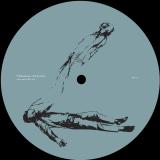
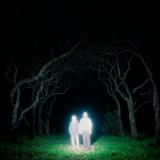
After more than 30 years Early Sounds and Halfway Ritmo are finally releasing unpublished recordings (1982-1989) from former Tangerine Dream and Iggy Pop's drummer Klaus Krüger.
Advanced Dance combines a sweeping mix of Krüger's handcrafted acoustic drums and distinctive electronic sounds of the late Berlin-School years, creating a unique blend of advanced polyrhythms.
Krüger achieved a balance between creativity and classic drum patterns giving birth to an unconventional and avant-garde type of music that could be easily defined as a precursor of techno.
His progressive mentality led him to delve further into the tape collage technique and unique ways of triggering his drums. It was a whole new world of music - sustained by his artistic surroundings, which included collaborations as well as friendships with other influential artists such as David Bowie, Martin Kippenberger and Helmut Newton.
In the time of German division, the pulsating West Berlin became a melting pot of creativity and international encounters. Advanced Dance is the result of the blazing heat feeding the unstoppable thirst of discovery which characterized that generation, creating tunes that transform the listener's experience into one blissful moment amidst beautiful confusion.
Parasole's music fits the bill for cutting-edge electronic music. Infrared Vision is a display of his love for polyrhythmic drum patterns, post-club sketches, twisted dance floor gems and classy, big room-ready tunes.
.
Few words of the artist:
''When I started to conceptualize my album I had a few end goals'', explains Parasole. ''I wanted to string my own style through Infrared Vision, so it would be familiar to the people who like my music. In tandem, I strived to produce a fresh voice sonically and experimented with a few new production techniques. I also grabbed ideas outside of techno and house, because I didn't want to be influenced by anything new. I was listening to a lot of jazz, hip-hop, Nine Inch Nails and Prince for example.''
Parasole took his time to write, produce and record Infrared Vision, dividing the process into three steps. ''First I wrote the album in words, pinning down ideas and track concepts on a notepad. Subsequently I transferred my ideas to my gear. Due to a heavy tour schedule I sometimes brought gear with me on the road, to continue my sketch process on the hardware. I then recorded it at home and at Phil Moffa's studio in New York. When the music was fully finished the album morphed to its final version. Phil Moffa laid down the final mixdown at Butcha Sound Studios, while Marco Spaventi handled the mastering.''
Red Panda is back on solid 180 gramm vinyl!
This time Roustam teamed up with Tolga Fidan for the Berlin Sessions vol. II
You know the deal...500 copies vinyl only - first come/ first serve. No repress!
Immersed in the early days of the 90s midwest rave scene, Bill Converse began DJing at a young age in Lansing, Michigan. Luminaries such as Claude Young, Traxx, and Twonz were key early influences. Since moving to Texas in 1998, he has experimented with analog techniques in varied studio bunkers. Early techno, noise, ambient, tape, and paranormal processing are all part of his uncanny sound palette. Warehouse Invocation' is Converse's debut 12 release, collecting material from a cassette release on Obsolete Future plus a new unreleased song. Three of the tracks, Warehouse Invocation', Senys Magick' and Consulted Acid', were recorded in Austin TX between 2012-2013 at home and direct to tape with no overdubs or multi-tracking. Riverbank' was also recorded at home in early 2014 in one take with a mic placed outside of the window to record the the sounds of the river late at night. Bill is informed by his surroundings, influenced by scenes of desolation in nature, the sea, the desert, and places of industry, like power stations, old factories, and warehouses. The songs on this EP length reveal a sublime influence from Detroit techno, early Chicago house, and Acid. The album was recorded and mixed by Bill at his home studio in Austin and mastered by Dave Alex. All songs were EQed for vinyl by George Horn at Fantasy Studios in Berkeley. A custom-made jacket designed by Eloise Leigh features a mystical collage by Josua Dorje Ngodup with acid yellow hues on a deep blue-purple background. Each copy includes a postcard with notes and a Buddhist mandala
Honey Soundsystem releases 'Cosmologist', the latest offering from our Resident DJ: Robert Yang aka Bézier. A multi-instrumentalist, Robert was trained in saxophone starting at age 10, before moving onto a Fender Telecaster after high school. After being exposed to Southern California rave culture in the late 90s, he moved onto DJing and collecting records. By the time he planted his roots in San Francisco in 2005, Robert had built an impressive analog synth-based studio, which also serves as the creative hub for his riveting live performances.
'Cosmologist' explores Robert's personal universe with three tracks that connect his varied musical lineages. "Cosmos", a celebration of the late 80s/early 90s KIIS FM universe, is built around an infectious freestyle hook that morphs into a seven minute tour of intersecting styles. "Ether" begins as gothic night-driving electro, but breaks into fantasy-scapes inspired by Italo and 1980s Japanese anime theme songs. The final track, "d. Quelle", clocks in at over 11 minutes, incorporating bebop jazz solos drawn from his early exposure to improvisation techniques by Charlie Parker, Cannonball Adderley, and Stan Getz. All songs have been mixed by Mark Pistel (Meat Beat Manifesto, Consolidated) at Room 5, San Francisco and EQed for vinyl by George Horn at Fantasy Studios.
Taking influences from "not old music, not new music, just good music" Random Movement's production skill and DJ technique have pushed him to the forefront of state-side drum & bass.
After releasing the critically acclaimed Sleazy B*tch EP early 2015 on Fokuz Recordings we're glad to welcome him back with the Meat Sauce EP containing two soulful cuts packed with flavour, distinctive drum rhythms and clever basslines.
Following up from the stunning 'You Will Soon Find That Life Is Wonderful' 12' on Phonica's Special Edi- tions imprint, Sad City returns to the label with his new EP 'Introduction To Lisboa/ Sloe'.
Glasgow-based producer Gary Caruth has evolved a highly original sound; deep, lush and widescreen electronics, from melancholic to ecstatic. Sonically, he continues where his last record left off and feels like the perfect companion to that well-received debut for Phonica. The record as a whole is composed of field recordings, with the basis for the first half of the EP, 'Introduction to Lisboa,' utilising sound recorded in and around Lisbon. He explains, 'I wanted the music and field recordings to meld at times, to obscure what was conventionally the musical element and what were field recordings, blurring the line between found sound and composition in the creation of a whole other.'
Opening track 'Introduction To Lisboa' builds and builds from near silence to a cacophony of field record- ings and looped horns. It melds into 'Baixa Saxaphone', where carefully paced percussion patiently enters over a wash of synth. From then on a delicate balance of restrained percussion and spine-tingling atmos- pherics interplay before descending into a blissful outro.
As with the previous EP, the 12' is packaged in technicolour artwork by acclaimed London designer Jack Featherstone.
13 Jahre nach seinem letzten Longplayer "Drukqs" (2001) veröffentlicht Aphex Twin sein mit Spannung erwartetes neues Album "Syro", das mit einer fantasievollen Outdoor- und Online-Teaserkampagne häppchenweise kommuniziert wird. Musikalisch bietet der Aphex Twin elektronische Abstraktion in Perfektion. Glasklarer, präziser Sound, technisch auf dem neuesten Niveau, teils superfunky, immer hochintensiv. Es folgt dem Überraschungsrelease des bislang unveröffentlichten Albums "Caustic Window", das dieses Jahr Millionen von Klicks und über 100.000 US-Dollar per Crowdfunding und Auktion einsammeln konnte.
Oráculo Records has always had a special interest in pushing electronic music towards unexplored territories, and it is precisely within this microcosm that IP307 emerges. Blending the most dub- infused and mechanical forms of electro with industrial, EBM and even post-punk, the project delivers a hypnotic, forceful and deeply cathartic sound.
Behind IP307 is Israel Padilla, founder of Banshees Records and one of the leading figures of the industrial scene in the Iberian Peninsula. With “IP307.1”, he presents six interconnected compositions, each with its own distinct identity while contributing to a coherent vision of seemingly opposing styles, reimagined into a singular language.
The result is neither a nostalgic exercise nor a stylistic collage. Instead, it reflects the experience, technical mastery and artistic vision of someone fully capable of expanding the path opened by pioneers such as Clock DVA in their later works, or Atom™, both through his solo output and as part of ASA alongside Esplendor Geométrico.
New sonic artillery for the most forward-thinking listeners already embracing this emerging strand of dark electro through our recent releases such as Occulimus by Mystic Letter K or the work of Maman Küsters, “IP307.1” offers another essential chapter in the evolution of this new form of sound. Welcome to the future. Welcome to IP307.
Modern Hypnosis is proud to introduce Babaka, the new alias of esteemed German producer Jörg Müller.
Reigniting his passion for physical, visceral sound system music, Jörg uses classic analog gear and a few self-built instruments to create a unique, potent dub sound. While reminiscent of Jörg’s earlier ambient and dub techno styles on his 2019 album Drawn From Memory and 2022’s Groundworks LP on The Moth Club, his new direction has evolved those techniques and primed them for sound system use. His debut release as Babaka showcases four masterful tracks that differ widely from one another while remaining within his new realm.
The opening track, "Exterminating Angel," is a pulsating, supernatural dub experiment featuring a deeply infectious bassline, ghostly key stabs, tight percussive delays and an oddly dramatic vocal sample creating a profound sonic climax before tapering off, allowing you to escape its vacuum and recalibrate. The most skank'n track of the EP, "A Bug in the dark" with its murky half-time swagger feel, bouncy hats, dub saturation and mega sub-driven riff has become an all-time favourite at Modern Hypnosis HQ.
Featuring precise production with decorative atmospherics and swung drums, "Woodsman Blues" has an almost Boxcutter feel to its intro before plunging off the deep end, hitting the dub floorboards, and revealing its true self as a reincarnated, stoned dubstep track. Closing out the release is "Hysteria," a perfectly executed, dark, chugging techno steppa that remains a popular track for many early-access DJs and selectors around the globe.
In the words of Jörg Müller himself:
After my first Album "Heavy Heart”, I tried to push my music more into abstract territory, especially sound-wise, ignoring mixing and mastering rules... this culminated in the eerie, roomy, off-atmosphere on "ground works" on The Moth Club.
After that, my focus shifted further towards freeform electro-acoustic ambient music. I built a couple of instruments myself and released two albums on Shimmering Mood as Kaleidophon. This was during the pandemic as nightlife came to a stop.
In 2023 and 2024, I started to go to dances again. I saw The Bug on his Pressure System, Al Wootton at Meaksuma Festival, Channel One and Iration Steppas on Young Veteran Hifi Soundsystem. Especially impressive were Mark Ernestus, Mark Ainley and Aba Shanti on the infamous sound system at Open Ground in Wuppertal.
This reignited my passion for dub/sound system music; I wanted to make tracks with the physical, visceral quality of sound systems.
Möge es den Menschen im bekannten Universum gefallen, dass das musikalische Ensemble mit zahlreichen Namen, das rechtlich unter dem Namen ,Kay-Bee Funk Music Group" firmiert, sein - alphabetisch gesehen - erstes Album mit dem Titel ,Access All Areas" veröffentlicht. Diese Aufnahmen, die mit der von Karate Boogaloo patentierten ,Lovely Recording Technique" entstanden sind, machen deutlich, dass jeder ein VIP ist, wenn man KB hört. ,Access" war das einzige Wort, das The Old Kar-Boo's bei diesem Projekt philosophisch leitete. Wurde ein Stück zu verworren, landete es im Papierkorb. Nur diejenigen, die von jedem und allen gesummt werden konnten, blieben erhalten. Dieses Sieb kam während des gesamten Prozesses zum Einsatz; Arrangements und Formen wurden straff gehalten, Schnickschnack auf ein Minimum reduziert. War ,Hold Your Horses" aus dem Jahr 2024 noch ein Epos, so ist ,Access All Areas" ein Haiku. Der bewährte Aufnahmeprozess der Band wurde gewissenhaft eingehalten, abgesehen von einer wunderbaren Ergänzung: den großartigen ,Sound Recordings" unter der Leitung ihres Inhabers und außergewöhnlichen Toningenieurs Alex Bennet. Alex, der den 4-Spur-Ampex 440 bei Bedarf abseits der ausgetretenen Pfade steuerte und stets dafür sorgte, dass die Stimmung stimmte, ist ein waschechter Booger. Auch wenn es sich nur wie ein Augenblick anfühlt, sagt uns die Uhr, dass fast 20 Jahre vergangen sind, seit Kay's Bees zum ersten Mal versuchten, die Songs ihrer musikalischen Helden - The Meters, Booker T & The MG's und The JB's, um nur einige zu nennen - zu spielen. Seitdem haben die Famous Flying Karate Boogaloo Brothers einen Schritt nach dem anderen gemacht und ihren eigenen Sound entwickelt - einen, der die Geschichte der instrumentalen Funk- und Soul-Musik respektvoll würdigt und die Zeit widerspiegelt, die sie damit verbracht haben, ihren unverwechselbaren Sound zu entwickeln. So sehr jedes Mitglied auch für sich allein glänzt, ist es doch ein besonderes Ereignis, wenn alle vier Planeten im Booger-System in einer Linie stehen. ,Access All Areas" ist eine solche Finsternis - ein künstlerischer Ausdruck, an dem jedes Mitglied gleichermaßen beteiligt ist und der einen Schatten wirft, der einzigartig für diesen Anlass ist. Jede Sekunde der Musik wurde unter voller Beteiligung aller Mitglieder komponiert und produziert; das Mixing übernahm Henry Jenkins, das Artwork stammte von Hudson Whitlock und Callum Riley, und Darvid Thor vollbrachte Dinge, die man gesehen haben muss, um sie zu glauben. Musik ist ein Mannschaftssport, und es gibt kein ,Ich" im Funk. Das Album erscheint bei den beiden großartigsten Plattenlabels der Galaxie: ,Colemine Records" aus Loveland, USA, und ,College of Knowledge" aus Coburg, Australien. Hören Sie sich bitte das neue Album ,Access All Areas" von Karate Boogaloo an.
Möge es den Menschen im bekannten Universum gefallen, dass das musikalische Ensemble mit zahlreichen Namen, das rechtlich unter dem Namen ,Kay-Bee Funk Music Group" firmiert, sein - alphabetisch gesehen - erstes Album mit dem Titel ,Access All Areas" veröffentlicht. Diese Aufnahmen, die mit der von Karate Boogaloo patentierten ,Lovely Recording Technique" entstanden sind, machen deutlich, dass jeder ein VIP ist, wenn man KB hört. ,Access" war das einzige Wort, das The Old Kar-Boo's bei diesem Projekt philosophisch leitete. Wurde ein Stück zu verworren, landete es im Papierkorb. Nur diejenigen, die von jedem und allen gesummt werden konnten, blieben erhalten. Dieses Sieb kam während des gesamten Prozesses zum Einsatz; Arrangements und Formen wurden straff gehalten, Schnickschnack auf ein Minimum reduziert. War ,Hold Your Horses" aus dem Jahr 2024 noch ein Epos, so ist ,Access All Areas" ein Haiku. Der bewährte Aufnahmeprozess der Band wurde gewissenhaft eingehalten, abgesehen von einer wunderbaren Ergänzung: den großartigen ,Sound Recordings" unter der Leitung ihres Inhabers und außergewöhnlichen Toningenieurs Alex Bennet. Alex, der den 4-Spur-Ampex 440 bei Bedarf abseits der ausgetretenen Pfade steuerte und stets dafür sorgte, dass die Stimmung stimmte, ist ein waschechter Booger. Auch wenn es sich nur wie ein Augenblick anfühlt, sagt uns die Uhr, dass fast 20 Jahre vergangen sind, seit Kay's Bees zum ersten Mal versuchten, die Songs ihrer musikalischen Helden - The Meters, Booker T & The MG's und The JB's, um nur einige zu nennen - zu spielen. Seitdem haben die Famous Flying Karate Boogaloo Brothers einen Schritt nach dem anderen gemacht und ihren eigenen Sound entwickelt - einen, der die Geschichte der instrumentalen Funk- und Soul-Musik respektvoll würdigt und die Zeit widerspiegelt, die sie damit verbracht haben, ihren unverwechselbaren Sound zu entwickeln. So sehr jedes Mitglied auch für sich allein glänzt, ist es doch ein besonderes Ereignis, wenn alle vier Planeten im Booger-System in einer Linie stehen. ,Access All Areas" ist eine solche Finsternis - ein künstlerischer Ausdruck, an dem jedes Mitglied gleichermaßen beteiligt ist und der einen Schatten wirft, der einzigartig für diesen Anlass ist. Jede Sekunde der Musik wurde unter voller Beteiligung aller Mitglieder komponiert und produziert; das Mixing übernahm Henry Jenkins, das Artwork stammte von Hudson Whitlock und Callum Riley, und Darvid Thor vollbrachte Dinge, die man gesehen haben muss, um sie zu glauben. Musik ist ein Mannschaftssport, und es gibt kein ,Ich" im Funk. Das Album erscheint bei den beiden großartigsten Plattenlabels der Galaxie: ,Colemine Records" aus Loveland, USA, und ,College of Knowledge" aus Coburg, Australien. Hören Sie sich bitte das neue Album ,Access All Areas" von Karate Boogaloo an.
Composer and multi-instrumentalist Koen Holtkamp has spent more than two decades shaping a body of work at the intersection of ambient, experimental, and electroacoustic music. Known for his role in the influential duo Mountains, as well as a solo catalog defined by texture and spatial awareness, Holtkamp has long explored how sound interacts with environment and perception. With Nightlife, he enters a new phase of that inquiry, one shaped as much by physical relocation as artistic evolution.
After leaving Brooklyn for the relatively rural setting of New York’s Hudson Valley, Holtkamp found himself immersed in nature and embracing a slower way of life, a shift that directly informed the album’s creation. Rather than rushing into a new project, he allowed the space itself to guide him, focusing on experimentation and play instead of a fixed outcome. Over time, a new instrument emerged from his modular system, built around physical modeling techniques that emulate plucked string sounds. Drawing on a deep affinity for acoustic traditions, from guitar soli to the kora and other chordophones, he began translating those influences into an electronic language, creating music that feels tangible, effusive, and even intimate, despite its synthetic nature. As the pieces took shape, Holtkamp expanded the project into a kind of imagined ensemble. Composed with specific collaborators in mind, the album features extensive contributions from drummer Greg Fox and saxophonist and flutist Matt Bauder, whose performances subtly reshape the material and draw it toward more fluid, song-like forms, alongside a guest appearance from Ben Vida on synth bass. Yet even as Nightlife occasionally resembles a band in motion, its construction resists traditional cohesion. Acoustic and electronic sources coexist to create a hyper-dimensional sense of space, with each element deliberately placed in its own distinct environment, yielding a complex yet inviting setting that feels both otherworldly and completely natural.
Much of the album was created during late-night sessions, which became a kind of personal ritual and ultimately inspired its title. Nightlife unfolds as a series of finely detailed environments, where stillness, texture, and subtle interplay take precedence over momentum. Each piece invites close listening while remaining open and unforced, reflecting both a change in pace and a deepening of focus. The result extends Holtkamp’s ongoing interest in how sound can shape, and be shaped by, the spaces we inhabit.
The third chapter of The Third Room's curator-led series is shaped by Verraco, one of the key voices behind a new generation of artists reshaping contemporary club music. Through his productions, DJ sets and his work with TraTraTrax, he has helped define a sound where hybrid forms, rhythmic experimentation and cross-cultural influences are pushing the genre into new territory. Structured across two distinct sides, the release draws a clear connection between past and present. The A-side leans into a deeper, more classic space, while the B-side moves towards a more forward-facing, hybrid sound. It opens with Libration (Stone Version) by Substance & Vainqueur, a revisiting of their landmark 2007 release, a track that helped define the language of Dub Techno as it is understood today. Reduced, deep and spatially precise, it established a blueprint for how rhythm, delay and tone could function together. It's presence here acts less as a nod to the past and more as a reminder of a foundation that continues to shape the genre. Skee Mask's Clear Sky 909 continues this thread, softening the edges without losing depth. Warm, enveloping textures and fluid movement give the track a sense of openness, balancing clarity with emotional weight. The B-side shifts perspective. On Untitled (Teamgeist Mix), Verraco, joined by Tils, delivers the record's defining moment - a dense, intricately designed piece built on a driving low-end and evolving rhythmic patterns. Elements from Techno, Bass and Leftfield House converge into a detailed, forward-moving structure that actively bridges cultural contexts. It results in a form of dance music shaped by technical precision, but drive.n by a clear sense of intent, marking a distinct expression of Verraco's current sound. Untitled by 1morning introduces a rolling, tribal-infused groove with a strong sense of depth, while PatumPa by Regal86 closes the record with a bright, loop-driven energy that leans into pure motion. Across both sides, the release moves between reference and progression. Rather than separating old and new, Verraco connects them - tracing a line from foundational Dub Techno to a more fluid, contemporary club language. Copyright 2026 The Third Room A1 Written and Produced by Peter Kuschnereit & Rene Loewe | A2 Written and Produced by Bryan Mueller | B1 Written and Produced by JP Lopez & Jakob Ferdinand Tils and mixed by Lurka | B2 Written and Produced by 1morning | B3 Written and Produced by Regal86 Mastered by Andreas Kauffelt (Schnittstelle Berlin) Artwork by Charlotte Ernst Design by Daniel Bornmann (STUEDIO.XYZ) Distribution by Clone Pressing by Matter Of Fact
out of Stock
Last delivered 4 days ago available to reorder, subject to availability
“When the flesh gets cut off the soul, it’s not the end.”
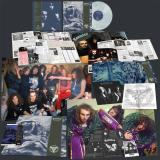
More than forty years after hardCORPS emerged from a Brixton basement, ‘Metal & Flesh’ returns in a new expanded edition on double vinyl and CD, newly remastered with the full involvement of surviving members Rob Doran and Clive Pierce. Born from the collision of punk, analogue synthesisers, sequencers, disco, reggae and experimental studio techniques, hardCORPS created electronic music that was as physical and emotional as it was mechanical. The arrival of French vocalist Regine Fetet gave the group its defining identity, placing her raw, uncompromising voice against the dense machinery of Hugh Ashton, Clive Pierce and Rob Doran. Working mainly with a Roland System 100, several Roland MC4 sequencers and later an additional MC500 and Atari ST 1040 computers, etc. pp., hardCORPS always transformed limitations, accidents, distortion and human imperfection into part of the music itself. Although rooted in the early 1980s, ‘Metal & Flesh’ refuses easy nostalgia, retaining the tension, space and character that made hardCORPS unlike their contemporaries. Yet, shall we eventually mention Kraftwerk, maybe let’s quote Ian Shirley from Record Collector magazine: „’Je Suis Passée‘ was not only a love letter to Kraftwerk but penned with such verve, passion and precision that Ralf and Florian probably would have accepted a blind date at a Düsseldorf cocktail bar (…).“ And as Martin Rushent famously said in 1990: “Hard Corps were ignored in their time. Perhaps it is the burden of the adventurous and the innovative to be ignored in their time, which is sad. Don’t ignore them now.”
This new edition has been carefully remastered to preserve that character and dynamics rather than simply making the recordings louder or more ‘modern’, while the artwork has likewise been developed to reflect the band’s original identity. Metal & Flesh’ is not merely an artefact of the 1980s, but a rare and fiercely individual document of four people discovering what happens when human instinct and machines collide.
Remastered by Martin Bowes. Graphic design by hard CORPS and Steve Lippert.
Gatefold sleeve gloss lamination, printed inner sleeves with lyrics, two double-sided hand-numbered.
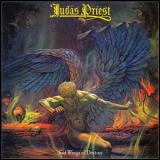
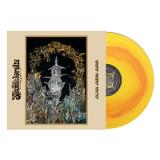
Dieses Reissue würdigt das 50-jährige Jubiläum eines der wegweisenden Alben des Heavy Metal. Original-Master von 1976, Half-Speed-Mastering, farbiges Vinyl, Original-Artwork, ursprüngliche gewünschte Tracklist. Diese zum 50. Jubiläum erscheinende Ausgabe von Sad Wings of Destiny wurde von den analogen Original-Masterbändern aus dem Jahr 1976 restauriert und stellt die definitive Version des Albums dar. Das ursprünglich 1976 veröffentlichte Album gilt als eines der einflussreichsten Alben in der Geschichte des Heavy Metal und prägte das Genre maßgeblich mit Klassikern wie "Victim of Changes", "The Ripper" und "Tyrant". Die in Zusammenarbeit mit Judas Priest entstandene Ausgabe wurde im Half-Speed-Mastering-Verfahren speziell für Vinyl bearbeitet. Dieses Verfahren bewahrt die Kraft und den Dynamikumfang der analogen Aufnahmen und sorgt zugleich für außergewöhnliche Klarheit und Tiefe. Die Wiedergabe erfolgt in der von der Band vorgesehenen Reihenfolge, beginnend mit "Prelude", wodurch das ursprüngliche Hörerlebnis wiederhergestellt wird. Die LP kommt dabei im ikonischen original Artwork als Galaxy Yellow/Orange Mix Vinyl, auch als klasse klingende CD wieder erhältlich. "Sad Wings of Destiny, ...simultaneously took heavy metal to new depths of darkness and new heights of technical precision. [...] Three songs rank as all-time metal classics, starting with the epic "Victim of Changes," which is blessed with an indelible main riff, a star-making vocal turn from Halford, explosive guitar work, and a tight focus that belies its nearly eight-minute length. "The Ripper" and "Tyrant," with their driving guitar riffs and concise construction, are the first seeds of what would flower into the New Wave of British Heavy Metal movement." -
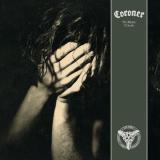
1986 veröffentlichten Bassist Ron Royce (Ron Broder), Gitarrist Tommy T. Baron (Tommy Vetterli) und Schlagzeuger Marquis Marky (Markus Edelmann) ihr erstes Demotape »Death Cult« mit Hilfe von Celtic Frosts Tom Gabriel Fischer am Gesang (Fischer war auch für die Texte verantwortlich).
Kurz darauf, Anfang 1987, unterschrieben Zürichs Avantgarde-Metal-Pioniere einen Vertrag mit Noise Records aus Berlin. Zu diesem Zeitpunkt hatte sich Bassist Ron Royce entschieden, selbst die Rolle des Leadsängers von Coroner zu übernehmen.
Schließlich buchte Karl-Ulrich Walterbach von Noise Records für Coroner Studiozeit im Berliner Music Lab Studio, damit sie ihr Debütalbum unter den wachsamen Augen von Harris Johns aufnehmen konnten. »R.I.P.« wurde im Juni 1987 veröffentlicht und erhielt ausgesprochen positives Feedback in der Presse.
1988 folgte auf Coroners Debütalbum »Punishment For Decadence« (diesmal produziert im Sky Trak Studio in Berlin, produziert von Guy Bidmead). Laut Gitarrist Tommy Vetterli war das eine natürliche Weiterentwicklung für die Band: „Wir haben uns mehr auf die Tiefe der Musik konzentriert, es war nicht mehr nur eine Demonstration unserer technischen Fähigkeiten. Die Band war ziemlich tight, definitiv tighter als auf unserem ersten Album. Insgesamt denke ich, dass die Platte etwas reifer ist. Es ging weniger darum zu zeigen: ‚Schaut her, wie gut wir spielen können‘, sondern der Fokus lag auf den Songs.“
Der herausragende Track auf dem Album ist „Masked Jackal“, ein Fanliebling bis zum heutigen Tage. Außerdem wurde ein Musikvideo zu dem Song gedreht, wie der Gitarrist erklärt: „Es ist das Stück, das auf dem Album heraussticht. MTV war damals für jede Band extrem wichtig. Deshalb ist ‚Masked Jackal‘ bis heute ein Favorit der Fans.“
»Punishment For Decadence« kam mit einem auffälligen Cover-Artwork daher (ein Gemälde mit dem Titel „Porte de L'enfer“), eine Idee von Schlagzeuger Marky: „Er kletterte mitten in der Nacht eine Leiter hinauf und fotografierte hier in Zürich das Artwork von Rodin. Das Plattenlabel fand jedoch, dass dieses Cover nicht ‚Heavy Metal‘ genug sei, also veröffentlichten sie für die zweite Pressung ein anderes Cover mit diesem Skelett, das Geige spielt. Jenes Motiv war eigentlich nur als T-Shirt-Design gedacht.“
Laut Tommy lief das Album in Sachen Verkaufszahlen ordentlich: „Anscheinend müssen die Verkaufszahlen befriedigend gewesen sein; sonst hätten wir wahrscheinlich nicht weitermachen können. Wir haben nicht viel Geld mit Coroner verdient, aber das Ganze hat viel Spaß gemacht. Wir konnten überleben und das tun, was wir lieben. Die Presse und andere Musiker mochten uns, aber wir erreichten niemals die breite Masse.“
Im Februar 2026 von Patrick W. Engel bei TEMPLE OF DISHARMONY remastert und restauriert. Die Schneidearbeiten wurden von SST Germany auf Neumann-Geräten durchgeführt, um in jeder Hinsicht optimale Qualität zu gewährleisten. Die ultimative audiophile Ausgabe dieses zeitlosen Klassikers!
1986 veröffentlichten Bassist Ron Royce (Ron Broder), Gitarrist Tommy T. Baron (Tommy Vetterli) und Schlagzeuger Marquis Marky (Markus Edelmann) ihr erstes Demotape »Death Cult« mit Hilfe von Celtic Frosts Tom Gabriel Fischer am Gesang (Fischer war auch für die Texte verantwortlich).
Kurz darauf, Anfang 1987, unterschrieben Zürichs Avantgarde-Metal-Pioniere einen Vertrag mit Noise Records aus Berlin. Zu diesem Zeitpunkt hatte sich Bassist Ron Royce entschieden, selbst die Rolle des Leadsängers von Coroner zu übernehmen.
Das erste Ergebnis war »R.I.P.«, das Debütalbum der Band, das im Juni 1987 erschien und sehr gute Pressereaktionen erhielt.
1988 folgte Coroners Studiodebüt »Punishment For Decadence«, erneut produziert in West-Berlin, diesmal von Guy Bidmead im Sky Trak Studio. Die Band tourte in bescheidenem Umfang durch Europa, bevor sie mit der Arbeit an ihrem dritten Album begann.
Für »No More Color« (1989) reisten Coroner zum dritten Mal in Folge nach Berlin. Diesmal war Pete Hinton der Produzent, wie Gitarrist Tommy Vetterli erklärt: „Ja, genau! Pete Hinton wurde vom Label vorgeschlagen. Da er einige meiner Lieblingsbands aus Jugendtagen produziert hatte, wie Saxon und Demon, waren wir begeistert. Die Zusammenarbeit mit ihm lief wirklich gut, er ist ein absoluter englischer Gentleman.“
Der Mix des Albums wurde in den Morrisound Studios von Scott Burns in Tampa, Florida, realisiert, einem damals sehr angesagten Ort.
Der komplexeste Song auf »No More Color« ist vielleicht „Mistress Of Deception“; laut Tommy Vetterli „besitzt er definitiv einige extrem schwierige Gitarren-Passagen. Ich erinnere mich, dass Marky vor den Albumaufnahmen sagte, er schreibe einen Text über die Wüste. Das hat mich wirklich inspiriert, und ich habe den Song in ein paar Tagen geschrieben.“
„Die By My Hand“, eine deutlich geradlinigere Nummer, wurde als Single für das Album ausgewählt (und zusammen mit „Tunnel Of Pain“ auf durchsichtigem Vinyl als Promo-12“ veröffentlicht).
In damaligen Interviews erwähnte Tommy, dass »No More Color« das erste Album von Coroner war, auf dem die Band groovige Parts einbaute, anstatt durchgehend auf kompromisslosen technischen Thrash Metal zu setzen. Heute glaubt er immer noch, dass das stimmt: „Ja, durch all die Tourneen hatten wir gelernt, dass man zwischen den schnellen und komplexen Abschnitten einige einfachere und groovigere Parts spielen muss. Das wirkt live viel besser und macht auch das Publikum glücklich. Das Album konzentrierte sich insgesamt viel mehr darauf, Stimmungen zu evozieren, und weniger auf technische Leistungen.“
Im Februar 2026 von Patrick W. Engel bei TEMPLE OF DISHARMONY remastert und restauriert. Die Schneidearbeiten wurden von SST Germany auf Neumann-Geräten durchgeführt, um in jeder Hinsicht optimale Qualität zu gewährleisten. Die ultimative audiophile Ausgabe dieses zeitlosen Klassikers!
Die Synthesizer-Künstlerin und Komponistin Emily A. Sprague verbindet intuitive Klangstrukturen mit ausdrucksstarkem Songwriting und schafft so weitläufige Klangwelten, die unmittelbar und mitreißend sind. Nach ersten Experimenten mit Gitarre und Keyboard als Teenager gründete Sprague Anfang der 2010er Jahre die Indie-Band Florist und gewann damit ein treues Publikum. Nach einer Reihe gefeierter EPs nahmen Florist fünf Studioalben auf, die sich durch ihre intime Weltgestaltung und durch Spragues gefühlvollen Gesang auszeichnen. Den Soloalben "Hill, Flower, Fog" aus dem Jahr 2020 und "Cloud Time" aus dem Jahr 2025 - einem Album mit modularen Synthesizern, das live in Japan aufgenommen wurde - nachfolgend, ist "Cyano" ist ihr erstes Soloalbum, das Spragues intuitive Synthesizer-Musik mit dem Songwriting verbindet, für das sie mit ihrer Band Florist bekannt ist, und führt Gesang in ihr bisher rein instrumentales Schaffen ein. Absichtlich minimalistisch gehalten, ist Spragues Gesang wie eine rauschbehaftete Übertragung, die einen technischen und symbolischen Wendepunkt markiert - mit experimenteller, formloser Musik, die die eher konventionellen Songstile von Florist dekonstruiert. Emotional verankert und von Vergänglichkeit getrieben, spiegelt das Album sowohl Spragues inneren Raum als auch den konzeptionellen Planeten "Cyano" wider und setzt sich mit dem Selbst, dem Anderen, der Ökologie und dem Leben in einer fernen Welt auseinander. Spragues musikalischer Ansatz ist geprägt von einer zutiefst persönlichen Atmosphäre, die darin wurzelt, Geschichten über sich selbst und andere - Formen der innerpersönlichen und zwischenmenschlichen Verbindung - sowie die Unbeständigkeit dieser Versuche zu ergründen. Durch intime phänomenologische Erkundungen bietet "Cyano" subtile und eindrucksvolle Klangtexturen, die Verletzlichkeit einbeziehen. Emily A. Sprague erschafft eine komplexe Welt und erweitert dabei ein Klangspektrum, das zugleich vertraut und zutiefst neu ist - ein Spiegelbild ihres inneren Spektrums, das in andere Welten blickt.
out of Stock
Last delivered 6 days ago available to reorder, subject to availability
Confronting 2026, hope can seem in short supply, as the most divisive and toxic voices worldwide are amplified amidst an ever-rising temperature of conflict and alienation, yet hope is abundant in ‘Losey’, the latest release on Rocket Recordings from the mercurial duo Gnoomes. Just as this couple have taken a bold step into the unknown by leaving Russia and moving to Slovenia, so their music has thrown off all shackles to flourish in a defiant show of vibrant and revivifying colour. “The life of an immigrant is a strange thing.” says the bands Sasha Piankov “But luckily, that glow music brings us has never faded, even though the emotional landscape has definitely shifted.” Yet whilst the music that Sasha and his creative and life partner Masha Piankova came up with is testimony to a liberating triumph against oppression and adversity, it also goes beyond. What has emerged is a kaleidoscopic collision of styles which sends the ‘skygazing’ realm of their previous work spinning into electronic orbit. Whilst the opener ‘Foreign Agent’ explicitly tackles the pressures of the Russian state, it also throws a Stereolab-style motorik meditation through an in-the-red psychedelic prism. Elsewhere we can behold Bulgakov and Chris and Cosey as bedfellows amidst the mesmeric, 303-fried EBM of ‘Satan’s Ball’. “Rave as therapy. Pop as resistance. Love as endurance. ADHD as a production technique.” These are the primary ingredients of Losey, by the reckoning of the band themselves. This is an album that exists purely on its own distinct frequency, driven by defiance and positivity. Losey is a soundtrack to set fire to the old order, the better to dance in the glow.
out of Stock
Last delivered 7 days ago available to reorder, subject to availability
Die Synthesizer-Künstlerin und Komponistin Emily A. Sprague verbindet intuitive Klangstrukturen mit ausdrucksstarkem Songwriting und schafft so weitläufige Klangwelten, die unmittelbar und mitreißend sind. Nach ersten Experimenten mit Gitarre und Keyboard als Teenager gründete Sprague Anfang der 2010er Jahre die Indie-Band Florist und gewann damit ein treues Publikum. Nach einer Reihe gefeierter EPs nahmen Florist fünf Studioalben auf, die sich durch ihre intime Weltgestaltung und durch Spragues gefühlvollen Gesang auszeichnen. Den Soloalben "Hill, Flower, Fog" aus dem Jahr 2020 und "Cloud Time" aus dem Jahr 2025 - einem Album mit modularen Synthesizern, das live in Japan aufgenommen wurde - nachfolgend, ist "Cyano" ist ihr erstes Soloalbum, das Spragues intuitive Synthesizer-Musik mit dem Songwriting verbindet, für das sie mit ihrer Band Florist bekannt ist, und führt Gesang in ihr bisher rein instrumentales Schaffen ein. Absichtlich minimalistisch gehalten, ist Spragues Gesang wie eine rauschbehaftete Übertragung, die einen technischen und symbolischen Wendepunkt markiert - mit experimenteller, formloser Musik, die die eher konventionellen Songstile von Florist dekonstruiert. Emotional verankert und von Vergänglichkeit getrieben, spiegelt das Album sowohl Spragues inneren Raum als auch den konzeptionellen Planeten "Cyano" wider und setzt sich mit dem Selbst, dem Anderen, der Ökologie und dem Leben in einer fernen Welt auseinander. Spragues musikalischer Ansatz ist geprägt von einer zutiefst persönlichen Atmosphäre, die darin wurzelt, Geschichten über sich selbst und andere - Formen der innerpersönlichen und zwischenmenschlichen Verbindung - sowie die Unbeständigkeit dieser Versuche zu ergründen. Durch intime phänomenologische Erkundungen bietet "Cyano" subtile und eindrucksvolle Klangtexturen, die Verletzlichkeit einbeziehen. Emily A. Sprague erschafft eine komplexe Welt und erweitert dabei ein Klangspektrum, das zugleich vertraut und zutiefst neu ist - ein Spiegelbild ihres inneren Spektrums, das in andere Welten blickt.
Pianist Hideo Ichikawa, a musician equally renowned for his dazzling technical skill and his gift for composing innovative, lyrical works, left behind this outstanding piano trio album for the TBM label. Recorded during the height of his artistic maturity, the album stands as one of the finest achievements of his career. Series supervised by Koki Hanawa.
XKatedral ist stolz darauf, ein neues Album in voller Länge von Label-Mitbegründerin Maria W. Horn zu präsentieren. ,Melting Pillars of Snow" ist eine Sammlung neuer Kompositionen der renommierten schwedischen Komponistin, geschrieben für Kontrabassblockflöte, Sho, Percussion, E-Gitarre, Gesang und Elektronik, gespielt von Horn zusammen mit einem Kammerensemble bestehend aus Anna Petrini, Mattias Hallsten, Magdalena Meitzner und Mats Erlandsson. Das Album enthält außerdem eine Erzählung von Horn sowie einen Gastauftritt von Michael Gira auf der ersten Single ,Scythe of Saturn". Für ,Melting Pillars of Snow" ließ sich Maria von W. G. Sebalds Roman ,Die Ringe des Saturn" inspirieren, einer poetischen Reflexion, die einem namenlosen Erzähler folgt, der an der Küste von Suffolk in England umherwandert. Während sich die Landschaft allmählich verändert, thematisiert der Text auf vielfältige Weise den Lauf der Zeit und die Distanz zwischen Vergangenheit, Gegenwart und Zukunft und spiegelt dabei sowohl weitreichende zeitliche Maßstäbe wie die Zyklen der Jahreszeiten und die tiefe historische Zeit als auch mikroskopisch kleine Momente und Fragmente wider. Mit den Kompositionen auf dieser Veröffentlichung beschwört Maria ein ähnliches Gefühl der Stille herauf - eine Umgebung, in der die Bewegung der Zeit selbst beleuchtet und beobachtet werden kann. Das Instrumentarium auf diesem Album ist Horns bislang ambitioniertestes: Sie ergänzt ihre gewohnte Palette aus maßgeschneiderter algorithmischer Synthese und elektronischer Bearbeitung um eine komplexe Auswahl an Perkussionsinstrumenten, Blasinstrumente, die an beiden Enden des musikalischen Spektrums spielen, sowie E-Gitarre, um so einen spiralförmigen, spektralen Klangteppich durch den gesamten Frequenzbereich zu weben. Die Perkussionistin Magdalena Meizner spielt spezielle Techniken auf dem Obertondreieck, dem Dubachi, den Pauken und dem Tam-Tam sowie auf gestimmten Weingläsern und gestrichenen Crotales. Die von Anna Petrini gespielte tieftönige Kontrabassblockflöte und das von Mattias Hallsten gespielte hochfrequente Sho fügen kontrastierende Akkordarrangements hinzu, die in strengen metrischen Strukturen eingebettet sind. Das Ensemble wird durch Mats Erlandsson vervollständigt, der auf E- und Akustikgitarren spielt und dabei von sanften Arpeggio-Figuren zu düsteren Drones und Feedback-Heulern wechselt.
'Quiet Pieces' initiates Abul Mogard’s personal imprint Soft Echoes with a definitive self-portrait of calm, contemplative, and discreet inner landscapes made audible. It is the first solo album on vinyl in four years. RIYL Alessandro Cortini, William Basinski, The Caretaker.
While sifting through archived material left idle from earlier projects, a chance encounter with a late uncle’s trove of beloved 78rpm classical and opera records prompted the reworking and completion of what would eventually become the album. Spinning dusty records at 33 and 45rpm, Abul Mogard recombined their enduring spectres with unfinished sketches from his archive. The resulting soundscape blurs distinctions between his memories and those of another, exquisitely short-circuiting the senses with its waking, dream-like lucidity.
This was a process I hadn’t explored in my earlier works. I began sampling brief moments from these records, altering them with studio effects and playing them at slower speeds. In many cases, I wasn’t entirely sure how the original music sounded. These fragments, once further processed, became a source of inspiration for my new compositions. Over time, I realised that the old pieces from the archive and the new material derived from the samples naturally complemented each other.”
The resulting pieces hover over a threshold, a liminal space that harmonises the old and older material. Voluminous waves of quiet and loud undulate between consonance and dissonance, conjuring imagery of a decaying grandeur that humanity’s decadence has surrendered to the elements. Abul Mogard’s seemingly abandoned yet vast landscapes are nevertheless intimate with timbral frissons of red-lined distortion. Elusive, yet as tangible as sea spray or smog, they affect the olfactory senses with a rarified, synesthetic quality that modestly engages one’s emotional register – a hypnotic, distinguishing feature long hailed as one of the hallmarks of his work. A fidelity to memory and dream recall is sensitively probed in the journey from the stately symphonic stasis of 'Following a dream' to the almost industrial, untethered brutality evoked by a looming silhouette that’s never fully visible in 'Constantly slipping away', culminating in the foreboding coda of 'Like a bird'. Those pieces appear to shield the album’s sentimental core, where the tempestuous play of light and shadow of 'In a studded procession' escalates to breathtaking, panoramic climax, while 'Through whispers' evokes an out-of-body-like experience encountered with visceral poignancy.
Looking back, Mogard notes an unexpected influence: “I realise being inspired by Phill Niblock, whose work I had barely known at the time but explored after his passing in 2024. His album 'Boston Tenor Index' changed the way I approached dissonance. It encouraged me to push my sound further, to the edge of a space where I began to feel uncomfortable.”
The album artwork, created by longtime collaborator Marja de Sanctis, features a photograph taken at the Temple of Jupiter Anxur, an archaeological site overlooking the Mediterranean Sea. Captured with an iPhone, the image traces the residual presence of construction techniques and architectural forms of the Romans, where material history is transcribed through contemporary tools. The convergence of ancient and modern technology aims to reverberate the site’s lasting spiritual presence – an echo persisting in what is now perceived as a quiet, emptied space. The spiral gestures towards infinity and light. Past and present dissolve into one another, reflecting 'Quiet Pieces' meditation on sound, memory, and time.
RIYL Alessandro Cortini, William Basinski, The Caretaker
out of Stock
Last delivered 8 months ago available to reorder, subject to availability
Hippotraktor, the progressive metal band from Belgium, combining the best of prog, groove and post-metal return with new album! Wmerging from Mechelen, Belgium, to the joy of ear-splitters and deep-feelers of post rock, Hippotraktor release their third studio album Annihilist. "A good blend between the vibes of Meridian and the technicality of Stasis." (Verheyden), that exhibits once again the band's ability to balance crushing physicality with emotional nuance, whilst pushing further into highly cultivated experimentation. For Hippotraktor, immense sonic weight coexists with remarkable clarity and depth, and through the many shifting passages and moments Annihilist becomes a journey of awe, dissolution, melancholia and rampaging power. At the heart of this album is a sense of collective inspiration. Verheyden's compositional vision provides the framework for music that is both intricate and instinctive, yet Hippotraktor's identity is forged through the dialogue between all five musicians. Although often associated with progressive metal, post-metal and sludge, Hippotraktor resist classification. Their music draws freely from multiple traditions while remaining unmistakably their own, blending rhythmic complexity, cinematic atmosphere and deeply human expression into a sound that feels both expansive and immediate. As an album Annihilist is not only gripping in every moment and turn, but their balance of the intimate and titanic feels deceptively effortless; a testament to their galvanised abilities. FOR FANS OF Psychonaut Mershuggah Dvne Vola The Ocean Hypno5e Sikasa Blackshape
Hippotraktor, the progressive metal band from Belgium, combining the best of prog, groove and post-metal return with new album! Wmerging from Mechelen, Belgium, to the joy of ear-splitters and deep-feelers of post rock, Hippotraktor release their third studio album Annihilist. "A good blend between the vibes of Meridian and the technicality of Stasis." (Verheyden), that exhibits once again the band's ability to balance crushing physicality with emotional nuance, whilst pushing further into highly cultivated experimentation. For Hippotraktor, immense sonic weight coexists with remarkable clarity and depth, and through the many shifting passages and moments Annihilist becomes a journey of awe, dissolution, melancholia and rampaging power. At the heart of this album is a sense of collective inspiration. Verheyden's compositional vision provides the framework for music that is both intricate and instinctive, yet Hippotraktor's identity is forged through the dialogue between all five musicians. Although often associated with progressive metal, post-metal and sludge, Hippotraktor resist classification. Their music draws freely from multiple traditions while remaining unmistakably their own, blending rhythmic complexity, cinematic atmosphere and deeply human expression into a sound that feels both expansive and immediate. As an album Annihilist is not only gripping in every moment and turn, but their balance of the intimate and titanic feels deceptively effortless; a testament to their galvanised abilities. FOR FANS OF Psychonaut Mershuggah Dvne Vola The Ocean Hypno5e Sikasa Blackshape
LUMINA marks a new chapter in C"mon Tigre"s evolution, where electronic music moves from the background to the core of the band"s sound. Across thirteen interconnected tracks, synthesizers, arpeggiators and club-inspired rhythms merge seamlessly with acoustic instruments such as oud, cello,vibraphone and percussion, creating an immersive, continuous listening experience. Rather than opposing tradition and innovation, LUMINA embraces their constant coexistence. The album explores how technology is reshaping not only the way music is created, but also how we experience sound, time and physical presence. Inspired by the rave as a space of collective ritual and temporary freedom, it treats repetition and rhythm as tools for communion rather than escapism, turning listening into a deeply physical experience. The music was first developed and tested live at Robot Festival (Bologna) and JazzMi (Milan) in late 2025. Those performances became a laboratory where the interaction between the music and the audienceultimately shaped the final record.
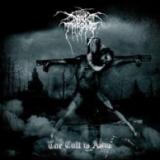
Initially forming under the moniker of Black Death back in 1986, the star of Darkthrone has ascended with reverence & a degree of infamy over the course of four decades, to become one of the most notable metal bands to have emerged from Norway. Highly inspirational to a whole generation of bands, & also uncompromisingly steadfast throughout their now extensive catalogue, the long-standing duo of Fenriz & Nocturno Culto have remained dedicated to the art of the riff & forging their own path, relentlessly steering the band against the tide of trend. From the death/ doom technicality of 1991's debut masterpiece 'Soulside Journey', through the spearheading of the notorious "second wave of black metal" period of the earlier 1990s, & the integration of punk & heavy doom elements along with way, the Nordic titans have undoubtedly carved an exquisite & eclectic legacy. After a sequence of albums under the Moonfog label throughout the mid-latter 90's & into the new millennium, Darkthrone made the leap back to their original home at Peaceville, for a spectacular return in the shape of 'The Cult Is Alive', released in 2006. With the band's own newly-established Necrohell 2 studio in operation, this allowed the duo to make everything purely on their own terms & in their own time. Creative boundaries were also further removed in order to embrace some of the punk influences which had to date been more subdued, & in the process, created the beginnings of a new era for the band, first revealed in the form of lead track 'Too Old, Too Cold'.
Mit „Artifice Dissolves“ beschleunigen Dissimulator aus Montreal weit über die ohnehin schon beeindruckenden klanglichen Koordinaten von „Lower Form Resistance“ hinaus und stürzen sich kopfüber in eine zukünftige Welt, in der technologische Vormachtstellung und katastrophale Entropie im perfekten Gleichgewicht existieren. Ihr kantiger Sci-Fi-Death-Thrash hat sich zu einem noch labyrinthischeren Konstrukt entwickelt, das messerscharfe Riff-Matrizen und unbeständige rhythmische Strukturen zu einem neuralen Hack verschmilzt, der jeden Algorithmus auflöst.
„Artifice Dissolves“ treibt sich selbst voran wie ein ungebundenes künstliches Bewusstsein, das rekursiv seinen eigenen Code umschreibt, wobei jeder Song eine weitere phantastische Dimension innerhalb der bionischen Mythologie der Band enthüllt. Rasiermesserscharfe Gitarrenlinien peitschen und kreuzen sich in unmöglichen Winkeln, während die Rhythmussektion Songs wie „Alloyed“ und „Neon Metropolis“ durch Zustände unaufhörlich ansteigender Geschwindigkeit, Kollaps und Neuzusammensetzung jagt – ein unaufhaltsamer Vorwärtsdrang inmitten unbarmherziger Komplexität.
Als ehrfurchtgebietende Konvergenz aus futuristischem World-Building und hemmungsloser, technischer Aggression ist „Artifice Dissolves“ die bionische Halluzination einer Zivilisation, die in den sonnenlosen Gossen ihrer autonomen Megastädte dahinsiecht. Es sind die fiebrigen Träume einer allwissenden Gottmaschine und die bösartigen Nebenwirkungen ihrer kybernetischen Verbesserungen. Doch unter der schwindelerregenden Präzision und dem gewaltsamen Vorstoß bewahren Dissimulator das zeitlose menschliche Streben nach Ordnung und Transzendenz.
The story of each re-release begins with the original. In the late 90s, Uwe Zahn (Arovane), along with Robert Henke (Monolake) and Stefan Betke (Pole), began releasing music on Torsten Pröfrock’s (Dynamo) newly launched DIN label. This was a very inconspicuous undertaking, but fans of the flourishing IDM, glitch, and constantly evolving abstract techno genres quickly picked up on the quality of sound coming out of Germany. After a few successful EPs, Zahn began working on his debut full-length, Atol Scrap. The release was a success, at least in the underground circles, where followers of the melodic harmonies, stuttering off-beat rhythms, and, most importantly, advanced sound design feverishly consumed the imprint’s output. There was only one thing missing – the album was never pressed on vinyl, and for decades remained in the digital domain. The fans, of course, inquired. There were multiple offers on the table, but Zahn retained control until he was assured that it was properly attained. “I thought of taking everything into my own hands and releasing the record myself,” says Zahn, “but at the end of last year, Matthias from Keplar asked me to re-release Atol Scrap on vinyl.” The label and its owner revolve in the Morr Music universe, and so it made sense for Zahn to trust the platform to treat the record right.
Listening to Atol Scrap over twenty years later it is inane not to admit how well it has held up. Where other genres clearly aged, becoming stale, bland, and dull, the music on eleven tasty tracks still keeps the neurons tickled with each note. More than an echo of the past, the bottled sound truly has matured. Many of the newly evolving techniques are recognizable on the album. “I created the digital artifacts with a digital multi-track recorder, the Fostex D80,” recalls Zahn. “The thing had a scrub wheel with which I could achieve wonderful glitch effects by winding through the audio data. I have sampled and further processed these artifacts.” And this approach is still embedded in Zahn’s sound design. “I still use my 24-track analog desk from Tascam to mix my audio. I love to use hardware synths and samplers. I’ve definitely built upon my studio experience in the 90s.” From this debut to the most recent output, Arovane’s sound has evolved to become more intricate, detailed, and pronounced. “My music has become much quieter and much slower. But that’s probably also due to the noise in the world.” And just as Atol Scrap reminds Zahn of the past, retaining charm preserved in a container traveling through time, it also jitters memories of long ago, when we were twenty years younger, less experienced, and bold. For me, among the many records of the time, this album held a special place in life, my heart, and many CD boxes moved across the world. And now I’m only happy to restock the vinyl space, where Atol Scrap belongs among the beloved records. Welcome home. - Mike Lazarev
Remastered and cut to vinyl by Kassian Troyer @ D&M. Cover art by Jim Kühnel based on a photograph by Uwe Zahn.
out of Stock
Last delivered 12 days ago available to reorder, subject to availability
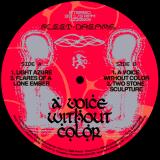
Crafting another beautiful experience in sensorial delight, fleet.dreams returns to Vinezza with the label’s 3rd offering “A Voice Without Color” - born from an ever-deepening practice of groove-powered depth tech melded with realms of dubwise kineticism, enchanted cognition, and expressive, dreamlike synthesis.
“A Voice Without Color” finds fleet.dreams’ music in its most rave-activated mode yet, crafting 4 pieces of infinitely mixable spectral matter - all part of their own universe beckoning to be heard under the glow of stars in the night sky, or floating amidst the mesmerizing fog & lights pumping out of the system on your favorite dancefloor.
Awash in kaleidoscopic splendor and psychedelic intrigue, “A Voice Without Color” finds kinship in everything from the best of expansive dancefloor kineticism, time dilated wonder, and the vivid reverbations of the natural world floating in the mix. At once quintessential, contemporary, and ubiquitous is fleet.dreams’ own remarkable production technique, each track unfurling in seemingly endless swells of simmering rhythm and hypnotizing atmospherics - new memories of circadian entrancement in their molten essence, designed to blissfully guide you deeper and deeper towards the primordial exhilaration of movement. Undulating with vivid pulsations and clarion calls for the hips and mind echoing across a spiraling gyre, the sprawling waltz of “A Voice Without Color” glides through dazzling chroma and effulgent radiance greater than the sum of its parts.
Painting with bold, prismatic strokes of iridescent friction amidst the listless gray of our increasingly dispassionate timeline, fleet.dreams delivers another EP of style, substance, and vision for the dancers and DJs alike - a future classic of a possible world ready to be activated together.
*words by Kiernan Laveaux
Early support from: Kiernan Laveaux, Daniel Rincón (NAP), Scott Zacharias & Amelia Holt
out of Stock
Last delivered 14 days ago available to reorder, subject to availability
Jason Dungan (aka Blue Lake) and Johan Carøe find beauty in the rhythms
and repetitions of domestic life for collaborative album, 'Routine' - out September 25
Copenhagen-based multi-instrumentalists Jason Dungan and Johan Carøe didn't set out to make an album. Instead, as the title 'Routine' suggests, they found their way there through a process of habitual making and listening, developing an intuitive musical language to reflect the dreamlike meanderings and creative play of life's quiet moments. 'Routine' blends pop orientated sounds, Avant-garde minimalism, folk and new age with the emotive depth of film-score.
Their meeting was not entirely coincidental. Previously in bands such as Squares and Triangles, Jason Dungan has since recorded multiple albums under the moniker Blue Lake, including the lauded 'Sun Arcs', pursuing his passion for self-built percussion and multi-string instruments. Johan Carøe meanwhile is a composer whose film soundtrack work has seen him collaborate with Angelo Badalamenti, Arp, and Sofie Birch, at whose Andersabo residency (curated by Dungan) the pair first met, resulting in the highly praised album 'Repair Techniques' written by Birch and Carøe.
'Routine' emerged organically over many years against the backdrop of great personal change. As Carøe said goodbye to his father and welcomed his first child, the pair sent each other fragments of melodies and patterns, working up responses when time allowed to assemble a sonic palette that combined acoustic instrumentation of zither, clarinet, cello, saxophone (among others) with the textures of tape, drum machine and Yamaha DX7 synth. Inspired by the vulnerability and DIY ethos of Arthur Russell's home recordings, the vision of labels like Disques de Crepescule, and the art pop, experimentation inherent to late '70s and early '80s recordings from NYC and Japan alike, Dungan and Carøe conjured new forms for their folk, leftfield pop and avant garde influences from the low-lit living rooms of Copenhagen and rural Sweden. "I'm very interested in the ways in which music and art emerge from our wider experiences as people, workers, parents and in the daydreaming activity of making music," Dungan explains of a process which allowed the duo's individual styles to drift apart and merge together seamlessly. "I think the process was definitely capturing moments in time, but over a long time," Carøe adds. "It was a bit like improvisation, but with time stretched."
The music floats with grace and humility, remaining sophisticated yet acutely introverted.
Whether on 'Clouds', where soft layers of zither and clarinet are moved along by a featherlight bass riff and the hypnotic clip-clop of the primitive groovebox, or the gentle grandeur of cello rising and falling through 'Routine 1', the album reveals itself over 10 instrumental tracks, evoking the ineffable calm that descends when the light changes and the world turns inwards. The act of time passing became a key creative ingredient to the evolution of the album, enriched with the exciting challenge to transform their passing rounds of home recordings via a slow release musical dialogue. Jason found creative moments in the twilight hours to lay down zither, melodica, acoustic guitar to name but few, while Johan utilising "line-in and headphones" would manipulate, stretch and pitch Jason's melodic pathways during newly born naptimes.
Carøe rhythmically plucks and slides the stringed cello instrument, leaving palpable foundations on 'Hymn' and 'Chords', in a treated, stylistic approach akin to Mabe Fratti, while 'Silence' draws to a close with a gospel touch. Dungan's harp-motion zither flourishes reveal more classical connotations on 'Reunion' with inspiration of Bedroom Community's Nico Muhly as organs rise with Moogs, culminating with a climatic choral outro from friend, mezzo-soprano Anna Caroline Olesen.
'Routine' then is their first collaboration, an album of deep and sincere reflection with inviting overtones that gesture with unrushed authenticity. A document of a new-found friendship that opens a window into the most personal of spaces, where the daily practices of music and life exist side-by-side to wondrous effect.
*Re-release of Holy Fuck’s 5th album originally released in 2020, now on clear vinyl limited to 500 copies*
Holy Fuck have today announced details of new album 'Deleter', which will be released on January 17th and is further previewed with the video for acclaimed latest single 'Luxe' (ft. Alexis Taylor). Having just concluded a US tour alongside Hot Chip, the seminal Canadian band will play a selection of European headline dates later this month (with a London show at Moth Club on October 23rd selling out immediately).
Arriving at a moment where attention spans are shot and anxieties are going into overdrive, 'Deleter', Holy Fuck’s fifth studio LP, is a defiantly full-bodied affair. Polyrhythmic and pleasure- focused, 'Deleter' sees Brian Borcherdt, Graham Walsh, Matt Schulz, and Matt “Punchy” McQuaid utilises their signature sound - seamlessly fusing the gauzy drive of krautrock and deep house’s dreamy ineffability, expertly blending purring motorik percussion with the sort of fuggy synthetic fizz and tang they are renowned for.
From the thrusting minimalism of opener ‘Luxe’ through to the triumphant chug of closing track ‘Ruby’, via club-ready rollocker ‘Free Gloss’ and the cosmic clatter of ‘San Sebastian’, Deleter is a record that joins the Holy Fuck dots within their widescreen, technicolour, crescendo- heavy sound.
Errands is the first duo recording from Marja Ahti, Swedish-Finnish sound artist and electroacoustic composer, and John McCowen, a native of Southern Illinois, now residing in Iceland, whose work centres on a radical exploration of clarinet multiphonics. Working without the aid of electronics, McCowen has spent years finessing performance techniques that allow him to layer beating patterns and split tones that belie their source in a monophonic instrument. Ahti, in contrast, has built up a stunning body of work in recent years using a classic electroacoustic palette of electronic, field recordings and instrumental sounds. Sharing a bill at the 2024 iteration of Stockholm’s Edition Festival, the pair discovered a sensibility shared across their different sonic means, beginning the collaborative process that would eventually result in the mercurial side-long pieces heard on Errands.
The word ‘errand’ suggests something purposeful but routine, and Ahti’s and McCowen’s work is suffused with the everyday. Meeting with McCowen to record in Iceland, Ahti used the opportunity to gather field recordings, capturing not the natural sublimity often associated with the country—think Chris Watson’s shifting glaciers—but everyday life in Reykjavik. Snatches of bustling streets and what could be humming engines thread between static sinewaves, stretches of clarinet resonances and fleeting textures, the latter often at once visceral and impossible to identify. Errands: we are a long way from the grandiose framing devices favoured by the pioneers of electroacoustic music, yet many of their principles are at work here. The gradual metamorphosis of one sound into another, the carefully achieved ambiguity between the acoustic and electronic, the treatment of the stereo field as a compositional element: all of these link Ahti and McCowen’s music to the electroacoustic tradition, yet their sensibility is radically different. The overall effect is a kind of stillness, but one at peace with continuous change. Like the unwieldy but somehow stylish everyday forms captured in the Hertta Kiiski photographs that adorn the record's sleeve, the music seems to prize a kind of deliberate awkwardness, interrupting static held textures not with an abrupt cut, but with a quick fade, suddenly revealing background as foreground.
Ahti and McCowen’s world is everyday and unornamented, but also shadowed by the numinous. Halfway through 'Chorales', we hear an arrangement for overdubbed recorders of an early motet of Messiaen’s, O sacrum convivium! Played on recorders, the piece shrinks into delicacy and dim memories of childhood music lessons, while at the same time its harmonies retain the grandeur of their liturgical origin. This double quality inflects much of what follows on Errands, including snatches of field-recorded water or air, which seem at once elemental and domestic. Enlivened with countless details that repay repeated relistening, Errands is a record that leaves the listener ready to open their ears anew to their own sound environment.
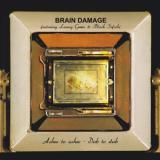
By 2004, dub had a history stretching back more than thirty years. This remarkable longevity can easily be explained by the evolving nature of this musical genre, which is constantly changing both artistically and technically, from Kingston to London, New York, and more recently Berlin, Paris, Lyon and Saint-Étienne. For example, it is worth noting that for some years now, in France and elsewhere, a good number of artists have been thinking in terms of dub from the outset, breaking free from the original Jamaican model, which involved drawing inspiration almost systematically from an existing vocal track. Thirty years on, with the release of their second album, Brain Damage aim to reconnect with this tradition. Recent collaborations with the two vocalists, Learoy Green and Black Sifichi, have indeed provided the ideal source material for the creation of five tracks, each rendered in their respective dub versions, thus forming an album with a symmetrical, even geometric character - from its very structure right down to its title: 'Ashes to ashes / Dub to dub'. At the heart of the project lies the astute choice of two guests, each operating in diametrically opposed spheres yet brought together for the occasion, thereby emphasising a certain 'unity of the circle': 'the unity of the circle'. Born of a genuine artistic vision, this geometric, symmetrical aesthetic-omnipresent in every detail of the album, both auditory and visual-complements Brain Damage's 'square' and robotic side, with its three-dimensional evocations. Always working in close collaboration with the very latest digital technologies. This brings to mind 'the balance of the cube'. Finally, the title itself, 'Ashes to ashes / Dub to dub', should be understood as a reference to the transience of all things in this world, against a backdrop of widespread, globalised, international, national and local crises_
Following the successful return of Cyberfunk Records, Frequency Damage EP showcases four brand-new productions from DJ Quest, blending over 25 years of breakbeat experience with modern production techniques.
From old-school funk influences and rolling basslines to heavy club grooves and precision-engineered drums, the EP demonstrates the versatility that has made DJ Quest one of the pioneers of the Bassline Breaks movement.
Each track brings its own identity while remaining unmistakably Cyberfunk—music written for DJs, built for powerful sound systems and inspired by the underground dancefloors that shaped the label's legacy.
out of Stock
Last delivered 19 days ago available to reorder, subject to availability
Japanese acid pop outfit Cho Co Pa Co Cho Co Quin Quin channel the globe-trotting spirit of Haruomi Hosono’s 1970s tropical boogie on their debut album, Tradition.
Named after one of the basic rhythms of Cuban folk music and drawing on influences from across the globe, Cho Co Pa Co Cho Co Quin Quin are quite simply a world unto itself.
Comprised of three childhood friends, Daido, Yuta and So, who reconnected during the coronavirus pandemic, Cho Co Pa initially emerged as a playful way for the three 23-year-olds to pass the time. Tapping into their youthful connection, they created a sound that exudes confidence and curiosity, a homage to the masterful world of YMO’s and Happy End’s Haruomi Hosono, rooted in the trio’s own idiosyncratic experience of the present.
Recorded at home and promoted on hugely popular DIY TikTok videos, their debut album Tradition is a technicolour exercise in armchair travelling – a kind of lockdown exotica for the housebound whose nostalgic flights of fancy are laced with a sense of whimsical melancholy for the lost freedoms of youth.
Referencing everything from Afro-Cuban percussion to lo-fi beats, Buddhist spirituality to trap, each member of the band brings different musical inspirations to the table. Latin American and Middle Eastern styles sit adjacent to a fascination for the electronic music of Aphex Twin, Dorian Concept, Underworld and Daft Punk. At times, the music verges on acid pop bliss, at others, it grooves with the instrumental funk sensibility of BADBADNOTGOOD.
“In the first place, when I create a song, my goal is to transport the listener to a mysterious place,” vocalist Daido explained in a recent magazine interview. Using lyrics as another sonic texture in the composition of ideas, Cho Co Pa paint beguiling sonic postcards of far-flung moods across 12 highly original tracks.
Marrying the organic and the electronic on rhythmically sophisticated compositions like ‘Chichibu’ and ‘Watatsumi’, it is on the album’s standout track ‘Gandhara’ that the experimental sound of Cho Co Pa comes to the fore. Referencing the ancient city of Gandhara through which Buddhism made its way from India to China, the track is a vocoder-trap-inspired, Udu drum-driven pop jam that lilts with unmistakable Balearic flair. If that’s difficult to imagine, then know simply that ‘Gandhara’ sounds like nothing else on this side of Saturn. Even Daido seemed surprised by the outcome: “I feel like we were able to create something that exceeded our abilities. That was huge!”
Hugely popular in Japan, with festival appearances lined up alongside BADBADNOTGOOD at Asagiri Jam in October, it's safe to say the success of Tradition has taken Cho Co Pa by surprise. You won’t have heard anything like it."
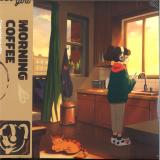
The ultimate Limited Edition double LP repress of "Morning Coffee" is finally here! ☕
Treat yourself to this ultra-exclusive double LP featuring an incredible liquid-filled vinyl. It's the perfect opportunity to acquire an exceptional collector's piece that is as hypnotic to watch as it is to listen to.
✨ Vinyl Features
Ultra-Rare Liquid-Filled Disc 1: much more than just a vinyl record, it's a technical marvel. This first disc contains a moving, coffee-colored liquid that comes alive to the rhythm of your turntable, offering a hypnotic and extremely rare visual experience.
Stunning Coffee-Marbled Disc 2: to perfectly pair with the liquid disc, enjoy a beautiful brown marbled vinyl that captures the warm aesthetic of a freshly brewed cup of coffee.
22 Remastered Tracks: 54 minutes of carefully selected, soothing melodies, remastered to bring a gentle warmth to your morning coffee routines.
Specially designed for fans who couldn't secure the original first pressing due to its instant sell-out, this limited reissue is the missing centerpiece your collection deserves.
out of Stock
Last delivered 22 days ago available to reorder, subject to availability
DE-CMG / DE15YR Dark EntriesBooks21.09.202621.SEP.26
Dark Entries Collected Music Graphics Compiled by Josh Cheon and Eloise Shir-Juen Leigh To celebrate 15 years of Dark Entries, this zine showcases the label’s visual aesthetic, bringing together some of the most iconic designs that we’ve released. While Dark Entries’ sonic mission has included sounds as diverse as synth-pop, Italo disco, darkwave, house, and techno, it is equally staggering to see the breadth of visuals the label has encountered and collected over the years. Included here are selected typography, logos, and illustrations from the label’s extensive catalog — well over 300 releases to date. Designs have been created using DIY analogue techniques as well as more contemporary digital approaches. A full discography is included at the end for reference and an essay by Shawn O’Sullivan (Led Er Est, Further Reductions). This zine serves as a source of inspiration for artists as well as a means of preserving and documenting these distinct graphics. DARK ENTRIES RECORDS is a San Francisco-based record label that was born in July 2009. Helmed by Josh Cheon, a vinyl-focused DJ and collector, the label has focused largely on excavating the 1980s underground era – but releases have spanned from sultry vintage disco to bleeding-edge contemporary techno. Graphic designer Eloise Shir-Juen Leigh has been responsible for most of the label’s artwork, whether reproducing original designs accurately for reissues or creating exciting new ones. Much care and attention is given to each release to represent the music in a memorable way as well as tell the stories behind these projects. Hand-stamped and limited to 200 numbered copies. 64 pages with neon cardstock covers. Measures 5×7 inches.
Gelb/orangefarbenes Corona-Vinyl. Limitiert auf 500 Exemplare. Man soll - nein, man darf nie aufgeben. Kaum wurde diese elementare Lebensweisheit eindrücklicher und musikalisch druckvoller umgesetzt als auf dem 9. Studioalbum URANUS OMNIBUS SANCTUS der nun schon legendären, europaweit umjubelten und hochdekorierten SPACELORDS. Die Reise zur Vollendung dieser satt klingenden Produktion verlief durch einen wahren Asteroidengürtel persönlicher Schicksalsschläge und technischer Beinahe-Katastrophen, die der Stammbesatzung des Stoner-Orbiters -Matthias ,HAZI" Wettstein (Gitarre),Marcus ,MUDGE" Schnitzler (Schlagzeug) undEkhard ,AKEE" Kazmaier (Bass)- ein Äußerstes an Überlebenswillen, Durchhaltevermögen, Freundschaft, Fantasie und technischer Finesse abverlangten. Dank des eingangs formulierten Mottos wurde diese außergewöhnliche Reise jedoch zu einem weiteren Meilenstein auf dem Weg zum vollendeten, unverwechselbaren SPACELORDS-Sound-Nirwana.
Lummer is the Swedish name for the now protected family of vascular plants (Clubmoss/Lycopodiaceae). Lummer grows slowly and the spores with which it reproduces can take 12—20 years to develop. These spores, known as Nikt in Swedish, were once ground into an extremely flammable light yellow “old woman’s gunpowder” that was used for early theatrical pyrotechnics. Volatile and explosive, Lummernikt requires careful handling.
There is something of the small scale dangerous in Finn Loxbo’s Lummernikt, too. A not-at-all-risk-free traversal at the limits of technique: building, blowing up and working through a band’s worth of harmonic scaffolding. Eight songs on a stage. Dramatic, breath-taking. At the same time the wild, flickering rush of tones spins up a centrifugal force that suspends a certain calm or sitting still at the music’s core.
On Lummernikt, Loxbo’s guitar often sounds more like a concert harp or the West African kora as he shifts a set of melodic fragments and extended lines through rapid-fire arpeggiated permutations with a spontaneous energy that is countered only by his extraordinary touch on the instrument and an undeniable sensitivity to his material’s dynamic potential.
It’s a glorious extension of the chiming chords and experimental preparations heard in his contributions to Magnus Granberg's Skogen (Another Timbre) or via his own ensemble Kommun (Fönstret, Thanatosis) and in striking contrast to the distorted wail he contributes to Anna Högberg Attack’s Ensamseglaren (Fönstret) or his all-in-the-red trio Kyosaku (Corbett vs Dempsey).
It’s now several years ago that Finn sent me the first recording of his new band Kommun and asked if I had suggestions for a label that might want to release it. I played that recording on repeat until I couldn’t shake the idea that I needed to start a label to put it out myself. Lummernikt is the spark that keeps that fire alive.
pre-order now18 Sep
expected to be published on 18 Sep
24,79 €
0 Cart
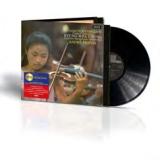
Kyung Wha Chung, London Symphony Orchestra, André Previn
Kyung Wha Chungs Debütalbum, eine Kombination der Violinkonzerte von Sibelius und Tschaikowski, gilt
seit über 50 Jahren weithin als Meilenstein. Bei seiner Veröffentlichung erhielt es eine begeisterte Kritik
vom damaligen Chefkritiker des „Gramophone“, Edward Greenfield, und wurde in der Sendung „Building
a Library“ von BBC Radio 3 zur Top-Empfehlung gekürt. Das London Symphony Orchestra unter André
Previn sind kongeniale Partner der großen koreanischen Violinistin.
Die Serie wurde von Rainer Maillard gemastert und von Sidney C. Meyer in den renommierten EmilBerliner-Studios unter Verwendung ihrer 100 % rein analogen Techniken (AAA) geschnitten. Es werden
ausschließlich analoge Quellen aus den originalen Stereo- und Quadrophonie-Masterbändern verwendet,
darunter auch kürzlich entdeckte analoge Master von frühen Digitalaufnahmen.
Diese in Deutschland bei der Schallplattenfabrik Pallas auf 180 g Virgin-Vinyl gepressten Deluxe-GatefoldVeröffentlichungen in limitierter Auflage enthalten: das Original-Artwork und Liner Notes; Archivfotos und
Faksimiles der Original-Aufnahmeblätter. Jede einzelne Veröffentlichung enthält individuelle Anmerkungen
von Dominic Fyfe, in denen die Geschichte der Aufnahme, der technische Hintergrund und der MasteringProzess detailliert beschrieben werden
Pressed to "beer" color vinyl, features remastered audio & original packaging. The first band on Fat Wreck Chords, Lagwagon pioneered the modern pop-punk movement. Hoss (1995) is a foundational pillar of 90s skate punk that helped define the signature "Fat Wreck Chords" sound_fast, melodic, and technically proficient. Frontman Joey Cape introduced introspective, melancholic songwriting to the genre on iconic anthems like "Violins," proving aggressive punk could carry emotional weight. Furthermore, Derrick Plourde's innovative, lightning-fast drumming raised the technical bar for the entire scene, heavily influencing generations of punk drummers worldwide.
Marc-André Hamelins erstes reines Chopin-Album wurde mit begeisterten Kritiken bedacht und vereinte
und überraschte Kritiker auf der ganzen Welt, da sich Poesie mit Hamelins übermenschlicher Virtuosität
verband. Die „Sunday Times“ schrieb: „Hamelin, ein Poet unter den Virtuosen, bringt gleichermaßen
Sensibilität und brillante Technik in diese oft eingespielte Musik ein. Faszinierend.“ Die „New York Times“
wies auf „eine erstaunliche lyrische Begabung, die immer deutlicher zum Vorschein kommt“, wenn Hamelin
Chopin spielt.
Enthalten sind zwei Eckpfeiler des romantischen Repertoires: Chopins Klaviersonaten Nr. 2 und 3, ergänzt
durch einen musikalischen Appetitanreger in Form der „Berceuse“, Op. 57.
Diese 180-Gramm-LP, gemastert von Sidney Claire Meyer in den Emil-Berliner-Studios, ist Teil der HyperionVinyl-Edition 2026.
Steven Osborne hat sich zu einem der bedeutendsten Pianisten der heutigen Zeit entwickelt. Seine Gesamtaufnahme der Rachmaninow-Präludien wurde von der Kritik als die beste moderne Interpretation seit
Ashkenazy gefeiert. Nun widmet er sich weiteren Meilensteinen des russischen Repertoires mit dieser Aufnahme von Mussorgskys „Bilder einer Ausstellung“ und einer Sammlung von Prokofjew-Miniaturen.
Mussorgskys Meisterwerk ist eines der beliebtesten programmatischen Werke des 19. Jahrhunderts. Es
stellt jedoch auch eine große pianistische Herausforderung dar, da die spektakulären Klangtexturen des
Höhepunkts „Das große Tor von Kiew“ höchste technische Fertigkeiten erfordern.
David Fanning schreibt über Prokofjews „Visions fugitives“: „Prokofjew liefert Momentaufnahmen seiner
charakteristischsten Stimmungen – mal grotesk, mal beschwörend und mystisch, mal einfach poetisch, mal
aggressiv selbstbewusst, mal so feinfühlig ausbalanciert, dass Interpret und Zuhörer sich selbst ein Urteil
bilden können.“ Osbornes subtiler und zugleich brillanter Umgang mit Klangfarben und Charakterisierung
macht ihn zum idealen Interpreten dieser Sammlung.
Diese 180-Gramm-LP, gemastert von Sidney Claire Meyer in den Emil-Berliner-Studios, ist Teil der „2026
Vinyl Edition“ von Hyperion.
Remastered limited edition double vinyl with double-sided screenprinted poster-cover (sleeve folds out to be one huge poster). A real collectors item!
When Off Off came out around June 1984, one couldn’t speak of an independent music scene in Portugal. Warm Records’ vague existence didn’t have any impact and Dansa do Som’s inaugural release appeared only in December. 10 years after the revolution, after two IMF interventions, a lot of political instability (not to say turmoil, in the first couple of years) and the natural excesses of a sudden burst of freedom, the Portuguese consumer had more choices but a generally poor standard of living. There was no entrepreneurial culture and serious second thoughts about investing private money in risky ventures.
After many complaints about the whole music scene (institutions, critics and record label executives, popular and classical music alike), something that would continue well beyond the end of the decade, Telectu decided to finance, record, produce, release and sell an album with complete independence from outside structures. Their karmic reward was profit. According to Vítor Rua, Off Off was the only album fully payed by the duo and the only one that really payed off. Not an easy accomplishment for a double LP housed in a large (also double-sided) screenprint with complicated cuts and folds. The artwork was conceived by António Palolo, a friend and multidisciplinary artist. It was based on a collage of heavily saturated and xeroxed polaroids framed in shocking pink and green. Palolo was considered the third member of Telectu, regularly producing slides, video and other visual support for their shows. The inspiration for the type of cover came from GRM’s Gramme series.
Off Off is divided in four distinct sides, each one corresponding to a “theme” or “function” related to Telectu’s manifold artistic interests and interactions. The titles are also gateways to influences and a small portion of Portuguese cultural life:
- Side 1 / “Diagonale” is dedicated to Egídio Álvaro, art critic and gallery director (he opened Diagonale in Paris). Performance art was arguably his main artistic concern over the years, so the music on this side is suggested for use by one or more performers in live or playback situations. The three tracks segue into each other, linked by a synth arpeggio much in the same way as Telectu’s previous “Belzebu” álbum (1983);
- Side 2 / “Anarké” is dedicated to the composer Filipe Pires, one of Jorge Lima Barreto’s recurring invocations when asked about worthwhile contemporary music in Portugal. It is subtitled “concert music”, proposing «a new form of listening». Three tracks also, and these are separated by “clap interludes”, which basically consisted in the following: JLB and VR each had a pair of headphones on, and they clapped their hands according to the rhythm of the music each one was listening. Both musicians were interacting with a different Steve Reich piece: Vítor with “Music for Mallet Instruments”, Jorge with “Six Pianos”. The result is disjointed clapping, an awkwardly deliberate celebration of their own music. Telectu applauded themselves.
- Side 3 / “Cornucópia” is subtitled “music for theatre” and dedicated to Luís Miguel Cintra and Luís Lima Barreto (JLB’s brother), both connected to the Cornucópia theatre company. The side consists of several short pieces previously used as interludes in the Cornucópia staging of “Mariana Espera Casamento” (1983). Field recordings, mood pieces, ambience and a numeric poem (“Soneto Soma 14x”, by E.M. de Melo e Castro) read by João Perry, a quite well-known stage actor. His voice is treated with a flanger effect;
- Side 4 / “Palolo” is “video music”. It’s a one-take mix recorded from cassette sources (Telectu studio experiences) and done live while watching António Palolo’s Om film (1978) projected on the living room wall. It’s a deep, immersive, quasi-mystical 20-minute piece perfectly suiting the meditative, abstract, fluid images created by Palolo by mixing paint and water inside a bathtub. One imagines the Cosmos, hardly suspecting the technique. The film is 90 minutes long, so the music on the LP is of course edited.
The six titles on sides 1 and 2 evoke demons, all of them with conflicting symbolism, since it varies from culture to culture, religion to religion. No explanation is given and Vítor Rua has no idea where this imagery comes from. During virtually the whole stretch of the 1980s, Jorge was the one in charge of titles and concepts, and Vítor didn’t bother too much even reading the liner notes :) In any case, when you synchronize the listening experience with the imagery, a powerful impression emerges, a feeling of being in the presence of these entities while placing yourself inside the sonic narrative.
Off Off is undoubtedly a seminal album in the history of electronic music, as much Heldon as Fripp & Eno, jazz and American minimalism, cosmic out-thereness, mantric miniatures. Telectu at the height of their powers, still very early on, delivering an album-manifesto advocating intermedia art and the fierce independence of Portuguese musicians «from the scum of capitalist music industry monopolies. It’s a path to follow, albeit one that requires enduring hardships and retaliation from music industry gangsters.» Despite a few journalists deemed «capable of being free», the media are «enslaved by the dominant and fascist imbecility of the speculators of light music.» Off Off is addressed to those journalists «and to an audience angry at the cultural misery imposed upon us ..., certain that this music will open new horizons of musical pleasure in the conception of Portuguese avant-garde music, and in the open consciousness of us all. OFF OFF repeats Freedom.»
Those two words are a direct lift from Alberto Arbasino’s 1968 book Off Off, the basis of which is a critical analysis of Theodor Adorno’s and Dwight MacDonald’s ideas concerning the stratification of culture in different levels (high, mid and low) and the pervasiveness of mass culture in the form of a culture industry. In very simplistic terms, and that is precisely the point that inspired Jorge, Arbasino argued that it was possible and desirable to effect a revolution from below, cultivating alternative circuits completely cut-off from what he termed the in-in reality. Telectu’s record was a deliberate demonstration that it could be done, displaying Freedom in the face of all the gatekeepers and other human obstacles.
Pioneering Ghanaian musician King Ayisobareturns September 4, 2026 with his forthcoming seventh album Pure Confusion, recorded and produced by On-U-Sound’s Adrian Sherwood.
Ayisoba is one of Ghana’s most distinctive musical voices. The world’s foremost player of the kologo - a homemade two-string lute fashioned from a calabash and covered in goatskin - he delivers fiercely political and socially observant songs using three different voices, including the voice of his grandfather that possessed him as a child. Sherwood meanwhile is the pioneering British producer and founder of On-U Sound whose hugely influential career has connected dub, post-punk, industrial, hip hop and experimental music through collaborations with artists including Lee “Scratch” Perry, Mark Stewart, Horace Andy, Sinéad O’Connor, Nine Inch Nails and Depeche Mode.
Ayisoba and Sherwood first collaborated during a BBC Radio 3 Late Junction session at Maida Vale in 2017, organised by Ayisoba’s long-time collaborator Arnold de Boer/Zea of The Ex. The pair immediately connected, and during the pandemic, when Adrian’s long-time African Head Charge collaborator Bonjo Iyabinghi Noah was in Ghana looking for musicians to collaborate with Sherwood suggested Ayisoba, who eventually featured on two tracks on African Head Charge’s 2023 album A Trip To Bolgatanga (Bolgantanga is the region Ayisoba is from). Ayisoba then returned to the UK in late 2024 and travelled to Sherwood’s Ramsgate studio where the pair laid down the songs that would become Pure Confusion: “All the songs were already in my head,” says Ayisoba. “This album is all recorded live, over one afternoon. Adrian only plays live, and I like that. And he works hard - he doesn’t sleep. I woke up in the night and he was still working.”
“In my role producing it, I just let it roll to make a good vibe,” says Sherwood. “We recorded it completely live, did some programming and processing on some tracks, using dub techniques live on the mixing desk and adding some slick touches. We wanted the colours on the album to swing off what Ayisoba was doing, so we invited some friends to participate. Doug Wimbish (Sugar Hill Gang) arrived from America and lent his services playing bass on a couple of tracks; the wonderful Ivan Hussey (Celloman) played bass, keyboards and cello - cello is not really featured on African recordings so we thought it would be really cool to try it. I'd been working with Alex White (Fat White Family/Primal Scream) on my album (The Collapse of Everything) and so he added sax to a few tracks and I brought Alan Glenn down especially - Alan was in Little Axe but also Nine Below Zero and played in the Yardbirds – to add some mouth organ; Mark Bandola added a bit of flavour with his Juno, Ayisoba’s long-time Ghanian collaborator Ayuune Sule added some percussion and vocals and Matt Smith did some programming.”
“King Ayisoba is quite amazing, so unique,” Sherwood continues. “He’s got his own handmade instrument and three different voices - when you’re listening you think it’s three different people. He’s a breath of fresh air, full of love for the music which he wants to share with everybody. Some tracks we kept very straight and others we experimented with - adding dubby psychedelic little touches to trip you out a bit. The added production we did at On-U has given it a shine while still keeping it vibrant, live and spontaneous. I’m really proud of this record”.
On Pure Confusion, Ayisoba documents the anxieties, contradictions and changing social realities of contemporary Ghana. “Land is a problem for everyone,” says Ayisoba of the opening track “Property”. “If you don’t build on your land they will take it away. Plenty corruption in Ghana, plenty confusion. They sell the land to two, three, four people and then everybody fights.”
Elsewhere Ayisoba explores illness, spirituality and social stigma on “Bemba”, warning against hiding sickness out of shame or fear of “bad juju”: “People hide their sickness and the sickness kills them.” “Tewigiloge” reflects on cultural difference and open-mindedness encountered through world travel: “We will tour the whole world and we will see many things we may not like or understand… your eyes will see, but don’t talk - you have to be open-minded.”
Spirituality runs deeply throughout the album. Ayisoba’s grandfather was a respected spiritual healer whose presence the musician says still guides him today. “The grandparents’ spirits are the ones you can contact,” he explains of the spiritual chant “Nkaase”. “This song talks about the forefathers.” The closing track “Leeda-Mampanga (It’s Not My Strength)” acts as a statement of humility and gratitude: “You have to be humble, even if you have talent. God gives you the power.”
For more than two decades, King Ayisoba has been one of Africa’s most distinctive musical innovators, transforming northern Ghanaian kologo traditions into a bold contemporary sound rooted in hypnotic rhythms, social commentary and spiritual intensity. Since the breakthrough success of 2006’s Modern Ghanaians, Ayisoba has built an international following through acclaimed albums, relentless touring and collaborations with artists including Lee “Scratch” Perry, Orlando Julius and African Head Charge. Performances at Roskilde, WOMAD, Le Guess Who? and the Barbican have further cemented his reputation as a singular live performer and cultural force.
"Psicofásicos" by The Silver Pumpkins is a unique document: an EP that is virtually impossible to find in its original edition, offering an essential glimpse into Bolivia's thrilling 1960s rock scene-raw, wild, and unlike almost anything else. Beyond the ubiquitous covers of Cream and Jimi Hendrix recorded by countless South American bands, this EP features the far less common 'Pushing Too Hard' by The Seeds and, most notably, the dark, powerful 'You're Gonna Miss Me' by the 13th Floor Elevators. Bolivia boasts an extraordinary musical legacy of raw, garage-driven '60s sounds. Alongside Peru, it was one of the South American countries where the greatest number of recordings in this style were released-captured with limited resources but overflowing with spontaneity, energy, and attitude. The difficulty of obtaining the records that were shaping the latest Anglo-American rock trends of the 1960s in many Spanish-speaking Latin American countries led to a proliferation of local bands covering their musical heroes. Well-known artists such as Cream, Jimi Hendrix, and Iron Butterfly were reinterpreted by countless groups, making these songs available to local audiences without having to rely on imported records reaching their countries. By doing so, these bands helped spread the cutting-edge rock music already making waves elsewhere in the world. What makes this release particularly unusual is that the band chose to cover second-tier cult acts rather than the obvious classics-groups that only briefly cracked the U.S. Top 50 in the late '60s, such as The Seeds and 13th Floor Elevators. Originally released on the Bolivian Psicofásico label, this exceptionally rare EP pairs The Seeds' garage anthem 'Pushing Too Hard' with the ferocious, immortal 'You're Gonna Miss Me' by Roky Erickson and the 13th Floor Elevators. The raw power of the original songs is pushed even further here by the rudimentary recording techniques and the limited instrumental skills of the very young members of The Silver Pumpkins. The result is a one-of-a-kind document-virtually impossible to find in its original pressing-that helps complete the picture of Bolivia's fascinating '60s rock scene. First-ever reissue.
out of Stock
Last delivered 26 days ago available to reorder, subject to availability
A deep cut from the extensive back catalogue of South African group Splash, significant artists in the narrative of the country’s fiercely independent Gallo Record Company, CWPT presents two uplifting mixes of 1990’s ‘An Eye For An Eye’, arranged by a modern day hero of the craft, Lipelis.
Originally released in parallel with the official beginning of the end of South Africa’s decades-long Apartheid, lead vocalist Daniel Tshanda dispels the philosophy of the track’s title, instead offering a still poignant call for unity; “An eye for an eye is no good… Let’s live together as one.”
Lipelis’s carefully crafted take retains this sentiment front and centre, while nudging the arrangement toward contemporary dancefloors, enriching a steady and bubbling mix of colourful keys, bubblegum percussion and a lifting backing chorus that includes another Gallo sensation, Dalom Kids.
These same voices form the spiritual centre of Lipelis’s 12” dub version, which further demonstrates the track’s irresistible rhythm, making space for complimentary piano melodies from Lipelis, alongside collaborator Eugene Piankov. Here, sunsetting piano lines dance with the analogue techniques of Lipelis’s own production instincts, forging a blissful tribute to a potent moment in South African musical history.
out of Stock
Last delivered 27 days ago available to reorder, subject to availability
With Foreverglades, Miami’s independent rap cornerstone Pouya delivers a cohesive, highly anticipated body of work that serves as a gritty love letter to the Sunshine State. Moving away from the claustrophobic trap beats that defined the early SoundCloud era, Pouya steps fully into his veteran status by embracing a distinctly rich and organic Southern sonic palette. The album's title plays heavily on the Florida Everglades, signaling a destination that is both a permanent state of mind and a humid, unforgiving landscape where only the strongest survive. Over the course of 12 tracks, the project balances hazy nostalgia with modern underground rap execution, highlighting Pouya's sharp technical growth and deep roots in his hometown culture.
The production on Foreverglades is remarkably cohesive, leaning into thick basslines, melting instrumentation, and classic Southern rap influences that give the tracks a heavy, atmospheric depth. Behind the boards, the album leans on a talented collective of underground producers—including Alexis Martin, Boohmii, Esthetic Gloom, and Oleg—who construct a soundscape that is both menacingly smooth and psychedelic. Rather than relying on the frantic tempos of his early catalog, the backdrops here allow Pouya to showcase his immense vocal versatility. He flows effortlessly, seamlessly shifting from his signature rapid-fire, triplet-flow delivery to a more grounded, melodic cadence that mirrors the thick humidity of the Florida landscape.
Lyrically, Foreverglades is a self-reflective journey that finds Pouya confronting the psychological realities of a decade-long independent career. While his trademark dark humor and raw bravado remain intact, they are balanced by a vulnerable perspective on success, mortal anxieties, and the paranoia that comes with staying independent in a shifting industry. The tracklist is meticulously curated, anchored by atmospheric standouts like "Found You," "Florida Baby," "In My City," and the Rocci-assisted "Burnt Down." By anchoring the project with raw storytelling and a distinct sonic identity, Foreverglades stands as a defining moment in Pouya's discography—a project best experienced with the bass turned all the way up and the windows rolled down.
1xLP, pressed on Whirlpool colored vinyl, includes 12x12 double-sided insert.
out of Stock
Last delivered 28 days ago available to reorder, subject to availability
Frazer Ray lands on Time Is Now with Masha EP. Four tracks of killer, stripped back FWD facing proto/future garage effortlessly pushing the sound into a new direction.
FACTS:
1. Frazer Ray knows how to make a dance. IYKYK…. Recently he’s been shelling Live UKG cooked right in front of you on a custom modular rig. Mad energy. 100% party business.
2. Frazer Ray knows a thing or two about making UK soundsystem music. The artist FKA Soundbwoy Killah is now a decade deep in his discography. And first as ‘Soundbwoy Killah’ and now as ‘Frazer Ray’ he is 2 for 2 with aliases that never miss.
3. New Frazer Ray is always something to get excited about. For 10+ years he’s kept it super tight. Quality over quantity. Always holding dubplates. When releases have landed they drop on only the best labels; including both Rinse and Rinse’s new INGRAM imprint, Ninja Tune’s Technicolour imprint, Sneaker Social Club, Interplanetary Criminal’s Locked On and IPC & Main Phase’s ATW Records. (side note - his Soundbowy Killah - ‘Halcyon Daze’ LP on Sneaker is IMO an all time classic - do not sleep on that one). Aaaannd… if the dubplates got too heavy he’s also occasionally dropped weight on his own U-Phorix label.
Also…..what has always struck me about Frazer’s music is that it’s simultaneously integral in the hardcode continuum while also pushing it forward. It’s always complete. Fully formed. You never bristle. There’s no failed experiments. Just a firm nod to the future for anyone looking.
OK… Run the tracks.
Masha’s vocal licks tell it straight, this one is “Fire”. Proper club business to test the stacks. The drums roll steady in front of a wall of sub bass. A killer mix of post dubstep era goodness, techno sound design and the shuffle & swing of proto dubstep.
Settle Down There’s something 90’s tek step about this one. Dark and moody with a wall of bass. It bristles with texture and atmosphere before – a moment of reprieve in this absolute weapon – Frazer opens up into a dubwise oasis before skittering back into the darkness.
Syren Song is exactly what it says on the tin, alluring Dancehall vocals chatter and roll. Who knew auto-tune and Garage paired so well… Frazer did that’s who.
No Reasons Left is an ethereal closer for the end of the night / start of the morning after. Gliding warm & introspective dubwise breaks with a Reese bassline that hangs in the space between garage and hardcore.
Frazer says…
“This EP feels like I've finally nailed integrating my modular setup (and VCV rack for all you nerds out there) into my productions. I wanted to create deeper production while still ensuring the tracks translate well in the club.”
If this is only the beginning then strap in.
out of Stock
Last delivered 29 days ago available to reorder, subject to availability
Tommy McCook was not only a founding member of the legendary Jamaican Ska group The Skatalites, but also a brilliant musical arranger. His informed understanding of Jazz, R&B and in fact most music styles would always add another layer to any song put his way. This made him the go to guy for most of the Jamaican producers, who would use his arrangement skills to pepper up their latest tunes.
Tommy McCook, (b1927, Havana, Cuba) came to Jamaica with his mother from Cuba aged 11 and entered renowned Alpha Boys School for underprivileged children, a school that placed great emphasis on musical tuition. At the tender of 14, such was his talent he has left to join Eric Deans Orchestra and took on stints with other bands led by Don Hinchman and Roy Coburn. All the bands played in the Swing and Jazz style of the times. He relocated to the Bahamas in 1954 where he further developed his Jazz technique and upon his return to Jamaica in 1962 began working Coxsone Dodd’s Studio One and became involved in the development of Ska. His knowledge of Jazz, R& B and Jamaican musical forms helped set the tone for the group of musicians he was working with and would name the Skatalites. The group, consisting of Don Drummond (Trombone), Roland Alphonso (Tenor Saxophone), Jackie Mitoo (Piano), Lloyd Brevett (Bass), Lloyd Knibbs (Drums), alongside Tommy himself on Tenor Saxophone. The group would back all the major Ska vocalists pf the day and would also go on to cut a catalogue of instrumental music. The Skatalites split up in 1965 and Tommy McCook moved over to work with Duke Reid’s Treasure Isle Studios where he formed The Supersonics. A set of musicians under his guidance that consisted of Lynn Tait and Ernest Ranglin (Guitar), Neville Hinds and Winston Wright (Organ), Gladstone “Gladdy” Anderson (Piano), Hugh Malcolm and Arkland “Drumbago” Parks (Drums), Clifton “Jackie” Jackson (Bass), and Tommy and Hernon Marquis (Saxophone). The more laid back sounds from 1966-1968 would be given the name Rocksteady of which again McCook was at the forefront. The top producers like Bunny Lee would use the musicianship of Tommy McCook and his arrangement skills to enhance this new sound.
We have compiled a great selection of rhythms that featured McCook blowing over tracks stripped of their vocals and replaced with some fantastic lead lines played by Tommy and some of his fellow horns men.
We hope you agree like we do that they do this in fine style.
The compositions recorded here are a product of work with computers in synthetic speech, song and vocal sounds and were created between 1972 and 1975. The music was realized on two different computer music systems and takes advantage of, and attempts to extend and explore their features. The system employed to realize speech songs was created at the Bell Telephone Laboratories for research in synthetic speech and speech communication. Since the system was not designed for musical purposes, its limitations were severe and its musical use a great (and often rewarding) challenge. The system used for In Celebration and The Story of Our Lives was designed with the expressed purpose of creating synthetic musical voices, and was therefore much better suited to the task at hand. As with any high technology project, there was extensive collaboration in the production of the works.
The works on this disk are called computer music because the sounds were created numerically in a computer before reaching magnetic tape and loudspeakers. The computer did not compose the music. However, it was only used as a sound synthesis and analysis medium. In order to hear the sounds which are represented in the computer as successions of numbers it was necessary to attach a digital-to-analogue converter to the computer. The converter transformed the succession of numbers into a fluctuating voltage which was recorded directly on to audio tape.
The technique used to create the synthetic voices is called speech synthesis-by-analysis. For this method of speech synthesis, only those words, phrases and sentences which have been spoken into the computer previously (via an analogue-to-digital converter) may be synthesized. First the digitally-recorded speech is analyzed by programs which extract the attributes (parameters) of the speech for short time segments (.01 sec.). From these parameters the speech may be recreated in a form which resembles the original recording very closely. But for musical purposes the parameters are most often altered before synthesis. It is possible, for example, to change the natural pitch contour of the speech into a melodic line or to change the speech speed without altering the natural pitch level.
The variety of musical patterns which may be created from the analytic parameters is limited only by the composer's imagination. Most of the speech sounds on the recording were created by changing the pitch and duration attributes of the original on resynthesis, but for a few, the resonances (the formants) of the speech were altered as well. The voice of the book in The Story of Our Lives was created by replacing the program which simulates the sound of the human vocal cords with one consisting of 64 sine tones glissandoing at different rates. All the textures in which more than one voice is heard were obtained by mixing the synthetic voices together digitally.
Once again russian and english junglists brings a superb soulfull release using amen breaks to bring you elsewhere, out of the ragga stuff... A pure musical moment, really strong for anyone wishing to surprise a jungle dancefloor ! Must have !
out of Stock
Last delivered 36 days ago available to reorder, subject to availability
Just featured on BBC6 Music in the CRAIG CHARLES FUNK & SOUL as part of the ODDBALL CREATIVES “Trunk of Funk Mix “ on Saturday 1st August - and already gaining great DJ feedback from the likes of Greg Caz, Laurent Garnier, Chris Bangs, Rocky, Chico Malo, Starla Recordings and many more ….
Another new collaboration on the Echo Labs label - the subsidiary of Echo Chamber Recordings set up to release tracks and remixes from other artists.
This one is a very special hook-up with Daniel Walls & Joseph Malik in Edinburgh with their new project under their “Oddball Creatives” production monicker. It was truly an honour that they reached out to Echo Chamber Recordings to bring this out on a vinyl 45 , fitting in perfectly with the foundation sounds of the label - combining classic timeless funk, jazz , Latin and soul with 21st Century production techniques
They have recruited the vocal talents of Philadelphia’s Kameela Waheed and the instrumental skills of Scottish jazz legend Colin Steele , to bring us the sound of the summer with a huge soul-jazz-funk cut. It combines elements of a classic early 70s groove with a subtle, up-to-date style, built around Joseph’s vocals and Kameela’s spoken rap.
On the flip you get the purely instrumental take - meaning you could extend the hypnotic groove even longer with two copies !
As ever, on Echo Labs there will be just 300 vinyl copies pressed for worldwide distribution
out of Stock
Last delivered 36 days ago available to reorder, subject to availability
Diese Aufnahme von Vivaldis „Vier Jahreszeiten“ aus dem Jahr 1969 mit der Academy of St Martin in
the Fields und Sir Neville Marriner – dem am häufigsten aufgenommenen Orchester-Dirigent-Duo der
Geschichte – ist nach wie vor so frisch und voller neuer Ideen wie bei ihrer Erstveröffentlichung.
Alan Lovedays wunderbar stilvolle Violinsoli und Simon Prestons einfallsreiche Continuo-Bearbeitung auf
Cembalo und Orgel machen diese Aufnahme zu einer der musikalisch befriedigendsten „Jahreszeiten“-
Einspielungen. Transparent, lebendig, tänzerisch.
Die Serie wurde von Rainer Maillard gemastert und von Sidney C. Meyer in den renommierten EmilBerliner-Studios unter Verwendung ihrer 100 % rein analogen Techniken (AAA) geschnitten. Es werden
ausschließlich analoge Quellen aus den originalen Stereo- und Quadrophonie-Masterbändern verwendet,
darunter auch kürzlich entdeckte analoge Master von frühen Digitalaufnahmen.
Diese in Deutschland bei der Schallplattenfabrik Pallas auf 180 g Virgin-Vinyl gepressten Deluxe-GatefoldVeröffentlichungen in limitierter Auflage enthalten: das Original-Artwork und Liner Notes; Archivfotos und
Faksimiles der Original-Aufnahmeblätter. Jede einzelne Veröffentlichung enthält individuelle Anmerkungen
von Dominic Fyfe, in denen die Geschichte der Aufnahme, der technische Hintergrund und der MasteringProzess detailliert beschrieben werden.
pre-order now04 Sep
expected to be published on 04 Sep
48,95 €
0 Cart
Sir Colin Davis, Concertgebouw Orchestra of Amsterdam
Seit ihrer Erstveröffentlichung ist Sir Colin Davis’ mitreißende Aufnahme der „Symphonie fantastique“ aus
dem Jahr 1974 mit dem Concertgebouw-Orchester erste Wahl geblieben.
Davis’ Verbundenheit mit Berlioz ist mittlerweile legendär. Sein Verständnis für Berlioz’ einzigartige Kompositionspraxis kommt in dieser Concertgebouw-Aufnahme voll zur Geltung. Alle individuellen Qualitäten
von Berlioz’ Orchestrierung werden durch Davis’ überragende Musikalität kompromisslos umgesetzt. Er ist
ein wahrer Verfechter des Werks des französischen Komponisten. Packend!
Die Serie wurde von Rainer Maillard gemastert und von Sidney C. Meyer in den renommierten EmilBerliner-Studios unter Verwendung ihrer 100 % rein analogen Techniken (AAA) geschnitten. Es werden
ausschließlich analoge Quellen aus den originalen Stereo- und Quadrophonie-Masterbändern verwendet,
darunter auch kürzlich entdeckte analoge Master von frühen Digitalaufnahmen.
Diese in Deutschland bei der Schallplattenfabrik Pallas auf 180 g Virgin-Vinyl gepressten Deluxe-GatefoldVeröffentlichungen in limitierter Auflage enthalten: das Original-Artwork und Liner Notes; Archivfotos und
Faksimiles der Original-Aufnahmeblätter. Jede einzelne Veröffentlichung enthält individuelle Anmerkungen
von Dominic Fyfe, in denen die Geschichte der Aufnahme, der technische Hintergrund und der MasteringProzess detailliert beschrieben werden.
Shoal corrals three original solo productions into ISOTOOP’s fourth record, each demonstrating refinement of the artist’s sound and technique, finished by a fitting retelling of ‘Interlocking’ by Antony Linell.
It begins with helical hypnotism; ‘Strange Blue Knots’ drives directly forward on muscular bass, but pointillistic synthwork creates an aural illusion of a spiral aperture tightening; the landscape remains broad, but focus is drawn down to the loci of motion. All containment is blown away by the incomparable force of ‘Roxellana’. Here, the forward motion is not illusory but the irrefutable command of hurricane tailwinds. Thunder heralds full-band waves of unbridled sound, and though the rudder is surrendered to the billowing storm, no part of the weapon is directionless chaos.
Shoal’s tale concludes with ‘Interlocking’, a step back from the monstrous energy of the preceding track (anything and all would be); attention is built again on guile and quiet magnetism, commonly felt attributes throughout the artist’s repertoire. This concept of restraint as force receives a sharpening by Antony Linell, whose sonic influence is present throughout the record, like fossilised footprints. In the calm, sheltered lee of the mountain, the slope behind the wave’s punching crest, Linell’s calmer, stripped-back version feels like a fireside retelling of a myth; still full of the magnitude of the original events, the space surrounding the action is foregrounded.
Every tale may be reduced to the same core elements: the hand; the knife it holds; vivid silence presaging the moment of action. Fitting that the tale of three parts is summarised by a fourth, wider perspective.
out of Stock
Last delivered 39 days ago available to reorder, subject to availability
Shoal corrals three original solo productions into ISOTOOP’s fourth record, each demonstrating refinement of the artist’s sound and technique, finished by a fitting retelling of ‘Interlocking’ by Antony Linell.
It begins with helical hypnotism; ‘Strange Blue Knots’ drives directly forward on muscular bass, but pointillistic synthwork creates an aural illusion of a spiral aperture tightening; the landscape remains broad, but focus is drawn down to the loci of motion. All containment is blown away by the incomparable force of ‘Roxellana’. Here, the forward motion is not illusory but the irrefutable command of hurricane tailwinds. Thunder heralds full-band waves of unbridled sound, and though the rudder is surrendered to the billowing storm, no part of the weapon is directionless chaos.
Shoal’s tale concludes with ‘Interlocking’, a step back from the monstrous energy of the preceding track (anything and all would be); attention is built again on guile and quiet magnetism, commonly felt attributes throughout the artist’s repertoire. This concept of restraint as force receives a sharpening by Antony Linell, whose sonic influence is present throughout the record, like fossilised footprints. In the calm, sheltered lee of the mountain, the slope behind the wave’s punching crest, Linell’s calmer, stripped-back version feels like a fireside retelling of a myth; still full of the magnitude of the original events, the space surrounding the action is foregrounded.
Every tale may be reduced to the same core elements: the hand; the knife it holds; vivid silence presaging the moment of action. Fitting that the tale of three parts is summarised by a fourth, wider perspective.
out of Stock
Last delivered 39 days ago available to reorder, subject to availability
For the first time ever, Los Campesinos! are proud to offer new pressings of their first three studio albums on their very own record label; Heart Swells.
2026 marks the 20th anniversary of LC!’s formation, and coincides with the band being more popular and relevant than ever before. The 3 albums are available for the first time since 2020, on brand new colour ways, on 12” vinyl and CD, with updated artwork and packaging.
What the press said:
“an absolutely astounding album” 4.5/5 - DIY
“Romance Is Boring is a triumph.” - 8.3/10 - Pitchfork
“The fact that the seven-piece manage to make music that is as orchestrated and coherent as it is invigorating is only one of the few astonishing things about them.” - 9/10 Popmatters
“What primarily sets ‘Romance Is Boring’ up as a significant step forward is that it’s incredibly structurally cohesive, and yet blows anything they’ve previously released out of the water in terms of textural intricacy, technical prowess and general experimentation.” - 4/5 NME
Mariá Portugal has been active in the music scenes of Brazil and Europe as a drummer, composer, singer, and music producer. After graduating in composition, she has focused her research on free improvisation and its possible intersections with popular song. This exploration resulted in her acclaimed album EROSÃO (2021) and in the formation of two groups: the EROSÃO Septet and the EROSÃO Percussion Trio, both based in Germany.
She is also a member of the group Quartabê and has toured and recorded around the world with various artists, moving between pop, free jazz, free improvisation, and Brazilian popular music. She has performed and recorded with artists such as Elza Soares, Anthony Braxton, Joe McPhee, Fred Frith, and Tomeka Reid. She is a member of Fire! Orchestra, Fire! Trio, Endless Breakfast and MONSTER.
In 2020, Portugal was the 13th Improviser in Residence at the Moers Festival. As a curator, she has participated in the Soundtrips-NRW in Duisburg and currently coordinates the concert series “TOMA CHOCOLATE!” in Berlin, besides being the guest curator for this year's unlimited Wels festival. She also composes music for dance, theater, and film, including the award-winning soundtrack for the film “1976”, which earned her the Chilean Film Academy Award in 2025. She was nominated for the 2025 and 2026 German Jazz Prize in the drums and percussion category.
Emilio Gordoa is a Mexican sound artist, percussionist, and composer whose work focuses on sound and performance as primary means of expresion. Based in Berlin since 2012, he has been an active contributor to the city’s Echtzeitmusik scene and is involved in the international avant-garde music community.
His projects include solo and ensemble performances, sound installations, and compositions for film, theater and dance. He has collaborated with a wide range of artists, including Jérôme Noetinger, Ingrid Schomliner, Yuko Kaseki, Burkhard Beins, Don Malfon, John Butcher and Sabiene Vogel. Gordoa’s approach combines experimental percussive techniques with electronic elements, leading to invitations to perform at events such as the Moers Festival, Meakusma Festival in Belgium, A’larme!, and Maerzmusik in Berlin.
He founded WildSonico, a platform for experimental music, and has been part of artist residencies at institutions like the Akademie der Künste and Kunststiftung NRW. He also worked as the Improviser in Residence for the Moers Festival. His discography includes albums such as Substantial Myths (2022), Balderi Variations (2019), and GRIFF (2021), which reflect his ongoing engagement with music. His work has been supported by organizations such as the Goethe-Institut, Musikfonds e.V., and INM - initiative neue musik berlin, and he has received recognition, including an Honorary Mention at the Prix Ars Electronica.
Burkhard Beins was born in 1964 in Lower Saxony and has been living in Berlin since 1995. He is considered a stylistically influential percussionist as a composer/performer, due to his individually developed playing techniques. Additionally, he works with analog synthesizers and live electronics, plays electric bass, and has created various sound installations.
He collaborates as a soloist, as well as with artists such as Chris Abrahams, Keith Rowe, Sven-Åke Johansson, Axel Dörner, Andrea Neumann, and many others. He is also a member of several ensembles including Sawt Out, Activity Center, Polwechsel, The Sealed Knot, Zone Null, Perlonex, Trio Sowari, Vertigo Transport, the NoWave/Krautrock band Slurge, and the Berlin Splitter Orchestra.
Since the late 1980s, he has performed concerts and participated in international festivals for experimental and contemporary music across Europe, America, Asia, and Australia. He has released more than 70 CDs and LPs in collaboration with various artists.
Burkhard Beins has been an Artist-In-Residence at the Künstlerhäuser Worpswede (2009), EMS Stockholm (2014), Muong Studios, Hoa Binh/Vietnam (2015), the Robert Rauschenberg Foundation, Captiva/Florida (2017), as well as at DAR, Drsukininkai/Lithuania (2018), and the Agosto Foundation, Prague (2019).
For any other artist, an album like Asher White’s Love Aggregates might come out of a conscious push to treat no idea as off-limits, to make something bold and new. Jubilant art-funk about cocaine addiction—absolutely. Swooning orchestral pop about Jerry Garcia—why not? Rippling electronic noise, jazzy brushed drums, an elderly motorcyclist with dementia, a profoundly emotional bass solo—put them all in one song. There are threadbare folk tunes, glammed-up power-pop bangers, “Sir Duke” horn charts, Morton Feldman string arrangements, layers of guitar feedback like violins made of liquid chrome. Yes, for another artist, Love Aggregates might be the most adventurous album in their catalog. For Asher White, it’s what passes for settling down.
White is 25 years old and has been making records—writing, recording, producing, and playing almost everything herself—for over a decade. She’d released two dozen of them on Bandcamp before catching the indie-rock industry’s attention with 2024’s Home Constellation Study and last year’s 8 Tips for Full Catastrophe Living. The latter album’s dizzy eclecticism and formidable craft landed her on Rolling Stone’s Future 25 list with the likes of xaviersobased and Oklou, along with a slew of other accolades. That came as something of a surprise to White, who didn’t craft the chaotic 8 Tips with a breakthrough in mind. Love Aggregates feels like a chance, for one of the most thrilling musical talents of her generation, at a more deliberate introduction.
She wrote and recorded her new album while her previous one was gathering
momentum, tinkering in the DIY recording studio where she always works, acutely conscious now that people would be listening to whatever she came up with. At around the same time, her years-long romantic relationship ended in a flurry of betrayal and addiction, her first experience of devastating heartbreak. Even so, Love Aggregates is not a bitter album about wallowing or seething, but instead making use of those impulses as raw materials in work that transcends the specificity of its origins, fashioning them into something surprising and new.
In 2021, Golden Earring announced their parting after more than 60-years as a group. This meant that their last live show, held at the Rotterdam Ahoy on 16th November 2019, was also their final performance as a band. With this knowledge, the excellent audio recordings of this tremendous concert were unshelved in close cooperation with the band and John Sonneveld – the band’s long-time technical assistant and producer. The result: You Know We Love You!
It's the ultimate goodbye of this legendary Dutch rock band and available as a limited edition of 500 individually numbered copies on transparent vinyl. This 3LP is packlaged in a deluxe trifold sleeve featuring a collage of photos that fans of Golden Earring submitted, plus a 4-page booklet including a replica of the original concert poster.
Auf ihrem neuen Album "Bruch" mit Oslo Philharmonic unter der Leitung von Gergely Madaras präsentiert die für ihre kreativen Repertoirekonzepte bekannte Geigerin Eldbjørg Hemsing neben Max Bruchs Violinkonzert auch die eigentlich für Viola und Orchester geschriebene Romanze op. 85 sowie ein neues Arrangement von "In der Nacht" op. 72 für Solovioline und Orchester. Die Aufnahme dokumentiert Hemsings langjährige Auseinandersetzung mit einem der großen romantischen Standards des Violinrepertoires. Bereits als Kind hat Hemsing das Werk mit Oslo Philharmonic zum ersten Mal aufgeführt, jetzt sieht sie ihre Interpretation als reif für eine Aufnahme. "Das Bruch-Violinkonzert ist für mich ein lebenslanger Begleiter, ich bin praktisch mit dem Stück aufgewachsen. Das bemerkenswerte ist, wie viele Farben, Emotionen und Bedeutungsebenen sich im Lauf der Jahre für mich erschlossen haben. Ich denke, dass ich jetzt einen Zugang zum Werk habe, der eine Aufnahme rechtfertigt", erklärt Eldbjørg Hemsing. Bekannt für ihren ausdrucksstarken Ton und ihre technische Präzision, stellt Eldbjørg Hemsing in ihrer Interpretation die gesangliche Qualität des Werkes in den Mittelpunkt und arbeitet seine unterschiedlichen Charaktere klar heraus. Dabei erscheint ihr die Balance zwischen Virtuosität und musikalischem Ausdruck in Bruchs Werk von besonderer Bedeutung: "Was ich an diesem Konzert am meisten liebe, ist seine Wärme und seine zutiefst menschliche 'Stimme'. Bruch verstand die Violine auf ganz natürliche Weise. Das Konzert ist zwar virtuos, doch die technischen Herausforderungen stehen immer im Dienst der Musik. Genau das macht es für mich so besonders: Es erlaubt der Violine nicht nur zu glänzen, sondern wirklich zu singen. Jeder Satz eröffnet dabei eine eigene Welt. Dabei ist der zweite Satz für mich das Herzstück des Konzerts, erfüllt von Zärtlichkeit und einem Gefühl von Ruhe", so Eldbjørg Hemsing. Ergänzt wird das Programm durch zwei Werke, die Bruchs lyrische Klangsprache weiter bele
The compositions recorded here are a product of work with computers in synthetic speech, song and vocal sounds and were created between 1972 and 1975. The music was realized on two different computer music systems and takes advantage of, and attempts to extend and explore their features. The system employed to realize speech songs was created at the Bell Telephone Laboratories for research in synthetic speech and speech communication. Since the system was not designed for musical purposes, its limitations were severe and its musical use a great (and often rewarding) challenge. The system used for In Celebration and The Story of Our Lives was designed with the expressed purpose of creating synthetic musical voices, and was therefore much better suited to the task at hand. As with any high technology project, there was extensive collaboration in the production of the works.
The works on this disk are called computer music because the sounds were created numerically in a computer before reaching magnetic tape and loudspeakers. The computer did not compose the music. However, it was only used as a sound synthesis and analysis medium. In order to hear the sounds which are represented in the computer as successions of numbers it was necessary to attach a digital-to-analogue converter to the computer. The converter transformed the succession of numbers into a fluctuating voltage which was recorded directly on to audio tape.
The technique used to create the synthetic voices is called speech synthesis-by-analysis. For this method of speech synthesis, only those words, phrases and sentences which have been spoken into the computer previously (via an analogue-to-digital converter) may be synthesized. First the digitally-recorded speech is analyzed by programs which extract the attributes (parameters) of the speech for short time segments (.01 sec.). From these parameters the speech may be recreated in a form which resembles the original recording very closely. But for musical purposes the parameters are most often altered before synthesis. It is possible, for example, to change the natural pitch contour of the speech into a melodic line or to change the speech speed without altering the natural pitch level.
The variety of musical patterns which may be created from the analytic parameters is limited only by the composer's imagination. Most of the speech sounds on the recording were created by changing the pitch and duration attributes of the original on resynthesis, but for a few, the resonances (the formants) of the speech were altered as well. The voice of the book in The Story of Our Lives was created by replacing the program which simulates the sound of the human vocal cords with one consisting of 64 sine tones glissandoing at different rates. All the textures in which more than one voice is heard were obtained by mixing the synthetic voices together digitally.
A rare masterpiece by Masahiko Togashi, Masayuki Takayanagi, Mototeru Takagi, and Motoharu Yoshizawa, some of the most important artists in the history of Japanese free jazz. Takayanagi’s guitar makes effective use of feedback techniques, Takagi’s dynamic tenor saxophone and corn pipe, a type of vertical flute, Yoshizawa’s utterly free and unrestrained string resonance, and Togashi’s intelligent drumming, combining precision with power, all come together in a true masterpiece that announces the arrival of a new era.
Keith Freund’s music occupies a space where careful musicianship and homebrewed experimentation meet and shake hands. On “Window Left Open,” spacious melodies drift through dense fields of electronic activity: saxophone lines rise above buzzing circuitry, percussion flickers at the edges of the frame, and clustered glitch textures dart through the music like insects in tall summer grass. Every sound feels vividly animated, a charged part of the same mercurial ecosystem.
Freund’s talent lies in balancing warmth and unpredictability with remarkable ease. Patient motifs recall the exploratory spirit of early folktronica, while bit-reduced textures, degraded loops, and idiosyncratic synthesis techniques continually reshape the terrain beneath them. Rather than treating acoustic and electronic elements as opposing forces, Freund allows them to intermingle until distinctions dissolve, creating compositions that reward close listening while retaining immediate warmth. This record finds Freund working with a fully formed vocabulary that is truly his own, transforming glitch, melody, improvisation, and atmosphere into songs that are both fundamentally curious and disarmingly engaging.
Recorded when the band members were barely out of their teens, this 1966 masterpiece captures Los Mockers at their rawest and most inspired. Fueled by obsession, talent, and urgency, the group forged a uniquely South American take on British rhythm & blues - wild, melodic, and timeless more than half a century later. Released at the end of 1966, Los Mockers' debut album stands as one of the defining rock & roll records to emerge from South America in the 1960s. While often compared to The Rolling Stones because of Polo Pereira's unmistakable vocal swagger, the band built a sound of its own: rooted in the bluesier side of the British Invasion, yet rougher, fiercer, and unmistakably rioplatense. Recorded in Buenos Aires under modest technical conditions, the album transformed limitations into creativity. The result is a collection bursting with urgency and inspiration - from swaggering rhythm & blues and explosive rock & roll to infectious pop melodies and unforgettable ballads. More than fifty years after its original release, the album remains as youthful, vibrant, and essential as ever.
Defined by complex rhythms, low-tuned guitars, and an intense live energy, the band pushes the boundaries of contemporary heavy music. The band features Emilia Moncayo (vocals, synths), Amadeus Galiano (guitar, bass), and Carlos Sanchez (drums), each bringing a distinct musical background that merges extreme metal with progressive and electronic influences. Their combined technical precision and creative approach shape MINIPONY's intricate compositions and evolving sonic identity. MINIPONY has performed across Latin America and Europe, sharing the stage with iconic acts such as Meshuggah and touring alongside Fear Factory. They have also appeared at major international festivals including 70,000 Tons of Metal and Hell and Heaven Fest, Summer Breeze building a strong reputation for their powerful and immersive live performances.
Defined by complex rhythms, low-tuned guitars, and an intense live energy, the band pushes the boundaries of contemporary heavy music. The band features Emilia Moncayo (vocals, synths), Amadeus Galiano (guitar, bass), and Carlos Sanchez (drums), each bringing a distinct musical background that merges extreme metal with progressive and electronic influences. Their combined technical precision and creative approach shape MINIPONY's intricate compositions and evolving sonic identity. MINIPONY has performed across Latin America and Europe, sharing the stage with iconic acts such as Meshuggah and touring alongside Fear Factory. They have also appeared at major international festivals including 70,000 Tons of Metal and Hell and Heaven Fest, Summer Breeze building a strong reputation for their powerful and immersive live performances.
In the years after independence, Tunisia made an unlikely bet: tourism. Beach resorts rose along the coast, each one trying to outshine the next, and each one needing a band to entertain their guests. A whole generation of musicians grew up on those hotel stages - sharing bills with James Brown, Claude François and the Mingus Dynasty - and what came out of it was a small revolution. Funk played on Tunisian instruments. Disco with an oud in it. Reggae carried back from the island of Kerkennah. A "Third Language" the press didn't quite know what to do with.
Tunis Hotel Stereo gathers nine of those records. Most of them were pressed in tiny quantities, sold to tourists as souvenirs, censored before reaching the radio, or quietly slipped onto a 45 between two hotel sets. Some of these artists filled the Carthage amphitheatre. Some topped the Maghreb hit-parades. Most have been waiting, for forty years, for someone to play their music again.
This compilation is the result of years of work - collating memories, hunting down records, sitting with the artists who made them, and with the people who once danced to them. It is the third release on Shakshouka Records, and the first compilation of Tunisian music ever curated by Tunisians, in Tunisia.
SIDE A
The mysterious Les 4 Dés, who turned the national anthem into psychedelic pop on Ya Tounes - and then nearly vanished. Peace Band, hard rockers turned hotel professionals, recording as Omnya at Hammamet's legendary Topkapi club. Ridha Zalila, the eternal shape-shifter, in a rare instrumental of Tiou Tiou Tiou. And Sadok Gharbi's Noujoum - pulled from his sabotaged, near-lost masterpiece Souar.
SIDE B
Carthago, the impossible big band that married the elite of Tunisian jazz-rock with the stars of tourist entertainment, with the original Dhikrayet. Khaled Mellef, one of the great UFOs of his generation, with Wait Till the Morning Dew, recorded in the Netherlands. Marhaba Band's Baba Bahri, originally pressed only for hotel guests and now a cult artefact. Corniche Band's Dance, cut in Milan during a technical stop on a cruise ship. And Jomaa Bouzrara, the "Bob Marley of the Maghreb," with Now That, drawn from his landmark 1983 debut Sunset.
These weren't rebels without a cause. They were musicians who understood that modernity and heritage are not opposites - that a Tunisian could play funk and still be deeply, irreducibly Tunisian. They drew from every direction at once, and built something that belonged to none of those worlds entirely, and to all of them at the same time.
This compilation is one small act of remembering. The music does the rest.
Pure Devotion, benannt nach der gleichnamigen Live-Reihe von 2024, markiert einen weiteren Entwicklungsschritt für Overmono. Hinter dem Projekt stehen die Brüder Tom und Ed Russell, die bereits seit Jahren in der britischen Elektronikszene aktiv sind - sowohl gemeinsam als auch über ihre Solo-Projekte Tessela und Truss. Diese Erfahrungen aus dem UK-Underground bilden die Grundlage ihres Sounds bis heute. Das Album vereint bewusst Unschärfen, technische Imperfektion und zufällige Momente mit einer klaren künstlerischen Haltung. Über elf Tracks hinweg erweitern Overmono ihren Produktionsansatz und greifen dabei auf ungewöhnliche Mittel zurück: analoge Synthesizer aus den 70er- und 80er-Jahren, alte Lautsprechersysteme oder experimentelle Klangbearbeitung. Das Ergebnis wirkt kontrolliert, organisch und immer treibend. Auch die Vocals tragen zur Atmosphäre bei - unter anderem von John Joseph Holt, Kindora und Ruthven. Insgesamt legt Pure Devotion den Fokus stärker auf Emotionalität und Klangtiefe als auf reine Funktionalität im Clubkontext. Das Projekt entwickelte sich aus einer Neujustierung ihrer Live-Show und gewann parallel zu ihren Touraktivitäten an Form. Nach dem Erfolg ihres Debütalbums Good Lies (2023), welches ihnen größere Aufmerksamkeit und internationale Auftritte einbrachte, spielten Overmono zahlreiche Festivals und eigene Shows, darunter Glastonbury und Alexandra Palace in London. Während dieser Phase entstand neue Musik, die später in Rückzugsorten wie Spanien und Island weiter ausgearbeitet wurde. Die Single "Lockup" steht exemplarisch für die Herangehensweise des Duos: direkte, rhythmisch präsente Strukturen treffen auf zurückhaltendere, emotionale Elemente. Pure Devotion wirkt damit weniger wie ein Bruch als vielmehr wie eine konsequente Weiterentwicklung - geprägt von Erfahrung, Neugier und dem Anspruch, den eigenen Ansatz weiter auszuloten. Overmono sind eine neue Größe in der internationalen Club-Kultur.
out of Stock
Last delivered 62 days ago available to reorder, subject to availability
Exxûl emerges as a massive, brooding monument to the tradition of high-stakes Epic Doom. Founded by Phil Tougas (Zeicrydeus, Chthe’ilist, Atramentus), the project serves as a vital expansion of his established conceptual multiverse, carrying forward the intricate lore of his previous works into a new realm of tragedy and weight. However, Exxûl is a formidable collective in its own right, featuring a lineup of elite musicians from across the extreme metal spectrum. Their debut album, 'Sealed Into None', eschews the frantic pace of the modern world for a deliberate, regal march toward oblivion. Their debut album is a regal march, drawing inspiration from the technical majesty of early Fates Warning, the thundering conviction of Manowar, and the frost-bitten heroics of Scald and Solitude Aeturnus. It is an uncompromising work of architectural doom, serving as the definitive companion to the Zeicrydeus mythos and a new pillar in a vast, dark narrative.
For fans of: Solitude Aeturnus, Fates Warning (Early), Scald, Manowar, and Zeicrydeus.
Pure Devotion, benannt nach der gleichnamigen Live-Reihe von 2024, markiert einen weiteren Entwicklungsschritt für Overmono. Hinter dem Projekt stehen die Brüder Tom und Ed Russell, die bereits seit Jahren in der britischen Elektronikszene aktiv sind - sowohl gemeinsam als auch über ihre Solo-Projekte Tessela und Truss. Diese Erfahrungen aus dem UK-Underground bilden die Grundlage ihres Sounds bis heute. Das Album vereint bewusst Unschärfen, technische Imperfektion und zufällige Momente mit einer klaren künstlerischen Haltung. Über elf Tracks hinweg erweitern Overmono ihren Produktionsansatz und greifen dabei auf ungewöhnliche Mittel zurück: analoge Synthesizer aus den 70er- und 80er-Jahren, alte Lautsprechersysteme oder experimentelle Klangbearbeitung. Das Ergebnis wirkt kontrolliert, organisch und immer treibend. Auch die Vocals tragen zur Atmosphäre bei - unter anderem von John Joseph Holt, Kindora und Ruthven. Insgesamt legt Pure Devotion den Fokus stärker auf Emotionalität und Klangtiefe als auf reine Funktionalität im Clubkontext. Das Projekt entwickelte sich aus einer Neujustierung ihrer Live-Show und gewann parallel zu ihren Touraktivitäten an Form. Nach dem Erfolg ihres Debütalbums Good Lies (2023), welches ihnen größere Aufmerksamkeit und internationale Auftritte einbrachte, spielten Overmono zahlreiche Festivals und eigene Shows, darunter Glastonbury und Alexandra Palace in London. Während dieser Phase entstand neue Musik, die später in Rückzugsorten wie Spanien und Island weiter ausgearbeitet wurde. Die Single "Lockup" steht exemplarisch für die Herangehensweise des Duos: direkte, rhythmisch präsente Strukturen treffen auf zurückhaltendere, emotionale Elemente. Pure Devotion wirkt damit weniger wie ein Bruch als vielmehr wie eine konsequente Weiterentwicklung - geprägt von Erfahrung, Neugier und dem Anspruch, den eigenen Ansatz weiter auszuloten. Overmono sind eine neue Größe in der internationalen Club-Kultur.
out of Stock
Last delivered 41 days ago available to reorder, subject to availability
Pure Devotion, benannt nach der gleichnamigen Live-Reihe von 2024, markiert einen weiteren Entwicklungsschritt für Overmono. Hinter dem Projekt stehen die Brüder Tom und Ed Russell, die bereits seit Jahren in der britischen Elektronikszene aktiv sind - sowohl gemeinsam als auch über ihre Solo-Projekte Tessela und Truss. Diese Erfahrungen aus dem UK-Underground bilden die Grundlage ihres Sounds bis heute. Das Album vereint bewusst Unschärfen, technische Imperfektion und zufällige Momente mit einer klaren künstlerischen Haltung. Über elf Tracks hinweg erweitern Overmono ihren Produktionsansatz und greifen dabei auf ungewöhnliche Mittel zurück: analoge Synthesizer aus den 70er- und 80er-Jahren, alte Lautsprechersysteme oder experimentelle Klangbearbeitung. Das Ergebnis wirkt kontrolliert, organisch und immer treibend. Auch die Vocals tragen zur Atmosphäre bei - unter anderem von John Joseph Holt, Kindora und Ruthven. Insgesamt legt Pure Devotion den Fokus stärker auf Emotionalität und Klangtiefe als auf reine Funktionalität im Clubkontext. Das Projekt entwickelte sich aus einer Neujustierung ihrer Live-Show und gewann parallel zu ihren Touraktivitäten an Form. Nach dem Erfolg ihres Debütalbums Good Lies (2023), welches ihnen größere Aufmerksamkeit und internationale Auftritte einbrachte, spielten Overmono zahlreiche Festivals und eigene Shows, darunter Glastonbury und Alexandra Palace in London. Während dieser Phase entstand neue Musik, die später in Rückzugsorten wie Spanien und Island weiter ausgearbeitet wurde. Die Single "Lockup" steht exemplarisch für die Herangehensweise des Duos: direkte, rhythmisch präsente Strukturen treffen auf zurückhaltendere, emotionale Elemente. Pure Devotion wirkt damit weniger wie ein Bruch als vielmehr wie eine konsequente Weiterentwicklung - geprägt von Erfahrung, Neugier und dem Anspruch, den eigenen Ansatz weiter auszuloten. Overmono sind eine neue Größe in der internationalen Club-Kultur.
out of Stock
Last delivered 62 days ago available to reorder, subject to availability
,AGON" ist das Regiedebüt von Giulio Bertelli und feierte auf den Filmfestspielen von Venedig 2025 Premiere. Der Film wurde mit dem Luciano-Sovena-Preis für die beste unabhängige Produktion sowie dem FIPRESCI-Preis (Internationaler Verband der Filmkritiker) ausgezeichnet. Er begleitet drei Sportlerinnen bei ihrer Vorbereitung und ihrem Wettkampf bei den LUDOJ 2024, fiktiven Olympischen Spielen, in ihren jeweiligen Disziplinen - Judo, Fechten und Sportschießen. Inspiriert von den historischen Figuren Kleopatra, Jeanne d'Arc und Nadezhda Durova werden diese Frauen vor dem politischen, sozialen, technologischen und physischen Hintergrund dargestellt, der den Spitzensport und die Höchstleistungen in diesen Disziplinen prägt. AGON untersucht eine zeitgenössische Darstellung der Widersprüche dieser Sportarten, die als Friedensübungen für den Krieg begannen, während ihre Disziplinen institutionell bereinigt, zu harmloser globaler Unterhaltung umgestaltet und schließlich in neuen digitalen Arenen gänzlich entmaterialisiert werden. Die Veranstaltungen bei LUDOJ finden nicht in Sportarenen statt, sondern in Tonstudios, ohne Live-Publikum. Diese spartanischen Räume werden nur von Athleten, Sportfunktionären und dem Filmteam bevölkert, die jede audiovisuelle Informationsebene einfangen. In dieser Umgebung wird jeder Mattenaufprall, jedes Schwertgeklirren und jeder Schuss bis ins kleinste Detail erlebt. Tom Wheatleys Filmmusik begann als konzeptioneller Spiegel dazu. Er nahm drei Musiker, von denen jeder einen einzigartigen Ansatz für sein Instrument verfolgte, wobei jedes Instrument eine Ausdruckssprache besitzt, die sich auf die jeweilige Sportart bezieht: Percussion für Judo, Cello für Fechten, Saxophon für Gewehrschießen. Hinzu kamen klaustrophobische analoge Elektronik und Dudelsäcke, um einen Zustand jenseits des Wettkampfs darzustellen: Krieg. Die reichhaltigen, detailreichen Signale dieser Musiker wurden live im Studio extrem bearbeitet, wodurch sich die Musik zeitweise in eine Grauzone zwischen Filmmusik, Sounddesign und Geräuschaufnahmen bewegte. ,Ich sah eine wesentliche Parallele zwischen dem Sportler und dem Musiker. Dass man diese Werkzeuge hat, die man durchs Leben trägt und die komplexe Nutzungsgeschichten in sich bergen. Diese Techniken und Traditionen werden erlernt und mit zeitgenössischen Technologien kombiniert, um neue Potenziale zu erschließen. So wie Alex Sokolov zu ihrer Waffe steht, so steht Jean-Luc Guionnet zu seinem Saxophon. Aus diesem Modell entstanden viele Ideen, die den Grundstein für die Filmmusik legten: die Anwendung der Gestik des Degenfechtens auf Utes Bogen; die ,gestimmte Luft` sowohl des Gewehrs als auch des Saxophons; die Übernahme des Judo-Konzepts des Schwerpunkts und dessen Anwendung auf eine Form rhythmischer Schwerkraft bei Seijiro. Es war eine reichhaltige Fundgrube" - Tom Wheatley ,So wie in der Welt von AGON Realismus und Fiktion verschwimmen, hat Tom dasselbe für die Filmmusik erreicht und die Grenze zwischen der akustischen Landschaft des Films und der Musik verwischt, wobei er den theoretischen Rahmen des Films selbst respektierte." - Giulio Bertelli
Iconic return with “II”, a second album that doesn’t just continue the band’s journey — it defines it. Where their debut introduced the chemistry between five world-class musicians, II sharpens that vision into a clearer, heavier, and more confident sonic identity, delivering a sound that is more powerful, more direct, and unmistakably rock. At the heart of the album lies the electrifying guitar partnership of Joel Hoekstra and Michael Sweet, delivering a masterclass in soaring melodies, blazing solos, and muscular riffs that perfectly balance technical brilliance with pure hard-rock attitude. Beneath them, the rhythm section of Tommy Aldridge and Marco Mendoza drives the record with thunderous authority, creating a groove that is both massive and relentless. The album kicks off with “Cry No More”, a high-octane opener that immediately sets the tone — an energetic slice of hard rock packed with driving riffs, explosive drums, and a chorus built to stick. On the other side of the emotional spectrum, “Tears Keep On Falling” showcases the band’s dynamic range, unfolding as an electrifying power ballad where melody, atmosphere, and intensity come together in dramatic fashion. Towering above it all is Nathan James, whose performance on II is nothing short of extraordinary — powerful, soulful, and commanding, elevating every track with unmistakable presence. With bigger riffs, deeper grooves, and a stronger sense of identity, II captures Iconic at full force: a band no longer introducing itself but fully owning its sound.
or the first time ever, Los Campesinos! are proud to offer new pressings of their first three studio albums on their very own record label; Heart Swells.
2026 marks the 20th anniversary of LC!’s formation, and coincides with the band being more popular and relevant than ever before. The 3 albums are available for the first time since 2020, on brand new colour ways, on 12” vinyl and CD, with updated artwork and packaging.
What the press said:
“an absolutely astounding album” 4.5/5 - DIY
“Romance Is Boring is a triumph.” - 8.3/10 - Pitchfork
“The fact that the seven-piece manage to make music that is as orchestrated and coherent as it is invigorating is only one of the few astonishing things about them.” - 9/10 Popmatters
“What primarily sets ‘Romance Is Boring’ up as a significant step forward is that it’s incredibly structurally cohesive, and yet blows anything they’ve previously released out of the water in terms of textural intricacy, technical prowess and general experimentation.” - 4/5 NME