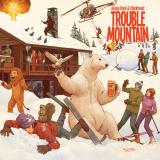
Nearly three decades after first forging one of underground hip-hop's most enduring creative partnerships, Aesop Rock and Blockhead reunite for Trouble Mountain, a new full-length meditation on escape, survival, and the strange terrain of everyday life. Inspired by the nostalgic promise of Poconos resort commercials that blanketed New York airwaves during their childhoods, the album imagines a fictional getaway where the search for reinvention proves just as disorienting as the reality left behind. Arriving as Aesop Rock's 13th studio album, Trouble Mountain finds his writing as inventive as ever—transforming family history, work, memory, and the absurd mechanics of modern life into vivid, deeply human reflections. Blockhead's production is equally vital, pairing the duo's unmistakable chemistry with lean, evolving soundscapes that feel both familiar and newly exploratory.
Together, they revisit the themes that have connected their work since Labor Days: labor, alienation, and the enduring hope that there's somewhere else we'd rather be. Rather than offering an escape, Trouble Mountain asks why we're always searching for one—delivering one of the duo's most imaginative and resonant collaborations to date.
Peach Discs sends their last record of 2026 to the pressing plant in the form of G-Zip's wigg(l)ed-out, tech'd-up, but very much tuned-in "The Mystic Dog" EP.
A new house-focused alias from Stephen Howe – who you may remember from his excellent "Mimesis" EP for Joe Delon's Welt Discos, or his abso-fucking-lutely everywhere remix of Oklou – the G-Zip sound sits in the centre of the Venn diagram between London's tech-house pump and the blissed/blessed relief of deep house.
Hats from early grime instrumentals, interviews in club smoking areas, compilation skit tracks, video essays and jazz interludes – "The Mystic Dog" EP is built from a library of samples that extend far beyond house, tracing a deeply personal line through Stephen's influences and inspirations both past and present. Meticulously sequenced synth lines sit atop tightly woven Digitakt grooves, all mangled together through FX boxes and the Mackie desk that sits at the heart of his Berlin studio.
The EP sets out its stall with "Juiced (Monomania Mix)." Written after Stephen's first visit to Open Ground and inspired by a standout set from Fumiya Tanaka, it pairs stomping, techy drums and phat bass with a restless collage of mono synth patches that donk, squiggle and gurgle throughout.
"Missing Track" leans into contrast as a staccato bassline rubs up against the tighter than tight percussion, before skyscraping synths enter the picture to respond to the rhythm section's call. Flipping the record puts us back into banger territory with "Talking About Drums", as the tuned percussion and heavier-than-heavy subs nail the track to the dancefloor. Until the halfway point that is, when post-dubstep-indebted synths briefly arc across the stereo field – a glistening glow-up amidst the locked-in groove.
Closer "Mystic Dog" showcases Stephen's knack for idiosyncratic melody, as a wonky modular sequence twists and turns across the track while smack-in-the-face drums offer a bashy counterpoint. A classic B2 track if ever there was one, and wicked way to round off the EP.
(Oh, and there's a cheeky alternative mix of "Juiced" as a digi bonus for the hip-house heads).
The Tango N'Vectif: Sessions 2LP contains tracks from the original CD version, the 2001 2CD reissue, remixes and alternate versions of album tracks, music from the Phi*1700 u/v EP on R&S and other exclusives, selected by Mike, completely remastered from DATs by Beau Thomas. µ-Ziq's Tango N'Vectif was released in 1993, a classic year for auteurist electronic music that didn't always fit on the dancefloor. Written by Mike Paradinas in his late teens with some help from Frank Naughton, it still stands up really well today and its influence on electronic music in the decades since is obvious. Across an expanse of ideas, taking influences from early Aphex, Detroit Techno and UK Hardcore, Mike created this spirited, funky, jerry-rigged, lo-fi version of rave; with crunchy drums and a knack for melody that fell somewhere between John Barry and classic TV themes. Without owning a computer, Mike had been writing techno, house and industrial tracks on and off since 1990, playing live keys alongside drum machine rhythms on his 4-track recorder. µ-Ziq started when Mike linked up with Frank who was also writing dance-influenced music, and importantly owned an Atari 1040ST computer with Cubeat software. They pooled their equipment and Mike would travel up to Frank's house a couple of miles away in Wimbledon to record together. By 1992, and after a false start when a proposed EP for Mark Pritchard and Tom Middleton's Evolution label got shelved, Mike had started at Kingston University where he deejayed and met like-minded people including a couple of guys who knew Aphex Twin who was also a student at Kingston too, and they passed Aphex a demo of Mike's material. A few days later Mike got a message from his mum to 'call Aphex Twin' and he gave Mike some advice, and seemed interested in releasing something. So when Frank and his family went on holiday that summer Mike borrowed his Atari and synths and wrote the majority of the Tango N'Vectif album during that 2 weeks. By the end of 1992 a release with Aphex Twin and Grant Wilson Claridge's Rephlex label had been agreed - Aphex had moved to the house in Clissold Crescent where he recorded a lot of his early classic albums and Mike went over to collect his advance, in the form of his very own Atari computer.
Few tracks carry the weight of techno history quite like Dave Clarke’s ‘Wisdom To The Wise’. Created in a damp basement flat in Brighton in the early ’90s, the track was produced on an Atari 1040 and micro-sampler, drenched in dubbed-out reverb and shaped by a young Clarke still honing the sound that would soon make his name.
‘Wisdom To The Wise’ became the centrepiece of Red 2, the second instalment of Clarke’s seminal three-release series. With Red 1 already making serious waves, it was Red 2 that sent interest in Clarke into overdrive. Within a year, the series had helped propel him from underground producer to global techno force, culminating in a major-label album deal and international recognition.
The track’s influence has endured ever since, earning celebrated reinterpretations from techno heavyweights including Robert Hood, Marcel Dettmann, Boys Noize and Steve Rachmad. Now, Spectrum adds another chapter to that lineage with a very special remix from label boss Joris Voorn.
Staying faithful to the spirit and unmistakable character of the original, Voorn brings his own weight to the classic, reinforcing its impact with a heavier kick and the subtle production touches that have become his signature. Originally created as a weapon for his own sets, the remix has been road-tested on dancefloors and is now ready to be unleashed beyond the booth.
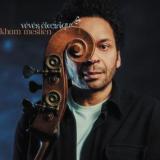
Following the critically acclaimed Fantômes… Futurs, praised by FIP, France Inter, Radio Nova, ARTE and International jazz press, double bassist and composer Kham Meslien returns with Vévés électriques, a deeply immersive second album where memory, landscape and improvisation merge into a singular sonic journey. Joined by Laurent Bardainne, Roger Raspail, Naïssam Jalal and David Neerman, Meslien expands the intimate language of his double bass with subtle loops and organic textures, weaving together echoes of Iceland, the Caribbean and imagined territories. Blending spiritual jazz, contemporary classical influences and ambient soundscapes, Vévés électriques is an invitation to drift beyond geography and into a profoundly personal exploration of emotion, identity and freedom.
Set upon an oil-smooth sea, an immense range of directions opens up before Kham Meslien for “Vévés Électriques”, his second album after “Fantômes… Futurs.”
With only his double bass and bow as vessel and sextant, a distant journey nevertheless begins to take shape. Vibrations and the striking of strings against wood quickly trace lines and winding paths across the surface of the water—so many routes to follow before leaving them behind, allowing the outward journey to become an inward voyage as well.
After an improvisation intended to shed light on the course ahead, isolated lands came into view: the shores of Iceland, the lands of the far north, places cut off from the rest of the world by vast expanses of water. Islands battered by a harsh climate that can only be endured by drawing warmth from deep within oneself.
Then the Caribbean arc appeared. The archipelago, a setting for joyful and unsettling experiences, takes Kham back to a childhood from which the passing years have carried him away. Rather than following the conventional channel of the music of these places, the West Indies emerge through memories whose colors are still vivid.
Through the morning mist, Roger Raspail’s percussion locks into the same frequencies of the groove. Double bass and struck skins then become companions on a road that intersects with Laurent Bardainne’s saxophone. Carrying a dreamlike message, David Neerman’s vibraphone also joins the narrative to write a few chapters of its own, while others are enchanted by the flute and voice of Naïssam Jalal, or struck by the metaphorical rhymes of rapper Rocé.
On the surface, through the themes along which the pieces navigate, landscapes slowly reveal themselves and change shape as the shore draws nearer or recedes. Straying from the marked course and allowing oneself to drift, breaking free from pure acoustic sound by adding loops first played live and then sampled, allows Kham to explore the depths. The depths of the ocean, as well as those of his soul. To enter a world of improvisation that reveals itself even as he explores it. Examined up close, feelings become shells to pick up and hold to one’s ear, so that they can be felt intensely until they take material form.
This sea, which had appeared peaceful, became the stage for a succession of stories and images, which then accumulated to give birth to a larger narrative.
Mercury Prize-shortlisted, MOBO Award-winning drummer, composer and producer Moses Boyd returns with his first album in six years. Since the release of his critically acclaimed album, Dark Matter, Boyd has continued to push at the boundaries of contemporary jazz. Songs For Sinners is a deeply personal body of work that explores the push and pull of faith as something profoundly human – a force capable of comforting, dividing, unsettling and restoring in equal measure. Across an ambitious, vocal-led collection that fuses gospel, jazz, soundsystem culture, Caribbean rhythms, 808s and soaring choir harmonies, Boyd expands the language of contemporary jazz into something entirely his own. It’s a record that draws from the church he grew up in, the London soundsystem culture that shaped him, and the freedom of improvisation, asking what sacred music can sound like when it’s no longer confined by convention.
Mercury Prize-shortlisted, MOBO Award-winning drummer, composer and producer Moses Boyd returns with his first album in six years. Since the release of his critically acclaimed album, Dark Matter, Boyd has continued to push at the boundaries of contemporary jazz. Songs For Sinners is a deeply personal body of work that explores the push and pull of faith as something profoundly human – a force capable of comforting, dividing, unsettling and restoring in equal measure. Across an ambitious, vocal-led collection that fuses gospel, jazz, soundsystem culture, Caribbean rhythms, 808s and soaring choir harmonies, Boyd expands the language of contemporary jazz into something entirely his own. It’s a record that draws from the church he grew up in, the London soundsystem culture that shaped him, and the freedom of improvisation, asking what sacred music can sound like when it’s no longer confined by convention.
Across To Remind Myself I Have Lived, aquatic sounds drift through hazy electronics and lush bedroom textures, before giving way to harsher, more industrial British landscapes. Voices appear and disappear. Loops seem to circle memories rather than rhythms. Guitar fragments become dream sequences. Domestic spaces open onto something colder and more distant.
The new album by London-based Michele Tellarini under the Catholic Block moniker gathers works made across five years, moving between composition, improvisation and a more instinctive form of sound collage. Known for his work with concrete punks Qlowski (Feel It Records/Maple Death) and goth-punks Secrecy (La Vida Es Un Mus), Tellarini approaches this material without the conventions of a traditional song cycle, allowing disparate pieces to find their own connections.
There is something strangely timeless in these works: a quality shared with music that seems to exist slightly outside its own moment, from the intimate, confidential organic realm of Mount Eerie to Bruce Gilbert's more abstract electronic and ambient experiments or the haunting digital world of Holly Herndon. To Remind Myself I Have Lived belongs to that same uncertain space, music that feels both deeply tied to the circumstances of its making and somehow detached from them, music for the lonely that shines with crepuscular clarity.
Maryos Syawish (b. 1993, Iraq) is a Chaldean Iraqi artist and musician based in Naarm/Melbourne working fluidly across visual art, sound and curatorial practice. His creative work spans more than 15 years and is defined by a lawless, unorthodox approach that resists traditional genre boundaries.
His Research Records debut is an introspective and meandering exploration of place, legacy and personal history. It’s a marked change of pace for the Melbourne-based producer, who has carved his name into the Australian underground as one half of Sleep D and Butter Sessions Records, but his first full length under his own name feels like an extension rather than a departure from what those attuned to his productions will already know.
Qurmami – which translates to “my roots” – functions as an audio collage that bridges the artist’s dual experiences of growing up in Australia and his heritage as a Chaldean Assyrian. Developed over the course of eight years, the record is anchored by field recordings captured during a pivotal trip to Iraq which are sewn into lush ambient electronics over two sides.
Over 42 minutes the production swells and grows; a delicate and mind-transporting beginning gives way to a more rhythmic, body-moving tail end, drawing subtle influences from dub, ambient, and traditional music from the Northern Iraq region along the way. Syawish’s contemporary, friend and fellow Research artist Khaled Kurbeh features, as does Melbourne-based cellist Abby Sundborn, while Sarah Ujmaia – Maryos’ cousin – contributed the album art and a familial through line that rounds out a cohesive, evocative exploration of identity, memory and the spaces that shape who we are.
Eight years ago, a deep tragedy struck the West Coast and global electronic music world when Navid Izadi and his mother, Floria Hakimi, died in a plane crash in Southern California. Navid was a true rising star, as anyone who heard his earlier works or felt his magnetic stage presence can attest to, and we all mourn the loss of his creative gifts and one of a kind spirit. In the years that followed, through the diligent efforts of his cousin, Lily, and brother, Aden, Navid's destroyed laptop and hard drive were miraculously restored, recovering crucial files for his work-in-progress debut album, Ayande. Those files were then placed in the adept and careful hands of fellow studio maestro Dave Aju, to complete Navid's mission, along with a gathering of musical family collaborations throughout the wondrous LP
"Birds Of Prey" kicks things off, setting the scene with the deep, spacey, soulful feels Navid was well known for. It includes live drums by John Bryars and additional production work by Tavish DJ & Dave Aju (aka DX3) that send the otherworldly vocoder and arpeggios into the next dimension. Keeping the interstellar vibe high, Diagnostics/Escape" sees Navid take the Trans-LA Express electro flex a step further with cyborg vocals waxing love poetic, leading to an entrancing second movement to finish as an Escape, indeed.
"Andromeda" follows with excellent updated production work by Charles Levine of Soul Clap/Crew Love fame, along with harp bliss from Caroline Campbell, vocal chorus duties by Ayako, Jackson Englund, and Shuggie Quezada, with some bonus piano plot twists and turns from Rodney of Elbow Grease.
"Islands" is an irresistible West Coast boogie jam of the highest order, with the gorgeous lead vocals of Angelica Bess blessing the floor-filling piece perfectly.
"Chica Go,” as the title implies with a wink, functions as a beautiful homage to the windy city, which tactfully ropes in not just deep house flavor but also hip hop via a couple of witty Nav freestyle verses, as well as Chicago blues and jazz motifs via harmonica and trumpet stylings by Matias Tasley and Greg Paulus, respectively.
"IMX" acts as an excellent mid-tempo interlude piece, with bonus hypnotic production by former studio mate and fellow Cali to Berlin brethren Lando Roy, before "Keep It Movin" sends us through the stratosphere complete with a trippy narrative intro by Nima Barsarani and soaring build-up to bridge vox by long time collaborator Sammy D of Pillowtalk. The family collabs continue at scorching temps on "Space Race" where Jesse Rennix lays down beyond heavenly vocal layers, and other other studio sistren Dina Moursi then drops an emotive posthumous duet on "Fingertips" with Paulus again tying lovely horn ribbons in.
"Stardust" launches straight into the cosmos with crisp co-production work by C-Love and appropriately free vocal finesse by Sisters Of Z, before Navid's brother Aden Hakimi offers up a stylized lyrical intro to the new jack-shouting production-prowess touting "Mm Mm,” followed by the grand finale "Never" which flows to a finish lushly with sultry Navid vox, classy harp touches by Campbell again, along with guitar by Chase Aldridge, E-Bow by Cole Odin, and very special guest flute blessings by King George of Sade fame.
Executive produced and mixed by Dave Aju at the Point Winona Sound Labs studio in LA, mastered by Thomas Baanks of Psychemagick, with album cover artwork hand-bedazzled by Sundeep Grewal and package design by Lando Roy,
Ayande (meaning Future in Farsi) is equal parts an incredible debut album and a true family affair tribute to one of the most inspired creative souls we've ever known and so dearly miss. It is dedicated in full to his beloved son, Tesla.
__________
Early DJ/Radio support feedback:
Sandro Bianchi:
"What magic to have this gem, it's like a miracle. Love the whole release, hard to pick a fav. He's still with us thru his music! Honored to receive this one!! Eternal!"
Horse Meat Disco:
“BEAUTIFUL”
Masha Mar:
"incredible from start to finish. I just played islands on NTS yesterday, will be listening to and playing this album forever. Navid is so missed and his legacy and music lives on
Ashley Beedle:
"Downloaded for forthcoming Mixcloud mix."
Brett Johnson:
"Wow, this is massive. Sadly i never had the pleasure of knowing Navid but remember his passing. So far everything I've heard sounds great, looking forward to absorbing the rest. Thanks and RIP."
Sean Innit/Midnight Riot:
"Wonderul to see these tracks see ethe light of day against the odds . Really feeling the slower jam IMX here Chica Go and Andromeda are really heavy too. I'll be playing some oif these out and giving them the attention they deserve. Thank you for Sending."
Rainer Trueby:
"i just love everything that Navid touched musically. His talent was very special. I really wish he would be still with us. This is great. Thanks for revealing & retouching this. May his legacy live on xxx"
Ross Allen/NTS:
"Lots of great tracks here Never, Birds of Prey, Diagnostic/Escape, Andromeda, Chica Go - IMX - Fingertips - Stardust - All have something for me.
So sad he's not here. What a great record"
Jaye Ward/Netil Radio:
"wow what a tribute to lost talent!! beautiful set of super deepness. it's an honour to recieve. thx x"
214/Klakson:
"This is a beautifully finalized album that I'm glad was completed"
David Lopez/KZSU
"Wow, the talent really shines through on this moving release. Especially like the cerebral ones."
Jensen Interceptor:
"Love at first listen! thank you for sharing and congratulations on a very fab album
Tottie/SOS:
"Rest in peace to a legend, so nice to see the music genius out in the world."
Mr Beatnick/NTS:
"Really like diagnostics escape, birds of prey and andromeda in particular!"
James Zabiela:
"What a wonderful body of work! Big love x"
BASHKKA releases CORE, her new four-track EP on fabric Originals, arriving 6th November. The project marks her first original release since her breakthrough 2023 EP Maktub, introducing a stripped-back, old-school electro sound that draws together the different influences at the heart of her music.
At the centre of CORE is “Surrender”, a track that reflects BASHKKA’s background in Ballroom culture alongside her German roots. Soulful vocal samples sit against crisp electro rhythms, creating a contrast between infectious club energies. Across the four tracks, the EP moves through hypnotic and deep rhythms, with soft vocal samples woven into stripped-back productions creating a sensual and immersive atmosphere throughout the EP.
CORE captures BASHKKA’s ability to connect different cultural and musical influences through a distinctly dancefloor-focused sound. Drawing on the rawness of classic electro while retaining the hypnotic quality that runs through her sets, the EP offers a deeper look into the sound and identity she has continued to develop since Maktub.
With CORE, BASHKKA enters a new chapter of her production career, bringing together her influences into a focused project that feels both rooted in her background and forward-looking in its approach to electronic music.
Next year the iconic anthem Cafe Del Mar will celebrate its 30th anniversary, a landmark that will be celebrated with a series of brand new remixes alongside the finest existing remixes in specially remastered versions.
Launching the series of vinyl releases in September is a remastered vinyl-only release of the original mix, as well as the best-known version of this classic track, the iconic Three ‘N One Remix.
Nearly 30 years ago, Paul M aka DJ Kid Paul recording as Energy 52 unleashed a record onto an unsuspecting public that would go on to define club culture for an entire generation of dance music enthusiasts. Named as an homage to the legendary Ibiza sunset spot, Café Del Mar broke down boundaries between the underground and
the mainstream, charting in the UK singles charts on three separate occasions and named as the “best tune ever” by Mixmag at the start of the new millennium. In terms of cultural and emotional impact in dance music, it’s hard to find a record that comes close.
Café Del Mar has come to represent the most euphoric and hedonistic pleasures of dancefloors - in Ibiza and all around the world - and has been remixed by some of the biggest names in the industry. Now, 30 years after its original release, Superstition Records will be putting out a new series of releases, with brand new remixes as well as remastered versions of some of the many remixes from across the last three decades. The vinyl-only remastered version of the original and Three ‘N One mixes will launch the series, with further details about the rest of the series announced in the coming weeks.
In 2021 Paul Van Dyk’s Café Del Mar remixes launched a series of vinyl and digital re-issues on the Superstition Records imprint after an almost 20 years hiatus. From 1993 until 2003 Superstition Records was a groundbreaking Techno, Tech-House and Trance Label and released some of the biggest and most revered records of the early German electronic scene.
Across time and beyond genre, this is an audio component test record that continues to earn universal acclaim. Drop the needle and unleash the fateful grooves etched into its tracks.
The rediscovery of this album—originally produced as a test record for high-end audio systems—stands as one of the great rewards brought about by the rare groove movement. The project was led by the visionary Katsunori Ishida, who would later become renowned as a producer, composer, and arranger for numerous television and film soundtracks. Gathering an exceptional line up of musicians including Shuichi “Ponta” Murakami, Akira Okazawa, Mikio Masuda, Kenji Ohmura, and Tantan, Ishida crafted a sound that is both tight and sophisticated.
Tracks such as “Cool Head” and “Son Of Pin Head” showcase grooves that are at times as powerful as a hammer blow, and at others as thrilling as a rushing torrent. The musicianship, precision, and dynamic energy throughout are simply outstanding. Today, thanks to its remarkable level of craftsmanship and commanding presence, this album is recognized as a true masterpiece, admired and celebrated far beyond the boundaries of any single genre.
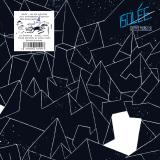
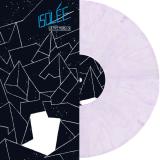
Originally released in 2005 on Playhouse, isolée's second album we are monster received widespread critical acclaim and was featured in numerous year-end lists, including Pitchfork's Best Albums of 2005, where it is praised for breathing "so carefree, years from now crits might accuse it of sounding timeless-- maybe even of being so." (Nick Sylvester in his Pitchfork review in 2005)
While closely associated with the minimal and microhouse movement of the mid-2000s, the sound on we are monster resists categorization; its musical vocabulary is too expansive to be confined to a single genre. Tracks such as schrapnell, mädchen mit hase, my hi-matic and enrico avoid many of the production conventions that define its period, allowing the record to retain a freshness that continues to resonate with listeners and music producers alike.
We are monster proved to be significant in more ways than one. Alongside its musical legacy, the album introduced the first record sleeve by Stefan Marx, whose artwork would become a familiar presence across countless releases on influential labels like Smallville or Mule Musiq, but also fashion labels like Comme des Garçons and many art galleries in the years that followed.
This anniversary edition revisits an album whose influence extends well beyond its original context!
Y-3, the pioneering sports-fashion collaboration between adidas and Yohji Yamamoto, has for three decades dwelled calmly within the ''tensions of existence''. In conceiving the brand's long-awaited return to runway format at Paris Fashion Week, these codes laid the groundwork leading up to the Spring/Summer 2025 season. Whilst the focus for runway is traditionally placed on garments, models, styling, environment, and the pageantry in between, it was crucial that music play an integral role in the conversation. Three seasons later, sound has informed creative direction from the very earliest phases of ideation. Commissioning all-original compositions has become a natural part of this ideology. The return to runway has invited the opportunity to define a new sonic palette for the brand, and beyond that, to usher in a new era of sound for Y-3 that echoes across music & culture. Following this ethos, and with a mandate to support obscure talent, Montreal duo Solitary Dancer have emerged as the first collaborators in shaping the intimate brand architecture of noise & feeling. With a body of work now spanning over a trilogy of seasons, the genre-defying Y-3000 imprint provides an outlet to disseminate & recontexualize the original compositions beyond the traditional runway. The label embodies Y-3's enduring commitment to explore innovation within opposing cultural forces. The works, originally released on Y-3000 as a series of white labels, are now being featured as a 6x 12'' vinyl compilation. Designed by Trevor Jackson and limited to just 99 examples, the recordings will also be made available both digitally and on streaming services for the very first time.
Revelling in adventurous, malleable synthesis and a strong melodic instinct, long-standing techno heavyweight Oscar Mulero brings his Trolley Route alias to Dekmantel. Across four rush-inducing cuts of studio exploration the Spanish veteran showcases a lighter side to his muse without sacrificing maximal dancefloor impact.
Oscar Mulero first debuted Trolley Route back in the early 00s through albums and EPs for Pure Plastic, Minuendo and others, offering a more playful strain of machine music to contrast with the steely output under his own name. Embracing dub textures and Detroit-coded synth leads, the recently-revived alias has become a haven for the looser styles that spill out of his studio. It just so happens these outliers are as crucial as any of Mulero's primary club smashers.
From the swampy chord sequence that dominates 'New Visual Order' to the meaty sub-bass and delay-soaked synth sweeps of 'Relativity Of The Vision', the whole EP is spilling over with madcap charm and a casual boss-level quality that can only come from a true legend letting their hair down.
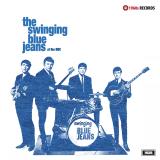
This album presents 22 live-in-the-studio BBC recordings from 1963–1965 that have never been released before. It includes all the hits and misses from that period, along with three tracks that were never recorded for EMI: Chuck Berry’s Johnny B. Goode, Jagger and Richards’ So Much In Love, and the band’s own composition Falling In Love Again—previously undocumented. For fans of The Swinging Blue Jeans, this long-awaited release is a must-have.
Sleeve notes by Peter Checksfield.
¡NO PASARAN! is the extension to Extrawelt's DYSTORTION, from brooding tension to playful relief, the album took listeners on a six-year-crafted exploration. Their next EP picks up where this epic chapter left off and is clearly related. It's a hypnotic dive into shadow and dream, darkness and melancholy with subtle flashes of light.
The title track of the EP, already known from the album (D1 - Extrawelt - ¡No Pasaran!) carries a commanding presence, pulses with a rolling, insistent bassline that anchors shifting rhythmic currents and evolving sonic layers. Between tension and release, shadows and melody, it's a track that moves like a living entity.
Arctic Dead Run hits like a surge of raw energy. Acid lines roll relentlessly, building tension that feels alive. Then a melody sneaks in - soft, almost fragile - cutting through the intensity, until hi-hats erupt and the groove snaps into full focus. Maximal yet controlled, every element finds its place.
Clipping Me Softly dissolves the pressure with a dark, playful groove. Precise rhythms meet spacious pads, opening into a dreamlike state where night slowly gives way to warmth and light.
A focused and uncompromising continuation of Extrawelt's sonic language: Dense grooves, acid pressure, and dreamlike relief collide in a release built for deep listening and late-night floors.
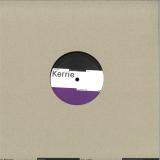
Irish techno producer, Kerrie, returns to Tresor Records on the 24th of October 2025 with her second EP for the label. Entitled Echoes Of The Live Wire, this collection captures the beauty and essence of live performance; a moment in time never to be repeated.
This fixing of time is also given a different meaning as the EP explores the ways in which intense moments in our lives, both joyful and painful, are crystallised into memory, both beautiful and haunting, lingering long after they've passed.
Layered meanings are employed throughout as Kerrie explores this idea: Live Wire draws connections between circuit boards and the human nervous system, whilst also toying with multiple meanings of the word “live”.
Echoes Of channels classic Detroit techno influences, resonating with the distant hum of memories that refuse to fade, while Moment To Memory is a beatless, floating piece which slowly builds to an ecstatic crescendo.
Digital bonus tracks Recircuit and Reclaim add further depth to the core metaphor: the former a driving, minimal yet building techno work-out, and the latter a cathartic and emotionally open track that delivers intensity with vulnerability.
Echoes Of The Live Wire reflects on memory as a complex, dual-sided force where joy and pain coexist with equal weight. Her creative process becomes a form of meditation and emotional processing, using machines to process, reflect, and let go. The result is a body of work that loops back on itself, telling a story of fleeting moments and their lasting emotional imprints.
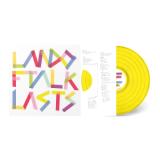
Land of Talk is still here. That wasn’t always a guarantee. Over the multi-faceted twenty year history of their project, Lizzie Powell has drifted from and back to music, always interrogating their role as an artist. In the time since 2023’s Performances, they found themselves utterly worn down by the vicissitudes of the music industry and wracked with worry around their aging parents. Yet the music didn’t stop: Powell heard songs in traffic and in birds chirping, in their downstairs neighbor’s daily prayers and in the babble of children on the street. Melodies slowly cohered over time. “Life can become so unbearable, and music is where I go to metabolize it,” they explain. “I know the music was the only thing that was going to help me.” Soon Powell reemerged with the sixth Land of Talk album, LASTS.
LASTS is full of double meanings — both resilience and finality, acting as a noun and a verb. Though LASTS is haunted by crises including climate collapse, political upheaval, and genocide, the mangitude of global turmoil led Powell towards smaller, humane depictions of suffering and grief. As both their parents became ill, Powell reflected on the last time a person might walk, might talk to a loved one. Yet watching their parents near the other side of life’s arc also made Powell consider all they had survived across their own decades on this earth, their new songs channeling both gratitude and rage. LASTS became a phrase, honoring Land of Talk’s circuitous route and all Powell’s reckoned with through the years. “I think of this record as a love letter to life,” they say.
The end result is an album both lean and winding, allowing Powell’s words and melodies to take centerstage, uncrowded in visceral, shot-no-chaser arrangements. LASTS jumps right in with “Broken Tongue,” a wiry track built on thrumming electric guitar and ghostly synths as Powell rails against the lack of justice for victims of abuse. The trio’s interplay is readily evident in “Saffron” and “4:44,” two earworm songs that also allow themselves to unspool into extended instrumental codas. Early in the record, there are seething tracks like “Dogs” — “Just your basic instinct / Even dogs know better,” Powell growls in the chorus, before the song quiets into a plaintive plea of “Leave us alone now” — and later there are more vulnerable, wandering moments. In “Projections” and “Cedars,” Powell ventures deep into their head, inviting their co-conspirators and listeners alike to follow the songs wherever they meander.
Veronica Everheart has just announced that her new project Lighter in the Morning (3/2) will be out on November 13th via Pack. Records. The news arrives alongside her link-up with Mumbai-raised electronic artist the sound chalk makes for their new collaborative single, “2222222222222222 + Climbing”. A colorful, club-ready take on “22 & Climbing” from Everheart’s Lighter in the Morning (2/2) EP, the track is also accompanied by an animated music video for the original song, which was made with Source Filmmaker software from the gaming developer Valve using models from their game series Half-Life.
Hailing from Phoenix, Arizona, Veronica Everheart writes and produces all of her own music alongside her creative partner, Justin "Juni" Neugeboren, and has built a cult following for a distinct sound that pulls from indie rock, electronic, and folk. Released in May, Lighter in the Morning (2/2) was led by singles "NO LOLITA SHIT", "Unknowable Distance", and "12/21” and serves as the sister tape to Everheart’s 2024 EP, Lighter in the Morning (1/2). Now, she’s gearing up to release Lighter in the Morning (3/2) (Deluxe Edition), curating a slate of leftfield producers that includes ideasforconversations, nikki nair, atlgrandma, E_DEATH, and Oskie (alongside the sound chalk makes) to craft remixes for the project.
With “Homura”, Sable Hills take everything they have built over the years and push it into new territory.
Since winning the Metal Battle at Wacken Open Air in 2022 as the first Japanese band in the competition’s history to claim the grand prize, Sable Hills have continued to make their mark on the international metal scene. The victory led to a deal with Germany’s renowned label Arising Empire, followed by their global debut with their third album “Odyssey” in 2024. In 2025, their single “Namu”, incorporating traditional Buddhist chanting, became a global viral hit, surpassing 3 million streams on Spotify and 5.4 million views on YouTube, while live clips posted to Instagram and TikTok collectively exceeded 30 million views.
Rooted in the band’s signature blend of metalcore and melodic death metal, “Homura” expands that foundation with distinctly Japanese elements, from traditional instruments and melodies to the use of Japanese language and Buddhist chants. The result is an album that feels both unmistakably Sable Hills and unlike anything they have created before.
The title “Homura” comes from an old Japanese word meaning “flame.” It represents the intensity and aggression at the heart of metal, reimagined through a distinctly Japanese aesthetic. Throughout the album, heaviness and melody collide with the atmosphere and beauty of traditional Japan, creating a sound that is both fierce and deeply rooted in the band’s identity.
With its fusion of crushing riffs, melodic death metal intensity, traditional Japanese instrumentation, and powerful vocal performances, “Homura” marks a new chapter for Sable Hills, embracing their roots, building on their international rise, and setting the band on a path they have never taken before.
When Index moves, it’s in lockstep, as a single, indivisible unit. Alan Creedon and Alex Lichtenauer (both ex-Control Top) started the project in the summer of 2025, and it quickly became clear that its sound would be an outgrowth of their close friendship. Eschewing the densely orchestrated compositions of their previous band, Index would instead focus on sweaty, visceral physicality, with Creedon’s guitar intuitively latched to Lichtenauer’s drum kit, navigating corridors of tricky rhythm as one. Creedon and Lichtenauer recorded Vis Inertiae in NYC with acclaimed producer Arthur Rizk (Power Trip, Show Me The Body). Despite a litany of freak injuries that befell Lichtenauer before and during the band’s studio time, they say it was the best experience they ever had in a recording session, and Creedon concurs. Rizk was brought into the process early on, when the band played him some bare-bones demos that impressed him, and he was critical in helping ferry the songs to their final forms.
n resurrecting the band Krill—declared dead over 10 years ago—Jonah Furman considered the turritopsis nutricula: the “immortal jellyfish” that reverts to juvenile form instead of dying. “I was always afraid of coming home,” he says. “But home is inescapable.” Now living in the same Chicago suburb he grew up in, Furman ponders the passage of time on Secret Language, a nostalgic and cerebral exploration of family, fatherhood, and fated love.
From 2010 to 2015, Krill recorded three LPs and two EPs, growing into a cult project revered for its complex, rapturous compositions. Anxious, anthemic, mathy, propulsive, they were beloved by Frankie Cosmos, Girlpool, Horse Jumper of Love, and countless others. Personal lives took priority and brought the project to an official close, save for two reunion shows and a 2020 album under the name Knot, but that's retroactively a Krill album, “because it's easier that way.”
The project was revived “on a whim” as Furman puts it: “Theo from Ovlov asked if Krill wanted to open a Chicago show. Then I started writing new stuff.” He recruited Krill’s longtime drummer Ian Becker who, too, had just moved back to town. Both had known guitarist Andrew Clinkman (also of Spirits Having Fun and Moontype) during their collective years in Boston and growing up in Chicagoland, and soon he joined the fold. On Secret Language, the trio tap into their reclaimed city’s famed music community, drawing inspiration from current locals the same way Krill were inspired by their Boston contemporaries like Pile and Speedy Ortiz instead of Pixies or Mission of Burma.
On Secret Language, home can be anything: a place, a person, a feeling. But Krill is “very much” a Chicago band now; a new beginning where it all began.
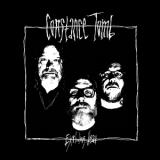
Tony Reed is undoubtedly one of those artists whom fans of “heavy music” have, at least unknowingly, encountered on stage or on their turntables at some point. Bands like Pentagram, Mos Generator, Hot Spring Water, and the so-called supergroup Big Scenic Nowhere are just a small part of his discography, which he continues to expand as a producer and mixer.
CONSTANCE TOMB was Tony Reed’s first band, which he founded at age 19 and which was heavily influenced by the gothic movement of the early ’80s. There are recordings online from when they made “boombox recordings” or, later, when he recorded everything “hi-fi” on his own in the garage with just a microphone, preserving it all for posterity on cassettes. You can also find several solo cover versions released under the band’s name. It was a labor of love that Tony Reed never let go of, but there was never a real band that toured or released an album—until now!
Now Tony has breathed new life into his childhood love, CONSTANCE TOMB, and fused his fondness for dark ’80s bands with his heavy metal past. Bands like Southern Cult, Bauhaus, The Cure, Bowie, as well as Black Sabbath and Thin Lizzy have shaped his musical tastes. Now, a mix of old and new songs is being infused with fresh energy, reviving a solo project that had taken on a slightly artificial feel.
With Bo McConaghie on bass and Christian Roney on drums, the band has already played its first concerts in the northwestern United States to find their sound as a group. Joint rehe
Stitched together from organic percussion, field recordings, and textures gathered from across the globe, Vikmatic’s most recent TSoNYC EP, co-produced with label head Danilo Braca, plays like a love letter to New York City, penned in the language of friends and family scattered across its boroughs. Rooted primarily in house, jazz, and Balearic sounds, but pulling just as freely from the sounds of Brazil, Africa, and India, Neighbors moves to the rhythm of a city swept up in the collective pulse of its most lively season.
Playful and minimalistic, “W4 Street” is a jazzy house track that adds a scintillatingly smooth, beachy flair to a nostalgic New York energy for a combination that leaves us unsure of what is improvised and what has been rehearsed to absolute mastery.
The EP’s second track, “Flushing”, represents a dramatic departure from the airiness of the previous one. Haunting and mysterious, with a leaden kick and a capricious synth, there is no question that we are finding ourselves in an entirely different neighborhood.
Early in the track, “Sunset Park” transforms from a deep rumbling into a catchy warm-weather groove with satiny synth layers, textured rhythm, and unhurried guitar and synth solos, evoking a sense of pure ease and beach season contentment.
Sultry and dream-like, “Harlem River Drive” is the ideal send-off for Neighbors, an album firmly situated in the living memory of an iconic urban summer. Warm and bittersweet, with woodwinds comprising the heart of its instrumentation, it’s not hard to picture a sunset in Upper Manhattan.
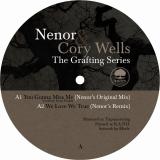
Roots 015 delivers 4 tracks of audio joy with Nenor (Classic, Heist, Quintessentials ) and Cory Wells (Robsoul, Guesthouse, Moulton) delivering the goods! "You Gonna Miss Me" is a primetime soulful vocal track that is both heartfelt and timeless. "We Love We True" is more of a dubby track that will sit perfect late or early. This is an ep that will be played multiple times in a night, just the way we like it
Fracture dips back into the rich Astrophonica back catalogue for another slowed-down, Chopped & Screwed mixtape built from all-new, exclusive edits and remixes. A reverb-drenched and bass-heavy exploration of ambience, texture and sonic disintegration, taking cues from the dubwise experiments of King Tubby, the ambient soundscapes of Brian Eno and, of course, DJ Screw.
What started as an ode to DJ Screw, Slow Astro has become an alternative history of Astrophonica, where existing music is dismantled, recontextualised and reconstructed into something entirely new. The diversity of the Astrophonica catalogue draws on organic, breakbeat-driven Jungle, frantic and scatty Footwork, synth-heavy and dystopian Electro, head-nodding Hip-Hop, silky Garage and other experimental forms of electronic music. Originally created across different eras, tempos and musical contexts, these sounds are already woven together like a tapestry of taste and curation, but Slow Astro brings them together in a new environment and recasts them in an entirely different light. Slowing all this music down to the same tempo, drenching it in reverb and cranking up the saturation reveals unexpected relationships, shared textures and hidden musical connections – a place where Client_03 and Philip D Kick share the same tranquilised groove while Sully and Lewis James float together in a watery, weightless limbo.
Slow Astro drills deep into Fracture’s love and knowledge of the catalogue for a world-building flipmode performance, built on meticulously pulled-apart and stitched-back-together edits that go way beyond the scope of a standard mixtape. It's put together as a collage-meets-live-dub experiment, making use of delay throws that spiral back on themselves, reverb washes that extend breakdowns far beyond their original intentions and the iconic crunch of a Mackie 1604 mixing desk. The result is immersive, psychedelic and transportive. Slow Astro is a mood, Slow Astro is its own thing. So sit down, slow down and turn it up.
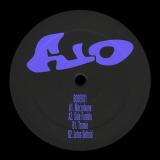
Berlin-based friends and cult DJs and producers Mor Elian and Gramrcy hook up here for A-Lo, a new collaborative project that comes after more than a decade in the game. Both have their own distinct approaches but fuse them here into "a fluid, hybrid system of production." 'Marzelvane' opens with drums that move you while also suspending you in the moment on shimming bass. 'Side Fumble' is glitchy, minimal electronic music with weighty bass buried way down low. There is a more electro-leaning kinetic energy to 'Tremie' as well as plenty of hi-fidelity details, while 'Lotus Deltoid' shuts down with loose jazzy cymbals and slow, dusty broken beats for a more abstract trip.
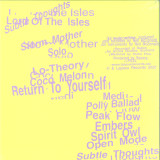
Neil McDonald's love of the outdoors is a constant feature in his music, hence his Lord Of The Isles moniker, a direct reference to the Highlands and islands of his native Scotland.
His vivid, effervescent and blissfully cinematic sound paints a soundtrack to unmade films, building imaginary worlds inspired by his childhood passion for science fiction. It is therefore no coincidence that the closing track 'Subtle Thoughts' samples the inimitable voice of Carl Sagan and is also the name of his forthcoming album on Lapsus Records.
Subtle Thoughts' is an album of sumptuous melancholic electronica that, like all his previous works, avoids being pigeonholed. In it we find ambient and IDM, but also breaks and down-tempo 4x4 beats with deep ruminations, and even passages akin to new age and Balearic. In Neil's own words, the real concept behind 'Subtle
Thoughts' is "The spaces in between. Listening to the quiet voices. Freedom of expression and being open. It also contains my hopes and fears for the future of our world, but mainly hope and love".
Subtle Thoughts' will be released on 8 December with two advance singles: 'Open Mode' accompanying the album launch on 7 October; followed by 'Return to Yourself' on 4 November.
A year on from SickElixir - the acclaimed "debut" album that saw him hailed by Pitchfork, The Guardian and The Fader as one of British electronic music's most singular voices - Blawan is back with ‘Gi Mi Keys Back / Auto Fake’. Written in a new city, in a new home studio, the single finds Blawan rediscovering a sense of freedom and leaning back into dancefloor-driven territory after the more experimental, interior world of SickElixir. In signature Blawan style, Gi Mi Keys Back’s warped production constantly wrongfoots you, with its structure refusing to sit still, mutating underneath a vocal that pulls you into a trance-like state.
Tara Cunningham’s guitar glitch miniatures draw patterns in negative space on new mini-album Warm Ground. Operating predominantly within improvisational and experimental music, guitarist Tara Cunningham has developed a discrete sonic language that reveals the full textural and timbral range of her instrument.
Marking a new chapter for Cunningham that builds on her solo debut, Almost – Not Exactly, released on Non Classical in 2025, Warm Ground unfolds across seven compelling instrumental dialogues - each a conversation of rhythms and found sounds, syncopated and juxtaposed, open to encounter.
Implied by the title of first single ‘Following a Thought’, Cunningham weaves an exploratory melody into the spaces between field recordings. At once introspective and highly relational, each track ushers the listener into a world of different scales, seeking beauty and meaning in the everyday, from the discrete mechanisms of ‘Fridgelight’ to the delicately unhinged organism of ‘Flying Ant Day’.
Cunningham finds a natural home on Odda’s roster of artists sensitive to the details of their materials and surroundings, finding kinship alongside the intimate songcraft of Kirk Barley and Fohn in the gaps between composition and improvisation.
In 2026 she released a self-titled LP as The Sleeves with Jack Cooper, performing at Cafe Oto ahead of a US tour in the autumn. She continues to pursue a range of projects as collaborator and side person with Modern Nature, Sebastian Rochford, Red Snapper, Liam Noble, Laura Jurd and Caius Williams.
Mohammad Syfkhan is back with his second album for Nyahh Records. This collection of new recordings marks a hug milestone in Mohammad’s career as it’s the first album that features all original compositions. And with a full band! We had the great help of Syrian Cellist and composer Naseem Alatrash to help with the string arrangements. The resulting record is a beautiful journey into a timeless Middle Eastern and North African sound akin to the likes of Fairuz or Umm Kulthum with a fast Kurdish Dabke tempo.
I Love You Ireland is an incredibly personal album for Mohammad. The title alone, much like his debut ‘I Am Kurdish’ is as personal as it it’s political. To express such love for a place in music is saying, thank you for making me and family feel safe. Thank you for taking us in. A stand out track titled ‘Ah Yu Donia’ is Mohammad’s first real public moment of grieving for the loss of his son at the murderous hands of Isis. In this song he asks God why he was taken. Trying to figure the sense in the actions of fundamentalists. The strings sections are sad, but not morbid. Acting like a release or companion to the horrific reality of losing a child.
‘Al Huriya’ is Mohammad’s first attempt at using an Irish rhythm known as a Reel, as appose to his usual Middle Eastern rhythms. Again, this is a beautiful way for Mohammad to give thanks to all the musicians and supportive people his has met in Ireland since 2011.
WHO IS MOHAMMAD SYFKHAN
Mohammad Syfkhan is a Kurdish/Syrian Singer and Bouzouki player. He began
playing music in 1980 while he was in college studying nursing. When he got
his degree in 1983, Mohammad moved to the city of Raqqa, Syria where he
began working as a professional singer and started his own band, The Al-Rabie
Band which played concerts, parties, weddings and festivals all over Syria. The
Al-Rabie Band were a much sought-after group. Their live sets included Kurdish, Arabic, Turkish and some Western songs as well as Mohammad’s own original material.
Mohammad continued to play with his band while also working as a surgical
nurse until the war broke out in 2011. This unfortunately brought tragedy to
Mohammad’s family when one of his sons was killed by Isis thus threatening
the lives of the rest of his family. His family had no choice but to leave their
home and seek safety in Europe. Three of Mohammad’s sons were resettled in
Germany while Mohammad, his young daughter and wife were taken in by
Ireland. Mohammad has spoken at length of his confusion and despair with
fundamentalists and how their message is a far cry from the teachings of love
and understanding that he considers the true message of Islam.
Critics have claimed that the internet is flattening and homogenizing subculture, but whichever internet they're referring to does not include Locked Club. Watch a video of one of their sets and you'll quickly realize that something very different-and extremely unhinged-is going on in the post-Soviet rave scene before the FOMO punches you in the face, ceaselessly blistering industrial electro and techno punk from the irreverent, exhilaratingly wild underground of the other internet.
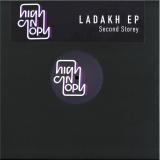
Second Storey launches new record label High Canopy - with Ladakh EP, 20 years since the artist's first vinyl release. Storey's working template has always been to take on the observations of his inner and outer world experiences, folding them into his expertise as a highly skilled drummer, knack for dream-scape sound design and love of rave and soundsystem culture. High Canopy promises to be an environment that platforms full artistic freedom and homes the mechanised, cerebral dancefloor workouts of Second Storey's studio life alongside his deeper, more experimental terrain. The EP's first stop is 'Blue Eye' named after the spring source of the Bistrice river in Albania. Crystal-clear sound design that echoes the flow of this natural water and sits alongside softly distorted low end. Contrasting 'Urban Hermit' was written in Berlin, during a bout of cabin fever and is a heavy case of gnarled up, spat out, paranoid machine funk. 'Post Columbia' - recorded after an eye opening trip to Bogota- then shifts the tone for the B side into more heady melodic territory with luminous, floating synths evolving throughout the track. ' ABC Conjecture' builds an intense atmosphere as it crawls and morphs across growling, distorted bass with a creeping shuffle of layered elements building overhead. Title track 'Ladakh' completes the EP, inspired by the remote town in the Indian Himalayas on the border of Tibet, AKA snow leopard country. It takes on a special and expansive ambient quality of this deeply precious and spiritual mountain land.
Dajusch brings his distinctive sound to Backspin Records with 'Oracle', a five-track EP that showcases his instinct for powerful grooves, deep low end and carefully selected synth work, rounded out by a remix from Dutch techno veteran Sterac. Another strong addition to Regal's Backspin Records, this EP balances Dajusch's musical sensibility with his feel for high impact club music, keeping the focus firmly on club functionality.
Opening with 'Boxer', Dajusch immediately strips things down to their essential elements. A buzzing deep bassline provides the foundation while a repeated vocal hook becomes the central motif, surrounded entirely by percussion including a punchy kick, heavy toms and crisp hats. 'Narrow' introduces a saw wave synth that functions simultaneously as bassline and lead, gradually building tension through repetition and a slowly opening filter before a droning pad leads into the return of the drums. Closing the A-side, 'Reeses Piece' is built around a wide gliding Reese bass moving across di?erent notes. A heavy breakbeat, clean claps and hats provide the framework while a high-pitched vocal brings a distinct 90s rave energy, with swinging toms adding movement to an already groovy production.
On the flip side, the title track 'Oracle' shifts the focus towards melody, with Detroit-influenced synth work taking centre stage. A classy melodic motive is complemented by heavily processed vocals transformed into euphoric, drone-like elements, adding another dimension without losing the track's directness. 'Strings' closes the original material with a hefty saturated kick while string synths carry the main theme. Drums straight out of a classic drumcomputer and warm chords build into a more expansive breakdown before returning to the groove. Closing the EP, Sterac's remix of 'Narrow' takes the original saw synth motive into a more hypnotic direction, playing with its pitch and arrangement while reducing the percussion and pushing an already deeper kick further into the mix, giving the synth work more space to breathe.
With 'Oracle', Dajusch delivers a focused statement rooted in classic Techno while remaining connected to a modern sound. Another strong addition to Regal's Backspin Records, this EP balances Dajusch's musical sensibility with his feel for high impact club music', reinforcing the label's dedication to forward-thinking techno with a clear respect for where techno came from.
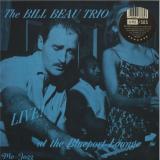
Bill Beau was born in Toronto, Ontario, Canada, but was raised in the western provinces, finishing high school in Edmonton, Alberta. It was while in high school that the "righteous rays" via radio struck Beau in the form of Meade Lux Lewis, Pete Johnson and Albert Ammons at the height of the Boogie Woogie rage. It was while in high school that Bill got his first gig. He played piano and worked with Wilf Harper, a guitarist of local renown. Beau played on weekends and during the week worked as a clothing salesman, stock clerk, refinery worker, service station attendant and freight checker. He travelled all across Canada, and finally landed in Los Angeles, California.
In 1958 his love of music compelled him to direct all of his energy toward the perfection of his musical talent, so he decided to settle permanently in Los Angeles. Beau first worked there as a vibraphonist, gigging with such stars as Ben Webster, Rex Stewart, Pete Fountain, and Stuff Smith. Once, when his regular organist failed to show up for a date, Beau ended up on the Hammond. Beau then formed his own group, and the trio got a standing date at the Blue Port Lounge. The other two members of the trio are Jo Stafford on guitar, Lorenzo Green on drums, plus the pretty and petite vocalist with the group, Chi Chi.
"Live at the Blueport Lounge" by the Bill Beau Trio is mod-soul-jazz at its very best! A stunning treasure rarely to be found - unless it's on Mo-Jazz!
Following the successful return of Cyberfunk Records, Frequency Damage EP showcases four brand-new productions from DJ Quest, blending over 25 years of breakbeat experience with modern production techniques.
From old-school funk influences and rolling basslines to heavy club grooves and precision-engineered drums, the EP demonstrates the versatility that has made DJ Quest one of the pioneers of the Bassline Breaks movement.
Each track brings its own identity while remaining unmistakably Cyberfunk—music written for DJs, built for powerful sound systems and inspired by the underground dancefloors that shaped the label's legacy.