Last time he brought his Emperor Machine project to Leng, via the seductive, call-to-the dancefloor that was ‘Dance Par Amour’, Andrew Meecham had vocalist Severine Mouletin in tow. On this welcome return to the label, Meecham has enlisted the help of another sublime singer: Bom Carrot 봄캐롯, lead vocalist with South Korean punk-pop outfit Tirikilatops.
Although the pair share a mutual friend, who had extolled the virtues of a potential collaboration to Meecham, it was only when Bom Carrot 봄캐롯 reached out on social media that the pair were finally connected. Meecham jumped at the opportunity to kick-start a collaboration, quickly firing over a track he’d been working on. A few months later, her vocals landed in his inbox and the rest, as they say, is history.
The resultant track, ‘춤춰 Chumchwo – Let’s Dance’, may feature many of the aural trademarks of Meecham’s Emperor Machine work – spiralling analogue electronics, vintage synth sounds, effects aplenty and infectious grooves inspired by New York’s no-wave movement of the early 1980s – but is somehow even more thrillingly wild, excitable, and exhilarating than you’d reasonably expect.
A big part of that, of course, is the inspired contributions of Bom Carrot 봄캐롯. Her freewheeling vocals – part sung, part spoken, and part improvised – are energetic, distinctive, and addictive, adding layers of post-punk abandon and a genuine sense of musical freedom. Combined with Meecham’s outrageously unpredictable backing track – there are twists and turns aplenty, as well as surprising percussive and musical touches that seemingly appear and disappear at will – the resultant song is like the unlikely sonic lovechild of Talking Heads, YMO, Pierre Henry and K-Punk.
As you’d expect given his track record of delivering freewheeling instrumental reworks, the vocal version comes backed with an extra-special Emperor Machine ‘Instrumental Dub’ version. Stripped back and percussive, with dropouts and breakdowns aplenty, this is no mere vocal-free take, but rather a reconstructed revision piled high with extra percussion, spacey electronics, echoing vocal snippets, bubbly bass and razor-sharp Tom Tom Club guitar licks –all arranged to rise, fall and rise again around Meecham’s killer groove. As the track’s title suggests: “Let’s Dance!”
Buscar:the analog music project
UK label Dawn State continue their hot streak this summer with further eclectic moods for the dance floor and beyond. On the tools for the fifth outing on the label is KIDWHO, a blossoming talent who through the last years whilst enduring the pandemic found light by burying himself in his studio experiencing new creative flows. The “Warez House” EP varies in tastes, similar to the highs and lows of the times that just passed us by.
Diving into the deep end is the title track, “Warez House”, loopy and hypnotic, swaying between shades of low end leaned house and techno. Off kilter synths and pads maneuver their way around the driving force of the track. “It came together layer by layer, eventually turning into a dense (and at times, unruly!) groove. A final touch
of atmospherics from an old Roland ROMpler and the track was done - bar a generous helping hand in mixdown from Joel Kane (who also turned out a heads-down dub version which might make an appearance!).”
Leaning in a more hazy direction is the blissful cruiser, “Leploop Lagoon”, a deep and emotive vibe crafted especially for the early mornings. A sophisticated deep house energy from the talented producer. “‘Leploop Lagoon’ is the oldest track on the EP, a cleaned-up version of a rough jam I made around four years back. It takes its name from the Leploop, a quirky semi-modular analogue groovebox of sorts, hand-built in Italy. A very unique and unpredictable machine, it’s on bass duties here as well as providing some percussion sounds via the MPC sampler.”
On the flip side lies “Spectral Pattern”, and it packs a certain punch. The rolling arrangement converses in harmony with icy hi-hats that flash in and out teasing the energy, all of the elements having space to breathe and work their magic.“‘Spectral Pattern’ came together quickly one very productive weekend in the studio last year. It developed from the bass sequence, which comes from a Yamaha TG-33, an unassuming 80s digital synth known for its glassy mix of ROM samples and FM tones - very New Age sounding, or 90s computer game soundtracks. But when you strip it back to basics, it punches hard in the low-end.”
Slipping on to the B side is a five minute transcendental trip, offering yet another series of textures to this otherworldly EP. The final track “At Least We Hav Music” is an ethereal soundscape waiting to be explored, wandering amongst ambient realms throughout. “The label was keen to include an ambient track on the release, and I wanted to record something specially for them. At first I had in mind something droning and melancholic, but after a few experiments with cassette
loops and reverb pedals this was the one that stood out. It was recorded during one of the lockdowns, and I guess I needed to create something that sounded more hopeful than brooding. I messaged DS boss Tom Haus with a rough version, and we went on to have a grumble about the gloomy state of things, locked-down in our respective cities and missing friends, family, activities… At some point I wrote ‘at least we have music’ - and almost as soon as I had sent it I knew I had found the track’s title. I’m very lucky to have had my home studio as a refuge through the long months of lockdown, and I’m honoured to have the chance share some of my output from this period on this record.”
KIDWHO fitting the Dawn State ethos to a tee here as they set up shop for what looks to be another fantastic release. “Each of these tracks came about in quite different ways. Like many creative people, I had moments of struggle during the pandemic, where the lack of variety and day-to-day stimulation lead to periods of writer’s block, and so I used those times to focus on smaller, more manageable projects such as making synth patches, recording sounds and and throwing together short loops in my samplers for later use. A number of
these short loops eventually laid the foundations for title track ‘Warez House’. Big thanks to Dawn State, Joel Kane, El Choop and everyone else who has helped make this happen.” -
KIDWHO
Frances Castle is the illustrator/owner behind the Clay Pipe record label and The Hardy Tree is her on- going musical project. Common Grounds was started during the first 2020 lock down - when time moved very slowly and travel away from home became impossible.
The album was recorded at home by Frances, then mixed to tape with Ed Deegan at Gizzard Analogue Studios in East London. Ed plays drums on three of the tracks.
“Like many others with nowhere else to go, I walked the streets of my neighbourhood for exercise and well-being. I rambled like I might in the country side; stopping every now and then to take in the view, or notice something I’d missed before. I took to looking up local streets in historical newspapers, and read reports of mysteries and crimes that had happened here in the past. I researched the names of the people who had lived in my flat before me, viewed old census returns from the surrounding area, and noted the birth places and livelihoods of past residents. I began to see the ghosts of these people on my walks, and notice the things that they had left behind; shapes of ancient tram tracks creeping under the tarmac, an old gas street lamp in an alleyway, a tiny metal sign indicating a culverted river. I spent my evenings writing and recording the music on this LP, and then the following day would listen to the rough mixes as I walked, the music began to soundtrack the walks, and the walks began influencing the type of music I was creating.” - Frances Castle, 2022
1. A Garden Square in the Snow 2. The Spire of St Mary's 3. St Saviour's Through the Railings 4. Shop Fronts and Parked Cars 5. The New River Path, August 6. Railway Tracks 7. Mist on the Playing Fields 8. Face at the Window, Seaforth Crescent 9. Up on the Hill
Hailing from Ancaster, Ontario, Carl Didur has been an enigmatic fixture of Toronto’s underground music community for close to two decades. Originally traversing the Golden Horseshoe with The Battleship, Ethel, a band which sprung from his first outfit CEDRUMATIC, Didur soon moved to Toronto. Throughout the mid-2000’s he could be spotted playing his trademark ace-tone organ as a member of No Dynamics and Rozasia in the city’s crammed rogue venues, such as The Bagel and the infamous and transient Extermination Music Night. During these years The Battleship, Ethel continued to tour, often performing as backup band for Damo Suzuki, while at other shows inviting Dave Byers (Simply Saucer) and Bob Bryden (Spirit Of Christmas) to perform alongside the band. Perhaps the most enduring legacy of "The Battleship, Ethel", which dissolved in 2009, is that it laid the creative foundation for Carl and bandmate Michael McLean's next project, the prolific, studio focused, Zacht Automaat. As Zacht Automaat released music at a frantic pace, Carl continued to collaborate with members of a tight-knit group of Toronto’s downtown scene including touring with U.S. Girls and Slim Twig, performing and recording with Colin Fisher as Fake Humans, guesting on Absolutely Free’s Currency EP and producing New Fries’ most recent album The Idea of Us. Throughout the last decade Didur’s purely solo output has served to document his unimpeachably singular approach to music making. I Cannot See You Too Well (2011), Nothing is the Secret to Anything (2014) and Is It Yesterday? (2020) all released on cassette were followed by a digital album of gentle minimalism called Natural Feelings Vol I (2020). His solo shows consist of multiple tape machines running loops through various analog devices (a Certified Electronics Technician Didur now spends his non-piano playing hours of the day repairing all manner of tape echoes and synthesizers) or solo Wurlitzer electric piano improvisations, his performances gracing both stage and gallery. With his latest release Maybe Next Time, Didur further establishes himself as a singular artist with a unique methodology honed from years of music-making and listening. The album’s compositions swing from lush Axelrod-ish affairs filled with Mellotron strings to the album’s spiritual jazz influenced centerpiece The River Meets The Sea. “I was inspired by Eno's Here Come the Warm Jets, Crazy Horse but only when they are sad, Alice Coltrane, Jessica Pratt, McDonald and Giles, and so many others…” states Didur. Infused with a melancholic tone throughout, tracks such as Close My Eyes and Autumn’s Here invoke cinematic memories with tape echo and reverb applying a softened focus to the proceedings. Carl explains the context for the tone and the setting for the record’s gestation: “Maybe Next Time is a record I made after the world lost a sweet person that many in our community loved. Unlike most of my albums this one never seeks to shock or surprise you. It is about sadness, confusion, dissolution, transformation and ultimately a deeply forgiving sense of love. It is a concept record about being a human being!”
Legendary American musician Brian Jackson announces his first solo album in over 20 years,
‘This Is Brian Jackson’, produced by Phenomenal Handclap Band founder Daniel Collás and
released on BBE Music.
Brian Jackson earned mythic status among music fans thanks to his pioneering work with Gil
Scott-Heron in the 70’s, where his flute and electric piano performances on ‘Pieces of a Man’
and ‘Winter In America’ virtually defined the sound of an era. From the 80s onwards he went
on to record with Kool & The Gang, Will Downing (whose debut album he produced), Roy
Ayers and Gwen Guthrie among many others, and while many veteran musicians tend to
stick with the sounds they know best at some point in their careers, Jackson remains an
unusually adventurous, vital and broad-minded artist to this day.
When the Phenomenal Handclap Band’s Daniel Collás first met Brian Jackson at a
performance in New York, right off the bat he said “I think I could produce you”. “I wasn’t
sure why he thought that,” says Jackson “but I considered it a challenge to find out. Turns
out that he was right.”
Early on in their friendship, Brian mentioned that he’d embarked on a solo project right
around the time he recorded ‘Bridges’ with Gil Scott-Heron in 1976. There were even some
unfinished demos, but the album had never materialised. Daniel leapt on the idea, asking
“what would a Brian Jackson album sound like if the 21st century Brian were to complete
that 1976 album today?” Completed in a series of twice weekly sessions over 11 months in
Daniel’s Williamsburg studio, ‘This Is Brian Jackson’ provides the answer.
“We sketched out musical ideas, drank way too much coffee, consumed way too many
tacos and sampled perhaps a few too many exotic whiskeys while talking about things that
were important to both of us personally. The lyrics for the songs are a result of those
conversations” says Jackson.
Contributors to the album range from Jackson’s guitarist, bassist and longtime friend Binky
Brice (Billy Ocean, Evelyn Champagne King, Roy Ayers), Collás’s occasional writing partner
Morgan Phalen, Latin Grammy-winning flautist Domenica Fossati, drummers Moussa Fadera
and Caito Sanchez, and Phenomenal Handclap Bandmates Juliet Swango and Monika
Heidemann.
And the music? Vintage, soul-stirring Brian Jackson, with the great man’s warm vocals,
distinctive flute and lyrical keys taking centre stage. The songwriting feels timeless, the
arrangement effortless, the production human and analogue. From golden-era soul-funk
opener ‘All Talk’, through soaring Afrobeat-inspired dreamscape ‘Mami Wata’ to compact
groover ‘Little Orphan Boy’ which closes the album, ‘This Is Brian Jackson’ is simply some of
the veteran artist’s best work yet, subtly and lovingly framed by Daniel Collás.
"Animist Pools" was released July 1, 2016 in a cassette limited edition on Human Pitch records. Originally released as "Hippies Wearing Muzzles", pseudonym of Lee Evans. "A shifting center in a stream of rippling analog tones, the music of Hippies Wearing Muzzles is orchestrated to transfix, echoing sounds heard in nature with modular synthesizers and the powerful element of chance. Evoking the Fourth World Music of Jon Hassel or the kosmische innovations of Cluster, Animist Pools marks its composer, Lee Evans’ first full-length release for Human Pitch. Accompanied its popping, glyphic art design and video, the project’s hypnotic aptitude is heightened to full-effect. Citing his background in painting as a chief influence on his musical approach and thought process, Evans composes with a strong sense of space––each sound an event in a slowly expanding landscape, zooming out to reveal a world of scale in which depth and contrast take precedent over rhythm and melody. Embracing the generative compositional nature of working with the modular synthesizer, Evans himself is the final filter through which all sounds pass. The boundary between programmed repetition and human choice is subtle, but detectable, highlighting Evans’ careful, nuanced guidance of his auto-compositions. The result is ultimately an improvised structure––a living, breathing, musical creature, acting on a mixture of impulse and memory. Animist Pools is a functional body of music for everyday human applications, with the implied invitation to tune out and back in at one’s discretion. The cleanly organized musical space of Animist Pools encourages a tidying up of the mind. On a psychoacoustic level it is one, breathing life into the dusty corners of one’s headspace. Animist Pools is an immersive, meditative, and therapeutic experience."
Obscura label head Fedele makes his long awaited return to the imprint for new EP ‘The Awake, Pt.1’, backed by remixes from Extrawelt and Midnight Operator aka Mathew Jonson and Nathan Jonson. Fedele’s penchant for synthesizer techniques and drum machines has caught the ear of global tastemakers, with projects released on the likes of Turbo, Afterlife, and Ellum receiving support from the likes of Maceo Plex, Tiga, Tale of Us, Dixon, John Digweed, Miss Kittin, and DJ Stingray. With sights set towards summer peak, the Italian returns to his Obscura Music imprint with his latest work, The Awake, Pt. 1.
Riot Dance leads the line with crisp kicks on a heady rise to set the groove before an analog-tinged synth line claims the hook. Acidic tones & ethereal stabs offer a generous dose of psychedelia, while the gritty groove ensures the cut’s ability to ignite dance floors. Modular Madness harnesses ominous flavors and a driving bassline that ebbs & flows to keep minds melting. The melodies open into swirling synthetics, with revolving reverberations and rich soundscapes capturing the ear from start to finish.
Storied German duo Extrawelt arrive on remix duty, taking the reins on ‘Riot Dance’ to twist a low- slung groover. They bring the bassline into the foreground, keeping a delightful vibe alive and welcoming a touch of light to the dark underbelly of the original, before diving back into the deep as the track unfolds. Obscura regular Mathew Jonson connects with a producer he knows well – his brother Nathan. Together, they remix ‘Modular Madness’ under their alias Midnight Operator. Picking up the pace, they maintain the acid-laced grit from the original arrangement, while adding serene melodies to the high-end. A balanced rework from two seasoned veterans.
Like the MIMIKOTO project’s previous albums, also “Blackbird’s Philosophy” can be described as a symbiosis of jazz with electronic music and other styles of groovy stuff.
On this album the electronic elements melt into the acoustic sounds and rhythms on a quite subtle way, while the acoustic patterns partially adopt styles of electronic music reminding of deep house, ambient and Detroit house.
Jazzy Rhodes, bass, drums and sax solos performed by jazz-rooted musicians like Darius Blair, Uli Schiffelholz, Johannes Schwarting and Justin Zitt, play a more important role than on former releases and bring nuances of funk, modal jazz, free jazz and bebop to this album.
With Fabio Kumori’s string orchestral sound created with upright bass, effects and looper in the track “Notes from Kirishima”, even elements reminding of classical music and atmospheres from soundtracks become a part of this album. These elements merge with rhythmic sound arpeggios of analog synths and vibraphone, which create a maybe unknown style of new music.
On the last track of the album, namely on the track “Blackbird’s Philosophy (Part II)”, you hear the soulful and expressive voice of Noomi Mae Coleman, who joined the MIMIKOTO crew in 2020.
The MIMIKOTO project was founded in 2019 as a collective of musicians related to jazz, funk, soul and electronic music, after a certain period of composing and playing as duo, trio and quartet
Debut solo project Marek 'Latarnik' Pędziwiatr - musician, composer, pianist & synth wizard. Best known from his bands EABS & Błoto and Jaubi's "Nafs At Peace" album
Influenced by the sound of solo recordings by Thelonious Monk, Ahmad Jamal, McCoy Tyner and Emahoy Tsegué-Maryam Guèbrou, Latarnik gave up electronics in order to record an intimate debut album, commemorating his great-grandmother, using a hundred-year-old Steinway & Sons grand piano and analogue tape. Deeply spiritual and emotional solo piano works from one of the leading lights of the new Polish jazz scene!
- A1: Bustin'stronghodes
- A2: Trickmonks
- A3: Swallowing The Water You Walk On
- A4: Can Shadows Praise You?
- A5: The Netherworld Squints At The Sight Of You
- A6: Trick Leash
- A7: Anamnesis
- A8: Asking For Fish
- A9: I'm The Weakest Link
- A10: Under Your Breath
- B1: Handles
- B2: What's Illumined Becomes Visible
- B3: Someone You Can Use
- B4: About Face
- B5: Periodically Yours
- B6: We Won't Survive This
- B7: Project Yourself Alive Onto My Corpse
- B8: We Belong To You, But How Now Is Soon?
The (seventh) new Half-handed Cloud album, ‘Flutterama’, is
a record of 18 jubilant indie-pop songs by John Ringhofer
that investigate spiritual incompetence with lively
arrangements and radiant melodies that skilfully dissolve into
deterioration using herky-jerky tape manipulation, analogue
wow-and-flutter, and an animated orchestra of homerecorded sound effects.
Ringhofer’s work on ‘Flutterama’ was inspired by Frances
Mary Hunter Gordon’s adolescent liturgies (recorded at
Abbey Road during The Beatles era), turbid sights and
sounds in Guy Maddin films, audaciously bold forms in Sister
Corita Kent’s devotional printmaking, the exquisite brittleness
of Elizabeth Cotten’s voice, Alberto Burri’s stitched wound
burlap assemblages, Alvar Aalto church design, Andrea
Büttner’s poverty-informed artwork, Lou Barlow/Dinosaur Jr’s
lo-fi ‘Poledo’ sound collage (which namechecks Jesus), Julie
Canlis book ‘A Theology of the Ordinary’, Wallace Berman’s
visual collage, and The Raincoats’ magnificently shaky DIY
aesthetic.
The album’s tape-fiddled tunes - recorded on the very same
16-track recorder last serviced by a sound technician who
also worked with The Beach Boys in their home studio -
employ surprisingly little synthesizer (“it felt like cheating,”
says Ringhofer) - he preferred to craft most of the album’s
effects the long way, frequently going behind the back of rock
instrumentation by hand-feeding ½” magnetic reel recordings
of chord organs, deflating balloons, some guitars, piano
(occasionally tracked with a baby on his lap), brass,
tablecloth swipes, and a quickly-cranked half-speed music
box. He was assisted by long-time Half-handed Cloud
contributor Brandon Buckner on drums, and single song
backing vocals from Anacortes, WA songsmith John Van
Deusen.
LP pressed on Opaque Brown vinyl
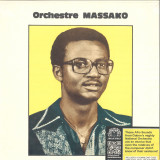
We are very excited to announce the release of "Orchestre Massako", the 14th compilation in our Analog Africa Limited Dance Edition serie. For this project we focussed on Afro Sounds from Gabon's mighty National Orchestra and its legendary band leader, Jean-Christian Mboumba Mackaya known as Mack-Joss, literraly the baobab of Gabonese music. Two songs also feature the singer Amara Toure, whose specific voice is impossible not to recognise and who has already been in the center of the previous compilation "Amara Toure 1973-1980" released back in 2015.
- A1: Signe" (Eric Clapton) - 3:13
- A2: Before You Accuse Me" (Ellas Mcdaniel) - 3:36
- A3: Hey Hey" (Big Bill Broonzy) - 3:24
- A4: Tears In Heaven" (Clapton, Will Jennings) - 4:34
- B1: Lonely Stranger" (Clapton) - 5:28
- B2: Nobody Knows You When You're Down And Out" (Jimmy Cox)
- B3: Layla" (Clapton, Jim Gordon) - 4:46
- B4: Running On Faith" (Jerry Lynn Williams) - 6:35
- C1: Walkin' Blues" (Robert Johnson) - 3:37
- C2: Alberta" (Traditional) - 3:42
- C3: San Francisco Bay Blues" (Jesse Fuller) - 3:23
- D1: Malted Milk" (Robert Johnson) - 3:36
- D2: Old Love" (Clapton, Robert Cray) - 7:53
- D3: Rollin' & Tumblin'" (Muddy Waters) - 4:10
Strictly limited to 10,000 numbered copies, pressed on MoFi SuperVinyl at RTI, and mastered from the original master tapes, Mobile Fidelity's ultra-hi-fi UltraDisc One-Step 180g 45RPM 2LP collector's edition enhances the blockbuster work for today – and the ages to come. Surpassing the sonics of any prior version, it peels away any remaining limitations to provide a transparent, lively, ultra-nuanced presentation of a record that won six Grammy Awards – including prizes for Album of the Year, Best Male Rock Vocal Performance, and Best Rock Song. The expanse and depth of the soundstage, fullness of tones, natural snap and extension of the guitar strings, realistic rise and decay of individual notes, and roll of Clapton's vocals all attain demonstration-grade levels.
Housed in a deluxe box, the UD1S Unplugged pressing features special foil-stamped jackets and faithful-to-the-original graphics that illuminate the splendor of the recording and the reissue's premium quality. No expense has been spared. Aurally and visually, this UD1S reissue exists as a curatorial artifact meant to be preserved, touched, and examined. It is made for discerning listeners that prize sound quality and production, and who desire to fully immerse themselves in the art – and everything involved with the album, from the images to the finishes.
Truly, everything about Unplugged matters. Having sold more than 10 million copies in the U.S. and more than 26 million copies worldwide, the 1992 work resonates with listeners of all generations and speaks a universal language. Recorded for MTV before a very small audience on January 16, 1992, the 14-track set became the signpost for future acoustic-based endeavours that witnessed artists of all stripes re-examining their catalogues and, in many instances, as Clapton does here, placing familiar originals in fresh contexts and unveiling spirited versions of cover material. Needless to say, Clapton's session turned MTV's series into can't-miss programming for which the likes of Rod Stewart, Tony Bennett, Nirvana, Pearl Jam, and more would soon participate.
Kicking off his performance with a spirited instrumental to establish the mood, Clapton immediately wades into the style that originally caught his attention as a British teenager in the early 1960s: American blues. Backed by a superb band that includes guitarist Andy Fairweather Low, pianist Chuck Leavell, bassist Nathan East, and drummer Steve Ferrone, Slowhand delivers a rhythmic, toe-tapping rendition of Bo Diddley's "Before You Accuse Me" that announces he's come to reconnect with his muse. What follows over the course of nearly the next hour stirs the heart, shakes the soul, moves the mind, and invigorates the senses.
Of course, there's no talking about Unplugged without keying in on "Tears in Heaven," the striking ballad Clapton penned about the death of his four-year-old son. More emotional, direct, spare, and healing than the studio version released a year prior, it crackles with an intimacy, maturity, poignancy, honesty, sweetness, and integrity that inform the entire concert. Indeed, how Clapton frames other favorites here – transforming "Layla" into a relaxed, comfortable stroll and ruminating on the seasoned ripples flowing throughout "Old Love," for example – indicate both a creative rebirth and gleeful acceptance of the next phase of his career.
And that very direction (two of Clapton's next three albums would be all-blues projects) is what really makes Unplugged so indispensable. Equivalent in mastery if not in volume to the output that earned him his "God" nickname, interpretations of Jesse Fuller's "San Francisco Bay Blues" (complete with kazoo!), Big Bill Broonzy's "Hey Hey," Robert Johnson's "Walkin' Blues" and "Malted Milk," and Muddy Waters' "Rollin' & Tumblin'" showcase a learned professor in his element and all the wheels turning.
In every regard, Clapton's Unplugged session was appointment listening when it came out in August 1992. With the arrival of MoFi's UD1S pressing, that sensation is more urgent than before.
More About Mobile Fidelity UltraDisc One-Step and Why It Is Superior
Instead of utilizing the industry-standard three-step lacquer process, Mobile Fidelity Sound Lab's new UltraDisc One-Step (UD1S) uses only one step, bypassing two processes of generational loss. While three-step processing is designed for optimum yield and efficiency, UD1S is created for the ultimate in sound quality. Just as Mobile Fidelity pioneered the UHQR (Ultra High-Quality Record) with JVC in the 1980s, UD1S again represents another state-of-the-art advance in the record-manufacturing process. MFSL engineers begin with the original master tapes and meticulously cut a set of lacquers. These lacquers are used to create a very fragile, pristine UD1S stamper called a "convert." Delicate "converts" are then formed into the actual record stampers, producing a final product that literally and figuratively brings you closer to the music. By skipping the additional steps of pulling another positive and an additional negative, as done in the three-step process used in standard pressings, UD1S produces a final LP with the lowest noise floor possible today. The removal of the additional two steps of generational loss in the plating process reveals tremendous amounts of extra musical detail and dynamics, which are otherwise lost due to the standard copying process. The exclusive nature of these very limited pressings guarantees that every UD1S pressing serves as an immaculate replica of the lacquer sourced directly from the original master tape. Every conceivable aspect of vinyl production is optimized to produce the most perfect record album available today.
MoFi SuperVinyl
Developed by NEOTECH and RTI, MoFi SuperVinyl is the most exacting-to-specification vinyl compound ever devised. Analog lovers have never seen (or heard) anything like it. Extraordinarily expensive and extremely painstaking to produce, the special proprietary compound addresses two specific areas of improvement: noise floor reduction and enhanced groove definition. The vinyl composition features a new carbonless dye (hold the disc up to the light and see) and produces the world's quietest surfaces. This high-definition formula also allows for the creation of cleaner grooves that are indistinguishable from the original lacquer. MoFi SuperVinyl provides the closest approximation of what the label's engineers hear in the mastering lab.
SACD
Mastered from the original master tapes, Mobile Fidelity's numbered hybrid SACD enhances the blockbuster work for today – and the ages to come. Peeling away remaining sonic limitations to provide a transparent, lively, ultra-nuanced presentation of a record that won six Grammy Awards (including prizes for Album of the Year, Best Male Rock Vocal Performance, and Best Rock Song), it places Clapton and company in your room. The expanse and depth of the soundstage, fullness of tones, natural snap and extension of the guitar strings, realistic rise and decay of individual notes, and roll of Clapton's vocals all attain demonstration-grade levels. A perennial audiophile favourite, Unplugged now tosses its hat into the ring as a demonstration disc.
Inspiration can strike anyone at any time, and more often than not from somewhat peculiar quarters. Rarely more so than when Sam Grant - thus far best known as guitarist and producer of Pigs Pigs Pigs Pigs Pigs Pigs Pigs - finally set about work on a solo project that had been pursuing him for some years. “I want people to imagine that feeling of rubber - its physical memory, the unnatural vibe of it. It’s so tactile but alien. It’s an odd analogy, but that’s what this music is for me.”A specific gravity is one more property that rubber has going for it, and that much is certainly true of Rubber Oh’s debut album ‘Strange Craft’, the result of his elasticated fixation, and his debut album of deliriously tuneful sci-fi tinged psychpop. It’s a unique soundworld in which an emphasis on beguiling melody marries a kaleidoscopic grandeur. Widescreen gems like the warped interstellar voyage that is Children Of Alchemy and the unshakeable earworm Hyperdrive Fantasyare all vibrant colour and celestial energy, setting their psychic stall out somewhere between the incandescent headspace of a ‘70s sci-fi TV show and the red-light-fever of the overheated ampstacks Grant has been historically more familiar with.Ultimately, for Grant as well as everyone else, Rubber Oh amounts to one strange trip - “Many of the lyrics are about alchemy, journeying and vessels, as interchangeable metaphors for knowledge and wisdom” he says. “I wanted to mesh the land and sea, the cosmos and the psyche across the tracks as one single plane” Mission accomplished, in short. This Strange Craft is fuelled up and ready to accept all comers on a ride into extensions through dimensions01
INIT is Benedikt Frey & Nadia D`Alo. We are delighted to present their long delayed vinyl and digital album, NRGY.
Born out of various art performances and installations, INIT states a logical outcome of Berlin based duo Nadia D`Alo and Benedikt Frey. With heavy use of analogue synthesis and drum-machines, INIT rethinks its genre's sonic approach, unfolding a unique and organic, yet alienating sound, somewhere in the mysterious midst of Acid, Techno, Ambient and Kraut-Rock.
This is INIT's third album, following two releases on Hivern Discs, and performances at clubs such as Berghain, Robert Johnson and Pudel Club.
INIT say -
Module, NRGY, and Time were reverse extracted out of our live set and re-recorded and re-arranged after we realised how well they work in clubs. It is the first time we worked this way as we tend not to play our compositions live, like we produced them. Mostly we just extract loops out of our production to mess around with in a loose live project.
Snowglobe, Holes In My CV and N.O.D. were more built up from a studio jam plus a bulletproof-ish arrangement afterwards.
Tried and tested on dance floors this is a surefire hit album on the dancefloor, and at home. NRGY!
Fractal head rearrangement from Keith Fullerton Whitman on his first vinyl release in what feels like years, here blessing Japan’s NAKID label with a new instalment in his forever-evolving Generators project, arcing from bleeping post-Kosmische sounds into completely unexpected drum mutations in footwork and grime modes. It’s properly head melting gear that links the algorithmic mind-fukkery of Laurie Spiegel with the floor-bending rhythmic experimentation of Mark Fell, Rian Treanor or Jana Rush, and the first in a three part series that offers some of the strongest gear we’ve heard from one of the very best in the game.
Modular synth scientist, critic and historian Keith Fullerton Whitman first debuted his »Generators« set in 2009, using a modular setup to create non-repeating melodic patterns that basically came close to generating themselves. Over the course of hundreds of live shows (and a handful of releases on Root Strata, Editions Mego and other labels), Whitman glacially honed his process and allowed the concept to slither down different avenues, mutating as it picked energy from the various venues it was situated in. His rigorous method meant ‘Generators’ was never played out the same way twice, veering from psychedelic Kosmische experimentation to obliterated, off-grid Techno.
In 2019, on the tenth anniversary of the project, Whitman was invited by the GRM in Paris to set up in Studio C, where he avoided the arsenal of pristine, museum-worthy modular synthesizers and instead reprogrammed his classic ‘Generators’ patch. Recorded in a single take using luxe analog- to-digital convertors, the result is a 45-minute durational piece, split into two distinct sides for this release.“Very little manual interaction happened,” Whitman explains. The music is, as its title suggests, generative, and at this point basically sounds as if it reached its most advanced, final form. The first few minutes of the opening side mine the original theme, with clocked LFO shapes triggering oscillator blips in mind-expanding non-looping patterns. Soon, percussion enters the matrix, at first wrong-footing us with a 4/4 fake-out - possibly nodding to the piece’s 2010 Root Strata iteration - before splitting into staccato polyrhythmic abstractions of the most loose- limbed and deadly variety.
General MIDI drums can sound almost hilariously boxed-in, but handled by Whitman they show off a plastic cultural sheen to piercing effect, deployed in a way that re-draws the rhythmic bass music of someone like Jlin while nodding to Mark Fell and Rian Treanor’s quasi-generative dance explorations. These comparisons take on even more weight on the second side, where Whitman opens up his filters to allow the synth bleeps to sing even more loudly, introducing that all- important clap/hat interplay that dialogues with Atlanta and Chicago simultaneously.
Gap/ Void is the first collaborative full-length album by Automatisme (the Canadian musician and conceptual artist William Jourdain) and Swiss field recordist, ambient musician, visual artist and writer/academic Stefan Paulus. Jourdain and Paulus first met through shared projects with Mille Plateaux/Force Inc, each contributing to the Ultrablack Of Music anthology and Paulus going on to make several videos for Automatisme tracks issued by the two labels. In early 2021, Paulus approached Jourdain with a proposal based on his field recordings made during numerous mountain expeditions in the Swiss Alps, the Caucasus, and north of the Arctic Circle _ documenting stormy weather, high alpine winds, avalanches, and sounds emanating from glaciers and from the insides of crevices and caves. Paulus created ambient noisescapes from these recordings by splicing and folding them into hundreds of layers of sound: an analog to the geological strata of their geographic sources. The resulting audio mixes, compounding a multiplicity of spatio-temporal excursions, were then further encased in drones using the natural tone series (the traditional zäuerli or wordless yodels of northeastern Switzerland), the monotonic standing drone of Lamonte Young's Dream Syndicate, and the mass chords of early 1970s Kosmische Musik as points of reference. Paulus sent these extended ambient/noise pieces to Jourdain as source material for the latter's bespoke Automatisme techniques, where variable tempo and glitch systems forge more overt minimal techno/IDM works. Gap/Void leads with five rhythmic tracks (cut to 33rpm LP) that feature Automatisme's trademark interstitial digital synthesis and elastic/erratic signal processing, in combination with his own crate-digging `expeditions' through obscure 1970s-80s disco 12-inches, deconstructing their scores and structures to bring these microsamples and sensibilities back to bear on Paulus' deterritorialized sedimental source material…
Ex RSD LP on transparent red vinyl, gatefold sleeve with lyric inner sleeve and DL card. Final copies now reduced to £7.99. The tracks on this album have never been officially released before now. The eight songs on this album were recorded in 1978 on a 2-track stereo Revox A77 tape recorder. The recordings are unashamedly analogue, using one microphone and guitars plugged directly into the tape recorder. Bouncing down tracks irreversibly as they went on, forced to make creative decisions that could not be undone. Some hard choices had to be made with the mix, but with no record company meant no record company agenda. TV Smith & Richard Strange could write and record whatever they wanted – and did! It has been an enormous pleasure to rediscover these recordings, the result of a friendship of two artists emerging from broken bands and each about to embark on a lifelong adventure in words and music. TV SMITH - I wasn’t having a lot of fun in 1978 when Richard asked me to collaborate on a song he was writing called “Summer Fun.” I was in the final stages of songwriting for the second Adverts album “Cast Of Thousands,” a project that already seemed doomed to failure given an unenthusiastic record company, a band in the throes of falling apart, and a dwindling audience - but my creative juices were in full flow and I was ready for something different. I already knew Richard, of course, from the Doctors Of Madness, who I’d followed in the years before punk when I was still living in Devon and they were one of the few bands to come and play in the area. I considered them a warped poetic glam band with gothic leanings, and was slightly surprised when the song I’d been invited to work on turned out to be a kind of California surf pastiche. But I was game to get involved, and after we’d finished it and ventured forward with regular writing and recording sessions over the following weeks it soon became clear that “Summer Fun” was just a gateway drug, and the songs that were emerging from our combined forces were going to quickly become much deeper and much darker // RICHARD STRANGE - Watching the remnants of a musical dream being swept away by the juggernaut of corporate punk rock in 1976, I felt a combination of jealousy and resentment towards many of the key players who had been responsible for our demise. The Sex Pistols had supported my band Doctors of Madness early in their career and nicked not only our future but £12.00 from a pair of trousers in our dressing room in Middlesbrough Town Hall! The Jam, who supported us over four shows at London’s fabled Marquee Club, were how I imagined The Who would be if they’d joined the Young Conservatives. Warsaw, our go-to support band in Manchester, had just changed their name to Joy Division, and Johnny and the Self-Abusers, our Scottish flag wavers, had become Simple Minds. All were being feted by the all-powerful music press, while we were being buried. But there was one punk band for whom I never had anything but the greatest affection…The Adverts.
T. Gowdy has kept up a productive albeit mostly virtual pace since the release of Therapy With Colour (his third full-length album and first for Constellation) which dropped just as things were locking down back in spring 2020: performances at numerous festivals including MUTEK Montréal, Node Festival and NEW NOW; audiovisual pieces exhibited at various European galleries and events; a track and video for Constellation's Corona Borealis Longplay Singles Series; sound design for the documentary Atalaya by filmmaker Emma Roufs. Gowdy now returns with Miracles, his second full-length for Constellation, which draws on source materials originally performed in 2018 for an unreleased audio/visual project based around surveillance footage_a precursor to videocapped, monitor-based horizons that soon took on new meanings. Re-immersing himself in those recordings, Gowdy disassembles and deploys them as raw source material for new experiments with vactrols, noise gates and analog-to-digital triggering and aliasing, the original recordings juxtaposed anew amidst their successive textural and rhythmic treatments. Gowdy keeps this re-composition process stripped down, elemental and purposive, guided by an ascetic Aufhebung: synthesis as sublation_subjecting a temporal material/theme to analysis and transformation, reintegrating to form a whole that overcomes what it preserves without erasure, reshaping and intrinsically carrying its origins forward. Where Therapy With Colour was strictly and rigorously a set of stereo live performances, Miracles fuses iterative_though still spartan_layers of performance. "Therapy With Colour was about healing through self-hypnosis; Miracles is about forging a future with memory through subjection to trigger mechanisms" notes Gowdy. The result is a captivating collection of minimal IDM and oscillated electronics from the Montréal/Berlin producer, working primarily in a 120-140 BPM zone of tonal percussion and corrugated pulse. Gowdy's sensibility and sound palette gets deeper and dirtier, summoning new pathways of alluvial flicker and abraded euphoria. As the album progresses, low-pass gate vactrols coalesce into a clear and vital theme, conveying immanence through woody timbres at times reminiscent of the Shinrin-yoku aesthetic (Japanese `forest bathing'), though always with a grainy transcendence rather than invoking any clean pure sheen. Gowdy consistently heats and heightens the presence of each component in the mix, balancing different elements in democratic compression/distortion, attaining an unornamental and earnest form of mantric-industrial majesty. Miracles is live, corporeal, activated electronic music of the highest caliber, deployed with monastic and meditative focus.
LDI Records serves up a celebration of The Hague's famous electro sound with native Cliff Dalton aka Sander Evers behind four originals and fellow West Coast legends Legowelt and Rude66 both remixing. Cliff Dalton is a relatively new project from a long-time Dutch music great. Sander Evers is the drummer in psychedelic stoner rock band Monomyth and has played with other notable groups including 35007 and Gomer Pyle. Next to those projects, he has always had his ear tuned into the region's enduring techno and electro scene and now offers up his own fresh take on it. The EP's title refers to the fact that all these artists are bound by geography, but is also a nod to the fact that The Hague is the largest Dutch city by the sea. The opener 'We Are The Little Ones' is about an evil robot factory in a futuristic dystopian city. It is a coruscated electro-funk workout with crisp analogue drums and nimble bass overlaid with withering sci-fi melodies. 'We Don't Need A Real World' is a superbly cinematic eight-minute excursion with widescreen synth work taking you to the stars as you ride an elastic bassline. The majestic 'City Under The Sea' then layers up neck-snapping snares with cosmic arps and plunging bass and 'Cleopatra's Matrix' soundtracks an ancient Egyptian city with its mystic leads and eerie pads luring you into a late-night electro trance. West Coast pin-up and hugely prolific electronic innovator Legowelt remixes 'We Are the Little Ones'. His version has plenty of his textbook intrigue, lo-fi texture and magical synth charm, and finally key Bunker Records associate Rude 66 flips 'City Under The Sea' into a snaking dub rhythm with hypnotic acid lines and seductive vocal whispers woven in deep. The Blue City EP is a timeless package of West Coast electro direct from the source.
Clear Vinyl
Written and conceived by Stephan Crasneanscki, ‘LOVOTIC’ is a concept album by Soundwalk Collective, composed in collaboration with lauded actress and singer/songwriter Charlotte Gainsbourg. Featuring veteran techno stalwart AtomTM, rising singer/composer/performance artist Lyra Pramuk, celebrated actor Willem Dafoe, and writer/philosopher Paul B. Preciado, the album is released by the new Berlin-based Analogue Foundation.
Inspired by a relatively new field of research that seeks to explore and develop the possibilities of sexual and emotional relationships – and even love – between humans and robots, ‘LOVOTIC’ interrogates the impulses, ideas, and needs underlying this phenomenon. The project ventures into a future where sex, intimacy and desire are reformulated through the connection of humans, robotics, and artificial intelligence.
In an age of such hybrid entanglement with the machine, human identity requires the construction of new forms of intimacy, gender, and sexuality. At present, however, such technologies are primarily used to produce programs of limited sexual iterations that do not question the preformatted categories of gender and sexual orientation. In contrast, on ‘LOVOTIC’, Soundwalk Collective ask whether the future of sex and sexuality could instead be an exponentially expanding kaleidoscope. Where does the impulse of preference come from? What sets of words from our vocabulary can be communicated to the AI mind to generate a new identity for desire? Could the machine be another technology that brings us closer together?
Sonically ‘LOVOTIC’ is unidentifiable, artificial, and genuinely futuristic, occupying an amorphous androgynous netherworld at the borderlands between biotic and android. Traditional musical signposts are virtually non-existent, instead offering a mercurial, formless sound which mirrors the flourishing of gender fluidity it suggests could be on the horizon.
The production tangibly evokes the odd, rubbery textures of faux flesh, the slick virtual glide or glitchy mishaps of software, and the sleek shine of hardware. Gleaming sound design creates shard-like surfaces redolent of Alva Noto and Ryuichi Sakamoto’s ‘Glass’, the slippery stretched sonics Gabor Lazar, and the unsettling dark ambience of TOWERS and Hallmark ‘87.
At turns intimate and inviting, with whispering-in-your-ears ASMR vocals evoking blissful, heightened sexual states, within ‘LOVOTIC’ there’s optimism, but also unease; As well as the positive, it implies the negative ramifications of technology. At points a synthetic siren’s call appears to lure the listener to a darker place, with audio malfunctions suggesting dystopian science. Voices morph from gentle to distorted – a glitch in the system causing the mask to slip, like virtual lizards – ‘They Live’ or ‘V’ (?), for the metaverse age.
Here, Charlotte Gainsbourg invokes a being of unknown identity – an artificial eve, the oracle and the portal – speaking from an unspecified time in the future. The voices of AtomTM, Lyra Pramuk and Willem Dafoe weave in and out of Charlotte’s, often overlapping, merging into one another, expressing the entity of a being that’s ephemeral and in constant flux, oscillating between the natural and artificial. The record’s other bonafide singer, Lyra Pramuk’s delivery alternates between spoken word, operatics and partially- unintelligible language.
A multi-media project, ‘LOVOTIC’ also features the work of writer, philosopher and curator Paul B. Preciado – a leading thinker in the study of gender and body politics. Paul contributes a post-apocalyptic, quasi scientific and fictional text, which adds further fantasy, artistic and intellectual depth, augmenting the listener’s experience. Like all the best Sci Fi, his words seem prescient, describing what could become a likely reality in the future. Paul performs his written texts on the opening and closing tracks of the album; ‘The Age Of Mutation’ (in Spanish) and ‘Primate Love’ (in English).
Soundwalk Collective is an experimental sound collective helmed by Stephan Crasneanscki in collaboration with Simone Merli, which operates in a continuously rotating constellation of sound artists and musicians. The Collective’s approach to composition combines anthropology, ethnography, non-linear narrative, psycho- geography, the observation of nature, and explorations in recording and synthesis.
- A1: Sampuesana - Los Dinners
- A2: La Borrachita - Junior Y Su Equipo
- A3: Paga La Cuenta Sinverguenza - Manzanita
- A4: Infinito - Hugo Blanco Y Su Arpa Viajera
- B1: El Jardinero - Manzanita Y Su Conjunto
- B2: Feito Parrandero - Los Feos
- B3: Bien Bailadido - Junior Y Su Equipo
- B4: Saturno 2000 - Los Santos
- C1: La Danza Del Mono - Lucho Gavilanes
- C2: Capricho Egipcio - Conjunto Tiupico Contreras
- C3: El Chacarero - Los Gatos Blancos
- C4: Pa Oriente Me Voy - Los Atomos De Paramonga
- D1: Alegrate - Junior Y Su Equipo
- D2: Todo Lo Tengo De Ti Menos Tu Amor - Grupo Celeste
- D3: La Fuga Del Bandido - Los Ecos
Analog Africa delves deep into the scene of the Mexican's sonideros (sound-system operators) to present the "Rebajada" movement they've created using locally made pitch controls, speakers and sound effects.
"In 2010, I had asked Eamon Ore-Giron - aka DJ Lengua - if he would be interested in compiling a Latin project for Analog Africa, and if so, if he had a theme in mind. He replied, “Have you ever heard of rebajada?“ The question mark above my head, together with the wall of China, must have been the only other object visible from out of space because Eamon, probably noticing I got paralysed, continued, “Rebajada in Spanish means “to reduce, to lower”. It’s basically Mexican sonideros (soundsystem operators) slowing down the beat of a Cumbia to create a much more tangible music to dance to. I’ll send you a mix I made last year and let me know what you think.“ And so he did.
That mix was called Rebajada Mota Mix and I began listening to it on a loop. Although I was not immediately hooked it was intriguing from the get-go, and so I kept listening until magic began unfolding. Slowed down music allows you enough time to hear right through it, revealing itself in ways I had rarely experienced before. Everything became more transparent and I was noticing sounds normally only perceptible by bats. A near psychedelic experience. That mysterious mix included a few Ecuadorian songs by Junior y su Equipo - aka Polibio Mayorga (a cult figure in the sonidero scene), a couple of Mexican tunes, one Colombian, and various Peruvian songs, undoubtedly the driving force behind this project.
The sonidero who brought Peruvian and Ecuadorian music to Mexico was the legendary Pablo Perea from Sonido Arco-Iris, and although his fingerprints are all over the compilation Saturno 2000, this selection of songs in rebajada is exclusive to DJ Lengua. With the exception of a few classics from Polibio Mayorga and La Sampuesana – the queen of all rebajadas – most of these songs were probably never performed as such before, let alone released.
So how did rebajada come to be? In a nutshell; Rebajada started with two families of brothers – the Pereas and the Ortegas – who travelled all over Latin America and returned to Mexico with heavy loads of records which they would sell to the various sonideros always on the lookout for new tunes. Colombian beats especially seemed to fit almost perfectly with the Mexican dance steps – but they were just a bit too fast. As a result some sonideros began experimenting with equipment, and Marco Antonio Cedillo of Sonido Imperial created a revolutionary pitching system that could slow records down to an extent other players could only dream about. And so rebajada was born . . . or so we thought.
At the same time in north of the country, in Monterrey, sonidero Gabriel Dueñez almost got electrocuted by a short circuit that nearly set his record player on fire. As a result the platter started spinning in slow motion for the rest of the party, turning Cumbia into a different affair altogether. The youngsters went crazy for it and started harassing the sonidero with requests to record cassettes for them. Reluctant at first, Dueñez finally began recording a series of pirated cassettes called “Rebajada” which included mainly Colombian cumbia and porro in slow-mo exclusively. Those tapes took the city by storm and turned rebajada into a celebrated and defiant movement of the youth.
Of course it would not be a Mexican urban legend if it didn’t include dramaturgical elements, and so for nearly 30 years, until this day and probably for ever, both cities have been arguing and claiming ownership the creation of rebajada for themselves. But sonidera Joyce Musicolor, who never has time for such trivial arguments, got straight to the point: “Rebajada, and the equipment to perform it, is from here Mexico City but it was Monterrey that popularised it.“
- A1: Down The Rabbit Hole
- A2: Digital Rain
- A3: Earth That Was
- A4: Victim Of The Modern Age
- B1: Human See, Human Do
- B2 24: Hours
- B3: Cassandra Complex
- B4: It’s Alive, She’s Alive, We’re Alive
- C1: It All Ends Here
- C2: As The Crow Dies
- C3: Two Plus Two Equals Five
- D1: Lastday
- D2: Closer To The Stars
- D3: Knife Edge
- CD1 1: Down The Rabbit Hole
- 2: Digital Rain
- 3: Earth That Was
- 4: Victim Of The Modern Age
- 5: Human See, Human Do
- 6 24: Hours
- 7: Cassandra Complex
- 8: It’s Alive, She’s Alive, We’re Alive
- 9: It All Ends Here
- CD2 1: As The Crow Dies
- 2: Two Plus Two Equals Five
- 3: Lastday
- 4: Closer To The Stars
- 5: Knife Edge
In a career spanning more than three decades, composer and multi-instrumentalist Arjen Lucassen has established himself worldwide as a driving force in progressive rock. The multi-talented Dutchman is best known for his rock opera project Ayreon, but also regularly devotes himself to musical side projects that explore all different aspects of his musical personality
Lucassen is committed to maintaining a consistent vocalist lineup on Star One. For "Victims of the Modern Age," he reunited the high-powered cast of lead singers from the first album, "Space Metal" (2002): Russell Allen (Symphony X), Damian Wilson (Headspace, Threshold), Floor Jansen (ReVamp, ex-After Forever), and Dan Swanö (Nightingale, Second Sky, ex-Edge Of Sanity). The different vocal styles of these great vocalists, ranging from soaring power vocals to haunting melodic passages to brutal growls, give each song a stunning variety of vocal textures
As for the instruments, the Dutchman recorded the rhythm guitars, Hammond organ, Mellotron, Solina strings and analog synthesizers himself and invited drummer Ed Warby (Ayreon, Hail of Bullets, Gorefest) and bassist Peter Vink to provide the powerful rhythm tracks. He also enlisted the intimidating solo skills of former After Forever keyboardist Joost van den Broek and guitarist Gary Wehrkamp (Shadow Gallery), both of whom contributed characteristically blistering solos. In addition to this formidable lineup, Lucassen recruited three other vocalists - Mike Andersson (Cloudscape, Full Force, Silent Memorial), Rodney Blaze and former Black Sabbath frontman Tony Martin - for several bonus tracks on the album
For the first time, "Victims of the Modern Age" is available on vinyl as a gatefold 2LP+2CD & LP booklet, as well as a Ltd. 2CD digipack.
'Memory Box' - the new album by Rodney Cromwell - fuses a European synthpop sensibility with a world of magical realism. It was inspired as much by the literature of Alice in Wonderland, Franz Kafka and Anna Kavan, as by its musical influences of artists such as Kraftwerk, Neu!, The Cure, Silver Apples, Oppenheimer Analysis and Polyrock. The sonic pallet of 'Memory Box' is rich, colourful, often surprising and utterly unique. Since the release of his debut 'Age of Anxiety' album in 2015, Rodney Cromwell has been featured by the likes of NME, Electronic Sound Magazine, Huffington Post, Paste, BBC6 Music and national RNE3 in Spain for whom he recorded a live session. 'Age of Anxiety' was included in a wealth of Best of Lists, not least that of Electronic Sound. He has appeared on compilations alongside Cavern of Anti-Matter, John Foxx, Devo, OMD, Katy Perry and many more. Rodney Cromwell is the project of Adam Cresswell. The first band he founded was SALOON, who were John Peel darlings, who recorded three Peel Sessions and the Festive 50 number 1 of 2002. They released three acclaimed albums on Track & Field (UK) and Darla Records (US) and played with a host of alternative acts including Stereolab, Electrelane, Quickspace, Laika, Of Montreal & Movietone. He followed Saloon with ARTHUR & MARTHA the acclaimed tweetronica duo that released the sole album 'Navigation' before vanishing. In addition to performing as Rodney Cromwell, he runs the Happy Robots record label. The Rodney Cromwell live set is a joyful mixed-media extravaganza, incorporating analogue synths, video visuals and live instrumentation, interjected by Rodney's 'offbeat wit'. His debut festival appearance at Indietracks in 2015 was described as 'like a spiritual experience". He has shared stages with acts including Pram, Marsheaux, Death & Vanilla, Rowetta and Steve Davis. His sole performance in 2020 was as part of Damo Suzuki's backing band. He will be promoting the album with a series of live-dates in 2022. Cromwell's recent singles 'Memory Box' and 'Get Me To Prague' received play on BBC 6 Music as well as national play in Spain, Finland and Japan. 'Memory Box' featured in the Official Festive 50 on Dandelion Radio. To coincide with the album we have early confirmed reviews with Electronic Sound Magazine and interviews with ElectricityClub, Pennyback Music and You haven't heard this music vodcast.
In 2002 well-known for his albums by the progressive rock project Ayreon, Star One “Space Metal” is an exciting project from one of rock's great visionaries, Arjen Lucassen. With its stellar musicianship, visionary production and a simple yet far-reaching concept, Star One “Space Metal” shines bright as a giant sun in the galaxy of rock. “Space Metal” isn't a continuous story or a rock opera like the Ayreon albums. Yet it is still very much a concept album and a journey through Arjen's mind and memory. He takes the listener on a trip where they relive those great science fiction space films that made such an impact on him. Without a doubt Arjen Lucassen set a trend with his Ayreon albums. Especially after the highly successful release of “Into the Electric Castle” many musicians and producers have followed in his footsteps and new rock operas with multiple singers are surfacing all over the world. To ensure to keep the involved voices diverse he used very different sounding singers appearing in the same songs -- different singers for different moods. Dan Swano (ex-Edge of Sanity, Nightingale) sings the low parts, Russell Allen (Symphony X and more) sings the powerful rough parts, Damian Wilson (ex-Threshold, Headspace) sings the high clear parts, and to top it off, Floor Jansen (Nightwish) sings the really high choruses. Robert Soeterboek (Ayreon) sang the backing vocals with his huge smoky voice. Of course Ed Warby played the powerful drums, and Erik Norlander once again added his huge analog synth leads. Arjen also managed to get Jens Johansson (Yngwie Malmsteen, Dio, Stratovarius) who played some incredibly fast synth leads as well. Arjen even succeeded in getting Hawkwind's Dave Brock to make a guest vocal appearance, something no one has ever managed to do before. “Space Metal (Re-issue 2022)” is available as: Ltd. 2CD Digipak, Gatefold 2LP+2CD & LP-Booklet and Digital album (2CD).
"When you cut into the present, the future leaks out" William S. Burroughs. Third Ear are proud and excited to release a new Brendon Moeller project exclusive to Third Ear... Ultra Random Analog Orchestra. The project kicks off with 13 tracks released on vinyl over 3 individually released 12" and a digital album with 16 tracks. The music ranges from deep, wide-screen Techno to Ambient and beatless, that pushes the limits of the sonic palette. Artwork by The Designers Republic. Brendon says, "The ability to sculpt an audio collage in realtime employing techniques of randomness is one of my favorite pursuits using a eurorack modular system.
Back in stock! Ghanaian Afro-Rock From Producer/Composer JJ Whitefield, Inspired By His Karl Hector & The Malcouns And Whitefield Brothers Projects JJ Whitefield, who in the early ‘90s revived the gritty, analogue Funk sounds of the ‘60s and ‘70s with his Poets Of Rhythm, has been working with Now-Again Records for over decade, releasing a flock of acclaimed projects with Karl Hector & The Malcouns, Whitefield Brothers, Rodinia and the Original Raw Soul anthology. He first started exploring African rhythms with the Whitefield Brothers in the late ‘90s, continuing in the ‘00s with Karl Hector & The Malcouns. He’s been instrumental in launching Ghanaian Afro Beat/Funk legend Ebo Taylor´s international career, decades after the maestro recorded the landmark albums that have inspired thousands. Whitefield recorded two new studio albums with Taylor and toured in his band between 2009 and 2013, where he met Taylor’s son Henry and percussionist/Singer Eric Owusu. The trio now front the Johnny! band and find inspiration not only in Ghana’s hypnotic grooves, but also the full frontal fuzz guitar assault heard on the legion of 70s Zambian Zamrock albums reissued by Now-Again. Indeed, Whitefield credits his tours with Zamrock godfathers Rikki Ililonga and WITCH’s Jagari Chanda as instrumental in creating the Johnny’s sonic backdrop. The band is rounded out by Turkish drummer Bernd Oezsevim (Woima Collective, Rodinia) and Indonesian bassist/multi instrumentalist Tomi Simatupang (Whitefield Brothers). This is what was oft-called “Afro Rock” at the core, with the possibilities to stretch out into swinging highlife, sweet soul or psychedelia . The results, point at a new direction for the music inspired by the Great Continent. One that takes a direction once mocked as derivative and asserts its importance on the globe’s current musical stage.
Curtis Godino’s first album producing for The Midnight Wishers. Mastered by Shimmy-Dic’s Kramer. “Golden Wish” Yellow Vinyl LP ltd edition of 500. RIYL: the Shangri-Las, the Chiffons, the Crystals, the GTOS, Ween. What if a cute girl group scored a hit song about a car crash, then actually died in a car crash, but decades later, David Lynch conjured their spirits for a beach-themed Halloween special? That’s a feeble attempt to describe the fun, spooky universe evoked by musician, songwriter and producer Curtis Godino with his latest project, Curtis Godino Presents the Midnight Wishers. “I’ve always been a fan of girl groups and old generic love songs,” says the Brooklyn-based artist, previously known around town for his psychedelic band Worthless and his ’60s-style light projection shows. “No matter how cheesy, they always get stuck in my head, so I decided I would try to make some of my own, with the help of my friends.” Chief among those friends are the Midnight Wishers: lead vocalist Jin Lee and backing singers Rachel Herman and Jessica McFarland, all of whom Godino recruited for the project. Lee also contributed lyrics, which she tends to recite as often as she sings in a dreamy, earnest voice. The trio are the perfect messengers for Godino’s tunes, visually as well as sonically. In photos, they pose before bubble-gummy backgrounds, playing with a ouija board by candlelight, elemental like a cartoon crime-fighting team with their respective black, red and blonde hair. But make no mistake: This project belongs to Godino, a musical ringmaster in the tradition of Phil Spector or more aptly Shadow Morton, whose noir sensibilities spawned such uncanny pop marvels as the Shangri-Las’ “Leader of the Pack” and “Remember (Walking in the Sand).” In this case, Godino built the wall of sound almost entirely by himself, recording on his eight-track tape machine during the pandemic shutdown. Starting with drum tracks from Andrew Max and Adam Amram, he would add picked bass guitar in the style of L.A. studio legend Carol Kaye, then go bonkers with fuzzy guitars, Farfisa organ, mellotron, analog synthe- sizers, glockenspiel, an arsenal of other percussion instruments and an array of mysterious electronic effects. To fully realize the vision, however, Godino knew he needed more firepower. The Wishers’ multilayered harmonies and other vocal tracks were recorded and engineered by his roommate, Paul Millar, at Millar’s Bug Sound East studio. “I'm sure all those incredible old records were recorded on a four-track or whatever, but I don’t have the same discipline,” says Godino, whose stated goal was to create “songs so sweet they’ll give you a cavity
The new album by B.Visible is a distinctive studio work, which captures the state of mind of searching for something, without actually knowing what. The only thing you can make sense of is that you aren't currently satisfied, and you want a change in your life, even though you aren't exactly sure of where you belong. This music is a quest, a search for a greater range of self-expression. B.Visible captured this very thought-provoking concept by focusing on what really matters, musically, and conceptually alike. He stayed true to his feelings, regardless of judge-ment or other people's thoughts and opinions. In the end, it's all about fulfilling creativity and exploring feelings without boundaries.
"In Between Places", demonstrates his remarkable talent for extending varied elements across the whole spectrum, allowing a wide range of influences to inspire, entertain and captivate the audience in a very spe-cial way. What makes "In Between Places" stand out is the fact that it shows the artist's chops, without seeming to try to hard to do so. It's or-ganic and dynamic; technically accomplished, but also incredibly spon-taneous and one-of-a-kind in its execution. The instrumental is perfectly balanced, allowing B.Visible's expertly interwoven patterns of melody and rhythm to soar through the mix and come alive with raw and thrilling performance.
Ultimately, "In Between Places" is a truly special album, which is rich in terms of sound design and textures, tipping the hat off to artists such as Four Tet, Flying Lotus or Apparat, only to mention a few. This record is a musical journey with a unique twist.
Viennese producer B.Visible is always pushing his craft forward with each concept being an evolution. His music is mutating organically as each project brings novelty but always while blending sharp electronic components with dusty acoustic layers. That duality exists in every aspect of his creative journey with DJ sets revolving around second-hand records and modern-day productions but also his live project offering a whole new dimension and generosity to the audience. B.Visible melts the barrier between analog and digital in a such distinctive and elegant way that it feels natural.
Words have a force of their own: a life generated by their meaning and by the imaginary world they refer to; a power increased by the dynamic interplay with other words. Just put 'Moon' and 'Apollo' together, and you'll be almost inevitably transported to mankind's greatest adventure: the Moon landing and, before that, the space race between the US and USSR, the early missions, and the incredible technological challenges faced at the time by astronauts and engineers.
It is against this imaginative background that beat-maker and bass player Moonbrew and organist and keyboardist Paolo Apollo Negri conceived The LEM Tales project. Their collaboration, too, is the coming together of 'Moon' and 'Apollo', and of their two worlds: a sonic universe where hip hop meets funk, pop merges with jazz, old school interacts with new possibilities, and urban and space blend into something new.
The LEM Tales - Chapter One narrates the space race from the American point of view. This vinyl edition, which includes two exclusive tracks (*) not on the digital release, takes us on a journey from "Project Gemini" - NASA's second human spaceflight program - to "Tranquillity Base" (*) (the site on the Moon where Armstrong and Aldrin landed and walked in July 1969) , through tracks titled "Capsule Communicator" (the individual in the mission control center who maintained communication with the astronauts in space), "EMU" (Extravehicular Mobility Unit, better known as the spacesuit), "Saturn V" (a threestage, liquid-fuelled rocket used between 1967 and 1973), and "Mercury Seven" (*) (the group of seven astronauts chosen for the Mercury Program in 1959).
Inspired by iconic images that are part of our collective visual memory, Moonbrew and Apollo's first collaborative effort tries to provide a contemporary sonic representation of what the past means to us today – and, perhaps, will mean to future generations. It does so through a feast of vintage synthesizers, transistor and tonewheel organs, string machines, electric pianos, tube amplifiers, obscure analogue devices, electric bass, and modern samplers.
An old-school hip hop approach was used in the first stages of writing the album: individual drums hits from old, dusty records were first sampled and then physically played on real instruments to create patterns and build up the rhythm section. Moonbrew then laid down the electric bass grooves and Apollo layered his dreamy, evocative vintage keyboards on top. The result is a combination of different styles, sounds and genres that is fresh, original and contemporary while being clearly influenced by many musical legends of the past.
The LEM Tales - Chapter One is released by Four Flies in partnership with Record Kicks.
It’s been ten years since Sadie Dupuis recorded the first Speedy Ortiz songs, a solo experiment that quickly became her full-time band. Since then, Speedy has produced an expansive and critically revered discography, toured worldwide, and inspired next generations of bands with inventive songwriting and advocacy to better the music industry. But in 2011, the younger Dupuis was struggling through concurrent traumas: heartbreak from first love, leaving her hometown of New York for Massachusetts, and the grief of losing several young friends. Speedy’s first songs glowed within the contrast of noisiness and intimacy, raw sonic elements that came with closely processing vulnerabilities and Dupuis’ insistence on performing and recording each instrument alone. As the new project fielded show offers from favorite show spaces like Death By Audio and Shea Stadium, these early tracks became the springboard for the playfully melodic and cleverly distorted style for which Speedy Ortiz as a full band is celebrated. Now, ten years later, Speedy’s first self-released collections will be widely available for the first time and reissued as a double LP The Death of Speedy Ortiz & Cop Kicker…Forever, alongside previously unreleased tracks, reflective liner notes penned by Dupuis, and unearthed photos and journal scans from that era.
The tracks on The Death of Speedy Ortiz & Cop Kicker…Forever were written after student-created prompts while Dupuis was teaching a songwriting class at the same summer camp where she’d first learned guitar. "Hexxy Sadie” was written in an hour, like the rest of the songs, and on Dupuis’ twenty-third birthday; using explosive riffs and distorted harmonies, she explores her uncertain yearning as a twinless twin. "Frankenweenie" came from the prompt “dog,” and over brooding piano, spry tambourine, and eruptive snare, Dupuis sings from the perspective of a dead childhood pet about forgiveness. “Cutco,” which navigates tricky chord changes with deft guitar passages and ironic deadpan, grins at the bitterness of friendships gone awry. These early songs highlighted Dupuis’ remarkable talent at dissecting specific emotions and moments, analyzing the many ways the pieces fit together, and scrutinizing the places where they don’t.
During the recording process, Dupuis was inspired by the impulsive DIY methods of artists like Elliott Smith and Sparklehorse; a mixing note from September 2011 read, “It's important for the 'concept' of this 'album' that I don't redo anything.” The Death of Speedy Ortiz & Cop Kicker…Forever still holds onto the magic immediacy of lo-fi recordings, but this reissue is helped by the technical know-how gained through Dupuis’ solo production work as Sad13 (Lizzo, Backxwash). Remixing in 2021, Dupuis cleaned up edits on her triple-tracked drums, made space for instrumental flourishes performed on eclectic instruments like cello, banjo and timpani, and rewired digital sounds to warm up the layers of intersecting guitars. Co-mixer Justin Pizzoferrato (Dinosaur Jr., Sebadoh), who worked with Speedy on Sports EP, Major Arcana, and Real Hair, further clarified the mix with analog compressors, and mastering engineer Emily Lazar (Liz Phair, HAIM) added a glossy sheen to the stratified bombast.
As Dupuis’ cult-beloved early material finally re-enters the world in a substantive way, The Death of Speedy Ortiz & Cop Kicker…Forever is a seamless fit to the Speedy Ortiz discography that succeeded it, and evidence that Speedy’s biting lyrics, intricate compositions, and daring performances have been inherent to the project since its outset.
This archival release on Organic Analogue digs back into the prolific ‘90s period of Swedish techno maverick Jean-Louis Huhta, aka Dungeon Acid. These days he releases on iDEAL, Fit Sound, Börft and Klasse Wrecks, but he cut his techno teeth on labels like Hybrid, Svek and H. Productions. Clad in artwork details by Swedish graffiti legend Nug, Wormhole Of Time comprises unreleased cuts and long out-of-print jams spanning many of Huhta’s aliases. The release also comes with a zine featuring photographs and an interview reflecting on Huhta’s multifarious life in music.
"Released in October 1971, Frank Zappa’s “200 Motels” was a miraculous feat, a cinematic collision of the venerated musician and composer’s kaleidoscopic musical and visual worlds that brought together Zappa and his band, The Mothers, Ringo Starr as Zappa – as “a large dwarf” – Keith Moon as a perverted nun, Pamela Des Barres in her acting debut, noted thespian Theodore Bikel, the Royal Philharmonic Orchestra, and an incredible assortment of characters (both on screen and off) for a “surrealistic documentary” about the bizarre life of a touring musician. The 2LP set : We are pleased to present the original soundtrack, a double-album set featuring all original packaging including the booklet & poster and a brand new remaster by legend Bernie Grundman at Bernie Grundman Mastering. Pressed on 180g black vinyl by Optimal Media in Germany.
In celebration of “200 Motels” golden anniversary, Zappa Records, UMC and MGM have assembled a definitive Super Deluxe six-disc box set of the beloved, yet hard to find, soundtrack. Fully authorized by the Zappa Trust and produced by Ahmet Zappa and Zappa Vaultmeister Joe Travers, the monstrous 200 Motels 50th Anniversary Edition brings together the original soundtrack, newly remastered by Bernie Grundman at Bernie Grundman Mastering, along with a staggering amount of unreleased and rare material unearthed from FZ’s Vault, including original demos, studio outtakes, work mixes, interviews and movie ads, along with newly discovered dialog reels, revealing an early audio edit of the film. Also included is a wealth of never-before-heard audio documentary material surrounding the project.
The six-disc set will be housed in a 64-page hardcover book in a handsome 12” x 12” slipcase. The packaging replicates the original booklet updated with revealing new liner notes from Pamela Des Barres, Ruth Underwood and Joe Travers, as well as Patrick Pending’s essay from the 1997 reissue, and is chock full of motion picture artwork, stills and images, from the film and its making, many which have never been seen before. This must-have collector’s release will also include a custom “200 Motels” keychain and Do-No-Disturb motel door hanger and a full-size replica of the original movie poster. Years in the making, all the audio was meticulously identified and transferred over several years as Travers dug through the Vault to create a new high resolution 96K/24B digital patchwork stereo master from the original analog tapes. The Vault material was mastered by John Polito in 2021. We are pleased to present the original soundtrack on 2 compact discs featuring all original packaging including the booklet & poster and a brand-new remaster by legend Bernie Grundman at Bernie Grundman Mastering. *Existing orders still stand."
Bill Evans catapulted to the top of the jazz world in June 1961 after reeling off three straight masterpiece sessions at New York's Village Vanguard with his trio. Yet the emotional highs came to a screeching halt shortly thereafter when bassist Scott LaFaro died in a car accident. Devastated, Evans refrained from playing for nearly a year. If not for an inspirational collaboration of tremendous creative outpouring, one wonders what fate may have befallen Evans. Undercurrent, the outcome of two studio sessions with guitarist Jim Hall, is that project.
Mastered on Mobile Fidelity's world-renowned mastering system and pressed at RTI, this Silver Label LP edition bursts forth with brilliant textures, you-are-there realism, and extraordinary tonalities. No other version outside of this analogue copy brings you face-to-face with these two jazz giants' sonic communion, a kind of spiritual musical summit on which Evans' deft keyboard touches and Hall's reliably subtle phrasings seamlessly mesh and wonderfully dance, the compositions streaked with natural instrumental decay, full-frequency extensions, and poignant emotionalism that, on this LP, you can feel.
While Evans managed to sit down for a few one-off takes between LaFaro's passing and these April-May 1962 dates, he largely remained on hiatus and abstained from recording. Whether it owes to the intimate pairing, he and Hall's brotherly chemistry, or the exquisite selection of program material, the results consistently come across as the equivalent of a private meditation - such is the level of introspective depth and quietly shaded interplay throughout. For Evans, the duet clearly functions as therapy, a healing episode in which his partner patiently lays back, shadowing moves and suggesting others, neither musician interested in the spotlight but each striving for (and achieving) transcendent beauty.
In tackling standards such as Rodgers and Hart's "My Funny Valentine" and the Broadway classic "Darn That Dream," as well as the Hall original "Romain," the pair traverses complex harmonies with the astute elegance of a figure skater. At times, Evans and Hall go for broke on a hard-swinging romps, yet it's their implied melancholy and drifting, softly struck melodic refrains on waltzes and ballads that bestows Undercurrent with a nuanced romanticism and whispered atmosphere befitting the record's title.
Indeed, even the album's cover - an iconic photograph by Toni Frissell - exhibits the surreal, almost-hallucinogenic properties of the fare contained within.
A full length collaboration from DUANE PITRE and ELEH. PITRELEH use high resolution analog and digital tools to create music utilizing natural vibrations and harmonics as rhythm and melody. Inspiration is drawn directly from vibrational waves (sound, gravity, water). The electronics, of which both pieces are constructed, are tuned using pure intonation which utilizes the prime numbers: 1-3-5-7. The debut live performance of Pitreleh was recently presented at the Issue Project Room in Brooklyn as well as the Museum Of Contemporary Art in Cleveland.
- A1: Semi-Fraudulent / Direct-From-Hollywood Overture
- A2: Mystery Roach
- A3: Dance Of The Rock & Roll Interviewers
- A4: This Town Is A Sealed Tuna Sandwich (Prologue)
- A5: Tuna Fish Promenade
- A6: Dance Of The Just Plain Folks
- A7: This Town Is A Sealed Tuna Sandwich (Reprise)
- A8: The Sealed Tuna Bolero
- A9: Lonesome Cowboy Burt
- B1: Touring Can Make You Crazy
- B2: Would You Like A Snack?
- B3: Redneck Eats
- B4: Centerville
- B5: She Painted Up Her Face
- B6: Janet's Big Dance Number
- B7: Half A Dozen Provocative Squats
- B8: Mysterioso
- B9: Shove It Right In
- B10: Lucy's Seduction Of A Bored Violinist & Postlude
- C1: I'm Stealing The Towels
- C2: Dental Hygiene Dilemma
- C3: Does This Kind Of Life Look Interesting To You?
- C4: Daddy, Daddy, Daddy
- C5: Penis Dimension
- C6: What Will This Evening Bring Me This Morning
- D1: A Nun Suit Painted On Some Old Boxes
- D2: Magic Fingers
- D3: Motorhead's Midnight Ranch
- D4: Dew On The Newts We Got
- D5: The Lad Searches The Night For His Newts
- D6: The Girl Wants To Fix Him Some Broth
- D7: The Girl's Dream
- D8: Little Green Scratchy Sweaters & Courduroy Ponce
- D9: Strictly Genteel (The Finale)
Frank Zappa’s “200 Motels” was a miraculous feat, a cinematic collision of the venerated musician and composer’s kaleidoscopic musical and visual worlds that brought together Zappa and his band, The Mothers, Ringo Starr as Zappa – as “a large dwarf” – Keith Moon as a perverted nun, Pamela Des Barres in her acting debut, noted thespian Theodore Bikel, the Royal Philharmonic Orchestra, and an incredible assortment of characters (both on screen and off) for a “surrealistic documentary” about the bizarre life of a touring musician. In celebration of “200 Motels” golden anniversary, Zappa Records, UMC and MGM have assembled a definitive Super Deluxe six-disc box set of the beloved, yet hard to find, soundtrack for release on November 19. Fully authorized by the Zappa Trust and produced by Ahmet Zappa and Zappa Vaultmeister Joe Travers, the monstrous 200 Motels 50th Anniversary Edition brings together the original soundtrack, newly remastered by Bernie Grundman at Bernie Grundman Mastering, along with a staggering amount of unreleased and rare material unearthed from FZ’s Vault, including original demos, studio outtakes, work mixes, interviews and movie ads, along with newly discovered dialog reels, revealing an early audio edit of the film. Also included is a wealth of never-before-heard audio documentary material surrounding the project. The six-disc set will be housed in a 64-page hardcover book in a handsome 12” x 12” slipcase. The packaging replicates the original booklet updated with revealing new liner notes from Pamela Des Barres, Ruth Underwood and Joe Travers, as well as Patrick Pending’s essay from the 1997 reissue, and is chock full of motion picture artwork, stills and images, from the film and its making, many which have never been seen before. This must-have collector’s release will also include a custom “200 Motels” keychain and Do-No-Disturb motel door hanger and a full-size replica of the original movie poster. Years in the making, all the audio was meticulously identified and transferred over several years as Travers dug through the Vault to create a new high resolution 96K/24B digital patchwork stereo master from the original analog tapes. The Vault material was mastered by John Polito in 2021. The remastered 200 Motels soundtrack will also be reissued on vinyl as a 2LP pressed on 180-gram black vinyl and on a 2CD format - both will include a smaller version of the movie poster.
Castles in Space is thrilled to present Luke Requena’s debut solo album, “Mirror Stage”. As the Lacanian title suggests, it is a collection of meditations and self-reflection translated into sonic explorations of the space that connects the macrocosm and the microcosm. Inspired largely by Tarkovsky’s film Solaris, the making of Mirror Stage was a musical journey of internal struggle across subconscious landscapes.
Requena is a composer and multi-instrumentalist based in Vancouver, BC. Although his main source of sound is analog synthesizers, he also integrates santur, guitar and organs into his pieces. Drawing influences from artists such as Günter Schickert, early Pink Floyd, and classical Persian music, “Mirror Stage” emits waves of sonic and lush textures while exploring the dark cosmos. It’s a genuinely enthralling work.
Luke has already released a double album, “Nocturnal/Seasonal” with John Jeffrey, drummer of Moon Duo, for the Castles in Space Subscription Library as part of the new age electronic jazz project, Oscilloclast.
Electronic musician Xopher Davidson will release ‘Lux Perpetua’ this year via Daydream Library Series. A noted protége of Maryanne Amacher, Xopher recorded these two tracks in 2020 utilizing vintage synths within the beloved music studios of Mills College in Oakland, California. Xopher builds his experiments in electronic sound from a basis in painting, photography, and film, and through an interest in electronic circuits going back to building radios and homemade circuits as a kid. He has built and explored the sound world of a homebrew modular synthesizer comprised of surplus laboratory equipment: various oscillators, pulse generators, filters and an 'analog computer. He has released 4 albums as ANTIMATTER : ‘Transfixion’, ‘Antimatter Vs. Antimatter’, ‘Our Lady of the Skies’, and ‘Reset’. As an audio engineer, Davidson has worked on projects composed / performed by: the League of Automatic Composers, John Cage, Marcel Duchamp, Subtropic, Diamanda Galas, Kid 606, DJ Rupture, Darwin's Bitch, Once 11, Mix MasterMike, Hans Grusel, Phoenecia, Jonah Sharp, We, Zbigniew Karkowski, and Iannis Xenakis
- A1: Abyad Barraq (With Greg Fox)
- A2: Sa'at (With Alexei Perry Cox)
- A3: Istashraqtaq (With Beirut)
- A4: Tanto (With Lucrecia Dalt)
- A5: Ana Lisan Wahad (With Farida Amadou & Pierre-Guy Blanchard)
- B1: Qalaq 1 (With Alanis Obomsawin & Diana Combo)
- B2: Qalaq 2 (With Roger Tellier-Craig)
- B3: Qalaq 3 (With Moor Mother)
- B4: Qalaq 4 (With Rabih Beaini)
- B5: Qalaq 5 (With Oiseaux-Tempete)
- B6: Qalaq 6 (With Viz Reka Csiszer)
- B7: Qalaq 7 (With Tim Hecker)
- B8: Qalaq 9 (With Mayss, Mazen Kerbaj, Sharif Sehnaoui & Raed Yassin)
The Acclaimed Arab-Levantine Contemporary Music & Art Project Returns With Its First New Album Since 2018. Led By Lebanese-Canadian Producer Radwan Ghazi Moumneh, Whose Many Credits Include Matana Roberts, Big | Brave, Sarah Davachi, Suuns. Featuring A Different Guest Collaboration On Each Track, Including Tim Hecker, Moor Mother, Beirut, Lucrecia Dalt, Greg Fox. Europe & Canada Tour In November 2021 With Experimental 16mm Analog Films By New Duo Member Erin Weisgerber.
One of the most renowned and uncompromising entities working in 21st century avant-garde Arab-Levantine art and music, Jerusalem In My Heart presents a new album of vital and haunting electronics and electroacoustics, framed by founder and producer Radwan Ghazi Moumneh’s spoken and sungArabic, buzuk-playing and sound design. Qalaq is the most distilled, variegated and finely wrought Jerusalem In My Heart album to date – featuring a different guest/collaborator on every track, yet as cohesive, emotionally resonant, sonically adventurous and narratively powerful as any release in JIMH’s celebrated discography. Guests across the album's 13 tracks include Moor Mother, Tim Hecker, Lucrecia Dalt, Greg Fox, Beirut, Alanis Obomsawin, Rabih Beaini and many more. “Qalaq” is an Arabic word with many shades of meaning but Moumneh particularly intends it as “deep worry” – on various obvious global levels, but also specifically with respect to Lebanon: its collapsing domestic politics, economy and infrastructure; the tragedy and aftermath of the 2020 Beirut port explosion; the intractable geography and geopolitics that continue to condemn the country to corruption, disruption, destabilization and violence. Moumneh writes: “The Side Two tracks are all named ‘Qalaq’ and then numbered, representing the degrees of layered and complex violence that Lebanon and the Levant have reached in the last couple of years, from the complete and utter failure of the Lebanese sectarian state that has driven the economy to a grinding halt, to its disastrous handling of the migrant influx from neighbouring failed states, to the endemic corruption that led to the August 2020 port explosion, to the latest chapter of Palestinian erasure and yet another brutally asymmetrical and disproportionate bombing campaign on Gaza.” Qalaq is shaped by a "dismantled orchestra" ofmusical collaborations, forged through long-distance file exchange during lockdown winter 2020-21 (and the inverted companion to JIMH's previous 2018full-length Daqa'iqTudaiq, which featured a 15-piece orchestra recorded live in Beirut). Moumneh initially through composed Qalaq in purposely stark and skeletal form, then gave each guest artist a section to decompose, edit, re-interpret and recompose as they desired, working their stems back into his own mixes for each piece/section and moulding newfound coherences in the overall work. The result is The album artwork with a front cover colour photograph by Myriam Boulous capturing a scene during the Beirut October Revolution of 2019.
k 11 Qalaq 6 (w/ VÍZ Réka Csiszér)
1st solo album in 5 years, recorded, produced and written by Richard H. Kirk, founding member of Cabaret Voltaire, the album was constructed at Western Works, Sheffield, over a three-year period. Work began with recording on midi and analogue synthesisers before guitar and vocals (Kirk's first use of vocals in 10 years) were added. Kirk explains, A lot of time was spent on post-production, editing and then living with the material and I think it benefited from stepping back and then revisiting after doing other things.'
Although not an overtly political album, it's hard not to hear a reaction to recent years' world events in the overwhelming urgency of 'Nuclear Cloud' or '20 Block Lockdown' or in 'New Lucifer / The Truth Is Bad'. When questioned Kirk admits, It's not really a political album, but over recent years - during the recording - all manner of horrorshow events have cropped up and now we seem to be in a rerun of the Cold War with Russia back as the Bogeyman.' The album's title, Dasein (a German word meaning being there' or presence', often translated into English as existence'), is a fundamental concept in existentialism. Kirk explains culture succumbs to nostalgia in much the same way that an individual looks back wistfully to adolescence or childhood - the nostalgia is partly for a time when he or she wasn't nostalgic, just lived purely IN THE NOW.' In 2014, during the recording period, Kirk began work on Cabaret Voltaire live and so the two projects coexisted in tandem. Although Kirk's varied projects have always existed separate to one another, says Kirk, in the past some solo works served as a blueprint for what I did later with Cabaret Voltaire'. Billed as a performance consisting solely of machines, multi-screen projections and Richard H. Kirk, Cabaret Voltaire recently announced the first UK performance in over 20 years at the Devil's Arse Cave (aka Peak Cavern) in Castleton, Derbyshire on Saturday 29 April. Kirk will perform entirely new material for a performance relevant to the 21st Century with no nostalgia. RECENT PRAISE FOR RICHARD H. KIRK One of the UK's pioneering electronic agitators' - Electronic Sound In five decades of key-bashing and knob-twisting, Richard H. Kirk has remained at the vanguard of electronic music' - FACT ...decades of electronic innovation, forged in Sheffield' - Uncut
Kirk was toying with distorted realities from 1970s onwards' - Record Collector
clear red vinyl / incl. poster
The fourth release (ZC-ELEC004) of the Electro Acid Series has arrived. With "Lightsplitter", you can expect four dancefloor fillers that also provide truly captivating listening experiences. Created by The Human Behind Pluto, Johnfaustus and VSO who's passion for electro, acid and IDM meet on this high-quality release.
About the artists:
Human Behind Pluto: Born somewhere else, raised liked a human... using synthesizers, some hardware some not to express something hard to grasp... Eclectic mixes between IDM, Braindance, Electronica and Ambient is a good guess of what it would sound like if you join the ride...
Johnfaustus: Piano lesson in the 80's, rocking the guitar in the 90's, pacing free party since the end of the millennium (followed by a hardware addiction), johnfaustus is still making noise. Versatile producer, he navigates from dub to death metal with of course some mental acidcore in between.
VSO: VSO, aka Vasco Oliveira, based in Porto, started his journey in electronic music around 2017. Since then, he has been experimenting with acid, electro, IDM, breakbeat and ambient.
Human Behind Pluto - Lightsplitter
the Human Behind Pluto delivers an excellent up-tempo electro track with 'Lightsplitter' Superb atmospheres are driven by subtly distorted beats and a razor-sharp arrangement that manages to split light to be projected into the mind's eye. A truly captivating track that enchants instantly!
johnfaustus - Red Sonjia
With 'Red Sonjia' John Faustus tells a dark and ominous tale voiced by analog synths and mesmerizing vocals. A hypnotizing 303 line tops of this high-quality sonic adventure, where Sonjia manages just fine without Conan.
VSO - Sinking
With 'Sinking', VSO has created a beautiful and all-encompassing electro adventure. The hard-hitting beats won't stop you from sinking in the sonic pool filled with melancholy and acidic creatures.
VSO - Complacency
'Complacency' by VSO is an offbeat electro killer accompanied by 303 basslines and distant electrofied voxes. Don't get too comfortable balancing between the beautiful contrast of the intense beats and the dream state vibe because complacency is on the lurk.
- A1: Visitors From The Galaxy (Timothy Fife Redux)
- A2: Welcome To The Planet Earth (Credit 00 Remix)
- A3: Subhuman Species (Alen Nenad Sinkauz Remix)
- A4: Visitors From The Galaxy (Tapan Ma Ni Govora Remix)
- B1: A Ritual (Goran Vejvoda Remix)
- B2: To Turn Back Time (Anatolian Weapons Club Mix)
- B3: Main Theme (Drvg Cvltvre Dark Hole Remix)
- C1: Waste Of Emotional Energy (Repeated Viewing Remix)
- C2: To Turn Back Time (Anatolian Weapons Love Mix)
- C3: Human Species (Heinrich Dressel Remix)
- D1: Earths Gravity Wears You Out (Security Dj Remix)
- D2: Main Theme (Drvg Cvltvre Cold Space Mix)
- D3: Main Theme (Ali Renault The End Remix)
Limited Edition 2 x LP vinyl with 13 remixes and more than 78 minutes of music, comes in gatefold double colour sleeve with exclusive photographs from the film, extensive liner notes and japanese style OBI strip. The score for a film by Oscar winning director Dusan Vukotic 'Visitors From The Galaxy' from 1981 (FOX001LP) was remixed by 11 artists from 9 countries. All original tracks from Visitors From The Galaxy (alternative titles: Gosti Iz Galaksije; Monstrum Z Galaxie Arkana; Gaeste Aus Der Galaxis; I Visitatori Della Galassia Arcana; Goscie Z Galaktyki Arkana; Los Visitantes De La Galaxia) are arranged, composed, conducted and produced by Tomislav Simovic. This compilation includes additional screen sounds from the unpublished tapes of composer Tomislav Simovic also featured in Dusan Vukotic film. With courtesy of Tomislav Simovic estate artists were given complete creative freedom to remix, reinvent and re-imagine the futuristic soundscape of first science-fiction film in Yugoslavia that was scored in analog, abstract, electronic and synthesised music. Alen & Nenad Sinkauz, Ali Renault, Anatolian Weapons, Credit 00, Drvg Cvltvre, Goran Vejvoda, Heinrich Dressel, Repeated Viewing, Security DJ, Tapan and Timothy Fife got the sounds from Tomislav Simovic score and embarked on a musical journey that had no rule or predetermined direction or genre; it was only their creativity inspired by Visitors From The Galaxy sound that led them to a new pieces, more or less experimental, abstract or dance floor friendly. The diversity of music goes wide and deep, it is modern and made by the stars of today paying homage to a composer who always retreated in being a star. As the remix projects of this kind are still very rare and include famous names like Ennio Morricone, Steve Reich or Peter Thomas Orchestra, Tomislav Simovic is now finally, one might say, at home.
Collaboration project of Hamburg based techno and electronic composer Martin Stimming and Berlin based pianist and composer Lambert - the first new music from the duo since 2018’s minialbum 'Exodus'. The 11 track collection will be released by XXIM Records, the new imprint for post genre instrumental music by Sony Masterworks. On this record the duo leave their 'safe and cosy' piano sound behind, embracing lo-fi analogue synths, new rhythmic techniques and a versatile understanding of synthesised sound to explore uncharted electro acoustic territory. This record is more ambitious, complex, extravagant and sophisticated than anything the pair have released before. Specialist promo/marketing activity.
- A1: Dat Luit Van Freverts Hoff 03 00
- A2: Mammes Lütket Aum 02 47
- A3: Wach Up, Jakob 02 55
- A4: De Junge Van´n Kutsker 03 07
- A5: Püiper 06 10
- A6: Dat Iuerdeil 02 28
- B1: Trewwer 03 07
- B2: Bärgmusüik 02 58
- B3: Lütker Moses 03 14
- B4: Sprinkuiße 02 50
- B5: De Junge Van´n Schlächter 03 05
- B6: Sunnenlucht 03 04
- B7: Müin Nome Ess Plöger 03 12
Faitiche presents, for the first time on vinyl, a selection from the 84-track (!!) remix project originally released in 2013 as a three-tape set by Trip Shrubb aka kptmichigan aka Michael Beckett. Known to many from bands like Tuesday Weld or The Schneider TM Experience, Beckett remixed his way through Harry Smith’s famous Anthology of American Folk Music – a compilation of American folk, blues and country recordings released in 1952, soon to become key point of reference for the emerging folk revival movement. Having translated the title into the local dialect of the part of Germany where he lives, Beckett began reinterpreting all of its 84 tracks using sampler, effect pedals and loops – sometimes making several tracks in a single day. A colossal undertaking whose results are beyond accomplished and that is summed up in the selection of thirteen tracks on 'Trewwer, Leud un Danz'.
Murray Royston-Ward writes about 'Trewwer, Leud un Danz':
"Total sacrilege ... A collection of remixes of tracks from Harry Smith’s Anthology of American Folk Music which was originally released in its entirety. The album is titled Trewwer, Leud un Danz (sorrow, song and dance) which is drawn from an endangered ‘Low German’ dialect (lippisch Platt) and is poetically approximating Smith’s volumes Ballads, Social Music and Songs.
The hardware employed encompasses analogue, virtual analogue and digital. A primordial soup of electrical fields, striated granulation, micro-circuitry, molecular oscillations and mathematical manipulation; communicating directly with the guitars, zithers, mountain dulcimers, fiddles, jaw harps, banjos, harmonicas and human voices of 1930’s America: itself a reterritorialization of African and European folk traditions that reach back farther and farther into our collective pasts. (…)"
Peter Sagar — also known as HOMESHAKE wrote the majority of his fifth studio album, Under the Weather, in 2019, when he was going through a long, unrelenting period of sadness. “I was in a deep, deep depression,” he recalls of that time period now. Sagar and his partner were living in Montreal, and while everyone was out being social, he was inside listening to ambient music, binging Star Trek, and writing songs. (Sound familiar?) “It was a bit of a dark pit,” he says. “That’s kind of what the whole album is about.”
Under the Weather is hazy and moody, the pace slow as syrup, and from beginning to end, a fog falls over every synth and guitar line. “Oftentimes when you’re in a dark place, you’re supposed to journal and that helps release the pressure,” Sagar says. “For me, it always found its way into the music.”
Capturing the cloudy sound of a depressive funk was no simple feat, especially in the headspace Sagar was in for over a year. For that reason, he decided to enlist his friend, Jerry Paper ’s Lucas Nathan, to help with production on the record. Having Nathan contribute helped Sagar dial back some of the “dry, pristine digital sound” that defined his fourth studio album, Helium , and add back personal analog touches that drew people to the HOMESHAKE project in the first place.
As Sagar readies for the album’s release this September, the record he wrote about feeling isolated, alone, and despondent has begun to seem eerily prescient. “I’ve been writing about feeling isolated my whole life,” he says — but with age, he has come to understand them better. “I had a fairly clear idea what the album was going to be like based on where I was emotionally at the time,” he says about Under the Weather . “I just try to make music that is honest about how I’m feeling.”
No less than 12 months later arrives ‘Deep Blue View’ – not so much of a follow-up, as a mini-flipside moving the Jazz from AM to PM, between city and sea.
“I originally had AM Jazz down as walking around some New York backstreet at 4am, smoking in a fedora, looking for crimes to solve but it now ends as night begins,” reveals Al, of his latest tale’s gradual evolution. “Deep Blue View is the night-time album now… like losing yourself deeper in the fog, or disappearing in the sea… would someone, or some 'thing' come to save you or would they , or it , come along for the ride?”
Usually by now, Daveyhulme’s own could-be John Barry would have left distractions of success for suburban side-projects and writing with his fellow Mancunian musicians, but AM Jazz left unfinished business - and, with 50 or so session recordings leaving a litter of sonic debris strewn about the cutting room floor, one major clean-up. Deep Blue View is 6 brand new tracks crafted from its reconstructed and revived remnants, unfurling like Sinatra’s Wee Small Hours to reinforce the strangely beautiful atmosphere of Al’s now revered repertoire. “I had the urge to create something new and started playing around with different EPs and pseudonyms but when I sequenced these tracks, I was really happy how smoothly they flowed; it just needed an opener. I quickly wrote ‘Deep Blue View’ and it fell into place. It’s great, so I carried on, knowing it was time to save the best stuff for myself,” Al grins.
Just as AM Jazz was created in the spirit of his earlier working style on debut album Tower of Love, Deep Blue View fuses Al’s love of finding the ‘right’ in the odd, weird, back-to-front and everything in between, with the hi-fi meets lo-fi sounds of his crate-digging curiosity and empathy for TV themes and movie soundtracks. Guided by melody, his home-based sorcery of working with analog, tape and field recordings opposed to the lure of studio mechanics allowed his inner subconscious to tap at the door and reveal itself in new musical forms. “In the studio it’s tempting to turn everything up loud but I’ve got bad tinnitus and don’t want to write anything else in a Beatles style. I have done all that now… at home I have a computer, a microphone and just go crazy and lose myself staring at the screen. Then suddenly loads of music is written.”
Setting his inner autopilot to flight mode, ‘Peppergone’ adds to the tracks’ nocturnal narrative and appears reborn after a last-minute culling from AM Jazz’s initial tracklist. Like a beautifully romantic ode to Beethoven’s Moonlight Sonata, it is a fitting tribute to dearly departed best friend 'Batfinks', written in the middle of a tough night. “I have no idea why or how the song came about because I was so upset to do anything, let alone record any music. But there you go. Somehow I did and it’s a really special thing. I know he would have dug me using his chords; growing up we’d both try to create the perfect chord sequence. This is his idea of that. I hope he doesn’t think it’s shit,” Al jests.
Also revived from AM Jazz’s archive is the simmering groove of ‘Night Talk Late Street’ and instrumental ‘Star Six Seven’, whilst ‘Have Another Cigar’ weaves its own semi-autobiographical fairy-tale with lyrics written and sung by long-time pal and former housemate Aidan Smith. Transformed from backing track into a cool morsel of story pop, it recalls the drunken joy of when the pair would make recordings together between singing the Everly Brothers at full volume. “I’m sure it’s about not wanting the musical party to stop and having to get on with real life,” Al says.
‘String Beat’ meanwhile, soars like a beautiful Bond theme with the shimmer of Lee Hazlewood holidaying in Palm Springs, alongside perhaps, the waltzing string-like synthonies of some long-lost rhythm and blues orchestra of Davyhulme (whose real-life origins reside with the Berlin Symphony Orchestra), introduced to him by Super Furry Animals’ Cian Ciaran. “I’ve never created anything this moody before and have always threatened to do something John Barry-esque with some slightly dark and spooky musical changes.”
Honing your skills is under-appreciated in times of instant gratification and the continuous stream of music. Rotterdam-based producer Kofi The Unknown subverts this idea and took time for spiritual introspection, studying rhythms and sound production. Where being a late bloomer normally is seen as a sobriquet, the producer, composer and beatmaker wears it as a badge of honour and solidifies it as an honorary title by pinning it to his debut EP on Wicked Wax: The Late Bloomer. Wearing his heart on his sleeve, Kofi The Unknown shares his journey that led to The Late Bloomer, an emotional journey through sophisticated dance music, straight from the heart, aimed at the soul and feet.
Highly influential to Kofi’s sound and this EP is London’s Broken Beat scene. Syncopated drums, soulful chords and heavy bass lines work in tandem to emphasise the danceability the genre is known for. This is further solidified by the track Kofi released leading up to this release: One for Motet, an ode to the Broken Beat MC and Jazz Refreshed host Jason Hicks. The Late Bloomer further develops Kofi’s ode, but provides his Rotterdam flavour and brings his Hip Hop and Funk lineage into the mix.
Embrace Mistakes sets the stage for what’s to come in various ways. It is a textbook case of how dance music can tell a story and be introspective. Kofi’s honesty shines bright on the entire EP and strikes from the first kick drum on. It also shouldn’t be hard to recognise and feel the emotion the producer shares on the title track The Late Bloomer. The emotionally-laced chords and crushing drums are reminiscent of late nights at a warehouse or emotional sequences from a dystopian movie.
Staying true to his ethos ’exploring the university that music holds’, Kofi finds this beyond music production as The Late Bloomer provides an audible experience through creative mixing. Stuttering analog synths, enveloping leads, multiple percussion rhythms and off-beat snare rolls hit from all directions of the stereo spectrum, further underlining the sophistication of his merit. While the EP follows the Broken Beat accents on dance, it is an equally mindful listening experience.
Kofi The Unknown is a Rotterdam native producer with a knack for rhythms. His keen ear is informed by mentor and Dutch enigma Trian Kayhatu. While Kofi has taken the time to perfect his skills under the guidance of Trian, the two are simultaneously working on the exciting follow-up project to this debut EP. Without looking too far ahead, enjoy The Late Bloomer. It’s not only a crown jewel Kofi proudly wears, it is also establishing him as a future household name in the sophisticated dance scene. "
- A1: Woman You Made Me (Instrumental)
- A2: Love Our Love Affair (Instrumental)
- A3: Remember Me (Instrumental)
- A4: Help Me (Save Me From Myself)
- A5: Ain&Apos;T That Love (Instrumental)
- B1: This Is What Love Looks Like! (Instrumental)
- B2: You Gonna Need Me (Instrumental)
- B3: I&Apos;D Better (Instrumental)
- B4: We&Apos;Re All We Got (Instrumental)
- B5: I Can&Apos;T Love You Anymore (Instrumental)
Around the year, the sturdy red brick walls of an old Cable Factory stand there like a mountain, facing weathers of all kinds rising from the Gulf of Finland. It might be freezing winter winds whipping the whole shore line into submission, fog heavy as concrete, or the relentless sun of the summer months, softening the asphalt to a boiling point. Whatever the weather may be, the narrow courtyard of the old factory embraces those musicians, who are looking to get down. They gather from all directions, making their way towards a pair of doors that lead towards a flight of stairs, again through a few doors all the way to the last portal, where an open padlock and a loosely hangin crossbar signal that Cold Diamond & Mink are inside, locked in a groove.
Who could it be with them this time, perhaps the jazz prophet Jimi Tenor beaming out of his space ship, maybe it's the golden voiced knight of soul Tuomo "Pratt" Prättälä, the number one trumpet wielding dandy Jukka Eskola or the saxman Pope Puolitaival, who loses nothing in coolness compared to the former? The reel to reel is always there in the monitoring room, catching each analog layer of sound, even the silences and banter between takes. Seppo lays down the guitar and tries to catch the riff on organ instead, Jukka throws a rare tune on the turntable, hoping to guide their unit through that wobbly chorus, Sami waits there bass in hand, maybe already thinking about the next production.
After a whole lot of playing instruments, arranging and taking care of business, after the moon has travelled around the old industrial building for some rotations, Carlton Jumel Smith comes waltzing through those same doors. There's a handful of unnamed tracks waiting for him. He sits there listening and then starts writing, maybe echoes of soul classics from his own record collection in New York projecting inside his mind. Then the tape is rolling again. Starting with a short intro rap Carlton lets it out, singing on the edge of shouting "Woman you made me...". After the vocals are in the can, Carlton ascends out of the basement and heads out to entertain an audience somewhere. Some months later, after the mix is said and done, there's the question of the instrumentals. It seems they're pretty good as they are. And here they are.
d 04: Help Me (Save Me From Myself) Instrumental
Andy Compton is undisputedly one of the hardest working producers in dance music. With over 40 albums and 150 EPs released either solo or as part of deep house legends The Rurals, the Bristol-based producer just can't stop creating profoundly funky and vibey music that works on loose-limbed dancefloors, beach bars and shag carpets alike.
He has appeared regularly on quality labels as diverse as Lumberjacks In Hell, Hed Kandi, LARGE and naturally, his own vital imprint Peng.
Andy's latest long player for Tangential Music is a collaboration with LA artists Irantzu Pujadas and Brad Kent under the name Blue Dream.
Aptly titled: 'A Trip To LA' the album is a deliciously louche and laidback twelve tracker of pure LA heat. The project began as many great ones do, without a plan. Visiting Brad's studio to check out his huge vintage analogue synth collection in search of new sounds for The Rurals, they got to thinking...and jamming. With Brad on the dusty old drum machines, Irantzu on the microphone and Andy in synthesiser heaven, Blue Dream was born.
Their first and equally good album 'California Dreaming' was released on Peng in early 2019 and now we are here with a second round of perfectly realised dream-like grooves. Think of the sun-facing vibes of Shuggie Otis, Eddie Chacon, Bobby Caldwell or Roy Ayers at his most relaxed and add a passionate knowledge and experienced grasp of electronic forms. They make this seem easy goddammit.
'I Wanted To See You' sounds like Khruangbin with a 303, 'You Want Me Back' with its mid-tempo shuffling groove, saucy squidge bass line and seductive soul house vocal is pure daytime at Houghton Festival happiness, like Crazy P in the hot tub.
At no point are we required to sweat. Lie down if you must, stand up and sway if you're ready. This could be lovers music or just for you alone. Irantzu's vocals throughout are whispers and purrs, evocations of humid love drenched in reverb and easy living. Sunset music.
The singles 'I Wanna Go Home' and 'Sandwich Dub' don't deviate far from the endless feeling of hazy cinematic sunshine, one a sultry plea for intimacy, the other a heavily dubbed-out slice of musique française amour.
'Trip To LA' with a vocal more than suggestive of the Balearic classic 'Sueno Latino', spare guitar chords and a prodding repetitive bass line creates a feeling of slinky bliss.
Every track is full of sensual melodies and the space required to be truly funky. Press play and invite a bit of California magic in...
Cocktail d'Amore Music returns from a short hiatus with a new release from Russian producer TMO. The three tracks are tied together by a propensity for heavy rhythm construction and distorted acid lines, executed to great effect. Opening with "Last Moment Jam" , a searing main room projectile, TMO presents what is heavily inspired by early Chicago acid track. For those looking for something on the trippier end, "Drums Jam" provides a low bpm hallucination full of delays. Closing is, "Buchla 909 Jam", a 10 minute slow burn exercise in analog fundamentals for late night fantasies.
Within Melbourne’s burgeoning cinematic-soul scene, which includes
breakout acts Surprise Chef and Karate Boogaloo, mysteriously sit
The Pro-Teens.
Helmed by prolific drummer and percussionist Hudson Whitlock, who also
plays in both aforementioned bands, this breakaway studio project involves an
interchangeable collective of incognito, Melbourne-based, esteemed instrumentalists playing under outlandish pseudonyms such as “’Dead Honest’ Dean
Amazing” and “Libby Clique-Baite”.
Symbolically led by keyboardist “Snooch Dodd”, new album ‘I Flip My Life Every
Time I Fly’ is the latest musical concoction from Whitlock’s eccentric brain,
marrying the soul/funk roots of sample culture with the principles of boombap hip hop.
Incorporating the colourful comic book stylings of MF DOOM and Kool Keith,
or the dark and exotic flavours of Gravediggaz and The Wu-Tang Clan, The ProTeens also take cues from their composing heroes Galt MacDermot, Richard
Evans and Marc Moulin.
The Pro-Teens bop, zip, whip and fling on this phantasmagorical journey - an
unorthodox patchwork of cinematic soul, hip hop-guided funk breaks, vivid instrumental textures and film score-esque moods.
The Pro-Teens work on the same analogue recording model adopted by the
tight-knit College Of Knowledge label, self-recorded and produced with the ragtag crew of musicians putting tracks down live to tape in crammed attic studios
and sharehouse recording spaces.
The first limited pressing of ‘I Flip My Life Every Time I Fly’ was released on the
‘College Of Knowledge’ imprint in late 2020. It was one of the highlights of the
year at Mr Bongo HQ who loved the concept and felt this tripped out masterpiece from Melbourne needed to be heard well beyond those lucky enough to
have bagged those limited first copies.
Analha was one of the first approaches I had with the design of analog basses and drums, to understand the way in which we can involve so many sounds and transform them to our own liking, to give it its own narrative, a sense, an identity in which it can be navigated about different styles without problem.
They are two pieces that make up totally different break paths where "Mi ama Dic K no" A1 is my own exploration and vision of the break beat, three melodies written in F # that count the subtlety, while the bass contrasts in an aggressive idea to the beat of many changing rhythms in the drums, which sorfs between a Mpc, 808, Dsm & V Modular ; Classic trip hop voices samples that guide the way this own idea progresses on the breaks and pads that generate a more complete environment with a very energetic atmosphere that is constantly on the rise in the active and natural development of the track.
Towards the B side "Run mami run" B1 is composed by a classic intro of acid cut while some seconds of drums interpose which are accompanied by a radio narration of a chase, a return change is present with a vinyl spin between voices from GTA & WU TANG CLAN which make an intro for an infusion of breaks fully aligned to the beginnings of oldskool drum and bass which are accompanied by voices recorded, treated and edited to connect more directly between the spaces interrupted by the glitch acid chords.
Among contrary structures "Analha" contains hidden but marked criticisms, it is a project that comes from 2018 and ended at the beginning of 2019 which made him think about how to involve more than music within his own sound narrative.
The sonorous identity of rachiid today is different, he understands his environment but does not believe in adapting, he tells us that each exploration and discovery during these years have led him to think how this first release was born until now but is not connected at all with what nowadays, describes his sonority today as changeable, essential and highly with IDM, experimental and breaks.
Mannequin Records is elated to present for the first time on vinyl the reissue of Giovanotti Mondani Meccanici’s first video soundtrack, originally released in 1984 as an audiotape in less than one hundred copies. Giovanotti Mondani Meccanici (literally Mundane Mechanical Youth) or GMM was one of the most unclassifiable audiovisual experiences to emerge from Italy in the 1980s. Maurizio Dami a.k.a. Alexander Robotnick, a pivotal member of GMM, was responsible for the group’s music output.
Founded in 1984 by Antonio Glessi and Andrea Zingoni in Florence, GMM was an art collective whose production represents the quintessential expression of postmodern transmedia hybridity. GMM pioneered the genre of computer comics, created video installations, developed “multiple identity” performances, and was involved in fashion, media, and music productions, and later on produced cyberdelic environments, artificial reality projects, and proto-memes.
Alexander Robotnick’s first contribution to GMM was this soundtrack for the group’s eponymous first video, the animated version of a computer comics they coincidentally published on legendary Frigidaire magazine. Restored by Dami and reissued here for the first time by Mannequin Records, the composition was also split into two “suites” and released as an audiotape distributed by Materiali Sonori, also responsible for other releases by both Robotnick and GMM.
Determining in this work is Dami’s adoption of the alphaSyntauri, also known as the first affordable digital synth (priced less than $2000 when it was released in 1980), which was playable through its own software, “alphaPlus,” on the Apple II computer. The same computer was used by Glessi to “draw” the 3-bit strips scripted by Zingoni recounting the joyrides of the Giovanotti Mondani Meccanici, three merciless cyborgs in black suit and sunglasses dividing their time between nightclubs, rapes and murders.
As Robotnick, Dami developed an innovative formula of Italo disco that was attractive to the dance floor yet at the same time highlighted the expressive properties of the instruments he used, notably Roland drum machines and Korg synthesizers. For the soundtrack of GMM’s videos and installations, he left aside the danceable synth rhythmics in favor of ambient sounds that produced rarefied atmospheres, psychological tensions, and enhanced states of consciousness.
Dami’s scores for GMM’s artworks could be associated with Italian avant-garde music of the 1970s and 1980s, ranging from composers who adopted electronics flirting with pop and songwriting to minimalist musicians exploring seriality and drones, including Franco Battiato, Roberto Cacciapaglia, Francesco Messina, and Riccardo Sinigaglia. Analogies could also be traced with the playful and humanizing approach to personal computers that characterizes the music output of Marcello Giombini and Doris Norton.
The futuristic escapism of minimal synth and ambient music’s psychological nature is infiltrated by drifting harmonics typical of new age, as if in search of a spiritual dimension of technology. Characteristic of the postmodern ethos of GMM Suite, in line with the humanizing approach to technology that is at the base of GMM’s computer comics, is the melancholic take at speculative dystopias in which human beings would find themselves increasingly trapped into identity crises: a true cyborg’s melodrama.
Fractal City, the latest Cubenx album is a collection of terrestrial jams and arachnean ambient ballads that are particularly apt for urban listening. If its predecessors cracked the musical codes in force and shone by the versatility of their references, this new opus offers its listener an intense and symbolic sound environment.
The raw material of Fractal City was first conceived as a series of sound patches, designed to run in parallel with Canadian digital artist Maotik's installation. Broadcasted in real-time by generative patches reacting to various external and non-human data, those musical excerpts have been rendered in hundreds of nuances and extended over infinite durations. This unusual approach confers to the recording of the finished album's outstanding immersive strength.
Recorded live on a single track over a short period of a few weeks, the nine compositions of Fractal City capture the obsessions of its author for postmodern urban landscapes, and the revelation of new perspectives on the city of Paris.
The opening piece `Ssarg´ seems to hide the figure of the Mexican ambient producer Jorge Reyes. Cubenx built a cocoon of energetic layers, a new home of the mystical kind harmoniously integrated in a flourishing rainforest ecosystem.
`Transect ´refers to the urban development model of the same name, which is based on a division of the city into autonomous "fractal" zones. It also echoes the concept of "metro polarities" which considers the city as a mosaic of social groups. "By cycling in the evening with a friend, we could get away from the city centre to the suburbs of Paris. The contrasts are striking. You move from chic districts to bedroom communities, from industrial zones to improvised caravan camps. But there is a kind of energy in this heterogeneity that pushes you to always pedal further."
A few miles away, it would look like Art and urbanism have tried to level the cultural and social discrepancies of the outskirts of Paris. "Architectural sites like the Arcades of Bofill are splendid. There are completely extravagant projects, which seem to emerge from nowhere."
These buildings with ambitious aesthetics off the beaten tourist track, deteriorate over time and often remain far from the expectations of the local population. A feeling of nostalgic beauty is particularly perceptible on the slowest and most introspective ballads of the album as 'Urban Decay', 'Hagel' or 'Axe Majeur'. The producer leaves nonetheless no room for melancholic emptiness. "Every time, I have the impression that urban culture is taking its rights back and that young people appropriate the places in one way or another."
Just like `Transect', ` Quantified' and `Fractal City' present themselves as mirrors of a daily urban life in constant motion. All three are empowered by an overheated factory, which dispatches hypnotic beats and burst of analogue compressors with a clinical precision and direct them straight away to the reptilian areas of their listener's brains.
The sequencing leaves however space and time to take breath and makes way for aerial sonic excursions of spiritual and enlightened nature. On `Human Dilemma', Cubenx shows some concerns to opening the Pandora's box of transhumanist theories. While a long cosmic wave gives the listener a feeling of perfect fullness, a dizzying guitar distortion cast doubts on long term outlooks. `Smash Other' on the other way alternates gentle dissonances over an ocean of white noise and concludes the album on ethereal note.
With ´Fractal City", Cubenx eludes his irreconcilable love for shoegaze pop song and techno to concentrate exclusively on the production of mutant experimental materials. The result is an uncanny musical object, rich in image and sensation. Cubenx give us a guiding framework, enthralling enough to engage the listener to a tour of town. But he leaves it to the sole listeners to design their own projection of the city.
Schneider TM is the multidimensional music project of Dirk Dresselhaus which has been operating since the mid 90's. His latest opus is also his first for release for Editions Mego.
With an extensive catalogue under his belt, one may wonder where this one takes us? The 8 of Space orbits the realm of "pop" more overtly than the project has done for 14 years, residing in the line of works that temporarily ended with "Skoda Mluvit" from 2006. In the age of scattered streaming listening habits The 8 Of Space champions the classic album format with connected tracks that act like chapters adding up to what could be framed as an 'audio-movie'. The 'plot' revolves around a post-dystopian landscape which posits the make up of reality in the future.
The vessel is electronic pop music but one which takes inspiration from the spirit of a multitude of musical forms absorbed into a trans human sound world where biological & technological elements complement each other (We are NOT The Robots!). The music unifies the analog world of acoustic and electric instruments with electronic & digital possibilities that range from heavily processed acoustic & electric guitars and bass, tube organ, analog modular synth units, acoustic drums and percussion, analog & digital drum machines & effect units, hardware and software processing. Experimental & extended musical techniques build a world of musical elements that is sometimes upside down and mirrored. Electric guitar becomes rhythm machine & modular system, voice becomes sound object & synthesizer, effects are used as instruments, acoustic guitars are being modulated by voices etc. Reality and illusion are getting mixed up. One can hear short moments of longer recordings in the tracks which are snapshots of bigger musical pictures that lurk behind what's actually audible. Generative music, audio spirals like clockworks create ever changing musical combinations; thrown-in sounds, polyrhythms & cascades based on the concept of chance attributed to the service of the SONG.
The lyrics are a key component. Holistic, associative poetry acts as interactive trigger points for the mechanisms of existence in times of a paradigm shift that are open to the listeners discretion. Autobiographical elements combine with science fiction and dreams, protagonists shift where the 'I' or 'me' is not necessarily the voice of the artist, nor even the same person. Alongside a more naturalised voice another protagonist appears represented by a processed voice. This character, named iBot, evolved around the start of the millennium and has appeared on some previous Schneider TM recordings. It can be seen as a post-human, or even a trans-human character, a combination of human & technology, uncertain of the future, which lends iBot it's melancholic tone.
In the opening song "Light & Grace" iBot appears in an advanced form of AI, which managed to hack & hijack a commercial space travel program (eg, Virgin Galactic) to invite those rich, who profited most from the destruction of planet earth, for a holiday trip into space to unknowingly fly them directly into the middle of the sun. In this episode it seems to have developed higher ethics than humanity itself with ambition to save the planet with as much of its cooperative life as possible."Light & Grace" serves as an intro / opener for this album to be followed by 7 other tracks featuring different windows of consciousness represented by diverse characters & protagonists.
All the elements on The 8 of Space, the music, sounds, vocals and artwork fit together as a whole, creating a dazzling electro pop future questioning it's own certainty. This is experimental electroacoustic pop music featuring glorious melodies dancing along human/machine voices, each track is a small universe that triggers the physical mind and tickles the subconsciousness.
Concentric Records presents Radiant, the third compilation of its introductory release trilogy. Featuring music by ASWA, HOLOVR, Max Loderbauer, Petre Inspirescu, Supply, The Waves, William Selman, the album evokes luminous, iridescent and ethereal sonic spaces - a journey that overcomes struggles, spinning upward towards the light.
The album opens with calm, bright and assertive tonalities, evoking mental spaces prone to exploration and wondering. Molecular textures and real-world sounds bring us closer to an intimate and physical sphere, a voice. Ultimately everything dissolves into a synthetic domain of acid-like washes, in a cinematic sense of departure.
MAX LODERBAUER has been an active engineer, producer, and musician across four decades. He first came to notice in the late ‘80s as a member of Fischerman’s Friend. Known then as Daimler Max, Loderbauer’s associates included Stephan Fischer and Tom Thiel, as well as producer Thomas Fehlmann. Once the group went dormant, Loderbauer and Thiel established Sun Electric; one of the leading sources of entrancing downtempo and ambient techno through the ‘90s. During the 2000s and 2010s, Loderbauer collaborated in numerous settings, including NSI with Tobias Freund, Chica & the Folder with Paula Schopf, and Moritz von Oswald Trio with Vladislav Delay and Moritz von Oswald. Loderbauer was partly responsible for some of the most progressive and experimental electronic music released during these years. In 2011, he and contemporary Ricardo Villalobos assembled Re: ECM, a project that involved radical transformations of ECM label recordings by the likes of Bennie Maupin, Christian Wallumrød, John Abercrombie, and Arvo Pärt. More recently he consolidated the collaboration with Ricardo Villalobos via the Vilod project, and with Samuel Rohrer and Claudio Puntin as Ambiq - both described as ‘a fertile patch of inspiration, shaking up the principles of minimal techno with the loose, expressive qualities of jazz’. The album opening track - ‘Harmonic’ - feels like a glowing dream. Composed of stunning electronics in a polychromatic, blinding and shimmering light; harmonious interwoven melodies calmly wind down invoking a serene mental state and grounding peace.
WILLIAM SELMAN was the very first artist ever approached by Concentric Records prior to the label’s birth, back in 2018, following his defining release ‘Musica Enterrada’. A musician and multimedia artist currently based in Portland, Oregon, his work employs analogue and digital synthesis techniques, live percussion and instrumentation, and his own rich field recordings to create compositions and sound art focused on the ideas of place and environment. Selman's recent works have been released on Mysteries of the Deep and Hausu Mountain.
PETRE INSPIRESCU is an extremely versatile composer. As co-founder of the legendary RPR Soundsystem together with Rhadoo and Raresh, he mostly produced club-ready, heavily textured takes on tech-house and minimal techno. In 2015 he released his first album on Mule Musiq, considered a significant departure from his previous work, scoring piano, strings and woodwind instruments for the first time, resulting in a set that sat somewhere between ambient and neo-classical. Since then, he continued to explore further sonic territories, adding in vintage synthesizers and occasional nods to dub techno, resulting in melodious sequences of musical movements that relate to the work of classical composers, American minimalists and ambient legends. ‘The Garden’ is a dreamy, intimate and nature inspired composition, recorded in his home studio in Ibiza sometime in the Summer.
DJ and producer SUPPLY (youngest so far on the label) was born and raised in Gießen, within sight of the skyscrapers of Frankfurt am Main, and has been living in Berlin since 2017. Musically socialised through hip hop, he found his connection to electronic music produced in Chicago and Detroit in the 90s by moving to FFM in 2013. For almost 6 years he has hosted his own events in his hometown. His productions connect the dots between hip hop, retro futuristic movie soundtracks and techno, he recently released on YAY Recordings. ‘Inhale / Exhale’ was created during a time of stress and mental tension, partly self-inflicted, partly result of my surroundings, as it turned out in retrospect. The track tries to capture a moment of taking a deep breath by releasing that tension for a moment. I came up with the first sketch one night around 4am, the final arrangement found its way onto a C60 Chromoxid Cassette - inhale - exhale.’ - Supply
THE WAVES is a post-punk and synthwave-inspired project led by Maayan Nidam, that places her vocals at its front and centre. As a musician obsessed with sound and the technology behind its creation, her workflow places a strong focus on the studio environment. Triggering chain reactions between guitar pedals, drum machines, modular synths and acoustic instruments, generating sounds in unpredictable ways. Drum machines keep a steady groove as to give support to an array of guitars and synthesisers, all topped with The Waves own, mostly unmasked, lyrics and voice. ‘Hold On’ was written by Maayan during the 2020 pandemic as she dived deeply in studio work in Berlin. Her lyrics are featured as part of the art print insert, and have became a central statement to the LP and its narrative - the power to hold on and break through.
Jimmy Billingham's HOLOVR project has racked up various releases on some of the most forward-thinking electronic music labels over the past few years, including Firecracker Recordings, Likemind, Further Records, Opal Tapes and his own Indole Records. Though best known for melodic, drifting acid techno and electronica, he's equally at home crafting textured ambient soundscapes. HOLOVR's deeply emotional synth passages and pads will take you on a journey into the outer. 'Melancholy of Time came out of a period exploring ways of producing and recording outside of the grid-based structures that I was previously working with. I wanted to strip it back to what I often find to be the emotional core of a piece of electronic music - ebbing and flowing synth pads - but to push and pull it a bit to create a slight disjointedness, unpredictability and shop-worn texture, as if it's coming apart and fraying, yet retaining a sonic clarity. I recorded it live using looped and layered synth phrases, underpinned by a layer of hiss and pin-prick textures. I find reflections on time and its passing to be a recurrent feature of my work, both in a more straightforward way of harking back to music of a certain period or pieces of equipment but also in a more abstract sense of creating a feeling where time doesn't matter - a deep feeling of now; that escape that you find in music and other ecstatic experiences. Though of course we’re always in - and running out of - time, and hence the melancholy.’ - Jimmy Billingham
Hailing from the German underground scene, ASWA aka Attila Fidan has an intricate, hypnotic style of electro, techno and ambient. Coming from visual arts and not primarily a trained musician, Attila produces under various and multiple monikers: ‘I never really start out knowing which moniker the track will be made under’. Since 2017 he runs a boutique Berlin label named ‘Tape Archive’. ‘Dust Palace’ is a synthetic piece that resonates with a cinematic vastness, closing the LP in an uplifting tone that evokes new departures and new beginnings.
Whie Vinyl
TIP!!!
Berlin’s Pure Hate drops its first release for 2021 from Toronto’s MDD. The Consume + Impose EP consists of 3 original tracks with remixes from Swarm Intelligence & Mickey Nox.
MDD is a live performance and studio project created by Measure Divide and Dolgener.
Having released on HANDS, South London Analogue Material, Inner Surface Music and Drøne, MDD’s tough industrial infused rhythms oscillate frequencies ranging from the realm of techno to punk. On the performance front, each set is an improvisation of heavy drum grooves, edgy basslines and distorted elements.
No Pure Hate release would be complete without remixes and this time they welcome Swarm Intelligence & Mickey Nox to the label. A regular artist on 47, Swarm intelligence takes on lead track Apex Switch with his distorted broken beat style while S.L.A.M. & Perc Trax artist Mickey Nox hammers Hate Pusher squarely to the floor.
Beautifully presented translucent blue heavyweight vinyl LP, cased in 4 panel printed outer and inner sleeves.
Subexotic Records presents our first project with talented producer Onepointwo. Konstantinos Giazlas (aka Onepointwo) hails from Thessaloniki, Greece, and sites influences from the late 50s electronic experimental sounds, motorik,krautrock, lush shoegaze melodies and modern electronica. Talking about hiscreative outlook, Kostas says: "I continually look to emulate a musical journey into space, time, memories and frequencies". This journey is conducted with the use of minimal electronics, abstract and distorted shortwave radio signals, dystopian soundscapes, all carefully wrung out from criss-crossing digital and analogue sources, fused with a passion for heavyeffects and percussive sounds. Fashioned from a collection of tracks hitherto believed to be lost to a cruel computer malfunction, Synchronization was salvaged from a final reboot. No editing, no tweaking, no second chance - these tracks have reached terminal velocity. Luck is on our side, as what remains reveals a series of intricate yet powerful soundscapes, with finely wrought motifs that repeat and build to create Onepointwo's trademark shimmering psychedelic impact. His previous discography includes Keene (Poeta Negra) / SANS (Lotus RecordShop Editions) and various appearances & remixes on domesticlabel compilations. 2020 brought about 2 album releases on highly regarded cult UK labels Miracle Pond and Woodford Halse, garnering a slew of positive reviews, including warm praise in Electronic Sound Magazine.
As one half of Red Axes, Dori Sadovnik could perhaps already stake a claim as one of the most prolific men in electronic music. A natural artist, Sadovnik is the sort of musician who never stops recording, a creator ahead of a consumer, well-adapted to a frenetic lifestyle.
This particular impulse has been funneled into a project known as Kapitan, an already expansive collection of tracks clocking in anywhere between 130 and 150 beats-per-minute.
As for a home, it just so happened that DJ Tennis, friend, collaborator and founder of Life and Death, was processing similar instincts, borne out of his love and association with the nineties heyday of IDM, pioneered by labels such as Warp and Rephlex.
“I don't really know what led me there but I had a feeling that I needed to be in the mountains”, explains Sadnovik. “I'm not a nature guy, nor do I feel particularly spiritual, but I was always struck by the harmony of it all. Everything is in the mix.”
This all-encompassing, blissful philosophy is deeply felt throughout this journey, a fluid blend of analogue and digital sounds rendered as organic as the landscape that inspires the album. Interlocking rhythms evolve into unexpected chamber pieces and bubbling acid lines blossom into rave psychedelia on opening tracks such as ‘Weird Day’ and ‘Flowers’, progressing to the sound of ‘Takak’, which inspires meditations on enormous bass weight, as mantras creep in from the surrounding forest of sound.
In the album’s second-half, this sincere sense of awe expands further still. Centrepiece tracks ‘In The Valley’ inspires a true sense of wonder and transcendence, complex rhythms blending with wide-eyed reverence. ‘Smile’ is trippy and innocent while ‘Elleven’ crackles with whispering energy over whiplash breakbeats. Concluding with ‘Heart’, Sadnovik reduces the pace to a stepping, heavy rhythm, commanding a deep sense of respect for the untamed wilderness that has served as such a unique muse.
This album was originally composed in October 2017, performed and recorded live in Kasteliotissa Medieval Hall, Nicosia, on the 19th of November 2017 as an accompanying soundtrack to Fritz Lang's two hour-long edit of the film Metropolis (1927). Commissioned by the the curators of the 'German expressionism in Cinema exhibition' to compose and perform a live soundtrack, Panagiotis and Yiannis employed a hardware heavy arsenal to produce one of their longest pieces. modular synthesizers, guitars, drum samplers and drum machines are all protagonists. The performance lasted for two hours and was recorded in its entirety. It was later edited down to preserve all sound design qualities and a somewhat live feel. The title is an homage to the main actress of the film.
Panagiotis Mina and Yiannis Eliades, longstanding members of 'do it together' collective Honest Electronics and producers of their own material as Panayotis and Isel respectively, often collaborate on projects such as Brigitte. Panagiotis Mina is a producer, musician and visual artist. He lives and works in Cyprus from Pyrgatory studios, his out in the country home diy studio project. Yiannis Eliades produces and performs music using a blend of analog and digital synthesizers, drum machines and twisted recordings, on his own or as part of duos (MYHN, Carnal Throes).
Crystal Clear Vinyl
Limited
Cellist Maarten Vos and pianist Nils Davidse became close friends over a shared love for modular synthesizers. Two musicians with a taste for contemporary electronic music, Vos and Davidse began experimenting and constantly extending each other’s boundaries in hour-long colourful improvisations in the studio. Both of them being occupied with other projects, their monthly recording sessions became moments of pure freedom. Most of the album was composed and recorded in and around a forest cabin tucked away in the Dutch riparian woodlands. Intuitively following its surroundings, Superbloom is a true jungle of vivid and organic sounds that reflect both Vos’s and Davidse’s musical backgrounds intertwined in a melodic and harmonically rich soundscape. It’s a many layered affair, created with analog and digital synths, some hints of piano and cello, field recordings and processing through different kinds of tape machines.
- A1: An Introduction To Intention
- A2: Yesterday's Sun
- A3: Sustainer| Cub/Cub
- A4: The Scouring Of The White Horse
- A5: Throbbing Motor Lifeforms
- A6: Heralding The Dawn
- A7: Sage
- A8: And They Named Him Hen The Sun Stands Still
- A9: All Of Us, Under The Sun
- A10: Midsummer Men
- A11: The Sun-Stone
- A12: First Rays Of The Summer Sun
Beautiful orange & yellow sunburst vinyl - Solstice '21 sees twelve bright lights of independent electronic music mark the coming Summer Solstice. In such dark days, the age-old practice of celebrating the move from shadow to light, feels steeped in a renewed symbolic power. Solstice '21 marks this significant moment with a rich array of musical offerings. Reflective, lively, and always powerful, this collection is spun with modern twists of an ancient thread. Rotator - This is the first outing under this moniker from Justin Owen, also known under the alias Licit, as well as being a protagonist in the world of modular synthesis as the man behind the Abstract Data modules; Letters from Mouse - "Bubbling analogue synthesis from Scotland." This analogue synth maestro and inimitable broadcaster (aka The Magic Window), boasts a string of quality releases, including the recent highly acclaimed album An gàrradh, also on Subexotic; Cub/cub - "Cub/cub explores the world in-between nostalgia and nihilism, analogue and digital, real and false; creating evocative and mournful musical collages." First discovered on Boards of Canada forum Twoism, Cub/cub's two debut releases with Subexotic demonstrated his considerable talent to mix fascinating texture with beguiling melody. With an astonishing follow-up album coming soon, his rising star feels unstoppable; Orbury Common - "aural ephemera from the home of the orbs." This mysterious duo from the West of England are blessed with delightful musical cunning; their brilliant debut on Subexotic lifted the lid, and this offering reaffirms exciting times lie ahead; Onepointwo - "Minimal electronics, abstract radio signals and dystopian soundscapes are proceeded from both digital and analogue sources." A creator of intricate yet powerful collage, with finely wrought motifs that repeat and build to create a shimmering psychedelic impact. This is Onepointwo's glorious trademark. Spell-binding releases already exist on Woodford Halse, Poeta Negra, Lotus, as well as an imminent powerhouse album forthcoming on Subexotic; Giants of Discovery - "Experimental electronica with the occasional noisy guitar thrown in." Giants of Discovery's ability to get to grips with the musicality of his subject, has lead to previous exquisite sojourns into realms such as Victorian cosmic horror and Greek mythology, as well as an equally fantastical, towering follow up album on Woodford Halse; Wonderful Beasts - "A Wonderful collaboration between boycalledcrow and Xqui." Their playful interaction finds ways of crafting acoustic fragments into unexpected kaleidoscopes of sound. With beguiling debuts on cult label Wormhole World (soon to be followed up by an extraordinary new album on Subexotic), there is a kind of breathless magic about everything they do; Dogs versus Shadows - Electronic Sound Magazine says "A rare example of gamekeeper turned poacher...a welter of impressive electronica." Lee Pylon's ability to straddle a wealth of uncompromisingly inventive creations, and his broadcasting prowess as the much loved Kites & Pylons, is already the stuff of legend. A multitude of releases across many labels including Subexotic, Woodford Halse, Miracle Pond, Third Kind, Submarine Broadcasting, Sensory Leakage, provide a glittering treasure trove of work; Counter Silence - A stalwart of Subexotic, Counter Silence's sparkling and wistful musical work very much stands alone in temperament and style. 2020's Pathways EP on Subexotic remains a precious oasis, imbued with a haunting solitude that lives on in the memory; Transient Visitor - "All music unlocked by Alex Cargill (C.O.I. Central Office of Information) and Martin Jensen (The Home Current)." These two intercontinental maestros (well Sidcup & Luxembourg) boast impressive solo back catalogues across many labels (including Castles in Space, Polytechnic Youth, Woodford Halse). Their newly conceived collaborative Transient Visitor project, brought about the superb TV1 album in 2020 - we can see the sparks fly again in this welcome 2021 return; Simon Klee - "Natural, Electric, Organic Psychedelic - Sounds, noise and psychedelic beats." Klee's playful alchemy engages the mind and spirit, as witnessed in a flurry of top quality releases in recent times (e.g. Subexotic, ANR, Woodford Halse), and there is a visceral joy in his work that is perfectly placed for a midsummer celebration. Klee also produces a truly excellent mixcast and increasingly essential tape label, both under the guise of Anticipating Nowhere; Rupert Lally - "Hailing originally from England but now based in Switzerland, Guitarist, Percussionist and Electronic Musician Rupert Lally began his career as a Sound Designer and Composer for Theatre and TV, before launching his solo career in 2005. Since then his releases have blurred the boundaries between electronic and acoustic music." Lally's consistently brilliant work is always a highlight of the electronic music calendar, including recent stellar works across many labels such as Spun Out Of Control, Third Kind, Woodford Halse, and Modern Aviation.
- A1: Axumites Feat Booker Gee & Lone Ark
- A2: Out In The Rain Feat Booker Gee
- A3: Never Too Much Feat Leo Carmichael
- A4: Matumbee Feat Booker Gee & Blundetto
- B1: Faith Feat Booker Gee & Lone Ark
- B2: I Want You (Sly & Robbie Remix) With Leo Carmichael
- B3: Cool Down Feat Booker Gee & Blundetto
- B4: Greedy G Feat Booker Gee
Since first emerging in the latter half of the noughties, Guillaume Metenier’s Soul Sugar project has evolved considerably. Initially a trio built around the virtuoso organist’s love of ‘60s and ‘70s soul-jazz and Hammond funk – Metenier studied under jazz organ legend Dr Lonnie Smith – Soul Sugar is now a collaborative collective that draws just as much influence from classic Jamaican dub and reggae as the works of Jimmy Smith and Jimmy McGriff.
The outfit’s musical evolution comes into sharp focus on Excursions in Soul, Reggae, Funk & Dub, a collection of hard-to-find tracks that have been released at different points, and on different vinyl formats, over the last three years. Taken as a whole, the set offers a stunning snapshot of Soul Sugar’s rapidly expanding catalogue of classics. Metenier is once again at the controls but this time round Soul Sugar’s cast list of contributing musicians includes Sly & Robbie, Blundetto, Lone Ark, Slikk Tim, Thomas Naim and honey-voiced soul singer Leo Carmichael. Metenier also stars as a musician, providing lively and ear-catching organ solos under his now familiar Booker Gee alias.
What’s most noticeable from the off is the richness of the reggae riddims, the warmness of the instrumentation and the effortlessly soulful nature of the music. This is particularly evident on the collective’s stunning covers of Luther Vandross’s "Never Too Much" and Marvin Gaye’s "I Want You": effortlessly sunny and life-affirming interpretations that re-imagine the tracks as sumptuous slabs of reggae-soul and provide a platform for Leo Carmichael’s inspiring and comforting voice. Metenier and friends’ take on dub reggae – toasty, authentically bass-heavy and seeped in analogue effects – can also be admired on "Matumbee" and "Cool Down", the latter a digi-dub influenced affair rich in colourful synths sounds, echoing delay trails and sub-bass so deep it will rattle your teeth. Both also contain lusciously jazzy guitar licks and some incredible keys-work from Metenier.The guiding hand of Spanish multi-instrumentalist and producer Lone Ark can be heard on album opener "Aximites" – think Lee ‘Scratch’ Perry producing Jimmy Smith – and "Faith", an expertly breezy concoction that sports Jackie Mittoo-esque Hammond B3 solos from Metenier over a luscious backing track that sounds like something that may have emerged from Studio One in the mid 1970s. The collective’s love of Studio One is explored further on a sweaty, reggae-funk cover of "Greedy" that features fabulous drums, bass and guitar from Slikk Tim, while "Out In The Rain" is an authentically sparse, spaced-out dub number laden with fluid instrument solos and devilishly heavy riddim.
Part compilation, part artist album, part collaborative celebration of dub-soul fusion, Excursions in Soul, Reggae, Funk & Dub is the strongest statement yet of who Soul Sugar are, and where they’re going.
“In some respects, Trust is a simultaneous documentation of progression and regression. A homecoming of sorts, influenced by the interim where we developed our skills as producers and our skills as artists. Armlock, as a vehicle, seems like returning full circle to where we started.”
Trust, out June 2, 2021, is the debut release of Australian duo, Armlock. It’s a nuanced record that explores trials felt in personal growth, from resentment to submission to complacency. A quiet, thrashing gem of songcraft, the record makes as much use of the intimate, empty space as it does of its layered, heavy instrumentals. Each one of these songs conjures a summer storm of internal conflict, with the angst and uncertainty that comes with realizing that you’re finished growing, and rather than feeling a sense of ease you’re left restless and discontented.
Multi-instrumentalists Simon Lam and Hamish Mitchell met studying jazz together at Monash University in Melbourne. While rehearsing standards for a small ensemble in 2010, the two discovered their mutual hatred of the genre, opting to explore experimental, song-based electronic music. Alongside Solitaire Recordings owner, Dan Rutman, they went on to form the group I’lls, releasing four records in five years, and, later, the two went on to form Couture. Simultaneously, Lam (along with his cousin Chloe Kaul) found success with the synthpop group Kllo, amassing over 100 million streams on Spotify and critical acclaim from Pitchfork, The Guardian, GQ, NME, NYLON, and Stereogum. Lam’s solo project Nearly Oratorio (also on Solitaire Recordings) has achieved acclaim in its own right, as has Mitchell’s work as a producer and designer for artists like Jack Grace.
With their first release as Armlock, the duo maintains the depths of I’lls’ electronic soundscapes but brings the warmth of analogue instruments with Lam’s clear, disillusioned singing up front. He sounds both heartfelt and dejected in equal measure, with a dispassionate coolness that synergizes with the vulnerability of his lyrics. Live, the duo are backed by a reel-to-reel tape, with Mitchell on guitar and Lam singing, bridging their electronic past and indie present.
The sixth album by Rhys Celeste aka Microlith on Fundamental. "We always tried to release all the tracks Rhys sent to us as best as possible and this new album follows the same concept, design and the same quality standards, the best." Fundamental Records has the authorization and full support of the Rhys family to release this album and also the previous albums that Rhys composed during the years 2015 and 2016, albums that never were released on vinyl before. "We can proudly say we did all we can to keep the music of Rhys alive and available on vinyl in the best possible quality. All tracks have been thoroughly mastered for the best possible sound quality." This is the last project that will be released under the Fundamental Records label. As you can imagine they wanted to say good bye with something really special. Limited to 300 copies. No re-press.
- A1: Revisionist History
- A2: The American Negro
- A3: The Black Broadcast
- A4: Revolutionize
- A5: Double Consciousness
- A6: Watch The Children
- A7: Dying On The Run
- A8: Intransigence Of The Blind
- A9: James Mincey Jr
- A10: Disadvantaged Without A Title
- A11: Mama (You Will Make It)
- A12: The Black Queen
- A13: Margaret Garner
- A14: Race Is A Fallacy
- B1: Light On The Horizon
- B2: A Symphony For Sahara
- B3: America Is Listening
- B4: The March On America
- B5: Paradox Of The Positive
- B6: The Death March
- B7: Black Lives Matter
- B8: Rotten Roses
- B9: Jim Crow's Dance
- B10: Patriotic Portraits
- B11: George Stinney Jr
- B12: Sullen Countenance
The American Negro is an unapologetic critique, detailing the systemic & malevolent psychology that afflicts people of color. It should be evident that any examination of black music is an examination of the relationship between black & white America. This relationship has shaped the cultural evolution of the world and its negative roots run deep into our psyche. With an elaborate orchestral and soulful display, The American Negro re-invents the black native tongue: a politically conscious LP with a prescription to eradicate hate in America. "The American Negro is the most important creative accomplishment of my life. This project dissects the chemistry behind blind racism, using music as the medium to restore dignity and self-worth to my people": Adrian Younge is a multi-instrumentalist, film composer and producer with an analog studio and record store in Los Angeles. He is a member of The Midnight Hour and has produced for entertainment greats ranging from Jay Z, Kendrick Lamar and Wu Tang Clan. He's composed for television shows such as Marvel's Luke Cage (with Ali Shaheed Muhammad), and films including Black Dynamite. He owns the boutique record label, Linear Labs, and is co-owner of Jazz Is Dead. When he's not working on scores for major studios or networks, he's making albums that speak to his own artistry. For The American Negro, Younge not only wrote, but played every instrument of the album's rhythm section; he also orchestrated a 30-piece orchestra and recorded them in his analog studio.
Delving into the recent past in order to revisit forward-thinking projects that, owing to the social, musical or outright political climate, struggled to find an audience, Lost Futures returns with a record from Cairo based project, PanSTARRS. An assured and intriguing blend of post-punk and electronics, 'Ghaby Ghaby Ghaby' is the confident and personal work of Youssef Abouzeid, a fixture within Egypt's unique underground music scene.
"At the time, I was actively occupied by arguments on the fusion of culture in creative context, specifically between western and arabic elements." recalls PanSTARRS founder, Youssef Abouzeid. "The goal was to find a point of natural expression within Arabic songwriting that meets electronic guitar music, and put out something seriously inspired by both and easy on my ear."
By far the heaviest release from the PanSTARRS project at the time, 'Ghaby Ghaby Ghaby' immediately establishes a superior sense of rhythm. 'Khally Balak Hatmoot' practises instant hypnosis, Abouzeid's earnest vocals beckoning outsiders forward over a layer of feedback occupied by a ghostly shift, one which breaks to release a crescendo of post-punk guitar. This sense of subtle drama continues on 'Men Gheir Wa7da', demonstrating a skill for songwriting that recalls the uncompromising approach of The Birthday Party or Lydia Lunch.
'Tortit Naml' is driven by skittish, rapid-fire drums and tense guitars, either subverting or confirming it's subtly anthemic status with a dramatic explosion of feedback. 'Sala Ya Khaifa' brings respite, a mellow and earnest slow-burner, the bubbling spoils of the PanSTARRS studio providing a wistful texture drenched in reverb. Finally, '70mar 3ala 7osan' sees Abouzeid give his voice over to those same machines, burying his barbed perspective in contrary analogue bliss.
Half a decade later, Abouzeid's optimism and experimentation are certain to resonate on a scale beyond that of Cairo's defiant underground music scene.
"Working on everything myself, I enjoyed total creative freedom and kept an organic flow of dirt and error, which was key on this record", recalls Abouzeid. "Sometimes vocals were recorded as lyrics came spontaneously, sometimes written on paper and then recorded on first takes, but I always prioritized the moment while keeping the perspective in check."
- A1: Fruity Loops Music 1
- A2: Abc Für Anglophone
- A3: Aughntone Brooheene
- A4: 1St Poem
- A5: 2Nd Poem
- A6: 3Rd Poem
- A7: 4Th Poem
- A8: 5Th Poem
- A9: Bastei Mit Strohdach
- A10: 99Neeneenee99
- A11: A A A A Oo Oo
- A12: Go Plus Coda
- A13: Troll
- A14: Coffee Kremkream
- A15: Lieber Markus
- B1: Guete Rutsch Und Guets Nüüs
- B2: Muy Knew Poem
- B3: Voo Poo Poo Pott F M Z
- B4: Tchakk
- B5: Nadder Nodder Nooder
- B6: Thrupht
- B7: Furanda
- B8: Mahwquabba
- B9: Poolpoolpoolpool
- B10: Down The River
- B11: Sonntagsgruft
Black Truffle is delighted to offer up a rare serving of unheard works by legendary Swiss artist Anton Bruhin. Active as a visual artist, poet, and musician since the 1960s, Bruhin has created important work in forms as varied as concrete poetry and landscape painting, imbuing everything he does with wit, humility, and absurdist humour. A recognised master of the jew’s harp (or Trümpi, as this ancient folk instrument is known in Swiss German), Bruhin’s sound work also encompasses tape collage, sound poetry, and manipulated bird song. On Speech Poems/Fruity Music we are treated to 26 short pieces made between 2006 and 2008 using the audio software Fruity Loops. These pieces carry on Bruhin’s long-running project of exploring the creative use and misuse of cheap, accessible technologies. In many of his analogue works, Bruhin explored the possibilities of simple cassette equipment. He invented DIY approaches to layering sounds by using multiple tape machines, experimented with distortion and tape speed, or, in his classic Inout (1981) created a maniacally single-minded audio monument to the pause button. Like the computer pixel drawings the artist produced around the same time as these recordings, Speech Poems/Fruity Music extends this approach to consumer software, presenting two parallel sequences of works that make use of Fruity Loops’ inbuilt synthetic instruments and its speech synthesis function. The instrumental works play like a twisted take on the aesthetics of 1980s video game soundtracks, using synthetic accordion and harpsichord sounds to realise jaunty little ditties that exploit their machine-realisation by making use of improbable pitch-bends and humanly impossible tempos and articulations. Between these samples of Fruity Music, we are treated to the Speech Poems, a series of recitations by a lone computer-generated voice. Many of them are in fact songs, as the synthetic voice crudely and hilariously changes pitch as it moves through its fragmented syllables and odes to cream in coffee. Carrying on Bruhin’s interest in the creative misuse of technology, many of the Speech Poems attempt to force Fruity Loops’ voice synthesis, designed only to speak English, to speak German. By entering phonetic text into the program, Bruhin gets it to produce a passable German alphabet and a series of approximations to a proper pronunciation of his name. Hilarious while strangely austere, entertaining but bizarre, Speech Poems/Fruity Music is classic Anton Bruhin, arriving in a beautiful mosaic cover by the artist, with the text of the ‘abc für anglophone’ on the back cover.
Color Vinyl[17,61 €]
Formed in 1977 by Tomata du Plenty (vocals), Tommy Gear (synthesizers, vocals), David Brown (electric piano) and KK Barrett (drums), the Screamers were deeply linked to Los Angeles' first wave punk scene, yet their music and high-energy performances stood apart – defying classification and evoking intense audience reactions.
"These songs were recorded a few months after the Los Angeles punk scene began. These five statements of intent transcend Punk and project forward into the future: to the analog synth wave of the late '70s and beyond, to the present day, four decades later, when they finally receive an official release. Sourced from the original reel-to-reels, they are a revelation compared to the countless copies that have been circulating by multiple generations of tape-traders. Here, for the first time, is the Screamers' initial and legendary manifesto.
The Screamers concept was simple, yet audacious: take the spirit and the look of Punk – the pseudo-psychotic aggression, the spiky hair, vacant stares and barely concealed sadomasochism – and match it to a different configuration than the typical '60s rock template. As launched, the Screamers featured two keyboard players (Tommy Gear and David Brown), a drummer (KK Barrett) and an intensely charismatic singer (Tomata du Plenty). The idea was to be confrontational – to evoke (as Tomata described in an early interview) a state of anxiety.
Forty years later, this release builds on the groundswell of interest in the Screamers that has been occurring in the early 21st century. There are web sites with detailed histories of the group and several bootlegs of demos and live material from 1977-79. The video of '122 Hours of Fear' – perhaps their peak moment, recorded at Target Video in August 1978 – has now passed over 650,000 views online. This is the Screamers' time, and the time is now."
– Jon Savage (excerpt from the liner notes)
Black Vinyl[16,77 €]
Color Vinyl
Formed in 1977 by Tomata du Plenty (vocals), Tommy Gear (synthesizers, vocals), David Brown (electric piano) and KK Barrett (drums), the Screamers were deeply linked to Los Angeles' first wave punk scene, yet their music and high-energy performances stood apart – defying classification and evoking intense audience reactions.
"These songs were recorded a few months after the Los Angeles punk scene began. These five statements of intent transcend Punk and project forward into the future: to the analog synth wave of the late '70s and beyond, to the present day, four decades later, when they finally receive an official release. Sourced from the original reel-to-reels, they are a revelation compared to the countless copies that have been circulating by multiple generations of tape-traders. Here, for the first time, is the Screamers' initial and legendary manifesto.
The Screamers concept was simple, yet audacious: take the spirit and the look of Punk – the pseudo-psychotic aggression, the spiky hair, vacant stares and barely concealed sadomasochism – and match it to a different configuration than the typical '60s rock template. As launched, the Screamers featured two keyboard players (Tommy Gear and David Brown), a drummer (KK Barrett) and an intensely charismatic singer (Tomata du Plenty). The idea was to be confrontational – to evoke (as Tomata described in an early interview) a state of anxiety.
Forty years later, this release builds on the groundswell of interest in the Screamers that has been occurring in the early 21st century. There are web sites with detailed histories of the group and several bootlegs of demos and live material from 1977-79. The video of '122 Hours of Fear' – perhaps their peak moment, recorded at Target Video in August 1978 – has now passed over 650,000 views online. This is the Screamers' time, and the time is now."
– Jon Savage (excerpt from the liner notes)
PM Warson grew up in an English town, in a post 9/11 world, drifting into financial crisis, against the staple suburban musical landscape of heavy rock, the ghost of the New Wave, and the fading star of the Indie Boom of the Noughties. He found his own fit in the form of Rhythm & Blues from half-a-century before, drawn in by records in the family collection, engaging at a visceral level, abstract from any subcultural connotations. While an outlier stylistically, he found camaraderie and direction among musically inclined peers, saving up two summers straight for a Rickenbacker guitar, getting the taste for playing live with an archetypal teenage power trio. After a move to London to study, he was without a band for a while. The Rickenbacker was sold for an archtop, and he delved deeper into his musical vocabulary - delta blues, Americana, early jazz and Rock'n'Roll. Meanwhile, via the capital's blues clubs and soul nights, he discovered a new setting for the music that had enticed him the first place, existing, not in a vacuum, but alive and in the moment.
A chance audition thrust him into full-time work as a touring musician. He found himself, blissfully under-qualified, serving an apprenticeship alongside conservatoire-trained jazz musicians and session pros. Meanwhile, the inevitable downtime in new cities on the road allowed for significant crate-digging between coffee spots and sound checks, while feeding off the knowledge of the players around him. Becoming more and more interested in production, ever-drawn to the Golden Era of record-making, he befriended the proprietors of Soup Studio, then an all-analogue facility based on Cable Street. He started moonlighting on production projects and learning the inner workings of a studio environment. A network was building, and when it was time to break out on his own, everything was in place.
Shedding the construct of a 'band' or a 'singer-songwriter', and perhaps the monoculture of contemporary music-making, he started cutting sides with a band of friends and acquaintances found along the way. Without any wider ambition, it was as much about the process as the outcome, evoking the R'n'B records of the '50s and '60s in practice rather than emulation. His first effort, the ramshackle "You Gotta Tell Me" became a de facto single, and after being urged to press a few copies to vinyl by a friend, it began to cause a few ripples on the local DJ scene. Meanwhile, a wild, off-the-cuff cover of 'Hit The Road Jack' caught the attention of a London music agency, giving his lineup an outlet for playing out. This included house-band sets at London establishments such as the Blues Kitchen, Old Street Records and notably at the opening of the Mary Quant Fashion Exhibition at the V&A Museum.
Fortunately for us, Dmytro Nikolaienko agreed to open up the jewellery boxes of his tape-loop archive for his debut album on Faitiche. What came to light was a collection of dreamy glittering gems, masterfully presented using the compositional possibilities of analogue tape machines. Some may consider a tape machine to be limited as a musical instrument, but Rings makes a convincing case with its sure-handed use of the available parameters – moving tape over the tape head mechanically and manually, cutting loops, manipulating timbre and creating noise by means of saturation. The results are eleven blurred, repetitive, rhythmic patterns that can be understood as an intervention against digital precision, as mechanical irregularities and background noise become musical events.
For those familiar with Nikolaienko’s work, his nostalgic approach here will come as no surprise: born in Ukraine and now based in Estonia, he has chosen a historical medium (that has been enjoying a renaissance for some years now) to record historical-sounding sequences. The way he manages his own back catalogue is similarly archival, documenting the chronology of his tape loops in such a way as to leave no doubt as to their advanced age. And then there are his two wonderful labels Muscut and Shukai, the latter being an archival project releasing electroacoustic obscurities from the Soviet past. Which brings us back full circle …
Back in 2015, to celebrate the 50th anniversary of the BBC broadcast of Delia Derbyshire & Barry Bermange’s “Inventions For Radio: The Dreams”, The Eccentronic Research Council released their own super-limited edition cassette soundtracking the recalled dreams (and nightmares) of friends, artists, actors, musicians, scientists, poets and filmmakers. The release was called “The Dreamcatcher Tapes Volume 1”. Five years on, and with a large part of the planet under lockdown and with nowhere to go but within their imagination, the ERC put a call out once again to music collaborators, nurses, teachers, truck drivers, writers, journalists and shop workers to upon waking, record their dreams straight into their phones and to then send them to the ERC to soundtrack. And thus, Volume 2 of The Dreamcatcher Tapes was born!
How did you make the album during lockdown?
“We got around 26 dreams sent to us via email over the space of a couple of weeks then Dean Honer my partner in The ERC and I revved up the old analogue equipment and would record music and collage sounds to the dreams (remotely) from our home recording studios and bounce them back and forth to each other till they were done. It was a really good way to work actually, sometimes I didn’t even have to put on any trousers!” says ERC/ Moonlandingz founder Adrian Flanagan. Why a second volume of The Dreamcatcher Tapes? “I was really interested to see how the enforced lockdown and the removal of people’s basic needs such as human contact and hanging out in close proximity to friends was affecting the dreams of my friends, peers and those at the very front line of this horrible pandemic”, Adrian continues. “The Important shared experiences for people’s mental health such as going out to gigs, the pub, the cinema etc. ”It was an interesting experiment. Nurses dreaming of inadequate PPE and having to use blow up Elvis costumes to protect themselves. Teachers dreaming of zombies and lots of people dreaming about sex - where the hair of Greek sorceress’s Circe meets bouncy castle breasts and where other dreamers dream of serial killers or seeing dead family members, or taking baby elephants for a walk, or having discos for one in the middle of the ocean and so much more. I’m really proud of this record. It’s psychedelic in its truest most cerebral form”
Who’s on “The Dreamcatcher Tapes Volumes 1 & 2”? Who are the dreamers?
“Although our long time collaborator Maxine Peake wasn’t on the very first tape (her dream ended up on LTD edition split 7” ERC single we did with Pye Corner Audio) - she was the first dream that we soundtracked when I came up with the idea of doing the concept record. However, on the new vinyl and tape box set - she opens volume 1. Across the 2 volumes there’s film maker Carol Morley, Andy Votel from Finders Keepers records, John Doran from The Quietus (who also wrote the albums brilliant sleeve notes), acclaimed writers Benjamin Myers & Adelle Stripe, musicians such as Evangeline Ling from the group Audiobooks, Lias Saoudi from my ‘semi fictional band’, The Moonlandingz and fat white family, Sidonie from The Orielles, journalists /writers Wyndham Wallace (he wrote lee Hazelwood’s brilliant biography) and Daniel Dylan Wray amongst a whole array of musician friends, eccentrics and people with actual proper jobs!”
Why did you chose Castles in Space for this release?
“Jim Jupp at Ghost Box records suggested them to me so I looked into them and saw they were doing loads of really great strange little bespoke electronic record releases. I think that because this is a very niche limited run release, it required a label that was willing to treat it like a piece of art and not a throwaway mass produced commodity. So making sure the packaging was special, the artwork was bang on point and the sleeve notes were written by a writer we like all were very important to us. “It was also important that we could turn it around from the finished recording to being in people’s hands really quickly as Dean and I have another ten projects between us on the boil - and so far, Castles in Space have been true to their word. It’s an artists label done with love and there’s not many of them about anymore - believe it or not.“
“The Dreamcatcher Tapes Volumes 1 & 2” is an immense collaborative achievement which makes for a thoroughly compelling, and gloriously disorientating listening experience.
It is released as a double coloured vinyl LP in deluxe gatefold sleeve w/insert and a highly limited deluxe double cassette box set. The album is released on March 19th, 2021.
Daniel Szlajnda (aka Daniel Drumz) and Piotr Kalinski (aka Hatti Vatti) are one of the most famouse and experienced Polish producers and this album is another step forward for them.
It started with the EP "Krzyżacy", which was released exactly two years ago. Two well-known producers - Daniel Drumz & Hatti Vatti - joined their forces to release an EP, which later on was appreciated by the worldwide listeners, journalists and festival audience. JANKA, which I am talking about, hit the stages of the best Polish festivals such as Opener, Spring Break, Tauron, Slovenian MENT and Moscow Music Week. But that happened in 2019.
On March 8th 2021 the duo's debut album, "MIDI Life Crisis" will be released. Daniel Szlajnda and Piotr Kaliński once again prove that there is much more than just musical chemistry between them. What we can hear there are fascinations from dubby minimalism and IDM to jungle and rave - it's hard to label this unique mature album which should be a pleasant surprise for people open to electronic music. "Modern vintage" might be a good description of what we experience there, music is pressed on modular and analog synths and unusual sampling is drowned in delays and reverbs. However it's not from the late '90s, nothing is typical or obvious, the sound and the style of JANKA are unique.
On the album, you hear two guest voices - Sujka (i.e. Iwona Król - known from the projects Kobieta z Wydm, Lauda, and Król) and Kacha Kowalczyk (i.e. the voice of Coals), the album was mastered by Kwazar. The unique graphic was designed and created by Zosia Paśnik on the analogue gear (as a diploma at the Academy of Fine Arts in Katowice). The album is released in analog form in two color versions, the 180-gram vinyl edition also includes three inserts with Zosia's graphics.
Daniel Szlajnda (aka Daniel Drumz) and Piotr Kalinski (aka Hatti Vatti) are one of the most famouse and experienced Polish producers and this album is another step forward for them.
It started with the EP "Krzyżacy", which was released exactly two years ago. Two well-known producers - Daniel Drumz & Hatti Vatti - joined their forces to release an EP, which later on was appreciated by the worldwide listeners, journalists and festival audience. JANKA, which I am talking about, hit the stages of the best Polish festivals such as Opener, Spring Break, Tauron, Slovenian MENT and Moscow Music Week. But that happened in 2019.
On March 8th 2021 the duo's debut album, "MIDI Life Crisis" will be released. Daniel Szlajnda and Piotr Kaliński once again prove that there is much more than just musical chemistry between them. What we can hear there are fascinations from dubby minimalism and IDM to jungle and rave - it's hard to label this unique mature album which should be a pleasant surprise for people open to electronic music. "Modern vintage" might be a good description of what we experience there, music is pressed on modular and analog synths and unusual sampling is drowned in delays and reverbs. However it's not from the late '90s, nothing is typical or obvious, the sound and the style of JANKA are unique.
On the album, you hear two guest voices - Sujka (i.e. Iwona Król - known from the projects Kobieta z Wydm, Lauda, and Król) and Kacha Kowalczyk (i.e. the voice of Coals), the album was mastered by Kwazar. The unique graphic was designed and created by Zosia Paśnik on the analogue gear (as a diploma at the Academy of Fine Arts in Katowice). The album is released in analog form in two color versions, the 180-gram vinyl edition also includes three inserts with Zosia's graphics.
Back in October 2009, Strut’s Inspiration Information series was in full swing. Following an acclaimed collaboration between Mulatu Astatke and The Heliocentrics, Finnish maverick Jimi Tenor hit the studio for a mouth-watering head to head with Afrobeat drumming legend, Tony Allen.
Tenor had already built a reputation as a fascinating enigma in modern day music. Consistently one of the most inspired and unpredictable live artists around, his work since his breakthrough album ‘Intervision’ (Warp, 1997) had involved open-minded projects ranging from live film soundtracks and orchestral pieces to a series of Afro-based albums with his band Kabu Kabu. Enjoying a burgeoning revival, Tony Allen had continued to attract new fans. Celebrated as the creator of the Afrobeat rhythm and a lynchpin of Fela Kuti’s Africa 70 band, his work at the time of this recording had included the first album as The Good, The Bad & The Queen with Damon Albarn and his debut recording for World Circuit Records, ‘Secret Agent’.
Recorded at Lovelite Studios in Berlin during November 2008 ith further sessions in Finland and Paris, the Tenor / Allen collaboration whipped up a raw, heavy analogue sound mixing the full range of Allen’s Afrobeat repertoire with Tenor’s off-kilter brew of dark humour, tongue-in-cheek lyrics and tight, firing musicianship. The sessions involved key members of Tenor’s Kabu Kabu band and Berlin-based guest MC Allonymous with tracks evolving naturally from jamming ideas together over five intense days of recording, fuelled by plenty of African food and whisky. Tenor’s trademark range of home-made instruments rubbed shoulders with vintage keyboards and traditional African percussion.
The resulting set became one of the best recordings that both artists produced during this period. Tracks range from Jimi’s S&M tableau, ‘Darker Side of Night’ to the apocalyptic commentary on our times, ‘Path To Wisdom’ and the hilarious lampooning of the UK immigration system, ‘Mama England’, composed on the Tenor tour bus. The album also featured fusions based around more traditional low-slung Afrobeat structures (‘Sinuhe’, ‘Got My Egusi’) and ended with the epic freestyle juggernaut, ‘Three Continents’, a life affirming, mesmeric groove built around another rough-as-nails Allenko rhythm base. 'Inspiration Information: Jimi Tenor / Tony Allen' is re-released on 22nd February 2021 and is dedicated to the memory of the great, incomparable Tony Allen.
First reissue of long out-of-print and sought after release from 2009
Unique fusion of Afrobeat drumming and psychedelic Jazz
Vinyl cut from original sessions
When a synth master like Steve Moore joins forces with the legendary KPM, magic must materialise. And so it does with Analog Sensitivity: cinematic, enigmatic synthscapes to both haunt and heal.
New York-based multi-instrumentalist/producer/film composer Steve Moore is probably best known for his synthesizer and bass guitar work as Zombi, together with Anthony Paterra. But he is also part of Miracle and Titan as well as being a prolific solo artist releasing music as Gianni Rossi, Lovelock and under his own name. Steve’s music has found a home across labels like Future Times, Mexican Summer, LIES, Static Caravan, Relapse, Kompakt, Spectrum Spools, Death Waltz and Ghost Box, and much of his recent work has been scoring films like The Guest and Cub. Prolific indeed.
The story of Analog Sensitivity starts with those soundtracks, or more specifically the time in between them. Rather than being commissioned by KPM, this LP comes from music Steve was recording sporadically and tinkering with for over three years during the downtime between his film projects. There were no ideas about what it was nor a plan for how it would be released, or even if it was going to be released at all.
However, after Jon Tye invited him to play on the Ocean Moon project for KPM Steve realised that the hallowed library label might be the perfect home for what he had been working on. The people at KPM agreed. Finishing production in late 2019 in Albany, NY, he came up with the track sequencing and suddenly, he had an album: Analog Sensitivity.
The LP opens with the dystopian electronic minimalism of “Eldborg”, its dark synth bass unfolding to ominous synth pads, shadowy sustains and glistening arpeggios. “At The Edge Of Perception” brings an unsettling retro-future of edgy analogue leads and desolate FX. The sound of a robotic core tears through the sparse textures of the enigmatic “Rose Of Charon”. A chilling breeze blows through a persistent, hypnotic synth sequence on “Time Freeze”. Title track “Analog Sensitivity” is a sparkling transcendental synthscape of melody, drones and celestial synth. The brooding “Behind The Waterfall” winds down the first side, building subtle strings and a desolate sound beneath its haunting organ.
“Mirror Mountain” ushers in side two, its woozy bass and arpeggio unfolding to envelop the muffled, muted echos of its organic leads. "Syzygy" emerges you in bubbling sequences, airiness and ambient electric guitar tones. It’s followed by the cinematic minimalism of “Pentagram Of Venus” and its trickling FX. The wind swirls through the otherworldly “Of Dust Thou Art” kicking up clouds of unsettling, plodding synth sequences leading to the uneasy atmosphere of “Message From The Beast” which builds to the echo of the last refrain of some choral incantation. Closing track “Urge Surfing” is as cool a climax as you’d hope from something so brilliantly titled, riding along hushed waves of brooding electronics.
With the clue right there in the title, Analog Sensitivity is built up from the quieter aspects of the sound Steve has been exploring and evolving for over 20 years. It’s a layering of ambivalently dense and airy, muffled and echoing sounds from his collection of synthesizers and other electronic music hardware. And whilst some of Steve’s other work uses this vintage equipment to conjure the past, that wasn’t his intention here. Steve explains “I wanted Analog Sensitivity to feel atemporal, as though it could have been released any time over the past 30 or 40 years. While not specifically in the spirit of any particular album, I’m really into old KPM artists like Alan Hawkshaw and Brian Bennett”.
More than 40 years after its original release, this limited and numbered facsimile edition of Keith Jarrett’s legendary 10-LP box set “Sun Bear
Concerts” is recreated from original analog sources.
Sun Bear Concerts - documenting five complete solo performances by Keith Jarrett in Japan - counts as a milestone achievement in the history of jazz recording. As Down Beat wrote, on the occasion of the original release, Jarrett’s improvisations are “the inventions of a giant, overpoweringly intimate in the way they can draw a listener in and hold him captive. Jarrett has once more stepped into the cave of his creative consciousness and brought to light music of startling power, majesty and warmth.”
Rich in incident and detail, the music in this beautifully produced, illustrated and presented ten-LP set, first issued in 1978 revealed Jarrett as a player of limitless creativity, unique in his ability to find new forms in the moment, night after night. “These marathons showed Jarrett to be one of the greatest improvisers in jazz,” Ian Carr wrote in his biography of the pianist, “with an apparently inexhaustible flow of rhythmic and melodic ideas, one of the most brilliant pianistic techniques of all, and the ability to project complex and profound feeling.” The present edition is a facsimile of the original LP set, described by the late Haus der Kunst curator Okwui Enwezor as “part of ECM’s declaration of independence from standard packaging of jazz records. Setting itself apart in this way, ECM treated its recordings as works of art by musicians of the highest artistic and conceptual order.”
A work of art by any standards, Sun Bear Concerts brings together solo concerts in November 1976 in Kyoto, Osaka, Nagoya, Tokyo and Sapporo, in recordings made by Japanese engineer Okihiro Sugano and producer Manfred Eicher, who travelled through Japan with Keith Jarrett. The set’s book-form packaging, with design by Barbara Wojirsch, includes photographs by Klaus Knaup, Tadayuki Naitoh and Akira Aimi.
- A1: Phantoms Of Dreamland (Lh Mix)
- A2: Men In Green (Neue Grafik Rework)
- A3: End Of An Era (Felicia Atkinson Fennel And Moon Mix)
- B1: Our Man In (D.k. Remix)
- B2: Rainwater Fjit (Jimmy Edgar Remix)
- B3: Phil 5 (Lucrecia Dalt Remix)
- B4: Ball Of Fire (Object Blue Version)
- C1: Maid Of The Mist (Nick Höppner Remix)
- C2: Spookie Boogie (Luca Durán Remix)
- D1: El Teb (Mehmet Aslan Remix)
- D2: Are You Psychic (Parco Palaz Remix Pt I)
- D3: Are You Psychic (Parco Palaz Remix Pt Ii)
- D4: Maid Of The Mist (Oso Leone Rework)
Born in Croydon, UK in 1960 and working in Switzerland for decades, Michal Turtle has led a storied career as a composer, arranger, technician and producer, consistently aligned with some
of the most exciting bands and projects within the realms of pop and experimental music. A figure as masterful in the realm of expansive ambient recordings as advertising jingles, it’s only in recent
years that Michal’s solo productions have gained acclaim and a cult following that continues to grow ever wider.
Turtle made a long-awaited return earlier in 2020 with the extended ‘On a Canvas Lived a Baby’, a one-sided twelve of new material released on Planisphere Editorial. Now, the Basel based label
invites a diverse and international cross-section of electronic musicians to reinterpret the artist’s back-catalogue, each delivering a thoughtful remix driven by the same sense of curiosity,
exploration and genre-blurring that Turtle himself helped pioneer. Each track on the remixes collection was originally recorded between 1980 and 1985, in between Turtle’s regular tours with established bands. Opening the collection, Laurel Halo adopts her LH alias for a textural and tripping revisit to ‘Phantoms of Dreamland’, transporting the haunting original to a hyper-detailed alternate dimension. Zoning back in, Neue Grafik finds typically eclectic form with ‘Men in Green’, turning the dials and blending ideas as if tuning between the emerging musical scenes that defined Turtle’s early-eighties life in Camden, London. In stark contrast, avant-garde polymath Felicia
Atkinson designs a ‘Fennel and Moon’ version, weaving between earthy field recordings and an aching piano line, conjuring an almost ritualistic atmosphere, far from the city. Radical musical turns continue to define the collection as son of Detroit, Jimmy Edgar takes
‘Rainwater Fijit’ down a dark, damp tunnel, expanding on the pitter patter of Turtle’s more outlandish studio experiments, blending vocal experiments with fresh funk. Colombian experimentalist Lucrecia Dalt pulls further bizarre shapes from a patchwork of samples, a heaving,
gasping industrial shuffle, before French producer D.K. returns a stronger rhythm, both building on Turtle’s lovingly naive tributes to the legacy of sample culture and his trusty ARP2600.
Ostgut Ton mainstay and Panorama Bar resident Nick Höppner proceeds to sensitively rewire ‘Maid Of The Mist’ into a blossoming, introspective celebration of melody and ambience, an
almost weightless experience that lends itself well as a breather before Luca Duran’s analogue, acid-tinged take on Spookie Boogie takes Turtle’s esoteric touches back into the direction of the
funk and italo records at the heart of his initial inspiration.
The Remixes final chapter continues to expand in distinct and wide-reaching sonic directions. London’s Object Blue seems to slow time itself across her sublime interpretation of ‘Ball Of Fire’.
Initially Turtle’s tribute to Howard Hawks 1941 film classic and the legacy of old Hollywood, worlds further collide into rolling, weightless bliss.
Fellow Swiss citizen Mehmet Aslan stirs an enchanting, percussive mystery that unfolds with great
pleasure on El Teb, while Parco Palaz conjures not one but two radically different remixes of ‘Are
You Psychic?’, demonstrating both their imaginative nous, as well as the depth of Turtle’s legacy.
Finally, an irresistible vocal contribution from Oso Leone adds even further colour and joy to ‘Maid
of The Mist’, sending off this ambitious collection on a transformative, dream-pop high.
With further details set to be revealed, there is an ongoing development focused around the
accompanying art and visuals. The Peruvian born and now Amsterdam based graphic designer
Jonathan Castro leads the art direction, along with visual artist Chris Harnan. Both artists look to
explore the intersection between sound, imagery and its reorientation, exhibited through the
musical contributors and visual translation.
“I am happy and honoured to have been the spark for this remarkable compilation.
The magnificent work done by this collection of very special people speaks for itself, so listen and
be transported. It has been half a lifetime since my original tracks were written, and I am gratified
to know that they are somehow still relevant enough to be reworked and reinvented.”
Tala Vala combine experimental recording methods bridging marginalised genres, synths, brass and strings, jagged guitars and primal percussion.
John Roffe-Ridgard is a producer and former touring musician and Ben Locket is a composer for TV and Film.
The pair began making music in 2017 and self-released their first EP on a limited vinyl run. Mixed by Jake Jackson at Masterchord studios, the records were sold exclusively through Sounds of the Universe and Bandcamp.
Enthused by the interest in the record and selling out the run, the pair set about recording a full-length album expanding on the ideas of the fist ep. The album was again performed and produced by Ben and John using mainly analogue processes, where possible utilising 24 track tape and mixed by Jake. The self-titled record was self-released on vinyl and made it into the Stranger Than Paradise top 10 albums of the year.
Album number two began as a soundtrack project in early 2019, it was abandoned as they became disillusioned with the boundaries the film was imposing. The only remaining music from the soundtrack session is the opening cue which can be heard as the last track of what became Modern Hysteric, album two.
The new album was worked on throughout 2019 and mixed in early 2020 again sticking to mainly analogue processes, avoiding any audio plugins and computer editing. Jim White (Dirty Three, Xylouris White) guest drums on two of the tracks ( Reoccurring Weather & Haxen ) bringing his instantly recognisable style to the Tala Vala sound. In addition to the string quartet and brass sections, a kora player and the manipulated voice of soprano singer, Grace Davidson can also be heard throughout the album.
Modern Hysteric will be released in early 2021 on the bands’ newly set up Number Witch Records distributed via Forte music.
Comes with download code. Limited 300. " "Où cela commence-t-il ?_x000B_Where does cultural appropriation end and procreational fusion begin?_x000B_The answer to that depends on the perceiver. For some, applying the structures of electronic music to folkloristic samples may seem de-contextualizing. Yet when considering the similarity between dancefloor compositions and the minimalism of Steve Reich and Terry Riley, the gap to traditional music begins to fade away. They remain distinct mostly by aesthetic characteristics of sound. Nicolas Sheikholeslami's premiere solo record as Çaykh is named after the French conjunction "Où" - meaning "where" - as this was the linking element during production. We witness an attempt to re-contextualize music that travelled from analog tapes - recorded in different localities along the Indian Ocean - to a hard-drive via 192kb youtube rips. The sample-based compositions were digitally arranged before regaining their warm sonic qualities in a vintage mixing studio This EP assembles three metamorphic 4th-world disco pulsations. Expect some heavily trancy and polyrhythmic analogue-fi jams. Nicolas Sheikholeslami aka Çaykh is a Hamburg-born and Berlin-based DJ and producer. He is active as drummer & percussionist for the projects Spiritczualic Enhancement Center and Circuit Diagram. Çaykh's three earlier sound-collage cassette releases have already earned him a certain fame in the 4th-world and outsider-disco realms. His collection of pre-war Somali music called "Au revoir, Mogadishu" paved the way for the Grammy-nominated "Sweet as Broken Dates" compilation, which he co-curated.
6/12[15,92 €]
Fifth part of Machine Funk project. Machine Funk is a twelve vinyl records project created by Cygnus and Alek Stark, the mind behind Fundamental Records, 808 Box, Electric Eclectics and now Electro Records. Machine Funk is based on the classic cyber-punk comic book created by Barry Windsor Smith. Essential electro music full of vocoders and analog machinery, produced by Cygnus!
Picture Vinyl
Sixth part of Machine Funk project. Machine Funk is a twelve vinyl records project created by Cygnus and Alek Stark, the mind behind Fundamental Records, 808 Box, Electric Eclectics and now Electro Records. Machine Funk is based on the classic cyber-punk comic book created by Barry Windsor Smith. Essential electro music full of vocoders and analog machinery, produced by Cygnus!
Smoove & Turrell have never been scared of a gamble or two and over the course of their career, and their latest album - 'Stratos Bleu' marked some of the biggest stylistic changes to date. Though long lauded as one of the UK's top bands in funk and soul circles, their album was a decidedly rawer analogue affair drawing on influences as diverse as Detroit techno, Bristol bass as well as the party starting breakbeat funk they are so well known for.
Hitting #1 position in the Official UK Dance Charts on release week and grabbing the Album of the Day accolade from BBC 6 Music proved the band were entirely right. Given the strength of the source material it was only right to issue a remixes album on the project and there was no shortage of producers lining up to get involved.
Dance luminaries including Ray Mang, Ashley Beedle, Steve Cobby and Fouk all signed on immediately. So it, made sense to put together their fine interpretations on a disco house focused vinyl. This 4-track ep also includes the outstanding acid house rework of the band's album favorite 'E.P.' by newcomers Rayka.
2023 Restock
Within the elusive confines of this film awaits an unreleased album that defies categorisation by a musician who in a different time and space would be revered amongst some of the most important exponents of progressive rock, dark ambient, Krautrock and pioneering synthesiser composition - not to mention sound design and art-house film scores. As a protégé of François Bayle and Luc Ferrari who had studied classical music before immersing himself in found-sound manipulation and oscillators, Alain Pierre quickly became an enthusiastic go-to man for sound sculpture and technical studio proficiency in Belgium’s small film industry.
To the many generations of dedicated fans of the visual work of Philippe Druillet it might seem virtually impossible to adequately “score” the alien, futurist landscapes of the man who many called the “space architect” (on account of his space age reductions of Gothic cathedrals, Art Nouveau, and Indian temples), but once you have heard the sonic reactions of Alain Pierre on this the first-ever dedicated Druillet documentary, Ô Sidarta, complete with his own equivalent sound palette, it will be difficult to “hear” Druillet’s world via any other composer. Despite Druillet’s truly incredible record sleeve designs for projects like cosmic disco ensemble Black Sun, concept albums such as Attention by Jean-Pierre Mirouze (composer of Le Mariage Collectif), Parisian metal bands like Sortilège, gatefold portraits of Jimi Hendrix, later period albums by William Sheller and most relevantly on albums by Igor Wakhévitch (Docteur Faust, 1971) as well as separate releases by both Richard Pinhas and Georges Grünblatt (both from the cosmic prog outfit Heldon), it is fair to say that this criminally unreleased album by Alain Pierre would conjure up the closest synergy between sound and vision that either artist would come close to.
The almost twelve of continuous music that Alain Pierre supplied for Ô Sidarta in 1974 fortunately appears in its entirety, unedited, as it does here for the first time ever away from its original broadcasts. Broadcast on Belgian and French TV that autumn, the film received a warm reception from Druillet fans, prospective film producers and space rock fans lucky enough to catch the short feature.
Throughout his career Alain’s commitment to conceptual music excelled within both cinematic realms as well as with the live arena. Never shying away from the constraints of transporting heavy synthesiser technolog and unpredictable analogue equipment to public spaces, Alain took his self-initiated “live” work very seriously. It was within his lesser-documented performances that you would find the closest sound to the music on Ô Sidarta, proving that the Druillet collaboration was naturalistic and conceptually close to Alain’s personal stylistic agenda. A rare recording of a one-off concert at the Université libre de Bruxelles in October 1976 reveals a very similar set of movements and soundscapes found on Ô Sidarta. This rare artefact has been included on the second side of this record under its original title Notions de physique intérieure (Notions Of Interior Physics) and stands as a perfect companion piece to Ô Sidarta - complete with a very similar “kit list” including the welcome addition of an Arp Sequencer, a Korg Vocoder and a Theremin (a back line whose total would far surpass any stationary studio of the era never mind a live show!).
By looking back at his original composition for one of his very first solo soundtrack commissions, Ô Sidarta, you can hear that back in 1974 Alain had already successfully managed to combine more unlikely musical influences, experimental techniques, and previously unheard soundscapes and studio tricks in to one twelve-minute score than most musicians fail to cram in to a whole discography. But still there is so much music yet to be discovered and Ô Sidarta is just the tip of the iceberg in the middle of a cosmic sea. Much like a character from one of Philippe Druillet’s books, Alain Pierre is a rogue pilot, steering his own ship in to the unknown, uncharted, unnoticed and quite unbelievable.
Mangabey presents "Illusion" his first EP to be released on the Parisian label Cracki Records ! Analogical house, groove, melodies, chords and improvisations specific to jazz, the whole infused with the codes of a more modern Chicago House, the 6 tracks of this record intend to leave their mark on the new school year!
Driven since childhood by a growing passion for synthesizers and other "drum machines", José Fehner quickly launched the Mangabey project in order to unite his two main influences: jazz and Afro-American music.
He thus creates his own style : an analogical house mixing groove, melodies, chords and improvisations specific to jazz, with the codes of a more modern Chicago House. To his credit, EP's signed on Toy Tonics, Apparel Wax or Boussole Records !
Wah Wah 45s are proud to present a unique collaboration between the U.K.'s very own Afrobeat Ambassador, Dele Sosimi, and a producer who's been at the forefront of the South London electronic music scene for a decade now, Medlar.
The pair first joined forces five years ago, when Medlar was asked by Dele's label to remix the title track from his last album,You No Fit Touch Am. The result was possibly one of the most popular and cherished remixes to appear on the imprint. The producer's respect for the history of Afrobeat shined through in the mix of course, but it was his ability to finely balance that with his house music instincts whilst adding an infectious groove and classic 80s analogue synths that really stood out.
The track was an instant classic, and it soon became clear that the Afrobeat Ambassador and Peckham producer needed to make some music together. Having never actually met during the remix process, the dating began, and luckily the two were clearly a perfect match.
After some weeks of pinging ideas back and forth, and spending time in the studio together, it became obvious that this project was also something they could take out live. As so it has been, from their modest debut performance in East London last spring, to playing festivals across the UK and beyond. Never the same show twice, their shows are based around a bank of rhythms on MPC which come alive when combined with Dele's vocals and improvisational keyboard explorations, all of which are dubbed out live by Medlar. Their musical journey is always unpredictable, vibrant and often quite surprising!
With this in mind, when picking tracks they'd developed on the road over the last year to take into the studio,Full Moonevolved into what might be best described as a bossa nova meets country & western lounge track, suitable for sipping cocktails to on a beach, or perhaps in your back garden in the current situation!
"This is really great this track. Really great!" Gilles Peterson
The original version of the song dropped earlier this summer and has been championed by both Gilles Peterson and Moses Boyd on BBC 6Music. When it came to remix duties, there was only one production outfit who fitted the bill, and one who the label had been trying to coax a remix out of for a couple of years.
Lars Dales and Maarten Smeets, otherwise known as Detroit Swindle, have been turning out musical, soulful, tropical and always party starting house music for almost a decade now. Wah Wah label boss Dom Servini hooked up with the pair at a European festival a couple of years ago, and ever since has been waiting for the right project to come along that would spark their imagination.
"When we heard the original of 'Full Moon' for the first time, we really felt the retro style with the cr78 drum, the dreamy pads and that almost overly simple synth flute. For us, that really defined the direction of the remix and we looked for a hook that could make those elements pop in a more energetic way. The vocal is also super laid back so we chopped it up a bit to give it some more spice. I think it was when we wrote the chords for our remix that the dubbed out 80's synth vibe really started to take form. It turned out to be a really nice remix for this time of year and hopefully it'll warm some hearts when people hear it." Detroit Swindle
The follow up single,Gúdú Gúdú Kan,in turn received support from Tom Ravenscroft and Gideon Coe on BBC 6Music. It's Dele and Medlar's own take on an Afro-disco stomper. The title refers to the role the snare drum plays and its relationship with Ìyá Ìlù kan, or the kick drum. It's a simple but very effective metaphor for this unique musical collaboration where once again the pair forged a sound that's all their own.
Taking things back to The Shrine by way of a little Bugz style bruk magic, Daz-I-Kue's remix ofGúdú Gúdú Kanrestructures the tune more in the style of a Fela classic, albeit with a broken flavour and layers upon layers of keys galore! In doing so, Daz creates what we think is a sure fire future club classic.
For the first time you can enjoy the full length versions of both of these top class remixes on a single slab of gorgeous wax!
It's back-to-backhits with the new Names You Can Trust split single series, the first of which features two up-and-coming acts in the blossoming Latin music scene of the Pacific Northwest. From Seattle via Argentina and Miami is Terror/Cactus, a futuristic electronic cumbia project from musician Martín Selasco. Selasco's machine-forward audio/visual performances combine a mixture of bugged out digital folklore, live percussion and the omnipresent sounds inspired by the canon of South American chicha concoctions. That balance is on display in the group's debut vinyl release "Churro vs Crow." A field recording of a Mexico City street scene playfully intermingles with the track's heavy production, an innocuous battle between a crow and a churro vendor breathes a little outdoor analog into an avant digital landscape.
On the other side of the spectrum, down south in neighboring Oregon, lies Portland's Orquestra Pacifico Tropical, an 11-piece ensemble formed by a crew of talented musicians from the lush local offerings of the Willamette Valley. The band's big sound is an explosive expression of their own roots, representing the heyday of tropical music that graced stages for decades in Central and South America. Clarinet, brass, electric guitars and that familiar percussive pulse are all alive on their NYCT debut "Regreso." Imagine a return to the cross-pollinated sounds of the psychedelic '70s, an echo from the Andes, the Amazon, through the central isthmus and back to the present, only this time landing in the City of Roses.
180g clear marbled vinyl + stamped sleeve + inside out printed cover
Mood of departure presents the 50th release of ORNAMENTS. "Roadmap" LP is crossing borders,
forests, mountains and deep atmospheres on a trip of finest electronics from the past and today
combined with recordings of destructions.
Some Previous here
Resident Advisor
German label Ornaments Music is putting out its 50th release, Mood Of Departure's Roadmap.
The album comprises twelve tracks of melodic ambient and trip-hop, and is due out next month. The LP will be pressed up on marbled vinyl on November 6th, while the digital album is slated for November 23rd release.
This summer, Ornaments Music put out Assemblage, a dub techno collaborative project from Paul St. Hilaire and Rhauder.
Groove MAG
„Man soll die Feste feiern wie sie fallen.” Hachja – 2020 ist wirklich vieles anders. Sogar manche Lebensweisheiten treffen in diesem Jahr nicht mehr zu, wie sie das noch letztes taten. Zum Glück dürfen wir uns aber über eines umso mehr freuen, über tonnenweise neue Musik. So feiert unter anderem Ornaments Music Release-Jubiläum. Das Berliner Label bereichert seit 2008 mit Künstlern wie Marko Fürstenberg, The Analog Roland Orchestra und Rhauder die Dubtechno-Sparte mit maßgeblichen musikalischen Beiträgen. Mit dem 50. Release Roadmap beschreitet Ornaments nun neue Wege und veröffentlicht ein emotionales Album, dass sich irgendwo zwischen Ambient und Electronica wiederfindet.
Mood Of Departure heißt die Person, die dieses Werk vollbracht hat. Wer dahinter steckt bleibt vorerst geheim. Nur soviel sei gesagt. Es ist nicht ihr erstes. Oder seines? Weil es nur spärliche Informationen über den/die Künstler*in gibt, stehen die einzelnen Stücke ohne Personenkult oder seitenlange Lobeshymnen an erster Stelle. Und wenn man mal ehrlich ist, gibt es schon genug Ablenkung in der heutigen Zeit. Durch das Intro des Albums, durch „Scan”, wird sofort deutlich, dass es sich hier nicht wie gewohnt um ein klassisches Dancefloor-Album handelt. Die Stimme der Sängerin, die auch in einigen weiteren der insgesamt zwölf Stücke vorkommt, verleiht dem Track eher Band- statt Producer-Charakter. Ein sanfter Ambient-Teppich aus luftigen Flächen und wiederhalendem Gesang wird durch simple aber präzise Hip Hop-Beats fortgetragen, und man ist nach dieser Einführung gespannt, was noch folgt.
Faze MAG
Mit dem Debütalbum „Roadmap“ von Mood Of Departure veröffentlicht das Label Ornaments sein 50. Release!
2008 startete das Label, das bekannt ist für sein marmoriertes Vinyl, mit einer EP von Marko Fürstenberg, Acts wie youANDme, Sascha Dive, The Analog Roland Orchestra, Steve Bug oder zuletzt Rhauder & Paul St. Hilaire haben hier auch ihre Spuren hinterlassen.
Between Christmas 2000 and New Year 2001 producers Ekkehard Ehlers and Stephan Mathieu recorded an album of warm, soft, delicately crackling electronic music in the space of that week. It was christened with the ambivalent title "Heroin" and was released on CD via the label Brombron in 2001 and later in 2003 re-issued on Kit Clayton's Orthlorng Musork on double-LP with remixes the pair had commissioned as expansions.
17 years later Heroin sees its first vinyl release to include all 13 tracks from the original CD track-list on this LP + 12“ set. The centerpiece "Herz" finally receives its long deserved vinyl treatment (side C, at 45rpm) and on the flip side Thomas Brinkmann contributes a mirror in a magnificent remix of that very piece on side D.
Ehlers and Mathieu were both highly prolific solo artists during the period 2000-2004, and in just two years after the initial release of "Heroin" each had produced over half a dozen new solo recordings: among them the serial masterpiece Ehlers' "Plays" (Cornelius Cardew, Hurbert Fichte, John Cassavetes, Albert Ayler, Robert Johnson) released as 5 stunning LPs in a series on Staubgold, while Mathieu's 'Full Swing Edits' spread over five 10" records plus his album 'FrequencyLib' on Mille Plateaux, 'Die Entdeckung des Wetters' on Lucky Kitchen and ‘The Sad Mac’ on Atsushi Sasaki’s Headz label were greeted to critical acclaim.
Both artists were expanding their conceptual sonic approaches in the glow of developing laptop technologies which would to these times in 2020 seem quite primitive, but these two in that period used the state-of-the-art to aid and abet their conceptual visions, while at times the duo used unorthodox experimentation - yet always had a distinctively melodic and musical form at its heart and soul.
Ehlers can be seen as a conceptualist, as a meta-musician who interrogates the mediums and methods of sound production - reflecting on the conditions and possibilities of improvisation (e.g. "Plays Albert Ayler") and exploits ideas of mutation and distortion of popular aesthetics played out within a ghostly form of divine pop beauty in his project März.
Mathieu, originally a drummer and co-founder of what has come to be known as the Berlin 'Echtzeitmusik' scene. His approach could be similarly described as working a critical analyst and researcher: Subtly and precisely working in the realm of processing as a method of intervening in melodious/harmonic analog sound sources.
Ehlers and Mathieu may not think too much about their singular productions and publications outcomes, but instead concentrate on the process and musical personality that characterizes their gesture- style itself stays in the background - and they usher a music from small minimal sound sources coaching a patient music of slow intervention - much like a refraction of light than a concrete painting or a blurred photograph - beatus accident.
And indeed, "Heroin" is an album that embraces the happy accident being made up of reduced, often very catchy and very direct micro hooks which seem laser-guided into a space accepting obvious melodic beauty in what feels like an observation of musics unfolding and revealing it's DNA, embed with for a kind of yearning for innocence and naiveté - as if Satie were on the jukebox in "The Crying of Lot 49". Not to say the music is "reduced", but rather: 'restricted' and born from acceptance of limitations, and the artists allowing the sounds to just "be.." with some incremental degrees of coercion.
The album not only sounds like that of 2 producers who are both dreamers and scientists, but that Ehlers and Mathieu chose to work with these means in a dialogue together to reduce pop music to its musical/tonal core, it is not Pop music anymore, rather a ghostly pointilistic itteration of song. "Heroin" is located at this transition, around that point at which tracks, that were or could have become pop compositions, irrevocably slip into a static harmonic nirvana. We are invited to follow the arch of Heroin in a slow-motion morphine musical haze.
Heroin sounded timeless when originally released and proof is that it remains so, one wishes that Ehlers and Mathieu would convene again for a week, a month or an entire year to continue this process of slow rumination, picking affectionately over the sounds they both love - and then maybe when everything is condensed, evaporated they would write more songs with those sonic refractive elements that remain.
Unclassifiable percussionist and producer Chiminyo will be releasing his long-awaited debut album “I Am Panda” via London tastemaker label Gearbox Records on the 25th of September. The ten-track album is a foray into unexplored sonic territory, featuring a host of diverse guest musicians from London’s burgeoning music scene. Chiminyo's music may be rooted in the London jazz scene, but his music is transcendent of anything that could be defined as such. Whilst his joint use of analogue and digital technology meaningfully honours the manic city lights of London’s bustling scene, it remains ever-changing crossing over into hip-hop, future pop, experimental electronic and global spheres. Chiminyo's tech-heavy drum kit set-up, combines the raw, immediate live sound of percussion and the futuristic timbres of his electronic productions to create his own, daring soundscapes. Via laboriously self-coded software, each cymbal crash and drum hit triggers a synth or sample, allowing Chiminyo complete control and freeing him of all loops, click-tracks and backing tracks.However, it is important to note that Chiminyo's music is far more than just a technical feat. Whilst still highly innovative in it's composition, "I AM PANDA" is purely the result of a deep and tireless exploration of the music that Chiminyo truly resonates with to create a soulful, spiritual, and evocative record that feeds off the conflicting duality between technology and nature. Composed and arranged by Chiminyo and recorded at Konk Studios by Ricardo Damian (Jorja Smith, Sampha, Binker & Moses), the new album also features a host of talented guests including Kweku Sackey aka K.O.G, singer Dunja Botic, and spoken word artist Brother Portrait of Steam Down fame. The new album follows on from Chiminyo's 2019 debut EP "I Am Chiminyo", which served as a visceral introduction to his unique sound, and earned plaudits from the likes of Gilles Peterson, BBC 1Xtra, CLASH, Red Bull, Jazzwise, Jazz FM and more. As well as his own solo project, Chiminyo also performs and records with some of the leading figures of London’s music scene, including spiritual jazz-leaning outfit Maisha and psychedelic energy bomb Cykada. He has also previously collaborated and recorded with Gary Bartz, Nubya Garcia, Shabaka Hutchings, Theon Cross, and Zara McFarlane.
Berlin techno luminary Jamaica Suk announces her most ambitious project yet: Uncertain Landscape.
This 17-track, 4x 12” vinyl release on her acclaimed Gradient label will be released in four installments from Autumn to Winter 2020 and brings together a host of diverse techno talent. She will release a DJ mix featuring all 17 tracks to complete the series accompanied by a film from Anthony Vouardoux. The project is made up of a wishlist of names whose music she has been heavily supporting in her sets over the last few years. “I wrote specific producers inquiring for tracks that would be fitting to the label and also fit the DJ mix that I’m recording from these tunes. I’m looking to promote music that shares the same vision as I do.”
It marks the first original releases on Gradient from producers other than herself, which is a change of tact from her original plan for her imprint. “Initially I wanted to only release my music on Gradient including remixes - but it doesn’t make sense as there’s so much inspiration out there. By expanding the label’s network we create our own tribe.”
Jittery rhythms with a touch of ‘Spastik’ about them propel BNJMN’s ‘Abyssal Surge’ into life, with a big riverbed sound abounding as the track builds through haunting sustained tones and glitching mechanics.
Arthur Kimskii thundering ‘Natasha’ pummels from the first moment, with shuddering sub bass carving its way through the sound field as hypnotic bleeps pulse in the distance. Rapid-fire. Filtering percussive waves accentuate the bassline’s incessant 16ths rhythms, all the while the resonant kicks hammering away beneath.
Wrong Assessment’s ‘The Eight’ is a dissonant avalanche of warped textures, where grunting synth thrusts rub up against industrious pulses and chattering hi-hat patterns weave in and out of the mix. Stuttering bass and cymbal rides complete the urgent feel.
Introspective respite comes from Electro Indigo’s ‘Volcanite’, a stirring piece of broken beat experimentation where graceful pads slide hauntingly over taut kick and bass patterns and beautiful ghostly analog synth notes.
Look out for parts 2-4 coming soon and special audio + visual showcases.
Italian producer Clap! Clap! returns to Bristol's Black Acre with his third album, ‘Liquid Portraits’. Born and bred in Florence, Cristiano
Crisci’s musical career extends back to the mid-90s where he started out as a rapper, before picking up a saxophone and exploring
both jazz and jazz/punk fusion with Trio Cane, and then returning to his electronic roots with A Smile For Timbuctu project - a
collaborative effort that released four albums and performed across Europe. By 2008, Crisci decided to strike it out on his own as Digi
G’Alessio, channeling the same hip-hop meets electronic music energies as those animating the nascent Los Angeles beat scene for a
string of EPs and albums. Soon Crisci hit upon a new formula when he started combining samples from the African continent with
energetic drum programming. The results led to the birth of Clap! Clap! in 2013, which has since been recognised and supported by the
likes of Paul Simon and Gilles Peterson. The stripped-back, high-energy yet inventive sound caught the attention of Black Acre with
whom Crisci has been working with ever since, including his first and second albums ‘Tayi Bebba’ and ‘A Thousand Skies’. Returning
to Black Acre, Clap! Clap!’s third album once again deploys his inimitable technique in fine style, however with new eyes as this new
project signifies a definite shift in his work having spent the last few years learning the art of mixing which has lead to some
breakthroughs: “In recent years I’ve spent a lot of time studying essential mixing techniques. I then built an acoustic-treated room and
set up my new studio. I started to convert digital into analogue and vice versa with good converters and achieved sounds that I’ve
never heard before from my speakers. This had a huge positive impact on my mixes and result on my music.” Entitled ‘Liquid Portraits’, the album - as the name suggests - is a collection of sonic paintings, an attempt at capturing furtive, subconscious memories through sound. The tracks reference trips Crisci took and people he met – from southern Italy to Hokkaido via the Kif Mountains of Morocco – as well as more abstract ideas of loss, calmness, and childhood. Having been approached by Paul Simon to work on his 2016 album ‘Stranger To Stranger’ after Simon discovered ‘Tayi Bebba’ through his son, Clap! Clap! is no stranger to collaborations and this album features a small cast of talents, such as south Italy percussionist Domenico Candellori (‘Southern Dub’), Belgian artist Martha Da’ro (‘Moving On’) and harpist Kety Fusco (‘Rising Fire’)
Following January’s acclaimed vinyl debut from Exterior and summer’s much-loved Kota Motomura EP, Edinburgh’s Hobbes Music label ends 2019 with its first album release, also a debut, from GAMING, a fresh new braindance electronica project straight outta Glasgow, from producer and musician Alan Bryden.
GAMING is a new solo outing that brings together a lifelong love of music and technology and creating left field, rhythmic electronica. It’s the sound of IDM, nineties techno and mensch maschine computer music that is as spontaneous as it is programmed.
“Scenes From A Deserted City is a collection of tracks that started as a set of riffs, loops, rhythms and grooves and unfurled around a sense of growing unease about the future of the urban environment around me.
It’s an album that started out as sound…and ended up as a way of telling stories about the age of anxiety we live in, how our world is changing, and how we find a way through that.
This is DIY electronica from Glasgow – it was made on a growing collection of digital and analogue synths and FX units, including a bunch of modular racks, each with its own idiosyncrasies and character that belies the assumption of the binary.
The studio where it was recorded – an abandoned, and often very cold, school building reclaimed by the community some twenty years ago – offered up stories of resilience, even when all seems lost. (I’m not sure what the mice contributed but they definitely climbed in and out of some synths).
This album is ultimately about my changing relationship with Glasgow, a city I’ve lived in for more than 25 years. It’s about how I feel now about the increasing sense of urban decay and how the city can be a very isolating place. It’s about how I reflect on my younger creative self trying to find a direction but mainly feeling a sense of dislocation and not fitting in. And it’s about the questions I have about how that relationship is changing, how it will be forced to move forward.
The result is a soundtrack for walking home on your own, in that headphone bubble when it’s just you focusing on that music that makes sense to you alone. It’s for early in the morning, after the night before, or going to work with the memories of that slipping and sliding inside your head. It’s about how it feels to be both elated and lonely, to be lost in the familiar, despairingly hopeful.”
ALAN BRYDEN (Glasgow, August ‘19)
Ju/Na is a collaborative project between Juri Corrado and Nathan Dawidowicz and was borne in Berlin where both of them live. It's a conjunction of free verse and analog soundscapes - which could be described as 'analog poetry'
This debut album 'Haiku' is an exploration of contemporary narcisism which unfolds against a backdrop of different facets of contemporary life in imaginary/imagined or concrete urban spaces. Each side of the record contains three tracks - reflecting the three phrases of Japanese Haiku poetry. With a surreal language and quotes from mythology, the opus potrays the dreamy delirium of the Ego, from Love to disenchantment.
The latest project by belgo-moroccan producer Reda Senhaji, alias Cheb Runner, focuses on breeding a new style of music between electronics and Gnawa. Taking inspiration from New Beat to Techno, Acid House and Gabber, the grooves are relentless, stiff and club oriented, relying heavily on analog synths and drum-machines. The sound is darker, more experimental and mature than his previous Gan Gah project.
Cheb Runner digs into the acoustic sounds of his youth, for an organic feeling of warmth and celebration. The syncopation of the classic Gnawa percussions, the “Tagnawit”, its groove is undeniable. Featuring two traditional Gnawa singers based in Brussels, Mâalem Driss and Mâalem Hicham, the EP is a reunion for the belgian Gnawa scene, keeping the vibe alive.
In a world of dematerialized culture, we tend to forget where we come from : by putting Gnawa music at the center of his production, Cheb Runner creates a bridge with the past. The young producer is a son of Gnawa himself, this is the music he grew up with and played as a kid.
Now he brings it to the club scene; Cheb Runner’s first EP is experimental, brutal, innovative. Getting past definitions and genres, it opens new horizons for North-African producers, showing them how to use their roots to make new beats. It encourages both tradition and modernity in Music. In 2019, Gnawa music, dance and culture was added to the UNESCO Intangible Cultural
Heritage list, demonstrating both the relevance of the genre and the necessity to preserve it.
of the genre and the necessity to preserve it.
Cheb, the Arabic word for “young boy”, is traditionally used to describe the young generation of Raï singers – like Cheb Hasni, Cheb Mami or Cheb Khaled. It means the new generation is here, to create something new with something old. The reference to the Ridley Scott movie Blade Runner is just that: while the Cheb comes from the bled, a moroccan village in the Agadir region, the beats come from the club scene of an industrial city, like Berlin, Detroit or Molenbeek/Brussels.
Cheb Runner takes you on a trip through space and time, as well as to pass on ancient rhythms to inspire the next generations.
Kajunga is proud to release unheard material from the wise and honorable Heckadecimal. “Critters” is a collection of 5 unique hardware built tracks that scurry from moody and contemplative to charged and frantic.
“Bat Silk Stunt” starts the record off with resonant acid bass lines creeping through a rich forest of analog drums. “D’etre” shifts the tone into a pool of moody progressions, dissonant sequences, and syncopated grooves. Living up to it’s namesake, “Acid Tenders” provides an exciting exploration of unbridled 303 energy. “Digital Foam” picks up the pace with frantic and squiggly textures that skitter about as a deranged synth-line takes command. “The Luminous Flesh of Giants” rounds out the journey with a 4/4 crawl through wistful melodies and iridescent chords.
Heckadecimal has been a fixture of the Minneapolis DIY electronic music scene since Time Untold, or around the turn of the century. He’s been an unwavering force and advocate for sonic experimentation, known for his energetic live sets of pure machine fun, from bouncy electro to breaky techno and acidic wiggles galore.
Heckadecimal has released on Great Circles, Electric Music Foundation, and his own label, Always Human Tapes, co-run with Ryan Wurst and TML. Past projects and collaborations include: The Worm, Two Human, noface, Clavin Klein, Joshua Michaels & Allen Smithee. Recently he’s dropped hours of live material via Bandcamp spanning 8 releases. He’s thinking of learning how to DJ
It's auspicious that Sonic Boom-the solo project and nom-de-producer of Peter Kember (Spectrum, Spacemen 3)-returns in 2020 with its first new LP in three decades. Kember's drawn to the year's numerological potency, and this intentionality shines into every corner of All Things Being Equal. It's a meditative, mathematical record concerned with the interconnectedness of memory, space, consumerism, consciousness-everything. Through regenerative stories told backwards and forwards, Kember explores dichotomies zen and fearsome, reverential of his analog toolkit and protective of the plants and trees that support our lives. Sonic Boom's second album and first for Carpark began in 2015 as electronic jams. The original sketches of electronic patterns, sequenced out of modular synths, were so appealing that Stereolab's Tim Gane encouraged Kember to release them instrumentally. "I nearly did," confesses Kember, "but the vibe in them was so strong that I couldn't resist trying to ice the cake." Three years later, a move to Portugal saw him dusting off the backing tracks, adding vocals inspired by Sam Cooke, The Sandpipers, and the Everly Brothers (which he admits "don't go far from the turntable pile"), as well as speculative, ominous spoken word segments. His new home Sintra's parks and gardens provided a different visual context for Kember's thoughtful observations, and he thematically incorporated sunshine and nature as well as global protests into the ten resulting tracks. "Music made in sterility sounds sterile," he says, "And that is my idea of hell."
New York’s indie disco funk crew is back with a new album. And it’s the right moment: With new acts like Toro Y Moi, Sault, Parcels, The Internet around… the funky, disco, old school vibe is big in 2020. And The Phenomenal Handclap Band fits perfectly. Probably all these new artists are fans of the Phenomenals. Because The PHB popped up for the first time 10 years ago. Some top knotch musicians from NYC’s funk scene playing dirty discofunk. Some of the bandmembers played in Mark Ronson’s projects and in Amy Winehouse’s backing band. Head of the band: Daniel Collás. Their self-titled debut album on Gomma records 2010 made them many fans in the music scene. A nasty fusion of forward-thinking disco, psychedelic prog rock, and classic soul with a splash of yacht rock. Back then the band took the road, supporting Bryan Ferry and Franz Ferdinand, playing shows at Glastonbury, Wireless, and Latitude… as well as getting praise from Sir Paul McCartney about their album! After the album Collás began to produce other artists in Brooklyn. The band paused. Now they are back. With Daniel Collás in the centre, along with new members multi-instrumentalist Juliet Swango, and vocalist and synthesizer wizard Monika Heidemann. Their sound is still essentially analog dance music, with an emphasis on raw soul, vocal harmonies, African percussion, fuzzy guitars and analog synthesizers.
LET’S be frank, it was only a matter of time before we nabbed Dan Piu. Many years in the game with his own uber-respected labels Moto Music and deepArtSounds, in demand as an artist under his many guises (Allstarr Motomusic/George Btp) and collaborative projects (The WineLambs, Zarenzeit and Theory Of Movement, which he shares with deep house don Grant aka Anthony Collins), Piu may be old school but his recent renaissance has turned many heads including ours. His analogue alchemy is right up our strasse so we are beyond thrilled to be able to present the Zurich-based producer’s Technological Singularity EP here at Hizou.
From the celestial groove-heavy Quantum Computing to the angular electronica of Robots In Rage and from the melodic techfunk of A Machine Will Never Do X to the soul-warming F#uk The World To The Core, aficionados, followers and fanboys will not be disappointed.
'Banoffee Pies Records' drop their 12th release in the original series with a solo EP from New York based Tristan Arp. With a string of intricate music on the likes of Human Pitch and a recent LP entitled "Suggested Forms", which offers a wider exploration into his work, Tristan's passion for sound design echoes in this record.
All four tracks offer an environment somewhere between a feeling &
a dancefloor with obscure influences in polyrhythmic drum patterns and a clear combination of digital and analogue processing. "Swept Thru" opens proceedings with a spiral of rhythms and heavy percussion leaping in energy throughout, before the spooked out Vox takes control on "Oblique House" with deeper movements in a haunted club tune. The B side opens with the title track "Slip" in a powerful whirlwind arrangement of sub bending sounds before the final colour is added to the palette in "Circling Music'' with emotive jingles in a more retained and patient mood.
You can hear Tristan's other work within the Asa Tone project - a trio group well worth the trip, offering a deep variety of works exploring field recordings taken and formulated in Indonesia beneath a tree canopy deep in the jungle. This same energy and mood spills into this release. Music for feeling. Much love BP x
Mastered: Optimum, Pressed: MPO & Distributed by KUDOS.
Very limited 12" (200 copies worldwide).
In a perfect world one would expect to find the music of Klaus Waldeck in the genre of electronic music. With his new project "The Waldeck Sextet" he leaves this stereotype behind and surprises us with a very pleasant acoustic experiment.
It all began with an analogue recording session in Vienna´s legendary supersense studios.And although it is hardly a perquisite to form a new project for these kind of recording ventures, Waldeck - quite obviously enthused by the idea of this analogue adventure - founded his new project "The Waldeck Sextet". Such was his excitement that he lost track of the number of musicians and thus founded the worlds first sextet that consists of 10 members, including his main vocalist Patrizia Ferrara.
In der Pause' (During the Pause) was the title of the last track on the b-side of , the first album by Die Tödliche Doris. In der Pause' was pause music, as well as the announcement of the interval between their debut album, released in 1982, and the box format project 'Chöre und Soli' that followed in 1983. The original sounds of In der Pause' survived on a single audio tape dating from 1981.Now, about 35 years later, Chris Dreier and Wolfgang Müller have used the material recorded on the audio tape as the source for five new tracks of pause music. The material on the original audio tape has was reworked using Moog analogue effect modules and Ableton Live. It has been supplemented with archived announcement interludes from radio and television stations, including German stations WDR, NDR and HR, Radio Italy IBF and Radio Kamerun.Sprechpause' was recorded in 1981 — 1982 by Chris Dreier, Nikolaus Utermöhlen and Wolfgang Müller and reworked by Wolfgang Müller and Chris Dreier in 2017.
A record to be enjoyed to its very last second AM Jazz is set to place this songwriter where he just might, finally, receive the recognition he deserves; from unsung hero to a truly worthy candidate for being called up to join the City of Manchester’s ranks of great musical icons. Whether you prefer to know him as Mr. Roberts or simply call him Al, it’s time to become acquainted with the real Jim Noir.
Tossing his bowler onto the hat stand and sliding on his slippers, AM Jazz sees ‘Jim’ putting his feet up whilst Alan Roberts takes the lead. A creative masterpiece for the record player and the mantlepiece, it’s a multi-layered album that features close friends including those dearly departed, and is his truest record to date, by a songwriter painting his own hypnotic Portrait of the Artist as a Young Man.
“I haven’t 'felt' like Jim Noir for a long time. I’m not sure I ever did; it was a construct of other people’s imaginations,” reveals Al. “AM Jazz is definitely the kind of music I make generally. It harks back to when I started making music years ago and didn’t worry about capturing a particular style. It will be nice to show people more of that.
It's the best album I've written; real hypnotic minimalism, the good stuff!” 15 years since he recorded the first ever 'Jim Noir' EP, AM
Jazz is the record all Noirheads won’t be surprised Al had inside him.
Letting the Beatlesesque stylings of his most recent album Finnish Line be (5 years ago no less), AM Jazz suits the Noir repertoire of his catalogue so far and is another homegrown offering which sees the Daveyhulme composer tinkering in his suburban Manchester studio once more, with the magic of his computer work sorcery, analog and tape recordings.
“For this I went back to the slightly more haphazard way I wrote my first album, Tower Of Love, wherein I’d use things in front of me, or a bit wrong like headphones for a microphone, to make the most Hi-Fi Lo-fi album ever.”
Whilst a brief disappearance of Jim’s online persona may have provoked bleak theories as to his whereabouts, Al had little time for digital distraction. Whilst writing and creating with friends, he has worked on electronic pet project, FAX with former Alfie guitarist, Ian Smith, and the vintage analogue house meets electro sound of his own solo EP Granada Personnel Recovery, as well as producing local band, Shaking Chainsor, and helping long-time musical colleague, Aidan Smith with his long-awaited 'The Planets' project; “I’ve been writing in dribs and drabs when I feel like it,” Al says. “I used to write all day everyday but it’s a lot harder now I’m (feeling) over 100 years old.” Never not sonically exploring or being inspired by the sounds around him, there was even a red-carpet moment when he appeared as a film premier guest after a couple of his songs were selected for the OST of director Jason Wingard’s film Eaten By Lions.
Performing all AM Jazz’s instrumental parts himself but also, at the right moment, bringing in present and past pals along the way, sexy lounge song, ‘Hexagons’ features 'Phil Anderson' and Mark Williamson singing and playing “legendary OTT guitar solo” respectively. Meanwhile the orchestration of ‘Peppergone’ waltzes like a beautifully romantic ode to Beethoven’s Moonlight Sonata – a tribute to dearly departed best friend 'Batfinks' who originally wrote the chords in his song 'Peppercorn.' “I hope he doesn’t think it’s shit,” Al jests. Listen closely and you may even find a few unsuspecting celebrity guest appearances as, perhaps, it could be the very first album to feature soundbites of podcasts sneaking onto the recordings. “I will have a podcast on if I’m recording; Adam Buxton, Athletico Mince, Frank Skinner or Richard Herring… I’m sure some mics will have picked them up, like in the old Tower of Love days,” he says referring to his breakout debut.
Culled from around 50 tunes AM Jazz moves like the time of the day, from dawn to night, stirring from the pop of ‘Good Mood’ and ‘Upside Down’s Beta Band groove. “As the album was playing, I imagined this smoky backstreet with all those neon signs outside clubs at about 4am,” Al says. Mellow ‘TOL Circle’ is like Percy Faith’s Theme From A Summer Place synthesized, capturing the style of TV library music or movie soundtrack obscurity that has always stirred Al’s curiosity, and the album plunges into a vast chasm of instrumental exploration with ‘Mystermoods,’ visiting Japan’s funky synth whiz duo Testpattern and Hakabashi Sakamoto. Darkening and deepening in intensity, ‘Eggshell’ is like an undiscovered gem from Angelo Badalamenti’s cutting room floor, the Panda Bear shimmer of ‘Lander’ is where blissful positivity and sadness meet, about another of his friends who left the world too young. “By the album’s close, its nearly time to let go and enter the ether,” he says of the album’s story. “Like one would do when they take their final sigh on this earth.”
'Destiny71z' returns with his second EP for Eglo Records, a further dark and jazzy exploration through an array of analog hardware, focusing on the Buchla music easel and a stacked modular set up. Raw and unpredictable the EP fizzes and pops across 4 tracks, drawing on the influences of House, Techno, 2-Step and Electro, synthesizing it into something much harder to pigeonhole.
The project is the alter-ego of multi instrumentalist, painter and producer Mathew Kirkis, who recently supported Floating Points on his solo UK/EU live tour. These four dance floor meditations express
a talent well beyond the conventions of traditional club music, it's as much music for the mind as it is for the body.
From the stuttering acid fried 2-Step Techno of 'Technique ZSL' and the shimmering space like odyssey of 'Suckmyskin' to the swirling House steppers 'Dimdraft' and 'OmegaTX', the EP surprises at every turn. Essential listening for fans of Legowelt, Floating Points, Pepe Bradock et al.
Following January’s acclaimed vinyl debut from Exterior and summer’s much-loved Kota Motomura EP, Edinburgh’s Hobbes Music label ends 2019 with its first album release, also a debut, from GAMING, a fresh new braindance electronica project straight outta Glasgow.
GAMING is a new solo outing that brings together a lifelong love of music and technology and creating left field, rhythmic electronica. It’s the sound of IDM, nineties techno and mensch maschine computer music that is as spontaneous as it is programmed. It's a bit of a grower and may take time to get under your skin....
“Scenes From A Deserted City is a collection of tracks that started as a set of riffs, loops, rhythms and grooves and unfurled around a sense of growing unease about the future of the urban environment around me.
It’s an album that started out as sound…and ended up as a way of telling stories about the age of anxiety we live in, how our world is changing, and how we find a way through that.
This is DIY electronica from Glasgow – it was made on a growing collection of digital and analogue synths and FX units, including a bunch of modular racks, each with its own idiosyncrasies and character that belies the assumption of the binary.
The studio where it was recorded – an abandoned, and often very cold, school building reclaimed by the community some twenty years ago – offered up stories of resilience, even when all seems lost. (I’m not sure what the mice contributed but they definitely climbed in and out of some synths).
This album is ultimately about my changing relationship with Glasgow, a city I’ve lived in for more than 25 years. It’s about how I feel now about the increasing sense of urban decay and how the city can be a very isolating place. It’s about how I reflect on my younger creative self trying to find a direction but mainly feeling a sense of dislocation and not fitting in. And it’s about the questions I have about how that relationship is changing, how it will be forced to move forward.
The result is a soundtrack for walking home on your own, in that headphone bubble when it’s just you focusing on that music that makes sense to you alone. It’s for early in the morning, after the night before, or going to work with the memories of that slipping and sliding inside your head. It’s about how it feels to be both elated and lonely, to be lost in the familiar, despairingly hopeful.”
One of the original catalysts of Latinx music in New York City, MAKU Soundsystem has been the connective tissue for several creative projects, bands and community roots for over a decade. As a group with a rotating membership, they've recorded multiple albums both DIY and for worldwide labels. Throughout their various iterations, the heart and mission of the ensemble has consistently built bridges, rather than tearing them down, remaining a remarkable beacon of positivity in a consistently competitive environment. The inspiring atmosphere has nurtured several notable musicians and acts over the years, including members of Combo Chimbita, Dilemastronauta, Bulla en el Barrio, Leon Brothers and Prince of Queens. Now down to a core group of three musicians, alongside percussionist Moris Cañate, MAKU and Names You Can Trust have finally teamed up for a vinyl edition after many years of collaborative shows and connections.
Perhaps their rawest and darkest recordings to date, this stripped down quartet is an ode to the creative source of their core members, lead singer & bassist Juan Ospina, drummer Andres Jimenez and guitarist Camilo Rodriguez. The A-side, "Culebra Coral" is a snakebitten taste ofla cumbia, played with an experience and restraint that only enhances the end result. It's a free driven approach born from familiar experimentation, rather than modern day trends — a singular jam, refined from years of playing together. Part psych, part cumbia, total MAKU. The B-side, "Contra Tambor," is emblematic of the group's roots in the traditional sounds of thetambora, a drum-forward percussive arrangement that follows Jimenez and Cañate on a free-driven approach to the ritualistic movements of the drums, this time drowned with an antidote of analog FX, synthesized glitches and atmospheric coros.
Shasta Cults is the musical project of Canadian electronics technician Richard Smith. For almost two decades, Smith was the official Buchla & Associates go-to repair person for studios, collectors, and musicians around the world, having worked with artists like Aphex Twin, Suzanne Ciani, Mort Subotnick and institutions like NYU, The Library of Congress and Mills College in Oakland, Ca.
Recording demonstrations of the rare equipment that found its way on to his workbench is how Smith describes the origins of Shasta Cults. Although sounds have been trickling out for decades via Soundcloud and other outlets, it wasn’t until 2017 that Smith recorded his first album using one of these rare instruments – the Buchla 700. Configurations, released this past September by Important Records, features eight tracks of heavily-modulated, wave-shaped explorations drenched in effects, and was the catalyst for his latest releases.
Recorded over the span of 3 months in the fall of 2018, this album was programmed solely on the only fully-functional Buchla Touché. Developed in the early 1980s with hardware by Don Buchla and software programmed by musician David Rosenboom, the Touché features waveforms generated internally by twenty-four digital oscillators using frequency modulation and sophisticated digital and analog signal processing for timbre and output assignment, all of this controlled via a six-octave black and white keyboard, unusual for a Buchla instrument.
This LP is a continuation on themes first heard on Configurations, with more consideration given to the generation and capturing of the pieces. This album is less dark than previous releases, showcasing the incredible fidelity of the hardware used and Smiths evolution as an audio engineer. Put on some headphones, find a comfortable chair, and let this LP transport you to the mystifying southern cascades of Siskiyou County.
C.Y.M. is the collaboration between British producer and DJ Mike Greene (otherwise known as Fort Romeau) and LA-based American musician Chris Baio, who releases music as Baio in addition to playing bass in the acclaimed band Vampire Weekend. Their debut, self-titled EP arrives on Phantasy as an elegant pean to the infinite possibilities of kosmische music, driven by a motorik strain of psychedelia. The foundations of a wider project, C.Y.M. speaks not for analogue nostalgia, but a subtle and modern update on imagined futures that are still open to interpretation.
‘Capra’ immediately establishes the duo’s masterful if unsurprising grip on rhythm, a man-machine stomp that persists as the track takes myriad turns, from post-punk guitar licks and processed vocals, through bubbling modular synthesis and culminating in a soaring, cathartic melody. On ‘Far Gone’ C.Y.M. turn their studio inward for a more brooding and intimate interpretation of their sound, a balearic amalgam of intriguing vocals, feedback soaked riffs and no-wave inspired movement. The bliss beneath the waves of noise that crash across C.Y.M’s music emerges fully on the driving conclusion, ‘Super-Cannes’. A hypnotic tempo and blistering drums intertwine with whirling organs, and shimmering keys, providing a wistful and warm finale.
After a three year absence, Kasper Bjørke returns to hfn music with a sublime new double EP entitled
“Nothing Gold Can Stay”. Having followed a deeply personal ambient music path that last year led to
the release of “Kasper Bjørke Quartet: The Fifty Eleven Project” on Kompakt Records, (named 5th
Best Contemporary Album 2018 in The Guardian), Kasper has found his way back to producing some
of his signature leftfield danceable beats, which “the past decade has seen Bjørke steadily rising amongst the ranks of artful, eclectic electronic producers…” (XLR8R).The Double EP “Nothing Gold Can Stay” explores both the analogue and organic side of his production work on Side A - while Side B reflects on sounds that he would play today, in one of his nightclub DJ sets. Side A contains four collaborations with four friends from LA, New York and Copenhagen. “Water” feat. Toby Ernest, the slow mo opener to the EP, revives the partnership with Toby that was last seen on 2014’s After Forever album (on the single “Rush”). Toby also provides the vocals on the cover version of Alessi Brothers’ 1975 classic “Seabird” - a track that came about through Kasper’s friendship and musical synergy with DJ and vinyl digger Christian d’Or, who is lead crooning while Toby delivers his signature falsetto. The “Seabird” cover adds a distinct contemporary feeling to the original version while staying true and respectful to the delivery and mood of the songs core. The 2nd half of the release, Side B, is directly aimed at the floor. Having stepped away from releasing club jams for a few years, Kasper is clearly enjoying getting back to the business of making people move. Side B of Nothing Gold Can Stay is both a testament to Kasper’s versatility as a producer and an all-out dancefloor assault, made with precision and sensitivity.
Neurot Recordings are proud to reissue the landmark collaboration Neurosis & Jarboe, which was originally released in 2003. This latest version is fully remastered and with entirely new artwork from Aaron Turner.
Very limited silver metallic and black swirl 2LP - Non-Returnable
Steve Von Till explains the idea behind the remastering; "Bob Weston (Chicago Mastering Service, and member of Shellac) worked closely with Noah on making these new versions sound as good as the possibly can. Noah has the most trained critical ear for fidelity out of all of us being an engineer himself. We recorded this ourselves with consumer level Pro Tools back then, in order to be able to experiment at home in getting different sounds and writing spontaneously. The technology has come a long way since then and we thought we could run it through better digital to analog conversion and trusted Bob Weston to be able to bring out the best in it....This new mastered version is a bit more open, with a better stereo image, and better final eq treatment."
He continues about the original artwork..."Aaron felt he could create something that would unify the energy of both Jarboe and Neurosis in an elegant manner. We let him do his thing and I think it definitely adds to mystery of the album and sets it apart from the rest of our catalog."
When two independent and distinct spheres overlap, the resulting ellipse tends to emphasise the most striking and powerful characteristics of each body. Such is the case with this particular collaboration between heavy music pioneers Neurosis and the multi-faceted performer Jarboe (who performed in Swans and who has collaborated with an array of people from Blixa Bargeld, J.G. Thirlwell, Attila Csihar, Bill Laswell, Merzbow, Justin K. Broadrick, Helen Money, Father Murphy, the list goes on...) The musicians pull from one another some of the most harrowing and unusual sounds ever heard from either artist at the time - a sentiment which also rings true to some 15 years later.
Neurosis & Jarboe opens with a high-pitched whirring sound winding up as Jason Roeder's ominous tom-drum beat and Noah Landis' slinking synth line writhe in unison until Jarboe drops in, drawling in her characteristic, corrupted Southern belle voice, "I tell ya, if God wants to take me, He will." From there on in, the album is a series of abrupt shifts and cleverly juxtaposed themes that flows in a rhythm of its own. The sinister and ethereal sounds, vocal coos and electro-pulses of "His Last Words" seem like the perfect soundtrack to a David Lynch film. On "Erase," song parts are dissected and grafted one atop the other, continually building tension as Jarboe wails and yelps with Banshee fervor.
The project began with the artists working in seclusion, recording the elements that would best highlight their own characteristic integrity and personality, rather than either attempting to mimic one another's familiar elements. As recorded ideas were passed back and forth, the collaboration proved to bring out the most unhinged and urgent talents of all those involved.
Throughout the album, that signature "Neurosis note" - the sound of something simultaneously recoiling and erupting, the apocalyptic tone announcing the birth of a new world - reaches its apex and becomes evermore icy and eviscerating. Guitarists Steve Von Till and Scott Kelly trim their tones for cleaner, chorus-drenched effects layered between the thunderous distortion blasts of bassist Dave Edwardson. Likewise, Jarboe's operatic wail and other vocal contortions sound perfectly suited to the eruptive emotional fray of the music.
The collaboration is a deeply textured mosaic that is a culmination of merged aesthetics from two major influences on free-thinking sounds. It unlocked the hidden potential of electronic music as a new force in heavy rock. At a time when groups like Oneida, Wolf Eyes and Black Dice were beginning to experiment with technology in making mind-numbing leaden electro-drone freed from any essence of "dance music," Neurosis & Jarboe redefined all notions of their past - and outlined the course of heavy music to come. It's interesting to look back through the lens of this release, and think about these ideas and concepts in the present.
Neurosis & Jarboe remains the meeting point of all art that takes us beyond ourselves.
Luc Kheradmand, under his “nom de plume” Voiski, has created a gem of a record for ara, named At e Speed Of Love His highly distinctive sound is distilled into 5 stunning tracks which feel both analog and futuristic. Diverse yet coherent, the record is a fantastic blend of positive energies, unfolding and revealing its different faces as it progresses ; ecstatic at times, and moving at others. is is music with enough depth to project your own meaning and emotions.
Limited 12” Vinyl : Numbered edition of 500 . Handmade with love in Berlin
Each vinyl sleeve is individually painted with highly-pigmented acrylic, using a single-movement brush technic, on grey cardboard sleeves, protected by a high grade transparent outer sleeve Since releasing physical records is increasingly becoming an irrational choice, each ARA record is irrationally produced as an hand-made work of art.
Editions are individually numbered, recognisable as a part of a whole, while being slightly different by nature.
Half of the dark synthwave duo THE HUNT ,Herbert West is a French electronic producer heavily influenced by 70’s and 80’s horror soundtracks. This artist tends to use vintage, analog and modular synths and It ́s important to point out that he has released with the Hunt two albums through the well-known labels Giallo Disco (2014) and Bordello a Parigi (2018).
Vortice Mortale is his new project in which he mixes space disco and dark synth music.It is clear as water that Herbert West loves Italian horror movies and French disco music of the past decade considering that this work “Memento Mori” is perhaps a perfect combination of powerful beats, enigmatic passages and wicked catchy melodies.
“Requiem” is the name of the new Cold Beats Records release. The reference number 14 of the catalan label is written by L´Avenir, the cold synth side project of veteran electronic musician and sound artist Jason Sloan. Known throughout the space and ambient music scenes for his contemplative electronic soundscape work for close to two decades; Sloan founded L’Avenir in 2012 to explore his long time love of synthnpop and dark minimal wave music created purely from analog and vintage equipment. While still retaining the atmosphere of his solo records, the music of L’Avenir is rooted in the tradition of the minimal, analog, synthesizer music of the late 70′s and 80′s ( Fad Gadget, Depeche, Click Click, Chicago’s Wax Trax Records scene etc…). Growing up through the original scene while it was happening, it’s no suprise that Sloan’s music would eventually move in this direction. While releasing over a dozen solo albums and E.P.’s under his own name, Sloan has played live all over the US, Canada and Europe including the influential Live Constructions radio program at Columbia University, STEIM in Amsterdam and Philadelphia’s The Gatherings concert series, one of the country’s oldest continuing ambient and electronic music series. Sloan is a Professor teaching full-time in the Interactive Arts department along with being the founder and program coordinator for the Sound Art concentration at the Maryland Institute College of Art in Baltimore, Maryland. L’Avenir returns with Requiem, the fourth, full-length album for Barcelona’s Cold Beats Records. Requiem finds L’Avenir visiting themes of postmodernity, alienation and spiritualism while expanding the sonic palette far beyond his minimal synth beginnings. The music of L’Avenir has, at times, been compared to 4AD era Clan of Xymox or mid-period Depeche Mode. But while echoes of the former can be heard, L’Avenir brings a uniquely fresh perspective unheard in other bands of the genre. Requiem features eight new songs and is available on limited edition blood red vinyl. Requiem is L’Avenir’s sixth release was written and recorded between February 2018 and January 2019 in a Minimal Space, (Baltimore). Limited edition of 300 copies lacquered pressed on 140 gr. high quality red vinyl and digital album.
Limited pressings of analog techno and electronic music .
The project highlights the personal outlook of Gaffarel’s underground sound.
known as Gaffy on his previous singular productions, percussive DJ sets and stupendous live acts, this imprint is a new platform for the Parisian artist to introduce his solo work, collaborations and remixes.
He has skillfully blended forthcoming EP’s with a mix of complex mental grooves, meticulous frequencies, conspicuous themes and textures, capturing a musical universe with remarkable knowledge.
- A1: Woman You Made Me (Instrumental)
- A2: Love Our Love Affair (Instrumental)
- A3: Remember Me (Instrumental)
- A4: Help Me (Save Me From Myself)
- A5: Ain't That Love (Instrumental)
- B1: This Is What Love Looks Like! (Instrumental)
- B2: You Gonna Need Me (Instrumental)
- B3: I'd Better (Instrumental)
- B4: We're All We Got (Instrumental)
- B5: I Can't Love You Anymore (Instrumental)
Around the year, the sturdy red brick walls of an old Cable Factory stand there like a mountain, facing weathers of all kinds rising from the Gulf of Finland. It might be freezing winter winds whipping the whole shore line into submission, fog heavy as concrete, or the relentless sun of the summer months, softening the asphalt to a boiling point. Whatever the weather may be, the narrow courtyard of the old factory embraces those musicians, who are looking to get down. They gather from all directions, making their way towards a pair of doors that lead towards a flight of stairs, again through a few doors all the way to the last portal, where an open padlock and a loosely hangin crossbar signal that Cold Diamond & Mink are inside, locked in a groove.
Who could it be with them this time, perhaps the jazz prophet Jimi Tenor beaming out of his space ship, maybe it's the golden voiced knight of soul Tuomo "Pratt" Prättälä, the number one trumpet wielding dandy Jukka Eskola or the saxman Pope Puolitaival, who loses nothing in coolness compared to the former? The reel to reel is always there in the monitoring room, catching each analog layer of sound, even the silences and banter between takes. Seppo lays down the guitar and tries to catch the riff on organ instead, Jukka throws a rare tune on the turntable, hoping to guide their unit through that wobbly chorus, Sami waits there bass in hand, maybe already thinking about the next production.
After a whole lot of playing instruments, arranging and taking care of business, after the moon has travelled around the old industrial building for some rotations, Carlton Jumel Smith comes waltzing through those same doors. There's a handful of unnamed tracks waiting for him. He sits there listening and then starts writing, maybe echoes of soul classics from his own record collection in New York projecting inside his mind. Then the tape is rolling again. Starting with a short intro rap Carlton lets it out, singing on the edge of shouting "Woman you made me...". After the vocals are in the can, Carlton ascends out of the basement and heads out to entertain an audience somewhere. Some months later, after the mix is said and done, there's the question of the instrumentals. It seems they're pretty good as they are. And here they are.
d 4 Help Me (Save Me From Myself) [Instrumental]
Music by Davide Luciani (guitar, organ, synth and electronics). Recorded and mixed in Berlin in between 2017-2018 by Davide Luciani. Mastered by Simon Scott at SPS Mastering. Illustration by Anna von Hausswolff.
Biography:
Davide Luciani is an Italian electronic music composer and media designer, based in Berlin since 2011. He has a background in the Italian noise-rock scene with projects dating back to 2005. "Calming Counts" is Luciani's first solo release.
His solo practice places acoustic instrumentation into analogue/digital synthesis to create works that bridge the territories of noise, drone rock and minimal music. His approach to electroacoustic music – which he voices with guitar, piano, strings, accordion, synthesisers, VST sorcery and loopers – has a distinct harmonic hue, with layered repetitive patterns and instrumental polyphonies.
As sound and visual designer he has directed and curated a wide variety of projects from soundtracks to space design. His collaborations have been hosted at highly regarded institutions and venues such as Venice Biennial, Berlin Atonal, Ström Festival, Bayreuth Festspiele, Museum Omero, Tresor and MUSMA.
Luciani was a member of the label/platform Dromoscope and has collaborated as visual artist with Grün (Daniele de Santis) and Claudio Rocchetti. In 2014, together with sound artist Fabio Perletta, he co-founded Mote, a multidisciplinary design studio whose practice addresses arts and music.
Ophir Kutiel AKA Kutiman is a multi-instrumentalist from Tel Aviv, a “psychedelic space funk architect” to quote Straight No Chaser. When we were approached by his label Siyal about recruiting ZamZam/Khaliphonic artists for a remix project, we loved the idea right away - dub without borders or boundaries is our passion, and getting our hands on Kutiman’s freeform analog explorations felt like an amazing opportunity to push that passion further. All four remixes revel in the freedom of the original tunes, and each, while anchored in dubwise techniques, are totally unhindered by tempo or other genre constraints.
Alter Echo & E3 open with a remix of “Unknown,” the set’s only 140 tune, full up with a bubbling cauldron of bassline and flutes, esoteric vinyl archaeology, spring reverb shocks, and swung percussion.
J:Kenzo, known for 140 and 160 bpm sound system bangers, here takes the chance to stay deep - but in a chill mode - unfurling a beautiful journey of syncopated drum work and slapping percussion framing the lush, meandering melodies of the original “Behind The Noise."
Gulls’ rework of “Mineral” rocks with an offbeat feel, technically in four, but swaying like it’s in three. Plucked guitar figures recall the African roots of contemporary bass music, and tape hiss buffets the listener back and forth through a sonic hall of portals and passages.
Perhaps the most surprising of all four four versions is Headland’s closing “Lucid Dream” remix, which sets course for dub techno country and never looks back. Combining the best of the producer’s masterful sound design and sense of build-and-drop dynamics with the idiom’s 4/4 pulse and focus on immersive space, Headland closes a set as inspired as the album it was based on.
As with the first SchleiBen series, Emotional Response follows the success of the second set of split releases with a stand-alone album by one of the highlights, in Neil Tolliday.
Recorded over a 17-year period, the ambient, drone and noise pieces collected here offer a glimpse in to the depth of a supremely talented, thoughtful and at times, troubled musical mind.
As his love for house music and the success of his Nail moniker grew and waned during the ascent 90s boom, there followed his somewhat surprising success as one half of Balearic-pop combo Bent, propelling Tolliday in to a world of indie-charts and endless touring. The eventual unhappiness of this 'music career' and increasing need for personal escapism led him start experiment new musical forms of expression.
A thinker and oft-over drinker, success was viewed with a deep suspicion and introspection, drug use and later, depression. As his other music projects slowly imploded, this new, personal music was for many years, made purely for Tolliday's own absorption and comedowns.
Taken from an initial 4 track recording in Nottingham in 2000, more pieces were subsequently recorded around the globe on numerous devices - old portable cassette recorders, hand held digital stereos and even mobile phones. These heavily manipulated samples were slowed down, reversed, smudged and stretched before analog and modular patching, Mellotron, editing, programming and post production were added to the melting pot.
With hundreds of tracks collated, in the last few years Tolliday began putting them out via Bandcamp using different aliases, on made up record labels, with no press or mention to anyone. This would happen every 6-9 months - a new label was created with logo, band/artist names and a few albums worth of music, leaving it there for a few weeks before then deleting the lot.
Here then is a snapshot of those recordings, chosen to represent the depth of music, while trying not to think too much about in to the emotions that were used in making them. With special hand painted artwork by Sam Purcell, commissioned from the artist's own photographs taken from a adjournment at Homerton hospital, the hope is to do justice to such wonderful music and present Neil Tolliday, finally an artist, shorn of pseudonyms, in a broader light.
Over the last decade, we’ve come accustomed to Jason Letkiewicz releasing material under a dizzying array of aliases, each utilized to explore a different side of his multi-faceted musical persona. Now, some 14 years after he made his recording debut alongside Ari Goldman as Manhunter, Letkiewicz has joined forces with Into The Light Records to release his first album under his real name.
The Reflecting Pool sees Letkiewicz exploring the uncomplicated and uncluttered in the pursuit of pure aural beauty. While his recent album as Opposing Currents was dense, dark, urban and industrial, The Reflecting Pool is stripped back, quiet and melodious. The contrast between the two projects is marked, with The Reflecting Pool drawing more on Letkiewicz’s love of crystalline ambient, slow burn synthesizer soundscapes, early ’80s library music and the kind of obscure electronic new age music that has been a hallmark of Into The Light’s releases to date.
The set’s 12 tracks gently ebb and flow, with Letkiewicz making great use of dusty old drum machines, effects units and a range of vintage analogue and digital synthesizers. It’s a set-up that results in a range of complimentary mood pieces and interludes, from the delay-laden military drums and lilting lead lines of “Out of Body Experiences”, to the drowsy, sunrise bliss of “Sunspot”, the bubbling Tangerine Dream style shuffle of “Mind Awake Body Asleep” and the outer-space atmosphere of “The Kill Fee”.
Throughout, Letkiewicz showcases his seemingly intrinsic grasp of mood, atmosphere and melody. It can be heard within the glacial guitar motifs, occasional beats and elongated chords of “The Reflecting Pool”, the rhythmic bustle of “Numb Drums”, the glassy-eyed melancholia of “Arhythmia” and the cinematic paranoia of “Burning Off The Morning Fog”. It’s also evident amongst the classically beat-less ambient of closing cut “Weightless”, whose alien electronics, effects-laden pulses and opaque chords recall established masters of the genre.
With The Reflecting Pool, Letkiewicz has provided us with a much-needed dose of stress-free musical escapism, at the same time offering hope that in these troubling times, love may still save the day.
Sagats & Madi Grein back from the space aboard vostok3 with the upcoming
groundbreaking sound of brenta. Let yourself be embraced by the flow of these guys,
they will set the dance floor on fire. Right after Mandala project with their mate jay green
& cami, the duo keeps on creating house music, like their colleagues the analogue cops,
steve murphy & dj octopus.. the sound of brenta is back. Highly Recommended!!
Presided by Tom Kerridge, Girls of the Internet is one of a few new projects Kerridge dug into having spent over a decade running labels such as RAMP, Fourth Wave and Brainmath. Providing a break from label life, Girls is a new creative outlet - a full band with Kerridge as producer and band leader, spawning music that pays tribute to a lifetime of collecting Disco and Techno records. Their debut 12" came out on West Norwood Cassette Library, and recent follow up 'When U Go' landed on Derrick Carter & Luke Solomon's label Classic Music Company to sweeping acclaim.
Girls of the Internet's latest single 'Love Delicious' features legendary Chicago vocalist Peven Everett. This single is Pev's first venture into the studio since his standout feature on last years Gorillaz album, 'Humanz'.
On remix duties are Sully, who drops a storming, retro UK Garage version that has been tearing up dancefloors across the country for months, and Saine, who delivers a lush analogue House version.
Dark Star Safari, a newly formed group featuring Samuel Rohrer, Jan Bang, Erik Honoré and Eivind Aarset, present its eponymous recording debut, an evocative song-driven album. These songs conjure shadows of memory, clouds of dreaming and silhouettes of foreboding through the album’s layered, many-textured fabrics and Jan Bang's silken delivery of Erik Honoré's acute lyrics. Dark Star Safari is the work of four kindred spirits, their open modus operandi, and a remarkably interconnected creative nerve system. Key to their collaboration is an organic freedom that enables the music “to fill itself in", to be self-actualizing via the musicians as medium. The music of the 10 songs resulted from a two-stage process: an initial phase of free flowing open improvi- sation, and a subsequent exploratory phase where hidden potenti- als were discovered and nurtured. The groundwork of the album’s music originates from a session initiated by Samuel Rohrer, who invited Jan Bang and Eivind Aarset to the renowned Candy Bomber studio in Berlin. The ses- sion was run under the imaginative craftsmanship of sound engi- neer Ingo Krauss, who worked in the famous Conny Plank stu- dio, and its recording and mixing employed sophisticated use of vintage analogue equipment alongside cutting edge digital pro- cesses. This meeting opened the door for something larger to emerge. The group did not settle for just the outcome of the initi- al open improvisation. They were driven to dig deeper, to atten- tively examine and manipulate the material, in order to discover what it had to offer. This caused a creational chain reaction, forcefully spreading across the group. During this second phase, Jan Bang, while meditating upon the possibilities and reach of the improvised material, felt a strong urge to give additional shape and colour to it by singing. Thus, he organically stepped into the role of vocalist, a role he had not pursued since the early days of his musical career. He sent the results to Erik Honoré, who immediately was inspired by its po- tential, quickly penning lyrics and providing the project with its name. Honoré composed two additional songs, Mordechai and Fault Line, and thus rounded the project out towards a fully reali- zed opus. The group continued this back and forth process, with Samuel Rohrer and Eivind Aarset bringing in fine-tuning and e nrichment to the song structures and textures.
sssIn January 2016 arts and music organisation Santuri East Africa invited guest producer Jan Schulte to join the Nile Project gathering in Aswan, Egypt - an intensive two week musical experiment featuring musicians drawn from all around the Nile Basin that functioned as both a creative cauldron for cross-border collaboration, and a forum for artists and cultural activists to discuss the issues affecting the Nile river.
Wolf Mu¨ller aka Jan Schulte has been a resident of Dusseldorf's era-defining Salon des Amateurs for many years, releasing wildly inventive and dance music under various monikers - from his birth name to Wolf Mu¨ller, Bufiman and his Young Wolf collaboration with Young Marco. Schulte's feel for off kilter sounds and rhythms and a playful approach to the sometimes po-faced world of dance music have resulted in some incredibly well received releases (Instrumental Musik Von Der Mitte Der World and the compilation Tropical Drums of Deutschland being prime examples).
Santuri East Africa is an organisation set up to connect musicians and producers from around the globe, a process of co-collaboration that has led to some highly well received releases on Soundway (Msafiri Zawose) Sofrito (Auntie Flo's Soniferous Garden) and On the Corner (Makadem and Mugwisa).
Clocking in at a shade over 15 minutes, A-side 'Mabomba Dance' gradually layers Kasiva Mutua's needle-sharp percussion over a deep analogue bass pulse, building into a hypnotic dancefloor workout.
The B-side sees erstwhile Owiny Sigoma Band collaborator Rapasa Nyatrapasa showcase his Nyatiti harp before delving into an almost Afrobeat-esque slice of afro-minimalism. The EP rounds off with Adel Mekha's stellar vocals over traditional Nubian percussion.
Alien Transistor and Tokyo-based label Afterhours release a vinyl-version of tenniscoats' masterpiece "music exists". It consists of 4 LPs, which will be released over the year, full of intimate, wonderful, psychedelic folk-music. With the fourth LP, there will be a strictly limited box available, either for putting in your already purchased other 3 records, or as the whole glorious 4-LP-package.
Tenniscoats have devoted followers allover the world, but their releases were always hard to find outside of Japan. Except for their album "Tokinouta", which saw a very limited run on vinyl, and the seminal "Two Sunsets", their collaboration with the Pastels (and a small handfull of 7"s ), there were never any vinyl-releases, and also the CDs were hard to get for any-one, who doesn't speak or read japanese.
So, this is the chance to dive deep into the beautiful, unique world of the tenniscoats and their opus magnum "music exists".
The Tenniscoats are a duo that have enjoyed a long career in the music scene of their home country of Japan. They have collaborated with unique artists from different backgrounds (Tape, Pastels, Pastacas and Jad Fair), while maintaining their own laid back approach and sound. Their songs are built primarily from guitar and vocals with lyrical themes focusing on everyday life. It could be their expansion on simplicity that has captivated music lovers of all ages throughout their existence.
While the aforementioned collaborations produced bold and sensitive experiences and results, it has taken Tenniscoats five years to release an entire studio album of their own. The wait has not been in vain, as four discs will be released consecutively beginning with 'Music Exists - disc 1'. Music Exists saw a previously limited release on the Tenniscoats' own majikick label.
'We started recording around January of 2013 with just the two of us in our 10 tatami-room in Tokyo we were using as a private studio. Arrangements were produced without computers by overdubbing on an analog console with mixing assistance provided by Saya. As we sent selected songs to be mastered by Yasushi Utsunomia, we were able to see the tracks grown into a full length album.'
What turned into a huge 4 disc project began in earnest three years ago. Tenniscoats wrote and recorded themselves using an analog console, a microphone, and what few instruments they had. As the project developed, they were surprised to find that they had amassed several albums' worth of material.
'We tried throwing up the ideas we had in the beginning and not put too much of our strength into playing in order to develop the ideas of each song. Utsunomia, who did the mastering was the first person to ever hear the material for this album outside of the band. We sent songs to him carefully choosing an order that we felt would not make him bored. Thanks to his distinctive way of mastering, we were inspired to go further and further into the process.'
2016 marks the Tenniscoats' 20th anniversary together. You could consider 'Music Exists' as a sort of compilation of material stemming from these years spent together. With their unique combination of melodies, unexaggerated arrangements, and detailed mastering, Alien Transistor are extremely delighted to make this recording available to the public!
moogmemory is the latest album from multi-award winning pianist and composer Matthew Bourne, who has turned his considerable talents to the world of analogue synthesizers.
Very much in demand as a collaborator and co-conspirator, Bourne has his fingerprints on a huge number of projects, having worked with artists as diverse as John Zorn, Annette Peacock, Nils Frahm, Nostalgia 77, Amon Tobin and Broadway Project.
Growing from spontaneous improvised live performances, the album took shape in the studio as Bourne explored and moulded the vast sonic possibilities of voltage-controlled oscillators, creating beautiful, brooding landscapes of thick impasto and translucent sunbursts.
The seed for this project was planted when Bourne acquired an uncooperative 1982 Memorymoog, having it painstakingly modified and upgraded by Rudi Linhard in Germany .
Created without the use of computers or sequencers,Moogmemory is the first album to be recorded using only the Lintronics Advanced Memorymoog.
Bourne will tour moogmemory in collaboration with brilliant visual artist Michael England, who has worked with Autechre, Bola, Leila, Demdike Stare and many more.
The album will be available on CD and as a limited edition LP (with CD) in an intricate embossed sleeve designed by England.
Album press release written by Bourne fan Graham Massey (808 State).
The album follows the critical success of Radioland: Radio-Activity Revisited, a visceral live audio/visual experience created to mark the 40th anniversary of Kraftwerk's seminal album, with Franck Vigroux and video artist Antoine Schmitt.
Bourne's first solo studio album, Montauk Variations (The Sunday Times' Leftfield Album of the Year in 2012), was celebrated for its sense of stillness and serenity, marking an important musical turning point in his career and the beginning of a new creative direction.
Tracks from Montauk Variations have appeared on compilations by Bonobo and Needwant.
Following "Night Moves" and "Kids We Own The Summer" and its harmonious keyboards, H-Burns goes back to the quintessence of his music style: an impeccable songwriting praised internationally and an interpretation undeniably precise. To narrate in one album the only two stories worth being narrated " the one about a man living his home, and the one about a man coming back to his home " H-Burns (aka Renaud Brustlein) first matured his project isolated in a home-studio owned by French underground collective La Souterraine before bringing it to the studio with a team of musicians and engineers that he meticulously picked as usual : Earl Harvin from Thidersticks on the drums, Kate Stables from This Is The Kit as a vocal guest, Noah Georgeson (The Strokes, Andy Shauf, etc.) for the mixing, etc.
Understandably title "Midlife" this new album recorded on analog tapes tells the story of a man who looks back over the journey of his life, remembering his dreams of glory, the lost love stories, what he left behind from the others and from himself.
Blitzzega is the electronic project of Bjorn Eriksson. Bjorn is a famous Antwerp composer, guitar player and lead member of bands like Maxon Blewiitt, Eriksson Delcroix (together with his wife Nathalie Delcroix, better known from female folk group Laïs) and The Broken Circle Breakdown Bluegrass Band (responsible for the mighty soundtrack for the highly acclaimed movie 'The Broken Circle Breakdown"). Although Eriksson grew up with country & western he - like many others of his generation here in Belgium - fell in love with electronic music thanks to the NEW-BEAT mania in the late 80s. Chavalo, Blitzzega's very first vinyl maxi, is a groovy sing-along electro bomb. It features the fantastic voice of Nathalie Delcroix and comes in 4 variations: Original version, a remix by Bjorn Eriksson himself, a remix by Milan W (JJ Funhouse, Ekster) and a remix by acid overlord Freddie Fresh (Analog, USA).
Identity Theft is the solo electronic music pseudonym of Michael Buchanan, who is one half of the project Abandoned Footwear, and also a founding member of Nommo Ogo. Utilizing an arsenal of analog and digital synthesizers alongside rhythm machines and effects, he continues to explore themes of paranoia, surveillance and shadow psychology; prevalent in Identity Theft's catalog since the release of his first effort, 'Night Workers' in 2010. He has previously released music on various European labels such as Oráculo Records and Treue Um Treue, as well as domestically via the Record Label Records and Katabatik imprints.
Chem Club's fifth EP, The Wrong Side of History, builds on Identity Theft's divergent production style, showcasing a mix of heavy sub frequencies, plucked modulars, tight delay, broken percussion and chuggy basslines. The A side, with tracks Johari Window, Climate Denial and No Response demonstrate the record's more rhythmic leanings. A1 and A2 use a forward moving sound palette rooted in heavy kicks, modular stabs and sequenced bass. A3 cleverly chops it's drums up while a throbbing sub and sharp synths create movement. The B Side with tracks Say Something and Vault7 opens the door to a darker room. B1 uses a fragmented arpeggiated bass that coincides with an array of plucks and melodies to create something uniquely catchy. B2 is the real low end face melter on this record where the drawn out bass notes, sonar like synth work and metallic pads conjure up thoughts of a lost submarine never making it home
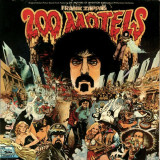
We are very excited to present you this new signing and debut EP by Dampé. A studio and live project from South East London. Since moving to the city, Dampé has been intimately involved in its club culture " from running warehouse spaces and booking venues to DJing and performing in groups across the city and Europe, under a slew of different aliases.
The music is made on a boat on the Thames and is a combination of dusty analogue gear, live instrumentation, and samples. For Dampé, influential parties were "Co-Op, FWD>>" and "You're A Melody" and echoes of those dances can almost be felt in the sound. Across five original tracks, the EP explores weirder and worldlier ends of house music, all with a nod to undeniably UK sounds.
"Peach Shuffle" is a made-for-the-floor, broken beat work-out that has this great warped and chopped Persian vocal sample giving the track a unique and world-wide touch, followed by "St James" Road", a crunchy live Rhodes jam and ode to a favourite street south of the river. "Move Me" is all garage-infused vocal loops and singing bowls and acts as an experiment-come-DJ tool. "Carn" is a super-swung hip hop beat featuring "SMBD" aka "Simbad" providing additional keys. Closing out with "Zongo Junction, At Night", a late night roller with material pieced together from saturated CR 78 samples and field recordings made when Dampé was recording sound for a film about witchcraft and the internet across rural Ghana.
To round up this exciting EP we ask a fellow SE London enthusiast "Nebraska" to make a remix of the title track "Peach Shuffle". Cutting up the vocal of the original, adding some mean bass and pouring a smooth "dance floor" sauce over it. The delicious end result is something we are very proud off and we hope you will enjoy as much as we do!
As humans living on the planet today, we have become so removed from our original, natural habitat—the forest—that we forget our wild roots, our primal, animal origins. Music is one of the things that can bring us back to that place, that can put us in contact with a felt world of instinct, immediacy, and presence: a world where language and the problem-solving mind are not needed, where the music keeps your mind and body in the present moment, and the point of dancing becomes the dance of our inner wildness and animality itself. Hans Berg's Sounds of the Forest Forgotten affirms that music can bring us to a state of mind and body that can help us feel what we've forgotten from the forest. The overlaying project of the album is to conjure musical and conceptual resonances between mysticism and nature, summoning the incredible depth and force of nature that we usually miss, especially living in contemporary urban cities. Sounds of the Forest Forgotten channels the creativity, playfulness, and freedom of a life both before and beyond ours through the sounds of analog and digital synthesizers, a modular system, drum machines, and computers. Recorded between Hans's studios in Berlin and on the Swedish countryside, the album similarly shuttles between contemplative and ecstatic, between delicate and powerful, mixing sublime psychedelic techno compositions like 'Emerald Sea' with acidic dance-floor bangers like 'Storm' and 'Milk Thistle,' all nestled between contemplative and textural ambient compositions like 'Butterfly' and 'Glow Worm.' Berg is known for his enthralling productions and energetic livesets that capture dance floors with his particular brand of hypnotic techno, replete with angular lines, affecting melodies, pulsating basslines, and big drums. He also produces atmospheric scores and ambient soundscapes to accompany the video art and installations of long-term collaborator and celebrated artist Nathalie Djurberg. Berg's live sets have found a home in nightclubs around the world, with recent gigs in Berlin, Stockholm, New York, Tokyo, and Melbourne, to name a few. In addition to 2MR, he has released his solo work on record labels including Ian Pooley's imprint Montage, Klasse Recordings, and The Vinyl Factory. His ongoing collaboration with fellow Swede Johanna Knutsson - as Knutsson/Berg - has led them to start the label UFO Station Recordings, on which they release their own material. The duo also has released on labels such as Idle Hands, Default Position, Kann, and Random Island.
Genre: Electronic, World (Arabic). 180gram vinyl includes 12'x24' art print poster + 320kbps DL card. RIYL: Matar Mohammad, Pauline Oliveros, Nadah El Shazly, Lucrecia Dalt, Chino Amobi, Sote, Arca, Fatima Al Qadiri, Tacita Dean, Stan Brakhage. Jerusalem In My Heart (JIMH) returns with Daqa'iq Tudaiq, the third full-length album from the Montréal-Beirut contemporary Arabic audio-visual duo, following the acclaimed 2015 release If He Dies, If If I f If If If (ye ar-end li sts at The Wire (#39), The Quietus (#24) and A C loser Listen (Top 10), among other accolades).
Featuring voice, electronics, buzuk and other instrumentation from composer-producer Radwan Ghazi Moumneh (Matana Roberts, Suuns, Big Brave) and abetted by the 16mm analog film work of Charles-André Coderre in live performance, JIMH continues to expand the horizons of its profound conceptual and aesthetic engagement with Arabic/Middle-Eastern traditions. Daqa'i q Tudaiq translates as 'minutes that bother/oppress/harass'—which presumably needs no further explanation—and features two distinct album sides of music. Side One realizes a long-held dream of Moumneh's to record a modern orchestral version of the popular Egyptian classic 'Ya Garat Al Wadi' by the legendary composer Mohammad Abdel Wahab. JIMH assembled a 15-piece orchestra in Beirut, enlisting the celebrated Montréal-Cairo composer Sam Shalabi (Land Of Kush) as arranger and musical director for the session. Anchored by the stately hypnotic pace of mallet and percussion instruments (riq, santur, derbakeh, kanun), the piece unfolds with lush, languid, reverb-drenched manoeuvrings through virtuosic Maqam shifts (Oriental scales). Moumneh's melismatic lead vocals and electronic production sensibility pay homage to the genre's documented historical recording traditions, while pushing things subtly and respectfully into new territories of sonic distortion and noised, artefact-laden transmission.
The song's original title (with lyrics penned in 1928 by the poet Ahmad Shawqi) translates as 'Oh Neighbour Of The Valley', but JIMH takes a different line from the original lyric as the new title for its orchestral-electronic re-interpretation. 'Wa Ta'atalat Loughat Al Kalam' (' The Language Of Speech Has Broke Down') is an expression of wordless love and transcendent communication between two lovers' eyes in Shawqi's poem; JIMH re-titles the song with this line, exploding the sentiment with more complexity, tragedy and socio-political meaning - also prefiguring the formal aesthetic ruptures JIMH bring to the piece itself. Love in a time of politics, politics in a world conspiring against love, and the specificity of Arab diasporic experience in our brutish 21st century. Side Two comprises four tracks of non-ensemble 'solo' material by Moumneh which push rupture and decomposition/recomposition of tradition further into avant-garde territory - voice, buzuk and electronics take the lead on a suite of emotive and evocative songs, including the percussive loopdriven instrumental 'Bein Ithnein' ('Between Two' ) and the stunningly unsettling processed vocal track 'Thahab, Mish Roujou', Thahab' ('(The Act Of) Departing, Not Returning, Departing'). Daqa'iq Tudaiq is a masterful, mesmerizing artistic statement and confirms Jerusalem In My Heart as one of the most engaged and forward-looking avant-Arabic projects at work in contemporary music today. Thanks for listening.
After their highly acclaimed debut album »Decadent yet Depraved«, Berlin and LA-based producers Belief Defect invited a variety of artists to join their »Remixed« project. The following 12' EP is a first four-track release of this project. The original tracks of the album are only an approximate starting point for »Remixed«. In contrast to »Decadent yet Depraved«, largely conceived in song structures, this EP is about transferring the pieces back into abstract space, and each remixer does it in his very own way. Alessandro Cortini's one-take live recording is a lesson in classical ambient music. Telefon Tel Aviv's remix is timelessly modern and extremely delicate sound design. Rather opposite concepts are coming from Surachai's brutal pattern design and Kangding Ray's expressive and analogously saturated repetitions for the dance floor.
James Baldwin was an unparalleled master of the written and spoken word. He was best known for his brilliant essays, plays and novels that shone light on his insights into race, sexuality, spirituality and humanity. Baldwin was an incredible orator who commanded the power of words. Whether on the pages of his books or in speeches and debates, he was passionate, compelling and powerful. This EP is the second half of a project that is a tribute to Baldwin. It features extracts from the audio portion of a documentary film shot of a discussion led by James Baldwin and Dick Gregory at the West Indian Student Centre in London in 1968.
Peabody & Sherman is a partnership between Phillip C Hertz and Curtis Ruptash - drummer and bass player respectively. They share common interests in dub, afrobeat, funk, jazz, ambient and improvisational music. They have long histories of the employing 'studio as instrument' approach to recording. The foundations for this EP was P&S rhythm tracks recorded at the Wayback Machine Studio in 2011. Supplemental instruments were layered on to create the final product. The same original sessions were also the source for their James Baldwin EP released in 2012. That EP featured remixes by Area and Afrikan Sciences.
The same concept is applied here, with remixes being contributed by Waajeed and BusCrates. Waajeed is a Detroit producer known for inventive and genre-defying music. He is background includes his work with Slum Village through to the Platinum Pied Pipers and to his work with his own Dirt Tech label today. BusCrates is a Pittsburg based producer known for his inventive use of electric and vintage synths to create deep layers of analog goodness.
In the cracks that sprawl between electronic and analog music, visual art, and craft creation, Yamila dances on the edge of sound and conceptual heights. The Spanish composer, cellist, singer and producer is based between Belgium, Holland and Spain. In recent years Yamila has created music for contemporary dance productions in places such as The Gothenburg Opera, Netherlands Dans Theater, and Dance Forum Taipei, among others. Her projects have been presented at festivals such as Sonic Acts Festival (Amsterdam), Arts Electronica (Linz), Seoul International Computer Music Festival, STRP Festival (Eindhoven), and Today's Art festival (The Hague) to name a few.
With 'Iras Fajro' (Forbidden Colours), her debut album, Yamila, summons in 11 songs with the strength of electronic sounds in front of a fragile voice that at times unfolds in small coral clusters. The brilliant electronic arpeggios and rhythms dissolve in the velvety voices of the cello, which are sometimes intertwined with the creations of two collaborators, the British producer and composer Clark (Warp) and the multifaceted ex- flamenco Nin~o de Elche (Sony).
My love wears forbidden colours My life believes My love wears forbidden colours My life believes in you once again
Welcome to the strange musical world of Tolley & Dara, an experimental duo whose incredible music held a marginal yet vital position on the fringe of the Australian music industry during the late 1970s and early 1980s.
Consisting of jazz bassist and synthesist David Tolley and percussionist Dure Dara, their union was a relationship of romance and intense creativity, a deep spiritual bond consecrated amidst banks of modular synthesizers and racks of exotic percussion instruments.
Recorded over a series of live performances in the spring of 1979, the music featured on Cutheart was edited and assembled from eight improvised pieces recorded at the Universal Theatre Melbourne. Comprised of analogue synthesizers and a vast array of tuned and non-tuned percussion, Tolley and Dara sculpted a cluster of electronic abstractions and organic splashes of Gamelan-influenced percussion; a dense otherworldly soundscape coloured with trance-like vocal scatting and deranged muttering.
Known for his bass playing on the classic Australian jazz-rock album Carlton Streets by The Brian Brown Quintet and also as a member of EX-, (the collaborative project with Daevid Allen from Soft Machine/Gong), Cutheart sees Tolley explore the outer realms of heady improvised electronic music.
While the music of Tolley & Dara exists in a sonic universe all of it's own, similarities could easily be drawn to another likeminded musical partnership, the American husband and wife duo Annette Peacock and Paul Bley. Cutheart is a pioneering recording of extended synthesiser and percussion technique from the Australian experimental underground.
iPM is proud to announce its very first vinyl, fruit of the inspiration of iPM's label heads A-Kintero and Mateo Holguin. NYC based Dj/Producer PJay has performed Live at many of the old school New York City Clubs. He is a Teacher of analog sound and modular synthesis and he is behind iPM's very first vinyl. With two tracks, one ambient and one Techno mix, both are characterized for their immersive and profound analog sound. "Crawl" is a laid back relaxed track which takes us on a journey of atmospheric synthesizers and deep bass lines with consistent drums that are sure to delight us, perfect for openings and closings. Brendon Moeller needs no introduction and he's on remix duties with "Space Jam", taking this track on a groovy happy vibe. This is definitely one to get people moving on the dance floor. "Space Jam" complements this Ep with a funky vibe where the cosmic synths takes the roll along with a moving and bouncing bass playing in sync with the consistency of the drums.
A Credible Eye Witness teams up with enigmatic Ghost Ride to create a new aesthetic and musical identity to his ACEW project. Loud yet energetic "Stellar Tunes" introduces four dancefloor electro cuts characterized by European noir tones and US funk sororities. From the Detroitish influences of opener "Sound Odyssey" to the ultimate 90's groove of synth pop 'Political Collapse', passing through the cosmic analog style of emotional "Purple Sky" or the hammering vibes of psychedelic "Obsidian", the 12' brilliantly combines acid abstract sounds, experimental and structural elements that underline the mastery of Emilio Urbano in developing original and intricate electro music. 'Stellar Tunes' sees the Italian moving on a bit from his first productions to explorate funkier landscapes. Expect nothing but electro at its finest!
Authors of the 4th release of the Mosaique label are the project Savage Ground, known for its works on Lux Rec, Pinkman Broken Dreams and Enfant Terrible. The project hides two people - Daniele Cosmo (owner of Lux Rec) and CCO (who's already participated in the first V/A ""Universe""). ""In not"" is a mixture of synth wave, analog distortion, experimental dance electronic music and vocals. The EP contains 4 tracks that divided the two sides of the plate into two different moods. This is a vinyl release without digital sales and repress.
Limited edition, vinyl only, A&B Sides - 33RPM.
D-Leria returns to the scene more than a year after debuting on Berlin-based label Delirio, releasing a collection of work produced between 2014 and 2018; ten tracks which mark a new beginning for this young Italian producer, sweeping between heavy ambient excursions to hypnotic/ tribal techno, modernized and polished off in his own way.'Driving to Nowhere' is the summation of an extended journey; a year-long hiatus due to unforeseen health concerns allowed time to meditate and consider his past experiences in Italy's various underground electronic music scenes, and the potential directions inspired by thriving Berlin.
From 2014 to 2017 he released several EP's, each developing upon this new style, until joining the young label Delirio as both a musician and a manager. With Delirio he has hosted artists such as Stanislav Tolkackev, Roberto Bosco, Plaster, Retina.it and more, with a unique agenda to record precisely produced music live, instead of laboring in the studio to achieve over-polished audio. His first album inaugurates the beginning of the new DLP catalog, which will be dedicated to LPs, albums and other projects released on 12-inch vinyl. Through these 10 tracks D-Leria experiments with various production methods, as in 'Makumba' where he precisely combines the kick drum with a tight bass line in a 12-step sequence, making the track fluid and never predictable. 'Reborn' is an even more ambitious undertaking, initially recorded on tape before being sent back to the mixer via Hi Fi stereo, D-Leria modulated the cassette coil with a bic pen to create a unique 'detune' effect. 'From the Ground' and 'Driving to Nowhere', both made through the same setup, combine tribal voices and moans, combining an ethereal ambience with drums and analog percussion, connecting the rhythm directly to the soul. The opening track 'Libero' is dedicated to himself, while 'Her Smile' and 'Uragano' are both dedicated to the person that was closest to him in his last period of stop and realization of the album, where he expresses his most deep moments in the first, and more difficult in the second.
Just like in most of the EP already released on Delirio, Giuseppe Tillieci aka Neel took care of the mastering of the tracks, while the artist has taken care of the smallest details from the production, to the mixing, to the graphics and also to the titles of the tracks, which refer to personal thoughts and events that happened during this long journey to nowhere.
Known for a broad swath of genre-obliterating club tracks on crucial labels including Critical, Exit, and 50Weapons, Sam Binga approached us earlier this year with a radically different kind of project, a collaboration with Welfare, true junglist and label boss at D&B bastion Rua Sound. The result of their team-up is Conamara Fieldworks. Its unique inspiration and patient process are best described by the duo themselves:
"In early November 2016, we set off through the bleakness of an Irish November into the wilderness that is Conamara, County Galway, Ireland, with about half an idea of what we wanted to do. Our friend Laney had been kind enough to allow us the use of a 300 year old cottage overlooking the sea, itself belonging to her family through generations which she was bit by bit restoring to its former glory. The isolation was perfect - very little in the way of creature comforts, no network coverage, but plenty of turf for the stove and Guinness for the belly.
Our routine for the next few days consisted of trudging the length of the rugged coastline in search of interesting sounds we could potentially process into usable elements for some kind of dub/dub techno-inspired composition...This took us inside tidal caves and abandoned ruins, across sheep fields, up and down mountains and winding country lanes, in and out of the odd pub, under upturned boats and (carefully) across huge washes of seaweed-covered shoreline. Using our handheld recorder (shouts Danny Scrilla for the lend) we assembled a palette of varied noises, constantly battling with the peaking and distortion created by the incessant Atlantic gusts.
Each evening, following some intense huddling around the stove and vital Irish home cuisine and stout, we'd examine and dissect what we had collected that day, sometimes discovering the most interesting material firmly planted in the background of the soundscapes. A certain amount of (but not too much) processing later we had the bones of a few short loops of each sound which made some kind of musical sense when played alongside each other.
Binga suggested staying true to the craft and keeping the rawness to the foreground by attempting to develop the loops into full compositions via live desk mixing, arrangement and effects. We said our goodbyes to Conamara and a month or two later said our hellos to the Dubkasm shedio. Following a crash course from the dynamic duo, we set to work for the day, learning as we went along and enjoying to the full the unpredictability, intuition and sheer vibes a dubbing session can bring, particularly in a studio kitted out with some fine analogue gear which undoubtedly helped us to keep that damp, saturated feeling that Conamara had sown."
The resulting collection of music speaks for itself, and does so in its own language. It is meditative, deeply textural, and richly saturated, with awesome sound design, generous bass weight, and dubwise finesse. Referencing ambient, concrete, and dub techno while never letting any genre dictate its path, Conamara Fieldworks is a deeply rewarding and intensely involving listen. A restrained yet transporting remix from the one Ossia completes the set.
Ever since Onom Agemo & The Disco Jumpers broke the dreaded curse of the difficult second album by releasing "Liquid Love", a cocktail so spicy and delectable that it could warm the cockles of the grumpiest man alive's heart, even in the most Arctic conditions, everybody wondered how the Onom crew could top that one. But now you have an opportunity to whip out your "Magic Polaroid" as proof that this wasn't an impossible Project. Never before has the band so successfully captured their full-on live sound as they do here, thanks to three days of recording frenzy at Daniel Nentwig and Sebastian Maschat's Butterama studio, a haven of analog hardware hidden in a remote part of Berlin's Neukölln district. The exploding kaleidoscope of styles that make up this album, perfectly reflected by the stunning cover artwork from Nick Henderson and photography by Christoph Rothmeier, means that they can no longer be confined to their early description as an "Afro-Funk Quintet" or merely described as a lively tribute to the artists which have influenced them: their sound is 100 per cent pure uncut Onom Agemo, even though every track feels like a new beginning. The presence of a charismatic in-house vocalist who brought her own lyrics along has also boosted their confidence considerably and provided a further knock-out punch to their onstage performances.
And no one will be disappointed as soon as the first bars of "The Trumpets Of Denmark" stomp on stage like a boisterous fanfare, with Johannes Schleiermacher's impressive wall of sound production making the musicians sound like a much bigger band than what their line-up suggests (with Maria Schneider from Andromeda Mega Express Orchestra adding some extra percussive clout) and just the right amount of dizzying cross-rhythms to steer it away from potential bombast. When Onom Agemo's powerhouse vocalist Natalie Greffel starts chanting what at first sounds like a string of Onomatopoeia, it soon becomes clear that she's laying down her manifesto for a nostalgic Space-Age yet to come, with a few key words serving as Mantra (Focus, patience, tears and creation): an invitation to drive off the Information Superhighway and its endless litany of polite noises, to redirect our gaze inside ourselves and learn to understand and sometimes question how others perceive us.
A lost ambient cosmic gem from Liquid Liquid founding member Dennis Young is getting a long-overdue vinyl reissue! Young, the percussionist and marimba player in the seminal New York art-wave group, recorded a series of cassette-only releases in the '80s after Liquid Liquid disbanded. A couple of these were picked up at the time for Korean release, which is where Daehan Electronics, a South Korea-based label dedicated to tracing the history of electronic music in the land of the morning calm, comes in.
Quest was one of these albums, part of a biorithmically-aligned New Age serie, each album meant to be heard on specific days of the week. DE has worked with Young to remaster the the album for this new release, bringing out the full warmth of the analog synthesizers used to create it. It is the first in a series of projected collaborations with Young, which will delve deeply into both the scarce cassette issues and other, unreleased material newly discovered on tapes. Liner notes outline the history of the record and include Young's own look back at the making of Quest.
A trio of guitar, bass and drums, Elektro Guzzi overcome the boundary between analogue versus digital, performing techno live with the drive of a machine and the sonic detail of an instrument - without any computers or loopers. For their upcoming album Polybrass, Elektro Guzzi have drastically expanded their sonic repertoire: both in the studio and on stage, they are joined by an ensemble of three trombonists, opening up a whole new realm of possibilities. With Hilary Jeffrey, Daniel Riegler and Martin Ptak, the band are joined by three brass heavyweights, each of them well renowned for both their solo ventures as well as projects such as The Kilimanjaro Darkjazz Ensemble, Sand and Zeitkratzer. By treating the three trombones not simply as a set of extra instruments but rather as one coherent body of sound on its own, Elektro Guzzi dissociate the brass instruments from their conventional use and repurpose them into something completely different: a modular synthesizer, with each trombone representing one oscillator. In doing so, Elektro Guzzi add new layers of depth to their music, emphasizing a more cinematic side of their music: like the soundtrack for a movie, Polybrass is bigger, darker, more dramatic, more intimate. Warm and fuzzy textures float weightlessly above fragile soundscapes and complex sonic fragments. At the same time, the band's signature sound runs distinctly through the entire album: solid percussive grooves, stripped down to the absolute minimum it takes to make your body move. Hypnotic repetition, building tension and suspense up to a point where the energy of the music gets so intense you feel like you can physically touch it with your hands, interlaced with organic patterns of sound, constantly changing and evolving, pulsating and oscillating. Vinyl: heavy sleeves + heavy printed inner sleeves, 180g vinyl with download code.
Limited Edition. Triple Transparent Vinyl 180g Incl. Poster & Download Code. Box Will Be Opened For Shipping To Avoid Seam-split. Hinweis: Box Ist Verschweißt, Wird Aber Für Den Versand Geöffnet
On October 19th Kompakt presents a new LP and audiovisual venture by Danish producer Kasper Bjørke and close cohorts. Epic and in length but always captivating, 'The Fifty Eleven Project' is an entirely ambient concept album, that interprets and evokes the emotional rollercoaster Kasper experienced, from his cancer diagnosis and throughout the five years of regular check-ups. The week of album release marks his second anniversary of getting the all-clear.
The base of the album was composed on vintage analogue synthesizers, reverbs, echo and sequencers - using the computer solely as a recording device - by Kasper and synth wizard Claus Norreen, in the latter's Copenhagen studio.
The violins, violas and cellos are composed and played by the Italian composer Davide Rossi, who has also worked with Ennio Morricone, Jon Hopkins, Ro¨yksopp, The Verve and Goldfrapp.
The piano parts are composed and played by Danish musician Jakob Littauer (of Kompakt labelmates Jatoma) on an old upright piano in a studio, and on a Steinway Grand Piano in the concert hall at the Royal Danish Music Conservatorium. From Max Richter's 'SLEEP', Hannah Peel's 'Mary Casio: Journey To Cassiopeia', to much of Brian Eno's 'Music For Installations', 'The Fifty Eleven Project' continues in a rich vein of work by contemporary composers which explores a situation/condition, and is made with functionality and healing in mind.
The visual side of 'The Fifty Eleven Project' is made in collaboration with the culture laboratory Prxjects and acclaimed LA based artist/filmmaker/photographer Justin Tyler Close, who has created art films for each of the album's 11 tracks - plus one music video, including clips from all 11 films. The 11 films will be assimilated into a video exhibition at Klub in Copenhagen from 12th - 21st October. The ambition is that the installation will tour Europe and the US in 2019. Furnished in an exquisite fabric box, this 180 gram 3LP clear vinyl box is presented by cover art created by world-renowned artist Landon Metz, further cementing the release's multidisciplinary links to the art world.
Am 19. Oktober präsentiert Kompakt das neue Album und audiovisuelle Abenteuer von Kasper Bjørke und Freunden. - The Fifty Eleven Project' ist ein komplett ambientes Konzeptalbum, das die emotionale Achterbahn, die Kasper nach seiner Krebsdiagnose und während fünf Jahre regelmäßiger Untersuchungen erlebt hat, interpretiert und offenlegt. Die Woche der Veröffentlichung des Albums markiert den zweiten Jahrestag seit der Entwarnung.
Die Basis des Albums wurde von Kasper und synth wizard Claus Norreen in seinem Kopenhagener Studio auf analogen Vintage-Synthesizern, Reverbs, Echos und Sequencern komponiert - der Computer wurde ausschließlich als Aufnahmegerät gebraucht.
Die Geigen, Bratschen und Celli wurden vom italienischen Komponisten Davide Rossi komponiert und eingespielt, der auch mit Ennio Morricone, Jon Hopkins, Röyksopp, The Verve und Goldfrapp zusammengearbeitet hat.
Die Klavierparts wurden von dem dänischen Musiker Jakob Littauer (bekannt vom Kompakt-Projekt Jatoma) auf einem alten Klavier im Studio und auf einem Steinway-Flügel im Konzertsaal des Royal Danish Music Conservatorium komponiert und eingespielt.
Von Max Richters - SLEEP', Hannah Peels - Mary Casio: Journey To Cassiopeia' bis hin zu Brian Enos - Music For Installations' - - The Fifty Eleven Project' setzt die Arbeit zeitgenössischer Komponisten fort, die sich mit einer Situation/einem Zustand auseinandersetzten und die auf Funktionalität und Heilung ausgerichtet ist.
Die visuelle Seite von - The Fifty Eleven Project' entstand in Zusammenarbeit mit dem Kulturlabor Prxjects und dem renommierten Künstler/Filmemacher/Fotografen Justin Tyler Close aus LA, der für jeden der elf Tracks des Albums Kunstfilme erstellt hat - plus ein Musikvideo mit Clips von allen elf Filmen. Die elf Filme werden vom 12. bis 21. Oktober in einer Video-Ausstellung im Klub in Kopenhagen gezeigt. Ziel ist es, dass die Installation 2019 durch Europa und die USA tourt.
Verpackt in einer exquisiten Stoffbox, die vom weltberühmten Künstler Landon Metz entworfen ist, zementiert diese 180-Gramm schwere 3xLP-Klarsicht-Vinylbox seine multidisziplinäre Verbindung zur Kunstwelt.
- A1: Mr Brown In Town
- A2: Mr Brown Dub
- A3: Trendsetter
- A4: Trendsettting Dub
- B1: Your Shadow Is Black
- B2: Your Shadow Is Dub
- B3: Dead Meat
- B4: Dead Meat Dub
- C1: Dub At Abbey Road
- C2: Abbey Road Version
- C3: Bumpy Road Of Life
- C4: Bumpy Dub
- C5: Captain Perry
- D1: Captain Dub
- D2: Killing Dancehall Softly
- D3: Killing Version
- D4: Solid State Communication
- D5: Solid State Dub
At 83 Years Of Age, Lee Scratch Perry Is Proud To Present To The World His Next Full Length Solo Album (with Dub Versions) , Continuing His Inimitable Roots Reggae Legacy.
Lee's Brief For The Album, Was To Blend The Vintage And The Obscure, During The Sessions Lee Referred To The Sound And 'black' And Wanted Space, Light And Darkness In The Songs And Their Respective Dub Versions.
The Result Sees Lee Having Mixed Up An Analogue Concoction Of Ultra-rare Effects, Sonic Wizardry And Deep Heavy Roots Rhythms.
Over 2017 and 2018, Lee Scratch Perry re united with Producer and Mixer Daniel Boyle, to start work on their second Solo album project for Lee.
Picking up where their last efforts ''Back on the Controls'' left off. Lee wanted to continue the raw analogue sound they had cultivated together over multiple past releases, and take it to the next level with new effects devices to create another sonic signature.
They entered the studio in 2017, to begin to put together ideas for the tracks, which were then taken to RAK studios in London with their ever changing Rolling Lion All Stars session band; to lay down the rhythm versions.
Using strictly vintage analogue equipment, they employed Neuman valve and RCA Ribbon microphones, and RAK's early model vintage API desk to record, the 'sound' for the album was sculpted in these sessions. Vintage, but punchy, which was then blended with Lee's choice of super rare and custom analogue effects. Ursa Major Space Station and Stargate delays and reverbs, old choruses, Plate and spring reverbs, and tape delays were used to create a tight vintage feel but retaining the rawness of the 'Low Fi' roots sound Lee was aiming for.
With the music coming together, the vocal sessions were held in Abbey Road studio 3, again using vintage RCA ribbon mics, over driving their EMI TG console and Fairchild compressors to create a pleasantly distorted Lo Fi vocal sound.
Lee and Daniel then returned to Daniels Rolling Lion Studio, to mix and Dub the album, live, on the mixing console.
'Rolling Lion All Stars' Musicians: Vocals: Lee 'Scratch' Perry Drums: Ed West Bass & Guitar: Hughie Izachaar Keys: Robbie Lynn Additional Keys: Calvin Bennion Percussion: Daniel Boyle Kete Drum: Mathias Liengme Hurdy Gurdy: Brian McCoy Horn Section: Rory Sadler, Robert Landen Melodica: Puraman Backing Vocals :
Silicone Soul welcome the return of old friend Justin Robertson as he brings his much- loved Deadstock 33s project back to Darkroom Dubs. Last spotted on the label only a matter of weeks ago with 'Infinite Interchange' on the 'Darkroom Dubs Presents Summer Love' collection, here he builds on the momentum with two more singular missions deep into the timeless analogue abyss. What's more, they come covered with a print of one of Justin's very own hand-drawn pieces. 'Dr. Spectro On The Frontier' marks the start of this new Deadstock trip. Celebrating the lesser spotted DC super villain who could control people's emotions with a brazen line or two of sinewy acid; what starts off dark and gnarly gradually unfolds into a much more emotional narrative. Watch out for the harmonic riff that rekindles feels of raving fields and a salvo of chords towards the climax that genuinely will control your emotions.'The Music Is Madness (To Those Who Cannot Hear It)', meanwhile, is more than just a poetic title. Already a summer anthem at A Love From Outer Space, it's a roomy, cosmic affair that's laced with layers of trippy textures and chugs at a cool 120. It's one of Justin's classic signature smouldering sessions; what ostensibly seems forlorn and introspective is actually coded with deep hope and positivity. You'd be mad not to hear it.You'd be mad not to stay tuned too... For the first time in Darkroom Dubs history, this release and all this year's vinyl dispatches will be released digitally as part of an end of year compilation, 'Tales From Underground Vol. 1' and will also feature an exclusive Silicone Soul remix of Rigopolar & Cannibal Ink's 'Thousand Years Before'. And to round the year off The long-awaited new single from Silicone Soul themselves.
6 track LP pressed on 12" black vinyl with black centre label, black disco insert, black laminated sleeve with barcode detail.
* London based label SM-LL presents its second main label 12" LP release, Zimní Král, from Italian artist Andrea Taeggi.
* Andrea Taeggi works in Berlin as a composer, live performer and electronic music producer. Besides his solo practice
— on his own name or under the moniker Gondwana, he is co-leading long-standing electroacoustic project Lumisokea. His music has been released on vinyl and dubplate on labels Opal Tapes, Type, and Präsens Editionen.
* The music on this record was made using a vast array of rare analog machines Taeggi had the chance to work on at the Willem-Twee synthesis studio in Holland (built with the iconic Studio di Fonologia RAI as a blueprint). Most of the percussive sounds come from an Analog Computer, which has been rarely used only as a music instrument (its main purpose was flight simulation). In fact, during the Cold War times it was also used as a measurement tool by civil engineers and even by the army. At present, no one has ever officially released music recorded at the Willem-Twee synthesis studio.
*The music on this record further explores cyclical, minimal and hypnotic concoctions - a particular investigation focused on unusual rhythms that Taeggi had already started on his well-received 'Mama Matrix Most Mysterious', released on Type in 2015. Think walls of sub frequencies, snappy rollercoasters of the mind, labyrinths in hyperspace & snakes eating their own tails.
Mirror Box is the solo analog synth project of Dallas musician Sean Kirkpatrick. With an extensive resume that includes keyboard duties for Kill Rock Stars' 00s noise rock band The Paper Chase as well as his concurrent projects, dark post-punk-synth-rockers Nervous Curtains and darkwave duo Little Beards, Mirror Box is Kirkpatrick's first foray into the purely electronic realm. Blending together elements of Giallo moodiness, dub texture, techno propulsion, a passing nod to your favorite wave music, and a flare for the kosmiche, Mirror Box' debut release, Minimal Compliance EP, is a tour de force of the veteran musician's exploration of a wide range of influences and experience.
Released by Dallas-based Gavin Guthrie (TX Connect)'s TRU (Texas Recordings Underground), the 5-track EP kicks off with the immediately-gripping title track. A huge mid-tempo 808 beat drives the menacing Moog bass while cosmic synths explore the skies over gritty, urban terrain. 'The Body,' grounded by its stuttering and singular bass line, is an expansive reworking of a track from Little Beards' debut album which features Nan Kirkpatrick on the release's only vocal appearance. Side A closes with 'Destabilized Agent,' a retro-futurist dream that effortlessly voyages from Sagan's Cosmos to a melodic minimal wave refrain.
While the first side's lush synthesizers and sophisticated syncopation are somewhat of a departure for TRU, a label that has so far defined itself by bringing the electronic sounds of Texas' underground warehouse scene to dance floors across the sea, the flip side of the record is where the four hits the floor. 'Grifter React' opens with a hard kick and electro zaps, letting the rhythm take the lead until a distorted bass finally enters to provide the hook. Minimal Compliance EP finale, 'Critical Blitz,' weaves together all of Mirror Box' finer elements into a concise mission statement. Pulsing, hypnotic mono-synth, vintage mellotrons, classic hats and claps, sweeping production (courtesy of Alex Bhore at Dallas' Elmwood studios) and sparse synth melodies converge in dark analog pleasure that will guide you along like on a cool air-conditioned drive through a devilishly hot Texas night.:
The Caribbean House Is A New Billy Bogus Project. It's The Perfect Meld Of Creepy Atmospheres, Sunset Grooves, Analog Sensibilities And Incessant Rhythms. Bogus Leads This Collective Formed By Federico Bologna (ohmega Tribe, Technogod) And Cristiano Santini (disciplinatha, Dish-is-nein,). This Triumvirate Of 90's Underground Italian Masterminds Come From The World Of Electronica, Noise Rock And Psychedelia. Here They All Combine To Rise Again Rise And Unite To Create Something Entirely New.
And So To The Music. Their Debut Lp Opens Up With The Dark And Haunting "night Drive". Recent Single "gong Bong" Is Next. It Is One Part Slo-mo Disco, One Part Psychedelic Moondance And One Part Sci-fi Horror Movie. If The First Two Thirds Of The Track Is A Caterpillar Then The Last Third Is A Butterfly As Uplifting Riffs And Swirls Of Layered Keys Bring Things To A Crescendo. "lonely Man" Is A Quirky Detuned Monster Tour-de-force Which Leads Nicely Into "love By Proxy". Layered Keys And Intertwined Arpeggios Mingle To Create The Closest Thing To A Love Song Possible From This Trio.
Flip The Vinyl Over For A Hippy Drive With "jesus Freaks" And Its Groovy Guitar Licks And White Noise Synth Blasts. "nature Nature" Is All About The Pulsing Bass Guitar And Sample Like Guitar Stabs Before Heading Completely Off-piste For A Synth-bass Ending. "africa Addio" Presents Us With Meandering Synth Lines Before Layering On A Waft Of Sound Effects And Spooky Keys. Movie Territory. We Close Off The Lp With The "streets Like Noodles". New Wave Nyc Chic Meets Underground Italy Psych.
Following a self-titled EP last year, Dario Rojo Guerra aka Natureboy Flako is set to release his second album 'Theme For A Dream' on Five Easy Pieces on 20th July 2018. Exploring the boundaries of music, science and spirituality through a prism of colourfully synthesised-sound, heart-pounding rhythm and cinematic soundtracks; the core essense of 'Theme For A Dream' is the exploration of the human inne space, the balance of musical energies and music's healing capabilities. 'Theme For A Dream' is a more electronic sounding record than his debut. Guerra makes extensive use of old and new analogue equipment such as the Juno 106, Korg's MS-20, ARP Odyssey or Roland's SH-2000 synthesisers, alongside recordings of vocals, guitars and other instruments. This serves to create a dynamic and eclectic sound spectrum, all unique to his musical handwriting. 'Theme For A Dream' will be accompanied by an experimental and interactive website that allows users to preview music while being an immersive, unique multi-sensual 4D xperience of its own. Snippets of the music from 'Theme For A Dream' become audio visual poetry and an immersive exploration of state of the art technology and oneself. 'I don't think technology necessarily means not being natural. Technology can be very much in balance with nature, since it is mostly just trying to imitate or trying to understand something from within nature. Around recording 'Theme For A Dream', Guerra also co-produced/co-wrote and engineered Kutmah's recent debut and Jitwam's forthcoming album, as well as produced almost half of Fatima's follow up album to 'Yellow Memories'. He is currently working on a film project with a London based production company and is already working on a new album, which is expected to bring back his vocal talent, previously released under the moniker Dirg Gerner.
This four-track EP named 'Curiosity' from techno duo, Abstract Man marks the beginning of the new On the 5th Day imprint, the latest branch to extend from the heart of the London-based underground techno project. The final outputs of a year-long creative journey in the studio with a focus on analogue machines, 'Curiosity' (including Mike Parker remix) represents a chapter of exploration into sound design and manipulation, and the unity and evolution of two separate musical identities through the collaborative process.
The debut release from Abstract Man begins with 'Curiosity' itself, portraying the first stages of the pair's collaboration and inspired by a shared appreciation for driving, hypnotic techno. Mesmerizingly linear and highly textured, the components forming Curiosity's foundations each command their own space, separately evolving with clear purpose whilst interacting in a compelling, ritualistic dance to lock in the listener. Its overall progression, including an emerging chant-like drone, signifies the manifestation of a new artistic voice, all together making this a symbolic achievement for Abstract Man, as well as a compelling and highly effective tool for the dance floor. The subsequent Mike Parker remix of the same track is another striking portrayal of his distinguishable sound and style, whilst developing to present something surprising and perhaps unexpected from the techno veteran, making this a must for collectors of his work.
Then follows 'Proposition', exploring the powerful possibilities through simplicity and symbolising the 'less is more' approach which fuelled much of the first chapter of Abstract Man's time in the studio. The joining of its elements creates a dark, seductive and unwavering tension, making it the ultimate tester for any venue's sound system!
Finally, 'Exploration' steps in a with an uplifting vigour and propulsive, rhythmic magnetism, rounding off the EP nicely with its feeling of freedom and completeness, leaving a sense of intrigue in readiness for their next instalment.
The first chapter of Armand Jakobsson's musical career has been
nothing short of remarkable. After establishing himself with rough
but emotive house as Rimbaudian and jungle as Birds of Sweden,
he unveiled his DJ Seinfeld alias to the world, first with underground hit single 'U', then with his Time Spent Away From U album on Lobster Fury in November 2017. It was a post break-up love letter to the dance floor with heart-on-sleeve emotions colouring the dusty and analogue house grooves. Acclaim came in from far and wide, with everyone from Rolling Stone to Pitchfork fawning over its heart swelling nostalgia and melancholic immediacy. Jakobsson approached his DJ-Kicks with the intention of representing all the things that made him fall in love with dance music more than a decade ago, as well as showing some of the progression that has occurred in that time and 'reflecting the simultaneous fear of leaving something safe behind as well as the excitement of venturing into unknown territories, musically and emotionally.' In order to make it as personal as possible, he called upon the many talented people around him making music. They returned with an enthusiasm that reminded Jakobsson of his own early passion, and in turn invigorated him and the whole process of assembling the mix. It was finally recorded at Inkonst club in Malmo because, recently back from years in Barcelona, he has not yet set up a studio in his hometown. DJ Seinfeld's DJ-Kicks is not only a testament of his characterful DJ skills, but also a complete artistic statement that showcases his unique vision of dance music
Bulkhead present their debut album - Aft Pressure - due June 1st on 2MR Records. In 2015, during the coldest Toronto winter on record, two old friends - Pop District and Patrik Benjamin - locked themselves away in the studio to experiment with a medley of hardware. Both solo artists in their own right, they had overseen their own projects prior, but had never considered how a collaboration might sound. Exploring the polarity of extreme cold and immersive warmth with a distinctly analogue feel, the duo carved themselves an aesthetic. And so Bulkhead was born. Using a raw, organic palette they repudiate formal structure and polish, opting instead for a freeform blend of unhindered mechanical techno and fuzzy ambience - slambient, if you will. Debuting in 2016, their 'Worker's Kampf' cassette album on LA imprint Far Away Tapes sold out quickly, warranting another release on 2MR featuring highlights of the cassette on 12' and digital. Continuing with the purveyance of abstract arrangements and machine wizardry, their forthcoming album - Aft Pressure - is a striking exploration of the intersection between frenzied techno and harmonic warmth.Fragments of techno and EBM mutate without strict guidance, rebuilding themselves into new forms with stunning physical qualities. Whilst many of the tracks might file under dance music, the DIY spirit of the album transcends a nightclub, occupying a peculiar space between the uncensored grit of the post-punk scene and some melancholic form of ambient minimalism. Angular percussion slices its way through dizzying synth leads whilst serene harmonies wander on their own accord. Darting melodies are made all the more powerful by their harsh timbre as drum-less excursions provide a cinematic backdrop. Aft Pressure is a statement of intent, blurring the parameters of dance music culture with equal doses of insanity and serenity. At the same time, it's also a hell of a lot of fun...
Bluestaeb's Evolution From A Beatmaker To A Producer Is His Sophmore Album everything Is Always A Process'.
He Is One Of The Key Figures Of A New Generation Of Up And Coming Hiphop Beatmakers, Who Have Emancipated From Genre Thinking And Instead Merge Old School Aesthetics With A New School Attitude And Organic Instrumentation.
Everything Is Always A Process Re-iterates Bluestaeb's Overall Approach To Life (and Thinking), But Also Has Direct Reference To The Making Of The Album Itself, Which Began With Moving From Berlin To Paris In 2015 In The Search Of New Influences And A New Creative Environment.
Created Between 2015 And Early 2018, Eiaap Embodies The Process Of This Transition - As Well As Collaboration With Instrumentalists And Vocalists From All Over The World And Recording In Different Studios In Paris, London & Berlin.
"meeting All Those Musicians And Trying Out New Ways Of Producing By Using Real Analogue Synths, Rhodes, Drums And Percussion Etc. Made It Possible To Overcome The Creative Boundaries Of A Home Studio With Just A Midi Keyboard" / Bluestaeb
Influenced By Madlib's "shades Of Blue" And Trained In African Drum Techniques Such As Djembé And Daruka, Bluestaeb Had Been Crafting His Own Beats Since His Teenage Years And Gradually Found His Sound Identity Through Experimenting With Hiphop And Jazz - First To Be Heard By A Broader Music Community In 2013, When He Released His Debut Album "1991 Extraterrestrial" (radio Juicy). Since Then The Prolific Young Artist Has Released Numerous Solo And Collaboration Projects ("b.l.u.e. Friday" In 2015 And - sidekicks With S. Fidelity In 2016). In 2016, He Produced Collaborative Album "lit - Lost In Translation With Rapper Juju Rogers, A Keen Manifesto Against Racism, Xenophobia And The Rise Of Anti-heroes Such As Donald Trump.
Today, Bluestaeb Lives And Works In Paris And Berlin And Is Set To
Release His Third Solo Album everything Is Always A Process', A
Smooth Neo Soul-induced Epic Featuring Artists Such As Noah Slee, Harleighblu And Melodiesinfonie, Via Jakarta Records In 2018.
Black To Comm's Marc Richter returns under his Jemh Circs guise for a 2nd album of sonic abstractions. In contrast to Black To Comm's analogue tape and vinyl based sound, in Jemh Circs he works with digital sources by primarily sampling modern Pop Music (and various other oddities) on YouTube (et al.) and sending chunks of it through a variety of arcane transformations and mutations.Using similar esoteric methods as on his 2016 debut album but with very different results the record deconstructs the hypermodern sound of Pop Music with a Post Punk attitude, energy and primitivism. Richter's combining disparate elements that shouldn't really work together but somehow all the chaos is making strange sense creating a collection of oddly diverging sonic vignettes with a surreal and anarchic spirit. This is music deeply rooted in the present but still difficult to pinpoint to a certain year or style."(untitled) Kingdom" converts a seemingly one-dimensional concept into a complex puzzle of ideas, sounds and narratives, completely assimilating the original sources and transforming them into novel entities with an unexpected melodic and rhythmic quality.Some press clips for previous releases:The overall effect is quite remarkable. Each track is like a hologram of pop music itself, a tiny part that reflects the whole. You almost feel that you could open them out and re-create entire popular music cultures. We'll be grateful for that when the next solar storm fries all of our hard drives. (Ian Sherred / The Sound Projector) In that way Jemh Circs is a record about process - not just how Richter loops and distorts and mutates his samples, but how the sounds of pop music create a particular sonic signature, one that gets more interesting the farther they're pulled from their original context. (Marc Masters / The Out Door) Recycling random audio off YouTube, Jemh Circs' process couldn't be less sentimental, but the results turn out to be sneakily emotive. (Philip Sherburne / Pitchfork)
Initially paying tribute to the analogue absurdity, sonic diversity and sheer imagination of the early 90s dance music landscape, Future Four returns after a hiatus of several years, pushing into new eras, machines and ideals with 'Connection'. Initially a solo project of Andy Meecham, the brains behind Emperor Machine, Chicken Lips, and Bizarre Inc., 'Connection' is the first Future Four release to feature the contribution of Erol Alkan as a permanent member, and is a coupled with a remix from I:Cube.
A veritable powerhouse of synths, vintage drum machines and all man-ner of effects, 'Connection' unfolds with minimal tempo and maximum impact, as sequences of unexpected electronics gradually build from every direction, each landing with the razor sharp precision associated with their composers. Cascading synths overflow like fizzy drinks, pro-pelling the track along an electronic patchwork of FM synthesis and psy-chedelia.
On the remix, I:Cube takes the unpredictable rhythm of 'Connection' and coaxes it's versatile, multiple elements into a timeless slice of boogie house. Nurturing the outsider Casio feel of the track under a musical heat-lamp, the always forward-thinking Frenchman emerges with a cut that could easily soundtrack both sun deck and space station.
In a scenario of overwhelming number of instruments, musicians often do not take the time to deepen and explore the creative possibilities of each gear they possess. One Instrument aims at counter-acting this tendency by challenging and limiting each artist in producing a composition by using only one instrument of their choice.
The LP opens with a composition by In Bloom, the new project of Martino Bertola, who drives us directly into a melodic ambience. To follow it is the dense, polyrhythmic experiment by Fabian Kempe's project 'Korridor'. Serena Butler's piece is built around spacey sounds and breezy rhythms.
Yhdessa, the newly born Dutch-Italian duo formed by Grand River (Aimee Portioli) and Enrica Falqui, leans towards ambient atmospherics and ominous sonorities with a refined Northern European touch. Yair Elazar Glotman ventures us across his contrabass player skills giving an acoustic touch to the record.
Swedish producer, Fjader (Ida Matsdotter), handles the flip with a moody techno cut filled with evasive analog acutes.
Claudio PRC delivers an electroacoustic soundscape created with a tiny, graceful drone machine.
The Dutch duo, Wanderwelle, closes the LP with a dreamy and delicate excursion evoking the mysterious sides of nature.
Emotional Rescue delves deep in to the past with the release of the first ever recordings by UK post-industrial, ambient pioneers O Yuki Conjugate (OYC). Recorded in Nottingham in 1983, the EP's four tracks showcase OYC's early sound: a beat-driven, lo-fi that places them alongside the early British electronic pioneers.
OYC, celebrating their 35th anniversary this year, are known for their "dirty ambient" sound - but it wasn't always thus. In their earliest incarnation OYC explored a more industrial approach characterised by tortured analogue drum machines, one-finger synth lines, played bass, tape loops and even flute. This naive sound template lasted until their debut album 'Scene in Mirage' (1984) before being jettisoned in favour of more ambient explorations.The story behind these recordings is one of brotherly love between bands. OYC swapped time in their rehearsal space for a day's use of a four-track cassette portastudio owned by their associates, Metamorphosis. Three of the tracks included were recorded on May 1st 1983 at The End Room (literally a studio at the back of one of OYC's parents houses) with the remaining track (live favourite "The Clattering Song") being produced a couple of months later.
To date OYC have remained largely unknown in the UK due to their wilfully obscure approach. They have released a series of very well regarded studio albums and innumerable spin-off and side projects that has recently seen a revival of interest in their early years, including appearances on Cherry Red's compilation of formative UK electronic scene 'Close to the Noise Floor' and Optimo's compilation of Fourth World-style music 'Miracle Steps'.
Accepting their fate as musical outsiders, OYC continue to make music with little reference to the wider world. This EP makes a fine addition to that body of work.
When we started The Bunker New York label in 2014 there was a short list of artists whose music we knew that we wanted to get out into the world. Lori Napoleon, aka Antenes, was high up on that list, although at the time the Brooklyn-based Chicago native had yet to release her recorded music at all. Five years on, after acclaimed records on L.I.E.S. and Silent Season, residencies at Issue Project Room and Bell Labs plus a busy global touring schedule as both a DJ and live performer, we are proud and excited to present Lori's Ante Meridiem EP under her Antemeridian production moniker. She tells us that the Antemeridian project is a special outlet for her more melodic synthesizer compositions and the name Antemeridian refers to morning light and the meridian lines of the planet, the view you would have from above if you were already in the sky/space/seeing the atmosphere also from a great distance.'
.
With this EP, Antemeridian has created nothing less than a masterwork of synthesis comprising unique soundscapes unbelievably detailed and crisp. We asked Lori to tell us a bit about her production techniques, which include home-built machines from unorthodox source materials including vintage switchboards and telecommunications equipment. She actually built her first synthesizer out of an antique telephone switchboard we donated to her from The Bunker HQ! I use a combination of synths and controllers/sequencers that I've made along with commercially available/ bought or modded analog synths and field recordings that have gone through a number of effects chains. There may be a crackling sound that emerged from the modular which made me think about a flame sparking and burning out, recalling a very organic process in nature - but in a composition it's a drum element. Perhaps the sense of detail comes from how I work on finding sounds before arranging them in a track so when I find one with little nuances and textures, then I'll be inspired to compose with it. Visceral sounds are very important to me, and sounds that you may not instantly identify with this or that synth model - which is why I like the idea of designing my own palette for portions of tracks.'
- A1: Power Failure (Feat. Kero)
- A2: So Many Places (Feat. Daren Dobski, Kero)
- A3: Glostic (Feat. Graig Gloster)
- A4: Eniko Moon (Feat. Kero)
- A5: Other Side Of A Dream (Feat. Craig Gloster, Fjord Rowboat)
- B1: Cubic
- B2: Don't Say My Name
- B3: Apport (Feat. Charlie Mckrittch Drums)
- B4: Coulee
- B5: Not Afraid (Feat. Daren Dobski)
Fayze came of age in Windsor, Ontario, a diverse, gritty Canadian city in the immediate shadow of Detroit. During the 1980s, this fortunate geography placed the local scene in the inner orbit of the emergent Detroit techno scene. From that starting point, Fayze fell deeply in love with experimental, original sounds. Today, his innovative, genre-defying soundscapes flirt occasionally with global schools like avant-pop and krautrock, but his sound is all his own. Fayze 's new music uses vintage analog synthesizers, which he's been collecting since the early 1990s, to build organic, textural compositions. An idiosyncratic collection of ambient, dreamy soundscapes, the album features inspired collaborations with Detroit, Windsor, and Toronto artists. Its myriad influences include Aphex Twin , Stereolab , Led Zeppelin , and Boards of Canada . A well-travelled creative professional by day, Fayze previously made music with Marc Houle and Marshall Sfalcin of King Kool Flipped . This is his first major solo project.