Released in 1989 by the noted audiophile label Chesky Records, Portraits is a testament to the prodigious talent of the legendary trumpeter, flugelhornist, and jazz educator Clark Terry.
The first of four albums for the Chesky label, Portraits was recorded when the St. Louis-born hornblower, then 68 years old, was a much-venerated jazz elder. By then, he had 35 albums under his belt and boasted a resume that included stellar collaborations with Duke Ellington, Charles Mingus, Quincy Jones, and Dizzy Gillespie.
For Portraits, produced by David Chesky, Terry assembled a quartet comprising pianist Don Friedman, bassist Victor Gaskin, and drummer Lewis Nash. With Terry alternating between flugelhorn and muted trumpet while also showing off his chops as an occasional vocalist, the quartet breezes through a blend of familiar jazz standards, like 'Pennies From Heaven,' and Terry's hard-driving original tune, 'Finger Filibuster,' where he shows off his athletic scat singing.
Other highlights include the Louis Armstrong favorite 'When It's Sleepy Time Down South' and 'Sugar Blues,' a nostalgic nod to New Orleans jazz. The album is reissued on 180g One Step Pressing Vinyl LP and SACD Hybrid Stereo.
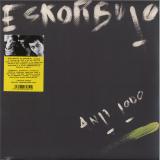
"Anti Todo" is Eskorbuto's most celebrated album, recorded in the shortest time imaginable and released in 1985. It shows what the Spanish punk band did best: hitting the studio with as much raw energy, provocation, inspiration, and natural talent as possible. A new remastering for this edition has given the album the richer, more vibrant sound it always deserved. We can once again enjoy the urgency, simplicity, and rage of this refreshed "Anti Todo", a true classic recorded at Eskorbuto's peak of their creativity and energy. It includes a large poster and insert with notes. DESCRIPTION 1985 was a landmark year for punk rock in the Basque country, and possibly for the whole of Spain. Punk merged with the Basque Radical Rock (Rock Radikal Vasco or RRV) movement, although this was not necessarily always the case. For instance, Eskorbuto invariably kept their distance from the movement and everything related to it. Hardship was part and parcel of Eskorbuto's life and musical career. All their albums were recorded in the shortest time imaginable, partly due to tight budgets (studios were expensive, labels were close-fisted), and partly because Josu and Jualma needed to spend the money on other things_ When it came to recording "Anti Todo", Eskorbuto stuck to what they did best: hitting the studio with as much raw energy, provocation, inspiration, and natural talent as possible. It was their best record and we have to ask: what would Eskorbuto have been capable of if they had more time, a bigger budget, and tighter control? The song 'Tamara' was practically composed on the spot in the studio in less than two recording days, as was much of 'Ha llegado el momento'. The experienced sound technician did an outstanding job, but a new remastering for this rerelease has given the album the richer, more vibrant sound it always deserved. We can once again enjoy the urgency, simplicity, and rage of this refreshed "Anti Todo", a true classic in our musical history, originally released in 1985 at Eskorbuto's peak of their creativity and energy. This edition of the album includes a large poster and insert with notes.
out of Stock
Last delivered 13 months ago available to reorder, subject to availability
Large Music proudly presents the long-awaited reissue of David Brown – “Feel Love”, originally released in 1994 and now making its triumphant return on vinyl for the first time in decades. Cataloged as LAR010, this essential piece of Chicago house history has been lovingly remastered and pressed to wax, reaffirming its legacy as a cornerstone of the genre.
Produced by Sherman Rogers and Darren Brandon of the acclaimed Black Ice Productions, “Feel Love” is a quintessential expression of the raw, soulful energy that defined the Windy City’s deep house scene in the early '90s. Blending hypnotic rhythms, warm synths, and David Brown’s emotive vocal delivery, the track captured the hearts of underground dancefloors from Chicago to the world.
Adding to the release's weight is an all-star lineup of remixers who need no introduction:
• Ralphi Rosario, one of house music’s original architects and a member of the legendary Hot Mix 5, brings his signature peak-hour intensity and timeless groove.
• Derrick Carter & Chris Nazuka, operating under their cult alias Red Nail, deliver a raw, stripped-back interpretation, dripping with analog grit and deep, jacking flavor.
This reissue isn’t just a nod to nostalgia—it’s a powerful reminder of house music’s roots and enduring spirit. Whether rediscovered or experienced for the first time, “Feel Love” stands tall as a classic slice of Chicago house, as relevant on today’s dancefloors as it was over 30 years ago.
out of Stock
Last delivered 4 months ago available to reorder, subject to availability
Ranil is undoubtedly the most unconventional figure among the greats of Amazonian cumbia, earning a well-deserved place alongside iconic bands like Los Mirlos, Los Wembler's, and Juaneco y su Combo. This compilation offers a glimpse into the vast musical output Ranil created in the late 1970s and early 1980s. Psychedelia, rock fusion, cumbia, salsa, mambo, Amazonian folk_ you'll find all these flavors blended into the vibrant, jungle-rich sound Ranil crafted. DESCRIPTION Ranil is undoubtedly the most unconventional figure among the greats of Amazonian cumbia, earning a well-deserved place alongside all the better-known iconic bands. He worked as a teacher, criollo guitarist, radio host, TV entrepreneur, and politician, but gained lasting fame as the founder of Ranil y Su Conjunto Tropical in the 1970s. By 1968, around the same time Los Destellos were making waves in Lima, groups like Los Wembler's de Iquitos and Juaneco y su Combo began electrifying cumbia in Iquitos. This new genre, dubbed Amazonian cumbia, exploded nationwide in 1973, thanks to hits by Juaneco y su Combo, Los Mirlos, and Los Wembler's. The success these bands achieved spawned dozens of other groups from the Amazon. Ranil, always a visionary, recognized the movement's potential and joined forces through his first single recorded on the Dinsa label in 1974. Unhappy with the contractual terms, he went on to found Producciones Llerena, the label on which he would release the rest of his discography. Over the years, Ranil y su Conjunto Tropical featured guitarists like Límber Zumba and Luis Nigro, while Ranil remained the lead vocalist and bassist for group. Zumba and Nigro had already played with other regional bands and written songs for groups like Los Destellos and Los Mirlos. This compilation offers a glimpse into the vast musical output Ranil created in the late 1970s and early 1980s, bringing together 14 tracks from the band's 10 LPs. These records have always been hard to come by as, despite being recorded in Lima, they were distributed by Ranil from Iquitos. Psychedelia, rock fusion, cumbia, salsa, mambo, Amazonian folk_ you'll find all these flavors blended into the vibrant, jungle-rich sound Ranil crafted.
out of Stock
Last delivered 13 months ago available to reorder, subject to availability
I have been playing Eternal a lot in my DJ sets & it all started with Dev/Null posting a video clip of a tune he was working on, in a Skype group chat we're both a part of. It was probably the best thing I'd ever heard from him and I hassled him relentlessly to finish this track so I could start playing it and then potentially signing it for Future Retro London. That tune he was working on ended up being Eternal & I had no hesitation towards taking the tune for the label. I asked him who he would like to remix Eternal for the release and he picked DJ B (who's had tunes out on Demolition Squad & Brazen) and he did a nice 4x4 version, taking the track down a stompier path (I don't know if stompier is a word but can't think of a better word to use).
Watch The Spin is a tune I first heard when I was in Helsinki, playing at a night called 20hz, organised by DJ Sofa & ODJ Pirkka. Pirkka played after me and during his set, I heard him play this track which had a wicked 90s Bristol jump-up flavour, but with new twists & style to it. I went into the booth and asked him who it was by, and he told me it was by him & another guy called Onni and that they'd recently started making music together under the alias of Unlimited Vibes. When I got back to London the next day, I asked him to send the tune and he did and I really liked the track, so decided to sign it for Future Retro London, to fit alongside Eternal on this release. And to complete the release, Ricky Force has done an exceptional remix of Watch The Spin, bringing his modern jungle sound to the table.
out of Stock
Last delivered 12 months ago available to reorder, subject to availability
LQ (label owner of Echo Chamber Sound/Run It Red) sent me a track he had done with Kloke called "2049" and as soon as I listened to it, I knew I had to have it for the label. It's the kind of tune where I hear it and it makes me wish that I was the one that had made it!
When I was considering producers best suited for remixing "2049", Equinox was the first that came to mind because I knew that he'd be able to build on the dark amen flavour of the original whilst taking it to a new place that still respects the vibe. They were up for it & so was he, so thankfully it all came together & here's the end result.
out of Stock
Last delivered 13 months ago available to reorder, subject to availability
Torn traverses the charnel realms of the grey area on his debut EP for DNO, ‘Taiga’. Steely beats and stony bass coalesce into chimeric rhythms across four enthralling constructions; techno and drum & bass seeping into each other like liquids in a solution, changing the very nature of both.
Opening with a solemn march shrouded in swathes of noise and jitter that blur the soundscape like the death throes of some unlucky video game character, ‘Wreak Havoc’ is an incessant builder. When it finally lets loose the chaos promised by its title, reinforced breakbeats rain down like great factory apparatus hammering out metal plates.
‘Whalebone’ is of a similarly industrial bent. Like a head full of rotor blades, it ripples with densely packed polyrhythms that rattle and whirr, new layers emerging from the churn to grab the consciousness before sinking back into the melee.
‘Taiga’, meanwhile, channelling the cold, ancient immensity of its boreal forest namesake, progresses at a plant-like pace — unhurried and purposeful. It's droning low-end seems to mask secrets, while a canopy of tangled percussion cuts angular shapes through the shadowy undergrowth.
And on ‘Stay’, the complex drumwork vibrates so rapidly around the track’s irradiated pads as to almost merge with them completely, rhythm and ambience becoming a singular hypnotic form.
A natural fit for DNO, Torn’s mystic machine music opens new pathways for the label’s darkling voyage through sound.
Rhythms of postmodern realism at the very bottom of the DNO.
out of Stock
Last delivered 13 months ago available to reorder, subject to availability
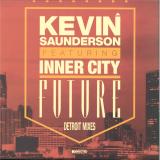
In 2011 Kevin Saunderson, Ann Saunderson and Paris Grey, collectively known as the legendary band Inner City, released ‘Future’, their first entirely new material since taking a break in 1996, written and produced in collaboration with another Detroit legend, namely Kenny Larkin, and the very talented producer / remixer Orlando Voorn. The track marked a welcome return for a group that combined the tough, futuristic grooves of the Detroit scene with the vocal energy of R&B and gospel and helped to define the period in which house and techno moved from underground phenomena to top 10 material, paving the way for hundreds of dance hits to come.
The Kenny Larkin remix devastated dancefloors at the time and continues to do so over 10 years since its release. Now fully reissued backed with the Carl Craig edit from the original pressing and the MK AW Deep Dub which had previously only seen a one-sided hand stamped white label vinyl outing.
Following on from FR023, Soulox & Soeneido are back once again on Future Retro London with a solid 2 tracker release. They sent me "It Been" last year, shortly after their first release had gone into manufacture and I really liked the tune and was playing it a lot in DJ sets but I didn't really have any plans to release it.
At the same time, I remember there being a track in Phineus II's set from the Future Retro London event that took place in February 2023 and I really really liked it but had no idea who it was by. When I later found out it was by Soulox & Soeneido and it was called "Why", it give me the idea for this release as neither track was signed to any other label and I felt that both tracks needed to see the light of day.
Big ups to the both of them on their solid output & many thanks to Shireen for the design of the b-side artwork.
out of Stock
Last delivered 13 months ago available to reorder, subject to availability
Indonesian duo Kuntari make music that's so distinctive, they had to devise their own genre: primal-core. On Mutu Beton, multiinstrumentalist Tesla Manaf and percussionist Rio Abror dialog with both history and their tropical surroundings in Bandung, West Java's mountainous capital. Using the cornet and hulusi, a free reed instrument made from a bottle gourd and bamboo pipes, Manaf echoes the bellows of local elephants, orangutans and rhinos, grazing Abror's ancestral Indonesian rhythms with potent overdriven riffs and evocative microtonal chimes.
It's music that's profoundly atmospheric and simultaneously raw, recorded live to fully encapsulate the dynamic and deeply human interaction between the two seasoned players. There are elements of sludge metal, noise and post-hardcore, references to traditional folk music and jazz, and gestures towards sound art, 20th century minimalism and dark ambient, but what Kuntari do is completely idiosyncratic -- it's hardly surprising it needed a similarly unique categorization.
Manaf started Kuntari as a solo project, debuting in 2020 with Black Shirt Attracts More Feather and animating his nimble instrumental improvisations with bold electronic processes and booming synthetic drums. And by the time he recorded 2022's acclaimed Last Boy Picked, his approach had evolved significantly; prioritizing organic sounds, he played prepared cornet and piano, bringing in additional percussionists to help devise a ritualistic rhythm section. Abror was one of those performers, and ended up sticking around, playing on 2023's furious LARYNX/STRIDULA, the stylistic precursor for Mutu Beton. At this stage, the duo have racked up a litany of accolades and collaborated with a spectrum of like-minded artists, from noise deity Keiji Haino to fellow Indonesian free-thinker Rully Shabara, who's best known for his work with Senyawa and avant-garde supergroup Osmium. Mutu Beton plays like a lap of honor, showcasing their most kinetic and most feral recordings to date. Kuntari surpass their own high standards, folding history and geography in on itself and suggesting a trailblazing Indonesian cultural movement that's not restricted by highbrow Western conventions. It's not just automation and technology that drives progression, it's interaction and observation. And there's nothing more primal, or revolutionary, than that.
out of Stock
Last delivered 13 months ago available to reorder, subject to availability
Just a year after the last compilation stood out as one of the best of 2024, Pete Herbert is back with a another brilliant collection of poolside sounds that again explore leftfield Balearica. These are delightfully horizontal grooves that transport you to sunny climes and starry skies in an instant. His own reworks feature, including a version of Sidirum's blissful and astral trip 'Ex Plane', a more tropical and propulsive dub of Lulla's 'Love Comes Quickly' and a quietly epic ambient daydream rework of Bill Mango's 'Inflight Sample.' These are grown-up sounds for cathartic moments lost in your own thoughts.
DJ Feedback
Don Letts/BBC6:
"Good to go on my show!"
Phil Mison/Cantoma:
"Another great MFSP release . Very summery, full support."
Leo Mas/Amnesia:
"Great Stuff."
Sean Johnston/ALFOS:
"PH on fire once again."
Trepanado/Selvagem/Brazil:
"Makes me wanna set sails and just go."
Ruf Dug/Pikes:
"Yeah this ticks loads of my boxes. Mega work."
Bill Brewster/DJ History/Lowlife:
"Some nice cuts on here especially Marius, Fernando etc."
Marco Gallerani/Hell Yeah:
"Beautiful compilation overall."
Sally Rogers/A Man Called Adam:
"Loads of lovely tracks here."
Feel Fly/International Feel:
"Definitely the compilation of the summer! thank you for this fresh breath of summer!"
Max Essa/Jansen Jardin,Tokyo:
"A beautifully curated collection providing a sublime listening experience!"
out of Stock
Last delivered 10 months ago available to reorder, subject to availability
Metalurgic Funk Vol. 2 takes a short leap from Vol. 1, with all 4 cuts based around solid tonks of straight forward techno. Cutting 909-hat's, tunnel-visioning and simple but detailed slings of futuristic synths thread the whole record together. Pretention is left aside for upfrontness and most advanced interpretation of these looped bangers are left to happen in the listeners head while segueing into the core of techno.
Deep siren & straight to the groove Techno by Ronny Nyheim on new Norwegian outlet PsyPal. Full A-side with a minimally modulating solid driver emphasizing sonic tunnelling below razor sharp hihats. B1 is a faster pounding & psycho-tweeked remix by E-GZR (from Wania fame) and B2 rounds off as a saturated banger conflicting melody & lightly groving harmonic & padded noise. Stylistically functional & very real!
Since our first contact with NYC based producer Thavius Beck in 2018, he sent us over 100 unreleased tracks, or beats, as he calls them. 25 of them have been selected for releases on U-TRAX, good for over 2 hours of music, across this album and the Lovesick EP.
Growing up in LA, Thavius Beck entered the hip-hop scene as member of Global Phlowtations, and released several solo albums under the Adlib moniker. In later years, he released five albums under his own name on labels like Mush, Big Dada and Plug Research, and also produced albums for artists like Saul Williams and K‑the‑I???, and did some remixing for amongst others Nine Inch Nails.
Nowadays he combines making music with a career as a succesful certified Ableton and Bitwig trainer and as a music teacher at Berklee NYC.
The tracks vary in style a lot, but what they have in common is that they either are moody – in U-TRAX lingo: deep - or they are drum heavy. The common denominator would probably be 'experimental/instrumental hip-hop', reminiscent of producers like Flying Lotus. People have tried all sorts of comparisons to pinpoint Thavius' sound, ranging from 'between DJ Shadow and Orbital' and 'a mix of Massive Attack and The Orb'. None of these are spot on, yet quite a few of these tracks feel like a happy marriage between hip-hop beats and techno sounds.
Despite the fact that some tracks are 20 years old and have been made with widely different gear (one track was even made on a PlayStation 2), this selection sounds remarkably balanced, yet diverse.
From the irresistible single 'Lovesick/Still Sick' to the dark and massive 'Birdsong' (that echoes the sound of his popular song 'Atmos'), and from the head-nodding 'Work!' to the soothing 'Reunited With The All' - if this collection showcases anything, it's Thavius' brilliant production and composing skills, as well as his wizard-level sampling techniques. The result is a luscious electronic music album with a broad appeal.
Available on double 180 grams colored vinyl vinyl, comes in gatefold picture sleeve.
out of Stock
Last delivered 13 months ago available to reorder, subject to availability
'The story of IDM in the USA begins in Miami’ - Fact Mag
Control Freak Recordings are thrilled to be launching its new reissue sub-label with Soul Oddity’s Tone Capsule - a seminal electro/IDM classic from mid-90s Miami.
Originally released as a series of 3 EPs, the reissue compiles these into an album, newly remastered by Keith Tenniswood (Radioactive Man) - available digitally and, for the first time, on 2x12" LP album.
Soul Oddity marked the first outing for a pair of musicians who were instrumental in bringing the UK's post-rave IDM scene to the US. Having bonded over a love for the Warp output at the time, the pair fused this influence with the sound of their native Miami, where hip-hop, breaks and bass soundtracked a lively party scene.
A masterpiece of machine-driven, emotionally abstract storytelling, Tone Capsule rivals some of the best of 90s leftfield electronica. Twitchy beats and gloopy synth-funk are melded into jams that make for a seriously otherworldly listen - as forward-thinking now as it was in 1996.
This record kickstarts our new reissue sub label Capsule Freak - marking the beginning of our dive into the rich past of dance music history which has brought the scene we love to where it is today. We can’t think of a more fitting time capsule to begin this journey with - over two years in the making, we hope you find this release as wild and intriguing as we do.
Limited edition remastered release of another wicked boogie joint from Delirium records that is just as good as Jagg and Neddy Smith from the same label and previously reissued by Best Record Italy. This one luckily has the highly playable instrumental and the soulful vocal version both mixed by the legendary Tee Scott. Don't sleep!
out of Stock
Last delivered 11 months ago available to reorder, subject to availability
2025 marks 20 years of Tectonic, the pioneering dubstep and electronic label founded in 2005 by Bristol’s underground originator, DJ Pinch.
The Tectonic Sound compilation lays down the gauntlet for the future direction of the imprint. Split across 6 x 4-track 12”s, the compilation comprises many producers making their Tectonic debut, including Re:ni, Beatrice M., Yushh, Flora Yin-Wong, and Sicaria, alongside stalwarts like Om Unit, RSD, Peverelist and Kahn & Neek. It’s an exhilarating 24-track journey through experimental, bass-heavy electronic music, with almost all tracks created by the artists specifically with Tectonic's sound in mind - at the intersection where dubstep and techno meet.
“More so than just the sound, the music is in tune with the real ethos of the early dubstep scene,” - Label boss Pinch says: “People talk about 'heads in a scene - but it's led by hearts really. I've always tried to follow my heart when it comes to music and all the music here is from people I trust that do something worth communicating with the world. I love to watch and help artists grow just as much as I'm excited to release tracks from bigger names who are still passionate about what they do and have developed the powers and control to be able to output that effectively. It feels like Tectonic has been a part of so many communities over the years now, and that there is something that binds all the releases together, something that speaks for itself in a way that goes beyond words, something that's instinctive and immediate.”
Across Tectonic’s 150-strong catalogue there are seminal releases by 2562, Scientist, and Mumdance & Logos, side by side with appearances from Flying Lotus, Shed, Adrian Sherwood, Riko Dan and Photek. The label holds some of the earliest dubstep incantations of Skream, Digital Mystikz, and Joker as well as Pinch’s own productions. The evolution of the Tectonic sound branches into audio explorations encompassing sub-heavy techno and grimey soundscapes alongside leftfield electronica and future-facing beats. The common thread that binds is Pinch’s devotion to pushing underground music ahead of its time, always built to rattle a soundsystem
out of Stock
Last delivered 13 months ago available to reorder, subject to availability
2025 marks 20 years of Tectonic, the pioneering dubstep and electronic label founded in 2005 by Bristol’s underground originator, DJ Pinch.
The Tectonic Sound compilation lays down the gauntlet for the future direction of the imprint. Split across 6 x 4-track 12”s, the compilation comprises many producers making their Tectonic debut, including Re:ni, Beatrice M., Yushh, Flora Yin-Wong, and Sicaria, alongside stalwarts like Om Unit, RSD, Peverelist and Kahn & Neek. It’s an exhilarating 24-track journey through experimental, bass-heavy electronic music, with almost all tracks created by the artists specifically with Tectonic's sound in mind - at the intersection where dubstep and techno meet.
“More so than just the sound, the music is in tune with the real ethos of the early dubstep scene,” - Label boss Pinch says: “People talk about 'heads in a scene - but it's led by hearts really. I've always tried to follow my heart when it comes to music and all the music here is from people I trust that do something worth communicating with the world. I love to watch and help artists grow just as much as I'm excited to release tracks from bigger names who are still passionate about what they do and have developed the powers and control to be able to output that effectively. It feels like Tectonic has been a part of so many communities over the years now, and that there is something that binds all the releases together, something that speaks for itself in a way that goes beyond words, something that's instinctive and immediate.”
Across Tectonic’s 150-strong catalogue there are seminal releases by 2562, Scientist, and Mumdance & Logos, side by side with appearances from Flying Lotus, Shed, Adrian Sherwood, Riko Dan and Photek. The label holds some of the earliest dubstep incantations of Skream, Digital Mystikz, and Joker as well as Pinch’s own productions. The evolution of the Tectonic sound branches into audio explorations encompassing sub-heavy techno and grimey soundscapes alongside leftfield electronica and future-facing beats. The common thread that binds is Pinch’s devotion to pushing underground music ahead of its time, always built to rattle a soundsystem
out of Stock
Last delivered 12 months ago available to reorder, subject to availability
Aura Sonora return with a second release to follow up the fantastic first one, this time it brings together two meticulous studio craftsmen, DYL & Tammo Hesselink. Their Moire Patterns EP kicks off with 'Pattern 1', a deep and rhythmic slice of rubbery techno that rides broken beats with atmospheric pulses up top. 'Pattern 2 slows down to a predatory crawl with icy pads making fro a dystopian vibe then 'Pattern 3' brings a sense of mystic tribal ritual deep in some futuristic jungle and 'Pattern 4' closes down with more fantastically crafted, dubby, broken rhythms that are topped with organic percussion and almost impossible not to move to. Pure rhythm science brilliance.
out of Stock
Last delivered 8 months ago available to reorder, subject to availability
UK electro wizard Plant43 marks his 20th year in the game in the only way he knows how: with another wonderful album, his 10th overall. It comes on his own now five year strong Plant43 Recordings and as he continues to lay it down with his regular performances at Tresor. Feeding The Machines is full of signature excellence, from the lithe rhythms of 'Information Decay' to the jittery drums and introspective chords of 'Anthropomorphic Algorithms' via the dark, hurried urgency of the paranoid 'Absolute Inertia'. This is another long player that is as adventurous as it is emotive and cinematic.
out of Stock
Last delivered 4 months ago available to reorder, subject to availability
Recorded as part of the same daydreaming puzzle as Unwishing Well, Still Clouds at Noon brings out the slowcore/sadcore elements that drift through The Reds, Pinks & Purples' melancholy catalog. Donaldson names '90s hometown San Francisco acts such as American Music Club and the more obscure Timco as pivotal to his guitar playing and development as a songwriter, both of which shine bright here. The slower tempo ballads on Still Clouds_ often culminate in heavy fuzz drenched codas and showcase the more abstract poetic side of Donaldson's lyricism. There's an inherent pop-sensibility always at work though, with ear-worm melodies appearing over intoxicating circular riffs. Formerly a Bandcamp only digital release, this white vinyl version is remastered and adds two unreleased tracks, one featuring Mark Monnone from Australian pop-legends The Lucksmiths on bass. Strictly limited edition of 500 ww.
Ash Ra Tempel is the eponymous debut studio album by the Krautrock band Ash Ra Tempel. It features guitarist Manuel Göttsching with drummer Klaus Schulze and bassist Hartmut Enke.
Engineered by Conny Plank it was recorded in March 1971 and released in June 1971 on Ohr Records.
This 50Th Anniversary Album will be Released in Memoriam of all the Musical Contributors to this Release and on Manuel Göttsching´s MG.ART label. It´s the fourth and headlining edition in this series and was finalised, carefully overseen by Manuel Göttsching himself in the late Autumn of 2022.
Much has been written about the record and band.
Having finished a first musical chapter with their Steeple Chase Bluesband and still at very young age of only 17 and 18 years old Manuel Göttsching and Hartmut Enke met Klaus Schulze. Together they started to write and and compose what, to many, became one the holy grails of Psychedelic Rock and early Electronic Music -
the German variant which was later also named "Krautrock":
Ash Ra Tempel´s self-titled first album "Ash Ra Tempel".
"The trio of Klaus Schulze, Manuel Göttsching and Hartmut Enke decided to abandon conventional composition and song writing, in favour of free-form improvising and developing a new musical language. As such, they became notorious for jams that could exceed 30 minutes." Says Discogs. "Some of these recordings can be found on Manuel Göttsching´s "The Private Tapes" releases", which will be re-released on MG.ART as well, following this edition.
"Krautrocksampler" author Julian Cope mentioned it to be "… one of the greatest rock 'n' roll LPs ever made." (Julian Cope Presents Head Heritage | Unsung | Reviews | Ash Ra Tempel - Ash Ra Tempel". 15 March 2000.)
AllMusic called the album "both astonishingly prescient and just flat out good, a logical extension of the space-jam-freakout ethos into rarified realms."
Here we would like the Band to be heard, for what can easily be said as the first time in 50+ years, with the exception of some early Journalists for whom the young Manuel Göttsching wrote a statement of intent (the original text can be found inside this edition) as following:
"Our musical concept is based on a combination of blues rock and delicate collages of electronic sound. These two elements should remain inseparable. And in their complex unity, the different musical philosophies of each musician find a common sweet spot. Our music is a permanently impulsive experience left to develop as it will, starting from a common fixed point of departure. This is where the difficulty of the music begins: No standardized formulation of our music can and should be possible. Only the constant reaction within the band can determine the musical result. And this requires constant listening with full concentration on the part of the creators. The idea of a particular musician will be - if flexible enough - absorbed by the others, transposed to their own instrument, and reflected back into the music as an individual contribution. This reciprocity within the band is then transferred over to the audience. And this process means that their reaction is not only a contribution to the end result; it actually makes them jointly responsible for the creation of the final musical product.
…
On our album, the track "Amboss" represents the first layer. Conventional instruments communicate familiar music which is in part expanded through electronic means. In the second track of the album - "Traummaschine" - the actual basic sound approach is dissolved into an electronic Nirvana which no longer allows the concrete identification of actual instruments. Innocent, virgin listening, free from any and every association, can finally begin - and the music can be absorbed and processed free from the limitations of categorization. That is the purpose of our music: To convey freedom without any predetermined criteria or traditions.
Thank you for your attention."
(Taken from the original A-R-T Bio 1970)
Hartmut Enke, Manuel Göttsching and Klaus Schulze aka. Ash Ra Tempel travelled to Hamburg in March 1971 to record their debut, with assistance of another Icon, legendary engineer Conny Plank.
The rest is history.
out of Stock
Last delivered 13 months ago available to reorder, subject to availability
Ash Ra Tempel is the eponymous debut studio album by the Krautrock band Ash Ra Tempel. It features guitarist Manuel Göttsching with drummer Klaus Schulze and bassist Hartmut Enke.
Engineered by Conny Plank it was recorded in March 1971 and released in June 1971 on Ohr Records.
This 50Th Anniversary Album will be Released in Memoriam of all the Musical Contributors to this Release and on Manuel Göttsching´s MG.ART label. It´s the fourth and headlining edition in this series and was finalised, carefully overseen by Manuel Göttsching himself in the late Autumn of 2022.
Much has been written about the record and band.
Having finished a first musical chapter with their Steeple Chase Bluesband and still at very young age of only 17 and 18 years old Manuel Göttsching and Hartmut Enke met Klaus Schulze. Together they started to write and and compose what, to many, became one the holy grails of Psychedelic Rock and early Electronic Music -
the German variant which was later also named "Krautrock":
Ash Ra Tempel´s self-titled first album "Ash Ra Tempel".
"The trio of Klaus Schulze, Manuel Göttsching and Hartmut Enke decided to abandon conventional composition and song writing, in favour of free-form improvising and developing a new musical language. As such, they became notorious for jams that could exceed 30 minutes." Says Discogs. "Some of these recordings can be found on Manuel Göttsching´s "The Private Tapes" releases", which will be re-released on MG.ART as well, following this edition.
"Krautrocksampler" author Julian Cope mentioned it to be "… one of the greatest rock 'n' roll LPs ever made." (Julian Cope Presents Head Heritage | Unsung | Reviews | Ash Ra Tempel - Ash Ra Tempel". 15 March 2000.)
AllMusic called the album "both astonishingly prescient and just flat out good, a logical extension of the space-jam-freakout ethos into rarified realms."
Here we would like the Band to be heard, for what can easily be said as the first time in 50+ years, with the exception of some early Journalists for whom the young Manuel Göttsching wrote a statement of intent (the original text can be found inside this edition) as following:
"Our musical concept is based on a combination of blues rock and delicate collages of electronic sound. These two elements should remain inseparable. And in their complex unity, the different musical philosophies of each musician find a common sweet spot. Our music is a permanently impulsive experience left to develop as it will, starting from a common fixed point of departure. This is where the difficulty of the music begins: No standardized formulation of our music can and should be possible. Only the constant reaction within the band can determine the musical result. And this requires constant listening with full concentration on the part of the creators. The idea of a particular musician will be - if flexible enough - absorbed by the others, transposed to their own instrument, and reflected back into the music as an individual contribution. This reciprocity within the band is then transferred over to the audience. And this process means that their reaction is not only a contribution to the end result; it actually makes them jointly responsible for the creation of the final musical product.
…
On our album, the track "Amboss" represents the first layer. Conventional instruments communicate familiar music which is in part expanded through electronic means. In the second track of the album - "Traummaschine" - the actual basic sound approach is dissolved into an electronic Nirvana which no longer allows the concrete identification of actual instruments. Innocent, virgin listening, free from any and every association, can finally begin - and the music can be absorbed and processed free from the limitations of categorization. That is the purpose of our music: To convey freedom without any predetermined criteria or traditions.
Thank you for your attention."
(Taken from the original A-R-T Bio 1970)
Hartmut Enke, Manuel Göttsching and Klaus Schulze aka. Ash Ra Tempel travelled to Hamburg in March 1971 to record their debut, with assistance of another Icon, legendary engineer Conny Plank.
The rest is history.
out of Stock
Last delivered 13 months ago available to reorder, subject to availability
ULURU is a large sandstone rock formation in Australia. It's sacred to the Anangu, the local Indigenous of the area. For many years it had been deprived of its spiritual significance, due to mass tourism, capitalism, as well as greedy and selfishness of people who just want to make money out of it. However, as a result of the Anangu’s resilience, care and staunchness, huge changes took place in the national park around Uluru as well as in the broader public's consciousness, giving again to the Uluru the sacred identity that had been lost.
You might be reading and thinking now: so what's the point? Actually, there's no real point. I would rather say, there’s hope. The hope of seeing humans all around the world following the example of the Anangu. The hope of seeing humans finally stopping to treat the earth and all what’s part of it, what’s on and what’s in it, as a slave without soul. The hope of changing today, and if not today at latest by tomorrow. This system is failing. It's no longer sustainable, and there's no much time left. So everybody, don't sleep, be critical.
out of Stock
Last delivered 8 months ago available to reorder, subject to availability
"Astral Americana hymns hovering somewhere between the dirt and the stars" Pitchfork
"Mood music for moments of solitude, best experienced without distraction" The Times
"Overwhelmingly effective and ravishingly beautiful" The Wire
American Dust is an ode to the beauty of the American Southwest, where vast desert landscapes hold stories both stark and tender. Eve Adams’ characteristic folk noir weaves a vivid tapestry of love, sacrifice and quiet revelation, conjuring images of dust storms, stray dogs and far off trains.
The high desert of California is a vast and confounding place. Equally inspiring as it is punishing, it’s a landscape that carries magic in its deep dark nights, holding stories both tender and stark in the coarse layer of dust that settles upon everything. It’s long been a source of inspiration for musicians, writers, and painters, each of them adding to the same current, carried forward over time, through hope and hardship and the passing years.
Somewhere out there in that broad and boundless landscape, Eve Adams has been living her own desert life, quietly writing the follow-up to 2021’s Metal Bird LP. Where that album sang of liminal space, the dream-like turbulence of Hollywood’s golden age, American Dust is far more rooted in traditional storytelling; a eulogy for the American Dream channeled through that sweeping part of the country that holds such power and mystery. Slipping into different and varied costumes throughout its ten songs, it finds Eve not just observing the people around her but stepping into their shoes and peeling back the layers of their quiet lives.
Adams writes from within. A few years ago she moved out there, to “the middle of nowhere”, finding a slowness that didn’t exist in the city, and she knows only too well about the mystical nature of the land and those who live within it. Weaving together themes of grit and romance, American Dust holds its focus on the bittersweet poetry of lives lived in solitude, most notably the women who sustain life at the center of it all. “There’s something very radical about domestic life,” Adams says of this thread. “So many women live their entire lives behind closed doors, completely in the shadows. Within those lives is such sacrifice, devotion, and love. I wanted to honor that: the poetry in the mundane, the longing in the repetition. The way love survives boredom and dust and time.”
Eve is joined on American Dust by Canadian musician Bryce Cloghesy, aka Military Genius of Crack Cloud, who plays throughout and also helped produce the album. Musically bold and vivid, it’s an ambitious and detailed stride forward from what’s come before, the scope of the LP’s narrative reflected in the radiant sweep of the playing. On top of gentle piano and guitar, gorgeous strings drift through the album, lending the songs a woozy sense of romanticism; a collaboration with Gamaliel Traynor (Cello) and Caroline’s Oliver Hamilton (Violin).
For all the drama that’s coiled around these songs, it’s the recurring notion of love and hope fighting against everything that holds true throughout American Dust. Musically it’s lush and vibrant, intimate and cinematic side by side, and always bursting with warmth. But it’s what it holds in its weary bones that elevates it to something truly special, something more than just a collection of songs penned in the heart of the desert. The characters it speaks of, and from, feel shadowed but wholly real, like they’re bursting to share their stories that have remained hidden for years and years and they allow Eve Adams to grow as a songwriter right in front of our eyes.
“The same swirling dust that clung to the covered wagons of my ancestors as they crossed the Great American Desert is the same dust my great-great-grandmother swept off her porch during the Dust Bowl of 1936 in Oklahoma, is the same dust that blows in through the cracks in my windows here in the desert, carrying stories from a time long gone,” Eve says, reflecting on the personal narrative that runs through her new album.
“It’s not just dust—it’s American Dust, the kind that settles into the bones of a family and never leaves. I think about that dust as a symbol of the passage of time. I hope this album will be part of that same current, carrying forward for the next generations of my family to find. I’ve been lucky enough to have journals and poetry from my ancestors that documents their lives during times of pure hope and pure hardship. I’d like to think of this album as a contribution to that family history.”
Blaney describes A Room With A Door That Closes as “a love letter to her blue,” an emotional state that she defines as “a kinetic, intense, and dark energy that needs to be expressed as soon as it is felt.” The eleven songs on the album span radioactive kiss offs, sorrowful meditations on yearning, and gossamer reveries about self image.
The music has a fittingly tumultuous, intricate sound: 1960s soul samples melt into warm drum n bass percussion, blips of glitch ping pong against grating synth, and Blaney’s vocals range from searing punk exclamations to gentle, exploratory croons. It’s the sound of a singer peering deeply within herself and presenting the world with everything she finds, unadulterated, in real time. Blaney produced the new project along with a tight team of three producers: Emerson Fossett, Harlan Steed (Show Me The Body), and Alex Farrar (MJ Lenderman, Wednesday, Squirrel Flower, Snail Mail).
Blaney had just started playing guitar and producing around the time she began writing the songs that would become the album. Being new to both producing and guitar playing opened up a sense of exploration and freedom for her. She felt emboldened to employ more adventurous riffs and unconventional song arrangements when she was writing. A Room With A Door That Closes is a collection of songs that rigorously pursue honesty, that present feelings as they arise without rushing to categorise them or explain them away. In the process of understanding her rage or discomfort, Blaney often lands on a sense of pride and assurance, but that’s never the ultimate goal. She eschews the easy comfort of neat resolution for the excitement of ongoing discovery. The album is an exercise in unfiltered self-expression, and a celebration of life at its messiest.
A“This album is about what it means to be human, and its creation is my offering. I attempt to tell a tale of the human experience in the reflection of my own.”
‘In the Andean mythology, condors are believed to be immortal. It is said that once they feel old, without energy, and useless, they climb to the highest peak and let themselves fall to death.’
The Allegorist is a visionary, enigmatic, transmedia, and boundary-pushing artist known for crafting deep, immersive dark sonic tales. Embracing a wide array of influences, weaving together the mysteries, art and spirituality, the art project defies categorisation, resonating with those who seek the unconventional.
From Birth Until Death is an introspective and immersive concept album that reflects on the essence of the human experience. Crafted over six years by The Allegorist (aka Anna Jordan), the album traces the arc of life—from its fragile beginnings to its inevitable end—using sound art to explore existential and philosophical terrain. Inspired by the Andean mythology of the condor – a symbol of immortality – the album blends electronic soundscapes with raw field recordings, evoking a deep sense of connection between the natural world and human existence.
The album’s progression mirrors the stages of life, starting with the birth of new beginnings and culminating in death, with each track offering a unique reflection on the moments in between. From the dynamic energy of Momentum, to the ethereal, illusionary world of Fata Morgana, the tracks guide the listener through emotions, perceptions, and experiences that shape the human condition.
A distinctive feature of From Birth Until Death is its intricate production. The album incorporates field recordings from Grunewald Forest, a distant roar of a jet, barking dogs, blending the sounds of nature – footsteps in the snow, birdsong, ocean waves – with layered synthesisers and electronic beats. The bass and ambient textures are crafted using an array of analog hardware, while all vocals, both lead and backing, are performed and recorded by Jordan. Some of the vocal takes were intentionally left raw, capturing the spontaneous energy of early recordings, while others were re-recorded to balance the album’s organic yet polished feel. Each element is meticulously crafted, revealing its deeper meaning as the album unfolds like a multidimensional, living sculpture.
At its core, From Birth Until Death is a meditation on the full spectrum of life. The album’s title track, From Birth Until Death, encapsulates this journey, reflecting on the passage of time and the unique experience of being human. The final track, Death, offers a melancholic yet beautiful exploration of endings, not as finalities, but as moments in the grand cycle of life. With its combination of evocative sound design and deeply personal themes, From Birth Until Death invites listeners to contemplate their own lives, offering a moving experience of reflection, growth, and transformation.
About From Birth Until Death
Words By Robin Rimbaud (Scanner)
From Birth Until Death is a deeply personal and reflective album and beautifully crafted. A detailed listen reveals that Jordan was in search of a profoundly human and authentic expression. In an era when so much around us seems defined by speed, Anna Jordan, aka The Allegorist, stands apart – aware that skimming the surface of life is neither sufficient nor rewarding. She reminds us of the value of deep, authentic listening.
The track Andean Condor seductively draws us into a smoky, blurred rhythmic soundscape, capturing the essence of the darkest Berlin nightclub, while Birth pulses with an almost shamanic transformation of sound, moving from the organic to the musical. It features a recording of Jordan’s footsteps in the snow in Grunewald Forest, Germany.
At times, the music feels almost sculptural in shape and tone – lifting, pushing, lilting, opening, and closing – where each piece is given room to fully develop. Many of the works blend synthetic sound with the natural, incorporating the human voice alongside environmental recordings: the wild waves of the ocean, a jet flying overhead, and barking dogs.
With From Birth Until Death, Jordan, like an alchemical architect revealing in the process of getting lost and relinquishing control, leaves us with a taut, immersive soundtrack in which to lose ourselves.
About the album ‘From Birth Until Death’
words by The Allegorist
“The album From Birth Until Death did not come easily to me. I started working on it in 2019, and it underwent many alterations over the years. I produced multiple versions of the tracks each year, but the album name, the track titles, and the album cover art stayed the same for 6 years. Not everything I did fit into the album’s final form, but I hope the heavy selection just made it better. I played this piece live in my techno live set between 2019 and 2020, and in the years after, I performed different art, ambient, and vocal versions of it, most notably the one at the church St. Marienkirche in Berlin in 2022. It just wanted to live and didn’t want to be finished. As I aged, this album aged with me. And now I’m ready to let it go.”
out of Stock
Last delivered 13 months ago available to reorder, subject to availability
Chickasha, Oklahoma is not a place known for producing a lot of original proto-punk bands. In fact, there is, to our knowledge, only one: Debris'. Formed in 1975 by bassist Chuck Ivey, guitarist Oliver "Rectomo" Powers and drummer Johnny Gregg, the trio created some of the most art-damaged outsider rock 'n' roll this side of MX-80 Sound.
When a local studio offered the package deal of ten hours for recording and mixing as well as pressing 1,000 LPs and two-color jackets, Debris' came in well-rehearsed – nailing all eleven of their songs in just one take. In April 1976, the same month as Ramones' debut album, Debris' would release their lone record onto the world.
Opener "One Way Spit" could easily be mistaken for a lost KBD single – from Chuck's bizarre count-in to the band's trashy start-stop rhythms, unfurling a Dadaist flag around Johnny's visceral vocals. On "Tricia," a reference to the then-current Patty Hearst trial, Oliver's gruesome groans are sardonically juxtaposed with an electric saw. These LSD-tinged tunes are a potent mix of Beefheart-ian controlled chaos and the genuinely weird avant-rock associated with the mid-'70s Cleveland scene.
Enhanced by analog synthesizers and electronic effects, the album sounds like Eno-era Roxy Music or Stooges' Fun House buried deep in the red Oklahoma dirt. While punk would spark a handful of bands who boldly straddled the line between the primal and the experimental, the relatively unsung Debris' were one of the first to do so.
Debris' had a standing invitation to play New York at Max's Kansas City and CBGB in 1976, although they never made it out of Oklahoma. The private-press edition of their self-titled album (also known as Static Disposal, which was actually the label name printed on the original front cover) has since become a collector's item and is even namechecked on the infamous NWW list.
Leeds-based noise-rock band Thank drops their second EP Please. Coming out as a joint venture between Buzzhowl Records and Belgium's EXAG, Please is the follow-upto the group's debut EP, 2017's Sexghost Hellscape. While the tension in Please could be too much for some bands to hold, Thank sustainit expertly across the four tracks here. This is thanks in part to superbly-balanced production by Rob Slater and Jamie Lockhart (Greenmount Studios) as well as a meaty mastering job from Declared Sound's Dominic Clare. Furthermore, vocalist Freddy Vinehill-Cliffe (Beige Palace) acts as a lightning rod for both elements of Thank's sound. Vinehill-Cliffe's lyrics tackle by turns Catholic guilt, deaths in the family, his experiences in therapy, sex, loyalty and betrayal. Whatever the subject matter, every syllable of Please is delivered in a selfflagellatingyelp that is equal-parts Xiu Xiuand post-Nite Flights Scott Walker. Such a tragi-comic performance is the perfect focalpoint for Thank's harsh, powerful Please. "A brutally deranged band that mixes krautrock and experimental electronic music into their caterwauling punk, reforming noise rock with robotic grooves and manipulatedsynths." - Post Trash "Thank trade in groovily abrasive riffs, burbling synths, disco-punk drum patterns and high level ranter vocals." - The Quietus
Limited 180g black vinyl (500 copies worldwide)
“Marcel Wave combine sharp-eyed Northern lyricism with DIY guitar-janglers rooted in a retro C86 aesthetic. Epic finale ‘Linoleum Floor’...is a gloriously bleak rumination on the horrors of enforced late-night hedonism worthy of prime Pulp” UNCUT
Marcel Wave write eulogies for tragic actresses, ancient riverbeds and concrete obscenity. Their inaugural sonic instalment ‘Something Looming’ is part trades club symphony, part itchy serenade, and part wistful lament. As their heady concoction of ‘Meades meets Pat-E-Smith meets Kirklees Borough Council’ gets prepped to be formally baptised on a dank stage near you, Upset the Rhythm and Feel It Records have dutifully stepped in to deliver its songbook to the masses on both sides of the pond.
Formed when Lindsay Corstorphine and Christopher Murphy of Sauna Youth and brethren Oliver and Patrick Fisher of Cold Pumas were summoned by northern ink-slinger Maike Hale-Jones, Marcel Wave’s debut offering is a walk through a smoke-filled pub with yellowing wallpaper and all eyes on you. It’s a chronicle of the death of the docklands, the decline of industry, of the high street, of civic pride, of civilisations, of hopes and dreams. As Hale-Jones delivers the bad news in her low, West Yorkshire brogue, Corstorphine adds the bells and whistles via the frantic pulsations of a wheezing Hohner organ in tandem with Fisher O’s rasping guitar. MW are completed by the throbbing basslines of Murphy and Fisher P’s fervent rhythms.
The title itself sets the tone for the listener. There’s a sense of foreboding in Hale-Jones’ lyrics which sit at the quintet’s core—elegiac, sardonic and piquant in equal measure. A mixture of narrative epilogues and inward paeans, her words weave tales across a broad thematic church. Crooked tales of urban renewal and the voices left behind are probed in ‘Barrow Boys’ and ‘Stop/Continue’ and are at the fore in ‘Where There’s Muck There’s Brass’ with its refrain lamenting ‘Concrete and slate shine in the rain, cities destroyed, nothing to gain’. In these lyrics, tower blocks loom over terraced houses with the same shadows that the Hollywood sign casts over Peg Entwistle before she takes her tragic leap. ‘Peg’ and ‘Elsie’ are both meditations on two different actresses with different fates crushed by the cut-throat trappings of showbusiness: ‘The mad hopes break, fragile as glass. She traded it all, for the cutting room floor.’ A snaking, existential dread also runs through the album, stated more obliquely in the otherwise poppier interludes of the title track ‘Something Looming’ and album opener ‘Bent Out of Shape’, and present too on the comparatively ramshackle ‘Discount Centre’, where Hale-Jones reports ‘On a mini bus on the outskirts of Enfield, I’m losing all of my spark’. On the album closing weeper ‘Linoleum Floor’, it is laid barer still—a keyboard-led reflection on the deflating nights out of our early-twenties.
Marcel Wave invites the listener to dance to society’s decline, and then to later weep into its lukewarm pint.
out of Stock
Last delivered 13 months ago available to reorder, subject to availability
LP comes with 24 page 8.5x11 full color booklet. In the blurred and memorial hallways of bygone time, to remember is to wander between the rooms of our own experiences, to appear and disappear, like a play of overlapping shadows. In music set drifting through the architecture of his own memories, Moses Brown weaves a story that oscillates between the past and the present, like a mason turning over stones to reconstruct his childhood home in this beautiful and disquieting soundtrack to growing up. On Stone Upon Stone, Moses' first solo LP attributed to his given name after several releases under the brilliant and despondent "Peace de Resistance" moniker, he moves sidelong into the realm of soundtracks with this score to the construction of his childhood home in a story spanning 1993-2023. Laid out in lush and provocative minimalist instrumentals, the album unfolds a story about the planning, partial construction, and dissolution of a home in constant state of becoming through the lens of its only child, coming of age under flux. Influenced by the approach of friends and collaborators Straw Man Army's OST to Charles Darwin's Voyage of the Beagle, Stone Upon Stone was originally intended as a soundtrack to a novel of the same name by Wieslaw Mysliwski, an epic set in Poland about a family's construction of a mausoleum. Struck by the story's parallels with his own family's project, he got the idea to complete the work as a personal narrative. Created from layers of different mellotron voices then separated, re-amplified, and recorded as if they were a sitting chamber orchestra, the music eerily blurs the line between human and synthetic, giving way to something akin to a memory with it's blurriness of fact and fiction. In the same spirit of association, this record is certainly influenced by other minimalists working within the confines of "soundtrack", like Philip Glass' North Star and the film work of Michael Nyman. But Brown's soundtrack works within its own peculiar depth of field, living in the listener's imagination, thriving in its own sense of loneliness, aspiration, and confusion that only childhood can evoke. Listeners will feel the entropy of aging in Stone Upon Stone, like a memoir in cascading tones, that sets it apart from so much else in DIY music, and rewards with repeated listens. For Fans of Philip Glass, Kali Malone, Julius Eastman, Mica Levi, Roedelius.
White LP. Born out of the early 1980's Austin noise punk scene, Scratch Acid deliberately eschewed the loud, fast rules of hardcore as everything they didn't want to be and embraced a weirder, artier sound. Prior to the release of their 1984 debut S/T EP, someone gave Touch and Go Records owner Corey Rusk a cassette of the recording, and he was instantly a huge fan. Rusk was immediately interested in releasing the EP and contacted the band to express his admiration. At the time, Scratch Acid had already committed to working with Rabid Cat Records, who released the band's debut release S/T EP (1984) and their only full-length album, Just Keep Eating (1986). The group quickly developed a riveting performance aesthetic, and, as the debut S/T EP made its way around the country via fanzines, college radio, and word-of-mouth, the band mounted short tours to the Midwest and the East Coast. After playing a total of 146 shows, Scratch Acid broke up after the long tour that followed the release of the Berserker EP (Touch and Go Records, 1987). Since that time, the band have had many imitators, and many alternative bands have cited Scratch Acid as one of their influences.
The Fuse album was remastered at Abbey Road in 2023. The album includes an extra unheard track from the period called New Liberty. Artwork is by Chris Bigg of V23.
The second in a series of archive releases by Cranes, Fuse was recorded in Portsmouth, their home town by siblings Alison and Jim Shaw. It originally appeared as a cassette album in 1986 on the Bite Back! label. With an initial run of only 200 copies, over the years this album, with its distinctive purple cover has been highly sought after amongst fans, often exchanging hands for more than £100.
FUSE showcases a sparser, darker and more industrial, post punk sound. From the hypnotic allure and rhythmic intensity of the title track to the ferocious and challenging beats of Wrench, the songs are just as mesmerising as Cranes' later, critically acclaimed releases.
Recorded in a garage on a 4 track porta-studio, the band spent many months experimenting and became obsessed with the recording process. Jim Shaw used a very early sampling pedal to create the drum sounds, which were all individually triggered. The only and first ‘industry’ person to hear anything by Cranes at this time was Martin Hannett (legendary producer of Joy Division and New Order). He was looking for unsigned bands to appear on a new music TV show in Manchester and so Ian Binnington from Biteback! sent him a compilation tape of many Portsmouth bands. Hannett picked out ‘Fuse - original version” by Cranes and told Ian that the track was ‘fucking great’.
Following their sold out gigs in October 2023 in London and Portsmouth, Cranes will be playing the following shows in May, supported by deary*: Tue 30th April BRUSSELS, Botanique, L’orangerie (Sold-Out) Thu 9th May LEEDS, Brudenell Social Club* Sat 11th May LONDON, Islington Assembly Hall* Mon 27th May BARCELONA, Primavera @Apolo.
In an interview released to Billboard in 2017, east coast veteran AZ explains how this collaboration with legendary DITC producer Buckwild came along:
"The sound was shifting. A lot of brothers in the street were telling me "You got to save us." And I'm like, "Save y'all from what?" So I took that title to save the people, then Buckwild played a joint in the studio called "Save Them," and I was like, "This is it."
The two don't really need no introduction: with the Brooklyn lyricist gracing the mic since the mid 90's beginning with one of his first appearances alongside Nas on "Life's A Bitch" and dropping legendary classics such as "Doe Or Die", and the Bronx producer providing beats to artists that range from old school acts such as The Notorious B.I.G., Jay Z, Kool G Rap, Big Pun, modern day legends such as Vinnie Paz, Meyhem Lauren, Termanology and, last but not least, legendary DITC members Big L, Fat Joe, Diamond D and the list goes on and on.
AZ had to recruit "some brothers who I know respect the craft" and found them in Wu-Tang Clan's own Raekwon alongside the late great Prodigy of Mobb Deep. The song was released in April 2017 and brought a breath of fresh air with its classic vibe, together with a video being released just days before Prodigy's untimely passing in June 2017. The rest, you already know, is straight up hip-hop history.
out of Stock
Last delivered 13 months ago available to reorder, subject to availability
Recorded and mixed at Duke Reid's storied Treasure Isle studio by Duke's nephew, young engineer Errol Brown, Dub Expression collects dubbed up treatments of seminal rockers rhythms crafted for Marcia Griffiths, John Holt, Dennis Brown and more.
Propelled by the drums of Lowell "Sly" Dunbar, the appropriately named Revolutionaries (with their tough and radical sound) were the ideal group to reflect a turbulent period in Jamaican politics. While the band's personnel remained fluid – depending on which players were available and frequently overlapping with other seminal sessions bands such as Joe Gibbs' The Professionals and Bunny "Striker" Lee's The Aggrovators – The Revolutionaries were most known as Channel One's house band in the mid to late '70s.
The decision to top-bill The Revolutionaries, rather than feature an individual artist as was customary at the time, was made by Kingston's most celebrated female producer, Sonia Pottinger who shrewdly determined that The Revolutionaries' name alone would be a can't miss selling point. One only needs to spend a minute with Dub Expression to hear why.
Originally released in 1978 on Pottinger's High Note label, Dub Expression represents the essence of dub in its purest form. An absolute classic. Liner notes by JR Gonne.
For many bands, having all their gear stolen would be catastrophic. For Third Ear Band, this unfortunate 1968 incident opened a portal to beneficial change. Leader/percussionist Glen Sweeney viewed the heist as a sign to alter Third Ear Band's approach, and they switched to exclusively using acoustic instruments. With electrified psychedelia in full bloom, Sweeney, Paul Minns (oboe, recorder, whistles, flutes) and Richard Coff (violin, viola) struck out on an individualistic path, blending Indian raga with chamber music – without plugging in.
Third Ear Band's 1969 debut album, Alchemy, established them as a solemn, powerful force in the global underground. On Alchemy, Sweeney laid down a steady pulse on hand drums, while Minns and Coff wove in melismatic patterns on oboe, recorder, violin and viola. This approach carried over to Third Ear Band's self-titled sophomore album, often called Elements due to its track titles being named after the four basic components of medieval European alchemists' doctrines.
On this 1970 LP, Third Ear Band sounded at once ancient and contemporary, yet they turned on the hippies with their epic, trance-inducing jams that suggested secret knowledge of infinity. Although Third Ear Band flourished during the West's countercultural zenith, they were peculiarly estranged from it on a sonic level. Even outré contemporaries such as Comus and Jan Dukes De Grey sounded like pop groups compared to TEB. Having no traditional front person or electric instruments, Third Ear Band forged a singular path that flowered most vividly on Elements.
The long songs here stream forth from their skilled hands, evoking a communal transcendence in sound – a hypnotic swirl that doesn't swing, but rather wafts and undulates with cloistered beauty. TEB's music exists in an eternal now, a perpetual wow. It is an ouroboros of organic textures, seemingly magicked into the air spontaneously, yet possessing a rigor that suggests long hours in the lab. Without electricity, it somehow burrowed deeper into your consciousness.
With his honeyed falsetto, Horace Andy has long been considered one of roots reggae's most inimitable voices. His signature tune, "Skylarking," is one of a handful of songs that can be instantly recognized by even the most casual of reggae fans. Making his debut with producer and mentor Phil Pratt at the age of sixteen, Andy's expressive vocal style is immediately distinctive, bearing the soulful influence of American artists Otis Redding and Smokey Robinson as well as fellow countryman Alton Ellis.
1975's Get Wise collects a series of singles produced by Pratt including versions of hits "Money, Money" ("Root Of All Evil") and "Zion Gate" ("I Don't Want To Be Outside"). Recorded between 1972 and 1974, these sides were captured at legendary studios Channel One, Black Ark, Dynamic Sound and Randy's Studio 17 with house engineers Ernest Hoo Kim, Lee Perry, Carlton Lee and Errol Thompson at the helm.
Originally released on Pratt's Sunshot label, the album doubles as a showcase for The Soul Syndicate Band, a typically ad-hoc session group which featured Sly & Robbie, Aston "Family Man" Barrett and Earl "Chinna" Smith, among others.
Get Wise delivers ten tracks of Andy's finest material and should be in the collection of any aficionado of the classic '70s Kingston sound. Liner notes by JR Gonne.
Moss green vinyl. After two pandemically conditioned 'reaction' albums - Yay! (2023) and Neigh!! (2024) - a few non-album singles and a compilation album, a downsized and sleek Motorpsycho is back where we all know and love them, with an epic, sprawling double album, filled to the brim with inventive, organic and ecstatic rock-based music. Rejoyce Psychonaut! This eponymously titled, 11 song work, has exactly as much variety & diversity, accord and discord, as one expects from a band that has released a few albums before, and that these days must be regarded as an institution in European rock. From concise 3min-something pop-rockers, to 20mins-plus progressive epics, via acoustic intimacies and psychedelic wig-outs, this is concentrated Motorpsychosis: commenced Rebis, countdown initiated. Ever closer. Ever sharper_
Im Jahr 2018 war Case Oats so etwas wie eine nebulöse Idee. Die Bandleaderin Casey Gomez Walker hatte bereits in Bands gespielt, und ihr Projekt Case Oats hatte eine selbst veröffentlichte Single, aber war keine Band, bis ein auswärtiger Freund sie fragte, ob Case Oats eine Show in Chicago headlinen könnten. Casey bluffte - ja, sie hatte eine Band, ja, sie waren bereit, eine Show zu spielen - und machte sich an die Arbeit. "Es war ein bisschen wahnhaft von mir", sagt sie, "aber ein bisschen wahnhaft zu sein hat ja auch etwas für sich." "Last Missouri Exit", das Debütalbum von Case Oats, ist ein bemerkenswert sicheres Album, bei dem sich die Band - Spencer Tweedy (Schlagzeug), Max Subar (Gitarre, Pedal Steel), Jason Ashworth (Bass), Scott Daniel (Fiddle) und Nolan Chin (Klavier, Orgel) - um Gomez Walkers Stimme und Gitarre gruppiert. "Last Missouri Exit" ist eine Sammlung scharf gezeichneter Charakterstudien. Gomez Walkers Hintergrund im kreativen Schreiben drückt sich in ironischen Beobachtungen und einem entwaffnend leichten Sinn für Lyrik aus, das Tiefgründige und Profane purzelt aus Songs wie "Bitter Root Lake" mit dem Gewicht eines Bekenntnisgedichts und der Leichtigkeit eines Gesprächs unter Freunden. Der rote Faden von Case Oats' erstem Auftritt bis zu ihrem Debütalbum ist Vertrauen, in die Songs und in ihre Spieler. "Last Missouri Exit" klingt aus den chaotischsten Kammern des Herzens und die Band schwillt um Gomez Walker herum an, die das Erwachsenwerden in Bezug auf die Loyalität zu verzweifelt fehlerhaften Menschen und schließlich, mit etwas Abstand von zu Hause, die Treue zu sich selbst beschreibt. Die Songs entstanden live, und die ersten Aufnahmen fanden, wie sich Gomez Walker erinnert, im Keller eines Hauses statt, das Ashworth, Subar und Tourmitglied Chet Zenor gemeinsam bewohnten. "Wir nahmen die Songs an drei heißen Augusttagen mit unseren Freunden auf und versuchten einfach, die Energie zwischen uns einzufangen". Tweedy, der die Session mit Ashworth und Subar aufnahm und das Album produzierte, sagt dazu: "Wir brachten gerade so viel Material mit in den Keller, dass wir es aufnehmen konnten. Wir hatten das Glück, in den Monaten vor der Session viele Konzerte gespielt zu haben, so dass wir einfach so spielten, wie wir gespielt hatten, ohne jede Wertigkeit." Diese anfängliche Kellersession ist das Zuhause, in dem "Last Missouri Exit" aufwuchs, und diente sowohl als Ursprungs- als auch als Zielort, da Gomez Walker und Tweedy den Gesang in getrennten Sessions zu Hause aufnahmen. Texte, die sich so wahrhaftig lesen wie "Your brother was the golden boy and you were your mother's pup / The safety of her guiding arms kept you from fucking up", heißt es in einem Couplet aus "Buick Door", das durch die Distanz zwischen Gomez Walker und den auslösenden Ereignissen ihrer Songs gestärkt wird. Ihre Stimme ist selbstbewusst und zart, sie fängt den Nervenkitzel eines Schlagzeugs oder die schmerzende Weite der Pedal Steel ein und kanalisiert den Schwung in die Hoffnungen und den Herzschmerz des Kleinstadtlebens im Mittleren Westen. Auf der Fahrt von Gomez Walkers Heimatstadt auf dem Freeway nach Chicago in Richtung Norden steht auf dem Schild kurz vor der Grenze zu Illinois unter anderem "Last Missouri Exit". Es ist ein Punkt auf der Landkarte und für sie ein Punkt, an dem es kein Zurück mehr gibt. Als sie ihn eines Tages überquerte, bedeutete das das Ende ihrer Kindheit und den Beginn ihres restlichen Lebens. Das Album ist ein Scharnier zwischen diesen beiden Zuständen, in dem sich die Schmerzen des Heimwehs mit dem Nervenkitzel des Aufbruchs zum Horizont überlagern. "In a Bungalow" betrachtet diese Überschneidung im Licht der goldenen Stunde, ein Lied, dessen leidenschaftliche Sehnsucht nach der Heimat - ihren süßen Quellen und langsamen Tagen und alten Freunden - nur möglich ist, weil sie einen Ort verlassen hat, der sich einst wie das Zentrum des Universums anfühlte. Wenn "Last Missouri Exit" ein Coming-of-Age-Album ist, dann deshalb, weil es um Wachstum und Perspektive geht, und weil es von einer Band gemacht wurde, die bereits jenseits des Horizonts lebt, nach dem das Album benannt ist. Es ist ein Album, das sich danach sehnt, gehört zu werden, während man den Sonnenuntergang von seiner Veranda-Schaukel aus beobachtet, aber seine wehmütige, idyllische Sicht auf den Mittleren Westen ist keine Nostalgie für die Vergangenheit - es ist das, was Case Oats einen Sommer lang im Keller auf einer Ad-hoc-Bühne gezaubert haben, ein Dokument einer Band, die um diese Songs herum zusammengewachsen ist, auf einem neu entdeckten Höhepunkt ihrer gemeinsamen Kräfte. Was sie geschaffen haben, ist warm und einladend, ein Album, das sich beim ersten Durchlauf offenbart und mit jedem Hören tiefer wird. Dies ist ihre Einführung; man fragt sich, was ihr Horizont noch bereithält.
Im Jahr 2018 war Case Oats so etwas wie eine nebulöse Idee. Die Bandleaderin Casey Gomez Walker hatte bereits in Bands gespielt, und ihr Projekt Case Oats hatte eine selbst veröffentlichte Single, aber war keine Band, bis ein auswärtiger Freund sie fragte, ob Case Oats eine Show in Chicago headlinen könnten. Casey bluffte - ja, sie hatte eine Band, ja, sie waren bereit, eine Show zu spielen - und machte sich an die Arbeit. "Es war ein bisschen wahnhaft von mir", sagt sie, "aber ein bisschen wahnhaft zu sein hat ja auch etwas für sich." "Last Missouri Exit", das Debütalbum von Case Oats, ist ein bemerkenswert sicheres Album, bei dem sich die Band - Spencer Tweedy (Schlagzeug), Max Subar (Gitarre, Pedal Steel), Jason Ashworth (Bass), Scott Daniel (Fiddle) und Nolan Chin (Klavier, Orgel) - um Gomez Walkers Stimme und Gitarre gruppiert. "Last Missouri Exit" ist eine Sammlung scharf gezeichneter Charakterstudien. Gomez Walkers Hintergrund im kreativen Schreiben drückt sich in ironischen Beobachtungen und einem entwaffnend leichten Sinn für Lyrik aus, das Tiefgründige und Profane purzelt aus Songs wie "Bitter Root Lake" mit dem Gewicht eines Bekenntnisgedichts und der Leichtigkeit eines Gesprächs unter Freunden. Der rote Faden von Case Oats' erstem Auftritt bis zu ihrem Debütalbum ist Vertrauen, in die Songs und in ihre Spieler. "Last Missouri Exit" klingt aus den chaotischsten Kammern des Herzens und die Band schwillt um Gomez Walker herum an, die das Erwachsenwerden in Bezug auf die Loyalität zu verzweifelt fehlerhaften Menschen und schließlich, mit etwas Abstand von zu Hause, die Treue zu sich selbst beschreibt. Die Songs entstanden live, und die ersten Aufnahmen fanden, wie sich Gomez Walker erinnert, im Keller eines Hauses statt, das Ashworth, Subar und Tourmitglied Chet Zenor gemeinsam bewohnten. "Wir nahmen die Songs an drei heißen Augusttagen mit unseren Freunden auf und versuchten einfach, die Energie zwischen uns einzufangen". Tweedy, der die Session mit Ashworth und Subar aufnahm und das Album produzierte, sagt dazu: "Wir brachten gerade so viel Material mit in den Keller, dass wir es aufnehmen konnten. Wir hatten das Glück, in den Monaten vor der Session viele Konzerte gespielt zu haben, so dass wir einfach so spielten, wie wir gespielt hatten, ohne jede Wertigkeit." Diese anfängliche Kellersession ist das Zuhause, in dem "Last Missouri Exit" aufwuchs, und diente sowohl als Ursprungs- als auch als Zielort, da Gomez Walker und Tweedy den Gesang in getrennten Sessions zu Hause aufnahmen. Texte, die sich so wahrhaftig lesen wie "Your brother was the golden boy and you were your mother's pup / The safety of her guiding arms kept you from fucking up", heißt es in einem Couplet aus "Buick Door", das durch die Distanz zwischen Gomez Walker und den auslösenden Ereignissen ihrer Songs gestärkt wird. Ihre Stimme ist selbstbewusst und zart, sie fängt den Nervenkitzel eines Schlagzeugs oder die schmerzende Weite der Pedal Steel ein und kanalisiert den Schwung in die Hoffnungen und den Herzschmerz des Kleinstadtlebens im Mittleren Westen. Auf der Fahrt von Gomez Walkers Heimatstadt auf dem Freeway nach Chicago in Richtung Norden steht auf dem Schild kurz vor der Grenze zu Illinois unter anderem "Last Missouri Exit". Es ist ein Punkt auf der Landkarte und für sie ein Punkt, an dem es kein Zurück mehr gibt. Als sie ihn eines Tages überquerte, bedeutete das das Ende ihrer Kindheit und den Beginn ihres restlichen Lebens. Das Album ist ein Scharnier zwischen diesen beiden Zuständen, in dem sich die Schmerzen des Heimwehs mit dem Nervenkitzel des Aufbruchs zum Horizont überlagern. "In a Bungalow" betrachtet diese Überschneidung im Licht der goldenen Stunde, ein Lied, dessen leidenschaftliche Sehnsucht nach der Heimat - ihren süßen Quellen und langsamen Tagen und alten Freunden - nur möglich ist, weil sie einen Ort verlassen hat, der sich einst wie das Zentrum des Universums anfühlte. Wenn "Last Missouri Exit" ein Coming-of-Age-Album ist, dann deshalb, weil es um Wachstum und Perspektive geht, und weil es von einer Band gemacht wurde, die bereits jenseits des Horizonts lebt, nach dem das Album benannt ist. Es ist ein Album, das sich danach sehnt, gehört zu werden, während man den Sonnenuntergang von seiner Veranda-Schaukel aus beobachtet, aber seine wehmütige, idyllische Sicht auf den Mittleren Westen ist keine Nostalgie für die Vergangenheit - es ist das, was Case Oats einen Sommer lang im Keller auf einer Ad-hoc-Bühne gezaubert haben, ein Dokument einer Band, die um diese Songs herum zusammengewachsen ist, auf einem neu entdeckten Höhepunkt ihrer gemeinsamen Kräfte. Was sie geschaffen haben, ist warm und einladend, ein Album, das sich beim ersten Durchlauf offenbart und mit jedem Hören tiefer wird. Dies ist ihre Einführung; man fragt sich, was ihr Horizont noch bereithält.