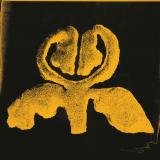
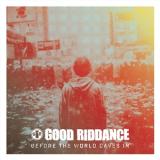
As the tenth candle flickers atop the torta alla panna, Archeo Recordings play the Uno reverse card, breaking with tradition to give us a gift in celebration of its birthday: the first in a series of exquisite EPs on which the label's favourite contemporaries pay homage to past masters. Each re-polished gem is plucked either directly from the beatific back catalogue of the fine Florentine label or is at least Archeo-adjacent, perhaps a sign of future wonders to come. Like a musical version of Janus, who can be found at the heart of Bertoldo di Giovanni's frieze in the Medici villa, Archeo Recordings will continue to look forwards and backwards to provide sublime sounds for us all.
Pepe Maina officially joined the Archeo family in 2019 with the much-needed reissue of his 1979 masterpiece Scerizza (AR015), but his astounding music has been a constant companion to label head Manu for much longer. An inter-dimensional, multi-instrumental maverick, Maina weaves the frayed edges of prog rock, new age, organic jazz and global minimalism into a shimmering tapestry all of his own. The results are spread across fifty years and almost as many albums, largely self-released and always absolutely untarnished by commercial concerns.
Based in a small village in the hills of Brianza, just north of Milan, Maina translates the beauty of his surroundings into transformative tone poems, and the folkloric fusion of "The Infinite", originally released on his 2014 CD Tales From The Hill, is the perfect example of his practice. It opens with a recitation of Giacomo Leopardi's 1825s poem "L'Infinito" by famed Italian actor Vittorio Gassman. A leading figure in the romantic movement, Leopardi explores the idea of time and space within the natural world, and the peace that comes with an appreciation of the immensity of eternity. Manu, longtime digger and now a burgeoning producer, expands upon the original with tribal percussion, chirping electronics and a spheric bassline, folding Maina's elegant strings and gossamer pads into a new arrangement suited for a slow dance under the stars.
Unless you had a well-trained ear tuned to Italy's avant-jazz scene, chances are your first encounter with innovative flautist Roberto Aglieri came via the 2017 Archeo reissue of hisalmost untraceable LP Ragapadani (AR011). It's a true testament to Manu's digging credentials that he snatched this masterpiece out of the esoteric atmosphere and brought it attention it so richly deserved. A delicate union of digital synthesis and versatile flute - be it soft and silvery or
brilliant and clear - the 1987 album was a shapeshifting masterpiece, replaying scenes from Virgil, Verdi, Visconti and Pasolini with a neon glow. Quintessentially Italian, but uncanny and previously unimagined - Penthouse and Portico perhaps. Powered by a percolating prototechno sequence, cascading keys, hallucinogenic vocal snippets and a variety of tonal timbres from Roberto's reed, "Danza N. 1" long deserved the praise reserved for Jean-Luc Ponty's pinnacle, so many thanks to Manu for our collective introduction. The tall task of reinterpreting this particular paragon falls to Perugian polymath Daniele Tomassini AKA Feel Fly, whose peerless skills as both producer and musician have delighted DJs and dancers alike. Hot on the heels of his diverse and definitive remixes of Tony Esposito for AR027, Daniele delivers a radical rework of "Danza N. 1" perfect for both day rave sunshine and full moon party alike. Enhanced by snapping breaks and a rattling kick, the bassline gurgle emerges as a progressive powerhouse, laying the foundation for the trilling flute and circular keys to cast a psychedelic spell. As the slow-Goa revival picks up pace, this one is way ahead of the pack.
Archeo take us all the way back to the start of its story here - well almost. Though it bore the stamp AR001 (2015), this Radio Band reissue actually hit shelves months after Tony Esposito's "Je-Na' / Pagaia"; a false start perhaps but a true classic all the same. Radio Band were a group of DJs from Florence who all sailed the airways of Radio Fantasy in 1984 and whose one and only release was this super groovy slice of Italo-boogie. Following the example of Milanese DJs Band of Jocks but far surpassing their formulaic funk fizzle, Radio Band employed an intergalactic bassline, cosmic keys and that undeniably Italian style of rapping to deliver a sophisticated party-starter which even found its way to disco deity Ron Hardy. Back to the here and now, and if you've found yourself pumping an ecstatic fist to a supercharged Italian epic of late, chances are its from the mind of the mysterious Radiomarc. Operating on the ascendent Popcorn Groove imprint, this shadowy figure steers his country's lost classics into peaktime territories, finding a sweet spot between late Italo-disco, early Italo-house and contemporary cool. Pushing the tempo with a club-ready 4/4, setting the sequencer to stun and supplementing the original melodies with a series of synth riffs, the mystery producer send this one into orbit. Radio Band - Radio Rap - Radiomarc, the circle is complete.
Few have done more to develop cross-cultural musical exchange than Futuro Antico. A collaborative venture from musician, archeologist and ethnomusicologist Walter Maioli, keyboardist and tonal theoretician Riccardo Sinigaglia and multi-disciplinary artist and composer Gabin Dabiré, Futuro Antico formed in Milan in 1979, combining ancient international folkloric traditions with otherworldly electronics. The result is an arresting melange of Mediterranean, African and Asian instrumentation, mimicked by esoteric synth tones and hypnotic minimalism, which the group perfected on their acclaimed 1990 LP Dai Primitivi All'Elettronica. The meditative and transportive "Pan Tuning" belongs to their largely overlooked 2005 CD only release Intonazioni Archetipe, and has been amongst Manu's most loved tracks from the first moment he heard it. Who else is better placed to reshape this evocative opus into an immersive, transcendental dance floor journey than label favourites Mushrooms Project? The duo sows the original elements into a sprawling fifteen minute fusion of séance and science, at times propulsive with a ritualist rhythm of tuned percussion and crunching drum machine at others drifting off into ethereal ambience. Mushrooms Project continue to push the boundaries of the Afro-cosmic style, and this remix marks a new zenith.
Cerca:the hard way
- A1: The Meditation Singers - Let Them Talk
- A2: Charlie Brown - The Whole World Is Watching
- A3: Martha Bass - Since I've Been Born Again
- A4: The Williams Singers - So Good To Be Alive
- A5: The Faithful Wonders - Ol' John (Behold Thy Mother)
- A6: The Salem Travelers - Crying Pity And A Shame
- B1: The East St Louis Gospelettes - Soon I Will Be Done
- B2: Power And Light Choral Ensemble - Stand Up America, Don't Be Afraid
- B3: The Masonic Wonders - Just To Behold His Face
- B4: The Majestic Choir & The Soul Stirrers - Why Am I Treated So Bad
- B5: The Jordan Singers - My Life Will Be Sweeter
- B6: Lucy Rodgers - I'm Fighting For My Rights
- C1: The East St Louis Gospelettes - I'll Take Care Of You
- C2: The Williams Singers - Don't Give Up
- C3: The Soul Stirrers - Don’t You Worry
- C4: The Meditation Singers - I've Done Wrong
- C5: The Jordan Singers - Lord Have Mercy
- C6: The Kindly Shepherds - Lend Me Your Hand
- C7: The Violinaires - Groovin' With Jesus
- D1: Cleo Jackson Randle - Life In Heaven Is Free
- D2: The Violinaires - Mother’s Last Prayer
- D3: The Inspirational Singers - Bless Me
- D4: The Bells Of Joy - Give An Account At The Judgement
- D5: Stevie Hawkins - Same Old Bag
- D6: The Soul Stirrers - Striving
Gospel melts into Soul in this dazzling collection of sides originally released by the Chess subsidiary.
Devised by the same team supporting the likes of Muddy Waters and Etta James at Chess, the vintage of Checker Gospel celebrated here is distinguished by its expertly raw, rugged, live feel — thumping bass and pounding drums, bluesy guitar and horns — and its keen engagement with contemporary realities and politics, with an underlying, unwavering commitment to the Civil Rights movement. Not forgetting its sheer, startling, richly diverse soulfulness.
Key architects of the Chicago Sound and Motown are amongst the scores of contributors: Charles Stepney, Gene Barge, Eddie Kendricks, and Leonard Caston Jr. are in the house… Morris Jennings, drummer on Curtis’ Superfly and Terry Callier’s What Color Is Love… Louis Satterfield from The Pharaohs and Earth Wind & Fire… Ramsey Lewis’ guitarist Byron Gregory… Phil Upchurch… Laura Lee…
Producer Monk Higgins joined Checker in 1967, bringing his experience of R&B and Gospel hit-making for the labels One-derful and Satellite, together with a loyal cohort of musicians. A protege of Willie Dixon, engineer Malcolm Chisholm set up the Ter Mar studio as if preparing for a live gig, carefully teasing measures of bleed into the microphones. With Ralph Bass from King Records running A&R, they knew exactly what they were after. ‘I’m using horns and an R&B sound in gospel recordings,’ said Bass. ‘We have no charts. All the musicians are given the chord changes. I want the cats to think when we’re cutting. I want spontaneity, and that’s what we’re getting.’ And: ‘There is more to gospel than just finding solace in the church. This follows the same message of Martin King, who was fighting for a new way of life. Kids are tired of hearing Jesus Give Us Help. They want a positive message.’
Focussed on the late sixties and early seventies, the twenty-five recordings here are all killer no filler, but try these four, random entry points: the heavy funk ostinato of the Violinaires’ Groovin’ With Jesus, working itself up into a post-James-Brown brass frenzy, sure to knock your socks off; Cleo Jackson Randle’s title track, for those who like their Gospel straight-up and hard-core; Eddie Kendricks’ achingly timely choral call-to-arms, Stand Up America, Don’t Be Afraid; the East St Louis Gospelettes’ heart-stopping, fathoms-deep rendition of Bobby Bland’s I’ll Take Care Of You.
A beautiful gatefold sleeve; a full-colour booklet with excellent notes by Robert Marovich; top-notch sound. Another knockout selection by Greg Belson and David Hill.
A shoo-in for soul compilation of the year.
Schlammpeiziger, who had previously only been known to us for his top hits and T-shirts, burst upon us like a wild boar in search of affection in the middle of the coronavirus lockdown. He nested in our fully vaccinated home, drank our Eversbusch, ate from our plates, slept in our bed (wait - wrong fairy tale) and repeatedly urged us to organise egg runs with his testicles (after some contortions, we gave up trying). Childish faecal humour, far-fetched obs(t)enities, juicing, a desire to dissolve, composting of thoughts. In excesses of lack of concentration, the chains of associations curled and meandered like Jo's famous curlicue drawings. Every evening, after we had forcibly levered him out of our flat, he would ‘walk’ home to put together very unique , dreamy pieces. In the blissful brainfog of those days, for example, ‘Handicapfalter’ was created, for which the congenial °Bär° made our flat into the corresponding video. Among other quirks of the little gut-breather, we were fascinated to observe his phobia of literature and books. Just hold a printed page in front of his face for a few seconds and he writhes on the floor crying. A level of phobia that only my own laughable disgust and fear of writing myself can compete with. Jo shudders at the thought of reading sentences that build on each other in a meaningful way, and I shudder at the thought of having to write them down because I have something ‘to say’. A certain affinity cannot be denied. We are much, much more pleased by snatched-up, misunderstood or misheard snippets, hollow but unforgettable phrases, the diamond stoner humour of our ancestors. ‘From one turn/ I stop/ to walk on/ in all directions’ (as it murmurs in “Selten Gesehenes”), describes the process quite nicely. After all, Jo is ahead of me in that he can simply break off every tedious sentence and let it fade into music. Back to the essentials. It's five to 12 for the Schlammpeitzger (scientifically Misgurnus). The shy goby is under threat from climate change, so perhaps this vinyl is the last expression of life of the specimen that we have been allowed to look after sporadically since the lockdown phase of the corona epidemic. And it's turned out pretty. Even the aesthetically gutted like me and my beloved husband can THINK about sex when they see these sublime, silvery fart bubbles! It's tender as a fart. Make love!!!!!
Schamlose Dubtöse: Do you have words. Do you have sounds. Impertinently harmless piano tinkling turns into tugging zounds of increasing severity. It is not dubbed (would be unethical) but dubbed. Sounds dubby, as you can imagine. (Instrumental)
Loch ohne Licht: Possibly vaguely misogynistic. Could also be that there was simply no light in the hole. The sparse snippet of lyrics (‘du biss mir och esu e Loch ohne Licht’) sounds like one of those stroppy Cologne replicas whose anti-charm is hard to resist. Buzzing and grooving.
Selten Gesehenes: Casual. Confident. Soft. Fragrant. Thoughtful but lively.
The Arabian Vietmanese (instrumental) is probably the food we trust in the case of the munchies we get when we watch other people smoking weed. Transcendental and psychedelic states casually permeate the humdrum of everyday life. Klar Knuspermarsch: Marches and floats at the same time. Klebt Runner: Soundtrack to the cult film of the same name. Tyrrell Corporation loosens up. Ungenutzte Sätze: Stinks somehow, because there is dangerous proximity to comprehensible and then also critical statements here. Instead, the sinister electronic cheapness of Carpenter soundtracks can be heard. Parzipan: Actually, the time of origin was not so roaringly funny and simple, but for Jo it was also a gruelling, slow letting go of his brother. Here he sends him off with a gentle nudge into the vastness of a hopefully happy beyond.
Clara Drechsler
Schlammpeiziger, der uns bislang nur durch seine Top-Hits und seine T-Shirts bekannt gewesen war, brach mitten im Corona-Lockdown über uns herein wie ein wilder Eber auf der Suche nach Zuwendung. Er nistete sich in unserem durchgeimpften Zuhause ein, trank unseren Eversbusch, aß von unseren Tellerchen, schlief in unserem Bettchen (Moment - falsches Märchen) drängte uns wiederholt dazu, mit seinen Hoden Eierlauf zu veranstalten (nach Verrenkungen gaben wir den Versuch auf). Kindischer Fäkalhumor, weit hergeholte Obs(t)zönitäten, Entsaftung, Auflösungswunsch, Gedankenkompostierung. In Exzessen der Konzentrationsschwäche ringelten, kringelten und schlängelten sich die Assoziationsketten wie bei Jos berühmten Kringel-Schlängel-Zeichnungen. Jeden Abend, nachdem wir ihn gewaltsam aus unserer Wohnung gehebelt hatten, „ging“ er dann heim, um dort sehr eigene, verträumte Stücke zusammenzubasteln. Im seligen Brainfog dieser Tage entstand z.B. „Handicapfalter“, für das der kongeniale °Bär° aus unserer Wohnung das entsprechende Video machte. Neben anderen Marotten des kleinen Darmatmers beobachteten wir fasziniert seine Literatur- bzw. Bücherphobie. Halt ihm nur sekundenlang eine bedruckte Seite vors Gesicht, und er windet sich weinend am Boden. Ein Grad an Phobizität, mit dem sich nur meine eigene lachhafte Abscheu und Angst vor dem Selberschreiben messen kann. Jo schaudert beim Gedanken, sinnvoll aufeinander aufbauende Sätze lesen, mir wiederum beim Gedanken, sie hinschreiben zu müssen, weil ich irgendetwas „zu sagen“ habe. Eine gewisse Verwandtschaft ist nicht zu leugnen. Viel, viel mehr freuen uns aufgeschnappte, falsch verstandene oder misshörte Fetzen, hohle, aber unvergessliche Phrasen, der diamantene Kifferhumor unserer Vorfahren. „Aus einer Drehung/bleibe ich stehen/ um in alle Richtungen/weiter zu gehen“ (wie es in „Selten Gesehenes“ raunt), beschreibt den Prozess schon ganz schön. Immerhin hat Jo mir voraus, dass er jeden leidigen Satz einfach abbrechen und in Musik ausplempern lassen darf. Zurück zum Wesentlichen. Es ist fünf vor 12 für den Schlammpeitziger (wissenschaftlich Misgurnus). Die scheue Grundel ist von Klimawandel bedroht, vielleicht haltet ihr mit diesem Vinyl also die letzte Lebensäußerung des Exemplars in Händen, das wir seit der Lockdownphase der Corona-Epidemie sporadisch betreuen durften. Und die ist hübsch geworden. Selbst aus ästhetischer Erwägungen Entdarmte wie ich und mein geliebter Mann, können bei diesen sublimen, silberhellen Pupsbläschen DENNOCH an Sex denken! It´s zart as a fart. Make love!!!!!
Schamlose Dubtöse: Hast du Worte. Hast du Töne. Impertinent harmloses Klavierplätschern geht über in ziepende Zounds von zunehmender Strenge. Es wird nicht domptiert (wäre unethisch) sondern dubtiert. Klingt dubtig, wie ihr euch vorstellen könnt. (Instrumental)
Loch ohne Licht. Möglicherweise vage misogyn. Könnte auch sein, dass im Loch einfach kein Licht war. Das sparsame Textfetzchen („du biss mir och esu e Loch ohne Licht“) klingt nach einer jener pampigen kölschen Repliken, deren Anticharme man sich schwer entziehen kann. Schwirrt und groovt.
Selten Gesehenes: Lässig. Souverän. Softig. Duftig. Nachdenklich aber beschwingt.
Beim Arabischen Vietmanesen (Instrumental) gibt es wahrscheinlich die Speise unseres Vertrauens im Falle der Munchies, die wir kriegen, wenn wir anderen Leuten beim Kiffen zusehen. Transzendentale und psychedelische Zustände durchziehen beiläufig den schnöden Alltag. Klar Knuspermarsch: Marschiert und schwebt zugleich.
Klebt Runner: Soundtrack zum gleichnamigen Kultfilm. Tyrrell Corporation macht sich locker. Ungenutzte Sätze: Stinks irgendwie, weil hier gefährliche Nähe zu nachvollziehbarer und dann auch noch kritischer Aussage gegeben ist. Dafür klingt die sinistre elektronische Billigkeit von Carpenter-Soundtracks an.
Parzipan: Eigentlich war die Entstehungszeit gar nicht so brüllend lustig und einfach, sondern für Jo auch ein zermürbendes, langsames Loslassen des Bruders. Hier schickt er ihn mit sanftem Schubs hinaus in die Weiten eines hoffentlich schönen Jenseits.
Clara Drechsler
Downloads
Parsley Sounds was the glorious debut album for Mo Wax by Parsley Sound. The album was one of the iconic label’s final releases before it closed in 2003 and locating a clean copy has been extremely tricky of late, unless you're flush enough to drop 150 notes on it. Mercifully, the Be With reissue, put together with invaluable assistance from the group, should remedy this situation. It's a lo-fi, bass-heavy, blunted beat treat, warped with heat haze and dreamy soft-psych and has been criminally under-heard for far too long.
As with most cult-like records, Parsley Sounds has many influential fans, far and wide. From Four Tet and Caribou to NTS's modern day breakfast hero Flo Dill, its reputation has only grown in stature. At the time, the notoriously hard-to-please Pitchfork garlanded it with a scarcely achievable 8.8 whilst, just recently, the Numero Group's Rob Sevier described it as a "visionary bit of proto-Salvia Palth (or Steve Lacy)" via a Ghostly International missive.
Parsley Sound comprised super-talented duo Preston Mead and Dan Sargassa. They released an early single (the perfect "Twilight Mushrooms", featured here) on Warp Records as Slum, before signing to Mo Wax. Hidden behind a wall of sound - fuzzy layers of beats, bleeps and symphonic synths - they were convinced they made mainstream pop music. And, in many respects, Parsley Sounds really is a beautiful pop album. It overflows with memorable, gorgeous melodies and inspired songcraft. As the contemporaneous Pitchfork review correctly had it: "Parsley Sounds is one of those rare records that manage to sound modest while frequently pushing the sonic envelope."
Killer opener "Ease Yourself And Glide" is a thing of aching, soft-psych, wonky beat-beauty. A melodic masterpiece, part Crosby, Stills & Nash, part proto-Koushik, it presents a melancholy falsetto, surging bass and blunted lead guitar. As it climaxes, gorgeous strings are ushered in to see us out. Sublime. "Twilight Mushrooms" is up next and it's an acid-drenched, strung-out acoustic-led campfire wonder. Amid layers of tape-hiss and beautiful, sun-dappled strings, its understated vocal track provides a haze of wistful innocence.
The breezy "Spring's Near" is a krautrock-inspired chiming instrumental of heavenly excellence, its warm, skipping, motorik groove and dreamy synths completely infectious. Another total highlight, the technicolour "Yo Yo" initially presents itself as a more abstract, bleepy offering but as it organically swells into ever more beautiful places, with the addition of a choppy insistent drum loop, flute bursts, horns and sweeping strings, it puts one in mind of early Manitoba and Four Tet releases. Shimmering, blissed-out greatness.
The celestial harmonies and glistening harps of the wonderfully beatless, serenely sullen "Ocean House" are very much in conversation with late-60s meditative psych whilst, closing out Side A, the jaw-dropping, lushly experimental effort "Find The Heat" comes on like Arthur Russell meets Brian Wilson. Yep, *that* good.
Side B opens with the warped, bleepy "Stevie", a brief but beautifully wonky, soulful and intricate instrumental. The more upfront vocals that propel the fuzzy "Platonic Rate" have a refreshing swagger to them, the heavy bass and neck-snapping in-the-red beats too much for any system to deal with whilst the guitars and strings have a sweeping, cinematic feel which just beguiles. The slow, urbane soul of "Candlemice" will stop you in your tracks, no matter what you're doing. It carries a delicate sadness, as does much of the album in that classic "down lifting" style we so love here at Be With.
The fuzzing, buzzing "Templechurchmansions" is a searing, soulful dubwise detonation. Heavily stoned with slow-burning jazzy snatches and a tense, moody atmosphere, it's a Tricky-adjacent gem. The album rounds out brilliantly with the ominous instrumental "Neon Breeze" before giving way to the propulsive, almost incongruous punk-funk / disco-dub of secret "untitled" track "Caution", a scratchy, smacked-out groove-fuelled workout with a female vocal dripping with 'tude. Just sensational.
Under the watchful eye - and attentive ears! - of Parsley Sound themselves, the audio for Parsley Sounds has been carefully mastered by Be With regular Simon Francis, with a few much needed tweaks here and there, according to the artist's wishes. Cicely Balston's expert skills have made sure nothing is lost in the cut whilst the records have been pressed to the highest possible standard at the always stellar Record Industry in Holland.
Preston and Dan always thought the colours on the first vinyl pressing looked a bit "washed out" vis-a-vis the original artwork which was way more vibrant. We feel we've got it popping back to the original intention with the restoration work here at Be With HQ. So with the audio and artwork now approaching completeness after 20 years, this long overdue re-issue could be considered its definitive vinyl release.
- A1: The Guiding Stars - Been Dipped In The Water
- A2: The Religious Five Quartet - Let Me Lean On You
- A3: The Butlerairs - He's So Good To Me
- A4: Eastern Star Chorale - Until You Try Jesus
- A5: The Sensational Bells Of Joy - Lord Take My Hand
- A6: Green Street Baptist Church Youth Choir - He's All Right
- A7: The Singing Son Of Zion - Steal Away
- B1: The Gospel Voices Of Soul - Woke Up This Morning
- B2: The Gospel Motivators - Trust Him
- B3: Joe Thomas - I Feel Like Pressing My Way
- B4: The Indiana Wonders - Thank You Jesus
- B5: The Webster Singers - Stay By Our Side
- B6: Rev Eddie James And Family - Jesus Will Fix It
- C1: The Solomonaires - Come Out Of The Wilderness
- C2: The Antioch Majestic Voices - Peace Until My Soul
- C3: Rev Thomas N. Pride - He Knows It All
- C4: The Ecclesiastics - He Made A Way For Me
- C5: The Gospel Descendents - Jesus Is All I Need To Get By
- C6: The Gospel Chanteurs - Lord Don't Leave Me
- C7: Newburg Radio Chorus - Calvary
- D1: Cleo K Joiner Iii And The Metropolitan Comm. Choir - Spirit Of The Living God
- D2: Jimmy Ellis And The Riverview Spiritual Singers - I've Come A Long, Long Way
- D3: Rev Charles E. Kirby - Lord You Been Good To Me
- D4: The Golden Crowns - We Are Trying
- D5: Indiana Community Choir - Lord Don't Move That Mountain
- D6: God's Girls - My Time Ain't Long
Hardcover Book which includes a 208-page book documenting Louisville's rich Black Gospel music legacy and access to a comprehensive digital archive.
In the mid-20th century, Louisville gospel music was occasionally recorded when members of the local gospel community pressed 45rpm records and LPs, and released them through grassroots record labels such as Sensational Sounds, Grace, Blessed, and D.J.S. Over the years, a substantial body of work was produced in our city, but those recordings are in danger of being lost forever.
The Louisville Story Program has been working with dozens of people in the local gospel music community to locate, digitize, and preserve hundreds of these recordings and to develop a book that documents and honors the legacies of the people and communities that produced them.
For decades, the passion, hard work, and support of countless people across dozens of Black church communities in Louisville have nurtured and sustained a rich gospel music ecosystem. This music has served as a central part of people's religious practice and as an expression of Black pride, joy, affirmation, love, dignity, determination, and hope. This legacy continues to this day.
With support from The Owsley Brown II Family Foundation and Owsley Brown III Philanthropic Foundation, LSP has partnered with members of the gospel community and a local advisory group of local gospel historians and luminaries:
To locate, clean, and digitize gospel records of local artists released by small local labels
To accompany the local Black gospel music community in developing a 4 CD box set that includes a 200+ page hardcover book with first-person documentation of their rich history
To create an accompanying double LP featuring 26 of those songs
To create and maintain a public-facing digital archive of 1,000 songs and 1,000 photographs
To celebrate the final release with a large concert at the Brown Theatre (September 28, 2024)
Glenn Astro leans into the twilight months of 2024 with a new album from his Delta Rain Dance project. Divining fourth world sensibilities from his restlessly curious studio workflow, Astro weaves a mesmerising tapestry of sound on Music For Autumn which treads the line between horizontal meditation and head- nodding, backroom-ready groove.
Amongst his constellation of myriad aliases, Delta Rain Dance spells out the inspiration Astro takes from fourth world pioneer Jon Hassell. The project first surfaced with a string of tapes, LPs and digital releases around 2018, all carried on a label of the same name to keep Delta Rain Dance enclosed in its own space
independent of Astro's many other musical endeavours.
"I’m really into the world building aspect in science fiction and fantasy," says Astro. "This is my way of creating worlds and spaces that co-exist next to each other. Sometimes they collide but mostly they exist peacefully next to each other or pursue some form of cultural exchange by collaborating with each other."
There's a strong sense of balance and cohesion throughout Music For Autumn, as organic percussion and instrumentation wraps around delicate synthesis and patient drum machine pulses so naturally it's hard to spot the joins. The sound has plenty of room to stretch out, from the mantra-like chimes and rattles of the album opener 'Green Light Fade' to the luxury funk of 'Mmmh, Nice' (featuring fellow Tartelet alumni Nelson of the East). At times the electronic elements seem to entirely dissolve, not least behind the loping strings and tumbledown percussion of 'Second Sleep', while achingly beautiful closer 'Plucked' centres on the fluttering movement and expression Astro elicits from his modular setup.
True to the project's influences, a consistent ambiguous mood lingers in the air over Music For Autumn somewhere between far- flung mystery and comforting familiarity, reliably calm but equally contemplative. It's an odyssey of serenity with enough nuance to make you really think, perfect for the days getting shorter, leaves crunching underfoot and the last fading rays of warmth from the sun.
- A1: Dillinja - Grimey - Need For Mirrors Remix
- A2: Alibi - Rave Digger Vip
- B1: Nazca Linez - Acid Fashion - Serum Remix
- B2: Krust - Not Necessarily A Man - L-Side Vip
- C1: Break - Something Like This
- C2: Level 2 - Bite The Bone Vip
- D1: Alibi, A-Audio - Middlemen
- D2: Paul T & Edward Oberon - Badboy
- E1: Voltage - Lion Of Judah
- E2: Need For Mirrors - Pagans - L-Side Remix
- F1: Urbandawn, Alibi - Misfit
- F2: Bladerunner - Yea Man
- G1: Alibi - Majesty
- G2: L-Side, Mc Fats - Love In The Heart
- H1: L-Side, Command Strange - Angry Tune
- H2: Chimpo - Fever
- I1: Need For Mirrors - Lambo Vip
- I2: Cloud Lord - Ghost Train
- I3: Level 2, L-Side - Offline
- J1: Think Tonk - Tom & Heavy Vip
- J2: Sl8R, Metrodome, Salo - Not The Same
- J3: Acuna - Played With Me
* Strictly limited-edition 5x12” vinyl hard case box with spot varnish finish on the front and back and full colour sleeves for each vinyl.
* V Recordings marks three decades of groundbreaking Drum & Bass with '30 Years of V', an album featuring 22 fresh tracks that honour the label's rich legacy while paving the way for its future.
* Presented as a collectable 5 x12” Vinyl hard case box set, with spot vanish finish, this project links the past of V to it’s future and shows the label is as dynamic and relevant as ever.
* A selection of brand new music, from the current V family as well as remixes of some recent big hitters and seminal classics. Over recent years, V Recordings itself has continued in the mold in which it was formed, releasing music from some of modern-day D&B’s most exciting, innovative and committed artists.
* This project which label head honcho Bryan Gee has painstakingly compiled over the past few years, sees the likes of L-Side, Alibi, Break, Serum, Dillinja, Voltage, Paul T & Edward Oberon, Command Strange, Need For Mirrors, Chimpo, Sl8r, Think Tonk, Level 2 and more all on board to see their name alongside V’s iconic sun logo and celebrate this milestone.
* It is a celebration of V Recordings' contribution to our global scene, underscored by support from industry icons like DJ Marky, Watch The Ride, Break, Fabio, Grooverider, Born On Road, Kasra, S.P.Y, Roni Size, Ed Rush, Caylx, Camo & Krooked and many more.
* Since its foundation in 1993 by Bryan Gee and Jumping Jack Frost, V has been a cornerstone of the electronic music world, pushing the boundaries of Jungle and Drum & Bass. The label has been instrumental in the careers of many genre-defining artists, constantly evolving while staying true to the roots of Drum & Bass culture. '30 Years of V' embodies this journey, offering a blend of nostalgia and innovation that appeals to long-time fans and newcomers alike.
- A1: Incognito Rhythm
- A2: Things To Do Remix (With Drama1)
- B1: Just Saw Johnny
- B2: Deepest Darkest Jungle
- C1: High Time
- C2: Ribena (With Papa Levi)
- D1: Beautiful Thing (Ft. Pinty)
- D2: All I Need In This World Is You
- E1: Wutt
- E2: Pianos Raining Down (165 To 134 Bpm Mix) (With Mcdonald & Jannetta)
- F1: Ooh Boy
- F2: Sound System Love
Fresh off a rework of Papa Levi with single Ribena, London’s jungle pioneers 4am Kru drop their highly anticipated debut album Incognito Rhythm featuring all the tracks that have cemented their reputation as the go-to act for raw, live jungle music.
Having already taken the 2024 festival circuit by storm with appearances at Outlook Origins, Boomtown, Boardmasters, Reading+ Leeds, The Blind Tiger, Parklife Waterworks, Boundary and a milestone Saturday night closing set at Glastonbury’s Temple Stage, 4am Kru continue to draw audiences into the madness of their raucous blend of 1993-1994 influenced jungle. First bursting onto the scene post-lockdown, the falling monitors and flying bodies of their shows were particularly thrilling for ravers who had turned 18 in isolation.
Originally developing their live sound in indie bands while sharing a studio in Tottenham, the duo quickly realized that the traditional DJ set couldn’t contain the energy of their act. They have since surrendered to the chaos of their incredibly physical performances, nursing chipped bones and back injuries, deep finger taping, chalking up and wearing shoes designed for skipping rope whilst rewiring what it meant to move their bodies. Their innovation extends to the equipment, with the duo reinventing a way to deliver their signature throbbing basslines with a Roland SPD SX drum pad as thick as a car tire. Their upcoming UK tour this October promises to further showcase their immersive, disruptive sound.
4am Kru’s latest single Ribena breathed new life into Papa Levi’s iconic British reggae classic Militancy following the release of hard-hitting Wutt this past July, setting the stage for their most ambitious project yet. Their debut album draws from a wide range of influences in addition to 4am Kru’s signature blend of 90s jungle flavours, from obscure slow jam R&B like Angela Bofill, Janet Jackson and Prince, early hardcore bands like Hüsker Dü, off kilter Scottish folk, and even classical music. The project is a snapshot of the incognito, nocturnal world that the duo have dwelled in for the past two years, a time capsule of well-worn songs played between midnight and 4am. An extraordinary debut, 4am Kru’s Incognito Rhythm is an immersive, razor sharp, face melting journey through their show-stopping live sound.
On his latest full-length, Low End Activist swerves towards weightless grime and suspended hardcore miniatures to tell a very personal story. The UK-rooted producer continues his habit of zeroing in on a distinct approach for each release, leaving a logical breadcrumb trail of soundsystem science in his wake as he channels decades of bass absorption into 14 atmospheric cuts that prize patience and precision over obvious club functionality.
Municipal Dreams plays out as a semi-autobiographical tour through the Blackbird Leys estate that the Activist grew up on. It’s a lived reflection on inequality and the ripple effect it has in working class communities, using the sonic palette to set the mood and scattering pointed samples throughout to spell out the story.
In sampling the exhaust of a stolen Subaru Impreza, ‘TWOC’ looks back to the recreational car theft which was standard entertainment for the kids in his community. There’s an underlying idea that this ‘council estate sport’ wouldn’t have been so prevalent if there were public services and opportunities presented to the scores of disaffected youth looking for somewhere to direct their energy and frustration.
In ‘Just A Number (Institutionalised)’ LEA alludes to the shattered juvenile detention system, growing up seeing friends and family members locked up at ease with little to no support on being released back into society, just meant that the same cycles of behaviour would play out over and over.
‘Violence’ samples from a short film shot by the drama division of the Blackbird Leys Youth Club to evoke the physical threat which formed a background hum to life on the estate. The industrial mechanics of the local car factory, which served an integral role as a workplace for many in the community, gets sampled in ‘They Only Come Out At Night’ while the ‘Everyone I look up to are either junkies or criminals’ sample in ‘Broke’ looks to a lack of positive role models.
Municipal Dreams isn’t a one-note indictment of life on the estate, ‘Innocence’ captures the simplicity of a child at birth before their environment has time to shape them. The Hope interludes cut through the grim honesty of the longer tracks while a subtle thread of wry humour finds its way into some of the talking heads cutting through the signature LEA murk.
But honesty is the operative word here, and the message feels all the more meaningful at a time when the UK’s social divisions are laid bare in the wake of a devastating stretch of austerity. Returning to Blackbird Leys to shoot images for the photo-zine and album cover, the Activist found the local community centre being demolished. The local pub stands derelict, its faded Welcome sign a grimly ironic portent of the options facing children of the estate in the wider world.
Funnelling his memories, hopes and fears into a singular twist on the bass weight tradition, LEA captures evocative scenes that land somewhere between kitchen sink realism and rave futurism.
Barkley Bandon’s debut album “Love Machine” is a sexy concept album, perfect pop record and an experimental look at club music all in one.
Hard to pin down stylistically, it’s visiting multiple spaces on a colour spectrum, with hues of Sophie’s hyperpop, Hudson Mohawke’s cheek, the nostalgic shades of Oneohtrix Point Never, a nod to Dean Blunt’s DIY aesthetic and maybe flirting a little with the of Teaches of Peaches. But really, it’s carving out a sound all for itself that is like nothing else out there.
The mysterious London producer recently contributed a song on CASISDEAD’s chart topping, Brit Award winning debut album ‘Famous Last Words’ and has worked with London RnB vocalist Gloria on her release Metal, which came out on Gaika’s label The Spectacular Empire.
Working here, on in his own playpen, he shows off his pop production skills on tunes like ‘Green Light’ and ‘Nails’ (collaborations with rising artist Kaleab Samuel from Aurora, Colorado) and ‘You Decide’, a collab with pig$ - the incredible producer from LA who makes up the other half of their joint project Parking Big. Then he flips the approach, stuffs a bunch of percussion sounds in a box, shakes it and lets clanky club bangers like ‘Vertigo’ and ‘Eye Candy’ tumble out.
Fronting the cover we see Barkley’s real life wife as a teen dream - his ultimate Love Machine.
The album will be released on 25.10.2024 on his own label Laterhosen Records on digital and limited cassette tapes.
“That bass… absolutely filthy” Tom Ravenscroft, BBC Radio 6
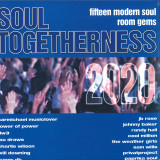
- A1: Tower Of Power - Addicted To You
- A2: Carmichael Musiclover - Pure Sweetness
- A3: Dw3 - Never Gonna Stop
- A4: Lou Draws - Come Over
- B1: Charlie Wilson - Forever Valentine
- B2: Will Downing - Right Where You Are
- B3: Super Db - Kool Funk (Chris Bangs Extended Remix)
- B4: Jb Rose - Back To Love
- C1: Johnny Baker - It's Your Night
- C2: Randy Hall - A Beautiful Dream
- C3: Cool Million - Keep On (Feat Matthew Winchester - Boogie Back Remix)
- C4: The Weather Girls - Stand Up (Rob Hardt Mix)
- D1: Sam Wills - Undercover
- D2: Privatproject - Don't Walk That Way (Feat Stefanie S - Chic A Delic Xtended Mix)
- D3: Paprika Soul - Standing Right Here
Expansion’s most successful and longest running compilation series returns with its 2020 collection. It’s the 20th Anniversary edition. The concept remains, the tracks better than ever, fifteen must-have modern soul room gems telling the story of the past 12 months. Tracks here have topped UK soul charts including many that have not been available in all formats. Participants this year include Charlie Wilson (biggest dancefloor spin before lockdown), Tower of Power, Will Downing, Randy Hall, JB Rose The Weather Girls, and Sam Wills all prolific on soul radio through the summer with other artists delivering signature songs of 2020. Then there’s the biggest revival track of the year from Johnny Baker, “It’s Your Night”, the 300 copy limited edition 7” pressing now exchanging hands upwards of £50 a copy.
Get your ass up and let’s get ill! Yep, that’s right it’s Krash Slaughta and Phill – more accurately, it’s Phill and Krash because it’s that way round on what you get for your cash. Actually, face it, you’ll pay by card, though you won’t be bothered as these rhymes go hard. And you know it ain’t just them fat rhymes either, KS got the beats to give you a fever. That’s Side One, Definition Of Ill, but you know there’s another on the other side still. I Ain’t Playin’ With Y’All is what that’s called, more premium hip-hop to keep you enthralled. Phill says the music inspired the lyrics – apt because the finished tracks inspired this critic. Peace, I’m out! And if you don’t get your skates on, stores will be out too – of stock that is because while this one comes in two different cover & label versions, it’s strictly limited and there will be no re-press. Don’t sleep peeps!
Peelable mic sticker sleeve[20,13 €]
Get your ass up and let’s get ill! Yep, that’s right it’s Krash Slaughta and Phill – more accurately, it’s Phill and Krash because it’s that way round on what you get for your cash. Actually, face it, you’ll pay by card, though you won’t be bothered as these rhymes go hard. And you know it ain’t just them fat rhymes either, KS got the beats to give you a fever. That’s Side One, Definition Of Ill, but you know there’s another on the other side still. I Ain’t Playin’ With Y’All is what that’s called, more premium hip-hop to keep you enthralled. Phill says the music inspired the lyrics – apt because the finished tracks inspired this critic. Peace, I’m out! And if you don’t get your skates on, stores will be out too – of stock that is because while this one comes in two different cover & label versions, it’s strictly limited and there will be no re-press. Don’t sleep peeps!
DJ support - Jeremy Underground, Alex Kassian, DJ Sprinkles, Willie Graff, Severino Panzetta, Rimarkable, Ella Knight
After a short hiatus To The Rock are back and it’s a lively one!
A repress of the definitive Danny J Lewis UKG classic Best Friends, this time around accompanied by 3 new remixes coming by the way of Chicago’s Garett David, newcomers Late Nite City and multi-instrumentalist Mom Tudie.
If you’re a Garage head, then you already know what the Spreadlove remix is saying. But for those hearing it for the first time it’s the sound of London 1999. Stripped back drums, choppy vocals, dubby synths that’ll transport you straight “back in the day”.
Garett David has done what he does best. Bringing Best Friends straight into 2024 with his unique style of garage and house influences. The elements hit hard on this, coupled with a full vocal it’s already getting love in all the right places
Late Nite City’s remix is a fresh 4x4 take on the original, giving a nod to the old (think 94 MK). Swinging drums, bright keys, thick choppy snares coupled with an organ that rings true of the glory days.
Last but by no means least, Mom Tudie flips the release on its head. This one takes us into new era soul territory that perfectly complements the preceding 3. Mom’s take gives the remix more space to breathe and in true Mom Tudie fashion the trumpet solo hits the spot.
Ever more secure in her chosen path, Nídia radiates gloriously in all moods for the dancefloor in this, her album number 3. Consistent with her fiery nature and mixed roots in Guinea-Bissau and Cape Verde, »95 MINDJERES« is framed by the decisive role of women freedom fighters in PAIGC's struggle for the independence of Guinea-Bissau from Portuguese colonial domination during the 1960s and 1970s. Among others, the names of Teodora Gomes and Titina Silá shine brightly as leaders of a group of 95 women, providing them with military training and political awareness.
The album starts righteously with a question-themed banger; ambiguous in its sense of curiosity, even mischief, or perhaps it is a passionate commentary on the hard atavic realities of the world. It sets the tone for the wonderfully bouncy »Deep«, pads gently pulling at the legs, longing for action.
All of Nídia’s work has been basically concerned with pushing forward, instant piece by instant piece, a particular, some would say peculiar, view of what culture is, what role it plays in social life. She exercises her experimental inclination within the groove, interweaving percussion sequences and melodies in a very lean way - track durations are generally within range of what many would call "sketches" but the music just says what needs to be said. Beats are never artificially extended for the dancefloor, there's not a hint of that culture in »95 MINDJERES«. Closest would be "cp", an actual drum tool. Ideas are in motion now. And they fly out during the following »Mindjeres«, marked by gentle stabs as if counting the steps skyward. Unexpected turns near the end make final songs "abcd" and "Paradise" accentuate a longing sensation.
Stuff is ready, bodies alert, mind is sharp with warmth and fellowship, detoxed, we can now hear the overall tone of the album, a clear view on self nurture, freedom and responsibility. We believe it is sustained by Nídia’s progressive interpretations and approaches to promote harmony in never-ending family entanglements, reconcile notions of ancestry and uproot, and try out means to resist and fight. In praise of Love.
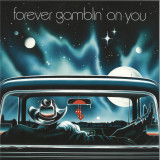
- A1: It’s Never Too Late - Charmer
- A2: Start It All Over Again - Alias
- A3: Forever Gamblin’ On You - Petroc And Pals
- A4: Feeling The Fire - The Mad Brothers
- A5: Good Guy - Cross Creek
- B1: The Way Of The Girl - The Michael Rowe Band
- B2: Miss You Too Much - Angie Pepper
- B3: Pistolero - Spectrum
- B4: Girl Of My Dreams - Roy Mccomas
- B5: Wings Of An Eagle - Santiago
- B6: No Reason To Cry - Lawrence Schwedler
A full tank of gas, the gentle glow from the radio dial, & stretches of open highway await, Forever Gamblin’ On You meanders through miles of soulful AOR, funky folk, & dusty soft rock obscurities. A follow up to Sky Dust Drifter, this compilation was gleaned from American private press oddities & rarities of the 70s & 80s, all of which are seeing their first official reissues on this album. A celebration of love, rebirth, and exploration radiating like the warmth of a loved one from the passenger seat.
Featuring “Feeling The Fire”, a jazzy, AOR grooving declaration of love and desire taken from the sole release from The Mad Brother. The compilations’ title track “Forever Gamblin On You” by Petroc And Pals, features an echo-laden folk rock recollection of hard feelings delivered with swelling guitar in a mournful soft psychedelia. Angie Pepper’s “Miss You Too Much” dwells on a past love, rolling along with an effortlessly cool rhythm section, while Roy McComas croons of his manifested “angel of love” on the swirling psych folk rocker “Girl Of My Dreams”.
Forever Gamblin’ On You unfolds as a hopeful yet equally melancholic collection of nomadic anthems, primed for a memorable journey along the back roads of familiar American landscapes.
Heavyweight special-effect 12" vinyl (three colors, marbled) with two-sided printed information insert about the album. Mastered and lacquer cut by Stefan Betke (Scape Mastering).
Taevalaotus delivers his second album "Ringlus" ("Circulation") as the second release from Estonian based Taevas Records label, comprised of five original tracks plus a remix from Octal Industries.
In a way, everything eventually returns to its starting point. With everything in constant movement, departure and arrival are nothing more than the beginning and the end of a circle. "Ringlus" as an album wanders along the path of its creator's fantasy. No third-party samples are used, the music's fabric is woven from original, natural sounds such as analog oscillators, vibrations of bass guitar strings, sonic echoes of nature, and cracking of the ice recorded underwater. The tracks contain sound and field recordings from the years 2013 to 2017 that were almost forgotten but then rediscovered from Studio Master 468 archive tapes. The aim was to circulate without taking notice of time and to create soundscapes with original resonance, structure and flow that serve as an antidote to contemporary rushed consumerism.
Hardware used: Alesis A6 Andromeda, Dave Smith Instruments Evolver, Elektron Analog Rytm, Yamaha electric bass, Tibetan singing bowls, wooden drum, Otari MTR-12, Drawmer 1974. 1973 & 1978, various analog effect pedals, scientific hydrophone in ice lake, Konka hand made ("organ-pipes") long distance microphone and portable Sony pcm-d50 in the field recordings.
- A1: Juanita Bonita
- A2: Cumbia Candelosa
- A3: El Mecanico
- A4: Tus Ojos
- A5: Que Te Pasa
- A6: Brisa, Mar Y Arena
- B1: Venenosa
- B2: Uey’ Je’ Je’ Pa’
- B3: El Canje
- B4: Dime Pa’ Quien
- B5: El Guarachero
- B6: Solo Estoy
- C1: La Luna Y El Pescador
- C2: Noche De Fiesta
- C3: Acuarela Cumbiambera
- C4: Las Diez Velas
- C5: El Chontaduro
- C6: Orlandito
- D1: Fiesta Tropical
- D2: Cumbia Del Caribe
- D3: Guepa…Je
- D4: Buenas Noches Diciembre
- D5: Alma Quibdoseña
- D6: Asi Se Baila Cumbia
This album takes you back to Colombia of the 50s and 60s. In those days, the tropical music of the Caribbean and Pacific coasts took over the country's mainland music scene by storm. One of the key figures during this period was Edmundo Arias. Together with Lucho Bermúdez and Pacho Galán, Arias is seen as one of the ‘big three’ composers of Colombian tropical music.
He was a rather introverted person who avoided being in the spotlight at all cost, leading to his work being less known than his contemporaries. With this album we hope to highlight the amazing legacy Edmundo Arias has left us. Think of big bands with sharp dressed musicians playing the finest cumbias, porros and other tropical sounds in fancy ballrooms on a hot evening in Medellin or Bogota.
Liner notes:
Edmundo Dante Arias Valencia was born in Tuluá, Valle del Cauca, on the 5th of November 1925. He came from a family of musicians. His father, Joaquín Arias Cardoza was a band leader and composer who taught his children to play music. Arias learned to play many instruments such as the guitar, bass, bandola (pear shaped string instrument related to the mandolin), tiple (12 string guitar), clarinet and saxophone. He proved to be a very talented musician and together with his father and his older brother Ricaurte he formed the ‘Trio Arias’. The family lived in different cities across Colombia depending on where they found work. When his father died unexpectedly in 1948, Edmundo and Ricaurte had to support their family working as musicians. In 1951, Arias decided to move to Medellín, in those days the heart of the Colombian music industry and the city where the most important record companies and the best musicians were based. It didn’t take long before Arias made a name for himself as a musician, composer, arranger and band leader for Colombia’s leading labels at the time; Zeida, Ondina, Silver and Sonolux. For the latter, he would eventually become the artistic director. Over the years, he wrote hundreds of songs, recorded many albums with his own orchestras or with the Orquesta Sonolux and collaborated with a countless number of musicians, often uncredited.
Together with Lucho Bermúdez and Pacho Galán, Edmundo Arias is seen as one of the ‘big three’ composers of the tropical music of Colombia. But despite the fact that Arias was renowned, very little is known about his personal life. He was a humble man who preferred to work in the background and avoided being in the spotlight at all cost. He declined interviews and kept away from public life. On some live performances of the orchestra that carried his name, Arias asked one of his musicians to pretend to be him, so that he wouldn’t have to come on stage. You might think that Arias was shy or anti-social, but this was not the case. Most people he worked with described him as a very jovial, good humoured person and enjoyed working with him.
His invisibility in public life belied how present he was behind the scenes. If he wasn’t working on his own productions, he was regularly collaborating with other musicians. Arias had his hand in the work of many of his colleagues and was a mentor for young artists. Some even say that in those days all the musicians in Medellín had worked with Arias in one way or the other. He had a strict working regime: composing, arranging and recording at night while sleeping during the day. He was also very productive. The story goes that on one occasion, he wrote arrangements for a 16 piece band in just a few minutes while the band was recording another song. His hard work and productiveness resulted in hundreds of compositions and many records that carry his name.
Edmundo Arias’ career ran over 6 decades until his death on the 29th of January 1993. Over the years, he left us a huge legacy. The songs on this record are a selection of his work during the 50s and 60s. Many see this period as the absolute highlight of his career. We picked out the songs we consider to be the most outstanding recordings from this period. The title of this compilation Guepa Je! is Colombian slang often used in cumbia to express joy or to celebrate. A free translation would result into something like ‘yeah’, ’let’s go’ or ‘groovy’. I guess this title says enough. Enjoy the music. Guepa Je!
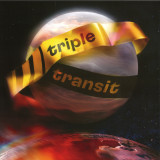
Full of bounce and experimentation in equal measure, ‘Triple Transit,’ Braille’s new album for Hotflush is about leaving his Sepalcure project (with Machinedrum) in the rear mirror, moving back to New York and using its energy to fuel new moves, confronting our hyper layered world and overcoming personal difficulties by being creative.
Focused squarely on utilising modular synthesis in sprawling studio sessions, the album covers a wide stylistic range and draws on the artist’s formidable battery of experience to craft a body of work that packs real emotional punch as well as a dancefloor sensibility.
We had a quick chat with him to wet your appetite…
Praveen Sharma aka Braille:
Moving on from Sepalcure
“That period of time when Sepalcure was at its peak was really inspiring. I’m still really in awe and humbled by the fans. It’s always amazing to hear about how music you’ve made has brightened up other people’s lives in some way, but ‘Triple Transit’ is really about transitioning from that period to something new. I’m intentionally not using many vocal samples on this album. That became quite a crutch for Sepalcure and I wanted to try and find ways to evoke those emotions and connect with the audience in other ways.”
The roots of his Bounce
‘Sour Patch Kiss’ and ‘While We’re Free’ are inspired by classic house and some early Detroit stuff. Songs like ‘Big Fun’ (Inner City), ‘I Wanna Be there’ (Model 500) and slowed down ‘Sex on The Beach’ (DJ Assault) have stuck with me since the beginning. I used to listen to this slowed down and doubled version of ‘Sex on The Beach’ on an early Juan Atkins mix cd on REPEAT when I was in high school.
Getting ambient
Triple Transit slows down and transitions through a bit of sadness and eventually acceptance at the end of the album. A lot of the music I’m making these days is trying to recreate that manic feeling so many of us have in 2024. Between social media, ridiculous hustle culture expectations and depressing global and national political events, it’s hard to not feel overwhelmed. I feel like Triple Transit is kind of a parabolic curve from mania to joy to a sober realization that yeah, actually the world is just fucked but somehow we carry on.
There is propably no single event that has as potent of an
effect on the german Techno- scene as the fall of the Berlin
Wall. A city divided suddenly, in one single night, became
uni¦ed, opening up both sides for the new experiences and
ways to view life the other might have. Berlin’s eastside with
it’s empty, unused warehouses proved to be a fertile breeding
ground for free spirits and those carrying a newfound ¦re in
their eyes. This was the zero hour. The Consolidation. And it
is this mindset, spirit and ¦re of Consolidation that Shaleen
conjures on her debut EP of the same name. The title track
opens up by sampling John F. Kennedy’s legendary “Berlin”
speech from 1964, before absolutely caving in the concrete
with a beyond-heavy kickdrum and a very stripped down but
effective 909-percussion section. Spursed in along the track’s
runtime are droning sirens and JFK continuing to beckon you
to lose yourself in the metropolitan bowels. This is the
anthem of a past revolution. On Deconstruction, Shaleen
goes down a slightly more basement oriented route. The
Percussion shares the title track’s stripped down
effectiveness, but the Groove is more rolling, the Vocal
samples are more distorted and there are sharp synths
cutting through the beats like shards of broken glass. Of
course, a revolution wouldn’t be complete without a mob so
both Cadency aka Hector Oaks and New Frames have put
their spin on the EP’s title track. Mr. Cadeny is up ¦rst and,
being no stranger to revolutionary anthems, has given
Consolidation an almost contemplative mood in his Remix,by adding a very subtle melody. This doesn’t mean it hits any
less hard, mind you, there is an incredibly strong drive to the
track, paired with an almost constantly looping vocal and the
sirens going into overdrive, this would be the track to drive
crowds into a frenzy. Meanwhile New Frames’ track is the
kind of thing you wouldn’t want to encounter alone in a dark
alleyway. The sub-basses are heavy enough to terraform
Mars, the Jungle-esque Synthlines roar and snarl at the
listener and every drop feels like a right hook to the chin. The
original’s vocal is cut in a way that it only adds to the
stomping rhythm, putting you in a mood to throw bricks. So
while this record showcases an aggressive sound and a
mood for revolution, it is important to remember it’s title.
Consolidation. It echoes a message of uni¦cation. Of
standing together. Because together we are, have been and
will always be stronger than by ourselves.
2024 Repress
Mariah was a Japanese outfit in the field of art pop, way back in the very late 70s and early 80s with 5 albums up their score from 1980 to 1983. The album from 1979 entitled as “Mariah” was actually made before the band Mariah was formed, and was released as a solo album by Yasuaki Shimizu. The album at hand is the fifth and for the time being last album in this row, released as a double vinyl back in 1983. Original copies, that are at least in very good condition, are hard to find. The brand new reissue on Everland, unlike the original and the first vinyl reissue from 2015, comes housed in a thick and artfully designed gatefold sleeve with OBI, which finally does justice to the progressive spirit of the music you will find here.
The musical basement of Utakata No Hibi is a fusion of dreamy synthesizer pop and haunting new wave music, that could be found all around the globe back in 1983. In the vein of TEARS FOR FEARS or more adventurous DAVID BOWIE stuff, with a touch of KRAFTWERK or even BRIAN ENO here and there, but all this gets spiced up with an atmosphere of Japanese traditionalism, with a few bits and pieces from the old music from this Far East island, which sounds so magic to us Westeners. The progressive, wacky art pop of this project was led by the popular Japanese composer and musician Yasuaki Shimizu, a relentlessly exploratory saxophonist who even dared to rework Johann Sebastian Bach’s cello suites for saxophone.
As brilliant as this man is, the music on „Utakata No Hibi“ turns out to be. And the master himself approved and much appreciated the brandnew remastering of this album by assisting a highly professional team of sound engineers who dusted off the ancient tape reels. For certain the record sounds and feels 80s through and through, electronic to the very rhythmical bone of each song sugar coated with catchy melodies that resemble Japanese classic and Enka music, which is a kind of folksy pop music. The listener gets directly drawn into a feverish dream of steaming Far Eastern cities and their darkest and most depraved corners where you find everything cheap in sleazy bars and unlighted backyards and alleys. The next moment he strolls through a beautiful Japanese park surrounded by a sea of blossoms. This change in mood and style you will experience in the sparsely instrumented tune „Shisen“, which indeed comes closest to classic Japanese folk tunes without any too catchy and pop oriented melodies. But we certainly find these harmonies allover the album. Some tunes even feel like ancient BEACH BOYS compositions and Brian Wilson creations played by a then contemporary electronic pop act and sung in Japanese.
An amazingly colorful album with songs that are based on solid substance rather than cheap pop structures. This is music for the bold listeners and music lovers and this awesome reissue should quickly find it’s way into the record collections of 80s synth and art pop aficionadoes.
Yasuaki Shimizu did what he wanted with MARIAH, pushed the borders of popular music further than anybody would have thought. Listen to a track like „Shonen“ with a repetitive rhythm pattern that hypnotizes you and somehow silky melodylines by saxophone and synth piano upon which a female voice sings in a very spiritual way. Praising pop or whatever this can be called, it is sheer magic put in music. I wonder if this would have made it into the charts back then, but you never know. It is a piece of musical art that shall be listened to.
2024 Repress
Chontane returns to Mutual Rytm with a more raw and aggressive sound than before across six powerful new tracks on his latest EP, 'Permanent'.
Berlin-based Ukrainian DJ/producer Chontane has had a busy twelve months. Capped off by recently launching his own new TANE label, the exciting talent has been working hard to reinvent and refresh his sound in the studio. Mastering new techniques to push things to the next level, this EP and return to SHDW & Obscure Shape's Mutual Rytm proves he has succeeded and then some. Where previous works on the likes of ARTS and Rekids were full and more melodic, here he has restricted himself and gone for a more visceral sound. Developed and built in all new ways with an innovative approach to sound design and arrangement, the tracks on the package showcase a more serious and harder-hitting side to his sound as he unveils his impactful 'Permanent' EP.
Opener 'Graze' has a monstrous feel to it, with ghoulish synth loops and industrial textures all coming on strong and heavy. As it bangs along, incendiary hi-hats and lithe pads all bring extra weight and detail. 'Cumaru' is a highpaced techno workout with a frenzy of synths and percussion, all making for dense layers of heavily textured sound. 'Schima' brings some big techno bounce in the drums and more hurried, rusty synth loops that lock you into the darkness. Showing yet another side, 'Lauan' is a little more paired back with pounding tribal grooves and bright synths, bringing relentless yet funk-fuelled intensity. 'Vevis' is the most melodic of the lot - a heavy track but with subtle optimism in the rising background synths that will surely get hands in the air.
Last of all is digital bonus 'Makore', a cauldron of intensity with scraping hits and relentless drums, vastly oversized hi-hats and slamming bass. This high-impact, beautifully brutal yet groove-heavy techno takes Chontane's sound into new realms, and delivers an impressive return on a label continuing to push the genre forward.
Bliss Point is proud to present the long awaited reissue of lost italo house gem Soft Keys – Bubbles.
Recorded in Trieste in 1993 by Edoardo Milani and Tullio Battisti, “Bubbles (Soap Mix)” is a slice of colorful, sun-soaked euphoria, a track delightfully leftfield and playful in a way so rarely found in club music. Originally released on Italy’s Promo Music label, it was quickly lost to time, a masterpiece locked away on an extremely hard to find 12”, soon growing in notoriety among DJs and collectors.
Bliss Point’s reissue of this classic includes two remixes from contemporary luminaries, each interpreting the timeless sound of Bubbles for the 21st century. Tokyo’s boys be kko explores the soaring complexity of the original, and New Yorker Olive T offers a thumping take on its deep and tender heart. The original “Acapella” version is also included.
This reimagining of Soft Keys – Bubbles is remastered and recut by Dubplates & Mastering, and features an homage to the original 12” sleeve designed by Brandon Oxendine.
Suburban Architecture are pleased to announce the fourth in their 'Architecture Dubs' series of limited edition 10" vinyl releases, which sees some of the most revered names active during the mid 90s golden era of Drum & Bass deliver remixes of Suburban Architecture material in homage to that most innovative of periods.
Following on from the now sold out release of Architecture Dub #001 (featuring remixes from Peshay and DJ Trax), #002 (featuring Blame and DJ Trace), and #003 (featuring Nookie and DJ Crystl), edition #004 enlists two further legendary names to put their stamp on the duo's material.
Ray Keith is a DJ and producer who requires little introduction. From his beginnings in the Acid House scene of the late 80s through to the present day via Hardcore and, of course, Jungle, Ray's output has been a steady presence in UK dance music for over 3 decades. From manning the counters of legendary record stores including London's infamous Black Market Records to masterminding bonafide dancefloor hits such as 'Terrorist' and 'Dark Soldier', Ray has touched every corner of the scene. For this remix, Ray brings some of his trademark Dread flavour to 'The Drifter' injecting some tough Amen and Bassline energy to the track.
DJ Harmony is another DJ who cut his teeth behind the counters of some of the scene's pivotal record stores, having worked in Lucky Spin and Section 5, while releasing music on some of the most important imprints in the genre, notably including Moving Shadow. Today Harmony is best known as the driving force behind the brilliant Deep Jungle imprint which delivers classic, new and unreleased music from Jungle's heaviest hitters. Recent releases have come from names including Adam F, Dilinja, DJ Trace and, naturally, Harmony himself. Harmony's remix of 'The Believer' takes cues from classic Jungle with a half time break down, giving way to a smashing Amen workout accompanied by the rousing vocal refrain of the original.
Pressed on 10" vinyl and housed in brown Kraft paper sleeves, the series makes visual reference to the exclusive dubplate pressings which introduced so many classic cuts to the UK's dancefloors in the 90s.
LIMITED Quantity. Deep dive into the realm of electro music. Hypnotic multi-layered baselines, unpredicted drops and bursting beats would make precise, nevertheless not full definition of this EP. Following the
debut of the sequel with an exhibition showcasing artwork’s creation and conceptualization, we face SEQ002: False Destination, a new chapter where the story continues in an unexpected way. It holds the question, to which unknown territory did the agent headed from his collapsed dimention? – Side A takes you on a journey that echoes the spirit of interdimensional travel, a recurring theme in electro music. Impact One throws you into a captivating sonic environment, grabbing your attention with distinct sonic events, all layered over a foundation of subtly shifting rhythmic patterns. A2 is another mention of wrong dimention, hard alterations on early 90s Rave revivalism with peculiar artifacts and touch of blue note with breakbeat burst out conclusion. –
On the flip, a couple of heavyweights. Thick kicks jumping from 4 tothe-floor to broken beat, uncertain breakdowns and unexpected amen breaks driving audience on the edge. Hypnotic bassline for B1 was characterized as Giorgio Moroder on steroids. Last track is a calm blend in ending on a hybrid cosmic breaks combined with Yamaha DX7. – ABOUT ARTWORK This time comic-like backside artwork has an insert accompaniment to immerse within the world created by the artist behind the record. AI has been used to create artwork, generating imagery as a way to bring ideas to life. It offers a cryptic clue, a fragmented piece of the puzzle that complements the music to tell the story
Originally released in 1990, Same Place The Fly Got Smashed was Guided By Voices’ fourth album in as many years. Roughly a concept album about an alcoholic named Joker Bob who goes on a bender, someone dies, and Bob gets the chair (“the electrifying conclusion”). From the moment the needle drops, the listener is served notice that this isn’t going to be an easy listen, as an argument taped off of a TV cuts to a basement recording of a lone, blaring electric guitar with someone yelling over the top. But for those brave enough to pass the opening hazards, there are wonders within. This particular album has come to be held in higher and higher regard by fans, and they are correct to consider it a top-tier release. The story and sequence have a flow, and consideration for approachability is optional. Many of the crudest tracks reveal themselves as necessary stitches in the album’s tapestry. Yet it also contains all time greats like “Drinker’s Peace,” “Mammoth Cave,” the epic “Local Mix-Up/ Murder Charge,” and of course “Pendulum” with its immortal opening line: “Come on over tonight, we’ll put on some Cat Butt and do it up right!”—a rare break in the clouds on one of the band’s darkest albums. This reissue, like the previous ones in this series, is a mostly faithful reproduction of the original pressing of 500 on the band’s own Rocket #9 label. And like the others, the virgin RTI vinyl is housed in a thick tip-on jacket, and includes Robert Pollard’s original handwritten lyric insert.
Through the medium of a distinctly synthesised, sustained ambience, seasoned artist and composer Jasmine Guffond arrives on OOH to explore the tension between technology and human creativity in an increasingly ambiguous playing field.
Alien Intelligence came into being during Guffond's residency at fabled Parisian institution GRM in 2021. While learning how to generate sound and make music with the in-house Serge modular synthesiser, the Australian artist noticed the typical role of human input for machine output was being subverted by the behaviour of certain electronic elements, which came to exercise their own influences on the direction of the music.
Taking this idea one step further, Guffond proceeded to explore the programming environment MaxMSP, a customisable interface which allowed her to blur the lines between human input and machine directives even further. Across the three extended pieces which make up Alien Intelligence you can hear the results of Guffond's inquisitive approach as she coaxed the machines into bringing their own ideas to bear on the music.
The tension inherent in this thematic duality is mirrored by the contrast between glacial ambience and chaotic interference across the album. On 'Serge & Maxine Variation One' the presiding mood is a slow and patient one, as undulating waveforms rich with harmonic overtones spill out over one another across 10 minutes. The track's latter passage, driven by steadily intensifying oscillations, is then interrupted with an unexpected flurry of pitch shifting. This kind of complex technical movement features more prominently at the start of 'Serge & Maxine Variation Three', which then gradually shifts into a gentler ebb and flow of rising and falling frequencies.
Angled slightly differently and residing on the B side of the album, 15-minute quiet epic 'Serge & Maxine Variation Two' bookends a louder passage of synth work with serene, sustained notes that ring out a sort of hymnal melody. Throughout, the movement in the music evolves in subtly modulating, hypnotic, ways, but there are also unexpected turns or melodic diversions which feel much more incongruous. In its closing stretch, the notes dart around more freely as though played by hand, but it's hard to be sure whether these shifts in the otherwise delicate tonal music were a human conceit or a programming by-product. In the end, the two inputs logically become one.
As Guffond says herself, "More-than-human logics emerge, a kind of alien intelligence that questions an assumed central position of human subjectivity in socio-technical assemblages and considers the philosophical, socio-political and cultural implications beyond music practice in an increasingly technologically mediated world."
As AI creeps into art as much as other aspects of modern life, Guffond applies her playful instinct to the theme of these works by re-considering machine intelligence as 'alien', crediting its contributions with a more robust yet enigmatic identity in the creative process, leading to an end result which is far from artificial.
►Mastered by Giuseppe Ielasi, cover art by Ilan Katin, layout by incepBOY, photo by Camille Blake, words by Oli Warwick
Since 2019 Demdike Stare had been playing edits of Dolo Percussion’s bare-boned breaks in their DJ sets, eventually sharing them with Dolo’s Andrew Field-Pickering (Beautiful Swimmers, boss of Future Times) and fomenting a creative fusion that hits at the square root of their shared tastes for unruly, deadly rhythms. In a transatlantic back ’n forth - or what Kodwo Eshun termed a double refraction - they juggle the rudest aspects of UK hardcore, as derived from electro, breaks and garage-house - that would feed into Dolo’s pool of sound, and return to the UK via the likes of breakbeat wizard Karizma, who was a key touchstone for the whole late ‘90s broken beat movement key to Demdike’s tastes.
Still following the thread? It’s not that tricky - both US and UK operators favour breakbeat music more than anywhere else, and this devilish hook-up is the epitome of a conversation ongoing for generations now. At each parry, the three cuts here are exemplary of the way DJs, producers and dancers on both sides of the pond have pushed each other to new heights in a feedback loop designed to make the dance throw the maddest shapes.
‘DOLO DS 1’ racks up a full clip of flintiest breakbeat hardcore, pivoting gasping samples inna dervish of ruffneck syncopation, ruggedly distinguished from the pitching, gritty drum machine chicanery of ‘DS DOLO EDIT 1’, and their super crafty sidestep into the offbeats, hingeing around ghost snares and practically spectral levels of percussive suss in ’DOLO DS 2’ which basically sounds like a prime Autechre tumbling thru dub.
- A1: You Don't Have To Wait W/Cubicolour
- A2: Revision Ft. Giovanni
- A3: Go Back Ft. Desire
- B1: Wervik
- B2: Hooligan Plex
- C1: All Night (Garage Verson) Ft. Oscar And The Wolf
- C2: You're My Desire Ft. Mystic Bill
- D1: Serpent Jazz W/ Avnu
- D2: Get Out Of Here Ft. Perry Farrell
- D3: Just You And I
- E1: Clickbait (This Ain't Hollywood) W/ Avnu
- E2: Shine On & On (Orbital Tribute)
- F1: Nasty W/ Tyler Hill
- F2: Stop That
- F3: Moon Sky (House Version) Ft. Ishi
Renowned US producer Maceo Plex releases his highly anticipated third album, ‘’93', a homage to his three-decade journey through the realms of electronic music. Marking both a passion and a prolific career, the maestro presents a tantalising body of work that masterfully blends House, Hip Hop, Global Bass, Techno, Breaks, and Electronica. This audacious fusion delves into historic and modern influences, crafting an audio journey that transcends time, rich in history yet boldly future-facing.
‘’93' is a cross-genre exploration, seamlessly balancing emotion with hard-hitting beats. Maceo Plex collaborates with a stellar lineup of artists, including Diplo for his contribution on ‘You Don’t Have To Wait’ with Cubicolor, Oscar and the Wolf, Perry Farrell (Jane’s Addiction), Johnny Jewel and Desire, Kirsty Hawkshaw, Mystic Bill, AVNU, Giovanni, Ishi, and Tyler Hill, resulting in a diverse and dynamic musical affair.
This album narrates the story of a highly esteemed artist at a pivotal juncture in his career, consistently evolving towards new directions. Departing from the early deeper house sound that initially defined him, Maceo Plex intentionally ventures into new territory, steering away from his famed melodic and techno direction in recent years. Nevertheless, '93' retains the essence of Maceo Plex's signature style, transcending various sounds and genres in a manner reminiscent of his electrifying DJ sets, meticulously curated for the dancefloor and the crowds.
‘93’ vinyl LP by Maceo Plex is available on Lone Romantic from 17th May 2024.
Key Feedback Quotes:
Pete Tong - Maceo is such a talented producer. A sonic juganaut. An inspiration to so many aspiring music makers. He's a master of analogue and digital in the studio. He's a total 'one of'.
Kolsch - Incredible album!!!!
Artbat - “Very cooooool album!
Gregor Tresher - Wow, now this is what I call an album! Extraordinary stuff, I love it! Big up, Eric!
Hot Since 82 - Nothing short of sensational. My fav producer and DJ who consistantly sets the bar far too high and we all play catch up. Love it.
Rodriguez Jr - Awesome album. LOVE IT. Such a wide spectrum of influences here. Respect!
Laurent Garnier - Very cool. Will play these
Hernan Cattaneo - This is a really good album!
Wehbba - happy to finally see the album coming out, lots of gems, Nasty, Just You and I, Get out Of Here and You're My Desire are my main picks.
Eelke Kleijn - Already listened to the whole album on Spotify. Fantastic. Miles ahead of everyone else. Thanks for sending this, will play many of these for sure.
AFFKT - all tracks are amazing
Ida Engberg - Loooove this release! Stop that and Serpent jazz for me, can't wait to play them. Lone Romantic killing it!
Victor Ruiz - Honestly, you’re a genius! 10/10 productions always.
Pig&Dan - Great to hear new tunes from one of my favorite producers out there
Oliver Huntemann - some real gems on here
Fideles - wow, love it all
Peter Kruder - Love 'em all! Thanks for sending my way!
Yotto - Sick Sick Sick work!
Jody Wisternoff - Insane tracks from Maceo!!!
Terr - Amazing music as always, thx!
Nicolas Masseyeff - Solid release! Full Support!
Paige - Nasty is an absolutely mind-blowing track!!
Braxton - Incredible Album. .
Dense & Pika - Wicked stuff from Maceo.
Eli Brown - Always great music from Maceo Plex.
Anden - Congrats on the album! Love it!
Sergio Muñoz / Fur Coat - Great work from Eric! Congratulations.
La Fleur - So many gems in there, looking forward to having a proper listen from start to end! Thx
Captain Mustache - Big work here from Maceo, congratz!
Alex Kennon - This is a masterpiece!
Timo Maas - Clickbait is a cool track, I like the deep funk.
Martin Eyerer - This is a great album!! I love nasty most, but all great.
Nick Warren - This is such a great album.
Laurent Garnier - Very cool EP. Will play these.
Jonas Rathsman - Stop That sounds interesting
2023 was a breakthrough year for EABS in many ways. It was all thanks to the well received, fully self-produced album entitled In Search of a Better Tomorrow, recorded in collaboration with the Pakistani band Jaubi. EABS' forthcoming sixth album is a return to their roots – literally and figuratively. It is an in-depth study on rhythm, which materialised in the form of the album titled Reflections of Purple Sun.
The back to the roots part not only manifests itself in the lack of guest instrumentalists, but also in a renewed focus on the history of Polish jazz. The band's debut album Repetitions... was dedicated to Krzysztof Komeda. This time, the band picked up the entire Purple Sun album, which Tomasz Stańko recorded half a century ago. From the POV of Purple Sun fans, a hard-to-find and somewhat forgotten album, it may seem like a doomed undertaking. However, in order to pay tribute to one of the most iconic figures of Polish jazz, it was worth embarking on this mission and attempting to engage in a non-verbal conversation with the Slavic spirit that Master Tomasz Stańko undoubtedly was.
You can learn more about Reflections of Purple Sun through the comprehensive booklet accompanying the record. The cover art was created by the label's regular collaborator, Animisiewasz, whose design pays tribute to Pia Burri's original Purple Sun concept. Release date is 10 May 2024.
Promised Land is the long-awaited debut album from contemporary showstopper Vintage Culture. Enlisting the help of peers NomBe, Maverick Sabre, The Temper Trap, and Elderbrook, the album marks the producer and DJ's seguing from progressive house to electro, evincing a globetrotting, jetsetting sound that hardly ever fails to hold back on emotion. Including prior single 'Come Come' alongside newer, angelic progressive cuts like 'Weak' with Sabre, this is a stark debut from the Brazilian creative force.
- A1: Saylo
- A2: Can't Take The Hood To Heaven
- A3: Attack Of The Dreadlocks (Feat Rae Khalil)
- A4: Lynn's Lullaby (Interlude)
- A5: Brownskin Cinnamon
- A6: Grey Seas (Feat Reaper Mook)
- A7: Cowboy Leather (Feat Pink Siifu)
- A8: Overseas Sam
- B1: Bullets From A Butterfly
- B2: Pearly Gates Playlist
- B3: Things Grandma Told Me
- B4: Bygones
- B5: Lagonda (Feat Goya Gumbani)
- B6: The Card Players (Feat Jayellz)
- B7: When I Met Rose
Cassette[10,88 €]
Forest Green Vinyl
Seafood Sam is a futuristic artifact. If that description might sound confusing at first, it matches the eclectic dualities found in true originals. With his effortless cool and timeless style, the North Long Beach native defies convention and exact comparison. He's a virtuosic rapper, a stop-you-in-your tracks singer, and a symphonic producer. Welcome to the lavish life of a laid-back transcontinental man of mystery, rolling in old school Cadillacs, eating caviar with a blade in his pocket, and making plays in vintage Pelle Pelle gear. A blaxploitation icon for the Instagram age, blessed with the bars of a `90s legend and 23rd century swagger. Seafood Sam is a true hero of modernity. On his full-length album debut for up-and-coming label drink sum wtr (Kari Faux, Deem Spencer, Aja Monet) debut, Standing on Giant Shoulders, Sam splits the difference between Snoop Dogg and D' Angelo, Curren$y and David Ruffin. The songs reveal a forward-thinking sensibility rooted in ancestral soul. He creates spiritual hymns for the streets that tap into universal ideals and irrepressible groove. In an era plagued by short-term thinking, his ambitions reveal a crate-digging depth of music history and a meticulous ear for detail. The giant shoulders in the album's title refer to James Brown, Bobby Brown, and Miles Davis - the holy trinity who inspired Sam's process. From the Godfather of Soul, Sam took a perfectionist's rigor and focus. The example of Bobby Brown lent an unshakeable confidence and self-belief. While the constant artistic left turns of the trumpeter that birthed Ccool offered an aspirational archetype. The story starts in the glory days of Long Beach hip-hop. As a young child, the G-Funk era soundtracked rides in Sam's father's car. Some of his earliest memories are trying to memorize Snoop's verse on "Nuthin' But a "G" Thang." Beyond gangsta rap, the LBC has historically doubled as a capital of lowrider soul and carwash oldies. At any intersection, you could hear Dogg Food or Brenton Wood, Warren G or Barbara Lynn. This too was absorbed via osmosis. It also just so happened that the art of performance was always in Sam's blood. So at family functions, he and his sister supplied entertainment by singing karaoke renditions of The Isley Brothers. While his Harlem Shake remains a thing of local lore. Long Beach is a culturally diverse mecca of skate parks and gang life, street fashion and tricky dance moves. This is the place that raised Sam on a diet of Wu-Tang and Nelly Furtado, Lil Bow Wow and Allen Iverson. He was the middle ground between his two older brothers: one who gangbanged, the other who graduated with a master's degree from UC-Santa Barbara. But it wasn't until the end of high school that Sam started to take rap seriously. Alongside long-time collaborators like Huey Briss and Reaper Mook, Sam's name began to make waves on the northside of the city, but he was partially distracted by a modeling career that paid the bills and took him all to way to walk in Paris' fashion week. The first turning point arrived with 2018's "Ramsey," a self-produced, slick-talk anthem with over 10,000,000 streams across all platforms. With each subsequent release, Sam showcased his peerless consistency, building buzz both online and in the city streets. Spin hailed his "smooth and unhurried cadences and understated lyricism_ that sounds like nothing else in Long Beach." Clash raved about Sam's "evolution as an artist, cruising through nostalgic production with slick, witty rhymes." The culmination arrives with Standing on Giant Shoulders. It's the evidence of a master, a young sensei in the model of Quincy Jones. All rhymes, singing, production, and arrangements were handled by Sam - with an assist from his close Long Beach kinsman Tom Kendall from the group Soular System. It's hard-edged and lyrical enough for disciples of Larry June and Roc Marciano, but orchestral and melodic enough for fans of Anderson .Paak and H.E.R.
"Deep Dancefloor Jams of African Disco, Funk, Boogie, Reggae & Proto Electro Music 1977-1986reggWhen a passionate DJ and crate digger intuitively selects music for a DJ compilation, without artistic compromise and without the burden of trends, AfroMagic vol.1 emerges from the depths of his soul. Herewith we present the new favorite phonomancer’s tool for all the DJs who experience the dance floor as a sanctuary and a source of freedom and love.
The most fundamental thing that defines African music is that it was created for dancing. In African dance, there is often no clear distinction between ritual celebration and social recreational entertainment – one can seemlessly merge with the other. Because dance and rhythm have more power than gesture and more richness than words, and because they express the deepest experiences of human beings, dance is in itself a complete and self-sufficient language. It is truly an expression of life with all of its emotions – joy, love, sadness and hope – without which there is no African music and dance. For the African people, dance and music are integral parts of the body and soul, thus depicting the expression of life, current emotional states, visions or dreams. Through hypnotic repetitive music and dance, people communicate with each other and with the souls of the dead, the animals, the plants, the stars, the Gods… They free the body and the spirit through ecstatic states, reaching a healing sense of freedom, happiness, and satisfaction.
Throughout history, this transcendental perception of rhythm and dance originating from Africa, influenced popular music worldwide, thus creating new living and breathing forms of musical genres – freeing them from their industrial mold. Funk, disco, soul, boogie, reggae, dancefloor jazz etc., developed in parallel all over the world. It is foolish to perpetually discuss where they originated from and who were the creators of all these fiery dance floor genres – being obvious that they directly or indirectly originate from the African continent and its people who were as well, over the centuries, influenced by disturbing socio-cultural factors of colonialism. However, no one can enslave the soul. The seeds of free and uninhibited dance and rhythm, true to their original form, initially first sprouted onto the USA’s fertile fields of clubbing and popular music while later evolving in other parts of the world.
The disco funk club culture manifested itself as a phenomenal explosion of artists and grooves in the second half of the 70s in the USA. Shortly it spread around the world continually reigning over charts in its various forms – to this day. Clubs emerged where the DJ is an almighty shaman and the dancers are a tribe united under one roof. This urban ritual had and still has a single goal: togetherness, freedom, and love. Clubs have evolved into temples where we free ourselves from the burden of a consumerist lifestyle and suppressed emotions – a place where we receive love and give love – to be who we really are.
Disco funk clubbing was such an influential global phenomenon that its influence can be observed in various other genres from the disco funk era i.e. progressive rock, which mutated by layering complex rock arrangements with a disco funk groove resulting in hybrids, highly sought by today’s diggers, producers and collectors. The profit-hungry music industry of the 80s very quickly commercialized the original disco funk sound by amputating of its original Afro groove to be able to easily ‘sell’ it globally. So, the original disco funk groove became underground again, and it has remained so until this day. Today, for a DJ to unearth that ravishing groove that will lead the dancers to the stars, he must dig passionately like a true musical archaeologist in search of that groove that picks you up after just a few initial beats. That groove which forces the atoms in your body to vibrate, that groove which unites the body and releases the burden.
The AfroMagic compilation series is created as a tool for real DJs who stick to the aesthetics and essence of clubbing.
This continuation of the Afromagic compilation by DJ Borovich was created in a private jam session which served as an escape route from intense and complex love problems.
Unconsciously driven by intuition and emotion and following a live mix tape framework where many tunes are arranged instantaneously, Borovich narrates his story with a strong rhythm that cuts loose even the most blocked off energy nodes and restores happiness to the spirit and the body.
The musical experience of the groove is completed by the lyrics of the songs, which symbolically give DJ Borovich universal answers to his questions arising from questioning the boundaries, nuances and other forms of love.
When considering that Borovich’s selection was created to facilitate an escape from the burdens of reality through rhythm and dance, we can be sure that Afromagic Vol. 2 will have a 100% uplifting, energized and spaced-out effect on the listeners.
The intro to A1, “Feeling Happy” by the Apostles, introduces us to an experienced and slow, cool and irregularly tight groove containing a confidently sung chorus that instantly gives a sense of freedom and hints at the remainder of Afromagic Vol. 2: “I’m gonna feel happy, ´cause I know I’m gonna be myself.” After the anthemic song mantra of the Apostles, Aigbe Lebarty uncompromisingly continues with a dirty disco rhythm. Acidified by accented synths that elevate it to shamanic levels and held together by a female tribal choir, we embark on an uncompromising ritual disco journey. Without a moment to take a breather the prog funk band Mighty Flames and their Road Man launch a highly vicious and raw, thick funk groove spiced with acid synths and dirty RnR breaks, raising the bar for the A side. Jimi Hendrix himself would surely praise it given the ultimate freedom and virtuosity in the solo sections. With the last tune on A side DJ Borovich decides to burn the floor with Geraldo Pino’s psychedelic, acid furious groove and lyrics which describe this HEAVY part of love problems: “The way she walk, the way she talk, the way she does a funky dances, she is really really heavy – that woman”.
While the A side represents a compact intoxicating afro groove machine that separates us from reality and lifts us up to the stars in over 23 minutes, the B side is a treasure trove of proto sub-genres gems. This selection represents the mission of the Afromagic: to find singular events in African recorded discography of popular music from the 70s and 80s that give evidence to the birth of new modern genres on the Dark Continent even before they emerged in the U.S.A. or Europe. The beginnings of electronic music influenced genres are represented back to back with 80s synth jazzy pop, all painted in African colours.
The B side opens big with Jake Sollo and a huge reggae blues number singing about the humiliation of a man – goosebumps guaranteed! “You think I’m nobody that’s why, you don’t know the way for me, I’m somebody I know, I found myself at last”. Adolf Ahanotu then enters the scene with a hard sliding tackle at B2 and an exotic rare disco funk dancefloor napalm. A ‘Sensation’ that would ignite even the coldest of introverts. While we approach the end of the compilation the narrative revolves again and takes a different turn. No less and no more than to the proto-electro that Baad John Cross serves us in “Give Me Some Lovin´”. The fat and repetitive broken electro synth groove, championing many early 90s electro tracks, is presented here without hesitation and with constant tension accompanied by a mantric chorus “Gimme some, gimme some, gimme some looooovin’, EVERBODY!!!”. Finally, we’re guided to the end of Afromagic Vol. 2 by Eji Oyevole’s 80s synth pop style presented in an authentic afro manner, giving us a glimpse at yet another released Afromagic edition, as well as giving an answer to DJ Borovich’s love problems. A smoothly broken electronic rhythm resembling electrified highlife sounds, carried on the wings of a virtuoso dreamy saxophone on top of which Eji presents the most intimate parts of himself. Finalizing the track with a symbolic chorus, on the surface referring to the dancefloor and simply having fun, but in actuality referring to the skill and happiness of living: “I´m a dancer, I can dance”. So, get up and dance among the stars with DJ Borovich and Afromagic.
- A1: Oriana Ikomo - Never Forget
- A2: Moodprint - Eartha
- A3: Kin Gajo - Exit, Gajo!
- A4: Adja - Told You So
- A5: Bodies - Brioche
- B1: Orson Claeys - Conversations
- B2: Bodem - Kleine Mars
- B3: Honey - Bossa Dolce
- C1: Azmari - Sheep Party
- C2: Le Ministère - De L'amour
- C3: Ciao Kennedy - Parcifal Pt. I
- D1: Echofarmer - Beginning Would Have Been Outside
- D2: Kassius - Escapism
- D3: Bruno X Soet X Moene - Ott
Vol. 1[22,27 €]
Vol.2 Black Vinyl[24,79 €]
Vol.2 Limted Red Vinyl[26,01 €]
Vol. 3 Transparent Violet Vinyl[27,52 €]
Standard version on 2LP black vinyl in gatefold sleeve. ‘Lefto presents Jazz Cats' is back with volume 3 and still doing what it does best: putting you in the front row of what the thriving Belgian jazz scene currently has to offer and revealing a melting pot of the musical talent.
'Lefto presents Jazz Cats' is back with volume 3 and still doing what it does best: putting you in the front row of what the thriving Belgian jazz scene currently has to offer and revealing a melting pot of the musical talent coming out one of the smallest countries in Europe. Never change a winning team they say, so we're happy to have Belgian DJ and eclectic connoisseur Lefto on board again.
Although you expect thecompilation to be talking jazz, volume 3 explores a broader array of styles, genres, and sounds than ever before, arriving at a point where the 'young cats' of today don't bother no more. It may focus on the Belgian scene, but let's face it, seeing the influences, this one could be compiled from all over the world. From the empowering and bittersweet voices of Oriana Ikomo and Adja, over the more acoustic-electronic productions of Moodprint, Ciao Kennedy, Kassius and echofarmer. It's even expanding the Jazz Cats universe to dub and bass-heavy tracks with Kin Gajo and Le Ministère, Ethio-jazz from Azmari, while sending you back to earth with bodies' swirling sax and drums. That saxophone still rings in your ears when you end up in the orbit of the march-like drums of Bodem, Orson Claeys' piano testing your ability to follow him, slamming the breaks to go smooth cruisin' with HONEY (Morricone meets Khruangbin, anyone?), to crashing in a raging tempo on that last track of Bruno x Soet x Moene. And there you are, back with us.
2018's 'Lefto presents Jazz Cats' included tracks from some of Belgium's biggest hitters, including Black Flower, STUFF. De Beren Gieren and Glass Museum who have all gone on to receive global acclaim. The album was given the accolade of 'Album of the Week' on Worldwide FM and also received further radio support from Jazz FM in addition to numerous glowing reviews. The 2022 follow-up 'Jazz Cats volume 2' paved the way for a new generation inspired by its peers, entering another era of very talented individuals and collectives. Maybe even more so than 4 years before. It uncovered a beautiful balance of more established but also obscure musicians and artists. Opening up to electronics and dance, enter bands like ECHT!, Stellar Legions and TUKAN. Thrilling innovative soundscape grooves and jazz fusion with Bandler Ching and L?p?GangGang, not to forget about the weaving musical odyssey that is M.CHUZI. In addition, there's the balanced unease of One Frame Movement, the laidback 'acoustic electronica' of Boombox Experiments, the classic funky jazz stylings of Cargo Mas and cinematic The Brums, all of these have set volume 2 on the map as an essential release for any jazzhead with a passion for new sounds.
Tastemaker, selector, curator, DJ and producer, these words often get mentioned when Lefto's name pops up in discussions. And rightly so. If you've ever had the pleasure to listen to one of his incredible Boiler Room sets or one of his many radio shows, you'll know why. Famed for his gloriously eclectic taste on the decks, he switches effortlessly between hip hop, funk, breaks, neck-snapping beats, future bass, South-American influences, bruk riddims, some wild African rhythms and of course, jazz.
Growing up as a child, his father would have the sounds of jazz flowing through the speakers. Which led him to bars around town to hear the latest jazz ensembles. Falling in love with the genre, he would later refine his knack for record digging and fine ear for music working at Belgium's legendary Music Mania record store in his hometown Brussels. Which makes that Lefto is consistently a couple steps ahead. He doesn't wait for the next thing to land in his lap, but actively seeking it out.
Lefto on Jazz Cats volume 3:
"Another release in less than two years! I am very impressed by the amount of creative "jazz" talent we've managed to compile over the last couple of years. Thanks to the internet, young musicians find inspiration from around the globe and incorporate diverse influences into their work. Given the history and heritage of jazz in this country, it has managed to create a healthy jazz scene supported by festivals, venues, press, and labels. Therefore, I am very proud to present to you the thirdinstallment of Jazz Cats. This compilation is dedicated to the young and hardworking musicians who are the present and the future of Belgium's jazz scene."
The VA theme on the LP series under the name Untitled || continues to explore the subject of 8 different minds from different corner of the globe connected by the principle and love for the audio frequencies in line with Exarde. Featuring two artists which already dear to label due to the fact of past releases on it and six new ones who have become instant people of love and admiration for me.
From the more deep and mellow to the higher pressure for the brain this double disc shall meet your demands. The art theme of this one is blobs & globs from space, whether they are emerging, fighting with their own shadow, or just simply floating and co-existing. This shall conclude my rambling for this body of work as I go and put these eight essences through my ear canals once again. Great deal of thanks for the hard work and dedication of these talented conductors.
In spring,
Again.
But it's true this time.
In Spring is the second record by Tara Clerkin Trio, a Bristol-based group who appeared to emerge from below the radar of near-all in early 2020 and in the presence of one of the most captivating records of that year. This latest 23 minute, four song collection, recorded in various stages and locations over the last twelve months, does nothing to detract from those first impressions, refining the woozy and shimmering oddness of their debut into an avant-pop sensibility that is increasingly their own.
If the group did arrive fully formed, what that form was did feel supple and hard to grasp. They were, in a sense, essentially new sounding, or at least ghosts between the established lines, and with this new record have doubled-down on their inherently Delphian instinct. At its heart, In Spring is a record of subtle contrasts, experimental yet familiar in its intimacy, obviously modern though tied to certain lineages, and driven by a pop logic which is also free-form and seemingly improvised. Their approach to sound is perhaps the guiding principle here, less concerned with genre as it is texture and feeling, drawing from jazz, folk, modern composition, trip hop and downtempo electronica, yet evading all of those categorisations. Tara Clerkin Trio are too generous of heart to be ripping up any rulebook, they simply seem oblivious to its need.
Their geography does provide some context. Bristol's progressive sonic heritage inescapably bleeds into these four tracks, the enclave of open-minded artists around Planet Records in the mid 90s perhaps the closest point of comparison. There's that same magpie spirit which is both futuregazing and aware of its past, though is mostly set on finding its own path. This is in essence what defines Tara Clerkin Trio, feeling their way through freedom of instinct and curiosity, forging their own desire lines. Not so much taking the road less trodden, just walked at their own winding pace.
"Done before,
And I'll do it again"
Ringing in my head
While I try
To feel
Repress!
New school Italian techno sensation Alignment is back with a third thrilling EP for on Charlotte de Witte’s KNTXT label that once again stands him apart.
Alignment's previous outings on the label - the Time EP in April 2020, then his Nothingness EP in November 2020 - made huge impacts. They are standout techno offerings from a young and exciting artist who has quickly risen to the top. He has remained hugely busy in the last 12 months with a wide-ranging sound that takes in everything from old school bangers to trance-tinged rollers via futuristic workouts.
Says label boss Charlotte de Witte, "Alignment's music has been strongly represented in all my livestreams of 2020 and 2021 and I honestly can't wait to finally bring his music and his latest creations on Power EP to the dancefloor. It's made to make you move and I'm very happy to have him on board once again!“
The artist himself adds, "The vibes we shared pre-pandemic on our beloved dance-floors inspired me a lot to create Power EP. I tried to focus on effective and highly energetic, peak-time techno weapons for KNTX011. Signature synths, big stabs and kicks following only one formula - no compromise and four to the floor.”
First up is Power, a high octane track with hard drums, slamming bass and bright synths that cannot fail to get hands in the air. The excellent 'Disconnection' has laser-like synths shooting across the face of the track while big, edgy trance stabs light up the barreling drums from way up above. 'Frequency' is another trance-influenced track that brings peak time energy to stomping and distorted drums. It is an emotive rollercoaster that never lets up and will make a mark on even the biggest dance floors. Last of all is 'Radioactivity' which has scuffed metal textures, crashing drums and strobe-lit synth lines that will turn every party into a rave.
Jlin’s detailed and meticulous exploration of rhythm’s inner and outer reaches has made her one of the most distinctive and recognisable voices within both the electronic and classical music worlds. Her compositions are consistently appealing and have an accessibility to them, yet often defy expectations. She exists within her own locus solus - no matter the collaborator, no matter where sounds ultimately lead her. Whatever the situation – from composing the Pulitzer Prize shortlisted ‘Perspective’ for Third Coast Percussion, to ‘Godmother’ her AI-powered collaboration with Holly Herndon, Jlin always expresses her outlook to the fullest. Her new album ‘Akoma’ sets a new benchmark in her personal road map, not only since the album features guest appearances from Björk, Philip Glass and Kronos Quartet but for her continued sonic persistence and resistance. Jlin does what Jlin does and it’s beloved across genres, across scenes and across generations. ‘Akoma’ is a new entry point into her sound and a new approach for both those who have been following diligently and those who are just now entering her world.So how did she get here? Here’s a rundown for those looking for the facts. She was both a math nerd and a steel factory worker. She got inspired by Footwork and started making tracks with mentorship assistance from RP Boo and DJ Rashad, but her music was far from typical for footwork from the get-go. In 2011, she released her first track ‘Erotic Heat’ on the Planet Mu anthology ‘Bangs & Works Vol.2.’ Fashion designer Rick Owens heard it and invited her to soundtrack his Paris Fashion Week show. Already before an EP or an album Jlin was in new cutting-edge territory. And it hasn’t stopped since. Everyday Jlin wakes up early and clocks into her home studio working hard on new music. Her discipline and craft-like approach means that those who would try to copy her sound simply can’t get to the level she is at. Since ‘Erotic Heat’ she has released two bold albums, 2015’s ‘Dark Energy’ and 2017’s ‘Black Origami.’ She has also released her soundtrack to Company Wayne McGregor’s dance piece ‘Autobiography’ (2018) and most recently (2023) the mini-album ‘Perspective.’ She’s remixed µ-Ziq, Factory Floor, Ben Frost, Max Richter, Björk, Martin Gore and others. She’s collaborated with Holly Herndon and the late SOPHIE. She’s worked with visual artists Kevin Beasley and Nick Cave. She composed a string quartet for Kronos Quartet and performed with them live in a tribute to Philip Glass. She also recently completed a tribute to Sun Ra with Kronos. ‘Perspective’, her very well received percussion work for Third Coast Percussion has further opened doors for her in classical music. She’s even thinking of one day writing an opera. She had a residency at MassMoca Museum earlier this year (2023). She’s performed live at Pitchfork Festival, Unsound Festival and too many others to mention. She’s also worked with Indian dancers, Company Wayne McGregor and renowned choreographer/MacArthur Fellow Kyle Abraham. There’s more but you get the picture - she’s working in contexts and in ways that few of her peers are able to. ‘Akoma’ is the next step - all these paths have led to this. We encourage you to tune in.
Überkeine sets the tone of his own record label with four esoteric tracks, designed for the club. An obvious intention to establish a radical style with conceptualized sonorities, is revealed throughout the Ep. The sound materials are elaborate, and go straight to the point. Obsessing over the flow of creativity offered by his modular synthesizer, he delivers a very dense techno and already affirms a well-marked identity. Powerful and textured kicks, intricate synthetic sounds contained in an arrangement reduced to the essential. The tracks come to life as the forthright reflection of the thoughts of the producer. Guillotine Whistle instantly plunges into the unbridled world of the Ep. An ominous atmosphere hovers over our heads as it reveals organic and disconcerting tones. A gentle brutality emanates from this whistling guillotine that awaits to cut you up in two. Leading the way towards Drifting Data, a track inspired directly from Jungle Patterns. Überkeine is humbly trying to render DnB to a techno format. The dense, saturated Bassline sustains the idea of breaking the dancefloor in pieces. A hard hitting, broken beat environment accompanied by heavily filtered synthetic chaos. Third track’s the charm, the B side starts with Mirror Moist. A drop-down, wet and straightforward techno track with a carnal Bassline. As sensual as it gets, this track conveys a kinky loop urging intimacy and blasting heat throughout the club. Last but not least, Shaney’s remix of Mirror Moist. Picking up core elements of the original vibe and translating it into the off-beat techno nightmare it deserved to be. Full-on obscure dancefloor piece of equipment.
Mikal Asher, a scion of Jamaica's Morgan family dynasty, reunites with Chocolate Star Records here and does so with a collaboration with disco legend Gary Davis. Asher, akin to his brother Denroy Morgan, upholds the family's legacy of righteousness through music. Known as the Binghiman, he crafts captivating tunes with profound lyrics and has recorded in Ghana's Hustle Hard Studios and collaborated with industry pioneers in Kingston and Brooklyn, setting new standards in musical excellence along the way. Here, 'Wicked Ah Fi' transforms into a modern dub stepper, while 'Black Woman' offers a soulful, laid-back dedication to Davis' wife, Sonjia. This 12" also comes with innovative remixes from California-based DJ and producer Knoe1.
Suchi’s bouncy, airy productions are so organically deft that they almost belie the complexity that exists within. Prior to her !K7 debut the Oslo-born, London-bred, Delhiinfluenced DJ and producer found herself in a period of creative stagnation, while attempting to rediscover her own voice through production. After going back to the drawing board again and again she resolved to let go of overthinking, eschew the process, and let experimentation lead the way, revisiting some simmering sketches and work in new ways.
Ghungroo EP is the result of this reset, and rediscovers Suchi’s sense of playfulness through different production styles. It’s pressed on eco-friendly vinyl, PVR free and 100% recycled. “Ghungroo” is a homage to Suchi’s early years, and named for the small metallic bells strung around the ankles of classical Indian dancers. The track is equal parts cosmic, bassy and wavy, with a downwards bassline that plumbs the depths of low frequencies. The memory of early music passions emerges as the same melodic loop undresses and redresses in different guises - between breezy pads, glowing chimes and euphoric bells.
“Blåmerke” means bruise in Suchi’s native Norweigan tongue, and it leads heavily with double-time polyrhythmic drums, ravey rhythms and percussive bubbles popping. Triplets of synth stabs are artfully deployed with reverb and warped, stretched pads, bringing a whimsical twist to a track that is otherwise a tough-edged stomper. “Bottlepop” loosens up the tempo for a funky house framework, foregrounded by a big melodic synth riff. The track’s hookiness is enhanced by its old-school school feel, with distorted whistles and evocative pads. “Blåmerke” is then given a rework by Sam Goku who was chosen for his euphoric, dusty-sounding club tracks that hit hard; in his care the remix provides exactly that, via throbbing, shimmering, deep trippiness
clear vinyl
Brooklyn Sway returns for its fifth release with another all-star cast of names drawn from the Brooklyn underground, as always vinyl only and with label art from NYC mural legend Cern.
Label regulars Vivian Wang and DeWinter lead off the A-side in a tough-but-dreamy style on 'What About Love', the heavily processed vocals of NYC house guru Kevin Williams giving the tune a true NYC afterhours flavor. Next up is David Paglia, also a frequent label contributor, whose 'Spellbound' toughens up the rhythm section with dub bass and a steady breakbeat backbone while liquid pads and the vocal hook hold dancers in their spell.
The flipside ups the ante for grime, leading off with label head Jay Prouty, DeWinter, and NYC OG Emma's 'What We Do', precision tooled for when the afterparty gets dicey. A hip hop acapella floats through a dense web of flutes, breaks, and a rugged house beat: smart DJs will sense main floor potential here, swaying halfway between gangster lean & proper house dancing. Charles Levine from Soul Clap needs no intro, and his 'Gimme A Break' is equally literal, a funky breakbeat belter with effortless vocal flourishes that balances perfectly between hard and smooth, just the way we like it in Brooklyn.
- A1: Alice Smith - Love Endeavor (Maurice Fulton Remix)
- A2: Rick Wilhite - Ruby Nights (Gilb'r Solo Flight Remix)
- B1: The Detroit Experiment - Think Twice
- B2: Zomby - Tarantula
- C1: Langenberg - Times (Manuel Tur's Ground Glass Reflex)
- C2: Carl Craig - Sandstorms ( 2011 Version)
- D1: Lil Silva - Seasons
- D2: Dj Spen Presents Dj Technic - Gabryelle (D-Malice Re-Fix)
- D3: Kingdom - Stalker Ha
- E1: Mala - Lean Forward
- E2: Martyn - Vancouver
- F1: Joy Orbison - Hyph Mngo
- F2: Pearson Sound - Stifle
- G1: Baron Zen - Burn Rubber (Dâm-Funk Remix)
- G2: Wajeed - Tron
- G3: Flying Lotus - Melt!
- G4: 00Genesis - No Shoes Trampoline
- G5: Dorian Concept - The Fucking Formula
- H1: Azymuth - Morning (Manha)
- H2: K. Frimpong & His Cubano Fiestas - Kyenkyen Bi Adi M'awu
WAREHOUSE FIND
Deviation Classics celebrates the legacy of the legendary London club night and record label created by Benji B and Judah in 2007. Famously "one of London's most aurally audacious nights”, Benji B’s Deviation is a name synonymous with music and at the forefront of London’s culture scene and within music internationally.
The collector’s box will include four 12” vinyl including 20 carefully selected tracks, many of which have previously been unavailable on vinyl or hard to find and all capturing those key moments from the past 13 years. The compilation will also be accompanied by an exclusive mix curated by founder Benji B marking the end of this chapter for Deviation, the mix will be available to purchase on CD and streamed or downloaded on Bandcamp and all major digital platforms.
Spanning all genres of music, the compilation comprises tracks from Moodymann, James Blake, Joy Orbison and Flying Lotus and many more from across Deviation’s impressive roster of guests. Though several of the tracks went on to become hits, all of them became part of Deviation’s regular playlist and are now considered to be part of the Deviation DNA - a club night that has its own sound, its own hits and its own classics. The tracks highlight how the best club residencies can hone and shape their own identity, where reactions from the dance floor can influence which tracks make it into the resident sets to become future classics, and how a single tune can conjure the nostalgia of an era, venue, place and time.
Including regular staples from Benji B’s resident sets, the DJ comments: “This album showcases the tunes that got the biggest reactions month after month, drawn from my sets at Deviation over the years. They would not only be my choice, but also the choice of the Deviation regulars. Not all of these were necessarily big tunes outside of the club night – some would go on to be, but some could be 12-inch B-sides, album cuts or unreleased dubplates that went off when dropped for the very first time, and then became our own classics: all certified Deviation anthems in their own way”
The interstellar cosmonauts of Staatseinde create a theatrical mix of pulsing electro with nostalgic hopeful synthlines, all performed live with synthesizers, a sequencer and tantalizing vocals. From Wave to EBM, from NDW to Punk and everything else in and out of the box. It is like walking into a club meeting Kraftwerk on speed and The Sex Pistols on acid.
Their new release “De Nieuwe Golf” is characterized by dystopian prospects and hopeful sounds, confirming Staatseinde’s name as the founder of the “Neue Niederländische Welle”, in other words the New Dutch Wave.
The uplifting italo rifs in opening track “Grauw” take you on a journey through a gray world in which color cannot be taken for granted. Minimal wave track “Einzelganger” makes you feel like an outsider who can’t keep up with society. “Geef Me De Tijd” sounds like a schizophrenic dreamer swinging casually, but ending as a hard hitting track. Dystopian doom and pessimism is captured in EBM/techno floor filler “Doembeelden”. The raw West Coast Sound of Holland infused “La Haya” is a tribute to the city of The Hague which calls out on everybody to get wasted. The epic ode to space travel “Ruimtevaart Vooruit (2022 Refix)” is back in a rendition inspired by Rude66’s 2010 remix version. “Isla Inutile” is a dark and tropical delirium. In the hopeful “Alles is Weg”, Staatseinde takes you from the downfall on the way to…?
Staatseinde’s “De Nieuwe Golf” holds up a mirror to humanity…progress has not helped us any further. There is hope…but will this new wave be on time? Or is it already too late?
Having been re-discovered as a groundbreaking slice of proto-grime from 1994, Dylan Beale’s legendary soundtrack for the SNES game Wolverine: Adamantium Rage finally gets the reissue treatment it deserves via Sneaker Social Club.
When the game came out in 1994, Beale’s soundtrack for the SNES edition stood out from the pack for its gritty beats, deceptively weighty low end and edgy orchestra stabs, but few would have guessed how certain tracks would predict the shape of music to come. Around 2016, the ‘Tri-fusion’ track in particular was picked up on by London-based producer Sir Pixalot as a mind-blowing slice of Eski beat coldness. To prove his point, Pixalot ran an acapella from J-Wing over the track and the results spoke for themselves.
While ‘Tri-Fusion’ is a straight-up accidental grime sheller, there’s scores more heat packed away in Beale’s soundtrack for Adamantium Rage. The limitations of the space on the game cart meant Beale had to get creative with the most limited samples. Fortunately his background producing UK hardcore and jungle in Rude & Deadly and Stuck To Your Lips meant he knew his way around the restrictions of an Akai s950. Fuelled by the inspiration of jungle and West Coast rap, he worked on the game soundtrack with a similar spartan attitude, limited to 200kb with which to load up the music engine for the game, samples and all.
Given the importance of minimalism in the effectiveness of soundsystem music, it’s not surprising tracks like ‘Cyber’ and ‘Dark Queen’ pack a punch which could absolutely set a dance off. Watch out for ‘Weapon X Lab’ too - another stand out bomb creating a deadly machine funk out of the tightly clipped bass samples and weird animal groan loops. Alongside the full, original soundtrack, this first issue of Wolverine: Adamantium Rage OST comes with additional tracks never used in the original game which widen out the styles Beale was exploring within the shockingly limited means at his disposal.
“I vividly remember when we first played the soundtrack on a bigger set of speakers to the boss,” Beale recalls, “his initial reaction was one of amazement that we had created something so ‘real’and different in comparison to everything else out there in terms of video game music, which I remember with great pride and fondness. Comparing to everything out there, it was totally unique- a moment in time.”
As we get ready to say goodbye to the Telomere Plastic series, we are excited to present Telomere 020.1, aka the first part out of 5.
Each release will have four different artists, making it a compilation of twenty different artists who will deliver unique, juicy and eclectic frequencies that will keep your telomeres bopping for the rest of time!
This first VA, features producers, ESB, Synaptic Voyager, Vinaya and Vonsuck.
A1, Fancy Organ from Vinaya, is a sexy deep and house cut that is guaranteed to bring smiles all around the dance floor. Arpeggios and groovy bass lines galore. Prepare your piano hands because you will find yourself playing that sweet air organ on this one!
A2, Self Destruct Sequence from Synaptic Voyager (aka Telomere 014’s Illuminators), is a very emotional cut. Originally released digitally on Frame Of Mind, we were overjoyed to be given the green light to put this beauty on wax. Deep pads, tommy drums, hints of IDM and techno, and soul striking arpeggios pave the way for a special sonic journey. Close your eyes and melt away with this one!
B1, Keio Acid from ESB. We are always delighted to share more ESB with you. Elan’s love for analog and tape give off a raw and authentic energy that is hard to come by. This deep, jazzy and loopy cut will keep you on your toes from start to finish. We can only dream of being on the dance floor as this one plays out!
B2, Unemati from Vonsuck, is a deep and dubby cut that beautifully blends the three genres dub techno, house and techno. Dark rooms and dark skies are recommend for this one here, even though we could see these frequencies accompanied by a pink and red sunrise bringing waves of energy and nostalgia to your soul. Its a real treat to have Vonsuck aka Galaktlan on the Telomere series!
Very limited black copies as always with a few colored copies available via the Wex bandcamp, be quick!
South London Soul Band Trambeat, influenced by the floor shaking sound of 1960's Motor City. With brand new single, "Don't Hold Back"
Trambeat were formed in 2012 by guitarist Graham Potter and drummer Des" Jammy" James. Graham and Des had played together in several bands previously and already had a good musical understanding. Trambeat's manifesto; to write original songs influenced by a love of Northern Soul, Motown, Rocksteady and RnB. But also to look forward and include elements of more contemporary genres. Bass player Nipper Smith, Saxophonists Robin Ogleby and Nadia Barbosa, and organist Emer O'Hanlon were recruited to form the core band and Trambeat set about recording and gigging with various vocalists until, in 2016, Aimee Grinter became Trambeat's permanent lead singer.
Written by Graham Potter and Des James, "Don't Hold Back" is in some ways a comeback single for Trambeat. The pandemic years took their toll on many bands and Trambeat in particular, with the loss of founding member Robin Ogleby being a very hard blow. Following a tribute single in 2021 to raise money for Robin's charities, and a couple of festival gigs in the summer of 2022, theyndidn't have much appetite for writing new material, and were unsure whether to continue as a band without Robin. It was during a jam between Graham and Des in late 2022 that the bones of "Don't Hold Back" came together. The drums and rhythm guitar clicked into an infectious dance groove with echoes of vintage Motown. The band members came together in the studio with renewed enthusiasm and laid down the track in just a day. The band, who remained close,even during this hiatus, realised how great it was to be back in the studio together again. Graham's lyrics, as well as the euphoric feel of the track, reflected this new optimism within the band. "Don't Hold Back" is a celebration of life, of deep friendships and most of all, of love!
Plays on Gary Crowley's show on BBC London.
Regularly played by Button Down Radio, Heavy Soul (Cambridge), The Influential Factor show on Solid Front Radio (album of the week for TTN), Mod Radio UK (various shows), The Edward B'stard Radio Show, several stations in Germany and Edge Radio and couple of others in Australia
GRAILS don’t mince words. Awesomely communicative but entirely instrumental, this dynamic band’s violin, guitars, piano, and drums collide with sober melodies and massive emotion. At alternate moments, Grails can sound vaguely classical, Eastern European, Irish, like the lost tapes of Pauline Oliveros, and, you know, rock. They’re not really like anything else on the Neurot roster, but they’ve got something in common with all the Neurot bands: a commitment to intense music that forges new paths and, yeah, communicates in the most real way possible.
Grails have their fair share of ambient noise - shivery violins, a trickle of a high-hat, the amplified scrape of a guitar string - but their music is based on strong, narrative melodies that resonate in the heart. At times it sounds delicate, but they never cower; Grails ROAR, even when they’re being quiet.
The Burden of Hope is the debut LP, following a pair of self-released, eponymous ep’s in 2000 and 2002. The LP is the culmination of a year’s worth of recordings, including a reinterpretation of Sun City Girls’ classic “Space Prophet Dogon.”
Grails are gathered in Portland, Oregon from Baltimore, Little Rock, Louisville, Chapel Hill, and Reno. As an ensemble, their respective backgrounds in hardcore, classical, folk, and rock blend seamlessly. Formed in late 2000 to execute live the bedroom recordings of guitarist Alex Hall, the once-tentatively-assembled group found unexpected success with both audiences and local press. Originally formed under the moniker Laurel Canyon, the name of the group was changed to Grails to coincide with the release of The Burden
Mal- One’s new single tells us about the punk fanzines that initially appeared in late 1976, but really exploded in 1977.They provided vital information on the scene and later became a great artefact of the time. A quick, fast, format, put together by fans of the music. It provided a great way to communicate with likeminded people. A couple of interviews with band members, that were keen to encourage the support. Culled together with some reviews of gigs attended and reviews of new releases, then quickly photocopied, stapled together and away you go. It’s amazing how many fanzines there were. Some examples are listed in the lyrics of this track. If you got your fanzine copies to Rough Trade, who seemed to take them all !!!, man you got it made. The hard copy these days seems a thing of the past and is sadly missed. Today’s messages arrive mainly in digital format. To take another example from the lyric ..Punk Rock Fanzines way to go…. and only 25p a go…
- A1: David Holmes & Raven Violet - It’s Over If We Run Out Of Love (Hardway Bros Live At The Ssl Dub)
- A2: Unloved - Mother’s Been A Bad Girl (Horse Meat Disco Remix)
- A3: Pip Blom - Keep It Together (Ludwig A F. Under Pressure Mix)
- B1: Confidence Man - Holiday (Erol Alkan Ooo Remix)
- B2: Toy - You Won’t Be The Same (Dan Carey Dub)
- C1: Audiobooks - The Doll (Bruise Remix)
- C2: The Orielles - The Room (Shy One Remix)
- C3: Eyes Of Others - Once Twice Thrice (The Orielles Remix)
- D1: Fever The Ghost - Source (Leo Zero Dub)
- D2: Working Men’s Club - The Last One (Forgemasters Remix)
Heavenly Recordings release the next two volumes in their series of remixed classics and unreleased versions. ‘Heavenly Remixes 7 & 8’ sees the label going back into the archive, as well as picking off some more recent remixes, and both albums primarily feature either previously unreleased versions or re-workings available for the first time on vinyl and CD.
Heavenly have always seen immense value in the remix, a value way beyond what it might bring commercially. Since their first release in 1990 (where Andrew Weatherall overhauled a one-off single by club kids Sly and Lovechild) Heavenly remixes have been carefully curated and treated as a key part of the A&R process. It’s an opportunity to view an artist through a different prism, to play out a musical ‘what if’ scenario. It’s the kind of exploration that’s happened consistently through the thirty plus years the label has released music.
The ‘Heavenly remixes’ series continues to showcase the very best remixes, versions, meditations, re-rubs and dubs from all around the world of artists right across the roster of the country’s most exciting record label. In most cases, the albums offer the first physical release for a remix, elevating them from streaming playlists to their rightful, spiritual home on super heavy vinyl (or shiny, super-packed compact disc).
‘Heavenly remixes 7’ heads to Belfast, where David Holmes - a producer who first appeared on Heavenly in 1994 amping up the acid on Saint Etienne’s ‘Like A Motorway’ - appears as solo artist and as one third of Unloved, who get a lift right to the heart of a Vauxhall sweatbox by Horse Meat Disco. It draws a line between Amsterdam and Frankfurt as Ludwig A.F. amps up the electronics on Pip Blom’s ‘Keep It Together’. It stops off in a south London studio where super producer Dan Carey plays the desk with Toy, then relocates LA psych rock band Fever The Ghost to an Ibizan shoreline as the sun sets on the horizon. It cements Sheffield’s reputation as the home of modern British techno with the return of true originators Forgemasters. And it pitches up in front of a renegade soundsystem late night at Glastonbury as Erol Alkan’s mighty rework of Con Man gets its third rewind of the night.
‘Heavenly remixes 8’ opens with Space Afrika’s lush, ambient reimagining of the Orielles’ ‘BEAM/S’ before Justin Robertson stretches Amber Arcades’ ‘Turning Light’ into eight minutes of electronic dub. Elsewhere, Baxter Dury’s peerless ‘Miami’ becomes a string-laden electro skank in the hands of French producer Pilooski; Edinburgh’s bedroom techno genius Eyes of Others’ ‘Safehouse’ turns into an East End bathhouse courtesy of disco deviants Decius; Ashley Beedle’s Black Science Orchestra turns Unloved’s heartworn torch song into seven minutes of glimmering dreamlike percussive house and Katy J. Pearson’s freak flag is flown high thanks to The Umlauts’ throbbing filtered electro mix. It ends similarly to how it began as TONE takes
Fran Lobo’s ‘All I Want’ on a gorgeous slow motion spacewalk.
The wax is hot. The tunes are massive. Oath’s sub-label, Last Year at Marienbad, dispenses a foursome of punchy house tracks for its fifth release, lovingly crafted by some of the genre’s finest producers.
‘The Way We Flow’ by Sam Paradise pairs detuned, lo-fi samples with thumping kicks, and muffled drums. Just when those innocent lo-fi elements simmer, the drums slam back into your periphery harder than ever, making for an absolute dancefloor smasher.
‘De Nuit (3 A.M)’ by Nu-Cleo descends deeper. Swinging drums and chocolatey, indulgent keys lay the basis for a hypnotic acid bassline. Real tension builder.
Flipping over to the B-Side – careful, it’s hot – is ‘She Wrote’ by Gloved Hands. Seemingly just a ride through a well-made bouncing synth and house groove combo at first, this track soon shows off Gloved Hands’ knack for leftfield flavours. There’s an unexpected trap-esque vocal that gets re-contextualised for the club alongside piercing synths and a bulging broken beat.
‘Hard Deep’ by Rick Wade is an obvious one. The stalwart of the house scene serves up another of his zesty, masterful grooves. Shimmering, effortless keys steer a tight drum groove while a subtle bassline nestles between the kick’s low end.
Four cuts from four house experts. Is there much more a dancefloor could ask for?
Life has changed in the eight years since the release of II. In ours, yours and Gala Drop themselves. Most times without noticing it, partly due to those two years of a semi-existence that still resonates and with the ongoing predatory gentrification process changing the landscape and life of Lisbon, home to the band since ever. Close to a decade and a half of existence, with various mutations along the way enacting new perspectives and moments of stillness and reflection to a sound that's been mutating itself to its own internal rhythm and agency under the guiding light of the core duo of Afonso Simões and Nélson Gomes. Now a trio, with Rui Dâmaso transitioning from II after the departure of Jerry the Cat and Guilherme Canhão, Gala Drop sound even more focused as a working band, with their new album title Amizade – friendship in Portuguese – making perfect sense in a celebration of their, by now, patented soundworld of cosmic inspiration: krautrock's endless and hypnotic potential, dub's sense of transient space, the throb of house, balearic dreams, polyrhythms and a communal sense of belonging.
Again, this sprawling sphere of influence opens itself to new shapes and inspirations, but there's a deeper sense of accuracy and direction, with the band channeling those legacies into something we can only grasp as the Gala Drop sound. An organic outcome of working steadily as a trio, made possible by a residency promoted by gnration in Braga, Amizade dwells on the psychedelic nature of the group through seven tracks made up of dreamy synth washes, loads of percussion, echoes, chilled guitars under a radiant aura. Gala Drop have never sounded as openly dubby as on 'Dub da Meia Noite' and 'Areal Dub' or capable of converging different tropes of the hardcore continuum – rave stabs and cut up vocals – on a slow burner as memorable as 'Monte do Ouro'. Or given free reign to electricity as on the narcotic guitars of 'Guitarra Voadora' – excepting the one off with Ben Chasny on 2012's Broda. 'Amizade' points towards all of that with comforting escapism and wrapping things up 'Raio' turns dubstep's original bass weight meditations into a cosmic funk workout. One last hug before we leave. An album that feels like a collective moment of celebration, just when we most need it.
Afonso Simões - Drums, percussion and synthesizers
Nelson Gomes - Electric guitar and electronics
Rui Dâmaso - Electric bass & guitar and synthesizer
Recorded by Budda Guedes at Estúdio Mobydick, Braga
Mixed by Gala Drop and Hugo Valverde at Estúdio Cão Andaluz, Lisboa
Mastered by Anne Taegert at Dubplates & Mastering, Berlim
Cover photo by Sara Graça
Design by Nicolai Sarbib
- A1: Don’t Forget Me
- A2: What Type Of Games
- A3: One Of Those Nights (Feat. Fivio Foreign)
- A4: Fire Inside (Feat. Zayn)
- B1: Fuck Her Face
- B2: The Real Side
- B3: Love In The Way (Feat. Nicki Minaj)
- B4: Freak Freak (Feat. Kelly Rowland)
- C1: Life Worth Living (Feat French Montana)
- C2: Rich Killaz
- C3: Bad Lil Vibe
- C4: Your Love Is Dangerous (Feat. Lucky Daye)
- C5: Soul Child (Feat. Lil Wayne)
- D1: No Good Decisions
- D2: Feel It Inside (Feat. Ty Dolla $Ign)
- D3: Hard To Find
- D4: Walk Through The Fire (Feat. Ne-Yo)
Multi-platinum award winning and GRAMMY nominated artist YUNG BLEU is coming off of his smash radio single, “Love In The Way” with Nicki Minaj,” as well as the follow-up street record, “Life Worth Living” with French Montana to deliver us his 2nd studio album, “TANTRA.” YUNG BLEU has amassed over 2 billion streams across all platforms.
Winner of Best New R&B Artist award at the iHeart Music Awards 2022. His debut album, “Moon Boy” album has been certified RIAA Gold. “TANTRA” is a special album where we see different shades of the artist and which showcases his versatility as a songwriter, producer, and vocalist. The album encompasses who he is as a fully versed and well rounded artist.
Two mavericks, out on the weekend, trying to make it pay...
"Maverick was the word that came to mind when I listened to this music. A slightly wayward independence of spirit and outlook. The word originally referred to an unbranded male calf that had become separated from the herd (because Texan rancher Sam Maverick was so negligent in his branding - ‘if it ain’t branded, it’s a Maverick’). But Sam’s grandson Maury Maverick gave it a different twist in his short but stormy Congressional career as the only liberal member of the Southern Democratic caucus. Maury was so out of step with his own folks that he not only voted in 1937 to make lynching a federal crime, he even addressed the House to condemn the practice as barbaric. His attempt to ban racist mob murder sadly failed, but it’s that refusal to march in step which distinguishes the two ‘mavericks’ who made this record.
Who would attempt to combine cunning ethnological forgery, Scottish folk songs, claw-hammer guitar, untutored horn-tootling, elastically relaxed drumming and garage electronic fuckery? Only Greg and Stefan, high on sea, sunshine and mis-judged micro-dosing – that’s who. ‘Don’t drown’ was offered as practical advice during the self-described ‘Yellow Submarine’ phase of making this record. And while they managed to avoid literally doing so (phew), they sound here like they got pretty ‘deep in’ to an Octopus’s sound world all their own. This surprisingly clear analogue recording has just enough Bikini Bottom grit to ensure traction. The tunes are inviting, and the sonic disruptions are too good-natured and goofy to upset even the most delicate digestion.
The sessions have had a couple of years to marinate, courtesy of some pandemic, and are here offered in that most Archducal of vinyl formats, the double ten inch. What are you waiting for, a side of Crabby Patties? Get your water-wings and dive in (unless you’re tripping)!" - Bruce Russell (The Dead C)
Pumice is the long-running, endlessly inventive project of New Zealand native Stefan Neville (1974), whose shambolic music is equally reminiscent of Kiwi pop groups such as The Clean and Tall Dwarfs as well as the country's experimental noise-rock bands like the Dead C. Largely recorded solo by himself on junky equipment, his songs typically feature blown-out guitars, wheezing chord organs, and vocals disguised by tape hiss and static.
Greg Malcolm (1965) is a guitarist from New Zealand who has played everywhere on the globe and with all most everyone, including Rosy Parlane, Toshimaru Nakamura, Tetuzi Akiyama and Bruce Russell, as well as solo releases on his own label, Corpus Hermeticum, Kraak and Celebrate Psi Phenomenon.
Wildflower is a trio comprising Idris Rahman (sax), Leon Brichard (bass) and Tom Skinner (drums).
The trio takes you on an intense, meditative and spiritual musical journey that embodies the spirit of freedom. Based around hypnotic grooves laid down by Brichard’s unswervingly solid bass lines, drummer Skinner plays around artfully with the beats, grooving hard in constantly shifting, unexpected turns of rhythmic play. Rahman’s contributions range from subtle conversational interplay to loudly expressed angry passion to the most delicate of whispers, conveying a depth of emotion and a deep sense of musical structure withIn an ever changing sea of musical conversation.
Using simple, arresting melodies as a starting point, the trio create freely improvised waves of emotion ranging from powerful climaxes to hauntingly beautiful breath-like passages and everything in-between, creating unique forms and structures that react to the acoustics and the atmosphere of the situation.
Taking inspiration from the spiritual jazz pioneers such as John and Alice Coltrane, Pharoah Sanders, Yusef Lateef and Sun Ra, compositional influences range from Gnawa music to modal jazz to Bengali folk music but the scope is wider still and the important unifying factor is the spontaneous communication and interplay between the three musicians. Rather than having a tight rigid structure, the tunes are allowed to breathe and develop into new unexplored forms, allowing fresh interpretations that make each performance a unique experience.
The album is a collection of live and studio recordings that have been recorded and mixed by the band.
Repress!
Purple Disco Machine unleashes ‘playbox’ the thrilling next chapter of his disco-house odyssey.
The Dresden based disco megastar leads a rallying call to his disco army of super fans across the globe, with the release of his new single ‘Playbox’, a vibrant, high energy, disco-house treat that marks yet another exciting chapter of his sophomore album release.
With three extraordinary singles having made their way into the ether, Purple Disco Machine has kept his fans grooving throughout this past year - providing a huge ray of sunshine as we need it most. Already a globally renowned producer, Purple Disco Machine has quickly become a household name with the success of his international hit singles ‘Hypnotized feat. Sophie and the Giants’ (an anthem the world over having been streamed over 250 million times) and more recently ‘Fireworks feat. Moss Kena & The Knocks’ (with over 35 million streams to date).
‘Playbox’ is accompanied by an extraordinary video illustrated and animated by Juppi Juppsen, and Mathias Lemaitre Sgard, who created a vibrant homage to classic science-fiction, cyberpunk, retro-futurism spiced up with disco influences for ‘Playbox’. In the clip, Tino, in the form of a space superhero, and his female droid search for an ancient artefact which is said to hold the essence of music and, therefore, possess unimaginable power.
With just shy of 900 million streams across his catalogue to date, and over 9 million monthly listeners on Spotify, Purple Disco Machine continues to live up to the hype of #2 Beatport Artist of All Time. With a succession of notable remixes for Dua Lipa, Mark Ronson, Foals, Calvin Harris, Fatboy Slim, Sir Elton John, Royal Blood, Lady Gaga & Ariana Grande, Duke Dumont, and Diplo & SIDEPIECE, coupled with his own dominating originals ‘Body Funk’, ‘Dished (Male Stripper)’, and ‘Devil In Me feat Duane Harden & Joe Killington’ from his debut album Soulmatic, Purple Disco Machine continues to innovate and elevate at every turn.
Spanning a decade of sophisticated funk from the Motor City, two midtempo picks from the crates of Mr. K get his trademark classy edit treatment on this Detroit-themed 7-inch.
G.C. Cameron was a solid singer in the Motown stable, a vocal chameleon whose range extended from clear tenor to soaring falsetto. Though this agility is most easily heard via his lead vocal on the Spinners’ “It’s A Shame,” he shows off the same versatility in the rare groove classic “No Matter Where,” a 1973 Curtis Mayfield-esque burner that’s the subject of Mr. K’s latest release on Most Excellent. For Krivit this has been a lesser known & hard to find floor filler for years. Intro cleanly extended, now ready for the big stage and modern club play.
Our flip side stays in midtempo, rare groove Detroit territory but jumps ahead a decade to the early ’80s with Candye’s “Time Is What You Need.” Candyce Edwards got her start in the Detroit funk powerhouse One Way (her predecessor was Alicia Myers) and soon became connected with the group’s wunderkind songwriter/multi-instrumentalist Kevin McCord. McCord had already taken Myers to the top with “I Want To Thank You,” and seeing if lightning could strike twice with Edwards. Although only resulting in this solo debut, time and the untiring excavations of latter-era vinyl junkies have subsequently made her collaboration with McCord (a union that briefly included marriage) a sought-after boogie gem in the rough. Mr. K plucks perhaps the most winsome LP-only cut and subtly extends intro and outro to provide a useful 7-inch version that should get plenty of warm weather play.
Both tracks have been carefully remastered for this release & have never sounded better.
- A1: Nandele & A-Tweed - Deserto 05 20
- A2: Nadia Struiwigh – Lovessong 04 38
- B1: E-Saggila - Pr1Nt 04 18
- B2: Nvst - Heatstress (Tunnel Edition) 05 36
- C1: Ryan James Ford - Totes (Bath Mix) 04 42
- C2: Viikatory – Cinema 03 56
- D1: Jean Redondo – Hypersonic 03 52
- D2: Significant Other - Cellar One 04 30
- D3: Willis Anne - Späti System 03 28
- E1: Dj Sotofett Meets Kavadi - Kandhan Karunai 05 10
- E2: Ireen Amnes – No Longer Human 05 12
- F1: Solid Blake – Hexaghost 05 33
- F2: Nit. - Cirrus Virga 06 00
yet is a slippery word in English. Amorphous, these three letters in dierent contexts can define contrast or emphasis, set a place in time, show an expectation that something will occur or, paradoxically, that it is likely to stop.
It is this mercurial nature that makes yet the perfect title for Tresor’s latest compilation: the label follows on from the more explorative sections of 2021’s landmark Tresor 30 boxed set with a compilation, featuring 13 artists making music that resists easy definition.
Every track hints at and borrows from the familiar yet none follow the expected path: halfway through Deserto, Nandele & A-Tweed dramatically reveal a very dierent sonic landscape that was initially suggested; DJ Sotofett collaborates with Sri Lankan artist Kavadi with results that are unlike anything in the Norwegian producer’s catalogue as yet.
Further invention can be found as Jean Redondo’s Hypersonic moves across spaces inhabited by digital hardcore and hyperpop before swerving o-road and into a futuristic hip-hop section; on No Longer Human, Ireen Amnes takes a dierent path at the crossroads melding hyperpop, trance, and sci-fi soundtrack atmospherics, Significant Other heads towards UK Bass and Dubstep, and France’s Willis Anne skims by the outskirts of footwork with a piece that is almost completely uncategorisable.
Yet more sonic experimentation comes from E-Saggila, Nadia Struiwigh, NVST, Solid Blake, and Viikatory who oer unique takes on the well-established electro blueprint, while Ryan James Ford, and Nit. both find ways to blend elements normally found in ambient pieces with those heard on a dancefloor.
The feel of the compilation is yet again reflected in the enigmatic artwork by Malik Arbab, where shapes and colours suggest animals and plants but in a world that appears to be transient and constantly evolving.
Through Crooked Aim has the feel of a record to accompany the listener on epic journeys through strange and daunting territories. Adjust the rear-view mirror and press play as the landscape rolls behind you. Filmic. Atmospheric. Classic, Americana and Folk influences peppered throughout, It's a journey that rolls through valleys, painting its own rich, vivid pictures inhabited by troubled, nuanced characters looking for ways to keep going. Recording it at Old Jet in Suffolk, an old US Airforce base turned creative arts community developed and run by Quin added its own majesty to proceedings. Waking up to see herds of deer walking through the moors and mist whilst surrounded by these aircraft hangers. You can't help but find some of that magic seeping into the recordings.
MOOD CHILD is the new artistic platform of DJ/Producers, SIRUS HOOD & MANDA MOOR.
Evolving from a collective idea during our difficult pandemic period, MOOD CHILD is, at its centre, about community, collaboration, friends and family. Working together, feeding each others creativity and forging fresh and exciting new sounds and projects.
MOOD CHILD is an invitation to a journey that blends different feelings, emotions and desires. To activate your inner child. Reinvigorate the wild, primitive and unfiltered state of being and create an almost divine sense of unity. All through the power of music and art.
Their collective sensibility is nurtured upon the dancefloor and last summer they were blessed to have presented a first MOOD CHILD experience in collaboration with Hï and Café Mambo in Ibiza. The mood then took them to Bagatelle in Zürich and Lovefest in Serbia and they now prepare to launch their 2023 campaign alongside the elrow family for a sold out event in Andorra 1st of April.
However, what is a party without its soundtrack? Their first release, as its title suggests, brilliantly displays the labels primal perception… ‘Homo Sapiens’ is the mood child of Sirus Hood and Malikk. Four carnal creations, all guaranteed to ignite a rabid dancefloor response.
‘Booty Side’ uses its compass to expertly navigate its way through bubbling acid and rolling snares as we go in search of Jack, while the title track will have us going ape to its chest-beating bump and knuckle-dragging groove.
Silverback beats swing low on the flip too as ‘King MTF Kong’ bites hard with its heavy Chicago hustle and detuned synth, while the feral Juke-infused finale, ‘Gorilla Walk’, is a break-neck bass-driven and bruising encounter that is more Jersey club than Empire State building.
The ‘Home Sapiens’ EP is released on the 14th April and will be available on vinyl and digital formats, alongside a series of exclusive NFTs.
MOOD CHILD’s official online store will launch soon and feature not only the music and digital art projects, but also an official clothing brand, sample packs and exclusive content from their artists.
It’s time to connect with your MOOD CHILD.
As the artwork on the EP depicts, "Darkest hour before dawn" is a dusky scenario representing the Dutch environment known as "the polder" in the lower lands. It questions all kinds of actions taken or not taken to protect, restore, conserve, innovate, or modestly leave the landscape to its own more murky outcome. The darkest hour, full of gloom, will be available around the spring equinox?
Portrait of tracks separately:
"Darkest Hour before dawn"
Is this piece supposed to be an ode to the ancient Dutch hardcore movement, that once and probably only then would be experienced to such intensity or is this still maybe just a little near reminder of it? Anyway starts this unlit track slowly and remains that way but maintains a fat-pumping pulse, possibly reminding of a soldier walking a death march. Settling up those launch pads further down the piece, near the bridge for shooting off some drum-fire 909 snares as if it rocketed. Then, suddenly, the extended delay of that snare turns into a psychedelic drone beside, attending to, or paranoidly chasing comrades soul in his journey throughout and above like a trustful partner?
Arp's LFO that is out of sync with the beat and is being outpaced by it seems to slow everything down even more; meantime creating a pulling, buggy-like effect to the due of all this.
The ascending and descending ghost-pad drawing into the grid of the (tone) key, thereafter parking in them for a while and cycling out again, creating a spatial flow of disturbance and anxiety.
Finishes it with a mountain-big reverberation of organized destruction and chaos. What at first sight seems like simply an innocent route appears to actually be a bit more complex one.
"Lovely memories"
The quite monotonous structure of Lovely memories catchy and groovy song is scanning through your brain files; revisiting, memorizing, and purposely lacking these few "dots above the I" that in some cases you'd gladly be feeling like to square fit it in yourself, of course, when necessary. Connecting the puzzling, dazzling flashbacks together to finally wrap up and perpetuate the pictured events for good, leaving traces of melancholy, loveliness, and perhaps even faith to it.
"24 hours"
Dinginess of 24 hours supposes to be felt in the guts.
The beat, steady with that snare on the 4 & 12, might not be one of the greatest inventions. However, the TR-08's drum line here lays a solid and fertile foundation for a reasonable house track.
Slightly detuned synths weave a scarf pattern around your upper body, and the lower layers carry a warm blanket for the underbelly, providing you with that cozy sense of consolation. Acidy pokes wring itself sneaky and penetrable around, slicing through the song's already solid flesh. Therefore, balancing its bitter sweetness throughout with these soft-hard saw-tooth drops of sourness.
"24 hours" conveys a dispatch or intercommunication that there is little time left to take actions/charge to fix and restore. Something big is about to come if it hasn't arrived already...
"At night"
This remarkable story is a bit out of ordinary.
At night appeared in the artist's dream just the night before his sick father was raised from death in the hospital and got just another year to live before actually passing away completely and anyway. ; ))
And thus also dedicated to the man.
DJ Girl is a DJ and producer who was raised in Detroit, but since the pandemic has been based in Austin, Texas. She's the co-founder of the up and coming Eat Dis Records and her recent releases have been generating excitement in all the right places.
In some ways, 'Hellworld' feels like a direct relation to a lot of early 2000s Planet Mu releases. It could sit neatly alongside Hellfish or Neil Landstrumm, with a similar anything-goes, gleeful attitude, but instead DJ Girl mashes together a driving sound that is founded upon Detroit techno and electro, Chicago juke and Miami bass, with an old school/new school production style that's finessed with distortion and sparse IDM production.
It's a midwest USA style that takes a leaf from DJs and producers such as the wild-style hard techno of Lenny Dee, the tough midwest acid of Woody McBride and the system wrecking electro of Dynamix II, with a joyful, take-no-prisoners bounce.
'Hellworld' kicks off with the industrial juke of 'Get Down', followed by the powerful electro of 'Opp Pack Hittin' (the first of two tracks to feature MC Malik McFly).
'Technician' is a chirpy old school electro track that gets crazier as it progresses, while 'Lucky' mashes together samples and rough beats like an electro version of breakcore.
'Gallery' again features Malick McFly and switches between footwork beats, pumping techno and electro.
'So Hot' is hard 8-bar electro while 'When U Touch Me featuring Irish producer Lighght feels like a very manic take on hyperpop.
The album ends with the tough, spiralling acid of 'Groover' which wouldn't be out of place on a late nineties Jeff Mills mix. The fun is infectious on this one.
Featuring music from a lost tape of devotional keyboard jams, field recordings of migrating birds, mysterious bells, meditative noise and crooked new beat/EBM, made god-knows-when and subsequently discovered in a Thessaloniki charity shop years later. It now somehow finds its way to vinyl, newly mastered by Rashad Becker, and sounding like a lost Hype Williams x Muslimgauze madness.
Originally discovered in a musty charity shop by Live Adult Entertainment, and issued in minuscule numbers on CD in ’21, Christian Love Forum’s raverential debut ‘Naked Light’ documents the fraternal post-church jams of siblings, Scott, Kiro and N•X, plus their mate Steve, who would regularly channel the light and pain of Sunday mass sermons into their ecclesiastic crud.
As previously heard on their blink ’n miss ‘Unconditional Love’ tape, the trio express their higher purpose thru ribboning microtonal keyboard jams that sound like Gurdjieff with a Casio and a knackered drum machine after too much sacramental wine. They hit the strangest, most affective seam of religious cinematic epic soundtracks, gnarled noise and clandestine Belgian new beat that seriously pushes our buttons, sounding quite unlike anything in the contemporary sphere, but eerily also echoing sentiments explored on record by James Leyland Kirby or Bryn Jones.
Now reshuffled and clad in custom artwork, ‘Naked Light’ is unveiled to believers and skeptics as a definitive article of faith. The lord works in mysterious ways within, manifest in stages of sun-bleached post-church field recordings, whirligig melodies, blown-out bouzouki and choral tape howls and a Béla Tarr soundtrack-like campanology on the A-side, before letting their passions flow in ‘Wicked City (Parts I-IV)’; a spellbinding side-long collage of slurred synths, neo-noir hardbeat rhythms and speaking-in-tongues vox recalling V/Vm’s new beat apocrypha as much as bits from Hype Williams’ hypnagogic ‘One Nation’, thee dustiest gooches of Dirk Desaever’s archive, or even aspects of Rat Heart at his cruddiest.
‘Naked Light’ rarely fails to induce uncontrolled eye movement in susceptible skulls, destined to become an occult hit with lapsed churchgoers, new beat fiends and anyone missing the enigma and ineffable flavour of ‘00s underground noise tapes in this auspicious year of AD2023.
(Produced, Arranged and Conducted by Claus Ogerman)
Not long after the dawn of her career, as a teenager in Rio de Janeiro, Joyce was declared “one of the greatest singers” by Antonio Carlos Jobim. Yet despite reputable accolades and the fact that she has since recorded over thirty acclaimed albums, Joyce never quite achieved the international recognition of the likes of Jobim, João Gilberto and Sergio Mendes, all of whom became global stars after releasing with major labels in the US.
There was a moment when it seemed she might be on the cusp of an international breakthrough. While living in New York, Joyce was approached by the great German producer Claus Ogerman. Ogerman had already played a pivotal role in the development and popularisation of Brazilian music in the 1960s, recording with some of the all-time greats like Jobim and João Gilberto, as well as North American idols like Frank Sinatra, Billie Holiday and Bill Evans.
"I met him in New York City, in 1977”, recalls Joyce. “I was living and playing there, and João Palma, Brazilian drummer who used to play with Jobim, introduced me to Claus. We had an audition, he liked what we were doing and decided to produce an album with us.”
Featuring fellow Brazilian musicians Mauricio Maestro (who wrote/co-wrote four of the songs), Nana Vasconcelos and Tutty Moreno, and some of the most in-demand stateside players including Michael Brecker, Joe Farrell and Buster Williams, the recordings for Natureza took place at Columbia Studios and Ogerman produced the album, provided the arrangements and conducted the orchestra.
But mysteriously, Natureza was never released, and what should have been Joyce’s big moment never happened. As Joyce remembers, “I returned home, but Claus and I remained in contact, by letters and phone calls. He was very enthusiastic about the album and tried to hook me up with Michael Franks. He wanted me to go back to NYC in order to re-record the vocals in English with new lyrics, which I actually wasn’t too happy about. But then I got pregnant with my third child and could not leave Brazil. And little by little our contact became rare, until I lost track of him completely. And that was it. I never heard from him again."
While Claus was known to be something of an elusive character, the album’s disappearance might also have been a result of timing. The Brazilian craze was coming to an end, making way for disco and new wave at the end of the seventies, and Ogerman struggled to find a major label interested in a new Brazilian sensation. Additionally, as Joyce mentions, it wasn’t quite finished. Ogerman wanted to add finishing touches to the mix and to record alternative English lyrics for the US and international markets - a critical artistic difference between Joyce and Ogerman.
As the military dictatorship’s grip on Brazil began to subside in the 1980s, Joyce had a handful of hits in her home county, including a tribute to her daughters ‘Clareana’, and the iconic ‘Feminina’ - an intergenerational conversation between mother and daughter about what it means to be a woman. But already a feminist pioneer, these successes were hard fought. Joyce had caused controversy as a nineteen-year-old when she became the first in Brazil to sing from the first-person feminine perspective, and the institutional sexism she faced was worsened by the dictatorship who would often censor her music. Even once the Junta was out of the way, Joyce found herself up against the male-dominated major record companies in Brazil, who sought to dictate her career and sexualise her image, before dropping her for refusing to play along.
A few years after the success of her albums Feminina and Agua E Luz in Brazil, Joyce’s music began to find its way to the UK, Europe and Japan, and “Feminina” and “Aldeia de Ogum” became classics on the underground jazz-dance scenes of the mid to late-eighties and early-nineties.
The full-length version of “Feminina” from the Natureza sessions was first heard on a Brazilian Jazz compilation in 1999 and “Descompassadamente” was licensed for a CD compiling the work of Claus Ogerman in 2002. Following these, word began to get out about an unreleased Joyce album with Claus Ogerman and the legend of Natureza grew.
Forty-five years since it was recorded, Natureza finally sees the light of day, as Joyce intended: with her own Portuguese lyrics and vocals. Featuring the fabled 11-minute version of ‘Feminina’, as well as the never before heard ‘Coração Sonhador’ composed and performed by Mauricio Maestro, Natureza’s release is a landmark in Brazilian music history and represents a triumphant, if overdue victory for Joyce as an outspoken female artist who has consistently refused to bow to patriarchal pressure.
***Disclaimer! While “Feminina” and “Descompassadamente'' were mixed by legendary engineer Al Schmitt and mastered from the original master tapes, the remaining five tracks are unmixed. Due to significant deterioration of the master-tapes, the best audio source for these tracks was an unmixed tape copy Joyce had kept of the recordings. The best care has been taken in the restoration and mastering of this release, but the sound quality may differ from other releases on Far Out Recordings. We advise listening to sound clips before buying where possible.
Hypnotic techno and electro from the enigmatic Dutchman Taupe, who has released a steady stream of Detroit-influenced cuts across European labels like Impress and Tech-um, plus his own Colours label. For Gated he presents four tracks that remain pure to his strong Motor City influences.
Kicking off the wax, ‘Rootless’ is a spacey, mesmirising, and driving track that gradually builds momentum in the best way.
Next up, ‘Marrakesh’ takes things a little harder and deeper, keeping that tripped out vibe and pushing things forward.
For the B-side, ‘Terra’ brings out some eerie electro underpinned by a rolling bassline, while ‘Bloom’ rounds off the EP with perhaps the most melodic track of all.
- A1: Ekonda Musicians - Généalogie De La Walé (Rumba Rules Edit)
- A2: Brigade Sarbati - Rando
- A3: Lumumba Ya Muana - Tozozela Ba Ancêtres
- A4: Brigade Sarbati - Edenda
- A5: Église La Résurrection - Nzambi Ya Babo
- A6: Werrason - Block Cadenas
- B1: Brigade Sarbati (Choeur) - Ma Descendance
- B2: Brigade Sarbati - Tshouna Baby
- B3: Papa Wemba - Excuse Me (Live Au New Morning, 2006, Rumba Rules Edit)
- B4: Franco Et Le Tout Puissant O K. Jazz - Kinshasa Makambo (Live From Télé Zaïre, 1982, 2022 Remaster)
- B5: Lumumba Ya Muana - La Vie Est Belle
The official soundtrack of the 2021 'Rumba Rules, New genealogies' documentary movie by Congolese artist Sammy Baloji and Quebec filmmaker David Nadeau-Bernatchez. A deep dive into Kinshasa’s vibrant Rumba scene, including remastered classics by Brigade Sarbati, Werrason, Papa Wemba, Franco & le Tout Puissant O.K. Jazz
Rumba Rules, New genealogies is about contemporary rumba in Kinshasa, but this music has deep historical roots nevertheless. Born in the interstices of the colonial world and thriving during the three decades of the Mobutu era in Zaïre, Congolese rumba has been iconic and popular all over Africa for decades. The roots of Rumba are even deeper, and the many paths it evokes trigger the imagination. The story goes that this music came with the migration of the ‘Kumba’ drum and dance in previous centuries, African slaves having carried it all around the Americas and giving birth to Cuban ’Rumba’, Colombian ‘Kumbia’ and many others. With its varied rhythms, guitars and horns, through LPs and radio stations, Rumba came back to (re)conquer Africa throughout the 20th century, paving the way for new practices. One could say this music is a sort of palimpsest, a memory in itself of Atlantic migrations and histories.
Rumba is nowadays discussed all around the world, igniting many debates among the Congolese diaspora. Being the constant talk of the town sometimes overloads public debate, and many people get tired of this broken record. Thus, over the last decade, enterprising producers have worked hard to promote Kinshasa’s musical diversity and tried to emulate new sounds to reach worldwide attention. But Kin’ locals and urban dwellers will not be fooled : new shoots cannot hide the forest. Despite some difficulties to innovate, despite the pastoralist sermons and the diaspora fighters pushing for concert cancelations, rumba is still at the core of the Congo today. Talented artists such as Fally Ipupa, Ferré Gola, Brigade Sarbati and others are leading the fifth generation, and the religious world has also proven to be a nurturing environment for the cultural and economic dynamism of this music.
Focusing on the music of Brigade Sarbati and his Orchestra, this record offers a deep dive into Kinshasa’s rumba scene. Halfway between professional studios and Zoom H4 field recordings, the rumba herein is about today’s youth: dense, full of energy and breakdowns, insights and name-dropping. The cavacha rhythm, the solo and bass guitar’s playing style, the singing style and numerous dedications all resonate with the history of Rumba. In an era where digital sound is taking over, it is interesting to highlight the instrumental and live performance compositions of this music. Digital technology is indeed used during the recording and mixing phases, but Congolese rumba still relies strongly on instrumental playing. There is all that but also, many other things to hear on this record… It’s time to let it be. A big thanks to Étienne Tron for making it possible: it is on his initiative and through his patience that this album is in your hands today. (David Nadeau-Bernatchez, december 2021)
Genre defining label Hot Creations welcomes in another milestone release this July, as imprint-founder Jamie Jones makes a long-awaited return with the three-track Bionic Boy. It acts as his first solo EP on Hot Creations since last September’s Handy Work, continuing a standout 2022 for the UK talent.
We’re graced with JJ’s techy, groove-laced sound right from the offset, as Bionic Boy leads the charge. Packed full of hard-edged percussion and rampant kick-hat pairings, a well-known female vocal takes us to the dancefloor and beyond before Moment Of Clarity soon arrives. Euphoric piano stabs live beside Chicago-esque key solos, paving the way for Here Comes The Drums. Darkened pads, tribal drums and whomping kicks meld to form a late-night, club-driven number that represents the signature Jamie Jones sound that we know and love.
As a world-renowned DJ and producer, head of Hot Creations and founder of the global Paradise event series, Jamie Jones has etched out a legacy in electronic music that few others can attest to. His personally curated Paradise series offers an international showcase of house and techno’s most recognisable artists, whilst his flagship label, Hot Creations, continues to pioneer a contemporary house sound. 2022 sees the label host a ‘Ten Year’ anniversary tour, with events planned across Miami, London, New York and Amsterdam, whilst Paradise makes its home in iconic Ibiza nightspot Amnesia. Confirmed guests for the weekly Wednesday residency include Joseph Capriati, Nicole Moudaber, Loco Dice, The Blessed Madonna and many other genre-leading performers.
Edits by Mr. K-
High-powered disco intensity is what this new slice of long-form goodness from Mr. K is all about, in the form of two neglected cuts rescued and fully refurbished by the master.
For our exclusive edit, Danny has boiled the Dynamic Superiors’ “I Can’t Stay Away (From Someone I Love)” down to its most concentrated form, leaving us with a hard-charging, peak time, disco climax that leaves dancers no choice but to work up a serious sweat. Matching the intensity of the legendary breakdowns in “I’m Here Again,” “Don’t Leave Me This Way,” or even “You Make Me Feel (Mighty Real),” “I Can’t Stay Away” is also an essential gay disco classic, with lead singer Tony Washington being a groundbreaking, proudly out lead singer whose voice surely influenced an up and coming Sylvester at the time. Check out his ad-libs, which Mr. K has made the focal point of his edit, and the similarities between Washington and Sylvester are inescapable. Released as a single in 1977, the song peaked at 27 on Billboard’s Hot Dance/Disco chart. Krivit’s edit uses the longer album version, which is appearing here in 12-inch long form for the first time.
The intensity follows through on our flip, another patented Mr. K extension that jumps right into the juiciest parts of the cut and doesn’t let up. “Hit and Run” was first released on a single by the obscure Opus 7 in 1979 but didn’t make as much noise as the slower, funkier tune it was paired with, “Bussle.” This edit rescues and rejuvenates the cut by eliminating everything but the transcendent ride out, extended to a glorious eight minutes in order to fully enjoy its pumping bass and Philly-style group harmonies.
This exclusive 12-inch has been mastered and pressed to our usual exacting standards, another killer club weapon for the serious DJs and dancers
London-based Bread And Butter Recordings is back to serving the goods, this time with a tasty number by the always-in-shape Silat Beksi. The entitled "Special Edition" EP is the first-ever solo EP on the label, and follows four successful VA compilations that have hosted Sublee,DoubtingThomas,Costin Rp, Herck, Miroloja, Macarie, and Direkt to name a few.
Opening the games, "Just Play It!" hits hard and clean with its crispy percussions, gnarly sounds, and hefty short pads that really give a floating touch. As soon as the track goes, some bongos and extra hi-hats appear, all together into a delightful ever-evolving groove.
A2 "Hero Suit" features fluffy chords that get reverberated throughout the track, flying over a sexy and engaging bassline and tight drum patterns. Fairytale synths and overprocessed vocals join the symphony, making this one a lovely dancefloor roller.
Closing the BR005, "Jungle Meditation" sticks to its name, with the Ukrainian artist relying on his signature groovy signature sound, which this time focuses on more hypnotic moods that interlock sharply in an unpredictable or volatile manner. Proper B-side, late-night affairs.
The next two courses - BR006 & BR007 - are on the way and they will not stop surprising you. A unique and delicious sound for refined palates.
Much deserved, remastered reissue of ‘We Are I.E.’ by Lennie De Ice, arguably the first proto jungle tune, now coming correct with fresh remixes from Solo & Blades alongside Borai, as well as the sought-after Horsepower Productions remix.
Released in 1991 on I.E. Records, an imprint based out of De Underground Records, a store in London’s Forest Gate run by Mike De Underground alongside Uncle 22 and Randall, it famously featured elements that paved the way for the Jungle sound. Centered around the Amen break, ragga style basslines, vinyl spinbacks and gun shot samples, it stood out as something different back in ’91, A certified classic, rinsed on dancefloors everywhere and anywhere, from back in the day to the present.
Solo & Blades are the first of the new versions, hitting hard with a heavyweight jungle remix, as Borai steps up with a beefy bassline rework. Horsepower Productions killer and sought after remix rounds off the package.
DJ Feedback:
Foul Play
Moving Shadow
"All the remixes totally land, great package, respectfully done. gonna hear a lot of these over the summer I think."
Jerome Hill
Super Rhythm Trax, Don't, Kool FM
"Was a little sceptical seeing these were remixes as its such an iconic track - BUT fair play ! Borai and Ed Solo & Blades both knocked it out of the park and i'll be playing both these, plus replacing my personal (slightly. crusty) vinyl rip of the original ! Bigups !!"
Om Unit
"Untouchable until now tbh"
jd Twitch
optimo
"even though I have probably heard it ten thousand times you can't beat the original. remixes are cool though."
Louise Chen
"this hits so hard it's tough choosing a fave mix!"
Emerald
BBC 1xtra/ Rinse FM
"Yeeeeeh found the dubstep remix vinyl of this in barcelona recently"
Werdna (Circular Jaw)
"Classic, lovely to see Hooj bringing in the big guns for the remixes. These are going off!"
Cortese
"Sick breaks on this one"
Truss/ MPIA3/ Overmono
"wicked"
Oli Warwick
Crack/ RA/ International Orange/ JunoJuno Plus
"Absolutely seminal bomb drop here, and the remixes are no joke either!"
Chris Farrell
"Always good to see this come round again, original and borai mix for me"
Smolny
"CLASICK !"
Doc Martin
Sublevel USA/Fabric UK.
"Complete Rave Warehouse Flashbacks!!!!"
Lil Mofo
The Trilogy Tapes / Tokyo
"wow!"
Moody Boyz
all over the worldstudio rockers records
"classic tune feeling the Filter Dread Remix"
Ciel
Rinse FM / Refuge Worldwide
"really nice collection of tunes!"
dop
"love the original"
- A1: Yaw - Where Will You Be
- A2: Flying Lotus Feat. Andreya Triana - Tea Leaf Dancers**
- A3: Les Sins - Grind**
- B1: Noir & Haze - Around (Solomun Vox)**
- B2: Julien Dyne Feat. Mara Tk - Stained Glass Fresh Frozen
- B3: Jitwam - Keepyourbusinesstoyourself
- C1: Dopehead - Guttah Guttah
- C2: Talc - Robot's Return (Modern Sleepover Part 2)**
- C3: Peter Digital Orchestra - Jeux De Langues**
- C4: Jai Paul - Btstu**
- D1: Beady Belle - When My Anger Starts To Cry**
- D2: Daniel Bortz - Cuz You're The One**
- D3: Joeski Feat. Jesánte - How Do I Go On**
- E1: Nightmares On Wax - Les Nuits
- E2: Slf & Merkin - Tag Team Triangle**
- E3: Lady Alma - It's House Music ** Moodymann Edit
- F1: Tirogo - Disco Maniac
- F2: Kings Of Tomorrow Feat. April - Fall For You (Sandy Rivera's Classic Mix)**
- F3: Soulful Session, Lynn Lockamy - Hostile Takeover
NO.2 on the groove charts!
Following a year that saw the 50th entry in the long-running series released to wide acclaim, DJ-Kicks returns in 2016 another landmark edition. Iconic Detroit DJ and producer Moodymann is at the helm for his first ever multi-artist DJ mix compilation. Born Kenny Dixon Jr., Moodymann is a one-of-a-kind electronic music icon, hailing from, and wholly synonymous with the Motor City. He is an outspoken, impossibly charismatic artist who has been putting a distinctive and soulful stamp on house and techno since the early 90s. Melting together jazz, funk, soul, blues and rock in captivating ways, he is responsible for some of electronic music's most definitive tracks, EPs and LPs on labels like Planet E, Peacefrog and his own KDJ and Mahogani Music imprints. As able to serve up the sweetest and most sensual sounds as he is the darkest and most depraved grooves, his own unique voice and stream of conscious musings infuse expertly sought-out samples for music that is decisively alive and authentic.
Across 75 minutes and 30 tracks, Moodymann does not disappoint: despite being a notorious vinyl fetishist, Dixon's aim is to present music of quality, not to one-up fellow collectors. Rather than serving up ridiculously rare or hard-to-find records, he instead focuses on creating a libidinous, blues-drenched mood that takes in heart-breaking soul, gorgeous hip-hop and love-fuelled house. In addition to cuts from his own creative circle, the mix features 11 exclusive Moodymann edits. Like everything Kenny Dixon Jr. touches, DJ-Kicks showcases the taste, skill, and soul of a dance music original.
Originally released in 1992 on M-Plant subsidery label Hardwax as one of Robert Hood's Underground Resistance alias: The Vision. Now 25 years later is resurfaces remastered by Thomas Heckman on transparent smokey vinyl. The vinyl is cut the same way as the original release with the A side running inside out.
repressed !
Some people are just not destined to have enough sleep.When you don't sleep enough the world appears to be a different place, compared to the way it is when the mind is fully rested. In such cases very different scenarios may occur.
Starting with a dreamy melody of Roma Zuckerman's 'Sleep not found', which inspired the entire 008 album, and ending with a thirteen minute live recording by a_000, the side project of Alex Backdrop, the entire record has a dreamy and tripped out flow. 008 continues the tradition of gatefold double EPs as conceptual album.All tracks are selected around a particular story, a trip, and presented as a continuous sonic landscape.All tracks are structured in a way that they can be mixed one with another an endless amount of times making a continuous loop, a trip, that needs only end when the party stops. Kraviz works without release dates or deadlines, enabling her to achieve a certain sound bank to shape the story, unmasking the thoughts and unravelling like a dream. A1. Roma Zuckerman - Sleep Not found (North Edit) Apart form the fact that he leaves in Krasnoyarsk in the middle of Russia, very little is known about Roma (short version of the name Roman). But listening to his music and engaging in random short conversations late at night makes it clear that there are really a lot of things going on Romas mind... Minimalistic yet emotionally complex, his music always stands out with it's murkiness and signature moodiness that Roma creates like nobody else.
A2. Deniro - G Deniro continues the record's journey with his new live cut that like pretty much everything he did so far is a beautiful sparse atmospheric groover. He says he wanted it to be angry and it its done with triggering synths from the tr909 and tr808.
B1. Maayan Nidam - Infinite Rattle
Maayan was born in Tel-Aviv. She does not like computers and prefers to record her music live using hardware only. In order to do so she built her incredible studio in Berlin where she recorded "Infinite Rattle'.There is much more to come from Maayan on
B2. Bbbbbb - Prins Polo Caramel milkshake.
Side project by Bjarki-bbbbbb. Like any other normal Icelander, Bjarki really likes ice cream. In Iceland they are absolutely crazy about it.They walk the streets, ice cream in hand, even when its freezing cold outside. But even more than that Icelanders like Milkshakes with all sorts of added cookies and candies. Bjarki's favourite is called Prince Polo after the name of a chocolate bar. He always believed Prins Polo was an Icelandic brand but a couple of months ago somebody proved him wrong.
C1. Exos- dub jazz
In Iceland Exos is a legend. Everybody knows him there. He's been playing incredibly powerful and technically advanced techno sets since the late 90s and releasing delicious dub techno on Icelandic label Thule. Nina always appreciated his subtler, dubbier side, and this short recording a the continuation of it.
C2. Maaayn Nidam - Justice for some
This second live recording was a perfect fit for this album. Maayan has managed to create a particular mysterious night time dreamer here. Sound wise it's even more unique. It took a few times to get the master right, because we wanted to keep the original breathing of the machine that has captured a seriously freaky vibe. Maayan has always been one of Nina's favourite DJs as they share a similar attitude towards music. But after this tune she has also reserved a place in Nina's collective of favourite producers. D1. A_000
This is a side project of Italian native Alessio Meneghello (Alan Backdrop) & Enrico Voltan. . A beautiful 13-minute sonic journey.
Reissue of Elizio De Buzios's "Tamanquiro". Remastered and pressed on 45 RPM!
Sitting a good 90-minute drive away from Rio de Janeiro’s crowded beaches and packed tourist hot-spots, Campo Grande is not a neighbourhood that attracts travellers from around the World. Traditionally it is home to the city’s lower middle-class, whose aspirations of moving up the social ladder were played out in a suburb that has always been solidly working-class.
Campo Grande is home to Elizio De Buzios, a Brazilian musician who started playing music in the late 1970s and early 1980s. De Buzios began as a drummer, before learning to play guitar and starting to compose and sing his own music. When he turned 18, De Buzios joined a local band formed by some of his friends and other like-minded local musicians: Sol da Terra. The band mostly played samba in neighbourhood bars and small venues around Camp Grande, but De Buzios was interested in more than just samba. While he naturally admired great samba composers such as Cartola and Beth Carvalho, his musical pass went far beyond Brazil’s national music. He also loved MPB and bossa-nova and at home he listed to Joäo Bosco, Milton Nascimento, Luis Melodia, Tom Jobim, and many bossa-nova singers.
In 1980 De Buzios was noticed by a local representative of international major label Polygram, who gave him the opportunity to record two songs. He was excited, so started searching for inspiration for the songs he would eventually lay down. He found that inspiration close to home while passing a neighbourhood shop which made and sold clogs. After noticing a display of then fashionable Portuguese clogs outside the store, De Buzios popped inside to talk to the owner. It turned out that he was a tamanqueiro – as clog-makers are traditionally called in his native Portugal – and was as passionate about music as he was about the footwear he made. Thus inspired, De Buzios returned home to work more on the lyrics and music.
The next day, he headed into the studio to record the song, with Vale Ribeiro, who later went on to produce tracks for Marcos Valle, behind the desk. With Ribeiro’s assistance, De Buzios managed to record two songs in one day: ‘Tamanqueiro’ and ‘Sou Um Louco’, a ballad with English lyrics blended into the mostly Portuguese text. From the start, it was clear that ‘Tamanqueiro’ would be the single’s A-side. Incredibly catchy and funky, with some subtle disco elements, the song remained distinctively Brazilian thanks to the use of the cuíca. Listening back all these years on, De Buzios’ lyrics seem almost spontaneous, carry the track forward, and make it almost impossible not to sing along. Its infectiousness and funkiness made it an instant hit with the first few people to hear it.
When it was released, responses to the song were enthusiastic, even if it never became the Brazil-wide smash it should have been. It resonated well in the local clubs and on the radio, but unfortunately the marketing was handled by an inexperienced Polygram employee who failed to adequately promote the track. As a result, the record sank without trace and De Buzios’ dreams of stardom evaporated. Having just started a family, he realized he could not live off the uncertainty of being a musician. Instead, he got a job at city hall as a civil servant, a role he continued until his retirement a few years ago. ‘Tamanqueiro’ and ‘Sou Um Louco’ remain the only two songs he ever recorded.
In the early 2000s, with the rise of diggers’ culture, ‘Tamanqueiro’ slowly surfaced again. It became a sought after, hard to find seven-inch single, finding its way onto the airwaves once more and into the ears of a new generation of listeners. Some started appreciating the song so much that it was referred to as the “best-Jorge-Ben-song-Jorge-Ben-never-recorded”. And they are right: ‘Tamanqueiro’ does have that Jorge Ben-straight-forwardness. It’s a completely honest song that’s almost impossible not to fall in love with. Thanks to this remastered reissue on Rush Hour, De Buzios may now get the props his sole record so richly deserves.
Now for the good news: De Buzios is still singing in local bars and clubs in and around Campo Grande. He is surprised, but also incredibly proud, that the record he had almost forgotten about is appreciated so much by a group of music lovers he didn’t even know existed. But above all, he is happy that more than 40 years after the recording session, the record lives on – not only on this re-release, but also in his weekend sets in the bars of Campo Grande.
“Dance dance otherwise we are lost” is a raw and insightful EP with 5 non-conformist tracks ranging from the hard hitting yet poetic peak time 141bpm Trans TanzTheater to Orbits of Happiness 135bpm an unstoppable rhythmic force carrying the weight of a thousand lives. Woven by an orchestra of synths and their unescapable gravitational force, pulling you in – ever developing, ever growing.
Next up is Incessant Maze 139bpm a projection of the mind itself. A mechanism of transcendence and transformation. A raw and ready psychedelic techno assault to shake your mind out of your body and back into again.
Following the three originals are two very special remixes from Filmmaker and Polanski that bend time and space: a blissfully dark slow tempo remix of “Orbits of Happiness” by London’s experimental techno Producer/DJ/Promoter all-in-all powerhouse Polanski. At 120bpm, the “Is this happiness?” remix has had its question answered already by the sensational feedback received so far: A sultry timeless cut. There’s no way to escape. Not that you would want to, anyway.
Finishing it off, undoubtedly one of the standout artists in 2019 rising star Colombian producer Faunes Efes’ Filmmaker project has released a slew of incredible albums and EP’s this year already. Here he delivers “The Quandary” a wild and psychedelic cut of Incessant Maze merging hypnotic vocals with an ever driving percussive power that is already getting some special support in Europe and South America 130bpm.
Entertainer, DJ and producer Roog is one of The Netherland’s biggest dance exports. With a history in house from the 90’s to today as a solo artist and as part of Hardsoul and Housequake Roog has an enviable CV of hits appearingf on a host of labels from Defected through Altra Moda Music!
‘If Everything Went My Way’ is a funky, filtered vocal house at its finest. Essential floor filling material that will simply stand the test of time. The remix comes courtesy of Earth n Days who have spent the last few years paving their way in the scene, forging a sound that blends energetic beats, heavy bass and more than a sprinkle of disco. 2020 saw then rise to the #2 best selling artist on Beatport! Their new remix is quite simply a sonic bomb ready to blow!
2025 Repress
On his fourth album proper, Now Here No Where, Danish producer Kölsch (aka Rune Reilly Kölsch) is charting new terrain. Fans of his ‘years trilogy’ – 1977, 1983 and 1989, released on Kompakt over the past decade – were privy to a kind of sonic diary, an autobiography, tracking the artist’s early years through three albums of superior, meticulously rendered techno. Calling in collaborators where needed – most notably, the strings of Gregor Schwellenbach – there was still something deeply personal going down, not quite hermetic, but internally focused; the albums proved not only Kölsch’s mastery of his chosen form, but also his capacity to make techno personal, individual, and to trace histories of the self through music. But on Now Here No Where, Kölsch finds his feet firmly planted in the present. Reflecting on his new album, he notes, “It is fascinating to write about memories and feelings that have had years to manifest and develop, but how would I approach current emotions?” It’s a good question: our past coheres through the narratives we build around memories, but the moment we’re in, the newness of the now-ness, is harder to navigate; this story is as yet untold. For Kölsch, this makes Nowhere Now Here “an album about life in the year 2020. A time defined by confusion, misinformation and environmental challenges. It is an emotional interpretation of personal and mental challenges, observations and personal growth.” Kölsch does this with music that effortlessly balances emotional heft with the dancefloor’s brimming desires. It’s a space that Kölsch has navigated for a while now – one of techno’s breakthrough acts, an in-demand DJ across the globe and a prolific and restlessly creative producer, he’s also Kompakt’s biggest-selling act – but Now Here No Where ratchets up the lushness, making for a delirious drift across twelve tracks that are at once perfectly poised and deeply trippy. “Great Escape” is an elegant swoon, an opener that pivots on a sigh and a prayer; then “Shoulder Of Giants” bustles into view, subliminal clatter and an aching violin line giving way to a riff that glows with fluorescence and iridescence. “Remind You” combines an odd ECM jazziness with notes from a twenty-first century torch song; “Sleeper Must Awaken” mines huge buzzing synths and lets them float, in and out of sync, with reduced, ticking beats; “Traumfabrik” (dream factory – there’s a giveaway) is oddly lush, the tones malleable and plastic, morphing across a glitching undertow. There are sad, emotional washes of strings throughout the penultimate “While Waiting For Something To Care About”, while “Romtech User Manual”’s patterns twist and shape in the light. Throughout, Kölsch never keeps his eye off the dancefloor, and you can tell this is his still his home. “The amount of energy and joy I experience every time I perform, has a profound effect on me. It has inspired me so much of late and has become an integral part of my musicality.” “The way we join in expressing our hope for the future every weekend has given me so much,” Kölsch concludes. The club as a temporary autonomous zone, as a space both of freedom and of politics; somehow, that’s all here, Now Here No Where. “Most of all, it is an album about hope.”
Auf seinem vierten Album “Now Here No Where” betritt der dänische Produzent Kölsch (alias Rune Reilly Kölsch) neues Terrain. Seine Trilogie mit den Jahreszahlen 1977, 1983 und 1989, die in den letzten zehn Jahren bei Kompakt erschienen war, hatte seine Fans durch eine Art akustisches Tagebuch, eine Autobiografie geführt, die die frühen Jahre des Künstlers über die Länge von drei großartig produzierten Techno-Alben nachgezeichnet hatte. Wo es nötig war, wurden Kollaborateure hinzugezogen - allen voran für die Streicher, arrangiert von Gregor Schwellenbach -, dennoch zeichnete die Musik immer auch etwas zutiefst Persönliches aus, etwas nicht Hermetisches, auf eine bestimmte Art immer auch nach Innen fokussiert. Die Alben bewiesen nicht nur, wie sehr Kölsch die von ihm gewählte äußere Form beherrscht, sondern auch seine Fähigkeit, Techno zu etwas Persönlichem und Individuellem zu machen und der eigene Geschichte durch Musik näher zu kommen.
Auf “Now Here No Where” steht Kölsch nun mit beiden Beinen fest auf dem Boden der Gegenwart. Mit Blick auf sein neues Album stellt er fest: "Es ist faszinierend, über Erinnerungen und Gefühle zu schreiben, die Zeit hatten, sich zu manifestieren und zu entwickeln, aber wie nähere ich mich meinen aktuellen Emotionen?”. Eine gute Frage: Unsere Vergangenheit wird im Innersten zusammengehalten durch Geschichten, die aus Erinnerungen entstehen, aber der Moment, in dem wir uns befinden, die Neuheit des Neuen, ist schwieriger zu beschreiben; die Geschichte ist noch nicht erzählt. Für Kölsch ist “No Here Now Where” daher "ein Album über das Leben im Jahr 2020. Eine Zeit, die von Verwirrung, Desinformation und ökologischen Herausforderungen geprägt ist. Es geht dabei um die emotionale Interpretation von persönlichen und mentalen Herausforderungen, von Beobachtungen und der eigenen, individuellen Weiterentwicklung".
Kölsch tut dies mit Musik, die mühelos kleine Gefühlsausbrüche mit den großen Sehnsüchten der Tanzfläche in Einklang bringt. Es ist dieser Zwischenraum, in dem sich Kölsch schon seit einiger Zeit bewegt, als weltweit gefragter und gefeierter Live Act, DJ und so unermüdlicher wie kreativer Produzent (nicht umsonst ist Kölsch der “biggest-selling-artist” bei Kompakt), doch “Now Here No Where” treibt all das noch weiter auf die Spitze: ein enormer Sog entsteht, der uns über zwölf Tracks hinweg gefangen hält wie ein perfekt ausbalancierter Trip. Der Opener "Great Escape" ist pure Eleganz, ein Track, der irgendwo zwischen Seufzer und Gebet hin und her schwankt; dann drängt "Shoulder Of Giants" ins Blickfeld, ein unterschwelliges Geklapper, eine wehende Geige, schließlich ein schillernder Riff, der in der Dunkelheit zu leuchten und zu glühen scheint.
"Remind You" kombiniert seltsamen ECM-Jazz mit einem sentimentalen Liebeslied des 21. Jahrhunderts; "Sleeper Must Awaken" schürft im Bergwerk riesiger Synthesizer, mal im Takt, mal aus dem Takt ticken die minimalen Beats; "Traumfabrik" ist ungewöhnlich “lush”, die einzelnen Töne, geschmeidig und modelliert, zerfließen in einem glitzernden Abgrund. Das vorletzte Stück "While Waiting For Something To Care About" wird von traurigen, emotionalen Strings untermalt, während sich die Strukturen von "Romtech User Manual" im Licht drehen und immer wieder neu formieren. Die ganze Zeit über behält Kölsch die Tanzfläche im Auge, und man merkt ihm an, dass sie immer noch sein Zuhause ist: "Die Menge an Energie und Freude, die ich bei jedem Auftritt erlebe, hat eine tiefe Wirkung auf mich. Sie hat mich gerade in letzter Zeit stark inspiriert und ist zu einem integralen Bestandteil meiner Musik geworden.”
"Die Art und Weise, wie wir an jedem Wochenende gemeinsam unsere Hoffnung auf eine bessere Zukunft zum Ausdruck bringen, hat mir viel gegeben", so Kölsch abschließend. Die Vision des Clubs als eine temporäre autonome Zone, als ein Raum von großer Freiheit aber auch von politischen Ideen, das ist irgendwie alles hier drin, Now Here No Where. "Es ist vor allem ein Album über Hoffnung."
Caiphus Semenya, AKA Mr Letta Mbulu, is a South African legend and Streams Today… Rivers Tomorrow, his second solo LP, is perfect. A ten out-of ten album if ever we heard one. It’s also incredibly rare, especially in good condition, so Be With is delighted to present this reissue.
Now a revered composer, musician, and arranger, Caiphus left apartheid South Africa in the 60s for self-imposed exile in Southern California together with his wife, Letta Mbulu. Settling in Los Angeles he started working with the likes of Hugh Masekela and Miriam Makeba and other exiled and semi-exiled South african artists, as well as, of course, his wife Letta.
Caiphus also found himself working with and composing for a broad range of jazz and pop artists, including Lou Rawls, Nina Simone and Cannonball Adderley. His facility with both jazz and African forms served him well. His LA stay also the beginning of an ongoing collaboration with Quincy Jones, the fruits of which can be tasted in Caiphus’s African compositions for the scores to Roots and Spielberg’s adaptation of The Color Purple.
Originally released in 1984, Streams Today… Rivers Tomorrow is not just a musical masterpiece, it is also the soundtrack to the life of many South Africans - both then and now. Fusing the US-heavy sounds of boogie, disco and funk with Afrobeat and traditional African elements, it’s truly a spectacular listen. Jabu Nkosi handles keyboards on the album, with synths by Caiphus and Craig Harris. Sipho Gumede is on bass and Condry Ziqubu is on guitars.
The Afro-Cuban grooves of “Mamase” open the record. Continuing where Listen To The Wind left off, this is another horn-heavy call-and-response ode to a positive life. Life as an invitation to party, to take part, to “get involved”. But only if you’re willing to let in the transcendent power of music. “There’s gonna be a Mardi Gras, there’s gonna be a carnival; there’s gonna be a jamboree, there’s gonna be a bacchanal”. Who can resist that? Vibrations everywhere.
It’s followed by the joy of “Aida”. Gleeful, dayglow keys and synths *just* on the right side of mid-80s sleaze are accompanied by a killer bassline, slick, skipping drums and proud horns. Infectious funk.
The tempo is taken down a few notches for the powerful “Nomalanga” and the lamentations of a heartbroken man who must leave his wife Nomalanga and their children to join the fight against apartheid. It’s an emotional song, no question, but it doesn’t bring you down. The uplifting music and optimistic vocal delivery from Caiphus and his backing singers in the second half offer hope.
Breezy drums and contemplative keys act as a backdrop for the stunning backing vocal harmonies in the intro of “Moshanyana”. This gives way to stuttering beats, a bassline to die for and Caiphus giving it his all, over guitars, marimba and synth strings. Another slo-mo winner.
Side two opens with “Dial Your Number”, an uptempo English-language boogie-funk workout, complete with mid-song cutaway to a random telephone call. Whether or not this propels the song into “key track” status, we’ll let you decide.
What’s not up for debate is the brilliance of “Matswale”. This was a hit in South Africa in the mid-80s and you can still hear why. It might just be our favourite Caiphus hit. Wow. This is some damn fine breezy, beautiful, emotional pop. The restrained playing, the guitar licks and the gentle keys are out of this world. The beats? Thundering, direct and slick. The singing? It’ll give you goosebumps. As for the sentiment? This is Caiphus singing to his in-laws about their daughter’s adultery, begging them to intervene and help him save his marriage. Not your typical pop single story-telling!
The ferocious “Ndi-Kulindile” closes the set with a nod to the coming sound of the States. The hard-edged, electro-influenced drum patterns and bouncing, elastic bassline are something of a departure from the album’s predominant sound, yet one wonderful constant, Caiphus’s exceptional delivery and his sparring with his backing vocalists, is satisfyingly present and warmly deployed.
With Simon Francis handling the mastering of this Be With edition, you know it sounds as fantastic as ever. The stunning sleeve has been restored, with its painting of a dream-like cosmic vista, as a lone figure takes in a scene that’s part distant planet, part urban sprawl. One listen and you’ll be transported.
Caiphus Semenya, AKA Mr Letta Mbulu, is a South African legend and Streams Today… Rivers Tomorrow, his second solo LP, is perfect. A ten out-of ten album if ever we heard one. It’s also incredibly rare, especially in good condition, so Be With is delighted to present this reissue.
Originally released in 1984, Streams Today… Rivers Tomorrow is not just a musical masterpiece, it is also the soundtrack to the life of many South Africans - both then and now. Fusing the US-heavy sounds of boogie, disco and funk with Afrobeat and traditional African elements, it’s truly a spectacular listen. Jabu Nkosi handles keyboards on the album, with synths by Caiphus and Craig Harris. Sipho Gumede is on bass and Condry Ziqubu is on guitars.
One listen and you’ll be transported.
Driving anywhere in Texas can cost you half a day, easy. For example, it'll take you over four hours just to get from R&B singer Leon Bridges' hometown of Fort Worth down to Houston, where the psychedelic wanderers in Khruangbin hail from. The state is vast, crisscrossed with rugged expanses of road flanked by limestone cliffs and granite mountains, forests of pine and mesquite, miles of desert or acres of sprawling grassland, all depending on what part you're in. And it's all baking under the Texas Sun that lends its name to Bridges and Khruangbin's new collaborative EP. "Big sky country, that's what they call Texas," Khruangbin bassist Laura Lee says. "The horizon line goes all the way from one side to another without interruption. There's something really comforting about that." On Texas Sun, these two members of the state's musical vanguard meet up somewhere in the middle of that scene, in the mythical nexus of Texas' past, present, and future-a dreamy badlands where genres blur as seamlessly as the terrain. It calls equally to the cowboys boot-scooting at Billy Bob's in Fort Worth, the chopped-and-screwed hip-hop fans rattling slabs on the southside of Houston, the art-school kids dropping acid in Austin, the cross-cultural progeny who grew up on listening to both mariachi and post-hardcore out on the Mexican borders of El Paso. All of these things, overlapping in a multicolored melange, purple hues as vivid and unpredictable as one of the state's rightfully celebrated sunsets. A journey through homesick reminiscences, backseat romances, and late-night contemplations, the kind of record made for listening with the windows down and the road humming softly beneath you. Like the highways that inspired it, Texas Sun is guaranteed to get you where you're going-especially if you're in no particular hurry to get there.
With Samosa’s disco imprints currently dominating the vinyl charts in all the best record shops across the globe it’s safe to say that their Funk imprint Daje Funk is also making waves that are hard to miss.
Just off the back of a stellar release with Paul Older and Musta Daje Funk Volume 6 see’s label boss De Gama teaming up with G.Markus for yet another top class funk get down.
First up is De Gama’s monster ‘Feel The Groove’. I’m not sure if that’s an order or a request but either way it’s impossible not to do just that. Featuring thumping drums, shoulder shaking guitars, filters in all the right places and a sax solo to die for this is just a sublime track which will cause some serious dancefloor scenes.
On the flip G.Markus, a pseudonym of the super talented Ben Gomori, drops a modern funk extravaganza in ‘Gwarn’. With those eponymous Funk wah guitars, yet more thumping drums, super tight percussion, some fierce keys and a bassline that just shakes this is true dance-floor gold.
Daje Funk’s catalogue is building into one very serious collection of music. Make sure you check out the other releases right now before they are gone forever.
Disco pioneer and mix/production legend John Morales leaves his signature mark on his version of these two modern disco cuts cooked up by Philadelphia's Michael The Lion and Brooklyn’ Amy Douglas & Steven Klavier.
After the success of 'Funk Train' and 'Get It On', we wanted to push further and deeper and make an EP. As we started working, we knew there was one song that could be a successor to 'Get It On' - a song about overcoming hard times in our own personal lives. We wanted a chorus and a message that would burrow into your subconscious and become a kind of mantra - 'Find A Way'. Our incredibly talented friend, the vocalist Steven Klavier, was the perfect collaborator for this, and we three wrote something to stand the test of time. When struggles find you, and times are hard... reach down deep, look to the light, and “Find A Way.”
It’s been a year since I released originals and since then I also gave my studio a big make-over. I have gone back to being more analog/hardware based in my production methods again and I guess in some ways you can hear that in this release. For “Damage Control” i chose 3 tracks I felt had different vibes to them. Psychosis carries a familiar Noir Music sound and if you know my
“Eruption” track I think you can hear similarities in the production and overall vibe. Damage Control is a more groovy track build around modular synths and a filthy bass that hits right in the gut.
Autophagy is a fast-paced monster with percussive intensity and FM synthesis filtering in and out through the entire journey.
The tracks have off-course been roadtested and believe me even the smaller details changed a lot over time to fit my personal taste 100% After a long process I am finally happy with the tracks and ready to present “Damage Control”.
From the mists of 1989 comes The Landlord with this monolithic slab of rave history - 'I Like It'. Instantly recognisable, those widely sampled piano stabs, that bassline.... it's all there. Produced by Canadian super-producer and Big Shot Records label owner Nick Fiorucci this much sought after rave anthem was highly prized and coveted by those in the know back in the day, no-one had any idea as to how huge the record would become as it soundtracked every dancefloor, warehouse, field and loft from '89 onwards, this is it, the real deal! Enter: The Maghreban. One of R&S Records contemporary artists and an unashamed Hardcore / Jungle / Breakbeat enthusiast, he seemed like the perfect remixer. Maghreban's mix is respective of the roots and the legacy of 'I Like It', referencing some of it's later sampled incarnations in a clever and knowing way, a true DJ tool that has been road-tested and checked in clubs across Europe and beyond, his epic 'Revenge Remix' shows a deep understanding of the history of these particular records and how they work on the dancefloor. This one will have people crying for more! Also featured on this special RSD 2019 release is the OG 'Blow-Out Dub', the one that started it all. Classic material from end to end right here. Essential business from Above Board distribution and Nick Fiorucci / Big Shot Records.
We know you've been waiting for this one since last summer! Caspa's debut on Youngsta's ridiculously on-point Sentry has been one of the most requested releases in a very long time. Hot on the heels of releases by dBridge, Nomine and Akcept, the Sub Soldier comes in hard with two absolute burn-ups...
'Gutter Riddim' is a stately spacious construction where every weighty element is carefully considered and plays a key role in the momentum. Tightly sprung tension buzzes through it with high voltage as Caspa lays down some of his darkest designs to date. 'Hot Head' hurls us even deeper into the shadows. A true teaser piece, the first bass line is a staccato stab that gives you just enough time to settle into the groove before the real big-balls bass line comes hurtling out of nowhere.
Rewind every single time, this has been causing uncut mayhem for the few DJs lucky to have it early enough. Timelessly gully and a perfect way to kick the doors of 2018 in. As those who were at Sentry's first anniversary at Fire earlier this month will corroborate: London's heart rate is pounding away at 140 again, some of the most crucial bass music is coming out of the city and Sentry, Youngsta and Caspa are slap bang in the heart of it. The wait is over... Enjoy.
Black magic, what is that supposed to be A spell that seeks to do harm to others Usually yes, however Taron-Trekka are animated by the best intentions, rather aim for the magic of the night and as always want to merely destroy the dancefloors of this world in a symbolic way. In fact, nobody has comes to grief with the four tracks of their "Black Magic EP" (the last part of their "Magic" triology) - nevertheless, they possess a certain magic.
However, Taron-Trekka don't make jumbo jets disappear, they don't walk through the Chinese wall or initiate other cocky tricks à la Copperfield. They are more like thimbleriggers. Or card jugglers. You know, those guys who surprise you when you least reckon with it. Those who have already outsmarted your mind when you were still thinking that it was just about to really begin. Taron-Trekka have the groove and cast a net of loops, which magically creates a tremendous energy. Loops with which the smallest shift can open up worlds. Worlds, which admittedly appear accessible, but are hardly decipherable. This way, tools become magical tracks. Furthermore, house becomes a music, which brands itself to the last corners of a soul. Just like the trick that you haven't understood until today.
A1 Black Magic Taron-Trekka's ride through the night starts funky and dry with the title track of the EP. The effects bleep here and fade away there, however over distance a magical pull develops. A pull that can only be escaped from with great difficulty.
A2 Monofile Regarding "Monofile", Taron-Trekka conjures a groove as selfwilled as enchanting by initially making vocals and keys appear on a dead straight beat and then letting this very same one stumble over itself. At the right moment it engenders at least as much "Ohs" as "Ahs" in a club, you bet.
B1 Red From black to red, from night until morning. For exactly this moment "Red" was made, which brings every last person to the next afterhour with its swing and depth.
B2 Distance Entirely against its own title, "Distance" may indeed affect one deeply. Namely then, when one wants to delve into funk as subtle as extensive. That is Jan Jelinek at a gallop or SND with more punch. Both are fantastic
- A1: Intro 0:50
- A2: Wordplay 3:17
- A3: Spontaneity 4:08
- A4: Rugged Ruff 3:08
- A5: Interlude 0:29
- B1: I Confess 4:06
- B2: Uknowhowwedu 3:35
- B3: Interlude 1:09
- B4: Total Wreck 3:26
- B5: Innovation 3:23
- C1: Da Jawn 5:19
- C2: Interlude 1:05
- C3: True Honey Buns (Dat Freak Sh*T) 3:41
- D1 3: Tha Hard Way 4:12
- D2: Biggest Part Of Me 4:51
- D3: Path To Rhythm 3:24
Bahamadia’s 1996 debut album Kollage is rightly regarded as one of the greatest rap albums of the 1990s. For the first time ever, Be With present the definitive double LP version of this eternal hip-hop classic, including the legendary "Path To Rhythm" which never appeared on the original LP or on vinyl, anywhere. An indelible VIBE from start-to-finish, Kollage presents Bahamadia's swirling rhymes delivered with an irresistibly butter flow and razor-sharp assuredness over a steady slew of smoothed-out, jazzed-up, blunted beats. Achingly cool and effortlessly funky throughout, it's an absolute must for true 90s hip-hop fanatics.
The entire Kollage project was recorded at D&D Studios and the ties to Gang Starr are keenly felt, with DJ Premier producing five tracks in addition to the killer songs Guru had already produced with her. Working with the cream of the mid-90s East Coast sound, Kollage is, accordingly, a record that demonstrates a varied musical taste with disparate influences, as Bahamadia has previously stated: “The title Kollage was a reflection of my state of mind. I first got interested in music from playing my parents’ and grandparents’ records, as well what I heard on the radio. I wanted Kollage to reflect that diversity both lyrically and sonically."
With intelligent, poetic lyricism and a laconic verbal style bursting with both warm texture and deceptive energy, Bahamadia’s flow was as inspired by Aretha and Nancy Wilson as it was Q-Tip, Schoolly D and Lady B. Swaggering out the gate, "WordPlay" finds Bahamadia confidently showcasing her considerable old-school battle-rhyme skills over a Guru beat that utilises an infectiously bouncy bassline with splashes of sultry jazz horns and a Jeru vocal snatch for the hook. Up next, the quietly shimmering and ruggedly beautiful "Spontaneity" is one of the most alluring on the record, Da Beatminerz crafting a brilliantly soulful and jazzy soundscape for Bahamadia's effortless vocals to float across. It's followed by "Rugged Ruff", where the rapper carefully constructs a swift off-beat flow over Premier's raw jazzy fire.
With smooth spacey synth vibes overseen by former Geto Boys producer N.O. Joe, "I Confess" is, without question, a fly love song and soothing (p)-funk groove. "UKNOWHOWWEDU" is an airy, chilled tribute to her hometown. Produced by Ski Beatz & DJ Redhanded, it rides a gloriously mellow break. It's a true Philly anthem, shouting out a who’s who of the entire city’s scene. Early banger "Total Wreck" follows, presenting a murky Guru instrumental elevated by jazzy horns. Bahamadia invokes the title's suggestion, firing her brilliant bars more aggressively than we’re accustomed to. More Beatminerz-brilliance comes in the way of "Innovation", an opportunity for the MC to invoke Freestyle Fellowship in her forward-thinking and literary verses. "Da Jawn" features hometown buddies The Roots, with Black Thought gliding into a back-and-forth with Bahamadia over ?uestlove’s warm, snapping percussion. With the strut club banger "True Honey Buns (Dat Freak Sh*t)", DJ Premier provides some laidback vibrant boom bap for Bahamadia to share a wild, cautionary tale about a night out with her girl, Kia.
Fan favourite "3 Tha Hard Way" is a hypnotically sinister cut, with Bahamadia, K-Swift and Mecca Star taking star turns to coast over DJ Premier’s raw beat whilst the tender "Biggest Part Of Me" is a heartfelt stunner dedicated to her son. Incredibly, only the European and Japanese CD versions of Kollage was released with the brilliantly breezy “Path To Rhythm”, featuring Ursula Rucker. Whilst ostensibly a "bonus track", it's anything but, to our ears. Very much in sonic conversation with KRS-One's stretched-out sleeper classic "Higher Level", it's absolutely essential so we had to include it, appearing on wax for the first time here, exclusively. Quite a coup.
Somewhat predictably, whilst Kollage was released to significant critical acclaim, it suffered from disappointing sales. In the intervening years - and for far too long - it was a criminally underrated record, an increasingly hidden gem. We hope this double LP reissue - which looks and sounds amazing - will go some way to correct this. This 2024 Be With double LP re-issue has been mastered for vinyl by Simon Francis, cut by Cicely Balston and pressed at Record Industry. It's too bold and beautiful to remain overlooked and underserved.
Collecting Orders For 2025 Repress
Backing it up can mean so many things. According to the urban dictionary, it means to carry on drinking the next day in spite of a rather large one the night before. According to Apple, it means to take your I-phone and attach it to an I-pad or Apple Mac - and copy the information to the cloud. Or the device. But in music.....what we mean is basically this....."Damn......that was a big hit......how the hell are they going to emulate that success on the next one."And it's hard for so many reasons. Was it luck Timing That one in a million sample With all the pressure, soon the artist can start second guessing themselves........and that's when backing it up becomes a real problem.But not for our boy PURPLE DISCO MACHINE. If BODY FUNK, his last outing on CLUB SWEAT, wasn't one of THE biggest songs of last year, from Ibiza to Miami and back again.....played by every single DJ under the sun, from BLACK MADONNA to JAMIE JONES to your mama......then I'm not sitting at my lap top writing this shpeel....which I'm very sure I am. AND I'm going to back myself (see what I did there) - and say that DISHED (MALE STRIPPER) is the best way to back up a hit ever. With another hit. Doesn't sound the same....doesn't worry about what the last one did...just does what it does.....which to be honest - is GO OFF!!!! It builds and builds and builds and......In the same way that BODY FUNK masterly made the sum of 2 disco songs bigger than their parts had ever been, this time PDM takes some Italo Disco from MAN TO MAN MEET MAN PARRISH's MALE STRIPPER and mashes it with the aptly named ELLIS D's DISHAPELLA to create a 12/10. Back it up PDM - you are a legend!!!!
- A1: Boom Sound
- A2: Sound Family
- A3: Credentials
- A4: Youths Of Today
- A5: Likkle Bass
- A6: Pest
- B1: Own Way
- B2: Phone
- B3: Dutty Bizz
- B4: Gather Round
- B6: Guileless
- B6: Respect
1st Album from the Lisbon Portugal duo Jah version - featuring the amazing vocals of Zacky Man. This is future sounding fine contemporary roots flavoured dub from hard steppe beats to heavy roots one-drop styles - made by Jah Version but mixed by Vibronics in his Dub Cupboard Studio in the UK. Played by OBF, Iration Steppas and all the top Dub Soundsystems around the world.
For Metro Beirut’s latest release, Cem Mo steps forward with his debut vinyl EP, a record that bridges the roots of Chicago and Detroit house with his own deep and textured approach to groove.
Born in Ankara and having taken piano lessons at an early age, Cem drifted from classical into jazz, re-teaching himself harmony and improvisation before finding his way into production. After moving to Amsterdam in 2016, the city’s community and music scene expanded his horizon, shaping a sound that treats producing like improvising, with curiosity for grain, color, and repetition, where subtle shifts make all the difference. Along the way, Cem has released on Handy Records and Rhythm Section, while his project Nowhere People has appeared on Artisjok Records.
This EP brings together a tight circle of artists who deepen its character. Saxophonist Moritz Schuster, known for his work across electronic music and past work with Cem and Malik Kassim, formerly known as Retromigration, delivers a striking, free-flowing performance charged with raw intensity. On “The Hard Way”, Franco Corica joins Cem for a deep, soulful, jazz-leaning moment that feels both reflective and quietly defiant. Finally, longtime friend Malik pulls up with a dancefloor remix that preserves Cem’s melodic sensibility while adding his own loose, resulting in a circular dialogue between two artists who’ve grown side by side.
Artwork: Shahd Issa
This new Mysteries drop is pure Mental Neo Hard Trance! Bringing you 4 producers that at the moment are pushing their own style thereby referencing oldschool HardTrance and PsyTrance - in a good way minus the cringy cheese. Gateway tunnel vision stuff, mental in the true sense.
A: Eat Your Mind & L'Enfant D'La Plèbe – Up Into The Ether, 33 rpm; Pulse 160
A 15 Minute epic journey into the upper spheres of the ether with a superb break and a completely new track beginning, screams of ecstasy guaranteed. Sublime!
B1: Neurotribe – Thetra 6:41 Pulse 165
A driver to push the crowd forward, pure dancefloor energy! Stripped down for efficiency the track is building the tension and ascending the stairway to full Noom. Commander Tom would approve.
B2: Pneumatix – The Return Of Mich 7:05 Pulse 170
A driving minimal workout, heavily tinted with Psytrance swirls. Focusing on a few outstanding sound sculptures, bringing them to the front, holographic and vivid. A finely calibrated system will drive the audience crazy. Be careful with the minds of other people, license required.
12“ Vinyl release is limited to 300 copies, includes digi-codes and comes in a unique full cover artwork with 2 sided inlay /poster and sticker by Darkam and TDSiGNZ,
Mastering Stefan ZMK. Transparent blue vinyl.
Mastering: Stefan ZMK
Artwork: Darkam
- Willie, Waylon And Whiskey
- She Was My Baby
- If You Really Love Me (Outlive Me)
- Gotta Try Harder
- What The Hell Happened To The Cadillac
- You've Got My Heart
- Don't Let Honky Tonks Go
- Just Yesterday
- Life Is Like A Song
- Never Mend The Broke Spoke
- If I Can
- Unwanted
With Texas- sized defiance and drive, he's spent four decades flying the flag for his own brand of honky-tonk, outlaw country, western swing, and rockabilly. That signature sound has a name -- "Ameripolitan" -- and its originator is Watson himself: a singer, songwriter, guitarist, producer, actor, cultural architect, and rulebreaking traditionalist for the modern world, championing the traditions that fly in the face of the homogenous mainstream. With Unwanted, he fires another doublebarreled shotgun blast of country twang and honky- tonk bang fueled by the heartaches, hard- won lessons, and high- speed thrills of a life largely logged on the road. Singing with a booming voice that could cut through the chaos of a packed dancehall, Watson runs the show like a roots-rock ringleader. He salutes his vices on the galloping "Willie Waylon and Whiskey," reflects upon a lifetime of loss with the gorgeous ballad "If You Really Loved Me (Outlive Me)," and gets wistfully contemplative on "Life is Like a Song." Entirely written and produced by Watson, Unwanted is the sound of an Ameripolitan diehard with plenty of life left in the tank, speeding toward a horizon of his own making.
Bright morning. To noon and into afternoon. To dusk and the inky night.
A major new exhibition of Mammo’s music spread across a triple disc, twelve track album. Call it a compendium or summary, a network of sparking neurons and painted landscapes in techno.
It folds in all the aspects of his other identities (self-)released over the last few years into an ultimate package ~ Heaven Smile, A∞x, CoA-A, E35, Puddlerunner; really any other project Fabiano has assumed an identity under. It all finds its way into the code and format of Lateral in some way or another.
Here the ground is given for the listener to hear just how much range and individual language there is in the music he’s been making. Fully immersive, inventive and detailed while also elegant and light of touch. It’s quite a package from one of the most talented techno producers right now, gesturing towards different genres and novel ideas in beautiful and intuitive fashion.
Break the pack down for your preferred disc of the day if you like. It’s designed with that modularity in mind. Disc one sparkles with vitality and a buoyancy. The middle disc has more drive and harder bites that you may want to amplify and split out to slot in a DJ bag. Sides five and six move into deeper, dreamier and more emotional techno in twilight. Each one is a little distinct and has its own orbit.
But give it your full attention on the turntable platter too. A listen from beginning to end. There’s lovely dynamics and interplays in the narrative, and its a remarkable new body of work to let your time dilate to.
Mastered and cut by Rashad Becker.
Art by Mammo.Works.
Artist and multi-instrumentalist Flaer looks to the landscape to explore pastoral melancholy on debut release, Preludes. It is released in a second edition black vinyl, with an alternate cover artwork.
Ensconced in his family home in rural Leicestershire in the early months of 2020, painter and musician Realf Heygate (b. 1994) picked up his childhood cello for the first time in several years and began to play. Setting himself parameters to only record onto 4-track tape with acoustic instruments – cello, piano and acoustic guitar – he assembled a suite of instrumental compositions that form the basis of Preludes, his debut album as Flaer and the inaugural release on Odda Recordings.
Channelling the tension and unease between the pastoral idyll of the English countryside and the darkness which lurks beneath the surface, the mini-album draws inspiration from the analogue aesthetic of 1970s folk horror films, weaving field recordings of birdsong, church bells and the natural environment into chimerical melodies that reflect on Heygate’s childhood experiences of rural England.
“It was really important not to isolate the sound from its environment,” he explains, describing the compositional and recording process as “site-specific”. Developed over a series of intuitive musical enquiries, the mini-album’s uncanny quality emerges from combining raw demo takes with overdubs of almost orchestral grandeur.
Heygate points to the final track as indicative of the work as a whole: “‘Follow’ really is the mantra for the release and embodies the practical approach I was taking to music making: not to force the music but see where it takes you.”
As a painter, Heygate’s practice takes artefacts through sequences of reproduction that embrace the fluctuating materiality of the copy. Since obtaining a degree in Fine Art from Central Saint Martins in 2017, he has exhibited solo at Peter von Kant and Springseason galleries in London, and has participated in group shows at Saatchi Gallery, Cob Gallery and Senesi Contemporanea.
Describing his artistic practice as one of self-erasure, music instead provides Heygate with a more personal and autobiographical outlet. Where the two worlds combine is on Preludes’ striking artwork, which features paintings of 13th century stone carvings from the font of the church in the town where he grew up.
Speaking to a time where people were connected to the land in a more profound way, each symbol is assigned to a track on the album, which Heygate likens to giving them a title.
“To add that one juxtaposition might open a whole new interpretation or language that might be hard to find otherwise,” he explains.“Over time it might reveal itself to you, which is why I'm excited about it being released. To throw them out there and see what comes of it.”
Promised Land is the long-awaited debut album from contemporary showstopper Vintage Culture. Enlisting the help of peers NomBe, Maverick Sabre, The Temper Trap, and Elderbrook, the album marks the producer and DJ's seguing from progressive house to electro, evincing a globetrotting, jetsetting sound that hardly ever fails to hold back on emotion. Including prior single 'Come Come' alongside newer, angelic progressive cuts like 'Weak' with Sabre, this is a stark debut from the Brazilian creative force.
Gute Neuigkeiten für Good Riddance-Fans! Nach sehr limitierter Verfügbarkeit der Erstauflage (schwarzes Vinyl) gibt es noch eine Nachpressung. Die zweitauflage kommt als Apple Red Vinyl. Die aus Santa Cruz, Kalifornien, stammende Band ist eine feste Größe in der Punkszene und bekannt dafür, die Lücke zwischen rasantem Skate-Punk und der rohen Intensität des Hardcore zu schließen. Sie werden für ihre ,intellektuelle Aggression" gefeiert, einen einzigartigen Sound, der rasante Drum-Geschwindigkeiten und scharfe Gitarrenriffs mit überraschend eingängigen Melodien verbindet. Für neue Hörer repräsentiert die Band den Goldstandard des Genres und beweist, dass Punk unglaublich schnell und aggressiv sein kann, während er gleichzeitig musikalisch ausgefeilt und technisch präzise bleibt. Über ihre klangliche Strahlkraft hinaus dient die Band als wichtige Einführung in die aktivistischen Wurzeln des Punkrocks. Unter der Leitung von Sänger Russ Rankin tauchen ihre Texte tief in Themen wie soziale Gerechtigkeit, Tierrechte und politische Kritik ein und bieten eine viel tiefgründigere Perspektive als typischer Alternative Rock. Durch die Auseinandersetzung mit klassischen Alben wie "A Comprehensive Guide to Moderne Rebellion" können Fans genau hören, wie Punk als kraftvolle Stimme für Marginalisierte und als engagierte Plattform für die Infragestellung des Status quo dient. Die Relevanz der Band ist nach wie vor ungebrochen, seit 2015 ungebrochen zurück, das letzte Album kam 2019, 2024 veröffentlichten sie "No More System to Believe In", eine melodische Punk-Hymne, die moderne Desillusionierung in einen kraftvollen Aufruf zum Handeln kanalisiert. Nach einem strapaziösen Tourplan für 2025, bei dem sie neben ausverkauften Clubkonzerten in Europa und Nordamerika auch auf großen Festivals wie dem Hellfest und der Warped Tour Orlando auftraten, zeigen sie keine Anzeichen einer Verlangsamung. Im Jahr 2026 wird Good Riddance diese globale Dynamik mit umfangreichen Auftritten auf Festivals in der EU und insbesondere in Deutschland fortsetzen. Aufgenommen mit Bill Stevenson (Descendents) im The Blasting Room.
Kēpa is built whole, even if life has broken a few bones along the way.
Back when he was a pro skater, he gave everything to the board. Today, he gives that same intensity to the stage, delivering hypnotic cine-concerts where motion, sound, and image blur into one. The only falls left now are the ringing final chords of his guitar — not just an instrument, but an extension of his body.
Fingerpicking is his native tongue. So much so that Kēpa no longer sings — he lets the strings speak. Percussive, alive, essential. This music isn’t about performance, it’s about living: a personal quest, a way to reach others by first going inward. Moving against the current without fighting the wind. Finding breath, essence, and remembering we’re all drifting on a spinning planet, surrounded by forces bigger than us.
It’s easier to look away. Easier to follow noise, fear, or false prophets. Harder — and braver — to truly connect.
Released in late 2025, Hotline Service opened the door, offering a wide-open, spiritual escape. With SOUL WASH SERVICES— produced by Timber Timbre — Kēpa goes further. Warmer, deeper, more focused. The album feels like sunlight on asphalt, a long drive with the windows down, time slowing just enough to let something real surface.
A kindred spirit to Hermanos Gutiérrez, Kēpa plays the role of a modern, pagan preacher — guiding us through a dusty, golden road movie that unfolds entirely inside the listener. His music doesn’t shout; it cleans.
Kēpa does it all: writes, plays, films, edits, mixes. Music becomes image, image becomes music. Nothing is separate, on record or on stage. There’s no excess, no showboating — just an open invitation to slow down, go deeper, aim higher.
Tracks like Solarium and Paradisiac reach the peaks with minimal gear: five strings, a few picks, and total control of touch and space. Listening to Kēpa feels like checking in with yourself — a quiet inner trip shaped by sounds from every corner of the world. Blues, not to feel them, but to leave them behind.
After years devoted to picking, his playing has become something sacred.
And if you let it, it carries you with it.
- Orchestral | Manoeuvres In The Dark - Telegraph
- Blancmange | - That’s Love, That It Is
- China | Crisis - Tragedy And Mystery
- Adam | Ant - Strip
- Divine | - Love Reaction
- Yello | - I Love You
- Talk | Talk - My Foolish Friend
- Japan | - Canton
- Fun | Boy Three – The More I See (The Less I Believe)
- Tracie | – Give It Some Emotion
- The | Teardrop Explodes - You Disappear From View
- Xtc | - Love On A Farmboy's Wages
- The | Stranglers - Midnight Summer Dream
- The | Kinks - Don’t Forget To Dance
- Mari | Wilson - Cry Me A Rive
- Bauhaus | - Lagartija Nick
- Marc | And The Mambas - Black Heart
- The | Glove - Like An Animal
- Freur | - Doot Doot
- The | B-52'S - Song For A Future Generation
- Wall | Of Voodoo - Mexican Radio
- Joe | Jackson - Breaking Us In Two
- Oliver | Cheatham - Get Down Saturday Night
- Rockers | Revenge - The Harder They Come
- Freeez | - Pop Goes My Love
- Malcolm | Mclaren - Soweto
- Culture | Club - I'll Tumble 4 Ya
- The | Belle Stars - Indian Summer
- Level | 42 - Out Of Sight Out Of Mind
- Daryl | Hall & John Oates - One On One
- Sparks | & Jane Wiedlin - Cool Places
- The | Romantics - Talking In Your Sleep
- The | Fixx - Saved By Zero
- The | Motels - Suddenly Last Summer
- Modern | English - I Melt With You
- Missing | Persons - Walking In L A
- Naked | Eyes - Always Something There To Remind Me
- Taco | – Puttin On The Ritz
- Electric | Light Orchestra - Secret Messages
- Men | At Work - Overkill
- Pat | Benatar - Little Too Late
- Journey | - Separate Ways (Worlds Apart)
- Styx | - Mr Roboto
- Giorgio | Moroder & Joe Esposito - Lady, Lady
- Stephen | Bishop - It Might Be You
The Vault: 1984[24,16 €]
The year that NOW’s story began, and where we started our ‘Yearbook’ series back in 2021. An incredible year in Pop music, and a fabulous selection of the years’ hits have featured on that first ‘Yearbook’, and on the ‘80-84 Final’ as part of our appreciation of 1983. Those tracks were generally the bigger hits of the year, with their Chart achievement a factor in their inclusion. However, that’s not the whole story, and our celebration of 1983 wouldn’t be complete without shining a light on some of the year’s singles that have been compiled much less frequently over the past 40 years. Welcome to the THE VAULT for 1983…Some of the tracks were Top 40 hits, some missed the Chart completely, and some were huge in the U.S. and not in the U.K. – but all are part of the wonderful Pop story of 1983. Released as 80 tracks across 4-CDs, available as a standard 4CD and as a a special edition 4CD in ‘hardback book’ packaging featuring a 28-page track by track guide, original singles artwork and a quiz and 45 tracks across 3-LPs, pressed on stunning translucent red vinyl -
Petter Eldh's explosive ensemble Koma Saxo continues their adventures with a new album "Koma West", out on We Jazz Records, 18 March 2022. The album sees Koma Saxo expand on their previous sound with the addition of vocalist Sofia Jernberg and a strong cast of featured artists, including cellist Lucy Railton, violinist Maria Reich, pianist Kit Downes and accordionist Kiki Eldh (Petter's mom!). The hard-hitting key quintet remains, including Eldh on bass and assorted instruments, Christian Lillinger on drums, plus saxophonists Otis Sandsjö (of Y-OTIS), Jonas Kullhammar and Mikko Innanen bringing the SAXO to the KOMA operation.
At 14 tracks, "Koma West" is a full menu of monumental compositional ideas that could spawn entire albums. True to his chop & go production style, Eldh relies on continuous movement while presenting another all killer no filler program taking Koma Saxo on a sonic outing not quite like anything that had previously appeared under the band's name. That being said, there's very much the Petter Eldh touch here, one which might be hard to pinpoint and verbalise, but nevertheless a recognisable style of composing, producing and arranging.
Thematically, the album is rooted in the West Coast of Sweden, where Eldh grew up – he's from a tiny town called Lysekil. There's a thread of Swedish folk song tradition that has been part of the Koma Saxo DNA from the get-go and you can hear that here as well, especially on cuts such as "Närhet", beautifully sung by Sofia Jernberg.
Petter Eldh says:
"In a way, it's a concept album and a celebration of the Swedish West Coast. The first single is called 'Koma Kaprifol', and kaprifol is the landscape flower of Bohuslän on the West coast, where I grew up. I'm not too wild about attaching strong narratives to my music but there's no way around it this time. The oysters, a common snack around the coast, are a strong conceptual presence here. Anyway, they seem to pop up here and there quite often already thus far in the Koma Saxo narrative, even though it's not always so obvious. Koma Vocals! Koma Strings! I love the presence of Sofia Jernberg here and I love writing string arrangements, too, although I never thought I would do it for Koma, but of course, Koma should have some strings, why not?. Koma Saxo should and can become anything."
- A1: Johnny And Dee Dee
- B1: Julie Is A Junkie
To commemorate the 40th Anniversary of the passing of James Darroch, singer/songwriter/guitarist for Sydney's incredible The Eastern Dark, Grown Up Wrong! is thrilled to announce a long-awaited reissue of the band's classic single "Julie Is A Junkie/Johnny and Dee Dee".
Heavily influenced by the Ramones - the band opened their first live show with 'Blitzkrieg Bop' and from then on opened with a new Ramones song every time they played, working through the band's complete catalogue in chronological order - as all manner of hyper-melodic and high energy rock. The Eastern Dark were a classic trio powered by former Celibate Rifles bassplayer James Darroch's blazing guitar and anchored by former Lime Spiders backing vocalist Bill Gibson's hard driving and melodic bass playing (and supreme backing vocals) and Geoff Milne's untouchable beat keeping. They set Sydney's Radio Birdman influenced scene alight in 1984 and quickly built an international following on the back of their classic single. Sadly, just hours after completing what would become their next release - the mini-LP "Long Live the New Flesh" - the band's life, and that of 26-year old James Darroch, was brutally ended in a road accident whilst the band was on its way to Melbourne.
On the back of the tragedy, the band's music lived on and it's global impact was reflected in the influence it bore on numerous bands, from Boston's the Lemoneads to Tokyo's Teengenenete, and obviously a succession of Australian bands from the Hard-Ons through to God and the Meanies and beyond.
After years of searching, surviving members Bill Gibson and Geoff Milne recently found the single's original multi-track tapes, and for the new release, the original recordings have been both remixed and remastered for maximum impact under their supervision.
BLUE & WHITE COLOUR IN COLOUR VINYL
In the culinary arts, it’s easy to overcomplicate the final product. Theme, presentation, texture…they’re important but should work to complement the raison d'etre of any food. At the end of cooking a dish, it should taste good and feed people. Some dishes, like barbeque or provoleta, resist the tendency towards hollow showmanship. One of their expressions can be more or less aesthetic, but the first purpose is to be simple and tasteful. Argentinian provoleta goes so far as to blur the line between ingredient and dish. It relies on the inherent flavor of provolone being heated at the right speed for the perfect amount of time. You can add garlic or chives or red pepper to the slice, but ultimately they serve to bring out an essence that’s already there.
Los Angeles’ Cousin Feo has developed his rapping acumen in the five years since releasing Provoleta, but returning to the project today shows that he always had the penmanship, grit and delivery that christens an emcee worthy of remembrance. Like the bubbles rising up in the appetizer that is the album’s namesake, Feo showed that true profundity is found in the simple gestures.
Since dropping the project in 2019, Cousin Feo has expanded his vision of a world where hip-hop and football, two proletarian art forms, mingle in creative and compelling ways. He has collaborated across multiple continents, chronicled football histories, aided in canonizing legends, kept the flames high in age-old rivalries and constantly forced his audience to search for the last time they heard bars this hard. In anyone else’s hands it would be too great a task.
The maturity he showed on Provoleta wasn’t nascent, it was an inherent quality forcing itself to the surface. The songs refract his experience as a working class Angeleno through the archetypes of Argentinian football legends. The kernel that unites the two worlds is hustle. When Feo was coming up, missteps had greater consequences than crashing out in the group stage and street deals had the weight of a Boca-River Plate match.
Each track uses slightly different ingredients to let Feo’s underlying talent shine. “Maradona” feels salvific, fitting for a football legend canonized from the Andes to the Alps and a Los Angeles rapper looking to inspire similar hope in the neighborhoods that raised him. On “Di Stefano” Feo massages the instrumental with the same composure of the late forward, until he pierces through the headphones like one of Di Stefano’s arrows. It’s also refreshing to hear a song celebrating Messi before his meme-ification, focusing on the universal truths contained in his footballing talent instead of using number 10 as a stand-in to make a point in a fruitless argument. And he still finds space to show deference to Batistuta, Kempes and other members of the Argentinian pantheon who’ve been erased from the popular imagination by the national team's contemporary success.
Real ones know that true players, true rappers, and true artists will always stand the attacks of time and consensus. In Provoleta’s first verse, Cousin Feo says he moves with the hand of God. Maybe one day he’ll tell the whole truth and let us know how he was able to wrestle the pen away too. Limited edition of 300 hand-numbered copies.
Very Limited 7” EP with printed lyric inner sleeve
Purely Physical Teeny Tapes continue to sink their teeth into the fleshy nethers of the contemporary oz
underground, plucking the self-titled ep of vivisected bedroom folk by naarm/melbourne trio Who Cares?
from the recesses of net anonymity for the greatest of good.
Upon appearing out of nowhere back in ‘24, the quartet’s debut registered (feverishly) somewhere
between immediacy & beguilement, the intervening year & change doing little to dull its aura, the
mystique only heightened by their suitably gorgeous appearance in wonderful company on a colourful
storm’s recent ‘going back to sleep…’ compilation-extravaganza. The conceit of these four tracks here is
disarmingly minimal - repetitious loner guitar strummage, oblique vox poetics as lullaby, intermittent
sunken percussion, bass the subtle melodic lugger - all recurring/revolving in delicious pirouette freefall,
un-rinseable within the mind, wayward melodies stuck like heat-warped treacle.
As with the firmest of its diy domestica ilk, there’s something ever so slightly off here, the carnivalesque
nature of this thing being the ‘what?’ that keeps pulling you in. parched ennui drip, fully zonked bacchanal
(anti-)energetics, listlessness rendered bedsit anthem, cooees in the hallway. depending on how your
head is screwed, ‘correct’ or otherwise, one might hear a charmed take on a vein of folk song fallen well
by the wayside/behind the mantle, others a seance for the spirits in the kettle, others more attuned to the
myriad wraiths swirling within the outer reaches of these songs, flights of whimsy foiled by a sticky, gluey
something or other. choose, or rather submit to your own adventure. Miaow miaow miaow.
- A1: Flesh & Bone
- B1: Metropolis 4 34
- C1: Keep Moving On
- D1: True Romance 4 52
- E1: Space Hopper 7 00
- F1: When I Look At You 4 32
Please Note: This format is 3×12' Vinyl in a gatefold sleeve with the full 11 track CD inside. Dub Police are proud to announce the release of their first artist album courtesy of Birmingham-based producer Emalkay, who is set to release his hotly anticipated debut LP 'Eclipse' this Spring. First making a name for himself with early releases on his own Morphic Sounds imprint, Emalkay has continued to push the boundaries of underground bass music ever since, delivering a slew of huge releases on the way. Having been an integral part of the Dub Police stable ever since his 'Explicit / Heroics' 12' for the label in 2009, Emalkay has gone from strength to strength with a series of heavyweight tracks that includes the phenomenal 'When I Look At You' and recent smash 'Crusader'.Comprised of 11 tracks, 'Eclipse' is a bold and powerful album encapsulating perfectly everything that makes Emalkay such a prodigious talent, effortlessly showcasing the depth and diversity of his sound while always remaining true to his inimitable style. As addictive as it is hard-hitting, the album doesn't just provide a collection of dancefloor tracks, but a confident and coherent artistic statement.A brilliantly confident and varied debut album, 'Eclipse' is set to cement Emalkay's place as one of the biggest and most exciting producers working in bass music today.
a Emalkay - Flesh & Bone
b Emalkay - Metropolis
c Emalkay - Keep Goin On
d Emalkay - True Romance
e Emalkay - Space Hopper
f Emalkay - When I Look At You
- 1: Intro
- 2: Arepa 3000
- 3: La Vecina
- 4: Qué Rico
- 5: Cuchi-Cuchi
- 6: Si Estuvieras Aquí
- 7: Masturbation Session
- 8: Mami Te Extraño
- 9: Mujer Policía
- 1: No Le Metas Mano
- 2: Amor
- 3: Pipi
- 4: El Barro
- 5: Domingo Echao
- 6: Piazo E' Perra
- 7: El Baile Del Sobon
- 8: Fonnovo
- 9: Caliente
- 10: Llegaste Tarde
Since their ground-breaking US debut the Amigos have lived a double life. In their hometown of Caracas, Venezuela, they"ve hosted underground club nights for years (the most recent called "Super Sancocho Variety"). Then, insouciant single-entendre songs like "Sexy" and the doggy-style anthem "Ponerte En Cuatro" landed them on MTV and radio, and before long, the six young men found themselves pop idols. It wasn"t hard, but their hearts remain on the dance floor and in the clubs. AREPA 3000 is live instruments, start to finish. "Electronic music tries to simulate human sounds," says the guitarist. "It"s really easy to buy a groove box or an 808 to make us sound like techno. So we try to get those sounds from our instruments, to go the other way. Make the human sounds sound electronic. When we do our club shows, I"ll spin before our set and we"ll add live instrumentation. We can play four, five hours like that.
- A1: Ch-Check It Out
- A2: Right Right Now Now
- A3: The Hard Way
- A4: It Takes Time To Build
- B1: Rhyme The Rhyme Well
- B2: Triple Trouble
- B3: Hey Fuck You
- B4: Oh Word?
- C1: That's It That's All
- C2: All Lifestyles
- C3: Shazam!
- C4: An Open Letter To Nyc
- D1: Crawlspace
- D2: The Brouhaha
- D3: We Got The
- F1: Brrrr Stick Em
- F2: And Then I
- F3: Now Get Busy
- F4: Ch-Check It Out (Just Blaze Remix)
- F5: Triple Trouble (Brainpower Remix)
- G1: Triple Trouble (J. Wizzle Remix)
- G2: Triple Trouble (Dexter's Triple Decollte Situation)
- G3: Triple Trouble (Graham Coxon Remix)
- G4: Rizzle Rizzle Nizzle Nizzle
- G5: Mtl Reppin' For The 514
- G6: Rrnn: Straight Outta Shibuya
3LP limited deluxe edition of Beastie Boys’ platinum-selling 2004 To the 5 Boroughs album, featuring 11 bonus tracks, including remixes and B-sides., pressed on 180-gram vinyl and housed in a triple gatefold jacket with pop-up elements and an NYC map lithograph, inside a rigid slipcase.
- Coast
- Heathcliff
- Wasteland
- Brand New City
- Hide
- Cherry Hard Candy
- Avalanche
- Doom
- Over Our Heads
- Angel Wings
- Don't Want To
- You In Rehab
- Coast Ii
BLUE COLOURED EDIT[24,79 €]
Allison and Katie Crutchfield have formed a new band called Snocaps. Their 13-track debut album, released digitally as a surprise, will be made available on April 17, 2026 in vinyl & CD formats. An indie-rock record that recalls Allison"s band Swearin" and Katie"s early records as Waxahatchee, Snocaps was born out of the twin sisters" desire to work on music together as they had in their teens and twenties. Allison and Katie are backed by friends and close collaborators Brad Cook and MJ Lenderman. The album was produced and almost entirely engineered by Cook, and all four musicians play multiple instruments across the record. After a handful of shows at the end of 2025, Snocaps will be put on ice for the foreseeable future, although, as Katie says, "Allison and I have been, in some way, shape or form, doing this together for over 20 years," so it is practically a given that they will work together on music at some point again in the future.
- A1: Lose Your Self
- A2: Find Out The Hard Way…
- A3: Dead In The Water
- A4: Demons
- A5: The Flick Of A Switch I
- A6: I Can’t Keep My Hands Clean
- B1: It’s Ok
- B2: The Flick Of A Switch Ii
- B3: Shipwrecked!
- B4: Spaceship Earth (I. Avec Abandon)
- B5: Spaceship Earth (Ii. Angoscioso)
- B6: Spaceship Earth (Iii. Maestoso)
Enter Shikari melden sich mit ihrem bisher ambitioniertesten und emotionalsten Album zurück: "Lose Your Self", das achte Studioalbum der Band, erscheint überraschend und besticht durch eine furchtlose Verschmelzung von Post-Hardcore-Intensität, elektronischen Experimenten und politisch engagierten Texten. Aufbauend auf ihrem UK-Nr.1-Album "A Kiss For The Whole World" (2023) und mit einem noch stärkeren Fokus auf cineastische, club-beeinflusste Klangwelten, präsentiert "Lose Your Self" eine Band, die die Grenzen des Heavy-Sounds immer wieder neu definiert. Das Album wird mit Headliner-Arena-Shows in Großbritannien und Europa sowie Konzerten in Nordamerika und Australien unterstützt. Der Guardian verlieh der Tournee 2024 vier Sterne und bezeichnete das audiovisuelle Spektakel als "den Beginn des größten Kapitels von Enter Shikari".
Following their debut album "Flaws," here is a high-quality follow-up from GARDENS. The popular Viennese indie band are making music that feels warm, direct, and a little rough around the edges. Bright guitars, soft synths, and melodies that stick without trying too hard. Their sound drifts between indie pop, dreamy folk, and gentle garage energy, grounded in honest, quietly catchy songwriting. EP digitally and on ltd tape available. "GARDENS certainly succeed in adding new layers of inspiration into the modern dream-pop genre, something which has been far too long overdue for a refresh. Their debut record offers a colossal level of promise" - Far Out Magazine " an irresistible sonic tapestry" - KEXP "intricately crafted_glistens with warmth and depth" - DIY
Generic Flipper, the debut album by Flipper, remains the most absorbing full-length LP to emerge from the early San Francisco punk scene. A constant source of imitation for so-called "noise rock" bands, it has yet to be surpassed in its nihilistic glee.
Recorded between October 1980 and August 1981 and released in 1982 on the indispensable Subterranean Records, this album functions as a chaotic, sticky mass of individual personalities: the magma-like bass eruptions and dual vocals of Will Shatter and Bruce Loose, Ted Falconi's icy guitar scraping and the relentless beat of drummer Steve DePace. At times playful and taciturn, paranoid and absurd, Generic charts a deliberate path that willfully chances destruction.
In early '80s punk, when the hardening default was "faster-shorter-louder," Generic subverts the nascent hardcore scene with a strictly applied regimen of turgid-slower-heavier. The lyrics are bleak, yet unnervingly beautiful. "Ever" sets the tone with trademark restraint – "Ever wish the human race didn't exist? And then realize you're one too?" – while closer "Sex Bomb" is a churning, 8-minute epic with looping bass, saxophone accompaniment and electronic effects of dropping bombs.
Tons of indie bands have attempted to recreate Flipper's mix of acidic guitar, metallic bass sludge and sardonically brilliant lyricism, using the seemingly effortless template they pioneered; however, the effect usually drives listeners right back to Generic. While most of their contemporaries wilt under direct comparison, No Trend, the Butthole Surfers, feedtime and Church Police are a few who can stand the frigid heat.
Longtime friend of the label Eraserhead returns after over a decade away from producing music due to his surreal MS Paint work as 'Jim'll Paint It' becoming an unexpected cultural phenomenon. With his debut full-length, 'Violence', Eraserhead presents a truly eclectic electronic LP featuring collaborations with established producers such as Om Unit, Enduser, and Brain Rays, as well as the vocal talents of Nadia Rose, Beans (of Antipop Consortium), and Cadence Weapon. An album held together by theme and tone rather than style or tempo, 'Violence' is the culmination of a bitter wave of inspiration, initially conceived in the wake of a personal tragedy that quickly grew into a broader polemic about the state of the world.
Originally linking up with Love Love in its breakcore netlabel infancy with his refined, breaks-heavy breakcore/gabba, Eraserhead's flair for tight, intricate productions was evident in his finely tuned tracks of controlled chaos. This time around, his work is a darker, more expansive evolution of his sound, with the scale upsized and the stylistic scope massively broadened, remaining unfaithful to any single genre, but with firm nods to Breakcore, Grime, Drum & Bass, Techno, Rave, Dubstep, and Footwork, all chewed up with a hard industrial edge and cinematically framed by a backdrop of apocalyptic synths.
Opening with the cold tech-noir of 'Shining Brainless Beacon' to set the tone, the album quickly locks in with the blistering spoken-word headrush of 'Hurricane With Teeth' alongside rapper Beans, before Om Unit lends his expertise on the sharp groove and clinical bass blasts of 'Operation Hardtack'. The album shifts and morphs constantly throughout the runtime, moving from the raw and urgent acid techno of 'Crowd Control' to the crunching military march of the Gore Tech collaboration 'No More Worlds' and the tribal sci-fi footwork of the Brain Rays collaboration 'Night Visions'. 'Monolith' provides a final burst of catharsis, channelling Underworld by way of Nine Inch Nails, complete with writhing screams from Amée Chanter of sludge-punk-noise-rock duo Human Leather, before the heart of the album is laid bare with the painfully bleak closing dirge of 'Animal'. In its final moments, 'Violence' leaves the listener suspended between devastation and awe - an unflinching portrait of an uncaring world.
- A1: Even God Gets Stuck In Devotion
- A2: Plenty For All The Masses
- A3: Plenty For All Of Lifes Messes
- A4: Even God Gets Stuck In Devotion Featuring Zach Phillips
- A5: Garden
- A6: Photography The Hard Way
- A7: Why I Remember Each Day Of Summer
- B1: Ln60 - Jupiter Opposite Jupiter
- B2: Rose Of Mysterious Union
- B3: A Car With No Lights On
- B4: Her Masters Voice
- B5: Memory Always Sees The Loved One Smaller
- B6: In Filth Your Mystery Is Kingdom
- B7: To Live Happily
Cassette[16,77 €]
Nicaraguan-American artist Dagmar Zuniga makes music that feels both intimate and expansive: songs drift like disrupted signals, carried by harmony, tape hiss, and a strong sense of touch. Her debut solo album in filth your mystery is kingdom / far smile peasant in yellow music — written and recorded in New York, Norway, and Athens, Georgia over a period of five years on her longtime companion, the Tascam 424 — was uploaded to Bandcamp and YouTube in January 2025, quickly garnering over two hundred thousand views and the attention of artists such as Mount Eerie, who invited her to tour with them that summer. This year, what was once a jewel of tapped-in algorithms and message boards will meet the world at large, with in filth arriving digitally on March 4, and physically on April 10, via AD 93.
in filth is an atmospheric, devotional collage where one voice multiplies into a chorus of selves, sometimes delicate, sometimes severe; an effect created by Zuniga’s masterful layering of texture and complex harmonies. Synths glitter out like spears of sunlight from beneath clouds of moody, time-distorted guitars, and songs spin about themselves like tightly-wound music boxes, making use of a kind of hypnotic repetition, before melting apart into their components or slipping into the following track.
Zuniga began recording to tape as a teenager, drawn to the physicality of the medium — how a tape recording is fragile, mutable, and alive. Though her ethereal sound may draw easy comparisons to other female pioneers of psychedelic folk, she is influenced just as much by the darker sounds of Syd Barrett and The Fall. Like Barrett, Zuniga is a painter, and she is interested not only in recording music but in creating a full, self-contained artistic universe: she creates her own artwork, merchandise, music videos, and bootleg tapes of new and unfinished music that she exclusively sells at live shows (“If something is not material, it does not exist,” she insists). Her world has not gone unvisited, garnering her a monthly show on NTS Radio ‘World of Pain’, as well as a forthcoming appearance at Rewire Festival in April 2026.
Though Zuniga’s work explores themes of solitude and suffering, the suffering in her songs is not borrowed or displayed; it is held, then opened outward through empathy — an exacting practice of attention that insists on shared ground. Solitude, in her work, is not withdrawal but a starting point for connection. Likewise, over time, her recording process has become increasingly communal, with in filth featuring musicians Hayes Hoey, Austyn Wohlers (Tomato Flower), and Zach Phillips (Fievel Is Glauque). Newer recordings widen the circle even more. For Zuniga, collaboration is a way to “find a place between worlds,” echoing Badiou’s idea of love as a vision refracted through the prism of difference. Meaning emerges there — in the space between voices, between artist and listener. “I hope my music helps people work through difficult experiences,” she says. “The same way it helps me.”
- Even God Gets Stuck In Devotion
- Plenty For All The Masses
- Plenty For All Of Lifes Messes
- Even God Gets Stuck In Devotion Featuring Zach Phillips
- Garden
- Photography The Hard Way
- Why I Remember Each Day Of Summer
- LN60: Jupiter Opposite Jupiter
- Rose Of Mysterious Union
- A Car With No Lights On
- Her Masters Voice
- Memory Always Sees The Loved One Smaller
- In Filth Your Mystery Is Kingdom
- To Live Happily
COLOURED VINYL[23,11 €]
Nicaraguan-American artist Dagmar Zuniga makes music that feels both intimate and expansive: songs drift like disrupted signals, carried by harmony, tape hiss, and a strong sense of touch. Her debut solo album in filth your mystery is kingdom / far smile peasant in yellow music — written and recorded in New York, Norway, and Athens, Georgia over a period of five years on her longtime companion, the Tascam 424 — was uploaded to Bandcamp and YouTube in January 2025, quickly garnering over two hundred thousand views and the attention of artists such as Mount Eerie, who invited her to tour with them that summer. This year, what was once a jewel of tapped-in algorithms and message boards will meet the world at large, with in filth arriving digitally on March 4, and physically on April 10, via AD 93.
in filth is an atmospheric, devotional collage where one voice multiplies into a chorus of selves, sometimes delicate, sometimes severe; an effect created by Zuniga’s masterful layering of texture and complex harmonies. Synths glitter out like spears of sunlight from beneath clouds of moody, time-distorted guitars, and songs spin about themselves like tightly-wound music boxes, making use of a kind of hypnotic repetition, before melting apart into their components or slipping into the following track.
Zuniga began recording to tape as a teenager, drawn to the physicality of the medium — how a tape recording is fragile, mutable, and alive. Though her ethereal sound may draw easy comparisons to other female pioneers of psychedelic folk, she is influenced just as much by the darker sounds of Syd Barrett and The Fall. Like Barrett, Zuniga is a painter, and she is interested not only in recording music but in creating a full, self-contained artistic universe: she creates her own artwork, merchandise, music videos, and bootleg tapes of new and unfinished music that she exclusively sells at live shows (“If something is not material, it does not exist,” she insists). Her world has not gone unvisited, garnering her a monthly show on NTS Radio ‘World of Pain’, as well as a forthcoming appearance at Rewire Festival in April 2026.
Though Zuniga’s work explores themes of solitude and suffering, the suffering in her songs is not borrowed or displayed; it is held, then opened outward through empathy — an exacting practice of attention that insists on shared ground. Solitude, in her work, is not withdrawal but a starting point for connection. Likewise, over time, her recording process has become increasingly communal, with in filth featuring musicians Hayes Hoey, Austyn Wohlers (Tomato Flower), and Zach Phillips (Fievel Is Glauque). Newer recordings widen the circle even more. For Zuniga, collaboration is a way to “find a place between worlds,” echoing Badiou’s idea of love as a vision refracted through the prism of difference. Meaning emerges there — in the space between voices, between artist and listener. “I hope my music helps people work through difficult experiences,” she says. “The same way it helps me.”
UILTY RAZORS, BONA FIDE PUNKS.
Writings on the topic that go off in all directions, mind-numbing lectures given by academics, and testimonies, most of them heavily doctored, from those who “lived through that era”: so many people today fantasize about the early days of punk in our country… This blessed moment when no one had yet thought of flaunting a ridiculous green mohawk, taking Sid Vicious as a hero, or – even worse – making the so-called alternative scene both festive and boorish. There was no such thing in 1976 or 1977, when it wasn’t easy to get hold of the first 45s by the Pistols or the Clash. Few people were aware of what was happening on the fringes of the fringes at the time. Malcolm McLaren was virtually unknown, and having short hair made you seem strange. Who knew then that rock music, which had taken a very bad turn since the early 1970s, would once again become an essential element of liberation? That, thanks to short and fast songs, it would once again rediscover that primitive, social side that was so hated by older generations? Who knew that, besides a few loners who read the music press (it was even better if they read it in English) and frequented the right record stores? Many of these formed bands, because it was impossible to do otherwise. We quickly went from listening to the Velvet Underground to trying to play the Stooges’ intros. It’s a somewhat collective story, even though there weren’t many people to start it.
The Guilty Razors were among those who took part in this initial upheaval in Paris. They were far from being the worst. They had something special and even released a single that was well above the national average. They also had enough songs to fill an album, the one you’re holding. In everyone’s opinion, they were definitely not among the punk impostors that followed in their wake. They were, at least, genuine and credible.
Guilty Razors, Parisian punk band (1975-1978). To understand something about their somewhat linear but very energetic sound, we might need to talk about the context in which it was born and, more broadly, recall the boredom (a theme that would become capital in punk songs) coupled with the desire to blow everything off, which were the basis for the formation of bands playing a rejuvenated rock music ; about the passion for a few records by the Kinks or the early Who, by the Stooges, by the Velvet mostly, which set you apart from the crowd.
And of course, we should remember this new wave, which was promoted by a few articles in the specialized press and some cutting-edge record stores, coming from New York or London, whose small but powerful influence could be felt in Paris and in a handful of isolated places in the provinces, lulled to sleep by so many appalling things, from Tangerine Dream to President Giscard d’Estaing...
In 1975-76, French music was, as almost always, in a sorry state ; it was still dominated by Johnny Hallyday and Sylvie Vartan. Local rock music was also rather bleak, apart from Bijou and Little Bob who tried to revive this small scene with poorly sound-engineered gigs played to almost no one.
In the working class suburbs at the time, it was mainly hard rock music played to 11 that helped people forget about their gruelling shifts at the factory. Here and there, on the outskirts of major cities, you still could find a few rockers with sideburns wearing black armbands since the death of Gene Vincent, but it wasn’t a proper mass movement, just a source of real danger to anyone they came across who wasn't like them. In August 1976, a festival unlike any other took place in Mont-de-Marsan – the First European Punk Festival as the poster said – with almost as many people on stage as in the audience. Yet, on that day, a quasi historical event happened, when, under the blazing afternoon sun, a band of unknowns called The Damned made an unprecedented noise in the arena, reminiscent of the chaotic Stooges in their early adolescence. They were the first genuine punk band to perform in our country: from then on, anything was possible, almost anything seemed permissible.
It makes sense that the four+1 members of Guilty Razors, who initially amplified acoustic guitars with crappy tape recorder microphones, would adopt punk music (pronounced paink in French) naturally and instinctively, since it combines liberating noise with speed of execution and – crucially – a very healthy sense of rebellion (the protesters of May 1968 proclaimed, and it was even a slogan, that they weren’t against old people, but against what had made them grow old. In the mid-1970s, it seemed normal and obvious that old people should now ALSO be targeted!!!).
At the time, the desire to fight back, and break down authority and apathy, was either red or black, often taking the form of leafleting, tumultuous general assemblies in the schoolyard, and massive or shabby demonstrations, most of the time overflowing with an exciting vitality that sometimes turned into fights with the riot police. Indeed, soon after the end of the Vietnam War and following Pinochet’s coup in Chile, all over France, Trotskyist and anarcho-libertarian fervour was firmly entrenched among parts of the educated youth population, who were equally rebellious and troublemakers whenever they had the chance. It should also be noted that when the single "Anarchy in the UK" was first heard, even though not many of us had access to it, both the title and its explosive sound immediately resonated with some of those troublemakers crying out for ANARCHY!!! Meanwhile, the left-wing majority still equated punks with reckless young neo-Nazis. Of course, the widely circulated photos in the mainstream press of Siouxsie Sioux with her swastikas didn’t necessarily help to win over the theorists of the Great Revolution. It took Joe Strummer to introduce The Clash as an anti-racist, anti-fascist and anti-ignorance band for the rejection of old-school revolutionaries to fade a little.
The Lycée Jean-Baptiste Say at Porte d’Auteuil, despite being located in the very posh and very exclusive 16th arrondissement of Paris, didn’t escape these "committed" upheavals, which doubled as the perfect outlet for the less timid members of this generation.
“Back then, politics were fun,” says Tristam Nada, who studied there and went on to become Guilty Razors’ frontman. “Jean-Baptiste was the leftist high-school in the neighbourhood. When the far right guys from the GUD came down there, the Communist League guys from elsewhere helped us fight them off.”
Anything that could challenge authority was fair game and of course, strikes for just about any reason would lead to increasingly frequent truancy (with a definitive farewell to education that would soon follow). Tristam Nada spent his 10th and 11th unfinished grades with José Perez, who had come from Spain, where his father, a janitor, had been sentenced to death by Franco. “José steered my tastes towards solid acts such as The Who. Like most teenagers, I had previously absorbed just about everything that came my way, from Yes to Led Zeppelin to Genesis. I was exploring… And then one day, he told me that he and his brother Carlos wanted to start a rock band.” The Perez brothers already played guitar. “Of course, they were Spanish!”, jokes their singer. “Then, somewhat reluctantly, José took up the bass and we were soon joined by Jano – who called himself Jano Homicid – who took up the rhythm guitar.” Several drummers would later join this core of not easily intimidated young guys who didn’t let adversity get the better of them.
The first rehearsals of the newly named Guilty Razors took place in the bedroom of a Perez aunt. There, the three rookies tried to cover a few standards, songs that often were an integral part of their lives. During a first, short gig, in front of a bewildered audience of tough old-school rockers, they launched into a clunky version of the Velvet Underground's “Heroin”. Challenge or recklessness? A bit of both, probably… And then, step by step, their limited repertoire expanded as they decided to write their own songs, sung in a not always very accurate or academic English, but who cared about proper grammar or the right vocabulary, since what truly mattered was to make the words sound as good as possible while playing very, very fast music? And spitting out those words in a language that left no doubt as to what it conveyed mattered as well.
Trying their hand a the kind of rock music disliked by most of the neighbourhood, making noise, being fiercely provocative: they still belonged to a tiny clique who, at this very moment, had chosen to impose this difference. And there were very few places in France or elsewhere, where one could witness the first stirrings of something that wasn’t a trend yet, let alone a movement.
In the provinces, in late 1976 or early 1977, there couldn’t be more than thirty record stores that were a bit more discerning than average, where you could hear this new kind of short-haired rock music called “punk”. The old clientele, who previously had no problem coming in to buy the latest McCartney or Aerosmith LP, now felt a little less comfortable there…
In Paris, these enlightened places were quite rare and often located nex to what would become the Forum des Halles, a big shopping mall. Between three aging sex workers, a couple of second-hand clothes shops, sellers of hippie paraphernalia and small fashion designers, the good word was loudly spread in two pioneering places – propagators of what was still only a new underground movement. Historically, the first one was the Open Market, a kind of poorly, but tastefully stocked cave. Speakers blasted out the sound of sixties garage bands from the Nuggets compilation (a crucial reference for José Perez) or the badly dressed English kids of Eddie and the Hot Rods. This black-painted den was opened a few years earlier by Marc Zermati, a character who wasn’t always in a sunny disposition, but always quite radical in his (good) choices and his opinions. He founded the independent label Skydog and was one of the promoters of the Mont-de-Marsan punk festivals. Not far from there was Harry Cover, another store more in tune with the new New York scene, which was amply covered in the house fanzine, Rock News (even though it was in it that the photos of the Sex Pistols were first published in France).
It was a favorite hang-out of the Perez brothers and Tristam Nada, as the latter explained. “It’s at Harry Cover’s that we first heard the Pistols and Clash’s 45s, and after that, we decided to start writing our first songs. If they could do it, so could we!”
The sonic shocks that were “Anarchy in the UK”, “White Riot” or the Buzzcocks’s EP, “Spiral Scratch” – which Guilty Razors' sound is reminiscent of – were soon to be amplified by an unparalleled visual shock. In April 1977, right after the release of their first LP, The Clash performed at the Palais des Glaces in Paris, during a punk night organised by Marc Zermati. For many who were there, it was the gig of a lifetime…
Of course, Guilty Razors and Tristam were in the audience: “That concert was fabulous… We Parisian punks were almost all dressed in black and white, with white shirts, skinny leather ties, bikers jackets or light jackets, etc. The Clash, on the other hand, wore colourful clothes. Well, the next day, at the Gibus, you’d spot everyone who had been at this concert, but they weren’t wearing anything black, they were all wearing colours.”
It makes sense to mention the Gibus club, as Guilty Razors often played there (sometimes in front of a hostile audience). It was also the only place in Paris that regularly scheduled new Parisian or Anglo-Saxon acts, such as Generation X, Siouxsie and the Banshees, the Slits, and Johnny Thunders who would become a kind of messed-up mascot for the venue. A little later, in 1978, the Rose Bonbon – formerly the Nashville – also attracted nightly owls in search of electric thrills… In 1977, the iconic but not necessarily excellent Asphalt Jungle often played at the Gibus, sometimes sharing the bill with Metal Urbain, the only band whose aura would later transcend the French borders (“I saw them as the French Sex Pistols,” said Geoff Travis, head of their British label Rough Trade). Already established in this small scene, Metal Urbain helped the young and restless Guilty Razors who had just arrived. Guitarist for Metal Urbain Hermann Schwartz remembers it: “They were younger than us, we were a bit like their mentors even if it’s too strong a word… At least they were credible. We thought they were good, and they had good songs which reminded of the Buzzcocks that I liked a lot. But at some point, they started hanging out with the Hells Angels. That’s when we stopped following them.”
The break-up was mutual, since, Guilty Razors, for their part, were shocked when they saw a fringe element of the audience at Metal Urbain concerts who repeatedly shouted “Sieg Heil” and gave Nazi salutes. These provocations, even still minor (the bulk of the skinhead crowd would later make their presence felt during concerts), weren’t really to the liking of the Perez brothers, whose anti-fascist convictions were firmly rooted. Some things are non-negotiable.
A few months earlier (in July 1978), Guilty Razors had nevertheless opened very successfully for Metal Urbain at the Bus Palladium, a more traditonally old-school rock night-club. But, as was sometimes the case back then, the night turned into a mass brawl when suburban rockers came to “beat up punks”.
Back then, Parisian nights weren’t always sweet and serene.
So, after opening as best as they could for The Jam (their sound having been ruined by the PA system), our local heroes were – once again – met outside by a horde of greasers out to get them. “Thankfully,” says Tristam, “we were with our roadies, motorless bikers who acted as a protective barrier. We were chased in the neighbouring streets and the whole thing ended in front of a bar, with the owner coming out with a rifle…”
Although Tristam and the Perez brothers narrowly escaped various, potentially bloody, incidents, they weren’t completely innocent of wrongdoing either. They still find amusing their mugging of two strangers in the street for example (“We were broke and we simply wanted to buy tickets for the Heartbreakers concert that night,” says Tristam). It so happened that their victims were two key figures in the rock business at the time: radio presenter Alain Manneval and music publisher Philippe Constantin. They filed a complaint and sought monetary compensation, but somehow the band’s manager, the skilful but very controversial Alexis, managed to get the complaint withdrawn and Guilty Razors ended up signing with Constantin with a substantial advance.
They also signed with Polydor and the label released in 1978 their only three-track 45, featuring “I Don't Wanna be A Rich”, “Hurts and Noises” and “Provocate” (songs that exuded perpetual rebellion and an unquenchable desire for “class” confrontation). It was a very good record, but due to a lack of promotion (radio stations didn’t play French artists singing in English), it didn’t sell very well. Only 800 copies were allegedly sold and the rest of the stock was pulped… Initially, the three tracks were to be included on a LP that never came to be, since they were dropped by Polydor (“Let’s say we sometimes caused a ruckus in their offices!” laughs Tristam.) In order to perfect the long-awaited LP, the band recorded demos of other tracks. There was a cover of Pink Floyd's “Lucifer Sam” from the Syd Barrett era – proof of an enduring love for the sixties’ greats –, “Wake Up” a hangover tale and “Bad Heart” about the Baader-Meinhof gang, whose actions had a profound impact on the era and on a generation seeking extreme dissent... On the album you’re now discovering, you can also hear five previously unreleased tracks recorded a bit later during an extended and freezing stay in Madrid, in a makeshift studio with the invaluable help of a drummer also acting as sound engineer. He was both an enthusiastic old hippie and a proper whizz at sound engineering. Here too, certain influences from the fifties and sixties (Link Wray, the Troggs) are more than obvious in the band’s music.
Shortly after a final stormy and rather barbaric (on the audience’s side) “Punk night” at the Olympia in June 1978, Tristam left the band ; his bandmates continued without him for a short while.
But like most pioneering punk bands of the era, Guilty Razors eventually split up for good after three years (besides once in Spain, they’d only played in Paris). The reason for ceasing business activities were more or less the same for everyone: there were no venues outside one’s small circuit to play this kind of rock music, which was still frightening, unknown, or of little interest to most people. The chances of recording an LP were virtually null, since major labels were only signing unoriginal but reassuring sub-Téléphone clones, and the smaller ones were only interested in progressive rock or French chanson for youth clubs. And what about self-production? No one in our small safety-pinned world had thought about it yet. There wasn’t enough money to embark on that sort of venture anyway.
So yes, the early days of punk in France were truly No Future!
- A1: Ajate-Babasse Feat. Toshihito Tsushima
- A2: Ajate-Waya Yawa(Akio Nagase Skacid Remix)
- B1: Stepak Takraw-Ogogorogo
- B2: Stepak Takraw-Moa
AJATE from the East and STEPAK TAKRAW from the West. A historic encounter between Afro-groove bands from East and West!!!
A powerful split album born from the clash of diverse cultures.
The A-side features two tracks by AJATE, a group hugely popular not only domestically but also in Europe and America, who create a unique atmosphere using
Japanese festival music instruments, handmade bamboo guitars, and balafons.
The B-side features two tracks by STEPAK TAKRAW, whose hard-hitting technique rivals authentic Afrobeat bands, breakbeat-inspired approach, and original
sound effects will leave you spellbound.
- A1: Gloria Lynne “The Jazz In You” 2.22
- A2: Joe Harrioj Quintet “Señor Blues” 4.02
- A3: Peggy Lee “Black Coffee” 3.05
- A4: Benny Golson “Tippin’ On Thru” 6.41
- B1: Sheila Jordan “Dat Dere” 2.42
- B2: Al ‘Jazzbo’ Collins “Max” 3.04
- B3: Nina Simone “Central Park Blues” 6.49
- B4: John Wright Trio ”South Side Soul” 5.03
- C1: Diane Maxwell “Love Charms” 2.16
- C2: David Michael And Chorale “Wow” 2.36
- C3: The Jimmy Heath Orchestra “Big ‘P’” 3.54
- C4: Bobby Timmons “So Tired” 6.11
- D1: Nappy Brown “My Baby” 2.32
- D2: Sonny Clark “Midnight Mambo” 7.12
- D3: Sabu MarNez And His Jazz-Espagnole “Enchantment” 4.27
- D4: Zoot Sims And His Orchestra “Recado Bossa Nova - Pt.1” 2.36
Step into the second chapter of the The Jazz Sinners saga dedicated to cool, groovy and sinful
Jazz. The Jazz In You goes deeper with richer grooves, glamorous moods, pure analog soul.
A cinemac journey through jazz’s most seducve decades, pressed and presented with
uncompromising audiophile standards. This is jazz that moves, seduces, and stays. Every cut is pure
jazz alchemy. Rare, prisne vintage first pressings and top-er sources only. No shortcuts, no
compromises. Mastered organically for a full 360° sound spectrum, where every nuance and every
breath feels as if the players were right there in the room. The mood is cinemac, midnight cool. Jazz with a;tude inspiring shadowed alleys, smoky clubs, late-night elegance.
Music that speaks equally to jazz lovers, lounge selectors, DJs, and serious collectors.
At the heart of the journey, instantly recognizable landmarks light the way:
Gloria Lynne’s “The Jazz In You”, Benny Golson’s “Tippin’ On Thru”,
Nina Simone’s “Central Park Blues”, Diane Maxwell’s “Love Charms”,
Sabu Marnez’s “Enchantment”, and Zoot Sims’ “Recado Bossa Nova – Pt.1”.
Timeless names, meless grooves, each cut is chosen for its power to move and to suggest feeling
and emoons. Behind the selecon stand true masters of mood, with over thirty years of digging,
taste, and style shaping every decision.
On this double vinyl, the experience is treated with the respect it deserves. Pressed under expert
supervision, housed in a premium 100% Italian-made cover on luxurious 350g cardstock, with polylined inner sleeves designed for long-term preservaon. Built for collectors. Made to last
generaons and here is the promise: Triumphant. Timeless. Deeply grooving.
Soulful vocals, hard-swinging combos, cinemac big bands, Afro-Lan heat, late-night Blues. Every
track is a winner. The Jazz In You is feeling. It’s a;tude. It’s moon and emoons.
Now, sit back, close your eyes and get ready to find something captured, once again, that escapes
explanaon … The Jazz Sinners’ way!
Longtime friend of the label Eraserhead returns after over a decade away from producing music due to his surreal MS Paint work as 'Jim'll Paint It' becoming an unexpected cultural phenomenon. With his debut full-length, 'Violence', Eraserhead presents a truly eclectic electronic LP featuring collaborations with established producers such as Om Unit, Enduser, and Brain Rays, as well as the vocal talents of Nadia Rose, Beans (of Antipop Consortium), and Cadence Weapon. An album held together by theme and tone rather than style or tempo, 'Violence' is the culmination of a bitter wave of inspiration, initially conceived in the wake of a personal tragedy that quickly grew into a broader polemic about the state of the world.
Originally linking up with Love Love in its breakcore netlabel infancy with his refined, breaks-heavy breakcore/gabba, Eraserhead's flair for tight, intricate productions was evident in his finely tuned tracks of controlled chaos. This time around, his work is a darker, more expansive evolution of his sound, with the scale upsized and the stylistic scope massively broadened, remaining unfaithful to any single genre, but with firm nods to Breakcore, Grime, Drum & Bass, Techno, Rave, Dubstep, and Footwork, all chewed up with a hard industrial edge and cinematically framed by a backdrop of apocalyptic synths.
Opening with the cold tech-noir of 'Shining Brainless Beacon' to set the tone, the album quickly locks in with the blistering spoken-word headrush of 'Hurricane With Teeth' alongside rapper Beans, before Om Unit lends his expertise on the sharp groove and clinical bass blasts of 'Operation Hardtack'. The album shifts and morphs constantly throughout the runtime, moving from the raw and urgent acid techno of 'Crowd Control' to the crunching military march of the Gore Tech collaboration 'No More Worlds' and the tribal sci-fi footwork of the Brain Rays collaboration 'Night Visions'. 'Monolith' provides a final burst of catharsis, channelling Underworld by way of Nine Inch Nails, complete with writhing screams from Amée Chanter of sludge-punk-noise-rock duo Human Leather, before the heart of the album is laid bare with the painfully bleak closing dirge of 'Animal'. In its final moments, 'Violence' leaves the listener suspended between devastation and awe - an unflinching portrait of an uncaring world.
- 1: Up In The Air
- 2: Miracle
- 3: 2005
- 4: Freak Out
- 5: Snow Days
- 6: 100Mph
- 7: Floating Through Time (Interlude)
- 8: L Train
- 9: Lost Signals
- 10: Lulu Boy
- 11: Ten Years
“If I never make it home, thank you for everything.” — “Ten Years” It’s hard to believe twenty years have passed since The Academy Is… released their breakthrough debut Almost Here, a record that quietly shaped an underground era. In the years since, the band grew up, lived full lives, and ultimately found their way back. Almost There serves as a conceptual companion to their debut, reexamining the past from the present with clarity, reflection, and experience. “Almost Here was about leaving home,” William Beckett reflects. “This album is about finding your way back.” The songs capture the bittersweet truth that time moves fast, carrying a quiet urgency to chase what matters before it slips away.
- 1: Rock N Roll Is The Only Way
- 2: No Speed Limit For Destruction
- 3: Among The Remains
- 4: 10 Packs Of Smokes
- 5: Run Away
- 6: Time Bomb
- 7: Warriors Of The Wasteland
- 8: Fast Way To Die
- 9: Wild City Night
On their 3rd and final album INEPSY leave the D-Beat Punk behind in favor of some Tank meets Motorhead Bad Ass Hard Rock Motorcycle Metal.
Analog Fingerprints Vol. 0 is a compilation bringing together the early 2000s works of Marco Passarani under his Analog Fingerprints alias, collecting key tracks originally released on Rome’s Plasmek and Pigna labels.
For Numbers, the story starts long before the label itself. In their formative years, digging in Glasgow’s Rubadub, Passarani’s records felt like dispatches from a future city. Releases on his own Nature Records and on labels such as Generator and Interr-Ference Communications were mind blowing: rooted in Detroit techno, Chicago house and electro, yet pushing somewhere new. Much like fellow travellers Autechre, who would remix him in 2001, Passarani’s music balanced machine funk with restless experimentation.
Information was scarce, and you would hear these records first on the dancefloor or at listening stations in shops like Rubadub. Print fanzines like Ear and early web outposts such as Forcefield offered only fragments. But there was a palpable axis forming between Detroit techno and a new European wave of record labels including Skam, Rephlex, Clone, Viewlexx and Nature itself. It was the sound that defined Saturday nights at Rubadub’s ‘69’ parties in Paisley, just outside of Glasgow.
Passarani’s records, in particular, were instrumental in bringing together the future Numbers co-founders. Richard had already booked him pre-Numbers; meanwhile Calum (Spencer) and Jack (Jackmaster), then 16/17 year olds working alternate Saturdays in Rubadub, were so enamoured with the Roman sound that they travelled to Rome for the Bitz Festival in 2003 to seek out Passarani and Lory D at their source.
The first Analog Fingerprints release landed as a 12” on Plasmek in 2001, following the fractured, IDM-leaning 6 Katun material. For Passarani, the project marked a recalibration. A DJ first and foremost, he had moved into production via early computer setups, from a Commodore Amiga through primitive PC audio, Cubase and Logic, later experimenting with Ableton. The IDM scene had offered a playground for trial and error, but there was always a tension between abstraction and the dancefloor. Analog Fingerprints became the bridge: still intelligent, but with more dance than distance. After years of broken beats and complex arrangements, he wanted directness without surrendering identity.
Working closely with Francesco de Bellis and Mario Pierro in the Pigneto district, the trio formed Pigna as a vehicle for reclaiming a more accessible dance sound, deliberately steering away from the minimal wave beginning to dominate Europe. Sessions were fast, instinctive, often stretching late into the night with friends dropping by. It was a studio as social space, production as collective energy.
“In that constant search for balance, Analog Fingerprints was my way of expressing something closer to the classic dance floor. The track 'Tribute' - a tribute to my favourite early Detroit techno track of all time, 'First Bass' by Separate Minds - came after I realised I had almost lost my connection with the dance floor. The simplest step was to take inspiration from early Chicago and Detroit and twist it in our Roman ‘Pigna’ way. My goal was to create more accessible dancefloor tracks by mixing my unconscious Italo roots with my teenage love for that early US sound, ensuring the result was as far as possible from the minimal sound that was starting to dominate everywhere.” - Marco Passarani
Technically, the Analog Fingerprints tracks span a transitional era: Roland TR-909, SH-101 and Alpha Juno hardware met early software experiments. A Novation Drumstation rack stood in for the unattainable TR-808, syncing with TB-303 and TR-606. Yet the true secret weapon was Jeskola Buzz, a tracker-style modular environment that allowed step-by-step parameter control and strange melodic constructions, later exported into the audio sequencer. Even the lead on ‘Tribute’ came from an early PPG Wave-style plugin. It was hybrid thinking at a moment when digital tools still felt unstable but full of possibility for technologists like Passarani.
Behind the music sat Finalfrontier, a loose Roman collective orbiting Nature and Plasmek. Distribution and production were intertwined; importing obscure records into Italy built connections with like-minded outsiders across Europe and the US. Expensive phone bills and fax machines forged an “electronix network” that linked Rome to Clone, Viewlexx, Skam, Rephlex, Rubadub and Detroit’s Underground Resistance. There was a shared sense of survival and resistance, of operating against commercial systems.
Passarani recalls “The first time I found a sheet of paper inside an Underground Resistance 12” with info about upcoming releases... and a huge picture of Spock on the back. Imagine that: you love the music, you love Star Trek, and there’s someone on the other side of the ocean sharing those same values and sounds. It was the perfect match. We even gave our original company the suffix ‘Finalfrontier’: that says it all.”
Feedback in that era arrived physically: distributor faxes, conversations with visiting DJs, the experience of playing abroad and meeting kids who had connected with the records. Glasgow became a key node in a scattered outlier network. Passarani personally brought the first two Nature releases to Fat Cat in London, playing them in-store. Shortly after, a fax arrived from Rubadub in Glasgow requesting copies.
“I still remember that phone buzz and the fax paper slowly sliding out, with someone I didn’t know saying they wanted 75 copies of Nature 001. Or like the time we got a fax from the Rephlex crew just saying, “Hello Nature Records, Keep up the good work.” That was how we knew the message was getting through. It was a fantastic feeling; just one piece of thermal fax paper as an analog notification - the mood for the entire week would change.” - Passarani
The connection to Glasgow has since stretched across generations. As Passarani reflects, links often fracture as scenes renew themselves, but in Glasgow something different happened. New and old mixed seamlessly. There was a visible trust in what came before, and a willingness to carry it forward rather than discard it. Observed from Rome, it was deeply encouraging.
Analog Fingerprints Vol. 0 captures that moment of exchange: Rome to Glasgow, Detroit to Europe, experiment to dancefloor. It documents an artist recalibrating his sound and a network of scenes discovering one another in real time, connected by vinyl, faxes and shared intent.
- A Sheltered Life
- Sheriff Fatman
- Rubbish
- Anytime Anyplace Anywhere
- Bloodsport For All
- After The Watershed (Early Learning The Hard Way)
- The Only Living Boy In New Cross
- Do Re Me, So Far So Good
- The Impossible Dream
- Lean On Me I Won't Fall Over
- Lenny And Terence
- Stuff The Jubliee! (Extra Special Radio Only Version)
- Glam Rock Cops
- Let's Get Tattoos
- The Young Offender's Mum
- Airplane Food
- Born On The 5Th Of November
- Road Rage
- And God Created Brixton
- The Undetake And The Hippy Protest Singer
Formed in 1987 by Fruitbat and Jim Bob, Carter The Unstoppable Sex Machine burst onto the scene with their signature style of punk-pop infused with samples, drum machines, and social commentary. Join Jim Bob and Fruitbat, as they take a retrospective look back at the complete Carter U.S.M. singles, from 1988 to 1997.
First released in 1995, 'Straw Donkey' is an essential introduction to Carter The Unstoppable Sex Machine, featuring the U.K. Top 20 singles 'The Only Living Boy In New Cross', 'After The Watershed (Early Learning The Hard Way)', 'Rubbish', and 'Lean On Me I Won't Fall Over', along with classics such as 'Sheriff Fatman', 'Anytime Anyplace Anywhere' and 'Bloodsport For All'.
- 1: Spirit Salient
- 2: The Rebel Duke
- 3: Wrecked
- 4: Valiant Heart
- 5: Prince Of This World
- 6: Time Is Out Of
- 7: Joint
- 8: My Throbbing Heart Shall Rock Thee
- 9: Ours Is The Fall
- 10: Sweet Remembrencer
- 11: I Am Thine
It's hard to fathom Martin Bramah's trajectory from his beginnings as a guitarist/writer behind two crazily influential postpunk albums - The Fall's Live At The Witch Trials and Blue Orchids' The Greatest Hit (Money Mountain) (vocalist on the latter too, of course) - then nearly three decades of sporadic-at-best activity, offering releases just frequently enough to remind fans of his peculiar brilliance . . . before another stay in the void. Chalk it up to what you want - Mark E. Smith's utter usurpation of The Fall, his split from partner Una Baines after Blue Orchids' debut, the vague collapse of rash experimentation in `underground' music as early `80s nu-pop and American college rock diluted any real spirit, a few failed attempts at working with with Mark again . . . and maybe just life getting in the way. A sense of lost opportunities isn't tough to justify. Inasmuch as Martin was originally the singer for The Fall - Mark began as guitarist but couldn't play! - and given that the group's mythology was born in an era before that gang of Mancunian misfits had even thought of playing, it's high irony that 49 years after The Fall began, Martin has both become wildly prolific and the leader of a band with more rights of inheritance to The Fall's credibility than any other living person could justify . . .yet the band isn't remarkable for that as it is for the range and wealth extent of their collective powers and talent: two great and original guitarists, three of the UK's most daringly-skilled drummers, a genuine bass legend, and a brilliant spare Blue Orchid guitarist. Four albums in, the HOUSE Of ALL is getting ambitious, with each album a subtle improvement on the last, forging a path away from their pasts without denying a thing. Inklings differs from the first three for not having being largely improvised at first, with sounds, rhythm, groove and melody later forged into songs. They rehearsed! They had fun doing it! They're going on an extended tour! There were even extra tracks! We'll leave it to fans and critics to sit down and analyse the specifics of it all, but Steve, Si, Pete, Phil, Karl and Martin have made a bold and powerful album unlike any other you'll hear in 2026 . . . stately, majestic, bold and worthy of a group of real survivors. In perverse form, the album will be officially announced and preceded by a song not on the album!

Calvin Love is a Canadian singer-songwriter, composer, and producer from Edmonton, Alberta, now based between Edmonton and Los Angeles. With a sound that blends noir-tinged folk‑pop, crooning rock ’n’ roll, and cinematic storytelling, Love has become a distinctive voice in the international indie landscape. His music has drawn comparisons to Roy Orbison, Leonard Cohen, and Bryan Ferry, with Aquarium Drunkard describing his work as “a crestfallen soundtrack of near‑escape… like Chris Isaak trapped in a David Lynch film.”
Since his debut New Radar (2012), Love has released a run of acclaimed records including Super Future (Arts & Crafts, 2015), Highway Dancer (2018), Night Songs (2020), and Lavender (2021). Along the way, he has collaborated with renowned producers and artists such as Gus Seyffert (Beck, Roger Waters, Black Keys) and the late Richard Swift (The Shins, Damien Jurado), while earning coverage from outlets including SPIN, The Fader, Interview Magazine, and Stereogum.
A seasoned live performer, Love has toured extensively across North America, Europe, and Asia, appearing at festivals such as SXSW, Pop Montréal, Strawberry Festival (China), Endless Daze (South Africa), and Sled Island. He has shared stages with Morrissey, Mac DeMarco, Courtney Barnett, Jonathan Wilson, The Divine Fits, and Jim James, performing in iconic venues like Carnegie Hall, The Troubadour, and Hollywood Forever Cemetery.
In early February 2026, Love releases his seventh studio album, Throw My Shadow To The Sun — a bold, visceral statement that captures him at a new creative peak. Self‑produced and recorded by Reverend Baron at The Ladder Factory in East Los Angeles, the album channels raw, unfiltered energy into a late‑night rock ’n’ roll atmosphere built on moody grooves, gritty textures, and Love’s unmistakable croon.
The sessions brought together a formidable live band: Josh Da Costa (Drugdealer) on drums, Brent Randall (Vanity Mirror) on bass, Davey Chegwidden (De La Soul, Ghostface Killah, Raekwon, Too Short) on percussion, Jeremy Brian Gill (Curtis Harding) on tenor saxophone and flutes, Daniel E. Garcia (Reverend Baron) on lead guitars, and multi‑instrumentalist Laena Myers (White Fence, Orville Peck, El Mariachi Bronx) on violin.
From the hypnotic sway of “Underneath It All,” to the reverb‑drenched sax of “Forever Feels,” to the heavy sludge‑rock crush of “Setting Sun,” Throw My Shadow To The Sun draws from the lyrical storytelling of Dire Straits, the laid‑back blues of JJ Cale, and the timeless melodic drama of Roy Orbison. The result is a cohesive, lived‑in record that transforms fleeting moments and late‑night impressions into something enduring and cinematic.
Against all odds, a devout audience has ridden shotgun and grown with them every step of the way. This symbiotic relationship speaks to the band's quiet impact with over 167 million streams in the United States alone, widespread acclaim, and sold-out shows. They loudly carved out their own corner of heavy music with an inimitable hybrid of head-crushing polyrhythmic prog-spiked metal, hardcore spirit, and unbridled attitude.
They have assuredly leveled up over the course of albums such as Via 2011, No Sleep [2014], Different Animals [2017], and Happier? [2021]. Kerrang! hailed the latter as "an album that gives a nod to the band's past while still bringing in new ideas." Meanwhile, the group shared stages on tour with everyone from Ice Nine Kills and Born of Osiris to Dance Gavin Dance and Counterparts.
The new Epiteth brings new artists on vinyl !
Effecthunter unknown project open the dance. A deep dark evolution into psychedelic mental industrial Hardcore that comes again and again and again...
Aaron 6310 is a newcommer too on vinyl, his tune is an hypnotik noise-kick invocation !
Pardonax talent bring the KILLER B side opener ! One of his best tune ever !!
Finally The Darkcreator, back in the years ! 1997 oldschool sound... in a new shape and a new way ! An absolute banger !
For the first time in more than a decade, Paul St. Hilaire (AKA Tikiman) presents a solo album – 100% Tiki.
Over his 30-plus year career, St. Hilaire has become one of dance music’s quietly legendary figures. Born and raised in Dominica, he moved to Berlin in 1994 and has lent both his voice and his musicianship to some of the most iconic electronic music from the German capital – and beyond. Renowned for his collaborations with Moritz von Oswald and Mark Ernestus (AKA Rhythm & Sound), he has also appeared on records with Deadbeat, Rhauder, Larry Heard aka Mr. Fingers and Stereotyp (G-Stone Recordings), amongst others.
However, few know the extent of St. Hilaire’s compositional and technical mastery. From his home studio in Kreuzberg, which includes an extensive collection of vintage hardware, self-built instruments and notebooks scribbled with endless lyrics, he has created a vast archive of material spanning ambient dub, avant-jazz, lush techno and lovers rock.
Tikiman Vol. 1 is a heady, downtempo tour de force of patois metaphors on education, displacement and personal vs. global histories, as is evident on slippy album opener “Bedroom in My Bag”: Mister, mister / Where are you going? / I’m heading for a faraway land / What are you having in the bag in your hand? / Help us to understand / He said, I’ve got my bedroom in my bag.
Overall, the album’s lyrics reflect on life between Berlin and Dominica, specifically St. Hilaire’s hometown of Grand Bay, where he has worked with various musicians famous for the island’s different genres of carnival music. St. Hilaire himself always favoured the island’s more “discrete” music, developing a sonic synergy between two different geographical strains of groove and minimalism, and combining them with foundational Caribbean mixing techniques, which provide the basis for his songwriting and distinct
baritone.
Tikiman Vol.1 offers a rare insight into St. Hilaire’s complex artistry, from the eyes-down grooves of “Little Way” and the guitar-heavy digi dancehall experiment “Keep Safe,” to the subtle hypnosis of “Ten to One” and the softly crashing synth waves of closer “Three And A Half”, evoking not only beaches but also coasts and borders. It’s a fitting expression of both the breadth of St. Hilaire’s work, as well as his history as one of the few black, Berlin-based artists who, despite remaining largely overlooked, has influenced the city’s electronic music culture since its beginnings.
Credits
Written & Produced by Paul St. Hilaire
Mastered by Stefan Betke
Artwork by Grant Gibson
Kynant Records was founded in 2015 by Richard Akingbehin, a British-Nigerian radio programmer (Refuge Worldwide), music writer and DJ. Originally specialising in deep techno and featuring artists such as Cio D’Or, Terrence Dixon and Donato Dozzy, Kynant has since launched a sub-label Kynant EX which focuses on ambient, dub and experimental electronics.
Limited to 300 copies. Yellow Vinyl. Approaching Doom is the third album by Monsternaut, a darker and heavier representation of the band's established devotion to groovy riffs and to the point compositions. The songs took shape over several years, during which the arrival of a new drummer opened the door to more adventurous rhythms and riff ideas, pushing the band into new territory while staying true to their roots. Sonically, the album leans toward the grit and weight of early 90s metal rather than polished modern production, giving it a raw and immediate edge. Its lyrics and atmosphere follow a naturally darker direction as well, adding an extra layer of tension beneath the grooves. Recorded entirely the old fashioned way, straight to analog tape with no digital editing, it captures the band playing as they are, relying on performance, chemistry, and feel rather than correction. The result is a record that hits harder, feels more focused, and marks a confident new chapter in Monsternaut's evolution.
A collection of previously unreleased material (between '75 & '90) by Enno Velthuys.
Compiled by Hessel Veldman.
"Hello boys and girls, my name is Enno Velthuys and I am the idiot of the group (and also the
most intelligent, the most sensitive, the most artistic and he who has to carry the heaviest
load, because this boy's luggage, DAMN, it's pretty heavy).
Luckily, I had already been through a lot when I got this ‘knock in the head’. Sex, drugs, lots
of rock and roll and a sunny childhood with beautiful views I look back on with nostalgia.
Later on I lost my focus and I only thought about one thing: how to get out of it (that damn
problem, my shifted reality, my blind spot, that piece of poisoned apple of forbidden
knowledge choking my throat)!
But I can't think my way out of it, psychiatrists are just ordinary people, and very heavy pills
suppress everything (I'll just take my pills) FLASH!
You ask me what it takes to create music or art that is meaningful and tells a story. It’s hard
when you haven't had enough setbacks, nothing more than maybe a little blues. I'm not
saying it was the right path, but at least I've come a long way. And now I'm a fish in a pool.
Please understand that this is very disturbing. It's not my waterway. A fish belongs in a river.
And my star sign is fish. >))D
See you soon, EnnO"
- 1: Clinton County
- 2: Time For Sale
- 3: Don't Come Home
- 4: Man I Used To Be
- 5: Dirty River
- 6: On My Way
- 7: Missed The Dance
- 8: State Lines
- 9: Greenbrier Road
- 10: Set Me Free
- 11: Keep Your Word
- 12: Grandpa's Mill
Colton Bowlin grew up in the hills of Albany, Kentucky, where hard work and family shaped everything he knew. He grew up working six days a week at his late grandfather’s feed mill, grounding his songwriting in genuine small-town values and working-class experiences. On his new album Grandpa’s Mill, Bowlin traces memory, legacy, and the passing of time with the same quiet honesty that’s always been at the heart of his work, blending songs about his real life experiences with hard lessons learned and tales of rural life in Appalachia. The album was recorded and produced in Athens, Georgia with David Ferguson (Sturgill Simpson, Tyler Childers, Johnny Cash).
- A1: Csn
- A2: D Istractions
- A3: Carry The Lie
- A4: All But The Flame
- A5: Vacant Days
- B1: The Furthest Place
- B2: Long Goodbye
- B3: Morning All The Time
- B4: Following The Ghost
“It’s hard to find your way, following the ghost,” sings Noah Alves on the title track from Middleman’s debut album, as the band explores ideas of how being chained to the past can hinder your forward momentum into the future. This creates a thrilling duality to the debut LP from the London DIY four-piece made up of Alves, Harper Maury, Rory White and Ted Foster. They are all young, in their early-to-mid-twenties, and very much focused in the now, harnessing an energy, urgency and rawness that feels fresh, alive and viscerally present. However, it’s also clear there’s a deep love of music that was made before they were born: the taut, wiry assault of Mission of Burma; the raspy yet melodic charge of The Replacements; the pioneering punk of Wipers, fleshed out via the more restrained and tender moments of Big Star or Neil Young. The result is a beautiful dichotomy of a record that both pays tribute to a rich musical lineage that the band are a part of, while also resisting the urge to get sucked into a dead end of nostalgia, mythology and recycling past glories.
- A1: Orchestral Manoeuvres In The Dark– Telegraph
- A2: Blancmange– That's Love, That It Is
- A3: China Crisis– Tragedy And Mystery
- A4: Adam Ant– Strip
- A5: Divine– Love Reaction
- A6: Yello – I Love You
- A7: Talk Talk– My Foolish Friend
- A8: Japan– Canton (Live)
- B1: Fun Boy Three– The More I See (The Less I Believe)
- B2: Tracie*– Give It Some Emotion
- B3: The Teardrop Explodes– You Disappear From View
- B4: Xtc– Love On A Farmboy's Wages
- B5: The Stranglers– Midnight Summer Dream
- B6: The Kinks– Don't Forget To Dance
- B7: Mari Wilson– Cry Me A River
- C1: Bauhaus– Lagartija Nick
- C2: Marc And The Mambas– Black Heart
- C3: The Glove– Like An Animal
- C4: Freur– Doot Doot
- C5: The B-52'S– Song For A Future Generation
- C6: Wall Of Voodoo– Mexican Radio
- C7: Joe Jackson– Breaking Us In Two
- D1: Oliver Cheatham– Get Down Saturday Night
- D2: Rockers Revenge– The Harder They Come
- D3: Freeez– Pop Goes My Love
- D4: Malcolm Mclaren– Soweto
- D5: Culture Club– I'll Tumble 4 Ya
- D6: The Belle Stars– Indian Summer
- D7: Level 42– Out Of Sight Out Of Mind
- D8: Daryl Hall & John Oates– One On One
- E1: Sparks & Jane Wiedlin– Cool Places
- E2: The Romantics– Talking In Your Sleep
- E3: The Fixx– Saved By Zero
- E4: The Motels– Suddenly Last Summer
- E5: Modern English– I Melt With You
- E6: Missing Persons– Walking In L A
- E7: Naked Eyes– Always Something There To Remind Me
- E8: Taco– Puttin' On The Ritz
- F1: Electric Light Orchestra– Secret Messages
- F2: Men At Work– Overkill
- F3: Pat Benatar– Little Too Late
- F4: Journey– Separate Ways (Worlds Apart)
- F5: Styx– Mr Roboto
- F6: Giorgio Moroder & Joe Esposito– Lady, Lady
- F7: Stephen Bishop– It Might Be You
Celebrating the first year of ‘NOW That’s What I Call Music’ – 1983. ‘Now Yearbook’ presents a stellar selection of 1983’s biggest and best hits… 80 huge chart hits from the year, alongside enduring and well-loved classics on 4 CDs. 1983 saw British artists achieving unprecedented success across the world with ‘Every Breath You Take’ from The Police being the year’s biggest seller in the U.S., and ‘Karma Chameleon’ from Culture Club being the top seller in the U.K. Breakthrough acts, achieving their first big hits – all here – include a staggering line-up of future superstars: U2, Eurythmics, Wham!, Paul Young, The Style Council, Marillion and Thompson Twins, to name a few..' Released on a LTD 4CD SET: This will be a limited run of 5000 4CD units housed in ‘hard-back book’ packaging and featuring a 28-page booklet that includes an overview of the chart music of 1983, a track by track guide including chart stats and fun facts, a selection of original picture sleeves and a quiz. 2CD Standard set and also a limited edition of 3000 units, pressed on 3LP translucent red vinyl...
The Sound of Hardstyle Vol. 2 – The Anthems marks the long-awaited return of the iconic vinyl series, celebrating the most unforgettable anthems that defined an era. This exclusive release features monumental tracks like ‘Scrap Attack’ by Headhunterz, ‘Lost In Dreams (Alpha² Remix)’, and Alternate Reality, the legendary Qlimax anthem by Brennan Heart.
Each groove on this vinyl takes you back to a time when anthems weren’t just tracks, they were moments that united crowds, shaped festivals, and pushed the boundaries of the Hardstyle sound.
Whether you’re a vinyl collector or a true Hardstyle devotee, The Sound of Hardstyle Vol. 2 – The Anthems is a must-have piece of history.
Technokunst Records returns for a second chapter in the Split Series, pairing long-time friends Reeko and Claudio PRC for a package of highly effective grainy Techno excursions. This meeting is a perfectly weighted exchange with two originals and two reinterpretations shared between them.
The opener ‘Grainphase’ is a slowly morphing textural work building towards a masterfully executed release of energy in the latter half of the track. Reeko’s version reshapes the main elements and reveals a harder spine beneath the original’s fluid architecture. Flipping the record gives way to Reeko’s original, a tour de force in sound design. ‘Tierra De Nadie’ paints a desolate and hazy surface filled with glitched recordings of alien language. Finally, Claudio’s rework is built in a similarly dark tone but with an increase of visibility, drifting aboveground.
Mastered by Artefacts Mastering and cut by Simon at The Exchange. The artwork is based on a digitally scanned painting on canvas by Technokunst’s own Dorka Berkes.
180gr pink & blue mixed coloured vinyl in poly sleeve w/ art print insert, LTD — 200 copies.
Technokunst Records returns for a second chapter in the Split Series, pairing long-time friends Reeko and Claudio PRC for a package of highly effective grainy Techno excursions. This meeting is a perfectly weighted exchange with two originals and two reinterpretations shared between them.
The opener ‘Grainphase’ is a slowly morphing textural work building towards a masterfully executed release of energy in the latter half of the track. Reeko’s version reshapes the main elements and reveals a harder spine beneath the original’s fluid architecture. Flipping the record gives way to Reeko’s original, a tour de force in sound design. ‘Tierra De Nadie’ paints a desolate and hazy surface filled with glitched recordings of alien language. Finally, Claudio’s rework is built in a similarly dark tone but with an increase of visibility, drifting aboveground.
Mastered by Artefacts Mastering and cut by Simon at The Exchange. The artwork is based on a digitally scanned painting on canvas by Technokunst’s own Dorka Berkes.
This is the debut release on Superflux — a label out of New York run by DJ Brisket and Tamahori. It’s a dubby, pad-driven, deep house EP from four artists who all lived in the Midwest before landing in Brooklyn.
A1 – “Slow String (original mix)” is a straight-ahead deep house groover from Daniel Chavez, who has releases on Deep Club, Muted Noise, and Sole Aspect. Floaty pads, intricate drums and smart bass programming make for a warm and chunky tune. For fans of Brawther, Alton Miller, Ron Trent
A2 – “Slow String (Adam Raphael Dub)” is a remix from Chavez’s longtime friend and collaborator, Adam Raphael. He injects a heavy dose of West Coast tech-house into the original, like a combination of Bluem, Grayhound, and Tweekin’ for a 2025 audience
B1 – “The Blue Line (fleet.dreams remix)” is from the Mansions resident who also helms his own vinyl label, Vinezza. He takes a really driving and lush focus on this remix which evokes styles of Dana Kelley, Eddie Richards and Terry Francis Jr. He secured the coveted Hardwax “tip” on his solo EP last year, and delivers that level of discerning taste and skill here.
B2 – “The Blue Line (original mix)” is the track from IT-XPO that has anchored the release since day one. A thoughtful way to start the night, or for a soft landing in the morning sun. Heavy Shinichi Atobe and DJ Sprinkles influence here.
- 1: O.c. Life
- 2: 10
- 3: Yur 2 Late
- 4: Everyday
- 5: One Shot
- 6: Falling Out
- 7: Surfside
- 8: It's Doing Something
- 9: Fast
- 10: Section 8
Rikk Agnew's All by Myself is one of those records that feels like a secret you're lucky to stumble upon -- a raw, weird, totally personal snapshot of a restless artist at a pivotal moment. Originally released in 1982 on Frontier Records, the album stands apart from most of what was coming out of Southern California at the time, even though it was born right in the middle of the exploding hardcore punk scene. By 1982, Rikk Agnew was already a big deal underground. As the guitarist for Adolescents, he helped shape the sound of Orange County hardcore with sharp riffs, surf-inflected melodies, and a sense of urgency that became hugely influential. He also played in bands like D.I. and later Christian Death, moving fluidly between hardcore punk, post-punk, and darker, more experimental territory. Agnew wasn't just a fast, aggressive guitarist -- he was a songwriter with range, curiosity, and a strong DIY instinct. All by Myself lives up to its title in the most literal way. Agnew recorded the album largely on his own, playing all the instruments and handling vocals himself. Instead of delivering another straight-up hardcore record, he went inward. The result is a lo-fi, home-recorded collection of songs that blend punk energy with new wave, post-punk, psychedelic touches, and even moments of pop sensitivity. It's rough around the edges, but that's exactly the point -- the album feels intimate, unfiltered, and honest. In the early '80s, Southern California punk was loud, fast, and often confrontational. Bands were pushing against the mainstream and even against each other, racing toward more extreme sounds. While All by Myself shares that DIY spirit, it doesn't fully play by hardcore rules. The tempos shift, the moods wander, and the songs feel more like personal experiments than scene anthems. That made the record a bit of an outlier at the time -- but also what gives it lasting appeal. Frontier Records was the perfect home for a release like this. The label was known for supporting artists who didn't quite fit into neat categories, and All by Myself captured that ethos perfectly. Today, All by Myself is often seen as a cult classic. For fans of early punk, post-punk, or anyone interested in the roots of DIY recording culture, this album is essential listening
- 1: American Seams
- 2: Where The Horizon Has A Light
- 3: Darken My Door
- 4: The Summer's Over
- 5: What If We Run
- 6: Escape Artist
- 7: Going Out In The Wild
- 8: Fare Thee Well
- 9: Ain't No Way
- 10: Autumn Eyes
It's an anthemic sound that's taken the group from their hometown of Los Angeles -- where frontman Paul Givant formed the band as a bluegrass- inspired act, making room for punky tempos and fiddle solos -- to venues across the country, where their sound grew to encompass the sweep of rock & roll, the sonics of folk music, and the storytelling of country. With American Seams, the band's fifth studio release, Rose's Pawn Shop nod to the wide range of those influences with also doubling down on their folky roots. Produced by Grammy nominee Eric Corne during a series of live-inthe-studio performances, it's a raw, reflective album about stepping into a new stage of life, reflecting upon all the lessons learned and mistakes made along the way.
For Givant -- a journeyman songwriter who's weathered the twists and turns of the music industry, unwaveringly dedicating himself to a project that's earned high marks from Rolling Stone (who called the band's work "a blast of 21st century pickin'-party music") and GQ (who praised their "knee-slapping bluegrass-y twang") -- it's also a showcase of the the band's staying power. This is resilient roots music, grounded in sharp songwriting and the hard-won experience of a band that's dedicated itself to the long haul.
“From Birmingham and centred around the extraordinary songwriting talent of James and Patrick Roberts – initially as The Sea Urchins and since 1993 as Delta – they’ve only just got round to releasing their debut album, Slippin’ Out. It is a work of some beauty”. 9/10 NME ALBUM OF THE MONTH, 2000
“It’s classicist for sure, shot through with the influence of The Beatles, Byrds and Buffalo Springfield. In James’ downright beautiful closing ballad ‘I Want You’ one can also discern the school of ambitious English balladry that peaked in about 1968: The Casuals, Love Affair, Barry Ryan. The impression of accomplished old-schoolery is only furthered by the dizzying string arrangements penned by Louis Clark Jnr, son and namesake of the one-time orchestral chief of Electric Light Orchestra” – Mojo lead review, 2000
Having ended the 90s with the spirited ‘Laughing Mostly’ compilation of singles and demos (Guardian Album Of The Week) Delta finally released their debut studio album of twelve songs in the summer of 2000 on the Dishy Recordings label. Accepting that this might be their sole studio album the band threw everything at these recordings allowing it to exist in its own sphere, unbothered by their contemporary generation and disregarding the idea of even releasing a single.
Recorded at DEP International there was a notable difference to the scruffier, looser charm of their 1990s recordings, a tighter focus developed by having the experienced Lenny Franchi mixing the LP with them. Lenny had been working with a number of Island artists including My Bloody Valentine and Tricky so knew his way around a desk. There was also the question of budget (a few months passed between recording and mixing whilst funds were raised) so every day counted. Ultimately though you can hear the joy in the recordings, even amongst the melancholy and angst. As James recently recalled in an interview in Shindig! Magazine: “It was such a big deal for us. It’s one of my fondest memories doing that record. Everyone was happy. If there’s anything that I’d stand by, I think it would be that”
Louis Clark Jr joined the band towards the end of the ‘90s and brought a classically-trained element to the recordings particularly with his string arrangements. For ‘Cuckoo’, ‘I Want You’ and the prophetic ‘We Come Back’ Louis brought in eight players from the Birmingham Conservatoire; the baroque style is partly why the record often receives comparisons to Love’s ‘Forever Changes’.
On release ‘Slippin’ Out’ was a big favourite with writers at the NME, Mojo and The Guardian again and before long the band were signed to Mercury/Universal for their second studio album ‘Hard Light’, a far more expensive and expansive love affair. It was a temporary palatial home where things quietly fell apart again, but that’s another chapter.
“If long-term memory is nothing more than selective editing and only pop’s most weighty visceral works are built to last then it’s quite possible that in 50 years the Britpop era will be best recollected for the two bands it ostracised. Earlier this year we met Shack and thought their story of mercurial brilliance indicated the biggest music biz oversight of the 90s. We were wrong because we hadn’t met Delta yet. This is richer and more engrossing than anything by Shack”
- 1: Tonight At Noon
- 2: Invisible Lady
- 3: “Old“ Blues For Walt’s Torin
- 4: Peggy’s Blue Skylight
- 5: Passions Of A Woman Loved
"Tonight At Noon" compiles tracks from two earlier recordings sessions: one session from 1957 with Jimmy Knepper on the trombone, the drummer Dannie Richmond, Saxophone player Shafi Hadi and the pianist Wade Legge, which were released on the album "The Clown" (Atlantic 1260). The second session took place in 1961 with Booker Ervin and Roland Kirk on the saxophone, Knepper, the bassist Doug Watkins, Mingus at the piano and Richmond on the drums, and was released on "Oh Yeah" (Atlantic SD 1377).
The two sets differ in mood, but this does not mean that it is an album that uses leftovers. While Mingus in the first session strives for European harmonics and melodic approaches with a hard bop tempo (particularly on the title track) in the direction of the blues, the second session with its vespertine elegance and spatial explorations comes over rather as a sort of exercise à la avantgard Ellington with sophisticated harmonies that pave the way for sluggish marches and gospel-like blues. Kirk and Ervin complement one another particularly well, their swing is appararently boundless. Mingus’s piano playing is deeply rooted in the blues, and his sense of tempo and lightness anhances these numbers, particularly in "‘Old’ Blues for Walt’s Torin".
In these compositions one already finds hints of Mingus’s later recordings. The most beautiful number is taken from the 1957 session and concludes the album: "Passions Of A Woman Loved", almost ten minutes in length, feels like an Ellington suite. Although, or maybe simply because several years passed between the two sessions, one cannot deny this album’s magic.
- A1: Ballroom Blitz (Rough Mix)
- A2: Idc Jam
- A3: Midnight To Daylight (Outtake)
- A4: Show Me The Way (Alternative Mix)
- A5: Log One (That Girl) (Brian Vox)
- A6: Cover Girl (Band Demo)
- B1: Love Is Like Oxygen (Instrumental)
- B2: Windy City (Band Demo)
- B3: Falling In Love
- B4: Yesterday's Hero
- B5: Live For Today (Rough Mix)
- B6: New Shoes
- C1: Rebel Rouser (Steve Vocal)
- C2: Fire Engine
- C3: Blockbuster (Rough Mix)
- C4: Play All Night (Brian Vox)
- C5: Strong Love (Outtake)
- C6: Teenage Rampage (Rough Mix)
- D1: California Nights (Band Demo)
- D2: Hellraiser (Rough Mix)
- D3: Where Do We Go From Here
- D4: Silverbird (Band Demo)
- D5: Maggie
- D6: Lettres D'amour (Band Demo)
- D7: Lost Angels (Extended Rough Mix)
‘Platinum Rare 1’ contains extremely rare recordings by the four original SWEET members. The legendary glam/hard rock band continues to thrill fans all over the world to this day. Over the years, SWEET have sold more than 55 million records and reached 34 number 1 chart positions. The songs on ‘Platinum Rare 1’ come from the private archive of SWEET guitarist Andy Scott and were personally selected by him. Fans of the band will be thrilled with this collection of rare and alternative takes and mixes. Many of the songs on the album have never before seen the light of day on a regular SWEET release. ‘Platinum Rare 1’ is an absolute enrichment for every true fan of SWEET.
Vic Bang's "Oda" arrives quietly - it was waiting for the right moment. The eight tracks are shaped by listening, by circling around sound instead of chasing it... you can definitely hear patience in the pacing, a willingness to let ideas linger, to let all the small motifs breathe.
The album moves with a softer and more deliberate rhythm than much of Vic's earlier work, as the sound world here feels concentrated and cohesive, built from a limited set of elements that gradually reveal themselves. Melodies unfold without too much fuss, textures repeat and mutate very subtly and the whole record holds together like a single extended thought.
The title Oda - or "ode" in English - hints at devotion, but not in any grand or ceremonial way. These pieces seem devoted to sound itself: to tone, to gesture, to fragile and simple musical forms. There's a gentle melancholy running through the album, but also clarity, even tenderness. Each track is dedicated to something - a timbre, a rhythm, a resonance - living up to the title's etymology.
All Music composed by Victoria Barca in Buenos Aires, Argentina, between 2024 and 2025.
Saxophone (3) by Camila Nebbia
Vocal samples by Catu Hardoy and Nicolás Said
Cello samples by Gabriela Areal
Mastered by Adam Badi Donoval
Front cover relief "Endulzando el oído" by Victoria Barca
Back cover photo by Indira Seoane
Design and layout by Paulina Ufnal and Janek Ufnal
Alongside with the release of the new album “Tote Winkel”, Sankt Otten will be delighting us with another limited vinyl bonus release. “Hymnen und Helden” (hymns and heroes) is a collection of cover versions created over the last few years. As the album title suggests, it pays homage to self-proclaimed musical hymns and heroes from the seventies and eighties.
HYMNEN UND HELDEN – track by track: A well-known Moog sequence leads us on the way into the cover album. Giorgio Moroders 1977 disco classic “I feel love” has been tackled here. Sankt Ottens instrumental interpretation starts out familiar, but ends in a slightly disturbing disharmony of mellotron and ebow guitar.
The instrumental version of the melancholy Wipers anthem from 1983 starts with a rather unusually fast 808 beat for Sankt Otten. The 80s electronic echoes suit the punk rock earworm “Doom Towen” surprisingly well.
Without Deutsch Amerikanische Freundschaft, more unusual electronic music would hardly have been conceivable in Germany in the early 1980s. “Alles ist gut” tribute to this band and singer Gabi Delgado-Lopez, who passed away in 2020 and with whom they shared the festival stage in 2015. Gabi‘s lyrics are rendered by text- to-speech software with the voice of an unknown Claudia.
“Wishing (If I had a photograph of you)” was made famous in 1982 by A Flock of Seagulls. This record was regularly played on Stephan Ottens turntable back then. Reason enough to remember this with “Sehnen (Hät- te Ich von dir eine Fotografie)”. The recordings for this album were made in 2007 and have been updated and completed in the last year. Carsten Sandkämper, who was also featured on Sankt Ottens debut album “Eine kleine Traurigkeit”, contributed the vocals and lyrics.
The Swiss band Grauzone became famous with the NDW hit “Eisbär”. Instead of this title, they took on the B-side of this single with “Ich liebe sie”. A synthpop love song full of innocence, stylishly sung by Carsten San- kämper and refined with Kraftwerk-like choral sounds and an herbaceous motorik beat.
The band has enjoyed a personal friendship with Harald Grosskopf since their collaboration in 2013 on the album “Messias Maschine”. With “So weit, so gut”, they take on his little hit from the album “Synthesist”, which is one of the gems of the synthesizer albums of the eighties.
“Kriegsmaschinen, fahrt zur Hölle” is an anti-war song from 1974 by Günter Schickert, the Berlin master of the echo guitar. Unfortunately, the lyrics are still relevant. Oliver Klemm contributes the delay guitars and Stephan Otten puts the lyrics through a vocoder. Sankt Otten compress the 17-minute original to just under 5 minutes and move it musically from the 70s to the 80s.
Sankt Otten’s adaptation of David Bowies “Heroes” is equipped with warm Juno 106 sounds, ebow guitar and synthesizer pads. The German “Helden” version, known from the movie Christiane F. – Wir Kinder vom Bahnhof Zoo, is sung in a touching way by Carsten Sandkämper.
New York-based Rafael Anton Irisarri was responsible for mastering the record. As part of the series with graphic covers, this die-cut artwork was also created by Mexican designer Daniel Castrejon. The one time only vinyl pressing, limited to 350 copies, comes in a beautifully designed die-cut cover and colored vinyl. The Osnabrück duo Sankt Otten, founded in 1999, have been releasing on Denovali since 2009. The band has dedicated itself to the holy trinity of Krautrock, Ambient and contemporary Electronics.
d Sehnen [Haette ich von Dir eine Fotografie]
- 1: High John
- 2: Spoiled Brat
- 3: Baking Soda
- 4: Doves
- 5: Quiet On Set
- 6: 3 Left Feet
- 7: My Good Ghosts
- 8: Reason!
- 9: Hemlock
- 10: Having My Way
- 11: Known Universe
- 12: Trip (Feat. Amindi)
- 13: Opportunity Kids
- 14: The Inconvenient Truth
- 15: Chinese Finger Trap
- 16: Last Laugh
While it remains a remarkable achievement, Mavi’s breakthrough debut album Let The Sun Talk was the work of an artist still coming into his own, recorded when the gifted emcee was a teenager attending Howard University. After touring with Jack Harlow and working with artists like Earl Sweatshirt and Pink Siifu, the Charlotte, North Carolina wordsmith returned three years later with the acclaimed follow-up Laughing So Hard, It Hurts, an emotional meditation on life’s complex duality. Embedding his dense flows within lush instrumentation and stuttering percussion, Mavi unearthed new lyrical depth on the album, navigating through joy and sorrow, grief and hope, pain and healing. While many artists have struggled to match the heights of a beloved debut, Laughing So Hard, It Hurts proved that Mavi would only continue to elevate his virtuosic self expression with each new release. Eloquently cascading rhymes reveal an artist searching for truth through a vast scope of thought, floating atop serene production from Monte Booker, Dlyvinci, Ovrkast, and more. After very limited initial pressings, this classic 2022 collection is now receiving its most extensive vinyl release to date.
- A1: Rhythm-Al-Ism (Intro) (1:40)
- A2: We Still Party (5:13)
- A3: So Many Wayz (5:41)
- A4: Hand In Hand (4:18)
- B1: Down, Down, Down (4:43)
- B2: You’z A Ganxta (4:22)
- B3: I Useta Know Her (3:50)
- B4: No Doubt (4:12)
- C1: Speed (3:21)
- C2: Whateva U Do (7:47)
- C3: Thinkin’ Bout U (4:05)
- C4: El’s Interlude (4:05)
- D1: Medley For A “V” (The P***Y Medley) (6:27)
- D2: Bombudd Ii (2:59)
- D3: Get 2Getha Again (4:41)
- D4: Reprise (Medley For A “V”) (2:39)
2026 Repress
DJ Quik is a giant of West Coast hip-hop. With his fourth album Rhythm-Al-Ism he created his masterpiece, a perfect hip-hop album. As Quik explains, “the name Rhythm-Al-Ism alone tells you what I was doing. I was mixing up rhythms. I was meshing R&B with hip-hop and jazz. And a little bit of comedy”. It’s absolutely sensational and as with a lot of mid-90s albums those original vinyl copies are now rare so here’s the Be With re-issue.
A preternaturally gifted producer/rapper, DJ Quik has produced scores of LA gangsta rap classics. He’s released platinum and gold records of his own, as well as helped craft them for the likes of Tupac, Snoop Dogg, and Dr Dre. Quik has always been quirkier and more interesting than his gangsta rap peers, both musically and lyrically. An old-school funk producer at heart, he’s also incredibly nice on the mic. His raps often deal in boasts, jokes and good times but also cover his beefs, his trials and his trauma. Partying and pain, all mixed up. DJing and producing hype beat tapes from age 14, Quik’s tracks blended the languid funk and rubbery synths of Zapp and George Clinton with a gangsta aesthetic, creating a more danceable foil to Compton’s more typical nihilistic hedonism. Ultimately, his records sound custom engineered to drift out over sun-soaked barbecues.
Released in 1998 on Profile, Rhythm-Al-Ism was the closest Quik ever got to making a commercial splash. “You’z A Ganxta” and “Hand in Hand” made radio waves across the country and the less radio-friendly tracks like “Medley For A ‘V’” were bumping out of car stereos. Combining his soulful, jazzy P-Funk/G-Funk beats with his effortlessly smooth flow, Rhythm-Al-Ism was the quintessential West Coast Party. Squelchy synths, bouncy bass, monstrously knocking drums and freaky keys - this is peaking acidic party-rap, straight out the gate. Music for gliding, for skating, for time with your people and your poison. Sunshine. No cares. BBQs. Heavy smoke in the air. Dripping with wit and good humour. A real swing to the vibe.
The album opens with Quik setting out his mission statement with “Rhythm-Al-Ism (Intro)”, telling us what this is all about before the self-explanatory “We Still Party” rocks the spot. It’s definitely all about the party here, complete with Quik’s signature head-nod/body-moving beat. Next up, the undeniable laidback funk and dripping swing of groove-laden “So Many Wayz”. This positively slaps.
Then we get to the three huge singles. The R&B-tinged radio-friendly minor-hit “Hand In Hand” closes the first side only for the flip to get straight into the rolling and scratching of bleepy computer-funk banger “Down, Down, Down” (featuring a particularly nice use of Howard Johnson’s epochal “So Fine”). The effortlessly smooth, flute and guitar-laced “You’z A Ganxta” completes the trio. Next up the fast-paced, vocoder-enhanced, woulda-beena-global-hit “I Useta Know Her”. This coulda (shoulda) been a single too. Head-nod funk workout “No Doubt”, with its ace sample of Prince's “Sexy Dancer”, closes out the second side.
“Speed” races out the gate on the second disc, sampling Edwin Birdsong’s “Rapper Dapper Snapper” in a harder, better, faster, stronger way than those daft Parisian punks. Amphetamine-swift raps over soaring, string-drenched b-boy beats. A total anthem. Up next, the staggering, near 8-minute laconic, lounge-y sax-rap of “Whateva U Do” cools things down and smooths things out with its flute wrapping around a sample of Smokey Robinson’s “So In Love” and some oh-so-classy lounge-piano tinkling. And speaking of smooth, things don’t get much smoother than the blissfully melodic glider-anthem “Thinkin’ ’Bout U” riding that ace flip of SWV’s “Use Your Heart”. Exceptional.
The exquisite funky-flute-slapper “Medley for a ‘V’ (The P***Y Medley)” opens the fourth and final side, with star turns from Snoop Dogg and a typically suave Nate Dogg. It’s followed by the supremely skanked-out “Bombudd II”, a beautifully sweet reggae-fuelled ode to the herb. “Get 2Getha Again” is slick funk. Stunning.
This 2022 Be With double LP re-issue has been mastered for vinyl by Simon Francis, cut by Pete Norman and pressed at Record Industry. Unusual for the time, Rhythm-Al-Ism was originally pressed as a double and we’ve reproduced the original LA vibe picture sleeve and insert to match.
As that original front cover says, this is “over 70 minutes of commercial free music” and it’s absolutely perfect from start to finish. There are no stand-out tracks here. It’s all gold.
: Rhythm-al-ism (2LP)
- A1: Concrete City Breakdown (19:55)
- B1: Omgs (7:09) B2. Demagog (8:29)
- C1: A Day In The Planet Orange Part1 (22:44)
- D1: A Day In The Planet Orange Part2 (12:21)
LIMITED EDITION (500 COPIES) 20TH ANNIVERSARY REMASTER, AVAILABLE ON VINYL (2LP) FOR THE FIRST TIME IN ALMOST TWO DECADES. HOUSED IN GORGEOUS GLOSSY GATEFOLD SLEEVE AND PRESSED ON RED & ORANGE VINYL TO COMPLIMENT THE ARTWORK
City Calls Revolution is our second full-length album, created as we absorbed the new wave revival and math rock movements that emerged in the early to mid-2000s, while simultaneously reconstructing elements of classic progressive rock, hard rock, and experimental music in our own way.
The album strongly reflects the attitude we cultivated as a live band—deeply influenced by the American and Japanese bands we shared stages with at the time—and embodies the punk spirit that shaped us.
Recorded and mixed in March 2005 at Headgear Studio in Brooklyn, New York, by Paul Mahajan (known for his work with Yeah Yeah Yeahs, TV on the Radio, and others), the album was originally released in May of the same year on both LP and CD by Beta-lactam Ring Records, then based in Portland, Oregon. Long out of print, it now returns two decades later as a newly remastered edition to be released by Riot Season Records in the UK.
In 2026, GREEN MILK FROM THE PLANET ORANGE celebrates its 25th anniversary—and also marks 10 years since Damo joined as our current bassist. It is a joy and an honor to have this album, filled with songs we still play live today, reissued in such a milestone year.
Starting January 2026, we will bring this LP on tour across 27 shows in 11 European countries, including the UK. We look forward to seeing all of you at the venues.
/// 2026 Winter European Tour ///
- 1: Channeling Elements
- 2: 300 Percent Density
- 3: Signs Of Discontent
- 4: Advancing Positions
- 5: Without Water
- 6: The Obvious Destination
- 7: Mass
- 8: Contents Under Pressure
- 9: Opposing Meter
- 10: Constant Velocity Is As Natural As Being At Rest
- 11: Words From The Lexicon
Violet Vinyl[24,33 €]
Candiria’s classic album 300 Percent Density reissued on vinyl in February Hailing from Brooklyn, New York, Candiria is one of the precursors of the mathcore genre. Formed in 1992 by vocalist Carley Coma, guitarists Chris Puma and Eric Matthews, and drummer/bassist/keyboardist/trumpeter Kenneth Schalk, the band was part of the second wave of New York hardcore, but subsequently expanded its performance to also play jazz, hip hop and progressive rock. 300 Percent Density is Candiria’s fourth studio album, originally released by Century Media in 2001. Critically praised for its experimental mix of metal, jazz, hip-hop, and hardcore, the album’s intricate arrangements and adventurous sound have made it a classic, stated by fans and critics as the band’s best work to date. The 25-year-old album is available on wax again in February 2026 via Svart Records. “Candiria have always been—and remain—a favorite among the group’s peers, because musicians already possess the vocabulary to understand the intricacy of the band’s arrangements and the tireless care and craft that went into perfecting them. Like the Dillinger Escape Plan and Converge, Candiria pressed hard to break through the monoculture of metal’s awkward transitional years and pave the way for similarly experimental bands.” -Decibel Magazine
- 1: Channeling Elements
- 2: 300 Percent Density
- 3: Signs Of Discontent
- 4: Advancing Positions
- 5: Without Water
- 6: The Obvious Destination
- 7: Mass
- 8: Contents Under Pressure
- 9: Opposing Meter
- 10: Constant Velocity Is As Natural As Being At Rest
- 11: Words From The Lexicon
Black Vinyl[23,49 €]
Candiria’s classic album 300 Percent Density reissued on vinyl in February Hailing from Brooklyn, New York, Candiria is one of the precursors of the mathcore genre. Formed in 1992 by vocalist Carley Coma, guitarists Chris Puma and Eric Matthews, and drummer/bassist/keyboardist/trumpeter Kenneth Schalk, the band was part of the second wave of New York hardcore, but subsequently expanded its performance to also play jazz, hip hop and progressive rock. 300 Percent Density is Candiria’s fourth studio album, originally released by Century Media in 2001. Critically praised for its experimental mix of metal, jazz, hip-hop, and hardcore, the album’s intricate arrangements and adventurous sound have made it a classic, stated by fans and critics as the band’s best work to date. The 25-year-old album is available on wax again in February 2026 via Svart Records. “Candiria have always been—and remain—a favorite among the group’s peers, because musicians already possess the vocabulary to understand the intricacy of the band’s arrangements and the tireless care and craft that went into perfecting them. Like the Dillinger Escape Plan and Converge, Candiria pressed hard to break through the monoculture of metal’s awkward transitional years and pave the way for similarly experimental bands.” -Decibel Magazine
Cassette[9,03 €]
PINK-WHITE MARBLE Vinyl[22,65 €]
SEA GREEN/SKY BLUE MARBLE SWIRL Vinyl[22,06 €]
LTD METAL HAMMER PICTURE DISC[22,27 €]
LTD ZOETROPE ANIMATED PICTURE DISC[22,27 €]
Zweite Vinyl-Nachpressung auf red, black and white 3-way color merge vinyl (Phoenix II Edition). Das Fantasy-Mittelalter-Metal-Phänomen CASTLE RAT präsentiert sein zweites Album! Castle Rat ist die NY Fantasy-Heavy-Metal-Band, die von der Rat Queen angeführt wird, welche die Mission verfolgt, ihr Refugium gegen diejenigen zu verteidigen, die es zerstören wollen. Ihr zur Seite stehen The Count, The Plague Doctor und The All-Seeing Druid. Gemeinsam stellen sie sich mit Heavy Magie dem unerbittlichen Zorn ihrer Erzfeindin - dem Tod in Form von The Rat Reaperess. The Bestiary ist ein riffgeladenes Kompendium mystischer Kreaturen und vorwarnender Erzählungen aus einer vergessenen Welt. Es erzählt 13 allegorische Geschichten von mythischen Bestien und dem Zauberer, der sie beschwört, und verwebt kraftvolle Heavy-Hymnen und dunkle Verzückungen zu einer betörenden und unvergesslichen Heavy-Metal-Odyssee. Als ob Grace Slick mit Black Sabbath ca. 1200 A.D. auf einem Kiss-Konzert Liebe macht. Aufgenommen von Randall Dunn (Sunn O))), Wolves in the Throne Room, Björk) und gemischt von Jonathan Nuñez (Torche, Restless Spirit), bietet das Album episches Heavy-Gemetzel und doomy Hard Rock. Hervorgegangen aus New Yorks abscheulichem, kreaturenverseuchtem Untergrund, schlugen die Fantasy-Heavy-Metaller zunächst mit ihren Live-Auftritten und später mit ihrem Debütalbum "Into The Realm" im Jahr 2024 große Wellen. Seit ihrer Gründung im Jahr 2019 haben CASTLE RAT ein lebendiges Labyrinth aus Erzählungen und Mythen geschaffen, welches sie nun rund um die Welt führt. The Bestiary auf CD (aufklappbares Digipak), MC (mit gefaltetem Inlay) und auf LP (farbiges Vinyl, inklusive ausklappbarem Lyrics-Insert)!
- Multiphonic I
- Gurgle
- Air Hand Whistle
- Inhale Exhale
- Birds
- Multiphonic Ii
- Mouth Synthesizer
- Multiphonic Iii
- One Pitch
- Throat
- Whistle Pitch
Un-easy listening from »anti-singer« and improviser Sofia Jernberg, a celebration of the voice in its rawest, most malleable form. Jernberg was born in Ethiopia and grew up in Vietnam and Sweden, so one can only imagine these diverse languages opened up a wealth of phonetic possibilities before she entered academia to study jazz and composition. If you dive into her catalogue you’ll clock her startling range – working as a jazz soprano and as an improviser, collaborating with everyone from Stefan Schneider to Mats Gustafsson, as well as appearances on the stage and screen, most notably in Matthew Barney, Erna Ómarsdóttir, and Valdimar Jóhannsson’s »Union of the North«.
On »Voice«, Jernberg provides a ground-level entry point to her work, meticulously running through a litany of unconventional techniques (non-verbal vocalisation, split tones, toneless singing, and distortion) without any effects, just pure batshit sonics designed to show off the voice’s scope as an experimental instrument. On »Mouth Synthesizer« she purses her lips to make ratcheting pops like some analog oscillator, hoarsely mimicking the sort of blustery, Merzbow-coded distortions you might get if you patched a RAT pedal into a broken guitar amp. It isn’t an act of caricature, it’s Jernberg’s way of demonstrating that expensive modular rigs aren’t an essential tool for experimental music, before throwing a side-eye to the field recording industrial complex on »Birds«, transforming her vocal chords into a nightmare aviary. But it’s Jernberg’s startling »multiphonic« experiments that hit hardest. The album opens on »Multiphonic I«, and it’s difficult to tell that you’re listening to a human voice at first – you could just as well be on Colin Stetson’s overblown sax airstreams. Jernberg creates a captivating spiral of crooked, phased tones and hoarse, guttural croaks that she develops over three movements. On »Multiphonic II«, her voice is turned into a storm of pained shrieks, and on the third and final segment, it almost resembles Arve Henriksen or Jon Hassell’s muted brass curlicues. Each track pulls a different musical muscle, whether it’s »One Pitch« with its unsettling yodel-like quivering drones or »Gurgle«, sounding like a close mic-ed recording of a small pot gently simmering.
This release represents the musical union of two friends who, despite the distance, have always found in music the place where they stay close. This EP is the proof that when the connection is real, sound becomes common ground - a space to share moments, ideas, and energy beyond geography.
Both artists have been devoted to physical formats from the very beginning, especially vinyl. They have always been record collectors, and that passion shapes the intention behind this project: a work conceived with the depth, respect, and materiality that only vinyl can convey. This EP is more than music; it is a cultural object that preserves a way of understanding techno.
Creatively, Truncate and Pushmann set out to merge their sonic identities. The result is an EP charged with strength, built for the dancefloor, and defined by a clear aesthetic: raw energy, firm rhythm, and a contemporary reading of hardgroove and jackin. These are intense, direct tracks - the kind that emerge when two visions complement each other effortlessly.
In a scene often driven by speed and overstimulation, this release stands out for its authenticity. It is fast, funky techno, yes, but crafted with soul, intention, and emotional depth. It does not chase trends; it delivers groove, substance, and a recognisable sonic character from the first bar.
Inspired by rave culture and the pure roots of hardgroove, this EP offers a journey that blends functionality, sensitivity, and force. A project that reinforces LILA's philosophy: preserving the essence of techno and supporting those who create it with passion.
ince its opening in spring 2021, JUBG, a still young Cologne gallery for contemporary art, has specialized in the broad field of artists and collaborations working along artistic interfaces, especially those between visual art and experimental and/or electronic music. For example, JUBG has already hosted exhibitions by Markus Oehlen, Kim Gordon, Wolfgang Voigt, Matthias and Aksel "Superpitcher" Schaufler, Sven-Åke Johansson, and Emil Schult. Albert Oehlen, who is a kind of mentor and supporter of the gallery, was also a guest at Albertusstraße this summer, where he presented the exhibition D-I-E ORPHEUSMASCHINE together with Michael Wertmüller, Thomas Stammer and the poet Rainald Goetz.
It is only logical that the gallery now expands its sphere of activity to include its own label, on which music appears that comes from similar contexts as the artists listed above already suggest.
As catalog number 1, JUBG is now releasing the official soundtrack to "The Painter" from 2021. The film, German title "Der Maler", is a mixture of feature film and documentary and a collaboration between German director Oliver Hirschbiegel, best known for his Oscar-nominated film "Downfall", and Albert Oehlen, with whom Hirschbiegel has a long friendship, as they both once studied together at the Hochschule der Bildenden Künste in Hamburg.
The docu-fiction shows Oehlen struggling with a painting and pondering the meaning of his work. Oehlen is played by German actor and musician Ben Becker, accompanied by the off-screen voice of Charlotte Rampling. In the film, Becker makes a painting that Oehlen himself creates step by step behind the camera, while the actor improvises the process in front of the camera.
The wonderful music for this film comes from no less than two outstanding personalities whose individual biographies and musical signatures could hardly be better suited to this project. On the A-side it is Gudrun Gut, icon not only of the German electronic music scene since at least the 90's, singer, composer, DJ, label owner (Monika Enterprise) and of course founding member of the legendary 80's New Wave band Malaria. On the B-side it’s the world famous and award winning US avant-garde trumpeter and improvisational musician Nathan "Nate" Wooley, who has played with Fred Frith and John Zorn among others.
Gudrun Gut's tracks bear such beautiful titles as "Bewegung", "Küste" or "Weinen" and she once again pulls out all the stops of her great skills and decades of experience as a producer of the most diverse electronic music genres. These are unusual and much more experimental musical paintings that she creates here than on her recent solo works. Edgy, angular, raw and unpolished, yet always elegant and clever, she subverts the male artist madness depicted extensively in the film in her own unique way.
Nathan Wooley answers with the instrument he has been familiar with since childhood, the trumpet, with which he is able to create a ravishingly virtuosic noise. His pieces are more like sketches, often only 90 seconds or a few minutes long, but in all their abstractness underpin the narrative of the film almost perfectly.
A limited edition of 20 copies in total, painted and signed by Ben Becker, can be purchased directly through JUBG.
JUBG, eine noch junge Kölner Galerie für zeitgenössische Kunst, hat sich seit ihrer Eröffnung im Frühjahr 2021 auf das weite Feld von Künstler:innen und Kollaborationen spezialisiert, die entlang künstlerischer Schnittstellen tätig sind, insbesondere an denen zwischen bildender Kunst und experimenteller und/oder elektronischer Musik. So hat JUBG bereits Ausstellungen von Markus Oehlen, Kim Gordon, Wolfgang Voigt, Matthias und Aksel "Superpitcher" Schaufler, Sven-Åke Johansson und Emil Schult gezeigt. Auch Albert Oehlen, der eine Art Mentor und stiller Unterstützer der Galerie ist, war im Sommer dieses Jahres zu Gast in der Albertusstraße, wo er zusammen mit Michael Wertmüller, Thomas Stammer und dem Dichter Rainald Goetz die Ausstellung D•I•E ORPHEUSMASCHINE präsentierte.
Es ist nur logisch und folgerichtig, dass die Galerie ihren Wirkungskreis nun um ein eigenes Label erweitert, auf dem Musik erscheint, die aus ähnlichen Zusammenhängen und Sphären stammt, wie es die oben aufgezählten Künstler:innen bereits vermuten lassen.
Als Katalog-Nummer 1 veröffentlicht JUBG nun den offiziellen Soundtrack zu "The Painter" aus dem Jahr 2021. Der Film, deutscher Titel “Der Maler”, ist eine Mischung aus Spiel- und Dokumentarfilm und eine Zusammenarbeit zwischen dem deutschen Regisseur Oliver Hirschbiegel, vor allem bekannt für seinen Oscar-nominierten Film "Der Untergang", und Albert Oehlen, mit dem Hirschbiegel eine lange Freundschaft verbindet, studierten sie doch beide zusammen einst an der Hochschule der Bildenden Künste in Hamburg.
Die Doku-Fiktion zeigt Oehlen, wie er mit einem Gemälde kämpft und über die Bedeutung seines Werks nachdenkt. Oehlen wird vom deutschen Schauspieler und Musiker Ben Becker gespielt und von der Stimme von Charlotte Rampling aus dem Off begleitet. Im Film erstellt Becker ein Gemälde, das Oehlen selbst hinter der Kamera Schritt für Schritt anfertigt, während der Schauspieler den Prozess wiederum vor der Kamera improvisiert.
Die wunderbare Musik zu diesem Film kommt von gleich zwei herausragenden Persönlichkeiten, die mit ihren individuellen Biographien und musikalischen Handschriften kaum besser zu diesem Projekt passen könnten. Auf der A-Seite ist dies Gudrun Gut, Ikone nicht nur der deutschen elektronischen Musikszene seit mindestens den 90er Jahren, Sängerin, Komponistin, DJ, Label-Betreiberin (Monika Enterprise) und natürlich Gründungsmitglied der legendären 80er Jahre New Wave-Band Malaria, auf der B-Seite der weltberühmte und Preisgekrönte US-amerikanische Avantgarde-Trompeter und Improvisationsmusiker Nathan “Nate” Wooley, der u.a. mit Fred Frith und John Zorn zusammengespielt hat.
Gudrun Gut’s Tracks tragen so schöne Titeln wie “Bewegung”, “Küste” oder “Weinen” und sie zieht hier einmal alle Register ihres großen Könnens und ihrer jahrzehntelangen Erfahrung als Produzentin der verschiedensten elektronischen Musikspielarten. Es sind ungewöhnliche und sehr viel experimentellere musikalische Gemälde, die sie hier entwirft als auf ihren jüngsten Solo-Werken. Kantig, eckig, roh und ungeschliffen und dabei immer elegant und schlau, unterläuft sie den im Film ausgiebig dargestellten männlichen Künstlerwahnsinn auf ihre ganz eigene Art und Weise.
Nathan Wooley antwortet mit dem ihm seit Kindesbeinen vertrauten Instrument, der Trompete, mit der er in der Lage ist, einen hinreißend virtuosen Lärm zu erzeugen. Seine Stücke sind eher Skizzen, oft nur 90 Sekunden oder ein paar wenige Minuten lang, die in all ihrer Abstraktheit das Narrativ des Films nahezu perfekt untermalen.
Eine auf insgesamt 20 Exemplare limitierte Edition, bemalt und signiert von Ben Becker, ist direkt über die JUBG zu erwerben.
- 1: Jeu De Plomb
- 2: Honky Whale
- 3: Thirdal
- 4: Shallow Dive
- 5: Hildegund
- 6: Cantantor
- 7: Foremostly
- 8: Old Segotia
- 9: Swallow Dive
- 10: Reverse Burst
- 11: Oíche Crua Sna Sléibhte
From the opening notes – arriving as if in mid-air – to its final, cheerful burblings, Sean Mac Erlaine and Caoimhín Ó Raghallaigh’s Old Segotia is an album about friendship: both musical and human, the product of two distinctive musicians visiting each other’s worlds with a sense of veneration, and a sense of joyful wonder.
Here, Mac Erlaine (This is How We Fly, Quiet Music Ensemble) and Ó Raghallaigh (The Gloaming, This is How We Fly) meet on common ground developed over 20 years of playing together, with Mac Erlaine’s musical language rooted in jazz and sonic experimentation, and Ó Raghallaigh emerging from an Irish traditional music that he has shaped and reshaped in a deeply personal way.
In this place, Mac Erlaine and Ó Raghallaigh’s music is profoundly integrated and emotionally textured: at times bursting with explosive energy, at times almost sighing into life, but always searching. Here are the touching unison duets of ‘Cantandor’, the lyrical wanderings of ‘Swallow Dive’, or the flirtations with finding a groove in ‘Reverse Burst’.
The palette of instruments speaks to the album’s feeling of abundance, with Mac Erlaine performing on clarinets, chalumeau d’amore, three different flutes, car hooter, percussion, live electronics, Wurlitzer, synthesiser, vocals and alto saxophone; and with Ó Raghallaigh bringing his signature hardanger d’amore sound plus a turn on the flute and live electronics, too.
With the title echoing a well-worn Dublinese expression for “friend”, Old Segotia plays out with ‘Oiche Crua Sna Sleibhte’ (A Hard Night in the Mountains), with ornithologist Seán Ronayne’s field recordings of birdsong rising out of the musicians’ playful explorations, offering a taste of life echoing music, echoing life.
- A1: Blind Eye
- A2: Lady Whiskey
- A3: Errors Of My Way
- A4: Queen Of Torture
- B1: Handy
- B2: Phoenix
Wishbone Ash's self-titled debut album, released in 1970, introduced a distinctive sound that would become highly influential in British rock. This re-issue faithfully replicates the original UK release in it's gatefold sleeve and is pressed on 180gm vinyl. Blending blues-rock, folk melodies, and emerging progressive elements, the album is defined by the bands signature twin-lead guitar approach, with Andy Powell and Ted Turner weaving melodic, harmonized lines rather than relying on a single dominant lead. Tracks like Blind Eye and Queen Of Torture balance hard-edged riffs with spacious, reflective passages, while acoustic moments add a pastoral, almost medieval atmosphere. The rhythm section, understated yet precise, allows the guitars to breathe and develop organically. Rather than chasing commercial immediacy, the album favours mood, texture, and musical interplay, giving it a thoughtful, exploratory character. As a debut, Wishbone Ash feels confident and forward-looking, laying the groundwork for the bands later classics and helping to shape the twin-guitar sound later adopted by countless rock and metal acts.
- 1: Fire The Choir 0:5
- 2: Twin Scissors 0:0
- 3: Plainclothes Man 02:29
- 4: Career Blonde 02:12
- 5: Pontaria 01:39
- 6: The Gold Standard In Dumpster Diving 01:28
- 7: Caught Again 04:02
- 8: That's Not My Skin You're Eating 01:13
- 9: Husband And Bribe 02:24
- 10: Wire Lashes 02:07
- 11: Buckteeth 01:48
- 12: Community Gun 02:13
- 13: Triple Tracy 04:33
Conjuring a faithful following, quite rare in these days of ADHD, by sheer force of their celebratory and fiery live shows, Montijo's most celebrated outfit reflects these past couple years of camaraderie and life on the road on their debut album, after a self-released EP and a 4 way split on Zegema Beach Records. Sublimating all the inherent potential of post-hardcore at its most sweeping into a forceful and focused delivery, 'Acetate' captures all their urgency through 13 memorable and sharpened tracks. Recorded patiently and mastered by the gifted know how of Jack Shirley - Deafheaven, Joyce Manor or Gouge Away -, the songs on 'Acetate' open sprawling vistas upon the band's recognizable sound between chaos and order, cutting back on everything that might be redundant or overly technical. Alex Domingos' vocals reach new means of expressiveness through harrowing screams and hints of melody, João Pires' sinewy guitar pulling out riffs and skewed lines that echo for posterity and the rhythmic section of Simão Simões - bass - and João Portalegre - drums - driving all this turmoil with kinetic precision and flexibility. Never before did Hetta sound as relentless, chill and melodic, tracking down life at its own pulse.
Bluegrass band Big Richard makes music for the 21st century’s twisted cultural unease. Their Signature Sounds debut Pet, is a fierce, provocative, rejoinder to what troubles them and the world right now, and was recorded live to tape in order to capture the fervor of their live shows.
“Big Richard is so much about our energetic delivery, and so I think it's been really important for us as a group to figure out how to do that for a record,” says mandolin and guitar player Bonnie Sims. And figure it out they did. Pet delivers, successfully translating the supergroup’s live kinetic harmonies and string virtuosity. Unapologetically outrageous and provocative, the band’s name is a wink to the ‘big dick’ energy Big Richard is reclaiming from male bluegrass bands. Since exploding onto the Colorado scene in 2021, the four women have been on a wild ride, slapping as hard as possible on the festival circuit, working up their stamina on nationwide headlining tours, and leaving a wake of die-hard Big Richard Heads across the country swooning for their honest songwriting, chilling vocals, and fiddle-driven barn-burners.
“Our live performances are so raw and so gritty, and I think that our sound never really flourished in that digital landscape.” GRAMMY and Emmy Award-winning cellist Joy Adams says. “Recording live to tape we were all in the same room together, very close together, with a lot of mic bleed, etc. And the energy was insane. It felt so good to record this way. Even on the first day, we were like ‘wow, this sounds like our band.’ And to do something that's very real and gritty and has little mistakes in it just feels alive and human.”
- Make Me Whole
- New Moon
- Peeling Cycle
- Contempation In Time
LTD RED VINYL[24,33 €]
Predatory Void returns with their third record, an EP titled `Atoned in Metamorphosis`, a concentrated statement of intent that compresses the band's restless energy into four precise movements. The music negotiates extremes: patient, reverb-saturated passages give way to sudden, metallic eruptions; subterranean basslines provide narrative weight beneath volatile guitar textures, vocals growl, wail and lament as drums alternate between measured architecture and volcanic release. The result is an austere, immersive sound that is both incandescent and violently sharp. Conceptually the EP takes on the ugly shadow of the unconscious and cathartically wrestles the demon onto canvas. Calling on elements from sludge, doom and black metal, as well as the unrelenting energies of hardcore and contrasting slower, haunted atmospheres, Predatory Void's signature sound is as volatile and piercing as ever. Concise, tight compositions that hook you in melody and then rage in filthy agony. The music can be confrontational, but it is never gratuitous_force is deployed to clarify rather than to overwhelm as emotional depth is at all times the compass. The production aesthetic prioritises fidelity to performance: takes are preserved for their immediacy, dynamics remain uncompromised, and the mix privileges contrast so that quiet moments carry as much dramaturgical weight as full-band climaxes. `Atoned in Metamorphosis` consolidates Predatory Void's forward motion and stakes a claim for a sound that prizes architectural heft and textural nuance in equal measure. Listeners should expect an immediate physical response in what is undeniably an ardent expression, and enjoy the reward of cumulative detail, for the EP dares you to listen closely: to feel transitions as processes, and to accept tension as a pathway to release. Predatory Void invites engagement, not escape, and demands to be met on its own terms, boldly. RIYL Hexis * CELESTE * Wallowing * LLNN * Downfall of Gaia * Witching
- A1: Sure Thing
- A2: All I Want Is You (Feat. J. Cole)
- A3: Girl With The Tattoo Enter.lewd
- A4: Pay Me
- A5: Quickie
- A6: Girls Like You
- A7: Overload Enter.lewd
- B1: Hard Way
- B2: Teach Me
- B3: Hero
- B4: Vixen
- B5: To The Moon
- B6: My Piece
There’s a rare tenderness to the way Byron The Aquarius makes house music. Across every release, the Alabama-born producer brings a deep sense of humanity - chords that breathe, basslines that sway, and melodies that seem to remember. On 'One of a Kind (Love Affair)', his debut for Hard Times, that emotional clarity shines through once again.
A master of the keys with a discography that spans Eglo, Signature, Apron, Axis, and more recently Skylax and Star Creature, Byron has long blurred the boundaries between jazz, soul, and machine groove. Here, he builds four tracks that each glow with feeling and finesse.
‘A New Life' opens with uplift and propulsion - crisp kicks and fluid sax lines circling around tender vocal refrains. 'The Last Mile of the Way' drifts inward, its spoken-word cadence and pulsing rhythm turning reflection into hypnosis. On the flip, 'I Be Like Dat' pushes forward with a tougher, more percussive edge. A laser-guided club moment that still hums with soul. Finally, '4 Mike Huckaby' closes the record as both elegy and celebration: shakers, muted horns, and shimmering keys floating in quiet reverence for a lost friend and inspiration.
As its title suggests, One of a Kind (Love Affair) is less about romance and more about devotion.