Moshe Fisher-Rozenberg returns to Altin Village & Mine with his second album as Memory Pearl. »Cosmic-Astral« reimagines a music programme used by psychotherapists in the 1970s in combination with LSD. While the original album was designed to take the listener on a cosmic journey of personal discovery through classical music, Fisher-Rozenberg draws on the sounds of electronic instruments and a collage-like approach: he converted the scores of the original pieces by Richard Strauss, Alexander Scriabin, and others into MIDI files, manipulated those into entirely new shapes and sounds using a variety of techniques, while also combining them with improvisational input from artists such as Sam Prekop, Joseph Shabason, Moritz Fasbender, Alec O’Hanley, Bram Gielen, and Brandon Valdivia.
Besides his work as a multi-instrumentalist, producer and collaborator of bands such as Alvvays as well as a member of the group Absolutely Free, Fisher-Rozenberg is also a registered psychotherapist and certified music therapist. »Cosmic-Astral« is hence marked by his expertise in both fields while also displaying the conceptual rigour and aesthetic playfulness that had already been in full effect on his Memory Pearl debut, 2021’s »Music for 7 Paintings« for Altin Village & Mine. Aiming to create his own version of the »Cosmic-Astral« programme, but making it more »delicate and tender,« as he puts it, Fisher-Rozenberg combines the ethereal with the terrestrial, abstraction and concretion, synthesization and the organic across these nine tracks.
As a whole, the resulting album is quite literally trippy. »Each piece is meant to bring the listener deeper into their journey,« explains the Toronto-based artist. »You can think of it in terms of space travel, with each tune taking you further out of yourself and deeper into a cosmic realm.« Think about »Cosmic Astral« as a map through which you can find your way towards sonic healing.
out of Stock
Last delivered 19 months ago available to reorder, subject to availability
Jesse Hackett returns with another unclassifiable co-mingling of genres, this time made in collaboration with Durban-based gqom trio Phelimuncasi. The group met up in Nyege Nyege's Kampala studio last year, spending three days engineering a sequence of tracks that turned the acts' respective sounds inside out, stretching urgent vocals over mutating backdrops of time stretched electronic drums, saturated noise and unstable synths.We last heard from Hackett on last year's chilling 'Shadow Swamps', a chilly, surrealist blast of disembodied folk and vintage electronics that added a cinematic twist to industrial music. Phelimuncasi meanwhile followed their acclaimed debut with the enormous 'Ama Gogela', asserting their dominance with tight, dancefloor-fwd, hook-led jams produced by some of the scene's most important beatmakers. In collaboration, both Metal Preyers and Phelimuncasi materialized a few worlds outside their comfort zones, with the Durban trio's words frothing from Hackett's marshy productions like echoes from another universe.Opening track 'Gidigidi ka Makhelwane' erupts in a fizz of beatbox percussion that loops noisily alongside Makan Nana, Khera and Malathon's stirring vocals, delivered in their local isiZulu tongue. Hackett's process is relatively restrained, offering Phelimuncasi the space to work their rousing magic unimpeded and adding punctuation where necessary. But when he takes more of a destructive role, it's just as impressive: on 'Gqom slowgen Chant', he corrupts his rhythm into a ritualistic pulse, letting the trio's words melt into metallic clicks and nauseous atmospheres.Elsewhere on 'Mgiligi wableka', Phelimuncasi's words create a rousing rhythm against a low-n-slow gqom thud from Hackett, and on 'Coffin Roller' he brings to mind '80s video nasty soundtracks, toying with analog synth sequences against Makan Nana, Khera and Malathon's distant chants. 'Like A Corpse' might be the album's most hollowed-out banger, turning the beat into a chopped 'n screwed drag that scrapes clamorously against Phelimuncasi's gurgling raps. Needless to say, there's nothing else like this.Jesse Hackett returns with another unclassifiable co-mingling of genres, this time made in collaboration with Durban-based gqom trio Phelimuncasi. The group met up in Nyege Nyege's Kampala studio last year, spending three days engineering a sequence of tracks that turned the acts' respective sounds inside out, stretching urgent vocals over mutating backdrops of time stretched electronic drums, saturated noise and unstable synths.We last heard from Hackett on last year's chilling 'Shadow Swamps', a chilly, surrealist blast of disembodied folk and vintage electronics that added a cinematic twist to industrial music. Phelimuncasi meanwhile followed their acclaimed debut with the enormous 'Ama Gogela', asserting their dominance with tight, dancefloor-fwd, hook-led jams produced by some of the scene's most important beatmakers. In collaboration, both Metal Preyers and Phelimuncasi materialized a few worlds outside their comfort zones, with the Durban trio's words frothing from Hackett's marshy productions like echoes from another universe.Opening track 'Gidigidi ka Makhelwane' erupts in a fizz of beatbox percussion that loops noisily alongside Makan Nana, Khera and Malathon's stirring vocals, delivered in their local isiZulu tongue. Hackett's process is relatively restrained, offering Phelimuncasi the space to work their rousing magic unimpeded and adding punctuation where necessary. But when he takes more of a destructive role, it's just as impressive: on 'Gqom slowgen Chant', he corrupts his rhythm into a ritualistic pulse, letting the trio's words melt into metallic clicks and nauseous atmospheres.Elsewhere on 'Mgiligi wableka', Phelimuncasi's words create a rousing rhythm against a low-n-slow gqom thud from Hackett, and on 'Coffin Roller' he brings to mind '80s video nasty soundtracks, toying with analog synth sequences against Makan Nana, Khera and Malathon's distant chants. 'Like A Corpse' might be the album's most hollowed-out banger, turning the beat into a chopped 'n screwed drag that scrapes clamorously against Phelimuncasi's gurgling raps. Needless to say, there's nothing else like this.
out of Stock
Last delivered 17 months ago available to reorder, subject to availability
Of all the nicknames given to Elvis, only one of them really seems to reflect his importance in the history of rock: they called him The King.
Together with Chuck Berry, Elvis represented the young generation that vibrated to the music with new rhythms that appeared in the Fifties: Rock’n’Roll. Presley’s personality, not to mention his voice, charm, and a whole series of chart hits, guaranteed Elvis a special place in the hearts of his fans; and not only in his own lifetime, because the same is true some fifty years later.
The thirty titles included in this album are a brilliant demonstration of Elvis’ talents, and the music alone is enough to explain the cult following of his fans, who will worship him forever.
out of Stock
Last delivered 12 months ago available to reorder, subject to availability
Desire is an electronic music band from Montreal and Portland, Oregon. Their debut album, II, was originally released in June 2009 on the Italians Do It Better label. The band is made up of vocalist Megan Louise, producer Johnny Jewel (also a member of the IDIB bands Chromatics and Glass Candy) and Nat Walker (also a member of Chromatics) on synthesizer and drums.
"Langt Fra Jorden" ("Lejos De La Tierra", in Spanish, for the book) is the result of the dialogue between the Spanish photographer and artist Irene Zottola and the Danish musician and artist øjeRum initiated by IIKKI, between June 2024 and November 2024.
øjeRum is Copenhagen based musician and collage artist Paw Grabowski. In his øjeRum guise, he plucks and strums his treated acoustic instruments, sounding at times like church bells, at times like angelic harp, at time like drones, and suspends the listener in the magic of his melodies.
With a deep back-catalogue of releases since 2014 - spanning labels such as eilean rec., Room40, Line, Opal Tapes and many more - he continues exploring his minimal, textural and deeply personal style of ambient music.
Irene Zottola is a Spanish photographer and artist who explores the limits of analog photography to generate a world of dreamlike and poetic character, often accompanying her images with text.
She has been self-taught in Madrid in the laboratory of the Slow Photo collective since 2016. In 2017 she is a finalist in the Rfotofolio Grant.
Her work has been exhibited in Spain, Italy and Morocco. She has published with editorials such as La Bella Varsovia and Lumen (Spain) and magazines such as She shoots film (Australia), Fisheyemagazine (France) and Vostmagazine (Korea).
In 2021 she received one of the Grants to Creation granted by VEGAP with which she began a new project in Paris and was part of the artistic residence ART(e)gileak of the BBK with a participatory photography project. She is one of the 33 authors of the Mission Region project organized by the Community of Madrid and is part of the platform of the National Image Centre in Spain. Winner in 2020 of the V Edition of the Photochannel Contest, she has published with Ediciones Anómalas her first photobook, "Icarus", which has been a finalist in PhotoEspaña and in Les Photobook Awards of Les Rencontres d'Arles 2022.
"Lejos De La Tierra’’ is her second book.
Fine Art Book, Ltd. to 500 copies:
Hardcover book printed on Munken Print Cream 115g/m2 // 80 pages, 17cm x 23cm, 42 photos // Logo and slot embossed // Hot gold stamping // Visible seam and cutting cover pages // Hand-numbered, hand-stamped.
out of Stock
Last delivered 19 months ago available to reorder, subject to availability
Hardanger is a collaboration by Mariska Baars (aka Soccer Committee), Niki Jansen, and Rutger Zuydervelt (aka Machinefabriek). The title refers to the instrument played by Jansen, the Hardanger fiddle. It’s a fresh addition to the established musical chemistry from regular collaborators Baars and Zuydervelt.
The music on Hardanger started with improvisations by Niki Jansen, guided by Mariska Baars, who responded with vocal and guitar recordings. Rutger Zuydervelt used this material as the building blocks for the two long-form pieces found on the album. These tracks are like two sides of the same coin, one a collage-like electro-acoustic piece, the other more drawn-out and contemplative.
--
Mariska Baars is probably better known as soccer Committee, creating an experimental blend of ambient rooted in folk music, with minimal arrangements. She has been releasing albums since 2005. In addition to her solo output she is part of improvisation ensemble Piiptsjilling and Fean (Laaps, 2020) and has worked on several duo albums with Rutger Zuydervelt. On other occasions she collaborated with a.o. Annelies Monseré, Wouter van Veldhoven, Peter Broderick and Greg Haines.
Niki Jansen is a violinist who plays both the regular and a hardanger fiddle.She specializes in folk music, especially old Dutch folk music. She plays in various ensembles like Twee violen en een bas (with Jos Koning and Willem Raadsveld), and country quartet Daisy Chain. In addition to music, she also works as a sustainability advisor for governments and institutions and manages a food forest in a cooperative.
Rutger Zuydervelt is perhaps better known as Machinefabriek, the alias under which he releases music since 2004. The stream of releases since is vast, many of them collaborations (with Peter Broderick, Gareth Davis, Chantal Acda, Dirk Serries, and many many more). He regularly works with Mariska Baars, with whom he also plays in Piiptsjilling and Fean (Laaps, 2020). Zuydervelt is an avid composer of scores for film and dance performances, and also works as a graphic designer.
out of Stock
Last delivered 20 months ago available to reorder, subject to availability
The music of Green Cosmos makes us realize that our never- ending quest for love can find fulfillment. You take a long, slow breath and feel the magic of transcendent wisdom. There is not one note too many, and everything gets to the heart of the matter. A saxophone that sails ahead on a world- map of sound, driven by the beat of Kalimba and drums, sometimes fraternizing with a bass that‘s now insistent and then shy, and closely listens to a reassuringly omniscient piano until the music merges into a unit that‘s greater than its parts and sees us through the night.
out of Stock
Last delivered 20 months ago available to reorder, subject to availability
Thme is the alias of Paris-based musician Théo Martin. He has released numerous albums on labels such as Seil Records, Vaagner, and Lontano Series, along recent collaborations with artists Agyt and Lamasz.
Anti Atlas is Théo’s first solo work in two years, and his first release on vinyl and cd. The use of magnetic tape remains central to his creative process, enabling him to infuse the sound with a sense of fragility and vulnerability, despite its inherent unpredictability. Feedback loops, emerging from the interactions between tape recorders, served as the guiding principle throughout the entire recording. Longing, heartfelt aspirations, and the quiet hope that keeps us reaching for what lies ahead.
out of Stock
Last delivered 19 months ago available to reorder, subject to availability
Mehr als zwanzig Jahre ist es her, dass das Hamburger Trio
SONO mit dem Clubhit „Keep Control“ die nationalen und
internationalen Charts enterte und so seinen Weg in die
Dance- und Popwelt ebnete. Zwei Dekaden, die der Band
um Lennart A. Salomon, Florian Sikorski und Martin Weiland Zeit gaben, ihren ganz eigenen Stil zu erfinden: eine
Mischung aus clubtauglichen Beats und lupenreinen Popsongs. Eine Hommage an eben diese Clubs ist nun der neue,
neunte SONO Longplayer „In The Haze“. Für „In The Haze“
haben sich SONO mit angesagten Größen der Club-Szene
zusammengetan, wie beispielsweise dem Hamburger Techno-Produzenten André Winter, dem italienischen DJ Rafael
Cerato und der Hamburger Drum ’n’ Bass Größe Phace.
— Das Album erzählt von dem, was in den undurchsichtigen, vielschichtigen Schwaden der Nebelmaschinen
eben so passiert: Liebe, Tanz, Trennung, Verunsicherung
— Ein emotionales Album, das genauso zum Tanzen wie
auch zum Zuhören und Mitsingen einlädt
out of Stock
Last delivered 20 months ago available to reorder, subject to availability
STEVE MURPHY with another killer release! The real italian Gigolo who already brought us great music on imprints like CHIWAX, Hot Haus Recs, Lobster Theremin, Hardmoon...the 90's are back!
Volume 1 of this expertly curated project of 90s Italian House - put together by Don Carlos.
If Paradise was half as nice… by Fabio De Luca.
Googling “paradise house”, the first results to pop up are an endless list of European b&b’s with whitewashed lime façades, all of them promising “…an unmatched travel experience a few steps from the sea”. Next, a little further down, are the institutional websites of a few select semi-luxury retirement homes (no photos shown, but lots of stock images of smiling nurses with reassuring looks). To find the “paradise house” we’re after, we have to scroll even further down. Much further down.
It feels like yesterday, and at the same time it seems like a million years ago. The Eighties had just ended, and it was still unclear what to expect from the Nineties. Mobile phones that were not the size of a briefcase and did not cost as much as a car? A frightening economic crisis? The guitar-rock revival?! Certainly, the best place to observe that moment of transition was the dancefloor. Truly epochal transformations were happening there. From America, within a short distance one from the other, two revolutionary new musical styles had arrived: the first one sounded a bit like an “on a budget” version of the best Seventies disco-music – Philly sound made with a set of piano-bar keyboards! – the other was even more sparse, futuristic and extraterrestrial. It was a music with a quite distinct “physical” component, which at the same time, to be fully grasped, seemed to call for the knotty theories of certain French post-modern philosophers: Gilles Deleuze, Félix Guattari, Paul Virilio... Both those genres – we would learn shortly after – were born in the black communities of Chicago and Detroit, although listening to those vinyl 12” (often wrapped in generic white covers, and with little indication in the label) you could not easily guess whether behind them there was a black boy from somewhere in the Usa, or a girl from Berlin, or a pale kid from a Cornish coastal town.
Quickly, similar sounds began to show up from all corners of Europe. A thousand variations of the same intuition: leaner, less lean, happier, slightly less intoxicated, more broken, slower, faster, much faster... Boom! From the dancefloors – the London ones at least, whose chronicles we eagerly read every month in the pages of The Face and i-D – came tales of a new generation of clubbers who had completely stopped “dressing up” to go dancing; of hot tempered hooligans bursting into tears and hugging everyone under the strobe lights as the notes of Strings of Life rose up through the fumes of dry ice (certain “smiling” pills were also involved, sure). At this point, however, we must move on to Switzerland.
In Switzerland, in the quiet and diligent town of Lugano, between the 1980s and 1990s there was a club called “Morandi”. Its hot night was on Wednesdays, when the audience also came from Milan, Como, Varese and Zurich. Legend goes that, one night, none less than Prince and Sheila E were spotted hiding among the sofas, on a day-off of the Italian dates of the Nude Tour… The Wednesday resident and superstar was an Italian dj with an exotic name: Don Carlos. The soundtrack he devised was a mixture of Chicago, Detroit, the most progressive R&B and certain forgotten classics of old disco music: practically, what the Paradise Garage in New York might have sounded like had it not closed in 1987. In between, Don Carlos also managed to squeeze in some tracks he had worked on in his studio on Lago Maggiore. One in particular: a track that was rather slow compared to the BPM in fashion at the time, but which was a perfect bridge between house and R&B. The title was Alone: Don Carlos would explain years later that it had to be intended both in the English meaning of “by itself” and like the Italian word meaning “halo”. That wasn’t the only double entendre about the song, anyway. Its own very deep nature was, indeed, double. On the one hand, Alone was built around an angelic keyboard pattern and a romantic piano riff that took you straight to heaven; on the other, it showcased enough electronic squelches (plus a sax part that sounded like it had been dissolved by acid rain) to pigeonhole the tune into the “junk modernity” section, aka the hallmark of all the most innovative sounds of the time: music that sounded like it was hand-crafted from the scraps of glittering overground pop.
No one knows who was the first to call it “paradise house”, nor when it happened. Alternative definitions on the same topic one happened to hear included “ambient house”, “dream house”, “Mediterranean progressive”… but of course none were as good (and alluring) as “paradise house”. What is certain is that such inclination for sounds that were in equal measure angelic and neurotic, romantic and unaffective, quickly became the trademark of the second generation of Italian house. Music that seemed shyly equidistant from all the rhythmic and electronic revolutions that had happened up to that moment (“Music perfectly adept at going nowhere slowly” as noted by English journalist Craig McLean in a legendary field report for Blah Blah Blah magazine). Music that to a inattentive ear might have sounded as anonymous as a snapshot of a random group of passers-by at 10AM in the centre of any major city, but perfectly described the (slow) awakening in the real world after the universal love binge of the so-called Second Summer of Love.
For a brief but unforgettable season, in Italy “paradise house” was the official soundtrack of interminable weekends spent inside the car, darting from one club to another, cutting the peninsula from North to centre, from East to West coast in pursuit of the latest after-hours disco, trading kilometres per hour with beats per minute: practically, a new New Year’s Eve every Friday and Saturday night. This too was no small transformation, as well as a shock for an adult Italy that was encountering for the first time – thanks to its sons and daughters – the wild side of industrial modernity. The clubbers of the so-called “fuoriorario” scene were the balls gone mad in the pinball machine most feared by newspapers, magazines and TV pundits. What they did each and every weekend, apart from going crazy to the sound of the current white labels, was linking distant geographical points and non-places (thank you Marc Augé!) – old dance halls, farmhouses and business centres – transformed for one night into house music heaven. As Marco D’Eramo wrote in his 1995 essay on Chicago, Il maiale e il grattacielo: “Four-wheeled capitalism distorts our age-old image of the city, it allows the suburbs to be connected to each other, whereas before they were connected only by the centre (…) It makes possible a metropolitan area without a metropolis, without a city centre, without downtown. The periphery is no longer a periphery of any centre, but is self-centred”.
“Paradise house” perfectly understood all of this and turned it into a sort of cyber-blues that didn’t even need words, and unexpectedly brought back a drop of melancholic (post?)-humanity within a world that by then – as we would wholly realise in the decades to come – was fully inhuman and heartless. A world where we were all alone, and surrounded by a sinister yellowish halo, like a neon at the end of its life cycle. But, for one night at least, happy.
out of Stock
Last delivered 87 days ago available to reorder, subject to availability
So 2020 was going to be the year of Van Weezer -- the big riffs rock album Weezer made as an homage to the metal bands they loved growing up -- until, thanks to the global pandemic, it suddenly wasn't. The entire time, however, Weezer frontman Rivers Cuomo was busy at the piano, writing a very different album that referenced another vital musical touchstone of his youth: The Beach Boys' Pet Sounds.
Throughout the summer of Covid-19, he and the band -- along with a 38 piece orchestra -- chipped away at masked recording sessions until the record was complete. The result is an album called OK Human -- a cheeky nod to Radiohead's technophobic future-trip OK Computer, but sounding nothing at all like that record. Taking the listener bit by bit through parts of Cuomo's every day, it's a Technicolor symphonic spree that meditates on how over-and-under-connected we all are, particularly in a year where we can see each other with greater ease, but actually can't physically be near each other at all.
OK Human is also packed to the brim with some of the best, most personal songs Cuomo has written in the last decade, all of which shine brighter and bolder with splashes of string and horn arrangements courtesy of album producer Jake Sinclair and arranger Rob Mathes. It's hard to imagine any other band who came up in the alt haze of the 90s creating a simply perfect orchestral pop album, but that is exactly what Weezer's done; OK Human is a testament to the excellent, enduring melodies Cuomo has written since Weezer's inception, and the ones he continues to write today.
out of Stock
Last delivered 20 months ago available to reorder, subject to availability
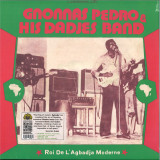
Analog Africa is back with a dedicated project celebrating Gnonnas Pedro, the king of Modern Agbadja, and they press it up on a marvellous double album that includes an eight-page booklet with a ton of extra info. Although four tracks of his have previously appeared on the 2009 Legends of Benin compilation, this bumper pack features 16 of Pedro's best works, all of which captivated Africa at the time. His vibrant blend of Agbadja, Cuban fon, jerk, highlife and more unique styles, all of which come with vocals sung in Fon, Mina, Yoruba, French, English and Spanish, add up to one hell of a rich sound. This is a great testament to the artist's extraordinary legacy.
out of Stock
Last delivered 15 months ago available to reorder, subject to availability
Als ELECTRIC CALLBOY in diesem Jahr ihr neues Album TEKKNO veröffentlichten, war nicht klar, welche Auswirkungen das Album haben würde.Ausverkaufte Konzerte, Abriss der größten europäischen Festivals und endlich Platz 1 in den offiziellen deutschen Charts. Die Band aus Castrop-Rauxel is begeistert eine unglaubliche Bandbreite an Menschen.Die TEKKNO Tour 2023 findet nun in Arenen statt und Electric Callboy sind bereit für den nächsten großen Schritt.Um dies gebührend zu feiern, wird es eine limitierte 'TEKKNO (Tour Edition)' geben, die neben dem regulären Album, 5 Live-Bonus Tracks enthält, die während der ausverkauften Europatour 2022 aufgenommen wurden. Erhältlich als Ltd. 180g. transp. light blue-lilac marbled Vinyl
Die 1987er Black Uhuru-Alben "Positive" und "Positive Dub" zählen zu den besten Arbeiten der legendären Reggae-Band und erscheinen nun kombiniert in remastered Qualität. Produziert von Steven Stanley, mit Sly & Robbie als Studiomusiker, war "Positive" das letzte Album mit Delroy "Junior" Reid on vocals. Beide Formate enthalten die vollständigen 16 Tracks, die LP ist auf schwarzem 180g Doppelvinyl im Gatefold gepresst.
- "At its best, Black Uhuru combines the persistent dance-inciting rhythms of pure reggae with substantial pop melodies and soulful vocals." - St. Petersburg Times
- "The sheer tunefulness the band has displayed in the past." - The Washington Post
- "Uplifting, yet realistic. It paints real, and often graphic, pictures of conflict in the Third World." - Ottawa Citizen
out of Stock
Last delivered 20 months ago available to reorder, subject to availability
HONESTY are not a band in the traditional sense. With four core members - George Mitchell, Matt Peel, Josh Lewis and Imi Marston - and a rotating cast of collaborators which have included musicians and visual artists like Kosi Tydes, Softlizard, Rarelyalways, Florence Shaw and Liam Bailey, the Leeds-based collective emerged as an exercise in doing things differently on a journey towards self-acceptance.
HONESTY’s debut album, ‘U R HERE’ is released on Partisan Records. With influences that range from Mount Kimbie and My Bloody Valentine to Björk and Burial, ‘U R HERE’ represents a renewed sense of creative expression amidst a world that can sometimes seem like it’s crumbling apart.
The songs on ‘U R HERE’ are a fluid, exhilarating, and uniquely introspective take on club music - sonically mapping the psychological impact of the modern age and harnessing the vitality and freedom that comes with new beginnings. ‘U R HERE’, right now, and that is all that matters.
Black LP in a gatefold sleeve with spot gloss finish.
Brand new album by BLC MIRROR CLB in glorious transparent LP.
The band brings you 10 indie rock songs focusing on love in all its forms: deception, happiness, sadness, conclusion or redemption.
But don't misunderstand it, these are not cheesy love songs. They are factual situations where everybody can wander and find echo of life.
Overthink Records - 010 Waveratio 618 - “Bramosia delle cose vietate” (4-Track EP) The 10th release on Overthink Records marks a pivotal moment, delivered by Italian producer Waveratio 618. Following his standout contribution to the label’s Split Series, he returns with a thrilling 4-track EP that blurs the lines between Techno and EBM. Crafted entirely from live jam sessions, this EP exudes raw energy and unfiltered creativity. Each track captures the immediacy and spontaneity of these jams, translating hardware explorations into music brimming with tension and drive. Waveratio 618’s intricate interplay of analog warmth and digital waveforms results in a collection equally suited for shadowy dancefloors and introspective listening. A defining release for both the artist and Overthink Records. Gear Used: Yocto Composer, Kawai R-50, Erica Synth Bass Drum, SH-09, Alpha Juno, Cs2x, Blofeld, BitBox Micro, Td3-Mo.
out of Stock
Last delivered 3 months ago available to reorder, subject to availability
Described by Rolling Stone magazine as “a glam rock triumph,” the multi-faceted rocker Gyasi (Jah-See) delivers his second studio album, “Here Comes The Good Part,” a glittery and fun universe filled with infectious hooks and searing guitar riffs, alongside songs of self-transformation. Teaming up with co-producer Bobby Holland, Gyasi expands his sound, exploring a wider palette of musical ideas. Mostly recorded with his touring band, it also features guest appearances by drummer Daru Jones. “Here Comes The Good Part” is a bold exploration of theatrical rock n’ roll, through the lens of a small-town West Virginia kid seeking self-discovery.
Nara Leão’s Dez Anos Depois, released in 1971, is a stunning double album that revisits her musical journey and celebrates her contributions to Brazilian music.
Known as the “Muse of Bossa Nova,” Leão recorded this reflective and intimate collection of reinterpreted classics in both Paris and Rio de Janeiro.
The recordings also include the involvement of Tuca, renowned for her work on Françoise Hardy’s La Question, whose contributions enrich the album with her distinctive guitar playing and musical sensitivity.
Dez Anos Depois captures the essence of Brazil’s rich musical heritage while highlighting Leão’s versatility and artistry.
This album serves as both a tribute to her earlier works and a timeless introduction to her legacy, making it essential listening for fans of bossa nova and Brazilian music. Dez Anos Depois is available on black vinyl
Adrian Younge presents: Something About April flaunts all of the trademarks that have made Adrian Younge an in-demand name as a composer and sample source-point. His work oozes raw, analogue soul and the primal sonic edge of psychedelic rock, sitting nicely alongside Ennio Morricone's best soundtrack work or Pink Floyd's early catalogue. Recorded and mixed by Adrian Younge at Linear Labs, the preeminent analog studio of Los Angeles, CA.
Peter Tosh's final studio album, "No Nuclear War," released in 1987 is now available on 1LP Yellow Recycled, is a profound anti-war statement that underscores his lifelong commitment to peace and justice. The album won a Grammy Award for Best Reggae Album, posthumously honoring Tosh's enduring influence. With tracks like "No Nuclear War" and "Nah Goa Jail," Tosh addresses the perils of nuclear conflict and the struggles of the oppressed. The album's passionate plea for a nuclear-free world and its call for global harmony encapsulate Tosh's legacy as a fearless advocate for peace and a visionary artist whose message remains relevant.
Knapp zwei Jahre nach ihrem letzten Album „Black & Gold“ melden sich die vier Schwedinnen von THUNDERMOTHER mit ihrem neuen Werk „Dirty & Divine“ zurück. Mit frischer Besetzung setzen THUNDERMOTHER nahtlos dort an, wo sie aufgehört haben: Ein neues Album, eine neue Tour. Die zehn neuen Tracks zeigen einmal mehr, warum das schwedische Hard Rock Powerhouse bekannt dafür ist, das Live-Feeling direkt ins Wohnzimmer zu transportieren. Das Album ist randvoll mit mitreißenden Refrains und Gitarrenriffs mit einer ordentlichen Portion Starkstromladung. Eines ist sicher: Auch auf „Dirty & Divine“ lassen THUNDERMOTHER nichts anbrennen und liefern dem Rock & Roller-Herz den nötigen Kickstart!
Knapp zwei Jahre nach ihrem letzten Album „Black & Gold“ melden sich die vier Schwedinnen von THUNDERMOTHER mit ihrem neuen Werk „Dirty & Divine“ zurück. Mit frischer Besetzung setzen THUNDERMOTHER nahtlos dort an, wo sie aufgehört haben: Ein neues Album, eine neue Tour. Die zehn neuen Tracks zeigen einmal mehr, warum das schwedische Hard Rock Powerhouse bekannt dafür ist, das Live-Feeling direkt ins Wohnzimmer zu transportieren. Das Album ist randvoll mit mitreißenden Refrains und Gitarrenriffs mit einer ordentlichen Portion Starkstromladung. Eines ist sicher: Auch auf „Dirty & Divine“ lassen THUNDERMOTHER nichts anbrennen und liefern dem Rock & Roller-Herz den nötigen Kickstart!
Stuck on common ground is the debut album of the Italian Power Trio hijss. With a mixture of heavy blues influenced riffs and synthesized Krautrock parts hijss tries to create a high dynamic range that will keep your attention at all time. On top of gritty basslines and ferocious drums lie cosmic guitars, tantalizing vocals and arpeggiated electronic drones. All three band members come from a vast musical background. Their common denominator is with out a doubt a punkish attitude. The album was produced by Toni Quiroga and hijss, drums were recorded at Nologo Recording Studio, Laives by "holy barbarian" Fabio Sforza. Engineered, mixed and mastered at accept productions by Toni Quiroga, album cover by Luca Guarino.
out of Stock
Last delivered 20 months ago available to reorder, subject to availability
David Green delivers here 2 bloody Hardfloor tunes, at the Hardcore frontier.
First tune is a remix of the BassBug IB00, powerfull and pityless... The flip is a new tune, totaly weird, dark and banging !
Transparent vinyl, one shot.
Play it loud !!
out of Stock
Last delivered 20 months ago available to reorder, subject to availability
Next in line, a crafty remixes pack of Ethereal Logic's second album "Intergalactic World Music". The A side has two uptempo tracks by S.Moreira (1/2 of Ethereal Logic) and the italian wizard Paolo Mosca, delivering versions that perfectly capture their club essence.
On the B side, more downtempo yet groovy approaches by another extended
out of Stock
Last delivered 3 months ago available to reorder, subject to availability
"Blackbirds and the Sun of October" von Pianist und Komponist Federico Albanese ist inspiriert von seiner Heimat Monferrato im Norden Italiens, wo das Album vollständig geschrieben und aufgenommen wurde. "Es ist ein Album über Heimkehr, vor allem aber über Herkunft und Erbe", sagt der Pianist, Komponist und Produzent.Nachdem er mehrere Jahre in Berlin gelebt hatte, kehrte Federico Albanese mit seiner Familie im Herbst 2022 in seine Heimat zurück - in eine malerische Landschaft und mit der Empfindung, wie er sagt, "tief mit diesem Ort verbunden zu sein". Dies erwies sich auf vielerlei Weise als inspirierend. "Es ist ein Gefühl der Freiheit, das mit der Rückkehr einhergeht und in alles einfließt, was man tut - auch in die Musik." Seine Kompositionen spiegeln die tiefe, natürliche Schönheit seiner Umgebung wider - die Farben, die Tierwelt, den Wechsel der Jahreszeiten, aber auch die reiche Geschichte und die vielen Mythen und Legenden, die über Jahrtausende hinweg von Generation zu Generation weitergegeben wurden. "Dieser Ort atmet Geschichte", fügt er hinzu. "Es ist sehr romantisch in diesem Sinne."Während seine früheren Alben sich oft um Erinnerungen, innere Welten und imaginäre Landschaften drehten, schöpft "Blackbirds and the Sun of October" aus der konkreten, physischen Welt um ihn herum - aus der Geschichte, der Natur und der Schönheit. "Ich spüre die Freiheit in dieser Musik", sagt er, "und es steckt mehr Positivität darin. Ich merke, dass etwas anders ist als zuvor."
Das Debut-Album "Eerie Nostalgia" der Band Fotokiller aus Berlin versetzt die Hörer*innen direkt in die Post-Punk-Ära der 80er-Jahre, ohne dabei sowohl musikalisch als auch textlich den Aktualitätsbezug zu verlieren. Nachdenkliche, ja sogar zuweilen mit dem Tenor der Trostlosigkeit versehene Texte mit hohem Sehnsuchtsfaktor werden kontrastierend mit tanzbaren, catchy Melodien kombiniert. Fotokiller begleiten die Hörer*innen dabei mal sanft, mal aufbrausend, wecken nostalgische Erinnerungen, Gedanken an die unausweichliche Zukunft und den Wunsch nach Beständigkeit in einer Welt, die außer Kontrolle scheint. Nicht zu überhören ist der Einfluss großer Bands wie The Cure oder Joy Division, aber auch Soft Kill, Wipers oder Pink Turns Blue haben die Inspiration für diese LP geliefert.
Die Debüt-LP der Londonerin Nia Wyn ist ein fesselndes Soulwerk, inspiriert von der Musik aus Detroit, Philadelphia und Memphis der 1960/1970er Jahre, das ihren selbstbewussten Produktionsstil, ihre Begabung für authentisches und introspektives Geschichtenerzählen und ihre unverwechselbar kraftvolle Stimme offenbart. Thematisch deckt die LP ein breites Spektrum ab, von Nias Erfahrung, als Erwachsene mit Autismus diagnostiziert zu werden, über psychische Probleme bis zu den Kulturkriegen gegen die Queer-/Trans-Communities. Der Albumtitel ist eine Anspielung auf schulische Erfahrungen ängstlicher (nicht diagnostizierter neurodivergenter) Kinder der Millennial-Generation.
Der Pianist Louis Philippson begeistert seine Generation mit emotionalen und virtuosen Videos auf Social Media für die klassische Musik. Für sein Debütalbum "Exposition" verfolgt er die gleiche Idee und verbindet eigene Kompositionen mit neuen Arrangements bekannter Melodien klassischer Werke, sowie von Anime- und Pop-Songs. Selbstgeschriebene, epische Stücke wie "Supernova" und das groß-orchestrierte "C'est toi" stellt er seinen reduzierten Klavierminiaturen wie "Paulette", "Memories of Moldau" und "Dragon's Lullaby" gegenüber. Seine Eigenkompositionen ergänzt Louis Philippson durch frische, farbenfrohe Arrangements von Melodien aus verschiedenen Genres. Nach dem Motto von Duke Ellington, dass es "nur gute oder schlechte Musik" gibt, vereint er eine poetische Klavierversionen von "OMG" der K-Pop-Band NewJeans mit einer dynamischen Bearbeitung von Tschaikowskys Klavierkonzert, kreiert elegische Klavierversionen über Melodien aus Mahlers Symphonie der Tausend oder "In Trutina" aus Carl Orffs Carmina Burana, und spielt Puccinis "O mio babbino caro" begleitet von einem Cello. Auch Anime-Klassiker wie "A Town with an Ocean View" und "Lover's Oath" spielt er am Konzertflügel.Über sein Debüt-Album sagt Philippson: "Die Entstehung von 'Exposition' war eine unglaubliche Reise. Ich wollte ein Album schaffen, in dem ich alle Genres verbinden kann, die mich inspirieren. Es gibt so viele großartige Melodien, die man neu auf dem Klavier entdecken kann. Mein Ziel ist es meine Generation für die Schönheit der Klaviermusik auf neue Weise zu begeistern."Lange vor seiner TikTok-Karriere wurde Louis Philippson im Alter von sieben Jahren auf YouTube von seinem zukünftigen Klavierlehrer entdeckt, einem Professor an der Robert Schumann Hochschule in Düsseldorf. Dort wurde er später Jungstudent und nahm an zahlreichen nationalen und internationalen Klavierwettbewerben teil, darunter der prestigeträchtige Bach-Wettbewerb, den er gewann. Während der Pandemie im Jahr 2022 startete Louis Philippson seinen TikTok-Kanal und begeistert seitdem die Gen Z mit Vlogs, Humor und eindrucksvollen Klavierdarbietungen. Seine Posts haben inzwischen über 750.000 Follower erreicht. Philippson hat bereits mit einer Vielzahl von Künstlern aus unterschiedlichen Genres zusammengearbeitet. Unter anderen dem Konzertpianisten Martin Stadtfeld, der Geigerin und Influencerin Esther Abrami sowie dem italienischen TikTok-Pianisten Gabriele Bagnati. Ein besonderes Highlight seiner Kooperationen war die Zusammenarbeit mit der Sängerin Teya Dora für eine akustische Version ihres weltweiten Top-50-Hits "Dzanum".
“Polari” wird ist das erste Album, das der ehemalige Years&Years Frontsänger als Solokünstler veröffentlicht. “Cupid’s Bow”, die erste Single des Albums liefert Fans bereits vor der Albumveröffentlichung
einen Vorgeschmack. Der britische Sänger und Schauspieler erklärt, dass er sich, inspiriert durch die Art
wie Menschen Verbindungen suchen und der Bedeutung „lovestruck“ zu sein, in diesem Lied mit der Suche
nach Verlangen und Intimität beschäftigt.
„Polari“ wird exklusiv von Danny L Harle (Nile Rodgers, Dua Lipa - “Houdini”) produziert. Der Albumtitel ist von der geheimen Sprache homosexueller Männer zwischen den 1930ern und 1970ern in England
inspiriert. Sie entstand aus unterschiedlichen Spracheinflüssen (Romani, Italienisch, Cockney, Englisch…)
und diente auch als Soziolekt unter Schausteller:innen, Theater- und Zirkusleuten.