Seit ihrer Gründung im Jahr 2016 haben die Londoner High Vis ihre Palette an progressivem Hardcore mit Nuancen von Post-Punk, Brit-Pop, Neopsychedelia und sogar Madchester-Groove verfeinert und einen Mittelweg zwischen Hooks und Wut, Melodien und Moshpits gefunden. Sänger Graham Sayle beschreibt ihr drittes Album Guided Tour als eine Achse der konkurrierenden Kräfte: "Es versucht, eine hoffnungsvolle Platte zu sein, während es gleichzeitig wütend macht." Die Band, die von Schlagzeuger Edward 'Ski' Harper, Bassist Jack Muncaster und den Gitarristen Martin MacNamara und Rob Hammaren komplettiert wird, ist tief in der britischen und irischen DIY-Hardcore-Szene verwurzelt und wird von Rastlosigkeit und rechtschaffener Wut gleichermaßen inspiriert. Sayle sagt: "Jeder kratzt sich, jeder arbeitet die ganze Zeit, und die Vorstellung von Entspannung ist es, sich zu ficken und der Realität zu entgehen. Dieses Album ist eine Flucht vor dieser Realität." Von den ersten Sekunden an, in denen eine Kabinentür zuschlägt, ein Auto aufheult und ein sackartiger Rhythmus zum Leben erweckt wird, klingt Guided Tour wie eine Band, die nach neuen Höhen strebt und vor Energie strotzt. Das Ergebnis der mehrwöchigen Aufnahmen in den Holy Mountain Studios in London mit Produzent Jonah Falco und Tontechniker Stanley Gravett fühlt sich dynamisch und einstudiert an, wie Hymnen, die sich durch Schweiß und Wiederholung in das Gedächtnis der Sinne eingebrannt haben. Harper bringt es auf den Punkt: "Wir hatten eine klare Idee, jeder Moment wurde genutzt. Wenn wir 60 sind, können wir uns vielleicht hinsetzen und einen Schlagzeugsound hinbekommen, aber im Moment geht es darum, die Dinge zu erledigen." Die 11 Songs des Albums umfassen das gesamte Spektrum zeitgenössischer Gitarrenmusik, die durch Erfahrung, Kameradschaft und gesellschaftliche Frustrationen geschärft wurde. Von schwungvollem Streetpunk ("Drop Me Out", "Mob DLA") über schrillen Indie-Spott ("Worth The Wait", "Deserve It") bis hin zu Heavy Alt ("Feeling Bless", "Fill The Gap") und shoegazeartigem Spoken Word ("Untethered") - die Chemie der Gruppe verwandelt jeden Stil in ihre einzigartige Intensität. Sayle setzt sich für diese sich entwickelnde Verschmelzung ein: "Jahrelang hatten wir, die wir aus dem Hardcore kamen, ziemlich klare Grenzen - andere Szenen waren getrennte Welten. Jetzt vermischen sich die Dinge immer mehr, wir schöpfen aus verschiedenen Quellen."
quête:the mob
Hardwarez, the third LP by Master Boot Record (aka MBR) on Metal Blade, sees multi-instrumentalist mastermind Vittorio D'Amore (aka Victor Love) aurally exploring the duality of technology and humanity in 9 intense and incandescent tracks. The LP, which follows 2022’s Personal Computer and 2020’s Floppy Disk Overdrive, comes from the expansive mind of Love, an Italian producer who emerged from the underground as an anonymous project in 2016 to create the soundtrack for the cyberpunk point-and-click adventure game VirtuaVerse. The project seamlessly evolved into a standalone entity, releasing over 14 albums in just a few years.
To create Hardwarez, the technologist worked by live streaming his desktop on YouTube while composing new music. Everything is programmed via MIDI. “The very first song I wrote is actually also the first single, “CPU,” he says. “Even though the other songs on the album have a quite different style, the type of riffing and the different melodic section of this track worked as a base to upgrade the sound before moving forward.” “CPU” is also where Love decided to test the real guitar overdubs and was inspired by the results.
“With every album I’ve upgraded bits of the sounds, adding new layers,” he says. “In Hardwarez the core sounds for synth guitars, leads and pads are still those that constitute the trademark MBR sound, but what makes this album very different is the addition of guitar overdubs that play along synth guitars for both the rhythmic and solo sections.”
Intensive touring augmented with live musicians helped Love to make the decision to include real guitars to achieve a massive sound and boost the enhanced frequency spectrum of the instrument. “On this record there are a lot of heavy riffs with palm muting and my lead guitarist Shreddy recorded most of those leads and solos as well playing in unison with synth leads and adding extra energy to them.”
Hardwarez, the third LP by Master Boot Record (aka MBR) on Metal Blade, sees multi-instrumentalist mastermind Vittorio D'Amore (aka Victor Love) aurally exploring the duality of technology and humanity in 9 intense and incandescent tracks. The LP, which follows 2022’s Personal Computer and 2020’s Floppy Disk Overdrive, comes from the expansive mind of Love, an Italian producer who emerged from the underground as an anonymous project in 2016 to create the soundtrack for the cyberpunk point-and-click adventure game VirtuaVerse. The project seamlessly evolved into a standalone entity, releasing over 14 albums in just a few years.
To create Hardwarez, the technologist worked by live streaming his desktop on YouTube while composing new music. Everything is programmed via MIDI. “The very first song I wrote is actually also the first single, “CPU,” he says. “Even though the other songs on the album have a quite different style, the type of riffing and the different melodic section of this track worked as a base to upgrade the sound before moving forward.” “CPU” is also where Love decided to test the real guitar overdubs and was inspired by the results.
“With every album I’ve upgraded bits of the sounds, adding new layers,” he says. “In Hardwarez the core sounds for synth guitars, leads and pads are still those that constitute the trademark MBR sound, but what makes this album very different is the addition of guitar overdubs that play along synth guitars for both the rhythmic and solo sections.”
Intensive touring augmented with live musicians helped Love to make the decision to include real guitars to achieve a massive sound and boost the enhanced frequency spectrum of the instrument. “On this record there are a lot of heavy riffs with palm muting and my lead guitarist Shreddy recorded most of those leads and solos as well playing in unison with synth leads and adding extra energy to them.”
Amputechture Beneath the technical flash, the fury, the fearless creative brinkmanship of the first two Mars Volta albums lay a potent seam of the blues, an existential vexation that powered every twist and turn of Omar and Cedric’s imaginations. That mournful vibe would come to the surface of the group’s third full-length Amputechture, a simmering/blistering set that was unquestionably the group’s darkest yet. There was no overarching theme here, no interlinking concept binding the songs together, though Cedric concedes that, lyrically, the album was influenced “by a lot of stuff I was going through, a really bad break-up and a lot of other crazy stuff, and trying to put that feeling into the record.” But Amputechture – its name another of the late Jeremy Michael Ward’s invented words – was no downbeat bummer. Opener Vicarious Atonement might’ve been a deliciously gloomy, slow-burning thing, capturing Cedric in delirious duet with Omar’s swooning guitar lines, accompanied by squalling saxophone by Adrian Terrazas-Gonzales and dream-frequency fuckery by the group’s new sonic manipulator, former At The Drive- In member Paul Hinojos. But second track Tetragrammaton swiftly set pulses racing, an epic-in-miniature and containing more ideas within its 16 minutes than most bands manage over an entire career, its proggy, complex guitar figures tessellating in infinite configurations and converging as if conforming to mathematical formulae from another reality. The raw material Amputechture was hewn from started life on the road. Omar now travelled with his own mobile recording studio – a little Neve ten-channel tape recorder and an array of microphones – and was able to work on new ideas on tourbuses, in hotel rooms and during soundcheck (and, occasionally, after the show was done). After touring for Frances The Mute was complete, Omar relocated to Amsterdam, staying with his photographer friend Danielle Van Ark and her partner, Nils Post. It’s here that he demoed Amputechture, flying in engineer Jon DeBaun, drummer Jon Theodore and his brother, Chino, to work on these raw sketches. He later returned to Los Angeles, where the album was finally recorded. Omar ceded guitar duties to his dear friend and kindred spirit John Frusciante, instead assuming the role of musical director. “I wanted to hear the sound of the band,” he says. “I thought, I’ll be able to sit at the console, feel the air of the speakers moving, the unified sound of everything, and not feel distant from it. It was fun, but it was also challenging.” Part of Omar’s new method was to teach the musicians their parts only moments before the tapes rolled. “To keep things fresh, and to keep everyone on edge,” he says, before chuckling. “No, not on edge – on their toes. Amputechture would prove The Mars Volta’s most diverse set yet, drawing into the group’s tornado of influences moments of fiery jazz spirituality and esoteric folk introspection, finding space for passages of devastating subtlety and also their most fierce and full-on moments to date. The aforementioned Vicarious Atonement found its meditative mood echoed by Asilos Magdalena, an intimate, acoustic piece that invoked traditional Latin folk music, as Cedric sang in Spanish a sorrowful tale of a lost soul’s quest for sanctuary within a Magdalen Asylum, a refuge set up by the Catholic church for “fallen women”. The shadowy, sinister closer El Ciervo Vulnerado, meanwhile, tapped into the darker side of spiritual jazz to further explore the album’s themes of redemption and religious myth and magick. Elsewhere, the interplay between guitar and clarinet on Viscera Eyes created complex, unsettling counter-melodies, while the coiling, ornate Meccamputechture – Cedric’s wild fusion of sacred texts, occultism and dystopian science fiction – proved a great showcase for Ikey Owens’ swarming, infernal organ runs, in concert with Frusciante’s arcane guitar-play. But it was Day Of The Baphomets that would prove Amputechture’s most ambitious and most defining epic. Cedric’s lyrics tore into the hypocrisy of religious cant and myths of sin and punishment. “I wanted to make a song that was like the movie The Believers, where this cabal stole kids and did some occult shit with them,” he explains. “But I wanted it to be like, ‘What if the people you hire to do jobs you don’t wanna do rise up one day and then pull some shit like that?’ Like it was the guerrilla warfare, them taking over – wouldn’t that be some fucked up shit? And the music just lent itself to that – the big intro, the bass solo, and all of the ruckus that occurs.” That ruckus was some of the most thrilling Mars Volta music yet, as Omar directed his musicians to rumble through fiery modes of wild tribal groove, ransack-the-palaces riot- rock and supreme progressive experimentalism. Amputechture, then, is the sound of The Mars Volta in imperial mode: fearless, insatiable, unstoppable.
RAT BOY have recorded in Los Angeles with T im Armstrong of Rancid, played festivals as far afield as Japan and China, and toured North America with The Interrupters. Yet for all those globe-trotting adventures, there"s no place you know quite as well as home. That"s the central topic that R AT BOY explore on their upcoming third album "SUBURBIA CALLING", which will be released on October 4th via Hellcat. "SUBURBIA CALLING" sees RAT BOY exploring stories from their roots in Essex. It"s the land of wheeler -dealers and dodgy geezers, and home to nosey neighbours, rowdy clubs and Joey Essex. For readers outside of the UK, it"s the land of Blur, Depeche Mode and The Prodigy: a place not so far outside of east London, but in other ways it"s a world away. And it"s not only an immense font of inspiration for RAT BOY, but the place where ever ything happens for them.. Just outside of Chelmsford sits a converted barn where the band can jump in and be creative whenever the mood takes them - a HQ that is a recording studio, a rehearsal space, an art studio, a storage space and a hangout spot all-in-one. Frontman Jordan Cardy says, "I wanted to sing about Essex. Essex is where we live and when you"ve grown up somewhere you notice things about it. There"s so much to draw on. Essex is really close to London but it"s different in a lot of ways. We"ve got a lot of freedom here, we built a place where we can record and rehearse and hang out, somewhere you wouldn"t be able to have in London." RAT BOY - completed by Liam Haygarth (bass), Harr y Todd (guitar) and Noah Booth (dr ums) - approached the making of the al - bum in unorthodox fashion. They recorded a home demo and a live performance of each song, which were then sent to producer Stephen Street (The Smiths, Blur) to edit together like a tapestry puzzle.
- A1: In My Heart (Feat Gregory Porter - Resound Nyc Version)
- A2: Extreme Ways (Feat The Temper Trap - Resound Nyc Version)
- A3: South Side (Feat Ricky Wilson - Resound Nyc Version)
- A4: Flower (Find My Baby) (Find My Baby)
- B1: In This World (Feat Nicole Scherzinger, Marisha Wallace - Resound Nyc Version)
- B2: Helpless (Feat Margo Timmins, Damien Jurado - Resound Nyc Version)
- B3: Signs Of Love (Resound Nyc Version)
- B4: The Perfect Life (Feat Ricky Wilson - Resound Nyc Version)
- C1: When It's Cold I'd Like To Die (Feat Pt Banks - Resound Nyc Version)
- C2: Slipping Away (Resound Nyc Version)
- C3: Second Cool Hive (Feat Oum, Sarah Willis - Resound Nyc Version)
- C4: Hyenas (Resound Nyc Version)
- D1: Last Night (Resound Nyc Version)
- D2: Run On (Feat Danielle Ponder, Elijah Ponder - Resound Nyc Version)
- D3: Walk With Me (Feat Lady Blackbird - Resound Nyc Version)
RESOUND NYC - Das neue Album von MOBY! Nach seinem gefeierten Album ”Reprise” (Mai 2021), auf dem unter anderem Kris Kristofferson, Mark Lanegan, Jim James und Skylar Grey zu hören waren, hat Moby nun 15 seiner legendärsten New Yorker Tracks aus den Jahren 1994 bis 2010 neu interpretiert und instrumentiert. Mobys 20. Studioalbum ist nicht nur eine Reflexion über die vielleicht entscheidendste Zeit in seinem Leben, sondern auch über sein einstiges Zuhause, New York City. Dort wurde er geboren, dort nahm seine Karriere ihren Anfang – im Punkrock und als DJ in Underground-Clubs.
»Bevor ich Punkrock für mich entdeckte, war ich im Classic Rock zu Hause«, sagt Moby. »Mein erstes Konzert war 1978 Yes im Madison Square Garden. Es war also mehr als verlockend, sich noch einmal mit meinen Liedern auseinanderzusetzen und zu gucken, ob sie einer traditionelleren, nicht-elektronischen, orchestralen Bearbeitung standhalten.« Begleitet wird Moby auf diesem Album von großartigen Künstlern wie Nicole Scherzinger, Gregory Porter, Ricky Wilson und Amythyst Kiah.
Limited Edition of 1000 Opaque Light Blue 180 Gram Vinyl LP. Ghost on Ghost is Iron & Wine's fifth full length record and was originally released in 2013. The album found Sam Beam the bands principle member working once again with longtime associate Brian Deck (Modest Mouse, Califone). The record marks the last time the two would work together on a journey that began with the bands second record, Endless Numbered Days. It also marked a shift for the two from working in Chicago to setting up in New York City. The idea behind the move was to tap into the creative musical community New York had to offer. The line-up that helped bring Beam's vision for Ghost on Ghost to life included a who's who from the jazz community as well as the deep wells of outside art including Steve Bernstein (Sex Mob/Levon Helm Band), Rob Burger (Tin Hat Trio), Brian Blade, Curtis Fowlkes (The Jazz Passengers), Tony Garnier (Bob Dylan Band), Marika Hughes, Briggan Kraus, Maxim Moston, Tony Scherr (The Lounge Lizards), Doug Wieselman, Kenny Wolleson (Tom Watis/John Zorn) and Anja Wood. The level of talent on Ghost on Ghost far surpassed anything Beam ever imagined when he first began writing songs as Iron and Wine on his four-track. Upon completing the Ghost on Ghost Beam jokingly referred to the recording process as "a reward to myself" after years of chasing sounds by himself. Being able have the finest in musicians in New York City perform on the record, elevating these songs into places he never imagined Beam stated, "it was an honor -- really inspiring." Beam stated at the time that Ghost on Ghost takes it's inspiration from records like Nilsson Schmilsson, Ram, Mingus Moves and What's Going On. The record they all crafted is warm and inviting and was like anything up to that point in the Iron & Wine catalog.
- A1: Zero Vii - In The Waiting Line (Feat Sophie Barker)
- A2: The Mighty Bop - Feeling Good
- A3: Sofa Surfers - Sofa Rockers (Richard Dorfmeister Remix)
- A4: Gotan Project - Epoca (Feat Cristina Vilallonga)
- A5: Alex Gopher - The Child
- B1: La Funk Mob - Motor Bass Phunked Up (Feat Etienne De C
- B2: General Elektriks - Raid The Radio
- B3: Fakear - Morning In Japan
- B4: Guts - What Is Love
- B5: Flume - Holdin On
- C1: Kid Francescoli - Prince Vince
- C2: Etienne De Crécy - Tempovision (Radio Edit)
- C3: Kid Loco - She's My Lover
- C4: Mr Scruff - Bernard's Shuffle
- C5: Bonobo - Kota
- D1: Fatboy Slim - Praise You (Radio Edit)
- D2: Mome - Childhood (Feat Larry Lynch)
- D3: Kazam - Swag On
- D4: Louise Vertigo - Où Est La Femme
- D5: Jazzanova - Bohemian Sunset
Rain and experimental music have had an interesting connection for decades. Under the umbrella of American film music promotion, Hanns Eisler was already looking for "Vierzehn Arten, den Regen zu beschreiben” (fourteen ways to describe the rain) in 1941. A good 20 years later, The Cascades interpreted the periodicity of rain as a rhythm of mourning. For the Beatles ("If the rain falls, they run and hide their heads"), the precipitation inspired the band to use backward running tapes. However, it seems that there has always been a lot of rainfall in popular music. In the early seventies, David Toop and Paul Burwell even had a band project with the great name Rain In The Face...
That was a long time ago and today, rain, which in the age of climate catastrophe mainly occurs as heavy rain or an enervating endless loop, has lost a great deal of its inspiring quality. Perhaps as a reminder of the musical quality of rain, but knowing full well that it can only be enjoyed in theory, Razen call their new album "Rain Without Rain". In the music of the Brussels collective led by the two multi-instrumentalists Brecht Ameel and Kim Delcour, it certainly pours down on the roofs. In fact, the album opens with the sound of pouring rain before we hear the sequence of an oscillator played through a guitar amp on the first track „Lazy, Lazy Eye“.
The album is the captivating result of an one-night mobile studio field recording in an abandoned pedestrian tunnel in the centre of Düsseldorf, and it is finding beauty with brutal(ist) means: recorder, oscillator, guitar amp and reverberation, two musicians and four microphones, early electronics versus Early Music. “Suicide meet Hildegard von Bingen”, as Stefan Schneider, who recorded the session, admits. “Ghostly occurrences”, he adds.
Brecht Ameel states: “We do put a lot of weight and care on acoustics. On some of our recordings, the room acts as another band member, or as the main ‘mixing board’. Most of the albums we have recorded so far are not mixed in the traditional sense: they are simply „captured”, and we let the room decide what is left on the tapes. The studio recordings, then, give us the possibility of bringing other elements to the fore; precision of interplay, or tiny variations in breathing.”
The group Razen exists since 2010 and has since released numerous records on labels such as KRAAK, Marionette and Hands In The Dark. "Rain Without Rain" is their debut on the Düsseldorf label TAL. If there has been an increased international interest in experimental music from Belgium in recent years, this is not least due to musician collectives such as Razen. In terms of its electro-folkloristic intensity and instrumentation, Razen's music is quite unique worldwide. What does Razen actually mean? “We took the word from a poem by Paul Van Ostaijen, not specifically because of its meaning but because of the way it looked on paper”, Ameel explains. “But the meaning goes in the direction of ‘thundering / raging / speeding’ … although we prefer playing with a strong notion of restraint, building our world from (and with) silence.”
Olaf Karnik, Köln 2024
Between December 2022 and January 2024, the collective De Niemanders (producer Rick Wiegerinck joined the team) visited asylum seekers' centers in the Netherlands with a mobile studio, searching for singers, musicians, and their music and stories. The music sessions were mostly filled with pure joy, while the conversations were heavy, hopeless, hopeful, cheerful, and everything in between. The collective connected with creative individuals from all over the world, who in turn introduced them to even more artists, writers, and storytellers. Rocco, Wout, and Rick quickly realized that they needed to offer more than ‘just’ the music album as a platform, so a completely unique Niemanders newspaper was born, and journalist Christianne Alvarado joined for a six-part podcast series.
Following their instincts, they created a new Niemanders album that became a genuine collaboration between the people they met and themselves. A significant difference from the prisons was that this time, the singers and musicians could be recorded in a mobile studio. As a result, the album is a mix of many singers and languages, telling the stories of their journeys, dreams, families, past lives ‘back home,’ and their current situation as refugees. There are songs inspired by the stories that residents of asylum seekers' centers told or wrote down, sung by Rocco, while other tracks emerged from writing sessions with singers Isma IP, Guy-El Mabiala, Q-Mars, and Hamid Reza Behzadian, and are also sung by them. The song material is a creative melting pot of colorful music that ranges from swinging afrobeat, highlife, desert rock, and rootsy psychedelia, but the alternative rock for which Ostermann and Kemkens are known also seeps through. You could say that, with few exceptions, each song is a film soundtrack for the text.
Unfortunately, the harsh reality of asylum procedures also intruded into some of the blossoming musical friendships. Due to a negative decision by the Immigration and Naturalization Service (IND), one of the great singers was forced to leave the Netherlands. This is just one example of the lack of control over—and the nerve-wracking wait for—an IND decision, which unfortunately seems to be something every person in an asylum procedure must endure. The asylum process can bring years and years of uncertainty and waiting, or sudden deportation.
Jon Spencer teams up with Kendall Wind and Macky Spider Bowman - the rhythm section from Woodstock NY punk rock wunderkind The Bobby Lees - to chew bubblegum and kick ass. Two years after “Spencer Gets It Lit” (Marc Riley’s BBC6 Music Album of the Year, “hugely entertaining” MOJO, “a sonic witchdoctor who’ll blow your mind” UNCUT) there is still more work to be done saving rock'n'roll music. “Sick of Being Sick!” will be released on limited clear 45rpm Super-Stereo cut LP. Jon Spencer has been innovative force in the independent music scene since the mid-80s. An acclaimed live performer, he has toured all the continents except Antarctica and has amassed a dizzying discography as the leader of Pussy Galore, The Jon Spencer Blues Explosion, Heavy Trash, and Jon Spencer & the HITmakers, as well as with Boss Hog, The Honeymoon Killers, The Gibson Brothers, and Taxi Girls. His collaborations include (but are not limited to) working with Steve Albini, Add N To X, Nicole Atkins, Beastie Boys, Beck, Bomb The Bass, R.L. Burnside, James Chance, Coldcut, Chuck D, Dan The Automator, Jim Dickinson, DJ Shadow, Einsturzende Neubauten, Guitar Wolf, GZA, David Holmes, Japanese Popstars, Dr. John, Calvin Johnson, Steve Jordan, Khan, Moby, Money Mark, The Muffs, The North Mississippi All Stars, Princess Superstar, Puffy AmiYumi, The Sadies, Nancy Sinatra, Solex, Solomon Burke, Speedball Baby, Rufus Thomas, UNKLE, Unloved, Andre Williams, and Bernie Worrell. His production credits include: Cheater Slicks, Demolition Doll Rods, Experimental Tropic Blues Band, Perrosky, Mike Edison, Jesper Munk, Sunshine & The Rain, The Bobby Lees, and Samantha Fish & Jesse Dayton.
Repress of Still House Plants’ second LP FAST EDIT on frosted clear vinyl with microtene inners. Cultivated over the course of 2019, the album switches the combativeness of previous releases for bare intimacy. FAST EDIT is a palette of qualities and curdled headspaces. Now living far apart and coming together only for intense periods of shows and touring, the band have come to rely on an archive of mp3s (quick recall overtakes stable long-term memory). Written on mobile phones, dictaphones, and laptops, FAST EDIT cuts rehearsals and schemas with tight, raucous tracks. This is most tenderly at play on ‘Shy Song’ – a cut'n’chase piece, in which all sounds are ghosts of another. ‘PredikateD’ is a phone on the ground: the voice is air, the guitar and drums meld with the plywood and sand-bag structure, the seams exposed.
The impact, influence, and importance of Run-D.M.C.'s self-titled debut – the album that invented hardcore hip-hop and bridged rap, rock, and funk in then-unparalleled ways – cannot be measured. The first full-length record released by Profile Records, the 1984 set permanently changed the sound of music, broadcast streetwise wisdom to every corner of the country, and made the notion of a one-man band a distinct reality. Bolstered by an incendiary blend of staccato deliveries, stark beats, aggressive exchanges, evocative hooks, and socially conscious messages, Run-D.M.C. still hits listeners in the jaw with the same intensity it did nearly 40 years ago when it could be heard booming from ghetto blasters carried around city blocks nationwide.
Sourced from the original master tapes, pressed on MoFi SuperVinyl, and strictly limited to 3,000 numbered copies, Mobile Fidelity's 180g SuperVinyl 33RPM LP is the definitive-sounding version of the groundbreaking work cited by Rolling Stone as the 378th Greatest Album of All Time. This reissue also represents the first time this gold-certified effort has been presented in audiophile quality. Benefitting from the ultra-low noise floor, superb groove definition, and dead-quiet surfaces of SuperVinyl, Run-D.M.C. now plays with a clarity, immediacy, punchiness, and directness worthy of the artistry, urgency, and intellect of the trio's material.
The brilliance of Russell Simmons and Larry Smith's production comes into view as if the music is being broadcast on a giant system in a small club — only more focused, lively, and unlimited. Free of dynamic constraints and fatiguing harshness, this LP invites you to turn up the volume and experience the raw, rough, invigorating songs that changed the look, sound, and feel of hip-hop overnight. Think the trio’s sparse framework of drum machines, tag-team rhymes, keyboard accents, and turntable scratches is stuck in the mid-80s? Spin MoFi’s SuperVinyl LP and gain new appreciation for the music, messages, and production on display on Run-D.M.C.
Recorded in the wake of two successful and pioneering singles, both included on the album, Run-D.M.C. effectively took a sheet of coarse-grit sandpaper to the polish, sheen, and linear presentation of all the hip-hop that preceded it. Stripped to bare-bones foundations, the songs grab your attention and shake you by the collar with a combination of industrial-leaning rhythms, staggered deliveries, dance drama, and hard, minimalist percussion. Then there are the lyrics.
The LP broadcasts a smart mix of boots-on-the-ground reports, uplifting advice, and then-nascent b-boy culture. In one fell swoop, its narratives and music rendered the scene’s proclivity toward glamor and softness passé. Run-D.M.C.’s tough, cool-minded fashion sense showed the trio walked its talk and gave fans — particularly those living in long-ignored urban areas — heroes which with they could identify. Kangol hats, black jeans, leather jackets, Adidas sneaks, and gold chains were the new currency.
In every regard, Run-D.M.C. signifies the birth of modern hip-hop. Never more obviously than on the groundbreaking “Rock Box,” where rap and rock were first fused. As the first hip-hop video to receive regular rotation on MTV, the track eviscerated racial and social boundaries, awakened musicians and listeners to new possibilities, and redefined both popular music and, ultimately, popular culture. As the Roots’ Questlove has stated, it “ knocked down many obstacles, enabling hip-hop to become the new gospel."
Such teaching includes the real-world scripture of “Hard Times,” utopian hopefulness of “Wake Up,” and observational truths of “It’s Like That.” Released as the group’s debut single well before its eponymous album, the latter tune established themes and outlooks Run-D.M.C. would embrace during its career. Namely, the keen awareness of various prejudices, economic ills, and disruptive violence as well as the knowledge that education, self-motivation, and hard work were the ways to escape disadvantages and disillusionment.
Inspired and inspirational, the song reflects the spirit and shrewdness that courses throughout Run-D.M.C. That includes a detailed account of the trio’s not-so secret weapon (“Jam-Master Jay”), purpose statement (“Hollis Crew (Krush-Groove 2)”), and a revolutionary hybrid autobiographical narrative-dis track (“Sucker M.C.’s (Krush-Groove 1)”) widely regarded as one of the best hip-hop songs ever created. The same can be said for every moment on Run-D.M.C.
MoFi SuperVinyl
Developed by NEOTECH and RTI, MoFi SuperVinyl is the most exacting-to-specification vinyl compound ever devised. Analog lovers have never seen (or heard) anything like it. Extraordinarily expensive and extremely painstaking to produce, the special proprietary compound addresses two specific areas of improvement: noise floor reduction and enhanced groove definition. The vinyl composition features a new carbonless dye (hold the disc up to the light and see) and produces the world's quietest surfaces. This high-definition formula also allows for the creation of cleaner grooves that are virtually indistinguishable from the original lacquer. MoFi SuperVinyl provides the closest approximation of what the label's engineers hear in the mastering lab.
UNSURPASSED SPACIOUSNESS, IMAGING, AND TRANSPARENCY: MASTERED FROM THE ORIGINAL TAPES, MUSIC EMERGES WITH NEW DETAILS AND TONES
1/2" / 30 IPS analogue master - Plangent Processed - to DXD to analogue console to lathe
Love Over Gold is all about contrast, tension, and crafty composition. Dire Straits' fourth album finds the band continuing to evolve by welcoming increasingly bold arrangements and exploring moody variations. Parts edgy and sharp, and part seductive and relaxed, the five lengthy songs on Love Over Gold sprawl out like a long, winding road cutting through a pastoral landscape. The addition of a new rhythm guitarist, Hal Lindes, encourages deeper atmospheric interplay while the presence of engineer Neil Dorfsman – his first appearance in what would be a long string of collaborations with Mark Knopfler – ensures stunning sonic properties that now come to life like never before.
Mastered from the original master tapes and pressed at RTI, Mobile Fidelity's 180g 45RPM 2LP version of Love Over Gold teems with superb balances, front-to-back soundstages, and crystalline purity. The dead-quiet surfaces and extra-wide grooves bring forward previously obscured details, extra information, and mastering-studio-quality transients. The distinctive textures of a host of instruments – marimbas, acoustic and electric guitars, vibes, synthesizers – further enhance the ambitiousness of the 1982 album.
On this audiophile pressing, everything Knopfler does seemingly turn to gold. Gearheads will hear the unique characteristics afforded by his use of a Mesa Boogie Mark II guitar amplifier (soon again employed on Brothers in Arms) and carefully chosen selection of Schecter Stratocasters, 1937 National steel guitar, and Ovation six- and twelve-string models. Reference-level separation and lifelike imaging place Knopfler and company in your room, while tube-like warmth, spaciousness, and airiness causes the music to breathe anew. This LP will be in your rotation for months.
It doesn't take long to realize Love Over Gold is like no other Dire Straits album – and a staunch proclamation of independence from a band that continued to take longer creative strides with each successive project. Fearlessly extending over metaphoric hills, valleys, and plains for nearly 14-and-a-half minutes, the opening "Telegraph Road" is a guitar hero's dream and exhilarating showcase for Lindes' give-and-take capabilities. In tandem with keyboardist Alan Clark, Lindes provides the ideal foil for not only Knopfler but the long-time rhythm section of bassist John Illsley and drummer Pick Withers.
Taking its time to arrive at destinations, the quintet paints evocative musical and lyrical portraits steeped in patience, drama, and, often times, sadness. Desolate emotions colour the sweeping "Telegraph Road" and barren "Private Investigations," which finds Knopfler in the role of a tired private eye contemplating the emptiness and scars of his profession. Vocally, the Dire Straits leader remains in top form throughout, his whiskey-coated rasp conveying romantic ache, ongoing frustration, and what Rolling Stone beautifully deemed "wracking schizophrenia between the heart and the heartless, the loving and the pain."
Called Dire Straits' prog-rock statement, Love Over Gold is a classic that defies labelling and avoids ageing.
- A1: To Circle The World
- A2: I See Something Shining
- A3: Takeoff
- A4: Aloft
- A5: San Juan
- A6: Brazil
- A7: Crossing The Equator
- A8: The Badlands
- A9: Waves Of Sand
- A10: The Letter
- A11: India And On Down To Australia
- B1: This Modern World
- B2: Flying At Night
- B3: The Word For Woman
- B4: Road To Mandalay
- B5: Broken Chronometers
- B6: Nothing But Silt
- B7: The Wrong Way
- B8: Fly Into The Sun
- B9: Howland Island
- B10: Radio
- B11: Lucky Dime
Nonesuch Records releases Laurie Anderson’s Amelia, the 2024 Grammy Lifetime Achievement Award recipient's first new album since 2018’s Grammy-winning Landfall. The record comprises 22 tracks about renowned female aviator Amelia Earhart’s tragic last flight. Anderson, who Pitchfork says, ‘sees the future, but she starts by paying attention’, wrote the music and lyrics for this subjective narrative piece. On the album, she is joined by the Czech orchestra Filharmonie Brno, conducted by Dennis Russell Davies, and Anohni, Gabriel Cabezas, Rob Moose, Ryan Kelly, Martha Mooke, Marc Ribot, Tony Scherr, Nadia Sirota, and Kenny Wolleson.
Earhart was a passionate pioneer of early aviation, achieving fame as the first woman to cross the Atlantic, in 1932. Five years later, she embarked on a flight around the world. Before she could complete the voyage, her plane disappeared without a trace; it has never been found. “The words used in Amelia are inspired by her pilot diaries, the telegrams she wrote to her husband, and my idea of what a woman flying around the world might think about,” Anderson says. First premiered at Carnegie Hall in 2000, the updated piece was recently performed across Europe.
Laurie Anderson is one of America’s most renowned – and daring – creative pioneers. Her work, which encompasses music, visual art, poetry, film, and photography, has challenged and delighted audiences around the world for more than 40 years. In a recent 60 Minutes profile, Anderson Cooper said she ‘is a pioneer of the avant-garde, but ... that doesn’t begin to describe what she creates. Her work isn’t sold in galleries. It’s experienced by audiences who come to see her perform: singing, telling stories, and playing strange violins of her own invention... she blends the beautiful and the bizarre, challenging audiences with homilies and humor. She blurs boundaries across music, theater, dance, and film.’ The Washington Post has said she ‘doesn’t just tell stories; she draws out every word with a kind of physical pleasure, tasting its flavor as she probes the everyday mysteries of life,’ and the Guardian has called Anderson ‘one of the great popular artists and storytellers of our time.’
Anderson released her first album with Nonesuch Records in 2001, the critically lauded Life on a String. Her subsequent releases on the label include Live in New York (2002), Homeland (2010), the soundtrack to Anderson’s acclaimed film Heart of a Dog (2015), and her Grammy-winning collaboration with Kronos Quartet, Landfall (2018). Additionally, Anderson’s virtual-reality film La Camera Insabbiata, with Hsin-Chien Huang, won the 2017 Venice Film Festival Award for Best VR Experience, and, in 2018, Skira Rizzoli published her book All the Things I Lost in the Flood: Essays on Pictures, Language and Code, the most comprehensive collection of her artwork to date.
Recent exhibitions and installations of Anderson’s work include Habeas Corpus at New York’s Park Avenue Armory; her largest exhibition to date, The Weather, at Washington, DC’s Smithsonian’s Hirshhorn Museum of Modern Art; and Looking into a Mirror Sideways at Stockholm’s Moderna Museet, which was her largest European exhibition to date. Anderson recently toured with Sex Mob, performing her piece Let X=X. Earlier this year, she was awarded the 2024 Stephen Hawking Medal for Science Communication, along with Christopher Nolan and David Attenborough, and the International Astronomical Union named a minor planet in her honour: Asteroid 270588, Laurieanderson.
Nonesuch released a re-mastered edition of Anderson’s landmark 1982 album Big Science in 2007 for its 25th anniversary, followed by a vinyl LP re-issue in 2021; its beloved single, ‘O Superman’, became a surprise viral hit on TikTok earlier this year.
- A1: Here's A New Thing (Lp1)
- A2: That Spiritual Feeling
- A3: Into Tomorrow
- A4: Arrival Time
- A5: Fly On The Wall
- B1: All Year Round
- B2: Ends Of The Earth
- B3: This Is No Time
- B4: Wild Wood (Portishead Remix)
- C1: Kosmos (Lp2 - Lynch Mob Bonus Beats Remix)
- C2: The Loved
- C3: It's A New Day Baby
- C4: A Year Late
- D1: So You Want To Be A Dancer
- D2: Everything Has A Price To Pay
- D3: Helioscentric
- D4: The Riverbank
- E1: Feelin Alright (Lp3)
- E2: Ohio
- E3: Black Sheep Boy
- E4: Sexy Sadie
- E5: I Shall Be Released
- E6: I'd Rather Go Blind
- F1: My Whole World Is Falling Down
- F2: Aint No Love In The Heart Of The City
- F3: Waiting For An Angel
- F4: Bang Bang
- F5: Instant Karma
- F6: Don't Let Me Down
Diese Dreifach-Vinyl-Compilation vereint bisher schwer erhältliche Tracks aus Paul Wellers Zeit bei Go!
Discs und später auch Island Records.
Das Set, das sich über den Zeitraum von 1991 bis 2001 erstreckt, war seit seiner ursprünglichen Veröffentlichung im Jahr 2003 nicht mehr erhältlich, bis jetzt. Die 3LP ist bei allen teilnehmenden Händlern ab
dem 09.08.2024 erhältlich.
"Made by These Moments" is the second studio album from Mobile, Alabama natives The Red Clay Strays, and the band's debut album on RCA Records. This collection celebrates all the incredible moments that have defined the band's fast-rising success. Consisting of Brandon Coleman (lead vocals, guitar), Drew Nix (electric guitar, vocals, harmonica), Zach Rishel (electric guitar), Andrew Bishop (bass), and John Hall (drums), The Red Clay Strays made this record in Nashville with producer Dave Cobb at his studio, Georgia Mae. Standard LP Vinyl is Gold coloured. Indies only retail exclusive is Orange Smoke coloured. Standard x11 trk CD format. UK promo trip around release. Marketing activity across all media outlets.
- A1: Shook Ones Pt 1
- A2: Giving Up The Goods
- A3: Shook Ones Pt 2
- A4: Survival Of The Fittest
- A5: Emperatures S Rissing
- B1: Survival Of The Fittest Remix
- B2: Thrife Life
- B3: Still Shinin
- B4: Front Lines
- B5: G O.d. Pt.3
- C1: Drop A Gem On Em
- C2: Back At You
- C3: Quiet Storm
- C4: It S Mine
- C5: Spread Love
- D1: Outta Control (Remix)
- D2: The Learning (Burn)
- D3: Got It Twisted
- D4: Get Away
- D5: Have A Party
- D6: Give It To Me
Mobb Deep was a legendary 1990s rap duo formed in Queensbridge, New York, by Havoc and Prodigy. They are considered the foremost progenitors of hardcore rap and one of the most influential hip hop groups in history. Their music reflects the hostile reality of an era when poverty, drugs and gang violence plagued the streets of New York. Their music is characterised by dark samples, the drums, snares and bass are defined and the raw lyrics are of a very high standard, in the most competitive era in rap history. With their albums The Infamous (1995) and Hell On Earth (1996) they achieved fame within and outside the hip hop community, including hits such as "Shook Ones (Part II)" and "Survival of the Fittest". They would later collaborate with top East Coast rappers such as Notorious B.I.G., members of the Wu-Tang Clan collective, Jay-Z, Nas and 50 Cent, on whose label G-Unit they would release their album Blood Money (2005). Prodigy's sad death in 2017 due to a long and cruel illness only has amplified an already existing legacy. On this album we will be able to enjoy the instrumentals and acappellas of many of their best tracks throughout their career.
The opening track to the Alan Parsons Project’s Eye in the Sky remains the most recognized instrumental in sports—fanfare inseparably tied with introducing NBA legend Michael Jordan and his six-time world-champion Chicago Bulls mates before games, and still used by many teams as an energy-raising prelude. Indeed, the subdued grandiosity, cosmic bluster, and lights-out wonder of “Sirius” sets the table for the band’s smash 1982 album, whose hallmark smoothness, lushness, and balance extend to the music’s exquisite song writing, dreamy emotions, and underlying orchestral scope. Credit for the record’s craft, cohesiveness, and accessibility also falls to Alan Parsons and creative partner Eric Woolfson’s knack for recruiting session pros that translate their visions with unquestioned feeling—particularly, vocalists who include former Zombie leader Colin Blunstone and soul singer Lenny Zakatek.
Mastered from the original master tapes, Mobile Fidelity’s RTI pressed 180g 45RPM 2LP version of Eye in the Sky features succulent warmth, magnificent balance, low-end heft, and see-through transparency that take you into the studio with Parsons at Abbey Road Studios. Each note seems perfectly placed, every sequence painstakingly considered. Boasting front-to- back depth, concert-hall-level separation, realistic presence, and bang-on accuracy. This release will test the capabilities of the world’s finest stereo systems. There’s more information, more texture, more nuance— more of everything to be experienced. British progressive rock would never again sound so sophisticated, suave, or steady.
*REMASTERED ROUGH TRADE DEBUT LP LIMITED TO JUST 500 COPIES WITH EMBOSSED OUTER SLEEVE AND ORIGINAL INNER SLEEVE ON BLACK VINYL*
Dream POP, they called it. Given AR Kane’s Alex Ayuli once worked for advertising agency Saatchi & Saatchi, it’s no surprise that he and collaborator Rudy Tambala invented their own genre before critics could stick their oar in. It was a canny move, but more importantly, it was accurate: the music of AR Kane was made for dreamers, by dreamers, and its languor and longing made it particularly bewitching listening; their music is often smeared and blurry, happily lost in its own indefinable pleasures. “We wanted dream pop,” Tambala says, “that feeling of a dream where the rules are different. Dream logic.”
-UNCUT REISSUE OF THE MONTH
"A.R. Kane carved out a unique musical path, welding elements of pop, psych, dub, electronica, funk, noise, jazz, ambient and more in a way that had never been done before. Or since. Their debut in particular is a work of unbridled brilliance."
*Electronic Sound*
‘Sixty Nine’ the group’s debut LP that emerged in 1988 had critics and listeners struggling to fit language around A.R. Kane’s sound. As a title it was telling - the year of ‘Bitches Brew’, the year of ‘In A Silent Way’, the erotic möbius between two lovers - and as originally coined by the band themselves, ‘dream pop’ (before it became a free-floating signifier of vague import) was entirely apposite for the music A.R. Kane were making. Crafted in a dark small basement studio in which Tambala recalls the duo had “complete freedom - We wanted to go as far out as we could, and in doing so we discovered the point where it stops being music”. There was an irresistibly dreamy, somnambulant, sensual and almost surreal flow to ‘sixty nine’s sound, but also real darkness/dankness, the ruptures of the primordial and the reverberations of the subconscious, within the grooves of remarkable songs like ‘Dizzy’ and ‘Crazy Blue’. Alex’s plangent vocals floated and surged amidst exquisite peals of refracted feedback but crucially there was BASS here, lugubrious and funky and full of dread, sonic pleasure and sonic disturbance crushed together to make music with a center so deep it felt subcutaneous, music constructed from both the accidental and the deliberate, generous enough to dance with both serendipity and chaos. ‘sixty nine’ remains - especially in this remastered iteration - ravishing, revolutionary – Neil Kulkarni
"A.R. Kane made some of the most exciting, forward-thinking, and science fictional music of their era".s*
LRK are excited to announce their next full album release LRKLP-08
'ALL I EVER WONDER' By Johnny Burgos
Available on LP/CD/DIGITAL
Singer, songwriter, and producer Johnny Burgos converges with veteran soul producer, Jeremy Page, (Kendra Morris, Czarface, MF Doom) to offer their first joint album together titled, 'All I Ever Wonder.' The album is a vividly vulnerable and honest effort by Burgos, lyrically and vocally, supported effortlessly by Page's masterful production. The pairing of the two seems meant to be, with a sound steeped in retro soul techniques, the album is equal parts novelty and nostalgia, equalling a timelessness that speaks to the humanity in all of us. All I Ever Wonder will be released on Vinyl, CD and all digital platforms on Friday, JUNE 28th, 2024 via UK-based Soul label LRK Records.
Johnny - "Jeremy and I have been ships passing in the night for years now. However, our first official collaboration was a 2021 remix of my song The Grey, which featured his long-time co-collaborator Kendra Morris. From the get-go, the musical chemistry was strong, so we took a shot at writing some original tunes. Since then, we've locked in on a creative groove and churned out a bunch of material. As we learned how to complement each other's musical strengths, the project took on more form and purpose, exploring heavier subject matter and expanding its range of genres. I'm pretty sure that's what makes this project so fun for us, and possibly what the early gatekeepers and listeners resonated with most. Neither of us expected such a reception to the music, which only made us more excited to hone in with more intention towards a goal. This also allowed me to bring more raw ideas to the table and have the confidence in Jeremy to hear the potential, then work his magic to extrapolate on my foundation. The teamwork in this effort was inspiring as we listened and referred to each other in every step of the process, and had a crew of killer musicians on deck for when we needed the extra feels on some joints.
We worked really hard on this record and hope it reconnects our listeners to being human in a visceral way. It's accessible, honest, and soulful because I wanted it to speak to anyone who still wants music to relate to. Music to help you through the valleys, to celebrate the peaks, and handle everything in between. It's a journey of the soul that explores ego, insecurity, love, loss, survival, enlightenment and trusting the process. It's truly 'All I Ever Wonder.' "
"All I Ever Wonder" will have its digital release through LRK Records on all platforms on Friday, JUNE 28th, 2024.
Johnny Burgos is a Brooklyn - born singer, songwriter, producer & engineer. His brand of future-soul embodies a raw uncompromising sound revealing beauty from pain, hope from despair, and the will to keep fighting. Especially influenced by his uncle and world-class percussionist, Andre Martinez, Johnny grew a fascination with the percussive rhythms of salsa and soul music, eventually manifesting into a devoted passion for Hip Hop production using an Akai MPC. With influences from Michael Jackson, OutKast, J Dilla, Lauryn Hill and D'Angelo, Johnny's music draws upon the core principles of R&B, while encompassing elements of Hip Hop, Funk, Pop, Salsa and Reggae.
Johnny has collaborated with DJ Skizz, for Mobb Deep & M.O.P., Marco Polo, Frans Mernick, Liza Colby (The Gold Setting) and led his band Bridge City Hustle, with whom he toured nationally.
As a solo artist Johnny debuted with back-to-back brand endorsements from French's Mustard and Samsung US, using them as a platform to launch his 2018 EP 'Love Through it All.' His debut album 'Gone Into The Grey' was released to critical acclaim in March of 2021 and has since been added to multiple editorial playlists by Spotify, Apple Music and Tidal, creating exponential growth. In 2022, Burgos' song 'Wild About You' was heard as the soundtrack to Neiman Marcus' "It's Your Moment" global streaming campaign. Johnny's currently amid promoting his latest album, The Tangent Tape, performing with his band The Butter, recording new collaborations and preparing his upcoming LP with Jeremy Page & LRK Records.
credits
releases June 28, 2024
Vol 1[14,24 €]
Come Play With Me and Breed Media are excited to present Come Play With Breed, Vol. 2. Featuring D5, Graft, Hannah Rowe and Mica Sefia, the 10” compilation spotlights the Northern Hip Hop and Soul scenes respectively. On the A-side, D5’s upbeat UK Rap opener, “What’s That”, is followed by Graft’s reflective Jazz-influenced Hip Hop track “Vows To The Art.” Hannah Rowe opens the B-side with an addictive fusion ballad for old souls. Finally, Mica Sefia closes the release with a powerful narration on her experiences as a black woman.
Artist Bios:
D5
Hailing from Leeds, West Yorkshire, D5 draws influence from the likes of Drake, Skepta and Brent Faiyaz and his sound flits between moody R&B and upbeat Rap that oozes a calm confidence. Elements of genres such as Garage, UK Rap and US Hip-Hop intertwine neatly to create his signature style. A style that crystalised on his 2020 EP Channel 5. Consisting of 8 songs, all helmed by producer and close friend CSHARP, the project is D5 at his most personal and led to the video for lead single ‘Silence’ premiering on Link Up TV and garnering him his highest streams to date. However, before ‘Channel 5’ D5 had created the EP If Only We Could Go Outside during the height of the pandemic. The track ‘Movies’ received airplay from the esteemed BBC Radio 1 Presenter Melvoin Odoom. With backing from the likes of GRM Daily and DJ Target spinning 2022 single ‘What’s Up’ on BBC Introducing, D5’s star is surely set to rise as he continues to develop his artistry. In addition to this, he has opened up for the likes of Novelist and fellow hometown hero Graft, proving with every successive performance and release that he is worthy of being a headline act.
Graft
Graft, winner of MOBO Unsung and BBC Three's The Rap Game UK, has propelled himself to national recognition for his unwavering sense of self and musical talent. Hailing from the vibrant city of Leeds, Graft’s topical and poetic approach to songwriting takes inspiration from genres such as Hip Hop, Neo-Soul, Jazz and Alternative Rap. This fusion of inspiration has seen him grace the stage at the acclaimed Reading and Leeds Festival, and has collaborated with esteemed brands such as Adidas, Virgin Media, Boohoo and Leeds United. Now with this national acclaim, Graft prepares for the release of his highly anticipated EP, Golden Child.
Hannah Rowe
Hannah Rowe’s emotional range transcends generations; the young singer writes about experiences and shifts in life, offering all listeners a sense of reflection within her rich, authentic, jazz-infused sound. Hannah is backed by a group of highly accomplished musicians who happen to be her adored closest friends. After finding one another at university, Sam Hughes on guitar, Luke Harrison on bass, Owen Moriarty on keys and Charlie Tanner on drums intertwined their varied influences to paint their own alluring and soulful sound - one difficult to define, but has been said to resemble the likes of Raye, Lianne La Havas, Moonchild and Yebba.
Mica Sefia
Liverpool born, Leeds-based future-soul Queen Mica Sefia endorses the interpretive nature of music as an art to be studied and related to by the public. Mica’s own exploration of self-expression solidified her passion in the production of a timeless and authentic style of music. Preferring to keep her lyricisms and narrative open to interpretation, Mica relates to a balanced approach to songwriting, in which her music remains subjective, but retains its emotive sensitivity. Mica’s music leans into the genres of Alt Soul, Rock and Jazz intertwining them to create atmospheric sounds and textured layers.
- A1: Start
- A2: Saving Flowers (With Rina Sawayama)
- A3: Reason (With Karma Kid)
- A4: Lift Off! (With Disclosure)
- B1: Maybe It's U (With Sam Gellaitry)
- B2: Go! (With ???????)
- B3: True Magic, Bonus Round
- C1: One Of Those Nights (With Empress Of)
- C2: Move Faster
- C3: System
- C4: Softly (With Léa Sen)
- D1: Luv Stuck (With Piri)
- D2: Perfect (With Leilah)
- D3: Drive (With Leilah)
Ltd Yellow Vinyl[30,04 €]
Der aus Wien stammende und mittlerweile in Manchester beheimatete Produzent salute (Pronomen mittlerweile „him/ they“, folglich im Deutschen wieder Singular) kündigt sein kommendes Album, „TRUE MAGIC“, an, das am 12. Juli 2024 bei Ninja Tune erscheint. Auf dem kommenden Album von salute sind außerdem Disclosure, Empress Of, Karma Kid, Sam Gellaitry, piri, Léa Sen, LEILAH und Nakamura Minami vertreten.
Mit ästhetischer und auditiver Inspiration durch alte japanische Autowerbung, die salute stundenlang in YouTube-Archiven recherchierte, entwickelte er ein Konzept für das Album, bei dem sie den legendären 1985er Toyota MR 2 W1 in einem Rennen namens „TRUE MAGIC“ fahren. Dieses sehr visuelle Konzept half dabei, den Sound des Albums voranzutreiben und dem Album ein Gefühl von treibender Dynamik zu geben. Die Albumankündigung folgt auf seine allererste Nominierung bei den MOBO Awards 2024 in der Kategorie „Best Electronic/ Dance Act“ nach der Veröffentlichung von salutes EP, „Shield“, die von The FADER als „verträumt“ und von Clash als „Surging with spring-like energy“ gelobt wurde. „Shield“ folgte auf die früheren Singles „Joy“ und „Therapy“ und wurde von Künstlern wie Four Tet, DJ Seinfeld, Floating Points, Mall Grab, Daphni, Skrillex, Fred Again und anderen bestätigt, was ihn zu einer Kultsensation machte und die Bühne für ein größeres Album bereitete. salute wurde mit 18 Jahren in die britische Clubszene eingeführt, nachdem er nach Brighton und dann nach Manchester gezogen war. Dort kam er mit der Clubkultur in Berührung, die sich zuvor nur auf Videos bei YouTube und Boiler Room beschränkt hatte. Von hier aus verfeinerte er seinen unverwechselbaren Sound, der sich aus seinem neu gewonnenen Verständnis für Genres wie Grime, Garage und Dubstep speiste.
- A1: Start
- A2: Saving Flowers (With Rina Sawayama)
- A3: Reason (With Karma Kid)
- A4: Lift Off! (With Disclosure)
- B1: Maybe It's U (With Sam Gellaitry)
- B2: Go! (With ???????)
- B3: True Magic, Bonus Round
- C1: One Of Those Nights (With Empress Of)
- C2: Move Faster
- C3: System
- C4: Softly (With Léa Sen)
- D1: Luv Stuck (With Piri)
- D2: Perfect (With Leilah)
- D3: Drive (With Leilah)
Black Vinyl[28,78 €]
Der aus Wien stammende und mittlerweile in Manchester beheimatete Produzent salute (Pronomen mittlerweile „him/ they“, folglich im Deutschen wieder Singular) kündigt sein kommendes Album, „TRUE MAGIC“, an, das am 12. Juli 2024 bei Ninja Tune erscheint. Auf dem kommenden Album von salute sind außerdem Disclosure, Empress Of, Karma Kid, Sam Gellaitry, piri, Léa Sen, LEILAH und Nakamura Minami vertreten.
Mit ästhetischer und auditiver Inspiration durch alte japanische Autowerbung, die salute stundenlang in YouTube-Archiven recherchierte, entwickelte er ein Konzept für das Album, bei dem sie den legendären 1985er Toyota MR 2 W1 in einem Rennen namens „TRUE MAGIC“ fahren. Dieses sehr visuelle Konzept half dabei, den Sound des Albums voranzutreiben und dem Album ein Gefühl von treibender Dynamik zu geben. Die Albumankündigung folgt auf seine allererste Nominierung bei den MOBO Awards 2024 in der Kategorie „Best Electronic/ Dance Act“ nach der Veröffentlichung von salutes EP, „Shield“, die von The FADER als „verträumt“ und von Clash als „Surging with spring-like energy“ gelobt wurde. „Shield“ folgte auf die früheren Singles „Joy“ und „Therapy“ und wurde von Künstlern wie Four Tet, DJ Seinfeld, Floating Points, Mall Grab, Daphni, Skrillex, Fred Again und anderen bestätigt, was ihn zu einer Kultsensation machte und die Bühne für ein größeres Album bereitete. salute wurde mit 18 Jahren in die britische Clubszene eingeführt, nachdem er nach Brighton und dann nach Manchester gezogen war. Dort kam er mit der Clubkultur in Berührung, die sich zuvor nur auf Videos bei YouTube und Boiler Room beschränkt hatte. Von hier aus verfeinerte er seinen unverwechselbaren Sound, der sich aus seinem neu gewonnenen Verständnis für Genres wie Grime, Garage und Dubstep speiste.
A duo of producers who had worked with rapper MC Solaar released their first EP Tribulations Extra Sensorielles in 1994. Philippe Zdar and Hubert Boombass became known under the name La Funk Mob, offering a timeless trip-hop sound with jazz and funk influences. Signed to British label Mo" Wax, a benchmark in the genre, they proved that French artists were to be taken seriously across the Channel. A few years later, the two friends embarked on a more house-oriented project: Cassius.
- A1: Hello 00 27
- A2: A Love From Outer Space 05 08
- A3: Crack Up 04 12
- A4: Timewind 00 15
- A5: What's All This Then? 04 03
- A6: Snow Joke 04 46
- A7: Off Into Space 00 04
- B1: And I Say 02 42
- B2: Yeti 00 11
- B3: Conundrum 02 32
- B4: Honeysuckleswallow 03 20
- B5: Long Body 01 21
- B6: In A Circle 04 37
- C1: Fast Ka 00 27
- C2: Miles Apart 03 01
- C3: Pop 03 40
- C4: Mars 00 20
- C5: Spook 03 10
- C6: Sugarwings 03 37
- D1: Back Home 00 07
- D2: Down 05 14
- D3: Supervixens 05 40
- D4: Insect Love 02 52
- D5: Sorry 00 05
- D6: Catch My Drift 05 40
- D7: Challenge 00 06
*REMASTERED ROUGH TRADE DEBUT LP LIMITED TO JUST 500 COPIES WITH EMBOSSED OUTER SLEEVE AND ORIGINAL INNER SLEEVE ON BLACK VINYL*
Dream POP, they called it. Given AR Kane’s Alex Ayuli once worked for advertising agency Saatchi & Saatchi, it’s no surprise that he and collaborator Rudy Tambala invented their own genre before critics could stick their oar in. It was a canny move, but more importantly, it was accurate: the music of AR Kane was made for dreamers, by dreamers, and its languor and longing made it particularly bewitching listening; their music is often smeared and blurry, happily lost in its own indefinable pleasures. “We wanted dream pop,” Tambala says, “that feeling of a dream where the rules are different. Dream logic.”
-UNCUT REISSUE OF THE MONTH
"A.R. Kane carved out a unique musical path, welding elements of pop, psych, dub, electronica, funk, noise, jazz, ambient and more in a way that had never been done before. Or since. Their debut in particular is a work of unbridled brilliance."
*Electronic Sound*
‘Sixty Nine’ the group’s debut LP that emerged in 1988 had critics and listeners struggling to fit language around A.R. Kane’s sound. As a title it was telling - the year of ‘Bitches Brew’, the year of ‘In A Silent Way’, the erotic möbius between two lovers - and as originally coined by the band themselves,
‘dream pop’ (before it became a free-floating signifier of vague import) was entirely apposite for the music A.R. Kane were making. Crafted in a dark small basement studio in which Tambala recalls the duo had “complete freedom - We wanted to go as far out as we could, and in doing so we discovered the point where it stops being music”. There was an irresistibly dreamy, somnambulant, sensual and almost surreal flow to ‘sixty nine’s sound, but also real darkness/dankness, the ruptures of the primordial and the reverberations of the subconscious, within the grooves of remarkable songs like ‘Dizzy’ and ‘Crazy Blue’. Alex’s plangent vocals floated and surged amidst exquisite peals of refracted feedback but crucially there was BASS here, lugubrious and funky and full of dread, sonic pleasure and sonic disturbance crushed together to make music with a center so deep it felt subcutaneous, music constructed from both the accidental and the deliberate, generous enough to dance with both serendipity and chaos. ‘sixty nine’ remains - especially in this remastered iteration - ravishing, revolutionary – Neil Kulkarni
"A.R. Kane made some of the most exciting, forward-thinking, and science fictional music of their era".
*Reissue Of The Week In The Quietus*
Reptile Mob is back with a third part of its superb on going compilation series and this one looks at different aspects of the garage house sound. Side a-begins with some fresh four-four grooves no least the opener from the legend that is Perception with Andy G and their dubby 'Let's Go'. Conspiracy Dubz keeps it bumping with the old school feels of 'Musical Rush' and on the B-side it is more of a 2-step sound that emerges with jazzy melodies and female vocals. Groovy D's 'Another Chance' is the real standout for us with its classic vocal sample worked into a nice kinetic rhythm.
Sea Blue Vinyl[27,31 €]
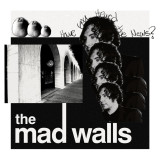
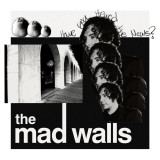
Eight years since the breathtaking Somewhere Anywhere EP, The Mad Walls return to re-ignite psych rock with this gorgeous, floatily heavy, effortlessly groovy and sublimely sinuous debut LP. Driven by bone shaking acoustic guitar, visceral drums, wonderfully trippy basslines and the throwaway perfection of Christopher Mercado’s spooked vocals. Pure rock n’ roll yet devoid of cliché. Informed by, but no way in hock to, early MC5, Skip Spence, Sonic Youth, Syd Barrett and Jefferson Airplane when they still all lived together.
Recorded on tape in Mercado’s garage, there’s a DIY heart with epic results across sixteen songs. Only one track over three minutes and some under thirty seconds. “It’s just chatter about life and human feelings. Stylized human expression”. - Is Christopher's self effacing explanation of his mind bending, playful, storytelling. It opens with the walloping drum canter/bass attack of WHO WANTS TO DIE FOR RELIGION. Passes through the furious distorted acoustic guitar solo on I TELL YOU HOW I FEEL. The woozy, elastic time-stretching of COOL TRIPPER. The brief, funky lurch of IN YOUR DREAM YOU ARE NO ONE. The almost lush, cinematic SEVEN DAYS which conjures Serge Gainsbourg by way of Moby Grape. HIP COMMA’s floaty strut and the groovy raga of MAKA THE NATIVE, which has not one but two ‘breath solos’. CLOUDS OF DUST is a skeletal Krautrock fragment and THERE ONLY IS a luminous psych-pop single. Final track APPLES ends the album with a sinewy twelve bar blues and a killer psych guitar break. Bliss.
Somehow the MAD WALLS manage woozily florid and sharp as a blade. Studiedly detailed but effortless. Whip smart and dumb. And as we said at the start - just gorgeous…
Black[25,17 €]
Eight years since the breathtaking Somewhere Anywhere EP, The Mad Walls return to re-ignite psych rock with this gorgeous, floatily heavy, effortlessly groovy and sublimely sinuous debut LP. Driven by bone shaking acoustic guitar, visceral drums, wonderfully trippy basslines and the throwaway perfection of Christopher Mercado’s spooked vocals. Pure rock n’ roll yet devoid of cliché. Informed by, but no way in hock to, early MC5, Skip Spence, Sonic Youth, Syd Barrett and Jefferson Airplane when they still all lived together.
Recorded on tape in Mercado’s garage, there’s a DIY heart with epic results across sixteen songs. Only one track over three minutes and some under thirty seconds. “It’s just chatter about life and human feelings. Stylized human expression”. - Is Christopher's self effacing explanation of his mind bending, playful, storytelling. It opens with the walloping drum canter/bass attack of WHO WANTS TO DIE FOR RELIGION. Passes through the furious distorted acoustic guitar solo on I TELL YOU HOW I FEEL. The woozy, elastic time-stretching of COOL TRIPPER. The brief, funky lurch of IN YOUR DREAM YOU ARE NO ONE. The almost lush, cinematic SEVEN DAYS which conjures Serge Gainsbourg by way of Moby Grape. HIP COMMA’s floaty strut and the groovy raga of MAKA THE NATIVE, which has not one but two ‘breath solos’. CLOUDS OF DUST is a skeletal Krautrock fragment and THERE ONLY IS a luminous psych-pop single. Final track APPLES ends the album with a sinewy twelve bar blues and a killer psych guitar break. Bliss.
Somehow the MAD WALLS manage woozily florid and sharp as a blade. Studiedly detailed but effortless. Whip smart and dumb. And as we said at the start - just gorgeous…
BLUE NOTE CLASSIC VINYL EDITION: Stereo, komplett analog, von Kevin Gray von den OriginalMasterbändern gemastert, bei Optimal auf 180g-Vinyl gepresst. LPs im Single-Sleeve-Cover. Der Tenorsaxofonist Stanley Turrentine begann seine lange Zusammenarbeit mit Blue Note 1960 mit einem grandiosen Doppelschlag, als er gleich zwei exzellente Alben mit souligem Hardbop für das Label einspielte: “Look Out! und “Blue Hour”. Auf letzterem kam es zu einem besonders fruchtbaren musikalischen Austausch mit dem von dem Pianisten Gene Harris geleiteten Trio The Three Sounds, das sich mit seinen eigenen Aufnahmen für Blue Note bereits als eine der besten Hardbop- und Soul-Jazz-Formationen etabliert hatte. Als den “Mittelgewichts-Champion des Tenorsaxofons” hatte der Kritiker Leonard Feather einst den 1986 verstorbenen Hank Mobley bezeichnet. Das klingt zunächst nicht sonderlich schmeichelhaft, sollte aber nur zum Ausdruck bringen, dass Mobley mit seiner Phrasierung zwischen zwei anderen Tenorsax-Champions rangierte: dem “Schwergewicht” John Coltrane und dem “Leichtgewicht” Stan Getz. Auf “Workout” präsentierte sich Mobley 1961, sekundiert von einem Quintett junger Modernisten, in bestechender Höchstform.
- A1: Mr Righteous (Intro)0 35
- A2: You Need Knowledge 3 45
- A3: 88 Soul 3 12
- A4: Black Shakespeare 3 02
- B1: For My People ..It's Spiritual 2 55
- B2: Lonely At The Top 3 56
- B3: Just Listen 4 05
- B4: California Dreamin' 4 33
- C1: Purity 3 59
- C2: Kunta Kente 4 20
- C3: 1993 Shit 3 49
- D1: We Got Plots 3 38
- D2: Do Win-Dis 4 11
- D3: Hope She Remembers Me 3 15
A Gilles Peterson-approved deep jazz-rap classic.
2024 first time vinyl release, 140g double vinyl, remastered audio with restored artwork.
Limited and Non-Returnable.
Holy grail hip-hop alert! Superstar Quamallah's Invisible Man was never released on wax so, to celebrate the 15th anniversary of this astounding record, we present the first ever vinyl edition. A stunning record which gained accolades upon its initial release, such as a prominent feature on Gilles Peterson's renowned Best Of 2009 show, it's one of the most essential jazz rap albums of all time.
Deep jazz rap on that mellow-melodic tip, Invisible Man is an unforgettable album with nothing but dope beats and dope bars. There's a strong chance this album has passed you by but we truly believe it to be a lost hip-hop masterpiece. It supremely captures the essence of a golden age classic without being slavish to the past. No, this ain't some facile throwback rap. It's a fresh and deeply soulful, original album shot through straight from the heart. Perfect to chill to, Invisible Man is profoundly jazz-oriented and captures with simplicity and sincerity the essence of hip-hop circa 1983-1994. It sounds like vibing with your nearest, dearest and oldest friends on a long hot summer night as the tantalising thought that anything is possible fills the air. You know what, we can just call this "magic hour rap" and we think you'll know what we mean. It's just beautiful. Just Listen.
Brooklyn-born, California-based emcee, DJ, and producer Superstar Quamallah was active in the West Coast underground scene throughout the 90s and recorded extensively with such revered names as Defari and Tajai. His parents were some serious artistic heavyweights, too; his father was soul organist Big John Patton, a giant in the jazz world known for his releases on Blue Note whilst his mother was an active designer. However, he remains relatively unknown. Invisible Man, named ostensibly after the classic Ralph Ellison novel, could also refer to how he is viewed by the public at large. With close affiliations to the Hieroglyphics, Dilated Peoples and Likwit crew, his debut EP "Don't Call Me John" arrived in 1999 on ABB Records, after which he took a sabbatical from recording which included graduate school, travelling, teaching at Inglewood High and eventually a professorship of African Studies at Berkeley.
With a laidback flow and deep, relaxing presence on the mic, Superstar Quamallah is equal parts Big Daddy Kane, Rakim and Guru. Invisible Man is refined, soulful, feel-good hip-hop of the old school. Its wise, spiritual and literate sound, combined with the summertime vibes projected by the smooth beats and the nostalgia-inducing samples and vocal scratches, created jazzy boom-bap rap reminiscent of prime De La Soul, A Tribe Called Quest and Gang Starr.
Irresistibly bouncing opener "You Need Knowledge" loops sparkling pianos, horns and a nagging whistle refrain with scratched vocal refrains from Slick Rick, Mobb Deep and Guru. The super-smooth head-nod classic "88 Soul" also utilises a beautifully swelling piano line and dusty breaks whilst Quamé reminisces about his childhood in NYC. Deeply moving, the silky, sultry "Black Shakespeare" is built around an elegant piano loop and goes hard on the superman lover tip whilst "For My People...It's Spiritual" is transcendental rap in conversation with Rakim and older gods. The "Moment Of Truth"-sampling "Lonely At The Top" is striking for its undiluted boom-bap stylings and the staccato flute-hop of "Just Listen" is riddled with soulful refinement. The deeply-affecting, wistful-yet-triumphant bells and horn-drenched single "California Dreamin'" is top-tier rap of unimpeachable quality. What a flow!
Another highlight is the rich melodic piano-rap of "Purity", a beautiful ode to the foundations of rap and those keeping the culture authentically alive. Beautifully played instruments and spiritual jazz samples elevate the deep thinking present on "Kunta Kente" whilst the darker jazz-tinged battle-rap of "93 Shit" goes super hard both in a lyrical sense and with its no-holds drum punches. The breezy Rhodes and string loops that serve as the sonic backdrop to the slinky jazz rap of "We Got Plots" are just gorgeous as our hero evokes Common's "I Used To Love H.E.R." with a head-spinning tale of crime, deception and double crossing. And some twist! "Do Win-Dis" has a tense crime-funk backing and rolling beats which complement Quamé's flow perfectly before the record is rounded out by the tough yet jazzy brilliance of rap confessional "Hope She Remembers Me". Just sensational.
Upon its original release, Quamallah himself declared: "My favorite time period for Hip Hop music was definitely between 1983 and 1994 with 1988 and 1993 being two years that standout as extremely impressive years musically and culturally. The fashion, slang, movies, TV shows and vibe during those years was incredible. While totally submerged in the feelings and music of that entire time period, I went to work on Invisible Man and I am excited for people to hear the result! It is an album that I would want to hear from some of my favorite artists of the past and present today. This is not a RETRO trip for me; this is me at my best lyrically and spiritually using the accessories of the 80s and 90s to fuel me. I am a 88 soul as the song states!"
This album goes deep. It goes all in. When Invisible Man first came out it had a real hold on us here at Be With HQ. We couldn't stop listening to it. We'd venture to say it's one of the top 25 rap records of the 2000s. In the years since its release, it has remained a criminally underrated record, an increasingly hidden gem. We sincerely hope this first time double LP release will go some way to correct this.
It's been mastered for vinyl by Simon Francis, cut by Cicely Balston and pressed at Record Industry. Finally available on the format it should always have been on, it must never be rendered invisible again.
British Sea Power"s widely-praised soundtrack for the film "From The Sea To The Land Beyond" is released on double vinyl accompanied by the film through Rough Trade Records. The album features a bonus track not available on the original soundtrack. The soundtrack consists of re-workings of previous British Sea Power songs and was recorded in Brighton and mixed by Ken Thomas (Sigur Ros, Daughter, M83, Cocteau Twins, Moby).
Let Go the debut album from Avril Lavigne, originally released in June of 2002. Let Go became an instant sensation with hits such as "Complicated," and "Sk8ter Boi" dominating the charts and airwaves.
Dizonord is very happy to bring you the reissue of this French 1988 underground self released gem, re-mastered from master tapes!
Dubby, punky, politically engaged new wave with a sense of humour, we've always been touched by the voice of Agnès (bass) and the phlegmatic Michel (machines and graphics). We could have thought the language barrier would have stopped the pleasure of this record but obviously not, as Mobutu song is already an international digger classic!
We really hope you'll enjoy this collection of tracks and collages as we do so, once upon a time...
" Celebrating 45 years of Blancmange, Everything Is Connected (Best Of) is the first collection to be curated by Neil Arthur, tastefully blending a mixture of hits and personal favourites.
" Originally from the UK's post punk DIY scene, Blancmange found success in 1982, long player 'Happy Families' selling Gold in the UK, and its 3 singles becoming international hits. They went on to have 7 Top 40 hits and 70 weeks in the UK album charts.
" Long-standing admirers include Moby, John Grant and Honey Dijon, who states that "British synth pop was hugely influential in the burgeoning house music scene and Blancmange was a big part of that."
" All formats contain the Top 40 hits 'Living On the Ceiling', 'Waves', 'Blind Vision', 'Don't Tell Me' and Abba cover 'The Day Before You Came', as well as recent favourites 'What's The Time', 'Reduced Voltage', and 'Some Times These'.
" The vinyl is being pressed onto special Coke-bottle green vinyl.It features the 10 Blancmange's essential tracks.
Once billed as “Europe’s First Lady of Jazz,” Dutch singer Rita Reys (1924- 2013) was a legend overseas during the second half of the 20th century, and certainly one of the top European jazz singers. The LP The Cool Voice of Rita Reys (considered her best record ever) presents her backed on one side by a band led by her husband, drummer Wessel Ilcken, and on the other side by Art Blakey’s Jazz Messengers, featuring Donald Byrd, Hank Mobley and Horace Silver. 180-gram VIRGIN VINYL LIMITED EDITION of 750 COPIES. The Complete Album + 3 Bonus Tracks.
The UDG DIGI Headphone Bag the one bag a DJ need to carry around today’s digital media.
SPECIFICATION
Specification
Weight 0,35 kg / 0.77 lbs
EAN 8717228277504
Color Black
Outer Dimensions (W x H x D) cm: 22 x 22 x 9 | inch: 8.7 x 8.7 x 3.5
Inner Dimensions (W x H x D) cm: 21 x 21 x 8 | inch: 8.3 x 8.3 x 3.1
Material Water resistant Ballistic Nylon 1680D
Protection Foam padded interior
Extra's Detachable and adjustable shoulder strap. Holds USB drives, SD cards, hard drive, mobile phone, cables, business cards, credit cards and accessories
Fits Most foldable DJ Headphones.
Split Colour Heavyweight Vinyl Repress!
'2 Sim' is a phrase the references mobile phones with two sim cards to describe people of mixed heritage, dual nationality or multiple residence. After being called 2 Sim in conversation with a stranger while on a walk through Freetown (a recording of this moment features on the record) Duval began to explore what the 2 Sim experience is in contemporary West-Africa.
2 Sim EP was created from 2 months of field recordings and interviews with family, friends and peers in Freetown Sierra Leone. These site specific recordings are collaged with solo piano recordings and production recorded in Sierra Leone and the UK. The EP is accompanied by a short film/ music video of the same name which Duval shot and Directed whilst making the record.
2 Sim EP is the second release from Carrying Colour which follows on from 2017's 'Sen Am'"
Recorded in 1956 for Tom Wilson’s Transition label, Watkins At Large was the first of two albums bassist Doug Watkins made as a leader. With a first-rate band featuring Donald Byrd, Hank Mobley, Kenny Burrell, Duke Jordan, and Art Taylor, Watkins swings through a stellar set of blues, ballads and more. This mono Tone Poet Vinyl Edition was produced by Joe Harley, mastered by Kevin Gray from the original analog master tapes, pressed on 180g vinyl at RTI, and packaged in a deluxe tip-on jacket with an 8.5” x 5.5” booklet.
Released only eight months after his exhilarating debut, Bruce Springsteen's The Wild, the Innocent & the E Street Shuffle contains rousing dispatches from the boardwalk, the street, the beach, and the bedroom. It explodes with energy, dares to dream, teases with humour, crackles with tragedy, clings to hope, and overflows with discovery, youthfulness, and personality. It features an unforgettable cast of characters — corner boys, teenage hustlers, doomed lovers, jazz men, junk men, factory girls, fortune tellers, alley cats, pimps, escorts, and more — illuminated by vivid colour, breathtaking detail, and poetic action.
Musically, the heartfelt 1973 record is inhabited by sympathetic vignettes and cinematic arrangements steeped in rock 'n' roll, soul, jazz, and R&B. It finds the New Jersey native looking beyond the parameters of his preceding record and seeking to move on from environments he knows well (and chronicles here) by rushing headlong toward unknown territories, adventures, and people. Underpinned by the singer-guitarist's ambitious poetic enterprise and will to succeed, The Wild, the Innocent & the E Street Shuffle is the album on which Springsteen becomes the Boss.
Mastered on Mobile Fidelity's renowned mastering system, pressed at RTI on MoFi SuperVinyl, and strictly limited to 7,500 numbered copies, Mobile Fidelity's UltraDisc One-Step 180g 33RPM LP set is the definitive-sounding version of Springsteen's sophomore record. Benefitting from SuperVinyl’s nearly non-existent noise floor, superb groove definition, and dead-quiet surfaces, The Wild, the Innocent & the E Street Shuffle plays with a clarity, energy, presence, and openness that complement the expressiveness, dynamics, and scope of the seven restless songs that comprise a work Rolling Stone ranked the 345th Greatest Album of All Time.
Beyond the audiophile sonics that practically place you behind the console at 914 Sound Studios — listen to the separation between the instruments, natural decay of the notes, interplay within the widescreen soundstaging, and nothing-to-lose youthfulness of Springsteen’s voice — this reissue takes seriously this record’s influential merit by presenting it in packaging that underlines its status. Tucked in a beautiful slipcase, the LP is housed in a special foil-stamped jacket with faithful-to-the-original graphics. This reissue is made for listeners who prize sound quality and who want to engage themselves in everything involved with the invigorating set that busted Springsteen loose from the club circuit and landed him on the radio
Determined to liberate anyone within earshot and unafraid to come on strong, The Wild, the Innocent & the E Street Shuffle serves as the debut of the E Street Band — not only heard but seen for the first time by most of the public courtesy of the back-cover photograph. This is where saxophonist Clarence Clemons, organist-accordionist Danny Federici, and pianist David Sancious step out of the shadows — and drummer Vini Lopez and bassist Garry Tallent again stoke a fiery rhythmic engine that helps drive the untamed, reimagined big-band swing of “Kitty’s Back,” breathless R&B thrust of “Rosalita (Come Out Tonight),” and carefree dance steps of the funky “The E Street Shuffle.”
Of course, the main attraction remains a then-24-year-old visionary on the precipice of becoming a sensation and turning a then-bloated rock scene on its head. Recorded over three months while Springsteen and company were busy touring his debut LP, The Wild, the Innocent & the E Street Shuffle reflects the high-octane approach the vocalist embraced onstage and drifts away from the label-dictated acoustic-based frameworks of his debut. The set also witnesses Springsteen deepening his observational skills, with narratives such as the romantically tinged “4th of July, Asbury Park (Sandy)” and redemptive epic “Incident on 57th Street” mirroring changes taking place in the singer’s own life, small towns, and America at large.
A thrilling collision of memories, reflections, and composites — Sandy, Rosalita, and the latter’s parents are all based on actual people Springsteen knew, as is the community depicted in the opening track — the aptly titled The Wild, the Innocent & the E Street Shuffle resonates decades on due to its truths, authenticity, and spirit. Those characteristics — as well as the fact that many of its lengthy songs come on as the equivalent of sweaty, feverish soul revue that won’t stop until you’ve been exhausted — also explain how this now-iconic album triumphed over the reservations of industry “experts” that both demanded Springsteen re-record it and instructed deejays not to play it.
Yet there’d be no stopping a record that saw the past, present, and future, a band whose will would not be denied, and a phenomenon who was born to run. A never-ending invitation to act real cool and stay up all night, The Wild, the Innocent & the E Street Shuffle always feels alright.
SIMON AND GARFUNKEL’S SWAN SONG: BRIDGE OVER TROUBLED WATER FEATURES METICULOUS PRODUCTION, GORGEOUS SONGWRITING, AND HEALING SPIRIT
Sourced from the Original Master Tapes and Limited to 4,000 Numbered Copies: Mobile Fidelity’s 180s SuperVinyl 33RPM LP Plays with Staggering Detail, Clarity, and Definition
1/4" / 15 IPS analogue master to DSD 256 to analogue console to lathe
Unifying, soothing, comforting: Simon and Garfunkel's Bridge over Troubled Water quickly became the album of an era upon release in 1970, the benchmark set serving as a beacon of hope and hymn of reassurance during a time marked by polarizing changes, social unrest, uncertain politics, and the dawn of a new era. These uplifting reasons — to say nothing about the gorgeous songwriting, meticulous production, and watershed performances — attest to why it is more relevant than ever in our current climate. Music, Bridge over Troubled Water simultaneously suggests and proves, heals all wounds and lifts all boats.
The seminal effort Rolling Stone named the 51st Greatest Album of All Time reaches illustrious sonic and emotional heights on Mobile Fidelity’s 180g SuperVinyl 33RPM LP. Pressed on MoFi SuperVinyl and strictly limited to 4,000 numbered copies, this ultra-hi-fi collector's edition brings you closer to music that picks up where the duo's Bookends leaves off. You'll enjoy deep-black backgrounds and pointillist details. Seemingly every note, breath, and movement is reproduced with exquisite accuracy, clarity, and balance. Each rotation benefits from SuperVinyl’s ultra-low noise floor and superb groove definition.
The best-selling record in the U.S. for several years running and winner of six Grammy Awards — including nods for Record of the Year, Album of the Year, Song of the Year, and Best Engineered Recording — Bridge over Troubled Water endures as a staple of accessible sophistication, angelic elegance, effortless singing, unhinged ambition, and therapeutic spirit. While it would turn out to be the final studio set for a duo surrounded by creative and personal disagreement, Simon and Garfunkel's collaborative ethos and soaring harmonies — combined with reflective narratives centred on the American experience, friendship, romance, and farewells — combine to turn the 11-track work into a paean to resolution, reconciliation, calm, and balance.
Home to the legendary title track graced by Garfunkel's pacifying solo lead vocals as well as the equally famous folk ballad "The Boxer," Peruvian-based "El Condor Pasa," upbeat "Cecilia," and rock ’n’ rolling "Baby Driver,” Bridge over Troubled Water remains as renowned for its musical diversity as its lyrical poignancy. Moving beyond the templates they'd perfected on four prior albums, Simon and Garfunkel embrace a then-unimaginable swath of styles. Rock, pop, gospel, country, R&B, South American, and jazz strains course throughout the songs, each sparked with bold experiments yet grounded in a well-orchestrated melange of melody, rhythm, and classicism that makes everything personal, familiar, and warm.
Not for nothing is Bridge over Troubled Water one of the finest-sounding albums ever made. Featuring instrumentation helmed by members of Los Angeles' fabled Wrecking Crew as well as multiple choral and string sections, songs took hundreds of hours to complete and involved pioneering recording techniques. Evoking both Phil Spector's live"Wall of Sound" approach as well as inventive effects, Bridge over Troubled Water is a triumph of texture, atmosphere, and architecture. Our audiophile edition brings the record's unique traits to the fore.
Whether the reverberation generated by Garfunkel's cassette recorder on "Cecilia," echoing drums captured in a corridor heard throughout "The Boxer," automobile noises peppering "Baby Driver," layer upon layer of voices dotting "The Only Boy Living in New York," or echo-chamber percussion on the title track, details comes through with stunning accuracy, clarity, and dimensionality. In every regard, Bridge over Troubled Water exudes genius.
"Listen to This." As the original working title for Bitches Brew, the instruction and invitation resonates to this day as the best way to approach a record that shattered conventions, altered music history, and, more than five decades after its original release, still sounds far ahead of its time. The aural Mount Rushmore of jazz fusion, Bitches Brew is rightly ranked by virtually every significant outlet among the 100 greatest albums ever made in any genre. Sewn together with vibrant colours, voodoo textures, and ethereal moods, the 1970 landmark emerges with supreme detail on Mobile Fidelity's definitive 180g 33RPM 2LP set.
Sourced from the original master tapes and pressed on 180g vinyl at RTI, this numbered-edition version of Bitches Brew joins the audiophile ranks of other essential Miles Davis sets reissued by Mobile Fidelity. Having established new possibilities for studio-recording techniques, the record can now be experienced to maximum degree by way of a pressing that widens and deepens the soundstage, opens up separation between instruments, and broadens the dynamic range. If ever a jazz album can be said to have gone to outer space and back, this is it.
Davis conceived Bitches Brew by having the musicians stand in a semi-circle, where he pointed at them with vague directions for tempo, solos, and cues. The collective improvisation and interplay spawned a galaxy of melodies and grooves later spliced together by producer Ted Macero. On this reissue, these creations take shape with utmost realism. Compositions stretch across black backgrounds and paint abstract canvasses on par with those of Axis: Bold As Love and Abraxas. Juxtaposed percussion, loose jams, and melodic segues explode with impressionistic verve.
And "verve" defines Bitches Brew. Gathering a Hall of Fame-worthy lineup of musicians and tweaking it according to his desires, Davis follows through on his idea to "put together the greatest rock and roll band you ever heard." Central to his proposition is the presence of two (and sometimes three) drummers and two bassists, a tactical move that thrusts rhythms into central focus. Akin to the futuristic album cover art, the drum-driven suites head toward distant universes and uncharted territories. At once hypnotizing and grooving, they chart maverick adventures with quixotic rock, funk, and R&B elements.
Conceptually, Davis described Bitches Brew as "a novel without words" and "an incredible journey of pain, joy, sorrow, hate, passion, and love." The vast psychedelic expanses of warped echoes, liquid reverb, and tape loops confirm such ambitious contrasts of light and dark, fear and hope. Yet the most absolute characteristic of this watershed effort lies in how it resists definitive interpretation and encourages free thought — the very principles with which Davis conceived the everlasting beauty and fascination that remain Bitches Brew.
AAA Audiophile 200g 45rpm Triple Disc LP!
Sourced from First Generation Analogue Recordings without Any Digital Corruption!
2xHD Mastering on Nagra Equipment by René Laflamme!
Sound Restoration by George Klabin & Fran Gala!
Cut All Analogue at Bernie Grundman Mastering on Tube Cutting Equipment!
There have been many guitar gods, but there's never been an electric bassist as deified as Jaco Pastorius. – Michael J. Agovino
This live album by Jaco Pastorius and the Word-of-Mouth Big Band, featuring harmonica virtuoso Toots Thielemans as special guest, was recorded in analog 24 tracks by the Record Plant mobile truck at Avery Fisher Hall in NYC on June 27, 1982, as part of George Wein's Kool Jazz Festival. This Deluxe 45rpm 200g edition is the first one to be mastered from the original 2 track master tapes that were found some 30 years later (the previous digital download versions were released from a digital remix of the 24 tracks). What we have here is the direct copy of the original pure analogue 2 track mix.
The brightest star in the electric bass firmament, Jaco Pastorius burst onto the national scene in 1976 with his audacious self-titled album on Columbia Records, featuring a line-up of top jazz musicians. With his extraordinary fretless electric bass playing as the centerpiece, Jaco Pastorius created an immediate sensation with the public and the media. His signature approach employed Latin-influenced funk, lyrical solos on fretless bass, bass chords, and innovative use of harmonics. In Jaco's work with Weather Report and beyond, the self-described "greatest bass player in the world" (an assessment shared with virtually the entire music world) established a new identity and role for his instrument and became the torch-bearer for a new way of playing both technically and conceptually. But behind it all was an ever present R&B and Latin-influenced groove and a screaming rock-'n'-roll attitude that he refined and incorporated into sophisticated jazz harmonic structures.
In addition to his extraordinary virtuosity, Jaco was also developing into an accomplished and sophisticated composer and arranger and those talents are gloriously on display on this album. The 3-time Grammy Award nominee was inducted into the Down Beat Jazz Hall of Fame in 1988, one of only seven bassists so honored (and the only electric bassist). His legacy as a bass innovator continues to this day, more than 30 years after his untimely death in 1987.
THE 1968 ALBUM ON WHICH JOHNNY CASH BECAME A LEGEND: AT FOLSOM PRISON AMONG THE MOST IMPORTANT AND POTENT STATEMENTS OF THE 20TH CENTURY
Johnny Cash already knew his way around Folsom Prison when he and his band stepped inside the institution’s forbidding walls on the morning of January 13, 1968 to record At Folsom Prison. He’d played there two years prior. But this time was different.
Cash took the stage that day for two shows amid a darkening sociopolitical atmosphere and a raging war in Vietnam, as well as the knowledge his career and health hung on by a thread. The Arkansas native shared many of the long odds and abject failures of the inmates for which he performed. The songs he chose, and the conviction with which he delivered them, say as much. The point at which Cash transformed from a country star into a legendary artist, and a bold statement about the American prison state and its commitment to rehabilitation, the triple-platinum At Folsom Prison remains one the most important, potent, and fabled records of the 20th century.
You can hear it echo off the walls of the room; pulse through the itchiness of the Tennessee Three’s acoustic-based boom-chick rhythms; crackle in the announcements conveyed over the intercom; ring in the comedy of the off-cuff remarks and pair of novelty tunes; sense it in palpable energy that wells up within Cash and his audience. And you can experience it like never before via Cash’s knockout singing. The bedrock foundation of all his music, the singer’s baritone resonates with profound degrees of depth, pliability, and passion that underscore how much this appearance meant to him — and the extent he was living the narratives.
Indeed, every song on At Folsom Prison serves a purpose and speaks to the conditions — mental, emotional, physical, geographical, legal, social — the inmates confronted on a daily basis. Beginning with the explicit messages of the opening “Folsom Prison Blues,” Cash makes it clear he understands and shares many of their plights. Not for nothing did the myth of Cash having done hard time persist for decades once this record hit the streets. That’s how real it is, and how dedicated Cash remains to conveying every note with the same truth he invests in the impromptu comments he makes between and amid songs.
Listen to the sorrow, regret, pity, and loneliness of Merle Travis’ “Dark as the Dungeon,” Cash pulling syllables til they threaten to break and inhabiting the mood of bleak phrases such as “pleasures are few” and “the sun never shines.” Witness the isolation, dejection, and sadness punctuating the walking-blues “I Still Miss Someone,” matched in gravity by a solemn reading of “The Long Black Veil” — a traditional dirge that involves murder, cheating, and deception. Cash cuts even deeper on a heartbreaking solo rendition of “Send a Picture of Mother” and plainspoken version of Harlan Howard’s “The Wall,” detailing a suicide disguised as jailbreak through cliched-jaw deliveries that softly curse the impossible situation.
In chronicling temptations, mistakes, mortality, punishment, and life “inside” — for better or worse, the stories of the disenfranchised, forgotten, written-off, and unrepentant — At Folsom Prison also has a blast playing the outlaw role. Cash captures wild-eyed craziness and out-of-control mayhem on a revved-up take of “Cocaine Blues,” taking extra satisfaction in its dastardly tales by way of voice that shifts into character for the sheriff and judge. The gallows humor and racing drama of “25 Minutes to Go”; quicksilver accents and resigned acceptance of “I Got Stripes”; train-whistle blare and twangy locomotion of “Folsom Prison Blues” — all fight the law only to see the law win.
Cash remains deeply committed at every moment, and inseparably connected with the tortured souls removed from the goings-on of the outside world. No wonder all but two songs here stem from the day’s first performance that saw Cash, Luther Perkins, Marshall Grant, and company give everything. As does the Man in Black’s soon-to-be-wife, June Carter. The couple’s fiery duet on “Jackson” scorches; their combination of surrender and fortitude “Give My Love to Rose” puts us in the dying protagonist’s shoes.
And with the closing “Greystone Chapel,” famously penned by convict Glen Sherley, who watched it all happen under the watchful eye of guards, Cash separates the corporeal from the spiritual, relaying lessons about salvation and survival. Heady themes to which he’d return for the remainder of his illustrious career.
A landmark recording and masterful symphony of performance, composition, and execution, Miles Davis' E.S.P. established the template jazz would follow for the following decade. The 1965 record splits the gap between accessible hard-bop and the cutting-edge approach Davis increasingly pursued into the 1970s. Adventurous, sophisticated, and yet altogether cohesive, E.S.P. stands out not only due to its elastic compositions but via its chemistry, interplay, and feeling attained by the instrumentalists. The first album Davis' classic second quintet made together, it's also very arguably the group's best. Never before has the effort been experienced in such transformational sound.
Pressed at RTI, this 180g 45RPM 2LP set of E.S.P. renders the music's dynamics, pitch, colors, and textures with lifelike realism and proper scale. Reference-caliber separation, wall-to-wall soundstages, and distinct images magnify the intensity and beauty of Davis and Co.'s creations. Whether it's the distinctive snap of Tony Williams' drum sticks against the snare head, air moving through Davis' trumpet, acoustic thrum of Ron Carter's bass, or upper register of Herbie Hancock's piano, the sound is better than you'd even hear in the most intimate jazz clubs. Prepare to be swayed on every level.
For many, E.S.P. looms among the decade's best albums if only because of the significance of Davis' line-up. While Hancock, Williams, and Carter are holdovers that began playing with one another on 1963's Seven Steps to Heaven, Wayne Shorter functions as the secret weapon and key addition responsible for this ensemble hitting a new peak. Indeed, the saxophonist helped pen two of the seven compositions here – notably, E.S.P. is entirely comprised originals and clocked in as one of the longest-running jazz LPs issued at the time – and, more importantly, grants Davis the confidence and leeway necessary for the eruption of enigma, steadiness, and tension.
As he did with John Coltrane year earlier, Davis hangs back and picks his moments to solo, with Shorter stepping up to supply the churn. Their bandmates respond in kind, itching to take off into new stratospheres all the while keeping their improvisations grounded and connected to the piece at hand. Guided by Davis' visions and inspired by current boundary-pushing works by the likes of Ornette Coleman, Cecil Taylor, and Coltrane, the magnificent results spark with variation, harmony, emotion, energy, and brilliant movement.
Interlocking lines drive "Little One," alternating rhythms pulse through the funky "Eighty-One," melodies soar on the balladic "Iris," the aptly titled "Mood" broods over minor-key structures, and "Agitation" – goosed by a two-minute percussive introduction by Williams – delivers on its promise. No record – and no group of musicians – have ever balanced coherent themes and exploratory playing in better fashion than Davis' quintet on E.S.P. It's the avant-garde record even jazz traditionalists love, and essential on every level.
Unadorned with any post-production tricks or overdubs, Garcia/Grisman breathes with naturalism and presence. You will effortlessly detect the full body of the instruments, witness the woody grain textures, and get lost in the surprisingly velvety qualities of Garcia's lullaby-like singing. Our pressing also marks the first time this delightfully joyous affair has been issued in analogue form. You will never hear a better-sounding Americana-styled recording.
Pals since the mid-1960s, Garcia and Grisman bonded over their love for traditional folk and bluegrass. The two teamed up amidst what became a gold rush of top-notch productivity and creativity for Garcia. Partnering with bassist Jim Kerwin and percussionist/fiddler Joe Craven, the pair approaches every passage with innate ease, as if either musician could finish the others sentence. The affable chemistry and soothing interplay wash over a selection of songs as notable for their diversity as the way Garcia and "Dawg" turn them into the equivalent of old friends you haven't seen in years.
Exquisite melodies and jewel-shaped notes decorate the simple, convivial structures of tunes that hop, jump, skip, skitter, and bop. The atmosphere is reminiscent of the legendary gypsy-jazz exchanges between Django Reinhardt and Stephane Grappelli, and equally sharp. Swirling with Middle Eastern modality, the closing 16-minute-plus rendition of Grisman's rippling "Arabia" – complete with a section based on a Cuban fold theme - is alone enough worth the price of admission to this sensational session. But there's so much more.
The quartet delves into Celtic themes ("Two Soldiers"), jazz-grass ("Grateful Dawg"), old-world ballads ("Russian Lullaby"), and Appalachian flavours ("Walkin' Boss") with nonpareil skill and soulfulness. Garcia and Grisman's tandem picking throughout epitomize sublime. And for many listeners, the duo's revised version of the Grateful Dead staple "Friend of the Devil" ranks as the finest-ever recorded, the pace patient, the narrative vocals heartfelt, and the synchronous solos tailor-made for the enveloping progression. Better yet, it's all captured in astonishing fidelity.
“There goes my TARDIS!” Demon Records celebrates David Tennant and Catherine Tate’s partnership as the Doctor and Donna with two audio-exclusive stories, read by the actors themselves. In Pest Control, read by David Tennant, the Doctor and Donna face monstrous insects and a ruthless robot exterminator when the TARDIS is lost in battle on a distant planet. The Doctor sets off in pursuit of his craft, while Donna finds herself accepting a commission in the Pioneer Corps. Something is transforming soldiers into monstrous beetles - and she could be the next victim. In The Forever Trap, read by Catherine Tate, the duo find themselves imprisoned in a complex of luxury apartments in space, and neighbours to a terrifying assortment of aliens. Deadly mobs wage battle in the corridors and on the stairwells, and the travellers must cross their paths as they search for the ultimate authority. Who, or what, lies at the heart of the Edifice? This stunning box set, with an illustrated lift-off lid, features 6 x 140g vinyl LPs - three in Transparent Red and three in Transparent Yellow - each housed in a unique inner sleeve. A four page booklet features sleeve notes by authors Peter Anghelides and Dan Abnett, who reflect on the process of writing for the Tenth Doctor and Donna, and how they regard the stories 17 years later. Now for the first time on vinyl, accompanied by original sound design and Murray Gold’s Series 4 arrangement of the familiar theme music, these two high-octane adventures are a reminder of the excitement, humour and magical wonder of Doctor Who
Some songs are so ingrained in our consciousness that they are immediately identifiable upon hearing one or two notes. Featuring one of the most indelible riffs ever played, Foghat's air-guitar anthem "Slow Ride" is such a tune. The hit single turned the British band into stars and catapulted 1975's Fool for the City up the charts. And what a ride it is.
We hear a lot of yearning today about the good-old, glory days of rock and roll, the simple kind that just locked into a good beat, turned out a raunchy groove, and simply kicked you in the butt. The no-pretense type meant for kicking back, letting loose, and surrendering to the melody. Bare-bones music that doesn't need image or looks as a crutch.
Well, this is it, friends, classic meat-and-potatoes 70s rock that comes with killer slide-guitar solos, crunchy leads, driving rhythms, and soaring vocals. No need for any further instructions or explanations. The pact between artist and audience is understood. Here, the band trusts that you know what to do and is ready to rock out with anyone in earshot.
Pressed at Fidelity Record Pressing, Mobile Fidelity's remaster of this Foghat gem bring to the surface the band's marble-solid sturdiness and bluesy structures like never before. Bass notes are thicker and richer, the dual guitars bite and snap, and Lonesome Dave Peverett's singing comes across with realistic grit. This LP invites you to hear and feel the energy Foghat brings to the boogie-infused title track, great cover of the Righteous Brothers' "My Babe," and, of course, the everlasting "Slow Ride."
It’s burning, everything is catching fire, and Aquaserge are singing and dancing on the embers of a world contemplated in a rear-view mirror. A world which is hyper-connected, yet forgets its primary emotions.
This seventh album by the band is an ecological poem, where present and past collide. A resolutely rock-sounding album, laced with electronics, experimental pop songs and audio archives. Along the way, the listeners will encounter traces of Oulipo (the famous experimental French literary movement founded in the ’60st), Dada and free jazz. They will cross paths with the ghosts of Ennio Morricone, Walter Benjamin and Marguerite Duras, with the shadows of Kim Gordon and Brigitte Fontaine. And other audacious and exciting melanges, in the pure tradition of Aquaserge.
The album was arranged and produced by Benjamin Glibert, the band’s guitarist and main composer.
The recording took place in a house located in the french countryside (where Aquaserge’s mobile studio was installed). The mix was done at Studio St Guidon in Brussels, the album was mastered by the legendary Dominique Blanc-Francard at the Labomatic studio in Paris.
The members of the band’s current line-up all took part in the recording: Audrey Ginestet (vocals, bass, guitar, etc.), Benjamin Glibert (vocals, guitar, keyboards, etc.), Olivier Kelchtermans (saxophones, keyboards, vocals, etc.), Manon Glibert (clarinets, vocals, etc.) and Julien Chamla (drums, vocals, etc.).
- A1: 2014: Imagine Dragons - Warriors
- A2: 2015: Nicki Taylor - Worlds Collide
- A3: 2016: Zedd - Ignite
- A4: 2017: Against The Current - Legends Never Die
- A5: 2018: Mako, The Glitch Mob And The Word Alive - Rise
- B1: 2019: Cailin Russo, Chrissy Costanza - Phoenix
- B2: 2020: Max, Jeremy Mckinnon, Henry – Take Over
- B3: 2021: Pvris - Burn It All Down
- B4: 2022: Lil Nas X – Star Walkin
- B5: 2023: Newjeans - Gods
: League of Legends Worlds is an esports championship like no other — not only prestigious, but gargantuan in scale and chock full of production grandeur. A culmination of each LoL season, Worlds is the place for the very best League of Legends players to come together and compete at the highest level, battling for the Summoner’s Cup, a multi-million dollar prize, and, of course,
eternal glory.
An eminent event like Worlds demands a legendary theme song to match. Each year, Riot Games taps talented superstar musicians to craft a new Worlds Anthem, performed live at the competition and released later with a music video to match. These themes, from incredible artists like Zedd, Lil Nas X, and now, for 2023, NewJeans, have never been collected together on a single vinyl release — until now.
iam8bit and Riot are proud to present League of Legends Worlds Anthems (Vol 1: 2014-2023). It’s a full decade of Worlds Anthems, collected together on two sides of a 1xLP for the very first time. We knew this illustrious release deserved a very special vinyl treatment. That’s why we pressed the record on a Worlds Blue Vinyl. Plus, it wouldn’t be an iam8bit release without fantastic cover
art to adorn your record shelf, so we tapped our pals at Envar Entertainment to craft amazing illustrations celebrating the past, present, and future of the League of Legends Worlds Championship.
Legends never die. Celebrate a decade of Worlds in style with this one-of-a-kind release.
Genre-defying Dutch death metal legends Pestilence have singled-out and re-recorded twelve emblematic anthems from across their 38-year career into "Levels of Perception". Patrick Mameli - whose signature vocal, guitar and songwriting skills constitute the hallmark of Pestilence - finds "Levels of Perception" to be a testament to the band's role in death metal's progression. Re-recording of the tracks has not only managed to breathe new life into them - half thanks to new line- up, and other half by implementing subtle changes which reflect Mameli's matured vision and refined with years of experience aesthetic - but also sets them apart from cheap, unimaginative compilations, by unifying the album's sound as befits a full-length release. "I've always wanted to do a best-of album, because it would mean that I've achieved something in the past; something that still has its value today," Mameli comments. "To be able to choose from songs that I composed in the distant past, transporting them into the now, with the line-up of the recordings that consisted of Michiel van der Plicht (drums), Rutger van Noordenburg (guitar) and Joost van der Graaf (bass) - I found this to be of great value and sheer awesomeness."
- 1: Sorry
- 2: Miss You
- 3: Won't Be There
- 4: Good Enough
- 5: Never
- 6: Change
- 7: A Place In Your Heart
- 8: Rainbow
- 9: Taken Over
- 10: Lifeline
- 11: Feel
- 12: Conqu
From the early ‘90s to the turn of the millennium, Gabrielle was one of the UK’s most successful and beloved artists. With two unforgettable #1 smashes (‘Dreams’ and ‘Rise’), a back catalogue full of Top 10 hits, two albums which reached 4 x Platinum status, two BRIT Awards, two MOBOs and an Ivor Novello, everything she touched seemed to turn to gold. In recent times, Gabrielle has enjoyed a remarkable resurgence, one that proves that timeless, empowering songwriting and a distinctive voice that is the very definition of soul will never go out of fashion.
The first single from the album, "A Place in Your Heart" will be released on the 18th January (9:30am timed release), and will be premiered on BBC Radio 2 - Zoe Ball that morning. The new single retains Gabrielle's signature sound, opening with her instantly recognisable vocal and provides an anthemic hook fans will no doubt sing along to.
A big part of that resurgence comes from the love shown to her by the current wave of iconic artists. Adele recalls being inspired by the lyric “Dreams can come true” as a child and has been a life-long fan of Gabrielle since, saying, “I remember being mesmerised by her, so pure and so delicate and gentle with her voice and in the way she moved.” And when Adele’s own dreams came true, she returned to her first inspiration and invited Gabrielle to join the bill for her two rapidly sold-out Hyde Park shows in the summer of 2022. The result was a sea of faces - some older fans, but many more who would’ve been too young to remember her the first time around - singing Gabrielle’s songs back to her.
Another high-profile supporter emerged that same year. Stormzy invited Gabrielle to cameo in his ambitious video for ‘Mel Made Me Do It’, where she joined a host of artists including Dave, Little Simz, Headie One and Jazzie B. She was also referenced in its midpoint monologue, when ‘Black Panther: Wakanda Forever’ star Michaela Coel narrated Wretch 32’s words: “Gabrielle once told us dreams can come true, and that sentence emancipated the minds of our pioneers.”
2018’s ‘Under My Skin’ in 2018 was heralded as “a heartfelt comeback” by The Guardian on its way to the Top
10. It wasn’t long before she was discovered by a brand new audience too, winning fans with a memorable stint as Harlequin in ‘The Masked Singer’ in 2021.and followed by ‘Do It Again’, an album of which mixed original songs, new takes on all-time classics, and her interpretations of more modern pop favourites from the likes of Billie Eilish, Harry Styles and Rihanna. It shot to #4 on the Official Album Chart - Gabrielle’s highest chart position in twenty years.
With Gabrielle’s star again in ascendance and her high profile live presence, 2024 seems the perfect time to release a new album. She’s consolidated her original audience and found a whole new one.
Autumn / Winter 2023 saw Gabrielle embark upon the ‘30 Years of Dreaming’ headline tour which was extended to a phenomenal 33 dates following overwhelming public demand. Many shows sold-out more than six months in advance, including London’s prestigious Royal Albert Hall.
The only proved efficient time traveling method to date is through listening to music, particularly evident when indulging in Jona Jefferies' latest EP released by Spanish house specialists Apersonal Music. It's a refreshing nod to the golden era of 90s electronic music. Across its three tracks, Jefferies masterfully blends elements of ambient, downtempo, and electronica, evoking a sense of nostalgia as if plucked from a bygone era. In contrast to today's TikTok-dominated landscape of short, immediate singles, this EP harkens back to a time when music was crafted with depth and complexity. Drawing inspiration from legendary acts like Boards of Canada and Underworld, it seamlessly transports listeners to the Gen-X decade, when acts like Daft Punk, Orbital and The Chemical Brothers reign supreme and exploited the electronic scene during the MTV era.
On the A side, "Es Camp" embodies the seamless influence of British electronic music on the Balearic scene of the 90s, and viceversa. Feels like Moby’s “Porcelain” if the film "The Beach" had been set in Ibiza. Max Essa's "Romantic Breaks Mix" elevates the track to pure Balearic bliss, setting the perfect mood for any sunset terrace around the globe.
Side B, tailored for the dance floor, runs through “Lost in Paradise”, a track that channels euphoria reminiscent of the underground rave culture during the final years of the 20th century. Apersonal's trusted remixer, Eddie C, delivers an extended rendition of the track that continually evolves, echoing Jim Morrison’s words: 'the music was new, black polished chrome, and came over the summer like liquid night.'
Live albums are often a ‘hit or miss’ affair but ‘Live Oblivion’ 1 & 2 buck that trend, Recorded across 2 nights in 1974 at the Hollywood venue The Whisky A Go Go. The group were finishing off a huge US tour that had roared down the east coast then across the Midwest and by the time they hit LA, as Brian recalls “we were all absolutely performing at our height. So I decided that I really needed to record the band live at that point”. Utilising the Wally Heider Mobile Truck, the scene was set for one of the greatest jazz-fusion live recordings to be made. The show opens with a hyper fast version of Beginning Again due to drummer Steve Ferrone being almost an hour late and running high on adrenaline, Brian remembers thinking “I don’t even know if I can play it that fast!” Fortunately, he and the Oblivion Express including stellar vocalist Alex Ligertwood rise to the challenge and the result is akin to some frenetic jazzy drum & bass but also pushes the group onto another level altogether for the rest of the show. Across both volumes there are no fillers and the highlights are many - Bumpin’ On Sunset, Freedom Jazz Dance, and Inner City Blues are all stunning, but especially the epic version of Maiden Voyage which Mos Def sampled on his 1997 'If You Can Huh! You Can Hear', and both DJ Mitsu in 2004 and 2017 Crimeapple both dipped into Live Oblivion to sample that fire for their own projects.
Vol. 2[26,01 €]
Live albums are often a ‘hit or miss’ affair but ‘Live Oblivion’ 1 & 2 buck that trend, Recorded across 2 nights in 1974 at the Hollywood venue The Whisky A Go Go. The group were finishing off a huge US tour that had roared down the east coast then across the Midwest and by the time they hit LA, as Brian recalls “we were all absolutely performing at our height. So I decided that I really needed to record the band live at that point”. Utilising the Wally Heider Mobile Truck, the scene was set for one of the greatest jazz-fusion live recordings to be made. The show opens with a hyper fast version of Beginning Again due to drummer Steve Ferrone being almost an hour late and running high on adrenaline, Brian remembers thinking “I don’t even know if I can play it that fast!” Fortunately, he and the Oblivion Express including stellar vocalist Alex Ligertwood rise to the challenge and the result is akin to some frenetic jazzy drum & bass but also pushes the group onto another level altogether for the rest of the show. Across both volumes there are no fillers and the highlights are many - Bumpin’ On Sunset, Freedom Jazz Dance, and Inner City Blues are all stunning, but especially the epic version of Maiden Voyage which Mos Def sampled on his 1997 'If You Can Huh! You Can Hear', and both DJ Mitsu in 2004 and 2017 Crimeapple both dipped into Live Oblivion to sample that fire for their own projects.
" Celebrating 45 years of Blancmange, Everything Is Connected (Best Of) is the first collection to be curated by Neil Arthur, tastefully blending a mixture of hits and personal favourites.
" Originally from the UK's post punk DIY scene, Blancmange found success in 1982, long player 'Happy Families' selling Gold in the UK, and its 3 singles becoming international hits. They went on to have 7 Top 40 hits and 70 weeks in the UK album charts.
" Long-standing admirers include Moby, John Grant and Honey Dijon, who states that "British synth pop was hugely influential in the burgeoning house music scene and Blancmange was a big part of that."
" All formats contain the Top 40 hits 'Living On the Ceiling', 'Waves', 'Blind Vision', 'Don't Tell Me' and Abba cover 'The Day Before You Came', as well as recent favourites 'What's The Time', 'Reduced Voltage', and 'Some Times These'.
" The vinyl is being pressed onto special Coke-bottle green vinyl.It features the 10 Blancmange's essential tracks.
Gordan machen Musik zwischen Expressivität und Abstraktion. Ihre Stücke sind nicht durch starre formale Strukturen begrenzt. Vielmehr handelt es sich um offene Prozesse, die einen Verlust des Zeitgefühls bewirken. Reduzierte Arrangements und ausdrucksstarker Gesang verbinden sich zu einem kraftvollen musikalischen Ganzen. Diese Band schafft etwas Neues aus Minimalismus, Intensität und der reichen Gesangstradition des Balkans. Als Down in the Meadow, das erste Album von Gordan, im Oktober 2021 bei Morphine Records veröffentlicht wurde, wurde es von Kritikern und Publikum gleichermaßen gefeiert. Nun legt das Trio sein zweites, noch radikaleres Album vor. Auf dieser neuen Veröffentlichung spiegeln Gordan die Mystik von Legenden und Geschichten aus den Balkanländern mit kontrolliertem Feedback, hypnotischem Bass, ausdrucksstarkem Schlagzeugspiel und dem einzigartigen Gesang von Svetlana Spajic. Schlagzeuger Andi Stecher verzichtet auf jegliche Ausschmückung und spielt gleichzeitig abwechslungsreich und konzentriert. Souverän und mit hervorragender Technik ist er der Motor des Bandsounds. Seine stilistische Flexibilität zeugt von einer profunden Kenntnis der globalen Musikgeschichte. Guido Möbius spielt Bassgitarre und verschiedene elektronische Klangerzeuger. Außerdem provoziert er mit Gitarrenverstärker, Mikrofon und Effekten Rückkopplungen. Diese mal sphärischen, mal sehr konkreten Klänge interagieren mit der Stimme von Svetlana Spajic. Gesang und Rückkopplung umkreisen einander in flüchtiger, sich ständig verändernder Harmonie.
- 1: #Gamigang
- 2: Self-Destruct
- 3: Möbius Chicken Strip
- 4: Noah Fence
- 5: Mach Bike
- 6: Isopropyl Alchemy
- 7: You Won't
- 8: Neutrogena Spektor
- 9: Greenbelt Station
- 10: Bossa Nova Corps
- 11: Kno U
- 12: Trust
- 13:
- 14: Tom Holland Oates
- 15: Caught In The Moment
- 16: Dr. Fondoom
- 17: Bed Bath & Batman Beyond
- 18: Footloose Cannonball Brothers
- 19: Blanket Statement
- 20: Gg
Whether you’re on a journey towards self acceptance, or locking yourself away for days, it’s safe to say the human experience can be an emotional rollercoaster; GAMI GANG explores the highs and lows, and all the twists and turns in between. In similar fashion, joyous and anthemic tunes find themselves winding their way into their somber and soft spoken counterparts, swerving through explosive bridges along the journey. Throughout manic momentum shifts, the ride slows down to make way for moments of clarity. Happiness and innocence are sprinkled in with displays of darkness or arrogance, and most of the time we exist in the middle. However, those unexpected jumps of adrenaline are what make this ride enticing. It’s human nature to get back on, and feel that rush one more time.
[m] 13. [spoons rattling]
Recorded in 1955 for Tom Wilson’s Transition label, Byrd’s Eye View was Donald Byrd’s first issued album as a leader featuring the trumpeter at the helm of the line-up of The Jazz Messengers with Hank Mobley, Horace Silver, Doug Watkins, and Art Blakey plus trumpeter Joe Gordon on several tracks. This mono Tone Poet Vinyl Edition was produced by Joe Harley, mastered by Kevin Gray from the original analog master tapes, pressed on 180g vinyl at RTI, and packaged in a deluxe tip-on jacket with an 8.5” x 5.5” booklet.
- A1: Changes (Feat Shabaam Sahdeeq & John Jiggs)
- A2: And Niggaz Wonder Why (Feat. Drazmatik & Pacewon)
- A3: Think About It (Feat. Qb Rap-P)
- A4: Bills (Official Remix) (Feat. Khujo Goodie)
- A5: Switch (Feat. Jus Daze)
- B1: Respectfully (Feat. Tragedy Khadafi & 100Miles)
- B2: Reverse Engineering (Feat. Ras Kass, Torae & O.c)
- B3: Nice To Meet You (Feat. Alipone & Hoody Hef)
- B4: The French Stimulus (Feat. Jahan Nostra & Dj Clif)
- B5: Tek It Off (Feat. Thunny Brown)
Based near Nantes & just 30 years old, Dj King Flow has almost 20 years of beatmaking under his belt, with numerous trips back and forth between France and the USA. His many travels have enabled him to network with a large number of independent MCs.
Today he presents Halftime, his first project on vinyl, which speaks volumes when you see the many names of hip-hop legends such as Rase Kass, O.C., Tragedy Khadafi, Goodie Mob, Shabaam Sahdeeq and other lesser-known but equally talented names!
The osmosis operates on King Flow's beatmaking style, with a mix of 90s, Sudist and boombap influences!
A new vinyl bomb for all lovers of good hip-hop music !!!!
Ineinander verwobene Hammondorgel-Riffs, schwere E-Gitarren und melodische Basslinien machen Nucleus zu einem besonderen Erlebnis - die ungewöhnlichen Taktarten machen es zu einer akustischen Lobotomie! Gepresst auf weißem Vinyl! Die Ursprünge von Nucleus liegen in der Torontoer Combo The Lords Of London aus den späten 60er Jahren. Sie waren eine beliebte Live-Attraktion und traten bei der Canadian National Exhibition neben The Guess Who und Kensington Market sowie US-Bands wie Moby Grape auf. Obwohl sie kleinere kanadische Hits hatten, gelang ihnen der Durchbruch in den USA nicht, und im September 1968 entwickelten sie sich zu einer anderen Art von Band. Sie änderten ihren Namen in Nucleus und nahmen in tagelangen Proben einen jazzigeren, improvisierteren Ansatz auf, um ihre einzige LP mit ausschließlich eigenen Songs aufzunehmen. Ihr Sound reicht vom verrückten "Jenny Wakes Up" bis zum intensiven "Communication". Das Album wurde im April 1969 veröffentlicht (die Veröffentlichung wurde kurzzeitig durch eine "technische Komplikation" verzögert, wie Billboard es nannte) und erregte beträchtliches Kultinteresse, wobei die Single-Version von "Communication" im Untergrund viel gespielt wurde.
Recorded in 1955 for Tom Wilson’s Transition label, Byrd’s Eye View was Donald Byrd’s first issued album as a leader featuring the trumpeter at the helm of the line-up of The Jazz Messengers with Hank Mobley, Horace Silver, Doug Watkins, and Art Blakey plus trumpeter Joe Gordon on several tracks. This mono Tone Poet Vinyl Edition was produced by Joe Harley, mastered by Kevin Gray from the original analog master tapes, pressed on 180g vinyl at RTI, and packaged in a deluxe tip-on jacket with an 8.5” x 5.5” booklet.
Don't judge a book by its cover. Judge a record by its cover.
And, perhaps, its title.
Cedar Walton's Mobius is as outrageously, disorientatingly brilliant as the stunning jacket design, featuring the legendary jazz pianist morphing into a mobius strip, set against a beautiful sky filled with cumulus clouds. A proper jazz-funk fusion slapfest, Mobius is a stellar electric set from - essentially - one *hell* of a SUPERBAND.
Yes, in addition to Walton's Fender Rhodes wizardry, Mobius is elevated by Ryo Kawasaki's stinging electric guitar, pristinely clear vocals by Adrienne Albert and Lani Groves, rootsy percussion by Ray Mantilla and Omar Clay, alto and baritone from Charles Davis, trumpet from Roy Burrowes, Gordon Edwards on bass and Frank Foster's tenor sax. Oh and did we mention STEVE GADD ON DRUMS?!?!
Gem after gem of looping, bliss-inducing gold, it's an incredibly revelatory album. It presents a thrilling synthesis of R&B, funk, blues and hard bop (with a hint of rock), all driven by an idiosyncratic electronic keyboard. Walton, a giant in the jazz world, got quite the workout every time he played, from piano to arp synthesizer to clarinet to electric piano to mini-moog and back again.
Mobius was Cedar Walton's debut for RCA in 1975. The versatile artist confirmed his abilities as a player, composer, interpreter and arranger with this stunning record, and his own bright compositions offered a springboard for the improvisations of the different soloists. Coltrane's "Blue Trane" is the first classic to be given the funkafied Mobius treatment, Ryo Kawasaki let loose all over neck-snapping Gadd-drum gold before the horns take a fiery turn and subsequently give way to Cedar's virtuosity. A sparkling b-boy break version of Thelonious Monk's "Off Minor" (featuring an absolutely *fire* solo from Walton) really sets proceedings alight. Of the three original pieces, the shuffling, percussive power of "Soho" is just absolutely mind bending Latin-influenced jazzy soul whilst the mellow vibes of "The Maestro" bring elegant, sumptuous soul. And then there's the effortlessly funky "Road Island Red". Just too, too good.
Cedar Walton was born in Dallas, Texas, on January 17, 1934 and began his professional career in 1959 when he began touring for several years with the J.J. Johnson Quintet. He later joined the Art Farmer-Benny Golson Jazztet and then Art Blakey's Jazz Messengers. Pretty solid credentials, right? While based in New York City, Cedar played with such luminaries as Donald Byrd, Eddie Harris, Blue Mitchell, Kenny Dorham, Lee Morgan, Freddie Hubbard, Jimmy Heath and Milt Jackson. Without question, he was one of the most complete and gifted musicians of his time and Mobius provides proof of that. The fresh, danceable tracks, all firmly rooted in the living tradition of blues and gospel, are skilfully presented by a master who enjoyed keeping abreast of contemporary tastes and was always keen to renew his language.
As the album notes state: “Mobius, which is the theoretical shape of the infinite universe, makes use of the most modern recording techniques and synthesizers. We mastered and mixed so that it’s hotter than the competition, which should help radio play and in-store demonstration.” Indeed. Mobius is really gorgeous mid-70s fusion, ranging from the funky to the ecstatic. It's an absolute MONSTER that will completely blow you away; and, yes, it's as wild and hypnotic as the cover. The audio for Mobius has been carefully remastered by Be With regular Simon Francis, ensuring it sounds better than ever. Cicely Balston's expert skills have made sure nothing is lost in the cut whilst the records have been pressed to the highest possible standard at Record Industry in Holland. The original, iconic sleeve has been restored here at Be With HQ as the finishing touch to this long overdue re-issue.
Coloured[29,83 €]
EIGHTEEN AND I LIKE IT… (MISC. COLOURED VINYL))if you survived trips 1-17 with one tiny speck of psychedelic sunshine intact, Brown Acid The 18th Trip will be your coming of age nightmare. Vintage underground '70s hard rock, coming at you from bizarre angles, local scene wasteland America when everybody was out for themselves and the drugs went bleak. The guitars kill, the attitude is twisted, even the sex is headed down the wrong road. Real people, no compromise, pure and potent. Get stoked, take the 18th Trip and know that the artists will get paid for pulverizing your soul! "People… are you ready?, 'cause the music now is getting so heavy"… Back Jack out of St. Louis, Missouri in 1974 launch our trip with "Bridge Waters Dynamite". It's an invocation to rock flashing on Mark Farner whooping up a Grand Funk crowd, then getting to the point quickly with berserk guitar assaults. Heavy riff with power chord stalks beneath as you take their advice… get loose and blow up the past. Smokin' Buku Band dropped my jaw with the audacious track "Hot Love" coming on like some fractured fever dream burlesque of Led Zep moves out of Hollywood in 1980. Swooping elongated vocals above, a total Zep chord move at the end of each verse. Writer/producer Steve Shauger aka Shag Stevens gets a brilliantly messed up sound quality here, the ideal polar opposite of slick. The extended guitar break is an epitome of serendipitously crude virtuosity, simply outrageous! Coming at you from way outta left field is "Moby Shark" by Atlantis, a hilarious and strange Baltimore pre-punk vibed dose of D.I.Y. meets hard rock. Lon Talbot is the mastermind, the flip side of this impossibly rare Mekon Records label single was featured in an obscure 1978 B-movie titled "The Alien Factor". Follow the lyrics closely, when the ominous jaws jaws jaws start coming after you you you… the song's big hook is so preposterously catchy the shark attack feels like good news. Inquiring minds should know that the band formerly known as Atlantis can now be found by searching for the Lon Talbot Group! Tommy Stuart and the Rubberband's "Peeking Through Your Window" from 1970 opens with a spooky organ riff, slips into a gushy fuzz/organ groove akin to "Mustache In Your Face” by Pretty. The singer creates downright creepy vibes, a stalker peeking through the girl's mind like a peeping Tom at the window up to no good. The lyrics evoke a disturbing scenario. Tommy Stuart also made a strange LP titled Hound Dog Man in 1977 and some terrific rare garage singles under the names Magnificent Seven and The Omen & Their Love in the mid '60s. Nothing better than an angry two chord guitar attack with cowbell to set the stage for this rant about getting "Ripped Off" by love. Taken from their rare 1977 LP on Dynamite Records, Chicago Triangle was Marvey Esparza, Dave Guereca, Jose 'Tarr' Perez and Robert Aguilera. They unleash such strong brain-scrubbing wah wah frenzy in the guitar break here that it seems to perversely mock it's own intensity! Like I said, Brown Acid the 18th Trip comes at you from all kinds of uncanny angles. Damnation of Adam Blessing out of Cleveland, Ohio unleashed a stone killer psychedelic hard rock classic "Cookbook" in the late '60s, this track "Nightmare" from 1973 has them cooking again at full power. A different singer, name change to Damnation and then Glory, unleashing a deadly dose of dark progressive heavy rock drama peaking when spooky 'oooo-wa-oooo' background vocals emerge during a bizarre spoken bit. It unfolds like a mini-epic and includes some remarkably brutal guitar and turbulent organ, too. "Swing your sword, all aboard… bid farewell to the dreamer" Dalquist exclaims. Cynical view of human nature, idealism is over, war is coming, it always does. Opens with a cold menacing riff and atmosphere reminiscent of "Synthezoid Heartbreak" by Maya. Mournful despondent vocals ride an insistent churning groove, gnarly guitar break moves into free noise territory. This rare track is from a local various artists benefit album titled Kangaroo Jam issued for the Waco Family Abuse Center in Texas circa 1980. The Pawnbrokers "Realize" is prime proto heavy rock emerging out of psychedelic garage roots in 1968 Fargo, North Dakota. Unusual arrangement, terrific sustain guitar tones like on the first Blue Cheer LP, even a rip on Hendrix "Manic Depression" with unison voice and guitar ascent near the end. They made three 45s and were active from '65 to '69. Hats off to Blake English, Kent Richey, Paul Rogne and Steve Harrison, you nailed it in just a hair over two minutes! As pure and creative as the original psychedelic garage hard rock gets. Parchment Farm from Union, Missouri gigged with the likes of ZZ Top and Foghat back in the day and unleashed the amazing "Songs Of The Dead" in 1971. Primitive riff/chord pattern dosed with some funky prog moves, sky turning black, 'is this heaven or hell' type disoriented confusion… may as well grab your guitar and sing songs to the dead. Robert 'Ace' Williams on bass, Paul Cockrum on guitar, Gary Reed on keys and Micky Waterman on drums, replacing Mike Dulany (R.I.P.) Cool that they use the Blue Cheer misspelling from Vincebus Eruptum for the band name! Ominous organ, thick minimalist fuzz riff, funky psychedelic wah wah flashes and freaky sex combine in one twisted dance titled "Rockin' Chair" by Brothers Of The Ghetto. Out of Chicago in 1975 with some Santana atmospherics and a delicious fuzz wah screamin' guitar break, the groove is highlighted by an off the wall vocal which sounds eerily detached in a subtly sleazy way. Rene Maxwell is the writer of this hard-rock boogie-down hybrid straight out of the twilight zone. It was issued on Ghetto, a subsidiary of the peculiar Kiderian label that released the Creme Soda LP. Now that your head is totally skewered, go Back Jack and play side one again! (Words by Paul Major)
Black[28,15 €]
EIGHTEEN AND I LIKE IT… (MISC. COLOURED VINYL))if you survived trips 1-17 with one tiny speck of psychedelic sunshine intact, Brown Acid The 18th Trip will be your coming of age nightmare. Vintage underground '70s hard rock, coming at you from bizarre angles, local scene wasteland America when everybody was out for themselves and the drugs went bleak. The guitars kill, the attitude is twisted, even the sex is headed down the wrong road. Real people, no compromise, pure and potent. Get stoked, take the 18th Trip and know that the artists will get paid for pulverizing your soul! "People… are you ready?, 'cause the music now is getting so heavy"… Back Jack out of St. Louis, Missouri in 1974 launch our trip with "Bridge Waters Dynamite". It's an invocation to rock flashing on Mark Farner whooping up a Grand Funk crowd, then getting to the point quickly with berserk guitar assaults. Heavy riff with power chord stalks beneath as you take their advice… get loose and blow up the past. Smokin' Buku Band dropped my jaw with the audacious track "Hot Love" coming on like some fractured fever dream burlesque of Led Zep moves out of Hollywood in 1980. Swooping elongated vocals above, a total Zep chord move at the end of each verse. Writer/producer Steve Shauger aka Shag Stevens gets a brilliantly messed up sound quality here, the ideal polar opposite of slick. The extended guitar break is an epitome of serendipitously crude virtuosity, simply outrageous! Coming at you from way outta left field is "Moby Shark" by Atlantis, a hilarious and strange Baltimore pre-punk vibed dose of D.I.Y. meets hard rock. Lon Talbot is the mastermind, the flip side of this impossibly rare Mekon Records label single was featured in an obscure 1978 B-movie titled "The Alien Factor". Follow the lyrics closely, when the ominous jaws jaws jaws start coming after you you you… the song's big hook is so preposterously catchy the shark attack feels like good news. Inquiring minds should know that the band formerly known as Atlantis can now be found by searching for the Lon Talbot Group! Tommy Stuart and the Rubberband's "Peeking Through Your Window" from 1970 opens with a spooky organ riff, slips into a gushy fuzz/organ groove akin to "Mustache In Your Face” by Pretty. The singer creates downright creepy vibes, a stalker peeking through the girl's mind like a peeping Tom at the window up to no good. The lyrics evoke a disturbing scenario. Tommy Stuart also made a strange LP titled Hound Dog Man in 1977 and some terrific rare garage singles under the names Magnificent Seven and The Omen & Their Love in the mid '60s. Nothing better than an angry two chord guitar attack with cowbell to set the stage for this rant about getting "Ripped Off" by love. Taken from their rare 1977 LP on Dynamite Records, Chicago Triangle was Marvey Esparza, Dave Guereca, Jose 'Tarr' Perez and Robert Aguilera. They unleash such strong brain-scrubbing wah wah frenzy in the guitar break here that it seems to perversely mock it's own intensity! Like I said, Brown Acid the 18th Trip comes at you from all kinds of uncanny angles. Damnation of Adam Blessing out of Cleveland, Ohio unleashed a stone killer psychedelic hard rock classic "Cookbook" in the late '60s, this track "Nightmare" from 1973 has them cooking again at full power. A different singer, name change to Damnation and then Glory, unleashing a deadly dose of dark progressive heavy rock drama peaking when spooky 'oooo-wa-oooo' background vocals emerge during a bizarre spoken bit. It unfolds like a mini-epic and includes some remarkably brutal guitar and turbulent organ, too. "Swing your sword, all aboard… bid farewell to the dreamer" Dalquist exclaims. Cynical view of human nature, idealism is over, war is coming, it always does. Opens with a cold menacing riff and atmosphere reminiscent of "Synthezoid Heartbreak" by Maya. Mournful despondent vocals ride an insistent churning groove, gnarly guitar break moves into free noise territory. This rare track is from a local various artists benefit album titled Kangaroo Jam issued for the Waco Family Abuse Center in Texas circa 1980. The Pawnbrokers "Realize" is prime proto heavy rock emerging out of psychedelic garage roots in 1968 Fargo, North Dakota. Unusual arrangement, terrific sustain guitar tones like on the first Blue Cheer LP, even a rip on Hendrix "Manic Depression" with unison voice and guitar ascent near the end. They made three 45s and were active from '65 to '69. Hats off to Blake English, Kent Richey, Paul Rogne and Steve Harrison, you nailed it in just a hair over two minutes! As pure and creative as the original psychedelic garage hard rock gets. Parchment Farm from Union, Missouri gigged with the likes of ZZ Top and Foghat back in the day and unleashed the amazing "Songs Of The Dead" in 1971. Primitive riff/chord pattern dosed with some funky prog moves, sky turning black, 'is this heaven or hell' type disoriented confusion… may as well grab your guitar and sing songs to the dead. Robert 'Ace' Williams on bass, Paul Cockrum on guitar, Gary Reed on keys and Micky Waterman on drums, replacing Mike Dulany (R.I.P.) Cool that they use the Blue Cheer misspelling from Vincebus Eruptum for the band name! Ominous organ, thick minimalist fuzz riff, funky psychedelic wah wah flashes and freaky sex combine in one twisted dance titled "Rockin' Chair" by Brothers Of The Ghetto. Out of Chicago in 1975 with some Santana atmospherics and a delicious fuzz wah screamin' guitar break, the groove is highlighted by an off the wall vocal which sounds eerily detached in a subtly sleazy way. Rene Maxwell is the writer of this hard-rock boogie-down hybrid straight out of the twilight zone. It was issued on Ghetto, a subsidiary of the peculiar Kiderian label that released the Creme Soda LP. Now that your head is totally skewered, go Back Jack and play side one again! (Words by Paul Major)
- A1: Missema - Mbela Bongo
- A2: Groupe Kounabeli De Masuku & Patience Dabany - Abaga Mbouga
- B1: Oyana Efiem Pelagie - Biloa
- B2: Groupe D’animation U F.p.d.g. - Mpebe
- B3: Groupe D’animation U F.p.d.g. -Tchatcha Tchatcha
- C1: Kolikagie De Masuku - Miali Mi Kolikagie
- C2: Mi Kouagna De Mounana - Legnila Nde Obele
- C3: Groupe D'animation Kakoula Djele De Bongoville - Yaya Omar Bongo
- D1: Kounabeli De Mbilasuku - Lekou Mobi
- D2: Groupe | Kounabeli De Masuku & Orchestre Banowita - Lessimbi
- D3: Patience Dabany - Ayanga
Gabon, 1980’s. President Omar Bongo has been in power since 1967. Together with his wife, the infamous singer Patience Dabany, he invents one of the ultimate political propaganda machine: ‘animation groups’, massive female choirs and dancers, up to 60 women deep, singing the praise of his regime over some of the best soukous rhythms ever, broadcasted live on TV.
Between 1982 and 1989, mainly thanks to the flourishing oil economy, a record-label is created, a state-of-the-art recording studio is set up, and the best Gabonese and Congolese musicians are recruited. Dozens of vinyls are pressed and sold with huge success all over the country.
The Bongo family has reigned continuously over Gabon until the 2023 coup d’état.
NOTURNALL. This is the name of this young group that, in less than 10 years on the road, is considered one of the biggest and most important bands in Brazilian Heavy Metal history. Starting in 2014, its brief, but intense history brings some legends of the so-called “Brazilian metal scene” that left their marks on worldwide renowned bands: Shaman, Angra and Project46. They also have in their line-up legendary North American guitarist Mike Orlando, who sold hundreds of thousands of album copies with ADRENALINE MOB and was listed a top 100 guitar player of all time and also a top 10 superstar of the year 2008 by Guitar Player Magazine.Iconic concerts, bold tours, thrilling music videos and guest appearances by Heavy Metal legends from all over the world, such as Michael Kiske (Helloween, Unisonic), Mike Portnoy, James Labrie (Dream Theater), Russell Allen (Symphony X, Adrenaline Mob), Michael Romeo (Symphony X), Edu Falaschi, among others, consolidate the band as a true jewel of Brazilian Heavy Metal. In 2022, after almost 2 years away from stage, Noturnall started the year with a nostalgic concert in SESC 24 de Maio, presenting classic songs. Noturnall released their fourth studio album, entitled Cosmic Redemption, showcasing the band’s best shape and also featuring as special guests: guitarist MARTY FRIEDMAN and bassist DAVID ELLEFSON (both former MEGADETH), founding SYMPHONY X guitarist, MICHAEL ROMEO, the internationally renowned prog metal drummer, MIKE PORTNOY (ex-DREAM THEATER, THE WINERY DOGS, SONS OF APOLLO), who previously toured with the band and appeared in the video for the single “SCREAM! FOR!! ME!!!”, and lastly Brazilian MPB legend, NE Brazilian MPB legend, NEY MATOGROSSO.
Cosmic Redemption by Noturnall, released 12 April 2024, includes the following tracks: "Shallow Grave", "Shadows (Walking Through) (Feat. Michael Romeo)", "Tempo Não Para (Feat. Matogrosso)" and more.
This version of Cosmic Redemption comes as a 1xLP.
The vinyl is pressed as a opaque disc.
Nia Archives is the star at the forefront of the latest era of jungle. Since her emergence in 2020, her collagist soundscapes have helped bring the sound to a new generation of clubgoers (though fair warning: don’t call her a “revivalist” – she’s the first to point out that the scene never went away). So when it comes to talk of the 24-year-old producer, DJ, singer and songwriter’s much-anticipated debut album, the odds are you’re thinking of a full-length record of weightless jungle tracks with basslines so intense they’ll leave your ears ringing.
But the reality of the Bradford-born, Leeds-raised artist’s first ever album – while very much replete with that exquisite jungle sound she does so well – is also doing something a little different. On the thrilling and freeing Silence Is Loud, Nia Archives is looking to make music for beyond the rave. As she explains: “I think music can be experienced in different ways, and there’s different kinds of music for different scenarios. Say you’re at a festival listening to music with thousands of other people, that can feel really uniting. But then you might listen to an album on your own in the bus, or in a taxi; and this project is definitely more a record to sit and listen to than a collection of club tracks.” Nia is intent that Silence Is Loud is taken in as a full body of work of something “more song-focussed, putting interesting sounds on jungle.” It means that this is a record which finds gloomy Britpop, warm Motown, soaring indie, a love for Kings of Leon’s Aha Shake Heartbreak, skittering IDM, Madchester, classic rock, old skool hardcore and more, woven and fused into her ragga and junglist tapestry, all layered with feeling, imbued with her songwriterly lyricism about loneliness, relationships, family, navigating her 20s, and the intense potential power of silence.
The vast sonic palette on Silence Is Loud comes down to Nia’s broad array of influences through her life. With her Jamaican heritage, Nia remembers hearing jungle as a child via her nana, as well as at Bradford Carnival, where she was drawn to the soundsystem culture, dancing carefree on the floats in the parade. The first album she ever bought was Rihanna’s debut, Music of the Sun, and she also went to Pentecostal church back then, and was obsessed with gospel. Aged 16, she moved to Manchester, where she didn’t really know anybody: and so, her solution to meeting people was going out. “Partying was a huge part of my life,” she says, “They used to do little freestyle cyphers at the house parties and I would join in – that’s kind of how I got into singing.” She had found music boring at school, but in meeting all these new people she became interested in making her own music as a hobby. “I was making boom-bap kind of stuff which I didn’t really like in the end,” she laughs, “My lyrics are quite deep, so on a hip-hop beat it all sounds really depressing. I wanted people to dance to my music.” And so she began experimenting with faster tempos alongside that melancholy songwriting, teaching herself how to make beats on Logic: “It’s all been a lot of trial and error, really.”
Nia went to study music in London, and was also interested in visual art, making collages and VHS: “Before the music, I was trying to make a visual archive of my life and the people around me,” she explains, “And then my music was like my diary, and a sonic archive, as well.” Hence, she paired the word “archives” with her middle name, Nia. To this day, in her spare time she’s working on pulling together a documentary on the global nature of the jungle scene.
Back on those first two EPs, Headz Gone West (2021) and Forbidden Feelingz (2022), she honed that junglist sound, painting it with new flecks of colour and vibrance. It was only after she started releasing work that she realised pursuing music could be a viable life path for her. The decision has been paying off ever since. Nia Archives placed third in the prestigious BBC Sound Poll for 2023, alongside garnering a nomination for the Brit Awards’ Rising Star prize, plus wins at the DJ Mag, NME, the MOBOs and Artist and Manager Awards. She has also toured the world – be it North America, Europe or Asia – and even opened a show in London as part of a little something called Beyoncé’s Renaissance World Tour. She’s renowned as a party-starter in her own right, too, with takeovers at Glastonbury, Warehouse Project and her own Bad Gyalz day event. She’s done official remixes for the likes of Jorja Smith, had a huge summer hit with her Yeah Yeah Yeahs rework ‘Off Wiv Ya Headz’, and worked with brands like Corteiz, Nike, Flannels, Burberry, FIFA and Apple. In just three years, it’s fair to say that Nia Archives has become a need-to-know name in dance music.
But Nia is not interested in being one fixed thing. Building on the terrain from her third EP, Sunrise Bang Ur Head Against Tha Wall, the universe of Silence Is Loud is not totally unfamiliar territory; but it’s still emblematic of a bolder scope than we’ve heard from the artist before. Working with Ethan P. Flynn (the songwriter and producer known for his work with FKA twigs and David Byrne), the resulting record is an impressive feat of deftly-sculpted textures; sometimes big and euphoric, like the wobbly, lusty bass of ‘Forbidden Feelingz’, or elsewhere notably gentle and quiet – see: the gorgeous, surprisingly drumless ‘Silence Is Loud (Reprise)’, a heartfelt number that sits somewhere in the school of Adele. “I really sharpened my songwriting skill on this project,” Nia says, “I was really intentional about what I was writing about, and I really loved co-producing with Ethan. His process is so different to anyone I’ve worked with before, and he’s got a kind of DIY set-up like me.” Flynn’s flat overlooks the Barbican, adding that unquantifiable futurist urban quality that the area holds to the music. The pair enjoyed the collaborative process so much that the album was done within three and a half months.
Perhaps this is why Silence Is Loud maintains an exuberant immediacy while still being sleek and spacious, interspersed with flourishes of metallic beats, lush melody and topped with her sugary but powerful vocal, floating over it all. There is an intimacy to the record, perhaps in part due to Nia writing most of her lyrics while sitting in bed in her flat in Bow (once a bedroom producer, always a bedroom producer). You can hear it on the refrain for lead single ‘Crowded Roomz’, which finds rippling guitar lines cutting taut through the beats as Nia refrains: “I feel so lonely crowded rooms.” The song is an examination of life on tour, constantly surrounded by people, but not necessarily those she can be herself around; more than that, the track is exemplary in the category of sad bangers.
Silence Is Loud often finds itself in that push and pull between melancholy and euphoria. There’s a celebration of her unconditional love for her younger brother (the title track), a rumination of an evening with an Irish boy she met by Temple Bar (‘Cards On The Table), or a letter to herself on the light and airy ‘Unfinished Business’, even coming to terms with a lover having a past they haven’t quite processed yet (“nobody comes with a clean slate”). The latter was recorded the week after a music festival, and accordingly captures Nia’s vocal in its not quite healed, husky state.
Nia’s work is always a snapshot of where she’s at when she’s making it. This might not be the debut album you were expecting, but that’s what makes Silence Is Loud so special. Nia Archives has learned the rules of her sound, and is unafraid to break them, pushing jungle and herself into new, unchartered territories that, in turn, go some way to map the history of the greats of British dance music. More than that, it plants her firmly in that lineage.
The UDG DIGI Headphone Bag is a premium headphone carrying bag made from Ballistic Nylon that is designed to protect headphone, USB drives, SD cards, Ext. hard-drive, mobile phone, cables, business cards, credit cards and accessories in one padded carry bag that includes a handgrip, detachable and adjustable shoulder strap. The UDG DIGI Headphone Bag the one bag a DJ need to carry around today’s digital media
SPECIFICATION
Specification
Weight 0,35 kg / 0.77 lbs
EAN 8718969213226
Color Black Camo/ Orange Inside
Outer Dimensions (W x H x D) cm: 22 x 22 x 9 | inch: 8.7 x 8.7 x 3.5
Inner Dimensions (W x H x D) cm: 21 x 21 x 8 | inch: 8.3 x 8.3 x 3.1
Material Water resistant Ballistic Nylon 1680D
Protection Foam padded interior
Extra's Detachable and adjustable shoulder strap. Holds USB drives, SD cards, hard drive, mobile phone, cables, business cards, credit cards and accessories
Fits Most foldable DJ Headphones.
-Entire album produced by HAVOC of Mobb Deep.
-Having a West Coast lyrical perspective by Ras Kass on this production is like having Kendrick Lamar on a QTip track.
-Features from Method Man, Twista, Philly Freeway, Fame (MOP) Kurupt (Dogg Pound) Raekwon the Chef, and more.
-Appearances by Sway, DJ Kid Capri, KD Aubert, Kxng Crooked, and other celebrity personalities.
GUTTR is not only a collective of respected legendary Hip Hop emcees and up and up-and-coming artists, but also a mindset. GUTTR is a collective, and in a sense, Rap’s first unionization. The entire project was produced by HAVOC from Mobb Deep and spearheaded by Executive Producer, Storm. This debut project is front-manned by West Coast renowned lyricist Ras Kass and Philly's newest buzz, R.J. Payne. The two share sharp bars along with a star studded list of stellar guest features. With HAVOC supplying the entire album's soundscape, the music is respectfully reminiscent of the classic Mobb Deep albums we all know and love. Having a West Coast lyrical perspective by Ras Kass on this production is like having Kendrick Lamar on a QTip track. This combination creates a sound that is different, unique, and magical.
To quote Ras Kass, "We all miss P(rodigy) and that classic Mobb Deep Energy, there is no replacing that or him, period! I did want to pay homage to them and channel that vibe. Havoc being on board to set the musical canvas on an entire album for brothers to paint these bars has been the opportunity of a lifetime."
Coming in hot with 11 tracks of straight up BARS, this album marks a once-in-a-lifetime collab that has been years in the works.
When Bob Vylan won the first MOBO award for Best Alternative Music Act in 2022, the punk-grime duo took to the stage and used the platform to speak about how they managed to achieve the impossible as independent artists in a genre-defying space. “We released an album this year that we produced entirely, mixed entirely, recorded entirely, all from my bedroom…so everybody that’s here, bigging up Atlantic and bigging up Warner, fuck that, us man did it ourselves”.
It was an acceptance speech that rattled the room and built anticipation for their next projects.
Humble as the Sun, the forthcoming album from Bob Vylan continues with much of the rage and urgency that they have come to be known and loved for, but this latest project shows that they are now stronger and wiser, bolstered by the wins and learnings that they have fought hard for along the way. The resulting tracklist aims to leave the listener feeling power alongside their anger, and brings a fresh and compelling blend of punk, rock, grime and rap together in an experimental way.
Following on from the last album, Bob Vylan Presents the Price of Life, the message woven throughout Humble as the Sun remains dark in places but is high-energy, defiant and unapologetic in its critique of a broken social and political system that so many have fallen victim to, but feel powerless against.
This album is for the underdogs, the ones who come out swinging and those who refuse to be defeated in the face of injustice, and aims to remind listeners that anger is a fire that can be harnessed and put to use. The album creation started from a conversation with the sun, which is, after all, a big ball of fire that sustains life.
From masculinity to myths about the G Spot, the themes and topics explored on Humble As The Sun make for an often humorously empowering celebration of the peoples ability to endure, overcome and bring about change.
The lyricism on this album is even more layered than their previous projects, still darkly humorous, anti-establishment and unforgiving but at times pauses to deliver much-needed words of afrmation to listeners, “You are loved. You are not alone. You are going through hell but keep going.” Bobby assures the listener, ofering an antidote to the state of the world, aiming to give some power and agency to those who hear it. At a time when so little trust or faith exists between the people and the powers that be, Bob Vylan ofers out a hand in the despondent darkness that has overwhelmed so many in the shadow of a burning planet. They guides the listener to a place where they can see some light and feel empowered to do something, to fight back, to continue pushing forwards despite the challenges faced along the way.
Mixing all of the best quintessentially British - and Jamaican - musical elements from punk to drum and bass, grime and rock, Bob Vylan creates a sound that reflects the state of the nation, at once voicing the frustrations that normal people have, while also highlighting one’s ability to persevere, overcome hardship and to change.
Immerse yourself in the intergalactic soundscape of Sonic Universe with their groundbreaking debut album "It Is What It Is". Acclaimed Living Colour frontman Corey Glover and Adrenaline Mob guitarist Mike Orlando join forces to explore new musical horizons. The album's infectious title track combines powerful drum beats, driving basslines and Corey's electrifying vocals. The first single "I Am" exudes confidence and independence, showcasing the seamless fusion of talents of Taykwuan Jackson (Sworn Enemy) on drums and bassist Booker King (Santana). With lyrical depth that addresses personal and political issues and a musical mix of punk, funk, metal and rock, "It Is What It Is" promises a diverse sonic journey.
Miles Davis' boundlessly influential On the Corner was so far ahead of its time upon release in 1972, the jazz cognoscenti rejected its groundbreaking concoction as middling in nature. Yet time has a way of righting wrongs and shifting views by adding needed context and perspective to visionary ideas, music, and approaches — the likes of which fill Davis' boldest and most controversial — undertaking. Designed to bring the focus back on the groove and bottom-end frequencies, the funk-loaded On the Corner revolutionized jazz. It also set new standards for record production, presaging remixing and electronica by more than a decade. And the work has never sounded more thrilling thanks to this very special pressing.
Sourced from the original master tapes and pressed on MoFi SuperVinyl, Mobile Fidelity's numbered-edition 180g 33RPM SuperVinyl LP of On the Corner exposes the internal mechanisms, free-associated playing, and then-unmatched studio techniques in vivid fashion. The low end, crucial to every composition here, is both heard and felt, with locked-in bass lines and low-range percussion conveyed as taut, solid, and visceral passages. You can discern the multiple layers of rhythm Davis employed on complex tracks such as "Black Satin," as On the Corner stands as his first effort to use overdubbing and multiple tape machines. As a pioneer, Davis likely would’ve loved MoFi’s groundbreaking SuperVinyl profile that features the lowest-possible analogue noise floor as well as pristine transparency, dead-quiet surfaces, and superb groove definition.
New degrees of spaciousness and airiness — equally important to the musique concrete arrangements — give the impression Davis and Co.'s creations float in space. Instruments are portrayed in three-dimensional manners, rhythmic loops retain tonal purity, and horn solos skitter across an extra-wide soundstage that takes listeners into Columbia's Studio E. Mobile Fidelity's SuperVinyl LP captures Teo Macero's innovative production — and the trumpeter's cutting-edge aural collages — in definitive fashion.
Heavily inspired by Sly and the Family Stone, On the Corner portrays street vibes and remains Davis' Blackest-sounding record. The conscious attempt to connect with youthful audiences tapped into rock and funk is evident not only on the colorful cartoon cover art depicting hot-pants and zoot-suit revelers, but in the music's emphasis of recurring drum and bass grooves. Distinct from Davis' earlier fusion experiments, the record's long-misunderstood set dials back improvisation in favor of beats, loops, and atmospherics that generate trance-like effects. While Davis utilizes his band for core duties — Chick Corea and Herbie Hancock prominently figure — he also relies on an all-star cast of side-men for concentrated soloing and additional support.
With rhythm providing the basic foundation, other notes fall into place, with their positioning steered by Macero and Davis' editing-room techniques. Looking to the manipulation-based work of Karlheinze Stockhausen and teaming with Stockhausen disciple Paul Buckmaster, Davis re-imagines what grooves constituted and could accomplish throughout On the Corner. The shapes of the songs become completely transformed as they progress. Faint melodies, spacey chords, chunky riffs, wah-wah fills, and repeated motifs bounce in and out of a sonic funhouse that wouldn't be out of place at a Harlem block party.
Exotic, intrepid, and filled with Davis' "jungle sound," On the Corner remains daringly hip more than four decades later.
Janis Joplin wouldn't be denied on Pearl. The powerhouse vocalist had kicked her addictions, teamed with a stupendous band, and partnered with a producer that knew how to best showcase her voice on record. She came to the sessions with an armload of astonishing songs, and a burst of creative energy that mirrored her rejuvenated emotional state and undeniable spirit. You can hear it on every note of the 1971 record. Ranked #135 on Rolling Stone's 500 Greatest Albums of All Time list, Pearl sold more than four million copies and stands as the first female rock superstar's definitive studio work.
Mastered from the original master tapes, cut at 45RPM, and pressed on dead-quiet vinyl at RTI, the iconic audiophile label's reissue takes Joplin and Co.'s stupendous performances to newly transcendent levels. Boasting a fidelity that further magnifies the singer's passion and producer Paul A. Rothchild's clear production, this pressing benefits from increased spaciousness, dynamics, and openness afforded by the wider grooves. Joplin's husky, strong, and penetrating singing has never sounded so vibrant or made deeper connections. Warm, organic, and free of any artificial ceilings, this version lets you step into Sunset Sound Recorders with the performers, such is the degree of realism and authenticity. Indeed, few, if any words, describe Joplin better than "authentic," and her spirit comes to life on this 2LP set in positively transcendent fashion. Like its headliner, this pressing leaves it all on the floor.
While Joplin's electrifying vocal prowess is universally lauded – she's recognized as the greatest white female blues singer the world has ever seen – her mix of compassion, confidence, and charm play as large a role in attracting listeners and keeping them ensnared more than four decades after her tragic death. And on Pearl, she burrows into deeper stylistic veins, teasing out sides of her persona and craft she'd never previously displayed. Her signature desperation, sadness, and vulnerability remain – the harrowing, lonely wail that begins her soul-ravishing take on Jerry Ragovoy's "Cry Baby," underlined with a Wall of Sound-like piano accompaniment, could only come from a person severely scarred by loss and disappointment – yet Joplin also reveals a sense of humour and beatnik innocence that helped propel the album to the top of the charts for nine straight weeks.
Playfully introduced as "a song of great social and political import," the acapella "Mercedes Benz" reflects Joplin's throaty timbre as well as her enhanced, sunnier mood. Similarly, her definitive read of Kris Kristofferson's "Me and Bobby McGee" signals a laidback demeanour and a move into country strains, with the delivery as natural, carefree, and loving as any in the rock canon. As she does throughout the record, Joplin invests her all in the narrative so that there's no line between the performer and the song. She makes everything on Pearl feel autobiographical, and by extension, gut-wrenchingly honest, and devastatingly intimate. Joplin achieved these feats often during her brief career, yet there are differences on Pearl, chiefly among them her balance of impeccable timing and raw emotion. Heart-aching anthems such as "A Woman Left Lonely" offer both grit and control, subtlety and attack, resulting in cathartic releases distinguished with originality, personality, and instinctual passion.
Pearl remains Joplin's finest hour, with credit also owed to the Full Tilt Boogie Band – the only group she ever considered to be her own – as well as the Doors alum that sat behind the boards. Joplin and Rothchild both admitted to sharing a common bond and understanding, with the latter inheriting the role of teacher and Joplin, a willing student ready to discover how she could use her voice in new, more expressive ways. The fruits of the pair's labours fill Pearl, be it the guardedly optimistic "Get It While You Can" or assertive, fleet-footed "Move Over."
Experienced in the new light brought to fore by this definitive Mobile Fidelity edition, Joplin's swan song is no longer about a masterpiece that its creator never lived to see finished. Rather, it's about a once-in-a-lifetime vocalist realizing mammoth potential and wringing passion out of every note. It's not a tragedy, but a triumph. Get it while you can.
This is tenor saxophonist Hank Mobley’s first release on the Prestige label, after one previous Blue Note release. Here he is joined by Donald Byrd (trumpet), Barry Harris (piano), Doug Watkins (bass) and
Art Taylor (drum) with a guest appearance from Jackie McLean (alto saxophone) on one track. As one might expected, the program is quite « be boppy »,
with the band running through bop standards like Bud Powell « Bouncing with Bud », Monk’s « 52nd Street » and Parker’s « Au Privave ». Mobley’s supremely confident solos are
highlights of these tracks and he swings through the rather plain arrangements of « Bouncing with Bud » and « Au Privave » , with exceptional phrasing and melodic finesse, through Byrd’s and Harris’s solos as satisfying as well.
Whitney Houston’s self-titled debut album has few parallels. Viewed solely through the lens of sales numbers, Whitney Houston is a watershed statement on par with the most commercially successful and culturally dominant LPs ever released. Having sold more than 14 million copies in the U.S. and upwards of 25 million units worldwide, the 1985 LP became the equivalent of the television show or blockbuster film that everyone collectively experiences and discusses. Nearly four decades later, it’s lost none of its appeal or magnetism — and its artistic significance and historical import have only grown.
Sourced from the original master tapes, pressed at RTI on MoFi SuperVinyl, and strictly limited to 4,000 numbered copies, Mobile Fidelity's 180g SuperVinyl LP of Whitney Houston presents the breakthrough in audiophile sound for the first time. The signature traits Houston exhibits on every song — her three-octave range, radiant warmth, personal conviction, impossibly controlled register — come across with exceptional clarity, focus, and presence. Free of artificial ceilings and constricted dynamics, this reissue plays with an openness, airiness, and balance that put the singer’s once-in-a-lifetime instrument and immortal artistry into proper perspective.
It does the same for the songs’ cascading melodies and captivating arrangements. Individually produced by one of four renowned industry veterans — Kashif, Micheal Masser, Jermaine Jackson, and Narada Michael Walden — each composition feels grander, closer, more genuine. A vocal spectacular, Whitney Houston benefits from the high-end characteristics of SuperVinyl, which include a nearly inaudible noise floor, superb groove definition, and dead-quiet surfaces. This is how an album that changed the direction of popular music — opening previously inaccessible doors for Black artists; bringing smooth-singing vocalists back into the mainstream; kickstarting a movement that soon included several “divas” who would command the charts through the early 21st century — should look and sound.
Though Houston’s seemingly effortless performances suggest otherwise, creating the record Rolling Stone ranks as the 257th Greatest Album of All Time wasn’t easy. Nearly 18 months were required to identify songs suitable for a still-unknown singer who did not fit into the conventional frameworks of the mid ‘80s. Confident, powerful, and prodigiously talented, Houston would forge her own parameters with Whitney Houston. In the process, she obliterated the stubborn lines between R&B and pop, Black and white radio. She dared to reimagine who could be a superstar and then went out and defined the role. Recorded for nearly $400,000 and released on Valentine’s Day, the LP exceeded the wildest expectations of those most closely associated with it — save for Houston and her family.
Having made her first public appearance at the age of 11 singing at a Baptist church, Houston understood pressure and knew her way around, inside, and through a song. The invaluable guidance and support she received from her mother, Cissy, an accomplished gospel vocalist who backed Aretha Franklin and Elvis Presley, are on display throughout Whitney Houston. They arrive in the types of authoritativeness, discipline, and diction rare for even most seasoned veterans — and unheard-of for a 21-year-old newcomer. Houston brings a soulful elegance, understated glamour, and in-the-moment rapture to every note. Moving up, down, or staying in the middle of the vocal ladder; channelling softness or sweetness; showing restraint or increasing the volume, she is a marvel of emotionalism, a dynamo who can seamlessly transition from one mood to another within a verse.
Though the 10-track LP largely concerns itself with the ballad tradition, Houston covers the bases, getting into an R&B groove on the fleet “Thinking About You,” turning up the heat on the duet “Take Good Care of My Heart,” and investing the contagious dance-pop confection “How Will I Know” with all the anxiety, hope, energy, and enthusiasm its lyrics demand. Featuring her mom on background vocals and Houston’s pitch-perfect tone, uncanny precision, and skyscraper highs (no AutoTune here, friends), the synth-based anthem propelled Whitney Houston into the stratosphere, the vocalist into regular MTV rotation, and the term “crossover” into popular parlance. The double-platinum single reached No. 1 on the Hot 100, Hot R&B, and Adult Contemporary charts — a trifecta that foreshadowed accomplishments that would ultimately crown Houston as the most-awarded female artist of all time.
Whitney Houston became the first album by a Black female performer to top the Billboard charts. It remained there for 14 non-consecutive weeks en route to claiming the title of the best-selling LP of 1986. It stands as the first debut and first album by a solo female artist to spawn three No. Hits, as well as the first album by a Black female artist to top the year-end charts in Australia and Canada. These are just a handful of the accolades — along with four Grammy nominations — that surround a set that also contains the unforgettable ballad “Saving All My Love,” string-accompanied “Greatest Love of All,” and sensual “You Give Good Love.”
As TIME observed in an article written two years after the album took the world by storm: “This is infectious, can't-sit-down music, and her performance dares the listener not to smile right back.” We’re still smiling.
Modern Baseball was formed in 2011 by friends and guitarists Jacob Ewald and Brendan Lukens, who were soon joined by Ian Farmer on bass and Sean Huber on drums. The band self-released their first EP The Nameless Ranger in 2011 while still in high school. Shortly after the members relocated to Philadelphia to attend college and quickly gained a strong following in the Philadelphia music community, teaming up with locals Marietta to release the Couples Therapy split in the spring of 2012. Modern Baseball released their debut full-length Sports later that year on Lame-O Records, which they self-recorded and produced. After spending the summer of 2013 touring heavily across the US, the band headed into Studio A in Philadelphia to self-record You're Going to Miss It All. Mixed by Jonathan Low at Minor Street Recordings, mastered by Will Yip and released through Run For Cover Records, You're Going to Miss It All features 12 tracks that showcase the band's signature witty indie-pop.
Aural architect Skygaze follows his 2022 ‘Astral Trip EP’ for Flumo Recordings, offering an advanced fusion of house, broken boogie, and future jazz, with five brand new reinterpretations from the extended Flumo family.
Skygaze’s diverse sound, breaking down barriers between house and techno, broken beat, jazz, ambient, hip hop, jungle, and even esoteric IDM, has been showcased across a growing catalogue of releases across Guayaba records, Riverette, Flumo and Thirty Three Circular, and remixes for Ed is Dead and Contours & Yadava; earning the producer support from the likes of Mr. Scruff, Simbad, k15, Bandcamp’s Andrew Jervis, and Gilles Peterson.
Feted singer, musician and producer Alysha Joy, rising producer Divorce From New York, ones-to-watch, Footnote and Karmasound, and Skygaze himself under his Jailed Jamie guise, joined by Lorenzo Soria, put a new spin on ‘Astral Trip’, whilst staying true to the originals’ spirit.
The multi-talented Allysha Joy, of 30/70 Collective & LCSM fame, remixes ‘’Night Heat’’, enhancing the groove with broken beats and her undeniable first-rate vocals.
Jailed Jamie & Lorenzo Soria, reshape ‘’Gimme Five’’ with rough synths and jacking bassline driven “Think” beats.
Divorce From New York boosts the tempo and infuses ‘’Wagwan’’ with Latin rhythms, perfectly balanced by high-energy synth lines.
Italian producers, Footnote and SofaTalk, delve deeper into ‘’Minor Mood’’, adding softer, retro-infused sound structures in a broken boogie mould.
Barcelona’s Karmasound explores the ruminating nature of ‘’City Cathedratics’’ and its counterbalance between broken beat and house.
The diverse but complementary set of remixes is sure to move bodies on sophisticated dance-floors this year and shed further light not only Skygaze’s production but also his talent for melody and song-writing. A feather in his and Flumo’s bow.
DJ Support:
Ashley Beedle (Back To The World Records)
Bolam (Lobster Theremin)
Crazy P (Hot Toddy / 2020 Vision)
Dan Curtin (Mobilee)
Fouk (Heist / Toy Tonics)
Joshua James (XOYO, Glorias, Rinse)
Laurent Garnier (F Communications)
Severino / Horse Meat Disco (Strut / !K7 Records)
Speaking Minds (Circoloco, Italy)
Of the countless accolades and analyses that surround Blue, no point is more significant than the fact that the 1971 Joni Mitchell album continues to become more popular, revered, referenced, and relevant with each passing day. Such vitality is not only extremely singular; it is the ultimate measure of great art and, in the context of Blue, indisputable proof of the record's accessibility, integrity, and timelessness. If the most brilliant and everlasting music seeks to find truths shared by all of humanity, Blue can be said to be universal doctrine.
Sourced from the original analogue master tapes, pressed on MoFi SuperVinyl, and strictly limited to 12,000 numbered copies, Mobile Fidelity's UltraDisc One-Step 180g 45RPM 2LP box set presents the landmark album with reference-grade detail, tonality, and directness. Marking the first time the beloved LP has received audiophile-quality treatment, it's one of six iconic 1970s Mitchell records Mobile Fidelity is reissuing on definitive-sounding vinyl and SACD sets.
Everything about Blue sounds more intimate, involving, and inescapable on this transparent pressing, which benefits from a virtually non-existent noise floor and superior groove definition. Mitchell's voice, positioned front and center, and primarily accompanied by minimalist acoustic guitar, piano, and dulcimer playing, comes across clearly and prominently. Suspended notes and radiant chords double as question marks, commas, and phrases. The in-the-room presence and spatial dimensionality make absolute the full-range spectrum of introspective emotions — hurt and distress, self-awareness and joy, difficulty and uncertainty, warmth and desire — Mitchell navigates, queries, and contemplates throughout the record. The defencelessness the singer once spoke about is laid bare here like never before.
The packaging of the Blue UD1S set complements its distinguished status. Housed in a deluxe box, both LPs come in special foil-stamped jackets with faithful-to-the-original graphics that illuminate the splendor of the recording. This UD1S reissue exists as a curatorial artifact for listeners who prize sound quality and production, and who desire to engage themselves in everything involved with the album, including the unforgettable cover photograph of a ruminative Mitchell shot by Tim Considine.
Deemed the third Greatest Album of All Time by Rolling Stone; universally celebrated by critics, fans, artists, and educators; and defined by a spell of disarmingly vulnerable songs that are at once confessional, intense, spare, honest, painful, hopeful, and exquisite, Blue charts love, spiritualism, independence, and loss like no record before or since. Widely considered the album that established the singer-songwriter template, the largely autobiographical LP changed everything shortly after its original release in June 1971. Amazingly, it continues to do so more than five decades later.
An incalculable influence on generations of artists, it stands as the through-line from Carole King, Elton John, James Taylor, Joan Armatrading, and Leonard Cohen to Patti Smith, Carly Simon, Emmylou Harris, and Rosanne Cash to 21st century contemporaries like Brandi Carlile, Taylor Swift, Sharon Van Etten, and Courtney Barnett. Teetering between agony and optimism, it is — to borrow a phrase from Mitchell's eternal "A Case of You" — a bottomless "box of paints."
The beauty of the stripped-down arrangements, intoxicating melodies, and Mitchell's wisdom on Blue didn't go unnoticed. Critical acclaim, coupled with the depth of the material and Mitchell's reputation, propelled the album into the Top 20 in the U.S. and Top 10 in the U.K. Yet while so much pop music diminishes with age, Blue has defied norms and headed in the opposite direction. Its 50th anniversary year witnessed an outpouring of tributes, reflections, and testimonials that helped frame the record's escalating importance and symbolism — apt in an age in which women have become the prominent trailblazers in rock, R&B, and hip-hop.
Perhaps most succinctly, in a 2021 article celebrating the LP, the Los Angeles Times declared: "In 1971, nothing sounded like Joni Mitchell's Blue. 50 years later, it's still a miracle." Nothing, indeed. Yet "miracle" suggests Blue partially owes to a divine agent or inexplicable circumstance. And though Mitchell's bracing conviction and forthright sincerity can appear otherworldly, her musical approach and lyrical storytelling is nothing if not personal and human. What we hear is pure truth — no matter how aching, complicated, or stark.
Much has been written about the circumstances that inspired the songs on Blue: Mitchell's romances; her time overseas; her disdain for celebrity; her lingering sense of loss at having given up her daughter for adoption; her treatment by the very same industry that her music made uncomfortable; her prolonged search for resolution. These situations and experiences pushed Mitchell to question everything — especially big-picture concepts that have always obsessed mankind: fulfilment, autonomy, love, honesty, being.
"I wanna make you feel free," Mitchell sings on the record-opening "All I Want." Mission accomplished. Blue is liberation — and the start of a freedom that continues to impact music, culture, and identity today.
More About Mobile Fidelity UltraDisc One-Step and Why It Is Superior
Mobile Fidelity Sound Lab's UltraDisc One-Step (UD1S) technique bypasses generational losses inherent to the traditional three-step plating process by removing two steps: the production of father and mother plates, which are created to yield numerous stampers from each lacquer that is cut. For UD1S plating, stampers (also called "converts") are made directly from the lacquers. Since each lacquer yields only one stamper, multiple lacquers need to be cut. Mobile Fidelity's UD1S process produces a final LP with the lowest-possible noise floor. The removal of two steps of the plating process also reveals musical details and dynamics that would otherwise be lost due to the standard multi-step process. With UD1S, every aspect of vinyl production is optimized to produce the best-sounding vinyl album available today.
Most audiophiles know Alan Parsons Project's I Robot by heart. Engineered by Parsons after he performed the same duties on Pink Floyd's Dark Side of the Moon, the 1977 record reigns as a disc whose taut bass, crisp highs, clean production, and seemingly limitless dynamic range are matched only by the sensational prog-rock fare helmed by the keyboardist and his creative partner, Eric Woolfson. Not surprisingly, it's been issued myriad times. Can it be improved? Relish Mobile Fidelity's stupendous UltraDisc One-Step 180g 33RPM box set and the question becomes moot.
Mastered from the original master tapes and pressed at RTI on MoFi SuperVinyl, I Robot comes to life with reference-setting realism on this numbered, limited-edition reissue. Boasting immaculate highs and lows, generous spaciousness, and see-through transparency that takes you into the studio with Parsons and Woolfson at Abbey Road, this definitive edition is designed to demonstrate the full-range capabilities of the world's best stereo systems while offering listeners the convenience of having all the music on one LP.
Featuring a nearly inaudible noise floor, this transcendent UD1S edition functions as a repeat invitation to savor reference-grade soundstages, immersive smoothness, sought-after instrumental separation, three-dimensional imaging, and consummate tonal balances. Able to be played back at high volumes without compromise or fatigue, it is a demonstration record for the ages – the likes of which are no longer being made. This is the very reason you own and invest in high-end audio gear.
The special characteristics of this UD1S version extend to the premium packaging. Housed in an elegant slipcase, the reissue features special foil-stamped jackets and faithful-to-the-original graphics. Aurally and visually, it is made for discerning listeners who prize sound quality and production, and who desire to fully immerse themselves in everything about this conceptual landmark. The Alan Parsons Project's most famous record deserves nothing less.
Inspired by and loosely based around the Isaac Asimov stories of the same name, I Robot delves into themes of artificial intelligence and technological dominance that make the record extremely relevant in the 21st century. Indeed, Parsons and Woolfson's pinnacle creation dovetailed with the ascendency of Star Wars, which itself is experiencing a rebirth in an age of self-driving cars, smart devices, and mindless automation. Lyrically, songs such as "The Voice" call into question human behavior – and their relationship to increasing robotic supremacy – in everyday life. Parsons and Woolfson reflect the associated paranoia, dichotomy, and transformation via shifting sci-fi arrangements steeped in drama and moodiness.
The absorbing tunes on I Robot also continue to fascinate due to their perfectionism and innovation. Borrowing from Pink Floyd's strategies, Parsons and Woolfson utilize a looped sequence on the title track to create new downbeats. "Some Other Time" employs two different lead vocalists and yet gives the illusion that only one is involved. Captivating strings, a piccolo trumpet, and bona fide pipe organ grace "Don't Let It Show." The origins of "Nucleus" stem from a unique analog keyboard concoction dubbed "the Projectron," devised by Parsons and electronic engineer Keith Johnson. Andrew Powell's orchestral and choral arrangements top it all off, with "Total Eclipse" arriving as a frightening track that presages the climactic "Genesis Ch. 1 V. 32."
Does man or machine win in the end? Decide as you get lost in Mobile Fidelity's UltraDisc 180g 33RPM LP pressing. Secure your numbered copy today!
More About Mobile Fidelity UltraDisc One-Step and Why It Is Superior
Mobile Fidelity Sound Lab's UltraDisc One-Step (UD1S) technique bypasses generational losses inherent to the traditional three-step plating process by removing two steps: the production of father and mother plates, which are created to yield numerous stampers from each lacquer that is cut. For UD1S plating, stampers (also called "converts") are made directly from the lacquers. Since each lacquer yields only one stamper, multiple lacquers need to be cut. Mobile Fidelity's UD1S process produces a final LP with the lowest-possible noise floor. The removal of two steps of the plating process also reveals musical details and dynamics that would otherwise be lost due to the standard multi-step process. With UD1S, every aspect of vinyl production is optimized to produce the best-sounding vinyl album available today.
MoFi SuperVinyl
Developed by NEOTECH and RTI, MoFi SuperVinyl is the most exacting-to-specification vinyl compound ever devised. Analogue lovers have never seen (or heard) anything like it. Extraordinarily expensive and extremely painstaking to produce, the special proprietary compound addresses two specific areas of improvement: noise floor reduction and enhanced groove definition. The vinyl composition features a new carbonless dye (hold the disc up to the light and see) and produces the world's quietest surfaces. This high-definition formula also allows for the creation of cleaner grooves that are indistinguishable from the original lacquer. MoFi SuperVinyl provides the closest approximation of what the label's engineers hear in the mastering lab.
Rock & Roll, indeed. Ruth Brown’s sizzling full-length debut — also known by its eponymous title — symbolizes what was exciting, fresh, invigorating, and raw about the burgeoning style in its halcyon days. Originally released in 1957, and reissued here in audiophile quality for the first time in partnership with Atlantic Records’ 75th anniversary, the set remains a testament to one of the most pioneering and talented vocalists to ever command a stage.
Mastered on Mobile Fidelity Sound Lab's renowned mastering system in California, pressed at RTI, housed in a Stoughton jacket, and strictly limited to 2,000 numbered copies, Mobile Fidelity’s 180g mono LP of Rock & Roll plays with an immediacy, vibrancy, and fullness that showcase the reach, power, and emotionalism of Brown’s voice. The sound of her support musicians — brassy horns, swinging rhythm combos, echoing backing vocalists, rollicking pianists, jaunty guitarists — is made clear and vivid, helping the upbeat fare to jump, juke, and jive with newfound energy and exuberance. In a related manner, Brown’s slower, more understated material crackles with an intimacy and passion that let you know you're in the presence of a woman who has lived what she sings. The longtime Rock and Roll Hall of Fame member deserves nothing less.
In an era dominated by big-throated vocalists, few — if any — came grander than Brown. The singer, whose repeat million-selling ‘50s success with Atlantic Records led many to call the then-indie label “The House That Ruth Built,” charted two dozen R&B hits in the span of a decade for the fledgling imprint. Rightly coined “Miss Rhythm,” the extroverted Brown put Atlantic on the national map, became the best-selling female musician of the ‘50s, and established a precedent that would ultimately lead to Grammy and Tony Awards. Her early works have lost none of their fire or flair.
Akin to many full-length LPs of its era, Rock & Roll doubles as a collection. Its 14 tracks comprise some of the more famous sides Brown recorded for Atlantic, beginning in 1949 with the all-time-great rendition of the ballad “So Long,” and continuing through 1956. After the song caught the public’s ear, the Virginia native briefly became known for her smoldering style with lovelorn material and torch songs, approaching them (see “Oh What a Dream,” “Old Man River”) with a combination of pained sadness and hardened resilience that had no contemporary equal. Encouraged to pursue the style by Atlantic Records co-founder Ahmt Ertegun, her R&B-driven material soon made her a constant chart presence.
Demonstrating what fellow legend Bonnie Raitt deemed “sex with class and dignity,” Brown merges blues and jazz, swing and gospel in electrifying fashion. She dares you not to move, dance, and get on your feet. A majority of Rock & Roll explodes with uptempo runs and jaunty readings of hot-blooded R&B numbers. Sweaty and sultry, bawdy and bold, Brown eclipses the anthemic blare of the saxophones and joyful clatter of the 88s, singing with a slight catch in her voice and hurricane-gale force that threatens to blow the roof off whatever room her voice occupies.
Evidence abounds. Listen to her prod the band and encourage the band members to blow a fuse on a sizzling “Hello Little Boy,” complete with cries and wails; stretch her phrasing to the heavens on the swaying “Wild Wild Young Men,” laden with romp-and-stomp beats; plead and persuade on the snaking “5-10-15 Hours,” which flips the script on the age’s notions of dominance; use her raspy tones, high notes, and breath control to mesmerizing effect on the smash “Mama He Treats Your Daughter Mean,” recorded with a group led by Ray Charles; survey the scene and take charge on the steaming “As Long as I’m Moving”; and tap a classy albeit flirtatious vein on “Lucky Lips,” which dented the pop charts as her first crossover hit.
Throughout Rock & Roll, Brown knows the lyrical connotations and spirited architecture of the songs inside-out. Her assertive voice — never harsh, strident, or false — is the epitome of the passionate desires and sonic strains that turned into nascent rock ’n’ roll. Brown played a pivotal role in helping the style develop, the record a timeless reminder of a lasting legacy that will never be forgotten.
Dire Straits never made a big to-do about its final run. In classic understated British fashion, the band simply let its music speak for itself. And how. Originally released in September 1991, On Every Street became the group's swan song – a lasting testament to the influence, musicianship, and integrity of an ensemble whose merit has never been tainted by cash-grab reunions or farewell treks. It remains an essential part of the Dire Straits catalog and a blueprint of the distinctive U.K. roots rock the collective played for its 15-year career.
Sourced from the original master tapes, housed in gatefold packaging, and pressed at RTI, Mobile Fidelity's 180g 45RPM 2LP set of On Every Street presents the album like it has always been meant to be experienced: in reference-grade audiophile sound. Recorded at AIR Studios in London and produced by Dire Straits leader Mark Knopfler, it features all of the band's sonic hallmarks – wide instrumental separation, visceral textures, seemingly limitless air, broad soundstages, atmospherics that you can almost reach out and feel. Each element is made more vibrant, physical, and lifelike on this collectible reissue, which marks the first time this 60-minute work has been available at 45RPM speed.
Afforded generous groove space and black backgrounds, the songs from On Every Street burst with nuanced details and vibrant colors. Dire Straits' playing appears to float, their intricate performances organized amid hypnotic, fluid, three-dimensional arrangements. Mobile Fidelity's definitive-sounding set also brings into transparent view Knopfler's finely sculpted guitar lines, expressive tones, and laid-back vocals – as well as the balanced accompaniment from his band mates. Here's a record on which you can hear the full blossom and decay of individual notes, and imagine the size and shape of the studio. It is in every regard a demonstration disc. And it happens to be filled with timeless fare.
Remarkably, On Every Street almost never came to light. Dire Straits initially dissolved in September 1988 after touring behind its blockbuster Brothers in Arms and suffering the departure of two members. At the time, Knopfler professed his desire to work on solo material; bassist John Illsley also explored side projects. But Knopfler's decision in 1989 to form the country-leaning Notting Hillbillies reignited a spark to reconvene his primary band and craft a fresh batch of songs. Six years removed from Brothers in Arms, Knopfler, Illsley, keyboardist Alan Clark, and keyboardist Guy Fletcher teamed with A-list session pros – steel guitarist Paul Franklin, percussionist Danny Cummings, saxophonist Chris White, guitarist Phil Palmer included – to create what still stands as an unforgettable farewell.
The platinum record brings the band full circle in that it returns Dire Straits to a quartet formation; finds the group refreshingly out of step with the era's prevailing trends; and sees Knopfler and Co. knocking out song after song with the deceptive ease of a punter tossing back a pint at a pub. That subtle cool, clever poise, and innate control – signature traits that no other band ever matched – dominate On Every Street. Knopfler's clean, virtuosic six-string escapades unfurl with dizzying melodicism and economical efficiency. Led by his winding fills and focused solos, Dire Straits traverse a hybrid landscape of rock, jazz, country, boogie, blues, and pop strains with near-faultless prowess.
More than any other entry in the group's oeuvre, On Every Street welcomes quick detours down back alleys and into the depths of human souls. What makes it more brilliant is its staunch refusal to cater to commercial expectations or take advantage of prior successes; every passage feels true, every measure echoed in the service of song. It's evident in the humorous satire of "Heavy Fuel," closeted desperation of the witty "Calling Elvis," and shake-and-bake bounce of "The Bug." It pours from the album's darker corners, as on the high-and-lonesome melancholy of the title track and bruised emotionalism of "When It Comes to You."
Hinting at the open-minded approaches and boundless curiosity he'd embrace as a solo artist, Knopfler doesn't limit himself when it comes to style or subject matter. Look no further than "You and Your Friend," a shuffle whose all-inclusive lyrics encourage an array of interpretative meanings. Another of the album's deep cuts, "Iron Hand," comes on as one of the band's most memorable moments – the narrative addressing the abuses of power at the 1984 Battle of Orgreave during the U.K. miners' strike. Given cinematic heft by the expert production, the true-fiction account puts into perspective the richness, poetry, and depth of On Every Street.
"Every victory has a taste that's bittersweet," sings Knopfler on the title track. At least that bittersweetness seldom sounded so damn good on record.
Miles Davis created just one studio album with his original sextet: Milestones. And he made every moment count. Pairing with Cannonball Adderley, John Coltrane, Red Garland, Paul Chambers, and Philly Joe Jones, Davis not only laid the groundwork for the modalism that immediately followed but tailored a genuine modern-jazz masterwork laden with performances among the most explosive of his distinguished career. Sandwiched between the more famous 'Round About Midnight and the epochal Kind of Blue, Milestones remains a seminal work of art.
Sourced from the original master tapes and pressed on dead-quiet SuperVinyl, Mobile Fidelity's numbered-edition 180g LP grants each musician their own space amid broad soundstages. Afforded the benefits of a nearly non-existent noise floor and supreme groove definition, this vinyl reissue doubles as a time machine back to the February-March 1958 recording sessions.
Colors, shapes, and dimensions appear in the manner that resembles what you'd glean from behind a studio control room's window. Davis' burnished trumpet is rendered in three-dimensional perspective and seemingly coaxes the band to play with unburdened zest. Coltrane's trademark saxophone teems with lifelike tonality and images with specificity; his solos work in tandem with and against the driving rhythms. Garland's swaggering piano lines? Visualize the keys as he hits full stride, the chords and fills slithering around skeletal frameworks.
Inducted into the Grammy Hall of Fame and selected as a "Core Collection" record by the Penguin Guide to Jazz, Milestones is as famous for its title track – widely considered ground zero for modalism and bolstered by Jones' hallmark "Philly Lick" rim shot – as the players that produced it. The launching pad for many of Davis' improvisational flights, the album teases the explorations Coltrane would soon chase. Davis' own solo work broaches territories that far exceed what he had done in his bop-rooted past. Every song is a highlight.
Take the bravado "Dr. Jackle," featuring a hot-foot pace and bebop strains, or "Sid's Ahead," which continues the album's blues theme while juggling edgy harmonics and inside-out structures. On "Billy Boy," distinguished with an arco bass solo from Chambers, Garland gets a turn in the spotlight and channels the openness practised by one of his heroes, Ahmad Jamal. Even more instructive is the band's reading of Dizzy Gillespie's "Two Bass Hit." Three years removed from the version Davis and company recorded for the trumpeter's Columbia debut, this interpretation demonstrates the extent to which the group had jelled in a relatively short amount of time.
Then there's "Straight, No Chaser," the definitive rendition of Thelonious Monk's signature piece. Coltrane's marbled playing pulls at the tune's borders, Adderley takes liberty with solos, and Davis dances around his mates, at one point quoting "When the Saints Go Marching In" while demonstrating his knowledge of tradition and casting an eye towards the future.
About that future. Garland already had one foot out the door during the Milestones sessions to the extent Davis spells him on "Sid's Ahead." Jones would stick around for a bit longer but soon plot his exit. History proves Davis navigated the changes with visionary aplomb. Yet the chemistry, excitement, and beauty the sextet achieves on Milestones cannot be overstated. This reissue helps put the album in proper perspective – and presents the music the fidelity it deserves.
Miles Davis' A Tribute to Jack Johnson is the best jazz-rock record ever made. Equally inspired by the leader's desire to assemble the "greatest rock and roll band you have ever heard,” his adoration of Johnson, and Black Power politics, Davis created a hard-hitting set that surges with excitement, intensity, majesty, and power. Bridging the electric fusion he'd pursued on earlier efforts with a funkier, dirtier rhythmic approach, Davis zeroes in on concepts of spontaneity, freedom, and identity seldom achieved in the studio — and just as infrequently accepted by the mainstream.
Sourced from the original analog master tapes, pressed on MoFi SuperVinyl, and housed in a Stoughton jacket, Mobile Fidelity's 180g LP reissue brings it all to fore with startling realism. Benefitting from SuperVinyl’s nearly inaudible noise floor, superb groove definition, and clean, ultra-quiet surfaces, this 180g LP showcases everything — from the bold tonality of the headliner's white-hot trumpet solos to the decay of crashing cymbals, carry of wiry guitar notes, and echoes of the studio — in reference fashion.
Bristling with exuberance, Davis' high-register passages explode with authority and commanding presence. Around him, a barrage of urgent backbeats, knifing riffs, and supple bass lines emerge amidst black backgrounds. One of the most prominent differences long-time fans will notice is how much more aggressive, immediate, and vibrant the music sounds, with those aspects central to the composer's original desires.
Utilizing wah-wah and distortion, the go-to instrumentalist of the performances— guitarist John McLaughlin — attacks with a nasty edge, slashing style, and vicious streak that allows A Tribute to Jack Johnson< cross the until-then-impenetrable divide between rock and jazz. Davis puts both feet in the former camp and erases any gap. The stories of the record’s creation are nearly as legendary as the sounds within: Two sessions, multiple jams, different sets of musicians (several uncredited), and near-miraculous production perfectionism that made it all appear cohesive.
The least-well-known masterpiece of Davis' career, the 1971 record — seamlessly assembled and spliced together by producer Teo Macero — was a victim of limited record-label promotion. Audiences also didn’t immediately know what to make of its original cover art — faithfully replicated here. In addition, the powers that be at Columbia Records were directing the public’s attention to Miles at Fillmore, a completely different kind of album guided by two keyboardists. A Tribute to Jack Johnson practically lives in a different universe, one from the future. To many listeners who did manage to hear it — among them critic/musician Robert Quine, Stooges leader Iggy Pop, and renowned critic Robert Christgau — it surpassed everything that came before.
Indeed, Davis treated it as a personal manifesto: An opportunity to salute the Black championship boxer admired for his threatening image to the establishment and impeccable taste in clothes, cars, women and music. Davis explains in the liner notes his affinity for Johnson — a stance mirrored by the defiant music, which hits with a prize fighter's force and reflects the graceful elegance with which a pugilist navigates the ring — and closes the album with a Johnson quote read by Brock Peters.
Inspired not only by Johnson but by Jimi Hendrix and Sly Stone, Davis changed his approach and his band. He surrounds himself with a cadre of musicians in their 20s and, in the case of bassist Michael Henderson, a 19-year-old fresh from touring with Stevie Wonder. Henderson gives Davis what he requested: boogie-based grooves that don’t lose shape or direction. Soprano saxophonist Steve Grossman, drummer Billy Cobham, and organist Herbie Hancock adhere to a similar aesthetic that prizes brazenness, innovation, and energy.
In that vein, during a portion of “Yesternow,” Davis segues into a separate performance (which became known in its entirety as “Willie Nelson”) played by guitarists McLaughlin and Sonny Sharrock, bass clarinetist Bernie Maupin, keyboardist Chick Corea, bassist Dave Holland, and drummer Jack DeJohnette. Dig it!
Talking with jazz scholar Bill Milkowski — who himself noted how McLaughlin’s unrestrained style, decibel-forward volumes, and rapid-fire power chords engendered himself to the rock crowd at the same time that his harmonics and syncopation still definitely made him a jazz player — guitarist Henry Kaiser summed up part of the appeal of A Tribute to Jack Johnson as well as anyone, saying: “It’s a jazz record that way way more open than other jazz records at the time, but still not free jazz. McLaughlin’s rhythm guitar playing on ‘Right Off’ — the use of different chords in a rock shuffle than what anybody had used before — was revolutionary.”
And to think that’s just one aspect of a record that contains multitudes. “Never let them forget it.” Indeed.
One of the most successful and enjoyable debuts in history, The Cars' self-titled album doubles as a greatest-hits collection. That's because not one song here is unrecognized or unknown. A huge reason why the Boston quintet became America's most popular new-wave band, The Cars launched eight tracks still regularly heard on radio stations everywhere. Consider the hit list: "You're All I've Got Tonight." "Good Times Roll." "Just What I Needed." "Moving in Stereo." "My Best Friend's Girl." "Don't Cha Stop." If you're a fan of pop music, this album is mandatory. Just call it the best new-wave rock album ever made.
And now, The Cars sounds better than it has in any previous incarnation. Mastered from the original analogue tapes, Mobile Fidelity's numbered-edition LP allows the music's oscillating rhythms, futuristic keyboard passages, panned stereo images, and rippling textures to be experienced like never before. The songs take on a surreal quality, the Cars manipulating the vibrant music at will to mesmerize the listeners' senses and hold them at bay. Mobile Fidelity's pressing epitomizes the sensation of "moving in stereo."
Led by Ric Ocasek and Benjamin Orr, the Cars managed to unite then-disparate styles: bubblegum pop melodies, angular art rock, progressive arrangements, and terse minimalism. Orr's low, understated singing and Ocasek's cool, detached vocals lend shades of doubt and double meaning to the lyrics, which are further counterbalanced by orchestral keyboard flourishes and electronic beats. The brilliant arrangements also benefit from a laidback cool and understated irony that remain uncommon in the over-the-top world of mainstream music. Obsessed with incorporating the latest technologies and sounds into its palette, the band spiced its tunes with delightfully quirky accents — country-tinged guitar fills, echoing Syndrums, reggae splashes, hard-rock tones, robotic pulses.
The results are the sounds of a creative landmark. At once accessible and eccentric, edgy and catchy, The Cars explodes with emotion, energy, and hooks. It's impossible not to get caught up humming and singing along to every song, an appeal that comes courtesy of Roy Thomas Baker's stellar production. The legendary producer, best known for his work with Queen, ensured that the record seamlessly packed a smooth midrange, spacious imaging, and call-and-answer choruses in one tight package. Baker's trademark touches with harmony vocals abound.
"The MoFi disc is much better than the original in every way. It's more dynamic, much more natural on top, and all three dimensions have a lot bigger space. This disc is great from start to finish, but "Moving in Stereo" will blow you away on a great system in a big room."

—Jeff Dorgay, TONEAudio
Some artists embrace their success by repeating the steps that originally granted them fame. Billy Joel did the opposite, refusing to be contained by prescribed approaches or constrained by a given label. The follow-up to the breakthrough The Stranger, 52nd Street further expands on its predecessor's bold production techniques and inventive arrangements, incorporating more sophisticated textures as well as reflecting a jazz edge gleaned from New York City's thriving club scene.
A key piece of Mobile Fidelity's Billy Joel catalogue restoration series, 52nd Street is here sourced from the original master tapes and pressed on 45RPM 180g LP at RTI. The wider and deeper grooves – as well as the meticulous mastering – yield resplendent dynamics, broad soundstages, three-dimensional perspectives, and tonal balances absent from prior editions. This is how you want to experience the 1978 LP that captured the Grammy Award for Album of the Year.
Teaming again with producer Phil Ramone, Joel capitalizes on his momentum, churning out another direct-sounding affair replete with captivating melodic devices, showmanship accents, and penetrating lyrics. The singer's concision and focus is evident via the tune's lengths, with only "Until the Night" breaking the six-minute mark. Hit singles "Big Shot" and "My Life" rattle forth with an urgency and intensity that Joel had not previously demonstrated, the combination of passionate deliveries, snide overtones, and insistent grooves setting the table for what follows.
Broadening his palette, and drawing from New York's thriving jazz club scene and the city's late-70s grit, Joel splashes Latin and jazz colours on several pieces, employing veterans such as Dave Grusin and Freddie Hubbard to contribute along with a cast that includes a team of background vocalists and horn players. Everything is tastefully appointed, and yet the vocalist's trademark Broadway gaze and knack for the grand gesture coincide with the straight-ahead swagger.
52nd Street is one of the main reasons why Joel has always been championed for consistency. Everything here, from the production to the stand-up songs, helped redefine mainstream pop-rock. Decades later, it's finally available in fidelity that nears that of the Columbia Records' master tapes produced right on 52nd Street.
Donald Byrd presented A New Perspective with his magnificent 1963 album for band and voices which wove the essence of spirituals into modern jazz with arrangements by Duke Pearson and contributions from Hank Mobley, Herbie Hancock, Kenny Burrell, and others. Highlights include the stunning ‘Cristo Redentor’, spirited ‘Elijah’ and soulful ‘Chant’. This Blue Note Classic Vinyl Edition is stereo, all-analog, mastered by Kevin Gray from the original master tapes, and pressed on 180g vinyl at Optimal.
“Byrd in Flight”, Donald Byrd’s 1960 album, showcases his exploration of hard bop and soul jazz. With a stellar lineup featuring Hank Mobley and Duke Pearson, Byrd innovatively blends intricate compositions with improvisation. This release captures Byrd’s growth, employing complex arrangements that push the boundaries of hard bop. The album’s fusion of soulful elements with traditional jazz solidifies its significance in Byrd’s evolution as a bandleader and composer.
- A1: Fela Kuti - International Thief Thief (I.t.t.) (Armonica & Moblack Extended Mix)
- A2: Fela Kuti - International Thief Thief (I.t.t.) (Armonica & Moblack Extended Dub)
- B1: Moblack, Emmanuel Jal & Henrik Schwarz - Chagu (Henrik Schwarz Extended Version)
- B2: Moblack, Emmanuel Jal & Henrik Schwarz - Chagu (Moblack Extended Version)
Repress!
These are the words of legendary Nigerian musician and activist Fela Kuti, words that remain as true as ever over two decades since his untimely death. A pioneer of the Nigerian revolution, his fight against police oppression remains an ongoing conversation in the country. Now, Defected pays tribute to the vital work of Fela with a special 12” release, as Armonica and MoBlack revisit Fela Kuti’s ‘International Thief Thief (I T. T.)’ as the fight against systemic corruption continues to be a pressing issue in Nigeria. The A-Side features Armonica & MoBlack’s flawlessly executed and ever respectful remix of the record where Fela called out and directly attacked former Nigerian president General Obasanjo and Moshood Abjola, the CEO of Nigeria’s biggest national telecommunications conglomerate I.T.T and Decca Records. Their homage to Fela brings a powerful and culturally relevant piece of music to the forefront of dance culture in 2020.
On the reverse side is ‘Chagu’, where a powerful and evocative spoken word narration is provided by South Sudanese-Canadian artist, actor, former child soldier and political activist Emmanuel Jal. A collaboration between Emmanuel, MoBlack and Henrik Schwarz, both producers provide their own version of ‘Chagu’, with MoBlack opting for a classic afro-house beat and hypnotic percussion, while Henrik’s signature crisp, harmonious composition makes for a guaranteed dancefloor weapon. Both visionary producers, Henrik and MoBlack’s versions are equally impactful, complementing the immediacy of Emmanuel’s lyrics.
Reissued on vinyl for the first time, Juno Reactor’s 1997 ‘Bible of Dreams’, also newly mastered and available of
double black vinyl.
‘Bible of Dreams’ was Juno Reactor's fourth album. It had a very different sound from the group's previous albums,
and moved away from the traditional dance beats by implementing tribal influences. The band collaborated with
Amampondo, a traditional South African percussion act, on the single ‘Conga Fury’. Watkins and Amampondo went on
a five-week tour of the US, opening for Moby.
Featuring music from the film soundtracks The Matrix Reloaded, Animatrix, Mortal Kombat Annihilation and Beowulf.
Composer, producer, musician and performer Ben Watkins is an essential innovator of modern electronic music and a
pioneer of Trance. Over the course of nearly 30 years, Watkins has created a unique driving fusion of electronica,
orchestral and global music executed on an epic & symphonic scale.
Juno Reactor was formed as an art project in 1990. Ben Watkins wanted to collaborate with other artists, producing
exciting projects that were not commercially driven. He wanted to create experimental music and non-musical
soundtracks that would work with installations, art pieces, and film projects.
As well as releasing a string of influential albums as Juno Reactor, Watkins’ tracks have been placed in numerous highprofile feature films, television programmes and computer games and Ben Watkins composed large sections of the
original score for the films The Matrix Reloaded and The Matrix Revolutions, as well as composing the entire orchestral
score for Japanese anime feature film Brave Story.
Escape Music is pleased to announce the release date for the much-anticipated album D’Luna title “Monster” Featuring on lead vocals Jeff Scott Soto (W.E.T/Yngwie Malmsteen/Journey/Axel Rudi Pell/Talisman/Sons Of Apollo), and with special guest dUg Pinnick (King’s X/The Mob). The Vinyl will be limited edition of 300 copies only! “Cool Blue” colour, all will be numbered 1-300, 180g Audiophile Vinyl. The band is: Jeff Scott Soto - Vocals (W.E.T/Yngwie Malmsteen/Axel Rudi Pell/Talisman/Sons Of Apollo) / special guest dUg Pinnick (King’s X/The Mob) on “Monster” / Philip Bynoe - Bass (Steve Vai/Ring Of Fire/Warlord) / Dan Meyers – Keyboards / Oren Halmut – Drums / Dave De Luna – Guitars / Produced by Dave De Luna / Mixed and Mastered by Rich Mouser (Dream Theatre/Spock’s Beard/Roxanne). D’luna is an entity instituting the music and songwriting of its founder, namely guitarist David De luna. David and his songs are a very personal individual journey that represents incredible strong guitar riffs, a true Texas groove and a high level of energy. The opening track ‘Monster’ lives up to its name and has a very strong King’s X influence which is hardly a surprise as it features dUg Pinnick of that very band. An explosive start to the album. ’Monster’ as an album is a superb slice of rock / metal and with David’s guidance and themes the whole thing has developed into a great working relationship between himself and vocalist Jeff Scott Soto. Jeff, of course, has worked with so many big names in the past, such as Malmsteen, Journey, Talisman and Sons of Apollo, he is a much-loved vocalist in the world of rock music. Philip Bynoe (Steve Vai) is on bass along with Dan Meyers on keyboards and Oren Halmut on drums. The line-up is now complete and with engineer Rich Mouser (Spock’s Beard / Roxanne) at the helm the mixes are brought to perfection and “Monster” is complete. D’Luna’s Monster greets the listener with a gravity strong enough that even light cannot escape it. The audience will be drawn into the unique sound, heaviness and level of virtuosity with undeniable hooks and melodies
Das Debütalbum der irischen Post-Punk Newcomer.
"Madra" (was auf Irisch "Hund" bedeutet) ist ein
gitarrenlastiges, instinktgeleitetes Album, auf dem sich die
irischen NewDad auf eine Reise der Selbsterkundung,
Selbstsabotage und Reflexion begeben. Durchtränkt von
Dysfunktion sucht "Madra" Trost im Schmerz und setzt
sich mit Themen wie Mobbing,
Selbstmedikation/Depression, Zerstörung, Co-Abhängigkeit
und Widerstand auseinander. Geschrieben in ihrer
Heimatstadt Galway, Irland, fanden die Aufnahmen des
Albums in den legendären Rockfield Studios (Black
Sabbath, Queen) in London statt, wo die Band inzwischen
auch wohnt. Julie Dawson, Cara Joshi und Fiachra
Parslow gründeten ihre Band, um bei der
Musik-Abschlussprüfung der Secondary School nicht solo
antreten zu müssen; kurz darauf stieß Sean O'Dowd
dazu, erst nur als Toningenieur, bald aber festes
Bandmitglied. Ihren Bandnamen NewDad ließen sie von
einem Zufallsgenerator erzeugen, und ein weiterer Zufall
kam ins Spiel, als kurz nach der Bandgründung Anfang
2020 die Welt plötzlich fast zum Stillstand kam. Trotzdem
schafften es die vier, im März 2021 ihre Debüt-EP
"Waves? zu veröffentlichen und im Januar 2022 den
Nachfolger "Banshee?. NewDad erinnern uns an die
Rastlosigkeit, all die Ängste und Beziehungsprobleme, mit
denen wir alle im Laufe unseres Lebens konfrontiert
werden. Sie verschmelzen Fantasie und Autobiografie mit
Einflüssen aus dem modernen Kino und Fernsehen - und
der ruhigen Küstenlandschaft von Galway, die den
Hintergrund ihrer prägenden Jahre bildet.
- A1: Niche News
- A2: 1954: Godzilla Attacks Tokyo - Reconstruction
- A3: 1966: Godzilla Attacks Tokai - Government's Decision
- A4: 1996: Godzilla Attacks Osaka
- A5: Superior Officer Miyagawa's Demise
- A6: Main Title
- A7: Scout
- A8: Special G Task Force
- A9: Unfortunate Disaster
- A10: G Confirmation I
- A11: Test Preparation
- A12: Black Hole Gun Engaged
- A13: The Late Night Abnormality
- A14: Dumping The Egg
- A15: Identification Tag
- A16: Cell Division
- A17: Meganulon
- A18: Kiriko And Jun
- A19: G Confirmation Ii
- A20: The Griffon Mobilizes
- B1: Godzilla Surfaces
- B2: Transmitter Installed
- B3: Dimension Tide
- B4: Submerged Shibuya
- B5: The Underwater Search In Shibuya - Godzilla In The Trench
- B6: Leading
- B7: Fight Of The Meganula
- B8: Starting The Dimension Tide
- B9: Godzilla X Meganula
- B10: The Dimension Tide Fires
- B11: Immortal Godzilla
- B12: Larval Growth
- B13: Megaguirus Is Born
- B14: Ultra-High Frequency
- B15: The Ultimate Combat Form
- B16: Godzilla To Tokyo
- C1: Godzilla Lands In Odaiba
- C2: Godzilla X Megaguirus I
- C3: The Effect Of Ultra-High Frequency
- C4: Godzilla X Megaguirus Ii
- C5: Godzilla X Megaguirus Iii
- C6: Godzilla X Megaguirus Iv
- C7: Program Restored - Conclusion
- C8: The Falling Dimension Tide
- C9: Kiriko's Decision - Lock On
- C10: Dimension Tide X Godzilla
- C11: A Moment Of Victory
- C12: End Credits
Godzilla returns once more to face the combined might of Japan's most extraordinary scientists in the second picture of the Millennium-era: GODZILLA VS. MEGAGUIRUS. Looking for new ways to defeat the Big G, the JSDF invent an incredible new weapon called Dimension Tide, which creates a miniature black hole that will transport Godzilla far away from Earth. However, a byproduct of weapon testing leads to thousands of winged insects invading Tokyo and attacking Godzilla. The Big G fights back, but their new queen appears, now kaiju-sized due to Godzilla's atomic breath. A thrilling battle then occurs as Godzilla goes head-to-head with Megaguirus while the JSDF frantically works to disappear both monsters forever.
GODZILLA VS. MEGAGUIRUS saw the introduction of composer Michiru Oshima into the franchise with a fantastic score that built on previous Toho musical traditions with a view to the future. While using music composed by the great Akira Ifukube for two sequences, Oshima also unveiled her own theme for Godzilla. First heard in a slow and foreboding mode, it's quickly unleashed in gigantic low tones, as terrifying and inevitable as the Big G himself. Soaring heroic material represents the JSDF and their advanced Griffon aircraft, while powerful brass is used for the threat of Megaguirus. Cementing Oshima's reputation as a great composer, GODZILLA VS. MEGAGUIRUS is a classic of kaiju musical mayhem. - Charlie Brigden
Composed by Michiru Oshima
Artwork by Attack Peter
Manufactured in Czech Republic
FÜR FANS VON: Scorpions, Victory, Jane, Epitaph, Eloy, Mob Rules, Thunderhead, Nitrogods / Vinyl Farbe: schwarz, bedruckte Innentasche, 140 g
Fargo zählten Anfang der Achtziger zu Deutschlands wichtigsten Rock-Acts. Mit vier Studioalben zwischen 1979 und 1982 und ihren Tourneen unter
anderem mit AC/DC und Mothers Finest hat sich die Hannoveraner Band einen echten Kultstatus erspielt. Am 23. Februar 2024 werden ihre vier
frühen Klassiker wiederveröffentlicht, darunter auch "No Limit" (1980), welche neu gemastert wurde.
FÜR FANS VON: Scorpions, Victory, Jane, Epitaph, Eloy, Mob Rules, Thunderhead, Nitrogods / Vinyl Farbe: schwarz, bedruckte Innentasche, 140 g
Fargo zählten Anfang der Achtziger zu Deutschlands wichtigsten Rock-Acts. Mit vier Studioalben zwischen 1979 und 1982 und ihren Tourneen unter
anderem mit AC/DC und Mothers Finest hat sich die Hannoveraner Band einen echten Kultstatus erspielt. Am 23. Februar 2024 werden ihre vier
frühen Klassiker wiederveröffentlicht, darunter auch "Wishing Well" (1979), welche neu gemastert und zudem auch neu gemischt wurde.
FÜR FANS VON: Scorpions, Victory, Jane, Epitaph, Eloy, Mob Rules, Thunderhead, Nitrogods / Vinyl Farbe: schwarz, bedruckte Innentasche, 140 g
Fargo zählten Anfang der Achtziger zu Deutschlands wichtigsten Rock-Acts. Mit vier Studioalben zwischen 1979 und 1982 und ihren Tourneen unter
anderem mit AC/DC und Mothers Finest hat sich die Hannoveraner Band einen echten Kultstatus erspielt. Am 23. Februar 2024 werden ihre vier
frühen Klassiker wiederveröffentlicht, darunter auch "Frontpage Lover" (1981), welche neu gemastert wurde.
FÜR FANS VON: Scorpions, Victory, Jane, Epitaph, Eloy, Mob Rules, Thunderhead, Nitrogods / Vinyl Farbe: schwarz, bedruckte Innentasche, 140 g
Fargo zählten Anfang der Achtziger zu Deutschlands wichtigsten Rock-Acts. Mit vier Studioalben zwischen 1979 und 1982 und ihren Tourneen unter
anderem mit AC/DC und Mothers Finest hat sich die Hannoveraner Band einen echten Kultstatus erspielt. Am 23. Februar 2024 werden ihre vier
frühen Klassiker wiederveröffentlicht, darunter auch "F" (1982), welche neu gemastert wurde.
Introducing the latest release on Phunkation records - a funky techno banger record that will get you up and dancing! Drawing influences from classic techno and funk, this release is sure to be a hit on the dance floor.
Featuring a pumping bass line, a catchy synth hook and a groovy beat, it's destined to keep you moving all night long.
This one-of-a-kind release is sure to get you into the groove with its dirty drums and infectious energy, perfect for a peak time occasion. Whether you're hitting the club or just having a dance party at home, this is the record to get you in to the mood. Don't miss out on this must-have release from Chris Chambers & Homma Honganji - get it now and get ready to dance!
Vladislav Delay presents the fifth and last EP in his "Hide Behind The Silence" series. Intuitive and raw music, momentary and reflective, released on Ripatti's own label "Rajaton".
--
Stillness is a myth. Consider concepts such as ”still water”, or ”still air” for that matter. Go to a restaurant, ask them for a glass of still water, hold it against the light and see where we’re at. Even though the water itself has been captured and imprisoned in the glass, it never stops breathing. It’s filled with tiny particles, dancing. Everything can be explained on a molecular level, but since we’re not scientists – and even if you happen to be – it’s the natural world of perception that moves me.
Still air is very similar. A hot summer’s day with zero wind feels completely still. It’s the closest I have felt to complete stillness. Or for a more urban adaptation, imagine the same vibe inside a normal apartment. In those moments, revelations and mind- blowing experiences can be had with experiments in stillness.
Try this: Just sit down for a minute on a sunny day, making sure there’s enough natural light. Do absolutely nothing. Try not to breathe for a bit. (If you need a mental anchor, you can play Cage’s 4’33” in your head but nothing else.) Watch the tiny dots of dust dancing :..’ ̈.:; ́ ́*°.,’:,. ̈ ̈ ̈ ̈:,.’
The movement is crazy, but the feeling of stillness comes from witnessing how subtle it is. In (perceived) complete stillness, every act of microscopic mobility seems to speak volumes. Yet, it feels both reassuring and oddly threatening that the stillness is never complete. What if we would need absolute stillness? Or is it just enough that we can perceive something as such? Extremes attract, so for both water and air, extraordinary movement is equally fascinating. That is also a luxury item of sorts. For us to enjoy a very ”loud” body of water or air, we need to be safe, in enough control of the situation. So when you are, it’s worthwhile to pay attention and take it all in.
A rapid flowing free with extreme strength and just barely in control. Look at that water go! No still water on this one, only ”sparkling”. A windy day when birds seem surprised how hard it is to fly, but in the end they make it. Trees bend but don’t break. The wind shows you its movement but doesn’t hurt you. It feels friendly, like a big clumsy dog that doesn’t quite understand its size.
It’s beautiful to be a guest of the elements, but not at the mercy of them. A new kind of dialogue forms.
Excessive Mobility, the second long player from the Norwegian industrial/ avant garde cult-band Munch (released 1990) was a document of movement further into their own world of droning soundscapes and theatrical approach, but also showed a more contemporary jazz detailed universe that was already lurking under the surface. Remastered by Lars Årdal of Munch.
- A1: Main Title
- A2: The Giant Tail
- A3: Facing Fear
- A4: A Close Call
- A5: Godzilla Appears In Nemuro
- A6: In The Ocean Depths
- A7: A Sleeep Of 60 Million Years
- A8: The Object From Outer Space / Unusual Phenomenon
- A9: The Self Defence Force Mobilizes
- A10: Godzilla’s Theme 2000
- A11: End Title – The Feared God Godzilla
- B1: The Object From Outer Space Flight
- B2: Eerie Silence
- B3: Eerie Silence Ii
- B4: Ominous Premonition
- B5: The Wonder Of G Revealed
- B6: The Flight Of The Giant Ufo
- B7: The Earth Invasion
- B8: Before The Explosion
- B9: Millennium
- B10: Thinking Of Dad
- B11: Millennial Kingdom
- C1: Miraculous Survival
- C2: Organizer – Godzilla’s Theme
- C5: Extraterrestrial Life/The Metamorphosis
- C6: Astonishing Resurrection
- C7: Millennial Kingdom
- C8: G’s Decision
- C9: The Space Monster Ironic Fate
- C10: End Title – The Feared God Godzilla
- C11: End Title – The Feared God Godzilla Ii
- C3: Extraterrestrial Life /The Birth
- C4: Rising Tension
He's back - again! Years after the end of the Heisei era, the big G came back to film in 1999 with the first of a new era: GODZILLA 2000: MILLENNIUM. Directed by Takao Okawara (GODZILLA VS. DESTOROYAH), a new look Godzilla is still harassing Tokyo, with the Godzilla Prediction Network out there trying to figure out where he'll show up next. To make matters worse, the government's Crisis Control Intelligence care more about firing missiles, but everything changes when they discover a mysterious meteor has a UFO inside. All of this results in Orga, a kaiju made from Godzilla's DNA, and of course it's up to the Big G to kick its ass back to space. Scoring GODZILLA 2000 was Takayuki Hattori, who had previously composed 1994's GODZILLA VS. SPACEGODZILLA. Hattori's music is very much about mood; the composer brings a sense of lyricism to proceedings, but of course, he also knows how to get us excited for Godzilla's appearances. Hattori does that with a spectacular new theme for the Big G that perfectly captures the creature's grandeur and immense power. There's also a fantastic piece for the UFO that has a wonderfully primevil beat, and of course, Akira Ifukube's classic theme for Godzilla returns in a big way. A perfect start to the Millennium era! (Charlie Brigden)
Artwork by Matt Ryan Tobin
2X 140gram Eco-Vinyl
Egostrip Book 1 is a beautifully designed collection of Dan Lish’s stunning character illustrations from the world of hip hop and beyond. There are 138 illustrations of pioneering artists from hip hop’s golden era, such as De La Soul, Madlib, DJ Premier, Mobb Deep, Nas, Cypress Hill, J.Period, J Dilla, Kool Keith, MF DOOM, The Roots, Biggie Smalls, A Tribe Called Quest, Biz Markie and The Beastie Boys.
The book is 27.2cm x 29.4cm, and the 160 pages are printed and bound on heavyweight 130gsm paper with a hardback cover. It’s also available as a limited edition 20cm square art print (see left for design).
Julian Cannonball Adderley's only Blue Note album, Somethin' Else, would likely forever be famous in music lore if just for the presence of Miles Davis. The iconic composer/trumpeter steps into the role of sideman on the 1958 set, one of just a handful of times he'd make such a move after the calendar passed the mid-1950s. Yet evaluating Somethin' Else strictly on Davis' involvement misses the big picture. Plain and simple, Adderley's jubilant work remains a jazz landmark due to the chemistry of its Hall of Fame personnel, enthusiasm of its participants, and sophistication of its arrangements – not to mention the reference-grade production and inclusion of the definitive renditions of two all-time jazz standards.
Limited to 6,000 numbered copies, pressed on dead-quiet MoFi SuperVinyl at RTI, and mastered from the original master tapes, Mobile Fidelity's ultra-hi-fi UltraDisc One-Step 180g 45RPM 2LP collector's edition pays tribute to the record's merit and includes the bonus track "Allison's Uncle." Offering reference-calibre sonics, this spectacular collector's version provides a clear, transparent, ultra-dynamic, and up-close view of a cornerstone effort that witnesses Adderley and Davis sharing horn duty alone for the only time in their fabled careers – an arrangement that occurred as a result of Adderley having joined Davis' majestic sextet a year prior. The premium packaging and beautiful presentation of the UD1S Somethin' Else pressing befit its extremely select status. Housed in a deluxe slipcase, it features special foil-stamped jackets and faithful-to-the-original graphics that illuminate the splendour of the recording. No expense has been spared. Aurally and visually, this UD1S reissue exists as a curatorial artefact meant to be preserved, touched, and examined. It is made for discerning listeners that prize sound quality and production, and who desire to fully immerse themselves in the art – and everything involved with the album, from the iconic photos to the gorgeous finishes.
Legendary Hip Hop Producer and Emcee Large Pro aka The Large Professor returns with his highly anticipated 3rd instrumental album, BEATZ VOLUME 3. Back with his traditional signature Boomp Bap sound, LP brings you more well-crafted soulful BEATZ that you can rhyme to, DJ with, skateboard, or even dance to! This album features 10 bangers that are sure to make DJs want doubles to back spin!
Large Professor states:
"Beatz Vol. 3 was made to lift the spirits. From the youthful "Let It Fly" to the ghetto love story sounds of "Rooftop Love", all of the Beatz on this project were made to make the listener feel good. After learning more about my family history, I had to dedicate the song "Ancestors" to my predecessors who are in the "Friendly Skies". Overall, I want to keep that original Boomp Bap style of hip hop alive for my generation, and the real ones to follow."
Large Professor is a founding member of the Hip Hop group Main Source. In 1991 their classic debut album "Breaking Atoms" introduced the world to NAS, who was featured on the track "Live at the Barbeque". LP's debut solo album "The LP" (PSP006) was finally released in 2009 featuring hits like "IJuswannachill", "Mad Scientist" & More.
Some of Large Pro's production and remix credits include tracks for NAS, Eric B. & Rakim, A Tribe Called Quest, Slick Rick, Pete Rock & CL Smooth, Tragedy Khadafi, Mobb Deep, Busta Rhymes, Big Daddy Kane, Lord Finesse, Akinyele, Masta Ace, Czarface, Cormega and many more. Recent production credits: RawWattage "Eyez" (2020), "Pressure" Soundtrack (2020), The Lox/Westside Gunn & Benny "Think of the Lox" (2021), Al Skratch "Be Original" (2021), Neek The Exotic ft. Large Pro "XtraExotic" (album) (2021), K.McGyver Hemisphere (2021), Papoose "Represent" (2021), Papoose "Cold Winter" (2021) and the "All The Streets are Silent" Motion Picture Soundtrack (2021).
Legendary Hip Hop Producer and Emcee Large Pro aka The Large Professor returns with his highly anticipated 3rd instrumental album, BEATZ VOLUME 3. Back with his traditional signature Boomp Bap sound, LP brings you more well-crafted soulful BEATZ that you can rhyme to, DJ with, skateboard, or even dance to! This album features 10 bangers that are sure to make DJs want doubles to back spin!
Large Professor states:
"Beatz Vol. 3 was made to lift the spirits. From the youthful "Let It Fly" to the ghetto love story sounds of "Rooftop Love", all of the Beatz on this project were made to make the listener feel good. After learning more about my family history, I had to dedicate the song "Ancestors" to my predecessors who are in the "Friendly Skies". Overall, I want to keep that original Boomp Bap style of hip hop alive for my generation, and the real ones to follow."
Large Professor is a founding member of the Hip Hop group Main Source. In 1991 their classic debut album "Breaking Atoms" introduced the world to NAS, who was featured on the track "Live at the Barbeque". LP's debut solo album "The LP" (PSP006) was finally released in 2009 featuring hits like "IJuswannachill", "Mad Scientist" & More.
Some of Large Pro's production and remix credits include tracks for NAS, Eric B. & Rakim, A Tribe Called Quest, Slick Rick, Pete Rock & CL Smooth, Tragedy Khadafi, Mobb Deep, Busta Rhymes, Big Daddy Kane, Lord Finesse, Akinyele, Masta Ace, Czarface, Cormega and many more. Recent production credits: RawWattage "Eyez" (2020), "Pressure" Soundtrack (2020), The Lox/Westside Gunn & Benny "Think of the Lox" (2021), Al Skratch "Be Original" (2021), Neek The Exotic ft. Large Pro "XtraExotic" (album) (2021), K.McGyver Hemisphere (2021), Papoose "Represent" (2021), Papoose "Cold Winter" (2021) and the "All The Streets are Silent" Motion Picture Soundtrack (2021).
Lovely Is Today (Edit) by Eddie Harris b/w September 13 (Edit) by Deodato | Galaxy Sound Co. — GSC4540, test pressing | Hot off the presses via the always-on-point @galaxy_sound_company crew. This will mark number 40 in the GSC45 series. Every release has been stellar, elevating it to the rarified “buy-it-on-site” status. If you love hip-hop, broken beats & top-class edits, anything w/ their stamp on it — you know it’s going to be top notch. They’ve got a bottomless discography full of that good ish, & here comes another addition to the cannon in the form of a pair of glorious jazz-funk nuggets.
Side A is an edit of “Lovely Is Today” by Eddie Harris, which is taken from his brilliant 68 soul-jazz LP “Plug Me In”. Chicagoan Harris pioneered the usage of amplified electric Varitone saxophones. It features a stellar line-up: Ron Carter (bass), Haywood Henry (baritone sax), Jodie Christian (piano), Garnet Brown (trombone), James Bossy (trumpet), Grady Tate & Richard Smith on drums, &, of course, Harris on tenor sax. Here the edit trims off the intro noise & extends the breaks recalling hip-hop songs it sampled: “2 Deep” by Gang Starr, “Intro” by Mobb Deep, “It Ain’t Hard To Tell (The Stink Mix)” by Nas, “What’s My Name Yo?” by MC Lyte, among others.
Side B is an edit of “September 13” by Deodato, taken from his self-titled jazz-funk 73 LP. Deodato, aka Eumir Deodato De Almeida, is a Brazilian artist known for his range of production work for Kool & The Gang to Björk, as well as TV & film scores & collabs w/ Milton Nascimento, Ithamara Koorax & Marcos Valle. Heads will know this one as the source for heaters like “In The House” by Pete Rock & C.L. Smooth, “Park Joint” by Camp Lo, “Epoca” by Gotan Project, “Don’t U Know” by DJ Rels aka Madlib & “Track 13” on Beat CD #2 by J Dilla.
Vladislav Delay's complete "Hide Behind The Silence" series. Intuitive and raw music, momentary and reflective, released on Ripatti's own label Rajaton.
Stillness is a myth. Consider concepts such as ”still water”, or ”still air” for that matter. Go to a restaurant, ask them for a glass of still water, hold it against the light and see where we’re at. Even though the water itself has been captured and imprisoned in the glass, it never stops breathing. It’s filled with tiny particles, dancing. Everything can be explained on a molecular level, but since we’re not scientists – and even if you happen to be – it’s the natural world of perception that moves me.
Still air is very similar. A hot summer’s day with zero wind feels completely still. It’s the closest I have felt to complete stillness. Or for a more urban adaptation, imagine the same vibe inside a normal apartment. In those moments, revelations and mind- blowing experiences can be had with experiments in stillness.
Try this: Just sit down for a minute on a sunny day, making sure there’s enough natural light. Do absolutely nothing. Try not to breathe for a bit. (If you need a mental anchor, you can play Cage’s 4’33” in your head but nothing else.) Watch the tiny dots of dust dancing :..’ ̈.:; ́ ́*°.,’:,. ̈ ̈ ̈ ̈:,.’
The movement is crazy, but the feeling of stillness comes from witnessing how subtle it is. In (perceived) complete stillness, every act of microscopic mobility seems to speak volumes. Yet, it feels both reassuring and oddly threatening that the stillness is never complete. What if we would need absolute stillness? Or is it just enough that we can perceive something as such? Extremes attract, so for both water and air, extraordinary movement is equally fascinating. That is also a luxury item of sorts. For us to enjoy a very ”loud” body of water or air, we need to be safe, in enough control of the situation. So when you are, it’s worthwhile to pay attention and take it all in.
A rapid flowing free with extreme strength and just barely in control. Look at that water go! No still water on this one, only ”sparkling”. A windy day when birds seem surprised how hard it is to fly, but in the end they make it. Trees bend but don’t break. The wind shows you its movement but doesn’t hurt you. It feels friendly, like a big clumsy dog that doesn’t quite understand its size.
It’s beautiful to be a guest of the elements, but not at the mercy of them. A new kind of dialogue forms.
Q&A with Sasu Ripatti:
1) Tell us something about the EP series ”Hide Behind the Silence”, what’s the idea and what can we expect?
Exploration of inaction. Of many kinds. In arts and in personal life, or at bigger and more serious levels. Questioning myself as a human being as well as an artist. Acknowledging the growing activism all around, and the very clear need for it, and how it reflects my own inaction.
Musically speaking, after Rakka, Isoviha and Speed Demon, I finally found some relief, but more importantly lost the need to go musically ever more outward and intensive. I felt quite strongly certain periods/moods from the past and they made me revisit some musical ideas or states of mind I was exploring early on.
It’s about live moments being captured, not much premeditation or editing. More intuitive and raw, even though the end result (to me) feels and sounds quite introspective and calm. It’s not very ambitious. Momentary and reflective.
2) Your music doesn’t sound very silent. Does it come from somewhere behind the silence?
Oh, this time to me it sounds quite quiet and playing with space if not silence. I don’t know what’s actually behind silence, but I think silence is the source of everything. We just don’t understand it yet.
3) What kind of thoughts or experiences gave inspiration to this series?
Writing this in Nov ’22, it’s not a stretch to say the world has been really unwell. Sometimes, like Mika Vainio put it, the world eats you up. I feel a bit like that. And I try to hide in my studio and stay away from it all, but it’s getting harder by the day. I’ve been questioning myself and thinking if what us artists are doing is worth anything, and whether it’s just a selfish thing I’ve been doing for the past 25 years, running away from everything. I haven’t come to a conclusion yet.
4) Is it easy for you to be in silence, or around silence?
Absolutely. I not only hide behind silence but I also love silence. It’s only since I started going back to nature as a grown-up person that I sensed and was enveloped by silence, true silence. I have begun to appreciate it a lot. I think all the people should spend more time in silence.
All tracks composed and produced by Sasu Ripatti.
Artwork by Marc Hohmann, photography by Shinnosuke Yoshimori.
Mastering by Stephan Mathieu for Schwebung Mastering.
Vinyl cut by SST Brueggemann.
Publishing by WARP Music Ltd.
Teddy Bryant's second album, "Dinner For Two," is a diverse collection of music that spans multiple genres, including Hip Hop, Street Soul, Neo Soul, Contemporary Jazz, Funk, and House. Despite its many layers, the album maintains a cohesive theme. Teddy aimed to create a cinematic experience for the listener, with each song taking them on a unique adventure. The album features collaborations with Stimulator Jones, Morris Mobley, and Stella Zekri Ouiddir, and is dedicated to exploring themes of romance, adventure, and imagination through music that inspires dancing, loving, and grooving. Teddy Bryant is thrilled to share this incredible work of art with the world.
James 'Bursnki' Burnham aka Constant Sound label boss and garage head Instinct is showing no signs of running out of ideas despite having put out such a high amount of high-class club weaponry in the last few years.
He goes big once more with this latest 12" which subtly features the iconic vocal cries from Moby's 'Go' but repackaged in a shuffling and banging garage groove with dark synths and wonky bass. On the flip is pure grade bassline track, 'Bassline Track.'
It'll take you back to the days when this northern take on garage was all the rage, and why not?
SOURCED FROM THE ORIGINAL MASTER TAPES: 2LP SET PRESENTS 1991 ALBUM IN 45RPM SPEED FOR FIRST TIME.
PCM Digital Master to Analog Console to Lathe.
Dire Straits never made a big to-do about its final run. In classic understated British fashion, the band simply let its music speak for itself. And how. Originally released in September 1991, On Every Street became the group’s swan song – a lasting testament to the influence, musicianship, and integrity of an ensemble whose merit has never been tainted by cash-grab reunions or farewell treks. It remains an essential part of the Dire Straits catalog and a blueprint of the distinctive U.K. roots rock the collective played for its 15-year career.
Sourced from the original master tapes, housed in gatefold packaging, and pressed at RTI, Mobile Fidelity’s 180g 45RPM 2LP set of On Every Street presents the album like it has always been meant to be experienced: in reference-grade audiophile sound. Recorded at AIR Studios in London and produced by Dire Straits leader Mark Knopfler, it features all of the band’s sonic hallmarks – wide instrumental separation, visceral textures, seemingly limitless air, broad soundstages, atmospherics that you can almost reach out and feel. Each element is made more vibrant, physical, and lifelike on this collectible reissue, which marks the first time this 60-minute work has been available at 45RPM speed.
Afforded generous groove space and black backgrounds, the songs from On Every Street burst with nuanced details and vibrant colors. Dire Straits’ playing appears to float, their intricate performances organized amid hypnotic, fluid, three-dimensional arrangements. Mobile Fidelity’s definitive-sounding set also brings into transparent view Knopfler’s finely sculpted guitar lines, expressive tones, and laid-back vocals – as well as the balanced accompaniment from his band mates. Here’s a record on which you can hear the full blossom and decay of individual notes, and imagine the size and shape of the studio. It is in every regard a demonstration disc. And it happens to be filled with timeless fare.
Remarkably, On Every Street almost never came to light. Dire Straits initially dissolved in September 1988 after touring behind its blockbuster Brothers in Arms and suffering the departure of two members. At the time, Knopfler professed his desire to work on solo material; bassist John Illsley also explored side projects. But Knopfler’s decision in 1989 to form the country-leaning Notting Hillbillies reignited a spark to reconvene his primary band and craft a fresh batch of songs. Six years removed from Brothers in Arms, Knopfler, Illsley, keyboardist Alan Clark, and keyboardist Guy Fletcher teamed with A-list session pros – steel guitarist Paul Franklin, percussionist Danny Cummings, saxophonist Chris White, guitarist Phil Palmer included – to create what still stands as an unforgettable farewell.
The platinum record brings the band full circle in that it returns Dire Straits to a quartet formation; finds the group refreshingly out of step with the era’s prevailing trends; and sees Knopfler and Co. knocking out song after song with the deceptive ease of a punter tossing back a pint at a pub. That subtle cool, clever poise, and innate control – signature traits that no other band ever matched – dominate On Every Street. Knopfler’s clean, virtuosic six-string escapades unfurl with dizzying melodicism and economical efficiency. Led by his winding fills and focused solos, Dire Straits traverse a hybrid landscape of rock, jazz, country, boogie, blues, and pop strains with near-faultless prowess.
More than any other entry in the group’s oeuvre, On Every Street welcomes quick detours down back alleys and into the depths of human souls. What makes it more brilliant is its staunch refusal to cater to commercial expectations or take advantage of prior successes; every passage feels true, every measure echoed in the service of song. It’s evident in the humorous satire of “Heavy Fuel,” closeted desperation of the witty “Calling Elvis,” and shake-and-bake bounce of “The Bug.” It pours from the album’s darker corners, as on the high-and-lonesome melancholy of the title track and bruised emotionalism of “When It Comes to You.”
Hinting at the open-minded approaches and boundless curiosity he’d embrace as a solo artist, Knopfler doesn’t limit himself when it comes to style or subject matter. Look no further than “You and Your Friend,” a shuffle whose all-inclusive lyrics encourage an array of interpretative meanings. Another of the album’s deep cuts, “Iron Hand,” comes on as one of the band’s most memorable moments – the narrative addressing the abuses of power at the 1984 Battle of Orgreave during the U.K. miners’ strike. Given cinematic heft by the expert production, the true-fiction account puts into perspective the richness, poetry, and depth of On Every Street.
“Every victory has a taste that’s bittersweet,” sings Knopfler on the title track. At least that bittersweetness seldom sounded so damn good on record.
Analogue Productions (Atlantic 75 Series)
Celebrating the 75th Anniversary of Atlantic Records!
Bad Company's eponymous 1974 debut featuring "Ready for Love"
180-gram 45 RPM double LP
Mastered directly from the original master tape by Ryan K. Smith at Sterling Sound
Pressed at Quality Record Pressings and RTI
Tip-on old style gatefold double pocket jackets with film lamination by Stoughton Printing
From the wreckage of Free came Bad Company, the English hard rock supergroup fronted by singer Paul Rodgers and featuring his drummer bandmate Simon Kirke, Mott the Hoople guitarist Mick Ralphs, and King Crimson bassist Boz Burrell. Peter Grant, who managed the rock band Led Zeppelin, also managed Bad Company until 1982.
The group's eponymous 1974 album debut decidedly proves the band is proudly not progressive — the details make a difference, as do the pastoral acoustics of the closing "Seagull" — reducing their rock 'n' roll to a strong, heavy crunch; compare "Ready for Love," a tune Ralphs brought over from Mott the Hoople, to the original to see how these quartet members keep their heads down as they do their business. Appropriately enough given their name, there's a sense of slow, churning menace to Bad Company, writes AllMusic reviewer Stephen Thomas Erlewine.
Their first three albums, Bad Company (1974), Straight Shooter (1975), and Run with the Pack (1976), reached the Top Five in the album charts in both the U.K. and the U.S.. Many of their singles and songs, such as "Bad Company," "Can't Get Enough," "Good Lovin' Gone Bad," "Feel Like Makin' Love," "Ready for Love," "Shooting Star," and "Rock 'n' Roll Fantasy," remain staples of classic rock radio. They have sold 20 million RIAA-certified albums in the U.S. and 40 millon worldwide.
The self-titled debut album was recorded at Headley Grange, Hampshire, in Ronnie Lane's Mobile Studio. The album reached No. 1 on the Billboard 200 in the U.S, and No. 3 on the U.K. Albums Chart, spending 25 weeks on the U.K. charts. The album has been certified five times platinum in the U.S., and became the 46th-best-selling album of the 1970s. The singles "Can't Get Enough" and "Movin' On" reached No. 5 and No. 19 on the Billboard Hot 10.
All the hallmarks of a top-notch Analogue Productions reissue are here for your pleasure: Mastered directly from the original master tape by Ryan K. Smith at Sterling Sound and cut at 45 RPM. Pressed on 180-gram vinyl at Quality Record Pressings and RTI, and housed in tip-on old style gatefold double pocket jackets with film lamination by Stoughton Printing.
Heart Food is 100% Analogue Mastered directly from the original analogue master tapes by Kevin Gray at CoHEARent Audio. The master tapes are in fine shape, and listeners will be blown away by the increased inner detail and three-dimensionality of these achingly gorgeous recordings. This Intervention reissue represents THE definitive listening experience for this classic LP!
Walter “JUNIE” Morrison was a former member of the OHIO PLAYERS and responsible for writing and arranging their early 1970s hit singles “Pain”, “Pleasure”, “Ecstasy” and most notably, the group’s first Billboard R&B Number One “Funky Worm”. In 1978 he joined George Clinton’s Funk Mob PARLIAMENT FUNKADELIC and, as their musical director, played a key role during the creation of the hit albums “One Nation Under A Groove”, “Motor Booty Affair”, “Gloryhallastoopid” and their R&B Number Ones, “One Nation Under A Groove” and "(Not Just) Knee Deep". In between acts he released three solo albums for Westbound Records that showcased his unique take on the funk. “The Funky Worm – Live at Dooley’s 1976” is a one of kind live recording from his mid-70s Westbound solo period that was only recently discovered.
Regrooved Records is proud to present the very first live album of funk icon JUNIE MORRISON.
Van Halen did more than announce to the world the earthshaking arrival of a revolutionary guitarist. Performed by an enterprising California quartet that took its name from two of its principal members, the 1978 debut ripped headlines away from punk, injected fresh energy into a then-moribund rock 'n' roll scene, reimagined how heavy music and throwback pop could coexist, and invited everyone to experience the top-down pleasures of a beach-front Saturday night every day of the week no matter where they lived. Painstakingly restored by Mobile Fidelity Sound Lab, and the first of a multi-album series in an exciting partnership between the famous reissue label and Van Halen, Van Halen delivers feel-good thrills and hormonally charged desires like never before.
Limited to 12,000 numbered copies, pressed on dead-quiet MoFi SuperVinyl at RTI, and mastered from the original analogue master tapes, Mobile Fidelity's ultra-hi-fi UltraDisc One-Step 180g 45RPM 2LP collector's edition pays tribute to the record's merit and allows fans to experience Van Halen's original blend of raw power, Hollywood flair, and vaudeville fun for generations to come. Playing with reference-setting sonics that elevate a 10-times-platinum landmark whose importance cannot be quantitatively measured, this definitive version provides a clear, clean, transparent, balanced, and turn-the-volume-up-to-11 view of an album that birthed entirely new styles. Since MoFi's unique SuperVinyl compound allows you to crank the decibels to your wildest desires without risking noise-floor interference, prepare to not only hear but feel Van Halen in your chest, no fifth-row concert seat necessary.
The premium packaging and gorgeous presentation of the UD1S Van Halen pressing befit its extremely select status. Housed in a deluxe box, it features special foil-stamped jackets and faithful-to-the-original graphics that illuminate the splendor of the recording. No expense has been spared. Aurally and visually, this UD1S reissue exists as a curatorial artefact meant to be preserved, touched, and examined. It is made for discerning listeners that prize sound quality and production, and who desire to fully immerse themselves in the art – and everything involved with the album, from the iconic cover art to the meticulous finishes and, yes, of course, Eddie Van Halen's pioneering fretwork and his brother Alex's double-bass percussion.
Indeed, could a piece of music that transformed how countless guitarists approached their instrument be more fittingly named than "Eruption"? Likely not, and in just 102 seconds, Eddie Van Halen rewrote, reimagined, and reconfigured a vocabulary last significantly updated a decade earlier by fellow six-string wizard Jimi Hendrix. Akin to the Washington State legend, Eddie Van Halen developed his own techniques and tones all the while making his seismic accomplishments seem effortless. Devoid of the pretence, ego, and showiness that infected many of his imitators, the Dutch native sticks to a straightforward approach that underlines the authority, prowess, and visionary scope of his playing and then-unheard-of finger-tapping skills. Throughout Van Halen, he establishes himself as an instant idol – a savant whose otherworldly combination of breadth, poise, feel, speed, force, and melody seems beamed in from another galaxy.
As does nearly every song on the record, whose cohesiveness and dynamic put into perspective the advanced chemistry and one-for-all spirit the youthful band had out of the gates. Having paid its dues for years in bars and clubs – going as far as recording a 24-track demo for Kiss bassist Gene Simmons at Village Recorders only to be spurned by management companies that felt its music wouldn't go anywhere – Van Halen finally got a deserved break when Warner Bros. executives signed the group in 1977. The subsequent recording sessions further testify on behalf of the band's synergy and alignment. Completed in just a few weeks with producer Ted Templeman, Van Halen was primarily cut live in the studio with minimal overdubs and edits. The explosiveness, energy, and electricity remain definitive, and as heard on this UD1S set, put the group on a private stage – humming amplifiers, Frankenstrat guitar, bright spotlights, sweaty headbands, and then some.
Van Halen yielded just one hit in the form of a Top 40 single (a breathless cover of the Kinks' "You Really Got Me") but practically every song on the revered LP has become a staple. Named the 202nd Greatest Album of All Time by Rolling Stone and considered by countless experts as one of the best debuts in history, the record displays what can happen with four distinct talents gel and strive for the same purposes. In Van Halen's case, the latter almost always involved partying, freedom, sex, and, in the immortal words of singer David Lee Roth, living "life like there's no tomorrow." The celebration manifests from the opening notes of the strutting "Runnin' with the Devil" – announced with the blare of droning car horns, Michael Anthony's robust bass line, and Alex Van Halen's thumping drumming – and continues through the conclusion of the white-hot "On Fire," goosed by Eddie Van Halen's race-track-ready lines, Roth's flamboyant deliveries, and the rhythm section's cat-like pounce.
Picking out individual highlights on Van Halen is akin to trying to count all the stars in a clear nighttime desert sky: There are far too many to identify, once you see one you notice another dozen you didn't spot before, and the cluster is best enjoyed as a whole. What's evident over repeat listens is the sheer diversity, a fact that's often overlooked: The high harmonies and background funk of "Jamie's Cryin'"; the insistent cane-and-a-tophat shuffle and doo-wop shoo-bop vocal break on "I'm the One"; the throwback acoustic blues that spreads into fast-paced, single-entendre wildfire on the Roth-led standout interpretation of John Brim's "Ice Cream Man." Like the man says, on Van Halen, all the flavours are guaranteed to satisfy.
More About Mobile Fidelity UltraDisc One-Step and Why It Is Superior
Instead of utilizing the industry-standard three-step lacquer process, Mobile Fidelity Sound Lab's new UltraDisc One-Step (UD1S) uses only one step, bypassing two processes of generational loss. While three-step processing is designed for optimum yield and efficiency, UD1S is created for the ultimate in sound quality. Just as Mobile Fidelity pioneered the UHQR (Ultra High-Quality Record) with JVC in the 1980s, UD1S again represents another state-of-the-art advance in the record-manufacturing process. MFSL engineers begin with the original master recordings, painstakingly transfer them to DSD 256, and meticulously cut a set of lacquers. These lacquers are used to create a very fragile, pristine UD1S stamper called a "convert." Delicate "converts" are then formed into the actual record stampers, producing a final product that literally and figuratively brings you closer to the music. By skipping the additional steps of pulling another positive and an additional negative, as done in the three-step process used in standard pressings, UD1S produces a final LP with the lowest noise floor possible today. The removal of the additional two steps of generational loss in the plating process reveals tremendous amounts of extra musical detail and dynamics, which are otherwise lost due to the standard copying process. Every conceivable aspect of vinyl production is optimized to produce the most perfect record album available today.
MoFi SuperVinyl
Developed by NEOTECH and RTI, MoFi SuperVinyl is the most exacting-to-specification vinyl compound ever devised. Analogue lovers have never seen (or heard) anything like it. Extraordinarily expensive and extremely painstaking to produce, the special proprietary compound addresses two specific areas of improvement: noise floor reduction and enhanced groove definition. The vinyl composition features a new carbonless dye (hold the disc up to the light and see) and produces the world's quietest surfaces. This high-definition formula also allows for the creation of cleaner grooves that are indistinguishable from the original lacquer. MoFi SuperVinyl provides the closest approximation of what the label's engineers hear in the mastering lab.
We are back with a VA for our 8th release.
The title ‘Hood Classic’ by Lavan is exactly what it is, shuffle, chords and an extremely deep bassline.
‘Work It’ by Aezron has a speed garage theme with a touch of house and a vocal which may sound familiar.
The B-side flip delivers ‘Raw Uncut’ by L&F sampling Mobb Deep over some breaks and bass. Finally ‘Lock’em’ by Xantrax, giving a modern day grime meets UKG vibe.
Sourced from the Original Master Tapes and Presented in Audiophile Sound for the First Time: Mobile Fidelity’s Numbered-Edition 180g SuperVinyl LP Plays with Riveting Detail
Three decades before he released The Philosophy of Modern Song — an insightful book devoted to 66 tunes that both impacted his career and the music world at large — Bob Dylan issued Good As I Been to You. The under-heralded 1992 album, Dylan’s first solo acoustic album in nearly 30 years and first all-covers effort in nearly 20 years, can be seen as a prophetic prelude to what has become the Nobel Laureate’s celebrated late-career arc. It’s also an absorbing continuation of the custom Dylan has embraced since he first picked up a guitar.
Sourced from the original master tapes, pressed at RTI, and housed in a Stoughton jacket, Mobile Fidelity's numbered-edition 180g SuperVinyl LP of Good As I Been to You reveals the immediacy, detail, and stripped-down nature of recording sessions that took place in Dylan’s garage studio in California. Simple, raw, and unplugged, the record presents Dylan in peak form — and showcases a diversity of vocal phrasing, soulful chording, harmonica accents, and close-up ambience that on this reissue emerge like never before. As the first-ever audiophile edition of this almost-lost classic, this LP also benefits from SuperVinyl’s extraordinary properties: a nearly inaudible noise floor, superb groove definition, and dead-quiet surfaces among them.
Recorded and mixed by Micajah Ryan, and supervised by Debbie Gold, Good As I Been to You took shape at Dylan’s home shortly after the singer-songwriter completed sessions in Chicago with a full band. Unaccompanied, he again gravitated to existing works — in this case, traditional folk music — and, with Gold serving as a trusted advisor, performed the songs in multiple keys and tempos until he arrived at what he desired. That careful, determined albeit loose, organic approach emanates from this reissue, on which each note, movement, and space come across more directly, fully, and immediately than on the original formats. It helps draw a through-line to Another Side of Bob Dylan (1964) as well as the similarly themed follow-up, World Gone Wrong (1993) and immersive old-world storytelling of Tempest (2012) and Rough and Rowdy Ways (2020).
Well before Dylan made those renowned 21st century LPs, however, he needed to find a way out of a funk that — save for his 1989 collaboration with Daniel Lanois, Oh Mercy — followed him for years. As author Clinton Heylin reported Dylan admitting in 1997: “My influences have not changed — and any time they have done, the music goes off to a wrong place. That’s why I recorded two LPs of old songs, so I could personally get back to the music that’s true for me.”
Truth: Few, if any, concepts better encapsulate Good As I Been to You. It resonates with the same originality, honesty, resolve, and age- and time-defying relevance as the seminal Anthology of American Folk Music that fired Dylan’s imagination as a kid in small-town Minnesota and, later, per Greil Marcus’ That Old Weird America book, informed Dylan and the Band’s Basement Tapes sessions. This record also contains the type of music Dylan was playing during his acoustic sets at his period Never Ending Tour shows; within a year of the record’s release, Dylan would play half the album’s songs live.
As for those songs: Rife with strange mystery, common circumstance, and epic adventure, the stories appeal to our base instincts. Their themes — jealousy, temptation, sacrifice, love, revenge, identity, opportunity — operate on a fundamentally human level immune to trends, generations, or eras. They’re ancient and modern, serious and comical, open and disguised, simple and multi-layered. They talk of vengeance and justice (“Frankie & Albert”; “Jim Jones”), romance and tenderness (“Tomorrow Night,” “Froggie Went a Courtin’”), the troubled and trouble-free (“Hard Times,” “Sittin’ on Top of the World”). They lend voice to lovers scorned and freed (“Blackjack Davey”), the used and users (“Diamond Joe”), the powerful and powerless (“Arthur McBride,” “Canadee-I-O”), the followed and followers (“Little Maggie”). And akin to much of Dylan’s finest output, things are not always what they appear to be.
Spanning country, folk, sea shanty, bluegrass, and blues motifs, Good As I Been to You re-confirms Dylan’s position as an elite interpreter and sculptor — not of just structure but emotion. Dylan delivers the tunes as if he’s known them forever. He plays with a subtle sense of mischievousness and retains a largely upbeat demeanour; his eyes seemingly twinkle as he sings and picks. His guitar serves as the guidepost for shuffles, boogies, ballads, and mess-arounds while his innate feel for each specific arrangement and melody helps inform pacing, tone, attack.
Like a great author, he understands the importance of adhering to concision, luring an audience, holding their attention, and maximizing the impact of details, actions, and unexpected turns. Though already coarse and ragged, his voice feels ideal for the subject matter and his phrasing — from the clever ways he stretches syllables to underline meanings on the surprise twists of “Canadee-I-O” to the sheer delight he gets from singing “rowdy-dow-dow” on the protest song “Arthur McBride” — outstanding.
Seven Steps to Heaven arrived at a crucial junction in Miles Davis' career. Recorded at two separate locations in spring 1963, it served as Davis' first release in more than a year – a layoff that was then unprecedented for the jazz visionary who had issued at least one LP a year since debuting in the early '50s. Equally notable, Seven Steps to Heaven marks the point at which the core of Davis' Second Great Quintet started to assemble. The twice Grammy-nominated effort is also Davis' final studio record to blend standards with originals. And it happens to be one of the expressive, well-played albums in the jazz canon.
Sourced from the original master tapes, pressed at RTI, and housed in a Stoughton gatefold jacket, Mobile Fidelity's 180g SuperVinyl LP of Seven Steps to Heaven adds yet another step (or more) towards the bliss suggested by the album title. Playing with standout clarity, detail, tone, and balance, this audiophile reissue pulls back the curtain on the instrumentalists. Afforded the tremendous advantages of SuperVinyl – including a nearly inaudible noise floor, dead-quiet surfaces, and superb groove definition – this numbered-edition version presents Davis and Co. amid a wide, deep soundstage whose dimensions and solidity help bring the record's historical importance and musical merit into focus. Warm, organic, and present, the SuperVinyl LP of Seven Steps to Heaven is what great-sounding hi-fi is all about.
And there's nary a passage on this 1963 landmark that isn't great. That Davis manages to make it feel so cohesive and seamless is a testament to the inspired performances and engaging compositions. Davis didn't draw it up the way it unfolded. No matter. He held trump cards that stayed up his sleeve for the next three decades: A drive to be nothing less than superb, a refusal to settle for mediocrity, and standards to which nearly no other composer or player could match. "The toughest critic I got, and the only one I worry about, is myself," Davis wrote in the liner notes. "The music has to get past me."
Davis' demanding approach partly explains why he switched up his band between the first and second sessions – and underscores how fast his mind was racing with new ideas. Seven Steps to Heaven acts as the stable bridge between the transitional period that followed the dissolution of his First Great Quintet and formation of the Second; without it, Davis perhaps doesn't invite then-23-year-old Herbie Hancock and a still-teenage Tony Williams into the fold. The trumpeter not only got his men – he preserved in amber for the only time (well, magnetic tape anyway) the chemistry and vibe he achieved with pianist Victor Feldman, drummer Frank Butler, tenor saxophonist George Coleman, and bassist Ron Carter.
That line-up gels for half of the six songs on Seven Steps to Heaven. Captured in Los Angeles April '63, the quintet stretches out on a luxurious reading of the late '20s New Orleans staple "Basin Street Blues"; lays on the romance for a candlelit stroll through the '40s standard "I Fall in Love Too Easily"; and explores the rounded contours and melodic crevices of the early blues "Baby Won't You Please Come Home." The performances are refined, elegant, emotional; the band lets the feelings linger and gives the listener time to absorb the colours and textures.
A month later, Davis returned to New York City with Coleman and Carter, and partnered them with Hancock and Williams. Tellingly, the quintet tried its collective hand at the title track and "Joshua" – Feldman-penned songs already recorded in Los Angeles – as well as the yearning "So Near, So Far." Those are the tunes that comprise the other piece of Seven Steps to Heaven, with the revised quintet's liquid pulse, articulate dynamics, and timing shifts a harbinger of things to come.
It's also worth mentioning that the interpretations of the bounding "Seven Steps to Heaven" – a showcase for Davis' trumpet – and interlocking "Joshua" netted considerable radio airplay and attracted the attention of other contemporaries who covered the songs. Keeping Carter and Williams as the rhythmic engine, and Hancock as the anchor between solo flights and structural motifs, Davis would soon soon welcome Wayne Shorter into the family and transform jazz. Again. The aptly – and, in hindsight, perhaps prophetically titled Seven Steps to Heaven – is how he got there.
Lucho from Tekno Mobil Squad is a base for any music lover.
Italian from Rome, polymorh musician, he can smells what is the spirit... Der Noir as well as Lunar Lodge, Tekno Mobil Squad as well as Virus Voice for this new project...
Exploring here the Hardcore unconfortable situations of Italy and pollution... Katastrovik world... Riot ! Riot Riot ! And Riot !
Provocative percussion from the jazz trio Zen Widow!
Recorded live to 2-track analogue tape at Capitol Studios (CAP A)
Produced by Tone Poet's Joe Harley, recorded by Mike Ross
100% analogue mastering* by Kevin Gray at Cohearent Audio
Pressed on 180-gram ultra-quiet vinyl at RTI
Deluxe Old Style Tip-On single pocket gatefold jacket by Stoughton Printing
*Track 8 finished from high-resolution digital for vocal track
Intervention Records presents a special collaborative distribution effort with Italian objet-a records, Zen Widow IV – (from one dark age to another). This AAA 180G vinyl release is the fourth recording of Zen Widow, and it places an emphasis on highly melodic, spacious, and engaging treatments of medieval compositions ranging from Gesualdo Da Venosa, the Burana and Chantilly Codex, Welsh Gower folk melodies and texts, as well as the Bach Cello suites. These rich compositions are then reimagined through the lens of a highly accomplished and adventuresome jazz-improvised music trio.
Zen Widow is an international improvisational music-jazz super group. They have recorded and performed in clubs and festivals throughout the United States and Europe for that last 20 years. The trio consists of Gianni Gebbia (Bb soprano saxophone – cornettophone ) from Sicily, Italy, Matthew Goodheart (grand piano – transducer-actuated gong) from New York, Garth Powell (drums, percussion, and gongs) from Los Angeles, and is joined by special guest Dwight Trible (vocals) for this recording. Their previous release featured trumpet and jazz master Wadada Leo Smith, and like this recording was produced by Joe Harley (Blue Note – Tone Poet Series, Charles Lloyd, and Music Matters Jazz).
Garth Powell is also an audio industry legend, and AudioQuest’s Sr. Director of Engineering. Garth is the driving force behind the company’s multi award-winning line of Niagara series power conditioners and its Mythical Creatures ultra high-performance cables.
As powerful as these performances are, the sonic results created by this production/engineering team is equally stunning – a truly reference quality analogue experience.
This recording is captured live-to-two-track analogue, 30ips tape at Capitol Studios (studio “A”) by Mike Ross and Steve Genewick. 7 of the 8 tracks are AAA, while the last track alone is finished high-res digital to accommodate the vocal track. Mastering and lacquers cut by Kevin Gray at CoHEARent Audio, with 180-gram pressings by RTI (Camarillo, California).
The single-gatefold jacket is a deluxe Old Style “tip-on” from Stoughton, designed by Intervention’s longtime Art Director Tom Vadakan.
- A1: Can't Seem To Make You Mine
- A2: No Escape
- A3: Lose Your Mind
- A4: Evil Hoodoo
- A5: Girl I Want You
- A6: Pushin' Too Hard
- B1: Try To Understand
- B2: Nobody Spoil
- B3: It's A Hard Life
- B4: You Can't Be Trusted
- B5: Excuse, Excuse
- B6: Fallin' In Love
- C1: Out Of The Question (Version 1, Master)
- C2: Excuse Excuse
- C3: Dreaming Of Your Love
- C4: Pushin' Too Hard (Take 1)
- C5: The Other Place (Take 2)
- C6: It's A Hard Life (Take 3)
- C7: Nobody Spoil My Fun (Alternate Overdub, Take 3A)
- D1: You Can't Be Trusted (Take 3)
- D2: Evil Hoodoo
Legendary US garage band best known for their evergreen classics ‘Pushin’ Too Hard’ and ‘Can’t Seem To Make You Mine’ that detonated in the US charts in late 1966 and early 1967. Whilst ‘Pushin’ Too Hard’ was their only top 40 hit, this song has been discovered by every new generation that hear it from punk rockers of the 70s to those who are glued to their mobile phones today.
Their debut LP “The Seeds” released in 1966 contains both these tracks and is rightly feted as a garage classic. It is an essential album. As our very own Alec Palao stated, “Like the first Ramones long-player, it is one of rock’s great debuts; an album where, in spite of some obvious influences, a signature sign was sharply defined.”
Ace are delighted to serve up the deluxe edition of “The Seeds” that was lovingly curated by Palao and released by GNP Crescendo some years back. Not only do you get “The Seeds” with 12 pulsating tracks but also a bonus LP of alternate versions and a couple of unheard tracks like ‘The Other Place’ and ‘Out Of The Question’. The extended version of ‘Evil Hoodoo’ is a stone cold treat.
Both albums are housed in a gatefold sleeve with an 8-page full colour booklet with Palao’s brilliant liner notes and sensational photos and memorabilia.
There is no ‘Excuse Excuse’ not to pick up or stock this one.
FULL OF HELL return with their highly anticipated new album, Garden Of Burning Apparitions. The new album, a genre-bending blitzkrieg of hardcore, grind and death metal, sees the band expand upon the very elements that have propelled FULL OF HELL to the forefront of extreme music over the last decade. Produced by Seth Manchester at Machines With Magnets in Pawtucket, Rhode Island, Garden of Burning Apparitions also sees FULL OF HELL adding new dimensions to their warp-speed hellscape. Guitarist Spencer Hazard and bassist Sam DiGristine's monstrous riffs now have an added noise-rock influence, while drummer Dave Bland commands the rhythm section at blazing speeds. Lyrically, Garden of Burning Apparitions sees vocalist Dylan Walker exploring (anti)religion, life's impermanence and the fear that comes with knowing death is inescapable. "Industrial Messiah Complex” grinds organized religion to a pulp in under 90 seconds, while Walker contemplates the commodification of spirituality seen in America’s vast network of garish mega-churches and how these practices are at odds with true spirituality. Meanwhile, “Reeking Tunnels” rides a strident noise rock riff down into the sewer. It’s a metaphor for the physical and mental space we become trapped in when we live in a perpetual state of fear and hate. Elsewhere, justifiable ochlophobia propels the guttural death metal blast of “Eroding Shell.” Lyrically, the song seeks to capture our fear of the violent, ignorant mob—a scene glimpsed far too often in this volatile era. In the end, FULL OF HELL’s boundary smashing has paid off again. “I think it’s good that we tried not to pigeonhole ourselves early on,” Walker reflects. “Because now, 10 years in, we have the opportunity to make whatever record we want, within reason, and people will follow along.”
- A1: The Kryptic Krew - Jazzy Sensation (Feat Tina B - Manhattan Version - Remix
- A2: Afrika Bambaataa & The Soulsonic Force - Planet Rock (Vocal & Bonus Beats I)
- A3: Planet Patrol - Play At Your Own Risk
- B1: Jonzun Crew - Pack Jam (Look Out For The Ovc) (Look Out For The Ovc)
- B2: Afrika Bambaataa & The Soulsonic Force - Looking For The Perfect Beat (Vocal)
- B3: Pressure Drop - Rock The House (You'll Never Be) (You'll Never Be)
- B4: Globe & Whiz Kid - Play That Beat Mr Dj
- C1: Force Md's - Itchin' For A Scratch (Lp2 1984-1985)
- C2: Globe & Whiz Kid - This Beat Is From The Bronx (Edit)
- C3: Rock Squad - Facts Of Life
- C4: Double Cross Mc's - Believe In Yourself
- D1: Sweet Trio - Non-Stop
- D2: Globe & Pow Wow - Celebrate! (Everybody) (Everybody)
- D3: Force Md's - Force Md's Meet The Fat Boys (Feat Fat Boys)
- D4: Stetsasonic - Just Say Stet
- E1: Stetsasonic - Go Stetsa I (Lp3 1986-1989)
- E2: Chilly Reds - Chilly Reds
- E3: Ss2 - It's Time (Edit)
- E4: Mc Globe - Get Ridiculous (Edit)
- F1: Stetsasonic - Talkin' All That Jazz (Radio Version)
- F2: Digital Underground - The Humpty Dance (Album Version - Edit)
- F3: De La Soul - Plug Tunin' (Last Chance To Comprehend) (Last Chance To Comprehend)
- F4: Queen Latifah - Ladies First (Feat Monie Love - Radio Edit)
- F5: Digital Underground - Doowutchyalike (Radio Mix)
- G1: De La Soul - Me Myself & I
- G2: Queen Latifah - Come Into My House
- G3: Digital Underground - Kiss You Back (Smack On The Cheek Mix)
- G4: Prince Rakeem - Ooh I Love You Rakeem (Baggin' Ladies Mix)
- G5: Naughty By Nature - Opp
- H1: Naughty By Nature - Uptown Anthem
- H2: Queen Latifah - Latifah's Had It Up 2 Here
- H3: House Of Pain - Jump Around
- H4: Apache - Gangsta Bitch
- H5: Naughty By Nature - Hip Hop Hooray
- I1: K7 - Come Baby Come (Lp5 1993-1996)
- I2: Leshaun - Wild Thang
- I3: House Of Pain - Back From The Dead
- I4: Coolio - Fantastic Voyage (Timber Mix)
- J1: Lord Finesse - Hip 2 Da Game
- J2: Naughty By Nature - Feel Me Flow
- J3: Coolio - Gangsta's Paradise (Feat. Lv)
- J4: Capone N Noreaga - La, La (Feat Mobb Deep & Tragedy Khadafi - Kuwait Mix)
- K1: Capone N Noreaga - Tony (Top Of New York) (Top Of New York)
- K2: Coolio - C U When U Get There (Feat 40 Thevz)
- K3: Everlast - Money (Dollar Bill) (Dollar Bill)
- K4: Prince Paul - More Than U Know (Feat De La Soul)
- L1: Noreaga - Superthug
- L2: Above The Law - Deep Az The Root
- L3: Handsome Boy Modeling School - Once Again (Here To Kick One For You) (Here To Kick One For You)
- L4: Coo Coo Cal - My Projects
Tommy Boy Music veröffentlicht ein Compilation-Projekt mit dem Titel "... And You Don't Stop", um das 50-jährige Jubiläum des Hip Hop mit einem 6 LP Box-Set zu feiern. Es wird einige der größten Hits aus dem Katalog enthalten, von den kultigen Naughty By Nature, De La Soul, Digital Underground und Queen Latifah bis hin zu digital unveröffentlichten Hits von G.L.O.B.E & Whiz Kid, Sweet Trio und mehr.
The forever exploring electronical entity of a band, Gusgus, has opened yet a new era in their unique sonic multiverse. With their 12th album, the course is set to a strange mysterious place called DanceOrama. A Rave-Mall in a nostalgic future, DanceOrama is the place to be, where you can experience infinite freedom, genre and gender free. Moving from the pulsating new-wave influenced techno pop of the last album “Mobile Home” (2019), Gusgus emits the vibe of DanceOrama on their new album as an arousing, melody-rich hybrid of 80s/90s parties and raves. The 9- track album is slated for a November 10th release. The release is evenly split up in euphoric fusioned pop anthems and genre-free instrumental journeys.
Gusgus‘ last album “Mobile Home” was the later of twin albums that found the band exploring early 80’s new wave influences and reviving them in the iconic Gusgus soundscape. The highlight on the album was a pulsating techno reggae track called “Higher” that introduced a new member into the band, Margrét Rán, the lead singer of “VÖK”.
Whereas on “Mobile Home”, the concept was stationed in a rural environment of a dystopian side reality, Gusgus now moves to the city. In this city of strange discomforting future omens, DanceOrama stands out as the rave-mall of freedom. Leaving the new wave influences, this album is a strange hybrid of the 80’s and 90’s parties twisted into a genre-free blend of arousing experiences.
The album consists of 5 instrumental tracks and 4 vocal pop songs, ranging from 105-158 bpm and exploring various influences from the 80’s and 90’s and even the 70’s in a strange fusion of techno, trance, italo-disco, house and pop that emits the rawness and innocence of previous decades. The pop songs are quite strictly set as stories related to the mysteries and rumors of DanceOrama. One track in particular will be very exciting for our fans, as it has been a regular final track on our live show since the album “Arabian Horse” in 2011. This is the track “Breaking Down” that was recorded during the album “Mexico” in 2013 with “Earth” and “Högni” on vocals but, due to emotional turmoil, has never been released until now.
180g virgin vinyl limited edition of 750 copies only - the complete album + 3 bonus tracks Once billed as "Europe's First Lady of Jazz," Dutch singer Rita Reys (1924-2013) was a legend overseas during the second half of the 20th century, and certainly one of the top European jazz singers. The LP 'The Cool Voice of Rita Reys'(considered her best record ever) presents her backed on one side by a band led by her husband, drummer Wessel Ilcken, and on the other side by Art Blakey's Jazz Messengers in two manifestations of the band featuring Donald Byrd, Hank Mobley, Horace Silver, Kenny Drew, Wilbur Ware, and others.
Hailing from the Los Angeles underground of the 1980s, Savage Republic forged an astonishing reputation for themselves as art-punk and industrial pioneers with their legendary performances. Their brand of ritualistically tribal exhibitions blurred the boundaries of Post-Punk and Industrial music. Their music incorporates minimialist bass rumbles, exotic and/or militaristic drumming, Arabic melodies, alternate tunings, primal chants and even a bit of surf guitar. Savage Republic released four full length albums in the 1980s, plus several live records and compilation tracks. 1989 everything went quiet as the republic scattered to pursue other interests and their labels and distributors folded. After reuniting in 2002 for a brief U.S. tour supporting the boxed-set reissue of their five studio albums by Mobilization Records, several of the members began sharing ideas for new songs, reviving the band officially in 2005. In 2006/2007 Savage Republic added drum professor Alan Waddington (the Unforgiven) to the line-up and released "1938" on Neurot Recordings, the band"s first studio recording in 18 years. The limited edition "Siam" EP was also released on Neurot Recordings featuring alternate mixes of some of the "1938" material. In 2021 Savage Republic released the album "Meteora" on Gusstaff Records and during the tour promoting this album in January 2023, the band also played a concert in Wroclaw, Poland. It became not only a document of this route, but also a kind of summary of their entire history. The album is released in CD format (the entire concert), as a black LP (over half of the concert) and as a limited red vinyl with an 8-inch vinyl record (lathe-cut) added with a few remaining songs from the concert. Both LP versions were pressed on thick 200g vinyl. Vinyl versions include download codes with the entire concert.
2023 Repress
Only released in October 2006, Anders Trentemøller's stunning debut-album - The Last Resort' already evolved into one of the most successful independent albums of the year. Raving reviews all over the place, various elections as - album of the year' and solid playlists at the radios express the huge interest in the fantastic album. While 2006 has been topped of with a tour through Australia, the first Trentemøller highlight in 2007 will be the release of - Moan', the second single from the album. For the a-side Trentemøller himself created a brilliant remix of the - Moan'-Vocal Version, which has been released on the Bonus-CD of the limited edition album only. Trentemøller managed to keep the mystic melancholic vibe of the track featuring the vocals of danish talent Ane Trolle, but adds punshy drums, screaming synths and some more guitars to guarantee serious dancefloor-action. Radioslave aka Matt Edwards aka Rekid aka Quite Village, on of the most in demand remix artists at the moment (Moby, Booka Shade, Justice, Peace Division, Pet Shop Boys, Joakim etc) contributed a great remix on the flipside. Slowly building over reduced drumpatterns their mix culminates into a manic wall of sound. While Poker Flat 81 features the vocal versions of both Trentemøller's and Radioslve's remixes, the instrumental and dub versions will be released simultaneously
Devilish is an album surrounded by a darkest atmosphere, its lyrics show urges experienced in our century, such as the constant degradation of the Amazon rainforest and the population increasingly affected by psychological illnesses such as anxiety and depression At the same time, it opens windows of escape for an imaginary world inspired by games, series and fiction books. In their second album with the new lineup, Mayara Puertas (Voice), Rene Simionato (Guitar), Castor (Bass) and Amilcar Christofaro (Drums) transcend the sound of extreme metal with maturity, incorporating progressive metal, influences from Brazilian music and symphonic elements.
The album also honors Brazilian heroes with a participation of Andreas Kisser (Sepultura) in the track "Buried Alive", and a tribute to Rickson Gracie the resilient fighter of Jiu Jitsu considered one of the greatest legends in this sport, the theme of the track "Warrior". The band also mobilized several musicians related to indigenous causes in their country to collaborate on the song "Uatuma", making an appeal for the preservation of the Amazon in a song that flows in an powerful way with the speeches of the indigenous leader Raoni Metuktire and tribal rhythms. For the cover art, the band had Marcelo Vasco, a Brazilian illustrator who has already created artworks for Slayer, Dimmu Borgir, Soulfly among others.
Berlin-based Swedish bassist and producer Petter Eldh returns with a new Koma Saxo album Post Koma, out on We Jazz Records, 10 November. The title Post Koma aptly describes the vibe of this one: The Koma Saxo sound continues its evolution, morphing into a holistic vision of jazz now and soon, where live instrumentation and repurposed sampling lose their boundaries.
Over the course of its three iterations (self-titled debut in 2019, LIVE in 2020, Koma West in 2022) Koma Saxo has sounded at times "liquid" and postproduced, at times raw and direct, at times acoustic and at other times oddly electronic (even while still being made with acoustic instruments). Post Koma is a culmination of this sonic study by Eldh, resulting in a music vision that never second-guesses throwing tasty hooks and everlasting melodies out the window after a mere bite of them. But fear not: there are even more new ideas just around the corner.
Eldh's compositions and ideas merge together in a way that just flows. There are quality musicians in the mix, including Koma Saxo live band members Sofia Jernberg, Jonas Kullhammar, Otis Sandsjö, Mikko Innanen, Maciej Obara and Christian Lillinger, but that's like saying that a cake includes flour and sugar. This music is not about playing, it's essentially about how the music is and how it takes its shape, so you quickly lose track of who did what, and that's all in the benefit of encountering this music as an entity that is constantly challenging itself while moving forward. The musicians are valued contributors, and an integral part of what's here, but this is far from traditional jazz playing where a band sits in a room playing takes after takes of compositions on sheet.
That being said, this is jazz to the fullest. That is, music that understands its past but always moves forward, and is never afraid of taking risks. Petter Eldh uses jazz as a starting point, not the end goal. This gives his music edge and mobility beyond what can be contained on one album. In a way, an album, then, becomes a snapshot of a creative process in constant flux and evolution.
Opening track "Koma" is literally drum & bass. It only consists of those two elements, yet what comes out of it is an open invite, a way of clearing your palette. It would be useless to describe individual tracks beyond that, but there's a strong sense of deliverance to the set. It feels like an ending, and also like a new beginning.
Berlin-based Swedish bassist and producer Petter Eldh returns with a new Koma Saxo album Post Koma, out on We Jazz Records, 10 November. The title Post Koma aptly describes the vibe of this one: The Koma Saxo sound continues its evolution, morphing into a holistic vision of jazz now and soon, where live instrumentation and repurposed sampling lose their boundaries.
Over the course of its three iterations (self-titled debut in 2019, LIVE in 2020, Koma West in 2022) Koma Saxo has sounded at times "liquid" and postproduced, at times raw and direct, at times acoustic and at other times oddly electronic (even while still being made with acoustic instruments). Post Koma is a culmination of this sonic study by Eldh, resulting in a music vision that never second-guesses throwing tasty hooks and everlasting melodies out the window after a mere bite of them. But fear not: there are even more new ideas just around the corner.
Eldh's compositions and ideas merge together in a way that just flows. There are quality musicians in the mix, including Koma Saxo live band members Sofia Jernberg, Jonas Kullhammar, Otis Sandsjö, Mikko Innanen, Maciej Obara and Christian Lillinger, but that's like saying that a cake includes flour and sugar. This music is not about playing, it's essentially about how the music is and how it takes its shape, so you quickly lose track of who did what, and that's all in the benefit of encountering this music as an entity that is constantly challenging itself while moving forward. The musicians are valued contributors, and an integral part of what's here, but this is far from traditional jazz playing where a band sits in a room playing takes after takes of compositions on sheet.
That being said, this is jazz to the fullest. That is, music that understands its past but always moves forward, and is never afraid of taking risks. Petter Eldh uses jazz as a starting point, not the end goal. This gives his music edge and mobility beyond what can be contained on one album. In a way, an album, then, becomes a snapshot of a creative process in constant flux and evolution.
Opening track "Koma" is literally drum & bass. It only consists of those two elements, yet what comes out of it is an open invite, a way of clearing your palette. It would be useless to describe individual tracks beyond that, but there's a strong sense of deliverance to the set. It feels like an ending, and also like a new beginning.
For fans of Dokken, Motley Crue, and 80’s Hard Rock! Red Reign is comprised of singer/guitarist Carlton “Bubba” McMichael, guitarist Stevie Shred, bassist Larry Moore, and drummer Sammy Lee. Bridging the sounds of yesterday and today, the band has issued a pair of hard-hitting yet melodic releases thus far, 2021’s self-titled EP and now 2023’s full-length Don’t Look Back, both of which have been overseen by Grammy Award-nominated multi-platinum producer David Ivory (Halestorm). The title track, “Don’t Look Back” is a standout track and features guitar legend George Lynch (Dokken, Lynch Mob). Other standout tracks are “Here I Am” and opener “No Peace No Love”. Having already shared the stage with the likes of Dokken, Extreme, Jackyl, Lita Ford and Tesla, Red Reign looks forward to spreading the word further with live shows in support of ‘Don’t Look Back.’ They are a live band, with energy that is fed off the crowd and makes every show exciting and new. Red Reign is booked in and around their native Richmond, VA and expanding tour dates throughout 2023
Run-D.M.C.'s Raising Hell remains the turning point at which hip-hop crashed through mainstream barriers and never left. Anchored by the crossover smash "Walk This Way," the 1986 blockbuster still sounds like a revolution unfolding in real time. It has everything – hard-rock riffs, turntable scratching, itchy rhythms, hit singles – not the least of which are the trio's invigorating raps and inseparable chemistry. And now it's the first rap record afforded audiophile treatment, courtesy of Mobile Fidelity.
Sourced from the original master tapes and pressed on MoFi SuperVinyl, the reissue label's numbered-edition 180g 33RPM SuperVinyl LP elevates Raising Hell to sonic heights on par with its musical and cultural significance. Ranked the 123rd Greatest Album of All Time by Rolling Stone, 43rd on Pitchfork's Greatest Albums of the 1980s, one of the Top 100 Albums of All Time by TIME – and included on "Best of" lists by Spin, Paste, XXL, Entertainment Weekly, and basically every other significant media outlet – the triple-platinum effort rocks the house.
Benefitting from the ultra-low noise floor and groove definition of SuperVinyl, Raising Hell unleashes a torrent of massive dynamics and tsunami of frequency-plumbing details underlined by Rick Rubin's taut, crisp, albeit raw and streetwise production. Just as the Queens-based group both defined what hip-hop could represent – and displayed just how big it could get – Rubin's work melded ear-worm hooks, savvy drum loops, metal-leaning guitars, and, of course, Run and D.M.C.'s cross-fire lyrical interplay into watertight frameworks bursting with ideas, tones, samples, and beats. Heard anew on Mobile Fidelity vinyl, Raising Hell is in every regard the aural equivalent of a direct-to-console 1970s classic. And it sounds as fresh as hell.
As for the music, it ranks among the most influential, inventive, and invigorating ever released – rap or otherwise. Vanguard artists such as Ice-T, Eminem, Jay-Z, and Public Enemy's Chuck D – who declared it his all-time favorite and "the first record that made me realize this was an album-oriented genre" – have testified on behalf of its brilliance. And never mind the presence of the Top 5 single "Walk This Way," whose power helped make Aerosmith's Steven Tyler and Joe Perry relevant for the first time in nearly a decade – and literally put Run-D.M.C. in bedrooms ranging from the Bronx to Bartlett to Bad Axe.
Look instead to the rest of the entirely filler-free set, be it the corkscrew turns, slippery wordplay, and "My Sharona"-meets-"Mickey" mixology of the boisterous "It's Tricky," the fat-but-minimized bass grooves and warped turntable wobble of the hysterical "You Be Illin'," chimes-accented inertia and boombox-on- shoulder thunder of the now-iconic "Peter Piper," or voice-as-percussion attack of the funky "Is It Live." With Raising Hell, the answer to the question is always affirmative – a sensation bolstered by the fact the group always had something to say.
The definition of Golden Age Hip-Hop in every way, Run-D.M.C. avoids the negativity and misogyny that later plagued the style, spinning assertive tales about identity (the biographical and culture-changing "My Adidas"), work ethics ("Perfection"), and, most notably, pride (the Harriet Tubman- and Malcom X.-referencing "Proud to Be Black"). Pavement-packed inner cities, tree-lined suburbs, and cornfield-rimmed rural areas would never again be the same. And rocking a rhyme that's right on time would become trickier than ever.
Vladislav Delay presents the fourth EP in his "Hide Behind The Silence" series with five 10" releases coming throughout 2023. Intuitive and raw music, momentary and reflective, released on Ripatti's own label "Rajaton".
Stillness is a myth. Consider concepts such as ”still water”, or ”still air” for that matter. Go to a restaurant, ask them for a glass of still water, hold it against the light and see where we’re at. Even though the water itself has been captured and imprisoned in the glass, it never stops breathing. It’s filled with tiny particles, dancing. Everything can be explained on a molecular level, but since we’re not scientists – and even if you happen to be – it’s the natural world of perception that moves me.
Still air is very similar. A hot summer’s day with zero wind feels completely still. It’s the closest I have felt to complete stillness. Or for a more urban adaptation, imagine the same vibe inside a normal apartment. In those moments, revelations and mind- blowing experiences can be had with experiments in stillness.
Try this: Just sit down for a minute on a sunny day, making sure there’s enough natural light. Do absolutely nothing. Try not to breathe for a bit. (If you need a mental anchor, you can play Cage’s 4’33” in your head but nothing else.) Watch the tiny dots of dust dancing :..’ ̈.:; ́ ́*°.,’:,. ̈ ̈ ̈ ̈:,.’
The movement is crazy, but the feeling of stillness comes from witnessing how subtle it is. In (perceived) complete stillness, every act of microscopic mobility seems to speak volumes. Yet, it feels both reassuring and oddly threatening that the stillness is never complete. What if we would need absolute stillness? Or is it just enough that we can perceive something as such? Extremes attract, so for both water and air, extraordinary movement is equally fascinating. That is also a luxury item of sorts. For us to enjoy a very ”loud” body of water or air, we need to be safe, in enough control of the situation. So when you are, it’s worthwhile to pay attention and take it all in.
A rapid flowing free with extreme strength and just barely in control. Look at that water go! No still water on this one, only ”sparkling”. A windy day when birds seem surprised how hard it is to fly, but in the end they make it. Trees bend but don’t break. The wind shows you its movement but doesn’t hurt you. It feels friendly, like a big clumsy dog that doesn’t quite understand its size.
It’s beautiful to be a guest of the elements, but not at the mercy of them. A new kind of dialogue forms.
Q&A with Sasu Ripatti:
1) Tell us something about the EP series ”Hide Behind the Silence”, what’s the idea and what can we expect?
Exploration of inaction. Of many kinds. In arts and in personal life, or at bigger and more serious levels. Questioning myself as a human being as well as an artist. Acknowledging the growing activism all around, and the very clear need for it, and how it reflects my own inaction.
Musically speaking, after Rakka, Isoviha and Speed Demon, I finally found some relief, but more importantly lost the need to go musically ever more outward and intensive. I felt quite strongly certain periods/moods from the past and they made me revisit some musical ideas or states of mind I was exploring early on.
It’s about live moments being captured, not much premeditation or editing. More intuitive and raw, even though the end result (to me) feels and sounds quite introspective and calm. It’s not very ambitious. Momentary and reflective.
2) Your music doesn’t sound very silent. Does it come from somewhere behind the silence?
Oh, this time to me it sounds quite quiet and playing with space if not silence. I don’t know what’s actually behind silence, but I think silence is the source of everything. We just don’t understand it yet.
3) What kind of thoughts or experiences gave inspiration to this series?
Writing this in Nov ’22, it’s not a stretch to say the world has been really unwell. Sometimes, like Mika Vainio put it, the world eats you up. I feel a bit like that. And I try to hide in my studio and stay away from it all, but it’s getting harder by the day. I’ve been questioning myself and thinking if what us artists are doing is worth anything, and whether it’s just a selfish thing I’ve been doing for the past 25 years, running away from everything. I haven’t come to a conclusion yet.
4) Is it easy for you to be in silence, or around silence?
Absolutely. I not only hide behind silence but I also love silence. It’s only since I started going back to nature as a grown-up person that I sensed and was enveloped by silence, true silence. I have begun to appreciate it a lot. I think all the people should spend more time in silence.
All tracks composed and produced by Sasu Ripatti.
Artwork by Marc Hohmann, photography by Shinnosuke Yoshimori.
Mastering by Stephan Mathieu for Schwebung Mastering.
Vinyl cut by SST Brueggemann.
Publishing by WARP Music Ltd.
Run-D.M.C. leaves no doubt about its intent on King of Rock. The New York trio's hard-hitting sophomore album begins with a statement of purpose ("Rock the House") that serves as a stereophonic primer for the title track, a hybrid warning-anthem-theme song that swarms with justified boasts, heavy metal riffs, booming beats, cowbell accents, and dance-worthy grooves. The back-to-back tunes set the tone for a 1985 record that largely established the blueprint for the hip-hop that would follow for the next two decades – and which helped make rap a mainstream currency via the previously off-limits channels of radio, TV, and the national stage. "It's not Michael Jackson/And this is not Thriller," the group broadcasts early on in the record. Truer words – and music recorded with such honesty, pride, rawness, and integrity – have seldom been committed to tape.
- A1: Turn Ix 03:47
- A2: Super Freeloader 03:41
- A3: Turn X 07:57
- A4: Turn Xi 03:10 Site
- B1: Turn Xii 03:25
- B2: Zeit Ohne Harmonie Iii 05:45
- B3: Turn Xiii 01:57
- B4: Turn Xiv 02:12
- B5: Festival Mood Iii 00:56
- C1: Turn Xv 02:14
- C2: Turn Xvi 06:00
- C3: Turn Xvii 02:34
- C4: Turn Xviii 04:32
- D1: Turn Xix 04:41
- D2: Turn Xx 06:08
- D3: Turn Xxi 01:38
- D4: Festival Mood Iv 01:47
With the label MPS, post-war musical history was written in Germany: noble music productions with many international greats come from the Black Forest and are timelessly legendary. In this tradition, HGBSBlue releases selected projects on high-quality vinyl.
The DLW trio has been working together for twelve years now and is now setting the tone in the modern European music scene, as the trio has long since left the boundaries of jazz behind. DLW, that is the sound-painting vibraphonist Christopher Dell, the virtuoso Danish bassist Jonas Westergaard and the German star drummer Christian Lillinger.
Time and again, the three jazz musicians from Berlin play together with artists from classical or avant-garde music. "Supermodern"
is the project that brings the three DLW musicians together with US pianist Bob Degen. This music is also unikal. It is a reverence
to the legendary Modern Jazz Quartet (MJQ), which in the 1950s was the link between chamber jazz and European classical music.
With "Supermodern," this reference to the MJQ is illuminated from the perspective of European avant-garde music, rather than
its African-American roots, which nevertheless resonate respectfully throughout.
DLW has "developed a concept based on repetition and difference. The starting point for a piece is always a single bar, which is
rhythmically interlaced and repeated trance-like until the smallest irregularities occur, which are written down and creatively
processed further. From this "superimposed combinatorics" (Christopher Dell) a perpetuum-mobile-like sound movement
develops, which is further radicalized on record by sound alienations and cut-up techniques." Thus respectfully wrote the Neue
Züricher Zeitung in August 2023.
Word has long since spread outside the German jazz scene that the DLW projects are always musically new. This is also the case
with the double LP "Supermodern 2", with recordings made in 2021 in analog at the MPS studio in the Black Forest. Together
with US pianist Bob Degen, who has been one of the creative voices of the German jazz scene for about 50 years, they play highenergy music, with sparkling virtuosity and close communication. A musical treat, further enriched by the immensely present
analog sound of this recording.
In addition to boasting one of Reid Miles’ greatest album cover designs, Hank Mobley’s 1963 album No Room for Squares is a marvel for the music alone. Standing as one of the tenor saxophonist’s finest Blue Note entries the album features two different quintet line-ups performing a set of 6 compelling original tunes by Mobley and Lee Morgan. This Blue Note Classic Vinyl Edition is stereo, all-analog, mastered by Kevin Gray from the original master tapes, and pressed on 180g vinyl at Optimal.
- A1: Mulder And Scully
- A2: Game On
- A3: I Am The Mob
- A4: Road Rage
- A5: Johnny Come Lately
- A6: Goldfish And Paracetamol
- B1: International Velvet
- B2: Why I Can’t Stand One Night Stands
- B3: Part Of The Furniture
- B4: Don’t Need The Sunshine
- B5: Strange Glue
- B6: My Selfish Gene
- A1: Album Intro 02 24:00
- A2: The Message 03 54:00
- A3: Street Dreams 04 41:00
- A4: I Gave You Power 03 56:00
- B1: Nas Feat Foxy Brown Watch Dem Niggas 04 06:00
- B2: Take It In Blood 04 49:00
- B3: Nas Feat Havoc The Set Up 04 01:00
- C1: Nas Feat Jojo Hailey Black Girl Lost 04 22:00
- C2: Nas / Chuck Mangione Suspect 04 16:00
- C3: Shootouts 03 46:00
- C4: Nas Is Coming Feat Dr. Dre 05 40:00
- D1: Affirmative Action Feat Az, Cormega, And Foxy Brown 04 20:00
- D2: Live Nigga Rap Feat Mobb Deep 03 46:00
- D3: Nas If I Ruled The World (Imagine That) Feat Ms. Lauryn Hill 04 42:00
- D4: Silent Murder 3 25
Am National Album Day (NAD), der nun schon zum sechsten Mal stattfindet, kommt die UK-Musikszene jedes Jahr zusammen, um die Albumkultur zu feiern und zu fördern. Das diesjährige Thema der 90er Jahre soll ein Licht auf ein äußerst reichhaltiges Musikjahrzehnt werfen, das sich zwischen Pop, Trip Hop und Hip Hop bewegte: NAD-Release: Nas "It Was Written" - gold & black marbled Vinyl. "It Was Written" war Nas' zweites Album, das 1996 veröffentlicht wurde. Es war ein sehr erfolgreiches, millionenfach verkauftes Album mit Beteiligung von Lauryn Hill, Dr. Dre, Foxy Brown und Mobb Deep. Seit seiner Veröffentlichung war es außerhalb der USA nicht auf Vinyl erhältlich.
Kaum eine deutsche Band legt so viel Wert auf ihren Sound, während sie gleichzeitig so gehaltvolle und doch zugängliche Songs schreibt. Und wer nimmt es schon freiwillig auf sich, bei den Album-Aufnahmen auf Taschenlampen und WalkieTalkies angewiesen zu sein? Ohne die ist es einfach nicht möglich, sich in dem langsam zerfallenden, ehemaligen Rundfunkgebäude des MDR und seinen vielen Studios
zurechtzufinden.
In diesem Lost Space in Weimar haben YUUN sich für die Dauer der Aufnahmen häuslich eingerichtet.
Möbel dafür finden sie im ganzen Haus verteilt. Ein Tisch aus dem großen ehemaligen Tanzsaal; ein Stuhl aus dem Untergeschoss, in dem der Schimmel zentimenterdick und pelzig von den Wänden wächst, sodass es nach 10 Minuten schon schwerfällt zu atmen. Wenn sie nachts in den riesigen, gruseligen Gängen des Gebäudes, das noch aus der NS-Zeit stammt, unterwegs sind, verständigen Basti, Jannis und Max von YUUN sich mit Hilfe von drei kleinen bunten Spielzeug Walky-Talkies, um sich nicht zu verlieren.
- A1: Deshominisation I
- A2: Deshominisation Ii
- A3: Generique (Debut) (Debut)
- A4: Le Bracelet
- A5: Terr Et Tiwa
- A6: Maquillage De Tiwa
- A7: Course De Terr
- B1: Terr Et Tiwa Dorment
- B2: Terr Est Assomme
- B3: Abite
- B4: Conseil Des Draags
- B5: Les Hommes/La Grande Coexistence
- B6: La Femme
- B7: Mira Et Terr
- B8: Mort Du Draag
- B9: L'oiseau
- B10: La Cite Des Hommes Libres
- C1: Attaque Des Robots
- C2: La Longue Marche
- C3: Les Fusees/Valse Des Statues
- C4: Generique (Fin) (Fin)
- C5: Strip-Tease
- C6: Meditation Des Enfants
- C7: La Vieille Meurt
- D3: Le Destin De Terr
- D4: Flore Et Faune
- D5: Sauvage Planete
- D6: Casques
- D7: Deshominisation Ii (Alternate Take)
- D8: Generique (Fin) (Fin)
- D9: Terr Et Medor (Alternate Mix)
- D10: Deshominisation I (Alternate Mix)
- D1: L'appel De La Liberte
- D2: Meditation Alternative
At the 1973 Cannes Film Festival, a feature-length animated film caused a sensation and won the Special Jury Prize: La Planète Sauvage by René Laloux, with phantasmagorical drawings by Roland Topor. For this philosophical tale of anticipation, where men are used as domestic toys by blue giants, the Draags, the celebrated composer Alain Goraguer unleashes his inspiration with a haunting main theme of great melodic clarity, soaring and hypnotic atmospheres, but also pursues funky rhythms with wah-wah on guitar, as if reaching out to Isaac Hayes from Shaft. Over the decades, the acclaim of La Planète Sauvage has been growing in crescendo, both the film and its score, revered by new generations as a psychedelic summit, an Everest of French pop. Artists from the new world, from rap and hip-hop cultures, such as A$ap Mob, Madlib, Mac Miller and many others, have dipped into it for samples or remixes. As La Planète Sauvage celebrates its half-century, Cam Sugar presents a new deluxe edition of the soundtrack, mixed from the recently discovered multi-track tapes, including 7 previously unreleased tracks and 3 alternate mixes. Produced under the expert supervision of Patrick Goraguer, Alain's son, this is released as Deluxe gatefold 2LP (including a special illustrated zine) and CD digipack. Listening to this complete album will confirm the spellbinding power of La Planète Sauvage is intact.
"""Whistle Stop"" is an album by jazz trumpeter Kenny Dorham, released in 1961. This recording is a gem of hard bop, showcasing Dorham's smooth and lyrical playing. With an outstanding lineup featuring Hank Mobley on tenor saxophone, the album presents original compositions and captivating arrangements. ""Whistle Stop"" is praised for its contagious energy and mesmerizing improvisations, making it a must-have in jazz. 180GRAM VINYL - LIMITED EDITION 1,000 UNITS - ONE TIME PRESSING."
Lower-case and higher-vibes, loket is the saxophonic alias of Tahl Klainman, a versatile presence in Berlin’s alternative and underground scene, whose diverse productions have traversed ambient, trance, techno and jazz on labels such as Mama Told Ya, Hot Concept and Tax Free Records. More recently loket also guested on Massimiliano Pagliara’s LP ‘See You In Paradise’, which received the 2023 German Record Critics’ Award, as well as establishing Klainman as one of the few saxophonists to have jammed live to a peak-time Panorama Bar dancefloor.
Reigniting the languid futurism of trip-hop and downtempo, ‘All Ages’ ably delivers the most inclusive distillation of loket’s sound thus far, paying respect to the influences such as William Orbit and Moby, as well as fourth-world innovator Jon Hassell’s philosophy of blending traditional instrumentation with contemporary electronic experimentalism. Mixed in collaboration with Angus Finlayson, aka Minor Science, each of ‘All Ages’ four pieces transmit the wonder and free-spirited optimism reflected on photographer Jordan Kirk’s wide-eyed cover art.
Title track ‘All Ages’ prizes open a saxophonic wormhole to beckon an infectiously baggy groove, unexpectedly referencing the optimistic rhythm of acid-house inflected Madchester, only with gnarlier guitars to contrast a seriously insistent bassline. ‘Afternoon at Bärenquell’ boldly teases out sonic pleasure from even more idiosyncratic means, melding baroque strings and twinkling new-age melodies to loket’s emotive brass, culminating in a neo-classical finale that seems to suspend itself mid-air.
‘Sanders Groove’ sees loket’s sax step back on a bed of soft, jazz-inflected percussion and unpredictable electronics, melting as one into a slow-motion riff that’s equal parts indie jam and musique concrete. Finally, ‘Soft as Moonlight’ makes good on its romantic namesake with a swelling arrangement that free floats into deft percussion, dreaming and teeming with positive energy.
The undoubted Queen of British Soul and 2023 Olivier Award winner, Beverley Knight returns with a brand new album The Fifth Chapter - on September 29th on Tag8/BMG. The album Includes the first single “Last One On My Mind” which was ROW on R2 and the follow up “Systematic Overload ” which we expcct to also be a R2 favourite
Zoe Ball will be playing Systematic Overload as a first play on R2 on 17th September. Beverley appears at R2 In The Park on 16.09 with appearances on Vernon Kaye TOMY, Rylan KaRyoke appearance confirmed live and interviews with Graham Norton, and a Chris Evans session on Virgin. Press to include Guardian, Sunday Times, and Attitude.
The Fifth Chapter comes on the back of what has undoubtedly been Beverley’s most successful period ever as the iconic Ms Knight celebrates 30 years making music with several top 10 albums and over a million UK albums sold.
UK national TV appearances will support the album release - we expect Royal Variety, Strictly, Sunday Brunch, The One Show and BBC Breakfast news performances and interviews, while Beverley has already appeared on ITN News, and GoggleBox on the launch of the album.
Beverley will take on her biggest ever UK tour throughout October and November, to over 30,000 people, ending with a headline date at the London Palladium on November 14th. The album brings together some of the greatest contemporary songwriting talent including Diane Warren, Seb Coe, Ollie Green and Andrew Roachford, as well as co-production with the likes of AC Burrell, Jimmy Hogarth, Mitch Allen & Josh Cohen/DJ Waldie, The Fifth Chapter is a spectacular journey through the inspirations that have defined her incredible career.
Beverley has collected numerous awards and accolades including an MBE, three MOBO Awards, numerous Brit and Mercury Music Prize nominations and, most recently, an Olivier Award for her role as Emmeline Pankhurst in the critically acclaimed musical SYLVIA at London's Old Vic Theatre. She also recently appeared as a judge on Starstruck alongside Adam Lambert, and Shania Twain.
- A1: Baba O'riley
- A2: Bargain
- A3: Love Ain't For Keeping
- A4: My Wife
- A5: The Song Is Over
- B1: Getting In Tune
- B2: Going Mobile
- B3: Behind Blue Eyes
- B4: Won't Get Fooled Again
- C1: Introduction
- C2: I Can't Explain
- C3: Substitute
- C4: Summertime Blues
- C5: My Wife
- C6: Baba O'riley
- D1: Behind Blue Eyes
- D2: Bargain
- D3: Won't Get Fooled Again
- E1: Baby Don't You Do It
- E2: Magic Bus
- F1: Introduction To Tommy
- F2: Overture
- F3: Amazing Journey
- F4: Sparks
- G1: Pinball Wizard
- G2: See Me Feel Me
- G3: My Generation
- H1: Naked Eye
- H2: Going Down
1 LP[27,69 €]
Hellfish and Bryan Fury, the Axe Gabba Murda Mob, are two of the biggest innovators in hardcore techno. Both have been pushing the genre in all kinds of directions for over two decades providing the pulse for thousands of parties around the globe. So with this in mind, we are honoured to present 'Baby Eaters', an earth shaking joyride to the very edge of the human psyche and beyond.
The eponymous A-side strikes terror into the hearts of men, splitting brain cells like atoms with destructive chain reactions of radical distortion and soul-stripping screams. Pure demonic catharsis, sound frequencies don't get more violent than this. The B side 'Acid Abyss' is an LSD stained hardcore techno anthem where eerily cold voices are strangled by crunchy bellowing kick drums and bleeding 303s. Despite still being cranked up, the precision of the fills in this track offsets the chaotic kicks of the A-side, coming off almost subtle in comparison.
This single is for connoisseurs coming lovingly housed with artwork by the wonderful Jim'll'Paint it, depicting the deadly duo conducting some rather grizzly research in their underworld studio.
For fans of: Venetian Snares - Bloody Fist
- 1: Hello
- 2: A Love From Outer Space
- 3: Crack Up
- 4: Timewind
- 5: What's All This Then?
- 6: Snow Joke
- 7: Off Into Space
- 8: And I Say
- 9: Yeti
- 10: Conundrum
- 11: Honeysuckleswallow
- 12: Long Body
- 13: In A Circle
- 14: Fast Ka
- 15: Miles Apart
- 16: Pop
- 17: Mars
- 18: Spook
- 19: Sugarwings
- 20: Back Home
- 21: Down
- 22: Supervixens
- 23: Insect Love
- 24: Sorry
- 25: Catch My Drift
- 26: Challenge
A.R. Kive collates the three most astonishing works from that most miraculous of duos - A.R. Kane - comprising the ‘Up Home’ EP from 1988 that signified the band’s dawning realisation of their own powers and possibilities, their legendary debut LP ‘sixty nine’ (1988) and its kaleidoscopic, prophetic double-LP follow up ‘i’ (1989).
In founder-member Rudy Tambala’s new remastering, the music on these pivotal transmissions from the birth of dream pop, have been reinvigorated and re-infused with a new power, a new depth and intimacy, a new height and immensity. Vivid, timeless and yet always timely whenever they’re recalled, these records still force any listener to realise that despite the habits of retrospective myth-making and the
safe neutering effects of ‘genre’, thirty years have in no way dimmed how resistant and dissident to critical habits of categorisation A.R. Kane always were. Never quite ‘avant-pop’ or ‘shoegaze’ or ‘post-rock’ or any of those sobriquets designed to file and categorise, A.R. Kive is a reminder that those genres had to be coined, had to be invented precisely to contain the astonishing sound of A.R. Kane, because
previous formulations couldn’t come close to their sui generis sound and suggestiveness. This is music that pointed towards futures which a whole generation of artists and sonic explorers would map out. Now beautifully repackaged, remastered and fleshed out with extensive sleeve notes and accompanying materials, ‘A.R. Kive’ reveals that 35 years on it’s still a struggle to defuse the revolutionary and inspirational possibility of A.R. Kane’s music.
A.R. Kane were formed in 1986 by Rudy Tambala and Alex Ayuli, two second-generation immigrants who grew up together in Stratford, East London. From the off the pair were outsiders in the culturally mixed (cockney/Irish/West Indian/Asian) milieu of the East End, with Alex and Rudy’s folks first generation immigrants from Nigeria and Malawi, respectively. The two of them quickly developed and fostered an innate and near-telepathic mutual understanding forged in musical, literary and artistic exploration. Like a lot of second-generation immigrants, they were ferocious autodidacts in all kinds of areas, especially around music and literature. Diving deep into the music of afro-futurist luminaries such as Sun Ra, Miles Davis, Lee Perry and
Hendrix, as well as devouring the explorations of lysergic noise and feedback from contemporaries like Sonic Youth and Butthole Surfers, they also thoroughly immersed themselves in the alternate literary realities of sci-fi and ancient history (the fascination with the arcane that gave the band their name), all to feed their voracious cultural thirsts and intellectual curiosity.
It was seeing the Cocteau Twins performing on Channel 4 show the Tube that spurred A.R. Kane into being - “They had no drummer. They used tapes and technology and Liz Fraser looked completely otherworldly with those big eyes. And the noise coming out of Robin’s guitar! That was the ‘Fuck! We could do that! We could express ourselves like that!’ moment”, recalls Tambala - and through a mix of
confidence, chutzpah, ad hoc almost-mythical live shows and sheer innocent will the duo debuted with the astonishing ‘When You’re Sad’ single for One Little Indian in 1986. Immediately dubbed a ‘black Jesus & Mary Chain’ by a press unsure of WHERE to put a black band clearly immersed in feedback and noise, what was immediately apparent for listeners was just how much more was going on here - a
tapping of dub’s stealth and guile, a resonant umbilicus back to fusion and jazz, the music less a conjuration of past highs than a re-summoning of lost spirits.
The run of singles and EPs that followed picked up increasingly rapt reviews in the press, but it was the ‘Up Home EP’ released in 1988 on their new home, Rough Trade that really suggested something immense was about to break. Simon Reynolds noted the EP was: Their most concentrated slab of iridescent awesomeness and a true pinnacle of an era that abounded with astounding landmarks of guitar-reinvention, A.R. Kane at their most elixir-like.
If anything, the remastered ‘Up Home’ that forms the first part of ‘A.R. Kive’ is even more dazzling, even more startling than it was when it first emerged, and listening now you again wonder not just about how many bands christened ‘shoegaze’ tried to emulate it, but how all of them fell so far short of its lambent, pellucid wonder. This remains intrinsically experimental music but with none of the frowning orthodoxy those words imply. A.R. Kane, thanks to that second generation auto-didacticism were always supremely aware about the interstices of music and magic, but at the same time gloriously free in the way they explored that connection within their own sound, fascinated always with the creation of ‘perfect mistakes’ and the possibilities inherent in informed play.
‘sixty nine’ the group’s debut LP that emerged in 1988 had
critics and listeners struggling to fit language around A.R. Kane’s sound. As a title it was telling - the year of ‘Bitches Brew’, the year of ‘In A Silent Way’, the erotic möbius between two lovers - and as originally coined by the band themselves, ‘dream pop’ (before it became a free-floating signifier of vague import) was entirely apposite for the music A.R. Kane were making. Crafted in a dark small basement studio in which Tambala recalls the duo had “complete freedom - We wanted to go as far out as we could, and in doing so we discovered the point where it stops being music”. There was an irresistibly dreamy, somnambulant, sensual and almost surreal flow to ‘sixty nine’s sound, but also real darkness/dankness, the ruptures of the primordial and the reverberations of the subconscious, within the grooves of remarkable songs like ‘Dizzy’ and ‘Crazy Blue’. Alex’s plangent vocals floated and surged amidst exquisite peals of refracted feedback but crucially there was BASS here, lugubrious and funky and full of dread, sonic pleasure and sonic disturbance crushed together to make music with a center so deep it felt subcutaneous, music constructed from both the accidental and the deliberate, generous enough to dance with both serendipity and chaos. ‘sixty nine’ remains - especially in this remastered iteration - ravishing, revolutionary.
The final part of this ‘A.R. Kive’ contains 1989’s astonishing double-LP ‘i’ which followed up on ‘sixty nine’s promise and saw the duo fully unleash their experimental pop sensibilities over 26 tracks, plunging the A.R. Kane sound into a dazzlingly kaleidoscopic vision of pop experiment and play. Suffused with new digital technologies and combining searingly sweet and danceable pop with perhaps the duo’s strangest and boundary-pushing compositions, the album did exactly what a great double-set should do - indulge the artists sprawling pursuit of their own imaginations but always with a concision and an ear for those moments where pop both transcends and toys with the listeners expectations. Jason Ankeny has noted that “In retrospect, ‘i’ now seems like a crystal ball prophesying virtually every major musical development of the 1990s; from the shimmering techno of ‘A Love from Outer Space’ to the liquid dub of ‘What’s All This Then?’, from the alien drone-pop of ‘Conundrum’ to the sinister shoegazer miasma of ‘Supervixens’ — it’s all here, an underground road map for countless bands to follow.” Perhaps the most overwhelmingly all-encompassing transmission from A.R. Kane, ‘i’ bookended a three year period in which the duo had made some of the most prophetic and revelatory music of the entire decade.
After ‘i’ the duo’s output became more sporadic with Tambala and Ayuli moving in different directions both geographically and musically, with only 1994’s ‘New Clear Child’ a crystalline re-fraction of future and past echoes of jazz, folk and soul, before the duo went their separate ways. Since then, A.R. Kane’s music has endured, not thanks to the usual sepia’d false memories that seem to maintain interest in so much of the musical past, but because those who hear A.R. Kane music and are changed irrevocably, have to share that universe which A.R. Kane opened up, with anyone else who will listen. Far more than other lauded documents of the late 80s it still sounds astonishingly fresh, astonishingly livid and vivid and necessary and NOW.
- A1: Ballad Of A Dead Soulja
- A2: F*** Friendz
- A3: Lil' Homies
- A4: Let Em Have It (Feat Skg)
- B1: Good Life (Feat Big Syke & Edi Of The Outlawz)
- B2: Letter 2 My Unborn
- B3: Breathin (Feat Outlawz)
- B4: Happy Home
- C1: All Out (Feat Outlawz)
- C2: F***** Wit The Wrong N****
- C3: Thug N U Thug N Me (Feat K-Ci & Jojo - Remix)
- C4: Everything They Owe
- D1: Until The End Of Time (Feat Rl)
- D2: Mob (Feat Thug Life & Outlawz)
- D3: World Wide Mob Figgaz (Feat Outlawz)
- E1: Big Syke Interlude
- E2: My Closest Roaddogz
- E3: N***** Nature (Feat Lil Mo - Remix)
- E4: When Thugz Cry
- F1: U Don't Have 2 Worry (Feat Outlawz)
- F2: This Ain't Livin
- F3: Why U Turn On Me
- G1: Lastonesleft (Feat Outlawz)
- G2: Thug N U Thug N Me (Feat K-Ci & Jojo)
- H1: Runnin On E (Feat Outlawz)
- H2: When I Get Free (Feat J Valentine)
- H3: Until The End Of Time (Feat Richard Page - Rp Remix)
- G3: Words 2 My First Born (Feat Above The Law)
- G4: Let Em Have It (Feat Left Eye - Remix)
Until the End of Time is the seventh studio album, and third posthumous album by 2Pac. It follows his previous posthumous albums R U Still Down? (Remember Me) and Still I Rise. The album consists of material recorded while the rapper was on Death Row Records from 1995–1996. The album debuted at number one on the US Billboard 200 chart.
A majority of the music compositions were remixed from their original state. Highly anticipated, Until the End of Time was ultimately one of the best selling hip hop albums of 2001. There were only three times references to Death Row Records were not censored (“Until the End of Time” (both versions), “U Don’t Have 2 Worry”, and “All Out”). The core vocal tracks and some instrumentation was recorded during and after the All Eyez On Me and Makaveli: The Don Killuminati: The 7 Day Theory sessions.
This will be a 180 gram 4LP 20th anniversary reissue of the long out-of-print, 4x platinum, posthumous album.
Made when mono was still king, Bob Dylan's self-titled 1962 debut is as understated of an entrance as any significant musician as ever made. Already well-versed in American roots music, Dylan simultaneously pays homage to tradition and extends it by putting his own stamp on classic material that metaphorically functions as the soil of our contemporary songs and styles. Free of ego, and performed with masterful conviction, Bob Dylan ranks with the debut efforts of similar artistic giants Elvis Presley and the Rolling Stones.
Mastered from the original master tapes, pressed at RTI, and limited to 3,000 copies, Mobile Fidelity's restored 180g mono 45RPM 2LP version brings the contents of this seminal release as closest as they've ever come to master tape-quality in the original mono configuration. Transparent to the source, the simple sounds of Dylan's voice, acoustic guitar, and harmonica take on lifelike perspective and directness – the "husk and bark" to which Robert Shelton referred in his now-legendary New York Times review of a Dylan appearance at Gerde's Folk City. MoFi has made possible an inexpensive time-traveling trip back to the Greenwich Village coffeehouses and folk clubs in which Dylan cut his teeth, albeit in much better fidelity and without any annoying background chatter. Wider grooves mean more information reaches your ears.
As the preferred mix at the time of the recording, the mono version presents Dylan as he and his producers originally intended. Since the separation of the stereo versions isn't as sharp, the mono edition places Dylan's vocals in the heart of the musical action and as one with the accompaniment. It paints listeners an incredibly accurate portrait of the attention-getting, concrete mass of sound that features no artificial panning and straight-ahead immersion into the music. This is how almost everyone first heard this timeless album – making the mono mix all the more historically valuable and truthful.
Much has been made of the commercial indifference that greeted the album upon its low-key release. Yet focusing on sales figures and the reaction of a public not yet hip to Dylan's name or music is to miss the forest for the trees. Distinguished from the era's other folk efforts by way of the determination, brazenness, and lived-through-this worldliness Dylan approaches the material and sings the songs, Dylan lays the groundwork for the path he'd soon trailblaze and everyone else would follow.
By nodding to Woody Guthrie at the same time he completely re-imagines a sobering tune such as Blind Lemon Jefferson's "See That My Grave Is Kept Clean," Dylan straddles the past and future. He also displays, with challenging authority and savant-like expertise, the ability to handle weighty topics such as death, sorrow, and lamentation with the vaudeville flair, bluesy mannerisms, and poignant command of an artist three times his age.
As Dylan scholar and pop-culture critic Greil Marcus observed in 2010, "Everybody knew Joan Baez and the Kingston Trio; if you knew Bob Dylan, you knew something other people didn't, something that soon enough everybody had to know. Within a year, an album could put an adjective in front of the singer's name as if it were already common coin." It all starts here.
Track List