Limited promo restock!
Catch 'n' Release - About the Record With 'Catch 'n' Release', the first solo vinyl from the Big Bait labelhead since his 'Peter Clamat EP' back in 2011, the shuffle-don delivers a highly elaborated house music EP - extremely warm, soulful, sparkling with energy and fully loaded with refreshing grooves.
Bethinking himself of his roots, Peter this time handsomely digged into the history of Disco Music (his first contact with Disco was at the age of 5 - in the early 1980s - after discovering the record collection of his parents, what probably laid the cornerstone for his future musical career). However, none of the tracks on 'Catch 'n' Release' seem to be just disco edits in the classical sense. Far from it! Pete picks the cherrys from the past, amalgamating it with his very distinctive contemporary style to create four unmistakeable Peter-Clamat-style slowhouse compositions.
Future Cannibals The EP kicks off with the bubbly disco house smasher 'Future Cannibals', inviting the listener immediately to the dancefloor - and when the moog synth solo starts after a few minutes, you're gonna be blown away by the airiness of this ass-shaking monster. Disqualified
'Disqualified' is a reminiscence to hip-hop antihero 'Sensational' and somehow Pete's examplification of musical simplicity. In spite of its perfection, the track doesn't need any more than 6 tracks on the multi-track tape to develop a Theo- Parrish-like flow and create an outstanding stripped-to-the-bone slowhouse smasher.
Unhooked Strokes
Certainly the most energetic and housey track on the EP, 'Unhooked Strokes' pushes the dancer to the peak. Most certainly from the moment the wobbly Juno- chords burst in, you gonna feel the urgent need to jump. Adumblated airy pads in the second part of the tune polish the composition and lead to an audible orgasm you won ´t get enough from.
Clubs And Feedings
The B2 side, 'Clubs and Feedings', is a very moody composition on pretty low bpm, funkin' alongside the incredibly groovy rhodes chords for highest afterhour pleasures. With this unmistakeable reference to 70's disco-funk Peter brings his 'Catch 'n' Release'-EP to the 'Grande Finale'.
Cerca:the moog
First Word Records is pleased to welcome back Souleance with a brand new single for Summer 2022!
'GUILI GUILI' is a double AA side 7" single, with an additional remix by Art Of Tones on the digital version.
French slang for "tickle", 'GUILI' is an epic disco-funk piece inspired by the likes of Azymuth, Herbie Hancock and Marcos Valle, but incorporated with Souleance's trademark sounds of fuzzy bass-heavy electronica, synths and samples, giving the track a fresh contemporary twist. Meanwhile, the (digital only) Art Of Tones mix ramps up the disco elements heavily, incorporating some vocals, strings and horn stabs to create some sure fire heat for the summertime. The flipside 'TORO' is a much more tweaked-out, synth-heavy bomb, influenced by artists such as Prince, Parliament and French electronic club music. All tracks mark the evolution of the duo into a full live band, whilst remaining true to their sonic mission of producing music crafted especially for the dancefloor.
The band have been performing live at various festivals and venues across Europe, with upcoming appearances scheduled at the Pura Vida Festival, Greece in August and Jazz à Vienne in July.
This two-track vinyl 7" / three-track digi-single is released on First Word Records, worldwide on May 27th 2022. Another essential one for your record bags.
Credits:
Bass guitar, synths and programming by Fulgeance.
Scratches and programming by Soulist.
Wurlitzer, Moog grandmother, ASM Hydra synth & Roland Juno 60 by Vincent Choquet.
Mastered by DJ VAS.
The Logic of Chaos is the latest release of Elisa Batti for the label One Instrument that gathers music composed over a period of 3 years. Fascinated by the idea of developing pieces with strict and limiting guidelines, the confined environment gave her the possibility to explore and expand the creativity and the freedom of composing. Each single piece has a specific story and is recorded with a different instrument.
“Asa” is produced together with Sebastian Josef Brunnlechner while composing the sound design for an installation. The piece comprises repetitions of a few simple loops layered and arranged over a carpet of long notes played with a bow. The bow has been intentionally played slowly in order to obtain as many overtones as possible. The short pizzicato melodies consist in small and simple repeated loops that appear and disappear dissolving with the other sounds. The intention behind this track is to let the beautiful sound of the instrument speak for itself evoking a dreamy atmosphere.
“Slow Fall” sees the collaboration with the pianist Marko Ivic and has an improvised approach. While Ivic was playing the piano Elisa Batti was processing the sounds on the fly. The piece is based on a minimalistic procedure, where continual loops create a scenographic effect.
“Taiga” includes different patches of the Moog Mother-32 and is an emotive landscape where sounds rise and disappear again, leaving space to thoughts and images.
The EP ends with “Ecstatic” created with the Korg Minilogue. It was part of a commissioned dance piece that afterwards has been readapted for the release. The final outcome sees a more complex and erratic behaviour.
Elisa Batti’s work induces a state where time stands still whilst simultaneously being in motion. Her sound palette is broad and expresses a high artistic achievement.
After an initial link up last summer, Altrimenti Records present four more remixes of cult Italian synth maestros Cabaret Du Ciel. Once again the focus is on experimentation, testing unusual crossovers between artists, eras and styles in pursuit of compelling new sounds.
The results across all four of these versions are distinct from each other, and distinct from wider trends in dance music.
First up, Benedek approaches 'Great Plains' as a low-tempo space-boogie excursion. Following in the wake of his releases on Leaving Records, L.I.E.S. and People's Potential Unlimited, the LA-based artist lays down thick slabs of Moog while retaining the ethereal swirl of the source material.
Rome's L.U.C.A. (aka Francesco De Bellis) has established his new wave-inspired sound on his own Edizioni Mondo label, not to mention working in other projects such as MAT101 and Jollymusic, and he brings a sprightly, motorik energy to 'Climatic Variation'.
Lorenzo Fortino's 'Suspacid Revisitation' version of 'Lakota' is aqueous and psychedelic, but remains elegant and understated in its execution. The emergent producer has already released on Wo-Land and most recently Miniera, and this remix ably embodies the entrancing qualities inherent in his sound.
The remix package concludes with a playful, leftfield electro diversion from elusive Montreal-based producers Sentena. Hailing from an emergent scene orbiting the Doo label and projects like SnP 500 and Fashion, their crooked take on machine music perfectly meets the adventurous aims of Altrimenti in testing out crossovers of styles and creative processes.
Philip Lawn is an Italian music producer, co-founder of Turbokitchen, releasing on labels such as Motek and My Favorite Robot Recordings.
In his debut EP as solo artist for Thisbe Recordings, “Ten Years of Travel”, he tells the tale of the Odyssey and his protagonist Ulysses through the use of machines (such as Nord Lead 4, Roland SPD-30, Behringer TD -3, Yamaha Reface CS & Moog sub 37) and hot grooves. Out of his secret garden, a perfect acoustically isolated walk-in closet, “Ten Years of Travel” was born. Particular to the structure of the EP is that each track has its own remix.
With a rework of “Distorted View”, Days of Being Wild deliver a dark disco classic, true to their idiosyncratic sound and original beats, mesmerizing the dancefloor straight away. Traveller and cosmic poet Pyrame rework of the single “Start” first feels like rain dropping before the storm comes and reveals an euphoric feeling as the break starts. Romain FX nails a fine remix of Ten Years of Travel, the main single of Philip Lawns´EP. His remix is a pure italo disco rework of the original, infused with pop synths and keys, that won´t leave anyone still and quiet. Banger.
Four killer tracks of high grade electronic soul from James Baker AKA REKAB. A fantastic EP showing both breadth of style and respect for the roots and traditions of the music from this artist.The first, Locked on Dodge, is a driving deep Detroit techno track with a hypnotic arpeggiated lead and filtered atmospherics to lose yourself inside. Don’t get too comfortable though, it’s capped with a surprise electro switch in the breakdown to keep the floor on their toes! The second track, We Need to Care, delivers a cool clear synth sound design over Chicago influenced house tempo beats and lush pads. Simultaneously groovy and comforting, this is a track for those special moments. Jacking with your eyes closed and a big grin on your face.
Third we have a clear tribute to Drexciya with In Search of the Deep Sea Dweller. Tough 808 beats and laser zaps punch through a bed of evocative strings whilst a filtered single note loop rises and falls like the tide. An abstract robotic voice presides over the track, adding atmosphere whilst giving it a sense of mysterious machine driven intelligence.
Lastly, Too Much Time gets its space boogie on. Electro funk beats jump round staccato synth chords and a simple but effective Moog-like bass line. Once the scene is set, a writhing 303 joins the proceedings accompanied soaring pads and beautiful melodic leads that make you feel like you’re being lifted into the cosmos.
----------
ReKab aka James Baker from the UK started Djing in the early 90’s. Later on he started playing around with music. Finally the ReKab sound was established in 2019 with his first release on Where We Met records. Other releases followed soon on Móatún, Withhold, Intellitronic Bubble, We’re Going Deep and Fourier Transform.
His music is very deep and full of emotions and influenced by his love for Detroit.
The only album by Austrian trio Cultural Noise is a an electronic marvel. Band members were Gerhard Lisy, Walter Heinisch and Karl Kronfeld, and instruments used included an ARP Sequencer, an ARP 2600, a VCS 3, an EMS Digital Sequencer, a Mellotron M400, a Micro Moog, a Roland Studiosystem 700, a Roland Analogue Sequenzer and an electric guitar. With these weapons and a strong influence from the Berlin school Cultural Noise created a rich electronic tapestry which expanded through the two pieces of this record, one per side, being compared by reviewers to works by Zanov or Anna Själv Tredge. Mentions of Tangerine Dream are also present on reviews, although Cultural Noise have a pretty unique personality on their own and besides sharing the use of Mellotron, sequencers and analog synths we have a totally personal concept here which sets them aside from all TD impersonators of the era.
The album was originally released in 1980 on CBS and later repressed in 1981 which came in a B&W version of the sleeve that some sources list as a self release private pressing done by the band themselves - this has been denied by members of Cultural Noise.
500 copies only reissue, housed in its original full colour version artwork.
In his tenth year with Acid Jazz, the ever-prolific Matt Berry
has crafted a psych masterpiece. Once again proving that
his artistic progression and ambition knows no bounds.
Following the acclaim of last year’s Top 30 album
‘Phantom Birds’ (★★★★ The Times), Acid Jazz release
‘Blue Elephant’, Matt Berry’s sixth studio album with the
ground breaking label.
Recorded during the summer of 2020, ‘Blue Elephant’ is
testament to Matt’s exceptional musicianship, production
skills and songwriting prowess with every instrument
played by Matt - including guitars, bass, a variety of
keyboards and synthesizers (piano, Wurlitzer, mellotron,
Moog, Hammond, Vox and Farfisa organs) - with the
exception of drums (supplied by Craig Blundell), on
arguably his best album to date.
This music soundtracks an album that explores themes
surrounding today’s close scrutiny in all its bewildering,
objectifying and unnerving experiences. Very much a
conceptual and, therefore, continuous long-player, the
album’s infectious grooves come to the fore on standout
tracks ‘Summer Sun’, heavy-psych instrumental ‘Invisible’
and the three-part ‘Blues Inside Me’, which encompasses
a psych journey through a late ‘60s and early glam filter,
mixed with the propulsive ‘Like Stone’.
‘Blue Elephant’ is available on digipack CD, blue vinyl,
black vinyl and audio cassette.
In his tenth year with Acid Jazz, the ever-prolific Matt Berry
has crafted a psych masterpiece. Once again proving that
his artistic progression and ambition knows no bounds.
Following the acclaim of last year’s Top 30 album
‘Phantom Birds’ (★★★★ The Times), Acid Jazz release
‘Blue Elephant’, Matt Berry’s sixth studio album with the
ground breaking label.
Recorded during the summer of 2020, ‘Blue Elephant’ is
testament to Matt’s exceptional musicianship, production
skills and songwriting prowess with every instrument
played by Matt - including guitars, bass, a variety of
keyboards and synthesizers (piano, Wurlitzer, mellotron,
Moog, Hammond, Vox and Farfisa organs) - with the
exception of drums (supplied by Craig Blundell), on
arguably his best album to date.
This music soundtracks an album that explores themes
surrounding today’s close scrutiny in all its bewildering,
objectifying and unnerving experiences. Very much a
conceptual and, therefore, continuous long-player, the
album’s infectious grooves come to the fore on standout
tracks ‘Summer Sun’, heavy-psych instrumental ‘Invisible’
and the three-part ‘Blues Inside Me’, which encompasses
a psych journey through a late ‘60s and early glam filter,
mixed with the propulsive ‘Like Stone’.
‘Blue Elephant’ is available on digipack CD, blue vinyl,
black vinyl and audio cassette.
In his tenth year with Acid Jazz, the ever-prolific Matt Berry
has crafted a psych masterpiece. Once again proving that
his artistic progression and ambition knows no bounds.
Following the acclaim of last year’s Top 30 album
‘Phantom Birds’ (★★★★ The Times), Acid Jazz release
‘Blue Elephant’, Matt Berry’s sixth studio album with the
ground breaking label.
Recorded during the summer of 2020, ‘Blue Elephant’ is
testament to Matt’s exceptional musicianship, production
skills and songwriting prowess with every instrument
played by Matt - including guitars, bass, a variety of
keyboards and synthesizers (piano, Wurlitzer, mellotron,
Moog, Hammond, Vox and Farfisa organs) - with the
exception of drums (supplied by Craig Blundell), on
arguably his best album to date.
This music soundtracks an album that explores themes
surrounding today’s close scrutiny in all its bewildering,
objectifying and unnerving experiences. Very much a
conceptual and, therefore, continuous long-player, the
album’s infectious grooves come to the fore on standout
tracks ‘Summer Sun’, heavy-psych instrumental ‘Invisible’
and the three-part ‘Blues Inside Me’, which encompasses
a psych journey through a late ‘60s and early glam filter,
mixed with the propulsive ‘Like Stone’.
‘Blue Elephant’ is available on digipack CD, blue vinyl,
black vinyl and audio cassette.
- A1: Coming Of A God
- A2: Greatest Movie Never Made
- A3: Parallel World
- A4: Parallel World (Outro)
- A5: Leap Of Faith
- A6: Time & Space
- A7: Optical World
- A8: Nebula
- A9: Invitation
- B1: Point Of View
- B10: Ships With Souls
- B2: Moebius
- B3: Arrakis
- B4: Millions Of Stars
- B5: Into The Galaxy
- B6: O'bannon Meets Jodo
- B7: Finding The Others
- B8: Spiritual Warriors
- B9: Conception Of Paul
- C1: The Pirate Spaceship
- C2: Rescue From A Sandworm
- C3: Mad Emperor
- C4: Burning Giraffes
- C5: Baron Harkonnen
- C6: Giger's Theme
- C7: Deepest Darkness Of The Soul
- C8: Feyd Rautha
- C9: Total Extermination
- D1: I Am Dune
- D2: Hollywood
- D3: Fingerprints
- D4: Open The Mind
- D5: Try
Jodorowsky's Dune tells the tale of cult filmmaker Alejandro Jodorowsky's unsuccessful attempt to adapt Frank Herbert's classic sci-fi novel, Dune, to the big screen. Composer Kurt Stenzel gives life to a retro-futuristic universe as fantastic as Jodorowsky's own vision for his Dune-a film whose A-list cast would have included Salvador Dalí, Orson Welles, and Mick Jagger in starring roles and music by psychedelic prog-rockers Pink Floyd.
Building upon director Frank Pavich's idea for a score with a Tangerine Dream-type feel,' Stenzel lays out a cosmic arsenal of analog synthesizers that would make any collector green at the gills: among other gems are a rare Moog Source, CZ-101s, and a Roland Juno 6, as well as unorthodox instruments like a toy Concertmate organ and a Nintendo DS. I also played guitar and did vocals,' says Stenzel, some chanting... and some screaming, which comes naturally to me.' The score also features narration by Jodorowsky himself. As Stenzel notes, Jodo's voice is actually the soundtrack's main musical instrument-listening to him was almost like hypnosis, like going to the guru every night.'
This highly-anticipated soundtrack LP was sequenced and mixed by Stenzel with the listener in mind and flows through a four-sides' LP approach. I wanted it to play like the records I grew up with, where every side was a journey.'
Woo-hoo! Two of the best Italian rare grooves ever are finally back on 7'' for the first time since their original French release on the format! Both are from that most iconic film soundtrack of the Italian 70s (the LP is now a holy grail for collectors), Armando Trovajoli's score to Dino Risi's anthology sex comedy Sessomatto (1973) starring Laura Antonelli and Giancarlo Giannini.
In the title track the influence of Manu Dibango's afro-funk hit "Soul Makossa" is filtered through, and enriched by, an exquisitely Italian approach, with a sweet 'n' groovy funk base (the terrific mid-song drum break has been a DJ favorite for decades) over which Edda Dell'Orso seductively laughs and repeats the words 'sesso' and 'matto' again and again. The wild and fun electronic samba "Kinky Peanuts" on side B is a wonderful example of 'strange incredible music', with infectiously quirky Moog themes and runs.
Pretty irresistible.
This second release on Heads High brings an EP from label owner Mike Misiu under the moniker Day Out Of Time. Four diverse tracks forged from a year of studio jams, road tested on airwaves and discerning dancefloors and now honed and available for your delectation.
Opening 4/4 cut 'Rising Tide' builds the atmosphere and tension with synth stabs, morphing arps and a throbbing sub-bass. 'The Urge' struts in on a hybrid electro-funk tip, twisting, chopping and vocoder-ing an 80's rock vocal and sax into a dance-floor detonator.
On the flip side 'Private Ay' chugs along on a mid-tempo Moog bass groove that re-imagines and re-works some infamous guitar licks, before the E.P. climaxes with 'When Love Beckons' - a pulsing electro-discoid ode to love, powered by moody analog bass, acid lines and an impassioned poetic vocal.
All tracks produced by Mike Misiu, mastered by Curved.
This is the second 12" EP featuring reinterpretations of tracks taken from the brilliant Nicola Conte & Gianluca Petrella's jazz dance album "People Need People" released in 2021. The song "Inner Light" gets here a further interpretation by the great Anthony Nicholson, one of the most respected producers and key characters in the tribal / afrocentric house scene, while DJ Spinna has put his artistry on "New World Shuffle" for an uplifting result: Bridgette Amofah's original vocals shine over a sunny house groove full of keys and moog lushy layers, in a distinctive 'Spinna feel'. Coming next: new versions of "People Need People" songs made by Tall Black Guy, Andrés and Fred P.! Stay tuned!!!
New Heavy Sounds is proud to present the new album by Mammoth Weed Wizard Bastard. now known simply as MWWB. There has been some speculation amongst fan circles that the final part of the trilogy of albums that preceded this, marked the end of Mammoth Weed Wizard Bastard’s five-year mission. Not so. We can categorically confirm that having officially slimmed their name down to the acronym, MWWB are continuing their voyage through the far reaches of the galaxy. The first phase of that journey is their new album ‘The Harvest’. ‘The Harvest’ is the band’s fourth album, and of course it is a record shot through with the trademark heavy MWWB sound, and their unique blend of metal and shoegaze. However it also sees the band adding more experimentation, a progressive approach, and going a bit more left field conceptually. To some extent, it shares similarities with Pink Floyd’s ‘Dark Side Of The Moon’. Not only by having the mix of experimentation and melodicism as that seminal record, but also in the way that it has been engineered and constructed as a seamless piece. Nine tracks flowing into one another. Space age riff monsters segueing into shorter musical interludes, where John Carpenter, rubs shoulders with Pink Floyd and a maelstrom of moog and mellotron. There are surprises, and of course a bucketload of heavy shit. With ‘The Harvest’ MWWB have refined and honed their sound, it’s a carefully crafted distillation of ideas, written, conceived and sequenced to be listened to in its entirety (preferably in one sitting). MWWB have always loved film scores and this new album is in many ways, the soundtrack to a film. MWWB provides the musical narrative (the song titles also provide a pointer) and the listener's imagination does the rest. ‘Oblok Magellana’ and its spooky atmospherics set the scene. before things really kick in with the riffs of title track ‘The Harvest’. A grooving Sabbathian chug intro’s Jessica Ball, who at the top of her game throughout. Her voice simultaneously sweet yet dark; almost neofolk; which when put against those riffs, is always a startling juxtaposition, nevertheless it perfectly crystallises MWWB’s distinctive dynamic. ‘Interstellar Wrecking’ is a succinctly crafted nugget of John Carpenter-esque drama, you can imagine the thundering mothership forging its way through the universe on some nameless quest before encountering ‘Logic Bomb’ and its fat fuzzed-up ride through light and shade guitar/vocal interplay. Ball’s voice soaring and shimmering throughout. ‘Betrayal’ gives a nod to Pink Floyd’s ‘On The Run’ but with its freaky spoken word and four on the floor kick it’s almost a dance track, yet there’s no incongruity here. ‘Altamira’ is epic MWWB, adding large doses of psych into a melodic concoction of dreampop and metal. Ball’s vocals here are many layered and textured effortlessly gliding through the weight of the backing. ‘Let’s Send The Bastards Whence They Came’ is another little gem. A plaintive repeating synth figure that builds with bass, drums, mellotrons and synths into ‘Strontium’ which rounds off the album’s ‘heavy’ numbers, a blend of monster grooves, and Ball’s swooning vocals. Finally, and outstandingly, Jessica strips things back to a distorted guitar and voice on ‘Moonrise’. Shorn of the layers of fuzz, it is a simple, beautiful and fitting catharsis to an epic voyage. MWWB are a thrilling proposition. They demonstrate that you can seamlessly mix crushing power, experimentation and delicate vulnerability into something that transcends any genre.
After the 2020 album "Lieder Für Geometrische Stunden", Sankt Otten finally make us happy again with a new release at the beginning of 2022. "Symmetrie Und Wahnsinn" (Symmetry and madness) fits here skillfully, both creatively and musically, in an album series with geometric context.
The album starts unusually buoyant with "Hymne Der Melancholischen Programmierer" (Hymn for sentimental programmers). A Kraut-Pop pearl, which could go on forever with its Motorik swing and with its catchy melody the track doesn't come across as melancholic as the song title predicts. You have to listen twice to not succumb to the illusion that it was composed in Düsseldorf at the end of the seventies. Here (and on the track "Sei Symmetrisch Zu Mir"), Sankt Otten were supported in the studio by drummer friend DIRK PELLMANN.
The drum machine in rumbling funky mode. "Die Glücklichen Unglücklichen", the secret hit of the album? They bend the beat into geometric shapes, let the bass play in circles and cover the song with ghostly choirs. The echo of a spinett-like sound overlays the sound, spitting out a deceptively cuddly dream world.
The 10 minute long "Die Ordnung Des Lärms" could be called an Ambient-Kraut symphony without hesitation. An enormous swelling to ecstasy, a guitar sings distantly in the background. Silence. Synthetic strings pave the way and are supported by choirs. A crackle that suggests a rhythm until it is taken over by a drum computer in the main part of the track. Bombastic mountains of synthesizers pile up and yet a catchy melody finds its way through this mishmash of hypnotic electronics. Fourth movement - Kosmische-choirs in suspension over a bass synth and an Ebow guitar. Is this already Prog-Rock? The question doesn't arise, in the end everything merges into reverb. "Luftspiegelung Der Sentimentalitäten" begins cautiously with a gentle sequence and a discreet kick drum. The mini-Moog sounds like a guitar. Anyway. A surface floats by and returns, layers and shapes build up. At last, everything melts into perfect harmony with a plaintive-sounding synth. This track was composed as a stripped back reprise of the first track from the last album "Sentimentale Sequenzen". A hypnotic Motorik-beat of an 808 that encourages head nodding and could almost be danceable. True to style with warm analog 80s electronic sounds and a loose echo guitar. This is "Angekommen In Der letzten Reihe". Man and machine hand in hand as a homogeneous musical unit and the connection of tradition and vision.
Sankt Otten like images of infinity. In the religious sense of meditative mantras, or also in the mathematical sense of an elongated curve that eventually returns to its starting point. "Bis Das Helle Licht Uns Holt" goes exactly in this direction with its classical use of sequencers and a sound carpet of choirs. Sound worlds that, through a clever repetitiveness, barely noticeably guard the constant changes in the compositional mesh like a secret and only reveal what is to be discovered by listening closely and letting it be seen. Such a thing is probably called Berlin School?
The Osnabrück duo Sankt Otten, founded in 1999, has been releasing on Denovali since 2009. With their now 12th album they give us again a gem of timeless instrumental music. The holy trinity of Krautrock, Ambient and contemporary Electronics, but always stylistically confident and unmistakable Sankt Otten. For the mastering New York based RAFAEL ANTON IRISARRI could be won. Also with the cover layout again good taste is proven. As part two of a cover series, this extraordinary die-cut cover artwork was again created by designer DANIEL CASTREJÓN.
Linda Fredriksson (they/them) shares their debut solo album "Juniper" on We Jazz Records, 29 Oct 2021. Linda (of Mopo and Superposition) has been working on the compositions heard on the album for several years, composing them mostly on guitar, keys and by singing. Only later have they been arranged for the band heard on the album, including Fredriksson on saxes and various instruments, Tuomo Prättälä (of ilmiliekki Quartet) on rhodes, moog and piano, Minna Koivisto on modular synth, moog and OP, Olavi Louhivuori (of Superposition) on drums, and Mikael Saastamoinen (of OK:KO and Superposition) on bass, plus featuring the Swedish artist Matti Bye on piano.
At heart, "Juniper" is a "singer-songwriter album", performed by an instrumental jazz band. The end result is unique, personal, and as Linda themself puts it "quiet and introspective". The first single from the album is "Neon Light and the sky was trans", "a song from the shining streets – the beginning of something new", featuring field recordings of rain falling down behind the window of Linda's Helsinki working space.
It's a fitting introduction to an album full on wonders and carefully crafted secrets ready to be discovered. "Juniper" is a world unto itself, and Fredriksson describes the process as one of isolation and of learning slowly to do new things. After the demo stage, the songs were taken to the full band, but what's on the record often stays true to the minimal nature of the early demos. Linda credits their co-producer Minna Koivisto as a key ally in the process of maintaining the demo sessions' fragile beauty on the actual finished record.
With regards to instrumentation, those who have heard Linda Fredriksson in Mopo and Superposition are likely to be surprised by their credit listing including not only alto and baritone saxophones, plus bass clarinet, but also guitar, Rhythmic8 synths, ambience recordings and drum programming. Linda describes the way of finding new sounds through their beloved old guitar as follows: "It's an old acoustic guitar that has been hit by a car and is literally full of holes, but that makes the sound just perfect for this album and you can hear the instrument on 'Pinetree song' and 'Lempilauluni' (Finnish for 'My Loved Song')."
In fact, Linda began their music-making with guitar and vocals, and the debut of the hole-filled vintage acoustic guitar makes perfect sense here, while also describing the album's immediate sound perhaps better than any other individual instrument used. The influence list for the album name checks the likes of Feist, Neil Young, Susanne Sundfør, Alice Coltrane, Pharoah Sanders, Eric Dolphy and Fever Ray, yet the number one inspiration for Fredriksson prior to making the album was "Carrie and Lowell", the 2017 album by Sufjan Stevens. Different as the albums are in terms of instrumentation and general scope, it's fascinating to draw parallels between them by listening to the quietness and immediacy of the music. "Nana – Tepalle" also relates to the world of "Carrie and Lowell" in being a dedication to a lost family member, Linda's grandmother (she is featured in the digital single artwork).
Throughout the album, Linda plays their saxophones in a way that is serving music first and foremost. The musician's ego, so often at the forefront in jazz, takes a backseat, and the songs themselves remain. Linda thinks as a composer, utilising their instrument where and how necessary, not presenting "chops". "It's sometimes hard to play simple," they say, "but I tried to follow my instinct about what the songs need. The mood rules here, any solos or improvisations happen around that at all times."
"Juniper" can still be heard as a jazz album, but perhaps one reminding that the word doesn't need to mean any one thing in particular. At its best, jazz music is highly personal and "of the moment", both true on "Juniper". The album has been made in two different studios, three homes, two summer cottages and four working spaces. It was recorded with professional studio equipment but also with an iPhone and on a basic built-in laptop speaker. With that, "Juniper" stands as a remarkable musical diary of a creative musician and composer during the early 2020's.
- A1: Platform Blues
- E2: Folk Jam Guitar (Sm Demo - Previously Unreleased)
- E3: You Are A Light (Echo Canyon - Previously Unreleased)
- E4: Ground Beefheart (Platform Blues) (Platform Blues)
- E5: Folk Jam (Echo Canyon - Previously Unreleased)
- F1: Ann Don't Cry (Echo Canyon - Previously Unreleased)
- F2: Jesus In Harlem (Cream Of Gold) (Cream Of Gold)
- F3: The Porpoise & The Hand Grenade (Echo Canyon - Previously Unreleased)
- F4: Spit On A Stranger (Echo Canyon - Previously Unreleased)
- F5: Be The Hook (Previously Unreleased)
- G1: You Are A Light (Jackpot!) (Jackpot!)
- G2: Jesus In Harlem (Cream Of Gold) (Cream Of Gold)
- G3: Terror Twilight (Speak, See, Remember) (Speak, See, Remember)
- G4: For Sale! The Preston School Of Industry (Jessamine) (Jessamine)
- G5: Frontwards (Previously Unreleased)
- H1: Platform Blues (Live - Previously Unreleased)
- H2: The Hexx (Live - Previously Unreleased)
- H3: You Are A Light (Live - Previously Unreleased)
- H4: Folk Jam (Live - Previously Unreleased)
- H5: Sinister Purpose (Live - Previously Unreleased)
- A2: The Hexx
- A3: You Are A Light
- A4: Cream Of Gold
- A5: Ann Don't Cry
- B1: Billie
- B2: Folk Jam
- B3: Major Leagues
- B4: Carrot Rope
- B5: Shagbag (Previously Unreleased)
- B6: Speak, See, Remember
- B7: Spit On A Stranger
- C1: The Porpoise & The Hand Grenade
- C2: Rooftop Gambler
- C3: Your Time To Change
- C4: Stub Your Toe
- C5: Major Leagues (Demo Version)
- C6: Decouvert De Soleil
- D1: Carrot Rope (Sm Demo - Previously Unreleased)
- D2: Folk Jam Moog (Sm Demo - Previously Unreleased)
- D3: Billy (Sm Demo - Previously Unreleased)
- D4: Terror Twilight (Speak, See, Remember) (Speak, See, Remember)
- D5: You Are A Light (Sm Demo - Previously Unreleased)
- D6: Cream Of Gold Intro (Sm Demo - Previously Unreleased)
- D7: Cream Of Gold (Sm Demo - Previously Unreleased)
- E1: Spit On A Stranger (Sm Demo - Previously Unreleased)
First vinyl pressing is Limited to 1500 copies in 2 Colour variants. Transparent Aquamarine and green twisted stripe and transparent blue and cherry twisted stripe vinyl (Indies Only). Gatefold sleeve. Full download included as well. CD package is a 4 panel digipack, with a 4 page booklet. New Heavy Sounds is proud to present the new album by Mammoth Weed Wizard Bastard. now known simply as MWWB. There has been some speculation amongst fan circles that the final part of the trilogy of albums that preceded this, marked the end of Mammoth Weed Wizard Bastard’s five-year mission. Not so. We can categorically confirm that having officially slimmed their name down to the acronym, MWWB are continuing their voyage through the far reaches of the galaxy. The first phase of that journey is their new album ‘The Harvest’. ‘The Harvest’ is the band’s fourth album, and of course it is a record shot through with the trademark heavy MWWB sound, and their unique blend of metal and shoegaze. However it also sees the band adding more experimentation, a progressive approach, and going a bit more left field conceptually. To some extent, it shares similarities with Pink Floyd’s ‘Dark Side Of The Moon’. Not only by having the mix of experimentation and melodicism as that seminal record, but also in the way that it has been engineered and constructed as a seamless piece. Nine tracks flowing into one another. Space age riff monsters segueing into shorter musical interludes, where John Carpenter, rubs shoulders with Pink Floyd and a maelstrom of moog and mellotron. There are surprises, and of course a bucketload of heavy shit. With ‘The Harvest’ MWWB have refined and honed their sound, it’s a carefully crafted distillation of ideas, written, conceived and sequenced to be listened to in its entirety (preferably in one sitting). MWWB have always loved film scores and this new album is in many ways, the soundtrack to a film. MWWB provides the musical narrative (the song titles also provide a pointer) and the listener's imagination does the rest. ‘Oblok Magellana’ and its spooky atmospherics set the scene. before things really kick in with the riffs of title track ‘The Harvest’. A grooving Sabbathian chug intro’s Jessica Ball, who at the top of her game throughout. Her voice simultaneously sweet yet dark; almost neofolk; which when put against those riffs, is always a startling juxtaposition, nevertheless it perfectly crystallises MWWB’s distinctive dynamic. ‘Interstellar Wrecking’ is a succinctly crafted nugget of John Carpenter-esque drama, you can imagine the thundering mothership forging its way through the universe on some nameless quest before encountering ‘Logic Bomb’ and its fat fuzzed-up ride through light and shade guitar/vocal interplay. Ball’s voice soaring and shimmering throughout. ‘Betrayal’ gives a nod to Pink Floyd’s ‘On The Run’ but with its freaky spoken word and four on the floor kick it’s almost a dance track, yet there’s no incongruity here. ‘Altamira’ is epic MWWB, adding large doses of psych into a melodic concoction of dreampop and metal. Ball’s vocals here are many layered and textured effortlessly gliding through the weight of the backing. ‘Let’s Send The Bastards Whence They Came’ is another little gem. A plaintive repeating synth figure that builds with bass, drums, mellotrons and synths into ‘Strontium’ which rounds off the album’s ‘heavy’ numbers, a blend of monster grooves, and Ball’s swooning vocals. Finally, and outstandingly, Jessica strips things back to a distorted guitar and voice on ‘Moonrise’. Shorn of the layers of fuzz, it is a simple, beautiful and fitting catharsis to an epic voyage. MWWB are a thrilling proposition. They demonstrate that you can seamlessly mix crushing power, experimentation and delicate vulnerability into something that transcends any genre. MWWB are Jessica Ball, vocals and synths. Paul Michael Davies, guitar and synths. Stuart Sinclair, bass and Dom McCready, drums.
TV on the Radio's "Province" and Beverly Glenn-Copeland's "Ever New" were released more than 20 years apart, with little in common sonically, but here, they’re intrinsically linked as studies in formative musical heroes for artists with dazzling voices. For Bartees Strange, TV on the Radio is an inspiration for where he could take his own genre-bending brand of guitar-driven rock. For Anjimile Chithambo, Glenn-Copeland is a reflection of themself in every way - a Black trans musician writing profoundly resonant songs focused on identity and rebirth, and the expansiveness you can find within. "Province" began with Eric Slick, who was the producer behind the track. The multi-instrumentalist, solo musician, and Dr. Dog drummer had been obsessed with Return to Cookie Mountain, TVOTR's third record, as a kid, and found himself revisiting it again and again. This past year, he made his own rough acoustic cover of "Province," before deciding to reach out to Bartees Strange and having him contribute vocals. TV on the Radio was pivotal for Bartees -- the moment he saw the band perform is seared into his memory. He came across their performance on The Late Show with David Letterman while channel surfing one night when he was a kid, and was immediately enraptured by their performance. He hadn't known what he wanted to do musically until he saw them perform, and it changed the possibilities of his life. Here, in his interpretation of the song, his voice is cavernous here, fleshed out atop a bed of Mellotron, Moog, and MPC instrumentations from Slick and celestial swells added by Ohmme's Sima Cunningham and Macie Stewart. Anjimile's interpretation of Glenn-Copeland's "Ever New" came together in a more solitary way, recorded alone in their Boston apartment. In his cover, the original seven-minute new age ballad from Glenn-Copeland's revolutionary 1986 album Keyboard Fantasies is trimmed down, sonically simplified to its core. Anjimile moves it more into a folk territory, building out the sonic world with the delicate, tender acoustic guitar lines and finger picking that's been an identifier across their own catalog. It's a more muted, subtle palette translating Glenn-Copeland's epic of springtime bloom and rebirth, but emanates that same tenderness. Anjimile's stunning vocal performance ushering the hymn into new direct clarity.
SlothBoogie Records welcomes Deep House maestro DJ Aakmael onto its roster this March with ‘The Hardbody Project’ EP, comprised of four original compositions from the Richmond, US-based artist.
Across the past decade and a half DJ Aakmael has unveiled an impressive back catalogue of soul-drenched, dynamic deep house via revered imprints such as Uzuri, Church, Scissor & Thread, Freerange and Second Hand Records amongst many more. Here we see his latest material perfectly interlace with SlothBoogie Records own impressive back catalogue of bumping house and raw deep cuts.
Leading the release is ‘Hardbody’, laid out across seven minutes with chopped brass samples, bright key sequences, modulating Moogesque resonant leads and shuffled drums before ‘Track 166’ shifts focus over to a deeper aesthetic via dubbed out chord swells, organic percussion and twinkling piano melodies.
The aptly named ‘Deepshyt’ opens the flip side, as the name would suggest employing an amalgamation of deep and entrancing synth work, crisp drums and spoken word vocal chants. ‘Strobe’ then rounds out the release with a more disco-tinged House feel, fusing together funk guitar licks, cinematic strings and a snaking bass groove atop Aakmael’s signature swinging rhythmic feel.
A transcendental journey that takes in meditative musical mantras, sprawling tenor sax improvisation and mesmeric percussion, the new album byWork Money Death(the group that backed ATA artist Tony Burkill on his 2017 debut record of the same name) seeks to reinterpret the sound of artists such as Pharoah Sanders & Alice Coltrane over two tracks: the brooding tension of A-Side"Dusk"and the sanguine & uplifting"Dawn"on the B-Side.Titled "The Space In Which The Uncontrollable Unknown Resides Can Be The Place From Which Creation Arises", this new LP was conceived and recorded by Tony Burkill and Bassist Neil Innes during the spring/summer of 2020.
A stalwart of the Leeds music scene for the best part of 3 decades, Tony Burkill had maintained a low profile nationally, choosing to favour continued study and development on the instrument over attainment of success or recognition within the music industry. With his debut release on ATA in 2017 he impressed audiences with his powerful and gutsy approach to improvisation. Also featuring on the record are Drummer Sam Hobbs (The Electric Doctor M and Producer of Matthew Bourne's Moogmemory), Bassist Neil Innes (The Sorcerers, The Lewis Express), Pianist Adam Fairhall (Nat Birchall) and Percussionist Pete Williams (The Sorcerers, The Lewis Express).
Originally conceived as a large scale group performance of a single extended piece "The space in which the uncontrollable unknown resides, can be the place from which creation arises"was written by Tony and Neil through a series of extended improvisations similar to the extended meditation sessions that both musicians practice. These sessions enabled a state of flow through which Tony's compositional approach to improvisation yielded meaningful melodic fragments that would be returned to and developed in a way similar to someone returning to the mantra.
Tape
Alexandre Bazin's second album for Cassauna is a compelling minimal/experimental/electronic album consisting of one piece separated into several movements for the purpose of stronger narrative and aesthetic coherence. The album explores the concept of percussion and resonance through the spectrum of electronic frequencies and densities with a plunge into the sound.
Percussion-Resonance makes use of a new alphabet, a simple vocabulary in order to create innovative and personal music, with a clear and emotional subject. Structured architectural sequences give way to the experimental. Different climaxes punctuate the work in order to keep grabbing the listener’s attention.The record title tackles the theme of musique concrète developed by French composer Pierre Schaeffer as well a nod to Bernard Parmegiani’s De Natura Sonorum
Alexandre Bazin is a member of the Groupe de Recherches Musicales better known as the GRM, for which he writes documentaries about music for Radio France.
He is passionate about experimental music and more specifically the electronic music created by Bernard Parmegiani, Iannis Xenakis, Pan Sonic, Fennesz, Alva Noto and Ryoji Ikeda. His music is distributed by Important Records / Cassauna, Umor Rex Records and played at the Moogfest festival in the USA.
Jimpster’s lockdown LP was made throughout 2020 and finally sees the light of day at the end of February 2022 having been delayed around 6 months due to the ongoing vinyl pressing hold ups. Birdhouse is the revered producers seventh full length LP and can be considered a full circle as he takes a step away from the dance floor to revisit his early inspirations of jazz, 70’s fusion, library music, ambient and sample-based downtempo electronica. With its soulful touches, vocal and live musician features and trademark warm Jimpster production, we also think it could be his most accomplished and accessible yet.
The opening title track sets the tone for what’s to come with rustling percussion, widescreen choral samples, dub FX and drifting pads all coming together to create a sense of optimism. The first of six vocal features comes next. Ascension with UK vocalist Oliver Night (featured on IG Culture’s recent Earthbound LP) is a simple soul jam with live bass from Nick Cohen and Jimpster’s beloved Fender Rhodes joining the lo-fi drum groove.
Next up we’re treated to Voodoo featuring brilliant young NYC MC/poet/producer who first grabbed Jimpster’s attention with his mind-melting track Signs, released in 2020 on Youngbloods. Yoh’s sung (not sung) vocal flow adds a new dimension to the Jimpster sound and is hopefully the first of many more collaborations to come with this perfect pairing. Still Believe takes us on a tripped-out journey into slo-mo, lopsided MPC beats punctuated with otherworldly vocal samples, live bass and Rhodes making for an immersive late night mood.
The first of two tracks on the LP featuring London vocalist and songwriter Cairo drops next entitled Beautiful Day. Another incredibly talented young artist introduced to Jimpster through a mutual friend, Cairo adds a deep and uplifting vibe making for a track you’ll come back to time and time again. A slow-burning nu-soul groove which will draw you in with its warm glow. Lazarusman is a Johannesburg-native poet and vocalist known for his collaborations with Stimming, Joris Voorn and Booka Shade. Here he delivers a poem called Heavy, perfectly punctuating the haunting reverb-drenched horn, Detroit-esque chord stabs and filtered drums.
Future Paradise drops the BPM's further still for a slow-stepping synth ride mixing up rising arpeggios, dubby flugel horn FX and the lushest of strings. It’s been 15 years since Jimpster and Capitol A last joined forces on Left n Right from Jimpster’s Amour LP. Known for his work with Jazzanova, King Britt, Mark De Clive-Lowe and 2008 club anthem Serve It Up on Mantis, the San Francisco native MC delivers his inimitable flow to a blunted jazzy hip hop groove making for one of the LP highlights.
Up next, Rain is an intimate and understated slice of contemporary soul music which pushes another spellbinding Cairo vocal front and centre, underpinned by loose, crunchy beats, dusty keys and moogy flourishes. Picking up the pace, Doors Of Your Heart sees Jimpster get busy chopping up a funk groove whilst Nick Cohen lays down another killer live bass line. Lush keys, modular synths and some crazy FX processing take this into the stratosphere and call to mind some of his earliest productions in the late 90’s on his seminal LP Messages From The Hub.
Winding things down, Jimpster continues to revisit some of the sounds and flavours of his earliest work on Tell You, which goes seriously deep with touches of cinematic big band horns and a looped up vocal sample. Closing out the LP we have the aptly titled Full Circle complete with sublime Metheny/Mays-style pads, muted synth arps and subtle FX to drift away to.
San Francisco Moog: 1968-72 documents a missing link in the history of electronic music, as well as the little-known moment when psychedelic music went electronic.
In 1968, Bay Area native Doug McKechnie got hold of one the very first modular Moog synthesizers ever made and began finding his own way to play it. Soon, he was hauling the finicky instrument around to perform improvised concerts at colleges and ballrooms, as well as an ill-fated appearance on the bill at Altamont. Many of the performances were recorded, and the surviving tapes—never before released—capture a free- flowing, transportive sound that fills in the gap between the austere mid-century academic avant garde and the expansive cosmic suites of Tangerine Dream and the rest of the Berlin School in the ‘70s.
This is not another corny old Moog record. San Francisco Moog sounds as fresh as anything by today’s analog-synth heads while bringing to life a lost moment in the development of the music.
All pieces were created improvisationally in an atmosphere of exploration and discovery on a Moog Modular Series III synthesizer and recorded live with no overdubbing to Ampex PR-10, Nagra 3, or TEAC four-channel recorders.
Produced by Doug McKechnie, Lee Gardner, and PJ Dorsey
Mastered by A.F Jones at Laminal Audio
Art direction by Frank Hamilton and Nolen Strals
Mandala art by Richard Winn Taylor
THE ELECTRONIC VISIONARIES RETURN WITH THEIR NEW STUDIO
ALBUM
.On their new album 'Raum', Tangerine Dream develop the concept of its
precursor EP (Probe 6—8) further
Composed & produced with full access to Edgar Froese's Cubase arrangements
(& Otari Tape Archive with recordings from 1977-2013), Thorsten Quaeschning,
Hoshiko Yamane & Paul Frick deliver late-night real time compositions combined
with classic studio productions, sequencer driven haunting soundscapes
alternate with anthemic warm synthesizers.
Composed in a time of social distancing & cancelled shows, the tracks cannot
exactly be recreated (or will at least need significant re-instrumentation for a live
performance). With the 17-minute 'In 256 Zeichen', they lay the fundament of this
record. 'Continuum', with its repetitive sequence & broken beat shows glimpses of
acid sounds & increasing choral atmospheres. 'You Are Always On Time' is built
on PPG wavetable sounds & eerie field recordings. The title track 'Raum' makes a
nod towards the early live studio performances like 'Zeit' & 'Phaedra' - the melody
accompanied by a chorus- like Roland Jupiter 8 part. An ambient rave Moog
Minitaur sequence highlights the final peak, till the violin slowly transports the
listener out. A heavy Moog bass marks the beginning & the end of this 15-minute
piece.
'Raum' is the band's second studio album after the passing of the founder Edgar
Froese in 2015. With deep respect for the sound of the previous five decades, this
record continues in the ever-evolving pathway of Tangerine Dream.
The band will be supporting the release of 'Raum' with live shows in 2022, starting
with an extensive headline tour of the UK in March. 'Raum' will be released as a 7
track CD presented in a digipak with a 12-page booklet
Beyond their highly sought after 1978 album Festa Para Um Novo Rei - home to the mystical jazz-funk classic ‘Vidigal’ and released on Philips’ iconic Musica Popular Brasileira Contemporanea series (MPBC) - little is known about Marcos Resende & Index, even to aficionados of obscure Brazilian music. Far Out Recordings is immensely proud to present their previously unreleased self-titled debut album from 1976, contributing a crucial missing work from the glory days of progressive Brazilian instrumental music.
Born in Cachoeiro de Itapemirim, Brazil in 1947, Marcos Resende was a prodigious child who learned to play the accordion at the age of two, and the piano aged six. In spite of his immense musical potential, he travelled to Lisbon in the 60s to study medicine. Yet continuing to explore his musical passion on the side, he formed a trio which went on to open for Dexter Gordon at the Cascais Jazz Festival in 1971. From here he formed the electronic oriented prog-jazz group Status, who opened shows for the likes of Elton John, Phil Woods, Stan Getz, Art Blakey & The Jazz Messengers, but in spite of their relative live success they have no known recordings.
Now established as a highly regarded keyboardist, composer, and innovative electronic musician, Resende returned home to Brazil following Portugal’s Revolução dos Cravos in 1974. Inspired by US jazz and British progressive rock he’d experienced while residing in Europe, Resende went all out acquiring a keyboard arsenal to be reckoned with, which included the Prophet 5, Yamaha CP-708 and Mini Moog. Determined to integrate his newfound inspirations with Brazilian rhythms and jazz traditions, he formed a new quartet with Rubão Sabino (bass), Claudio Caribé (drums) and the late great Oberdan Magalhães, of Banda Black Rio and Cry Babies fame. Marcos Resende & Index recorded their self-titled debut at Sonoviso Studios with the legendary sound engineer Toninho Barbosa, known as the ‘Brazilian Rudy Van Gelder’ whose impressive resumé includes the era defining classics Light As A Feather by Azymuth, Previsão Do Tempo by Marcos Valle, and Quem É Quem by João Donato. Marcos Resende & Index fits perfectly amongst these masterpieces, sharing both the timeless ethereal qualities as well as the progressive and futuristic ideals of Light As A Feather in particular.
PAUL DRAPER RETURNS WITH HIS NEW ALBUM, 'CULT LEADER
TACTICS'
Former Mansun frontman, Paul Draper, returns with a collection of his
fnest songwriting since the bands' imperial phase
'Cult Leader Tactics' is a self-help manual on how to become a complete cult in
the music industry & is his frst solo album since 2017's much- lauded 'Spooky
Action'.
'Cult Leader Tactics' offers a satirical analysis of the self-help manual genre. A
guide on how you can get to the top of your chosen profession, or ahead in life &
in affairs of the heart, by acting in a Machiavellian manner, employing dirty tricks
or 'Cult Leader Tactics' to achieve your life goals. After experiencing these types
of human behaviours & themes, the album arrives at the conclusion that the only
true answer in life is love.
Paul plays most of the instruments on the album, including lead vocals, guitar &
various Moogs & synthesisers. An album produced with long-time collaborator &
acclaimed producer Paul 'P-Dub' Walton (Massive Attack, The Cure, Bjork) at Loft
Studios, it also includes guest appearances from Porcupine Tree's Steven Wilson
& Gam of the band 'Sweat' as well as featuring a 288- person C.L.T. Lockdown
Choir.
'Cult Leader Tactics' offers a selection of Paul's most focused & ambitious work
so far, a brilliantly dark commentary on an industry he is all too aware of.
Digipack edition with 16-page bookletOn tour across the UK from 27th February
to 23rd March 2022.'Cult Leader Tactics' will be available via Kscope.
With the release of SOUL FOOD 3, KOGNITIF exquisitely completes the SOUL FOOD trilogy and invites you for this feast he started 7 years ago.
Your host is generous and consistent: Punch for starters, chill for the main course and groovy cake for dessert, all of which sprinkled with Electro vibes, Hip-Hop beats, soul and blues. The basics of any healthy diet.
Chef's special suggestion ?
...Have some more Good Mood !
Following on last year’s standout 7” release from Diogo Strausz, RNT now reveals the incredible extended mixes of the original pair of tunes, along with a strikingly beautiful remix of the title track by the inimitable Ron Trent. Originally conceived by the Brazilian producer to be long form songs that showcased the deep musicianship of Strausz and his cohorts, extended organ and piano solos and instrumentation now stretch out in all their jazzy glory across one side of a heavyweight 180g 12”.
On the the A-side, Ron Trent takes Emancipação positively interstellar, with added instrumentation and mounting percussion that builds toward a soulful and hypnotic peak, the way only he can do!
Emancipação:
Drums by Patrick Laplan. Moog, organ, electric piano by Rafael Vernet. Sequences and bass by Diogo Strausz. Mixed by Fred Deces.
50 Anos Em:
Grand piano by Rafael Vernet. Sequences, bass, congas, wurlitzer by Diogo Strausz. Additional production by Antoine Gaillet. Mixed by Diogo Strausz and Fred Deces.
Remix and additional production by Ron Trent.
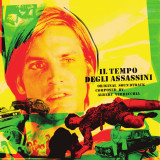
Between the 60s and 80s, Albert Verrecchia played a major role in Italian pop music and on the European disco and Afro-cosmic scene, both under his own name and under the monikers Albert Weyman and Albert Prince. He was the keyboardist of legendary Italian-French r'n'b band I Pyranas, served as a session Hammondist for singer and TV star Raffaella Carrà, and produced the disco trio Belle Epoque as well as the debut album of singer-songwriter Alan Sorrenti. Among his many incarnations, in the early and mid-70s he also composed a few soundtracks for Italian genre cinema, including for movies such as the poliziottesco Roma drogata, la polizia non può intervenire (Hallucinating Trip, 1975, Lucio Marcaccini) and the erotic drama Tecnica di un amore (1972, Brunello Rondi).
The score he wrote in 1975 for Il tempo degli assassini (Season of Assassins, a film about a gang of criminal youths who terrorize the city of Rome in the already violent 70s) is certainly his most accomplished work in the genre. Conceived for a small ensemble, it was written almost entirely on the spot in the recording studio. Verrecchia himself played the Moog, and his dynamic and percussive approach to the instrument resulted in a style midway between funk and proto-disco. A modern rhythmic style - or Ritmico Moderno, which is the title chosen by CAM for the LP containing the soundtrack and released two years later as part of a promotional library music series only distributed to film professionals and radio and TV programmers (CML series, cat. no. 131). One is led to wonder whether it was thanks to that LP that, in 1977, three pieces from the soundtrack found their way into another film about youth gangs, the Spanish Perros callejeros (Street Warriors), written and directed by Jose Antonio de la Loma. On a side but important note, there's the added bonus of popular 70s and 80s entertainer Sammy Barbot singing on Gang Leader alongside female vocal group Baba Yaga. What a pity that Verrecchia's career as a film composer ended here!
Bill Thompson is a sound artist and composer. His work is concerned with various aspects of perception and embodied presence. Using found objects, field recordings, repurposed electronics and digital media, his installations encourage active attention to each moment. He applies this same strategy within his compositions which often include sustained tones, densely layered textures and indeterminate or improvised structures.
Although trained as a guitarist, Thompson has worked primarily with live electronics for 20 years. In 2016, he returned to guitar (by Moog) combined with miscellaneous tabletop devices, found objects, flashing lights and the occasional vibrator.
His work has been released on Ash International, Burning Harpsichord Records, Mikroton Records, State Sanctioned Records, and/Oar, Autumn Leaves, Phonography and several compilations. Notable recent performances and installations include the Venice Biennal (2020/21), Pauline Oliveros Tribute (Café Oto 2018), Intraspect Concert 2018, Edinburgh Fringe (2016-2018), NAWR 2017, Sonic Atlas 2017, Organ Reframed 2016 (Installation), What Remains Festival 2016, Sound Festival 2016.
"Black Earth Tongue" is based on material composed when working on the project Mushroom! with the contemporary dance group In the Making for the Edinburgh Fringe Festival 2016. Track titles are taken from (mis)translations of Japanese or Latin names for various fungi.
- A1: Italia: Ultimo Atto? Seq 1
- A2: Italia: Ultimo Atto? Seq 2
- A3: Italia: Ultimo Atto? Seq 3
- A4: Italia: Ultimo Atto? Seq 4
- A5: Italia: Ultimo Atto? Seq 5
- B1: Italia: Ultimo Atto? Seq 6
- B2: Italia: Ultimo Atto? Seq 7
- B3: Italia: Ultimo Atto? Seq 8
- B4: Italia: Ultimo Atto? Seq 9
- B5: Italia: Ultimo Atto? Seq 10
In 1977, in the midst of a period of political turmoil and social unrest that went down in Italian history as "years of lead", screenwriter and director Massimo Pirri made a film no one else had the courage to make: Italia: ultimo atto? (Could It Happen Here?). Here, Pirri explores the controversial (and, in the 70s, very current) topic of left-wing armed struggle. He does so through a storyline that is almost prophetic: in the film, a mysterious ultra-leftwing armed group plans and executes the killing of the Ministry of the Interior; in 1978 Christian Democrat leader and former premier Aldo Moro was kidnapped and killed by the Marxist-Leninist Red Brigades).
The violence of Pirri's storyline is fully captured by the score composed by Lallo Gori, who uses obscure synths, analog keyboards, and dry-sounding acoustic drums to create an extremely tense and frenzied soundscape of electronic textures.
The result is an album that combines dark, haunting jazz-funk with ambient atmospheres and suspenseful electronic sounds, and which ends up sounding like an instrumental proto-hip hop record where Moog synths take the lead together with drums.
At the time, this must have seemed like a low-budget, ramshackle soundtrack – essentially, a B-movie soundtrack. Indeed, the extensive use of electronic sounds was meant to compensate for the lack of acoustic instruments, such as the bass or (alas!) brass, which were replaced by keyboards and MiniMoog synths. Today, however, Lallo Gori's odd and minimalistic style of arranging makes this score sound unexpected, avant-garde, and innovative. In short, modern and contemporary.
Previously unreleased in any format, all tracks have been remastered from the original master tapes.
Sharing his InBach album with the world in 2020 set events into motion that ultimately led to Arandel making second edition in the critically acclaimed, borderless project that unites rare instruments, musical reimanigation.
Arandel unites once again behind the musical phrases of the Leipzig composer specialists of ancient and modern instruments (Thomas Bloch), modern synthesizers and moogs, strings experts (Gaspar Claus), and the poetic spoken word of Myra Davies and Bridget St.John.
Textextext - (add your write up)
"There is a Bach for everyone" Arandel says, "and that discovery is what led me here, to InBach". Beneath the intricate history, the godlike adoration placed upon Bach, he was a playful musician, an eclectic one even. And so, a full year after the release of the first InBach record on InFiné, there is enough material to make a second one. "There is so much about Bach I didn't even know when making the first one - but after the release, people kept coming to me, telling me about certain pieces I should listen to or rework; songs that I had never even heard of."
The second InBach grew like a garden from the seeds of the first one - an eclectic journey through melodic fantasies, intricate sound design and a certain Pop silver lining. Some tracks were born out of Arandel's band performing on stage, experimenting with the songs live and composing them anew, like "Nos Contours", a new, French-lyrics version of Bodyline with Ornette, Arandel's stage partner.
InBach vol. 2 is a logical consequence then, of someone diving into a pool of music and history so large that it is being chronicled to this day. A substantial part of the instruments used on the lofty, eclectic album were recorded at the Musée de la Musique Paris: rare instruments like the *Erard square piano, ondioline, Zach's cello, Stroh violins*. They help shape the unique sound of Arandel's InBach project: sometimes _eerily familiar, always otherworldly and elusive.
In the vein of rare instruments, the first guest musician Arandel approached for InBach was Thomas Bloch, who lends his gift to four tracks over the two albums, playing the ondes Martenot, one of the first electronic musical instruments ever invented. Thomas has worked with many major artists in his career of ike of Radiohead, Gorillaz, Marianne Faithful, Tom Waits, Daft Punk.
The record travels *between styles, ideas and moods elegantly - it is a distinctly fun and personal album. Freeing himself from the weighty shackles of expectation surrounding the classical maestro, Arandel goes for the core of every Bach piece he tackles, making them his own. on "Octobre", based on Air On G-String, from Orchestral Suite No. 3 D-dur, BWV 1068, his nephew tells a dreamlike story of an ominous gang of children, literally blossoming in the mud. "Fabula" - featuring the French singer Scalde - based on the melancholic, Christian lament Meine Seele wartet auf den Herrn, becomes a grandiose, auto-tuned pop ballad on InBach vol. 2, featuring the virtuoso cello of fellow InFiné associate *Gaspar Claus*.
The use of spoken word is another new layer to InBach, and acts a lyrical thread carrying the listener through InBach vol.2: the closing track features Bridget St.John, John Peel-associated folk legend from the UK to offer to collaborate on a poem for this second volume, she replied to him with a line from André Gide : "You can't discover new land if you aren't willing to lose sight of every shore". A lovely way to sum up the InBach experience for both artist and listener.
The original Soundtrack to Greek-German director Nikias Chrssos’ new feature, ‘A Pure Place’, scored by John Gürtler (Eigenlicht, COUNTER019), with his studio partner Jan Miserre, and featuring a track by chameleonic British artist Shackleton.
The script for A Pure Place had a dizzying effect on John Gürtler & Jan Miserre; their minds reeling with the possibilities.
From Persian sheep bells, Chinese sheng, prepared trombone, quarter-tone piano, a beaten-up cembalo, hand percussion, and a room full of synthesizers, embryonic compositions and experiments came to life early on in the project.
An electro-acoustic extravaganza, the soundtrack for A Pure Place takes a deep bow towards the many magnificent composers and scores from the late 60s and 70s where orchestral arrangements met with tape loops, psychedelia, and instruments from across the globe. Listening to that era of film music, anything seems possible.
The minimalist tones of ‘Ritual Bells’ set the dial to weird in the opening sequence of the movie, whilst ‘The Island’ makes use of ambient vocals recorded through an oil drum, gently introducing one of the score’s main themes with a distant quarter-tone cembalo.
Acclaimed British artist Shackleton’s eerie original version of ‘Fust’s Song’ (also included) was a tonal keystone for the entire soundtrack. Gürtler and Miserre translated his psychedelic electronic blueprint, layering acoustic instruments and bottom-heavy percussion in their ‘Paradox Paradise’ production style. The vocals, written by Chryssos, and sung by the cast on set, capture the sonics of the actual crypt-like space where cult leader Fust addresses with his following.
‘A Glimpse of the Other Side’ speaks of love and death in a 70s-indebted composition reflecting John and Jan’s shared love for melancholic and suspenseful chord progressions. Meanwhile, the sparkling synths of ‘Athens’ - the children discovering neon-lit civilisation after years confined on the island - transplant us to an entirely different era.
Greek artist Maroulita del Kol features heavily throughout - her choir of vocals on ‘Erotica’ were recorded late at night in the studio foyer, capturing its unique tiled reflections and concrete reverb.
On ‘Purification’ Maroulita’s voice guides us alongside a Moog bass drone, building to an ecstatic climax, whilst she also features in the film’s disco-centric ending credits on ‘Gatoula Mou Mikri’.
A new LP collection of incredible performances by the virtuosa of theremin, Clara Rockmore, accompanied by her sister Nadia Reisenberg on piano.
160 gram vinyl comes in old school tip-on jacket and includes an 8-page full-size booklet of interviews, photos, and insights with Clara Rockmore, Nadia Reisenberg, Robert Moog, and more.
Recorded in 1975 and never before released on vinyl, this compendium features stellar performances of compositions by Bach, Chopin, Schubert, Gershwin and more, and even features a cello ensemble on a few songs!
Some of the finest examples of Clara Rockmore’s unrivaled art - rich with bittersweet moments of air, electricity, human grace and emotional composition all merging into some new thing that is transcendent of time.
Red Vinyl
nown for her delicate compositions, soaked in dream-like surrealism, Icelandic musician Sóley has attracted a huge following since launching her solo career back in 2010. Her 2012 single ‘Pretty Face’ went on to generate an enormous amount of buzz, and quickly became a viral sensation. Now, with three solo LPs under her belt, Sóley is preparing to debut a completely new sound via the release of her new concept album, Mother Melancholia, on October 22nd.
Described by the artist as "Nosferatu meets Thelma and Louise in a vampire church under the watchful eye of David Lynch", Mother Melancholia is the soundtrack to the end of the world as we know it. As a self-confessed news addict, Sóley became obsessed with the idea that the world is ending. Having surrounded herself with real-life stories of global warming and patriarchal politics she couldn’t shake the feeling that she was going to die. This feeling was so all encompassing that it sparked the idea for a new project. Could there be a soundtrack for the last days of humans on earth? How would that sound?
“I read books about possible dystopian worlds and started writing poems about irrational and in love characters who live in gray and cold imaginary loneliness. In each other’s burning arms. Walking in circles with no way out” she explains. “After all, the album reflects our life here and now. Our life and reality is a kind of dystopian world.”
Whilst writing the album, which serves as a tongue-in-cheek eulogy to our planet, Sóley began reading about ecofeminism, a branch of feminism which uses the concept of gender to analyse the relationship between humans and the natural world. Ecofeminism emphasizes that both women and nature must be respected but also separated. Since the beginning of time, the natural world has been synonymous with female identity, phrases like Mother Nature are commonplace. “The patriarchy views women as volatile and hysterical. Earth and women are either our saviours or our destroyers,” explains Sóley. “It’s so easy to abuse the earth, like the patriarchy has abused women since the dawn of time, then ask for forgiveness afterwards and promise they´ll never do it again”.
The new album sees Sóley move away from the indie-pop of her previous releases. She began by experimenting with writing songs on the accordion, allowing her a new sense of freedom in her writing. The process allowed her to broaden her horizons even further and experiment with a whole range of new and exciting sounds. “I bought myself a theremin as I was really excited about the unpitched sound and there is no perfect pitch during the end of days,” she laughs. “I also bought a mellotron, my first moog and a cello and taught myself how to play each of them. All of these new instruments are particularly suitable for the kinds of aesthetic inconveniences which I have learned to embrace.”
Album opener ‘Sunrise Skulls’, one of the most cinematic moments on the album, was inspired by the Me Too and SlutWalk movements and tells the story of a group of women who rise up and fight the patriarchy. ‘Blows Up’, a track that would be at home on any horror soundtrack, is a sarcastic love letter from the Earth to humans. Standout track ‘Desert’ is an incredibly moving song dedicated to the next generation. “It’s about the guilt you feel, as a mother, for having children and leaving them on the frontline. My daughter, for example, will take over this inevitable war” explains Sóley.
In true soundtrack style, the album flows through the end of the world in chronological order, closing with the Earth’s final moments. ‘Sundown’ is a dark piano ballad detailing human kind’s final day on Earth. “And everyday, I dig my own grave, and as I dive in you´ll hold my hand” she sings, over twinkling piano and swirling synths. We then hear the world end on ‘XXX’, a dark and swirling soundscape that swells before fading to silence. On ‘Elegía’ the silence then turns to the sound of the ocean, as we hear the Earth, like a woman finally free from a violent relationship, healing on her own.
Mother Melancholia is the mark of an artist confidently striding into more experimental territory. With a lengthy and successful career behind her, Sóley felt compelled to try something new and express the real her. The music might be shrouded in darkness but it’s a move that fills her with joy and freedom. “I hope that people not only enjoy the new sound, but also that Mother Melancholia might raise some questions in people, particularly women,” she says. “I’m under no illusions that this album will change the world but I hope that people can connect with the idea”.
Mega rare 1974 jazz funk rock album recorded by Argentina's top jazzmen Pocho Lapouble, Ricardo Lew and Adalberto Cevasco (also members of Quinteplus, Jorge Lopez Ruiz's band and Gato Barbieri's group among many others). Includes the irresistible fast-paced funk rock track 'Se Acabó el Recreo' and the ethereal 'Todo en Su Medida y Armoniosamente' and 'Haceme Shaft', featuring Patricia Clark on vocals and unexpected moog arrangements. First time reissue, with remastered sound and original artwork.
Those into world jazz will be aware of the amazing modal, big band and post-bop jazz recordings released in Argentina in the '60s. The body of work produced by the likes of Chivo Borraro, Jorge López Ruiz or Enrique Villegas would be able to rival the recordings of their American counterparts.
The following decade would see a great openness to the exploration, with a jazz language, of other musical genres, with a certain preponderance of rhythm. The members of El Trio are part of a jazz generation with a greater propensity to experiment with electricity and with what could be considered an avant la page exercise of what soon afterwards would be called jazz rock -it is music composed and played, in the faraway Buenos Aires, at the same time Miles Davis adventured into new fields, with such records as "In a Silent Way" or "Bitches´ Brew".
"Todo en su medida y armoniosamente" reflects that same spirit of experimentation and fusion of diverse influences with an eye on both rock and local folklore. It's not surprising that the protagonists of this recording -Pocho Lapouble (drums), Ricardo Lew (guitar) and Adalberto Cevasco (bass) - had accompanied Gato Barbieri himself in his project "Latinoamérica" shortly before the release of this album where the presence of rhythms from the southern hemisphere infused the avant-garde jazz of the Argentine saxophonist. Drummer Pocho Lapouble had also created Quinteplus, which in 1972 released a single studio LP inspired by those same premises of fusion jazz.
This album was originally released on the eclectic local label Music Hall in 1974 and probably distributed in tiny quantities, hence the rarity of this record and the current crazy prices in the collectors' market.
- A1: Brigitte Bardot - Contact
- A2: Gillian Hills - Tut Tut Tut Tut
- A3: France Gall - Laisse Tomber Les Filles
- A4: Jacqueline Taieb - 7Am
- A5: Fabienne Delsol - I'm Gonna Haunt You
- A6: Les 5 Gentlemen - Si Tu Reviens Chez Moi
- B1: Anna Karina - Roller Girl
- B2: The Liminanas - Migas 2000
- B3: L'epee - Dreams
- B4: Nino Ferrer - Les Cornichons
- B5: Brigitte Bardot - Harley Davidson
- B6: France Gall - Poupee De Cire Poupee De Son
- C1: Charlotte Leslie - Une Filles C'est Fait Pour Faire L'amour
- C2: Dani - La Fille A La Moto
- C3: Zouzou - Tu Fais Partie Du Passe
- C4: Serge Gainsbourg - Requiem Pour Un C
- C5: Jean-Jacques Perrey - Eva
- D1: Stereolab - Cybele's Reverie
- D2: Air - Don't Be Light
- D3: Pierre Henry - Psyche Rock (Fatboy Slim Malpaso Mix)
Yellow vinyl[37,77 €]
Pop Psychedelique vereint frühe Superstars des französischen Pop (Serge Gainsbourg, Brigitte Bardot) mit 60er Lieblingen (Frances Gall, Gillian Hills, Jacqueline Taieb), neuen Psych-Sounds (L'Epee, The Liminanas), 60er Pariser Coolness (Anna Karina), Freak-Beat-Psych-Rock (Les 5 Gentlemen), Dancefloor-Freuden (Charlotte Leslie), Exzentrik (Nino Ferrer) und schierer Moog-Pop-Brillanz (Jean Jacques-Perrey). Den Abschluss bilden Stereolabs French Pop, die einflussreichen Air mit Synthie-Psych-Pop und Pierre Henrys epischer Big Beat im Fatboy Slim Mix. Pop Psychedelique bedeutet pure Freude!
Legally blind from birth, Brazilian keyboard player, composer and bandleader Manfredo Fest learnt to read music in braille and began studying classical music at a young age. By 17 he had fallen in love with jazz (particularly the music of fellow blind pianist George Shearing) before becoming swept up in Rio's emergent bossa nova movement in the sixties. Moving to the States in 1967 where he would go on to work with fellow countryman Sergio Mendes, Fest recorded and self-released Brazilian Dorian Dream in 1976, enlisting Thomas Kini (bass), Alejo Poveda (drums, percussion) and Roberta Davis (vocals).
Like a turbo-powered, intergalactic elevator ride, Brazilian Dorian Dream builds on the principle of the modal diatonic scales of the Dorian mode, with influences of Brazilian rhythms, North American jazz and funk, and music of the European baroque and romantic era. The coming together of these intergenerational and intercontinental styles coupled with Fest's visionary use of the Fender Rhodes, Clavinet, Arp and Moog synthesizers (plus a whole load of effects units), makes for an album light years ahead of its time.
The miraculous wordless vocals of American jazz singer Roberta Davis are nailed so tightly alongside Manfredo's keys and mind-bending synths that it sounds almost alien. On the album's liner notes, Fest preaches Davis' ability highlighting how hard it is to sing such precise intervals so accurately. One of the tracks on which the vocals shine brightest is space funk stepper "Jungle Cat", which features hard funky drums, freaky synth lines and expert Rhodes comping. The track builds up and up before releasing into the unmistakable scat melody in the chorus.
A few years after releasing Brazilian Dorian Dream, Fest recorded and released his Manifestations album in 1979, featuring 'Jungle Kitten'': a new dancefloor focused variation on "Jungle Cat". At around 140 BPM 'Jungle Kitten' was possibly deemed too fast for statside dance floors, which explains why it never got a US 12" release. But the track became something of an underground hit at jazz dance clubs and all-dayers across the UK in the 80s and as a result it has probably become Fest's most well known track since.
Tiptoes joins the SlothBoogie roster this October with the ‘Good Times Incoming’ EP, comprised of four originals from the Scottish artist.
Hailing from Glasgow, Scotland, Tiptoes is a time-served DJ/Producer who has been in the game for over 15 years and has performed at a variety of venues worldwide. As a DJ, Tiptoes sound traverses from Jazz to Jungle through Detroit, Disco, Techno, Garage, Broken Beat, Deep House and everything in between, always finding that balance between energy and soul which crosses over into his productions also.
Up first on the package is ‘Born Slippery’, a filter house workout fuelled by an amalgamation of funk infused bass, guitar and brass licks alongside swinging drums and dynamic filter work. ‘Green Room’ follows next and lays down soulful strings, stuttering vocal cuts and plucked bass atop an organic drum groove.
Opening the flip-side is ‘Right Here’, stripping things back to robust drums, jazzy keys and processed vocal chants before ‘Alright’ rounds out the release via airy keys, moog like synth licks and crunchy lo-fi percussion.
1976 Space jazz-folk masterpiece infused with prog scents from one of the true legends of Argentinian music, latin rock pioneer Litto Nebbia. Floating electric piano, acoustic guitar, female choirs and moog sounds combine with Litto's own voice and create a unique blend of delicate beauty. The use of analogue synthesizers in this conceptual album was a turn in Nebbia's work at the time. A long 7-minute suite opens the album, mixing acoustic textures with synth sounds, setting the grounds for the entire LP. Songs of introspective darkness alternate with other tracks influenced by sunny bossanova, musical passages fueled with epic energy where the voice of Mirtha Defilpo accompanies Nebbia along with the intricate and enveloping instrumental work driven by Daniel Homer's guitars and Litto Nebbia's keyboards. The album draws a complex soundscape made up of an almost infinite number of musical pieces, rich in layers and textures, that - decades after its original release - still stands out for their modernity. "Bazar de los milagros" is undoubtedly one of the most advanced recordings of those
that appeared in Latin America at the end of the 70s. Includes the song 'La Caída', as recently sampled on Jay Electronica/Jay Z's hip-hop hit 'The Neverending Story'. "Bazar de los milagros" has also been listed on Japanese DJ and music expert Chee Shimizu's Obscure Sound guidebook, a must for record collectors.
First vinyl reissue, including a facsimile version of the 32-page booklet that accompanied the original 1976 release, and remastered sound.
SO WHAT's debut LP is filled with stompers, hand clappers, and all the riffs that matter. Co-released by Just Add Water Records (USA) and Surfin' Ki (Italy). From the GLAMTASTIC pounding drums, Moogs, and big fuzzy riffs of "Where We Going" and "Why Can't I See You Tonight" to the serious EQUALS worship of "Don't Come Back" and "What You Said", this album is chock-full of HITS!
Imagine Andrew Weatherall producing Pere Ubu. The 7” Taki Chrome / Strummer Maxxx single by Pink Skull released on Höga Nord Rekords give a hint of how such a collaboration would sound. Mid seventies kraut rock á la “Neu 75” meet leftfield and sophisticated punk. The record has an organic warmth to it yet the excessive use of electronics: most instruments on the tracks are synthesizers and drum machines – all Moog, Korg and whatnot.
In the warmth of the Pink Skull-sound you suddenly get a wash of cold, hard rain from all directions. These elements of surprise create edges in the round soundscape and brings chaos to the mix. This is of course all part of Julian Grefes (founder of Pink Skull) plan.
Pink Skull propels you out of the quarantine like a shiny metal free bird released from its rusty cage.
No Sun is the fifth studio album by singer, songwriter, producer and scholar
Ramona Gonzalez PKA Nite Jewel.
After the critical acclaim of Real High (2017), Gonzalez began her PhD in Musicology at UCLA in 2018. At the same time, her twelve year marriage and creative partnership with Grammy Award-winning producer Cole M.G.N. dissolved,
leaving her homeless and adrift. Though in a state of grief, her studies renewed
her focus.
Working with only a Moog sequencer and keyboard, Gonzalez improvised
along to rhythmic grooves while singing in hushed undertones, which she then
meticulously produced into a collection of intimate off-pop masterpieces. No
Sun manifests a future out of songs of sorrow, as a part of Gonzalez’s quest to
reclaim her subjectivity.
Occupying a liminal space between Arthur Russell’s whispered intimacies, Tirzah’s R&B poeticism, and Kraftwerk’s rigid electronics, No Sun traverses new
soundscapes through the eyes of an uncompromising female auteur.
- A1: Shake The Dust
- A2: Nobody But You
- A3: Night Fires
- A4: One And Only One
- A5: Rhythm And Blues
- A6: Sure Thing
- A7: Oliver Swan
- A8: I Got The Fever
- B1: Do Me
- B2: I Betcha Heaven's On A Dirt Road
- B3: Gonna Let You Have It
- B4: Hale To The Man
- B5: Alone At Last
- B6: Get It Up
- B7: Shot From The Saddle
- B8: Rich Man
- B9: Down To The Station
LTD. COL. VINYL[44,41 €]
- Dritter Teil in LITAs hochgelobter Country Funk Serie! - Mit Dolly Parton, J.J. Cale, Conway Twitty, Larry Jon Wilson und Billy Swan, unter vielen anderen - Inklusive eines bisher unveröffentlichten Tracks von Tony Joe White - Alle Tracks neu gemastert - Neues Original-Artwork des renommierten Künstlers J. William Myers (der für Robert Altmans "Nashville", Waylon Jennings und Willie Nelsons "Waylon & Willie"-Album und die LP-Cover für die Charlie Daniels Band verantwortlich zeichnet) // Im Sommer 2012 wehte ein neuer Sound aus der staubigen Wüste herein. Es war ein Sound, der schwer zu fassen war, schwer zu kodifizieren; ein Sound, der sich wie ein wildes Pferd dem Zugriff entzog. Aber dies war kein Trend, keine Eintagsfliege, keine Vermischung von Stilen. Dieser Sound reichte Jahrzehnte zurück, in die zweite Hälfte der 1960er und frühen 1970er Jahre, als abenteuerlustige Künstler begannen, Country-Harmonien mit dem Hochgefühl des Gospels, dem sexuellen Schub des Blues und einem Hauch von Großstadt-Härte zu vermischen. Dies war ein neuer Sound mit einem einfachen Namen: Country Funk. Country Funk 1969-1975, erstmals 2012 veröffentlicht, brachte eine disparate Gruppe von Künstlern zusammen, die durch das einfache Gefühl ihrer Songs verbunden waren. Country Funk ist abwechselnd verspielt und melancholisch, slow jammin' und booty-shakin'. Es ist ein Sound, der sich sowohl im Studio als auch in der Bar durchsetzt, wie die auf Volume I vertretenen Künstler beweisen: Johnny Adams, Mac Davis, Dale Hawkins, Tony Joe White, Bobbie Gentry, Larry Jon Wilson, und viele andere. Nur zwei Jahre später wurde Volume I mit einer neuen Sammlung von Songs für Country Funk 1967-1974 (LITA 116, 2014) fortgesetzt. Volume II ließ nicht locker und bot alles, was man an Loose Talking und Lap-Steel Twangin' vertragen konnte. Schwergewichte wie Willie Nelson, Townes Van Zandt, Kenny Rogers, Dolly Parton und J.J. Cale teilen sich die Barhocker mit den weniger bekannten Stimmen von Bill Wilson, Donnie Fritts und Thomas Jefferson Kaye. Mit Country Funk Volume III 1975-1982 wird noch mehr Funk aus dem Kofferraum geholt. Diesmal sind die Jeans enger, die Haare größer und die Discokugel dreht sich zu einem Country-Synthie-Beat. Produziert und zusammengestellt von Jason Morgan (DJ/Sammler aus der Bay Area) und Patrick McCarthy (Co-Produzent/Compiler von Volume I & II), enthält die Trackliste neben den Stammgästen Dolly Parton, J.J. Cale, Larry Jon Wilson und Tony Joe White (dessen Track hier zum ersten Mal veröffentlicht wird) auch neue Gesichter wie Steven Soles, Gary & Sandy, Conway Twitty, Travis Wammack, Billy Swan, Rob Galbraith, Brian Hyland und viele mehr. Als die 1970er Jahre abebbten und sich die 1980er Jahre näherten, erweiterte sich die Palette des Country-Funks um Disco-Beats, schwere Moog-Synthesizer-Bässe und Clavinet. Volume III zeigt Künstler, die sich weiterhin gegen traditionelle Country-Tropen und -Produktionen wehren, während sie modernen Soul, Disco und verkorksten 80er-Jahre-Synthie-Pop in sich aufnehmen. Dies ist der wahre Soundtrack des Urban Cowboys. Aufsatteln, Partner.
- A1: Shake The Dust
- A2: Nobody But You
- A3: Night Fires
- A4: One And Only One
- A5: Rhythm And Blues
- A6: Sure Thing
- A7: Oliver Swan
- A8: I Got The Fever
- B1: Do Me
- B2: I Betcha Heaven's On A Dirt Road
- B3: Gonna Let You Have It
- B4: Hale To The Man
- B5: Alone At Last
- B6: Get It Up
- B7: Shot From The Saddle
- B8: Rich Man
- B9: Down To The Station
LP[38,28 €]
- Transparentes Vinyl mit roten und blauen Schlieren - Dritter Teil in LITAs hochgelobter Country Funk Serie! - Mit Dolly Parton, J.J. Cale, Conway Twitty, Larry Jon Wilson und Billy Swan, unter vielen anderen - Inklusive eines bisher unveröffentlichten Tracks von Tony Joe White - Alle Tracks neu gemastert - Neues Original-Artwork des renommierten Künstlers J. William Myers (der für Robert Altmans "Nashville", Waylon Jennings und Willie Nelsons "Waylon & Willie"-Album und die LP-Cover für die Charlie Daniels Band verantwortlich zeichnet) // Im Sommer 2012 wehte ein neuer Sound aus der staubigen Wüste herein. Es war ein Sound, der schwer zu fassen war, schwer zu kodifizieren; ein Sound, der sich wie ein wildes Pferd dem Zugriff entzog. Aber dies war kein Trend, keine Eintagsfliege, keine Vermischung von Stilen. Dieser Sound reichte Jahrzehnte zurück, in die zweite Hälfte der 1960er und frühen 1970er Jahre, als abenteuerlustige Künstler begannen, Country-Harmonien mit dem Hochgefühl des Gospels, dem sexuellen Schub des Blues und einem Hauch von Großstadt-Härte zu vermischen. Dies war ein neuer Sound mit einem einfachen Namen: Country Funk. Country Funk 1969-1975, erstmals 2012 veröffentlicht, brachte eine disparate Gruppe von Künstlern zusammen, die durch das einfache Gefühl ihrer Songs verbunden waren. Country Funk ist abwechselnd verspielt und melancholisch, slow jammin' und booty-shakin'. Es ist ein Sound, der sich sowohl im Studio als auch in der Bar durchsetzt, wie die auf Volume I vertretenen Künstler beweisen: Johnny Adams, Mac Davis, Dale Hawkins, Tony Joe White, Bobbie Gentry, Larry Jon Wilson, und viele andere. Nur zwei Jahre später wurde Volume I mit einer neuen Sammlung von Songs für Country Funk 1967-1974 (LITA 116, 2014) fortgesetzt. Volume II ließ nicht locker und bot alles, was man an Loose Talking und Lap-Steel Twangin' vertragen konnte. Schwergewichte wie Willie Nelson, Townes Van Zandt, Kenny Rogers, Dolly Parton und J.J. Cale teilen sich die Barhocker mit den weniger bekannten Stimmen von Bill Wilson, Donnie Fritts und Thomas Jefferson Kaye. Mit Country Funk Volume III 1975-1982 wird noch mehr Funk aus dem Kofferraum geholt. Diesmal sind die Jeans enger, die Haare größer und die Discokugel dreht sich zu einem Country-Synthie-Beat. Produziert und zusammengestellt von Jason Morgan (DJ/Sammler aus der Bay Area) und Patrick McCarthy (Co-Produzent/Compiler von Volume I & II), enthält die Trackliste neben den Stammgästen Dolly Parton, J.J. Cale, Larry Jon Wilson und Tony Joe White (dessen Track hier zum ersten Mal veröffentlicht wird) auch neue Gesichter wie Steven Soles, Gary & Sandy, Conway Twitty, Travis Wammack, Billy Swan, Rob Galbraith, Brian Hyland und viele mehr. Als die 1970er Jahre abebbten und sich die 1980er Jahre näherten, erweiterte sich die Palette des Country-Funks um Disco-Beats, schwere Moog-Synthesizer-Bässe und Clavinet. Volume III zeigt Künstler, die sich weiterhin gegen traditionelle Country-Tropen und -Produktionen wehren, während sie modernen Soul, Disco und verkorksten 80er-Jahre-Synthie-Pop in sich aufnehmen. Dies ist der wahre Soundtrack des Urban Cowboys. Aufsatteln, Partner.
In 1970, Kevin and David met whilst they were working in the Labour Exchange Office on Aytoun St, Manchester. Both played guitar and had been searching for other musicians who played atmospheric music. Kevin had been playing in small clubs in Manchester and David performed in a few local bands. One evening, they jammed together at Kevin’s family home, and quickly realized that their playing blended together to form the basis of the sound they had been looking for. In the late ‘70s, the music scene in Manchester was bursting with new bands and music.
However, Kevin and David had little in common with the local acts, being disciples of a more meditative approach. They followed a path of their own, reaching for an otherworldly sound that they heard from artists like John Martyn, David Crosby, Erik Satie, Terry Riley, Eberhard Weber, Alice Coltrane, and Ralph Towner. They experimented combining their acoustic guitars and David’s bass with various effects pedals and techniques to try and achieve a warm and expansive sound that rides the line between ambient, jazz, and psychedelic folk Music.
Towards 1981, they had written eleven songs and accompanied a few with Moog synthesizer laid down by Rob Baxter. All were recorded on cassette decks in their simple home studios. They named this collection of music “Light Patterns”, after a poem Kevin had written. With Light Patterns complete, they set out to find a label to represent their music. They started playing a few gigs in Manchester; Band On The Wall, the Gallery, and other venues, such as Rotters which local promoter Alan Wise had organized. They set up with small amps along with their effects and played as though they were back at home. As Kevin remarks, “It was unusual, to say the least, to play such venues in a low volume chilled out way. However, people listened, often in shocked curiosity, and some even asked for tapes.”
Peter Jenner, of Blackhill Enterprises, eventually picked up the album for his new label, “Sheet”. Peter had managed lots of experimental bands and solo artists, including Pink Floyd in their early Syd Barrett days. He always favored outsiders! The tapes were taken to Strawberry Recording Studios in Manchester, who were surprised when Kevin and David walked in with just a couple of home-produced cassette tapes. Fortunately, they liked them and agreed to master the album. It was then sent to Portland Recording Studios in London for final mastering to vinyl. George Peckham, aka “Porky”, did the pressing with a personal message in the deadwax; “Kaftans, Candles and be Cool Man”. The artwork for the album cover was done by the late Barney Bubbles, a truly visionary artist.
After the album’s release, the pair continued to play together regularly until David moved away from the city. Kevin still resides near Manchester in the rolling hills outside of the city. He continues to experiment with dreamy music in his loft, and we are set to share a selection of his ethereal archival and current compositions in the coming months. David lives a quiet life in a small coastal town in the South, he likes to sail and is an avid cricket fan. We’re excited to make Light Patterns accessible again for the first time in nearly 40 years, remastered from the original tapes. As the original press release said, “Put the album on, lie back and enter the land of no floors”.
An album evolving around disruptive and chaotic life events. A testament to putting the pieces back together through love and support from friends and loved ones.
All tracks are built on two improvised live sessions recorded on a Roland Juno-60, Moog Sub 37, Roland XP 30 by Sofie Birch and Johan Carøe in Copenhagen in 2019.
Edited and reworked to 11 tracks during residency at Andersabo in Sweden the summer of 2020 with new recordings of acoustic elements.
This is the first official re-release on vinyl under licensed courtesy of BMG Rights Management,UK, remastered from an original master copy out of the vaults of BMG, originally released in 1972 on Bronze Records.
Co-founder of Colosseum in 1968 with Jon Hiseman, he knew from his Jazz Club years as drummer for Georgie Fame, Dick ran through this group's hectic recording and touring schedule for over 3 years until November 1971, when it disbanded.
In his late 30s at that time, on top of his musical shape, he moved on to start recording on his first solo project, with material left over from Colosseum days (written by D. H.-S., Clem Clempson and Jon Hisemann) and new material jointly composed with well-known lyricist Pete Brown. He recruited the help of Colosseum mates, Hiseman, keyboardist Dave Greenslade and vocalist/bass player Mark Clarke, plus the brilliant ex-Elton John group Caleb Quaye (Hookfoot) on guitars and Rob Tait (ARC, Battered Ornaments) on drums; old pal G. Bond is featured providing remarkable moog work on 'Pirate's Dream', funky organ on 'Moses In The Bullrushourses' and sharing piano duties with Gordon Beck (G.B. Trio, Nucleus) on 'What The Morning Was After'; Paul Williams (Juicy Lucy) gets the lion share of vocal duties, and Chris Farlowe and Chris Spedding (Nucleus, Battered Ornaments) have respectively a sole vocal and a guitar spot on 'Pirate's Dream'.
The album track by track:
Side one starts with 'Future Song', the track that really rises above the other tracks here. The guitar, vocals (by Mark Carke) and sax are great on this one. Killer sax 2 minutes during an excellent instrumental interlude. H.-S. sounds slightly eastern-influenced on his outstanding sax lines. Such an uplifting track with it's repetitive riff and hard, driving sound! Next is 'Crabs', starting off in a mellow way with Greenslade's piano and reserved vocals as the sax joins in followed by guitar and drums as it builds. Irresistable! Great vocals by Paul Williams. One could easily imagine both tracks on a Colosseum album. 'Moses In The Bullrushourses' is uptempo, owing just as much to jazz, blues and hard rock. Great groove! Lots of organ here to send shivers down your spine and perfect guitar playing. 'What The Morning Was After' opens with some sax excursions as the drums help out. Acoustic guitar by Quaye and powerful vocals by Paul Williams take over as the piano joins in. Our second favourite tune on here after the opener. A folky song really until it picks up half-way through.
Side 2 opens with the 11 minutes 'Pirate's Dream', with Farlowe on vocals and Spedding's initial rock blues riff, but soon evolving to a complex multi parted composition in the best spirit of Valentyne Suite, driven by Hiseman multi faceted drumming. D. H.-S. twin saxes soar on a calmer mid section with Spedding doubling the licks and the bass grumbling relentlessly behind; it slowly gains speed with moog, sax and vocalizations duelling and answering each others with dazzling, demanding and inspired phrasings on top a thundering rhythm section; after the lyrics resume it evolves into a majestic, grandiose finale. A bluesy clean guitar lick opens 'Same Old Thing', a swinging, calm heavily modulated twisted blues, with a punchy rhythm section, a soulful Williams on vocal, Quaye delivering an inspired sparkling solo and D. H.-S.'s sensitive fat sax enhanced with some double tracking on the solo part. A great ending to a great album.
Album comes with the reproduction of original gatefold cover sleeve, additional cover-sized insert with band story, lyrics and photos. A highlight! Highly recommended!
Synth legend Suzanne Ciani, Demdike Stare’s Sean Canty & Finders Keepers’ Andy Votel come together on this killer hour-long 2014 synapse popper of a collaboration pooling the occasional group’s esoteric collage-based approach into a remarkably foreboding session pregnant with a dread that’s never quite resolved. Think Vladimir Ussachevsky, Todd Dockstader, Spectre and Company Flow melted thru the Deutsch-Italo industrial DIY tape era and funneled thru an almost impenetrable fog of Ann Arbor basement noizze.
Hustling some of Neotantrik’s most amorphous gestures, ’241014’ is a four-segment movement of reduced Buchla treatments, destroyed vinyl loops and scraping foley suspense; like a cosmic dream diary layered into a collage of drones and clatters. Little in Ciani’s extensive catalogue has hinted at what’s on display here; the joyful lullaby-pop of “Seven Waves” or metallic alien soundscraping of “Flowers of Evil” are only hinted at. She instead paints new sonic vistas, allowing space for her collaborators to make themselves known; Votel’s chiming toy autoharp and Bubul Tarang (a Punjab string instrument) add a distinctive flavor, while Canty’s grimy drones and noise-soaked textures drizzle pitch-black molasses into the cracks and crevices. Together, the effect is a bit like hearing Philip Jeck improvising over Popol Vuh’s peerless Moog-led debut “Affenstunde” or Demdike Stare knocking out impromptu reworks of Tangerine Dream’s abstrakt early run.
Perhaps unusually, the trio have still never set foot in a studio together, exclusively maintaining their practice in-the-moment and on stage when schedules intersect. So it’s all the more remarkable that their improvisations naturally find a democracy of role and such a heightened level of intuition, beautifully converging their thoughts to mutual, open-ended conclusions that leaves billowing room for interpretation. In a most classic sense, it’s like the sensation of sleep paralysis or dream/nightmare ambiguity, with a level of suggestiveness that’s disorienting from end to end.
For the first time the recordings are now available in high fidelity (there was a tape version a couple of years back) - now remastered by Rashad Becker to better represent the otherworldly scope of their actions on stage, from the NWW-like queues and drone of ‘Scanned Accents’ and keening silhouette of ‘Second Action,’ to new sections of subaquatic Porter Ricks-like murk in ‘Anti-Contraction’ and the levitating webs of synth and tactile, sampled textures in ‘Last Canción.’ Tape music and synth music have long shared a passionate embrace, and here turntablism coolly slides in on the action. Canty and Votel’s background in beat tape assembly and crate digging pays off: they’re keenly experimental creators but bring an unfussy sense of rhythm and performance that’s miles beyond any facile repetition of a nostalgia for vintage glory. Combined with Ciani’s delicate Buchla work - it’s a unique proposition.
Tape
It might be easy to assume that the distinctly focused compositional voice unveiled on Rose Bolton's The Lost Clock is the product of its creator's rigorous, almost hermetic dedication to her own particular aesthetic universe. A quick survey of Bolton's artistic career, however, reveals that her carefully sculpted approach to abstract electronica has been forged through a longstanding engagement with a wide range of intertwining creative activities.
This album—coming out on Important Records' cassette imprint, Cassauna—demonstrates both the Toronto-based composer's unique mastery of colour and her gift for breathing a tactile, organic quality into synthetic landscapes. Bolton's distinctive sensibility is akin to that of a painter—every hue has been carefully mixed so as to imbue its accompanying gesture with its own life and personality. This tangible dimensionality her electronic work assumes, however, can be traced back to the work Bolton has been doing since the 1990's. She has produced a large and varied catalogue of work that includes pieces for solo performers, chamber ensembles, orchestra, electronics, voice, and to accompany installations and films. A number of her works reside in several of these zones simultaneously, such as Song of Extinction, an ambitious collaboration between herself, filmmaker Marc de Guerre, poet Don McKay, and multiple live ensembles, that was mounted in an abandoned power station for Toronto's Luminato Festival.
This quasi-instrumental vitality isn't the only feature of The Lost Clock that reflects Bolton's diverse artistic practice. It can also be heard within the structural realm. Each of the collection's four tracks trace a patient unfolding and favour a certain roundness of timbre, even as finer details begin to fidget along the perimeter of the music. As with her writing for the concert hall, Bolton doesn't shy away from the evocative here, yet she doesn't pursue this poignancy through conventional, direct or quasi-narrative means. Her compositions lead the listener gradually through their impressionistic sonic scenery, but neither the path they take nor their ultimate destination are at all predictable. The ostensible gentleness each piece exudes dissolves as dissonances slowly insinuate themselves, obscure textures writhe just out of earshot, percussive lattice work materializes, or as the overall blend begins to exert a heavier weight. Her lucid-dream vision of form functions in tandem with her acute micro-level attentiveness to engender a vivid and elusive soundworld that resists classification.
Over more than two decades Rose Bolton has been garnering acclaim and enthusiasm from audiences and major collaborators alike. Last year, her brooding string quartet The Coming Of Sobs was nominated for Classical Composition of the Year at the JUNO Awards, following earlier accolades such as SOCAN Awards for Young Composers, and the Canadian Music Centre's Norman Burgess Fund. Her music has been commissioned by the likes of the CBC, stalwart experimental music festival the Sound Symposium, as well as key interpreters and ensembles such as percussionist David Schotzko, accordionist Joseph Petric the Esprit Orchestra, Continuum, Arraymusic, the Kitchener-Waterloo Symphony, and guitar quartet Instruments of Happiness (led by Tim Brady). Together with Marc de Guerre, she produced an 8-speaker sound and video installation for Toronto's Nuit Blanche Festival. She's also been featured by the likes of revered pianist Eve Egoyan, The Vancouver Symphony, L'ensemble contemporain de Montréal, The Music Gallery, and AKOUSMA, while appearing in concert alongside the likes of Jerusalem in My Heart (Constellation Records), Tanya Tagaq, and Francis Dhomont. Bolton is also a respected film composer, notably contributing music to the highly regarded documentary Anthropocene: The Human Epoch (co-directed by Jennifer Baichwal, Nicholas de Pencier and Edward Burtynsky).
As a performer, she variously employs electronics, violin, and viola. Parallel to her engagement with exploratory approaches, she's invested in the fiddle traditions of the British Isles, and various Canadian regions. She teaches this repertoire at the Royal Conservatory of Music. Bolton has also performed with Rhys Chatham, Owen Pallett, opened for Charlemagne Palestine, and appears on recordings by the likes of Chatham and Aidan Baker. In 1999 she joined the Canadian Electronic Ensemble, whose fifty-years together make them the world's longest-running live-electronic music group. In February 2020, the CEE held a residency and provided guest lectures at Carnegie Mellon University's music department. Bolton has also led workshops at the Banff Centre, also founded the SOCAN/ Moog Audio-sponsored program EQ: Women in Electronic Music, which worked to foster community and mentorship among (trans/cis) women and non-binary individuals.
The New Studio Album Of Epic Black Heavy Metal From The
Norwegian Legends
“Five heavy dinosaurs looking in wonder and bewilderment at the stars” Fenriz
With the highly revered Norwegians remaining ever-dedicated to the art of the
riff after 35 years of existence, Darkthrone return for album number nineteen
and a new dose of metallic godliness. On the back of 2019’s triumphant ‘Old
Star’ opus, the duo of Nocturno Culto & Fenriz present a 41-minute maelstrom
of Epic Black Heavy Metal across five sprawling compositions.
Organic and dynamic, the album is an exploration of the very finest vintage
metal and the best of doom, all delivered in the unmistakable Darkthrone style,
whilst also incorporating instruments such as the Moog to further expand upon
these soundscapes.
Eschewing the process of using their own Necrohell II studios - which has
served the band so well over the last 15 years - & welcoming a change of environment and the opportunity to experiment with new ideas, ‘Eternal Hails......’
was recorded at Chaka Khan Studio in Oslo, & engineered by Ole Ovstedal &
Silje H gevold, breathing new life into the sound while retaining the essence of
Darkthrone’s natural, raw feeling.
The cover artwork features the piece “Pluto and Charon” (1972), from renowned science fiction artist David A. Hardy; a hugely inspirational image for
both Fenriz & Nocturno Culto spanning several decades, and this also stands
as a symbolic link between the genre-bending styles apparent on Darkthrone’s
earliest works, to those same traits evident on ‘Eternal Hails......’.
Color Vinyl
Musica Elettronica Viva, or MEV for short, was formed in 1966 in Rome by Allan Bryant, Alvin Curran, Jon Phetteplace, Carol Plantamura, Frederic Rzweski, Richard Teitelbaum and Ivan Vandor. From the very beginning the group was based on musical freedom and the shunning of convention. Using contact microphones to record and manipulate sound wherever it could be found – from box springs to vibrators – and improvisationally combining those recordings with tenor sax, homemade synths and the very first Moog to trek cross the Atlantic, MEV made some of the most imaginative and abrasive sounds of the time.
Recorded in live performance at the Academy of Arts (Akademie der Künste) in Berlin on October 5, 1967, Spacecraft is made up of a single piece of the same name – a slow building, jarring and disquieting work that reveals the entire MEV ethos in its lone half hour. As group member Alvin Curran put it “The music could go anywhere, gliding into self-regenerating unity or lurching into irrevocable chaos - both were valuable goals. In the general euphoria of the times, MEV thought it had re-invented music; in any case it had certainly rediscovered it.” Our Swimmer is pleased to present this first ever vinyl issue of MEV’s Spacecraft, an early piece from the most free-spirited group of the 20th century avant-garde.
Exclusive premieres scheduled in Music is My Sanctuary and Les Yeux Orange and heavy dj support including Groove Armada's Tom Findlay, Blessed Madonna, Erol Alkan, Dino Soccio, Tricky Disco, Leo Zero and many more
"In The Dark", is the new release from Casbah 73. A sensual, sinuous disco affair dealing with touch, human contact and yearning. Three different versions, each a completely different dancefloor proposition and ranging from organic and soulful disco, to hands in the air, uplifting funky horns to searing club banger, all crashing pianos, fierce bass, deep Moog and wild, dubby vocals. It is, in a nutshell, what we need now.
Following on from his recent debut release on Defected/Glitterbox Records, Spanish/US DJ and producer Casbah 73 continues from strength to strength with this, his latest offering, out now on his spiritual home Lovemonk Records.
Recorded locally with a group of top flight musicians and featuring a stellar vocal performance from Angela Gooden.
Polish House Music veteran Aphreme is back on vinyl,
this time on his own label Octave Moods. He serves up a heartfelt warm analog vocal house track with a punchy moogish bassline and leads, & soothing chords, with American Vocalist Genevieve performing her engaging and sensual vocals. remixed by Chicago's very own, legendary House Music Composer, Glenn Underground who takes it to the next level with his beautiful interpretation featuring euphoric moog and piano solos, blended together with mysterious atmospheric chords.
In his tenth year with Acid Jazz, the ever-prolific Matt Berry
has crafted a psych masterpiece. Once again proving that
his artistic progression and ambition knows no bounds.
Following the acclaim of last year’s Top 30 album
‘Phantom Birds’ (★★★★ The Times), Acid Jazz release
‘Blue Elephant’, Matt Berry’s sixth studio album with the
ground breaking label.
Recorded during the summer of 2020, ‘Blue Elephant’ is
testament to Matt’s exceptional musicianship, production
skills and songwriting prowess with every instrument
played by Matt - including guitars, bass, a variety of
keyboards and synthesizers (piano, Wurlitzer, mellotron,
Moog, Hammond, Vox and Farfisa organs) - with the
exception of drums (supplied by Craig Blundell), on
arguably his best album to date.
This music soundtracks an album that explores themes
surrounding today’s close scrutiny in all its bewildering,
objectifying and unnerving experiences. Very much a
conceptual and, therefore, continuous long-player, the
album’s infectious grooves come to the fore on standout
tracks ‘Summer Sun’, heavy-psych instrumental ‘Invisible’
and the three-part ‘Blues Inside Me’, which encompasses
a psych journey through a late ‘60s and early glam filter,
mixed with the propulsive ‘Like Stone’.
‘Blue Elephant’ is available on digipack CD, blue vinyl,
black vinyl and audio cassette.
The idea for the album came in summer 2020. At first I only played around on my piano for myself. More and more ideas came up and I started to take recordings. After producing electronic music for more than 20 years and publishing it under different names, the corona pandemic slowed life down. No more gigs, clubs closed, festivals
canceled. For me the chance to try new things and find a new way to make music.
Without the club context, I was free in my mind. Making music right out of myself was a liberating feeling. I could do what had been dormant in me for a long time. There were attempts now and then, but in the end I couldn't get rid of the feeling of always
doing techno. Nice too, but not everything for me.
Many inspirations of my music come from artists such as Nils Frahm, Ólafur Arnalds, Yann Tiersen, Martin Kohlstedt, Poppy Ackroyd and many others, as well as nature, forest and city noises. And often from the instruments themselves.
I switched my setup in the studio from the electronic to a minimalist instrument setup, just piano, double bass and a Moog synthesizer. I also like the background noise that comes from an instrument, like the hammers and dampers on the piano, the fingerboard and bow noises of the double bass. So I tried a lot of recording
techniques and microphones until I found the sound I was looking for.
After a few recordings, a number of pieces came together that went well together. I decided to finish it as an album. Some of them are one-takes with the associated imperfections, others are recorded and arranged layer by layer in the studio. I also used field recordings. A warm summer rain was the starting point for "Rain".
The album will be released in May 2021 as a limited vinyl edition and digitally on my newly founded label "Feldeffekt".
- A1: Skuas - Traversee
- A2: Scientist - In Orbit
- A3: Jeroen Vink - Waka Wakah
- B1: Moogroove - Dark Room
- B2: Cabaret Voltaire - Taxi Mutant
- C1: Logue - Keep Me From Pain
- C2: Family Unit - Freak (House Mix)
- C3: Iridium - Ill America
- D1: Danilo Plessow - Nightfall (Feat Francesco Geminiani & Peter Schlamb)
- D2: The Order - Ewr (Sex) (Sex)
- D3: Jean Claude Petit - Stones Of Law
Der gebürtige Stuttgarter und international renommierte DJ und Produzent Danilo Plessow (Motor City Drum Ensemble) deckt auf seiner Fabric-Ausgabe mit seinem feinen Gespür für Soulfulness und perfekte Instrumentierung mehrere Jahrzehnte, Locations und Genres ab. Raritäten von den 70ern bis heute, die teils bis heute digital nicht erhältlich sind, schmücken das 28-Track-Mixset, von denen 11 Highlights als Full-Length-Tracks den Weg auf die Gatefold-2LP (samt Download-Code) fanden, darunter Plessows exklusiver Kollabo-Beitrag mit den beiden Jazz-Instrumentalisten Francesco Geminiani und Peter Schlamb, sowie Cabaret Voltaires "Taxi Mutant", das hier erstmals auf Vinyl erscheint.
In his tenth year with Acid Jazz, the ever-prolific Matt Berry
has crafted a psych masterpiece. Once again proving that
his artistic progression and ambition knows no bounds.
Following the acclaim of last year’s Top 30 album
‘Phantom Birds’ (★★★★ The Times), Acid Jazz release
‘Blue Elephant’, Matt Berry’s sixth studio album with the
ground breaking label.
Recorded during the summer of 2020, ‘Blue Elephant’ is
testament to Matt’s exceptional musicianship, production
skills and songwriting prowess with every instrument
played by Matt - including guitars, bass, a variety of
keyboards and synthesizers (piano, Wurlitzer, mellotron,
Moog, Hammond, Vox and Farfisa organs) - with the
exception of drums (supplied by Craig Blundell), on
arguably his best album to date.
This music soundtracks an album that explores themes
surrounding today’s close scrutiny in all its bewildering,
objectifying and unnerving experiences. Very much a
conceptual and, therefore, continuous long-player, the
album’s infectious grooves come to the fore on standout
tracks ‘Summer Sun’, heavy-psych instrumental ‘Invisible’
and the three-part ‘Blues Inside Me’, which encompasses
a psych journey through a late ‘60s and early glam filter,
mixed with the propulsive ‘Like Stone’.
‘Blue Elephant’ is available on digipack CD, blue vinyl,
black vinyl and audio cassette.
In his tenth year with Acid Jazz, the ever-prolific Matt Berry
has crafted a psych masterpiece. Once again proving that
his artistic progression and ambition knows no bounds.
Following the acclaim of last year’s Top 30 album
‘Phantom Birds’ (★★★★ The Times), Acid Jazz release
‘Blue Elephant’, Matt Berry’s sixth studio album with the
ground breaking label.
Recorded during the summer of 2020, ‘Blue Elephant’ is
testament to Matt’s exceptional musicianship, production
skills and songwriting prowess with every instrument
played by Matt - including guitars, bass, a variety of
keyboards and synthesizers (piano, Wurlitzer, mellotron,
Moog, Hammond, Vox and Farfisa organs) - with the
exception of drums (supplied by Craig Blundell), on
arguably his best album to date.
This music soundtracks an album that explores themes
surrounding today’s close scrutiny in all its bewildering,
objectifying and unnerving experiences. Very much a
conceptual and, therefore, continuous long-player, the
album’s infectious grooves come to the fore on standout
tracks ‘Summer Sun’, heavy-psych instrumental ‘Invisible’
and the three-part ‘Blues Inside Me’, which encompasses
a psych journey through a late ‘60s and early glam filter,
mixed with the propulsive ‘Like Stone’.
‘Blue Elephant’ is available on digipack CD, blue vinyl,
black vinyl and audio cassette.
Das von der Kritik gefeierte Comeback-Album der Go-Go’s aus dem Jahr 2001, ”God Bless The Go-Go’s”,
feiert sein 20-jähriges Jubiläum und erscheint neu aufgelegt in CD und Digitalformaten sowie erstmals als
blaue 140g Vinyl.
Die Deluxe-CD und die digitalen Versionen enthalten ein neues Cover und die Bonustracks ”I Think I
Need Sleep“ und ”King of Confusion.”
Mit Charlotte Caffey (Leadgitarre, Keyboards, Gesang), Belinda Carlisle (Leadgesang), Gina Schock (Schlagzeug,
Percussion, Gesang), Kathy Valentine (Bassgitarre, Gesang) und Jane Wiedlin (Gitarre, Gesang), war ”God
Bless The Go -Go’s” das erste Studioalbum der Band seit 17 Jahren nach ”Talk Show” aus dem Jahr 1984
und erreichte #57 der Billboard Charts. Das Album wurde von Paul Kolderie und Sean Slade (Radiohead,
Hole) produziert und featured Green Days Billie Joe Armstrong auf der Single „Unforgiven“, Rame Jaffee
(The Wallflowers, Foo Fighters) auf ”Here You Are” sowie Roger Manning (Jellyfish, Imperial Drag und
The Moog Cookbook) auf dem Track ”Daisy Chain.”
10Questions is a record label by Dam Swindle's Lars Dales and graphic designer Bas Koopmans. After an amazing first release, 10Questions ventures deeper into Italo territory with signing one of the scene's longest running duo's: 'PBR Streetgang'. PBR has been known for big dancefloor tracks, whether it's house or disco, they always deliver. This EP will surely add to this legacy.
The title track 'Dayskipper' sets the mood with it's 707 drum programming and rolling Italo bassline. The track slowly progresses to show it's dancefloor pedigree. A catchy synth hook combined with synth choir stabs drives the theme home. What makes this a standout track is that the hook is not an obvious one. The ominous chords are very well crafted and will cut through you like a knife through butter.
'Dayskipper' shares the A side with 'Knockout'; a track that is both a tribute to the early history of house and a contemporary piece of music in one. The 'Moog' style bassline sets the mood for a playful approach but it's the addition of the vocal hits and the piano hook that drives that theme home. Add a pinch of hip-house and you have the recipe for a good time.
On the third track (and a full side on the record) 'Chi-Lite' you can hear that PBR still knows how to get the most out of a house beat. The theme however is more a dreamy proto house track than anything else. The syncopated synth stabs set the perfect mood for the DX7 style bells that are played on top. PBR masterfully shift from floating moments to dancefloor energy within a matter of minutes.
10Questions is a label build on the concept that the record and record sleeve are an integral part of the full experience of an EP. The artist is given a questionnaire and depending on his/her answers the artwork is made. This way the music and art co-exist in the same creative universe, that of the artist and the label alike.
Toronto’s infamous psychedelic multimedia collective, Intersystems, make a surprise return with a new full-length LP, #IV. Coming via Waveshaper Media, #IV is Intersystems’ first new material since 1968! Intersystems’ pioneering avant/electronic music sounded positively alien in the 1960s, and more than 50 years later, this latest body of work sounds just as otherworldly.
When they arrived on the scene in the late 1960s, Intersystems stood out from their peers. Comprised of architect Dik Zander, light sculptor Michael Hayden, poet Blake Parker, and musician John Mills-Cockell (of Syrinx, Kensington Market and more), the group mounted groundbreaking pan-sensory events and released a trilogy of defiantly disorienting records.
Where more conventional purveyors of sonic psychedelia were content with fuzztone guitar and orientalist tropes, Intersystems managed to approximate the full psychedelic experience in all its euphoric wonder and terror. Initially wrangling homespun gadgetry, feverishly spliced-together tapes, and mutant beat poetry, Intersystems were also among the very first to deploy a Moog Synthesizer; their Moog modular system was the first to be imported into Canada. Intersystems’ three vinyl LP recordings, meanwhile, justifiably became coveted collector's items given their scarce quantity and singular unsettling vision.
The reissue of Intersystems’ full discography in 2015 prompted acclaim from a number of major outlets. Among them, PopMatters hailed the set as "one of those great lost recordings (three of 'em actually) that comes from the lysergic era..." Mills-Cockell’s work in Syrinx has also been reissued to great acclaim in recent years.
Fifty-plus years after their 1968 album Free Psychedelic Poster Inside, Hayden and Mills-Cockell decided to revive the long-dormant project with a series of sessions at Hamilton's storied Grant Avenue Studio. The resultant music remains remarkably congruent with the project's original vision while clearly emerging from the present moment. With original poet/lyricist Blake Parker now deceased, Hayden and Mills-Cockell made the counterintuitive (yet strangely apt) decision to render Parker's words electronically. As the computer-synthesized voice alternates between an eerily life-like delivery and slurred cybernetic faltering, it brings a new dystopian tint to the group's anxious surrealism. Taking cues from its predecessor, Free Psychedelic Poster Inside, a modular Moog Synthesizer system is the primary instrument, yet here it offers a dynamic blend of different sonorities: barbed wire basslines, Subotnickesque chirping, gestural plumes of colour and percussive filigree.
While the group cut their teeth in the 1960s, make no mistake these new Intersystems recordings aren't a “comeback" or an attempt to rehash the "good old days". What one hears instead is the sound of Mills-Cockell and Hayden re-energizing the project, bringing with them the myriad experience they’ve accumulated in the intervening 50 years. These aural concoctions—no less perplexing than their 1960s predecessors—build upon the Intersystems foundation but very decidedly reside in the present moment, reminding listeners of just how forward-looking this group was in the first place.
- A1: Seyyal Taner - Kalbimi Affettim
- A2: Sezen Aksu - Gelen Gideni Aratır
- A3: Gülden Karaböcek - Mehmet Emmi
- A4: Kamuran Akkor - İkimiz Bir Fidanız
- A5: İskender Doğan - Mahizer
- A6: Nurhan Damcıoğlu - Ali Baba
- B1: Ajda Pekkan - Hepsi Boş
- B2: Şenay - Dalkavuk
- B3: Selda - İnce İnce Bir Kar Yağar
- B4: Ersen - Derman Bulunmaz
- B5: Neşe Karaböcek - Yali Yali
- B6: Edip Akbayram - Haberin Varmı
Turkish disco pop funk sound compilation album.
Great soul-pop and disco-funk with amazing moog organ, keyboards/synths, bass, rhythm and wah guitars..
This compilation has the unique sound in Turkish Disco-Funk music with influences of soul, jazz, pop, rock and beats.
Turkish instruments with great disco tunes and great female & male vocals.
Minimal Wave presents ‘Recordings 1980-1982’ (MW077), a triple 7” box set by pioneering south Florida synth-punk band Futurisk, in honor of their 40th anniversary. Founded by Jeremy Kolosine in 1978, Futurisk recorded many songs and performed live throughout the early 1980s. Though they had released two 7”s that sold out, had a legendary live show, and even some videos, by 1984 Futurisk was history. Eventually, the main core of Futurisk would be the Jeremy Kolosine, Richard Hess, and Jack Howard line-up though much happened leading up to this point.
In 1979, the teenage Jeremy Kolosine won studio time and money in a competition with his drum-machine-triggered guitar-synth act called ‘Clark Humphrey & Futurisk’. He decided to form a band around the name to record a more punk release titled The Sound of Futurism 1980 / Army Now. It was an ambivalent anti-war anthem with Jack Howard on drums, Frank Lardino on synth, and Kolosine on vocals and guitar synth. Many live shows ensued with the line-up which included Jeff Marcus on bass and Vinnie Scrimenti on drums but in 1981 a rift between the band caused them to part ways. They continued for a bit as ‘Radio Berlin’ (no relation to the Vancouver act) and Kolosine, who had gotten absorbed in a new analog synthesizer with sequencer continued as Futurisk.
He recruited synthesist and recording engineer Richard Hess who had a myriad collection of Moogs, Oberhieims, and CATs. Jack Howard returned on drums and syn-drums and the lineup for the Player Piano EP was cast. The EP, like the live show, was a strange blend of punk, minimalist, and disco-influenced electro-pop, with drum machine triggered synths and often frantic real drums all led by Kolosine’s schizophrenic Bowie / Ferry / Foxx adulations. It was recorded by Richard Hess and the band in the rooms of a friend’s house. The drum sound, recorded in a bathroom, rocks, even today. Reportedly, Futurisk may have been the first synth-punk band in the American South, and their 1981 track ‘Push Me Pull You (Pt. 2)’ was an early pre- ‘Rockit’ excursion into electro-funk.
The ‘Recordings 1980-1982’ box set includes three 7”s, an Army Now (1982) Flexi 5” x 7” postcard, and a 16-page full-color booklet featuring unpublished photographs of the band, the history of the band, and an interview with founder Jeremy Kolosine. The three 7”s are The Sound of Futurism 1980 / Army Now which includes an unreleased track from the same session, the Player Piano five-song 7” EP from 1982, and the Ocean Sound 7”, which has not been released in this format until now. All three 7”s are remastered, pressed on heavyweight 70-gram vinyl, and housed in heavy color printed matte sleeves featuring the band’s original artwork. The box is case wrapped and depicts an early illustration of the band printed in black on white with a spot gloss. Limited edition of 600 copies.
Favorite Recordings and Charles Maurice proudly present the 5th edition of the AOR Global Sounds compilations series: 8 rare and hidden tracks, produced between 1977 and 1984 in various parts of the world. Started in 2015, the AOR Global Sounds series was born from the will of Charles Maurice (aka Pascal Rioux) to share his longtime love for the AOR and WestCoast movement and highlight its influence for many artists in the late 70s and early 80s. In this 5th volume, he selected again highly forgotten productions, deeply infused with Disco and Soul flavors.
Half of the compilation’s tracklist is naturally coming from the US, homeland of this music style, while the other half is made of productions from all over the globe, from France or United Kingdom to Venezuela. And for most of these beautiful songs, it came from artists and bands rather unknown and often released as private press.
Often, these records will have a special story, sometimes they’re just part of the universal quest of finding true love. Nonetheless, they all carry a wide range of emotions magnified by the music.
For example, “Don’t Take It Away” by Westside is as a love song about a new relationship, recorded in Minnesota and mastered on Sunset Bld. (Hollywood) by Bernie Grundman, who worked on Thriller – funny thing, the original LP is a picture-disc, which was still quite rare back in the days because the singer saw one from Mickael Jackson when visiting the studio. “Til’ Mornin’ Comes”, the only release by The Ferry Brothers, is also a love song, recorded in NYC with notably Gwen Guthrie, Vivian Cherry & Patti Austin singing as backup vocalists. On “What Its Meant To Me”, Jonathon Hansen remembers with emotion the good times spent with the members of his band including the vocalist he was in love with. On “J’Irai Squatter Ton Cœur”, Didier Makaga better-known as a French Boogie & Pop singer, arranger & composer, sings a charming declaration of love on a heavy and groovy eighties production. “You Never Know” by Rhapsody, recorded in Connecticut, sounds more like an East coast fusion of Soul and Jazz-Funk à la James Mason. “What You Do To Me” by Sugar Cane was highlighted on a Pittsburgh Rock Radio compilation: listening to this smooth ballad with its amazing Moog synth break will lift your soul. “Kailua” by Venezuelan Jazz-Funk band Esperanto, is a song about Hawaii which evocates bucolic dreamy nights facing the ocean, a typical AOR vibe. Finally, “I Need You” from Mark Williamson is a blue-eyed soul UK groover ending on a four-on-the-floor climax!
And we could detail stories but our guessing is the best way to learn more about all these gems is to listen to the compilation, fully remastered from originals, and whether your preference is for vinyl or CD formats.
Far Out Recordings is delighted to present Mora!, and for the first time ever on vinyl Mora! II. Mexican-American percussionist and former member of the Sun Ra Arkestra, Francisco Mora Catlett originally recorded and released his debut solo LP as a private press in 1987, but the sequel he recorded over the course of the next few years with an expanded Detroit jazz brass section was shelved for decades to follow. A pan-American melting pot of hypnotic afro-cuban rhythms, frenetic batucadas and fiery sambas, Mora I & II are holy grails of latin jazz, masterminded by an unsung hero of the genre.
Born in Washington DC, 1947, Francisco Mora Jr is the eldest child of two highly prominent Mexican artists, Francisco Mora Sr and Elizabeth Catlett, to whom this project was dedicated. Being born into a mixed heritage bohemian family provided Mora Jr with what he called a “creative, progressive, and healthy arts environment”, building the foundations for a fascinating career journey ahead. Mora grew up in Mexico City where he began working as a session musician for Capitol Records in 1968, before moving to study at Berklee Music College in Boston, MA in 1970. Once he’d completed his studies in 1973, he very briefly returned to Mexico City with the best intentions of cultivating an avant-garde movement in the city, but when the Sun Ra Arkestra came to perform, Mora ended up leaving with the band to tour the world for the next seven years, a decent innings within a group famous for its constantly evolving line up.
Settling in Detroit after his years with the Arkestra, Francisco set to work on his self-titled debut, gathering an ensemble of musicians that included keyboardist Kenny Cox, founder of the legendary Strata Records, esteemed bassist Rodney Whitaker of the Roy Hargrove Quintet and percussionists Jerome Le Duff, Alberto Nacif, and Emile Borde. The album openly embraces and unites the broad spectrum of improvisation, rhythm, and jazz that has thrived throughout the American continents for centuries. In Mora’s own words the album intended to “manifest the African heritage presence in the American continent.” Epitomising this outlook, album opener ‘Afra Jum’ deploys a melody based on Haitian, African and Native American motifs, which is expanded upon by the soulful excellence of the Detroit veterans Cox and Whitaker, amidst a backdrop of afro-cuban inspired percussion.
The sequel Mora II was recorded shortly after with an expanded line up that included trumpet legend Marcus Belgrave, famed for his work with Ray Charles, Charles Mingus, Hank Crawford, Eddie Russ and Wendell Harrison. Continuing the concept of the first album, the follow up moves deeper into South America with the samba jazz dance belter ‘Amazona’, led by the rich vocals of Francisco’s wife Teresa Mora. The ‘Afra Jum’ concept is further explored, with the original motifs beefed up by the additional horns, and interspersions of Sun Ra inspired rumbling free improvisations. This follow up album remained shelved until 2005, when Mora put it out as a now obscure CD titled River Drum, but only now has it been given the high quality vinyl treatment it so deserves, presented as the sequel to Mora! as originally intended.
Through the 90s and into the the 21st century Mora would continue his Pan-American explorations, moving toward a more electronic afro-futurist direction as part of Detroit techno pioneer Carl Craig’s Innerzone Orchestra. Mora also worked with Carl Craig, moog synth wizard Craig Taborn, and his former Arkestra colleague, the legendary Marshall Allen, to form the Innerzone Orchestra spin-off Outerzone, released in 2007 on Premier Cru Records. Mora I & II will be out as two vinyl LPs, CD and digitally 16th April 2021.
Long-awaited reissue for Berkeley Asian-American legendary guitarist and composer Leland Yoshitsu's eponymous
self-financed album, recorded in 1975 with a moog synthesizer, bass, electric guitar and organ, with the assistance of drummer
Dana Rose and with David Blossom's guiding hand. Originally self-released and then reissued two years later
on Leland's own 'Contempt' label, this psychedelic punk cult album finally sees the light again in this fully remastered, limited vinyl reissue.
"Modern Uganda" is a unique project-it's the exquisite debut album of a band, which no longer exists!
delay_okwas a band from Gdańsk, Poland, which was formed in 2017 and played together till 2020 in the belief that making music must be fun. It was a trio consisting ofPiotr Chęcki(tenor and baritone saxophone, flute, casio),Szymon Burnos(synthesizers, moog, guitar, vocals)andJacek Prościński(drums, spdsx, percussion). On this, their debut album you can also hear the peculiar sounds of the Sopot's MDK Orchestra, the guitar ofMichałZ ienkowskiand a Tanzanian rap byAlex(Alex Mussa), met in Zanzibar.
"W e create impulsively, not ignoring our first - sometimes trivial - ideas,because it is in them that we find the joy that accompanied us at the very beginning of our musical paths. W e do it so that we can sit together in front of the speakers and have fun listening to our own songs again. "Modern Uganda" is a small collection of our interests, so we kind of do it out of the selfish need of doing something for
ourselves"
The band oscillates around the sound of IDM, lo-fi, and other sub-genres of modern electronics, with an element of jazz improvisation. The album was DIY recorded and is a tribute to the most famous African ski jumper from Uganda-Dunstan Odeke.
"Modern Uganda" vinyl record comes in two colors(flamingo pink and classic black). Mix and mastering were done byMaciej Milewski, the cover photo with shoebill was taken bynao-cha, a Japanese artist from Tokyo.
Originally released in 1980, ‘Amanita’ is an early approach of Canadian artist Sherine Cisco, formerly known as Stu Cisco, to the limitless world of synthesizers in music, through ambient, progressive rock and drone noise.
A unique combination of ambient, progressive rock and even drone noises and space-age that converged in ‘Amanita’, her first full album and a piece of music history. This LP marks a milestone in the investigation, experimentation and evolution of musical instruments, where the Mini Moog demonstrated its versatility and creative potential, opening Sherine a path of limitless possibilities.
By the time ‘Amanita’ was first released in 1980 (only 300 copies were pressed at the time), Sherine had been playing synths for seven years. But far from acknowledging how traditional instruments were played, she tried to do things her own way, creating moving landscapes and a unique language of sound. This DIY approach to music was, as well how the album was made, in her own studio, with synthesizers that were originally meant for live performances such as the Elka Rhapsody or the Elektro Harmonix, channeled through a Dokorder 4 Tape Recorder.
However, what Sherine Cisco was living in her personal life, a gender transition, was as important to the record as the instruments she used to create it. “Beginning in the early 1980's, I began experimenting with taking the female hormone, estrogen. I felt like I was gradually being re-born. It affected my music, the mood of the music, and me, physically and mentally”.
A spacey vibe surrounds each of the 12 cuts that compose ‘Amanita’, waving from ambient to experimental music, introducing drone noises that add mystery to the whole piece and creating epic moments, with the Mini Moog accompanied by Randy Gray’s drums. To close things off, a synth pop infused track works as a masterpiece ending to this story.
* The Menahan Street Band includes members of The Roots, Budos Band, Lee Fields and The Expressions and The Dap-Kings...an all star Brooklyn line up!
* First album in 9 years.
*LPs are In gatefold sleeve and contain download code.
* MSB tracks have been the foundation for some of modern hip-hop's most successful beats; their music has been sampled by the likes of Eminem, Jay-Z, Kendrick Lamar, Travis Scott, 50 Cent, Curren$y, to name a few.
Menahan Street Band, a veritable supergroup of some of today's most prolific songwriters, arrangers, and producers return with this beat-forward, cinematic masterpiece.
Their unique brand of instrumental soul has not only been the foundation for some of modern hip-hop's most successful beats, it has also become the perennial soundtrack and veritable vibe-generator for countless parties, art shows, and restaurants throughout NYC and abroad.
While this album carries the aesthetic torch that MSB has skillfully woven into the tapestry of their DNA, it also delves deeper into the experimental, exotic sounds that fill many of the coveted Sound Library and Soundtrack LPs of the late sixties and early seventies - an amalgamation of moog synths, electric pianos, drum machines, and a bevy of analog instrumentation, that ebb and flow in lush swells of Morriconian grandeur.
Kënnlisch, one of the rarest haunting psychedelic acid folk LPs from France, was the work of brothers Philippe and Jean-François Macherey.
Originally released in 1976 on the mega collectable label Le Kiosque d'Orphée, it contains some of the most beautiful sounds to come out of the 1970s alternative music scene.
An instrumental album, it opens with a burst of sunshine vibes and takes them into the experimental scene of French alternative folk avantgarde with a strong Cosmische influence. Beauty is the word, grown over acoustic guitar parts harmonised with the most elegant Moog Satellite lines you'll ever hear to create atmospheres of sound that make this is the perfect record for your mind to float away on a peaceful Sunday morning under a clear blue sky - it does have that therapeutic quality that we miss so much in modern music.
Wah Wah presents the very first official reissue of this mega rare LP, housed in it's original minimalist hand made artwork with the little upgrade twist of silk-screen printing and including a 4-page colour booklet with photos and text provided by the Macherey brothers themselves.
500 copies only!
Blessed by the Californian modern funk diva Moniquea, Amadeo 85 is back with a brand new 7". Moogy basses, heavy drum machines and FX from space are the mood of this double sider.
On A side, Moniquea transcends this rough beat with her classy style, an ode to the universal party, in the deep boogie funk spirit.
On B Side, this drunk Funk Boogie is a space travel produced under the influence of liters of Vinho Tinto, with the support of Bacchus himself.
Floofy - An ear-bugging flute, a huge Moog bassline and cosmic synths, what more do you need for an ecstatic club anthem?
Charlize - Let’s add a “Spacer Woman” style handclap towards the lush pads. Rex club dance floor approved.
Lezaki - Inspired by a fond memory of a one-time festival at the polish seaside, a fusion between disco and trance elements. Long-lasting friendships will develop while you get lost in the song.
NEW REPRESS IN HARD CARDBOARD SLEEVE + OBI + INSERT WITH LINER NOTES
+ RESEALABLE OUTER SLEEVE.
Ultimate US hard-psychedelic / proto-prog burner from 1971!!
Obscure Sabbath-esque hard-rock band Salem Mass self-released their only album in 1971. Recorded at a beer bar converted studio, “Witch Burning” consists of seven tracks full of ripping guitar, crazy Moog attacks, heavy keyboards, demented vocals and Satanic / Occult related lyrics, especially in the mindblowing ten minute long title track.
*Original artwork.
*Remastered sound from the original masters, insert with liner notes and rare photos / memorabilia.
Note: This is the only fully-authorized vinyl reissue of Salem Mass in the current market. Beware of inferior, low-quality bootlegs.
NAPPYNAPPA and Pat Cain’s Model Home project realigns with Dolo Percussion for SE, their second album on Future Times. A deviation from their self-released run of numerically-titled LPs, SE builds on the impact of REV b/w Flesh - released earlier in 2020 on the label - and shows the Future Times formation of Model Home in full Special Edition mode.
If you’ve been sleeping on Model Home, Nappa and Pat have become a prolific and potent unit of “liberated sound, vision and performance” emblematic of DC’s thriving musical underground community. Self-releasing nearly 20 albums in two years, Pat Cain and Nappa have perfected a sound; a raw expression that is wholly their own. A perfect musical balance attained through intense experimentations in sonic and lyrical imperfection.
Nappa’s blurry-eyed spoken word raps should be recognised alongside the powerful polemics of Moor Mother or the explosive experimentation of Pink Siifu, or fellow DC legend Sir E.U. Nappa is an artist deeply entrenched in the expression of rap but one that recognises there are so many sonic ways in which to frame his state of mind. Which is why the frazzled sound design of Pat Cain has made Model Home such a perfect backdrop for Nappa to express himself. Rap existing in unison with raw electronixxx, dancehall, noise, industrial and whatever else they throw in the mix.
Add the crisply-programmed drums and chaotic FX of Dolo Percussion into the Model Home mix and SE zones into a murky yet richly detailed space that leaves you going “WTF?” multiple times and hammering the repeat button again and again.
Spread over nine tracks, the Model Home trio approach the game from various angles; swerving from the dizzying Bounce triplets and smudged Nappa vox on “Omnipresent Love” to the spacious lyrical interplay n’ woozy moog of “Bag” via the warped Pan Sonic curdle of “Are You Shur?” and the hyper-kynetic rhythmic aerobics of “Topic.”
SE showcases Model Home at their most expressive; plunging deeper into their own weird universe. “Like the seed in the soil,” as Nappa raps on album closer “Cold Gettin’ Dogg.
The Amorphous Androgynous return with the symphonic, 40-minute prog/space-rock concept album ‘We Persuade Ourselves We Are Immortal’. The album contains 5 epic parts, featuring the legendary Peter Hammill (the Van Der Graaf Generator) on vocals alongside a host of musicians including: Paul Weller (piano and guitar), Ray Fenwick (Spencer Davis Group/Ian Gillan) onlead guitar, Brian Hopper (Caravan/Soft Machine) on sax.The Chesterfield Philharmonic Choir and a 25-piece live orchestral string section round out this sumptuously-recorded album.
‘We Persuade Ourselves We Are Immortal’ opens with the 13-minute epic of the title track (written with Peter Hammill and Paul Weller).The themes of mortality/immortality are then musically and conceptually catapulted to the far-flung corners of the AA sonic multiverse over 40+ minutes. Channelling A Space Odyssey,the dystopian choirs and moog of ‘Hymortality’ crash full-force into the John-Bonham-like drums of ‘The Immortality Break.’Meanwhile, ‘Synthony On A Theme of Mortality’ lives up to its name, utilizing the classic 70s Yamaha CS80 synth before progressing to a female wailing aria against classic vintage guitar rock. The whole cosmic trip cascades finally into the harp daydream reverie,choir and romantic strings of ‘Physically I’m Here, Mentally Far, Far Away.’
- A1: Prelude
- A2: Satellite To Medusa
- A3: God Dang Burglar
- A4: Bye Gramps & Tv
- A5: Locked In To Medusa
- A6: Medusa & Bye Bye Spiro
- A7: Gramps In Bed & Od Chased
- A8: Sherman Fights Back
- B1: Pluthar Arrives
- B2: Pluthar Dies &…Good Morning
- B3: The Fibonaccis - Terrorvision
- B4: The Fibonaccis - The Friends Of Crime
- B5: The Fibonaccis - Sack Of Suet Suite
- B6: The Fibonaccis - Advice To A Mutant
- B7: The Fibonaccis - He Can’t Stop Laughing
180g blue colored vinyl LP vinyl,
WRWTFWW Records is giggling with pleasure as it announces the official reissue of Richard Band’s director’s cut soundtrack for sci-fi horror comedy classic TerrorVision (1986).The limited edition blue-colored 180g vinyl LP is housed in a heavy gatefold sleeve with full movie gallery, obi strip, and video store stickers. It includes liner notes by Richard Band himself.
People of Earth
Your planet is about to be destroyed...
We're terribly sorry for the inconvenience
Conceived as a late 1960s Lost in Space type score with a 80s electronic twist, TerrorVision is one of the most unique soundtracks in Richard Band’s discography. Part oddball adventure, part eerie soundscape, it mixes the fun and flashy colors of the era with synth explorations that flirt with minimalism and experimental music. Band composed with a Yamaha CS70 plus twin ARP 2800s, a mini Moog synthesizer, as well as DX5 and DX7 keyboards, creating a groovy twilight zone of electrifying alien funk. The soundtrack also includes 5 numbers by deliriously wild LA band The Fibonaccis. One of a kind - like the movie itself!
This is released in conjunction with the soundtracks of Empire Pictures’ Ghoulies and Troll, also out on WRWTFWW Records November 20th. Established by producer and director Charles Band in 1983, Empire Pictures quickly became notorious for the horror-comedy classics made during its brief but legendary lifespan. With wild special effects, outrageous humor and over-the-top horror action, Ghoulies, Troll and TerrorVision were three of Empire’s finest works, and each movie featured an unforgettable score by Charles’ award-winning composer brother Richard Band.
- A1: Didn't You Hear?
- A2: No Smoking
- A3: Dream Sequence 1
- A4: Dream Sequence 2
- A5: Kevin's Theme
- A6: Sail! Sail!
- A7: Kevin And Paige
- B1: Bamboo City
- B2: Walk To Grange Hall
- B3: Virgil's Theme
- B4: Walk To The Other Side Of The Island
- B5: Death Talk And Jeep Approach
- B6: Jeep Ride
- B7: Dead Tree
- B8: Didn't You Hear? (End Title)
Reissue of Mort Garson’s long-out-of-print soundtrack for the 1970 experimental film Didn’t You Hear?
•One of the first-ever all-electronic film scores
•Remastered from the original master tapes
Six years before the release of his landmark Mother Earth’s Plantasia LP, composer and arranger Mort Garson met experimental film director Skip Sherwood, who was interested in an electronic score for his new movie, Didn’t You Hear? While not much is known now about the exact nature of their collaboration, we have Garson’s magnificent score as a record of those heady, early days after his lifechanging discovery of the Moog synthesizer. Notable for being one of the earliest screen appearances by a young Gary Busey, Didn’t You Hear? also boasts one of the first-ever all-electronic movie scores. Though the score was first released in 1970, it sounds as adventurous and futuristic today as it must have then. Originally available only in the lobby of the theater at screenings of the movie in Seattle, the soundtrack LP went out of print shortly after the film’s release. It has been a sought-after record for collectors of Mort Garson and early electronic music ever since. Sacred Bones is honored to reissue Didn’t You Hear? as it was meant to be heard, taken from the original master tapes and given a pristine remaster by engineer Josh Bonati.
ABOUT MORT GARSON: Morton S. “Mort” Garson was a Canadian-born composer, arranger, songwriter, and pioneer of electronic music. He is best known for his albums in the 1960s and 1970s that were among the first to feature Moog synthesizers. His best known album is Mother Earth’s Plantasia, a 1976 Moog album designed to be played “for plants and the people who love them.” Sacred Bones Records has undertaken the project of giving official, licensed reissues to key releases from Mort Garson’s catalog, with the intention of bringing these bold masterpieces to a 21st century audience.
- A1: Sookie - Love Beat
- A2: Give It Up
- A3: Disco Madonna
- A4: Lovers Concerto (Vocal)
- A5: Don't Fight The Feeling
- B1: Play Me Desires/I Wanna Love/You Are Loving Me/Burning (Parts 1-4)
- B2: Midnight
- C1: The Mystery With Me
- C2: Don't Think About It
- C3: Choco Date
- C4: Tonight
- D1: Love Somebody (Part 1)
- D2: Your Love (With Venise)
- D3: Let's Keep It Together
Cameroonian Joe Bisso's earliest musical influences didn't come primarily from his homeland, but more from the neighbouring Congo, where the kind of early 60's Congolese Rumba played by the likes of Franco / TP Ok Jazz, and Tabu Ley Rochereau was establishing itself as a musical force in the region.
Alongside this exuberant, swinging, jazz influenced sound, the growing impact of the all conquering US soul titans became inescapable, and sprinkled with a bit of Johnny Halliday & Co's smooth chanson over the top, we get a snapshot of where Jo Bisso and friends post school musical experimentation was headed in the late 60's.
As that decade drew to a close, the single minded Bisso headed off to France to begin his quest for the future, and by 1972 could afford the journey to the US that he'd long dreamed of.
Enrollment at the Berkeley School of Music in Boston soon lead to a new band coming together, and by 1974 the all conquering, multi faceted approach that marks Bisso's musical career, meant he'd written, produced and sung on his debut single for the mighty Decca Records. 'Flying To The Land Of Soul' drew heavily from James Brown's propulsive dancefloor funk, whilst wearing it's African colours loud and proud via 'African Express' chants, and drums front and centre.
At the same time, Bisso and friends had started to immerse themselves in the fast emerging disco sound pulsing outwards from Downtown NYC into the Boston nightclubs, and by the time his debut album 'Dance To It' was released on France's influential Le Disques Esperance in 1976, it was the driving, 4/4 floor power of disco that was to define Bisso's sound on that, and the following two albums.
Whilst Bisso's immersion in Disco was based around it's energy and musicality (rather than any associated hedonism), 'African Disco Experimentals (1974 to 1978)' paints a picture of an artist dedicated to the underground club side of the scene, rather than focused exclusively on the fast emerging pop potential of the sound at the time.
The album's tone is set by 3.20 mins of building, tribal percussion and rolling rhythms of the opener 'Love Beat', a 'strictly dancefloor' approach mirrored in the near 11 mins of 'Love Somebody', building from soulful keys to deep bass funk, extended percussion breaks, joyous squelchy Moog licks, breathy vocals and more (interesting footnote : Bisso is credited as Producer / Writer / Arranger, but 'Recorded by' is attributed to Joe Chiccarelli, better known in recent years for his work with The White Stripes, Shins, and Broken Social Scene.)
Still clocking in at a healthy 6 mins plus, "The Mystery With Me" (1978) makes a nod towards more radio friendly waters with it's hooky, floaty choruses and tight structures (a then 22 year old Arthur Baker is credited as sole writer on Discogs - Bisso himself doesn't seemed convinced by this idea, but that's another story...)
'Let's Keep it Together' (1977) loops the song title over a slower groove, with free form electric guitar licks adding new textures, whilst 'Disco Madonna' (1976) showcases Bisso at his most playful, combining spoken word Hispanic vocals, rattling percussion and more of the always welcome Moog, switching up keys at the end for an unselfconsciously camp finale.
And if anything sums up the ambition of Bisso's work in the field at the time, 'Play Me' (1978) can lay claim to being the magnum opus. It's presented here as a continuous 16 minute extravaganza (as opposed to the 4 parts it came in originally) : lush strings, hypnotic vocal sections, irresistible basslines, crisp drums, the odd Barry White style interjection, disco moans, the occasional nod to a chorus vocal. None of it seeming in much of a hurry to go anywhere in particular, choosing instead to joyfully revel in the expansiveness of the form.
- A1: Is He Trying To Tell Us Something? (Instrumental)
- A2: Rhapsody In Green
- A3: Baroque No 2
- A4: This Is My Beloved
- A5: Music For Advertising #1
- A6: Music For Advertising #2
- A7: Music For Advertising #3
- A8: Killers Of The Wild
- A9: Realizations Of An Aeropolis
- A10: Music For Advertising #4
- A11: Music For Advertising #5
- A12: Z Theme From "Music For Sensuous Lovers" (Part 1 - Instrumental)
- A13: The Blobs Son Of Blob Theme
- B1: Cathedral Of Pleasure
- B2: Ode To An African Violet
- B3: The Time Zone Space Walker
- B4: Dragonfly
- B5: The Lords Of Percussion Geisha Girl
- B6: The Electric Blues Society Our Day Will Come
BLACK VINYL[21,97 €]
Mort Garson’s road to cool cultural caché and the sublimity of Plantasia meant a decades’ long journey through an underworld of sophisticated, international, string-laced dreck (i.e., your great-grandparents’ record collection) to arrive at Music from Patch Cord Productions, this set of queasy-listening you now hold.
Music from Patch Cord Productions shows that Garson’s knack was to exist in both worlds, super-commercial and waaay out. He cut delirious minute-long blasts for commercials (as to whether or not they were actually ever aired remains unknown) and spacecraft-hovering études. Were there really account managers out there in the early ’70s that gave the greenlight to these commercial compositions which seemed to anticipate everyone from John Carpenter to Suicide? What were these campaigns actually for, Soylent Green? Regardless, Mort’s jingle work laid the groundwork for the future. As Robert Moog himself noted: “The jingles were important because they domesticated the sound.” Via Garson’s wizardry, the synthesizer transcended novelty to ubiquity and dominance.
Other curios and questions abound. How did Garson’s arrangement work for Arthur Prysock’s satiny body worship album This Is My Beloved transmogrify into the body-snatcher pulses of “This is My Beloved”? Are the two pieces even related? What is the IATA code for the airport of “Realizations of an Aeropolis”? What denomination is the “Cathedral of Pleasure”? If “Son of Blob” sounds like a hallucinatory melted ice cream truck theme, what on earth does Blob’s father sound like? Every sound wrangled out of that Moog by Garson pushes things further and further out.
Of course, these are all questions that may never get answers, as Garson wasn’t the most organized modern day composer, busy as he was conjuring strange new realms with his circuit boards and synths. He worked and wrote right up until his death in 2008, his daughter and Sacred Bones still going through all of the material left behind. He wouldn’t live to see it, but his renaissance was just around the corner, the seeds that had been scattered in record bins around the world suddenly coming to bear fruit. Take a bite!
Ltd 180g Clear Vinyl + DL Code (BU126LPC) is for Indies only. Black vinyl is 180g with DL. File Under: Funk, Dance, Breaks, Latin Soul. Harlem Hipshake sees the welcome return of The Bongolian AKA multi-instrumentalist and Big Boss Man front man Nasser Bouzida. This, the sixth album under The Bongolian moniker, follows the highly acclaimed Moog Maximus. Harlem Hipshake finds The Bongolian deeply immersed in his lifelong love for the music of the sixties New York's Latin Soul scene, particularly the music of Ray Barretto, Mongo Santamaria and Joe Bataan. Principally a drummer, percussionist by trade, Nasser has once again delivered another set of heavy breaks and percussive grooves underpinning this brand-new collection of songs which he has written and produced. Whilst Nasser performs many of the instruments (as is usual with Bongolian albums) on the album, it also features a prominent use of additional UK musicians on brass duties. These include Terry Edwards (Trumpet, Trombone, Sax, Flute), Gareth James Bailey (Trombone) and Craig Crofton (Alto Sax), James Morton (Alto Sax), Andrew Ross (Tenor and Baritone sax) and Ralph Lamb (Trumpet). From the East Side to the West Side, get ready for the Harlem Hipshake. Quotes about previous album 'Moog Maximus': All I know is that it makes me want to dance" Craig Charles House Party (Radio 2) // "That is sheer musicality" Cerys BBC 6 Music "Terrific stuff, that is" Gary Crowley BBC London // "Beautiful new breaks" Nemone BBC 6 Music "A brilliant, brilliant funk" Chris Hawkins BBC 6 Music (Googa Mama) // "Guaranteed to keep the party going" Vive Le Rock "This is the feel-good album. 9/10 " Louder Than War + // "Hipper, groovier, and funkier than ever before! Imagine Booker T & The MGs, The Duke Of Burlington, and Alan Hawkshaw taking a trip to the stars" DUSTY GROOVE (review of Outer Bongolia) // "A Latin-flavoured jazz-funk odyssey" Q "Forget your preconceptions, this is the REAL incredible bongo band." CLASH
Celebrating 25 years as a recording artist and 15 years of his label Lazy Days Recordings, Fred Everything teams up with House Legend Robert Owens on ‘I’ll Take You In’. The track was recorded late last year when Robert was invited to perform with Fred in Montreal during a special event by Phil Collins (the artist not the singer!). The event was related to the art installation Bring Down The Walls, which examined racial injustice and the prison industrial complex in the US and Canada, through the unconventional lens of house music.
Robert Owens needs no introduction of course, being the voice behind so many House Classics such as ‘I’ll Be Your Friend’, ‘Mystery of Love’ and of course ‘Bring Down The Walls’. The song was written the night before the studio session after meeting with Fred for the first time.
‘When I meet you, If I meet you, I’ll take you in. You become. Family’
It all came together naturally and has all the elements of a modern House Classic. Bouncy beats, rich chords and a driven bassline but most important : a song with a positive message and purpose deeply rooted in the tradition of this music we call House. On top of the Classic mix, there are 2 BTDW (Bring Down The Walls) versions, more stripped down, inspired by the event that made it possible.
The choice of Remixer was easy, calling on one of his best friend and longest collaborator Martin ‘Atjazz’ Iveson who also collaborated with Robert in the past. Off the heels of his recent #1 remix of St-Germain ‘Rose Rouge’, he brought is A-Game incorporating a latin vibe with a quirk, thanks to his modulars and Moogs rig. Atjazz can do no wrong when it’s time to rework a nice song. A true master with a unique vision and dedication to sound.
- A1: Didn't You Hear?
- A2: No Smoking
- A3: Dream Sequence I
- A4: Dream Sequence Ii
- A5: Kevin's Theme
- A6: Sail! Sail!
- A7: Kevin & Paige
- B1: Bamboo City
- B2: Walk To Grange Hall
- B3: Virgil's Theme
- B4: Walk To The Other Side Of The Island
- B5: Death Talk & Jeep Approach
- B6: Jeep Ride
- B7: Dead Tree
- B8: Didn't You Hear? (End Title)
Six years before the release of his landmark Mother Earth’s Plantasia LP, composer and arranger Mort Garson met experimental film director Skip Sherwood, who was interested in an electronic score for his new movie, Didn’t You Hear?
While not much is known now about the exact nature of their collaboration, Here's Garson’s magnificent score as a record of those heady, early days after his life-changing discovery of the Moog synthesizer. Notable for being one of the earliest screen appearances by a young Gary Busey, Didn’t You Hear? also boasts one of the first-ever all-electronic movie scores. Though the score was first released in 1970, it sounds as adventurous and futuristic today as it must have then.
The pioneering electronic composer Mort Garson (Mother Earth’s Plantasia) • takes on supernatural phenomena with lush synth grooves on The Unexplained, his only release under the name Ataraxia. Subtitled Electronic Musical Impressions of the Occult, the album explores tarot, astral projection, seances, and more with Garson’s signature Moog synthesizer serving as the listener’s tour guide to the paranormal. The exploratory, whimsical spirit of its creator is evident throughout the release, but it also takes its subject matter seriously, making it essential for anyone interested in musical conjurations of the occult. This remastered edition marks the first official reissue of the album since its initial 1975 release, and it includes all the original liner notes.
ABOUT MORT GARSON: Morton S. “Mort” Garson was a Canadian-born composer, arranger, songwriter, and pioneer of electronic music. He is best known for his albums in the 1960s and 1970s that were among the first to feature Moog synthesizers. His bestknown album is Mother Earth’s Plantasia, a 1976 Moog album designed to be played “for plants and the people who love them.”
Sacred Bones Records has undertaken the project of giving official, licensed reissues to key releases from Mort Garson’s catalog, with the intention of bringing these bold masterpieces to a 21st century audience.
- A1: Is He Trying To Tell Us Something? (Instrumental)
- A2: Rhapsody In Green
- A3: Baroque No 2
- A4: This Is My Beloved
- A5: Music For Advertising #1
- A6: Music For Advertising #2
- A7: Music For Advertising #3
- A8: Killers Of The Wild
- A9: Realizations Of An Aeropolis
- A10: Music For Advertising #4
- A11: Music For Advertising #5
- A12: Z Theme From "Music For Sensuous Lovers" (Part 1 - Instrumental)
- A13: The Blobs Son Of Blob Theme
- B1: Cathedral Of Pleasure
- B2: Ode To An African Violet
- B3: The Time Zone Space Walker
- B4: Dragonfly
- B5: The Lords Of Percussion Geisha Girl
- B6: The Electric Blues Society Our Day Will Come
PURPLE VINYL[23,66 €]
Mort Garson’s road to cool cultural caché and the sublimity of Plantasia meant a decades’ long journey through an underworld of sophisticated, international, string-laced dreck (i.e., your great-grandparents’ record collection) to arrive at Music from Patch Cord Productions, this set of queasy-listening you now hold.
Music from Patch Cord Productions shows that Garson’s knack was to exist in both worlds, super-commercial and waaay out. He cut delirious minute-long blasts for commercials (as to whether or not they were actually ever aired remains unknown) and spacecraft-hovering études. Were there really account managers out there in the early ’70s that gave the greenlight to these commercial compositions which seemed to anticipate everyone from John Carpenter to Suicide? What were these campaigns actually for, Soylent Green? Regardless, Mort’s jingle work laid the groundwork for the future. As Robert Moog himself noted: “The jingles were important because they domesticated the sound.” Via Garson’s wizardry, the synthesizer transcended novelty to ubiquity and dominance.
Other curios and questions abound. How did Garson’s arrangement work for Arthur Prysock’s satiny body worship album This Is My Beloved transmogrify into the body-snatcher pulses of “This is My Beloved”? Are the two pieces even related? What is the IATA code for the airport of “Realizations of an Aeropolis”? What denomination is the “Cathedral of Pleasure”? If “Son of Blob” sounds like a hallucinatory melted ice cream truck theme, what on earth does Blob’s father sound like? Every sound wrangled out of that Moog by Garson pushes things further and further out.
Of course, these are all questions that may never get answers, as Garson wasn’t the most organized modern day composer, busy as he was conjuring strange new realms with his circuit boards and synths. He worked and wrote right up until his death in 2008, his daughter and Sacred Bones still going through all of the material left behind. He wouldn’t live to see it, but his renaissance was just around the corner, the seeds that had been scattered in record bins around the world suddenly coming to bear fruit. Take a bite!
Retro future past explorer. Ultraromance, hazy desire, a whiff of nostalgia. Excitement, confusion, and disenchantment. Internalization leads to alienation. And the cognition that everything can turn into a straight up joke after a while. So »relax and implode«…
The second full-length album of Berlin musician and futurologist André Uhl invites the listener to a sonic adventure with high emotional impact. Eleven songs are carefully crafted like sculptures in a swampy landscape. Warm, gritty, and viscid, the unique sound aesthetic leads the path through the dusty twilight, breathing down your neck, providing comfort and disturbance at the same time.
The sound material was recorded in a church during André’s two months long artist residency in a monastery in Alsace, France, where a specific set of microphones was used to capture the unique reverb of the nave. Additional material was recorded in Philadelphia, New York and in André’s Berlin studio.
Field recordings play a central role in the album, defining the mood and building the rhythmic foundation for all the compositions. Other elements were produced with a wide range of different analog and digital instruments. A powerful lead of a Roland Jupiter 6, the warm organ of a Moog Opus 3, the quirkiness of a circuit-bent Casio PT10 – or the clicking of an electricity meter in an apartment. »Relax and Implode« by André Uhl will be released on 16 October 2020 on Martin Hossbach.
Even if you don't know her name - you will know her voice. It's 'Melbourne's High Priestess Of Soul' Kylie Auldist's unmistakable vocals on the 2016 global dance hit 'This Girl' by Kungs vs Cookin' on 3 Burners - the track that not only topped almost every pop chart across the planet, featured in many TV shows, adverts and films and social media memes, and has achieved over 1 billion streams & climbing. But of course, that's far from the whole story. Kylie established her enviable reputation as the featured vocalist in the awesome Australian outfits The Bamboos, and Cookin' On 3 Burners, and her fantastically well received solo albums for Tru Thoughts; 'Just Say' (2008), 'Made of Stone' (2009) and 'Still Life' (2012) and 'Family Tree' Freestyle Records (2016). Kylie's brand new album - 'This Is What Happiness Looks Like', her first for Greg Boraman's brand new label Soul Bank Music, further develops the musical approach she began on it's predecessor 'Family Tree' - and is very firmly entrenched on an electro boogie tip, rooted deep in the New York club scene of the early 80's. The opening track 'Everythink' sets out that 1980's electro-boogie sound and then fuses it with the song writing of a classic Wham or Hall & Oates tune - it has an infectious, slinky Moog synth bass line that will lodge itself in people's minds. Kylie's simply stunning vocal performance on this breezy and summery tune will surely make it a future classic. Producers Warren Hunter and Lewis Moody skills in the studio have brought forth many musical highlights on this album, but special mention has to be made for Is It Fun? This is where a brilliant and incredibly infectious composition is further enhanced by some top notch instrumentalists, perfectly executed production, a simply beautiful vocal performance, and results in what should surely end up being an anthemic, brand new 'soul weekender' style classic. Soul boys & girls, funkateers and disco fans won't be able to stop themselves falling deeply for this new collection of tunes, because it's not only a highly original take on a classic sound, but it was conceived, performed and recorded with a genuine passion and love, as Kylie says "Some albums are written fast, some take a long time, some albums experience setbacks, become beset by creative blocks and personal issues, and can generally be a whole lot of hard work which makes you question why you even bothered to start it in the first place - this was not one of those albums - hence the title 'This Is What Happiness Looks Like'!
Westcoast Goddess first came to our attention at the end of 2018 following his debut release on Canadian label Heart To Heart, but his productions actually date right back to ’93 (under various different guises) when he first began making music with his trusty Roland DR550 and Kawai K1. With a fresh and distinctive sound, WG successfully fused soulful touches and late 80’s-era digital synths with raw, punchy grooves and a euphoric, ravey atmosphere. Since then, the Berlin-based producer has built a solid following amongst underground house heads with subsequent releases dropping on esteemed labels such as Omena, Slam City Jams and Let’s Play House.
Opening up the EP we have Step Inline (The Narcotic Soul), which is a piano driven, uplifting slice of house heaven. A simple repeating 2 bar chord pattern lays down the foundation for soaring strings, cascading chimes and seductive echoing vocal hook.
Next up we have The Devil In Mr Holmes (The Erotic Soul) which once again goes heavy on the piano stabs but this time developing the arrangement into something that feels more like an instrumental dub of a long lost Prelude release. Crystalline synth lines come and go, whilst electronic tom hits add pace and energy to the unrelenting house groove.
Flipping over we have the epic I Might Be Ok (The Faithful Soul) coming in at over 9 minutes and being all the better for it. A dirty Moog bassline leads the charge with beautiful synth lines layering up on top, creating a blissed-out vibe which can’t fail to lift your spirits.
Lina & Gwen Wayne have become notorious for their techno sets throughout Germany and Europe, maneuvering from insider to headliner depending on the premises. We are pleased to announce their first EP "Genug gelabert" will be released on 4th September 2020 via Hold Your Ground on 12" vinyl and digitally.
Worm & brutal, like falling face first onto the concrete floor on a warm summer night, is the first track "Palaber" by Lina & Gwen Wayne. For six minutes, the ground feels like the sky, lying feels like falling, dancing feels like breathing and beyond your immediate surrounding there is nothing. This is techno and for the moment these two producers from Hamburg and Berlin are your new horizon.
The two DJs started producing together in late 2019, with their no frills & dark, but fun style translating effortlessly into their own productions. "Genug gelabert" ist the title of their first EP, meaning Enough said, and we are gonna keep it at that. Come marvel at the beautiful brutalism. Incl. Remixes by Moog Conspiracy and Innacircle & Metatext.
Vital Sales Points:
DJ promo by Cutthenoize, German print & online by Audiolith Inhouse, UK/international online
BEATCONDUCTOR strips down the STEVIE WONDER’s “SUPERSTITIOUS” to the core of moogbass & vocals. PHIL COLLINS’ “I’M NOT MOVIN” gets a Balearic rework with new rhythms and MICHAEL JACKSON’s “ROCK WITH YOU” gets the vocals stripped out to make “DUB WITH YOU". Hand stamped limited 12″.
Can you truly believe this record was released in 1965 ? Forging a brand new hybrid of space-age, easy listening and spy jazz the American pianist and composer born in New York in 1927, put together one of the cornerstone of the genre. Before switching to the Moog synthesizer ( right on time with the moon landing in 1969) he had some very influential theme music releases on MGM Records and Command. But The Man From O.R.G.A.N. was a monster in itself. How could you go wrong with this trio of guitars, a bassist and three guys playing percussion? And Dick himself bringing the Lowery Organ (and the Theater model in particular) to the front of the stage ? Dig yourself !
Caserta proudly welcomes Marvin to the BB family! Featuring support from BBOO3 featured artist Diana, Marvin features 2 distinct mixes.
A post disco ode to the late great Kashif with big drums and Moog bass make up the the A Side, will have people scratching their heads like “Who the hell is Casey?
While swinging garage 909’s and layered synths come
together for the house dub on the flip!
• 180g Picture Disc in Die-Cut Sleeve • Best of Bowie’s legendary performance from the Universal Amphitheater, Los Angeles • Broadcast on KMET-FM • Digitally remastered for greatly enhanced sound quality • Background liners
“Come out of the garden, baby”, and revel in the sounds of David Bowie’s spectacular Diamond Dogs Tour. Protus very proudly brings together the best of Bowie’s gig at the Universal Amphitheatre in Los Angeles, 5 September 1974, broadcast live by 'KMET' radio station, which featured an extraordinary set list showcasing work from several key Bowie albums including Ziggy Stardust and the Spiders from Mars, Aladdin Sane, Hunky Dory, and of course, Diamond Dogs.
One of the most expensive tours in popular music history, the tour and the album helped the star to crack the North American market.
David Bowie – Vocals
Michael Kamen – Electric Piano, Moog Synthesizer, Oboe
Mike Garson – Piano, Mellotron
Earl Slick – Guitar
Carlos Alomar – Rhythm Guitar
David Sanborn – Alto Saxophone, Flute
Richard Grando – Baritone Saxophone, Flute
Doug Rauch – Bass
Greg Errico – Drums
Pablo Rosario – Percussion
Gui Andrisano – Backing Vocals
Warren Peace – Backing Vocals
Ava Cherry – Backing Vocals
Robin Clark – Backing Vocals
Anthony Hinton – Backing Vocals
Diane Sumler – Backing Vocals
Luther Vandross – Backing Vocals
- A1: Hot Sand Shuffle (3:50)
- A2: Sky Blue Sky (2:52)
- A3: Mystic Beach (2:44)
- A4: Crystal Forest (3:18)
- A5: Distant Shore (4:38)
- A6: River Run (2:24)
- B1: Catch A Wave (2:12)
- B2: Paradise Bird Bath (2:40)
- B3: Smooth Runnings (3:31)
- B4: Spirits Have Flown (3:21)
- B5: Rolling Deep (2:26)
- B6: Island Blues (3:29)
- B7: Sun Salute (3:14)
Jon Tye and Pete Fowler have been making music as Seahawks for a decade now. Given the sounds they’ve been exploring over those ten years it was a cosmic inevitability that they would be asked to contribute to the catalogue of the legendary library label KPM.
They replied with Island Visions, an exploration of sound for vision where they construct “audio micro-worlds to explore and inhabit”. A way to transport the listener away from the everyday without the bother of getting on an aeroplane. Mind travel is space travel after all, and much better for the environment.
Mostly recorded at The Centre Of Sound in Cornwall, with additional recording at Studio 34 in London, Jon and Pete’s travelling companions on this particular trip were boogie wunderkind Sven Atterton on fretless bass and keys, Nick Mackrory on percussion and the Seahawks live team of Dan Hillman and Alik Peters-Deacon.
From the grooves of Brian Bennett to the moog vibrations of Mike Vickers, the lush textures of Les Baxter to the experimental sounds of Delia Deryshire and David Vorhaus, this new music channels sounds and moods from across the KPM universe.
The spacious “Hot Sand Shuffle” opens the record with some of Seahawks’ familiar “deck-shoegaze”. The slinky digi-dub of “Sky Blue Sky” follows, gently encouraging us to lay back and relax. “Mystic Beach” is a refreshing ocean spray of a synthetic groove that clears the head, priming a pathway to receive “Crystal Forest”, a new age house groove of birds and flutes.
Dense, deep and dreamlike, “Distant Shore” is ambient rainforest house with a 90s vibe, its dense foliage clearing to let us bask in the shimmer and shine of “River Run”. Hang drum, electric gamelan, flute and loon close side A.
Side B bounces into being with “Catch A Wave”, an upbeat beach groover of synthetic guitar, effervescent synth and snappy drums. Equatorial bubbler “Paradise Bird Bath” soon glides in with marimba, crisp beats and fat synth bass. Fender rhodes, space echo and fretless bass make “Smooth Runnings” a laid-back poolside groove.
“Spirits Have Flown” conjures a hazy vibe with marimba, sax, synth funk bass and chilled beats before “Rolling Deep” serves up a light cocktail of sultry rhythms, refreshing textures, cooling sax and fretless bass. Almost-title track “Island Blues” brings the horizontal poolside feels with melodic chimes, oboe and more fretless bass for maximum vibrations. The marina drone of modular electronics, celestial trumpet and jungle ambience pay the album’s final respects to the cosmos on “Sun Salute”.
Like many KPM suites, this is a record of two distinct sides. The sunrise of side A brings a deep meditation, a journey within to renew the jaded self. Side B refreshes with cocktails by the pool and a chance to groove away the evening at some sunset beach party before dancing under the stars in the house of dreams.
Pete’s front cover for the LP is part map, part postcard: “the record has five different sections and I wanted to reference those in the worlds they created, musically and physically. From beach campfire, to poolside hanging and nighttime dancing. A kind of portal to those places and the pictures they inspired in my mind. All places we’d like to be in this turbulent year”. The track descriptions on the back help guide the way.
2020 marks 10 years since Ocean Trippin’, the first Seahawks release, and Island Visions is the perfect distillation of the sounds, sights, textures and moods that Jon and Pete have been exploring over the last decade. Sunrise to sunset condensed to two sides of an LP. The normal rules of space and time don’t apply here.
This is the first time Be With has worked with Seahawks, but individually Jon and Pete have been members of the extended Be With family since forever (Pete did those posters for our Ned Doheny tour and we worked with Jon on the vinyl version of Hatchback’s Colors Of The Sun). Of course we were going to put this out on vinyl.
Mastered by balearic engineer of choice (and Be With’s regular audio co-pilot) Simon Francis, cut by the legendary Pete Norman and pressed in the Netherlands by Record Industry, the sonic frequencies of these Island Visions have been precision tuned and encoded for optimum travelling conditions. Take the trip.
- A1: Marc Melià – Permanent Waves (04 26)
- A2: Pletnev – Marc O’polo (06 31)
- A3: Douglas Greed – Vancouver (04 11)
- A4: Middle Sky Boom – Missing Drive (05 13)
- B1: Thomass Jackson – Mithra (07 07)
- B2: Goldmoon - Bells (04 08)
- B3: Krikor – Sally Hardesty (05 34)
- C1: Morgan Blanc – Werde Der Du Bist (04 52)
- C2: Cora Novoa – Virtual Aesthetics (04 35)
- C3: Nsdos – Al-G (05 43)
- C4: Rebeka Warrior – Ich Komme Zurück (04 49)
- D1: Theus Mago – Idealistic Stone (07 33)
- D2: The Populists – Prehistoric Lemurs (05 19)
- D3: Acid Love Triangle – Instant Track (06 42)
Back in 2018, Lumière Noire celebrated its first anniversary with a compilation featuring thirteen exclusive tracks by an eclectic group of electronic musicians – a family portrait of sorts. A few months later, a second volume of From Above, compiled by the label's artistic director (and DJ) Chloé, once more brings thirteen established acts together with promising upstarts. The first compilation was the embodiment of the label policy advocating for both artistic excellence and a widening of electronic aesthetics – bopping from deviant house music to adventurous IDM and to the rigor of dancefloor techno, among other electronic explorations. Some of the artists featured are now closely associated with Lumière Noire, while others were more established performers such as Benedikt Frey, Lauer, Jonathan Fitoussi, Il Est Vilaine, Dave e Brun (half of Swayzak) and Frank Agrario, as well as upcoming artists such as C O N T R A (a side project by none other than Iñigo Vontier), Sutja Gutierrez, Théo Muller, Markus Gibb, Bajram Bili, and a sprinkling of UFOs circling the genre (Suuns' Ben Shemie, Drvg Cvltvre, and electro-acoustic combo Lumi). This group photo laid down a number of paths for a label in perpetual evolution.
Since then, the Parisian entity has continued to grow within the international electronic scene, releasing Local Suicide's Leopard Gum EP, Iñigo Vontier's first LP, and planning another slew of releases for 2020. The lineup for this second volume of From Above is once again equally intriguing, offering a crescendo-like track listing over a double LP format, which is a feat of sorts for a "Various Artists" compilation.
Marc Mélias' fascinating, unsettling Permanent Waves gets the proceedings going with a contemplative track that provides a serene opening to the odyssey on which From Above will be taking the listener. Pletnev continues on with the playful, hooky Marco O’Polo, a fundamentally techno track built over a seductive 90s-inspired breakbeat. Douglas Greed (whom Chloé remixed on BPitch a few years back, and had himself remixed track from her album Endless Revisions featuring Ben Shemie’s vocals), supplies Vancouver, a slice of ambiance à la Boards of Canada, supported by a gripping breakbeat. The rhythmic arpeggio of Israeli producer's Middle Sky Bloom makes his contribution a hypnotic, disconcerting slice of dark disco. Thomass Jackson, a safe bet in the new wave of the Latin-American electronic music blowing its sometimes hot, sometimes cold wind, proposes Mithra, a dancefloor incantation to the Antiquity's bull god. With Bells, Goldmoon delivers a track that is both melodic and nostalgic, tinged with rhythmic samples, Moog basses and solar backgrounds. Longtime friend of Chloé, Krikor, who has released two albums on L.I.E.S. Records (Pacific Alley and Saudi), offers a moment of respite with Sally Hardesty (a nod to fans of horror movies), a heavenly and bewitching track that, paradoxically, hints at the highly energetic second half of the compilation. Discovered with Confidences EP released on Lumière Noire, the young French producer Morgan Blanc asserts himself here with Werde Der Du Bist ("Become who you are"), a song with luminous chords and midtempo rhythms to start the second half of the compilation by raising the tension. Galician producer, DJ and designer Cora Novoa continues the rollercoaster's ascent with her Virtual Aesthetics, which once again brings those acid tones – this time without the vertigo. Equally corrosive, but tenser and more percussive, the uncategorizable NSDOS' AL-G attempts to give order to a chaotic electronic world full of violence and danger. Rebeka Warrior (half of the duo Kompromat alongside compatriot Vitalic), takes on a more nostalgic vibe with Ich Komme Zurück, a French/German techno chant evoking a secret dream of a track from a bygone era. Three years after the release by Lumière Noire of Moderna and Theus Mago's stroboscopic Dog Is Calling You, Theus Mago makes a solo comeback with Idealistic Stone, a most acid of club tracks, rattled by the modulations of the inevitable TB 303. French electro-rock saltwarth Yan Wagner's dancefloor alter ego The Populists' Prehistoric Lemurs gives an almost Orientalizing twist to Kraftwerk's techno-pop. To close things off, the collection's last track, the appropriately-named Instant Track by impromptu encounter between Hervé Carvalho (Acid Arab), Jacques Bon (Smallville) and Demian (Kompakt) Acid Love Triangle, releases the pressure with a long, bittersweet reverie that leaves the listener, at the end of these thirteen musical adventures, to rest languorously on an artificial and welcoming shore.
in the labels 15th year history there only been a few reissues in the widely ramified discogra-phy. lydia lynch in 2006, hans-joachim roedelius in 2013, fumio itabashi in 2018 and soon skymark with his jazz album “primeiras impressões”.
the italian producer, composer, record collector and modern sun records label co-runner, that listens to the name marc friedli when he hands his tax report to the government, is no stranger to fans of modern brazil, disco, fusion, house, latin, jazz, funk, soul and all other organically swinging music that grooves classical and deep.
since 2007 he released a string of albums and ep’s on his own label as well as on imprints like neroli, mukatsuku records or rush hour, showing his impressive electric piano keyboard skills and unique communication on and with an array of vintage synthesizers like arp, proph-et, moog, roland or korg.
on his privately pressed, strictly limited to 150 copies album “primeiras impressões” he de-livered in 2013 nine gently jazzing tunes that process his experiences in the heat of the city of rio de janeiro.
they are intensely spiritual. they avoid ornamentation. and they bow before jazz history with a gentle respect, while adding an elegantly searching, thrillingly uplifting freshness to the genre with deep discreet minimal funk and light as a feather piano-melodies, as if the key-board were a saxophone.
Amsterdam based Kid Sublime returns in 2020 with his new record: “The Umami EP” on his own Ballroom Radio Records .
Independent release pressed on 180 gram vinyl
A1 The Tool
The opener track of the EP “The Tool” has The MPC running steady with chopped up disco breaks and lush Detroit keys + Soulful vocal samples added on top to hype up the dancefloor.
A2 The London Bug
Inspired by his trip to London last year and a visit to the Bugz In The Attic studio, Kid steps up his game with a Broken Beat banger. A chopped up Jazz Funk breakbeat with a heavy Moog bassline lick and some keyboard action. This Bruk tune will definitely get the dancefloor moving.
B1 Left-Right-Dub
Soulful House action! Originaly released on his LP The Padded Room as “Heroes“ with vocals from Atlanta’s The Dangerfeel Newbies, Kid remixes this tune in a
stripped down Dub version. Smooth and Deep dancefloor vibes.
B2 The Force
A stripped down minimal Future Funk groove with a Seinfield-esque slap bassline and a spaced out sample. The MPC runs steady here for the deejays and the dancers!
It's a Turkish Jazz-Funk Delight...!
Some hard-hitting rhythm section blending into a prime example of the swingin' sound of the cool influences of Jazz, Funk and Folk music, with a Turkish flavor. It's fantastic funk jazz groove built on a titanium synth bassline!
An instrumental library of traditional Turkish Jazz session reaching a great climax in drums and percussion sets + electro-bass break with moog and synthesizers from the beginning to the end.
Traditional Turkish songs are based on drums and synth bass over moody 5/8 fuzz guitars...
Album recorded & released in Denmark, 1979, and it has never been released in Turkey.
- A1: China Crisis - Jean Walks In Fresh Fields
- A2: Turquoise Days - Grey Skies
- A3: Simple Minds - Real To Real
- A4: Illustration - Tidal Flow
- A5: Care - An Evening In The Ray
- A6: Soft Cell - Youth
- A7: John Foxx - Europe After The Rain
- A8: Patrik Fitzgerald - Personal Loss (Mono)
- A9: Eyeless In Gaza - Lights Of April
- A10: Orchestral Manoeuvres In The Dark - Sealand
- A11: Thomas Leer - Private Plane
- A12: The Electronic Circus - Direct Lines
- A13: The Pale Fountains - Unless
- A14: Chris & Cosey - October (Love Song) (Love Song)
- A15: New Musik - A Map Of You
- A16: The Human League - Wxjl Tonight
- A17: Paul Haig - Christiana
- A18: The Teardrop Explodes - Tiny Children
- A19: Oppenheimer Analysis - Behind The Shades
- A20: Trevor Bastow - Feather Bed
At the turn of the 80's, a new generation of musicians appeared who saw synthesisers not as dehumanizing machines but as musical instruments that could be coaxed into creating modern, beautiful and decidedly emotional music. It was almost as if the musicians were intentionally creating this music to prove the doubters wrong.
Compiled by Saint Etienne’s Bob Stanley and Pete Wiggs, “The Tears Of Technology” celebrates this brief period when scruffy synth duos from the provinces broke through and took over British pop. Like mellotrons before them, synths could project a strange and deep emotion; listen to OMD’s ‘Sealand’, or the Human League’s ‘WXJL Tonight’, and it was clear that something in the wiring had an inherent melancholy.
In the 60's and 70's, the synthesiser had mostly been regarded as either a novelty or a threat. Tomorrow’s World warned us that the cold, heartless synth would soon make orchestras redundant. But by 1980, Korgs, Moogs and Rolands were becoming affordable for all, and post-punk had created a safe place for new groups to experiment with these new toys.
The influence of Kraftwerk – who had made a landmark appearance on Tomorrow’s World in 1975 – is all over this collection. Big names rub shoulders with obscurities by Turquoise Days, Electronic Circus and Illustration, all highly prized recordings among ‘cold wave’ and ‘minimal synth’ afficionados. There are pioneers like John Foxx and Thomas Leer, alongside unexpected synth sadness from Simple Minds and the Teardrop Explodes.
“The Tears Of Technology” celebrates an era of electronic melancholia, synthesized intimacies and insights – even Tomorrow’s World didn’t see that coming.
In der Pause' (During the Pause) was the title of the last track on the b-side of , the first album by Die Tödliche Doris. In der Pause' was pause music, as well as the announcement of the interval between their debut album, released in 1982, and the box format project 'Chöre und Soli' that followed in 1983. The original sounds of In der Pause' survived on a single audio tape dating from 1981.Now, about 35 years later, Chris Dreier and Wolfgang Müller have used the material recorded on the audio tape as the source for five new tracks of pause music. The material on the original audio tape has was reworked using Moog analogue effect modules and Ableton Live. It has been supplemented with archived announcement interludes from radio and television stations, including German stations WDR, NDR and HR, Radio Italy IBF and Radio Kamerun.Sprechpause' was recorded in 1981 — 1982 by Chris Dreier, Nikolaus Utermöhlen and Wolfgang Müller and reworked by Wolfgang Müller and Chris Dreier in 2017.
When Elena Colombi launched the Osàre! Editions label in the autumn of 2019, she explained that the label would become home to bold, daring, future-facing music rooted in experimentation and free-spirited musical abandon. These are all descriptions that could apply to the label’s latest release, a retrospective album of little-known works by Greek musician and producer Thanasis Zlatanos.
Many will not have heard of Zlatanos, or Nekropolis, the band he fronted alongside dear friend and regular collaborator Trygve Mathiesen, yet the music he made during the 1980s was otherworldly, intergalactic and undoubtedly alluring. These songs and instrumentals made extensive use of analogue synthesizers and lo-fi drum machines, as well as Zlatanos’s trusted Gibson Les Paul guitar and his own distinctive voice.
Stylistically, the musician and producer refused to settle on a specific sound, preferring instead to create inspired, often mind-altering pieces that join the dots between wave music, skewed leftfield pop, ambient, prototype electronic and Madedonian folk music. Operating for much of the period from a crumbling house earmarked for demolition, Zlatanos kept up a daily music-making vigil that resulted in a vast vault of music, most of which has remained unissued since the 1980s.
The breadth of and width of Zlatanos’s distinctive approach is laid bare on Retrospective, a compilation album prepared by Colombi and the artist himself that draws on tracks from his numerous albums, those by Nekropolis – whose sophomore set “The New Europeans” was banned in Norway – and his epic archive of previously unheard material.
The artist’s singular but wide-ranging musical vision is free for all to see across the 13 tracks stretched across the vinyl version of the album (digital buyers also get a further four superb cuts). It veers attractively from the ghostly, traditional-meets-futuristic new age electronica of “The Crystal Sight (Excerpt)” and the doom-laden coldwave throb of “Master Chameleon”, to the undulating, soft-touch creepiness of “Surreal Moment”, the Vocoder-laden operatic poignancy of “The New Barbarians” and the squally guitar solos and effects-laden electronics of “The Light”.
Words from the artist___:
"I live in the Internet. Visits from outer space make me compose. I breathe here. I am the master chameleon, the psychedelic clown. I am not here anymore, neither in the picture, nor the reflection. Our bed is a boat that takes us tomorrow without us.
Here is an album of dreams and digital emotions. Analogue recordings made with a Prophet, a Moog Rogue, a tape recorder and a Gibson Les Paul guitar.
As far as I can remember I have always been in a recording studio. I listen to, understand and live my life through songs and music. I have worked alone and with friends such as Trygve Mathiesen. Although I am a guitarist, I continue to work with synthesizers on music that blends elements of Macedonian folk music, recordings from the streets and embryonic electronic sounds.
Some of my albums have been critically acclaimed, others banned by radio stations. For years I worked on endless recording sessions in a crumbling house that should have been torn down. The music on this retrospective compilation was recorded at various points between 1982 and the present day. Some of the compositions first appeared on previous albums, while others have never been released before. They were sat on tapes waiting for a saviour. Now that saviour has arrived and they can be free.
For further proof of Zlatanos’s unique sonic approach, check the startling contrast between the bass-laden slacker pop headiness of “No Expectations” and the spacey ambience of “The Dead Don’t Remember”. Considered together, the selected pieces and those elsewhere on Retrospective forms a snapshot of a genuinely unique and visionary musician, composer and producer. It’s a celebration of someone whose work has previously been overlooked."
It’s that time of the year again: we’re finishing our 6th year of Heist Recordings with our annual potpourri of remixes with this
year’s artists on ‘The Round up part VI’. This year, we’ve got a few really cool newcomers on the label like Demuir, Perdu and
Makèz, as well as label mainstays Fouk and yours truly delivering a great collection of remixes.
The EP starts off with label heads Detroit Swindle giving their high-energy take on Fouk’s ‘Need my Space’. They’ve chosen for
a stabby club version of the more introverted original, with different layers of synths building up alongside a pumping drum track
and a punchy Moog bassline. Check the break for a nice dreamy broken beat section before the track comes back into full
dancefloor madness.
Makèz have only just released their well-received debut EP and now they’re flanking Detroit Swindle on the A-side with their
remix of Perdu’s hit ‘Sacramento’. They replace the broken beat vibe of the original and instead go for a 4x4 track with a driving
bassline, warm pads and subtle placement of Perdu’s original elements.
On the B-side, we have Fouk reinterpreting Demuir’s take on Detroit Techno with their remix of ‘3nity returneth’. Their version is
a tom-heavy high-energy club track with a strong nod to the past, whilst still keeping that strong Fouk signature intact. They
mangle the vocal sample in a drunk and twisted break before setting the track back on fire with an extra acid line for good
measure.
The B2 goes to Perdu’s dreamy slow burning remix of Detroit Swindle’s classic house bomb ‘Music for clubs’. His version takes
the tempo down and dials the dreamy level up a notch. A mellow but punchy acid line and worldly synth hits give this remix it’s
cool twist and it’s a great showcase of Perdu’s view on the broad world of house music.
This year’s Round up finishes with Demuir’s trippy ‘playboy edit’ of ‘Random Visits’ by Makèz. He takes the vocal sample and
layers it behind a haunting string, dreamy keys and a steady groove. It’s got a funky vibe where Demuir’s knack for a good
groove fits perfectly with the fresh original.
The Round up is a special moment for us each year and we’re excited to share these reinterpretations of another year’s worth of
house from the world of Heist Recordings with you.
Yours Sincerely, Lars & Maarten.
ALEX ATTIAS presents his new single featuring GEORGIA ANNE MULDROW on vocals and KID K playing soulful jazz keys . The track is simple and groovy , warm and soulful, exactly what Alex is into right now . Alex is very happy to have Georgia Anne Muldrow singing on an uptempo track and Kid K playing Rhodes , analog keys and moog bass. Theres also Cicco the percussion man laying great congas and percussions as well as Arthur Donnot young musician on sax giving the track a live jazz dimension.The B side is a dub instrumental to get the musical vibe of this track made with love . Another great release for Visions Recordings in 2019. Watch out for more goodies in the near future .
The Godfather of the Montreal disco Robert Ouimet was a resident DJ at The Limelight between 1973 to 1981.
Basically this man got history!
After a fine release on Basic Fingers last year he now got two funk-disco edits for GAMM. On the A side Robert takes on a classic, Yellow Sunshine by Yellow Sunshine (translated in French on the release) which was a well established b-boy anthem as well as a classic cut for DJs like Danny Krivit and David Mancuso.
On the B, we find another obscure funk-disco jam packed with soulful vocals, moog synths and big disco breakdowns.
Another G.A.M.M sureshot !!
- A1: Pinta Manta - António Sanches
- A2: Dia Ja Manche - Dionisio Maio
- A3: Morti Sta Bidjàcu - José Casimiro
- A4: Pontin & Pontin - Bana
- B1: That Day - Fany Havest
- B2: Odio Sem Valor - Pedrinho
- B3: Mino Di Mama - Quirino Do Canto
- B4: Mundo D'margura - Tchiss Lopes
- C1: Po D'terra - Joao Cirilo
- C2: Corre Riba, Corre Baxo - Abel Lima
- C3: Ilyne - Os Apolos
- C4: Sintado Na Pracinha - Americo Brito
- D1: Capchona - Elisio Vieira
- D2: Djal Bai Si Camin - Antonio Dos Santos
- D3: Stebo Cu Anabela - Abel Lima
repress
2LP 140G VINYL + 12 PAGE BOOKLET.
"Space Echo - The mystery behind the "Cosmic Sound" of Cabo Verde finally revealed!" is the 20th release by the fabulous Analog Africa Label.
In the spring of 1968 a cargo ship was preparing to leave the port of Baltimore with an important shipment of musical instruments. Its final destination was Rio De Janeiro, where the EMSE Exhibition (Exposição Mundial Do Son Eletrônico) was going to be held.
It was the first expo of its kind to take place in the Southern Hemisphere and many of the leading companies in were all eager to present their newest synthesisers and other gadgets to a growing and promising South American market, spearheaded by Brazil and Colombia.
The ship with the goods set sail on the 20th of March on a calm morning and mysteriously disappeared from the radar on the very same day.
One can only imagine the surprise of the villagers of Cachaço, on the Sao Nicolau island of Cabo Verde, when a few months later they woke up and found a ship stranded in their fields, in the middle of nowhere, 8 km from any coastline.
After consulting with the village elders, the locals had decided to open the containers to see what was inside - however gossip as scintillating as this travels fast and colonial police had already arrived and secured the area.
Portuguese scientists and physicians were ordered to the scene and after weeks of thorough studies and research, it was concluded that the ship had fallen from the sky. One of the less plausible theories was that it might have fallen from a Russian military air carrier. The locals joked that again the government had wasted their tax money on a useless exercise, as a simple look at the crater generated by the impact could explain the phenomena. "No need for Portuguese rocket scientists to explain this!" they laughed.
What the villagers didn't know, was that traces of cosmic particles were discovered on the boat. The bow of the ship showed traces of extreme heat, very similar to traces found on meteors, suggesting that the ship had penetrated the hemisphere at high speed. That theory also didn't make sense as such an impact would have reduced the ship to dust. Mystery permeated the event.
Finally, a team of welders arrived to open the containers and the whole village waited impatiently.
The atmosphere, which had been filled with joy and excitement, quickly gave way to astonishment. Hundreds of boxes conjured, all containing keyboards and other instruments which they had never seen before: and all useless in an area devoid of electricity. Disappointment was palpable. The goods were temporarily stored in the local church and the women of the village had insisted a solution be found before Sunday mass.
It is said that charismatic anti-colonial leader Amílcar Cabral had ordered for the instruments to be distributed equally in places that had access to electricity, which placed them mainly in schools.
This distribution was best thing that could have happened - keyboards found fertile grounds in the hands of curious children, born with an innate sense of rhythm who picked up the ready-to-use instruments. This in turn facilitated the modernisation of local rhythms such as Mornas, Coladeras and the highly danceable music style called Funaná, which had been banned by the Portuguese colonial rulers until 1975 due to its sensuality!
The observation was made that the children who came into contact with the instruments found on the ship inherited prodigious capabilities to understand music and learn instruments. One of them was the musical genius Paulino Vieira, who by the end of the 70s would become the country´s most important music arranger. 8 out of the 15 songs presented in this compilation had been recorded with the backing of the band Voz de Cabo Verde, lead by Paulino Vieira, the mastermind behind the creation and promulgation of what is known today as "The Cosmic Sound of Cabo Verde".
The field of electronic music were involved. Rhodes, Moog, Farfisa, Hammond and Korg, just to name a few.
Belgian imprint Muzik & Friendz returns with the last release of 2019 featuring a 4 track various artist package with Joss Moog, Yusuke Yamamoto, Peletronic & Jakobin and Platzdasch & Dix.
With the forcus set on the deeper vibes this release kicks off with the A-side package of PlatzDasch & Dix’s ‘Pointillist’ a mellow workout sprinkled with melodies and deep vibes, followed by Peletronic & Jakobin ‘Etta Jamz’ a deep and soulful cut with a real dancefloor groove.
The B-side see’s Yusuke Yamamoto’s ‘Kick Ass’ combine an hypnotic pad, bumpy bass and punchy vocals with a wink to the old school, while Joss Moog ‘Oazar’ shows off his exquisite production skills with a grooving and bumping cut.
The time of superficiality is over, we need another perspec- tive. The Tableau Vivant, that reenactment of painting by people, offers a new way of looking at things. A look into the depths, into the innermost of the artwork, a liveliness that jumps right out of the picture. Tableau, the project of the Kame House founder Infuso Giallo and Berlin musician Joshua Gottmanns, dedicates its debut »Double Dream Hands« to a new liveliness. While Infuso Giallo delivered a new interpretation of Moog-Exotica with his first release »Ode to Sansevieria«, Joshua Gottmanns is an »old hand« in the business and has proven his songwriting qualities in different projects for more than ten years, most recent- ly in his project Neuzeitliche Bodenbeläge together with Niklas Wandt. But it’s not about the merits of past records, but the here and now, about the moment. This may have passed in the next second and at the same time lasting an eternity. In four live sessions (the term »Jams« may also be applicable), quite independent entities have emerged that embrace life and come into contact with themselves: Within You, Without You. The congenial pairing of these two new masters of (almost) instrumental songwriting features excursions into New Beat and Percussive Exotica as well as Austro-Wave and Electronica and is promising a playful mix of travels at the edge of stasis with a peculiar musical drawl and abrupt, danceable explosions of ecstasy.
PINK VINYL WITH PINK SLEEVE.
Kungens Män hail from Stockholm, Sweden and have been around as a musical unit since 2012. Their inspiration comes from the drone, the rattle of the loose screw, the circuit failure of the effects, the phatness of the moog and from the very diverse wiring of a bunch of middle aged Swedish freaks. Kungens Män never plan the next musical move - it presents itself.
Nine months after their acclaimed album 'Chef' (also released on Riot Season) the band return with 'Hårt Som Ben’, a stunning follow up with a debut UK tour to coincide.
Echoes And Dust on ‘Chef’: “From pure psychedelic freak out, to exploratory ramblings, and all imbued with a sense of communal priority to create together a work of immense intelligence, Chef is an album which begs for continued listens and deep immersion. That it is so accessible too, makes that genius shine through even more so. Superb.”
At the end of May 2019 Kungens Män packed a couple of cars full of instruments and life supporting essentials and drove into the woods of Värmland to spend three days in the legendary Silence Studio. It has hosted recordings by bands and musicians like Bo Hansson, Motorpsycho, The Hellacopters, Bob Hund and Union Carbide Productions, the presence felt and seen all over the place. In between watching VHS tapes with Twin Peaks, Miles Davis and Roskilde Festival 92, cooking pasta, sleeping in bunk beds, Bruce Bannering shirts and chilling in the sun, Kungens Män managed to record about 13 hours of music. Some of it will never reach your ears, but here’s the first slab made public – Hårt som ben – Hard As Bone. Not very hard, that is.
Adapted Vinyl was a UK based techno label active in the late 90’s that picked up regular DJ support from taste makers of the time ranging from Jeff Mills to Mr C.
This, the label’s 7th record disappeared before a public release when the Integrale Muzique distribution company went out of business in 2008, but now gets its first official release date after years of very limited availability
Label founder Suade is the artist behind this release and these days he is best known as a highly-sought-after mastering engineer working for artists like Dense & Pika, Paranoid London, Jamie Jones and Vitalic.
Focusing his energies into family life and the fine tuning of other peoples music it’s rare to see Suade’s own music on a new release, but this hasn’t stopped him from collaborating on original tracks with the likes of Magda and Radioactive Man in recent years.
The EP has four contrasting tracks all with different moods and tempos all blended with Techno’s classic motoric drive.
With it’s absence from the usual music marketplaces creating something of a mystery this record ended up receiving a new, unofficial name on Discogs - The Citadel EP which is a title taken from the broken-beat second track on the B side of the record.
The Citadel is just one of the highlights on this eclectic EP, as it’s a Latronic Notron sequencer workout that patiently deploys layered synths in ever-shifting cross-rhythms for a languid 5 minutes before its deep, underpinning bass arrives evoking desert travel and arrival.
Baikal, named after the huge freshwater lake in Russia, is another stretched out meditation on tone and harmony acting as a foil to the delicate and vibrant Latin American percussion that filters in and out through a massive stereo Moog Modular system creating an energetic yet static, ritualistic atmosphere.
Trajan - the most driving track on the EP, gives a nod to the Probe era Richie Hawtin sound with a touch of Drexciyan melodics with shuffled percussion and bleeps over a snaking TB303 shaped bassline where the classic Acid box is given the role of control sequencer only commanding the thick, dirty oscillators of the big Moog.
A1 track Felix is a contrast yet again. A big room melodic Techno piece with another massive bassline and an almost orchestral level of layering, building to nine counter-melodies in total before letting rip with a classic TB303 acid line that builds from the heart of the track.
I felt totally unrestrained making this album” says Lindstrøm about his 6th solo album On A Clear Day I Can See You Forever (a title inspired by the 1970’s musical On A Clear Day You Can See Forever starring Barbra Streisand). “I’ve listened to Robert Wyatt’s solo albums and his Matching Mole’s debutalbum a lot lately. It so effortless, fearless and free. And not insisting. I was very inspired by this” In the autumn of 2018, Lindstrøm composed a commissioned piece for Norway’s premiere art centre Henie Onstad Kunstsenter. Sketches from the three sold-out performances became the foundation for the new tracks. “I decided to keep some of the initial ideas and develop them further. All the songs are based on long one-take recordings”, says Lindstrøm “Also I’ve been very conscious about the music on the album not exceeding the length of the physical limitations of the vinyl-format, finding that 2 long tracks on each side were the perfect balance for this album” This is also the first time ever Lindstrøm has made an album entirely with hardware instead of computer-plugins. He utilised thirty plus synthesizers and drum-machines during his performance at Henie Onstad Kunstsenter. The experience inspired him to embrace a similar set-up when making the album. “The joy of making music on actual physical objects and devices makes a lot of sense to me now. After working on a computer for over 15 years, I don’t think I’ll ever look back” he says with an almost childlike excitement. It was the accessibility to his enviable collection of music gear – largely consisting of sought after synthesizers – that allowed Lindstrøm to experiment so freely with ideas and soundscapes. “The title track is a 10-minutes improvisation on the Moog Memorymoog. I liked the loose feel so I decided to keep everything unedited. The other tracks were written and arranged prior to the recordings. I then set up the instruments needed for my sessions, then recorded more or less everything in a single take. I’m really happy with the way this album came together.” Lindstrøm has cited classical music as an inspiration the last couple of years “I used to study classical music at school. Back then I was listening to a lot of Opera, orchestral music and solo music on the piano. Listening to classical music again has been a revisit to my childhood days, just like I did when I embraced the 80s in the early 2000s”
Once embracing the freedom and the joy of making music without inhibitions, immersing himself in to the physical realm of making music with hardware, Lindstrøm learned something new not only about music – but about himself.
“I guess I've been trying to re-educate myself”
Temple is proud to present its 6th record to date, this time from Richard Wenger (R Weng) as Richard Lamb.
Drawing loosely on industrial, dub, and early Moog music, Automatic Tango is the result of a three-year experiment in minimal synth maximalism.
Often sentimental, mildly uncomfortable, and bordering on absurd, Automatic Tango will you have asking, who is Richard Lamb, and why is he so greasy?
It seems KPM have long been fans of Smith and Mudd and, after being introduced to each other by mutual friend Andy Allday, the peerless Balearic maestros were invited to contribute to the library label’s digital-only “Album Shorts” project. The results are predictably wonderful.
With past projects under our belt working with everyone involved so far it made perfect sense for Be With to take on the vinyl release of this instant library classic. But why is it called “Tea With Holger”?
“Holger” is of course Holger Czukay and the whole LP is dedicated to Smith and Mudd’s time spent with him and Ursa Major at Can’s famous Inner Space Studio in Weilerswist, near Cologne.
When not recording it seems they spent a great deal of time sat around being entertained by Holger’s stories and drinking many cups of different sorts of tea from all over the world. These moments provide some their fondest memories of their visits:
“Looking back, it was pretty incredible that we spent part of our lives with Holger in one of the most magical places we’ve ever known, Inner Space Studio. We have our memories and, of course, the Bison album we made with him. But to honour the time we spent with him, we wanted to dedicate an album to him called ‘Tea With Holger’. The names of the tracks are about that time.”
The album was recorded over several years in London, Margate and Gorthleck, a small hamlet in the Scottish Highlands. Mike Piggott, who played with Bert Jansch, handled the strings and played violin whilst Sam Creer lent his virtuoso cello work to the proceedings. The sessions employed a key recording technique from their time with Holger: hit record and play. They wanted to capture magical improvisational moments live and not do the work later on in editing.
In their own words (and in classic library record sleeve style) these tracks are collectively described as “Balearic themes including breezy soul, sun-dappled melodies, warm pianos and sweeping strings”. You want to hear this, right?
The album is vintage Smith and Mudd. The gentle piano ushering in opening track “The Gardener” is soon joined by low, bubbling drums. When the time is just right, lush guitars glisten above a Welsh language vocal that floats like silk. Easy as a sea breeze. “Innerspace” is of course a nod to Can’s aforementioned studio. Dark, heavy piano meets rolling drums before warm chords and luscious strings take over, gliding over moody grooves to drive you home. Closing out side A, “Weilerswist” delivers more beautifully rolling piano and guitars over thumping cellos and building drums.
Side B opens with the full, string-enhanced version of “Away From Me”. This is Smith and Mudd’s prefered version and it’s only available here on this vinyl issue. For us it’s the standout on this all-highlight album. Tribal tones, piano and cello set a melodic staccato for violin to soar over while rolling piano lines and gospel organ chords descend into a drum drop that leads to a glorious vocal lead finale.
Distant synths introduce sun-drenched guitars and uplifting strings in “Kölner Street”, before a spacey Moog solo leads to a spellbinding, sci-fi drop. The sunshine returns before the track ends. The album closes with “Tea With Holger”. Airy vocal swells are punctuated by plucked cellos and picked guitars, all wonderfully warmed by a soulful piano.
Cut by Pete Norman and pressed in the Netherlands by Record Industry, “Tea With Holger” comes in a classic KPM green sleeve complete with track descriptions from Smith and Mudd themselves. The finishing visual touches come courtesy of Richard Robinson. We’ve given this record the same care and attention as we give to each our KPM re-issues, and it’s just as essential.
- A1: Robert Arthur Moog - The Abominatron (1964)
- A2: Herbert Deutsch - Jazz Images, A Worksong And Blues (1967)
- A3: Joel Chadabe - Blues Mix (1966)
- B1: Lothar And The Hand People - Milkweed Love (1968)
- B2: Intersystems - Changing Colours (1968)
- B3: Ruth White - The Clock (1969)
- B4: Max Brand - Triptych (1969)
- B5: Paul Earls - Monday Music (1968)
In support of their forthcoming Bob Moog documentary Electronic Voyager, Waveshaper Media have produced a compilation LP of Moog recordings from the 1960s. The first compilation of its kind, Electronic Voyages: Early Moog recordings 1964-1969 contains tracks by Robert Arthur Moog, Herbert Deutsch, Joel Chadabe, Lothar and the Hand People, Intersystems, Ruth White, Max Brand, and Paul Earls. All of these tracks, released here on vinyl in an edition of 1000 copies, have been scarcely heard and difficult to track down, with all but three of them previously unreleased on vinyl.
Bypassing the Moog synthesizer’s backseat appearance on key pop recordings by the likes of the Beatles, the Doors, and the Beach Boys, Electronic Voyages aims to highlight the diverse approach of 1960s musicians and composers who adopted the Moog as their primary instrument; these recordings all feature the Moog synthesizer front and centre. Beginning with an “audio letter” (The Abominatron) from Bob Moog to his musician-muse Herbert Deutsch, demonstrating some of the first Moog synthesizer prototype’s capabilities, Electronic Voyages veers from avant-garde and electronic soundscapes, to psychedelic madness and summer-of-love pop. In the 1960s, the Moog synthesizer was a new, groundbreaking instrument, and its use was completely uncharted territory. The pioneering use of the Moog on all of these recordings sounds fresh today - you can sense the wide-eyed exploratory delight unfolding, and the disparate results range from endearingly naive (Lothar and the Hand People, Paul Earls) to downright eerie (Ruth White, Intersystems).
The musicians and composers behind these Electronic Voyages may have been among the first to adopt Moog synthesizers, but the fact that they so readily found within them expressivity, heart, and a means to translate their wondrous sense of discovery, speaks far more to Bob Moog’s visionary invention and enduring legacy.
Welcome to the self titled label launch of David Paglia; a DJ/Producer whom has become a core member of the NYC nightlife community over the last 3 years. A three track EP of House grooves representing the style of his DJ performances. A1 "Woken", a tracky tune with bouncy chords, hypnotic strings and punchy bassline has been thoroughly tested and tearing floors all over NYC. B1 "These Sounds", a sampled based tune of rolling pads and catchy key riff is a tribute to the sounds of early 90's house. B2 "Capacitor", is a step out of the box number with a Moog Acid bassline and Electro-esque snappy drums.
For our fourth installment of the “Roar Groove meets Dirt Crew” series we present you this new set of shimmering and dubbed out Revenge cuts. After the last episode Graeme has been very busy working his “live” studio setup to come up with a whole range of new jams of which we have selected the below four tracks. We think these best represent his unique style and once you hear these in a club you instantly know “That’s a Revenge Tune”, something we have always loved about his sound.
The opening “Like an Ending” is a trippy, melancholic-euphoric track driven by a Moog Voyager bass line and classic House keys and vibe. The original recording was an 11 minute live take that he has been able to capture the essence off and narrow it down to this thumping club jam.
The A2 is all about those good times and it reminds us a lot of early 90s “French Touch”, filtering House at it’s best, it keeps running around in your head and with it’s slower pace we are sure this one will do especially well on the early morning dance floors and high summer sun drenched beaches.
On the other side we enter darker and more dubbed out territories. Here is the first track in Graeme’s words “This one had been knocking around for a couple of years in various forms, but it wasn’t really until I stripped it all back and let the arpeggiated synth do it’s thing that it really seemed to gel. It’s really the rhythm of the whole thing, I ended up scrapping extra hi-hats and stuff that was just getting in the way.” And we have to mention that we personally love that marimba! This track is like a spaceship floating the skies and eventually touching down.
To close out this new work we have one of these typical stab-y Revenge chuggers, loose and floating, synth lines underlaid by a distinctive beat, it has kind of a breakbeat feel to it and with the improvising on those synths and melodies on top of it all it’s a true Dub House track.
Summer is here and this record sets the pace and tone! Enjoy!
SECTION ROOTS SERIE #02
Psychoskunk are back with the second chapter of Section Roots series by Error Etica. This chapter included a original track of the label's owner Victor Martinez (Error Etica) and 3 special remixes by the Japan techno artist Hironori Takahashi (Informa-Granulart-Stroboscopic Artefacts) and Pelacha owner of Redsonja Records and founder of Stelar Booking and the famous parties in Madrid Techno Cracks ,
As a special mention the masterful reinterpretation of English techno legend Nick Dunton /65D Mavericks (Surface Records / Inceptive / Poverty is Violence/Blueprint) of the original track: Schematic Diagram thats included only in digital live version that Victor interpreted in mythical club in Barcelona "Moog".
- A1: Welcome To My World (Live 2007)
- A2: Night Jeee
- A3: Still Talkin To My Lil' Boy Uku
- A4: Missing A Lot The Way We Talked Uku
- A5: Experimental Lta Fusion Sauce Outtarules (2018 Demo)
- A6: The Day Will Come
- B1: We Will Work It Out (With Uku Kuut - La 90 Demo)
- B2: One Ch Of Funny Dreamboy
- B3: Short Pori Jazz 83 (Funny Memory Demo)
- B4: Short 5Th Moon (2017 Demo)
- B5: Last Part Of L L82 (With Uku's Moog Solo - Demo)
- B6: There I Go
The mysterious Teisco LP is perhaps the most bizarre artefact to emerge from the phenomenal world of Italian Library music. Originally scored for a 1978 RAI television documentary, the album titled Tuscan Castle and Country Seat conforms to nothing you know or understand about library music. Studying composition under maestro A.R Luciani, the young Teisco composed innovative home studio recordings that parallel the outsider technique of French soundtrack composer Francois De Roubaix. With little resemblance to the standard cues usually found on library music LPs, this is stoned underground psychedelic music of the most eccentric kind. Imagine lyrical Moog oscillations drifting loosely over baroque and hallucinogenic atmospheres, or alternatively, think the DIY guitar jamming of the Velvet Underground and Dream Syndicate mixed with the electronics of some lesser-known Krautrock band. Wherever this recording sits among the dusty shelves of forgotten stock music, it is highly personal, deeply rewarding and without a doubt the most mind-blowing library record you will hear this year. This record is soon to be an outsider classic.
L’Illustration Musicale, Sonimage, Técipress-In Editions (Timing), Musax, Freesound,
Montparnasse 2000 in France but also De Wolfe and Chappell in England, every of these
sound illustration labels have in common to bring out as a legendary spectre the name of Jacky
Giordano and his aliases. Widespread practice in the library music world, Joachim Sherylee,
chosen for the In Motion album, is one of his plentiful aliases (with José Pharos, Jacky
Nodaro, Gruppo Sounds, Rubba...) used by the french composer, that we regain as well for
Black Devil with Bernard Fèvre or even for the Shifters with Yan Tregger.
For his enthronement on the mythical English label De Wolfe, it's under the obscure name of
the Rubba collective that Jacky Giordano aka Joachim Sherylee sneaked in the londonian De
Wolfe studios with the companionship of British colleagues such as John Hyde (aka John
Saunders, James Harrington, Astral sounds or even Wozo) and his wife Monice Hyde (aka
Monica Beale), Alan Howe (aka John Collins), Robert Poole and Tim Broughton.
Published in 1980, the In Motion: Modern Progressive Group Sounds Played By Rubba LP
and its minimalistic and utilitarian red record cover which contains 13 tracks, mainly composed
by Joachim "Giordano" Sherylee and was never reissued since then. This record became cult
over time; it will have taken that the Hip-Hop world seizes it in order to dig out from the
disregarded and underestimated musical gems graveyard. First of all with beatmaker Madlib
and Freddie Gibbs in 2011 with the track “Thuggin'”, in which he sampled the track “Way Star”,
also used more recently by Mil and the rapper Westside Gunn on his track “Brains Flew” by
(1964 Version).
Nearly 40 years after, the Farfalla Records label, after publishing Timing Archives, presents
another aspect more progressive and psychedelic of the multi-faceted composer Jacky
Giordano by fully reissuing at last this coveted, mysterious and mesmerizing "Rubba". Very
desired by crate-diggers, In Motion appears in the want-list of plenty enthusiasts in this
enigmatic world of the library music. (Erwann Pacaud)
In her varied career that would combine art gallery installations, major film soundtrackings and commissions for Atari, Suzanne Ciani’s earliest experiments remain some of her most challenging, beguiling and timeless... Flowers Of Evil ticks all the above boxes and flicks switches that would power-up a new uncharted universe of her own musical modernité. Finders Keepers present the first-ever release of these vital archive recordings.
As a genuine vanguard of electronic music composition at the forefront of the modular synthesiser revolution in the late 1960s, Suzanne Ciani’s forward-thinking approach to new music would rarely look to the past for inspiration, which makes this unheard composition from 1969 a rare exception to the collective futurist vision of Ciani and synthesiser designer Don Buchla. In choosing to adapt the controversial prose of French poet Charles Baudelaire, Suzanne would join the ranks of ongoing generations of pioneering musicians like Olivier Messiaen, Karlheinz Stockhausen, Serge Gainsbourg, Etron Fou Leloublan, Celtic Frost and Marc Almond (not forgetting Star Trek’s William Shatner!), all equally inspired by the 19th century writer’s works of “modernité” (modernity), a self-coined term dedicated to capturing the fleeting, ephemeral experience of life in an urban metropolis, best exemplified in his symbolic, erotic and macabre ode to Parisian industrialisation, Les Fleurs du mal (Flowers Of Evil).
In her varied career that would combine art gallery installations, major film soundtrackings and commissions for Atari, Suzanne Ciani’s earliest experiments remain some of her most challenging, beguiling and timeless... Flowers Of Evil ticks all the above boxes and flicks switches that would power-up a new uncharted universe of her own musical modernité. For the many enthusiasts that have already drawn the parallels between Baudelaire’s writings and experimental/electronic music (a relationship rivalled only by the likes of J. G. Ballard and Aldous
Huxley) some might instantly recognise an unconscious sistership between this recording and another 1969 electronic adaptation of Flowers Of Evil by celebrated female electronic composer Ruth White. An interesting distinction of White’s excellent version of Flowers Of Evil (released via Limelight records, home to the likes of Fifty Foot Hose and Paul Bley) is that its dark tone generation and vocal manipulation was created with a Moog synthesiser, the commercially triumphant
rival to Suzanne and Don’s Buchla Systems (Buchla and Moog’s historic, simultaneous, neck-and-neck synth developments are well documented.) The fact that Ciani’s version was never intended for commercial release (not unlike her 1975 Buchla concerts, which could easily have taken Morton Subotnick’s Bull by the horns!) is also poetically reflective of the nature of Ciani and Buchla’s alternative perspective. The choice to present this extract from Flowers Of Evil in its intended French language further distances Ciani’s faithful reaction from some of its better-known variations. Having attempted to voice the poem herself, the multilingual Italian-American composer’s French accent did not meet her own standards, resulting in the request for a fellow unnamed French student who lived on campus at Mills College in Oakland to accurately verbalise the section of Baudelaire’s collection entitled Élévation.
Celebrating its 25th anniversary, Far Out Recordings proudly presents two albums of previously unheard Azymuth demo recordings from 1973-75
Since their debut album release in 1975, Azymuth have risen to rank alongside the world’s greatest jazz, funk and fusion artists. As young men in Rio de Janeiro, they stood out for both their exceptional talent as musicians, and their wild rock ‘n’ roll antics in the predominantly middle-class worlds of bossa nova and jazz. Their signature ‘Samba Doido’ (crazy samba) sound ruptured the tried and tested musical structures of the day, resulting in what can only be described as an electric, psychedelic, samba jazz-funk hybrid.
Before they became Azymuth, José Roberto Bertrami (keyboards), Ivan ‘Mamão’ Conti (drums), Alex Malheiros (bass) and Ariovaldo Contesini (percussion) played backing band to just about every major artist in Brazil. Bertrami was also contracted as an arranger and songwriter at some the biggest labels of the era: Polydor, Philips, Som Livre, and EMI being just a few. Azymuth’s name can be found on record sleeves by the likes of Jorge Ben, Elis Regina, Marcos Valle, Ana Mazzotti and countless others. But at the dawn of the seventies, fascinated by developments in improvisational music - from jazz in the US, to progressive rock in the UK and of course samba, bossa and tropicália on home turf - the energetic young group were inspired and ready to move forward. Any spare moment in which they weren’t in sessions and writing music for other artists, they would be carving out their own sound.
These previously unheard recordings took place between 1973-75 at Bertrami’s home studio in the Laranjeiras district of Rio de Janeiro. At the time of recording, there was nothing in Brazil, less the world that sounded anything like them, so perhaps it’s unsurprising that when Bertrami presented his demos to the record companies he had been working for, he was turned away, and told in effect that the music was ‘wrong’.
One of the demos ‘Manhã’ would be picked up by Som Livre and Azymuth released their seminal debut album in 1975. Throughout the late seventies and eighties, the group released a series of now classic albums for Milestone Records, before taking an indefinite hiatus to pursue their individual careers.
When English producers Joe Davis and Roc Hunter arrived in Brazil in 1994 to record the first Azymuth album in over a decade, Bertrami dug out the demos which had sat virtually untouched for over twenty years. Joe recalls how he was “blown away by the freedom and intensity of the music, as well as the genius of the ideas musically.” Beginning a long and fruitful relationship, ‘Prefacio’ would be the first track Azymuth recorded for Far Out Recordings and was released on the Carnival album (1996).
Along with ‘Manhã’ and ‘Prefacio’, only a handful of these demos were ever professionally recorded and released, making this the first opportunity to hear many of these early Azymuth compositions in their raw, original form.
On every track the frenetic energy in the studio is palpable, giving the recordings a beautifully personal feel and a sense of the phenomenally creative vision Bertrami, Malheiros and Conti were realising at the time. Fifty years on, Azymuth’s earliest recorded music retains an ineffable, futuristic quality, standing amongst their most captivating and moving work.
Credits:
Keyboards: José Roberto Bertrami (Mini Moog Series One, Arp Omni, Arp 2600, Arp Solina Strings, Fender Rhodes 88, Hammond B3 with box speaker, Clavinet with Wah Wah)
Drums: Ivan ‘Mamão’ Conti
Bass: Alex Malheiros
Percussion: Ariovaldo Contesini
Produced by Azymuth and Jose Roberto Bertrami
Recorded at José Roberto Bertrami’s home studio in Laranjeiras, Rio De Janeiro, Brazil between 1973–1975.
Issue and project co-ordinator: Joe Davis
Tape transfers by Roc Hunter (thanks to Simon Hitner)
Mastered by Daniel Maunick at the Sugar Shack, Lanark, Scotland
Mastered by Frank at Carvery Cuts
All tracks published by Far Out Music Publishing/Westbury Music LTD
Celebrating its 25th anniversary, Far Out Recordings proudly presents two albums of previously unheard Azymuth demo recordings from 1973-75
Since their debut album release in 1975, Azymuth have risen to rank alongside the world’s greatest jazz, funk and fusion artists. As young men in Rio de Janeiro, they stood out for both their exceptional talent as musicians, and their wild rock ‘n’ roll antics in the predominantly middle-class worlds of bossa nova and jazz. Their signature ‘Samba Doido’ (crazy samba) sound ruptured the tried and tested musical structures of the day, resulting in what can only be described as an electric, psychedelic, samba jazz-funk hybrid.
Before they became Azymuth, José Roberto Bertrami (keyboards), Ivan ‘Mamão’ Conti (drums), Alex Malheiros (bass) and Ariovaldo Contesini (percussion) played backing band to just about every major artist in Brazil. Bertrami was also contracted as an arranger and songwriter at some the biggest labels of the era: Polydor, Philips, Som Livre, and EMI being just a few. Azymuth’s name can be found on record sleeves by the likes of Jorge Ben, Elis Regina, Marcos Valle, Ana Mazzotti and countless others. But at the dawn of the seventies, fascinated by developments in improvisational music - from jazz in the US, to progressive rock in the UK and of course samba, bossa and tropicália on home turf - the energetic young group were inspired and ready to move forward. Any spare moment in which they weren’t in sessions and writing music for other artists, they would be carving out their own sound.
These previously unheard recordings took place between 1973-75 at Bertrami’s home studio in the Laranjeiras district of Rio de Janeiro. At the time of recording, there was nothing in Brazil, less the world that sounded anything like them, so perhaps it’s unsurprising that when Bertrami presented his demos to the record companies he had been working for, he was turned away, and told in effect that the music was ‘wrong’.
One of the demos ‘Manhã’ would be picked up by Som Livre and Azymuth released their seminal debut album in 1975. Throughout the late seventies and eighties, the group released a series of now classic albums for Milestone Records, before taking an indefinite hiatus to pursue their individual careers.
When English producers Joe Davis and Roc Hunter arrived in Brazil in 1994 to record the first Azymuth album in over a decade, Bertrami dug out the demos which had sat virtually untouched for over twenty years. Joe recalls how he was “blown away by the freedom and intensity of the music, as well as the genius of the ideas musically.” Beginning a long and fruitful relationship, ‘Prefacio’ would be the first track Azymuth recorded for Far Out Recordings and was released on the Carnival album (1996).
Along with ‘Manhã’ and ‘Prefacio’, only a handful of these demos were ever professionally recorded and released, making this the first opportunity to hear many of these early Azymuth compositions in their raw, original form.
On every track the frenetic energy in the studio is palpable, giving the recordings a beautifully personal feel and a sense of the phenomenally creative vision Bertrami, Malheiros and Conti were realising at the time. Fifty years on, Azymuth’s earliest recorded music retains an ineffable, futuristic quality, standing amongst their most captivating and moving work.
Credits:
Keyboards: José Roberto Bertrami (Mini Moog Series One, Arp Omni, Arp 2600, Arp Solina Strings, Fender Rhodes 88, Hammond B3 with box speaker, Clavinet with Wah Wah)
Drums: Ivan ‘Mamão’ Conti
Bass: Alex Malheiros
Percussion: Ariovaldo Contesini
Produced by Azymuth and Jose Roberto Bertrami
Recorded at José Roberto Bertrami’s home studio in Laranjeiras, Rio De Janeiro, Brazil between 1973–1975.
Issue and project co-ordinator: Joe Davis
Tape transfers by Roc Hunter (thanks to Simon Hitner)
Mastered by Daniel Maunick at the Sugar Shack, Lanark, Scotland
Mastered by Frank at Carvery Cuts
All tracks published by Far Out Music Publishing/Westbury Music LTD
Headz up! Guti's current club cutter 'Red Eye' continues to wriggle and writhe its way hypnotically into our sets and psyches with these two crucial versions from one of house and techno's most respected gentlemen... The one and only Kenny Larkin.
Weighing in at a combined length of 20+ minutes, both remixes capture the Detroit legend at his deepest and most cosmic with his hands glued to the dials. Not just part of the biggest single from Guti's 'Year Of The Conga' album so far, they also tell a unique tale of their own...
These mixes were originally meant for the full release earlier this year, alongside killer mixes from Loco Dice and Priku. But when Larkin received a shiny new Moog One he rang Guti and label bosses the Martinez Brother and told them that they'd have to wait... He was about go back in with a whole new modular perspective.
You can feel it, too; that deep throb on the subs and trippy psychedelic swirls of his 'Black Eye' mix and that wobbling voluptuous bassline in his 'Pink Eye' mix are just two examples of Kenny's attention to sonic detail and pure analogweight on these two immersive, alluring remixes.
Well worth the wait, and another precision chapter to the beautiful back-to-roots adventure that is Guti's third artist album 'Year Of The Conga', don't sleep on these... They're going out strictly as Record Store Day specials. Vinyl crew, this one's for you.
moogmemory is the latest album from multi-award winning pianist and composer Matthew Bourne, who has turned his considerable talents to the world of analogue synthesizers.
Very much in demand as a collaborator and co-conspirator, Bourne has his fingerprints on a huge number of projects, having worked with artists as diverse as John Zorn, Annette Peacock, Nils Frahm, Nostalgia 77, Amon Tobin and Broadway Project.
Growing from spontaneous improvised live performances, the album took shape in the studio as Bourne explored and moulded the vast sonic possibilities of voltage-controlled oscillators, creating beautiful, brooding landscapes of thick impasto and translucent sunbursts.
The seed for this project was planted when Bourne acquired an uncooperative 1982 Memorymoog, having it painstakingly modified and upgraded by Rudi Linhard in Germany .
Created without the use of computers or sequencers,Moogmemory is the first album to be recorded using only the Lintronics Advanced Memorymoog.
Bourne will tour moogmemory in collaboration with brilliant visual artist Michael England, who has worked with Autechre, Bola, Leila, Demdike Stare and many more.
The album will be available on CD and as a limited edition LP (with CD) in an intricate embossed sleeve designed by England.
Album press release written by Bourne fan Graham Massey (808 State).
The album follows the critical success of Radioland: Radio-Activity Revisited, a visceral live audio/visual experience created to mark the 40th anniversary of Kraftwerk's seminal album, with Franck Vigroux and video artist Antoine Schmitt.
Bourne's first solo studio album, Montauk Variations (The Sunday Times' Leftfield Album of the Year in 2012), was celebrated for its sense of stillness and serenity, marking an important musical turning point in his career and the beginning of a new creative direction.
Tracks from Montauk Variations have appeared on compilations by Bonobo and Needwant.
Transversales Disques presents KSHATRYA, (The Eye Of The Bird), never released before
recording by french avant-garde electronic composer Igor Wakhevitch, who composed a bunch of
major experimental albums in the 70's such as Logos, Docteur Faust, Hathor, Les Fous d'Or,
Nagual and Let's Start.
During this 10 years period, Wakhevitch was close to Jean-Michel Jarre, the Pink Floyd, the Soft
Machine, and legendary choreographer Maurice Bejart having with him many conversations around
dance and music, human body and soul, spiritual path, collective life, new society, human evolution.
As a composer Igor Wakhevitch collaborated with Salvador Dali, Carolyn Carlson, and Terry Riley to
name a few. He's considered as one of the first French composer using synthesizers like Synthi
AKS, ARP2600 or Moog modular systems.
After spending almost 30 years in India, Igor Wakhevitch dug in his archives this unreleased work
recorded in 1999 on his 'Mysterious Island 88' system. Esotheric, sacred and cosmic, KSHATRYA,
(The Eye Of The Bird) is the logical follow up of Igor's early works and a monumental piece of
electronic music. A must!
PAUL LABRECQUE (SUNBURNED HAND OF THE MAN) and GHAZI BARAKAT (PHAROAH CHROMIUM) present two epic cosmic, dystopian tracks where guitars, synths and traditional instruments blend into an anarchic sound system.
After excessive years in rock bands like THE GOLDEN SHOWERS or his solo project BOY FROM BRAZIL, time had come for the German-Palestinian artist GHAZI BARAKAT to develop a new aesthetic - the birth of his alias PHAROAH CHROMIUM where BARAKAT creates "meta-music for meta-people in a meta-world", or in other words:a mutoid blend of post-krautrock, psychedelism, free jazz, ancient rituals, science fiction and electronics. So far the Berlin based sonic performer released a couple of solo albums on labels like GRAUTAG or TAPEWORM and a triple LP with krautrock legend GÜNTER SCHICKERT. For his latest output he decided to simply use his civilian name BARAKAT, as does PAUL LaBRECQUE (SUNBURNED HAND OF THE MAN) who contributesguitar and synthesizer to the two side-long tracks. "Jajouka Pipe Dream" is a clear reference to the MASTER MUSICIANS OF JAJOUKA, with lots of flutes and percussion, a very rhythmical, ritualistic track, while "Planet R-101" turns out a spacey trip with elements of krautrock and Kosmische Musik / Berliner Schule.
What may sound contradictionary on paper functions perfectly on LP - freeform / free-floating music, absorbing and integrating a wide range of influences and inspirations, sounds and styles - and highly psychedelic!
Credits:
Ghazi Barakat: guembri, moog synthesizer, beats, Rauschpfeife
Paul LaBrecque: guitar, synthesizer
Mastered and cut by Rashad Becker at D&M, Berlin
Artwork + photography: Nicolas Moulin
Night Drive encourages you to enjoy the ride with your car windows down, and volume & bass at
the highest volume possible. Cruise the back roads during Sunset hours, or through some city
lights, as the album titled track 'Night Drive' gives you a warm & fuzzy funky feeling from head to
toe.
'Moving And Dancing' will surely make you move every limb in your body, and it's set to be a
dance floor jam in 2018 & beyond. This melodic groove & retrofit tempo features Brian Ellis on
guitar & Chini on Vocoder & production, setting the upbeat tone for the remaining tracks off the
album. 'Freak Out' features the iconic Linn Drum, who pulsates a heavy groov & Moog bass line
from start to finish. Crunchy vocoder lines, soft pads from the Oberheim, and Chini's experimental
live drumming at the end is sure to make your body move.
'High Life' brings an arrangement of synthesized vocal pads from the Sought-after Korg DVP-1,
which will make you feel like your head is in the clouds. A four on the floor disco tempo from the
LINN drum, a catchy delayed lead & dry bass line form a psychedelic tinge & feeling. This track sets
itself apart, and hopes to please music lovers everywhere. 'Waiting All Night' features Portugal's
underground Funk front man Sair, while Boy Dude (Adam Chini's brother) lays a funky bass line
over the top from start to finish. 'Wanna Do Ya' is a track strictly for the Break dancers & Poppers.
Layered vintage drum machines, Jonzun Crew sounding vocoder parts, and a dirty bass line, set an
aggressive mood for the second to last track. Chini takes you on a wild ride, while closing this track
out with his heartfelt lead solo. 'Clap Boogie' was meant for the 1970's. Chini drives the tune with a
loose style of live drumming, Stevie Wonder influenced clavinet work, dirty bass lines, Brazilian
instruments, live percussion, and more. Cruise in a low-rider & turn the volume up. This tune sets
the tone for what's to come from Chini's future production & style, and will leave you wanting more.
Geelriandre/Arthesis is named for the pieces that fill its two sides. Geelriandre, realized on an ARP 2500 synthesizer in 1972, featuring Gérard Fremy on prepared piano, for whom the piece was originally composed. Arthesis, realized using the University of Iowa's Moog in 1973, comprises the full duration of side B.
Eliane Radigue has received much deserved praise for her transcendent composiitions for tape, synthesizers and acoustic instruments. Her work is deep, slowly changing and timelessly resonant with timbre so dense you can listen through the sound to find infinity. Accute physicality, overtones and psychoacoustic activity fills your space, follows you, grounds you, pulls you in or lets you go. It's all here/hear.
If you read the name Shankar you may right away think of Ravi Shankar, the grand master of contemporary Indian folk music who was very popular in the 60s due to his connection with the music industry in the United States despite staying away from the pure pop music by maintaining his classic sitar and tabla style ragas to express himself musically. Ananda Shankar used to be his nephew who also made a journey to the USA to gather inspirations from rock artists like Jimi Hendrix among others. His first album from 1970, a conglomerate of classic Indian folk tunes and instrumental versions of the hottest rock songs of the day clothed in a veil of sitar melodies and backed up with tabla drum grooves, was an attempt to combine the spiritual approach of his cultural origins with the light minded blissful attitude of western psychedelic pop music. It worked well in the sense that it is still, nearly fifty years later on, a groovy little album that leaves nobody sitting around at any random hippie party. He took a five year break from recording to create what should become his second album and this is what I am about to present to you now. The cover-tunes were replaced by all original compositions with a lush instrumentation that features the typical sitar, tabla and bowed string instruments such as sarong and sera arrangements mixed with sounds that have a definite western origin such as rock guitars, Hammond organ and moog synthesizers plus full drum kits that take care to enhance the actual groove. Psychedelic rock, raga, fusion-jazz and funk flow into each other quite naturally giving birth to something fresh and exciting I would label as Bengali pop'. The borders between eastern and western music get abrogated here. If it was not for a few deeply mythical chants on a bed of drones here and there you could not even tell this was a record by an Indian artist. This album is quite accessible most of the time and comes with a certain slickness that makes it easy for the listener to understand and appreciate what is going on. Still there is the other side of the coin, the depth pop music often lacks. So in the end this might have been too far out for the average western mainstream fanatic back in 1975 when disco began to rule but it is an awesome sound trip for fans of psychedelic dance music like INCREDIBLE BONGO BAND and all eastern influenced popular rock.
First ever experimental Tuareg guitar soundtrack. Original soundtrack recording to the film Zerzura, the first ever Saharan acid Western, telling the story of a nomad's search for a magic city of gold. Evoking the desert journey with free form guitar improvisations, the soundtrack is a meditation on the mysteries of the Sahara. Composed by writer and actor Ahmoudou Madassane, the instrumental score takes the familiar Tuareg guitar tradition into new directions, transforming desert blues into ambient soundscapes. Recorded in studio while watching footage from the film, the score was recorded in live and spontaneous takes. Heavily based around the electric guitar, Madassane also plays a handful of other in-studio instrumentation (prepared piano, Moog, Timpani) and is joined by a number of collaborators, including guitarist Marisa Anderson. A prolific and backing artist in a number of groups (Mdou Moctar, Les Filles de Illighadad), Madassane is well versed in Tuareg guitar folk and draws inspiration from this tradition before veering off into uncharted territory. Pieces fluctuate in timing and break free from standard rhythm, moving from melancholic serenity to blurry psychedelic fury. An experimental foray for Tuareg guitar, Zerzura is the first of its kind.
Detroit double label split release: Peter Croce's Rocksteady Disco and Blair French's Fat Finger Cosmic join forces to bring you ...For Todd. Topher Horn opens the release with the jazzy and conga-driven 'Photo For Todd', a midtempo cut for peak time. He follows with 'Chopped Rhodes', a downtempo beatdown cut, with Topher's own live Rhodes and Moog Sub 37 performance driving this track. On the flip BLKSHRK (aka Blair French + Eddie Logix) follow a similar formula with very different results. 'Swimming For Todd' is for the cosmic Balearic heads, and 'Ticket Stub' is for the most blunted of after hours. WAREHOUSE FIND, extremely limited numbers. Housed in a fully color jacket.
Process Blue was formed in the fall of 1981, at Antioch College near Dayton, Ohio. The group essentially consists of Chel White (tapes, keyboards, percussion) and Dan Gediman (keyboards, vocals, bass). Additional members contributed at various points to both recorded works and live performance. Process Blue's original interest was in electronic music and the interfacing of electronic sounds with acoustic instruments, non-musical instruments, and tape-manipulated sounds. The group's primary objective has been to strive for creative experimentation within the format of contemporary pop music.
We are proud to release a 12-song LP featuring music recorded between 1981 and 1982. 7 of the tracks were originally self released on a cassette album in 1982. The only song in this batch to ever appear on vinyl is 'Control Panel' released on a French LP compilation called 'Folie Distinguee Alternative Funk.' The songs range from experimental dance music to quieter, more melodically-oriented pieces. They used an array of synthesizers used were Moog Sonic-Six, Casiotone MT-30, Korg MS10, Roland SH 101, Casio VL Tone. Analog instruments included electric guitar and bass, and drums. Guest musicians included Gil Belton (melodic rototoms percussion and synthesizer bird sounds) on Industrial Park, Eric Zimmerman (Korg synthesizer) on Up to $100 and Subterrania, Patricia Yarborough (vocals) on Pink Razor and Air, Mike Pummel (engineer) on Control Panel, and John Flansburgh (of They Might Be Giants) engineer on Up to $100. All songs have been remastered by George Horn at Fantasy Studios. Each LP is housed in a jacket designed by Maycec featuring original drawings by Chel White and include a double-sided insert with photos and lyrics.
Time for some completely fresh business from a relative newcomer to the scene, though we're sure the name Cosmonection will be on your radars soon enough. The Parisian producer knocked us off our feet with a beautiful debut back in March this year on the fledgling Pont Neuf imprint. His '10 Feet Before The Horizon EP' was loaded with the just the kind of spaced- out, synth-heavy deep late night house that gets us all aquiver over here, so when a demo popped into the inbox we were all over it like a donkey on a waffle.
Here we present you with the Menorca EP; three blissed-out synth jams which explore the space between Balearic euphoria and Detroit futurism. On the title track a mournful Moog lead takes centre stage floating over a rising chord progression whilst punchy 909 drums bring the groove to the dance floor.
Next up, You picks up the pace for a deep and dubby house workout where soft focus pads converge with clattering percussion. Fragments of chiming melody bouncing around the stripped back groove.
Flipping over we have Light which shows Cosmonection at his most musical, layering up arpeggiating synths lines through a slowly building intro until a heavy groove with hefty kick joins the scene. The arrangement ebbs and flows as the rhythm drops out, rising synths creating anticipation and tension. This track feels like an ambitious fusion of musical styles and textures with 90's ambient colliding with Underground Resistance and coming up with a fresh sound for 2018 in the process.
Rounding off the record we have Delusions regulars, DJ supremos and all- round good guys Session Victim taking the reins on a remix of You. Keeping the warm, feel-good pads, the German duo inject a new found shuffle to the groove, bringing a wide-screen sensibility which adds a sublime yet dance-floor pleasing dimension to the release.
'The second About Group recording for Treader,this time replacing Charles Hayward with Rupert Clervaux. His elegant drumming takes the group into new territories which together with Coxon's simple and insistent guitar themes forms a regular backbone for four extended group compositions containing a surprising collision of sounds and influences.
Pat Thomas, with his background in free jazz and improv, and Susumu Mukai, more commonly heard in the company of Floating Points, make strange bedfellows with Alexis Taylor's mooger-foogered rhodes, but somehow it all crystallises perfectly.
The clearest precedent for this engaging recording is Ege Bamyasi era Can,but really it occupies a position of its own...'
The title track NEPTUN is filled with creaky, deep dub elements while the Exercise One remix of LEISEWEISE surprises with crispy sounds and an odd but beautiful ending. Both tracks showcase the artist talents: straight-forward technoid beats and lovely melodic structures.
As a part of Berlins after-hours club and art space SISYPHOS, the label SISYPHON is a platformfor musicians / producers and combines the hedonistic wild-life of the club and the impulsive sets of its resident and guest Djs. SISYPHOS reflects the DIY principles and alternative lifestyles of the owners, team members and artists who created and continue to re-invent the club.
A fantastic voyage, from earth to space, through time or simply as the most beautiful and peaceful dive into the ocean. Old music transformed into something new, unique. That's special.
The New York Downtown Producer/Composer Returns With His First New Album In 3 Years
EIGHTEEN: the year of release, 2018. EIGHTEEN: the age at which I first used a synthesizer.
In creating EIGHTEEN I worked independently in the studio, initially building up tracks with synthesizers and found sounds recorded in my daily comings and goings. After working with the tracks over a period of months,I shared them with a few musicians, who added their own instrumental layers. Though working independently, we all shared a similar working process: working in our personal recording spaces, as opposed to larger recording studios.
The musicians are: Gabe Gurnsey (drums) of Factory Floor, with whom I collaborated on the Beachcombing EP and performed live at London's ICA. I appear on Gabe's newly released album Physical;
Larry Saltzman (guitar) has played in my Love Of Life Orchestra since the 1970's. Well-known for his work with Arthur Russell ('Kiss Me Again', Flying Hearts), he is in high demand in NYC by acts such as Simon and Garfunkel;
Paul Nowinski, (bass) has played with LOLO since the 1980's. Paul has an impressive list of credits, including Les Paul, Keith Richards, Bernard Purdie and the Boston Pops; Matt Mottel, (electric piano), is the newest addition to the Love Of Life Orchestra. He is half the duo Talibam!, a leading act in the noise jazz scene; Lewin Barringer, (guitar), is a talented guitarist and producer in Philadelphia.
After mixing the final tracks, I brought the mixes to Berlin. There I worked with the brilliant mastering engineer Mike Grinser who helped to give the album a unified sound.
I think of this album as electronic music. It was created in my home studio, using analog and digital synthesizers, found sounds recorded on my phone, and instrumental parts contributed by friends. Finely crafted melodies and harmonies are set against subway noises, street construction, and distant foghorns. Sometimes there are sustained clusters, generated by my leaning against the keyboard. Deliberateness paired with randomness: this is what guided the artistic process.
This album is atypical for me as I am not playing saxophone. (I do play one reed instrument - a harmonica.) I grew up with the sax as my primary instrument. Yet my father was a radio journalist so the reel-to-reel tape recorder was a ubiquitous presence in the family home. From an early age,
I experimented with the tape machine: recording, overdubbing and splicing tape. I learned about Varese from Frank Zappa liner notes; I read John Cage's 'Silence.' Electronic music was on my radar.
My first exposure to an actual synthesizer came when I recorded my first single at the fabled Sound City Studio in Van Nuys, CA. The studio had a custom Neve board, but it also had a firstgeneration Moog modular synthesizer sitting unused in the maintenance room. I asked and they kindly let me experiment with it. Soon, I enrolled at the University of California - San Diego after I discovered they had separate studios for their Moog and Buchla systems. These large modular synthesizers were affordable then only by institutions and rock stars. But these would be soon eclipsed by smaller, cheaper synths in the 70's and early 80's. In the same way, recording studio technology became accessible in the 90's. . And thus the personal computer and digital audio allowed studio quality production in the home studio. Electronic music had become democratized.
Handmade music by way of digital technology: this is the music of EIGHTEEN
Warehouse Find!
Helsinki-based producer Saine makes his Delusions debut following amazing output on such revered labels as Voyage Recordings, Odd Socks, Omena and Fina. A producer who can flit from hazy instrumental hip hop through to raw, dusty house at the flick of a switch, Saine has built a solid following amongst lovers of left field leanings we've come to expect from the likes of Max Graef, Glenn Astro, Henry Wu and Leon Vynhall.
On lead track Act Natural we find Saine in perhaps his heaviest mood to date, delivering a crunchy uptempo house jam which retains his unique sound despite being aimed firmly at the dancefloor. A speaker wobbling eighth note bassline locks down the groove whilst familiar, much-loved frag- ments from the rave days punctuate the crackling beats. Add to this some simple syncopated chords and you have a winning formula for a timeless track which looks to the future whilst respectfully doffing it's cap to the past.
Jus Right continues in a deeper, more musical fashion with Saine getting busy on his synths, building up layers of warm pads and soloing Moog lines. A prominent vocal brings a soulful touch whilst the minimal, almost hihat-less groove adds an original and fresh feel to this blissful track.
Flipping over we have Low Key, a shuffling deep house number loaded with sliced Rhodes samples, echoing vocal hits, clipped percussion and sublime bass. As the atmosphere thickens, everything falls away to silence before rebuilding, creating some nice tension in the arrangement.
Finally we have Pontchartrain offering up an excellent remix of Jus Right. The Detroit native responsible for some mighty fine releases for the likes of Rocksteady Disco, Lovedancing, Soul Clap, Kolour LTD and Whiskey Disco takes things in a more straight-up house direction with heavier beats, 909 hats pushed to the fore and a distinctively old school feel to the mix.
tim jones, also known as Preacherman and recorded under midi man, ironing Board Band and t.j. hustler. he made one very rare lp, and two even rarer cD's. these tracks are from the cD's. he was a salesman for iBm in Las Vegas, where he sold selectric t ypewriters and then word processors during the day and at night he would perform in the Las Vegas lounges. he was somewhat of an engineer and adapted a hammond B3 organ to play a moog synth with some of the organ keys, (some still played the organ),
and he adapted the organ's foot controlled bass levers to play two moog synth bass pedals (a failed item moog made for a few years.) thinking he wasn't much of a live performer he had a wooden puppet made that he named t.j hustler, and together with the puppet, he would engage in long philosophical soliloquies, (some of which are featured on this album).if you meet tim, he is not someone who stops talking. in fact he even created a little book called universal Philosophy. he has a lot to say about everything. currently he lives with his 103 year old mother in
Oakland. there he infrequently plays shows on his casio where he fashions himself a live Karaoke performer, who comes complete with 5 wireless mics and P.a. and a list of about a 100 songs he can play. his invented organ contraption and puppet are in storage in Las Vegas, and he seems intensely
uninterested in getting them out, as 'the kids these days want to hear the sounds the casio makes.'
Fourth Kind the self titled mini album on Omniverse Records. It's hard to pinpoint a genre with records like this; produced by Marc Mac of 4hero and similar to some of the 4hero output, it defies genre and fits somewhere in-between many. The production is heavily reliant on synthesisers and vintage drum machines in places but is full of real life and organic movements, this is partly down to the signature drums played by Luke Parkhouse. The only other guest spot is filled by Nu Jazz Funker Pascal Strauss aka Luman Child who plays bass guitar on "Take Me To Your Sky" which along with "Afterglows" are the closest we get to dance tracks, in most parts a 70s fusion feel is present. The short interlude type tracks tie the journey together and I would go as far as to say vital to telling the story. Moogs, Arps and Solina strings weave patterns throughout, all in all, across the 10 tracks the album is a journey of mood and emotions. 180g Pressing. Released 28th September 2018.
SEPT 2016. The Moog Sound Lab's first trip out for a live session at Café Oto's project & café rooms. Jimi Tenor, finnish futurist, shako & Warp Records confederate, jazzed, funked, far-ra'd out. Tony Allen - original drummer to Fela Kuti - Godfather of the Afro-Beat.
These two titans of the beat strange -fed & watered through the mighty Moog Sound Lab via a prototype future sound
systems drum trigger unit built & operated by UK moog minder engineer Mr Finlay Shakespeare. New sound universes emerge, collide.
Explosions & implosions make sonic debris. Cosmic dancers prepare to be run ragged by a feral 'tronic funk that brings to mind early 'D.A.F.
Reform, the Tuscan techno duo, make a return to Etruria Beat to follow up the success of 2017's 'Checkmate' EP, remixed by Amelie Lens and their recent EP on Second State with a huge new offering - Unconventional Spaces.
Reform present three fresh originals, backed by a massive rework from Etruria boss Luca Agnelli.
Unconventional Spaces is a melodic and timeless work, perfect for a magic sunrise closing set. Luca delivers a heavier rework, creating a special atmosphere with powerful chords that drift back and forth.
Just This is characterised by a raw triple stab, a vocal laid down by the guys themselves and an emotional and mysterious break. Closing the EP is Span, which is composed of bouncing tom samples, straight hats and a moogy bass that develops throughout the arrangement, a perfect peaktime number and strong finalé.
Like all great music, it's difficult to pinpoint what this sounds like exactly - but Toronto's Block Univers have cited their influences to include "boogie, house music, cold wave synths, gospel vocals, 808s and moog basslines" - so that would go some way to explaining the magic here. We tried to jam in as many of our favourites on this release as possible. More BANG for your buck!
Mirror Box is the solo analog synth project of Dallas musician Sean Kirkpatrick. With an extensive resume that includes keyboard duties for Kill Rock Stars' 00s noise rock band The Paper Chase as well as his concurrent projects, dark post-punk-synth-rockers Nervous Curtains and darkwave duo Little Beards, Mirror Box is Kirkpatrick's first foray into the purely electronic realm. Blending together elements of Giallo moodiness, dub texture, techno propulsion, a passing nod to your favorite wave music, and a flare for the kosmiche, Mirror Box' debut release, Minimal Compliance EP, is a tour de force of the veteran musician's exploration of a wide range of influences and experience.
Released by Dallas-based Gavin Guthrie (TX Connect)'s TRU (Texas Recordings Underground), the 5-track EP kicks off with the immediately-gripping title track. A huge mid-tempo 808 beat drives the menacing Moog bass while cosmic synths explore the skies over gritty, urban terrain. 'The Body,' grounded by its stuttering and singular bass line, is an expansive reworking of a track from Little Beards' debut album which features Nan Kirkpatrick on the release's only vocal appearance. Side A closes with 'Destabilized Agent,' a retro-futurist dream that effortlessly voyages from Sagan's Cosmos to a melodic minimal wave refrain.
While the first side's lush synthesizers and sophisticated syncopation are somewhat of a departure for TRU, a label that has so far defined itself by bringing the electronic sounds of Texas' underground warehouse scene to dance floors across the sea, the flip side of the record is where the four hits the floor. 'Grifter React' opens with a hard kick and electro zaps, letting the rhythm take the lead until a distorted bass finally enters to provide the hook. Minimal Compliance EP finale, 'Critical Blitz,' weaves together all of Mirror Box' finer elements into a concise mission statement. Pulsing, hypnotic mono-synth, vintage mellotrons, classic hats and claps, sweeping production (courtesy of Alex Bhore at Dallas' Elmwood studios) and sparse synth melodies converge in dark analog pleasure that will guide you along like on a cool air-conditioned drive through a devilishly hot Texas night.:
Lucrecia Dalt's Anticlines is a volume of bodily and geological substrates within poetic theory and sound. It is a place where skins and minerals dissolve and commingle, where gaseous subterranean leaks inflate lungs, where brain cavities echo interplanetary waves bent from passing through atmospheres.
A former geotechnical engineer from Colombia currently residing in Berlin, Dalt's concern with boundaries and edges shape the lyrics and music of Anticlines, her sixth album. Paying careful attention to pace, breath, and texture, Dalt microtonally shifts the distance between speech and song while using traditional South American rhythms to support her contemporary electronic composition.
Lucrecia arrived at the atmosphere of Anticlines after several months of studying and creating new patches for the Clavia Nord Modular, forming a rhythmic feedback flow with it, a Moogerfooger MuRF, and her voice. The overall effect of cavernous space backdroping Dalt's intimate vocal phrasing rewards contemplation, supported in the physical formats of Anticlines by a lyric booklet documenting Lucrecia's collaboration with Australian artist Henry Andersen.
The album opens with Edge,' bordering on a pathological circlusion of self upon other. The lyrics depart from the Colombian myth of El Boraro, an Amazonian monster who turns its victims insides to pulp before sucking them dry and inflating their bodies like balloons to lifelessly float away. Tar' ponders human dependence on earth at the boundary of the heliopause, where to inhale might be like breathing tar. Dalt's distant and obscured vocals end with, we touched only as atmospheres touch.'
The sonic rise and fall of Analogue Mountains' is inspired by martian traces found in Antarctica embedded by meteorite ALH84001, suggesting that we might well be living in mountains transferred from Mars.' The steadily winding music on Concentric Nothings' descends with the lyrical exercise of dissolution let my touch be indistinct and instinctive.'
Interspersed with the lyrical pieces of Anticlines are instrumental interstitials that demonstrate preceding concepts — as if to say, this is what antiforms sound like, and this is what the universe's indifference sounds like.' Dalt's ongoing experiments with visual artist Regina de Miguel support these ideas, their practice allowing the objects of their attention to slip in and out of being.
Mystic of matter, Lucrecia Dalt has previously performed and worked with Julia Holter and Gudrun Gut, her slippery spoken word and performative nature recalling the work of Laurie Anderson, Robert Ashley, Asmus Tietchens, or Lena Platonos. While touching stones, The Thing by Dylan Trigg, Cascade Experiment by Alice Fulton, and Wretched of the Screen by Hito Steyerl are but a few formative scripts that support Dalt's exploration of the betwixt and between.
In preparing a live set for Anticlines, Dalt plans to stage an uninterrupted configuration, like a kind of alienated lecture, aiming for gestures that create tensions with non-existent objects.' Dalt intends to provide meaning and a place for the listener to meditate or relate to the concerns and ideas' she presents.
- Lucrecia Dalt is a Colombian recording artist, songwriter, and producer.
- After studying civil engineering in Colombia, Dalt worked at a geo-technical company for two years and has since lived in Barcelona and Berlin, where she currently resides.
- She has released five solo albums and has collaborated with musicians Julia Holter, Laurel Halo and Rashad Becker, to name a few.
- Dalt has composed for sound design installations and performance pieces for institutions such as the Santa Monica Art Centre, Reina Sofia Museum and the Maisterravalbuena gallery of Madrid, in collaboration with visual artist Regina de Miguel.
- Anticlines is Dalt's sixth solo record, and her first on RVNG Intl., following the release of 2015's Ou.
- Anticlines explores the boundaries and limitations of human consciousness. The album's poetic lyrics were written collaboratively between Dalt and Henry Andersen during a weekend in Brussels, Belgium.
Fresh from touring with Hugh Masekela ( The Boy's Doin' It'), Gboyega Adelaja goes into the lab to drop heavy keyboard science on his Moog and Fender Rhodes. Its Joe Sample meets the Afro Funk of BLO. With names like Jake Sollo on guitars, Mike Odumusu (BLO, Osibisa) on bass guitar and Gasper Lawal on percussion. This is a top quality, Afro-Funk, all-stars affair that shines from the inspired interventions, masterly arrangements to the sublime production.
.
Additional Notes:
I was already following Hugh Masekela when I met him, he was an outstanding musician and I knew of his collaboration with
Hedzoleh, that band brought him nearer to many of us, because he was playing authentic African melodies with the Hedzoleh
sound which was mostly percussion oriented. Yes I knew about Hugh's music before I met him. Infact when we started playing
together, he insisted that I stay with him in our three bedroom apartment, other members of the band had their own apartments,
but Hugh and myself shared the same 3 bedroom apartment'.
We were touring, under Casablanca owned by Neil Boggart, we toured as professional musicians, flying to our gigs. There was
a time when we were touring with George Clinton and Parliament Funkadelic we had two luxury buses deployed for our use.
We made many friends where ever we went to play, we met many big and popular musicians who came to watch our shows, the
Spinners came to see us in Detroit, we met Wayne Shorter of Weather Report, Freddie Hubbard, we played a gig with Herbie
Hancock at the Carnegie Hall New York City, we toured almost all the 50 States of the US.'
Here We Are Releasing The Second Album Of Cologne Born Producer Thyladomid Who Is Familiar To Many Through His Work On Hamburg Label Diynamic Which Has Lead Him To Perform Around The World, Together With Artists Such As: Adriatique, Solomun, Kollektiv Turmstraße, Hosh, David August, Stimming, And Many More. More Then 30 Minutes Playing Time, 6 Tracks And Artwork By Florian Kramer Offer A Lot To Discover. Thyladomid Is Famous For His Forward Thinking Deep Melodic Dance Music Which Earned Him Respect And Support From Many People Of The Scene And Evolved Also In Cooperations With Adriatique And The Singer Mahfoud. You Can Find Two Tracks Featuring Mahfoud On The Album. With His First Album "interstellar Destiny" In 2015 Thyladomid Has Already Changed Towards More Introspective Music And You Will Hear He Has Taken That A Step Further Here. In Comparison To His First Album, "places" Refers To Different Places Which Inspired Him To Write The Album And Offers A Higher Level Of Complexity In The Making Of Music Which Has Helped Thyladomid To Enhance The Moody Quality In A Dazzling Way Sometimes Even Spine Tingling When You Let Yourself Go To Explore The Abundance Of The Trax. As He Said In His Own Words: - the Albums Intention Was That Of An Organic Produced Album With Different Moods. Instruments Such As Piano And And Violin As Well As Field Recording Bring Alive A Special Quality. The Bouncing Of Stones On A Frozen Pond Recorded With Multiple Microphones Suggest For Example An Authentic Spacious Quality. The Self Recorded Percussion, Sometimes Quite Exotic Were Included In All Of The Tracks. The Combination Of Synthetic Sounds With Traditionally Instruments Was One Of The Big Challenges For Me. The Piano And Prophet 6 Und The Moog Sub37 Were The Main Instruments Used For The Album'. Thyladomid Started Working On The Album 2 1/2 Years Ago. His Classical Training On The Piano Helped To Quickly Come Up With A Musical Theme Which Is Based On Different Tonalities Which Were Then Linked To Each Other And Which Actually Helped To Structure The Whole Release. The Good Weather In Summer Was A Good Inspiration And Finally Led To The Idea To Dedicate Tracks To A Certain Place, A Place Which Means A Lot For Him. From That Idea The Title Of The Whole Album Derived: "places ". "a Little Church In Amsterdam" As He Says "is Such A Track Encouraged By The City Of Amsterdam I Love And Respects So Much And Actually Have Spend So Much Time In. It Is A Track I Played Outside In My Garden To Friends And Which Works Perfectly For Me.' "a Little Church In Amsterdam" Is A Track Where Melodies Bloom And Flourish. It Feels Like Zooming In On Nature Grasping A Time Lapse Symphony. "blossoming Limburg Ft Mahfoud" Was Born In The Capital Of Limburg Which Is Located In The South Of The Netherlands And Reflects The Summer Of 2017 And Was Recorded In A Warehouse. It Reflects The Intimacy And Synergetic Level Between Mahfoud And Thyladomid. The Fantastic Deep Vocal Track Is Spiced Up With Lots Of Acoustic Details Which All Happen In The Background But Effectively Surface To Pull The Listener Into His World. "night Owl" Is A Lyrical Dreamy Piano Piece With A Melancholic Note And An Ear For Details. Acoustic Finesse Presented On An Episodic Scale. We Guess The Track Was Influenced By The Works Of Four Tet Or Pantha Du Prince. "kollwitzplatz" Is A Small Park In Berlin's Prenzlauer Berg Which Was Thyladomid's Home For 2 Years . - the Cafes And Restaurants Laced By The Alleys Of The Kollwitz District Resemble A Piece Of Home For Me And Represents The Time Of My Stay In Berlin'. Musically "kollwitzplatz" Is Full Of Life. You Can Hear Children Talking While The Piano Attracts Sounds Like Moths Are Attracted To Light. The Track Offers This Richness Of Percussive Elements And Sound Sources Creating A Stunning Complexity Which Does Not Limiting Itself But Rather Creates This Free Flow Of Acoustic Signals. You Instantly Will Feel: There Is A Lot To Discover At "kollwitzplatz". "underwater Rhapsody", The Title Says It All: It Has That Episodic, Free-flowing Structure, Featuring A Range Of Highly Contrasted Moods, Color And Tonality. What It Actually Means To The Listener Is That Grande Chords Meet Dissonances Of Sound That Fly In Like Drones Cross The Big Time Melodies That Gain A Centrifugal Force At Times... And All This Leaves You Dizzy And Creates Another Big Listening Experience As The Whole Album Is Directed To Entertain You In A Smart And Distinguished Way.
[E b2 | Places Ft. Mahfoud
Independently released album of 80s influenced / new era Boogie, Disco and Jazz fusion performed and recorded by Skymark. Great songwriting and drum programming skills are on display throughout while he deftly works an array of synths (ARP, Prophet, Moog, Roland and Korgs). Big Tip!
A new duo launches by the name of Ghost Vision. Joining forces with an introspective, uplifting debut slice on Kompakt, the pair are two well-known figures Thomas Gandey aka Cagedbaby, member of Matom alongside Matt Edwards, and Daniel McLewin, half of UK-based production duo Psychemagik. Fruit of these blissful moments when no imaginary wall obstructs the vision and the stream of consciousness gives up to the entrancing magic of the creative flow, 'Saturnus' is an upright mano a mano between two musicians and their gear, unchained from all preconceptions and biases; real (machine) talk as the hip-hop heads would say.
Straight soul oration poured off the cosmic scapes generated by a good old Moog Voyager, '70s string machines', Oberheim OBXA, 303, Space Echo and the too little-known and equally little-used Korg Lambda, Ghost Vision's debut EP traverses remote kosmische-indebted expanses but hits close to the core with its deft mix of slow-burning spectral funk, textured outerspace pads and further stirring heart-searching harmonics. Subtly arranged yet leaving maximum room to the lively force of its original layout, it is a lovingly crafted piece of emotive and psychedelic magnitude that's seamlessly given birth to. Enter the greater deep and important world of Ghost Vision.
* Released for the first time on vinyl
* The ultimate collection of rare early materials by this electronic music pioneer
* Comes as a deluxe double LP set with insert and extensive liner notes . Limited black vinyl pressing (700 copies) with obi strip.
Klaus Schulze is a German electronic music pioneer, composer and musician that needs very little introduction. In the late sixties & early seventies he was a member of several iconic bands such as 'Tangerine Dream', 'The Cosmic Jokers' & 'Ash Ra Tempel' before launching a solo career consisting of more than 60 albums released across five decades. Collaborations were numerous and highlights include working with Steve Winwood, Brian Eno & Alphaville... just to name a few.
Klaus Schulze's proto moog-synthesizer work is regarded as a milestone in electronic music & during the decades he released landmark albums in genres catalogued as 'Ambient', 'Electronic', 'New Age', 'Berlin School', 'Experimental', 'Kosmische Musik' & 'Krautrock'. Mr. Schulze had a more organic sound than most electronic artists of the time, often he would throw in decidedly non-electronic sounds such as acoustic guitar and a male operatic voice. Schulze is also known for developing a Minimoog technique that sounds uncannily like an electric guitar, which is quite impressive in concert.
On occasions he would also compose film scores such as Body Love (1977), Barracuda (1978), Next of Kin (1982), & Angst (1983). His best known song 'Freeze' has been used in films like Manhunter (1986) and more recently in Sofia Coppola's 'The Bling Ring' from 2013.
In 2009, producer Klaus D. Mueller and Schulze began releasing La Vie Electronique ( The Electronic Life'), a series of sets that collected rare sought-after early works & unreleased tracks put in chronological sequence. These sets contain some of the best music Klaus ever created and are early 70's masterworks that will appeal to both fans and collectors.
Now available for the first time on vinyl, One Way Static Records presents the first volume in our new archival series 'La Vie Electronique'. This volume (1.0) focuses on the years 1968-1971 and is spread over two glorious LP's containing +78 minutes of Klaus Shulze rarities. This deluxe vinyl set also comes with an insert containing extensive liner notes.
Sound Warrior Records founded by Jenifa Mayanja & Dakini 9 aims to balance the playing field for female producers and exclusively release their music. SW006 "Warrior Formulation" is rooted in soul-stirring house with its heart arching towards the future. Lady Fingers returns with an engrossing slice of dub house. The North Carolina artist/DJ was recently a featured DJ at Moog Fest. Jenifa Mayanja Bumako records, shows up with a broken ambient house break. On the flip side Sound warrior teams with well known Berlin underground heroines "Mint Berlin" the female only booking agency. Representing Mint Berlin is co-founder Ena Lind who has been pushing boundaries in the electronic music scene in Berlin for over a decade. Lady Blacktronika comes with a soul house soaker. She has made quite a splash with her labels Sound Black and Sound Keymstry in the process earning the title "first lady of beatdown".
From the darkest corners of the RCA vaults we bring you this super rare and wonderful, tripped out cosmic-psych rarity on 45!
From 1977 this double-header is an Eastern themed, moog driven oddity from the mysteriously monikered Kamel Oil Company. Written by the legendary Bob Azzam, Eddie Barclay (founder of Barclay Records) & Greek record company owner Antoine Flamaritis, 'Mustapha' is an exotica soaked orchestral monster with choir vocals and string arrangements that only the big boys could call in. This is a serious left-field nugget from the vaults of one of the biggest majors, one ends up thinking - 'how did this come about!'. On the flip-side we have 'Petrolo En Bruto', which is the real gem here, undoubtedly this one will appeal to fans of the far flung reaches of world music and psych, even those of you who dig the various flavours of Funk from around the globe. A truly special and unique record here, often sought after by the deepest of the crate diggers and obscure sound searchers on a promo 45, this rare EP now sees a fully legit reissue. Made in conjunction with Above Board distribution and RCA this reissue is sourced from their vaults using original materials and remastered and repressed to the highest standard for 2018 and featuring all original 1977 RCA label artwork.
Inspired by a longstanding respect for the pioneering sounds of Cluster, Neu!, Harmonia & John Foxx, the legendary K. Leimer fuses tape loops, Moog tones and a variety of real and imagined instruments into an immersive journey brimming with electronic emotion throughout this homage, 'Mitteltöner.'
A key figure in America's musical avant garde, Leimer's experiments with tape manipulation, fractal loops and textured ambience have been well documented in recent times, with RVNG and VOD both offering excellent and exhaustive retrospectives of the artist's seventies and eighties output. Tracing Leimer's discography from 1979's 'Translucent: / Memory' to 1983's 'Installation View', via the dislocated rhythms of the Savant project, these archival releases detail a move from the pastoral synthesis of kosmische into more angular, experimental territories. Simultaneously looking to the past and the future, this Origin Peoples release is both a return to Leimer's earliest stylistic explorations, and his first vinyl release of original work in twenty five years.
Oddly for such a sonic outlier, 'Mitteltöner' (midrange to non teutophones) takes its conceptual cues from the idea that the midrange contains all the core information. Over ten tracks, Leimer employs subtlety and skill to navigate the emotional depth of the kosmische genre while maintaining the focus and detail which has remained constant in his work.
Opener 'Dunne Luft' owes as much to post rock as krautrock, evolving from chiming harmonics and understated rhythms into an optimistic roar of motorik percussion and towering guitars. From there, 'Webermelodie' dives into crystalline calm, tracing delicate arps around a processed groove before 'Anode' sends us skywards, drifting through glistening piano refrains and hypnotic sequences. Te dramatic 'As Long Ago As This' glides through a deserted city of metal and glass leaving the measured ambience of 'Entferntemusik ' to close out the side in a swell of static.
Leimer shifts tone as we move onto the flip, segueing the stomping, cybernetic Sturm Und Drang of 'German Defaults' into the propulsive electronics of 'London Interiors', a dynamic sample-topped suite in the tradition of Bill Nelson. The addition of graceful piano motifs and swathes of hazy synthesis lends a tranquillity to the pulsating bass of 'Auf Einem Fahrrad', while 'SHM' marries soothing melody and crunching rhythm into a thoroughly medicated experience. Finally, 'Café Florian' pays homage to Schneider or Fricke with a euphoric fusion of metallic percussion and esoteric energies.
Far from a simple homage to the electronic idols of his youth, 'Mitteltöner' finds K. Leimer reimagining their nuanced sonic framework through a lifetime of musical experience and experimentation.
Blue fabric-covered deluxe replica gatefold with circle cut on the front and white hot stamp, printed paper inner-sleeve and black vinyl. includes CD (inserted in a clear pvc wallet) the new album! vinyl tracklisting : Side A: Sous le sable, Lasso, Fontaine de lait, Seeds, Les loups, Je ne mâche pas mes mots Side B : Twix, Nuit debout, Piscine, Fille à papa, Langue The internationally celebrated artist, award winning singer and composer Camille releases 'OUÏ' her fifth studio album and first for Because Music on June 2nd. Recorded over a year in La Chartreuse, a 14th century monastery-turned-artist's residence in Avignon, France 'OUÏ' is a cornucopia thrumming with folk, hymns, ballads, pop, lullabies and breathtaking a cappella. 'The story of the album is like this, moving from the arcane drums' - percussion is used throughout as the bedrock - 'to the treble and harmonics and light in my voice.' An instrument of exhilarating range and phenomenal power, Camille's voice provides all the vocal parts on 'OUÏ'. 'All the voices are telling a story,' she says, 'and I am all the voices. Co-produced by Camille with two of her longtime collaborators, composer and multi-instrumentalist Clement Ducol and sound and mixing engineer Maxime Leguil, and featuring the versatile Moog analogue synthesiser, 'OUÏ' is a work with a pulse. 'It really resonates,' says Camille, 'On some songs there are no drums, just this sub-bass like a kick drum, which leads the way and gives it a beat.' While she sets out to write politically charged songs inspired by drum-driven French traditional dances, that reflect upon the country's recent, tragic events, she was equally led to something peaceful, vowel-oriented and vibrational in her exploration of sound. The latter explains the album's title, 'Oui' - ooo...eee - a playfulness with sounds and language, a breaking free from its oft imposed restrictions.