Full Earth ist das neueste psychedelische Wunderkind aus dem hohen Norden mit Mitgliedern von Kanaan und Motorpsycho. ‘Cloud Sculptors‘ ist ein langes Instrumentalwerk, das Ingvald Vassbøs charakteristisches Schlagzeugspiel, das mit ineinandergreifenden Orgeln und tuckernden Gitarren kombiniert wird. Im Mittelpunkt dieses neuen Quintetts steht Drummer und Komponist Ingvald Vassbø, der vor allem als Rhythmusgeber von Kanaan und seit kurzem auch Motorpsycho bekannt ist. Mit einer tiefen Verbindung zur minimalistischen Musik, insbesondere zu Terry Rileys Orgelwerken, und zu Heavy-Stoner-Rock wie Sleep, High On Fire und Elder, konzentriert sich Full Earth auf ausgefranste Riffs, Klang-Experimente und Noise. Full Earth schaffen dabei auch bezaubernde Orgel- und Synthesizer-Klanglandschaften, die von engmaschigen, rhythmischen Grooves getragen werden, und dem Zuhörer nach und nach ein fesselndes und hypnotisches Bild offenbaren. Full Earth verspricht eine erfrischende und wirklich innovative Stimme im Alternative-Rock-Underground zu werden, und ihr Debüt sollte man sich nicht entgehen lassen. Die Doppel-LP-Erstpressung ist auf transparentem Vinyl erhältlich!
Buscar:the noise
User-friendly control layout
Building on expertise accumulated over many years as the top international manufacturer of DJ equipment, Pioneer has carried out an in-depth investigation into turntable users' needs in order to produce a user-friendly control layout. This makes it possible to enjoy intuitive DJ play without ever losing your way.
High-torque*1 direct drive system*2
Thanks to its high-torque direct drive system, the 'PLX-1000' provides stable rotation that can withstand use in venues such as clubs, achieving starting torque of at least 4.5kg·cm and reaching the fixed rotation speed within just 0.3 seconds (at 33 1/3 rpm).
*1 Torque: The strength of rotational force acting around a fixed axis of revolution.
*2 A system that directly connects the motor and turntable. Directly conveying the motor's rotational force to the driver ensures that loss is minimized and enables highly efficient energy transfer.
Tempo control with variable width selectable from three levels
The variable width of tempo can be selected from ±8%, ±16% and ±50%, and these wide-ranging tempo controls expand the possibilities of DJ play. Also, simply pressing the 'RESET' button instantly reverts to the fixed rotation speed at ±0%.
MAIN SPECIFICATIONS
Turntable
Drive method Quartz lock servo type direct drive
Motor 3-phase brushless DC motor
Braking system Electronic brake
Rotation speed 33 rpm, 45 rpm
Rotation speed adjustment range ±8%, ±16%, ±50%
Wow and flutter 0.1% or less WRMS (JIS WTD)
S/N ratio 70 dB (DIN-B)
Turntable Aluminium die-casting diameter: 332 mm
Starting torque 4.5kg·cm or more
Start time 0.3 seconds (at 33 rpm)
Tone arm
Arm type Universal type S-shape tone arm,
gimbal-supported type bearing structure, static balance type
Effective length 230 mm
Overhang 15 mm
Tracking error Within 3 degrees
Arm height adjustment range. 6 mm
Stylus pressure variable range 0 g to 4.0 g (1 scale 0.1 g)
Proper cartridge weight 3.5 g to 13 g (single cartridge)
- When shell weight is used: 3.5 g to 6.5 g
- When only balance weight is used: 6.0 g to 10 g
- When sub weight is used: 9.5 g to 13 g
Main unit
Main unit weight 13.1 kg
Maximum dimensions
(W x D x H) 453 x 353 x 159 mm
Output RCA × 1
Included accessories Turntable, turntable sheet, slip mat, slip sheet, dust cover, balance weight, head shell, sub weight, head shell, shell weight, adapter for EP record, power cord, Audio cable, ground wire, operating instructions
Haupteigenschaften
Was ist in der Packung?
PLX-1000
Netzkabel
Audiokabel
Erdungsleitung
EP/Single-Puck-Adapter
Turntable-Sheet
Slip-Mat und Sheet
Staub-Cover
Headshell
Balance-, Sub- und Kopfgewichte
Bedienungsanleitung
Technische Daten
Breite
453 mm
Höhe
159 mm
Tiefe
353 mm
Gewicht
14,6 kg
Turntables
Antriebsart
Direktantrieb mit Quartz-Lock und Servo
Platte
Aluminiumguss: 332 mm Durchmesser
Motor
Bürstenloser Dreiphasen-Gleichstrommotor
Bremssystem
Elektronische Bremse
Drehgeschwindigkeit
33⅓-45 rpm
Dreh-Einstellungsbereich
±8, ±16, ±50 %
Gleichlaufschwankungen
4,5 kgf・cm
Anlaufzeit
Innerhalb 0,3 s (bei 33⅓ Upm)
Tone Arm
Tonarm
Universeller S-Tonarm
Kardanisch aufgehängte Lagerung
Statisch balanciert
Overhang
15 mm
Effective Length
230 mm
Trackingfehler
Innerhalb von 3°
Height Adjustment Range
6 mm
Variables Auflagegewicht
0-4 g (1 Teilstrich = 0,1 g)
Cartridgegewicht einzeln
2,5-12 g (montagematerial im Lieferumfang)
Anschlüsse
Ausgänge
1 ANALOG (Cinch)
Auf dem vierten Album des Schweizer Garage Punk Duos drehen sich viele Geschichten um den Tod. Diesseits des Todes steht jedoch das Leben mit all seinen Geschichten, die ebenfalls Platz finden. Die Protagonisten auf «Totentanz» stehen ausserhalb des Rampenlichts. Es sind Erzählungen über Menschen, die man weniger wahrnimmt, viellecht sogar im alltäglichen Leben übersieht. Sie alle finden einen Platz in der komischen Welt des WolfWolfs. Die Musik ist in Stil und Stimmung unverkennbar WolfWolf geblieben und bietet trotzdem neue Elemente. New Wave Drum Sounds der Früh-80er, Industiralklänge oder auch das Mellotron haben zur Vielschichtigkeit beigetragen. Aufgenommen wurde das Album vom langährigen Produzenten des Duos Lukas Speissegger in Rorbas. Gemischt von Harry Darling in den Lux Noise Studios Basel. Gemastert von Robin Schmidt, 24-96 Mastering, Karlsruhe. Wie bei den Vorgängeralben legen WolfWolf auch diesmal grossen Wert auf die visuelle Präsentation der Platte. Diesmal waren das Künstlerehepaar Barbara und Heini Gut für das Cover verantwortlich. Erstmalig arbeiten die beiden zusammen an einem Projekt. Barbara Gut inszeniert den Totentanz mit ihren einzigartigen Skulpturen und Heini Gut ergänzt mit den geheimnisvollen Schriften das Erscheinungsbild. Die fotografische Umsetzung der Skulptur übernahm der Basler Fotograf Daniel Infanger.
Having built a loyal local Antwerp following off of the success of their 2019 debut self released album, ‘Forgotten Kingdom’, and growing reputation for electrifying stage performances, Kolonel Djafaar achieved worldwide recognition in 2021 for the ‘Cold Heat’ EP on Batov Records, attracting praise from Music Is My Sanctuary (“triumphant), and support from Gideon Coe on BBC 6 Radio Music, and DJs across Worldwide FM, Soho Radio, Le Mellotron, and KEXP.
The group overcame busy schedules and frequent quarantine periods to hit the studio in February 2022 to lay down four tracks. However, the creative itch persisted, leading to an intense writing session in August, deep in the heart of a tranquil forest. From noon until midnight, the band immersed themselves in the creative process, embracing the freedom to make noise without restraint.
Fueled by hearty breakfasts, unwavering focus, and the ambient clucking of chickens roaming the studio, Kolonel Djafaar crafted the majority of ‘Getaway’. This period marked a pivotal shift as a number of new band members joined just in time for the August sessions.
Membership changes, including Emiel Lauryssen joining on trumpet, alongside guitarist Philip Matthhijnssens, the band's palette has broadened and new sounds are able to break through. From psychedelic rock and soul influence of the Daptone Records’ affiliated Budos Band, surf rock (“Urban Dweller”), Morricone Spaghetti Western guitar, and Afro Cuban (“Kelmendi”), alongside the brassy Afrobeat and Ethio jazz vibes the group have been known for.
The broader dynamics of ‘Getaway’, and the band’s more cinematic and experimental approach, is particularly apparent on "Siren’s Glitch" and "Phil’s First Tear". The latter, first conceived by drummer Anton Van Hove, features the lead guitar doubling up with the bass guitar for added impact. Whilst the origins of "Convoi Exceptionnel", a brass & synths stomper of a march, trace back to a jam session during the band's Hungarian tour, another vital period of prolonged time together, capturing the organic essence of their experiences on the road.
Each track on ‘Getaway’ holds a unique connection to at least one band member, and all benefit from a collaborative approach to songwriting. "Sparking Clover'', an Ethio-inspired psych & soul groover penned by tenor saxophonist Doyin Smith, carries a poignant undertone inspired by personal loss, while psych rock leaning tracks like "Apologies in Advance" showcase the band's evolution and increasing professionalism in crafting a distinct sonic experience.
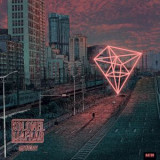
The curious cover art depicts a lone individual heading down an empty city street towards a large mysterious glowing object, evoking the common emptiness and struggle of urban life, and the search for meaning or just something better. The band envision the object to represent this album, offering a beacon to like-minded listeners. Kolonel Djafaar invite music enthusiasts on an immersive journey, to ‘Getaway’ from the daily grind of life, on an album reflecting diverse influences and marking a new chapter in their musical exploration.
Utilising a mammoth bank of saxophone samples, Shmuel Hatchwellpresents his new alias hoyah with an engrossing album captured in tape and digital form on Bruk.
The process leading to Set + Setting started out with a need for limitations to provide some focus for long-serving sound engineer and producer Hatchwell. He set out the following guidelines to accompany the overarching idea of 'set + setting':
No 'beats'
Saxophones are the voice
Stay away from the computer for as long as possible
Hatchwell took a deep dive in search of every saxophone sample he could find, threw them all into his MPC and then proceeded to weave together a variety of pieces. The focus on a particular instrument brings cohesion to the album, but equally the limited sound inspired freedom to experiment with other techniques and tools. At times one or two sax voices sound naked and undisturbed, while elsewhere you might only hear jagged shards or distant ghosts as they pass through aggravated processing.
Beyond the sound itself, the name hoyah was born with the flippancy of the 21st Century and ratified by ancient tradition. After the music had been made, After the music had been made, Hatchwell plucked the name out of thin air as a play on the TikTok meme 'can I get a hoya,' and subsequently discovered on a dive into his Jewish heritage that in old Hebrew hoyah means, 'to be, become, come to pass, exist, happen, fall out.' This distinction between Jewish concepts and modern political conflations is important to Hatchwell, who finds himself consistently having to separate Judaism from the situation in the Middle East and its ongoing genocide.
Subtly calling to mind the understated cosiness of real-life sax players like Sam Gendel as well as the fragmented sample manipulation of Matmos and Tim Hecker's approach to processed noise, hoyah's debut album absolutely manifests an idea and musical practice as something new and intentional
The 13th release of Dimi Angelis on his ANGLS labels just comes in the right time. In a moment where the urge for something raw and real never has been bigger, Dimi delivers four pounding tracks.
The A side of this EP consists of two tracks, "Shadowland" and its spatial nuances catch one right at the beginning with its lasso-like loops, who won't let go too easily as the track evolves. Highly dancefloor oriented is the track "Intergalactic", with its mechanical noise attack, using the 909 to create suspense paired with punchy inductions.
On the B side one is encountered with "Crionics", a track which transports into a deep sonic hole, an access to full immersion, giving both tension and resolution to the listener. The strength of "Ice Warrior" resonates through voltaic frequencies and is the abstract yet wholesome conclusion to this work of art.
Dimi Angelis is back with his signature sound set to stir up every floor from basements to warehouses.
The five song blessing gives a further insight into the frankly deranged production of bassist/producer Gianmarco Guerra, who served as the sole producer and one of three engineers for the record. Songs like "(Quietly) Do The Right Thing" and "29" continue to show Soul Glo's affinity for speed as a vehicle for their aggression and messages, while songs like "I'm On Probation" and the previously released "Mathed Up" shows the bands love of chaotic-yet-atmospheric noise and the most popular rhythmic vocal styles of today's current rap on top of the pummelling heaviness of the drums of TJ Stevenson. EP featuring a silkscreened b-side.
- A1: Sexual Behavior In The Human Male (Remix 2022)
- A2: Water Business (Remix 2022)
- A3: First Song Of Side B (Remix 2022)
- A4: Ensam I Natt (Remix 2022)
- A5: First Song Of Side B (Ng Take 1)
- A6: First Song Of Side B (Ng Take 2)
- B1: Water Business (Remaster 2022)
- B2: Sexual Behavior In The Human Male (Remaster 2022)
- B3: First Song Of Side B (Remaster 2022)
- B4: Ensam I Natt (Remaster 2022)
- B5: Aijin (Remaster 2022)
- B6: Sexual Behavior In The Human Male (Gero 30 Mix 2022)
Toothpaste Records präsentiert das LP-Format des 2022 erschienenen CD-Samplers "As If It Had Always Been Determined Since This Day Was Born" der japanischen Hardcore-Noise-Punk-Legenden The Gerogerigegege mit von den Original-Masterbändern remasterten Versionen diverser Gero-Klassiker. Darunter befinden sich die Debütsingle "Sexual Behavior In The Human Male" (1988, Trans Records), das exzellente Leather Nun-Cover "Ensam I Natt" und ein ultrarares Cover der taiwanesischen Sängerin Teresa Teng. Die LP enthält ferner 5500 Wörter umfassende Linernotes von Gero 55 auf Japanisch und Englisch, übersetzt von Kato David Hopkins.
“In search of an afterparty” the name of this split EP we are witnessing coming straight from a miraculous country called Uruguay.
The story of a teacher and a student, the tale of different senses and perspectives, the dance of elusive, fictional Jair himself and the spies of the afterparty which can be on either way of self-data collection or when levels of paranoia have come to a boiling point and sense that the eyes are watching doesn’t go away that easily.
The A side is taken by Muten, an artist who has already made a lot of noise not just in his native country but all over the world too whether it’s with an outstanding liveset, flawless dj set or a timeless record that he has crafted. The B side is a story of a rising and promising producer Flhez, and his quest of frequency manipulation + sound perfection. True honor to have these Uruguayan performers to join Exarde and deliver this outstanding body of work for it.
Close Encounters Of The Third World' ist ein erhabener Mix aus Roots-, Vocal- und synchronisierter Instrumental-Magie und der gefragteste Titel im reichhaltigen Creation Rebel-Katalog. Teils aufgenommen im Channel One Studio in Jamaika und gemischt von Prince Jammy in London, erschien das chronologisch zweite Album der Band ursprünglich auf dem Pre-On-U-Sound-Label Hitrun und war 45 Jahre nicht mehr erhältlich. Die neu geschnittene Reissue enthält erweiterte 12"-Discomix-Versionen von 'Beware' und 'Natty Conscience Free', neue Sleevenotes des Reggae-Forschers David Katz mit der Entstehungsgeschichte des Werks, sowie eine DL-Card.
Double vinyl reissue of Skullflower’s epochal “IIRD GATEKEEPER” album - the first time that this album has been available on vinyl for 30 years. In addition to the original LP this definitive and expanded edition includes extra and unreleased tracks taken from the recording sessions. For the first time all the tracks recorded by the band during this period can be heard together giving fans unprecedented access to material previously only available in the bands’ archives. Recorded in London in 1991 and released in 1992 on Justin “Godflesh” Broadrick’s HeadDirt label in 1992, IIRD GATEKEEPER established a worldwide reputation and following for Skullflower and convinced many who heard it that they had encountered nothing less than the best band on the planet. Arriving at the height of the “grunge” and the expansion of underground guitar “rock” into corporate America, IIRD GATEKEEPER had its roots deep in the UK noise and power-electronics scene. Guitarist Matthew Bower and bassist Anthony Di Franco were both graduates of the Broken Flag school of British noise making with their respective projects PURE, TOTAL and JFK. IIRD GATEKEEPER was Skullflower’s third album and was the first of the band’s albums to feature a consistent line-up throughout its production: Matthew Bower (guitar), Anthony Di Franco on (bass) and Stuart Dennison (drums). Recorded and mixed in four sessions between January and June 1991the tracks on this edition of IIRD GATEKEEPER shows the band’s new line up developing their sound, warping and evolving in real time. As such this edition of IIRD GATEKEEPER provides a unique document of the band in a state of transition, with the chemistry of the individual playing combusting in the studio to create a wave of astonishing creativity. IIRD GATEKEEPER is perhaps the definitive British underground rock album of the 1990’s – unique and never equalled. With this new edition Dirter Promotions allows Skullflower fans old and new to listen to this classic album as it was intended: spark up, crank it up and prepare to have your ears and mind blown
Relapse Records präsentiert die Wiederveröffentlichung des einflussreichen TECHNO ANIMAL-Albums The Brotherhood of the Bomb (featuring Justin Broadrick (Godflesh, Jesu,u.a.) & Kevin Martin (The Bug)), das erstmals 2001 erschien. Das Album, das von Broadrick komplett neu gemastert wurde, ist zum ersten Mal überhaupt auf LP erhältlich!
Bevor The Brotherhood of the Bomb überhaupt konzipiert wurde, wurde das britische Duo TECHNO ANIMAL bereits von den Beastie Boys unterstützt und veröffentlicht, arbeiteten mit Alec Empire und den damals noch jungen Dälek zusammen, blieben aber dennoch fast völlig unbekannt.
Ob sie nun als Pioniere des Industrial Metal mit Godflesh oder als Vertreter des knirschenden Noise-Rock mit GOD bekannt waren, die verschiedenen Aspekte von TECHNO ANIMAL sind in The Brotherhood of the Bomb spürbar. TECHNO ANIMAL galten damals als zu laut für Hip-Hop-Fans und zu hip-hoppig fürNoise-/Metal-Fans und waren ihrer Zeit wirklich voraus.
This is the assumption; what are the facts?
In an exhilarating convergence of sonic exploration, experimental noise guitarist Nina Garcia and danish trombone virtuoso Maria Bertel have teamed up to create a heavy-hitting, collaborative record that pushes the boundaries between extreme improvisation and harsh noise. Both renowned in their respective fields, Garcia and Bertel bring their unique styles and influences to create a masterpiece of collaborative improvisation.
Known for her fearless approach to the guitar and her ability to conjure otherworldly sounds, Nina Garcia has carved a niche for herself in the experimental music scene. With a minimal setup consisting of only guitar, pedal & amp; constantly touring, collaborating and evolving, Garcia has established herself as a trailblazer, challenging conventional norms and redefining the possibilities of the guitar beyond tonality. There‘s as much free improvisation in her playing as it is informed by no wave and the energy of free jazz, but most of all, this is kinetic music.
And this might be the intersection where Garcia and Maria Bertel meet.
Bertel, an accomplished trombonist active in the free noise rock monolith Selvhenter and in the duo Gud Er Kvinde (God Is A Woman), is no stranger to pushing the limits of her instrument. Known for her dynamic performances and innovative approach, Bertel has earned international acclaim for her ability to seamlessly blend genres and traverse musical landscapes - from delivering the low end in Selvhenter to the drone explorations of G.E.K., together with Nina, she focuses on rhythmic possibilities of her instrument. The distorted, feedbacking trombone is as controlled and precise as it is sonically explorative.
KNÆKKET SMIL (meaning „broken smile“) is a living, breathing, moving entity. It‘s a testament to the raw and emotive power of these two players. Bertel and Garcia‘s practice of mutual listening, reacting and merging is as radically tender as lovers exploring each other‘s scars.
This approach to collaboration is also reflected in every other part of that record. It‘s a joint effort of three labels, french label No Lagos, which is a home to many of Garcia‘s ventures (and the graphic work of Helene Marian), germany‘s Otomatik Muziek, where Maria previously released with G.E.K., and belgian experimental stalwarts Kraak as focal point.
Repressed clear yellow w/ red splatter vinyl! This is the 5th full length for London-based USA Nails full of post-punk noise rock that's as grating as it is catchy. USA Nails release their fifth album "Character Stop" on October 23rd 2020 through Hex Records. The new album from London-based USA Nails (and 2nd for Hex Records) is a post-punk, noise-rock platter that is as grating as it is catchy. The record was tracked live over 4 days at Bear Bites Horse in London with producer Wayne Adams. Though "Character Stop" still features the pummeling noise-punk that USA Nails have become renowned for, it's balanced with more sober, downbeat moments. On it they explore identity - like the online personas of aggressive twitter users, influencers and vloggers, as well as more introspective takes on mental health, giving up on dreams, the joy (and despair) of being a part-timer, and contemplating who they would be if they decided to hang up their guitars for good. Guitarist Gareth Thomas comments, "For me "Character Stop" is the best album USA Nails have ever made by miles. It's more varied than anything we've ever done before and I think it's stronger for it. I feel like it's more fully realized, and more complete as a collection of songs. Every time we get in a room together and write, the dynamic of our relationship as writers (and mates) develops a bit further, we get better at anticipating and complimenting each other. We've always tried to be efficient in our creativity, to do what feels natural and just let things flow. I'm obviously still really happy with all the music we've written up to this point, but on this record everything seemed to come together so sweetly. " Comes on clear green vinyl. USA Nails will tour Europe and the US in 2021, following a clutch of UK album launch shows in late 2020 - COVID permitting. In the last few years, USA Nails have toured with Sub-Pop lovelies Metz, completed numerous USA and European headline stints, and supported the likes of Mission Of Burma, John, Future Of The Left, Mclusky*, Cocaine Piss, Viagra Boys and Murder Capital. Ffo Pissed Jeans, Wire, Gang Of Four, Pinko, Blacklisters, Drive Like Jehu Press Quotes: 'Heavy, crushing, and aggressive post-hardcore' _The Needle Drop 'A mix of Drive Like Jehu headbangers, nods to psychedelia and a throttling of hardcore for good measure' _The Skinny
During the 1990s Shizuka self-released a series of four cassettes, barely heard by anyone outside of their inner circle. Culling together live recordings and home demos, these served as companions to the scant amount of proper Shizuka releases at the time (including the recently reissued Heavenly Persona). Concentric Circles is proud to present the third and most anomalous cassette from Shizuka, simply titled III, on vinyl for the first time in an edition of 500 copies. Formed by guitarist and singer Shizuka Miura, alongside husband Maki Miura, who’d previously played with both Les Rallizes Dénudés and Fushitsusha, the group known as Shizuka started in the early 90s with Jun Kosugi (also of Fushitsusha) on drums, and a revolving cast of bass players, including J.J. Junko, whose sole recorded appearance with the band is here on III. Devoid of any of their trademark noise and bombast, III feel distinct from their studio and live albums of the era, largely due to its fragility; haunted and spare, the songs revolve around Shizuka Miura’s gentle, unforced sighs, and Maki’s flickering, flinty guitar. The first side of the album features four songs – “For You,” “Lunatic Pearl,” “The Night When The Door Opens” and “To The Sky” – which will be well-known to Shizuka fans from previous recordings, but the drastically understated renditions here are particularly moving for their quietude and intimacy. The second half of III consists of a side-long duo session, just Shizuka and Maki Miura together at home, circling around the simplest two-chord motif for twenty minutes, Shizuka singing the most heavenly melody, strung through the sky of this lengthy improvisation. It’s an astonishingly beautiful performance, one that stills time through its becalmed repetition, pointing towards the endless forever. In this respect, it feels like an ultimate extension of Opal’s early recordings, Big Star’s 3rd or even Galaxie 500’s quietest moments. III lifts the darkness away, allowing for a softer, more gentle Shizuka to shine through, bringing with it a side to the band that most never knew existed. A lovely discovery if there ever was one.
Miles Davis' boundlessly influential On the Corner was so far ahead of its time upon release in 1972, the jazz cognoscenti rejected its groundbreaking concoction as middling in nature. Yet time has a way of righting wrongs and shifting views by adding needed context and perspective to visionary ideas, music, and approaches — the likes of which fill Davis' boldest and most controversial — undertaking. Designed to bring the focus back on the groove and bottom-end frequencies, the funk-loaded On the Corner revolutionized jazz. It also set new standards for record production, presaging remixing and electronica by more than a decade. And the work has never sounded more thrilling thanks to this very special pressing.
Sourced from the original master tapes and pressed on MoFi SuperVinyl, Mobile Fidelity's numbered-edition 180g 33RPM SuperVinyl LP of On the Corner exposes the internal mechanisms, free-associated playing, and then-unmatched studio techniques in vivid fashion. The low end, crucial to every composition here, is both heard and felt, with locked-in bass lines and low-range percussion conveyed as taut, solid, and visceral passages. You can discern the multiple layers of rhythm Davis employed on complex tracks such as "Black Satin," as On the Corner stands as his first effort to use overdubbing and multiple tape machines. As a pioneer, Davis likely would’ve loved MoFi’s groundbreaking SuperVinyl profile that features the lowest-possible analogue noise floor as well as pristine transparency, dead-quiet surfaces, and superb groove definition.
New degrees of spaciousness and airiness — equally important to the musique concrete arrangements — give the impression Davis and Co.'s creations float in space. Instruments are portrayed in three-dimensional manners, rhythmic loops retain tonal purity, and horn solos skitter across an extra-wide soundstage that takes listeners into Columbia's Studio E. Mobile Fidelity's SuperVinyl LP captures Teo Macero's innovative production — and the trumpeter's cutting-edge aural collages — in definitive fashion.
Heavily inspired by Sly and the Family Stone, On the Corner portrays street vibes and remains Davis' Blackest-sounding record. The conscious attempt to connect with youthful audiences tapped into rock and funk is evident not only on the colorful cartoon cover art depicting hot-pants and zoot-suit revelers, but in the music's emphasis of recurring drum and bass grooves. Distinct from Davis' earlier fusion experiments, the record's long-misunderstood set dials back improvisation in favor of beats, loops, and atmospherics that generate trance-like effects. While Davis utilizes his band for core duties — Chick Corea and Herbie Hancock prominently figure — he also relies on an all-star cast of side-men for concentrated soloing and additional support.
With rhythm providing the basic foundation, other notes fall into place, with their positioning steered by Macero and Davis' editing-room techniques. Looking to the manipulation-based work of Karlheinze Stockhausen and teaming with Stockhausen disciple Paul Buckmaster, Davis re-imagines what grooves constituted and could accomplish throughout On the Corner. The shapes of the songs become completely transformed as they progress. Faint melodies, spacey chords, chunky riffs, wah-wah fills, and repeated motifs bounce in and out of a sonic funhouse that wouldn't be out of place at a Harlem block party.
Exotic, intrepid, and filled with Davis' "jungle sound," On the Corner remains daringly hip more than four decades later.
Whitney Houston’s self-titled debut album has few parallels. Viewed solely through the lens of sales numbers, Whitney Houston is a watershed statement on par with the most commercially successful and culturally dominant LPs ever released. Having sold more than 14 million copies in the U.S. and upwards of 25 million units worldwide, the 1985 LP became the equivalent of the television show or blockbuster film that everyone collectively experiences and discusses. Nearly four decades later, it’s lost none of its appeal or magnetism — and its artistic significance and historical import have only grown.
Sourced from the original master tapes, pressed at RTI on MoFi SuperVinyl, and strictly limited to 4,000 numbered copies, Mobile Fidelity's 180g SuperVinyl LP of Whitney Houston presents the breakthrough in audiophile sound for the first time. The signature traits Houston exhibits on every song — her three-octave range, radiant warmth, personal conviction, impossibly controlled register — come across with exceptional clarity, focus, and presence. Free of artificial ceilings and constricted dynamics, this reissue plays with an openness, airiness, and balance that put the singer’s once-in-a-lifetime instrument and immortal artistry into proper perspective.
It does the same for the songs’ cascading melodies and captivating arrangements. Individually produced by one of four renowned industry veterans — Kashif, Micheal Masser, Jermaine Jackson, and Narada Michael Walden — each composition feels grander, closer, more genuine. A vocal spectacular, Whitney Houston benefits from the high-end characteristics of SuperVinyl, which include a nearly inaudible noise floor, superb groove definition, and dead-quiet surfaces. This is how an album that changed the direction of popular music — opening previously inaccessible doors for Black artists; bringing smooth-singing vocalists back into the mainstream; kickstarting a movement that soon included several “divas” who would command the charts through the early 21st century — should look and sound.
Though Houston’s seemingly effortless performances suggest otherwise, creating the record Rolling Stone ranks as the 257th Greatest Album of All Time wasn’t easy. Nearly 18 months were required to identify songs suitable for a still-unknown singer who did not fit into the conventional frameworks of the mid ‘80s. Confident, powerful, and prodigiously talented, Houston would forge her own parameters with Whitney Houston. In the process, she obliterated the stubborn lines between R&B and pop, Black and white radio. She dared to reimagine who could be a superstar and then went out and defined the role. Recorded for nearly $400,000 and released on Valentine’s Day, the LP exceeded the wildest expectations of those most closely associated with it — save for Houston and her family.
Having made her first public appearance at the age of 11 singing at a Baptist church, Houston understood pressure and knew her way around, inside, and through a song. The invaluable guidance and support she received from her mother, Cissy, an accomplished gospel vocalist who backed Aretha Franklin and Elvis Presley, are on display throughout Whitney Houston. They arrive in the types of authoritativeness, discipline, and diction rare for even most seasoned veterans — and unheard-of for a 21-year-old newcomer. Houston brings a soulful elegance, understated glamour, and in-the-moment rapture to every note. Moving up, down, or staying in the middle of the vocal ladder; channelling softness or sweetness; showing restraint or increasing the volume, she is a marvel of emotionalism, a dynamo who can seamlessly transition from one mood to another within a verse.
Though the 10-track LP largely concerns itself with the ballad tradition, Houston covers the bases, getting into an R&B groove on the fleet “Thinking About You,” turning up the heat on the duet “Take Good Care of My Heart,” and investing the contagious dance-pop confection “How Will I Know” with all the anxiety, hope, energy, and enthusiasm its lyrics demand. Featuring her mom on background vocals and Houston’s pitch-perfect tone, uncanny precision, and skyscraper highs (no AutoTune here, friends), the synth-based anthem propelled Whitney Houston into the stratosphere, the vocalist into regular MTV rotation, and the term “crossover” into popular parlance. The double-platinum single reached No. 1 on the Hot 100, Hot R&B, and Adult Contemporary charts — a trifecta that foreshadowed accomplishments that would ultimately crown Houston as the most-awarded female artist of all time.
Whitney Houston became the first album by a Black female performer to top the Billboard charts. It remained there for 14 non-consecutive weeks en route to claiming the title of the best-selling LP of 1986. It stands as the first debut and first album by a solo female artist to spawn three No. Hits, as well as the first album by a Black female artist to top the year-end charts in Australia and Canada. These are just a handful of the accolades — along with four Grammy nominations — that surround a set that also contains the unforgettable ballad “Saving All My Love,” string-accompanied “Greatest Love of All,” and sensual “You Give Good Love.”
As TIME observed in an article written two years after the album took the world by storm: “This is infectious, can't-sit-down music, and her performance dares the listener not to smile right back.” We’re still smiling.
Black Truffle is thrilled to announce a major archival release from legendary American composer and live electronics innovator Richard Teitelbaum, centred around his soundtrack for Suzan Pitt’s cult 1978 animation Asparagus. Best known to some listeners for introducing Europe to the Moog synthesizer as a founding member of Musica Elettronica Viva in Rome, Teitelbaum’s extensive and radically experimental body of work includes collaborative recordings with master improvisers like Anthony Braxton, Andrew Cyrille and George Lewis, intercultural experiments combining electronics with non-Western instruments such as the shakuhachi, works for computer controlled piano, and large-scale multi-media operas. Recorded at York University, Toronto in 1975–1976, ‘Asparagus (European Version)’ sprawls across both sides of the first LP. Discovered by composer Matt Sargent in Teitelbaum’s tape archive, this is a previously unheard major work for Moog modular and Polymoog synthesizers, unique in Teitelbaum’s oeuvre for its lushness and gently melodic quality. The music unfolds slowly, submerging lyrical melodies and burbling arpeggios into uneasy, glacially shifting harmonic swells, the luscious texture thickened with subtle changes of modulation and phase, calling up the shifting layers of Costin Miereanu’s classic Derives or the kosmische Musik tradition more than any academic synthesizer exercise. Teitelbaum incorporated much of this material into his soundtrack for Suzan Pitt’s Asparagus, which receives its first official release here. Asparagus, famously paired with David Lynch’s Eraserhead for a two-year run of midnight screenings at New York’s Waverly Theatre, uses hand-drawn and stop animation to unfurl an oneiric succession of images, beginning with a sequence in which the female protagonist defecates two stalks of asparagus, which multiply and float out of the toilet bowl to form the letters of the title. Teitelbaum’s soundtrack interweaves delicate drifting tones from the ‘European Version’ with contributions from Steve Lacy and Steve Potts on saxophones, George Lewis on trombone and Takehisa Kosugi on violin. Edited closely to the film, even without images the soundtrack proposes a surreal journey through floating synth tones, squealing horns, propulsive arpeggios, distant chatter, and an old-timey waltz. The final side of the set presents a new realisation of Teitelbaum’s text score ‘Threshold Music’, performed at a memorial concert at Roulette, New York in 2022 by Leila Bourreuil (cello), Alvin Curran (sampler and objects), Daniel Fishkin (daxophone), Miguel Frasconi (glass objects) and Matt Sargent (lap steel). The piece asks musicians to match their instrumental volume to that of the sounds of the environment in which they play, sometimes with the addition of recorded environmental sounds, reinforcing frequencies they encounter in listening deeply to their surroundings. Here the players use a field recording taken at Teitelbaum’s home in Bearsville, New York, their long tones and shimmering, glassy textures delicately emerging from the white noise of the location recording. Released with the full approval of both Richard Teitelbaum and Suzan Pitt’s estates, Asparagus is illustrated with striking images from Pitt’s film and accompanied by detailed liner notes by Francis Plagne. These previously unheard pieces shed new light on the work of a key composer in the American experimental tradition, offering up some of Teitelbaum’s most beautiful and engaging music.
Ratboys have been recording and releasing music for over a decade, but their newest album, The Window, marks the first time they’d ever traveled outside their home base of Chicago to make a record, journeying to the Hall of Justice Recording Studio in Seattle to work with producer Chris Walla.
The sessions with Walla (Death Cab for Cutie, Tegan and Sara, Foxing) struck the perfect balance between preparation and experimentation, injecting new life into the band’s style of soft-hearted Midwestern indie rock with an ever so subtle Americana twist. The solidified Ratboys lineup stretched and expanded their vision in the studio, adding unexpected elements and instruments like rototoms, talkboxes, and fiddles. The result is Ratboys’ most sonically diverse record, shifting wildly from track to track. It flexes everything from fuzzy power pop choruses on “Crossed That Line” and “It’s Alive!” to
a warm country twang on “Morning Zoo” to mournful folk on the titular track. After more than ten years and four studio albums, The Window finally captures Ratboys as they were always meant to be
heard—expansive while still intimate, audacious while still tender—the sound of four friends operating as a single, cohesive unit. This release comes with a Download Code.
Tyler Pope's latest EP is an absolute belter, and the primary concern these four tracks are asking of you is right up front: Pay Attention to the Bass. And, honestly, with a sense low-end like what's on display here, how could you not? This new release from Pope-a dance veteran who's also known as a full-time member of LCD Soundsystem as well as a collaborator with artists like Hercules & Love Affair and Pantha Du Prince-arrives on his always eclectic Interference Pattern label, an imprint that has previously spanned left-field electronic sounds, noise rock, and avant-R&B. As such, Pay Attention to the Bass is anything but straightforward, with ricocheting rhythms and alluring textures that are as easy to get lost in as they are to move your body to.
Listeners familiar with last year's Make Each Other Happy EP, which embraced dark disco grooves and crisp percussion, will be delighted at the new curveballs on display here: "Why Must I" euphorically merges the propulsive charge of UK funky with delicious piano-house stabs, while "OKay" anchors itself around a rubbery bass line like a lost cut from the Remain In Light sessions. The flip side gets dark and dank with it, as "Close the Door" echoes with spooky clatter and dubby wobbles before sprightly vibes break through-and the closing cut "Where r they Hiding" goes full-on tunnel techno with it, conjuring a mood that recalls the haunted house music of Sandwell District as well as the cold-sweat futuristic visions of jungle. With Pay Attention to the Bass, Pope expands his sound wider than ever, and it just so happens that it's an absolute blast to listen to as well.
Diggin In The Crates (D.I.T.C.) was born out of a group of artists who began making noise in the late ‘80s and into the next decade and beyond—namely Lord Finesse, Diamond D, and Fat Joe. After well-received albums, an official, wider collective was founded that also included O.C., Big L, Buckwild, and producer-rapper combo, Show & A.G. (originally known as Showbiz & A.G.).
The crew proceeded to drop a run of sublime records, including Show & A.G.’s Soul Clap EP (1992), their full-length debut Runaway Slave (1992), followed by Goodfellas in 1995. Show & A.G.’s next project, Full Scale, arrived in 1998 and featured appearances from O.C., KRS-One, Big Pun, the Ghetto Dwellas and verses from members of D.I.T.C. including Diamond D, Big L and Lord Finesse.
In 2002 a CD version titled Full Scale LP (using the same artwork) was released with 10 additional tracks which had originally been released on various 12" singles and projects in the late 1990s. The project had never been released on vinyl in its entirety – until now.
Production on Full Scale was handled by Showbiz and A.G. except for "Time To Get This Money" which was produced by long-time collaborator Ahmed, and "Hold Mines" and "Hidden Crates" which were produced by DJ Greyboy.
The assortment of guest features doesn’t detract from A.G., a masterful emcee with a no-nonsense style that is simple but impactful. Full Scale follows the tried and true blueprint from Show & AG’s earlier classics cementing its place in hip hop history.
LIVERPOOL’S LONG LOST 90’s INDIE ROCK NOISEMAKERS. COMPILING THREE SINGLES AND UNRELEASED TRACKS. “If these guys were American they’d have a massive following” STEVIE CHICK. Back in the 1990's PLAYHOUSE were Liverpool's premiere 'honey souled indie rock band' (NME, 1997). They had a devoted following around the country after supporting the likes of Sleater Kinney, Unwound, Penthouse, Pavement, Sebadoh, Feeder and Gary Numan. With three 7" singles under their belt and support from the NME and John Peel, the band were due to record their debut album until disaster struck when the drummer, Simon, broke his leg in a bizarre incident. Simon later went on to play with the rock band - Black Spiders and now performs under the name of Blobb Ross. Singer and guitarist Pete continues to write songs, over a 1000 at this point. He is Liverpool's most prolific and enigmatic figure, writing some of the most beautiful songs around. Bassist Jason went on to perform with Mugstar, Sex Swing, Klamp, Domes, Twin Sister & JAAW. 'Dynamo' compiles the three singles they released, alongside unreleased tracks, including a cover of Sebadoh's 'It's So Hard To Fall in Love'
So I have a problem: I hate everyone and all music. Well, OK, not everyone. But c’mon - you know what people are like. Honestly, they’re the worst. And fair enough I might not really hate all music, but let’s be honest: have you ever actually heard any music? I mean, jeeez. If I’m gonna listen to a record, I’ll need something that matches this misanthropy; something that really gets the neurotransmitters firing on all cylinders and ready to obliterate the feelgood factor. Something like Cleveland band Cruelster, basically. Cruelster are made up of members of Knowso, Perverts Again, and a plethora of other Ohio noiseniks. If it seems like you’ve seen that name before, it’s highly probable - they released a demo back in 2012 and have been sporadically dropping bundles of rough-edged sonic snot ever since, thanks to labels like Lumpy (whose own Dumpers are at the very least sonically adjacent) and Turbine Piss. This singles collection compiles all the non-album tracks they’ve released since that early demo to make a thrillingly ‘orrible racket. Twelve years’ worth of punk rottenness and general stupidity contained in 29 tracks and 40 noisy minutes. It is, of course, fucking brilliant. From the gleefully melodic dumbness (and Booji Boy-flavoured additions) of ‘My Embarrassment’ to the malevolent rumble of ‘Double Trouble’, not to mention a fabulously energised cover of Icona Pop’s dance-pop smash ‘I Love It’, every track here is a winner. It’s the perfect tonic for your rage and the perfect foil to a cruel world where everyone else’s disdain seems more pronounced than your own. You owe it to yourself to complete your record shelves with this instantly classic comp - it’s punk rock par excellence. And as for that ‘hating all music thing’... ah, who cares, this is all gold. Listen immediately, you’ll be causing chaos to its raucous brilliance before you know it. Genre: Alternative / Punk
Seth Price’s suite “Coinos Driftos“ announces itself with the sound of a rolling coin – a punctuation that repeats throughout the record – before dropping the listener into a storm of harsh winds and far-away bells. When the storm abates we find ourselves in a desolate field of stuttering electric harp and electronic sub-bass. Side B emerges from a mist of gentle tones that soon give way to a juddering contraption of dropped coins and clacking noises, which itself seems to summon the arrival of a war machine – a glorious squall of high tones, bristling with Helmholtz inner-ear sensations, all just barely kept in line by a loping, irregular bassline – that resolves into a final, more personal, piece of field recording. Seth Price made the music in 2023 by improvising three straight-through takes on Arp synthesizer, bells, and electric Nagoya harp, often playing two instruments at once, with all signals routed through pedals and processors; these tracks were sequenced before the addition of overdubbed bass guitar and field recordings.
Feinster Oi!/Streetpunk aus vier Ländern (US, CAN, IR, GER) trifft sich hier auf einem Album. Jeweils drei neue, unveröffentlichte Tracks liefern die vier Combos hier ab. Die beiden LP-Seiten teilen sich RED BRICKS aus Hamburg, THE UNCOUTH aus Kansas City, AN SLUA aus Gaillimh sowie RECKLESS UPSTARTS aus Ontario mit je drei Songs. Die Bands eint die Verknüpfung aus anti-rassisitscher, antifaschsitischer Attitüde und dem rauen Sound der Straße mit Working-Class-Mentallity und einer derben Prise Oi! Veröffentlicht in Kooperation mit Insurgence Records (Kanada). Klassisch schwarzes Vinyl!
- A1: U Ambisu Suštine (In The Abyss Of Essence)
- A2: Gogosteron I Turbina (Gogosterone & Turbina)
- B1: Šestaranje (Circling)
- B2: Deprogramiranje 1 (Deprogramming 1)
- C1: Prebačaj (Overshot)
- C2: Hiperfokus (Hyperfocus)
- C3: Deprogramiranje 2 (Deprogramming 2)
- D1: Most U Snu (Bridge In A Dream)
- D2: Involucija (Involution)
- D3: Deprogramiranje 3 (Deprogramming 3)
INVOLUCIJA is an experimental post-industrial collaboration with artists from ex-Yugoslavian countries, started by Michel Morin (Sneak-Thief / Polygamy Boys) and Lucija Invo.
This 2×12″ on their new Berlin label expands on their 2023 debut EP on aufnahme+wiedergabe with even fiercer inspiration from EBM, techno & Balkan musical traditions.
“Involution” is a metaphor for the ever-entangling depth of our situation – the world falls apart then re-organizes itself with unexpected and sometimes distressing connections. Increasing effort is demanded for our “productivity” and our only reward is diminishing returns. Enough is enough!
INVOLUCIJA is envisioned as a noise abrasive enough to resonate with and overcome this ever-increasing discomfort from which we try to dissociate.
We call this euphoric deprogramming.”
FRN Dancehall might have emerged in Jamaica, but over the last few decades the popular genre's tendrils have stretched out across the globe. In Kampala, Ratigan Era is adding a distinct Ugandan twist to dancehall, fusing it with East African humor and hyper-melodic afrobeats elements imported from Ghana and Nigeria. The versatile MC grew up listening to Jamaican music like Vybz Kartel, Busy Signal and Mavado - in his hometown of Kawempe there was almost no way to avoid it - and it blurred into the background, blending with local church music, US hip-hop and radio pop. He developed this diverse range of influences into a completely unique Afro-dancehall flow that simmers between Luganda, patois, Spanish and English, reflecting the melting pot of cultures and dialects that characterizes contemporary Africa. Ratigan broke out with a memorable feature on Pallaso's Ugandan hit 'Nsaba', a track that echoed throughout the country booming from nightclubs, motorcycle loudspeakers or from convenience stores. Now he's assembled his first album "Era", a furiously inventive interweaving of rubbery vocals and memorable chants backed by futuristic beats from Hakuna Kulala's most boundary-pushing producers. Congolese producer Chrisman takes the reins on 'Gorilla Attack', providing a downtempo groove that echoes recent Jamaican chop deployments from breakthrough artists like Skillibeng and Skeng. For his part, Ratigan ducks and dives between Chrisman's gqom-inspired low end womps and corrosive synths, commanding attention with his smart, dextrous flow and tongue-twisting lyrics.The Modern Institute and Golden Teacher's Richard McMaster handles 'Top Strike Force' leaving space in his wiry, minimal beats for Ratigan to flit between anthemic repetitions and ice-cold AutoTuned wails. On stand-out track 'Badman Style', Ratigan's guttural patois is measured against a dizzy trap-dancehall hybrid beat from HHY & The Kampala Unit's Jonathan Uliel Saldanha, aka Lithium Beats, while on the surreal 'Drop it Down', Japanese mad scientist Scotch Rolex brings out Ratigan's cheeky sense of humor with toytown bleeps and laser zaps. MC Yallah collaborator Debmaster appears on 'Gan Dem', meeting Ratigan's double-time raps with soundsystem destroying rolling subs, and veteran US noisemaker Kush Aurora sprinkles magic dust on 'Cool and Deadly', galvanizing the link between global bass mutations, Jamaica and East Africa.And despite the grab-bag of producers and inspirations, "Ratigan" is a strikingly coherent listening experience that accurately snapshots Kampala's colorful froth of sounds and phrases. Ratigan's outsized personality is welcoming and captivating, providing the sights, sounds and smells of the city with a frenetic rhythm that's as intimate and local as it is far-reaching. It might just be the future we so desperately need.
Oftentimes in this busy and chaotic world it’s challenging to draw a parallel between two congruent events. In this case however, drawing its inspiration from Detroit’s recent meteoric rise from the ruins of the past, BerettaMusic a label founded in Detroit in 2002 continues to rise through a sea of noise with steady quality releases.
Widely seen as one of the premier house/techno labels from a bustling Detroit music scene, the label is continuing to make waves. This time with the re-launch of their highly respected Beretta Grey sub label. The same label that has launched the careers of artists like Seth Troxler, Ryan Crosson, Luke Hess and many others is back again.
Asher Perkins is no stranger to the dance floor. When Richie Hawtin called him in 2015 and requested his music for Minus, he stepped up and delivered a quality release. Since then he has steadily been honing his craft and cutting his teeth in Detroit with his much sought after, late night, live techno sets.
Asher’s productions can range from deep dark banging techno to heady and psychedelic vibes, both of which he showcases on this release on Beretta Grey. For his faithful fans in Detroit and beyond, they may have caught a glimpse of his new moniker, Acid Perkins, where he takes the crowd on an even deeper dive into the absolute depths of trippy, bumping and bubbling psychedelic soundscapes that will have the listener yearning for more. BerettaMusic is very proud to announce the relaunch of the highly respected Beretta Grey imprint and showcase one of Detroit’s finest in the process, Asher Perkins.
Are you ready? Written and Produced by Asher Perkins Mastered by Brian Kage at the Bear Cave in Detroit, pressed at the world famous Archer Records in Detroit. Label art by Ryan Sadorus.
- Take Back The Power
- White Noise
- Can't Be Trusted
- Liberty
- Judge Not
- This Is The New Sound
- Family
- Easy On You
- A Friend Like Me
- Last Call
- Haven't Seen The Last Of Me
- Take Back The Power
- White Noise
- Can't Be Trusted
- Liberty
- Judge Not
- This Is The New Sound
- Family
- Easy On You
- A Friend Like Me
- Last Call
- Haven't Seen The Last Of Me
Rancid-Sänger Tim Armstrong ist auch als Chef seines Labels Hellcat immer wieder für Überraschungen gut. Bestes Beispiel: The Interrupters. Angeführt von der sehr umtriebigen Singer-Songwriterin Aimee Allen begann die Ska-Band aus Los Angeles ihre Arbeit mit Armstrong mit einer Single für dessen populäre Tim-Timebomb-Serie. Davor veröffentlichte Allen ein recht erfolgreiches Soloalbum und war als Backgroundsängerin auf dem von Armstrong produzierten und mit einem Grammy ausgezeichneten Jimmy-Cliff-Album "Rebirth" zu hören. Auf "The Interrupters" verbinden sie und ihre Kollegen Ska, Reggae und Punk, nicht ohne jedoch auf Humor zu verzichten, wie etwa in Songs wie "White Noise" und "Liberty". Für Fans von Rancid, The Distillers, Streetlight Manifesto, Sublime, Operation Ivy, Two Tone.
Canadian performer and composer Sarah Belle Reid’s 2021 acclaimed album, first time on vinyl, expanded with two new incredible songs, remastered featuring new artwork. From distant ocean song to the clang and howl of a murky forgotten memory, MASS is a dreamlike collage of shrill shrieks, gasps, corroded brass choirs, and melting modular synth soundscapes, all heard through a mist of hiss and noise. Fused with equal parts spastic improvisation, shrouded ritual, and meticulous arrangement, it presents a sonic topography at once tongue-in-cheek, sensitive, and nightmarish. With discordant chorales and angular trumpet improvisations churning in an ever-evolving wash of whispers and howls, MASS is a collection of three hazy, harsh, and frightful sound worlds. With tracks meandering between aggressive rhythms, eerie ambiances, and abrasive cut-up electronic textures, MASS draws inspiration from early tape music, horror film soundtracks, and grindcore. It was assembled between listening to extended doses of Else Marie Pade, Daphne Oram, Eliane Radigue, the Locust, Edgard Varèse, Maryanne Amacher, Dick Raaijmakers, Naked City, Mr. Bungle, and Thomas Ankersmit, bringing a little bit of all of them along with it. MASS was recorded and mixed over the course of three weeks in January–February 2021 while in the midst of a cross-country move. Recorded entirely in short-term housing away from her studio (and most of her instruments), Reid relied exclusively on her voice, trumpet, flugelhorn, household objects, and Make Noise's Strega semi-modular synthesizer for all sound materials. Original sound materials were recorded loosely and independently with little to no overdubbing, instead relying on meticulous editing and processing in the manner of classic tape music.
"As Bill Orcutt’s most mature and exhilarating LP to date, Music for Four Guitars was a slab of undeniable Apollonian beauty. Its approachability and obvious novelty landed it not only on the year- end lists of every key-pushing codger in the underground in 2022, but also on NPR in the form of the Bill Orcutt Guitar Quartet, an ensemble assembled to perform this music and featuring Wendy Eisenberg, Ava Mendoza, and Shane Parish in addition to Orcutt. But while their Tiny Desk Concert gave a whiff of the quartet’s easy intimacy, the sterile confines of the virtual recital medium still left a puzzle unsolved: how might these brutally mannered bricks of minimalist counterpoint sound on a stage in front of actual breathing bodies?" "This was the question foremost in my mind when I first saw the quartet in San Francisco a few months before this double live LP was recorded. I was already familiar with the prowess of Eisenberg and Mendoza, two of the most technically intimidating shredders to blast out of the noise/improv underground, and knew Parish as the mastermind behind the epic translation of Orcutt's quartet recordings into a fully notated score. I was ready to be 'blown away'—and I most assuredly was. The quartet navigated Orcutt's jaggedly spiraling right angles into the shining core of the compositions with joyous ease, faithful to the originals in nearly every way (though their tempos were slightly ramped up, Blakey style, to communicate their breathless rush). The renditions were flawless, stellar and inspiring. I had expected nothing less." "Which leads us to this album, Four Guitars Live, recorded in November of 2023 at Le Guess Who? festival during the quartet’s first European tour. The true essence of this set is not simply in its faithfulness to the source compositions, but in the group's easy familiarity (no doubt the result of weeks on the road) and the generosity of their improvisations, both collective and solo. Orcutt, clearly cognizant of both the caliber of his collaborators and the singularity of their voices, has given everyone room to stretch out, and all have delivered some of their most moving passages to date." "One of this record's great thrills for me is imagining a listener, perhaps unfamiliar with the outer limits of contemporary guitar improvisation (or the Tzadik catalog), slammed into catatonia by Mendoza's liquefying lines on Out of the corner of the eye, then revived and healed by the languid, breathy lines of Parish's unaccompanied, spaced-out breakdown of the track's main theme, finally only to be crushed by Eisenberg’s staggering extended solo on Only at dusk (somehow channeling both Eugene Chadbourne and Buck Dharma)." "There's another peak, which begins at the end of side B, in Orcutt's own languid solo, encapsulating the flowing focus of his recent solo LPs, and serving as an introduction to the next side's ensemble tour de force, the psychic heart of the album, On the horizon: its melodic core passing first to Orcutt, launching into a sublime solo turn by Eisenberg, a duo of Parish and Mendoza, before parachuting back into the ensemble for a smashup rendition of Barely visible and Glimpsed while driving (renamed Barely driving) knitted together with an softly bubbling ensemble improvisation. The transfer is orchestrated yet seamless, its tonal form undeniable even in the presence of obvious dissonance." "The breadth of Four Guitars Live gives lie to the false notion that agile, polytonal improv is necessarily without soul, is necessarily inaccessible. Rather, Four Guitars posits a human avant-garde music that the most conservative will recognize as virtuosic and revel in its classic intervals, boiling counterpoint, and precisely- layered facets. Even the rockers in your life might dig it, so why not pass it on?"—Tom Carter
READ THE AIR is the new full-length record from MARBLED EYE, the four-piece punk band responsible for all of that noise coming out of Oakland for the last couple of years. The opening title track sets the album's tone immediately, guitars starting and stopping to match a staggered drum beat before guitarist and co-vocalist Chris Natividad's lyrics act as a mission statement for the album's recurring theme of self-reflection: "Searching / shaking / life simulating_ read the air / count me out."Engineered mostly by the band themselves, Read the Air's ten songs are both overdriven and ominous. Songs like single "In the Static" offer riffs worthy of a Marquee Moon or Entertainment! comparison, but the band still can't shake the dread of modern times. The song's refrain treats time like a threat, with Natividad's constant shout of "staring at the clock" acting as a haunted refrain. The combined playing of drummer Alex Shen and bass player Ronnie Portugal give songs like "Tonight" and "See It Too" an angular and driving edge. With additional recording from Toro Y Moi's Chaz Bear and mixing from Grace Coleman (Courtney Barnett, Spiritual Cramp), Marbled Eye have dialed in a record that feels destined to live in the noisy post-punk canon for years to come.Marbled Eye's new album Read the Air arrives this March via Summer Shade Records.
Emerging out of Amsterdam's vibrant squat scene in 1979, The Ex – a name chosen for the ease and speed with which it could be spray-painted onto a wall – have for four decades been an entirely self-sustaining musical entity, charting a course through the global underground with a spirit of freedom and radical exploration.
On 1985's Pokkeherrie (Dutch for "terrible noise"), The Ex return to the more stripped-down instrumentation on their early LPs. A key lineup change would also see the arrival of drummer Kat Bornefeld (whose supple rhythms propel the group to this day).
Recorded at the new location of Koeienverhuur Studio in the basement of storied squat/venue Emma, Pokkeherrie is a testament to the angular momentum of a group in full creative flux. Right from the opening track, bassist Luc Klaasen generates a relentless pulse. Terrie Ex's sparse/acidic guitar and G.W. Sok's impassioned vocals combine in a vein similar to The Minutemen, Flipper or Rudimentary Peni, except The Ex have the patience and wherewithal to sustain their approach beyond just brief explosions.
Perhaps only The Fall from this period can match The Ex's ability to hold a melody together while utilizing otherwise harsh sonic elements over an extended piece, most effectively on "Soviet Threat," "1,000,000 Ashtrays" and "White Liberals."
London noise-rock quartet USA Nails have announced their upcoming album Feel Worse’, out March 22nd 2024. It’s the first album on their new label One Little Independent Records (home to anarcho-punk bands both old and new; Crass, Bad Breeding and more). The band have forged a considerable reputation since their formation in 2013 from their South London base, comprising of members of Kong, Future Of The Left, Blacklisters, Death Pedals and Silent Front.
‘Feel Worse’ explores schadenfreude; the pleasure derived from another person’s misfortune. With this, they use new material to attack austerity and UK authoritarianism, consumer culture (particularly the consumption of quick fix reality TV and hyper-capitalist agendas), youth culture and bullying, and more. They do so with their intense and unmistakable brand of abrasive, chaotic post-hardcore. There’s a raw and uncompromising energy to USA Nails, and ‘Feel Worse’ is their most powerful and vital album to date.
London noise-rock quartet USA Nails have announced their upcoming album Feel Worse’, out March 22nd 2024. It’s the first album on their new label One Little Independent Records (home to anarcho-punk bands both old and new; Crass, Bad Breeding and more). The band have forged a considerable reputation since their formation in 2013 from their South London base, comprising of members of Kong, Future Of The Left, Blacklisters, Death Pedals and Silent Front.
‘Feel Worse’ explores schadenfreude; the pleasure derived from another person’s misfortune. With this, they use new material to attack austerity and UK authoritarianism, consumer culture (particularly the consumption of quick fix reality TV and hyper-capitalist agendas), youth culture and bullying, and more. They do so with their intense and unmistakable brand of abrasive, chaotic post-hardcore. There’s a raw and uncompromising energy to USA Nails, and ‘Feel Worse’ is their most powerful and vital album to date.
Stalwarts of the underground rock scene in Sweden for the better part of two decades, Långfinger is set to release their fourth album “Pendulum”. An album that is as much of a retrospective as it covers new methods of noise as the band reemerges for the first time since 2015’s LP “Crossyears”. “Pendulum” delivers direct, intense and playful rock music in an immersive long play format which might not make sense in the grown-up digital age, but for Långfinger, rock n roll is not about growing up, or making sense for that matter. It’s about the exploration and continuum of all things related to their sound that was, is and will be.
Like the best of them, Daniel Chavez got his start immersing himself in the nightclubs, dingy basements, and record stores of Chicago. Cycling around the South Side with records and a small PA system strapped to his back, he found himself at Smartbar and eventually began slinging records at Gramaphone alongside some of the deepest heads of his generation. Before long, Daniel made the jump to Brooklyn and landed at A-1 Records, while diving further into the global deep house community and soaking up knowledge like a sponge. After sowing seeds in obscurity for many years, Daniel saw the fruits of his labor in 2023 with a debut 12” on Halo’s Muted Noise imprint.
These tracks were designed and refined over the course of a year to meet the strict specifications of the Jewel soundsystem and dancefloor. “Writing on Water” is a submersive, simmering tune that heaves and moans for eight minutes, but could probably go on for an hour. “Terras” strips away the layers to reveal a spacious, floating world supported by a fat, rolling bassline. On the flip, “Spiraling” echoes a feeling of early My Love Is Underground and the New York deep house golden era before it: a time of revolution. Finally, “67th Session” combines space and depth with a simple vibraphone riff that can go off day or night.
Most audiophiles know Alan Parsons Project's I Robot by heart. Engineered by Parsons after he performed the same duties on Pink Floyd's Dark Side of the Moon, the 1977 record reigns as a disc whose taut bass, crisp highs, clean production, and seemingly limitless dynamic range are matched only by the sensational prog-rock fare helmed by the keyboardist and his creative partner, Eric Woolfson. Not surprisingly, it's been issued myriad times. Can it be improved? Relish Mobile Fidelity's stupendous UltraDisc One-Step 180g 33RPM box set and the question becomes moot.
Mastered from the original master tapes and pressed at RTI on MoFi SuperVinyl, I Robot comes to life with reference-setting realism on this numbered, limited-edition reissue. Boasting immaculate highs and lows, generous spaciousness, and see-through transparency that takes you into the studio with Parsons and Woolfson at Abbey Road, this definitive edition is designed to demonstrate the full-range capabilities of the world's best stereo systems while offering listeners the convenience of having all the music on one LP.
Featuring a nearly inaudible noise floor, this transcendent UD1S edition functions as a repeat invitation to savor reference-grade soundstages, immersive smoothness, sought-after instrumental separation, three-dimensional imaging, and consummate tonal balances. Able to be played back at high volumes without compromise or fatigue, it is a demonstration record for the ages – the likes of which are no longer being made. This is the very reason you own and invest in high-end audio gear.
The special characteristics of this UD1S version extend to the premium packaging. Housed in an elegant slipcase, the reissue features special foil-stamped jackets and faithful-to-the-original graphics. Aurally and visually, it is made for discerning listeners who prize sound quality and production, and who desire to fully immerse themselves in everything about this conceptual landmark. The Alan Parsons Project's most famous record deserves nothing less.
Inspired by and loosely based around the Isaac Asimov stories of the same name, I Robot delves into themes of artificial intelligence and technological dominance that make the record extremely relevant in the 21st century. Indeed, Parsons and Woolfson's pinnacle creation dovetailed with the ascendency of Star Wars, which itself is experiencing a rebirth in an age of self-driving cars, smart devices, and mindless automation. Lyrically, songs such as "The Voice" call into question human behavior – and their relationship to increasing robotic supremacy – in everyday life. Parsons and Woolfson reflect the associated paranoia, dichotomy, and transformation via shifting sci-fi arrangements steeped in drama and moodiness.
The absorbing tunes on I Robot also continue to fascinate due to their perfectionism and innovation. Borrowing from Pink Floyd's strategies, Parsons and Woolfson utilize a looped sequence on the title track to create new downbeats. "Some Other Time" employs two different lead vocalists and yet gives the illusion that only one is involved. Captivating strings, a piccolo trumpet, and bona fide pipe organ grace "Don't Let It Show." The origins of "Nucleus" stem from a unique analog keyboard concoction dubbed "the Projectron," devised by Parsons and electronic engineer Keith Johnson. Andrew Powell's orchestral and choral arrangements top it all off, with "Total Eclipse" arriving as a frightening track that presages the climactic "Genesis Ch. 1 V. 32."
Does man or machine win in the end? Decide as you get lost in Mobile Fidelity's UltraDisc 180g 33RPM LP pressing. Secure your numbered copy today!
More About Mobile Fidelity UltraDisc One-Step and Why It Is Superior
Mobile Fidelity Sound Lab's UltraDisc One-Step (UD1S) technique bypasses generational losses inherent to the traditional three-step plating process by removing two steps: the production of father and mother plates, which are created to yield numerous stampers from each lacquer that is cut. For UD1S plating, stampers (also called "converts") are made directly from the lacquers. Since each lacquer yields only one stamper, multiple lacquers need to be cut. Mobile Fidelity's UD1S process produces a final LP with the lowest-possible noise floor. The removal of two steps of the plating process also reveals musical details and dynamics that would otherwise be lost due to the standard multi-step process. With UD1S, every aspect of vinyl production is optimized to produce the best-sounding vinyl album available today.
MoFi SuperVinyl
Developed by NEOTECH and RTI, MoFi SuperVinyl is the most exacting-to-specification vinyl compound ever devised. Analogue lovers have never seen (or heard) anything like it. Extraordinarily expensive and extremely painstaking to produce, the special proprietary compound addresses two specific areas of improvement: noise floor reduction and enhanced groove definition. The vinyl composition features a new carbonless dye (hold the disc up to the light and see) and produces the world's quietest surfaces. This high-definition formula also allows for the creation of cleaner grooves that are indistinguishable from the original lacquer. MoFi SuperVinyl provides the closest approximation of what the label's engineers hear in the mastering lab.
Of the countless accolades and analyses that surround Blue, no point is more significant than the fact that the 1971 Joni Mitchell album continues to become more popular, revered, referenced, and relevant with each passing day. Such vitality is not only extremely singular; it is the ultimate measure of great art and, in the context of Blue, indisputable proof of the record's accessibility, integrity, and timelessness. If the most brilliant and everlasting music seeks to find truths shared by all of humanity, Blue can be said to be universal doctrine.
Sourced from the original analogue master tapes, pressed on MoFi SuperVinyl, and strictly limited to 12,000 numbered copies, Mobile Fidelity's UltraDisc One-Step 180g 45RPM 2LP box set presents the landmark album with reference-grade detail, tonality, and directness. Marking the first time the beloved LP has received audiophile-quality treatment, it's one of six iconic 1970s Mitchell records Mobile Fidelity is reissuing on definitive-sounding vinyl and SACD sets.
Everything about Blue sounds more intimate, involving, and inescapable on this transparent pressing, which benefits from a virtually non-existent noise floor and superior groove definition. Mitchell's voice, positioned front and center, and primarily accompanied by minimalist acoustic guitar, piano, and dulcimer playing, comes across clearly and prominently. Suspended notes and radiant chords double as question marks, commas, and phrases. The in-the-room presence and spatial dimensionality make absolute the full-range spectrum of introspective emotions — hurt and distress, self-awareness and joy, difficulty and uncertainty, warmth and desire — Mitchell navigates, queries, and contemplates throughout the record. The defencelessness the singer once spoke about is laid bare here like never before.
The packaging of the Blue UD1S set complements its distinguished status. Housed in a deluxe box, both LPs come in special foil-stamped jackets with faithful-to-the-original graphics that illuminate the splendor of the recording. This UD1S reissue exists as a curatorial artifact for listeners who prize sound quality and production, and who desire to engage themselves in everything involved with the album, including the unforgettable cover photograph of a ruminative Mitchell shot by Tim Considine.
Deemed the third Greatest Album of All Time by Rolling Stone; universally celebrated by critics, fans, artists, and educators; and defined by a spell of disarmingly vulnerable songs that are at once confessional, intense, spare, honest, painful, hopeful, and exquisite, Blue charts love, spiritualism, independence, and loss like no record before or since. Widely considered the album that established the singer-songwriter template, the largely autobiographical LP changed everything shortly after its original release in June 1971. Amazingly, it continues to do so more than five decades later.
An incalculable influence on generations of artists, it stands as the through-line from Carole King, Elton John, James Taylor, Joan Armatrading, and Leonard Cohen to Patti Smith, Carly Simon, Emmylou Harris, and Rosanne Cash to 21st century contemporaries like Brandi Carlile, Taylor Swift, Sharon Van Etten, and Courtney Barnett. Teetering between agony and optimism, it is — to borrow a phrase from Mitchell's eternal "A Case of You" — a bottomless "box of paints."
The beauty of the stripped-down arrangements, intoxicating melodies, and Mitchell's wisdom on Blue didn't go unnoticed. Critical acclaim, coupled with the depth of the material and Mitchell's reputation, propelled the album into the Top 20 in the U.S. and Top 10 in the U.K. Yet while so much pop music diminishes with age, Blue has defied norms and headed in the opposite direction. Its 50th anniversary year witnessed an outpouring of tributes, reflections, and testimonials that helped frame the record's escalating importance and symbolism — apt in an age in which women have become the prominent trailblazers in rock, R&B, and hip-hop.
Perhaps most succinctly, in a 2021 article celebrating the LP, the Los Angeles Times declared: "In 1971, nothing sounded like Joni Mitchell's Blue. 50 years later, it's still a miracle." Nothing, indeed. Yet "miracle" suggests Blue partially owes to a divine agent or inexplicable circumstance. And though Mitchell's bracing conviction and forthright sincerity can appear otherworldly, her musical approach and lyrical storytelling is nothing if not personal and human. What we hear is pure truth — no matter how aching, complicated, or stark.
Much has been written about the circumstances that inspired the songs on Blue: Mitchell's romances; her time overseas; her disdain for celebrity; her lingering sense of loss at having given up her daughter for adoption; her treatment by the very same industry that her music made uncomfortable; her prolonged search for resolution. These situations and experiences pushed Mitchell to question everything — especially big-picture concepts that have always obsessed mankind: fulfilment, autonomy, love, honesty, being.
"I wanna make you feel free," Mitchell sings on the record-opening "All I Want." Mission accomplished. Blue is liberation — and the start of a freedom that continues to impact music, culture, and identity today.
More About Mobile Fidelity UltraDisc One-Step and Why It Is Superior
Mobile Fidelity Sound Lab's UltraDisc One-Step (UD1S) technique bypasses generational losses inherent to the traditional three-step plating process by removing two steps: the production of father and mother plates, which are created to yield numerous stampers from each lacquer that is cut. For UD1S plating, stampers (also called "converts") are made directly from the lacquers. Since each lacquer yields only one stamper, multiple lacquers need to be cut. Mobile Fidelity's UD1S process produces a final LP with the lowest-possible noise floor. The removal of two steps of the plating process also reveals musical details and dynamics that would otherwise be lost due to the standard multi-step process. With UD1S, every aspect of vinyl production is optimized to produce the best-sounding vinyl album available today.
After the great reception of the first vinyl signed by the label head FM-3, it was difficult to overcome, but the banana house is a mine of emerging talent and quality in what broken rhythm is concerned... BAN002 is a Various Artist of four cuts in which artists such as CoolTasty, Majestic Noise and Tomy are chosen, obtaining a very appetizing shake full of sonic nuances, which will leave a genuine taste in your mouth. Try it, we are sure you'll love it!!!
Das nordische Heavy-Noise-Rock-Duo Barren Womb, bekannt als „eines der seltsamsten und feinsten Duos Norwegens“, wird sein fünftes Album 'Chemical Tardigrade' über Blues For The Red Sun veröffentlichen. Wieder präsentieren sie eine rohe, bombastische Platte aus Noise-Rock, zerbrochen in 11 verschiedene Tracks, die alle ebenso aus den Fugen geraten wie unorthodox sind. Wuchtige Rhythmen und sengende Melodien werden mit Barren Wombs charakteristischem Doppelstimmangriff kombiniert, um die seltsamen Haken zu schaffen, an denen sie ihre bissigen, dystopischen Bilder von Flucht, Ungleichheit und Zerstörung aufhängen.
- Mar Vista - Visions Part 1 Her Eyes Are Closed
- Kennlisch - Kennlisch
- Crystal Eyes - Crystalzed
- Warlus - Girl Like You
- Gerard Alfonsi - Fana Stickle
- Geoffroy - Viking
- Amphyrite - Symphonie Pour 3 Oeufs Brouilles
- Eole - Friendship
- Capucine - Les Elephants
- Rictus - Flashes
- Inscir Transit Express
- Polaris - Polaris
- Joel Boutolleau - Force
- Spotch Forcey - Frustre
- Demon Wizard - Black Witch
- Temple Sun - Voyage Sans Retour
- Chantal Weber - Ballade Aux Chataignes Tombees
- Jean-Claude Zemour - X Kmh
- Rhodes Co - Baoum
- Guidon Edmond Et Clafoutis - Stormy Sunday
"For a long time, I'd come across these discs without really understanding what connected them, apart from a button and that famous logo designed by René Dessirier. Then, with a little more digging, I discovered the "self-production" link. For choirs, schools, folk singers, young pop groups, popular homes and even great composers who engraved unique copies of certain recording sessions...
The French equivalent of the English "Derby Service", the Kiosque d'Orphée, formerly at 7 Rue Grégoire de Tours in the 6th arrondissement, was taken over by Georges Batard in 1967 and moved to 20 Rue des Tournelles in the 4th arrondissement of Paris. The adventure lasted until 1991. Georges Batard was a sound engineer who used a Neumann tube engraver to engrave acetates from the tapes he received, before printing the precious vinyls in the press factories of the day, where he was able to produce very small runs of between 50 and 500 copies.
Of course, there were other structures for releasing his records, such as Voxigrave or, later, FLVM, but none of them had so many records in their catalog. Le Kiosque d'Orphée was neither a label nor a publisher, but a structure that allowed you to press your own vinyl, at a time when it was quite an adventure to get your first 45 rpm or 33 rpm album released!
Georges Batard was described as passionate and conscientious. His son, bassist Didier Batard, wrote of him:
"Georges was passionate about recording and reproducing the stereo sound of his great passion, music. He paid close attention to distortion rates, signal-to-noise ratios, response curves, rise times and other damping factors in audio equipment. He was looking for the exact reproduction of concert hall sound in his living room (with the same sound level, if possible...). In the late '50s/early '60s, he found other sound enthusiasts in AFDERS (Association Française pour le Développement de l'Enregistrement et de la Reproduction Sonores). He became its honorary president. Every Saturday afternoon, its members met to test au- dio equipment. Their opinions were published in the monthly Revue du Son.
All you had to do was send in your tapes and choose the number of record copies you'd like to take home with you, so you could finally share your creations and, in a way, exist. You could opt for a generic sleeve, available in several colors, directly customizable with your name and credits, or you could design your dream sleeve yourself in your living room or at a printer's.
This "Do It Yourself" temple gave birth to some superb pouches. Stencilled, hand-written, illustrated with paintings, drawings, illustrations by friends or girlfriends of the time, photo prints hastily stuck in the middle of a blank, white sleeve, on which the traces of time would leave their imprints, so that collectors and the curious would come and buy them decades later, with the promise of a musical discovery, unfortunately not always fulfilled...
What most of these records have in common is the youth of their songwriters, whether or not they've had a career. Stories of buddies, of getting by and dreams of glory made up this catalog. Most of them were amateur productions, both in terms of the level of the musicians and the quality of the recordings, made on a two-track or, the ultimate luxury, a 4-track in a teenager's bedroom or parents' living room.
It was the beginning of the home studio, thanks to the advent of the Revox portable tape recorder. A bit of a shaky DIY system, but, in return, the luxury of setting no limits: one-sided tracks, no outside censorship, no artistic director, no manager, no Barclay or EMI/Pathé Marconi logos...
When you finally had your own record, you could give it away or sell it to friends, family or after concerts. You could also drop it off at the nearest record shop, with undisguised pride.
It was also a calling card that could be sent to radio stations or music labels, in the hope of launching a career...
Many of the protagonists in this story tried to sign with labels, but in those days, bridges were not so easy to build between one's hometown, or even one's village, and the major or more specialized label that might have released these records. At the time, the advertisements published in the press by the Kiosque d'Orphée opened up the field of possibilities for provincial composers. It was now possible to make their own record, without having to go through the process of signing with a label.
Some of the composers who have gone on to make a career have used this channel to release their first record or parallel projects (Claude Engel, Dominique A, Andy Emler, Michel Deneuve, Claude Mairet, Mick Piellard, Tristan Mu- rail...) and sometimes even single or very limited pressings of work or promotional copies (Bernard Parmegiani, Jef Gilson...).
This album is the conclusion of a long investigation, begun six years ago. It took a long time to find the records, scattered all over the place, in the homes of collectors and sometimes the musicians themselves, and then to listen to them, sometimes painstakingly, to unearth these moments of grace.
From this work, 23 tracks remain, but there are dozens of others that could have been included, so we had to choose, and the choice had to be as universal as possible. This selection is obviously not objective, but I hope you'll like it.
Today's music is raw, touching and powerful. "
Jean-Baptiste Guillot - Born Bad Records
Miles Davis created just one studio album with his original sextet: Milestones. And he made every moment count. Pairing with Cannonball Adderley, John Coltrane, Red Garland, Paul Chambers, and Philly Joe Jones, Davis not only laid the groundwork for the modalism that immediately followed but tailored a genuine modern-jazz masterwork laden with performances among the most explosive of his distinguished career. Sandwiched between the more famous 'Round About Midnight and the epochal Kind of Blue, Milestones remains a seminal work of art.
Sourced from the original master tapes and pressed on dead-quiet SuperVinyl, Mobile Fidelity's numbered-edition 180g LP grants each musician their own space amid broad soundstages. Afforded the benefits of a nearly non-existent noise floor and supreme groove definition, this vinyl reissue doubles as a time machine back to the February-March 1958 recording sessions.
Colors, shapes, and dimensions appear in the manner that resembles what you'd glean from behind a studio control room's window. Davis' burnished trumpet is rendered in three-dimensional perspective and seemingly coaxes the band to play with unburdened zest. Coltrane's trademark saxophone teems with lifelike tonality and images with specificity; his solos work in tandem with and against the driving rhythms. Garland's swaggering piano lines? Visualize the keys as he hits full stride, the chords and fills slithering around skeletal frameworks.
Inducted into the Grammy Hall of Fame and selected as a "Core Collection" record by the Penguin Guide to Jazz, Milestones is as famous for its title track – widely considered ground zero for modalism and bolstered by Jones' hallmark "Philly Lick" rim shot – as the players that produced it. The launching pad for many of Davis' improvisational flights, the album teases the explorations Coltrane would soon chase. Davis' own solo work broaches territories that far exceed what he had done in his bop-rooted past. Every song is a highlight.
Take the bravado "Dr. Jackle," featuring a hot-foot pace and bebop strains, or "Sid's Ahead," which continues the album's blues theme while juggling edgy harmonics and inside-out structures. On "Billy Boy," distinguished with an arco bass solo from Chambers, Garland gets a turn in the spotlight and channels the openness practised by one of his heroes, Ahmad Jamal. Even more instructive is the band's reading of Dizzy Gillespie's "Two Bass Hit." Three years removed from the version Davis and company recorded for the trumpeter's Columbia debut, this interpretation demonstrates the extent to which the group had jelled in a relatively short amount of time.
Then there's "Straight, No Chaser," the definitive rendition of Thelonious Monk's signature piece. Coltrane's marbled playing pulls at the tune's borders, Adderley takes liberty with solos, and Davis dances around his mates, at one point quoting "When the Saints Go Marching In" while demonstrating his knowledge of tradition and casting an eye towards the future.
About that future. Garland already had one foot out the door during the Milestones sessions to the extent Davis spells him on "Sid's Ahead." Jones would stick around for a bit longer but soon plot his exit. History proves Davis navigated the changes with visionary aplomb. Yet the chemistry, excitement, and beauty the sextet achieves on Milestones cannot be overstated. This reissue helps put the album in proper perspective – and presents the music the fidelity it deserves.
Miles Davis' A Tribute to Jack Johnson is the best jazz-rock record ever made. Equally inspired by the leader's desire to assemble the "greatest rock and roll band you have ever heard,” his adoration of Johnson, and Black Power politics, Davis created a hard-hitting set that surges with excitement, intensity, majesty, and power. Bridging the electric fusion he'd pursued on earlier efforts with a funkier, dirtier rhythmic approach, Davis zeroes in on concepts of spontaneity, freedom, and identity seldom achieved in the studio — and just as infrequently accepted by the mainstream.
Sourced from the original analog master tapes, pressed on MoFi SuperVinyl, and housed in a Stoughton jacket, Mobile Fidelity's 180g LP reissue brings it all to fore with startling realism. Benefitting from SuperVinyl’s nearly inaudible noise floor, superb groove definition, and clean, ultra-quiet surfaces, this 180g LP showcases everything — from the bold tonality of the headliner's white-hot trumpet solos to the decay of crashing cymbals, carry of wiry guitar notes, and echoes of the studio — in reference fashion.
Bristling with exuberance, Davis' high-register passages explode with authority and commanding presence. Around him, a barrage of urgent backbeats, knifing riffs, and supple bass lines emerge amidst black backgrounds. One of the most prominent differences long-time fans will notice is how much more aggressive, immediate, and vibrant the music sounds, with those aspects central to the composer's original desires.
Utilizing wah-wah and distortion, the go-to instrumentalist of the performances— guitarist John McLaughlin — attacks with a nasty edge, slashing style, and vicious streak that allows A Tribute to Jack Johnson< cross the until-then-impenetrable divide between rock and jazz. Davis puts both feet in the former camp and erases any gap. The stories of the record’s creation are nearly as legendary as the sounds within: Two sessions, multiple jams, different sets of musicians (several uncredited), and near-miraculous production perfectionism that made it all appear cohesive.
The least-well-known masterpiece of Davis' career, the 1971 record — seamlessly assembled and spliced together by producer Teo Macero — was a victim of limited record-label promotion. Audiences also didn’t immediately know what to make of its original cover art — faithfully replicated here. In addition, the powers that be at Columbia Records were directing the public’s attention to Miles at Fillmore, a completely different kind of album guided by two keyboardists. A Tribute to Jack Johnson practically lives in a different universe, one from the future. To many listeners who did manage to hear it — among them critic/musician Robert Quine, Stooges leader Iggy Pop, and renowned critic Robert Christgau — it surpassed everything that came before.
Indeed, Davis treated it as a personal manifesto: An opportunity to salute the Black championship boxer admired for his threatening image to the establishment and impeccable taste in clothes, cars, women and music. Davis explains in the liner notes his affinity for Johnson — a stance mirrored by the defiant music, which hits with a prize fighter's force and reflects the graceful elegance with which a pugilist navigates the ring — and closes the album with a Johnson quote read by Brock Peters.
Inspired not only by Johnson but by Jimi Hendrix and Sly Stone, Davis changed his approach and his band. He surrounds himself with a cadre of musicians in their 20s and, in the case of bassist Michael Henderson, a 19-year-old fresh from touring with Stevie Wonder. Henderson gives Davis what he requested: boogie-based grooves that don’t lose shape or direction. Soprano saxophonist Steve Grossman, drummer Billy Cobham, and organist Herbie Hancock adhere to a similar aesthetic that prizes brazenness, innovation, and energy.
In that vein, during a portion of “Yesternow,” Davis segues into a separate performance (which became known in its entirety as “Willie Nelson”) played by guitarists McLaughlin and Sonny Sharrock, bass clarinetist Bernie Maupin, keyboardist Chick Corea, bassist Dave Holland, and drummer Jack DeJohnette. Dig it!
Talking with jazz scholar Bill Milkowski — who himself noted how McLaughlin’s unrestrained style, decibel-forward volumes, and rapid-fire power chords engendered himself to the rock crowd at the same time that his harmonics and syncopation still definitely made him a jazz player — guitarist Henry Kaiser summed up part of the appeal of A Tribute to Jack Johnson as well as anyone, saying: “It’s a jazz record that way way more open than other jazz records at the time, but still not free jazz. McLaughlin’s rhythm guitar playing on ‘Right Off’ — the use of different chords in a rock shuffle than what anybody had used before — was revolutionary.”
And to think that’s just one aspect of a record that contains multitudes. “Never let them forget it.” Indeed.
The lost tapes have surfaced, bringing with them a walloping new stereo mix! A sonic cocktail of acid garage, blues & psych rock from one of Detroit’s finest – featuring Ted Nugent! Dominated by gritty head-swirlers and heavy, fuzz guitar licks, their debut is considered to be an early innovator of heavy metal. Their five and a half minute version of “Baby Please Don’t Go” is an absolute acid garage classic with some fantastic feedback and great guitar sustain. Nugent creates some serious guitar noise on this number and shows off his brilliant chops. The album closes with another garage classic, “Gimme Love.” This song has some laser fuzz guitar riffs and angry Mike Drake vocals. In between these two garage monsters are many other great compositions. There are a few covers, two work really well (the splendidly bluesy “Let’s Go Get Stoned” and the gritty Who cover “It’s Not True”). They also hit real hard with “Colors,” a furious acid rock song with some sinister soloing. “Phillip’s Escalator” is very Syd Barrett era Pink Floyd with brit vocals, clanging chords and first class guitar scrape. It’s a true classic on this exceptional outing. The guitar freakouts, Who-like energy and great songs make this debut a prime slice of early Detroit rock. – The Rising Storm
Am 31. Dezember 1973 spielten AC/DC ihre erste Show im Chequers Nightclub in Sydney. Heute, 50 Jahre nach diesem Gig, sind sie veritable Rocklegenden, die Millionen von Tonträgern verkauft haben, aber nicht im Entferntesten daran denken, sich aufs Altenteil zurückzuziehen. Erst vor kurzem hat die Band ihre unzähligen Fans mit der Ankündigung der ‘POWER UP’-Tour, die sie im Sommer 2024 durch Europa führen wird, wieder in einen Freudentaumel versetzt.
Um das 50-jährige Thronjubiläum der Rock’n’Roll-Könige angemessen zu feiern, veröffentlicht Columbia Records/Legacy Recordings den Backkatalog der Band in wahrlich royaler Ausstattung: als goldene, limitierte Vinyl-Edition. Jeder LP dieser Sonderedition liegt ein Druck (30cm*30 cm) mit brandneuem AC/DC-Jubiläums-Artwork bei.
BACK IN BLACK ist das meistverkaufte von einer Band eingespielte Studioalbum aller Zeiten. Es featurt die Songs ‘You Shook Me All Night Long’, ‘Shoot To Thrill’ und natürlich den legendären Titeltrack.
Am 31. Dezember 1973 spielten AC/DC ihre erste Show im Chequers Nightclub in Sydney. Heute, 50 Jahre nach diesem Gig, sind sie veritable Rocklegenden, die Millionen von Tonträgern verkauft haben, aber nicht im Entferntesten daran denken, sich aufs Altenteil zurückzuziehen. Erst vor kurzem hat die Band ihre unzähligen Fans mit der Ankündigung der ‘POWER UP’-Tour, die sie im Sommer 2024 durch Europa führen wird, wieder in einen Freudentaumel versetzt.
Um das 50-jährige Thronjubiläum der Rock’n’Roll-Könige angemessen zu feiern, veröffentlicht Columbia Records/Legacy Recordings den Backkatalog der Band in wahrlich royaler Ausstattung: als goldene, limitierte Vinyl-Edition. Jeder LP dieser Sonderedition liegt ein Druck (30cm*30 cm) mit brandneuem AC/DC-Jubiläums-Artwork bei.
BACK IN BLACK ist das meistverkaufte von einer Band eingespielte Studioalbum aller Zeiten. Es featurt die Songs ‘You Shook Me All Night Long’, ‘Shoot To Thrill’ und natürlich den legendären Titeltrack.
Desert Dictionary navigates sonic territories oscillating between language and landscape, between notation and noise. Voices responding and contributing to a complementary narrative, connecting personal memories, political considerations and psychological effects of a landscape seemingly empty and quiet. Adjacent, beneath and intertwined a modular synthesizer score based on field notes – a synthesized soundscape appearing as imaginary field recordings, at the same time resembling and unalike the place in question.
The twelve contributions presented on the LP were recorded in South Africa over a period of three months in 2020 and 2021. These recordings occurred in various locations in Kimberley, Bloemfontein, Richmond / Northern Cape, Cape Town, Grassy Park, Krugersdorp and Johannesburg.
The Desert Dictionary appears in four iterations – a situation as part of Modern Art Projects South Africa’s collection, a radio play (commissioned by Deutschlandfunk Kultur), a book edition (published by MAPSA), and the present LP.
The LP version is based on the radio play and features the voices of Richard John Forbes, Maja Marx, Phala Ookeditse Phala, Victoria Wigzell, Tubatsi Mpochmoloi, Liza Grobler, Nkosinathi Gumede, Karlien van Rooyen, Mongezi Ncombo, Ivan Messelaar, Gerhard Marx and Lindiwe Matshikiza.
The synthesized field recordings – translations of fieldnotes taken in the desert – were recorded in Johannesburg and Berlin.
Written and produced by Boris Baltschun, 2021-2022. Mastered and cut by Kassian Troyer at D&M, Berlin. Photo & map by Boris Baltschun. Graphic design by Joe Gilmore.
Twin giant towers of amps grinding out minimal beat bloop, the transient sound molecules smell of burning gear and the floor of the pit—this is organic, electronic music at its finest. Dance? Why not. Freak out? For sure. Brothers from a different mother (Bjorn Copeland and Aaron Warren) à la two-thirds of Black Dice have come together with this fantastic debut Flaccid Mojo for us. These are mean beat vipers, spitting and tumescent on the abattoir floor.
I would call it drug music, but I’m not sure what drugs these humans consume. Stem cell and adrenal gland cocktails I’m guessing. Futuristic and primal it is, beats from the Thunder-Dome, fight music for fuckers. I’ve seen them on two separate occasions blow the power for an entire building. Baller move, boys. Produced perfectly by Chris Coady (look him up to be impressed). This record is a burning car in a field and I love it.
For fans of Black Dice, Container, Whitehouse, Negativland, Ralph Records, minimal beats à la Profan, vintage Japanese noise, Severed Heads, windburn and chapped lips. (John Dwyer)
Back in print on vinyl! Deerhoof debuts their new guitarist John Dieterich and achieves widespread critical acclaim for the first time. 2002's Reveille is a defiant expression of artistic rebirth, spilling over with madcap exuberance, apocalyptic imagery, newfound technical confidence belying their no-budget DIY recording methods, and jarring stylistic about-faces in which no two songs sound alike. The contrast of Satomi's ever-catchy, ever-charming melodiousness with John and Greg's noisy, cinematic bombast still has the power to thrill and tickle and upset, more than 20 years after its initial release. Includes reimagined cover art with the faint morning glow the band had always envisioned, pressed on clear sun-colored vinyl. Complete lyrics included for the first time, written by Satomi on the center labels.
Moor Mother is an American musician, poet, and interdisciplinary artist known for her avant-garde and experimental work. The Great Bailout is an expansive meditation that acts as a non-linear word map about colonialism, slavery, and commerce in Great Britain. Featuring guest contributions from Lonnie Holley, Angel Bat Dawid & Sistas of the Nitty Gritty, Vijay Iyer, Mary Lattimore, and more, it"s Moor Mother"s most uncompromising vision to date. Moor Mother has gained recognition for her unique blend of spoken word, noise, and electronic music, addressing themes of race, gender, and socio-political issues. She hails from Philadelphia and has been an influential figure in the city"s vibrant arts and music scene. She has received critical acclaim for her albums, with reviewers praising her fearless approach to sound and her thought-provoking lyrical content on albums like "Jazz Codes" and "Analog Fluids of Sonic Black Holes", showcasing her boundary-pushing sonic experiments.
Recommended If You Like: OOIOO, Blonde Redhead, Guerilla Toss, Rolling Stones, Liars, Marnie Stern, Yoko Ono, Battles. Clear Sun Vinyl. Reissue of Deerhoof’s 2002 album Reveille. First Deerhoof album with guitarist John Dieterich. Back in print on vinyl! Deerhoof debuts their new guitarist John Dieterich and achieves widespread critical acclaim for the first time. 2002’s Reveille is a defiant expression of artistic rebirth, spilling over with madcap exuberance, apocalyptic imagery, newfound technical confidence belying their no-budget DIY recording methods, and jarring stylistic about-faces in which no two songs sound alike. The contrast of Satomi’s ever-catchy, ever-charming melodiousness with John and Greg’s noisy, cinematic bombast still has the power to thrill and tickle and upset, more than 20 years after its initial release. Includes reimagined cover art with the faint morning glow the band had always envisioned, pressed on clear sun-colored vinyl. Complete lyrics included for the first time, written by Satomi on the center labels.
Die in Montréal lebende schwedische Sängerin und Komponistin hat in den letzten 20 Jahren sechzehn unabhängig produzierte Alben vorzuweisen und ist zahllose Kollaborationen eingegangen. Sie ist eine poetische und kühne Kraft in der Musik, die sich dem Genre entzieht. Ihre Stimme wurde als "eine führende Präsenz" (Exclaim) beschrieben, die "den Unterschied zwischen dem Göttlichen und dem Dämonischen aufspaltet, gekonnt aus den Angeln hebt" (Under The Radar) und "neben den größten Indie-Künstlerinnen steht, die vor nichts Angst haben" (Le Devoir). Aufgewachsen auf einer Insel an der schwedischen Westküste, begann ihre musikalische Laufbahn, als sie 2004 nach Stockholm zog und Mitglied des renommierten Kollektiv-Labels und Veranstaltungsortes Fylkingen wurde (die älteste Organisation in Europa für experimentelle Musik und Kunst, gegründet 1933). Seit ihrem Umzug nach Montréal im Jahr 2012 erstreckt sich ihre Karriere über zwei Jahrzehnte und ist geprägt von einem unerschrockenen Streben nach Originalität, einem unerschöpflichen Wunsch, Genres zu überschreiten, und einem Engagement für künstlerische Zusammenarbeit. Angell verschmilzt musikalische Bereiche von Klassik, Folk, Rock und Pop bis hin zu Jazz, Elektronik, freier Improvisation und Avantgarde. Bekannt ist sie vor allem für ihr unkonventionelles künstlerisches Schaffen mit der gefeierten und für den Polaris nominierten Avant-Rock-Band Thus Owls, die sie seit 2007 gemeinsam mit ihrem Mann Simon Angell leitet. Zu ihren früheren Ensembles gehören das schwedische Vokal-Bass-Duo Josef & Erika und die elektronische Noise-Gruppe The Moth. Zur Unterstützung dieser und anderer Projekte unternahm sie ausgedehnte Welttourneen, bei denen Daníel Bjarnason (Ben Frost, Sigur Rós), Liam O'Neill (SUUNS), Karl Lemieux (Godspeed You! Black Emperor), Lisen Rylander Löve (Midaircondo) und Anders Jormin (ECM) zu ihren zahlreichen Partnern zählten. Ihre unverwechselbare und virtuose Stimme hat Aufnahmen und Live-Auftritte mit einem breiten Spektrum von Künstlern geziert, darunter Loney Dear, Patrick Watson, Leonard Cohen, Kim Myhr, Arve Henriksen, Land Of Kush, Wildbirds and Peacedrums, La Force und The Besnard Lakes, um nur einige zu nennen. Kürzlich gründete Angell zusammen mit Róisín Adams und Peggy Lee das Neue-Musik-Trio Beatings Are In The Body und vollendete ein Solo-Debütalbum mit uneingeschränkter stimmlicher Erkundung und expressionistischen avant-elektronischen Kompositionen, das Anfang 2024 auf Constellation erscheinen soll.
The debut album from Groningen scene stalwarts Real Farmer arrives, sprouting fully formed punk - equally melodic and breezy, and urgent and abrasive - evocative of a hybrid of The Jesus and Mary Chain and MC5. However, the band instil their addictively melodic noise with as much present-day influences and originality as there nods to The Stooges.
Hardcore chaos !
Etched limited 100 copies.
First track is an industrial pityless underground pearl, chaotik and noisy, with a solid antigroove feeling... The second track, more regular for the dancefloor is still quiet industrial... Starting a bit hardtek and minimal which is quiet DJ friendly, it soon turns into a hardcore noise sound... This record plays 33 but bass are so loud that you can dare a 45 for a maximum speedcore experience...
The record B side is Etched lazer !
All copies are hand Numbered from 01 to 100.
Noch vor Klez.e und And The Golden Choir gab es bereits Delbo mit Tobias Siebert. Das dritte Album aus dem Jahr 2006 des damaligen Trios jetzt wieder erhältlich. Havarien sind Unfälle mit großen Folgeschäden. Bei Delbo davon betroffen: das Leben, die Liebe, das Finden der eigenen Identität. Mit dem dritten Album hat das Trio neue Wege gefunden, um dem Daseinsschmerz zu begegnen. Jetzt gibt es kein Verstecken mehr hinter Lärm und Wut, "Havarien" destilliert, was vom Noiserock bleibt, wenn dem Zusammenspiel von Gitarre-Bass-Schlagzeug der Krach genommen wird. Unglaublich, wieviel Schönheit sie freiräumen, ohne die Strukturen zu verändern. Deutscher Gitarrenpop funktioniert also auch ohne große Gesten und egomane Nabelschau. Ihre poetisch-abstrakten Texte haben Delbo dabei aus der Vergangenheit herübergerettet. Wann immer Bassist Daniel Spindler mit Sprechgesang seine Alltagsdämonen bannt, betreibt er auch bei uns Schadensbegrenzung.
- A1: Got A Fire In My Socket
- A2: Matter Vs Matter
- A3 10: 000 Monkeys + An Argument With Time
- A4: No One Wants To Hear It
- A5: Gotta Cold Feeling
- A6: Entangled Entropy
- B1: Call My City, Don't Call My Telephone
- B2: Josephine Says Explode
- B3: Schrödinger's Apocalypse
- B4: The Elasticity Of Knowing
- B5: A Billion Voices Screaming, Hello Void!
Dez Dare ventures further into the void than ever before on his 4th album and the 1st to be released via God Unknown Records, ‘A Billion Goats. A Billion Sparks. Fin.’. On past records Dare has fought beasts and beats alike, waging a fuzz war and tackling the biggest topics the world has to face; Doom scrolling, capitalist demagogues, a passionate dislike of the beach in summer. On this record he leaves the sardonic frustration behind for sarcastic existentialism, zeroing in on the big philosophical questions, and the pedantic shards of nonsense that make up our existence. Piling up the synths, noise boxes and guitar pedals, Dez set about building a soundscape of noise and ideas around the nature of reality, time, and how we interact with them. From the music you would play in your last moments, to the reverse Darwinism of modern society, to arguing with time itself, and very boring people talking at you, all is covered here for the aspiring existentialist. The self-produced Australian has spent over 3 decades producing music, releasing and touring bands, and doing live sound for z-grade metal bands. Growing up in the coastal town of Geelong (Djilang) in Australia, he was introduced to the DIY punk and rock scene at 15 and this community and the ideas rooted in the underground music scene have guided his output and ethics throughout his career. This year Dez will be joining forces with label titans God Unknown (Cassels / Duke Garwood / James Johnston + Steve Gullick / KLÄMP / Oneida / Oneida / Laura Loriga / Monster Magnet / Wellwater Conspiracy Soundgarden + Monster Magnet) and will be producing a deluxe version of the release that will include a 12 page comic illustrated by long time collaborator Mike Keane. Across the drone of noise and washed out guitars of the final track, ‘A Billion Voices Screaming, Hello Void!’, the chant repeats “We all return to where we begun...” which encapsulates the message that Dare delivers. We are all made from the same stardust and we all return to the universe that spat us out, we just need to enjoy the many shards of nonsense on that swift descent into the void...with wizards painted on the side." MAXIMUM ROCKNROLL "Early 90s-inspired take on DEVO punk... high energy sucker punches on your ear." Weirdo Shrine "Sludgey-grungey-fuzzed psychedelic-noiserock... I like the fact that despite all the edgy complexity, catchy songs emerge again and again."
“Though seeing they do not see, though hearing they do not hear or understand.”
NYC-based producer/visual artist Nathaniel Young returns with the sophomore 12” under their techno-focused alias, Guilt Attendant. “A Flower Wilts Under The Heat Of The Son” is cut from the same cloth as 2020’s “Suburban Scum” where Young delves into overtly religious motifs and ideological critique of their cult-like upbringing. Here, though, Young challenges themself and the listener to seek hope and resolve rather than hatred and contempt.
Considering its sometimes-monolithic sound palette, the timeless sub-genre of dub techno has long stood as a versatile vehicle for exploring and expressing a wide range of emotions. From mourning those we’ve lost, to somber reflection, to hope and celebration–all united by warmth, soul, and perhaps most importantly, groove. This versatility has underpinned Young’s affinity for the dub techno framework, and this collection of tracks is the culmination of material that they’ve long aspired to manifest. Atop this foundation, Young explores the place of acceptance and understanding that they’ve ultimately had to reach in relation to their religious upbringing and the inherent dualities that plague dogmatic religious circles and our beloved dance-floor communities alike.
“A Flower Wilts Under The Heat Of The Son” places a heavy emphasis on groove and swing while attempting to stretch the limits of classic dub techno tropes. Through creative melodic layering, swung low-end, and syncopation, these tracks hope to offer a fresh take on the sound while remaining solely devoted to the dancefloor.
Through their design work for Dais Records and Hospital Productions, Young had the pleasure of crossing paths with the recently departed Juan Mendez (Silent Servant), who graciously contributed a striking, cacophonous, and noise-laden remix. Given Mendez’s expansive and diverse body of work, as well as his own affinity for dub techno, Juan’s contribution could not be more harmonious. A singular talent and an extremely kind, generous soul, Juan will be dearly missed.
Rest in peace Juan Mendez, 1977-2024
Idriss D welcomes to Memento Records UK electronic mavericks Dark Globe. The famed duo consisting of Pete Diggens and Matt Frost has been releasing influential music for the last 30 years, starting off with industrial noise inspired tunes and later developing their sound into an experimental blend of breakbeats and twisted melodies, in what they call “epic pop”, taking in influences from classical English composers to hip hop grooves. Collaborations with Television’s Tom Verlaine and Boy George add to the magic of their artistic journey.
For this special EP, Idriss D has acquired the licensing rights to Dark Globe’s own Take Me To The Sound: along with the original track, two exclusive remixes are included, one from Howie B. and one by Pete and Matt themselves.
The original version, although hailing directly from the early 90s, boasts timeless vibes and flavours: marching beats, drum rolls and analog squelching synth tones make it as relevant as ever, a sophisticated Electronica piece that would fit perfectly in every club compilation these days.
Howie B’s masterful version flows with a syncopated rhythm and trippy vibe, a stripped down rendition designed for an afterhour party in a dark basement. Dark Globe’s own remix features quieter vocals with reverb splashed over the 303.
Oxblood & Blood Red[42,82 €]
Full of collaborations with fellow artists, incl. Thor Harris, Meredith Yayanos, Matt Lebofsky, Dominique Leroni Persi, & members of Kitka Eastern European Women’s Choir. RIYL: Primus, King Crimson, Frank Zappa, Mastodon, Bauhaus. After thirteen years of hibernation, Sleepytime Gorilla Museum, the most gloriously uncategorizable American band in existence, has emerged from stasis to proudly announce the imminent release of their fourth studio album, of the Last Human Being. The album marks the first release of AVANT NIGHT - a new imprint headed by Nick Ohler and facilitated by Joyful Noise Recordings. Sleepytime Gorilla Museum, comprised of multi-instrumentalists and rotating vocalists Nils Frykdahl, Carla Kihlstedt, Michael "Iago" Mellender, Matthias Bossi, and Dan Rathbun, plays an arsenal of instruments ranging from the somewhat standard (drums, electric guitars, bass, electric violin) to the rare (bass harmonica, nyckelharpa, marxophone) to the homemade (Slide-Piano Log, Electric Pancreas, Pedal-Action Wiggler). The group has consistently evaded easy categorization, garnering accolades from across the aisles of contemporary classical music, prog rock, industrial music, metal, avant-garde improv, and more. Their music, in turns bashing and bucolic, enveloping and unsettling, tends towards long-form epics interspersed with mysterious field recordings. "As this slow-rolling planetwide Anthropocene Extinction event deepens, Sleepytime's work has only grown more resonant, more prescient," offers Mer Yayanos, current symposiarch and secretary of the Museum's long standing social math club, the John Kane Society. "What better time for them to Bring Back the Apocalypse than right now, with a new full-length record that integrates the past and the future?" "SGM creates a cohesive statement of virtuoso metal musicianship with the avant garde focus of an art-rock collective." Pitchfork // “I love this style of music –it has great power, great musicianship and great bass playing by Dan Rathbun, sometimes on instruments he built himself. One thing you gotta love about music: this band may have been influenced a bit by King Crimson, but then I, a member of King Crimson, was very much influenced by them” Tony Levin (bassist, King Crimson
Gold Nugget[42,82 €]
Full of collaborations with fellow artists, incl. Thor Harris, Meredith Yayanos, Matt Lebofsky, Dominique Leroni Persi, & members of Kitka Eastern European Women’s Choir. RIYL: Primus, King Crimson, Frank Zappa, Mastodon, Bauhaus. After thirteen years of hibernation, Sleepytime Gorilla Museum, the most gloriously uncategorizable American band in existence, has emerged from stasis to proudly announce the imminent release of their fourth studio album, of the Last Human Being. The album marks the first release of AVANT NIGHT - a new imprint headed by Nick Ohler and facilitated by Joyful Noise Recordings. Sleepytime Gorilla Museum, comprised of multi-instrumentalists and rotating vocalists Nils Frykdahl, Carla Kihlstedt, Michael "Iago" Mellender, Matthias Bossi, and Dan Rathbun, plays an arsenal of instruments ranging from the somewhat standard (drums, electric guitars, bass, electric violin) to the rare (bass harmonica, nyckelharpa, marxophone) to the homemade (Slide-Piano Log, Electric Pancreas, Pedal-Action Wiggler). The group has consistently evaded easy categorization, garnering accolades from across the aisles of contemporary classical music, prog rock, industrial music, metal, avant-garde improv, and more. Their music, in turns bashing and bucolic, enveloping and unsettling, tends towards long-form epics interspersed with mysterious field recordings. "As this slow-rolling planetwide Anthropocene Extinction event deepens, Sleepytime's work has only grown more resonant, more prescient," offers Mer Yayanos, current symposiarch and secretary of the Museum's long standing social math club, the John Kane Society. "What better time for them to Bring Back the Apocalypse than right now, with a new full-length record that integrates the past and the future?" "SGM creates a cohesive statement of virtuoso metal musicianship with the avant garde focus of an art-rock collective." Pitchfork // “I love this style of music –it has great power, great musicianship and great bass playing by Dan Rathbun, sometimes on instruments he built himself. One thing you gotta love about music: this band may have been influenced a bit by King Crimson, but then I, a member of King Crimson, was very much influenced by them” Tony Levin (bassist, King Crimson
Die Schweiz war schon immer ein fruchtbarer Nährboden für Extreme Metal. Messiah wurden 1984 gegründet und veröffentlichten zwei bahnbrechende Alben auf Chainsaw Murder Records, "Hymn To Abramelin" im Jahr 1986 und "Extreme Cold Weather" ein Jahr später. In den frühen 1990er Jahren unterschrieben Messiah bei Karl Walterbachs Label Noise Records und veröffentlichten drei weitere Alben in voller Länge: "Choir Of Horrors" (1991), "Rotten Perish" (1992) und "Underground" (1994), bevor sie getrennte Wege gingen.
Im Jahr 2018 beschlossen Messiah, sich in der Originalbesetzung ihrer Noise Records-Alben mit Andy Kaina am Gesang, Steve Karrer am Schlagzeug, Patrick Hersche am Bass und Bandgründer R.B. Brögi an der Gitarre zu reformieren. Aufwendige Re-Issues von "Hymn To Abramelin" und "Extreme Cold Weather" erschienen auf High Roller Records, bevor 2020 ein neues Studioalbum mit dem Titel "Fracmont" veröffentlicht wurde. 2024 folgt nun endlich "Christus Hypercubus", das Opus Magnus von Messiah.
Am 4. November 2022 ereilte das Schicksal den ehemaligen Messiah-Sänger Andy Kaina, der im Alter von nur 53 Jahren an einem Herzinfarkt starb. Es war ein großer Schock für alle Beteiligten. Andys letzter Live-Auftritt mit Messiah fand am 20. November 2021 im Alten Capitol in Langenthal, Schweiz, statt. Gegen Ende des Jahres verließ Andy Messiah, weil er nach eigenen Worten "die Motivation verloren hatte, in der Band zu sein und sich auf andere Dinge im Leben konzentrieren wollte". Messiah und Andy Kaina blieben jedoch Freunde.
Messiah hatte sich aber bereits nach Andys Ausstiegsankündigung entschieden, die Band weiterzuführen. Marcus Seebach aus Chur wurde Ende 2021 der neue Messiah-Sänger. Kurze Zeit später begannen die Arbeiten an einem neuen Studioalbum. "V.O. Pulver renommierter Schweizer Plattenproduzent und derzeit auch zweiter Gitarrist bei Messiah und ich haben im Januar 2022 die Grundlagen für neue Songs geschaffen", erklärt Gitarrist und Gründungsmitglied Brögi. "Innerhalb von drei Wochen hatten V.O. und ich das gesamte neue Album geschrieben. Ich habe in dieser Zeit auch das ganze Konzept und die Texte entwickelt (bis auf einen Songtext, der von Marcus Seebach stammt). Es war wirklich eine sehr kreative Zeit."
"Wir haben es so gemacht, wie wir es immer machen", lacht Brögi, "wir haben die Songs für "Christus Hypercubus" einfach geschrieben und aufgenommen, ohne viel darüber nachzudenken, ganz spontan. Die Umstände waren dieses Mal allerdings etwas komplizierter, weil wir nicht alle zusammen im Proberaum waren, um das Material zu arrangieren. Das Schicksal schlug zu, da Steve Karrer aufgrund eines Skiunfalls sechs Monate lang nicht Schlagzeug spielen konnte. Insgesamt ist das neue Material härter und schneller als "Fracmont". Es gibt auch einen neuen Touch, der durch Marcus' Gesang entsteht, denn er ist in der Lage, diese hohen Schreie zu machen. Ich denke "Christus Hypercubus" repräsentiert unsere neue Situation sehr gut - es weht ein neuer Wind, aber wir haben nichts von den bewährten Messiah-Trademarks von früher verloren."
Hier und da tragen Songs wie das langsamere "Speedsucker Romance" oder "Christus Hypercubus" auch "progressive" Züge, was das Album interessant und frisch klingen lässt. "Das liegt wahrscheinlich daran, dass wir alle Regeln für das Arrangieren von Beats ignorieren", schmunzelt Brögi. "Wir fügen einfach verschiedene Ideen zueinander, meist angeführt von den Gitarren. Deshalb werden wir wohl auch nie einen Rockhit schreiben. Früher war es reines Chaos, heute ist es strukturierter und professioneller."
Die Schweiz war schon immer ein fruchtbarer Nährboden für Extreme Metal. Messiah wurden 1984 gegründet und veröffentlichten zwei bahnbrechende Alben auf Chainsaw Murder Records, "Hymn To Abramelin" im Jahr 1986 und "Extreme Cold Weather" ein Jahr später. In den frühen 1990er Jahren unterschrieben Messiah bei Karl Walterbachs Label Noise Records und veröffentlichten drei weitere Alben in voller Länge: "Choir Of Horrors" (1991), "Rotten Perish" (1992) und "Underground" (1994), bevor sie getrennte Wege gingen.
Im Jahr 2018 beschlossen Messiah, sich in der Originalbesetzung ihrer Noise Records-Alben mit Andy Kaina am Gesang, Steve Karrer am Schlagzeug, Patrick Hersche am Bass und Bandgründer R.B. Brögi an der Gitarre zu reformieren. Aufwendige Re-Issues von "Hymn To Abramelin" und "Extreme Cold Weather" erschienen auf High Roller Records, bevor 2020 ein neues Studioalbum mit dem Titel "Fracmont" veröffentlicht wurde. 2024 folgt nun endlich "Christus Hypercubus", das Opus Magnus von Messiah.
Am 4. November 2022 ereilte das Schicksal den ehemaligen Messiah-Sänger Andy Kaina, der im Alter von nur 53 Jahren an einem Herzinfarkt starb. Es war ein großer Schock für alle Beteiligten. Andys letzter Live-Auftritt mit Messiah fand am 20. November 2021 im Alten Capitol in Langenthal, Schweiz, statt. Gegen Ende des Jahres verließ Andy Messiah, weil er nach eigenen Worten "die Motivation verloren hatte, in der Band zu sein und sich auf andere Dinge im Leben konzentrieren wollte". Messiah und Andy Kaina blieben jedoch Freunde.
Messiah hatte sich aber bereits nach Andys Ausstiegsankündigung entschieden, die Band weiterzuführen. Marcus Seebach aus Chur wurde Ende 2021 der neue Messiah-Sänger. Kurze Zeit später begannen die Arbeiten an einem neuen Studioalbum. "V.O. Pulver renommierter Schweizer Plattenproduzent und derzeit auch zweiter Gitarrist bei Messiah und ich haben im Januar 2022 die Grundlagen für neue Songs geschaffen", erklärt Gitarrist und Gründungsmitglied Brögi. "Innerhalb von drei Wochen hatten V.O. und ich das gesamte neue Album geschrieben. Ich habe in dieser Zeit auch das ganze Konzept und die Texte entwickelt (bis auf einen Songtext, der von Marcus Seebach stammt). Es war wirklich eine sehr kreative Zeit."
"Wir haben es so gemacht, wie wir es immer machen", lacht Brögi, "wir haben die Songs für "Christus Hypercubus" einfach geschrieben und aufgenommen, ohne viel darüber nachzudenken, ganz spontan. Die Umstände waren dieses Mal allerdings etwas komplizierter, weil wir nicht alle zusammen im Proberaum waren, um das Material zu arrangieren. Das Schicksal schlug zu, da Steve Karrer aufgrund eines Skiunfalls sechs Monate lang nicht Schlagzeug spielen konnte. Insgesamt ist das neue Material härter und schneller als "Fracmont". Es gibt auch einen neuen Touch, der durch Marcus' Gesang entsteht, denn er ist in der Lage, diese hohen Schreie zu machen. Ich denke "Christus Hypercubus" repräsentiert unsere neue Situation sehr gut - es weht ein neuer Wind, aber wir haben nichts von den bewährten Messiah-Trademarks von früher verloren."
Hier und da tragen Songs wie das langsamere "Speedsucker Romance" oder "Christus Hypercubus" auch "progressive" Züge, was das Album interessant und frisch klingen lässt. "Das liegt wahrscheinlich daran, dass wir alle Regeln für das Arrangieren von Beats ignorieren", schmunzelt Brögi. "Wir fügen einfach verschiedene Ideen zueinander, meist angeführt von den Gitarren. Deshalb werden wir wohl auch nie einen Rockhit schreiben. Früher war es reines Chaos, heute ist es strukturierter und professioneller."
The cinematic opening track Inthenever starts off as a film >> somewhere on a desolate coast, where everything has already ceased. This is going to be an album with a story and depth, a fearless tour of the barren shores of our days // or is it possibly just a mirage conclusion of their razor-sharp sound brutalism? Tittingur's third album, Epiphany, is here, pounding with waves they had not done before.
It seems as though this dyad has disposed of all the genre confines that had locked them in, and have grasped the sound of new subject matters, for which the moniker of experimental techno is finally too narrow. With utter urgency and candid to their emblematic, thunderous sound, Dominik's and Matus's deafening mallets collide in beats which are now, more than ever, drenched in a mass of palpable gloom and anguish. As though we could touch the rising levels of the oceans, and smell the melting of the glaciers themselves.
In one way or another, the music of Tittingur has always been about nature, its fierce essence, and its stark contrast with the post-era that we have found ourselves living in. However, whereas before, it was the sound of old, weather-stained concrete, and the pounding of abandoned, overgrown buildings, now it is, unavoidably, their most direct and honest return to nature landscapes, and to human, age-old traditions, referenced in the Slovak folk motives, recordings and found sounds.
On Epiphany, Tittingur's sound becomes yet more abstract, in a sound world that is ambiguous but also unified, and works on its own. The duality of nature and technology, of inland human folklore and the trenches of deepest oceans, invite us to come closer and observe the volatile obliteration taking place. Can we even attempt to re-assess our position with nature, or is this whole experiment doomed to fail?
Unsurprisingly, in the echoes, all the ingredients of the classic Tittingur sound are still present, distilled into new forms >> the ever-present over-saturation, the exaggerated, maximalist approach and megalomania >> the sound of impending climate change, doom, and near-apocalyptic visions, the scent of borovička mixed with the wild North Sea, the agony of contemporary urban life, and the adventure of wilderness: ferocious synths, monumental beats, aggressive basslines and crumbling noise-scapes built of a found-sound, music concréte-like, collagist approach.
At moments, it seems the means have changed. Just until you realise that the sentences of this story are spoken in a new language. If you dive deep enough, and listen to the essence that the music of Tittingur articulates, it's surprisingly easy to understand >> although the notions and emotions are difficult to put into words. The profound narrative of Epiphany is that of an endless inner struggle of society, anxiety, crises, and ambiguously easy // difficult solutions in the post-modern global chaos. It is the calm before a storm. It is the storm. Is it the calm. It is all of it, in itself. credits
A pioneer of the home recording movement, Linda Smith released several collections of delicate, bewitching solo music on cassette in the 1980s and 90s. The 2021 release of Till Another Time: 1988-1996, Captured Tracks' compilation of Smith's work, has helped bestow rightful critical acclaim to the ahead-of-her-time artist. Now, Captured Tracks dives deeper into Smith's catalog with the release of two full-length companion albums, Nothing Else Matters and I So Liked Spring, available for the first time on vinyl & streaming formats. Recorded at Smith's home in Baltimore in 1995, Nothing Else Matters chronicles the tension between the mundanity of daily life and the creative impulse: Traffic noises on the charmingly boisterous "Little To Be Won" showcase this levity, as does the addition of playful hand claps and a laugh track to her striking cover of Young Marble Giants' "Salad Days." I So Liked Spring, recorded the following year, saw Smith experimenting with the unique challenge of putting another artist's words to music. She'd come across a biography of the English poet Charlotte Mew and found her wistful poetry rife for musical interpretation. The songs on I So Liked Spring are delightfully unpredictable, full of upbeat melodies and spellbinding vocal harmonies. This is perhaps best showcased on the title track, one of Smith's most popular songs to date, a lovelorn anthem that recalls the airy melodies of early dream pop. Both of these albums showcase the mesmerizing charm of Smith's songwriting, often compared to the likes of the Velvet Underground and Laurie Anderson. Home recording technology has come a long way since Smith first began recording demos on her tape machine, but her influence reverberates through the work of today's bedroom artists. The release of these two essential albums seeks to further illuminate this connection, welcoming a new generation of listeners to the work of this trailblazing artist.
Following his blissfully abstract, piano-based collaborations with Harold Budd and Ruben Garcia over the last 20 years, The Arcades Project is John Foxx’s first solo piano album, released on vinyl for the first time. This latest work has a fresh sense of wonder, as if returning to the instrument after the raging analogue noise of his last major work, 2020’s Howl (by John Foxx And The Maths) necessitated a further retreat into quiet, minimal music. Reviews for The Arcades Project: “Delicate evocation of the ambience of a city’s galleried passages.’ Mojo 4 ****. 'This exquisite and refined solo piano work is a fine addition to a body of work made by an artist always investigating memory and imagination.’ The Quietus Album of the Month for April 2023. 'His most evocative music.’ Uncut Magazine 8/10. ‘Delicate, drifting and hypnotic.’ Record Collector 4 ****. ‘Unmissable’ Electronic Sound Magazine. 'Its minimalism is moving; its restraint rich in reverie. Foxx's 21st-century body of work grows ever more absorbing.’ Prog magazine. ‘An album that has the potential to be a classic of modern times and a reference point for classical ambient for years to come.’ Louder Than War. ‘Awed wonder . . . and frequently beautiful.’ Classic Pop. 'Foxx has created 12 stunning pieces of music . . . sparse, minimalistic, and extremely moving . . . It goes a long way in demonstrating just how much of a genius he is' Spill Magazine.
Hailing from Brittany, historical center of France's industrial scene and in close proximity to Belgium's infamous rave and EBM innovations, Ekors set out to deliberately blacken and burn the sophisticated sounds emanating from Paris. With releases on Amsterdam's harsh Leyla imprint, fellow French hardcore iconoclast Umwelt's Flesh or Die, and JoeFarr's User Experience, the trio undoubtedly made their name in their lonely redoubt in the timberland, and Rant & Rave is honored to host their theme EP, Forest Killers, as our fifth release.
'Woodchip' conjures nightmares of dead bodies run through a woodchipper rather than more pastoral scenes, its distorted kicks, bone-crushing bass and blasted-apart leads chopping air and anyone unlucky enough to stand in its way. Title track 'Forest Killers' is murderous, the lurching breakbeat and shrapnel percussion approaching like axe falls ever closer until the horror score melody enters, then accelerating frantically as the killers close in. 'Evil Sapp' only seems subdued in comparison, its hammering techno pulse providing scant breathing room as industrial machinery fells nearby trees. Self-explanatory 'Chainsaw Requiem' ups the discomfort as the titular tool buzzes overhead, more Texas Chainsaw Massacre than weekend warrior woodpile work. Amidst squalling leads, ricocheting percussion, fearful blasts of noise, and pounding bass and kicks, Ekors escort us out of the haunted wood, sighs of relief and evil laughs joining in chorus.
Acclaimed Japan “minyo footwork” duo WaqWaq Kingdom - aka Shigeru Ishihara (DJ Scotch Egg / Seefeel) and Kiki Hitomi (ex-King Midas Sound) - return with feverishly joyous new album Hot Pot Totto, a bubbling hot pot of dance music that responds to ecological anxiety.
“Two words are conjoined: hot pot and ottotto,” vocalist Kiki Hitomi tells us. “Ottotto is the Japanese equivalent of “oops”, or said when someone nearly falls over but manages to get their balance back: “it was dangerous but now we are safe!” Combined with the heady brew of their musical styles (“like a psychedelic Nabe hot pot: melting traditional Japanese Minyo with Jamaican dancehall, footwork, dub, techno, tribal polyrhythms and Super Nintendo soundtracks”), producer Shige Ishihara’s time in East Africa working with local musicians, and the dayglo hallucinogen of the duo’s visual aesthetic, WaqWaq Kingdom’s thumping, thrilling, irresistible third release is a unique ride.
Thematically - despite its ostensibly celebratory impact - Hot Pot Totto addresses the world’s grave ecological state. “Now our earth is on the way to catastrophe, as global warming becomes a serious problem through humanity’s fault. We are on the edge,” Hitomi writes. “We need to get back on the right track.” The ottotto of the album title refers to this experience - the need to get back on track. However, this is not lamenting music: it is fiercely defiant, full of colour and rapture, maintaining an optimism that we can.
Opening single “Hakke Yoi” ties treated voice, a floor-shaking beat, and a dizzying, transforming colour palette to a heart-quickening BPM. The track is named after the traditional cry of a sumo wrestling match, shouted by the referee to maintain tempo, commonly translated as “put some spirit into it!” The lyrics refer to humanity’s sacrifice of our planet for our own material gains. Later, key track “Buri Buri” features Ugandan experimental dance producer Catu Diosis and centres around the lyric “Turn disaster to our advantage / good fortune and happiness will come to those who smile,” offering not regret but encouragement and empowerment with its neon alien sonics and relentless vibrancy.
Kiki Hitomi was formerly a member of Ninja Tune / Hyperdub’s King Midas Sound (along with The Bug and Roger Robinson), and co-founded iconic Japanese dubstep-noise duo Dokkebi Q. She is also a celebrated illustrator and designer, having created artwork for countless record sleeves (including this one) and brands. Shigeru Ishihara - aka DJ Scotch Egg - has been orbiting the dance music galaxy for over a decade, releasing radiantly unpredictable solo records through Lightning Bolt’s Load Records, as a member of Warp Records’ legendary Seefeel, and performing with both projects across the world. He recently undertook a residency at the Nyege Nyege Villa in Uganda, working with Phantom Limb alumnus MC Yallah. More recently, Ishihara has been releasing music under the guise of Scotch Rolex, collaborating with the likes of Shackleton, Swordman Kitala, Lord Spikeheart and more.
Hot Pot Totto is WaqWaq Kingdom’s third release for Phantom Limb, following the rapturously received album Essaka Hoisa in 2019 and follow-up EP Dokkoisho in 2020. The band recently performed at the label’s sold out 5th anniversary event in London, setting an ecstatic venue alight with energy.
f B1 Buri Buri feat. Catu Diosis
A Colourful Storm begins 2024 with a luxurious suite of daydreaming introspection courtesy of Unchained, the longstanding solo project of Nathaniel Davis who was last seen on vinyl in the final Blackest Ever Black release. Recorded at home between 2020 and 2023, Gabbeh is the latest expression of Davis's guitar-based instrumental musings and represents a stylistic evolution of his self-released noise tapes and CD-Rs into romantic, bossa nova-influenced melody-making. He wrote the tracks sporadically, with minimal instrumentation and intervention. Electric guitar, bass improvisations and rhythms from an old drum machine are layered and given new life, the space between them softly breathing with minutiae of the everyday: the buzz of cicadas, the passing of cars, the whistling of passersby. The psychogeography of Grenoble, Davis' home since 2018, played a conscious role in the weaving of Gabbeh's fabric: "I think certain songs reflect, in ways, Grenoble's natural surroundings. 'Drac' is named after the river that flows from the mountains down to the city… 'Dru' is the name of a well-known peak near Chamonix". Opener 'Largo' sets the mood, its primitive samba rhythm concealed by a cloud of saudade. The bebop sensibility follows suit, the tension between its angular picks and percussive shuffle a wondrous balancing act, while the intoxicating sway of 'Rambler' is perhaps the most poignant expression of longing and loss we've heard in recent years. Highly recommended for fans of Durutti Column, Maurice Feebank, Toninho Horta.
Audiophile reviews rave about saxophone master John Coltrane's immortal Impulse! records, A Love Supreme (1964) and Ballads (1963). Ballads is an album that will never go out of style and never be unwelcome on any jazz lover's turntable.
You're about to experience Ballads at its peak of vinyl perfection — in UHQR format on Clarity Vinyl, with the added bonus of a double 45 RPM cut by Ryan K. Smith at Sterling Sound. Ryan's cut has his characteristic clarity and transparency all set against Quality Record Pressing's usual noiseless backgrounds on 200-gram flawless records. Each UHQR will be packaged in a deluxe box and will include a booklet detailing the entire process of making a UHQR along with a hand-signed certificate of inspection. This will be a truly deluxe, collectible product.
For this 45 RPM 2LP edition you'll also receive a !2" x 12" 12-page booklet featuring liner notes by Ashley Kahn and recording session images by Jim Marshall.
The intense passionate Coltrane interpretation of standards such as "All Or Nothing At All," "What's New," "It's Easy To Remember" and the Sinatra classic "Nancy (With The Laughing Face)" are the essence of Ballads. When asked why attempt such an undertaking, Coltrane replied "Variety."
While it may have been a short detour by Trane before he exploded off into the nether regions of jazz music a few years later, it is still a fantastic document of one of the premier jazz groups of the 1960s.
Recorded December 21, 1961 and September 18 & November 13, 1962 at Rudy Van Gelder Studios.
"It's impossible to sleepwalk through tracks like "You Don't Know What Love Is" and "I Wish I Knew" and impart them with even a fraction of the emotional heft that the Quartet achieves. This is the type of jazz album in which the music just washes over the listener with it's restrained grace and beauty, and while it may not have the adventurousness that some listeners think Trane should have had each and every time he recorded, I'd say it shows off a side of him that only makes us appreciate his more bold and daring albums even more." — The Jazz Record
Syncrophone proudly presents 'Proceed with Caution' by Detroit's Filthiest. This 4-track catalog masterpiece is a rhythmic exploration, featuring infectious funk-infused beats and a distinctive style that pays homage to the city's illustrious musical heritage. Detroit's Filthiest seamlessly blends tradition with innovation, creating an electrifying experience that echoes the Motor City's iconic sound.
Feedbacks :
Luke Slater : dope
Serge (Clone) : Sick release! Another banger from Dj Nasty!
Elena Colombi (NTS) : Check Out the Technique is great!
Lukas Wigflex (Wigflex) : wonk
Tijana T : huge fan!
Hodge (Livity Sound) : lovely
Eclair Fifi (Lucky Me / NTS) : fk yeah 5/5
Monty Luke (Rekids / Black Catalogue) : fear in your eyes is a banger
Dave Clarke (white noise radio) : Will support ! Love the first track
Marcel Dettmann : thx
Machine Woman (Take Away Jazz Records) : cool
Ben Sims : Technique is my pick, thx!
Will Hofbauer (Third Place, Wisdom Teeth, Rinse) : very slick
Blasha & Allatt (Meat Free) : Fire! Up In Smoke + Nuttin But Chedda are the ones for me :) Thanks, Steffi x
Lena Willikens (Cómeme) : Fear In Your Eyes for me!
Lauren Flax (The Lot Radio/ Young Turks / K7) : incredible EP, thanks!
David Martin (Dimensions Soundsystem) : his is superb. Love it! Thanks DM
Amy Dabbs (Shall Not Fade, Distant Horizons, SlothBoogie, ) : Beautifully sleazy - love it
Bloody Mary (Dame-Music) : track 2 :))) thanks
DMX Krew (Breakin Records / Fresh Up) : Nice trax :) Will try to fit in my December show for Rinse FM.
mi-el (NTS show) : heavy
Hellhammer were a metal band from Switzerland that are credited as being pioneers of extreme metal and the black metal genre, along with Venom and Bathory in the early 1980’s.
Formed by Tom G Warrior and Martin Eric Ain (who went on to form Celtic Frost) ‘Apocalyptic Raids’ was originally released in 1984 and is a cult classic that is revered as a hugely influential release, that laid the blueprint for extreme metal as a whole.
The band never performed live while active but in 2019 Tom G Warrior formed ‘Triumph Of Death’ as a tribute to his former band and has been performing their music at festivals globally since.
Since 2015, Berlin’s Cuntroaches have defiled countless venues across Europe and the UK, playing festivals and touring relentlessly. The trio’s influences range widely from metal to punk to hardcore to experimental noise. They aim to create a hybrid sonic experience within a dense wall of sound (often combined with some form of performative mischief - if they’re in the mood). Audiences have been subjected to spewing beer bra harnesses, diaper outfits, empty pet food containers or witnessed band members performing from inside of a trash bag. They’ve thrown a lot of trash on a lot of people. "Cuntroaches - a name inexplicably unused throughout the history of bands, orchestras... any grouping of people really...
As it is, the mantle’s (finally) been taken up by two women and a bloke making ferociously warped hardcore-flecked no wave. Mutating waves of feedback intoxicate and induce hangovers all at once, while David Hantelius gets a frankly obscene sound out of his bass - and the vocals - reverbed to an absurd degree - approach black metal levels of demonic witchery. As with New York’s no wave OGs, what it is definitely not is inept pissing around, ‘noise for noise’s sake’ - no matter how blown-out and violent Cuntroaches get, their interplay is lithe, their arrangements measured." - The Quietus “I want to make something clear: at this very moment, I think that Germany’s CUNTROACHES are the most important and life-affirming band on the planet. Period. The first demo blew me away, but this one... FUCK ME. Somehow they have become more in control and more chaotic at the same time, and the intensity borders on bleak / black metal darknes. I simply do not understand how this music exists, and how it can be so good... eternal hails.” - Maximum Rocknroll
- Senseless
- Inner Qualities
- Needle
- Fallen
- Competition In Hatred
- Love Story?
- Drift Apart
- Dragon
- My Source
- Serenade
- Illumination
- Fascistproof Armour
- City Of Hope
- Still The 17Th Century
- Despertar
- All Of Us
- Nothing
- Emptiness
- Monster
- Le Sacre De Sang
- Let's March!
- Junior
- Highway Tonight
- The Rumble
- Easy Digestion
- Showdown
- No. 1
- Centipede
- The Preacher
- Take It Away
- Shuffle The Deck
- La Musica Continua
- Confront Yourself
- Thousand Years
- Rising Fire
- Lifestyle
- Darkness Of Ignorance
- Spiritual Game
- Revolution
- Remark Of Frustration
- Demo
- Not Free
- Dragon
- All Of Us
- Skulls
- Meat Is Murder
- Crashing
- Desasir
- Rebels Rule
- Top Of The World
- Still United!
Orange, yellow, cyan blue, aqua blue, baby blue vinyl. Limited to 400 copies
After being out of print for decades, End Hits Records has partnered with the Swedish hardcore punk legends ABHINANDA to re-release their complete discography on vinyl. Founded in 1992 in Umea, now recognized as a European punk hub, ABHINANDA played a significant role in shaping the history and development of the 90's hardcore scene. Alongside their contemporaries REFUSED (with whom they frequently shared and swapped members), they were instrumental in the international breakthrough and popularization of Scandinavian hardcore. Much credit for this goes to singer Jose Saxlund, who, along with Dennis Lyxzen (Refused, Int. Noise Conspiracy), operated the Straight Edge label "Desperate Fight" and played a vital role in consistently releasing recordings from the thriving Swedish scene. Finally, the entire ABHINANDA discography will be available once again, this time on strictly limited vinyl: The five-vinyl box set comes in an elegant cardboard slipcase, with each individual record housed in a gatefold cover and accompanied by a large-format poster. Additionally, there are numerous never-before-seen pictures, along with detailed liner notes/interviews featuring band members and contemporaries such as Dennis Lyxzen (Refused), Vique Simba (Revelation Records, Simba Zine+Records), Sara Almgren (Doughnuts, Int. Noise Conspiracy), and Kate Tucker-Reddy (108). The box set includes the three full-length albums "Senseless," "Self Titled," and "The Rumble," as well as a double LP featuring all demo recordings, EPs, and 7" tracks. The music has been completely remastered, and the artwork has been entirely updated.
The Body & Dis Fig are a natural pair. Each has pioneered instantly recognizable worlds of sound all their own that defy any traditional categorizations or boundaries. The Body, Lee Buford and Chip King, continually challenge any conventional conception of metal, collaborating with myriad artists and from the folk-leanings of their work with BIG|BRAVE to their groundbreaking work with the Assembly of Light Choir to the intensity of their collaborations with OAA or Thou. Dis Fig, aka Felicia Chen, pushes electronic music into dark extremes, from warped DJ sets to avant production, from being a member of Tianzhuo Chen’s performance-art series TRANCE to being the vocalist with The Bug. The Body and Dis Fig find kinship in reimagining what it means to make “heavy music”. Their debut Orchards of a Futile Heaven is the perfect synthesis of two forces, twisting melodicism and intoxicating rhythms, layering a dense miasma of distortion with intense beats and a soaring voice clawing its way towards absolution.
Orchards of a Futile Heaven’s walls of sputtering texture and tectonic booms are soaked in the reverence and melancholy of sacred spaces brought to life by palpable intensity by Chen’s voice. Crafted during a time of personal fragility, the album’s devastating force lies beyond any of the expected noise and abrasive textures typically associated with both The Body & Dis Fig. Suffused with a raw vulnerability and a longing for catharsis, Chen’s voice searches for escape in the midst of oppressive atmospheres as if determined to find relief from guilt. “Eternal Hours” patiently unfurls waves of surprising sounds, whispered undulations that are punctuated by sudden crashes, all beneath Chen’s haunting harmonies. “Dissent, Shame” evokes grief and shame with a minimalist drone dirge that gradually builds to an enchanting choral passage. King’s guitar on “Holy Lance” matches the uncanny drone of Chen’s accordion in an all-consuming blast, Chen’s voice transforming the moment from anguish to defiance and empowerment. The album’s arc finishes with “Coils of Kaa” acting as a kind of propulsive exorcism, breaking through a suffocating air before the funeral procession of “Back to the Water” lays the album to rest.
While sampling has long been essential to each, The Body & Dis Fig deftly meld their differing approaches to sampling and creating extreme sounds until the boundaries are entirely blurred. The two found kinship in their desire to find new avenues to make heavy music that looked beyond tropes of metal and electronic music by merging the two. “I always wanted the heavier stuff but I also didn’t really like heavier guitar music,” says Buford. “None of it really felt quite heavy enough to me. A human can’t be as heavy as a machine.” Chen counters, “I love the balance. You could never connect to just a machine as well as you could a human. Which is why the combination is so potent for me. I don’t want to hide. I think nothing connects you more empathetically than another human's voice.”
Orchards of a Futile Heaven affirms The Body & Dis Fig as skilled sound sculptors who have an exceptional ability to make deeply affecting music, bracing as it is touching, harrowing as it is awe-inspiring. Together, the two have harnessed their expansive artistry to make music that is profoundly emotional, and staggering in its beauty.
"7 Estrelas | quem arrancou o céu?" ("7 Stars | Who ripped the sky down?") is the fourth album of the Sao Paulo-based artist Luiza Lian, and her third collaboration with French/Brazilian music producer Charles Tixier. Nearly five years after the celebrated "Azul Moderno", the duo returns to the scene they materialized before a period of darkness that rewrote Brazil's history. And this new visit pushes the boundaries even further with resources that the singer-songwriter had only started exploring on the previous record. The tracks, "Tecnicolor" (featuring the only guest appearance on the album, as Luiza is joined by singer Céu) and "Homenagem" (Homage), continue to explore this new horizon, which becomes increasingly bizarre and deceptive. In addition to layering noises and electronic elements over her musicality, Luiza also explores the range of her vocals by digitally distorting them. The first tracks are just the initial steps in this new work: a profound reflection on how we distort our lives based on false reflections we see both digitally in our use of social media and materially in an increasingly consumerist society. The new album recreates this artificial context in an almost caricatured way, deliberately exaggerated distortions to generate the estrangement we should feel towards the values we cherish and reject based on this false reality we force ourselves to believe in.
Watch Out! Here comes the third strike from Bremen's noise post-punkers. Bulky here, catchy there... and then another weird surprise comes around the corner and smashes into your ear canals...11 tracks & the record spins at 45 RPM! Defekt Defekt are a UK/DE trio that play music influenced by early 80s british punk rock or post punk. They have released 3 LPs and have toured the U.K., France, Belgium ,Holland and Germany. They have been requested (by the bands) as a supporting act for Jello biafra a.t.g.s.m, Slime, The Briefs and the Subhumans. Band members have played in many other bands as founder members or stand in players including The Smart Pils , Zygote ,The Moorat Fingers ,Chung ,Cross Stitched Eyes,M.O.T.O and The Sonny Vincent band and various other acts aswell as working with members of The Circle jerks,Hawkwind,Amebix, and various others.
Always timely reissue of Muqata'a's first self-released EP from 2017. After years of fertile digital existence on his own Bandcamp, 'La Lisana Lah' now gets a much deserved tactile version through Souk, the Discrepant sublabel responsible for the already classic 'Inkanakuntu'. One of the most prominent figures of the Palestinian electronic scene, Muqata'a's trajectory has been one of resistance and urgency, leaving a sonic imprint of his own from pretty much the beginning.
Without anything tentative or vestigial about its sonic fictions, 'La Lisana Lah' deploys an arsenal of Muqata'a's traits that would be explored on subsequent releases: the glitchy thick textures verging on noise of 'Tib Al Huroof', the narcotic broken beats of 'Taqdirahu Anta' and 'Zyadet Naqs' or the alluring disruptive harmonic suspension of 'Dijla Wal Fada', everything cared for with an essential attention to space and evoking the heritage of Palestinian resistance through his use of samples and scales. A visionary from the get go.
Black vinyl, DL card. Bardo Pond's extensive archive recordings series opens up once again with 'Volume 9', an incisive journey into their hypnotic sound. Recorded in the early 2000's it's a heady mix of acoustic ambience and menacing distortion. Infamous purveyors of longform stoner rock, Bardo Pond embrace their sludgestorms with graceful nods to Hawkwind, Earth and my bloody valentine. For anyone uninitiated with the band's tranquilizing sound, Volume 9 leans into their mesmeric practise with reckless abandon. Featuring two tracks recorded with ace percussionist Michael Zanghi (Kurt Vile/The War On Drugs) and the seminal two parter 'War Is Over', a lilting Floydian strum that's invaded - quite literally - by unreconstructed noise. The Zanghi collaboration is an Eastern-facing mantra with percussive flurries and distorted modal shifts - like listening on the other side of feedback. "Effortlessly combining psychedelic inspirations from Pink Floyd's original explorations to the more modern reachings into the beyond" AllMusic
Speak to most musicians about their motivations, inspirations and processes and you will, generally, get variations on a similar, broadly consensual, theme. Natasha Pirard is genuinely different. Her interest in sound goes way beyond the superficial and the ephemeral. She is fascinated by how and why sound makes us feel, the political implications of sound, noise pollution and the everyday sounds embedded in our immediate environment.
Contextually, this makes a lot of sense when confronted with her debut release for DEEWEE, Dream Cycles. A 120-minute exploration of sounds, loops, frequencies and waves, it’s an eight- part musical cycle split into 15-minute sections across four cassettes, she believes, reflects on this notion of cyclical, rather than linear, time. The eight song cycles are repetitive. They start off basic and functional and build over time. They begin with one sound but soon you hear other sounds. From there you get taken to another point, where you hear something else and so on and so forth. The circle is never-ending.
Natasha Pirard is a musicologist and composer from Ghent. She will be releasing her album Dream Cycles in February 2024, as a limited edition four cassette box set, marking her debut on the Ghent-based label DEEWEE.
- 1: Specht0' 55
- 2: Sonne' 10
- 3: Skulptur2' 12
- 4: Immenweide2' 06
- 5: Glaswände1' 03
- 6: Weidplan2' 07
- 7: An Der Mühlenau2' 46
- 8: Zement2' 12
- 9: Am Morgen2' 30
- 10: Pflugacker1' 34
- 11: Plattenladen1' 45
- 12: Sark1' 25
- 13: Wildacker2' 21
- 14: Magnolien2' 22
- 15: Zentimeter2' 02
- 16: Feldmark2' 25
- 17: An Der Kollau2' 18
- 18: Am Abend0' 56
Perifaerye is a multi-part work of art comprising of 18 soundscapes, 36 digital drawings and 24 writings. Perifaerye is at once a record release, a book, a website; in the autumn of 2023 a series of playlists were published on billboards, linking the online soundscapes to the real-life physical realm. This publication is an artistic hybrid: a vinyl record / book combining sound, image and text.
The 18 audio works condense the sounds of the urban periphery into a sonic cartography. In Hamburg-Eidelstedt, people live in smaller detached houses and in larger apartment blocks. New housing estates have been developed recently in direct neighbourhood to the motorway, and currently in the district centre; a district where post-war housing estates and architectural remnants from a village past co-exist. Even meadows and fields, surrounded by the noise of motorways and other traffic, aeroplanes (the airport is close by) and railways (passenger and und freight trains, long distance, regional and local services). This collection of soundscapes – each a short composition on its own – presents a sonic portrait of a contemporary urban area.
In spring 2023, Jorn Ebner recorded the urban spaces of the Hamburg district of Eidelstedt. For each audio piece there is an image. The artist’s writings reflect and accompany the creative process.
For this book and record, Sebastian Kokus and Thomas Korf created a very haptic design. Each part of the whole can be experienced as a single piece: the A2-sized poster is part of the outer sleeve; the booklet presents image and text (German only); the record is visible through the holes in the inner and outer sleeves and forms part of the cover.
A new type of sound from uhinged live-performer and a one-woman fun tribunal. It's glossy, noisy, raw, futuristic, sensual, frivolous, dark, wonky, slow and fast alike - yet in all those variations, rather suited for bigger PAs. Tracks on Cracked, serving assorted sweets make heaven utilize pummeling yet unequal kickdrums and vary in tempo.
Side A turns risky breaks into an oddly enjoyable experience while the tracks on B flip trance motifs into rather serious, darker futuristic ride.
Isabella's work also happens to be a link between Rhode Island's noise scene & pranksters from Börft Records, Herrensauna's dancefloors and halls of Berklee College of Music where she lectures.
30th year anniversary edition of Distorted Pony's industrial noise-rock classic 'Punishment Room, remastered by Bob Weston at Chicago Mastering Service in 2023. Back on vinyl for the first time in 30 years, recorded in 1992 by Steve Albini and originally released on Bomp!, this album is an absolute essential for any noise-rock aficionado. The Los Angeles band turned heads with their aggressive mix of industrial, post-punk, feedback assault on metal sheets and trashcans. The focal point of Distorted Pony (which formed in 1986 and called it quits in ’93) was Dora Jahr’s seething bass and the mix of screeching guitars from David U and Robert Hammer. "Distorted Pony was already history by the time Instant Winner was released, but with proper live-fast/die-young spirit the album leaves one hell of an impressive corpse — it’s easily the most potent of the three records
- Chance Is Her Opera
- Heatwave Pavement
- Green Ray
- Orange Zero
- Late July
- Darkness-Blue Glow
- Mono Valley
- Coastal Lagoon
- Alkaline Eye
- 3: Am Walking Smoking Talking
- Three Fires
- Disc 2
- She Smiled Mandarine Like
- Under The 3000 Foot Red Ceiling
- Orange Zero (Single)
- Chance Is Her Opera (Demo)
- Late July (Demo)
- Alkaline Eyed (Demo)
- She Smiled Mandarine Like (Demo)
World Of Echo are proud to announce the long-awaited reissue, on 17th February, of the self-titled debut album by Bristol’s Movietone. Originally released in 1995 by Planet Records and reissued on CD in 2003 by The Pastels’ Geographic Music imprint, this is the first time Movietone has been reissued on vinyl. An expanded double-LP edition, it includes the extra tracks from the 2003 CD (their first two singles, and an unreleased demo of “Chance Is Her Opera”), and adds three more unearthed gems: demos of “Alkaline Eye” and “She Smiled Mandarine Like”, and an early take of “Late July”, recorded in a garden by Dave Pearce (Flying Saucer Attack) in 1993. Taken together, this is the definitive collection of music from the first phase of one of Bristol’s most remarkable groups.
Movietone was the cumulation of a series of events, explorations, and discoveries, starting at secondary school – the group’s core membership of Kate Wright, Rachel Brook, Matt Elliott and Matt Jones met at Cotham School in Bristol. As for many other groups, their early years were all about experimenting, and finding ways to ‘make do’, a DIY sensibility that would inform Movietone through their decade-long lifespan. From formative rehearsals in a shed in the garden of Brook’s family home, to recording early material to four-track in Redland Library, and on into the Whitehouse and Mr Grin’s studio sessions for their debut album, Movietone’s music fell together in a creatively unpredictable, yet conceptually rigorous manner.
By the time they released Movietone, they’d found a home with Bristol’s Planet, run by author Richard King and James Webster, who had both released their first two singles, “She Smiled Mandarine Like” and “Mono Valley”. There was other music happening around them in Bristol, too, from the Jones brothers’ avant-rock outfit Crescent (who were Movietone’s closest conspirators), through Elliott’s jungle/electronica project Third Eye Foundation, and Brook and Elliott’s membership of Flying Saucer Attack. A closely knit community, Movietone are the centre of this nestling architecture of groups.
The vision in the music, mostly, belongs to Wright, but Movietone ran in democratic creative consort. Listening back to Movietone, you can hear this democracy in action through the wildness of the music, which is balanced by the poetics of Wright’s lyrics and melodies. Full of half-captured memories and entangled abstractions, there’s an elliptical, ruminative quality to much of the writing here that shows the deep influence of the Beat Generation writers, along with a twilight environment captured in the songs that’s pure third-album Velvets, Galaxie 500, early Tindersticks, Codeine. Unpredictable interventions – the crashing glass in “Mono Valley”, the sudden explosions of “Orange Zero” – point towards the noise blowouts of My Bloody Valentine, the unpredictability of Sonic Youth; Wright’s understated vocal cadence suggest a deep, embodied understanding of John Cage’s Indeterminacy.
Movietone would go on to make three fantastic albums for Domino – Night & Day (1997), The Blossom Filled Streets (2000) and The Sand & The Stars (2003) – and their Peel Sessions were released early in 2022 by Textile. Still held in high regard by artists like Steven R. Smith, and The Pastels, whose Stephen McRobbie once described them as “one of the great unknown English groups,” it’s an absolute thrill to listen to Movietone anew – still inspired, still seductive, still magic, still mysterious.
Sydney, Australia- Melodic metalcore band BLOOM have announced new album Maybe In Another Life, out 15th February 2023- their first for new label, Pure Noise Records. Alongside the announcement is the release of the title track of the record, Maybe in Another Life. The track speaks to the anxiety that can be buried in fantasy. The lyrics contrast the experience of a sordid existence and the indulgence of what could have been, and what could be. The song moves from a dreaminess desire to a lament on the harshness of reality, the voice in the song is “Lost in the fantasy, Of being anyone but me.” The listener is left with a sense of longing at the climactic moments of the track, with soaring, symphonic instrumentation that fuels the words “ Let me start again, I'll make it count this time, Can I start over? Maybe in another life” "The song speaks to the characters anxieties and their methods of distracting through fantasy." says the band. "The lyrics contrast the experience of a sordid existence and the indulgence of what could have been. The song touches on a desire to lament on the harshness of reality. “Lost in the fantasy of being anyone but me”. The listener is left with a sense of longing at the climactic moments of the song with soaring, symphonic instrumentation that fuels the words “Let me start again, I’ll make it count this time. Can I start over? Maybe in another life”.
"Due to the huge success of the Original Source Series and due to frequent wishes by both fans and critics alike, DG have decided to launch a reprint of all four titles of Batch 1 – marked as “SECOND EDITION”. Same Quality, just without numbering. THE ORIGINAL SOURCE is a new series of celebrated albums reissued on vinyl. These new releases include Claudio Abbado’s fascinating interpretation of works by Debussy and Ravel with the Boston Symphony Orchestra (1 LP), the legendary recording of Brahms’s Piano Concertos Nos. 1 & 2 with Emil Gilels, the Berliner Philharmoniker and Eugen Jochum (2 LPs), and Verdi’s Messa da Requiem in the iconic version of Herbert von Karajan and Berliner Philharmoniker (2 LPs). The renowned Berlin-based Emil Berliner Studios are remastering 4-track recordings from the 1970s, using their own cutting-edge and 100% pure analogue techniques (AAA) to create versions of the highest possible audio quality. Compared to the original releases, the advantages in sound are outstanding: More clarity, more details and a better frequency response, less noise, less distortion, less compression – the highest possible audiophile quality which gives listeners the chance to enjoy this repertoire like never before.
Produced on 180g virgin vinyl by Optimal, these limited and numbered releases will be issued in deluxe gatefold editions featuring the original artwork and liner notes, with additional photos and facsimiles of the recording documentation on the inner sleeve. Furthermore, each release includes a note by Rainer Maillard/EBS detailing the technical background and procedure of the Original Source Series, and an additional insert with a photo of the original tape box. Each LP comes in a protective cellophane jacket with a sticker highlighting the
"Due to the huge success of the Original Source Series and due to frequent wishes by both fans and critics alike, DG have decided to launch a reprint of all four titles of Batch 1 – marked as “SECOND EDITION”. Same Quality, just without numbering. THE ORIGINAL SOURCE is a new series of celebrated albums reissued on vinyl. These new releases include Claudio Abbado’s fascinating interpretation of works by Debussy and Ravel with the Boston Symphony Orchestra (1 LP), the legendary recording of Brahms’s Piano Concertos Nos. 1 & 2 with Emil Gilels, the Berliner Philharmoniker and Eugen Jochum (2 LPs), and Verdi’s Messa da Requiem in the iconic version of Herbert von Karajan and Berliner Philharmoniker (2 LPs). The renowned Berlin-based Emil Berliner Studios are remastering 4-track recordings from the 1970s, using their own cutting-edge and 100% pure analogue techniques (AAA) to create versions of the highest possible audio quality. Compared to the original releases, the advantages in sound are outstanding: More clarity, more details and a better frequency response, less noise, less distortion, less compression – the highest possible audiophile quality which gives listeners the chance to enjoy this repertoire like never before.
Produced on 180g virgin vinyl by Optimal, these limited and numbered releases will be issued in deluxe gatefold editions featuring the original artwork and liner notes, with additional photos and facsimiles of the recording documentation on the inner sleeve. Furthermore, each release includes a note by Rainer Maillard/EBS detailing the technical background and procedure of the Original Source Series, and an additional insert with a photo of the original tape box. Each LP comes in a protective cellophane jacket with a sticker highlighting the
"
"Due to the huge success of the Original Source Series and due to frequent wishes by both fans and critics alike, DG have decided to launch a reprint of all four titles of Batch 1 – marked as “SECOND EDITION”. Same Quality, just without numbering. THE ORIGINAL SOURCE is a new series of celebrated albums reissued on vinyl. These new releases include Claudio Abbado’s fascinating interpretation of works by Debussy and Ravel with the Boston Symphony Orchestra (1 LP), the legendary recording of Brahms’s Piano Concertos Nos. 1 & 2 with Emil Gilels, the Berliner Philharmoniker and Eugen Jochum (2 LPs), and Verdi’s Messa da Requiem in the iconic version of Herbert von Karajan and Berliner Philharmoniker (2 LPs). The renowned Berlin-based Emil Berliner Studios are remastering 4-track recordings from the 1970s, using their own cutting-edge and 100% pure analogue techniques (AAA) to create versions of the highest possible audio quality. Compared to the original releases, the advantages in sound are outstanding: More clarity, more details and a better frequency response, less noise, less distortion, less compression – the highest possible audiophile quality which gives listeners the chance to enjoy this repertoire like never before.
Produced on 180g virgin vinyl by Optimal, these limited and numbered releases will be issued in deluxe gatefold editions featuring the original artwork and liner notes, with additional photos and facsimiles of the recording documentation on the inner sleeve. Furthermore, each release includes a note by Rainer Maillard/EBS detailing the technical background and procedure of the Original Source Series, and an additional insert with a photo of the original tape box. Each LP comes in a protective cellophane jacket with a sticker highlighting the
"
With "Onaida", Natascha Rogers shares a liberating folk spell that draws inspirations from Yoruba spirits, Afro-Latin rhythms and her Native American ancestry. Born in the Netherlands to a Dutch mother and a father with Amerindian origins, Natascha Rogers dares to be intimate and unveils a highly spiritual chiaroscuro record, raising purity, care and reconciliation to the level of the art, through folk enchantments. Sensitive to the ancestral call of the drums, she travelled the Black Atlantic for several years and received the teachings of the greatest Mandingo and Afro-Cuban master percussionists. As a distinguished percussionist and vocalist, she has graced the stage and has accompanied artists around the world, but for Onaida she set out on her own, retreating to a studio to escape the noise, rush and fast information cycles of our modern world. This album marks a rebirth for Natascha Rogers, as it symbolizes her return to the piano, her first instrument. Channelling these inspirations for Onaida, Natascha Rogers, has created a space of her own, where themes of humanity, spirituality, nature and womanhood are centre stage while also paying tribute to her ancestors. Sung in English, Spanish, or Yoruba, the album is a tapestry of intimate ballads and universal prayers, drawing inspiration from dreams, Amerindian poetry (Joy Harjo), and Cuban santería with ritualistic batá drum pulsations. On the powerful folk-tinged song "The West", she invited gifted singer-songwriter Piers Faccini. Onaida is a true initiatory experience, a second birth for Natascha Rogers who finds balance and accuracy with this singular opus. Natascha Rogers headed to the quiet commune of Pommerit-le-Vicomte, to write this new release, accompanied by sound engineer Joachim Olaya and published on acclaimed French imprint No Format!
Remastered and first worldwide release (previously only limited availability in Iceland) Since first bursting onto the global punk scene in 2018, Icelandic trio GRÓA have thrilled audiences across the world by fully embracing an unruly freedom. Made up of sisters Hrafnhildur Einars Maríudóttir (aka Hrabba, age 22) and Karólína Einars Maríudóttir (aka Karó, age 20) and their childhood friend Fríða Björg Pétursdóttir (also 22), the Reykjavík-bred band merge elements of post-punk and noise-rock and art-pop with absolute abandon, arriving at an explosive yet magnificently arranged sound unlike any other. A local favorite, the Icelandic government has recently been sponsoring worldwide travel to share GRÓA with the rest of the world and in 2023 they have played shows around the world including in UK, Western and Eastern Europe as well as USA dates including Washington DC, Seattle, Chicago and New York City. They have recently recorded an in studio performance at KEXP which will be broadcast worldwide in January 2024 and more worldwide touring is planned for early 2024 to support the vinyl and CD releases. Listing iconoclasts like Sonic Youth, PJ Harvey, and Bikini Kill among their longtime inspirations, the Icelandic punk band GRÓA pursued their experimental impulses with more intensity and confidence on Í Glimmerheimi, matching the album’s shapeshifting sound with a surrealist but emotionally potent form of lyrical storytelling. “It’s about a girl who’s trying to escape the world she’s stuck in—this glitter world that looks so good on the surface, but it’s not where she’s meant to be,” says Karó in discussing the album’s concept. “There’s a song called ‘Jetpackstelpan,’ or ‘Jetpack Girl,’ where she leaves the world on a jetpack and flies away to the moon, and she’s never coming back again.” Opening on the kaleidoscopic rhythms and rowdy call-and-response vocals of “Fullkomið” (“Perfect”), Í Glimmerheimi brings that narrative to frenetic and dazzling life, ultimately closing out on “Skrímslið er að ná þér” (“The monster is getting you”): a serpentine and strangely mesmerizing epic whose swirling textures, otherworldly vocals, and sparse yet complex guitar tones illuminate the immense scope and depth of GRÓA’s artistry.
NYC speed rockers PONS are wound up and hot for skronk on The Liquid Self, a golden spiral into insanity at sea surfacing on cassette and streaming October 6, 2023. Besieged by a lighthouse panopticon of pummeling, engine-room percussion, The Liquid Self rises higher than the tides of destiny. These eleven songs churn like a gluttonous maelstrom consuming everything in its path. The Liquid Self chums indie rock’s murky waters with bloody chunks of Lightning Bolt, Van Halen and King Crimson to lure PONS’ mythical and unhinged rock ‘n roll creation to the surface. Harpoons in hand, the dual drums and guitar trio swing, shuffle and strut across oceanic horizons of playful, unhinged garage-prog-pop inhabited by a cast of unreliable narrators; bottom feeders carrying the entire ocean’s weight on their polyrhythms.
On the single “Coral King,” PONS usurp noise rock’s old guard while pledging fealty to the dystopia under the sea with a foamy, froth-mouthed manic industrial scuzz-prog rant seething with sludgy, dissonant bile oozing from every sour note. Furious violin-fuzz riffs and a chorus of lost souls lead the procession at this brutal coronation of the damned.
“Sinking Feeling” hangs ten with bright and beachy major chords anchored by fleet-flippered guitar solos breaching the surf like suppertime at SeaWorld. Chaos reigns on “Queen Conch,” soaking the splash zone with misty waves of undulating percussion and tsunami force sheets of six-string shredding. Barbed post-punk rager “Hooks” swallows the bait whole—and it turns out PONS fish with dynamite.
lim. to 250 Copies ww!
"The world is rich, the world is colorful. So why not show it in all its complex diversity and contrasts? Why, when you go in one direction, do you have to follow it further and can't just go in all directions at once? These are all questions that Berlin-based Turkish singer Basak Yavuz may have asked herself when she began recording her new album "Raum 610."
Basak Yavuz doesn't take much time to get down to business. Right away in the opener "Promised Lands," different stylistic elements like jazz, rock, funk and hip-hop chase each other as if it were a matter of life and death. The message is unmistakable: this is about energy. The energy of the big city. Crowds on the sidewalk, congested streets, noise from construction sites, cyclists and drivers yelling at each other, barking dogs, screaming children, shattering glass, a new surprise around every corner. Basak Yavuz does not hide, but picks up the tempo of the Moloch and makes it her own pulse with all its fractures and border crossings. She is not afraid to overload her songs, but confidently juggles the explosiveness of creative oversaturation." (Wolf Kampmann)
A raw-nerved hybrid of elemental Merseybeat, lugubrious surf-noir and sheer sonic assault, the remarkable legacy of Long Island's Mystic Tide has long been venerated within the '60s garage rock pantheon, even if their existential racket only slipped out on a series of painfully rare 45s. Now, the fruit of Joe Docko Jr and friends' cottage industry has been refurbished in best-ever sound, along with fresh insights as to how this singular brand of noise came to be.
Doppel-Vinyl inklusive CD-Kopie! 2019 waren DESTINATION LONELY unermüdlich und schamlos kreativ, getrieben von vielen Shows und die durchgedrehte Situationen, welche derzeit auf unserem Planeten passierten. Sie buchten das Studio für zwei Wochen, nahmen 17 Songs auf, alles Killertracks, hauptsächlich Originale gespickt mit einigen Coverversionen u.a. von THE TROGGS (I Want You), THE STOOGES (Ann). Arthur Larregle (JC SATAN) und Stefano Isaia (MOVIE STAR JUNKIES) steuerten auch noch Songs bei. VVR/Beat-Man: "Ich könnte einige Track wegschneiden, um ein normales Album zu veröffentlichen, aber was solls !! Sie sind alle so verdammt gut !!! Deshalb haben wir beschlossen, dieses Doppelalbum heraus zu bringen, und du wirst nicht enttäuscht sein und es lieben, wie wir es auch Lieben. Das ist Raw Super Filthy Garage Noise Trash Rock'n'Roll in seiner besten Tradition, und für alle Gitarren-Wichser gibt es einen 13-minütigen Gitarren-Orgasmus (Nervous Breakdown). Und für alle ELECTRO- und SYNTH-Nerds haben wir hier den Re-Mix von Schizo MF !!! DESTINATION LONELY, drei Agressiv-Negativ Junge Männer aus Toulouse/Bordeaux, entsprungen einer reichen ROCK'N'ROLL GARAGE NOISE TRASH-Kultur in Südfrankreich. Sie spielten und formierten legendäre Bands wie "Blew Up", "THE FATALS", "Space Beatnicks", "Jerry Spider Gang", "Beach Bitches" oder "Kung Fu Escaelators", um nur einige zu nennen, im In- und Ausland tourten sie und veröffentlichen Schallplatten auf unzähligen Labels und sind jetzt auf dem Weg ins Nirgendwo als DESTINATION LONELY. Lo Spider hat sein eigenes Aufnahmestudio "Swampland", in dem er Bands wie THE SPITS, THE MONSTERS, MAGNETIX, BAD MOJOS oder DEAD GHOSTS aufnimmt, um nur einige zu nennen.
Three years on from the desolate beauty of their debut, Quindi Records is proud to present the second album from Dead Bandit. The ghosts of their past endeavours still haunt their guitars, but on Memory Thirteen the duo's delicately dishevelled Southern gothic feels tonally distinct from their prior outing.
Dead Bandit is Ellis Swan and James Schimpl - the former a noted solo singer-songwriter from Chicago with a penchant for eerie, witching hour murder ballads and the latter an accomplished Canadian multi-instrumentalist with a bias towards heartworn, roaming soundscapes. Their instrumental collaboration has an open, lyrical quality which says as much as any spoken line, and on this album they've especially embraced the power of contrast as we're guided between scenes, sometimes within the confines of one track.
'Peel Me An Orange' is especially instructive in this regard, beginning as a blown-out paean to sonic degradation and the acute sense of hopelessness it projects, only to yield to a lilting tape loop of twanging guitar before entirely widening out in an emphatic burst of post-rock optimism.
Post-rock isn't noted for its banal cheeriness as a genre, and Dead Bandit aren't about to lay down feel-good drive-time anthems, but the sense of pulling at extremes of energy and introspection show Swan and Schimpl to be testing the emotional limits of their weatherbeaten sound. The cautiously sentimental mood of 'Blowing Kisses' hints at the hard-won light which can be encountered while pointedly driving into darkness.
Sometimes noise is a subtle device - a looming bed of unease under the forthright pluck of Swan's distinct guitar tone or the cracking round the edges of a beaten up drum machine. On 'Memory Thirteen' the distortion on the bass becomes a central figure in its haggard waltz, while 'Staircase' and 'Perfume' leave the signal wet until the delay feedback becomes the body of the riff. Either way, the sound is never left untouched as Swan and Schimpl grow more comfortable in their exchange, blurring their respective sonic languages as they expand their shared vocabulary to create an album of depth, difference and devoted distortion.
- A1: Doesn't Matter (Intro)
- A2: Sei Morto
- A3: Control
- B1: Paradox In Love
- B2: Romance Espacial 2015 (Feat Vanessa Asbert)
- B3: Interlude Dancing In The Void
- B4: Default Mode Network
- C1: Now Is Here (7 30 Am Mix)
- C2: Ibex35
- C3: Apnea Central Del Sueño
- C4: Random Lyrics
- D1: Sotto Effetto A
- D2: In Memoriam (El Fin)
- D3: Los Niños Celestes
After almost 6 years of silence since “Akelarre”, Synths Versus Me, the personal musical project of Nico Cabañas, co- founder of Oráculo Records alongside the young Italian promise India Nardone. Recorded analogically in just 2 months, fluctuates in a futuristic way between different kinds of unusual dark sub styles such as industrial noise, proto- tribal, synthpunk or krautwork, and, of course, among other dance-oriented such as EBM, new beat, synthwave, electro/breakbeat or trance. Presented in ONE-OFF truly limited edition of 300 copies lacquered pressed on 180 gr. high quality solid BLACK vinyl. All tracks have been specially mastered for vinyl by Daniel Hallhuber at Young and Cold Studios (Germany).
Meltheads have been spreading wildfire on stages in Belgium and The Netherlands for a good while now, driven by the metronomically tight rhythm section of Tim Pensaert (bass) and Simon de Geus (drums), and fuelled by the razor-sharp and skilful guitar of Yunas de Proost. And then there’s frontman Sietse Willems, a man born to be on stage, like Morrison, Plant and Iggy Pop in one brutal and gnarly package. On 9 February they will be releasing the long-awaited debut album ‘Decent Sex’. The album kicks off with the title track, linking Stooges to The Doors, and not beating about the bush: it’s going to be at breakneck speed, and it’s going to be loud. Just 30 minutes later, once the final notes of fever dream Melvin have died out, ‘Decent Sex’ leaves you knocked out on the floor after an insane trip along blaring post punk, visceral noise, sweeping psych and good old rock ‘n’ roll. Part of the world is already turning its head, as renowned radio stations like KEXP and Radio X Manchester are picking up songs like I Want It All and Theodore, and fellow Antwerp based rock legends dEUS took them on tour, even as far as London’s Electric Brixton. Influential music magazines like Visions (DE), Clash and DIY (UK) dug up superlatives – and comparisons to The Birthday Party – for Theodore, a song about looking for (self) love, but also about the mess drug use can lead to. All not very uplifting, and most themes return in several songs, like the dark side to relationships and sex (White Lies, Decent Sex), or toxic masculinity (Vegan Leather Boots, Theodore again) and even politics (No One Is Innocent, Arbeit). Pretty heavy stuff, but wrapped in the highly infectious and piercing guitar rock Meltheads are serving, it’s going like a bomb. Decent Sex is out on 9 February, followed by release shows in Belgium, The Netherlands and Paris. At the end of January, Meltheads will vigorously kick off the year with a show at the highly influential ESNS showcase festival, where the part of the world that is still in blissful ignorance will get to know the brute force of Meltheads.
Decent Sex by Meltheads, released 9 February 2024, includes the following tracks: "Vegan Leather Boots ", "White Lies ", "No One Is Innocent ", "Gear " and more.
- A1: Hello, Mr George
- A2: Circles
- A3: A Night In
- A4: Dub I Your Bubble
- A5: Melodica Joe
- A6: Meadows
- A7: Late Again (Ft. Stevie 'Chicago' Christie)
- A8: Wishful Thinking
- A9: Blah De Blah
- A10: Here's What (Ft. David Rosenthal)
- B1: After
- B2: Circling Beats
- B3: Mr Minilogue
- B4: Dub In Your Bubble (Instrumental)
- B5: Just A Minute
- B6: Blah De Blah (Instrumental)
- B7: Late Again Beats
- B8: Blue Lou
Currently celebrating ten years of releasing music on vinyl & cassette and following hype for recent releases from Moscow (via Tallinn)’s Galun (glagol album) and Osaka's Kiji Suedo (Hosek EP & Riot album), Edinburgh's Hobbes Music label continues to mine a leftfield seam with this brand new album from singer/songwriter George Demure (Tirk, Output) aka DJ/producer George T (Greco Roman, Optimo), better known as George Thomson to his mum. And it’s another absolute peach if you have a taste for post-club sounds of a more leftfield persuasion.
This is the follow-up to his 'The Record Store' EP which came out via George's own All Noise imprint in 2021. He has also released the Roll On, King's Cross single via Hobbes Music under his George T moniker last November (plus various bits for the Paradise Palms and Ramrock labels in the interim).
“It all began with the Record Store EP in 2021,” explains George. “Limit my options. No samples, one drum machine, two analog synths (mono and poly), computer simply to record. I was so happy with the results I began with what you hear today. Same drums, same machines (or lack thereof) maybe some real percussion and melodica but hey, I only answer to me.”
Imagine, if you will, Scott Walker jamming with Kruder & Dorfmeister in a very small studio…
Bonus Album ‘Dandy In Dub’ features dubs, instrumentals and bonus tracks, with yet more regular flashes of pure brilliance. Be sure to check out opener 'After' and closer 'Blue Lou', which sound like George might well have sound-tracked some French 80s flick of the 'cinema du look' period (Betty Blue, Diva et al) in another life. Plus ‘Mr Minilogue’ with its clarinet-like synth.... Does it really get any better than this?!!
Sleeve art by the amazingly talented Bernie Reid, another local legend.
Feedback/Reviews to date:
'He's so talented!' JD TWITCH (Optimo)
'Love the LP. Sounds really together, production is awesome. I love the aesthetic. Vocal tracks sit nicely with instrumentals. Vocals sound light-hearted' THE MAGHREBAN
"On a bobbled and float-y, light sunbeam dappled vapor of deep house, garage, electro, kosmische, leftfield pop electronica, dub and new wave (both the German and UK’s), the Edinburgh DJ/producer and singer-songwriter George Thomson continues the good work he laid down on the last EP... It’s a most lovely, swimmingly blend of motivations, feels and deep grooves that effortlessly comes together in a generous offering of electronic music: the very epitome of the Hobbes label’s remit in delivering leftfield unique visions of now techno, house and club sounds." MONOLITH COCKTAIL
‘I love the album’ LEO MAS
‘Lovely stuff’ S/A/M (Music For Dreams/DK, Cafe Del Mar, Pikes, Playasol Radio and many more, Ibiza)
Plus play/s from Andy Wilson on ‘Balearia’ Ibiza Sonica Radio
+ DJ Dribbler (Pikes, Ibiza // Paradise Lost, Red Light Radio, Pure)
After 10 years of silence, Regimen Galáctico Totalitario is the new release of the Mexican producer Dellarge, reknown as well for his experimental noise project I.N.R.I. (Indústria Nacional del Ruido Infinito). In this mini-album, Dellarge presents his vision of nowadays evolution of EBM towards a futuristic blend of breakbeat, industrial, and electro creating the perfect soundtrack for a futuristic apocalypse. Presented in a ONE-OFF, truly limited edition of 300 copies lacquered pressed on 180 gr. high-quality solid BLACK vinyl. All tracks have been specially mastered for vinyl by Daniel Hallhuber at Young and Cold Studios (Germany).
White vinyl, limited to 650 copies. The album title hangs heavy throughout the duration of the songs themselves, a weight around the neck of its creators. Inspired by a tumultuous time for vocalist Seb Alvarez, the album is an uncomfortable listen as he grapples with then-undiagnosed bi-polar and unchecked addiction issues. Whilst the themes of shame, deception and trauma are not new to meth., they have previously been dressed up with a fictional veneer. This time around, Alvarez lays his vulnerabilities bare, offering up the darkest parts of himself. The oppressive burden of shame, galvanised by behaviours rooted in addiction and mental illness seeps into the anxiety-inducing atmosphere of the album. Alvarez chronicles the differing types of shame and rock bottom feelings from Catholic guilt instilled in him from a young age, through to the more recent deceptions of concealing the effects of alcoholism. As he details his constant internal battles and downward spirals, everything is channelled into the creative process. The result is stark, unyielding and raw. For the first time, the band wrote as a unit, indicating a shift in focus. Alvarez focussed on the lyrical and thematic elements of the album and created more room for his bandmates to thrive. The ominous sound of SHAME is littered with experimental flourishes, as meth. lean into noise rock and metal simultaneously. There is an industrial bleakness to the album that propels it along, at some points as though through gritted teeth. Operating under a remit that included avoiding a reliance on riffs, meth. instead let rhythm - specifically their drums - carry the weight and forward motion of their compositions. Recorded in winter 2022-23 by Zack Farrer at Rose Raft in New Douglas, IL, the album was later mixed and mastered by Colin Marston.
Craig Clouse has devoted the past several decades to exploring a wide range of avant-garde avenues for his brainchild Shit & Shine. The monolithic riffs of raw and powerful psych'n'roll hysteria, the freeform dance miasma, sub-heavy electronica and the blissful stupidity crafted for ecstatic ascension: all perfectly-placed in the idiosyncratic world of Shit & Shine. There's also fertile soil for twisted noises in their lowest form, often obscured by groovier comrades in S&S releases yet vitally important for the substance of Clouse's compositional carcass and OOH-sounds has given him the required space to stretch out his longtime interest in developing loose structures and crackling landscapes to transcend his rhythmic comfort zone.
Making an enthusiastic transgression into noisy tones, "Joy Of Joys" has a friendly way of presenting difficult material. The rough and ready cheapo electronics sparkle in full electrifying mode, welding an ascetic gamut of aural hypnotics with a wormhole of uncompromising loop brut. Clanks, bangs, twangs and creeping, ragged globs of sound bloom on the bones of repetition to focus on the swinging stream of dirty anarchy. Stepping out of any context and genre disciplines, S&S finds new sonic trajectories in "Joy Of Joys" which perfectly sit in-between a wobbly cabal of international sub-underground acts: the idiot-avant strategies of LAFMS, early Mego bad digitalia, no-brow enthusiasm of Wolf Eyes family, micro-DIY ethos of Chocolate Monk and the sheer hellish nonsense of US noise circa '00s.
Clouse was already established as a landscape painter with a series of faux naïf paintings charmingly accompanying his releases. With his heart full of passion for abstract minimalism, he continued these narrative forms but was always in search of the confidence to paint non-figurative art. The first step into the chaotic abyss is coming from his sonic side by abandoning the beat and riff layers of his previous works to complete nakedness and reductionist courage. At once Clouse makes an evolutionary lurch into extremes as well as taking us back to basic forms in "Joy Of Joys". He creates an entire new parallel world to Shit & Shine with his maverick imagination presenting us with one of the most mutant releases to bear his name. Arthur Kuzmin
Pink & Green Pinwheel Vinyl. Celebrate the 10 Year Anniversary of Pity Sex' breakthrough debut full-length record Feast of Love with this commemorative anniversary edition LP. This reissue features the album in full along with three bonus tracks: 'Euclid,' 'Acid Reflux' and a cover of Pixies' classic 'Gigantic.' The anniversary edition also features a gatefold jacket previously unavailable in the United States and an updated lyric sheet.Walking the razor's edge between overdriven navel gazing bliss and perfect pop sensibility, Ann Arbor's Pity Sex have crafted a breathtaking debut LP in 'Feast of Love' that's both awesomely beautiful and deftly evocative. Massive, harmonically distorted guitars and airy dual male/female vocals are hallmarks of Feast of Love, all drenched in warm, dreamy reverb. Most impressive however, is how the band utilizes pop conventions - both vocal and instrumental melody, and a strong and pounding rhythm section - while delving deep into the ethereal power of textured soundscapes. Guitars fuzz and flange, weaving between distinct, identifiable parts and simple brushes of colored noise. The voices similarly drift between carrying delicate melodies and delivering evocative feeling. Calling on the infectious, hooky inclinations of the Pixies, dreary melodies of the Breeders and sonic mass of My Bloody Valentine, Pity Sex's Feast of Love twists and churns with these beautiful yet fleeting vignettes captured in sound.
Wild Child is an American indie pop band from Austin, Texas formed in 2010. The band consists of Kelsey Wilson (lead vocals and violin), Alexander Beggins (lead vocals and baritone ukulele), Sadie Wolfe (cello), Tyler Osmond (bass), Matt Bradshaw (keyboard and trumpet), Cody Ackors (guitar and trombone), and Tom Myers (drums). Their second album, The Runaround, was released on October 8, 2013 via The Noise Company and produced by Ben Kweller. "The Runaround has the ability to instill energy into the listener, as the poppy-folk charm is irresistible. (...) Wild Child created a very well-executed LP, and accomplished their goal of staying out of a restrictive style of music. Even though each cut is different from the all the others in terms of style, instruments used or theme, together they form a cohesive album." Theaquarian
- Et Peu À Peu Les Flots Respiraient Comme On Pleure
- Jlg
- Hurlements En Faveur De Serge T
- Le Marin Rejeté Par La Mer
- Dernière Étape Avant Le Silence
- Dialogues Avec Le Vent
- Ses Mains Tremblent Encore
- Ma Contribution À L’industrie Phonographique
- Géographie Intime
- Je Suis Vivant Et Vous Êtes Morts
- Mon Royaume
- Potlatch (1971-1999)
- Un Souffle Remua La Nuit
Sylvain Chauveau's debut album "Le livre noir du capitalisme" is a melancholic milestone – and a precursor of what later would become the Modern Classical genre. With his release in 2000, Chauveau created a landmark of contemporary electronic music, parallel to the first releases of Jóhann Jóhannsson and Max Richter.
Inspired by John Cage's reflections on silence and Mark Hollis' solo album of the same name, on "Le livre noir du capitalisme" Chauveau assembles contemplative, repetitive piano and string arrangements with electronic sound layers and discreet field recordings to create an other-worldly but seductive Musique Noir. Midway between ambient, jazz and post-rock, Chauveau lays out a new paradigm of electro-acoustic music that functions as much atmospherically as compositionally, and whose parameters keep the boundaries between academic and non-academic music dissolved to this day.
Originally released on the small French experimental label Noise Museum in 2000, the album got reissued by Type Records in 2008 with the English title “The Black Book of Capitalism”. Being out of print for a while, Sonic Pieces now rereleases the classic with its original French title, plus new remastering by Loop-O and in an ultra-limited, handmade edition with black bookcloth cover on both CD and vinyl.
"The organ dates back to 1790 and was made by Venanzo Fedeli, who came from a prestigious family of organ builders. This particular organ is tuned in the ancient way at 430 Hz. Tuning relies on pure thirds that aim to create dissonances within the instrument itself.
Since the organ is an instrument modeled according to the principles of nature, the intonation of the pipes was performed according to an incompletely equal system that reflects the natural intonation based on mathematical ratios.
This produces a purer sound for the thirds but slightly harsher and more difficult to listen to. The hardness of the intervals of the organ is a metaphor for the hostile climate that prevails in the Potenza valley during winter and autumn.
The sound of the organ with the register of the flute returns a particularly sweet and penetrating sound but, at the same time, a very complex timbre with intricate harmonic texture, given the numerous fluctuations and beats. The warm tones of the organ reflect the good and welcoming sould of the people who inhabit these lands. The absence of dynamics inside the instrument allows the listener to focus and understand the harmonic texture and timbral differences between the various notes more clearly.
Trombone and trumpet played by Matteo Paggi on track 2 and 3 were recorded during a hot summer day at Elefante Bianco Studio in Rome by Matteo Scarchilli. Sax, effects and noises in track 6 played by Giulio De Asmundis and Pietro Rianna were recorded in Fauna53 studio.
Many thanks goes to Marco and Giuseppe for making this happen. Thanks Federico, Sami, Marisa, Romeo and everyone involved in this project. You know who you are."
Mastered by Alessandro Caldarola.
Photos and color grading by Filippo Corsi.
Graphic project and design by Flavio Mancini.
Vinyl pressed by AFG Record Manufacturing.
Very limited vinyl pressing, 500 copies, housed in a full colour sleeve & printed inner sleeve & download. CD in a 4 panel digipack with a 4 page lyric booklet. New Heavy Sounds are always on the lookout for new bands that are looking to push the boundaries of what is considered as inhabiting the ‘heavy’ or ‘metal’ spectrum’. Stuff that pricks up the ears, a bold new voice within a maelstrom of genres and sub-genres. We believe we have found such a band. New York-based GUHTS (pronounced ‘guts’) declare themselves to be an ‘avant-garde post-metal project, delivering larger than life sounds through, deeply emotional music’. We are thrilled to be able to deliver that statement in the form of their debut album ‘Regeneration’. By their own admission, GUHTS' musical style is influenced not only by iconic metal bands like Gojira, Cult of Luna, YOB and Deftones, but more unconventional acts like Bjork, Subrosa, Isis, Julie Christmas, and even PJ Harvey. It’s undoubtedly heavy, with a strong feminist streak, it’s cathartic and weighty, a formidable debut for such a new band. Founded in 2020 as a passion project by Scott Prater (Witchkiss), and Amber Burns (Witchkiss) and then Dan Shaneyfelt (Black Mountain Hunger), GUHTS became its members’ main focus following the release of their first EP 'Blood Feather' which itself received rave reviews from the likes of Decibel Magazine, Invisible Oranges, The Obelisk, Cvlt Nation, and more. Brian Clemens Sleaping Dreaming) & Daniel Martinez (Nefariant) joined GUHTS in 2022 and the band swiftly started booking tours and making plans to record 'Regeneration'. Since then GUHTS have been steadily making a name for themselves with their powerful live performances., sharing stages with the likes of Yob, Cave in, Marissa Nadler, plus appearances at the Maryland Doom Fest, Crucial Fest and Ohio Doomed and Stoned Fest. ‘Regeneration’ is set to cement their status as one of the coolest and most interesting bands on the scene. Of the album, vocalist Amber says. "Regeneration" symbolizes the power of self-renewal, often overlooked. Embracing it means shedding old layers and welcoming new beginnings. Without this, life stagnates and is “sustaining”. Through regeneration, change becomes empowering, allowing new facets to emerge. It's a courageous, transformative process, inspiring others to overcome fear and embrace change. The album embodies the human spirit's resilience and capacity for growth. Musically ‘Regeneration’ is a powerful and intense series of songs, topped off by some seriously powerhouse and expressive vocal performances. It’s slow-moving chords, moving like sheets through sludge. High guitar lines above, ranging from piercing and shimmering to nasty. Drums pound but not without groove. There are strings, pianos and synths widening the palette. Atmospheric sludge, Metalgaze, maybe, but there’s also that link to the New York Noise lineage from The Velvets and Sonic Youth, becoming a type of post-hardcore in the process, while gaining a connection to metal partly due to the sheer heaviness. A raft of creative experimentation that pushes beyond the realm of post-metal. And then of course, the very first thing that hits you is Amber Gardner's unbelievable, hypnotising vocals - as scary as a banshee while also intimate and persuasive. Amber means it for sure and almost dominates the proceedings. Her lyrics are eclectic, thoughtful. Immersed in women's narratives frombooks like "Women Who Run With the Wolves" or works like "On Our Best Behavior" by Elise Loehnen. Amber advocates stepping beyond comfort zones, believing it's transformative for individuals and vital for Earth's future. Hokey occult rock it is not. In short ‘Regeneration’ is a bold and startling debut, that will reward and enthral listeners the deeper they delve into its many layers.
+ CD and booklet[25,00 €]
Die New Yorker GUHTS (ausgesprochen 'guts') bezeichnen sich selbst als 'Avantgarde-Post-Metal-Projekt, das überlebensgroße Klänge und tief emotionale Musik liefert'. Nach eigener Aussage ist der Musikstil von GUHTS nicht nur von kultigen Metal-Bands wie Gojira, Cult of Luna, YOB und Deftones beeinflusst, sondern auch von unkonventionelleren Acts wie Bjork, Subrosa, Isis, Julie Christmas und sogar PJ Harvey. Es ist zweifelsohne schwer, mit einer starken feministischen Ader, es ist kathartisch und gewichtig, ein formidables Debüt für eine so neue Band. GUHTS wurde 2020 von Scott Prater (Witchkiss), Amber Burns (Witchkiss) und Dan Shaneyfelt (Black Mountain Hunger) als Passionsprojekt gegründet. Nach der Veröffentlichung ihrer ersten EP "Blood Feather", die begeisterte Kritiken vom Decibel Magazine, Invisible Oranges, The Obelisk, Cvlt Nation und anderen erhielt, konzentrierten sich die Mitglieder auf neue Ideen. Brian Clemens (Sleaping Dreaming) & Daniel Martinez (Nefariant) stießen 2022 zu GUHTS und die Band begann schnell, Pläne für die Aufnahme von "Regeneration" zu schmieden. Seitdem haben sich GUHTS mit ihren kraftvollen Live-Auftritten einen Namen gemacht: Sie teilten sich die Bühne mit Bands wie Yob, Cave in und Marissa Nadler und traten auf dem Maryland Doom Fest, Crucial Fest und Ohio Doomed and Stoned Fest auf. Musikalisch ist "Regeneration" eine kraftvolle und intensive Reihe von Songs, die durch einige sehr kraftvolle und ausdrucksstarke Gesangsdarbietungen gekrönt werden. Langsame Akkorde, darüber liegende hohe Gitarrenlinien, die durchdringen und schimmern. Das Schlagzeug hämmert, Streicher, Pianos und Synthies erweitern die Palette. Atmosphärischer Sludge, Metalgaze, mit Verbindungen zur New Yorker Noise-Linie von The Velvets und Sonic Youth. Streng limitierte Vinyl-Pressung in einer farbigen Hülle, bedruckter Innenhülle und Download. CD in einem 4-seitigen Digipack mit 4-seitigem Textheft.
Lovely Is Today (Edit) by Eddie Harris b/w September 13 (Edit) by Deodato | Galaxy Sound Co. — GSC4540, test pressing | Hot off the presses via the always-on-point @galaxy_sound_company crew. This will mark number 40 in the GSC45 series. Every release has been stellar, elevating it to the rarified “buy-it-on-site” status. If you love hip-hop, broken beats & top-class edits, anything w/ their stamp on it — you know it’s going to be top notch. They’ve got a bottomless discography full of that good ish, & here comes another addition to the cannon in the form of a pair of glorious jazz-funk nuggets.
Side A is an edit of “Lovely Is Today” by Eddie Harris, which is taken from his brilliant 68 soul-jazz LP “Plug Me In”. Chicagoan Harris pioneered the usage of amplified electric Varitone saxophones. It features a stellar line-up: Ron Carter (bass), Haywood Henry (baritone sax), Jodie Christian (piano), Garnet Brown (trombone), James Bossy (trumpet), Grady Tate & Richard Smith on drums, &, of course, Harris on tenor sax. Here the edit trims off the intro noise & extends the breaks recalling hip-hop songs it sampled: “2 Deep” by Gang Starr, “Intro” by Mobb Deep, “It Ain’t Hard To Tell (The Stink Mix)” by Nas, “What’s My Name Yo?” by MC Lyte, among others.
Side B is an edit of “September 13” by Deodato, taken from his self-titled jazz-funk 73 LP. Deodato, aka Eumir Deodato De Almeida, is a Brazilian artist known for his range of production work for Kool & The Gang to Björk, as well as TV & film scores & collabs w/ Milton Nascimento, Ithamara Koorax & Marcos Valle. Heads will know this one as the source for heaters like “In The House” by Pete Rock & C.L. Smooth, “Park Joint” by Camp Lo, “Epoca” by Gotan Project, “Don’t U Know” by DJ Rels aka Madlib & “Track 13” on Beat CD #2 by J Dilla.
From the artwork to the vocal stamps to the beats themselves, this is a brilliantly retro-tactic release that brings plenty of nostalgia to the dance floor. Ursula 100 serves up the goods with 'Movin' 2 The Sound' - a dense and intense cut with vocals musing on drum beats and rocking the house, electro-tinged bass and lashings of acid with plenty of analogue percussive sounds. The Acid Jerks Refix strips away some of the noise to focus on the 303 and loopy vocal fragments and Fort Knox 5 up the acid-electro vibes on their rework. Last of all, the DJ Absolutely Shit remix brings some big jungle breakbeats and lively sax. A fun and destructive EP for sure.
ISLAND APES is a British band, formed in the East Midlands around 2018. The current line-up consists of ex members of Bivouac, Force Fed and Fudge Tunnel; guitarist/producer Dean Selby, drummer Antronhy, vocalist MKJ and bassist David Ryley. Their roots lie in anxiety, ritual and underlying melody. Call it what you like. Answers on a postcard to God Unknown. So the Germans call English football fans Island Apes? I guess they don’t know about the punk band of the same name. ISLAND APES features a lineup of UK underground punk legends. Antronhy, the drummer, was Nirvana’s infamous dancer at their Live at Reading performance. David Riley was the bass player in the legendary UK noise rock band Fudge Tunnel and current bass player in doom masters Conan. MKJ was in Forcefed and Meatfly; two early 90's influential UK hardcore bands. They have paid their dues and have produced a wild, lo-fi trip into an alternate punk universe where they tame audio chaos and explore the psychedelic side of consciousness. It’s grungy and grimy, guttural and grating, and even dubby, all in the most beautiful way. Their debut self-titled record is available on limited vinyl copies via God Unknown Records. To keep it punk the album will be released on vinyl only. Limited to 300 copies.
The new album The Commune Of Nightmares by noise artist David Wallraf is a tapeloop-based musical game of cadavre exquis, a technique developed by surrealist artists.
David Wallraf is a noise artist and theorist living in Hamburg. His artistic work deals with the repressed and uncanny sonic residues of quotidian life, crafting soundtracks for the creeping disaster we inhabit. His works have been released on numerous international tape labels. A recent interest of his is the live scoring of silent films, including works by Luis Buñuel, Maya Deren and Jean Genet. His PhD thesis Grenzen des Hörens. Noise und die Akustik des Politischen (Limits of Hearing.Noise and the Acoustics of the Political) has been published in German, an English translation is in progress.
The Commune of Nightmares stems from the idea that nightmares are the logical reverse of 'capitalist realism': an uncanny undercurrent of daily experiences and an algorithmic haunting of dreams that at the same time is a shared – communal – experience of everybody. All songs are based on tapeloops that were cut arbitrarily from a stash of cassettes, some of which found on the street, others from a stockpile of 4 track tapes recorded in the late 90s and early 2000s – a musical game of cadavre exquis played with random strangers and former versions of DW.
Credits:
All music composed and recorded by David Wallraf in Hamburg-Wilhelmsburg, first half of 2023
The vinyl edition of Klein's 2022 album: »STAR IN THE HOOD« plays like a cracked, tarnished mirror of contemporary numbing music, replacing long-form expression with tighter, more explosive and sometimes completely freeform transmissions that will wake you up from your overly comfortable environmental music slumber. Opening with cycling ghost drones, dialog and piano motifs that blur into heartfelt noise, »black star« is all loping, looping piano and chthonic vocals spiked with cheese-grater noise and chipmunked chirps. It’s Klein’s delirious vocal runs that push the album to the next level though; like her style-defining »Lagata« and the Hyperdub-released »Tommy,« she subverts the raw material that makes up R&B, turning memorable hooks into blurry impressions that will glue to your mind like a diva moment on a Suburban Bass cut.
She keels into longform on »schooled,« fogging organ drones into hazed clouds that gust into imposing shapes over a 10-minute duration, rekindling the dialog between contemporary noise and gospel music. Grandiose classical sounds receive a similar treatment on ‘Friend in the Mirror’, pulled into disorienting shapes that dispel any notions of class gatekeeping; in the final third, Klein’s voice interrupts the mood, before machine-gun percussion reminds us not to get too comfortable. If yr in search of beauty, »postcode wars« finds Klein fuzzing euphoric chords into an afterparty woosh of half-heard voices and dribbling synths. She simultaneously channels rapture and wrath, poignantly torching the contemporary societal skeleton without losing her near-at-hand community in the process.
Midway through the album there’s a thematic pivot signalled by the brief »shorty alert,« a trilling mass of carnivalesque vocal quirks that sound like spiders spitting DMT into yr eardrums. From here, things get darker and more unsettling: there’s doomed subterranean ambience on »signed and delivered«, Disney-esque piano motifs, blown-out lo-fi outsider rawk on »Swerve,« and speaker garbling free eccentric soul on »brand new day,« each struck through with that unmistakable high-vs-low culture posturing. It all brings us to the album’s unsettling one-two punch of ‘haha hehe business’, maybe the foamiest track we’ve heard from her this year, and the zonked »winter« - a piece that’s as crystal clear as Klein gets, an unprocessed heartstring-tugging vocal performance over acoustic guitar twangs.
Das nigerianische Establishment bezeichnete die Einwohner der Republik Kalakuta als "Hooligans", "Hanfraucher" usw. Noise For Vendor Mouth demonstriert Felas Gleichgültigkeit gegenüber diesen Beschimpfungen, denn für ihn sind die Menschen in Kalakuta in Wirklichkeit ein Haufen hart arbeitender Bürger, die versuchen, in einer von Korruption und Misswirtschaft geprägten Gesellschaft zu überleben. Er fügt hinzu, dass die wahren Hooligans die Machthaber sind, die auf politisches Gangstertum und manchmal auf Militärputsche zurückgreifen, um verfassungsrechtliche Probleme zu lösen. Er hält ihre Kritik für nichts anderes als den Lärm, den Straßenverkäufer machen, um ihre Waren zu verkaufen.
Mattress: Fela wurde von Kritikern vorgeworfen, dass er sich nicht um die Frage des Feminismus und der Ungleichheit der Geschlechter kümmere und sich damit im Einklang mit verschiedenen Traditionen befinde, die er aus ihrer Sicht willkürlich aufrechterhalte. Mehrere Themen stehen aus afrikanischer Sicht im Gegensatz zum modernen westlichen Blick. Nehmen wir die Polygamie: Fela wurde kritisiert, weil er die Polygamie offen befürwortet. Wie kann ein Mann, der sich gegen die ungleiche Stellung der Geschlechter und gegen Rassismus einsetzt, eine männliche Vorherrschaft gutheißen? Fela rechtfertigt die Polygamie, abgesehen von der traditionellen Wiederbevölkerung der afrikanischen Gesellschaft nach der Sklaverei, mit der polygamen Natur des Menschen. Der Mensch sei - so seine Überzeugung - von Natur aus polygam. In christlichen Gesellschaften, in denen Polygamie nicht geduldet wird, heirateten Männer offiziell eine Frau, hatten aber Mätressen. Afrikanische Männer sind seiner Meinung nach da ehrlicher - sie gehen damit offen um leben mit ihren Frauen unter einem Dach. Lieder wie Mattress tragen vielleicht nicht dazu bei, das Macho-Image von Fela zu ändern, doch zieht er ja lediglich Vergleiche.
tapetopia 007 Corp Cruid I was the only release of the planned tap series BleiBeil. The tracks were recorded over a longer period of time in 1988 – and in changing constellations that corresponded to the lineup of the East Berlin underground band Ornament & Verbrechen. 30 copies were circulated exclusively among friends. Concerts were not part of the plan, also due to the band’s rejection of a playing permit; there was no interest in being tolerated by the cultural apparatus, which treated projects like Corp Cruid with contempt or even hostility. Even before the GDR collapsed, in November 1989, almost half of the Ornament & Verbrechen musicians had left the country. Ensembles as remote from the state as Corp Cruid sounded like a faint scratch on the Wall of Sound of a hysterical system. The tape survived on a master tape and on a few copies; today the GDR is only its background noise.
The tapetopia series, using the original layouts and track lists, publishes cassette editions from the GDR underground of the 1980s, especially from the “walled-in” scene in East Berlin. More than three decades after their initial “release”, these tapes have yet to be heard on either vinyl or CD, even though they made an audible mark in the canon of GDR subculture. Despite the tiny original editions of the time, many of the bands were considered cult in countercultural circles, which made them highly suspect in informed circles
PRESSING OF 200 COPIES ON CLEAR VINYL.
RIYL Zero 7/ Plaid / Hot Chip / Weather Report / Isolee / Baby Fox
Old friends Julian Bates and Alex Gray —working together as Mighty Truth for the first time since 1995’s From The City To The Sea — filled a car with old analogue synths, kids’ noise toys, and collected field recordings took a road trip down to hole up in an old water mill in southwest England’s bird-twittery, bee-loud Quantock hills.
Things got cinematic: unequal measures of early Weather Report, Wim Wenders, and Serge Gainsbourg kept them wonderfully lost in their imagined world. Back in London with guest singers Allonymous (Paris via Chicago) and Wayne Paul (London), they completed the album and decided to just call it Mighty Truth. With an aim to present the live show at moonlight pop-up cinema venues, Mighty Truth are here for the next chapter in their epic saga.
Back then….
Old friends Julian Bates and Alex Gray first met through their shared obsession with classic cars (both owned old SAAB 96s). At the time, Julian’s band Nightrains was signed to ACE Records in the UK whilst Alex worked first as a session keyboardist for the likes of Edwyn Collins, Billy Mackenzie, and Busta “Cherry” Jones, and later as a mixer and remixer working with S’express producer Pascal Gabriel, Malcolm McLaren, and soul DJ legend Dr Bob Jones.
Working together in the studio for the first time producing Vanessa Freeman (4 hero), Alex and Julian decided to embark on a drop-tempo jazz trip project they named Mighty Truth. Dr Bob heard that first self-released vocal track “Rebirth” and started dropping it on Kiss FM (UK). After guest DJ slots on Coldcut’s Kiss show, Alex and Julian signed to Tongue and Groove records.
The album From the City to the Sea produced a number of singles and both “Rebirth” and “Is it a Wizard or a Blizzard” were licensed to many compilations both in the UK and internationally (eg. Dope on Plastic, Mole Listening Pearls, Eight Ball).
The Sound of Sinners is a NYC boutique record label focused on vinyl and digital releases by Indie, ambient, avant-garde and electronic artists.
Here it finally is, the first ever official reissue of all recorded material by Zyklome A, and as a bonus one unreleased track plus unreleased live recordings! One of Belgium’s earliest and most primitive hardcore punk bands’ legendary ‘Made In Belgium’ LP has been one of the rarest artifacts in the genre, and although it was bootlegged many times, the reason why an official reissue on vinyl has never been published is complicated. Zyklome A’s story starts in the middle of nowhere: in Bonheiden in early 1980, above a bank office. Brothers Bie and Toon Puttemans started shredding and terrorizing ears and minds with Markus Verbeeck, without any knowledge of anything close to a scene or other people doing what they were doing. Completely isolated, they were struck by lightning with the genius idea of speeding up punk, playing Ramones chords backwards and letting the bank office’s fire alarm go off with their wall of noise. When drummer Bie got to hear other hardcore records through a school mate, he was baffled to hear there were other folks out there doing what they were doing as well. After a fire alarm and family drama too many, the trio moved to a tiny shed in the garden of the Verbeeck family to refine their special blend of primal hardcore. The rest is history! For just 5 years they became one of Belgium’s most active HC bands, befriending many other classic main stays such as The Dirty Scums, Moral Demolition, Vortex, Wulpse Varkens etc., creating pits everywhere, and turning many a nazi skin’s skulls into pulp! When guitarist Toon “forgot” to fulfil his army service, he had to flee Belgium, and as the police harassed the other band members constantly about this, it became next to impossible to maintain Zyklome A. Zyklome A morphed into Ear Damage, with different members. In a later, army free future, a reunion of Zyklome A was not possible due to Toon’s heroin problem. It is strange, and sad to say, that the cards played differently when Toon passed away. Zyklome A played 2 reunion gigs in 2016 with guitarist Pieter Coolen (of Toxic Shock fame) before Markus’ severe back pain sadly also led to his passing. This record is dedicated to Toon and Markus, whose spirits live on through their incredible music. You will find the entire first album plus an extra LP with their part of the split single Moral Demolition, their tracks of the ‘Alle 24 Goed’ compilation LP, their tracks of the ’Second Time Around’ compilation cassette, an unreleased track and a live recording at the height of their game from 1984 in Deventer (which includes covers such as ’These Boots Are Made For Walking’ and ‘Rock ’n Roll Rebel’) and a 76 page book filled with tons of archive material such as flyers, lyrics, drawings, pictures and a lengthy interview with Bie Puttemans on this most possibly last Ultra Eczema release, Zyklome A’s ‘Uitgesproken (1980-1985)’.
Cardinal Fuzz (UK) and Feeding Tube Records (USA) once again join forces to release this behemoth of an album! “Attack Of Sound” is an unapologetic swooning love letter to pop music. It’s the perfect album, where dissonant and harsh guitars are juxtaposed with almost bubblegum pop. Sheets of feedback over inept tribalism and sugared by amazingly sweet vocals. This album works brilliantly as Ajay & Holly show their innate love of classic 60s pop and psychedelia as much as the Stooges. The ghosts of Love and Phil Spector haunt the wasted grooves of "What The Girl Does" and "Damned And Drowned", while the lurching punk noise mayhem of "How We Made It Seem" resurrects the in-yer-face Detroit icons like the MC5. "Attack Of Sound" remains a touchstone for all the people who ever believed that rock was for waking you up....equal parts Beach Boys’ melody and Velvets’ minimalism. It still provides that visceral thrill…an attack of sound!
- Clover
- Muppet Face
- Mousey Toy
- Pox
- Baby Captain
- Saturn
- Rose Of Sharon
- Ale
- Bog People
- Dangerous You Shouldn't Be Here
- Yellow Raspberry
Repressed on vinyl for the first time in 15 years - As conceptual as Xiu Xiu's fusion of post-punk, gamelan, synth pop, folk, and noise might seem, the group's music never feels overly cerebral or detached. On the contrary, it's usually brimming over with often contradictory emotions: love, hate, sex, violence, fear, and humor cling together so tightly in Jamie Stewart's songs that they can't be separated. Harsh and beautiful words and sounds remain intertwined on La Foret, which ranks among Xiu Xiu's subtlest, and scariest, albums.
Some Female:Pressure right here with the latest NVST release; Silence Itself Is Noise! This is her debut for SSPB delivering a 6 track ep which are a reflection of her adventurous club sets, a well-balanced mix of powerful beats and expansive atmospheres haunted by skittering echoes of the dancefloor. Each track feels like fleeting memories of the club filtered through the human experience - flickering moments illuminated by strobes and shrouded in smoke, laced with the tang of sweat and psychedelics. Opener "Tiny Mistakes Feeling HOT (Hellisnotamyth version)" coalesces from curling vapors into infernal acid lines and rhythmic fragments that evaporate almost as soon as they appear. "The Devil Loves The Detail (Lucifer's Fire Version)" builds into an inescapable pulse amidst frayed synthesizers, pressure building to fever pitch before "The Danger Zone Of GFY (Freedom Version)" opens out into icy, astral synths. "Monster of Business (Style Edition)" shifts closer to the dancefloor with a slinking, syncopated groove, conversations from the smoking area or studio creeping in at the edges, before erupting into the frazzled bounce of "The Goat and the Night." "The Silence Itself is Noise (Nonstop Bass Version)" loops back once again to more cavernous atmospheres, warped bells and strafing melodic flourishes ringing out amidst fizzing distortion and skeletal percussion. Silence Itself is Noise doesn't clamour for attention, it necessitates it. Once again, NVST proves herself unafraid to challenge club orthodoxy, and unwilling to patronize listeners, instead making deft use of tension and release to create genuine moments of surprise and transcendence.
The concept of naught (Ø) has challenged Salvatore Mercatante throughout his musical career, specifically, trying to understand how the idea of ‘nothing’ fits into the realm of sound, and at the same time, exist in a world of influence at every turn. In the absence of everything, are we able to create something truly free?
As a lifelong New York-based musician, Mercatante’s influences and productions run a wide spectrum. Just as happy producing 80s-inspired horror soundtracks as he is refining acute drum patterns over and over again, Salvatore is the first to ask himself, where next? When a musician’s output can be influenced today by so much, and there is no self-defined or perceived artistic goal in mind, how do you start from a place of nothingness, again and again?
This approach has born many minimal and experimental albums of note in the past, but with Ø, Salvatore ended up with an almost controlled maximalist approach. Beginning with open spaces and allowing sonic textures to live and evolve past where you may expect, Ø allows the space between notes to become equally as important as the notes themselves. Walls of noise, soaring soundtracks, dense techno, glittering IDM, and minimal glitch, sit side-by-side to present an all-encompassing palette of sonic possibility.
Often, even without any intent, what can be born from nothing will somehow transpire back into something more recognizable. It’s human nature after all. A subtle fingerprint, as a sequence, melody, pattern, or drum kick. Whether Salvatore intended for this record to represent his defining sound or not, only time will tell.
Mastered by Giuseppe Tillieci @Enisslab, Rome, Italy.
Artwork by Brandon Locher
Written and produced by Salvatore Mercatante
A Bad Diana is a project from Diana Rogerson, someone I first became aware of aged 12 when I read about Nurse With Wound and their United Dairies label in Smash Hits magazine. I was confused, mystified and intrigued in equal measure, and a couple of years later as a result I bought my first Nurse With Wound album. This led to an interest in all things NWW related. I guess Diana could be described as the matriarch of the Nurse With Wound world but she also had her own very distinguished pre-history with Fistfuck, an early-80s extreme noise outfit. She then made two mid 80s cult classic albums as Chrystal Belle Scrodd, both far out there rollercoaster rides of audio wildness, highly recommended to anyone with wide open ears. She then moved to rural Ireland and raised a family. There was the odd collaboration and then in 2007 A Bad Diana’s “The Lights Are On But No-One’s Home” was released on CD. I feel this is her meisterwerk and it has become something of a cult favourite over the years. Now for the first time, almost two decades later it is available on vinyl on Optimo Music Archiv. Produced in association with Steven Stapleton and Colin Potter from Nurse With Wound and irr. app. (ext.)’s Matt Waldron this is some seriously beautiful and strange listening. Next level sound design means this is an incredible headphone record but it is also a deeply warm and engaging home listening gem. Beautiful, magical, ultra hypno, soulful reverberations with the deep emotion of Diana’s voice tones and bio-vibrations.
Latest project from Swervedriver front-man Adam Franklin. Working under the name Bolts of Melody Adam, along with main contributor Locklsey Taylor from Sianspheric, have created an atmospheric masterpiece with Film Noir, an album that features additional guitar work from none other than the legendary J Mascis! Film Noir by Bolts Of Melody, released 19 January 2024, includes the following tracks: "The Village Sleeps ", "Vibratube ", "Cops Raid Easys ", "The Isle is Full of Noises" and more. This version of Film Noir comes as a 1xLP. The vinyl is pressed as a transparent, cloudy disc.
Das Debütalbum von Geelong's starken Trio aus erfahrenen Punk/Alternative/Noise-Rockern feat. 'Lightning' Ben Watkins (ex- Warped), Buzz Munday (ex- Bored!) und Adam Doherty (ex- Spaghetti Westerns). GRYTT mischen OZ-Hardrock mit Proto-Punk-Attitüde und noisy Alternative. Das selbstbetitelte Debütalbum von GRYTT klingt, als hätte Lemmy die Amme für das Kind von Husker Du und Wipers gespielt. Buzz' unglaubliches und unnachgiebiges Schlagzeugspiel bietet eine klapprige Kulisse aus "Friedhofsschicht in der Gießerei"-ähnlichem Gepolter als Vehikel für Ben und Ads' solipsistisches und a-rhythmisches Gitarren- und Bassgefuchtel und eine kollektive, temperamentvolle Reihe fataler lyrischer Erklärungen, die mit einer solchen Intensität deklamiert werden, dass sie geradezu lebensverbessernd klingen; Ihr dreckiges, maritimes Stolzieren ist eine eingängige, von Verzerrungen getriebene melodische Schwere, d.h. diese Australier beweisen ein für alle Mal, dass ihr Sinn für Dynamik sowohl intensiver als auch immenser ist als der der anderen Kinder im Block! Inspiriert von Husker Du, Black Sabbath, Wipers und ZZ Top (neben vielen anderen), verbindet die aus Geelong stammende Rockband GRYTT die Sounds des harten Aussie-Rocks mit einer lärmenden Proto-Punk-Attitüde. Die Band wurde 2022 gegründet und besteht aus Sänger/Gitarrist "Lightning" Ben Watkins (Ex-Warped), Schlagzeuger Buzz Munday (Ex-Bored!) und Bassist Adam Doherty (Ex-Spaghetti Westerns). Obwohl sie angeblich Teil einer Szene sind, die Aggression und Lärm ebenso schätzt wie Hooks und Melodien, zeigen GRYTT eine auffällige Pop-Sensibilität. Der Gesang ist üppig geschichtet und doch knurrig, und die Texte schaffen es, eine Schönheit in den Banalitäten des Vorstadtmelodrams zu finden. Unterstrichen von schreienden Garagenrock-Gitarren und der kraftvollen Rhythmusgruppe der Gruppe, treiben GRYTT den Rock'n'Roll mit Vollgas voran. "Featuring members of international touring artists Bored! and Warped "Recorded, Mixed & Mastered at Goatsound, Melbourne Australia by Jason Fuller "Ltd 300 copies on white vinyl worldwide, artwork by the renowned Alex Hegyesi
Es ist eine futuristische Musik, die auf dem Debut-Album von THE DRAW zu hören ist - mit einem elektroakustischen Set-Up aus modularen Synthesizern und akustischem Schlagzeug. Ursprünglich hatten die beiden Musiker Uwe Haas und Eric Schaefer, die sich für dieses Projekt zusammengefunden haben, zwei Alben geplant. Deshalb besteht das Doppel-Vinyl MAIKRO eigentlich aus zwei Teilen, die thematisch und musikalisch klar voneinander abgegrenzt sind - und doch in einem Spannungsverhältnis zueinander stehen. So sind auf dem ersten Longplayer mit dem Titel MAKRO Spielformen des Dub, Industrial und Noise zu hören. Mit ihrer Kraft und Vitalität von verzerrten Drums und pumpenden Bässe erinnert diese Musik an den akustischen Raum repetitiver Clubmusik. Im Gegensatz dazu ist MIKRO von der Anmutung und dem Detailreichtum der Musique concréte und des Ambient geprägt. Nahe mikrophonierte Perkussion, Field-Recordings und Oszillatoren führen in eine Welt, in der feine, kaum hörbare Klänge, wie unter ein Mikroskop gelegt, vergrößert werden. Die beiden Musiker lassen ihre Improvisationen auf MAIKRO organisch wuchern, lassen Klanglandschaften entstehen, aufregend, ungehört und unberechenbar - und halten ihre Kompositionen doch stets in der Schwebe zwischen Spontaneität und struktureller Klarheit.
Jordan Munson ist ein Komponist, Performer und Multimedia-Künstler. In seinen Werken erforscht er die Erinnerung und unsere Beziehung zur Technologie, und es heißt, dass er "akustische Melodien und elektronische Rhythmen mit aufregender Absicht verschmilzt" (The New York Times). Seine Kompositionen beruhen auf einer Ausbildung in Perkussion, Improvisation, Pop und Sounddesign und stellen subtile Landschaften mit reichhaltigen Texturen und treibenden Melodien einander gegenüber. Munson setzt Technologie ein, um natürliche Klänge zu interpretieren und umgekehrt, wobei er sich auf die Übertragungsverluste konzentriert, die durch diese ständige Neusynthese entstehen. "Heartless Fools" wurde 2018 in den Greenhouse Studios in Reykjavík, Island, aufgenommen. Seit diesen ersten Aufnahmen ist die Musik durch weitreichende Zusammenarbeit mit Musikern aus Jazz, Klassik und Pop gewachsen. Zu den Künstlern gehören das experimentelle Pop-Trio Square Peg Round Hole, die Sänger*innen Isaiah Robinson und Hanna Benn sowie die isländische Cellistin Pórdís Gerdur Jónsdóttir. Während die Musik selbst nicht politisch sein soll, bezieht sich der Titel "Heartless Fools" auf die Reaktion von zwei Personen auf die aktuelle politische Landschaft. Die erste arbeitet sich durch Schock und Trauer, während sie die Realitäten dieser Welt wahrnimmt, und versucht, dem Ganzen einen Sinn zu geben. Die andere, angeheizt durch einen Verlust der kulturellen Identität, ist voller Wut, die sie antreibt, unmenschliche Dinge zu tun. Dies zeigt sich in der Musik als Kampf zwischen Ordnung und Chaos, Kontemplation und Ungeduld. Die Werke stehen in einem ständigen Spannungsfeld, sowohl intern und miteinander.
- A1: Hot With Fleas
- A2: Nation
- A3: Unleash Your Sword
- A4: Jetlag
- A5: Contempt
- B1: Bad Mood Guy
- B2: Dressed In Air
- B3: Rabbi Nardoo Flagoon
- B4: Heaven Is What Heaven Eats
- B5: Mad Dad Mangles A Strad
- C1: Bad Mood Guy (Day 1)
- C2: Unleash Your Sword (Day 1)
- C3: Canine (Day 1)
- C4: Nature 10 (Terse)
- C5: Contempt (Day 1)
- C6: I've Always Hated Severed Heads (Live)
- D1: Hot With Fleas (12" Remix)
- D2: Nation (Nyc Mix)
- D3: Canine (12" Remix)
Futurismo present a deluxe vinyl package of the never before reissued 1987 avant industrial album: Bad Mood Guy by Severed Heads.
With an oeuvre of electronic experimentation that dates back to 1979, Australia’s Severed Heads rawly garnered everything from the sources around them: the sounds of the city, tape loops, old machines, distortion.
Although essentially one man, chief noisemaker Tom Ellard, he was joined here by film maker/homebrew video synthesizer operator Stephen Jones, and effects producer Robert Racic: who had worked with New Order. The result is a punishing view of pop, all crunching rhythms and electronic juxtapose. By incorporating popular tropes such as consistent rhythms, melodic vocal lines and drum machines this was perhaps as near to alittle “boogie-oogie-oogie” as Severed Heads were likely to get, but the outcome is a striking hybrid of the avant-garde, EBM and Synth-pop, an industrial vortex in which the sounds of the 20th century are sucked in and spat out around a monstrous dance beat.
Never pandering to expectations, Ellard saw dance music as a benchmark area where exploration was still possible. Big ideas and big sounds, notto mention big headaches when the original CBS mixes were left in a taxi cab. Whilst many of their contemporaries persisted without dignity, Bad Mood Guy’s cool melancholy assured a fanbase in America and dance floor loyalty with ‘Hot With Fleas’, which dares to sit alongside classics like ‘Dead Eyes Opened’. The unique inventiveness inherent in Severed Heads work makes this release essential for fans of Throbbing Gristle, Kraftwerk, Skinny Puppy and Cabaret Voltaire.
This remastered version of the original CD contains lost original versions and remixes and comes with a fold-out artzine booklet with liners by Ellard.
Producer / composer / multi-instrumentalist Angel Marcloid records music under the moniker Fire-Toolz. Though Marcloid’s output emerges in a litany of aliases and projects — from the jazz fusion / new age of Nonlocal Forecast to the vaporous nostalgia of MindSpring Memories — the Fire-Toolz catalog remains the central focus of the prolific artist’s musical universe and a home for Marcloid’s most ambitious work.
"I am upset because I see something that is not there.", the fifth Fire-Toolz album to join the Hausu Mountain catalog since 2017, follows 2021’s sprawling double-album Eternal Home and 2022’s self-released EP I will not use the body’s eyes today. I am upset… offers listeners a prismatic cross-section of juxtaposed genres and compositional contortions to explore, maintaining Fire-Toolz’s signature density and complexity while tightening the scope of Marcloid’s experimentation into the project’s most focused song cycle to date.
Perhaps more than any previous Fire-Toolz album, I am upset... presents some form of pop music, carried in Marcloid’s passages of clean vocals, in the bright synth tones that animate its tracks, in the yearning saxophone lines that pour into view and whisk the narrative onto a new path. The format of a one-person “band” carries a different weight in a landscape of solo artists crafting modernist productions that don’t allude in the slightest to various twentieth-century rock-related traditions. Fire-Toolz exists on both sides of this divide. The music of Fire-Toolz draws energy on a moment-to-moment basis from the constant fluctuation between seemingly disparate styles, yet Marcloid repeatedly pulls off the impossible feat of making chaotic deviations and improbable jump-cuts between ideas sound holistic, as if such compositional gambits were already logical to begin with. Bursts of harsh textural noise cut into drifts of new age synth bliss, while screamo verses bookend passages of hyper-technical jazz fusion.
red marbled vinyl
After early work with Lady Gaga, Lady Starlight immediately entered techno's upper echelons playing live alongside Surgeon, earning the respect of one of the genre's most legendary hard asses, no small feat for an artist only then emerging. Forming a strong alliance with Len Faki's Figure reinforced her upward trajectory, so it's with considerable stature we introduce 'Choose', her first full solo EP since 2020.
'Choose' makes its choice from the beginning when the mutated, squealing vocal sample and insistent percussion command dancers to the floor. She adds sophistication with melodic ideas, quick breakdowns, and constantly shifting drums, the instability maintaining momentum. 'Permian-Triassic' could refer to earlier eras of techno Lady Starlight seeks to bury, although droning pads poke out of her deep soundscapes like fossils from the 90s framed elegantly. Excited like its title, 'In a Tizzy' centers its nervous energy around a seesawing motif until it breaks apart halfway through, then rides it into oblivion on top of rapid-fire drum fills and a return of the theme. The title track closes in the darkest mode, its tricked-out breakbeat evading dancer's expectations and the heavily-processed noises squalling in the background providing no respite.
Waxwork Records is proud to release NO ONE WILL SAVE YOU Original Motion Picture Soundtrack by Joseph Trapanese. From 20th Century Studios,
No One Will Save You is a captivating sci-fi psychological thriller introducing Brynn Adams (Kaitlyn Dever), a creative and talented young woman who’s been
alienated from her community. Lonely but ever hopeful, Brynn finds solace within the walls of the home where she grew up, until she’s awakened one night
by strange noises from decidedly unearthly intruders. What follows is an action-packed face-off between Brynn and a host of extraterrestrial beings
who threaten her future while forcing her to deal with her past.
Waxwork Records is proud to release NO ONE WILL SAVE YOU as a deluxe LP featuring 180 gram Blue & White swirl colored vinyl, heavyweight packaging, matte satin coating to finish.
The 3rd album from Submechanical and the hardest, most forwards
and dense collection of audio devastation yet to be released. 10 tracks
of unrelenting driven beats, noise and bass with little space or respite.
Also included are 2 remixes of Submechanical tracks: “Mash – Up –
Inna – Speaker” by Shelley Parker and “Raw” by 3.14. Mastered:
Daniele Antezza / Dadub Written: Carl Jordan / Submechanical
Artwork: Darko Kolar
Repress!
Following his debut on the label with last year’s ‘The Pob Routine’, Jerome Hill returns to AccidentalJnr with another absolute stonker of a release which we’ll let him describe in his own words...
“After my last EP for Jnr I spoke with label boss Matthew Herbert and he challenged me to write a track for the next EP, containing only sounds I'd recorded 'in the wild'. I was about to spend a little time on an organic Vegetable farming co-op just outside Munich, 'Kartoffel Kombinat' which I'd previously nicknamed Potato Land, so I brought my recorder and during my stay made lots of recordings, carrots being bitten and snapped, various gardening tools clattering around, voices and even the big tombola-like machine that cleans the freshly picked vegetables. The resulting track was Potatoland and the only non-organic noise in it is the kick. Various 'Potatoland’ elements also make guest appearances in the other tracks, although they are less easy to spot.
'Quibble’, was also written specifically for the label and was influenced by Herbert who I've been a huge fan of for decades... I wanted to make something suitably wobbly and humorous that shuffles along but then really slams when the kick comes in. Add in the Dance Mania influenced ‘Chicken’ and the final track ‘Bleeper’ and that's the EP... Very happy to be back!!”
Repetitive actions, looping in your head forever. Forever? Never. Zero is endless. All flowers and fades. No permanence is ours. We are a wave, that flows to fit. And yet, “Music for a film”, a cassette tape by Swedish artists Sofie Herner aka Leda, inheres the power for perpetuity. A circulating dreamland, built on loop pedals, guitar, and tape manipulation.
The Malmö based artist, who is already famed in the global experimental, improvisational, lo-fi noise underworld for her own musical creations as well as being part of bands and projects like Enhet För Fri Musik, Källarbarnen, or Neutral, brings music made for the film “Dödfött“ - an interactive flick by director Niklas Hansson about failed online karate and caducity, screened with a stage art performance at Hypnos Theatre, Malmö, in early autumn 2022. Cinematic sounds for all the Velvets, that never awaken from their first DIY Super 8 dream.
Colorful, yet monochrome electrified and acoustic guitar melodies, monotonous, working like drones, getting all stranded in the zones. Six minimal compositions. Full of plenty, always friendly. Heavy, calm, dreamy, shredding, scratching, created for the woman of the world. And all other creatures, that seek features in unbroken repetition. As nobody keeps any of what he has, one day the eternal veil of forgetfulness will warp us all. Until that hour we dance in circles. Making karate moves, sidestepping caducity, reenacting ourselves, endless at the edges, through night and day, craving form that binds. As form is emptiness, emptiness is form itself. Welcome to the world of Leda, riff, 7/4, loop, the young, the middle aged, the old…
Tape is hand-stamped along the top, in printed card housing, with
I see lucid blue flames moving before my eyes.
I hear voices melting. Voices somewhere from within.
Speaking words I do not know but feel connected to, almost as if I have known the meaning once..
Noises that obscures the multiple pictures hidden in these digital compositions.
Iku Sakan have created a set of five tracks that takes the listener on a
trip deep into the human psyché. Emotional flickering movements that twists and turns. The albums have a darker, much more intense feel than some of Ikus earlier magical and often hypnotic music. A myriad of different voices creates pulsing patterns and constantly morphing pictures for my inner eye. It's an album that might work as a hack to our lingual structures, pushing limits, pushing possibilities of meaning.
A pool of over-saturated information boils and out of the vapor new contours take form.
The magical and hypnotic is not gone, I still recognise the softer aspects of Ikus highly detailed hybrid sound design. But I no longer see where it takes me. It excites me. It feels like the world is expanding again, breathing. The sounds on the album asks us questions and points in several directions at once. In the shadows, weeds of lucid dreams grow deeper roots, reaching for my inner ear.
The faint sounds on the track Nature Morte reminds me of expeditions to the local witch house ruins as a child. Something almost not there, something felt. History, Memories and the connection between the two seems to have played a part in these compositions. Emotional reactions that plant reactions in other people, all around creating soft movements on the face of our planet.
Whether our collective psyché is an open field or an impenetrable dark forest, is of less concern with a key like Omnitopoeia, that works like an enhanced mirror, reflecting the dreams of the words we speak everyday, reflecting the emotional charges of significant places. Unrecognisable but still remembered.
Showcasing CLT DRP’s unique position at the cutting edge of electronic, noise-infused music, Nothing Clever, Just Feelings seamlessly merges various genres to create a unique sound that is both exhilarating and reflective. Focused on themes of queerness and heartbreak, each track explores the raw emotions that come along with these lived experiences, delivering a personal and poignant message at every turn—newfound feminism in vulnerability and gender fluidity; newfound femininity in humour and the fear of being alone.
Repress of Hey Colossus' twelfth studio album from 2019 on a limited coloured edition to mark the bands 20th anniversary. This edition is on transparent lime w/ marbles smoke effect and limited to 200 copies. Genre: Alternative / Noise Rock Hey Colossus are one of Europe's great live bands. Since 2003 the 6-piece has been driving around the continent with their "pirate ship" backline of broken amps and triple-guitar drang, elevating audiences in every type of venue imaginable; a doctor's waiting room in Salford, an industrial unit in Liege and a vast field next to a river in Portugal. Four Bibles is their twelfth studio album and the first to be released by London label Alter. Recorded by Ben Turner at Space Wolf Studios in Somerset, it's their most direct album yet and follows a well-documented trajectory of evolution that began (in the truest sense) with 2011's RRR for Riot Season and continued across three albums for Rocket Recordings. Lead vocalist Paul Sykes sounds more in focus than before, dialling down the effects and using reverb / delay to carry his lyrics rather than smother. The band has also fine-tuned to leave some room for extra depth. Piano, electronics and violin (by Daniel O'Sullivan of This is not This Heat / Grumbling Fur) all find a way in amongst a familiar mesh of interlacing guitars, wrapped round a taut rhythm section. Like every other Hey Colossus record before, the line-up has altered and the sounds reflect this. From the weight of "Memory Gore", to the subtlety and swag of "It's a Low", via the sonic extremes of "Palm Hex/Arndale Chins" this is exactly as the band are live; raging & rail-roading but somehow in control. Grooves for those who want to dance or for those who want to hug a wall and nod...bleak dystopian imagery submerged in relentless rhythms and low-end rattle. The songs breath life and soul - Hey Colossus have never sounded fresher or more on point.
Van Halen did more than announce to the world the earthshaking arrival of a revolutionary guitarist. Performed by an enterprising California quartet that took its name from two of its principal members, the 1978 debut ripped headlines away from punk, injected fresh energy into a then-moribund rock 'n' roll scene, reimagined how heavy music and throwback pop could coexist, and invited everyone to experience the top-down pleasures of a beach-front Saturday night every day of the week no matter where they lived. Painstakingly restored by Mobile Fidelity Sound Lab, and the first of a multi-album series in an exciting partnership between the famous reissue label and Van Halen, Van Halen delivers feel-good thrills and hormonally charged desires like never before.
Limited to 12,000 numbered copies, pressed on dead-quiet MoFi SuperVinyl at RTI, and mastered from the original analogue master tapes, Mobile Fidelity's ultra-hi-fi UltraDisc One-Step 180g 45RPM 2LP collector's edition pays tribute to the record's merit and allows fans to experience Van Halen's original blend of raw power, Hollywood flair, and vaudeville fun for generations to come. Playing with reference-setting sonics that elevate a 10-times-platinum landmark whose importance cannot be quantitatively measured, this definitive version provides a clear, clean, transparent, balanced, and turn-the-volume-up-to-11 view of an album that birthed entirely new styles. Since MoFi's unique SuperVinyl compound allows you to crank the decibels to your wildest desires without risking noise-floor interference, prepare to not only hear but feel Van Halen in your chest, no fifth-row concert seat necessary.
The premium packaging and gorgeous presentation of the UD1S Van Halen pressing befit its extremely select status. Housed in a deluxe box, it features special foil-stamped jackets and faithful-to-the-original graphics that illuminate the splendor of the recording. No expense has been spared. Aurally and visually, this UD1S reissue exists as a curatorial artefact meant to be preserved, touched, and examined. It is made for discerning listeners that prize sound quality and production, and who desire to fully immerse themselves in the art – and everything involved with the album, from the iconic cover art to the meticulous finishes and, yes, of course, Eddie Van Halen's pioneering fretwork and his brother Alex's double-bass percussion.
Indeed, could a piece of music that transformed how countless guitarists approached their instrument be more fittingly named than "Eruption"? Likely not, and in just 102 seconds, Eddie Van Halen rewrote, reimagined, and reconfigured a vocabulary last significantly updated a decade earlier by fellow six-string wizard Jimi Hendrix. Akin to the Washington State legend, Eddie Van Halen developed his own techniques and tones all the while making his seismic accomplishments seem effortless. Devoid of the pretence, ego, and showiness that infected many of his imitators, the Dutch native sticks to a straightforward approach that underlines the authority, prowess, and visionary scope of his playing and then-unheard-of finger-tapping skills. Throughout Van Halen, he establishes himself as an instant idol – a savant whose otherworldly combination of breadth, poise, feel, speed, force, and melody seems beamed in from another galaxy.
As does nearly every song on the record, whose cohesiveness and dynamic put into perspective the advanced chemistry and one-for-all spirit the youthful band had out of the gates. Having paid its dues for years in bars and clubs – going as far as recording a 24-track demo for Kiss bassist Gene Simmons at Village Recorders only to be spurned by management companies that felt its music wouldn't go anywhere – Van Halen finally got a deserved break when Warner Bros. executives signed the group in 1977. The subsequent recording sessions further testify on behalf of the band's synergy and alignment. Completed in just a few weeks with producer Ted Templeman, Van Halen was primarily cut live in the studio with minimal overdubs and edits. The explosiveness, energy, and electricity remain definitive, and as heard on this UD1S set, put the group on a private stage – humming amplifiers, Frankenstrat guitar, bright spotlights, sweaty headbands, and then some.
Van Halen yielded just one hit in the form of a Top 40 single (a breathless cover of the Kinks' "You Really Got Me") but practically every song on the revered LP has become a staple. Named the 202nd Greatest Album of All Time by Rolling Stone and considered by countless experts as one of the best debuts in history, the record displays what can happen with four distinct talents gel and strive for the same purposes. In Van Halen's case, the latter almost always involved partying, freedom, sex, and, in the immortal words of singer David Lee Roth, living "life like there's no tomorrow." The celebration manifests from the opening notes of the strutting "Runnin' with the Devil" – announced with the blare of droning car horns, Michael Anthony's robust bass line, and Alex Van Halen's thumping drumming – and continues through the conclusion of the white-hot "On Fire," goosed by Eddie Van Halen's race-track-ready lines, Roth's flamboyant deliveries, and the rhythm section's cat-like pounce.
Picking out individual highlights on Van Halen is akin to trying to count all the stars in a clear nighttime desert sky: There are far too many to identify, once you see one you notice another dozen you didn't spot before, and the cluster is best enjoyed as a whole. What's evident over repeat listens is the sheer diversity, a fact that's often overlooked: The high harmonies and background funk of "Jamie's Cryin'"; the insistent cane-and-a-tophat shuffle and doo-wop shoo-bop vocal break on "I'm the One"; the throwback acoustic blues that spreads into fast-paced, single-entendre wildfire on the Roth-led standout interpretation of John Brim's "Ice Cream Man." Like the man says, on Van Halen, all the flavours are guaranteed to satisfy.
More About Mobile Fidelity UltraDisc One-Step and Why It Is Superior
Instead of utilizing the industry-standard three-step lacquer process, Mobile Fidelity Sound Lab's new UltraDisc One-Step (UD1S) uses only one step, bypassing two processes of generational loss. While three-step processing is designed for optimum yield and efficiency, UD1S is created for the ultimate in sound quality. Just as Mobile Fidelity pioneered the UHQR (Ultra High-Quality Record) with JVC in the 1980s, UD1S again represents another state-of-the-art advance in the record-manufacturing process. MFSL engineers begin with the original master recordings, painstakingly transfer them to DSD 256, and meticulously cut a set of lacquers. These lacquers are used to create a very fragile, pristine UD1S stamper called a "convert." Delicate "converts" are then formed into the actual record stampers, producing a final product that literally and figuratively brings you closer to the music. By skipping the additional steps of pulling another positive and an additional negative, as done in the three-step process used in standard pressings, UD1S produces a final LP with the lowest noise floor possible today. The removal of the additional two steps of generational loss in the plating process reveals tremendous amounts of extra musical detail and dynamics, which are otherwise lost due to the standard copying process. Every conceivable aspect of vinyl production is optimized to produce the most perfect record album available today.
MoFi SuperVinyl
Developed by NEOTECH and RTI, MoFi SuperVinyl is the most exacting-to-specification vinyl compound ever devised. Analogue lovers have never seen (or heard) anything like it. Extraordinarily expensive and extremely painstaking to produce, the special proprietary compound addresses two specific areas of improvement: noise floor reduction and enhanced groove definition. The vinyl composition features a new carbonless dye (hold the disc up to the light and see) and produces the world's quietest surfaces. This high-definition formula also allows for the creation of cleaner grooves that are indistinguishable from the original lacquer. MoFi SuperVinyl provides the closest approximation of what the label's engineers hear in the mastering lab.
Soul To Burn features highly inventive and memorable avant-rock songs by trio of celebrated musicians, Reciprocate. The germ of the notion that would flower into Soul To Burn came when Reciprocate’s vocalist/guitarist Stef Kett reflected on the idea of funk rock. It ought, he thought to himself, be the best of genres but so often in practice it ends up being the poorest. True enough. Kett decided to approach the problem from a fresh angle, multiple fresh angles, grinding angles, creating an “alt-soul” in which the soul gets to stretch and burn, applied with the power of a rock’n’roll trio but dynamism and agility, rather than cumbersome bulkiness. Reciprocate is a super-group made up of highly celebrated musicians from the UK DIY music scene – their singular, searing-hot power conjured by Stef Kett (Shield Your Eyes) in tandem with drummer Henri Grimes (Shield Your Eyes, Big Lad) and Marion Andrau (The Wharves, Underground Railroad) on bass. The result is the excellent Soul To Burn, which proceeds at a cadence all of its own, halting and blasting, ducking and weaving, zooming away from its distant cousins: Taste era Rory Gallagher or Mr Zoot Horn Rollo of Captain Beefheart’s Magic Band. That’s particularly evident on “Self Regarding Floor Sweepings”, with echoes of “When Big Joan Sets Up” from Beefheart’s Trout Mask Replica, especially with Kett’s added harmonica as the trio hit the winding dirt track, slaloming and swerving. Here is an album of full throttle soul, an avant-rock made up of ear worms so intoxicating they borrow from deep in the mind down deeper into the heart – it’s the cool, weighty groove of Tony Joe White leathering it at full throttle, fuelled by virtuosic back beats that remind of somewhere between the rolling rock of Mitch Mitchell and the fractured noisebeat of Lightning Bolt’s Brian Chippendale: immediate, innovative, virtuosic, exhilarating. Key to the impact of Soul To Burn is Grimes’ drumming, a force unto itself, which sometimes feels like it’s engaged in a creative and playful tussle with Kett’s virtuosic vibrato guitar. Take “Rhodia”, which sounds initially like a radical reworking, an anagram of Free’s “All Right Now”, on which Grimes doesn’t so much hit the groove as hammer it into the ground. Reciprocate tend to be averse to mere repetition, too full as they are of ideas, possibilities. But they know how to hit a riff, as on “Pissed Hymn”. Kett’s vocals are unconventionally impassioned - no vibrato or performative hollering. Rather they climb, up and and again up from the pit of the soul. There’s a sense throughout that this music is hard wrought, squeezed through small apertures, produced against the odds, born to trouble as the sparks fly upwards. There are quieter moments, however, such as the exquisitely beautiful “Ressypressocate”, which affirm the ultimately tender place from where this album proceeds, notes plucked like black flowers, twisted and cherished. Reciprocate demonstrate an astonishing virtuosity, nuance and musical sensitivity manifested through their deep mutual understanding and synergetic interactions. There are moments of sync and camaraderie that remind of the very late Beatles, those rare moments during the Let It Be Era when they loosened up, reassumed their old understanding. But then Kett’s lets fly with a long, looming note and suddenly we’re somewhere else again. With Soul To Burn, Reciprocate set out their stall of intoxicating, super catchy good-time, big heart music – a human album delivering a human message of love and love lost. By the album’s end, you’ll feel pushed and pulled through the mill, wiped out, blissfully exhausted, strangely serene
Clear Vinyl
On Rock Island, their second LP, Palm produces evidence of a distinct musical language, developed over time, in isolation, and out of necessity. On the island, melodies are struck on what might be shells or spines. Rhythms are scratched out, swept over, scratched again. Individual instruments, and sometimes entire sections, skip and stutter. There is the sense of a music box with wonky tension or a warped transmission in which all the noise is taken for signal.
Like other groups so acclaimed for their compulsive live show, Palm has been burdened by the constant comparison between their recorded material and their touring set. On Rock Island, they render this tired discussion moot, using the album form to present that which could never be completely live, reserving for performance that which could never be completely reproduced.
Despite appearing behind the instruments typical of rock music, Palm trades in sounds of their own making. On these songs, one of the guitars and the drum kit are used as MIDI triggers, producing an index that can be combed through later and replaced with new information. The percussion is sometimes augmented so as to suggest a multiplication of limbs. The strings are manipulated to choke, crack, and hum like other instruments, or other bodies, might.
Working again with engineer Matt Labozza, the band spent the better part of a month in a rented farmhouse in Upstate New York. With the benefits of time and space, Palm recorded the various elements piecemeal, only rarely playing together in groups larger than two or three. While some members tracked, others holed up in the next room, experimenting with quantization, beat replacement, and other methods borrowed from electronic music. Even accounting for the many labors that brought them to be, these materials seem produced by an organic logic. Their complex friction forms a habit of thought, scores a network of grooves on the floor of the mind.
This is music with dimensionality. Sonic objects are deployed, developed, and dissected in various states of mutation. The listener flits about between the field and the lab. The tone is warm in a way only the sun could make, the pace as forceful and as variable as a gale. Whether one locates Rock Island in a sea or in a refinished attic (as in Greg Burak's album cover), whether one escapes to there or is banished, its psychic environs are charted clearly enough. Only at this remove from the mainland can we sense the conditions necessary for such a strange species of sound.
1STEP Process 180g 45rpm Double LP Pressed on VR900-Supreme Vinyl!
Mastered From The Original Analogue Master Tapes by Bernie Grundman!
Super-Luxe "Monster Pak" Jacket with a Rich 36-Page Booklet & Striking Outer Slipcase!
New lacquers cut for every 500 pressings!
Strictly Limited To 7,500 Numbered Pressings!
There have been more than 40 U.S. releases (and hundreds more worldwide) of Stan Getz's cultural touchstone album and for good reason: few recordings better capture the breezy warmth and easy-going sophistication of Brazilian bossa nova for an American jazz audience. Fewer recordings can replicate the you-are-there presence and flawlessly tight studio acoustics. Only Getz/Gilberto has Billboard Top-10-charting singles like "The Girl from Ipanema." When Impex Records jumps into this densely-populated fray with our own production, we need to bring maximum value and prestige to it. Challenge accepted. We worked directly with Stan's wife Monica Getz and their son Nicolaus to create the most authentic, best-presented Getz/Gilberto ever.
Exclusive to Impex's 1STEP Getz/Gilberto includes an insightful new interview/essay by Charles Granata featuring Monica reminiscences of the making of this record, the subsequent cultural phenomenon, and Stan's battles with some pretty heavy demons. Also unique to this release are two bonus tracks: an alternate mono 7" mix of "The Girl from Ipanema" (without the added echo, thank you very much) and a live recording of "Corcovado" from Carnegie Hall. Finally, the large-format, 36-page booklet features dozens of rare photos, the original album notes, and a fascinating personal remembrance from Monica Getz herself, celebrating her late husband's work and an inside look at Stan's family life while making the record!
Using the original analog master tapes and no computers at all, Bernie Grundman at Bernie Grundman Mastering sought to keep the sense of space and tone on the master tape intact without unnecessary embellishment. Impex 1STEPs get you closer to the source, not the ideal.
We know you have many choices when it comes to enjoying this singular album. The Impex 1STEP of Getz/Gilberto cuts above all other releases with added-value content that takes you deeper into Stan Getz's life and process in a way never previously possible.
The 1STEP Process:
The Impex 1STEP process relies on short, tightly-controlled runs that require a new lacquer after each 500 pressings. This unforgiving format has the lacquer skipping the regular father-mother process, going right to a single convert and then pressing. Though this dramatically increases mastering and production costs, it also assures each run is more consistent from disc to disc, with less noise, clearer details and deeper bass.
Reducing production complexity to just a single "convert" disc between the lacquer and the press greatly improves groove integrity, diminishes non-fill anomalies and increases signal integrity from the master tape to your system.
Features:
The only release of this fundamental jazz classic crafted with the full participation of the Getz family, including never-before-seen photos and notes from Monica and Nick Getz
Exclusive new interview essay about Getz's life and the recording of the album by noted producer and historian Charles L. Granata
Exclusive ultra-luxe Impex 1STEP packaging featuring a deluxe 36-page booklet within a heavy-stock two-sleeve Monster Pack jacket and striking colour-matched slip case
Two all-analogue bonus tracks: an alternate mono 7" mix of "The Girl from Ipanema" and a live recording of "Corcovado" from Carnegie Hall
Limited to 7,500 copies
Impex Records is celebrating the 35th anniversary of this seminal audiophile classic with our final and finest collaboration with long-time partner and raconteur Jennifer Warnes. This ultimate authorized production of Famous Blue Raincoat is getting the complete Impex 1STEP treatment! After Bernie Grundman cuts the last lacquers, Jennifer's analogue master tapes will return to her personal vault for good.
Impex has always treasured our work with Ms. Warnes, from the original Famous Blue Raincoat 45 Box, The Well, The Hunter, and her latest LP, Another Time, Another Place. Each of these releases celebrates Jennifer's singular legacy of musical excellence combined with exceptional craft in coordination with the original production team of Jennifer, C. Roscoe Beck, and Bernie Grundman.
For FBR's ultimate release, Impex returned to Jennifer's first-generation analog "slave" master tapes and let Bernie work his magic within the laborious 1STEP mastering process on BG Mastering's tube-cutting lathe. We will cut as many refs and test pressings as needed to get the quietest surfaces and intimate detailing. Final discs will be pressed at RTI on VR-900 super vinyl, illuminating every note and nuance of this cherished masterwork.
The three 1STEP LPs and the elegant new 24-page booklet are housed in a deluxe four-sleeve Monster Pack tip-on jacket and booklet with metallic accents and spot gloss applications. Even if you have every version of this pop classic, you will find considerable value and new benefits from this unbeatable production!
The 1STEP Process:
The Impex 1STEP process relies on short, tightly controlled runs that require a new lacquer after each run of 500 pressings. This unforgiving format has the lacquer skipping the regular father-mother process, going right to a single convert and then pressing. Though this dramatically increases mastering and production costs, it also assures each run is more consistent from disc to disc, with less noise, clearer details, and deeper bass.
Reducing production complexity to just a single "convert" disc between the lacquer and the press greatly improves groove integrity, diminishes non-fill anomalies, and increases signal integrity from the master tape to your system.
Seven Steps to Heaven arrived at a crucial junction in Miles Davis' career. Recorded at two separate locations in spring 1963, it served as Davis' first release in more than a year – a layoff that was then unprecedented for the jazz visionary who had issued at least one LP a year since debuting in the early '50s. Equally notable, Seven Steps to Heaven marks the point at which the core of Davis' Second Great Quintet started to assemble. The twice Grammy-nominated effort is also Davis' final studio record to blend standards with originals. And it happens to be one of the expressive, well-played albums in the jazz canon.
Sourced from the original master tapes, pressed at RTI, and housed in a Stoughton gatefold jacket, Mobile Fidelity's 180g SuperVinyl LP of Seven Steps to Heaven adds yet another step (or more) towards the bliss suggested by the album title. Playing with standout clarity, detail, tone, and balance, this audiophile reissue pulls back the curtain on the instrumentalists. Afforded the tremendous advantages of SuperVinyl – including a nearly inaudible noise floor, dead-quiet surfaces, and superb groove definition – this numbered-edition version presents Davis and Co. amid a wide, deep soundstage whose dimensions and solidity help bring the record's historical importance and musical merit into focus. Warm, organic, and present, the SuperVinyl LP of Seven Steps to Heaven is what great-sounding hi-fi is all about.
And there's nary a passage on this 1963 landmark that isn't great. That Davis manages to make it feel so cohesive and seamless is a testament to the inspired performances and engaging compositions. Davis didn't draw it up the way it unfolded. No matter. He held trump cards that stayed up his sleeve for the next three decades: A drive to be nothing less than superb, a refusal to settle for mediocrity, and standards to which nearly no other composer or player could match. "The toughest critic I got, and the only one I worry about, is myself," Davis wrote in the liner notes. "The music has to get past me."
Davis' demanding approach partly explains why he switched up his band between the first and second sessions – and underscores how fast his mind was racing with new ideas. Seven Steps to Heaven acts as the stable bridge between the transitional period that followed the dissolution of his First Great Quintet and formation of the Second; without it, Davis perhaps doesn't invite then-23-year-old Herbie Hancock and a still-teenage Tony Williams into the fold. The trumpeter not only got his men – he preserved in amber for the only time (well, magnetic tape anyway) the chemistry and vibe he achieved with pianist Victor Feldman, drummer Frank Butler, tenor saxophonist George Coleman, and bassist Ron Carter.
That line-up gels for half of the six songs on Seven Steps to Heaven. Captured in Los Angeles April '63, the quintet stretches out on a luxurious reading of the late '20s New Orleans staple "Basin Street Blues"; lays on the romance for a candlelit stroll through the '40s standard "I Fall in Love Too Easily"; and explores the rounded contours and melodic crevices of the early blues "Baby Won't You Please Come Home." The performances are refined, elegant, emotional; the band lets the feelings linger and gives the listener time to absorb the colours and textures.
A month later, Davis returned to New York City with Coleman and Carter, and partnered them with Hancock and Williams. Tellingly, the quintet tried its collective hand at the title track and "Joshua" – Feldman-penned songs already recorded in Los Angeles – as well as the yearning "So Near, So Far." Those are the tunes that comprise the other piece of Seven Steps to Heaven, with the revised quintet's liquid pulse, articulate dynamics, and timing shifts a harbinger of things to come.
It's also worth mentioning that the interpretations of the bounding "Seven Steps to Heaven" – a showcase for Davis' trumpet – and interlocking "Joshua" netted considerable radio airplay and attracted the attention of other contemporaries who covered the songs. Keeping Carter and Williams as the rhythmic engine, and Hancock as the anchor between solo flights and structural motifs, Davis would soon soon welcome Wayne Shorter into the family and transform jazz. Again. The aptly – and, in hindsight, perhaps prophetically titled Seven Steps to Heaven – is how he got there.
Sourced from the Original Master Tapes and Presented in Audiophile Sound for the First Time: Mobile Fidelity’s Numbered-Edition 180g SuperVinyl LP Plays with Riveting Detail
Three decades before he released The Philosophy of Modern Song — an insightful book devoted to 66 tunes that both impacted his career and the music world at large — Bob Dylan issued Good As I Been to You. The under-heralded 1992 album, Dylan’s first solo acoustic album in nearly 30 years and first all-covers effort in nearly 20 years, can be seen as a prophetic prelude to what has become the Nobel Laureate’s celebrated late-career arc. It’s also an absorbing continuation of the custom Dylan has embraced since he first picked up a guitar.
Sourced from the original master tapes, pressed at RTI, and housed in a Stoughton jacket, Mobile Fidelity's numbered-edition 180g SuperVinyl LP of Good As I Been to You reveals the immediacy, detail, and stripped-down nature of recording sessions that took place in Dylan’s garage studio in California. Simple, raw, and unplugged, the record presents Dylan in peak form — and showcases a diversity of vocal phrasing, soulful chording, harmonica accents, and close-up ambience that on this reissue emerge like never before. As the first-ever audiophile edition of this almost-lost classic, this LP also benefits from SuperVinyl’s extraordinary properties: a nearly inaudible noise floor, superb groove definition, and dead-quiet surfaces among them.
Recorded and mixed by Micajah Ryan, and supervised by Debbie Gold, Good As I Been to You took shape at Dylan’s home shortly after the singer-songwriter completed sessions in Chicago with a full band. Unaccompanied, he again gravitated to existing works — in this case, traditional folk music — and, with Gold serving as a trusted advisor, performed the songs in multiple keys and tempos until he arrived at what he desired. That careful, determined albeit loose, organic approach emanates from this reissue, on which each note, movement, and space come across more directly, fully, and immediately than on the original formats. It helps draw a through-line to Another Side of Bob Dylan (1964) as well as the similarly themed follow-up, World Gone Wrong (1993) and immersive old-world storytelling of Tempest (2012) and Rough and Rowdy Ways (2020).
Well before Dylan made those renowned 21st century LPs, however, he needed to find a way out of a funk that — save for his 1989 collaboration with Daniel Lanois, Oh Mercy — followed him for years. As author Clinton Heylin reported Dylan admitting in 1997: “My influences have not changed — and any time they have done, the music goes off to a wrong place. That’s why I recorded two LPs of old songs, so I could personally get back to the music that’s true for me.”
Truth: Few, if any, concepts better encapsulate Good As I Been to You. It resonates with the same originality, honesty, resolve, and age- and time-defying relevance as the seminal Anthology of American Folk Music that fired Dylan’s imagination as a kid in small-town Minnesota and, later, per Greil Marcus’ That Old Weird America book, informed Dylan and the Band’s Basement Tapes sessions. This record also contains the type of music Dylan was playing during his acoustic sets at his period Never Ending Tour shows; within a year of the record’s release, Dylan would play half the album’s songs live.
As for those songs: Rife with strange mystery, common circumstance, and epic adventure, the stories appeal to our base instincts. Their themes — jealousy, temptation, sacrifice, love, revenge, identity, opportunity — operate on a fundamentally human level immune to trends, generations, or eras. They’re ancient and modern, serious and comical, open and disguised, simple and multi-layered. They talk of vengeance and justice (“Frankie & Albert”; “Jim Jones”), romance and tenderness (“Tomorrow Night,” “Froggie Went a Courtin’”), the troubled and trouble-free (“Hard Times,” “Sittin’ on Top of the World”). They lend voice to lovers scorned and freed (“Blackjack Davey”), the used and users (“Diamond Joe”), the powerful and powerless (“Arthur McBride,” “Canadee-I-O”), the followed and followers (“Little Maggie”). And akin to much of Dylan’s finest output, things are not always what they appear to be.
Spanning country, folk, sea shanty, bluegrass, and blues motifs, Good As I Been to You re-confirms Dylan’s position as an elite interpreter and sculptor — not of just structure but emotion. Dylan delivers the tunes as if he’s known them forever. He plays with a subtle sense of mischievousness and retains a largely upbeat demeanour; his eyes seemingly twinkle as he sings and picks. His guitar serves as the guidepost for shuffles, boogies, ballads, and mess-arounds while his innate feel for each specific arrangement and melody helps inform pacing, tone, attack.
Like a great author, he understands the importance of adhering to concision, luring an audience, holding their attention, and maximizing the impact of details, actions, and unexpected turns. Though already coarse and ragged, his voice feels ideal for the subject matter and his phrasing — from the clever ways he stretches syllables to underline meanings on the surprise twists of “Canadee-I-O” to the sheer delight he gets from singing “rowdy-dow-dow” on the protest song “Arthur McBride” — outstanding.
Contemporary techno legend Marcel Dettmann delivers four(!) remixes for Dutch avant-pop artist Mathilde Nobel's Founds on Land. Nobel's LP for Nous'klaer has been one of the label's most adventurous releases, adding a much needed breath of experimental twisted air to the Dutch pop scene. Dettmann transforms opening track "Bliss" from a guitar heavy walloper into a noise wash, floor-filled techno tool driven by a hypnotic staccato saw tooth arpeggio.
Nobel's album single "I Eat Air" which was dominated by chopped voices and a lullaby-esque bell melody becomes a mesmerizing crescendo in Dettmann's hands, retaining the haunting bells and Mathilde's signature vocal processing. Third track "Nehalennia" goes from the album's heaviest offering to a cinematic, minimal techno, bit-crushed, avant-pop song. While remix closer is a spaced out version of "I Eat Air" omitting all drums in-lieu of more bells and chimes and chops off Nobel's haunting voice.
The 4 remixes from Dutch up and comer in the hands of techno maestro Dettmann is a meaningful pairing illustrating Nobel's adept musical prowess and Dettmann's never ending pulse taking of what the new school are bringing to the table. Text by Gregory Markus.
- 1: It Must Really Suck
- 2: We All Float Down Here
- 3: Learn To Love The Lie
- 4: Abandon Ship Or Abandon All Hope
- 5: Brain Pain
- 6: Stuck In The Middle
- 7: Talking Myself In Circles
- 8: One Step At A Time
- 9: Go Down In History
- 10: Get Out Of My Head
- 11: Heroes Get Remembered, Legends Never Die
- 12: It’s Cool
- 13: Wasting Time
LP reissue of Collective Calls, the first duo LP from Evan Parker and percussionist Paul Lytton. Mythically alluded to as ‘An Improvised Urban Psychodrama In Eight Parts”, Collective Calls utilises electronics, pre-records and homemade instruments to wryly in/act self investigation. Having just recorded the cliff jumping Music Improvisation Company with Derek Bailey, Christine Jeffrey, Hugh Davies and Jamie Muir, Parker was at the point where he was thinking, ‘what’s the next thing?’ On Collective Calls, only the 5th release to appear on the newly minted Incus label, percussionist Paul Lytton arrives with an arsenal of sound making sources to push Parker into ever new territory. Recorded in the loft of The Standard Essenco Co on Southwark Street by Bob Woolford (Topography of the Lungs, AMM The Crypt), Collective Calls has more in common with noise or music concrete than with jazz; sitting comfortably alongside Italian messrs Gruppo di Improvvisazione Nuova Consonanza or the husband-wife duo of Anima Sound. According to Martin Davidson, it was a Folkways record that Lytton was obsessed with around the time of this release - Sounds of the Junkyard - its track titles like “Steel Saw Cutting Channel Iron in Two Places” working to give you a good idea of the atmosphere of Collective Calls. Paul Lytton had encountered the use of electronics in music in 1968 when he was invited to play drums on the recording of An Electric Storm by White Noise (along with David Vorhaus, Delia Derbyshire and Brian Hodgson). He had seen Hugh Davies using contact mics in the Music Improvisation Company, and soon set about assembling a Dexion frame akin to drummer John Stevens’, except that his own was armed with several single-coil electric guitar pickups, long wires and strings with connected foot-pedals to modulate pitch. Influenced as much by Stockhausen, Cage and David Tudor as he was by Max Roach and Milford Graves, Lytton’s percussion is abstract, expressionist and at times totally mutant. Sometimes rolling extremely fast, then screeching almost backwards over feedback, Lytton gives Parker room to play some of his weirdest work. Parker is listed as performing both saxophones, but also his own home made assemblages, including one dubbed the ‘Dopplerphone’ - a length of soft rubber tubing (activated by a saxophone mouthpiece and manipulated to alter the rate of airflow) attached to a longer length of clear plastic tubing (whirled around the head whilst being played) ending in a plastic funnel. Thickening the brew even more, Parker would also add a cassette recorder, on which he would play back collected sounds and previous recordings of the duo. Imagining the set up in a 70s loft, it’s an assemblage more akin to what today's free ears might see at a Sholto Dobie show, spread out on the floor of the Hundred Years Gallery, the shadow of Penultimate Press lurking in the corner. It’s a testament to Parker’s shape shifting sound - the ever present link to birdsong being at its most warped here - terrifically free and unfussy, wild and loose from any of the dogma that might come in later Brit-prov years
A blistering advancement of the knife-sharp hooks and urgently efficient post-punk structures that they’ve spent over a decade refining since their formation in 2011, the band’s fourth album – and second on Specialist Subject - emerges from a period of flux for the band’s chief songwriting partnership of Emma Wigham (drums/vocals) and Mark Jasper (guitar/vocals). First came a move north to Yorkshire from their native London. “We had decorated a tiny, rented house in Mytholmroyd” Jasper explains. “We setup a practice room in the top of a mill nearby and tried to write music, which we did amid stress about money, and a fear of having made the wrong decision. We had left our jobs, friends and a nice but absolutely tiny flat in London behind, and moved to a small village in West Yorkshire.” Although they found the location to be beautiful, the transition from city life to rural turned out to be an odd fit – too much so, it turned out. From this relatively short stay in West Yorkshire, however, came a more permanent change as the couple welcomed their first child Ivy into the family. Although, they’re hesitant to put too much of Streams and Waterways influence on the shoulders of their young daughter – she arrived a year and a half into the album’s conception – there’s no denying that its themes of loss, birth, and being part of this eternal, momentary life were brought into sharp focus following their new arrival. “Streams and Waterways is about the struggle of looking at the clock, realising it’s actually going pretty damn fast and knowing that really you have no control over anything” Jasper confirms. Perhaps that explains the way that opener The Valley doesn’t even introduce itself before careering into a full-throttled, three-minute scuzzy rager that would approach the descriptor anthemic had it not been kicked and scuffed along the way; it’s maybe why the wiry, ferocious Choice You Make feels like a charge into a storm despite the uncertainty of what you might find. It’s perhaps why even when Witching Waves allow themselves respite on the pared down Open A Hole, there’s a churning anxiety that lies below the acoustic guitar and harmonising vocals: in many ways musically and thematically Witching Waves are relinquishing the control that’s always been a fixture of their music – with all the thrilling and nervous fallout that comes from that. Although the pair have since returned south (having relocated to Exeter), Streams and Waterways also serves as a document of their foray northwards. The surviving artefact from Jasper’s never-to-be-finished studio that he’d began to build in Yorkshire – following the ending of his London-based Sound Savers studio – the record is also the first to feature current bassist Will Fitzpatrick, who joined initially live on their support tour with Australian punks Camp Cope. Fitzpatrick – a key component of Liverpool’s DIY scene for two decades – quickly became a key part of the writing process. Recording sessions were done during periods of lockdown that allowed congregation, Jasper recalling a still unborn Ivy kicking hard during an early mix playback of It’s A Shame’s layered noise rock assault. “The song was about my past, a much harder time. But my future was egging me on” he says. It’s a neat summation of Streams and Waterways and its representation of the discomfort of life amidst the compulsion to ride on its journey regardless. It’s a record that finds Witching Waves looking into the future more than ever before, but still bristles with the rush of being in the moment – because ultimately, despite what may have happened or may yet come, the band’s strongest trait remains being able to keep you feeling in the present.
Marbled[27,69 €]
House of Harm are proud to announce the forthcoming release of their new album Playground, out December 1st, 2023. The new record builds and expands upon the three-piece’s enthralling shadow-pop sound, a mix of midnight atmospherics, 90s era jangle pop, and contagious synth drenched hooks that further elevate the transcendent vocals of lead singer Michael Rocheford. Rounded out by Cooper Leardi (guitar / synths) and Tyler Kershaw (guitar / synth), House of Harm have amassed an impressive following as something of a best kept secret among their growing fanbase, leading to sold out shows on both coasts by the power of word of mouth alone. The band members have been drawn to music for as long as any of them can remember, and the drive to be around like-minded artists and make their own noise drew them all to Boston after high school. There they all quickly enmeshed themselves, playing in other bands before meeting each other. Ever since, House of Harm have been quietly making a name for themselves among music fans with darker pop persuasions via a steady stream of releases in single, ep and album form. That attention to detail and workmanlike approach at the expense of chasing instant gratification seems to be paying dividends after years of steady effort. The journey of their new album Playground saw House of Harm stay true to that ethos. The band painstakingly narrowed the record down to an efficient 10 tracks that they felt made the most sense, both standing on their own as well as fitting into an LP that built a cohesive world for the listener to get lost in. The album’s name also reflects the experimentation and happy accidents that came about during the writing and recording process. On “The Face of Grace” they set out to explore different dynamics by writing a song entirely without drums, but couldn't help themselves from putting emphasis on the song’s 6/8 waltz time signature. “Two Kinds” is another first for House Of Harm in that it’s predominantly driven by acoustic guitar. That aforementioned vulnerability shows up in other areas of the songwriting process as well with “Two Kinds”, one of their most revealing songs to date from a lyrical standpoint, written from a place of reflection and weakness and tackling feelings uneasy to be put on display for public consumption. Taken as a whole, the end result is an album representing a collection of the band’s most raw and expressive songs yet.
Italian cosmic couriers San Leo return with fifth album, ’Aves Raras’: a resounding statement of intent, arguably their most accomplished and well-rounded effort so far. Clocking in at around 38 minutes, “Aves Raras” has it all: analog slag of tribal ritual music, bold guitar riffs, shimmering layers of synths. Frantic grooves, ghostly vocals, dazzling walls of noise and pastoral tonal passages – the ultimate call to enlightenment through euphoria. Over again, San Leo prove to be inclined to explore new pathways in their sonic journey, without relying on formulas of any kind. It doesn’t get any tighter, crucial, and most alive than this. Recorded by Andrea Scardovi at Duna Studio. Drums recorded by Yuri Pierini at Blue Audio Studio. Additional recording by San Leo. Mixed by Francesco Donadello at Kalimba Studio and Synecdoche Music Research, Berlin. Mastered by Giovanni Versari at La Maestà
Orphax & PONI (person of no importance) is a collaboration between the two Dutch brothers, Sietse (Orphax) and Tjeerd (PONI) van Erve. Since their early years they share a broad interest in music, fed mostly from their fathers’ record collection, ranging from early blues to Pink Floyd or Beethoven. But also listening to Belgian radio channel Studio Brussels (which during the late 80s and early 90s was a common listening close to the borders between The Netherlands and Belgium), and the late night Dutch radio inspired them in exploring the rough edges of underground music.
An exploration that gave them a common interest in indie and noise rock, but soon enough both followed their own path in music. Tjeerd moving more into underground guitar music, whilst Sietse developed a wider interest in (experimental) electronic and contemporary music. Both as listeners, but also exploring their own interests as musicians.
Now many years later these musical paths cross again in this album Inheritance (with a slight imagination, a translation of their last name van Erve). An album where Tjeerd brings in his dark and noisy lo-fi guitar songs and Sietse brings in his drones and electro-acoustic composition styles.
The album opens with its longest track, “As Received”. This combination results in a slow developing drone, with the intensity and tension of a well build-up post-rock track, that slowly unfolds Tjeerd his guitar layers and vocals. The title of the song refers to one of the PONI projects, where Tjeerd would send rough recordings to befriended musicians who than would rework those recordings without any restrictions which then would be released side by side with the original rough recordings. A project which actually sparked the idea of this collaboration (and that can still be listened to on PONI’s bandcamp-page).
On the flip side of the record, three shorter works give more room for regular song structures. In “Sunburns” this results in slowcore with subdued vocals, melancholic guitars and nasty synth and organ drones. When Tjeerd wrote the basis for the song, he actually had been listening to a lot of Codeine and Bedhead. One does not need much fantasy to recognize the influences of these bands.
“The Tears Are Necessary” is build up around various broken up piano tracks accompanied by moody drones to develop a fragile song.
The album closes with “Lockdown”, opening with silence as a moment of contemplation after the previous work but then quickly develops in a playful song where improvised play on piano, guitar and modular synthesizer create a lo-fi gem that clearly shows that both brothers still haven’t lost their love for Sentridoh or Guided By Voices.
All together resulting in an album that is an ode to the love of music, experiment, and creativity and a celebration of brotherhood.
FULL OF HELL return with their highly anticipated new album, Garden Of Burning Apparitions. The new album, a genre-bending blitzkrieg of hardcore, grind and death metal, sees the band expand upon the very elements that have propelled FULL OF HELL to the forefront of extreme music over the last decade. Produced by Seth Manchester at Machines With Magnets in Pawtucket, Rhode Island, Garden of Burning Apparitions also sees FULL OF HELL adding new dimensions to their warp-speed hellscape. Guitarist Spencer Hazard and bassist Sam DiGristine's monstrous riffs now have an added noise-rock influence, while drummer Dave Bland commands the rhythm section at blazing speeds. Lyrically, Garden of Burning Apparitions sees vocalist Dylan Walker exploring (anti)religion, life's impermanence and the fear that comes with knowing death is inescapable. "Industrial Messiah Complex” grinds organized religion to a pulp in under 90 seconds, while Walker contemplates the commodification of spirituality seen in America’s vast network of garish mega-churches and how these practices are at odds with true spirituality. Meanwhile, “Reeking Tunnels” rides a strident noise rock riff down into the sewer. It’s a metaphor for the physical and mental space we become trapped in when we live in a perpetual state of fear and hate. Elsewhere, justifiable ochlophobia propels the guttural death metal blast of “Eroding Shell.” Lyrically, the song seeks to capture our fear of the violent, ignorant mob—a scene glimpsed far too often in this volatile era. In the end, FULL OF HELL’s boundary smashing has paid off again. “I think it’s good that we tried not to pigeonhole ourselves early on,” Walker reflects. “Because now, 10 years in, we have the opportunity to make whatever record we want, within reason, and people will follow along.”
muslimgauze vs species of fishes
The story of this unexpected collaboration dates back to the summer and autumn of 1998 when Bryn Jones AKA Muslimgauze, the politically conscious music genius from Manchester, discovered Species Of Fishes' albums through the Dutch label Staalplaat. Jones embarked on a journey of reinventing the Muscovites' tracks, infusing them with hypnotizing noise pulsations that were both harsh and sharp, yet profoundly humane, while evoking ethereal Arab echoes.
The original remixes became the inaugural release on Species Of Fishes' self-titled label in 1999, with a limited circulation of 500 CDs. Another edition was later released in the United States in 2007 by Tourette Records, with a circulation of 1000 CDs. The first edition featured a selection edited from the original DAT cassette, accompanied by minor revisions, while the second one faithfully reproduced the entire studio session, providing insight into the creative process rather than focusing solely on the final result.
In this new reissue, Species Of Fishes have curated the tracks, discarding repetitions, unsuccessful takes, and technical pauses. The result is a more dynamic compilation that retains the core elements of the original work while reducing the total duration by almost half.
'Trip Trap', 'Some Songs of a Dumb World', and 'muslimgauze vs species of fishes' comprise three chapters of Species Of Fishes' album triptych, which unveils the originality of the Russian duo, pioneers of the unparalleled electronic scene who were ahead of their time.
d B1. Ctrl+S
d B1. Ctrl+S