Diese Doppel-Vinyl-Compilation lädt ein in die warme, entspannte Welt des Lo-Fi-Sounds - eine Musik, die entschleunigt, Atmosphäre schafft und Nähe erzeugt. Versammelt sind prägende Künstler des Genres, die Lo-Fi, Downtempo, Jazz-Einflüsse und elektronische Gelassenheit miteinander verbinden. Mit Beiträgen von FKJ, Darius, Kid Loco, St Germain, The Mighty Bop, DJ Cam, DJ Spinna und weiteren wichtigen Namen entsteht ein vielschichtiges Panorama zwischen organischen Grooves, sanften Beats und subtilen Melodien. Die Auswahl richtet sich gleichermaßen an langjährige Liebhaber wie an neue Hörer, die Lo-Fi als eigenständige, zeitlose Form elektronischer Musik entdecken möchten. Ein stimmiger, sorgfältig kuratierter Sampler für entspannte Hörsituationen, stilbewusste Sets und alle, die elektronische Musik lieber fühlen als konsumieren. ENGThis double-vinyl compilation invites listeners into the warm, comforting world of lo-fi music - a sound defined by relaxed rhythms, organic textures and understated emotion. Featuring leading artists of the genre, the collection blends downtempo beats, jazz influences and laid-back electronic production. With tracks by FKJ, Darius, Kid Loco, St Germain, The Mighty Bop, DJ Cam, DJ Spinna and others, the album offers a broad yet coherent overview of lo-fi aesthetics. It appeals both to seasoned listeners and newcomers seeking a timeless, atmosphere-driven listening experience. A carefully curated selection designed for calm moments, focused listening and stylish musical environments
René ter Horst (DJ Zki) and Gaston Steenkist (Dobre), credited here as René et Gaston, are a DJ and music production duo from Haarlem, Netherlands. Their stage names include Chocolate Puma, Klatsch!, Jark Prongo, The Good Men, and Riva.
Their most notable productions are "Give It Up" (1993) credited to The Good Men, "I Wanna Be U" (2001) credited to Chocolate Puma, and "Who Do You Love Now?" (2001) credited to Riva, and featuring Dannii Minogue.
Vallée de L'Armes became a massive international club hit in 1993. Throughout the years, multiple remixes were released. The best remixes are now bundled on this exclusive 12".
Andre Zimmer reworks Vallée De L’Armes into a modern dance floor weapon. and receives support by Danny Howard,, Green Velvet, Peggy Gou and many more.
Andrew Dum created a swerve-inducing Afrohouse remix as well. The new rendition preserves the emotional depth that made the original resonate through the years, while giving it a fresh contemporary edge.
The 2026 Marco Lys remix transforms the original’s iconic melodic hook into a high-energy House production tailored for contemporary sets. The remix replaces the 90s-era breakbeat elements with a driving, tech-influenced rhythmic foundation, ensuring the emotional resonance of the original melody remains functional for peak-time modern dancefloors.
Vallée de l’Armes remains an essential house tune. This exclusive 12" features all the extended mixes and is available as a limited edition on orange vinyl.
Often credited as the father of multi-media theatre, Alwin Nikolais (1910-1993) took complete creative control over his productions - including cutting-edge approaches to lighting and costume that transformed human bodies into shifting sculptural shapes, while also composing wildly innovative electro-acoustic and synth-based audio as accompaniment.
After initially experimenting with musique concrète and tape manipulation (as demonstrated on the 1959 LP Choreosonic Music of the New Dance Theatre of Alwin Nikolais) Nikolais became the first owner of Robert Moog's synthesizer at the Audio Engineering Society convention in New York in late 1964. Relying heavily on the Moog and later the Synclavier synth/sampler, these 21 tracks document Nikolais' highly-prescient compositions across the mid 1960s through to the late 1980s - existing not only as extensions of his other-worldly choreographic productions, but standalone pieces of foundational mid-century American electronic and experimental music.
"Born in Southington, Connecticut in 1910, Nikolais’s early years and early career were in acting, music and puppetry. It was not until the late 1930s that he began his work as dancer/choreographer in Hartford, Connecticut, where he was commissioned by the Avery Memorial Theatre, a part of the Wadsworth Atheneum, to create an evening-length work to the music of Ernst Krenek. Previously his work and study as a pianist-organist found him accompanying silent films. This sort of accompaniment required from the musician not only a playing skill but also a versatility in improvisation, matching movement to sound, and evoking mood to situation.
Nik was drawn initially to dance by his involvement with the percussion scores used by the illustrious early twentieth century German dancer Mary Wigman. In trying to learn more about percussion, he was lured into dance class and thus his career began. His development of music and dance occurred simultaneously. His introduction to the twelve-tone technique opened his mind to the expanding areas of atonal music, and his dealing with music as sound per se. In 1948, after being appointed director of the Henry Street Playhouse in New York, Nikolais formed the Playhouse Dance Company, later known as the Nikolais Dance Theater, and began his aesthetic orientation toward dance as a study of motion. By the 1950s, he had ceased creating literal dances and began his explorations and eventual milieu as an abstractionist.
Sound became an important part of his abstract theatre. For his first dances, which involved his new thinking of dance as both a visual and kinetic art, he used live percussion scores in which he directed his dancers to play instruments of all nature. There was a combination of children’s toy instruments as well as harsh and resonant automobile brake drums, and other pitched auto parts which he also used to accompany classes. Once he installed his own tape recording machines, he quickly used the limited range these instruments provided in a new way, slowing and increasing speed and reversing sound. He also made the sounds adhere to the choreographic structure (not the other way around), thereby giving the dance its independence from the musical phrasing. But the real need remained: the search for new sound. Nik made a sound library, recording noises and percussion and vocal sounds, which the French aptly called musique concrète. Needless to say, he became a master at splicing bits and pieces.
From 1956 to 1962 Nikolais composed eleven major scores for his theatre pieces using such techniques. In 1963, James Seawright, who at the time was assisting Nik in his productions and also working at the Columbia-Princeton Center for Electronic Music, recorded a sound bank for the production Imago (1963). With this material, Nikolais created his first synthesizer score. Imago won the Paris Grand Prix in 1968 and launched the Nikolais Dance Theatre towards its national and primarily international acclaim.
During the same period, Seawright came to Nik and told him of a young man who had invented and constructed a simplified synthesizer and insisted that Nik visit the electronic fair currently being held in New York. Nik did so and met Robert Moog. He was completely taken by the new machine and after making some suggestions to Moog, (which Moog made), Nik bought the inventor’s first machine with the aid of a Guggenheim Fellowship. Moog himself was astonished by what his machine could produce for Nik. This machine was later acquired by the Museum of Musical Instruments at the University of Michigan at Ann Arbor as the first Moog synthesizer. The Synclavier was Nik’s next source of sound and since the mid-1970s remained the major instrument in the Nikolais soundroom.
Alwin Nikolais has been honored and awarded throughout the world. He has received the French Legion of Honor, the Kennedy Center Honors, National Medal of the Arts, two Guggenheim Fellowships, as well as Mellon, Ford, and Rockefeller grants. He has been a recipient of NEA grants since 1966, been awarded five honorary doctorates, all for his remarkable achievements in Dance Theater. His genius has influenced several generations of artists."
—Murray Louis
On the occasion of the 40th anniversary of the release of Remek Depo, the very first electronic record from the former Yugoslavia, the group Beograd has decided to unveil eight previously unreleased tracks in the context originally intended. The band initially planned to title their first album as Mrak ( eng. Dark). Recorded with Du Du A and other collaborators, this album serves as a manifesto of resistance—not only in Belgrade and Yugoslavia but everywhere else.
The A-side opens with the track 1984, named after George Orwell’s seminal novel. This piece was recorded in a single night in the same year, featuring Zoran Zagorcic (Du Du A) and one of the first Yamaha DX7 synthesizers. It encapsulates the dark and tense atmosphere of Belgrade during a period marked by economic crisis, characterized by shortages of essential products like coffee and oil, as well as electricity restrictions. This oppressive environment also impacted personal relationships, leading to unconventional expressions of passion and desire, as exemplified by the subsequent track from 1985, Mracni Predjet Zelja (eng: That Obscure Object of Desire). However, the primary source of frustration was political, stemming from the abuse of nationalism and the incitement of inter-ethnic conflicts within the complex Yugoslav society. This sentiment is vividly illustrated in the songs Hare Krishna and Belgrade Beat, recorded just before the country’s collapse in 1991. Remarkably, despite their protest, these songs convey messages of strong optimism and hope. In “Belgrade Beat Dejan Kostic (Du Du A) raps and Dejan Stanisavljevic sings. ”Od Studija B do Amerike, Beograd širi svoje talase, mi nismo sami u nama je svet, dolazi veliki preokret” (eng. “From Studio B to the USA, Belgrade spreads its waves, we are not alone, the whole world is with us, a great change comes!”). It is no surprise that this song was frequently broadcast on student Radio Index during the student and anti-war protests in 1992.
The B-side features contemporary songs produced by Beograd, which reflect protests against the current societal conditions in post-war Belgrade. Crafted with musical clarity and irony, these tracks satirize figures of repression, hitting their mark with an almost childlike purity, reminiscent of Hans Christian Andersen’s fairy tale, “The Emperor’s New Clothes.” The collaboration between Dejan Stanisavljevic, the leader of the Beograd and the Du Du A group not only influenced his musical expression but also laid the groundwork for the group’s socially engaged music in their later career.
As we remember the two late leaders of the Du Du A group, Dejan Kostic and Zoran Zagorcic, alongside the recently departed member of the Beograd, Milan Bubalo, this gramophone record stands as an important testament to the contributions of previous generations of artists in the fight for a fairer society. We hope it will inspire the younger generation in their current struggles, especially at a time when such inspiration is needed more than ever.
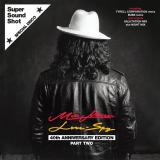
The first chapter of our 40th Anniversary celebration brought “Love Spy” back to vinyl and invited a new generation of producers to look at Mike Mareen’s 1986 classic from their own perspective.
Part 2 continues the story, but there is no reason to tell the same tale twice.
This time we reach once again into the original 1986 package and bring back the “Salutation Mix”, pairing it with two completely new remixes created by two remarkably colourful personalities from today’s European electronic underground.
And colourful is definitely the right word.
The first comes from Tyrell Corporation.
Behind that name stands Martijn Hoogendijk, better known to most electronic music heads as Alden Tyrell.
For almost three decades, Tyrell has been one of the most distinctive characters of the Dutch electronic scene. His musical world has moved freely between Italo Disco, electro, techno, acid, house and EBM, always with an obvious fascination for machines, analogue synthesis and the raw energy of early electronic dance music.
His relationship with Italo is certainly not a recent fashion. One of his earliest Alden Tyrell releases, “Love Explosion”, appeared on I-F’s Viewlexx label back in 1999, at a time when only a relatively small group of Dutch fanatics were already rediscovering and reinterpreting the forgotten European electronic sounds of the previous decade.
Since the early 2000s he has also been deeply connected with Rotterdam’s legendary Clone Records, not only as a producer and collaborator, but as one of its most important mastering engineers. His fingerprints can be found on an enormous number of Clone releases, including the label’s celebrated work restoring and reissuing the Drexciya catalogue. His studio tells much the same story. Synthesizers, drum machines and hardware collected over decades surround a producer whose fascination with electronic instruments started when he bought his first synthesizer in the 1980s.
For “Love Spy” he appears as Tyrell Corporation and delivers exactly what one might hope for from someone with that history: a remix that understands the original language of Italo and Hi-NRG, but speaks it with the experience of nearly three decades spent inside Dutch electro, techno and machine music.
The second new interpretation comes from France. Bubs, real name Maxime Bunel, followed a very different route.
His earlier productions grew from house, disco and French-touch influences, but over the last few years his attention has increasingly shifted toward Italo Disco, Hi-NRG and the rapidly expanding contemporary italowave scene.
In 2025 he made that commitment official by launching Filter Phaser, his own label dedicated specifically to the new generation of Italo Disco and Hi-NRG. And his “Love Spy” remix shows exactly why his name has been appearing more and more often in this scene. This one is pure dancefloor ammunition.
Bubs keeps the elements that make “Love Spy” instantly recognisable, but raises the temperature considerably. The energy is harder, the dynamics are bigger and the production has been pushed towards the sound of contemporary italowave without sacrificing the melody, drama and personality of Mike Mareen’s original. Old DNA, new blood.
The result is not an attempt to drag “Love Spy” away from 1986. Quite the opposite.
Both remixers clearly understand why the record still works forty years later. They simply approach that DNA from two different generations and two different corners of European electronic music, but with the same respect and adoration to Mike Mareen’s legacy.
The 40th Anniversary Edition Part 2 comes pressed on classic black vinyl and a special ruby-red vinyl edition.
It is also the final Vintage Pleasure Boutique release of 2026.
And somehow it feels like the right record to close the year.
Victoryland is the Brooklyn-based project of musician Julian McCamman and Dan Howard.. Their 2026 album, My Heart Is A Room With No Cameras In It, is a triumphant, despondent, and ultimately fun experimental pop-rock album. A year on, the record receives the deluxe treatment from new label home Dead Oceans. My Heart Is A Room With No Cameras In It (Deluxe) arrives December
11th 2026, on exclusive crystal clear vinyl, complete with new song “The Ugliest Girl On The Beach” and a new music video for album standout “I got god.” The sound of the album, recorded between Julian’s Bed-Stuy basement and Dan’s Williamsburg studio, is that of a bright and beaming collaboration. Blending lo-fi and hi-fi production, the songs have the glossiness of a radio-friendly hit mixed with the distortion and rough edges of a home demo. Every song keeps at least one element of the initial recording, while building around the loops and half-songs Julian scraped together. The lyrics on the record span from humorous self-aware popisms (“‘you and I’ will soon be, used to be ‘us’”) to crushing realities of bitterness (“i’ll never forgive you, that’s how I keep you close”) and abstract imagery (“mothers wave from doorways, in ostinato”), all delivered with such an immediacy and fervor that in the middle of singing along, you wonder if this guy slept much last night. Much to their surprise, My Heart’s release ushered Victoryland into a whirlwind of a year. Pitchfork praised the album’s “bright, madcap approach reminiscent of the New Pornographers’ Twin Cinema or Clap Your Hands Say Yeah’s Some Loud Thunder.” Stereogum named it their Album of the Week and proclaimed it “a surprisingly cohesive scrapbook of sounds from seemingly every corner of the indie pop umbrella.” The album also received support from Steve Lamacq at BBC 6 Music and Sian Eleri at Radio 1. After a string of sold-out shows in NYC, Victoryland later joined LCD Soundsystem on their North American tour and performed at Pitchfork London, Pitchfork Paris, among other festivals across Europe
DJ Support: Sam Don, Severino Panzetta (Horse Meat Disco), Chris Howler, Sean Johnston, Bill Brewster, For Mankind, Craig Thompson, Andy Taylor, Massimiliano Pagliara, Dean Dixon, Nathan Detroit and many more
Underground Institution Stompa Phunk Re-Launches Vinyl Label with Raw, Chi-House-Inspired Energy. After three decades of defining the UK’s underground club landscape, legendary Brighton party collective Stompa Phunk is officially moving from the dancefloor to the wax with the relaunch of Stompa Phunk Records Inc.
The Heritage: From The Warehouse: The releases will directly honour the roots of house music, a genre born in 1977 at Chicago’s legendary nightclub, The Warehouse. As that scene matured, a grittier, faster, and more experimental counterpart emerged. Defined by an uninhibited, bass-heavy style, it was a movement driven by local innovators who pushed drum machines and synthesisers to their breaking point... It wasn't just a genre; it was a collision between pure imagination and raw machines. A true "sound klash" transformed the local underground subculture into something global...
Release 1: You Had It (Edit) / Music Got (Dub): Capturing the exact spirit of rough, tape-spliced dubbed cuts. The 12-inch from SP resident Sound Klash pairs a vintage production ethos with old hardware pushed to its limits...
The Philosophy: This EP perfectly mirrors the exact philosophy that has fueled Stompa Phunk’s dancefloors since 1996: uncompromising electronic music rooted in heavy sample-delia, jackin' bodies, Acid energy, disco-dub mentality and second-hand technology. Jackinacidiscotech!
Hell Yeah welcomes back Tonarunur for an EP of future-facing Balearica straight out of his native Iceland. Someone Else EP is drawn from vast production archives and reveals two distinct sides to his sound, with artwork from Planet Luke.
Tonarunur last appeared on the label with a track for the Buena Onda compilation in 2021, and has also released his unique blend of electronic boogie and space disco on Citizen of Vice, Eskimo Recordings and Whiskey Disco. Whether laying down horizontal Sunday sounds or soundtracking the dance floor, he always brings a strong sense of personality.
Both A-side cuts feature Norway's bass player Arctander, starting with opener 'Someone Else' is a lithe mid-tempo groove with a playful, wriggling groove and sun-dappled 80s keys. The blissful 'Dawn' unfolds slowly through liquid rhythms, gently broken beats and cosmic melodies awash with good vibrations. On the flip, 'Lundur 1' drifts into the stars on shimmering pads and floating grooves and is romantic yet melancholic, before 'Lundur 2' closes with a more grounded rhythm and wispy melodies tracing patterns across a starry night sky.
Equal parts sunset escapism and after-hours introspection, Someone Else EP drifts effortlessly between the club and the cosmos.
MTMS2 - Mystica Tribe Meets Scopeotaku 2 Following the duos first release - Mystica Tribe Meets Scopeotaku on 13/Silentes. Mystica Tribe and Scopeotaku push their collaborative adventures further with MTMS2. Creating psychedelic dubs with rich textures, tape saturation and echo chambers. Utilising acid synths combined with deep dub rhythms and melodic electronics evolving into a new dimension of dub. Deep psychedelic electronic steppers blend with bass pressure and heavyweight rhythms drifting into techno, ambient and mutant dub. Creating a sonic adventure where tradition is often pushed into unfamiliar territory. Two distant worlds, one frequency. Nine tracks for the mind and body. Deep dub frequencies. Psychedelic textures. Heavyweight rhythms. —————————
Mystica Tribe is the musical alias of Tokyo, Japan based producer Taka Noda. Drawing on a wide range of influences from dub, soul, bass and rhythm & blues. Mystica Tribe has been developing a very distinctive sound that exists in a weird freaked out zone, between dub and techno. Noda is especially interested in deep psychedelic music and this is reflected in his productions. Which are equally suited for late night listening sessions or on bent broken dancefloors.
Scopeotaku is the alter ego of Scott Prentice, a Glasgow, Scotland based artist. Scopeotaku has experimented with audio since purchasing a sampler and a four track cassette deck many many moons ago. His love for left-field dub and eccentric sounds have led him to create a variety of output, from industrial ambient, illbent electronics to mutant dub.
Rick Silver returns with “Value Pack,” a fast-paced house/techno release built around heavy grooves, acid-driven synths, lo-fi textures and distorted production. Raw and energetic, the tracks combines warehouse-ready intensity with gritty, analogue-inspired sounds, delivering a hard-hitting cut designed for late-night dance floors.
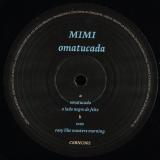
Casabianca returns with Omatucada, the second vinyl release from Zagreb-based DJ and producer MIMI.
Omatucada is a journey through percussive sampled rhythms, combining live-recorded instruments, vocal textures, and analog synths across four original productions.
The title track, "Omatucada" opens with a rolling tribal beat and hypnotic vocal fragments, revisiting one of MIMI's earliest productions, originally written many years ago.
"O Lado Negro De Felix" ventures even deeper into dark tribal grooves, suggesting that there is always some light within the darkness, and vice versa.
The B-side moves into more cinematic territory. "VCM" builds driving momentum, drawing heavy influence fro
Presenting ‘Nothing Is Lost’, A.Morgan continues his journey through high pressure, pummeling techno, this time on SIDE B. Proving the degree of his effect as well as his stylistic versatility, Morgan pulls different influences from afar to craft a record that pushes forward with a nod to the past through three powerful cuts and a remix by Yant. The EP starts with ‘Sucker Love’, appropriately named for its commanding rhythmic section while bleeding almost into house music with a hypnotic vocal loop. The track oscillates between stabs of cold dissonance and an extraverted flare, creating a natural intrigue throughout its progression. The follow up is Yant’s remix, a hyper-focused take on ‘Sucker Love’ with significant weight in the low end. Thundering percussion widens the dimension of the track, flicking through a brutal synth sequence over slithering hi-hats and claps. Yant reaffirms his understanding of uncompromising club music with this remix, creating a tunneling track fit for a concentrated peak-time set. Highlighting the B-side, A.Morgan takes back control of the record with the ‘Cloudfall’. Undulating the bass of the track, Morgan sneaks in a lurking melody that detunes throughout his arrangement, creating increasingly destabilized moments to pack intrigue in the cut. White noise whips around the production to create a storm of ambiance over a violently binary lead, underlining the undeniable effect of minimalism in techno. The EP concludes with the title track ‘Nothing Is Lost’, combining instructive percussion, biting chords, and cold vocals - as is Morgan’s custom. Here, the British artist brings a harmonic quality with the synth work that comes and satisfyingly completes the project. The embrace of the chord selection immerses the listener over a highly tuned rhythm, pushing ‘Nothing is Lost’ into a state of euphoria for the conclusion. Words by Noah Hocker
Sciahri and Sublunar are truly proud to present the next chapter in the label's journey: Hadone's debut album, Kept What Remained. Known as the co-founder of TSSRCT alongside UFO95, and following his contribution to Veil Of Echoes II, Hadone returns to Sublunar with a body of work that fully showcases the breadth of his artistic vision. Throughout the album, he reveals an impressive ability to merge emotional depth, powerful rhythms and sophisticated sound design into a deeply personal and unmistakable sonic identity, further establishing himself as one of the most compelling artists in today's techno landscape. The journey begins with the ambient title track, "Kept What Remained", an atmospheric introduction that sets the tone for everything that follows. It seamlessly transitions into "It Was Never Really Gone", a deeply emotional piece with a memorable arrangement that lingers long after it ends, before "Red Hour" raises the intensity through driving percussion and a tougher sonic approach. The B-side opens with "The Enemy Within", an explosive combination of intricate sound design and powerful rhythmic structures. It is followed by "Claim Your Due", a more submerged and atmospheric composition whose versatility makes it equally effective across different moments of a set. On the C-side, "Nobody Hears The Warning" gradually builds momentum through hypnotic energy and striking production, leading into "A Gentle Kind Of Madness", where beautifully crafted synth work and meticulous arrangements create one of the album's most distinctive moments. The final side begins with "A Dog That Learned To Speak", blending contrasting synth textures and detailed effects into a constantly evolving soundscape. The album concludes with "The Quiet Refusal", an epic and powerful closing statement that perfectly brings together the emotional intensity, coherence and artistic vision of the entire record. With Kept What Remained, Hadone demonstrates that innovation doesn't require sacrificing identity. Instead, he delivers an album that is bold, emotionally resonant and unmistakably his own, confirming his place among the leading voices of contemporary techno.
Techno mainstay Gary Beck drops hugely sought-after cut 'Hopper' on SHDW's Mutual Rytm sub-label Spectra, with remixes from KiNK.
Glasgow-born Gary Beck is a primary figure in techno and has been for well over a decade. Dropping seminal
underground classics and cultured full-lengths on an array of leading labels, as well as his own BEK Audio imprint,
he has also led the way as a revered DJ as his legacy continues to build. Now, adding to his standout 'Upside
Criminal' EP as well as his well-received track 'Fold' on the 'Federation Of Rytm III' VA, he returns with a record that
has often featured in both his and Mutual Rytm boss SHDW's sets, stepping out on the label's Spectra series with
a cut that has long been sought-after by those who know.
A spontaneous studio moment turned club weapon, the timeless 'Hopper' merges a syncopated disco bassline with
subtle nods to funk and classic dancefloor energy. It's one of those tracks that lingers in your head long after the
night ends - a pure embodiment of Beck's raw energy and production finesse built on an infectious groove full of
contrast and character.
Bulgarian synth wizard, hardware genius and tireless innovator KiNK delivered Spectra's inaugural release, so he
lands as the perfect person to remix. His first interpretation stays close to his roots with a house-leaning, slowed
down take that channels warmth and groove in equal measure. On the B2, however, he flips the script with a high
octane fusion of techno and UKG. It's a peak-time anthem engineered to ignite dancefloors and closes out a
standout EP with the third release in the Spectra catalogue.
Gary Beck 'Hopper' drops via Mutual Rytm Spectra on 20th June 2025.
Ribe & Roll Dann serve up potent techno on Mutual Rytm with 'Virtus Occulta'.
Built around concepts of unacknowledged work and enduring merit, the release marks their first EP on SHDW's widely
respected label.
Based in Toledo and Madrid, Ribe & Roll Dann are exciting residents at Laster Madrid and Lanna Club, two of Spain's leading venues. Emerging as driving forces in their national techno scene, they have also made an impact on the global landscape, making wider moves through collaborative releases on Klockworks, and individual outings on a number of other influential labels. Having previously featured in the label's Federation of Rytm IV compilation, the pair make their full EP label on SHDW's Mutual Rytm imprint to open March with a deep dive into their expansive sound.
Opener 'Sub Terra' is a pure club tool that is direct, physical and rooted in the underground with a seriously heavy low end. 'Extra Lumen' is more restrained but still built on a steady, forceful rhythm with controlled energy that prefers to operate in the shadows. 'Ars Non Placens' stays true to the idea that music is not made to please, but to exist on its own terms with hunched drums and dubby undercurrents. Next, 'Meritum Negatum' fizzes with static electrical charge and minimal drum funk and is a direct reflection on overlooked skill and unacknowledged work, before closer 'Virtus Persistens' delivers a continuity and a steady pulse rather than an explosive ending, keeping you locked throughout.
In addition, three digital bonus cuts come alongside the vinyl package. 'Labor Inauditus' speaks to hours of technique, production and booth experience that remain invisible. Next come the taught, rubbery rhythms and unrelenting atmosphere of 'Silentium Testium', while 'Sine Aplausu' - which means without applause - brings a ghostly late night vibe that you will never want to end.
Some records never really disappear. They wait for the right moment to be rediscovered.
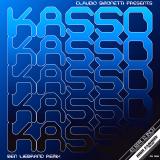
Originally created in 1981 by legendary Italian composer and keyboardist Claudio Simonetti alongside producer Giancarlo Meo, Kasso emerged at a pivotal moment when disco, jazz-funk and electronic music were beginning to collide, and a distinctly Italian dance sound was taking shape.
Built around Simonetti’s unmistakable piano and keyboard work, Kasso developed a significant following across Europe, particularly in France and Italy. The project would produce cult favourites including “Kasso”, “Key West”, “One More Round” and “Walkman”, the latter becoming a major French success, reportedly selling around 500,000 copies.
Kasso’s influence travelled considerably further. Finding its way into the underground clubs of New York and Chicago, with original material receiving the remix and edit treatment from John “Jellybean” Benitez and, later, house music pioneer Frankie Knuckles.
Behind it all is Claudio Simonetti, a musician whose extraordinary career stretches from European disco to some of cinema’s most iconic soundtracks as keyboardist and composer with Goblin, including Deep Red, Suspiria and Dawn of the Dead. Now, more than four decades later, Claudio Simonetti’s Kasso returns.
Unlocking key elements from the original production, including Simonetti’s distinctive piano, the music has been placed in the hands of another European dance music pioneer: Ben Liebrand.
A hugely influential DJ, producer and remixer, Liebrand’s groundbreaking In The Mix radio shows and legendary Grandmix series have helped shape European DJ culture, while his extensive remix catalogue stretches across artists including Bill Withers, Phil Collins, Sting, Salt-N-Pepa and countless others.
His new interpretations of Kasso respect the musicianship and unmistakable character of Simonetti’s original while giving it a fresh, contemporary dancefloor life.
And this is only the beginning.
Kasso launches a series of four new singles, culminating in Kassologie, a definitive collection bringing together the essential Claudio Simonetti recordings alongside new remixes and updates. And all vinyl will be released in a colored-vinyl edition also!
Over forty years after it first emerged from Italy’s extraordinary early-’80s dance scene, Kasso is ready for another round.
Moroccan-born producer Reda Senhaji, better known under the name Cheb Runner, presents 80K, the second installment in Beat Machine’s TERRA TEMPO series. A direct tribute to the cultural heritage of the Souss Massa Darâa region, the release reactivates ancestral rhythms and translates them into a forward-looking electronic language rooted in place, memory, and physical sound.
Drawing from traditions such as Ahwach, Gnawa, and other interconnected practices from the Souss region, the EP preserves original rhythmic skeletons while reimagining them through modern production and club-oriented structures.
Across six tracks, traditional instruments and electronic elements collide fluently, where the 808 functions as a structural force rather than an accent. From the rolling pulse of Iznagn Engines and the evocative contours of Azn Oudrar to the spiritual resonance of Gn-Awa, the B-side expands the journey with the sub-heavy Afouss Adar 808, the atmospheric Tarwan Ganga, and a reinterpreted Gn-Awa by Guedra Guedra, layered with intricate textures and low-end pressure.
Moving between bass, world, and electronic territories, 80K reflects a deliberate balance between preservation and transformation. Music that carries ancestral rhythms into new listening spaces, bridging generations, cultures, and sonic worlds within a single, cohesive experience.
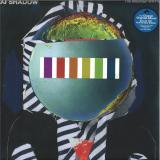
Celebrate a decade of a modern masterpiece. Originally released to critical acclaim, DJ Shadow’s The Mountain Will Fall gets a definitive reissue for its 10th Anniversary. Featuring the explosive, Gold-certified hit "Nobody Speak" featuring Run The Jewels, this album remains a towering achievement in instrumental hip-hop and experimental electronic production. This special anniversary edition is pressed on 2 x 140g classic black vinyl, delivering the rich, warm analog sound the album deserves. The release is housed in a stunning gatefold jacket showcasing brand-new artwork by the renowned artist Paul Insect, complete with premium spot gloss hits that make the visual design pop.
SILVI005 welcomes Brizman back with Fall Down On Me – a vibrant, groove-driven EP that perfectly captures his signature sound. Built around rolling rhythms, warm textures, and hypnotic movement, the title track delivers the kind of infectious dancefloor groove Brizman has become known for.
The release also features a stunning second original production with Shigar, where beautiful piano arrangements blend effortlessly with Brizman's refined grooves, adding emotional depth while staying true to the EP's understated club aesthetic.
On remix duties, the package brings together two distinct interpretations. Minimal house legend Jay Tripwire delivers his unmistakable touch with a deep, sophisticated rework, while rising talent Danny David brings a fresh perspective to the release with a forward-thinking interpretation.
From the original productions to the carefully selected remixes, SILVI005 is a special release that celebrates timeless grooves, musicality, and the unique sound Brizman continues to shape on the dancefloor
Since the early 2010s, photographer and producer Izaak Schlossman has been surreptitiously using the Topdown Dialectic moniker to frame his most enigmatic and most psychedelic productions: faceless pure sound experiments that ogled dub and techno archetypes from somewhere far beyond the veil. This generous 2LP collection surveys over a decade of persistent activity, pulling together recently unearthed gear written between 2013 and 2016 (the same time period as the iconic Peak Oil trilogy) and muddling it with more contemporary material. It's a rare chance to fully comprehend the slow, measured evolution of the project: its genesis as a method to fractalize various bass music frequencies with suggestion rather than over-compression, and its ongoing advancement through sensitively finessed ASMR ambiance towards spangled neo-psychedelia.
So it's no surprise that the lengthy suite of five-minute snapshots was initially devised while Schlossman was preparing for his first ever Topdown Dialectic live appearance in 2025. A hazed early morning, open air performance that's still lodged in the memory banks of anyone who witnessed it, the set provided the narrative anchor for the album, blurring the past and present and reaching tentatively into the future - ideal material for audiences whose brains are fully plasticized. The tracks, while divided, sound as if they're breathing over and into one another; beats and phrases materialize and dissolve just for moments, leaving the mind to fill in the gaps with any available sonic material. What might reflect the bright neon light of acid house at first soon embodies the flicker of a candle over a desk of drum machines in a Midwestern basement, or the first blush of sunlight over a tiny campground as subwoofers creak in the distance.
It's music that asks the listener to be involved in the creation itself, projecting their own shapes on the negative space, their discreet fantasies on haunted stretches of near silence. Schlossman's identity was never the point, Topdown Dialectic was always a scrying stone intended to divine far more personal revelations.
The final chapter of The Third Room's curator-led series is shaped by GiGi FM, an artist whose work moves fluidly between club functionality, emotional storytelling and immersive sound design. Through her productions and performances, she has developed a distinct language where rhythm, atmosphere and movement exist in constant dialogue. For the closing chapter, the focus lies on cohesion. Bringing together artists connected through a shared sensitivity for groove, detail and space, the release unfolds through percussive structures and atmospheric elements that move with clarity, depth and intention. The Half Bearded Man by Fergus Sweetland opens the record. A rough yet detailed rhythmic framework, syncopated percussion and a rolling bassline create forward motion, while softer elements and a subtle vocal layer introduce a contrasting sense of lightness, drawing the listener into the track. On Shark Attak, D-Leria places percussion at the centre, but with a more restrained approach. Polyrhythmic bleeps and high-frequency sweeps weave around the groove, maintaining depth and tension without becoming intrusive, giving the track a quiet but persistent drive. The B-side opens with one of its defining moments: Anukari, a collaboration between Efdemin and GiGi FM. Bringing together two distinct approaches, the track unfolds as a layered and atmospheric piece: detailed percussion, connecting textures and subtle melodic fragments create a sense of depth that feels both modern and slightly otherworldly, while remaining inviting and grounded. Closing the record, Even by Fireground reduces the elements further. Warm chords and a restrained rhythmic core create an open, enveloping space, balancing softness with tension and allowing the track to unfold with a quiet sense of momentum. Across all four tracks, the release remains tightly cohesive: built on groove, space and carefully placed detail. As the final entry in the series, it shifts the focus from structure to flow, offering a closing chapter that feels immersive, connected and complete. A1 Written and Produced by Fergus Sweetland | A2 Written and Produced by Giuseppe Scaccia | B1 Written and Produced by Giulia Fournier & Philip Sollmann | B2 Written and Produced by Angela Dragonetto & Danielle Paduano Mastered by Ahmet Sisman (The Third Room Studios) Artwork by Charlotte Ernst Design by Daniel Bornmann (STUEDIO.XYZ) Distribution by Clone Pressing by Matter Of Fact
The fifth chapter of The Third Room's curator-led series is shaped by Alarico, one of the defining voices of a new generation pushing techno into faster, sharper and more rhythm-driven territory. Through his productions, DJ sets and close ties to a network of like-minded artists, he has helped shape a contemporary sound defined by tension, detail and forward momentum. For his curation, the focus lies on connection. Bringing together artists operating within a shared sonic language, the release reflects a generation where precision, movement and emotional depth exist in constant dialogue. The record opens with Connection, a first official collaboration between Yanamaste and Alarico. The track captures the intersection of both artists' approaches: Yanamaste's intricate and distinctive synth work meets Alarico's driving, forward momentum. Fast, pulsing and tightly controlled, it unfolds through cycles of tension and release, stripped back to its essential elements. On Crimson Leaf Minstre, Toru Ikemoto builds a detailed and contrasting sound palette. Bright, delicate elements interact with darker stabs that disrupt and reshape the rolling bassline, creating a sense of movement that feels continuous rather than moment-based. The track leans into depth and variation, balancing clarity with a more mysterious tone. Blue Lights by Lea Occhi & Amotik shifts into a more groove-led space. What begins with a functional framework gradually opens up - subtle chords and restrained vocal elements add texture and attitude without overtaking the structure, resulting in a track that feels both light and deep. Closing the record, IB1809 sees Alarico return with a defining statement. Reduced but highly present, the track builds around a strong rhythmic core, where chords, melody and vocal fragments interlock with precision. There is a sense of contrast at play - melancholic yet driven, vulnerable yet forceful - culminating in a moment that feels both functional and expansive. Across all four tracks, the release remains tightly focused - fast, dynamic and cohesive, with a strong emphasis on movement and detail. As the fifth entry in the series, it captures a distinctly modern strain of techno, where emotional nuance and rhythmic intensity are no longer in opposition, but fully aligned. A1 Written and Produced by Irakli Danelia & Alarico Zucchi | A2 Written and Produced by Toru Ikemoto | B1 Written and Produced by Lea Occhi & Anil Chawla | B2 Written and Produced by Alarico Zucchi Mastered by Ahmet Sisman (The Third Room Studios) Artwork by Charlotte Ernst Design by Daniel Bornmann (STUEDIO.XYZ) Distribution by Clone Pressing by Matter Of Fact
Fred Everything is on an impressive streak right now, having just released a solo retrospective album on 20:20 Vision and the much-lauded ‘8 Days’ collaboration album with Atjazz.
On this first release for Winding Road Records, Fred teams up with a fellow Montreal musician Teuteu to deliver the lush deep house of ‘Arrêt Infini’.
There are four interpretations of the track, each showcasing Fred’s crisp dancefloor-focused production and Teuteu’s keyboard mastery. From the cinematic punch of Part 1, and the deep uplifting groove of Part 2, to the blissed-out ambience of the Reprise, and the out-there dubbiness of ‘Rhythm & Bass’. All filled with warm chords, soaring strings, and squidgy basslines, but coming from a different angle.
Another jewel in Fred Everything’s expansive discography, and another choice Winding Road Records release.
NOFEAR! Musik presents its second vinyl release, bringing together two of the label's most celebrated tracks alongside a fresh reinterpretation of a true classic.
The A-side features Alegría and Fuego, two tracks by Head Horny's & K-Style that became standout releases on the label, receiving strong support from DJs and dancefloors across Europe.
The B-side is dedicated to Funky Feelings 2026, a modern rework of one of Head Horny's classic productions. Together with Carlos Perez and K-Style, the original idea has been updated into two complementary versions: a driving hardgroove-techno interpretation and a more old-school klubb-oriented mix.
Pressed on 180g vinyl, NFV02 reflects the sound and identity of NOFEAR! Musik: energetic, groove-driven and built for the dancefloor.
Exos inaugurates the new sub-label on SHDW's Mutual Rytm with four 90s techno cuts, with offshoot imprint X building on the main imprint's DJ-friendly tools to delve deeper into a broader spectrum of electronic music.
Founded in 2022, SHDW's Mutual Rytm label has quickly become one of techno's most supported labels, with wide-reaching love and well-earned hype following a series of carefully curated VA offerings and solo EPs from a wealth of the scene's best. Continuing to push the pace, with more records capturing high-quality, fresh soundscapes, April brings a new project to the mix with the launch of a new sub-label X, with techno pioneer Exos drafted to deliver the first instalment.
Hailing from Iceland, the Planet X boss is a master of crafting perfect dancefloor weaponry. Over the last twenty years, his high-octane sounds have come via vital labels like Figure and X/OZ, never failing to make an impact with both DJs and dancers. Whether dubby or hard, his techno is always authentic and channels the purity of the 90s sound, and he brings this signature sound to four fresh productions across his 'Infrared' EP, marking an impressive debut for both label and artist.
The title cut 'Infrared' opens up the package in style and showcases a track that looks set to be a go-to anthem for many in the months ahead. With searing synth lines and drilling bass, the blistering production delivers a thrilling, high-impact techno sound that will devastate the dancefloor. The well-designed 'Kaldur Klaki' ups the ante even more with tightly coiled loops of drums, rusty hi-hats and stuttering synth lines that canter along with a muscular feel. 'The Bad' is twitchy and paranoid, anxiety-riddled techno that is perfect for dark warehouses and freaky dancers before digital bonus 'DS4BR' lands with a more stripped-back aesthetic with dubby undercurrents and static electricity fizzing across the face of the cut.
Each of the releases on Mutual Rytm X will be available on limited edition, coloured 10" vinyl, hence the Roman numeral X, and Exos' 'Infrared' EP kicks off the series on 19th April ahead of a new wave of killer releases scheduled across 2024.
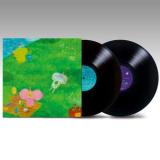
Katamari Damacy became a game beloved by fans across the world with its remarkable action mechanices of rolling your katamari and collecting items to become large enough to form a star for the cosmos. A vinyl pressing of Katamari Fortississimo Damacy, a collection of songs that brought the unique world of Katamari Damacy to life! Starting with "Katamari on the Rocks", and following up with "The Na-Na Song", you can feel the very soul of Katamari Damacy with every popular song. Plus, get a bonus track that was only featured in the trial version, "Katamari on the Rocks (Beta Version for Trial)"! Boasting a soundtrack that is packed with distinctive vocals and a broad range of musical styles, experience music that truly expounds on the feeling of Katamari Damacy at its best. Product shown is a luxurious gatefold sleeve housing two records inside. The outer packaging features an original illustration by Keita Takahashi, the creator of the Katamari Damacy series and art director for the first Katamari Damacy game! When you think of Katamari Damacy, you think of the colorfully chaotic artwork that comes hand in hand alongside it, and this packaging offers a high-quality, must-have item for a fan"s collection.
Kid Katana Records teamed up again with KOEI TECMO GAMES and Team NINJA, to bring you the NINJA GAIDEN 2 Black OST on vinyl for the first time.
This physical edition is a 2LP designed in close relationship with the game's creative team:
2-colored vinyl with a unique “corona” effect that is reminiscent of “Sumi (black ink)”: handmade vinyl effect melting white and black colors to shape a unique vinyl color on each product, evoking Ryu Hayabusa style.
Handpicked curation of the game music, mastered for this specific vinyl edition
A Gatefold created for this specific vinyl
Kid Katana Record produced this album with supervision from Koei Tecmo Sound, who composed the original game music.
The latest game in the stylish Katamari Damacy series in which you roll your katamari and collect items to become large enough to form a star for the cosmos, Once Upon A KATAMARI, is getting its own vinyl record release called Katamari Once Again! A total of 23 wondrous songs have been personally selected by the game"s sound composer, Yuu Miyake. The album features BGM stage music in addition to songs performed by an all-star lineup of various artists such as Saya Asakura, Amane Uyama, KAF, Clémentine, Kocchi no Kento, Masashi Sada, San Francisco Boys Chorus, Katamari Damacy feat. suis from Yorushika, Daoko, chelmico, Kenji Niinuma, Saki Hanami, Shigeru Matsuzaki, and Yakushimaru Etsuko. Once Upon A KATAMARI immerses you in the colorful worlds and eras of time and history. Product shown is a luxurious gatefold sleeve housing two records inside. The cover was designed by Kazuki Takakura with supervision from Yuu Miyake, the game"s sound composer. When you think of Katamari Damacy, you think of the colorfully chaotic artwork that comes hand in hand alongside it, and this packaging offers a high-quality, must-have item for a fan"s collection.
Naarm/Melbourne-born, now Berlin-based, Willem shows us the house side of his work. Techno-leaning grooves lay the foundation of the record, while leaving room for textures that drift into the realm where dub techno meets house.
On the B side, we hear the debut release from Naarm/Melbourne-based justjoe. His dreamy, pad-heavy productions round out the release perfectly, riding a line of tech house-inspired drums whilst holding a mood that taps into those deep, inward states.
Explore the vibrant sounds of Bearface DJ with the debut installment of "Remakes and Raw Cuts Vol 2", a fresh vinyl series released on Beartone Records. Veteran producer Raj Panasa, aka Bearface, boasts a multi-decade catalog of feel-good, eclectic music, renowned for his distinctive blend of house, disco, Latin, and Italo influences.
This EP showcases Bearface’s versatile production style through expertly crafted edits and remakes of some of his favourite tracks, perfectly capturing sunny, dancefloor-ready vibes. Whether you're a DJ seeking energetic edits or a collector looking for a soulful addition, this release delivers sunshine and positivity in every groove.
Released in the winter of 1995, Dah Shinin’ introduced Smif-N-Wessun as torchbearers of the gritty, sample-driven East Coast sound that defined a generation. Backed by Da Beatminerz’ haunting, jazz-laced production and supported by their Boot Camp Clik brethren, Tek and Steele delivered a debut that was as raw as it was revolutionary — capturing the essence of mid-90s Brooklyn.
Now, 30 years later, Dah Shinin’ returns in its most complete form. The 30th Anniversary Definitive Deluxe Edition brings together for the first time in one place, the full original album, two essential remixes "Wrekonize" and "Sound Bwoy Bureill" and rare material, including the long-unreleased “Nuttin’ Move But Da Money,” finally available officially after years on white label.
Pressed across three LPs and housed in a premium tri-fold jacket featuring original artwork, newly commissioned liner notes, period photography, and archival content, this expanded edition stands as a tribute to the album’s creation and legacy. From the underground anthem “Bucktown” to the crew showcase “Cession At Da Doghillee,” every track celebrates the timeless sound that made Dah Shinin’ a classic.
Following their acclaimed collaboration with Mad Professor, Sensible Soccers return to 8mm Records with a brand new remix EP featuring three true cult producers: Tolouse Low Trax, Danilo Plessow and Peaking Lights.
Opening the record, Tolouse Low Trax reshapes “Efeito Zandinga” into a mesmerizing journey connecting the hypnotic afrobeat of Fela Kuti with the raw pulse of Detroit techno. Ritualistic, immersive and deeply transportive.
On “Saravá”, Danilo Plessow turns the original track into a powerful acid house banger reminiscent of his recent Rude Futures productions, while preserving the warm and organic sensibility of Sensible Soccers. The result is an explosive blend of adrenaline, groove and uplifting energy, destined to set summer dancefloors on fire.
Closing the EP, Peaking Lights deliver a stunning reinterpretation of “Rosa Mota”, elevating the post-dub and psychedelic side of Sensible Soccers into a cosmic electronic voyage of remarkable depth. A simply beautiful finale that pushes the band’s sonic universe even further into new psychedelic and electronic territories.
Three remixes, three unique visions: a powerful meeting point between psychedelic dub, afro-futurism and forward-thinking club music.
With BALADA, MoBlack continues this journey through a collection of tracks rooted in Afro House rhythms and Brazilian-inspired influences. Across four distinct productions, the compilation explores the meeting point between percussive energy, expressive vocals and melodic detail, highlighting artists who approach the sound from different angles while sharing a common sense of groove and atmosphere.
Subtle Beginnings is the second of the ReKab albums originally released on Móatún 7 to be reissued on vinyl for the first time by System One. Analogue Isolation came in May & sold out everywhere almost immediately
Label head D. Howard first came across ReKab while deep diving through Bandcamp, and like many lovers of deep, late night, soulful electronic music immediately fell for the emotional pads, pristine melodies & immaculate productions, simultaneously summoning up the essence of early 90s electronic while sounding thoroughly contemporary.
They connected and a plan hatched to make the Móatún 7 albums available on vinyl for the first time, something that avid record collector James was delighted about. Unfortunately James sadly passed away late August last year, but following conversation with the family & friends of James, it was decided to honour his wishes & make the albums available on vinyl & across all digital services once again. Proceeds after costs will be paid through to the trust fund set up to support James’ surviving son.
System One is a new label dedicated to soulful electronic music, late night grooves & intergalactic beats, drawing its inspiration from the early 90s techno & ambient sounds of Uk, Frankfurt, Detroit & beyond
The undisputed Godfather of Boogie, Leroy Burgess’s Logg project is his grand masterpiece.
The self-titled LP, originally released on Salsoul in August 1981, is one of the greatest albums of the post-disco era. It’s one of Be With’s favourite ever LPs and so it’s a complete honour to be giving it our reissue treatment. With all the touchstones of Burgess’s finest work - breezy grooves, undulating synths, funk-drenched bass and life-affirming lyrics - delivered with gospel-derived vocals and harmonies - it’s a record to uplift both body and spirit.
Already a cult soul figure as lead singer of seminal vocal group Black Ivory, Leroy Burgess cut his teeth as arranger, vocalist and songwriter with legendary producer Patrick Adams on essential late-70s projects like Phreek and Dazzle. He went on to define the essence of “boogie”: the vibrant underground dance sound that stood in contrast to commercial disco. With its reduced speed - mid-90 to under 110 BPM - the cool boogie of Burgess has the disco bounce, just more laidback.
All six tracks here could have been stand alone 12" hits. Indeed, some of them were. But together they are also an incredibly cohesive album, where all the compositions are deeply relevant to each other. In short, it’s essential; a thrilling showcase for Burgess’s finest arranging and production work - with his vocals at their euphoric peak alongside the inventive rhythm section of Aaron (Sonny) T. Davenport on drums and James Calloway on bass.
Opener “(You’ve Got) That Something” is a balmy sunshine groover with an insistent chorus whilst the timeless vocal of “Dancing Into The Stars” - married to percolating synth and airtight drums - showcases the chemistry between Burgess and the rhythm section.
The fusion of funk and gospel-influenced harmonies which propels “Something Else” is remarkable - deep, joyous and bouncy. Infamously mixed by Larry Levan, “I Know You Will” is an easy glide, all rollicking electric piano underpinned by a precise and relentlessly upbeat groove. “Lay It On The Line” radiates smooth, understated brilliance, elevated by interstellar keys and finally album-closer “Sweet To Me” is a chilled-out gem of profound soulful elegance.
Logg has long been a hit with the likes of Kenny Dope and Dam-Funk whilst, in the last decade, MCDE and Harvey Sutherland have routinely cited it as a huge influence. Accordingly, finding original copies on vinyl at affordable prices has been a thankless task. This fresh Be With reissue ensures this legendary record now sounds, looks and feels as sensational as it deserves to.
Mastered brilliantly by Simon Francis, cut by Pete Norman and with lovingly reproduced artwork, we think this is a reissue that does justice to this classic LP.
2026 Repress
Efficient Space honours the memory of producer and MC Ali Omar with Hashish Hits, a posthumous selection from the dub rebel’s self-released discography.
One of ten children in working-class Liverpool, Omar drew deep influence from his father's Arabic heritage—a thread central to his identity and sample origins. After art school and a spell clubbing during Manchester's halcyon days, he relocated to Sydney, where he cofounded the blunted downbeat duo Atone with fellow British expatriate Andy Fitzgerald. As an MC, he infiltrated the city’s house, dub, jungle, and bass circuits, becoming a regular fixture at the Bentley Bar, where he commanded the mic with his versatile, rumbling baritone and charisma.
Freakishly talented in the studio, Omar was a pioneer of the Akai sampler and Atari, deftly recording live sessions straight to DAT. Drawing on industry insights from his sister, Merseybeat firebrand Beryl Marsden—who supported The Beatles on their final UK tour and was signed to Decca and Columbia—the non-conformist sought to build a self-sufficient business model. Between 1998 and 2004, he independently issued four albums on CD through his Hashish Studios imprint, hustling copies directly to local record stores and live shows for instant returns, even hand-sewing screen-printed hessian sleeves for his final release.
Uncompromising in his principles and refusing to suffer fools or charlatans, Omar relished the opportunity to collaborate with those who embodied the same spirit. Hashish Hits offers a snapshot of his inner sanctum—Fitzgerald on the opening track's billowing smoke stacks, the serpentine vocals of Gina Mitchell and the magic hands of mixer Louis Mitchell on 'On Release,' and Wicked Beat Sound System’s Kye on 'Poor Man Beggar Man Thief'. Meanwhile, 'Suicide Bomber' smoulders with the tension of a lost Muslimgauze relic, as the instructional 'Roll Up' and 'The Last Straw' spiral deeper into Omar’s signature production vortex— where space stretches in slow motion and walls reverberate with ricocheting delay.
A true icon of Sydney’s underground scene, the larger-than-life Omar passed away on 23 June 2009 after a valiant battle with cancer. He is remembered for his assertive spirit, larrikin humour, wild anarchic personality, and enduring mantra: “Love and live your life”.1
Hot on the heels of the massive Grant Dell release, GEMS Delivers another slice of underground house excellence, continuing its relentless journey of showcasing both timeless and forward-thinking underground house music with a powerful new release from Gideon Jackson.
A 3 track EP featuring Helpless (Original Mix) — The standout cut from Gideon’s Outa The Blue EP (1996), capturing the raw, hypnotic energy of the era. Helpless (Freeform Mix) — A previously unreleased 1996 remix, unearthed from the vaults yet sounding as fresh and relevant as ever. Sales In the Wind — A brand new production (2025), proving Gideon remains at the top of his game with a refined yet unmistakable sound.
true underground figure, Gideon Jackson has been deeply embedded in the scene since the formative days of tech house. Renowned for his vinyl-driven approach to house and techno, Gideon blends styles seamlessly, creating a distinctive and instantly recognisable sound.
Widely regarded as one of the key pioneers of the London tech house movement, his productions helped define the genre’s early blueprint — fusing bass-heavy rhythms with hypnotic grooves. His work has appeared on respected labels including Loaded, Pagan, and his own imprint Outa The Blue.
After stepping away from the spotlight, Gideon resurfaced in 2017 with a standout podcast for Strange, reaffirming his influence and deep-rooted musical identity.
His long-awaited return to the decks came in October 2025 at Archivio presents Wiggle in New York, followed by a November appearance at Wiggle at Gaffe — marking a powerful resurgence for one of the scene’s original innovators.