Fates Warning’s ninth studio album, “Disconnected,” contain recurring images of separation and incompleteness reflective of the album’s title. “To do something similar to earlier release would have been an easy way out,” says guitarist Jim Matheos of the set. “The best thing for me to do, and the biggest inspiration, is to say, ‘Let’s do something different now and stretch ourselves in the other direction.’ ” Disconnected,” sees Fates Warning collaborate with ex-Dream Theater keyboardist Kevin Moore, as well Armored Saint’s Joey Vera on bass and backing vocals. Vocalist Ray Alder takes a more active role in the writing process for this album. Matheos, who writes the group’s music, has served as Fates Warning’s primary lyricist for years, but on “Disconnected” Alder pens the words to two songs, including the first single, “One.” Another “Disconnected” track, “Pieces Of Me,” is the first lyrical collaboration between Alder and Matheos. Throughout the band's career, Fates Warning has always cut a clear path, remaining steadfast in their vision to create inspired progressive metal. A must have for fans!
Search:the x act
N8noface is globally acclaimed as one of the most fresh and raw acts of the United States. For his debut in Oráculo N8noface presents an album where reviews some of his classic tracks exploring his most dark and minimal side, but not forgetting his unique new-punk sound for the likes of Sleaford Mods.
His proposal is extremely minimalistic but effective at the same time with that classic 90’s west-coast attitude that could remind even to the best era of Cypress Hill.
The whole thing surely deserves a place in the best vinyl collections. Presented in a one-off truly limited edition of 300 copies, lacquered pressed on 180gr. high quality solid black vinyl. All tracks have been specially restored and remastered for long cut vinyl by Daniel Hallhuber at Young and Cold Studios.
Hard to believe, but the last solo instrumental album of the Italo-Viennese Fid Mella was released 7 years ago. During this time, the beat maestro has been anything but lazy, releasing numerous projects with artists such as Crack Ignaz, Torky Tork, Kamp, Silk Mob, as well as top-notch fellow musicians from Italy. Anyone who has ever taken a closer look at Fid Mella's instrumentals knows that his music always works independently of current trends or hypes. Since the beginning of his career, he has remained unwaveringly true to his own sound aesthetic and yet never lost touch with current productions. Fid Mella's new album "Cioccolato" is also bursting with creativity and musical relentlessness but is always catchy and packed with tons of flavor.
The new album was created in the close circle of the family - a converted farmhouse functioned as a creative workshop, where all samples used on "Cioccolato" were recorded during extensive jam sessions with Mella's wife, his brother and his father. The result is 17 gourmet instrumental pieces whose musical spectrum ranges from Brazilian bossa nova lightness to syrup-soaked Texas vibes.
7" + Tape
Zur Feier des 40-jährigen Jubiläums eines der größten und beliebtesten Pop-Acts aller Zeiten erscheint mit «The Singles: Echoes From The Edge Of Heaven» genau das, worauf die Fans gewartet haben. Die limitierte 7" Vinyl-Box enthält alle 11 Singles (A- und B-Seiten) in Replika-Hüllen sowie eine Christmas Message von Wham!. Das wunderschöne, Hardcoverbook enthält Linernotes zu jeder Single, Fotos und mehr. Eine Music-Cassette mit Bonus-Mixes, ein massiver Metall-Schlüsselanhänger, eine Anstecknadel, Postkarten und ein nummeriertes Zertifikat vervollständigen dieses tolle Set. Ein Muss für jeden Wham!-Fan.
Spezielle limitierte Tour-Edition auf Pink Vinyl: Die legendäre Zusammenarbeit zwischen Meisterpercussionist Bonjo Iyabinghi Noah und Kultproduzent Adrian Sherwood mit ihrem ersten neuen Studioalbum seit zwölf Jahren.
- "A Trip To Bolgatanga is easily AHC's most accessible, vivid approximation yet of Brian Eno's fabled 'vision of a psychedelic Africa'." - MOJO****
- "An act of cultish proportions, African Head Charge have been compared to Sun Ra for their same ability to head into the unknown." - Echoes
- "Charged with positivity, the album’s a tonic for troubled times." - DJ Mag
Debütalbum der Stuttgarter Hard Rock/Metal Band Front Row Warriors. 2019 von Jay-G, (Drums/ Shining, Sharon), Elkie Gee (Gesang / Ampyre, Antares) und Sorin Badin, einem bekannten rumänischen Gitarristen (Cardinal, Samsara, Crystal Maze) gegründet. Hinzu kamen noch Richie Seibel (Keyboards/ Lanfear, Ivanhoe, Them) und Timo Michels (Bass / 5. Staffel, Pump) und Gitarrist Stef Binnig-Gollub (Septagon). Eine musikalische Reise durch die Ära des Hardrock und Metal der letzten 30 Jahre, mit herausragender Gitarren- und Keyboardarbeit und eingängigen Hooklines. Jedes Bandmitglied repräsentiert einen der verschiedenen Stile und Einflüsse, die den Sound der Front Row Warriors ausmachen. Die Band wurde 2021 vom Verband Deutscher Rock- und Popmusiker zum "Besten Hardrock-Act Deutschlands" gekürt. Die gelungene Mischung aus AOR, getriebenem 80er- und 90er-inspiriertem Hardrock und flotten Uptempo-Nummern sowie epischen Balladen findet sich nun auch dem mit Spannung erwarteten Debüt. Als Special Guest glänzt der US-amerikanische Sänger Todd Michael Hall (J. Starr's Burning Starr, Riot V) auf dem Song "Dystopian Times", für den Sängerin Elkie vom Deutschen Rock- und Popmusikerverband zur besten Hardrock-Sängerin des Jahres 2022 gewählt wurde.
Martinou lands on Nous'klaer Audio with his debut album RIFT. Emerging from a waking forest entranced by sun-rays reflected in the morning dew and the sound of rustling leaves in the rising wind. RIFT is a captivating road through the riddles of an imaginary landscape, full of noisy and organic textures bound by hypnotic and soothing melodies. From the calm opener of Absorption (Citywide) to the breathtaking Cirrus Apparition, and from the piercing tones of Velvet back to the closing act ...in all it's splendor. An album consisting of twelve tracks for every moment, a triple vinyl suited for warming up and tearing down a dancefloor, but best listened to from start to finish. Artwork by Romee van Oers. Including download code.
It is with honour & pleasure that we present to you the return of one of the finest in game! Active since god-knows-when, and equally known as artist, label owner, event promoter and all-round champion of all that’s right and proper, Semtek has cast a long shadow in the electronic underground over the past two decades.
Ever the mercurial savant, Benji distils a wide range of influences that have shaped his various endeavours on his first 12” for us: from the darkside revivalism of DJ Persuasion through to the raw productions of L.M.Y.E, and even down to his earliest productions on DBA. RAD-SEM1 is two tracks of ice-cold club cuts that capture the chilly futurism of second wave Detroit Techno, the sparser fringes of UKG and the abyssal soundscapes of late 90s DnB. But as is characteristic of Semtek’s output, always far greater than the sum of its parts.
Coming straight outta Salerno's vibrant music scene, "Amo' / Voce 'e Notte" is the first 7" single from female rap duo Zetas. Released by DJ's Choice, a partner label of Four Flies Records, it contains two songs produced bybeatmaker, rapper and producer Tonico 70, a true veteran of Southern Italian hip hop.
Both young millennials, rappers Annarella and Miriade were exposed to the world of underground hip-hop from an early age, jamming, freestyling and listening to different music than their peers. Active as a duo since 2019, they're now making their official debut with this 7", which will be followed byan album at the end of September.
The A-side track "Amo'", which is about the overuse and loss of meaning of the word 'love' (amo' translates as 'luv'), makes their intentions clear. Zetas rap in the exuberant dialect and slang of their native city of Salerno, while their sound looks back to the '90s through a contemporary lens. Raw rhymes are delivered with an urgent flow over a beat that, rather than boom-bap nostalgia, is a modern take on classic production styles. The result is a happy medium between old school and fresh – one where the melody of dialect rap and rhymes blends wonderfully with the rhythms of funk, soul and reggae.
"Voce 'e notte", on side B, has a different mood, but the same approach. Here, Zetas weave wistful verses tinged with disillusionment and toughness on top of Tonico 70's 808-led beat, paying tribute to a classic Neapolitan song also titled "Voce 'e Notte". The result is a rap serenade that transforms and reimagines the Neapolitan song tradition through today's sensibility and, of course, through hip hop.
'Since 2018, João Pais Filipe (drums) and Burnt Friedman (electronics/synth) have investigated into automatic pattern–composition rooted in doubling and halving; the unimpeachable laws of motion. The offer of freedom can be seen as a way to get in touch with necessity.
On "Mechanics Of Waving" the attempt is made to succumb to such a mode of action, the drilling of a method, not through individual cunning or displayed musicianship.
Through constant practise Friedman & Pais discover the principles of rhythmic phenomena while dis–associating the music from cultural idioms. Inspired by rare infrasound–ratios ranging from 11 to 23, Nonplace releases the results of a 4 years long operation.'
Drums recorded and engineered by José Arantes.
Mastered by Kassian Troyer, Dubplates & Mastering.
Five years after the release of their last studio album, legendary UK musical institution, Soft Machine, return with a brand new CD/LP,
Other Doors. Boasting new material and two numbers drawn from their extensive historical repertoire, Other Doors finds the band on their usual fiery form.
Featuring John Etheridge (guitars), Theo Travis, (saxes, flutes, Fender Rhodes piano, electronics), Fred Thelonious Baker (Fretless bass),
John Marshall (drums), Other Doors also features two guest appearances from long-serving bassist Roy Babbington, who retired from the band in 2021.
Other Doors was recorded at Temple Music Studios, a facility owned by the late Jon Hiseman during July and August 2022.
It’s a location of which the band is particularly fond, explains John Etheridge. “Working at Jon Hiseman’s studio was special,
especially with Ru Lemer who is a brilliant engineer. He’s fantastically quick and that’s very good as we record mainly live in the studio. It’s come out really well and I think it sounds great.”
On Other Doors they’ve revisited the very first album, originally released in 1968, to include Kevin Ayers ‘Joy Of A Toy. Fred Baker, makes his studio debut with Soft Machine.
A well-known figure on the Canterbury Scene not only is he the perfect choice for the group but he’s also is a long-term fan of the repertoire.
“The way I look at it is that this is all great music which we’re continuing to preserve and keep alive as we play it but also we’re adding to it all the time,” he explains.
The idea for revisiting the number was Theo Travis’ he says and has been part of the band’s live setlist for a while.
The album also contains Penny Hitch, a track originally heard on 1973’s Soft Machine Seven.
If the album ushers in a new member in the shape of Fred Baker, it also acts as a fond farewell to drummer John Marshall, who joined Soft Machine midway through the recording of 1972’s Fifth.
At the age of 81 Marshall has decided to retire making Other Doors his final studio album with the group. “I’ve known John since 1975 when I first joined Soft Machine and of course,
we’ve worked through the years together intermittently ever since. His drumming always meant a lot to me,” says Etheridge.
“We worked over three days in the studio and John played great. It sounds terrific.”
Indeed, Marshall is on whip-cracking form throughout the album bringing his trademark musicality and decisive presence.
With Other Doors, he brings his distinguished career to a rousing conclusion.
Intense, celebratory, and consistently impressive. Other Doors is the sound of a group determined to press forwards with an
integrity and sense of purpose that’s quintessentially and definitively Soft Machine.
Cable Ties are a fierce, tense rock’n’roll trio. They take the three-minute punk burner and stretch it past breaking point to deliver smouldering feminist anthems. Post-punk and garage rock hammered together by a relentless rhythmic pulse. Jenny McKechnie channels her struggles into songs that resonate deeply, giving voice to feelings often buried in modern life. Shauna Boyle and Nick Brown are a rhythm section anchored in Stooges primitivism, relentlessly hammering out a bedrock for McKechnie’s guitar pyrotechnics and vocal wallop. Three friends summoning a rhythmic tide to deliver anthems that turn latent anxieties into a rallying cry.
The band has been committed to an inclusive feminist and political outlook since its inception in 2015, exploring issues of gendered violence, colonialism, and sexual assault. The band members have been involved in benefit shows, organized DIY festivals, and volunteer with Girls Rock!, a not-for-profit organization that aims to empower female, trans, and gender non-binary youth in music.
Cable Ties are dedicated to their local community and independent networks, and to playing diverse and inclusive shows. They have toured Australia a number of times and have developed into a lean and efficient touring band who deliver powerful and meaningful shows. Their debut self-titled album, released in 2017 on Poison City Records, was a Triple J feature album and album of the week on 3RRR, with strong support nationally from community radio. They have also self released three 7” singles which have all sold out. The debut album is on its third vinyl pressing.
The band toured UK/Europe in 2017 supporting Jen Cloher, and played Punk’d Festival in Berlin. They returned to the UK in May 2019 to play The Great Escape and shows with Tropical Fuck Storm and Amyl & the Sniffers. In Australia they played Bigsound 2018 and festivals such as the national Laneway Festival tour in 2018, Boogie Festival 2018, The Plot 2017, and Meredith Music Festival in 2016. Cable Ties have supported artists such as Joan Jett, The Kills, Camp Cope, and Cash Savage. They won Best Hard Rock Act at the 2017 National Live Music Awards and were nominated in five categories. They won the Corner Music Award in 2017, have been nominated for eight Age Music Victoria awards, and were longlisted for The Australian Music Prize 2017.
Hailing from Macclesfield, Cheshire, and growing up in Cheadle Hulme, John Mayall had already made a name for himself on the Manchester blues scene before relocating to London in 1963 at the urging of Alexis Korner.
Following the breakup of The Bluesbreakers in 1968, Mayall took a three week break in LA, and it proved an eye-opener for him. As a result, Blues From Laurel Canyon was a concept album of sorts, a view of a Brit Abroad at a time when it wasn't de rigueur to travel. 2401 especially is an incredible confection – acknowledging Cream, foreseeing Led Zeppelin; Mick Taylor's slide guitar would soon be heard in the Rolling Stones. Fly Tomorrow is a nine- minute blues- rock tour de force.This re-issue faithfully replicates the original 1968 Decca Records UK stereo release with gatefold sleeve and is pressed onto high quality 180g vinyl.
"Hits & Pieces" showcases the band's most recent single releases, including "RATA-TATA", "Superlove", and "Diggin' It". Meanwhile, "Live at l'Olympia" captures some moments of the band's sold- out show in Paris, complete with a thrilling cover of Lenny Kravitz's "Are You Gonna Go My Way" featuring supporting act KO KO MO. With its stunning visual design and great energy, this vinyl is a must-have for any Royal Republic fan. So don't hesitate - add it to your collection today and experience the best of this incredible band!
The band consists of the duo of Greg Wilkinson (Guitars/ bass) & Chris Reifert (drums/ vocals), both members of legendary American masters of sickness Autopsy, with Greg (also of cult act Deathgrave) recently becoming the band's new permanent bass player for the band's 'Morbidity Triumphant' opus.'Aborted From Reality' follows swiftly on from Static Abyss' 2022 debut, 'Labyrinth Of Veins', itself a wild & contagious ride through a nightmarish soundscape.
From Alehouse to Playhouse Bjarte Eike and his barnstorming Barokksolistene capture the vital spark of Restoration London’s entertainment scene with a captivating new recording for Rubicon Classics! The Playhouse Sessions will be released on 23 September 2022 to coincide with Barokksolistene’s concert double-bill at London’s Southbank Centre.
‘A smattering of Purcell, dances from Playford’s Dancing Master, shanties, reels and ballads succumb to a nine-piece ensemble drawing on Baroque, jazz and folk styles for a no holds barred hooley of riotous improvisatory give and take,’ (BBC Music Magazine review of The Alehouse Sessions, August 2019)
London’s musicians, pushed in the 1650s, to the margins of society by order of Oliver Cromwell, found room for new forms of entertainment in city-centre taverns and alehouses. They remained there long after the restoration of the monarchy, performing sets of dances, theatre songs and bawdy ballads to audiences glad to be free from Puritan constraints on pleasure.
Norwegian violinist Bjarte Eike and his Barokksolistene have restored the spirit and substance of those long-forgotten performances with their Alehouse Sessions, hailed by The Times as ‘irresistible’ and ‘fabulously unrestrained’ by The Guardian. Five years ago the Norwegian violinist and his band scored a best-selling album with The Alehouse Sessions on Rubicon Classics. They return to the label with another compelling collection of music and words of the kind on offer more than three centuries ago at Henry Purcell’s favourite Westminster watering holes. The Playhouse Sessions, set for release on Rubicon Classics on 23 September 2022, reflects the uplifting energy and engaging emotional contrasts of Barokksolistene’s Alehouse performances.
“The album contains a sort of inner narrative that runs through the recording,” says Bjarte Eike. “It has become like a play in its own right, with each track being a small tale within a larger story.” The recording’s tracklist includes Eike’s beguiling arrangements of music from Purcell’s semi-opera The Fairy Queen and his own original compositions on words from the play on which it is based, Shakespeare’s A Midsummer Night’s Dream; popular songs and ballads such as ‘The Irish Washerwoman’, ‘I often for my Jenny strove’ and ‘The Three Ravens’; tunes from Purcell’s welcome odes and stage shows, Come ye sons of art and Dido and Aeneas among them; the ‘Willow Song’ from Shakespeare’s Othello; Eike’s own voice in Puck’s monologue from Act 5 of A Midsummer Night’s Dream; and John Dowland’s sublime air ‘Can she excuse my wrongs’.
London’s theatres were closed at the start of the English Civil War in 1642 and remained shut until the Restoration. Alehouses offered redundant musicians, actors and dancers a place to scrape a precarious living and soon became their creative refuge. “Although a few surviving theatres reopened in 1660 with the return of Charles II, there was little money around to rebuild those that had been demolished,” observes Bjarte Eike. “And a generation of musicians had already found an audience in places like the Black Horse in Aldersgate Street. So popular were their alehouse sessions that Cromwell tried to abolish them! But they outlived him and became part of Restoration musical life.” The form of a Barokksolistene Alehouse, he adds, is like a creative room. “Within its framework I can frequently refurbish the show with new contents. The Playhouse project is likewise an extension of the ever-evolving Alehouse Sessions. Together they tell the story of music and theatre in London during Cromwell’s time and after the Restoration. Of course there’s an historical context to what we do. But there’s also the practical context – which is even more important to me – of connecting with a contemporary twenty-first century audience. An Alehouse / Playhouse performance is not something for the museum; it's about music made in the present moment, just as it was in the London alehouses of Purcell’s day -- with their playhouses annexed to the rear of the beer-drinking saloons. The encounter of musicians onstage and the audience in the hall is the real magic of it. We have to fuse the audience into the action of our performance!”
The Playhouse Sessions will be launched on Friday 23 September with a late-night concert at the Purcell Room and a post-concert Alehouse Session in the foyer of the Queen Elizabeth Hall. Soprano Mary Bevan is set to join Eike and his Alehouse Boys for the first half of their Southbank Centre double-bill, offering unique interpretations of songs from Purcell shows and other hits from the late seventeenth-century London stage. “The Southbank Centre is a direct descendant of concerts given in the 1650s in the alehouses of London,” notes Eike. “These alehouses after all staged some of the world’s first public concerts. Later, after the Restoration, it became common for promoters to advertise alehouse concerts in the press and offer subscription tickets. Purcell and his fellow musicians were thus just as at home performing there as they were in the chambers of the royal court or in London’s new theatres.”
Bjarte Eike launched his Alehouse Sessions in company with like-minded musicians 15 years ago. The ensemble comprises a core of regular performers, all of whom have committed to memory a huge setlist of up to four hours of music. Typically they meet a day or so before a concert tour to share a meal and make music together; then next day, re-grouping thirty minutes before the show, they discover Eike’s select-menu for the evening. “That ensures that every show is fresh,” he notes. “I make sure we never repeat the same programme twice. It’s therefore essential to work with people who share my outlook and dare to adventure. We’re into a high-risk sport, with lots of traps and places where the unexpected appears - for good or for ill. And so the audience knows we’re vulnerable. But our skill is seen in how we re-act on the hoof to the unpredictable. That’s authenticity and honesty - and above all it’s a performance that’s genuine.”
Armed with a classical training and a background in folk music and improvisation, Bjarte Eike was drawn naturally to Early Music in all its stylistic variety. “I never really felt at home with only one genre,” he recalls. “Early Music allowed me to study profound, complicated compositions, but performing it has also opened up the chance of rebellion and uproar! Early music offers wide, multi-faceted areas of musical exploration for me. You find, for instance, links to different types of music wherever you look in seventeenth-century English repertoire. And I am fascinated by all these connections. They offer a foundation for the Alehouse Sessions and for all Barokksolistene performance more generally. Every member of the group plays, sings, dances and improvises without limitation. We’re all interested in the many different fields of being a stage performer and pushing hard at the ‘normal’ boundaries of what it means to be a classical musician.”
When Belgian Adolphe Sax invented the saxophone in the mid-19th century, he could not have imagined what he had set in motion with his invention. Neither in classical music nor in military music did his new woodwind instrument find much appreciation. It was only long after his death that it became the most important instrument in jazz music via swinging big bands. It would probably have amazed Mr. Sax if he had been able to witness a young trio from Germany playing loudly against climate change and the lack of political consequences with two noisy saxophones and a drum set on a stage in front of the Reichstag in Berlin in front of more than 50,000 people jumping up and down during the climate strike in September 2021: BRASS RIOT.
The trio around Constantin von Estorff (Sax), Simon Sasse (Drums) and Carl Weiß (Sax) have been a band since their school days in Lüneburg. What started there as street music became a permanent and sought-after formation through the proximity to political initiatives, above all the Fridays-For-Future movement, and appearances at countless demonstrations. The band's name is slightly misleading, as "brass" in music refers to brass instruments such as the trumpet or tuba, even though most brass bands always include a saxophone. Moreover, the word "brass" means something in the German language, which in turn fits perfectly with this young, energetic trio: Fury.
On the heels of their debut album "Matschsafari" (2018), their second studio album "The Never Acting Story" is now released on Fun In The Church. The album title, in critical allusion to the world-famous fantasy book by Michael Ende, sums up well what the music of BRASS RIOT is about at its core: the possibility to get a noisy outlet for all the fury about the failed politics of the last decades and the frustrations and fears that go with it, and to free oneself from it for a moment. That this path has produced the wildest live music on this crisis-ridden planet is an irony of history - and certainly not the first time it has happened. It's no different in the jazz of Charlie Parker than in the songs of Patti Smith, the raps of Little Simz or the Afro-beat of Fela Kuti.
Musically, BRASS RIOT move more in the area of the melodic ska-pop of Madness, the fake jazz of the Lounge Lizards and contemporary rave brass ensembles like MEUTE between house music and electro beats. The fact that they have managed to politicize their sound so strongly over the years, despite all the party that goes with it, and without any song lyrics at all, is truly phenomenal.
Nothing compares to Lewis Taylor and nobody crafts a "B-Side" quite like him. Indeed, his long deleted B-Sides are the stuff of legend. So, gathered together for the first time on one slice of wax, we present The Damn Rest: an album's worth of B-Sides from the era of the 1996 Lewis Taylor ("Damn") album. More off-the-wall and abstract than the album proper, these rare, underheard tracks burst with Lewis's uncompromising genius. A lot more experimental, the music is still drop dead beautiful. The Damn Rest is the essential bridge between Lewis Taylor and Lewis II.
Lewis Taylor's self-titled masterpiece from 1996 was to be originally called Damn. You can see the word right there on the from cover. However, concerns over distribution in the US scuppered this desired title. When thinking about what to call this collection of essential B-Sides from the era of that first album, we thought The Damn Rest would be appropriate. But these tracks aren't simply throwaways or outtakes, as Lewis himself states: "each little group were recorded specifically for the release of each 'single'." These B-Sides were simply the next thing to happen after self-titled, and before Lewis II. In other words, you need this!
The collection opens with "Asleep When You Come", the A2 on the original "Lucky" 12". It's a slow-mo string-drenched soul offering, cast in cinematic soft-focus with a vocal performance from the heavens set against wonky, shuffling drums and delicate instrumental flourishes. Beautiful. Also from the "Lucky" single, "You Got Me Thinking" may actually be Lewis' funkiest moment and is definitely one of our favourites, a great, gently psychedelic funky club track, that's for sure. Next, the gorgeous, meandering "I Dream The Better Dream" is just sheer, metronomic bliss, with shades of Stevie Wonder. Just ask D’Angelo, who included the track on his Feverish Phantasmagoria show for Sonos. Not only a celebrity-fan-favourite, it's Lewis's, too: "My favourite has always been this track. In my fantasy it’s what early Soft Machine would’ve sounded like if Marvin Gaye was their lead singer."
As we move to the B-sides from the "Whoever" single, the first to feature is "Pie In The Electric Sky / If I Lay Down". It's a brilliantly sprawling classic. A head-nod funk workout in two parts; part psychedelic heavy soul jam, part breezy Marvin-esque near-instrumental of the deeply lush variety. It needs to be heard to be believed. Astonishing! Flip over for "Waves", a shimmering, dramatic, sweeping string-led fan favourite. The climax of the song is just too stunning for words. It's followed by the deep wyrd-soul of "Trip So Heavy" the final, dizzying track from the "Whoever" single and another celestial funk delight featuring strings, organ, twisted bass and heavy drums. From the "Bittersweet" 12", "A Little Bit Tasty" is a building, schizophrenic soul-jazz epic that starts out with Lewis performing a call and (distant) response with himself over a gentle mid-90s drum loop before snatches of heavy, crunching metal guitars blast apart the otherwise neat song structure. Ultimately, it's unarguable that The Damn Rest is worth it for the inclusion of the jaw-dropping "Lewis III" alone. A dazzlingly lush and stunningly sophisticated prog/soul hybrid that owes as much to "Pet Sounds" as "What's Going On" with arrangements that grow and unfold in layers. Just sparkling.
A compilation like this feels like one of those promo-only rarities they used to give out to a select few back in the good old days, so when it came to the artwork it only made sense to follow what Cally Callomon (head of Island’s art department) had done for the singles and promos back in the 90s. He even did us some fresh scribbles of “The Damn Rest” to match his handwriting that’s all over the first album and its singles. We hope you like it as much as the music contained within. Simon Francis’s vinyl mastering ensures these classic recordings sound as great as they deserve to. The record has been cut by Cicely Balston at Air Studios and pressed at Record Industry. We've lost Prince. We still have Lewis.
A wild and funky collection of Afro grooves that was ahead of its time in 1977 and has become a collector’s item in recent years, especially due to the growing international interest in Colombian picó sound system culture. Fruko and his studio bands Wganda Kenya and Kammpala Grupo treat us to a diverse set of African and Caribbean styles, laced with crazy synths, psychedelic guitar and infectious pan-African polyrhythms. By the time Discos Fuentes released the album “Wganda Kenya Kammpala Grupo” in 1977, Wganda Kenya’s discography was expanding with many 45 singles and appearances in various artists collections. The group’s 1975 debut record “África 5.000” was a full length LP in the U.S. and a various artists compilation in Colombia, which was followed by the self-titled long player the following year. However, Kammpala Grupo, which shared the album’s title and was credited to three songs on the record, had never appeared before, yet was basically the same studio group as Wganda Kenya. Most likely the creation of this short-lived studio band was just a ploy by the label to make it seem like there were more groups playing the type of exotic afro tracks favored by the picotero DJs of Colombia’s Caribbean coast (especially in Barranquilla and Cartagena). 1974 Discos Fuentes’ management had sent musician, band leader and producer Julio Ernesto “Fruko” Estrada to the coast on an A&R mission to discover what people were dancing to in the verbenas (communal open air neighborhood parties) run by the owners of picó sound systems (decorated mobile DJ rigs). Always game for an adventure, Fruko was tasked with bringing some popular examples of these esoteric, hard-to-find African, French and Dutch Antillean records back to Medellín to serve as inspiration (or to outright copy) so that the label could enter into the growing regional market and spread its popularity to the interior of Colombia and other Latin American countries via its own studio creation, Wganda Kenya. Fuentes was always returning to exploit the rich African-rooted culture of the coast as it had with the cumbia and other regional genres before, so in a way it was not surprising that they were attuned to this particular niche phenomenon from a marginalized sector of the population. The most popular genres with the champeta dancers in the 70’s and 80’s were styles like Congolese rumba, highlife, afrobeat, juju, mbaqanga and soukous as well as the music of Haiti, Guadeloupe, Martinique, Curaçao and Dominica, all of which were fiercely guarded by the DJs who had managed to acquire them often through extreme means of travel, barter and intense digging. The record kicks off with the joyful ‘El Gallo Africano’ which features exquisite interplay between Sepúlveda’s highlife style guitar and an authentic-sounding African style saxophone, perhaps played by Carlos Piña. In reality it was ‘Go Call Police Chief’ by prolific Nigerian highlife guitarist Chief Oliver Sunday Akanite, aka Oliver De Coque. Next up is Kammpala Grupo’s ‘La Yuca Rayá’ (‘Grated Yuca’), written by Isaac Villanueva in a style he termed son haitiano which sounds much more like Zimbabwe Shona mbira music. Wganda Kenya’s ‘Caimito’ (star apple, a type of tropical fruit), on the other hand, is actually a cover of a relatively well-known Haitian merengue song. Kammpala Grupo then takes us from the French Antilles to the multi-cultural discotheques of Paris, where a cover version of Black Soul’s Afro-boogie anthem ‘Black Soul Music’ is retooled and renamed ‘King Kong’, perhaps in a nod to the 1976 remake of the monster flick of the same name. Side two introduces us to the infectious merengue rebita of Angola via ‘La riphyta’ with “Paparí”, aka Mariano Sepúlveda, doing the vocals and faithfully replicating the Angolan guitar style. ‘La Trompeta Loca’ (‘The Crazy Trumpet’), probably the nuttiest track on the album, is an ingenious cover of ‘Ye Gbawa Oo Baba (Tribute To Nigeria)’ by Joe Mensah of Ghana. As with all their covers of African tunes, this rendition tightens up the original with some pop sheen, more consistent drumming and higher production values, remaking it into a powerful slow-burning dance floor filler. This is followed by one of the most powerfully original songs to come out of the entire Wganda Kenya project, Mike Char’s reggae anthem ‘El Nativo’ with Joe Arroyo on vocals. The record ends on a more authentically Caribbean sounding note with the instrumental ‘El testamento’, a cheerful islands banger with bright brass, syncopated calypso beats and chunky cuatro guitar (or ukulele). The original was in the mento genre and titled ‘Sweet meat’, written and recorded by Jamaican trumpeter Bobby Ellis. First time reissue. 180g vinyl.
Tucked in the heart of Koreatown, Los Angeles, lies The Libra Hotel—the titular architecture of Nick Malkin's new album and site of his musical and psychogeographic exploration. Unlike most musical "site-specific" studies, Malkin remains wholly ambivalent to the documentarian approach, instead sharpening an auteur-like focus on the site as a conceptual and highly expressive backdrop. The Libra is musically explored as a space that houses a noir fragmentation of identity—the exhausted trope of a complicated protagonist walking through rain-soaked street corners and fumy neon lights—where an inner monologue is rendered in both miniature and at a cosmic scale. Casting aside stifling tropes around field recording, ambient, and improvised music, Malkin's work finds its own unique fidelity and emotional core through the assembly and reassembly of memory. Nearly every sound on the album—from frayed saxophones, lambent pianos, and dissected jazz drum kits—are multiplied, shattered, and reconstituted into shapes that adorn The Libra in a motion-blurred fog. The narrative of the Hotel suddenly appears as if out of the mist, with intersecting characters interacting within its walls by happenstance. Adminst the languid set pieces, wraith-like sonic grains gravitate around wide subbass beams that give structural form to The Libra, a narrative tension like when a scene is shot from hundreds of different perspectives: an image both luminous and veiled.
Much like Frank Sinatra's own spatial residency immortalized on "Live at The Sands," "At The Libra Hotel" showcases an exuberant view of entertainment, hospitality, and a form of masculinity, one that can quickly detourn into darkness. Knowing this, Malkin extracts a melancholic core out of The Libra locale. The flickering shadows of American decadence are shown in their ephemeral honesty, lines that trace how even in everyday life virtue is tested, sanity is tested, even reality is tested within the confines of desire, within the night. The album is draped in fleeting textures, carefully arranged with a trance-like microtonality, the faint inflections and articulations of a jazz band cascading into dissipated stillness. Voicemails about changed locations and covert eavesdropping on guests' whispered conversations provide an atmosphere of missed connection and voyeurism—a purloined letter of desire receding into a vanishing point. Like the music itself, The Hotel, a chapel perilous at the intersection of desolation row, the center of it all, yet simultaneously at the edge of town, becomes a structure between libidinous virtuality and actuality—our inevitable half-light.
Ultimately, the pensive atmosphere of "At The Libra Hotel," powerfully asserts a plea for the kinds of intimacy only possible in transient spaces. Here, memory cascades into a force that feels like something supernatural, perhaps even religious, yet always subject to the infidelity of our imagination. Here, the album opens into its primary psychodrama, the transient nature of subjectivity itself and how this becomes fractured in the tumult between our commitments and desires. Within this nocturnal space, to quote Louise Bourgeois, "you pile up associations the way you pile up bricks. Memory itself is a form of architecture."
A kind of hush pervades throughout Standards Vol VI, the latest release by The National Jazz Trio of Scotland, the ironically named project helmed by Falkirk’s musical polymath, Bill Wells, that is neither a trio, nor a jazz band. If this collection of ten covers probably comes closest to the latter in its late night renditions of actual standards, the presence of long-term NJToS member and collaborator Aby Vulliamy as the record’s lone vocalist adds to its solitary air. This follows Standards Vol IV (2018), which featured fellow NJToS co-founder Kate Sugden as primary vocalist, while Gerard Black, a member of the group since 2016, took centre stage in similar fashion on Standards Vol V (2019). Wells has long been a fan of Vulliamy, both of her work as a viola player with numerous collaborators, and as a singer.
Vulliamy played viola on Everything’s Getting Older, Wells’ 2011 collaboration with Arab Strap vocalist Aidan Moffat. Wells went on to play melodica on Vulliamy’s solo record, Spin Cycle, released on Karaoke Kalk in 2018. With the intent of producing the saddest heartbreak record ever made, Wells sourced a back catalogue of miniature epics, reinterpreting each tale of everyday yearning to make a canon of melancholy loungecore designed for nights in alone, if not always lonely. Beyond the concept of isolation behind Standards Vol VI, practical concerns added to the affair, with Wells recording backing tracks at home in Glasgow, while Vulliamy added her voice from her home in Yorkshire. The result on Standards Vol VI is a thing of quiet beauty that sees Wells and Vulliamy reimagine a panoply of pop classics in their own aloof sounding image.
Shades of Margo Guryan and Claudine Longet abound in Vulliamy’s delivery over Wells’ woozy, low-slung guitar and piano, with samples culled from a session with Teenage Fanclub’s Norman Blake. Little electronic percussive clicks and hisses lend things an even more otherworldly air on a record bookended by opener, Donovan’s proto hippy classic, Catch the Wind, and Dixieland miniature, Careless Love. The eight points in between take in a first half led by The Beatles’ normally jaunty We Can Work it Out, flipping the loveable mop-tops’ perky optimism for something more soul searching. This is followed by I Wish You Love, Albert Beach’s English language version of French songwriter Charles Trenet’s evergreen, Que reste-t-il de nos amours. The Bee Gees lost classic, To Love Somebody, is up next, with more impossible to answer questions coming in Why Can’t I?
The latter is a Rodgers and Hart composition that first appeared in the duo’s 1930 Broadway musical, Spring is Here, in which the show’s two heroines commiserate each other over their shared loneliness. Wells stumbled on the song in a tatty Rodgers and Hart songbook, which, like its subjects, had been left on the shelf before he and Vulliamy brought it in from the cold. The second half of Standards Vol VI leads with Matchmaker, Matchmaker, Jerry Bock and Sheldon Harnick’s much covered evocation of a pre dating app era from their 1964 hit musical, Fiddler on the Roof. This is followed by Billy Rose and Dave Dreyer’s showbiz staple (with Al Jolson also taking a credit), Me and My Shadow. While made famous by showbiz double acts ranging from Frank and Sammy to Robbie and Jonathan, here it flies decidedly solo. Johnny Mercer and Hoagy Carmichael’s Skylark comes next, a song inspired by Mercer’s yearning for Judy Garland. We hear ya, bub. The most downbeat take on Bacharach and David’s The Look of Love you’re ever likely to hear comes next, ushering in the short farewell of Careless Love, before the lights are turned out forever. Yeah, well. Whatever gets you through the night…
- 1: Helplessly - Moment Of Truth
- 2: After You've Had Your Fling - The Intrepids
- 3: Welcome To The Club - Blue Magic
- 4: I Can't Move No Mountains - Margie Joseph
- 5: Supernatural Thing Part 1 - Ben E King
- 6: Mellow Me - Faith, Hope & Charity
- 7: Georgia's After Hours - Richard "Popcorn" Wylie
- 8: Date With The Rain - Eddie Kendricks
- 9: Just As Long As We're Together - Gloria Scott
- 10: Wendy Is Gone - Ronnie Mcneir
- 11: Got To Get You Back - Sons Of Robin Stone
- 12: Night Of The Wolf (Tema Del Lupo) - Ivano Fossati
- 13: Good Things Don't Last Forever – Ecstasy, Passion & Pain
- 14: Tell Me What You Want - Jimmy Ruffin
- 15: Keep It Up - Betty Everett
- 16: Free & Easy - Satyr
- 17: Each Morning I Wake Up - Major Harris
- 18: It's The Same Old Story - Act I
- 19: You Can't Hide Love - Creative Source
- 20: The Whole Damn World Is Going Crazy – John Gary Williams
- 21: If That's The Way You Feel - White Heat
- 22: Wake Up Everybody - Harold Melvin And The Bluenotes
Before there was Saturday Night Fever there was underground disco. DJs across America went out and found the music to play; dancers went out and found the clubs. At this point, in the early seventies, the disco was the venue and not a genre of music.
By the time Nik Cohn’s short story Tribal Rites of the New Saturday Night was published by New York magazine in June 1976, disco was the biggest genre of music on the charts and was about to get bigger still, becoming an all-enveloping cultural phenomenon. Cohn sold the film rights to Robert Stigwood, and his classic club yarn became Saturday Night Fever.
“Tribal Rites Of The New Saturday Night” is the soundtrack to Cohn’s story, where disco began; a 1975 score for the underground clubs of Brooklyn and Queens that played R&B, soul and Latin beats to people who lived for the weekend.
Bob Stanley has put this collection together, sourcing what was actually played in Brooklyn discos in 1974 and 1975. Only a few specific records were mentioned in Cohn’s feature, but two of them – Ben E King’s ‘Supernatural Thing Part 1’ and Harold Melvin’s ‘Wake Up Everybody’ - were cosmically great and both are included here, alongside underground favourites like Moment Of Truth’s Four Tops-like ‘Helplessly’ and Gloria Scott’s Barry White-produced modern soul classic ‘Just As Long As We’re Together’. Ivano Fossati’s incredible ‘Night Of The Wolf’ has fans in northern soul, disco and prog circles.
Without Cohn’s original story, it’s quite possible that disco would have remained an underground phenomenon – “Tribal Rites Of The New Saturday Night” paints a scene in full flower. Saturday Night Fever would eventually, if unintentionally, wreck the underground nature of this scene, and clubs like Studio 54 would destroy the democracy of the party, but for two or three years the scene was largely undocumented and magical. This album is the sound of disco before it was captured.
Selected by Jim O’Rourke for his Tone Glow list of 25 albums that “never got their due”, Org was founded in the early 90’s by Espen Jensen and Kjetil D Brandsdal who would later go on to variously record as Elektrodiesel, Noxagt and Ultralyd in the swirl of the highly active Norwegian underground. “Org" was the only album the pair recorded as a duo, pressed in a meagre edition of just over 100 copies which disappeared almost as soon as they were made, lodged in the memory of the select few who have managed to hear it in the years since.
Made up of three long tracks, the near 20-minute ‘001’ opens the album with an extended organ zone-out matched with scraping factory machinery saturated into a dense cloud of harmonic fuzz. There's something transcendental about the sound that intersects with microtonal Alice Coltrane (particularly the unfairly maligned organ-only edition of "Turiya Sings"), as well as Pauline Oliveros and Ramleh. It’s music that pulls you in subconsciously; before you know it, you're fixating on the uncomfortable grind of metal on metal, buried mechanical rhythms and liturgical organ vamps that wind between industrial cacophony and sacred ritual music. For its last few seconds, we go into a full death metal tearout that fades out before it takes full flight, a glorious wtf.
‘002’ connects between minimalist drone styles and shoegaze, distorting fuzzed organ into pliable, dreamlike warbles that end up sounding like Kevin Shields' ‘Loveless’-era glides, or even Sunn O))) at their most devotional. Never losing the numbing overdriven mettle, its a piece that sounds spiritually entwined with Matthew Bower's Skullflower - a minimalist re-reading of high-contrast guitar music that takes all the psychoacoustic power and none of the annoying posturing.
For ‘003’, subaqueous organ is joined by synth and drum machine, sounding like the inspirational spark for Religious Knives' screwed 'n chopped cosmic psychedelia. The choice of sounds links it to Antena's foundational electro samba recordings too, but the overwhelming drone - a constant on all three compositions - connects the music to minimalist spirituals that have simmered beneath the DIY/avant garde for decades.
‘Org’ sits heavy on the nerves with overproof levels of mulched amp worship and ungodly, palms-down organ chords and wheezing, bezonked lines of melodic thought. 25 years out of sight and marinading in the archives, with the benefit of hindsight we can better understand the role these sounds played in the development of music in the contemporary sphere. It’s an important piece of the puzzle, one that makes valuable connections that, over time, have looked progressively more faint.
Brian Jonestown Massacre, Velvet Underground, TOY. “Upon the highways of Freedom, where Evil is like a Ferrari… “ Unbeknownst to its members, Index For Working Musik was born on an evening in late 2019 amidst the discovery of a collection of faded b&w photocopies that had been marinating on the floor of a urine-alley in the Gothic Quarter of Barcelona. An assortment of sacred and profane imagery were crumpled amongst an essay on early Christian hermits, entitled Men Possessed by God, the meaning of which was enticingly vague. Received together, they planted the seeds for a new endeavour. Though Max Oscarnold and Nathalia Bruno were already engaged in a creative ping-pong of sorts, the results to this point had only totaled a 30 min long ½ inch tape containing one track and four interludes. They needed a page and they needed ink, and they needed a place and it needed energy. Suddenly by chance or divine intervention, their experimental venture had been given form and direction. Back home in London’s cursed smog, they moved themselves and their 8-track studio into a basement in E8, where the project’s gravitational pull gained strength, quickly developing into an unexpected collective with the incorporation of drummer Bobby Voltaire, double bass player E. Smith and guitarist J. Loftus. As the world shifted around them and the Plague Years followed, it became increasingly clear that they were not going to leave that small basement room. The scarcity of light or outer world presence was less a limitation, instead the main tool at hand, allowing the recording to stretch for boundaryless days in architectural isolation, and forcing them to make straight forward free guitar music, adopting a ‘first thought, best thought’ approach. 35 minutes of repeat phrased guitars, slow-clipped drums and dulcet vocals where the recurring landscape is the desert. Reel-to reel-loops of Afghan music compete with the found sound overlays of voices recorded at the queue of the pharmacy and drum machines borrowed from Spanish heroes, channelling both far-off climes and snippets from a closer reality. It’s a strange psychic brew, built of imagined mysticism and domestic realities, of fever dreams and days that stretched into weeks of months. What was sparked by that discovery in the Gothic Quarter was actually a realisation that what they were looking for was with them all the while, buried as it was in piles of voice memos and recorded guitar feedback. Men Possessed By God they may be not: it was self-possession that was to guide their way in the end. “Life, despite all its destructive changes, remains indestructibly powerful and joyful
- A1: Opening Credits - Federico Jusid
- A2: Tâtačiksta - I Cherish You - Federico Jusid
- A3: A Chase Is On - Federico Jusid
- A4: Cornelia And Eli - Federico Jusid
- A5: Cheyenne Tree Burial - Federico Jusid
- A6: Coming For Eli Whipp - Federico Jusid
- A7: Crumbling Is Not An Instant’s Act - Federico Jusid
- B1: That's My Cattle! - Federico Jusid
- B2: And Yet Here We Are - Federico Jusid
- B3: Nothing Worth Dying For - Federico Jusid
- B4: Powder River - Federico Jusid
- C1: Soon Has Come - Federico Jusid
- C2: String Quartet No. 12 In F Major, Op. 96, B. 179, "American": Ii. Lento - Moyzes Quartet
- D1: Long Time Traveller - The Wailin' Jennys
- D2: Some Say (I Got Devil) - Melanie
- D3: American Tune - Crooked Still
- D4: Katie Cruel - Ora Cogan
- D5: You Cut Her Hair - Tom Mcrae
The English is Federico Jusid's sweeping, nostalgic and raw score to Hugo Blick's six part contemporary Western. Giving a nod to 1950s western soundtracks, the score is enriched by Dvořák’s String Quartet No. 12. known as the "American", written during Dvořák’s stay in America, and only three years after the events of the series. Also featured on the album are the beautiful folk songs by The Wailin' Jennys, Melanie, Crooked Still, Ora Cogan and Tom McRae. The second track on the album, Tâtačiksta_ - I Cherish You, features a tender reading by Emily Blunt.
Jusid’s music structure is based on leitmotifs, very simple and symmetric, constantly varied and developed to mirror the protagonists’ journeys. Big orchestral sounds underpin epic and romantic themes. Sound design, processed percussion and ethnic instruments effortlessly blend in with the orchestral material. Federico describes his compositional process – “Unlike other projects, I started working with Hugo Blick, at a very early stage, some time before he even started shooting. Inspired by the scripts, his story board and chatting about the classics, I wrote different piano tunes and first mock-ups and sent them over to him… Often, I have received scenes cut to my own music and that made the process deeply organic and profound. The music became a core element of the structure of the show, instead of a later addition. In the end, Hugo and I worked for an entire year to develop this score”.
'Dream From The Deep Well' is the new album from celebrated Irish singer songwriter Brigid Mae Power. Recognised as a purveyor of dreamier pop with folky leanings, this new album is a departure; a unique marriage of traditional stylings and very modern melodies; a breath-taking soundtrack which underpins her gorgeous vocal. Filled with personal tales of offspring and grandparents, the lovelorn and the lost, it's the essence of re-imagined folk music, from the traditional intro and outro that act as bookends. It's folk music, but not as we know it. In these ever-confusing and often annoying times, Brigid brings us modern folk for modern folk, with her evocative vocal, doubling back on itself with strings, steel guitar, horns and mellotron adding to its baroque loveliness. It's waving back at her rootsy past, daubing new colours on a much-loved canvas. 'Dream From The Deep Well' is a new visionary beginning from a gifted songwriter. Elsewhere, there's the lovelorn longing of her version of Tim Buckley's 'I Must Have Been Blind', alongside a moving tribute to the late Ashling Murphy, a 23-year-old Irish primary school teacher and traditional Irish musician who was attacked and killed while jogging along the Grand Canal just outside Tullamore, County Offaly. It's a harrowing story, delivered with overwhelming compassion. In the best tradition of old school folk music, it opens up a pressing issue to a wider audience. It's an album that's politically primed and socially aware; a broadside for us all, this is Brigid Mae Power's most complete album yet. "Her haunting voice, an instrument that raises the everyday to a near-mystical realm." The Guardian. "The Irish singer-songwriter flits between past and present; between traditional and modern forms; between the heaven in her voice and the earthbound epiphanies of her words." Pitchfork
- 01: Introduction / Purple Haze Feat. Zdechly Osa
- 02: Slayaz / Elf Island
- 03: Fifi Feat. Lil B
- 04: House On The Hill
- 05: Pet Cemetery
- 06: The Cheshire Cat
- 07: Wipeout
- 08: Afro Samurai / Quest
- 09: Cat Kingdom
- 10: Magic Carpet
- 11: Pinocchio Feat. Jehst
- 12: The Horsemen
- 13: Ice King Feat. Lealani
- 14: Cat In Oz
- 15: Heaven's Gates
- 16: Outsiders
- 17: Psychosis City
- 18: Age Of Aquarius
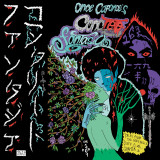
Psych-rap enigma Onoe Caponoe returns with his fifth studio album ‘Concrete Fantasia’ on High Focus Records. In crystal clear communication with the mothership; littered with striking references to fantastical realms and uncommon lore, but very much anchored in the inner city blocks and smoggy roadsides that inform his everyday, ‘Concrete Fantasia’ is a dark fantasy tape that expertly blurs the lines between genres, tones, moods and character profiles.
Of this world and out-of-this-world perfectly poised; Onoe offering up escape portals, before quickly pulling the listener back in with wave-upon-wave of catdelix riptides. ‘Concrete Fantasia’ is something of a tug-of-war; peppering movie samples, vignettes and complex go-betweens tickling the senses, combining with a cacophony of mind-bending lyricism resulting in a singular journey, with Onoe confidently filling the shoes of both author and narrator.
Pinocchio ducking feds in the hood, an Ice King ruling over a frostbitten kingdom, The Cheshire Cat trying to clean up Alice’s act, sweet serenades to off-shore mermaids, the trials and tribulations of life in a haunted trap house, big booty witches, flying carpets and beyond, ‘Concrete Fantasia’ is a real trip through the imaginative mind of Onoe Caponoe. With an eclectic line-up of featured artists and productional talent propping up the fictional cast, ‘Concrete Fantasia’ has all the makings of an alt-rap odyssey for the ages.
- 01: Introduction / Purple Haze Feat. Zdechly Osa
- 02: Slayaz / Elf Island
- 03: Fifi Feat. Lil B
- 04: House On The Hill
- 05: Pet Cemetery
- 06: The Cheshire Cat
- 07: Wipeout
- 08: Afro Samurai / Quest
- 09: Cat Kingdom
- 10: Magic Carpet
- 11: Pinocchio Feat. Jehst
- 12: The Horsemen
- 13: Ice King Feat. Lealani
- 14: Cat In Oz
- 15: Heaven's Gates
- 16: Outsiders
- 17: Psychosis City
- 18: Age Of Aquarius
Psych-rap enigma Onoe Caponoe returns with his fifth studio album ‘Concrete Fantasia’ on High Focus Records. In crystal clear communication with the mothership; littered with striking references to fantastical realms and uncommon lore, but very much anchored in the inner city blocks and smoggy roadsides that inform his everyday, ‘Concrete Fantasia’ is a dark fantasy tape that expertly blurs the lines between genres, tones, moods and character profiles.
Of this world and out-of-this-world perfectly poised; Onoe offering up escape portals, before quickly pulling the listener back in with wave-upon-wave of catdelix riptides. ‘Concrete Fantasia’ is something of a tug-of-war; peppering movie samples, vignettes and complex go-betweens tickling the senses, combining with a cacophony of mind-bending lyricism resulting in a singular journey, with Onoe confidently filling the shoes of both author and narrator.
Pinocchio ducking feds in the hood, an Ice King ruling over a frostbitten kingdom, The Cheshire Cat trying to clean up Alice’s act, sweet serenades to off-shore mermaids, the trials and tribulations of life in a haunted trap house, big booty witches, flying carpets and beyond, ‘Concrete Fantasia’ is a real trip through the imaginative mind of Onoe Caponoe. With an eclectic line-up of featured artists and productional talent propping up the fictional cast, ‘Concrete Fantasia’ has all the makings of an alt-rap odyssey for the ages.
- 01: Introduction / Purple Haze Feat. Zdechly Osa
- 02: Slayaz / Elf Island
- 03: Fifi Feat. Lil B
- 04: House On The Hill
- 05: Pet Cemetery
- 06: The Cheshire Cat
- 07: Wipeout
- 08: Afro Samurai / Quest
- 09: Cat Kingdom
- 10: Magic Carpet
- 11: Pinocchio Feat. Jehst
- 12: The Horsemen
- 13: Ice King Feat. Lealani
- 14: Cat In Oz
- 15: Heaven's Gates
- 16: Outsiders
- 17: Psychosis City
- 18: Age Of Aquarius
Psych-rap enigma Onoe Caponoe returns with his fifth studio album ‘Concrete Fantasia’ on High Focus Records. In crystal clear communication with the mothership; littered with striking references to fantastical realms and uncommon lore, but very much anchored in the inner city blocks and smoggy roadsides that inform his everyday, ‘Concrete Fantasia’ is a dark fantasy tape that expertly blurs the lines between genres, tones, moods and character profiles.
Of this world and out-of-this-world perfectly poised; Onoe offering up escape portals, before quickly pulling the listener back in with wave-upon-wave of catdelix riptides. ‘Concrete Fantasia’ is something of a tug-of-war; peppering movie samples, vignettes and complex go-betweens tickling the senses, combining with a cacophony of mind-bending lyricism resulting in a singular journey, with Onoe confidently filling the shoes of both author and narrator.
Pinocchio ducking feds in the hood, an Ice King ruling over a frostbitten kingdom, The Cheshire Cat trying to clean up Alice’s act, sweet serenades to off-shore mermaids, the trials and tribulations of life in a haunted trap house, big booty witches, flying carpets and beyond, ‘Concrete Fantasia’ is a real trip through the imaginative mind of Onoe Caponoe. With an eclectic line-up of featured artists and productional talent propping up the fictional cast, ‘Concrete Fantasia’ has all the makings of an alt-rap odyssey for the ages.
Fourth release featuring Scott McCaughey (The Minus 5/Young Fresh Fellows), Steve Wynn (The Dream Syndicate), Peter Buck and Mike Mills (R.E.M.) and Linda Pitmon (Filthy Friends) Produced by Mitch Easter (R.E.M., Let’s Active) Featuring the singles “Journeyman” and the title track Available on CD, Digital, and as a double LP (with etched 4th side) On tour starting in August! In 2008 they busted out of the box and easily reached first with their Frozen Ropes And Dying Quails. The Baseball Project was on base and immediately posed a threat to go further. In 2011, they moved on to second with some wildness aptly called High And Inside. They were halfway home. Three years later in 2014, the quintet of Big Stars moved on down the line to the aptly titled 3rd, an epic double dip delight of craftsmanship and savvy. And there they stayed. For 9 long years at the hot corner, but we’re happy to say that The Baseball Project is finally coming home, scoring big and touching ‘em all with their fourth album Grand Salami Time!
- A1: Main Title
- A2: The Bank Robbery
- A3: Prison Introduction (Dialogue)
- A4: Over The Wall/Airforce One
- A5: He's Still Alive/Romero
- A6: Snake' Plissken (Dialogue)
- B1: Orientation
- B2: Tell Him (Dialogue)
- B3: Engulfed Cathedral (Debussy) (Debussy)
- B4: Across The Roof
- B5: Descent Into New York
- B6: Back To The Pod (Version 1)
- B7: Everyone's Coming To New York
- C1: Don't Go Down There! (Dialogue)
- C10: Romereo & The President
- C2: Back To The Pod/The Crazies Come Out (Version 2)
- C3: I Heard You Were Dead! (Dialogue)
- C4: Arrival At The Library
- C5: You Are The Duke Of New York (Dialogue)
- C6: The Duke Arrives/Barricade
- C7: President At The Train
- C8: Who Are You? (Dialogue)
- C9: Police Action
- D1: The President Is Gone
- D2: 69Th Street Bridge
- D3: Over The Wall
- D4: The Name Is Plissken (Dialogue)
- D5: Snake Snake
Svitlana Nianio has been active in the Ukrainian and Polish underground music scenes since the early '90's both as a solo artist and a prominent member of the now disbanded avant-rock outfit Cukor Bila Smert (Sugar White Death). Her music draws on aspects of modern composition and traditional Slavic music, with songs and experiments from that early period culiminating in the 1999 album Kytytsi (Koka Records, Poland). Prior to that in 1995, Nianio recorded Lisova Kolekciya (Forest Collection) live in a simple home studio setting with Olexander Yurchenko and Konstantin Nazarenko.
Less indebted to folk tradition than Kytytsi, Lisova Kolekciya was performed using Casio keyboards, electronics, and voice, positioning itself more inline with Terry Riley's Shri Camel in its otherworldly reinterpretation of the ancient through modern means. Retaining aspects of traditionl music in its use of spare instrumentation and haunting vocal melodies, this largely unknown album pushes at the edges of what folk music might be, resulting in music previously described as being "deeply rooted in primeval myths, creating a world of magic realism, in which the temporal dimension and the other world constantly move and permeate."
Issued here officially for the first time after an extremely limited private cassette edition handed out to friends in 1996 - where the recording was twinned with the album Znayesh Yak Rozkazhi (Know How Tell Me) - Lisova Kolekciya comes packaged in a full colour offset printed sleeve featuring artwork by Svitlana Nianio and is limited to 300 copies. 100 copies are housed in a special edition sleeve handmade by Faraway Press and are only available to order direct from the label.
Juli Giuliani is a prolific artist, since 2009 he started at a very young age in the hip-hop scene and since then he has been releasing music non stop. In 2017 he begins a new stage under the name of Juli Giuliani, delivering collaborations with artists such as Toteking, Dano, Jonas Sanche or Big Menu, performances at Sónar, and a tour of Latin America, where he consolidates the respect of the scene at the Ibero-American level. Giuliani is a different artist due to his versatility, warmth and closeness to the listener. His new ways of making rap, maintains the essence that so many yearn for without disconnecting from actuality and building a unique discourse and identity. This profile makes his musical proposal one of the most solid, ambitious and mature on the scene, ready to fill the new spaces that are opening up on the scene. His next LP, in collaboration with Mabreezee and Karmasound, will be released at the beginning of 2023 via Costa Futuro.
Images Of Goo is what Munich sound bricolageurs Leo Hopfinger aka LeRoy (head of Das Hobos, H, Spiritual Emojis and others) and Cico Beck aka Joasihno (active member of The Notwist, Aloa Input, Spirit Fest and others) call their first musical dialogue in album format.
It is equally a dialogue with the elements of their sonic repertoire of echo variations and sonic shadows from the percussive instrument box. In their sum, a Wunderkammer of a panaudic, which can be approached and departed in six tracks per side.
There we pass a fuzzy factory flow music of sound tiles and find ourselves in the next station in a game of pot banging and gong shower with firecrackers and other sound explosions. Tinpan tinkertoy and sparkler warehouse become an offbeat downbeat of sound loops, and already we imagine ourselves amid the hammering and pounding of a magic sound forge at the center of the earth, which may be the center of a distant galaxy.
On side two, we enter a dripstone cave boogaloo ("Let's start tripping") and it drips candle wax from a vocoder space-age melody, emoting and coagulating into a Morse-coding cumbia chant. Wax music this is - music that grows out of itself, even if by the means of tape and collage.
At the end there is a music snake, which, having become snake music itself, disappears in front of our ears with a swing. And maybe this is the beginning ...
Debut Album Nottingham post-punks Do Nothing blend jerky, spidery rhythms with surreal, half-spoken vocals that recall the Fall 's Mark E. Smith . Do Nothing was formed in 2017 by four long-time school friends: frontman Chris Bailey, guitarist Kasper Sandstrøm, drummer Andy Harrison, and bassist Charlie Howarth. All had played in various acts around the city; the band got their start at the popular Maze Club. Bailey, whose father was a singer in an a cappella folk group, grew up listening to the sounds of Simon & Garfunkel , and his own biggest influence was Tom Waits . Initially attempting to copy big names like LCD Soundsystem (as heard on their first 7" single, "Gangs," released in 2019), they eventually became more confident about doing their own thing, and Bailey gave his stream-of-consciousness lyrics and outsider stage persona free rein. Associated with, but wary of, the then-popular post-punk revival, they made clear it was their intention to follow their own path. Their debut EP, Zero Dollar Bill, was released in 2020; another, Glueland, arrived the following year, with an album in the works.
New studio album from Zion Train, featuring the world renowned Zion Train brass section, along with three passionate, politically aware songs from singer Cara Jane Murphy, and featuring Paolo Baldini playing guitar and bass on several tracks - alongside veteran musicians Trinny Fingers, Blacka Wilson, Dreada One and (from Crete) Professor Skank. For this album Zion Train return to their roots, with copious amounts of analogue Dub mixing performed by producer Neil Perch on his vintage TAC Scorpion desk. Artwork is by the acclaimed anarchist artist Marko Gin from Croatia.One of the most unique and enjoyable live dub acts on the planet, their use of dynamic onstage dub mixing whilst performing alongside acoustic instruments and exceptional vocalists, make Zion Train one of a kind.
Released on RCA Records - new album from singer/songwriter/actress/US superstar. This collection is Miley’s eighth studio album and the follow up to 2020’s 'Plastic Hearts'. 2023 finds Miley the strongest and most confident she’s ever been, with the music and imagery of 'Endless Summer Vacation' serving as a reflection of that. Recorded in Los Angeles and produced with Kid Harpoon/Greg Kurstin/Mike WiLL Made-It/Tyler Johnson, Miley describes the album as her love letter to LA. The full tracklisting has not yet been revealed, but does of course include the massive #1 single 'Flowers'. Extensive promo/marketing activity across all media outlets. Upcoming UK promo trip plus nationwide TV ad campaign. Formats are standard black vinyl LP and standard CD.
Brand new EP by fast-rising UK act Bears In Trees, coming on the heels of a huge year for the band that included releasing their debut LP "And Everybody Else Smiled Back", sold-out headline shows across the UK, and their first ever US tour. The band will be releasing a new collection of songs alongside appearances at Slam Dunk and 2000 Trees Festival, their first US headline tour, and many more UK dates to be announced.
Minsk Death Metal overlords EXTERMINATION DISMEMBERMENT return with bombastic force.‘Dehumanisation Protocol’ is the long awaited 3rd album from Belarus's heaviest. Since their 2009 beginnings, they have established themselves amongst most enigmatic bands on the Slam circuit today. Having forged a reputation as one of the most terrifying live acts out there today, 'Dehumanizatioin Protocol' is a future genre classic. Essential listening for fans of Devourment, Ingested and Slaughter to Prevail.
Mit ihrem 2020 erschienenen Debütalbum hinterließ das aus Hull in Nordengland stammende Post-Shoegaze- und Dream-Pop-Quartett bdrmm deutliche Spuren und machte einen Aufschlag, von der jede junge Band nur träumen kann. So wurde Bedroom vom Clash-Magazin als “a heady, forward-thinking shoe gaze distillation” gefeiert, der Guardian rief einen Song der Band zu “one of the underground hits of lockdown” aus, während der NME dem Album fünf Sterne verlieh und es zu nicht weniger als “a modern day shoe gaze classic” erhob.
Jetzt bei Mogwai's Rock Action Records unter Vertrag, kehrt die Band mit 'I Don't Know' zurück, ihrem beeindruckenden zweiten Album, das mit den charakteristisch effektgeladenen Gitarren und Neu! Grooves aufwartet, für den Hörer aber auch einige Neuerungen bereithält wie den Einsatz von Piano, Streichern, Electronica, Sampling und dem gelegentlichen Dance-Beat. Bdrmm-Fans werden nicht enttäuscht sein und die Fans von Radiohead, Ride, Mogwai, The Cure, die bdrmm noch entdecken müssen, würden gut daran tun, das spätestens jetzt mit 'I Don't Know' nachzuholen.
Mit ihrem 2020 erschienenen Debütalbum hinterließ das aus Hull in Nordengland stammende Post-Shoegaze- und Dream-Pop-Quartett bdrmm deutliche Spuren und machte einen Aufschlag, von der jede junge Band nur träumen kann. So wurde Bedroom vom Clash-Magazin als “a heady, forward-thinking shoe gaze distillation” gefeiert, der Guardian rief einen Song der Band zu “one of the underground hits of lockdown” aus, während der NME dem Album fünf Sterne verlieh und es zu nicht weniger als “a modern day shoe gaze classic” erhob.
Jetzt bei Mogwai's Rock Action Records unter Vertrag, kehrt die Band mit 'I Don't Know' zurück, ihrem beeindruckenden zweiten Album, das mit den charakteristisch effektgeladenen Gitarren und Neu! Grooves aufwartet, für den Hörer aber auch einige Neuerungen bereithält wie den Einsatz von Piano, Streichern, Electronica, Sampling und dem gelegentlichen Dance-Beat. Bdrmm-Fans werden nicht enttäuscht sein und die Fans von Radiohead, Ride, Mogwai, The Cure, die bdrmm noch entdecken müssen, würden gut daran tun, das spätestens jetzt mit 'I Don't Know' nachzuholen.
Das Tingvall Trio feiert 2023 sein zwanzigjähriges Bandjubiläum. Besonders bemerkenswert ist, dass das Trio seit der Gründung bis zum vorliegenden neunten Album, BIRDS, immer in der gleichen Besetzung agiert. Neben dem Pianisten und Namensgeber Martin Tingvall am Piano sind dies Omar Rodriguez Calvo am Kontrabass und Jürgen Spiegel, der für Drums und Percussion verantwortlich zeichnet. Und die Drei in Hamburg ansässigen Musiker haben es geschafft, in diesen vielen Jahren eine Erfolgsgeschichte zu schreiben, die ihresgleichen sucht: mehrere ECHO JAZZ Preise als Ensemble und Live-Act des Jahres, insgesamt sechs JAZZ Awards in Gold, zwei Impala Awards für internationale Verkäufe, eine ganze Serie von No.1 Jazz Chart Alben und viermalige hohe Platzierungen in den Deutschen Top 100 Album Charts - im deutschen Jazz durchaus als herausragend zu bezeichnen. Mit BIRDS erreicht diese Entwicklung nun ihren vorläufigen Höhepunkt.
Wie immer ist Martin Tingvall für alle Kompositionen verantwortlich, die Stücke wurden aber vom Trio gemeinsam in Proben und Konzerten zur Aufnahmereife in Arrangement und Spiel erarbeitet. Und natürlich findet man auf dem Album wieder Titel mit Ohrwurmcharakter, wie etwa 'Woodpecker', 'Hummingbird' oder 'Air Guitar'. Wunderbare Balladen wie 'The Day After' mit einem gestrichenen Kontrabass von Omar Rodriguez Calvo, wechseln sich ab mit Stücken wie 'Africa', das sich in seiner Leichtigkeit sofort in die Gehörgänge schraubt. 'SOS', der Hilferuf, unserer Erde endlich eine Überlebensperspektive zu geben, bietet virtuosen Tingvall Trio Sound und eine berührende Komposition. Mit seinem Solo - Stück 'Call For Peace' steuert Martin Tingvall abschließend einen besonders introvertierten Moment bei.
- A1: Daytime Tv (Rainy Miller Remix)
- A2: It’s Hard To Get To Know You (Space Afrika Ambiv)
- B1: Pigeon Flesh (Mobbs' Butcher Mix)
- B2: Love Like An Abscess (Aho Ssan Remix)
- C1: Nervous Energy (Teresa Winter Remix)
- C2: I Was Born By The Sea (Morgane Polanski Remix)
- D1: I Was Born By The Sea (Fila Brazillia Remix)
- D2: Dream About Yourself (Bonus)
Richie Culver had been waiting his whole life to record I was born by the sea. His debut album immediately and messily inscribed the artist into the canon of outsider music and experimental electronics, serving both as an arresting statement of intent and a painful reckoning with the difficult path that lead up to it, stealing one last glance back at a place he always knew he had to escape. Between grim lamentations, faded memories and anxiety attacks, all told with searing honesty and disarming openness, I was born by the sea excavates a space for hope, finding Culver digging through Humberside silt to find a world weary optimism, the raw material from which his visual and sound art is shaped. For this collection of expansions and inversions, Culver invites a collection of kindred spirits, contemporary inspirations and old heroes to wade into the salt water of his formative years spent living for impromptu raves and afterparties, connecting vivid memories of his birth place of Withernsea to artists hailing from as nearby as Preston and Bridlington, further afield, from Manchester and London, Berlin and Paris, before returning back to Hull, to where it all began.
For some, responding to I was born by the sea means diving even deeper into the record’s furthest reaches. Space Afrika clear away the pummelling loops of noise from ‘It’s hard to get to know you,’ revealing a cool and cavernous expanse in its wake. Distant chatter, previously heard as though through thin, plasterboard walls, now echoes from outside the maddening claustrophobia of the original’s Sisyphean sonics, illuminated as a dense storm cloud suspended amidst a more open scene, washed clean by a lighter rain, allowing the tender heart of the track to beat clear. London producer MOBBS stretches out ‘Pigeon Flesh’ into an epic, 10-minute, cold-sweat spiral, strung-out tension wrung from disconnected phone tones twisted in unexpected directions, snatches of Culver’s voice turned inside-out and deep fried bass threatening to tip the track over into oblivion, the build-and-release of a nervous breakdown experienced in real time. In an act of subversive self-reflection, Morgane Polanski switches one kind of ennui for another in her adaption of ‘I was born by the sea,’ swapping the sea for the city, English seaside towns in January for summer evenings in Paris and flashing lighthouses and sparkling oil rigs for the Eiffel Tower and the traffic around L’Arc de Triomphe. Even Culver finds time to revisit ‘Dream About Yourself,’ a track taken from his EP Post Traumatic Fantasy, breathing new words into its glacial drift, the half-remembered testimony of a shut-in: Woke up in the evening / Pray for me / Don’t trust anyone / Pray for algorithm. Reframed in a more melancholy light, the track’s reverberant keys even more clearly evoke a mournful nostalgia, fresh pain felt in old wounds.
Others find a parallel universe in Culver’s visceral world building. Rainy Miller flips the script with a scorched, avant-drill rework of ‘Daytime TV’, threading puncturing hi-hats and queasy low-end surge through the track’s steady ambient cascade, invoking the irresistible Preston beat magic of Miller’s own essential debut album, Desquamation. Aho Ssan melts away the crystalline textures of ‘Love Like an Abscess’ with the ominous crackle of a nascent fire, building through swathes of organic Max/MSP squelch and brittle, nails-down-chalkboard scrape, swelling and metastasising the original to spill over Culver’s desperate hymn to corporeal desire, at once flesh and not. Teresa Winter transports us an hour up the coast from Withernsea to her native Bridlington, replacing the sea wall of synthesis on ‘Nervous Energy’ with muffled ASMR murk and fever dream whispers, transforming Culver’s unflinching observations into a haunting call-and-response, filling in the blanks with her own eerie utterances, a fleeting conversation with a ghost. In a touching victory lap, Fila Brazillia, eccentric stalwarts of beloved ‘90s trip hop imprint Pork Recordings, whose performances at Hull institution The Lamp convinced a young Culver of the necessity to make his mark on club culture, resurface for their first remix in 20 years. Steve Cobby and David McSherry lead a low-slung, heartfelt stroll back through a suite of tracks from I was born by the sea, tracing a full circle saunter from Culver’s origins to his current musical practice, the sounds of his present repurposed by the sound of his youth. In a gesture that reflects the emotional complexity of the project, Fila Brazillia find joy at the end of Culver’s troubled reflection, picking out an undeniable groove in the stasis of feeling trapped in your hometown. Underlining Hull’s vital musical legacy, from Baby Mammoth to Throbbing Gristle, Cobby and McSherry demonstrate that, though there are certainly storms, by the sea there is also sun and through the fog, if you listen, you can hear a singular sound, a sound now carried by Richie Culver.
Participant is a record label and creative studio run by William Markarian-Martin and Richie Culver
- A1: Renaud Mayeur Dago Theme
- A2: The Nick Leonardo Orchestra Ghost City Blues
- A3: The Nick Leonardo Orchestra The 12 Bastards Of Lucifer
- A4: Jean-Marc Lederman Immaculate
- B1: Moaning Cities Easter
- B2: The Nick Leonardo Orchestra Hellhounds
- B3: Jean-Marc Lederman Man Behind The Curtain
- B4: Jean-Marc Lederman Blackout
- C1: Jack O'roonie Man Alone
- C2: Renaud Mayeur Murder One
- C3: Renaud Mayeur I Wish I Was With You
- C4: Renaud Mayeur Soulless
- C5: Jean Marc Lederman - Raw Deal
- D1: Ashtoreth Threnody V
Director's note : "My encounter with Wild Dee, the main actor in DOUBLEPLUSUNGOOD, was a determining factor in the making of this film. Not only are we strongly influenced by the same literary atmospheres - Among them American authors like Harry Crews, Iceberg Slim, N.Tosches and Belgian horror author Jean Ray - we also share the same cinematic tastes - low budget cinema be it French, Japanese or Spanish. Our main aim was to recreate the spirit, and play with and even subvert, the codes of Exploitation cinema. We also share the same taste for Rock & Roll, as our parallel musical backgrounds show. We were both singers in emblematic Belgian rock bands of the 80's and 90's - Wild Dee in The Wild Ones and me with Marine (79/81 - 3 singles with Les Disques du Crepuscule) and La Muerte (84/94 - 6 albums with Pias). The film's soundtrack, inspired by Francois de Roubaix, John Carpenter, Lalo Shiffrin, is like its second layer of dialogue: the original compositions of Renaud Mayeur (winner of the Magritte 2013 Belgian cinema awards for best soundtrack) and of J-M Lederman (Fat Gadget, TheThe, ... ), Moaning Cities, Ashtoreth, The Nick Leonardo Orchestra, The Manarays, Jack'O'Roonie. " A further thing that brings us together is something that has been with us since childhood and that we Belgians call: Belgitude...
- A1: Intro
- A2: Supa Emcees
- A3: The Bizness
- A4: Yunonstop
- A5: Wonce Again Long Island
- B1: Dinnit
- B2: Brakes
- B3: Dog Eat Dog
- B4: Baby, Baby, Baby, Baby, Ooh Baby
- B5: Long Island Degrees
- C1: Betta Listen
- C2: Itzsoweezee (Hot) (Hot)
- C3: 4 More
- C4: Big Brother Beat
- D1: Down Syndrome
- D2: Pony Ride
- D3: Stakes Is High
- D4: Sunshine
Cassette[18,91 €]
It's hard to think of any other act whose music being added to digital streaming sites would make as many headlines as De La Soul. It has been followed up with a big reissue project that's brought all their many great albums - they made more than just that one iconic one, you know - back to print. Stakes Is High brought the same high levels of wordplay, great beats and overall narrative as any of the band's albums, and all at a time when hip-hop's initial popularity began to wane. Fact fans, take note - Mos Def guested on one tune 'Big Brother Beat' and Common on 'The Bizness' way before anyone knew who either of them was.
In the quiet surrounding the pandemic, Madeline Kenney made sonic sketches in the basement studio she shared with her then-partner. She arranged phrases that called her—the sharp knife of a synth cutting a path along a blooming arpeggio, drums stuttering firm and tight. Working this way, she amassed a collection of songs she had no particular aims for. Some formed her 2021 EP Summer Quarter, others languished.
But in 2022, Kenney’s partner left suddenly and without warning, plunging her into the solitary act of untangling what happened. In the wake of her ensuing depression, she revisited these songs and found in them something prescient. She’d already laid the foundation for A New Reality Mind.
That her relationship’s end came without warning is only half true, though. The warnings were in the feelings and fears that inspired Kenney’s critically-acclaimed third album, Sucker’s Lunch (2020), which was co-produced by Jenn Wasner (Flock of Dimes) and centered around the idea of flinging oneself freely into the seemingly-assured destruction of new love, come what may.
If sonically Sucker’s Lunch was letting yourself be pulled into the warm bath of a good story, A New Reality Mind reflects the harsh light of truth coming to break the spell. But as sobering as morning light can be, there’s brilliance to it, too. To see in the clarity of day is a gift. A revolution. Rather than reckoning with love lost, the songs on A New Reality Mind grapple with the self that chose to fall. “I guess I only needed to look twice / Reflected in my attitude, my constant compromise,” Kenney sings on “Red Emotion,” the musical landscape screeching and gasping around her observations of how she made herself small to keep the dream of love alive.
These notions of sight and vision pervade the record as Kenney stands before the infinity mirror of selves she’s been to preserve bonds in her life. On “I Drew a Line,” Kenney contends with the stories she’s told herself to keep plodding along, and the way those stories shape her perceived reality. She invokes John Berger’s Ways of Seeing—“Everything around the image is part of its meaning,” we hear him say. “Everything around it confirms and consolidates its meaning.” Here, Kenney isn’t interested in shaming herself for being carried away by the fantasies of the heart, but rather in investigating the unavoidably human propensity to do so. “I, like everyone else, am muddling through my most ordinary disaster of a life,” she acknowledges, a sentiment which reverberates through album opener “Plain Boring Disaster.” “I don’t need to start again,” she sings at the song’s close. “But I can change when it ends.” We may all be doomed to repetitive, ordinary heartbreaks, Kenney realizes, but at least we can cultivate a capacity to witness our missteps and build new realities for ourselves.
This is Kenney’s most expansive work, while also her most solitary. Produced and recorded alone in her basement, these songs are manifestations of what it feels like to be transformed by pain. Textures collide and collude; sonic ornaments emerge and dissipate capriciously; saxophones soar untamed, as on the 80s pop elegy to self-sacrifice, “Reality Mind”. These songs beg you to dance, then pull the rug out from under you once you’ve caught the beat, leaving you dizzy like the whiplash of love’s end.
But in the propulsive power of A New Reality Mind, there’s also acceptance, self-forgiveness, and a willingness to move forward into life, with all its ways of making a sucker of you. “That way of living, I’m over it,” Kenney declares of the habits that hold her back on “Superficial Conversation”. “I do not need to be reminded of what I did,” she assures, the song opening wide and beaming, like a smile expanding to taste a new breath of air.
Japanese folk-rock legend Morio Agata stunned fans with this way-outta-left-field dispatch - a synthesizer-laden, new-wave/post-punk classic. Originally released by Osaka’s Vanity Records in 1980 and back on vinyl for the first time in nearly 40 years, this fully authorized reissue has been remastered from the original analog tapes. In tip-on sleeve, with double-sided insert.
50 years ago, Hokkaido-born singer-songwriter Morio Agata released his debut single, Sekishoku Ereji (Red Elegy), an emotive, shuffling piano ballad that (shockingly) sold half a million copies in Japan. While he would never have another Top-40 hit, Agata would spend the next half century issuing a series of idiosyncratic, experimental pop albums. Today, he’s a beloved cult figure, still actively touring and recording in his seventies.
In his first decade as a recording artist, Agata released a stream of classics right out of the gate — Otome No Roman (1972) melded American-styled folk rock with traditional Japanese melodies, Zipangu Boy (1976) was a sprawling, Haruomi Hosono-produced psychedelic opus, and Kimi No Koto Suki Nan Da (1977) saw Agata tackle slick, lightly funky AOR. While this sort of stylistic schizophrenia might sink your average artist, Agata’s singular voice and magnetic charisma elevates everything he touches, and subsumes it all into Morio Agata World — a joyous, playful and frequently unhinged world.
Arguably the biggest left-turn of Agata’s early career, however, came in 1979, when legendary experimental label Vanity Records’ Yuzuru Agi paired Agata with major players from his label’s roster and the Osaka punk scene for an impromptu recording session. An impressive list of musicians took part (SAB, Yukio Fujimoto (Normal Brain), Masahiro Kitada (INU), Taiqui (Ultra Bide), Jun Shinoda (SS), Chie Mukai (Che-Shizu), and others) and even though they all came from different wings of the underground music scene, together they built an arresting, minimalistic bedrock of synthesized and acoustic sounds for Agata to work his magic over. The recording sesssions were tense and it took a while for the collective to find their footing. But the hard work paid off — Norimono Zukan is a masterpiece of ramshackle new wave and droning dirges, topped off with Agata’s unmistakeable croon, at times delicate, other times twisted. It’s a relatively short album, but a deep one, and Mesh-Key is honored to introduce it to a new generation of music fans.
Originally released back in 1999 via Mindfood Records, Tiny Elvis ‘Desire’ EP gets a much-needed reissue on Cosmocities, topped off by two incredible remixes from Bushwacka! and Max in the World.
A smoother-than-smooth introduction into Tiny Elvis’ deep and progressive headspace, ‘Desire’ blazes with a modern soul and timeless fire at heart. While there’s no denying the time and era emanating from the grooves, the record prefigures a lot of the mind-expanding house music that’s come to fill the shelves and crates of vinyl shops two decades on. A distinctive blend of pumped-up, 303-brined jazz and abstract-leaning vocal loops ushering us into a pulsating heart of LSD-fuelled visions and climax-seeking energies.
Adding his invariably genius spin to ‘Desire’, UK house maestro Bushwacka! tweaks the original’s trademark wonkiness into that of a floor focused weapon, geared up for deep boogie action down the basement but lacking none of that prominently silken, loungey magnetism either.
On the flip side, ‘Howze The Music’ cuts a path of squelchy, strings-driven hypnosis, beautifully combining the liquid-like essence of acid with a neo-classical sense of evolutive emotion, injecting it with a tang of trancey tribalism for good measure.
New York's Max in the World gives a further dreamy, cinematic twist to proceedings, taking us on a lush ride across flickering landscapes flush with honey-dipped synth stabs, a-propos sampling and blissful strings stirring all kind of emotional flows with unrelenting verve.
Eaux proudly announces the second full length LP from Rrose, Please Touch, released on vinyl, CD, and digital download. The LP follows 2019's Hymn to Moisture in ways that are both subtle and striking: Please Touch further hones the artist's tensile sound while exploring new aesthetic vistas and basking in an undeniably erotic sense of play. Moving with undulating power, the album's nine tracks drift across tempos from a weightless 0 bpm to a crawling 100 to a lunging 140 and back, with a rich palette of sculpted noise and cross-talking microtones.
Rrose's compositional process, rooted in their studies with West Coast avant garde trailblazers at Mills College, centers on "seed" sounds being fed through elaborate webs of interrelated audio processing. The result is a world where changes in any one element have downstream implications for some or all the others. It's a rich interdependence that lets the tracks breathe, grow and mutate with uncanny organicism. Please Touch addresses in equal measure the perceptual and the corporeal: these are sounds that sink into the body, exhibiting a tactility that pushes, pulls, bends and yields with fearsome vibrancy.
The album splits its time between radical techno iterations and pieces which pare back the percussion, letting the synth textures uncurl in their own time and space. The quivering drone and rolling sub-bass of "Joy of the Worm'' set the tone for the record, while "Rib Cage," Spore" and "Spines " swing with stepping rhythmic underpinnings. Building with finely calibrated tension, they use their few elements to startling, snarling effect. "Pleasure Vessels" is a rare moment of becalmed introspection in Rrose's oeuvre, hinting at a melodic ambiance that is practically unseen in previous works. It glows with a soft, dawn-like light before dissolving into a tidal fizz. "The Illuminating Glass'' brings the tempo down to a languorous chug, nodding its way through a field of glistening chirps and leaden gasps. "Feeding Time," "Disappear" and album closer "Turning Blue'' meanwhile nod to the cerebral psychedelia of Rrose's forebears, with mesmeric, looping textures and long, magisterial tones not dissimilar to the spectral works of James Tenney (whose work Rrose regularly performs) and the deep listening pieces of Pauline Oliveros.
The title of the album refers playfully to the tactile quality of the music while hinting at a forbidden sensuality that is only permitted within the confines of this microcosm. The phrase is also another nod to Marcel Duchamp, who gave this title to a 1947 exhibition of Surrealist art. Across the nine tracks, Rrose follows the lead of the sound(s) rather than trying to impose on the flow of the sonic material. Each move changes the parameters of a track's evolution. Thus, a non-hierarchical, symbiotic relationship forms between the so-called "music-maker" and the music itself. Please Touch acts as a collection of limbs, organs, parasites, and growths which both devour each other and keep each other alive.
The first ever release of electronic Jaglara, an obscure dance music being innovated in an area near the Sudan, Ethiopia, and Eritrea border called Fashaga.
Among the most raucous, hypnotic, addictive, and celestial dance styles being made anywhere in Africa, this heavy, mysterious sound is being led by one man: Jantra, which translates as "craziness," a moniker bestowed to celebrate both his personality and sound. Jantra is a rather unknown quantity even in Sudan, outside of the circles which have granted him cult status to perform at their humble gatherings or at street parties far from the gaze of the cities.
Jaglara, which roughly translates as improvisation, has no songs. Jantra simply freestyles a combination of his melodies incessantly for hours on end, acting as a live producer and DJ for emphatic crowds, where the energy of his 155 - 168 BPM music is known to inspire the odd gunslinger to raise and fire his pistol in the middle of the dance floor. His music is hopeful in a hopeless world, uplifting in spirit, ancient and new, childish and mature, familiar yet refreshingly obscure, fueled by the hypnotic Sera rhythm. His Yamaha keyboard is specially tweaked to achieve what you're hearing — the perfect, sweet key tone, literally universal in its appeal.
A hybrid reissue-contemporary album, Ostinato combined extracted individual melodic patterns, rhythms, and MIDI data from Jantra's Yamaha keyboard with his older cassette and digital recordings to recreate his lengthy sessions into individual dance tracks for a worldwide audience to reach the enviable frenzy of Sudanese crowds. This promising new dance music emerging from the deepest reaches of Sudan has never made its way outside of Jantra's parties, let alone outside of the country.
This record is confirmation that the many electronic styles being exported from Africa have a worthy sibling and rival—Jantra's signature electronic Jaglara from the Fashaga underground. It is a privilege of the highest order to be exposed to this unheralded, incredibly well kept rural Sudanese secret.
Black Truffle is pleased to announce Symphony No. 107 –The Bard, a previously unheard archival recording of the legendary improvising ensemble MEV (Musica Elettronica Viva), captured in concert at Bard College, New York in 2012. Formed by a group of American expat composers in Rome in 1966, the MEV ensemble played an important role in the development of free improvisation, bridging the live electronics tradition begun by Cage and Tudor and the high-energy squall of free jazz. Early recordings like Spacecraft or The Sound Pool unleash volleys of metal and glass amplified with contact microphones, howling winds, primitive synthesizer bleep and raucous audience participation, the intensity of which puts much later ‘noise’ to shame. In later decades, the ensemble would go through many iterations, often including legendary free players like Steve Lacy and George Lewis. In its final years, MEV settled into the core trio of founding members heard here: Alvin Curran, Frederic Rzewski, and Richard Teitelbaum, using piano, electronics, and small instruments.
Curran, Rzewski, and Teitelbaum were life-long friends blessed, as Curran says, with ‘incompatible personalities’: major figures in the post-Cagean experimental tradition, they explored countless divergent and even contradictory paths as composers and performers, from agitprop songs to brainwave-controlled synthesis. MEV is the sound of these three personalities coming together, their contributions radically individual yet attaining a state of ‘fundamental unity’ that Rzewski, in a text written in the collective’s earliest years, defined as the ‘final goal of improvisation’. Of course, listeners familiar with aspect of the trio’s individual works might hazard some guesses about who is doing what: the crisp piano figures are probably Rzewski’s, the cut-up hip-hop samples most likely Curran’s, the sliding, squelching synth possibly Teitelbaum’s. But often these identities are dissolved in a constantly shifting hall of mirrors, the listener unable to tell which of these pianos is live and which is a sample of a past virtuoso, or whether a horn blast derives from ethnographic documentation or Curran cutting loose on Shofar. The two side-long sets here occupy a similar terrain of constantly shifting texture and instrumentation, unexpected interruptions, and moments of sudden beauty. The first set is sparser, at times almost ominous, as a bell repeatedly sounds across wheezing harmonica, seasick orchestral textures, and creaking wood, making room for episodes of yodelling and delicate prepared piano before exploding into a storm of buzzing synth and piano fragments. The second set is more frenetic, moving rapidly across centuries and continents: cars crash into post-serial piano pointillism, wailing voices collide with chopped and screwed hip-hop samples, Hollywood strings are buried under layers of electronic gurgles. The performance slows in its final moments, making way for a sampled voice repeating the phrase ‘protest and the good of the world’, reminding us that MEV’s idea of freedom was always more than musical. Symphony No. 107 –The Bard is a beautifully recorded example of the endlessly multi-layered later MEV sound, accompanied by new liner notes by Alvin Curran (now the only surviving member of the group) and a selection of previously unseen photographs from across the many decades of the group’s activity. Arriving in an elegant sleeve bearing a beautiful photograph by Francis Zhou of the Olin Hall at Bard College where the concert was recorded, this is an essential document from a major group in the history of experimental music. As Rzewski wrote, this music is ‘like life, unpredictable, sometimes making sense, mostly not’.
- Asking Is There Anything You Believe That You Would Be Willing To Die For, And The Difference Between The Way That Most Beliefs Have Been Accepted/Tolerated And
- A1: Broken And Beaten In 5/8 Time Part 1. Beaten 6:34
- 2: What's It All For?10:39
- 3: Broken And Beaten In 5/8 Time Part 2. Broken 7:6
- 4: Mass Exodus (A Hymn)
- Acceptance Is Not Respect Part One: The Revolution Of Defiance(23:19)
- 1: Anthem For A New Beginning
- 2: Slide Down To Power Off
- 3: What Failure Looks Like
- 4: And So We Rise Again Part Two: Three Martyrs: Pressing, Stoning And Saltire 1/St. Stephen 6:29
- 2: St. Andrew 7:7
- 3: St. Margaret 7:50
In August 2020, following some typical delays at the plant, Fourth Dimension Records released the limited edition 2LP (and now sold out) set of Kleistwahr's This World Is Not My Home and Over Your Heads Forever albums, originally released by the same label in 2014 and 2016 respectively. Packaged together in a single sleeve with printed inners reproducing all the artwork found on the original CDs, the 2LP was always designed to represent the first volume in a series of them. This next volume gathers everything on the next two albums, Down But Defiant Yet and Acceptance is Not Respect, both also initially released on CD in, respectively, 2017 and 2018, and presented in the exact same way. 2017's long sold out at source album, Down But Defiant Yet, collects four lengthy cuts which catch Gary Mundy (also known for Ramleh, Breathless and Broken Flag Records) furrowing his distinct and recognisable take on a kinda contemporary psychedelia with dystopian leanings. Each piece nods towards the fug generated by certain ‘krautrock’ groups whilst retaining threads of those uncompromising power-noise surges he built his reputation on, this is music guaranteed to take you to new spaces before forcing you to nervously look over your shoulder. 2018's Acceptance is Not Respect collects two lengthy pieces themselves broken down into seven parts often tempered to the point restraint assumes new, often disturbed (and disturbing) psychedelic or even filmic, properties, this music arrives like a spitting and foaming scream into the insanity of the void and the myriad challenges and questions it inexorably keeps hurling at us. Whereas Ramleh captures the sound of at least two people dealing as best they know how with the constantly rising rivers of shit around us, Kleistwahr is akin to one man having scaled a great height poking out of an infinite chasm and wondering why he bothered. This is uneasy listening sometimes renderedvirtually elegiac by dint of a prowess rarely found in such realms. Of this, Gary himself quite prophetically, in light of how events have shaped the world since said, “I was trying to make the music more spiritual sounding this time as the album is about belief. The first half is about personal and political belief and the second half about religious belief. I was wondering about whether in the 21st Century, you can seriously get anyone to completely change their beliefs and [am] asking is there anything you believe that you would be willing to die for, and the difference between the way that most beliefs have been accepted/tolerated and [are] supposedly respected in recent times in [the UK]. Now our society is starting to break down, it becomes clear that that acceptance tends not to actually be the same thing as respect at all.”
Cory Hanson"s third solo LP follows upon 2020"s luminescent Pale Horse Rider, upping the heat to molten levels, six strings at a time. In search of further adventures, Cory draws with vampiric glee from the madness coursing through the world outside; a spiraling shitshow that"s reawakened a compulsion in him - an old ambition, even! - to crush brutality and elegance together into a fresh set of rocks to hail down upon us. Western Cum is a high-stepping, hard-dancing, first love/heartbreak, tonight"s-the-night, future nostalgia kind of good time - the sound of guitars through the speakers of luxury cars. Like the dream you had once, alone, asleep in an amplifier, blasting Guns N" Roses through every last orifice in your body. And it"s coming through! Western Cum"s map to the treasure is less about pastiche, though; more toward executing the songs by executioner"s axe, rolling their decapitated rhythm heads and soaring melodies, the panoply of Cory"s melodic impulses with guitars, guitars, guitars. Harmony leads are just the tip of the iceberg, but be quick - the guitars like to melt everything in their path! The eight songs of Western Cum are driven by the stalwart bass of brother Casey Hanson and the drums of Evan Backer with a few passing acoustics from Cory and the intermittent spirit-moans of Tyler Nuffer"s steel guitar. The quartet sound - two guitars, bass and drums - acts as beat-making principle/phrasing device, as well as template for Cory"s layers of six-string and vocal textures. From the rooftop of their musical safe house - the band in their makeshift hut and Cory ensconced in an outhouse - they let loose with a blast both face-melting and mind-blowing: a social service that gives constipation a good name.
Bobby Harden & The Soulful Saints are proud to announce their debut album, "Bridge of Love." The album's ten original compositions are presented in sparklingly-clear stereo sound and run the soul gamut, from grits-n-bricks R&B ('Played a Fool by You') to throw-back psychedelia ('One Tribe'), svelte seventies pop ('One Night of the Week') and some seriously sophisticated ballads ('Wounded Hearts', 'Bridge of Love'). Together they document Bobby's life journey in song. Through youthful self-doubt in the opening track 'It's My Time', to confirmation on the exuberant finale 'Raise Your Mind', Bobby proves that faith and hard work can pay dividends. "Life is a joy when you free your soul."Throughout the album, Harden's voice is tailored to perfection by the almost impossibly dexterous Soulful Saints, and further dressed to the nines by an accoutrement of Latin percussion, full-on horns, high-flying backing singers and even a string quartet. This comes as no surprise as The Soulful Saints have performed live and recorded together with acts such as Sharon Jones & The Dap-Kings, Charles Bradley & His Extraordinaires, Lee Fields & The Expressions, The Budos Band, Mark Ronson, Antibalas, The Impressions, & The Wu-Tang Clan.The album is produced by Dala Records founder Billy Aukstik, and recorded at Hive Mind Recording in Brooklyn, New York. Kurtis Powers of BQE Records Co-Executive Produced the album along with Aukstik.
Black Duck captures a band already deeply in tune with one another. The three-piece super-group consists of Douglas McCombs, Charles Rumback, and Bill MacKay each has a distinct musical voice that is instantly recognizable, yet blends seamlessly with one another-their time performing together, playing to the moment and reading each other and the spaces they"re in formed a fluency between the trio which allows them to follow each other down winding paths and short tangents alike. McCombs is a founding member of Tortoise, Pullman, and Brokeback and the long-standing bassist for Eleventh Dream Day, an artist whose contribution to the music world can not be overstated. MacKay began releasing records in the early 2000s. He has released several acclaimed solo albums with Drag City as well as a duo album each with Nathan Bowles (Banjo, Black Twig Pickers), and Katinka Kleijn (Cello, Chicago Symphony Orchestra (CSO)), and two beloved records with Ryley Walker. Rumback burst onto the fertile Chicago improvised music scene in the early 2000"s. His fluid technique and expressive playing garnered him much attention. In addition to his solo releases, Rumback has recorded with Ryley Walker, jazz greats such as Jim Baker, James Singleton, and Greg Ward. Black Duck"s debut is a testament to that fluency, an expedition led by three veterans into alluring worlds bathed in myriad splendors. Black Duck is a gallery of sonic tapestries, unbound by any genre constraints. Black Duck redefines what two guitarists and a drummer can do, pieces move from breezy shuffles to stormy blues rumbles to gorgeous textural drones. Playing entirely improvised live sets for years helped develop the trio"s acute senses for one another, knowing precisely how to listen to the others and bolster whatever direction they move in. In the short time the trio have played together, they have performed at Big Ears Festival and alongside acts like Yo La Tengo.
Cécille has a long-standing history with Leon dating back to 2009 when he released his second career track. His mesmerizing production 'Rain in Rio' claimed the Nr.1 spot on Beatport in 2009 and earned esteemed recognition from Mixmag as one of the best tracks of the season.
Since then Leon has held prestigious residencies at iconic venues like Marco Carola's Music On Ibiza a residency he has maintained since its inception in 2012. Additionally he has captivated audiences at Cocoricò renowned as the most awarded club in Italy. Leon's talent and presence have left an enduring impact on the global music
scene.
Now, he returns to Cécille with some fabolus new club-cuts, accompanied by a remix from the highly acclaimed Manchester trio, Mason Collective. Known for their deep connection to the city's club culture, Mason Collective has been touring the globe with tremendous success, solidifying their position as one of the most dynamic acts
to emerge from Manchester in recent years turn in their interpretation of ‘Sissy’s Track’, extracting the core groove and soul of the original while stamping their own mark on things via intricately intertwined synth work, a murky bass groove and an overall bumpy house feel.
All Her Plans, the third album from Melbourne, Australia's Cable Ties, finds the trio of Jenny McKechnie, Shauna Boyle, and Nick Brown at their punchiest and most assured. The ferocious, kraut-influenced blend of post-punk and garage rock of Merge debut Far Enough remains, but McKechnie's lyrics invite the listener closer than ever before. The urgency and fury that have marked Cable Ties' output thus far is more nuanced on All Her Plans.
The unfettered rage of their calls to action endures tackling subjects like broken mental healthcare systems and the burden of familial care that is largely placed on women…while holding space for gratitude, love, and acceptance. All Her Plans is a breakthrough moment for Cable Ties. It is the sound of a group that is exhilarated to be making music together again, both a celebration of their resilience and a massive step forward into a future they can finally claim as their own.
All Her Plans, the third album from Melbourne, Australia's Cable Ties, finds the trio of Jenny McKechnie, Shauna Boyle, and Nick Brown at their punchiest and most assured. The ferocious, kraut-influenced blend of post-punk and garage rock of Merge debut Far Enough remains, but McKechnie's lyrics invite the listener closer than ever before. The urgency and fury that have marked Cable Ties' output thus far is more nuanced on All Her Plans.
The unfettered rage of their calls to action endures tackling subjects like broken mental healthcare systems and the burden of familial care that is largely placed on women…while holding space for gratitude, love, and acceptance. All Her Plans is a breakthrough moment for Cable Ties. It is the sound of a group that is exhilarated to be making music together again, both a celebration of their resilience and a massive step forward into a future they can finally claim as their own.
Heart-wrenching ambient to cerebral techno: INVERNO is Carlo Maria’s debut on Drone.
‘Winter in the northern hemisphere is often seen as the season of death, a state of life so often negatively connoted. I see winter as an incubator of change, where life takes the time to free its potential again.
This record is a memory of past winters and a reminder that new ones will come. It celebrates the state of stillness as a necessary element of movement. It is an invitation to acceptance. The music itself might not necessarily express these ideas, but it acts as a trigger of memories and feelings of the times when these recordings were conceived. I like to see music recordings as pages of a diary.
This music was recorded in a time and space span of various years and locations. Exhumed was recorded at the end of October 2016 in Berlin; the other three tracks were recorded in Milan and performed live in various locations across Italy between in winter/spring 2021/2022.’
- A1: Breaking News - El Queeno, Deado
- A2: Made In M - Pronto
- A3: Tom Doolie - Yacht
- A4: Flofilz - La Première Fois
- B1: Ellosophy - Lost In Music
- B2: Digitalluc - Never Loose
- B3: Rick Flair - Freedom
- C1: Imaginary Friend - Joke
- C2: Flofilz - Meteora
- C3: Made In M - Balsa
- C4: Digitalluc - Morgentau
- D1: Tom Doolie - Pick Up
- D2: Klaus Layer - Type 2
- D3: Ellosophy - Katanga Nights
Introducing "Beats on Boat Vol. 2" - the highly anticipated compilation album featuring some of the most talented and respected names in the lofi hiphop scene With tracks from the likes of FloFilz, Made in M, digitalluc, and Klaus Layer, to name a few. This project promises to deliver a unique blend of chill beats and groovy rhythms that
will transport listeners to a world of laid-back vibes.
Released through ear-sight, tracks from "Beats on Boat Vol. 2" will be released every two weeks starting from
May 31st and will be accompanied by a live set, filmed on Berlins river Spree.
One of the standout features of this album is how each artist brings their own unique style to the table. From FloFilz's jazzy beats to Made in M's dreamy soundscapes, listeners can expect a diverse range of sounds and textures that will keep them hooked like fish on a rod.
Another thing that sets "Beats on Boat Vol. 2" apart from other compilations is the focus on both lofi hiphop and lofi house. While these two genres may seem vastly different at first glance, they actually share a lot of common ground - both are built on a foundation of warm textures, and infectious grooves.
A must-listen for anyone who loves lofi music, chill beats, or just wants to experience something truly unique. With this roster of top-tier artists, the focus on both lofi hiphop and lofi house, and its live beat sets on a boat in Berlin, this compilation is sure to make waves. Hop aboard and tune in!
Mastered by digitalluc
Cover design by Otto Stobbe
Smos & Baby Bee: Party Flyers And More. Reminiscences Of A Unique Era In Belgian Nightlife Culture. (1993–2010)
Throughout 326 flyers and many stories from the personal archives of Baby Bee, Smos and a bunch of friends and fellow DJs, the story of the legendary duo was recreated.
Sad news shook up our scene in April 2020: Smos had passed away. Aged 53, the Antwerp based DJ was a key figure of our Belgian nightlife scene. As yin to yang, Smos was connected to Baby Bee. The inseparable duo - who have been lovers as well - has rocked dance floors all over Belgium and abroad for 20 years of which 18 as resident DJs in Café d’Anvers and four in the Motion room in Fuse in Brussels. Having started their DJ career in the early nineties,
their story is closely linked with the beginnings of Belgian DJ culture and the electronic music scene.
Smos & Baby Bee were prominently rocking the electronic music scene since its dawn, shortly after the infamous second summer of love in the UK during the late 1980s and the rising of a new youth culture, a pivotal point in music history when under the spell of XTC a large audience became enthralled by the exciting new style of music coming from American cities such as Detroit and Chicago. They were DJing all over Belgium and through their genuine approach and straight forward mentality bringing together scenes from Brussels, Ghent, Antwerp or Wallonia. They were a DJ duo, a constellation nowadays well known but at the time truly rare. And not to forget, Baby Bee was a female acting in a mostly male world.
The visual archive presented in this publication generates an important cache of a creative culture that has been going through ups and downs, but is still very much alive and kicking to this very day. The book wishes to commemorate Smos, who is missed by many and remains in our hearts forever.
Written by Koen Galle
Flyers photographed by Baby Bee from her and Smos’ archive
Photography by Benoit Meeus, Jockum Klenell, Baby Bee & Jamila De Backer
Designed by Otis Verhoeve
- A1: Rudy's Midnight Machine - Crystal Dragonfly
- A2: Faze Action - Floating World (Chuggy Dub)
- A3: Rudy's Midnight Machine - Shy Smile
- B1: Micky Milan - Les Vacances On S'eclate On S'evade
- B2: Andromeda Orchestra - Kano Line Dance
- B3: Rudy's Midnight Machine - In The Air
- C1: Faze Action - Mangwana
- C2: Faze Action - Echoes Of Your Mind
- C3: Rudy's Midnight Machine - Reach Backless
- D1: Faze Action - Weightless
- D2: Faze Action - Magic Touch (Paradise 89 House Mix)
- D3: Faze Action - Paradise (Faze Action Paradise Edit)
Two of the most prominent activists on the current European reggae scene join forces on this brand new song. ‘END OF THE DAY’ is a combination between Bristol singer JOE YORKE and Swiss reggae band THE 18TH PARALLEL.
Written by master storyteller Eeyun Delroy Purkins from The Co-Operators who recently released a highly acclaimed album with Joe Yorke titled ‘A Distant Beat’, ‘End of The Day’ showcases the remarkable talent of both crews: on the one hand enchanting melodies and thought-provoking lyrics provided by Joe’s soulful voice and Eeyun’s brilliant pen, on the other infectious grooves and impeccable musicianship by The 18th Parallel.
This mesmerizing collaboration is highlighted by Westfinga’s perfect early 80’s rub a dub mixing. When these extraordinary forces collide, magic happens. Step into the rhythm and embrace a state of pure musical bliss!
- A1: Mercy (Feat Laurel Halo)
- A2: Marilyn Monroe's Leg (Beauty Elsewhere) (Beauty Elsewhere)
- A3: Noise Of You
- B1: Story Of Blood (Feat Weyes Blood)
- B2: Time Stands Still (Feat Sylvan Esso)
- B3: Moonstruck (Nico's Song)
- C1: Everlasting Days (Feat Animal Collective)
- C2: Night Crawling
- C3: Not The End Of The World
- D1: I Know You're Happy (Feat Tei Shi)
- D2: The Legal Status Of Ice (Feat Fat White Family)
- D3: Out Your Window
Black Vinyl[27,35 €]
Ltd Edition!
John Cale kündigt "Mercy", sein erstes neues Album mit eigenen Songs seit einem Jahrzehnt, für den 20. Januar über Double Six / Domino an und präsentiert eine neue Single mit Video, "Storys Of Blood feat. Weyes Blood".
Wieder einmal hat Cale die Art und Weise, wie seine Musik gemacht wird, klingt und sogar funktioniert, neu definiert. Sein fesselndes 12-Track-Album "Mercy" bewegt sich durch echte Dark-Night-of-the-Soul-Elektronik hin zu verletzlichen Liebesliedern und hoffnungsvollen Überlegungen für die Zukunft. Trump und Brexit, Covid und der Klimawandel, Bürgerrechte und Rechtsextremismus - Cale ließ die schlechten Nachrichten des Tages in seine Zeilen einfließen, ob das nun bedeutete, über die Souveränität und den rechtlichen Status des in polnähe schmelzenden Meereises nachzudenken oder über die ungelenke Bewaffnung der Amerikaner.
Für "Mercy" hat Cale einige der neugierigsten jungen Köpfe der Musikwelt um sich versammelt: Animal Collective, Sylvan Esso, Laurel Halo, Tei Shi, Actress. Sie sind nur ein Teil der erstaunlichen Besetzung hier, brillante Musiker, die in Cales vollendete Vision der Welt hineinklettern und ihm helfen, sie neu zu gestalten.
Format:
- Limitierte 140G transparent-violette Doppelvinyl im Gatefold Sleeve inkl. bedruckten Innenhüllen
This is a special CD edition of Girls Aloud's iconic pop album 'Sound of The Underground'. To celebrate the 20th anniversary of the Album this special edition. is treated to a full deluxe makeover, bringing in rarities, remixes, B-sides, the band’s cover of ‘Jump’ from ‘Love Actually’ plus ‘Hopelessly Devoted To You’ and ‘Grease’, their two contributions to the poptastic ‘Greasemania’ project. It also includes a special 2022 Xenomania-produced remix of the title track ‘Sound of The Underground’, released as a 7” charity single in memory of the band’s Sarah Harding. The CD format also features extensive sleeve notes by respected pop journalist Nick Levine. The 1LP Coloured Vinyl is Being released on Vinyl for the first time. This is a special coloured Green LP with enhanced artwork and full album lyrics.
Bruce Falkian is a world famous contemporary artist who exhibits at the world's most prestigious art galleries and fairs. Bruce Falkian moonlights as an agent of espionage against the Terrorism Industrial Complex. Wait... what?
To understand Bruce Falkian we first must understand the link between image and war. In the late 1800s the precursor to the video camera was invented. It was directly inspired by guns, specifically, Samuel Colt's Revolver. It borrowed not only its barrel mechanics, swapping bullets for exposures, but its terminology too. Load, point, scope, aim, shoot, flash. The camera and the gun, united by cordite, would go on to prove the most efficacious tools in shaping the modern world.
The 20th century was a laboratory when it comes to killing and image making, glorified through Hollywood and the Western genre. Propaganda would prove highly effective in creating and sustaining support for militaries fighting for ideological global control. Devised first in the aptly title 'Propaganda' (1928) by Edward Bernays, a nephew of Sigmund Freud, Advertising and Public Relations became the leading media industries, learning how to control the population through images, usually just to buy random crap they didn't need, but other times to overthrow democratically elected politicians in foreign countries. Eventually Western Liberal Democracy assumed domination, built of course on the enslavement of all peoples and nations who didn't fall in line with its specific ideas of living. The Red Scare inspired countless anti-leftist, anti-communist works of art throughout the Cold War, notably and most bizarre, funding the abstract expressionist movement as a non-ideological alternative to socialist realism art. When the Soviet Union fell, Western Liberal Democracy was able to promulgate its unhindered views around the world through its various media empires and actor states. Is it a coincidence that a third of the almost $85 billion dollar global camera equipment market is represented by the greatest propaganda beast the world has ever seen, the USA?
Guns are dangerous because of the obvious. Images are dangerous because we are bad at perceiving what is real (as any jump scare, deepfake, newsreel will attest to.) Videos aren't technically real, they are only a collection of rapidly changing static images which give the illusion of movement. It's easy for us to collectively decide that a video is real, because that's the way our brains perceive reality. People who lead the world of media understand this, which is how they are able to control us, make us invade foreign countries, vote for specific politicians, feel ugly or fat etc. However, ubiquitous as they are, it seems that the image is in crisis. It seems that we've run out of them. Or perhaps our understanding of an image is changing, with the aid of near instantaneous text-to-image AI technology. So what does this mean for guns? What does this mean for war? How will images be used as an aid to war in the 21st century? It remains to be seen, but Bruce Falkian will be a useful agent.
'Insight Into Mind And Space' is the latest full length project from techno producer and label owner 30drop. It's a 10 track collection compiled out tracks previously released on Jeff Mills' Axis imprint in digital formats. The original albums 'Soroban' and 'Photosynthetic Zone Manifesto' have been released in the years 2020 and 2021 and will now be available on vinyl in a limited edition for the first time. The compiled album includes pieces that, like the mind, evolve as a consequence of each other in an orderly way. Starting with the early origins represented by the track 'Dunkelblau' with which the album begins, going through 'Accepting The Future', which represent the complexity reached by the human brain. 'Insight Into Mind And Space' portrays those hypothetical and alternative molecular combinations in the form of songs. Exposed to different chemical elements, gravitational and environmental conditions, dormant genes and signaling pathways are activated and uncannily combined. And just like the molecular events, sounds are combined in different ways, whether simple or complex, to create songs that provide an artistic vision to that scientific concept that opens a hypothesis to other types of intelligence that are far from human and that could exist in the vast out there. About 30drop. In his formative years, the artist responsible for 30drop discovered new synthetic and electronic sounds that would later influence his work. From the year 1996, his activity as a DJ powered his link with music, focused on Detroit Techno and Techno sounds that held the transgressive references of Birmingham, UK. These impressions saw 30drop magnetize toward an industrial, experimental, noise-based sound, particularly in the mid-2000s. After a creative pause, 2014 brought his new project, '30drop', at this time his label 30D Records of which he is the Manager and joint A&R with Angel Molina, was also born. The conceptual part of this project has been done in collaboration and with the supervision of Meritxell Rosell, PhD in biochemistry and molecular biology.
In collaboration with Croatian label Sareni Ducan, Discom proudly presents an official reissue of a very rare self-titled album of Yugoslavian 80’s funk band Boom Selekcija.
Boom Selekcija was a short-living group of musicians from Belgrade, active from 1979 to 1983. They recorded their debut and only album for the label Diskos in 1983 and after that disbanded. The line-up included musicians from Boban Petrovic’s backing band and Silva Delovska from Kim Band on vocals. The quality of recorded material and the complete lack of information about the band set them as a cult act among DJs and crate diggers. This is one of the albums which makes you ask ”What is this?” when you hear it, but nobody around could tell you an honest answer.
A side of the record begins with a track called Moje Cake (eng. My Tricks). It is a groovy theme with mellow vocals-a story of the poser who thinks he is very interesting. The same groove continues in the song Rokenrol Štipaljke (Rock And Roll Easy Girls) where friends are preparing for a crazy go out in a discotheque. It ends in a Balearic atmosphere in the songs Studentski San ( eng. A Student’s Dream)- a song about dreaming luxurious life on the Adriatic coastline) and Vladina Gitara (eng. Vlad’s guitar)-a nice dreamy guitar instrumental in the 70’s Yugoslavian style.
Equally groovy and interesting B side portrays naive and charming 80’s Belgrade: discotheques, parties, girls, tough guys, urban stories about real-common people and their destinies … all packed with such style and grace like you are in New York City suburbs in the late ’70s and enjoy perfect funk/soul musicianship. In this sense, you can hear: amazing slap bass by Vladan Mracic in the song Zuljas Me ( eng. You Are Going To My Nerves); cool funky guitar licks by Aleksandar Stefanovic in the song Bora Klej; authentic soul singing style of Mile Perisic and beautiful electric piano solo of Oliver Polak in song Frizerka Nada (eng. Nada, The Hairdresser) and convincing funk rhythm drumming by Zoran SImovski all way through.
This record will remain a significant point for investigating Yugoslavian funk history and it will be welcomed on every dance floor in the world that favors lesser-known grooves. We hope that we will manage to bring it closer to the younger audience and show how people used to live and have a good time in Belgrade and Yugoslavia.
- A1: Samba Per Un Amore
- A2: Non Chiedermi Più
- A3: Il Tuo Volto
- A4: Stasera Resta Qui
- A5: Fino All'ultimo Minuto
- A6: E Dai
- A7: Primavera A Roma
- B1: Ti Ho Sognato
- B2: L'angelo
- B3: Quando Il Giorno Tornerà
- B4: In Una Strada Qualunque
- B5: Qualcuno Tornerà
- B6: Hai Lasciato A Casa Il Tuo Sorriso
- B7: Sono Stanca
- B8: Non Chiedermi Più (Duetto Con Piero Ciampi)
The story of Lucia Rango, an Apulian singer who was active for a short period during the Sixties, rightfully belongs to that category and meets all requirements for becoming a legend. In 1967, when she was almost unknown, she recorded Lucia Rango Show, an entire album made of songs taken from the repertoire of her friend Piero Ciampi, who worked closely with her on their selection and arrangements. Being one of the most maudit and personal authors of national songwriting, Ciampi had always been a perfect outsider: blunt, shy, extremely talented, and unable to adapt to the rules of the music business. But above all, the Leghorn-born singer was a superb songwriter. The match between his songs and Rango's classical voice and ethereal beauty looked like a very promising one, but never brought any success.
Arranged and orchestrated by Maestro Elvio Monti, and embellished by the participation of Alessandro Alessandroni's I Cantori Moderni, the record is a perfect child of the Sixties, featuring beat tunes and “yè-yès”, Italian canzone, intense ballads, Brigitte Fontaine-like atmospheres and a rediscovered duet of Lucia with her friend Piero, Non chiedermi più, whose recording was known among insiders at the time but sadly appeared to be lost forever. Ciampi's voice lives again in a song that has remained unreleased for more than 50 years within this new expanded version of Lucia Rango Show, thanks to the long research of journalist Lucilla Chiodi (Musica Jazz). Needless to say, the album is an enormously valuable historical document for all fans of Ciampi's output and Italian music in general: along with classics such as Fino all'ultimo minuto, Quando il giorno tornerà and Hai lasciato a casa il tuo sorriso – all originally included in Ciampi's first LP released under the alias Piero Litaliano in 1963 – Lucia Rango's voice consigns to history as many as six songs conceived and written specifically for her recording debut by Ciampi along with Elvio Monti. To date, Rango's invaluable interpretations are the only versions ever recorded of Samba per un amore, Il tuo volto, Stasera resta qui, Primavera a Roma, Ti ho sognato and Sono stanca.
How about you forget for a moment all the things you thought you knew about Saroos, okay? First of all, let’s forget about all the other projects these guys are part of. Why? Because thinking of The Notwist, Driftmachine, Lali Puna, Tvii Son, to name “only” half a dozen things, might be misleading in this case. What’s more, please make sure to forget the fact that they’re mostly filed under “instrumental,” “post-rock dub,” or “kraut-flavored indie-tronica,” you know, all that. And most importantly, let’s forget that they’re a closed, three-minded system: a fixed and fully committed entity of three. No more!
Known to reinvent themselves in less drastic ways, Christoph Brandner, Max Punktezahl and Florian Zimmer, have opened the floodgates to COLLABORATION – making things open, porous, different, new, in many ways, on their quietly explosive latest album “Turtle Roll”.
Announced by 2021 singles “Tin & Glass” feat. Ronald Lippok and aptly titled “Frequency Change” feat. Leila Gharib aka Sequoyah Tiger, the sixth full-length sees the Berlin threesome add another handful of vocal guests along the way – thus turning into shape-shifting full bands and/or temp quartets, perfectly at home in about as many genres as there are tracks on the LP.
Kicked off by the motoric B-funk (Berlin represent) of the Lippok-assisted “Tin & Glass,” complete with retro-futuristic effects, spoken declarations, and non-terrestrial vibes, it might not be Daft Punk playing at their house, but a byobv (vibe) house party of musical minds isn’t too far off, actually! Once again as much a mixtape as an album, the mood, vibe, and color changes with every new collaborative tune: From ethereally soothing and dreamy (“The Mind Knows” feat. Solent from Canada) to clap-driven and wildly hypnotic (that pounding “Mutazione,” featuring vocals and rhymes courtesy of Eva Geist from Italy) and almost radio-ready (“current, bass-heavy alternative indie hits only!”), when that stadium-sized oomph of “Frequency Change” feat. Sequoyah Tiger arrives around halfway in.
Elsewhere, Japanese guest Kiki Hitomi (WaqWaq Kingdom) adds exotic ecstasy to the hypothermic beatscapes of “The Sign,” while Ukrainian vocalist Lucy Zoria pushes poetic layers over “Southern Blue”’s wonky foundation that hardens and finds more direction with each round the beat clock takes – until it’s impossible to escape that undertow. “My baby makes it better,” sings Caleb Dailey on the faithful and still-loving “Being with You,” a sepia, softly churning look back by the US songsmith, a sweetly shimmering ode to a relationship.
Speaking of foursomes, there’s four instrumental tracks scattered throughout the new LP – ranging from a painting in crystal clear colors of night (“Organ of Recall”) to the highly dramatic sonic tapestry of “Thicket” (actually feat. vocals as well). Before the perfect goodbye of slow-moving album closer “Here Before,” “Passed Out” sounds like Odd Nosdam finding his feet after blacking out on a German carnival.
Titled after a surf maneuver that allows you to break through the crests on the way out, Saroos have skipped the obvious waves with “Turtle Roll” – creating their own kind of sonic “Hang Ten” by adding 7 new voices to the mix.
For his third album, 'Love You, Drink Water', Awir Leon opens a more direct and personal window on his music. The album is about inner monsters, the search for meaning, failure and hope. The music he proposes plays with the porosity of the lines, because it is at the same time complex, rich, stripped, raw, without compromise, and without pretense. It wants to express in the most vulnerable way what it means to be alive today.
Often compared to renowned explorers such as James Blake, Frank Ocean or Thom Yorke, Awir has spent the last two years travelling the world as the opening act for another great spirit, French artist Woodkid, on an international tour for his latest album S16. During this tour, Awir decided to write this new album, testing and perfecting the songs in front of a large audience that knew nothing about his music.
It is both this audacity and the constant desire to jump into the void that makes Awir an artist apart.
The seemingly simple title, which sounds like a joke, actually hides something much more vital and human.
"One day my three-year-old niece said goodbye to me with the exact words "I love you, drink water". It came out of nowhere, and I thought it was the most thoughtful thing anyone had ever said to me. It was like an epiphany; it was exactly what I wanted to express through my songs.
For Awir Leon, constant research and sincerity are the main drivers of a music that is undeniably singular and powerful. Music that he shapes and dances gracefully over chasms, as if it were necessary to make failures into new points of escape towards vitality.
Love You, Drink Water is silk sewn in pain, a raw and resilient jewel.
More recently best regarded as soundtrack composer, Ben Frost here follows work with interdisciplinary sound artist Francesco Fabris on the »Dark« OST with a plunge into purest rock music, as in the actual sound of molten material rising to the surface and solidifying. With an impressionistic-artistic license also found in work by Chris Watson, Jana Winderen or Giuseppe Ielasi, the duo uncompromisingly revel in the sounds of nature’s biting point, using various production methods to make audible the sound of the earth beneath our feet in the process of creation, on location at Fagradalsfjall, Reykjanes Peninsula Iceland.
»As stable as we might choose to think it is, this planet is anything but that. A paper thin crust, the zone in which we find ourselves, and mostly concern ourselves with, exists as a modest veil cloaking a dynamic seismic turbulence that is as powerful as it is unknowable. There are moments though where ruptures occur. The pressure from within carves its way to, and through, the surface of the planet simultaneously delivering destruction and virgin landscapes, as primordial as any we might care to imagine. It is here, in these places, where we can literally see the living planet, that geologic time is condensed and world building is made visible, and audible to us, in an unrestrained and provocative detail.
These volcanic ruptures, such as those captured on Vakning by Francesco Fabris and Ben Frost, speak to the very living geology of Earth. These recordings, captured at close range, exist at a nexus where liquid rock becomes solid. They capture moments of transformation, of obliteration and of creation, often all at once. These are recordings of a living, material planet, dynamic and unrestrained«. (Lawrence English)
- A1: (Oo) (L(Oo)Ping Version)
- A2: Ghosts (L(Oo)Ping Version)
- A3: Room With A View (L(Oo)Ping Version)
- A4: Tikkoun (L(Oo)Ping Version)
- A5: Vood(Oo) (L(Oo)Ping Version)
- B1: Les Olympiades - Opening (L(Oo)Ping Version)
- B2: Les Olympiades - Emilie Dance (L(Oo)Ping Version)
- B3: Bora Vocal (L(Oo)Ping Version)
- B4: Motion (L(Oo)Ping Version)
L(oo)ping is a story that began with great trepidation and an initial polite refusal and may have never have been told. Even for Rone, who's used to making bold moves, the orchestra had always seemed a step too far.
'Motion' laid the groundwork for L(oo)ping, a journey in which Romain Allender (who worked The Grand Budapest Hotel by Wes Anderson and The Shape of Water by Guillermo del Toro amongst others) acted as a creative translator for Rone. Leafing through Rone's repertoire he selected the tracks that would better lend themselves for symphonic reinterpretations.
The eleven pieces chosen each mark a different stage in Rone's trajectory, from one of his first-ever productions, 'Bora', born in a studio flat in Paris in 2008 when he was still a student, all the way to the soundtrack composed for the 2022 short-film, 'Ghosts', written by Spike Jonze, directed and performed by (LA)HORDE. L(oo)ping isn't just an orchestral re-telling of Rone's work, however. New life has been breathed into the music through Allender's arrangements as well as Rone's own interaction with the Orchestre National de Lyon and conductor Dirk Brossé.
There's a rich dramaturgy to the music, but not once does the acoustic trample on the electronic nor vice-versa. Rather, L(oo)ping manages to achieve an elegant and playful tight-rope balance between both voices that keeps listeners hooked on suspense and surprise.
At the dawn of the summer of 2023, here is the telluric reading of four Bérurier Noir tracks (plus one unreleased track, signed by the duo NSA), engraved in a vinyl groove. The lyrics have been rethought, accompanied by a wild baritone sax to the rhythm of the original box (Electro-Harmonix DRM-16).
A dark and luminous vision of today's world, this vinyl maxi 45 is a cry!
Die beliebte Band Bright Eyes mit der dritten Welle von Veröffentlichungen im Rahmen ihres laufenden Companions-Reihe. Das Projekt sieht vor, dass die Band ihren gesamten Katalog neu auflegt, wobei jedes Originalalbum von Neueinspielungen begleitet wird. Eines der Dinge, die Conor Oberst auffielen, als er und seine Band durch mehr als zwanzig Jahre Musik gingen, war, dass er vielleicht tatsächlich die ganze Zeit über denselben Song geschrieben hat. Natürlich nicht klanglich, aber konzeptionell. Diese letzte Welle enthält mit Noise Floor frühe Bright Eyes-Songs, die so roh sind, dass Oberst sie damals nicht direkt veröffentlicht hat, sowie mit Cassadaga und The People's Key die ausgefeiltesten und anspruchsvollsten Alben der Band. Als Bright Eyes mit Cassadega auf Tournee gingen, spielten sie 7 ausverkaufte Abende in der Town Hall in New York. Was gibt es Erwachseneres als einen Rockstar? Und doch ... "Thematisch unterscheiden sich diese frühen Songs gar nicht so sehr von denen, die ich jetzt mache", sagt Oberst und schüttelt den Kopf. "Es hat etwas Bestätigendes und Entmutigendes an sich. Man fragt sich: Habe ich mich wirklich verändert oder bin ich gewachsen? Aber vielleicht liegt es auch nur daran, dass ich von Anfang an wusste, worüber ich schreiben wollte. Es war eine interessante Reise, all diese alten Songs wieder aufzugreifen und neu zu interpretieren."
The album Symposium Musicum is developed from field recordings, interviews, and observations collected in the villages of Podolínec, Lomnička, Levočské Vrchy, and Kolačkov - all areas of the eastern and north-eastern Slovakia with significant Romani enclaves. The pieces resulting from these interactions encourage the listener to tune in for a delicate negotiation of language, (audible) gesture, and storytelling.
The collaboration with the local participants appears lighthearted and whimsical on the records, but this seeming easiness is clearly a result of devoted fieldwork planning and committed post-production. The curated compositions represent and emphasize not only performative aspects of the acoustic activities but also point attention to seemingly non-productive aspects of creation, such as silence, hesitation, observation, perception, or waiting.
Sound experiment and preservation is not the only goal of the project. Some of the records capturing acoustic activities in peculiar places but also carry an element of social novelty that accompanied their making - according to the locals in Lomnička, the recording visitors were the first non-Romani persons who spent the night in the village.
In many instances, these recordings explore liminal spaces that have lost their original function (a church ruin or an out-of-business grocery store) and became a lively territory for acoustic exploration and playful reciprocity. For instance, in track 7, "Kavka", local children used crackling leaves as percussion devices.
Such moments betray a high level of engagement in the subtle details of the recorded spaces and their social ecologies. According to the creators, their creative processes involve "a social sound practice" as an attitude towards exploring sound in its social setting.
Symposium Musicum leaves behind many aesthetic conventions of sound capture and what is considered "musical", including the usual notions of a linguistic unit, narrative, memoir, and play. Instead, it engages in a self-reflective questioning of the way we listen to the world around us.
This project invites us to experience places outside the divided sociolinguistic provinces, resulting from multigenerational displacement and neglect of the Romani communities from the explored areas. The result is in many ways revelatory and poetically impactful.
Robin Lee makes his most organic disco sounds as Andromeda Orchestra and Faze Action Records have tapped him up for more sonic treasure here. His signature sound is apparent from the off with the dancefloor dub vibes of EP opener 'Bad Girl.' It's bold bass, string stabs and robust pianos are all run through with a fine Moog solo. There is then plenty of cello and vocal delight to 'Twilight Lady' and a fiery dance floor cut 'Mozambique' as well as a full vocal mix of 'Bad Girll' to close out the EP.
The next chapter of the Natural Information Society is here. Since Time Is Gravity, credited to Natural Information Society Community Ensemble with Ari Brown, presents a newly expanded manifestation of acclaimed composer & multi-instrumentalist Joshua Abrams nearly 15 year, 7 albums &-counting flagship ensemble. Joining the core NIS of Abrams (guimbri & bass), Lisa Alvarado (harmonium) Mikel Patrick Avery (drums) & Jason Stein (bass clarinet) are Hamid Drake (percussion), Josh Berman & Ben Lamar Gay (cornets), Nick Mazzarella & Mai Sugimoto (alto saxophones & flute), Kara Bershad (harp) & Chicago living legend of the tenor saxophone Ari Brown. Recorded live to tape at Electrical Audio & The Graham Foundation, cover painting Vibratory Cartography: Nepantla, by Lisa Alvarado. 2xLP on Eremite USA, 2xLP & CD on Aguirre/Eremite Europe. Out 14-04.
Since first developing Natural Information Society in 2010, Joshua Abrams has been gradually expanding the group’s conceptual underpinnings, its musical references & the sheer number of the group’s members. Its music is, in a sense, an expansive form of minimalism, based in repeated & overlaid rhythmic patterns, ostinatos & modality. Its roots, its scale & its meaning become clearer in time. If time is gravity, it also allows us to carry more. Having begun as fundamentally a rhythm section with Abrams’ guimbri at its core, the version here can stretch to a tentet, including six horns.
Abrams has been expanding his minimalism gradually, but he has long understood a key to minimalism’s potential: the breadth of its roots in the late 1950s & early 1960s, ranging from the dissatisfaction of young European-stream composers with the limitations of serialism to the simultaneous dissatisfaction of jazz musicians with the dense harmonic vocabulary of bop & hard bop. The former began exploring rhythmic complexity & narrow tonal palates in place of harmonic abstraction (Steve Reich’s Drumming, Philip Glass’ Music with Changing Parts; perhaps above all Terry Riley’s In C & his late ‘60s all-night organ & loop concerts); the later reduced dense chord changes to scales (signally with Miles Davis' Kind of Blue, but rapidly expanding with John Coltrane’s vast project). In the 1950s the LP record opened the world with documentation of Asian & African musics, key influences on both minimalists & jazz musicians. If John Coltrane’s soprano saxophone suggested the keening shehnai of Bismillah Khan, the instrument was rapidly taken up by two key minimalists, LaMonte Young & Riley, similarly appreciative of its flexible intonation, the same thing that kept it out of big bands.
If the guimbri, the North African hide-covered lute that Abrams plays with NIS, involves a rich tradition of hypnotic healing music associated with the Gnawa people, Abrams’ music also touches on other musics as well — other depths, memories & healings, different drones, rhythms & modes. As the group expands on Since Time Is Gravity, he has made certain jazz traditions in the same stream more explicit as well. If there is a mystical & elastic quality involved in the experience of time, both in direction & duration, you will catch it here. The parts for the choir of winds expand on the roles of Abrams’ guimbri, Mikel Patrick Avery & Hamid Drake’s percussion & Lisa Alvarado’s harmonium: at times, the winds are almost looping in the tentet version, each hitting a repeating note in turn, at once drone & distinct inflection on temporal sequence. The brilliance of the work resides in Abrams’ compositions, the NIS’ intuitive execution & in Ari Brown’s singular embodiment of the great tenor saxophone tradition, including the oracular genius of Eddie “Lockjaw” Davis, & Yusef Lateef. The three pieces by the expanded NIS featuring Brown —the opening “Moontide Chorus” & “Is” & the ultimate “Gravity”— have an immediate impact, & togther might be considered a kind of concerto for tenor saxophone. Here Brown presses almost indistinguishably from composed melody to improvised speech, getting so close to language that he might have a text. Everything here is a sign. Note the tap of the Rhythm Ace that links “Moontide Chorus” to “Is”, the attentive heart always present, even when signed by a machine. There’s a link here to the methodologies & meanings of dub music & the linear & vertical collage of beats, textures & tongues: treated with reverence, a sample of a beat-box can be as soulful, as hypnotic, as a mbira or a tamboura. If those pieces with Brown are heard as a suspended concerto, the three embrace & enfold the other works, like the sepals of a flower. That placement will also touch on the mysteries of our perception of time.
Particularly in “Is”, but elsewhere as well, a phenomenon of transcendence arises in which time appears to be tripartite, at once moving backwards & forwards & standing still. This is an act of technical brilliance certainly, but also an illumination of music’s ability to represent temporal consciousness through polymetrics. This particular listener has only heard it before in a few places, including the horn shouts & bowed basses of Coltrane’s Africa, in moments of Charles Mingus’ The Black Saint & the Sinner Lady, in certain pieces where tapes were literally running backwards, & earlier still in Dizzy Gillespie’s Cubana Be, Cubana Bop, in which the composer George Russell & conguero Chano Pozo found a music that spoke at once in the voices of Stravinsky’s Rite of Spring & the vestigial rites, rhythms & songs of the Yoruba language & Santeria religion of inland Cuba.
In Joshua Abrams’ compositions & the realization of them by the NIS, in the time of one’s close listening & memory thereof, distinctions between the “natural” & the “social”, the “quotidian” & the “transcendent” are erased, suspended or perhaps irrelevant. Consider two of the ensemble pieces, one named for nature, the other social science. In “Murmuration” the repeated wind figures of flute & alto saxophone combine with the interlocking patterns of harp, guimbri & frame drum (tar) to create a perfect moving stillness, not an imitation but a witness to the miracle of the starlings’ astonishing collective art, a surfeit of beauty that might be the ultimate defense tactic.
“Stigmergy” takes its name & concept from the Occupy movement’s Heather Marsh, who proposes a social system based on a cooperative rather than competitive models, one in which ideas are freely contributed & developed as ideas rather than an individual’s property. In its form, Abrams’ “Stigmergy” is the closes thing to traditional jazz, a series of accompanied solos by each of the wind players. However, the composed accompaniment is a radically collectivist notion: a repeated rhythmic figure, call it ostinato or riff, in which the different winds each play only a note or two of the figure, a concept both more collectivist & individualistic in its conception than any typical unison figure. It suggests another of the underlying recognitions that propel the Natural Information Society, the group as social organism, the teleology of hypnotic anarchy, all parts in place, functioning systematically, evolving & expressing itself, its nature & society, as a transformative organism.
George Lewis has described music as “a space for reflection on the human condition”. This suggests that, rather than a “distraction”, at least some music might serve as a distraction from distraction. It’s a focus, a clarity, a awareness, an external invitation to interiority, as if music itself is a model for form & contemplation, an organism contemplating for us or as us. If that is a possibility, & I am sure I have heard such musics, than this music is among them. How many of our rhythms, melodies & harmonies (cultural, historical, biological, psychic) might such music carry, translate & transform in the particulate ecstasy of our own murmuration? (Stuart Broomer, April 2022)
*The product of a move from South Carolina to Berkeley, CA and the subsequent extended separation from loved ones, Toro Y Moi's third full-length, Anything in Return, puts Chaz Bundick right in the middle of the producer/songwriter dichotomy that his first two albums established.
*There's a pervasive sense of peace with his tendency to dabble in both sides of the modern music-making spectrum, and he sounds comfortable engaging in intuitive pop production and putting forth the impression of unmediated id.
*The producer's hand is prominent- not least in the sampled "yeah"s and "uh"s that give the album a hip-hop-indebted confidence- and many of the songs feature the 4/4 beats and deftly employed effects usually associated with house music. Tracks like "High Living" and "Day One" show a considerably Californian influence, their languid funk redolent of a West Coast temperament, and elsewhere- not least on lead single, "So Many Details"- the record plays with darker atmospheres than we're used to hearing from Toro Y Moi. Sounding quite assured in what some may call this songwriter's return to producer-hood, Anything in Return is Bundick uninhibited by issues of genre, an album that feels like the artist's essence.
*Born and raised in Columbia, South Carolina, Chaz Bundick has been toying with various musical projects since early adolescence. Having spent his formative years playing in punk and indie rock acts, his protean Toro Y Moi project has been his vessel for further musical exploration since 2001. During his time spent studying graphic design at the University of South Carolina, Chaz became increasingly focused on his solo work, incorporating electronics and allowing a wider range of influences- French house, Brian Wilson's pop, 80s R&B, and Stones Throw hip-hop- to show up in his music. By the time he graduated in spring 2009, Chaz had refined his sound to something all his own. Music journals across the board touted his hazy recordings as the sound of the summer, and he released his debut album, Causers of This in early 2010.
*Since then, Bundick has proven himself to be not just a prolific musician, but a diverse one as well, letting each successive release broaden the scope of the Toro Y Moi oeuvre. The funky psych-pop of 2011's Underneath the Pine evinced an artist who could create similar atmospheres even without the aid of source material and drum machines. His Freaking Out EP, a handful of singles and remixes, and a retrospective box-set plot points all along the producer/songwriter spectrum in which he's worked since his debut, and Anything In Return is another exciting offering that shows he's still not ready to settle into any one genre.
Paperback: 288 pages
Product Dimensions: 12.9 cm x 19.8 cm x 2.3 cm
• A global view of Discovery as a cultural phenomenon, placing the album at the centre of celebrity culture, fan clubs, video, the music business etc., while also examining its profound musical impact.
• An examination of Discovery as a flawed jewel, rather than blatant hagiography, as the album celebrates its 20th anniversary.
• An antidote to the revisionist history about Daft Punk and Discovery, from a journalist who has lived with the idea of Daft Punk for more than 20 years and interviewed the band.
Daft Punk’s Discovery is a record that looked into the future and liked what it saw; an album that predicted the electronic music explosion, YouTube and the end of privacy, while dragging soft rock back into vogue. Discovery was not only one of the best albums of the 2000s, it was one of the most prophetic, the kind of record that makes you wonder: how did they know?
You can draw lines from Discovery to Glass Swords, Kanye West, EDM, Autotune, iTunes, Beyoncé, Guilty Pleasures, social media and more. Discovery's footprints can be found all over the modern world but it also looked back to Daft Punk’s childhood, to Van Halen records, Japanese cartoons and even Johann Sebastian Bach.
Discovery was a record that confounded many fans when it was released in 2001, thanks to its blatant pop hooks and unlikely sonic bricolage. It was a record that was - and still is - widely misunderstood; Discovery’s impact has only become clear with the passing of time, as Daft Punk have been proved right time and time again.
This book is a homage to a fascinating, troubled beast of an album that casts a huge shadow over the 21st Century, as Discovery reaches its 20th anniversary.
“Incredible biography of the most colossal electronic act of our generation, by one of the best music writers of our time. Ben Cardew charts the history of Daft Punk from their humble rock band beginnings, to starting the groundbreaking and genre-defining Roulé records, to achieving stadium status as superhuman robot selectors.” Sinjin Hawke
Kusōzu : Nine Death Stages is the second album by the Tokyo trio Archeus, which consists of Keiko Higuchi (voice, percussion, trombone, shamisen), Shizuo Uchida (bass strings), and TOMO (hurdy gurdy, voice). It follows their debut, self-titled and self-released CD and cassette from 2021 and is further proof – if any were needed – that these musicians, who’ve known each other for some time, but only started playing together relatively recently, share a telepathic communication, improvising together, fully in the moment, and as one. Where their debut album featured four extended improvisations, Kusōzu is an object lesson in economy and clarity – nine tracks, thirty-three minutes, everything that needs be said and nothing more.
All three musicians are incredibly active in the Japanese underground. Higuchi currently plays with Sachiko in Albedo Fantastica, adding Uchida for Albedo Gravitas; Uchida and Higuchi team up with Masami Kawaguchi (guitar) in vDBG. She’s also recorded with improvisers such as Naoto Yamagishi, Yasumune Morishige, and Shin-Ichiro Kanda. Uchida is also a member of MAI MAO, Kito-Mizukumi Rouber, Hasegawa-Shizuo, UH, and TERROR SHIT, and he’s recently recorded with improvising guitarist Takashi Masubuchi; TOMO has previously been a member of Tetragrammaton and Pouring High Water, and has recently performed live with Mick of Kousokuya, Mitsuru Tabata, Keiji Haino, and Daisuke Takaoka.
While Higuchi and Uchida have been making music together for some time now, they appear careful not to impose their previously articulated lexicon to bear on Archeus. There are trace elements of their playerly voices still present – the stretchy, plastic scrabbling on bass strings from Uchida; Higuchi’s murmurations of tone, and sudden plunges back down to earth, vertiginous and woozy – but there are other things going on here, particularly with TOMO joining in the action. His hurdy gurdy is a wild card in a group of wild cards, here cranking out burred, purring drones, there fidgeting through floods of notes, cranked up really high, ducking and weaving between Higuchi and Uchida as the three pursue the eternal now that is core to the best improvised music.
Archeus seem to work alchemically, transmuting their base matter into gold. Named after the Buddhist art practice of kusōzu, the graphic painting of nine stages of a decaying corpse in the open air, “to demonstrate the effects of impermanence,” as scholar Gail Chin once wrote.
Kusōzu : Nine Death Stages is Archeus at their most rigorously attentive to each other’s playing, and by the end, the music is itself thinking and feeling.
Nazamba & Dubsetters kicked off this new Finnish Dub & Sound label in a superb style recently and what better way to follow that up than with the reggae master, smoking king and weed aficionado Linval Thompson. This might sound like one of his classic lost cuts from the 70s but it is actually an all new tune from the Jamaican reggae icon. Dubsetters provide the gentle, percussive rhythms which are organic and deep, with Linval's smooth mic work up top adding to the global conversation about the decriminalization of cannabis. Flip it over for an even more mellow and dubbed out sound on the b-side.
The Craft Music label is back after a one year break with some fresh new cuts by resident Marco Lazovic. It's an EP inspired by the sound of the English club scene in the nineties and noughties, labels like Good Looking Records and artists such as Mike Millrain. Opener 'Losin Control' sure is a compelling mix of electro and breaks that soars on cosmic lines with euphoric vocals in the distance. 'Come To London' has a distinctly garage feel to it with its crisp broken beats and there is more high energy but melody-rich breakbeat action in 'Dark Gravity' while 'Space Jazzy' is s super sweet and deep jungle cruiser.
What would have happened if Michael Dudikoff had gone missing in action, say – in Poland in 1987 – during the harshest freezing spell of the century? Would he have coped under these conditions like John Rambo has in the town of Hope? We shall never find out, but the soundtrack is already there. Latarnik and Cancer G (members of EABS and Błoto) would call this film Zima Stulecia: Minus 30°C.
When Twin Peaks debuted on Polish National Television with its oneiric music by Angelo Badalamenti, Poland could feel as eerie as the series. Seemingly nothing quite matched, but on the other hand, no one was surprised. Growing up in the 1990s inevitably brings back memories of stalls selling a variety of products. You could buy there cleaning products from Germany, some underwear, Haribo jellies and Jacobs coffee, and have access to the "latest" cultural releases, which would be arriving late in Poland. This is where one could obtain pirated copies of cassette tapes and VHS, the labels of which had typewritten film titles that transported kids' fantasies to another world. With such content distribution, many of these kids got their first glimpse of Predator, Terminator, Robocop, as well as Van Damme's stunts in Bloodsport and a plethora of other B action movies, which to this day - like American Ninja - are rerun on TV over and over again. The afterimages of these soundtracks nestled in the heads of Marcin Rak and Marek Pędziwiatr for years and found expression on their debut album.
The music of Zima Stulecia is difficult to label in terms of genre. It oscillates towards melancholic electronic music. For some it will be techno, others will hear elements of house, all accompanied by improvised synth and percussion music.
Zima Stulecia is a duo that was not supposed to have any chance of success. Many years ago, back in 2006, when they were still budding musicians they met for the first time at a jazz workshop. When they found out where they both came from and that they were separated by almost 800 kilometers, despite having great chemistry in playing, they
jokingly said goodbye with the sentence: "it was fun playing together!". They figured they would never meet again. At the time, none of them imagined that in a few years' time in Wrocław they will form one of the most interesting contemporary jazz bands in Poland: EABS and Błoto. On top of that, they were both born in January 1987. The last of the historic "winters of the century" (eng. for "zima stulecia") occurred at that time in Poland, which ultimately determined their name as a band. Minus 30°C album is a recording of the non-verbal workings of these soulmates, and a fruit of a musical collaboration that has lasted for 16 years.
Bone colour vinyl version of the recently released album (CD was released in May). Produced by Rick Rubin, this is a full bodied collection that flows like a stream of conscious journey through the psychedelic dark depths of the human psyche followed by basking in the cleansing light when finally reaching the surface. Continued promo/marketing activity.
Stimela were a popular and successful South African Afro-fusion outfit led by guitarist, vocalist, songwriter, producer and arranger Ray Phiri. The band was formed under the name ‘The Cannibals’ during the 1970s when Phiri got together with drummer Isaac Mtshali, keyboard player Thabo Lloyd Lelosa and bass player Jabu Sibumbe. They initially started out as instrumentalists, but later evolved to Afro-fusion when they joined forces with vocalist Jacob “Mparanyana” Radebe in 1975. The story of ‘The Cannibals’ ends when Radebe died in 1978 but the ‘Stimela’ story was only just beginning.
In 1979, after a life-changing experience in Mozambique (where they were stranded for three months) the band members had to sell all their belongings to take a train home. This trip was a watershed moment as it was here where they conceived the new name for the band: The Zulu word for “locomotive-train” STIMELA.
Stimela would soon become little short of an institution in their home country of South Africa. With soulful tunes and gripping lyrics, the band has recorded platinum-winning albums such as Fire, Passion and Ecstasy, Shadows, Fear and Pain & Look Listen and Decide. In addition to recording their own material, the group supplied instrumental accompaniment on albums by a lengthy list of legendary artists. Stimela would go on to gain global fame after being featured on Paul Simon’s iconic 1986 ‘Graceland’ album and the mega tour that followed.
Ray Phiri would enter into many successful collaborations with major acts and artists such as Harari, Joan Baez, Willie Nelson and Manu Dibango. In 2017 he was diagnosed with lung cancer and died at the age of 70. Phiri has received many awards in recognition for his contribution in the music industry, one of these is the Order of Ikhamanga awarded to him by the South African president. This was to honor his sterling contribution to the South African music industry and the successful use of arts as an instrument of social transformation.
Stimela is the tale of a South African band who have battled their way through dark days to take their rightful place in the forefront of the South African apartheid-era music invasion. One of their most memorable tracks “Whispers in the Deep” was even restricted from being broadcasted by the old South African Broadcasting Corporation.
On the album we are presenting you today (Fire, Passion and Ecstasy from 1984) the unique sounds of Ray Phiri’s Stimela are fully showcased. Expect infectious hypnotic build-up grooves, cinematic lowdown jazz-funk, Afro-soul, delightful reggae, gospel influences and funky synth-boogie sounds…all with a touch of early eighties new wave and hints of Island disco mixed with sensual bubblegum pop. It comes as no surprise that the album has now become a sought-after item due to its addictive and original-sounding nature, a must-have for any self-respecting record digger!
These recordings completely encapsulate Stimela’s fusion style. They managed to craft a modern South African sound that continues to influence SA musicians to this day. Never in a rush, yet always with a sense of purpose and direction – like the steam train after which they took their name.
Tidal Waves Music now proudly presents the first reissue of this fantastic Afro-fusion classic since 1990 (originally released in 1984 on Gallo Records) & this is also the first time the album is getting a release outside of the African continent. This rare record (original copies tend to go for large amounts on the secondary market) is now finally back available as a limited 180g vinyl edition (limited to 500 copies) complete with the original artwork. Also included is a double-sided insert containing rare pictures of the band.
Pitch language - Modular synth wizard Blawan brings his brand of distorted, syncopated electronic productions. Toast introduces the EP with a playful head bopper with ethereal sounds and menacing overtones. One of the biggest acts in dance music playing international festivals such as Pitchfork 2022, ADE, Nuit Sonores.
Plays from Mary Anne Hobbs on BBC 6 music and coverage from Resident Advisor, Pitchfork, Dekmantel, CRACK, The Face “losing himself in modular synthesis without ever sacrificing soul for science”
Death Is Not The End's 333 sub-label drops a much needed reissue of Rupie Dan's My Black Race 12" from 1982. A huge Shaka selection featuring one of the heaviest dubs available from this era of UK roots production. Originally written and produced by Rupie for his Flag Records label, with engineering from Tony Addis (later of Addis Posse and the Warriors Dance label).
"The lyrical idea for My Black Race came about during the 1980/81 social/racial revolution that took place in several cities all over England, including London, Liverpool, Birmingham, Leeds etc. I was living in Bradford, West Yorkshire at the time and was a DJ/Sound System operator on Jah Scorcher International Sound. I also co-hosted a Reggae show on an independent radio station Called Pennine Radio 235. In my regular job I was a youth and community leader with the Bradford education council. I was fully connected and in touch the community.
Seeing how the media used the events of the social uprising as a weapon to further discriminate against the African & Caribbean community committed me to say and do something to elevate the minds of especially young people who were already demoralised by the rhetoric that brought about the so called "riots" of the time. It was during this time that the lyrical foundation of "My Black Race" was laid. The rhythm came later after hearing Barry Brown's "No Wicked Shall Enter the Kingdom of Zion". In the summer of 1982 I entered into the Addis Ababa recording studio on Harrow Road, Paddington and recorded the song having moved to London the previous year. Musicians featured included Victor Cross on bass and Mark Wright on drums (both from the Ariwa band), Rizzo on guitar, Tan Tan and Bami on Horns (all 3 from Aswad band), Bubblers on Piano/Organ (Undivided Roots/Ruff Cutt Band). Lead vocals were provided by myself, with backing vocals Jenifah Gad and Niomi who was working with David Bowie at the time. The engineers were Bubblers and Tony Addis (later of Addis Posse & the Warriors Dance label).
Jah Shaka was in the studio during the entire recording session. I was aquatinted with him as I was previously involved in a 3 way soundclash with Shaka, Quaker City and my sound at the time Jah Scorcher. Some years later I was in Terry's Dub studio in North Acton cutting some dubs when King Jammys and Bunny Lee walked in and heard the song. Bunny was responsible for the production of Barry Brown's "No Wicked Shall Enter the Kingdom of Zion". Thankfully they were both impressed by the track which delighted me as a young up-and-coming artist/producer. The rest is history as we know it. Jah Shaka was mystically constant hence his attachment and love for the song. Jah bless and guide him."
After the success of their previous "Get Mine/I'm Gone" 7" vinyl 45 release LRK Records is proud to announce the digital single follow up by Bella Brown & The Jealous Lovers!!
Bella Brown & The Jealous Lovers are a Los Angeles based, transplanted fromChicago, unit that specializes in 60s/70s soul and funk. The band is fronted by the dynamically charismatic Bella Brown. A fiery female lead singer that is a mixture of Tina Turner and Sharon Jones, with a persona that is reminiscent of the empowered female
leads of 70s Blaxploitation films. Backed by the musicianship of The Jealous Lovers they form a unit that expertly expresses a uniquely modern interpretation of the traditionalsoul and funk genres.
Their new single "What Will You Leave Behind" exemplifies this
ideal. The track is a heartfelt call to action in these times of failed humanity and injustice. A Motown influenced message of hope that features sympathetic vocals, supportive horns, and a funky twist that asks us to create a better future by considering the effects of our present.
Look for "What Will You Leave Behind" March 3rd, 2023 on all streaming platforms, and stay tuned for an announcement from LRK Records regarding "What Will You Leave Behind" and a future Bella Brown & The Jealous Lovers 7" vinyl 45 released!
Warmongers run the newspapers, the daily podcasts, the social media feeds. Capital creates and harvests our despair. Cultural heroes are as money-mad as bankers, standing on corpses, wearing diamonds. The songs of this age are hopeless. In this world of lies, Spider Bite celebrate truth: raw, ragged, and full of brave energy, bravely dreaming of possible futures in the immediate and active now, in this exact and ever active present: after the flood, in the ruins of love.
Spider Bite is the sound of Daniel Romano (The Outfit, Ancient Shapes, Attack In Black), Ian Romano (Daniel Romano’s Outfit, Career Suicide) and Steven Lambke (Constantines) returning to their roots in the thriving pit of DIY punk with a perspective, skill, and energy that can only be gained from long experience in music, art, and stubborn cultural creation. Spider Bite began in the depths of the first COVID-19 lockdown, a world poised between protests and rebellions, when a fearful silence held its breath, twitching the curtains, and strange imaginations ran unleashed through dark streets. Long-time collaborators Daniel Romano and Steven Lambke, who together established the artist run record label You’ve Changed Records in 2009, and monster drummer Ian Romano chose this moment to indulge their shared love of energetic street punk, releasing the self-titled debut as a Bandcamp-only release in May 2020. The album was enthusiastically embraced and even cracked the best of lists on some of the more adventurous independent music blogs.
But still. Time passes. More wars. More storms. More ruin caused by greed. Spider Bite reconvened in the spring of 2022, recording The Rainbow and The Dove, an album that assembles the wisdom teachings of punk elders into a passionate rejection of settler-colonialism, environmental racism, and the general exploitation of the world by monarchs and resource extraction companies. Every moment is historical. Spider Bite celebrate a continuity of protest and refusal, and the communal joy of loud energy. Animated by a surprising humor and immense instrumental power, Spider Bite create a vibrant portrait of living in violent times.
Laura Poitras’ Oscar-nominated film »All the Beauty and the Bloodshed« is an epic, emotional and interconnected story about internationally renowned artist and activist Nan Goldin. Told through intimate interviews, photography, and footage, central to the story is her personal fight to hold the Sackler family accountable for the opioid crisis. The film cuts to the bone with its incandescent celebration of life and condemnation of those who threaten it. Art and activism are one and the same.
Helping to interweave Goldin’s past and present, multi-disciplinary duo Soundwalk Collective soundtrack her personal and political struggles to sublime effect. The contemporary sonic arts platform of founder and artist Stephan Crasneanscki and producer Simone Merli, the pair work with a rotating constellation of artists and musicians, developing site-and-context-specific sound projects through which to examine conceptual, literary, or artistic themes. And for all the beauty and the bloodshed on show here, the duo strike the balance just right; their compositions in collaboration with Zacharias Falkenberg and Johannes Malfatti producing a trance that oscillates between grace and madness.
Within the score, Crasneanscki draws connections with the life and work of German poet Friedrich Hölderlin, who was removed from society through confinement in institutions. In his last poems, written as fragments while he was plagued by mental illness, Hölderlin renders nature, in all its fragility and ephemerality. Similar themes merge in Laura's portrait of Goldin and serve as an inspiration for the composition of the choral songs and cantus within the soundtrack. Through the repetition of words and the layering of voices, the lyric scansion operates like a language possessed, echoing various styles from sacred music to modern minimalist techniques. The music is characterised by quivering strings and swells, de-tuning and lingering, shifting around the surreal, and creating a spectrum of musical experience. Exerts of Nan’s narration are featured in two of the tracks, her powerful narration offering a more direct approach to the storytelling.
In »All the Beauty and the Bloodshed,« Poitras shows protest is really Goldin’s great artwork: Her entire life had been leading to this moment of passionate expression, an inspired situationist gesture which fused the personal and the political. Art can change the world, which Poitras and Goldin tell us with powerful results. While there are multiple threads in this remarkable portrait which could have carried entire films, the soundtrack provides a sonic identity that helps keep track of proceedings. Utterly unique in their approach, Soundwalk Collective have delivered a gripping and thoughtful score, helping turn Goldin’s personal pain into culture-rattling impact.
Ruhig verlief die Karriere von Sieges Even nicht. Nach den ersten beiden Alben verzeichneten sie den ersten Besetzungswechsel auf der Sängerposition, auf den Album „Sophisticated“ (1995) und „Uneven“ (1997) betrieben die Holzwarth Brüder (Bass und Drums) die Band weiter.
Doch man fand sich wieder mit Gitarrist Markus Steffen zusammen
und rekrutierte den Ausnahmesänger Arno Menses, der zuvor als Schlagzeuger aktiv war. Mit diesem Line Up eroberte man die Herzen der Progfans, aber auch die von anspruchsvollen Metalheads. Erneut waren Sieges Even zum richtigen Zeitpunkt am richtigen Ort.
„The Art Of Navigating By The Stars“ wurde in dem Black Solaris Studio von Uwe Lulis (heute auch bekannt als Gitarrist von Accept) aufgenommen und erschien bei InsideOut Music, damals im SPV Vertrieb. Es folgten traumhafte Kritiken, auch für die im Anschluss stattfindende Tournee.
Natürlich war 2005 nicht an Vinyl zu denken, so dass diese Wiederveröffentlichung bereits von vielen Fans erwartet wird.
Aber auch die CD ist seit einigen Jahren „out of print“, so dass auch hier Handlungsbedarf bestand. Die Grafiken der Doppel-LP im Gatefold wurde vom Originalkünstler Thomas Ewerhard erstellt und das Audiomaterial getrennt für Vinyl und CD remastert.
Das Konzept rund um „The Art Of Navigating By The Stars“ begeistert heute noch ebenso wie die sowohl vertrackte und harte, aber eben auch gefühlvolle Musik. Hier waren Sieges Even einfach die deutschen Großmeister.
Sieges Even‘s career has not been quiet. After the first two albums, the band had its first change of singer. On the albums „Sophisticated“ (1995) and „Uneven“ (1997), the Holzwarth brothers (bass and drums) kept the band going. But they ended up with the guitarist Markus Steffen and recruited the outstanding singer Arno Menses, who was previously active as a drummer. With this line up, the band has won the hearts of prog fans, but also of demanding metalheads. Once again, Sieges Even was in the right place at the right time.
„The Art Of Navigating By The Stars“ was recorded in the Black Solaris studio by Uwe Lulis (also known today as Accept‘s guitarist) and released by InsideOut Music, then distributed by SPV. This was followed by dream reviews, also for the tour that followed.
Of course, there was no question of releasing a vinyl in 2005, so this reissue is already expected by many fans. But the CD has also been „out of print“ for a few years, so it was also necessary to act in this context. The graphics of the double LP in gatefold were made by the original artist Thomas Ewerhard and the audio material was remastered separately for the vinyl and the CD.
The concept of „The Art Of Navigating By The Stars“ is still exciting today, as is the music, which is both complicated and hard, but also full of emotion. In this sense, Sieges Even were simply the great German masters.
Fredfades is finally ready with his second album as a solo artist. The producer and DJ and has remained active as a musician ever since his debut single in 2008. Since he released his debut solo album 'Warmth' six years ago he's ben diving into a bunch of different genres and cross-ing musical landscapes such as ambient, hip-hop and house, which has led to releases and productions across labels like his own Mutual Inten-tions imprint, as well as bigger labels like Stones Throw, Fresh Selects and Jakarta Records. This sonic voyage has resulted in ‘Caviar’ - an album that tells the story of a producer who's ready to let go of his youthful love and indulge himself to electronic music.
Fredfades name is more often seen on foreign club posters than back home in Norway. This has colored the musical expression of the Oslo-born multi-artist, and on ‘Caviar’ he is gathering inspiration from every corner of the world where he has traveled. You can clearly hear the inspi-rations from the sounds of Rome, Manchester, South-Africa, Detroit, New York, Berlin, Paris and the Balearic ocean, which are all well repre-sented throughout the album's eight tracks. If you close your eyes and put your ears close to the speakers you will hear loons, running water, African percussion instruments, roaring saxophones, bit-crushed samples, moaning women, TB 303’s, bottom-heavy basslines and recordings of whales communicating at the bottom of the ocean. Everything seamlessly put together for Fredfades’ own sonic world view. The album features a bunch of talented friends of Fred, such as Telephones or the vocalists MoRuf and Kristian Hamilton.
Despite being known as more of a progressive and edgy DJ that haunts down a lot of indie and private press electronic music, Fredfades has cultivated a more elegant and controversial output in his own music. His progressions often consist of dwelling jazz chords from electric pianos or mellow sub-filtered synth patches that creates space where he can unleash rowdy basslines, rhythm sections and leads just as confident and captivating as the man himself. On the jazzy ‘Tenerife 1994’ you can hear a tribute to one of Fred’s greatest heroes in music: Pharoah Sanders, while on ‘My Heart Is On The Edge’ and ‘Summer of Love’ the energy and euphoria is boiling over and directs your mind towards the summer raves which Fredfades is known to throw down in Oslo.
On the LP covers backside Fredfades is posing with a Korg Wavestation in front of the block where he grew up in the suburbs outside Oslo, while the front cover is showing an airbrushed illustration of Caviar from sturgeon - ‘From block to Beluga’. The black vinyl contains magic grooves created by an electronic musical convertite, with the power to transport the listener from a perpetual winter to the 90s warm dance floors and the 'Second Summer of Love’.
Sieges Even‘s career has not been quiet. After the first two
albums, the band had its first change of singer. On the albums
„Sophisticated“ (1995) and „Uneven“ (1997), the Holzwarth brothers (bass and drums) kept the band going. But they ended up with the guitarist Markus Steffen and recruited the outstanding singer Arno Menses, who was previously active as a drummer. With this line up, the band has won the hearts of prog fans, but also of demanding metalheads.
Once again, Sieges Even was in the right place at the right time. „The Art Of Navigating By The Stars“ was recorded in the Black Solaris studio by Uwe Lulis (also known today as Accept‘s guitarist) and released by InsideOut Music, then distributed by SPV. This was followed by dream reviews, also for the tour that followed.
After a ten year pursuit, Efficient Space finally presents Late, Late Show, the last recordings of influential Sydney-via-Newcastle band pel mel. Taped in the mid-’80s, these charmingly unvarnished sessions pare the combo back to their core, producing blue-collar sophisti-pop to a danceable LinnDrum beat. From the funky disco-not-disco of ‘Mr President’ to the effortless pop perfection of ‘Fool’s House’, the six tracks reveal a creatively open and well-oiled pel mel before they inevitably disbanded.
Formed in early 1979 as a misfit sextet from steel and surf town Newcastle, pel mel were inspired by New York and UK’s post-punk imports. Cutting their teeth speeding through originals and Joy Division, Wire and The Buzzcocks covers every Friday night to a regular turnout of dole bludgers, students and the under-age, the band would also cross-pollinate with electronic-leaning support act The Limp. In 1980, they decamped to Sydney to join the city’s flourishing alternative music scene alongside the likes of Laughing Clowns, Tactics, The Reels, Wild West and the M Squared crew, making an indelible mark with two albums and several singles as the only domestic signee of Factory’s Australasian licensee GAP Records. Catchy and intelligently experimental without being noisy, their musicianship and enduring legacy continues to be lauded by peers.
Undoubtedly some of their strongest output, this previously unreleased demo suite documents pel mel free from the pressures of a commercial outcome, naturally elevating them to a class alongside Orange Juice, Antena and Young Marble Giants.
- A1: The Good Vibes Intro
- A2: Penthouse Elevators
- A3: Nature At Work
- A4: Jungle Developments
- A5: Ice Cold Coolers
- A6: Bounce Keepers
- A7: Another Two4
- A8: Smoked Cookouts
- A9: Bands Jukes
- B1: The Bad Vibes Intro
- B2: Intended Mayhem
- B3: Leeches
- B4: Dgf
- B5: Short Tempers
- B6: Problems And Solvers
- B7: Dead Ringers
- B8: Angry Cosmos
- B9: Unbeautiful
Following in the footsteps of his famed brother Madlib, Oh No has become one of the most celebrated independent hip-hop artists of the 21st century. His storied career has included not only rap success but an impressive resume behind the boards, with production credits for Mos Def, Freddie Gibbs, De La Soul, Action Bronson, Talib Kweli, Ab-Soul, and more. An innovator in the art of sampling with a history of exploring diverse source material, Oh No is now back with Good Vibes / Bad Vibes, a new instrumental album deconstructing the work of iconic vibraphonist Roy Ayers. A split collection with two thematically distinct halves, the album is entirely constructed from the early, jazz-centric realm of the Ayers archive. Good Vibes is "light and vibrant, with colorful layers radiating under the sun shine,” Oh No explains, while Bad Vibes contains “dark murky atmospheric tones for the angry moments, those times when it’s necessary to step in the mud.”
Beatservice are delighted to present the debut album from the irrepressible Norwegian outfit, b0ka, with 13 genre-surfing tracks lovingly presented on the gloriously pop-centric 'Forever, My Friend'.
Friends since as far back as kindergarten, the b0ka players released a selection of highly regarded singles between 2013 and 2016, with their music arriving via prestige imprints including Eskimo, Paper Recordings, Diamond Club, and their own b0ka Recordings. They've since pursued a diverse range of projects, including Lakehouse, OJKOS, Bjørnar Sira and Den Kosmiske Overorden, with their expansive sounds routinely winning admirers throughout the global music community. The pandemic-induced lockdowns allowed the band an opportunity to re-visit long lost b0ka projects: reviewing dusty hard discs before funnelling the best morsels into the Sagrada Jukebox mixtape earlier this year. It was during this journey of sonic rediscovery that the masterfully diverse 'Forever, My Friend' was ushered into existence.
Drawing on all-manner of far-flung influences and brilliantly assembling the components with a pop-ready sophistication, this is spectacular work from b0ka, marking their return to release action in breathtaking style.
Oorsprong is a tube, a line in a forest, a sound sculpture. Acoustics to be revealed. Activated by entering, it becomes a giant flute producing a tone that is so low, the body crashes into waves of pure pressure instead of sound. Untranslatable energy. CERCHI CERCHI by Lukas De Clerck (FKA: Bloedneus & de Snuitkever) is a quest in a forest to find traces of that untranslatable sound, its impact, its imprint, its memory. A hide and seek in which the body is concealed in the instrument, becoming its second voice, hidden but exposed.
I
whistling, organ pipe, voice
A whistle, a whisper, a play of breath. Echoes of a low pulse, colliding into each other.
Party in the background, a coach blows a whistle, a haunting scream echoes the whistling from inside, kids returning from a party.
II
voice, whistling
To give away your voice, a gesture. The initiative for an introduction.
Birds chirping, an F16 piercing through the sky.
III
kaval
A circular breath gently caresses a line of circles, making its surface ringing.
Birds chirping, voices of kids, kids shouting, the door of Oorsprong closes.
IV
oorsprong, two bass recorders
When tuning becomes rhythm, when rhythm becomes a beat of breath. A beat underneath the beating of tones. Feedback of flutes.
The clanging of 2 bass recorders, the ventilator of Oorsprong is turning on.
Gacha Bakradze releases his third album on Lapsus entitled "Pancakes", and while the name may appear conventional at first glance, it actually contains esoteric philosophical concepts.
The Georgian producer perceives the making of pancakes -a transformative and healing parental activity that he loves to partake in with his son- as a metaphor for alteration, metamorphosis and change. A reflection that also accentuates the importance of balance during each process of preparing a simple recipe, which in turn highlights key human attributes such as patience, attention to detail and willingness to adapt to shifting circumstances.
On a sonic level, Gacha’s new album embodies precisely that: the contextual reworking of his music, while maintaining the essence of his previous work. "Pancakes" provides the typically melancholic yet vibrant genetics already recognisable in his music, but also embraces new genres, including his unique and personal take on hyper-pop and trance. It is an album of contrasting elements, where bucolic interludes make way for heavier tracks that are more suited to a club environment, an aural universe that hybridises IDM, electro, bass music and cutting edge techno, and once again demonstrates that trying to pigeonhole Gacha Bakradze's sound is a somewhat fruitless task.
Avishag Cohen Rodrigues is an artist and musician based in New York. She broke out to the Tel-Aviv underground scene at age 18 with the guitar drum duo Laila. Since then she has been playing electric guitar with Ryskinder, Sloppy Jane, Cumgirl8. She has a forthcoming solo project where she plays too many of the instruments. She is currently an MFA candidate at Columbia University in the Sound Art Department.
In 2019 she released her first EP “One Winter One Hunter” with Baby Satan Records (Berlin). She has opened for major acts such as Dirty Beaches, Better Oblivion Community Center, Mac DeMarco, Psychic Ills, Deerhoof, Cloud Nothing, Night Beats, Wire, The Shivers.
Australian pop duo featuring Darren Hayes (vocals) and Daniel Jones (guitar/keys) were inescapable throughout the late 1990’s and early 2000’s. This self titled debut album sold over 15 million copies globally and produced singles ‘Truly Madly Deeply’ as well as ‘I Want You,’ ‘To The Moon And Back’ and more. This iconic album is now available on vinyl for the first time ever and released in it's original Australian form, complete with original track listing and sequence. Formatted as 2 LP’s in striking white vinyl this celebrates the recent 25th anniversary of one of pop music’s most successful debut albums. Marketing activity.
Tenderly propelling and full of haunting melodies: Studio Mule re-issues Sakura Tsuruta’s so far digital only, self-released debut album “c / o” from november 2022.
An evocative first long player by Tokyo based artist, who was trained in classical piano during childhood, played with brass instruments, studied music production, and is today active as a composer, live performer, and versatile dj.
With “c / o” she expressed her personal history in a fluid, around 43-minute long light flooded, yet dark-ish musical vision. eight profoundly composed tracks, melding complex rhythms with emotional airs, tripping arpeggios, and ghostly sounds, slightly influenced by some of her fa-vorite artist like björk, holly herndon, or kaitlyn aurelia smith.
“c / o is a love letter for the experiences, people, and memories i had in the last two years that i spent producing this album. i also like that the letter “c” looks like an incomplete circle, whereas the letter “o” is a full circle.
A famous anthem once begged: “Don’t Make Me Wait.” Sometimes, though, it’s good to make ‘em wait—even just a little bit. Case in point: The production duo of Fabrizio Mammarella and Phillip Lauer, known to clubbers, DJs and music heads as Black Spuma.
Three years after their last EP—and nearly a decade into their production existence—the duo have finally given us a full-length manifesto. Sure, there have been a smattering of remixes and EPs over the years on labels like Futureboogie, International Feel and Live At Robert Johnson. But on their new LP “No No No,” the Spumas at last get to stretch out and give us their full-meal-deal.
The pair birthed the tracks at Lauer’s famed Pyramide III studio, with 10 tunes finalised and selected remotely, thanks to the wonders of high-speed Internet. While the Spumas are well-known (both together and as solo acts) for their melodic, 80s-tinged club workouts, the album format has allowed the guys to push their sound into parts unknown. The album drops at the end of May on Permanent Vacation, and it distils all the things we love about the duo: The melody, the playfulness and the musicianship of two veterans in full command of their powers.
Take the tune “Obereggen,” which expands a punchy, staccato bassline into that sweet spot where trance and italo can play next to each other. Or the cut “Fracture,” which is built on a Detroit-like chassis but makes room for gorgeous pads, subby bass and a nimble breakbeat.
For the established fans, there’ll be plenty to latch onto, including the title cut (and first single), which sounds like something Robocop may have produced if he’d taught a violence diversion program.
Meanwhile, cuts like “Dillingen” remind us of one of those lost Eurythmics B-sides that show up in the dark corners of MixesDB. The album was mixed and mastered by Lopazz, and boasts a colourful cover from Berlin-based artist Ilja Karilampi.
So, 17 years after initially meeting, we finally have a full album from these Spuma Men. And in the end, it was worth the wait.
GALLUS bottle that sense of anticipation, the idea that anything could
happen. Throwing back to the days when responsibilities were few, anticipation was high, and opportunity was around every corner. The band combine the energetic bounce of Sports Team with the tongue in cheek running commentary of life in 2022 of Yard Act and the introspection of contemporaries Fontaines D.C.
The band's reputation for electric, and at times chaotic, live shows grew quickly, and they soon took to filling rooms up and down the UK, Europe and beyond. Having supported the likes of Biffy Clyro and played to thousands at festivals and
showcases, including SXSW, The Great Escape and ESNS, in the last 12 months,
Gallus' reputation on the international stage is starting to grow in notoriety. This
was reflected in the band being crowned Best Rock/Alternative Category at the
Scottish Alternative Music Awards in 2022.
The Sugarhill Gang is an American hip hop trio, worldwide known for their massive 1979 hit "Rapper's Delight", which was the first rap single to become a Top 40 hit on the Billboard Hot 100. The track was the first exposure to hip-hop for millions of people. The Sugarhill Gang were also among the very first rap acts to record a full-length LP.
Sugarhill Gang includes the original 7-inch version of "Rapper's Delight" as a bonus track. The album is available as a limited edition of 1000 individually numbered copies on translucent red coloured vinyl, housed in a gatefold sleeve.
- A1: Intro
- A2: Supa Emcees
- A3: The Bizness
- A4: Yunonstop
- A5: Wonce Again Long Island
- A6: Dinnit
- A7: Brakes
- A8: Dog Eat Dog
- A9: Baby, Baby, Baby, Baby, Ooh Baby
- A10: Long Island Degrees
- A11: Betta Listen
- A12: Itzsoweezee (Hot) (Hot)
- A13: 4 More
- A14: Big Brother Beat
- A15: Down Syndrome
- A16: Pony Ride
- A17: Stakes Is High
- A18: Sunshine
Vinyl[31,72 €]
It's hard to think of any other act whose music being added to digital streaming sites would make as many headlines as De La Soul. It has been followed up with a big reissue project that's brought all their many great albums - they made more than just that one iconic one, you know - back to print. Stakes Is High brought the same high levels of wordplay, great beats and overall narrative as any of the band's albums, and all at a time when hip-hop's initial popularity began to wane. Fact fans, take note - Mos Def guested on one tune 'Big Brother Beat' and Common on 'The Bizness' way before anyone knew who either of them was.
The Other Maria represents the character trait each of us has inside within ourselves. The silent part of us that we try to regulate, keep restrained from others and managed just beyond reach from the rest of the World. It represents the compartmentalized potential to do, say and respond with great chaotic harm, despite all unfortunate consequences. It is a full release feeling that we sometimes quietly envy as we witness with disgust and disapproval.
Widely considered a character flaw to many, yet, some would relish in the opportunity that could summon such an unpredictable internal animal. Every life has two parallel parts. The one for "them", the version of yourself that abides by all the acceptable and expected rules of engagement - often a side that is given credit on face value. The side that achieves progress through peaceful and less confrontational means. The one you use to survive.
And the other side, the one for you. An uncompromising, unthinkably ruthless version that knows no limit. That knows no fear. The side of yourself that tells you yes, when you know that "no" is the better answer.
The Other Maria isn't about comfort. It is about hard truth, but also recognizing raw emotions that stem from feeling undeniably free.
And what could one do with such a dark, yet wonderworking ability - when the absence of fear and consequence presides over the judicious process leading to an enviable fate - convinced that all actions are pure, justified, direct, but conniving. The feeling of relieved of all guilt and accountability?
But as diabolical as it can be and appear. Along with the negative static, there can be progress. As true imposes are exposed, so does the transparency of reality. A precious truth that's needed to fully understand the severity of the situation.
And with this, comes a valuable knowledge from a low level in which one once descended. Dreadfulness is softened to predictability.
- Jeff Mills, April, 2023
Repeat Offender Records was active between 2006 and 2010, recreating the '92 UK Breakbeat Rave Sound with tracks from label owners Wax & Inferno and a roster of like minded artists pushing the "Nu-Rave" sound at the time. These are label archive copies from the original press run from 2010 supplied in original printed sleeves in very limited quantities the last ever copies - its Old New Old Skool...
The Inter-Atlantic duo of George Btp Dan Piu & Roger K. Versey return to your shores to traverse more mystery, adventure, and musical journey with an all new double 12" album.
Passport - Wonderful Elixir. Named for its nutritious flavor and mixture, Wonderful Elixir is crafted for the deep frequency connoisseurs, explorers not constrained to genres, not afraid to vibe with the tides of life, but rather seek the deeper feeling that is true and Indigo Blue. The main ingredients are 10 visions that await inside the fine grooves of two 180 gram disks crafted to capture the moments in the best way; a seamless connection of Air, Land and Seaways that harbor elements of Jazz, Acid, Deep House and Street Beat. From the organic forests to the concrete jungles, From Zurich to St.Louis, your Wonderful Elixir is here. Featuring very special appearances from DJ Nata, Jesus Gonsev, and Grant.
Presented on 2×12" vinyl by the legendary No Acting Vibes label, and on CD and Digital by Deep Inspiration Show. Includes original acrylic paintings by Zara Versey.
'Malombo music is an indigenous kind of music. If you listen to it, you can feel that it can heal you, if you’ve got something wrong. It’s healing music.'
Lucky Ranku
"Lucas ‘Lucky’ Madumetja Ranku (1941-2016) was one of the greatest African guitarists of his generation. He first made his name with the Malombo Jazz Makers – the successor group to the legendary Malombo Jazzmen, formed in Mamelodi township by guitarist Philip Tabane, drummer Julian Bahula and flautist Abbey Cindi. When Tabane left the Jazzmen in 1965, Bahula and Cindi called on Lucky to replace him, and the Malombo Jazz Makers were born. Building on the popularity and success of the original Malombo Jazzmen, the Malombo Jazz Makers become immensely popular, touring widely, winning numerous jazz competitions, and recording two successful albums for the Gallo label.
The deep and hypnotic Down Lucky’s Way was their third album. Recorded in 1969, it was the first Malombo Jazz Makers album to feature additional instruments, and the first to feature Abbey Cindi on soprano saxophone as well as flute. But more than anything else, Down Lucky’s Way is a transfixing showcase for Lucky Ranku’s sui generis guitar virtuosity. Quite different from their previous recordings, the album shifted the Jazz Makers’ sound toward hypnotic, extended compositions, layered by organ bass and guitar overdubs. Of all the Malombo Jazz Makers recordings, Down Lucky’s Way is the deepest of mood, and the richest of vision.
However, through one of the erasures that are ubiquitous in South African musical history under apartheid, it seems that the record may not ever have been properly issued. Original copies are outrageously rare – only a few are known among collectors. When we asked Lucky about the album, he was unaware it had ever been released, and had never seen a copy. Perhaps it was pulled; perhaps it was pulped; perhaps Gallo simply took their eye off the ball. Nobody knows, but it is not impossible that the apartheid authorities were involved, for by 1969, the Malombo Jazz Makers were well known to them.
Julian Bahula’s introduction of malopo drums to the music of the original Malombo Jazzmen was a moment of crucial political and cultural radicalism for South African jazz. Traditionally used by BaPedi people for healing, the malopo drums of Malombo music re-centered jazz
around indigenous sounds and culture, and over the next decade, the Malombo Jazz Makers became deeply involved in political opposition to apartheid. Their recovery of indigenous sounds made them the musical standard bearer for the Black Consciousness movement, and they toured South Africa clandestinely with the writer and anti-apartheid activist Steve Biko. They also broke apartheid laws by playing with the white rock group Freedom’s Children, sometimes appearing on stage in masks or made up with UV paint to avoid detection by the authorities; they appeared regularly at the rule-bending Free People’s Concerts organized by David Marks, where Marks’ clever exploitation of a loophole – mixed audiences were prohibited from attending ticketed concerts where anyone was being paid, but the law said nothing about private functions played by artists for free – meant people could come together in defiance of apartheid laws. The notorious Special Branch would raid their concerts; Lucky remembered police storming an auditorium, throwing smoke bombs.
Eventually the political situation became too dangerous, and the band were being actively sought by the police. Though Abbey Cindi remained in South Africa, both Julian Bahula and Lucky Ranku went into political exile in the UK, where Bahula founded the group Jabula with Lucky and former members of Cymande, Steve Scipio and Michael ‘Bami’ Rose. With Jabula, Julian and Lucky worked tirelessly for the anti-apartheid movement, raising funds and awareness all over Europe and in the US. They played with Dudu Pukwana’s Spear in the joint formation Jabula-Spear, and worked together in Bahula’s Jazz Afrika formation, and Bahula organized the first Concert for Mandela in 1984 (it was Jabula that supplied the chorus for The Special A.K.A.’s hit single ‘Nelson Mandela’). Lucky also played and recorded with Chris McGregor’s South African Exiles Thunderbolt group. After the fall of apartheid, they both remained living and working in the UK. In 2012 the South African government awarded Julian Bahula the Gold Order of Ikhamanga for his cultural work during the struggle against apartheid.
Until his death in 2016, Lucky continued to play with countless groups and musicians. putting together the band Township Express with Pinise Saul, and leading his own African Jazz Allstars. The influence of his playing on the international perception of South African township music was immense, and he was held in the highest regard by his peers – ‘Lucky was a guitarist who could bring any house down’, said Michael ‘Bami’ Rose.
But despite his continuous presence on the UK live circuit over four decades, Lucky Ranku never recorded an album as leader. And so as well as restoring an important lost piece of South African musical heritage, Down Lucky’s Way is a precious opportunity to hear one of Africa’s foremost guitarists stretching out, in focus and in his element."
First issue since 1969 of the Malombo Jazz Maker’s unknown third album.
Liner notes featuring interviews with Julian Bahula and Lucky Ranku.
Fully licensed from Julian Bahula.
Like the winged half-man/half-bull that dominates its outrageous cover, Cleveland Eaton's Half And Half is a mutant bass-heavy monster that absolutely slays. Incredible jazz-funk from 1973, it's been largely overlooked for decades, and unfairly so. This is just sensational music - a crate digger's delight. It's super funky throughout, with lots of layers, jazz breaks for days, dripping with style and gritty class. This is the first reissue of what has been a hard to find record for many years; it's long overdue. Joyous music for mind, soul and body.
Cleveland Eaton was a revered bassist who played an active role in the backing of Count Basie, the Donald Byrd Quintet, The Ramsey Lewis Trio, Terry Callier and Minnie Riperton; amongst many, many others. Half And Half was the first album released under his own name, initially released as a private press record on his - awkwardly named - Cle An Thair Records. It was then picked up by Gamble & Huff for Gamble Records. Varied, string-adorned and with stupid funky grooves, it's just exceptionally good.
Whilst Half And Half is treasured for its famously brilliant interpretations of gold funk-soul standards, Eaton proves an imaginative composer in his own right. Indeed, the album opens with a striking original; the earthy, laconic jazz-guitar-funk fusion of "Keep It Funky". Cleveland and co. do exactly that. Up next is a properly moving cover of Aretha Franklin's eternal "Day Dreaming". The flute and guitar combo truly achieve celestial greatness here. "Here Comes Funky Lou" rides a bassline from the Gods and a driving soul-jazz groove allows the track to go off in all sorts of directions. Serene guitar soul of the breezy variety one moment, crazy hectic violin-driven wig outs the next, courtesy of Ed Green who played with Dorothy Ashby and Alice Coltrane.
His blistering two track salvo of Stylistics covers to close out this A-Side of A-Sides will leave your jaw dropped, and they're likely the reason you're here for this. And why not? "Betcha By Golly Wow", which uses a bed of acidy synths and harmonica to create a unique atmosphere, is on some next level business. Melancholic, wistful, beautiful. "People Make the World Go Round" is so good, dripping in wonderful horns and ace percussive breaks, it could even be regarded as the definitive version. Seriously!
Opening Side B, War's gigantic "Slipping Into Darkness" is tightly tailored to Eaton's funky flute fusion arrangement whilst the insistent "Missing You" is a swaggering horn-heavy version of Luther Ingram's track from the Dilla/Ghostface-linked LP, I've Been Here All The Time. The creeping, screeching guitar-drenched original "John's Groove" features more fantastic horn lines and neck-snapping percussion whilst "The Love Gangster", written by Bill Wyman and Stephen Stills for his seminal Manassas LP, contains a heavy break with slick drums high in the mix and fuzzy guitars.
The album closes with two more Eaton originals. Written with Johnny Guitar Watson, "Lie" is one hell of a funky string and guitar-driven gem whilst the wild, celebratory "Ah Movin' On" cleverly quotes "Wade In The Water" (which he'd recorded with Ramsey Lewis in 1966) folding it into his new free-jazz composition. A message to his old boss, perhaps, as a sign-off?
We've worked on this reissue for 3.5 years, spending the whole time making it sound super sharp and looking as perfect as it possibly can. An absolute must-have for fans of soulful jazz-funk, Half And Half was mastered for vinyl by Simon Francis and cut by Pete Norman at Final Tweak. The bizarre artwork, mutant beast and all, was restored at Be With HQ over many painstaking months! Hopefully, this new edition, a real labour of love, should bring Cleveland Eaton into the homes and record boxes of many more people.
Legendary New York band M'lumbo distil experiences from their pre-pandemic shamanic travels into their stunning new album The Summer Of Endless Levitation. The eight-track vinyl LP is an avant-garde take on folk music informed by painter and sculptor Jean Hans Arp's 'Biomorphic' works and it serves as a sonic renewal of self.
The cult M'lumbo collective has been a legendary and groundbreaking act since first forming in the mid-80s. They cross genre boundaries as they draw on jazz, world, electronic, rock and experimental music that escapes the commercial world and take you into another realm entirely. There is no limit to their sound; each member brings their own cultural background to the mix, making the band all the more unique.
As the coronavirus pandemic struck, three members of the band Rob Ray Flatow, Paul-Alexandre Meurens and Brian O'Neill under-took a regimen of shamanic traveling in New York City. The experiences led them to spontaneously compose and perform a suite of pieces, informed and inspired by Jean Hans Arp's works but also by the feelings of isolation and indefinite exile yet to come in their urban environment.
Compared to the works they have done as part of the larger M'lumbo band, this album is a more modest and naive affair that is "a vehicle for the renewal of feeling using only a few instruments - acoustic and electric guitar, keyboard, flute, small percussion, kalimba and clarinet - and locating a sense of both the deep sadness and uplifting powers of reverie."
'There Are No Words' kicks off with heavenly chords and organic percussion that recalls the jungle jazz of Don Cherry, then 'Shoreline' is a five-minute dub with percolating rhythms and new age melodies before the soul-soothing acoustic guitar of 'The Afternoon Levitation' blisses you out on a sunny day. The perfectly entitled 'Swoon' is another gloriously uplifting piece of musical spirituality that fuses the electronic and synthetic with the ancient and ritualistic. There is more jungle jazz, big-band horn work and cosmic synth modulations of 'Open The Heavens' while 'Quanta' is a shuffling, jumbled mix of radiant chords, wigged-out electronic lines and celestial charm. 'Planetfall' goes from free-form jazz to double-time techno and back to cathartic ambient. The final trio of tracks conjures up everything from the transcendental jazz of Alice Coltrane to the cinematic downtempo of Calm.
Abracadaboum is the third studio album for Bérurier Noir.
While the group went on a concert strike in the summer of 1987, they remained active and took advantage of the opportunity to record a new album with a sharp eye on world events.
Les Bérus, always in the vanguard of an alternative youth that challenges taboos and norms, release 10 new hymns to insurrection and try to explode the borders set up by intolerance.
The future is not violence but solidarity!
-
The band's name alone evokes the epic of alternative rock: rebellious and committed.
Born by mistake on a February evening in 1983, Bérurier Noir soon found itself the driving force behind a vast "Youth Movement", determined to take control of its life in the face of a society that was ultra conservative at the time. Times have hardly changed.
From the first self-produced records distributed by hand to the creation of self-managed labels, from concerts in squats and wild appearances in demonstrations, on the street or in the metro to endless tours, from interviews given to fanzines and free radio stations to unclassifiable appearances in the mainstream media, Bérurier Noir has waged the most exciting war of independence in the history of French rock, with only a microphone, a guitar, a drum machine, a few red noses and patched-up theatre masks.
The last finger of honour of this turbulent and irrecoverable raia, François, Loran and their "Troupeau d'Rock" commit hara-kiri, at the peak of their glory, during three last concerts in the heart of Paris in November 1989.
Forty years after its birth, Bérurier Noir's work still resonates, whether in demonstrations or free parties, nourishing the hopes of those who wish to overthrow this world to build a truly libertarian, united and fraternal society.
The label Archives de la Zone Mondiale reminds those who missed this unprecedented adventure, 8 discographic parts of the group Bérurier Noir in the form of reissues on particularly original colour vinyls (crown finish), in a limited series and distributed throughout the year.
Lucky For You is Bully's most close-to-the-bone album yet. It's an album that's searing and unmistakably marked by its creator's experiences, while still retaining the massive sound that Alicia Bognanno has become known for over the last decade. Her fourth album draws from personal pain and the universal struggle that is existing, learning, and moving on-and it's all soundtracked by Bognanno's rock-solid melodic sensibilities and a widescreen sound that's impossible to pin down when it comes to the textures explored. These ten songs are simply the most irresistible Bognanno's put to tape yet, making Lucky For You her greatest triumph to date in a career already packed with them. Work on Lucky For You began last year, when Bognanno brought some in-progress demos to producer J.T. Daly in his Nashville studio to see if they could strike creative kismet. "Authenticity is always on my mind, without even knowing it," she explains while discussing their recording process together. "It was great with J.T., because I could tell he was a genuine fan who wanted to emphasize what's actually good about my writing instead of changing it. I could tell how much he cared about the project, and it meant alot to me." The album came together over the course of seven months, the longest gestation process for a Bully record to date, but that time allowed inspiration to emerge in new ways. The result is a kaleidoscopic rock record spanning punk's grit, the crunchy bliss of shoegaze, explosive Britpop, and the type of classic anthems Bully has been known for. Lucky For You's thematic focus zooms in on grief and loss: The record is largely inspired by Bognanno's dog and best friend Mezzi passing away, at a time when her life already felt as if in metamorphosis. The oceanic first single "Days Move Slow" was written shortly after Mezzi's passing, reflecting the persistence of Bognanno's incisive wit in the face of adversity. "There was nothing I could do except sit down and write it, and it felt so good." And then there's the passionate opening track "All I Do," which kicks in the door with huge riffs atop her lyrical reflections on three years of sobriety. "Once I stopped drinking, I felt like I was still haunted by mistakes and things that had happened when I was drinking, and it's still taking me a long time to forget about that while existing in this house. How do I shed the skin from a path I've moved on from?" In that vein, Lucky For You is a document of perseverance in the face of the big and the small stuff. "I'm so overly emotional and sensitive, it's a blessing and a curse" she says with a laugh, but there's no downside to her expressions of vulnerability on this record; it's the latest bit of evidence that nothing can hold Bognanno back.
A stone’s throw from the church where Desmond Tutu organised the escape of the most wanted antiApartheid activists of Soweto, BCUC rehearses in a shipping container-turned-community restaurant,
where their indomitable outspokenness echoes in a whole new way.
Like its elders, Bantu Continua Uhuru Consciousness sees its music as a hedonistic trance, but also as a weapon of political and spiritual liberation.
Bantu means people, Uhuru means freedom - the 7- pieces band led by vocalist Jovi Nkosi rekindle the freedom of awareness, giving contemporary voice to the ancestral traditions of indigenous peoples.
Jazz sounds of 1970s and ‘80s productions replaced by hip-hop in!uences and punk-rock energy, taking the listener on an intriguing epic journey.
With only a few releases under their belt, BCUC took the world by storm with their mesmerising performances, winning crowds at festivals such as Glastonbury (West Holts), Roskilde, Dour, Worldwide, Womad, Fusion and Sziget to name a few, while collaborating with legends like Femi Kuti and Saul Williams.
‘Millions Of Us’ is their first full-length album and most ambitious work to date - distilling their magic on record, summoning mainstage festival-energy and stewing down, casting spells for the intimate
audience. Recorded in Soweto, post dubbed and mixed in London the album is the coming together of this unique band and London’s On The Corner Records, a label that has been traversing underground
sounds worldwide.
- A1: Opening Titles
- A2: Opening Scene
- A3: Garden Party
- A4: Joh's Office
- A5: The Church
- B1: Freder And Georgy
- B2: In Bed
- B3: Rotwang Working
- B4: Lab Visit
- B5: Stop The Flood
- B6: Hel Transfer
- B7: Father And Son
- C1: The Chase
- C2: The Belly Dance
- C3: City | Of Lights
- C4: Babylon
- C5: Children Are Safe
- C6: Madness
- C7: Georgy Dies
- D1: City Collapse
- D2: Flood
- D3: Burn The Witch
- D4: Roof Chase
- D5: The End
"After Georgio Moroder, Dieter Moebius or Jeff Mills, it is Joakim’s turn to get inspired by one of the greatest masterpieces of Cinema - actually the first movie to enter UNESCO’s Memory of the World Register, Fritz Lang’s Metropolis.
It's a dark journey into the depths of Metropolis, its industrial noises but also its moments of light through Maria’s character and Freder. Quite a change of scenery, from the exploration of the living realm on Joakim’s previous album Second Nature to the quintessential dystopian human-built city !"r.
The British producer Alex Smalley (aka Olan Mill) has been active for more than a decade building his signature through nature as the central theme across emotional journeys through beautiful ambient melodies. Moments at the Re-engage —his first publication in Umor Rex— was created for a performance in Thüringen, Germany. On the night, while the audience was floating in mineralized neon water, the sound was being diffused across submerged speakers. Multiple synthesizer layers were mixed with processed guitar. Later, additional acoustic sounds, field recordings, voice, and violin were added and processed.
While the recordings were made in the German winter, the mixing took place on the Island of Koh Phangan in Thailand. Nature, plant medicine ceremonies, meditation, and jungle hikes somehow guided the sound-arranging process. Moments at the Re-engage reach an experience when time and reality dissolve into a single point of complete sedation.
Produced and mixed by Alex Smalley.
Maria Smalley: Voice.
Jane Wild: Violin.
Mastered by Porya Hatami. Artwork by Daniel Castrejón.
Wait, what? A new Quince? Call the newspapers! It has been YEARS since the Dutch techno producer from Utrecht found the peace of mind to actually release something.
In fact, the Anthology of Interest EP on the illustrious NOWHERE series is his first proper record in eight years. His daytime job as a medic kept him rather occupied. You might remember those times when there was a pandemic around? We missed Quince, even though his sound is rather timeless.
Fluid Detroit infused techno with pulsating rhythms, alluring keyboard stabs and sultry basslines, like on Ghost In The Machine and the extremely funky The Butterjunk Effect.
Opening track Meanwhile has that hazy peak time feel you love so much while dancing with your eyes closed. But the winner of this very versatile EP may just be Space Pilot 3000. A futuristic and jumpy electro-track where the worlds of Drexciya and Juan Atkins collide in a blinding orange supernova. Can someone call a doctor!
The follow-up to Snapped Ankles' 2018 RSD release, 'Violations' (which included new recordings of songs by Can, The Fugs, Joey Beltram and Comateens), 'Blurtations' sees the woodwose focus their eye on the work of a single artist.
Ted Milton's post-punk Dada-jazz stalwarts Blurt blazed a trail for acts like Snapped Ankles, and 'Blurtations' assembles covers of some of their finest works, including 'The Fish Needs A Bike'.
Packaged in a die-cut sleeve and pressed on yellow vinyl, 'Blurtations' also includes a postcard which riffs on the artwork of Blurt's self-titled debut studio album.
All six songs will be available exclusively on vinyl for RSD 2023. The EP builds on the success of 2021’s 'Forest Of Your Problems' album, which has seen Snapped Ankles grow their reputation as a formidable live force. Non-Returnable
- 1: Dummy Discards A Heart
- 1: 2 My Diamond Star Car
- 1: 3 Heart Failure
- 1: 4 Panda Panda Panda
- 1: 5 Apple Bomb
- 1: 6 Flower
- 1: 7 Sealed With A Kiss
- 1: 8 L'amour Stories
- 1: 9 Hayley And Homer
- 1: 0 Dinner For Two
- 1: The Forbidden Fruits
- 1: 2 Adam+Eve Connection
- 1: 3 Blue Cash
- 2: 1 Panda Panda Panda (First Performance 00)
- 2: My Diamond Star Car (Live 00)
- 2: 3 Dummy Discards A Heart (Live 003)
- 2: 4 The Forbidden Fruits (Chris Demo)
Deerhoof's fan-favorite breakthrough album, Apple O', gets a 20th-anniversary edition after years of being out of print in the physical realm. They say the fruit from the Tree of Knowledge was actually a pomegranate. But Pomegranate O' did not sound as catchy. Of course, knowledge of what, exactly? Could be the serene and orderly discipline of music, it could be the ability to instantaneously destroy the entire species in an apocalyptic fireball. This album is a love story. It is about Satomi's mom being a Japanese girl when Truman got that ecstatic glint in his eye and blew up chunks of her country in a mushroom cloud, and next thing you know Satomi has moved to San Francisco and taken over an American noise-rock band. It is also about a different US president with an ecstatic glint in his eye, selling a criminal invasion with lies about weapons of mass destruction. This edition of Apple O' is on vinyl the color of cotton candy accompanied by a bonus 7" of previously unreleased live recordings.
German neo-classical techno trio Brandt Brauer Frick is back with “Multi Faith Prayer Room” their fifth album and probably their mots ambitious to date . Recorded over the past two years, it includes collaborations with Mykki Blanco, Azekel, Marina Herlop, Kom_I, Sophie Hunger and Duane Harden. Their new album is a great example of their modern and hybrid approach to electronic music. The band still combines acoustic drumming and drums machines, syncopated layered bass and hectic Steve Reich-inspired piano to create simultaneously analogic and synthetic techno tracks.
The album comes hand-in-hand with an audio visual art installation by the same name which will be debuted at Art Basel Miami on December 1st . The band will be presenting the album live starting February 2023 with an extensive European tour, and more dates to follow.
repressed !
Soma present a special collaboration between label heads Slam and another of techno's top tier duos, Obscure Shape & SHDW. With both of these acts currently at peak form, Oblique Strategies is the culmination of a shared vision where both styles of production shine through on every track. Starting as a singular idea, shared between the pairings, each then took their turn to put their own stamp on the tracks. The results are plain to see as Strategy 1, 2 & 3 express the very best of what these renowned duos bring to Techno.
Humanoid continues the journey on De:tuned and returns with a new 4 track EP of classic acid jams. Brian Dougans harks back to the fundamentals of late 80s and early 90s productions, resulting in a masterclass of 303 action from a pioneer. 'Sweet Acid Sound' delivers guaranteed peak-time party material, while elsewhere tracks like 'Roached' and 'Si-rak' see Brian fusing acid and techno to hypnotic and addictive effect. Eternal love and respect tot he originators Graham Massey, Gerald Simpson and Martin Price.
Kevin Foakes (Openmind, DJ Food, Ninja Tune) created all the graphic work. Mastered by Matt Colton at Metropolis and pressed on 180 gr vinyl. A separate digital release will also be available at the usual digital shops. Stay tuned!
Humanoid continues the journey on De:tuned and returns with a new 4 track EP of classic acid jams. Brian Dougans harks back to the fundamentals of late 80s and early 90s productions, resulting in a masterclass of 303 action from a pioneer. 'Sweet Acid Sound' delivers guaranteed peak-time party material, while elsewhere tracks like 'Roached' and 'Si-rak' see Brian fusing acid and techno to hypnotic and addictive effect. Eternal love and respect tot he originators Graham Massey, Gerald Simpson and Martin Price.
Kevin Foakes (Openmind, DJ Food, Ninja Tune) created all the graphic work. Mastered by Matt Colton at Metropolis and pressed on 180 gr vinyl. A separate digital release will also be available at the usual digital shops. Stay tuned!
Red Vinyl[31,30 €]
Einer der legendärsten und erfolgreichsten Acts der britischen Musikgeschichte präsentiert endlich alle seine Hits auf einer umfangreichen, brandneuen Compilation auf CD und Vinyl. Natürlich inkl. 'I'm Too Sexy', 'Deeply Dippy', 'Don't Talk Just Kiss' und viele mehr.
FRED-FAKTEN:
Die Musik der Band ist durch Dancefloor-Rhythmen und anzügliche Texte gekennzeichnet. Gleich die erste Single 'I’m Too Sexy' ging 1991 durch die Decke und verkaufte sich weltweit etwa drei Millionen Mal. In Großbritannien kletterte der Song bis auf # 2 der Charts, in den USA bis auf # 1. Damit schrieben Right Said Fred Musikgeschichte, denn seit den Beatles war es keiner britischen Band gelungen, drei Wochen in Folge den ersten Platz der US-amerikanischen Billboard-Charts mit einer Debütsingle zu belegen. Außerdem belegte ihr Debütalbum # 1 der britischen Charts. Sie haben zwei Ivor Novello Awards und vier BMI Awards (Broadcast Music Industry) gewonnen. Ganz nebenbei hatten sie u.a. Co-Writing-Credits auf den folgenden Tracks:
- Drake: 'Way Too Sexy' - 300.000.000 Streams
- Taylor Swift: 'Look What You Made Me Do' - 700.000.000 Streams
- Beyoncé: 'Alien Superstar' - 100.000.000 Streams
On their sixth studio album "Wanderer", THE INTERSPHERE show with
enormous variety how far the search for innovative sounds can take a
band in the classic rock line-up
The figurehead for modern rock music pursues the approach to electronic
elements with bravura. THE INTERSPHERE 2023 stand for maximum musical
curiosity and a spirit of discovery that could not better depict the ambivalence of
our time. In the lyrics on "Wanderer", singer Christoph Hessler alternates between
personal introspection and a socio- politically alert power of observation - the
work of THE INTERSPHERE is also inconceivable without this perspective. THE
INTERSPHERE don't shy away from the big hook line or dramatic harmony arcs in
their border crossings to post rock, metal and pop. Thus, the quartet remains
internationally on par with acts like Biffy Clyro, Royal Blood and Thrice in every
respect.
Red Coloured Vinyl[34,03 €]
The Order: 1886 is an epic game score for the 2015 third-person action-adventure Playstation video game The Order: 1886, created by the gaming studio Ready At Dawn. The game takes place in a painstakingly recreated Victorian-Era London, but features new advances in technology brought about by an accelerated Industrial Revolution and the centuries-old conflict between Human and Half-breeds.
The music was created by BAFTA Award-winning composer Jason Graves, who received the BAFTA Award for Best Original Score for his work for the 2008 video game Dead Space. Graves is renowned worldwide for his cinematic and immerse music. His musical background as a classically trained composer, jazz drummer, guitarist, and world percussionist, allows him to compose for a wide variety of genres.
The Order: 1886 is available as a limited edition of 500 individually numbered copies on smoke coloured vinyl, housed in a gatefold sleeve and includes a 4-page booklet with liner notes.
Iyer's 2020 full-length KIND was the result of years of touring, connecting
with community, and an ethos based in self-love
But rest is approached from a different angle - Rest is in many ways a reflection
of myself, asking the question, "Who am I when it all stops?", explains Iyer,
referencing, of course, the early pandemic and its halting effect on the world.
Being stuck at home indefinitely allowed Iyer to examine her relationship to rest
on a more critical level. With this newfound downtime, Iyer began to realize an
active pursuit of rest, with deliberate and kind intention, eventually turning to back
songwriting as part of her new practice. The resultant five songs that comprise
rest explore Iyer's mindful intentions through a graceful amalgam of tender pop
with inflections of jazz, backed with orchestral experimentation.
Vladislav Delay presents the third EP in his "Hide Behind The Silence" series with five 10" releases coming throughout 2023. Intuitive and raw music, momentary and reflective, released on Ripatti's own label "Rajaton".
--
Stillness is a myth. Consider concepts such as ”still water”, or ”still air” for that matter. Go to a restaurant, ask them for a glass of still water, hold it against the light and see where we’re at. Even though the water itself has been captured and imprisoned in the glass, it never stops breathing. It’s filled with tiny particles, dancing. Everything can be explained on a molecular level, but since we’re not scientists – and even if you happen to be – it’s the natural world of perception that moves me.
Still air is very similar. A hot summer’s day with zero wind feels completely still. It’s the closest I have felt to complete stillness. Or for a more urban adaptation, imagine the same vibe inside a normal apartment. In those moments, revelations and mind- blowing experiences can be had with experiments in stillness.
Try this: Just sit down for a minute on a sunny day, making sure there’s enough natural light. Do absolutely nothing. Try not to breathe for a bit. (If you need a mental anchor, you can play Cage’s 4’33” in your head but nothing else.) Watch the tiny dots of dust dancing :..’ ̈.:; ́ ́*°.,’:,. ̈ ̈ ̈ ̈:,.’
The movement is crazy, but the feeling of stillness comes from witnessing how subtle it is. In (perceived) complete stillness, every act of microscopic mobility seems to speak volumes. Yet, it feels both reassuring and oddly threatening that the stillness is never complete. What if we would need absolute stillness? Or is it just enough that we can perceive something as such? Extremes attract, so for both water and air, extraordinary movement is equally fascinating. That is also a luxury item of sorts. For us to enjoy a very ”loud” body of water or air, we need to be safe, in enough control of the situation. So when you are, it’s worthwhile to pay attention and take it all in.
A rapid flowing free with extreme strength and just barely in control. Look at that water go! No still water on this one, only ”sparkling”. A windy day when birds seem surprised how hard it is to fly, but in the end they make it. Trees bend but don’t break. The wind shows you its movement but doesn’t hurt you. It feels friendly, like a big clumsy dog that doesn’t quite understand its size.
It’s beautiful to be a guest of the elements, but not at the mercy of them. A new kind of dialogue forms.
mule musiq dives into the archives of humanoid ambient music history, bringing the vinyl premiere of a masterwork by german dj, producer, and musician david moufang, globally known as move d. released in 1995 on pete namlook’s fabled fax +49-69/450464 label, the album marks his only output as solitaire, featuring heroic, supple ambient music, that some folks call one of the best works by move d.
just three years before he dropped it, moufang launched with jonas grossmann the celebrated label source records, active from 1992 to 2005. it was the platform for his first move d album “kun-ststoff”, likewise released in 1995, highlighting diverse genres like techno, house, idm, ambient, electro, and downtempo.
“solitaire” works with pulsating rhythms, too. gentle ones, that cater sensations beyond the propel-ling dance sectors. a spiritual album. recorded at the resource studios/heidelberg in july/august 1994. it reaches out to higher ground, never leaving the sediment.
still state of the art. not a single melody, note, tone has aged. all sparkle, all innocence is still there, somewhere deep in the arpeggiated space, absorbing time. an exploratory early electronic work by an artist, who still had his most prolific years to come.
and yet, “solitaire” sounds like being shaped by a fully mature creative mind, that defined his sonic language already profoundly. six epic tunes between five and 16 minutes, listening to emblematic titles like “damaskus/dakar, “sergio leone’s wet dream”, or “indian mantra”, while opening ambient into investigative textural layer landscapes, that subtly incorporate acid, downbeat, idm, or early techno districts.
for those who have been around in the electronic music sphere for a while, “solitaire” is a classic. for those who are young at heart, it opens new horizons. each new passive or active listing loop fresh ones. hidden in the harmonies. hidden in the melodies. somewhere inside the sound. leading outside into a visual texture, where you can almost see the music!
- A1: 1916 (1:11)
- A2: Elastic Rock (4:05)
- A3: Striation (2:14)
- A4: Taranaki (1:38)
- A5: Twisted Track (5:19)
- A6: Crude Blues (Part 1) (0:54)
- A7: Crude Blues (Part 2) (2:38)
- A8: 1916 (The Battle Of Boogaloo) (2:58)
- B1: Torrid Zone (8:41)
- B2: Stonescape (2:39)
- B3: Earth Mother (5:15)
- B4: Speaking For Myself, Personally, In My Own Opinion, I Think… (1:31)
- B5: Persephone’s Jive (2:14)
Nucleus's Elastic Rock is undisputedly a milestone in Jazz-Rock. A beautiful and vital debut album, it was first released on Vertigo in 1970. Original copies are now very tricky to score and, like all the Nucleus records, it’s aged ridiculously well. This Be With re-issue, re-mastered from the original analogue tapes, shows off just why this deserves to be back in press.
Genius trumpeter and visionary composer Ian Carr was one of the most respected British musicians of his era. He was a true pioneer and saw the potential in fusing the worlds of jazz with rock, just as Miles Davis and The Tony Williams Lifetime did in the US. In late 1969, following the demise of the Rendell-Carr quintet, and tiring of British jazz, Carr assembled the legendary Nucleus. Regarding music as a continuous process, Nucleus refused to “recognise rigid boundaries” and worked on delivering what they saw as a “total musical experience”. We can get behind that.
Under bandleader Carr, Nucleus existed as a fluid line-up of inventive, skilled musicians. This constant evolution and revolution was all part of the continuous musical exploration and discovery that took jazz to new levels. And the music has kept relevant. To steal a line from a review of our re-issue of Roots, when it comes to anything Nucleus “it’s basically already hip-hop”.
The very title Elastic Rock could be regarded as the group's MO, describing a melting point between their rock and jazz impulses. Indeed, housed in a memorable gatefold jacket designed by Roger Dean, the die cut molten teardrop shape on the front sleeve opens to reveal a fiery volcanic crater. On the back, Dean's drawing has Carr with saxophonist Brian Smith, guitarist Chris Spedding, drummer John Marshall, bassist Jeff Clyne and sax, oboe and pianist Karl Jenkins in a circle, the central core of a movement and the basis for its activity.
Recorded over four days in January 1970, Elastic Rock didn't sound like any other British jazz album. Exploding out the gate, "1916" opens with Marshall's frantic pounding before melancholic horns enter. The smooth title track, "Elastic Rock" is just a gorgeous electric blues track. Light drums, gentle melodic horns, piano and a solid bassline serve as the perfect bed for Spedding's graceful bluesy guitar melodies. The serene "Striation", a Clyne and Spedding collaboration, is led by bowed bass and is the epitome of calm before the late night laid back vibe of "Taranaki" breezes along sweetly and smoothly with great trumpet and tenor.
The truly emotional "Twisted Track" is elegant with horns, while guitar is gently played with drums and bass. Initially deeply soothing, it gradually builds with various solos and duets. "Crude Blues (Part 1)" features an excellent oboe part by Jenkins with laconic guitar helping out. "Part 2" is livelier, with a heavy backbeat and great wind parts. "1916 (Battle Of Boogaloo)" features a steady bassline and great call and response parts from the horn section.
The highly-charged centrepiece of the record, the mesmeric epic "Torrid Zone" features an hypnotic bassline and hi-hat with some of the ensemble's best soloing. Brilliantly encapsulating the jazz fusion aesthetic so desired by the group, the rhythm section is rock-influenced but magically retains a laid-back jazz vibe. Just perfection. Spacey jazz in the style of In a Silent Way, the semi-ambient "Stonescape" features smooth, muted brass, warm, smokey keys and a barely-there rhythm section. Heavenly.
The bubbling, fragile restraint of "Earth Mother" partially utilises the "Torrid Zone" bassline but takes the energy in a different direction with Marshall's frenetic drumming and Spedding's unpredictable riffing. Next comes the very idiosyncratic drum solo track by Marshall in the appropriately-titled "Speaking for Myself, Personally, in My Own Opinion, I Think." The album closes with the raucous "Persephones Jive", a track that ends the album frantically, riotously, just as it began.
This Be With edition of Elastic Rock has been re-mastered from the original Vertigo master tapes, Simon Francis’ mastering working together with Cicely Balston's cut at AIR Studios to weave their usual magic with these wonderful recordings. The stunning die-cut gatefold sleeve has been restored in all its molten glory.
Their masterpiece? With breaks for dayyyyyys and an almost ambient, heavy jazz atmosphere throughout, *this* is the apex of British jazz-rock fusion. We'll Talk About It Later was first released on Vertigo in 1971 and original copies are now very tricky to score. Like all the Nucleus records, it’s aged ridiculously well and this Be With re-issue, re-mastered from the original analogue tapes, shows off just why this deserves to be back in press.
Genius trumpeter and visionary composer Ian Carr was one of the most respected British musicians of his era. He was a true pioneer and saw the potential in fusing the worlds of jazz with rock, just as Miles Davis and The Tony Williams Lifetime did in the US. In late 1969, following the demise of the Rendell-Carr quintet, and tiring of British jazz, Carr assembled the legendary Nucleus. Regarding music as a continuous process, Nucleus refused to “recognise rigid boundaries” and worked on delivering what they saw as a “total musical experience”. We can get behind that.
Under bandleader Carr, Nucleus existed as a fluid line-up of inventive, skilled musicians. This constant evolution and revolution was all part of the continuous musical exploration and discovery that took jazz to new levels. And the music has kept relevant. To steal a line from a review of our re-issue of Roots, when it comes to anything Nucleus “it’s basically already hip-hop”.
We'll Talk About It Later is arguably Nucleus's best album. Not only that, it's in the top 5 of all fusion albums. By the time Nucleus entered Trident Studios in September 1970 to record Elastic Rock's successor, they had already won a best group award at the Montreux Jazz Festival. Once again presented in a Roger Dean designed die-cut gatefold sleeve it continued to demonstrate the chemistry and interplay that worked so brilliantly on Elastic Rock; Carr's sumptuous trumpet and flügelhorn lines, Karl Jenkins's funk-filled electric keyboards, Chris Spedding's wah-wah guitar, Brian Smith's sax and the rhythmic foundation of drummer John Marshall and bassist Jeff Clyne.
The group work and insane musicianship Nucleus were famed for is in evidence from the off. The intensely funky "Song for the Bearded Lady" is absolute FIRE, blasting out the speakers to leave listeners floored. Counterpoint riffing segues into a spacious groove and a Carr trumpet solo demonstrating the influence of electric Miles from the period. The stop-start funk of "Sun Child" would appeal to Soft Machine devotees whilst the genuinely touching "Lullaby for a Lonely Child" is a lovely downtempo ballad. Featuring an understated, reflective horn line from Carr and Smith and atmospheric, shimmering bouzouki from Spedding, there's an exotic flavour which contributes to the bliss. The ominous, sleazy title track retains a swaggering menace and is not the only track to lend a sort of heavy stoner rock atmosphere. The guitars and bass are deep and low throughout, conjuring heavy psych moments to go with the actual jazz and even funk. To say this album was in conversation with Bitches Brew would not be overstating the sheer brain-frying brilliance.
The Weather Report-adjacent "Oasis" opens Side B, a colossal track featuring nearly 10 minutes of steadily building melodic horns, keys and choppy guitar riffs. So ace, it could easily go on for another 10. Mesmeric. Spedding adds unique vocals to the undeniable groove of "Ballad of Joe Pimp" whilst saxophonist Smith's duet with drummer Marshall at the conclusion of "Easter 1916" - inspired by the Yeats poem about the Irish nationalist uprising in Dublin - adopts the wildness of the most incendiary free jazz.
This Be With edition of We'll Talk About It Later has been re-mastered from the original Vertigo master tapes, Simon Francis’ mastering working together with Cicely Balston's cut at AIR Studios to weave their usual magic with these wonderful recordings. The stunning die-cut sleeve has been restored with the original gatefold window pane depicting the Irish uprising in 1916. Incredible, timeless, guaranteed spine-chills.
- A1: Darktide Main Theme
- A2: The Uprising On Hive Tertium
- A3: Prison Break
- A4: Onboard The Tancred Bastion
- A5: Escaping The Prison Ship
- A6: The Imperium Unites
- A7: Immortal Imperium
- A8: Dropship To Hive Tertium
- B1: Entering The Hive City
- B2: The Transit Horde
- B3: Imperium Of Man
- B4: The Mourningstar
- B5: Disposal Unit (Imperium Mix)
- B6: Late Night Entertainment
- B7: Nightsider
- B8: City Of Tertium
- B9: Broadcast Apparatus
- C1: Apparatus Receiving
- C2: Data Interference
- C3: Forge Manufactorum
- C4: Atoma Prime
- C5: Entering Throneside
- C6: Waiting To Strike
- C7: Path Of Trust
- D1: Unrest In Throneside
- D2: Transmission Commences
- D3: Offworld Auspex
- D4: Hive City Lowest Level
- D5: The Torrent Fights Back
- D6: Warp Traveller
- D7: Debriefing
- E1: Escape Initiated
- E2: Imperial Advance
- E3: Hab Block Bonanza
- E4: The Will Of The Imperium
- E5: Write Transmit
- E6: Sublevel Data Interrogation
- E7: Reality Slipping
- E8: Heart Of Heresy
- E9: Embrace Of The Chaos Cult
- F1: Forge Chaos Detected
- F2: Last Man Standing
- F3: The Emperor Of Mankind
- F4: Admonition
- F5: The Imperium Unites Part 2 (Bonus Track)
- F6: Disposal Unit (Original Mix)
- F7: Reality Slipping (Imperium Mix)
- F8: Transmission Commences (Late Night Mix)
A co-op coalition of Laced Records, Fatshark, and Games Workshop has summoned forth a deluxe triple vinyl for Jesper Kyd’s incredible new Warhammer 40,000: Darktide score.
48 tracks have been specially mastered for vinyl and will be pressed onto heavyweight galaxy-effect discs in yellow & black, blue & black, and red & black. The widespined outer sleeve features a spot gloss logo on the front cover; while the three spined inner sleeves sport artwork by the Fatshark team.
Darktide succeeds Fatshark’s much beloved Vermintide series with brutal co-op action set in the dystopian future of Warhammer 40,000. Composer Jesper Kyd’s many challenges included capturing the pomp and propaganda of the Imperium’s Inquisition; finding a way to represent ‘living machines’ the size of city blocks and thousands of years old in the lore of the game, but still tens of thousands of years more advanced than our own; and finding the sound of the dangerous lower levels of the Underhive.
He spectacularly achieves this with characterful choral and folk instrumental performances layered among all manner of vintage analog synths, giving the whole soundtrack a rusty, mechanical but not robotic feel — all dusty data and grinding grooves. It’s a unique score that sheds the orchestral and electric guitar palettes of other Warhammer titles.
- A1: Bowery Electric - Things'll Never Be The Same
- A2: Asteroid #4 - Losing Touch With My Mind
- A3: Mogwai - Honey
- B1: Flowchart - Ode To Secret Hassle
- B2: Fuxa - Amen
- B3: Accelera Deck - I Believe It
- B4: Arab Strap - Revolution
- C1: Bardo Pond - Call The Doctor
- C2: Frontier - Hey Man
- C3: Low - Lord Can You Hear Me?
- D1: Amp - So Hot (Wash Away All Of My Tears) (Wash Away All Of My Tears)
- D2: Piano Magic - How Does It Feel?
- D3: Transient Waves - Billy Whizz
First repress since its original release in May 1998
Celebrating twenty-five years since its release as rgirl2 – the label’s first LP – Rocket Girl is reissuing its seminal compilation A Tribute to Spacemen 3 on double vinyl with spot varnish sleeve in May 2023.
Widely acclaimed at the time of its release (garnering rave reviews in the UK, US, Canadian and European music weeklies and monthlies), the collection sounds as fresh and inventive as it did three decades ago. Launched at a time when tribute albums were prevalent, A Tribute to Spacemen 3 stands apart from other covers albums in that it not only redecorates S3’s songs in a bold new palette of colours, but also acts as a time capsule documenting a very specific wave of 90s US and UK bands that shared many sensibilities – ‘post-rock’ might be the catch-all genre, but their music also encompassed psych, slowcore, analogue electronica, dream pop and space rock to varying degrees – and many of whom (Mogwai, Low, Arab Strap, Bardo Pond) have gone on to reap major critical and commercial success, and are still thriving today. In 1998 the LP was a gateway for fans of Spacemen 3 to discover these relatively unknown experimental artists operating on small independent labels either side of the Atlantic – today it is a celebration of the timeless innovation and longevity of that scene.
As author Richard Milward states in Rocket Girl 20, the 2019 book illuminating the history of the label: ‘In no way is the LP a collection of imitators simply regurgitating Spacemen 3’s songs sound-for-sound – rather, the compilation celebrates the purity and bravery of Pierce’s and Kember’s song writing (themselves never averse to a transformative cover version) while showcasing the originality and diversity of those bands they have inspired.’ It is the simultaneous simplicity and otherworldliness of S3’s songs that make them perfect fodder for reinterpretation, the band’s ‘three chords good, two chords better, one chord best’ mantra providing a solid, tantalising foundation for these bands to experiment with freely. Throbbing and humming with equal parts euphoria and melancholia, over the course of the album’s 69 minutes the tracks slide from slithering stoner psych (Asteroid #4’s ‘Losing Touch With My Mind’) to hymnal delicacy (Amp’s ‘So Hot (Wash Away All of My Tears)’ and Mogwai’s crisp, glockenspiel-chiming ‘Honey’) to zero-gravity lounge jazz (Transient Waves’ closer, ‘Billy Whizz’). There are radical reworkings: the oozing fuzztone lava of Bardo Pond’s ‘Call the Doctor’, and not least Arab Strap’s startling take on S3 live mainstay ‘Revolution’, replete with aggressive, crunching drum machine and the lyrics delivered down the telephone in Aidan Moffatt’s laconic Falkirk drawl – ‘a change, a solution, a wee… a wee revolution’ – before its explosive climax.
Fuzz is Ty Segall (drums/vocals), Charlie Moothart (guitar/vocals)
and Roland Cosio (bass). They’re heavy rock lifers—three Californiabred dudes who have been refining their riffs and getting weird together since high school (which wasn’t that long ago, actually). If you are not already aware of Segall, well, what’s up? He’s one of garage rock’s most prolific sons. He said he was going to take it easy this year, but by the time you finish reading this, the onesheet for his next record will have already arrived in your inbox. Moothart
plays guitar in The Ty Segall Band and was also a member of The Moonhearts, which included Cosio on guitar.
Way back in the early ’00s, all three played in the Epsilons. Fuzz was formed a couple years ago as a collaboration between Segall and Moothart, but only recently did the pair have sufficient time to guide
the band out of side-project limbo and into a recording studio. Since then, they have released two singles, “This Time I Got a Reason” (Trouble In Mind) and “Sleigh Ride” (In The Red). Around the time of the latter, Cosio joined on bass.
They are not dabblers or dilettantes. Fuzz flipped through used bins,
hard drives and record collections of the world, seeking out the finest
weirdo cuts. The band’s self-titled debut LP, which was recorded by Chris Woodhouse (Thee Oh Sees, The Intelligence), dives deep, drawing inspiration from the more esoteric reaches of heavy metal pre-history. There are Sabbath and Hendrix nods, obviously, but on “Sleigh Bells” you might also catch a whiff of UK progressive blues business like The Groundhogs, particularly when the song quits its 10/4-time intro and reboots into fullbore choogle.
Maybe you’ll even glimpse the ghost of Australian guitar legend/sharpie guru Lobby Lloyde sniffing around “Raise.”
The mood is not light. The songs project a state of perpetual paranoia
and eroding mental health. And as it should be, you know? It’s a record for the burners.
Mattias Petersson debuts on the Swiss label Hallow Ground with »Triangular Progressions,« a suite in nine parts written entirely in the SuperCollider environment using additive synthesis. The starting point for the evocative piece is a magic number triangle that Petersson invented during his early composition studies and which has been an obsession of the artist for over twenty years, previously forming the foundation of many other of his works. By exploring the harmonic progressions found hiding within the triangle, »Triangular Progressions« at once emits a sense of introspective calm that fosters deep listening and evokes a whole spectrum of emotions, mediating between the abstract and the visceral.
The Stockholm-based Petersson, also known under the moniker Codespira1 and for his long-term collaboration with violinist George Kentros as There Are No More Four Seasons, has been active as a composer of computer music as well as an artist in the realms of live coding and modular synthesis for over two decades. Originally trained as a classical pianist, he also holds a diploma in electro-acoustic composition from the Royal College of Music in Stockholm, where he currently works as an associate professor. Besides his activities as a musician and teacher, Petersson is pursuing a PhD in composition at the Luleå University of Technology. Researching modular systems comprising both human and non-human modules, he is part of the GEMM))) Gesture Embodiment and Machines in Music cluster.
»Triangular Progressions« can be considered a perfect synthesis of Petersson’s academic interests and aesthetic ideas, combining a mathematical approach with artistic rigour. The magic number triangle highlights the beauty of symmetrical properties. By exploring its idiosyncrasies, the composer manages to translate them into engaging sounds. The lush melodies and harmonies of the music at times call to mind the intimate organ and drone works by label mates Kali Malone and Maria W Horn while also maintaining a unique signature sound. The addition of pure sinusoidal waves enables a deep listening exploration of the counterpoint between melodic and harmonic rhythms, chord structures and spectral harmonies that Petersson extrapolates from those magic numbers.
Swedish alternative rock group Bring the Hoax are set to release their
debut studio album "Single Coil Candy" in May 2023.
Combining sweet melodies with fuzzed out guitars into colorful, energetic, and dynamic rock music, the album contains the four tracks from Bring the Hoax's self titled EP from 2022 (previously only released digitally) plus six new, until now unreleased songs. Produced and recorded by the band members themselves, the album offers massive soundscapes inspired by the punk-, indie- and grunge-era
of the 90s'. Perfectly capturing the dynamic nature of the Stockholm based band, "Single Coil Candy" hits the sweet spot where nostalgia meets modern expressions, and where unpolished, distorted, and riff-based rock meets beautiful, bittersweet vocals and delicate nuances - it's everything you want in an actionpacked 2023 indie rock record.
The album is mixed by Markus Ingberg and mastered by Hans Olsson Brookes.
The album features cover art by the band's bass player Sara Engström.
Dutch progressive Death Metal legends Phlebotomized at the peak of their 30 year old career!
Phlebotomized is among the oldest Death Metal bands from Holland and one of the first using violin and synthesizers in extreme metal. Their typical “Death Metal with a twist” caused a stir in the booming Dutch metal scene back in the early 90’s. Formed in 1989, Phlebotomized started out as a Grindcore/Death Metal band,
inspired by acts like Morbid Angel, Nocturnus and Paradise Lost. Later on, the band began to use keyboard and violin arrangements, resulting in their unique sound. Their “Devoted to God” demo (1992) was recognized as a classic one demo worldwide. In 1994 Phlebotomized released their seminal “Immense Intense Suspense” album which offered an intelligent blend of atmosphere and brutality. It took the Death Metal scene by storm, giving both the band and the album a legendary Cult status worldwide.

The band played numerous shows but disbanded shortly after the release of their second full-length album “Skycontact” in 1997.
After a hibernation of 16 years, Phlebotomized regrouped in 2013 upon the re-release of their classic albums. The band played several live-shows and
An explorative sonic landscape with the beautifully eclectic sounds of drum and bass at its core, Sustance’s debut album is every bit as thought-out, polished, and innovative as we’ve come to expect from one of drum and bass’ brightest prospects.
Having grown up listening to seminal Shogun albums like Spectrasoul's 'Delay No More' and Icicle's 'Under The Ice', ‘Perceived Connections’ acts as a full circle moment for the producer, who now finds himself following in the footsteps of the artists who profoundly influenced his approach to creating music.
Written between London and Berlin across a twelve-month period, 'Perceived Connections' encapsulates both of the alluring sides of Sustance's sound. In the same fashion that the album's writing process pivoted between two capital cities, Sustance's debut album presents both deep and expressive tracks such as 'I Want You' and 'Sweet Relief', as well as showcasing heavy, sound system-destroying tunes like 'Undercurrent' and 'Ten Ton’.
“The album title comes from the Zen idea that everyone perceives the world through their own perspective. Two people can listen to a record side by side and have totally different experiences. I really liked that idea as music is inherently so subjective. Sustance
Accompanying Sustance on this LP voyage is a plethora of D&B’s hottest talent, with Pola & Bryson, Visages, Flowdan, Strategy, Duskee, T-Man, Catching Cairo & Zara Kershaw all sprinkling their own flavours across the album.
Traversing an array of sounds, styles, and genres throughout, 'Perceived Connections' is nothing short of an exceptional extended body of work from a producer whose razor-tight approach to music has seen him emerge with one of the crispest and most captivating sonic palettes in drum and bass music.
Berlin party series and label AWAY Music continues its limited vinyl series called "Reissued", dedicated to re-releasing iconic cuts from the vast collaborative catalog of Move D & Pete Namlook. The second installment "Reissued 2", which follows the series' inaugural EP from 2019, features again some exceptional pieces that were previously only available on CD.
Move D and Pete Namlook are electronic visionaries whose 26-album relationship explored and intertwined psychedelic synthscapes, deep house and techno, future jazz, and downtempo on Namlook's cult imprint Fax Records. Their innovative and influential works keep inspiring electronic music producers today, showcasing their willingness to collaborate and push the boundaries of electronic music.
"Silk Route Part 1", which comes from their 2008 album "Travelling The Silk Route", occupies the A-side with a 12-minute journey full of jazz-infused ambient soundscapes meeting oriental melodies with sophisticated percussion patterns. A truly immersive listening experience!
On the flip, "Sleeplearnin'" was described as psycho-active electronica when it first came out on the "Sons of Kraut" album 17 years ago. Translated, we're talking about minimal house that carries their warm trademark sound, enriched by pulsating echoes, space noises, and relapsing vocoder shreds. It conveys the pair's unique energy that embraces the improvisational moment to create a hypnotic flow that's nothing but timeless.
"Reissued 2" is a true testament to the innovative spirit and pioneering work of Move D and Pete Namlook. With these tracks now available on vinyl for the first time, AWAY's limited series is a must-have for old and new fans alike.
Berlin party series and label AWAY Music continues its limited vinyl series called "Reissued", dedicated to re-releasing iconic cuts from the vast collaborative catalog of Move D & Pete Namlook. The second installment "Reissued 2", which follows the series' inaugural EP from 2019, features again some exceptional pieces that were previously only available on CD.
Move D and Pete Namlook are electronic visionaries whose 26-album relationship explored and intertwined psychedelic synthscapes, deep house and techno, future jazz, and downtempo on Namlook's cult imprint Fax Records. Their innovative and influential works keep inspiring electronic music producers today, showcasing their willingness to collaborate and push the boundaries of electronic music.
"Silk Route Part 1", which comes from their 2008 album "Travelling The Silk Route", occupies the A-side with a 12-minute journey full of jazz-infused ambient soundscapes meeting oriental melodies with sophisticated percussion patterns. A truly immersive listening experience!
On the flip, "Sleeplearnin'" was described as psycho-active electronica when it first came out on the "Sons of Kraut" album 17 years ago. Translated, we're talking about minimal house that carries their warm trademark sound, enriched by pulsating echoes, space noises, and relapsing vocoder shreds. It conveys the pair's unique energy that embraces the improvisational moment to create a hypnotic flow that's nothing but timeless.
"Reissued 2" is a true testament to the innovative spirit and pioneering work of Move D and Pete Namlook. With these tracks now available on vinyl for the first time, AWAY's limited series is a must-have for old and new fans alike.
This album is a soundtrack for an unfinished science fiction film made in the Fylde coast area some time ago. The music is a behind the scenes journey exploring the movie and the central character Phocus, each track an exposition into the duality of actions, on and off screen.
Warped and detached audio set to atomic shot on video era visuals represents the atmosphere to this low budget thriller’s vivid running commentary.
The album arrives on heavy weight vinyl with screen shot artwork from the film. Audio mastering by Bola.
High Roller Records, Wiederveröffentlichung 2023, schwarzes Vinyl, ltd 150, Einleger. In den Fußstapfen der einzigartigen Mercyful Fate und zusammen mit obskureren Acts wie Alien Force, Randy und Crystal Knight gehören die Kopenhagener Witch Cross zu den besten dänischen Heavy-Metal-Bands aller Zeiten. Das 1984er Album "Fit For Fight" ist sicherlich eines der Top-5-Alben in der Geschichte des dänischen Heavy Metal. Nach einer langen Pause folgte auf "Fit For Fight" das zweite Album "Axe To Grind" im Jahr 2013 (ursprünglich veröffentlicht von Hell's Headbangers und nun auf High Roller Records für ein breiteres Publikum wiederveröffentlicht). "Axe To Grind" war für mich ein großartiges Comeback-Album", sagt Gitarrist und Gründungsmitglied Mike Koch heute. "Wir hatten einige Gastmusiker/Sänger Gastsänger und Chris Tsangarides hat das Album gemischt, es war also eine starke Verbindung zur Vergangenheit. Die Songs waren wirklich gut, vielleicht ein bisschen zu old-school, aber das ist es, was wir auf dem Album wollten."Wir waren überwältigt, wie die Presse uns gelobt hat", fährt der Witch Cross-Gitarrist fort. "Es fühlte sich gut an und gab uns das Gefühl, dass die Band das Richtige getan hat, obwohl "Fit For Fight" so ein Kultalbum war. Es gab allerdings eine Ausnahme: "In unserem Heimatland bekam "Axe To Grind" nicht so viel Aufmerksamkeit, wie wir gehofft hatten. Aber die Konzerte, die wir dort gespielt haben, waren großartig." "Axe To Grind" war das zweite Album der Band nach einer langen Pause. Wie kam es überhaupt zu der Wiedervereinigung und wann und warum hat Mike Koch beschlossen, doch ein neues Studioalbum aufzunehmen? "Ich war mit einer Menge anderer Musik beschäftigt und wollte ein Metal-Album schreiben", erklärt er. "Also habe ich angefangen Ideen zu sammeln, und als wir 2012 bei Keep It True spielten, hatten wir ‚Demon In The Mirror' aufgenommen, das wir auf dem Festival spielten, um zu sehen, wie die Leute darauf reagieren. Zusammen mit 'Demon In The Mirror' sind 'Pandora's Box' und 'Bird Of Prey' meine Lieblingssongs auf der Platte. Nach 'Keep It True' beschlossen wir, dass wir mit 'Witch' weitermachen müssen." Koch hält es jedoch nicht für richtig, zu sagen, dass "Axe To
Grind" dort weitermachte, wo "Fit For Fight" aufgehört hatte: "Nein, das stimmt nicht wirklich. Es ist eher eine Verbindung zur Vergangenheit, als zu dem, was wir 1985-86 musikalisch weitergekommen wären, wenn wir ein weiteres Album gemacht hätten. Es gibt einen Song namens 'The Chosen One' auf dem neuen Album "Angel Of Death", der meiner Meinung nach viel mehr im Stil von Witch Cross von 1985 ist."
High Roller Records, Wiederveröffentlichung 2023, schwarzes Vinyl, ltd 150, Einleger. In den Fußstapfen der einzigartigen Mercyful Fate und zusammen mit obskureren Acts wie Alien Force, Randy und Crystal Knight gehören die Kopenhagener Witch Cross zu den besten dänischen Heavy-Metal-Bands aller Zeiten. Das 1984er Album "Fit For Fight" ist sicherlich eines der Top-5-Alben in der Geschichte des dänischen Heavy Metal. Nach einer langen Pause folgte auf "Fit For Fight" das zweite Album "Axe To Grind" im Jahr 2013 (ursprünglich veröffentlicht von Hell's Headbangers und nun auf High Roller Records für ein breiteres Publikum wiederveröffentlicht). "Axe To Grind" war für mich ein großartiges Comeback-Album", sagt Gitarrist und Gründungsmitglied Mike Koch heute. "Wir hatten einige Gastmusiker/Sänger Gastsänger und Chris Tsangarides hat das Album gemischt, es war also eine starke Verbindung zur Vergangenheit. Die Songs waren wirklich gut, vielleicht ein bisschen zu old-school, aber das ist es, was wir auf dem Album wollten."Wir waren überwältigt, wie die Presse uns gelobt hat", fährt der Witch Cross-Gitarrist fort. "Es fühlte sich gut an und gab uns das Gefühl, dass die Band das Richtige getan hat, obwohl "Fit For Fight" so ein Kultalbum war. Es gab allerdings eine Ausnahme: "In unserem Heimatland bekam "Axe To Grind" nicht so viel Aufmerksamkeit, wie wir gehofft hatten. Aber die Konzerte, die wir dort gespielt haben, waren großartig." "Axe To Grind" war das zweite Album der Band nach einer langen Pause. Wie kam es überhaupt zu der Wiedervereinigung und wann und warum hat Mike Koch beschlossen, doch ein neues Studioalbum aufzunehmen? "Ich war mit einer Menge anderer Musik beschäftigt und wollte ein Metal-Album schreiben", erklärt er. "Also habe ich angefangen Ideen zu sammeln, und als wir 2012 bei Keep It True spielten, hatten wir ‚Demon In The Mirror' aufgenommen, das wir auf dem Festival spielten, um zu sehen, wie die Leute darauf reagieren. Zusammen mit 'Demon In The Mirror' sind 'Pandora's Box' und 'Bird Of Prey' meine Lieblingssongs auf der Platte. Nach 'Keep It True' beschlossen wir, dass wir mit 'Witch' weitermachen müssen." Koch hält es jedoch nicht für richtig, zu sagen, dass "Axe To
Grind" dort weitermachte, wo "Fit For Fight" aufgehört hatte: "Nein, das stimmt nicht wirklich. Es ist eher eine Verbindung zur Vergangenheit, als zu dem, was wir 1985-86 musikalisch weitergekommen wären, wenn wir ein weiteres Album gemacht hätten. Es gibt einen Song namens 'The Chosen One' auf dem neuen Album "Angel Of Death", der meiner Meinung nach viel mehr im Stil von Witch Cross von 1985 ist."
Nusantara Beat, the six-piece band hailing from Amsterdam, is quickly becoming a must-see act. With a deep connection to their Indonesian roots and a passion for honoring their cultural heritage, Nusantara Beat brings a fresh and modern take on traditional Indonesian music.
Nusantara Beat creates a unique sound that blends traditional Indonesian songs from the 20th century with their own style and creativity. The result is a mesmerising mix of tropical and mystical sounds that take the audience on a journey to the land of their ancestors.
But Nusantara Beat isn't just about honoring tradition. They also strive to showcase the rich diversity of Indonesian music and take it into the future. With their music, they pay tribute to traditional sounds while bringing their own innovative twists to the mix.
repress
Tribal dubby breakbeat project originally released in 1991 by Manchester born drummer Morgan King, brought back 30 years later with a remastered release.
Guaranteed anthem for the introspective dancefloors, with heavy dubbed out breakbeat rhythms under trance inducing didgeridoo sounds. A side takes you on trip spanning over 12 minutes starting with faster paced floor action that gracefully fades into a half tempo section – two for one – flipping over to the the B side with two more versions of “Older Brother from the Rock”, the Tribal Om Mix and the Om Beats - something for everyone. Seriously remastered and re-cut for maximum dancefloor presence. Huge on proper sound systems.
Repeat Offender Records - was active between 2006 and 2010, recreating the '92 UK Breakbeat Rave Sound with tracks from label owners Wax & Inferno and a roster of like minded artists pushing the "Nu-Rave" sound at the time. These are label archive copies from the original press run from 2009 supplied in original printed sleeves and available in very limited quantities its Old, New, Old Skool...
Repeat Offender Records - was active between 2006 and 2010, recreating the '92 UK Breakbeat Rave Sound with tracks from label owners Wax & Inferno and a roster of like minded artists pushing the "Nu-Rave" sound at the time. These are label archive copies from the original press run from 2009 supplied in original printed sleeves in very limited quantities its Old New Old Skool...
His remarkable journey has seen him embrace folk, jazz, rock, and worldbeat styles while earning high praise as an exceptional songwriter and a revered guitarist. He remains deeply respected for his activism and humanist song lyrics that thread throughout his career. On all his albums Cockburn has deftly captured the joy, pain, fear, and faith of human experience in song.''O Sun O Moon' is
Cockburn's latest studio album from True North Records, a collection of 12 new original songs that demonstrate the songwriting and guitar- playing skills that come from more than 55 years of artistry. Since his self-titled debut in 1970, he has won 13 Juno Awards, an induction into the Canadian Songwriters Hall of Fame, a Governor General's Performing Arts Award, and has been made an Officer of the Order of Canada, among many other accolades. He has 22 gold and platinum records including a 6 times platinum record for his Christmas album.
Cockburn continues to tour internationally.
- Dei Wöd Is A Scheibm (Die Strottern, Garish)
- Noch Auf See (Tanz Baby!)
- Bring Mich Auf Ideen (Anna Mabo, Garish)
- Dann Fass Ich Mir Ein Herz (Anna Buchegger)
- Wenn Dir Das Meine Liebe Nicht Beweist (Doppelfinger)
- Die Wahrheit Ist, Davon Krieg Ich Den Mund Nicht Voll (Cayes)
- Auf Den Dächern (Ina Regen, Verena Altenberger, Garish)
- Ganz Paris (Thees Uhlmann)
- Pandoras Box Und Ein Getränk (Violetta Parisini)
- So A Deata (Auf Pomali, Herbert Hiero Janata)
- Draussen Fischt Im Eis (Paul Plut)
25 Jahre Garish - dazu haben zahlreiche Prominente und Gäste Songs (mit) der prägenden österreichischen Indie-Band neu aufgenommen.
Für das Compilation-Album 'Hände hoch ich kann dich leiden' haben Prominente und Weggefährten wie Thees Uhlmann, Amadeus-Preisträgerin Ina Regen, Schauspielerin und Filmakademie-Präsidentin Verena Altenberger u.v.a. ihre Versionen von Garish-Songs eingespielt. Die Jubiläums-LP erscheint im Mai, eingebettet in eine Jubiläums-Tournee der Band.
Österreich-Tournee (teilweise bereits ausverkauft). Garish waren mit 7 verschiedenen Alben insgesamt 8x für einen Amadeus Austrian Music Award nominiert, haben aber nie einen gewonnen - und gelten daher als 'Scorseses der österreichischen Musik'; die Band gilt als verlässlicher Top 20-Album-Act in den österreichischen Charts und als strukturelle und ideelle Wegbereiter des "österreichischen Popwunders" der 2010er-Jahre.
Drawing influences from Doom, Psychedelia, Post- Metal, and Grunge, Burial Clouds' well crafted songwriting is ambitious in sonic scope. Heavy without being cliche, complex without falling into self-indulgence and epic without pretension.
Burial Clouds were originally an instrumental band, but have recently been joined on vocals by actor/ musician Michael Malarkey (Vampire Diaries, Project Blue Book). With this addition the band have reached a new level of expansiveness through Malarkey's crooning blues-esque vocals and blistering screams.
A cult icon on the international film scene, Japanese actress Meiko Kaji, born in Tokyo, has been put into the spotlight internationally by Quentin Tarantino when he heavily based his Kill Bill film on the 1973 revenge genre film 'Lady Snowblood,' one of Kaji's most famous films. By the time she appeared in it, she had already made almost fifty feature films (she began her career in 1965) among which the cult 'Stray Cat Rock' and 'Female Prisoner Scorpion' film series and she was one of the most famous exploitation actresses in Japan doubling as a sex symbol. This gave the studios the idea of getting her to start a singing career and release music closely associated with the films she starred in often singing the theme songs. Thus she began releasing records at the dawn of the 70s, recording several 7" singles and five albums for Teichiku which have become sought-after and almost as cult as her films.
Drawing on her film roles, the music on these albums were an uber-cool mix of kayokyoku (Japanese Pop), traditional Enka Music, Acid Folk and Funky beats arranged by the best producers of the time in a cinematic way that could sound like Ennio Morricone or Jean-Claude Vannier. that explosive cocktail is featured in full blow on the first album from the Meiko Kaji reissue program, 'Hajiki Uta' released by Teichiku in 1973.
The album featured two film songs, namely 'Urami Bushi' used for the film series "Female Prisoner Scorpion" and 'Onna No Jumon' featured in the film 'Female Prisoner Scorpion - Jailhouse 41,' which have been composed by Shunsuke Kikuchi who also composed the score for these films. At first Kaji was unsure of her singing talents as told to Hashim Bharoocha in an interview but she quickly rose to the challenge: "I told Shunsuke Kikuchi that I couldn’t imagine myself singing the songs. He said I could ignore the melody that he wrote, and just sing it the way I wanted to. That really lifted the pressure off my shoulders, and I decided to sing the song as the character in the film. The director was also happy with that idea.”
The rest of the album follows the same pattern with atmospheric songs such as "Onna Hagure Uta" or "Onna Somuki Uta" displaying Meiko's sombre singing over a superb slow-burning groove, which precedes the funkier "Hitori Kaze" featuring a wah wah guitar, a breakbeat-like rhythm section and slick string arrangement, shaping the unique Meiko Kaji signature sound.
Wewantsounds is delighted to reissue "Hajiki Uta" and the rest of Meiko Kaji superb early 70s albums for the first time in fifty years in their glorious original Japanese artwork, with remastered audio, cementing further the actress' reputation as a true international pop culture icon.
Age of Rage aka the studio powerhouse pairing that is Dubbyman and Dan Piu is back on Sole Aspect with a third outing. The title of this one, Credo, is from the Latin word for a "firm set of beliefs and principles." It finds the duo serving up deeply soulful spirits and romantic atmospheres with dusty house beats as the vehicle. 'Open to Close' is balmy and gentle, with the dub even more warm for you to sink into. 'Fake Action' brings shuffling grooves and lush cosmic designs and 'Lover' is a smoochy closer that echoes Sade. Lovely stuff as always from this accomplished partnership.
Mysticisms continues its global search for amazing music, hitting gold again with an EP of four previously unreleased house meets IDM with a dreamy edges by Romania's HAN aka Dan Handrabur, culled from early studio recordings between 1991-95.
After getting into record store culture he began building a studio and eventually gave up studying in favour of production, relocated to Vancouver, Canada, where his debut release (as X Drone with Adham Shaikh in 1993) began to establish Handrabur's role as an integral part its electronic scene. Appearances with Harthouse, Exist Dance, Eye Q Records and many more followed, plus collaborations with the legendary Phil Western. The four tracks here haven't aged at all, with nimble beats, action-packed arrangements and dreamy atmospheres, 'Give In & Resist' coming on like Rising High-era Mixmaster Morris crossed with the playfulness of Air Liquide, and 'Phantasme' revelling in the same cross-rhythmic fun that informed The Black Dog's classics.
Hania Rani announces "On Giacometti" a tender meditation on the life and art of Alberto Giacometti and family. "On Giacometti" is a collection of beautiful recordings inspired by the renowned artist and family and features some of Rani's most profoundly delicate compositions to date. Invited by film director Susanna Fanzun, to score her forthcoming documentary on the legendary artist Alberto Giacometti, Hania Rani took herself to the Swiss mountains to compose in blissful isolation. As Rani explains eloquently below the compositions are based on improvised melodies, simple harmonies and structures and inspired by the silence of the mountains as Rani returns to her main instrument, the piano. The results are beguilingly reminiscent of her beloved debut album Esja, but with subtle extra layers of synthesiser, and on two tracks cello from friend and long-running collaborator Dobrawa Czocher.
'On Giacometti' is presented as a limited edition LP with bespoke packaging featuring Les Naturals - Chocolat (Gmund) sustainable recycled paperboard made from 100 % recovered paper with Foil Artwork by Łukasz Pałczyński. Plus Double sided printed insert and download code inside.
Hania Rani "On Giacometti":
‘When I was asked to compose a soundtrack for a movie about the family of Giacometti I didn't think twice.
Alberto Giacometti, a Swiss artist, who worked mainly as painter and sculptor has been one of my favourite artists for a long time. His individual style, aesthetics and the character of his creative process is still fascinating to me on many levels, so being able to dive even deeper into his universe, getting to know not only him but also his family was an opportunity that I couldn't miss. Little did I know how far this "yes" will take me - not only mentally and on a creative level but also physically. Thanks to the director of the documentary - Susanna Fanzun and by a stroke of luck and a couple of extra questions I decided to move for a couple of months to the Swiss mountains, not far away from the place where Giacometti was born and where the place he called home was, although he didn't live there. Susanna showed me a place close to her hometown where I could rent a studio and work on the soundtrack but also for my other projects. It was the middle of a winter, the area was full of ice and snow, just like only it can happen still in the mountains. The residency house was located in a valley surrounded by high mountains and the sun in the winter season was not coming up for too long during the day. I remember she told me about it and added "that not everyone is feeling well there, but I hope you will". I did.
Being almost separated from reality, the city and its entertainments, people rushing and everything that usually takes my attention I could fully concentrate on the music and soundtrack, spending most of the day with my own thoughts and having enough space to experiment and be free in a creative process. This soundtrack would probably be a very different thing if composed in a place that I am usually living in. I took this a chance to explore something new about myself as a composer and human being, taking the opposite direction that I would usually choose for myself.
The album "On Giacometti" includes the excerpts from the soundtrack, the most representative tracks and those which became a strong voice itself. Based a lot on improvised melodies, simple harmonies, structures and silence it reminds me of my debut album "Esja" which was partly composed and recorded in another chilly place - Iceland. All these components, both mental and physical, guided me back to my main instrument - piano, which I tried to redefine again with a language of the space that I was working in. The space is usually the key element that gives me the answer about the arrangement or character of the project. Space seems to be the first to appear and music is the invisible power which is changing its angels.’ Living surrounded by mountains makes you change the perspective and understanding of scale as Alberto Giacometti once famously wrote in a letter: It gives an impression that things that are actually far away, like mountains, are close and the other ones that are not so far away, like people, seem small, watched from a distance. You feel like touching the mountain top with your finger could be as easy as touching the tip of your nose. The snow additionally protects the whole area from the noise, each sound lands softly on the ground accompanied by echoes of immeasurable space. Each scratch or whisper is becoming an autonomic entity, opening the gate to the world of ghosts and lost spirits. It's easy to think that time stands still there, while nothing is moving and changing at the first sight. But the ubiquitous ice and snow reveal the passage of time, transforming frozen paysage into the wild stream of water - each day, hour and second. Melting and vanishing, clearing the space from white powder and noise consuming surface. Invisible process for a one night traveller, becomes painfully real for longer time settlers. Time flows with each new wave of sound coming through the river, reminding us that we are part of the cycle, which endlessly repeats itself.
Drop a needle on Psyché's debut album and you'll see visions, or rather Mediterranean visions, be they of waves of heat shimmering above dunes of sand, or of women dancing around a bonfire on a rocky plain, or of bushy cliffs overlooking emerald-green and turquoise sea. The name Psyché is of course ancient Greek for 'soul' or 'mind', signifying the band's love of psychedelic funk, but also the wide range of Mediterranean influences – from Southern Europe to the Balkan Peninsula, and from Anatolia to the Maghreb – that provide an endless source of inspiration for their hypnotic sound and minimalist style.
Psyché members Marcello Giannini (Guru, Nu Genea, Slivovitz), Andrea De Fazio (Parbleu, Nu Genea, Funkin Machine) and Paolo Petrella (Nu Genea) have been active in the Naples music scene for almost two decades, most notably during the first wave of the new Neapolitan Power movement (Slivovitz, Revenaz Quartet). Over the years they have often crossed paths and collaborated on side projects in various genres (math-rock duo Arduo and, more recently, synth-pop duo Fratelli Malibu), before working together as the rhythm section of Nu Genea's live band. Following their first tour with Nu Genea in 2018, they started Psyché with the intent of exploring more minimalist styles and making music with just a few elements.
A unique combination of psychedelia, groove and improvisation, the music of Psyché goes back to the roots of our future; it evokes visions of a mythical past, blending centuries-old music traditions and mixing them with modern genres. Like a warm Mediterranean breeze, it travels across lands, seas and eras, distilling essential rhythms and cosmic pulsations.
The album's opener "Kuma" (titled after the first ancient Greek colony on the Italian mainland, now an archeological site near Naples) is like a vibrant, magical wave. With its deliberately simple harmony and sharp guitar riffs, it travels across the Mediterranean from Italy to North Africa, first lapping gently on Greek and Turkish shores – with some compositional elements reminiscent of Italian pop legend Lucio Battisti – and then speeding up and landing on the driving, syncopated rhythms of afrobeat. While listening to it your eyes fill with images of small white houses shining in the sun, of fig trees heavy with fruit, of spice bazaars and colourful medinas, and you can almost feel the desert wind blowing in your hair.
The journey continues with two examples of Psyché's bold and elegant approach to contemporary afrobeat and cumbia fusion: "Cumbia Mahàre" and "Amma". The former combines minimal synths and exhilarating rhythmic patterns of drums, percussion, guitar and bass, drawing us into the movements of an imaginary ritual dance (the term mahàre was used in Southern Italian dialects to indicate witches). Next is the cinematic and mysterious ambiance of "Angizia" (a snake goddess worshipped by the Marsi in ancient Italy), another fascinating mixture of different sonic traditions and cultures where hip-hop/funk drums are blended with Maghreb influences, Balkan echoes, and hypnotic, Theremin-like synths that have sort of a sci-fi movie quality to them.
The title track "Psyché", with its uptempo afro-rhythms, ethereal vocalizations and refined percussion, is almost a manifesto of the band's style and confirms the freshness of their minimalism, which is not afraid of taking in the sun of lands confined between the sea and the desert. The following "Manea" (named after the Roman-Etruscan goddess of the dead) is an afro-funk number with smooth and introspective dreamy jazz touches, and with an arrangement dominated by a guitar that, dripping notes like drops of water, creates a delicate, cinematic sound. Next, we come to "Hekate" (the Greek goddess of magic, witchcraft and crossroads), a track that fuses psychedelia, spacious Latin guitars and a fast, tight groove. The album comes to a close with the exquisite melodic ballad "Kelebek", which seamlessly combines hip-hop drums and dreamy guitars, and whose warm, flowing sonorities and evocative atmospheres conjure the image of a butterfly (which is what kelebek means, in Turkish) floating over the Mediterranean and, from there, the world.