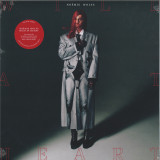
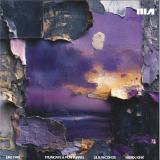
Death Is Not The End collaborate with Uzbek label Maqom Soul to deliver an LP counterpart to last year's mixtape of the same title, compiling specially picked & fully licensed individual belters from the ex-soviet studios of Central Asian republics between 1978 and 1989 - incl. Uzbek, Tajik, Kurdish & Uyghur artists pulling traditional folk motifs together with pop & rock and psych elements.
"These recordings do not form a smooth or coherent history. They feel more like a sequence of discoveries made at different moments and in different circumstances. Songs and instrumental pieces that once lived inside specific contexts radio broadcasts, philharmonic programs, touring routes now sit side by side, revealing hidden connections as well as clear fractures between them.
Nasiba Abdullaeva appears here as a voice from the end of an era. Trained within a conservatory system, she worked inside the format of the Soviet pop song while filling it with melodic logic that did not come from Moscow or Leningrad. Her voice is soft and sustained, shaped by Eastern melisma, and it never functions as decoration. Even in tightly structured songs there is a sense of resistance, an effort to preserve a musical language rooted in Uzbek tradition rather than fully adapted to an all Union standard.
The ensemble Sintez, later renamed Navo, represents a different path. Beginning as a student rock group, the band was gradually absorbed into the official VIA system with all its limitations and compromises. Yet it was precisely within those boundaries that Sintez and Navo developed a recognizable sound. Electric guitars and jazz rock harmonies do not overpower the folk material but remain in tension with it. Their recordings feel like negotiations between what the musicians wanted to play and what they were allowed to perform.
The Tajik ensemble Gulshan reflects an institutional approach carried to a high professional level. Formed under television and radio structures, the group treated folk material almost as a written score. Carefully constructed arrangements, close attention to orchestration, and restrained use of pop techniques define their sound. There is less spontaneity here, but a strong sense of discipline and structure, where national melody becomes part of a carefully controlled sonic framework.
Koma Wetan occupies a very different space. Formed in the 1970s, this Kurdish rock group approached poetry and folklore as tools of cultural assertion. Their psychedelic rock never feels like a stylistic borrowing. Instead it functions as a contemporary vessel for language and themes that might otherwise have remained unheard. Even today these recordings sound fragile and stubborn at the same time.
The Uyghur ensemble Yashlik, closely connected to a musical drama theatre, operated somewhere between stage performance and popular music. Their songs are built on folk melodies but shaped for wide audiences. What emerges is a constant attempt to preserve the recognizability of Uyghur musical identity without freezing it in a folkloric frame. Yashlik's music exists in a state of balance between representation and development.
Digging Central Asia does not attempt to establish hierarchies or offer a single wayof listening. Names and dates matter less than the sound itself. Tape noise, abrupt transitions, and unexpected timbres remain part of the material rather than flaws to be corrected. This music existed at the crossroads of multiple routes geographic, cultural, and ideological. Heard today in a new context, it no longer feels peripheral. Instead it stands as a reminder that the history of popular music is far more fragmented, layered, and polyphonic than it is usually allowed to be."
Buscar:this other space
Remixes V1[12,56 €]
Remixes V2[8,61 €]
Remixes V3[11,72 €]
Remixes V4[11,72 €]
Remixes V6[11,35 €]
Repress
The Godfather of Hardcore, Marc Acardipane, needs no introduction. His outstanding releases over the past 30 years speak for themselves. He has been instrumental in helping to create electronic music history, with countless well-known productions which have been unsurpassed by any other artist of this calibre. His timeless masterpieces have been and always will be heard at hardcore raves spanning the circumference of the Planet. With "9 Is A Classic", "Slaves To The Rave", "Pitch-Hiker", "Stereo Murder" and "We Have Arrived", just to name a few, he clearly proves who's the boss. "The Most Famous Unknown" is a well compiled collection of Marc's music, which showcases a mere portion of what he has composed and produced since the early nineties! The vinyl and digital selection of "The Most Famous Unknown" features remixes by Body Sushi a.k.a. VTSS & Randomer, Dasha Rush, Gabber Eleganza feat. Delirio, Jasss, Kilbourne, Minimum Syndicat, Nina Kraviz, Perc, Solid Blake, Stranger, Umwelt and VTSS, which all deliver excellent interpretations of tracks they have chosen to revamp. All original tracks have been re-mastered to the highest possible standard of quality.
Guests is the home recording project of Jessica Higgins and Matthew Walkerdine. Vaguely named as such to avoid any problems with the poster if they pull out of a gig (which has only happened once, about a year and half before any songs were actually written to be fair) but also to capture a sense of reverse hospitality. That is, arriving at your door with a bottle of good wine (can’t turn up empty handed) or a fist full of savoury or sweet snacks (time of day dependant); oversharing at the afters (and then passing out on your couch); reading to your toddler while you make their lunch or put everything back where it was meant to go (only to get torn apart again). So, something about what happens when private worlds meet each other, making or having been made a space for. But at times, it’s a different kind of intimacy, a temporal or material one, like the feeling of crisp fresh sheets, and abundant and soft, body-part appropriate towels in a hotel in a city you’ve been to before and love to go back to.
Their debut record, “I wish I was special”, was variously described as “a collage of concrète experiments and outerzone pop gestures, music that sounds as if it’s been written from the depths of a dream”; “music for people who love music but also hate it too”; “something like chasing ghosts or befriending a wild animal”; “pulling apart nervous sensations with haphazard ease and requisite humour”; and “a melody of refusal, of being all-in (…) finding the exact right WRONG sound to express the discontent”. Common Domestic Bird continues in this vein, layering synthesiser, keyboards and samples over rudimentary drum rhythms and field recordings, which are in turn sung or spoken with to create nine new songs.
Written and recorded between autumn 2024 and summer 2025 in Reading, Berkshire, the music has matured since its last outing, in a way, leaning less into collage and more toward structured composition and melodic depth, yet retains a healthy dose of indeterminacy and off-kilter rhythms for the forever-amateur. The songs on Common Domestic Bird hint at some “about”-ness through a series of discrete vignettes which sound a bit like architecture or end of year lists, gossip or over-thinking subjectivity, like disappearances and impressions, the support structure of the spine, letters and signs offs, things you could really do without and where they should go, hoping you’ll see something that isn’t there, pretences and performance. At times they feel kind of funny, others kind of sad or a bit angry and annoyed, a bit like you really.
When a Russian missile struck the ground not far from my studio in Kyiv, I vividly remember how my body reacted to the explosion, milliseconds before my mind did. That traumatic explosion reduced my essence to a primal state. There existed nothing but dread—the kind that, in scripture, accompanies the appearance of angels announcing, ’Be not afraid’.
The visions of Abbess, composer and mystic Hildegard von Bingen were preceded by bright, excruciating flashes of light. Modern medicine reduces them to cluster migraines, one symptom of which is the retinal aura, often accompanied by blurred vision and blind spots. Hildegard’s music can place great demands on the bodies of its performers, emphasizing uncomfortable intervals and the wide distance between the lowest and highest pitch. In comparison, Gregorian chant, the liturgical standard of the time, represents a tempered attempt to grasp God intellectually; indeed, Hildegard’s music was once described as a stick of dynamite thrown into a Gregorian chant.
This album is not a historically informed performance. Hildegard’s persona and music are a starting point—a distant mirror, akin to the shield of Perseus, used to reflect Medusa. It allows us to reflect, comprehend, externalise, and transcend traumatic wartime experience, reinstating the embodied origins of Christianity, which contained suffering but also offered the promise of transcendence. Andriana-Yaroslava Saienko emphasises this physical aspect of Hildegard’s music by drawing on authentic Ukrainian folk singing, a form that survived despite efforts by the Soviet occupation to replace it with a simulacrum that is naive, harmless, and devoid of contradictions—an attempt to ‘civilise’ the body by disembodying it.
The musical approach is also informed by my ongoing practice of reimagining early music in modular synthesis. I accompany Andriana-Yaroslava’s fiery singing with drones—extended sounds that also occurred in medieval music. The drones alternate with improvisations, one taking its starting point in medieval polyphony, the other working with the concept of the interchangeability of sound and light, referring both to Hildegard’s visions and the space in which we recorded the album: the Cistercian abbey of Sylvanès in Occitania, known for contemporary stained glass windows whose patterns reference the dispersion of acoustic waves inside the church.
The album features two compositions by Hildegard von Bingen: O Ignis Spiritus Paracliti (O Fire of the Spirit and Defender), dedicated to the Holy Spirit, and O Tu Suavissima Virga (O Sweetest Branch), in honour of the Virgin Mary. Both pieces are performed radically slower than usual, expanding in time and space. On vinyl, the compositions are designed to reflect one another and can be listened to in either order. In the digital edition, there is a bonus track titled Zelenaia Dubrovonka (The Green Oak Grove). Based on a Ukrainian folk song from the Polissia region, Andriana Yaroslava adapted the lyrics to reflect our contemporary reality. The green oak grove does not rustle with the wind; instead, it resonates with a different sound—perhaps the missile that struck near my Kyiv studio.
- 1: Pulse Repetition
- 2: Absolute Elsewhere
- 3: The Proxy
- 4: Progress Report
- 5: Buran
- 6: Tesseract
- 7: Backscatter
- 8: Frequency Shift
On a remote gravel-covered spit of land on the east coast lie the abandoned buildings of a government facility for weapons testing and experiments with radar.
In the mid 1960s this site witnessed the construction of an over-the-horizon radar, a technological marvel bouncing signals off the ionosphere, built to covertly monitor the activities of other nations.
The reflectivity of the ionosphere is a function of frequency, time of day, time of year and of the solar cycle. In essence, a sympathy for the celestial was required to fully exploit this man made construction.
Plagued by noise that created false returns on the monitors, the intended performance was never achieved, and despite several investigations the system was shut down and eventually dismantled in the early 1970s.
The long dormant Cobra is now a nature reserve.
2026 RSD Release - GREEN Vinyl
Mark Pritchard (Global Communication / Africa Hi-Tech / Reload / Harmonic 313) produced gem from 2004. Featuring Eska, Nina Miranda and other vocalists. TIP!
An expanded edition of a long out of print Far Out classic. This double vinyl edition will include the track 'Strikehard' for the first time, which was omitted from the original pressing, only released on a separate 12" and CD.
=========================================================
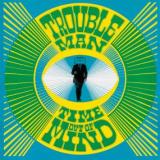
Far Out Recordings announces the Record Store Day 2026 deluxe double LP reissue of Troubleman’s Time Out of Mind. Originally released in 2004, the album marked a distinctive turn in Mark Pritchard’s expansive career, channeling his pioneering electronic instincts through a filter of Brazilian grooves, African rhythms, and global soul. This special edition includes the underground club classic “Strike Hard” (previously unavailable on the original vinyl), alongside the album’s flawless blend of early-noughties space-age bossa, broken beat, future soul, and psychedelic downtempo.
Under the Troubleman alias, Pritchard stretched his focus outward in every direction. From the UK rave continuum to Brazil, the US, Africa, and beyond, he drew on the psychedelic soul of Dorothy Ashby and David Axelrod, the Afrobeat drive of Fela Kuti and Tony Allen, and the samba-doido energy of Azymuth. Filtering golden-era seventies influences through early-2000s pop, club, and rave lenses, the album moves effortlessly between club-ready tracks like “Strike Hard,” and more laid-back, tripped-out moments that highlight Pritchard’s range, shifting seamlessly from dancefloor heat to outer-bongolian cloud watching.
Featuring vocal contributions from Nina Miranda (Smoke City, Da Lata), Steve Spacek (Spacek, !K7), and Eska (New Sector Movements), the record captures Pritchard at a pivotal moment, exploring how electronic production could absorb and expand the rhythmic complexity of global sounds.
One half of Global Communication and Jedi Knights with Tom Middleton, and Harmonic 313 with Dave Brinkworth, Pritchard has since built a dense, acclaimed discography across numerous aliases and labels. His work on Warp Records has included collaborations with Thom Yorke, and his remix portfolio spans Depeche Mode, PJ Harvey, Underworld, Aphex Twin, Lamb, KRS-One, A Tribe Called Quest, The Orb, and The Beloved.
Remastered from the original sources and pressed to vinyl exclusively for Record Store Day 2026, this edition also faithfully reproduces the album’s psychedelic artwork by renowned British artist and designer Swifty.
Official reissue of a German under-the-radar disco tune. The original from 1979 is a bubbling dancefloor stomper with freewheeling synth lines. For the flipside of this 7" Korkut Elbay created a spaced out balearic dub rework. Picture sleeve with a funky painting by Holger Kurt Jäger that picks up on the original.
The melody of 'Butterfly Dance' came to Dieter Bührig's mind as a butterfly floated through the recording studio during a session break. The resulting track landed on a compilation with mostly cover versions of disco hits. Now, more than 45 years later, the tune found its well-deserved single release on funkscapes.
Korkut Elbay is a fixture of Cologne's electronic music scene for over 20 years. He's part of the Cómeme camp and with remixes and edits for labels like Permanent Vacation or funkscapes he prooves his sensitive feel for the dancefloor. So does he on this rework, giving the orginal space to breathe and calm down without leaving the dancefloor.
Dieter Bührig studied electrical engineering and sound recording in Berlin. Afterwards he worked several years as a sound engineer for the music industry and as a producer. Later on he worked as a teacher for physics and music, trained trainee teachers for secondary schools and wrote articles and publications on musical education, choir and band arrangements. Nowadays he's writing, among other things, musical crime stories.
This relatively new Stockholm duo have been making waves with their latest vinyl output. This EP conveys their love for the disco house sounds of Chicago, spearheaded by the likes of DJ Sneak. ‘Spoon Bait’ leads the way using an almost dreamlike vocal hook over a deep bass led groove with dub effects to boot. ‘Tuborg Translate’ picks up the tempo, chopping up a Philly style hook, underpinned by crisp beats and otherworldly space effects. Title track ‘Silja Line Superstar’ keeps the peak-time action going utilising warm emotive strings and brass whilst ‘Kenneth Knaster’ bounces along on a sublime disco ride bringing the EP to a close.
Somewhere close to Manchester’s ever changing city centre, as the sun fades and peeks through the newest glass facade, you’ll find Shaking Hand. One part in shadow, the other basking in prisms of light as they sketch out their own sonic landscapes in the dusty redbrick mill they call home. One that is just about clinging on from the encroaching developments that surround them.
Against this back-drop where buildings are constantly torn down & built back again, the three piece craft away. Pulling from early post-rock, and 90s US alternative rock, crafting their own brand of Northwest-emo. Assembling something new, yet nostalgic. Looking ahead towards the transforming horizon. Shaking Hand’s music is built on tension and release – quiets that stretch, louds that overwhelm. Repetition that feels both hypnotic and destabilising.
The band’s musical DNA runs through experimental guitar outfits like Women, Slint, Sonic Youth, Pavement, and Ulrika Spacek, balanced with the melodic sensibility of Big Thief and the dynamic intimacy of Yo La Tengo. Their compositions push against structure: sudden jolts of tempo, polyrhythms that almost fall apart, and riffs that unravel into something fragile or ecstatic. Yet, as Ellis notes, there’s an underlying warmth too: “Like walking through an empty city late at night but catching flickers of life in the buildings you pass.”
Early ideas like ‘Night Owl’ and ‘Sundance’ grew out of George’s lockdown “bedroom years,” where new tunings (open E, drop D, and stranger Pavement-inspired set-ups) opened up uncharted textures. Later, in grim rehearsal rooms, the murky epic ‘Cable Ties’ and the hypnotic ‘Mantras’ absorbed the gloom and grit of the band’s surroundings.
The album was recorded with producer David Pye (Wild Beasts, Teenage Fanclub) at Nave Studios in Leeds, housed in a converted church. “The live room was huge and perfect for capturing our sound,” says George. Determined to bottle their onstage energy, the band tracked the foundations live, layering vocals and guitars later. Soviet-era microphones, odd mic placements, and even phone-recorded demos fed into the mix. “You’ve got to watch out for David though,” Freddie laughs. “He made me play four tambourines in one hand, really hurt, man.”
Lyrically, the record drifts between abstraction and lived moments. George’s words often spill out instinctively, words falling into place before their meaning becomes clear. “A lot of the lyrics look like they’re buried in abstraction,” he says, “but when I look back I can see what they were about — whether that’s an emotional response at the time or just an observation of what was happening around me”. There’s contrast at the heart of it all – optimism vs. doubt, the lightness of youth vs. the monotony of work, a city in constant redevelopment vs. the people drifting through it.
The album artwork is taken from unused plans for the 1970s redevelopment of Los Angeles by architect Ray Kappe, entitled ‘People Movers’. Hypothetical buildings for real people, it feels a complement to the band’s own constructions. One thing’s for sure, Shaking Hand’s debut is built to last.
- A1: Red Axes & Man Parrish Ft. Roy Garrett - Hot Rod To Hell And Back
- A2: James Infiltrate - Chaos
- B1: Queen Atom - Tributemaki
- B2: The New Black - Androids Are Sexy
- C1: Red Axes - Clear Beats
- C2: 100Hz - Whisper
- D1: Red Axes - Time To Take It
- D2: Sluts`n Strings & 909 - Past The Gates
- (10") A. Redrago - Spikes
- (10") B. Redrago - Frequency
Red Axes step into the fabric presents series with a release that feels both inevitable and deeply personal. Known for their hypnotic, psychedelic approach to club music, the Tel Aviv–based duo bring a narrative-driven sensibility that aligns seamlessly with fabric’s legacy of long-form storytelling and forward-thinking curation.
Across years of performances at fabric and other key global institutions, Red Axes have developed a reputation for sets that unfold patiently and unpredictably, drawing dancers into a world where groove, tension, and atmosphere take precedence over genre or trend. Their contribution to the fabric presents series reflects this ethos: a carefully sculpted journey that prioritises mood, momentum, and emotional depth, while remaining firmly rooted in the physical language of the dancefloor.
Formed by Dori Sadovnik and Niv Arzi, Red Axes emerged from Tel Aviv’s underground with a sound shaped by post-punk, acid, krautrock, and cosmic disco influences. Over the past decade, they have built a catalogue defined by raw textures, twisted melodies, and a distinctly human looseness, qualities that translate as powerfully in the club as they do on record. Their releases and remixes for labels such as Phantasy, Correspondant, Running Back, Dark Entries, and Permanent Vacation have established them as artists who consistently operate just outside the expected.
As DJs, Red Axes are celebrated for their ability to stretch time on the dancefloor, weaving obscure selections, unreleased material, and leftfield classics into slow-burning, trance-inducing narratives. This approach has seen them invited to venues and festivals including Panorama Bar, De School, Bassiani, Dekmantel, Sonar, and Primavera Sound, where their sets are defined not by peaks alone, but by the tension built between them.
With the forthcoming fabric presents Red Axes release, the duo deliver a statement that captures years of shared musical intuition and a deep respect for the club as a communal, transformative space. It is a mix that rewards close listening as much as physical immersion, a snapshot of Red Axes at their most focused, expressive, and uncompromising.
To mark the launch of their forthcoming fabric presents album, the duo unveil the lead single, “Hot Rod To Hell”, a bold reworking of Man Parrish and Roy Garrett’s 14-minute spoken-word electro epic, reimagined through Red Axes’ signature psychedelic lens.
Stripped back and refocused, the original’s narrative tension is transformed into a hypnotic, downtempo house track built for late-night immersion. A rolling, elastic groove anchors the track, while pulsing low-end, subtly warped synth lines, and tightly controlled percussion create a sense of slow, smouldering momentum. The spoken vocal elements drift through the mix like fragments of memory, lending the track a ritualistic, cinematic quality without overwhelming the dancefloor.
It’s True What They Say is the debut EP from Edinburgh-based, husband-and-wife duo Sarah/Shaun (pronounced simply Sarah Shaun), aka Sarah and Shaun McLachlan (pronounced “McLochlin”).
“Sarah and I both have a love for nostalgia,” explains Shaun. “We watched that amazing old 80’s Sci-Fi, (John) Carpenter movie, Starman, a few months back. Myself and my brother David used to watch it all the time. We must have been, roughly, 5-7 at the time. I remember loving the movie but the end, you know, with the beautiful, atmospheric, synth ending, I love that particular moment the most - best part of the movie, you know, when he goes home… It’s heartbreaking but stunning, all the same. It’s the music that moves you most… It did when I was 5 and it still does to this day. It must have had some form of a (much deeper) impact on me.”
The duo narrates stories across themes of love, hope, family, friends, dreams and sadness - the good that comes with the bad in everyday life, not just on a personal scale but within a community as well.
“Starbed is the first song I have ever written and just came out of the blue really, with Shaun playing a melody and me singing along,” says Sarah. “It’s simple and just about two people in love. Love songs are always the best songs, after all… Music has been a big part of my life from a young age. I was unwillingly dragged to piano and violin lessons, which I’m thankful for now! I’d say the first band I really became obsessed with growing up were the Beatles, and on the back of that a lot of 60s music and fashion. From then on, I had a love for music.”
“Shaun definitely opened my ears to a lot of sounds and got me thinking about soundtracks and all the noises that can be made,” she goes on. “We love just spending time experimenting in the house with instruments, pedals etc and Ali is a real magician to work with, too…”
The recordings took place over the summers of 2022 and 2023, with fellow Delta Mainline member Ali Chisholm (aka Jaguar Eyes) plus long-term friend and collaborator Gavin King. Further collaboration then came via the ‘net from the (international) likes of Chris Dixie Darley (Father John Misty), Darren Coghill (Neon Waltz) and Daniel Land (The Modern Painters), among others (see a full list of credits below).
Both Sarah and Shaun have a love for uber-soundtrack producers such as Hanz Zimmer, Max Richter, Cliff Martinez plus live acts such as Beach House, Spiritualized, M83, Suicide, Moby and OMD (to name a few). Shaun also credits the work of Kyle Dixon & Michael Stein (from Survive) on the Stranger Things score… “Even a moment in a movie, whether it be just 30 seconds during a particular scene, it grips you,” he says. But there’s something much deeper at play as well. “Music is a healer,” he goes on, “and I write from my own perspective but more so for others. Once I've done my bit, it doesn't belong to me any longer. It belongs to whoever wants it or needs it.”
The result is a cinematic, synth-wavey, dream poppy and downright beguilingly beautiful body of work. And they’re just getting started…
REVIEWS/RADIO/FEEDBACK:
“Starbed is folky, flavoured by pedal steel, cello, and brass. Dust Tears, in stark contrast, is a mini synth-pop rave epic. Part Bicep. Part Human League. Keep Your Eyes Closed summons a mood that’s romantic, but also dark and potentially doomed – like David Lynch’s Twin Peaks meets Cliff Martinez’s Drive score. My pick though is It’s True What They Say, whose interwoven jangle and picking recalls New Order’s more introspective moments (Love Vigilantes, Love Less… ). Drums crashing, cathartic. Guitar raising dramatic arcs. Its chorus a rush, like a reprise of Pains Of Being Pure Of Heart’s ‘Higher Than The Stars’.” BAN BAN TON TON
"Dust Tears sees them sharing vocal duties over a synth foundation reminiscent of Moby’s Go - Artist Of The Week” THE SCOTSMAN
"Woozy pop" NEMONE (Mary Anne Hobbs Morning Show, BBC 6Music)
"Nice one, very David Lynch meets Euro dream pop" YOUTH (Killing Joke, Paul McCartney, U2, The Orb, Spiritualized etc)
"Music sounds killer! Real emotion” DAVID HOLMES
"I’m enjoying it” TIM BRINKHURST aka LONDON (IKLAN, Young Fathers, Callum Easter)
“Oh, this is lovely!” SEAN JOHNSTON (A Love From Outer Space)
"It’s totally my cup of tea with milk and biscuit" BRENT RADEMAKER (Beachwood Sparks/GospelBeach)
"Beautiful, ecstatic electronica! Short and to the point" KEVIN BALES (Spiritualized, Julian Cope, Soulsavers, BE)
"Makes me wanna sit in the sun and sip an Arnold Palmer" CHRIS DIXIE DARLEY (Father John Misty)
“Really beautiful - Cocteau Twins / Spiritualized vibes but has its own thing going on, too - worth checking out!” JULIAN CORRIE (Franz Ferdinand, Miaoux Miaoux)
‘Sounded nice on a sunny day, makes me think of Twin Peaks, nice moods’ EAMON HAMILTON (Sea Power)
"Dealing in nostalgia, no bad thing at all, great to play that (Dust Tears) for you” RODDY HART (BBC Radio Scotland)
“I'll give the vocal tracks a spin before the release." VIC GALLOWAY (BBC Radio Scotland)
"Rather good!" IAIN ANDERSON (BBC Radio Scotland)
CREDITS:
Lyrics, Guitars, Keys, Synths, Drums, Drum Programming, Percussion, Mandolin, Glockenspiel: Shaun McLachlan
Lyrics, Vocals, Keys by Sarah McLachlan
Guitars, Synths, String Arrangements, Drum Programming, Engineering: Jaguar Eyes Percussion/Drums/Effects, Fire Extinguisher: Darren Coghill (Neon Waltz)
Guitars by Daniel Land
Slide Guitar by Chris Dixie Darley (Father John Misty)
Brass by Bruce Michie
Keys, pre-production & engineering on “It’s true what they say”: Gavin King
All produced by Jaguar Eyes and Shaun McLachlan and then mixed at Glasgow’s Chem19 Studios by David McCaulay (From Scotland With Love, Rick Redbeard, BBC TV’s Attenborough and The Mammoth Graveyard score).
Artwork: Jamie Walman (Fourteen Admirals)
MORE INFO:
Although Shaun released a pair of solo singles (When We Dance and Give Your Love To Me) during Lockdown, he will be better known to many via his work as the multi-instrumentalist in Edinburgh band Delta Mainline. With two albums released to date, Oh! Enlightened and Bel Avenir, both rapturously received by fans and critics alike, Delta Mainline have developed an international, cult following. Oh Enlightened (2013) achieved widespread critical acclaim on release, earning the band comparisons to Arcade Fire and Echo & The Bunnymen, while 2019’s Bel Avenir pulled in references to The Flaming Lips, Pink Floyd, David Bowie and krautrock. A third DM album is currently being mixed and due for release later this year…
- 1: Tribal (A Heart, Self-Taught)
- 2: We Are All Explorers Now
- 3: The Pilot
- 4: Bodies Grown, Pt.1
- 5: In Absentia
- 6: I Am An Officer
- 7: Philistine! (Reclaim The Sky!)
- 8: Bodies Grown, Pt.2
- 9: Somnolence In Reverse
RAINY DAY ED.[24,79 €]
Pete Lambrou, the visionary composer and multi-instrumentalist behind VLMV (pronounced "Alma"), is one of the most singular voices emerging from the ambient, post-rock, and experimental scenes in the UK. With a career that spans atmospheric solo work, film and television scoring, and evocative live performance, Lambrou has carved out a distinctive sonic universe he describes as "ambient-ish post-something" (Pete Lambrou) a playful yet accurate summation of a sound that is at once genre-fluid and deeply immersive. The album takes its title from Sara Teasdale's 1918 poem and Ray Bradbury's later short story, both of which imagine a world continuing quietly after humanity's disappearance. This idea became the gravitational centre around which the record formed. Written during a period of deep engagement with climate fiction and ecological thought, `There Will Come Soft Rains` reflects on humanity's legacy, its technological ambition, and its uneasy relationship with the natural world. A century on from Teasdale's poem, the balance of power feels less certain, and Lambrou's music inhabits that tension with remarkable subtlety. "The initial ideas stem mostly from chaos, randomness or sound exploration and then get shaped as I go. Typically, and certainly for this album. It's evolved since album 1, which was more song / chord based. It's a fun process of finding the sound and then working out whether it's speaking to me - or merely just a cool noise. That's fun, but it sometimes can't evolve or progress, so then begins the long journey of shaping it into some sort of song format - which doesn't have to be a-typica,l but whatever feels right to me. The subject matter and overall theme is important too - it's got to all make sense within itself. There's no point having a slowly creeping theme and then rush the music." (Pete Lambrou) VLMV embody an emotional honesty that works with patience and nuance. Whether you're encountering his music for the first time or returning to its quiet depths, VLMV offers an aural space that resonates long after the final note fades. Lambrou's singular sonic language sits at the intersection of ambient, post-rock, modern classical, and experimental electronic music, while remaining unmistakably human at its core. "Instrumentally it's far more synth based - as soon as I had the concept, I wanted to make sure technology clash and marry with traditional instruments (at different times) in a sort of slow-moving dance I suppose. One is nature, one is human development and technology. Sometimes working together and sometimes in opposition. On my previous albums I'd say that at least half of the tracks started life as songs, whereas with `There Will Come Soft Rains` I think the majority (if not all) started as experiments in sound." (Pete Lambrou) Sonically, the album is VLMV at its most cinematic and textural. Warm, intimate piano figures and elegiac string arrangements are set against unstable modular synthesis, fractured rhythms, and evolving sound design. The organic and the artificial are locked in a slow, shifting dialogue, mirroring the album's central themes. At times the music feels tender and nostalgic, at others unpredictable and mournful, yet it never tips into despair. Instead, a quiet resilience runs throughout the record. "The album is slightly unusual in that it was mixed in Dolby Atmos before being mixed down to stereo. Most, if not all, do it the other way round. That's because I got to work with a superb mix engineer who just happens to live opposite. It was extremely random and lucky, moving to a tiny hamlet in the South of England and there being a Dolby Atmos studio opposite with a genius of an engineer. We had in mind that we would do it this way round and enjoy the mix process and give everything its own space - it still had issues when folding down to stereo, but overall a more pleasurable mix!" (Pete Lambrou) There Will Come Soft Rains has a geological sense of time: themes creep, expand, erode, and reform, resisting conventional structures in favour of something more patient and immersive. Each sound exists because it needs to; they move, recede, and emerge with a three-dimensional clarity that enhances the music's cinematic quality, giving each element room to breathe while maintaining an enveloping sense of cohesion. Lambrou's unique voice is Intimate and fragile, his vocals hover above the instrumentation, a guiding thread through the expansive soundscapes, drawing listeners closer into the emotional core of each piece. "Long time vocal collaborator Anja Madhvani did lots of harmonies on the album - I wanted to include her voice as much as possible on this album. In terms of string players - 3/4 have been long term collaborators with me. Marie Schreer actually recorded all strings on my first album ALMA, and Fraser & Clodagh have worked on every album (and occasional live shows) since Stranded Not Lost. In terms of art - Joel Cammarata designed the cover, and accompanying art - he designed Sing With Abandon and I absolutely adore his work, but also - he's so great at understanding and developing and capturing the concept." (Pete Lambrou) Layered harmonies drift through the music like distant signals or half-remembered voices. Madhvani's presence adds a human fragility to the album's vast soundscapes, reinforcing the sense of memory and longing that runs beneath the surface. The strings, performed by a close circle of trusted collaborators, further ground the record in warmth and physicality, acting as a counterweight to the synthetic elements that threaten to unravel it. "Despite the heavy subject matter, I wanted to create an album that imparts hope and optimism, marrying traditional instrumentation as nostalgia, with technological innovation through the randomness of modular synths." (Pete Lambrou) The partnership with Pelagic Records feels both organic and significant. Known for championing artists who value emotional weight, sonic ambition, and artistic integrity, the label provides a natural home for VLMV's work. Lambrou's music shares Pelagic's ethos: immersive, patient, and unafraid of scale whether intimate or vast. With There Will Come Soft Rains, Pete Lambrou has crafted a work that feels timely without being didactic, expansive without being overwhelming. It stands as a quiet, but powerful statement that lingers long after the final notes fade. FOR FANS OF Sigur Ros * Olafur Arnalds * Radiohead * Keaton Henson * This Will Destroy You
Evergreen In Your Mind, the new and third album from Norwegian singer-songwriter Juni Habel, exists in two worlds at the same time. Songs were recorded in quiet corners of her home, on the piano in the school where she works, and it uses the physical world around her to provide percussion. It also takes place, as she herself attests, within a dream; an imagined place in which her desire for oneness with each other and the world around us is finally realised.
Evergreen In Your Mind was recorded with co-producer Stian Skaaden, it’s Habel’s first album in three-years, following the breakthrough success of 2023’s Carvings LP. Formed of eleven new recordings, the songs here remain delicate, Habel’s voice playing an elegant lead role – but there are fluctuations too.
These small shifts in Habel’s sound result in a notable stride forward. More focus went into the groove of these songs. Playfulness was embraced and, perhaps most importantly, patience played a fundamental role in shaping the album with time and care given to every element of these songs. “We always aim to capture effortlessness - but the way of getting there is anything but effortless,” Habel reveals.
This extra time that was given to the project gave Juni the space to nurture her creativity. She would read and listen to music, hike into the hills, place herself within nature and seek out stillness. Not as a deviation from her work but as a fundamental part of the process. It’s a search for connection, and it’s a recurring theme across Evergreen In Your Mind; the polarity between stillness and passion, also our resistance to these desires, and the things we want to live and experience.
The album’s title-track and fist single feels indicative of this narrative. A gorgeous, delicate folk song, it finds Habel out in the woods, hiding from real life, caught in the space between the natural world and the pull of modernity. “It’s nostalgic. It’s about looking back and realizing things will be different,” Habel says. “Its about visualizing something beautiful in your head that you keep clinging onto.”
The album cover for Evergreen In Your Mind also adds shimmer. A striking photograph of Juni among the mountains, it was taken on a day trip to Rondane, a five-hour drive each way from her home. Habel explains. “It was awe-inspiring to drive all the way up into the high mountains, with its wide plains and intense colours. For an album with music that at times likes to hide itself, I think it fitted nicely with such an epic, grand, and powerful landscape.”
"Fans of Nick Drake, Karen Dalton and Neil Young will find much to enjoy in this musical equivalent of an evening spent alone by the fireside.” The Times
Cassette[14,50 €]
Aspen is very proud to introduce ‘Non Sonett’ by the Christian Wallumrød Ensemble. This ensemble is a pioneering Norwegian chamber group whose work on ECM and Hubro has redefined the boundaries between jazz, contemporary composition and folk music.Across seven albums, the ensemble has developed a highly distinctive l anguage built on restraint, timbral nuance and collective interplay, placing it among the most influential European ensembles of the 21st century.
Bringing together some of the finest musicians in Norway, the ensemble draws on a rare collective sensitivity, where each player contributes to a deeply integrated and texturally rich sound world.
With Non Sonett, the Christian Wallumrød Ensemble opens a new chapter that grows directly out of recent years of work in more solitary and cross-disciplinary contexts. In this period, Wallumrød has developed material for solo performance as well as for dance, allowing ideas to take shape in more fluid and exploratory formats. Some of this material now finds its way into the ensemble, where it is met by the possibilities offered by instrumentation, collective playing, and the distinct voices of the musicians. At the same time, older pieces—originating in entirely different settings— re-emerge here in new forms, reshaped by the ensemble context.
A defining aspect of Non Sonett is the way many of the pieces function less as fully determined compositions and more as open frameworks: starting points, suggestions, or “springboards” for music. These structures invite response rather than prescribe outcome, relying on the ensemble’s inherent sensitivity and capacity to realize and transform the material in performance. The result is music that feels both precise and fluid, shaped in equal measure by composition and by the interpretative presence of the players.
Central to this album is a continued deepening of Wallumrød’s long-standing interest in ambiguity and in dissolving boundaries between different musical elements and expressive worlds. By placing contrasting materials and associations side by side—sometimes subtly, sometimes more overtly—the music opens up spaces where meanings remain fluid and interconnected. On Non Sonett, this approach is taken a step further, allowing these juxtapositions to play an even more active role in shaping the music’s character and flow.
This approach connects closely with the ensemble’s broader artistic trajectory. Over time, the Christian Wallumrød Ensemble has developed a language that is immediately recognizable—marked by reduction, clarity and a deep attention to sonic detail. While each release has its own character, the underlying aesthetic remains consistent: a focus on the inner life of sound itself. Rather than foregrounding gesture or virtuosity, the music draws the listener toward the smallest elements, where meaning emerges gradually through texture, spacing and timbre.
The listening experience becomes one of concentration and proximity, where each sound carries weight, and the accumulation of detail forms a larger whole. References may be sensed—to early polyphonic music, Norwegian folk traditions, or more recent experimental practices—but these are absorbed into a singular musical language that resists categorization.
As with the ensemble’s recent work, Non Sonett also continues the integration of electronics as a fundamental part of the sound world. Each musician engages with electronic elements alongside their acoustic instruments, creating a layered and dynamic sonic environment. At times, this leads into extended, exploratory passages reminiscent of analogue musique concrète; at others, electronics operate almost imperceptibly, subtly altering and extending the acoustic textures in real time.
vinyl[21,81 €]
Aspen is very proud to introduce ‘Non Sonett’ by the Christian Wallumrød Ensemble. This ensemble is a pioneering Norwegian chamber group whose work on ECM and Hubro has redefined the boundaries between jazz, contemporary composition and folk music.Across seven albums, the ensemble has developed a highly distinctive l anguage built on restraint, timbral nuance and collective interplay, placing it among the most influential European ensembles of the 21st century.
Bringing together some of the finest musicians in Norway, the ensemble draws on a rare collective sensitivity, where each player contributes to a deeply integrated and texturally rich sound world.
With Non Sonett, the Christian Wallumrød Ensemble opens a new chapter that grows directly out of recent years of work in more solitary and cross-disciplinary contexts. In this period, Wallumrød has developed material for solo performance as well as for dance, allowing ideas to take shape in more fluid and exploratory formats. Some of this material now finds its way into the ensemble, where it is met by the possibilities offered by instrumentation, collective playing, and the distinct voices of the musicians. At the same time, older pieces—originating in entirely different settings— re-emerge here in new forms, reshaped by the ensemble context.
A defining aspect of Non Sonett is the way many of the pieces function less as fully determined compositions and more as open frameworks: starting points, suggestions, or “springboards” for music. These structures invite response rather than prescribe outcome, relying on the ensemble’s inherent sensitivity and capacity to realize and transform the material in performance. The result is music that feels both precise and fluid, shaped in equal measure by composition and by the interpretative presence of the players.
Central to this album is a continued deepening of Wallumrød’s long-standing interest in ambiguity and in dissolving boundaries between different musical elements and expressive worlds. By placing contrasting materials and associations side by side—sometimes subtly, sometimes more overtly—the music opens up spaces where meanings remain fluid and interconnected. On Non Sonett, this approach is taken a step further, allowing these juxtapositions to play an even more active role in shaping the music’s character and flow.
This approach connects closely with the ensemble’s broader artistic trajectory. Over time, the Christian Wallumrød Ensemble has developed a language that is immediately recognizable—marked by reduction, clarity and a deep attention to sonic detail. While each release has its own character, the underlying aesthetic remains consistent: a focus on the inner life of sound itself. Rather than foregrounding gesture or virtuosity, the music draws the listener toward the smallest elements, where meaning emerges gradually through texture, spacing and timbre.
The listening experience becomes one of concentration and proximity, where each sound carries weight, and the accumulation of detail forms a larger whole. References may be sensed—to early polyphonic music, Norwegian folk traditions, or more recent experimental practices—but these are absorbed into a singular musical language that resists categorization.
As with the ensemble’s recent work, Non Sonett also continues the integration of electronics as a fundamental part of the sound world. Each musician engages with electronic elements alongside their acoustic instruments, creating a layered and dynamic sonic environment. At times, this leads into extended, exploratory passages reminiscent of analogue musique concrète; at others, electronics operate almost imperceptibly, subtly altering and extending the acoustic textures in real time.
A new EP by Extrawelt is always something special, as they continually manage to reinvent themselves while remaining unmistakably true to their sound. The a-side „Moonster“ of their latest record forms a subtle and almost magical bridge to early musical influences such as Immortal Coil, Chris & Cosey, The Cure, and Throbbing Gristle.
In doing so, they reclaim, or rather reintroduce, a powerful, mystical element into their music, one that is integrated so naturally it feels as if it has always been an essential part of Extrawelt’s sonic DNA. Beyond that, the track unfolds through numerous facets, constantly shifting and evolving. Just when you think it is settling into a familiar direction, small variations emerge, keeping the piece remarkably alive and unpredictable.
You can clearly sense how much fun Extrawelt had working on this track. It is bursting with ideas, energy, and vitality, radiating a playful confidence that makes it endlessly engaging.
The b1 track „Bettermaker“ takes a different route, dedicating itself entirely to a single mood. Through subtle pitch bending and a carefully shaped tonal palette, the track unfolds with a slightly eerie, enchanted atmosphere.
From beginning to end, „Bettermaker“ remains focused and unwavering. There are no breaks or dramatic shifts in direction, instead, the piece commits fully to its initial setting. A monolithic, almost mantra like motif forms the core, creating a distinctive ambience, mystical, shadowy and faintly oriental in character.
This atmosphere is carried and reinforced by percussive, ethno inspired drums, which add an organic, ritualistic pulse. The result is a hypnotic soundscape that draws its strength from consistency and depth rather than contrast, inviting the listener into a secluded, otherworldly space.
The final piece of the EP „Popcorn Forever“ reveals another side of Extrawelt’s thinking. The track unfolds like a curious experiment in motion. Instead of building toward a predictable climax, sounds are gradually tossed into an ever running loop fragments, textures and small rhythmic ideas appearing almost casually, as if the piece were assembling itself in real time.
At first the elements seem loosely connected, sometimes abstract, sometimes slightly mischievous in the way they twist and bend. It almost feels like an impossible construction task. But Extrawelt’s experience quietly guides the process. Bit by bit the scattered parts begin to communicate with each other.
Repetition becomes the hidden engine. With every return of the loop new details slip into the structure, and what once appeared random slowly starts forming relationships inside the listener’s mind. The track never forces a clear explanation, yet the brain begins to tie the loose ends together almost automatically.
Popcorn Forever therefore works beautifully as a kind of transit piece within the EP. It moves between ideas, linking moods rather than closing them off. In typical Extrawelt fashion, the result is playful, slightly surreal and full of subtle discoveries that reveal themselves over time.
- 1: Layer After Layer
- 2: Indalo
- 3: No Abiding City
- 4: Rising Falling
- 5: The Bridge
- 6: Mama Carries
- 7: Eating The Other
- 8: What Did The Rain Say?
- 9: Tulip
Shimmering Xhosa traditions and deep electronic futures vibrate as South African sonic poet and composer Dumama unveils her groundbreaking debut solo album, Towards An Expanse. Sometimes gospel, sometimes electro-psychedelic space travel, Towards An Expanse unfurls from a languid lament into an ever-expanding sonic universe. Dumama defies conventional genre boundaries while excavating deep personal and cultural histories in this concise but boundaryless collection, recorded between New York, Johannesburg and Berlin. Dumama first gained international attention with her acclaimed 2020 collaborative album, Buffering Juju, created with fellow South African musician and artist Kechou, and lauded as Global Album of the Month by The Guardian. Her new solo work draws on a rich lineage of South African voices. Gugulethu Duma (aka Dumama) is a musician / composer / sonic poet / creative producer from the Eastern Cape Province of South Africa. Dumama is one of the few uhadi players in the world. Her use of the traditional Xhosa bowed instrument guides her profound story-telling, blending ancestral roots into an urgent electro-acoustic palette. The album was born out of sessions with acclaimed musician and producer Shahzad Ismaily in New York and South African powerhouse Nandi Ndlovu in Johannesburg.
The long-overdue revival of Bim Sherman’s catalog begins here. These essential recordings will become widely available again for the first time in decades, opening a new chapter in the appreciation of one of Jamaica’s most distinctive voices and representing a major moment for reggae and dub aficionados around the world. This reissue series will not only preserve his legacy but will also offer listeners the chance to experience the depth and timeless resonance of Sherman’s work in its full glory.
Bim Sherman—born Jarret Lloyd Vincent, in Westmoreland, Jamaica—holds a unique place in reggae history. Emerging in the mid 70s, his ethereal, haunting vocal style quickly set him apart from his contemporaries. He was soon collaborating with the top producers and musicians of the era, including Adrian Sherwood and the On-U Sound collective, bridging the gap between roots reggae and experimental dub and laying the groundwork for the fusion of Jamaican sounds with the vibrant underground scene in the UK. His career, from Kingston to London to Mumbai, was marked by an artistic daring and spiritual intensity that has earned him enduring respect across generations.
The centerpiece of this reissue campaign is Ghetto Dub from 1988, a record that distills Sherman’s artistry into its most potent form. Originally released in a limited number, the album embodies the stark yet soulful beauty of dub production. With its reverb-drenched drums, cavernous basslines, and echo-laden atmospherics, Ghetto Dub transforms Sherman’s various tracks into spectral presences that drift in and out of the mix. The arrangement and production—minimal yet profoundly textured—captures both the raw urgency of Jamaican street culture and the forward-looking experimentation of the UK dub scene. Each track unfolds like a meditation, balancing grit with grace, density with space. Ghetto Dub is more than an album; it is an immersive soundscape that reaffirms Bim Sherman as one of reggae’s most otherworldly and visionary figures.
Allein' by Quarks is a timeless piece of German electro-pop culture that captures the nostalgia of Berlin’s wild & spaced out 2000s like no other!
Originally released on the duo's third album "Trigger Me Happy", the single was later released as a 12" with two massive remixes that were only available on vinyl.
Whether it's Sascha Funke's haunting minimal techno masterpiece or Swayzak's colourful & electrifying banger - both remixes leave no doubt that this 12" will bring goosebumps & tears of joy to every dance floor until the end of time!
With all original masters & DATs lost, this reissue has been carefully restored & remastered from the original vinyl by Dubplates & Mastering. Sounding crystal clear & ready for the club in 2026!
goodbye.
Sole Aspect returns with the second part of its Sole Discretion series and this one goes deeper into the club while expanding on the textured, late-night energy of its predecessor. Dubbyman opens with widescreen deep house on 'Always In & Out' which wraps Aki Dawson's hypnotic Chi-town vocals in slow-burning warmth. The Windy City's Specter follows with a warm, weighty beatdown rooted in the US Mid West before Boo Williams turns up the heat with rolling basslines and his signature rhythmic deftness, backed with a subtle cosmic glow. Taelue closes the set with 'Interplanetary' which is a raw, futuristic cut that drifts into spacey territory and, along with the other cuts, is a sharp reminder that Chicago house's future is in good hands.
Few artists can conjure up the sort of spirituality that Fred P manages whenever he turns on his machines - and this brand new label from the artist means we'll be getting a shedload more of it. Sometimes it's deep, muggy, insular, at others more outward-looking and cosmic. And that's what we have here - emotionally dense sounds on 'Galaxy Walk (Journey mix)' with jazzy motifs off in the distance, spoken words in the foreground and dancing percussion that is optimistic and hopeful. 'Modern Art Talk' is just as balmy as you journey through a sound world that feels as infinite as space itself, while Fred himself muses on his art. 'Inner Channels (edit 4)' is a dusty shuffler marbled with muted chords and brighter melodic stars that feel impromptu and layered in live.
Maybe it was inevitable that Vilhelm Bromander and Fredrik Rasten would find each other. A symbiotic musical alliance of suggestive combinatory magic that stretches back to the interstitial two day space that separates their dates of birth and manifests here as the movement between ‘perfect’ or ‘just’ intonation and the ragged, psychoactive energy of the slippages from and towards that togetherness that render otherwise simple patterns or generally understood repetitions as wildly other and alive.
Astral Twins shares ‘twin’ works by each composer. The patiently unfolding real time retuning of Fredrik Rasten’s guitars on the a-side’s Sojourns and Vilhelm Bromander’s quickened steps and spry looping melodies on the flip’s Partially Dancing.
Both artists have history of going deep into the aesthetic and acoustic impact of intonation (how you think about what is ‘in tune’). Where their first LP (...for some reason that escapes us, 2019, Differ Records) shared a gorgeous set of sustained tone colour fields, this time they lean more explicitly into the folk music traditions of Scandinavia and further afield, whilst echoing the zoned minimalist atmosphere of Arthur Russell’s classic Instrumentals.
Recorded up close and in real time at Fylkingen’s soon-to-be-abandoned temporary location in Stockholm’s southern suburb of Bredäng, Astral Twins sings with the possibility that one plus one can equal more than two.
Fredrik Rasten:
Sojourns explores the live retuning of guitar and double bass in a sequence of just intonation harmonies. A guitar ostinato runs throughout the piece where the retuning becomes an integral part of the composition. The slow pace reveals every detail in the transition from one harmonic arpeggio to another — how interfering waves emerge and disappear as the tonal interactions settle in electric clarity. The double bass shadows the guitar's process and comments with occasional pizzicato tones and register jumps, at times providing a low foundation for the sound and sometimes soaring together with the guitar. This is music that is deeply listening; experimental and at the same time humbly inviting many kinds of being with sound.
Vilhelm Bromander:
As the title suggests, this song has a partially dancing character. The title also has a double meaning with reference to the partials and harmonics that dance together. The basic idea was to write music in just intonation that instead of being drone-based is reminiscent of a lightly dancing folk music, where the joyous feeling of just being in the music — “musicking" — is allowed to lead the way.
The double bass plays repeated overtone double stops in an open harmonic progression with subtle modulations that is inspired in equal parts by Steve Lacy's persistent repetition of phrases as east-asian khaen music. The guitars and mandolin have a freer role, with plucked retuned strings that enhance the bass's modulations and provide forward movement. The music invites to both melodic and spectral listening, suddenly halting so that other focal points can reveal themselves. For example, a chord sequence suddenly transitions to a more spectral part where Fredrik is playing a bowed guitar with a chain, several plucking guitars, voices, and pitch pipes. I wanted to make something ‘orchestral’ with just two people and no overdubs: a dance of overtones and open resonant strings, where we seamlessly take turns standing in the foreground.
2023 Backstock
New album of one of the biggest Reggae/Dub french soundsystem starring MacGyver, Rooty Step & Pupajim (who worked with Alpha Steppa, Biga Ranx, High Tone, Mungo's Hi-Fi ...).
Since their inception at start of the 2000s, Stand High Patrol have rocked sound systems to their own riddim, assimilating and re-purposing the codes of the genre in their own unique style. From tiny bars in Brittany to huge festival stages, on independent radio or across national airwaves, the crew have quietly trod their own path, never compromising their core value of independence. Connoisseurs have long recognised Stand High’s credentials both as a dub group and a leading sound system, but they stand out from the crowd because of their ability to deliver the unexpected, whether live or on record. Their ability to draw such a diverse audience is testament to this atypical approach to making music.
In 2020, almost 20 years since their humble beginnings, the collective presents their fifth album, “Our Own Way”. As with their first two albums “Midnight Walkers” and “Matter Of Scale”, now considered as classics in their genre, this new opus asserts itself as the latest representation of the crew’s versatile approach to crafting sound. Their music, a blend of its own known as “Dubadub”, has always borrowed influences from multiple sources, and over the course of their career their roots in dub and reggae have intertwined with hip-hop, jazz, new wave, trip-hop and numerous other genres. The ‘Dubadub Musketeers’ have never ceased experimenting, forever seeking to increase the sonic territory they cover, day after day. Both live and recorded, they’ve made it a point of honour to never offer up the same thing twice. Any resemblance that “Our Own Way” might bear to those first two albums is a consequence of this obvious creative continuity, rather than of going “back to basics”.
In contrast to the last two Stand High Patrol records, the hip-hop inspired “The Shift”, or the Bristol indebted “Summer On Mars”, “Our Own Way” doesn’t have a unifying concept or theme. Rather than being limited to a single aesthetic, the LP pays respect to the entire canon of Jamaican music, all unified under Stand High’s inimitable production values. With the wealth of experience gained during the recording of their last two records, the collective decided to aim for a freer project, letting themselves be guided by their own music and their own instincts. The end result is a musical portrait of what Stand High Patrol is in the present moment.
The tracks that make up the new LP burst out of the studio, each born out of unbridled, impulsive creativity. Previously unheard compositions and specially re-tooled dub plates have been assembled into a tracklist that shifts and moves like a classic Dubadub Musketeer live set. Each step of the process has been refined by years of practice : composition, effects, and the final mix. Throughout “On Our Way”, the brutal dub stepper, though still a favourite for sound system sessions, is noticeable by its absence. Instead, it’s the full weight of the crew’s reggae heritage that’s expressed in the mix. It's not just the depth and weight of each tune that strikes the listener, but also the spaces heard between the notes that grab and hold their attention.. The sense of a trip, whether musical, internal or geographic, is omnipresent throughout the LP, linking each track to those before and after. “Our Own Way” finds Stand High Patrol exploring as usual, yet also narrating their journey as they’ve rarely done before.
Toronto’s Ducks Ltd. (formerly Ducks Unlimited), the bright jangle-pop duo of Tom McGreevy (lead vocal, guitar, bass, keyboards) and Evan Lewis (guitar, bass, drum programming), accomplish the impossible. The pair craft songs that play to very specific inspirations without drowning underneath them—immediately evidenced on their critically acclaimed EP, Get Bleak, and sharpened on Modern Fiction, their debut LP. “The Servants, The Clean, The Chills, The Bats, Television Personalities, Felt,” Evan rattles off. “Look Blue Go Purple is one I reference a lot with our production.” Echoes of ‘80s indiepop abound, but they never overwhelm. This is not a nostalgic record, after all, nor is it a derivative one. Instead, across 10 cheery-sounding songs, Ducks Ltd. explore contemporary society in decline, examining large scale human disaster through personal turmoil (hence the title, taken from a university course called Gnosticism and Nihilism in Modern Fiction, influenced by Graham Greene novels. Bookish indie fans, look no further.)
Writing the album was intimate. Tom drafted the nucleus of a song on an unplugged electric guitar and brought it over to Evan’s apartment, where the pair sat in his bedroom, placing percussive beats from a drum machine under nascent melodies, passing a bass back and forth, adding organs and bridges where necessary. “It’s computer music trying extremely hard not to sound like computer music,” Tom jokes. Fearful that limited and expensive studio time would kneecap the project creatively, eroding their charming naivete, the pair re-recorded the album in a storage space owned by Evan’s boss. Ornamentation through collaboration followed: there’s Aaron Goldstein on Pedal Steel in the Go-Betweens’ “Cattle and Cane”-channeling interlude “Patience Wearing Thin,” Eliza Niemi on cello (“18 Cigarettes,” a song loosely inspired by a 1997 Oasis performance of “Don’t Go Away”), and backing harmonies from Carpark labelmates The Beths (on an ode to friendship at a distance, “How Lonely Are You?,” “Always There,” and on the sped-up Syd Barrett stylings of “Under The Rolling Moon.”) While in his native Australia due to covid-19, Evan worked closely with producer James Cecil (The Goon Sax, Architecture in Helsinki) on Modern Fiction’s finishing touches—at one point, in the mountains of the Macedon Ranges in Victoria, recorded a string quartet (featured on “Fit to Burst,” “Always There,” “Sullen Leering Hope,” “Twere Ever Thus,” “Grand Final Day.”)
It’s danceable, depressive fun, with some relief: in “Always There” and “Sullen Leering Hope,” Modern Fiction’s faithful heart. “There’s a tendency in my writing, because of my world view, to be very bleak.” Tom explains. “A quality I don’t always see in myself and really appreciate in others is the courage to go on.” And yet, the record manages resiliency—enough for pop fans to fall in love with.
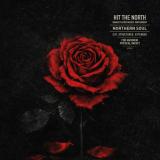
Hit the North is a DJs’ movement
Not a label. Not a revival. A discipline.
Over the years, the collective travelled across multiple states in the US and parts of the UK, digging deep into private collections, basements, garages, storage rooms and forgotten boxes.
They weren’t looking for classics.
They weren’t looking for hits.
They were looking for attempts.
Artists chasing something bigger than themselves.
Trying to sound like Motown.
Trying to sound like Detroit.
Trying to sound like the records that saved them.
Many of them dreamed — at best — of becoming a one hit wonder.
Most never got that far.
Some never crossed a state line.
Some never crossed the street at the end of their block.
Some never played outside their hometown.
Some never played at all.
What they left behind were fragments.
Raw versions.
Unfinished recordings.
Alternate takes.
Rejected mixes.
Test pressings.
Acetates passed quietly from hand to hand.
Sometimes with real credits.
Sometimes with fake ones.
Sometimes with handwritten labels leading nowhere.
Titles that didn’t match the music.
Stories that changed every time you asked.
Often, the trail simply disappeared.
What remained was intention.
Energy.
Urgency.
Hope pressed into sound.
So the collective worked on it.
They edited certain parts.
Extended others.
Cut what didn’t serve the floor.
Not to modernise.
Not to rewrite history.
But to unlock the power that was already there.
The result sounds like Northern Soul pushed to its breaking point.
Fast. Physical. Emotional.
Built for movement.
Some circulated privately.
Others were never pressed at all.
Recorded in personal studios, borrowed studios, friends’ rooms, temporary spaces.
Always outside the system.
This is not nostalgia.
This is unfinished business.
In a sharp-angled, fiercely inventive reflection on the nature of club culture and digital fatigue, Simo Cell and Abdullah Miniawy reunite to deliver their new album, Dying is the internet, to Dekmantel's UFO series.
French producer Simo Cell has blazed a singular path from his dubstep-influenced origins to become a leading light in contemporary leftfield club music, twisting up adventurous rhythms and flamboyant production in pursuit of a perpetual freshness for the floor. Egyptian singer, poet, producer and composer Abdullah Miniawy has become equally omnipresent in the past 10 years, straddling the arts world and leading with his piercing Arabic lyricism while maintaining an eternally curious spirit that leads into open-ended, experimental music from the abstract to the propulsive.
Following up on their 2020 EP for BFDM, Kill Me Or Negotiate, Miniawy describes their sharply focused new album as "a playful prophecy about the triggers of a new global revolution." Cell considers the title, Dying is the internet, to be a mantra about "how the internet lost its soul," becoming "less about sharing ideas and more about surviving in a digital business ecosystem." Deliberately at odds with the reel-ready two-minute attention span of the average social media surfer (i.e. everyone), the pair set out to make an album that takes its time to reveal nuanced ideas and expressions. Rather than one-note despair for the modern malaise, Cell and Miniawy offer a philosophical reminder that this present moment in the human experience is a temporary phase, no matter how overwhelming it feels.
Dying is the internet finds Miniawy experimenting with auto-tune across the record, while Cell has developed his voice design chops and compositional instincts, moving closer to fully realised song structures without losing the fundamental 'clubbiness' of each track. The result is a cohesive, wildly original kind of heavyweight dance music that slings out hooks left right and centre, from Miniawy's laconic trumpet looming through low-slung 'Reels in 360' and 'Travelling In BCC' to the persistent handclaps that bring 'Living Emojis' to life. Miniawy's poetry explores the power of insistent, repeated phrases in a break from his more typically structured form.
Kenyan powerhouse Lord Spikeheart adds extra snarl to stripped-back, slow-burn opener 'I See The Stadium', but otherwise Dying is the internet is purely the work of Miniawy and Cell casting their considerable chops out into unexplored territory. The results are electric, bound together by a consistent economy of sound that burrows into a shroud of bass-heavy minimalism barely masking Cell's incredibly detailed studio flex. Even the beatless flourish of the Miniawy-produced 'Tear Chime' comes loaded with physicality — a sensory rush at the mid-section of the album bookended by some of the most idiosyncratic club music in recent memory.
Both Simo Cell and Abdullah Miniawy have already proved themselves as fearless innovators across different fields. The strength of their partnership lies in their ability to make space for each other while letting their distinctive sonic identities ring loud and true. Dying is the internet has immediacy and physicality to translate over a soundsystem, but its intricacies are purpose-built for repeat visits and contemplation, unveiling hidden dimensions the deeper you dive into it.
From the depth of transient memories comes ‘Some Leaves Must Fall 聽其自然’, Temple Rat’s latest EP and the inaugural release for Martin Gilleshøj’s ‘Buttheads’ label.
Across 6 tracks Temple Rat distills fragments of spatial memory, merging conceptual ambience with the mystic, spatial, and driven edges of deep trance and hypnotic techno. A pensive and functional synthesis, one played out like an ode to the sustained.
Through 2024 while moving between Berlin and Sichuan, Temple Rat conceptualized and finished ‘Some Leaves Must Fall 聽其自然’. At its core, the work is an exploration of how the personal memory of cities and their particular acoustic environments can be transmuted in musical form. For these places, altered by the passing of time and the shifting of contexts, mirror the fluid and generative nature of sound itself.
Creatively this approach was borne out in a kind of archaeology of sound: by sampling and capturing auditory fragments Mei was able to preserve otherwise fleeting moments of experience. Sonics which not only embodied the emotions of the present but served too as a mechanism of recall, pulling memory back into focus even against the erasures of time.
In its method this project seeks to transform the sonic textures of urban and natural environments into high-energy dance tracks, exploring the tension between the certainty of space and the uncertainty of time. A tension operating not only within the structural logic of the sound itself, but so too as an affective experience, extending into the listener’s body and perceptual field.
For we are not the first to note that in a world of pervasive temptation and fragmented information, sustained listening has become rarified. Through this project, Temple Rat hopes to counter this tendency; to encourage a deeper mode of listening that restores attention, re-establishing our essential connection with the present.
All music is written, recorded, arranged, and produced by Temple Rat aka Yuxin Mei
Mastered by Giuseppe Tillieci at Enisslab
Distributed by One Eye Witness
- 1: Lake Walk
- 2: Lazy Daisy
- 3: Ups & Downs
- 4: Silently
- 5: There Was A Nice Sunset
- 6: Somewhere Good
- 7: Slow Island
- 8: Movin’ On
If – in some parallel universe (or perhaps a not-so-distant-future version of the one we’re already sentenced to living in) – the evil overloads of artificial intelligence were actually successful in their attempts to create convincingly enjoyable “original music,” more specifically tasked with wholly encapsulating my own personal tastes by data-chugging some cocktail of – oh, I don’t know – the posters on my wall, the records in my “most listened to” pile, the mixtapes I made for others, intensive physical scans of my auditory cortex, amygdala, hippocampus, heart strings, whatever else they have splayed out on their autopsy table with the intention of generating one all-encompassing “perfect band” based on the fruitful sum of their findings – that band, for me, would be (or would at least sound exactly like) the Tara Clerkin Trio. It is, quite simply, without exception, the music I wish to hear.
Formed in Bristol UK (where none of them are from yet all of whom are deeply engrained) in 2020, the Tara Clerkin Trio – as it somewhat democratically exists today, despite the singular authority implied by its name – consists of the titular Tara Clerkin, her partner Sunny Joe Paradisos, and Sunny’s brother, Patrick Benjamin. I’ll confess, I don’t know what their respective roles are within the operation and there’s only a very small part of me that cares to learn, as one of my favorite qualities in an objective listening experience is the mystery of who is playing what, which sounds are “authentic” versus synthesized, which chunks are performed “live” in a room together versus meticulously Frankenstein’ed from measure to measure, or how exactly the overall sound is so (seemingly) effortlessly achieved. Though, I suspect, if and when I do witness a live performance by this band at any point, my enjoyment of the music will not be lost in my better understanding of it.
With two extraordinary mini-albums – In Spring (2021) and On The Turning Ground (2023) – making a splash on London’s formidable World of Echo label in wake of their self-titled 2020 debut, this upcoming Somewhere Good LP is, in many ways, the band’s most realised work. In running their usual gauntlet of idiosyncratic (*an overused adjective for which here there is regrettably no sufficient alternative) approaches, Clerkin & co. colour in and outside of compositional lines over the course of 40+ celebratory minutes - never wallowing, despite inherently somber subject matters of self-defeat, disease, displacement, restlessness, gentrification - allowing their arrangements and improvisations ample space and time to situate, stretch out, breathe, cross-pollinate, and ultimately take deeper hold on the listener’s imagination – all while somehow sounding more like themselves than ever before.
Of course, there are traceable influences herein, if one felt that such comparisons were necessary to properly examine and enjoy this music (they aren’t)… Being the big dumb American from the small boring town that I am, cornfed on ‘90s alternative radio with the enchantingly exotic sounds of Maxinquaye and Mezzanine emanating from my chunky tube television, I can’t help but to make a blatantly obvious reference to a “Bristol sound”, ie the whole trip-hop trip, the pastoral crooning over the suggestive urban grime of cracked electro/piano treatments, the digitally-yet-primitively reconstructed James Bond soundtrack string-beats, etc.. But the Tara Clerkin Trio is so infinitely much more than that. There are elements of avant-pop, modern classical, kraut-folk, audio verité, dare I say indie rock (and not of the beer guzzling, masturbatory fuzz-flex variety but perhaps more like a Trish Keenan-fronted Faust, Adrian Sherwood at the mixing desk of If You’re Feeling Sinister, or – in expanding on our alternate reality – a world in which High Llamas cut a full-length for Warp Records with Andrew Weatherall on coffee duty).
The hazy, unmappable skyline-mirage of droning harmonium, upright bass, peculiarly accentuated wind instruments, acoustic guitar, hushed yet literally mighty keys combine to hypnotizing effect. The band may make underlying nods to jazz, sure, but it’s not appropriation, it’s that they have the actual chops to build it out. Beneath the janky samples and oddball percussive embellishment lies actually great drumming. Beyond the manipulated vocal witchery and woefully reflective plain-spoke moments are Tara’s subtly inspired melodies, sung with what might honestly be the glue to the whole crazy equation. A calming consistency throughout the otherwise unpredictably dynamic, boldly intuitive, uniquely British exploration of this (their own) universe in song. – Ryan Davis (Chicago, February 2026)
Following their 2023 LP Presents, Nathan Nelson's American Cream Band bring the Twin City heat back to Quindi with an album rooted in duality. From the yin and yang party-starting A side and meditative B side to the dual-attack boy-girl vocals, the nature of opposites and equals steer the expansive, artful strain of rock n' roll that spill out of this wholly unique Minnesotan export. For the ever intriguing Quindi, it's a strident step into Spring after the frosty introspection of Roudi Vagou & Läuten der Seele's Taghelle Nacht. While the world burns and injustice prevails, Twin is a celebration of unity and radical expression-all the more urgent against the backdrop of authoritarian overreach and righteous protest that has whipped through Minneapolis in recent times.
Twin continues Nelson's drive at the helm of American Cream Band to draw in a colourful cast of players to feed into his orgiastic sound, meshing the trance-induction of krautrock with the irrepressible funk of the post-punk-new-wave explosion. But principal among the cast of characters and forming a central tenet to the identity of this album is Liz Buhmann, lead vocalist and a formidable, playful foil to Nelson's own Midwestern twang. Around the electric spark between Buhmann and Nelson, a heavy duty ensemble wrangle guitar, bass, sax, a cornucopia of synths and a battery of percussion into all manner of sonic forms.
The double-sided concept manifests throughout Twin. On 'Call Me' Buhmann sings in French to contrast Nelson's English, while the strident strut of the NYC disco groove is offset by an inherent dreaminess that turns the track into a more cosmic kind of dancefloor workout. 'Ethical Vampire' is a spiky cut with a garage rock patina that spirals into a psychedelic, synth-soaked get-down. 'Don't Burn The House Down' is a loose and limber roller that captures Can at their funkiest along with the hypnotic vibe of other such esteemed long format jammers, but American Cream Band boils that energy into a hook-laden art pop sensibility before a gentle, drawn out landing.
Even the more pensive moments on Twin find space for friction. For all its tender, smoky temperament, 'Leda and the Swan' lets the electric piano and guitar fray at the edges and bleed into the red while Mat Heinrich's tumbling drums lurch with pent-up intensity on the one. 'No Funeral Necessary' skirts around the mellow pools of new age but prefers to let liberally doused Tape Echo tweak out Alex Meffert's honeyed sax inflections and Buhmann and Nelson's disparate sermons.
Nelson describes Twin as "an oppositorum coincidentia" - a reference to the mystical Latin concept of the coincidence of opposites that suggests contradictory ideas 'fall together' in a higher reality. Beyond the sound of the album, this idea also manifests in the cover photography by Sho Nikado and the swans on the LP labels by Autumn Garrington. As freewheeling and wide-open as American Cream Band feels, nothing appears by accident. The end result feels like a nourishing whole - rich with substance and nuance, deep enough to be explored and absorbed yet also so brazen and immediate you can't help but feel its surface charms from the first thrusts of 'The Hive Is Pissed' to the last ripples of 'We're Not So Sinister'.
- A1: Rocking Chair
- A2: Le Train
- A3: Golden Sun
- A4: Miroir
- A5: Voyage Mental
- A6: Surprises
- B1: Je Comprends Pas
- B2: Respire
- B3: Sentimental Lies
- B4: Force Invisible
- B5: C’est Quoi Ces Gens
- B6: My Two Hours Of Sleep
- B7: Astrale Maison
Every so often in music, we come across voices that achieve a certain timelessness, so naturally do they encapsulate both past and present. Laure Briard is one of these voices, retro in form but contemporary at heart, spanning a career rich in aesthetic twists and turns, never without her signature magic, a special kind of eternal filter. Her first album, Révélation (2015), reveals her yé-yé influences, a testament to her love for ‘60s French pop music. Her second studio album, Sur la piste de danse (2016), follows in this vein and finds Laure accompanied as always by her long-time bandmates who share an affinity for warm, catchy arrangements that never lose their appeal. Her tour of Brazil marks a turning point in her career, introducing her to the local indie scene and thus launching her collaboration with the band Boogarins, as well as inspiring the release of multiple EPs composed and performed in Portuguese. Today, her music is embellished by touches of bossa nova and a folk sensibility, boasting increasingly intricate arrangements, as exemplified by her 2019 release, Un peu plus d'amour s'il vous plaît. Several years later, the Californian desert captures the musician’s imagination with Ne pas trop rester bleue, a poignant musical journey inspired by the rich history of Western legends and the role they play in shaping our collective consciousness.
In Voyage Mental, Laure Briard draws upon an inner energy unearthed during a new stage in her life, where the thrill of spontaneous adventure is not accessible in quite the same way. The result is a collection of sophisticated, introspective songs, narrating a young mother’s quest for balance in the face of routine. The album, nostalgic but always tethered to the present moment, is also the fruit of her collaboration with Gaëtan Nonchalant, a talented musician known for coaxing poetry out of the mundane. The two of them co-wrote and recorded five tracks at Studio Nocturne, accompanied by her long-time sidekick Pieuvre, aka Vincent Guyot, Léo Blomov, Pierre-Louis Vizioz, and Hedi Bensalem. The gentle pop opener “Rocking Chair” sways steadily to the rhythm of dynamic drums, followed by “Train,” a ballad that extends an invitation to set sail and daydream alone. The folk escapade continues with “Golden Sun,” a duet featuring the 1960s cult American musician F.J. McMahon, who Laure contacted via the internet on a whim. “Golden Sun” is an unlikely encounter between two generations and two cultures, giving new life to an old forgotten demo on the other side of the Atlantic. And while Laure sings of wide open spaces, cowboys, and sunsets sinking into the sea, we feel the city surrounding her in “Miroir,” a song composed by Hedi Bensalem that laments the suffocation of living in a crowded metropolis where the sky is a distant gray smudge. This pressing need for air, this search for rest and total disconnection, is one of the album's central themes. It may also explain the ever-present sense of nostalgia that pervades the songs, a welcome respite in our current era of doomscrolling and darkness. Along the way, Laure soothes us with melancholy guitar, delivers poetry set to scattered piano notes, and takes us by the hand during lively, uptempo passages. We climb onto her wings, never straying too far from the ground, soaring joyfully above her moods.
Spectral Bounce’s latest offering comes direct from Norway, courtesy of Anders Hajem — co-founder of Boring Crew Records. To date, the Oslo producer’s previous releases have been vessels for the exploration of myriad dance musics, seeing the artist fluently turn his hand to soulful house, dub techno and 2-step.
SPEC07 — the Myr EP — is a much more focused affair, finding Hajem in techno mode across 4 potent cuts typified by undulating drums and swelling echoes. Despite its emphasis on percussion, atmosphere has not been sacrificed for rhythm: vivid FX and meticulous attention to detail bring these tracks to life beyond the context of the dancefloor. This is music that can be stepped into and explored, productions that reward repeat listens.
Opening at full throttle, “Myr” is a jackin’ percussive workout, harnessing punchy drums for maximum effect. Its pulsating low-end runs in tandem with trembling synths that perpetually reflect and refract in the stereo field. Atop its rolling drums, hardgroove-inflected “Sprett” utilizes timestretched vocals, cavernous reverb and ecstatically quivering tones, elevating this 2000s-era framework to new heights. “Existence” brings things to a deeper and more hypnotic place: delays are turned up, siren calls reverberate and timbres ebb and flow. Hajem goes more chasmic still on “Concussion”, hitting the brakes for a much slower cadence and allowing space for a truly expansive listening experience. Heady and mystical, entrancing and otherworldly — listen close enough; beneath the dizzyingly shifting pulses and rattling drums you’ll hear incantations, while bass tones pulse in the depths.
SPEC07 — immerse yourself!
Credits:
Art by Susanne Janssen
Mastering & Cut by Marco Pellegrino @Analogcut
Words by Cameron Leaf
So… what are we actually supposed to tell you about HCL? Honestly, it’s a pretty nice story. A collaboration the way it’s meant to be.
HCL stands for Horkheimer, Consti aka Zeitstill, and Delenz — not hydrochloric acid, but liquid music. One shared idea of sound, without a fully mastered plan. Most of the tracks were born during long studio sessions — long nights, extended jams, ideas taking shape naturally. No big concept, just working it out together and seeing where things go (or not).
After the first two HCL tracks found their way onto various samplers — including the 25 Years of Live at Robert Johnson compilation and Freeride Millennium’s own Queer Base Vol. 2 — it felt like the right moment to take the next step and release the first pattern. Not as a conclusion, but more as a checkpoint. This is far from the end. There are more patterns, more sessions, more ideas already waiting to be published.
Describing the genre is, as always, not that easy. It drifts somewhere between techno and all the other things orbiting around it. Purely electronic music, rooted in the club, but not obsessed with functionality. In a way, it reminds us of the early 2000s — deep, slightly twisted, hypnotic, driving but never aggressive. Music that takes its time, creates space, and pulls you in rather than pushing you forward.
For moments that are meant to last — tracks you don’t want to hear mixed out. For getting lost on the dancefloor, for forgetting the noise and madness outside for a while, for drifting into yourself and letting time fly. Honest club music, built for immersion.
Enjoy the music. Enjoy yourself. Love.
Yours, HCL
AS THE WORLD TURNS is the newly founded label by Rob Manga -- a platform created to channel his distinct sonic identity while cultivating a community rooted in shared energy and expression. The label emerges from a clear intention: to push a personal sound forward while opening space for others to connect, contribute, and evolve alongside it. It is both a statement and an invitation -- a place where sound becomes a meeting point. The first release marks this vision with a four-track EP, weaving together soulful textures, deep atmospheres, and club-driven impact. Each track reflects a different facet of the dancefloor, balancing introspection with movement, and depth with raw energy. With this debut, AS THE WORLD TURNS sets the tone -- not just as a label, but as a growing circle centered around sound, rhythm, and connection.
- 1: When Hamlet Left Town 0:32
- 2: Radio Four 05:45
- 3 34: E 03:34
- 4: Solid Ground 0:25
- 5: Arc 04:37
- 6: Aelita 03:12
- 7: All Tomorrows Past Part Ii 04:26
- 8: Interlude 03:26
- 9: Henry & The Ghosts 03:22
- 1: Space Minor 03:22
- 2: Loop D 03:36
- 3: Tomorrows Past Part I 0:11
- 4: Modest Farewell 03:5
- 5: Nordlead 03:3
- 6: Momo 03:12
On his new album, Micha Acher rearranged compositions for bands such as Tied & Tickled Trio and Ms. John Soda from previous years.
Why are we interested in ghosts? What fascinates us about the eerie? According to cultural theorist Mark Fisher, the allure that the eerie possesses is not captured by the idea that we „enjoy what scares us“. It has, rather, to do with a fascination for the outside. For that which lies beyond standard perception, cognition or experience, as he writes in his book „The Weird and the Eerie“.
In fact, also none of the 15 pieces from Henry and the Ghost is really scary. On the contrary, they all feel strangely familiar. Like revenants or doppelgängers, which in fact they are. They have all been released before. But in a different form. In different line-ups. With different band projects such as Tied & Tickled Trio, The Notwist or the Alien Ensemble.
With the „Songbook“, Micha Acher's aim was, as he says, to find out how the familiar pieces sound in a chamber music instrumentation. Therefore he met with Theresa Loibl (bass clarinet, piano), Timm Kornelius (bassoon), Markus Rom (guitar, banjo, electronics) and Simon Popp (drums, percussion) in his living room for a musical séance in the summer of 2022. The séance lasted two days. Afterwards, Markus Rom (Oh No Noh), added some haunting electronical ideas.
The mood of most of the pieces is melancholic. There are surprising twists and siren-like melodies. Just as ghost stories should be. However, most of the songs sound very light-footed. With their feet in pop, folk, jazz and classical music. Pieces such as „Johanna“ with its wheezing harmonium and spooky piano, or the dreamy „Modest Farewell“ on the other hand have a cinematic flair. Immediately faces and scenes arise in the mind. But at the beginning, there is „Hamlet“. It starts with ghostly electronics and merges into a calm, almost classical guitar piece. Could it be that the ghost of Hamlet's father is hiding between the strings?
„34E“ begins with a banjo. Then the deep humming of Micha Achers sousaphone and the other brass instruments kick in. In the slow, solemn „Aelita“, the sousaphone starts a dialogue with a children's piano. With the banjo and the other wind instruments acting as mediators. The title of „All Tomorrow's Past“ brings Velvet Undergrounds „All Tomorrow's Parties“ to mind. Another ghost from the past. What connects the two pieces is free-floating percussion, which accompanies the sumptuous melodies.
„Arc“ takes us on an exhilarating voyage at sea, with the sousaphone providing powerful propulsion. Towards the end, things get quite turbulent. With the clarinet stirring up the water, before the sea calms down again. „Henry and the Ghost“ is characterised by a ghostly mood change between major and minor. In „Radio Four“ the banjo with its stoic chords keeps the lively brass section in check. „Solid Ground“ is imbued with melancholy. „Space Minor“ takes us into outer space, with the power of sousaphone and percussion.
„Tomorrows“ is filled with cautious optimism. And the concluding „Nordlead“ turns out to be a revenant of the instrumental „N.L.“ from The Notwist's legendary album „Shrink“ from 1998. In the new version, the piece sounds like a distant echo. One that also brings to mind how Micha Acher's music has evolved. Which new worlds he explored and opened up since the nineties. And yet Acher's signature is recognisable in every single note of this fascinating „Songbook“.
- A1: From Loch Raven To Fells Point
- A2: Calliope Wailer
- A3: Tightroping
- B1: Critical Masses
- B2: Reservoir Drop > The Summer Song
Jeffrey Alexander and the Heavy Lidders return with their best album yet, and a UK tour this August. Press by Silver PR
‘’On the alternate timeline where the Meat Puppets inherited the bulk of the Grateful Dead’s tourheads when Jerry Garcia died in 1995, none of this would be necessary, because Jeffrey Alexander and the Heavy Lidders are a household name for evolving their own musical space that overlays dusty folk, cosmic jazz, deep psych, free improv, and even (gasp!) indie rock, building an audience that ranges from open-eared curiosity seekers to deep committed music weirdos that’s also yielded the Heavy Lidders, an infamous sub-cult of concert tapers that you’re already sick of hearing about. A lot of other things are better over on that timeline, too.
But in this consensus reality (and probably the other one, too), Liquid Donnon catches the Lidders at their heaviest, “heavy” in the Lidderverse being far from a monolithic musical idea. There’s heavy like the album-opening “From Loch Raven to Fells Point,” one of several tracks with elegant and gnarled conversational jams featuring the core Lidders lineup of Alexander alongside guitarist Drew Gardner and bassist Jesse Sheppard (both of Elkhorn) and drummer Scott Verrastro. But there’s heavy, too, like “Calliope Walker” and “Tightroping,” featuring Gardner shifted to dream-space vibraphone, the former with saxophonist Tacuma Bradley, the latter with Christina Carter of Texas noise-psych legends Charalambides on veil-crossing wordless vocals, her first collaboration with Alexander in some 20 years.
But then there’s also heavy like the cover photo of Alexander’s late friend and album namesake Donnon, taken at a Dead show at Rich Stadium in Buffalo in 1989, a spirit threading through the songs and weaving unexpectedly into Alexander’s life decades later, emerging especially when Alexander passed through a near-death experience of his own. But, taken together, the different heavies of Liquid Donnon add up into a state of musical grace, where all the Heavy Lidders from all the universes come together as one. Just, like, imagine.
Convened in 2019 on Alexander’s relocation back to his native east coast, the Heavy Lidders are the latest hard-touring expression for the guitarist’s music, joining a vast and tangled discography (and tape list) that includes the beloved long-running west coast Dire Wolves Just Exactly Perfect Sisters Band and, before them, the Iditarod and Black Forest/Black Sea, as well as a bushel of solo play-all-the-instruments projects, a stint with Jackie-O Motherfucker, sessions with Kemialliset Ystävät and Avarus and others, and you’ll have to keep digging for the rest.
And while it’s not hard to find tapers at Lidders gigs (and they encourage you to be one), or to track themes and songs over Alexander’s many live releases, Liquid Donnon makes a new primary text, the original versions of six new pieces for the repertoire. The album closes with a devastating pairing of “Reservoir Drop” into “The Summer Song,” floating into a duo between Alexander’s guitar and Carter’s voice. Catch a half-dozen Lidders shows this summer, and you might not ever catch them playing it like that again, but you just might open the doorway back to that better place." - Jesse Jarnow (writer, WFMU DJ, producer and host of The Good Ol’ Grateful Deadcast)
Emerging from a shared love of long-form storytelling and hypnotic groove, Techfui presents a stunning double album from Ada Kaleh and Wareika, a cross-continental dialogue between two singular visions of deep and micro house.
Romanian composer and sound alchemist Ada Kaleh channels his signature world of organic textures, dub-soaked spaces and slowly evolving rhythms, known from his forward-thinking work on R&S, Apollo and his own Ada Kaleh Romania imprint. His part of the productions unfolds like a ritual: subtle, detailed and endlessly spiralling, built for dancers who like to disappear inside the groove.
On the other side, trio Wareika bring their unique blend of live jazz sensibility, meditative dub and electronic body music, honed over years of improvisation and boundary-blurring club performances. Their contributions lean into fluid polyrhythms, elastic basslines and shimmering harmonies, tracks that feel alive, breathing and in constant motion.
The journey is expanded by a heavyweight remix cast: minimal house icon Thomas Melchior, Techfui founder and Bahrain mainstay Salah Sadeq, whose deep house productions are crafted to move both heart and floor, and the elusive studio force DUST. Each rework dials the hypnosis in further, stretching time and space without ever losing the warmth of the original material.
True to Techfuis ethos of bringing family, friends and fresh talent together to create honest, unconventional art, this double album is not just a collection of tracks, but a deep, carefully produced listening experience, timeless deep house and micro house for late nights, early mornings and every hazy moment in between.
The Trip To Vega is about deep outer space odyssey that occurs in the process of traveling from Earth through the Cosmos to another "favorable" star system 25.3 light-years away.
The time is year 2097, Sept 23rd.
To this day, Earthlings have managed to dodge some of nature's more dangerous extremities, massive volcanic eruptions, Earthquakes, solar burst that knocked out the Planet's entire electrical grid for 3 years, numerous plagues of disease, food and fresh water shortages, domestic and International Wars and many other life-changing operas, but for this event, what remains is a realization that has no remedy. The cause: Earth's physicality has changed. It is no longer favorable for living things.
It is the constant shifting of the planet's internal tectonic plates which has unfortunately produced an unexpected and impassable dilemma.
Because of the collisions, deep within the planet's core, the planet is now producing an extraordinary amount of sound that includes a specific harmonic frequency that erodes the natural senses of all life on Earth.
It is intensifying. It is intolerable and it is unlivable.
Yet, some humans prefer to stay, to "ride it out" like the Titanic captain going down with his ship. Some, in total disbelief as some have concluded it is the second coming of Jesus Christ. But for most, the decision is clear. Tolive another day, leaving is the only rational choice.
At an increasing rate, scientific research data shows that humans and most animals, excluding the Jellyfish will eventually lose the usage of hearing and are to greatly suffer from an array of other neurological and psychological effects. The sense of touch and taste, sleep depreciation, severe nerve damage, constant hallucinations. Everyone will lose many of their cognitive abilities within an estimated 12 months from now.
On this day and every 7 days afterwards until all registered passengers have departed, the first of a fleet of large number of massive size spacecraft carrying approximately 1 million humans per vessel will permanently leave Earth to begin the long and adventurous trek across outer space to a new home: Vega.
This is not a precautionary tale as there is nothing to learn. Instead, a decision has been made and a Trip To Vega is the consequence.
- Jeff Mills
2026 Repress
As electronic music pioneers and co-founders of Soma Records, Slam have continually shaped the landscape of underground techno. With their forthcoming album, Dark Channel, they present a raw, club-focused record that stands as both a reflection of our turbulent times and a celebration of the dance floor's enduring power.
In 2025, the world feels fractured, dominated by division and extremism. Amidst this chaos, the dance floor remains a rare sanctuary-one of unity, self-expression, and collective escape. Dark Channel is an unapologetic tribute to this sacred space, where rhythm dissolves barriers and music serves as a universal language. Through relentless energy, deep textures, and hypnotic grooves, the album embodies the essence of club culture: a place where we reconnect with ourselves and each other.
Slam make no mistake when it comes to the sonic tone of the album as it opens with the tribalistic Use It, Lose It before the discordant sounds of title track Dark Channel hints at the relentless nature of things to come. The intensity continues with Parametric Factor & Glide - both pushing a pulsating, synth driven trip; the later leading on a more traditional Slam percussive workout. The dance floor warping Morganatic pursues dark territory while Infinit Spaces adds trippy FX to an already animated synth hook. The beautifully crafted Kuture Version delves into a more immersive sound as more direct, chord driven elements take the lead. The pace quickens yet again with Ghost Dancer highlighting sub tones whilst still crafting ominous intonations with its modulating FX. Approaching the conclusion, the ferocious Beat On The Drum delivers a lesson in rhythm and energy before the contorted Irregular Object completes proceedings in a suitably hypnotic fashion.
Mastered By Conor Dalton @ Glowcast Mastering
Presenting the third thematic volume on the “Aquapelagos" series - a collection of split LPs where selected artists offer their own take into water surrounded cultures and communities. After the initial release of the Anthology compilation Aquapelago in 2022 (Discrepant ,CREP91) and the split LP Atlantico by Lagoss & Banha da Cobra (Keroxen, KRXN027) as well as the direct collaboration LP Índico by Mike Cooper & Pierre Bastien we proudly introduce an the third volume in the series in the shape of no other than two inspiring artists, Vica Pacheco and Pak Yan Lau. Two different sound journeys inspired by the majestic and peaceful Pacific Ocean, the vastest, largest and deepest ocean of our planet.
Vica Pacheco’s composition takes a calm meditation approach where water flutes and synths brush shoulders to create a ever expanding mind journey whereas Pak Yan Lau’s ambitions Neo classical piece, The Ocean in Us, talks about that grand overwhelming feeling, that vast space deep under, on the bottom of the Pacific. Both compositions were recorded and created with the particular wet acoustics of the Tank in Santa Cruz de Tenerife in mind.
From Philip Hayward and Matt Hill’s liner notes: ‘’The Pacific is a complex space, comprising a third of the Earth’s surface. A cascade of islands runs along its eastern flank, down from the Kamchatka peninsula, through Japan, Taiwan, The Philippines, Melanesia and on to Australasia. In its watery heart the islands of Micronesia and Polynesia stretch across huge distances, north-east to the Hawaiian archipelago, south east to Rapa Nui and south west to Aotearoa and Chatham island. Closer to the shores of the Americas lie Tierra del Fuego, the Galapagos Islands, Haida Gwaii and the Aleutians. This is a space that resists easy characterisation. The Pacific laps the shores of Japan and Chile, the beaches of Australia’s East Coast and the cold, damp coasts of British Colombia and Alaska alike. Indeed, the space is so vast that it is a world in itself and one rarely navigated in its entirety. In this manner, strands of genres and the songs that reflect them are components in an intricate mesh of associations.‘’ Philip Hayward and Matt Hill, April 2022
This release represents the musical union of two friends who, despite the distance, have always found in music the place where they stay close. This EP is the proof that when the connection is real, sound becomes common ground - a space to share moments, ideas, and energy beyond geography.
Both artists have been devoted to physical formats from the very beginning, especially vinyl. They have always been record collectors, and that passion shapes the intention behind this project: a work conceived with the depth, respect, and materiality that only vinyl can convey. This EP is more than music; it is a cultural object that preserves a way of understanding techno.
Creatively, Truncate and Pushmann set out to merge their sonic identities. The result is an EP charged with strength, built for the dancefloor, and defined by a clear aesthetic: raw energy, firm rhythm, and a contemporary reading of hardgroove and jackin. These are intense, direct tracks - the kind that emerge when two visions complement each other effortlessly.
In a scene often driven by speed and overstimulation, this release stands out for its authenticity. It is fast, funky techno, yes, but crafted with soul, intention, and emotional depth. It does not chase trends; it delivers groove, substance, and a recognisable sonic character from the first bar.
Inspired by rave culture and the pure roots of hardgroove, this EP offers a journey that blends functionality, sensitivity, and force. A project that reinforces LILA's philosophy: preserving the essence of techno and supporting those who create it with passion.
An incising snare marks the return of Luxus Varta to Shipwrec. Since his last appearance, Aquamarine Puzzle in 2017, the Frenchman has been honing his craft with releases on a spread of stellar imprints. Noise Figure is the culmination of that refining process, his sound and style being forged and framed within the parameters of electro. And these parameters are immediately tested. From the warbling bass and tight percussion of The Resetter, crystalline chords cascade before a shimmering string of wintery warmth. Terse beats introduce Building Peaks, wraith-like rinses offering space for playful forms to take hold. Fudgey basslines are unsettled by sci-fi synths, a touch of the otherworldly balancing this unique cut. The warm current of Lizardous penetrates the frostier funk of the EP, delicate and fragile notes thawing the cold rhythms and glacial undertones. Silver Girl contrasts autumnal shades with brittle harmonies, angles and lines curved by sheer musical craftsmanship. Shifting into electronica, the close is a complex composition that demonstrates Luxus Varta's breadth of ability. Gentle melodic ebbs are countered by echoes of the factory floor, the human touch coming to the surface with understated radiance.
- A1: Sunrise
- A2: Bryce
- A3: Arches
- A4: Totem
- A5: Waters And Geysirs
- A6: Indian Summer
- A7: Opening
- B1: Cpu
- B2: Soft Edge
- B3: Las Vegas
- B4: Rhythm Score
- B5: Space Shuttle
- B6: Disco Funk
Once again Trunk Records comes through with an album of sublime 1980s new age synthwave
music from an artist and library company you have never heard of.
With most Trunk LPs we write the story about how Jonny came across the music. And yes, this LP is no different...over to Jonny…
“My first encounter with Peter Patzer was when I was writing and researching the updated and fully expanded version of The Music Library Book, published by Fuel. The initial book - called The Music Library, was the first ever overview of library music and the wild, unpredictable graphic art of their sleeves. It was first published in 2005 and featured about 400 sleeves and about 120 library companies over 200+ pages. The book was based on over a decade of intense library LP collecting by myself and a handful of other geeky weirdos and made for fascinating and revealing reading and looking. It was a great education for many entering this odd, hidden musical world for the first time. The book quickly sold out.
A few years later the price of the original book had gone bananas. But the geeky weirdos like me had all carried on voraciously consuming and collecting library music so I strongly felt the first book could easily be doubled in size with new info, new sleeves and many newly discovered lost library companies. Which is exactly what I set about doing. The Music Library expanded edition came out in 2015. You have to realise here that The Music Library book was very much a first - until its unexpected arrival (and even the arrival of the much larger expanded edition) there was no published survey, accessible catalogue or anything about international library music. It was still an odd old world shrouded in some historical mystery - even the internet had not really caught up. And I was still finding unusual British one-off library LPs, more unusual Italian library diversions, hidden French funky things and then I finally found Peter Patzer. From Germany.
Hidden away in a very obscure music library corner. All on his own.Peter was unusual in that he was an artist and musician who made his own music and issued it all on his own library, called Crea Music, based out of Bremen in North Germany. Over a series of eight whitevinyl LPs produced in the 1980s Peter Patzer created synth heavy experiments for possible use in film, TV, video and anything else coming along. All his LPs had the same simple red, white and blue sleeve and a typed name and number. Across the eight LPs Peter goes to musical space, creates post-disco funk,travels to Vegas, goes all geological and more.
The eight Peter Patzer / Crea Music LPs are as follows:
01 - Puddy’s Bus 02 - Straight Line 03 - Pos-Attractions 04 - Patterns 05 - Canyons 06 - MIls Maniac 07 - Classic Themes 08 - Formation 17
This is a compilation of some of the music featured across those eight LPs, and yes, it was initially
licensed a few years ago but I held it back as I wasn’t sure people were quite ready for the plugged-inway out drifting 1980s electro sound of Peter Patzer with his synth washes, rhythms and chords. Or maybe I wasn’t ready. Anyway it’s here now... and if this sells out there could be another Peter Patzer LPbut with all his longer 7 minute compositions which there wasn’t room for here.
After a longtime interest in the beguiling music of Nathan Dawidowicz, Hell Yeah now hooks up with the leftfield downtempo producer for their second full-length album, FLUFF. The immersive record features three long, winding and mystical soundscapes that blend trance and experimental into spiritual and ritualistic escapes.
Dawidowicz was born in Milan to a Polish-Lithuanian mother and a Cameroonian father, but grew up in an ultra-Orthodox Jewish community in Jerusalem. Because of that, their sound is deeply rooted in childhood experiences playing the piano at religious ceremonies, as well as taking inspiration from their father’s DJing throughout the '80s and '90s. Now based in Berlin, Dawidowicz has explored expression through music on labels like Luspoderosa, where they released their debut solo album, Sanctuary of Ideas.
It was when Calm and David Holmes started playing the epic, 23-minute 'Capricorn Rising Over Jerusalemite Temple' from that album that Hell Yeah founder Marco was encouraged to get in touch with Dawidowicz. A few months later, talk turned to releasing this new album, which comes with artwork by Spain's Alicia Carrera.
'Skeptic Afro Jr.' kicks off and soon sinks you into slinky, ever-evolving rhythms. It's a slowly evolving work of sound where the focus shifts from snaking basslines to lumpy drums, cosmic leads to life-affirming chords. 'Scintilla (Feat. Hannah Schraven)' is a deep and downtempo trip into dub and techno, with undulating drums and exotic melodies that escort you into otherworldly realms of spiritualism. Last of all are 'Deep Fluff' and a hidden track (Feat. Leo Börger), two cinematic explorations of deep space where acoustic frequencies and molten synths rewire your brain and connect you to a higher power.
FLUFF is another deeply personal and inward journey packed with transcendental experiences.
DJ FEEDBACK:
"That's such an outstanding piece of work - played two at the beginning on Saturday. Probably my favourite release of the year so far!" Sean Johnston ALFOS
"this is great! 3rd repeat. It’s so nice" Vladimir Ivkovic
"Just listened to Nathan's record and it really sounds amazing... Probably the best thing you've put out to my ears ;-) I love the way he bridges the sounds of the past with contemporary storytelling, taking you on a very long trip which you never want to leave!" Alexis Le Tan
"yeah Fluff is a wonderful weird one!" Axel Boman
"I love him" David Holmes
- A1: Jonathan Kaspar – Her
- B1: Robag Wruhme – Ratibor Numida
- B2: Ja Ck - Neverland
- A1: Butch – Straight Tripping
- B1: Josh Wink – Self Acceptance
- B2: Raxon – Believe In Mi
- A1: Dino Lenny – Sayonara Chicago
- B1: Extrawelt – Mindwear
- B2: Frank Sonic & Dist_42 – Silberschwein
- A1: Guy J – Alive Again
- B1: Riccardo De Polo – Melancholia
- B2: Johannes Volk – Vaporized Memories
- A1: Harvey Mckay – Tears In Rain
- B1: Damiano Von Erckert - Mad Man (I Told You What I Know)
- B2: Fedele - Zommerfest 25
Vol.2[89,03 €]
For its 25th anniversary, Cocoon Recordings returns to its roots with an elaborate vinyl LP box set, marking the first part of a two-volume anniversary project. 25 Years Cocoon Recordings – Volume
One brings together exclusive contributions from international artists who have defined the sound and diversity of the label over the past two decades, complemented by fresh talents who are helping to shape its future.
Over the span of 25 years, Cocoon Recordings has created a catalog that now comprises hundreds of releases, 12-inches, albums, mix CDs, and iconic compilation box sets, always bridging past, present, and future. While firmly rooted in techno and house, the label has also provided space for electronica,
ambient, and other evolving genres.
25 Years Cocoon Recordings – Volume One is more than just a compilation. It is both a homage to the label’s history and a glimpse into what lies ahead. With exclusive tracks that embody the Cocoon sound in all its depth and complexity, this release marks a milestone in the legacy of one of electronic
music’s most influential labels, arguably the strongest compilation in Cocoon’s history. To mark this special occasion, Sven Väth’s label presents the first of two carefully curated volumes, uniting 15 exclusive tracks from international artists in celebration of nearly three decades of Cocoon
Recordings. The luxurious 5x12" box set features a spectral-reflective foil finish and includes contributions from renowned names such as Butch, Robag Wruhme, Josh Wink, Guy J, and Dino Lenny, alongside longtime companions of the label including Extrawelt, Harvey McKay, Johannes
Volk, and Raxon. New discoveries of recent years, Jonathan Kaspar and Riccardo De Polo, enrich the release in their own distinctive ways. The compilation is completed by the unmistakable talents of Damiano von Erckert, Fedele, and ja:ck, who provide the perfect conclusion to the first of two parts.
This release sets the stage for what's next: a daring diptych where musical voices emerge, shining with originality and passion, carrying the spirit forward. The story is just beginning. Something special is on the horizon. One can only wonder which artists will shine on the second chapter.
Gold Vinyl Represss
*A MODERN JAZZ REINTERPRETATION OF THE MUSIC FROM THE LEGEND OF ZELDA*
WRWTFWW Records is happy to announce the release of Casimir Liberski ReTRio's The Z Suites, a full-length jazz album reinterpreting the music from iconic Nintendo video game series The Legend of Zelda. The epic Z-Jazz journey is available in the following formats: limited edition 180g half speed mastered vinyl double LP housed in a heavyweight sleeve with obi, digipack CD with cavalier, and digital.
Casimir Liberski reimagines the golden era of video game soundtracks with jazz versions of Zelda favorites The Legend of Zelda (1986), A Link to the Past (1991), Link's Awakening (1993), and Oscarina of Time (1998) - plus a few Easter eggs! Dancing between nostalgia and avant-garde, the Brussels-born pianist and composer crafts a sonic world of pixelated folklore where melody and improvisation coexist in harmony.
Music critic Arthur Meurant perfectly explains:
For many video games are a journey of the mind. Since its inception - dating back to the early seventies - this avant-garde artistic medium has nourished the imaginations of a digital age. Casimir, like many others, has been fed a steady diet of pixels from an early age. From simple squares to cultural cornerstones they have become the trail on which playful travelers of the mind retrace the steppes of history. A shared universe, familiar yet endless, of pocket-sized mythology. Its name? Hyrule. Its goal? To amaze. In these few tracks - selected with care - the Casimir Liberski ReTRio invites you, finally, to visit a space which does not exist yet holds us all. A land where all feel welcome. Where all are happy. But also... to rediscover under another timbre the classical compositions of Master Composer K?ji Kond?. A man who, unbeknownst to him, composed our dreams as well as music. That single noble pursuit, where an artist gives soul without losing his own, is yet again a statement of humanity in its purest of forms: art as that which brings us together and makes us whole in a world eroded by modernity. Pick up your key. Gather your maps. Open the door. Adventure calls.
Long live Hyrule jazz!
- A1: Gusgus - Crossfade (Maceo Plex Mix)
- A2: Plaything - Into Space
- B1: Ion - W.b
- B2: Subaltern - Forever (Ledge Forever Remix)
- C1: Lykke Li - No Rest For The Wicked (Joris Voorn Remix)
- C2: The Roc Project Feat. Tina Arena - Never (Filterheadz Luv Tina Remix)
- D1: Soul Syndicate - Inside Of Me (Steel Union Remix)
- D2: Ken Laszlo Vs. Disco Dice - Hey Hey Guy (House Dub)
- D3: Icehouse - Hey Little Girl (Infusion Remix)
Since 2020, 12 Inch Lovers have been releasing new samplers every year, eagerly anticipated by collectors. These samplers have now become a staple and are easily added to vinyl collections across Europe. They offer timeless classics and rare tracks that are often hard to find elsewhere.
With Samplers 9 & 10, they surprise again with a mix of modern classics and tracks that have never been released on vinyl or are difficult to find. By adding unique and exclusive tracks, the 12 Inch Lovers samplers remain innovative and high-quality. They are a must-have for DJs, collectors, and fans of contemporary classics!
SAMPLER 10
A1) GusGus - Crossfade (Maceo Plex Remix) (Original Release 2014)
Released in 2014 on the German label KOMPAKT, this remix by Maceo Plex features Ten Walls-like horns, vocals, and pumping drums, making it a true Ibiza floorkiller. The vocals are by Konstantin Sibold. This remix was only released as a white label (Kompakt Exclusive) and has yet to have an official vinyl release. Despite this, it remains a favorite among DJs and clubbers worldwide, regularly played at festivals and clubs.
A2) Plaything - Into Space (Original Release 2001)
This groovy track, released in 2001, contains a sample from Sheila & B. Devotion's Spacer, with Nile Rodgers as one of the producers. The original trackSpacer is an iconic disco hit from the 1970s, and Plaything put a contemporary spin on this classic. The track was a hit in Belgian clubs in the early 2000s, often played by prominent DJs. It has since been released on various labels and remains a timeless favorite in the electronic music scene.
B1) Ion - W.B. (Original Release 2002)
This trance classic by DJ Ion was first released in 2002 on the Belgian label B². The track quickly became a beloved classic within the trance community. Danny Casseau, the producer behind this track, is also known for other legendary works, including the trance classic Ion 98 - Tructure, which had a significant impact on the trance scene. W.B. is a pure, old-school trance track, crafted in the way only tracks from that era were!
This vinyl is extremely rare and hard to find, making it a sought-after item for collectors and trance lovers. It is still played in the sets of DJs who cherish the older trance sound, and it fits perfectly in contemporary sets as well!
B2) Subaltern - Forever (Ledge Forever Remix) (Original Release 2007)
This club banger was released in 2007 on the French label Voices Records and was a popular track in well-known Belgian clubs like Illusion and La Rocca. The Ledge Remix added an energetic, infectious vibe that made it a true hit on the dancefloor. It received an official vinyl release in 2007, but it is now difficult to obtain. Subaltern's Forever remains an unforgettable club classic still appreciated by electronic music lovers.
C1) Lykke Li - No Rest For The Wicked (Joris Voorn Remix) (Original Release 2014)
Swedish singer-songwriter Lykke Li scored a worldwide hit with I Follow Rivers, but also had great success with the powerful track No Rest For The Wicked. The Dutch producer Joris Voorn gave his own tech-house spin to the track in his known style!
Voorn's remix keeps the atmospheric mood of the original but adds a new, dancefloor-friendly dynamic that makes it suitable for the electronic music world.
This is the first time this remix is being released on vinyl since the original release in 2014, making it a rare and desirable item for both collectors and DJs. Thanks to the powerful mix of melody and rhythm, this remix of No Rest For The Wicked remains a timeless favorite that has found its place both in clubs and in vinyl collections of music enthusiasts and DJs.
C2) The Roc Project feat. Tina Arena - Never (Filterheadz Luv Tina Remix) (Original Release 2002)
This Spanish dance track hit Europe in 2003, thanks in part to the legendary remix by the Belgian techno duo Filterheadz. Brothers Bert and Maarten Wilmaers, known for their distinctive techno sound, gave the track their own twist with strong beats and an uplifting bassline, creating a timeless club hit that was heard everywhere in the early 2000s.
The vocals by Tina Arena add an emotional layer, while the Filterheadz Luv Tina Remix has stood the test of time and still gets everyone moving. At 12 Inch Lovers parties, this track never goes unnoticed and often brings the night to a high point. This track is a must-have for both collectors and DJs who love a mix of emotion, energy, and a solid techno sound.
D1) Soul Syndicate - Inside Of Me (Steel Union Remix) (Original Release 1995)
Speaking of a trance classic, this one is a true gem! Inside Of Me was released in 1995 during the golden years of Belgian trance music on the legendary Belgian label Aquatic Records. The Steel Union Remix by Zzino is an absolute favorite among trance lovers.
With its iconic sound and unmatched energy, this track is a true ode to the Belgian trance scene. It remains an unadulterated classic that still makes an irresistible impact, not only at retro trance events but also in the sets of contemporary DJs. Since its release, this remix has been hard to find, making it an even rarer piece of trance history. A track that has stood the test of time and is a must-have for collectors and fans of old-school trance.
D2) Ken Laszlo vs. Disco Dice - Hey Hey Guy (House Dub) (Original Release 2003)
Ken Laszlo, the Italian singer who became globally famous in the 1980s with the iconic Italo-disco hit Hey Hey Guy, received a re-release in 2003 on the house label Dubmental. This version was reimagined by Disco Dice, who gave the track a fresh house vibe with a more modern sound. Belgian DJ Jean, known for his influence on the Belgian nightlife scene, introduced this track into the clubs and transformed it into a club classic.
This release, although released in 2003, is now very rare and hard to find on vinyl. It's a hidden gem that continues to withstand the test of time, making it a valuable collector's item for lovers of both Italo-disco and house.
D3) Icehouse - Hey Little Girl (Infusion Remix) (Original Release 2002)
The Australian band Icehouse released the iconic track Hey Little Girl in 1982 on the British label Chrysalis. This synth-pop track was a big hit and still remains one of the classics from the 1980s. The original track was later included in the remix album Meltdown in 2003, where the Australian duo Infusion created a contemporary electronic remix that gave the track a new dimension.
The Infusion Remix adds a modern, danceable twist to the original synth-pop sound. This version surprised both fans of the original hit and lovers of electronic music, remaining a sought-after track in DJ sets.
This track has been unavailable on vinyl since its original release in 2003, making it a rare collector's item.
- A1: Scratch Pad 1
- A2: Messij Received
- A3: God's Gift
- A4: Tentative
- B1: Canada 2048
- B2: Wiped Out
- B3: Body In Motion (Body Plus Mix)
- B4: Onyx (Dark Side Of The Moon)
- C1: Messij Received (Wstwgbe Mix)
- C2: Canada (Drunken Auslander Mix)
- C3: Tentative (Woffenfum Mix)
- D1: Messij (Bobbing Boat Mix)
- D2: Body In Motion (Timeless Techno Mix)
- D3: Doh-T (Am / Fm Mix)
- E1: 95 Future Echoes
- E2: Turbine
- E3: Pencil Neck
- E4: Messij 2005 (New Science Mix)
- F1: Canada (Tim Reaper Remix)
- F2: Messij (Sherelle's Messij In A Bottle Hardcore Remix)
- F3: Doh-T (Mantra Remix)
- F4: Canada (Niknak Remix)
The legacy of wipE′out′′ has transcended time and cemented itself as a true transgenerational phenomenon. Launched in 1995, it didn’t just revolutionise the gaming industry, it created a bridge between the gaming ecosystem and the raver community. Its futuristic aesthetics and forward-thinking sound left a mark not only on mainstream audiences but also on the most demanding corners of the underground.
Decades later, the game’s impact is still alive. The release in 2023 of The Zero Gravity Soundtrack on Lapsus Records proved once again that wipE′out′′’s accompanying audio will go down in history as much more than just an anti-gravity racing game soundtrack.
This is why we decided to go deeper into the slipstream and build the second volume you’re now holding in your hands. Drawn from the original archives of Tim Wright, aka CoLD SToRAGE, this new collection surfaces unreleased cuts, pieces that couldn’t fit on the first edition, and a suite of self-authored ambient reworks that translate pure velocity into wide-screen atmospherics engineered for the long straights, the drone of airbrakes, the blue hour between checkpoints. It also reconnects the circuit, gathering selections and variants tied to later chapters of the saga — wipE′out′′ HD and wipE′out′′ Pure — plus alternative mixes that, until now, only existed in the Sega Saturn dimension of the franchise.
Finally, the material takes a leap into the future in the hands of four remixers especially chosen for this release: Tim Reaper, SHERELLE, Mantra, and NikNak, who collectively forge links between CoLD SToRAGE’s pioneering musical vision, the sound world of the game, and the contemporary breakbeats and drum & bass vanguard.
Expect the DNA you remember — accelerated breaks, trance-vector synths, jungle influences, sub-bass rumbling neatly beneath the craft’s hull, and at times even echoes of classic hardstyle — now revealed with new angles and air. The previously unheard material carries the same aerodynamic design sense that made these tracks feel faster than the track map itself, while the ambient versions open the field of view with melodies hovering at the lip of overdrive. Without a doubt, here you’ll find a strong sense of nostalgia. But this isn’t just nostalgia; it’s also proof that this sound world continues to evolve when you ease off the throttle.
For the faithful — crate-digging ravers, speed-run obsessives, and design nerds — this is an essential expansion pack: compiling rarities, restoring context, and reframing the emotional core of wipE′out′′ for late nights and early mornings alike. Bridging memory and momentum, club and console, rush and afterglow. Strap in.
Detailed tracklist, with annotations by Tim Wright aka CoLD SToRAGE
· Scratch Pad 1: “This track was composed using incomplete tracks that were developed around the time of the first wipE′out′′. It’s so long because it was used for a marathon-length Psygnosis promotional video.”
· Messij Received: “Messij was a firm favourite with wipE′out′′ fans, so it made sense that there’d be more where that came from — this was one of those re-workings.”
· God’s Gift: “I was always very fond of Erasure’s track Love to Hate You with the canned crowd FX sounds. God’s Gift was a tongue-in-cheek reference to how some musicians think they are just that. This was way before I even played live as CoLD SToRAGE.”
· Tentative: “I wasn’t sure about introducing some wacky beats and distorted sounds into one of the tracks, because it was kinda heading away from the other tracks, hence Tentative — but it turned out OK.”
· Canada 2048: “When wipE′out′′ 2048 was launched I decided to re-make Canada as a kind of tribute, but in a slightly new-tech, laid-back way, using Propellerhead Reason and all software synths.”
· Wiped Out: “Based on a few riffs from a MIDI file unused at the time of the original wipE′out′′ game compositions, this featured on my debut album MELT.”
· Body in Motion (Body Plus Mix): “A more trippy interpretation of Body in Motion that featured on non PlayStation versions of the game e.g. Sega Saturn.”
· Onyx (“Dark Side of the Moon”): “Onyx was my sole contribution to wipE′out′′ Pure on the Sony PSP handheld gaming console. This version was something I developed in a darker style, that eventually erupts into a crescendo.”
· Messij Received (WSTWGBE Mix): “Like I say, Messij was a hit with most wipE′out′′ fans, so when I was asked to compose more music for non-PlayStation versions, I adapted this tune into a parallel-universe version for PC and Sega Saturn. By the way, WSTWGBE refers to Who Said This Was Going To Be Easy?”
· Canada (Drunken Ausländer Mix): “In early 2018 I released a fresh album called Ch'illout′′, a re-working of many of my wipE′out′′ tracks in an ambient, Sunday-morning vibe style — it was a few years’ work, here and there.”
· Tentative (Woffenfum Mix): “Another chilled re-working of one of my wipE′out′′ tracks, the mix named with a nod to a good friend of mine, Carl Woffenden — someone who I've worked with for many years in the games industry.”
· Messij (Bobbing Boat Mix): “A nice cheesy computer blip-blop start belies its deep and upbeat chilled-out melodic finale.”
· Body in Motion (Timeless Techno Mix): “Another classic track given the chilled-out vibe mix, as featured originally on my Ch'illout′′ album. This one’s a really trippy, deep-space take on the original.”
· DOH-T (AM / FM Mix): “The idea with this chilled-out mix was to imagine all the melodic parts of this varied track being broadcast on terrestrial radio, so each theme drifts in and out through the radio static.”
· ’95 Future Echoes: “Originally developed as a companion album for wipE′out′′ HD, this track actually has its roots in a tiny loop of a song that never progressed to anything special back in the mid-’90s when I was composing for the original game.”
· Turbine: “Also from my wipE′out′′ HD album, it leans heavily into the upbeat, uplifting tunes from the original game, but also steals a bit of vibe and energy from The Prodigy, with those distorted flute sounds.”
· Pencil Neck: “This excerpt from my wipE′out′′ HD album features lots of sounds centre-stage and forward from Propellerhead Reason’s Subtractor virtual synth. I learned to love this more than my JD-800!”
· Messij 2005 (New Science Mix): “Yet another take on the track that still raises a smile, this time through a mix of samples from the original and Propellerhead Reason — the ‘new science’ when compared to an Amiga 1200 running Bars and Pipes.”
The label say "Fresh from impressing with the pulsating techno of Boris Werner and the fuzzy live house jams of San Proper, Tom Trago's Voyage Direct label turns to a man who needs little introduction: Dutch legend and man of many pseudonyms Danny Wolfers.
Best known under his Legowelt alias, Wolfers has spent the last two decades flitting between strobe light acid house, 808 electro, fluorescent techno and shimmering space disco. Throughout, he's kept his productions pleasingly analogue-heavy, making great use of classic drum machines and vintage synthesizers. While his music may be steeped in the past, Wolfers' productions always sound like the future.
For this first outing on Voyage Direct, Wolfers resurrects the House of Jezebel alias - a pseudonym previously only used for the twinkling deep house warmth of 2010's 'Love & Happiness' - and delivers two tracks of synth-laden analogue house goodness.
'Back In Dogtown USA' sets the tone, as Wolfers layers rising chords, darting electronics and wide-eyed synthesizer melodies over a clattering analogue house groove. As with much of the legendary Dutch producer's work, the track ripples with rush-inducing melodic intent. It's the soundtrack to a party on Jupiter, and we're all invited.
Wolfers' ups the tempo dramatically on 'I Took A Train In 1979', transplanting us to the far reaches of our galaxy via jackin' techno drums, picturesque organ melodies, drifting chords and intoxicating pads. There are echoes of classic Detroit techno, surging Rotterdam electro and vintage cosmic disco, yet it doesn't really sound like any of these things. Like 'Back In Dogtown USA', 'I Took A Train In 1979' sounds like the past, reconfigured and rearranged for the consumption of future generations. In other words, it's a classic Wolfers production."
SPTLP008 - Aural Imbalance - Fractional Spaces LP
Returning for his third solo album on Spatial, Aural Imbalance continues his journey through the cosmos with a breathtaking array of breaks, bass and inimitable ambient wizardry.
A1 - Fading Reality
Kicking off the album we are treated to a blissfully ambient intro akin to a perfect sunrise across a tranquil unfurling landscape - just as we have come to know and love from Aural Imbalance. Long, airy washes of textured pads usher in a fantastically snappy break pattern which brings an alluring energy to proceedings, driving the track along with funnels of tuneful melodies lazily drifting by in the ambience.
A2 - This Time
Jumping right into the breaks DJ-style with a delicious Hot Pants pattern, This Time's central theme utilises a hypnotic simple but effective chime melody that plays a key role throughout the track, alongside fluttering birdsong and a luscious array of samples. The exquisite breakdown which delights with an incredible blend of bass atmospheric synths & pads is both beautiful and poignant.
B1 - Always With You
Introduced by what sounds like footsteps echoing through the darkness, Always With You lives up to its title by surrounding you with a warmth usually reserved for arriving home and nestling by the fire. Driven by delicate but vibrant breakbeats, this track showcases Aural Imbalance's relentless dexterity with ambient soundscapes dancing in perfect harmony with deep 808 bass and old school beats.
B2 - Solarity
Lightly excitable hats and elegantly filtered breaks open Solarity, a deeply evocative track with breakbeats rising through the intro towards a drop with solid analogue kicks and a wonderfully deep and persistent bassline. Sporadic micro melodies cruise the waves of floating synthwork, effects rippling gently in the foreground and background of the mix like playful phosphorescence.
C1 - First Protocol
Up next we see Aural Imbalance crack the amen knuckles with a real treat for old school heads - an ambient, synthy ambient laden with incredibly light spaced-out hats through the flowing waves is soon jolted into life by a satisfyingly crisp amen break, edited and programmed with flair and majestic detail that sits perfectly with the light, often sullen textured soundscape drifting above.
C2 - Crystals
An otherworldly landscape brimming with wonder and intrigue unfolds with Crystals, an atmospheric delight with a twist. The serene opening leads into a terrific old school break which takes center stage, punchy in the mix and edited with a precision as shimmering textures and meditative synthwork are expertly layered around the ever-rolling beats, perfect for any occasion at home or the 160bpm dancefloor.
D1 - Velarious
Continuing his showcase of breaks from across the atmospheric drum & bass spectrum, Aural Imbalance introduces Velarious with a quietly epic ambient flow, with filtered drums creeping in before the drop arrives, breakbeats buoyed by some seriously deep 808 bass and distinct hi hats. Micro melodies intersect and reverberate throughout the track to complete an enduring and eclectic composition.
D2 - South Coast Sunrise
Closing with a good old fashioned love letter to the Hot Pants break, South Coast Sunrise perfectly encapsulates its title with a gorgeous panoramic overlay of ambience, spread over an intensely memorable edit of that classic break - programmed and mixed to remarkable effect and cementing Aural Imbalance's ongoing rise as a master of edits as well as ambience, fully realised for our listening pleasure on Spatial.
Ambroos De Schepper and Pepijn Gyssels became roommates when PiP moved to Brussels in 2021. Both paid close attention to each other’s musical approach and interests. One year later, Ambroos moved out. When he swung by to pick up some boxes, they decided to record something for the fun of it. Between May '23 and November '24 they continued experimenting with textures and improvisations. This collaboration has become the deepening of a friendship and a way to maintain it at the same time.
PiP: “We would have coffee or the occasional beer and everything we recorded came very organically. Ambroos would just bring his saxophone, a clarinet, some FX pedals or a weird flute. Whatever he felt like on that particular day. A few hours later he would usually be on his way again, leaving me with the recordings. I could treat them as I pleased.”
Ambroos: “I liked the idea of working with someone focussing on the physical side of music. Not so much on chords and tonality, but on texture and atmosphere. This gave me a framework with less concrete references, using words like “dark” or “busy”. I could improvise freely and we would try and catch a particular moment."
“l’Esprit de l’Escalier” is meant to be a musical meditation, opening up a continuous and detailed sound palette, aimed for the right mental state to listen with. Ambroos came up with the melody in COVID times and later in PiP’s studio, they recorded it on clarinet.
“Sans Loup” is the first jam the duo did together, after Ambroos and Lou moved out of the apartment they shared. Lou Wéry eventually found her way back to the album, as she can be heard playing the wing piano in this track.
PiP: “We recorded in the apartment we used to rent together. Since the title track and the entire album are named after Lou being absent in this dynamic, it seemed only natural to invite her in a later stage.”
“Spring Whistle” was an attempt to embed Ambroos’ musicality in dreamy textures and “Bring Back Bones” was built around an endlessly evolving krakeb recording that PiP took home from on a trip to Morocco. Both tracks are not aimed to end or evolve drastically, they just make the clock tick slower.
To conclude this release, “Velours de Tendre” is built out of a deconstructed groove and a field recording of the “Ronde van Vlaanderen”, a small reference to the countryside where PiP grew up. The reverberating chords you hear are the echoes Tijn Driessen squeezed out of an old harmonium, in a staircase of De Grote Post in Ostend.
PiP: “During a residency in De Grote Post we recorded in a staircase with a spaced pair of omni microphones. And you can take ‘spaced’ quite serious; one was positioned 5 stories higher and the other 3 stories lower.”
Sans Loup is the first vinyl to release on PiP’s label. They look alike, but none will be identical. The cover is screen printed in various combinations + a risograph insert. A highly personalized object.
credits
Released on Zitstill Records
Recorded in Brussels, Horebeke, Morocco and elsewhere, between September 2021 - November 2024
Music, mixing and production by Pepijn Gyssels
Saxophone, flute and clarinet by Ambroos De Schepper
Grand piano on “Sans Loup” by Lou Wéry
Harmonium on “Velours de Tendre” by Tijn Driessen
Mastering and lacquer cut by Anne Taegert at Dubplates & Mastering
Pressing by Objects Manufacturing
Layout and graphic design by Liselotte Van Daele & Otis Verhoeve
Photography by Willem Mevis
Special thanks to: Stijn Cools, Victor De Greef, De Grote Post
Celebrating its anniversary with a characteristically bold move, Kyiv-based vinyl label Artreform isn't closing a chapter - it's opening a new one. Rather than issuing a standard 50th release, the label jumps straight to release 51 with this striking 8-track mini-album - a sly nod to the new sounds and exciting events still to come.
Splitting the anniversary release into two parts (four tracks each) creates a liminal space between the past and the future; between canonical house sounds and futuristic sound experiments. Unwavering ambition and a daring vision have long defined Artreform - and are deeply embedded in the creative credo of its founder, DJ, producer, and vinyl connoisseur Joss.
After an impressive 13-year journey, it's fair to say that Artreform has never succumbed to the lure of fleeting trends, remaining steadfast in its dedication to quality tech house, deep house, and microhouse. At the same time, the label continues to stay sharp, hungry for new ideas, and firmly in step with the times - while many imprints of similar vintage slide into self-mythologizing mode, focusing on reissues and retrospective compilations.
The new release makes this abundantly clear. The second half of the celebratory mini-album features a vibrant, life-affirming dancefloor cut from JOSS; a peak-time rave-inspired killer by iO (Mulen) - an artist who's been with Artreform since day one; a stylish deep house groove from seasoned masters Gorje Hewek & Binu Raal; and an ethereal vibe courtesy of Swedish standout Cirkel Square, whose music sounds dreamy, arresting, and otherworldly.
- A1: Amedeo Tommasi - Brasilia (The Sound)
- A2: Max Rocci & His Friends - Colorombo (Il Mondo Dei Giovani, Vol 4)
- A3: Max Rocci & His Friends - Niagara Falls (Il Mondo Dei Giovani, Vol 4)
- A4: Alessandroni E Il Suo Complesso - Via Mare (L'ora Del Cocktail)
- A5: Joël Vandroogenbroeck - Electronic Jungle (Images Of Flute In Nature)
- A6: Kema - Pescatori (Canto Femminile) (La Natura E L'uomo)
- B1: Desert - Leaving (Desert)
- B2: The Swingers - Depressione (Jazz Video)
- B3: Latrudi - Feeling (Teleobiettivo)
- B4: Narassa, Amedeo Tommasi Trio - Lalo (Made In The Usa)
- B5: The Swingers Feat Marco Di Marco - Meditazione (Il Mondo Dei Giovani, Vol. 1)
- B6: The Swingers - Nostalgia (Il Mondo Dei Giovani, Vol 3)
Blue note / Schema / Far Out recordings artist shares a new compilation of golden age italian library music.
Following his acclaimed five-part Viagem compilation series celebrating Brazil's forgotten bossa nova and samba jazz, Far Out, Blue Note and Schema recording artist and international DJ Nicola Conte turns his curatorial attention homeward with Viaggio, an extraordinary exploration of Italy's library music renaissance 1970-79.
The 12-track compilation spotlights the remarkable creative explosion that occurred during the seventies: when some of the greatest yet most historically overlooked composers, including Amedeo Tommasi, Alessandro Alessandroni and Max Rocci, were composing and recording huge amounts of original music for film and television libraries.
Unlike commercial releases designed for mass consumption, library music was created specifically to accompany images on screen. This meant creative freedom for composers who imagined scenarios, feelings and worlds to soundtrack. Pressed in limited quantities, these recordings were distributed only to internal circles of music supervisors, journalists, and television professionals – making them virtually invisible to the general public for decades.
"This is a journey through a largely forgotten world," explains Conte. "While major jazz recording opportunities were scarce, an incredible network of small labels owned by publishing companies – often created by the composers themselves – began to flourish. This created an open space where musicians could express more experimental and free thinking sounds."
At the heart of Viaggio stands Amedeo Tommasi, the sophisticated jazz pianist who emerged in 1960 backing international stars like Chet Baker, Bobby Jaspar, and Jacques Pelzer. Tommasi was among Italy's earliest artists to introduce Black US modal jazz influences, and when traditional recording opportunities dwindled, he pivoted to soundtrack and library music, helping define a distinctly Italian sound that bridged experimental jazz with the emerging possibilities afforded by developments in synthesizer and recording technologies.
The compilation features rare gems from small label outputs, namely the Cenacolo and Rotary label catalogs. Tommasi's contemporaries include the great Alessandro Alessandroni and his vocalist wife Giulia De Mutiis (Kema), Stefano Torrosi (under the alias Farlocco - meaning fake/phony), and Belgian composer Joël Vandroogenbroeck. The recordings capture the technological evolution of the era as beguiling synthesis often combines with global influences spanning Brazilian rhythms, jazz-funk explorations, and Middle Eastern scales.
"You can hear both the haunting melodies and sun-kissed atmospheres so typical of Italian culture from that era," Conte observes. "Some of these albums could have been proper artist releases, while others were specifically designed for accompanying images on screen, yet all were crafted with exploratory creativity that still resonates powerfully today."
- A1: Voting Line, Downtown Chicago
- A2: Penny Whistle Seller, Guangzhou
- A3: Sullivan's Island Beach, Charleston
- A4: Basketball Court Feat Macie Stewart
- A5: Walking Home, Los Angeles Feat Patrick Shiroishi
- A6: My Kitchen, Chicago
- A7: Outside, Arrington Feat Colin Held
- A8: Midewin National Tallgrass Prairie, Illinois Feat Corey Smith, Ellie Mejía, Anna Fox
- A9: Train, Antwerp To Amsterdam
- A10: Belzec Extermination Camp Feat Jesse Perlstein
- A11: Home, Los Angeles Feat Claire Rousay
- A12: Amtrak, Hudson Valley
- A13: Home, Portland Feat Steve Rosborough
- A14: Walking Home, Chicago
- A15: Antwerp Central Train Station, Antwerp
- A16: Barcelona (6 13 Am, January 1St)
Various Small Whistles and a Song, the new album by Chicago-based artist Lia Kohl, incorporates notions of space, social relations, and humor. As the title suggests, the album responds to Ed Ruscha’s 1964 photographic artist book Various Small Fires and Milk, which Kohl sees as a wondrous celebration of ordinariness, one that reveals Ruscha’s trademark deadpan humor and depth. In the spirit of that publication, Kohl created her own series of sonic vignettes, with guest appearances from her close community of collaborators including claire rousay, Macie Stewart, Patrick Shiroishi, and others, reflecting the same sense of humor and mundanity.
The structure of the album—16 one-minute tracks—directly mirrors Ruscha’s book, which comprises 15 photographs of fire and one of a glass of milk. Ruscha’s “small fires” are represented here by recordings of whistles—mostly human whistling, with occasional appearances by train whistles, emergency whistles, and a woman selling penny whistles on the street in Guangzhou, China. About this choice of material, Kohl writes: “I’ve always been captivated by whistling—it’s musical but often a bit unconscious; usually solo but often done in public places. There’s something tender and human about hearing someone whistle, a socially acceptable version of hearing their mind wander.” As with Ruscha’s photographs, the whistles are not random snapshots but windows into social situations, narratives, or spaces.
The “milk” of the title — the 16th photograph in Ruscha’s book — is interpreted here as a single recording: a group of people singing together in Barcelona around 6 a.m. on New Year’s morning, captured through the floor of an Airbnb. Kohl describes this as a social, collective sound that contrasts with the solitary nature of whistling. The song functions as a counterbalance—a quiet celebration of shared experience.
Lia Kohl is a composer and sound artist based in Chicago. Her wide-ranging practice includes composition and performance, installation, improvisation, and collaboration. She tours nationally and internationally, working in theater, jazz, rock, and experimental contexts. Her work centers curiosity and patience, an exploration of the mundane and profound possibilities of sound.
Following a string of acclaimed collaborations, including Agua Dulce with percussionist Laura Robles and Mapambazuko alongside Congolese guitarist Titi Bakorta, Peruvian artist Alejandra Cárdenas (aka Ale Hop) returns with her most personal work to date yet, A Body Like a Home. Marking her first album under her birth name, the project is a sonic memoir exploring the tangled realms of trauma, recovery, and love through autobiographical soundscapes.
A Body Like a Home is the artist at her most exposed. Comprising 13 songs and 15 poems, the album sees her set aside collaborative fusions for solo catharsis, channeling years of turbulence - intergenerational scars left by colonialism, racism, domestic violence, and alcoholism - into a work that oscillates between brutality and tenderness. Cárdenas states: “I grew up under Alberto Fujimori’s dictatorship, when a veil of hopelessness seemed to settle over everything. This is the backdrop of the album. The songs and poems trace the inevitable loop between private wounds - addiction, domestic violence, fractured intimacy - and Peru’s national scars, carved by colonialism. It’s not a straight story or a resolution. Writing and composing became a ritual of digging for meaning, into what’s buried, disguised, or renamed, until the body itself became a living archive.
” At the heart of the album is Cárdenas’s own voice - part witness, part confessor - reciting over layers of electric guitars, electronic textures, the haunting violin of Mexican musician Gibrana Cervantes, and a collage of field recordings, from rainfall, muffled whispers, broken glass, to archival protest footage from Peru. The result is a work that resonates like a diary written in sound.
The first single, "Motherland", is a searing testimony where Cárdenas voice cracks under the weight of history and personal loss. Amid a storm of distorted guitars, she traces the cyclical legacies of colonialism, from state massacres branding Indigenous bodies as “terrorists” to the spiral of addiction as an unavoidable future. The lyrics draw parallels between political and domestic violence: a mother’s drunken knife pressed to her chest, and a motherland where racism is currency. She utters: “sacrifice demands a body.” Yet, amid the wreckage, a willful grip on love and faith persists. Ultimately, A Body Like a Home is a document of transformation. Tracks like "Evangelina" and the title piece "A Body Like a Home" hold space for resilience, spirituality, and love, while "Early Road" and "Going South" thread subtle nods to Peruvian folklore, opening up bright vignettes into a sense of belonging.
The poetry chapbook accompanying A Body Like a Home (five of its pieces are also recited on the album) extends the work, building a parallel architecture. Oscillating between the documentary and the mythic, the intimate and the forensic, the profane and the oniric, these poems practice a theology of the ordinary, where everyday objects - cameras, knives, moth-eaten cotton - are charged withspiritual and historical weight. Here, the body is land, house, battlefield, collective pain, geological territory; and trauma is, in contrast, archival, cellular, ritualistic, inherited. Read alongside the music, the stories refract across two mediums: songs give them breath and poems give them bone.
In the mid-90s, Ken Ishii rose to prominence, with a futuristic sound rooted in Detroit’s machine soul yet unmistakably his own. Hailing from Sapporo, Ishii quickly became synonymous with futuristic, cutting-edge productions, and ‘Jelly Tones’ – originally released on R&S Records in 1995 - was the breakthrough release that propelled the Japanese producer to global notoriety.
Driven by the success of its lead single ‘Extra’, whose iconic and surreal, anime styled video directed by Koji Morimoto (of Akira fame) became a cult classic - the album cemented Ishii’s status as a pioneer who seamlessly fused Detroit techno influences with forward looking sound design and uniquely Eastern melodic sensibilities.
Now reissued on vinyl for the first time since 2008, this 30-year anniversary edition of ‘Jelly Tones’, celebrates the album’s lasting legacy and continued influence with the dynamic rhythms, crystalline synth textures, and sophisticated arrangements that set Ishii apart - from the propulsive elegance of ‘Stretch’ and the layered complexity of ‘Pause in Herbs’, to the tribal, otherworldly darkness of ‘Moved By Air’ and the lush close of ‘Endless Season’.
Integral to this collection as well as the dazzling energy of tracks like ‘Extra’, comes the shimmering synthscapes of ‘Cocoa Mousse’, and the intricate futurism of ‘Pneuma’ - all of which highlight Ishii’s masterful command of both the dancefloor and more cerebral electronic spaces. ‘Jelly Tones’ remains a testament to Ken Ishii’s vision and to a moment when techno became a global language.
Hasvat Informant's debut album, Pluripotent XII, is a 12-track journey that reads between the lines of psychedelic electronics and contemporary techno. From driving, precise grooves to slow, textured explorations, the album carries the organic resonance of Australian underground culture while threading sharp influences from Detroit and beyond into a singular, unmistakably distinctive sound.
On this dual release, Naarm-based artist alternates between his Hasvat and Intellegama personas, moving between them like a figure navigating parallel realities. Each track balances mechanical precision with expansive, trance-infused textures, creating a liminal space where urban and natural influences converge.
More than a display of technical skill, this debut conveys a sense of place, heritage, and lineage. Dwelling in both conflict and harmony, Pluripotent XII invites listeners into an otherworldly, lysergic landscape - complex, evolving, and fully realized.
Noumen returns to Central Processing Unit after a six-year absence with Altum. This bumper record, the Ukrainian artist's fourth release for the Sheffield label and first since 2019 double-LPObscurium, serves to remind us all why Noumen's music has been lauded by the likes of Mixmag and Resident Advisor in the past.Altumis a consummate piece of contemporary electronic production, a technoid exploration of outer-edges electronica that nods to genre greats like Autechre while still maintaining its own unconventional charm.
Across well over an hour of music here we find Noumen repeatedly playing punchy mid-tempo beat work off of some more cerebral tuned synths.Altumkicks off with the epic 'Oion' - beginning in that Autechre/AFX mid-tempo zone, full of deep-sea bangs and whirrs, the track slowly builds to a final stretch of delay-drenched keys which set us free amidst the outer cosmos, almost Sun Ra-style. It's a perfect liminal-space roller and an apt scene-setter forAltum.
'Oion' provides a blueprint for several of the album's other highlights - plenty of the joints here adopt that same approach of hitting hard with the drums and soft with the synths. Second track 'Splitter' takes on the baton from 'Oion' while souping up the kick to warehouse levels; the beats in 'Far Wind' splutter like a needle skipping on a mid-90s Tresor drop; 'Fate Carette', all eerie looped synth leads, is a highlight as the album enters the home straight.
The rhythm production (which, it should be noted, is exemplary throughoutAltum) is ratched up in intensity on a handful of numbers. 'Telemask' displays a delightful breakbeat - if you'd told me this was sampled from golden age A Tribe Called Quest, I'd have believed you. Mid-section anchors 'Awe' and 'Axis' are glitchers in the Mike Paradinas mould, with the latter showing off some pleasing steel pan-esque synth leads for good measure. And whileAltumgenerally maintains a processional pace throughout, there are points where Noumen toughens up the drums for club deployment - 'Unveilness' shows off a real chunkiness in the low end, closer 'Spurling Sign' plays a satisfying rolling groove off of ever-layering synths, and the title-track is an alien machine-funker in keeping with fellow CPU electronauts like Silicon Scally and Cygnus.
Noumen's third album for Central Processing Unit is a pleasingly hefty double-LP which builds on the zany invention of acts like Modeselektor and Autechre to delightful effect.
FFO: Autechre, Aphex Twin, Modeselektor, Bochum Welt, LFO
Eudemonia marks a significant milestone with its 20th release: Cerebral Waves, the debut EP from Irish sound engineer and producer Kevin O'Reilly, known under his alias Otherend. This four-track collection dives deep into the electro continuum, weaving together cerebral rhythms, acidic textures, and cosmic atmospheres.
The EP includes three original tracks built around crisp drum patterns and spacious synths, offering a thoughtful take on electro with subtle cosmic touches. It closes with a remix from Sound Synthesis, who brings a smooth melodic drive while keeping the release’s spacey character intact.
Cerebral Waves is a bold introduction to Otherend’s sonic universe and a fitting landmark for Eudemonia’s evolving catalog. Electro heads, space voyagers, and acid lovers—this one’s for you.
Bringing together the elder statesman of the Zulu guitar Madala Kunene and internationally acclaimed Sibusile Xaba, kwaNTU pulls two generations of South African guitar mastery into a single point of focus. Under-represented on recordings outside of South Africa, Madala Kunene (b. 1951), the ‘King of the Zulu Guitar’, is revered as the greatest living master of the Zulu guitar tradition. Sibusile Xaba, whose collaboration with Mushroom Hour Half Hour reaches back to his first recording in 2017 (Open Letter To Adoniah/Unlearning), has garnered international acclaim for his unique voice and virtuoso guitar stylings, which bring together multiple South African guitar lineages in an original, spiritualised fusion. Collaborating with Mushroom Hour and New Soil for kwaNTU, the two players come together to weave a filigree sonic fabric which reaches down to the heartwood of Zulu guitar music but moves resolutely outward, building on the past to create a deeply rooted statement about present conditions and future travels. kwaNTU – which can be roughly translated ‘the place of the life-spirit’ – is also conclave of teacher and student, as Xaba has been taught by Kunene for the last decade. Meditative, rich and sonically sui generis, kwaNTU finds these two musicians linking up within the inimitable space of sound and spirit that they share through Kunene’s teaching.
The great masters of South African music have not all had equal exposure. For many years the generation of musicians who were exiled during apartheid took centre stage, as the regime made it very difficult for those at home to be heard. More recently, a new cohort of important voices, especially in jazz, has broken through to international consciousness. But for the generation of musicians in between – those who shone like beacons in the most difficult final years of apartheid and immediately afterward – international recognition has been slow in coming.
Madala Kunene, ‘the King of the Zulu Guitar’, is among this number. A revered figure for current generations of South African musicians, Kunene began his recording career in 1990, at the bitter end of apartheid, with a now classic self-titled LP for David Marks’ storied Third Ear imprint. Born in 1951 in Cato Manor, near Durban, he had determined to be a musician from early childhood, and by the time he first entered a recording studio he had already had a long career as a popular performer. His virtuoso absorption and transformation of the venerable Zulu maskanda guitar tradition and his richly spiritualised approach to music immediately marked him out as someone special, and in the years that followed, Kunene cemented his position as one of South Africa’s musical elders. He is without doubt the grand master of the Zulu guitar tradition, but his sound and sensibility ranges far beyond it into varied sonic terrain, and he has collaborated with a wide range of musicians both at home and abroad. Now in his mid-seventies, he remains a shining light for those that are making music in contemporary South Africa.
‘He is really an amazing person,’ says the guitarist Sibusile Xaba, who has been mentored by Kunene for over a decade, and now invites a collaboration with him on kwaNTU. ‘As a mentor, he's really powerful in showing us the way. For us to have this opportunity to make music together and have a project together is really a blessing to me.’
Xaba himself grew up in Newcastle, KwaZulu-Natal, where his mother had been in a band and his father sang in a church choir, and from early childhood Xaba played homemade tin guitars. He only later realised that music was his calling. ‘I just loved music. I was fortunate. My parents loved music. And when it was time for me to leave home and go to study outside Newcastle, I knew that music was what I wanted to do. There was no second option. It was just music.’ Moving to Pretoria to study music formally, Xaba committed himself to his craft, developing a unique style that draws on both US jazz masters such as Wes Montgomery and Jim Hall, and the rich and varied heritage of the South African guitar, from inspirational jazz players such as Allen Kwela and Enoch Mthalane, to the music of the Malombo groups and Dr. Philip Tabane (Xaba has previously collaborated with Dr. Tabane’s late son, Thabang), and the Zulu guitar tradition embodied by Kunene.
‘I was really in love with the jazz guitar, I really admired it, and I was digging a lot in that direction,’ says Xaba, recalling his first encounter with Kunene’s music, over a decade ago. ‘And then one day on my timeline, Kunene popped up, and I was like – “What's this sound?” I was so connected to it. It really touched me deep. I started checking out his records, and then I found out he's from the same region as I am, which is Zululand.’ After Kunene played a show at the Afrikan Freedom Station in Johannesburg, Xaba make contact with him, and visited him at home in Durban. They struck up a friendship, and Xaba became the elder’s student, as Kunene began to pass on his knowledge and his inimitable way of playing.
kwaNTU is a tribute to this relationship and the deep learning that has defined it. The album was recorded in Zululand in the town of Utrecht, at a cultural centre called Kwantu Village, which gives its name to the album. ‘It's such a broad word,’ Xaba says, ‘but the elders teach us that Ntu is basically an energy, almost chi, an energy, a force that all living beings have within them. It's a living energy, so kwaNTU is like, almost the place of this energy.’ The two men sequestered themselves for five days of jamming, improvising and planning, and then the session was recorded in one take over a single night, with Gontse Makhene joining on percussion and backing vocals and Fakazile on vocals. Other voices and overdubs were later added in the studio in Johannesburg.
The result is a rich and meditative recording that finds two generations in a deeply engaged dialogue. Teaching and passing on his knowledge, the elder Kunene has brought Xaba into a space of sound and knowledge that they now share; Xaba’s own practice of deep communion with nature and his dedication to his musical craft make him the perfect interlocutor for Kunene. The result is an album that foregrounds the two musicians engaged at the highest levels of responsive listening, sympathetic unity, and collaborative concentration. Bringing an elder statesman of South African music to an international listening audience for the first time in decades by pairing him with one of South Africa’s most important new voices, kwaNTU is a meeting of generations and a powerful demonstration of musical lineage and continuity.
‘Before music, there is sound,’ Xaba observes, speaking of Kunene’s unique approach to music. ‘And sound is like a common compartment…it's not restricted to particular people or particular geographic places, you know what I mean? It's sound. Everybody can hear it. So when he constructs that sound into music, I think everybody resonates with the energy behind his construction of sound into song. Here at home, we really love him for preserving our history through the guitar, through his stories as well the music, the songs that he writes. We really, really admire him.’
A Place In My Memory Is All I Have To Claim is the new album by Australian atmospheric pop trio Hydroplane, the storied 'offshoot' formed by three quarters of independent pop group, The Cat's Miaow. On this, their first music after two decades plus of radio silence, Andrew Withycombe, Kerrie Bolton and Bart Cummings return to the gentle, close-quarters musical world they shared around the turn of the century.
Recorded during 2024 in Melbourne and Ballarat, A Place In My Memory… picks up the thread Hydroplane set down with its precursor, 2001's The Sound Of Changing Places, though you can hear echoes of their other releases, too, with Withycombe noting a through-line from the group's 1998 "Failed Adventure" single. There's little quite like A Place In My Memory…, then or now, though. Maybe you can draw some connections between Hydroplane and their sister group, The Cat's Miaow, while fellow travellers might include Empress, The Ah Club, and further back, Young Marble Giants, Veronique Vincent (the muffled, ticking drum machine also makes me think of Robin Gibb's Robin's Reign).
There's also an umbilical to the bedroom-crafted electronica doing the rounds in the late nineties and early noughties. Hydroplane hint at this through their approach to songwriting, which often builds creatively around loops as structural devices. Through all this, the trio achieve an effortless, organic weightlessness across these nine lovely songs. Many feature Bolton's clear singing voice, drifting along, while guitars, keyboards, drum machines and loops tickertape away. The constituent parts fit together, but they also have a curiously detached quality - think of abstract cloud formations sharing the same sky.
Hydroplane and The Cat's Miaow often dealt in emotional ambiguity and uncertainty, and the uncertainty of the nostalgic. This was always one of the most appealing facets of their music, and A Place In My Memory… is thus named perfectly. I couldn't dream up a better title for the album and its reflections on history, lived experience, and the inevitable tangle between these two phenomena. These reflections variously address such concerns as human cruelty, flight, space travel, adventurism and spiritualism. There's also "To the Lighthouse", not a direct reference to the Virginia Woolf book, but a great title, nonetheless. (They've always had excellent titles, often borrowed, for songs and albums.)
A beautiful collection of drowsy, sleepy pop, humble and quiet, but resolute in its craft, A Place In My Memory Is All I Have To Claim is dream work in practice; a lovely reintroduction. Welcome back, then.
Interception, the second long player from Jensen Interceptor following 2018's Mother, is something of a state-of-the-nation that finds Melas consolidating several eras of his career, past and present, to form a distinct new sound that is the most experimental work he has produced to date.
In 2024, a freak accident at an event he was playing left him with multiple broken bones in his foot. The forced downtime became an opportunity for introspection, allowing him to revisit earlier projects and explore new musical territories. Blending his signature electro with genres such as IDM, footwork, and baile funk, Melas used this recovery period to fuse old influences with fresh global sounds. "Since I started making music I've always made music geared towards use in my DJ sets but there's always been an urge to explore the deeper side of electronic music.
That time off after the accident gave me the space to dive into genres and really experiment.
" The accident came at a time when he had already spent time, like so many others though the COVID-19 pandemic, assessing his next move. A full tour schedule had left him feeling constrained by the limitations of working in a single genre. As such, Interception is the end point of this reassessment and the start point of what Melas sees as the next stage of his musical evolution.
"I really wanted to challenge and, I guess, prove myself in other spheres, to take my music to a new place. I've never wanted to be too repetitive and found that expectations, imagined or real, were forcing me to get stuck on a specific sound both in my productions and DJ sets." This renewal is reflected in the title of the album, which eagle-eyed fans will note is the same as the first EP that was released under the Jensen Interceptor moniker, and the emotional and personal nature of the LP is likewise mirrored in the abstract impressionism of the artwork created by fellow Australian, Brodie Kaman, the artist behind the visual look of Lady Gaga's recent Mayhem LP as well as works for FKA Twigs, Nine Inch Nails, and more.
The design-resembling oil drifting across a microscope slide-uses a mix of vivid pastels and moody darks to express the album's emotional depth: a collection of distinct elements coalescing into something richer and more evocative.
Heith's music has always been infused with sacred mystery, striking a delicate balance between lived experience and imagination. On Escape Lounge, his second full-length release for PAN, Heith draws inspiration from contemporary digital spirituality and interpretations of experience that are crossing over from cultural niches into the mainstream - including internetbased conspiracy theories and psychological operations. The album presents a sonic diary recorded across Milan, Berlin, London, and Stockholm, crafting a post-informational folklore while exploring new territories in personal songwriting. The title Escape Lounge, inspired by airport waiting areas, serves as a metaphorical waiting room of the mind. Its hidden passages can lead either to peril and loss or to enlightenment and kaleidoscopic mental landscapes. This liminal space echoes the mysterious realms of Twin Peaks or the viral "Backrooms" phenomenon. Within it, contributing musicians - including frequent collaborators Leonardo Rubboli, Aase Nielsen, and 33 drummer Alexander Iezzi - move like ethereal presences, creating intangible soundscapes that leave traces of post-hypnotic melancholia. Notably, the vocal contributions from Price and James K enhance the otherworldly atmosphere, their multifaceted timbres adding layers of intentional ambiguity. Throughout the album, Heith masterfully blends acoustic instruments, human voices, and digital technology along an uncharted path that references the experimental pop of 90s trip-hop, 2000s indie-folk songwriting, and lush Mediterranean psychedelia. The sounds are meticulously crafted, combining synthesizers with guitar-based compositions in a computational songwriting approach that creates a collage across eras and landscapes. Each track unveils new dimensions of this delicate hallucinogenic narrative, delivering an immersive listening experience. As reality continuously shifts, Escape Lounge emerges as both sanctuary and confinement - a space of momentary connections and endless potential. In 2025, Heith will debut a new live show and audiovisual collaboration titled 'The Talk' with James K and Günseli Yalcinkaya, commissioned and premiering at Sonar Festival, Terraforma, Nuit Sonores, and Reworks.
Introducing Beautiful, a 4-track, club-focused EP by Copenhagen’s Hekt on Numbers. It hints at his mass appeal while featuring club-ready vocal collaborations from close friends Henriette (on ‘Beautiful’ and ‘You Won’t Believe’) and Catharina (on ‘Anytime Anywhere’), who together record as Smerz.
Working entirely without samples, Hekt is a sculptor wielding digital synthesis and sticky hooks, with each element carefully constructed from the ground up and the process just as important as the finished result. “It’s about trying to be honest with what I like at every level,” he says. “To maximise the points where I'm forced to check in with my feelings on each aspect of the songwriting, sound design, mixing, and any other aesthetic choice. Creating digital approximations tilts towards an uncanny space where everything is crystal-clear but also kind of warped.”
On opening track “Beautiful”, the descending bass and acid lines are inspired by tracks Hekt and friends used to test subwoofers in the cars they rode around during their teenage years. “You Won’t Believe” started off as a MIDI piano sketch that accelerated towards the epic emotional impact of EDM stadium-fillers like Avicii and Eric Prydz. In a playful nod to internet culture, Hekt recalls that “I had this idea for adding a vocal that played on YouTube thumbnails and self-promotion. I called Henriette when she was in France and asked her to phrase it as epic as possible, and she sent two ideas over for ‘Beautiful’ and ‘You Won’t Believe’.”
On ‘Anytime Anywhere’, Hekt reimagines his sound at 110 BPM. What began as studio experiments morphed from Neptunes or Timbaland-style productions into a crunchy pressure overload closer to Gescom via Lazer Dim 700, with Hekt also adding his own vocals.
El AMBIE—TÓN is back. The reference #002 is an exercise of Memory (Memoria), it is a place where the water blooms on the earth and the wind in the mountains. It is jungle and city. Mountain and noise. Imbalance and harmony. It is a lake in the sky, a forest between seas. A still cloud in la cordillera, a name that floats. This collaboration between Colombian Drone Mafia and Gibrana Cervantes is the beginning and end of a fragile geography, like the magic and mafia of our platanal.
But who is behind this new combo and bridge between South and Central America? CDM is the new alias of Nyksan, a Bogota-born techno-affiliated deejay and sound artist who is also one of the co-founders of TraTraTrax. From the other side, Mexican composer and violinist Gibrana Cervantes is one of the most outstanding string voices in the daring electronic music landscape in recent times. The duo's cabalistic work creates intricate and dark ambient, all woven around gut-moving sonorities. Colombian Drone Mafia dissolves the boundaries between synthesis and field recordings, crafting experimental yet primitive textures that infect listeners through the layered melodic spaces that Gibrana masters.
We cordially invite you to listen to this journey of immersive drones through vegetation and concrete jungle, music that is at times contemplative and at other times violent. Music framed between deep listening and deep boredom. A glimpse of the sound of the end.
A record born of insurmountable joy and simultaneous profound loss; World Maker marks a time of great change for Psychonaut, both personally and musically, as the band burn away the philosophical narrative complexities of previous offerings with a searing, panoramic clarity that implores us to savour the beauty of the now as a means of leaving a legacy for the future. The traditional, three-piece line up of Belgian, psychedelic post-metal collective Psychonaut has long belied the compositional prowess, captivating narrative depth and crushing live presence of a band now operating at the forefront of forward-thinking, contemporary heavy music. Having sent a shockwave through the post-metal and prog scenes with their three times repressed Pelagic Records debut Unfold The God Man in 2020 before following it up with the transformative metaphysical complexities of 2022's Violate Consensus Reality, Psychonaut have played prestigious Belgian open-air festivals like Alcatraz, Rock Herk and Boomtown Festival as well as boutique events such as Soulcrusher, Roadburn Redux and A Colossal Weekend whilst sharing stages across Europe with the likes of Amenra, Brutus and Pelagic labelmates The Ocean and PG.Lost. The seed of World Maker took shape just as the campaign for Violate Consensus Reality came to a close, with the news that guitarist/vocalist Stefan De Graef was to become a father. This tilting of life's axis led De Graef, like most fathers-to-be, to re-assess what was really important. As such, the music he was inspired to write felt free of the band's previous philosophical and spiritual foundations and instead took the form of life lessons for his unborn son, a legacy of love in case something were ever to happen. This hopeful euphoria shines keenly throughout World Maker as an uncharacteristically optimistic warmth; from the reverberating Rhodes organ on the titular opening track and the meandering, free-jazz inspired guitar solo that introduces `Everything Else is Just The Weather' to elements of world music, electronica and the otherworldly voice of Dutch multi-instrumentalist and old friend Anthe Huybrechts (Anthe/Helion Creek) most notably on tracks like `Origins' which also features tabla, a pair of indian hand drums, as its propulsive heartbeat. Whilst Psychonaut's giant riffs, punishing polyrhythms and guttural vocal rage are more resplendent than ever, there is a wider dynamic spectrum to World Maker that sees the band proudly exploring their more delicate, intimate extremes as well as their most aggressive and abrasive. Not long after the birth of De Graef's son came the devastating news that both his own father and Psychonaut bassist/vocalist Thomas Michiels' father had been diagnosed with advanced cancers. Living day-to-day and torn between joy and grief, the band found themselves shedding the grand scope and world-shattering agenda of Violate Consensus Reality to focus on the here and now. Lead single `Endless Currents', the first full track on the album, explodes in a barrage of staccato guitar tapping but mellows to let the powerful, newly pared back lyrics ring out as a call to embrace the flow and follow joy. The song's final few words `Lead the way. / Soar. / Everlong.' double as both a greeting and a goodbye as the trio build their formidable post-metal might to a thunderous breaking point. Similarly, the pulsing, propellant `Stargazer', named so for De Graef's son being born in stargazer position, pairs delicate guitar motifs and folk-inflected optimism with huge and sprawling breakdowns as some of the band's most genre-pushing work to date; asking difficult but important questions of what happens next. It is `And You Came With Searing Light' though that most immediately exemplifies Psychonaut's redirected ambition on World Maker, as euphoria collides with blinding fury. The first track written for the album, `_Searing Light' is easily the most complex and initially wouldn't sound out of place on Violate Consensus Reality. Originally meant to be the new album's opening track; the decision to defer its impact, not to mention its compositional and dynamic gravity, speaks of a fundamental change to the band's very core. The words "Discover the world with wide eyes" recurring throughout speak as much to those having lost a part of their world as they do to those seeing it for the first time. Amidst such turbulent times, the band found strength and support within their Post-Metal community. The album was recorded and produced by the band alongside their longtime collaborator and close friend Chiaran Verheyden (Hippotraktor) with help and advice from Psychonaut's live engineer Victor, who will no doubt make this album sound just as awesome on stage. Even the artwork for World Maker was a family affair, being designed by close friend Sam Coussens of Belgian cosmic sludge metallers Pothamus. In the face of life's soaring highs and desolate lows, World Maker is direct and brave without sacrificing any of Psychonaut's raw power, creative innovation or inimitable musical depth. Where their previous full-length offerings have charted grand introspective courses through time and space, World Maker is breathtaking in its uncompromising clarity: a father singing to his newborn son as a son bids his own father farewell. FOR FANS OF Mastodon, Russian Circles, Tool, Gojira, The Ocean, Pelican, Hypno5e, Cult Of Luna, Amenra
2025 repress.
There are certain albums which shake the world immediately upon release, and others which come from far underground and whose shocks and aftershocks rise to the surface gradually over the years, gaining momentum and power. "Ten Dubs That Shook The World" is of the latter type. Since its original vinyl release in 1988, the prescient impact of this Australian homemade dubwise solo massive byAnthony Maher aka Sheriff Lindoh as become ever-more apparent and influential. With its dual island combination of Jamaican dub and UK industrial and post-punk, and the twinning of spaced electronic drums and effects with some very fine, superbly rooted bass lines, the tectonic "Ten Dubs" has proven to be a durable, doubly-solid shaker. This 2025 repress is dedicated to the original producer John Blades, founder of the Endless Recordings label, who along with Maher and Richard Fielding constituted The Loop Orchestra. Available on LP vinyl or CD; the CD version features bonus tracks. EM Records is also pleased to announce that we are preparing Lindo's first release since "Ten Dubs" was launched 37 years ago. From deep underground in Australia, rising, reverberating and resonating across the globe, "Ten Dubs That Shook The World" vibrates on.
dxrvo, hailing from Hannover, Germany, has made a name for himself in the electronic music scene by creating hypnotic, minimalist, and atmospheric techno sets. His music takes the dance floor on a captivating journey, characterized by driving beats, rhythmic basslines and repetitive sounds. With performances at renowned venues such as Tresor Berlin, PAL Hamburg, Doka Amsterdam, Watergate Berlin, and Terminal Lyon, he showcases his presence in theinternational techno landscape. As a founder of the Kollektiv Synergie, dxrvo is committed to inclusive events and the promotion of diverse artists. His production skills are evidenced by successful releases on labels like SYXT, Room Trax, Modern Minimal, and NYXII. More than just a DJ, dxrvo is an architect of sonic experiences, continuously redefining the boundaries of electronic music.
Linear Phase
With a two-decade career in music production, Carlos, better known as Linear Phase, has become an established artist in the global techno scene. His eclectic sound proposal, ranging from ambient / drone, through minimal / deep / hypnotic, to raw techno, has earned him the recognition of both critics and the public. His prolific career is reflected in the more than 50 releases under his belt in the last 5 years on several internationally renowned labels such as Molecular, Planet Rhythm, Newrhytmic, Drumcode LTD or Edit Select, to name a few, thus consolidating his presence in the global scene. His 5 years of experience in the world of modular eurorack has allowed him to develop a unique and personal sound, characterized by its depth, textures and enveloping atmospheres. In addition to his role as a producer, Linear Phase is co-creator of the Barcelona Modular Society, a space dedicated to the exploration and dissemination of experimental electronic music. Linear Phase is currently developing the creation of both its own label and its new studio, which will become a creative hub oriented to host all kinds of activities related to techno production. This space will feature the participation of renowned national and international producers, consolidating his commitment to the scene and his vision for the future.
Innmenal
Innmenal is a DJ and producer from Pinamar, Argentina. Resident from FAS Producciones he focuses into hypnotic sounds and chaotic rhythms. He has been playing across the Argentinian coastline spreading his sounds characteristics. With continous work and dedication Innmenal's tracks can be found in labels such as Concepto Hipnotico, Apical Records and Diffuse Reality. His first album called Metatron's Cube was released this year on the Diffuse Reality's Label. Another album is planned over this year along other releases on other labels. His last track Winds Of change was released on the label Modern Minimal with some support coming from Rødhad, Svreca, Developer, Richie Hawtin, Slam, Justine Perry, Arnaud Le Texier, Distant Echoes, Dax J, Hugo Rolan and more. He has shared the decks with Mariano DC doing warm up during last year. With more than 10 years behind the decks he's still digging into the deep hypnotic sounds with some agressive percussions to give the listener a journey through his cosmic sounds. So far Innmenal has been active in various labels like Diffuse Reality, Modern Minimal, KPLR, Space Travel, Rowan Underground and Habitat Musical.
Qaypz
Qaypz is a DJ and producer hailing from Arlon, Belgium. As a child of the 90s dance music era, his journey into electronic music began in 2000, ignited by his first I Love Techno Festival experience in Belgium and the underground rave scene that was thriving in his hometown Liège, where Jungle and D'n'B from UK were dominating. This era made Qaypz start mixing on turntables and embracing vinyl culture in 2003. Today, he's versatile, seamlessly transitioning between turntables, CDJs and DAW-based setups, incorporating hardware and controllers for a hybrid mix performance style. In his early years, he organized local rave parties and later moved to Eupen, the capital of East Belgium, where he founded the collective Krank'm'Haus. Qaypz's passion for underground sounds is evident in his productions. He crafts dark, industrial tracks characterized by powerful kicks, somber melodies and a driving rhythm. His performances have graced notable locations such as The Ground Club in Luxembourg, The Liquid Club in Malta and The Kulturzentrum Alterschlachthof in Eupen as well as underground events like La Nature, Eupen Musik Marathon Festivals in East Belgium and the Rummelstilzchen’s illegal rave party in Berlin-Rummelsburg just before the building demolition the day after. Qaypz is currently focusing on his label development and continue producing and mainly releasing his music on Krank'm'Haus Records.
This is the story of an artist in search of sound and breath: an artist who dares to question the rhythm of silence—an invitation to rethink music, sound, and musical collaboration. This is the story of a journey that, after opening countless paths, has finally found its vessel—and its messengers. Three artists of profound musical truth and radical freedom, merging into an exceptional trio that crosses genres and transcends words in a journey toward pure emotion.
Le Rythme du Silence is the culmination of this long search. Yom delivers it here with violinist Théo Ceccaldi and cellist Valentin Ceccaldi—kindred spirits in sound. “I’ve been working on this idea of the ‘rhythm of silence’ for years,” Yom explains. “I first heard the phrase from a Sufi master, describing the foundation of meditation. It struck something deep in me. I’ve practiced meditation for a long time, and we often think of it as a kind of stillness—opposed to noise and life. But in truth, the rhythm of silence enables meditation. It means accepting that the world continues to move and live around you, even as you try to be still. I wanted to compose from that place. To imagine sound as vibratory matter—the primal substance of creation. That required letting go of fixed structures: forgetting melodies, abandoning the idea of a constructed solo. I needed to leave behind music as a system, and touch sound as a living, breathing entity. It took years. Many projects led me elsewhere. But with the Ceccaldi brothers, I finally found the right resonance. Working with them was simply obvious—it was indredibly powerful.”
Yom first rose to prominence reimagining Jewish traditional music with his 2008 debut New King of Klezmer Clarinet. Since then, his path has led through rock (With Love, 2011; You Will Never Die, 2018), electronic utopias (The Empire of Love, 2013), meditative and sacred soundscapes (Prière, 2018), and countless unclassifiable hybrids (Unue, 2009; Green Apocalypse, 2010). It was inevitable that he would eventually cross paths with the free-spirited Théo and Valentin Ceccaldi—two artists who also place collaboration and genre-blurring at the heart of their artistic development. Their projects are always bold, demanding, and full of life (Kutu, Tricollectif, ONJ, Velvet Revolution, Grand Orchestre du Tricot, Lagon Noir, Constantine, etc.). And so, when the three met within the iXi string quartet, something clicked.
“I was seated between the two of them in the quartet,” Yom recalls, “and I could feel their energy flowing from both sides—it was wild! They’re so tuned into each other, they don’t need words. It’s like they’re connected by musical Wi-Fi. The groove happens instantly. They’re precise when they want to be—thanks to their experience in pop-influenced projects —but they can also let go completely, diving into pure sound. That’s exactly what this project needed.”
Without a single rehearsal, the trio formed instinctively. They began performing Yom’s compositions live, unfolding them into a single continuous piece, where clarinet and strings stretch the limits of sound and breath.
Bowed, plucked, or prepared with clothespins, the Ceccaldi strings engage in a playful and intense dialogue with Yom’s custom B-flat clarinet. Through their imaginative listening and fearless invention, air and space open into a vast new soundscape—one that lies somewhere between meditation and healing music.
“When Yom shared the concept of the rhythm of silence, we were immediately drawn in,” says cellist Valentin Ceccaldi. “There’s a deep intensity and spiritual commitment in his music that really spoke to me. With this trio, we’re trying to dive into the core of sound—but also to create a kind of communion with the audience. It’s like gradually turning up the volume on silence, and realizing it’s made of countless tiny sounds—the music of particles in motion" This stripped-down intensity demands full presence—body and mind—of these three musicians, vibrationally connected in a state close to trance. With them, we enter a journey - not religious, but sacred nonetheless.
The Rhythm of Silence becomes an echo of our most intimate, most distant inner landscapes.
An album—and a trio—to return to without end.
The Danish/Norwegian duo of Ida Urd and Ingri Høyland believe that music is an extension of one’s immediate sensory environment. Duvet, their collaborative full-length debut, explores the way that creating sounds together is intertwined with various quotidian actions: establishing surroundings, rearranging furniture, moving towards the light, collecting flowers or other objects for aesthetic and sensuous impulses. Through a quiet and attentive process, music becomes a way of nurturing space: a soft architecture for play, writing, care, or simply rest.
Sonically, Duvet feels like an extension of Høyland’s last album, 2023’s Ode to Stone, which also featured Urd along with ambient musician Sofie Birch and visual artist Lea Guldditte Hestelund. But where that album, created in response to an open call for work themed around Denmark’s national parks, suggested rolling landscapes and endless horizons, Duvet turns inward, countering chill winds with glowing warmth. Its eight tracks seek a balance between abstraction and melody, intention and happenstance.
“We had a truly inspiring and rewarding process working with Birk Gjerlufsen Nielsen from Vanessa Amara, who co-produced and mixed the album with us,” Ingri adds. “He approached the material with great care and sensitivity, while also bringing his own distinct presence and creativity into the sound.”
Høyland and Urd both studied at the Rhythmic Music Conservatory in Copenhagen, which has turned out many acclaimed artists over the past few years, including Erica de Casier, Astrid Sonne, and Smerz. Over many years, the two composers have developed a collaborative method based on connection and trust. A practice, they write, “where composing, or rather suggesting, sounds and melodies for one another is a way of carefully talking, mending emotions and obstacles. Saying yes to one another. The compositional space becomes a nest for entangling whatever emotions, thoughts, or barriers one of the composers brings to the given day or moment.”
Quiet and contemplative, Duvet is simple on the surface but rich in timbral, textural, and emotional complexity. Høyland and Urd sourced their sounds from an array of instruments and techniques—electronic devices, modules, pedals, and also electroacoustic treatments of various wind instruments.
Mixing primarily through analog tape units added further mystery and depth, weaving together wordless voices and unknown sounds—breathing, rustling, perhaps the coppery gleam of Urd’s electric bass—into a dynamic matrix. Like a nest, pull one twig and the whole thing unravels.
In the winter of 2023, Ingri Høyland and Ida Urd retreated to a summer house along the coast to create the album. Picture the scene: an abiding quiet all around. Gardens carpeted by snow; beach grass silvery against the silvery sky; a tendril of smoke rising from the chimney. Not another soul in earshot. This sanctuary was the perfect setting to yield this meditation on shelter, trust, and communication. The two composers hope the album can be a similar space for others—a temporary space of residence, it can represent a summerhouse, a cabin in the woods, your favorite bench or wherever you need to go. “The album also works really well when picking out apples in the supermarket” Urd laughs.
Before he became better known as Porn Sword Tobacco (PST), Swedish producer Henrik Jonsson released two albums under the name of Stress Assassin. Like his later oeuvre, the tunes are spacious, cinematic and multi-layered, influenced by the likes of Harold Budd and Tangerine Dream, but for this project there is additional guidance from Lee Perry and Moritz von Oswald.
Released on vinyl for the first time, Within the Office of Eye and Ear’s smoked-out ambience and blissful beats are permeated with melodic bass and cinematic space. Found sounds, floating voices and intermittent pops ripple amongst the sweet harmonies, lush atmospheres and pulsating basslines, creating a captivating other-worldly dreamspace.
As Henrik explains: “Made often at night in an attic in Gothenburg, it’s music I did in a world far away from today: the music was, and is, about not running along with a stress-y society soaked in TV, media and materialism, out of touch with the calm beauty this world gives us”
He certainly succeeded as Within the Office of Eye and Ear offers the ultimate stress assassination.
Shhh. The command to be quiet is not just part of the title of one of the two sprawling compositions on this pioneering album. It's also an apt metaphor for the relaxed hypnotism and spaced-out atmosphere that define In a Silent Way, a record that pushes the boundaries of studio possibilities, artist-producer relationships, and rock-jazz chasms. Recognized as Miles Davis' first full-on fusion effort and part of his "electric" era, the 1969 landmark claims a Who's Who line-up that sends the music into an ethereal stratosphere.
Mastered from the original master tapes and pressed at RTI, this unsurpassed 180g LP edition lifts the veil on the cutting-edge assembly process that created the pair of lengthy suites. Helmed by three electric instruments, the bevelled compositions melt away all preconceived notions of "jazz," ˜rock," and "ambience," following a loose theory Davis dubbed "New Directions."
Few albums are so delicately textured. And on Mobile Fidelity's meticulous reissue, such sulcate elements pour over ink-black backgrounds on a canyon-wide soundstage. In particular, Tony Williams' inventive percussive touch – he causes the cymbals to shimmer as a pieces of silver tend to do when exposed to sunlight – is broadcast with lifelike three-dimensional qualities, the panoramic view extending to Davis' nocturnal trumpet, Wayne Shorter's ribbon-unfurling saxophone, Dave Holland's extrapolative bass, and the mosaic of keys.
If the record's only accomplishment is its introduction of guitarist John McLaughlin to the world, it alone would be enough. Yet In a Silent Way continues to bedazzle, puzzle, and inspire for myriad reasons – not the least of which is the seemingly telepathic communicative methods employed by the group's members. The line-up is great on paper, but, if it's even possible, the octet sounds even better in practice, with the instruments and tonalities conjoining in avant-garde communion like hyper-sensitive tentacles exploring the stippled landscapes of an undiscovered planet.
Diverting from expectation, tubular grooves twist, turn, and spin, sometimes piling atop of each other, always shying away from structure and melody. Ellipsoidal solos provide hesitant guidance, ranging from Chick Corea's Fender Rhodes phrases to Davis' decorative spirals. And as colour is the primary unit of currency on Davis' Sketches of Spain, laid-back episodes, geometric spaces, and quiet sensuality reign here, with the set's maverick reputation attained via musings on solitude rather than explosions of noise.
Controversial for the period, the heavily edited production of In a Silent Way blew open the once-locked doors on what producer's could attempt – and how artists could assist them. Knitted together as one would construct a cross-hatched quilt, songs contain grafts of repeat passages that provide unifying structure and experimental continuity. What a statement.
A cosmic journey in 8 parts: live drums and percussion looped through analog synths and vintage effects, unfolding into lush solos, deep basslines, and otherworldly textures. Anti-Planeting is Cappellato’s most exploratory statement yet—an album born of live experimentation, pressed for deep listening.
Releasing music – or art in general – goes beyond merely showcasing one’s performance skills or pursuing fame. Often, artists feel compelled to share certain works as a way to grow and transition into the next phase of their journey. The material may not always be easily digestible, but it is within these complexities that deeper meanings and innovative ideas emerge. This is what “Anti-planeting” embodies within Cappellato’s current musical landscape: a yearning to break free from a mindset that has long influenced society on this planet. Each track on “Anti-Planeting” carries a title that contributes to the overall narrative, revealing different aspects of the artist’s personal journey. Through these subtle feelings and intuitions, the album unfolds, gradually unveiling a complete puzzle that reflects the artist’s exploration and musical growth. “Anti-Planeting” is a fully realized album consisting of 8 tracks that emerged from these live experiments. The foundation of this project revolves around the use of live drums and percussion samples, which were then processed through an Electroharmonix 45000 looper and a Kaoss Pad II.
It began with a cassette tape entitled 'Pleased To Meet You' gifted to us at Sessa's Fasching, Stockholm show by Yann Dardenne, the multi-tasking tour manager/sound engineer/producer/merch stall worker and co-owner of Seloki Records. On first listen, the selection of underground Brazilian artists from the Seloki's roster was superb, however, one song stopped us in our tracks. The hauntingly captivating ' GOSTO MEIO DOCE' by Nina Maia and Francisca Barreto, gave us a taste of Nina's ethereal, addictive voice and we knew we needed to hear more. Born in Minas Gerais but now based in Sao Paulo, the 22-year-old has already packed a lot into a relatively short space of time. The singer, songwriter, instrumentalist, and producer, has already collaborated on the soundtracks for six Brazilian feature films, including a track with the vocalists Maria Gadu, Iza, and Liniker. But things enter a new exciting era with this, her remarkable debut album entitled 'INTEIRA', which translates to English as 'whole'.
As much inspired by Billie Eilish and Rosalia, as Milton Nascimento and Toninho Horta and not sounding like other records coming out of Brazil, 'INTEIRA' is unique. Though rich in its Brazilian heritage, inspired by samba cancao, MPB, and the Clube da Esquina movement, it also channels influence from bands such as Portishead and Massive Attack, mixed with jazz, contemporary leftfield and electronic pop artists. Musically, it is not easily pigeonholed, with beautiful, well-crafted songs, sophisticated arrangements, eloquent vocals and intimate lyrics. Each track reflects different moments and stories from Nina's youth but with dialogues, feelings, and questions that span generations and resonate with all. This ambitious debut album is Nina's vision and sound, expressing herself without constraints and making music with her friends. Featuring a lineup of Thalin (drums), Valentim Frateschi (bass), Francisca Barreto (cello and vocals), Thales Hashiguti (viola and violin), Yann Dardenne (acoustic guitar and co-producer) and Nina on piano, Rhodes, guitar and production. The album led to a nomination in Paulista Association of Art Critics (APCA) award's 'Breakthrough Artist' category, who also listed 'INTEIRA' as one of the 50 best albums of 2024.
It also received support from Bandcamp Weekly and Jamz Supernova on BBC 6 Music. Released digitally by Seloki Records in Brazil in 2024, Mr Bongo in partnership with Seloki Records now present this new, deluxe worldwide edition that includes four additional songs. These comprise the brand-new exquisite 'MANHA', as well as an original twist on Vinicius de Moraes' classic 'Serenata Do Adeus'. Elsewhere you'll find a live recording showcasing Nina's remarkable energy on stage courtesy of 'DE DENTRO' and 'GOSTO MEIO DOCE' with the amazing musician/vocalist Francisca Barreto, where our whole story began. Here at Mr Bongo, we are honoured to release music by such a remarkable new talent - one whose musical trajectory is most certainly about to soar.
2025 Repress
For the second installment of its renewed imprint, Fuse's own in-house resident and one of Belgium's proudest exports Phara takes the reins for a deep dive into thick percussion and vibrant club landscapes. 'The Wall' puts current dance music under a microscope with a brush of truly vintage spontaneity, merging techno's confrontational nature with house's harmonic genuineness. This duality is reflected through Phara's own relationship with his home base Fuse and the complementary contrast between its two rooms.
The EP's title track serves as a hypnotic introduction for the A1, imposing a bass-heavy rhythm and a persistently oscillating synthline. A dense production full of energy, 'The Wall' inspires intrigue throughout its duration, revealing its true intentions through a capable sound system. Sharing the first side of the press is 'Blaes 208', a name that Fuse club goers will likely recognise, that guides the listener from effect into embrace. With lush keys echoing past a comforting drum sequence fit for a close-eyed dancefloor experience, Phara's impactful tendencies meet his affinity for the melodic through a blissful six minutes of crowd to selector connection. Switching sides, a return to a cold cold aesthetic is quickly apparent through 'Hush Now 206'. A pummeling, saturated bass competes with a kick of equal effect, rolling through a storm of metallic stabs. Mastering the message of urgency, Phara presents a lightshow of resonating percussive work, defining his space just to cut right through it. To close out with a lasting impression, the producer mutes the acoustics of his work through razor-sharp sound design dotting along playful snares, a duality reminiscent of the dynamism of Detroit electro. 'Motion Steps', referring to the stairs that ascend from Fuse's main room to its more left-field counterpart, captures the atmosphere of the almost shimmering music that can be expected to be played there; a place where Phara and many others have been known to explore the extremities of their music. He swiftly throws in melodic elements to recontextualize an otherwise pressing composition, and after three chapters of considerable weight, he concludes his record with infectious groove that flaunts technical ability.
Mr. Fiel returns with a new collection of introspective sounds on his own label, Faith In Truth. The release — available soon on vinyl and digitally — marks the imprint’s second vinyl outing, exploring deep house and ambient textures beyond the club floor. Dreamy, meditative and emotionally rich, these tracks invite the listener into a gentle inward journey.
Peaceful mind - a warm deep house journey built on deep bass, soft rhodes, and subtle background chords. Peaceful and immersive – a perfect track to slow down and reflect.
No life without dreams - driven by a heavy bassline and hypnotic synths and congas, this track is mainly made for the dancefloor. A surprising flute outro adds a delicate, uplifting twist to the groove.
Beautiful day - emotional deep house with a nostalgic touch, like flipping through old photographs. Warm textures and soft melodies evoke memories of brighter days.
Into the Galaxy - ambient meets electro in a cosmic exploration of NASA-inspired sounds and samples. A spacious and otherworldly piece – are you ready for a sonic spaceflight?
Eternal sunrise - slow-burning at 110 BPM, this track unfolds with deep basslines, ambient pads, and layered synths. Perfect for quiet moments or watching the sunrise in a reflective state of mind.
Echoes of the divine - thick pads and trippy acid tones collide with slow breakbeats and textured drums. A surreal ride into another dimension – hypnotic and unpredictable.
All tracks were written, produced, and mixed by Mr. Fiel between the summer of 2024 and the spring of 2025.
Slowly yet firmly blooming into focus, An Unfinished Rose is the new album from Australian duo Troth.
This is their first since relocating to Hobart, Tasmania and their introduction to Night School Records. With a detailed web of past releases on labels A Colourful Storm, Mammas Mysteriska Jukebox, Knekelhuis and Bowman’s own Altered States Tapes imprint, An Unfinished Rose is the group’s most realised and composed work thus far. While still drawing on the improvisatory and DIY practices that informed Troth’s beginnings, it points to a new incarnation of the duo’s music; an intentional language emerging from the fog of obfuscation and mists of uncertainty.
Over these 9 meditations on change, acceptance, renewal and rebirth, An Unfinished Rose finds Amelia Besseny and Cooper Bowman peeling back some of the roughhewn architecture that defined their earlier releases to reveal a masterful - if auto-didactic - use of space and melody. Composition and improvisation compliment and feed each other throughout, with locked-loop earworms providing the springboard for lines of clarinet or synth melody, and the negative space between chord clusters giving ample room for Besseny’s most confident vocal performances to date. Shaving off a little of the defining dissonance and tape compression of old reveals Troth’s music in radiant daylight, humbly accepting of its place in the world while yearning for better, more sympathetic modes of living. Leaning more heavily on acoustic instrumentation and post-production processes than previously, the result is a transcendent body of work infused with an almost zen-like presence.
Troth’s music exists in the border between forming and becoming, its goal to project a kind of preternatural beauty, leaving interpretation open to the listener. Field recordings, happenstance and improvisation may provide seeds for the duo’s compositions, particularly on Side A, but there is a deft touch of songcraft on show. Loam Loom Leaf Litter opens An Unfinished Rose, directly referencing natural cycles of life, death and regeneration, before the blissed-out drum machine groove of Gold Plum continues a discussion concerning the totality of nature and one’s place in it. Besseny’s vocal, swelling like an ocean churn in duet with itself is adorned with synthesised harp and a revolving synth pattern, conjuring plumes of medieval smoke. Thistle’s rounded, bass-heavy drums, nodding to the vast echo of dub, is a relatively new terrain for Troth. It’s propulsive and thumping, pulsing with a meaning and symbolism consistent with Troth’s past work, referenced overtly in Bessey’s lyrics - “Say it too much and it loses its meaning…”. Similarly, the sprawling modern-classical suite, Tides Reflected In Her Eyes, is intentional in its lyrical themes while traversing new ground, revelling in layers of bowed cello and vocal intonations. Side B’s 4 tracks feel like Troth’s most thoroughly accessible and affecting music to date. Leaning into their own detoured version of Synth Pop, Cocoonist explores downtempoisms via a crunchy low frequency synth, and dream-like, fuzzy trip-hop modalities, not unlike Besseny and Bowman’s other group, Th Blisks. Following on, Myrtle Mystes is an open and searching DIY pop song, forged out of drum machine, bass guitar and cello. (An) Unfinished Rose’s title-track is a clear stand-out, built upon an evocative rhythm sample that appears to change emotional resonance with each undulating repetition. Its cascading waves of affect, interjected with a subtle breeze of synth, bowed instrumentation and soaring, densely-layered vocals.
An Unfinished Rose is enveloping, warm, forgiving. Difficult, yet retaining a unique beauty. Troth’s music aims to celebrate the duo;s shared experiences of being in the world, despite the complexity often surrounding us all. Theirs is a message of hope and perseverance, learning and patience.
In 2047, amidst the deafening yet oh-so-familiar soundscape of the Movement Festival in Detroit, we met again: I, pdqb, and Scape One, known as two of the most respected electronic music composers worldwide. The air pulsed not only with the latest beats but also with a barely perceptible energy only the two of us knew. We hadn't simply flown in; we'd arrived with our fantastic "Diskmind" time-travel machine, an incredible invention, capable of effortlessly catapulting us through the centuries.
"It's unbelievable, isn't it?" I shouted over the bass, eyebrows raised. "A machine that lets us travel through all of history, and there isn't a single song that honors it! Not one!"
Scape One nodded vigorously, his gaze sweeping over the stage lights. "That's absurd! How can such a revolutionary invention remain unsung? It's almost an insult to music history itself."
We looked at each other, a silent understanding in our gazes. The mission was clear: The "Diskmind" needed its anthems. And who, if not us, who used and loved it, should create them?
And so, we decided to become the musical chroniclers of the "Diskmind," ready to tell the story of our time machine across four different eras...
For Synaptic Cliffs, it's an extraordinary honor to present these three Scape One variations of the original song 'Diskmind' (first released on The Electrifying Dojo, 2025). Each masterpiece was recorded in different future decades of the 21st century (of ourse with the help of the Diskmind time travel machine) and reflects the corresponding trend in electronic music. A1: A timeless, pristine Electro composition from the year 2035. A2: An IDM marvel from late summer 2075, recorded in the Zero gravity of Space Station 775. B: An Experimental Electronica symphony recorded at pdqb's Studio 577 on Mars Outpost 47A. Only musical equipment that doesn't currently exist was used for this release
SKYLAX RECORDS proudly unveils the final chapter in its monumental 4-part saga — SKYLAX BLACK 4: Enlightenment Theory. This visionary series, bringing together two of France’s most iconic electronic artists — ARNAUD REBOTINI and ACID WASHED — was never just a collection of records. It was a journey through the deepest layers of the underground — a conceptual project where each release was a coded message, each track a fragment of a greater whole. On the A-side, Enlightenment Theory explodes with fierce urgency — an anthem forged in the spirit of Underground Resistance, echoing the soulful intensity of early ’90s Detroit without imitation. It’s bold, emotional, and militantly underground — a future classic cloaked in defiance and elegance. On the B-side: B1. Space Is The Place channels the weightless gravity of dub techno at its purest — all echo chambers and endless delay, a direct line to the Berlin school of Basic Channel, Maurizio, and Deepchord. B2. Beyond Current Biological Constraints closes the chapter in deep space — an electro masterwork evoking Drexciya, full of aquatic melancholy and cybernetic funk. It’s not retro — it’s timeless. With this last installment, the puzzle is complete. The meaning is revealed: R.A.V.E. — four records forming one powerful word. One timeless idea. A tribute to everything this culture stands for: raw energy, emotional truth, sonic innovation, and spiritual depth. This project could only be born on SKYLAX RECORDS — a label that has always stood apart. Uncompromising. Devoted to physical formats. Fiercely loyal to the culture. While others chase trends, SKYLAX continues to chart a different course — one rooted in the sacred codes of house, techno, electro, and beyond. It is no exaggeration to say that SKYLAX is one of the last true purist strongholds of underground music — and this series, with its layered meanings and fearless artistry, is proof. From Redshifts to Blueshifts to Artificial Darwinism then Vision Quest, every chapter has pointed toward this moment. Now, with Enlightenment Theory, the full vision is revealed. RAVE is not just a word — it is the truth. A philosophy. A myth reborn. The circle is complete. The message endures. The legacy lives on.
Australian producer Inkswel is back on the Cosmocities label in France with more of his superbly soulful sounds, this time with none other than Chicago legend Robert Owens. The lush 'Space Love' is a playful deep house jam with the sort of cosmic synths that recall early Fingers Inc and Owens's smoky tones only heighten that feeling. Steve Spacek provides a mix that rides on broken beats with elastic bass but just as much cosmic energy and a Fluterumental gets all loose-limbed and seductive. On the flip side are two Yoruba Soul mixes that bring extra rich soul vibes and shimmering pad work. A classy and timeless EP for sure.
Next in the We’re Going Deep label series, he welcomes 4 tracks of completely fresh material from a relatively unknown Italian producer, Davide Tonini. Hailing from the much fabled Adriatic coastal party town of Rimini in Italy, Davide has been shaping and sculpting Electronic sounds for well over 3 decades now. Having first started releasing music under his ‘Wet Basement’ alias back in 2015, his sonic palette traverses IDM, Techno, Deep House, Acid and Ambient soundscapes.
Having spent decades honing his practice, he has both self-released his music and worked with the long standing Odrex Music in Berlin. And there’s something deeply irresistible about his output that screams class and quiet dedication. In his own words, in around 2005 he got into the world of Eurorack and a few years later, Serge Modular. Since then, he’s been totally hooked...
In more recent times, Davide has recorded and released 2 digital LPs worth of material for ‘Detroit Underground’ under his own name, so it seems fitting that We’re Going Deep are now hosting a debut 12” cut – offering up 4 cuts of trademark sumptuousness. Bringing together the best of influences that touch on the likes of Aril Brikha, David Alvarado, Deepchord, Convextion and Basic Channel, he weaves together their respective magic to a new whole point of inflection that is both of this world and the other. All tinged with a warmth and smile that could only originate in Mediterranean climes.
The aptly named ‘A-1’ kick starts the EP in fine fashion as shimmering chords cut through rays of floatingly filtered synthesis, all beautifully dubbed out to a steady rolling kick and neatly shuffled high-hats, with precision bass notes interjecting to add an additional layer of funk. With bliss set to maximum, this is nothing short of genius. Followed by ‘Bilateral’, Davide offers a touch more space and lets the bottom end lead, whilst neatly filtered chords flicker to and fro - seeping their way into your consciousness as the tight drum work brings you to groove mode.
On the reverse, ‘Drive’ burrows further into emotive depths as Davide bathes you in layers of dub and twinkling melodics, all passed through a hazy film of goodness. Rounding off the EP with the deft touch of Distanze Logaritmiche – a soft roller that steeps you in undulating chords and cavernous effects. This is high class music that deserves patience and your attention to reap the ultimate rewards from a true master of his craft.
- 1: Cat’s In The Cradle
- 2: I Wanna Learn A Love Song
- 3: Shooting Star
- 4: 30,000 Pounds Of Bananas
- 5: She Sings Songs Without Words
- 6: What Made America Famous?
- 7: Vacancy
- 8: Halfway To Heaven
- 9: Six String Orchestra
How enduring is the signature song from Harry Chapin’s Verities & Balderdash? So timeless that it became the subject of a 2025 documentary in which artists from multiple generations weigh in on its impact on their lives and craft. “Cat’s in the Cradle” doubtlessly remains the main event on the singer-songwriter’s 1974 album. The legendary opening track also serves as a guidepost for the bold personal and social material that follows — as well as the gorgeous folk-rock arrangements that underpin the New York native’s most commercially successful work.
Sourced from the original master tapes, pressed at Fidelity Record Pressing, housed in a Stoughton jacket complete with a four-page insert, and strictly limited to 3,000 numbered copies, Mobile Fidelity’s 180g 33RPM LP of Verities & Balderdash presents Chapin’s fourth full-length in audiophile quality for the first time on vinyl. Captured during a golden era for sonics and production, the Top 5 effort features remarkable tonal balance, instrumental separation, and organic naturalism. Those valued aspects come into supreme focus on this reissue, which plays with dead-quiet surfaces and a low noise floor.
The newfound clarity, openness, and imaging underscore the lasting appeal of Chapin’s tender deliveries, soulful timbre, and careful phrasing. Every word comes across with incredible realism, while his underrated guitar playing occupies its own distinctive space. Also notable: The extension of the tasteful string accents; airiness of the backing vocals; depth and shape of the spare bass lines; and width and depth of the soundstaging. When on “Six String Orchestra” Chapin calls out names of instruments, they appear like magic, the band performing feet from you. Chapin has never sounded so lifelike on record.
Certified double platinum, Verities & Balderdash resonated with the times and public. “Cat’s in the Cradle” reached No. 1 on the chart on its way to being inducted into the Grammy Hall of Fame. The romantic ballad “I Wanna Learn a Love Song” flirted with the Top 40 and wrapped listeners in the equivalent of a cozy blanket. The record’s other single, the mini-epic “What Made America Famous?,” helped establish Chapin as one of the country’s most incisive and insightful commentators.
Verities & Balderdash teems with situational devices and topical matters. Chapin observes everything from the polarization of the nation to changes in moral standards and cultural priorities. He investigates pressing themes without ever turning preachy or elevating himself above the matters at hand. On “Halfway to Heaven,” whose coda races to the finish and ranks as the most urgent moment on the record, Chapin inhabits the mind of his frustrated protagonist akin to an eagle-eyed novelist.
Conveying emotions that range from melancholic to carefree, Chapin is as much of a singer as a storyteller. He assumes the voice of multiple characters within a single narrative. During the quirky “30,000 Pounds of Bananas,” a tale based on a delivery-truck accident in 1965, Chapin alters his delivery, pronunciation, and diction to become an old man reflecting on the mishap and mess. The tempo, too, adjusts to match the speed of the vehicle Chapin describes.
Adorned with timely laugh tracks to reinforce the bittersweet humor, the stripped-down “Six String Orchestra” takes everything up another notch, with Chapin intentionally missing guitar notes or playing a broken passage to illustrate the failures of the hopeful protagonist who doesn’t have what’s required to make it as an artist.
Chapin, of course, did not have any such problem. The lynchpin of a career cut short by a tragic traffic incident, Verities & Balderdash is Exhibit A of the savvy craft, feeling, and perspective he lent to American music.
Having carved out a place in the contemporary club scene with releases on Glitterbox/Defected, Boogie Angst & Lovemonk Records amongst others, Madrid's Casbah 73 recently shed his skin and is now ready to introduce The Jade, a live ensemble that prioritises emotion, excitement and the art of the song. Led by Oli Stewart (Casbah 73), the project brings together a remarkable group of players. At its core, this is about people: musicians in dialogue, shaping rhythms and melody, singing songs from the heart, that shared pulse based on a timeless musical vocabulary.
Opening with the exuberant 'Let The Light In', this is sizzling hi-jazz and sunny soul, shot through with a dose of funky Afro-Latin rhythms for good measure. Josh Hoyer leads the charge, delivering a powerhouse vocal performance, while Nia Martin and Deborah Ayo bring that gospel glow. As, indeed, they continue to do so throughout, especially on the deep, soulful standout 'When Love Left' or the shimmering, street soul meets Brit-funk feel of 'Change!' Experience the spontaneity and playful nature of tracks like 'Si No Me Quieres Esperar' (with Cuban maestro Ale Gutiérrez on vocals) infused with funky Latin and Brazilian rhythms, as well as sparkling, alien disco dub in the form of 'Space Lines'. There's no-holds, hands-in-the-air, fluid disco club grooves on 'What It Takes' and driving, riotous soul-jazz on 'Being Seen'. Just when you think you've got it figured out, the band change it up and stretch out with beautiful jazz-funk instrumentals like 'At The Queensboro' or lush sonic gem 'On That Strange', a track that feels like a long, blissful afternoon fading into evening, with things left unspoken in the air and mystery in its kinky grooves.
The Jade's sound is post-pout, studs up, raw soul, free from modern dancefloor tyranny.It's intimate disco, dead-selfie freedom, Afro-Latin jazz-dance and Iberian funk all rolled into one, rooted in emotion and shot through with a healthy dose of funky bad ass groovism. Genres that blend and bleed into each other following one simple idea: songs and the expressive power of live instrumentation.
The writer Max Sebald often pondered over the nature of human memory, specifically, how our thoughts and desires - and their results - overlap and mutate over time. In A Place in the Country, he writes of the significance of what see as “similarities, overlaps and coincidences”. Are they the “delusions” of the self and senses, or manifestations of “an order underlying the chaos of human relationships, ... which lies beyond our comprehension”?
Song of the Night Mists, the new album by post-classical composer Stefan Wesołowski, often feels it draws on Sebald’s premise.
On a simpler plane, the one where the market dictates the neatly ordered information we consume, Song of the Night Mists can be described thus: recorded in the main by Stefan Wesołowski in Gdańsk, both in his studio and in Saint Nicholas' Basilica, the album incorporates acoustic instruments - piano, violin, double bass - and classic synthesizers such as the Roland Jupiter-8, the Soviet Polivoks. A Roland Space Echo RE-150 tape delay was also pressed into service as an instrument. We also hear the basillica’s organ and field recordings from the Tatra Mountains. Other musicians were Maja Miro, who played the flute parts on ‘Glacial Troughs’ and brother Piotr Wesołowski, who played the organ on ‘Wilhelm Tombeau’. Sound engineer was Marcin Nenko, who was also on hand to record the basilica organ parts. The album was mixed in New York by Al Carlson (Oneohtrix Point Never, Jessica Pratt, Zola Jesus, Lady Gaga, and Liturgy) and Rafael Anton Irisarri handled the mastering.
Ostensibly, Song of the Night Mists is the last in a trilogy, following on from albums Liebestod (2013) and Rite of the End (2017). All three deal with existential matters such as love, death, decay and “an ultimate end”; apocalyptic and Promethean in spirit, and betraying very human conceits. The Sebaldian nature of the new record starts to make itself felt when Wesołowski talks of how he used sampling. One element is unexpected, that of sampling himself: “I go back to dozens of my own unused sketches and recordings, treating them as raw material to cut, slow down, reverse, and transform in every possible way.” Memory as sound, to be reemployed by the listener through their own imaginings.
Another set of samples made by Wesołowski plays another role. These are field recordings, originally created for an audio illustration of the formation of the Tatra Mountains, and used in a film by sound designer Michał Fojcik. Wesołowski: “You can hear cracking ice, streams, footsteps in the snow and the wind, and a real avalanche, recorded from the inside.” The “Tatra connection” on the album is also found in samples referencing composer Karol Szymanowski. The album’s title alludes to a poem about the mountains by Polish poet, Kazimierz Przerwa-Tetmajer.
Wesołowski’s Tatra recordings are “about a world without humans - about the fact that the world existed, was beautiful, and had meaning long before people arrived, and for the vast majority of its history, it was a place without us.” Wesołowski, using one iteration of the natural world, plays out in sound Sebald’s idea of another order, underlying the chaos of human relationships lying beyond human comprehension.
These feelings play themselves out on the five album tracks. Sonorous and rich, they illustrate tectonic shifts we have no control over. Wesołowski hints that the overall sound is a “meditation on the metaphysics of the non-human set against the spirituality that human presence has brought into it.” In that light, the opening number, ‘Core’, with its slow build, and crackling and straining sound effects, create an effect of the earth groaning into life in a creation myth. Once the piano part raps out a simple melody and modulated tonguing trumpet samples add to the overall atmosphere, the listener can certainly find a cue in the “spiritual”, or “human” side of the story. Human versus nature: from the strains and harmonic muscle stretches of the second number, ‘Glacial Troughs’, through to the powerful and filmic ‘Stalagmite’ and heart-on-sleeve romance expressed in closer, ‘Wilhelm Tombeau’, we listeners are cast as Friedrich’s wanderer, looking out over a landscape that will appear only if we engage with it.
Formations of melody appear incrementally, almost appearing by chance - like hidden footings in the rock shelves to give us something to grasp onto. Rhythms are used sparsely: the prolonged percussive taps on ‘Glacial Troughs’ are an anomaly and maybe there to give pace to the album to come; essentially to keep the listener strapped in. Elsewhere, percussion is used as an aid to mood, the two thudding, timpani-style passages on ‘Peak’ there to offset the short, beautiful, kosmische passage that splits them.
Elements of the borderline religious spirit that drove German electronic music in the late 1960s and 1970s also find a place on Song of the Night Mists. The swells and recessions of the organ find their emotional climax on ‘Wilhelm Tombeau’, a track which summons up echoes of the “mountain magic” vistas created by Popol Vuh or Tangerine Dream, especially with the slightly atonal wobble of the Mellotron that counters it.
This is a dramatic album, but it does feel a strangely short, or curtailed listen on ending, evoking the feeling one gets when waking from a dream, and, for all its incipient grandeur, a track like ‘Stalagmite’, for instance, ends on a minor note. Wesołowski admits that Song of the Night Mists is born of the all too human process of temptation, doubt and recalibration - Sebaldian overlaps and coincidences forming something that must live another life, away from its creator. In Wesołowski’s words, the album is “a newborn foal must stand up and walk right after birth.” Now it is yours to ponder.
Veteran Japanese electronic music producer, AKIO NAGASE, a leading player in the Kansai underground music scene since the late 1990s teams up with Yukino Inamine, a gifted and young female singer from Okinawa who magically mixes traditional Ryukyu (Okinawa) folk songs with her sanshin (Okinawan Shamisen) playing into the modern age, to create this wonderful collaborative album, Yugafu ai KAJI. This album is set to be released on GLOCAL RECORDS, a record store/ record label run by Genta Minowa, an ex-staff at the record store, Disc Shop Zero in Shimokitazawa, Tokyo and who still continues to introduce a great selection of dubby, club music from his HQ in Harajuku.
AKIO NAGASE regularly organised parties at his own venue, as well as ran a record store of the same name while actively being part of the Kansai scene at legendary clubs such as Tsuru no Ma, Sound Channel, etc., the best of what was offered in the Kansai underground dance scene in the 2000s.
As an artist, he released his own productions out of labels such as Sound Channel and RUDIMENTS run by Minowa. His album, Make Dub was released in 2003 out of the label, Sound Channel featured an innovative, techno meets dancehall track, Dance Hall King which connected techno, acid house with reggae and dub. This album is an undiscovered gem whose sound still emulates freshness and originality today (my wish is for it to be reissued on vinyl!) After a brief hiatus of releasing music, he released the EP, Delusion out of Chillmountain Records, a label run by his friend, Ground in 2018 and at his own leisurely pace, he has been slowly but surely releasing material that oozes originality, expressed through a robust acid sound and a variety of elements such as afro and Ryukyu folk music that is then incorporated into the medium of dub. Recently, he has also started to gain international attention by releasing original material and remixes out of labels such as the UK label, Emotional Especial, etc.
For this album, NAGASE teams up with Yukino Inamine who brings her own distinctive singing and sanshin playing magic into this collaboration and they fuse electronic music sounds with Ryukyu folk songs to create this wonderfully imaginative album that has no precedence or equal. Apart from the song, Ishikawa Koiuta, all other songs are covers of Ryukyu folk standards that were handpicked by NAGASE from the repertoire of songs that Inamine regularly performs live. They met up when NAGASE was commissioned to remix one of her original compositions, Miyagi Kaigan that was released in 2023 and that evolved into a collaboration with a concept that mixed Inamine singing Ryukyu folk standards with a backing tracks produced by NAGASE. Whenever she went to the the Kansai area, she would work on the basic track material created by NAGASE at the dub master of Osaka, Soulfire’s studio, HAV who would then additionally edit her takes to create the finishing tracks.
This album, Yugafu ai KAJI opens with Shirahamabushi, a track that slowly builds with an interesting mix of slow acid techno and sanshin and then moves onto the easy-going electro dub of Tinsagu nu hana (it is actually a cover of the track of the same title that first appeared in the label sampler, Comuni ó n Especial that was released on Emotional Especial. NAGASE initially wanted to feature Inamine on vocals for this track but due to scheduling issues, it did not happen but with good fortune, the new version of this track is now included in this album). A side closes with the optimistic Balearic sounds of Tsuki nu Kaisha that converges immaculately with slow-mo steppers. It is also worth noting that the person who introduced NAGASE to Inamine was the Okinawa dub master, HARIKUYAMAKU. They met at a concert held by both him & Yukino Inamine hosted by BUN BUN THE MC at the venue, RAGGA CHANNEL. From this encounter, this album came into fruition and they also asked HARIKUYAMAKU to produce an earthy, traditional rootsy, dub version of Tsuki nu Kaisha that is included as the 3rd track on the B Side.
Ashimizubushi, the track that magically blends old school Chicago house ala TRAX with Ryukyu folk music starts off the B side and it carries on to an uplifting track with a Skaouse (ska + house) feel, Hounen Ondo. Inserted after HARIKUYAMAKU’s dub of Tsuki nu Kaisha, this album closes out with the song, ‘Ishikawa Koi Uta’, the only song written by Inamine who said that she wrote it after falling in love with chill-out music. It is an ambient dub track with a collage like flavour, reminiscent of early The Orb (remixed by Mad Professor) and the latter half of the track finishes off with a message presented by Masao Itokazu (her uncle) who received tutelage from the prior owner of her sanshin that Inamine plays, Moritomo Inamine (her grandfather).
Incidentally, the album title, YUGAFU ai Kaji is derived from an auspicious word from Okinawa, Yugafu which means fruitful year, happiness, prosperity and ai (indigo) is a word that Yukino found inspiration few years ago (she wears a Okinawan indigo clothing called kinonuno in the front cover of this album).
The unique indigo colouring produced by nature overlaps with the unique charm of the human personality, and she wanted to present that current along with the music so the name was integrated to ‘indigo wind’, and the two were connected to form the album title, ‘YUGAFU ai Kaji’.
The photo of the front cover was taken by a young, Uchinaanunishie—- (meaning a boy from Okinawa) 17 year old photographer named Ratio and the designer of this album is Anmonaito who is a childhood friend of Inamine who also did the artwork for her album, Miyagi Kaigan. And the mastering and cutting of this album was done by Rei Taguchi.
The cosmology existing in Yukino Inamine’s singing is fully amplified by AKIO NAGASE’s spacey, abundant with many ideas, dance machine beat~ambient music and all of these elements are organically linked by the adhesive effect of dub.
This is a tribute & was made during a place of sadness & grief for two amazing humans we lost last years, Rob Maguire on 18 december 2023 & Lea-Rose Besson aka Radical Softness on 15 February 2024.
They were the most unconditional loving persons I ever met, sharing love, breathing love, teaching us so much about being better everyday, leaving us as their mission on Earth were completed.
Still, the ones who stay, stand still. With only our memories to remember their souls, being infused by their aura of life forever. Its from those people when you feel instantly good around, making you feel comfortable, loving yourself more, accepting yourself & being vulnerable while powerful.
From all over the world and especially in Berlin, many of us where impacted so much by their kindness and souls, offering us a space to be heard & seen, when so many of us couldn't. We all know that it was such a privilege to knew them & shared wisdom with and timeless experiences, being kids around old souls, teaching us how to love beyond time & space.
Its from this place that most of the tracks of this EP were created, fighting for resilience through dark times. I felt the need to make them this tribute while healing from pain to find love in myself and others. Being grateful for everything that happens in life even if it never last.
Gaman, from the Japanese means, perseverance. That illustrate never giving up on ourselves, our dreams, our life, keep shining one day after the other, because being alive is the most unique privilege we will ever have.
While everything is temporary, music still belong, making them heard a little bit longer through vibrations.
My dear Rob, my dear Lea, may you rest in peace, may we see us again in another realm. We love you.
Introducing Fleur Sauvage: A New Chapter Rooted in Emotion and Community
The idea for Fleur Sauvage first took shape in 2022, quietly evolving and shared only with a select few. It began with a desire to give new life to the spellbinding improvisations experienced at La Nature—those rare, unrepeatable instants that move us deeply and stay with us long after the sound has faded.
In the spirit of that beginning, the label will open space for a variety of releases: expect intimate solo works, carefully curated compilations, and other sonic offerings from artists close to our he(art).
More than just adding a new label to the world, our purpose is to grow with our community. Community is everything. At the end of the day, what matters most to us are the relationships we cultivate—with artists, supporters, collaborators, and the many spirited souls who help us create these rare and radiant gatherings.
Katatonic Silentio – Live at La Nature 2023
Captured in the immersive cocoon of the Hypnose Room during the 2023 edition of La Nature, this debut release on Fleur Sauvage is a raw transmission of Katatonic Silentio’s improvisational live ritual.
Split into four parts across two 12” records, this work moves between experimental abstraction, textured noise, and cinematic ambient. Tension runs like a thread through each piece—sometimes humming beneath the surface, sometimes rupturing into visceral sonic peaks that leave you breathless. Deep low-end pulses and granular ruptures twist through fleeting moments of stillness, creating a sense of instability that is both electrifying and intimate.
The recording documents more than a performance—it holds space for something elemental, unpredictable, and deeply embodied. As always with Katatonic Silentio, the sound is not just heard—it is inhabited.
REPRESS!
Celebrating the 25th anniversary of the 1997 trance / breaks classic ‘Everytime’ with a reissue including the massive Nalin & Kane / Red Jerry mixes alongside a newly commissioned D&B mix from Electron C.
Dialling it back to ’97, Lustral - a project from UK based duo Ricky Simmonds and Steve Jones, who also were responsible for other acts such as The Space Brothers, Chakra, Essence, Force Majeure, Ascension and many others, unleashed a future anthem ‘Everytime’. An ethereal breaks/house gem, the original version has euphoria written all over it, not least for those beautiful vocals from singer / songwriter Tracy Lee Ackerman. During the years the track got remixed a number of times, by people such as Nalin & Kane, Way Out West, Timo Maas, Red Jerry, Mike Koglin amongst others.
On this reissue you’re served the classic, unforgettable remixes from Nalin & Kane and Red Jerry alongside an incredible new drum and bass rework from Electron C.
- A1: Microwave Buddha W/ Geza X - Milky Way Blues
- A2: Shipyard Choir - Tender Gentle (Remix)
- A3: Megadrive Rex - Take It Ez, Sleazy
- A4: Microwave Buddha W/ Chip Kinman - Sf Vats 1978
- A5: Megadrive Rex - Puzzle Music
- A6: Dj Hunters - Childhood Space Travel
- B1: Orange Kandy - Ok Cherry Remix
- B2: Little Fish -Flounderete
- B3: Shipyard Choir - On The Inside (Remix)
- B4: Megadrive Rex W/Bebe Barron - Rtfp 11
- B5: Pink Stiletto - Pink Stiletto (Microwave Edit)
- B6: Microwave Buddha - Symphony X
A retrospective of collaborations and remixes by composer/producer David Javelosa (Los Microwaves and Baby Buddha). Featured artists include L.A. punk producer Geza X, Chip Kinman of Rank and File and the Dils, Bebe Barron of the Forbidden Planet soundtrack, Japanese power pop band Orange Kandy, upcoming synth artists Pink Stiletto, and more. Each track is unique in it's back story as well as its sound. Offered as a limited run of 300 copies, this collectors item is sure to become a rarity.
Getting You Back to the Game of Life Records’ opening release, ‘Comme des mots’ LP is a journey through diverse sonic textures and energies from label-founder Lil Ronin.
Getting you back to the game of life is the headline of a physical and mental health therapy center. Casually popped in your conscience from an advertising board and let you in a strange place. But what is the game of life?
This label could be that space to get you back, to forget and perhaps find a form of youthful innocence again.
As a first solo project Lil Ronin freely experimented between different influences and genres that present his intimate universes, juggling with abstract, ballad and more dancefloor music, mostly recorded in Parisian suburb Alfortville between 2022 and 2024.
‘Comme des mots’ means ‘like words’ and evokes the ambiguous presence of his voice in the album, hidden in different characters, sometimes raving other times being conscious. Finally becoming a schizophrenic presence guiding you for the trip.
The cover follows the same ambivalence showing a typography with a distinct message that loses its readability in abstraction. The record also includes an insert with a childhood photo of Lil Ronin.
The LP was mastered in Paris by artist and engineer Krikor KOUCHIAN,
(past works for Simo Cell, Maoupa Mazzocchetti, Tolouse Low Trax…);
The design was created by sculptor artist and designer Marie-Mam-Sai BELLIER,
(past works for Erwan Sene’s JUnQ LP - PAN record, Zulu’s Hear The Sound Of My Feet - Association fatale etc.); The handmade drawings are by Vincent BENTOLILA (associated with the ‘Isengard’ label and parties in Brussels) ; The cover was handmade through silk-screen printing by the Lyon-based printer Olivier BRAL (whose past projects include Brigade Cynophile, Ateliers Dénudés, and Megabasse).
- A1: Coaster - Simon Park
- A2: Rippling Reeds - Wozo
- A3: Leaving - Sam Spence
- A4: Northern Lights 1 - John Cameron
- A5: Spaghetti Junction - Peter Reno
- A6: Space Walk - Rubba
- A7: Prospect - Paul Hart
- B1: Tomorrow's Fashions - Geoff Bastow
- B2: Blue Movies - Brian Wade
- B3: Videodisc - Trevor Bastow
- B4: Interface - Astral Sounds
- B5: Starways - Brian Chatton
- B6: Optics - Unit 9
- B7: Atomic Station - Wozo
- C1: Future Prospect - Adrian Baker
- C2: Planned Production - Warren Bennett
- C3: Future Perspectives - Anthony Hobson Aka Tektron
- C4: Waterfall - Chameleon
- C5: Telecom - James Asher
- C6: Eagle - Simon Park Aka Soul City Orchestra
- C7: Astral Plain - Alan Hawkshaw
- D1: Drifting In Time - Paul Williams
- D2: Earth Born - Brian Bennett
- D3: Soft Waves - Harry Forbes
- D6: Infinity - John Cameron
- D7: Morning Dew - Andy Grossart & Paul Williams
- D4: Topaz - Astral Sounds
- D5: Eternity - Alan Hawkshaw
Nothing said new or modern or futuristic quite like a synthesiser in the 70s and 80s. If you were shooting an advert and you wanted your product or your company to appear forward-thinking and ahead of the game, then you would want something electronic, something out of the ordinary. When TV producers and advertising directors started searching for music that sounded like “Tubular Bells” – and then Tomita, and later Jean Michel Jarre – music libraries such De Wolfe, Bruton, Parry and Chappell had to have the tracks readily available.
Compiled by Bob Stanley, “Tomorrow’s Fashions” varies from advertising jingles and TV themes to space exploration and gorgeous, beatless ambience. Though it’s 40-to-50 years old there’s a real freshness to this music. Older jazz players Brian Bennett, John Cameron, Alan Hawkshaw and others seized the chance to operate a synth; younger pups including John Saunders and Monica Beale were simply intrigued by the new technology being wheeled into the studios. There’s a tangible sense of adventure.
“Tomorrow’s Fashions’” brand of electronica anticipated new age and ambient music. It also had both a direct and indirect influence on pop – the early Human League and the future sounds of Warp Records are all over this collection. Electronic library tracks have been sampled by everyone from MF Doom to Kendrick Lamar.
One person’s primitive and experimental is another person’s space-age lullaby. This was music made in the shadows – in Soho’s secretive music library studios – that has now become desirable and influential. The chances are chunks of it will be sampled and used on hit records that have yet to be written. If the musicians’ aim was to soundtrack tomorrow’s fashions, they couldn’t have got it more right.
Fashion Flesh tears the fabric of space and time. This is his first offering for the ESP Institute. With side A’s 'Atoms Revolt', ESP cordially introduces Fashion Flesh, AKA John Talaga, to the deepest corners of your mind. Using largely homemade electronics, circuit-bent gadgets, and tape manipulation, John manages to tap into the innate character of these otherwise introverted machines, eavesdropping and documenting their buried inner dialogue. His command of distortion is multi-tiered. On a micro level, he induces happy accidents and shepherds stray elements. Zooming out a bit, we begin to understand the sonic meat grinder that equalizes his bag of disparate ingredients. And from a macro vantage point, we fully recognize the greater tool that sculpts all of the above into form. Side B’s 'New Freedom' conjures a specific dystopian image—the byproduct of an artist involuntarily conditioned by the commute between up-river Bay County, Michigan and the Detroit metropolitan area. Like cutting away at flesh and muscle, breaking through the bone to suck the marrow, John depicts both the contrast and parallels between two post-industrial urban landscapes, the banal trek across The Thumb between them, and the gradual disintegration of agriculture as one nears the Techno city. Voice fragments begin to stutter in syncopation like radio frequencies interfering with our psyche, Geiger counters wail and moan, untamed oscillations mimic caged primates rioting at the zoo, and a steady-firing piston of drums struggles to break through a dense harmonic soot. The depth of personality John extracts through his manipulation process is remarkable— a point-of-view that foreshadows humanity’s looming technological singularity while hinting that it may have always been here, hiding in plain sight, waiting to be given a voice. These two songs will trip your circuit breakers.
*all original recordings from mid 90s Estonian released cassettes. Fascinating interpretations of the UK breakbeat and Jungle sounds recorded when the world felt like a much bigger place.
Since hearing the first breakbeats via the Finnish radio nightly shows introducing the burgeoning UK scene, Virko Veskoja, later head figure of Lu:k, was completely swept away by this new technological language that sounded like machines trying to initiate contact with people. The fluttering rhythm patterns, strings and vocal lines haunting the pathways of the infinite network. Like hip hop taken over by Skynet.
Reimagining it all in mid-90’s Estonia, a fresh and dirt-poor republic newly welcomed to the family of sovereign states on the outskirts of Eastern Europe, was challenging, to say the least. Finally, with the help of entry level music programs, custom-made soundcards and self-built computers by the other Lu:k-head Tõnis Valk, Lu:k took the first tentative steps in the history of Estonian jungle.
Eight Lu:k cuts have been compiled into a handy selection, a true sign of the times when uncertainty came with certain hope and optimism – new territories to chart, new frontiers to conquer. A time of innocence captured so sublimely in Lu:k’s music.
The compilation starts with menacing orchestration that sounds like the birth of a civilization, like in „2001: A Space Odyssey“, or the arrival of Godzilla, only to give way to sweeeet strings and the inimitable Minnie Riperton in “Lovin U”, combining all the essential elements of Lu:k in a track that has remained uncorroded by time since its inception in 1994.
The following “Demo 3” is its antithesis – fast and nervous, a harbinger of the darker days of neurofunk and techstep ahead. More in line with the social realities of the time, when something (or someone) could materialise out of thin air and attack you just as violently as those beats here.
“La:v” was Lu:k’s signature track throughout their brief career that went on only for a few years, 1994-1997. Lifted to heaven’s by Petula Clarks’s wonderful vocals, it perfectly captures the pure essence of creation. “I made it in my bedroom. Something like that just came out. Sorry”, says Virko apologetically.
From the themes of love we are led towards darker scenarios again with “Drunk-Drive”, a more vengeful cut reminiscent of early Ram Records’ nocturnal dangers, skylines shaped by basslines. Previously only available on the uber-rare “Raadiomaja valvelauas” CD compilation from 2005.
“In the Limelight” is lifted from their second album “Dreams in Drums” from 1996 (only released on cassette), and if it’s meant to address their new-found underground celebrity status in Estonia, there is surprisingly little elation here – the track rather consists of introspective strings and beats that sound almost melancholic.
Out of the remaining three tracks, “Proov2mix” and “Kadunud leitud” are the result of a treasure hunt amongst the old, obsolete harddrives – little nuggets that were condemned to obscurity until now. Between them, another vocal-led cut “010”, a non-album track only featured on two comps until now, is a strong reminder of Lu:k’s prodigious ability to handle vocal lines and morph them together with their own weaving synthetic melodies, strong pads and commanding beats.
Lu:k’s music has been largely unavailable for the better part of this century, with original tapes and CD’s changing hands for a small fortune. This vinyl release couldn’t come at a better time, bringing a seminal chapter of Estonian dance music’s mythical history to light again, both for the old-school acolytes and new converts.
All music by Virko Veskoja
AN ATLAS OF LOSS
Do minerals dream of becoming semiconductors? Do they yearn to carry charges, amplify, switch, and convert energy into emotions comprehensible to humans? And what if, from the darkness of the underground, they had been listening to us sing in caves before the emergence of the first flute? Could they have guided us, through the course of history, to find them, extract them, and create new sounds through sinusoidal waves, to form valves and bend circuits?
If so, minerals would transition from what philosopher Eugene Thacker defines as the ‘planet’—that virginal and unreachable realm for humans that we study through geology, paleontology, and environmental sciences—to the ‘world,’ the space we inhabit, interpret, and synthesise in our daily lives. Sadly, we only remember the world when it erupts violently, through climate catastrophes or when a new virus emerges. Sometimes a tsunami collides with a nuclear plant, or viruses are cultivated as biological weapons in high-security laboratories, provoking a deep biological anxiety, hard to quell, which we all feel beneath our skin.
There exists a third realm, disconnected from both the world and the planet: the ‘earth’, an immense, dense rock floating in space alongside other planets, situated in the cosmological dimension. Relating to the earth is so complex that we only do so through theoretical speculations of a scientific nature or through science fiction, interweaving until one becomes the prophecy of the other, in an infinite, pendular dance. Beyond the darkness of space and Lovecraft’s cosmic horror, the fantasy of human extinction is the most recurrent: to reach a collapse so devastating that we do not survive it, even though the earth does, without us.
In a world where we quantify everything through body sensors, financial algorithms, nanometre-scale robots, and surveillance drones—a world in which everything that can be domesticated and controlled can also be commodified—a superior artificial intelligence would survive the collapse of the species (some speculate it might even cause it) and learn from our mistakes, thanks to our obsessive gathering of data.
Long after our voices fade, minerals will persist in the darkness of screens, in the silicon of chips, and in their pure form, still unexploited underground. Over the millennia, this intelligence might piece together fragments of our reasoning, as if an alien civilization finally connected with one of our spacecrafts loaded with messages cast into the void. It would sort through endless streams of data, unable to grasp the depths of emotion behind what it quantified, recreating simulations of our past, stripped of the nuance that once defined us and conducting experiments in sandboxes.
Some remnants of our existence—faint echoes of forgotten beauty—would be pieced together in an atlas of loss, buried beneath layers of numbers, decayed bots, and corroded hard drives. What will follow? Perhaps bison will once again roam—trotting to the strange pulse of techno, their ancient forms framed by the ruins of our cities.
Buildings will crumble, slowly dissolving under the soft touch of ambient music, and a thousand flowers will bloom with that ancient music created through electrical signals and computation. 7 songs for a future both improbable and inevitable—a final message from a world lost to itself, from planet Earth to planet Earth.
Alfons Pich, 2025
Repress! on Red Coloured Vinyl
The interstellar cosmonauts of Staatseinde create a theatrical mix of pulsing electro with nostalgic hopeful synthlines, all performed live with synthesizers, a sequencer and tantalizing vocals. From Wave to EBM, from NDW to Punk and everything else in and out of the box. It is like walking into a club meeting Kraftwerk on speed and The Sex Pistols on acid.
Their new release “De Nieuwe Golf” is characterized by dystopian prospects and hopeful sounds, confirming Staatseinde’s name as the founder of the “Neue Niederländische Welle”, in other words the New Dutch Wave.
The uplifting italo rifs in opening track “Grauw” take you on a journey through a gray world in which color cannot be taken for granted. Minimal wave track “Einzelganger” makes you feel like an outsider who can’t keep up with society. “Geef Me De Tijd” sounds like a schizophrenic dreamer swinging casually, but ending as a hard hitting track. Dystopian doom and pessimism is captured in EBM/techno floor filler “Doembeelden”. The raw West Coast Sound of Holland infused “La Haya” is a tribute to the city of The Hague which calls out on everybody to get wasted. The epic ode to space travel “Ruimtevaart Vooruit (2022 Refix)” is back in a rendition inspired by Rude66’s 2010 remix version. “Isla Inutile” is a dark and tropical delirium. In the hopeful “Alles is Weg”, Staatseinde takes you from the downfall on the way to…?
Staatseinde’s “De Nieuwe Golf” holds up a mirror to humanity…progress has not helped us any further. There is hope…but will this new wave be on time? Or is it already too late?
2025 Repress
Jim Coles once again turns the tide towards a new horizon and travels further into the echo chamber. Leading on from the much-lauded ‘Secret Location’ mini-album with Seekersinternational, one-offs such as ‘Open Palms dub’ (Dub Stuy) and other teasings, ‘Acid Dub Studies’ is the fully-fledged result of the merging of the calligraphic expression of the 303 Acid bassline with the stern sway of Dub Reggae and the hazier edges of Dub Techno and Ambient music.
For those who have been paying close attention, this project will come as a welcome return to the vulnerability and playfulness of early Om Unit records such as his sub-radar single from 2010 ‘Lightgrids/Lavender’ (All City Records) or the unearthed chugging ambience of ‘Friend of Day’ (Idle Hands) and indeed in some sense draws from similar wellsprings as moments on 2013’s Bass classic ‘Threads’.
Whilst being perhaps an ‘interim project’ this is still a vital and important expression of exploration and playfulness. A study in the true sense and borne out of a subtle but pervasive frustration with the rigidity found in musical words he has up to now been cohabiting, Acid Dub Studies comes from the pressing need to break with perceived expectation and to explore an honest and natural space away from the genre labels and tags that had been often lazily applied to his sizeable catalogue of music.
With no desire to reinvent the wheel, rather to paint pictures in an honest framework, the LP was crafted using a medley of classic analogue mixing techniques inspired as much by the adventurous dubbing of Adrian Sherwood as by the inward-delving haze of Scott Monteith’s Deadbeat project. Created during a period of lonely introspective walks through his home town of Bristol, the cover art is a photograph of some of the iron kerbstones that are found almost exclusively in the characterful and hardy city which were installed in the late 1800’s to protect pavements from cart wheels. Something about the permanence of those iron slabs and cobblestones inspired a sense of comfort and determination.
Acid Dub Studies is due for release as yet another self-released label-free project leading on from recent EP titles ‘Violet’ and ‘Submerged’ both of which hinted at some of the shapes found in this full length album.
Once again Jim has shown a rare convincing adaptability that few electronic artists can embody. Another step on the journey of personal and creative curiosity that fans are sure to appreciate.
Archeo Recordings is a record label. Old, lost, obscure and forgotten gems and a boundless focus on the new Balearic scene for a wider audience of collectors, DJs and music lovers. All releases are limited edition. This release is a Limited Edition EP (250 on black vinyl). New life and an expanded treatment of Quiroga's epic Electronic/Future Jazz/House Snaporaz (Really Swing 2020), from none other than L.U.C.A. (AR029). Archeo delights us with this luscious and limited release featuring Quiroga's sleek jazz-house UFO "Snaporaz". This edition includes an exclusive extended version, a brand-new cut from the Neapolitan groover, and a completely cosmic overhaul from the mighty L.U.C.A. Operating at the nexus of future jazz, beatific electronics and deft house, Quiroga (Walter Del Vecchio to his nearest and dearest) has carved his own irresistible niche over the past two decades, gracing countless labels with nuanced body movers and forging his impressive Really Swing imprint, the original home to this melodic masterpiece. Tucked away on Del Vecchio's 2020 EP "Chords and Desire", the sunny and sultry Snaporaz fell foul of our communal pandemic preoccupation, missing out on the widespread acclaim, appreciation and ass-shaking it so richly deserves. Archeo steps in as patron, giving this Rhodes-led jazz-house heater the full 12" treatment it was born for. On the A1, Quiroga's extends the ecstasy of "Snaporaz", stretching its original elements into a loosely grooving, dopamine-deep delight. Sunkissed keys and tender pads ride the rhythm of a bubbling bassline while the sophisticated percussion snaps, crackles and pops in the background - the perfect environment for the P&P leadline to flourish. If that wasn't enough to have you slipping straight into your party pumps, Walter makes the most of the extra runtime with a HOT hand drum freakout down the final stretch, adding the most enticing icing to an already heady cake. A comparative cooldown follows in A2 offering "Escorpião", a fusion-tinged flirtation for aperitivo everywhere. Cutting back on the kick to save space for the swing, Quiroga leads us through a sublime sequence of hooks, riffs and solos, without ever overwhelming the ears but keeping the groove alive. It's a dizzying delight from start to finish and features one of the finest keytar and cowbell interplays you're likely to hear. The B-side belongs to the frankly legendary Francesco de Bellis, a house, disco, Italo and electro hero, appearing here under his deliciously downbeat alias L.U.C.A. Imbuing Quiroga's original with the atmospheric stylings of his Edizioni Mondo oeuvre, the Roman producer delivers a radical rework, slowing the tempo by 20 bpm and translating those jazzy tones into a drifting new age dancer for the cosmic crowd. Zero gravity rhythms meet mystical melodies uptown as the house hippies get down. Lest we overlook the batshit brilliance of the drum programming, L.U.C.A. caps it off with a bonus beats version sure to delight DJs and dancers alike in its otherworldly oddness.
The first release to document the solo cello work of musician and composer Lucy Railton, the 40-minute composition Blue Veil recorded at Église du Saint-Esprit in Paris invites listeners into the realm of precision-tuned states of resonance: states made manifest through Railton's careful traversal of her cello's most subtle acoustic characteristics as they harmonically interlock with mind's embodied modalities of attention and imagination. Blue Veil arises out of, is sustained in and finally dissolves back into Railton's momentary presence with her intimate connection to the cello, a way of hearing that allows for a deeper engagement with harmonic resonance, one that opens a space for immediate encounters of mind and sound. Railton's exploratory practice of harmonic perception emerges from a focus on the physical qualities of intervallic and chordal sounds, their textural qualities, degrees of friction, and inner pulsations. Composing in the moment guided by resonances within the cello's body, her own, and their shared vibrational space, Railton moves through Blue Veil by giving sounds what they ask for: sounds of pure texture manifesting as a move through temporal transparency, sounds of rough texture marking regions of dimensionally dense space. Railton's creative and highly refined use of just intonation harmony deforms sound's inner movements in ways that suggest a mode of listening that actively supplies imagery of sounds implied or completely absent rather than merely savouring those fully present. This active mode of "listening-with", playfully and semi-metaphorically referred to by Railton as "sing-along music", allows listening to reflexively participate in the music's movement as it gradually passes through richly saturated domains of harmonic imagination. And just as the precision-tuned tones of Blue Veil lose their individuality when fusing multifaceted uniformity, listening's structures of reference and recognition dissolve into nameless waves of intensity, continuously unfolding themselves upon and merging with the listener. Blue Veil is the result of a deep exploration of the inner worlds of tuning, an undertaking in turn informed by and emerging out of Railton's realisations of the music of Catherine Lamb and Ellen Arkbro, her collaborative work with Kali Malone and Stephen O'Malley as well as her interpretive practice in performing the work of Maryanne Amacher, Morton Feldman and others.
Forms is the debut release from Naturalisten. Behind this name is Rado, one of the founders of the Unknown Species collective. They’ve put together some great underground parties in London through the years, giving space to new talents and sounds, and blissfully ignoring trends and fads.
Rado’s colourful and imaginative take on deep techno shines through all the six tracks here. Fans of the sounds we often hear on the likes of Delsin, Nous’Klaer Audio, Spazio Disponibile, Bitta, Animalia, are likely to find plenty to love here. Starting with the subtlety of “Release The Tension”; passing through the swampy “Against The Tide”, the bleepy minimal drum’n’bass of “Woodpecker”, the acid deepness of “Aves Acid”; and landing on the early-morning atmospheres of “Canopy Dreams”, which we find very much reminiscent of some exquisite James Holden moments from a time long gone.
The final touch to an already beautiful body of work is added by Forest Drive West with his remix of the opening track “Release The Tension”. His reinterpretation slowly creeps in and wraps you up in a wave of low frequencies, before blossoming into an epic outro.
Early support for this release came from Sunju Hargun, Sybil, Aaron J, Benedikt Frey, among others.
Twenty-four years on from its original release, Monolake's seminal Gravity receives its first vinyl pressing courtesy of Field Records. Occupying its own space at the intersection of dub techno, minimal and electronica, it's an ageless album of staggering vision and technological prowess which has matured into an all-time pillar of electronic music. This edition, remastered by the album's key architect Robert Henke, follows on from the recent reissue of Monolake's first album, Hongkong.
Arriving just after the turn of the millennium, Gravity marked a turning point for Monolake. With co-founder Gerhard Behles moving on to other ventures, Henke produced most of the album solo and journeyed deeper into spatial exploration and the dub-informed principles that underpinned their project from the start. Minimalism and negative space run through the whole record, from the keen slithers of percussion pinging through lattices of delay to the hypnotising pulse of subliminal basslines anchoring the tracks. Gravity is a record which hangs on techno's linearity as a form of meditation, but the crystalline clarity of the mix allows every micro-fluctuation in rhythm and sound to cut through.
Compared to a lot of overly sterile digital music released in the early 2000s, Gravity endures thanks to the warmth and texture Henke elicited from his processes — even when leaning into none-more-digital effects like bit reduction. He described the ninth-floor view over Berlin from his studio at night as a key influence on the sound of the record, but the space Gravity shapes out feels thrillingly implacable. Unbound by the standard conventions of time and space, Gravity stands proud as a true original and finally gets the ceremonious vinyl pressing it so richly deserves.
Laurin Rinder & W. Michael Lewis's Seven Deadly Sins is a hugely influential, synth-powered, atmospheric space-disco masterpiece. It's arguably the best American Disco LP ever made. It's certainly one of the most important albums in the history of dance music. And, like its innovative producers, it's absolute genius.
During the mid to late seventies the production team of Laurin Rinder and W. Michael Lewis helped to define the Disco sound that was coming out of Los Angeles with studio projects such as El Coco, Saint Tropez, Le Pamplemousse (with vocals from The Jones Girls), In Search Of Orchestra and many others.
Like all of their work, Seven Deadly Sins comprises beautifully arranged and incredibly well produced deep disco that is revered by aficionados. A seven track, largely instrumental concept album covering each of the sins, it was recorded for AVI in 1977. It's a brilliantly conceived, groove-fuelled album that layers moogy keys and druggy synths over club-ready rhythms. The idea that this record is celebrating rather than condemning the sins is said to be another factor that made the record a big one in the underground clubs.
Opening sin “Lust” is an intense, swelling, seven minute blockbuster synth journey. An ethereal Loft/Garage classic, it's a sprawling, brooding slice of epic dancefloor dynamite that remains a firm favourite of discerning disco heads like Harvey. So ahead of its time, it still sounds ridiculously fresh today, drifting through a multitude of melodies over a smooth, lightly percussive mid-tempo beat. A slow-mo sexy killer.
Up next, the sprightly-manic “Sloth” is nothing like its title. A driving, swaggering instrumental incorporating the same Euro-disco elements as our Daft Parisian friends did a few decades on, it's certainly not for the faint-hearted.
A clear highlight, the cosmic, throbbing proto-techno of “Gluttony” gets things firmly back on track. Pure industrial vibes with dark synth bass punctuated by uplifting melodic sequences that brilliantly utilise guitar and horns, is this the sound of Wax! Trax being born? You won't be able to get enough of this.
Opening up the B-Side, “Pride” is a breezy slice of classic late seventies jazz/funk with deft Hammond and clavinet grooves and expansive horn sections. It's absolutely fantastic. The wicked leftfield vocal cut “Envy” provides more disco pump with squelchy acid synth flourishes, funky guitar and neck-snapping percussive breaks.
The dark proto-techno/house cut “Anger” is a fully on top tour de force of drums. With heavy African percussion throughout and a short Afrobeat section towards the end, it was sampled by Carl Craig and Laurent Garnier for their Tres Demented project and was also a massive Ron Hardy / Music Box favourite. The album is rounded out by the hard-grooving “Covetousness”, another driving jazz-funk workout par excellence with liberal use of the syndrum.
As Laurin Rinder recalled in an interview with Dream Chimney, the duo essentially lived in the studio: “we really had cots, beds and the whole thing, we were just pumpin’ them out. 7 days a week, 3 different projects at the same time. I played drums on everything but had to play a little differently. I had to ask the engineer ‘What’s the name of this group?‘”.
Evidently, their prolific output was the result of a crazy cocaine-fuelled production schedule: “The amount of coke we did, to do all this, you can’t even imagine. $300 a day. I had to have plastic inserts in my nose so I could do more.” Looking at the frankly terrifying cover, you'd have never known!
Be With is beyond delighted to present the first ever legit vinyl reissue of Seven Deadly Sins, carefully remastered by Be With's engineer Simon Francisco to ensure it sounds better than ever. Cicely Balston's expert skills have made sure nothing is lost in the cut whilst the records have been pressed to the highest possible standard at Record Industry in Holland. The unforgettable cover artwork has been reproduced here at Be With - dare you stare back at it for too long?
The album’s title deftly gestures to the sheer vastness of astronomical dimensions, while simultaneously capturing the musical breadth within, where the eight planets are imagined as the eight notes of an octave. The work draws inspiration not only from earlier compositions —most notably Gustav Holst’s The Planets—but also from the rich astronomical and cultural contexts surrounding these celestial bodies. Here, the focus transcends direct citation of melodic motifs, instead embracing an intriguing conceptual approach on a meta level, unfolding in a series of vividly contrasting soundscapes. These contrasts shape a sweeping sonic journey, one that fully embraces the album format with both arms, inviting the listener to venture into realms both strange and wondrous, feeling the immensity of the interstellar space that lies between them. Contrast, after all, is the brushstroke that enriches our world.
Embarking on an auditory voyage, "Astral Guide" establishes the sonic framework that propels us into the boundless expanses of the cosmos. Its ethereal tones evoke the vastness of space, crafting a mood ripe for exploration within the realms of sci-fi. The subsequent tracks unfold like constellations, weaving a rich tapestry of sound that seamlessly marries cinematic soundscapes with pulsating, club-oriented rhythms. This album invites listeners to traverse its immersive landscapes, whether nestled in the comfort of home or dancing under the starlit sky, each note a guide through the transcendent experience of a nocturnal journey.
"Solar Flares" draws its inspiration from the awe-inspiring expanse of solar phenomena, capturing the majestic power of the sun as it reaches into the cosmos. This track resonates with the idea that energy, while vital, can also be a force of destruction when unleashed with overwhelming intensity. The composition beautifully mirrors the sun’s duality, where brilliance and devastation coexist, inviting listeners to reflect on the delicate balance between creation and annihilation. Through its rich textures and dynamic shifts, "Solar Flares" serves as both a homage to the celestial and a poignant reminder of nature's formidable power.
"Mercury – The Winged Messenger" embodies a meticulously crafted soundscape where artistry meets astronomy. The tempo of 173.6 BPM, derived from precise astronomical data, propels the composition into a vibrant realm that resonates with cosmic energy. Synthwave sound design intertwines seamlessly with the fluid rhythms of Drum’n’Bass, imbuing the piece with an uplifting dynamism that evokes the ethereal grace of Mercury itself. In this sonic exploration, listeners are invited to ascend on wings of sound, navigating the celestial tapestry of the universe with each invigorating beat.
"Venus, The Bringer of Peace" strikes a decidedly cozy note, presenting a poignant contrast to the more tempestuous themes often found in cosmic narratives. This composition evokes a nostalgic vision of an optimistic era, one in which humanity transcended borders and embraced the infinite possibilities of space exploration, where no destination felt too distant. The dense, languid atmosphere envelops the listener, creating a tangible sense of serenity that unfolds gradually, allowing for a meditative journey through sound. Each note serves as an invitation to linger in this tranquil embrace, reflecting on the harmonious potential of our collective aspirations and the beauty of connection in a vast universe.
The central theme of „Gaia, The Bringer of Life“ —originally not part of the planetary cycle— is the profound enabler of life on Earth. The arrangement delicately mirrors the slow, tentative unfolding of this potential, marked by an initially sparse orchestration that gradually builds in momentum. This progression crescendos, embodying the explosive dynamism of the Cambrian burst of life, ultimately culminating in a euphoric fanfare—a triumphant, celebratory flourish echoing life’s victorious emergence.
"Blue Moon" unfolds as a contemplative reverie on the tranquil clarity of a night sky, now seldom glimpsed in its natural purity, unclouded by the relentless haze of urban light. The listener is drawn into the vast embrace of the star-strewn firmament, a journey that sways between euphoric awe at nature’s sublime beauty and a profound melancholy for its fragile and imperiled state. Musically, this duality finds expression in the delicate interplay of modal mixtures, while an ever-shifting triplet groove, poised at the intersection of Outrun and melodic house, lends a pulse that is both nostalgic and forward-looking—echoing the beauty and transience of a world on the brink.
Rather than replicating the original composition of „Mars, The Bringer of War“, this interpretation seeks to evoke its profound, foreboding atmosphere. Cyberpunk emerges here as an ideal genre, channeling the dark, relentless march synonymous with Mars, the ancient god of war. The piece reverberates with intensity, as distorted vocalizations rise, embodying the anguish and visceral torment that shadow war’s violent crescendo. This auditory descent into conflict captures the relentless pulse of warfare, where sound itself becomes an embodiment of suffering and fury.
Majestically, "Jupiter, the Bringer of Jollity" emerges on the celestial stage, sweeping away the somber tones with its radiant vigor. Drawing inspiration from the triumphant strains of the original, and borrowing a melodic motif in the refrain, the piece expresses joy and buoyancy through a shift to a major key and the lilting sway of a danceable 12/8 meter. Spirited and exuberant, it leaps boldly from major to minor and back again, playfully shifting time signatures to capture a mood of unbridled festivity and jollity.
Here, a more conciliatory concept is chosen than in the original inspiration. „Saturn“ aligns with the number six, being the sixth planet from the Sun and bearing the iconic hexagonal pattern at its northern pole. What, then, could be more fitting than to render this piece in a 6/8 time signature? The arrangement unfolds with a multifaceted richness, mirroring the countless stones and ice fragments that form the foundations of Saturn’s majestic rings.
„Uranus“ adopts the theme of a light-footed, dancing instrumentation, giving the impression of perpetual motion, never quite settling. This musical choice harmonizes with the planet’s own orbit, as it spins with breathtaking velocity, teetering and swaying, seemingly unable to attain rest or stability.
The chill and vastness of the cosmos find expression in „Neptune, The Mystic“. At its core, an electronic soundscape envelops a classical arrangement, its unreachability intensified by an ethereal, otherworldly choir. Hovering at the outermost boundaries of the solar system, where warmth is but a distant memory, the composition lingers in a slow, contemplative tempo, evoking a realm where space for speculation stretches wide and silence reigns supreme.
Though Pluto may have lost its planetary status, and its companion Charon never achieved one, this shift in classification subtly aligns with the cosmic scale invoked here—one that mirrors the musical tradition of an eight-note sequence. Fittingly, the album closes with „Kuiper Belt“, a composition emblematic of the turbulence and vitality of countless smaller
celestial bodies that, though diminutive, find their rightful place within the vast architecture of the solar system.
They say nature is the greatest composer, shaping the universe with a symphony of chaos and order, beauty and danger. It is this duality that fuels the artistic vision of Edictum—a producer who, armed with a doctorate in chemistry, delves as deeply into the mysteries of molecules as he does into the depths of sound. In the tension between the vastness of the cosmos and the microscopic processes that dictate life’s rhythm, Edictum creates sonic landscapes that dissolve the boundaries between science and art.
His music is a story of contrasts—a sonic tale where the raw forces of nature clash with the intricate structures of human culture. Opposites intertwine to form a harmonious whole: the primal rhythms of the earth meet the celestial melodies of the cosmos, the rigid laws of physics blend with the boundless freedom of art. Edictum explores these polarities with meticulous devotion, each composition an expedition into uncharted soundscapes—a quest to give voice to the unfathomable.
With over 20 years immersed in the realms of electronic music, Edictum has honed a keen sense for rhythm and movement. His driving beats compel both body and mind into a hypnotic flow. Yet beyond the pulse of dance lies a complex framework of conceptual thought. Today, his creative focus revolves around holistic album projects—self-contained worlds with overarching narratives that embrace contrast and complexity. Each track stands alone as a fragment of the whole, but together, they weave a cohesive tapestry, much like the chapters of a novel that guide the listener on an emotional and sonic journey.
Edictum’s distinctive musical signature has earned him international recognition. With over 150 releases, many on prestigious platforms like the iconic *NewRetroWave* label, and collaborations with artists such as Jan Johnston, Azumi Inoue, Powernerd, and Turbo Knight, he has solidified his place in the global electronic music scene. His latest work, *A Cosmic Scale*, marks his seventh vinyl album and is released under his own label, *Echoes of Expanse*. The label’s name is no coincidence—it captures the essence of his art: echoes of infinity, the vibrations of the universe distilled into a singular sonic experience that carries the listener ever further into the boundless expanse of sound and space.
- A1: Teardrops (Don't Stop The Music)
- A2: Getaway Flat Madison Mc Ferrin
- B1: Quiero
- B2: Métamorphosas Flat Natalie Slade
- C1: Olympe Flat Ndrk, Yacine Dessouki
- C2: I Feel Good
- C3: Heart To Heart Flat Sts, Sacha Rudy
- D1: Sunshine Flat Dominique Fils-Aimé
- D2: I Love You More Than Myself Flat Rome Fortune
- D3: Spacer Feat Noemie, Mowg
Electronic music has never been solely about the music itself or its fame. It has been a fight, a totem. Every week it becomes a universal communion, a celebration, a reconciliation with both ourselves and others. No frontiers, no territories, no certainties other than being as authentic as possible.
As a musician and producer, after five albums, I clearly know that my proposition will always be about diversity more than a single crafted sound. This is how I am: multifaceted, nourished by social human exchanges and my encounters in science, art, and technology. I have one life and different bodies. I can be physical and digital, technological and organic, house, techno, and soul. This album is about shedding light in a vertical period where the fight for truth and visibility becomes crucial, where Blockchain might become our right to vote. It's about making complex things sound simpler, joining the dots. A proposition more than a promise: Unshadow.
The metamorphosis is happening; embracing all generations on the same song with Nile Rodgers and Madison McFerrin! Embracing the diversity of backgrounds, styles, and geography, from Sacha Rudy to Dominique Fils-Aimé (Canada), through Natalie Sade (Australia). As a citizen of the world, having traveled endlessly for 30 years now, I know how lucky I have been to experience and experiment with various situations. If this album can simply share some of the joy I have received and spread some goodwill and white magic to the listener, I will be the happiest seeing the light that chases away the shadow.
Drumsauw returns to DCLTD for the second time this year with 4 new tracks off his new EP 'Empire.' The title track 'Empire' is a thrumming blend of high speed percussion keeps up techno pressure, counterpointed by a soulful female vocal intoning with Middle Eastern sounds giving a melodic element. Followed by 'Cycles,' a demanding percussion like hammer blows races along, while spacey horns with doppler FX and dark, plangent synth tremolo arps bring an otherworldly, sinister vibe in a huge breakdown/drop. Next comes 'Collision,' rampant, bounding beats, loud rattling backbeat, with a robotic spoken female vocal riff changing pace, slowing in breakdowns before the racing tempo reasserts itself. And lastly 'Comet' that has the fast layered percussion, interspersed with pizzicato melody, varies pitch, becoming frantic, distorted, in the breakdowns. The vocal riff running through adds to the drama; nervy, hyper, disturbing.
1. Watermelon Man
This track version actually came from an improvisation that Allesandro IIona (Keys) made on a live show at RonnieScott's at the start of the year. I think we were were having some issues with one of the monitors on stage and it juststarted making this beeping sound. Then I remember Alleh just came in with that piano riffat the start and the rest was history. This one of thefirst tracks we recorded for the EP and I'm super pleased with how this one turned out. Afterseeing Herbie Hancock live for thefirst time the year before, this felt like the perfect tribute to him!
2. Mandible
The majority of the writing on this album was done at my studio space in Hither Green, where I am every tuesday! I usethis space to record but mainly a space to develop my art. So this EP all came from a few sessions there. We all haveour own creative things going on so it was really great to collaborate as a band and trash out some ideas we had.Mandible is one of my favourite tracks on the EP. It's very simple but leaves us a lot of space to explore some more freeimprovisation. I think in some of my previous recorded music I was more focused on creating well crafted music withgreat melodies and harmony. Whereas here there's a bit more focus on playing as a group and being more explorative inimprovisation. We also didn't have a melody for this track until a week before the recording! Sometimes it just takes awhile tofind that melody or it might just pop into your head one day.
3. Slum
This is a tune that was actually written by myself in 2017/18. Round about that time, I had been playing at a jam night ata warehouse unit in Limehouse called Unit 31. The night was ran by Pianist Raffy Bushman and Drummer Sam Michnikand was focused on hiphop and Jazz fusion. We would usually play a set of instrumental music before it opened up forvocalists and other instrumentalists to come and jam. It was a great place to try out new ideas, so I wrote this tune for itbut we never recorded it. It was really nice to revisit this tune and get it recorded properly at 'That SoundStudios' (Seven Sisters). This track is all about dynamics and a slow build throughout. Descending to more chaos at theend!
4. Red Pistachio
For thefirst two sessions we wrote with a different bass player to Edmondo Cicchetti who is on the recordings. A greatbass player and friend of mine Tom Driessler. This track started kinda exactly how it starts on the record, with that basshook. I'm very influenced by Christian Scott Atunde Adjuah and his melodic writing. Particularly on his album 'StretchMusic'. So this felt really inspired by that album. The chords don't really move around too much until the solo sectionwhere it becomes more like a blues. Then Allesandro get's a bit more loose at the end with the descending sequence.
5. Jerome arrived Late
Quite simply we started writing this tune before Jerome (Drums) arrived late. In the recording session we were a bitundecided about what to do in the solo section. We tried out a few different options before we eventually landed onfeaturing Gabriele Pribetti on Sax. I'm really into his solo on this as it's rhythmically and dynamically really exciting. As Imixed the record it was also a great solo to mess with and run through lots of different plug-ins. There's some weirddelays and phasing going on that and I added some octaves too in places.
10, 9, 8, 7, 6… the countdown to blastoff has started! Paris-based band Setenta is preparing for their upcoming 20th anniversary by releasing their sixth album, Apollo Solar Drive. The record is poised to be their best yet and is the culmination of an odyssey of artistic discovery. Setenta has been constantly striving for illumination through the years, yet also exploring the dark side of the human condition along the way. As the band describes it, this record is an Afro-Latin retro-futurist tribute to the sun. If their previous album, Materia Negra, launched the Setenta space shuttle crew into the void of “dark” matter and black holes, they now change course and valiantly approach the sun at full warp speed, taking us from darkness into the light. Miraculously, Setenta manage to bring some of the rhythmic and harmonic material they’ve explored on Earth with them, yet boldly dare to go where no one has gone before, challenging themselves to take their music, and their audience, to uncharted dimensions and new realms of existence.
In keeping with the themes of Materia Negra, FIP (Radio France) selection in 2020, Setenta’s sixth mission to explore “the great beyond” of “inner space” is aptly titled Apollo Solar Drive, emphasizing the band’s turning to the life-giving light of the sun for inspiration while playfully echoing the title of Eddie Palmieri’s Latin funk and social commentary masterpiece, Harlem River Drive. The overall vibe is warm and positive, propelled by the dual energy thrusters of funky, fierce beats and deceptively complex arrangements, yet going down smooth in the best sense of the word, like your favorite tropical cocktail or classic jazz dance fusion record of the 1970s. Of course this delicious treat is served with a special Setenta flavor all its own.
This time around, Apollo Solar Drive celebrates the trajectory of the band’s unique interstellar journey by deploying a resolutely jazzy, “funkadelic” angle to their beloved Afro-Latin music. Setenta’s band members tell their truths as a collective, with an emphasis on instrumental sections, focusing on the interweaving of multiple keyboards and guitars, while condensing the vocals to group choruses, as opposed to the solo voices of the past. The overall approach is more futuristic in its conception and realization, from the arrangements to the sonic engineering, although the rhythmic base still remains rooted in Afro-Cuban traditions as well as those of other Caribbean nations.
Pablo E. Yglesias (DJ Bongohead) of Peace & Rhythm (USA)
- A1: Cangilón
- A2: Piedras
- A3: Aquí
- A4: Agua Pa Fantasmas
- B1: Rio De Las Tumbas
- B2: Viento
- B3: Mi Viejita
- B4: No Hope
- C1: Radio Chomio (Con Eli Wewentxu)
- C2: Rio Radio Correspondencia Anfibia
- C3: 3Eee
- C4: F Collect
- C5: Even Heaven Is Uneven
- C6: El Azar
- D1: I, You
- D2: Heterodina
- D3: Sin Conexión
- D4: Sss1
- D5: Sss2
- D6: Sss3
he initial seed for this project was planted in 2020 when Nicolás Jaar wrote the song “Piedras” for a concert at the Museum of Memory & Human Rights in Santiago, Chile, which commemorates the victims of human rights violations during the military dictatorship led by Augusto Pinochet between 1973 and 1990. Between 2022-2023 it took on a new form as a radio play entitled 'Archivos de Radio Piedras', which was shared on a dedicated Telegram channel. In 2024, the play was converted into a 24 channel installation at the University Museum of Mexico City (MUAC), where it was exhibited for 5 months.
Piedras 1 and 2 is a collection of the tracks featured within the play, all new music by Jaar, but partly presented within the play as the music of Salinas Hasbún (the name a composite homage to Jaar's grandmothers, Graciela Salinas and Miriam Hasbún).
The play follows two friends mourning the disappearance of Salinas Hasbún, a musician and writer who vanished in the early 2020s. Although they live in a future where technology is advanced, they
resort to DIY radio methods because the anonymous group “Las 0cho” has launched a worldwide attack on undersea internet cables, causing a global internet blackout.
The play's central theme revolves around the idea that truths, memories and identities speak from the cracks (“rasgaduras”), or the "in-between" spaces ("en el entre"). This concept is supported by the
way much of the narration unfolds - in the liminal spaces between radio frequencies. The instability and transitory nature of a constantly shifting radio dial becomes not just a metaphor but the structure of the play itself. It’s in these moments of noise, static and interference that the deeper revelations of the story emerge. This disjointed, ever-changing medium mirrors the way memory and trauma operate within the play - non-linear, slipping through the gaps, found in fragments or ordinary moments, rather than direct transmissions of “official” historical accounts.
This notion reaches its climax at the end of the narrative, when a text is discovered in which Salinas speaks of finding a new number in a small pond in a cave mentioned in the first episodes of the radio play. This pond, inside the “cochlea of the world”, is seen as a way to introduce real-life randomness to computation. Embodied in the salt lakes of northern Chile, home to the world’s oldest bacteria, this randomness disrupts the rigid order of binary code, paving the way for a transformation of digital life.
First solo release by Nicolás Jaar since 2020’s Telas and Cenizas.
Pink Vinyl
Drifting on oceans of thunderous stillness, carried away by endless currents, whipped up by waves of darkness devouring you until you see the light. The first album from Platoo, a collaboration between Michelle Samba and Phil Mills, has an unrelenting cadence that grabs you and refuses to let go. A distinctive combination of calming soundscapes and highly-charged energy fitting any occasion, from dancing like lost souls in the empty halls of ancient barracks to ecstatically tripping on a distant desert planet.
To Phil and Michelle creating Platoo was about being given a sense of freedom and exploration, at once shaking off habits and rediscovering forgotten values. Phil's love of the mesh of ''real'' sounds and electronics, and quest to establish a balance where both would feed off each other saw him abandon convention and standard structures, deviate from the beaten path and let things come to life. Michelle's quest to create, to inspire and be inspired, to draw her conclusions from serendipitous events allowed her to break things open and be at ease with letting herself go to create the breathing space needed for this new sound.
What makes their symbiosis fruitful is a common yearning for the unknown, a search for what works without exactly fathoming why it works. The result is something that indeed meets those needs, a strange and beautiful musical exploration.
2024 Repress
There isn’t many who would disagree with the underlying sentiment that electronic music makes us feel something extraordinary. Much in the same way, the possibilities for creative discourse and cosmic interactivity are accessible to anyone with an open mind. It’s in this place where these possibilities materialise, and it’s in this space where SYNCROPHONE 39 operates within.
You see, you won’t find cleverly constructed adjectives or nonsensical descriptors for the music presented here. It doesn’t need them. The music speaks for itself, much in the same way the artists do. Stojche has been carving out timeless techno for two decades now, working tirelessly without fanfare to enrich a scene that sits close to his heart. Whether that be through releases on his own imprint TANGIBLE ASSETS or the ever expanding a.r.t.less, his trademark sound signature is synonymous with the soul of Detroit. You may be hard pressed to find anyone else who’s been as consistent with this sound over the years as he has. On the other hand, Gerard Hanson aka Convextion has been doing exactly that without fault his entire career. So the combination of these two artists on this release makes perfect sense.
Syncro39 is a celebration of core values in music. Of devotion to a singular obsession crafted over the course of decades devoid of trends or cheap influences, social or otherwise. It’s that unwillingness to compromise and to put everything on the line in the pursuit of the dreaming process that makes this a special release.
One thing is for certain. Those who are inspired by Stojche’s signature original and the timeless journey of Convextion’s remix,
will carry themselves through the smoke and haze into the sunlight as it takes some time for the rush to subside. That’s probably an apt abstract for this release thus far. For the most part though, the narrative for Stojche has only just begun.
Trees Speak are releasing their new album TimeFold worldwide on 15 Nov 24 on Soul Jazz Records.
Trees Speak return with TimeFold, their sixth release on Soul Jazz Records, further expanding their ever-evolving sonic universe. This new album builds on their signature blend of hypnotic krautrock rhythms, post-punk angularity, and experimental soundscapes while venturing into new terrain by blending influences from avant-garde electronics to ceremonial sound forms.
On TimeFold, Trees Speak (comprised of the Tucson-based duo Damian Diaz and Daniel Martin Diaz) push their musical boundaries from expansive, intergalactic landscapes to eerie, imagined 1970s Italian and French sci-fi horror film scores. The album seamlessly weaves John Carpenter-esque synthesizer motifs with ambient sound sculptures, conjuring immersive worlds that are both cinematic and otherworldly.
The album also incorporates the duo’s deep-rooted influences, which span across electronic pioneers like Jean-Michel Jarre (Oxygene), Tangerine Dream, and Karlheinz Stockhausen. Drawing on the revolutionary techniques of Musique Concrète, TimeFold features experimental track splicing, looping, and collage work that harkens back to the golden age of avant-garde music. At times, the album channels the ceremonial tones and hypnotic rhythms reminiscent of early 1970s krautrock, fusing these sounds with organic instrumentation like dulcimers, adding an earthy, drone-like ritual quality to the experimental electronic framework.
A new element in this release is the inclusion of spoken word by Ashley Christine Edwards, which lends the album a haunting, apocalyptic edge. Her contributions evoke a tone reminiscent of the 1970s avant-garde scene, recalling literary and conceptual artists like Ruth White. The spoken words create a sensory experience akin to ceremonial chants, adding to the atmospheric intensity of the album. These vocal elements tie into the overall theme of TimeFold, which continues Trees Speak’s exploration of futuristic technologies and the communication of nature, with the evocative concept of trees and plants acting as organic hard drives storing data and knowledge.
Drawing further influence from Italian and French horror cinema, Trees Speak explore cinematic tension throughout TimeFold, creating a layered listening experience. The record transports the listener from the haunting, desolate beauty of Southwestern desert vast landscapes to an auditory space that melds early electronic experimentation with the contemporary urgency of conceptual art.
Since their debut Ohms in 2020, Trees Speak’s prolific output on Soul Jazz Records has continually redefined genre boundaries. TimeFold solidifies their position as visionaries in experimental music, offering an album that is as much a meditation on future technologies as it is a tribute to the avant-garde traditions that have come before.
- A1: Megan Leber - Tides
- A2: Mattheis - Swell (Pye Corner Audio Remix)
- A3: Marie K - Silver Lining
- B1: Mattias El Mansouri - Transcendence
- B2: Cooper Saver - Cloudburst
- C1: Kems Kriol - Blimund
- C2: Martinou - Glider
- D1: Human Space Machine - Second
- D2: Koraal - This One
- E1: Eversines - Rhapsodia
- E2: Erik Luebs - Toward Entropy
- F1: Mathilde Nobel - May + Be (Oceanic Remix)
- F2: Mary Lake - Evergloom
- F3: Gotu Jim - De Last
Limited Edition[31,89 €]
Nous'klaer Audio proudly presents Paerels III (aka Pearls 3), the third and final edition of its beloved 3x12" compilation series. This release brings together a refreshing splash of sounds, unbound by genre, blending deep-listening pieces with driving techno, rave-tinged house, and a few playful surprises. Contributions come from both familiar faces and new voices on the label, with some tracks pulled from the archives and others fresh out of the studio - curated by label-head Oberman. Featuring artists like Megan Leber, Mattheis with a remix from Pye Corner Audio, Marie K, Mattias El Mansouri, Cooper Saver, Kems Kriol, Martinou, Human Space Machine, Koraal, Eversines, Erik Luebs, Mathilde Nobel with an Oceanic remix, Mary Lake, and lastly Gotu Jim.
Forest Jams continues the journey into the great beyond with Mori Ra’s Mantra–an EP composed of four edits created for any inquisitive earthling and forest wanderer.
Mori Ra is a DJ based in Osaka, Japan his sets are a witches brew composed of balearic, cosmic, and electronic disco ingredients. He has released on other labels such as Rotating Souls, Macadam Mambo, Berceuse Heroique, MM Discos and more. In Mantra, Mori Ra acts as a mysterious wanderer who has stumbled upon the doors of our minds in the middle of the night. When we answer the door he is bearing gifts of creative glory and all we need to do is provide shelter in return. We invite him in so that he can rest, recharge, and continue his journey.
During his visit in our minds Mori Ra shares “Mantra” the secrets of the universe disguised as parables packaged neatly into four tracks. Catharsis begins the journey and immediately throws us into a sound that feels like we are driving a spaceship in Gran Turismo 37, the spaceship simulator. Now that we have successfully crossed the plane and have entered the digital unknown, Seinn O! becomes the story of communication. Seinn O! gave the smoke leaving my mouth color and the shamanistic chants placed me in an atmospheric state with the ability to cross over and communicate in the digital space. Then comes 孫行者 the Grandson Traveler, which embodies the story of the simulation. Imagine the sound of a bustling dystopian city in the matrix–neon signs, dancing billboards, talking vending machines, radioactive wildlife, and overgrown foliage leaking in from the jungle the city is carved into. Mori Ra seems to have melded all of those sounds together to create the soundtrack of the big city where everyone is lost. Finally, before leaving our minds Mori Ra offers the final parable, あの星 That Star. Which becomes the story of realization, the journey back home from the exploration of the mind. That Star brought me into a cave and I could see the opening at the end of it, all I had to do was walk towards it. However, I couldn’t walk. I could only galumph forward, while bouncing up and down to the beat. My arms slivered and guided my body forward as the vocals came in. As I moved forward the opening, the clearing, the destination remained the same distance away. The endless tunnel of the mind gave me a feeling of comfort because I did not want this journey to end.
The EP ends and we will never know who visited our minds that night, but we know we loved the journey. Mori Ra is the steward of our journey through consciousness, and the vessel is “Mantra”.
As the tenth candle flickers atop the torta alla panna, Archeo Recordings play the Uno reverse card, breaking with tradition to give us a gift in celebration of its birthday: the first in a series of exquisite EPs on which the label's favourite contemporaries pay homage to past masters. Each re-polished gem is plucked either directly from the beatific back catalogue of the fine Florentine label or is at least Archeo-adjacent, perhaps a sign of future wonders to come. Like a musical version of Janus, who can be found at the heart of Bertoldo di Giovanni's frieze in the Medici villa, Archeo Recordings will continue to look forwards and backwards to provide sublime sounds for us all.
Pepe Maina officially joined the Archeo family in 2019 with the much-needed reissue of his 1979 masterpiece Scerizza (AR015), but his astounding music has been a constant companion to label head Manu for much longer. An inter-dimensional, multi-instrumental maverick, Maina weaves the frayed edges of prog rock, new age, organic jazz and global minimalism into a shimmering tapestry all of his own. The results are spread across fifty years and almost as many albums, largely self-released and always absolutely untarnished by commercial concerns.
Based in a small village in the hills of Brianza, just north of Milan, Maina translates the beauty of his surroundings into transformative tone poems, and the folkloric fusion of "The Infinite", originally released on his 2014 CD Tales From The Hill, is the perfect example of his practice. It opens with a recitation of Giacomo Leopardi's 1825s poem "L'Infinito" by famed Italian actor Vittorio Gassman. A leading figure in the romantic movement, Leopardi explores the idea of time and space within the natural world, and the peace that comes with an appreciation of the immensity of eternity. Manu, longtime digger and now a burgeoning producer, expands upon the original with tribal percussion, chirping electronics and a spheric bassline, folding Maina's elegant strings and gossamer pads into a new arrangement suited for a slow dance under the stars.
Unless you had a well-trained ear tuned to Italy's avant-jazz scene, chances are your first encounter with innovative flautist Roberto Aglieri came via the 2017 Archeo reissue of hisalmost untraceable LP Ragapadani (AR011). It's a true testament to Manu's digging credentials that he snatched this masterpiece out of the esoteric atmosphere and brought it attention it so richly deserved. A delicate union of digital synthesis and versatile flute - be it soft and silvery or
brilliant and clear - the 1987 album was a shapeshifting masterpiece, replaying scenes from Virgil, Verdi, Visconti and Pasolini with a neon glow. Quintessentially Italian, but uncanny and previously unimagined - Penthouse and Portico perhaps. Powered by a percolating prototechno sequence, cascading keys, hallucinogenic vocal snippets and a variety of tonal timbres from Roberto's reed, "Danza N. 1" long deserved the praise reserved for Jean-Luc Ponty's pinnacle, so many thanks to Manu for our collective introduction. The tall task of reinterpreting this particular paragon falls to Perugian polymath Daniele Tomassini AKA Feel Fly, whose peerless skills as both producer and musician have delighted DJs and dancers alike. Hot on the heels of his diverse and definitive remixes of Tony Esposito for AR027, Daniele delivers a radical rework of "Danza N. 1" perfect for both day rave sunshine and full moon party alike. Enhanced by snapping breaks and a rattling kick, the bassline gurgle emerges as a progressive powerhouse, laying the foundation for the trilling flute and circular keys to cast a psychedelic spell. As the slow-Goa revival picks up pace, this one is way ahead of the pack.
Archeo take us all the way back to the start of its story here - well almost. Though it bore the stamp AR001 (2015), this Radio Band reissue actually hit shelves months after Tony Esposito's "Je-Na' / Pagaia"; a false start perhaps but a true classic all the same. Radio Band were a group of DJs from Florence who all sailed the airways of Radio Fantasy in 1984 and whose one and only release was this super groovy slice of Italo-boogie. Following the example of Milanese DJs Band of Jocks but far surpassing their formulaic funk fizzle, Radio Band employed an intergalactic bassline, cosmic keys and that undeniably Italian style of rapping to deliver a sophisticated party-starter which even found its way to disco deity Ron Hardy. Back to the here and now, and if you've found yourself pumping an ecstatic fist to a supercharged Italian epic of late, chances are its from the mind of the mysterious Radiomarc. Operating on the ascendent Popcorn Groove imprint, this shadowy figure steers his country's lost classics into peaktime territories, finding a sweet spot between late Italo-disco, early Italo-house and contemporary cool. Pushing the tempo with a club-ready 4/4, setting the sequencer to stun and supplementing the original melodies with a series of synth riffs, the mystery producer send this one into orbit. Radio Band - Radio Rap - Radiomarc, the circle is complete.
Few have done more to develop cross-cultural musical exchange than Futuro Antico. A collaborative venture from musician, archeologist and ethnomusicologist Walter Maioli, keyboardist and tonal theoretician Riccardo Sinigaglia and multi-disciplinary artist and composer Gabin Dabiré, Futuro Antico formed in Milan in 1979, combining ancient international folkloric traditions with otherworldly electronics. The result is an arresting melange of Mediterranean, African and Asian instrumentation, mimicked by esoteric synth tones and hypnotic minimalism, which the group perfected on their acclaimed 1990 LP Dai Primitivi All'Elettronica. The meditative and transportive "Pan Tuning" belongs to their largely overlooked 2005 CD only release Intonazioni Archetipe, and has been amongst Manu's most loved tracks from the first moment he heard it. Who else is better placed to reshape this evocative opus into an immersive, transcendental dance floor journey than label favourites Mushrooms Project? The duo sows the original elements into a sprawling fifteen minute fusion of séance and science, at times propulsive with a ritualist rhythm of tuned percussion and crunching drum machine at others drifting off into ethereal ambience. Mushrooms Project continue to push the boundaries of the Afro-cosmic style, and this remix marks a new zenith.
- A1: Age Of Love - Age Of Love (Jam & Spoon Watch Out For Stella Remix)
- A2: Tillmann Uhrmacher - On The Run (Ocean To Shore Club Extended)
- A3: Vincent De Moor - Fly Away (Cosmic Gate Remix)
- B1: Ram (38) - Ramsterdam (Jorn Van Deynhoven Remix)
- B2: Lustral - Everytime (Nalin & Kane Mix)
- B3: Ratty - Sunrise
- C1: Dito - Sky (Talla 2Xlc Remix)
- C2: Binary Finary - 1998 (Ronsky Speed Remix)
- C3: Quench - Dreams
- D1: Talla 2Xlc - Follow The Meteor
- D2: Talla 2Xlc Feat Junk Project - Pull (Xijaro & Pitch Extended Mix)
- D3: Zyrus 7 - Lost In Space
Vol. 2[18,91 €]
The most famous and highly successful trance compilation worldwide is Talla 2XLC’s Techo Club series that always topped the charts and download shops. After 67 magical episodes in February 2023 Techno Club has celebrated its 25 years anniversary with the ultra large Best of 25 Years 4 CD edition. After 25 magnificent years of DJ battles and exceptional DJ mixes between DJ Talla 2XLC and his brilliant globally known guests including Taucher, Kai Tracid, Tom Wax, Scot Project, Cosmic Gate, Aly & Fila, Jerome Isma-Ae, Alex M.o.r.p.h., Woody van Eyden, Markus Schulz, Allen Watts, Ralphie B, Metta & Glyde amongst many others, trance fans can experience the mouthwatering and highly satisfying recap with the Best of 25 Years shinning edition. Two Mixed CDs perfectly arranged by the trusted hands of Talla 2XLC and the resident Techno Club DJs LXD and Bluefire to keep you dancing 24 hrs and 2 Unmixed CD’s with eternal trance classics for club and radio DJs who wish to educate their audience and incorporate these timeless jewels in their digital collection and DJ sets.
After thousands of requests via Talla 2XLC social media ZYX proudly presents the vinyl edition of Technoclub 25 Years vol.1. In two brilliant vinyls, trance aficionados will enjoy 12 of the most highly requested trance classics from the vaults of the iconic Technoclub compilations.
The 1st vinyl includes the legendary Jam & Spoon Watch Out For Stella Remix of the most significant trance track of all times Age Of Love, then the balearic Ocean To Shore Club mix of the melancholic On The Run by the late legend DJ and producer Tillmann Uhrmacher. Final track in A side the highly energetic Fly Away by Vincent De Moor in the most powerful remix by the German duo Cosmic Gate. On the flip side Jorn van Deynhoven Remixes RAM’s eternal beauty RAMsterdam. The legendary team of Nalin & Kane represented by their remix on Lustral aka Space Brothers blissful and oceanic Everytime. Lastly the well known Sunrise by Ratty aka Scooter side project with the rough tribal main section and the sunkissed feel good breakdown. The 2nd vinyl will bring tears of joy with Talla 2XLC remix on the highly euphoric Sky by Dito. The epic Ronski Speed remix of the countless times remixed trance classic 1998 by Binary Finary and finally the still crowd pleasing Dreams by the Australian Quench. The D side is all about Talla 2XLC productions including his brilliant remake of the fantastic The Meteor, followed by the highly uplifting Xijaro & Pitch remix on Pull, the epic Talla’s co-production with Junk Project. The final track is dedicated to psy-trance community with Zyrus 7 aka Talla 2XLC psy-trance project with the fast moving anthem Lost in Space. The growing fanbase of trance vinyls will adore this great collection of the finest trance anthems from the past, present and future carefully selected by Talla 2XLC and his Technoclub team mates.
limited to 300 copies - no repress
Barcelona-based Italian record label DANCE CONMIGO introduces themselves with 4 exciting tracks ready to blow up the dance floors!
A1 Lukinsky takes us on a dreamy journey, something you can’t let drift away, getting lost in a nostalgic memory. A2 Elgo Blanco picks up the tempo slightly, giving this release the right kick to slide from day to night.
In B1 we find Flavio Folco’s inimitable touch, his live bass-line in a fresh energetic arrangement! While B2 is a collaboration of Daryl System & Mr Fantasy, bringing back a warm 80s vibe and sexy harmonizing that invites to dive into cosmic spaces, reaching out to other dimensions…
Compiled and produced with love by Chico Simon, hoping to support other DJs in fulfilling every dancer’s desires. Limited to 300 copies worldwide!
Glenn Astro leans into the twilight months of 2024 with a new album from his Delta Rain Dance project. Divining fourth world sensibilities from his restlessly curious studio workflow, Astro weaves a mesmerising tapestry of sound on Music For Autumn which treads the line between horizontal meditation and head- nodding, backroom-ready groove.
Amongst his constellation of myriad aliases, Delta Rain Dance spells out the inspiration Astro takes from fourth world pioneer Jon Hassell. The project first surfaced with a string of tapes, LPs and digital releases around 2018, all carried on a label of the same name to keep Delta Rain Dance enclosed in its own space
independent of Astro's many other musical endeavours.
"I’m really into the world building aspect in science fiction and fantasy," says Astro. "This is my way of creating worlds and spaces that co-exist next to each other. Sometimes they collide but mostly they exist peacefully next to each other or pursue some form of cultural exchange by collaborating with each other."
There's a strong sense of balance and cohesion throughout Music For Autumn, as organic percussion and instrumentation wraps around delicate synthesis and patient drum machine pulses so naturally it's hard to spot the joins. The sound has plenty of room to stretch out, from the mantra-like chimes and rattles of the album opener 'Green Light Fade' to the luxury funk of 'Mmmh, Nice' (featuring fellow Tartelet alumni Nelson of the East). At times the electronic elements seem to entirely dissolve, not least behind the loping strings and tumbledown percussion of 'Second Sleep', while achingly beautiful closer 'Plucked' centres on the fluttering movement and expression Astro elicits from his modular setup.
True to the project's influences, a consistent ambiguous mood lingers in the air over Music For Autumn somewhere between far- flung mystery and comforting familiarity, reliably calm but equally contemplative. It's an odyssey of serenity with enough nuance to make you really think, perfect for the days getting shorter, leaves crunching underfoot and the last fading rays of warmth from the sun.
- A1: World Is Dog
- A2: Cctv (Feat Creature)
- A3: Yottabyte
- A4: Bad Pollen (Feat Billy Woods)
- A5: Slum Of A Disregard
- A6: Rfid
- A7: Instant Transfer (Feat Billy Woods)
- A8: Ikebana
- B1: In The Shadow Of If
- B2: Skp
- B3: Hushpuppies
- B4: 14 4 (Feat. Skech185)
- B5: Voice 2 Skull
- B6: Xolo
- B7: Zigzagzig
Black Vinyl[35,08 €]
We’re teaming up with ELUCID and Fat Possum for a limited edition of 300 copies of a Rush Hour black ice coloured edition.
E L U C I D, one half of the illustrious duo Armand Hammer, is here with the full-length follow-up to 'I Told Bessie'. Further experiments in the sonic, expanding on the 'live' side of music paired with the embracing of chaos. Something you haven't heard, or not so for a very long time. E L U C I D is here to reveal the bleakness of reality.
---------------------------------------------------------------------------------
''There is never time in the future in which we will work out our salvation. The challenge is in the moment; the time is always now.''
James Baldwin
A raw, crackling urgency runs through rapper-producer ELUCID’s new album REVELATOR like an underground power line. There is no space here for sepia-toned reminiscences or indulgent self-mythologizing. Intellectual rabbit holes have been filled in with concrete and rebar ; there is nowhere to hide and no off ramp from the audio Autobahn that ELUCID has fashioned—a renegade Robert Moses with gold fronts, bulldozing the homes of the powerful and the complicit. REVELATOR brims with the energy of now, with a refusal to look away. Carpe diem in a murder one mask.
Born in Jamaica, Queens, ELUCID has been on the cutting edge of New York’s underground scene since the mid-2000s. From the beginning, he has defied both convention and expectation. He ran with Okayplayer darlings Tanya Morgan, but his own music eschewed their throwback charm for glitchy noise experiments and bass-swamped culture jamming. His 2016 debut studio project Save Yourself (re-released in a deluxe edition last year) announced him in earnest. But in recent years, his Armand Hammer releases with partner-in-crime billy woods have received significant attention and acclaim. Serving as a followup to his last solo album—2022’s comparatively balmy I Told Bessie—ELUCID hoped to “re-distinguish” himself with REVELATOR, setting himself apart amidst the increasing attention around the music he and his friends are making together.
For ELUCID, this meant setting bold new challenges for himself. One of these was diving further into live instrumentation than ever before—”getting my Quincy Jones on,” as he puts it. The testing ground for this approach was Armand Hammer’s most recent project, 2023’s We Buy Diabetic Test Strips’ Möbius strip soundscapes, warmed with instrumental flourishes and skin-shedding beat progressions. With REVELATOR, though, ELUCID strove to create an atmosphere of chaos, embracing experimental electronics and atonal sample bursts. He worked on much of the album with co-producer Jon Nellen, who comes from a background in avant-garde and Indian classical music. “I wanted to get as freaky as I could at this moment. I wanted people to hear things, maybe for the first time, or in a way they haven’t for a long while,” the rapper explains.
ELUCID arrived at the studio with a collection of noise sources: non-referential samples, glitches and noises. Together he, Nellen, and others created forms out of them and, as ELUCID recalls, “just started playing drums with it.” Their fried, distorted sound was directly inspired by Miles Davis at his most uncompromising—specifically, the tone-clustering funk track “Rated X” from his 1974 double LP Get Up With It. At times, the pairing of rap with avant-fusion sounds also brings Emergency! from The Tony Williams Lifetime to mind, perhaps in an alternate timeline where the late drummer was listening to Ice Cube’s AmeriKKKa’s Most Wanted.
“The World is Dog,” REVELATOR’s lead single, functions as the album’s aesthetic thesis statement. Like the Davis track, the textures are punishing, the tonality is in free-fall, and the driving breakbeat of a groove cuts in and out unceremoniously. Avant-jazz bassist Luke Stewart, who appears throughout the record, holds the whole thing together just long enough for ELUCID to tightwalk over the beat. This tension is exactly where REVELATOR sets itself apart; in a time of drumless loops, and safe soul samples, this is a high-wire act with no safety net. Similarly, the song announces the themes of the album within just a few phrases, evoking the way societies accept and adjust to new levels of debasement and brutality while suffocating under the weight of history: “Can’t clock the kill, all a mystery/Forced past will eating everyone eventually/The world is dog.”
Many of the songs on REVELATOR grapple obliquely with dissolution and disenfranchisement in America and across the world—the grim realities of our domestic sociopolitical climate and our involvement in foreign conflicts. “Much of my artistic and political sensibility comes from the Black arts movement here in New York,” ELUCID explains. “Recognizing the interconnected global struggles against oppression, artists and thinkers created works and actions in solidarity with freedom movements in South Africa and Palestine.” ELUCID cites intellectuals like Amiri Baraka, Kwame Nkrumah, Audre Lorde, Sonia Sanchez, and Nikki Giovanni among his heroes. (One track on the album is specifically inspired by Lorde’s work, “SKP,” citing the scholar’s paper “Uses of the Erotic: The Erotic As Power.”) Songs like REVELATOR’s insistent closer “ZIGZAGZIG,” find ELUCID applying up-to-the-minute messaging, making explicit reference to the conflict in Gaza: “Feed a war machine…from river to sea, in lieu of peace.”
Despite ELUCID’s preference for cacophonous system overload here, the rapper also provides moments of respite. Recorded at The Alchemist’s Los Angeles studio, the laid-back, wheezing “INSTANT TRANSFER” is a collaboration with billy woods, which crystallizes their shared sense of creative determination. “With much momentum behind us and even more on the horizon, I knew a purpose, and that every step was ordered to that purpose,” ELUCID said of the experience. Meanwhile, the jittery “HUSHPUPPIES” is a playful anomaly on the track list, providing a snapshot of ELUCID watching his grandparents in the kitchen while preparing for Friday night fish fry dinners.
“Love still rules over on this side,” ELUCID says. ”I’m raising a family. We are making meaning and finding joy in the midst of all the fucked up-ness of everything around us because the alternative is cowardice and slow death. We remain rooted. We celebrate our people and our wins. Struggle is necessary.”
“IKEBANA” is one of ELUCID’s strongest statements of purpose on the record, blending the record’s heaviest themes with its most hopeful sentiments. supported by a shoutalong refrain and an urgent prog-funk groove. Breaking away from images of dissolution and crumbling societal systems that populate REVELATOR, ELUCID notes that the only way to navigate life’s bleakest landscapes is to cling to love and believe in those around you—to look forward toward something better that may or may not be possible. For the rapper, one of the album’s most trenchant lines comes during a centerpiece of a beat drop: “Being alive/I must look up.”
“The lyric ‘being alive I must look up’ is important especially in the context of this album. Much of the album imagery is harsh and reflects the actual doom some of us experience. But still I/we exist,” ELUCID explains.
Every artist is, in one way or another, the product of their time, bound by life’s leaden gravity to operate within the space of that which is already known. But there are some who are able to shake free of these ties, to shape the culture as it unfolds, to make the present their own.
Revelation, as a concept, points to the scales falling from people’s eyes—something that has been hiding in plain sight becoming clear. “The revelator relates to things that have been talked about, things that have been forecasted,” ELUCID adds. “And now they’re really here, and everyone sees it. And there’s no escaping.” REVELATOR plays out with the unmitigated power of those storms, laying waste to any genre conventions in pursuit of a certain physicality. Here, ELUCID develops a wholly distinctive musical language to explore our fractured modernity.
REVELATOR's packaging was designed by longtime Armand Hammer / Backwoodz art director, Alexander Richter.
Astral travel with Cybotron into the meta-narrative of the Parallel Shift, a new sonic fiction that raises many questions about military science of the near-future and the possibility of other worlds.
Descending backward through the rhythms of time, the Skynet module retracts from the hyper-structural society of 2100, edging toward the mid-century modern age teetering on the brink of what was then the frontier of “the future”. The system boots the Infiniti process, morphing into a cosmotechnic vessel coursing the superhighway of burgeoning general intelligence, seeking data from just before “the overshoot and collapse.”
R&D methods, rhythmanalytically applied, dissect the aftermath of an industrial society that burst through the ecological capacity of Spaceship Earth. Fractal visions of war and innovation spike and recede from and into the surfaces of reality being bent and guiding the eyes, ears, touch towards a laboratory in the year 1961. A nuclear expert, Don Lewis, receives orders to decrypt the mysterious black dodecagonal disc known as Fortec and the extraterrestrial biology unearthed in Roswell. He joins a team disassembling Fortec and studying the recurrent dodecahedral patterns linked to the human nervous system.
Through dismantling and probing, the team cycles through a saecular search devoid of finite conclusions, limited by Earth’s intellectual and technological prowess. One 1960s night, Lewis, while meddling with Fortec’s cyborganic innards, accidentally electrifies himself. His cyclotron and missile experience guides him to circuit-bend Fortec, stirring the entity from a mechanical slumber. Lewis and Fortec communicate in resonances, until it drifts back into a tranquil stasis.
The US Defense and contractors, unbeknownst to them, observe this breakthrough. They later permit Lewis to exit military service as the Air Force forms the Foreign Technology Division. Concurrently, MJ12 evolves into CY12, delving into second-order cybernetics. Lewis clandestinely keeps working on Fortec fragments, transitioning from military engineer to musician, pioneering the LEO module, a fusion of Fortec’s essence and audio engineering.
He shares his insights with Roland founder Ikutaro Kakehashi, aiding the creation of the iconic TR-808. Meanwhile, Fortec branches out, coining “Cyberspace” – a collective illusion of liberty unshackled by physical, political, or spiritual bounds, anchored in the equitable distribution of The Golden Ratio across realities. Yet “Cyberspace” morphs into a chaotic truth reservoir, spilling over into deception.
The Parallel Shift manifests in the perpetual “Now,” a collapsed event horizon where past and future are ensnared in a relentless present, unfurling along a dissolving timeline, overseen by a monolithic simulation under ceaseless watch…
— The Rhythmanalyst aka DeForrest Brown, Jr.
Music From Memory is thrilled to introduce Dead Sound, the collaborative project of Marco Sterk (aka Young Marco) and Berlin-based pop-auteur John Moods. Both artists are no strangers to the label; Sterk forms one third of the trio Gaussian Curve, while Moods released the 2022 album ‘Hidden Gem’ with The Zenmenn.
Their collaboration was both planned and spontaneous; Sterk initially reached out in 2022 expressing his desire to work with Moods. The pair finally got together in 2024 to produce ‘Into The Void’, an album that burst into life over the course of a few creatively charged days in each other’s company.
Moods’ dream-like, emotionally charged music wears its heart on its sleeve; its very human vulnerability makes it a perfect match for Sterk’s strong sense of melody and textural sonic visions.
‘Into The Void’ carries these psychedelic traits in its DNA, but they exist layered deep amongst the shadows. Painting on a wide canvas that effortlessly skips between genres, the pair weave anything that inspires them into a truly unique tapestry; a bold attempt to touch at the beyond.
Exploring the space between perception (level of the mind) and the nature of the universe (actual level of reality) seems traditionally like an impossible task. But there’s gotta be a time and a space for the profound and this album invites the listener to go deep, letting go of concepts such as love and opening oneself up to one’s own authentic journey. This transformative force of healing is a central theme of ‘Into The Void’, a path that is lined with light and darkness in equal measure. But, as Moods says, “do not skip the darkness, let that door open and swallow you. And maybe you’ll find, it's not as dark as you perceived at first."
Sleeve art by Michael Willis.
This October Jamiroquai celebrates the 30th anniversary of ‘The Return Of The Space Cowboy’. Their second album, it will be reissued as a double-LP set on 140g “moon grey” vinyl and includes Michael Gray’s Good Vibe Zone edit of ‘Space Cowboy’ - which has never been released on a physical product. The packaging has also been re-designed for this anniversary release including foil enhancement of the original cover design.
‘The Return Of The Space Cowboy’ is the follow up album to the band’s huge 1993 debut, ‘Emergency On Planet Earth’. Selling over 3 million copies globally, ‘Emergency On Planet Earth’ put the band on the map with their distinctive sound standing them apart from other popular acts of the time.
‘The Return Of The Space Cowboy’ was released just one year later and was met with great critical and public acclaim. Certified Platinum in the UK, Japan and France, it achieved chart success in multiple countries and spawned the single ‘Space Cowboy’ which remains one of their biggest tracks to date. Critically the album was lauded with Rolling Stone saying "Jamiroquai parlay jazzy soul pop so tight it crackles… Nowadays, when most funk comes out of cans, Jamiroquai's live spark glows", The Guardian said “... this second album sounds like vintage Stevie Wonder and Johnny 'Guitar' Watson, but Kay's vocals are as snappy and engaging as his extrovert persona" and Q magazine said it “combines intricate arrangements with several long, free-form workouts crammed with virtuoso performances".
For many, this album is defined by some of the most complex songwriting the band have ever produced and Jay Kay called it “one of our most creative and accomplished albums”. The process of making the album came with many challenges. Having to recruit a new drummer (after Nick Van Gelder failed to return from holiday), the band were met with second-album syndrome with Kay proclaiming since that lyrics weren’t coming "... because suddenly I wasn't homeless, I had everything I needed. So I found myself creating problems to write about." The songwriting process was complex for the band as Jay Kay was often dissatisfied with the results, leading songs to be scrapped or rewritten, but half-way through recording Kay wrote ‘Space Cowboy’, a song which reflects darker times during the recording session, and it became the catalyst of creative inspiration helping them finish the record. On this 30th anniversary edition of the album Space Cowboy gets a modern dance makeover courtesy of DJ Michael Gray, shedding new light on the track and emphasising it’s already infectious groove.
The album built on the success of ‘Emergency On Planet Earth’ and Jamiroquai have become one of the UK’s most pioneering and ground breaking bands of the past 30 years. Pushing boundaries and bringing jazz and funk to a mainstream audience, their sound is not only unique, but immediately recognisable.
Theme: collaboration. Or how to remain creative in the modern world. Nanocluster started as a bespoke one off pop up gig that turned into an album series. Built around Colin Newman from acclaimed UK post-punk band Wire and his partner in life and sound Malka Spigel from Minimal Compact with various guests, they define collaboration. Colin met Malka when he produced her band in 1985.The collaboration started there. They became a couple and created their own projects like the instrumental electronic duo Immersion in 1994 and Githead in 2004 - spaces where they both 'feel really comfortable.' Growing out of Immersion, Nanocluster was birthed as a series of one-off gigs at the Rosehill in their new hometown of Brighton in 2017 with an added cast of influential and cutting edge musicians. These were not ad hoc jams. The songs had been written and rehearsed prior to each performance. This adventure led to a debut album, Nanocluster Vol 1, released in 2021 with Stereolab singer/guitarist Laetitia Sadier, German post-rock duo Tarwater, electronic musician Ulrich Schnauss and experimental artist Robin Rimbaud (Scanner). Released again as double 10 inch with each collaboration taking up each disc, the new album Nanocluster Vol 2 has further developed this idea with a stark beauty that sounds like a future pop with sleek lines and unexpected great melodies. Disc one is built around Thor Harris, the charismatic percussion player from Swans and many other projects, who they met and performed with at South By South West in Austin, Texas in 2023. Thor adds ideas, his tuned percussion instruments, clarinet and trumpet to the sessions. Disc two is built around Cubzoa (Jack Wolter from the band Penelope Isles) who brings his musical craft, beguiling voice, guitar and much more. Meanwhile Matt Schulz from Holy Fuck plays drums across both combinations helping the resulting music become a third entity. What results is a true collaboration that, enhanced via Immersion's production, merges its elements to develop a new harmony. Key to the process is Colin and Malka's radio show for Slack City radio, 'Swimming In Sound' with its entertainingly diverse playlist that has widened their horizons. It's also helped build relationships not only with these collaborators but also musicians like ambient country masters SUSS, with whom they plan an extended Nanocluster tour in the USA with in 2025 and Brighton via Falmouth's "jangly pop punk" Holiday Ghosts with whom they will perform the next Nanocluster event in their hometown, as well as many more in the pipeline. Malka: 'Nanocluster is collaboration but in a very specific form. We don't have rules. It's a series of creative snapshots. We start as the gig with our collaborators with tracks that we rehearse because this is not a jam and where it stops is an album.' Colin: 'It's chemistry & music. Malka & I operate as a team and now we've taken it to another level. Malka comes from a band where they would stand in a room together and work out the material. In Wire, I would present the songs, so when Malka and I first started working together, we had to find a third path, and that was the concept behind our collaboration.' Nanocluster Volume 2 is a 21st century collusion of shared ideas, creating a momentary extended musical family. It's about musical and personal relationships and the meeting place in the middle. A temporary band of house guests. The place where Immersion happens.
Strut proudly presents a special edition, deluxe repress of Sun Ra’s classic ‘Lanquidity’, for the 25th anniversary of the label. Housed in a tip-on sleeve with OBI strip, this new special editions features an A2 poster including a rare Veryl Oakland photograph of Sun Ra in his home, as well as liner notes by Tom Buchler (Philly Jazz), Michael Ray and Danny Ray Thompson (Sun Ra Arkestra) and Bob Blank. Originally released in 1978 on Philly Jazz, ‘Lanquidity’ was recorded overnight at Bob Bank’s Blank Tapes studio on 17th July 1978 following a performance on Saturday Night Live. “Most critics felt that it was more of a fusion-inspired record,” explains Michael Ray. “As the name suggests, the album is liquid and languid.” Bob Blank adds, “Musically, it was very ad hoc and freeform. There were horn charts but most tracks came out of improvised jams. Sun Ra just did his thing.”
The album 'Lanquidity' consists of five smooth tracks from the Sun Ra discography. It begins gently with 'Lanquidity,' a spontaneous composition by Sun Ra described by Danny Ray Thompson as reminiscent of an Ancient Egyptian Stargazing Ceremony, plotting the stars and planets. 'Where Pathways Meet' follows, featuring Sun Ra's funky interpretation of an Egyptian march, evoking the image of Pharaoh rallying his troops. 'That’s How I Feel' maintains a relaxed groove, featuring reflective trumpet lines from Eddie Gale and solos by John Gilmore and Marshall Allen, with Allen's oboe described as reminiscent of snake-charming. 'Twin Stars Of Thence' dances around Richard Williams' celebrated elastic bassline, while the haunting closer, 'There Are Other Worlds (They Have Not Told You Of),' epitomizes "space music," described by poet Mama Nzinga as 'The essence of light. Spirit takes a ride inside the deep dark space of just being.' Start to finish, Lanquidity remains an effortless, psychedelic pleasure and one of the strongest in the Ra 70's discography.
This new deluxe LP edition of ‘Lanquidity’ features the widely distributed version of the album originally released on Philly Jazz and reflects the album’s original packaging with a metallic foil / magenta sleeve, housed in a tip-on sleeve with OBI strip and featuring both liner notes and a limited edition poster, to celebrate 25 years of Strut records.
Layton Giordani continues his rich vein of outstanding form with ‘Freaks at Night’.
‘Freaks at Night’ continues his adventures in sound. Unmistakably a peak-time record, the track still manages to traverse a rich ethereal energy, highlighted by an otherworldly synth line and striking vocal that sets it apart from so many. Teased in sets by Giordani and Beyer going back to last summer, this one’s hugely anticipated.
Four years on from Layton Giordani’s critically acclaimed ‘New Generation’ album, Space 92 – one of techno’s most impressive new artists – steps up for a fitting remix. A masterclass of techno futurism, the 2020 album was a defining release of that year and was an impressive marker of Giordani’s ever-evolving talents in the studio. The title track was a memorable highlight, mixing ambient textures with head scrambling synth effects make it an enduring dancefloor classic. One of techno’s future stars Space 92 has added his touch to ‘New Generation’. With very special results. The Frenchman has super-charged the original, adding in plenty of laser-kissed energy as a barrage of powerful chords and silky pads take the cut into steamrolling territory.
Making her return to the stage after 44 years, with tour dates across the US, Australia and Europe, as well as iconic performances at Glastonbury and We Out Here, Asha Puthli’s lifelong career as an inspirational trailblazer has taken on a magical new chapter. We can’t think of many artists that have had as distinctive and diverse a journey as Asha, nor who have been involved in as many different genres of music as her. A musical pioneer who forged a path through ‘60s psych, free-jazz, pop, rock, disco, and more. To mark this golden hour in her stellar career we have repressed her legendary album, ‘The Devil Is Loose', on gold vinyl. Maybe her most well-known record, the 1976 LP features the psychedelic disco-funk-classic 'Space Talk’, where Asha's soaring vocals take listeners on a journey that mirrors her eclectic career. Championed by a wide range of musical scenes and movements, over space and time it has been commandeered as their own. Casting a unique spell on its listeners, each track on the album showcases Asha’s majestic, celestial style and sumptuous vocal range. Backed by breathtaking orchestral-infused, disco-enhanced instrumentation, it’s cinematic and captivating throughout. From the infectious funk of ‘Flying Fish’, to the cosmic transcendence of ‘The Devil Is Loose’ and the choir-channeling ‘Say Yes’, this album is a true masterpiece. At Mr Bongo we are thrilled to be releasing records by such an iconic, musical maverick as Asha. She has blazed a trail so that others could follow. Whether you are buying this album as a replacement for your worn-out original copy or it's the first time you've heard of Asha Puthli and you're just intrigued and drawn in by the cover, we hope you enjoy this quintessential slice of Asha's world.
- A1: Jake Muir - Mirage
- A2: Pent & Dylan Kerr - Incoherences
- A3: Flora Yin Wong - Oath
- A4: Qwqwqwqwa - Shadow (Ft. Sop.io)
- A5: Ex Wiish & Dorothy Carlos - Assimilation
- A6: Nexcyia & Mu Tate - Sans Titre
- A7: Tati Au Miel - House Of Gold
- B1: Kamran Sadeghi - Formula Fiction
- B2: A... ...Cha.... A... I Feel Like A Ghost Uh
- B3: Eric Frye - Plague Chain
- B4: Maxwell Sterling - Xiahe Tears
- B5: Muein - Creep
- B6: James K - Sketch 4
29 Speedway is a record label and performance series based in Brooklyn, NY featuring forward-thinking improvisational music and live multimedia. Founded in 2020 by Ben Shirken a.k.a. Ex Wiish (‘Shards Of Axel’, Incienso 2023), 29S serves as a platform for artists exploring the fringes of interdisciplinary art and music. Hosting D.I.Y-guerrilla style sound and performance art concerts at Pioneer Works (NYC), Public Records, and in Europe in partnership with Index Records, they have worked with artists such as James Hoff, J. Albert, Yolabmi, Robert Aiki Aubrey Lowe, AceMo, Flora Yin Wong, Nexcyia, Young Boy Dancing Group, UMFANG, Color Plus, Poncili Creación, Special Guest DJ, Arushi Jain, Drumloop, Isabella Koen, Ben Bondy, Kamran Sadeghi, Yawning Portal, James K., Syndey Spann, Debit, Pent and many others.
Resident Advisor called their most recent compilation record ‘Channel Plus’ “one of the most stunning documents of the ‘modern ambient-techno movement pioneered by labels such as Motion Ward and West Mineral’, with a focus on New York as well as a global outreach that encompasses chilled-out trap, electro, downtempo and even early '00s electroacoustic music”. Their debut solo artist release from J. Albert and Will August Park, entitled “Flat Earth” (2023), was based on free improvisation and ambient jazz, receiving praise from Philip Sherburne, Shawn Reynaldo, and was included in RYMs top EPs of the year. 29S has been written about on ID, Bandcamp Daily: Best Ambient, Boomkat, Paper Mag, Artnet, Dazed, Clot Mag, Nina Protocol, and Document Journal.
The newest release from 29 Speedway, UltraBody, is a compilation record featuring the music of Jake Muir, Pent & Dylan Kerr, Nexcyia & Mu Tate, James K, Flora Yin-Wong, Ex Wiish & Dorothy Carlos, Kamran Sadeghi, Tati au Miel, James Hoff, Eric Frye, Muein and Maxwell Sterling. The record is emblematic of the artists who have performed at 29 Speedway shows in New York and Europe during the past two years, and is the third in a series released by the label.
The record was born out of a desire to investiage how the self, spirituality, and language are intertwined with the intervention of subjectivity by new technologies. With increasingly sophisticated tech, and the supposed ability to remake the world and ourselves, what differentiates our individual discretion from the will imposed upon us by software? Quoting Walter Chaw from his piece on David Cronenberg’s Videodrome, “Decades of rampant, unregulated and ill-considered technological leaps have begun to evolve, to mutate, humans at a biological level”. This haphazard acceleration towards a techno-utopic transformation of humanity has faulted, and as William Gibson put it, is leading us to live in a “half assed singularity”. In this reality, artistic processes are influenced by excessive access to computational tools and assistance, but not utterly controlled.
This in-between state of dominion is explored in 29 Speedway: UltraBody. “Incoherences” samples the utterances of Dylan Kerr’s voice processed between Pent’s percolated glazes, muddying the gulf between vaporous ambient and reflexive sound design. The voice on James Hoff’s “A... ...Cha.... A... I feel l” was created by trying to get voice cloning technology to sing a gps data stream, the music an extrapolation from an earworm he got stuck in his head while shopping in Kyoto. On “Plogue Chain”, Eric Frye’s most speculative sci-fi observations spiral into a glazed pool of digital cacophony, while Kamran Sadeghi’s “Formula Fiction” is an experiment in (un)controlled generativity. Incorporating minimal pings from a 3D simulation scene based on gravitational interaction, cello bits evolve on “Assimilation”, a collaboration between Ex Wiish & Dorothy Carlos.
On UltraBody, sound has no separate existence from space.
In May, fans were treated to the first new music from Trentemøller since 2022. A new single, "A Different Light," showcased a stunning blend of prismatic space rock and folk. For anyone wondering if it foreshadowed the release of a full-length, Dreamweaver will drop in September, on Friday the 13th.
Featuring 10 tracks that traverse Trentemøller's many musical strengths, Dreamweaver also represents an obvious artistic leap, treading new ground while retaining the overall plot. Tracks featuring vocals come courtesy of of Iceland's Disa, who has been in Trentemøller's fold since the Memoria tour.
Dreamweaver's nylon string-led opening track, and first single from the album, "A Different Light," contains many of Trentemøller's trademarks: exploring dichotomies, musical shadowplay, Nordic frigidity, and warm waves. It opens the door for the steady, hypnotic "Nightfall," with its tetherless vocal, wistful guitars, and early morning desert chill. The third track in the opening trifecta, "Dreamweavers" finds its footing with a percussive soft trot, which starts after what feels like a shortwave radio scan in search of the right chords, eventually dialing in a weightless voice. Ostensibly keeping a ruminative pace with the previous two tracks, the song and, by extension, album soon opens up as the rest of the elements drop into place with a grand, luxurious burst.
Dreamweaver is about to enter its next phase. With the hatch blown off of the portal, the noisy "I Give My Tears," driven by its glissed and fuzzy bass line, pours into the void. It's followed by its sibling, the most chaotic track on Dreamweaver, "Behind My Eyes." Arriving as a piece of noise rock pandemonium, "Behind My Eyes," can't be contained in its plush vault. A whip-crack snare and convulsing guitars smash against each other in the song's verse chamber. The tension builds, as the particles collide, pushing past the point of critical mass, kicking off the chain reaction which is the chorus. At times it harkens back to the proto-gaze tracks that gave birth to dream pop, at others it newly defines what that is. There's no time to contemplate it, though, as the song disintegrates in a microphonic feedback instant.
A respite follows with the somnambulistic pair of "Hollow" and "Empty Beaches." Then, a moment of intensity returns as the soaring textures and tribal drum bursts of "In A Storm" take control, before being taken out with the ambient slo-core of "Winter's Ghost" and "Closure." This diptych wraps up an album which certainly feels on-script for Trentemøller, but is also much more psychedelic than previous offerings.
Dreamweaver will be released on Trentemøller's own In My Room label. It is an exceedingly immersive experience, bound to release any dormant hallucinations you may be harboring.
Unequal cycles in search of synchronous experiences: On his new album »Pounding«, Frank Bretschneider tells of distance, convergence and congruence in a continuous, ever-changing flow of events. What is often regarded as an unquestionable dogma in club music (for which Bretschneider has provided significant impetus since the 1990s) – the groove – appears precarious, unstable, and in motion. Pulse and accent are volatile encounters and have to be found again and again for short, delightful moments. Music becomes a constant process of negotiation.
In search of new sound spaces, Bretschneider has recently worked a lot with modular synthesizers, both solo (for example on »abtasten_halten«, 2020) and in collaborations, including the project Beispiel together with Jan Jelinek. »Pounding« was created using similar means – conceived in 2020 for the Pochen Biennale in Chemnitz, subsequently developed further and recorded in March and April 2023 on a sample-based modular system. And in fact, Bretschneider is once again exemplarily scanning his own sound material, such as dub effects that listen to themselves disintegrate; but also the human voice, or more precisely: the stuttering of fragments of speech, far in the distance but omnipresent, like a mysterious narration. Aesthetically, the eleven pieces form part of a series of works with a focus on percussion. Bretschneider has already perfected this approach with albums like »Rhythm« (2007) and has been shifting the perspective ever since, for ever new results.
Shifting is the basic principle of »Pounding«. Bretschneider combines elements that are in different aggregate states, changing their relationship to each other and thus ensuring the complex overall movement. He lets one to two-bar loops run against each other and through small manipulations, develops a network of rhythms that creates a hypnotic state in the counterplay of repetition and mutation, between clearly recognizable meter and disorientation. There are comparable approaches in aleatoric music. Bretschneider combines them with sounds and patterns that are reminiscent of step sequencer logic and at the same time go far beyond it. The result is relational techno. Never obvious, always restless and exciting.
Slush Records are back for their second outing, remastering and rereleasing Sedona’s highly sought-after 1995 track, ‘Pulsation’. A portal to the underground of the ‘90s, Sedona’s original mixes and the remix from Robert Vaughan, fuse progressive house, trance and breakbeat, each oscillating to their own unique frequency. Not stopping there, Slush Records enlist the expertise of Seoul-born, Amsterdam-based Naone for a mesmerising new remix that harnesses all of that early ‘90s energy, with a fresh dynamism.
The story of Sedona begins with Dale Charles and Benny Blanco. As a touring DJ and buyer at Boston Beat Records in the mid ‘90s, Dale Charles was in diggers paradise. Freestyle was big business at the time and as a progressive house and breaks DJ, Dale couldn’t help but notice how good the drum programming was on some of the tracks. He spent endless hours trawling through the shops near 10,000 freestyle records, hoping to find that elusive secret weapon.
One day Dale found the break he was searching for and took it to Benny’s studio. Benny was an aspiring DJ and, more crucially, a producer with a conveniently concreted basement apartment he was slowly filling with synths, samplers and drum machines. Sampling and chopping up this gem of a break, utilising two TB-303’s that Benny recorded live for the acid lines and creating that signature throbbing arp on a Roland JD-800, the basis of ‘Pulsation’ was born.
The duo created a series of different mixes to tweak the feeling of the track. The ‘Ascending Mix’ and ‘Sinister Mix’ bookend this reissue. The former, a club-focussed cut with subtle to squelching 303 lines, rumbling sub bass frequencies and pulsating arps that anchor the track, as the sacred drum break fires your brain into trance-infused euphoria. The latter, an ominous slice of teleportational ambient electronica, sucking you into a wormhole of galactic synthesis and dream-state harps.
The first of the remixes sees Slush draft in the progressive wizardry of Naone to provide a fresh new take on the track. Leaning into the otherworldly ‘90s atmosphere of the original, Naone radiates the pulsating theme through swelling synth stabs and a driving acid bassline. Switching up the feel with an electro-tinged drum beat, she distorts the acid dials till the track explodes into a dystopian realm of twisted techno.
The second is Robert Vaughan’s ‘Test Tube’ mix from the original 12 Inch. A no-nonsense prog headspinner, that garnered plays from the likes of Sasha and Digweed. An acclaimed DJ and producer across the ‘90s, with releases on the likes of Space Records and Metropolis, Vaughan injected the track with added breakbeat energy and swirling, tripped-out breakdowns to masterful effect.
A timeless dancefloor classic, expertly remastered and reissued with a remix that both honours and updates the original.
microCastle’s second offering of 2024 welcomes Upercent back to the label for a new EP. Since first appearing in 2011, Valencia based sound architect Upercent has developed a distinct brand of electronic futurism. An enthusiastic attitude towards experimentation, coupled with extraordinary creative vision has made the Spaniard one of the more unique artists to emerge in the last decade. Upercent’s first microCastle project, 2018’s 'Vuit', not only served as the imprint's second ever vinyl release, but continued the Valencia resident’s mission to create contemporary club tools and destabilizing sound explorations. Seemingly in constant motion moving forward, Upercent would go on to record projects for Diynamic, Kompakt and Watergate, amongst others, firmly establishing his place amongst the underground’s premiere talents. Now more than five years on from this elusive string of projects, it has been Habitat, Innervisions, Sum Over Histories and TAU which have been vehicles for his creative swell over the last two calendar years, reminding us of the niche he carved out during his initial rise, as he continues to maneuver himself through the confines of electronic music. With 2024 being highlighted by ‘Falling’, a two-track collaborative project with Germany’s Adana Twins, Upercent now returns to microCastle with ‘Persevere’.
Beginning with the organic monochromes of ‘Oracle’, Upercent’s craftsmanship reveals itself across the slow-burning piece, one where funked-up beats and rubbery basslines get peppered with skittering rhythms, thought provoking vocal samples and glitched-out electronics. Its subdued yet swing-heavy suspense while perfect for an astute dancefloor, also acts as an ideal segue into the hopeful qualities of ‘As It May See’. Paul Brenning’s vocals feature here, falling like raindrops atop woody kick drums and clustered sonics, eventually giving way to an interlude of soulful phrasing, coaxing beautifully with granular textures and ghostly swirls of wind, before tastefully moving forward as panoramic arps emerge for a mesmerizing finale.
Upercent’s distinct aesthetic continues on the fourth selection ‘Cult’. Perhaps the most direct composition on the EP, its six-minute running time quickly sets you adrift in a techno-inspired wasteland of deconstructed vocals and retro chord stabs. Both intimate and wide-ranging, it's a series of crystal-like drones which engulf your attention whole, creating a sombre, ceremonial backdrop for misty glitches and fog-like swells to create a scenic storyboard. Reverberating hits and twitchy rhythms fill the space of closer ‘Blau Cel’, a production where Upercent crafts a trek through mountainous dancefloor trails. Unbound by gravity, orchestral gestures sweep across mossy plains and frost-filled sighs, offering listeners another immersive journey into the uncharted realms of musical expression.
Ruby Red - Transparent - Galaxy effect vinyl in dub style jacket (jacket sleeve with center hole cut out so label of LP shows through) a black paper inner sleeve and poly bag.
PART ONE’ METAL HAMMER - 8/10 review. FOR FANS OF : Lustmord, Om, Sunn O))) . “An exercise in freeform ambience, ritualistic repetition and the rapturous, womb-like power of bass…strange and affecting. We remain lucky to share in the great man’s vision.”
At its heart, music has always been a questioning of inheritance – a dialogue with predecessors and forebears, the forging of one’s own perspective in relation to what has come before, and for some, a plunge into the boundless realms between. For Steve Von Till, that process has always taken on an added dimension to become the most sacred of tasks. Whether through the apocalyptic uprising of Neurosis, the sonic deconstructions of their sister project, Tribes of Neurot, the invocatory intimacy of his eponymous solo albums or his instrumental psychedelic reveries in the guise of Harvestman, that dialogue has never just been with musical influences, but with what underpins them: the primordial, elemental forces now banished to the peripheries of our contemporary consciousness, yet still broadcasting a signal for all who will listen.
Drawn to the megaliths, ruins and ancient sites mapped out along the British and European mainland’s geographical and psychic landscapes, the folklore and apocrypha forever resurfacing as portals from a rational world, “Triptych” is a meditation forged from traces and residues, and an hallucinatory recollection of artists who have tapped into that enduring otherworldliness embedded within us all. It’s a dream diary narrating a passage through Summer Isle where Flying Saucer Attack are wafting out of a window, a distant Fairport Convention are being remixed by dub master Adrian Sherwood, celestial scanners Tangerine Dream are trying to drown out Bert Jansch and Hawkwind are playing Steeleye Span covers, all prised out of time yet bound to its singularity.
Woven together from home studio recordings that span two decades, this latest outing as Harvestman finds parallels with nature’s cycles not just in its release dates but in the repeated structure that binds each album, like an imprint refracted through three separate strata. As with April’s “Part One” and the forthcoming “Part Three”, “Part Two”, starts on a collaboration with Om bassist and long-term friend of Steve’s, Al Cisneros, with a dub take opening the B-Side. Here, the opening track, “The Hag Of Beara Vs The Poet”’s languid, tribal groove expands into a chromatic wash, like an endless drip of oil spreading out under a midsummer haze.
A filtering of the alpha-state travelogues of its predecessor, “Part Two” reaches even deeper into primal yet pristine states. It journeys from the undulating drone and slow-thawing wonder of “The Falconer”, as if the Myst soundtrack were being broadcast from outer space, through “Damascus”’s perpetual-motion, dreamtime bazaar and “Vapour Phase”s seismograph frequencies measuring supernatural tremors to “The Unjust Incarceration”s distorted bagpipes, sounding a noise-frayed lament
If “Triptych” is a multi- and extra-sensory experience, it extends to the remarkable glyph-style artwork of Henry Hablak, a map of correspondences from a long-forgotten ancient and advanced civilization. As with “Triptych” itself, it’s an echo from another time, an act of binding, a guide to be endlessly reinterpreted, and a signpost to the sacred that might not indicate where to look, but how.
The record ‘Rīgas Elektromašīnbūves Rūpnīca (RER)’ has many distinctive characteristics. I would like to draw listeners’ attention to the fact that the recording was made with 16 microphones in an abandoned factory in Sarkandaugava (Rīga, Latvia). Over two days, KODEK recorded how the music sounds specifically in this vast space – how the window panes vibrate, how the metal lockers rattle, and how the sound waves propagate uniquely. This created a special and unparalleled musical sound. In this record, KODEK not only plays musical instruments but also the space itself, resulting in an added value or a new chapter in the history of world music – The Sound of Sarkandaugava. – Kaspars Rolšteins Artist bio: Musician Raivo Vainovskis, widely known as KODEK represents a narrow nonacademic electronic music genre while having proven his excellence and gained international recognition performing in countless electronic and experimental music festivals like CTM Festival in Berlin, Amsterdam Dance Event in Amsterdam, Cynetart Festival in Dresden, MUTEK festival in Montreal among others. KODEK is a core figure behind the globally acclaimed Latvian electronic music instrument manufacturer Erica Synths and often uses their synthesizers in his work. Since 2011 he co-organizes experimental music mini-festival Brīnumu Nakts in his native city of Madona which is one of the rare occurrences of such events outside the Latvian capital Riga. Since 2005 both in his releases and live performances he challenges his audiences with his unique stage presence and sonic aesthetic that is rooted in the spirit of truly independent music and art. KODEK has been nominated (and has won) The Annual Latvian Music Recording Award in the category ‘’The best electronic music album’’ for his ‘’Flavours From The Future’’ LP in 2012.
"Trauma and the shock effect of it - the leftover residue of harsh reality so impactful that it shapes the way you imagine, envision and calculate your position in regard to everything and everyone around you.
A new type of psychological radius evolves. Boundaries are reinforced. Relationships are recessed. A damaged brief system float aimlessly. Vulnerable to and for anything reminiscent of a worthy cause. The truth about facts became satirical monologue, dead end expressions that have no critical arrangement. We all know someone that either has been or will be"
- Jeff Mills
The Eyewitness reveals a habitual pattern in the way it symbolizes a mirror reflection of mankind in our most vulnerable moments. It is the forthcoming album of Jeff Mills and it is composed from the perspective of an unknowingly complicit bystander and it is at the very least, psychologically pathological in nature. What this release is essentially proposing is an admission to the diagnosis that no one is immune to shock and trauma. Not the accuser or the accused. And this abnormality s culturally and generally transmittable - handed down and passed over to one another disguised as righteous theatre.
As an artist, what Mills is notoriously known for is the perspectives and paths he chooses to approach hefty, complex, and sometimes, awkward subjects. The best way to recognize the narratives of his mostrecent album works such as "The Clairvoyant", an eerie transcending album that plays through like a Seance for creating a bridge to reach another dimension or "Mind Power Mind Control", a cautionary warning about the consequences of supporting deceit, mind control and mass mental persuasion is to start by first taking a moment to look at yourself in a mirror. He's suggesting sound as a reflection and what we might be able to see in ourselves. Proposing that we might be the problem and a solution. In the same vicinity of his recent solo albums, the direction, scope or target of The Eyewitness is first about us, then about it.
More than the few previous albums he's released lately, this one has a unique relationship in terms of imagery and visual treatments that represent the concept. The front cover shows Mills, neatly dressed in a black suit that appears to be caught in the act of doing something methodically as he cohorts to supportwith a bright white type of surgical light towards the viewer. Stark and in the act of.......something offensive - it could be some type of hypnotic machine at work. Other photos show him in darkened spaces. Remote and deep in thought.
Other clues are the titles of the tracks such as "Sacred Iridescent Mirror (The Pledge)": this refers to the act of installing value and credit to something ambiguous and "Menticide" which means the systematic effort to undermine and destroy a person's values and beliefs. In the opening track, "in A Traumatized World" we hear the narration spoken by Mills. In a language he specifically created for this album. It's a dialect that is designed to be undistinguishable, but spoken with a compassion that it could be sympathized with. In the latter part of the track, it reaches a climatic point. Meaning, "it" has happened. And the album is the evidence.
On extra note:
In this day and age,it's comforting to see a musician like Jeff Mills administer music conceptually without any conditions attached. The artistry and craft of using sound and rhythm to bring forth a concern, a warning or the result of a diagnosis to the listener.
Incredible new album from our new signing to BDQ records ZAN on the Boogie - Jazz Funk tip, due May. We’re so happy to be releasing this fabulous album.
Zan’s beautiful voice is an abiding part of the Australian music landscape. In the 80’s, she came to prominence out front of Melbourne’s iconic pop funk band
I’m Talking with Kate Ceberano, Zan’s lead vocals shine on one of the bands biggest hits ‘Holy Word’, which is still considered a trail-blazing Australian classic today. She loaned her vocal
talents to some of the most memorable Australian songs including The Models “Out Of Mind Out Of Sight” and “Barbados”. She appears in numerous videos singing backing vocals for a number
of Australian artists.
Zan appeared with I’m Talking in the classic music film Australian Made directed by Richard Lowenstein of Dogs in Space and Mystify fame. The film captured the incredible concert tour, which featured a plethora of major Australian performers such as INXS, Jimmy Barnes, The Divinyls & The Models. In her time with the I’m Taking band and as a solo performer she has made countless appearances on Australian TV including the legendary music programme Countdown.
In the 80’s she even performed for Princess Diana and Prince (now King) Charles at the
Rockin’ the Royals concert, at the Arts Centre in Melbourne, meeting the Royal couple after the show. Zan was bitten by the soul/R&B bug at an early age. Born in London of Sri Lankan heritage,
arriving to the shores of Australia as a young girl. Her love of music took her from Australia to New York and London, where she lived in the 90’s and early 2000’s regularly performing and recording with top international session musicians/artists. She’s also
had the extraordinary honour of performing live with both U2 &
B. B. King, Zan’s self-titled solo album was released through Amber Records in Germany in the mid 90’s and she also toured with UK Acid Jazz band
Mother Earth throughout Europe & Japan, eventually returning to the city she calls home, Melbourne.
Since being back in Melbourne, Zan has performed at various popular music venues such as The Night Cat, Memo and The Espy and in 2019, to the delight of 80’s music fans, Zan sang once again with the re-formed I’m Talking, playing a number of shows supporting Bryan Ferry on his acclaimed Australian tour. The re-formed band received several rave reviews for their shows. Zan’s new material is influenced by her considerable experiences, her rich musical history and the songs and artists she grew up on - soul and R’N B singers such as Chaka Khan, Renee Geyer and many others of that genre. Her new songs are steeped in 80’s dance/boogie funk/soul & pop flavours, re-capturing that feel-good factor from the era whilst bringing to it a new unique and contemporary edge.
Glasgow based Seated Records return with more 1980s Scottish Post-Punk / New Wave material. In this 8-track mini compilation the label introduces the work of Stirling band 22 Beaches, offering a deep dive into music recorded between 1980-1984 - the majority of which has never seen the light of day!
22 Beaches formed in Stirling in the late 1970s as an evolution of the short lived group ‘Alone at Last’ - drummer Fred Parson’s and guitarist Stephen Hunter being the two who spanned the divide. Out of the six members of 22 Beaches, many were school friends, and the rest naturally fell together. The band toured extensively and played at a truly diverse set of venues across the UK: from a local swimming pool boiler room, to small nightclubs and university parties, to several fundraisers for the miners strike. Maybe most notably of all, drummer Fred Parsons described playing at what he calls “the Grangemouth International”, organised by local promoter Brian Guthrie and which featured an all-star lineup of 22 Beaches, The Exploited and the first incarnation of The Cocteau Twins. A coach was hired to ship the audience to Grangemouth from Stirling, the cost of which was included in the ticket. The gig then paused halfway through for a 'help yourself' buffet. Young promoters take heed. This is how it's done!
Over the course of the 80s the band released music on three different, and now sought after, various artists compilation cassettes. “What Day Is It?” and “Sadie When She Died” were released on a compilation of local Stirling artists 'The A.N.K.L.E File'. The track from which the current record takes its namesake - “Dust” - was initially released on a compilation-tape for the fanzine 'Another Spark'. And ‘‘Zoo” (also featured on this record) was first released on Glasgow label Pleasantly Surprised via compilation, 'An Hour Of Eloquent Sounds', where 22 Beaches rubbed shoulders with early music from Scottish names Primal Scream, Cocteau Twins, The Wake and Sunset Gun. Unfortunately, 22 Beaches never met the same level of commercial success as these others and decided to retire the project in 1984 - leaving their recordings and demos to gather dust (hehe)…until now!
This compilation, “Dust: recordings 1980-1984” follows the band's journey and the changes in their sound over the years. It moves from the raw, punk energy of early DIY recordings through to the A Certain Ratio style Balearica of their later pieces. The record's opener and title track “Dust” is perhaps the most shining example of the latter. Characterised by the plenitude of sonic space in the mix, “Dust” has an almost dub sensibility that is communicated through centrality of Parsons’ drums, McChord’s percussion, and Fildes’ Bass while the harmonising vocals of Sharkey and McGregor chant over the top to give the track its distinctive psychedelic edge. This is an atmosphere only exacerbated by the lofi quality of the recording which sits the vocals in the same aural realm as much 1960s psych-folk. On “Cartoon Boy”, the band strips things down further. A droning bass line persists through the tape fuzz and is accompanied by the sounds of a sole looping guitar chord sequence and McGregor and Sharkey’s vocals - respectively and carefully dancing around one another before harmonising in the most beautiful way. The result is a haunting and abstract Marine Girls style heartbreaker. ‘That Girl’ again delivers a dub adjacent rhythm section similar to that of “Dust”. However, on this instance crisp guitar chords, a distant, phased organ and blue-eyed soul vocal delivery, produce a track that could easily have been a lost Orange Juice recording from their sessions with Dennis Bovel. On “Somebody Got It Wrong” and “One Of Us” the band employ a more macro approach where a jangling guitar with an almost highlife-influenced tone, vocal ad-libs and syncopated percussion give the music a Talking Heads-esque swagger.
Taken together these tracks illustrate a clear trajectory in the band's sound, moving from from the high energy no-wave quality of early recordings towards a more dub influenced, and stripped-back sound - a sonic trajectory followed by so many bands of the time, not least those emerging from the diaspora of Manchester’s Factory Records.
On “Breathing’’ we hear the beginning of this transition, with the strong influence of the oddball NYC disco styles of Was (Not Was) and ZE records. All of this is meshed together with the residual punk rock energy of 1980s UK. This combination is employed to excellent effect with the addition of the distinctly Scottish (and what the band confirmed to me to be spontaneous) vocal delivery of: “Do you love me? Do you want me?” “Aye!” “Do you love me? Do you need me?” “Naw!”.
On the record’s closing tracks, “Zoo” and “Talent Show”, we hear early examples of the band’s work, playing with their rawest all-in-one-take live energy where Hunter’s spiralling guitar riffs and McGregor's distorted vocal exclamations lead the charge. The band recalls that these initial-forays did not always translate so well into multitrack recording and overdubbing: “the deconstruction took away some of the band's natural feel”. On “Talent Show” the record ends with Sharkey delivering an almost unintelligible spoken word section over the top of the track, making for one final, disorientating, almost manic slice of post-punk.
These tracks from 1980-1984 chart the progress of a unique contribution to the world of Scottish Post-Punk and New Wave, encapsulating not only the musical trajectory of 22 Beaches but also echoing the broader sonic landscape of 1980s UK, a testament to the adaptability and creativity of the UK’s underground music of the time.
"Deep Dancefloor Jams of African Disco, Funk, Boogie, Reggae & Proto Electro Music 1977-1986reggWhen a passionate DJ and crate digger intuitively selects music for a DJ compilation, without artistic compromise and without the burden of trends, AfroMagic vol.1 emerges from the depths of his soul. Herewith we present the new favorite phonomancer’s tool for all the DJs who experience the dance floor as a sanctuary and a source of freedom and love.
The most fundamental thing that defines African music is that it was created for dancing. In African dance, there is often no clear distinction between ritual celebration and social recreational entertainment – one can seemlessly merge with the other. Because dance and rhythm have more power than gesture and more richness than words, and because they express the deepest experiences of human beings, dance is in itself a complete and self-sufficient language. It is truly an expression of life with all of its emotions – joy, love, sadness and hope – without which there is no African music and dance. For the African people, dance and music are integral parts of the body and soul, thus depicting the expression of life, current emotional states, visions or dreams. Through hypnotic repetitive music and dance, people communicate with each other and with the souls of the dead, the animals, the plants, the stars, the Gods… They free the body and the spirit through ecstatic states, reaching a healing sense of freedom, happiness, and satisfaction.
Throughout history, this transcendental perception of rhythm and dance originating from Africa, influenced popular music worldwide, thus creating new living and breathing forms of musical genres – freeing them from their industrial mold. Funk, disco, soul, boogie, reggae, dancefloor jazz etc., developed in parallel all over the world. It is foolish to perpetually discuss where they originated from and who were the creators of all these fiery dance floor genres – being obvious that they directly or indirectly originate from the African continent and its people who were as well, over the centuries, influenced by disturbing socio-cultural factors of colonialism. However, no one can enslave the soul. The seeds of free and uninhibited dance and rhythm, true to their original form, initially first sprouted onto the USA’s fertile fields of clubbing and popular music while later evolving in other parts of the world.
The disco funk club culture manifested itself as a phenomenal explosion of artists and grooves in the second half of the 70s in the USA. Shortly it spread around the world continually reigning over charts in its various forms – to this day. Clubs emerged where the DJ is an almighty shaman and the dancers are a tribe united under one roof. This urban ritual had and still has a single goal: togetherness, freedom, and love. Clubs have evolved into temples where we free ourselves from the burden of a consumerist lifestyle and suppressed emotions – a place where we receive love and give love – to be who we really are.
Disco funk clubbing was such an influential global phenomenon that its influence can be observed in various other genres from the disco funk era i.e. progressive rock, which mutated by layering complex rock arrangements with a disco funk groove resulting in hybrids, highly sought by today’s diggers, producers and collectors. The profit-hungry music industry of the 80s very quickly commercialized the original disco funk sound by amputating of its original Afro groove to be able to easily ‘sell’ it globally. So, the original disco funk groove became underground again, and it has remained so until this day. Today, for a DJ to unearth that ravishing groove that will lead the dancers to the stars, he must dig passionately like a true musical archaeologist in search of that groove that picks you up after just a few initial beats. That groove which forces the atoms in your body to vibrate, that groove which unites the body and releases the burden.
The AfroMagic compilation series is created as a tool for real DJs who stick to the aesthetics and essence of clubbing.
This continuation of the Afromagic compilation by DJ Borovich was created in a private jam session which served as an escape route from intense and complex love problems.
Unconsciously driven by intuition and emotion and following a live mix tape framework where many tunes are arranged instantaneously, Borovich narrates his story with a strong rhythm that cuts loose even the most blocked off energy nodes and restores happiness to the spirit and the body.
The musical experience of the groove is completed by the lyrics of the songs, which symbolically give DJ Borovich universal answers to his questions arising from questioning the boundaries, nuances and other forms of love.
When considering that Borovich’s selection was created to facilitate an escape from the burdens of reality through rhythm and dance, we can be sure that Afromagic Vol. 2 will have a 100% uplifting, energized and spaced-out effect on the listeners.
The intro to A1, “Feeling Happy” by the Apostles, introduces us to an experienced and slow, cool and irregularly tight groove containing a confidently sung chorus that instantly gives a sense of freedom and hints at the remainder of Afromagic Vol. 2: “I’m gonna feel happy, ´cause I know I’m gonna be myself.” After the anthemic song mantra of the Apostles, Aigbe Lebarty uncompromisingly continues with a dirty disco rhythm. Acidified by accented synths that elevate it to shamanic levels and held together by a female tribal choir, we embark on an uncompromising ritual disco journey. Without a moment to take a breather the prog funk band Mighty Flames and their Road Man launch a highly vicious and raw, thick funk groove spiced with acid synths and dirty RnR breaks, raising the bar for the A side. Jimi Hendrix himself would surely praise it given the ultimate freedom and virtuosity in the solo sections. With the last tune on A side DJ Borovich decides to burn the floor with Geraldo Pino’s psychedelic, acid furious groove and lyrics which describe this HEAVY part of love problems: “The way she walk, the way she talk, the way she does a funky dances, she is really really heavy – that woman”.
While the A side represents a compact intoxicating afro groove machine that separates us from reality and lifts us up to the stars in over 23 minutes, the B side is a treasure trove of proto sub-genres gems. This selection represents the mission of the Afromagic: to find singular events in African recorded discography of popular music from the 70s and 80s that give evidence to the birth of new modern genres on the Dark Continent even before they emerged in the U.S.A. or Europe. The beginnings of electronic music influenced genres are represented back to back with 80s synth jazzy pop, all painted in African colours.
The B side opens big with Jake Sollo and a huge reggae blues number singing about the humiliation of a man – goosebumps guaranteed! “You think I’m nobody that’s why, you don’t know the way for me, I’m somebody I know, I found myself at last”. Adolf Ahanotu then enters the scene with a hard sliding tackle at B2 and an exotic rare disco funk dancefloor napalm. A ‘Sensation’ that would ignite even the coldest of introverts. While we approach the end of the compilation the narrative revolves again and takes a different turn. No less and no more than to the proto-electro that Baad John Cross serves us in “Give Me Some Lovin´”. The fat and repetitive broken electro synth groove, championing many early 90s electro tracks, is presented here without hesitation and with constant tension accompanied by a mantric chorus “Gimme some, gimme some, gimme some looooovin’, EVERBODY!!!”. Finally, we’re guided to the end of Afromagic Vol. 2 by Eji Oyevole’s 80s synth pop style presented in an authentic afro manner, giving us a glimpse at yet another released Afromagic edition, as well as giving an answer to DJ Borovich’s love problems. A smoothly broken electronic rhythm resembling electrified highlife sounds, carried on the wings of a virtuoso dreamy saxophone on top of which Eji presents the most intimate parts of himself. Finalizing the track with a symbolic chorus, on the surface referring to the dancefloor and simply having fun, but in actuality referring to the skill and happiness of living: “I´m a dancer, I can dance”. So, get up and dance among the stars with DJ Borovich and Afromagic.
The story of Ultrasonic Grand Prix is one of two vintage 60s guitars and their owners. I love my 1967 Vox Grand Prix guitar,” declares multi-instrumentalist/producer Shawn Lee - creator, among other feats, of the soundtrack for Rockstar video game classic Bully, and one half of Ultrasonic Grand Prix. “It is a serious beast and an important part of my arsenal. Every tone you need…’For guitar maestro Barrie Cadogan - of Nottingham Freakbeaters Little Barrie, best known for the main title theme of ‘Better Call Saul’, The The, Liam Gallagher and playing on the soundtrack for Baz Luhrmann’s ‘Elvis’ - it was the Vox Ultrasonic, also from the same period, that caught his eye. “I first became interested in Vox guitars because of people who used them like Spacemen 3 and the James Brown band of the late 60’s”, he explains, “but it was when I was part of a recording session at Anton Newcombe’s studio in Berlin that I had chance to get to know the Vox gear better. I was borrowing an Ultrasonic from a friend for a while and Shawn already had his Grand Prix. I thought it would be a good name for our project whenever we got it going.’ It was with this shared passion for these weapons of vintage, psychedelic gold that the suave, velvety, and off-kilter cool of INSTAFUZZ was born. While a project born of recent times, the flames of INSTAFUZZ were first ignited all the way back in 2010, where the two met during mixing sessions for Little Barrie’s 2011 LP King of the Waves. Snap forward a decade and we find Cadogan ripping guitar licks on Instagram, the workaholic Lee using these as inspiration to lay down rhythm tracks on analogue drum machines. And not long after that, cut to the two trading files back and forth furiously online, birthing music together in ever more completed forms. And the music that did emerge was weird, startling, and insatiably groovy. With one foot dipped in the organ-warbling garage of 60s psych, and the other vibrating in the mind-expanding fractals of the British Acid House boom, INSTAFUZZ plies the earthly quintessence’s of blues, rock, soul and jazz, against the preternatural discomforts of programmed drums and unhinged synthesisers to produce something distinctly and nostalgically futuristic
It’s True What They Say is the debut EP from Edinburgh-based, husband-and-wife duo Sarah/Shaun (pronounced simply Sarah Shaun), aka Sarah and Shaun McLachlan (pronounced “McLochlin”).
“Sarah and I both have a love for nostalgia,” explains Shaun. “We watched that amazing old 80’s Sci-Fi, (John) Carpenter movie, Starman, a few months back. Myself and my brother David used to watch it all the time. We must have been, roughly, 5-7 at the time. I remember loving the movie but the end, you know, with the beautiful, atmospheric, synth ending, I love that particular moment the most - best part of the movie, you know, when he goes home… It’s heartbreaking but stunning, all the same. It’s the music that moves you most… It did when I was 5 and it still does to this day. It must have had some form of a (much deeper) impact on me.”
The duo narrates stories across themes of love, hope, family, friends, dreams and sadness - the good that comes with the bad in everyday life, not just on a personal scale but within a community as well.
“Starbed is the first song I have ever written and just came out of the blue really, with Shaun playing a melody and me singing along,” says Sarah. “It’s simple and just about two people in love. Love songs are always the best songs, after all… Music has been a big part of my life from a young age. I was unwillingly dragged to piano and violin lessons, which I’m thankful for now! I’d say the first band I really became obsessed with growing up were the Beatles, and on the back of that a lot of 60s music and fashion. From then on, I had a love for music.”
“Shaun definitely opened my ears to a lot of sounds and got me thinking about soundtracks and all the noises that can be made,” she goes on. “We love just spending time experimenting in the house with instruments, pedals etc and Ali is a real magician to work with, too…”
The recordings took place over the summers of 2022 and 2023, with fellow Delta Mainline member Ali Chisholm (aka Jaguar Eyes) plus long-term friend and collaborator Gavin King. Further collaboration then came via the ‘net from the (international) likes of Chris Dixie Darley (Father John Misty), Darren Coghill (Neon Waltz) and Daniel Land (The Modern Painters), among others (see a full list of credits below).
Both Sarah and Shaun have a love for uber-soundtrack producers such as Hanz Zimmer, Max Richter, Cliff Martinez plus live acts such as Beach House, Spiritualized, M83, Suicide, Moby and OMD (to name a few). Shaun also credits the work of Kyle Dixon & Michael Stein (from Survive) on the Stranger Things score… “Even a moment in a movie, whether it be just 30 seconds during a particular scene, it grips you,” he says. But there’s something much deeper at play as well. “Music is a healer,” he goes on, “and I write from my own perspective but more so for others. Once I've done my bit, it doesn't belong to me any longer. It belongs to whoever wants it or needs it.”
The result is a cinematic, synth-wavey, dream poppy and downright beguilingly beautiful body of work. And they’re just getting started…
REVIEWS/RADIO/FEEDBACK:
“Starbed is folky, flavoured by pedal steel, cello, and brass. Dust Tears, in stark contrast, is a mini synth-pop rave epic. Part Bicep. Part Human League. Keep Your Eyes Closed summons a mood that’s romantic, but also dark and potentially doomed – like David Lynch’s Twin Peaks meets Cliff Martinez’s Drive score. My pick though is It’s True What They Say, whose interwoven jangle and picking recalls New Order’s more introspective moments (Love Vigilantes, Love Less… ). Drums crashing, cathartic. Guitar raising dramatic arcs. Its chorus a rush, like a reprise of Pains Of Being Pure Of Heart’s ‘Higher Than The Stars’.” BAN BAN TON TON
"Dust Tears sees them sharing vocal duties over a synth foundation reminiscent of Moby’s Go - Artist Of The Week” THE SCOTSMAN
"Woozy pop" NEMONE (Mary Anne Hobbs Morning Show, BBC 6Music)
"Nice one, very David Lynch meets Euro dream pop" YOUTH (Killing Joke, Paul McCartney, U2, The Orb, Spiritualized etc)
"Music sounds killer! Real emotion” DAVID HOLMES
"I’m enjoying it” TIM BRINKHURST aka LONDON (IKLAN, Young Fathers, Callum Easter)
“Oh, this is lovely!” SEAN JOHNSTON (A Love From Outer Space)
"It’s totally my cup of tea with milk and biscuit" BRENT RADEMAKER (Beachwood Sparks/GospelBeach)
"Beautiful, ecstatic electronica! Short and to the point" KEVIN BALES (Spiritualized, Julian Cope, Soulsavers, BE)
"Makes me wanna sit in the sun and sip an Arnold Palmer" CHRIS DIXIE DARLEY (Father John Misty)
“Really beautiful - Cocteau Twins / Spiritualized vibes but has its own thing going on, too - worth checking out!” JULIAN CORRIE (Franz Ferdinand, Miaoux Miaoux)
‘Sounded nice on a sunny day, makes me think of Twin Peaks, nice moods’ EAMON HAMILTON (Sea Power)
"Dealing in nostalgia, no bad thing at all, great to play that (Dust Tears) for you” RODDY HART (BBC Radio Scotland)
“I'll give the vocal tracks a spin before the release." VIC GALLOWAY (BBC Radio Scotland)
"Rather good!" IAIN ANDERSON (BBC Radio Scotland)
CREDITS:
Lyrics, Guitars, Keys, Synths, Drums, Drum Programming, Percussion, Mandolin, Glockenspiel: Shaun McLachlan
Lyrics, Vocals, Keys by Sarah McLachlan
Guitars, Synths, String Arrangements, Drum Programming, Engineering: Jaguar Eyes Percussion/Drums/Effects, Fire Extinguisher: Darren Coghill (Neon Waltz)
Guitars by Daniel Land
Slide Guitar by Chris Dixie Darley (Father John Misty)
Brass by Bruce Michie
Keys, pre-production & engineering on “It’s true what they say”: Gavin King
All produced by Jaguar Eyes and Shaun McLachlan and then mixed at Glasgow’s Chem19 Studios by David McCaulay (From Scotland With Love, Rick Redbeard, BBC TV’s Attenborough and The Mammoth Graveyard score).
Artwork: Jamie Walman (Fourteen Admirals)
MORE INFO:
Although Shaun released a pair of solo singles (When We Dance and Give Your Love To Me) during Lockdown, he will be better known to many via his work as the multi-instrumentalist in Edinburgh band Delta Mainline. With two albums released to date, Oh! Enlightened and Bel Avenir, both rapturously received by fans and critics alike, Delta Mainline have developed an international, cult following. Oh Enlightened (2013) achieved widespread critical acclaim on release, earning the band comparisons to Arcade Fire and Echo & The Bunnymen, while 2019’s Bel Avenir pulled in references to The Flaming Lips, Pink Floyd, David Bowie and krautrock. A third DM album is currently being mixed and due for release later this year…
microCastle’s first offering of 2024 welcomes Adrian Roman back to the label for his second artist showcase. Hailing from Spain, Adrian Roman first rose to prominence in 2021 with a string of superlative releases which redefined his sound, resulting in an aesthetic that was both cutting edge and effortlessly cool. F, nmully formed within the creative confines of his Castello studio, Adrian’s first microCastle project, 2022’s‘ Disturbing the Perception’ succeeded in showcasing his inventive approach to composition, while remaining club-effective, and in turn earning play from Aera, Fideles and Jimi Jules, amongst others. Moving forward the next eighteen months have proved to be impactful for the young Spaniard, recording standout projects for AZZUR and Sum Over Histories, releases which continued to build on his creative acumen, while remaining in the playlists of underground tastemakers Ame and Dixon. With 2024 beginning with Adrian’s latest Sum Over Histories vehicle ‘Oratorical Ability’, the Spaniard now makes a welcome return to microCastle with a six-track showcase entitled ‘This Is What I Was For A Moment’.
From the opening monochromes of ‘Le Sabbat’ Adrian’s craftsmanship reveals itself across this slow-burning piece, one where grating growls, granular flares and panoramic arps ultimately set the pace for the groove-centric ‘Customized Reality’. It’s here where Adrian puts a greater focus on the dancefloor, marrying hopeful vocal phrasing and silky chord stabs for a rejuvenating experience, while a drum-driven drop ultimately charts the course for a finale of deconstructed sonics and post-rave bliss. The haywire electricity of ‘Faces of Belmez’ finds the Spaniard once again flexing his creative muscles, as corrugated bleeps and cataclysmic rhythms provide a vast sense of space, creating the ultimate backdrop for distorted synths to propel choppy rhythms into dark underground passages, and perhaps onto some of the world’s most adventurous dancefloors.
The collection’s midway point is marked by the hypno-architecture of ‘Mind Design’. Trickling reverberations and long sighs of tonal tension wade through its pulsating framework, with frayed effects and thumping rhythms submerged beneath a buzzing panoramic glow. Played by Ame and sitting as one of the project's most enigmatic tracks is ‘TAGDI’ (They Are Gonna Do It). Tinted with contemplative synths and guttural vocals, Adrian’s unique emotionality peaks here, as he crafts a low-slung, slow-building dystopian romance, all while weaving in cerebral manipulations for an unforgettable ride. The mist breaks instantly on the collection’s final piece, as your thrusted into the muscular grooves of ‘Fear Track’. Horrifying vocal stabs strike, leaving the gauzy purple skies of ‘TAGDI’ behind for a more robust romp, one where anabolic bassline, retro-arps and off kilter percussion bring the release to a feverish peak. A fitting conclusion to a diverse collection of music, one where Adrian creates a journey that speaks to the complexities of life against an immersive and challenging backdrop.
Artwork: Maurcio Seidel
A necessary agitator in the city, Bruno Trigo Gonçalves signs, while Phoebe, some of the most desirable sound infusions of the moment. The founder of Troublemaker Records, collaborator of Rádio Quântica, resident DJ at the “mina” party and also one of the faces behind the Planeta Manas space, has multiplied himself in live performances and brought a handful of news in recent years. “If I was simple in my mind, everything would be fine”, under Rotten Fresh label and “Love is Patient, Love is Kind, Love Will Make you Lose your Mind” by Sweet Love Making, a label that he jointly owns with Bleid , demonstrate Phoebe's bird's-eye view. This vision includes allusions to different languages of dance music, ambient music and other personal cosmologies that define him as an absolutely free producer.
- Horse Meat Disco “BOOOOOOM”
- Alison Swing - “hot tracks!”
- FYI Chris - “bangin - love all these tunes <3”
- Nikola Baytala - “JENSEN INTERCEPTOR REMIX !!! AFTERNOON BLAZE !!!HYPEZONE 5000 !!! BASS IN YOUR FACE !!! DISCOS EXTENDES KILLIN IT !!! SUBWOOFER ALERT !!! ”
- Turbojazz - “Supa cool EP!”
- Daniel ( Happy Endings) “Simply brilliant, every single track.”
- Nita Aviance“oof, Go is just naaaassssttttyyyy! very excited to bring this one to the floor. the whole EP goes off, really, FAB release. thank you for sending!”
Coral Morphologic and Nick León’s Projections of a Coral City marks a series of collisions between distant
worlds: the organic and the artificial, the Eocene and the Anthropocene, sea and cement—and even, perhaps, ambient music and activism.
Coral Morphologic are the Miami duo of marine biologist Colin Foord and musician J.D. McKay; since 2007, they have used a variety of multimedia projects to generate environmental awareness of marine biodiversity—most notably Coral City Camera, an underwater webcam streaming live from an urban reef ecosystem in PortMiami.
Their citymate Nick León is a linchpin of South Florida’s contemporary leftfield electronic scene, with releases for Tra Tra Trax, Future Times, and NAAFI, and credits on records by Rosalía, GAIKA, and Iceboy Violet, among others.
This collaborative project dates back to 2022, when Coral Morphologic mounted a monumental projection-
mapping installation on Biscayne Boulevard. For five nights in late November and early December, macroscopic films of corals played out across the exterior of Knight Concert Hall. The installation was, on the one hand, a glimpse into a possible future, imagining how the city’s skyline might appear if unchecked global warming and rising seas led coral reefs to colonize the built environment. But it also represented a look back into the deep past, a reminder that Miami is literally built from marine limestone mined from the Everglades. Its concrete foundations began life, eons ago, as a marine ecosystem—the same ecosystem that may one day reclaim them. As above, so below.
As an album, Projections of a Coral City is a suite of interconnected movements spread across two sides of vinyl. The tones are watery, the mood elegiac, the colors a washed-out pastel. Forms that appear static on the surface gradually open up to reveal hidden depths teeming with microscopic movement. You might detect resonances with other aquatically minded works—Jürgen Müller’s Science of the Sea, Harold Budd’s liquid piano compositions, even the slow-moving melancholy of Dr. Roger Payne’s Songs of the Humpback Whale. But ultimately Projections of a Coral City creates the impression of a world unto itself—a hauntingly beautiful space at the meeting point between sorrow and hope.
——-
Balmat is a label with a cloudy outline. Jointly shepherded by Albert Salinas and Philip Sherburne, two friends living in Cardedeu, Catalonia, and on the Balearic island of Menorca, Balmat grew out of Lapsus Radio, a weekly show born almost ten years ago. Balmat’s mission is simple: to foster new ideas, expand upon personal obsessions, and put enveloping sounds out into the world.
“Balmat” means “empty” or “void” in Catalan. But quite apart from any negative connotations, we prefer to think of it in terms of possibility: a space waiting to be filled.
DJ Support: Danny Krivit, Craig Charles (BBC Radio 6 Music), Hallex M, Jazzanova, Delite Radio, Mi Soul, Pointblank, Totally Wired Radio, XFM, Radio Solar, Tony Minvielle, Simon Phillips, Chris Phillips (Jazz FM), KCRW DJs, Ian Friday, Aroop Roy, Samantha Badd (Café Del Mar), Mr. V, Simon Harrison (Basic Soul), Greame Park, Mike Fossati, Timo Mass, Deli G, Servino (Horse Meat Disco), Hyenah.
‘Badly Written Songs’ is, of course, a tongue-in-cheek title. It comprises a carefully structured and well-produced array of songwriting, topped and tailed with live instrumentation, commanding vocal performances and high-end production: the result of years of sound engineering and music production experience. Since the last album, Ross Hillard has continually honed his skills whilst earnestly crafting this sophomore long player. As well as developing a range of audio plugins, Ross also manages recording sessions at his own Paddocks Recording Studios: huge live spaces boast cutting-edge technology, integrated with distinguished analogue kit. The studio is complemented by a collection of prized microphones, together with a fully-restored vintage Raindirk mixing desk.
The opening track and first single from this album is the positively-anthemic gem entitled ‘Good Morning Sunshine’. It tells a forward-looking story promoting the merits of getting back into the driving seat of life. It’s propelled further by superb jazz-inspired drums and live horns that build up to an exhilarating crescendo. Featuring the vocal talents of Sophia Marshall, the story she paints is supported by a wonderful, darkly humorous cartoon video. An animated cadaver hilariously acts out her notions of positive living.
Other tracks also destined for a single release include: ‘Loving You’. It’s a song written around love lost. A bouncing house composition lays the foundations for Sophia Marshall's beautiful vocal that narrates the many facets to be found in loving another person. ‘Better’ again echoes jazz-inspired drums behind Sophia's vocals, drawing attention to how so many people are lost on their devices, missing out on the awesome world around them. A catchy chorus chants the notion behind this song, i.e., that you ‘could be better!’ This single is also supported by another fantastic video featuring the same comical, deceased character introduced through the ‘Good Morning Sunshine’ video.
Perhaps a drum is a space wrapped in material.
With some excitement the space and the material interact to produce vibrations, which we hear. Separately, yPLO prepared some sounds in advance of a performance based on the components of a speculative drum kit
ob TRU was performed and recorded live on 6/8/18 at Cafe OTO. During this live performance yPLO used amplified mylar, floor tom bass drum, mixers, audio recordings and microphones.
The recordings were mixed and edited into 8 discrete tracks.
----
yPLO (Paul Abbott & Michael Speers) is a project about imaginary drums and rhythms, using acoustic percussion and synthetic sounds.
Michael Speers is a musician from Northern Ireland who works with various sound materials — using drums, computer, microphones, feedback — in performance, installation and composition. Other collaborators include John Wall, Louise Le Du, Olan Monk, Niklas Adam, Lee Fraser and Seijiro Murayama.
Paul Abbott is a writer, sound and performance artist. He has played at venues and festivals internationally and was a resident at Cafe OTO. He completed a PhD at the University of Edinburgh under the supervision of Florian Hecker and Nikki Moran, and is currently undertaking research at Royal Conservatoire in Antwerp. He is also the co-founder and editor of Cesura//Acceso, a journal for music, politics and poetics.
Slush Records, the brainchild of London-based DJ Lora Mipsum, unleashes its first release, a much called for reissue of Andy Falconer’s finest EP from 1995 ‘Transmissions’. Remastered from the original DAT, it’s an introspective, absorbing and enticingly expansive roam through the realms of downtempo, electronica, progressive house and experimental sounds.
Best known for his work with The Orb between ‘91-‘94, you’ll also find Falconer’s name nestled in the credits of many other seminal works including albums from The Art Of Noise, Hypnotone and System 7. It’s no surprise then that the Transmissions EP, that landed in 1995, captures the essence of the early ‘90s expertly. An amalgamation of genres within each track, blurring the lines masterfully between them all.
Opening the EP, ‘Afghan Receptor No.9’ plots a driving orbit, rolling seamlessly from a dubbed out intro, into a progressive warper. A track that builds eagerly in intensity, with layer upon layer of mind-bending synths, a whomping bassline, and even Falconer’s old Canon printer sampled to top, tail and weave into the sonics of this track.
On the B side, the title track is an immersive, all-encompassing lunar excursion that engulfs you within Falconer’s soundscape odyssey. Centred around a spacey stuttering synth, hypnotising Roland S-50 harp and dream-inducing keys, it’s a spellbinding swell of emotive brilliance, interspersed with moon landing transmissions that reverberate through your brain.
Finally, like a slip back through memories in a dream, ‘Koda (Dreamscape No.1.1)’ is a psychedelic, ethereal and haunting slice of experiential ambience that provides the perfect closing sequence to this magical EP.
Transmissions takes all of Falconer’s knowledge and production prowess, creating three tracks that nod to those he’s worked with in the past, yet plotting its own course to a far off dimension.
There are two versions of the vinyl - classic black and triple-color limited Indie Shop edition.
Both have special insert inside with the bands bio and photos.
Generacja JAZZ is a project showing a fragment of the new wave of Polish jazz, treading its own path, creating, touring and jamming across Europe. Borders don't exist - especially musical - the new generation is engaging with nightclubs, festivals and playlists. The time has now come to show its broader perspective. We created a project which involves a handful of groups that have already racked up debut albums and festival wins, as they set out on their musical odyssey. The groups also have other things in common, like their passion, originality and, for the needs of the project, age - all the artists during the recording of this album were under 30 years old. This is the new generation - the Jazz Generation.
For the Jazz Generation record we invited five bands who had already released debut albums: Immortal Onion, Klawo, Rejoin, Twoosty Mayonez and USO 9001. We also reserved two spots on the compilation for the winners of our open call competition, whereby on the basis of the jury's choice (jury: Monika Borzym, Paulina Przybysz, Envee, Wojtek Mazolewski i Marcin Groh Grośkiewicz) we met the winning bands: Kosmos and quietet.
The sleeve artist is Kornelia Nowak, who won our open call for young designers and graphic artists. Here once again we could rely on the opinion of a prestigious jury comprised of: Beata Śliwińska Barrakuz, Bovska, Maciej Animisiewasz Grochot, Grzegorz Forin Piwnicki i Marcin Groh Grośkiewicz.
Generacja JAZZ LP is also a start of the new imprint - U JAZZ ME, which will be focused on jazz from Poland.
And here are the bands from the album:
1. Immortal Onion - A band from the Tri-City playing a broad spectrum of instrumental music.
Band members: Wojtek Warmijak (percussion), Tomir Śpiołek (piano, synths), Ziemowit Klimek (Upright Bass, synths).
The band Immortal Onion has already established itself as one of the most interesting projects of the new wave of Polish jazz, and is consistently being labelled as such abroad. After two well received albums ("Ocelot of Salvation" (2017) and"XD Experience Design" (2020) U Know Me Records) they released their third album "Screens" in 2022, which was recorded with the well known Tri-City composer and saxophonist - Michał Jan Ciesielski.
The inspiration behind the band's formation were such artists as: Esbjörn Svensson, Hiromi Uehara, Tigran Hamasyan and Tosin Abasi.
The group's guiding principle from the very beginning was the fusion of often disparate musical styles, which bore "post instrumental aggressive gay pop". Despite the stylistic discrepancies, between which they swim, the group has forged its own identifiable language, characterised by complicated rhythmical structures, energetic riffs and trance beats with lyrical melodies.
The trio has performed its original material at many venues and festivals around Europe and Asia.
2. Klawo - seven adventurous adventurers from Gdańsk, who were brought together by their love for music, halvah and throwing Frisbee. Their self-named début album, released in 2022 on the local label Coastline Northern Cuts, is an amalgam of the inspirations of each of the team members and played backwards contains tips on how to reach the Kashubian pyramids. After a win at the international competition Jazz in the Park, held in Cluj-Napoca in Romania, the band began work on their second album. Meanwhile, they were also travelling the length and breadth of Poland on a mission to infect people with the idea of Baltic Funk.
3. Kosmos is a Łódż based jazz quintet. It was formed in 2020 by Pianist Stanisław Szmigero, Saxophonist Iwo Tylman and Trumpeter Jan Ostalski. However, it wasn't until 2022 that Kosmos found its true form when Kamil Gużniczak (Upright bass) and Kacper Kuta (Percussion) joined the line-up.
Their compositions are influenced by Polish yass bands, electronic music and hip-hop. Kosmos music is a mix of lyricism, space, intensity and elements of experiment.
The band members are all eccentric characters possessing different means of musical expression - looking at them, one could even argue they are a group of oddballs. Despite this, for reasons unbeknownst to themselves, the members of Kosmos complement each other on stage and form a unified artistic vision of the world around them.
Kosmos officially released their début single "Ja" in June 2023. They regularly play concerts across Poland and recently were selected as distinguished artists at JAZZiNSPIRACJE (JAZZiNSPIRATION) - a competition held during the 13th Lublin Jazz Festival.
4. Quietet (formed at the beginning of 2023) is the result of meetings between five talented musicians with a deep passion for musical creation. Its sound is a unique blend of Jazz and classical music with a hint of hard rock. The band is inspired by the Scandinavian approach to making music, which brings a characteristic atmosphere and melodies to their work. Their music captivates listeners with its originality, refined improvisations and flawless technique. Both classical and modern musical trends feed their inspiration when creating passionate and emotional compositions.
Their works are full of sound experimentation, which equally surprise and expose new musical horizons. Through their compositions, "Quietet" aims to share their emotions evoked during performances, creating a musical journey that affects and inspires.
5. Connecting jazz with electronic music in fresh interpretations, six young musicians make up the group Rejoin. The group re-formed in 2020 after a four-year break, playing their debut concert at Lotos Jazz Festival Bielska Zadymka Jazzowa. The musicians in Rejoin have performed alongside such artists as: Urszula Dudziak, Krystyna Prońko, Marcin Masecki, Szczyl, Kuba Więcek and Paulina Przybysz.
Most of the members of Rejoin are students from the Katowice Music Academy, where they also develop their own projects. Rejoin was a recipient of the Fabryki Norblin Music Masterclass Foundation scholarship.
6. Twoosty Mayonez is something your grandad would listen to with his younger sister. The non-standard approach to jazz alongside a pursuit of strange sounds, culminated in the conceptual album entitled "Carmin". The material was created by Bartosz Wolerta (percussion) and Dominik Kaniewski (bass guitar/synths). "Triceradiplodocus" tells the story of a mechanical dinosaur that lives on the yet undiscovered planet Carmin.
Debut album from UK jazz saxophonist and composer Miles Spilsbury, featuring Carlos Niño. Produced by Slugabed.
Light Manoeuvres is about warmth, generosity and openness. The music which would become Light Manoeuvres was sketched in fragments, but began to take shape in earnest during a period of living under the Marseille haze in the South of France.
The specific character and opacity of the light in Marseille inspired the album title which imagines the movement of light passing over different subjects and spaces in intricate motion. Sand blows over from the Sahara on the Sirocco wind and is whipped up by the Mistral, the Marseille sky becomes golden and vapoured, then intermittently pastel blue. That image stuck while shaping this body of work, and became integral to the function of the compositions - which act as jumping off points for the players and myself, vehicles for improvisation and gateways to something else entirely.
Miles Spilsbury is a saxophonist, composer and multi-instrumentalist. Light Manoeuvres may be Spilsbury’s first full-length as bandleader, but the Brighton-based artist brings more than a decade of experience to bear on this record. In addition to a list of collaborators which includes Carlos Niño, Iglooghost, Nate Mercereau, Surya Botofasina and Yasei Collective, Spilsbury has been a permanent member of celebrated avant-rock experimentalists The Physics House Band since 2018. He has performed at prestigious UK venues such as the Southbank Centre and the London Jazz Festival, and has toured extensively throughout North America, Europe and Japan.
In time between other musical projects, Spilsbury spent several years sketching fragments of solo material. The music which would become Light Manoeuvres began to take shape in earnest during a period of living in Marseille. The specific character and opacity of the light there inspired the album title, which imagines the movement of light passing over different subjects and spaces in intricate motion.
Repress!
'You got the stuff' is not 'Lovely day' - that much is true. This one's a wigged out, extended, trip into deep space from 1978 that is truly baffling.
Of course, it features Bill singing for the first half of the track but then all of a sudden we're launched into a cosmic wormhole as everything just falls back and the track is stripped of any earthly qualities. People find themselves asking 'this...... this is Bill Withers' as lazer guided synths and rock solid drums pull us into the sonic vortex. Truly amazing. Obviously a nugget like this has not gone unnoticed and has been edited and chopped and sampled deftly by the more sarcastic, left-field oriented crate diggers out there but it has never been reissued legitimately - Until now!
A hugely sought after and collectible gem right here, backed with the wistful slow jam 'Look To Each Other For Love' as per the original 1978 Columbia promo 12" version. This left-field, cosmic classic has been legally reissued by Above Board distribution in conjunction with the legal rights holders - Sony Music Entertainment. This high quality repress features original Columbia pink label Disco 12" artwork and has been remastered from Sony's original sources by Optimum Mastering, Bristol UK.
On March 26, 2015, a surprising announcement sent shockwaves through the Belgian music scene. Noe?mie Wolfs declared her departure from Hooverphonic, the band she had fronted as the lead singer for over five years. She described it as the end of an incredible chapter in her life and expressed her desire to forge her own musical path, which she did by releasing her critically acclaimed debut album "Hunt You" a year later.
In February 2020, the long-anticipated second solo album by Noe?mie arrived, titled "Lonely Boy's Paradise," brimming with melancholic hues. Taking her time to craft and record this album, Noe?mie delivered a collection of songs that resonated even more deeply with her. At the production helm was Yello Staelens (also known as Yong Yello). With "Lonely Boy's Paradise," her confidence grew, allowing her to embrace risk and unconventional ideas. However, the international lockdown soon threw a spanner in the works, as the society shut down a day after her celebrated sold-out release show at the Ancienne Belgique. Rather than sit by, she therefore retreated to her home studio to work on new music.
Making music from the heart has always been in the DNA of Belgian singer Noémie Wolfs and yet this time it is a tad different as she's gearing up to release her third album, "Wild At Heart," in November. This time around, she joined forces again with her partner in crime, Simon Casier (of Balthazar and Zimmerman), to write and produce the album in their home studio. Despite being in the business for years, the upcoming project also immediately presented a challenge for her because this time she was involved both as a writer, but more importantly as a producer, giving the album an even more personal touch. Everything was done from an emotion or a vision, you notice and hear the love for enchanting arrangements immediately.
The ten tracks on "Wild At Heart" promise a distinct sound, enriched with meticulous attention to detail. The melodies are interwoven with dreamy, melancholic strings and an array of synths, revealing a new facet of Noémie's musical evolution. The new sound of Noémie evolved from a hip-hop-oriented use of samples on her second album "Lonely Boys Paradise" to a more electronic approach, where danceable beats with analog synths join forces with big orchestrated strings to capture the different facets of a love story.
"Strings are actually very hopeful or often form a warm blanket for many people, but can also be very frightening, oppressive, dark, and sad. It might even be my favourite instrument, which is why I definitely wanted to use them on this album. Sometimes you can even hear 42 violins at the same time, with which we wanted to capture the grandeur of Hollywood," she says about including strings.
The upcoming album is not a sonic continuation of her previous albums, but a deliberate exploration of what has always inspired her. "Wild At Heart" tells the story of two lovers who cannot live with each other, but also cannot live without each other. The dramaturgy of the album also reflects itself musically, which is immediately evident with the first single "Lonely Heart". In almost eight minutes, you feel the matchless passion in her music and her voice remains the narrative thread that makes you forget time and space around you for a moment. Noémie Wolfs' new music is therefore the perfect way to take a break from the daily grind and digs deep into all forms of romance.
"Wild At Heart" is Noémie Wolfs' reintroduction and her most personal project so far. For dreamers, lovers, and travelers.
Step into a cosmic journey with "Cocaine Kisses," an ethereal album that effortlessly blends spacey synthesizers, moody melodies, and loungey beats. This captivating musical expedition reflects the tumultuous emotions of love and trust issues, resonating with listeners on a profound level. Crafted during a period of personal transformation and isolation brought about by losing management and enduring the trials of quarantine for COVID-19, each track becomes a portal to both introspection and connection. From hauntingly beautiful melodies that mirror the depths of heartache to uplifting rhythms that evoke moments of hope, this album encapsulates the paradoxical nature of human relationships. As the celestial harmonies intertwine, listeners are reminded of the resilience of the human spirit and the power of forging meaningful bonds amidst adversity. Through "Cocaine Kisses," prepare to embark on an otherworldly sonic odyssey that transcends the boundaries of time, welcoming you to a universe where love, loss, and self-discovery collide in a symphony of emotions.
The interstellar cosmonauts of Staatseinde create a theatrical mix of pulsing electro with nostalgic hopeful synthlines, all performed live with synthesizers, a sequencer and tantalizing vocals. From Wave to EBM, from NDW to Punk and everything else in and out of the box. It is like walking into a club meeting Kraftwerk on speed and The Sex Pistols on acid.
Their new release “De Nieuwe Golf” is characterized by dystopian prospects and hopeful sounds, confirming Staatseinde’s name as the founder of the “Neue Niederländische Welle”, in other words the New Dutch Wave.
The uplifting italo rifs in opening track “Grauw” take you on a journey through a gray world in which color cannot be taken for granted. Minimal wave track “Einzelganger” makes you feel like an outsider who can’t keep up with society. “Geef Me De Tijd” sounds like a schizophrenic dreamer swinging casually, but ending as a hard hitting track. Dystopian doom and pessimism is captured in EBM/techno floor filler “Doembeelden”. The raw West Coast Sound of Holland infused “La Haya” is a tribute to the city of The Hague which calls out on everybody to get wasted. The epic ode to space travel “Ruimtevaart Vooruit (2022 Refix)” is back in a rendition inspired by Rude66’s 2010 remix version. “Isla Inutile” is a dark and tropical delirium. In the hopeful “Alles is Weg”, Staatseinde takes you from the downfall on the way to…?
Staatseinde’s “De Nieuwe Golf” holds up a mirror to humanity…progress has not helped us any further. There is hope…but will this new wave be on time? Or is it already too late?
- A1: The Mechanical Man - The Magic Number 5 32
- A2: Minimono - Grit Wave 5 14
- A3: Lucretio - Gradius 4 14
- B1: Queen Of Coins - Genesis 5 43
- B2: Miguel Herrnandez - Bad Renaissance 5 29
- B3: Twovi - Galassia Cosmica 4 57
- C1: Data Memory Access - Controller 6 14
- C2: Passarani - Bungy Bungy Bungy 4 52
- C3: Dj Rou - Milky Way 4 43
- D1: Lapucci - One 1St 5 18
- D2: Alexander Robotnick - It's So Easy 5 00
- D3: Feel Fly - Peach 5 36
The Stallions compilations have become a benchmark of Bosconi's position as one of the leading house and techno labels operating out of Italy. This third instalment marks a shift in sound which also comes full circle to the music that first inspired founder Fabio Della Torre as a DJ and producer around the turn of the millennium, when punchy electro production was driving European house and techno into new zones.
All the artists featured on Vol. III are Italian, holding true to Bosconi's commitment to supporting local talent from Florence and across the country. Amongst the familiar faces is Della Torre's own Minimono collaboration with Ennio Colaci, which indulges a proudly manic palette of tweaked bleeps and dirty low-end. Elsewhere, recent additions to the Bosconi fold include veritable legends Alexander Robotnick and Marco Passarani, who infuse their unpredictable approaches to electro-techno and italo disco with ear-snagging synth-pop and driving analogue box jams respectively to create vibrant, impassioned dancefloor monsters.
The Mechanical Man is an alias from Nicola Altieri, who leans in on a classic Italo arpeggio to create a seductive club sound which builds on his recent Bosconi EXV EP, while Cixxx J switches from the mood of his own Bosconi appearance for a new alias Queen Of Coins and a pivot towards heads-down electro-techno-trance with a whiff of International Deejay Gigolos. Lapucci builds on the promise of his 2021 Bosconi 12" with a sentimental fusion track which lands somewhere between old school Italo house, the snappy pulse of EBM and crisp 00s-era electro house. Meanwhile modern day Italian techno legend Lucretio of The Analogue Cops makes his first appearance on Bosconi with the playful video game stylings of 'Gradius'.
A great deal of space on Vol. III is given over to emergent talent, ranging from Miguel Herr's twitchy detroitian synth-pop braindance and Twovi's vocoder-charged electro funk to DJ Rou's jacking ghetto house flavour. Giammarco Orsini and Jacopo Latini appear as Data Memory Access and deliver an emotive, punchy strain of machine soul. Feel Fly rounds the compilation off in bombastic style with an epic, cinematic workout which draws on Moroder-inspired drama without losing the forthright peak-time focus which binds the whole collection together.
Even the artwork on Vol. III serves as an opportunity to celebrate Italian creativity, as pioneering crypto artist Niro Perrone builds on his accomplished work in the field of NFTs and a background in music production to respond intuitively to the vibrant, synthetic sound of the compilation. For all the futurism in the music though, there remains a strong sense of human feeling which has marked Bosconi out since the beginning. The label remains as inspired and inspiring as ever, celebrating the fertile crossover when people manipulate technology to express themselves in an honest, playful way. Independent of wider trends or fashions, Bosconi remains true to its own idiosyncratic passions, and so Bosconi Stallions Vol. III stands proud as a compilation like no other.
Sept duos pour guitar acoustique et piano préparé is the second duo recording from Stephen O'Malley and Anthony Pateras. Their first together, Rêve Noir (2018), took an electro-acoustic scalpel to a 2011 duo concert for electric guitar and piano, using Revox and digital treatments to twist and smear gig documentation into ghostly echoes and fractured drones. Here, in contrast, the music is entirely acoustic and presented as it was performed, without overdubs. Both players’ choices of instruments are notable: this is O'Malley’s most extensive recording on steel string acoustic guitar (playing an instrument whose previous owners include Marissa Nadler and Glenn Jones) and Pateras return to the prepared piano, which he has rarely employed in recent years, after spending much of the first decade of the 21st century exploring its possibilities.
Recorded during O'Malley’s residency at La Becque on Lake Geneva in the summer of 2021, from the first moments of the opening ‘déjà revé’ the music immediately establishes the distinctive landscape of chiming tones and hovering clouds of resonance explored throughout its one-hour running time. Pateras’ preparations create tolling bell-like tones alive with complex overtones, alongside which O'Malley’s open strings and natural harmonics add a sparkling clarity. While Pateras’ music often uses a densely chromatic harmonic language, these duos are remarkable for their modal simplicity. However, the interaction between the pure intervals of O'Malley’s just-intoned strings and the unstable harmonies created by the piano preparations suspends the music in an oneiric state of hazy ambiguity. Without obvious reference to tempo or meter, the music floats in what the composer Ernstalbrecht Stiebler has called a ‘bottomless sound space’, the temporal placement of events determined by bodily rhythms and the performers’ own listening to (and enjoyment of) the sounds being made.
Heard one way, this music can seem striking in its consistency, almost environmental. Attending more carefully, the listener hears the pitch sets and tunings changing throughout the album’s length. Each piece has its own character, subtly distinguished from the others through mood, pacing, and timbre. On ‘déjà voulu’, for instance, O'Malley makes prominent use of slide, the woozy, bending pitches weaving through a series of lush arpeggiated chords from the piano. ‘Déjà senti’, on the other hand, is particularly spare, the gestures spaced out to the extent that they often float in isolation against the background of fading resonance. Much of ‘déjà su’ is built around a slowly pulsing single prepared piano tone, creating an almost ominous tension, whereas the sparkling guitar harmonics and arpeggios of the closing ‘déjà raconté’ have a gently triumphal air. While the music’s calm, rippling surface is immediately entrancing, these seven duos – in the tradition of the best improvised music – also reward close listening, which reveals sonic details and focuses the listener’s attention on how the music unfolds spontaneously from decision to decision, from gesture to gesture.
Recorded during a period when O'Malley and Pateras were grieving the loss of recently departed friends and collaborators, these seven duos possess a reflective, at times almost mournful quality. More importantly, though, they are imbued with other qualities that can arise from personal loss: a clarity that allows one to clear away the inessential, to begin again, to renew one’s faith in friendship and music.
Subtropic Cosmos is the international debut album by Japanese artist Hitomi Moriwaki.
Composed and recorded at her Fukuoka home during the worldwide pandemic between 2020-2022, the album was produced by Hideki Urawa, who has also worked with Kikagaku Moyo and other musical acts on Guruguru Brain.
Hitomi Moriwaki is a multidisciplinary artist working with a wide range of mediums besides music, including: magazines, ceramics, digital art, and animation.
"Subtropic Cosmos" in particular is a wonderful work that conveys the "joy of making things" to listeners, as it is filled with various influences from her diverse activities.
As suggested by the album title, most of the songs were created under the unprecedented conditions of corona--and as a result, were inspired by the consciousness of traveling through imaginary foreign lands and nature. As if adventuring through the universe inside of her own mind, Moriwaki's versatility is best experienced through her fearless fusion of hip-hop, pop and experimental music. Through a lens of psychedelic production by Hideki Urawa, this album is a truly special, one-of-a-kind space experience for listeners to enjoy and embark upon.
- A1: Dj Efx (Beta Test) - Star Trax
- A2: Wechselspannung - 220V (Extract)
- A3: Jupiter 6 - A8
- B1: The Ultraviolet Catastrophe - The Trip (Trip Harder)
- B2: Electroliners - Loose Caboose
- C1: High Lonesome Soundsystem - Champion Sound
- C2: Single Cell Orchestra - I Hear The Dj’s Here
- C3: Jim Hopkins - C’mon Now
- D1: Central Fire - Kamba (The Lost Mix)
- D2: Dj Emma - The Duster (Fuck Off And Dance Mix)
Vol.003[28,53 €]
In the late 1980s, Disco was taking a backseat to the burgeoning psychedelic scene in San Francisco, marking a pivotal shift in musical culture. A dynamic transformation was underway as the younger generation sought a fresh auditory adventure, all while the devastating AIDS epidemic cast a somber pall over the city's nightlife. Amidst this evolving backdrop, a subtle yet distinct sonic movement quietly emerged within the confines of San Francisco’s vibrant club scene, often referred to as "The Beat." Although Hip-Hop, New Wave, Gothic, Punk, and the burgeoning Modern Rock genre held considerable sway, the pre-RAVE clubs in SF witnessed the fusion of these genres into a unique amalgam of sound that insiders dubbed “The Beat.” This musical tapestry encompassed everything from Hip-Hop and Freestyle to Industrial, New Wave, Boogie, Miami Bass, and Techno – the unifying thread being the distinctive vibe that characterised this eclectic mix.
As House, Techno, and Raving gradually gained prominence along the West Coast, a distinctive interpretation of these evolving sounds took root. Drawing inspiration from influential hubs like New York, Chicago, Detroit, Europe, and notably the UK, which saw a wave of talented young DJs migrate to California, San Francisco became the backdrop for its own version of the second Summer of Love. While the exact chronology might spark debate – some recalling '92, while others leaning towards '93 – what remains indisputable is the era spanning from 1990 to 1994, an unparalleled epoch of exuberant dancefloor revelry on the western shores.
In the face of limited backing from major labels or established independent dance music entities of the time, a grassroots movement of labels and producers emerged organically, ardently championing this distinct sound and catapulting it onto the global stage. This sonic identity was deeply influenced by “the Beat,” acting as a creative wellspring that informed the musical landscape. While the tracks compiled in these volumes might not encompass the entirety of this transformative musical epoch, they offer a vivid snapshot of the melodious tapestry that coloured San Francisco and the broader West Coast during that era. Each track featured stands as a 100% Sure Shot that was played heavily by DJ Spun back in those very heady days.
The second installment of this remarkable journey into the underground scene maintains the same profound level of depth and significance as its precursor. Showcasing tracks from Electroliners, High Lonesome Soundsystem, Single Cell Orchestra, DJ Emma, and Spun's own Central Fire project, all harmoniously enclosed within the captivating and arresting artwork by Villain Standard, this release stands shoulder to shoulder with its forerunner. Beyond a mere compilation, it's an indispensable extension of the narrative that has indelibly shaped the culture of underground American dance music within the region, embodying the era and the individuals involved. This is the authentic underground sound that reverberated across San Francisco and its surrounding environs, a truly distinctive and exceptional moment in time and space.
It was almost inevitable that growing up with a love for trance would eventually result in Trance Wax releasing his own interpretations of the sound. Following on from the release of his eponymous album in 2020, Trance Wax now shifts into a fresh artistic chapter with his sophomore album, ‘Open Up The Night’.
A sixteen-track journey through nostalgia-infused modern trance, ‘Open Up The Night’ symbolizes Trance Wax’s evolution from his early days of adapting trance classics for the modern dance floor. Now homing in on his own interpretation of the genre with an increase in tempo, the Belfast-born DJ and producer created an expansive sonic palette through original productions (‘Adeya’, ‘Aslan’) as well as sample-powered productions (‘Open Up The Night’, ‘Rhythm Of The Night’) that show he means business in this increasingly popular genre.
“Listeners can expect a switch-up in BPM compared with the last album,” says Garry McCartney (Trance Wax). “It’s a reflection of what I love listening to, be it trance or other genres. There’s some drum and bass influences woven in as well as a bit of breakbeat, which adds a new dimension to the whole thing. It’s the product of a good few years of experimentation that resulted in something really fast and exciting.”
- A1: Computer Controlled Future 4 33
- A2: Church Of Algorithm 2 34
- A3: Post Human 4 02
- B1: Chaos Computer Club 4 31
- B2: Neuronet 4 28
- B3: Deep Space 5 15
- C1: You Can Only Go Forward 4 28
- C2: Cheerleaders Are Eating Flesh 5 27
- C3: Other Places 4 26
- D1: Deep Space (Cignol Remix) 4 56
- D2: Post Human (Lloyd Stellar Remix) 4 48
- D3: Church Of Algorithm (Heinrich Dressel Remix) 4 54
2024 Repress
What if Kraftwerk's "Computer World" had a more dystopian message? Then you would get this album: "Control Paradox" by T/Error. This double 12 inch vinyl is filled with Kraftworkian moments, but is more updated to our current times. Today computers, smart phones, AI and algorithms have taken over our daily lives. This release features 9 original tunes and 3 remixes by none other than: Cygnol, Lloyd Stellar and Heinrich Dressel. The track "Cheerleaders Are Eating Flesh" is a homage to the legendary maestro I-F and his cult hit: "Space Invaders Are Smoking Grass".
- A1: Posjet Iz Svemira (A Visit From Space) (1964)
- A2: Cudna Ptica (Strange Bird) (1969)
- A3: Astromati I (Astromutts I) (1963)
- A4: Astromati Ii (Astromutts Ii) (1963)
- A5: Surogat (Ersatz - The Substitute) (1961)
- A61: Klizi-Puzi (Twidle-Twidle) (1969)
- B1: Zacarani Princ (The Enchanted Prince) (1978)
- B2: Medvjedja Romansa (Grin And Bear It) (1978)
- B3: Zid (The Wall) (1965)
- B4: Dnevnik (Diary) (1974)
- B5: Gubecziana (The Serfs Uprising) (1974)
- C1: Plemeniti Soj (The Noble Strain) (1971)
- C2: Homo Augens (1972)
- C3: Idu Dani (Passing Days) (1969)
- C4: Opera Cordis (1968)
- D1: San (The Dream) (1982)
- D2: Kugina Kuca (The House Of The Plague) (1980)
- D3: Utopia (1973)
- D4: Dan Kad Sam Prestao Pusiti (The Day I Stopped Smoking) (1982)
A collection of unreleased themes and scores from 18 short animated films from the world famous Zagreb School Of Animated Film. Includes Oscar winning short cartoon Ersatz / Surogat by Dusan Vukotic (1961) and many other jazz, electronica and experimental scores by composer Tomislav Simovic. Coined by the famed film theorist Georges Sadoul at the 1959 Cannes Festival, The Zagreb School of Animated Film(s) or The Zagreb School of Animation, was defined as an artistic and philosophical world-view that set its mark on the history of animation in the 60's and 70's. The key feature of the Zagreb School (not educational facility in any kind), was commitment to stylization in contrast with the Disney-style canon of realistic animation. Among many composers that worked in Zagreb Film productions, the name of Tomislav Simovic (1931 - 2014) stands out. In his oeuvre of 300+ film scores (not counting compositions and arrangements for pop singers and jazz orchestras), many were made exclusively for Zagreb film documentaries, fiction shorts, features and animation. Simovic was particularly adept at writing music for cartoons. He skillfully synchronized movement and sound and mixed different musical genres, although, like his peers at the time, he leaned towards jazz. 'The Zagreb School of Animated Film (Original Soundtracks 1961-1982)' is compiled by Leri Ahel (Mutant Disco Radio Show) and Zeljko Luketic (Electronic Jugoton, Ex-Yu Electronica III). Master tapes were considered lost, now found and restored for this epic 2 x LP release celebrating Yugoslavia's animated art shorts. Double vinyl gatefold with extensive liner notes, photographs from the films and exclusive cover artwork by Dejan Krsic (NEP / Nova Evropa).
E-Talking crashes onto Love On The Rocks with a 4-track EP that’s weirder, faster and harder than anything Paramida’s ever-evolving imprint has put out to date; pushing the label into new territory that’s simultaneously unexpected and unmistakably true-to-form.
The Berlin-via London-based French producer, one half of the duo & collective Nummer, released his studio debut on AD93 in 2018 and his first album on Going Good in 2021, with productions that are dense, intricate and intoxicating, overflowing with ideas and effortless finesse, qualities all on display on this EP in otherworldly abundance.
The ‘Cosmic Egg’ refers to our modern understanding of the universe as ever-expanding; extrapolated backwards in time, it implies a finite starting-time and a small starting-place, from which the entire cosmos metaphorically hatched.
‘Pads & Frogs’ finds E-Talking in the midst of this process; slowly awakening to find himself up to his eyeballs in a shimmering psychedelic rainforest, awash with swirling pads, lush percussion, tripped-out inter-species vocals and tribal rhythms, building and looping into each other in a joyous dance of life-giving. A cosmic field recording from the incubation of this special egg, recorded somewhere between whatever passes for a rainforest in Berlin and deep, infinite space, sat upon lovingly and diligently by Paramida and Alex while in the process of developing a close friendship with its birth-mother – the three of them keeping it collectively warm and preparing to hatch since early lockdown days.
The time, motherfuckers, is now. After a warm, fuzzy beginning, of course, comes a huge, shattering explosion: ‘Rise Up’ is the EP’s first big leap into new territory, turning up the pace considerably and wasting no time in serving up some seriously pounding cosmic techno, LOTR-style, with some unexpected twists and turns halfway through. It’s all in the switches and details here, and they are so good you will want to literally get naked and lick your speakers for momentary sonic relief.
Unfortunately for you, ‘Life Begins Now’ doesn’t let up, proceeding with the same intensity but a more house sensibility, with layers of percussion and grooves building off each other into a drop which could easily carry the track, but is really just a tease for another twist that sends this one off fully into intricate, exquisite orbit. ‘Neidan’ brings us slowly back to Earth for another slamming house workout with all the hallmarks of a future LOTR classic: sun on the horizon, cosmic energy to infinity, all your friends together on the dance floor. It doesn’t get better than this.
Previously, the universe was thought of as eternally old, with no start and no growth. Boring. This EP exemplifies just how wrong that is: an adrenaline-fuelled salute to the constant creative expansion of the universe, and all the weird beings who inhabit it.
Inherently dark but aflush with pop sensibility, Constellations is the 2014 full-length debut from synthpop duo Dead Astronauts (Jared Kyle and Hayley Stewart). The follow-up to 2013’s eponymous EP, it’s an album full of post-punk and new wave inspiration, sure to please fans of Joy Division, Echo and the Bunnymen, and Depeche Mode.
Midnight Mannequin Records is proud to present this deluxe reissue of Constellations, on vinyl for the very first time. A nearly decade-old synthwave classic is now poised to become a modern darkwave hit. Dead Astronauts has always had one foot firmly on synthwave ground, but the band’s willingness to eschew genre limitations and explore the vast spaces of darkwave, goth and everything in between is one of the main reasons Constellations still feels so fresh and unique. An album way ahead of its time. An album that sees two artists at the top of their game who complement each other perfectly. When Kyle’s deep baritone meets Stewart’s ethereal, subdued delivery, the results are magic. A timeless album now in a timeless format; that magic captured and preserved, tactile and eternal
Limited edition on 2xLP transparent neon pink vinyl, housed in a gatefold jacket. Includes OBI strip.
After our debut vinyl release “Cosmic Vibrations” with Rush City x Handerk we are ready to present our second vinyl release. This time one of our label founders Jonathan Lopez A.K.A Jonahlo wants to take you in a psychedelic journey on his new EP “ACID DAYS”; a four track EP where each track gets you through a different state of mind.
Jonahlo is an amazing musician, jazz bass player and producer from Bogotá, Colombia. He has released music on labels such as Nomada Records, Night Young and Otayana Records.
This trip starts with “Acid Days”; a superb Deep House anthem with layers of evolving sounds, exquisite melodies and uplifting chord progressions that make us take off and start feeling 100% positive. You can hear samples from cinema describing how it feels when you start connecting and being one with nature.
The following track is “Particles”; on this track Jonahlo goes deeper, evoking hypnotic and far-sighted moods of melancholy. At this point we start pondering about the universe’s infinite dimension and imagining particles vibrating as we fall into our deepest thoughts.
On the flip- side we bump into “Lost Mind”, a percussive deep techno with spacey and bleepy sounds reminding us that 90’s uk old-school style. Now is the time to get lost in the moment after going through the trip’s hard peak where you really start letting go.
The release closes with “It’s Alright”; a good vibe deep sampled house track that tell us to take it easy, to just relax and appreciate life.
The Album cover was disigned by incredible Colombian artist Jose Mejía which represents a flower going through the process of questioning oneself and coming out transformed on the other side. It is a process of exploration, discovery, and rebirth.
Carved out from between the cracks of life over a 2 year period, Low Flung presents his eighth full length album ‘The Wheel’. Together, the 11 tracks provide a space to process and sit with difficult change. This takes the form of microscopic minimalist landscapes. Presented in both audio and physical form as micro grooves on a 12” vinyl.
At times the sound wanders and walks, other times it remains still, clear and precise. The omni-present artifacts found in ‘The Wheel’ are left to breathe a different life during each listen. Drones act like familiar trails losing their path as space transforms like a breeze over a table of sand. Hyper focused spores evolve around blurred waves of time. Electronic tones are captured flowing to the rhythm of a decaying natural world.
‘The Wheel’ is a patchwork of sonic experiments made using modular synthesis, fixed architecture synthesis, Buchla Music Easel (replica), outboard effects, cassette manipulation techniques, samplers and field recordings taken along the texturally rich and historically questionable eastern coastline of Australia.
The tracks have been composed with a materiality that embraces the acoustics of different listening environments. Much like mood, this means each listening experience is unique due to the natural acoustics of your listening space. The sounds on this album embrace this phenomena, creating a rich, visceral listening experience that slowly scratches away at discrete moments of time
Rather than attempting to traverse new sonic fields of experimentation in ‘The Wheel’, the album touches on the various spaces Danny has explored over the past ten years as an Audio Visual artist. Although technically eighth, it would be more fitting to say this album draws a clear line from ‘Blow Waves (2018)’ to ‘Outside The Circle (2020)’ to become the third and final chapter in the expanded non linear, unintentional landscape series. Serendipitous that each was conceived over 2 year periods of time.
While the key focus is sitting with difficult change, this album is also a celebration of any moment you might find yourself in. Good, bad, easy or hard, this album is an attempt to help with feeling content wherever you are along your path. With each cycle a new context.