Pique is the sensational debut solo album from Dora Morelenbaum, one of the key talents spearheading Brazil’s new musical wave. A member of the Latin Grammy award-winning band, Bala Desejo, Dora showcases a new side to her solo productions on this special LP. Whereas Dora’s first solo EP, Vento de Beirada, was a leap of faith, Pique sees her soaring as one of Brazil’s standout stars, emboldened, emphatic but ever elegant. Building bridges between past and present, it’s a funkier, more groove-based affair, weaved together with those signature, slower, celestial tracks. Touching on disco, MPB, soul, R&B and jazz, the album is enriched with an indie pop aesthetic courtesy of fellow Brazilian star and co-producer, Ana Frango Elétrico.
With an ethereal, enveloping air few can match, Dora’s gift shines through both the serene and the spirited songs contained within. The blissful, sun-soaked ‘Não Vou Te Esquecer’ opens, before the funk-fuelled, feel-good ‘Venha Comigo’ and ‘Sim, Não.’ give a glimpse of the creativity bursting from the production partnership between Dora and Ana Frango Elétrico. Elsewhere, the album reclines into hazy lean-back realms via ‘A Melhor Saída’ and ‘Petricor’, virtuoso jazz funk in the form of ‘VW Blue’ and radiant MPB through the album’s title track ‘Pique’.
The drumming is tight, fresh and swung, the horns and strings deftly arranged, as funk-driven basslines and strutting guitars mesh with playful production touches that give an added vibrancy to the record. It is an album that exhibits every side of Dora and one she has been involved in from the ground up, from the songwriting, singing, arrangement and production to booking the studio time and sourcing the artwork designer, Maria Cau Levy.
An exchange of musical ideas powers every great scene and Rio’s contemporary landscape is no different - a family of interconnected musicians and friends that collaborate on each other’s productions. Pique is graced by a wealth of these leading Brazilian lights including her Bala Desejo bandmates Lucas Nunes, Julia Mestre and Zé Ibarra, as well as Guilherme Lirio, Alberto Continentino and Tom Veloso to name just a handful. This exchange crosses generations merging tradition with modernity. In a full circle moment, Dora’s parents Paula and Jaques Morelenbaum, who featured in countless recordings from Tom Jobim's Nova Banda and Ryuichi Sakamoto to Gal Costa and Gilberto Gil, join on the album through backing vocals and arrangement.
Pique sees Dora embrace a freedom through fresh forms, showcasing the depth and diversity of her creative artistry. An infinitely listenable release that nods to Brazilian greats like Gal Costa, Banda Black Rio and Lincoln Olivetti, fused with the indie pop edge of Ana’s production. The result is truly unique and sure to be a future Brazilian classic.
out of Stock
Last delivered 10 months ago available to reorder, subject to availability
Soundway Records presents a collection of Nigerian music chronicling a time when drum machines, synthesisers, imported pop, reggae, disco and soul collided with highlife, juju and cultural music. The late 70s saw a period of political turbulence and prompted change across the country. Following suit, musicians and producers entered a period of experimentation, adaptation, modification and innovation, using new technology to renew and refresh cultural traditions.
Nigerians formed their own unique approach to the limitless creativity these new instruments offered, to reveal a distinct sound which would dominate local airwaves for the decade to come. Nigeria Special Volume 3 celebrates the rich diversity of culture and musical styles of the nation, showcasing eighteen tracks across various genres which laid foundations for the innovation of Afrobeats artists of today. Triple Vinyl gatefold LP compiled by Miles Cleret and Jeremy Spellacey, includes a large 8 page booklet with detailed liner notes, record scans and never-seen-before photos.
out of Stock
Last delivered 13 months ago available to reorder, subject to availability
This rare Brit Funk 12” was originally released in 1984 and is now officially reissued for the first time. Licensed from producer Lindel Lewis, the 12” was heavily influenced by US Boogie and Disco and there’s a Dub influence at play as Lindel was also producing a lot of reggae around this time, most famously ‘Night Over Egypt’ by Mystic Harmony.
The 12” includes a previously unreleased Dub Version of ‘I Need You’ and was produced on two Analogue classics, Lindel says “I used a Linn Drum for the drums and played all synth parts using a Roland 106. I’m a classically trained musician and also a sound engineer, I worked at Mark Angelo Recording Studios for 18 years and have produced a great many artists. Steve Jones real name is Steve Myers, but I didn’t like the surname so changed it to Jones which felt more soulful. The name The Fat Boys came about because of the big bellies of myself the flute player Mike Appoh, my trainee engineer at the time. Ray Carlass played the sax solo, they have both now sadly passed”.
This long overdue reissue revives a standout moment in Brit Funk history, making it an essential addition for fans of classic Boogie and Disco. A 140 gram pressing in 3mm spine disco sleeve with labels and sticker designed by Bradley Pinkerton.
out of Stock
Last delivered 17 months ago available to reorder, subject to availability
Al Jarreau hat immer gesagt, dass er Al Jarreau-Musik singt, und er war wirklich einzigartig: Seine sechs Grammy-Awards und neunzehn Nominierungen als "Bester Sänger" decken nicht weniger als drei Kategorien ab – Jazz, Pop und R&B – mit anderen Worten, musikalische Genres interessierten ihn nicht wirklich. "Musik mag für andere Leute in Kategorien fallen, und ich verstehe das", sagte er, "aber für mich gilt: Wenn ich einen Song mag, muss ich ihn machen, und das war's. Wenn du zu meinen Konzerten kommst, setze ich mich auf deine Schulter und flüstere dir etwas ins Ohr. Ich öffne den Geist und gehe durch viele Türen." Diese Art von reichhaltigen, beschreibenden Bildern beschwört die Höhenflüge der stimmlichen Fantasie herauf, zu denen sein Gesang jederzeit fähig war. Er konnte einen Song plötzlich in neue und unerwartete Richtungen lenken. Er erklärte es immer so: "Wenn es ein Rückgrat für das gibt, was ich tue, dann ist es die Jazz-Umgangssprache."
Musik, Klänge und Rhythmus schienen ihn zu durchströmen, und das war kein Wunder. 1940 in eine musikalische Familie geboren, war er ein überdurchschnittlicher Student und schloss sein Studium mit einem Bachelor of Science in Psychologie und anschließend einem Master in beruflicher Rehabilitation ab. Und doch war die Musik nie weit von ihm entfernt. In den späten 1960er Jahren schloss er sich einem Trio an, das vom Pianisten George Duke geleitet wurde, und arbeitete daran, das Singen zu einer Vollzeitbeschäftigung in Los Angeles zu machen.
Zu diesem Zeitpunkt hörte ihn Siggi Loch, der damals ein hochkarätiger Manager bei Warner Brothers Records (WEA) war und später ACT Records gründete. "Ich sah Al Jarreau 1974 zum ersten Mal im Troubadour in Los Angeles und war sofort von seiner Stimme und seiner Bühnenpräsenz gefesselt", erinnert er sich. "Am nächsten Tag ging ich zu Mo Ostin, dem Präsidenten der WEA, um ihn davon zu überzeugen, ihn zu unterschreiben." Nach anfänglichen Widerständen erhielt Loch grünes Licht und 1975 erschien Jarreaus Debütalbum für WEA, "We Got By". "Ich habe Al nach Deutschland gebracht, bevor er in den USA Erfolg hatte", fährt Loch fort. "Al trat drei Nächte lang in Hamburg auf und ich schaffte es, Michael Naura, den Chef der Jazzabteilung des NDR, davon zu überzeugen, den dritten Abend für die Live-TV-Übertragung aufzunehmen." Diese Show machte Al über Nacht in Deutschland berühmt, und seitdem hat er immer einen besonderen Platz in den Herzen des deutschen Publikums. "We Got By" gewann den Preis der Deutschen Schallplattenkritik und seine erste Deutschlandtournee füllte große Konzertsäle.
Es folgte "Glow" (1976), das in Europa erneut gut ankam und einen zweiten Preis der Deutschen Schallplattenkritik gewann, in den USA aber nicht so gut ankam: "Das richtete sich an ein 'Smooth Jazz'-Publikum", so Loch. "Es hat Al nicht vor einem Live-Publikum eingefangen. Also bat ich darum, dass seine nächste Veröffentlichung ein Live-Album sein sollte. Mo Ostin stimmte widerwillig zu", und "Look to the Rainbow" wurde in Europa ein Riesenerfolg, "Als es in den USA veröffentlicht wurde, wurde es Al's Durchbruchsalbum und brachte ihm seinen ersten Grammy ein, also ist es wirklich richtig zu sagen, dass seine Karriere vor allem in Deutschland begann!", sagt Loch.
Jarreaus langjährige Zusammenarbeit mit dem NDR veranlasste Jörg Achim Keller, Chefdirigent der NDR Bigband, 2016 eine Zusammenarbeit mit dem Sänger vorzuschlagen: "Eine Produktion mit der Musik von Al und Ellington zu machen, war etwas, was ich schon seit Anfang der 2000er Jahre machen wollte", erinnert er sich. "Die Reaktion von Al war von Anfang an sehr positiv." Jörg bereitete eine Liste von einigen hundert Ellington-Titeln vor, und wie sich Jarreau später erinnerte: "Wir gingen einfach die Liste durch, und es war ein Fall von 'Oh, der funktioniert für mich' und 'Lass uns das als alten Darm-Blues machen – was für mich wichtig war, war, mich in der Musik wiederzufinden und vielleicht eine andere Art von Aussage über Ellington zu machen, damit die Leute die Musik auf eine andere Art und Weise hören konnten. alles, was sie vorher gehört hatten."
Beim Schreiben der Charts achtete Jörg darauf, Jarreaus Herangehensweise an das Material zu respektieren, indem er ihm Raum ließ. Tracks wie "I'm Beginning to See the Light" oder "I Got It Bad (and that Ain't Good)" geben den Solisten der Band ebenfalls Spielraum, um ihr Bestes zu geben. "Das sind hochentwickelte, intelligente Solisten, die mit jedem auf der Welt spielen können", sagte Jarreau. "Sie pushen mich, und ich liebe den Push, und sie lassen mich wie eine echte Sängerin klingen!"
Jarreau und die Band tourten in der zweiten Hälfte des Jahres 2016 mit der Musik, "Es gab immer noch einige Feinabstimmungen während der Tour, von Konzert zu Konzert", fügte Jörg mit einem Lächeln hinzu. "Er liebte es, diese Balladen zu singen – und jede hatte ein anderes Gefühl. "Am Sonntag" war ihm aber sehr wichtig. Diese Tabelle wurde zweimal überarbeitet, bevor er schließlich damit zufrieden war! Bei einigen Songs entschied er sich für einen reinen Balladenstil – 'I Got It Bad (and that Ain't Good)', einige Melodien wurden in eine Pop/R&B-Tasche gesteckt ('Lush Life', 'Come Sunday') und er liebte das 'Old Gutbucket Blues'-Feeling von 'I Ain't Got Nothing but the Blues'."
Rückblickend auf diese Sessions und Tour sagt Jörg: "Es waren Al's Stil und Persönlichkeit, die alles zusammenhielten. Das Ganze war eine echte Kombination aus der musikalischen Meisterschaft von Jarreau und Ellington – es hat das Publikum in ganz Europa angesprochen, sie liebten das Programm." Dieses Gefühl teilt auch Siggi Loch, der Jarreau mit der NDR Bigband in Paris erwischte: "Es war offensichtlich, dass er es wirklich genoss, diese Musik aufzuführen, und er tat es mit so viel Energie und Emotion, es war eine Freude zu sehen und zu hören. Leider verstarb Al nur wenige Monate später."
In vielerlei Hinsicht schließt sich mit "Ellington" ein Kreis: Es fühlt sich sehr richtig an, dass Jarreaus letztes Album auf ACT veröffentlicht wird, dem Label, das von Siggi Loch gegründet wurde, dessen starkes und unerschütterliches Eintreten für den Sänger ihn ursprünglich auf den Weg zum Superstar brachte. Und die Tatsache, dass es vom NDR und seiner hauseigenen Bigband aufgezeichnet wurde, ist eine passende Erinnerung daran, dass es sich um eben jenen Sender handelte, dessen TV-Sendung Jarreau einst über Nacht in Deutschland berühmt gemacht hatte. Darüber hinaus wurde "Ellington", genau wie "Look to the Rainbow", das Jarreaus internationales Durchbruchsalbum war, auch live aufgenommen. Manchmal gibt es Verbindungsfäden zwischen Ereignissen, die auf den ersten Blick in keinem Zusammenhang zu stehen scheinen, und das Ergebnis erweist sich nicht nur als besonders und magisch, sondern auch bedeutungsvoll und tief berührend. Das ist hier auf jeden Fall der Fall.
Geboren aus dem elementaren Urgrund der Wurzeln des Heavy Metals, von den vom Krieg gezeichneten Industrielandschaften Birminghams bis zu den heruntergekommenen Bars und Kellern Brooklyns, erscheinen Neon Nightmare wie ein Geist in der Nacht, um die Tradition fortzuführen. Beunruhigende Musik für beunruhigte Menschen. Und obwohl es nichts Neues unter der Sonne gibt, gibt es in den Schatten vielleicht doch eine Chance - es sind eben diese Schatten, aus denen "Faded Dream" aus schimmerndem Stahl geformt wurde.
Der Titel sagt alles: "Faded Dream", das Debütalbum von Neon Nightmare, ist eine Synthese aus emotionalen Höhen und Tiefen und einer düsteren, grüblerischen Atmosphäre, die die Sehnsucht nach Vergangenheit weckt, die einst von jugendlichem Drang und Neugier geprägt war. Mit einem Fundament aus großen Riffs, einer erdrückenden Studioproduktion, die in Fantasie und psychedelische Ornamente getaucht ist, und einem dramatischen Sänger, der in der Lage ist, nahtlos zwischen gespenstischen Gothic-Bariton und klassischem Heavy Metal zu wechseln, ist "Faded Dream" ein Mix, in dem sich Doom, Psych, Shoegaze und Alternative Metal auf eine Weise kreuzen, wie man es seit Jahren nicht mehr gehört hat.
"Faded Dream" hat einen unverkennbar satirischen Zug, denn Neon Nightmare vermeiden geschickt die offenkundige Traurigkeit und das selbsternannte ‚Metalband mit Gothic-Tendenzen'-Milieu. Bei aller echten Vorahnung und Konfrontation mit echter Depression verliert sich "Faded Dream" nie im Sumpf oder gibt seine Vorliebe für spannungsgeladene Vergnügungen und heitere Faszination auf. Die heraufbeschworenen Klänge haben im Laufe der Jahrzehnte der Heavy-Metal-Geschichte viele bedeutsame Formen angenommen, und Neon Nightmare sind hier, um diesen Zyklus fortzusetzen.
Geboren aus dem elementaren Urgrund der Wurzeln des Heavy Metals, von den vom Krieg gezeichneten Industrielandschaften Birminghams bis zu den heruntergekommenen Bars und Kellern Brooklyns, erscheinen Neon Nightmare wie ein Geist in der Nacht, um die Tradition fortzuführen. Beunruhigende Musik für beunruhigte Menschen. Und obwohl es nichts Neues unter der Sonne gibt, gibt es in den Schatten vielleicht doch eine Chance - es sind eben diese Schatten, aus denen "Faded Dream" aus schimmerndem Stahl geformt wurde.
Der Titel sagt alles: "Faded Dream", das Debütalbum von Neon Nightmare, ist eine Synthese aus emotionalen Höhen und Tiefen und einer düsteren, grüblerischen Atmosphäre, die die Sehnsucht nach Vergangenheit weckt, die einst von jugendlichem Drang und Neugier geprägt war. Mit einem Fundament aus großen Riffs, einer erdrückenden Studioproduktion, die in Fantasie und psychedelische Ornamente getaucht ist, und einem dramatischen Sänger, der in der Lage ist, nahtlos zwischen gespenstischen Gothic-Bariton und klassischem Heavy Metal zu wechseln, ist "Faded Dream" ein Mix, in dem sich Doom, Psych, Shoegaze und Alternative Metal auf eine Weise kreuzen, wie man es seit Jahren nicht mehr gehört hat.
"Faded Dream" hat einen unverkennbar satirischen Zug, denn Neon Nightmare vermeiden geschickt die offenkundige Traurigkeit und das selbsternannte ‚Metalband mit Gothic-Tendenzen'-Milieu. Bei aller echten Vorahnung und Konfrontation mit echter Depression verliert sich "Faded Dream" nie im Sumpf oder gibt seine Vorliebe für spannungsgeladene Vergnügungen und heitere Faszination auf. Die heraufbeschworenen Klänge haben im Laufe der Jahrzehnte der Heavy-Metal-Geschichte viele bedeutsame Formen angenommen, und Neon Nightmare sind hier, um diesen Zyklus fortzusetzen.
Alan-Parsons-Fans dürfen sich 2021 gleich über zwei besondere Reissues freuen: Der britische Musiker, Tontechniker und Produzent legt seine Alben »On Air« und »The Time Machine« noch einmal auf, und zwar auf CD und LP. Die beiden Vinyl-Versionen kommen auf Translucent Blue Vinyl bzw. Transparant Vinyl, sind nummeriert und auf jeweils 1500 Exemplare limitiert.
»The Time Machine« erschien 1999 und ist das dritte Soloalbum von Alan Parsons. Es handelt von Zeitreisen und von der Erinnerung an die Vergangenheit.
Der Gesang auf dem Konzeptalbum stammt unter anderem von Tony Hadley (Spandau Ballet), Colin Blunstone, Maire Brennan (Clannad), Beverly Craven und Neil Lockwood (ELO).
»The Time Machine« klingt wie eine Kombination aus dem Alan Parsons Project der 1970er-Jahre mit einer Prise Pink Floyd und ist ein Klangerlebnis, das Fans von Parsons, New Age und Electronica begeistern wird.
Das Album beginnt mit dem Instrumental »The Time Machine (Part 1)«, geschrieben von Cockney-Rebel-Schlagzeuger/Komponist Stuart Elliott (später Al Stewart und Kate Bush u. a.), das der Art und Weise ähnelt, wie das Project sein Album zu eröffnen pflegte. Es gibt den sanften Song »Out Of The Blue«, mit Leadgesang von Tony Hadley von Spandau Ballet. »Ignorance Is Bliss« ist einer der schönsten Songs mit dem Gesang des ehemaligen Zombies-Leadsängers Colin Blunstone.
Ausnahmepianist Bruce Liu, Gewinner des Internationalen Chopin-Wettbewerbs 2021, hat für sein zweites
Studioalbum Tchaikovskys bekanntestes Solo-Klavierwerk „The Seasons“ aufgenommen.
Mit seiner einzigartigen Interpretation der Jahreszeiten bringt Liu die Farben und Stimmungen der einzelnen
Monate zum Leben und zeigt einmal mehr sein außergewöhnliches Talent und seine tiefgründige Musikalität.
Liu wird von der Presse als “Pianist mit einer fesselnden musikalischen Persönlichkeit” (Financial Times)
und für seine unverwechselbare Mischung aus „katzenhafter Geschmeidigkeit und Leichtigkeit im Anschlag“
(New York Times) gefeiert und gewann kürzlich für sein erstes Studioalbum „Waves“ den OPUS-Klassik
Preis.
„Für mich ist diese Aufnahme ein Moment, um einige persönliche Emotionen zu erkunden“, sagt der Pianist
und ergänzt: „Es kommt einem vor, als habe Tchaikovsky mit sich selbst geredet, als er die Stücke schrieb,
das ist das Besondere an diesem Werk. Es verbindet das Volkstümliche, das auch seine Ballette inspiriert
hat, mit der Brillanz und Extravaganz seiner Konzerte, doch hat es im Kern eine nachdenkliche und ruhige
Grundstimmung.“
”Tchaikovsky: The Seasons” erscheint am 1. November 2024 digital sowie auf Vinyl und CD, welche neben
den 12 Charakterstücken, die Romanze op. 5 als Bonustrack enthält.
LIL PEEP; PART ONE war das erste große Projekt von Lil Peep, das in seinem Schlafzimmer in Long Island, New York entstand. Es markiert einen
bedeutenden Moment in Peeps Karriere, da es den Grundstein für seine einzigartige Mischung aus Emo, Punk und Hip-Hop legte. Das Projekt enthält
rohe, emotionsgeladene Texte gepaart mit eindringlichen Melodien, die Peps Kämpfe mit psychischer Gesundheit, Herzschmerz und
Drogenmissbrauch widerspiegeln.
Das Projekt enthält einige seiner populärsten Songs, darunter „Praying to the Sky“ und „The Way I See Things“. Außerdem enthält es einzigartige
Samples von Künstlern wie Thirty Seconds to Mars, Flyleaf, Lil B und dem Titelsong von Fullmetal Alchemist. Zur Feier des 9-jährigen Jubiläums wird
LIL PEEP; PART ONE auf Vinyl und CD veröffentlicht.
Du willst dreckigen und kompromisslosen Rock 'n' Roll ohne Schnickschnack? Du wirst ihn bekommen!
NITROGODS präsentieren ihr neues Album "Valley Of The Gods", das alles bietet, was die Fans an der Band lieben und du kannst dir sicher sein, dass sie ihr ganzes Herzblut hineingesteckt haben - und einen Schuss Blues.
"Valley Of The Gods" ist das 5. Studioalbum von NITROGODS; auf das die Band verdammt stolz ist!
Die Zusammenarbeit der Band war noch nie so intensiv, wie bei dieser Platte.
Man hört die typischen Markenzeichen der Band: Dreckiger Rock 'n' Roll mit Eiern; kein Plastik, keinen Scheiss, alles voll in die Fresse!
Großartige Songs: Rau und simpel und niemals glattrasiert.
Die Band ist noch einen Schritt weiter gegangen und hat ihr ganzes Herz samt einer Prise Blues reingepfeffert. Aber es klingt immer nach NITROGODS, es wurden keine Kompro
Du willst dreckigen und kompromisslosen Rock 'n' Roll ohne Schnickschnack? Du wirst ihn bekommen!
NITROGODS präsentieren ihr neues Album "Valley Of The Gods", das alles bietet, was die Fans an der Band lieben und du kannst dir sicher sein, dass sie ihr ganzes Herzblut hineingesteckt haben - und einen Schuss Blues.
"Valley Of The Gods" ist das 5. Studioalbum von NITROGODS; auf das die Band verdammt stolz ist!
Die Zusammenarbeit der Band war noch nie so intensiv, wie bei dieser Platte.
Man hört die typischen Markenzeichen der Band: Dreckiger Rock 'n' Roll mit Eiern; kein Plastik, keinen Scheiss, alles voll in die Fresse!
Großartige Songs: Rau und simpel und niemals glattrasiert.
Die Band ist noch einen Schritt weiter gegangen und hat ihr ganzes Herz samt einer Prise Blues reingepfeffert. Aber es klingt immer nach NITROGODS, es wurden keine Kompromisse gemacht!
Du willst dreckigen und kompromisslosen Rock 'n' Roll ohne Schnickschnack? Du wirst ihn bekommen!
NITROGODS präsentieren ihr neues Album "Valley Of The Gods", das alles bietet, was die Fans an der Band lieben und du kannst dir sicher sein, dass sie ihr ganzes Herzblut hineingesteckt haben - und einen Schuss Blues.
"Valley Of The Gods" ist das 5. Studioalbum von NITROGODS; auf das die Band verdammt stolz ist!
Die Zusammenarbeit der Band war noch nie so intensiv, wie bei dieser Platte.
Man hört die typischen Markenzeichen der Band: Dreckiger Rock 'n' Roll mit Eiern; kein Plastik, keinen Scheiss, alles voll in die Fresse!
Großartige Songs: Rau und simpel und niemals glattrasiert.
Die Band ist noch einen Schritt weiter gegangen und hat ihr ganzes Herz samt einer Prise Blues reingepfeffert. Aber es klingt immer nach NITROGODS, es wurden keine Kompromisse gemacht!
Die britische Metalcore-Band Skarlett Riot nahm ihr neues Album "Caelestia" in den Treehouse Studios auf, wo auch Bullet For My Valentine, While She Sleeps oder Fightstar aufnahmen. Touren mit Künstlerkollegen wie Esoterica, mehrere ausverkaufte Headliner-Shows sowie zahlreiche Videoclips (Luminate, Chemicals, Hold Tight, Lullaby) haben ihre Fangemeinde auf das neue Album vorbereitet. Inhaltlich beziehen sich die neuen Songs auf Umwälzungen in den Privatleben von Sängerin Skarlett und Gitarrist Danny.
On How It Ends (?), slinky melodies snake through nocturnal atmospherics, drawing you into a world built on poetic, painterly lyricism. Night Crickets, a long-distance groove affair that materialized during the drawn-out days of lockdown, has emerged once again to soundtrack our waking dreams.
David J (Bauhaus, Love & Rockets), Victor DeLorenzo (Violent Femmes) and multi-instrumentalist Darwin Meiners spearhead a loose collective of like-minded creative souls whom, through sheer tenacity and a burning desire to collaborate and create, transcend the restrictions of space and time. Audio files shared from Los Angeles to Milwaukee, from London to the San Francisco Bay, and the ghosts of Candlestick Park shimmer through the fog, coalescing in a glorious ‘gesamtkunstwerk’ that draws from the past, the present and the imagined future.
Declaring Bauhaus, Love And Rockets, and Violent Femmes iconic, foundational bands in the history of alternative music would receive little pushback from those in the know. San Francisco born artist Darwin Meiners is a fan of all three. A chance meeting with David J grew into a friendship, and Darwin not only became a bandmate, but his manager. After reaching out to Victor DeLorenzo through e-mail, Darwin met the Violent Femmes drummer after their set at Coachella. Soon, after the three collaborated on Darwin’s 2014 release Souvenir.
As the pandemic took hold, Darwin was looking for a new project to occupy the lock down time and approached Victor, who was keen to proceed and suggested that David join as well. The musical trust established between these three was immediate and Night Crickets were born. Within weeks a global process was initiated between them, the recordings eventually forming the album, A Free Society.
Following that release, inspired by how well – and quickly – they all worked together, the trio kept up their collaboration. “We are each free to discover musical connections that could only exist in an ideal creative setting” explains Victor. “We are very lucky to have three musicians who write, sing and play various instruments in one trio… our egos seem to melt into one when we face musical decisions, so our expeditions are always filled with pure discovery, humor and drive!”
How It Ends (?) was crafted with the same collaborative spirit as A Free Society. Each member contributed contributed unique elements to spur their collective creativity—whether a drum pattern, a lyrical concept, or a musical idea—and together, they expanded these initial sparks into the finished work. True to their approach, much of what you hear was captured in the first take, reflecting a genuine, unfiltered moment.
The music on the How It Ends (?) is a true evolution of the debut album. It is deeper and darker. Having said that, the dark tone is alleviated by a healthy measure of the buoyant, bouncy and melodic. “Much of the new material is very psychedelic and the contrast between this heavy, dark psychedelia and the more uplifting pop elements puts me in mind of The Beatles’ ‘Revolver’ album to some degree,” tells David J. “The recording process for the new album was exactly the same as the first in that we all recorded remotely, taking turns to share files and reacting spontaneously to the previous track, overdubbing then passing on once again until we all felt that the track was done.”
“While we didn’t start with a specific theme, the album emerged as a contemplative exploration of endings” says Darwin. “It touches on the loss of individuals, the shifting of ideas, and the fragility of systems. Beneath this sense of darkness and finality, however, there are threads of beauty and glimpses of hope. We invite you to immerse yourself in the album and experience the journey we’ve embarked upon.”
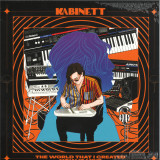
Colombian artist Kabinett brings a soul and harmonic proposal in the many forms of alternative disco and house through embellished productions and DJ sets finding himself every time as medium for all possibilities.
Involved in music from an early age through classical music, while being exposed and inspired by his older brothers in the many forms of what electronic music was developing, Nicolás, his given name, knew that his future and purpose was only going to be around what matters him the most, music. After learning different instruments in the early years and through a mix of self-education and formal education in contemporary music and music production, as well his first steps as a DJ, at age 20 he was ready to get involved in Colombia's capital electronic music scene as curator, DJ, label owner and music producer.
Founder of vinyl house label Nómada Records next to established artist such as Felipe Gordon & Joint4nine, his mentors, Kabinett have been fed enough to developed a full curation career working for Kaputt Club, El Coq & W Hotels, and more recently Casa Cruxada where he has helped to develop an identity for each which as of today has only enriched the local scene.
More recently as head of Kaputt.wav, his new label, which is now house of artist such as Curses, Iñigo Vontier, Theus Mago, Dombrance, Damon Jee, among many more, promises to keep growing and develope music overseas.
As of his personal artist career, have count on releases in labels such as Glitterbox, Midnight Riot Records, Partyfine, Platino Records, Duro, Playground, Sonido Moderna and more recently in Prins Thomas own label, Intersnajonal which will release his third solo EP in summer 2024.
With a deep understanding and experience on the music scene and a strong influence on dance genres, Kabinett and his music transcends the listeners souls and dive deep into a conscious dance.
out of Stock
Last delivered 23 months ago available to reorder, subject to availability
In the age of streaming platforms and social media, stimulation is easy to come by. Real pleasure, however_the kind that feeds our soul rather than draining it_is in shockingly short supply. The second LP by THUS LOVE is full of that kind of nourishing euphoria. It swoons, shakes, and swaggers with a combination of grit and sensuality that's been hard to locate in music lately. It's called, fittingly, All Pleasure. The album came out of a period of dizzying growth and transformation for the group. When they began work on it, vocalist/guitarist Echo Mars and drummer Lu Racine were still reeling from the runaway success of their 2022 debut Memorial_a set of lush, elegant post-punk that brought praise from The FADER, the NME, and the Guardian_along with processing the departure of the founding bassist. With All Pleasure, the band re-formed with new bassist Ally Juleen and guitarist/keyboardist Shane Blank. The group convened in a barn in the woods that Mars had transformed into a recording studio, and kept one rule at the forefront: "If it's not joyful, don't do it." What emerged from that mission is a stunningly gorgeous album, full of big, arcing melodies and a range of kinky stylistic twists that will surprise listeners who know the group just for Memorial's chorus-drenched 80s-style psychedelia. "Birthday Song" gives grungy glam rock with a transcendent hook that underlines Echo's lyrical tribute to communal joy. "Get Stable" transmutes existential panic into sharp-angled punk pop. The anthemic title track is something like the album's mission statement, paying tribute to the power of joyful creation. Mixed by Matthew Hall and Rich Costey and mastered by Bob Weston, All Pleasure was recorded as live as possible, capturing the sheer infectious ecstasy that comes from sharing space together and making a divine racket. Put on All Pleasure, tap into the energy that THUS LOVE is putting out, and you just might find an escape.
Camelot, the legendary seat of King Arthur's court in Early Middle Ages Britain, was probably not a real place. A corruption of the name of a real Romano-Briton city, the word "Camelot" accumulated symbolic, mythic resonances over centuries, until achieving its present usage as a near-synonym of "utopia." In the mid-20th century alone, Camelot inspired an explosion of representations and appropriations, among them the violent, affectless Arthurian court of Robert Bresson's 1974 film Lancelot du Lac and the absurdist iteration of Monty Python's 1975 Holy Grail, both of which feature armored knights erupting into fountains of blood; the mystical Welsh world of novelist John Cowper Powys's profoundly weird 1951 novel Porius, with its Roman cults, wizards and witches, and wanton giants; and the nationalist nostalgia of President John F. Kennedy's White House. Unsurprisingly there are fewer Camelots in more recent memory. Camelot, Canadian songwriter Jennifer Castle's extraordinary, moving 2024 chronicle of the artist in early middle age, charts a realer, more rooted, and more metaphorical place than the fabled Camelot of the Early Middle Ages (or its myriad depictions), but it too is a space more psychic than physical. In Castle's Camelot, the fantastic interpenetrates the mundane, and the Grail, if there is one, distills everyday experience into art and art into faith, subliming terrestrial concerns into sublime celestial prayers to Mother Nature, and to the unfolding process of perfecting imperfection in one's own nature. Co-produced by Jennifer and longtime collaborator Jeff McMurrich, her seventh record is at once her most monumental and unguarded to date, demonstrating a mastery of rendering her verse and melodies alike with crisply poignant economy. For all their pointedly plainspoken lyrical detail and exhilarating full-band musical flourishes, these songs sound inevitable, eternal as morning devotions. "Back in Camelot," she sings on the lilting, vulnerable title track, "I really learned a lot / circles in the crops and / sky-high geometry." The album opens with a candid admission of sleeping "in the unfinished basement," an embarrassing joke that comes true. But the dreamer is redeemed by dreaming, setting sail in her airborne bed above "sirens and desert deities." If she questions her own agency_whether she is "wishing stones were standing" or just "pissing in the wind"_it does not diminish the ineffable existential jolt of such signs and wonders. This abiding tension between belief and doubt, magic and pragmatism, self and other, sacred and profane, and even, arguably, paganism and monotheism, suffuses these ten songs, which limn an interior landscape shot through with sunstriped shadows of "multi-felt dimensions" both mystical and quotidian. The epic scale and transport of "Camelot," with its swooning strings, gives way dramatically to "Some Friends," an acoustic-guitar-and-vocals meditation in miniature on Janus-faced friends and the lunar and solar temperatures of their promises_"bright and beaming verses" versus hot curses_which recalls her minimalist last album, 2020's achingly intimate Monarch Season. (In a symmetrical sequencing gesture, the penultimate track, the incantatory "Earthsong," bookends the central six with a similarly spare solo performance and coiled chord progression, this time an ambiguous appeal to _ a wounded lover? a wounded saint? our wounded planet?) Those whom "Trust" accuses of treacherous oaths spit through "gilded and golden tooth"_cynics, critics, hypocrites, gurus, scientists, doctors, lovers, government, the so-called entertainment industry_sow uncertainty that can infect the artist, as in "Louis": "What's that dance / and can it be done? What's that song / and can it be sung?" Answering affirmatively are "Lucky #8," an irrepressible ode to dancing as a bulwark against the "tidal pools of pain" and the "theory of collapse," and "Full Moon in Leo," which finds the narrator dancing around the house with a broom, wearing nothing but her underwear and "big hair." But the central question remains: who can we trust, and at what cost faith, in art or angels or otherwise? Castle's confidence in her collaborators is the cornerstone of Camelot. Carl Didur (piano and keys), Evan Cartwright (drums and percussion), and steadfast sideman Mike Smith (bass) comprise a rhythm section of exquisite delicacy and depth. This fundamental trio anchors the airiness of regular backing vocalists Victoria Cheong and Isla Craig and frames the guitars of Castle, McMurrich, and Paul Mortimer (and on "Lucky #8," special guest Cass McCombs). Reprising his decennial role on Castle's beloved 2014 Pink City, Owen Pallett arranged the strings for Estonia's FAMES Skopje Studio Orchestra. On the ravishing country-soul ballad "Blowing Kisses"_Pallett's crowning achievement here, which can be heard in its entirety in the penultimate episode of the third season of FX's The Bear_Jennifer contemplates time and presence, love and prayer_and how songwriting and poetry both manifest and limit all four dimensions: "No words to fumble with / I'm not a beggar to language any longer." Such rare moments of speechlessness_"I'm so fucking honoured," she bluntly proclaims_suggest a state "only a god could come up with." (If Camelot affirms Castle as one of the great song-poets of her generation, she is not immune to the despairing linguistic beggary that plagues all writers.) Camelot evinces a thoroughgoing faith not only in the natural world_including human bodies, which can, miraculously, dance and swim and bleed and embrace and birth_but also in our interpretations of and interventions in it: the "charts and diagrams" of "Lucky #8," a daydreamt billboard on Fairfax Ave. in LA in "Full Moon in Leo," the bloody invocations of the organ-stained "Mary Miracle," and all manner of water worship, rivers in particular. (Notably, Jennifer has worked as a farmer and a doula.) The album ends with "Fractal Canyon"'s repeated, exalted insistence that she's "not alone here." But where is here? The word "utopia" itself constitutes a pun, indicating in its ambiguous first syllable both the Greek "eutopia," or "good-place"_the facet most remembered today_and "outopia," or "no-place," a negative, impossible geography of the mind. Utopia, like its metonym Camelot, is imaginary. Or as fellow Canadian songwriter Neil Young once sang, "Everyone knows this is nowhere." "Can you see how I'd be tempted," Castle asks out of nowhere, held in the mystery, "to pretend I'm not alone and let the memory bend?"
Anadol and Marie Klock have teamed up for a joint album, La Grande Accumulation. They met two years ago at a festival in England crowded with violent seagulls and outsider musicians. Klock being prone to barking on stage and Anadol not laughing at jokes she doesn’t find funny, they straight away had the intuition that they would meet again. And so they did, a few months later, at Anadol’s studio in Istanbul.
Today, the two Pingipung artists present the fruit of this musical friendship. La Grande Accumulation was born out of the peculiar atmosphere of the studio neighbourhood in Büyükada, an island where thousands of cats run free and humans randomly destroy things during apocalyptic times when parts of Turkey had just been turned into dust by terrible earthquakes. The French lyrics are inspired by hours of conversations, the music is consequently drenched in absurdity, overflowing with a strong urge to live and enjoy. According to the LP sticker, this album has been certified “Best handshake of 2024”, and stickers never lie.
La Grande Accumulation brings together Marie Klock's mysterious metaphors and Anadol's intriguing radiophonic psych-pop. Stretching forms beyond common sense to see how long they can resist is probably their favourite game. The result are six highly imaginative tracks that challenge the sub-3-minutes standards of Spotify pop.
Gözen Atila aka Anadol is well known to the Pingipung audience, with three solo LPs on the label. Her music follows a kind of collage logic, she interweaves countless styles, combining field and studio recordings with obscure quotation marks here and there. "I hope no one will come and explain this music to me, because it's the most beautiful music there is", says Kristoffer Cornils about her solo album Felicita.
Marie Klock is a French writer and musician who produces songs oscillating between synthpop and neo-folk, full of anarchic humour and existential dread. Her recent solo LP on Pingipung was a captivating tribute to the recently deceased poet Damien Schultz entitled Damien est vivant.
Marie Klock delivers her lyrics in song or spoken word, stream-of-consciousness musings on strange human adventures, and her rich keyboard melodies culminate in a nonchalant dialogue with the bass trombone (La Reine des Bordels). In the opulent opening piece (La Grande Accumulation), a woman is cursed to take home everything she kicks in the street; a bit later, we stumble upon a ghoul hiding in the gutter (Sirop amer), Mona Lisa loses her teeth (Sonate au Jambon) and a warthog struggles to climb the stairs of a silver tower (Sabots triviaux).
La Grande Accumulation was mixed and mastered by Jonas Romann at Chaos Compressor Club in Hamburg and cut to vinyl by Kassian Troyer at D&M in Berlin. It's an audiophile LP that invites to focus on every detail in this heap of musical ideas.
out of Stock
Last delivered 21 months ago available to reorder, subject to availability
Astral travel with Cybotron into the meta-narrative of the Parallel Shift, a new sonic fiction that raises many questions about military science of the near-future and the possibility of other worlds.
Descending backward through the rhythms of time, the Skynet module retracts from the hyper-structural society of 2100, edging toward the mid-century modern age teetering on the brink of what was then the frontier of “the future”. The system boots the Infiniti process, morphing into a cosmotechnic vessel coursing the superhighway of burgeoning general intelligence, seeking data from just before “the overshoot and collapse.”
R&D methods, rhythmanalytically applied, dissect the aftermath of an industrial society that burst through the ecological capacity of Spaceship Earth. Fractal visions of war and innovation spike and recede from and into the surfaces of reality being bent and guiding the eyes, ears, touch towards a laboratory in the year 1961. A nuclear expert, Don Lewis, receives orders to decrypt the mysterious black dodecagonal disc known as Fortec and the extraterrestrial biology unearthed in Roswell. He joins a team disassembling Fortec and studying the recurrent dodecahedral patterns linked to the human nervous system.
Through dismantling and probing, the team cycles through a saecular search devoid of finite conclusions, limited by Earth’s intellectual and technological prowess. One 1960s night, Lewis, while meddling with Fortec’s cyborganic innards, accidentally electrifies himself. His cyclotron and missile experience guides him to circuit-bend Fortec, stirring the entity from a mechanical slumber. Lewis and Fortec communicate in resonances, until it drifts back into a tranquil stasis.
The US Defense and contractors, unbeknownst to them, observe this breakthrough. They later permit Lewis to exit military service as the Air Force forms the Foreign Technology Division. Concurrently, MJ12 evolves into CY12, delving into second-order cybernetics. Lewis clandestinely keeps working on Fortec fragments, transitioning from military engineer to musician, pioneering the LEO module, a fusion of Fortec’s essence and audio engineering.
He shares his insights with Roland founder Ikutaro Kakehashi, aiding the creation of the iconic TR-808. Meanwhile, Fortec branches out, coining “Cyberspace” – a collective illusion of liberty unshackled by physical, political, or spiritual bounds, anchored in the equitable distribution of The Golden Ratio across realities. Yet “Cyberspace” morphs into a chaotic truth reservoir, spilling over into deception.
The Parallel Shift manifests in the perpetual “Now,” a collapsed event horizon where past and future are ensnared in a relentless present, unfurling along a dissolving timeline, overseen by a monolithic simulation under ceaseless watch…
— The Rhythmanalyst aka DeForrest Brown, Jr.
out of Stock
Last delivered 32 days ago available to reorder, subject to availability
An expedition in sound in 10 sequences: Enfoncement Deep Sink, Gouffre circulaire [Circular Abyss], Noyau secret [Secret Core], Apesanteur [Weightlessness], Entrailles [Entrails], Four solaire [Solar Furnace], Fissures [Cracks], Mer intérieure [Inner Sea], Éruption [Eruption], Remontée [Ascension]. "Labyrinthe !" is not only a very unique piece in Pierre Henry's masterful repertoire, but also a remarkable demonstration of his compositional skills and musical singularity. Indeed, for this piece, Pierre Henry was deprived of his own, otherwise essential, sonic material. Here, the sounds, provided by GRM collaborators at the time, carry their own distinct stories, sensitivities and qualities. Yet, despite this discrepancy, Pierre Henry's voice, the breath and dynamics of his own music, quickly appear. Through this sonic maze, a music arises, utterly focused on sounds, their development and their use, which Pierre Henry applies with extraordinary clarity and determination.
Overgrown Eden is the debut album from Essex rock band InMe. The album was released in the UK in 2003 and produced four singles: ""Underdose"", ""Firefly"", ""Crushed like Fruit"" and ""Neptune"". The highest UK Album Chart position was No. 15. However, it reached No. 1 in the Rock Album Chart. For the first time, Overgrown Eden is expanded with an additional bonus LP featuring 10 non-album tracks.
Overgrown Eden (Expanded Edition) is available as a limited edition of 666 individually numbered copies on translucent green coloured vinyl and includes a renewed insert with lyrics.
The 2015 edition of Winnipeg’s send + receive festival, focussed on rhythm, turned out to be a generative meeting of minds. There, Mark Fell encountered the music of Will Guthrie, a meeting that was eventually to result in the frenetic acoustic drumkit and digital synthesis pairing heard on Infoldings and Diffractions (2020). At the same festival, Limpe Fuchs first heard and appreciated the music of Mark Fell, planting the seed of a collaboration that came to fruition when Fell (along with his son Rian Treanor) visited Fuchs at her home in Peterskirchen, Germany in September 2022. Black Truffle is pleased to announce the release of the results of this extensive session in the audacious form of a triple LP, housing over two hours of music across its six sides. The collaboration might appear unlikely: what common ground could exist between Fuchs, classically trained pianist, legend of improvised music, instrument builder and sound sculptor active since the 1960s, whose group Anima Sound connected the dots between free jazz, krautrock and ritual, and Fell, proponent of radical computer music, known for his bracingly austere productions that twist remnants of club music into algorithmic stutters? For all their seeming disparity in technology, approach and background, the music on Dessogia/Queetch/Fauch makes it immediately evident the pair share a great deal in their essentially percussive approach and ability to, in Fuch’s phrase, ‘establish silence’. Recording at her home studio, Fuchs had the use of her entire array of instruments, found, invented, and traditional, and treats the listener to some that don’t often make their way to concerts, including extensive passages performed (with Gundis Stalleicher) on pieces of wooden parquetry. Alongside metallic, wooden and skin percussion of all kinds, sounded and struck in every conceivable way, we also hear bamboo flute, viola, and Fuchs’ distinctive free-form vocalisations. Fell also stretched himself, with his contributions ranging from characteristically fizzing pitched percussive pops to swarms of sliding tones and abstract digital noise. Showing both remarkable restraint and improvisational freedom, much of the music consists of duets between a single percussion instrument and a distinctive mode of digital sound, often lingering in one timbral-rhythmic space for minutes at a time. Improvisational forward momentum coexists with a free-floating, wandering quality. On opener ‘Dessogia I’, the shimmering almost-gilssandi tones of Fuchs’ enormous set of microtonally tuned metal tubes ripples across Fell’s rubbery pulse, which moves up the frequency spectrum as Fuchs becomes more animated and switches to horn. At some points, as on the metallic chiming tones that open ‘Fauch I’, only the unexpected dynamic behaviour of Fell’s sounds distinguish them from Fuchs’ acoustic instruments. At others, like on ‘Queetch III’, the waves of sliding tones and noise textures are bracingly synthetic, joined by piercing squeaks and scrapes from Fuchs’ metal objects. Epic in scope, immersing the listener in an entirely distinctive world of sounds, and thrillingly bold in its melding of the most ancient musical procedures with cutting edge technologies, Dessogia/Queetch/Fauch is an unexpected major statement from two of the great mavericks of contemporary music.
SYML—Welsh for “simple”—makes music that taps into the instincts that drive us to places of sanctuary, whether that be a place or a person. Born and raised in Seattle, Brian Fennell studied piano and became a self-taught producer, programmer, and guitarist. This May marked the fifth anniversary of his self-titled debut album, which included the platinum-selling song “Where’s My Love” and the Gold Record fan favorite, “Girl,” and one year since his sophomore album, The Day My Father Died, which was recorded and produced with fellow Seattle-native Phil Ek (Band of Horses, Father John Misty, Fleet Foxes) and features Elbow’s Guy Garvey, Lucius, Sara Watkins of Nickel Creek, and Charlotte Lawrence. In the last year, he was also featured on Lana Del Rey’s song, “Paris, TX,” from her Grammy-nominated album Did You Know That There’s A Tunnel Under Ocean Blvd, and realized several other notable collaborations including UK-electronic artist George Fitzgerald, Latin Grammy-nominated Colombian artist Elsa Y Elmar. In February 2024, he launched his imprint, FIN. Recordings, a new venture in collaboration with his label, Nettwerk Music Group, and management team, Good Harbor Music. Says Fennell about Infinity, “Sometimes, songs are wandering souls with no home, and it’s not until enough of them are written that the home is realized. I have a proud obsession with all things apocalyptic and the doom and wonder of an ever-expanding universe. This group of songs is an ode to the absurdity of human existence and my fondness for it. My inspirations were very cinematic ranging from big blaring soundscapes to more gentle, dusty settings like Ennio Morricone was so gifted in painting. I am fascinated by what humans are capable of, especially the stories we tell ourselves to explain our world and the space around it. Importantly, I am thankful for the creative space to make art without rules or expectation.
Als Höhepunkt einer bemerkenswerten Reise – vom Busking auf den Straßen Torontos bis hin Auftritten
mit Künstlern wie Orville Peck und Sierra Ferrell – schlägt Albino mit „Our Time In The Sun“ sein nächstes
musikalisches Kapitel auf.
Für die zwölf Songs hat er sich mit Dan Auerbach - Leadsänger der Black Keys, Gründer von Easy Eye
Sound und GRAMMY®-prämierter Produzent - zusammengetan, nachdem dieser zufällig auf Albinos Musik
gestoßen und direkt fasziniert war. In Nashville, wo das Album entstand, stellte Auerbach Albino einigen der
besten Session-Spieler und Songwriter der Stadt vor, darunter Pat McLaughlin (u.a. John Prine, Johnny
Cash).
Albinos Geschichte begann auf einem Bauernhof im ländlichen Ontario. Aus dem Verkauf von Obst und
Gemüse in Toronto wurde schnell das Musizieren auf den Straßen der Stadt und schließlich mitreißende
Live-Shows mit Größen wie Shovels & Rope, St. Paul & The Broken Bones und Shakey Graves in den USA
und Kanada.
Als er die Arbeit an „Our Time In The Sun“ aufnahm, war es das Ziel, diese packende Live-Energie auch im
Studio einzufangen: Das Album besteht aus tief empfundenen Eigenkompositionen, geprägt von cleveren
Wendungen. Albino greift auf die Südstaaten-Psychedelik und den Blues-Rock der 60er Jahre zurück, um
Geschichten über eine gescheiterte Liebe, den Kampf mit der Flasche und ein von der Arbeit bestimmtes
Leben zu erzählen.
Wir feiern den 30. Geburtstag von Weezers wegweisendem, selbstbetiteltem Debütalbum, auch bekannt
als „Blue Album“.
”Weezer” (das ”Blue Album”) ist einer der kulturellen Meilensteine der 1990er Jahre und hat sich einen so
festen Platz im Herzen von Rockfans der letzten drei Jahrzehnte erobert, dass es bis heute als ”Einstiegsdroge” gilt. Auf dem Album finden sich diverse Evergreens der Band: Titel wie „Buddy Holly“ und „Say
It Ain’t So“ erzielten Hunderte Millionen Streams und unzählige Platzierungen in Fernsehsendungen und
Filmen. Weezers „Blue Album” ist als eines der stärksten Debütalben aller Zeiten anerkannt und wurde
nun von den originalen analogen Bändern neu remastered.
Long-time friends and collaborators, musician Daniel Avery, alongside photographer Keffer are proud to present Techno is Boring, a new book that collects a decade of work chronicling club culture in visceral form.
Techno is Boring also includes short written essays and notes from Avery and fellow DJ, writer and collaborator John Loveless, who also provides an introduction, appearing alongside guest contributions from friends and allies.
The book is 24.5cm x 17cm, and the 148 pages are printed on premium heavyweight paper with Swiss binding.
. For Fans Of: The Weather Station, Weyes Blood, Adrianne Lenker, Phoebe Bridgers, Joan Shelley, Lana Del Rey, Cass McCombs, Angel Olsen & Neil Young. Camelot, the legendary seat of King Arthur’s court in Early Middle Ages Britain, was probably not a real place. A corruption of the name of a real Romano-Briton city, the word “Camelot” accumulated symbolic, mythic resonances over centuries, until achieving its present usage as a near-synonym of “utopia.” In the mid-20th century alone, Camelot inspired an explosion of representations and appropriations, among them the violent, affectless Arthurian court of Robert Bresson’s 1974 film Lancelot du Lac and the absurdist iteration of Monty Python’s 1975 Holy Grail, both of which feature armoured knights erupting into fountains of blood; the mystical Welsh world of novelist John Cowper Powys’s profoundly weird 1951 novel Porius, with its Roman cults, wizards and witches, and wanton giants; and the nationalist nostalgia of President John F. Kennedy’s White House. Unsurprisingly there are fewer Camelots in more recent memory. Camelot, Canadian songwriter Jennifer Castle’s extraordinary, moving 2024 chronicle of the artist in early middle age, charts a realer, more rooted, and more metaphorical place than the fabled Camelot of the Early Middle Ages (or its myriad depictions), but it too is a space more psychic than physical. In Castle’s Camelot, the fantastic interpenetrates the mundane, and the Grail, if there is one, distills everyday experience into art and art into faith, subliming terrestrial concerns into sublime celestial prayers to Mother Nature, and to the unfolding process of perfecting imperfection in one’s own nature. Co-produced by Jennifer and longtime collaborator Jeff McMurrich, her seventh record is at once her most monumental and unguarded to date, demonstrating a mastery of rendering her verse and melodies alike with crisply poignant economy. For all their pointedly plainspoken lyrical detail and exhilarating full-band musical flourishes, these songs sound inevitable, eternal as morning devotions. “Back in Camelot,” she sings on the lilting, vulnerable title track, “I really learned a lot / circles in the crops and / sky-high geometry.” The album opens with a candid admission of sleeping “in the unfinished basement,” an embarrassing joke that comes true. But the dreamer is redeemed by dreaming, setting sail in her airborne bed above “sirens and desert deities.” If she questions her own agency whether she is “wishing stones were standing” or just “pissing in the wind” it does not diminish the ineffable existential jolt of such signs and wonders. This abiding tension between belief and doubt, magic and pragmatism, self and other, sacred and profane, and even, arguably, paganism and monotheism, suffuses these ten songs, which limn an interior landscape shot through with sunstriped shadows of “multi-felt dimensions” both mystical and quotidian. The epic scale and transport of “Camelot,” with its swooning strings, gives way dramatically to “Some Friends,” an acoustic-guitar-and-vocals meditation in miniature on Janus-faced friends and the lunar and solar temperatures of their promises—“bright and beaming verses” versus hot curses which recalls her minimalist last album, 2020’s achingly intimate Monarch Season. (In a symmetrical sequencing gesture, the penultimate track, the incantatory “Earthsong,” bookends the central six with a similarly spare solo performance and coiled chord progression, this time an ambiguous appeal to … a wounded lover? a wounded saint? our wounded planet?). Those whom “Trust” accuses of treacherous oaths spit through “gilded and golden tooth” cynics, critics, hypocrites, gurus, scientists, doctors, lovers, government, the so-called entertainment industry sow uncertainty that can infect the artist, as in “Louis”: “What’s that dance / and can it be done? What’s that song / and can it be sung?” Answering affirmatively are “Lucky #8,” an irrepressible ode to dancing as a bulwark against the “tidal pools of pain” and the “theory of collapse,” and “Full Moon in Leo,” which finds the narrator dancing around the house with a broom, wearing nothing but her underwear and “big hair.” But the central question remains: who can we trust, and at what cost faith, in art or angels or otherwise? Castle’s confidence in her collaborators is the cornerstone of Camelot. Carl Didur (piano and keys), Evan Cartwright (drums and percussion), and steadfast sideman Mike Smith (bass) comprise a rhythm section of exquisite delicacy and depth. This fundamental trio anchors the airiness of regular backing vocalists Victoria Cheong and Isla Craig and frames the guitars of Castle, McMurrich, and Paul Mortimer (and on “Lucky #8,” special guest Cass McCombs). Reprising his decennial role on Castle’s beloved 2014 Pink City, Owen Pallett arranged the strings for Estonia’s FAMES Skopje Studio Orchestra. On the ravishing country-soul ballad “Blowing Kisses” Pallett’s crowning achievement here, which can be heard in its entirety in the penultimate episode of the third season of FX’s The Bear Jennifer contemplates time and presence, love and prayer and how songwriting and poetry both manifest and limit all four dimensions: “No words to fumble with / I’m not a beggar to language any longer.” Such rare moments of speechlessness “I’m so fucking honoured,” she bluntly proclaims suggest a state “only a god could come up with.” (If Camelot affirms Castle as one of the great song-poets of her generation, she is not immune to the despairing linguistic beggary that plagues all writers.) Camelot evinces a thoroughgoing faith not only in the natural world including human bodies, which can, miraculously, dance and swim and bleed and embrace and birth but also in our interpretations of and interventions in it: the “charts and diagrams” of “Lucky #8,” a daydreamt billboard on Fairfax Ave. in LA in “Full Moon in Leo,” the bloody invocations of the organ-stained “Mary Miracle,” and all manner of water worship, rivers in particular. (Notably, Jennifer has worked as a farmer and a doula.) The album ends with “Fractal Canyon”s repeated, exalted insistence that she’s “not alone here.” But where is here? The word “utopia” itself constitutes a pun, indicating in its ambiguous first syllable both the Greek “eutopia,” or “good-place” the facet most remembered today and “outopia,” or “no-place,” a negative, impossible geography of the mind. Utopia, like its metonym Camelot, is imaginary
Toronto’s long-running hardcore titans return with a new seven-track LP that fuses their many strengths
into the ultimate slab of S.H.I.T. While S.H.I.T.’s previous 12” leaned into the gnarlier, more chaotic
aspects of their sound, For a Better World returns to the infectious bouncy rhythms and earworm riffing
that made S.H.I.T.’s 7” EPs classics of modern punk. S.H.I.T. has always been a riff machine, and For a
Better World adds “Corporate Funded Killing Technology,” “Imminent Destruction,” and the climactic
closer, “Captive (… in the Mutilated Vista)” to their bulging canon of monster hooks.
In 1997 a CD compilation called Calambre Techno was released in Spain which included a track called Utopia. Its producers were two Spanish brothers who had been making electronic music since 1991 under the name INTRO. The track of the compilation was a remix of the original included in the Ep Intro - @Utopia from 1994. @UtopiaRemix is a simple but perfect Techno-Trance anthem, Retro-Psychedelic but futuristic, one of those timeless tracks that always sound original despite its 30 years. Now UFC is proud to re-issue this techno-trance gem on vinyl as its eighth release accompanied by remixes from current producers of different visions.
About the remixes; The duo The MFA give us their '94 On The Floor Remix', a perfect “hit” to hear at dawn where they perfectly combine IDM, Indie-House and Experimentalism. Spanish producer Promising/Youngster presents 'Electric Shock Remix', a titanic version of the original remix where powerful Electro rhythms collide with Experimental and Futuristic IDM.
In the case of Brassica we left the way free to experiment with the original remix and he gives us his 'Psytalo Remix', a perfect fusion of Techno, Breaks and Psychedelia, originality in its purest form as this producer has accustomed us to in all his productions. To close the Ep, we find 'FutureCosmicalAscension Mix' by R.I.P. Bestia, truly a different version that is difficult to include in a specific style where the main melody is progressively guided towards a state of euphoria.
Original Track Produced by Intro: Francisco & Nacho Sotomayor. Liscensed with permission of Absolute Ambient (ES) 1994
out of Stock
Last delivered 17 months ago available to reorder, subject to availability
16 Jahre nach ihrem letzten Albumrelease erscheint endlich das 14. Studioalbum „SONGS OF A LOST
WORLD“ von THE CURE. Viele der Songs sind Fans bereits von der Welttournee 2022/2023 bekannt.
So diente beispielsweise der Titeltrack „Alone“ bei jeder Show als Opener und ist für Frontman Robert
Smith genau das Puzzlestück, was das Album zu dem macht, was es ist. Mit „SONGS OF A LOST
WORLD“ kehrt die britische Pop-/Rock-/Wave-/Gothic-Band zu einem Sound zurück, mit dem viele Fans
sie kennenlernten. Daher wird dieses Album insbesondere für Fans der ersten Stunden ein wahres Highlight.
out of Stock
Last delivered 20 months ago available to reorder, subject to availability
In den acht Jahren, seit sich Amyl and The Sniffers in Melbournes brodelnder Musikszene zusammengefunden haben, hat es die Band perfektioniert, Verspieltheit und rohe Wucht zu kombinieren. Mit den zwei bisher erschienenen, einhellig gefeierten Alben (dem selbstbetitelten Debüt von 2019 und "Comfort To Me" von 2021), haben Sängerin Amy Taylor, Gitarrist Declan Mehrtens, Bassist Gus Romer und Drummer Bryce Wilson ihren einzigartigen Stil etabliert. Seit dem Release von "Comfort To Me" haben sich die Perspektiven für die Band in jeder Hinsicht exponentiell erweitert. Größer, klarer, smarter, schärfer, das ist es, was nun auch das dritte Album der Band antreibt. "Cartoon Darkness" hat die Band zusammen mit Nick Launay im 606 Studio der Foo Fighters in Los Angeles aufgenommen, am gleichen Pult, an dem schon Fleetwood Macs "Rumours" und Nirvanas "Nevermind" entstanden. Es ist ein überraschend abwechslungsreiches Album und reicht von klassischem Punk über den strotzenden Glam der Single "U Should Not Be Doing That" bis zur ausgelassenen Balladenhaftigkeit von "Big Dreams". Auf "Cartoon Darkness" geht es um Krieg, die Klimakrise und künstliche Intelligenz, um Politik und das Gefühl, online eine Stimme zu haben, während wir am Ende doch einfach nur das Daten-Biest Big Tech speisen, unseren Gott der Gegenwart. Es geht darum, wie unsere Generation mit Informationen vollgestopft wird, wie wir wirken wie Erwachsene und dabei doch für immer Kinder bleiben, abgeschirmt wie in einem Kokon und dabei all die Ablenkungen verschlingend, die uns nicht einmal Wohlbefinden oder Freude bereiten, sondern einfach nur Taubheit. "Cartoon Darkness" rennt mit dem Kopf durch die Wand ins Unbekannte, in die heranziehende Ahnung einer Zukunft, ein kindliches Dunkel, das sich schrecklich anfühlt, aber noch gar nicht existiert - ein großer rauer Spaß.
out of Stock
Last delivered 21 months ago available to reorder, subject to availability
Die neuseeländische Musikerin und Produzentin Princess Chelsea präsentiert ihr kommendes "nervous breakdown album" "Everything Is Going To Be Alright", das im pastoralen Aotearoa Neuseeland aufgenommen wurde und eine Art Trostspender ist. Es sind keine traurigen Lieder, sondern die beiden Eröffnungs- und Schlusstracks erzählen von Chelseas Genesung und sind als kathartischer Hörgenuss für alle gedacht, die es brauchen könnten. "If you feel you want to die / trust me darling / it just takes time", singt sie in "Time". In der Zwischenzeit zeigen Chelseas sorgfältig geschichtete Gesangsmelodien über Mellotron-Flöten und Harfe, verwoben mit Live-Cello und Violine, ihre Fähigkeiten als Arrangeurin und Produzentin. Princess Chelseas cineastischer, verträumter Pop hat sich in elf Jahren, fünf Alben, einer EP und elf Singles weiterentwickelt. Ihre Vortragsweise und ihr Songwriting zeichnen sich dadurch aus, dass sie eine fast naive Ernsthaftigkeit mit zynischem, augenzwinkerndem Witz und akustischen Funken überlagert. Ihr Grunge-Girlgroup-Song "I Love My Boyfriend" aus dem Jahr 2018 und ihr von Nancy & Lee inspiriertes "Cigarette Duet" aus dem Jahr 2011 haben ihren Bekanntheitsgrad durch den Einfluss einer neuen TikTok-Generation in das öffentliche Bewusstsein gerückt. Für dieses Album wurden Chelseas Instrumentalarrangements von ihrer Live-Band inspiriert, die die Schlafzimmerdemoaufnahmen mit einem überraschenden Sound interpretiert hat. Es klingt anders, als man vielleicht erwarten würde. "The Forest" wurde live in einem Take mit Chelsea und der gesamten Band im beliebten neuseeländischen "The Lab" aufgenommen und zeigt dynamische Gitarrenwände und eine leidenschaftliche Gesangsperformance. Es ist eine markante Abweichung von ihrem bisherigen Schaffen und stellt eine weitere Einführung in das dar, was sie seit der Veröffentlichung der verträumten und doch düsteren Single "Everything is Going To Be Alright" im Februar als ihr "Gitarrenalbum" bezeichnet hat. Chelseas Fähigkeiten als Arrangeurin und Produzentin kommen auf dem Album voll zur Geltung, aber oft in Form von komplizierten Gitarrenarrangements, die an The Cars und die Breeders ("Forever is a Charm") und an klassische neuseeländische Flying Nun-Bands der 80er und 90er Jahre ("Love is More") erinnern. Obwohl das Album eine deutliche musikalische Entwicklung darstellt, sind ihre Markenzeichen immer noch da - klassische 80er Jahre Synths (Yamaha DX7, Roland D-50), vielschichtige Melodien, orchestrale Instrumente, verträumter Gesang, verdrehter Pop, der oft Vergleiche mit Julee Cruise oder Enya gezogen hat.
out of Stock
Last delivered 23 months ago available to reorder, subject to availability
Die Wahl-New-Yorkerin Yaeji hat sich in den letzten Jahren als Produzentin, Sängerin und DJ mit ihren introspektiven Dance-Floor-Hymnen eine ganz eigene Nische geschaffen. Nach der Veröffentlichung ihrer Debüt-EPs, sowie den Singles "Raingurl" und "Drink I"m Sippin On" in 2017, war sie auf Charli XCXs 2019er Album "Charli" zu hören, remixte Songs für Dua Lipa oder Robyn, kollaborierte mit dem Seouler-Künstler OHHYUK, verkaufte weltweite Headline-Touren aus und eröffnete ihren eigenen Lifestyle Webstore JI-MART. Ihr Sound und ihre Einflüsse sind dabei so vielschichtig wie ihre Herkunft. Geboren im Jahr 1993 in New York reicht ihr Stammbaum von Seoul über Tokyo bis nach Atlanta - Einflüsse die sich in ihrer Musik in Form von koreanischem Indie-Rock und Electronica, 2000er Hip-Hop, sowie Leftfield Bass und Techno wiederfinden. Mit ihrem 2020er Mixtape "WHAT WE DREW“ schärfte Yaeji noch mal ihre Vision als Musikerin, die kreativ losgelöst von Sprachen Genre-Grenzen zu sprengen vermag - kein Wunder, dass sie daraufhin von Pitchfork 2022 zu einer der "25 Artists Shaping the Future of Music" ernannt wurde. Die nahe Zukunft wird sie ebenfalls prägen. Schließlich erscheint am 7. April nun endlich das Debütalbum "With A Hammer" bei XL Recordings. Entstanden innerhalb von zwei Jahren in New York, Seoul und London kurz nach der Veröffentlichung des Mixtapes und während den Lockdowns ist es eine Ode an die Erforschung ihrer selbst, setzte sie sich doch dabei mit ihren eigenen Emotionen auseinander - besonders mit ihrer eigenen, in ihr brodelnden Wut. Während sie textlich zwischen englisch und koreanisch springt, nutzt sie erstmals auch Live-Instrumente, sei es in Form von einem Ensemble an Musikern oder auch zum ersten Mal sie selbst an der Gitarre. "With A Hammer" beinhaltet darüber hinaus auch Features der Produzenten und engen Verbündeten K Wata und Enayet, sowie Gast-Vocals der Londonerin Loraine James und von Nourished by Time aus Baltimore.
out of Stock
Last delivered 20 months ago available to reorder, subject to availability
Errol and Alex Rita’s Touching Bass are proud to present Soon Come; a landmark compilation celebrating the talents of their now intercontinental musical community and an introduction to the wide-spanning sound and feeling of their growing label. 22 original tracks spread across double 12” vinyl and split between 'day' and 'night' moods, creating exciting connections between music for both the home and the eclectic sounds of their much-loved dancefloor.
Over the past six years, Touching Bass have steadily established themselves as one of London’s most important musical incubators. More than just a club night, concert series, NTS Radio mainstay and a label, Touching Bass has become something of a movement: a community meeting grounds for music lovers and some of the most exciting contemporary music-makers both in the capital and beyond.
The tracklist is a reflection of that, curated by TB’s Errol, Alex Rita and Sammseed over the course of two years. Among the list of contributors are Chicago/New York’s keiyaA, Stones Throw’s DJ Harrison, Ben Hauke, Ego Ella May, recent WARP signee Nala Sinephro, Melo-Zed, Hiatus Kaiyote’s Clever Austin and many more (see below for tracklist). Artwork for the project comes from Alex Rita, combining moments caught at Touching Bass’ own gatherings over the years.
Since launching properly in 2019, Touching Bass has quickly established itself as one of the UK’s most exciting new labels. The young imprint has championed critically respected and refreshingly innovative works with little genre restriction, receiving recognition from both musical and cultural bil. From the electrifying grooves of Danish trio, Athletic Progression, to the modern classical of South London’s CKTRL (featuring Duval Timothy).
Along the way, Errol and Alex have also been tapped up for collaborations/ commissions with some of the world’s most forward-thinking creatives and institutions; from the world-renowned White Cube gallery for Frieze Week 2021 and fashion designers Nicholas Daley and Azura Lovisa to film music supervision for Ronan McKenzie and Joy Yamasungie’s WATA and multi-award winning director, Jenn Nkiru’s (Beyonce, Kamasi Washington, Neneh Cherry) Black To Techno, the experimental documentary which premiered at Frieze Los Angeles and was nominated for ‘Best Short’ at the IDA Awards.
For newcomers, Soon Come acts as a vital introduction to the label’s wide-spanning DNA. For those already acquainted, it’s a glimpse at its exciting future.
out of Stock
Last delivered 4 years ago available to reorder, subject to availability
Sly Dunbar and Robbie Shakespeare or Sly and Robbie as they are affectionately known are the drum and bass backbone of Reggae Music, they have played on, produced, invented, reinvented more records then many of their contemporaries put together.
Sly Dunbar born Lowell Charles Dunbar on 10 May 1952, Kingston, Jamaica, drummed his first session for Mr Lee Perry which included a Jamaican hit ,a track called 'Night Doctor', before moving on to the group Skin, Flesh & Bones who had a residency at Kingston's famous 'Tit for Tat' club. This band would evolve into the Channel One house band The Revolutionaries where Sly named after his fondness of the band Sly and the Family Stone would begin to play alongside a bass player who would become his long standing partner in music, namely one Robbie Shakespeare.
Robbie Shakespeare born 27 September 1953, Kingston, Jamaica, had worked his way through session bands including the legendary Aggrovators before uniting with Sly Dunbar in The Revolutionaries. Both musicians had worked with other respective bass / drum players including such figures as Lloyd Parks bass, Carlton 'Santa' Davis drums, but everything seemed to fall into place when they worked together.
They also both had a quest to push the boundaries of reggae music, which they would do throughout their careers, over many sessions to numerous to mention. But highlights would include the groundbreaking Mighty Diamonds 1976 set 'Right Time' with its fresh rockers rhythms which lead the way in the 1970's. Also their work with the bands Culture and Black Uhuru the later of which they toured extensively with, spreading the reggae vibes across Europe and America. Not to forget to mention their Taxi label / productions which are always inventitive whether its in the reggae field or outside where their playing / production skills are much in demand.
The third piece of this jigsaw is the mighty Mr Bunny 'Striker' Lee who brought these legends together. Born Edward O'Sullivan Lee 23 August 1941, he must be one of reggae's most underrated producers. Leading the way in the 1970's especially in the dub field and being one of the early exponents of a King Tubby remix ,which would see nearly all his 7'' releases carrying a Tubby reworking on its flip side. Bunny started his musical career in 1962 working for Duke Reid's Treasure Isle label and soon moved into the world of production gaining his first hit in 1967 with 'Musical Field' by Roy Shirley for the WIRL label. The 1970's was a very productive time for Bunny Lee and saw the launch of his LEE'S label which was producing hits in Jamaica. Not having a studio of his own and renting studio time from the existing establishments like Randy's Studio 17 and Channel One he had to have a crack team of session players to carry out this task, fast and efficiently. This happened firstly under the guise of THE AGGROVATORS see The Aggrovators dubbing it studio 1 style JRCD005 and then with the group of musicians THE REVOLUTIONARIES[ see The Revolutionaries at Channel 1 dub plate specials JRCDOO3]. It’s here in the latter of these groups that Bunny matched Sly and Robbie together for the first time and it’s this match made in heaven that these tracks on this release are culled from. Sessions that Bunny Lee produced with Sly and Robbie during this magical 70's period. These rare dubs are taken from the original master tapes, you may have heard the tune before but not these versions. So sit back and enjoy Reggae Musical History in the making....
out of Stock
Last delivered 23 months ago available to reorder, subject to availability
One of THE most iconic albums to hail from Merseyside. ‘H.M.S. Fable’ was the third LP released from Shack following 1988’s ‘Zilch’ and 1995’s ‘Waterpistol’. A collection of majestic storytelling in guitar form, written by two extraordinarily talented brothers, Michael & John Head.
Originally released on Laurel Records/London Records in 1999, the band at that time comprised of
MICHAEL HEAD - Vocals, Acoustic Guitar JOHN HEAD - Electric Guitar, Vocals REN PARRY- Bass Guitar IAIN TEMPLETON - Drums, Percussion, Backing Vocals.
The album was voted #2 in both NME and Uncut’s critics album of the year polls, only missing out to The Flaming Lips’ ‘The Soft Bulletin’ in both.
Now released on the band’s newly-formed label Shack Songs, ‘H.M.S. Fable’ encompasses many musical styles, from orchestral guitar pop to psychedelic-tinged folk and even elements of Britpop, nicely summed up by the editor of NME Steve Sutherland in a 9/10 review, in June 1999:
‘’Not since Liam Gallagher howled his early indolent disdain has this music sounded so alive. 'Pull Together' is an anthem easily the equal of Oasis at their most loved-up and huge. ‘Comedy' tender and uplifting, like the missing track from 'Bridge Over Troubled Water', 'Daniella' a haunted and exhausted homage to Head's hero Arthur Lee, and 'Lend Some Dough' a rollicking Scouse Play For Today with a chorus that goes, "I've got a sore back and I'm itching’’ ”
The Shack story is one of music’s greatest legends. It incorporates hardship, bereavement and chaotic misadventure, but above all it tells the tale of beautiful music triumphing over trouble and tragedy.
In the 80s, the two brothers from the notorious Kensington estate in north Liverpool were singer and guitarist with The Pale Fountains, an effervescent pop group which imploded under the weight of two albums in 1986. The Heads returned in ‘88 as Shack and a debut album ‘Zilch’. In 1991, Shack made ‘Waterpistol’, an inspirational guitar jewel that would have proved just as influential as any British album in that era had the studio not burned down, taking the master tapes with it. Four more years passed, but by the time it was finally released on Marina it had developed ‘lost classic’ status.
The Heads battled on. They toured as their hero Arthur Lee (RIP) of Love’s backing band. In ‘97, they created a new group called The Strands and recorded the delicate, dreamy masterpiece ‘The Magical World Of The Strands’. They spent a long time making another classic ‘H.M.S. Fable’...
out of Stock
Last delivered 23 months ago available to reorder, subject to availability
One of THE most iconic albums to hail from Merseyside. ‘H.M.S. Fable’ was the third LP released from Shack following 1988’s ‘Zilch’ and 1995’s ‘Waterpistol’. A collection of majestic storytelling in guitar form, written by two extraordinarily talented brothers, Michael & John Head.
Originally released on Laurel Records/London Records in 1999, the band at that time comprised of
MICHAEL HEAD - Vocals, Acoustic Guitar JOHN HEAD - Electric Guitar, Vocals REN PARRY- Bass Guitar IAIN TEMPLETON - Drums, Percussion, Backing Vocals.
The album was voted #2 in both NME and Uncut’s critics album of the year polls, only missing out to The Flaming Lips’ ‘The Soft Bulletin’ in both.
Now released on the band’s newly-formed label Shack Songs, ‘H.M.S. Fable’ encompasses many musical styles, from orchestral guitar pop to psychedelic-tinged folk and even elements of Britpop, nicely summed up by the editor of NME Steve Sutherland in a 9/10 review, in June 1999:
‘’Not since Liam Gallagher howled his early indolent disdain has this music sounded so alive. 'Pull Together' is an anthem easily the equal of Oasis at their most loved-up and huge. ‘Comedy' tender and uplifting, like the missing track from 'Bridge Over Troubled Water', 'Daniella' a haunted and exhausted homage to Head's hero Arthur Lee, and 'Lend Some Dough' a rollicking Scouse Play For Today with a chorus that goes, "I've got a sore back and I'm itching’’ ”
The Shack story is one of music’s greatest legends. It incorporates hardship, bereavement and chaotic misadventure, but above all it tells the tale of beautiful music triumphing over trouble and tragedy.
In the 80s, the two brothers from the notorious Kensington estate in north Liverpool were singer and guitarist with The Pale Fountains, an effervescent pop group which imploded under the weight of two albums in 1986. The Heads returned in ‘88 as Shack and a debut album ‘Zilch’. In 1991, Shack made ‘Waterpistol’, an inspirational guitar jewel that would have proved just as influential as any British album in that era had the studio not burned down, taking the master tapes with it. Four more years passed, but by the time it was finally released on Marina it had developed ‘lost classic’ status.
The Heads battled on. They toured as their hero Arthur Lee (RIP) of Love’s backing band. In ‘97, they created a new group called The Strands and recorded the delicate, dreamy masterpiece ‘The Magical World Of The Strands’. They spent a long time making another classic ‘H.M.S. Fable’...
out of Stock
Last delivered 23 months ago available to reorder, subject to availability
Rising multi-media artist Shaboozey intends to build his own world.
Determined to carve his own lane in the Alt-Country / Hip-Hop space; he crafts a sound that pays homage to a cast of traditional Western influences, such as Bob Dylan, Lead Belly, Johnny Cash, and Leonard Cohen, while looking into the future of what the two genres have yet to introduce.
Remaining true to his Virginia roots, Shaboozey hopes to continue the region’s long-standing tradition of producing some of the most prolific creatives of the new millennium. This time through elevating the scope of contemporary hip-hop and introducing a modern Americana culture to a global audience.
Fresh off of his inclusion in the groundbreaking Beyonce album, Cowboy Carter, of which he was the only featured artist to appear twice, Shaboozey is set to release his own album, Where I've Been, isn't Where I'm Going. An album that has been years in the making, it includes standout singles “Let It Burn,” “Vegas,” “Anabelle,” & the infectiously fun singalong anthem “A Bar Song (Tipsy).” Millions of streams later, and appearances on esteemed programs such as COLORS and The Late Show with Stephen Colbert, Shaboozey is set to become the new face of modern American country music.
out of Stock
Last delivered 22 months ago available to reorder, subject to availability
The full-length debut by Detroit duo Giovanna Lenski and Christian Molik aka Clinic Stars both refines and redefines their pitch-perfect fusion of downer-pop balladry and featherweight shoegaze: Only Hinting.
Recorded and produced at the band’s home studio, the album was crafted across 2022 and 2023, patiently layering FX and spatial depths to give each song a swirling, subconscious undertow. From the strummed whirlpool of “I Am The Dancer” to the gated reverb of “Remain” to the greyscale guitar reverie of “Isn’t It,” the record aches as much as moves, daydreaming of escape and transcendence.
out of Stock
Last delivered 21 months ago available to reorder, subject to availability