‘Call To Arms & Angels’ is the title of the twelfth studio album from South London collective Archive.
A 17-track double CD / triple LP recorded at RAK studios in London and released on
Dangervisit/PIAS.
Deluxe editions of the album also include a bonus ‘Super8’ album of new and
exclusive instrumentals, as featured in the band’s ‘Super8’ documentary that will
accompany the release of the album.
Produced by Archive and long-time collaborator Jérome Devoise, ‘Call To Arms &
Angels’ is the band’s first studio set since 2016’s ‘The False Foundation’.
Talking about the new album, Darius Keeler says, “Writing our twelfth studio album
was an extraordinary time for the band. The song writing became an unfolding
narrative as the world got stranger and more disturbing every day. With people’s
freedoms being pushed to the brink, the suffering Covid caused and the terrible
events in the US lead by Trump and the rise of the Right, anything seemed possible.
“To reflect on these times as artists brought up a darkness and an anger, but also a
strange kind of inspiration that was at times unsettling. It really made us appreciate
the power of music and how lucky we are to be able to express our feelings in this
way.
“It seems there is light at the end of the tunnel, but there are always shadows within
that light.”
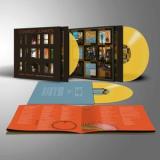
Deluxe 2CD album plus ‘Super8’ bonus CD in 40-page casebound Polaroid
bookpack.
2CD album.
Deluxe vinyl box set with white coloured vinyl 3LP (exclusive to this box set), ‘Super8’
bonus LP on white vinyl (exclusive to this box set), deluxe 3CD with Polaroid booklet
and 12” x 12” art print.
Triple LP on gold vinyl in triple gatefold sleeve.
Triple LP on green vinyl in triple gatefold sleeve.
Triple LP on black vinyl in triple gatefold sleeve.
Suche:ti pi cal
A few words for the album
Moment’s Aeternity:
a 12/8 composition celebrating the raw power of the “moment”, marked by whirling improvised moments between drums, bass clarinet and Harris P’s Armenian duduk.
Pajko, fire in the forest on the mountain:
in Sokratis own words: “I have a really vivid memory as a child. I was staring at the Djena mountain from my window in Archangellos which sits on the Pajko mountain. A little beam of light shone far in the horizon; it was a fire that in my little eyes looked as if the giants of Almopia were trying to communicate with each other using phryktoria (a way of contacting through fire in Ancient Greece).”
Footprints of some Giant Steps:
While the classic compositions of two true Jazz Giants- Wayne Shorter and John Coltrane- are certainly different, they do both connect in a mystical way. Rearranged in 5/8 combining half of each melody and half of each one’s chord progression, keeping the form of the piece for improvisation, still in 5.
Oson Zeis Fainou (Seikilo’s Epitaph):
found in a tomb stone in the Northeast of Greece, this is the only melody saved from the ancient times. It is accompanied by lyrics contemplating the meaning of life:
Ὅσον ζῇς φαίνου
μηδὲν ὅλως σὺ λυποῦ πρὸς ὀλίγον ἐστὶ τὸ ζῆν τὸ τέλος ὁ xρόνος ἀπαιτεῖ.
‘’While you live, shine
don’t feel blue for anything because our life is short and time demands an end.’’
Here is to Oghene K:
’’Hey man, where is the groove?’’, he would say, just to trigger another wave of inspiration for Sokratis. Oghene was a true force of nature, a well of kindness, a masterful artist that left this world too early. This one is for him.
Balkan Riff (for Milcho Leviev):
Milcho Leviev (1936-2019), was a long-time friend and collaborator and a true inspiration for expression, creativity and colorfulness. Expressing the deep sentiments evoked by the Balkan sound and history, this is a sorrowful dialogue between bass clarinet and contrabass.
Spirits of Djena:
one of the most esoteric and personal moments of the album. Composed and recorded during the challenging times of the COVID-era, you can hear the baritone and tenor saxophone firmly grounded on a crispy, hypnotizing contrabass groove.
Sokratis Votskos Quartet
Kostas Anastasiadis / Giorgos Klountzos - Chrysidis: Drums
Leandros Pasias: Piano
Vaggelis Vrachnos: Contrabass
Sokratis Votskos: Soprano Saxophone, Bass Clarinet and Compositions
Sokratis Votskos is a jazz saxophonist, clarinetist, composer, educator, and bandleader from Greece. Deeply invested in unearthing the folk sounds and heritage music of Greece and Eastern Europe, he weaves these into modern jazz compositions though the use of melodies, polyrhythms, and his reedy, timeless tone. He leads the Sokratis Votskos Quartet, he is one half of Kolida Babo and member of the Reggetiko Project. A highly regarded sideman and ensemble player, he has worked extensively with renowned jazz musicians with several highly acclaimed releases (MiC, Jazzman, Walt Disney and now Fair Weather Friends Records).
He has performed his music in numerous venues and festivals worldwide from Vinterjazz in Copenhagen, to the EFG London Jazz Festival where he performed at the legendary Ronnie Scott’s alongside Greg Foat.
He is also an archaeoacoustics researcher and enthusiast, having completed his Master studies on the field of ancient ritualistic caves of Greece research.
Leandros Pasias was born in Thessaloniki, Greece. At age 10 was introduced to piano, continuing his studies at the Modern Conservatory of Thessaloniki and later at the Conservatorium van Amsterdam in the department of jazz piano.Ηe holds a classical harmony diploma and a BA at the Department of Music Studies at the Aristotle University of Thessaloniki. In 2020 he received jazz improvisation lessons from Aaron Parks.
With a series of appearances in multiple international jazz festivals, Leandros has collaborated with a wide range of musicians from Nicolas Masson and James Wylie to Marina Osk, Ivo Papasov and Haris Lambrakis, among others.
A member of the Yako Trio, he released “OdesSea” on Fair Weather Friends Records (2021).
Vangelis Vrachnos was born in Thessaloniki, Greece, in 1989. While he started playing the bass at the age of 12, alongside his brother, his studies would commence a few years later. Introduced to double bass at the age of 23, he undertook jazz double bass studies at the Codarts Αcademy of Rotterdam. He has participated in several festivals such as the Technopolis and Odessa international jazz festivals. Since returning to his hometown, in 2015, he has been a founding member of Mordana and Yako Trio and has collaborated with a series of musicians like James Wyllie, Sokrates Votskos and Dimitis Agelakis, among others.
Kostas Anastasiadis is a tireless researcher, that has been diligently studying Tradition and its evolution, creating a fresh amalgam of sound moods. His mature improvisational virtuosity highlights a uniquely individual artistic expression and was recognized with the ̈Unique Individual Stylist" award by the PIT (Percussion Institute of Technology) in Los Angeles, California. He has been associated with various ensembles that have garnered significant interest in the global music scene. As an educator, he is the founder of "The Harmony of Rhythm" musical method, which aims to explore and establish the elements that constitute the concept of rhythm.
Giorgos Klountzos-Chrysidis was born in Thessaloniki in 1991. Following studies at the Modern Conservatory of Thessaloniki, he moved to France and the Conservatoire de Nice. With performances at well-known festivals like Nice Jazz Festival, Nuits du Sud and Jazz à Vienne, he had the opportunity to meet the American drummer Leon Parker, who encouraged him to move to Paris, where he spent the next two years under his tutoring and guidance.
In 2016, came a defining moment in his career as he traveled to New York for the first time. He participated in the quartet of saxophonist Diego Rivera for a series of performances and attended lessons by Rodney Whitaker and Randy "Uncle G" Gelispie at Michigan's State University.
Collaborations include Xavier Davis, Ricky Ford, Nicolas Masson, Diego Rivera, Craig Bailey, Baptiste Herbin, Marc Abrams, Pantelis Stoikos, Antonis Anissegos, David Lynch, Ziad Rajab and Ivo Papasov, among others.
Petter Eldh's explosive ensemble Koma Saxo continues their adventures with a new album "Koma West", out on We Jazz Records, 18 March 2022. The album sees Koma Saxo expand on their previous sound with the addition of vocalist Sofia Jernberg and a strong cast of featured artists, including cellist Lucy Railton, violinist Maria Reich, pianist Kit Downes and accordionist Kiki Eldh (Petter's mom!). The hard-hitting key quintet remains, including Eldh on bass and assorted instruments, Christian Lillinger on drums, plus saxophonists Otis Sandsjö (of Y-OTIS), Jonas Kullhammar and Mikko Innanen bringing the SAXO to the KOMA operation.
At 14 tracks, "Koma West" is a full menu of monumental compositional ideas that could spawn entire albums. True to his chop & go production style, Eldh relies on continuous movement while presenting another all killer no filler program taking Koma Saxo on a sonic outing not quite like anything that had previously appeared under the band's name. That being said, there's very much the Petter Eldh touch here, one which might be hard to pinpoint and verbalise, but nevertheless a recognisable style of composing, producing and arranging.
Thematically, the album is rooted in the West Coast of Sweden, where Eldh grew up – he's from a tiny town called Lysekil. There's a thread of Swedish folk song tradition that has been part of the Koma Saxo DNA from the get-go and you can hear that here as well, especially on cuts such as "Närhet", beautifully sung by Sofia Jernberg.
Petter Eldh says:
"In a way, it's a concept album and a celebration of the Swedish West Coast. The first single is called 'Koma Kaprifol', and kaprifol is the landscape flower of Bohuslän on the West coast, where I grew up. I'm not too wild about attaching strong narratives to my music but there's no way around it this time. The oysters, a common snack around the coast, are a strong conceptual presence here. Anyway, they seem to pop up here and there quite often already thus far in the Koma Saxo narrative, even though it's not always so obvious. Koma Vocals! Koma Strings! I love the presence of Sofia Jernberg here and I love writing string arrangements, too, although I never thought I would do it for Koma, but of course, Koma should have some strings, why not?. Koma Saxo should and can become anything."
- Vent D'aether
- Réville V
- Levast Ill
- Le Vast Iv
- Le Vast Xiii
- Montfarville V
»Vents d’aether« is the first collaborative album by sound artist Jérôme Bouve and composer-performer Delphine Dora. The six pieces are based on live improvisations on organ and harmonium. They were recorded in different churches on the Cotentin peninsula in France’s Normandy region and later enriched with additional field recordings by SA~RA. This adds an extra layer to compositions which were created both in and out of the moment and which quite literally resonate with the histories of the instruments and the buildings that were so integral to their emergence. »Vents d’aether« is to be understood as a dialogue between sound and space that takes place across time and place.
Bouve carried the idea of working with the organs and harmoniums that can be found in the churches and chapels in the Val de Saire in the Northeast of Cotentin around with him for years. When he got to know Dora, he found the perfect musical partner with whom to finally make a record »about the wind, the wood, the stones of the Val de Saire.« In September 2024, the duo embarked on a short but fruitful journey during which they stopped by at several different churches. They recorded hours-long improvised sessions dedicated to »capturing the moment, letting space and time shape gestures and sound, seizing fleeting epiphanies in their greatest simplicity,« as Dora notes in the album’s linernotes.
She took the lead behind the instruments, however Bouve assisted her on drawbars for the last two pieces on »Vents d’aether,« thus adding an even more unusual touch to the recordings. They formed the basis for an album that Dora calls »the testimony of a sensory quest, a collection of memories suspended in time.« Indeed, starting with the epic 20-minute-long titular piece up until the ringing of church bells near the end of the closing piece »Montfarville V,« this overwhelming yet intimate record blurs the boundaries between different times and spaces altogether.
The recordings on Volume II were captured in Copenhagen, Denmark on January 18, 2020. Guided as much by human instinct as by musical intention, the ensemble moved through the evening with a shared sensitivity…listening, responding, and trusting the moment as it unfolded. Though Morten McCoy admits to having felt quite ill that evening, nothing in the music suggests restraint. Instead, what remains is a vivid, playful exchange, where McCoy and Johannes Wamberg carry both Part I and Part II as a flowing conversation, speaking through sound rather than words.
Part I begins abruptly, almost throwing the listener back in time to the exact moment the improvisation was born. Jonathan Bremer steps to the forefront, providing a solid, melodic bassline as Kristoffer and Eliel, perfectly in sync, lay down a steady foundation for whichever voice chooses to rise above the rhythm.
This is also one of the few I Am An Instrument recordings to feature two guitarists. Johannes Wamberg leads the way, shaping the harmonic direction, while Steven Jess Borth II adds subtle rhythmic textures through muted palm work, deepening the groove without ever stepping into the foreground.
Part II unfolds with Morten McCoy on his Moog One, delivering a beautiful, expansive solo. Using a carefully chosen patch, the sound pulses through the rhythm, moving with the groove rather than above it, riding the beat like a wave through the ocean.
Shaped by trust, presence, and collective improvisation, Volume II captures a group deeply attuned to one another, allowing intuition and momentum to guide the unfolding form.
——
Volume III was recorded in Copenhagen on March 5, 2020. Little did anyone know that only days later, the world would be placed on pause for years. Captured just before that moment of global stillness, this session carries a heightened sense of presence, a final gathering before silence reshaped everything. Recorded in a space more commonly associated with a club atmosphere, the music draws on a different kind of energy and immediacy. With Eliel Lazo unable to attend, the group invited Victor Dybbroe of Girls In Airports to join on percussion, subtly reshaping the ensemble while preserving its core spirit. Part I opens with Steven Jess Borth II calling out on tenor saxophone, answered by Morten McCoy on Wurlitzer electric piano. The piece gradually unfolds into a meditative groove, patient and expansive, carrying the listener through an eight-minute journey of layered rhythm and restraint.
Part II begins with Jonathan Bremer on stand up bass, slowly joined by the rest of the ensemble as each voice enters with intention. Midway through, an unexpected vocal melody from Borth emerges, drenched in reverb and delay, later reappearing as a melodic line on the tenor saxophone.
Part III is led by Morten McCoy on Wurlitzer electric piano. His signature melodic language sets the direction, guiding the ensemble while leaving ample space for the music to breathe and evolve through collective improvisation. Reprise returns to the closing moments of Part II, its title reflecting its origin. The familiar groove reappears, transformed into a distinctly Jamaican-influenced rhythm, over which Borth delivers a final tenor saxophone solo, bringing the conversation to rest.
Any questions about any of these products feel free to get in touch and we'll help you out!
[a] a1. Part I [Vol.2]
[b] a2. Part II [Vol.2]
[c] a3. Part I [Vol.3]
[d] b1. Part II [Vol.3]
[e] b2. Part III [Vol.3]
[f] b3. Reprise [Vol.3]
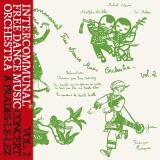
Concert at Prades-le-Lez marks the origins of the Intercommunal Free Dance Music Orchestra. In 1974, François Tusques and his companions (Michel Marre, Jo Maka, Adolf Winkler and Guem), in the spirit of Don Cherry or Chris McGregor, playfully dismantle all borders and all styles of creative music.
On this second volume, the Intercommunal builds unprecedented soundscapes around a song of revolt, a dance tune, or a burst of dissonance. The journey is unforgettable, no question about it. On repeat listening, it even becomes… lunar!
“The music that we make is primarily meant to be listened to live,” warned a leaflet from the Intercommunal Free Dance Music Orchestra. This is precisely why the (restored!) reissue of the two volumes of Concert at Prades-le-Lez, recorded on January 25 and 26, 1974 by François Tusques and his comrades, is such an important event.
In 1971, after recording a series of albums that would leave a lasting mark on French jazz (Free Jazz, of course, with Michel Portal, François Jeanneau, Bernard Vitet, Beb Guérin and Charles Saudrais, but also Le Nouveau Jazz with Barney Wilen, or the solo Piano Dazibao), François Tusques founded the Intercommunal—a grouping whose very name called for the fraternization of the various communities making up the country: Our music will help, we hope, to resolve the contradictions that exist between workers be longing to different communities, by breaking down various forms of national chauvinism, and more particularly the chauvinism of certain French people toward the cultures of Third World countries… Long live the friendship between the peoples of the whole world!
Among the great records made by the Intercommunal Free Dance Music Orchestra, the two volumes of Concert at Prades-le-Lez come first, before L’Inter Communal, Vol. 4, Le Musichien, and Après la marée noire (four titles already reissued by Souffle Continu). François Tusques and his companions (Michel Marre and Jo Maka on saxophones, Adolf Winkler on trombone, and Guem on percussion) performed on January 25 and 26, 1974 at the Moulin de Prades-le-Lez, a few kilometers from Montpellier. It was thus in the southern region of Occitanie that the first echoes of this musical vision of a borderless brotherhood were recorded.
“We’re not among the Colonels,” the Intercommunal reassures us right away, performing a stride piano tune carried by African winds that the audience cannot resist for long. The energy is already striking and it never lets up throughout these two recordings, from start to finish: jazz, blues, traditional music, minimalism, even funk… The musicians of the Intercommunal have heard a lot of great music and now delight in reinventing it by mixing it all together.
“We want the song form to take its place as a weapon in the struggle against capitalist exploitation and all those who oppress us morally and materially,” declared an Intercommunal leaflet, quoting Jean-Baptiste Clément, author of the lyrics to “Le Temps des cerises.” The struggle was therefore serious—but it did not prevent François Tusques and his group from waging it in a festive spirit: each piece on Concert at Prades-le- Lez sends out a call for love and fraternity. Fifty years later, the message remains as relevant as ever—and once again, it is François Tusques who makes it heard.
- On N'est Pas Chez Les Colonels
- Intercommunal Blues
- Mazir
- Kan-Ha-Diskan - We Shall Over Come
- African Rythm-N-Logy
2[23,95 €]
Concert at Prades-le-Lez marks the origins of the Intercommunal Free Dance Music Orchestra. In 1974, François Tusques and his companions (Michel Marre, Jo Maka, Adolf Winkler and Guem), in the spirit of Don Cherry or Chris McGregor, playfully dismantle all borders and all styles of creative music.
On this first volume, the Intercommunal takes its audience from New Orleans to Brittany and on to North Africa. The journey was bold, without a doubt—and its memory remains unforgettable.
“The music that we make is primarily meant to be listened to live,” warned a leaflet from the Intercommunal Free Dance Music Orchestra. This is precisely why the (restored!) reissue of the two volumes of Concert at Prades-le-Lez, recorded on January 25 and 26, 1974 by François Tusques and his comrades, is such an important event.
In 1971, after recording a series of albums that would leave a lasting mark on French jazz (Free Jazz, of course, with Michel Portal, François Jeanneau, Bernard Vitet, Beb Guérin and Charles Saudrais, but also Le Nouveau Jazz with Barney Wilen, or the solo Piano Dazibao), François Tusques founded the Intercommunal—a grouping whose very name called for the fraternization of the various communities making up the country: Our music will help, we hope, to resolve the contradictions that exist between workers be longing to different communities, by breaking down various forms of national chauvinism, and more particularly the chauvinism of certain French people toward the cultures of Third World countries… Long live the friendship between the peoples of the whole world!
Among the great records made by the Intercommunal Free Dance Music Orchestra, the two volumes of Concert at Prades-le-Lez come first, before L’Inter Communal, Vol. 4, Le Musichien, and Après la marée noire (four titles already reissued by Souffle Continu). François Tusques and his companions (Michel Marre and Jo Maka on saxophones, Adolf Winkler on trombone, and Guem on percussion) performed on January 25 and 26, 1974 at the Moulin de Prades-le-Lez, a few kilometers from Montpellier. It was thus in the southern region of Occitanie that the first echoes of this musical vision of a borderless brotherhood were recorded.
“We’re not among the Colonels,” the Intercommunal reassures us right away, performing a stride piano tune carried by African winds that the audience cannot resist for long. The energy is already striking and it never lets up throughout these two recordings, from start to finish: jazz, blues, traditional music, minimalism, even funk… The musicians of the Intercommunal have heard a lot of great music and now delight in reinventing it by mixing it all together.
“We want the song form to take its place as a weapon in the struggle against capitalist exploitation and all those who oppress us morally and materially,” declared an Intercommunal leaflet, quoting Jean-Baptiste Clément, author of the lyrics to “Le Temps des cerises.” The struggle was therefore serious—but it did not prevent François Tusques and his group from waging it in a festive spirit: each piece on Concert at Prades-le- Lez sends out a call for love and fraternity. Fifty years later, the message remains as relevant as ever—and once again, it is François Tusques who makes it heard.
- Data - Ja Nisam Kao Ti
- Data - Izumi
- Data - España
- Data - Damage In My Head
- Data - France
- Data - Strahovi
- Data - Ne Želim Da Tako Žive
- The Master Scratch Band - Break War (The First Version)
- The Master Scratch Band - Jailbreak (The First Version)
- The Master Scratch Band - Computer Break (The First Version)
- The Master Scratch Band - Mad Scratch
Despite its tragic breakup, Yugoslavia as a political, social and cultural phenomenon still inspires generations, especially those who were born or lived at the time of this utopian land of South Slavs. Those who didn’t enjoy the privilege are still amazed by its 1970s and ’80s music scene and the number of very modern, high quality acts that were so often ahead of their time. Two such acts were Data and The Master Scratch Band, both founded by Zoran Jevtic and Zoran Vracevic, who introduced synth-pop, breakbeat, and hip-hop music in Yugoslavia in 1984 with their releases: SP Neka Ti Se Dese Prave Stvari/Ne Zovi To Ljubavlju and miniLP Deogut (Jugoton). Our latest release, “It Was Ridiculous, It Was Amazing!” gathers their earliest unreleased material from 1981-1983, showcasing a broader range of genres – alongside synth-pop and breakbeat/hip-hop, they also experimented with industrial, EBM, minimal synth, and electro-funk!
The whole record is divided into two parts: on A side there are 7 previously unpublished songs by group DATA, and on B side there are 4 previously unreleased recordings by The Master Scratch Band.
The Data side opens with two unexpected “shocker” tracks: Ja Nisam Kao Ti” (eng. I am Not Like You) and “Izumi” (eng. “Inventions”) from 1981, where they sound like early Deutsch-Amerikanische Freundschaft with unusual vocal pan sound effects on Serbian lyrics and uncompromising synth-based sound. Equally unpredictable are the next two songs: atmospheric “España” and dusty “Damage In My Head,” where Zoran Jevtić boldly steps into the lead vocal role. But the surprises don’t end there. The next two songs, France and Strahovi (eng. “Fears”), bring a mysterious and nostalgic atmosphere, elevated by the irreplaceable sound of the modular Roland System-100M. At the end comes the greatest surprise of all: Data covers YMO-Ballet in a song called Ne Zelim Da Tako Zive (eng, I Don’t Want Them Living Like That) and puts some extra energy in rhythm without losing the original song’s sensibility. Like in the original, the lyrics are tender and yet mysterious and provocative.
The Master Scratch Band side contains the very first versions of the songs Break War, Jailbreak, and Computer Break, originally recorded in studio Druga Maca in Belgrade in 1983. These versions were not released on their mini-LP album Dégout (Jugoton, 1984), and they are actually the first ever hip-hop/Breakbeat recordings in Yugoslavia. With great enthusiasm, every sound was uniquely crafted from scratch using the finest analog gear available in the early ’80s. The two young artists, aiming for international success, chose to write their lyrics in English. The album’s final track, “Mad Scratch,” showcases their talent for creating impressive sound effects, which would be a delight for contemporary DJs and producers who specialize in sampling and scratching old-school hip-hop.
This release is truly a “100% digger’s gem” – 11 previously unreleased tracks from legendary pioneers of electronic, hip-hop, and breakbeat. A collection to discover, enjoy, play, and treasure forever!
- 1: Complicado
- 2: No Quiero Llegar A Viejo
- 3: El Adivino
- 4: Mi Imposible
- 5: Ven Debajo De Mi Bote
- 6: A Través De Las Lgrimas
- 7: Psicosis
- 8: Vino Dulce
- 9: Conexin
- 10: Llmame
- 11: Algo De Ttere
- 12: Toad
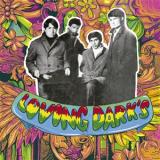
Los Amantes Oscuros" brings together for the first time on vinyl the recordings made between 1968 and 1969 by pioneers of Bolivian garage rock, Loving Darks, originally released on their three EPs. A selection packed with proto-punk covers of hits by the Stones, Cream, Tony Hatch, and more-often surpassing the originals in attitude and power. Their original records are highly sought after and are virtually impossible to find in any condition_ If we had to choose the Latin American country where the rawest and wildest garage and beat records of the '60s were recorded, Bolivia would be one of the clearest contenders. For some strange reason-surely related to the country's extreme conditions, its high altitude, and the influence of huayno-Bolivian recordings are truly unique and fascinating. A multitude of bands sprang up under the influence of groups-mainly British-that dominated the international charts. From the ashes of two of Bolivia's most important seminal bands, Los Black Byrds and The Turtles, two new groups fundamental to the history of Bolivian rock would be born: the mythical Climax and the legendary Loving Darks. "Los Amantes Oscuros" brings together for the first time on vinyl the recordings this band made between 1968 and 1969, originally released across three EPs on the local Lyra label. Their repertoire is packed with covers such as 'El Adivino,' a sped-up reinterpretation of 'Fortune Teller,' or even 'Algo de títere,' a reworking of 'Jumpin' Jack Flash.' They also adapt the classic 'Call Me' by Tony Hatch and 'Toad' by Cream, from whom they borrow the cover of one of their most iconic albums for the artwork of their EP "Complicado." In fact, 'Complicado'-a proto-punk version of the Rolling Stones' 'Complicated' and their signature track-is a perfect example of how a Bolivian band could outdo the British giants in attitude and power. Their importance lies in having paved the way for new sounds, styles, and aesthetics within a still-emerging scene. This compilation is a joint release with the Peruvian label Rey Record and includes an insert with notes on the band's history. First time vinyl reissue.
Even in these most turbulent of times, dub musician and fatigued onlooker Elijah Minnelli remains an inexplicable stalwart on the lower rungs of the Breadminster County Council.
His latest record ‘Clams As A Main Meal’ continues his astute siphoning of council funds, this time with help from the Breadminster Board of Abstinence. As a further mark of respect, the original head of the Board, Dr. K'houldoux, graces the cover art in his infamous ‘Looming Moon of Desire’ guise.*
As fine a backdrop as any for Minneli’s off-brand dub experiments, and ‘Clams...’ is the truest representation of his varied wheelhouse yet...
We find vocal appearances from dub goliath Dennis Bovell and Welsh-language singer Carwyn Ellis. A pair of tracks which build on 2024’s acclaimed ‘Perpetual Musket’, a collection of folk songs reworked alongside reggae vocalists, released by FatCat Records. It garnered glowing reviews, with nods from The Guardian and The Quietus concluding with prominent appearances on their respective yearly round-up lists.
Elsewhere, the album finds Minnelli in a more experimental mode, all wheezing contraptions and cockeyed bass, creaking with the weight of creation, a satisfying tactility laid seam-side up.
As well as ‘Perpetual Musket’, the new album follows years of sold out 7" singles, handmade and self-released. Online, the tracks have amassed global streams numbering in the millions. His tracks have found play across an eclectic range of radio mixes and dance floors, most notably the likes of Andrew Weatherall, Batu, Optimo and Zakia Sewell (BBC6Music).
It is perhaps worth mentioning that this everbuilding interest in his work is at great odds with the growing suspicions amongst his fellow townsfolk, who see his Breadminster County Council Music Initiative as nothing more than an empty cash-grab.
Further Reading on the Breadminster Board of Abstinence
In the late 70s, Breadminster was awash with the last vestiges of the hippy era. Though the flared silhouette of the lower leg remained, the utopian ideals that had once flowed merrily around the youth's shaded ankles had begun to wane. LSD and free love had led to a sharp spike in population and a generation of children raised by air-headed psychonauts unprepared for the bleary-eyed strictures of parenthood.
Aware of the crisis, the County Council entrusted Dr. Paulinque K'houldoux to spearhead a pushback, and it was his pro-abstinence movement - a mixture of education initiatives and radical renutrition campaigns - that came to impact Breadminster's census deep into the new millennium.
Being a pseudo-archipelago Breadminster has fundamentally limited resources, however deep-seated ties to distant coastal villages meant that oysters were a regular part of the local diet. K'houldoux pinpointed this as a factor in the town's overpopulation, and believed that simply replacing these with clams (a “lesser mollusk”) would help lower the erotic urges of the people. It was his “anti-aphrodesia” movement that first championed the idea of “Clams As A Main Meal,” and the slogan “Consider Abstinence” carried the message yet further.
The Breadminster Board of Abstinence soon became involved in all cultural happenings in the area, with K'houldoux MCing at prominent festivals and performances, sometimes dressed as the “Looming Moon of Desire” - an idea of his relating to the tide, seafood, menstrual cycles, and his privately held celestial predilections.
It was in 1981 that it was revealed Dr. K'houldoux had never fully qualified as a doctor and was seeking exile in Breadminster due to a series of botched bracelet heists in which he had previously been involved. K'houldoux was subsequently extradited to Basingstoke, where he served 3 of a 12-year sentence, owing to the lunar-oriented prisoner health campaigns he helped implement.
It has been a strange twist of bureaucratic fate that the Breadminster Board of Abstinence has never stopped receiving public funding, despite its lack of clear utility. And while its roots are tied to a rose-tinted past, the Board continues to sponsor cultural events and projects to this day.
An extract from: Eugeniq Schooner's article in Sydney Parishioner: “Clams, Breadminster and Countercultural Abstinence Trends” (2008)
- A1: The Bird
- A2: Heart Don't Stand A Chance
- A3: The Waters (Feat. Bj The Chicago Kid)
- A4: The Season / Carry Me
- B1: Put Me Thru
- B2: Am I Wrong (Feat. Schoolboy Q)
- B3: Without You (Feat. Rapsody)
- B4: Parking Lot
- C1: Lite Weight (Feat. The Free Nationals United Fellowship Choir)
- C2: Room In Here (Feat. The Game & Sonyae Elise)
- C3: Water Fall (Interlude)
- C4: Your Prime
- D1: Come Down
- D2: Silicon Valley
- D3: Celebrate
- D4: The Dreamer (Feat. Talib Kweli & Timan Family Choir)
Ten years ago, Anderson .Paak didn't just release an album; he staged a full-scale takeover of the soul and hip-hop landscape. Released on January 15, 2016, Malibu served as the definitive arrival of an artist who had spent years grinding in the underground before a star-making turn on Dr. Dre’s Compton. While his previous work hinted at his potential, Malibu was the moment the world met the "Cheeky Andy" persona in full—a virtuosic drummer, a raspy-voiced crooner, and a sharp-witted rapper all rolled into one. The album is a sprawling, sun-drenched journey through the Southern California coast, blending 1970s funk, church-reared gospel, and gritty boom-bap into something that feels both nostalgic and entirely futuristic. With a heavyweight production lineup including 9th Wonder, Madlib, Kaytranada, and Hi-Tek, the record maintains a warm, analog texture that was a breath of fresh air in an increasingly digital era. It’s an album that breathes, full of intentional imperfections and the kind of "in-the-pocket" groove that can only come from a seasoned live performer. Beyond the infectious, dance-floor-ready energy of tracks like "Am I Wrong" and "Come Down," the album is a deeply autobiographical masterwork. .Paak uses the 65-minute runtime to unpack his life story with startling clarity, touching on his mother’s gambling addiction, his father’s incarceration, and his own brushes with homelessness with a sense of resilience that never feels heavy-handed. He weaves these heavy themes through a lens of triumph, grounded by vintage surfing documentary samples that give the project its cinematic, coastal atmosphere. It’s a celebratory record born out of struggle, anchored by his impeccable technicality on the drums and a guest list—featuring ScHoolboy Q, Rapsody, and The Game—that feels hand-picked to complement his specific brand of West Coast swagger. A decade later, Malibu stands as a modern classic and the blueprint for the soulful revivalism that would eventually lead .Paak to global superstardom and Grammy-winning heights. It remains a testament to the idea that the most profound music often comes from the most personal places, proving ten years on that the best way to move forward is to stay rooted in the groove.
- A1: The Bird
- A2: Heart Don't Stand A Chance
- A3: The Waters (Feat. Bj The Chicago Kid)
- A4: The Season / Carry Me
- B1: Put Me Thru
- B2: Am I Wrong (Feat. Schoolboy Q)
- B3: Without You (Feat. Rapsody)
- B4: Parking Lot
- C1: Lite Weight (Feat. The Free Nationals United Fellowship Choir)
- C2: Room In Here (Feat. The Game & Sonyae Elise)
- C3: Water Fall (Interlude)
- C4: Your Prime
- D1: Come Down
- D2: Silicon Valley
- D3: Celebrate
- D4: The Dreamer (Feat. Talib Kweli & Timan Family Choir)
Ten years ago, Anderson .Paak didn't just release an album; he staged a full-scale takeover of the soul and hip-hop landscape. Released on January 15, 2016, Malibu served as the definitive arrival of an artist who had spent years grinding in the underground before a star-making turn on Dr. Dre’s Compton. While his previous work hinted at his potential, Malibu was the moment the world met the "Cheeky Andy" persona in full—a virtuosic drummer, a raspy-voiced crooner, and a sharp-witted rapper all rolled into one. The album is a sprawling, sun-drenched journey through the Southern California coast, blending 1970s funk, church-reared gospel, and gritty boom-bap into something that feels both nostalgic and entirely futuristic. With a heavyweight production lineup including 9th Wonder, Madlib, Kaytranada, and Hi-Tek, the record maintains a warm, analog texture that was a breath of fresh air in an increasingly digital era. It’s an album that breathes, full of intentional imperfections and the kind of "in-the-pocket" groove that can only come from a seasoned live performer. Beyond the infectious, dance-floor-ready energy of tracks like "Am I Wrong" and "Come Down," the album is a deeply autobiographical masterwork. .Paak uses the 65-minute runtime to unpack his life story with startling clarity, touching on his mother’s gambling addiction, his father’s incarceration, and his own brushes with homelessness with a sense of resilience that never feels heavy-handed. He weaves these heavy themes through a lens of triumph, grounded by vintage surfing documentary samples that give the project its cinematic, coastal atmosphere. It’s a celebratory record born out of struggle, anchored by his impeccable technicality on the drums and a guest list—featuring ScHoolboy Q, Rapsody, and The Game—that feels hand-picked to complement his specific brand of West Coast swagger. A decade later, Malibu stands as a modern classic and the blueprint for the soulful revivalism that would eventually lead .Paak to global superstardom and Grammy-winning heights. It remains a testament to the idea that the most profound music often comes from the most personal places, proving ten years on that the best way to move forward is to stay rooted in the groove.
- A1: The Bird
- A2: Heart Don't Stand A Chance
- A3: The Waters (Feat. Bj The Chicago Kid)
- A4: The Season / Carry Me
- B1: Put Me Thru
- B2: Am I Wrong (Feat. Schoolboy Q)
- B3: Without You (Feat. Rapsody)
- B4: Parking Lot
- C1: Lite Weight (Feat. The Free Nationals United Fellowship Choir)
- C2: Room In Here (Feat. The Game & Sonyae Elise)
- C3: Water Fall (Interlude)
- C4: Your Prime
- D1: Come Down
- D2: Silicon Valley
- D3: Celebrate
- D4: The Dreamer (Feat. Talib Kweli & Timan Family Choir)
Ten years ago, Anderson .Paak didn't just release an album; he staged a full-scale takeover of the soul and hip-hop landscape. Released on January 15, 2016, Malibu served as the definitive arrival of an artist who had spent years grinding in the underground before a star-making turn on Dr. Dre’s Compton. While his previous work hinted at his potential, Malibu was the moment the world met the "Cheeky Andy" persona in full—a virtuosic drummer, a raspy-voiced crooner, and a sharp-witted rapper all rolled into one. The album is a sprawling, sun-drenched journey through the Southern California coast, blending 1970s funk, church-reared gospel, and gritty boom-bap into something that feels both nostalgic and entirely futuristic. With a heavyweight production lineup including 9th Wonder, Madlib, Kaytranada, and Hi-Tek, the record maintains a warm, analog texture that was a breath of fresh air in an increasingly digital era. It’s an album that breathes, full of intentional imperfections and the kind of "in-the-pocket" groove that can only come from a seasoned live performer. Beyond the infectious, dance-floor-ready energy of tracks like "Am I Wrong" and "Come Down," the album is a deeply autobiographical masterwork. .Paak uses the 65-minute runtime to unpack his life story with startling clarity, touching on his mother’s gambling addiction, his father’s incarceration, and his own brushes with homelessness with a sense of resilience that never feels heavy-handed. He weaves these heavy themes through a lens of triumph, grounded by vintage surfing documentary samples that give the project its cinematic, coastal atmosphere. It’s a celebratory record born out of struggle, anchored by his impeccable technicality on the drums and a guest list—featuring ScHoolboy Q, Rapsody, and The Game—that feels hand-picked to complement his specific brand of West Coast swagger. A decade later, Malibu stands as a modern classic and the blueprint for the soulful revivalism that would eventually lead .Paak to global superstardom and Grammy-winning heights. It remains a testament to the idea that the most profound music often comes from the most personal places, proving ten years on that the best way to move forward is to stay rooted in the groove.
Faitiche welcomes a new artist: Christina Kubisch belongs to the first generation of sound artists. Her practice ranges from performances, concerts, to works with video and visual art, but she is best known for her sound installations and electro-acoustic compositions.
TUNING brings together three pieces by Christina Kubisch from different periods of her oeuvre. What they have in common is the way they transform sound phenomena originally considered “non-music” into compositions.
Jan Jelinek: Gaming in Silence (2024) is the most recent work on this compilation. It’s a collage of electromagnetic waves, voice, and abstract sound textures. How did this combination come about?
Christina Kubisch: Gaming was commissioned as a fixed-media composition for the Sound Dome at ZKM Karlsruhe. Since Resonances: The Electromagnetic Bodies Project (2005), I’ve been making recordings in the old and new server rooms at the ZKM and in their permanent collection of historical computer games. Computer games like Asteroids (Atari, 1979) and Poly-Play (VEB Polytechnik, 1986) have specially generated analogue electromagnetic waves that interest me in particular on account of their density, rhythms and textures. I originally studied painting and to me the work of composition often feels like painting an abstract picture. I alter my source material as little as possible, layering and overlapping until a distinctive sound space emerges. In recent pieces, I sometimes combine magnetic waves with field recordings or live instruments. In Gaming it’s my recording of a Chinese song about silence.
JJ: Two persons walking through a street in Madrid (2004) is a recording from your Electrical Walks series. Here we should give a brief explanation of one of your best known works: participants in an Electrical Walk move through public spaces wearing prepared headphones that allow them to receive electromagnetic waves from their surroundings – for example from security gates, ATMs or neon signs. They discover a situation that normally is inaudible to the human ear and they can actively shape it by choreographing their movements. I really admire this piece, not least because there’s no clear dividing line between participants and artist. What exactly do we hear in Two persons walking through a street in Madrid (2004)?
CK: With this early work, I wanted to understand what is heard by people participating in an Electrical Walk in the same place but moving in different ways. The Spanish composer Miguel Alvarez-Fernàndez and I set off from opposite ends of a major shopping street in Madrid, met briefly in the middle, and then continued to the end. We both recorded our walks and I then layered them over one another. You might call it a work of electromagnetic conceptualism.
JJ: Diapason (2009 version) is an installation that plays a composition based on sounds from fifteen tuning forks. This setting is audible in the recording: there’s no dramatic arc, no beginning or end – instead, it recalls a piece of aleatoric music focussing on the decay phase. How did you come to make this work and could you tell us something about your compositional method?
CK: Diapason is part of a series of three pieces that deal with “non-instruments” or instruments that no longer exist: electrical mine bells used to send signals to the workers underground; a historical glass harmonica originally used for medicinal purposes; and tuning forks that were used by doctors to test people’s hearing. All of these methods are no longer in use. The sound of the tuning forks, audible only if held close to the ear, was recorded at the electronic studio at Berlin’s Technical University in such a way that even their decay remained audible. The frequencies range between 64 and 2048 Hertz and they can be adjusted at micro-intervals using small movable weights. The sequence and the duration of the pauses are dictated by chance and were not defined in advance. The 2009 version was created for an installation in the historic Holy Cross Church (Korskirken) in Bergen. Visitors could enter and leave the space at any time, deciding for themselves where and for how long they wished to listen to the sounds played back over an array of small loudspeakers placed on the floor of the apse.
Credits:
Gaming in Silence: commission of the ZKM/Hertzlab, Karlsruhe 2023
elektronic sound processing: Tom Thiel
sound engineering and mixing: Eckehard Güther
Diapason: produced at Elektronisches Studio of TU Berlin
rearrangement: Eckehard Güther
Christina Kubisch, published by Edition Christina Kubisch / Random Musick Publishing
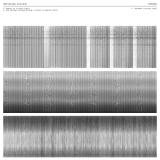
image front: Transitionen 2021 by C. Kubisch, sonagrams of electronic waves (courtesy: Galerie Mazzoli Berlin)
image back: Diapason Tuning Fork, property of Folkmar Hein, Photo: Archiv Christina Kubisch
design by Tim Tetzner
mastered by Giuseppe Ielasi
Thanks to Miguel Álvarez-Fernández, Folkmar Hein, Dominik Kautz and Mario Mazzoli
- A1: The Bird
- A2: Heart Don't Stand A Chance
- A3: The Waters (Feat. Bj The Chicago Kid)
- A4: The Season / Carry Me
- B1: Put Me Thru
- B2: Am I Wrong (Feat. Schoolboy Q)
- B3: Without You (Feat. Rapsody)
- B4: Parking Lot
- C1: Lite Weight (Feat. The Free Nationals United Fellowship Choir)
- C2: Room In Here (Feat. The Game & Sonyae Elise)
- C3: Water Fall (Interlude)
- C4: Your Prime
- D1: Come Down
- D2: Silicon Valley
- D3: Celebrate
- D4: The Dreamer (Feat. Talib Kweli & Timan Family Choir)
Ten years ago, Anderson .Paak didn't just release an album; he staged a full-scale takeover of the soul and hip-hop landscape. Released on January 15, 2016, Malibu served as the definitive arrival of an artist who had spent years grinding in the underground before a star-making turn on Dr. Dre’s Compton. While his previous work hinted at his potential, Malibu was the moment the world met the "Cheeky Andy" persona in full—a virtuosic drummer, a raspy-voiced crooner, and a sharp-witted rapper all rolled into one. The album is a sprawling, sun-drenched journey through the Southern California coast, blending 1970s funk, church-reared gospel, and gritty boom-bap into something that feels both nostalgic and entirely futuristic. With a heavyweight production lineup including 9th Wonder, Madlib, Kaytranada, and Hi-Tek, the record maintains a warm, analog texture that was a breath of fresh air in an increasingly digital era. It’s an album that breathes, full of intentional imperfections and the kind of "in-the-pocket" groove that can only come from a seasoned live performer. Beyond the infectious, dance-floor-ready energy of tracks like "Am I Wrong" and "Come Down," the album is a deeply autobiographical masterwork. .Paak uses the 65-minute runtime to unpack his life story with startling clarity, touching on his mother’s gambling addiction, his father’s incarceration, and his own brushes with homelessness with a sense of resilience that never feels heavy-handed. He weaves these heavy themes through a lens of triumph, grounded by vintage surfing documentary samples that give the project its cinematic, coastal atmosphere. It’s a celebratory record born out of struggle, anchored by his impeccable technicality on the drums and a guest list—featuring ScHoolboy Q, Rapsody, and The Game—that feels hand-picked to complement his specific brand of West Coast swagger. A decade later, Malibu stands as a modern classic and the blueprint for the soulful revivalism that would eventually lead .Paak to global superstardom and Grammy-winning heights. It remains a testament to the idea that the most profound music often comes from the most personal places, proving ten years on that the best way to move forward is to stay rooted in the groove.
- A1: Les Masques - Il Faut Tenir (1969)
- A2: Isabelle Aubret - Casa Forte (1971)
- A3: Christianne Legrand - Hlm Et Ciné Roman (1972)
- A4: Jean Constantin - Pas Tant D'chichi Ponpon (1972)
- A5: Billy Nencioli & Baden Powell - Si Rien Ne Va (1969)
- B1-: Marpessa Dawn - Le Petit Cuica (1963)
- B2: Jean-Pierre Sabar - Vai Vai (1974)
- B3: Sophia Loren - De Jour En Jour (1963)
- B4: Isabelle - Jusqu’à La Tombée Du Jour (1969)
- B5: Sylvia Fels - Corto Maltesse (1974)
- C1: Frank Gérard - Comme Une Samba (1972)
- C2: Ann Sorel - La Poupée Des Favellas (1971)
- C3: Charles Level - Un Enfant Café Au Lait (1971)
- C4: Andrea Parisy - Les Mains Qui Font Du Bien (1970)
- C5: Audrey Arno - Quand Jean-Paul Rentrera (1969)
- C6: Aldo Frank - T’as Vu Ce Printemps (1970)
- D1: Christianne Legrand - Cent Mille Poissons Dans Ton Filet (1972)
- D2: Clarinha - Lemenja (1970)
- D3: Hit Parade Des Enfants - Aquarela (1976)
- D4: Jean-Pierre Lang - Tendresse (1965)
- D5: Magalie Noël - Une Énorme Samba (1970)
- D6: Françoise Legrand - La Lune
Ever since the late 1950s bossa-nova revolution, Brazil’s influence on French music has been undeniable. Pierre Barouh, Georges Moustaki and a vast array of lesser known artists, all made the Musica Popular Brasileira (MPB) an axis of promotion at the service of a cool and metaphysical, modern and mixed Brazilian lifestyle. Some were seduced by the poetic languors of the bossa, some were looking for fun, and others just loved the American hybridization of jazz-bossa, jazz-samba.
What is bossa nova? One of its creators, Joao Gilberto said: "Its style, cadence, everything is samba. At the very start, we didn't call it bossa nova, we sang a little samba made up of a single note - Samba de uma nota so .... The discussion around the origins of bossa nova is therefore useless”. It is nevertheless useful to remember that these magnificent Brazilian songs, which the guitarist describes as samba, were shifted and balanced around improbable chords. "I like things that lean, the in-betweens that limp with grace," said Pierre Barrouh, quoting Jean Cocteau.
With emotion, arrangements for violin and supple guitar licks, bossa nova rapidly changed. A transformation that can be heard in the Tchic, tchic, French Bossa Nova 1963-1974 compilation, the result of a cultural reappropriation, which traveled through the United States and supplemented itself in France.
A musical revolution that has remained significant, bossa nova was born in Rio. From 1956 to 1961, Brazil lived through its golden years. In five years, the country had invented its modernist style. Elected president in 1956, Juscelino Kubitschek de Oliveira, an elegant man with a broad forehead, brandished a promising slogan: "Fifty years of progress in five years". He quickly got to work. Not worried about increasing debt, he launched the project for a new federal capital, Brasilia, designed by the communist architect Oscar Niemeyer. Volkswagen opened state-of-the-art factories and created the “fusquinha”, the Beetle. In Rio, the Vespa made its first appearance. The Arpoador Surf Club crew run into the “girl” from Ipanema, Helô Pinheiro - the tanned garota ("chick"), between a flower and mermaid, who at 17 walked by the Veloso bar, where the fiery author and composer, Tom Jobim and Vinicius de Moraes, were getting drunk on whiskey. From then on, bossa symbolized cool.
In 1958, Joao Gilberto recorded Chega de Saudade, which the directors of Philips denied, calling it "music for fagots". The marketing director, who believed in it, secretly pressed 3000 78-inch vinyls and distributed them at schools around Rio, creating a tidal wave.
American jazzmen then took over. In particular, trumpeter Dizzy Gillespie and guitarist Charlie Byrd. In November 1962, the Brazilian Ministry of Foreign Affairs funded a "Bossa-Nova" concert at Carnegie Hall in New York, inviting the genre’s pioneers. Unprepared, the show soon turned to disaster. But the troupe was invited to the White House by Jackie Kennedy. The first lady loved "the new beat" and in particular Maria Ninguem, a song by Carlos Lyra, later covered by Brigitte Bardot.
In Brazil, the 1964 military coup quickly ended this euphoria. The destructive atmosphere that ensued pushed many Brazilian musicians to leave, if not to exile. Thus, Tom Jobim, Sergio Mendes and Joao Gilberto arrived to the United States. In New York, Joao Gilberto met saxophonist Stan Getz. At the time, he was married to the Bahianese Astrud Weinert Gilberto, who had a German father. She had never sung before, but she knew how to speak English. Getz therefore asked her to replace her husband on The Girl From Ipanema. The Getz/Gilberto record with Tom Jobim on piano, was released in March 1964. Phil Ramone, the "pope of pop" was in charge of sound.
Bossa nova arrived in Paris through the classic “guitar-voice” channel (Pierre Barouh, Baden Powell, Moustaki…) But France loved jazz and Paris had already welcomed its American contributors. All these good people were to pass through Saint-Germain-des-Prés. The cabaret l'Escale became the Mecca of Latin American sound where one could find Pierre Barrouh and his friends, such as the Camara Trio, samba-jazz aces, whose only record was published by the Saravah label. With a band strangely called Les Masques (a band that included Nicole Croisille and Pierre Vassiliu, among others), the Camara Trio recorded an interesting Brazilian Sound, including the track Il faut tenir which is present on this tasty compilation of rarities.
Other enlightened musicians can also be found on the compilation, such as Jean-Pierre Sabar (songwriter for Hardy, Auffray, Leforestier ...) and the French pop rock organist Balthazar. In 1975, Sabar recorded Aurinkoinen Musiikkimatka on a Finnish label, which featured the crazy Vai, Vai, included on this record. We are now following the footsteps of Brazilian electronic musicians such as Sergio Mendes, Eumir Deodato or Marcos Valle who created funk and disco sounds on their keyboards and synthesizers. A style that influenced Véronique Sanson when she wrote Jusqu’à la Tombée de la nuit in 1969 for Isabelle de Funès, the niece of Louis and a great friend of Michel Berger - Sanson did end up singing this track on her 1992 Sans Regret record.
The pinnacle of exoticism and travel, Sylvia Fels’ Corto Maltese includes bongos, sea mist and ocean sounds. The title was taken from Jacky Chalard’s concept album written in 1974, Je suis vivant, mais j’ai peur (I am alive, but I am scared), based on Gilbert Deflez’s science fiction novel.
However, bossa nova extended the scope of popularity. "In the 1970s, I was a fan of Sergio Mendes, Getz / Gilberto. I fell in love with this music that I knew because I had been an orchestral singer, " explained Isabelle Aubret, who in 1971 delivered a composite record of covers by the very funky Jorge Ben, Orfeu Negro, Tom Jobim, Vinicius de Morais and Jean Ferrat. "I recorded this album for Meys Records in Paris, far from Brazil, with wonderful musicians, François Raubert, Roland Vincent, Alain Goraguer...". The latter wrote the arrangements for Casa Forte, a very percussive title borrowed from Edu Lobo, one of the initiators of the bossa who spent time in California. "Jazz and bossa came together and produced very rhythmic music. I love singing, it allows me to dream, to have fun, to feel a high on stage, and these songs brought me joy, made me swing, my singing felt like a dance.”
The world tours of French singers and their desire for the tropics, often brought them to Rio with its hills, forests, caipirinhas and tanned bodies. There are surprises though, like this Iemenja (Iemenja is the goddess of the sea in the Afro-Brazilian candomblé religion). Not unlike the composer and musician Jean-Pierre Lang, based in Sao Paulo, Claire Chevalier taught Brazil to Brazil. In 1970, the singer and painter published a 45-inch vinyl, Mon mari et mes amants (My husband and my lovers), under the improbable pseudonym of Clarinha (little Claire). She was then living in Rio, with her husband, Joël Leibovitz, who founded a band called Azimuth, and who owned a record label specialized in "sambas enredos" songs for samba school parades.
For its B side, she asked Pierre Perret to come up with lyrics for a song composed by Carlos Imperial: "Oh goddess of the sea, o goddess Iemenja, I bring a white rose to adorn your long hair ..." . "Perret came to see us, and we had fun, remembers Joël Leibovitz. We wrote Lemenja for fun, we recorded it at the Havaí studio, behind the Central do Brasil the central station. Erlon Chaves, the arranger who worked with Elis Regina, joined us" adding his share of Afro-Brazilian percussions and funky brass to the mix.
There is a common misunderstanding in Franco-Brazilian history: that bossa, admittedly hedonistic, is perceived as funny, even though the poets who wrote the texts are often philosophizing on the human condition. Its French interpreters pull it towards a carnival inspired universe, far removed from its fundamental essence. Thus, Jean Constantin covered the famous Samba da minha terra, an ode to the art of samba written by the classic Bahian composer Dorival Caymmi, renaming it with the enticing title of Pas tant de tchi tchi pompon: "On your pier there is no tchi tchi / when you arch your back, you know everything is alright ”(lyrics by Gérard Calvi). This expedited bossa aims for the absurd, but retains a certain elegance.
Indeed, Jean Constantin was not an idiot, the rather large man had a huge mustache and liked fantasy, (Les pantoufles à papa, Le pacha, inspired by cha-cha-cha-cha, salsa and jazz) but he was also the lyricist of Mon manège à moi interpreted by Edith Piaf, the composer of Mon Truc en plume by Zizi Jeanmaire and the soundtrack of François Truffaut’s 400 Blows. Le Poulpe, published in 1970, from which this bossa is extract, was arranged by Jean-Claude Vannier, an accomplice of Serge Gainsbourg’s Melody Nelson. In short: "There is enough of samba / By looking at the parasol / Because my poor cabeza / Is going to die in the sun".
Even the American actress Marpessa Down, who was at the heart of the bossa nova revolution with her role as Euridyce in Marcel Camus’ film Orfeu Negro, winner of the 1959 Cannes Palme d'or, fed the clichée with Je voudrais parler au petit cuica - "Tell me how you manage to always make people want to dance / It's true, I must admit that I cannot resist your magic" - in consequence, once can hear the cuica, a little drum inherited from the Bantu.
But bossa nova had many angles. Societal, of course, pushing actresses who were symbols of women's liberation like Brigitte Bardot, Jeanne Moreau, or Sophia Loren to engage in the exercise of accelerated bossa. In February of 1963, Sophia Loren made a record in French in Rome, Je ne t'aime plus, featuring the song De jour en jour, a bossa written by two Italians, Armando Trovajoli and Tino Fornai, which was released a little later by Barclay. Bossa accompanied the 1960s, a decade of moral liberation. Ann Sorel, who interpreted La Poupée des favellas, caused a sensation with L’amour à plusieurs, a provocative song written by Frédéric Bottom and Jean-Claude Vannier. As for the actress Andrea Parisy, she displayed her bourgeois cheekiness in Marcel Carné's Les Tricheurs before interpreting Les mains qui font du bien. And Magalie Noël, the friend of Boris Vian, who sung Johnny fais-moi mal, was hired to sing Une énorme Samba, composed by Alain Goraguer (arranger to Gainsbourg, Bobby Lapointe and Jean Ferrat) with lyrics by Frédéric Botton.
But in the end, of what wood is bossa nova made of? The answer is given by Christianne Legrand, daughter of Raymond the conductor, and sister to Michel the composer: "With me, with jà" - jà means "immediately" in Portuguese. In 1972, the singer, an expert in vocal jazz and a member of the Double Six, published Le Brésil de Christianne Legrand. Two songs included on the Tchic Tchic compilation that demonstrate how bossa, jazz, funk, rock, etc. work like a swiss army knife: the music is used to denounce broken systems, or miracles, HLM et ciné roman, Cent mille poissons dans ton filet, two songs from the O Cafona soundtrack, a successful telenovela broadcast, at the time in black and white, on TV Globo. The first was adapted in French by the fighter and friend of the Legrand tribe, Agnès Varda. The second is content with a play on words, jostling them into a summer fun.
Véronique Mortaigne
- A1: No Problem
- A2: Dangerous Bees
- A3: Pas Contente Feat Roger Damawuzan
- A4: Meva
- A5: Happiness
- B1: Ata Calling
- B2: Wrong Road
- B3: No Way To Go
- B4: Djin Ku Djin
- B5: Think Positive
Repress of the 1 st album of the fresh Afro funk sensation ! Recorded on analog equipment in Lyon in 2014 !
Peter Solo is a singer and composer born in Aného-Glidji, Togo, the birthplace of the Guin tribe and a major site of the Voodoo culture. He was raised with this tradition’s values of respect for all forms of life and the environment. With his new band, Vaudou Game, Peter Solo claims, and spreads this spiritual and musical heritage. Chants are at the heart of the Voodoo practice, but for times immemorial, harmonic instruments have never accompanied them. No balafon, no kora - only the “skins” support the singers. However, in 2012, Peter, along with his band based in Lyon, France, decided to explore and codify the musical scales that are found in sacred or profane songs of Beninese and Togolese Voodoo so they can be played easily on modern instruments. Peter composed the album Apiafo, using the two main musical scales of this tradition. The first musical scale on Apiafo leans towards raw Funk with a sound similar to the famous 70’s bands, L’Orchestre Poly Rythmo De Cotonou and El Rego. Funk, is the skeletal structure of this record, and provided the opportunity for Peter to invite his uncle, Roger Damawuzan - the famous pioneer of the 70s Soul scene - on two tracks. Their collaboration on “Pas Contente” is a highlight on this 100% analog album. Apiafo was entirely recorded, mixed and mastered with old tapes and vintage instruments. The second scale, which had never before been transposed for instruments, evokes deeper feelings and a sacred ambiance. The moving song Ata, an invocation to a supreme divinity is another highlight of this record. Even if some can recognize similarities between this scale and Ethiopian scales, they are in fact different. Peter, the only African band member, introduced the other musicians to the universal values of Voodoo and he taught them his native language. On the recording of Apiafo and during their live performances, the musicians all sing and answer Peter in the Mina language. The strive for authenticity, the analog sound and vintage looks don’t mean that Vaudou Game is looking backwards. This is Togolese funk, born in the post-colonial era but that never before explored its ancient roots so deeply and proudly.
Antoine RAJON
- 1: Glass House
- 2: White Walls
- 3: Last Nail
- 4: Said & Done
- 5: Waves
- 6: How Did I Lose My Mind?
- 7: A State Of Mind
- 8: Home
- 9: Remains
- 10: Sirens
With American idealism and societal unity in flames, the ethereal ambiance of Denver's ABRAMS has been permeated by vibrating, hair-trigger fury. On new album Loon, wistful melodies warp into dissonance and aggression, and crystalline beauty is inhabited by bitterness and rage. 2024's soaring and driving Blue City was a record full of arresting, nostalgic textures that Metal Hammer Magazine called "an upswell of positivity in the face of frustration that's sure to shake you from your existential slumber." But this is no longer the world of that album. The grinding hopelessness and chaos of these times have infused ABRAMS with the shattering intensity of Converge. Urgent and abrasive, Loon is acerbic, fed up, and riddled with pulverizing fury. Wistful melodies warp into dissonance and aggression. Crystalline beauty is inhabited by bitterness and rage. The band's instinctive hooks aren't gone, and hopeful moments do shine intermittently through. But it's clear that ABRAMS, like a lot of us, are pissed off. Desperate and seething, Loon is an irresistible, frenzied purge from a band refusing to give in. For fans of Torche, Converge, Cave-In, Failure, Quicksand and Hum. Coloured LP (white vinyl) & digipaked CD
- 1: As We Should
- 2: This Is Not A Drill
- 3: Whole Foods Of Rap
- 4: We Could Exist (Feat. Janay Saxon)
- 5: Naturally (Natural E)
- 6: Dopamine
- 7: Infinite Shine
- 8: Alive And Well
- 9: Cosmos Is Calling
- 10: Alignment
- 11: Nile River Flows
- 12: Book Smart Street Smart
- 13: Yktv (You Know The Vibes)
- 14: Noone Can Tell Me…
- 15: Time Doesn't Exist
- 16: Demon Frequency
- 17: Three-Card Monte
Tape[21,43 €]
Hailing from the birthplace of Hip-Hop, this 3-Man Crew (Natural Elements) have been a Staple in the NYC Hip-Hop scene for among those who seek authentic lyricism and organic flows given off by this amazing group. On their highly anticipated NEw album “ALIGNMENT” on the legendary Fat Beats they are continuing this tradition of sharp, thought-provoking bars and songs that their cult following (worldwide) has become accustomed to over the years. This 17 Song piece of art features robust production by their longtime original producer and founder of NE “(The Real) Charlemagne”, as well as UK producer “I.G Nexus”, Harlem producer ‘Le Grand Mohyay aka Bearfakts’ & producer ‘Real6’ on the title track. As a quote from one of their previous releases goes "Fat Beats, Lyrics and Skills Natural E is coming with it."
- 1: As We Should
- 2: This Is Not A Drill
- 3: Whole Foods Of Rap
- 4: We Could Exist (Feat. Janay Saxon)
- 5: Naturally (Natural E)
- 6: Dopamine
- 7: Infinite Shine
- 8: Alive And Well
- 9: Cosmos Is Calling
- 10: Alignment
- 11: Nile River Flows
- 12: Book Smart Street Smart
- 13: Yktv (You Know The Vibes)
- 14: Noone Can Tell Me…
- 15: Time Doesn't Exist
- 16: Demon Frequency
- 17: Three-Card Monte
(2x12") Vinyl[31,89 €]
Hailing from the birthplace of Hip-Hop, this 3-Man Crew (Natural Elements) have been a Staple in the NYC Hip-Hop scene for among those who seek authentic lyricism and organic flows given off by this amazing group. On their highly anticipated NEw album “ALIGNMENT” on the legendary Fat Beats they are continuing this tradition of sharp, thought-provoking bars and songs that their cult following (worldwide) has become accustomed to over the years. This 17 Song piece of art features robust production by their longtime original producer and founder of NE “(The Real) Charlemagne”, as well as UK producer “I.G Nexus”, Harlem producer ‘Le Grand Mohyay aka Bearfakts’ & producer ‘Real6’ on the title track. As a quote from one of their previous releases goes "Fat Beats, Lyrics and Skills Natural E is coming with it."
- 1: Journey To The East
- 2: Pars Fortuna = Part Of Fortune
- 3: The Look Of Love
- 4: Song Plum
- 5: Arc 294°
- 6: Lady Friend
- 7: Antares
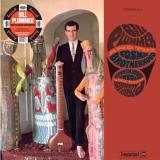
Welcome to the mind-expanding 1968 jazz recording of Bill Plummer and The Cosmic Brotherhood—where Eastern and psychedelic influences meld together to produce one of the trippiest jazz albums on Impulse Records. This LP is a much-sought-after sonic travelogue, with the pop-psych spoken-word sitar freakout of “Journey To The East” to Bill Plummer’s swinging, rapid fire/cool jazz compositions, to his covers that go straight to the heart of any 60’s genre-crossing jazz fans. Featuring an incredible who's who of the high-caliber talent bubbling over in the Los Angeles music scene at the time: Carol Kaye (legendary bass player of The Wrecking Crew), Maurice Miller (drummer in The Jazz Corps), Dennis Budimir (guitarist with Chico Hamilton Quintet, Ravi Shankar & Frank Zappa), Mike Lang (Piano with Flamin’ Groovies & Hal Blaine), Tom Scott (Saxophone with Gabor Szabo & Thelonious Monk), Ray Neopolitan (Bass for The Doors & Leonard Cohen), Milt Holland (Percussionist with The Wrecking Crew &
Captain Beefheart), Bill Goodwin (Drums for Mose Allison & Tom Waits).
Housed in a beautiful gatefold sleeve with iconic liner notes by Frank Kofsky, who comes out swinging hard in favor of the album, while shaking the dust off any jazz snobs left in the '60s who still were not ready to embrace the future of jazz. Produced by Bob Thiele who produced everyone from John
Coltrane, Art Blakey to Charles Mingus, this sonic rarity is yet another impressive vinyl reissue from the folks at Jackpot Records.
Following Parnell March’s Back Bar Grooves EP in February and November’s release of the Dust Tears (lead song from Sarah/Shaun’s debut) remixes, Edinburgh’s Hobbes Music label returns with a second EP of dream pop from husband-and-wife duo Sarah/Shaun (pronounced simply Sarah Shaun), alias Sarah and Shaun McLachlan (pronounced McLochlun), who wooed hearts and wowed critics with debut EP ‘It’s True What They Say?’ last year.
‘It’s True What They Say?’ attracted fans across the board: Artist Of The Week in The Scotsman, rapturous reviews from The Skinny and Tokyo's Ban Ban Ton Ton blog, BBC 6Music airplay courtesy of Nemone (Mary Anne Hobbs' Morning Show), more radio play from Radio Scotland's Roddy Hart & Vic Galloway, plus Simone Butler (Primal Scream) and Jim Sclavunos (Bad Seeds) via their respective Soho Radio shows, not forgetting ringing endorsements from the likes of David Holmes, Youth, Kevin Bales (Spiritualized), Brent Rademaker (Beachwood Sparks) and Julian Corrie (Franz Ferdinand).
They played gigs supporting Glasgow's huge Glasvegas, at festivals (Kendall Calling, Dunbar Music, Hidden Door), plus a slew of venues across the Scottish capital, ending the year with a trio of shows supporting Glaswegian 80s pop legends The Bluebells at Aberdeen’s Tunnels, Dunfermline’s PJ Molloys and Edinburgh’s Liquid Rooms, while The List magazine tipped them among their Ones To Watch For 2025, with journalist Fiona Shepherd suggesting they were “blending the starry-eyed pop of Sonny & Cher with the electronic experimentation of Chris & Cosey.”
Very much the companion piece to the debut EP but arriving a full twelve months later, Someone’s Ghost is emblematic of the duo’s desire not to rush things or release anything half-baked.
“I’ve always wanted to create the perfect pop record and I do really feel that we’ve achieved that with this one,” says Shaun. And he’s clearly not the only person who thinks so.
REVIEWS, FEEDBACK ETC:
"I LOVE that! Dreamy dreamy pop." ROY MOLLOY (Marvellous Crane/Alex Cameron) on BLAST RADIO, Sydney
“the Scottish music scene’s cream of the cool... buzzy drum beats, high, distant chimes, and heavenly electronics…. very ethereal.” THE SKINNY
"Listening to Sarah/Shaun is like eavesdropping on a noir dreampop, long-distance phone call between them both, across two separate sonic locations. On this stunning 4-song EP, Sarah’s voice, effortlessly mesmerising, draws you into these big beautiful and haunting passages of perfect dream-pop. All beautifully produced in a multi-layered-scape of low-fi analogue textures, epic cinematic crescendos, intense electro-pulse grooves and warped psycho-pop guitar riffs. Within the songs lurk a sense of unresolved emotions, longing and pathos. There are shades of classic Lee Hazelwood & Nancy Sinatra but also Post-Punk Electronica and Beach House. But what a unique sound they’ve created of their own. I love it" DAVID MCCLUSKEY (The Bluebells)
"Absolutely beautiful" SEAN JOHNSTON (A Love From Outer Space)
"Lovely stuff here! Total quality." MARTYN 'MASH' HENDERSON
"Ooooh. Everything the last record promised is here. Well done" GEORGE T aka George Demure (Accident Machine)
"Vince clark Era Depeche Mode in places" KEVIN BALES (Spiritualized)
"Sounds cool. Well done" PETE KEMBER (Sonic Boom, Spacemen 3)
"Glorious, it (Debbie Harry) grabs hold of you and doesn't let go." IAIN DAWSON aka RAVECHILD (Everyone Wants To Play The Hits Podcast)
SOMEONE’S GHOST
Born out of an incredibly anxious, stressful time, the songwriting process for these recordings has been something of a personal tonic for Shaun…
“There was a period when I was having nightmares,” he reveals. “Apparently I was saying there was someone in the room, I was talking to that person and Sarah was seeing all this while I was still asleep.
So, I was thinking that this was my ghost. I started writing songs because I was going through something and I was dealing with something and writing songs was a comfort. My ghost was a comfort, whether it was real or not. The idea of it was a comfort.”
“I firmly believe that everyone has someone who watches over them but all of the songs are essentially about being there for someone,” he says. “Everybody needs someone but also everyone needs to stay real and keep what you have, keep it close, never let it go. If you don’t have it, continue to tell people you’re there for them. It’s about loving and hoping people will be good to you in return.”
While Shaun took the songwriting lead on Filter Of Love and EP closer The Sound Which Stresses The Sound Of My Ears, Debbie Harry was originally instrumentally conceived by producer Jaguar Eyes, alias Ali Chisholm, later lyrically completed by Shaun, and the EP’s lead track, Anhedonia, and one of its stand-outs (much like Starbed on the debut) was conceived by Sarah, as a result of experiencing a bit of a spiritual epiphany of her own.
“When I first heard the word Anhedonia, I didn't know what it meant but when I found out I thought about it quite a bit. How sad it would be to have no enjoyment in anything,” she explains. “This song is really about my own personal beliefs. When I have been down, that's one of the things that helps me the most. It talks about trying to make amends but realising, for some things, you can't. But I think with any kind of faith comes hope… which is always a good thing.”
A record about hope, truth, honesty, a belief in something bigger than oneself… and all set to a soundtrack that wouldn’t feel out of place in a David Lynch or Eighties feature film. What more could anyone ask for, really?
There’s equally a desire to offer something universal and positive to anyone who tunes in. The labels for the 12” edition reveal the dual mantras “Who just wants to survive?” and “It’s about time to live a little”, with both messages also engraved in each record’s run-out grooves. T-shirts accompanying debut EP It’s True What They Say? bore the slogan “Kill Them With Kindness” - leading caps intentional. Shaun carries the acronym KTWK everywhere he plays, as a reminder: it’s stitched into his guitar strap. And this particular wee pebble has already caused a few ripples: people have been approaching him at gigs to acknowledge their appreciation and respect for it.
"We feel we have made an honest, open, colourful, body of work,” say the duo. “We hope to go out and play the songs with the guys (our band) and then potentially make more records. We are taking things as they come. Everything has been organic so far, after all. We are looking forward to whatever this brings."
- A - Ricardo Eddy Martínez Y Expreso Rítmico - La 132
- B - Juan Pablo Torres Y Algo Nuevo - Rompe Cocorioco
- C - Farah María - Ámame Y No Pienses Mas
- D - Grupo Ismaelillo - Amanecer - Dj Koco Edit
- E - Fa-5 - Muévete Con Las Fuerzas Del Corazón - Dj Koco Edit
- F - Grupo Los Yoyi - Paco La Calle
- G - Juan Pablo Torres Y Algo Nuevo - Y Viva La Felicidad
- H - Orquesta Riverside - En Casa Del Trompo No Bailes
- I - Grupo Fa-5 - Ya Tengo Un Amor Verdadero
- J - Rembert Egües - Tema Para Un Amanecer
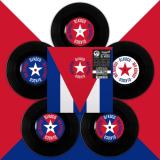
Two years since DJ KOCO aka SHIMOKITA curated his sold-out Mr Bongo Brazil 45 boxset, he is back with another Record Store Day special, this time turning his attention to Cuba. Following a meteoric rise to the top, the Japanese DJ / turntablist extraordinaire has won the world over with his unquestionable humility, refreshing positivity, and flawless skills. The DJ’s DJ, it’s as much about taste as it is technicality for one of the world’s best showmen.
When the idea arose for a Cuban Classics 45 Boxset to mark RSD 2026, DJ KOCO was top of the list. With a deep-seated passion for Cuban music, its melting pot of cultures, its focus on rhythm, and its undeniable groove, DJ KOCO presents a selection of his favourite Cuban cuts, as well as two exclusive edits for the boxset.
It kicks off with the Latin funk sounds of Ricardo Eddy Martínez y Expreso Rítmico’s ‘La 132’ from 1978, before rolling into one of two spellbinding Juan Pablo Torres y Algo Nuevo cuts found on the boxset. Elsewhere, you’ll hear Farah María’s slow disco ‘Ámame Y No pienses Mas’, an unusual American-leaning production for Cuba at the time, given the state of US-Cuban political relations in that period. Other highlights include Orquesta Riverside’s ‘En Casa Del Trompo No Bailes’, taken from a rare collectable 7”, channelling a low-slung Latin bounce which explodes into an Afro-Cuban dancer as the track progresses.
In signature style, DJ KOCO has also served up two exclusive edits for the boxset. These include a reworking of the Cuban children's band Grupo Ismaelillo’s quirky ‘Amanecer’, giving it a more DJ-friendly structure. You’ll also find DJ KOCO’s take on FA-5’s much-loved funky dancer ‘Muévete Con Las Fuerzas Del Corazón’ with its heavy b-boy/girl break from 1976.
Testament to Cuba’s vast and vibrant musical landscape, DJ KOCO has cherry-picked some of the finest recordings to emanate from the country, spanning a wide range of styles and rhythms. Yet what ties all the tracks on this boxset together, is a hip hop sensibility and thirst for a breaks-heavy, danceable energy which radiates through DJ KOCO’s masterful DJ sets.
It’s True What They Say is the debut EP from Edinburgh-based, husband-and-wife duo Sarah/Shaun (pronounced simply Sarah Shaun), aka Sarah and Shaun McLachlan (pronounced “McLochlin”).
“Sarah and I both have a love for nostalgia,” explains Shaun. “We watched that amazing old 80’s Sci-Fi, (John) Carpenter movie, Starman, a few months back. Myself and my brother David used to watch it all the time. We must have been, roughly, 5-7 at the time. I remember loving the movie but the end, you know, with the beautiful, atmospheric, synth ending, I love that particular moment the most - best part of the movie, you know, when he goes home… It’s heartbreaking but stunning, all the same. It’s the music that moves you most… It did when I was 5 and it still does to this day. It must have had some form of a (much deeper) impact on me.”
The duo narrates stories across themes of love, hope, family, friends, dreams and sadness - the good that comes with the bad in everyday life, not just on a personal scale but within a community as well.
“Starbed is the first song I have ever written and just came out of the blue really, with Shaun playing a melody and me singing along,” says Sarah. “It’s simple and just about two people in love. Love songs are always the best songs, after all… Music has been a big part of my life from a young age. I was unwillingly dragged to piano and violin lessons, which I’m thankful for now! I’d say the first band I really became obsessed with growing up were the Beatles, and on the back of that a lot of 60s music and fashion. From then on, I had a love for music.”
“Shaun definitely opened my ears to a lot of sounds and got me thinking about soundtracks and all the noises that can be made,” she goes on. “We love just spending time experimenting in the house with instruments, pedals etc and Ali is a real magician to work with, too…”
The recordings took place over the summers of 2022 and 2023, with fellow Delta Mainline member Ali Chisholm (aka Jaguar Eyes) plus long-term friend and collaborator Gavin King. Further collaboration then came via the ‘net from the (international) likes of Chris Dixie Darley (Father John Misty), Darren Coghill (Neon Waltz) and Daniel Land (The Modern Painters), among others (see a full list of credits below).
Both Sarah and Shaun have a love for uber-soundtrack producers such as Hanz Zimmer, Max Richter, Cliff Martinez plus live acts such as Beach House, Spiritualized, M83, Suicide, Moby and OMD (to name a few). Shaun also credits the work of Kyle Dixon & Michael Stein (from Survive) on the Stranger Things score… “Even a moment in a movie, whether it be just 30 seconds during a particular scene, it grips you,” he says. But there’s something much deeper at play as well. “Music is a healer,” he goes on, “and I write from my own perspective but more so for others. Once I've done my bit, it doesn't belong to me any longer. It belongs to whoever wants it or needs it.”
The result is a cinematic, synth-wavey, dream poppy and downright beguilingly beautiful body of work. And they’re just getting started…
REVIEWS/RADIO/FEEDBACK:
“Starbed is folky, flavoured by pedal steel, cello, and brass. Dust Tears, in stark contrast, is a mini synth-pop rave epic. Part Bicep. Part Human League. Keep Your Eyes Closed summons a mood that’s romantic, but also dark and potentially doomed – like David Lynch’s Twin Peaks meets Cliff Martinez’s Drive score. My pick though is It’s True What They Say, whose interwoven jangle and picking recalls New Order’s more introspective moments (Love Vigilantes, Love Less… ). Drums crashing, cathartic. Guitar raising dramatic arcs. Its chorus a rush, like a reprise of Pains Of Being Pure Of Heart’s ‘Higher Than The Stars’.” BAN BAN TON TON
"Dust Tears sees them sharing vocal duties over a synth foundation reminiscent of Moby’s Go - Artist Of The Week” THE SCOTSMAN
"Woozy pop" NEMONE (Mary Anne Hobbs Morning Show, BBC 6Music)
"Nice one, very David Lynch meets Euro dream pop" YOUTH (Killing Joke, Paul McCartney, U2, The Orb, Spiritualized etc)
"Music sounds killer! Real emotion” DAVID HOLMES
"I’m enjoying it” TIM BRINKHURST aka LONDON (IKLAN, Young Fathers, Callum Easter)
“Oh, this is lovely!” SEAN JOHNSTON (A Love From Outer Space)
"It’s totally my cup of tea with milk and biscuit" BRENT RADEMAKER (Beachwood Sparks/GospelBeach)
"Beautiful, ecstatic electronica! Short and to the point" KEVIN BALES (Spiritualized, Julian Cope, Soulsavers, BE)
"Makes me wanna sit in the sun and sip an Arnold Palmer" CHRIS DIXIE DARLEY (Father John Misty)
“Really beautiful - Cocteau Twins / Spiritualized vibes but has its own thing going on, too - worth checking out!” JULIAN CORRIE (Franz Ferdinand, Miaoux Miaoux)
‘Sounded nice on a sunny day, makes me think of Twin Peaks, nice moods’ EAMON HAMILTON (Sea Power)
"Dealing in nostalgia, no bad thing at all, great to play that (Dust Tears) for you” RODDY HART (BBC Radio Scotland)
“I'll give the vocal tracks a spin before the release." VIC GALLOWAY (BBC Radio Scotland)
"Rather good!" IAIN ANDERSON (BBC Radio Scotland)
CREDITS:
Lyrics, Guitars, Keys, Synths, Drums, Drum Programming, Percussion, Mandolin, Glockenspiel: Shaun McLachlan
Lyrics, Vocals, Keys by Sarah McLachlan
Guitars, Synths, String Arrangements, Drum Programming, Engineering: Jaguar Eyes Percussion/Drums/Effects, Fire Extinguisher: Darren Coghill (Neon Waltz)
Guitars by Daniel Land
Slide Guitar by Chris Dixie Darley (Father John Misty)
Brass by Bruce Michie
Keys, pre-production & engineering on “It’s true what they say”: Gavin King
All produced by Jaguar Eyes and Shaun McLachlan and then mixed at Glasgow’s Chem19 Studios by David McCaulay (From Scotland With Love, Rick Redbeard, BBC TV’s Attenborough and The Mammoth Graveyard score).
Artwork: Jamie Walman (Fourteen Admirals)
MORE INFO:
Although Shaun released a pair of solo singles (When We Dance and Give Your Love To Me) during Lockdown, he will be better known to many via his work as the multi-instrumentalist in Edinburgh band Delta Mainline. With two albums released to date, Oh! Enlightened and Bel Avenir, both rapturously received by fans and critics alike, Delta Mainline have developed an international, cult following. Oh Enlightened (2013) achieved widespread critical acclaim on release, earning the band comparisons to Arcade Fire and Echo & The Bunnymen, while 2019’s Bel Avenir pulled in references to The Flaming Lips, Pink Floyd, David Bowie and krautrock. A third DM album is currently being mixed and due for release later this year…
2026 Repress
London based composer, multi-instrumentalist and producer Akusmi announces 'Lines', an exhilarating new collection of works born from the desire to take where the acclaimed debut album 'Fleeting Future' left off - in search of new forms.
" 'Secant', I must have listened to this tune 3 times in a row, this one soundtracked my night drive through the winding roads" - Benji B, BBC Radio 1
'Lines' is presented as a Limited edition clear vinyl (500 copies only worldwide), printed in heavy-weight reverse board sleeve with a hand-numbered edition sticker. The vinyl edition also features 'Oblique' (A2), an exclusive version for the vinyl format, plus the now revered 'Longing for Tomorrow' - (Brandt Brauer Frick Remix), previously unreleased physically and now pressed on vinyl format, ending side B. The cover artwork features another collaboration with Dutch visual artist Sigrid Calon and design by label founder Adam Heron.
Formed with a sense of urgency and a reductive approach 'Lines' is almost entirely comprised of alto saxophone, clarinet and piano with embellishments of ambience and minimal percussive elements. Recorded in full at his home studio in London, Pascal Bideau speaks about the process:
"I wanted to go a bit more a bit more horizontal and ambient, work with layers of lines, might they be dotted or straight, and leave them to unfold and see where they would take me."
Akusmi uniquely finds the spaces in between experimental jazz, crossover classical and ambient music.
glow-in-the-dark clear vinyl
In 1998, Carsten Nicolai, also known as Alva Noto, visited a sound installation created by Robert Lippok for a group exhibition in Weimar, Germany. Soon after, he invited Lippok to release music on his label raster-noton. »Open Close Open« was released in 2001 and marked the beginning of Lippok's solo career. Before, Lippok had already played in Ornament und Verbrechen (with his brother Ronald Lippok) and To Rococo Rot (with Ronald Lippok and Stefan Schneider).
The title of the EP is a linguistic reference to the instructions found on everyday objects. In fact, the sound of birds or a closing door can be heard. Besides field recordings, cultural fragments were used – including the sample of the famous Adagietto from Gustav Mahler's Symphony. No. 5. – and integrated into three loop-based pieces, that have been praised by Fact Magazine as »a masterclass in collage, looping and tactile processing.«
The source material for »Open Close Open« initially served as a soundtrack for a video by Takehito Koganezawa, a visual artist from Japan. For this remastered vinyl reissue, Lippok revisited the original sound material and produced a new track called »Licht.«
- A1: Piano Terra (Intro) – 01:02
- A2: Ricordati Di Me – 01:29
- A3: Sono In Un Van – 03:11
- A4: Onda Feat. Lauryyn – 03:07
- A5: Attesa (Skit) – 01:19
- A6: 10 Days Feat. Sup Nasa – 02:47
- A7: Avevo Un Sogno – 03:18
- B1: Ideal – 02:15
- B2: No Answer (Skit) – 00:58
- B3: La Noche En Que Te Fuiste – 03:29
- B4: Della Morte E Della Grazia – 02:28
- B5: Ikyk – 04:10
- B6: Calma – 02:22
- B7: Ultimo Piano (Outro) – 00:53
"PRONTO" is the debut album by ARYA, an Italian-Venezuelan artist who grew up in Milan. ARYA arrives with this first full-length album after the EPs
Peace of Mind (2021) and Punto Zero (2023), collaborations (Mahmood, Venerus, Ghemon, Dardust, Calibro35, and many others), and an intense live
activity, which have made her one of the most interesting voices on the Italian neo-soul/R&B scene.
Born from a personal journey of therapy and awareness, "PRONTO" takes shape as a concept album, transforming the emotional investigation into a
coherent and layered musical narrative. The title captures the meaning of the project: "Pronto" is a word that crosses all the languages present on the
album—Italian, English, and Spanish—taking on different meanings ("subito," "presto"), and is also the first word uttered in the intro. A term that introduces the listener to a space of availability, anticipation, and presence.
The entire album was produced by Claudio La Rocca (Sup Nasa), a key figure in building the project's sonic identity. Giuseppe Seccia, Matteo D'Ignazi,
Martina Tedesco, Tiziano Codoro, Stefano De Vivo, and Giulia Gentile also contributed to the album, recording the instrumental parts and contributing
to the arrangements and production of some tracks.
With "PRONTO," ARYA takes the listener on a journey through different levels of her emotional history, until the elevator starts moving again and leaves room for a new possibility of balance.
ARYA (AryaDelgado) is an Italian-Venezuelan artist born in Milan in 1994. Daughter of salsa singer Orlando Watussi, she grew up surrounded by music
and quickly developed a sensibility that blends Latin roots, nu-soul, and contemporary R&B, with a strong focus on the emotional and narrative dimensions of her writing. In 2021, she released her debut EP, Peace of Mind, followed in 2023 by Punto Zero. These releases attracted press attention
and led to collaborations with artists such as Mahmood, Venerus, Ghemon, Dardust, and Calibro35. Over the years, she has consolidated an increasingly recognizable presence, alternating songwriting, solo production, and an intense live schedule in Italy and abroad. In 2024, she accompanied Mahmood on tour and released the single, "Si Potesse Tornare." In 2025, La Noche En Que Te Fuiste and Onda were released, songs that marked the
beginning of a new artistic chapter and anticipated the release of “PRONTO,” her debut album, released in February 2026. An intimate and layered
work, which focuses on vulnerability as a language and confirms ARYA as one of the most personal and aware voices of the new Italian soul scene.
Follow up to Goodge's 2023 album Echoes Of Yesterday. Previous releases found on Hip Dozer and Cascade Records. Tracks found on the popular Spotify Mellow Beats playlist. 11th in 'Jet Set' Cold Busted series. Designed and manufactured similar to the vintage 60's style rice paper sleeves. In his latest EP, Sunday Soul, Goodge takes listeners on a four-track journey through the heart of funk, masterfully blending elements of R&B, jazz, and chilled lo-fi. Released as part of Cold Busted's Jet Set series, this four-song offering follows Goodge's 2023 album Echoes Of Yesterday and showcases his dedication to crafting timeless music. "Lights Out" kicks off the EP with heavy funk and stirring breakbeats, accompanied by a scratchy guitar that summons the revolutionary spirit of the '70s. Horns serve as a call to action, while a rollicking bass line and chunky electric piano might inspire listeners to go out and fight crime. "Promised Land" follows, featuring a formidable funk bass guitar and lead guitar chords that rhythmically play off the delightfully busy drums, creating an atmosphere reminiscent of the city's bustle. The title track, "Sunday Soul," is a rowdy affair with a speech-over-beats leading to crispy snare rolls and chiming electric piano. Shaker magic, staccato horn bleats, and spiral flute bits combine to create a swirling vintage-hued photograph of sound. The EP concludes with "Within Myself," a spacier sonic experience that could serve as the soundtrack for chasing someone across rooftops. It's funk spelled with a capital K. Sunday Soul is a must-listen for fans of of the heavier side of funk, solidifying Goodge's position as a master of his craft, creating a nostalgic yet fresh soundscape that keeps listeners grooving back for more.
In Soft Power, Funk Assault turns their surgical precision toward the invisible forces that shape modern life - control not through force, but through aesthetics, etiquette, and algorithms. Across five tightly woven tracks, the duo dissects how obedience is engineered through desire, conformity, and digital seduction.
From the sterile luxury of Aesthetics of Desire to the algorithmic exhibitionism of Like Me, Watch Me, and the chilling calm of Obedience Spa, this EP is a reflection on how control has evolved -smoother, quieter, but no less powerful. Soft Power invites listeners to dance, reflect, and perhaps notice the strings they didn't know were there.
OTON releases limited edition vinyl and CD box set of Alva Noto's Xerrox series.
Pioneering in his approach to digital sound and its materiality, Alva Noto (Carsten Nicolai) began his ongoing exploration of sampling, degradation and recontextualisation with the Xerrox series in 2007. Over the years, the project has evolved into one of the most distinctive bodies of work in contemporary electronic music, situated between minimalism, experimental sound art and digital abstraction.
Across five albums, Xerrox Vol.1 (2007), Xerrox Vol.2 (2009), Xerrox Vol.3 (2015), Xerrox Vol.4 (2020), and Xerrox Vol.5 (2024), Nicolai's method evolves from sample-based work toward original composition as he deconstructs and reassembles source material into precise, sculpted sound worlds that are at once minimal and emotive.
Remastered in collaboration with Bo Kondren of Calyx Mastering, the Xerrox recordings of Volumes 1, 2, and 3 are made available alongside Volumes 4 and 5 on vinyl and CD under the title 'reMASTER', presented in a beautifully designed box featuring original artwork by Carsten Nicolai.
- A1: Al Green – Let's Stay Together
- A2: Marvin Gaye - What's Going On
- A3: Diana Ross - Ain't No Mountain High Enough (Single Version)
- A4: Stevie Wonder - Signed, Sealed, Delivered (I'm Yours)
- A5: Commodores - Easy (Album Version)
- A6: Bill Withers - Ain't No Sunshine
- A7: The Stylistics - You Make Me Feel Brand New (Let's Put It All Together Version)
- A8: Rose Royce – Wishing On A Star
- B1: Jackson 5 - I Want You Back (Single Version)
- B2: Smokey Robinson & The Miracles - The Tears Of A Clown (Single Version / Mono)
- B3: The Supremes - Nathan Jones
- B4: Frankie Valli And The Four Seasons - The Night (1972 Album Version)
- B5: Chairmen Of The Board – Give Me Just A Little More Time
- B6: The Trammps - Hold Back The Night
- B7: The O'jays - Love Train
- B8: The Blackbyrds – Walking In Rhythm
- B9: Heatwave - Always And Forever (Single Version)
- C1: The Temptations - Papa Was A Rollin' Stone (Edited)
- C2: Isaac Hayes - Theme From "Shaft" (Remastered 1991 Album Version)
- C3: Ike & Tina Turner - Proud Mary
- C4: James Brown - Get Up I Feel Like Being A Sex Machine
- C5: Edwin Starr - War
- C6: Sly & The Family Stone - Family Affair (Single Version)
- C7: The Delfonics - Didn't I (Blow Your Mind This Time)
- C8: Billy Paul - Me And Mrs. Jones (Single Version)
- D1: The Floaters - Float On (Single Version)
- D2: Minnie Riperton - Lovin' You
- D3: The Isley Brothers - Summer Breeze, Pt. 1
- D4: William Devaughn - Be Thankful For What You Got (Part I)
- D5: Detroit Emeralds – Feel The Need In Me
- D6: The Moments - Jack In The Box
- D7: Raydio - Jack And Jill
- D8: The Tymes - Ms. Grace
- E1: Barry White - Can't Get Enough Of Your Love, Babe
- E2: Aretha Franklin – Until You Come Back To Me (That's What I'm Gonna Do)
- E3: Al Green – Tired Of Being Alone
- E4: Gladys Knight & The Pips - Midnight Train To Georgia
- E5: Timmy Thomas – Why Can’t We Live Together (7" Glades Version) (2013 Remaster)
- E6: George Benson – The Greatest Love Of All
- E7: Diana Ross - Theme From Mahogany (Do You Know Where You're Going To) (Single Version)
- E8: Jackson 5 - I'll Be There
- F1: Freda Payne – Band Of Gold
- F2: Ann Peebles - I Can't Stand The Rain
- F3: Marvin Gaye - Let's Get It On (Single Version)
- F4: Harold Melvin & The Blue Notes Featuring Teddy Pendergrass - If You Don't Know Me By Now
- F5: The Stylistics - Can't Give You Anything (But My Love)
- F6: The Three Degrees - When Will I See You Again (Single Version)
- F7: Deniece Williams - Free (Single Version)
- F8: Earth, Wind & Fire - After The Love Has Gone (Single Version)
- F9: Commodores - Three Times A Lady (Single Version)
NOW That’s What I Call 70s Soul brings together 50 era-defining tracks from one of the most powerful decades in soul music, featuring classics from Motown legends, Philly Soul pioneers, smooth balladeers and funk innovators – all pressed across 3LPs on beautiful blue vinyl… Out April 24th!
LP1 opens with one of the decade’s most recognisable love songs: Al Green’s ‘Let’s Stay Together’, a US #1 and UK Top 10 hit that became his signature recording. It’s followed by Marvin Gaye’s ‘What’s Going On’, the socially conscious masterpiece and title track from his landmark 1971 album, and Diana Ross’ Ain’t No Mountain High Enough’, which topped the US chart and became her first solo #1. Stevie Wonder’s ‘Signed, Sealed, Delivered (I’m Yours)’ remains one of Motown’s most joyful recordings and comes before Commodores’ ‘Easy’ introducing Lionel Richie’s smooth ballad vocals. The side also includes Bill Withers’ timeless ‘Ain’t No Sunshine’, a Grammy-winning classic, and The Stylistics’ lush ballad ‘You Make Me Feel Brand New’, a UK Top 3 smash, before closing with Rose Royce’s beautiful ‘Wishing On A Star’, one of the most loved soul ballads of the era.
Flip the LP over and The Jackson 5’s ‘I Want You Back’ – the group’s explosive debut single opens the side. Smokey Robinson & The Miracles’ ‘The Tears Of A Clown’ became a UK #1 and is followed by The Supremes’ Nathan Jones’ showcasing the group’s evolving psychedelic-soul sound. Northern Soul classics from Frankie Valli & The Four Seasons with ‘The Night’, Chairmen Of The Board’s Top 3 smash ‘Give Me Just A Little More Time’ and The Trammps’ ‘Hold Back The Night’. The O’Jays’ joyous ‘Love Train’ leads to The Blackbyrds’ Walking In Rhythm’, before the side closes with the romantic classic ‘Always And Forever’ from Heatwave.
LP2 opens with The Temptations’ epic ‘Papa Was A Rollin’ Stone’, a Grammy-winning US #1 remains one of the most stunning recordings from the Motown catalogue, is followed by Isaac Hayes’ ‘Theme From “Shaft”’, an Academy Award-winner and a US #1 smash. More funk follows from Ike & Tina Turner, James Brown with one of his key tracks ‘Get Up (I Feel Like Being A) Sex Machine’, Edwin Starr’s powerful anti-Vietnam protest song ‘War’, and Sly & The Family Stone’s hugely influential ‘Family Affair’. The Delfonics’ sublime ‘Didn’t I (Blow Your Mind This Time)’ comes ahead of Billy Paul’s timeless ‘Me And Mrs. Jones’ which closes the side…the other side begins with the 1977 #1 from The Floaters with ‘Float On’, before the breathtaking vocals of Minnie Riperton on ‘Lovin’ You’. The Isley Brothers’ Summer Breeze’ and William DeVaughn’s ‘Be Thankful For What You Got’ have become enduring classics and are followed by a run of ‘80s pop-chart crossover hits completing LP2 from Detroit Emeralds, The Moments Raydio and The Tymes’ #1 ‘Ms. Grace’.
LP3 opens with the unmistakable voice of Barry White and his US #1 hit ‘Can’t Get Enough Of Your Love, Babe’, before Aretha Franklin’s ‘Until You Come Back To Me (That’s What I’m Gonna Do)’, delivers one of her smoothest performances. Al Green’s ‘Tired Of Being Alone’ and Gladys Knight & The Pips’ ‘Midnight Train To Georgia’ are followed by minimalist soul classic ‘Why Can’t We Live Together’ from Timmy Thomas, and the side closes with a trio of defining ballads:- George Benson’s ‘The Greatest Love Of All’ Diana Ross’ ‘Theme From Mahogany (Do You Know Where You’re Going To)’ and The Jackson 5’s ‘I’ll Be There’, their biggest hit…while over on the final side…Freda Payne’s #1 ‘Band Of Gold’, opens alongside Ann Peebles’ influential and much covered ‘I Can’t Stand The Rain’.Marvin Gaye’s sensual ‘Let’s Get It On’ became another US #1, while Harold Melvin & The Blue Notes featuring Teddy Pendergrass deliver the contemporary standard ‘If You Don’t Know Me By Now’. Three massive UK #1s are next…The Stylistics with ‘Can’t Give You Anything (But My Love)’, The Three Degrees’ peerless ‘When Will I See You Again’ and Deniece Williams’ ‘Free’. This amazing collection closes with two timeless ballads: Earth, Wind & Fire’s ‘After The Love Has Gone’, a Grammy-winning classic, along with ‘Three Times A Lady’, a huge worldwide #1 for the Commodores.
NOW That’s What I Call 70s Soul, 50 defining tracks from one of music’s greatest decades. Out April 24th.
- 01: Devotional Fade
- 02: Clown Car
- 03: Morocco
- 04: Cool Whip
- 05: Soft Hold
- 06: Seven On The Floor
- 07: Arpeggio
- 08: End Of The Horn
Matt Gold and Dustin Laurenzi present Devotional Fade, a collaborative record of electroacoustic rhythmic improvisations – equal parts meditation and dance, released on We Jazz Records, 24th April. Laurenzi and Gold, key collaborators in the Chicago creative scene and with genre spanning artists such as Bill Callahan and Makaya McCraven, step forward here with a major artistic statement, a product of extended improv sessions capturing the duo's hypnotic interplay. This is the sound of two of Chicago's most vibrant instrumental voices listening deeply, communing in sound.
Recorded in Laurenzi's attic studio, Devotional Fade emerged from a series of weekly sessions over the course of a single month. The duo kept the tape rolling continuously each day and selected a number of immersive sonic worlds to present, oscillating between patient, sacred minimalism and wild, dancefloor-worthy combustion.
The pair set two parameters to heighten the sessions' stakes: editing would be kept to a minimum, and a rule of "no pitched overdubs" was put in place – ensuring that all melodic and harmonic gestures would have to be committed in real time. Laurenzi and Gold held true, only sparingly adding a stray shaker or brush to these already largely complete improvisations. Devotional Fade is imbued with quiet propulsion and ecstatic repetition.
Matt Gold is a guitarist, multi-instrumentalist, songwriter, and producer based in Chicago, IL. His work pulls from diverse traditions of electric and acoustic music. Matt has performed across six continents and contributed to over fifty recordings as a collaborator and instrumentalist, garnering critical praise from Pitchfork for playing "one of the most exhilarating guitar solos of recent memory, in any genre." Gold has several long-running collaborative bands spanning jazz, folk, experimental, and chamber music including Sun Speak, Storm Jameson, and Tin. He performs and records with an array of creative artists including Makaya McCraven, Marquis Hill, Jamila Woods, Natalie Merchant, and Greg Ward. Gold co-curates the record label and concert series Flood Music.
Chicago saxophonist/multi-instrumentalist Dustin Laurenzi has developed a personal approach to improvisation and composition that has garnered the attention of the city's creative music community. Laurenzi's music is inspired and informed by jazz, folk, and improvised music. His inventive improvisational sensibilities have made him a sought-after musician in many circles of Chicago's vibrant music scene and beyond. Laurenzi has toured extensively with songwriter Bill Callahan and is featured on Callahan's 2024 release Resuscitate! He has toured with Grammy award-winning artist Bon Iver and appears on the band's critically lauded 2016 release 22, A Million. Laurenzi has also performed with Jeff Parker & The New Breed, Marquis Hill, Makaya McCraven, Matt Ulery, Japanese Breakfast, and This Is The Kit.
Risk/Reward’s third installment comes from Brooklyn-based California native Chuwee, a rising star with records in the bags of the scenes most discerning selectors. Teaming up with homies Sasta, Seb Hall and Gaspar Muniz to form the Wizards on Waverly, they deliver a wildly creative and versatile collection of funk-drenched floor fillers.
On the a side: 4TJADEN combines crunchy electro house drums with a twisting, monstrous analog bass lead and 80s synth pop strings, before euphoric chords and a killer acid line send this one in to the cosmos!
Let’s Talk About Sex is a big, bad, booty bouncing slice of West Coast electro funk. An ultra groovy and addictive bass line, naughty vocals, spooky synth lines and rays of acid sunshine straight from California, make for an infectious party cut that gets the floor rocking every time.
On to the b-side: Slippy Jim’s is a laid back, dubwise, chugger, perfect for warming up, day time sessions or late in the afters. Crunchy analog drums patter over a warm, playful bass groove, speckled with dubby stabs, an imposing synth lead and vintage Jamaican spoken word vocals transport you to Kingston after party where the rum and vibes flow in equal measure.
Pioneer of the dub tech house sound Grant Dell delivers a gargantuan remix, with enough weight to break even the sturdiest of scales. Chunky yet detailed drums, a sub-heavy & driving bass line, acid squelchs and dubbed out stabs create an absolute weapon of a track, with a truly epic breakdown featuring a legendary vocal that gets right under your skin and stays there.
Heavy support from Enzo Siragusa, Harry McCanna, Bushwacka!, Dyed Soundorom, Anna Wall, CHKLTE and more.
Naya Beat is excited to announce 'PAWA!', a soaring disco-funk anthem celebrating feminism and the power (pawa) of togetherness. It is a mouthwatering collaboration between legendary jazz vocalist and disco pioneer Asha Puthli and NYC’s punk-chic, discodelic stars Say She She.
A fortuitous and fleeting window between touring schedules allowed Puthli and Say She She’s Nya Gazelle Brown, Sabrina Cunningham, and Piya Malik to write and record Pawa! with members of the cult funk band Orgone in the English countryside at Mike Oldfield’s (Tubular Bells) studio. Pawa! is a tribute to female fortitude and an anthemic call to action for unity and collective action. PAWA TO THE PEOPLE! Asha’s spoken word bursts into a soaring falsetto while Say She She’s celestial three-part harmonies make for a sublime call and response between the fabled mentor and her gifted disciples. Throw in a stellar bassline and one of tightest rhythm sections around, and you have an instant classic. And if that wasn’t enough, four remixes bring Pawa to the dancefloor! The UK’s legendary Crazy P deliver not one, but three future classics – an epic house take with a stomping bassline, a stripped-down vocal dub, and a sunshine-ready disco dub. Not to be outdone, Greece’s favourite dance duo Boys’ Shorts add magical disco touches and reimagine the original as an eight-minute balearic opus.
Featuring beautiful artwork and a premium poly-lined inner sleeve, the 12" has been cut to vinyl for the discerning DJ and listener by Grammy-nominated Frank Merritt from The Carvery, London.
- 1: Chlorine Fumes
- 2: Twisted Charm Honey
- 3: Caravelle
- 4: Flor En La Sombra
- 5: Marching Clocks
- 6: Circular Rites
- 7: Oruga Encantada
- 8: Sur La Lune
- 9: Brücke
- 10: Photochromic Gaze
- 11: A Rising Year
For if their first album ALLOMBON could be seen as the opening of a secret passage, this second record, FLOWERS TOO, is something else entirely: no longer the discovery of a world, but its methodical exploration, its feverish mapping, its deepening down to the underground layers. At a time when contemporary psychedelia seems at a standstill, when ecstasy has lost its effect, when the vast territories of the imagination have been parceled out, signposted, monetized they keep digging. And deeper still. Esoteric pop the noblest, the most dangerous kind is no longer practiced on the surface. It has abandoned the grand avenues to retreat into hidden laboratories, mental back rooms, basements more deeply buried than those of garage, punk, or black metal. It is there that the secret society Dorian Pimpernel has been working for years, with a stubbornness that feels less like a career than a calling.
Spatial stalwart and ambient master Aural Imbalance returns for a fresh slice of atmospheric heaven with Unknown Universe. A1 - Alien Lifeform A serene, distinctly atmospheric synth intro with light hats introduces Alien Lifeform, Aural Imbalance toying with filtered breaks and a deep bassline which ushers in trademark melodic pads and a thoughtfully constructed amen pattern. Rolling and intense, the track embodies Spatial’s love for the floor as well as the absorbed listener, nodding along to the laid-back rhythms on the 2am train home. A2 - Indigo Soothing, calming synths create an evocative introduction peppered lightly with cymbals and gentle intrigue, before the Circles break takes center stage with a delightfully constructed and crisply programmed pattern. A spirited breakdown with a subtle trance-like quality ensues before the breaks take over again, all set to a suitably earthy 808 bassline humming away below. AA1 - Empty Universe Deliciously clean and chunky Hot Pants breaks provide a DJ-friendly intro to Empty Universe, a blissful rolling track which sees Aural Imbalance fusing incredible 80’s synthwave vibes, rolling deep basslines and micro melodies with that timeless and evocative break - programmed to perfection - culminating in a stunningly atmospheric piece, fresh for the discerning listener - just as we like it at Spatial. A2 - Lunar Phase Kick back as Aural Imbalance closes the EP in fine form with a leisurely trip to the dark side of the moon. Lunar Phase opens with a short intro featuring sullen tones and light hats before a hypnotic break pattern takes over proceedings, and airy padwork circles above. A meandering melody builds throughout the piece and develops its final form during a luscious breakdown, and through the closing stages of this truly beautiful track. Words by Chris Hayes (Spatial/Red Mist)
Hatchback is the alias of Samuel Milton Grawe. Sam creates music that sings of the Cosmos, full of deep resonant tones, glistening arpeggios, lush pads and harmonic motifs. ‘Phaser For The Ocean, Chorus For The Moon’ is his magnum opus, a sprawling masterwork that encompasses ambient, new age and environmental music to wondrous effect. Soaked in Californian consciousness, the album is a balm like no other for these troubled times.
When I first was getting into the creative side of music making in my teens, I was heavily influenced by concept albums like ‘Quadrophenia’ and ‘The Lamb Lies Down on Broadway’, as well as epic pieces that took up an entire side of a record: Pink Floyd’s ‘Echoes’, Yes’ ‘Close To The Edge’, Klaus Schulze’s ‘Nowhere Now Here’, Miles Davis' ‘Shhh/Peaceful’ and ‘He Loved Him Madly’. In the extreme, these ideas coalesced in double albums where each side of each record is occupied by a single title - Yes’ ‘Tales From Topographic Oceans’, and Tangerine Dream’s ‘Zeit’ being primary examples. When I returned to making music after moving back to Northern California in 2020, the first piece I recorded landed around the 20-minute mark, and the idea of creating three other long pieces to realize a full album felt like a natural - if indulgent - goal. From there, each new piece followed sequentially. Four songs. My fourth album. - Sam Grawe
‘Phaser For The Ocean Chorus For The Moon’ is a pure expression, informed by a lifetime of deep listening unbound by algorithms or AI.
These are songs for the sunrise and the sunset - and every colour in between.
[a] 01. And The Walls Became The World All Around [18:53]
[b] 02. Phaser For The Ocean, Chorus For The Moon [21:48]
[c] 03. Other Desert Cities [20:19]
[d] 04. Friendship Fountain [18.33]
- 1: Nuvole I
- 2: Nuvole Ii
- 3: Nuvole Iii
- 4: Nuvole Iv
- 5: Nuvole Ix
- 6: Nuvole V
- 7: Nuvole Vi
- 8: Nuvole Vii
- 9: Nuvole Viii
- 10: Nuvole X
In Gianfranco Rosi’s portrait of Naples, Sotto le Nuvole, the ground shakes periodically. Between Mount Vesuvius and the Tyrrhenian Sea, the fumaroles of the Phlegraean Fields hiss volcanic gas and steam. Below the sleeping volcano, modern day Naples emerges in black and white and fills with voices, with lives. From the traces of history and the concerns of the present, Rosi documents a city immersed in its continuous past, with Daniel Blumberg’s minimal soundscape hovering in a sonic space between liquid and air.
Tasked with creating a soundscape that would suspend space within Rosi’s film, Blumberg called upon the extended technique of saxophonists Seymour Wright and John Butcher to create a gossamer fabric of traces and sounds abstracted from their instruments. Having transitioned from theoretical physics to the saxophone, John Butcher has always deeply considered space in the context of his playing. His concerns are with flow, density and how the saxophone is situated in the living world. Zeroing in on the core sonic properties of the mechanical and acoustic components of the saxophone, Seymour Wright has integrated its every breath, reed vibration, keypad clatter and hissed microtone of his alto into his own, unique improvisational language. In his work with these two seminal players, Blumberg makes his most concentrated soundtrack to date - reinforcing the film's sense of overlapping time and space, and pushing at the limits of experimentation.
Initially recorded in Daniel’s flat in London, Butcher and Wright centre themselves around long, consistent tones, so soft that it seems breath is being gently pulled from the saxophone's bell by an invisible hand. Blumberg himself adds haunting bass harmonica, and recordings of Wright’s launeddas - a traditional and ancient triple pipe polyphonic reed instrument from Sardinia, Italy. Blumberg then travelled to the volcanic region of Baia, next to Pompeii. Once a flourishing classical Roman city loved by Nero, Baia slowly sank under hydrothermal pressure, leaving the city in a kind of geological purgatory. Using specialised geophones and hydrophones, Blumberg took those initial recordings and amplified them underwater, sending them calling out across the ruins of Baia’s mosaics, Nymphaeum statues and villas.
“It was important to me that the music was whispered in the same landscape that Gianfranco has worked for the past three years, so that you can hear the volcanic air gulping, the lapping of the waves, the steam and bubbles popping against John and Seymour’s saxophone breaths – an echo from a suspended time.”
What emerges is deeply melancholic, tender, subtle and right at the edges of audio technology. Submerged in an aquarian mausoleum, the mysterious vibrations of the saxophone and its bell become an echo of an echo, wading from the future into the past. ‘Sotto le Nuvole’ is less a soundtrack than a process of aeration - a sonic puncture in the material of the film which allows its central message to breathe, and a remarkable experiment at the limits of the saxophone’s possibility.
LP Transparent Purple Vinyl in Picture Sleeve
The essential debut album from Chicago’s disco-funk pioneers, featuring the timeless “Free Man,” returns fully remastered from the tapes of Tom Moulton for RSD 2026. Produced by Philly soul legends Bunny Sigler and Bruce Hawes, this record bridges Chicago’s raw energy with Philly’s orchestral elegance. Essential for any collector serious about the roots of disco and dancefloor culture — an all-killer, no-filler LP that sounds fresher than ever today. Remastered and Redesigned labels and sleeve, Transparent Purple Vinyl.
For its eighth release, Distant Gaze welcomes Ruksby with Phosphene Cognition, the artist’s debut EP on the label. Known for his hypnotic acid energy and cold, driving groove, Ruksby has developed a distinct sonic signature resonating with both classic rave devotees and listeners of indie-leaning electronic music.
The EP opens with two original cuts. “Imagination” moves in a trancy and hypnotic direction, where slow pulsating TB-303 lines and drifting acid leads unfold through a dark, steady groove. “Illusion” follows with a sharper, more aggressive edge, pushing acid frequencies and overdriven synths into tighter late-night territory. Both tracks stand as focused dancefloor pieces driven by Ruksby’s balance of tension and intensity.
On the B-side, two remixes expand the release. Long-time label friend Mike Sacchetti delivers an acid-driven dancefloor weapon built around a relentless pulsating bassline. Closing the record, Rambal Cochet offers a Goa-inspired chill-out reinterpretation, providing a calm and spacious conclusion.
From the maniacal opening notes and carnival barker howl that launch the album, The Ugly Organ wasted no time searing itself into a listener's ears and quickly established Cursive as a musical force with which to be reckoned. A self aware examination of artistic constraints (or lack thereof), relationships, sex, and the intersection of all three, The Ugly Organ wowed critics and audiences alike with its cerebral, cathartic blend of songs. Fiercely intelligent and cohesive - the liner notes laid the songs out like a play, complete with stage directions - across its diverse sonic landscape, the album landed Cursive on the Sunday Arts & Leisure section cover of The New York Times (which also called it "a marvelous collection of riddles and left turns, conceived as a single piece of musical theater") and earned accolades from Rolling Stone ("a brilliant leap forward"), Entertainment Weekly, Billboard, Alternative Press, MAGNET ("The best punk record you'll hear all year"), Esquire, and SPIN, among many others, as well as a place on numerous year-end best lists.The Ugly Organ feels as vibrant and vital today as it did upon release more than 20 years ago. A landmark album, it not only catapulted Cursive from the simmering indie underground to the forefront of a genre, but also served to inspire a host of young bands in its wake.
- 1: Heard A Bubble
- 2: Gum Bump
- 3: What Kind Of Fish Is A Turtle
- 4: Ribbon Of Moss
- 5: Derring-Do
MAROON VINYL[29,20 €]
The North Carolina trio Setting brings together their substantial collective skills as musicians and their collaborative mindset to bear in their inventive and rich improvisations. Known for work in Mind Over Mirrors, Califone, Black Twig Pickers, Pelt, Peeesseye, Sylvan Esso, and Jake Xerxes Fussell, multi- instrumentalists Jaime Fennelly, Nathan Bowles and Joe Westerlund subvert expectations while creating a sense of wonderment. Their intricate interplay of synthesizers, cassette loops, banjo, keyboards, electronics, zithers, and a litany of percussive instruments form a tactile amalgam of celestial transcendence and terrestrial rhythm, a loamy pulse fluidly guiding every minute fluctuation in feel. Setting"s self-titled album is a definitive statement of their improvisational acumen meeting compositional rigor, a robust wellspring of hypnagogic grooves and mosaiced textures. The eponymous album from Setting is the product of three intuitive players and deep listeners, artists who use those skills to create transformative music. The trio shirk any broader categorizations, as their unique dynamic pieces are alight with arrangements urgent and smoldering, patient and emotive.
Black Vinyl[26,68 €]
The North Carolina trio Setting brings together their substantial collective skills as musicians and their collaborative mindset to bear in their inventive and rich improvisations. Known for work in Mind Over Mirrors, Califone, Black Twig Pickers, Pelt, Peeesseye, Sylvan Esso, and Jake Xerxes Fussell, multi- instrumentalists Jaime Fennelly, Nathan Bowles and Joe Westerlund subvert expectations while creating a sense of wonderment. Their intricate interplay of synthesizers, cassette loops, banjo, keyboards, electronics, zithers, and a litany of percussive instruments form a tactile amalgam of celestial transcendence and terrestrial rhythm, a loamy pulse fluidly guiding every minute fluctuation in feel. Setting"s self-titled album is a definitive statement of their improvisational acumen meeting compositional rigor, a robust wellspring of hypnagogic grooves and mosaiced textures. The eponymous album from Setting is the product of three intuitive players and deep listeners, artists who use those skills to create transformative music. The trio shirk any broader categorizations, as their unique dynamic pieces are alight with arrangements urgent and smoldering, patient and emotive.
In Sheep’s Clothing announces the long-awaited vinyl pressing of Marc Leclair’s beloved 2005 album Musique pour 3 femmes enceintes. The album will also be available on streaming for the first time via Community Music Group.
For years after Marc Leclair released Musique pour 3 femmes enceintes, he heard from listeners who had lived with the record in an unusually intimate way. Many described how the music became part of the emotional landscape of the months leading to birth. “I never expected that,” Leclair says. “Many women told me they listened to the record throughout their pregnancies. They said it made a real difference, that it helped them. It became more than just a record.”
First issued on CD in the early 2000s, Musique pour 3 femmes enceintes (Music for Three Pregnant Women) now returns in a new edition from In Sheep’s Clothing Hi-Fi, appearing on vinyl for the first time as a double LP. The record is being pressed in Detroit at Archer Record Pressing, the historic plant behind deep-groove classics by Juan Atkins, Kevin Saunderson, Underground Resistance, UR’s Jeff Mills, and J Dilla.
Listeners who know the Montreal-based Leclair through his better-known work as Akufen might be surprised by the tone here. During the same years he was shaping the intricate micro-sampling tracks that made Akufen a cult figure on labels including Perlon, Force Inc. and Trapez, Leclair was quietly developing this far more personal project. The meticulous craftsmanship remained the same, though the focus shifted from the hyper-detailed cut-up rhythms of his dance records toward something slower and more atmospheric. “I always compare my work to a jeweler,” Leclair says. “It’s really very precise. I’m a bit of a detail freak. I can spend hours or days on just one phrase in one song. Everything has to be perfectly put together.”
The project began almost accidentally. A few members of Leclair’s circle became pregnant nearly simultaneously, including one who had long believed she couldn’t conceive. The first track he recorded for the project wasn’t meant to advance a larger concept, he says. “It was meant to highlight the fact that three of my closest friends became pregnant at exactly the same time.”
Leclair was already a father with a three-year-old daughter, so the emotional terrain of early parenthood was familiar. Gradually the idea expanded. “I began thinking, why not make a whole album that celebrates this and also follows the entire pregnancy, the nine months,” he says. The music developed piece by piece, including a track originally commissioned by the Berlin experimental duo Rechenzentrum that would later become the album’s opening movement.
Nearly seven years passed between the first composition and the finished album, and the music mirrors the strange arithmetic of pregnancy itself. What begins as a single idea multiplies outward, sounds layering and branching until the album feels less like a sequence of compositions than a living process unfolding in time. “I work very slowly,” Leclair says. “Everything has to be something I’m completely behind. I never want to rush anything. I want things to come naturally.” Across its 72 minutes, the album blossoms with the patience of a long meditation on time, growth and emergence.
When Musique pour 3 femmes enceintes first appeared via Mutek, it circulated quietly but steadily. Critics who discovered it later recognized its unusual scope. In a 2006 Pitchfork review, Mark Richardson gave the record an 8.1, calling “150e Jour” “an unfailingly gorgeous and tightly sequenced quilt of guitar and piano samples reminiscent of Tangerine Dream,” and describing “85e Jour” as infused with “viscous pop ambient drift, the gauzy synth pads ebbing and flowing with rhythm.” Boomkat described the album as “a majestic opus from a producer that's always promised so much — here delving into a panoramic construction of almost visibly radiant music that works so beautifully through each and every second of its 72 minute lifespan.”
The new In Sheep’s Clothing Hi-Fi edition finally presents the record in the format Leclair long imagined. “I always thought that record deserved a vinyl edition,” he says. Spread across two LPs, the music now has room to unfold at its natural pace. More than twenty years after it first appeared, Musique pour 3 femmes enceintes remains what it was from the start: a carefully shaped meditation on transformation and the quiet miracle of life beginning.
- 1: Pass Between Houses
- 2: Theatre For Change
- 3: Real Home
- 4: Treat Me A Stranger
- 5: Utopia Of Bog
- 6: Void Attentive
- 7: My Love, Let's Take The Stage Tonight
- 8: The Kiss
- 9: He Had Always Led
Cathartic avant-rock, literate DIY folk & experimental composition exploring displacement, love, climate change, belonging & the places we call home - RIYL Jim O’Rourke, Richard Youngs, This Heat, Richard Dawson, Flying Nun. ‘Real Home’ is the new album by the Manchester-born, London-based artist Kiran Leonard. His sixth album proper (not including innumerable tour-only CD-Rs and short-run cassettes), since his precocious debut in 2013, ‘Real Home’ finds Leonard invigorated by inspiration and experience, making passionate, literate, and mercurial music that explores displacement, love, memory, climate change, connections to home and more. Encompassing songs recorded after moving to South London, ‘Real Home’ reflects on ideas of belonging and domesticity through folkloric, stream-of-consciousness songwriting. Across nine tracks, Leonard traces lived impressions of the household and the city, expressing sentiments of dislocation, alienation and stasis, but contentment too. Infusing the avant-rock effervescence, terraced dynamics and visionary lyricism of his music with what he defines as a greater sense of openness, Leonard is as versatile, fervent and imaginative as ever on ‘Real Home’, yet his music is somehow more intimate, affecting, and acutely expressive. Shaped by dual considerations of simplicity and formalism, ‘Real Home’ is by turns beautiful, allusive, and ruminative, an album on which Leonard considers what his songs have resembled in the past and what they mean now. In recent years, Leonard has crafted eloquent chamber music inspired by the likes of James Joyce and Clarice Lispector (‘Derevaun Seraun’), responded to contemporary politics and communication breakdown in the digital age (‘Western Culture’), and compiled solo works and ensemble recordings for a longform ode to Jonas Mekas and to one of Leonard’s enduring themes; home (‘Trespass On Foot’). On ‘Real Home’, Leonard reiterates this abiding thematic focus yet ascends to new, different heights, in music of cathartic delicacy and dissonance where all the myriad dimensions of his work to date seem to crystallize. There are sinuous songs about struggle and defying the pace of city life through drift and diversion (‘Pass Between Houses’), stirring songs of intense feeling and crescendo, described as a form of speculative detective fiction (‘Theatre for Change’). There are touching solo piano ballads (the title track), symbolic contentions with carbon capture and climate change (‘Utopia of Bog’), modes of experimental minimalism (‘Void Attentive’), and other profuse feats of compositional range, embroidered with wild tendrils of narrative and lyrical depth. A record to pore over, and get lost in. Exemplifying the vast aesthetic scope of Leonard’s music, lead single ‘My Love, Let’s Take The Stage Tonight’ is inspired by country lodestar Hank Williams, Russian poetry and a late period love poem by William Carlos Williams. Yet for Leonard, the song signals a sense of accessible materiality, and is the product of a more linear approach to writing songs: “My imitation of the great Hank Williams, in spirit if not in substance…This is one of the best efforts on Real Home at a song-as-object. Looking at it now I realise I was trying to write a song that made itself known as a song to the listener, and I wonder whether that’s crucial if you want a song to transcend its context. And that this is either accomplished through a total openness – by being inviting, by laying the tricks of the song out plain to see, as Williams and his many ghostwriters did so well – or by adopting a knowing aloofness, positioning oneself against the listener but letting it be known that that’s what it’s doing. In this song I try both, but mostly the former: as in, I wanted to write a song where every line follows on from the next.” Imbuing the endlessly elaborate and inventive qualities of his music with a newfound streak of candid, clear-cut melodicism, Leonard has reached a special place in his artistry, on a record that feels familial, and expresses closeness. Assembled with affiliates including Lauren Auder, Otto Willberg, Jasper Llewellyn (caroline), Tom Hardwick-Allan (Shovel Dance Collective), Magda McLean (caroline, The Umlauts), Alex Mckenzie (caroline, Shovel Dance Collective), Isabelle Thorn (Dear Laika) & more, the recording process had a significant influence on the subject matter of ‘Real Home’, in sessions defined by close-knit camaraderie and artistic eccentricity: “The theme of the home obviously recurs throughout the record; the album was mostly recorded in domestic spaces with friends, and the name of the album is Real Home. I like the qualifier ‘real’, like you’re getting past the cloak of the word and towards the thing-itself…also nearly all the percussion in this record was recorded on items from my dad’s shed (jam jars, sandpaper, blocks of wood, etc). Real home record!” ‘Real Home’, like anything by Kiran Leonard, is a record of dazzling multiplicity. Yet it’s a companionable prospect with a central premise; a collection of songs where listeners old and new can find a home. An album led by a scene; of Leonard standing at the threshold, ready to welcome you inside. “Exceptional songs that linger” - The Guardian // “An autodidact of amazing talent & energy” – Pitchfork // “A ridiculous amount of talent…confrontational, celebratory, provocative or perverse – he manages all of these emotions & more” - The Quietus /
Rave At Your Fictional Borders is not beyond borders. The band simply denies any notion thereof. Driven by a sense of community, it defines human existence as one bio-organism with planet Earth. Now comprising members Dave De Rose, Marius Mathiszik, and Salim Akki, this incarnation of Rave At Your Fictional Borders first released the 'Entanglement' and 'Utopia' tracks in March 2025. Analogue Nomadism is the project's first album release. Recorded in Morocco and then co-produced and mixed by Dan Nicholls, it is an album of dizzying, trance-inducing scope. Rave music stripped of all external signifiers. Repetition, noise, krautrock, avant-garde sensibilities. This is a search for a groove that both connects and interlocks. The soul of improvisation and exploration runs through all seven pieces on Analogue Nomadism. Genres are referenced and transcended. The open-ended is perpetually embraced.
It is neither night nor day, but there is a half-light all the time. What used to be disconcerting is now not alien anymore. The sky boasts a faint light. Certain shapes are laid out, but get changed through communal ritual. Analogue Nomadism is the music of a feeling of community. It builds and breaks down. It is accepting of the psychedelic standards of the groove. Transportative and vertiginous. Endless.
Tip on sleeve.
Latin Grammy-Winning Producer Pupillo Unites Global
Artists on his new album
Co-produced by Mario Caldato Jr. (Beastie Boys), featuring collaborations with Rodrigo
Amarante, Carminho, Adrian Younge, Gaslamp Killer, Cut Chemist, Hervé Salters, and more
Drummer, percussionist and producer Pupillo, one of the most influential figures in Brazilian
music and a four-time Latin Grammy winner, releases his first original album through the Los
Angeles–based label Amor in Sound. The record brings together an impressive and diverse
group of collaborators from Brazil and abroad. Amor in Sound is run by Samantha Caldato,
the project’s executive producer and creative director, and Mario Caldato Jr. (Beastie Boys),
who co-produced the album alongside Pupillo. The project was developed in a free,
experimental environment, allowing the artist to explore the many rhythmic and sonic
territories that have shaped his career — from Northeastern Brazilian traditions to jazz, hip
hop, and cinematic soundscapes. Listen here.
The album features special appearances by Brazilian artists such as Céu, Rodrigo Amarante,
Agnes Nunes, Amaro Freitas, Davi Moraes, Alberto Continentino and Pedro Martins,
alongside a strong roster of international collaborators, including Carminho, Gaslamp Killer,
Loren Oden, Adrian Younge, Cut Chemist and Hervé Salters (known for his work with
General Elektriks). The album’s 12 tracks were further enriched by contributions from
Jeremy Gustin, Roberto Schilling, and other musicians who make Amor in Sound Studios in
Los Angeles a place of creative exchange.
Beyond his work as the drummer of Nação Zumbi, Pupillo has built a prolific career as a
producer and collaborator with some of the most important names in Brazilian music,
including Gal Costa, Nando Reis, Erasmo Carlos, Céu, and Otto, helping to shape the sound
of multiple generations. This trajectory has earned him four Latin Grammy Awards.
From Pernambuco, Pupillo is also an acclaimed composer for cinema, having written
soundtracks for films such as Arido Movie and Blue Blood (directed by Lirio Ferreira), The
Assailant (directed by João Daniel Tikhomiroff), among others. This cinematic sensibility
permeates the album, which unfolds like a film, moving through richly textured soundscapes
that cross continents and musical traditions.
2026 RSD Release - GREEN Vinyl
Mark Pritchard (Global Communication / Africa Hi-Tech / Reload / Harmonic 313) produced gem from 2004. Featuring Eska, Nina Miranda and other vocalists. TIP!
An expanded edition of a long out of print Far Out classic. This double vinyl edition will include the track 'Strikehard' for the first time, which was omitted from the original pressing, only released on a separate 12" and CD.
=========================================================
Far Out Recordings announces the Record Store Day 2026 deluxe double LP reissue of Troubleman’s Time Out of Mind. Originally released in 2004, the album marked a distinctive turn in Mark Pritchard’s expansive career, channeling his pioneering electronic instincts through a filter of Brazilian grooves, African rhythms, and global soul. This special edition includes the underground club classic “Strike Hard” (previously unavailable on the original vinyl), alongside the album’s flawless blend of early-noughties space-age bossa, broken beat, future soul, and psychedelic downtempo.
Under the Troubleman alias, Pritchard stretched his focus outward in every direction. From the UK rave continuum to Brazil, the US, Africa, and beyond, he drew on the psychedelic soul of Dorothy Ashby and David Axelrod, the Afrobeat drive of Fela Kuti and Tony Allen, and the samba-doido energy of Azymuth. Filtering golden-era seventies influences through early-2000s pop, club, and rave lenses, the album moves effortlessly between club-ready tracks like “Strike Hard,” and more laid-back, tripped-out moments that highlight Pritchard’s range, shifting seamlessly from dancefloor heat to outer-bongolian cloud watching.
Featuring vocal contributions from Nina Miranda (Smoke City, Da Lata), Steve Spacek (Spacek, !K7), and Eska (New Sector Movements), the record captures Pritchard at a pivotal moment, exploring how electronic production could absorb and expand the rhythmic complexity of global sounds.
One half of Global Communication and Jedi Knights with Tom Middleton, and Harmonic 313 with Dave Brinkworth, Pritchard has since built a dense, acclaimed discography across numerous aliases and labels. His work on Warp Records has included collaborations with Thom Yorke, and his remix portfolio spans Depeche Mode, PJ Harvey, Underworld, Aphex Twin, Lamb, KRS-One, A Tribe Called Quest, The Orb, and The Beloved.
Remastered from the original sources and pressed to vinyl exclusively for Record Store Day 2026, this edition also faithfully reproduces the album’s psychedelic artwork by renowned British artist and designer Swifty.
Call it soulful dream pop, proto-trip hop or downtempo jazz - "Tender Rain" is the follow-up LP to the successful "This Is" album and continues to deliver Ghia's unmistakable sonic magic. On this release, the band shares a selection of previously unreleased vocal songs alongside instrumental pieces, all carried by their trademark chilled and almost meditative atmosphere. Most of the recordings date from the early 1990s, while early demo versions of "New Love" and "Teardrops in Your Eyes" may reach back as far as the late 1980s.
The album opens with the title track "Tender Rain," where smooth vocal jazz harmonies merge effortlessly with soulful pop elements. The track originally appeared only on CD in 1993 on the small Mikado label run by renowned German guitarist Ulli Bögershausen. The band recalls that the piece was first pre-recorded using MIDI equipment and a Tascam 16-track recorder before being completed in the studio with drums by legendary drummer Mickie Stickdorn (Carsten Bohn's Bandstand, Cyklus, Elephant, Lake), percussion by Corinna Ludzuweit, and the final touch-Lisa Ohm's remarkable vocals.
At the time, Mikado was also looking for instrumental material for radio and synchronization use. They selected the track "Tropfstein" for a sampler CD and requested more pieces. In response, "und recken ihre schlanken Glieder" (roughly translated as "and stretching their slender limbs") was composed especially for the project, as Frank Simon remembers. Both tracks appeared on the now rare Mikado sampler CD under the alias z. Zt., short for "zur Zeit" ("at present" or "these days").
Several further pieces in a similar vein were created during this period, including the previously unissued "Auf unserm grünen Sofa," "Reise bei Nacht," and "Was ich Dir noch sagen wollte." These tracks are beautifully crafted downtempo pieces featuring smooth, jazzy piano lines combined with touches of ambient and New Age aesthetics. "Auf unserm grünen Sofa" stands out in particular and will likely resonate with all downtempo enthusiasts. Lutz Boberg recalls that many of these recordings were captured during a single afternoon in the studio, fueled by spontaneous ideas and creative momentum.
On tracks such as "Teardrops in Your Eyes," "New Love," and the haunting Dark Spirits Mix of Ghia's song "What's Your Voodoo?", singer Lisa Ohm delivers soulful pop performances with her clear and captivating voice. "Change Your Sex," the third track previously featured on the Mikado sampler, leans more toward late-1980s funk and was aimed at radio and DJs at the time. Its subject matter was relatively daring for the period, telling the story of someone contemplating a change of sex "to get rid of the troubles."
Together with "This Is" and "Curacao Blue", "Tender Rain" forms another essential chapter in the rediscovery of the band's work. More than thirty years after their creation, these recordings still sound strikingly fresh, reflecting a unique style that in many ways anticipated the rise of trip-hop in the early to mid-1990s.
- Shopping For An Avant-Garde Identity In The Bazaar Of Life
- Are You Ready To Know That Seen From Up Close Things Have No Shape
- One Fine Day The Sun Admitted She Was Just A Shadow
- Oh Sweet Martyrdom Of Not Knowing How To Speak But Only Bark
- A Pile Of Dumbstruck Faces Watching The Universe Function Without Them
- Every Epoch Dreams The Next One Even If It Becomes The Nightmare Of The Other
- My Tongue Pronouncing Words Without Consenting To Their Utterance
- Working Through Disappointment To Further Disappointment To Defeat
Sergeant ventures deeper into the chaos, occasionally emerging with something dangerously close to catchiness.
Symbols further explores the technique the band calls “dj-shadow-in-reverse”. Instead of digging for samples, they dig through themselves. Things are cut apart and glued back together: kraut drums, plunderphonics fragments, dance floor killers and dub chambers. This time, the wreckage has rhythm and the rhythm has an opinion. Ferre sings through the songs like he’s looking for an exit and having a great time not finding it. Somewhere in there, a flute appears: it sounds slightly worried about the bassline. But the band is more in charge of its plot than ever before. Sergeant finds bliss in losing it over and over again.
Certain paths necessitate and call for one singular long sequence in order to arrive at a fully formed conversation or reasoning. Nothing seems to broadcast it more clearly than the trajectory Brussels based Italo-Vietnamese artist Nguyễn Zen Mỹ embarked on during the last decade as Radio Hito.
After a string of highly cherished and sought out tape releases, Radio Hito’s new album ‘L’uso e gli attributi del cuore’, co-released by Maple Death & Meakusma, unfolds with devastating
clarity, a profound balance of depth, minimalism and emotional grounding. A ten-sequence song cycle for voice and MIDI soundfonts adapted from the 2021 book by French poet Claude
Royet-Journoud.
Written and recorded between January 2023 and August 2025, the cycle evolved through nearly 80 live performances from Galicia to Kazakhstan before arriving at its recorded form. Set to an Italian libretto adapted from Royet-Journoud’s text ‘L'usage et les attributs du cœur’ (POL, 2021), the work revisits the tradition of the 19th-century Lied — art song built on existing poetry— transposed into a radically economical contemporary setting: voice and Casio CTK workstations.
"I was interested by this incompleteness CRJ mentions - by the ‘suspension’ of meaning questioning readability and intelligibility. I ‘resisted’ to CRJ’s texts since I met him and got to know his work. … It seems to me that when playing the songs, I submit an object to be completed by the audience."
Radio Hito’s distinctive approach to setting poetry to music — spare arrangements, strophic repetition, and a voice suspended between recital, fm transmission and canzone — creates a language of its own, reaching new heights on ‘L’uso e gli attributi del cuore’, songs that are formally rigorous, emotionally restrained, and shaped by the discipline of sustained live performance, interlocking into a coherent cycle.
Rather than illustrating the poem, Radio Hito approaches it as a space of suspension. Royet-Journoud described poetry as a “profession of ignorance” where meaning remains incomplete; these songs extend that trembling state, allowing repetition, digital timbre, and restraint to hold the text open.
Often misread as minimal synth or romantic chanson, Radio Hito’s practice is rooted instead in the lineage of the art song and song cycle: open structures, close attention to language, and a live performance economy that pushes the voice at the heart of the stage. The choice of accessible keyboard workstations — light, portable, and embedded in contemporary popular culture — replaces the historical piano.
Radio Hito creates fantastical, mirage-like songs, intimate yet elusive. Her music is forlorn chanson for the digital age; bringing her haunting and beautiful vocalisations into conversation with MIDI soundfonts and humble-yet-deep casio compositions. Music that strides for simplicity, yet lands miraculously within an entire new universe, a uniqueness achieved from like-minded spirits such as Ghedalia Tazartès, Savina Yannatou & Lena Platonos, Dorothy Carter, cycles that trickle down into estuaries.
“Radio Hito's set is superb. Sitting on the altar steps with a synth, her fabulously expressive vocals colour sparse, pensive compositions.” The Wire
Following the first chapter of Connessioni, Danza Tribale unveils Connessioni II, the final movement in Tamburi Neri’s two-part sonic exploration of connection, vibration, and ritual.
If the first EP traced the invisible threads between body, city, and earth, Connessioni II is where those threads tighten and transform. It is no longer the search-it is the meeting point. Nature, metropolis, and digital spirituality no longer call to one another from afar; they converge..
- Romance Of The Black Pain Otherwise Falin’ Love With
- Reapers Of The Night
- The Night Wind, The Candle Flame At Dawn
- Bird Cals In The Dusk
- White Awakening
- The Night, Assassin's Night
Les Rallizes Dénudés returns with Disque 4 -’76 Studio et Live-, the latest in the ongoing series of official archival releases from the celebrated Japanese underground band.
In 1991, Les Rallizes Dénudés released what would become the only official albums issued during the band’s lifetime: ’67-’69 STUDIO et LIVE, MIZUTANI / Les Rallizes Dénudés, and ’77 LIVE. What no one knew at the time was that Takashi Mizutani was already deep into preparing another record.
Disque 4 reconstructs the track list Mizutani had put together for that fourth album. This includes the single “White Awakening," recorded in 1976 at the studio in Takadanobaba BIG BOX as part of the sessions that would become known among collectors as the “Virgin Demos.” Production and mastering of this archival release were handled once again by Makoto Kubota, assembling the album from the masters left behind by Mizutani, utilizing newly discovered tapes as additional sources.
Prepared by Mizutani using a variety of formats, including U-Matic, open reel, and DAT, the tracks were originally labeled with working titles such as “Disque 4” and “Record No. 4,” indicating that Mizutani intended them for inclusion on a possible fourth album. The recordings were taken primarily from studio sessions that all seemed to have taken place around 1976, which aligns with the claim that Mizutani himself once made that “there exists an album of studio recordings made with the same members as ‘77 LIVE.” His notes also suggest an attempt to sequence the tracks as a vinyl LP, splitting them into A and B sides. It's not hard to imagine that in the era of CDs in the early 1990s, an album on analog LP would have been an extremely difficult sell. Thus, the “Fourth Album” had become another lost piece of the intricate Rallizes myth.
Les Rallizes Dénudés may be notorious for the colossal volume and extended song lengths in their live settings. But this work, centered around studio recordings and condensed onto a single LP record, transcends the common impression of the band’s aggressive flood of noise. Instead, the “lyricism” at its core emerges with striking clarity. And needless to say, this is precisely the charm of the Rallizes that continues to captivate fans worldwide today.
Gap Mangione's monumentally influential Diana In The Autumn Wind. AKA BEWITH200LP. And, without question, Be With's White Whale.
They said it could never be done. And with good reason.
We've spent the past 12 years trying to license this legendary 1968 recording from Gap and, after much work, it's finally here. Remarkably, this is the first ever vinyl reissue of Gap Mangione's Diana In The Autumn Wind, produced with the full and extensive participation of Gap. An exceedingly rare album, it's been coveted by funk, soul, jazz and hip-hop sample fiends for decades.
It's unarguably *the* most sought after album for J Dilla / Madlib sample collectors. It has also been brilliantly sampled by A Tribe Called Quest, Large Professor, Ghostface Killah, Kendrick Lamar and Talib Kweli.
But this record is so much more than a sample-spotters curio. It's solid gold throughout. Bursting with killer funky-jazz grooves and tracks adorned with warm electric piano, the release is notable for featuring some extremely significant players at the very outset of their careers; Tony Levin, at 21, whose superb playing on both acoustic and electric bass was the harmonic mainstay of the trio and Steve Gadd, at 23, one of the greatest drummers of his generation.
With acceptable copies of this holy grail changing hands for $400, to call this reissue "much-needed" underplays just how vital it is. Gap's story is told in his words alongside rare photos across a sumptuously designed 2-page insert and, to augment this deluxe edition further, its all wrapped up in a beautiful, no-expense-spared luxury tip-on sleeve, as per the original hens-teeth release. And, while we're talking packaging, just take a look at that cover - a work of art in and of itself.
The tracks are short but complex, with that extraordinary rhythm section backing the beautiful piano, organ and electric piano work of Gap. It's like the best ever library funk breaks record you never heard - but all your favourite golden age rap producers were all over it, long ago. It's a stunning blend of the vibrant, driving music of the Gap Mangione Trio coupled with the sensitive composition and superb orchestration of Gap's legendary brother, Chuck Mangione, who helmed an amalgam of seemingly disparate elements – rock, big band jazz, solo improvisation and "classical" music - into a spectacularly cohesive whole that has aged wonderfully well. As Gap himself notes in the liners, "with this group I was able to explore and add new and exciting elements from rock, Brazilian and then-current pop music."
Opener "Boy With Toys" triumphantly swaggers out the gate, all big band horns, flutes and dextrous organ work. The synthesis of everything going on is nothing short of stunning. When one wise YouTube commentator called this tune "old school superhero music", Gap agreed. Rap luminaries did, too, amongst them Talib Kweli, who rapped over DJ Scratch's chopped up intro for "Shock Body" on his Quality album back in 2002.
You've barely recovered from that incredibly affecting opener when you get hit over the head with the exquisite title-track. And now you see how two of the greatest beats of all time emerged from one single track produced nearly 50 years earlier. Unforgettably utilised by Dilla for Slum Village's heartbreakingly good "Fall In Love" and then Madlib for his "Official" beat for Dilla to rap over, on the Jaylib record. Regardless of the records it went on to spawn, this is just a staggering tune in its own right. Be beguiled by the flutes and the flutter tonguing, the counter-melody from the trombones, the soprano sax solo. All of it. Simply beautiful.
The questing organ and horn workout "Long Hair Soulful" deserves a lot more attention, overshadowed somewhat by the opening two monsters but no less fantastic. It swings, it grooves and Gadd and Levin truly cook. Up next, Gap's wonderfully percussive, mellifluously piano-heavy cover of "Yesterday" by some fellas called The Beatles. It's a subtly arresting gem. "The XIth Commandment" is damn fine, with thick, gorgeous electric piano and snappy drum work underpinning chaotic soundtracky horns. To close out the side, "St. Thomas" showcases the "fourth" member of the Gap Mangione Trio, conga drummer Dhui Mandingo. Having performed with the Trio since 1965, Dhui‘s African-based and jazz-latin-influenced style amazed listeners and its way to hear why.
Opening the B-Side, standard "You're Nobody Till Somebody Loves You" breezes along in the late-night jazz club fashion before things get super deep with the outstanding and - up to now - un-sampled "Pond With Swans". It's simply heavenly, and how its moody, melancholic intro has yet to be pilfered is anybody's guess. It oscillates between gentle, sombre movements and bombastic grooves, equally hypnotic and joyous. The rendition of "You Are My Sunshine" is yet another showcase for Gap's virtuoso playing and Gadd's mastery of the pocket. Indeed Gadd's drumming on "Free Again" is nothing short of neck-SNAPPING! Ghostface took it for not one but two "Iron's Theme" tracks across his seminal Supreme Clientele. It's got that Galt MacDermot "Coffee Cold" feel. Suuuuuper cool. The frantic "Dream On Little Dreamer" hurtles along and must've surely had the whole room absolutely swinging from the chandeliers back in Rochester in the late 60s. The album closes with the magnificent Graduate Medley, featuring memorable renditions of "Scarborough Fair", "The Sounds of Silence" and "Mrs. Robinson". The warm electric piano lines of the former were sampled by The Ummah (Dilla again!) for Tribe's "Pad & Pen" from their reappraised final album, The Love Movement, as well as by Large Professor on his much-loved "The LP (For My People)".
Under the watchful eye - and extremely attentive ears - of Gap Mangione himself, the audio for Diana In The Autumn Wind has been carefully remastered by Be With regular Simon Francis, with a few much needed tweaks here and there, according to the artist's wishes. At the prestigious Abbey Road Studios, Cicely Balston's expert skills have made sure nothing is lost in the cut whilst the records have been pressed to the highest possible standard at the always stellar Record Industry in Holland. The artwork restoration has taken place here at Be With HQ and has that drop-dead gorgeous cover artwork popping like new. Buy on sight!
- Sea Ceremony (With Karen Vogt)
- Coral And Bones (With Laryssa Kim)
- Heartsea (With Vargkvint)
- Naiade (With Mt Fog)
- Moon And Mirrors (With Elska)
- Daughter Of The Abyss (With Singer Mali)
- Serpentine (With Nightbird)
- Their Voices Rise Above The Waves (With Yellow Belly)
- For All The Sea-Girls (With Nadine Khouri)
- Ondine (With Astrid Williamson)
- Coda (With Camilla Battaglia)
Oceanine, Jolanda Moletta’s third album and her first for Beacon Sound, is a powerful and ethereal statement of artistic community. Expanding on her previous work, each track represents a collaboration with a different female vocalist, with the foundational elements being generated entirely by her own voice. By turns haunting, enchanting, and inspiring, you won’t want to come up for air once you’ve been pulled under. Representing a
musical practice that is distinctly feminist, this is an album with a longer view in mind, to an age when the altars were to goddesses and women were centered as powerful beings representing the earth’s cycles of regeneration and renewal. Oceanine then, in all its beauty, can be viewed as an album of survival. It is deeply transportive, accessing something that lies within all of us. As the late, great Lithuanian folklorist and archaeologist Marija Gimbutas noted, “We must refocus our collective memory. The necessity for this has never been greater as we discover that the path of 'progress' is extinguishing the very conditions for life on earth.”
Jolanda Moletta is a multimedia artist and one-woman electronic choir. She creates wordless compositions through extended vocal techniques, integrating wearable-controlled live processing, alongside symbolic visuals. Moletta considers her performances to be a collective ritual and creates her Sonic & Visual Spells following the cycles of nature and the moon. Jolanda's 2022 critically acclaimed album Nine Spells was released on the Ambientologist label, followed by Night Caves on Whitelabrecs in 2025. Moletta’s artistic practice is a radical and spiritual journey through sound art, ritual, and the symbolic archaeology of the feminine.
Oceanine is inspired by sirens, water nymphs, and the timeless call of the sea. At its core lies Jolanda’s deep, lifelong connection to the Mediterranean Sea and to the ancient and modern myths and folklore that have emerged from its waters. Growing up by the Mar Ligure, Jolanda was surrounded by stories carried by salt, wind, and waves: legends of sirens, echoes of ancient voices, and the sea as both origin and oracle. This intimate relationship with the Mediterranean is not merely a backdrop, but a living source that shapes Oceanine’s emotional, symbolic, and sonic world.
Each track features a different female vocalist, creating a rich tapestry of voices, styles, and perspectives. This artistic choice not only broadens the album’s sonic palette, but also deepens its narrative core: celebrating the power, beauty, and mystique of feminine energy through myth, history, and sound.
The entire album is built exclusively from the human voice, processed and layered, yet always remaining voice, and nothing else. For each piece, Jolanda invited every vocalist involved to contribute a raw stem: a short, unedited melodic fragment of just a few seconds, inspired by the album’s themes. These intimate vocal seeds became the foundation of each track: the guest artists’ voices appear as brief, melodic stems, while the entire surrounding “orchestral” fabric is created solely from Jolanda’s own layered and processed voice. In this way, Jolanda’s voice becomes the Ocean itself, embracing, absorbing, and carrying the sirens’ calls within a vast, immersive soundscape. Every song is a unique expression of the feminine experience, revealing its depth, complexity, and emotional range, echoing the call of the sea and the many faces of the siren archetype.
The figure of the siren has transformed across centuries. In myths of Ancient Greece and Rome, sirens were hybrid beings, part woman, part bird, whose irresistible songs lured sailors to their doom. During the Middle Ages, the image shifted toward the half-woman, half-fish figure, often associated with temptation and danger. Historically, the voice of women has often been feared. Sirens were considered harbingers of misfortune not simply because they seduced or destroyed, but because they were powerful liminal beings.
In Ancient Greek, sirens functioned as psychopomps: figures who existed between worlds and guided souls, especially between life and death. Their songs were believed to carry forbidden knowledge, including prophetic insight and the ability to reveal truths about fate and the future. The danger of the sirens lay in what they revealed: knowledge that humans were not meant, or ready, to hear.
Oceanine confronts this legacy head-on. The voices heard throughout the album are not merely beautiful: they are dark and luminous, wild and enchanting, magical, soothing, dreamy, and at times fractured or distorted. They whisper, lament, beckon, and enchant. Like sirens, they skim the surface of the water and sink into its depths, hovering on the edge between tenderness and danger, vulnerability and power. They rise toward the sky, dissolve into mist, and return as echoes charged with raw, elemental emotion: voices that seduce, warn, mourn, and remember. They refuse to be reduced to decoration.
Alongside the album’s release in May, Oceanine will also unfold as a visual and performative work through a short art film. The film includes a live session recorded inside a sea cave facing the Mar Ligure, the very coastline where Jolanda spent her childhood, dreaming of sirens and listening to the sea as if it were speaking directly to her. This site-specific performance reconnects the music to its place of origin, allowing the voice to resonate within stone, water, and air, and transforming the cave into both a sanctuary and a threshold between myth and reality.
What if the sirens’ songs were considered dangerous because they carried another truth, an ancient truth long forgotten?
Oceanine embraces the idea that we are still deeply woven into myth. Though we may see ourselves as rational and modern beings, our world is saturated with ancient symbols and archetypes, often distorted, simplified, or stripped of their original meaning. And if those symbols are allowed to shift, if the mirror once held by the siren becomes an invitation to look beyond appearances and into what has been obscured, then we may finally uncover a deeper truth and reclaim the voice that was always ours.
Oceanine is not just an album. It is a reclamation, a spell, and a call from the depths.
- 1: Urn Burial
- 2: The Redness In The West
- 3: The Third Migration
- 4: They Came Like Swallows
- 5: The Living Theater
- 6: The Oceans Are Crying
- 7: Insight
Black Vinyl[30,67 €]
They Came Like Swallows is the first album-length collaboration between Thurston Moore and Kramer (now officially Bonner Kramer), two giants of alternative/ experimental music. The accomplishments and influence of these two artists in the world of independent music cannot be overstated and the result of their artistic union is a startlingly cohesive statement that burns through landscapes of primitive outsider rock, avant-garde composition, progressive ambient and further locales boldly and beautifully unnamable. “Kramer and I reconnected in Miami, Florida, a few years back, many many years after each of us had departed NYC on separate life adventures. It was only a matter of time before Kramer and I started making plans to record together and with his irrepressible due diligence he quickly set up a mobile recording contraption in the pad I was decamped in, the Florida sunshine flowing through the palm leaves, lithe lizards skittering across the windowsills, and we just went for it.
Kramer had the idea to cover a Joy Division tune, a left turn from the improvisations we had been tracking, though wholly in keeping with both our sensibilities of light and dark unifying in transcendent songwriting, both of us devotees of 'the song' as well as 'the freedom.’ What transpired is They Came Like Swallows, a session we immediately felt should exist as a prayer to the war-torn souls of the families of Palestine continually decimated by the brutality of genocide. We agreed beyond words to offer our music as a sonic activism and as a beneficent energy. This album is our duo exchange for human dignity, it is our soul music for any semblance of a peaceful planet.” ~ Thurston Moore “For the first time in our nearly 45 years of friendship, we had identical time windows open to make a record together,” recounts Kramer. After all this time not a moment is wasted as the duo immediately taps into the heightened core of improvisational tension across these seven offerings. Volcanic opener “Urn Burial” notches a similar historic union (John Cale and Terry Riley) to meet the circumstances of the moment, with swirling mists of organ and pounding toms over guitar that thickens the atmosphere with jagged, grimy dissonance.
Solemn strings open the second track, “The Redness In The West,” with Kramer’s cello and viola in dueling bow beneath the high tension drive and sustain of Thurston’s electric guitar, tapping out a Morse code of tension that mounts endlessly into a fog of inevitable war by the end. Moore and Kramer’s sense of experimentalism is in free and full grandeur throughout They Came Like Swallows, though the duo keep a strong and constant sideways eye on melody, composition and architecture, to the ends that any strict lines between song and improvisation are blurred beyond qualification.
As if to punctuate this point, Swallows closes with a nightwork cover of Joy Division’s “Insight,” a doleful coda that breathes out with a solemn inner grace under Thurston’s instantly stylistically recognizable guitar melodies as they weave into he and Kramer’s unison voices. As the lone vocal piece and only traditional ‘song’ form on the album, “Insight” is unique to this set and as a closing statement draws connective lines back to the kind of dynamic, electrified melodicism that wove deep, melancholy patterns into the untamed fire of Sonic Youth’s Sister and Daydream Nation. In the album’s final moments, the two voices repeat the lyric “I’m not afraid anymore” as mantra, underscoring the heavy, unsettled themes and methods that preceded it. Kramer describes the creative process of They Came Like Swallows: “I had composed and recorded a few pieces at my home studio over the course of a couple weeks. Thurston was spending the winter in South Florida, so I flew down and spent a few days recording his guitar parts in his home there. Watching him spontaneously compose his parts was pretty astonishing, to say the least. Once we'd finished working on those pieces, we began improvising and following wherever the music pointed us, and another few pieces were born. We got straight to it, without anything driving us other than the joy of finally working together.
My personal goal was to remain present and catch as many surprises as I could from Thurston's guitar work, and there were plenty during those few days. We had a fucking blast.” Thurston’s contributions here will be readily familiar to any acolytes of his other works, the through-line between his inspired playing, cradled in Kramer’s meticulous, solid arrangements. “If I had to make this record again, I'd do it all exactly the same way,” Kramer says. “It’s like jazz, you don't think about it. You just do it. It was miraculous, and you don't fuck with a miracle.”
They Came Like Swallows is the first album-length collaboration between Thurston Moore and Kramer (now officially Bonner Kramer), two giants of alternative/ experimental music. The accomplishments and influence of these two artists in the world of independent music cannot be overstated and the result of their artistic union is a startlingly cohesive statement that burns through landscapes of primitive outsider rock, avant-garde composition, progressive ambient and further locales boldly and beautifully unnamable. “Kramer and I reconnected in Miami, Florida, a few years back, many many years after each of us had departed NYC on separate life adventures. It was only a matter of time before Kramer and I started making plans to record together and with his irrepressible due diligence he quickly set up a mobile recording contraption in the pad I was decamped in, the Florida sunshine flowing through the palm leaves, lithe lizards skittering across the windowsills, and we just went for it.
Kramer had the idea to cover a Joy Division tune, a left turn from the improvisations we had been tracking, though wholly in keeping with both our sensibilities of light and dark unifying in transcendent songwriting, both of us devotees of 'the song' as well as 'the freedom.’ What transpired is They Came Like Swallows, a session we immediately felt should exist as a prayer to the war-torn souls of the families of Palestine continually decimated by the brutality of genocide. We agreed beyond words to offer our music as a sonic activism and as a beneficent energy. This album is our duo exchange for human dignity, it is our soul music for any semblance of a peaceful planet.” ~ Thurston Moore “For the first time in our nearly 45 years of friendship, we had identical time windows open to make a record together,” recounts Kramer. After all this time not a moment is wasted as the duo immediately taps into the heightened core of improvisational tension across these seven offerings. Volcanic opener “Urn Burial” notches a similar historic union (John Cale and Terry Riley) to meet the circumstances of the moment, with swirling mists of organ and pounding toms over guitar that thickens the atmosphere with jagged, grimy dissonance.
Solemn strings open the second track, “The Redness In The West,” with Kramer’s cello and viola in dueling bow beneath the high tension drive and sustain of Thurston’s electric guitar, tapping out a Morse code of tension that mounts endlessly into a fog of inevitable war by the end. Moore and Kramer’s sense of experimentalism is in free and full grandeur throughout They Came Like Swallows, though the duo keep a strong and constant sideways eye on melody, composition and architecture, to the ends that any strict lines between song and improvisation are blurred beyond qualification.
As if to punctuate this point, Swallows closes with a nightwork cover of Joy Division’s “Insight,” a doleful coda that breathes out with a solemn inner grace under Thurston’s instantly stylistically recognizable guitar melodies as they weave into he and Kramer’s unison voices. As the lone vocal piece and only traditional ‘song’ form on the album, “Insight” is unique to this set and as a closing statement draws connective lines back to the kind of dynamic, electrified melodicism that wove deep, melancholy patterns into the untamed fire of Sonic Youth’s Sister and Daydream Nation. In the album’s final moments, the two voices repeat the lyric “I’m not afraid anymore” as mantra, underscoring the heavy, unsettled themes and methods that preceded it. Kramer describes the creative process of They Came Like Swallows: “I had composed and recorded a few pieces at my home studio over the course of a couple weeks. Thurston was spending the winter in South Florida, so I flew down and spent a few days recording his guitar parts in his home there. Watching him spontaneously compose his parts was pretty astonishing, to say the least. Once we'd finished working on those pieces, we began improvising and following wherever the music pointed us, and another few pieces were born. We got straight to it, without anything driving us other than the joy of finally working together.
My personal goal was to remain present and catch as many surprises as I could from Thurston's guitar work, and there were plenty during those few days. We had a fucking blast.” Thurston’s contributions here will be readily familiar to any acolytes of his other works, the through-line between his inspired playing, cradled in Kramer’s meticulous, solid arrangements. “If I had to make this record again, I'd do it all exactly the same way,” Kramer says. “It’s like jazz, you don't think about it. You just do it. It was miraculous, and you don't fuck with a miracle.”
- 1: Spinning
- 2: Heaven
- 3: Backseat
- 4: Tear
- 5: Lamp
- 6: Heart Breaks
- 7: Visual
- 8: In The Sky
- 9: Dreams For Somebody Else
- 10: Thinking Of You
Preston duo White Flowers announce new album, Dreams For Somebody Else - due for release 1st May 2026 via The state51 Conspiracy.
White Flowers, the long-running collaboration between Joey Cobb and Katie Drew, exists within what they call “the realm” – a shared creative space, wherein time, rather than being a restrictive force, is fluid and boundless, and music exists as an endless conversation with their past and present selves. Adopting what the band describe as a “sketchbook” approach to writing, White Flowers is the product of a decade’s worth of recordings - snippets nestled away on hard drives, only to truly make sense years later.
On Dreams For Somebody Else, the band expand upon the dark-hued dream pop of their debut, channeling the catharsis of dance music via repetitive structures and “sad, euphoric sounds”. Working alongside LCD Soundsystem and Hot Chip’s Al Doyle on production, the album maps out a mosaic of soaring choruses that swirl around imposing arrays of synths, guitars, and percussion.
Through this new lens, the band explore themes of isolation, dissociation and identity - drawing inspiration from Annie Ernaux’s The Years. “Whilst recording the songs for ‘Dreams For Somebody Else’, we really connected with the concept of Annie Ernaux’s book, ‘The Years’ - a ‘collective autobiography’ pieced together from mismatched fragments from her past, conjuring the effect that she’s merely an observer of her own life. This concept merges into the White Flowers world, where time, rather than being restrictive, is fluid and boundless, with our music existing as an endless conversation with versions of ourselves at different stages of our lives.”
“The album has that same feeling of disassociating from your own life, because you’re just blending into everyone else”, the band explains. “There’s a sadness there, because it’s as if you’re looking back on things that happened to you, and they feel like they don’t belong to you anymore”. It’s the dull ache of nostalgia intertwined with a sense of wonder at what could lie ahead - the hopeful optimism and endless loss that defines the human experience. “It’s this idea of identity not being a fixed thing, but something that’s always changing. It’s a fluid thing, similar to time. Things aren’t really fixed, but rather in a constant state of change. It’s important to remember that we’re all going through that.”
- A1: Matter Of Time
- A2: Origins
- A3: Bad Boy Sound
- B1: The Genie (Ft. Cleveland Watkiss)
- B2: Solitary
- B3: Blue Codes
Album Sampler[22,27 €]
HLZ delivers his debut album for Metalheadz with 'All My Life', a project shaped by patience, experience and a deep rooted connection to the label's sound. The album began with the title track, first played during Goldie's residency at XOYO before eventually making its way to the label, and it was from that moment that the idea of a full-length record started to take shape. Around the same time HLZ moved back to Italy, embracing a slower pace of life that gave him the space and focus to bring the project together. Rather than following a fixed concept, 'All My Life' grew naturally in the studio. HLZ approached the process with what he calls a sense of humble confidence, trusting his instincts while staying grounded in the culture that shaped him. The aim was simple: to make music that could last beyond the short cycles that often define modern releases. Across the album, HLZ moves between soulful depth with a classic Metalheadz twang, into moments that push beyond his usual territory. From the title track's unmistakable Headz spirit to more exploratory pieces like 'Roadblock' and the introspective 'Solitary', 'All My Life' captures an artist fully settled in his voice. More than anything, the album reflects HLZ's deep connection to the music and the sound that has influenced him from the very beginning.
- A1: A Path Into Unknown
- A2: Can't Wait For Today (Feat. Finnoh)
- B1: Disclosed
- B2: Forbidden Truth
- C1: Open The Door
- C2: Mind Extraction
- D1: Take A Break (Feat. Mystic State)
- D2: Infection Of Lies
- E1: Trigger Activation
- E2: Dangerous Road
- F1: This Is My Rap
- F2: 4 Am (Feat. Congi)
- G1: Bubs (Feat. Khromi)
- G2: Hard Choice
- H1: Ballistics
- H2: My Feeling (Feat. Nst)
Kercha’s debut album ‘Open The Door’ arrives this April via DNO Records. The Black Sea artist’s mystical, disorienting style has set the tone for the label since he dropped the inaugural release six years ago. Now, across 16 tracks — including collabs with Mystic State, Congi, NST, Khromi and Finnoh — his smoky sampledelic dubstep is tighter, heavier, and more curious than ever, with a new sense of danger and bubbling rage that feels fit for our chaotic times.
Themes of movement and change course through the LP. On the opening gambit ‘A Path Into The Unknown’, twinkling arpeggios emerge from the gloom like stars lighting the way. Tracks like the eponymous ‘Open The Door’ and ‘Mind Extraction’ deliver that classic Kercha sound, where left-field samples dart in at right angles. ‘Dangerous Road’ weaves between the call and response action of grotty stabs and devilish subs. ‘Take A Break’, featuring Mystic State, goes on the attack with searing acid. ‘Can’t Wait For Today’, though lethargic in its pace, sees San Francisco-based rapper Finnoh deliver stream-of-consciousness bars that skewer our present and nudge us to revolution.
Work took place over the course of several years, during which Kercha relocated with his family from Russia to Georgia, where he now resides in the capital, Tbilisi. “Sometimes I wrote music while travelling on a bus, sometimes late at night while my family was asleep, sometimes just sitting on the grass in a park, and of course in my home studio as well,” he says. “By the time the album was finished, it included music from different periods, and it may vary in sound and concept.”
Any major upheaval in life will result in moments of hardship, but also hope. Both can be found throughout ‘Open The Door’. There’s times when the darkness threatens to envelope everything: during the cold, crackling ‘Disclosed’ and the eerie, dystopian ‘Infection Of Lies’; on ‘Trigger Activation’, with its grunting lows and broken glass hook, and ‘Ballistics’, where a wall of sub-bass is pierced by shrapnel stabs.
The balancing light comes on ‘4 AM’, featuring Nottingham duo Congi, when clashing swords and cinematic strings, meet a soft Rhodes piano — the juxtaposition between heavy low-end and floaty keys and vox reflecting those moments of transcendence often found in the early hours. From the injection of garage energy on ‘Bubs’, with Edinburgh’s Khromi. And on with ‘My Feeling’, featuring South Russian vocalist NST, which closes the album on a deep but expansive note, bookending the experience with more starlight synth tones.
“It’s a reflection of my life journey and the changes connected with emigration and overcoming various difficulties,” explains Kercha. “This period means a lot to me, which is why the album includes tracks from the time of preparing to leave up to adapting to a new country.”
Still, he wants listeners to be able to derive their own understanding. “I think the essence lies in the ability to contemplate, not in any predetermined meaning,” he says. “I can only say one thing: thank you for appreciating what I do and for your support. I hope it inspires you to make the same firm decisions to change for the better as it did for me.”
Out via 4 x 12” vinyl, ‘Open The Door’ is a captivating artistic statement, showcasing the journey of an artist with a truly original signature sound — a rarity that should be treasured and celebrated.
Rhythms of postmodern realism at the very bottom of the DNO.
- 1: One
- 2: Unbreakable
- 3: Is This The Real You
- 4: Threshold
- 5: We Won
- 6: Construct
- 7: Bright Side
- 8: The Drop
- 9: Blood Price
- 10: Misdirection
Iconic Atlanta quintet SEVENDUST is back with its 15th studio album, ONE, set for release on May 1, 2026 via Napalm Records. The upcoming full-length LP forges ten simultaneously lean and gut-punching tracks out of gargantuan riffs, seismic grooves, and signature soul-stirring hooks, once again produced by Michael “Elvis” Baskette (Alter Bridge, Falling In Reverse, Mammoth). The group, comprised of Lajon Witherspoon (vocals), Clint Lowery (lead guitar, backing vocals), John Connolly (lead guitar, backing vocals), Vince Hornsby (bass), and Morgan Rose (drums), busts down the door with the first single “Is This The Real You”. Its swaggering fretwork alternately wallops and gallops in lockstep with a pummeling rhythm anchored by thunderous drums. The riff rolls and seethes, and the vocals swing from guttural growls into the embrace of a jazz-y chantable chorus.
A hummable lead ties the bridge together. Echoes of a tensely picked single-note set the tone for “Threshold.” Lajon’s delicate delivery gives way to a contentious distortion-boosted refrain. Then, there’s “Unbreakable,” which has all the makings of a clarion call for the collective and a future live staple. Strains of soft piano slip into the undertow of a towering hook punctuated by a promise, “We were meant to be unbreakable… even when we’re at our lowest lows. And if it gets too cold, I’ll never let you go.” The title track succinctly sums up the record as a whole. Bellowing out of a maelstrom of roaring distortion, Lajon’s voice reaches heavenly heights. For over three decades, SEVENDUST have made countless fans feel a part of something special. The group’s community isn’t passive. Members of the “7D Army” make a very active commitment to being part of this family – as evinced by sold-out shows worldwide and innumerable tattoos of the band’s logo and lyrics. Since 1994, the band has quietly built a legacy without parallel, encompassing sales of nearly eight million albums, a GRAMMY® Award nomination for “Best Metal Performance,” three Top 15 entries on the Billboard 200, hundreds of millions of streams, and the fierce loyalty of millions of listeners in every corner of the globe.
Black Truffle is pleased to present Radis, the first recording by the Oslo-based trio of Andrea Giordano (voice and organetto), Kalle Moberg (accordion) and Jo David Meyer Lysne (guitar and snare drum). Now based in Norway, Giordano is a native of Cuneo, in the Piedmont region in the north-west of Italy and her exploration of the Piedmontese language provides the starting point and conceptual anchor of the trio improvisations heard on Radis, which make use of the words of 20th century Piedmontese poets Nino Costa, Bianca Dorato and Oreste Gallina. As the musicians explain, the project is an attempt to preserve the beauty and singularity of a language at risk of extinction.
Fittingly, the first sound we hear on the opening piece ‘Fiorìa’ is Giordano’s unaccompanied voice. She sings a poem from Oreste Gallina as a kind of floating cadenza, the accompanying silence sensitizing the listener to the pellucid quality of Giordano’s voice and the unique sound of the Piedmontese language. The voice dies away and into the silence swells a single tone, sounded by Moberg’s accordion and—special guest on this opening piece—the alto saxophone of Mario Gabola. Extended techniques and preparations create unexpected timbres from the acoustic instruments: Gabola’s saxophone is augmented with tin cans and springs and Moberg’s unorthodox techniques allow the accordion to generate wheezing, buzzing textures and patterns of microtonal beating. Giordano’s voice returns, picking up the thread of the languorous opening melody, coexisting for a while with the shifting drone before the piece takes an unexpected yet organic left-turn into a delicate saxophone solo of sorts.
Recorded in several locations across Italy and Norway over the course of three years, Radis documents an ensemble who have developed both a distinctive sound-world and a remarkably sensitive group dynamic. Moving from folkish duets between accordion and Giordano’s organetto (the small accordion used in Italian folk music) to episodes of metallic guitar scraping from Meyer Lysne, the music is both quietly contemplative and gently chaotic. Ensemble roles shift with disarming ease. If on ‘Profij dëspers’ Meyer Lysne’s prepared guitar adds a haywire noise element to a lyrical episode of organetto and accordion, the next piece, ‘D’antorn a lor’, is grounded in chiming guitar chords of stunning beauty; once Giordano’s joins, the result calls up the most spacious moments of Maria Monti’s Il Bestiario. Throughout the seven pieces, the trio explore countless possibilities of group interaction and the margin between conventional euphony and pure abstraction: at times the voice floats against silence or seems almost disconnected from the gentle clatter of the instruments (sometimes reminiscent of Nikiforas Rotas’ haunting settings of Cavafy), while at other points the instruments touch on conventional harmonic accompaniment. What is perhaps most striking of all is the way that voice and instruments relate to each other, the extended technique reframing the voice as a kind of abstract sound object, while the melodic beauty of Giordano’s voice lends a contemplative, almost melancholic air to the wheezing and scraping of accordion and guitar.
Captured in gorgeously intimate recordings, Jim O’Rourke’s careful and beautifully spacious mix highlights the wealth of textural detail in each element. Accompanied by notes, session photos and the text of the Piedmontese poems, Radis is a work of stunning beauty that demonstrates the vitality of exploratory music in Norway today.
Analog Fingerprints Vol. 0 is a compilation bringing together the early 2000s works of Marco Passarani under his Analog Fingerprints alias, collecting key tracks originally released on Rome’s Plasmek and Pigna labels.
For Numbers, the story starts long before the label itself. In their formative years, digging in Glasgow’s Rubadub, Passarani’s records felt like dispatches from a future city. Releases on his own Nature Records and on labels such as Generator and Interr-Ference Communications were mind blowing: rooted in Detroit techno, Chicago house and electro, yet pushing somewhere new. Much like fellow travellers Autechre, who would remix him in 2001, Passarani’s music balanced machine funk with restless experimentation.
Information was scarce, and you would hear these records first on the dancefloor or at listening stations in shops like Rubadub. Print fanzines like Ear and early web outposts such as Forcefield offered only fragments. But there was a palpable axis forming between Detroit techno and a new European wave of record labels including Skam, Rephlex, Clone, Viewlexx and Nature itself. It was the sound that defined Saturday nights at Rubadub’s ‘69’ parties in Paisley, just outside of Glasgow.
Passarani’s records, in particular, were instrumental in bringing together the future Numbers co-founders. Richard had already booked him pre-Numbers; meanwhile Calum (Spencer) and Jack (Jackmaster), then 16/17 year olds working alternate Saturdays in Rubadub, were so enamoured with the Roman sound that they travelled to Rome for the Bitz Festival in 2003 to seek out Passarani and Lory D at their source.
The first Analog Fingerprints release landed as a 12” on Plasmek in 2001, following the fractured, IDM-leaning 6 Katun material. For Passarani, the project marked a recalibration. A DJ first and foremost, he had moved into production via early computer setups, from a Commodore Amiga through primitive PC audio, Cubase and Logic, later experimenting with Ableton. The IDM scene had offered a playground for trial and error, but there was always a tension between abstraction and the dancefloor. Analog Fingerprints became the bridge: still intelligent, but with more dance than distance. After years of broken beats and complex arrangements, he wanted directness without surrendering identity.
Working closely with Francesco de Bellis and Mario Pierro in the Pigneto district, the trio formed Pigna as a vehicle for reclaiming a more accessible dance sound, deliberately steering away from the minimal wave beginning to dominate Europe. Sessions were fast, instinctive, often stretching late into the night with friends dropping by. It was a studio as social space, production as collective energy.
“In that constant search for balance, Analog Fingerprints was my way of expressing something closer to the classic dance floor. The track 'Tribute' - a tribute to my favourite early Detroit techno track of all time, 'First Bass' by Separate Minds - came after I realised I had almost lost my connection with the dance floor. The simplest step was to take inspiration from early Chicago and Detroit and twist it in our Roman ‘Pigna’ way. My goal was to create more accessible dancefloor tracks by mixing my unconscious Italo roots with my teenage love for that early US sound, ensuring the result was as far as possible from the minimal sound that was starting to dominate everywhere.” - Marco Passarani
Technically, the Analog Fingerprints tracks span a transitional era: Roland TR-909, SH-101 and Alpha Juno hardware met early software experiments. A Novation Drumstation rack stood in for the unattainable TR-808, syncing with TB-303 and TR-606. Yet the true secret weapon was Jeskola Buzz, a tracker-style modular environment that allowed step-by-step parameter control and strange melodic constructions, later exported into the audio sequencer. Even the lead on ‘Tribute’ came from an early PPG Wave-style plugin. It was hybrid thinking at a moment when digital tools still felt unstable but full of possibility for technologists like Passarani.
Behind the music sat Finalfrontier, a loose Roman collective orbiting Nature and Plasmek. Distribution and production were intertwined; importing obscure records into Italy built connections with like-minded outsiders across Europe and the US. Expensive phone bills and fax machines forged an “electronix network” that linked Rome to Clone, Viewlexx, Skam, Rephlex, Rubadub and Detroit’s Underground Resistance. There was a shared sense of survival and resistance, of operating against commercial systems.
Passarani recalls “The first time I found a sheet of paper inside an Underground Resistance 12” with info about upcoming releases... and a huge picture of Spock on the back. Imagine that: you love the music, you love Star Trek, and there’s someone on the other side of the ocean sharing those same values and sounds. It was the perfect match. We even gave our original company the suffix ‘Finalfrontier’: that says it all.”
Feedback in that era arrived physically: distributor faxes, conversations with visiting DJs, the experience of playing abroad and meeting kids who had connected with the records. Glasgow became a key node in a scattered outlier network. Passarani personally brought the first two Nature releases to Fat Cat in London, playing them in-store. Shortly after, a fax arrived from Rubadub in Glasgow requesting copies.
“I still remember that phone buzz and the fax paper slowly sliding out, with someone I didn’t know saying they wanted 75 copies of Nature 001. Or like the time we got a fax from the Rephlex crew just saying, “Hello Nature Records, Keep up the good work.” That was how we knew the message was getting through. It was a fantastic feeling; just one piece of thermal fax paper as an analog notification - the mood for the entire week would change.” - Passarani
The connection to Glasgow has since stretched across generations. As Passarani reflects, links often fracture as scenes renew themselves, but in Glasgow something different happened. New and old mixed seamlessly. There was a visible trust in what came before, and a willingness to carry it forward rather than discard it. Observed from Rome, it was deeply encouraging.
Analog Fingerprints Vol. 0 captures that moment of exchange: Rome to Glasgow, Detroit to Europe, experiment to dancefloor. It documents an artist recalibrating his sound and a network of scenes discovering one another in real time, connected by vinyl, faxes and shared intent.
- A1: Les Immortelles (04:09)
- A2: Le Cœur Arraché (03:54)
- A3: Rêve De La Maison (01:25)
- A4: La Prière (00:47)
- A5: Le Cœur Brisé (03:55)
- A6: Amoureuse (04:33)
- B1: L’homme Poisson (03:32)
- B2: Rêve Des Lunes (01:09)
- B3: La Faute (04:14)
- B4: Le Cœur Ressuscité (03:17)
- B5: Nuit Somnambule (00:50)
- B6: Les Immortelles Ii (07:27)
After standout collaborations with Christophe Honoré and Bertrand Mandico, Calypso has signed with Pop Noire for the original soundtrack of Caroline Deruas’ film Les Immortelles. She unveils her new single, L’Homme Poisson, a gem of magnetic pop. With this ultra-catchy track, she reinvents 70s synth-pop with her signature poetry—both modern and timeless.
With Les Immortelles, Calypso Valois does more than accompany the film: she becomes its sonic soul. Each track—from enchanting choruses to rich instrumentation (piano, synths, strings, brass)—immerses the listener in a dreamlike universe, where music weaves the emotional thread. A singular cinematic experience, infused with mystery and magic. Whether you’re a fan of sophisticated pop, evocative soundtracks, or simply seeking an enchanting musical journey, this album transcends the boundaries of genre and era.
The film opened the Venice Film Festival and continues to make waves at festivals before its release a on Wednesday, February 11, 2026.
- A1: Passage I (Small, Soft Feet Running Across Wooden Floors In The Morning)
- A2: Passage Ii (Listening To Lullabies While Holding Hands)
- A3: Passage Iii (Slow Days Of Togetherness)
- A4: Passage Iv (Watching You Quietly Eat An Apple In The Shade)
- B1: Passage V (Sounds From Your Rituals Playing In The Garden Near The Old Tree Which Has Witnessed Your Childhood)
- B2: Passage Vi (While You Slept, The Thought Of Not Yet Knowing How To Braid Your Hair Brought Quiet Tears)
- B3: Passage Vii (When You Learned To Stand In Your Own Light)
- B4: Passage Viii (Fifteen Years Passed And A Full Circle Moment Surrounded Us, Where The Ocean Meets The Mountains)
Passages in Time, the third album from Kasper Bjørke Quartet, traces the contours of a blend of spiritual jazz reverence and the calming grandeur of '80s ambient. Inspired by Christopher Nolan's observation that "time is the most fundamental part of our human experience," the compositions are approached as fragments of time and memory. Meditations on the elusive nature of time form the heart of the work, merging freeform jazz improvisations with cyclical synthesizer patterns that mirror its quiet undulations.
Dreamy synths intertwine with guitar, harp, trumpet, flugelhorn, saxophone, and flute, creating a spacious environment for contemplation. The music invites reflection on the choices that shape our lives and the lives of those closest to us, and on the quiet weight of our priorities within the brief span we call life on this planet. Each passage unfolds as a fleeting moment suspended in time. The subtitles hint at fragments from someone's diary, tender observations of love, parenthood, and connection. Together, the passages form a musical memoir of sorts, where memory and emotion are gently woven into the compositions.
Passages in Time does not impose structure or meaning, it reflects them, offering an open space as the instruments drift in and out of focus, tracing time's subtle rhythms and inviting the listener to infuse their own memories and meaning into these passages.
The album also marks a transformation for the Quartet project itself. Langstrakt (Claus Noreen), part of the original ensemble, continues to operate the synthesizers alongside Bjørke, while the wider constellation of contributing musicians has evolved. Strings and piano give way to flute and saxophone by Oilly Wallace, guitars by Danish ambient composer Anna Roemer, trumpet and flugelhorn by Malthe Kaptain, and cascading orchestral harp by Katie Buckley, principal harpist with the Icelandic Symphony Orchestra.
The cover painting is by American artist Marcus Leslie Singleton, courtesy of V1 Gallery, and reflects the meditative and timeless atmosphere of the music.
Passages in Time is released on Bjørke's own imprint, Sensitive Records, following the two previous Quartet albums released on Kompakt Records: The Fifty Eleven Project (2018), a debut that introduced Bjørke's ambient and neoclassical explorations, and Mother (2022), which expanded the ensemble's sound with emotive choir compositions and guest appearance by Sofie Birch (Unsound / Stroom). Together, these three albums trace a journey of artistic growth, from introspective experimentation to a fully realized, contemplative expression of time, memory, and human connection.
With Black Koyo, Mattias De Craene enters a sound world at once intimate and vast. Born from journeys in Morocco and Brussels, the project traces the rhythms, chants, and spirits of the Gnawa tradition, revealing a quiet resonance that echoes De Craene's own search for depth and presence. Guibri, qraqueb, call-and-response chants, saxophone, loops, and electronics come together in a trance-induced dialogue - ritualistic, elemental, and dreamlike - creating a space where listening becomes immersion, tradition meets imagination, and music unfolds as a shared act of reflection and wonder.
About Mattias De Craene
Mattias De Craene's artistic path is marked by rare coherence. As a central voice in Nordmann and MDC III, he developed a physical, rock-inflected jazz language driven by propulsion, volume, and trance-like collective energy. Over time, a period of personal rupture - burnout, tinnitus, depression - shifted his focus inward. The saxophone became a breathing, textural presence, and in his solo work, he weaves saxophone, electronics, loops, and minimal forms into a cinematic, hushed world where repetition, resonance, and silence slow perception. Rooted in ambient and introspection, his music prizes attention over impact, precision over excess - a quiet intensity recognized with a nomination as Musician for the Music Industry Awards (MIA's).
About Black Koyo
Black Koyo is a Brussels-based ensemble and one of the most compelling voices of the Gnawa tradition outside Morocco. Led by maalem Hicham Bilali, the group brings guibri, qrraqueb, and call-and-response chants to life with trance-like intensity and ritual precision. Their music is both rooted and contemporary, weaving earthbound rhythms and vocal invocations into ecstatic, immersive soundscapes, creating a space where ancestral resonance meets present-day imagination.
About Jan Bang
Jan Bang is a pioneering Norwegian producer and musician, celebrated for his mastery of live sampling and his ability to merge electronics with improvisation, rhythm, and texture in real time. He mixed the album and occasionally joins live performances, bringing his signature approach to sound as co-founder of the influential Punkt Festivaland collaborator with artists such as Jon Hassell, David Sylvian, Arve Henriksen, and ECM Records' roster. As a performer and sound architect, Bang creates immersive, trance-like sonic textures where silence and sound carry equal weight. Within Mattias De Craene ftBlack Koyo, his live sampling becomes an organic instrument, weaving saxophone, electronics, and Gnawa rhythms into hypnotic, physically charged soundscapes.
Line-up & credits
Mattias De Craene - sax, electronics | Hicham Bilali - guibri, vocals, qraqueb |Ismael Akhraz - vocals, qraqueb | Marwan Abantor - vocals, qraqueb
All tracks are original gnawa traditionals played by Black Koyo and arranged by Mattias De Craene.
Album produced & recorded by Mattias De Craene in Essaouira, Morocco and hometown Ghent, Belgium 2025.
Text by Hicham Bilali.
Mixed by Jan Bang at Punkt Studio
Mastered by Lieven Van Pee
Artwork by Marina Sviridova
Design by Benoit Van Geel
Manufactured and distributed by N.E.W.S.
Executive production by W.E.R.F. records
Supported by Flemish Government, Jazzlab, nona, HA Concerts, Aubergine artist Management,
KAAP, La Bestia (Wout Van Putten) & mdcmu.sic vzw.
2026 (c) W.E.R.F. records
- A1: Unfelt Loss
- A2: So Easy To Love
- A3: Teardrops (Classic Hell On Earth)
- A4: Whiplash
- A5: Morning Doctor
- B1: Cherry Blossoms In Leschi
- B2: Southward Equinox
- B3: Velvet Rope
- B4: Backward Path
- B5: Don’t Remind Me
- C1: Season Of The Wish C2. The Last Resort
- C3: Two Rivers
- C4: A Little Game
- C5: Lilies Of The Field
- D1: Lifelong Sellout
- D2: Out Of My Mind
- D3: Golden Era
- D4: Sweet Routine
For two decades, Gun Outfit has been a band defined less by genre than by continuity, patience, and a commitment to making music that reflects their lived experience.
Formed in Olympia, Washington in 2006 but long since rooted in Los Angeles, the group has evolved from a raw duo into a quietly formidable five-piece, their sound growing from scrappy post-punk beginnings into something spacious yet intimate, and always underpinned by an experimental edge.
On Process & Reality, Gun Outfit return with their most ambitious and immersive work to-date, a sprawling 80-minute double album shaped by time, environment, and philosophy. Recorded over the course of a single month in the late summer of 2020, on an 80-acre ranch in Pine Flat, California, while a massive forest fire burned less than ten miles away, the seeds of these songs were stark and strange.
Its title, Process & Reality, draws from the central work of philosopher Alfred North Whitehead, whose philosophy places intuition, experience, creativity, and relationality at the center of existence.
The band’s current lineup reflects both longevity and openness. Sharp and Keith remain the band’s primary architects, joined by longtime drummer Daniel Swire, multi-instrumentalist Henry Barnes, and bassist Kayla Cohen. Additional collaborators include Chris Cohen, Warren Lee, and Danny Sasaki all of whom add further depth, leaving subtle fingerprints across the album.
Musically, the album expands the band’s palette without abandoning its core sensibility. Dulcimer, autoharp, sitar, melodica, keyboards, homemade electronics, and a wide range of acoustic and electric textures appear throughout. The sound is mellow yet expansive, songs move between fragility and hefty atmospheric passages.
Influences surface obliquely rather than overtly. Elements of reggae and dub inform the production’s spatial sensibility. Echoes of long-form European jam bands coexist with sharp post-punk. British folk traditions, American country, and classic West Coast songwriting drift in and out of focus; the band is never afraid to lead or follow.
- A1: Can I Live Feat. Precious Okoyomon 02:36
- A2: M32 Riddim 04:06
- A3: One Exists Or Agrees To Exist 05:00
- A4: Don't Panic Feat. Ms. Carrie Stacks 02:58
- B1: Duppy Know Who Fi Frighten 06:31
- B2: Helicopter Hovers Over My Crown Heights Apartment 05:19
- C1: Exorcise The Language Of Domination Feat. Juliana Huxtable 06:12
- C2: B2B Feat. Suutoo 05:32
- D1: Effects Of Resistance Feat. Khanyisile Mbongwa 06:12
- D2: Black Trans Masculine Experience (Instrumental) 08:55
May 2026 marks the arrival of TYGAPAW (aka Dion McKenzie)’s first full-length album on Tresor Records, entitled Together You Gather All Power Applied Worldwide. An acronym of its creator’s name, TYGAPAW’s third studio album is a deeply personal collection of music building worlds where Black queer and trans siblings can thrive, while unifying dancefloors worldwide. A proposition that collective wisdom liberates us from the matrix of domination we live within. The album unfolds as the latest chapter in TYGAPAW’s ongoing techno opera opus, continuing to center the voices of Black women, which surface as layered incantations rather than lyrics - powerful, haunting, sensual, activating.
With the process of creating the album starting in 2023, as TYGAPAW (Dion McKenzie) was in the first year of their transition, the music reflects the intensity of that period, where they were experiencing deplatforming as a response to the shift in their physical appearance: Tracks like ‘M32 Riddim’ and ‘Helicopter hovers over my Crown Heights Apartment’ feature high-paced rhythms intersecting with intense siren-like synths to form demanding compositions echoing a heightened sense of alert. Yet throughout the album, relief comes in the form of TYGAPAW’s vocal features, co-conspirators, and chosen family, whose voices are treated with reverb and echo, a sonic fingerprint that leads back to the pioneers in the legendary studios of TYGAPAW’s native land, Jamaica, an important reminder that the past will always inform the future. It is an album for dancers first and foremost, where joy, defiance, and integration with the natural body coexist, and every drop feels less like a climax than a transformation. Expect a bass that permeates your soul and melodic synthesized sequenced phrases echoing the dancehall eras of TYGAPAW’s youth, reshaped into hypnotic melodies that glow over industrial kicks designed to command attention, reasserting Jamaica's pioneering yet often overlooked contribution to electronic music.
In the opening track, ‘Can I Live’, Precious Okoyomon’s words feel like the beginning of a ritual; setting the intentions for the rest of the proceedings. As McKenzie puts it, their “work is about regeneration, resetting, getting integrated into nature, and about rebirth. That’s the tone I wanted to set at the outset of the album.” Ms Carrie Stacks continues this thread of support in ‘Don’t Panic’ with heavily processed vocals on top of a beat that takes inspiration from another important ingredient in the antidote to the oppression of isolation: Ballroom culture. “ I feel like I found my queerness in Ballroom, that’s why this track is very important to me.”
Echoes of NYC Black queer nightlife scene also permeate in the energetic drums of ‘Exorcise the Language of Domination’, in which Julianna Huxtable’s spoken performance complements the various movements and tones of the music. “My producer brain thought this was the one that Juliana’s vocals would be best suited for. I hinted: ‘what do you think of this one?’ She just went into her notes and picked some passages to go with the first section of the track. From there, it was a year-long process of development. It required time and space for this thing to evolve, but I think it’s one of the most powerful tracks on the album.” London’s SUUTOO contributes the album’s only musical collaboration on ‘B2B’, a track that emerged from sessions in McKenzie’s New York studio where the real objective was to connect and have fun; a time out from the demands of life outside.
The album closes out with a double hit of emotion in the form of ‘Effects of Resistance and Black Trans Masculine Experience’. The former features South African scholar Khanyisile Mbongwa drawing connections that exist between Africa and the Black diaspora, whilst looking to the future and calling for a shared sense of community.
The latter piece, an instrumental version of the piece which featured on the IMMIGRANT E.P. of 2025 is a gentle and deeply affecting end to the record, a place of peace and acceptance. This end-of-cycle tone is mirrored in the sleeve photography, which also ties back to IMMIGRANT by finally revealing what was hidden: a portrait of the artist fully self-actualized; a step towards true inner liberation. TYGAPAW is sonically defiant across this album; bass frequencies feel tactile — less heard than inhabited — infectious lead synth melodies remain with you long after the track ends. An overall sound that leaves asserting an urgent need for connection. From Detroit to New York to Berlin to Jamaica, despite geographic distance, this album reminds us that we remain in solidarity, recognising that meaningful world-building requires collective input and action, both personal and communal, if we are to move toward liberation.
- 1: Slab
- 2: Thirty-Seven Forever
- 3: How You Gonna Get Even
- 4: Someone You Forgot
- 5: Lonely Heart Pyramid Scheme
- 6: Soulseeker
- 7: Jukebox Weepie
- 8: Casio
- 9: High Hopes (Ballad Of Rural France)
- 10: Electrical Tape
Much like the duo’s music, the story of Rural France is both mundane and magical. Tom Brown (also of transatlantic janglepunks Teenage Tom Petties) and Rob Fawkes moved to London in their mid-twenties. Despite living under the same roof, they never picked up a guitar – except for one drunken, failed attempt at writing a Spoon song (“Big Chops” …don’t ask). It was only after both separately relocating to Wiltshire and starting families that they began assembling songs as a way of meeting up. Tom had amassed a pile of sprightly slacker jams that were calling out for Fawkes’ messily melodic guitar lines. Rural France was born.
After a debut album on their hero, ex-Lemonhead Nic Dalton’s Half-a-Cow Records, they retreated to a garage to record their next two albums: RF (2021) and Exacamondo! (2024), both released on much-respected jangle label Meritorio Records. Despite being lo-fi in the truest GbV sense, both records were warmly received by the DIY indie blogosphere, with their short, scrappy, but supremely melodic songs landing on numerous AOTY lists. RF even won Album of the Year at Janglepop Hub.
Raven Sings The Blues probably summed up the sound best: “With drunken visions of Beach Boys harmonies playing in the back of their heads and hooks that consume Teenage Fanclub cheeriness with the same beautiful brevity that drives Tony Molina, the pair have knocked out eleven rumpled classics.” Album four, SLOTHS, arrives via Meritorio Records and Safe Suburban Home Records on 08/05, and is a slightly different beast. For one, it’s been mixed by a professional – Rob Slater (Westside Cowboy, Yard Act, Thank) – giving the guitars and drums room to breathe. It’s easily their most high-fidelity record to date. It’s also their jangliest, most baroque and thoughtful album yet. But alongside added organ, horns and mellotron – and drums from Tom’s Teenage Tom Petties bandmate Jeff Hamm – it still retains the buzzes, hums and little freak-outs that stick to the duo’s original “Pavement playing Teenage Fanclub” mission statement. “Rob and I both wanted to do something a little slower and a little more melancholy,” says Tom. “We resisted our usual urge to hit the distortion pedal and made something that fitted where we are now and celebrates how we still listen to Meatloaf when we get drunk.”
SLOTHS is also the most thematically consistent Rural France record to date. While it wouldn’t be right to call it grown-up, it definitely has homeowners’ insurance. From the Silver Jews-esque Americana of “Slab” and mid-life rallying cry of “Thirty Seven Forever”, to the horn-embossed loser anthem “Lonely Heart Pyramid Scheme,” the songs celebrate (and rail against) the absurdities of getting older, forming a band in your thirties, and the strange phenomenon of time passing. Because no matter how slow you move, everything else goes fast. SLOTHS.
- A1: John Lennon, The Plastic Ono Band, Yoko Ono & The Harlem Community Choir - Happy Xmas (War Is Over)
- A2: Rod Stewart - You Wear It Well
- A3: Don Mclean - American Pie
- A4: America - A Horse With No Name
- A5: Simon & Garfunkel - America
- A6: Harry Nilsson - Without You
- A7: Bob Dylan - If Not For You
- A8: Paul Mccartney & Wings - Mary Had A Little Lamb
- B1: Bread - Baby I'm-A Want You
- B2: Carly Simon - Anticipation
- B3: Neil Diamond - Song Sung Blue
- B4: Gilbert O'sullivan - Clair
- B5: Colin Blunstone - Say You Don't Mind
- B6: Cat Stevens - Morning Has Broken
- B7: Michael Jackson - Got To Be There
- B8: Labi Siffre - It Must Be Love
- B9: Johnny Nash - I Can See Clearly Now
- C1: Alice Cooper - School's Out
- C2: Roxy Music - Virginia Plain
- C3: Mott The Hoople - All The Young Dudes
- C4: Sweet - Wig Wam Bam
- C5: Slade - Mama Weer All Crazee Now
- C6: Elton John - Crocodile Rock
- C7: Chicory Tip - Son Of My Father
- C8: Jeff Beck - Hi Ho Silver Lining
- D1: The Stylistics - Betcha By Golly, Wow
- D2: Bill Withers - Lean On Me
- D3: Love Unlimited - Walkin' In The Rain With The One I Love
- D4: Sly & The Family Stone - Family Affair
- D5: The O'jays - Back Stabbers
- D6: The Supremes - Floy Joy
- D7: Michael Jackson - Ben
- D8: Melanie - Brand New Key
- D9: The New Seekers - I'd Like To Teach The World To Sing (In Perfect Harmony)
- E1: Elton John - Rocket Man (I Think It's Going To Be A Long Long Time)
- E2: Python Lee Jackson Featuring Rod Stewart - In A Broken Dream
- E3: Slade - Take Me Bak 'Ome
- E4: Electric Light Orchestra - 10538 Overture
- E5: Hawkwind - Silver Machine
- Being Left By Today Feat. Norman Blake
- Feather And A Bird Feat. Norman Blake
- Disinformation Feat. Norman Blake
- El, El, El Feat. Norman Blake
- Secret Of Dead Youth Feat. Norman Blake
- Queen Christina The Second Feat. Norman Blake
- Keep Rest In Thunder (My Dying Day) Feat. Norman Blake
- Is Anybody There? / What Am I Afraid Of? Feat. Norman Blake
- Somethin’ Funny Goin’ On Feat. Norman Blake
- Twenty & Twenty Two / Mealy Tell I Am Feat. Norman Blake
- Warehouse Feat. Norman Blake
- Right / Wrong Feat. Norman Blake
- Beautiful Dream Feat. Aby Vulliamy
- Shirley Brassy / Bushed Feat. Aby Vulliamy
- Leave Me Alone Feat. Aby Vulliamy
- Tie Your Hands Feat. Aby Vulliamy
- Who I’m Married To Feat. Aby Vulliamy
- First Time Feat. Aby Vulliamy
- California Girl Feat. Aby Vulliamy
- High Alone Feat. Aby Vulliamy
- Money Dream Feat. Aby Vulliamy
- Mackenzie’s Return Feat. Aby Vulliamy
- I Found It Feat. Aby Vulliamy
- Altogether Hollow World Feat. Aby Vulliamy
On Dreams ’24 / ’25, Scottish composer Bill Wells turns his nocturnal imagination into a sequence of delicate musical miniatures. The album brings together 24 short pieces, most of them under two minutes, unfolding in just under half an hour like a quietly drifting dream diary.
The album is split into two parts. On the Dreams 2024 side, Norman Blake lends his voice to Wells’ dream-born melodies. Blake, best known as a founding member of Teenage Fanclub, recorded the songs with Wells in a single afternoon at his home, capturing their fragile immediacy in direct and unadorned performances.
For Dreams 2025, Aby Vulliamy — one of Yorkshire’s best kept musical secrets — takes over vocal duties. In mid 2025, Wells sent her a batch of demos; Vulliamy recorded them at home and sent them back to him. The result is a second chapter that feels more introspective, intimate and gently surreal.
The songs themselves are born directly from dreams. Wells wakes from the dream, records it on his mobile and later shapes it into a brief, lyrical composition. One piece, Mackenzie’s Return, was inspired by a dream in which Elvis Costello marched through the streets of a suburban town complaining that he had run out of song ideas, a detail that perfectly captures the album’s blend of humour, strangeness and quiet melancholy.
Dreams ’24 / ’25 is not a collection of fully formed pop songs, but rather a series of fleeting emotional snapshots: soft voices, simple motifs, and melodies that appear and vanish before they can fully settle. It is an album that rewards close listening, inviting the listener into a private, half-lit space somewhere between memory and imagination.
The album is accompanied by a striking cover artwork by Annabel Wright.
- A1: Another World
- A2: Fleeting
- A3: I’m Bored
- A4: Easy Man
- A5: Killincs
- A6: My Sister’s Loom
- B1: Mountain Song
- B2: Belljar Convenience
- B3: Fated To Pretend
- B4: Waiting Game
- B5: A Light
A Profound Non-Event, the debut album by Sydney-based three piece Daily Toll, comprises 11 songs traversing three years of forged friendships, collaborative experimentation and a shared love of growing through words and song.
Those attuned to the ever-vibrant Australian underground may already be well familiar with Daily Toll, their consistent live presence since their inception in 2021 embroidered by a handful of (mostly) home-recorded, (mostly) digital self-releases that have steadily accumulated an appreciative following. Initially the project of self taught musician, poet & artist Kata Szász-Komlós(they/them) and Jasper Craig-Adams(he/him), and expended to a three piece with the more recent addition of friend Tom Stephens(he/him), Daily Toll represents the union of three unique creative dispositions, of relationships blooming through the push and pull of creative practice. Mapping the band’s existence through their recorded output is to bear witness to the flux of three people learning to respond to one another and gently ossify into a collective vision that at once calls to mind folk song intimacy, post-punk dynamics and the artful poeticism of an adjacent Flying Nun legacy.
If those earlier recordings reflect a band imagining themselves into being in real time, A Profound Non-Event observes a clear shift in both conviction and approach. Recorded in just three days with Alex Bennett at the purely analogue Sound Recordings studio in Castlemaine and holing up at night in the century old cottage situated beside the studio, sheltering from the late-June wind and rain within walls littered with instruments and microphones, lighting fires to stay warm. Kata describes the experience as defined by “candle light and creative camaraderie”, an idyllic account of a collection of songs that glide with an undeniably warm, easy charm, evidenced in particular in the record’s second half as the tone turns increasingly introspective, the very sound of a cold evening’s drift into night. When contrasted with the moody swirl and sing-song bounce of the opening trio of tracks, there’s clear evidence of a band not simply in the process of becoming, but committed to finding their truth in that process.
Still, if Daily Toll display a reluctance to be wholly defined, then album centerpiece ‘Killincs‘ (positioned in the middle for a reason) might just be their Rosetta Stone. A verbose rumination on unsettled feelings of isolation and longing, exploring the challenges in making peace with one's decisions amidst the uncertainty of an often harsh world and the realisation that some things remain best unresolved - “I have the keys still, but I’ve buried the path”.
- B1: Ore-Se-Rere (Nigerian Juju Hilife)
- B2: The Gathering
- B3: Spiritual Blessing
- A1: Elevation
- A2: Greeting To Saud (Brother Mccoy Tyner)
Elevation, released in 1974 on Impulse! Records, finds saxophonist Pharoah Sanders expanding his spiritual jazz vision on an album that balances ecstatic expression with focused ensemble interplay. Produced by Ed Michel and recorded in 1973 across two live performances and a studio session, Elevation features a dynamic ensemble including Joe Bonner on piano, Calvin Hill on bass, and Michael Carvin on drums.
The album’s open forms, modal grooves, and spiritual themes underscore Sanders’s ongoing search for transcendence and cultural affirmation through sound. With chant-like melodies, circular motifs, and immersive rhythmic textures, pieces like “The Gathering” and the title track reflect a more meditative and exploratory side of Sanders’s aesthetic. Elevation comes towards the end of Sanders’ tenure on Impulse!— a cohesive and spiritually resonant statement that bridges the raw fire of earlier albums with a deeper, more spacious sound.
The album’s open forms, modal grooves, and spiritual themes underscore Sanders’ ongoing search for transcendence and cultural affirmation through sound. With chant-like melodies, circular motifs, and immersive rhythmic textures, pieces like “The Gathering” and the title track reflect a more meditative and exploratory side of Sanders’s aesthetic. Elevation marks the culmination of his Impulse! discography — a cohesive and spiritually resonant final studio statement that bridges the raw fire of earlier albums with a deeper, more spacious sound.
The Verve Vault series is always mastered from analog tapes and pressed on 180g vinyl at Optimal.
a A1. Elevation 18:26
b A2. Greeting To Saud (Brother McCoy Tyner) 4:15
[c] B1. Ore-Se-Rere (Nigerian Juju HiLife) [6:20]
[d] B2. The Gathering [14:09]
[e] B3. Spiritual Blessing [6:20]
[a] A1. Elevation [18:26]
[b] A2. Greeting To Saud (Brother McCoy Tyner) [4:15]
[c] B1. Ore-Se-Rere (Nigerian Juju HiLife) [6:20]
[d] B2. The Gathering [14:09]
[e] B3. Spiritual Blessing [6:20]
[a] A1. Elevation [18:26]
[b] A2. Greeting To Saud (Brother McCoy Tyner) [4:15]
[c] B1. Ore-Se-Rere (Nigerian Juju HiLife) [6:20]
[d] B2. The Gathering [14:09]
[e] B3. Spiritual Blessing [6:20]
[a] A1. Elevation [18:26]
[b] A2. Greeting To Saud (Brother McCoy Tyner) [4:15]
[c] B1. Ore-Se-Rere (Nigerian Juju HiLife) [6:20]
[d] B2. The Gathering [14:09]
[e] B3. Spiritual Blessing [6:20]
[a] A1 | Elevation [18 26]
[b] A2 | Greeting To Saud (Brother McCoy Tyner) [4 15]
[c] B1 | Ore-Se-Rere (Nigerian Juju HiLife) [6 20]
[d] B2 | The Gathering [14 09]
[e] B3 | Spiritual Blessing [6 20]
Emerging from the sun-drenched haze of their previous releases, the Belgo-Italian duo descend into the shadows with Trabajando El Flex, their third record to date. This is their gloomiest strike yet, a mutant wave manifesto built on a raw DIY ethos. Imagine pulsing basslines and ghostly vocals soundtracking your deepest, most illicit desires. Channeling the spirit of a major influence which is Coil, this album could have been called "Music to Play in the Dark(rooms)." It's a lethal fusion where New Beat, EBM, Dub, Italo, and New Wave lock into a singular, hypnotic atmosphere. Their world is a wild ride from Bear-Santa Claus Fantasms to Burning Churches and Amphetamine rooms, reflected in both their playful - not-to-be-taken-seriously - lyrics and a genre-shattering sound. Their debut was a a lost reel; their second, a dream, Trabajando El Flex is the raw, slow-burning, and beautifully unclean night that consumes both. It's a flawless fit for the after-hours ruin of the Pinkman universe.
As Nathan Fake rises from the nocturnal subterranea and rave catharsis of his previous records, on Evaporator, he resurfaces into the domain of daylight, bringing a tangible sense of air rushing against your face, of big skies, and endless landscapes. The idea of pop accessibility that trickled into 2023’s Crystal Vision is refracted here through the prism of sweeping ambient, deep electronica, and trance uplift. Evaporator is Fake’s idea of “airy daytime music”, with each track a different barometer reading across the album’s varying atmospheres, which range from vibrant sunbursts, bracing rainscapes, and fine mists of clement melodics. “It’s not overtly confrontational electronic club music,” states Fake. “It’s quite pleasant, it’s accessible. As I was progressing through making the tracklist, I called it a daytime album. It doesn’t feel like an afterparty album.” For the past decade Fake has been gingerly introducing collaborations with heroes and friends alike into his lone, idiosyncratic working process. Border Community alumni Dextro AKA Ewan Mackenzie transmutes his ferocious drumming for Pigs Pigs Pigs Pigs Pigs Pigs Pigs into the blurred choral thump of ‘Baltasound’. ‘Orbiting Meadows’, meanwhile, is his second collaboration with Clark, an eerily idyllic duet where microtonal 18EDO piano clangs slowly twirl around wailing pads. Evaporator marks the junction point of old technology and ever fresh creativity for Nathan. The trusty “dinosaur” age software, particularly Cubase VST5, that has powered two decades of music is rarely updated. “I used to sort of feel a bit ashamed of using such old software, and then I kind of had an epiphany – that’s just how I work”, comments Fake. “That’s just how I play. I’m very fond of these old tools, and I get the most joy out of them, but now I’ve incorporated new technology too.” When an artist accumulates so much synergy with their instrument, music making becomes instinctual. By Fake’s account, much of Evaporator just fell into place. The album title arrived randomly in his head (“it felt completely perfect. Airy.”), ideas looped and developed until things locked into place and just felt right. ‘The Ice House’ is a fleeting glimpse of the sonic world he taps into in this creative state, its glassy FM synths built around a counterpoint between rough-hewn crystalline arpeggios and sparse yet gravitas-bearing bass. “That riff I just wrote out on the keyboard, I just played it forever and ever and ever. The original track ended up being really short. Here you go, and it’s gone!” These unplanned channellings of sound call forth records from Fake’s past while he looks ahead, perhaps getting at the very essence of his musicianship. The opener ‘Aiwa’ (“the breeziest,” he muses) reminds of the introspection that characterised Providence, excited by the fire and grit of Steam Days’ textural experiments, its chunky slams and clatters surging into a flood of harmonic buzzing as they reach out for old wisdom. ‘Hypercube’ stampedes in a similar chronological confluence, infusing an incessant synth line reminiscent of the golden age of rave with the crackling, ecstatic energy of modern festival anthems. Like the vaporisation of liquid to particles, everything that Evaporator presents has a mutant desire to be amorphous. Sounds rarely settle; the irradiated garage beat of ‘Bialystok’ is pitched downwards to driving, rebounding effect, while ‘You’ll Find a Way’ warps static into shivering energy, cinematic synth strings building anticipation into a gradual gush of chords. This translates into a more expansive stereo field than Fake has explored before. ‘Slow Yamaha’ saves the wildest, most kinetic transformations for last with a cornucopia of crispy melodies and fried drums; a sibilance of cymbals on the left, a susurrus of shakers on the right, and kaleidoscopic lasers pulsing and fizzing all around. Evaporation culminating in pure excited atoms. In a world where music has increasingly become background content, making albums remains lifeblood for Fake: “It makes me realise how long; twenty years is ages! It’s weird to see how much the world has changed. Release day back then you did fuck all, now you spend all day on socials. When I grew up the people who made the electronic music I was into were quite mysterious, and the artwork was very abstract. There was a massive distance between you and that music, and that was a key part of it, really. Now it helps to be an extrovert, and I'm just not, but the album marks the first time my face has graced the cover art. I’ve never wanted to do this before, I'm very shy, and generally I don’t like being seen,” he professes. “But, twenty years in, I supposed I could try something new. I'm very lucky that I'm somehow surviving in this world, where the media world favours extroverts and interesting looking people. It’s not my world but somehow I’m still in it.” Evaporator continues to prove Nathan’s necessary presence, with some of his most engaging, varied, and magical music yet.
IZIPHO SOUL is thrilled to release the epic “HIGHER POWER”- better still these are unearthed and unheard versions, especially commissioned for this 7” release.
Paul Tillman Smith wrote, produced and assembled the cream of Bay Area musicians - Featuring the legendary late greats - Freddie Hughes, Pharoah Sanders and Calvin Keys.
Freddie Hughes powerful tenor voice is ’Dripping with soul’ and at it’s captivating best - the warm tones of Pharaoh Sanders’ tenor saxophone intertwines with the harmonic richness of the backing vocals, making this an immense piece of music!
- A1: Boundaries
- A2: Cyber Dreams (Patrice Scott Remix)
- A3: Nasty (Feat. Marquinn Mason)
- B1: Cyber Dreams (Feat. Domenica Fossati)
- B2: Foster Child
Water Sign is the debut EP from producer and instrumentalist John Silas: a five-track suite that moves fluidly between peak-time dance and inward reflection. Deeply aligned with the open-eared ethos of NYC’s Love Injection Records, the release channels house and jazz into an emotive personal chronicle shaped by movement, memory, and community.
At its thematic center is “Boundaries,” a dynamically arranged dance-floor meditation that begins with piano, 4/4 kick and restless hi-hats before blooming into radiant synth work reminiscent of classic disco auteur Patrick Adams. Midway, the track shifts—electric piano, whistles and percussion reframing the groove into what Silas calls “hues of vulnerability.” The result mirrors the arc of love, release and renewal.“Cyber Dreams” leans into lush escapism, buoyed by surging keys and impassioned flute from Domenica Fossati, while a remix from Detroit mainstay Patrice Scott (Sistrum Records) adds unmistakable Motor City weight. “Foster Child” nods to Silas’ hero, the late Paul Johnson with exuberant Chicago spirit, and “Nasty” delivers a concise workout featuring Marquinn Mason’s robust saxophone.
Water Sign reflects Silas’s trajectory—from a childhood steeped in Soul Train, coming of age with hip hop, to MPC craftsmanship, his Detroit musical family and present-day Brooklyn—into a deeply personal record equally suited to discerning DJs and deep listeners.
- A1: Paul St Hilaire & Mala - Like It’s Always Been
- A2: Paul St Hilaire, Aurora Halal & Dj G - Mary Jane Greenfield
- A3: Paul St Hilaire & Cousin - Back Inna Business
- B1: Paul St Hilaire & Priori - Send Them On
- B2: Paul St Hilaire & Shinichi Atobe - Time To Wake Up
- C1: Paul St Hilaire & Batu - Free Your Mind
- C2: Paul St Hilaire & Azu Tiwaline - Let The Night Start
- D1: Paul St Hilaire & Gavsborg - Confidential
- D2: Paul St Hilaire & Russell E.l. Butler - What’s This
Legendary dub techno artist Paul St. Hilaire (AKA Tikiman) announces new collaborative album, marking 10 years of Kynant Records
Building on the success of Paul St. Hilaire’s landmark solo album for Richard Akingbehin’s label Kynant in 2023, w/ The Producers switches up the formula to pair St. Hilaire’s with a different producer on each track. Referencing fellow dub techno pioneers Mark Ernestus & Moritz von Oswald’s acclaimed album w/ The Artists as Rhythm & Sound, St. Hilaire flips the concept to feature as the lone vocalist.
Over the album’s nine tracks, St. Hilaire offers a range of conscious song-writing and headtop musings, such as the spoken-word dread of “What’s This” or the sparse call-to-action of “Send Them On”. The record weaves through all shades of contemporary dub evolutions, showing the vocal range and versatility of St. Hilaire. w/ The Producers is yet another essential record in St. Hilaire’s unmatched discography.
The producers were curated by label owner and DJ Richard Akingbehin to give the new album a future-facing feel and mark 10 years of Kynant Records. Akingbehin sourced beats from luminaries such as Digital Mystikz boss and dubstep trailblazer Mala or elusive Chain Reaction artist Shinichi Atobe. They sit alongside some of the most exciting names in recent electronic music - Batu, Gavsborg, Azu Tiwaline, Priori, Cousin, Russell E.L. Butler, Aurora Halal and DJ G - all of whom bring different elements of dub techno into their productions.
w/ The Producers finds Kynant Records bridging the original voice of dub techno with the genre’s new wave. It’s a statement of intent from the label, which began 10 years ago with deep, hypnotic techno and has veered gradually towards more dubwise sounds
Parris returns to his and Call Super’s can you feel the sun imprint with Drippin’. A four-track love letter to the amber-lit glow of communal field maneuvers in the dusk on his most house-focused and personal release yet.
Continuing the themes explored on 2024’s Passionfruit EP, Parris embarks further down his unparalleled sound path on Drippin’. His latest solo outing draws inspiration from vivid memories of yesteryear, particularly experiences at Watching Trees Festival and various trips to Amsterdam, and subsequently constructed with friends in mind to play out. The resulting four tracks encompasses some of his most intimate material to date.
The title track bursts with measured fervour and a raptor-like throb, percussive configurations in tight pistons which induce rave friction hysterics across the dancefloor melee. Got Me Feelin’ dramatically switches tact, a sentimental roller entangled in swooning pads and R’n’B vocals while swigging lovingly from the ecky spring. True Vargo stomps further with acute hedonism, a sun-descending swooner that flows effortlessly in melodic serenity. Closer Crooning In The Trees leans most wayward, an evolving scene architected by Parris’ uncanny samples and disassociated groove that purrs with wide-eyed wonder. Another stand-out release from one of UK club’s most unique voices.
- A1: Outro
- A2: Les Monstres
- A3: La Fenêtre
- A4: Être Une Fille
- A5: Sidequest Feat. Asfar Shamsi
- B1: Avec Ça
- B2: Bonhomme De Neige
- B3: Vivant
- B4: Les Rois
- C1: Cowgirl Feat. Tuerie
- C2: Eh Le Reuf
- C3: Kodak Blue
- C4: Vol De Nuit Feat. Jazzy Bazz
- D1: L'école Primaire Feat. Chilly Gonzales
New album by french rapper Sheldon, including featurings with Chilly Gonzales, Jazzy Bazz, Tuerie, Asfar Shamsi...
Monsters are never where we expect them to be. They take shape in silences, in vague fears, in the baggage we carry without always understanding it. Sometimes, we also encounter them along the course of a life. On this new album, Sheldon chooses to dance with them, to tame them with wit, grace, and a sense of peace.
Following a powerful return with Grünt 75, an iconic format to which the 75e Session collective brought particularly ambitious visual staging, Sheldon unveils a fourth album that unfolds across fourteen tracks like a chiaroscuro landscape, revealing the full depth of his emotional and musical range. Through intimate narratives, the record explores identity (Être une fille), family and fatherhood (La Fenêtre and Les Monstres, the title track), as well as friendship (Eh le reuf). These are themes that run through all of us, approached here with writing that is vivid, demanding, and deeply sensitive.
Driven by a strong narrative arc, the album features songs like Être une fille, which challenges and questions us. On it, Sheldon reflects on his relationship to gender, his doubts and discomfort with the codes of masculinity, and the idea that he has sometimes imagined himself elsewhere. Tracks like La Fenêtre and Avec ça illuminate the album like moments of communion, sincere, warm, and unifying, carried by a childlike lightness that makes tomorrow disappear.
True to his open minded and ever curious artistic approach, Sheldon draws from a wide range of musical genres while keeping rap as the album’s guiding thread, giving each song its own singular identity and contributing to the balance of the whole. To shape the project, Sheldon surrounded himself with a new generation of musicians and beatmakers whose influences span rap, indie rock, pop, and experimental music. Among them are Johnny Ola, who has notably composed for Zamdane, Jazzy Bazz, and Edge, Rodolphe Babignan, Carbonne’s flamenco guitarist, and Jeune Oji, an artist signed to Friends of Friends Music. Together, they bring melodic and acoustic richness, as well as a collective generosity that deepens the album’s intimacy.
This new album also opens the door to new collaborations.
On L’école primaire, Chilly Gonzales joins Sheldon for an unconventional piano and vocals piece, driven by cinematic, deeply intimate storytelling. Using his primary school as a point of reference, Sheldon retraces his path from childhood to adulthood, somewhere between nostalgia and serenity.
On Cowgirl, Tuerie joins Sheldon for a soft, melodic ballad with an 80s tint, capturing the weightlessness of a sunlit summer.
On Sidequest, Sheldon reunites with Asfar Shamsi, who had already appeared on his Grünt. Over a delicate cloud trap production, the two artists open up about everyday pain, finding in introspection a way to put things into perspective.
Finally, Vol de nuit brings Jazzy Bazz and Sheldon together for an intimate exchange over an ethereal, mysterious production, as both artists look back on their journeys with calm and clarity.
Conceived alongside Sheldon’s closest circle, the project celebrates family, friendship, and love as its founding pillars. Sheldon chooses to step away from the images, allowing his story to be embodied instead through the faces and gestures of those around him. This approach runs through all of the project’s visuals. Rejecting the excess of spectacular image making, he chose instead to hand a camera to his loved ones so they could offer their own vision of a song from the album. By opening a small window onto his intimacy, and that of the people closest to him, Sheldon finds a way to say a great deal with very little, turning deeply personal trajectories into something universal.
Like the music videos, the album cover is rooted in a deliberately simple approach, where the fantasy of childhood disrupts reality. Designed by Tenzin, the graphic designer behind Sheldon’s recent projects, Ptite Sœur, and also work for Jul, it is based on an archival photograph taken during a traditional carnival in Tenzin’s native village. With no staging involved, the image captures children in costume mid parade, caught in a spontaneous burst of movement, embodying the free innocence of childhood.
Les Monstres marks a new chapter in Sheldon’s journey. Like a rainbow after the storm, this fourth album reveals new colours in the artist’s discography, as he delivers a record that is both demanding and accessible, intimate and open, one in which music becomes a love letter to friendship and to love itself. Set for release on April 24, 2026, the album will be followed by a tour culminating at La Cigale in Paris on December 3, 2026.
- 1: Dragging Hooks
- 2: I'm So Open
- 3: Small Swift Birds
- 4: He Will Call You Baby
- 5: Notes Falling Slow
- 6: Why This One
- 7: License To Kill
- 8: Blue Eyed Saviour
- 9: My Little Basquiat
- 1: Still Lost
- 2: Follower
- 3: A Few Bags Of Grain
- 4: Renmin Park
- 5: Wrong Piano
- 6: Continental Drift
- 7: Late Night Radio
- 8: Angels In The Wilderness
- 1: Fuck, I Hate The Cold
- 2: Staring Man
- 3: Sing Me A Song
- 4: The Things We Do To Each Other
- 5: Missing Children
- 6: All That Reckoning (Part 1)
- 7: Five Years
- 8: What I Lost
- 9: Hard To Build, Easy To Break
- 10: Circe And Penelope
Cowboy Junkies are set to release Open to Beauty, a collection of songs from their 21st century albums to date. This "Best Of" set will revisit selected tracks from albums "Open", "One Soul Now", "Early 21st Century Blues", "At The End of Paths Taken", "Renmin Park", "Demons", "Sing In My Meadow", "The Wilderness", "All That Reckoning", "Songs of the Recollection" and "Such Ferocious Beauty". Speaking about the new collection, Cowboy Junkies" Michael Timmins said: "We are now 25 years into this century, the beginning of which saw us leave the world of major labels and return to making music as an independent band. We figured this was as good a time as any to look back, reassess, and reflect on the music that we have recorded over these past two and a half decades and, hence, "Open to Beauty - The Best of the 21st Century".
2026 Repress
since his first ep tips' on luciano's label cadenza in 2007 producer and dj petre inspirescu emerged into one of the key figures of the romanian electronic music scene.
so far he released music on labels such as vinyl club, lick my deck or amphia. together with his buddies rhadoo and raresh he also launched in 2007 the label (a:rpia:r) - a platform where he, his two friends and many producers from romania and abroad released detailed grooving house and techno, that stands out with delicate structures and one-of-a-kind grooves.
both of his more dance floor oriented solo albums intr-o seara organica...' and gradina onirica for (a:rpia:r) are enlarged with melodies, sounds and harmonies that go beyond the usual characteristics of a dance album.
furthermore his love for classic musicians like mily alexejewitsch balakirev, alexander porfiryevich borodin or or nicolai andrejewitsch rimsky-korsakow can be felt in the album padurea de aur (opus 2 in re major) and two more eps that he released under the alias pensemble on the romanian label yojik concon in order to unite classical spheres with analogue electronic music production.
in february 2013 he also released his highly acclaimed fabric mix cd that only features dance floor leaning music produced by himself. with talking waters' he published in late 2014 his first 12inch on mule musiq that is now followed by the full-length album vin ploile' which he produced without the intention to entertain with easy to hook up rhythms, melodies and harmonies.
even tough he established himself as a internationally playing house dj that regularly performs at all major clubs, festivals and other party destinations around the globe: as a musician petre inspirescu always tries to enter new territories to explore with a heartfelt human touch the infinite space of sound.
for his latest album the man that originally comes from the eastern romanian town braila stepped away from his former experiments of melting classical spheres with electronic music. instead the 36-years old man from bucharest only used some piano, string and wind instrument elements and analogue electronics to arrange a gracefully deep ocean of sound.
all slow grooving tracks spread the atmosphere of live improvised sessions that are edited, tweaked and mixed to perfection. in-the-moment moods of strange and unusual analogue synth sounds groove in a fluid quality with subliminal bass shapes, latinate percussions, jazz rhythms and acoustic melodies.
together they create a gaseous kinetic atmosphere full of tangible rhythm patterns, delicate chords and ghostly modular synth pads - all mixed subtle to create space for the tones between the tones.
you can call it a hypnotic after hour album for after hours that are dedicated to a deep listening experience. you can tag his arrangements as brilliantly textured and musically super-charged ambient, which goes beyond the usual definition of the genre.
all nine suspenseful compositions seduce with a deep melodic sensibility, harmonic adventures and an overall rhythmic ambiance of freshness and laidback enthusiasm. together they represent a challenging auditory experience that will resonate in your mind long after the music has finished.
Y-3, the pioneering sports-fashion collaboration between adidas and Yohji Yamamoto, has for three decades dwelled calmly within the ''tensions of existence''. In conceiving the brand's long-awaited return to runway format at Paris Fashion Week, these codes laid the groundwork leading up to the Spring/Summer 2025 season. Whilst the focus for runway is traditionally placed on garments, models, styling, environment, and the pageantry in between, it was crucial that music play an integral role in the conversation. Three seasons later, sound has informed creative direction from the very earliest phases of ideation. Commissioning all-original compositions has become a natural part of this ideology. The return to runway has invited the opportunity to define a new sonic palette for the brand, and beyond that, to usher in a new era of sound for Y-3 that echoes across music & culture. Following this ethos, and with a mandate to support obscure talent, Montreal duo Solitary Dancer have emerged as the first collaborators in shaping the intimate brand architecture of noise & feeling. With a body of work now spanning over a trilogy of seasons, the genre-defying Y-3000 imprint provides an outlet to disseminate & recontexualize the original compositions beyond the traditional runway. The label embodies Y-3's enduring commitment to explore innovation within opposing cultural forces. The works, originally released on Y-3000 as a series of white labels, are now being featured as a 6x 12'' vinyl compilation. Designed by Trevor Jackson and limited to just 99 examples, the recordings will also be made available both digitally and on streaming services for the very first time.
With »News from Planet Zombie«, The Notwist return to view after years of exploration and experiment with an album rich in both melancholy and positivity, sketched across a suite of thrilling, fiercely committed pop songs. It’s an album reflecting a chaotic world, but responding with warmth and generosity, to achieve creative and spiritual consolidation. Recorded in their home base of Munich, it reconnects with the security of the local to explore the troubles of the global: a guiding impulse writ large across this album’s eleven songs. It’s also the first studio album since 1995’s »12« that the entire band recorded together in the studio in its expanded live formation.
A new album by The Notwist is always a curious endeavour; their musical language is as consistent and resilient as the contexts for creativity are unpredictable and ever shifting. For »News from Planet Zombie«, the core trio of Markus and Micha Acher and Cico Beck embraced the plural possibilities of writing together, bringing songs to the collective and then arranging, rehearsing and recording that material live, in the studio.
The result is an album that’s energised, fully in ›the now‹, with spectacular moments where you can hear the magic bubbling up in the dynamic between the Achers, Beck, and fellow members Theresa Loibl, Max Punktezahl, Karl Ivar Refseth, and Andi Haberl. If »Teeth« begins »News from Planet Zombie« quietly and reflectively, by »X-Ray« everyone’s supercharged, blasting out future anthems with the collective energy cranked up high. The chiming keys of »Propeller« skim the instrumental’s surface like stones across burbling water; »The Turning« clangs its way into one of the album’s most heartwarming melodies.
»News from Planet Zombie« was recorded over one week at Import Export, a non-profit space for arts and music. You can tell, too; there are some pleasingly rough edges here, as though The Notwist’s striving for hazy perfection means they’re also confident enough to let the songs breathe and mutate between our ears. That openness to chance also takes in guest turns from friends both local and international, reflective of a cosmopolitan Munich: Enid Valu joins in on vocals, while Haruka Yoshizawa guests on taishōgoto and harmonium, Tianping Christoph Xiao on clarinet, and Mathias Götz on trombone.
The Notwist aren’t best known for cover versions, but »News from Planet Zombie« features two: a gorgeous version of Neil Young’s »Red Sun« (from 2000’s »Silver & Gold«), which the group originally developed for a theatre play directed by Jette Steckel, and a take on Athens, Georgia folk-pop gang Lovers’ »How the Story Ends«. They slot into the album’s narrative perfectly, nestling in like old friends, revealing The Notwist as poetic interpreters. Played well, the cover version is both acknowledgement of fellow travellers and act of generosity, and The Notwist nail both aspects here.
And that narrative, the way the album plays out? »News from Planet Zombie« acknowledges the distress of our current geopolitical impasse, while reminding us there are collective ways forward. Fed through the figure of the zombie, Markus Acher explores our anxieties: »In the title and some lyrics I reference B- and horror-movies, which is a reference to the crazy world at the moment, which seems to be like a really bad and unrealistic B-movie.« But there’s a reminder here not to lose the thread entirely, that these things, too, will pass.
»The river here in Munich I often go to has been there forever and will be there long after us,« Acher reflects, pinpointing an important source of succour for him, »always the same but always changing. Very calming, but also always reminding me that like this river time only flows into one direction and you can’t go back. Every moment is very precious.«
Artwork by Marie Vermont
The Notwist:
Markus Acher: vocals, guitar
Micha Acher: bass, sousaphone, euphonium, trumpet
Cico Beck: electronics, keyboards, guitar, recorder, percussion
Theresa Loibl: bassclarinet, clarinet, piano, harmonium, organ
Max Punktezahl: guitar
Karl Ivar Refseth: marimbaphone, vibraphone, glockenspiel, congas, percussion
Andi Haberl: drums, dulcimer
+
Enid Valu: vocals on 1, 2, 3, 4, 5, 7, 9, 10, 11
Haruka Yoshizawa: taishōgoto on 6, harmonium on 9, 10, 11
Tianping Christoph Xiao: clarinet on 4, 10, 11
Mathias Götz: trombone on 4, 10, 11
- A1: Return Of The Knödler Show 2 52
- A2: The Frogs Of Miwa - Cho (1) 4 52
- A3: Waiting (I) 5 38
- A4: An Old Friend Passes By 3 46
- A5: Coco Bolo Strip (1) 5 25
- B1: Peace And Pipe Utopia 3 14
- B2: Unidentified Dancing Object 1 44
- B3: The Call (I) 2 41
- B4: Wenn Das Rohr Dommelt 4 03
- B5: Mariahilf (Live Version) 3 36
- B6: Watching The Shades (I) 2 59
- B7: Playing The Table Music (Ii) 2 43
- C1: Could Be Nice Too 5 29
- C2: Ox Of Inner Depth 4 51
- C3: Ymir Shows Up 3 58
- C4: Could Be Nice 5 24
- C5: Playing The Table Music (I) 4 23
- D1: Coco Bolo Strip (Ii) 4 52
- D2: Locusts Looking Like Men 5 55
- D3: Waiting (Ii) ︎ 3 36
- D4: No Stove 2 29
- D5: An Old Friend Passes By Again 3 00
- D6: Heimkehr Der Holzböcke 3 16
Black Truffle is thrilled to announce Dalbergia Retusa, an extensive double LP selection of the solo guitar music of Hans Reichel, compiled by Oren Ambarchi. Last heard on Black Truffle as one quarter of the joyously anarchic Bergisch-Brandenburgisches Quartett, Hans Reichel (1949-2011) is one of the great figures of experimental guitar music. Though perhaps lesser known than peers like Derek Bailey, Fred Frith and Keith Rowe, Reichel’s rethinking of the instrument was in some ways the most radical of all. Early on, he dispensed with existing guitars to build a series of his own that explored the use of additional strings and fretboards, moveable pickups, extra bridges, special capos, and other innovations documented in the extensive booklet accompanying this release.
Reichel was a long-term resident of Wuppertal, the small Western Germany city that became an unlikely centre of European free jazz in the late 1960s, also home to Peter Brötzmann and Peter Kowald. His solo debut Wichlinghauser Blues was an early entry into the FMP discography and began a relationship with the label that stretched into the 1990s; all the solo performances heard here were first released on FMP. As Reichel says in the charming archival interview with Markus Müller included here, he was ‘always a cuckoo’s egg at FMP’, a label that began as an outlet for roaring European free jazz. What strikes the listener right from the opening selection on Dalbergia Retusa—‘Return of the Knödler show’, from 1987’s The Dawn of Dachsman—is the extraordinary beauty of Reichel’s music, at once alien in the shimmering sonorities and unconventional pitch relationships made possible by his invented instruments, and deeply lyrical, even romantic in its harmonic content. Growing up in West Germany in the 1960s, Reichel’s formative influences were mainly British and American rock bands, a background that shines through in many of the pieces included here: ‘An old friend passes by’ is haunted by the ghost of Hendrix’s rhythm guitar, and the wild closer ‘Heimkehr der Holzböcke’, taken from a rare 1975 7” and the only piece to use overdubbing, layers errant hammer-on and slide tones over a Canned Heat boogie chug.
Reichel was an important source for the development of Oren Ambarchi’s own extended approach to the electric guitar. Appropriately enough, his selection opens with the very first piece by Reichel he ever heard, on a flexidisc included with a 1989 issue of Guitar Player magazine. Though Reichel collaborated with others extensively in many settings and also performed on violin and his other major contribution to instrument invention, the daxophone, his music for solo guitar remains at the core of his oeuvre. Focusing exclusively on solo pieces recorded between 1973 and 1988, the 23 pieces on Dalbergia Retusa showcase the range and consistency of Reichel’s work, allowing the listener to see how his performances developed hand-in-hand with his instrumental inventions. On a piece from his very first LP, played on an 11-string instrument (partly strung with piano strings and using a schnapps glass a slide), we hear his intensive exploration of fret-hammering to create zither-like, chiming tone, which Reichel would hone further in later years with a double fretboard guitar specifically designed to be hammered rather than fretted and picked. On a piece from 1979’s Death of the Rare Bird Ymir, Reichel uses two steel-string acoustic guitars at once, with beautiful results: ‘some even say too beautiful’, he jokes in the interview included here. Many of the pieces from the 1980s make use of varieties of the ‘pick behind the bridge guitar’, instruments of uncanny harmonic richness primarily designed to be played on the ‘wrong’ side of the bridge. At times the unexpected behaviour of attacks, resonance, and decay can almost seem electronic, conjuring up the technology-assisted work of Henry Kaiser or even Fennesz, but realised solely through Reichel’s unorthodox techniques on his invented instruments. Extensively illustrated with photos and Reichel’s own plans and drawings of his instruments, Dalbergia Retusa is an essential introduction to the unique world of Hans Reichel. Rarely has music been at once so strange and so beautiful.
- A1: Caravelli - L’étrange Docteur Personne (1977)
- A2: Pierre Dutour Et Son Orchestre - The Man From Nowhere (1970)
- A3: Jean-Claude Petit - Rocking Chair (1974)
- A4: Jean-Louis Bucchi - Nostalgia (1976)
- A5: Pierre Cavalli - Un Soir Chez Norris (1971)
- A6: Claude Vasori - Les Calanques (1968)
- B1: Francis Lai - Le Voyou (1970)
- B2: Karl Heinz Schafer - Nous N’irons Plus Au Labrador (1976)
- B3: Yan Tregger - Banana Slush (1975)
- B4: Oswald D’andrea - Thème D’amour (1977)
- B5: Eric Demarsan - La Trace (1980)
Transversales Disques proudly presents PANORAMA Vol. 2, another deep dive into rare French soundtracks, Library music, and instrumental oddities that have largely remained untouched by reissues or compilations.
This curated selection features 11 forgotten gems recorded between 1968 and 1980. It showcases the brilliance of celebrated maestros like Francis Lai, Karl-Heinz Schäfer, Eric Demarsan and Jean-Claude Petit, standing shoulder-to-shoulder with unsung composers such as Oswald d'Andréa, and Jean-Louis Bucchi.
Embark on a cinematic journey brimming with moody string arrangements, funky flanged drums, signature French basslines, and deeply dramatic atmospheres.
Deluxe Tip-On jacket LP with printed innersleeves
Including exclusive and extensive liner notes.
Vinyl Only / No Digital
- 1: Wild Geese Arrive
- 2: Awaken The Insects
- 3: Mantis Vs Horse
- 4: Grain Rain
- 5: Tiger Sex
- 6: Feed The Fireflies
- 7: Offerings To The Beast
- 8: Limit Of Heat
- 9: Thunder Begins To Soften
'The Endless Dance' is the first collaborative album from Northern Irish producer and composer Hannah Peel and Chinese percussionist Beibei Wang. The record is grounded in the strength of ancient concepts, but comes alive with the joy and freedom of play as together, Peel and Wang travel through the 24 solar terms of the Chinese calendar with a cornucopia of sound in tow – synths and prepared piano alongside traditional and unconventional percussion.
The album is collaged together from recordings made over five days at legendary rural studio Real World, a setting which aligned with the duo’s inspiration from the natural world creating a permanent record of their shared musical landscape, informed by the flora and fauna that emerge and retreat through the seasons.
Both genre-defying, storied artists in their own right, Peel and Wang met while working on Manchester Collective’s 2023 album NEON and 'The Endless Dance' certainly represents a step-change from the duo’s shared classical backgrounds – but their knowledge and training is also the foundation of its freewheeling audacity, giving them the confidence to trust their instincts.
The album is produced by Mike Lindsay LUMP, Tunng, Guy Garvey, Jon Hopkins who, with free rein, brings added energy and creativity to the album, whilst Peel & Wang are also joined by Hyelim Kim on Daegeum, a Korean flute with “colourful overtones on every note”.
Track to track, 'The Endless Dance' is unpredictable and unexpected, which is in part due to the genuine curiosity and outside perspectives that each player brought to the sessions. “I am so familiar with Chinese heritage, but I don't see how it can present in electronics, for instance,” says Wang. “Hannah comes in with that direction, to imagine what the sounds could be together.” The characterful richness of the album stems from the commonalities they found in the sessions. “We both come from cultures where story is really important,” explains Peel. “The attention to detail comes from telling a story, and one note can set that off in a different direction.”
'The Endless Dance' is a major work from two accomplished, singular artists - but it’s also the sound of mutual curiosity and shared fun, or as Wang puts it: “Two women talking in totally different language that had a wonderful chat.”
- 1: Strange Mysterious Sounds
- 2: It's Love
- 3: High On Love
- 4: High Time
- 5: Often I Wonder
- 6: Harold Lloyd
- 7: I'm So Glad
- 8: Can't Stand The Pain
- 9: Love Took A Trip
- 10: Blue Law Sunday
- 11: Head In California
- 1: You've Got The Power
- 2: Rainy Days
- 3: It's Love
- 4: Nobody Loves Me Like
- 5: My Baby Does
- 6: Stay High
- 7: It's Not Easy
- 8: Anastasia
- 9: Take What You Need
- 10: Driftin' Free
- 11: Images Of Life
- 12: I Wish I Knew
- 1: Slow Motion Ocean (Of Love)
- 2: Impossible Love
- 3: What Can I Believe In Without Love
- 4: Searching For Love
- 5: You Win Again
- 6: Sgt. Pinhead
- 7: If I Can't Be Your Lover (I Won't
- 8: Be Your Friend)
- 9: How Does It Feel
- 10: I Can See It In Your Eyes
- 11: Impossible Love
Bright Opaque Orange Vinyl, Opaque Turquoise Vinyl & Semi-Opaque Natural Vinyl. ,Images of Life" ist ein die gesamte Karriere umfassendes 3xLP-Retrospektive-Boxset, das die beeindruckende Bandbreite und Tiefe von Detroits unbekanntem Songwriting-Genie Ted Lucas beleuchtet. Die erste Platte ,Strange Mysterious Sounds (1965-1970)" zeigt Teds Annäherung an die psychedelische Major-Label-Szene durch seine Bands The Spike Drivers, The Misty Wizards und The Horny Toads. ,Rainy Days (1970-1974)" präsentiert die akustische Wärme und den Charme seiner Solokarriere, die denjenigen am besten bekannt sind, die bereits mit Teds selbstbetiteltem ,OM"-Album von 1975 kennen. ,Impossible Love (1979)", das verschollene zweite Album, präsentiert Ted sanft und fast schon im ,Yacht-Rock"-Stil, ohne dabei jemals die wahre Kunstfertigkeit und das handwerkliche Können des einmaligen Talents Ted Lucas zu verraten.
[xh] 11IMPOSSIBLE LOVE [ACOUSTIC]
The return of Jonne Lydén aka 53X is an exhilarating welcome for Emotional Especial with 4 more seismic analogue psychedelic jams that are becoming recognisably a unique and hypnotic statement.
Lydén’s studio time is distillation for personal contemplation and perfection just 3 releases in 5 years that are worth the wait. The heady demand for his debut ‘Synapse’ and the following ‘Zen ‘23’ on Especial (limited repress incoming!) show constant development a sound of widescreen technoscope where dub beats trance pyrotechnics and 303 mind-melt swirling in a cosmic matter.
His return takes this further his music heritage in Finland’s hardcore punk scene to finding the techno of Detroit and Berlin before submerging in synths and drum programming jamming recording and mixing these trip-out electronic journeys live.
This heavy 4/4 jack is apparent on opening Sanctuary. Like his recent outings ‘Radar’ found on the Especial 50th “sampler” release ‘Gracias Especial’ (EES050) and also ‘Simulaato’ hidden away on blink and you miss it cult label Avidya (AVI003) this is a pure undiluted bang. Straight forward heavy bass kicking charged with acid 303 and monotonic vocal insights the track is a flourishing temple a call of embrace.
The eponymous Cyan Haze showcases 53X’s cinematic finest panoramic audio and sound design creating expansive phonics. BPMs drop samples flourish around break drops and rolling bass – breathing looping shouting lifting.
Owls enlightens. Hardware rumbles cerebral a temporal universe awakening. The collage of found sound successive sequential all encased by hypnotic broken chords rolling bass and melancholic piano refrain. Meta worming braindance ecstatic tribal industrial gliding by Shiva into the night.
Dust closes apt its basement collage pounds Lydén to techno genesis. Proto-zeitgeist steppa dark room incantation pulling and expanding the fantasy to strange dreamscapes. Reincarnation and hope in 2026.
Deep Steppe 003 moves boldly into the next level, honoring the roots while bridging California & Arizona's underground with a cast of rising selectors shaping tomorrow's sound. The A-side opens with west coast legend, Halo Varga's "Logan Square," a slow-burner built for the late hours, followed by Crypt Keepers' "Bomba," a percussive trip balancing swing and tension in equal measure. On the flip, Pily & Paul West unleash "Chandelier Swing," a drum-machine workout described by early listeners as a shiny Charizard of a tune. JJ Selects closes with "Here We Are," an acid-tinged roller that unravels with hypnotic precision, locking the record into a final pulse. Limited to 300 copies.
Deconstructed techno-dub classical piano, by exploratory composer Richard Pike. A suite of pieces for piano and texture loops, focused on real-time composition & an exploration of cassette sound sources, minimalism, harmony and the ghostly acoustic ephemera that emerges from the loop material. Intimate, granular and dust-covered.
After the passing of the late great Ryuchi Sakamoto during winter in early 2023 Richard Pike gravitated towards the piano as a daily ritual of improvisation, or what he prefers to call ‘real-time composition’.
Pike’s initial approach was an interest in a repeated practice, finding earthly textural tape loops against a daily commune with the piano. Very quickly a suite of pieces formed.
The process of collecting loops and beds in his studio the morning, then moving downstairs to a 1950s Eavestaff Minipiano in the living room, to record melodic and harmonic expressions over the bed of textures, with and against the flow. This process was pure and impulsive, leaving editing and scrutiny until later.
The textures are inspired by the likes of Romeo Poirier, Deepchord, early music concrete and a nostalgia for the ‘clicks and pops’ era that inspired Pike’s early experiments in his Warp Records-affiliated band PVT.
Church Andrews and Matt Davies return with Tilt, a pinpoint collection of skewed microtonal and discordant compositions for percussion and digital synth.
Tones ascend but don’t resolve, rhythms loop, collapse and reassemble, patterns wriggle with geometric precision, sounds tilt, the edges fray.
Kinetic, elastic, wonky without being obtuse, Church Andrews (aka Kirk Barley) and Matt Davies new LP Tilt is the culmination of six years of creative collaboration, refining and redrawing the relationship between Davies’ virtuoso percussive practice and Barley’s off-kilter synthesis.
Where their 2024 release Yucca, took rhythmic cues from the Fibonacci sequence, Tilt explores a more intuitive approach, returning the duo to a minimal sound interrogating the interplay of chance and control, system and body, freedom and mechanisation. Featuring prepared guitar, finely resonant muted percussion and a crisp palette of digital synths, it draws on the pair's long-standing interest in alternate time signatures.
Here, a tripped-up 11/8 beat gives ‘Yokai’ a disorientating quality, threading unusual paths through the playful, mysterious 5-note Hirajoshi scale - a pentatonic scale from Japan hinted at in the track’s playful reference to a supernatural spirit in the country’s folklore.
Using a simple on-off system between drum and synth to trigger a Shepard tone - an auditory illusion of a sound that ascends or descends in pitch without actually changing - ‘Shepherd’ revels in the stripped-back simplicity of its sonic palette, where the nuance lies in what Barley calls “subtleties in the timbre of the sounds” as they dialogue with Davies’ warped loops.
It’s these finely tuned melodic drum tones and an eerily abstracted prepared guitar that give ‘Debris’ its uncanny feel, yet never feeling overly controlled. Like the album’s meticulous, graphic artwork, Tilt seeks the shifting ground between the physical and the digital, as acoustic tones are tweaked and disambiguated into new and unexpected forms.
Tilt represents Church Andrews and Matt Davies’ ongoing collaboration in its purest form - a hyper-defined evocation of gravitational potential in their live sound.
W.R.F. was formed in 2015 by Nina and late studio partner Andrew Weatherall to help wrangle the vast output recorded together beyond his solo releases.
Spotlighting nine tracks from the Apparently Solo series of EPs recorded between 2016- 2019 and released on Bandcamp in 2023, this lustrous time capsule marks the culmination of Walsh and Weatherall’s creative relationship born after they clicked at London’s earliest acid house clubs, becoming partners then managers of their Sabres Of Paradise/Sabrettes labels before taking different paths by the late '90s.
An accomplished musician, Nina had learned the art of studio technology by the time they reunited and started working together in 2012. Created at her Facility 4 Studio situated in the dangerous, gang-ridden no man’s land between Streatham and Mitcham, Anamchara captures the super-prolific creative stretch starting in 2015 that produced Weatherall’s Convenanza and Qualia solo sets, W.R.F.’s The Phoenix Suburb (And Other Stories) plus a whole lot more. According to Nina, Andrew envisioned the spectacular ‘Borderland’ as natural successor to ‘Smokebelch’, his most revered track. When it came to his remix, Nina enlisted renowned viola virtuoso Sarah Sarhandi and composed new harmonies with Pachelbel’s Canon in D Minor in mind.
The set also catches the breakthrough period when, through Nina’s careful coaxing, Andrew started using the computer system she’d set up to better express his musical visions by arranging the elements, grooves and melodies she sent him. Still considered the UK’s greatest DJ-producer, Andrew’s arrangements were inspired by his club-igniting sets. “This allowed me to mix the colours for his palette whilst he was painting the picture,” says Nina. Anamchara straddles the gamut of musical styles explored by W.R.F. at this time, from slower paced psychedelic “drug chug” outings ‘We Two’. ‘Heat To Meat Ratio’, ‘Hidden Watchers Part 1’ to banging acid house and techno sometimes inspired by the violence outside the studio door, including ‘SCHLAP’, ‘Crack-Ed’ and churning acid juggernaut ‘Yacidik’ (“After much dangling of the acid carrot, Andrew took a bite and, after one familiar raised eyebrow, never looked back,” says Nina).
Many tracks fly elements from the enormous sonic library Nina inherited from late partner Erick Legrand that she called The Akashic Library of Sound. Marking Andrew’s 2016 admission into the vault, ‘Rattly Old Puffin’ boasts Erick’s psychedelic guitar and tumbling drum loop Weatherall would run with, including on ‘Borderland’. “Erick was like our third member,” says Nina.
Bringing down the curtain, ‘Alma’’s exquisitely poignant melody that unfolds over thirteen time-stopping minutes was composed by Nina while navigating Erick’s birth and departure date anniversaries to accompany Andrew’s reading from Gordon Burn’s 1991 same-named novel at 2018’s Durham Literary Festival. Burn’s novel imagines early 60s popstrel Alma Cogan, who succumbed to cancer in 1966 surviving to reflect on fame. “Now it just makes me think of Erick. And every time I hear those well-placed cymbal crashes I can only think of the Captain himself.”
A beautiful grand finale for this astonishing selection of pure gold from the vaults.
Kris Needs / 2026
Have Isaac Carter & Callum Asa made the most tasteful tech house EP of recent memory? The short answer is
yes....
Isaac and Callum, known for their respective club nights: OCHI and Planet People have been quietly chipping away at the coalface of underground dance music for quite some time now.
Isaac - perhaps known more widely as a regular at Circoloco & Phonox has shared bills with the likes of Moodyman, DJ Bone, Kai Alce, Laurent Garnier and Marcellus Pittmann whilst being championed by Joy Orbison, Ben UFO, Moxie, Seth Troxler, Raresh and Floating Points to name but a few. With such an impressive CV and wide ranging support, it’s wild to note that the first EP released on his own label, OCHI only came out in 2023. His star is clearly ascending with rapidity - so when we throw long term collaborator Callum Asa into the mix, things start to get really interesting. Calum has been running Planet People for the last couple of years, welcoming incredible names such as Shed, Surgeon, Willow, Ploy, Cooly G, Rroxymore and so many more. Steel sharpens steel and having been surrounded by such esteemed talent, it’s clearly rubbed off on the pair who present 4 polished, meticulously constructed, club ready masterpieces, each with their own distinct feel and an insatiable groove.
‘Feel Me’ sets the scene with a descending baseline that would eek a wiggle out of the most reluctant spectator. The twisted dub eeks out even more groove, locking in a more sinister bounce for the heads. By The time ‘Understand’ get’s into full swing, we’re already under the spell of Carter & Asa, this is the kind of roller that could go on forever and ever. The synth embellishments and washes of analog synth pull us deeper and deeper in, prepping us for the finale , ’Try You’ which simmers with deep, brooding intensity.
The magic of the dup’s appeal is that this EP will find its way into the bags of the deepest diggers and also appeal to a new generation of house fans. Elements of it are accessible , but in the right hands - the EP will open a portal to new worlds.
Forever Records
Music springs eternal. Recognising the enduring power of timeless albums to guide us through life, Forever Records is a reissue series dedicated to rediscovering lost musical treasures from across the spectrum of head-feeding, heart-rending electronic music.
Established by Rush Hour co-founder Christiaan Macdonald and Delsin founder Marsel van der Wielen, Forever Records places heartfelt faith in a carefully curated sequence of seminal, largely forgotten records from disparate eras, scenes and spaces within electronic music history. Tipped towards the mellow and introspective, these are albums that stop time when the needle hits the groove, stirring only when it's time to flip over before you sink back into the experience. That's what albums were always meant to be about, back then, right now, always and forever.
The Release:
Dancing on the wildest edge of the 90s outsider techno zeitgeist while proudly independent of any so-called scene, Ov Biospheres And Sacred Grooves: A Document Ov New Edge Folk Classics is both of its time and out of time. Rooted in the experiments of electronic music pioneers, industrial culture and ethnic music from around the globe while responding to the house and techno explosion, Robbert Heynen, Reinier Brekelmans, Reinoud van den Broek and Tim Freeman's freewheeling masterpiece takes in lush electronica and murky abstraction on its singular voyage through parts unknown.
Forever Records presents an extensive reissue edition of the first 'fully released' Psychick Warriors Ov Gaia album. Originally released in 1992, this is the first time the full, previously CD-only, version of Ov Biospheres and Sacred Grooves will be pressed on vinyl. The original LP and CD artwork from the various editions released in the early 90s has been combined and designed by the band, and the audio has been remastered with their full approval. As well as a new LP edition of the album, there will also be a uniquely numbered, limited edition available housed in a gatefold sleeve that comes with a bonus 10" featuring two previously unreleased tracks.
Press response to Ov Biospheres and Sacred Grooves - A Document Ov New Edge Folk Classics:
“That’s Magick! The Psychick Warriors Ov Gaia are Holland’s best kept secret.”
Sherman, NME, UK 1992
“PWOG’s debut LP is an organic invocation rite — the soundtrack to a new world coming to life, an odyssey. Cross-cultural rhythms, ambiences and environmental samples segue into one another like a fluid relay, and unlike the majority of dance records, it never settles into a routine. It’s always evolving, always unpredictable, an indefinitely religious experience.”
John Selzer, Melody Maker, UK 1992.
"Grown men, who snorted their first ecstasy to this record, stammered with tears in their eyes about divine experiences and the cosmos, man."
Peter Erik Hillenbach, Marabo Magazine, Germany 1992.
Sacred Grooves’ introduces tribal dance music for the mind, body music leaning on the avant garde. Its ripples of sound drift through tranced out ritualistic beats into ambience and serenity resembling something akin to The Orb meeting Klaus Schulze at a brain tuning session.
Sherman, NME, UK 1992
"There's still dance for a moment, in the opening track "The Challenge," then Psychick Warriors roam the earth, where African drummers, tropical sounds, and science-fiction chords have found their place in a spiralling interplay of rhythms and sounds. A captivating, almost magical ritual." Corné Evers, Oor Magazine, Netherlands 1992.
"It's truly astonishing what these Dutchmen have come up with for their first LP. Their roots might explain the enigma, for Psychick Warriors are more in the tradition of Psychic TV than in the desolate temples of techno-house fetishists, to which they are wrongly relegated. Here, chromosomes dance, not instincts." CMK, Tip, Germany 1992.
"The transcendental essence of this album is spread throughout, with musical gravitations emerging unexpectedly from sonic experiments that are sometimes primitive, sometimes
futuristic in intention… But there is always an aura of cosmic magic that constantly puts all the parts involved in conflict and which, upon closer analysis, ends up being the main reason for the final result." Blitz Magazine, Portugal 1992.
Forever Records
Music springs eternal. Recognising the enduring power of timeless albums to guide us through life, Forever Records is a reissue series dedicated to rediscovering lost musical treasures from across the spectrum of head-feeding, heart-rending electronic music.
Established by Rush Hour co-founder Christiaan Macdonald and Delsin founder Marsel van der Wielen, Forever Records places heartfelt faith in a carefully curated sequence of seminal, largely forgotten records from disparate eras, scenes and spaces within electronic music history. Tipped towards the mellow and introspective, these are albums that stop time when the needle hits the groove, stirring only when it's time to flip over before you sink back into the experience. That's what albums were always meant to be about, back then, right now, always and forever.
The Release:
Dancing on the wildest edge of the 90s outsider techno zeitgeist while proudly independent of any so-called scene, Ov Biospheres And Sacred Grooves: A Document Ov New Edge Folk Classics is both of its time and out of time. Rooted in the experiments of electronic music pioneers, industrial culture and ethnic music from around the globe while responding to the house and techno explosion, Robbert Heynen, Reinier Brekelmans, Reinoud van den Broek and Tim Freeman's freewheeling masterpiece takes in lush electronica and murky abstraction on its singular voyage through parts unknown.
Forever Records presents an extensive reissue edition of the first 'fully released' Psychick Warriors Ov Gaia album. Originally released in 1992, this is the first time the full, previously CD-only, version of Ov Biospheres and Sacred Grooves will be pressed on vinyl. The original LP and CD artwork from the various editions released in the early 90s has been combined and designed by the band, and the audio has been remastered with their full approval. As well as a new LP edition of the album, there will also be a uniquely numbered, limited edition available housed in a gatefold sleeve that comes with a bonus 10" featuring two previously unreleased tracks.
Press response to Ov Biospheres and Sacred Grooves - A Document Ov New Edge Folk Classics:
“That’s Magick! The Psychick Warriors Ov Gaia are Holland’s best kept secret.”
Sherman, NME, UK 1992
“PWOG’s debut LP is an organic invocation rite — the soundtrack to a new world coming to life, an odyssey. Cross-cultural rhythms, ambiences and environmental samples segue into one another like a fluid relay, and unlike the majority of dance records, it never settles into a routine. It’s always evolving, always unpredictable, an indefinitely religious experience.”
John Selzer, Melody Maker, UK 1992.
"Grown men, who snorted their first ecstasy to this record, stammered with tears in their eyes about divine experiences and the cosmos, man."
Peter Erik Hillenbach, Marabo Magazine, Germany 1992.
Sacred Grooves’ introduces tribal dance music for the mind, body music leaning on the avant garde. Its ripples of sound drift through tranced out ritualistic beats into ambience and serenity resembling something akin to The Orb meeting Klaus Schulze at a brain tuning session.
Sherman, NME, UK 1992
"There's still dance for a moment, in the opening track "The Challenge," then Psychick Warriors roam the earth, where African drummers, tropical sounds, and science-fiction chords have found their place in a spiralling interplay of rhythms and sounds. A captivating, almost magical ritual." Corné Evers, Oor Magazine, Netherlands 1992.
"It's truly astonishing what these Dutchmen have come up with for their first LP. Their roots might explain the enigma, for Psychick Warriors are more in the tradition of Psychic TV than in the desolate temples of techno-house fetishists, to which they are wrongly relegated. Here, chromosomes dance, not instincts." CMK, Tip, Germany 1992.
"The transcendental essence of this album is spread throughout, with musical gravitations emerging unexpectedly from sonic experiments that are sometimes primitive, sometimes
futuristic in intention… But there is always an aura of cosmic magic that constantly puts all the parts involved in conflict and which, upon closer analysis, ends up being the main reason for the final result." Blitz Magazine, Portugal 1992.
Since first forming in 2016, London's High Vis have steadily polished their palette of progressive hardcore with shades of post-punk, Brit pop, neo-psychedelia, and even Madchester groove, mapping a middle ground between hooks and fury, melodies and mosh pits. Singer Graham Sayle describes their third album 'Guided Tour' as an axis of competing forces: "It's trying to be a hopeful record, while also being incensed." Rounded out by drummer Edward 'Ski' Harper, guitarists Martin MacNamara and Rob Hammaren, and bassist Jack Muncaster, the band's deep roots in the UK and Irish DIY hardcore scenes have kept them grounded but growing, inspired equally by restlessness and righteous anger. As Sayle puts it, "Everyone's scratching, everyone's working all the time, and their idea of relaxing is just getting fucked and avoiding reality. This album is an escape from that."From its opening seconds of a cab door slamming, a car revving away, and a baggy rhythm swinging to life, 'Guided Tour' sounds like a band reaching for new heights, bristling with energy. Recorded across a few weeks at Holy Mountain Studios in London with producer Jonah Falco and engineer Stanley Gravett, the results feel dynamic and dialed-in, like anthems burned into sense memory through sweat and repetition. Harper cuts to the chase: "We had a clear idea going in, every moment got used. Maybe when we're 60 we can sit around and get a drum sound right, but for now it's about getting things done."The album's 11 songs span the spectrum of contemporary guitar music, sharpened by experience, camaraderie, and societal frustrations. From swaggering street punk ("Drop Me Out," "Mob DLA") to jangling indie sneer ("Worth The Wait," "Deserve It") to heavy alt ("Feeling Bless," "Fill The Gap") to shoegazey spoken word ("Untethered"), the group's chemistry transmutes any style to their unique intensity. Sayle champions this evolving fusion: "For years coming from hardcore, we had pretty clear boundaries - other scenes were separate worlds. Now things are getting more blended, drawing from different places."Nowhere is this sentiment flexed more boldly than on "Mind's A Lie," a dance- punk anthem inspired by Harper's love of house, garage, and pirate radio. Stabs of sampled female vocals (by celebrated South London singer and DJ Ell Murphy) build into a razor wire rhythm of low-slung bass, tense drums, and sparkling guitar before Sayle's staunch voice starts barking harsh truths ("Face to face with all I've known / I can't call these thoughts my own"). After a sudden breakdown, the track regroups and takes off, cruising into the horizon in a haze of chiming guitars and Murphy's ascendant voice, from the streets to somewhere beyond.
- A1: Pixelated Kisses
- A2: Cigarette
- A3: Last Of A Dying Breed
- A4: Love You Less
- A5: If It Only Gets Better
- A6: Love Me Better
- A7: Piece Of You
- A8: Hotel California
- A9: Tarmac
- A10: Forehead Touch The Ground
- B1: Past Won't Leave My Bed
- B2: Fade To Black
- B3: Can't See Shit In The Club
- B4: Sojourn
- B5: Dykily
- B6: Rose Colored
- B7: Silhouette Man
- B8: Fragments
- B9: Horses To Water
- B10: Strange Home
Black/Gray/Red Colored Vinyl[27,31 €]
Joji returns with long-awaited 4th studio album ‘Piss In The Wind’ via Palace Creek. The new LP cements his place as one of the most distinctive and genre-defying artists of his generation, balancing haunting melodies with gritty yet atmospheric production. The album captures the quiet contradictions that always defined his music, wrestling inner turmoil into something strangely beautiful. Features “PIXELATED KISSES,” “Past Won’t Leave My Bed,” and more.
Joji kehrt mit seinem lang erwarteten vierten Studioalbum „Piss In The Wind“ zurück. Die neue LP festigt seinen Platz als einer der markantesten und genreübergreifendsten Künstler seiner Generation, der eindringliche Melodien mit einer rauen, aber atmosphärischen Produktion in Einklang bringt. Das Album fängt die stillen Widersprüche ein, die seine Musik seit jeher auszeichnen, und verwandelt innere Unruhe in etwas seltsam Schönes. Mit „PIXELATED KISSES”, „Past Won’t Leave My Bed” und weiteren Titeln.
- A1: Chihei Hatakeyama / Gloaming Western Ocean
- A2:
- A3: Kaoru Inoue / A Distant Coast
- A4: Yakenohara / Heavenly Pale Waves
- A5: Calm / Shiono Ka
- B1: Natural Calamity / Wipe Out
- B2: Shimon Hoshino / Blue Horizon Memory
- B3: Hiroto Taniguchi / Still
- B4: Moshimoss / Unsaid
- B5: Yosuke Konuma / In Harmony With The Flow
■ The latest installment in the popular ocean themed compilation series “SALT... meets ISLAND CAFE”, curated by the beach life magazine/media SALT...,
is DEEP BLUE the series’ first ever ambient music compilation. Centered around the title concept inspired by the deep, tranquil blue of the ocean, the album
presents soothing music tailored to modern lifestyles, spanning chillout, Balearic, meditation, and healing sounds.
■ Ten artists each highly trusted by discerning listeners across the ambient, chillout, Balearic, and surf‑music scenes have created brand‑new, original ambient
tracks inspired by the theme. From pioneers active since the ’90s to cutting‑edge trackmakers, this compilation brings together a stunning collection of
ocean‑themed ambient music.
■ Mastering is handled by ambient/Balearic maestro Calm, who is also featured as one of the contributing artists, delivering an exceptional sonic experience.
Enjoy all ten tracks, each expressing its own unique interpretation of DEEP BLUE.
■ The artwork features an artistic photograph by Pedro Gomes, a Brazil born, Japan based surf photographer, with design by Masato Maekawa (tAnkers inc.),
known for his work across apparel and outdoor brands. Under the supervision of SALT..., the visuals perfectly capture the compilation’s immersive world.
[b] a2. [.que] / deeply
- 1: Private Symphony (Feat. Stuart Murdoch)
- 2: The Cold Collar (Feat. Gruff Rhys)
- 3: Love Is A Life That Lasts Forever (Feat. Molly Linen)
- 4: First Moonbeams Of Adulthood
- 5: Road To The Amber Room
- 6: Hachi No Su (Feat. Saya From Tenniscoats)
- 7: In Portmanteau (Feat. Field Music)
- 8: Irreparable Parables
- 9: Spectators In The Absence Of God (Feat. Kathryn Joseph)
- 10: Soul Enters The Ocean Sun Climbs Out The Sea
Pink Vinyl[26,26 €]
Very limited numbers, orders will need to be confirmed.
For his new album, Irreparable Parables, Andrew Wasylyk felt a strong desire to write a set of songs featuring an element hitherto rare in his work: the human voice. Equally strong was the conviction that he did not want to sing them himself.
The Scottish multi-instrumentalist and composer set about assembling a group of guest singers, sending out the songs to wherever they were in the world. The vocals were recorded remotely and then, like migrating birds, winged their way back to Scotland. The result is an album of great beauty which, perhaps preeminently in Wasylyk’s work, expresses the vulnerability and resilience of the human spirit.
Six singers appear on the record, represented by six songbirds illustrated on the sleeve by Clay Pipe Music’s Frances Castle. The cuckoo is a nod to Belle and Sebastian’s 2004 single ‘I’m A Cuckoo’, that band’s Stuart Murdoch being the first voice you hear on the new album. When the vocal for ‘Private Symphony #2’ arrived, says Wasylyk, “it was everything that I was looking for and more. But this is Stuart Murdoch. Of course he’s going to make something incredibly beautiful and thoughtful.”
The song lyrics were, for the most part, written by the singers. The music is Wasylyk’s creation. He navigates a sound world that lies somewhere beyond the borders of classical and jazz, ambient and abstract. It is difficult to describe, but easy to understand, which is to say to feel. That is the way Wasylyk’s work is experienced: as a feeling. It takes you back to childhood, perhaps, to feelings of comfort and safety, or to memories of walks at sunrise and sunset, or to the way a shadow falls on a particular field in a particular place at a particular time in your life. This is consoling music. That is why, though pretty, it is not merely pretty. These are songs to shore up the soul.
Wasylyk writes in a room, in his native Dundee, full of “half broken” instruments. He picks these up, plays a little, seeking an idea, a feeling, a door that lies ajar. The musical palette of Irreparable Parables includes brass and woodwind, a six-piece string section, guitar, bass, drums, vibraphone, Mellotron, Fender Rhodes, tape loops, synthesisers and percussion. The strings were arranged by the cellist Pete Harvey, a long-term collaborator.
Among the other guest vocalists are Gruff Rhys of the Super Furry Animals, Saya Ueno from Japan’s Tenniscoats and Peter Brewis from Field Music. Wasylyk himself takes the lead vocal on the title track, though a throat infection and touch of pitch-shifting have altered his singing in a way that even he, having fallen out of love with his own voice, finds acceptable.
The heart of the record can, arguably, be found in two tracks, ‘Love Is A Life That Lasts Forever’ and ‘Spectators In The Absence of God’, sung respectively by Molly Linen and Kathryn Joseph. The former, bright with trumpets, was inspired by the writing of Derek Jarman. “I was feeling deeply upset about the world and wanted to try and write some- thing that was obviously hopeful,” Wasylyk says.
‘Spectators …’ offers an emotional counterpoint. It is an “apocalyptic hymn” that seems to grapple with watching human suffering from afar, too distant to be at physical risk, but experiencing the psychological wounding, and feelings of helplessness, even complicity, that come with constant awareness of other people’s pain. “Kathryn’s a pal, I love her dearly, and she’s a brilliant artist who really feels what she writes,” Wasylyk says. “The cracked tenderness of her voice is spellbinding.”
The album closes with an instrumental piece, ‘Soul Enters The Ocean Sun Climbs Out Of The Sea’, all piano and strings, that offers a sense of resolution and ascension. A good moment, too, for Wasylyk to reflect upon the artistic companionship that he enjoyed while making this record – the songbirds that answered his call: “These humans are incredible at what they do. I’m deeply grateful and feel so lucky. It blows my mind.”
Following their 2023 LP Presents, Nathan Nelson's American Cream Band bring the Twin City heat back to Quindi with an album rooted in duality. From the yin and yang party-starting A side and meditative B side to the dual-attack boy-girl vocals, the nature of opposites and equals steer the expansive, artful strain of rock n' roll that spill out of this wholly unique Minnesotan export. For the ever intriguing Quindi, it's a strident step into Spring after the frosty introspection of Roudi Vagou & Läuten der Seele's Taghelle Nacht. While the world burns and injustice prevails, Twin is a celebration of unity and radical expression-all the more urgent against the backdrop of authoritarian overreach and righteous protest that has whipped through Minneapolis in recent times.
Twin continues Nelson's drive at the helm of American Cream Band to draw in a colourful cast of players to feed into his orgiastic sound, meshing the trance-induction of krautrock with the irrepressible funk of the post-punk-new-wave explosion. But principal among the cast of characters and forming a central tenet to the identity of this album is Liz Buhmann, lead vocalist and a formidable, playful foil to Nelson's own Midwestern twang. Around the electric spark between Buhmann and Nelson, a heavy duty ensemble wrangle guitar, bass, sax, a cornucopia of synths and a battery of percussion into all manner of sonic forms.
The double-sided concept manifests throughout Twin. On 'Call Me' Buhmann sings in French to contrast Nelson's English, while the strident strut of the NYC disco groove is offset by an inherent dreaminess that turns the track into a more cosmic kind of dancefloor workout. 'Ethical Vampire' is a spiky cut with a garage rock patina that spirals into a psychedelic, synth-soaked get-down. 'Don't Burn The House Down' is a loose and limber roller that captures Can at their funkiest along with the hypnotic vibe of other such esteemed long format jammers, but American Cream Band boils that energy into a hook-laden art pop sensibility before a gentle, drawn out landing.
Even the more pensive moments on Twin find space for friction. For all its tender, smoky temperament, 'Leda and the Swan' lets the electric piano and guitar fray at the edges and bleed into the red while Mat Heinrich's tumbling drums lurch with pent-up intensity on the one. 'No Funeral Necessary' skirts around the mellow pools of new age but prefers to let liberally doused Tape Echo tweak out Alex Meffert's honeyed sax inflections and Buhmann and Nelson's disparate sermons.
Nelson describes Twin as "an oppositorum coincidentia" - a reference to the mystical Latin concept of the coincidence of opposites that suggests contradictory ideas 'fall together' in a higher reality. Beyond the sound of the album, this idea also manifests in the cover photography by Sho Nikado and the swans on the LP labels by Autumn Garrington. As freewheeling and wide-open as American Cream Band feels, nothing appears by accident. The end result feels like a nourishing whole - rich with substance and nuance, deep enough to be explored and absorbed yet also so brazen and immediate you can't help but feel its surface charms from the first thrusts of 'The Hive Is Pissed' to the last ripples of 'We're Not So Sinister'.
- A1: Rocking Chair
- A2: Le Train
- A3: Golden Sun
- A4: Miroir
- A5: Voyage Mental
- A6: Surprises
- B1: Je Comprends Pas
- B2: Respire
- B3: Sentimental Lies
- B4: Force Invisible
- B5: C’est Quoi Ces Gens
- B6: My Two Hours Of Sleep
- B7: Astrale Maison
Every so often in music, we come across voices that achieve a certain timelessness, so naturally do they encapsulate both past and present. Laure Briard is one of these voices, retro in form but contemporary at heart, spanning a career rich in aesthetic twists and turns, never without her signature magic, a special kind of eternal filter. Her first album, Révélation (2015), reveals her yé-yé influences, a testament to her love for ‘60s French pop music. Her second studio album, Sur la piste de danse (2016), follows in this vein and finds Laure accompanied as always by her long-time bandmates who share an affinity for warm, catchy arrangements that never lose their appeal. Her tour of Brazil marks a turning point in her career, introducing her to the local indie scene and thus launching her collaboration with the band Boogarins, as well as inspiring the release of multiple EPs composed and performed in Portuguese. Today, her music is embellished by touches of bossa nova and a folk sensibility, boasting increasingly intricate arrangements, as exemplified by her 2019 release, Un peu plus d'amour s'il vous plaît. Several years later, the Californian desert captures the musician’s imagination with Ne pas trop rester bleue, a poignant musical journey inspired by the rich history of Western legends and the role they play in shaping our collective consciousness.
In Voyage Mental, Laure Briard draws upon an inner energy unearthed during a new stage in her life, where the thrill of spontaneous adventure is not accessible in quite the same way. The result is a collection of sophisticated, introspective songs, narrating a young mother’s quest for balance in the face of routine. The album, nostalgic but always tethered to the present moment, is also the fruit of her collaboration with Gaëtan Nonchalant, a talented musician known for coaxing poetry out of the mundane. The two of them co-wrote and recorded five tracks at Studio Nocturne, accompanied by her long-time sidekick Pieuvre, aka Vincent Guyot, Léo Blomov, Pierre-Louis Vizioz, and Hedi Bensalem. The gentle pop opener “Rocking Chair” sways steadily to the rhythm of dynamic drums, followed by “Train,” a ballad that extends an invitation to set sail and daydream alone. The folk escapade continues with “Golden Sun,” a duet featuring the 1960s cult American musician F.J. McMahon, who Laure contacted via the internet on a whim. “Golden Sun” is an unlikely encounter between two generations and two cultures, giving new life to an old forgotten demo on the other side of the Atlantic. And while Laure sings of wide open spaces, cowboys, and sunsets sinking into the sea, we feel the city surrounding her in “Miroir,” a song composed by Hedi Bensalem that laments the suffocation of living in a crowded metropolis where the sky is a distant gray smudge. This pressing need for air, this search for rest and total disconnection, is one of the album's central themes. It may also explain the ever-present sense of nostalgia that pervades the songs, a welcome respite in our current era of doomscrolling and darkness. Along the way, Laure soothes us with melancholy guitar, delivers poetry set to scattered piano notes, and takes us by the hand during lively, uptempo passages. We climb onto her wings, never straying too far from the ground, soaring joyfully above her moods.
- 1: Lake Walk
- 2: Lazy Daisy
- 3: Ups & Downs
- 4: Silently
- 5: There Was A Nice Sunset
- 6: Somewhere Good
- 7: Slow Island
- 8: Movin’ On
If – in some parallel universe (or perhaps a not-so-distant-future version of the one we’re already sentenced to living in) – the evil overloads of artificial intelligence were actually successful in their attempts to create convincingly enjoyable “original music,” more specifically tasked with wholly encapsulating my own personal tastes by data-chugging some cocktail of – oh, I don’t know – the posters on my wall, the records in my “most listened to” pile, the mixtapes I made for others, intensive physical scans of my auditory cortex, amygdala, hippocampus, heart strings, whatever else they have splayed out on their autopsy table with the intention of generating one all-encompassing “perfect band” based on the fruitful sum of their findings – that band, for me, would be (or would at least sound exactly like) the Tara Clerkin Trio. It is, quite simply, without exception, the music I wish to hear.
Formed in Bristol UK (where none of them are from yet all of whom are deeply engrained) in 2020, the Tara Clerkin Trio – as it somewhat democratically exists today, despite the singular authority implied by its name – consists of the titular Tara Clerkin, her partner Sunny Joe Paradisos, and Sunny’s brother, Patrick Benjamin. I’ll confess, I don’t know what their respective roles are within the operation and there’s only a very small part of me that cares to learn, as one of my favorite qualities in an objective listening experience is the mystery of who is playing what, which sounds are “authentic” versus synthesized, which chunks are performed “live” in a room together versus meticulously Frankenstein’ed from measure to measure, or how exactly the overall sound is so (seemingly) effortlessly achieved. Though, I suspect, if and when I do witness a live performance by this band at any point, my enjoyment of the music will not be lost in my better understanding of it.
With two extraordinary mini-albums – In Spring (2021) and On The Turning Ground (2023) – making a splash on London’s formidable World of Echo label in wake of their self-titled 2020 debut, this upcoming Somewhere Good LP is, in many ways, the band’s most realised work. In running their usual gauntlet of idiosyncratic (*an overused adjective for which here there is regrettably no sufficient alternative) approaches, Clerkin & co. colour in and outside of compositional lines over the course of 40+ celebratory minutes - never wallowing, despite inherently somber subject matters of self-defeat, disease, displacement, restlessness, gentrification - allowing their arrangements and improvisations ample space and time to situate, stretch out, breathe, cross-pollinate, and ultimately take deeper hold on the listener’s imagination – all while somehow sounding more like themselves than ever before.
Of course, there are traceable influences herein, if one felt that such comparisons were necessary to properly examine and enjoy this music (they aren’t)… Being the big dumb American from the small boring town that I am, cornfed on ‘90s alternative radio with the enchantingly exotic sounds of Maxinquaye and Mezzanine emanating from my chunky tube television, I can’t help but to make a blatantly obvious reference to a “Bristol sound”, ie the whole trip-hop trip, the pastoral crooning over the suggestive urban grime of cracked electro/piano treatments, the digitally-yet-primitively reconstructed James Bond soundtrack string-beats, etc.. But the Tara Clerkin Trio is so infinitely much more than that. There are elements of avant-pop, modern classical, kraut-folk, audio verité, dare I say indie rock (and not of the beer guzzling, masturbatory fuzz-flex variety but perhaps more like a Trish Keenan-fronted Faust, Adrian Sherwood at the mixing desk of If You’re Feeling Sinister, or – in expanding on our alternate reality – a world in which High Llamas cut a full-length for Warp Records with Andrew Weatherall on coffee duty).
The hazy, unmappable skyline-mirage of droning harmonium, upright bass, peculiarly accentuated wind instruments, acoustic guitar, hushed yet literally mighty keys combine to hypnotizing effect. The band may make underlying nods to jazz, sure, but it’s not appropriation, it’s that they have the actual chops to build it out. Beneath the janky samples and oddball percussive embellishment lies actually great drumming. Beyond the manipulated vocal witchery and woefully reflective plain-spoke moments are Tara’s subtly inspired melodies, sung with what might honestly be the glue to the whole crazy equation. A calming consistency throughout the otherwise unpredictably dynamic, boldly intuitive, uniquely British exploration of this (their own) universe in song. – Ryan Davis (Chicago, February 2026)
Winding Road Records are proud to present the “Last Disco on Earth EP” from the ever-elusive group of “Mar De Novo” which is M & N, Paraiso and Yse Saint Laur’ant. First up on this EP is the title track ‘Last Disco on Earth’ is a monster slab of modern disco. Fat grooves, cheeky melodies and cool glitchy production. Uplifting, positive and energetic - guaranteed to put a smile on the dancefloor. Next up is ‘Over There’ is a twisted slice of bass-heavy undulating house, punctuated by crazy interludes and samples that fly in from nowhere. Starting things off on the B side is ‘Uncanny Valley’ is a sun-kissed downtempo groover, with dreamy strings and wonderful chilled musicality. Following on from that is ‘Reflection’ exudes space, peace, and calm. Guitars and piano intertwine alongside haunting vocals. Soundtrack bliss. Summer vibes. Finally rounding off the EP is ‘Find Love’ rounds off the package with a dreamy balearic sunset vibe.
Between electronic shadows and cinematic textures, this new album from QUENUM draws its influences from the likes of Massive Attack, Archive, and Burial. Started and produced in London, it reflects a change of time — both in the climate and within.
This project represents a personal and artistic turning point for QUENUM. He wanted to experiment with new ideas, not necessarily music for the club. The album was created in close collaboration with his son Zac, a talented musician who contributed both as a singer and instrumentalist on several tracks. They shared wonderful moments creating this album together.
He also worked hand in hand with his long-time friend Christophe Calpini, who played a key role in mixing and in developing the textures and atmospheres that shape the album’s sound. The result is an intimate, personal, and timeless journey, deeply rooted in the now.
Quenum elaborates: “The idea for my album was born during Covid in London, when concerts, museums, and social activities suddenly stopped. To cope, I started running daily and spending hours in the studio creating music. In our garden cabin I worked alongside my son Zac who was practicing piano, preparing for his entry into Trinity Laban Conservatoire. He listened to my tracks, and eventually contributed vocals with his ex-partner on two songs, ‘Blue Sky’ and ‘Never Like Before’. The album’s dark atmosphere reflects that period. Once it was complete, I asked my longtime friend Christophe Calpini to handle arrangements and mixing.”
A true pioneer of electronic music, QUENUM has been shaping the global techno and house scene for over two decades. One of his most celebrated tracks, “Orange Mistake”, co-produced with Luciano in 2001, became a turning point in his career. The success of this collaboration led them to launch the legendary Cadenza label, which rapidly grew into one of the most recognisable and respected imprints in the scene, known for its vital releases and unforgettable parties worldwide.
Over the years, QUENUM has continued to explore new creative paths and refine his artistic identity, constantly reinventing his sound while maintaining his unique musical signature. His insatiable curiosity and openness to new influences have kept him consistently in demand, from intimate underground venues to the world’s most respected festivals and clubs.
Disco legend Sylvester comes to Dark Entries with Private Recordings: August 1970, an intimate collection of vintage jazz, blues, and gospel. While Sylvester is best known for his chart-topping collaborations with producer Patrick Cowley, such as “You Make Me Feel (Mighty Real),” this release reveals his passion for the sounds of the 30s and 40s. In 1970 a 22-year-old Sylvester had moved to San Francisco and found himself involved with the Cockettes, the infamous psychedelic performance art troupe. Among this milieu was Peter Mintun, a pianist and record collector living in a commune devoted to retro culture. According to Mintun, “We were like hippies who lived in the twenties. We lived in a house that didn’t have anything modern in it. Nothing in it was made after World War II.” Mintun and Sylvester bonded over their love of Black singers of yore and were allotted a slot during Cockettes performances reviving the music of the Prohibition Era. One afternoon, Sylvester and Mintun recorded a number of their shared favorites using a high-end microphone a friend had acquired. Private Recordings features 9 songs from this session, including standards like “Stormy Weather,” “Happy Days Are Here Again,” and “God Bless the Child.” Sylvester’s unmistakable falsetto brings depth and a dash of camp to these familiar tunes. The recordings are casual and intimate, even capturing banter between Sylvester and Mintun; their brief rendition of “When My Dreamboat Comes Home” has the duo working out a melody in real time. In addition to their sonic explorations of decades past, Sylvester and Mintun also staged photographic shoots in vintage couture. Private Recordings comes with a 16-page booklet on firm cardstock featuring images from these never-before-seen shoots as well as liner notes from Mintun detailing his friendship with Sylvester and their experiences recording. All this is housed in a metallic silver sleeve designed by Eloise Leigh featuring a 1920’s Art Deco aesthetic. The record will be released on September 6th which would have been Sylvester’s 76th birthday, and all proceeds from Private Recordings will go to the two charities that Sylvester left his royalties after his death: Project Open Hand and PRC (formerly AIDS Emergency Fund). This essential release documents the earliest known recordings from one of disco’s greatest talents.
The story of how we heard about D.J. City.
Once upon a time P.P. D.J.ed in Stockholm. Picked up by legend Sling from the airport, with what I recall was a very nice old Jeep, that had a tape deck.
That Tape deck was playing a cassette that quickly caught our attention. We found out, on it was „1- 800 Techno“, a project by another local legend D.J. City. Somehow we received the tape and digital files and have been playing them ever since.
Years later we met D.J. City at a gig for Cocktail D’Amore, it was a brief and pleasant introduction as he was handing over the decks to us.
It took some more time until we really got in touch and started a work relation that quickly turned into friendship. Circa 10 years later, we have the opportunity to properly shine light on this project that started it all.
You can listen to the full release digitally and on Vinyl for the first time. „1-800 Techno“ that is Karl Lihagen & Johan Norling (aka D.J. City) with „For Several Eternals Before There Were Years“. This I guess is what you call a „full circle moment“. Enjoy!
After a series of successful outings alongside sidekicks Ofofo and Zongamin, studio wizard MYTRON turns in his debut solo full-length for Multi Culti World Records. With contributions on Invisible Inc, Calypso, Bongo Joe, Kalahari Oyster Cult, LYO, Codek Records and Earthly Measures, Mytron has carved out a name for himself in a carefully-curated left-field quadrant of the indie-dance galaxy. Tuning his oscillators to myriad sounds — from dub and disco to krautrock — the London-based producer perhaps most notably channels the pristine compositional style of Kraftwerk. While most apparent in the use of vocoder, there’s a consistent efficiency of arrangement that recalls the man-machine in effervescent, idealistic fashion. Mytron manages to keep it simple, funky and musical — whimsical tunes that bop along with analog grit, wilderness, and wonk. There’s a warmth and wit that shine through every synth line, an understated confidence that speaks of years spent tangled in wires and waveforms, with an inclusive sonic eclecticism that flattens hierarchies between genres, geographies, and generations. Each influence is invited to the table, treated not as pastiche but invited to dine and dance in a space where kosmische dub disco and Afro rhythms can coexist without borders. The sleeve design echoes this philosophy: video-feedback patterns hinting at our modern screens, both portals and filters — coloured, distorted intermediaries through which we perceive the world. In the trippiest sense, the record is both reflection and refraction — a sonic mirror held up to an interconnected, glitchy reality. Tailored equally for DJ use and home-listening head trip, the album is meticulous, mischievous and merry.
BanBanTonTon review:
On Mytron’s debut long-player for Multi Culti groovy 21st Century leftfield house gear collides with Daniele Baldelli and Beppe Loda’s hugely influential `80s afro / cosmic. The 9 tracks are chunky, chugging and full of funky, funny noises. Old school B-lines mixing with eccentric electronics. Spinning, spiralling sounds.
Sugar is an electro-pop, vocoder confection, cut from the same sonic cloth as cult classics like Codek’s Tam Tam. Created from tough trap drums, splashing effects and a mutant Giorgio Moroder bass arpeggio. The title track, Propellor, pits Kraftwerk-esque hardware harmonised vocals against a bongo loop and a whistling hook. Playground has simian shrieks surround tumbling tom-toms. Highway Maintenance adds kosmische synths to a dance of woodblocks and buzzing bottom end. Keep On Dubbing is an organ-led, clip clopping percussive canter.
Tracks such as Speaker Can Talk, shot through with disco lasers blasts and recalling Curt Cress’ Dschung Tek, also lift the tempo up, but the bulk of the music here is a mid-tempo, techno drum circle. Squelchy sequences gurgling in and out of programmed percussion. On Quasar, spiky acid edges in and slowly takes over.
Key references that come to mind are Baldelli’s own turn-of-the-2000s Cosmic Sound Project productions, and Wolf Müller’s scene shaking sides on Themes For Great Cites, from around a decade later.
Presenting the third thematic volume on the “Aquapelagos" series - a collection of split LPs where selected artists offer their own take into water surrounded cultures and communities. After the initial release of the Anthology compilation Aquapelago in 2022 (Discrepant ,CREP91) and the split LP Atlantico by Lagoss & Banha da Cobra (Keroxen, KRXN027) as well as the direct collaboration LP Índico by Mike Cooper & Pierre Bastien we proudly introduce an the third volume in the series in the shape of no other than two inspiring artists, Vica Pacheco and Pak Yan Lau. Two different sound journeys inspired by the majestic and peaceful Pacific Ocean, the vastest, largest and deepest ocean of our planet.
Vica Pacheco’s composition takes a calm meditation approach where water flutes and synths brush shoulders to create a ever expanding mind journey whereas Pak Yan Lau’s ambitions Neo classical piece, The Ocean in Us, talks about that grand overwhelming feeling, that vast space deep under, on the bottom of the Pacific. Both compositions were recorded and created with the particular wet acoustics of the Tank in Santa Cruz de Tenerife in mind.
From Philip Hayward and Matt Hill’s liner notes: ‘’The Pacific is a complex space, comprising a third of the Earth’s surface. A cascade of islands runs along its eastern flank, down from the Kamchatka peninsula, through Japan, Taiwan, The Philippines, Melanesia and on to Australasia. In its watery heart the islands of Micronesia and Polynesia stretch across huge distances, north-east to the Hawaiian archipelago, south east to Rapa Nui and south west to Aotearoa and Chatham island. Closer to the shores of the Americas lie Tierra del Fuego, the Galapagos Islands, Haida Gwaii and the Aleutians. This is a space that resists easy characterisation. The Pacific laps the shores of Japan and Chile, the beaches of Australia’s East Coast and the cold, damp coasts of British Colombia and Alaska alike. Indeed, the space is so vast that it is a world in itself and one rarely navigated in its entirety. In this manner, strands of genres and the songs that reflect them are components in an intricate mesh of associations.‘’ Philip Hayward and Matt Hill, April 2022
- A1: From Loch Raven To Fells Point
- A2: Calliope Wailer
- A3: Tightroping
- B1: Critical Masses
- B2: Reservoir Drop > The Summer Song
Jeffrey Alexander and the Heavy Lidders return with their best album yet, and a UK tour this August. Press by Silver PR
‘’On the alternate timeline where the Meat Puppets inherited the bulk of the Grateful Dead’s tourheads when Jerry Garcia died in 1995, none of this would be necessary, because Jeffrey Alexander and the Heavy Lidders are a household name for evolving their own musical space that overlays dusty folk, cosmic jazz, deep psych, free improv, and even (gasp!) indie rock, building an audience that ranges from open-eared curiosity seekers to deep committed music weirdos that’s also yielded the Heavy Lidders, an infamous sub-cult of concert tapers that you’re already sick of hearing about. A lot of other things are better over on that timeline, too.
But in this consensus reality (and probably the other one, too), Liquid Donnon catches the Lidders at their heaviest, “heavy” in the Lidderverse being far from a monolithic musical idea. There’s heavy like the album-opening “From Loch Raven to Fells Point,” one of several tracks with elegant and gnarled conversational jams featuring the core Lidders lineup of Alexander alongside guitarist Drew Gardner and bassist Jesse Sheppard (both of Elkhorn) and drummer Scott Verrastro. But there’s heavy, too, like “Calliope Walker” and “Tightroping,” featuring Gardner shifted to dream-space vibraphone, the former with saxophonist Tacuma Bradley, the latter with Christina Carter of Texas noise-psych legends Charalambides on veil-crossing wordless vocals, her first collaboration with Alexander in some 20 years.
But then there’s also heavy like the cover photo of Alexander’s late friend and album namesake Donnon, taken at a Dead show at Rich Stadium in Buffalo in 1989, a spirit threading through the songs and weaving unexpectedly into Alexander’s life decades later, emerging especially when Alexander passed through a near-death experience of his own. But, taken together, the different heavies of Liquid Donnon add up into a state of musical grace, where all the Heavy Lidders from all the universes come together as one. Just, like, imagine.
Convened in 2019 on Alexander’s relocation back to his native east coast, the Heavy Lidders are the latest hard-touring expression for the guitarist’s music, joining a vast and tangled discography (and tape list) that includes the beloved long-running west coast Dire Wolves Just Exactly Perfect Sisters Band and, before them, the Iditarod and Black Forest/Black Sea, as well as a bushel of solo play-all-the-instruments projects, a stint with Jackie-O Motherfucker, sessions with Kemialliset Ystävät and Avarus and others, and you’ll have to keep digging for the rest.
And while it’s not hard to find tapers at Lidders gigs (and they encourage you to be one), or to track themes and songs over Alexander’s many live releases, Liquid Donnon makes a new primary text, the original versions of six new pieces for the repertoire. The album closes with a devastating pairing of “Reservoir Drop” into “The Summer Song,” floating into a duo between Alexander’s guitar and Carter’s voice. Catch a half-dozen Lidders shows this summer, and you might not ever catch them playing it like that again, but you just might open the doorway back to that better place." - Jesse Jarnow (writer, WFMU DJ, producer and host of The Good Ol’ Grateful Deadcast)
- 1: When Hamlet Left Town 0:32
- 2: Radio Four 05:45
- 3 34: E 03:34
- 4: Solid Ground 0:25
- 5: Arc 04:37
- 6: Aelita 03:12
- 7: All Tomorrows Past Part Ii 04:26
- 8: Interlude 03:26
- 9: Henry & The Ghosts 03:22
- 1: Space Minor 03:22
- 2: Loop D 03:36
- 3: Tomorrows Past Part I 0:11
- 4: Modest Farewell 03:5
- 5: Nordlead 03:3
- 6: Momo 03:12
On his new album, Micha Acher rearranged compositions for bands such as Tied & Tickled Trio and Ms. John Soda from previous years.
Why are we interested in ghosts? What fascinates us about the eerie? According to cultural theorist Mark Fisher, the allure that the eerie possesses is not captured by the idea that we „enjoy what scares us“. It has, rather, to do with a fascination for the outside. For that which lies beyond standard perception, cognition or experience, as he writes in his book „The Weird and the Eerie“.
In fact, also none of the 15 pieces from Henry and the Ghost is really scary. On the contrary, they all feel strangely familiar. Like revenants or doppelgängers, which in fact they are. They have all been released before. But in a different form. In different line-ups. With different band projects such as Tied & Tickled Trio, The Notwist or the Alien Ensemble.
With the „Songbook“, Micha Acher's aim was, as he says, to find out how the familiar pieces sound in a chamber music instrumentation. Therefore he met with Theresa Loibl (bass clarinet, piano), Timm Kornelius (bassoon), Markus Rom (guitar, banjo, electronics) and Simon Popp (drums, percussion) in his living room for a musical séance in the summer of 2022. The séance lasted two days. Afterwards, Markus Rom (Oh No Noh), added some haunting electronical ideas.
The mood of most of the pieces is melancholic. There are surprising twists and siren-like melodies. Just as ghost stories should be. However, most of the songs sound very light-footed. With their feet in pop, folk, jazz and classical music. Pieces such as „Johanna“ with its wheezing harmonium and spooky piano, or the dreamy „Modest Farewell“ on the other hand have a cinematic flair. Immediately faces and scenes arise in the mind. But at the beginning, there is „Hamlet“. It starts with ghostly electronics and merges into a calm, almost classical guitar piece. Could it be that the ghost of Hamlet's father is hiding between the strings?
„34E“ begins with a banjo. Then the deep humming of Micha Achers sousaphone and the other brass instruments kick in. In the slow, solemn „Aelita“, the sousaphone starts a dialogue with a children's piano. With the banjo and the other wind instruments acting as mediators. The title of „All Tomorrow's Past“ brings Velvet Undergrounds „All Tomorrow's Parties“ to mind. Another ghost from the past. What connects the two pieces is free-floating percussion, which accompanies the sumptuous melodies.
„Arc“ takes us on an exhilarating voyage at sea, with the sousaphone providing powerful propulsion. Towards the end, things get quite turbulent. With the clarinet stirring up the water, before the sea calms down again. „Henry and the Ghost“ is characterised by a ghostly mood change between major and minor. In „Radio Four“ the banjo with its stoic chords keeps the lively brass section in check. „Solid Ground“ is imbued with melancholy. „Space Minor“ takes us into outer space, with the power of sousaphone and percussion.
„Tomorrows“ is filled with cautious optimism. And the concluding „Nordlead“ turns out to be a revenant of the instrumental „N.L.“ from The Notwist's legendary album „Shrink“ from 1998. In the new version, the piece sounds like a distant echo. One that also brings to mind how Micha Acher's music has evolved. Which new worlds he explored and opened up since the nineties. And yet Acher's signature is recognisable in every single note of this fascinating „Songbook“.
- A1: C’est Loin
- A2: Là Où Tu Veux (Deixa A Gira Girá)
- A3: Pas Tant De D'chichi Ponpon
- A4: Assez
- A5: Le Soleil En Haut
- A6: Tout L’or
- B1: Désillusion
- B2: Attends-Moi
- B3: O Sapo
- B4: Horssaison
- B5: Presque Rien
- B6: Vou Festejar
For his sixth solo album, Ezéchiel Pailhès returns with a new collection of songs infused by a sunny wandering spirit.
Within each of the twelve songs on SOL is a thread of melancholic happiness that has permeated much of Pailhès’ music and songwriting. He addresses love, the passing of time, hope, lost illusions, fleeting moments of grace, the temptation of forgetting, a need to escape, and desire. All this is
insulated by understated orchestrations that blend acoustic and electronic instrumentation with deft confidence.
The Portuguese and Brazilian concept of saudade—a form of melancholic longing and nostalgia— pervades, thanks in part to Pailhès decision to record the album in Rio de Janiero and to reinterpret some of the finest works of Música Popular Brasileira (MPB). In particular, he revisits a handful of
lesser known classics from the mid-century samba and bossa nova era—originally written or performed by talents including Vinícius de Moraes, João Gilberto, Tom Zé, Dorival Caymmi, João Donato, Os Tincoãs, and Ataulfo Alves.
The shift from Brazilian Portuguese to French and the decision to adapt rather than perform a straightforward cover versions, allows Pailhès to invent a form of prosody and euphony (the musicality and harmonious combination of words) that feels vibrant and unlike anything else in today’s French
chanson landscape.
“Some lyrics are simple translations from Portuguese, in what I’d call an expanded version. For others, I started from a single word or a single phrase and embroidered an entirely new text that carried me elsewhere,” explains Pailhès. “I allowed myself great interpretive freedom, while preserving the humanist dimension of the original songs. I’ve always been deeply moved by the way Brazilians transfigure reality through heightened emotion. I love this visceral and spontaneous country, which always seems to live through emotion. And above all, I love its music both popular and unifying,
bringing together all social classes. In that sense, it’s very political music, but even more so utopian, made by the people and for the people.”
On this new album, however, the French artist was keen to avoid cliché. Each song is therefore built around a carefully balanced interplay between Pailhès’ piano and synthesizers, alongside restrained arrangements of percussion, brass, bass, and cavaquinho (a small four-string plucked guitar). These parts were recorded in Rio de Janeiro with two musicians who regularly perform alongside the legendary Caetano Veloso—Kainã Do Jêje and Alberto Continentino—joined by Thomas Harres, Antônio Neves, Eduardo Neves, and Gabriel Loddo.
Since the 1960s, France and Brazil have shared a long-standing cultural and musical relationship. Some Brazilian artists, most famously Gilberto Gil, took refuge in France during the dictatorship years (1964–1985). But above all, French chanson quickly fell in love with the richness and ingenuity of
bossa nova and samba, translating and reinventing them in the language of Molière. Throughout the 1960s and 1970s, albums and hits by Henri Salvador, Georges Moustaki, Pierre Barouh, Pierre Vassiliu, and Claude Nougaro all drew from the MPB repertoire.
Fifty years later, with SOL, Ezéchiel Pailhès reinvents this rich Franco-Brazilian musical legacy, bringing to it a personality and modernity that stand confidently alongside those of his forbears.
- A1: Not The Country You Know
- A2: This Ain't That
- A3: Am I Wrong
- A4: Comin Right Back
- A5: Bad For You
- A6: Nasty Player
- B1: God Mode
- B2: Freddy Tiffany
- B3: Is You Cool
- B4: How You Wanna Play
- B5: No Fun
- B6: Ain't Going
- C1: Should I
- C2: Always Something
- C3: Who Am I
- C4: Psychology Of Revenge
- C5: Control What I Can
- C6: What's Really Real
- D1: Plant A Seed
- D2: Chasing
- D3: Massage Envy
- D4: Walk Away
- D5: Bad At Goodbyes
In the evolving landscape of modern Southern hip-hop, the pairing of Starlito and Bandplay stands out as a unique bridge between street-level authenticity and refined, calculated musicality. Their collaborative project, Not The Country You Know, functions less like a standard release and more as a manifesto—a masterclass in the chemistry between a seasoned, introspective lyricist and a producer who possesses an intuitive grasp of the region's pulse. It is an exploration of legacy and adaptation, capturing the tension between where they came from and where the culture is currently headed.
Bandplay, long recognized for sculpting the sonic identity of Memphis icons, brings his signature, trunk-rattling 808s to the project, yet he manages to pivot here. The production feels remarkably expansive, masterfully blending the raw, stripped-back aesthetics of classic Tennessee rap with forward-thinking textures that refuse to be confined to a single sub-genre. Complementing this, Starlito operates with his trademark mix of cynical observation and genuine vulnerability. He navigates these beats with the weary grace of an artist who has weathered the music industry's relentless cycles, treating every bar like a necessary piece of a larger, ongoing story.
The album’s title serves as a direct commentary on these shifting tides. Across the tracklist, the duo investigates the growing disparity between the romanticized South and the cold realities of the streets, alongside the inevitable evolution of the music business itself. There is no frantic chasing of streaming-era trends or algorithmic bait here; instead, the project remains a stubborn, confident assertion of artistic identity. By weaving together Starlito’s "voice-of-reason" flow and Bandplay’s evolving, genre-bending sound, Not The Country You Know challenges the listener to abandon their preconceived notions of the region, offering instead a complex, urgent vision of a South that is as haunting as it is vibrant.
As the so-called “Latin boom” becomes a new anchor for hard-swung club sounds, it is crucial to recognize that the region’s musical culture extends far beyond dembow edits and the pop-trap hybrids that have edged into the mainstream. Monterrey-born, New York City-based producer and DJ Delia Beatriz, aka Debit, returns to NAAFI with Potpourri, a generous and kinetic collection of dancefloor-oriented tracks filled with percussive flourishes, squelching 303 basslines, and rhythmic mutations that actively challenge the status quo. Rather than rebuilding “Latin sounds” as a fixed category, the album rethinks their internal logic, tracing the evolution of techno and house in cities like Detroit, Chicago, and New York alongside parallel innovations emerging in Mexico, Colombia, and across the wider Latin world. Positioned on the bridge between Mexico and the US, Potpourri does not seek synthesis as a gesture of smooth fusion, but as a site of disruption.
The album can be heard as a loose follow-up to System (2018), Debit’s NAAFI-released EP that expanded the sonic potential of tribal guarachero through triplet-driven rhythms, industrial pressure, and noisy reconstruction. Potpourri retains guaracha as a structural backbone while drawing further influence from veteran DJ and producer Javier Estrada—who also appeared on System—and particularly from his fast-paced, nonlinear style of mixing. That approach becomes a formal principle here: canonical structures are dismantled, repetition is avoided, and tracks evolve without sacrificing propulsion. Coming after the introspective temporal inquiry of Desaceleradas and the speculative historical acoustics of The Long Count, Potpourri arrives as a deliberate surge of energy. As Beatriz explains: “It’s a manifesto for rethinking form and sound in dance music. By stepping outside traditional structures and embracing the potpourri approach, I’m creating new meaning with familiar rhythms. I’ve also been applying this to my DJ sets, using it as a tool to break free from established norms and explore new narrative possibilities.”
Years in the making, Potpourri imagines an alternate timeline in which the psychedelic squelch of acid—echoing pioneers such as DJ Pierre and Mr. Fingers—and the dub-inflected atmospheres of Basic Channel entered into direct and sustained contact with Latin American club mutations. Those references are legible, but never merely quoted. Instead, they are folded into syncopated hi-hats, overdriven kicks, and unstable arrangements that absorb both the intensity of the parties Beatriz remembers from Monterrey and the abrasive edge she sharpened at DIY noise shows in New England. The result is unmistakably a dancefloor record—heard in tracks as forceful as “Pero like” and the peak-time pressure of “tuvesuerte”—but one saturated with grotesque, psychedelic atmospheres, where sounds dissolve into hoarse croaks, acidic smears, and anxiety-inducing growls. Here, the rave becomes not simply a site of release, but a platform for navigating identity, hybridity, and artistic formation across borders. Moving through peaks and ruptures, Potpourri reveals a party narrative that is not linear but multidimensional.
By folding together the fluidity of DJ culture, the experimental charge of acid, and the rhythmic vitality of guaracha, Potpourri proposes a space of formal and political innovation within Latin America’s rapidly expanding electronic music landscape. It is a record that refuses containment, pushing against the templates through which Latin electronic music is often consumed, and insisting instead on friction, instability, and transformation as generative conditions for the dancefloor.
- A1: Be Your Husband (Live)
- A2: Lover, You Should've Come Over (Live)
- A3: Mojo Pin (Live)
- A4: Monologue - Duane Eddy, Songs For Lovers (Live)
- B1: Grace (Live)
- B2: Monologue - Reverb, The Doors (Live)
- B3: Strange Fruit (Live)
- B4: Night Flight (Live)
- C1: If You Knew (Live)
- C2: Monologue - Fabulous Time For A Guinness (Live)
- C3: Unforgiven (Last Goodbye) (Live)
- C4: Twelfth Of Never (Live)
- C5: Monologue - Café Days (Live)
- D1: Monologue - Eternal Life (Live)
- D2: Eternal Life (Live)
- D3: Just Like A Woman (Live)
- D4: Monologue - False Start, Apology, Miles Davis (Live)
- D5: Calling You (Live)
- E1: Monologue - Nusrat, He's My Elvis (Live)
- E2: Yeh Jo Halka Saroor Hai (Live)
- E3: Monologue - I'm A Ridiculous Person (Live)
- E4: If You See Her, Say Hello (Live)
- F1: Monologue - Matt Dillon, Hollies, Classic Rock Radio (Live)
- F2: Dink's Song (Live)
- F5: Monologue - The Suckiest Water (Live)
- G1: The Way Young Lovers Do (Live)
- G2: Monologue - Walk Through Walls (Live)
- G3: Je N'en Connais Pas La Fin (Live)
- G4: I Shall Be Released (Live)
- H1: Sweet Thing (Live)
- H2: Monologue - Good Night Bill (Live)
- H3: Hallelujah (Live)
- F3: Monologue - Musical Chairs (Live)
- F4: Drown In My Own Tears (Live)
The new album by the collective that for
over 25 years has been among the most
representative names of the Italian dance
and electronic scene worldwide.
“BLOOOM”, this is the title of the new release,
will be available in all traditional stores and
on digital platforms starting January 16.
Set against the soundscapes that have become
the Planet Funk trademark, the lyrics by Dan
Black attempt to give voice to a fragile and
contradictory condition of our time: an
intensified sensitivity that, instead of
turning into openness and connection, often
becomes emotional overload. A generation
constantly overwhelmed by excessive stimuli,
relentless information, anxieties, and fears,
called upon to find its way in a world thaoffers neither pauses nor silence. In this paradox, sensitivity is no longer just a natural gift, but
a daily effort: staying open and receptive without being overwhelmed, trying to preserve a human and
vulnerable gaze in order, despite everything, to fully appreciate life and the present moment.
The single’s artwork—like that of the album—curated by Nationhood, visually conveys this tension: the
distant sirens of a city that amplifies feelings of disorientation and loneliness even when we are
surrounded by thousands of people.
“BLOOOM”, preceded by the single “FEEL EVERYTHING”, arrives at the end of an intense, creative year
full of music, which saw Alex Neri (DJ, keyboards, synthesizers), Marco Baroni (keyboards, piano,
programming), Dan Black (vocals and guitar), and Alex Uhlmann (vocals and guitar) engaged between
studio work, collaborations, and live performances in Italy and abroad. A journey that today
transforms into new energy, into an even more open vision oriented toward the future.
Exactly one year ago, PLANET FUNK released “Nights in White Satin”, a single that reached the top
positions of the radio charts and launched a season rich in concerts and DJ sets in Italy and around
the world. The subsequent “I Get a Rush”, the collaboration with Alfa and Manu Chao on the remix of
their hit “A me mi piace”, and the track “È Naturale” together with Francesca Michielin, confirmed
Planet Funk’s ability to renew themselves and engage with different musical worlds while always
remaining true to their own identity.
Throughout this journey, music has inevitably intertwined with life. The memory of Sergio Della Monica
and Domenico “Gigi” Canu, pillars and founding souls of the PLANET FUNK project, is a living part of
this new chapter. Their vision, creative spirit, and way of understanding music continue to be a
constant guide, a deep root from which new ideas and new directions can grow.
“BLOOOM” is also this: a personal and artistic blossoming that, starting from the legacy left by
Sergio and Gigi, transforms into a living process of growth, metamorphosis, and discovery. An album
that does not look back with nostalgia, but forward with awareness, momentum, and a desire for
renewal.
Founded in 1999, for over 25 years PLANET FUNK have represented one of the most important, solid, and
influential realities in the international electronic music scene. Born from the meeting of Souled
Out! (Domenico “GG” Canu and Sergio Della Monica) and Kamasutra (Marco Baroni and Alex Neri), and
following their debut with “Non Zero Sumness” in 2002 (a gold record and a turning point for the
band), PLANET FUNK have managed to reinvent themselves over time while maintaining a unique sonic
identity. This has led them to collaborate with internationally renowned artists, deliver iconic
performances around the world, create soundtracks and international advertising campaigns, and
continue to demonstrate constant creative vitality
Pixl has been sending me so much of the music that he's been doing solo as well as his collabs with Duburban, Ark X & Peeb. I've been playing quite a few of them on my shows on NTS Radio & it only made sense to eventually put together a full release of them, so here is Old Citrus by him & Peeb, representing the atmospheric style of jungle that they are both excellent at.
Big up to both of them on this release & to Equinox for his fantastic remix of Old Citrus.
He runs a label called Western Lore which I've featured on previously, with 2 different remixes I did of Plastic Face by Response & Pliskin, as well as a track featured on the first Blunted Breaks compilation. It only made sense to eventually work on a joint label project as his label is a key figure in the current wave of jungle music, plus I hadn't put any music from him on Future Retro London yet so now I can finally tick him off the list!
Big up to Dead Man's Chest for his work on the collaborations & for his involvement in making this release a reality.
2026 Repress
Do you know what time it is It's debut o'clock. Emitting his first material for Pampa, it's &ME - craftsman of all things deep and sturdy, at the same time connoisseur of emotive touch and virtuoso of sure instincts, one of the scene's central characters for a good amount of years now and one of the main figures of Berlin's Keinemusik-crew. The man has been hitting the bulls eye of public perception several times in the past, meeting everything it takes to get a crowd going with an intent on the detail when it comes to his arrangements and sound. These new two cuts seem nothing less than the essence of his abilities.
There is "In Your Eyes", the name lending A side to this EP, showcasing a rather pensive mood. It's just a few bars for the compound of kickdrum, tuned hi-hat tambourine and shimmering background noise until the first chords of an improvised piano-piece are tenderly laid upon the beat. Add a synth-motive coming back and forth and you'll have the main ingredients to this - in every sense of the word - floor-moving tune. Accordingly, the arrangement won't aim for an all too obvious sensationalism and rather opts for a flowing and intertwining call and response of its elements, ultimately resulting in a staggering impact anyway.
In comparison, "As Above So Below" on the flipside is adding a fair amount of emphasis. It unfolds in a dry and dense sounding beat-architecture that's suspense-packed with shaker sounds and subtextual field recordings. Most certainly, a slip-proof ground for this tune's centre-piece, a scale-riding synthbass sparking an almost anthemic trigger for floor-ecstasy. While details like subtle reverberating tapping and sparkling ambient textures sound like recorded deep down in a dripstone cave, the overall energetic layout pushes relentlessly to the heights of peaktime-grandeur. There you have it: "As Above So Below" - this tune works on every level.
Isa Gordon and Tony Morris were first brought together through their individual releases on Optimo Music, which established mutual respect within the label’s community. While they had not previously performed live together, they were invited to take part in a fundraiser hosted by Queen’s Park Arena in support of Glasgow NW Foodbank and later for JD Twitch’s end-of-life care. Tony asked Isa to contribute guitar and backing vocals to his set, including a track then called Last Night I Had a Dream. That performance became the seed for their collaboration.
The first phase of fleshing it out, recalls Tony: “Somebody said Isa sang like Shania Twain. That got me thinking about country music and call and response, prompting me to come up with alternative lyrics.” Isa remembers: “I cycled over to Tony’s house with my guitar, and we spoke about what the tune meant. It was about him being wrapped up in dreamland, luxuriating in his subconscious, while my character — impatient and trapped in her own routines — barely had time to remember her own dreams.” Tony continues: “Brilliantly I realised that I could never collaborate with anyone in situ and so I sat in the garden for two hours watching my wife tend to plants. Every now and again I would creep up the stairs and put my ear to the door. I could hear Isa warbling away and so would resume my garden watch. After two hours I went back upstairs to see how she was getting on, only to find that she had written one of the greatest songs I’d ever heard. I still think that.” Tony adds: “My overwhelming sentiment about Wake Up Baby is pride. I can honestly say that I’m more proud of it than anything else I have done. It ticks a whole load of boxes. Isa’s singing in various Scottish modes is unique. The way her electric guitar adorns the dance beat makes it a rock song as well as a dance and a C&W song — truly multi-genre.”
The B-side of the 12” release, Syringe Moustache, is a surreal, darkly playful counterpart to Wake Up Baby. The track was inspired by a dream Tony had: “I was in a shopping mall, in a two-level shoe shop, and my attention was taken by a little girl with a syringe taped beneath her nose like a moustache. She went about her business trying on shoes, confident and wise beyond her years. In the dream, I imagined her as the daughter of cultured, intelligent parents determined to raise her independently. I was struck by my own feelings of inadequacy — I knew I could never have coped with such a contraption myself.” Isa’s take on the meaning of this song somewhat differs: “Tony sent me the tune over Instagram months before I met him, and I was spooked — as far as I knew, he didn’t know anything about me, but the story felt like it was written about me as a little girl, growing up around heroin addiction. The syringe beneath the girl’s nose became a symbol of the inescapable constraints of that environment, literally written on her face, yet something you just have to carry on through. On a buzz from the serendipity, I added a full instrumental backing to this most bizarre of works.”
The result is absurd, unsettling, and strangely empowering, staking out its own surreal, cinematic space. The 12” dance single is a format Tony had long wanted to explore — a tangible artefact to leave for family, a medium that celebrates the physicality of sound and the ritual of listening. It allowed the artists to maximise the format’s potential: a strong, multi-genre A-side, a surreal B-side, and remixes that expanded the record’s sonic world. Glasgow music staples Auntie Flo and 100% Positive Feedback were invited to reinterpret the tracks, bringing their distinctive touch — Auntie Flo transforming the A-side into a luscious, dancefloor-ready meditation, and 100% Positive Feedback twisting Syringe Moustache into absurd, playful shapes with false-start drops and over-the-top vocal editing.
The cover photograph, taken at the University Café by Harrison Reid, captures Isa and Tony embodying the characters they brought to life in the songs — a visual reflection of the record’s narrative and emotional stakes. The Café also holds personal significance: it’s where all of Isa’s meetings with Keith McIvor took place, where she first remembers visiting Glasgow as a child, and a place Tony fondly likes to go to drip egg yolk down his tie and watch the world go by. Together, the 12” format, the remixes, and the artwork create a cohesive, tactile experience, amplifying the duality, theatricality, and emotional breadth of the collaboration.
ANiML comprises accomplished and storied electronic artists. Their Stratasonic label has become a respected home for their freeform musical explorations, with no genre restrictions. They often call on friends and influential pioneers to collaborate on releases, and the originals they produce are defined by improvisation, creative songwriting, and intentional collisions of different moods and grooves.
'Unioness' is a tender but crisp late-night sound. Soft, jazzy melodies drift over orchestral swells with drum breaks cascading below. Abstracted vocals and serene strings further enrich this sophisticated sound, which draws on soundtracks and instrumental soul groups.
Stoned Autopilot is an alias of long-time studio magician Martin Buttrich, who is also part of Better Lost Than Stupid and has a fulsome catalogue on many of the scene's most recognisable labels. His dub rides smooth waves with aching vocals melting into the mix, and the melodies looped, smudged, and smeared in hypnotic fashion.
The second rework comes from DJ Sneak, the hugely prolific and consistent Chicago house innovator whose famously raw, tracky sound keeps him in a class of one. His fantastic Big Bawse Re-Rub brings a rolling four-four groove, a delicate sprinkling of percussion, and a loopy rhythm that locks you in and zones you out as curious melodies unfurl up top.
Jana Koubková has long been one of the leading figures of Czech jazz, defined by rhythm, improvisation, playfulness and atmosphere. These new reimaginings of her tracks open a fresh chapter within the LBDISSUES series.
The original recordings, released in the late 80s, are almost impossible to pigeonhole into any single genre. Call it world music, call it jazz, call it avant garde, and you would be both right and wrong at the same time.
These remixes work for adventurous DJs as well as for listening in one continuous flow, where they almost read as a mini album. Trent's take on "Nijana" reshapes the piece from a tropical tribal mood into a cosmic downtempo roller, while Prague based artist Desteffan brings a completely new perspective to "Pipu", "Horor" and "Krocej". His versions draw from downtempo and trip hop influences, spontaneous live instrument jams and even flashes of EBM. And last but not least, "Vanany Vanyna" marks the return of label mainstay Regular Customer, whose reinterpretation expands the rhythm of the original into mid-tempo territory with a disco leaning feel. They all honour Jana's original sound while pushing it into unexplored terrain.
Now in her eighties and still performing, Jana is not being revisited here for nostalgia's sake. These tracks represent the next step in her remarkable and ever-evolving musical journey
c 03: Horor (DeSteffan Remix) [feat. Panta Rhei]
[d] 04: Vanany Vanyna (Regular Customer Remix) [feat. Panta Rhei]
- A1: Los Mirlos - Sonido Amazonico
- A2: Juaneco Y Su Combo - Linda Nena
- A3: Los Hijos Del Sol - Carinito
- A4: Los Destellos - Patricia
- A5: Los Diablos Rojos - Sacalo Sacalo
- A6: Los Riberenos - Silbando
- B1: Compay Quinto - Diablo
- B2: Los Destellos - Elsa
- B3: Ranil Y Su Conjunto Tropical - Mala Mujer
- B4: Manzanita Y Su Conjunto - Agua
- B5: Los Destellos - Para Elisa
- B6: Juaneco Y Su Combo - Ya Se Ha Muerto Mi Abuelo
- C1: Los Ilusionistas - Colegiala
- C2: Los Diablos Rojos - El Guapo
- C3: Manzanita Y Su Conjunto - El Hueleguiso
- C4: Juaneco Y Su Combo - Vacilando Con Ayahuasca
- C5: Los Hijos Del Sol - Linda Munequita
- D1: Grupo Celeste - Como Un Ave
- D2: Los Destellos - Constelacion
- D3: Los Wembler's De Iquitos - La Danza Del Petrolero
- D4: Chacalon Y La Nueva Crema - A Trabajar
- D5: Los Shapis - El Aguajal
- D6: Los Mirlos - La Danza De Los Mirlos
The Roots of Chicha, compiled by Barbès Records, was originally released in 2007 and became the first recording to popularize psychedelic cumbia around the world.
From the late 60's through the 80's, Peruvians invented a new popular musical hybrid inspired by music from the Americas. In 1968, Enrique Delgado released his first record on Odeon with his new group, Los Destellos, single-handedly creating Peruvian cumbia. He codified the genre early on by using the electric guitar as the primary melodic instrument, and mixing cumbia rhythms with folkloric huaynos, criollo voicings, Cuban guarachas and guajiras, rock, boogaloo, surf, psychedelia, oriental music, classical music, and bits and pieces from Brazil, France, Chile... All Peruvian cumbia bands for the next thirty years would end up drawing from the exact same sources (Grupo Celeste, Los Mirlos, Juaneco Y Su Combo, Manzanita Y Su Conjunto...).
This new wave of Peruvian cumbia came to be known as chicha. Chicha is originally the name of an alcoholic drink, made of fermented maize, which the Incas were especially fond of. In the past thirty years, however, the word has taken on a pejorative connotation. Peruvian cumbia started being called chicha in the late 70s, around the same time that the music came to be viewed as the expression of the slums – the pueblos jovenes. Little by little, the word became an adjective, and people now talk of chicha culture, chicha press, chicha architecture, even of a chicha president, and none if it – you guessed right – is meant as a compliment. Chicha suggests corruption, shady deals, and cholos – a derogatory term for a person of Andean heritage that, of late, is being reclaimed and worn as a badge of honor by the very cholos it was supposed to demean in the first place.
‘Let’s take a trip’ – with major names on the psytrance scene Avalon and GMS releasing on KNTXT for the first time, combining forces for a full-on attack, 4-track EP ‘The Underground’, out December 11th. Their joint mission? ‘Combining two worlds where psytrance meets techno, a fusion which will take you on a mind-expanding journey! Welcome to The Underground…you have arrived!
London DJ/Producer Avalon was recently awarded the number 1 top-selling psytrance artist on Beatport with over 30+ psytrance chart #1s and 5 top-selling LPs to his name, and performs at the likes of Tomorrowland, Boom, EDC Las Vegas, Glastonbury, Exit, Burning Man, Ultra, ASOT, Ministry Of Sound,... GMS (Growling Mad Scientists) was founded by Dutch Ibiza-based DJ/Producer Riktam with the sadly late Bansi, to establish pioneering psytrance label Spun Records and to have director Tony Scott no less, using GMS tracks on three of his films. A prolific producer with over 300K album copies sold, GMS holds the most psytrance records released overall.
‘I'm beyond honoured to release this stunning four tracker from psytrance legends Avalon and GMS. With this release, friendships were formed and worlds truly started colliding. I have massive respect for both these artists and their long standing impact on electronic music. This release feels like a bridge between generations and genres. It carries an energy that deserves to be heard, experienced, and felt on dancefloors around the world.’ Charlotte de Witte
Title track ‘The Underground’: hyperspeed trance beats support a wild variety of acid-dripping pulsations, spacey arps, otherworldly swoops, mind-teasing stabs, it’s like a lightshow in sound. That transports its listeners into another dimension. On ‘Horizen’, psytrance thrives, while ethereal vocals call, with intricate sound design painting a mythical soundscape. On ‘Machines’, it’s driven by hypnotic acid lines, pulsating Kick & Bass with sprinkles of techno infused percussion! Its choral notes and alien-like spoken lyrics, both gripping and disorientating as builds & breaks come thick and fast. ‘Rave to the Grave’: constant pulsing high synth and vocals with twanging acid together with frantic percussion create a sustained, agonizing build, build, build – until ‘On the 7th day, the Lord said ‘Let the beat drop!’’ Phew!
‘We are very excited about our debut release on KNTXT ‘The Underground’ and can’t wait to share this 4 track EP with you all. We hope you enjoy it as much as we did creating it. This fusion of techno/psytrance is brought together by all of our mutual love for acid & driving hypnotic dance music! Enjoy… Play it loud! Welcome to The Underground… You have arrived!’- Avalon & GMS
A mind-bending EP, with racing beats that give the ‘trance’ in psytrance a huge adrenalin shot. This is high energy reaching new altitudes; hold on to your brain cells, they’re going for a ride!
- A1: Rage
- A2: More Real
- A3: Like No Other
- A4: Driving & Talking At The Same Time
- A5: Aeiou
- A6: Sahara
- B1: Europe
- B2: State-Of-The-Art
- B3: The Finish Line
- B4: Detroit Tonight
- B5: On The Run
- B6: Paceways
- C1: Law & Order
- C2: I Feel Tension
- C3: I Do
- C4: Dancing Out Of Time
- C5: Runaway Child (Minors Beware)
- C6: Detroit Tonight
- C7: Snake Dancing
- D1: Working
- D2: Back To You
- D3: My Baby's Explosive
- D4: Born Yesterday
- D5: Paceways
- D6: Big Sky
- E1: The Dark Side Of Me
- E2: Tachito In The White Meredes Benz
- E3: New Strangers In Town
- E4: Skylife
- E5: The Dancing Girls Of Windsor
- E6: My First Idea
- F1: 3Rd Generation
- F2: The Exterminator
- F3: A Detective Story
- F4: Jerry Leaves The Small Town
- F5: Mona Lisa On My Arm
- F6: The World Is Loud
“The group has no niche, it doesn’t fit in anywhere,” explains Necessaries drummer Jesse Chamberlain in a 1980 Melody Maker interview. “We just state the facts about life in America, like The Clash did about England, but we’re not so heavy about it.” The Necessaries rose from the ashes of Harry Toledo & The Rockets, a little-known New York art-rock band playing gigs at Max’s Kansas City during glam’s metamorphosis into punk. —From the liner notes by Michael IQ Jones The Necessaries came together in 1978 and in the too-brief lifespan of the band counted among their members, Ed Tomney (Rage To Live, Luka Bloom), Jesse Chamberlain (Red Crayola), Ernie Brooks (Modern Lovers), Arthur Russell (The Flying Hearts), Randy Gun (Love Of Life Orchestra). First championed by John Cale on the strength of Tomney’s songs, Cale produced their first single for Spy Records (under the I.R.S. umbrella) which was released in 1979. With the forward momentum brought about by the single, the band set about tracking demos intended for Warner Bros., but The Necessaries ultimately would sign to Seymour Stein’s Sire Records. These rough demo basic tracks lacked overdubs, mixes and any finishing touches that would have made them viable for commercial release, but due to tour commitments, the band had to put the sessions on hold to hit the road. While on tour, the band was shocked to discover that Sire had issued the unfinished tracks as their debut album Big Sky (issued in 1981). The band had Big Sky withdrawn and replaced with Event Horizon (issued in 1982) which included half the original tracks from Big Sky and continued to record throughout 1982 aiming for a follow-up. It was not to be and their final studio sessions remained unissued until now. Completely Necessary (Anthology 1978–1982) is the first authorized collection of recordings by The Necessaries and includes 37 tracks, 28 of which are previously unissued. Completely Necessary represents the most accurate musical history of the band laid out across three albums. Disc one is the band-approved first album Event Horizon, followed by Pilots Facing North, a disc collecting studio recordings spanning 1978–1981 and disc three finally sees the release of their final sessions, Songs From The Blue Colony. Album notes by Michael IQ Jones trace the history of the band for this compilation produced by The Necessaries’ Ed Tomney and Cheryl Pawelski (Omnivore Recordings). The audio has been restored and mastered by Michael Graves at Osiris Studio, and both the 3-LP and 2-CD sets feature previously unseen photos across the package. Finally, an essential missing piece of the late ’70s/early ’80s New York scene that was just slightly ahead of the college alt-rock soon to come, is finally available to rediscover—this time it’s authorized and absolutely necessary. BUY! HERE’S WHY! • The first authorized and comprehensive anthology by The Necessaries. • Mid-’70s/early ’80s New York rock/punk/art scene band included members: Ed Tomney, Ernier Brooks, Arthur Russell, Jesse Chamberlain, and Randy Gun. • 37 tracks, 28 previously unissued. • Liner notes by Michael IQ Jones, plus unseen photos.
Rooted in electronic music yet fueled with organic sounds of nature and acoustic instruments, Late Present explores sonic landscapes beyond Mirlaqi’s signature dance moves. Journeying between jazzy hip-hop, psychedelic downtempo and colorful ambient, the twelve-piece work aims at a thorough and sincere representation of the Swiss artist’s musical soul. With simple themes such as love and loss as well as a poetic approach to the inexorable coming of our end, the double LP is a reflection on the unicity of consciousness.
As always with Mirlaqi, talented and caring friends bring their energy and craft to the project. Antoine “Favi” Favennec’s sense of melody adds another level of emotion to Passager de la Terre, Velvet Love and Riddimer. Thomas “Nips” Abbet’s soft as silk trumpet sound delves deeper in the jazzy horizon of Caucasian Tree and Inter Lux. Augustin “Gus” Von Arx’s various percussion turns the heat up on Prendre le Soleil. Finally, Tim Spoerli’s uncompromised trumpet experience overwhelms Prendre le Soleil in glitters.
On the vocal level, Mirlaqi explores various dimensions of expression through spoken words and processed singing, as well as French and English vocals. In Passager de la Terre, Velvet Love and Prendre le Soleil, he receives passionate support from Alice Moeschinger and her touching yet strong crystalline voice.
Once again, fainek’s graphic and conceptual talent turns sound into vision with style. A true masterclass of artistic depth combined with visual clarity.
A multi-layered project to be savoured over and over again.
A heavyweight library record delivered straight from the Gods; truly, we are all blessed: Dubmaster Dennis Bovell presents cLOUD mUsIc. A miraculous set of loose limbed, slinky funk-forward dub on the A-Side with totally blunted, spaced out trippiness on the grooving versions gracing the flipside.
A pioneer of dub and progenitor of lovers rock, genius producer-arranger Dennis 'Blackbeard' Bovell's prolific and eclectic career encompasses a huge range of music: from dub poetry to lovers rock, afro-beat to post-punk, disco to pop and beyond.
His production work encompasses such diverse figures as Ryuichi Sakamoto, The Slits, Fela Kuti, Linton Kwesi Johnson, The Pop Group, Janet Kay, Saada Bonaire, Orange Juice, Golden Teacher, I Roy, Maximum Joy, Steel Pulse and more.
cLOUD mUsIc features 8 new, deep, never-heard heaters, initially created for upstart UK library label FOLD. Dennis had written some music under the influence of Cloud-watching and presented it to FOLD with a view to them presenting it as Library Music to be utilised by anyone interested in having music for incidentals, films, TV and advertising etc.
cLOUD mUsIc represents Dennis expressing himself freely and inviting others to join and express themselves. As Dennis explains: "Library music is what makes the difference between creating for specific reasons and creating for your own individual enjoyment. cLOUD mUsIc was created whenever I felt the urge to create music that I wanted to, with no pressure. It was recorded at various times and in various studios around the world with various musicians’ assistance. Much sonic indulgence with many different recording devices."
Who doesn't like the sound of that?
Ploughing a different furrow, Alone in a World of Wounds is an album of sweeping gothic tinged Americana, tripped out drones, beautiful world weary vocal melodies and slowly unfurling cello arrangements. Initially inspired by the harmonic resonance of piano and synths and his long standing love of ambient music, Alone in a World of Wounds follows 2021’s No Wilderness Deep Enough in reflective ambience. Opening up his voice in ways he has never done before, the album's genesis came via intuitive improvisations.
The search for deeper connection, living with the sorrow of our separation from the natural world, and relying on gut level intuition to get closer to the primal creative state are all key to Von Till’s creative process.
Recorded mostly at his barn studio at home in Idaho and mixed at Circular Ruin in Brooklyn, NY, with storied producer Randall Dunn (Jóhann Jóhannsson, Sunn O))), Earth, Jim Jarmusch), Alone in a World of Wounds also boasts cover artwork from Spokane, WA based alternative process photographer Brian Deemy - who works with colloidal wet plate ‘tintype’ aesthetics, which compliment Von Till’s uniquely ancient yet grounded aesthetic, and one that perfectly matches his desire to reimagine the connection between the human and the more than human world.
- A1: Drawdown
- A2: Hold (Feat Ale Hop & Sara Persico)
- A3: 20230704_102400 Jpg Feat. Valerio Tricoli, Anthony Pateras & Ale Hop)
- A4: Strial
- A5: Calco (Feat Ale Hop, Antonina Nowacka & Anthony Pateras)
- B1: The Lower Primate In Us 2 (Feat Ale Hop & Renato Grieco)
- B2: Prima (Feat Ale Hop)
- B3: Xhakers (Feat Aleksandra Słyż)
- B4: Kwesch(Ə)Nˌmärk
- B5: Angelica Chirurgia (Feat Ale Hop & Antonina Nowacka)
- B6: Eyecontact (Nereo`s)
After spending much of the last years focusing on the evolution of his own instrument, the drummophone, the release of ZERO,999… reveals a new paradigm in La Foresta's work and career.
In this album he collects fragments of live performances and site-specific installations conducted over the last decade, with and without the drummophone — reimagining and repurposing them as compositional elements that he has interwoven with recent studio recordings and collaborations to form eleven viscerally powerful pieces of overwhelming rhythmic and textural density.
La Foresta weaves together these captured moments in time, while employing combinatory strategies inspired by Italo Calvino's tarot stories in "Il castello dei destini incrociati," forging relationships and connections between recordings from the collaborators and his own. In approaching accompanying and augmenting these recordings, Riccardo, in the role of percussionist and composer explores the tension between his personal and academic focus on rhythmic structures and his fascination with repurposing the drum as a durational instrument.
Contributions from collaborators include the synthetic textures of Valerio Tricoli, Anthony Pateras, Aleksandra Słiż, and Renato Grieco, the vocalizations of Antonina Nowacka and Sara Persico, and the guitar experimentations of Ale Hop and Stefano Pilia, bringing together a distributed ensemble of musicians pulling apart the orthodoxies of their own instruments and techniques. Through the interaction of these elements, La Foresta imagines a causal network that binds, integrates and informs fragmented contexts, performers and performances, exploiting new possibilities of the drummophone.
ZERO,999… is conceived as a suite where sound and time are communicated simultaneously at different orders of scale, a single strike of a drum is a drone if slowed down one thousand times, an hour-long drone is a brief tick in the clock of geological time. A seemingly static object, such as the number 1, can both be defined by its fixedness, and as a process in which eternally approaching (0,999...) is the same as arriving.
k 11: EyeContact (Nereo`s) feat. Stefano Pilia
- A1: Frankie Knuckles Pres Director’s Cut – The Whistle Song (Re-Directed)
- A2: Frankie Knuckles Pres Director’s Cut Feat. Jamie Principle - Your Love (Director's Cut Signature Mix)
- B1: Frankie Knuckles Pres Director’s Cut Feat. B. Slade – Get Over U (Director's Cut Mix - Sami Dee Edit)
- B2: Frankie Knuckles Pres Director’s Cut Feat. Jamie Principle – I'll Take You There (Director's Cut Classic Signature Mix)
- C1: Ashford & Simpson - Bourgie Bourgie (A Director's Cut Exclusive)
- C2: Joey Negro & The Sunburst Band Feat Donna Gardier & Diane Charlemagne – The Secret Life Of Us (Director's Cut Signature Mix)

- D1: Artful & Ridney Feat Terri Walker - Missing You (Eric Kupper’s ‘Director's Cut Tribute To Fk' Mix)
- D2: Marshall Jefferson Feat Curtis Mcclain – The House Music Anthem (Move Your Body) (Director's Cut Retro Signature Mix)
Limited Edition Transparent Black Vinyl Version - 500 Units Only
There are few people across the globe, who will have not been touched by the work of Frankie Knuckles. Forever regarded as ‘The Godfather of House’ for his unrivalled contribution to the house music we know today; what started as an underground movement in Chicago has grown to international heights thanks to Frankie. His records earned him recognition on a global scale, allowing him to work with some of the globes biggest names including the likes of Diana Ross, Whitney Houston and Michael Jackson.
Five years ago, Frankie passed away in Chicago on 31st March 2014 leaving behind one of the greatest house music legacies spanning almost four decades. Now he is commemorated by long time writing and production partner Eric Kupper. Eric, himself a seasoned DJ producer and writer, has worked on over 116 Billboard #1 Dance Records and played a pivotal role in a many of Frankie’s productions. Having both worked together for many years they established themselves at ‘Director’s Cut’ from 2011 and set about producing original releases and remixes based on the classic ‘Def Mix’ sound while sharing equal credits for their creations.
Together they re-produced and re-purpose classic cuts for modern dancefloors, with reworks including tracks from Marshall Jefferson, Ashford & Simpson, Artful & Ridney and The Sunburst Band, alongside Frankie Knuckles originals. These releases have now been brought together by Eric to feature on special album called ‘The Directors Cut Collection’ on SoSure Music. It includes the Director’s Cut reworks of Frankie’s classic cuts such as ‘Your Love’ and ‘Take You There’ with Jamie Principle, alongside Frankie’s first #1 single - ‘The Whistle Song’ on which Eric shares writing credits.
Within a multitude of classic reworks, highlights include a previously unreleased version of Ashford & Simpson’s ‘Bourgie Bourgie’ and a huge Director’s Cut Retro Signature mix of Marshall Jefferson’s The House Music Anthem (Move Your Body) featuring Curtis McClain.
The Director’s Cut Collection is a fitting tribute to commemorate the fifth anniversary of Frankie’s passing whilst giving Eric a platform to tell his side of the creative story. This album is to be released in collaboration with The Frankie Knuckles Foundation who work to continuing Frankie’s legacy well into the future.
This holiday season, global hip-hop icon Ice Cube makes a powerful return with Man Up — a brand-new album from a cultural trailblazer whose influence spans music, film, and activism. With over 10 million albums sold and six Platinum plaques, Cube’s legacy is undisputed, from his revolutionary work with N.W.A. to timeless solo anthems like “It Was a Good Day.” Now, sharper and more unapologetic than ever, he’s back to deliver a project that fuses his raw lyrical power with a message rooted in resilience and authenticity.
To mark the release, Man Up will be available exclusively as an ultra-limited vinyl drop this holiday season. Each record features a one-of-a-kind hand-crafted cover — a unique blend of artisanal design and proprietary technology (created without A.I.) — alongside city- and country-specific sleeves that pay homage to Cube’s global impact in places like LA, Tokyo, London, and France. The campaign will be amplified through a global social media rollout, city-focused influencer activations, and Ice Cube’s upcoming North American tour. Major press coverage and podcast appearances will further elevate the conversation, making Man Up not just an album, but a collector’s piece and cultural moment fans won’t want to miss.
Gold Vinyl Represss
*A MODERN JAZZ REINTERPRETATION OF THE MUSIC FROM THE LEGEND OF ZELDA*
WRWTFWW Records is happy to announce the release of Casimir Liberski ReTRio's The Z Suites, a full-length jazz album reinterpreting the music from iconic Nintendo video game series The Legend of Zelda. The epic Z-Jazz journey is available in the following formats: limited edition 180g half speed mastered vinyl double LP housed in a heavyweight sleeve with obi, digipack CD with cavalier, and digital.
Casimir Liberski reimagines the golden era of video game soundtracks with jazz versions of Zelda favorites The Legend of Zelda (1986), A Link to the Past (1991), Link's Awakening (1993), and Oscarina of Time (1998) - plus a few Easter eggs! Dancing between nostalgia and avant-garde, the Brussels-born pianist and composer crafts a sonic world of pixelated folklore where melody and improvisation coexist in harmony.
Music critic Arthur Meurant perfectly explains:
For many video games are a journey of the mind. Since its inception - dating back to the early seventies - this avant-garde artistic medium has nourished the imaginations of a digital age. Casimir, like many others, has been fed a steady diet of pixels from an early age. From simple squares to cultural cornerstones they have become the trail on which playful travelers of the mind retrace the steppes of history. A shared universe, familiar yet endless, of pocket-sized mythology. Its name? Hyrule. Its goal? To amaze. In these few tracks - selected with care - the Casimir Liberski ReTRio invites you, finally, to visit a space which does not exist yet holds us all. A land where all feel welcome. Where all are happy. But also... to rediscover under another timbre the classical compositions of Master Composer K?ji Kond?. A man who, unbeknownst to him, composed our dreams as well as music. That single noble pursuit, where an artist gives soul without losing his own, is yet again a statement of humanity in its purest of forms: art as that which brings us together and makes us whole in a world eroded by modernity. Pick up your key. Gather your maps. Open the door. Adventure calls.
Long live Hyrule jazz!
- A1: Borai & Denham Audio - Make Me
- A2: Smoke City - Mr. Gorgeous (And Miss Curvaceous) (Mood Ii Swing Vocal Mix)
- B1: Chris Raven - I Know You Love Me Too (Bruce Norris Remix)
- B2: Grooveyard - Mary Go Wild
- C1: Dave Swayze - Last Flight To Paris
- C2: Joe Goddard - Music Is The Answer (Hot Since 82 Remix)
- D1: Just A Man - I'm Sorry (Original Club Mix)
- D2: Teddy Pendergrass - Life Is A Song Worth Singing (Jamie Jones Remix)
Since 2020, 12 Inch Lovers have been releasing new samplers every year, eagerly anticipated by collectors. These samplers have now become a staple and are easily added to vinyl collections across Europe. They offer timeless classics and rare tracks that are often hard to find elsewhere.
With Samplers 11 & 12, they surprise again with a mix of modern classics and tracks that have never been released on vinyl or are difficult to find. By adding unique and exclusive tracks, the 12 Inch Lovers samplers remain innovative and high-quality. They are a must-have for DJs, collectors, and fans of contemporary classics!
SAMPLER 12
A1) Borai & Denham Audio - Make Me (original release 2023)
Released in 2023 on the British label Room Two Records (catalogue R212001) on twelve inch vinyl, Make Me combines breakbeat, house and speed garage with high energy, featuring clear use of Amen breaks, rumbling sub bass and sharp rave sounds. At the heart of the track lies an instantly recognisable vocal hook from the mid eighties, a sample taken from Donna Allen - Serious (1986). The result feels like a long forgotten rave anthem from the nineties wrapped in a modern sound.
The original twelve inch pressing quickly became a highly sought after collector's item and received a limited pink vinyl repress in 2025. This track, first issued only on orange vinyl in 2023, was officially re released once all samples were cleared. It has every ingredient of a future classic, a true underground anthem for fans of modern UK rave and jungle energy.
A2) Smoke City - Mr. Gorgeous (and Miss Curvaceous) (Mood II Swing Vocal Mix) (original release 1997)
Originally released in 1997 on the album Flying Away by Smoke City. The Mood II Swing Remix, produced by New York house duo John Ciafone and Lem Springsteen (also the producers behind Ultra Naté - Free), takes the song straight to the dance floor with a smooth groove, soulful vocals and a deep, hypnotic flow.
The iconic line "Cool and calm, Mr Gorgeous..." remains untouched, while the remix enriches the original Latin and trip hop influences of the band with that distinctive late nineties house atmosphere. The result is a timeless club favourite, almost nine minutes of pure vibe (the Mood II Swing Vocal Mix runs 9minutes and 20 seconds), adored by DJs who like to bring a touch of soul to their house sets.
Released on Jive Records, the track received great praise. Music Week highlighted its "tight ay ay ay hook" and noted that the Mood II Swing and Hyperspace mixes made it a real standout. The original version reached number one in Italy in 1997, and the Mood II Swing Remix has since gained cult status in the Belgian club scene and beyond as the perfect marriage between soul and dance floor energy.
B1) Chris Raven - I Know You Love Me Too (Bruce Norris Remix) (original release 1997)
Christian Raabe, better known as Chris Raven, is a German producer who made his name in the late nineties progressive trance scene.
The Bruce Norris Remix of I Know You Love Me Too (Additive Records, catalogue 12AD 027) first appeared in late 1997 and was officially released in early 1998. The remix builds an euphoric atmosphere witha beautiful melody, dreamy pads and powerful drums, all typical of the progressive trance sound of that period.
The track gained extra attention when it appeared on Northern Exposure 3: Expeditions by Sasha and John Digweed in 1999. Many fans first discovered it there (especially the Van Bellen Remix version), helping to cement the cult status of I Know You Love Me Too within the progressive and trance community.
B2) Grooveyard - Mary Go Wild (original release 1996)
One of the most recognisable and iconic club tracks in Belgian and Dutch underground house history is without a doubt Mary Go Wild, released in 1996 on EC Records. The track quickly became the defining anthem of the rave scene in the Low Countries.
With a raw groove around 133 BPM, pumping four to the floor drums and the hypnotic vocal sample "Mary... go wild!", the record set dance floors ablaze in the nineties. Producer Jeroen Verheij, also known as Secret Cinema (from the classic Timeless Attitude), perfectly captured the raw energy of the European house movement of that era.
To this day Mary Go Wild stands as a symbol of pure rave power, a timeless anthem that, as one Discogs collector put it, "still works on any dance floor." Original twelve inch pressings on EC Records and later issues on Blanco Y Negro are highly sought after, and the track remains a staple in retro house and classic DJ sets.
C1) Dave Swayze - Last Flight To Paris (original release 2000)
Dave Swayze, best known for his classic Goldwave, has several hidden gems to his name, and Last Flight To Paris is certainly one of them. Released in November 2000 on the Belgian label Yeti Records, the track is a subtle blend of trance and progressive house. It is known for its emotional melody, dreamy build up and strong percussion, built on the foundation of progressive trance but with thewarmth and groove of house.
At the time, Last Flight To Paris was frequently played by progressive trance DJs and soon became a cult favourite among vinyl collectors within the genre. Original pressings on Yeti Records are now extremely rare and much sought after. The mix of emotion, euphoria and timeless club energy makes Last Flight To Paris a hidden treasure from the late trance era of 1999 and 2000.
C2) Joe Goddard - Music Is The Answer (Hot Since 82 Remix) (original release 2017)
This remix by Hot Since 82 (Daley Padley, from Barnsley in the north of England) for Music Is The Answer by Joe Goddard is partly based on the original classic Celeda - Music Is The Answer (in the Danny Tenaglia Remix). It was released in February 2017 as a digital exclusive through Domino Records.
Hot Since 82 reworked the original, a vocal house track by Hot Chip member Joe Goddard, into a deep, grooving house track with a warm rolling bass line. The soulful vocals of Joe Goddard (featuring SLO) take on a subtle melancholic tone in his remix, creating a modern house classic filled with emotion and drive.
The remix became a major club favourite in 2017 and 2018, supported by leading names in the tech house scene and heard at festivals around the world. Interestingly, this popular version had never been released on vinyl, which only increased its cult status among collectors. Music Is The Answer (Hot Since 82 Remix) remained a digital classic for years, until now, finally available in this long awaited vinyl edition.
D1) Just A Man - I'm Sorry (Original Club Mix) (original release early 2000s)
The French project Just A Man consists of brothers Hervé and Nicolas Subrechicot. Their track I'm Sorry is an emotionally charged house record that perfectly captures the early 2000s club atmosphere.
Released in 2003, the song combines soulful male vocals with a warm, rhythmic production that blends UK garage and classic club house influences. The Original Club Mix (6 minutes and 14 seconds) builds gradually towards a powerful, uplifting climax, carried by rich chords and an irresistible groove.
Although I'm Sorry stayed somewhat under the radar at the time, it is regarded by connoisseurs as a hidden gem, a perfect balance of melody and groove. The twelve inch vinyl release (on RKG / Motor Music, 2003) is now hard to find and highly prized among vinyl and house collectors, which only adds to its appeal.
I'm Sorry embodies the pure sound of early 2000s vocal house: sincere, funky and danceable, with that unmistakable UK garage touch, even more evident in the G Box Garage Club Remix on the same EP. An unfairly overlooked track that has always remained a true timeless classic since the very beginning of 12 Inch Lovers.
D2) Teddy Pendergrass -Life Is A Song Worth Singing (Jamie Jones Remix) (original release 2019)
In 2019 Jamie Jones breathed new life into the classic soul song by Teddy Pendergrass with a contemporary house rework. The remix was released in March 2019 as part of the digital EP Mixmag Presents: Teddy Pendergrass - The Remixes, issued in honour of the documentary If You Don't Know Me, a film about the rise of Teddy Pendergrass, the first African American male artist to achieve five consecutive platinum albums in the United States during the seventies.
Jamie Jones stayed true to the feel good essence of the 1978 original but wrapped it in a modern club sound, with pulsing synths, a warm rolling groove and a tight four to the floor beat providing the perfect base for Teddy's powerful and instantly recognisable voice.
The result is a captivating, soulful house track that effortlessly bridges past and present without losing the emotional power of Pendergrass's vocal delivery.
Despite its widespread popularity in the international club scene, where it became a favourite among DJs who love to blend soul with house, this remix never had a physical vinyl release. Until now, with its long awaited appearance on 12 Inch Lovers Sampler 12.
- A1: Pryda - Allein
- A2: Dexter Connection - Baby Be Mine
- A3: Superfunk Feat. Ron Carroll - Lucky Star
- B1: Dave Swayze - Goldwave (24K)
- B2: Chris Bangs Feat. Rita Campbell - Warm Weather (Ibiza Beachball Vocal Mix)
- C1: Hyper Pearl - Can You Feel The Pain (Up & Vox Version)
- C2: Daniel Bovie & Roy Rox - Stop Playing With My Mind (Dub)
- D1: The Disco Freaks - Make My Dreams Reality (Chord Memory Mix)
- D2: The Mackenzie Feat. Jessy - I Am Free (Marino Stephano Club Mix)
Incl. Pryda, Dexter Connection, Superfunk feat. Ron Carroll, Dave Swayze, Chris Bangs feat. Rita Campbell, Hyper Pearl, Daniel Bovie & Roy Rox, The Disco Freaks, The Mackenzie feat. Jessy
Since 2020, 12 Inch Lovers have been releasing new samplers every year, eagerly anticipated by collectors. These samplers have now become a staple and are easily added to vinyl collections across Europe. They offer timeless classics and rare tracks that are often hard to find elsewhere.
With Samplers 9 & 10, they surprise again with a mix of modern classics and tracks that have never been released on vinyl or are difficult to find. By adding unique and exclusive tracks, the 12 Inch Lovers samplers remain innovative and high-quality. They are a must-have for DJs, collectors, and fans of contemporary classics!
SAMPLER 9
A1) Pryda - Allein (Original Release 2012)
Pryda, the legendary alter ego of Eric Prydz, has earned iconic status in the electronic music scene with his refined productions and epic tracks. Under this name, he has released several hits that have stood the test of time, including Allein. This track is a progressive house masterpiece built around a sample from Polarkreis 18's Allein Allein and is infused with the characteristic Pryda sound: grand, hypnotic, and emotionally powerful.
With its timeless and universal appeal, Pryda - Allein has captivated fans worldwide. The track is an absolute floor-filler that forms a highlight in any DJ set. Notably, this iconic track has never had a vinyl release, making this edition extra special for both collectors and lovers of true electronic music history.
A2) Dexter Connection - Baby Be Mine (Original Release 2003)
Released in 2003, this delightful groover samples Michael Jackson's Baby Be Mine and Brothers Johnson's Stomp. The track combines funky basslines with a tight, rhythmic groove that immediately invites dancing. The nostalgic vibes from the classic samples provide a familiar sound, while the modern production gives it a fresh, contemporary twist. Ideal for DJ sets where you want to get the crowd in the right mood.
A3) Superfunk feat. Ron Carroll - Lucky Star (Original Release 2000)
This track needs little introduction. Released in 2000, with soulful vocals from Ron Carroll, it quickly became an iconic hit within the house scene. Lucky Star was the breakthrough single of Superfunk, a French house group,and sold over 500,000 copies worldwide. The track reached number 42 on the UK Singles Chart and has since become a staple in house and dance sets.
With its funky basslines, catchy melody, and infectious groove, it's a perfect mix of disco, house, and soul. The track includes a sample from Chris Rea's Josephine, adding to the recognizable and nostalgic vibe. Lucky Star became not only a floor-filler but also an anthem of the French house movement, alongside acts like Daft Punk and Cassius who dominated the world in the same period.
B1) Dave Swayze - Goldwave (24K) (Original Release 1996)
This 1996 trance classic needs little introduction. Goldwave is a timeless track that continues to resonate with trance lovers, thanks to the unique combination of dreamy synths, hypnotic rhythms, and epic build-up. The track is a true ear-candy and touches anyone who hears it. Originally released in 1996 on Belgium's DiKi Records, it quickly became a classic in clubs like La Bush, Illusion, La Rocca, and many more.
To this day, Goldwave is still played in the sets of many DJs, and remains a favorite at retro trance events. The track has stood the test of time and remains a key track for fans of old-school trance. It's a piece of electronic music history that makes people dream on the dancefloor with its dreamy Goldwave.
B2) Chris Bangs feat. Rita Campbell - Warm Weather (Ibiza BeachBall Vocal Mix) (Original Release 2000)
Warm Weather by Chris Bangs feat. Rita Campbell is a summery, uplifting track that perfectly evokes the atmosphere of Ibiza. The song blends house and trance with the infectious vocals of Rita Campbell, creating a warm, relaxed vibe. The Ibiza BeachBall Vocal Mix adds a touch of Balearic energy, with a calm rhythm and melodies that immediately remind you of sunny beaches and carefree days. Originally released in 2000 on the UK label INCredible, it remains a hidden gem for many trance lovers.
C1) Hyper Pearl - Can You Feel The Pain (Up & Vox Version) (Original Release 1995)
This 1995 trance classic made a lot of noise in clubs like Illusion, La Bush, Lagoa, and At the Villa. Pure old-school trance with emotion and drive like only that era could produce. A fantastic track, produced by Carl Drake, Matt Spinner, and Zzino, originally released on Belgium's Aquatic label.
C2) Daniel Bovie & Roy Rox - Stop Playing With My Mind (Dub) (Original Release 2008)
Daniel Bovie (aka Danny Van Wouwe) is a versatile producer with dozens of tracks to his name, many of which are considered classics. This track is no exception. Originally released on the legendary Strictly Rhythm label, co-produced with Dutch producer Roy "Van Luffelen" Rox, this track quickly became a floor-filler and charted in Belgium and the Netherlands. The vocals wereprovided by the talented Nelson.
D1) The Disco Freaks - Make My Dreams Reality (Chord Memory Mix) (Original Release 1997)
Originally released on an EP by The Disco Freaks, the alter ego of producers Bart Grinaert and Lajos Meszaros. This mix, which is much stronger than the original, quickly became a club classic and was played extensively in clubs like Illusion, Carat, and Extreme. A delightful, groovy, and uplifting track that combines disco elements with house. The Chord Memory Mix adds a nostalgic touch by using warm chords, funky basslines, and uplifting percussion.
D2) The Mackenzie feat. Jessy - I Am Free (Marino Stephano Club Mix) (Original Release 1997)
I Am Free by The Mackenzie needs little introduction and is a must in every DJ and vinyl lover's collection. This mix, often played at our parties, is something special. The man behind many legendary trance classics, Marino Stephano (RIP), hasreworked this version in his unmistakable way. The remix has an energetic and captivating vibe, with deep, hypnotic beats and floating synths. A beautiful track in its original version, it continues to fascinate.
To celebrate Bugged Out’s 30th anniversary, Disco Pogo has produced a book dedicated to the legendary club night - one of the UK’s most formative and enduring.
Edited by Bugged Out promoter Johnno Burgess, the book features new interviews with regular guest DJs including The Chemical Brothers, Erol Alkan, Tiga, Miss Kittin, Hot Chip, and 2manydjs. It also comprises oral histories written by journalists including Jim Butler, Ralph Moore, Luke Bainbridge, and Johnno himself, charting the club’s pivotal periods: Manchester’s Sankeys Soap in the 1990s, Liverpool’s Nation in the ‘90s and ‘00s, The End in London during the 2000s, and their much-loved five-year run of Weekenders at Butlin’s in the 2010s.
The book is not only a history of Bugged Out but also a chronicle of UK club culture from the mid-1990s to the present day. Told era by era, it reflects shifting fashions - from the utilitarian workwear of the ’90s, to the flamboyant electroclash era, to the neon excess of new rave - as well as the growing dominance of photography, evolving from a handful of disposable 'fun camera' shots to today’s flood of professional images in the Instagram age.
It is equally a story of the highs and lows of running a club night: from the exhilaration of seeing an idea grow from a 600 capacity club in Manchester in 1994 into a sold-out 12,000-capacity 30th-birthday party in London last year, to the painful, financial losses that came from significant failures.
The narrative is punctuated with idiosyncratic anecdotes: the time Daft Punk may or may not have played in Ibiza; Miss Kittin tearing up the rule book one night in Heaven; or Erol Alkan making his first unforgettable appearance in what he called “a proper club”.
'It’s Just A Big Disco' - named after one of the club’s iconic slogans - features hundreds of flyers and lineups, alongside photography by acclaimed event photographers including Luke Dyson, Mark McNulty, Tom Horton and Alistair Allan, plus candid snaps from friends and clubbers and a portrait of Miss Kittin by Wolfgang Tillmans.
- A1: Man Power
- A2: What You Gonna Do About It?
- A3: Freedumb
- A4: Guess What?
- B1: Forget Me If You Ain’t Wit Me
- B2: Before Hip Hop
- B3: Act My Age (Feat. Scarface)
- C1: Ratchet Ass Mouth
- C2: Respect My Space
- C3: California Dreamin
- C4: That Salt And Pepper
- D1: Bring Everybody
- D2: It’s My Ego (Feat Scarface & Quake Matthews)
- D3: All Work No Play
LTD. Germany Exclusive LP[45,59 €]
This holiday season, global hip-hop icon Ice Cube makes a powerful return with Man Up — a brand-new album from a cultural trailblazer whose influence spans music, film, and activism. With over 10 million albums sold and six Platinum plaques, Cube’s legacy is undisputed, from his revolutionary work with N.W.A. to timeless solo anthems like “It Was a Good Day.” Now, sharper and more unapologetic than ever, he’s back to deliver a project that fuses his raw lyrical power with a message rooted in resilience and authenticity.
To mark the release, Man Up will be available exclusively as an ultra-limited vinyl drop this holiday season. Each record features a one-of-a-kind hand-crafted cover — a unique blend of artisanal design and proprietary technology (created without A.I.) — alongside city- and country-specific sleeves that pay homage to Cube’s global impact in places like LA, Tokyo, London, and France. The campaign will be amplified through a global social media rollout, city-focused influencer activations, and Ice Cube’s upcoming North American tour. Major press coverage and podcast appearances will further elevate the conversation, making Man Up not just an album, but a collector’s piece and cultural moment fans won’t want to miss.
- A1: Scratch Pad 1
- A2: Messij Received
- A3: God's Gift
- A4: Tentative
- B1: Canada 2048
- B2: Wiped Out
- B3: Body In Motion (Body Plus Mix)
- B4: Onyx (Dark Side Of The Moon)
- C1: Messij Received (Wstwgbe Mix)
- C2: Canada (Drunken Auslander Mix)
- C3: Tentative (Woffenfum Mix)
- D1: Messij (Bobbing Boat Mix)
- D2: Body In Motion (Timeless Techno Mix)
- D3: Doh-T (Am / Fm Mix)
- E1: 95 Future Echoes
- E2: Turbine
- E3: Pencil Neck
- E4: Messij 2005 (New Science Mix)
- F1: Canada (Tim Reaper Remix)
- F2: Messij (Sherelle's Messij In A Bottle Hardcore Remix)
- F3: Doh-T (Mantra Remix)
- F4: Canada (Niknak Remix)
The legacy of wipE′out′′ has transcended time and cemented itself as a true transgenerational phenomenon. Launched in 1995, it didn’t just revolutionise the gaming industry, it created a bridge between the gaming ecosystem and the raver community. Its futuristic aesthetics and forward-thinking sound left a mark not only on mainstream audiences but also on the most demanding corners of the underground.
Decades later, the game’s impact is still alive. The release in 2023 of The Zero Gravity Soundtrack on Lapsus Records proved once again that wipE′out′′’s accompanying audio will go down in history as much more than just an anti-gravity racing game soundtrack.
This is why we decided to go deeper into the slipstream and build the second volume you’re now holding in your hands. Drawn from the original archives of Tim Wright, aka CoLD SToRAGE, this new collection surfaces unreleased cuts, pieces that couldn’t fit on the first edition, and a suite of self-authored ambient reworks that translate pure velocity into wide-screen atmospherics engineered for the long straights, the drone of airbrakes, the blue hour between checkpoints. It also reconnects the circuit, gathering selections and variants tied to later chapters of the saga — wipE′out′′ HD and wipE′out′′ Pure — plus alternative mixes that, until now, only existed in the Sega Saturn dimension of the franchise.
Finally, the material takes a leap into the future in the hands of four remixers especially chosen for this release: Tim Reaper, SHERELLE, Mantra, and NikNak, who collectively forge links between CoLD SToRAGE’s pioneering musical vision, the sound world of the game, and the contemporary breakbeats and drum & bass vanguard.
Expect the DNA you remember — accelerated breaks, trance-vector synths, jungle influences, sub-bass rumbling neatly beneath the craft’s hull, and at times even echoes of classic hardstyle — now revealed with new angles and air. The previously unheard material carries the same aerodynamic design sense that made these tracks feel faster than the track map itself, while the ambient versions open the field of view with melodies hovering at the lip of overdrive. Without a doubt, here you’ll find a strong sense of nostalgia. But this isn’t just nostalgia; it’s also proof that this sound world continues to evolve when you ease off the throttle.
For the faithful — crate-digging ravers, speed-run obsessives, and design nerds — this is an essential expansion pack: compiling rarities, restoring context, and reframing the emotional core of wipE′out′′ for late nights and early mornings alike. Bridging memory and momentum, club and console, rush and afterglow. Strap in.
Detailed tracklist, with annotations by Tim Wright aka CoLD SToRAGE
· Scratch Pad 1: “This track was composed using incomplete tracks that were developed around the time of the first wipE′out′′. It’s so long because it was used for a marathon-length Psygnosis promotional video.”
· Messij Received: “Messij was a firm favourite with wipE′out′′ fans, so it made sense that there’d be more where that came from — this was one of those re-workings.”
· God’s Gift: “I was always very fond of Erasure’s track Love to Hate You with the canned crowd FX sounds. God’s Gift was a tongue-in-cheek reference to how some musicians think they are just that. This was way before I even played live as CoLD SToRAGE.”
· Tentative: “I wasn’t sure about introducing some wacky beats and distorted sounds into one of the tracks, because it was kinda heading away from the other tracks, hence Tentative — but it turned out OK.”
· Canada 2048: “When wipE′out′′ 2048 was launched I decided to re-make Canada as a kind of tribute, but in a slightly new-tech, laid-back way, using Propellerhead Reason and all software synths.”
· Wiped Out: “Based on a few riffs from a MIDI file unused at the time of the original wipE′out′′ game compositions, this featured on my debut album MELT.”
· Body in Motion (Body Plus Mix): “A more trippy interpretation of Body in Motion that featured on non PlayStation versions of the game e.g. Sega Saturn.”
· Onyx (“Dark Side of the Moon”): “Onyx was my sole contribution to wipE′out′′ Pure on the Sony PSP handheld gaming console. This version was something I developed in a darker style, that eventually erupts into a crescendo.”
· Messij Received (WSTWGBE Mix): “Like I say, Messij was a hit with most wipE′out′′ fans, so when I was asked to compose more music for non-PlayStation versions, I adapted this tune into a parallel-universe version for PC and Sega Saturn. By the way, WSTWGBE refers to Who Said This Was Going To Be Easy?”
· Canada (Drunken Ausländer Mix): “In early 2018 I released a fresh album called Ch'illout′′, a re-working of many of my wipE′out′′ tracks in an ambient, Sunday-morning vibe style — it was a few years’ work, here and there.”
· Tentative (Woffenfum Mix): “Another chilled re-working of one of my wipE′out′′ tracks, the mix named with a nod to a good friend of mine, Carl Woffenden — someone who I've worked with for many years in the games industry.”
· Messij (Bobbing Boat Mix): “A nice cheesy computer blip-blop start belies its deep and upbeat chilled-out melodic finale.”
· Body in Motion (Timeless Techno Mix): “Another classic track given the chilled-out vibe mix, as featured originally on my Ch'illout′′ album. This one’s a really trippy, deep-space take on the original.”
· DOH-T (AM / FM Mix): “The idea with this chilled-out mix was to imagine all the melodic parts of this varied track being broadcast on terrestrial radio, so each theme drifts in and out through the radio static.”
· ’95 Future Echoes: “Originally developed as a companion album for wipE′out′′ HD, this track actually has its roots in a tiny loop of a song that never progressed to anything special back in the mid-’90s when I was composing for the original game.”
· Turbine: “Also from my wipE′out′′ HD album, it leans heavily into the upbeat, uplifting tunes from the original game, but also steals a bit of vibe and energy from The Prodigy, with those distorted flute sounds.”
· Pencil Neck: “This excerpt from my wipE′out′′ HD album features lots of sounds centre-stage and forward from Propellerhead Reason’s Subtractor virtual synth. I learned to love this more than my JD-800!”
· Messij 2005 (New Science Mix): “Yet another take on the track that still raises a smile, this time through a mix of samples from the original and Propellerhead Reason — the ‘new science’ when compared to an Amiga 1200 running Bars and Pipes.”
Legendary Hiroaki Sugawara in the form of Sergio Maria Saguaro presents Rain Guitar.
Step into paradise alone to deeply savor an exotic experience.
“I first learned about this album thanks to GOKA, who built the sound system for my record shop, CELLAR RECORDS. Around 2019, it was praised by some connoisseurs, but it’s different from the so-called “popular ambient” sound that was in vogue at the time. This work is a Japanese obscure pop album created in 2002 by Hiroaki Sugawara, who goes by the name “Sergio Maria Saguaro,” mixing all types of exotic moods and completed in a secluded space. In particular, A-2 “Window with a Dog” and B-5 “Washing Machine” are truly a sonic paradise. When you put this record on your shelf, be sure to place it next to Tatsuhiko Asano’s excellent soundtrack “Following in the Footsteps of Doshin,” which was happily reissued in 2022, or Steve Hiett’s “Down On The Road By The Beach.”” -浜公氣 (Cellar Records)
“This sophisticated sound file paints natural landscapes, depicting rich and abundant scenes while floating through them, creating a world that is as beautiful as a kaleidoscope, appearing in the soundscape in a way that is always gentle, natural, and organic. It makes extensive use of four types of stringed instruments, modulators, flutes, and ethnic instruments, possessing a refined sense of elegant ambiance.” -Walearic / Gokaine Sound Research Institute
On “Cold Sweat,” James Brown famously called to “give the drummer some.” In 1974, Philadelphia vibraphonist Khan Jamal called to Give the Vibes Some, with superb results. Pianist and composer Jef Gilson’s PALM label gave Jamal the platform he needed to deliver a thorough exploration of contemporary vibraphone. After launching PALM in 1973, Gilson quickly demonstrated that he would only produce records not found anywhere else. Give the Vibes Some, PALM number 10, was another confirmation of this guiding principle.
Raised and based in Philadelphia, Khan Jamal took up the vibes in 1968, after two years in the army during which he was stationed in France and Germany. Decisively drawn to the instrument by the work of the Modern Jazz Quartet’s Milt Jackson, Jamal studied under Philadelphia vibraphone legend Bill Lewis and soon made his debuts in the local underground.
Early in 1972, Jamal made his first recording, with the Sounds of Liberation. The band attempted an original fusion of conga-heavy grooves with avant-garde jazz soloing. Saxophonist Byard Lancaster, an important figure in Jamal’s development, contributed much of the solo work. Later in 1972, Jamal made his leader debut with Drum Dance to the Motherland, a reverb-drenched, never-to-be-replicated experiment with live sound processing. Both albums appeared on the tiny musician-run Dogtown label.
“We couldn’t get no play from nowhere. No gigs or recording sessions or anything. So I took off for Paris,” Jamal recalled in a Cadence interview with Ken Weiss. “Within a few weeks, I had a few articles and I did a record date. It didn’t make me feel good about America.” That was in 1974, while Byard Lancaster was recording the music gathered on Souffle Continu’s recent The Complete PALM Recordings, 1973-1974.
Jamal’s record date delivered Give the Vibes Some. At its core, it was an exploratory solo vibraphone album, even if two tracks added (through technological resourcefulness?) a très célèbre French drummer very much into Elvin Jones appearing under pseudonym for contractual reasons. Another track, for which Jamal switched to the vibes’s wooden ancestor, the marimba, added young Texan trumpeter Clint Jackson III. The most notable article published on Jamal during this stay in France was a Jazz Magazine interview. Jamal’s last word there were “The Creator has a master plan/drum dance to the motherland.” “Give the vibes some” could be added to this programmatic statement.
Partisan and PILLZ join forces once again, this time tapping into the innovative sound world of Brazilian live act Lucas. His signature style, twisted beeps, energetic glitches and razor-sharp mechanics, takes centre stage on Sign, a vinyl journey built for the peak hours. Each track is packed with calculated machine funk, emphatic drums and a relentless bassline drive. Lucas’ rising reputation across Europe stems from his electrifying live sets, where he seamlessly shifts between electro, techno and house. This record captures that same kinetic spirit, playful and powerful, built to move the floor.
A rave-ready trip from an artist breaking all the rules.
Continuing his refraction of the rave continuum into pointedly dislocated, delicately bruising sound system meditations, Low End Activist returns to Peak Oil with a second instalment in his Airdrop series. This time around, he channels the ghosts of foundational tech-step and the quantum leaps of late-90s D&B to provide the inspirational fuel for his skeletal, astral constructions. A strong stylistic thread continues to weave through the LEA output from his earlier self-released EPs and Sneaker Social Club albums, where haunted atmospherics, blown out subs and snatches of breaks dart around each other in empty dancehalls, but the finer point of the sound design and synthesis makes very specific references to landmark moments in hardcore's evolution.
By weaving his own autobiography into the music, the Activist maintains a fundamental theme of his work to date. 'Colin's Golf', 'Smithy's Porsche,' 'Merv's Lazy Eye' and 'Brillo's Teeth' are all personal codes harking back to the formative Oxford rave scene. With the framework in place, he uses textures, timbres and studio tricks from scene-leading pioneers and local heroes of the era as ingredients in thoroughly modernist concoctions. None of the reference points are deployed as literal callbacks — they're waymarkers for the creative process and faint triggers bedded deep into Airdrop II's strange formations. Fleeting sonics might trigger latent memories for those who were there. For everyone else, Airdrop II is another step further along rave's eternally unspooling odyssey, guided by decades of precedents on a path into the future.
It's time for the next instalment from our gracious Spiritual Vibes label to bring some joyous musical upliftment and what better way than to introduce an inspirational piece we entitled 'Hands of Moses'; a revamp from the vaults of Bushman's works from the 80s and known to many as a one-away dubplate called 'Moses' in which we have now brought up to speed inna 2025 style with some exceptional musicianship involvement from the Spiritual Players of Instruments bringing emphasis to the majestic soundscapes on this project! ????
As it's the 2nd edition on Spiritual Vibes and to keep the theme of the release - we have decided have the main run in a special luminous red colour disc pressing and if that wasn't enough we are also giving away an EXTRA DUB CUT as a digital download to the first 100 copies sold via Bandcamp as a token of appreciation for all the support for both Ashanti Selah & Bushman's works over the years!
This vinyl comes complete with 4 stomping cuts mixed down in the Selah Dub studio with precision and quality ensuring to bring the right energy to the sessions through the sound-system style selection!
Originally Written by S. Richardson (Bushman) & Re-worked by both Bushman and Ashanti Selah for Spiritual Vibes recordings!
The sixth Subetasch release comes from long-time friends and collaborators TakaTuka and vaZdaZ.
Side A opens with Stamina, a hard-hitting tekno track by TakaTuka, the result of his first deep dive into the DFAM synth he’d just gotten his hands on. Track two, Olga by vaZdaZ, hits just as hard - driven by the screams of a free smartphone synth, it sounds like it’s been tearing up proper parties for the past decade.
On Side B, TakaTuka and vaZdaZ join forces on both tracks, diving into their shared love for breaks, ambient and IDM. The first, Teenage Carcrash, is driven by the tiny drum sampler “PO-12,” which also inspired its (hopefully not too controversial) title. But don´t worry, your Car´s Hifi-System isn´t broken, it´s just gritty distortion and a pulsating bass, sweetened with a catchy tune.
The final track, Unknown Food Can, originated in a circuit-bending session with a trashy old electric piano. Starting out calm and melodic, it slowly unfolds - this food can was found in Kamyshovo, who knows what's hiding inside?
After a prolific run of off-centre house and acidic, proggy-techno on his new Globuli label, respected Germany based Brit Ed Davenport delivers the first instalment of GLOBULI LTD with 2 stand-out remixes.
Picking up heavy support from Massimiliano Pagliara, Ivan Smagghe, Call Super and the like, these two iconic remixes from the catalogue are now available on vinyl for the first time.
In 1978 a newly formed Augusta, Georgia group Marshall, Donovan and Broomfield chose to record cover versions of two songs previously recorded in 1973 and 1974 respectively by Florida siblings group Cornelius Brothers and Sister Rose. These Eddie Cornelius penned songs “Let me Down Easy” and “Since I Found My Baby” would form both sides of Marshall, Donovan and Broomfield’s first 45 single, released on group founder John Marshall’s own Augusta label. The flipside “Since I Found My Baby” would eventually gain popularity across the pond with aficionados of the UK modern soul scene of the early 1980’s and beyond.
John Marshall began his musical career in a high school group called The Fabulous Gardenias who recorded the doowop ballad “It’s You, You, You” backed with the up-tempo R n B mover “What’s The Matter With Me” released on Tommy Brown’s local Liz label (named after his wife future Motown recording artist, Liz Lands) in 1961.The Fabulous Gardenias featured John Marshall, the late Atlanta alumni Calvin Arnold, “Little” Joe Jones Jr (later of the Tams) and a fourth guy only remembered as Harold. John Marshall later sang with another Atlanta group The Tams of “Hey Girl Don’t Bother Me” fame from 1970 through to 1978.
Later in 1978, John Marshall having relocated to Augusta, GA the previous year was casually emptying the contents of his mailbox outside his home when a car suddenly pulled up. The driver called out “Hey I recognize you, you’re John Marshall you used to be with the Tams!” The driver continued to introduce himself as John Donovan stating that he too was a singer, followed by an impromptu performance, and hey! sure enough he could sing! A later introduction to Charles Broomfield (John Marshall’s next-door neighbour at that time) would lead to the formation of the group Marshall, Donovan, Broomfield with the addition of Mary Marshall and Pat Donavan (the then, two John’s respective wives) as backing vocalists. The previously mentioned group’s first release the John Donovan led “Let Me Down Easy/Since I Found My Baby” was recorded at the now defunct Jam Studio’s in Atlanta. Upon release, the “Let Me Down Easy “side received considerable local radio play but only led to the group performing a handful of local shows. On the strength of the group’s first release a second 45 release followed in 1980 “Let’s Dance/That’s Love” both sides of this 45 were penned by Charlston, South Carolina native, Harold Thomas who John Marshall knew from his time with the Tams, Thomas having once been part of Bill Pinkney &the Original Drifters and later the Tams management teams. This second 45 never gained the same local attention of “Let Me Down Easy” and after three years together the Marshall’s, Donovan’s and Charles Broomfield went their separate ways. John Marshall lost contact altogether with his former group members and left the music business taking up employment at International Paper Mill until his retirement in 2013.
Due to the current resurgence in popularity of “Since I Found My Baby” with copies regularly selling for four figure sums, Soul Junction have reacquainted ourselves with John Marshall to you bring you “Since I Found My Baby” backed with “Let Me Down Easy” with the addition of the excellent and lesser, known stepper “That’ Love” making this an excellent value 45 release.
An album like a film, a childhood like a journey.
With Rêves, Senbeï unveils the most intimate and ambitious work of his career. Known for his unique blend of electronic music, hip-hop, and Asian sounds, the beatmaker reinvents himself here in an orchestral and cinematic universe, a far cry from his previous albums.
Inspired by the great soundtracks of children's adventure films—The Goonies, The Neverending Story, Charlie and the Chocolate Factory—Rêves is a sonic immersion where childhood nostalgia meets the emotional power of an orchestra.
A unique symphonic production.
For the first time, Senbeï has called upon a 15-piece orchestra, recorded in conditions close to those of film music. Strings, wind instruments, and electronic textures echo each other to create a rich, evocative universe, filled with luminous melodies and magical tension. This album is not just a collection of tracks: it is an adventure to be listened to like reading a story or watching a film.
For our next physical release, FERMA welcomes back home one of the individuals running the project, Romphea. As a co-founder, he has long shaped the label’s uncompromising DIY ethos—placing experimentation, raw energy, and community at the heart of its vision. After releasing in a series of acclaimed platforms, the forward-thinking DJ and producer from Vyronas, Athens returns to vinyl with a genre-defying release. Building on the experimental pulse and reshaping the edge between electro, breaks and techno, Romphea continues that trajectory, weaving together tense polyrhythms, warped melodic fragments, and cavernous spaces.
This release features four, plus three digital bonus original tracks, aiming to provide a clear sound identity for the artist. The A-side opens with “Calls from Salem”, a dystopian slow burner that sets the tone with broken-beat percussion and dissonant synth stabs. “Steel Chair” surges forward with unrelenting force, propelled by serrated arpeggios and a barrage of fragmented vocals that rise and fall within the space, crafted for peak-time eruption.
Flipping to the B-side, “Paid Dividends” reaches full intensity, layering hammering kicks and percussion, while the low end rumbles with tectonic weight, amplifying the energy to fever pitch. Closing the record on a more contemplative note, “We Are The Universe” slows the pace, easing the tension and drifting into deeper territory. Echoing chords drift into space, layered with fragile percussive details and low, throbbing pulses. It’s a meditation on collapse and renewal, offering a moment of breath after the storm.
Straight from the source, defying the norms, devoted to the art. Do not sleep.
Welcome to the world of Paroxysm Ltd, a record label hailing by the beautiful coast of Albania.
This is the First time an electronic music label from Albania is releasing a vinyl in the history of the techno scene, and is doing so by representing both local talents and international established aces with a selection of dance floor weapons for every time slot and space. This is a label made from ravers and music nerds and aimed at the dance floor, fellow ravers, Djs who love their crowds, after hour lovers and for all the people who want to live fast, dance and spread love with no compromises!
Paroxysm Ltd is a project that started back in early 2022 with a series of events and radio shows and then naturally evolved into a record label.
Owned by Avni Leka and Vekh, the label aims to create a bridge between the fresh underground music scene of the Balkans and the rest of the world, one release and party at a time.
The cover image shows some old bunkers built during the communist era that now fell in disuse, a remarkable and common landscape fixture in Albania. The Picture was taken by the talented Robert Hackman, who spent a lot of time collecting images of the bunkers throughout our beloved country and then published them in a beautiful book called “Metamorphosis” and then agreed to collaborate with us, providing some of his amazing shots for our releases.
Paroxysm loves you, stay crunchy <3
Das fünfte Album der Newcastler Riffzauberer Pigs Pigs Pigs Pigs Pigs Pigs Pigs (aka PIGSx7) ist geprägt von kalkulierter Aggression und selbstzerfrleichenden Texten. Zu den verblüffenden Boni gehören verspielte Synthesizer-Arbeiten und der Auftritt eines Hip-Hop-Masters. Mit seinem Titel, der Absurdität und Ernsthaftigkeit einander gegenüberstellt, ist dies Death Hilarious. Während Land Of Sleeper von 2023 als immersives Kopfhörer-Erlebnis konzipiert war, strebten Pigs dieses Mal nach etwas direkterem, böseren. ,Wir wollten, dass es ein Schlag ins Gesicht ist", grinst Produzent und Gitarrist Sam Grant. Dieses Ziel kam zum Teil dadurch zustande, dass die Band in den letzten Jahren sooooo viele Gigs gespielt hat. Die Band fühlte sich gut geölt und reif dafür, den Zuhörern zu Hause die Art von Prügel zu verpassen, die ihr Publikum von der Bühne aus erhält. Death Hilarious bietet einige Überraschungen, vor allem der Track 'Glib Tongued', bei dem El-P von Run The Jewels als Gastmusiker mitwirkt. Als Bassist John-Michael Hedley unwissentlich das schrieb, was seine Bandkollegen als ihr Äquivalent zu einer Hip-Hop-Nummer betrachteten, setzten die Pigs ihre Ziele hoch an und sicherten sich einen fulminanten Beitrag von einem der größten Rapper der Welt. Das soll nicht heißen, dass Pigs zum Nu-Metal übergegangen sind. Death Hilarious ist eine abwechslungsreiches, straffes Album, das sich zwischen sabbathianischem Doom, grotesk minimalistischem Noise Rock und zyklischen Post-Metal-Fortissimos bewegt. Auch die Pigs treiben sich selbst weiter an. Unpassende Synthesizer-Soli tauchen dort auf, wo normalerweise Gitarren-Histrionik Platz hätte. Klaviertracks lauern im Mix und verleihen dem Klangstrudeln eine fast unterschwellige Tiefe. Stitches" ist wie Motörhead, die versuchen, Glamrock mit einem beschwipsten Keyboarder zu spielen. Und dann ist da noch das 100-Meilen-Tempo des Cosmic-Thrash-Openers ,Blockage". Verzerrte Licks fliegen aus den Verstärkern von Grant und Lead-Gitarrist Adam Ian Sykes, während die Rhythmusgruppe dahinter brutzelt. Mit all dieser Power, die durch die Adern fließt, wird Death Hilarious mit Leichtigkeit eines der besten Rockalben des Jahres 2025 sein... und das ist kein Witz!
- A1: Countrymusicdisco45 4 08
- A2: Sometimes Shooting Stars 2 57
- A3: Short Cut Home 3 25
- A4: Disappointment 3 00
- A5: Days Are Mighty 2 46
- B1: Don't Dance With Me Tonight 3 27
- B2: You Got It Wrong 2 39
- B3: Ring The Bells 3 57
- B4: Let's Make It Up 2 49
- B5: When Did You Stop Loving Me 3 54
- C1: Just Beginning 4 00
- C2: Wintering Of The Year 3 16
- C3: Let It Rain 3 04
- C4: We Tell Each Other Who We Are 3 27
- C5: Trip To You 4 06
- D1: Dirt 2 54
- D2: Heaven Right Here 3 38
- D3: If Later Ever Comes 3 03
- D4: Remember The Season 3 10
- D5: A Little Love 3 35
- D6: Weary Traveller 3 20
“The high priest of country cool” - Rolling Stone
“I like him very much. He’s very special. He’s singing with a voice I never heard before” - Townes Van Zandt
“A conscious, soulful brother” - Horace Andy
“He’s a brother to me - one of the best singer/songwriters I’ve ever met” - Adrian Sherwood
“Unearthed mine of gems from inner Wales - a songbook of ideas - that's Jeb!” - Gilles Peterson
Jeb Loy Nichols is a bonafide Country (Got) Soul legend. The Music Maker presents 21 incredibly deep, grooving and soulful songs from the cream of Jeb's catalogue; from its earliest days to his latest unreleased gems via countless rare and unbelievably good lost-classics. This 2LP set is presented in a gatefold sleeve complete with freshly commissioned artwork courtesy of Jeb himself.
In collecting these uncut, under-heard gems, we hope to do justice to Jeb's jaw-dropping artistic brilliance. A man who, in working with Adrian Sherwood, Dennis Bovell, Dan Penn, Larry Jon Wilson and countless other legendary characters, has crafted some of the most deeply affecting folk, country, soul, funk, blues, dub, reggae, gospel, rap and electronic music, ever heard.
The first music Jeb really felt a connection with was southern soul: "I used to listen to the radio at night and fell in love with Bobby Womack and Al Green, The Staple Singers and Joe Simon – that whole Nashville/Memphis/Muscle Shoals thing.” But Jeb was so much more than a soul boy, Indeed, he "went to bluegrass festivals with my dad and come home and listened to jazz records with my mother.” And, when he was fifteen, he heard his first punk record: "God Save The Queen" by The Sex Pistols. “That and The Ramones completely changed me.” In 1979 he got a scholarship to go to art school in New York: “A great time. Punk was over but hip-hop was starting and I got into that in an obsessive way.”
His first recording, in 1980, was an unreleased rap song called "I’m A Country Boy". If that isn't an insight enough into Jeb's kaleidoscopic path through music, in 1981 he visited friends in London and found himself living in a squat with Adrian Sherwood, Ari Up (from the Slits), and Neneh Cherry. “Adrian put me to work immediately, moving boxes of records all across London. It was Adrian that was and is my biggest influence – in his complete disregard for genre purity.” So, presumably you're getting the picture? A veritable musical magpie with a voracious appetite and unimpeachable taste.
"Mine has always been a meandering career. I've done what I've done, and made the music I've made, due to chance meetings. I'm not particularly ambitious; it's more important to me that I work with friends and like-minded people. I've been a big fan of Be With for years. Everything they release is essential. When they asked about rereleasing "Countrymusicdisco45" I was both pleased and flattered. We began talking about how we'd do it; two years and twenty-one tracks later, here we are. I've always thought of the music I make as Country Music. Music conceived in the country, written in the country, recorded in the country. I left London and moved back to the country so I could live among the trees, the grasses, the animals, those things that don't go to war and get greedy. This compilation is the story of that life. Hand made, lo-fi, ramshackle, stripped down, real deal music. Heartworn and funky. Music made in the kitchen, not in the studio. As the great Skip Mcdonald said, Perfect ain't perfect. It's great to see all these tracks gathered together. It feels like a family reunion. Some older members of the tribe, some newer arrivals."
Opener "countrymusicdisco45" is a song Jeb wrote about how his crew lives, tucked up blissfully in the hills: "House parties full of country folk dancing to disco, reggae, soul, country, hip-hop. All night. I recorded it at home under the influence of Stevie Wonder." It's one of the funkiest records you'll ever hear. "Sometimes Shooting Stars" was recorded in Nashville and mixed by the legendary Dennis Bovell. It's deep, dubby, majestic. A thing of fragile, melodic beauty. The party ramps back up again with the undeniable groove of "Short Cut Home" before the profoundly moving "Disappointment" arrives. One of many songs he's recorded with good buddy Benedic Lamdin (aka Nostalgia 77): "We were going for a Leon Thomas meets Richard Brautigan meets Alice Coltrane kind of thing". We think they nailed it. "Days Are Mighty", like a lot of the tracks on this collection, "started life as a demo, an attempt to get something down while it was fresh. No frills, nothing fancy, just feel." And what feels!
The irrepressibly funky "Don't Dance With Me Tonight" is a deeply moving, slow-mo organ-drenched head-nod-funky country-ballad. Next up, the breezy "You Got It Wrong" was recorded in Wales with some of Jeb's good friends and neighbours, The Westwood All Stars, featuring Clovis Phillips and Will Barnes. Skanking fiddle-flecked gem "Ring The Bells" was the first thing Jeb recorded when he moved to Wales. A combination of all his loves; country, reggae, soul. It's followed by "Let's Make It Up", a truly sumptuous string-drenched emotional groover. "When Did You Stop Loving Me" is another Nashville track, written and recorded during a time Jeb was spending a lot of time with the Muscle Shoals crew, Donnie Fritts, Spooner Oldham, George Soule and Dan Penn: "It shows, I'm sure, their influence." Oh, you bet it does!
The swaggering country-funk of "Just Beginning" should grace many groove-focused DJs' sets whilst "Wintering Of The Year", again made with Clovis, is pastoral, campfire soul. The glacial, gorgeous "Let It Rain" is from an unreleased record Jeb made with the great British jazz bass player Andy Hamill and "We Tell Each Other Who We Are" is freaky country-soul made by a man with a love for strutting, wonky hip-hop stylings. Rounding out the side, "Trip To You" is pure, uncut amphetamine-propelled drum-machine soul.
The spare, beautiful "Dirt" is from an EP Jeb made with Julian Moore in his house in South London: "All first takes, straight to tape." Swoon! "Heaven Right Here" was a very minor league hit in America: "It was produced by the brilliant and much missed Wayne Nunes. It was started in the countryside of Missouri, finished in the countryside of Wales, and recorded in the countryside of Sussex." Double swoon! "If Later Ever Comes" is electronica meets J.J. Cale business whilst "Remember The Season" is truly wonderful and breezy guitar soul. "A Little Love" was made with Wayne Nunes as well, after a night of listening to Studio One and Northern Soul. Bouncy dub closer "Weary Traveller" was written by Bill Monroe, the hero of Jeb's youth: "Monroe's music was heavily influenced by black southern churches; I've tried to keep some of that feral feel." This was the final recording by Jeb's 1990s Country-Dub band, Fellow Travellers.
The name of this compilation comes from a time when Jeb lived in Peckham, south London and he used to DJ and sometimes perform at a local bar: "The owner of the bar, a Jamaican named Count Percy, once asked me what I called my music. I told him I wasn't sure, I guess just pop music. He thought about it for a minute and then said, 'no, more like mom and pop music'. Rather than call me a country singer or a folk singer he always referred to me as The Music Maker."
With the long overdue deluxe overview of his beloved music, we hope to finally shine a light on the unheralded genius of Jeb Loy Nichols. RIYL Larry Jon Wilson, Townes Van Zandt, Bobby Charles, country got soul artists, dub, deep soul, disco, dancing, heartbreak. This deluxe collection, spellbinding from beginning to end, should hopefully go some way to ensuring Jeb reaches an ever bigger, ever more appreciative crowd of followers. Mastering for this special double vinyl edition was overseen by Be With regular Simon Francis and it was cut by the esteemed Cicely Balston at Abbey Road Studios to be pressed in the Netherlands by Record Industry. The artwork has been lovingly put together by The Music Maker, himself, Jeb Loy Nichols. "Be With is the perfect home for this mongrel music. I am forever in their debt." The pleasure is all ours, Jeb.
2025 Repress
“UR wonders” What happens to jazz if combined with the current electronic sound tools used to make Detroit techno now?
What might Jazz sound like if the inspirational pioneers of fusion ie; Return to Forever, Astral Pirates or Weather Report had access to the music production technology available now or in the future?
The artform called Jazz was a unique reflection of “The African American experience here in the United States.Unfortunately by the 90″s it had been compromised by major record companies and made “smoother” for mainstream consumption and more profits.
Born in America’s rural black south Rock & Roll had suffered the same fate years earlier. Original artists eventually replaced by well studied clones and corporate mega profits!! Also happening the original artform of jazz appeared to be caught, processed & throughly EXPLAINED by people who sought to intellectualize “struggle & human emotion” into mere words and then benefit immensely financially by being authorities on the subject.
Hmm sound familiar?
As you watch the current intellectual colonization of the urban inner city African American art forms house music, hip-hop, Jungle & Detroit techno get studied, bent, twisted renamed and turned into EDM profit formulas.
There stands records like Nation 2 Nation that defy these definitions and inspire the next generation of Pioneers who continue the undefined exploration of Jazz like Derek Jamerson, Jon Dixon, Raphael Merriweathers, Desean Jones, Timeline, Galaxy 2 Galaxy, Raphael Statin & Ian Finkelstein. Mother to daughter, Father to son,
Nation 2 Nation a work inspired and that inspired what’s next.
2025 Repress
Powerhouse performer Gretel Hänlyn today releases her highly anticipated second EP Head Of The Love Club, via VLF Records. Premiering as Clara Amfo’s Hottest Record in the World on BBC Radio 1, focus track ‘King Of Nothing’ is a rollicking revenge track, cementing Gretel as one of this year’s most exciting breakout stories.
Gretel Hänlyn has spent the last year stamping her ground as one of female guitar music’s new frontrunners, imbued with a singular vision and wickedly unique voice. Inspired by 90s alternative artists like The Pixies, Smashing Pumpkins and PJ Harvey, Head Of The Love Club is a suitably contemporary stride forward in the hotly tipped artist's sound and marks a definitive departure from the indie-folk textures of her breakthrough debut EP Slugeye. A heady mix of hi-fi grunge, goth-pop and alt/indie ballads, the EP features previous singles ‘Drive’, ‘Today (can’t help but cry)’ and ‘Wiggy’ alongside five other tracks that candidly display Gretel’s exceptional storytelling.
Last year was vital for the rising star: she released her debut EP Slugeye to critical acclaim, collaborated with Mura Masa on his headrush of a single ‘2gether’ (9M+ streams on Spotify alone) and was also playlisted multiple times across UK radio - a rare feat for a fiercely independent artist. This year is set to be her breakout – Hänlyn has already been included in NME’s coveted NME100 list, performed live as part of DIY magazine’s ‘Class of 2023’ series and was dubbed one to watch by The Sunday Times, Metro, Time Out + more.
Sea Oleena is the project of Montreal-based musician Charlotte Oleena. Drifting between ambient dream pop and atmospheric folk, her music is rich with textural warmth. With her softly whispered vocals and atmospheric tones, Oleena's music has been compared to acts like Grouper and Julianna Barwick, though in her more structured moments there are echoes of alternative pop icons the Cocteau Twins and Julee Cruise. Alded by her brother Luke Loseth, she released a stf-titled mini-album in 2010, followed by a second LP titled Sleeplessness a year later. Her third release, Shallow, arrived in 2014. Six years later, Sea Oleena returned with Weaving a Basket, a seven-track album that combines austere piano and guitar arrangements with ebbing swells of instrumentation and misty harmonies layered in a spectral chorus. Throughout the record, Oleena embraces the ambient backdrops of her surroundings - birds chirping, wind rustling, urban traffic - creating a close, intimate, and lived in listening experience. Released one year ago, in late fall 2020, these sounds capture the dual interiority and solemnity of that moment. The result is a wistful and impressionistic collection of songs, in turns haunting and hymnal.
Dâm-Funk & Lorenzo Soria RETOUCH Elkin & Nelson's Balearic Classic "Vámonos". A Cross-Continental Tribute form the West Coast Funk to Andalusian Rhythms.
Hand stamped 10"
Two generations, two continents, and one timeless Balearic groove — “Vámonos”, the 1970s classic from Colombian-Spanish duo Elkin & Nelson, gets a retouch by the hands of Dâm-Funk and Lorenzo Soria. Infusing the track with new sonic energy while paying homage to its iconic roots, this version of “Vámonos” travels from the beaches of Ibiza to the sun-drenched streets of Los Angeles and Seville.
Together Dâm-Funk — a pioneer of modern-funk and longtime ambassador of the West Coast boogie-funk sound. Known for seminal albums like “Toeachizown” and “Invite the Light” on Stones Throw Records, as well as collaborations with Snoop Dogg, Ariel Pink and Christine and the Queens, Dâm-Funk brings his signature analog synths and laid-back groove to the mix. His unmistakable style draws deeply from Prince, Slave, and the golden era of 1980s funk.
Lorenzo Soria represents a new generation of global-minded producers reshaping the electronic landscape from Southern Spain. A native of Seville, Soria’s collaborations with, Califato ¾, draws from reggaeton, EBM, punk, and traditional Andalusian folklore, Lorenzo’s rhythmic palette is both eclectic and rooted. His contribution to “Vámonos” brings percussive depth and vibrant energy that pulse with Mediterranean warmth.
Together, Dâm-Funk and Lorenzo Soria have created a two versions of “Vámonos” that is both respectful — with lush keys, hypnotic percussion, and genre-defying flair, this collaboration reinvents a Balearic gem for a new generation of listeners and dancers.
- A1: Intro
- A2: Take Yo Panties Off Ft. George Riley
- A3: Norf Cold 304'S
- A4: New Jazz Schmell
- A5: Drop The Loc Ft. Debby Friday & Obie Iyoha
- A6: Spank!
- A7: Empty Bus Stop Ft. Lovefoxy
- B1: Adultswim Doctor Etrange
- B2: Queenbootyathenaaphrodite Ft. Vayda, Na-Kel Smith, Milifie, Planet Kaia
- B3: Girl U So Fine Ft. Rob Apollo
- B4: Shadowrealm Ft Zelooperz
- B5: Eager Saucy Black Man At Zorbas Meets Busty Uninterested Lady Via Phone Call
- B6: Freak In Full Effeck Ft. Obie Iyoha
- B7: Audishawty Ft. Milfie
Following a breakout year that saw them torch the Sonora Stage at Coachella, storm Europe on the HONEYPAQQ TOUR, and rack up co-signs from Carl Craig, LSDXOXO, Jamie xx, Crystalmess, SHERELLE, TELFAR, Tinashe, Smino, Nia Archives, Earl Sweatshirt, and Denzel Curry, HONEYPAQQ VOL. 1 captures HiTech at their most ambitious: unfiltered, explosive, and impossible to pin down.
Across a stacked track list, the trio bring together the raw DNA of Detroit techno, Chicago house, rap, and punk, honouring the roots of Black electronic music while taking the scene to new global heights. Features include boundary-pushing collaborators like George Riley, ZelooperZ, and Na-Kel Smith, adding warped soul, razor-edge bars, and unruly energy to the HiTech universe and demonstrating how HiTech are the only act straddling underground chaos and mainstage euphoria while unifying global scenes across electronic, rap, and rock in one breathless body of work.
- A1: Sascha Cawa & Britta Arnold - Good Life 25 Mix 26 36
- B1: Sascha Cawa & Britta Arnold - Counting 04 17
- C1: Sascha Cawa & Britta Arnold - Reformer 04 40
- C2: Sascha Cawa & Britta Arnold - Good Life 05 07
- D1: The Nes - Ngvmnt (Sascha Cawa & Britta Arnold Remix) 04 48
- D2: Sascha Cawa & Britta Arnold -Beam 04 58
25 has always been a mystical number in the world of Kiosk ID, woven into our story since the earliest days of Bar 25, Holzmarkt 25, and every chapter since. When midnight struck on December 31st of last year and 2025 arrived, the magic of the number was undeniable,echoing through Kater Blau, Holzmarkt, and Kiosk ID—and calling for a celebration like no other. As our lasers lit the night, two core Kiosk ID artists—Britta Arnold and Sascha Cawa—took to the decks, weaving a spellbinding journey crafted specifically for this moment. Months in the making, they unfolded a beautifully hypnotic tribute to the magic of 25, premiering five tailormade tracks in the process. That moment lives on as Kiosk ID no. 40—a special double LP capturing the magic of that night. Side A features the live New Year’s recording: an unfiltered document of Britta and Sascha’s hypnotic, otherworldly, and deeply danceable set, as it unfolded in real time—strobing into the first moments of the new year. Sides B, C, and D feature five exclusive studio originals, written and produced specifically for this night. On ‘Counting’, Britta and Sasha unfold their brand of stripped darkness and rolling groove work, while ‘Reformer’ teeters on taut coils of suspended synths. With ‘NGVMT’, the energy bursts open—a radiant block-party roller with throbbing staccato swagger and clanking metallic arpeggios. ‘Beam’ lifts off into pure cosmic wonder, its fluttering, airy themes spiralling skyward. ‘Good Life’ rolls the credits with a beautifully introspective soliloquy, tender and reflective beneath gentle waves of aspirating piano chords. Together, these recordings offer both an auditory keepsake and an invitation to relive that unforgettable night or discover it anew. Across five hypnotic compositions and a half hour of dance floor bliss, ‘Good Life 25’ encapsulates the ever-evolving sound
‘Cataclysm’ is a poignant call for revolution of both politics and consciousness, conveyed through ten distinct songs written and produced by Zanias between 2020 and 2024. Each piece of music inhabits its own aesthetic universe and rhythm, featuring elemental fusions of coldwave, italo disco, witchhouse, trance, breakbeats, hyperpop and even a touch of drum and bass. The unique amalgamation is best described as post-industrial ethereal wave, of Zanias’s very own signature. The subject matter grapples with how to move forward through times when civilisation and the entire ecosystem of the planet feel like they are on the brink of total collapse, while gazing back over hundreds of thousands of years of human survival in total awe of how far we’ve come. The lyrics aim for a balance of vulnerability and poetic strength, as the audience is beckoned to “thread the power through the pain”. While darker atmospheres are conjured through the sound design and instrumentation, the album ultimately directs itself steadfast toward the glittering sheen of hope. As the tempo ascends through the course of the album’s tracklist, so too does Zanias’s deep attachment to our sacred humanity and refusal to give in to despair.
‘Cataclysm’ represents an ambitious defiance of genre tropes in pursuit of pure artistry, with a potent political message delivered with assertive fervour and playful sincerity. Additional production was contributed by mixing engineer Trey Frye, best known for his work in the band Korine, and the album was mastered by Alain Paul.
- A4: Daniele Baldelli, Francesca Amati - Inner Light
- A5: Ruins - Sexual Desire
- B1: Midnight Magic - Beam Me Up (Eli's Mix)
- B2: Musclecars - Running Out Of Time
- B3: Working Men's Club - Ploys (System Olympia Edit)
- B4: Royalty - Heart Strings
- C1: Dirty Art Club - Daysleeper
- C2: Admiral - Soho Girl
- C3: Tom Sharkett & Raf Rundell - Where's It All Go?
- C4: Gina Calabrese - Nobody Lives Forever
- D1: Romolo Grano, Gianni Oddi & Edda Dell'orso - Kilimangiaro
- D2: Lndfk - Hana-Bi
- D3: Fitness Forever - Vederti Distante
- A1: System Olympia - The Heat Of The Night (Feat. Reinen)
- A2: Flavia Fortunato - Se Tu Vuoi
- A3: See Thru Hands - Hot City
- D4: Piero Umiliani - Chaser
- D5: Stefano Torossi - Feeling Tense
White Vinyl[32,35 €]
System Olympia presents a bold, cinematic compilation that redefines the sound of sensuality. Love Language is an
18-track double-vinyl release pressed on deluxe heavyweight black vinyl.
It’s accompanied by a provocative, limited-edition 24-page fanzine, exclusive to 18+ audiences.
This is not just a compilation, Love Language is a manifesto. A carefully curated sonic journey through eroticism, artistic rebellion,
and liberation, it spans nearly five decades of music and features exclusive edits and rare gems that illuminate System Olympia’s
radical aesthetic vision.
****
Since her emergence on the electronic underground, System Olympia has carved out a distinct, sensual sonic universe, equal parts
vulnerable and defiant. With Love Language, she presents her most audacious project to date: a compilation rooted in what she
calls The Aesthetics of Sexual Desire in Sound.
It’s a daring declaration that desire is more than a feeling - it’s a language. Across 20 tracks, including her own sultry opener “The
Heat Of The Night (feat. REINEN)” and a rare System Olympia edit of Working Men’s Club’s “Ploys”, this compilation speaks in
rhythms and textures that evoke longing, intimacy, and ecstatic release.
This is not a traditional compilation. System Olympia’s sequencing is cinematic and deliberate. Every track a scene in a film that exists
only in the listener’s imagination. From the retro-futurist seduction of Flavia Fortunato’s Italo gem “Se Tu Vuoi” to the deep, extended
tension of Musclecars’ “Running Out of Time,” each piece plays its part in an arc of anticipation, climax, and reflection.Uniting artists as diverse as Daniele Baldelli, Piero Umiliani, and DJ Rocca, Love Language refuses boundaries of genre, era, or
expectation. It dances between vintage Italo-disco, dreamy electronica, sweaty club tracks, and avant-garde jazz, forming a rich
tapestry of sound and sensation.
System Olympia explains, “This is music for lovers, outsiders, and dreamers. It's a rebellion made of velvet and
basslines.
The accompanying 24-page fanzine insert, restricted to adults, further deepens the narrative, with erotic visual fragments and
poetic texts that amplify the compilation’s raw, sensual energy. A tangible extension of the music’s spirit, the zine invites listeners to
step into Olympia’s world and engage their senses fully.
As much a provocation as it is a celebration, Love Language is a deeply personal curation and a radical act of creative freedom. It
champions eroticism as art, desire as dialogue, and music as a liberatory force.
a A1. System Olympia - The Heat Of The Night (feat. REINEN) 3:44
b A2. Flavia Fortunato - Se Tu Vuoi 3:38
c A3. See Thru Hands - Hot City 3:57
[d] A4. Daniele Baldelli, Francesca Amati - Inner Light [4:43]
[e] A5. Ruins - Sexual Desire [3:14]
[f] B1. Midnight Magic - Beam Me Up (Eli's Mix) [5:13]
[g] B2. musclecars - Running Out Of Time [5:10]
[h] B3. Working Men's Club - Ploys (System Olympia Edit) [4:56]
[i] B4. Royalty - Heart Strings [5:05]
[j] C1. Dirty Art Club - Daysleeper [3:45]
[k] C2. Admiral - Soho Girl [4:14]
[l] C3. Tom Sharkett & Raf Rundell - Where's It All Go? [3:41]
[m] C4. Gina Calabrese - Nobody Lives Forever [4:40]
[n] D1. Romolo Grano, Gianni Oddi & Edda Dell'Orso - Kilimangiaro [3:55]
[o] D2. LNDFK - Hana-bi [1:55]
[p] D3. Fitness Forever - Vederti Distante [2:47]
[a] A1. System Olympia - The Heat Of The Night (feat. REINEN) [3:44]
[b] A2. Flavia Fortunato - Se Tu Vuoi [3:38]
[c] A3. See Thru Hands - Hot City [3:57]
[d] A4. Daniele Baldelli, Francesca Amati - Inner Light [4:43]
[e] A5. Ruins - Sexual Desire [3:14]
[f] B1. Midnight Magic - Beam Me Up (Eli's Mix) [5:13]
[g] B2. musclecars - Running Out Of Time [5:10]
[h] B3. Working Men's Club - Ploys (System Olympia Edit) [4:56]
[i] B4. Royalty - Heart Strings [5:05]
[j] C1. Dirty Art Club - Daysleeper [3:45]
[k] C2. Admiral - Soho Girl [4:14]
[l] C3. Tom Sharkett & Raf Rundell - Where's It All Go? [3:41]
[m] C4. Gina Calabrese - Nobody Lives Forever [4:40]
[n] D1. Romolo Grano, Gianni Oddi & Edda Dell'Orso - Kilimangiaro [3:55]
[o] D2. LNDFK - Hana-bi [1:55]
[p] D3. Fitness Forever - Vederti Distante [2:47]
[a] A1. System Olympia - The Heat Of The Night (feat. REINEN) [3:44]
[b] A2. Flavia Fortunato - Se Tu Vuoi [3:38]
[c] A3. See Thru Hands - Hot City [3:57]
[d] A4. Daniele Baldelli, Francesca Amati - Inner Light [4:43]
[e] A5. Ruins - Sexual Desire [3:14]
[f] B1. Midnight Magic - Beam Me Up (Eli's Mix) [5:13]
[g] B2. musclecars - Running Out Of Time [5:10]
[h] B3. Working Men's Club - Ploys (System Olympia Edit) [4:56]
[i] B4. Royalty - Heart Strings [5:05]
[j] C1. Dirty Art Club - Daysleeper [3:45]
[k] C2. Admiral - Soho Girl [4:14]
[l] C3. Tom Sharkett & Raf Rundell - Where's It All Go? [3:41]
[m] C4. Gina Calabrese - Nobody Lives Forever [4:40]
[n] D1. Romolo Grano, Gianni Oddi & Edda Dell'Orso - Kilimangiaro [3:55]
[o] D2. LNDFK - Hana-bi [1:55]
[p] D3. Fitness Forever - Vederti Distante [2:47]
[a] A1. System Olympia - The Heat Of The Night (feat. REINEN) [3:44]
[b] A2. Flavia Fortunato - Se Tu Vuoi [3:38]
[c] A3. See Thru Hands - Hot City [3:57]
[d] A4. Daniele Baldelli, Francesca Amati - Inner Light [4:43]
[e] A5. Ruins - Sexual Desire [3:14]
[f] B1. Midnight Magic - Beam Me Up (Eli's Mix) [5:13]
[g] B2. musclecars - Running Out Of Time [5:10]
[h] B3. Working Men's Club - Ploys (System Olympia Edit) [4:56]
[i] B4. Royalty - Heart Strings [5:05]
[j] C1. Dirty Art Club - Daysleeper [3:45]
[k] C2. Admiral - Soho Girl [4:14]
[l] C3. Tom Sharkett & Raf Rundell - Where's It All Go? [3:41]
[m] C4. Gina Calabrese - Nobody Lives Forever [4:40]
[n] D1. Romolo Grano, Gianni Oddi & Edda Dell'Orso - Kilimangiaro [3:55]
[o] D2. LNDFK - Hana-bi [1:55]
[p] D3. Fitness Forever - Vederti Distante [2:47]
- A3: See Thru Hands - Hot City
- A4: Daniele Baldelli, Francesca Amati - Inner Light
- A5: Ruins - Sexual Desire
- B1: Midnight Magic - Beam Me Up (Eli's Mix)
- B2: Musclecars - Running Out Of Time
- B3: Working Men's Club - Ploys (System Olympia Edit)
- B4: Royalty - Heart Strings
- C1: Dirty Art Club - Daysleeper
- C2: Admiral - Soho Girl
- C3: Tom Sharkett & Raf Rundell - Where's It All Go?
- C4: Gina Calabrese - Nobody Lives Forever
- D1: Romolo Grano, Gianni Oddi & Edda Dell'orso - Kilimangiaro
- D2: Lndfk - Hana-Bi
- A1: System Olympia - The Heat Of The Night (Feat. Reinen)
- A2: Flavia Fortunato - Se Tu Vuoi
- D3: Fitness Forever - Vederti Distante
- D4: Piero Umiliani - Chaser
- D5: Stefano Torossi - Feeling Tense
Black Vinyl[29,83 €]
System Olympia presents a bold, cinematic compilation that redefines the sound of sensuality. Love Language is an
18-track double-vinyl release pressed on deluxe heavyweight black vinyl.
It’s accompanied by a provocative, limited-edition 24-page fanzine, exclusive to 18+ audiences.
This is not just a compilation, Love Language is a manifesto. A carefully curated sonic journey through eroticism, artistic rebellion,
and liberation, it spans nearly five decades of music and features exclusive edits and rare gems that illuminate System Olympia’s
radical aesthetic vision.
****
Since her emergence on the electronic underground, System Olympia has carved out a distinct, sensual sonic universe, equal parts
vulnerable and defiant. With Love Language, she presents her most audacious project to date: a compilation rooted in what she
calls The Aesthetics of Sexual Desire in Sound.
It’s a daring declaration that desire is more than a feeling - it’s a language. Across 20 tracks, including her own sultry opener “The
Heat Of The Night (feat. REINEN)” and a rare System Olympia edit of Working Men’s Club’s “Ploys”, this compilation speaks in
rhythms and textures that evoke longing, intimacy, and ecstatic release.
This is not a traditional compilation. System Olympia’s sequencing is cinematic and deliberate. Every track a scene in a film that exists
only in the listener’s imagination. From the retro-futurist seduction of Flavia Fortunato’s Italo gem “Se Tu Vuoi” to the deep, extended
tension of Musclecars’ “Running Out of Time,” each piece plays its part in an arc of anticipation, climax, and reflection.Uniting artists as diverse as Daniele Baldelli, Piero Umiliani, and DJ Rocca, Love Language refuses boundaries of genre, era, or
expectation. It dances between vintage Italo-disco, dreamy electronica, sweaty club tracks, and avant-garde jazz, forming a rich
tapestry of sound and sensation.
System Olympia explains, “This is music for lovers, outsiders, and dreamers. It's a rebellion made of velvet and
basslines.
The accompanying 24-page fanzine insert, restricted to adults, further deepens the narrative, with erotic visual fragments and
poetic texts that amplify the compilation’s raw, sensual energy. A tangible extension of the music’s spirit, the zine invites listeners to
step into Olympia’s world and engage their senses fully.
As much a provocation as it is a celebration, Love Language is a deeply personal curation and a radical act of creative freedom. It
champions eroticism as art, desire as dialogue, and music as a liberatory force.
a A1. System Olympia - The Heat Of The Night (feat. REINEN) 3:44
b A2. Flavia Fortunato - Se Tu Vuoi 3:38
[c] A3. See Thru Hands - Hot City [3:57]
[d] A4. Daniele Baldelli, Francesca Amati - Inner Light [4:43]
[e] A5. Ruins - Sexual Desire [3:14]
[f] B1. Midnight Magic - Beam Me Up (Eli's Mix) [5:13]
[g] B2. musclecars - Running Out Of Time [5:10]
[h] B3. Working Men's Club - Ploys (System Olympia Edit) [4:56]
[i] B4. Royalty - Heart Strings [5:05]
[j] C1. Dirty Art Club - Daysleeper [3:45]
[k] C2. Admiral - Soho Girl [4:14]
[l] C3. Tom Sharkett & Raf Rundell - Where's It All Go? [3:41]
[m] C4. Gina Calabrese - Nobody Lives Forever [4:40]
[n] D1. Romolo Grano, Gianni Oddi & Edda Dell'Orso - Kilimangiaro [3:55]
[o] D2. LNDFK - Hana-bi [1:55]
[2:47]
[a] A1. System Olympia - The Heat Of The Night (feat. REINEN) [3:44]
[b] A2. Flavia Fortunato - Se Tu Vuoi [3:38]
[c] A3. See Thru Hands - Hot City [3:57]
[d] A4. Daniele Baldelli, Francesca Amati - Inner Light [4:43]
[e] A5. Ruins - Sexual Desire [3:14]
[f] B1. Midnight Magic - Beam Me Up (Eli's Mix) [5:13]
[g] B2. musclecars - Running Out Of Time [5:10]
[h] B3. Working Men's Club - Ploys (System Olympia Edit) [4:56]
[i] B4. Royalty - Heart Strings [5:05]
[j] C1. Dirty Art Club - Daysleeper [3:45]
[k] C2. Admiral - Soho Girl [4:14]
[l] C3. Tom Sharkett & Raf Rundell - Where's It All Go? [3:41]
[m] C4. Gina Calabrese - Nobody Lives Forever [4:40]
[n] D1. Romolo Grano, Gianni Oddi & Edda Dell'Orso - Kilimangiaro [3:55]
[o] D2. LNDFK - Hana-bi [1:55]
[2:47]