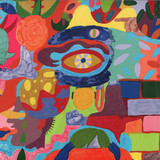
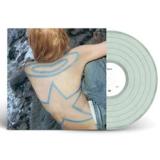
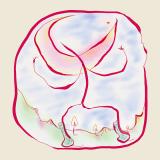
Reclaiming her original moniker of Kittin, electroclash pioneer - formerly known as Miss Kittin - presents Cosmos, a continuous twelve-track LP of organic, leftfield electronica due 2 November on Dark Entries. Throughout her illustrious career, Kittin has carved a considerable niche for herself, assimilating references from New Wave and 90s techno to form an inimitable sound that resonates with electronic music fans the world over. Despite being most recognizable with 'Miss' before it, Kittin was in fact her original artist name - the prefix often added without her consent at promoter's will and eventually becoming the norm.
Cosmos is her most spiritual release yet, influenced by her time in the French countryside after a bout of touring exhaustion. She gives up any formulas from her past; verses/chorus, pop or club beats, to come to the essence of chords and textures, peeling away the non-essential to find joy in music yet again. In retrieving her chosen name from more than 20 years ago, Kittin also returns to the essence of her musical journey. By liberating herself from the constraints of formal structure she opens the door to a new set of aesthetics, exploring her influences without restraint. Sonically, the voice acts a central instrument, whilst the album drives continuously forward with no breaks, paying homage to her love for ambient and electronica whilst wandering calmly into the unknown. 'With Cosmos everything is energy. We go back to the core with curiosity and freedom.' - Kittin
Chymera Needs Little To No Introduction, Producing And Releasing Music Since 2002 On A Multitude Of Respected Imprints Like Cocoon, Delsin And Kompakt, He Is Not Only An Artist We All Admire But Also A Very Dear Friend. In Fact It Was Chymera That Introduced Mano And The Drifter To Baikal Back In 2010, An Introduction Without Which Maeve May Not Have Happened At All. So It Gives Us Great Pleasure To Welcome Chymera To Maeve And Finally Release Some Of His Excellent
Work. Noise Tool Is A Pair Of Techno Cuts, Each Almost Breaching 10 Minutes And Custom Fit To The Dancefloor Dedicated Sound Maeve Has Become Known For. The Title Track, 'noise Tool', Leads You Into A Murky World Of Pulsating Sounds And Ominous Synth Lines, Building Anticipation At
Clever And Intriguing Pace. Sparse Percussion Slowly Reveals The Hypnotic Groove To The Listener Culminating In A Burst Of Energy That Elevates The Sound To Peak-time-banger Status.
On The Flip, '1990', Takes A Different Turn To That Of The A Side, Immediately Setting A No Nonsense Tone With A Feeling That Something Big Is Going To Happen. Chymera Has Always Been Known For His Distinct Focus On Melody And 1990 Really Shows This As Several Harmonious Melodies Intertwine To Put The Listener On The Front Foot. While Beautiful Pads Give The Dancefloor A Moment Of Relief It Isn't Long Before A Deep Rolling Bassline Returns To Bring The Track To New Heights.
Shot At Dawn is a scintillating return for a band who have been collectively quiet (but individually busy) for a few years, and (once again) sounds like the music of tomorrow. Lyricist Leon Mayes wills the real revolution to come, Morris's uneasy keys and driving, bittersweet production embodies the UK's collective anxiety/apathy coupled with an impending sense of doom, as we all obediently troop off the cliff like lemmings, while vocalist Michelle Manetti's melancholy delivery is the perfect foil both, recalling Tracey Thorn at her best.
It's a genuine wake-up call for the dance floor that's dropping well with club DJs but clearly has the potential to shine fully on radio. A2 track Warm Your Love is an equally forward-facing slice of sci-fi dance music sonically and already turbo-charging the dance floor with its futuristic feel.
The remixes come from Edinburgh/London duo Leonidas & Hobbes and are the first productions they've released since 2017's summer anthem and Release Of The Year, Web Of Intrigue (from their Rags of Time EP), as voted by some 400+ DJs on Bill Brewster's DJ History podcast back in January. Their Electro mixes doff a cap to Vince Clarke (Depeche Mode, Yazoo) and Daft Punk/Thomas Bangalter, with some Compass Point era Grace Jones/Sly & Robbie thrown in for good measure on the electro dub, while the Deep House variations are more Pepe Braddock's Deep Burnt meets Frankie Knuckles/Jamie Principle's Your Love and Orbital...
After a debut outing on International Black last year with his best friend Mallard, LT graduates onto Rhythm Section INTL with a stunning debut solo effort: FOREST FLOOR.Aged just 20 years old, Lewis Taylor aka LT is another prodigal talent from the north of England, whose association with Rhythm Section goes back to his school days. A fan of the label from an early age, Lewis regularly made pilgrimages to the pool hall as soon as he was old enough to do so. It was these visits with his old school friend Mallard (who had recently moved down to London from Derbyshire to study music) which proved to be a formative influence, prompting him to try his hand at production...It turned out he was quite the natural, with his second ever effort as an 18 year old making it onto this very EP. Sitting somewhere between electro, house and techno with a healthy dose of breaks - LT constructs complex arrangements with as much of a nod to the retro summer of love stylings of Lone as to the new age bounce of the Pender Street Steppers. The piano house stabs of 'Untitled (Chesney)' reverberate around chopped breaks and screaming samples, anchored down by bouncy organ bass and FM lead synth which really begs the question: 'How did LT develop such a rich lexicon of club culture references in such a short time' We'd be tempted to believe it was just pure luck, if this mastery of rave aesthetics wasn't repeated throughout the EP...
Mesosphere fizzes with arpeggiated energy before giving way to a magnificent yet subtle drop that will serve festival main stages as well as it will back room clubs. Before the EP is over, LT has one more trick up his sleeve in Forest Floor - the titular track which is the musical equivalent of watching the sun rise through a misty glade after a night spent alone in the wilderness. With this gentle touch, LT proves he's more than another kid on Ableton making bangers - he has breadth, incredible musicality and a rare ability to transcript sceneries into sounds. Finishing with 'North Circular' possibly a reference to the free Parties on the London Orbital or merely just a coincidence you decide.
We couldn't be happier to welcome LT onto the RS INTL roster in what feels like a fulfilment of destiny. It's such a great honour to have nurtured and now introduce the next generation via the Rhythm Section platform.
Last Year's Altered Mind Opus, Sapa Inca Delirium, Showcased The Cyclist At His Most Eclectic, Spanning Ayahuasca Break-beat And Rave Jungle Pop, But His Latest Ep Returns To The Uniquely Kinetic And Shredded Mode Of Churning Electronic Rhythm He Both Named And Perfected: 'tape Throb.' Alabaster Thrones Collects Four Of Andrew Morrison's Recent And Most Vibrantly Blasted House Constructs, Tracked At His Home Studio In Birmingham, Uk During 'the Height Of Mania - A Time When I Had No Time.' The Context Translates: This Is Urgent, Accelerating Music, Shifting Gears At High Speed In Dim Twisting Tunnels. The Title Is 'a Deflation Of Grandiosity' Cribbed From Ulysses ('...a Noble Race, Rulers Of The Waves, Who Sit On Thrones Of Alabaster, Silent As The Deathless Gods'), Though Morrison's Meaning Is More Personal: 'it's A Reminder To Level Yourself And Think Of All Those Around You.' A Captivating Capsule Of Ravaged Forward Motion For A Ravaged Forward-moving Age. Mastered By Eric Hanson. Design By Britt Brown.
After more than 30 years Early Sounds and Halfway Ritmo are finally releasing unpublished recordings (1982-1989) from former Tangerine Dream and Iggy Pop's drummer Klaus Krüger.
Advanced Dance combines a sweeping mix of Krüger's handcrafted acoustic drums and distinctive electronic sounds of the late Berlin-School years, creating a unique blend of advanced polyrhythms.
Krüger achieved a balance between creativity and classic drum patterns giving birth to an unconventional and avant-garde type of music that could be easily defined as a precursor of techno.
His progressive mentality led him to delve further into the tape collage technique and unique ways of triggering his drums. It was a whole new world of music - sustained by his artistic surroundings, which included collaborations as well as friendships with other influential artists such as David Bowie, Martin Kippenberger and Helmut Newton.
In the time of German division, the pulsating West Berlin became a melting pot of creativity and international encounters. Advanced Dance is the result of the blazing heat feeding the unstoppable thirst of discovery which characterized that generation, creating tunes that transform the listener's experience into one blissful moment amidst beautiful confusion.
Following the massive buzz a round the label's last release (voted THE record of 2017 by some 400+ international DJs and tastemakers on Bill Brewster's DJ History Podcast/poll (2017 Furtive 50) , Hobbes Music kicks off 2018 with a heavy slice of warehouse techno backed with deeper electro flavours, a second double-A-side 12" outing by the anonymous DALI.
You may remember DALI (NB all caps in the spelling) released a debut 12" around this time last year. Support came from Ben UFO, Laurent Garnier, Domenic Cappello (Sub Club), John Heckle, Chris Duckenfield, The Revenge, Tom Findlay (Groove Armada), Sean Johnston and XDB (among others) and a repress happened swiftly, with Laurent Garnier and Avalon Emersonalso supporting most recently (on WWFM and at Berghain, respectively).
DALI has a passion for analogue synths, abstract, hypnotic dance music and all things psychedelic. Don't bother looking her up on the net, social media etc. DALI is eschewing all that, to let the music do the talking for now.
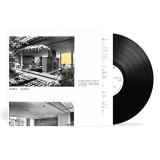
Black Truffle is pleased to make Oren Ambarchi's Grapes from The Estate available once more on vinyl. Originally released on CD on Touch in 2004 and reissued on Southern Lord as a limited double LP in 2006 during Ambarchi's tenure as a member of Sunn O))), Grapes from the Estate was a landmark release for Ambarchi, seeing him expand his sonic palette beyond the clipped, bass-heavy electric guitar tones he was known for at that point. Incorporating subtle layers of strings, keyboards, percussion over a bedrock of his signature guitar tones, in retrospect this album can be seen as the beginning of a broadening and evolution in Ambarchi's work that would lead to his acclaimed, densely layered epics for Editions Mego, Quixotism (2014) and Hubris (2016). Beginning with the shuddering pure tones of opener 'Corkscrew', which looks back to previous guitar-only releases such as Suspension (2001), the album's next two pieces show a progressive broadening of the instrumental palette and a corresponding move away from textural abstraction and sustained tones towards more traditional notions of musicality. This reached its high point on the album's third piece, the fifteen-minute long 'Remedios The Beauty', where guitars, both acoustic and electric, strings, piano, and bells build from a murmur to an interlockinging web of repeating melodic patterns over gently swinging brushed snare and cymbals. The epic closer, 'Stars Aligned, Webs Spun', returns us to a space populated only by the electric guitar, but unlike everything Ambarchi had produced up until this point in his career, the piece has a liquid, psychedelic edge that looks forward to the shimmering harmonics of his more recent work. As Brendan Walls wrote at the time of the original release, this is 'another outpouring of personal, intimate and enduring music from Oren Ambarchi'. Presented in a stunning gatefold sleeve featuring the original artwork and design by Jon Wozencroft. Redesigned by Stephen O'Malley Remastered and cut by Rashad Becker at D&M, Berlin.
Planned structures leaving plenty of room for improvisations. Experiments morphed into full fledged tunes and established genres transformed into experiments.
Dan Andrei and Paul Agripa teamed up under the Comojii moniker to release Joac O Pasta, a result of their rich musical imagination going wild, recorded during long jam sessions at times when both artists where experimenting with sounds. Expect raging synth pop sounds, acid elements and electro tinged broken rhythms.
A mad child of 2 forwardthinking artist minds, Joac O Pasta finds a
perfect home under the Cuplet roof.
Alésia Cosmos was a collective of musicians led by Bruno de Chénerilles formed in the early 1980s in Strasbourg, France. The group consisted of Pascal Holtzer (guitar, synthesizer, tapes, drum machine, vocals), Pierre Clavreux (vocals, gong), Marie-Berthe Servier (vocals), Bruno (guitar, tapes, synthesizer, drum machine, vocals) and Tunisian percussionist Lotfi Ben Ayed (darbukas, bendir). In 1981 Bruno composed and wrote some sci-fi radio plays for French state radio channel France Culture. Under the influences of William Burroughs, John Cage, Pierre Henry and others, he developed tape music studio work. By 1982 he appeared for the first time under the name Alésia Cosmos Furi Show. It was a solo performance on guitar, voice, analog synth and tapes. This experimental show lead to a music project based on Bruno and Pascal's compositions to be performed and recorded with other musicians in the beginning of 1983.
Exclusivo! was the group's debut album recorded and self-released in 1983 on Planetarium. Pascal and Bruno would compose tunes in their personal home studios. Then they would bring the tapes, electronics, guitar lines and lyrics to experiment and rehearse with the other members of the group. Improvisations and adaptations brought more ideas and the album was recorded in a few days. The result was a musical mixing of electronic music, field recordings, North African and Asian percussion, electric guitars and voices, compositions and free improvisations. All four musicians take turns singing onomatopoeic phrases and backing vocals, even sometimes in an unknown language, a sort of mixed bag between Breton and Japanese. All songs have been remastered cut by George Horn at Fantasy Studios in Berkeley. Each LP is housed in a replica of the 1983 cover and includes a 6-page insert with photos, lyrics, reviews and liner notes by Bruno de Chénerilles.
After dropping several tracks and performing at select festivals throughout the years, Ólafur Arnalds and Janus Rasmussen dedicated the year 2014 to explore the area in-between Ólafur's more acoustic, piano-based solo work and Janus's synth-heavy electro pop, with their collaborative electronic project Kiasmos.
By focusing solely on their self-titled debut album, Ólafur and Janus have been able to combine and further develop their unique sound aesthetics to complete an album driven by their mutual love for electronic music. Made in Ólafur's newly build studio in Reykjavík, Iceland, a majority of the album was recorded using acoustic instruments next to a variety of synthesisers, drum machines and tape delays. It features a live drummer, string quartet and Ólafur performing on the grand piano, producing an ambient, textured sound, which makes it a perfect home listen and equally danceable record. If you listen closely, you can spot them record the thumb piano, finger snapping and even the sound of the metal grinder of a lighter slowly to replace the usual electronic hi-hat sounds, giving the album a far more intimate and unique atmosphere.
We decided to start almost completely over with this record, so most of the material is written this year with the idea of making a record that can stand as one piece rather than a collection of songs. I am very excited to get a proper record out exploring a different territory than I am used to. I touch a lot on electronic genres in my own music but never have the opportunity to go full out electronic like we do here.' - Ólafur Arnalds
The Kiasmos project has been around since 2007, but because of all our other projects we never really got the time to sit down and write all the tracks we always wanted to. So when we early this year finally found the time to sit down and make a full length album there was so much we wanted to try out. The result surprised us a bit, it's deeper and more emotional than we imagined it to be, but that's the beauty of being able to make an album.' - Janus Rasmussen
Long-term Erased Tapes graphics collaborator Torsten Posselt at Feld Studios in Berlin created the cover artwork. Feld Studios was a natural choice for Kiasmos, seeing he also designed the cover for their Thrown EP, released previously.
Kiasmos is made up of Icelandic BAFTA-winning composer Ólafur Arnalds, known for his unique blend of minimal piano and string compositions with electronic sounds, and Janus Rasmussen from the Faroe Islands, known as the mastermind of the electro-pop outfit Bloodgroup. Based in Reykjavík, Arnalds used to work as a sound engineer, often for Rasmussen's other projects, where the two musicians discovered their common love for minimal, experimental music. They eventually became best friends, often hanging out in their studio, exploring electronic sounds.
REPRESS 2017
Early Support from Stephan Bodzin, Steve Bug, Lexy, Christian Fischer, Markus Guentner, Laurent Garnier, Tim Xavier, Someone Else, Gunjah, Oliver Klein, H*O*S*H, Sebbo, Anderson Noise, Habersham, Emma Thompson, Markantonio and Jamie Stevens.
Group Rhoda is the solo electronic music project of Mara Barenbaum, based out of Oakland, California. The project started around 2009 with a debut album 'Out of Time, Out of Touch' in 2012 on Night School Records and '12th House' in 2013 on Not Not Fun. She is also one half of Max and Mara who released the album 'Less Ness' in 2013 on Dark Entries Records. She is committed to live performance, situated within the analog synthesizer and drum machine medium.
'Wilderless' is Group Rhoda's third full length and first for Dark Entries Records. Each of the these 7 songs draw forth tones of tropical darkwave and soft industrial, while negating the sound of conformity and control. The album explore themes of societal and spiritual displacement, contemporary serfdom, the depths of empathy, regeneration through destruction, and the tyranny of claiming recognition and power. Lyrics are poetically expressed through allegory and explore archetypes rooted more in abstract observation rather than hard line experience. Through transgression and imagination, Group Rhoda explores the arc of songwriting interwoven into stark electronic environments, and creates a bridge between the corporeal and the dream worlds.
Each song was mixed by Mark Pistel at Room 5 in San Francisco and mastered by George Horn at Fantasy Studios in Berkeley. Each LP is packaged in a jacket featuring a colorful custom made collage by Hugo Barros and includes a full color sticker and digital download card.
KHT 008 is coming from no less than the man who is called The Prince of Techno' by his peers.
And that is for a reason: Blake was part of the first wave of Detroit techno artists and dis and contributed to the techno movement from the mid 80s. Tracks like When a dream becomes U' or Our love' are milestones of electronic music, his style, which he calls Poetry and Rhythm' is distinctive. For Killekill House Trax he delivers the Acid Life EP which comes along with two strong, acid driven tracks, the A-side darker and more chicago-oriented with its rhythmical focus and the punchy kick, the B-side more Detroit-ish with its uplifting chords.
Timeless!
Footwork label boss Jay Lumen is back on board with two massive Techno bangers."Warehouse Trip" is a rolling peak time ride with some nice old school elements.You can hear special dusty stabs in the break to add the right balance for the track."Search" is a chord oriented anthem with great bass synth sprays on a fat kick and bass line.It has a nice contrast and leads you to the dance floor step by step.
Based on the Irvine Welsh novel of the same name, the film version of 'Trainspotting' directed by Danny Boyle became a cult sensation. Focused on the heroin subculture of Edinburgh in the 1980s, the film is occupied with surrealism, black comedy and features a great soundtrack. This album includes tracks from Iggy Pop, New Order, Blur, Underworld and many more.
To celebrate the 20th anniversary of the iconic drama, the original soundtrack is being reissued on CD and vinyl. Having been out of print for a long time, the 180g vinyl features replica original artwork that includes special silver spot finishes throughout - front, back, booklet and picture labels, as well as bright pantones. There will be a limited run on orange vinyl before moving to black once sold out.
Music has always coursed through Roman Lindau's blood. Even if he weren't the accomplished producer and respected DJ he is today, the German audiophile would still be spending all his money on the stuff; giving over all his time to the art form. ''I'm a music junkie. I need music to live'' he states matter-of-factly. ''For me it's the elixir of life.''
Good job, then, that he gets to spend his ..
Roman Lindau is a German techno DJ, artists and producer, as well as being a core member of the infamous Fachwerk Records from Berlin.
Music has always coursed through Roman's veins ever since he was a young boy so it is no suprise that he became the accomplished producer and highly respected DJ that he is today.
In the late 2000´s Lindau became active in the Berlin electronic music scene, beginning to play music in clubs as well as producing his own music.
The first track he released in 2008 on his home label Fachwerk Records appeared in one the world famous Berghain Mix Compilations, mixed by Len Faki.
Following from this Berghain invited Roman to contribute an exclusive Track for Ben Klock´s Berghain Mix in 2009. After this success the gates opened for him to play regularly as a DJ at Berghain.
At the same time he continued to work on music for Fachwerk Records. He produced dance floor smashers like ´Crasse´ in 2011 and ´Rave on´ in 2014, which were charted by the likes of Ben Klock, Sven Väth & Chris Liebing, afirming his deserved place amongst the techno elite.
More recently in 2015 the well known Victor Calderone from NYC invited Roman to release on his label Matter+.
The reason why Roman is such a great DJ is because of the fact he knows what the people want! ''I love to dance and that's very important: as DJ you need to feel what the crowd want so you can help them to party and have fun.''
Combining a varied selection of raw house and techno in his sets, recent bookings have taken Roman across the world; from the hallowed techno Mecca that is Berghain to dark underground clubs as part of the recent Fachwerk label tour.
He has performed at every legendary Berlin venue, past and present from Tresor to Berghain, and it is this that gives Roman the edge above the rest. If you can do it there, you can do it anywhere!
From 2014 Till the closing he was a resident DJ at Stattbad, one of Berlins findest adress for Electronic Music.
Dark Entries returns to the New Jersey basement studio of Smersh to unearth a 4-track selection from the 'Deep House Anthems' cassette. Smersh was the duo of Mike Mangino and Chris Shepard, who began making music together in 1978. They were uninterested in traditional notions of songwriting or live performance. Recording in a domestic setting necessitated the abandonment of live drums for rhythm machines, and the Smersh sound would gradually change with each new bit of gear they acquired. The Electro-Harmonic Rhythm 12 gave way to TR606, TB303, and SH-09. Most Monday nights, they would write a new song from scratch. A couple hours later, the song was recorded, never to be performed again. By 1988, they had already put out at least 16 different tapes on their own Atlas King imprint. They would be followed by as many more. Some of those (subsequent) tapes there were less than 10 copies that got made because nobody wanted them. They couldn't get reviewed,' says Mike Mangino. As these tapes traded their way across continents, Smersh developed a devoted following in places far beyond Piscataway, leading to releases on dozens of other labels from around the globe. Smersh's sound is a lush hybrid of techno, industrial, dance, and experimental. Most songs revolve around driving EBM style beats, intricate industrial noise manipulation and synth melodies. For 'Selected Deep House Anthems' we selected 4 tracks of pulsating acid techno, which were recorded live, direct to DAT. All songs were originally recorded and released in 1991, and this the first time all but one of these songs are appearing on vinyl.
Cellaa Music is happy to welcome back Minimal Techno Star, Marc Faenger, with a follow up to his highly acclaimed 2013 'Mild Pitch' EP.
A leading light of the club scene in NRW, Marc has held residency at the legendary Studio nightclub and stayed true to his underground roots through a stream of releases for the likes of Minus, Little Helpers, Aella Music and Trapez Ltd.
Boiler EP sees the boy from Düsseldorf deliver four thumping minimal-tech-tracks, with powerful basslines, catchy sounds and a superstylin' groove, supereffective for the dancefloor. Four different tracks, four times 110% Marc Faenger quality.
Focussing on nowhere else but the dancefloor and designed for no one else but the skilled selector, all tracks act as timeless calls to action for all groove aficionados... And suggest yet another exciting Release for Cellaa Music
Originally released by Legowelt's Strange Life on a CD-r back in 2007, 'Mons Testaceum' finally has its first vinyl press on Mannequin Records.
First full length released by Heinrich Dressel aka Valerio Lombardozzi, boss of the mighty Minimal Rome, 'Mons Testaceum' together with 'Escape From The Hill' and 'Completion Of The Amphoras Table ' represented the first of a trilogy dedicated to the 'Monte Testaccio', an artificial mound in Rome composed almost entirely of 'testae', fragments of broken amphorae dating from the time of the Roman Empire.
'Mons Testaceum' is the second appearance of Valerio Lombardozzi on Mannequin Records, after the noirish atmospheric 'Sighing Melodies Thru The Graves' mini lp released in 2012 as MNQ 027 on white vinyl.
The sound of the album is moving somewhere hidden between Fabio Frizzi ('Paura Nella Città Dei Morti Viventi') and Goblin ('Buio Omega'), thanks the extensive use of the Italian - better, Roman - legendary synthesizer Elka Synthex in every single track, with touches of the Berlin electronic school, 'mixed with irresistable futuristic soulfunk synth solos (Kool and the Gang goes cosmic!)'.
Impressive stuff, which influenced deeply the sound of Mannequin Records itself during the years after it was released. TIP! Mastered by Andrea Merlini.
Graphic design by Dave Grave and Alessandro Adriani.
Limited Edition of 400 copies.
Cellaa Music are happy to welcome back Artist, Giuseppe Cennamo, with a follow up to his highly acclaimed 2013 'Butterflies In Your Stomach' EP. A leading light of the club scene in Italy, Giuseppe stayed true to his underground roots through a stream of releases for the likes of Desolat, Moan and his own Imprint Carillon.
Three different tracks, three times 100% Cennamo quality and on top the titel Track 'Everyday' is accompanied by two exclusive remixes from Marwan Sabb and Label Head Sven Jaeger.
Focussing on nowhere else but the dancefloor and designed for no one else but the skilled selector, all tracks act as timeless calls to action for all groove aficionados... And suggest an exciting ending year for Cellaa Music.
After starting up the infamous Invite's Choice podcast series in 2011, Tim van Paradijs (a.k.a. Invite) notes that the time feels right to contribute to the techno scene in a totally different way. The long cherished wish of starting up a recordlabel under the Invite moniker and thus propagating his view on electonic music is now to be fulfilled.
Phonology is a deep and droning track which lends itself perfectly for building tension. Plenary is a more repetitive track with less of a deep vibe than the A-side track, but nonetheless is a track that manages to form a bridge between deep tracks and more straight forward ones. The EP is concluded by a short, funky and frivolous track dubbed Bisonspoor. All together the first Invite's Choice Records EP is a very versatile and thought through record with three tracks that stand alone and somehow still manage to form one entity.
Dark Entries is proud to release the sophomore EP from BEZIER entitled Telomeres. Bézier is the moniker of local SF musician ROBERT YANG, who also is part of the illustrious HONEY SOUNDSYSTEM crew. Telomeres is the follow up to Bézier's debut EP Ensconced, released in 2013. The title relates to themes of time, science, analytics and procedures. Bézier integrates the refrains of Spanish new wave and Italo disco with the attitude and aggression of underground styles like synth-punk and industrial. These six tracks were written, produced and mixed by Bézier at his home studio in San Francisco between 2014 and 2015, and feature the debut of his own vocals. All songs have been mixed by Mark Pistel (of Meat Beat Manifesto fame) at Room 5, San Francisco and EQed for vinyl by George Horn at Fantasy Studios. The vinyl comes housed in a jacket featuring an illustration by in-house designer Eloise Leigh riffing on early 80s computer graphics. The matted sleeve is meant to resemble the side panels of early computing instruments like Macintoshes or the Commodore 64. Each LP includes a postcard with a photograph of actual telomeres captured by a microscope camera by the Blackburn Lab at UCSF. Telomeres' are life's building blocks, changing the lengths of chromosomes to determine lifespan. This music is an investigation of a future in which time elongates as well as contracts.
Here comes the next EP on Cellaa Music, this time from fast-rising Italien producer Dhaze whose previous outings have ben on labels like Moan, Innocent, Yoruba Grooves and Draft.
Dhaze is a producer obsessed with nature and organic sounds. Young, skilled and supremely talented, Dhaze, is an artist set for great things on the international scene. Having been fully immersed in club scene of his home city, it was his love for electronic music that really took hold of him. Taking his lead from the greats, adding his own unique touches and flair and creating masterpieces from within his studio, he is readying himself for take off.
- Rolling Instructions is a track that immediately commands attention with it's rolling, rich bassline surrounded by punchy, organic drums. The effective vocal moves with the track as more drums are added to the mix through intelligent programming and it's druggy groove is set to draw in the unsuspecting. This is the peaktime Cellaa sound at its finest.
- Anubi is a typically deep and sinister affair from the pair. Featuring solid drums and pulsating basslines work together perfectly to create a dancefloor smash that makes the ambience of this track particular and personal!
- Bubble Man builds slowly with rattling percussions and subtle chord, until, it suddenly drops, rocking the dancefloor with its massive bassline. A rolling vocal loop and a jumpy haunting topline combine effortlessly to create a track that is sure to cause mass devastation on dance-floors.
The Audience is built around solid, straight up percussion, strong bassline with swelling and rushing aquatics, punchy house chords, exquisitely programmed drums and a stompy groove coalite into a rhythm that gets stuck in your veins and sizzles through your body and brain - u can dance!
The digital bonus - Noise Black is a mind-catcher that drives forwards on a prominent kick and powerful bassline and Dhaze keeping things simple and direct. Deep tech house with a funk twist welcomed at any hour on the dance floor.
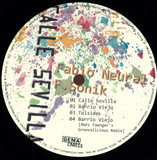
Its always exciting for us to be introduced to new artists. Here comes the next EP on Cellaa Music, this time from the irresistible electronic Duo formed by Fabio Neural and F.Sonik, whose previous outings have been on labels like SCI+TEC, Antura, Serkal, KD Music, K9 Records, Monique Music. Cellaa is very happy to welcome our Friends to the fold.
Lead track is - Calle Sevilla' that immediately commands attention with it's locked tight Groove, Piano licks and warm Rhodes Keys that lead us to the mighty bassline and we're already feeling the intensity. A Synth riff comes in and builds to the main break and creates an atmosphere that takes us on a trip to the sunshine coast of maybe Ibiza, right before it drops back in!
Second up is- Bario Viejo' which has rolling percussions and a attention grabbing groove that brilliantly leading into the playful piano chords and vocal hook. The break creates a feeling of suspense, hence the name, until the moment in which it explodes to create a track that is sure to cause mass devastation on dance-floors this summer.
Finally Fabio Neural and F.Sonik delivers - Tulside'. Another massive Groover from start to end. Featuring a solid pulsating basslines that works in harmony with an impressive array of percussions, chunky hats and tingling keys peppered with fascinating Vocals. Sunrise or sunset, - Tulside' create a quite stunning balearic moment thats sure to hypnotize any crowd.
The ep is supported with an excellent remix from Cellaa label mate Marc Faenger.
- Barrio Viejo Groovalicious' feeds off its infectious bassline and it is is built upon some deep, rolling grooves. Marc Faenger's remix picks up the pace, adding a signature percussion sound, stripping back the vocals to create a more techier focused version of the track.
Cellaa Music delivers a Winter Smash with this EP.
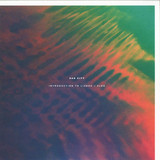
Following up from the stunning 'You Will Soon Find That Life Is Wonderful' 12' on Phonica's Special Edi- tions imprint, Sad City returns to the label with his new EP 'Introduction To Lisboa/ Sloe'.
Glasgow-based producer Gary Caruth has evolved a highly original sound; deep, lush and widescreen electronics, from melancholic to ecstatic. Sonically, he continues where his last record left off and feels like the perfect companion to that well-received debut for Phonica. The record as a whole is composed of field recordings, with the basis for the first half of the EP, 'Introduction to Lisboa,' utilising sound recorded in and around Lisbon. He explains, 'I wanted the music and field recordings to meld at times, to obscure what was conventionally the musical element and what were field recordings, blurring the line between found sound and composition in the creation of a whole other.'
Opening track 'Introduction To Lisboa' builds and builds from near silence to a cacophony of field record- ings and looped horns. It melds into 'Baixa Saxaphone', where carefully paced percussion patiently enters over a wash of synth. From then on a delicate balance of restrained percussion and spine-tingling atmos- pherics interplay before descending into a blissful outro.
As with the previous EP, the 12' is packaged in technicolour artwork by acclaimed London designer Jack Featherstone.
After their stunning 2012 debut single "Wish" (FM X / Wish 001) and last year's "Diggin' On You" (D.O.C. 001), the incredibly gifted ELEKFANTZ return to the fore with what can only called a brilliant full-length premiere. The duo of Daniel and Leo first met 20 years ago, when they played together in a blues band. Leo continued his carreer as a professional musician while Daniel started to discover a new musical path.
The latter was born and bred at the electronic music temple in South America, later becoming a resident DJ and local hero, known as the right guy to prepare the dance floor and set up the right mood. He's one of the finest DJs of the Brazilian new wave of electronic aficionados. Leo is a professional drummer, singer and composer since the age of 15. He played and recorded with some of the greatest artists in Brazil.
Their debut album DARK TALES AND LOVE SONGS sports all the intimate melodies, lush harmonies and organic undertones that the duo has become know for and then some: from pop-infused songwriter house to highly emotive prime time anthems, you'll find lots to love about this expertly crafted collection of melodic gems. Engineered to perfection by label head GUI BORATTO, it's an exciting step for the imprint and the project alike - we can't wait hearing where they'll go next.
the iconic project returns late September with its milestone 10th studio album, ‘I Wrote You A Letter’.
Twenty-five years after his debut, M83 (Anthony Gonzalez) stands as a genuinely era-defining electronic act, renowned for pushing indie-electronic into the mainstream while maintaining absolute critical credibility. With a massive catalog compounding billions of streams—anchored by the timeless “MIDNIGHT CITY” (1.5B streams)—the iconic project returns late September with its milestone 10th studio album, I WROTE YOU A LETTER’.
Recorded between Los Angeles and Paris alongside BENOIT DE VILLENEUVE, this new record follows the highly acclaimed ‘FANTASY’ (2023) and features striking artwork by celebrated Australian photographer BILL HENSON. This release marks a historic chapter, encapsulating a quarter-century of sonic evolution.
Commercially, M83’s power lies in an unmatched ability to transcend generations. Synonymous with cinematic emotion, nostalgia, and immense scale, M83’s sound is virtually a genre of its own, heavily sought after for film, TV, and sync. Live, the act holds top-tier global status, proven by headlining slots at major festivals like Coachella, Glastonbury, and Primavera.
‘I WROTE YOU A LETTER’ delivers exactly what M83 does best: big emotional scale, breathtaking cinematic atmospheres, and sharp hooks, all pushed into a fresh, modern palette.
Fünfundzwanzig Jahre nach seinem Debüt gilt M83 (Anthony Gonzalez) als ein wahrhaft epochaler Elektro-Künstler, der dafür bekannt ist, Indie-Elektro in den Mainstream zu bringen. Mit einem riesigen Repertoire, das Milliarden von Streams umfasst – angeführt von dem zeitlosen „MIDNIGHT CITY“ (1,5 Milliarden Streams) – kehrt das ikonische Projekt Ende September mit seinem wegweisenden zehnten Studioalbum „I WROTE YOU A LETTER“ zurück.
Das neue Album, das gemeinsam mit BENOIT DE VILLENEUVE in Los Angeles und Paris aufgenommen wurde, knüpft an das hochgelobte „FANTASY“ (2023) an und besticht durch ein eindrucksvolles Cover des gefeierten australischen Fotografen BILL HENSON.
Diese Veröffentlichung markiert ein historisches Kapitel und fasst ein Vierteljahrhundert klanglicher Entwicklung zusammen.
Kommerziell liegt die Stärke von M83 in der unübertroffenen Fähigkeit, Generationen zu verbinden.
Als Synonym für filmische Emotionen, Nostalgie und immense Größe ist der Sound von M83 praktisch ein eigenes Genre, das für Film, Fernsehen und Synchronisation sehr gefragt ist.
Live genießt die Band weltweit Spitzenstatus, was durch Headliner-Auftritte bei großen Festivals wie Coachella, Glastonbury und Primavera unter Beweis gestellt wird.
„I WROTE YOU A LETTER“ liefert genau das, was M83 am besten kann: große emotionale Bandbreite, atemberaubende filmische Atmosphären und eingängige Hooks, alles verpackt in einer
frischen, modernen Klangpalette.
out of Stock
Last delivered 2 days ago available to reorder, subject to availability
Rome, late afternoon, 1974. The light comes in over the colossal hills, the way it only does for an hour before the city forgives itself for the day's noise. Axefield is on an urgent quest to create cinema in the form of sound as a romantic alternative to disposable tools. He is looking for a sound so effortless he is not sure it can truly exist, but only be felt - somewhere between a film score, a heartbeat and a late night dinner at his favourite trattoria.
Ostuni Bound, NOW! is the debut album from Amsterdam-based electronic artist and composer Axefield, bringing club-heavy bass music together with the drama and romance of 70s Italian cinema. The narrative and emotions within the record stem from a romantic setting in Southern Italy that unexpectedly turned violent, forcing Axefield to flee the city after receiving the death threat "non provocare morte".
At its heart is the belief that romanticising life can lead us towards deeper human meaning, offering a different route from the hyper-capitalist pursuit of efficiency that increasingly shapes how we live and create. Throughout the album, Axefield worked through three characters representing innocence, control and destruction, using each as a framework for decisions in production, composition and mixing.
The album features Amsterdam-based rising UKG talent DANN and Johannesburg-based Kamohelo, frontman of Swedish electronic group Off The Meds. It's all starting to feel like cinematic time travel in which beauty is reintroduced in the realm of contemporary dance.
Released on Intercept alongside a beautifully crafted vinyl edition, Ostuni Bound, NOW! feels like the soundtrack to a film that was never shot. Somewhere behind him, a projector he cannot see begins to turn, playing a film for an audience that has not arrived yet.
As they arrive, he is the one who ultimately presses play.
And just like that, Ostuni Bound, NOW! Begins where Rome has always begun: beyond function and beauty and all that lingers in between.
out of Stock
Last delivered 2 days ago available to reorder, subject to availability
Brazilian artist Rubel isn’t one to be pigeonholed and typecast into staying in one sound. Casas, the follow-up to his debut album Pearl from 2015, brought a bigger, more epic, and richer production quality to the table. Fusing the worlds of MPB and hip hop, Rubel’s sophomore LP built on the momentum of its predecessor, gaining a Latin-Grammy nomination along the way. Mr Bongo is proud to be giving Casas its first worldwide release on vinyl and CD outside of Brazil and Japan.
The cliché they say is that the second album is always the trickiest; however, Rubel doesn’t seem to have had any problems on Casas. It’s a fountain of creativity and originality, marking an artist in full flow.
Conceived after Rubel spent six months living in Los Angeles, Casas is MPB-leaning at its core but is also driven by a hip hop inspired pulse. There is a clear influence from hip hop’s aesthetic across the 2010s woven subtly but fundamentally throughout. Nods to Frank Ocean, Kendrick Lamar and Tyler, The Creator can be heard across an album full of playful edge and personality. Luscious string-led arrangements and tracks that explore the rich folkloric rhythms of Brazil, sit next to songs with low-fi drum machines and features from acclaimed Brazilian rappers.
One of the highlights of the album, ‘Mantra’, starts with a traditional Brazilian rhythm that morphs into a hazy hip hop beat. A sublime song with a hooky call and response chorus, it features a guest appearance and verse by the Brazilian MC Emicida. Another highlight is the epic ‘Colégio’ (College) which further showcases the melding of stripped back drum machine beats with cinematic, sweeping arrangements. Elsewhere, ‘Partilhar’ is a swaying, heartwarming hug. A tale of longing and love that has become a singalong fan favourite at Rubel’s concerts.
Casas also shines a light on a string of key players in Brazil’s new vanguard, such as Pedro Fonte, Gus Levy, and Brazilian rapper / poet Rincon Sapiência to name a handful. The record has pop sensibilities yet also feels underground. It beats with the heart of a singer-songwriter, a feeling that was felt so strongly on Pearl, yet this time is bolstered by a level of arrangement and richness of sound that take it to another dimension - soaring horn and string sections elevating the songs from home recording to stadium-ready anthems. Keeping that intrinsic beauty and simplicity of a well-constructed song yet reframing it within a pop context is the true gift of this album.
Casas cemented Rubel’s status as one of Brazil’s leading contemporary talents and a key figure enriching the country’s already effervescent scene.
out of Stock
Last delivered 15 days ago available to reorder, subject to availability
Yorkshire's underground has always run deep and this double pack from one of the region's finest new labels, Hearlucinate, makes the case well. For this double album, Leeds mainstay Tristan da Cunha has done a careful excavation of Scott Featherstone's DAT archive featuring music recorded under his Triform alias entirely on analogue hardware. The results are simultaneously timeless and urgently present, and the kind of machine jams that only reveal their full power in dark, hazy rooms. 'Harmony' has a dark and sleazy soul, there's muscular drum weight to 'What Is This', 'Basic House Rocker' has an anxiety-riddled sound that's alive with twitchy acid electronics and 'Chimes' marries vast, swinging kicks with Detroit soul. Wonderful.
out of Stock
Last delivered 2 days ago available to reorder, subject to availability
Duality makes his debut on Up Ya Archives with a single rooted in the foundations of 90s jungle but shaped distinctly by contemporary sound design, epitomising his unique take on modern junglism. Intricate breakbeats and classic jungle textures are anchored by weighty 808s that guide the flow of the track, while influences from footwork, hardcore and drum & bass sets the track firmly into the space of progressive junglism. When asked on the single, Duality said
“R U Mine is the lead single from my latest project, Brainstorm. It balances luscious pads and playful synth lines with relentless drum breaks and 808s. Topped with ethereal vocals, this is one to open a set with or close out the night”.
A rising star in Bristol’s underground dance scene, Duality is staking a claim within the new wave of jungle.
“‘Brainstorm’ is exactly what the name suggests. A glimpse into the ideas that occur in my brain as a producer. Each track is a different element of my jungle inspirations, from raregroove sample-based production to 4x4 rave stabs. Ready and waiting for the dancefloor!”
Aside from his own productions, he also runs Bristol-based record label and events crew Intaception, which has hosted parties across the UK with iconic figures including Source Direct, Tim Reaper, Double O, and many more. Moving fluidly across production, promotion and musical direction, Duality continues to push the sound and culture of contemporary junglism forward.
out of Stock
Last delivered 2 days ago available to reorder, subject to availability
Beneath the sleek, confident guitar line that powers “Overdrive,” the lead single of All Over You, another guitar marks the time more impatiently, as if the groove its locked into is the timebomb- tightness of a pre-hookup heartbeat. Its energy isn’t nervous — after all, it’s hard to be nervous with Will Schwartz cooing come-ons like “I just wanna get you in the bed / Light you up like a cigarette” in your ear — but it is urgent. Excited. Titillated.
That’s the word that best describes the prospect of a new Imperial Teen record: titillating. They come out every five or six years, each new album acting as, to quote Roddy Bottum, “an episodic piece of where we are now, where the world is now, who we have become, and the geography of our collective consciousness.” There is considerable distance between Imperial Teen, its members — Bottum (guitars, keyboards, vocals), Schwartz (vocals, guitars, keyboards), Jone Stebbins (bass, vocals), and Lynn Truell (drums, vocals) — having made lives for themselves in different cities, but the collective consciousness that exists between them makes distance and time seem immaterial to the listener.
Time, especially time together, is not immaterial to Imperial Teen: it is precious. “For the last few records,” Stebbins explains, “the process has been similar. We live great distances away from each other, so initially, we get together to collaborate, write, and create. When we have enough material, we reconvene to record. Both scenarios, creating and recording, take multiple trips, sometimes with big lapses of time in between due to our various schedules.” Bottum concurs: “The biggest challenge in writing and recording is the distance between us, but the longing and desire and the ultimate coming together becomes more potent as a result.”
All Over You is a triumph of maximized moments together, four people bringing the force of their personalities to bear on years of built-up ideas. Title track “All Over You,” initially built over the computer, gained its charming sneer in the studio, where Stebbins’ buoyant, fuzzed out bassline added bounce to the song’s punchy, sloganeering lyrics, a perfect set-up for Truell to drive the song home, screaming the last line of the chorus, “We’ve got nothing to do,” like a rallying cry for a generation that’s been given nothing and told to deny themselves everything. “In my head,” Truell says, “I just went back to punk, to that feeling of prowling around looking for anything to do and being so mad about how boring everything is that you just have to yell.” The track had an attitude, it had an unexpected texture thanks to Truell’s playing improvised percussion, but her scream is what took it to the next level, transforming it into a signature Imperial Teen song.
One of Imperial Teen’s less magical concerns on All Over You is the effect capitalism has on the creation of art. This expresses itself in the headspinning rush of music industry success and disappointment that plays out in “Hands All Up,” and also in Imperial Teen’s sound. All Over You features the band’s most expansive, textured palette to date, and much of it’s steeped in — bubblegum music and boy/girl harmonies, electro beats and grungy distortion, power pop mall anthems and kiss-off lyricism — has been dismissed, at one point or another, as a fad. Time, of course, has proven otherwise, and All Over You makes a case for Imperial Teen as four of that time’s architects, inheriting, preserving, and pushing the boundaries of what pop music can be from one song to the next.
“We want to make people dance and think and feel,” says Schwartz. In all of those ambitions, All Over You crushes, brought to life by four musicians who found each other in the clubs of San Francisco over three decades ago and have remained family ever since. It is less a return from hiatus than a broadcast from the sonic utopia Imperial Teen has long ruled over, where the music is bratty and sexy and the parties don’t stop until everyone’s found euphoria. A raveup for mind, body, and soul, best enjoyed in a dark room packed with as many sweaty bodies as possible
Beneath the sleek, confident guitar line that powers “Overdrive,” the lead single of All Over You, another guitar marks the time more impatiently, as if the groove its locked into is the timebomb- tightness of a pre-hookup heartbeat. Its energy isn’t nervous — after all, it’s hard to be nervous with Will Schwartz cooing come-ons like “I just wanna get you in the bed / Light you up like a cigarette” in your ear — but it is urgent. Excited. Titillated.
That’s the word that best describes the prospect of a new Imperial Teen record: titillating. They come out every five or six years, each new album acting as, to quote Roddy Bottum, “an episodic piece of where we are now, where the world is now, who we have become, and the geography of our collective consciousness.” There is considerable distance between Imperial Teen, its members — Bottum (guitars, keyboards, vocals), Schwartz (vocals, guitars, keyboards), Jone Stebbins (bass, vocals), and Lynn Truell (drums, vocals) — having made lives for themselves in different cities, but the collective consciousness that exists between them makes distance and time seem immaterial to the listener.
Time, especially time together, is not immaterial to Imperial Teen: it is precious. “For the last few records,” Stebbins explains, “the process has been similar. We live great distances away from each other, so initially, we get together to collaborate, write, and create. When we have enough material, we reconvene to record. Both scenarios, creating and recording, take multiple trips, sometimes with big lapses of time in between due to our various schedules.” Bottum concurs: “The biggest challenge in writing and recording is the distance between us, but the longing and desire and the ultimate coming together becomes more potent as a result.”
All Over You is a triumph of maximized moments together, four people bringing the force of their personalities to bear on years of built-up ideas. Title track “All Over You,” initially built over the computer, gained its charming sneer in the studio, where Stebbins’ buoyant, fuzzed out bassline added bounce to the song’s punchy, sloganeering lyrics, a perfect set-up for Truell to drive the song home, screaming the last line of the chorus, “We’ve got nothing to do,” like a rallying cry for a generation that’s been given nothing and told to deny themselves everything. “In my head,” Truell says, “I just went back to punk, to that feeling of prowling around looking for anything to do and being so mad about how boring everything is that you just have to yell.” The track had an attitude, it had an unexpected texture thanks to Truell’s playing improvised percussion, but her scream is what took it to the next level, transforming it into a signature Imperial Teen song.
One of Imperial Teen’s less magical concerns on All Over You is the effect capitalism has on the creation of art. This expresses itself in the headspinning rush of music industry success and disappointment that plays out in “Hands All Up,” and also in Imperial Teen’s sound. All Over You features the band’s most expansive, textured palette to date, and much of it’s steeped in — bubblegum music and boy/girl harmonies, electro beats and grungy distortion, power pop mall anthems and kiss-off lyricism — has been dismissed, at one point or another, as a fad. Time, of course, has proven otherwise, and All Over You makes a case for Imperial Teen as four of that time’s architects, inheriting, preserving, and pushing the boundaries of what pop music can be from one song to the next.
“We want to make people dance and think and feel,” says Schwartz. In all of those ambitions, All Over You crushes, brought to life by four musicians who found each other in the clubs of San Francisco over three decades ago and have remained family ever since. It is less a return from hiatus than a broadcast from the sonic utopia Imperial Teen has long ruled over, where the music is bratty and sexy and the parties don’t stop until everyone’s found euphoria. A raveup for mind, body, and soul, best enjoyed in a dark room packed with as many sweaty bodies as possible
Meet Matas Petrikas, a music producer, DJ, and book author with a passion for electronic music. Born in Lithuania during the time when it was still a part of the Soviet Union, Matas began experimenting with electronic sounds during his teenage years using self-built instruments and recording equipment. In 1991, Matas took a trip to Berlin that would change his life forever. There, he encountered the early years of techno culture, which led him to co-found EXEM, one of the first house and techno bands in the former Soviet space. With EXEM, Matas was one of the pioneers of electronic dance music in Lithuania, and by the end of the decade, they had charted numerous hits. They performed live shows ranging from intimate clubs to massive arenas, sewing the seeds of the local electronic music scene. Since then he relocated to Berlin and has forged a musical solo career focused on live-sets, experimentation, and authoring the book 'The Joy of Electronic Music'. The Unknown is Matas’ first release on his newly formed imprint Dangė Records, focused on supporting electronic music from Lithuania and the Baltics. The 6 track EP forges his love for texture heavy hypnotic techno with industrial and warehouse leaning low end and percussion. Although mainly an EP rooted in driving a groove, the use of earworm worthy basslines, rave breaky drums, and squelchy lead synths is where Matas’ long career foray into many genres of electronic music shines through. Dangė Records releases electronic music from Lithuania and the Baltics—sounds that emerge from underwater, carried by artists who inherited the weight of transformation.
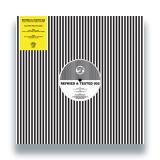
Southern Fried Records return with the second instalment of Refried & Tested, a three track EP built for peak time festival business. Bass heavy and attitude driven, this one brings together friends old and new for a run of dancefloor tracks that don't let up. It's Southern Fried doing what it does best - club ready energy with real personality behind it. Elado opens Refried & Tested 002 with 'Don't Stare' - a bass-heavy, attitude loaded cut built for the dancefloor. It's peak time energy with a real sense of swagger, setting the tone for the rest of the compilation. Jordan Peak takes on Elado's 'Don't Stare' and delivers a whopping remix, reworking the original into a festival ready peak time weapon. A standout moment on Refried & Tested 002. lau.ra teams up with Bag Raiders for 'back2back', bringing dance floor energy and attitude to Southern Fried's Refried & Tested 002 - a collaboration between friends old and new that delivers exactly where it counts. Van Damn closes out Refried & Tested 002 with 'Hit You', a bass driven cut that keeps the compilation's dancefloor energy running right to the last track.
out of Stock
Last delivered 8 days ago available to reorder, subject to availability
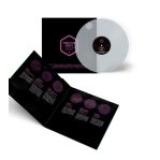
Experience the music of Hans Zimmer like never before with this limited collector’s edition 2× color laser-etched vinyl. Featuring highlights from the acclaimed “The World of Hans Zimmer” albums, this premium release combines Hans Zimmer’s iconic music with cutting-edge vinyl design—an essential for collectors and fans alike. The set includes 10 electrifying tracks across the A-sides of two vinyl records, housed in a high-quality gatefold sleeve. The B-sides feature stunning laser-etched artwork instead of audio: a detailed clockwork design on one disc and a cosmic landscape on the other. These unique engravings reflect light across the full spectrum of colors, creating a stunning rainbow-like effect that changes with every movement of the vinyl.
This exclusive edition presents concert suites for orchestra, choir, and the legendary soloists of Hans Zimmer’s band, specially arranged by Hans Zimmer. Each suite reimagines the original film scores in a powerful new symphonic form. The album features excerpts from concert suites based on: Man of Steel, Wonder Woman, The Dark Knight, The Rock, Pirates of the Caribbean, No Time To Die, The Lion King, Gladiator, Interstellar, and Inception.
Performed by world-class musicians, including long-time collaborators such as Lebo M, Lisa Gerrard, and Pedro Eustache, alongside the Odessa Orchestra & Friends (conducted by Gavin Greenaway), the Vienna Radio Symphony Orchestra (conducted by Martin Gellner), and the Nairobi Chamber Chorus. A visually stunning and sonically powerful collector’s vinyl release—perfect for fans of film music, audiophiles, and Hans Zimmer enthusiasts.
out of Stock
Last delivered 6 days ago available to reorder, subject to availability
Their music draws from old folk sources, but it sounds vibrantly alive. On The Holy Coming of the Storm, their debut from 2010, the duo crafts original songwriting and seasoned acoustic musicianship into a timeless blend of old-time, bluegrass, folk and Americana traditions. Now, more than a decade later, these beloved recordings are finally being pressed on vinyl for the very first time in special limited-edition releases. Together, Cahalen and Eli tap the root of the old country and bluegrass duets. As the sparse landscapes of Cahalen's vocals reflect the warm glow of Eli's voice, it's clear that this duo was made to sing together
The title of Ghost Bridge, the East-Coast-spanning chamber ensemble Hour's fifth record, is less metaphorical than one might expect. Bandleader Michael Cormier- O'Leary repurposed it from an unrealized movie concept about a bridge that inexplicably starts disappearing. On the nearly-ten-minute title track of this richly imaginative suite of songs_written for a 13-piece ensemble that includes woodwinds, strings, and vibraphone as well as a rock rhythm section_Hour conjures up this central image with spectral string harmonics and free-time percussion gestures. While writing the keyboard pieces that became the takeoff point for the album, Cormier-O'Leary also found himself reflecting on the loss of loved ones or even his own mortality. The six kaleidoscopic instrumental pieces on Ghost Bridge, though, feel more cosmically inquisitive than straightforwardly elegiac, sketching a progression from existential doubt toward understanding and acceptance. Ghost Bridge forms a contrast with Hour's art-rock-informed, more improvisatory early releases, representing a step further into intricate chamber orchestration. Known for his work with Friendship, Wendy Eisenberg, and 2nd Grade, Phillybased multi-instrumentalist and Dear Life Records founder Cormier-O'Leary has made Hour a home for increasingly cinematic instrumental compositions since the mid-2010s. With dazzling production by Lucas Knapp, Ghost Bridge delivers plenty of the live ensemble's trademarks, especially cyclically developing guitar and keyboard melodies. However, even more than on Hour's last studio album, unconventional harmonies and sophisticated counterpoint take center stage here. These emotionally multifaceted compositions feel as rooted in contemporary classical and film soundtrack music as in indie rock. One of the most striking elements of Ghost Bridge is the more significant developmental role the orchestral instruments assume in each piece. Instead of underscoring Cormier-O'Leary's central hooks, there is a new mesmerizing level of detail to the group's conversational interactions and kinetic energy. "Centralia" is a stately and idiosyncratic fugue built from repeated and overlapping phrases, while Ghost Bridge's compositions are full of unexpected pivots in harmony that allow recurring melodic motifs to sound continually reshaded. On "Pearls," the chords modulate drastically around Cormier-O'Leary's inviting central melody in a way that emulates cuts in a film telling several parallel stories. There is an unsettled quality to the chords on Ghost Bridge, with Cormier- O'Leary's progressions avoiding firm grounding in either clearly sunny or melancholy tonalities. This mood is made more concrete by the record's sole vocal track, the jazz-inflected "Sky is Blue," featuring an uncannily gorgeous performance by Heeyoon Won. The song seems to be a communication from a person who has departed, offering consolation or perspective to someone left behind. Though its sonic palette is often tranquil, Ghost Bridge explores heartbreak, grief, anger, and helplessness in a distinct and pretense-free way. The project represents a bold step forward for Cormier-O'Leary as a composer and arranger, and on Ghost Bridge Hour reaches its most fully realized form to date, connecting soaring themes with an inventiveness that perfectly suits the searching nature of the subject matter.
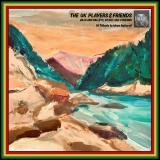
The UK Players & Friends Hills and Valleys, Rivers and Streams (A Tribute to Idren Natural) 9 brand new tracks by The UK Players. Voiced by Singers and Poets who knew Idren Natural personally. Recorded and Mixed by Supa Yout’ at Earth Works Studio, Amsterdam. Sleeve artwork and written testimonials from close friends and associates. Idren Natural aka Ras Natural aka InI Oneness, DJ, Singer, Chanter, Musician, was a pivotal player and pillar of UK/European Roots, Reggae, Dub, Sound System Culture. A humble Rastaman who did so much for so many, inasmuch as inspiring, encouraging, and connecting. He selflessly helped those less fortunate than himself. A strong advocate of the culture and philosophy of Rastafari. He was a commanding presence who lit up the stage, giving JAH all the glory. His passing was a great loss to the community. The UK Players Dub Band formed in 1996. They teamed up with Ras Natural/InI Oneness to record their debut 7” single ‘Further’ for Jah Works with Producer Jah Rej. This single gained exposure via Jah Shaka, Abashanti, and King Shiloh Sound Systems, even the famous Radio 1 DJ ‘John Peel’ played it. More recordings with Jah Rej at Seventh Sense Studio led to the debut album ‘Take Heed’. During the halcyon days of InI Oneness & The UK Players (1997-2004) they toured the UK and Europe, clocking up over 250 gigs in that time. Amongst brethren within the Rastafari community, the band became affectionately known as Ras Naturals band. Friends of Natural like Ras Iyah, Tony Roots, Sister Aisha, Wayne McArthur, and Barry Isaacs (among others) performed with them during this time. Members of InI Oneness & The UK Players never split up, throughout the years they branched out into other projects, reconvening for specials and one offs. Following Idren Naturals passing in 2022, the band stepped up to play his memorial show, where the idea formulated of making a tribute album to him. Ben King offered the use of Earth Works studio to help realise the vision. Work began with longtime live sound engineer Supa Yout’ in March 2024. Jah Rej assisted production on a number of these recordings, and sadly passed during the making of it, the last album he worked on. Various vocalists who were close to Natural, submitted vocals across the following year. The album was mixed and dubbed in March ‘25 at Earth Works by Soupa Yout' & Kingsway. Artwork and written memories/testimonials were then assembled. Everyone involved in the creation of this album knew Idren Natural personally. This album shines a spotlight on his spirit. Carrying songs of tribute, and messages for the times. ALPHA DUB: Every time the band played a gig, Natural would insist on starting with a dub. In that tradition, this album is no different. ‘Mandlion’ passing through the studio, headtopped a Melodica cut on it. Dubbed to the max by Supa Yout! NATURAL VIBE: The ‘Forward Fever’ crew from Belgium were one of the first collectives that Natural affiliated with in Europe. Here, Ras Cloud cleverly weaves all of Naturals song titles into the lyrics, creating a song in itself. WORD & FLESH: Fellowdread was born and raised in Kingston, Jamaica. Now living in Bristol, England, residing with Natural in his last days. His Poetry is rich in inflection, knowledge and wisdom, teachings that spark up the divine. ALL ABOUT LOVE: A pause for contemplation, this one stills the listener. Rootsman Rak’s words warn against complacency, and encourages action. A completely (natural) acoustic track featuring the skilled percussionist Jonah Dan. REMEMBER HIM: Inna Dubplate style, Barry Isaacs toasts to Idren in personal remembrance, reminding us all of the man he was. The track also features snippets of a phone call from Naturals oldest friend ‘Fergie Greenspears’ recounting memories. RISE UP RASTA CHILDREN: The legendary Tony Roots, graces the album with his unique delivery. Natural, The Players, and Tony go back a long way. A song of strength to affirm the soul, and rally against Babylon. Livicated to the one (Natural) SONG FOR THE RIVER MAN: During those halcyon days, many stages were shared with Albaroot, whom the band met whilst on tour in Scotland. Clark Innes (lead singer/songwriter) reminisces about the force of nature that was Natural, times shared, and that knowing, to never meet again. ONE STEP AHEAD: An interpretation of the ‘Look Inside’ riddim by Reuben Addis. Built for Sound System, it is the only track on the album that rolls into a dub. Lyrical Benjie literally entered the studio, rode the riddim without hearing it first, cutting his vocal in one take! A message for the times that sends shivers up your spine. THE PRAYER: Iman Onedub AKA Iman Gebre Iyesus, member of the Ethiopian Orthodox Tewahedo Church, met Idren Natural at Fairfield House in Bath. Here he seals the album with a recital of the Lord's Prayer in English, with Amharic. His rich textural tones elevated with a one away riddim to carry the listener home.
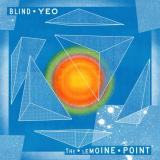
Based in Cornwall, Blind Yeo emerged from the isolation of lockdown. Built as an open collective, the project brings together musicians, visual artists and performers, developing a practice rooted in improvisation, live energy and shared creation.
The Lemoine Point, their debut album, was recorded on a disused airfield near St Agnes. The title refers to a hidden geometric centre where lines converge, a metaphor that runs through the record as past, present and future meet within a single moment.
Much of the album was captured live by a core ensemble including Sam Pert, Phil Self, Henry Greenham, Philippa Blum, Jake Sheridan, Will Greenham and Anousk Helm. These recordings are balanced by more intimate sessions, shaping a sound that moves between reworked folk traditions, electronic textures and raw, organic energy. Across the album, fragments of stories and emotions intertwine, exploring themes of love, duality and disorientation in time. Rooted in the Cornish landscape yet open in form, The Lemoine Point unfolds as a space where place, people and memory converge into a fluid and immersive whole.
Common Primitives is the second collaborative album between Andy Bell (Ride guitarist, Oasis bassist) and Essex-based harp and synth duo Masal. It’s a stunning, meditative collection which veers from kosmische to astral jazz by way of Turkish folk tunes and all the way back again.
Their first outing, 2023’s acclaimed Tidal Love Numbers, consisted of four lengthy and almost ambient tracks and is included here on vinyl for the first time as part of a two-record set with the new album. By contrast, the seven tracks that make up Common Primitives are almost concise, but also a lot more layered and complex.
“We tend to work from initial, free-jammed ideas, building form and arrangement from there,” explains Masal’s Al Johnson. “Above all, we believe you should go where the vibe takes you.”
For Andy, that vibe was very much jazz legend Pharoah Sanders’ classic 1977 album Pharoah, which was reissued a few years ago.
“It puts me into a hypnotic state,” he explains. “That’s why I worked with more guitar loops on this record. The Tisziji Muñoz part on ‘Harvest Time’ has had me in a vice-like grip for the last three years and it arrives here via the Vini Reilly filter.”
For Özlem Simsek, there is nostalgia, too, and she even adds vocals as well as her heavenly harp to the opening track, ‘After Kâtibim’, based on a traditional Turkish folk song she had sung as a child growing up in Istanbul.
From there, the album takes us on a real journey, with the apt, impressionistic titles added by Andy once it had all been pieced together. There’s the beautiful, elegant ‘I Swear We Are Infinite’; the atmospheric ‘Yuzuki Fighting Spirit’ and the beatific ‘Soap And Water’. ‘Tower Of Babylon’ was named after the novelette by Ted Chiang, its structured creation reflecting that in the story; first single ‘The Morning Of The Trip’ finds Andy playing his guitar “as if it was a waterfall”. The journey ends with ‘Rudi’s Dream – The Third Bardo’, the trio accelerating onto the autobahn for a krautrock crescendo inspired by their studio’s resident cat.
Common Primitives is the second collaborative album between Andy Bell (Ride guitarist, Oasis bassist) and Essex-based harp and synth duo Masal. It’s a stunning, meditative collection which veers from kosmische to astral jazz by way of Turkish folk tunes and all the way back again.
Their first outing, 2023’s acclaimed Tidal Love Numbers, consisted of four lengthy and almost ambient tracks and is included here on vinyl for the first time as part of a two-record set with the new album. By contrast, the seven tracks that make up Common Primitives are almost concise, but also a lot more layered and complex.
“We tend to work from initial, free-jammed ideas, building form and arrangement from there,” explains Masal’s Al Johnson. “Above all, we believe you should go where the vibe takes you.”
For Andy, that vibe was very much jazz legend Pharoah Sanders’ classic 1977 album Pharoah, which was reissued a few years ago.
“It puts me into a hypnotic state,” he explains. “That’s why I worked with more guitar loops on this record. The Tisziji Muñoz part on ‘Harvest Time’ has had me in a vice-like grip for the last three years and it arrives here via the Vini Reilly filter.”
For Özlem Simsek, there is nostalgia, too, and she even adds vocals as well as her heavenly harp to the opening track, ‘After Kâtibim’, based on a traditional Turkish folk song she had sung as a child growing up in Istanbul.
From there, the album takes us on a real journey, with the apt, impressionistic titles added by Andy once it had all been pieced together. There’s the beautiful, elegant ‘I Swear We Are Infinite’; the atmospheric ‘Yuzuki Fighting Spirit’ and the beatific ‘Soap And Water’. ‘Tower Of Babylon’ was named after the novelette by Ted Chiang, its structured creation reflecting that in the story; first single ‘The Morning Of The Trip’ finds Andy playing his guitar “as if it was a waterfall”. The journey ends with ‘Rudi’s Dream – The Third Bardo’, the trio accelerating onto the autobahn for a krautrock crescendo inspired by their studio’s resident cat.
Creole Culture is the triumphant return of Dawn Richard’s King Creole era. Steeped in history but with its flag planted firmly in the future, Creole Culture pulls elements from Richard’s heritage as a Black and Native American woman who has spent a lifetime making and engaging with music. Following New Breed (2019) and Second Line (2021), Creole Culture is akin to a panel of a triptych: a fully-realized sonic and narrative universe in which Richard, as King Creole, rebuilds her hometown of New Orleans in her image. She not only honors her city for what it was or what it gave her, but stakes a claim for it as a cradle of global culture now and for all time.
Creole Culture follows two acclaimed avant-garde R&B albums with composer Spencer Zahn — the later of which, 2024’s Quiet in a World Full of Noise, found Richard exorcising the specters of grief and trauma in the wake of her father Frank Richard’s health struggles and the killing of her cousin Cisco. It is a softer take on the brass-soaked swagger of Richard’s previous King Creole efforts, an evolution brought about when she realized she had left a crucial viewpoint out of her exploration of New Orleans: her own. “New Breed was the story of New Orleans through my father’s eyes,” Richard explains. “I used his samples, his music, his cultures, his work with Chocolate Milk, his side of the family. Second Line was my mom — her interludes riddled the album with her depiction of what is meant to be a Creole woman in New Orleans. The masculine and feminine sides of King Creole had expressed themselves through them, but the story felt unfinished, like my version of the story was untold.”
That story is, for lack of a better word, complex: at turns triumphant and tragic, sexy and mournful, braggadocious and contemplative. Creole Culture presents Richard’s New Orleans as a utopian soundscape — an intoxicating blend of R&B, soul, hip-hop, pop, and jazz — that’s survived and thrived despite the dystopian circumstances visited upon it. Richard presents the melange of influence and artifact on Creole Culture with the care of a botanist nurturing new hybrids in a rose garden.
What emerges from that care is at once delightful and unexpected, enlisting a crew of guest stars including Big Freedia, Anjelika “Jelly” Joseph, Tarriona “Tank” Ball, and Durand Bernarr for features that play against type. Tank’s turn at spoken word verse on “l v r” serves to add dimension to King Creole’s New Orleans, as does Joseph’s undeniable voice on “chuuuurch.” “I’m not normally a features girl,” says Richard, ”but King Creole can’t build a world from scratch without help. What’s beautiful about the features here — which is also true of my band and producers — is they come from people who understand the materials of the world they’re from, they’re people I love, and they’re people who are just extraordinary at what they do. They’re part of the atmosphere of this place. You need them for the record to breathe.”
In the end, that’s what King Creole creates: a space where Dawn Richard can breathe, can be at peace with herself, and let loose with others. From finding love in opening single “enough” to relishing in the Afrocaribbean futurism of “fiesta,” Creole Culture is a tremendous, freeing breath of fresh air. It captures the resolve of a woman and a place who’ve survived the unimaginable and sees the future not as something to be endured, but as something to be created. Dawn Richard has been making that future one album at a time over the course of her career. Creole Culture is her most stunning one yet.
Creole Culture is the triumphant return of Dawn Richard’s King Creole era. Steeped in history but with its flag planted firmly in the future, Creole Culture pulls elements from Richard’s heritage as a Black and Native American woman who has spent a lifetime making and engaging with music. Following New Breed (2019) and Second Line (2021), Creole Culture is akin to a panel of a triptych: a fully-realized sonic and narrative universe in which Richard, as King Creole, rebuilds her hometown of New Orleans in her image. She not only honors her city for what it was or what it gave her, but stakes a claim for it as a cradle of global culture now and for all time.
Creole Culture follows two acclaimed avant-garde R&B albums with composer Spencer Zahn — the later of which, 2024’s Quiet in a World Full of Noise, found Richard exorcising the specters of grief and trauma in the wake of her father Frank Richard’s health struggles and the killing of her cousin Cisco. It is a softer take on the brass-soaked swagger of Richard’s previous King Creole efforts, an evolution brought about when she realized she had left a crucial viewpoint out of her exploration of New Orleans: her own. “New Breed was the story of New Orleans through my father’s eyes,” Richard explains. “I used his samples, his music, his cultures, his work with Chocolate Milk, his side of the family. Second Line was my mom — her interludes riddled the album with her depiction of what is meant to be a Creole woman in New Orleans. The masculine and feminine sides of King Creole had expressed themselves through them, but the story felt unfinished, like my version of the story was untold.”
That story is, for lack of a better word, complex: at turns triumphant and tragic, sexy and mournful, braggadocious and contemplative. Creole Culture presents Richard’s New Orleans as a utopian soundscape — an intoxicating blend of R&B, soul, hip-hop, pop, and jazz — that’s survived and thrived despite the dystopian circumstances visited upon it. Richard presents the melange of influence and artifact on Creole Culture with the care of a botanist nurturing new hybrids in a rose garden.
What emerges from that care is at once delightful and unexpected, enlisting a crew of guest stars including Big Freedia, Anjelika “Jelly” Joseph, Tarriona “Tank” Ball, and Durand Bernarr for features that play against type. Tank’s turn at spoken word verse on “l v r” serves to add dimension to King Creole’s New Orleans, as does Joseph’s undeniable voice on “chuuuurch.” “I’m not normally a features girl,” says Richard, ”but King Creole can’t build a world from scratch without help. What’s beautiful about the features here — which is also true of my band and producers — is they come from people who understand the materials of the world they’re from, they’re people I love, and they’re people who are just extraordinary at what they do. They’re part of the atmosphere of this place. You need them for the record to breathe.”
In the end, that’s what King Creole creates: a space where Dawn Richard can breathe, can be at peace with herself, and let loose with others. From finding love in opening single “enough” to relishing in the Afrocaribbean futurism of “fiesta,” Creole Culture is a tremendous, freeing breath of fresh air. It captures the resolve of a woman and a place who’ve survived the unimaginable and sees the future not as something to be endured, but as something to be created. Dawn Richard has been making that future one album at a time over the course of her career. Creole Culture is her most stunning one yet.
It took a long time – ten years – for his talismanic song, ‘Ça ira tu verras’, to prove his prophecies right, at a time when, everywhere else in the world, nothing seems to be going right. And if everything is going well for Séverin, it’s because he’s managed to build himself a bulwark, an impregnable citadel, and his records now exude a whiff of simplified idealism, with the influence of Souchon and Voulzy never far from his pen and guitar as he brings his bittersweet moods to life in verses and choruses.
But above all, he knows how to invent new settings for himself, push back the boundaries, step beyond the walls of his Parisian studio to go and see how things sound elsewhere. Recorded at Chale Abbey Studios on the Isle of Wight (UK), Séverin once again wanted to let the collective spirit of his regular collaborators take centre stage. Ambroise ‘Sage’ Willaume and Jérémie Arcache, who featured on the previous album *Nouveaux Dinosaures*, once again form the backbone of the band, on guitar and keyboards respectively. Bassist Théodora Delillez (Astral Bakers) and Canadian drummer Robbie Kuster complete the band’s core line-up, which, in just six days at this electric priory, went on to achieve – judge for yourselves – nothing short of miracles.
Whilst all around us the war on falsehood rages – from AI to post-truth, all these fake debates, hypocrites and false values – here is an album that doesn’t cut corners when it comes to emotions, nor in the way it sets them to music.
“When the flesh gets cut off the soul, it’s not the end.”
More than forty years after hardCORPS emerged from a Brixton basement, ‘Metal & Flesh’ returns in a new expanded edition on double vinyl and CD, newly remastered with the full involvement of surviving members Rob Doran and Clive Pierce. Born from the collision of punk, analogue synthesisers, sequencers, disco, reggae and experimental studio techniques, hardCORPS created electronic music that was as physical and emotional as it was mechanical. The arrival of French vocalist Regine Fetet gave the group its defining identity, placing her raw, uncompromising voice against the dense machinery of Hugh Ashton, Clive Pierce and Rob Doran. Working mainly with a Roland System 100, several Roland MC4 sequencers and later an additional MC500 and Atari ST 1040 computers, etc. pp., hardCORPS always transformed limitations, accidents, distortion and human imperfection into part of the music itself. Although rooted in the early 1980s, ‘Metal & Flesh’ refuses easy nostalgia, retaining the tension, space and character that made hardCORPS unlike their contemporaries. Yet, shall we eventually mention Kraftwerk, maybe let’s quote Ian Shirley from Record Collector magazine: „’Je Suis Passée‘ was not only a love letter to Kraftwerk but penned with such verve, passion and precision that Ralf and Florian probably would have accepted a blind date at a Düsseldorf cocktail bar (…).“ And as Martin Rushent famously said in 1990: “Hard Corps were ignored in their time. Perhaps it is the burden of the adventurous and the innovative to be ignored in their time, which is sad. Don’t ignore them now.”
This new edition has been carefully remastered to preserve that character and dynamics rather than simply making the recordings louder or more ‘modern’, while the artwork has likewise been developed to reflect the band’s original identity. Metal & Flesh’ is not merely an artefact of the 1980s, but a rare and fiercely individual document of four people discovering what happens when human instinct and machines collide.
Remastered by Martin Bowes. Graphic design by hard CORPS and Steve Lippert.
Gatefold sleeve gloss lamination, printed inner sleeves with lyrics, two double-sided hand-numbered.
A quick scan of the world’s favourite crowdsourced discography reveals that Sonic Youth co-founder Lee Ranaldo was not a total stranger to crackling electric experimentation in the years following his songwriting turns of the 20-teens. Yet »The System«, ingeniously culled and sequenced from Ranaldo’s soundtrack work for Dutch filmmaker Joris Postema’s ›eco-doc‹ of the same name, nonetheless feels like a reawakening. Quietly released in a vastly different (and much more ›filmic‹) form by Doxy Music/Riva Media Records in 2025, this LP reimagines and reconfigures the initial release, including unreleased material written and recorded for the film, to lend it new stature as both a return to drone-improv form and a reunion with introspective Downtown angst.
Given the state of the world, it’s not surprising that the film Ranaldo scores – a documentary on three climate activists bruising their fists on the black iron prison of techno-fascist deathkultur – is a study in despair and futility. But rather than wallowing in navel-gazing doom and gloom, the film documents the unstoppable spirit that has animated human resistance since the time of the Pharaohs.
As it turns out, the gorgeous scope of Lee Ranaldo’s guitar palette is a perfect manifestation of the hope and despair that animates the film. But like other high-water marks in the guitar-centric soundtrack canon – the high plains raga of Bruce Langhorne’s »Hired Hand«, Neil Young’s sparse and ghostly solo transmissions on »Dead Man«, or the monolithic mantras of Popol Vuh’s »Nosferatu« – its devotion to spectral gestures and meditative song forms launches it firmly outside of the OST orbit into a universe fully its own.
It might seem like a long journey from the Lower Manhattan rhythmic grime of the album’s opener »Tajikistan (Nice to Meet You)« (reminiscent of guitar opuses like Robert Quine and Jody Harris’s »Escape«) to the ringing cowboy chords of the final track, but the narrative logic of the LP pulls the listener along as solidly as a pack horse. As the LP unwinds, and collaborators like Jim Jarmusch, cellist Leila Boudreil, Yeah Yeah Yeahs snare shaman Brian Chase, and guitarist Yonatan Gat take their places, new vistas unfurl: the ritualistic thrum of »Berlin Blockade«, the haunted overtone palaces of »Bergelmir«, and the cavernous acoustic strumming of »Instruments of Violence«. It all winds up with the high lonesome standard »Cool Water«, each unhurried note trailing off into long-tail reverb, layers of shifting vocal harmonies pulling everything skyward – a hopeful note in an album where existential dread never lurks too deeply below the surface.
In the end, »The System« functions both as a film score and a hallucinatory (mostly) instrumental guitar record, revealing a sensibility not too often spotted in the 21st century – a liminal space where the song, the jam, and the meditation merge into a blurred whole. »The System«’s expansive fabric, emerging from a collective sound circling around Ranaldo’s signature tones, envelops and ampl amplifies the contributions of its community of creators – the perfect antidote to narcissistic despair. Much like the subjects of the film light the way towards intra-generational resistance, the music of »The System« reveals a path through gathering darkness. The world could be yours if you follow.
A quick scan of the world’s favourite crowdsourced discography reveals that Sonic Youth co-founder Lee Ranaldo was not a total stranger to crackling electric experimentation in the years following his songwriting turns of the 20-teens. Yet »The System«, ingeniously culled and sequenced from Ranaldo’s soundtrack work for Dutch filmmaker Joris Postema’s ›eco-doc‹ of the same name, nonetheless feels like a reawakening. Quietly released in a vastly different (and much more ›filmic‹) form by Doxy Music/Riva Media Records in 2025, this LP reimagines and reconfigures the initial release, including unreleased material written and recorded for the film, to lend it new stature as both a return to drone-improv form and a reunion with introspective Downtown angst.
Given the state of the world, it’s not surprising that the film Ranaldo scores – a documentary on three climate activists bruising their fists on the black iron prison of techno-fascist deathkultur – is a study in despair and futility. But rather than wallowing in navel-gazing doom and gloom, the film documents the unstoppable spirit that has animated human resistance since the time of the Pharaohs.
As it turns out, the gorgeous scope of Lee Ranaldo’s guitar palette is a perfect manifestation of the hope and despair that animates the film. But like other high-water marks in the guitar-centric soundtrack canon – the high plains raga of Bruce Langhorne’s »Hired Hand«, Neil Young’s sparse and ghostly solo transmissions on »Dead Man«, or the monolithic mantras of Popol Vuh’s »Nosferatu« – its devotion to spectral gestures and meditative song forms launches it firmly outside of the OST orbit into a universe fully its own.
It might seem like a long journey from the Lower Manhattan rhythmic grime of the album’s opener »Tajikistan (Nice to Meet You)« (reminiscent of guitar opuses like Robert Quine and Jody Harris’s »Escape«) to the ringing cowboy chords of the final track, but the narrative logic of the LP pulls the listener along as solidly as a pack horse. As the LP unwinds, and collaborators like Jim Jarmusch, cellist Leila Boudreil, Yeah Yeah Yeahs snare shaman Brian Chase, and guitarist Yonatan Gat take their places, new vistas unfurl: the ritualistic thrum of »Berlin Blockade«, the haunted overtone palaces of »Bergelmir«, and the cavernous acoustic strumming of »Instruments of Violence«. It all winds up with the high lonesome standard »Cool Water«, each unhurried note trailing off into long-tail reverb, layers of shifting vocal harmonies pulling everything skyward – a hopeful note in an album where existential dread never lurks too deeply below the surface.
In the end, »The System« functions both as a film score and a hallucinatory (mostly) instrumental guitar record, revealing a sensibility not too often spotted in the 21st century – a liminal space where the song, the jam, and the meditation merge into a blurred whole. »The System«’s expansive fabric, emerging from a collective sound circling around Ranaldo’s signature tones, envelops and ampl amplifies the contributions of its community of creators – the perfect antidote to narcissistic despair. Much like the subjects of the film light the way towards intra-generational resistance, the music of »The System« reveals a path through gathering darkness. The world could be yours if you follow.
Norman Blake und Raymond McGinley machen seit 37 Jahren gemeinsam Musik bei Teenage Fanclub, und auch wenn manche Aspekte des Bandlebens mit der Zeit einfacher geworden sind, können ihnen die einfachsten Dinge immer noch einen Strich durch die Rechnung machen. Blake sagt dazu: "Es ist schwierig, wenn es darum geht, sich einen Namen für ein Album auszudenken. Vor allem, wenn man schon 12 davon gemacht hat." Der Titel ,Do Not Dare To Dream" leitet sich ab von Blakes ,I Do Not Dare To Dream", einem mitreißenden, hymnischen Song, der von klangvollen Akustikgitarren getragen und am Ende von einem Duell elektrischer Gitarren begleitet wird, die sich wie eine beruhigende Umarmung umeinander schlingen. Blake erklärt, dass der Titel jene Memes verspotten soll, die die Menschen dazu auffordern, zu träumen, was für ihn irgendwie lächerlich ist. "Ich glaube nicht, dass die Welt so funktioniert." Das 13. Album von Teenage Fanclub ist voller Songs, die ruhig und entschlossen sind und eine Bestandsaufnahme des angespannten Zustands der Welt vornehmen, ohne der Verzweiflung zu verfallen. Blakes warme, von Orgelklängen untermalte Midtempo-Ballade ,Day In The Sun" und Raymond McGinleys ,Over And Over" sprechen beide davon, wie jeder einen neuen Sinn im Leben finden kann, indem er sein Herz öffnet. "Wir können immer noch fröhlich und optimistisch sein, auch wenn die Lage nicht gerade rosig ist", sagt McGinley. Blake und McGinley werden auf ,Do Not Dare To Dream" von ihren Bandkollegen Euros Childs (Keyboards und Gesang), Francis Macdonald (Schlagzeug) und David McGowan (Bass) begleitet. Dieses Quintett spielt nun schon so lange zusammen, dass keiner der beiden Hauptsongwriter und Gitarristen von Teenage Fanclub das Bedürfnis verspürt, sich vor dem Gang ins Studio über ihre Songs den Kopf zu zerbrechen oder Arrangements auszuarbeiten. Sie warten lieber auf die Beiträge der übrigen Bandmitglieder. Die Aufnahmen fanden im Black Bay Studio in der Ortschaft Kirkibost auf der schottischen Insel Great Bernera in den Äußeren Hebriden statt. Wie langjährige Fans wahrscheinlich wissen, nimmt Teenage Fanclub jedes Album an einem neuen Ort auf, damit die einzigartige Atmosphäre dieses Ortes die Musik beeinflussen kann. Great Bernera war ihr bislang abgelegenster Aufnahmeort, was der Band half, sich auf die Arbeit zu konzentrieren, sie aber auch in einen Zustand der Ehrfurcht versetzte, da sie von der tosenden See und antiken Ruinen umgeben waren. Das Ergebnis ist eine Sammlung von Liedern, die von der richtigen Perspektive von Musikern durchdrungen ist, die schon eine Weile im Geschäft sind, aufgenommen an einem Ort, der schon noch länger existiert. Wie Blake es ausdrückt: ,Ich glaube, es läuft einfach so ab, dass man von einer Sache zur nächsten übergeht, und ehe man sich versieht, sind 30 Jahre vergangen." McGinley fügt hinzu: ,Ja, es ist schon eine ganze Weile her, seit wir mit dem angefangen haben, was wir tun, aber für uns kommt es uns vor, als wäre überhaupt keine Zeit vergangen. An dem Ort, an dem wir das Album aufgenommen haben, wurde schon vor Tausenden von Jahren gesungen. Das Leben ist kurz, aber die Musik ist ewig."
Norman Blake und Raymond McGinley machen seit 37 Jahren gemeinsam Musik bei Teenage Fanclub, und auch wenn manche Aspekte des Bandlebens mit der Zeit einfacher geworden sind, können ihnen die einfachsten Dinge immer noch einen Strich durch die Rechnung machen. Blake sagt dazu: "Es ist schwierig, wenn es darum geht, sich einen Namen für ein Album auszudenken. Vor allem, wenn man schon 12 davon gemacht hat." Der Titel ,Do Not Dare To Dream" leitet sich ab von Blakes ,I Do Not Dare To Dream", einem mitreißenden, hymnischen Song, der von klangvollen Akustikgitarren getragen und am Ende von einem Duell elektrischer Gitarren begleitet wird, die sich wie eine beruhigende Umarmung umeinander schlingen. Blake erklärt, dass der Titel jene Memes verspotten soll, die die Menschen dazu auffordern, zu träumen, was für ihn irgendwie lächerlich ist. "Ich glaube nicht, dass die Welt so funktioniert." Das 13. Album von Teenage Fanclub ist voller Songs, die ruhig und entschlossen sind und eine Bestandsaufnahme des angespannten Zustands der Welt vornehmen, ohne der Verzweiflung zu verfallen. Blakes warme, von Orgelklängen untermalte Midtempo-Ballade ,Day In The Sun" und Raymond McGinleys ,Over And Over" sprechen beide davon, wie jeder einen neuen Sinn im Leben finden kann, indem er sein Herz öffnet. "Wir können immer noch fröhlich und optimistisch sein, auch wenn die Lage nicht gerade rosig ist", sagt McGinley. Blake und McGinley werden auf ,Do Not Dare To Dream" von ihren Bandkollegen Euros Childs (Keyboards und Gesang), Francis Macdonald (Schlagzeug) und David McGowan (Bass) begleitet. Dieses Quintett spielt nun schon so lange zusammen, dass keiner der beiden Hauptsongwriter und Gitarristen von Teenage Fanclub das Bedürfnis verspürt, sich vor dem Gang ins Studio über ihre Songs den Kopf zu zerbrechen oder Arrangements auszuarbeiten. Sie warten lieber auf die Beiträge der übrigen Bandmitglieder. Die Aufnahmen fanden im Black Bay Studio in der Ortschaft Kirkibost auf der schottischen Insel Great Bernera in den Äußeren Hebriden statt. Wie langjährige Fans wahrscheinlich wissen, nimmt Teenage Fanclub jedes Album an einem neuen Ort auf, damit die einzigartige Atmosphäre dieses Ortes die Musik beeinflussen kann. Great Bernera war ihr bislang abgelegenster Aufnahmeort, was der Band half, sich auf die Arbeit zu konzentrieren, sie aber auch in einen Zustand der Ehrfurcht versetzte, da sie von der tosenden See und antiken Ruinen umgeben waren. Das Ergebnis ist eine Sammlung von Liedern, die von der richtigen Perspektive von Musikern durchdrungen ist, die schon eine Weile im Geschäft sind, aufgenommen an einem Ort, der schon noch länger existiert. Wie Blake es ausdrückt: ,Ich glaube, es läuft einfach so ab, dass man von einer Sache zur nächsten übergeht, und ehe man sich versieht, sind 30 Jahre vergangen." McGinley fügt hinzu: ,Ja, es ist schon eine ganze Weile her, seit wir mit dem angefangen haben, was wir tun, aber für uns kommt es uns vor, als wäre überhaupt keine Zeit vergangen. An dem Ort, an dem wir das Album aufgenommen haben, wurde schon vor Tausenden von Jahren gesungen. Das Leben ist kurz, aber die Musik ist ewig."
West Coast luxury rap meets corner-store nostalgia on Two4Two, Jay Worthy's ode to late-night cruises and 40oz street dreams. Wrapped in artwork inspired by stacks of classic malt liquor bottles, the project captures the unmistakable G-funk-infused atmosphere that has made Worthy one of the most authentic voices in modern West Coast hip-hop.
For the very first time, Two4Two arrives on vinyl in a deluxe collector’s edition, including an exclusive liquid-filled pressing as bold and distinctive as the project itself.
This first-ever physical release also includes 2 previously unreleased bonus tracks, making this a definitive edition of Two4Two and an essential piece for Jay Worthy collectors.
Norman Blake und Raymond McGinley machen seit 37 Jahren gemeinsam Musik bei Teenage Fanclub, und auch wenn manche Aspekte des Bandlebens mit der Zeit einfacher geworden sind, können ihnen die einfachsten Dinge immer noch einen Strich durch die Rechnung machen. Blake sagt dazu: "Es ist schwierig, wenn es darum geht, sich einen Namen für ein Album auszudenken. Vor allem, wenn man schon 12 davon gemacht hat." Der Titel ,Do Not Dare To Dream" leitet sich ab von Blakes ,I Do Not Dare To Dream", einem mitreißenden, hymnischen Song, der von klangvollen Akustikgitarren getragen und am Ende von einem Duell elektrischer Gitarren begleitet wird, die sich wie eine beruhigende Umarmung umeinander schlingen. Blake erklärt, dass der Titel jene Memes verspotten soll, die die Menschen dazu auffordern, zu träumen, was für ihn irgendwie lächerlich ist. "Ich glaube nicht, dass die Welt so funktioniert." Das 13. Album von Teenage Fanclub ist voller Songs, die ruhig und entschlossen sind und eine Bestandsaufnahme des angespannten Zustands der Welt vornehmen, ohne der Verzweiflung zu verfallen. Blakes warme, von Orgelklängen untermalte Midtempo-Ballade ,Day In The Sun" und Raymond McGinleys ,Over And Over" sprechen beide davon, wie jeder einen neuen Sinn im Leben finden kann, indem er sein Herz öffnet. "Wir können immer noch fröhlich und optimistisch sein, auch wenn die Lage nicht gerade rosig ist", sagt McGinley. Blake und McGinley werden auf ,Do Not Dare To Dream" von ihren Bandkollegen Euros Childs (Keyboards und Gesang), Francis Macdonald (Schlagzeug) und David McGowan (Bass) begleitet. Dieses Quintett spielt nun schon so lange zusammen, dass keiner der beiden Hauptsongwriter und Gitarristen von Teenage Fanclub das Bedürfnis verspürt, sich vor dem Gang ins Studio über ihre Songs den Kopf zu zerbrechen oder Arrangements auszuarbeiten. Sie warten lieber auf die Beiträge der übrigen Bandmitglieder. Die Aufnahmen fanden im Black Bay Studio in der Ortschaft Kirkibost auf der schottischen Insel Great Bernera in den Äußeren Hebriden statt. Wie langjährige Fans wahrscheinlich wissen, nimmt Teenage Fanclub jedes Album an einem neuen Ort auf, damit die einzigartige Atmosphäre dieses Ortes die Musik beeinflussen kann. Great Bernera war ihr bislang abgelegenster Aufnahmeort, was der Band half, sich auf die Arbeit zu konzentrieren, sie aber auch in einen Zustand der Ehrfurcht versetzte, da sie von der tosenden See und antiken Ruinen umgeben waren. Das Ergebnis ist eine Sammlung von Liedern, die von der richtigen Perspektive von Musikern durchdrungen ist, die schon eine Weile im Geschäft sind, aufgenommen an einem Ort, der schon noch länger existiert. Wie Blake es ausdrückt: ,Ich glaube, es läuft einfach so ab, dass man von einer Sache zur nächsten übergeht, und ehe man sich versieht, sind 30 Jahre vergangen." McGinley fügt hinzu: ,Ja, es ist schon eine ganze Weile her, seit wir mit dem angefangen haben, was wir tun, aber für uns kommt es uns vor, als wäre überhaupt keine Zeit vergangen. An dem Ort, an dem wir das Album aufgenommen haben, wurde schon vor Tausenden von Jahren gesungen. Das Leben ist kurz, aber die Musik ist ewig."
Composer and multi-instrumentalist Koen Holtkamp has spent more than two decades shaping a body of work at the intersection of ambient, experimental, and electroacoustic music. Known for his role in the influential duo Mountains, as well as a solo catalog defined by texture and spatial awareness, Holtkamp has long explored how sound interacts with environment and perception. With Nightlife, he enters a new phase of that inquiry, one shaped as much by physical relocation as artistic evolution.
After leaving Brooklyn for the relatively rural setting of New York’s Hudson Valley, Holtkamp found himself immersed in nature and embracing a slower way of life, a shift that directly informed the album’s creation. Rather than rushing into a new project, he allowed the space itself to guide him, focusing on experimentation and play instead of a fixed outcome. Over time, a new instrument emerged from his modular system, built around physical modeling techniques that emulate plucked string sounds. Drawing on a deep affinity for acoustic traditions, from guitar soli to the kora and other chordophones, he began translating those influences into an electronic language, creating music that feels tangible, effusive, and even intimate, despite its synthetic nature. As the pieces took shape, Holtkamp expanded the project into a kind of imagined ensemble. Composed with specific collaborators in mind, the album features extensive contributions from drummer Greg Fox and saxophonist and flutist Matt Bauder, whose performances subtly reshape the material and draw it toward more fluid, song-like forms, alongside a guest appearance from Ben Vida on synth bass. Yet even as Nightlife occasionally resembles a band in motion, its construction resists traditional cohesion. Acoustic and electronic sources coexist to create a hyper-dimensional sense of space, with each element deliberately placed in its own distinct environment, yielding a complex yet inviting setting that feels both otherworldly and completely natural.
Much of the album was created during late-night sessions, which became a kind of personal ritual and ultimately inspired its title. Nightlife unfolds as a series of finely detailed environments, where stillness, texture, and subtle interplay take precedence over momentum. Each piece invites close listening while remaining open and unforced, reflecting both a change in pace and a deepening of focus. The result extends Holtkamp’s ongoing interest in how sound can shape, and be shaped by, the spaces we inhabit.
OK, so the original pressing of the Heartstopper vinyl box set sold out in 2.5 hours.... Incredible!
We're making another version available. This is basically the same version, except it's NOT numbered. Also, this pressing will be released on October 9.
Heartstopper is the critically acclaimed Netflix coming-of-age romance that has captured the hearts of millions around the world. Based on the bestselling graphic novels and webcomic by Alice Oseman, the story follows Charlie Spring and Nick Nelson as they navigate friendship, love, identity, and growing up. Praised for its authentic representation and warmth, Heartstopper has become a cultural phenomenon, earning a devoted global fanbase and widespread critical acclaim. The series comprises three seasons, which aired between 2022 and 2024, followed by a feature-length film in 2026.
An essential part of the series’ emotional impact is its music. Across the series and film, Adiescar Chase’s music beautifully underscores the characters’ journeys, capturing the excitement of first love, the uncertainty of growing up, and the quiet intimacy of everyday moments. Her compositions have become an integral part of the Heartstopper experience, adding depth and atmosphere to the story’s most memorable scenes.
In collaboration with Netflix, Music On Vinyl proudly presents the complete Heartstopper soundtrack on vinyl for the very first time. This deluxe box set brings together the original scores from all three seasons of the series and feature film across four releases, pressed on stunning marble-coloured records in blue, pink, yellow, and orange, and housed in a beautifully crafted collector’s box. The set is complemented by an 8-page booklet featuring exclusive liner notes by Alice Oseman, four A4 art cards showcasing the original artwork from each release, and a Heartstopper diary for personal use, inspired by the series. Together, these carefully curated elements make this the definitive collector’s edition, celebrating the music and legacy of Heartstopper in a truly special format.
Edge Conditions is a fresh look at the beat-forward electronic music of Jeremiah Chiu. In Electric Time, his 2023 first-thought-best-thought album recorded at theVintage Synth Museum in LA, offered a glimpse a solo process and sound, fast becoming a fan favorite. In many ways this new work is a total reset. Following two ambient-leaning duo albums with Marta Sofia Honer and a pair of improvisatory trance-jazz LPs with LA quintet SML, Edge Conditions settles Chiu into a world of layered, alternately dance-able or chillout-able, rhythm excursions a la classic Four Tet or Aphex Twin.
Edge Conditions is a fresh look at the beat-forward electronic music of Jeremiah Chiu. In Electric Time, his 2023 first-thought-best-thought album recorded at theVintage Synth Museum in LA, offered a glimpse a solo process and sound, fast becoming a fan favorite. In many ways this new work is a total reset. Following two ambient-leaning duo albums with Marta Sofia Honer and a pair of improvisatory trance-jazz LPs with LA quintet SML, Edge Conditions settles Chiu into a world of layered, alternately dance-able or chillout-able, rhythm excursions a la classic Four Tet or Aphex Twin.
A space is often described by its dimensions. The height of the ceiling, the expanse between walls. Division into functional elements of varying density follows. We have ideas of how such dimensions should be balanced to work well for sound — the classical concert hall, a Northward mastering room.
It’s tempting to try and use this idea of space to understand Space the group (Lisa Ullén, Elsa Bergman, Anna Lund). To calculate their cartesian co-ordinates: dynamics that run from whisper soft to punishing, shaking force; Ullén’s piano running the full expanse of the frequency spectrum; the mix of sudden, surprising and suggested variations in density (the space) that generates their musical structures.
But (a) space is a social phenomenon where meaning is accumulated and possibilities created by and through a constantly shifting set of social relations and their histories and entanglement inside and beyond the physical structures of a room or building. Reduced to its raw dimensions, Cafe OTO shouldn’t sound good: the low ceiling, the hollow void underneath the stage-not-stage, the hard glass windows out onto the street. But OTO as a social space — for gathering close to listen; the serious pursuit of a convivial good time (its productive mythology that an OTO audience is both up for it but also expects more); and then the idea of all that has happened before and what will come; that this is also part of ‘the music’ and changes what sounds to the point that none of those cartesian co-ordinates matter.**
It’s less of shock that Space sound good. Lisa Ullén is easily the most singular pianist in Sweden right now and Elsa and Anna’s ability to reroute in realtime reaffirms just how well they function as a group. The trio might have got their shit together holding down the rhythm section for the first incarnation of Anna Högberg Attack — but much like Högberg’s ongoing pursuit of artistic renewal, the trio avoid being shackled to any ideas about what a piano trio should be and there is something that happens (happened) in that room, on that night, with those people that made for something beyond just good.
It’s a gift that the sound of every concert at OTO gets recorded. A choice handful of these transcend their decoupling from that social space and radiate the room’s attendant energies. This record is one of them.
** See Jack Halberstam in Fred Moten & Stefano Harney, The Undercommons (2013): “…we must refuse the idea that music happens only when the musician enters and picks up an instrument; music is also the anticipation of the performance and the noises of appreciation it generates and the speaking that happens through and around it, making it and loving it, being in it while listening."
Blume returns to James Tenney's Postal Pieces with a second volume: the three Swell Pieces and Koan, written for Alison Knowles, Pauline Oliveros, La Monte Young and Malcolm Goldstein, on vinyl for the first time from one of the key suites of 20th Century avant-garde music.
In 1970, James Tenney (1934-2006) reversed the entropy of his own life and went west. After spending the majority of the post-war years at the centre of cultural ferment in New York, he accepted a position at the newly inaugurated California Institute of the Arts (CalArts), alongside Allan Kaprow, Simone Forti, John Baldessari, Nam June Paik, Alison Knowles, Morton Subotnick, Harold Budd and Charlemagne Palestine. While the move began an enduring period of relative obscurity, Tenney quietly remained one of the most distinct and groundbreaking composers of his generation, producing a remarkably focused body of work inquiring after the elemental character and perception of sound.
Among the most celebrated of his efforts are the Postal Pieces, a suite of eleven compositions completed in 1971. Citing his strong dislike of writing letters, Tenney sent his friends short scores on the back of postcards. The eleven pieces are composed around three themes: his concept of swell form (utilizing repetition and progressing through a structurally symmetrical arch), intonation, and the desire to produce "meditative perceptual states."
Composed for a group of friends - the visual artist Alison Knowles, the composers Pauline Oliveros and La Monte Young, and the composer and violinist Malcolm Goldstein - the four works on this second volume are intimate, poetic and discreet. They were written roughly contemporaneously with the formation of minimalism by many of Tenney's closest friends, and share its elements of chance, durational tone, repetition and constraint, but they approach them on different terms, anticipating the more complex forms of post-minimalism. Rooted in gestalt theory, they are music in which the composer almost entirely disappears, offering greater attention to the artists to whom they were sent and to the subjective experience of the listener.
A student of Carl Ruggles, John Cage, Harry Partch and Edgard Varèse, an active member of Fluxus, a pioneer of computer music at Bell Labs and a collaborator of Carolee Schneemann, Tenney represents a winding thread connecting the entire history of American avant-garde and experimental music. The second collection by Blume attending to the Postal Pieces, recorded by The Barton Workshop under the direction of James Fulkerson, follows the long sold-out first volume (BLUME 022). It comes with exact replicas of the original postcard graphic scores and newly commissioned liner notes by Bradford Bailey.
"Back in 2022, Ban Ban Ton Ton raved about George T’s then digital-only release, “Roll On, Kings Cross”. We described it as a “dynamite dose of poetry and digidub.” Likening the prose – which describes a train journey from the coast to the city – to Michael Smith and Joe Duggan, while comparing the production to Dennis Bovell’s remixes of Jarvis Cocker’s “Swanky Modes”, and The Sabres Of Paradise’s “Wilmot”. Melodica-led with a hefty post-punk flavour, its dub, which focuses on manipulating and morphing the bass-line, we called “hollowed out house.”
These tracks have now been pressed to vinyl for the second release on new imprint Noetic Rhythm, where they’re joined by Leonidas’ “Great Northern” mix. Eschewing his usual futuristic ethno techno jacking, here he drops into roots reggae. Creating something more skanking, more stepping. An extended “discomix” showered in filtered, Mutron Bi-phased percussion, ghostly horns and peppered with the odd syndrum pop. Washes of sampled surf appropriately accompanying George informing us that “to the left there’s the sea.”
The 12 also features, “Dr Doctor”, a fresh collaboration with Yas Mine, The singer / guitarist’s French vocals countering George’s Matt Johnson-esque delivery, and a John Barry / “Midnight Cowboy”-like melodica melody serenading the song’s slow, squelchy, electronic skanking. The dub, instead, showcasing Yas’ fine fretwork." BAN BAN TON TON review
-
"These tracks are massive! I love Roll On King's Cross the best" KAY SUZKI (Time Capsule)
"I played the dub (Dub On, King's Cross) at a club in Oslo alongside some Maurizio and it sounded great. Bit of an oddball." Also played on NTS Radio and in Mixmag mix. JONNIE WILKES // OPTIMO
"Really digging Mr Demure when he drops into dubwise" DR ROB // BAN BAN TON TON
"Yes. Nice" NICK THE RECORD
"Awesome" JONNY ROCK
"I really like this EP... Love the Leonidas dub!" CEDRIC WOO (Beauty & The Beat, LDN)
"Love the blend of Augustus P vibes with a post punk dub feel. Bingo!" DICKY TRISCO
"I love it and will be playing" TREVOR FUNG (Ibiza Legend)
"Yes this is dark but kinda friendly.... brilliant...It's like ghost town ...I love Leo's mix" FOR MANKIND (Pikes Ibiza)
"Love the release and LOVE LOVE LOVE Dr Doctor!!!! Psyched to play this one out all weekend." ZILLAS ON ACID // James Weissinger (Philadelphia, US)
"This is amazing. Dub on kings cross is a banger - really love this one" ARVEENE
"Loving the Leonidas dub" ATEMI (Blackbush Orchestra / Abstrack)
+
PREVIOUSLY
"Melodica heaven" JD TWITCH/OPTIMO (RIP)
"I love this" IVAN SMAGGHE
"It's hot!!" JONNY ROCK
+ plays/support from:
DON LETTS (BBC 6Music)
TOM RAVENSCROFT (BBC 6Music)
HARRI (Sub Club)
[f] Roll On, King's Cross [Leonidas' Great Northern Mix] 06:54
[g] Dr Doctor [Instrumental Mix] 03:25
From the discovery of her smoke 'n' honey battlecry, through her baptism of fire in the Bronx blues clubs, onto backup vocals for giants like Joe Louis Walker and Popa Chubby - before finding her own voice with the solo career that exploded in 2016 - the award-winning New York singer-songwriter's road-scuffed leather boots have barely touched the ground. Now, Schorr releases Running Wild: the highly anticipated third album whose songs pulse with empowerment in dark times. "It's about defiance, selfdiscovery, reflection, resilience and freedom," she says. "I want these songs to lift people above the grind.
A year after the release of Adriatique’s debut LP, ‘Nude’, Afterlife presents a seven-track remix package to breathe new life into the originals.
The album found Adriatique, the duo of Adrian Shala and Adrian Schweizer, explore a more downtempo, contemplative sound than they were known for. Its profound musicality makes rich source material for a set of dancefloor interpretations, which Tale Of Us have curated together with Adriatique for the label’s 30th release.
First is Tale Of Us and Mathame’s version of ‘Mystery’, where they extend the blissful tones and Jono McCleery’s vocals into a euphoric dancefloor cut. Next Solomun brings some electro flair to the vocoder-led title track, before Kobosil toughens up ‘Tachykardia’ with a warehouse-ready kick drum and twists the serene voice of Delhia De France. Rampa is another new name for Afterlife Recordings; he gives ‘Nude’ a slick, techy overhaul to complete the vinyl release in fine style.
The digital release contains an Agents Of Time epic in their remix of ‘Buchla’s Dreaming’, Johannes Brecht’s shimmering take on ‘Ray Reincarnation’ and a chopped-up remix of Mystery by Isoleé. A diverse, tastefully-executed remix EP which does justice to the quality of Adriatique’s album.
out of Stock
Last delivered 6 years ago available to reorder, subject to availability
Deathbomb Arc has a long history of bringing unlikely artists together for collaborations. From True Neutral Crew featuring Grammy winner Daveed Diggs (clipping.), SB The Moor, and members of Ratsmagick to the Arc Mountain album which paired artsts from the Deathbomb and Hausu Mountain rosters including Fire-Toolz (WARP) and They Hate Change (Jagjaguar). Now Deathbomb is excited to share this surprise crew release from BBBBBBB, Fatboi Sharif, and Ratsmagick, entitled 'Christmas in Sodom'.
All three acts come together for the title track, and then contribute solo efforts to expound on the dark absurdist themes in their own manner, providing a deconstruction of how all the styles were combined.
The duo of BBBBBBB are leaders of the underground electronic hardcore scene Japan, often playing alongside their peers and collaborators, Dos Monos. BBBBBBB released 'Positive Violence' on Deathbomb Arc last year and will release their followup with the label this coming fall in conjunction with their 2nd tour of the UK/EU.
Fatboi Sharif's most recent full lengths are an impressive one-two punch released by Deathbomb Arc and then Backwoodz. Sharif returns to the EU/UK this Sept, after a special appearance at the Clipping. curated 'Splendor & Misery' fest in New York in Aug.
Relative newcomers, the Philadelphia based Ratsmagick, are masterminded by Dennis Martinelli of Knifeplay. This loose 7ish piece group includes Deathbomb Arc founder Brian Miller of Foot Village (Fat Cat) as one of their two, dueling drummers. Outside of Knifeplay's extensive touring schedule, Dennis has found time to finish a Ratsmagick full length due on Deathbomb this winter.
Electronic mainstays and longtime collaborators Steve Bug and Stefan Braatz return to cult NYC label Nu Groove with the vinyl edition of their four-track EP, Circles. Showcasing a refined blend of new deep house, acid and underground club sonics, the EP opens with ‘Circles’, featuring the Chicago legend Virgo Four whose vocals bring a timeless energy to the record. A driving Beat Mix follows, transforming the original into a tougher, more DJ-ready cut. On the flip, ‘Nu Acid’ dives into raw machine funk and hypnotic pressure, while ‘Thiz Mood’ closes the EP while highlighting the duo’s mastery of tension and rhythmic detail. Rooted in the spirit of classic house while sounding firmly contemporary, Circles EP is another essential addition to the Nu Groove catalogue.
out of Stock
Last delivered 7 days ago available to reorder, subject to availability
Der belgische Pianist Jef Neve, sowohl klassisch als auch im Jazz ausgebildet, legt ein sehr persönliches Soloalbum vor. Die elf Titel führen bis in seine Kindheit zurück, wo er schon am Klavier saß und in seiner Fantasie den verschiedenen Tönen bestimmte Farben zuordnete. Nach 25 Jahren auf der Bühne, Tourneen um die ganze Welt und zahlreichen Begegnungen mit Menschen und Orten stellt "Key Energy" eine Art Zwischenbilanz dar.
Thursday, 2025. Philadelphia. South Philly, to be precise. A basement, to be even more precise. And not just any basement, but the subterranean headquarters of Zillas On Acid.
Which is where Roman Flügel found himself, presumably with good intentions. Some time before that, he had decided to wake Sister Midnight from its slumber.
But rather than simply carrying on where things had left off, a new idea was needed. Enter Sister Midnight Special Products: a new series dedicated to collaborations, chance encounters and other musical situations that deserve to become records.
No grand manifesto, no five-year plan. Just making music with people you like, in places you happen to find yourself, and seeing what happens. Special Product 01 is “Conga Dream,” born from a basement jam with Zillas On Acid and apparently unwilling to behave itself ever since.
Three musical free spirits meet somewhere between the basement, the dancefloor and the more pleasantly confused corners of the mind. Club music is involved, certainly, but functionality has been politely asked to wait outside. Instead: pocketprotector synthesizers, a little E-mu Proteus 3, assorted electronic activity and, as advertised, congas.
The result is less a tool than a small trip. Or perhaps a tool for taking small trips.
Either way, it works.
Zillas On Acid put it like this:
“A basement jam deep beneath the streets of Zilladelphia yields surprising results: pocket protector synths, a dash of E-mu Proteus 3, and yes of course the aforementioned congas.”
And with that, Sister Midnight Special Products is officially open for business.
Dream on.
Mastered by Mike Grinser at Man Made Mastering.
Artwork by Saskia Randt.
out of Stock
Last delivered 6 days ago available to reorder, subject to availability
VRIL returns to Delsin with KRUX. The crucial point, the moment where everything converges. On KRUX, a new direction was chosen, built on the strong foundation of VRIL's dub-driven sound. For the first time, VRIL presents multiple artist collaborations on his new album. Working closely with friends and fellow musicians has been a crucial part of shaping KRUX where five collaborations with Aurora Halal, Verraco, Rene Wise, AZARI and ATEQ form the core of a 13-track journey. Framed once again by the visionary artwork of Daniel Martin Diaz, KRUX captures a moment of convergence: between generations, humans and machines. Fusing past, present and future into a singular moment.
out of Stock
Last delivered 5 days ago available to reorder, subject to availability
Chase & Status announce their forthcoming album Generic Everything, out 9th October 2026, alongside new single “Gone Too Far” featuring Debbie. The 10-track project brings together an expansive cast of collaborators including J Hus, Little Simz, Skrillex, Giggs, D Double E, Blanco, IRAH, Col3trane and more, continuing the duo’s long-standing ability to connect scenes, generations and sounds across British music.
Generic Everything follows a landmark period for Chase & Status, which has seen “Baddadan” spend over 15 weeks in the UK Top 10 and achieve Platinum status, while “BACKBONE” featuring Stormzy became their first ever UK Number One single. Alongside a BRIT Award for British Producer of the Year, a record-breaking sold-out UK arena tour and their Milton Keynes National Bowl takeover, the duo continue to operate at a career-defining level more than two decades in.
Built around the idea of resisting creative conformity in a world increasingly shaped by algorithms, endless content and more, Generic Everything sees Chase & Status once again refusing to be confined by genre.
Moving between rave, rap, soundsystem culture and electronic music, the album pairs their unmistakable production with some of the most distinctive voices in UK music and beyond, capturing a duo still driven by the instinct to keep evolving, collaborating and pushing their sound forward.
out of Stock
Last delivered 7 days ago available to reorder, subject to availability
Downtempo legends Coyote offer up a full length of Balearic bliss with Go With The Tide on Universal Cave Records. With one foot in timeless chillout electronica and another in the dubby soundsystem psychedelia of our times, Coyote expand on their distinct cosmic groove with seven songs that dive deep into the sonic underground.
Go With the Tide is a tale of three islands. Coyote drop a heavy dose of modern UK stylings, rumbling bass and chilling vocals, on top of a familiar White Isle dream state while radiating Jamaican dub sensibilities. It’s like coming home from summer holiday and returning to the day to day of city life. The nights grow longer and the air chills, but the shimmering sparkles of sunshine still reflect and refract through your soul.
Coyote pick up that tension between the escapism of summer and the heavier waves of fall, and weave it into a remarkable LP that makes as much sense for a forever summer as it does for an impending winter. For whichever side of that you fall, just Go With The Tide.
Long overdue reissue of classic Scottish ambient techno banger ‘Mindweeds’, originally released in 1993 on the Pure-affiliated T&B Vinyl label run by Keith McIvor (JD Twitch) and Andy Watson (Brainstorm). With a Discogs demand ratio at about 300 have : 2000 want, and used prices peaking at over £100, now seems to be the right time for a re-release.
State of Flux were Roger Elliott and Dave Clark (aka Sparky, LUMA, Truffle Club and main man behind Kübler-Ross). They first met at Glasgow’s Strathclyde University in 1990, bonding over a shared love of weasel racing, German sausages and “man-duos” like The KLF and The Shamen. Dave was fully pubescent and already had a synth and drum machine, while Roger – a late developer – bought “another cheap synth, a Commodore Amiga for sequencing and a tiny mixer with no EQ”. For two long years they concentrated hard on “churning out unlistenable pish”, admittedly clueless about what they were trying to do.
Then – out of nowhere in the summer of 1992 – a flatmate’s Jello Biafra spoken word CD (‘I Blow Minds For A Living’) provided the inspiration to unlock the spark of dynamite that set the raving world on fire. Sampled using a Walkman* cassette** tape*** on playback (a decision the pair soon came to regret every time the track was subsequently performed live), Jello’s pilfered rant would soon become the crucial glue that held together the burgeoning kaleidoscopic helicopter spliff that is ‘Mindweeds’, loaded as it was – and indeed still is – with a veritably seething morass of cheeky electronic blims, nasal filter cheese and gay Caledonian spunk.
* a vintage portable listening device roughly the size of 4 iPhones stacked on top of one another and weighing the same as a small tub of yoghurt
** a plastic cartridge enclosing 2 miniature spools of magnetically coated, polyester-type plastic film (magnetic tape), notoriously convenient for pirating copyright material and secreting in one’s underpants for transporting between illicit market trader stalls
*** thin ribbon coated with ferromagnetic particles, usually ferric oxide but also chromium dioxide, "pseudochrome" ferricobalt or iron-cobalt-nickel “metal” formulations – with the latter types sounding marginally less crap
Playing demos of the track to friends, one thing led to another and a copy arrived with Twitch. Meeting the legends behind Pure in late 1992, a release was scheduled for summer 1993… but not before a promotional live gig in February of that year, supporting their heroes The Black Dog. Confessing that they “didn’t have a clue how to play live”, the duo played it safe, “went to a studio near Edinburgh airport to record the ‘live’ show” and then “mimed it off a DAT” at the gig, “standing in front of unplugged synths”. Soon after this, they recorded the full EP at Finitribe’s ‘Finiflex’ studio in Leith, Edinburgh and the record came out as planned that summer – the same week as Underworld’s ‘Rez’.
The record received high praise, appeared in many big-name DJ charts, sold out very quickly and was repressed within a few weeks, selling several thousand copies by the end of 1993 – no mean feat in an era when people had to use landline phones ****, faxes ***** or good old-fashioned carrier pigeons ****** to ascertain literally anything about the outside world, what was cool, where to buy the cool shit, or how to meet people and have fun.
**** a fixed communication device that connects to a telephone network using physical wires, cables, or a stationary base unit tied to a specific geographic address, using a handset incorporating a mouthpiece featuring a small metal disk and carbon grains, converting sound pressure from the human voice into a flow of electrical waves caused by these grains being squeezed together, before the variable signal is transmitted down DC voltage-powered copper wire and rerouted by a central exchange to arrive at the earpiece magnet of the target receiver’s handset, moving a small speaker cone accordingly so the message is intelligible WITHOUT THE PERSON SPEAKING ACTUALLY BEING PRESENT
***** as above, but for the d/Deaf
****** flying vermin riddled with diseases and capable of surviving nuclear armageddon
Soon Roger and Dave became sick of the Walkman being the only instrument played live in their set: with their new found fame and riches, they invested in a case for their Amiga to transport it around Scotland, while also putting in the hours on how to pretend to play live better with a sequencer and synths that were FINALLY plugged in. Following the release of ‘The Mercury EP' in April 1994, they embarked on a full tour of the UK and even managed to part ways and end the band by June that year.
This reissue includes the two original mixes of ‘Mindweeds’ recorded at Finiflex (‘Original’ and engineer ‘Fred's Fancy’), the original cassette demo (mastered directly from the actual recording sent to Twitch & Brainstorm in 1992) and a live version recorded at the Birmingham club night 'Oscillate' in April 1994.
Lunfardo presents Heroica, the fifth chapter in its conceptual series, inspired by the Three Defences of Paysandú, events that remain embedded in the city’s memory and the history of Uruguay.
Among them, the Heroic Defence of Paysandú (1864–1865) stands as the most enduring symbol: a weeks-long resistance led by Leandro Gómez against overwhelming forces during the Brazilian intervention and allied advance. Across generations, these events have come to embody resistance, sacrifice and permanence.
Heroica is Lunfardo’s tribute to Paysandú, the city where the label was born.
The release explores this narrative through the work of Andrew Lagowski, one of experimental electronic music’s enduring figures. Active since the early 1980s, Lagowski has released more than 60 albums and over 10 vinyl singles, leaving a lasting mark across electronic, experimental and techno music.
For Heroica, Lunfardo revisits selected works from Lagowski’s 1995–2000 CD era, presented on vinyl for the first time, alongside a contemporary composition produced in September 2024.
Bridging archival electronics and contemporary vision, Heroica unfolds through themes of resistance, memory and permanence.
Artwork by @estudio.polar
For more info @Lunfardo.records
out of Stock
Last delivered 7 days ago available to reorder, subject to availability
Gary Bartz und das neue Londoner Ensemble Your Brother’s Keeper präsentieren mit "Where Rivers Meet" ein tiefgründiges und intuitives Studioalbum, das die seltene Begegnung zweier Generationen von Jazzmusikern einfängt. Das Album, das pünktlich zum 20-jährigen Jubiläum von Brownswood erscheint, vereint Bartz' Tradition mit der jungen, pulsierenden Szene Londons. Das Ergebnis ist Musik, die sich mit Offenheit und Intensität entfaltet, getragen von tiefem Zuhören und gemeinsamer Improvisation.
Im Zentrum des Projekts steht Bartz, eine der einflussreichsten Vertreter des modernen Jazz. Der Saxophonist, dessen Karriere sich über mehr als fünf Jahrzehnte erstreckt, machte sich einen Namen durch Auftritte mit Charles Mingus, Max Roach und Art Blakey, bevor er sich Miles Davis in dessen elektrisierender Phase der frühen 1970er-Jahre anschloss. Mit seinen gefeierten Aufnahmen mit der NTU Troop wurde er schnell zu einer prägenden Figur des Spiritual Jazz und schuf ein Werk, das Generationen von Musikern und Zuhörern gleichermaßen begeistert. Sein Spiel – lyrisch, tiefgründig und unverkennbar gefühlvoll – zählt nach wie vor zu den markantesten Stimmen des Jazz.
Das Album markiert zudem die Gründung von Your Brother’s Keeper, einem neuen Kollektiv um Schlagzeuger und Produzent Jake Long (Maisha), dessen musikalischer Dialog und die Improvisation tief in der Musik verwurzelt sind. Mit Ali MacSween (Piano, Synthesizer, modulare Effekte), Axel Kaner-Lidstrom (Trompete), Twm Dylan (Kontrabass), Tim Doyle (Percussion) und Chelsea Carmichael (Tenorsaxophon) sowie Long am Schlagzeug spiegelt die Gruppe eine Szene wider, die den Sound des zeitgenössischen Jazz im letzten Jahrzehnt maßgeblich geprägt hat.
out of Stock
Last delivered 8 days ago available to reorder, subject to availability
Regarded by many as the greatest funk album of all time, ‘One Nation Under A Groove’ was recorded at United Sound in Detroit & included a live track from their concert appearance at the Monroe Civic Center in Louisiana in April 1978. The band’s tenth studio album released during September 1978 was also their most commercial & gave the band their first platinum disc. The iconic title track was an international hit and a US R&B No.1. With lead guitarists Michael Hampton & Eddie Hazel dazzling, the personification of funk Bootsy Collins on bass, Bernie Worrell & Walter “Junie” Morrison’s keyboard wizardry & many more, the album was produced by the genius of George Clinton. Regularly ranked at or near the top of various “best album” lists, ‘One Nation Under A Groove’ is mastered for vinyl in a deluxe facsimile gatefold sleeve with booklet & lyric inner sleeves, all housed in a protective PVC sleeve. The albums’ original bonus songs are now included on a second 12-inch “Special EP” which adds the rare 11-minute “Disco Mix” of ‘One Nation Under A Groove’ to replicate the original first UK pressing from 1978. FUNKADELIC Masterminded by the larger-than-life figure of George Clinton, Funkadelic was a key component of his influential P-Funk empire. Funkadelic’s unique combination of Rock, Psychedelia, R&B & Soul led to the band crossing over to the pop mainstream & gaining a vast international following, becoming one of the most important & influential groups in music. On 6 May 1997, Parliament / Funkadelic were inducted into the Rock & Roll Hall Of Fame by Prince. To commemorate six decades of thrilling & delighting fans, George Clinton returned to the stage in 2022 for a series of concerts. To celebrate, Charly have reissued Funkadelic’s classic four albums ‘Hardcore Jollies’; ‘One Nation Under A Groove’; ‘Uncle Jam Wants You’; & ‘The Electric Spanking Of War Babies’ (originally released by Warner Bros during a golden period for the band between 1976-1981). Each album will be available as deluxe gatefold Digi-Sleeve CDs in PVC wallets + obi-strip & facsimile-edition gatefold LPs on 180-gram black vinyl & limited edition 180-gram colored vinyl + 1970s-style obi-strip in a protective PVC sleeve. “They played a HUGE role in creating the future of music.” PRINCE
out of Stock
Last delivered 8 days ago available to reorder, subject to availability
In the early 90s, led by Nicola Conte, the Fez collective in Bari, Italy, reshaped contemporary jazz through groove, experimentation and a distinctly Mediterranean sensibility. Within this environment the earliest recordings associated with what would become Schema Records first appeared, released at the time through Right Tempo. With a series of three 45rpm releases Schema Records revisits some of its earliest productions, all newly remastered from the original masters. This second 7” reveals two complementary sides of Quintetto X’s identity. On the A-side, “Senza Paura” reimagines a classic made famous by Ornella Vanoni with subtle jazz harmonies and elegant grooves. The B-side brings back Jorge Ben’s “Balança Pema” reinterpretation; rich with Brazilian flavours, jazz improvisation and infectious rhythmic interplay, it remains one of the finest examples of the musical language that defined both the Fez collective and the early years of Schema.
The Modern Jazz Quartet had become a jazz institution by the time Pyramid was recorded. Formed out of the rhythm section of the Dizzy Gillespie Big Band (1946 -48), founding of the members The MJQ , pianist Lohn Lewis and vibraphonist Milt Jackson , brought a sophisticated blend of jazz and classical music to audiences around the world. Active from 1952 through to 1997 (with a seven- year break in between), the MJQ's 38- year reign counts as being among the most enduring ensembles in jazz history. Presented here is their classic album Pyramid , featuring three compositions by the quartet's pianist John Lewis (including his hit 'Django), alongside jazz standards by Ellington, Ray Brown ('Pyramid'), and Jim Hall; plus, a unique take on the Nancy Hamiton & Morgan Lewis' popular standard, 'How High The Moon'.
Twenty-five years after his debut album I’m Serious permanently altered the DNA of Southern hip-hop, Tip "T.I." Harris is officially closing this chapter with KILL THE KING, his twelfth and final studio album. For a man who has spent over two decades as the self proclaimed “King," the project’s title speaks volumes. This is not a surrender of the crown to a rival, but rather a symbolic death of the ego. T.I. is choosing to dismantle the moniker on his own terms, trading the battlefield for peace, legacy, and the freedom to step out of the booth and into the next phase of his life as an actor and family man.
Rather than leaning on pure nostalgia, KILL THE KING proves T.I. is walking away while his pen is still razor-sharp. The project is anchored by the certified gold lead single "LET 'EM KNOW," produced by long-time collaborator Pharrell Williams, which sets an immediate tone of veteran-level precision and polished bravado. Across the 18-track album, T.I. pulls together a masterclass of multi-generational talent that bridges the gap between his trap origins and modern dominance. The album boasts heavy-hitting Southern anthems like "DOPE BOYS ACADEMY” featuring 2 Chainz, Jeezy, and T-Pain, alongside soulful reflections from the Dr. Dre produced track "WHERE I’M FROM" with Anderson .Paak, Atlanta eloquence with Usher on "GORGEOUS," and moody, atmospheric cuts featuring Summer Walker and YoungBoy Never Broke Again.
Ultimately, KILL THE KING is designed to leave nothing unsaid, directly addressing the trials, tribulations, triumphs, and the undeniable imprint he’s left on global hip-hop culture. To mark the end of this historic era, T.I. isn't just letting the music speak for itself; he will be taking his final bow on the road with The King Succession Tour, bringing his sons Domani and King along to officially pass the musical torch. With this final statement, T.I. ensures that the trap music foundation he helped lay the framework for what will endure long after he sets down the mic. The King is dead; long live the legacy.
The final installment of the GIANT SKY trilogy, Giant Sky III, will be released on October 2nd, 2026, preceded by the single "Fleeting Glimpse", which offers the first taste of the new album. A companion postlude album, The Further We Go The Deeper It Gets, will follow on October 16th, 2026. Together, the two records complete an ambitious body of work that has seen Viken explore a broader and more introspective musical landscape than ever before. "Fleeting Glimpse" provides an evocative introduction to the final chapter of the GIANT SKY trilogy. While Viken"s band Soup has become renowned for its emotionally charged, crescendo-driven soundscapes, GIANT SKY allows him to embrace an even wider palette of influences. Drawing from alternative art rock, post-rock, electronica, ambient music, indie, folk, and progressive rock, the project balances immersive atmospheres with memorable melodies. In an era increasingly dominated by algorithms, artificial intelligence and digital perfection, Viken has consciously taken the opposite path. GIANT SKY is built around the human element of music-making, embracing imperfections and authenticity as artistic strengths. "This album has been with me for a long time. Some of the ideas on Giant Sky III go back many years, and in a way it feels like a cross section of the last 25 years of my life as a composer. We live in a time where music is increasingly shaped by algorithms, AI and endless digital possibilities. I suppose this record is my way of walking upstream a little bit - taking the slower route, trusting the human imperfections, and letting the music find its own shape. It wasn"t a quick album to make, but I"m proud of what it became: ambitious where it needed to be, modest where it should be, and above all, honest." - Erlend Viken
The final installment of the GIANT SKY trilogy, Giant Sky III, will be released on October 2nd, 2026, preceded by the single "Fleeting Glimpse", which offers the first taste of the new album. A companion postlude album, The Further We Go The Deeper It Gets, will follow on October 16th, 2026. Together, the two records complete an ambitious body of work that has seen Viken explore a broader and more introspective musical landscape than ever before. "Fleeting Glimpse" provides an evocative introduction to the final chapter of the GIANT SKY trilogy. While Viken"s band Soup has become renowned for its emotionally charged, crescendo-driven soundscapes, GIANT SKY allows him to embrace an even wider palette of influences. Drawing from alternative art rock, post-rock, electronica, ambient music, indie, folk, and progressive rock, the project balances immersive atmospheres with memorable melodies. In an era increasingly dominated by algorithms, artificial intelligence and digital perfection, Viken has consciously taken the opposite path. GIANT SKY is built around the human element of music-making, embracing imperfections and authenticity as artistic strengths. "This album has been with me for a long time. Some of the ideas on Giant Sky III go back many years, and in a way it feels like a cross section of the last 25 years of my life as a composer. We live in a time where music is increasingly shaped by algorithms, AI and endless digital possibilities. I suppose this record is my way of walking upstream a little bit - taking the slower route, trusting the human imperfections, and letting the music find its own shape. It wasn"t a quick album to make, but I"m proud of what it became: ambitious where it needed to be, modest where it should be, and above all, honest." - Erlend Viken
On Chuck Strangers’ latest opus, Glory Of The King’s Hand, he raps, “I still rap from the perspective of my government name…” The stage name “Chuck Strangers” is, of course, an alias but it’s not necessarily an alter ego. For the man born Che Jessamy, his rap moniker isn’t some over-the-top rock star persona contrived for public consumption, it’s just a name. What you hear on his records is really who he is - a heavy-tongued griot from East Flatbush, Brooklyn with a gift for vivid stream-of-consciousness storytelling. His bars are imbued with the wisdom he’s gained in his lifetime - especially in the 14 years since he first made his debut with the Pro Era collective.
The elaborate title of his new album, Glory Of The King’s Hand, speaks to his gratitude for the hand that life’s dealt him, which is a pretty good one. At age 34, he does what he loves professionally and does it on his own terms. That’s something to be thankful for.
Glory Of The King’s Hand, not only represents Chuck’s matured attiGlory attitude but also his matured sound. Key to this refined approach was tude collaboration. Chuck is a proficient beatmaker in his own right as evidenced by his production for himself and artists like Joey Baevidenced Badass, and Boldy James. But this time around Chuck chose to be a dass, producer in the Quincy Jones sense of the word, bringing together vocalists, producers, and musicians instead of handling all of the beats and rhymes himself. d Up Reprise
The list of contributing producers is a who’s who of underground sound scientists including The Alchemist, Animoss, Theravada, Kensound Kenny Segal, Preservation, Child Actor, and Morriarchi.
Created in collaboration with Florida-based production duo The Still Brothers, the album pairs Rollo's songwriting with beautiful analogue production and rich, organic arrangements. The project was further elevated by producer and mixer Mike Hill, before Grammy Award-winning mastering engineer Dan Millice put the finishing touches on the record.
Recorded over the course of several visits to The Still Brothers' studio in Florida, The Jelly Man was shaped by both its surroundings and the creative partnership at its heart.
Together, Rollo and The Still Brothers crafted a beautifully warm, analogue-sounding record, deeply inspired by Florida's natural beauty and the laid-back atmosphere. Recorded with an 8-channel Tascam tape machine, the album radiates warmth, vibrancy and character, while a host of carefully chosen collaborators bring their own distinctive voices to each track.
Rollo Doherty is a multi-instrumentalist, songwriter, producer and composer, as well as an accomplished filmmaker, illustrator and animator. His previous EP earned him support slots on Skinshape's UK tour and Palace's European tour, alongside airplay and support from BBC Radio, KEXP and NPR.
The Jelly Man marks an exciting new chapter for Rollo Doherty—an album that captures a sense of place, collaboration and timeless craftsmanship.
Created in collaboration with Florida-based production duo The Still Brothers, the album pairs Rollo's songwriting with beautiful analogue production and rich, organic arrangements. The project was further elevated by producer and mixer Mike Hill, before Grammy Award-winning mastering engineer Dan Millice put the finishing touches on the record.
Recorded over the course of several visits to The Still Brothers' studio in Florida, The Jelly Man was shaped by both its surroundings and the creative partnership at its heart.
Together, Rollo and The Still Brothers crafted a beautifully warm, analogue-sounding record, deeply inspired by Florida's natural beauty and the laid-back atmosphere. Recorded with an 8-channel Tascam tape machine, the album radiates warmth, vibrancy and character, while a host of carefully chosen collaborators bring their own distinctive voices to each track.
Rollo Doherty is a multi-instrumentalist, songwriter, producer and composer, as well as an accomplished filmmaker, illustrator and animator. His previous EP earned him support slots on Skinshape's UK tour and Palace's European tour, alongside airplay and support from BBC Radio, KEXP and NPR.
The Jelly Man marks an exciting new chapter for Rollo Doherty—an album that captures a sense of place, collaboration and timeless craftsmanship.
The single is the latest collaboration from the pioneering electronic artist and follows “Intertwine,” which featured TT, aka Theresa Wayman of Warpaint. Other collaborations on A Body Of Voices include “Turns,” featuring the ethereal vocals of Nicole Miglis (Hundred Waters), and “True Love, Don’t Be Afraid” featuring Stephen McBean (Black Mountain & Pink Mountaintops), “Fight or Flight” ft. Aisha Badru, “Falling” ft. Maiah Manser and multi-instrumentalist Aaron Shaw, “Floating” ft. multi-instrumentalist and composer Spencer Zahn, and the unreleased track, “Take Me” ft. Raphaelle Standell-Preston (Braids, Blue Hawaii). A Body of Voices delivers the most collective and melodically driven project of his acclaimed quarter-century. Having spent decades mastering his natural instincts for space, tempo, and timing, LaValle set a deliberate goal to break beyond his usual parameters by inviting an expansive community of vocalists and marquee indie players into his realm. The resulting record pushes his sonic map entirely, seamlessly blending his signature, textural synthesis with a vibrant tapestry of voices spanning dream-pop, alternative, and R&B. Nearly thirty years into the project, A Body of Voices proves that while The Album Leaf remains unmistakably his, it is a pioneering musical universe he is never afraid to redefine.
This songwriting-focused approach on A Body of Voices marks a natural evolution for an artist who has been steadily making his mark as a soft-spoken innovator since 1999. Now based in Los Angeles, LaValle started out in the San Diego music scene, creating vivid, rhythmic, soaring instrumentals centered around the Rhodes piano. Over more than two decades of acclaimed releases on seminal labels like Sub Pop, City Slang, and others, he has become a definitive touchstone for meditative electro-organic music. While earlier milestones like 2023’s Future Falling and 2024's Blast EP found him increasingly renewed by outside perspectives, A Body of Voices brings that collaborative spirit to its full, unbridled potential.
Living Weapon returns with Death In The Family, a full-length that confronts mortality, meaninglessness, and the aftermath of existence. The release broken down over 23 minutes toward an unresolved end — life examined at its start and its finish, with the universe indifferent to either. Recorded, produced, and engineered by Jeremy Martin over fall 2025 into spring 2026 — the band's first time tracking a full album internally. Mixing handled by Taylor Young of The Pit Recording Studio and Mastering by Nick Townsend. The album is introduced with "The Leaving Process” laying out the album's core idea: life as connection, not permanence — matter created and destroyed, briefly aware of itself in between.
Phill Niblock completed BLK+LND in late November 2023. It is one of Phill Niblock's final compositions and was commissioned by bassist Robert Black (who passed away in the summer of 2023). The piece is based on recordings of acoustic bass and bass clarinet performed by Neil Leonard and Robert Black under Niblock's direction in 2021.
Phill Niblock (1933-2024) as an artist whose fifty-year career spanned minimalist and experimental music, film and photography. He has been a maverick presence on the fringes of the avant-garde. In the history books he is the forgotten Minimalist. Since 1985, he served as director of Experimental Intermedia, a foundation for avant-garde music based in New York with a branch in Ghent, and curator of the foundation's record label XI. Known for his thick, loud drones of music, his signature sound is filled with microtones of instrumental timbres that generate many other tones in the performance space. He said: 'What I am doing with my music is to produce something without rhythm or melody, by using many microtones that cause movements very, very slowly.' In 2013, his diverse artistic career was the subject of a retrospective realized in partnership between Circuit (Centre d'art contemporain Lausanne) and Musée de l'Elysée (Paris). The following year he was honored with the prestigious Foundation for Contemporary Arts John Cage Award. Since 1968 he also put on over 1000 concerts in his loft space in New York.
"On January 6, 2024, two days before his passing, Phill called me to discuss the premiere and tour of BLK+LND. To distract him from his rapid decline, I engaged in his touring plan, only for him to reveal that all the details were still in his head and none of the events had been confirmed. He was entrusting the project to me. Phill would have been thrilled and honored by this concert at the Donaueschinger Musiktage. The thought of one more performance with Robert Black, whom he greatly admired, presenting his new work for low-pitched instruments that he was particularly fond of, andreconnecting with old and new friends in Donaueschingen would have meant the world to him." - Neil Leonard, Berklee College of Music, Boston
For ten years Spike Fuck has existed more as a messy myth than an art- ist; sporadic works forever poised on the precipice of triumph, rumours of death or insanity and so on. Spike’s mission is to distill the sacred and profane, balancing the melancholy and humour of life; “to be alive is to be traumatised.” Luckily, the devotion to his music persevered, some- what bolstered by his inconsistency and inaccessibility. This inexplicable goodwill towards his artistry is perhaps partly due to Spike’s timeless, pained and confessional lyricism, though more pointedly, the fragility of a life mired in addiction. His being or works does not question the virtue of life, but simply addresses the numb, pragmatic and far more immediate matter of surviving another day, an almost ineffable senti- ment only justified by his distinct, poetic audaciousness. Free from his arresting thoughts, evidence, the long anticipated debut album, is a bra- zen proof of life statement. Convicted by the outlandish idea of evidenc- ing a ‘you had to be there’ mentality, the record honours the presence in body, a record to be felt, never to be rationalized.
The material on evidence touches on elements of new wave, glam, soul and doo-wop, citing Pere Ubu, New York Dolls, The Temptations and Bettye Swan as key influences. Melodically it emits the energy of a down- and-out CBGBs band who cashes in by recording a lucrative Christmas album.
Spike frequently uses sonic and lyrical juxtapositions to perform comic twists of sincerity, a reflection of society's obsession with ‘getting a rise’. On “Bored to Death,” a scuzzy, laidback and soulful tune, paired with morbid ragebait lyrics that payoff as a stand up joke “when I look up at the sun it makes me so happy cause I know one day it’s gonna kill me, and it’ll kill you too!” Lead single “All By Myself” carries on in this fashion; with feelgood, family-friendly punk doo-wop production, Spike is misleading on if his joy comes from the pride in solitude, or from lone- liness and a ‘give me everything’ mentality in the act of shooting heroin. The vocal performances oscillate between being blasé, vulnerable and manic; “Sweet Release” meets power-ballad criteria solely due to Spike’s deteriorating cries into the void, the jittery delivery on “Getting Sober” embodies religious fanaticism while sounding like a pop song written by Suicide for a David Lynch film.
evidence is an album that lives outside the limits of discourse; its purpose is eponymous and self-evident. It is what it is, and is subject to interpretation. There is no point in interrogating attachments, virtue or value. The only rightful way to live is to be.
a 01. CAN'T GET IT UP 4:38
b 02. HAD YOUR WAY 4:04
[c] 03. SWEET RELEASE [3:27]
[d] 04. BORED TO DEATH [3:31]
[e] 05. ALL BY MYSELF [2:38]
[f] 06. GETTING SOBER [3:33]
[g] 07. BLUELIGHT[4:35]
[h] 08. HATE ME [7:44]
[a] 01. CAN'T GET IT UP [4:38]
[b] 02. HAD YOUR WAY [4:04]
[c] 03. SWEET RELEASE [3:27]
[d] 04. BORED TO DEATH [3:31]
[e] 05. ALL BY MYSELF [2:38]
[f] 06. GETTING SOBER [3:33]
[g] 07. BLUELIGHT[4:35]
[h] 08. HATE ME [7:44]
[a] 01. CAN'T GET IT UP [4:38]
[b] 02. HAD YOUR WAY [4:04]
[c] 03. SWEET RELEASE [3:27]
[d] 04. BORED TO DEATH [3:31]
[e] 05. ALL BY MYSELF [2:38]
[f] 06. GETTING SOBER [3:33]
[g] 07. BLUELIGHT[4:35]
[h] 08. HATE ME [7:44]
[a] 01. CAN'T GET IT UP [4:38]
[b] 02. HAD YOUR WAY [4:04]
[c] 03. SWEET RELEASE [3:27]
[d] 04. BORED TO DEATH [3:31]
[e] 05. ALL BY MYSELF [2:38]
[f] 06. GETTING SOBER [3:33]
[g] 07. BLUELIGHT[4:35]
[h] 08. HATE ME [7:44]
[a] 01. CAN'T GET IT UP [4:38]
[b] 02. HAD YOUR WAY [4:04]
[c] 03. SWEET RELEASE [3:27]
[d] 04. BORED TO DEATH [3:31]
[e] 05. ALL BY MYSELF [2:38]
[f] 06. GETTING SOBER [3:33]
[g] 07. BLUELIGHT[4:35]
[h] 08. HATE ME [7:44]
Stone Age Is Now: Poems from Lithic is the new album by musician and poet Caleb Nichols - both a companion piece to his book Lithic: A Hyperballad (Harbor Editions 2026) and a follow-up to his album Stone Age Is Back (Royal Oakie 2025). Across twelve tracks Nichols interpolates poems from Lithic: A Hyperballad with tracks from Stone Age Is Back, bringing new depth to his indie-rock and alt-folk compositions. A meditation on grief, but not in the ways you’d expect, the album explores what it means to be living and dying right now, in this moment of extraordinary change.
Inspired by the raw immediacy of Neil Young, early REM, and Califone, Nichols adhered to a first-take best-take rule and tracked the album in just five days. Produced by Nichols, the album was engineered by Jay Pellicci (Deerhoof, Om, Sleater-Kinney) at Brother’s (Chinese) Recording in Oakland, CA, with Nichols later recording the spoken word overdubs after hours at an empty bar in San Luis Obispo, CA. Pellicci later mixed the tracks and David Glasebrook (Patti Smith, Peter Case, Sugar Candy Mountain) mastered the album at The Garden Shed in Oakland, CA.
Featuring even more experimentation than Stone Age Is Back, the album is peppered with field recordings captured by Nichols from many locations, including Kew Gardens, London; Llan Tysilio, Yns Mon; Treborth, Gwynedd; a secret beach in Bangor; Kelvingrove Park, Glasgow; and Broad Street in San Luis Obispo, CA. In addition to contributions from band members John Metz and Aaron Kroeger, the album features saxophone by Lorenzo Coretese , and Rhys Trimble provides the Welsh translation and performance you hear on “Orme Dream At The Car Park”. Additionally, Nichols took some liberties adapting the poems from the book to the recordings. “You’ll notice that there are differences between the printed poems and the poems recorded here. That is because a poem is never finished and can exist in multiple instances at the same time, like in quantum mechanics. The cat in Schrodinger’s box is both alive and dead; at the bottom of the cliff, our eyes are both: closed and open” says Nichols.
Allison de Groot ist eine Clawhammer-Banjo-Spielerin aus Winnipeg, Kanada, deren Schaffen die Old-Time-, Bluegrass- und Folk-Traditionen umfasst. Als Preisträgerin des Steve-Martin-Preises für herausragende Leistungen im Bereich Banjo und als Nominierte für die Auszeichnung ,Instrumentalistin des Jahres" der Americana Music Association ist sie wohl vor allem für ihr Duo mit der Geigerin Tatiana Hargreaves bekannt, dessen Alben ,Hurricane Clarice" und ihr selbstbetiteltes Debütalbum Anerkennung seitens der IBMA, der Canadian Folk Music Awards und der JUNOs fanden. Rich Ruth ist ein in Nashville ansässiger Multi-Instrumentalist (geb. Michael Ruth), der bei Third Man Records aufnimmt. Seine Soloalben schöpfen aus Ambient, Spiritual Jazz, Minimalismus und synthgetriebenem Post-Rock - Kompositionen, die mit sich wiederholenden Drones und Synthesizern beginnen und sich durch Zusammenarbeit weiter entfalten. Er ist zudem ein Drittel von ,Shrunken Elvis", einem Trio aus Nashville, das aus langen Autofahrten durch Europa und winterlichen Jam-Sessions hervorgegangen ist und Ruth mit dem Pedal-Steel-Gitarristen Spencer Cullum sowie dem Gitarristen Sean Thompson in einem gemeinsamen kreativen Raum vereint, in dem Intuition Vorrang vor Ehrgeiz hat. Ihr vielbeachtetes, selbstbetiteltes Debüt erschien im Jahr 2025. Die beiden kamen zusammen, als Ruth im Begriff war, ein Soloalbum für de Groot zu produzieren. Im Laufe von etwa einem Jahr in Ruths Studio in Nashville veränderte sich das Projekt still und leise: Die beiden begannen gemeinsam zu komponieren, und das Ergebnis ist ebenso sehr von Raum und Prozess geprägt wie von der Melodie. De Groots Clawhammer-Banjo durchläuft Loops und Delays und wird dabei mit Ruths Synthesizer- Arrangements so kombiniert, dass die haptische Unmittelbarkeit akustischer Instrumente mit den umhüllenden Eigenschaften der Elektronik in Einklang gebracht wird. Patrick M'Gonigle steuerte durchgehend Violinen- und Streicharrangements bei, während Shrunken-Elvis-Bandkollege Spencer Cullum bei mehreren Titeln seine Pedal-Steel-Gitarre einbringt und der Klangpalette des Albums eine weitere Ebene atmosphärischer Tiefe verleiht. Kurz nach Fertigstellung des Albums präsentierte die Gruppe das Material erstmals live beim Big Ears Festival als einen der Überraschungsauftritte der Veranstaltung - ein reduziertes, minimalistisches Set, das den Geist der Aufnahmen widerspiegelte. Das Album fängt zwei unterschiedliche musikalische Stimmen ein, die weniger einen gemeinsamen Nenner als vielmehr eine neue, gemeinsame Sprache finden.
Vocalist, producer and musical visionary Jimetta Rose announces the release of solo album MettaSun, via our dub label Day Dreamer. Inspired by the interplanetary mythologies of Sun Ra, MettaSun reimagines a selection of the cosmic jazz pioneer"s most iconic recordings through Jimetta"s unique lens - a powerful expression of the female imaginary and a positive vision of radical hope and Black joy amid the chaos of contemporary America.
'Quiet Pieces' initiates Abul Mogard’s personal imprint Soft Echoes with a definitive self-portrait of calm, contemplative, and discreet inner landscapes made audible. It is the first solo album on vinyl in four years. RIYL Alessandro Cortini, William Basinski, The Caretaker.
While sifting through archived material left idle from earlier projects, a chance encounter with a late uncle’s trove of beloved 78rpm classical and opera records prompted the reworking and completion of what would eventually become the album. Spinning dusty records at 33 and 45rpm, Abul Mogard recombined their enduring spectres with unfinished sketches from his archive. The resulting soundscape blurs distinctions between his memories and those of another, exquisitely short-circuiting the senses with its waking, dream-like lucidity.
This was a process I hadn’t explored in my earlier works. I began sampling brief moments from these records, altering them with studio effects and playing them at slower speeds. In many cases, I wasn’t entirely sure how the original music sounded. These fragments, once further processed, became a source of inspiration for my new compositions. Over time, I realised that the old pieces from the archive and the new material derived from the samples naturally complemented each other.”
The resulting pieces hover over a threshold, a liminal space that harmonises the old and older material. Voluminous waves of quiet and loud undulate between consonance and dissonance, conjuring imagery of a decaying grandeur that humanity’s decadence has surrendered to the elements. Abul Mogard’s seemingly abandoned yet vast landscapes are nevertheless intimate with timbral frissons of red-lined distortion. Elusive, yet as tangible as sea spray or smog, they affect the olfactory senses with a rarified, synesthetic quality that modestly engages one’s emotional register – a hypnotic, distinguishing feature long hailed as one of the hallmarks of his work. A fidelity to memory and dream recall is sensitively probed in the journey from the stately symphonic stasis of 'Following a dream' to the almost industrial, untethered brutality evoked by a looming silhouette that’s never fully visible in 'Constantly slipping away', culminating in the foreboding coda of 'Like a bird'. Those pieces appear to shield the album’s sentimental core, where the tempestuous play of light and shadow of 'In a studded procession' escalates to breathtaking, panoramic climax, while 'Through whispers' evokes an out-of-body-like experience encountered with visceral poignancy.
Looking back, Mogard notes an unexpected influence: “I realise being inspired by Phill Niblock, whose work I had barely known at the time but explored after his passing in 2024. His album 'Boston Tenor Index' changed the way I approached dissonance. It encouraged me to push my sound further, to the edge of a space where I began to feel uncomfortable.”
The album artwork, created by longtime collaborator Marja de Sanctis, features a photograph taken at the Temple of Jupiter Anxur, an archaeological site overlooking the Mediterranean Sea. Captured with an iPhone, the image traces the residual presence of construction techniques and architectural forms of the Romans, where material history is transcribed through contemporary tools. The convergence of ancient and modern technology aims to reverberate the site’s lasting spiritual presence – an echo persisting in what is now perceived as a quiet, emptied space. The spiral gestures towards infinity and light. Past and present dissolve into one another, reflecting 'Quiet Pieces' meditation on sound, memory, and time.
RIYL Alessandro Cortini, William Basinski, The Caretaker
out of Stock
Last delivered 8 months ago available to reorder, subject to availability
Led by Samantha Martin's unmistakable powerhouse voice, Samantha Martin & Delta Sugar deliver an explosive blend of soul, blues, gospel and rock 'n' roll Backed by an 11-piece band featuring a three-piece horn section and soaring vocal harmonies, Martin commands the stage with equal parts grit, grace and emotional force. Two-time JUNO Award nominees and internationally recognized as one of Canada's most compelling live acts, the band has built its reputation through electrifying performances and a catalogue that carries the classic soul DNA of Mavis Staples, Sharon Jones and Otis Redding, delivered with the urgency, volume and energy of a modern rock 'n' roll revue. Released in May 2026, A Beautiful Buzz captures Samantha Martin & Delta Sugar at full flight during the Love Is All Around tour. The album generated immediate international attention, topping the Euro Americana, Big Blues and UK Independent Blues Broadcasters Association and Roots Music Report charts. Rolling Stone France Editor in Chief selected A Beautiful Buzz as one of its "10 Albums to Listen to, "With blazing horns, gospel- charged harmonies and Martin's commanding voice at the centre, A Beautiful Buzz recalls the joyful abandon of Joe Cocker's Mad Dogs & Englishmen while remaining unmistakably their own. Blue Matters described it as "the front row experience, bottled with warmth, fire and unmistakable soul," while Blues in Britain placed Martin "up there with the best of contemporary female vocalists." Building on the album's international momentum, Samantha Martin & Delta Sugar will bring their show to Europe and the UK in May 2027, followed by a second run in November.
Initially forming under the moniker of Black Death back in 1986, the star of Darkthrone has ascended with reverence & a degree of infamy over the course of four decades, to become one of the most notable metal bands to have emerged from Norway. Highly inspirational to a whole generation of bands, & also uncompromisingly steadfast throughout their now extensive catalogue, the long-standing duo of Fenriz & Nocturno Culto have remained dedicated to the art of the riff & forging their own path, relentlessly steering the band against the tide of trend. From the death/ doom technicality of 1991's debut masterpiece 'Soulside Journey', through the spearheading of the notorious "second wave of black metal" period of the earlier 1990s, & the integration of punk & heavy doom elements along with way, the Nordic titans have undoubtedly carved an exquisite & eclectic legacy. After a sequence of albums under the Moonfog label throughout the mid-latter 90's & into the new millennium, Darkthrone made the leap back to their original home at Peaceville, for a spectacular return in the shape of 'The Cult Is Alive', released in 2006. With the band's own newly-established Necrohell 2 studio in operation, this allowed the duo to make everything purely on their own terms & in their own time. Creative boundaries were also further removed in order to embrace some of the punk influences which had to date been more subdued, & in the process, created the beginnings of a new era for the band, first revealed in the form of lead track 'Too Old, Too Cold'.
Kukangendai are the innovative three-piece Kyoto based experimental rock band formed in 2006 with Junya Noguchi on guitar and vocals, Keisuke Koyano on bass, and Hideaki Yamada on drums. Since 2016 the band have set up shop in their studio and venue space, Soto, which houses an incredibly well tuned and powerful sound system that has become a well known destination for touring musicians. In March of 2025, Marionette was celebrating a belated 10 years of activity with label showcases across Japan in collaboration with Dotei Records, and Soto was inevitably one of the stops as many label alumni have set foot in the venue over the years. This is where I got to experience Kukangendai perform for the very first time and knew right then we were destined to work together.
Kukangendai embody an undeniable sense of timing and precision through collage-like repetition of minimalist phrases that manifest as a single unified rhythm. Their latest offering for Marionette, titled Baquet Wheel, is a purely acoustic endeavor, remarkably recorded live using Taku Unami's special binaural microphone. The trio seamlessly twist polyrhythms and melodies rooted in jazz, krautrock, blues, and Tuareg producing a timeless sound that preserves the primitive and memory evoking narratives buried deep within the music. Over the course of five tracks, the visceral nature of Kukangendai’s dynamic evolves from playful riffs that are seemingly familiar yet strikingly original, making it impossible to discern exactly when this material was conceived.
Kukangendai have maintained a prolific yet relatively low profile for the last two decades, with a handful of self-released editions on their own labels (Soto and Leftbrain) as well as a collaborative album with pioneering electronic music composer Ryuichi Sakamoto in 2018, then venturing outside Japan in 2019 to release their first widely distributed album on Ideologic Organ, a label curated by Sunn O)))’s Stephen O'Malley. Other collaborative projects to date include an album produced with rap group Moe and ghosts, live performances with Keiji Haino and with poet Gozo Yoshimasu, productions with the Chiten theater company, and most recently a remix album of their works featuring Carl Stone and Madteo.
The story of each re-release begins with the original. In the late 90s, Uwe Zahn (Arovane), along with Robert Henke (Monolake) and Stefan Betke (Pole), began releasing music on Torsten Pröfrock’s (Dynamo) newly launched DIN label. This was a very inconspicuous undertaking, but fans of the flourishing IDM, glitch, and constantly evolving abstract techno genres quickly picked up on the quality of sound coming out of Germany. After a few successful EPs, Zahn began working on his debut full-length, Atol Scrap. The release was a success, at least in the underground circles, where followers of the melodic harmonies, stuttering off-beat rhythms, and, most importantly, advanced sound design feverishly consumed the imprint’s output. There was only one thing missing – the album was never pressed on vinyl, and for decades remained in the digital domain. The fans, of course, inquired. There were multiple offers on the table, but Zahn retained control until he was assured that it was properly attained. “I thought of taking everything into my own hands and releasing the record myself,” says Zahn, “but at the end of last year, Matthias from Keplar asked me to re-release Atol Scrap on vinyl.” The label and its owner revolve in the Morr Music universe, and so it made sense for Zahn to trust the platform to treat the record right.
Listening to Atol Scrap over twenty years later it is inane not to admit how well it has held up. Where other genres clearly aged, becoming stale, bland, and dull, the music on eleven tasty tracks still keeps the neurons tickled with each note. More than an echo of the past, the bottled sound truly has matured. Many of the newly evolving techniques are recognizable on the album. “I created the digital artifacts with a digital multi-track recorder, the Fostex D80,” recalls Zahn. “The thing had a scrub wheel with which I could achieve wonderful glitch effects by winding through the audio data. I have sampled and further processed these artifacts.” And this approach is still embedded in Zahn’s sound design. “I still use my 24-track analog desk from Tascam to mix my audio. I love to use hardware synths and samplers. I’ve definitely built upon my studio experience in the 90s.” From this debut to the most recent output, Arovane’s sound has evolved to become more intricate, detailed, and pronounced. “My music has become much quieter and much slower. But that’s probably also due to the noise in the world.” And just as Atol Scrap reminds Zahn of the past, retaining charm preserved in a container traveling through time, it also jitters memories of long ago, when we were twenty years younger, less experienced, and bold. For me, among the many records of the time, this album held a special place in life, my heart, and many CD boxes moved across the world. And now I’m only happy to restock the vinyl space, where Atol Scrap belongs among the beloved records. Welcome home. - Mike Lazarev
Remastered and cut to vinyl by Kassian Troyer @ D&M. Cover art by Jim Kühnel based on a photograph by Uwe Zahn.
out of Stock
Last delivered 13 days ago available to reorder, subject to availability
Since the release of DAMAGED in 2024, Michael Fiedler aka GHOST DUBS has been surfing intensifying waves of adulation, earning praise from such diverse underground legends as Justin Broadrick (Godflesh/Jesu), Regis, Stefan Betke (Pole) and Steve Von Till (Neurosis). With second album Oblique, his mastery of sculpting sound waves results in a spellbinding set of alien soundscapes: larger in scale, richer in tone and considerably more cinematic than its predecessor. Lower, deeper and moodier, its cloudy abstractions, shadowy pulsations and submerged rhythms find Fiedler reaching further into his own sonic void, crafting blurred melodies and addictive narco loops into something simultaneously heavyweight and hypnotic. Album opener "Low Times" sets the atmospheric pressure to maximum, resembling a dream date between prime dirt-house era Andy Stott and Berlin dub-tech pioneers Basic Channel. From there, Oblique descends into a series of enchanting mood scenes: the furtive, balletic gyrations of "After All", the haunting ambience and buried heartbeat throb of "Soft Collapse", and the noirish atmospherics of "Blackout Dust", which worms its way into the mind like some forgotten David Lynch scene. The spirit of reggae is more distanced here than on DAMAGED, but the ghost of Jamaican dub still permeates these foggy soundscapes, particularly on "Bombed Suburbs", where Augustus Pablo-style melodicism is chopped, screwed and slowed into a magnetic lock groove. Superficially minimal but maximal in its minute detail, Oblique is a record of contorted reflections, mesmeric echoes and tantalising audio mirages. By the vaporous mist of closing track "Almost a Structure", obvious rhythm has been craftily filtered away, leaving a blurred and blunted residue full of mystery and implied narrative. Dense in the best possible sense and crushing when played loud yet equally potent played quiet, Oblique imagines dub techno burning its own rigid rulebook: sensual, funky and concussive rather than dry or alienating. "Second album from electronic producer Michael Fiedler's GHOST DUBS project. "Follows up from the highly-acclaimed 'Implosion' album with The Bug from 2025. "Debut album 'Damaged' sold out its three initial pressings and has just been repressed "Michael Fiedler recently scored 'Sound of Falling' which won a Cannes award in 2025 and made the shortlist for an Oscar, too.
out of Stock
Last delivered 13 days ago available to reorder, subject to availability
Roughly two years after the release of their initial statement of intent, debut single “Toutpartout PT2” with its hypnotic ripples, Andi Haberl and Florian Zimmer aka Bella Wakame have successfully channeled the magic of a 2024 live recording (captured at Berlin’s Donau115 & Silent Green) into their first proper studio offering. You can hear inspirations ranging from Bitchin Bajas, Jeremiah Chiu to Groupshow (Jelinek, Leichtmann, Pekler), the hypnotic, intricate battle between form and freedom (the fun of momentary formlessness) continues to unfold over the course of 10 new tracks, featuring album guest Indra Dunis (Peaking Lights). Their first single "Shades of Nambei" was very much inspired by the wonderful band Spirit Fest and their song "Nambei".
You can either shorten the reins, or you can loosen them – and give things more slack. With Bella Wakame, it’s definitely the latter. Constantly challenging each other, they’re tapping a whole new energy. Tons of different energies.
Based on the impulsive, propulsive interplay between drums/sensory percussion (Andi Haberl) and modular synthesizer (Florian Zimmer), the frenzied, free-form results take listeners into completely new dimensions – sonic worlds that don’t really sound anything like their other musical outlets (The Notwist, SUN, Saroos, Driftmachine etc.).
Whereas most bands tend to notoriously overthink names/monikers, these guys obviously only care about the ecstatic push-and-pull that occurs once their instruments meet and overlap: it’s wildly explosive textures with a booming heart. Moving restlessly between motorik club, electro-acoustic jazz experiments, ambient excursions, and fast-paced instrumental anthems that seem to explode at the seams, one can immediately tell how much they enjoy the newfound freedom, the turbulent encounters born on the spur of the moment.
It’s all about a quick-paced exchange of friendly blows, a chasing of tails into ever-new musical terrains. Relying on just enough form for that wildness to blossom within, their just-in-time dashes continually unfold, refold, return, grow bigger – and leave you startled.
out of Stock
Last delivered 13 days ago available to reorder, subject to availability
1982 4-Piece Demo' is the first official, fully-licensed and unreleased material to be released under the name Strawberry Switchblade in 30 years. Since disbanding amid major record label acrimony and personal differences in 1986, the already-cult band have since grown in stature and legend. Trailblazers in many ways, the band's mythology justifiably centers around the charismatic duo of Jill Bryson and Rose McDowall, but that isn't a complete picture. Bryson and McDowall's growing friendship, having met some years earlier on the punk scene, became a creative partnership: Bryson's art school background and McDowall's history in avant-punk group The Poets meant Strawberry Switchblade was a band pitted against many established norms. The band's very first incarnation, an all-female 4 piece, recorded one demo at Glasgow's Hellfire Club and played a handful of gigs. Friends Janice Goodlett and Carole McGowan completed the line up on bass and drums respectively. Strawberry Switchblade would eventually pair down to a duo and go on to chart success but it's in these raw, passionate recordings that the songwriting and vocal elements were being hammered out and explored in real time.
Spanish Song' is a previously unreleased song. With Rose McDowall's instantly recognizable lead vocal dovetailing with Bryson's harmonies and lead guitar, it's the first glimpse at an alternative history of Strawberry Switchblade. This incarnation could easily have been featured on a Nuggets compilation or a precursor to the indie-pop revolution that would take over British bedrooms a couple of years later. "Trees & Flowers" is instantly recognizable, a bona fide classic that would earn the band its first record deal. Here it's given a more forceful rhythm section: Goodlett and McGowan's playing is in fact accomplished and doesn't hint at the bands' youth. "Go Away" would also surface later on the band's debut LP but here it is a moody-garage stomper with a psychedelic, haunting refrain. These 3 songs point to a tantalizing future of the band that was never realized.
Remastered and restored by Sean Pennycook from the original cassette, with artwork based on a single photographic contact sheet (the only visual evidence of the band in this form) and with a booklet of photographs and new text. Pa
out of Stock
Last delivered 14 days ago available to reorder, subject to availability
The practice of dub techno and its tendrils is a fundamental for me, both aesthetically and from an engineering perspective.
I start every recording session with a dub inspired jam, the first piece I ever recorded in 1996 was an effort to recreate Phylyps Trak with only a Korg X3 and an Ibanez PUE5 (borrowed from Gary Howell). It was an awesome introduction to jamming, and the footing stones of noise, delay and saturation were explored with my foot hard on the enthusiasm pedal.
These practice jams are in some sense cathartic, the first step taken again & again, which helps me move forwards each session and additionally helps to 'warm the circuits' both of myself and the machines.
After realising the genius of Basic Channel is akin to the genius of peasant food, using every ingredient with nothing left to waste, (up to and including the oft maligned working noise of the machines themselves), this was a watershed moment for my own subjective progression. No longer tied to just emulation of something inspiring, but taking these learned tools into other areas of music helped to break free from a strong current of influence and also to progress into other areas with the new toolbox.
Dub:
The importance of the dub pioneers should never be understated, in modern music and my own practice. Yet with my initial inspiration being two german dudes issuing extreme techno variants with obscured label designs, who then signposted their listeners to their own inspirations (via their Wackies re-issues or nodded to on their Rhythm & Sound/Burial Mix sub-labels), meant that I started late and travelled backwards.
Learning to notice the live mixing of Mikey Dread or Lee Perry when the faders are bleeding through even when turned down, (echoed in BC's Quadrant Dub), or the brash send effects literally thrown into the mix also taught me that 'rough' mixing can inject a recording with life, uniqueness and the most right wrongness. Looking back Basic Channels very few elements helped me realise that the rules to be understood, are also the best ones to be broken.
Push the mixer into the red.
Amp that noise up from the tape delay cos it sounds sick.
Pseudo side-chain effects cos the kicks are way too loud and the mixer can't sum it nicely.
Spam the send knob into the delay units now, now and now.
Carelessness.
Noise:
Once I wrapped my head around the intrinsic 'noise' element that set those records apart, this became a torchlight into the alt noise movements which I was tentatively exploring at the time, and also is evidently a connection or thread into them.
Whether the Industrial/Post Punk UK scene (This Heat, TG, A Tent, F.E.) or the prolific output of the US Noise scene (Wolf Eyes, Live & Shave in LA, and subsequently following the lineage all the way back to Chrome's Alien Soundtracks), I had finally discovered a connection from techno to this 'free for all' corner of music.
This input from the Noise arena of sound is, in my experience, an all important step for a sonic artist, taking it's roots and extending out from Stockhausen/Pierre Henry and utilised/warped/mangled by thousands of adventurous pioneers ever since, I now see the line separating the high brow and the low brow is actually an artery carrying information from the head to the heart.
Vault is a selection of these jams that precede each of my solo recording sessions, for 30 years I've recorded hundreds of these 'workouts'. They are never intended as serious statements, just moments of naive enjoyment, yet most importantly they are time & space captured as practice.
The objective is always a warm up exercise, but sometimes those exercises turn a different corner, with a certain focus or direction dependent on what random samples are left in my machines from the previous session, instead of conscious choices, these unconscious elements can facilitate those 'positive mistakes' that make a piece of sound retain a different feel or colour and thus become special, or at least special to the creator.
I am quite conscious that the 'record everything' aspect of my ethos has been invaluable in cataloguing and saving these jams, while the attitude of carelessness during this process (after all, it's only a warm up jam) invites more enjoyment than seriousness ever could. Even if you don't feel the piece at the time, record it, because some years later it may well fit, or become relevant in a way you never intended.
-Miles
out of Stock
Last delivered 15 days ago available to reorder, subject to availability
The first transmission from Pink Dolphin arrives on a double-sided 12” – two sides of music following the warmth, movement and possibility of an endless day.
Night Wind moves with the ease of a warm summer afternoon – light, fluid and quietly uplifting. Rhythm and atmosphere flow together with an effortless sense of motion, like a breeze arriving from somewhere just beyond the horizon. There is a feeling of open space throughout: sunlight on water, windows open, landscapes slowly passing by. Nothing feels hurried. The music simply finds its own pace, suspended somewhere between movement and stillness.
As the music unfolds, familiar elements seem to drift in and out of focus, leaving just enough unexplained. It feels less like a destination than a moment – one of those stretches of summer when time loosens its grip and the day seems capable of continuing indefinitely.
Night Wind is a small escape into that space.
out of Stock
Last delivered 15 days ago available to reorder, subject to availability
With World Beats Vol. 3, Lello Di Franco recruits a powerhouse team of remixers known for their dancefloor instinct—featuring Gerd Janson, Johannes Albert, Ben Hixon, and Gerd. Together, they preserve the cosmopolitan, percussive pulse of the original tracks while elevating them into peak-time club anthems. This masterfully crafted remix EP breathes new life into the project through diverse yet seamlessly cohesive interpretations. A must-listen for lovers of sophisticated house, nu-disco, and forward-thinking global sounds.
If you're looking for some hi-fidelity techno that is about atmosphere and sound design as much as muscular rhythmic power, this one is for you as Standards & Practices returns with more thoughtful tackle across three EPs. Electro, half-time, dub and breaks are all chucked into the mixer here with Karim Maas opening with the unsettling emptiness of 'Positive Beliefs.' Stave & Grebenstein's 'Live Room' is a collage of texture and static with only the merest suggestion of rhythmic form, and Sandwell District offer a supple and deep techno vision on 'Le Coq Sportif.' Negative Affect's 'Sleep Walker' has menacing swagger to shut down a proper decent selection.
out of Stock
Last delivered 16 days ago available to reorder, subject to availability
»Pipe Dreams II & III« presents two new, side-long organ works by Mary Jane Leach, extending the sonic investigations of her 1989 landmark »Pipe Dreams«. Recorded in Ghent and Cologne, the two side-long pieces use shifting stops, resonance and beating tones to turn the pipe organ into a vivid, physical field of sound.
When »Pipe Dreams« was issued on vinyl for the first time by Blume in 2017, it was effectively the first time many of us encountered Mary Jane Leach’s music, finally placing her work in its proper historical context amid the searching Downtown milieu of Julius Eastman, Arthur Russell, Arnold Dreyblatt, Ellen Fullman, Philip Corner, Daniel Goode, and Peter Zummo. Leach collaborated with most of these artists at one point or another, either in Downtown Ensemble or as a guest on their records.
Now »Pipe Dreams II« and »Pipe Dreams III« arrive, recorded in 2023 and 2024 at Miry Concertzaal in Ghent, Belgium, and Kunst-Station Sankt Peter in Cologne, respectively.
»When I was a young child, my family lived next door to a church, where my mother was the organist. I spent many hours lying on the floor of the sanctuary listening to the music, letting the sound of the organ envelop me. I also liked to play the piano loudly with the pedal down, producing clouds of sound, much to my family’s annoyance. These two organ pieces explore some of my earliest musical interests and aesthetics.
In 1989, I lived in a tower attached to St Peter’s Church in Cologne, where I had access to its organ. It had two sets of pipes, front and back, which could create antiphonal effects. I spent countless hours exploring the possibilities of all the permutations of notes, space, and the resulting sound phenomena. I wrote »Pipe Dreams« for that organ. Fast forward to 2023, when I was asked to create a piece for organ for a concert at the Miry Concertzaal in Ghent, Belgium: »Pipe Dreams II«. I had a few days to familiarise myself with the organ, its available stops, and the layout of the console. I choreographed stop changes for a volunteer, as I couldn’t reach them myself. Some amazing sounds began to happen, and at one point the sound was so visceral that I felt as though I were taming a wild beast.
»Pipe Dreams III« was performed in 2024 on the organ that I had spent so much time playing in 1989–90. One big difference, though, was that the console was totally new and computerised. Having access to the organ for only a few hours before the concert, I decided that I did not have enough time to feel comfortable with the console and should not attempt to recreate the piece I had written in 1989. I would instead use the same sequence of stops and perform an improvised piece. I loved the sounds that were being created, and I was having so much fun that at one point I even started to laugh quietly. I began to visualise the beating notes as if they were atoms, opening them up to expose their innards, with the beating, higher-pitched notes — neutrons and protons — shimmering at the top, and the lower notes — the electrons — throbbing away at the bottom. I was playing notes not so much for their pitch value, but for how they affected the notes and sound phenomena already being played. Instead of a time signature, I timed the entries by listening to the beating patterns, waiting for the right moment to enter. And no, I wasn’t hallucinating.«
*Limited edition (500) reissue of The Orchids second album – originally released on Sarah Records in 1991- remastered with the 7” and E.P tracks from the time. Translucent pink*
“The Orchids have a lightness of touch, an autumnal and mellow fruitfulness, a clear-eyed pop nous. Imagine some nexus that takes in Felt, Orange Juice, The Beach Boys and The Go-Betweens”
-Stuart Maconie
“The Orchids can come on like esoteric angels high on Felt and Massive Attack”
– John Mulvey, NME
The early summer bloom of 1992 felt like it had been pollinated by a lot of sunshine-loving records from the year before, optimistic headrushes that embraced hedonistic bliss or at least a sweeter ride. There was still an element of bedroom wistfulness to singles like Higher Than The Sun, Nothing Can Stop Us and even Paris Angels’ Perfume but there was no denying the appeal that techno, rave and Bleep held, especially when it was microdosed. Bands were more willing to experiment with technology and producers, if not necessarily going for all whistles-blazing club bangers.
The Orchids, hailing from the suburbs of Glasgow were unlikely to ever emerge from their hood as contenders for a deal on Soma Records (which had begun in 1991 in that city) but they evidently wanted to stretch their boundaries beyond their introverted debut. Unholy Soul is somewhat breezier than Lyceum. It’s still laced with a Scottish melancholy but there’s more breathing space within the production. They’d hinted as much on their 12” ‘Penetration’ EP from 1991 and lovelorn songs such as Waiting For The Storm and Peaches are now spiked by absent-minded cherubs with an ear for the 3.a.m comedown.
As lead singer James Hackett says today: “Unholy Soul was the first time we had spent more than a couple of days in the studio, doing so after work. It was a thrilling period of creativity and we had most of the songs written but not enough. We didn’t worry about that too much though because with Ian Carmichael there was a new opportunity for studio generation. Also this was the first time we had heard Pauline (Hynds) singing with One Dove so we asked her to sing on some of the songs. We were obviously influenced by a lot of the music of the time but you can still hear it’s The Orchids at heart”.
The next year of course One Dove (with Carmichael programming) released their debut album - produced by Andrew Weatherall - on the Boy’s Own label. It felt like there was a lot of ideas being spun back and forth between artists and producers in the early 90s. If some of the records also sound very much of that time that’s no bad thing either. There was a lot of loved-up nostalgia for the 60s then so it’s no surprise that many of the records have a youthful exuberance coupled to a technological innocence, that’s the charm.
the iconic project returns late September with its milestone 10th studio album, ‘I Wrote You A Letter’.
Twenty-five years after his debut, M83 (Anthony Gonzalez) stands as a genuinely era-defining electronic act, renowned for pushing indie-electronic into the mainstream while maintaining absolute critical credibility. With a massive catalog compounding billions of streams—anchored by the timeless “MIDNIGHT CITY” (1.5B streams)—the iconic project returns late September with its milestone 10th studio album, I WROTE YOU A LETTER’.
Recorded between Los Angeles and Paris alongside BENOIT DE VILLENEUVE, this new record follows the highly acclaimed ‘FANTASY’ (2023) and features striking artwork by celebrated Australian photographer BILL HENSON. This release marks a historic chapter, encapsulating a quarter-century of sonic evolution.
Commercially, M83’s power lies in an unmatched ability to transcend generations. Synonymous with cinematic emotion, nostalgia, and immense scale, M83’s sound is virtually a genre of its own, heavily sought after for film, TV, and sync. Live, the act holds top-tier global status, proven by headlining slots at major festivals like Coachella, Glastonbury, and Primavera.
‘I WROTE YOU A LETTER’ delivers exactly what M83 does best: big emotional scale, breathtaking cinematic atmospheres, and sharp hooks, all pushed into a fresh, modern palette.
Fünfundzwanzig Jahre nach seinem Debüt gilt M83 (Anthony Gonzalez) als ein wahrhaft epochaler Elektro-Künstler, der dafür bekannt ist, Indie-Elektro in den Mainstream zu bringen. Mit einem riesigen Repertoire, das Milliarden von Streams umfasst – angeführt von dem zeitlosen „MIDNIGHT CITY“ (1,5 Milliarden Streams) – kehrt das ikonische Projekt Ende September mit seinem wegweisenden zehnten Studioalbum „I WROTE YOU A LETTER“ zurück.
Das neue Album, das gemeinsam mit BENOIT DE VILLENEUVE in Los Angeles und Paris aufgenommen wurde, knüpft an das hochgelobte „FANTASY“ (2023) an und besticht durch ein eindrucksvolles Cover des gefeierten australischen Fotografen BILL HENSON.
Diese Veröffentlichung markiert ein historisches Kapitel und fasst ein Vierteljahrhundert klanglicher Entwicklung zusammen.
Kommerziell liegt die Stärke von M83 in der unübertroffenen Fähigkeit, Generationen zu verbinden.
Als Synonym für filmische Emotionen, Nostalgie und immense Größe ist der Sound von M83 praktisch ein eigenes Genre, das für Film, Fernsehen und Synchronisation sehr gefragt ist.
Live genießt die Band weltweit Spitzenstatus, was durch Headliner-Auftritte bei großen Festivals wie Coachella, Glastonbury und Primavera unter Beweis gestellt wird.
„I WROTE YOU A LETTER“ liefert genau das, was M83 am besten kann: große emotionale Bandbreite, atemberaubende filmische Atmosphären und eingängige Hooks, alles verpackt in einer
frischen, modernen Klangpalette.
Welcome to Somewhere Else Entirely – a cinematic road trip to the sea, picking up traces of Indie Folk, Dream Pop and Neo-Soul along the way.
Floatist's debut explores finding connection in uncertain times through playful yet driving grooves, cinematic strings and hazy analogue soundscapes - embracing the unknown with curiosity, courage and joy.
Somewhere Else Entirely brings together twelve tracks that drift between worlds. Gentle, intimate voices tell stories and merge into immersive choirs, floating on airy grooves. The music invites the listener to sink in, get comfortable, roll down the imaginary window and lean their head into the warm rush of air, while sun-drenched maritime landscapes pass by and the salty breeze announces the approaching sea.
For fans of: Helena Deland, Nick Hakim, Puma Blue, Feist, Konradsen, Clairo, Alice Phoebe Lou, Lianne La Havas, Lutalo, Klangstof, Sam Evian, Hannah Cohen, Rosie Lowe
Errands is the first duo recording from Marja Ahti, Swedish-Finnish sound artist and electroacoustic composer, and John McCowen, a native of Southern Illinois, now residing in Iceland, whose work centres on a radical exploration of clarinet multiphonics. Working without the aid of electronics, McCowen has spent years finessing performance techniques that allow him to layer beating patterns and split tones that belie their source in a monophonic instrument. Ahti, in contrast, has built up a stunning body of work in recent years using a classic electroacoustic palette of electronic, field recordings and instrumental sounds. Sharing a bill at the 2024 iteration of Stockholm’s Edition Festival, the pair discovered a sensibility shared across their different sonic means, beginning the collaborative process that would eventually result in the mercurial side-long pieces heard on Errands.
The word ‘errand’ suggests something purposeful but routine, and Ahti’s and McCowen’s work is suffused with the everyday. Meeting with McCowen to record in Iceland, Ahti used the opportunity to gather field recordings, capturing not the natural sublimity often associated with the country—think Chris Watson’s shifting glaciers—but everyday life in Reykjavik. Snatches of bustling streets and what could be humming engines thread between static sinewaves, stretches of clarinet resonances and fleeting textures, the latter often at once visceral and impossible to identify. Errands: we are a long way from the grandiose framing devices favoured by the pioneers of electroacoustic music, yet many of their principles are at work here. The gradual metamorphosis of one sound into another, the carefully achieved ambiguity between the acoustic and electronic, the treatment of the stereo field as a compositional element: all of these link Ahti and McCowen’s music to the electroacoustic tradition, yet their sensibility is radically different. The overall effect is a kind of stillness, but one at peace with continuous change. Like the unwieldy but somehow stylish everyday forms captured in the Hertta Kiiski photographs that adorn the record's sleeve, the music seems to prize a kind of deliberate awkwardness, interrupting static held textures not with an abrupt cut, but with a quick fade, suddenly revealing background as foreground.
Ahti and McCowen’s world is everyday and unornamented, but also shadowed by the numinous. Halfway through 'Chorales', we hear an arrangement for overdubbed recorders of an early motet of Messiaen’s, O sacrum convivium! Played on recorders, the piece shrinks into delicacy and dim memories of childhood music lessons, while at the same time its harmonies retain the grandeur of their liturgical origin. This double quality inflects much of what follows on Errands, including snatches of field-recorded water or air, which seem at once elemental and domestic. Enlivened with countless details that repay repeated relistening, Errands is a record that leaves the listener ready to open their ears anew to their own sound environment.
Pressure is the medium of wind players. Wind instruments all sound thanks to pressure differentials, whether that’s the rush of wind over a lip plate or a steady, buzzing exhalation through pursed lips. Ka Baird and Chris Ryan Williams (HxH) are wind players well- schooled in the power of using pressure and movement to amplify the mystery of an invisible force animating a metal tube. They augment their instruments, flute and trumpet respectively, with electronics, sometimes obscuring the acoustic sound source, sometimes making it hyperreal. Flutters of lip and tongue slither over the listener’s ear, and sustained tones become a dense fog, pushing on other kinds of visceral, emotional pressure points.
On Enthalpy, Baird and Williams’ first album as a duo, the energy they conjure feels barely contained, the pressure built up to a breaking point before spilling out in multiple directions at various speeds. They borrow the title from thermodynamics, referring to the total energy of a system based on its pressure and volume. The music flies out in bursts; it seeps and oozes, flows with intention. It is an incredibly rhythmic work without any hint of meter, full of sounds that punctuate with the thud of a dart hitting a bullseye. Williams’ capability to conjure swirling atmospherics, as well as his remarkable ability to pull fragments of melody from the haze, fit puzzle-like into Baird’s exclamations and the eruption of electronics that often dovetail them. The duo draws on tones from nearly the entire range of human hearing, from nimble but bulbous throbs of sub-bass to pinprick flickers of ultra-high end.
The sessions that produced Enthalpy were completely improvised, showcasing a degree of mind-meld that belies each participant’s thrill at approaching the unknown. This isn’t a casual conversation, but an omnidirectional tangle that ties and reties itself into new knots as the album progresses. Williams and Baird have both become ubiquitous presences throughout the New York City experimental music communities, collaborating with innumerable others and learning how their unique approaches work in tandem with similarly expansive thinkers and players. Even in the album’s most spacious moments, there’s a tension between the feeling of being unmoored and yet completely locked in, like the abyss is just one more river to cross. They ford it together before moving on to the next idea in lock step.
For the listener, Enthalpy is often felt in the body as much as it reverberates within the ears. We’re tossed from side to side, made to shoulder the impact of detonating electronics, absorbing these sounds with the feet, gut, and crown. Baird reaches into the back of their throat for guttural growls, and we can almost feel the scratch. As we tread the border of the synthesthetic, it's a reminder of the physical nature of sound, that the space between our ears and the speakers is its own enthalpic system of energy conduction. Move with it, let it move you, and see how it feels.
Courant Zéro is the new moniker of Montréal multi-media installation artist and Kohlenstoff label co-founder Maxime Corbeil-Perron, signalling his return to purely recording-based electronic music production following several years focused on award-winning experimental film and audio-visual works. Solari channels his cinematic sensibility and decade-long exploration of sound art and electroacoustic counterpoint into deep cuts of maximalist ambient electronica. Drawing on his early background as a pianist and jazz drummer, Corbeil-Perron weaves a fabric of melodic and rhythmic vectors with his unique timbral palette, intersecting modern composition, IDM, ambient, glitch, and noise on a debut album brimming with sonic detail and emotive resonance. A fixture of Montréal's sound art community as both creator and curator since the early 2010s, Corbeil-Perron's work has ranged from "hypnotic A/V onslaught" (FACT Magazine) to the "richly nuanced acousmatic journey" of his 2018 EP Polychrome (Bandcamp Best Contemporary Classical Of The Month), with earlier electronic and techno-adjacent projects like Political Ritual, Dresden, and Le poisson d'argent garnering accolades from avant-music outlets A Closer Listen, Silence and Sound, and Musicworks, among others. Courant Zéro mobilizes this cumulative wealth of explorative sonic experience in the service of distinctive compositional architectures and electronic music pathways that fans of Floating Points, Jan Jelinek, Squarepusher, Tim Hecker, and Oneohtrix Point Never should find compelling. Title track "Solari" opens the album with a cavernous ambient glitch-drone soundscape that envelops ever-shifting timbres of modular arpeggiation, serving as introduction to the clarion call of "En deçà du réel", an homage to video artist Manon Labrecque, where layers of interweaving melodic counterpoint played on Buchla and other synths slowly build to widescreen immersive intensities; "I have this vision of Labreque vibrating eternally between two frames of magnetic VHS tape_ the slow pace of the piece also inspired by Tarkovsky's approach to scenography" says Corbeil-Perron. "Strange Aorta" is ectoplasmic ambient with wistful melody lines transmuting along a central filament, awash in shifting waves of low-end and ricocheting tonal glitch, the title a reference to "the thumping rhythm beating around the main melody_and the heavy remnants of grief related to my father's passing and a brutal confrontation with my own mortality a few years back." Tracks like "La peau des dents" and "Eroding Us" are more firmly rooted in electroacoustic and aleatory systems music, where colliding loops are shaped into unstable flows of deconstructed slippage and reconvergence. Those two pieces bookend the album's pivotal center: the gorgeous piano digitalia of "Horizon n'arrête" and the skittering electronica of 9-minute opus "Unyeldd", its loping broken beat and cascading melodic glitter like a cluster of wind-up music boxes in a dappled forest _ and for Corbeil- Perron also partly inspired by now fellow Constellation labelmates Do Make Say Think: "I spent a lot of time rediscovering their records after seeing them last September 2024 which definitely influenced this piece." Courant Zéro's debut is a vibrant sonic rebus at the junction of electronic, electroacoustic, noise and ambient music that resists easy categorisation. Solari strikes a compelling balance of unsettled disorientation and hospitable warmth, teeming with real feeling throughout. The album's cover art painting Cryptography I by Yen-Chao Lin represents this prevailing sensibility, its mazelike circuitry distinctly carved and crisply rendered, while filigreed with handmade detail and artisanal patina. Thanks for listening.
Weezer founding member and original bassist, Matt Sharp, while working on a series of “lost-albums” from the cutting room floor of his creative-life, stumbled upon a curious multi-track reel of analog tape. This mysterious reel found at the bottom of a treasure chest of other master recordings just happened to contain Weezer's very first studio sessions. These were the very same recordings that were responsible for earning the band a record contract for their iconic debut “Blue” album. These newly discovered sessions feature raw, vividly emotional and ecstatic versions of the band's timeless hit songs Say It Ain’t So and Undone (The Sweater Song.) Sharp and legendary music producer Joe Chicarrelli took these recordings to Los Angeles’ famed East/West Studios to take a deeper look into this mythic reel of 1-inch Ampex tape. What the two men quickly discovered was the original lineup (with guitarist Jason Cropper) in an infectious, explosively joyful, feral form. Making the decision to honor the original intention of the music and the traditional technology of the era, the songs were remixed from top to bottom, from tape to vinyl, in a 100% analog process.With Sharp as producer and Chicarrelli on the mix, the result of these sessions makes up the entirety of “1192” (named after the month and year it was originally recorded.) The illuminating spirit of the performances on 1192 are guaranteed to turn the world upside down for blue album fans everywhere. This album stands on its own as an essential entry into the band’s discography and is crucial to understanding the first chapter in Weezer's storied history.
The Yummy Fur’s first album of new material in over 25 years is seductive and ambiguous; a fast-paced flip through scenes from art, myth, life and fantasy; a witty whole made from glittering scraps. The band’s original incarnation – fronted by singer, songwriter and guitarist John McKeown from 1992 to 1999 – morphed from making quick-hit cartoon-art songs to Eno and Cale-influenced creepers, populated by characters from McKeown’s life in Glasgow and the films, books and poetry that he lived a parallel life through. Everybody Talks About The Weather delights in using every past iteration of the band as potent collage material: a melee of sounds and ideas existing at once, revealing themselves then dipping back into hiding.
Recorded by the original core trio of McKeown, Brian MacDougall (guitar) and Paul Thomson (drums), Everybody Talks About The Weather comes 17 years after the band reformed for sporadic live shows, and seven years after the release of their sorta-greatest hits compilation Piggy Wings (Rock Action). Ten tracks long with nothing to spare, it is as condensed and vital as their best songs, with a new clarity of sound that allows their ambiguities to come into the light.
The album begins with “Cogs”, a taunting inquisition from within. As McKeown stages a fight between his id and ego, the tension heats up between conversational guitar lines and minimalist repetition; threatening sing-song melody and real, palpable menace. The band members are forced in tandem only to break apart, sustaining a genuine sense of just-hidden danger throughout the whole record – except, arguably, “Headphones”, a looser moment which sees McKeown make an existential something out of nothing while waiting for someone in the car (“I should have brought a book.../My ears are bleeding from the compression on your album”)
The songs are riots of reference: “Unity Over Europe” is a slyly complex two act play about the Mitford sisters – Diana, Unity, and Nancy, in a wink to the YF canon – smashing tragic biographical detail together with allusions to Thomas Pynchon and Francis Bacon. Pynchon is also lifted to serve “Blue Sunshine”, a collision of school shooters, serial killers and fictional fuck-ups (“Fast forward to Compton/Fast forward to Pynchon/Fast forward to Columbine'”) whose buzzy guitar lines are taunting and confrontational like a smarmy teenager. The innocuous title of “My Lasagne” belies a song that exists in several time periods at once: a visit to see Guernica, 50 people with their backs to the portrait of Dora Maar; the time that Picasso painted from; the Reina Sofia and the dirty streets of the Malasaña; myth-making musicians and the myths they’re riffing off overlapping and leering at each other.
All this could be laboured in lesser hands, but cultural verbosity is second nature to The Yummy Fur, who transform all this source material into songs that are weird, sexy, funny and absurd. Meaning is not happily understood or flattened. Susan Sontag's essay Against Interpretation accompanied McKeown as he wrote this album, and she’s paraphrased in “Semolina Ballerina”, the album’s justification of artistic ambiguity. Thomson’s motorik beat leads a gathering of back-and-forth instrumental phrases – including a wiry contribution on saxophone – embodying the futility of trying to parse something definitive from repeated action. “Listen to the very first thing that’s in your head,” Sontag-via-McKeown commands directly, then slinks sideways: “Interpretation is a conversation in an unmade bed”
The album features two more focused portraits, or at least The Yummy Fur’s version of such a thing. “Wanda” merges the life of filmmaker Barbara Loden and the title character of her semi-autobiographical 1970 feature film, with Loden’s then-husband Elia Kazan joining the fray of no-good men in her film. It’s a mix of adaptation and avant-criticism, with McKeown’s wordplay and mannered pronunciation mirroring the way that non-fiction and fiction twist around each other in the song. The title track is a series of vignettes and impressions from the lives of the band’s ‘90s inner circle, positing painter Mac McNaughton as a kind of Falstaffian ringleader. As with Piggy Wings and the recent single “New T-Shirt”, McNaughton painted the cover of Everybody Talks About The Weather – like the album’s music, the image of a coy girl in a white dress is an uncanny amalgamation of styles, suggestions and references just out of reach, as though seen in an art museum in a dream.
The album ends with two reads of the same frustration. “King of Nothing” is the closest The Yummy Fur will ever get to sludge-rock: the band melts together into a dusty, dreary haze as McKeown drowns in a drudgery of personal struggle (“Two jumpers on in Babylon/And only cats to talk to”) and the rhythmic toppling of heroes (Rowlands, Duvall, Munro). The majority of visible dirt is cleaned off for “Say Hello”, an uncharacteristic depiction of throwing the windows open after a dark night of the soul. Here, the situation is still cold and hard (“When the sun burns gold, but the heat never reaches your fingertips”) but it feels surmountable. Everybody Talks About The Weather is an unpredictable album from an unpredictable group, but ending on a moment of almost uncomplicated light is maybe its biggest surprise. - Claire Biddles (2026)
The Yummy Fur’s first album of new material in over 25 years is seductive and ambiguous; a fast-paced flip through scenes from art, myth, life and fantasy; a witty whole made from glittering scraps. The band’s original incarnation – fronted by singer, songwriter and guitarist John McKeown from 1992 to 1999 – morphed from making quick-hit cartoon-art songs to Eno and Cale-influenced creepers, populated by characters from McKeown’s life in Glasgow and the films, books and poetry that he lived a parallel life through. Everybody Talks About The Weather delights in using every past iteration of the band as potent collage material: a melee of sounds and ideas existing at once, revealing themselves then dipping back into hiding.
Recorded by the original core trio of McKeown, Brian MacDougall (guitar) and Paul Thomson (drums), Everybody Talks About The Weather comes 17 years after the band reformed for sporadic live shows, and seven years after the release of their sorta-greatest hits compilation Piggy Wings (Rock Action). Ten tracks long with nothing to spare, it is as condensed and vital as their best songs, with a new clarity of sound that allows their ambiguities to come into the light.
The album begins with “Cogs”, a taunting inquisition from within. As McKeown stages a fight between his id and ego, the tension heats up between conversational guitar lines and minimalist repetition; threatening sing-song melody and real, palpable menace. The band members are forced in tandem only to break apart, sustaining a genuine sense of just-hidden danger throughout the whole record – except, arguably, “Headphones”, a looser moment which sees McKeown make an existential something out of nothing while waiting for someone in the car (“I should have brought a book.../My ears are bleeding from the compression on your album”)
The songs are riots of reference: “Unity Over Europe” is a slyly complex two act play about the Mitford sisters – Diana, Unity, and Nancy, in a wink to the YF canon – smashing tragic biographical detail together with allusions to Thomas Pynchon and Francis Bacon. Pynchon is also lifted to serve “Blue Sunshine”, a collision of school shooters, serial killers and fictional fuck-ups (“Fast forward to Compton/Fast forward to Pynchon/Fast forward to Columbine'”) whose buzzy guitar lines are taunting and confrontational like a smarmy teenager. The innocuous title of “My Lasagne” belies a song that exists in several time periods at once: a visit to see Guernica, 50 people with their backs to the portrait of Dora Maar; the time that Picasso painted from; the Reina Sofia and the dirty streets of the Malasaña; myth-making musicians and the myths they’re riffing off overlapping and leering at each other.
All this could be laboured in lesser hands, but cultural verbosity is second nature to The Yummy Fur, who transform all this source material into songs that are weird, sexy, funny and absurd. Meaning is not happily understood or flattened. Susan Sontag's essay Against Interpretation accompanied McKeown as he wrote this album, and she’s paraphrased in “Semolina Ballerina”, the album’s justification of artistic ambiguity. Thomson’s motorik beat leads a gathering of back-and-forth instrumental phrases – including a wiry contribution on saxophone – embodying the futility of trying to parse something definitive from repeated action. “Listen to the very first thing that’s in your head,” Sontag-via-McKeown commands directly, then slinks sideways: “Interpretation is a conversation in an unmade bed”
The album features two more focused portraits, or at least The Yummy Fur’s version of such a thing. “Wanda” merges the life of filmmaker Barbara Loden and the title character of her semi-autobiographical 1970 feature film, with Loden’s then-husband Elia Kazan joining the fray of no-good men in her film. It’s a mix of adaptation and avant-criticism, with McKeown’s wordplay and mannered pronunciation mirroring the way that non-fiction and fiction twist around each other in the song. The title track is a series of vignettes and impressions from the lives of the band’s ‘90s inner circle, positing painter Mac McNaughton as a kind of Falstaffian ringleader. As with Piggy Wings and the recent single “New T-Shirt”, McNaughton painted the cover of Everybody Talks About The Weather – like the album’s music, the image of a coy girl in a white dress is an uncanny amalgamation of styles, suggestions and references just out of reach, as though seen in an art museum in a dream.
The album ends with two reads of the same frustration. “King of Nothing” is the closest The Yummy Fur will ever get to sludge-rock: the band melts together into a dusty, dreary haze as McKeown drowns in a drudgery of personal struggle (“Two jumpers on in Babylon/And only cats to talk to”) and the rhythmic toppling of heroes (Rowlands, Duvall, Munro). The majority of visible dirt is cleaned off for “Say Hello”, an uncharacteristic depiction of throwing the windows open after a dark night of the soul. Here, the situation is still cold and hard (“When the sun burns gold, but the heat never reaches your fingertips”) but it feels surmountable. Everybody Talks About The Weather is an unpredictable album from an unpredictable group, but ending on a moment of almost uncomplicated light is maybe its biggest surprise. - Claire Biddles (2026)
Recorded in Los Angeles over the course of a single day at a studio in the Eagle Rock neighborhood, Dois Desertos was produced by Mario Caldato Jr. and emerged without a predetermined plan or schedule. The project took shape during Portuguese musician João Pimenta Gomes' stay in Los Angeles with his family. During that time, through Rodrigo Amarante, João met Mario and Samantha Caldato, as well as musicians Abe Rounds (drums and percussion) and Gabe Noel (bass and cello). From those encounters, the album began to unfold organically.
Working from simple scores—some containing little more than chord progressions—the sessions left plenty of room for improvisation. Every performance was captured live, in a single take, with no overdubs. The mixing process, also carried out live by Mario Caldato Jr., followed the same philosophy: effects and level adjustments were performed in real time and printed directly to the final two-track master.
At the heart of the album's sound is the Cristal Baschet, a rare instrument played by rubbing glass rods with the hands, causing metal resonators to vibrate and produce an ethereal, resonant tone. João describes its sound as "a trace, almost like a shadow." Rather than taking the lead, the instrument serves as a textural foundation, while the bass and cello carry the melodic lines. Some of these melodies are original compositions, while others draw from traditional Portuguese fado, reimagined through an open and exploratory approach.
The album has a dreamlike atmosphere, reflecting the perspective of someone experiencing Los Angeles from the outside—not in a rush to belong, but fully receptive to the city's unique energy. Two films helped shape this imaginary landscape: Model Shop (Jacques Demy, 1969), in which the French filmmaker uses Los Angeles as a pretext to simply observe and inhabit the city, and Thom Andersen's Los Angeles Plays Itself. The result is Dois Desertos, an album that, in João's own words, "could never have been made anywhere else."
With Dois Desertos, João Pimenta Gomes invites listeners into a deeply immersive experience, revealing a more exploratory side of his artistic practice while reinforcing Amor in Sound's commitment to releasing original works that engage with the many languages of contemporary music.
Courant Zéro is the new moniker of Montréal multi-media installation artist and Kohlenstoff label co-founder Maxime Corbeil-Perron, signalling his return to purely recording-based electronic music production following several years focused on award-winning experimental film and audio-visual works. Solari channels his cinematic sensibility and decade-long exploration of sound art and electroacoustic counterpoint into deep cuts of maximalist ambient electronica. Drawing on his early background as a pianist and jazz drummer, Corbeil-Perron weaves a fabric of melodic and rhythmic vectors with his unique timbral palette, intersecting modern composition, IDM, ambient, glitch, and noise on a debut album brimming with sonic detail and emotive resonance. A fixture of Montréal’s sound art community as both creator and curator since the early 2010s, Corbeil-Perron’s work has ranged from “hypnotic A/V onslaught” (FACT Magazine) to the “richly nuanced acousmatic journey” of his 2018 EP Polychrome (Bandcamp Best Contemporary Classical Of The Month), with earlier electronic and techno-adjacent projects like Political Ritual, Dresden, and Le poisson d’argent garnering accolades from avant-music outlets A Closer Listen, Silence and Sound, and Musicworks, among others. Courant Zéro mobilizes this cumulative wealth of explorative sonic experience in the service of distinctive compositional architectures and electronic music pathways that fans of Floating Points, Jan Jelinek, Squarepusher, Tim Hecker, and Oneohtrix Point Never should find compelling.
Courant Zéro’s debut is a vibrant sonic rebus at the junction of electronic, electroacoustic, noise and ambient music that resists easy categorisation. Solari strikes a compelling balance of unsettled disorientation and hospitable warmth, teeming with real feeling throughout. The album’s cover art painting Cryptography I by Yen-Chao Lin represents this prevailing sensibility, its mazelike circuitry distinctly carved and crisply rendered, while filigreed with handmade detail and artisanal patina. Thanks for listening.
L’Eclisse is the third studio album by Garden City Movement. Drawing from psychedelia, alternative R&B, leftfield electronic music and lo-fi indie songcraft, the album weaves together guitars, synthesizers, layered vocal arrangements and groove driven rhythms into a richly detailed collection of songs. Bringing together different facets of the band's sound into a cohesive body of work, the album reflects a decade of musical exploration while further developing Garden City Movement's distinctive musical language.
Garden City Movement are the duo of Roy Avital and Johnny Sharoni. Over the past decade, they have built an international audience through a distinctive blend of dream pop, electronic music and immersive production. Their releases have received support from Pitchfork, The FADER, Clash, Stereogum and KCRW, while their music has appeared in FIFA 22 and major television productions. Alongside extensive international touring, the band has performed at festivals including Glastonbury, Primavera Sound, Pukkelpop and Lollapalooza India, and shared stages with artists such as Alt J, RÜFÜS DU SOL, SOHN and Cults.
Leeds six piece, Adult DVD, announced their signing to Fat Possum this year, with standalone single ‘Real Tree Lee’, which landed the band on the BBC 6 Music A-List along with ‘Ones To Watch’ attention from the likes of The Rolling Stone, The Line Of Best Fit and more. On September 25th they release their much anticipated debut, self-titled album. Recorded and produced by the band at hometown The Nave Studios, the new album fuses Adult DVD’s love of hook laden indie, with pulsing groove, 90's acid house influence and an undeniable humour in their songwriting. Known for their electric live show, including their recent sold out London residency plus debut USA and Japan tours, Adult DVD is a festival favourite; hailed ‘Best Of SXSW’ (Rolling Stone), 'Best Of The Great Escape' (The Sunday Times, DIY and Dork). The band are continuously on the road with routing booked through to 2027, across UK/EU/US/JP.
,fantastische Songs" - The Sunday Times ,hypnotisch und eingängig" - Brooklyn Vegan ,7ebra sind auf lange Sicht dabei" - So Young Magazine Es gibt keinen Fahrplan für die Mitte bis Ende der Zwanziger, und auf ,How to Land a Plane" verwandeln die schwedischen Zwillingsschwestern Inez und Ella Johansson von 7ebra diese Ungewissheit in ihr bisher fesselndstes Werk. Das zweite Album des Duos aus Malmö erkundet die Unsicherheiten, Frustrationen und stillen Absurditäten des frühen Erwachsenenalters durch ihr bisher direktestes und weitreichendstes Songwriting. Aufbauend auf dem eindringlichen Minimalismus ihres gefeierten Debüts ,Bird Hour" aus dem Jahr 2023 verbindet das neue Album mitreißende Hooks, summende Synthesizer und treibende Rhythmen mit scharfsinnigen Beobachtungen über Identität, Arbeit, Beziehungen und den Druck, in einer zunehmend unwirtlichen Welt seinen Weg im Leben zu finden. Geschrieben im Anschluss an ausgedehnte internationale Tourneen und gemeinsam mit Produzent Jens Lindgård gestaltet, fängt ,How to Land a Plane" eine Band ein, die in ihr Selbstbewusstsein hineinwächst, ohne dabei die Verletzlichkeit zu verlieren, die sie ursprünglich auszeichnete. In Songs, die dunklen Humor, Selbstreflexion und spätkapitalistische Ängste miteinander verbinden, verwandeln 7ebra persönliche Kämpfe in hypnotischen, emotional mitreißenden Indie-Pop. Im Kern ist das Album ein Zeugnis der einzigartigen kreativen Verbindung der Schwestern, zweier Stimmen, die sich verflechten, gegenseitig herausfordern und unterstützen, und bestätigt 7ebra als eine der markantesten und spannendsten Bands, die in den letzten Jahren aus der schwedischen Indie-Szene hervorgegangen sind.
,fantastische Songs" - The Sunday Times ,hypnotisch und eingängig" - Brooklyn Vegan ,7ebra sind auf lange Sicht dabei" - So Young Magazine Es gibt keinen Fahrplan für die Mitte bis Ende der Zwanziger, und auf ,How to Land a Plane" verwandeln die schwedischen Zwillingsschwestern Inez und Ella Johansson von 7ebra diese Ungewissheit in ihr bisher fesselndstes Werk. Das zweite Album des Duos aus Malmö erkundet die Unsicherheiten, Frustrationen und stillen Absurditäten des frühen Erwachsenenalters durch ihr bisher direktestes und weitreichendstes Songwriting. Aufbauend auf dem eindringlichen Minimalismus ihres gefeierten Debüts ,Bird Hour" aus dem Jahr 2023 verbindet das neue Album mitreißende Hooks, summende Synthesizer und treibende Rhythmen mit scharfsinnigen Beobachtungen über Identität, Arbeit, Beziehungen und den Druck, in einer zunehmend unwirtlichen Welt seinen Weg im Leben zu finden. Geschrieben im Anschluss an ausgedehnte internationale Tourneen und gemeinsam mit Produzent Jens Lindgård gestaltet, fängt ,How to Land a Plane" eine Band ein, die in ihr Selbstbewusstsein hineinwächst, ohne dabei die Verletzlichkeit zu verlieren, die sie ursprünglich auszeichnete. In Songs, die dunklen Humor, Selbstreflexion und spätkapitalistische Ängste miteinander verbinden, verwandeln 7ebra persönliche Kämpfe in hypnotischen, emotional mitreißenden Indie-Pop. Im Kern ist das Album ein Zeugnis der einzigartigen kreativen Verbindung der Schwestern, zweier Stimmen, die sich verflechten, gegenseitig herausfordern und unterstützen, und bestätigt 7ebra als eine der markantesten und spannendsten Bands, die in den letzten Jahren aus der schwedischen Indie-Szene hervorgegangen sind.
Die Legenden der elektronischen Musik, Soft Cell, bestehend aus Sänger & Frontmann Marc Almond und Multiinstrumentalist & Produzent Dave Ball, veröffentlichen mit "Danceteria" ihr sechstes und letztes Studioalbum - zugleich ein Liebesbrief an das New York der frühen 80er Jahre, wo Soft Cell ihre ersten drei Alben aufnahmen. "Danceteria" ist ein großartiger, stilvoller und verspielter Abschied von 47 Jahren gemeinsamer Musikgeschichte von Marc & Dave als Soft Cell und präsentiert Darbietungen, die für die Karriere dieser Electro-Pop-Legenden prägend sind. Mit Anklängen an Sparks und die Pet Shop Boys sowie Texten, für die Lady Gaga töten würde, nimmt das Album den Hörer mit auf eine lebendige Reise durch einen Tag im New York der frühen 80er Jahre – eine Reise, die rund um die Uhr von der Nacht über den verschwommenen Tagesanbruch bis zum direkten Wiedereintritt in den Club führt.
"Danceteria" ist gleichermaßen eine Hommage an den verstorbenen, großartigen Dave Ball. Dieses letzte Album gehört zu den letzten Werken, an denen Ball als Co-Autor und Produzent mitwirkte, bevor er am 22. Oktober 2025 auf tragische Weise viel zu früh verstarb. Marc Almond führte die Reihe der Nachrufe an und bezeichnete Dave als "geniales musikalisches Genie". Die weltweiten Medien und Musikstars wie Neil Tennant & Chris Lowe (Pet Shop Boys), Daniel Miller (Mute Records), Cabaret Voltaire sowie Richard Norris aus Daves Techno-Duo The Grid würdigten ihn voller Anerkennung und Wehmut als Pionier der elektronischen Musik. Dave stellte "Danceteria" zwei Tage vor seinem Tod fertig, und ganz in seinem Sinne wurde die Veröffentlichung des Albums wie geplant durchgeführt. Auch aufgrund von Daves Tod muss "Danceteria" zwangsläufig das letzte Soft Cell-Album sein, wie Marc erklärt: "Ohne Dave kann es keine weiteren Aufnahmen von Soft Cell geben; das wäre schlichtweg unmöglich. Die traurige Realität ist, dass Dave Ball die eine Hälfte von Soft Cell war, und abgesehen von Live-Auftritten kann ich ohne ihn keine Soft-Cell-Songs schreiben."
Kosuke Mine’s electric album, with a strong rock and funk flavor, is set for reissue as part of "Spin This Now!" Vol. 9. This classic album shines with the outstanding combination of Mine’s saxophone with a wah-wah pedal and Mikio Masuda’s psychedelic keyboards.
East Wind was a groundbreaking jazz label established in 1974 through the full cooperation of Ai Music, as it was then known, and Nippon Phonogram, as it was then known. Over a period of about five years, the label produced albums not only by Japanese musicians such as Masabumi Kikuchi, Sadao Watanabe, and Terumasa Hino, but also by musicians who were engaged in creative activity on the global jazz scene at the time. In addition to the quality of the performances, the artwork, created with leading designers and photographers, brought a fresh new image to jazz albums and had a major influence on later record production.
"Solaris", das zwölfte Studioalbum von The Ocean, würdigt die bisherige Entwicklung der Band und verleiht ihr eine neue, intensive Note. Mit Mitgliedern aus sechs verschiedenen Ländern im Kern-Line-up kehrt The Ocean zu einer kollektiven Besetzung zurück und schöpft aus dem Erfahrungsschatz und Talent eines Pools außergewöhnlicher Musiker. Nachdem man mit dem Vorgängeralbum "Holocene" einen anderen Weg eingeschlagen hatte, zeichnet für den weitläufigen, organischen Klang von "Solaris" erneut der schwedische Produzent Jens Bogren verantwortlich, der bereits die beliebtesten Alben der Band - "Pelagial" sowie "Phanerozoic I" und "II" - abgemischt hat. Das neue Album stellt die Sänger*innen Lane Shi und Enrico Tiberi sowie die Gitarristen Emmanuel Jessua und Marco Gennaro vor; sie ergänzen den Gründungs-Gitarristen Robin Staps, den langjährigen Bassisten Mattias Hägerstrand und Schlagzeuger Jordi Farré. Jeder von ihnen bringt seine ganz eigene Note ein, um dieses fast 70-minütige Opus zum Leben zu erwecken - ein Werk, das für The Ocean hinsichtlich Ambition und erzählerischer Tiefe einen neuen Höhepunkt darstellt. Für die Aufnahmen wurde der Kreis der Mitwirkenden noch weiter gefasst: Thorsten Quaeschning (Tangerine Dream) steuerte modulare Synthesizer bei, der griechische Komponist Orestis Zafiriou (Playgrounded) lieferte ebenfalls Elektronik- und Synthie-Elemente, und Simen Eifring von der norwegischen Post-Rock-Band Spurv übernahm den Posaunenpart. Aufgenommen wurde das Album in den legendären Berliner Hansa Studios, wo bereits Klassiker wie David Bowies Low und Heroes, Iggy Pops Lust For Life und Depeche Modes Construction Time Again entstanden. Innerhalb dieser Studiowände entwickelte sich "Solaris" zu einem lebendigen Zeugnis für die Kraft von Entdeckergeist und Teamarbeit. Da der neue Sänger Tiberi zudem ein versierter Pianist und Multiinstrumentalist ist, wurden Klänge von Celesta, Flügel, Rhodes-Piano und Hammond-Orgel zu einem integralen und unverwechselbaren Bestandteil des Solaris-Sounds. Der für The Ocean typische, atmosphärische Post-Metal wird durch den experimentierfreudigen Geist der neuen Mitglieder sowie die Beiträge der exzellenten Gastmusiker bereichert. Die CD und 2LP Gatefold-Sleeves sind jeweils auf 360g Spezial-Karton gefertigt und auf Vorder- wie Rückseite mit roter Metallic-Heißfolien-Prägung veredelt. Die CD mit 6seitigem Fold-Out-Booklet, die 2LP in bedruckten Innenhüllen kommt zusätzlich mit A2-Poster.
Meg Lui is a Northern California-born singer-songwriter, based in the Hudson Valley since 2015. In her songs, vivid lyrics and poignant melodies intertwine with a voice that feels both intimate and lasting. Through reflections on love, resilience, and the human experience, she offers listeners a window into her world.
A Californian by birth, Boston-educated at Berklee College of Music, musically raised in Brooklyn, and now settled in the Catskills, Meg has released music under the names M. Lui, Grover, and as part of the trio Ember Isles.
Her influences-ranging from Freddie Mercury, The
Cranberries, No Doubt, Sheryl Crow, and Bonnie Raitt-reflect her love for artists whose fearless individuality continues to shape her dynamic songwriting and performance.
Over the past two years, Meg has lent her voice to records including Sufjan Stevens' Javelin (2023), Sam Evian's Plunge, Denison Witmer's Anything At All, John Legend's My Favorite Dream, Keenan O'Meara's forthcoming record Bathe In The Everlasting Light, and Liam Kazar's Pilot Light. She performs regularly with Keenan O'Meara and Hannah Cohen and occasionally when the stars align, with the Hudson Valley country band Critter Bonus.
Montréal-based sound artist Steve Bates expands his strategies and stylistic influences on An Infinite Antenna, his second solo album for Constellation, giving freer reign to melodic components and textural dynamics: leftfield synth work, deconstructed drum machine, pointillist electric guitar, and radiostatic blur are all part of the new brew swirling around his bruitist signal-bending and field-recording sensibility. Arguably a more ambient album than his acclaimed 2022 Constellation debut, An Infinite Antenna is at the same time more densely packed with ideas, dynamics, evocations and earworms. Coming out of the anarcho-punk scene of the Canadian Prairies in the 1990s, Bates founded Winnipeg’s experimental sound festival Send + Receive in 1998 before moving to Montréal to become Sound Coordinator at Hexagram (Concordia University), delving further into sonic research and theory, tape-based composition, and installation work. Alongside the curatorial arc of his own sound art label The Dim Coast, Bates released several solo and collaborative albums on ORAL_records leading up to All The Things That Happen, the 2022 Constellation debut praised by Boomkat for its “grittily iridescent ambient billow rendering maximalist panoramas” and by Backseat Mafia as “extraordinary soundscapes of unstable, destructive cacophony and tender calm, echoes of the threat of power.” Where that album was noisier and single-minded, made with the self-imposed limit of a Casio SK-1, Bates plays more widely with instrumentation and atmospheres on An Infinite Antenna, also drawing on his post-hardcore roots in seeking a sort of track-by-track concision nonetheless driven by the album’s coherence as a seamless work. “I was trying to set durations I associate with punk rather than the longer, sprawling music coming from more ambient styles (that I very much love), and while I wasn’t able to quite pare it down to Minutemen durations, I had that reduction to essential elements as a sort of whisper over my shoulder.” Incorporating source recordings made throughout 2023-2025, including at artist residencies and site-specific sound installation visits in Bosnia and Herzegovina (the album’s cover photo was taken in Sarajevo), Austria, Greece, and Saskatchewan, An Infinite Antenna combines Bates’ “idea of slowly scanning a radio dial” with a soundworld of recurring timbral and textural touchstones that forge an integrated whole.
The album’s 12 tracks work effectively as stand-alone pieces, replete with shifting undercurrents, buried melody, and stuttering kinetics, and as a sequential flow where the brief interstitial silences between them are like short pauses to flip the next page in a sketchbook of perspectival studies of a wide but singular tableau. The glistening atonal synth expressionism of opener “Pink pink pink pink…pink pink” drifts gently toward submerged ambience, darkened by the noised rumble and static interference of “Green as a ghost”, which introduces broken beats and piano chords in its denouement. Tracks like “Battles and sieges and street trees” and “Easier sad than done” work the foundations of low-end field-recording resonance, but dappled with lovely melodic droplets of treated guitar and synth. “Waste, songs of the world” and “Disaster loans” are among the album’s most explicit stylistic references to posthardcore, with distorted ambient bass and gently abrasive drum sampling. Closing track “Swamps and factories”, the album’s longest piece, is perhaps most reminiscent of Bates’ previous record with its sustained dissonant glimmer-drone, but the journey An Infinite Antenna traces to get there is Bates at his most dynamic, diverse, distinctive, and engaging. Thanks for listening.
Montréal-based sound artist Steve Bates expands his strategies and stylistic influences on An Infinite Antenna, his second solo album for Constellation, giving freer reign to melodic components and textural dynamics: leftfield synth work, deconstructed drum machine, pointillist electric guitar, and radiostatic blur are all part of the new brew swirling around his bruitist signal-bending and field-recording sensibility. Arguably a more ambient album than his acclaimed 2022 Constellation debut, An Infinite Antenna is at the same time more densely packed with ideas, dynamics, evocations and earworms. Coming out of the anarcho-punk scene of the Canadian Prairies in the 1990s, Bates founded Winnipeg's experimental sound festival Send + Receive in 1998 before moving to Montréal to become Sound Coordinator at Hexagram (Concordia University), delving further into sonic research and theory, tape-based composition, and installation work. Alongside the curatorial arc of his own sound art label The Dim Coast, Bates released several solo and collaborative albums on ORAL_records leading up to All The Things That Happen, the 2022 Constellation debut praised by Boomkat for its "grittily iridescent ambient billow rendering maximalist panoramas" and by Backseat Mafia as "extraordinary soundscapes of unstable, destructive cacophony and tender calm, echoes of the threat of power." Where that album was noisier and single-minded, made with the self-imposed limit of a Casio SK-1, Bates plays more widely with instrumentation and atmospheres on An Infinite Antenna, also drawing on his post-hardcore roots in seeking a sort of track-by-track concision nonetheless driven by the album's coherence as a seamless work. "I was trying to set durations I associate with punk rather than the longer, sprawling music coming from more ambient styles (that I very much love), and while I wasn't able to quite pare it down to Minutemen durations, I had that reduction to essential elements as a sort of whisper over my shoulder." Incorporating source recordings made throughout 2023-2025, including at artist residencies and site-specific sound installation visits in Bosnia and Herzegovina (the album's cover photo was taken in Sarajevo), Austria, Greece, and Saskatchewan, An Infinite Antenna combines Bates' "idea of slowly scanning a radio dial" with a soundworld of recurring timbral and textural touchstones that forge an integrated whole. The album's 12 tracks work effectively as stand-alone pieces, replete with shifting undercurrents, buried melody, and stuttering kinetics, and as a sequential flow where the brief interstitial silences between them are like short pauses to flip the next page in a sketchbook of perspectival studies of a wide but singular tableau. The glistening atonal synth expressionism of opener 'Pink pink pink pink_pink pink' drifts gently toward submerged ambience, darkened by the noised rumble and static interference of 'Green as a ghost', which introduces broken beats and piano chords in its denouement. Tracks like 'Battles and sieges and street trees' and 'Easier sad than done' work the foundations of low-end field-recording resonance, but dappled with lovely melodic droplets of treated guitar and synth. 'Waste, songs of the world' and 'Disaster loans' are among the album's most explicit stylistic references to posthardcore, with distorted ambient bass and gently abrasive drum sampling. Closing track 'Swamps and factories,' the album's longest piece, is perhaps most reminiscent of Bates' previous record with its sustained dissonant glimmer-drone, but the journey An Infinite Antenna traces to get there is Bates at his most dynamic, diverse, distinctive, and engaging. Thanks for listening
Iker is back with "Sinkronia". A gripping takes on Eastern and Western minimalist traditions influenced by the likes of Steve Reich, Suso Saiz or Midori Takada. Transcendental and esoteric rhythmic wonders that take time to unfold. A young percussionist and guitar player with electronic interests displaying a rich sonority and a great sense of structure and arrangements. This record shows the refinement of Iker's attributes, who initially worked in the noise/punk scene and now is part of the local Free Jazz/Improv landscape of San Sebastian, although he currently lives in New York where he has been playing several gigs including a rendition of Glenn Branca's Symphony No.13 at Lincoln center with 100 guitarists. For this new album he uses Xylophone, hand drums, electric guitar, synths and percussion instruments that guide us in an energetic way to territories somewhere between Italian avant-garde, Japanese New Age and American Minimalism. Iker Munduate Thusberg is a Basque multi-instrumentalist born and raised in San Sebastian and with strong ties to Mikkeli in Finland, where half of his family are from. A fine arts student at Bilbao's UPV (Basque university), his interest in sound, art and design has led him to combine all these different disciplines and convey them into his music and his work. "Iker Munduate is an artist and musician who brings a delicate sense of composition and design_ Inspired in part by new age music, Its rippling melodies and frictionless glide recall the futuristic utopias of Detroit Escalator Company and the interior reverie of Nobukazu Takemura (Derek Walmsley, The Wire Dec'24)"
Abramelin’s self-titled 1995 debut is a landmark in the Australian Death Metal scene, featuring some of the heaviest riffs ever recorded Down Under and deranged lyrics brimming with unbridled brutality and violence! Australian Death Metal for the most part has been really solid. Abramelin does nothing to deter from that thought and “Abramelin” is known by many death metal fans as a classic. These Aussies laid forth a chunk of brutal death metal in 1995. Around that time, the established sound of the Florida scene and even in other areas such as Sweden had begun to morph into something else as bands attempted to prevent stagnation. One such new avenue of creativity was to simply get heavier, louder, and more punishing, and by those standards Abramelin’s self-titled debut delivers on every level. Now available again on CD and vinyl, this long overdue re-issue brings back a true underground classic from one of Australia’s most overlooked Death Metal bands.
A Flower to Water, the staggering new album from Greek Progressive-Post Metal outfit Playgrounded, finds the five-piece pushing their boundaries even further; welcoming the unquantifiable depths of loss, grief and finitude into their meticulous, fractal process as friends in defiance of neglect. Hailing from Athens, Greece but predominantly based in Rotterdam, Netherlands, Playgrounded have never ceased to push the envelope of Post Metal with genre-defying contemporary electronic and cinematic neo-classical elements since the band's inception almost two decades ago. A Flower to Water is Playgrounded's third full-length offering and sees the band thriving in their creative relationship with Pelagic Records. Recorded and produced by the band across multiple studios back home in Athens and Rotterdam, Playgrounded enlisted the help of longtime collaborators C. Cederberg (Leprous, Anathema) who mixed the album at Cederberg Studios in Kristiansand, Norway and George Tandero (Madrugada, Satyricon, Jaga Jazzist) who mastered it in Oslo. A profound sense of patience is keenly felt throughout the album. The deliberate spaces between each hammerblow guitar riff, pulsing bass line or hypnotic drum groove; each heavy, breathless pause and fizzing glitchy whisper all tell of unspoken loss and absence as an indelible part of A Flower to Water and indeed of Playgrounded forever more. In marking this absence however, in embracing loss head on, Playgrounded reify memory in defiance of neglect. By extracting such a colossal, breathtaking piece of work from a seemingly unassuming collection of sounds, clips and sonics; the quintet slow time to a standstill to present grief in bloom; a beautiful, perpetual flower with its roots in loved ones lost. FOR FANS OF Karnivool, Katatonia, Nine Inch Nails, Deftones, Moderat, The Ocean, Vola, Leprous, Skyharbor, Anathema
A Flower to Water, the staggering new album from Greek Progressive-Post Metal outfit Playgrounded, finds the five-piece pushing their boundaries even further; welcoming the unquantifiable depths of loss, grief and finitude into their meticulous, fractal process as friends in defiance of neglect. Hailing from Athens, Greece but predominantly based in Rotterdam, Netherlands, Playgrounded have never ceased to push the envelope of Post Metal with genre-defying contemporary electronic and cinematic neo-classical elements since the band's inception almost two decades ago. A Flower to Water is Playgrounded's third full-length offering and sees the band thriving in their creative relationship with Pelagic Records. Recorded and produced by the band across multiple studios back home in Athens and Rotterdam, Playgrounded enlisted the help of longtime collaborators C. Cederberg (Leprous, Anathema) who mixed the album at Cederberg Studios in Kristiansand, Norway and George Tandero (Madrugada, Satyricon, Jaga Jazzist) who mastered it in Oslo. A profound sense of patience is keenly felt throughout the album. The deliberate spaces between each hammerblow guitar riff, pulsing bass line or hypnotic drum groove; each heavy, breathless pause and fizzing glitchy whisper all tell of unspoken loss and absence as an indelible part of A Flower to Water and indeed of Playgrounded forever more. In marking this absence however, in embracing loss head on, Playgrounded reify memory in defiance of neglect. By extracting such a colossal, breathtaking piece of work from a seemingly unassuming collection of sounds, clips and sonics; the quintet slow time to a standstill to present grief in bloom; a beautiful, perpetual flower with its roots in loved ones lost. FOR FANS OF Karnivool, Katatonia, Nine Inch Nails, Deftones, Moderat, The Ocean, Vola, Leprous, Skyharbor, Anathema
DJ T-Kut, Team Leader of Skratcher Madrid, Skratch Elementz & Tablist Lounge Spain, publishes a new volume of Skratch Practice. After the success of the previous volumes, this time, Skratch Fu-Finger Practice comes on boold red vinyl. This vinyl is a perfect tool for battle routines, freestyle scratching, in which you will find classic original sounds, phrases, Fx sounds and much more. This Battle Breaks & Scratch Tools vinyl promises hours of practice and is focused both for DJs who are beginning and advanced DJs. This edition is published on 7" vinyl Side A and B, consists of 6 loops per side at 100 BPM. Artwork: Adolfo Gerrero Mastered: Le Jad Producer: Dj T-Kut I hope you enjoy it and Happy Skratching!!!! Turn on your turntables!
Featuring Nicholas Semrad (Empire of the Sun), Stu Brooks (Nine Inch Nails, Danny Elfman), Tim Lefebvre (David Bowie) and vocalist Gretchen Parlato, this new hardhitting, synth-fueled album distills Guiliana's vision into eight cinematic compositions that fuse retro production with futuristic playing. Transmitted through an original 8-bit visual universe created by artist and long-term collaborator Steve Wall, BEAT MUSIC 2.0 draws inspiration from early gaming culture and electronic music, looking both to the past and the future for answers. Guiliana's compositional voice is on full display alongside the energetic and precise grooves that define his singular approach. In an age increasingly shaped by automation, BEAT MUSIC 2.0 keeps its focus on human connection and collaboration.
'La Proyección' is the debut LP by Jose María Lluch, featuring 11 compositions developed between 2015 and 2024. Recorded and assembled in his home studio, the album combines fingerpicked guitar, field recordings, tape manipulation, and ethereal soundscapes into a deeply personal listening experience. A reflection on memory, imperfection, and the freedom to create without external expectations. 'La Proyección', the debut LP by Jose María Lluch, an architect and musician from San Sebastián, emerges as a transition-a gradual shift that unfolded over time. Intimate and innocent, disconnected and erratic at times, the 11 compositions presented here are drawn from recordings spanning nine years, between 2015 and 2024. Humbly assembled in his home studio, the music invites listeners to let their minds drift as the processes of composition, recording, and editing intertwine. Field recordings from everyday life, fingerpicked guitar, soothing harmonics, tape manipulation, and ethereal soundscapes are combined with a naïve openness. The album reveals the joy found in imperfection. Rarely do we have the chance to glimpse someone's work in its most unguarded form, without a specific context, after years spent making music simply as a way to break away-not for anyone else, but for oneself. The songs on 'La Proyección' reveal that very essence, shaped by a shared memory.
out of Stock
Last delivered 19 days ago available to reorder, subject to availability
"Solaris", das zwölfte Studioalbum von The Ocean, würdigt die bisherige Entwicklung der Band und verleiht ihr eine neue, intensive Note. Mit Mitgliedern aus sechs verschiedenen Ländern im Kern-Line-up kehrt The Ocean zu einer kollektiven Besetzung zurück und schöpft aus dem Erfahrungsschatz und Talent eines Pools außergewöhnlicher Musiker. Nachdem man mit dem Vorgängeralbum "Holocene" einen anderen Weg eingeschlagen hatte, zeichnet für den weitläufigen, organischen Klang von "Solaris" erneut der schwedische Produzent Jens Bogren verantwortlich, der bereits die beliebtesten Alben der Band - "Pelagial" sowie "Phanerozoic I" & "II" - gemischt hat. Das neue Album stellt die Sänger*innen Lane Shi und Enrico Tiberi sowie die Gitarristen Emmanuel Jessua und Marco Gennaro vor. Sie ergänzen den Gründungs-Gitarristen Robin Staps, den langjährigen Bassisten Mattias Hägerstrand und Schlagzeuger Jordi Farré. Jeder von ihnen bringt seine ganz eigene Note ein, um dieses fast 70-minütige Opus zum Leben zu erwecken. Für die Aufnahmen wurde der Kreis der Mitwirkenden noch weiter gefasst: Thorsten Quaeschning (Tangerine Dream) steuerte modulare Synthesizer bei, der griechische Komponist Orestis Zafiriou (Playgrounded) lieferte ebenfalls Elektronik- und Synthie-Elemente, und Simen Eifring von der norwegischen Post-Rock-Band Spurv übernahm den Posaunenpart. Aufgenommen wurde das Album in den legendären Berliner Hansa Studios, wo bereits Klassiker wie David Bowies Low und Heroes, Iggy Pops Lust For Life und Depeche Modes Construction Time Again entstanden. Innerhalb dieser Studiowände entwickelte sich "Solaris" zu einem lebendigen Zeugnis für die Kraft von Entdeckergeist und Teamarbeit. Da der neue Sänger Tiberi zudem ein versierter Pianist und Multiinstrumentalist ist, wurden Klänge von Celesta, Flügel, Rhodes-Piano und Hammond-Orgel zu einem integralen und unverwechselbaren Bestandteil des Solaris-Sounds. Der für The Ocean typische, atmosphärische Post-Metal wird durch den experimentierfreudigen Geist der neuen Mitglieder sowie die Beiträge der exzellenten Gastmusiker bereichert. Ein Werk, das für The Ocean hinsichtlich Ambition und erzählerischer Tiefe einen neuen Höhepunkt darstellt. Das CD- und 2LP Gatefold-Sleeve ist jeweils aus 360g Spezial-Karton gefertigt und auf Vorder- wie Rückseite mit roter Metallic-Heißfolien-Prägung veredelt. CD mit 6seitigem Fold-Out-Booklet, die 2LP in bedruckten Innenhüllen kommt zusätzlich mit A2-Poster.
out of Stock
Last delivered 19 days ago available to reorder, subject to availability
Curses' dark, romantic take on electronic music is often linked to EBM, new beat, synth-pop, and the offshoots in between - but, as the artist states, it's feelings, not genres, that motivate his music. Especially the underground and its niche sounds, brimming with collective energy, drive and passion, make for a major impetus. It's no coincidence that he's drawn to the era when man turned to the machine, as a collaborative force, and a new kind of liveliness, timelessness, emerged. In Curses' practice, this synergy translates into an enticing mix of synthesisers and voices, electronic drums and guitars. Nostalgia operates as an influence rather than a motive, though: despite its affinities with the past, his music is stridently contemporary and idiosyncratic. On the "Perfect High" EP, this approach is rendered in a resolutely dancefloor-oriented selection. It's rich in detail and constantly evolving; each time a new element appears, it's treated with such delight and care that you could imagine the track to flit off and turn it into the main theme. This doesn't happen, however, as the sense of cohesion and momentum is paramount: there's a relentless forward drive that keeps engagement tight from start to finish. The detuned, chorus-heavy leads of title track "Perfect High" and the clockwork-tinged percussion of "Weapon Of Time" jell with lustrous hooks. The ominous choirs on "Dare To Dream" and the proto rolling-and-scratching squelches of "Killer Instinct" similarly fall into place. Bravado never stands in the way of flow. Everything is kept in check by gated R-50 rhythms, and in the vocal department, Curses finds the sweet spot between his own voice and a slew of off-kilter samples. On closer "Blasted" NYC royalty Andi joins for a slab of synth-driven groove. It's shiny and sensuous, like patent leather - a perfect distillation of club music channeled through pop aesthetics, and thus a right coda for ALT028.
out of Stock
Last delivered 22 days ago available to reorder, subject to availability
A well-timed remastered version of this killer jacking electro cut from Aaron Carl on the legendary Metroplex label, featuring none other than Juan "The Man" Atkins. The release includes four versions. Dirty, essential Detroit electro.
Some recordings herald the future in ways that are impossible to see in real time. Teodros Makonnen With His Organ (ቴዎድሮስ መኮንን ከኦርጋኑ ጋር), by the artist Teodros Makonnen, also known as Teddy Mak, is one of those. Today, electronic sounds, synthesizers, and digital production are taken for granted in Ethiopian music, but in the early 1980s, they were novelties that polarized opinion. Even to this day, the story of Teodros Makonnen’s legacy has never been properly told. He played a decisive role in defining the sound of the digital era of Ethiopian music that emerged in the 1980s and beyond, both as a keyboard player and as a producer, songwriter, performer, and sound designer.
Ethiopian music was at a crossroads in the early 1980s. Much like music in the rest of the world, technology and automation heralded either a quantum leap in musical development or the annihilation of musicianship, depending on who you’d ask. The changes were incremental nonetheless, but with the benefit of hindsight one can clearly see that the changes meant different things in different contexts. Drum machines and electric organs came to replace many hotel bands because, all of a sudden, one musician could control drums, melody, and accompaniment. Teodros was one of the first musicians in Ethiopia to explore the possibilities this opened up.
Teodros’ father, Captain Makonnen Beri, was a chief pilot at Ethiopian Airlines and a music enthusiast at that. This would prove important to his development, as Makonnen brought back a piano from Germany, which would lead to the first steps in Teodros’ long musical career. Captain Makonnen’s work as Head of Flight Operations and as a pilot exposed him to the wider world that was far from commonplace for most Ethiopians. In a house where music captivated the whole family, the piano gave Teodros’ talent an outlet. Not only was a piano at home rare in Ethiopian households, his father also brought an Indian teacher to their home to teach Teodros and his brother, Captain Samuel Makonnen, music theory (solfeggio or ear training) and piano. Teodros and his youngest brother, the late great Dereje, a member of both the legendary Ibex Band and the Ethiopian reggae group Dallol, took up music from that point onward, with Teodros beginning to develop his proficiency at the age of eight. His father encouraged him to practice tirelessly at home, and Teodros later received musical schooling at the German School in Addis Ababa. His obvious talent led to studies and formal education at the Yared School of Music, followed by continued studies in American jazz at Northern Virginia Community College in Virginia. Teodros cut his teeth professionally in his mid-teens, not only as a keyboardist, but also as an arranger for the Wabi Shebelle and Dahlak bands in the 1970s. He mastered electronic sequencing early, rising to prominence through the midnight recording sessions held during the military curfew. The pressures imposed by the curfew required precise and disciplined recordings, and Teodros delivered just that. This, in turn, led to collaborations with iconic artists such as Mulatu Astatke, Aster Aweke, Menelik Wossenachew, Tilahun Gessesse, Mahmoud Ahmed, and Alemayehu Eshete. In those days, he sat in as a keyboardist with the Dahlak Band when Dawit Yifru took a hiatus to study in Russia, and also with the Ethiostar Band. He secured a residency at the Wabi Shebelle Hotel with the Shebele Band, together with Zelalem Tadese (drums), later succeeded by Elias Bekele, Mulugeta Hailu (bass), Teferi ‘Bibisha’ Mengesha (guitar), Kumelachew G/Selassie (trumpet), and Teshome Deneke (saxophone). A friendly competition developed between the bands associated with the Ras Hotel (the Ibex Band), Ghion Hotel (the Dahlak Band), and Wabi Shebelle Hotel (the Shebele Band). The music scene at Wabi Shebelle saw teenagers commanding the spotlight in an industry otherwise dominated by musicians of an older generation. At the Wabi Shebelle Hotel, Teodros met a diplomat from Saudi Arabia and later visited him at his home in Addis Ababa, a meeting that had unexpected musical consequences. The man owned a Yamaha double-deck keyboard. That evening, they recorded Teodros Makonnen With His Organ (ቴዎድሮስ መኮንን ከኦርጋኑ ጋር) in one take. This recording, a cornerstone in the early digital sound of Ethiopian music, came about almost by chance, simply because Teodros got the opportunity. Traditional Ethiopian songs were cast in a wholly electronic style. Once freed from backing duties, Teodros’ keyboards could explore dreamlike soundscapes that took Ethiopian music in new directions. Even though the cassette contained well-known Ethiopian songs, they were given highly original arrangements, performed on an electric organ with drum machine backing and rhythm patterns that left the listener with suggestive, lingering sounds. “Libesh Kabashen” (also known as “Anchi Bale Game”) and “Odu Gol Golesa” wrap you in the very stuff that dreams are made of. Originally released on cassette only, this recording exudes a mystique that surpasses even some of the most obscure Ethiopian recordings of the day. It remained more or less unknown outside of Ethiopia until now. Some of the tracks, like “Addis Fikir,” are permeated with an almost naive buoyancy, free-floating sounds that lost contact with the ground the moment they were conceived. Others, like “Meche New Hageren Yemayew” and “Lelitu Alnega Alegn,” carry a moodier, quirkier timbre, with pulsating rhythms in the background. Yet even the darker pieces contain an unmistakable wave, something essentially Ethiopian. If most recordings of Teodros’s contemporaries at the time were teeming with atmosphere, his songs seem instead at home in the stratosphere, almost ethereal. Some of the music here could be filed under “lullabies,” were it not for the recurring, almost brooding feeling that engulfs the listener on the aforementioned tracks. You could easily be forgiven for drifting into a blissful haze as the music washes over you.
Up to the advent of electronic music production, Ethiopia was totally dominated by big bands on the one hand, and small groups on the other. The former were tied to large institutions such as the military, the latter emerged from the entertainment industry, in hotel bars and nightclubs. These groups were commercially driven, and bands ultimately had to foster a mercenary approach to employment, albeit not to the passion for music. In the light of this, Teodros’ musical legacy can be seen in two ways. On the one hand, he is a key player in Ethiopian music from the 1970s onwards, leaving an indelible mark through hundreds of compositions and arrangements, including soundtracks for numerous documentary films and advertisements for different companies. On the other hand, the way he and others employed electronics brought Ethiopian music onto a fork in the road.
The replacement of traditional instruments with electronic equipment was seen as impending doom by some. Others, like Teodros, saw new avenues for performance, production, and creativity. Just as later producers like Abegasu Shiota of Admas, Teodros was a trailblazer who opened paths that it took Ethiopian music as a whole more than a decade to rush into. The hotel scene had already been pushed toward electronic music by financial necessity and cost-cutting. Today’s revived global interest in Ethiopian music from the seventies and eighties, alongside a broader resurgence, has changed the reasons for using digital means of music production. They have become tools for musical dreaming. This is where the dreaming began.
out of Stock
Last delivered 9 days ago available to reorder, subject to availability
»Cosmogonical Ears« is Amosphère's first album for Hallow Ground. Following her contribution to the Swiss label’s »Epiphanies« compilation and her 2021 full-length debut »More Die of Heartbreak« on 33-33, it features three expansive pieces. The Paris-based composer and multidisciplinary artist delves deeper into themes of time, space, cosmology, human perception, and psycho-physical effects, crafting profound sonic meditations. Drawing on a minimalist approach while blending electronic and acoustic elements, Amosphère’s long-form compositions are living, breathing entities whose sonic richness and evocative power unfold gradually over time, putting »Cosmogonical Ears« in direct kinship with previous Hallow Ground releases by artists such as Kali Malone and FUJI|||||||||||TA.
The album opens with its longest piece, »Land of eternal delight,« composed for the Buddha10 exhibition at the Museo d'Arte Orientale in Turin. Written during three years of isolation—a period in which Amosphère explored meditation practices and diverse belief systems—it merges mythology with personal transcendental experiences, reflecting on a challenging time for humanity. »By blending Buddhist philosophy and sculpture with my own meditation practices, I sought to explore a way for people to transcend the boundaries of space and time—not as a believer, but as an observer,« she explains. Featuring handmade ceramic instruments and recorded by Thomas Lefevre, the piece combines Amosphère’s electronic organ with Marc Lochner’s flute contributions, creating a sound that is simultaneously minimalist and expansive.
The concept of teleportation and how it challenges traditional notions of time and space serves as the foundation for the second piece. »Recent advances in quantum physics suggest that teleportation might be possible through quantum entanglement,« Amosphère notes. »What if science fiction is becoming reality—or has already existed in ancient times?« Drawing inspiration from theories proposed by physicists such as Roger Penrose, Amosphère again worked together with flutist Lochner, this time using her VCS 3 synthesizer. »Teleportation« weaves single notes into intricate, non-linear patterns that defy conventional logic, creating a complex auditory tapestry. The last piece »Black hole in, white hole out« was recorded on Corsica and features Miao Zhao’s bass clarinet drones alongside Amosphère’s church organ. It imagines the possible sound of crossing a black hole while also suggesting the study of its theoretical exit and its potential applications for large-scale time and space travel.
The questions posed by »Cosmogonical Ears« do not yield straightforward answers. Instead, Amosphère’s restrained yet intricately layered compositions require full immersion and concentration from the listener. As expressed by the album’s title—which envisions the birth of a new universe through listening—»Cosmogonical Ears« offers an experimental approach to auditory perception as a tool for seeking truth, freedom, and harmony between the outer world and the inner self.
For her new and most radical album »Electroacoustic Works for Halldorophone«, Martina Bertoni used the electronic instrument at EMS Stockholm to create four pieces that are massive in scale and incredibly intimate, sonically restrained and emotionally overwhelming—almost ambient and always demanding your full attention.
Martina Bertoni returns to Karlrecords with »Electroacoustic Works for Halldorophone,« her most radical album yet. The foundation for the four electroacoustic pieces was laid during a residency at Stockholm’s legendary Elektronmusikstudion (EMS) that the Berlin-based cellist and composer used to explore the curious instrument, originally designed by Halldór Úlfarsson in 2008, as an algorithmic system in order to examine tunings and the mathematical relationships between Aiming to analyse and understand their interaction beyond the composer’s control, Bertoni sought to engage more deeply with the concepts of time, tuning, and, most importantly, control. Accordingly, her four »Electroacoustic Works for Halldorophone« seem both massive in scale and incredibly intimate, sonically restrained and emotionally overwhelming— almost ambient and always demanding your full attention.
While the halldorophone—famously used by Hildur Guðnadóttir for her »Joker« score—roughly resembles a cello and can be played like one, it is an electronic instrument. The vibration of its strings is being picked up, amplified, and then routed through a speaker. This creates a feedback loop that becomes increasingly complex depending on how much gain is added to individual strings. Úlfarsson gave Bertoni a carte blanche for how to handle the instrument, but she stresses that she relied on »minimal interventions—some string strumming and plucking« that set the interactions of different sounds and frequencies into motion. »I decided to not approach it like a cellist would,« she explains. »Instead I used it as a kind of generative organ by turning it into a feedback machine, with tuned feedback triggering more feedback depending on the tuning, which was based on tetraphonic scales that I could apply on the four main strings as well as the sympathetic group of strings.«
Bertoni recorded the material in the EMS studio, later composing and arranging the four complex pieces in her home in Berlin, after which they were mixed and mastered by Ciaran O’Shea. While this can be considered a compositional abstraction process, traces of her concrete work as a performer are firmly ingrained in the music. »The halldorophone doesn’t have a line output, just a double set of speakers, which is why I recorded all sounds with two microphones in the EMS studio,« she explains. »That’s why there’s plenty of breathing sounds here and there—label owner Thomas Herbst and I jokingly refer to the album as my ›chamber music record‹.« And indeed, there is a striking sense of intimacy to these four pieces throughout which individual sounds, harmonic frequencies, and even subtle rhythmic figures seem to move both on their own accord but also according to a underlying vision that steers their interplay.
Indeed, »Electroacoustic Works for Halldorophone« is an album built on and marked by contrasts. The soothing polylogue of single sounds in the higher register on opener »Omen in G« is counterpointed by massive bass drones, while the second piece, »Nominal in D,« plays a cunning game of repetition and difference by combining thick textures with all kinds of rhythmic elements. »Fades in C«—the longest of the four pieces, clocking in at 17 minutes—unlocks the emotional potentials of the sonic qualities of the halldorophone, sounding at once serene and anthemic, and »Organon in D« closes the album by underscoring how Bertoni’s unconventional approach allows her to seamlessly transform simple, quiet tones into complex, towering walls of sound.
Te Toca marks a new chapter for Cimafunk. For the first time, the Afro-Cuban funk powerhouse records an album with his electrifying band, La Tribu, capturing the chemistry and funkiness that has made their live performances legendary. Recorded live at Criteria Studios in Miami, the album embraces the raw energy of the full band playing together in real time, bringing the spirit and groove of the stage directly into the recording. Te Toca, which can mean “it’s your turn,” is a gift to Cimafunk & La Tribu’s loyal live show followers who have been asking for recorded versions of “Cocinarte,” “Relajao,” and “Se Acabó,” staples of Cimafunk & La Tribu’s dynamic live performances. It’s also a nod to Cimafunk formally introducing La Tribu as full creative partners. Te Toca features seven new original songs and a reimagined version of “Paciente,” one of Cimafunk’s standout tracks from his debut album Terapia. All eight tracks were recorded over three days with all musicians performing simultaneously in the same room with no rerecording: just raw, authentic, live music. In a time when so much music and communication is developed with technology and filtered through screens, Cimafunk & La Tribu’s Te Toca connects the artist and audience the old-fashioned way with real music.
out of Stock
Last delivered 23 days ago available to reorder, subject to availability
Unncecessary is the first EP released on his own label by Nocturnerror, extremely appreciated by the Bass scene led by Zuli, who many times has played his tracks in Web Radios such as NTS, Rinse FM, etc..
“Unnecessary" is the title of the second release on A Flooded Need. Previously tangled in the most slippery meanders of electronic music with strong punk and wave reminiscences, 1/2 of Hyperlacrimae alongside 11xxx27, Nocturnerror approaches this work in a totally different way. The six tracks of the EP, in fact, represent a melting pot of hybrid influences between audacious bass music, cinematic and cacophonic IDM, totally deconstructed techno - stripped of its dance component - and dirty rave jungle.”
Insert — Web zine
In the ever-evolving landscape of the underground music scene, few bands have made an impact quite like Selofan, an immensely talented duo of Joanna Pavlidou and Dimitris Pavlidis, has carved a niche for themselves within the international pantheon of darkwave, post-punk, and '80s synthpop, blending these influences to create a sound uniquely their own. Their journey, marked by a commitment to artistic integrity and evolution, has taken them from the cozy confines of local venues to the grand stages of international festivals, earning them a dedicated following and critical acclaim along the way. Their sixth album, Partners in Hell, released in October 2020, navigated the band through unprecedented times, testing their adaptability and resilience. Despite the hurdles to performing live and the global pandemic's challenges, Selofan emerged stronger, embarking on international tours with a newfound appreciation and connection with their global audience, during this period of introspection and isolation, Joanna Pavlidou embarked on a new venture, GIOVANNA, released under Selofan’s house label, Fabrika Records. GIOVANNA, which places Pavlidou at the helm of vocal and lyrical composition, represents a full on foray into synth-pop. showcasing a different facet of her artistic identity, with lyrics entirely in Greek. In 2023, Selofan hit the circuit hard, lighting up revered festivals with their presence. They stood shoulder to shoulder with heavy hitters like Molchat Doma and Lebanon Hanover at Grey Scale and performed with with the likes of The Sisters of Mercy, VNV Nation, and She Past Away at the Death Disco fest in their hometown of Athens. With each album they have released Selofan made significant strides in their evolution, deepening their engagement with their art. And their forthcoming seventh full length studio release, Animal Mentality, is poised to be their most compelling work yet. Animal Mentality unfolds as a labyrinthine journey through the elemental aspects of human emotion and experience, set against the backdrop of Selofan's signature darkwave sound. Each track on the album delves into different facets of the human condition, from the depths of desire to the pangs of isolation, encapsulating the duo's profound understanding of the intricate spectrum of human emotion and subjective experiences. The album kicks off with "Sticky Fingers," a track that melds cinematic scope with a haunting storyline, reminiscent of Jean-Michel Jarre's icy synths and a lyrical nod to Joy Division. This opening salvo revisits the tragic allure of classic car accident songs, weaving a tale of joy turned to sorrow amidst the snowy Alps. "Love's Secret Game" delves into the depths of forbidden desire, with vocals that echo the melancholy timbre of Xmal Deutschland, Lebanon Hanover, and Nico. It's a tale of passion and ephemeral connection, promising an enduring presence despite the inevitable fracture of time and distance. In "Lucille," sung by Dimitris Pavlidis, the plot is ensnared in the machinations of a tempestuous affair, with gothic undertones evoking the dramatic soundscapes of Ultravox and Clan of Xymox. The lyrics are steeped in danger and desire - a dance with the shadows. "Sacrifice Me" plunges into the abyss of despair, driven by a Bauhaus-esque bassline. It's a plea for release from the chains of alienation, a yearning for a final gesture of solace in the face of overwhelming darkness. "Bluebirds" offers a poignant reflection on solitude, with the fleeting imagery of bluebirds symbolizing the elusive quest for happiness. The song serves as a meditation on the internal struggle to maintain hope in a world shaded by sorrow. The narrative shifts with "Glassplitter," where German lyrics paint a portrait of deceptive allure and toxic entanglement. We are confronted with irresistible danger, masked by a veneer of beauty. "Ignoranz" continues the exploration in German, pondering the universality of misunderstanding. It's a reflection on the subjective nature of truth and the shared human experience of ignorance. "Behind My Eyelids" closes the odyssey, a contemplation on melancholy and metamorphosis. The phoenix rises from the ashes of betrayal to the brighter realm of renewal - a beautiful homage to the resilience of the human spirit amidst the often harrowing cycles of life. More than just an album, Animal Mentality is a milestone in Selofan's career, marking a decade of musical innovation and growth. It's a testament to their enduring spirit and a bold step into new realms of artistic expression. As Selofan continues to evolve, they remain at the forefront of their genre, pushing boundaries and exploring the depths of the human psyche through their haunting melodies and poignant lyrics.
Forest Swords' debut album 'Engravings' is back in print on vinyl and CD for the first time in years, newly remastered by Rashad Becker with previously unheard bonus tracks exclusive to this edition.
Created by electronic producer and composer Matthew Barnes, and originally released via Tri Angle Records, 'Engravings' received instant acclaim from the likes of Resident Advisor, Pitchfork, The Guardian and saw Barnes take his hypnotic live show across festivals like Sonar, Glastonbury, Unsound and Le Guess Who.
While much of British electronica is defined by its inner cities, 'Engravings' was recorded in Barnes' hometown on the banks of an ancient river in Merseyside, the album's earthy, organic soundscape reflected the landscape and climate: all silt and sandstone, woodlands and wind, with the ghosts of Liverpool's pop music and clubbing history echoing in the near distance.
The album was a prototype for a sonic vocabulary Barnes has expanded on over the next few years: in critically acclaimed studio albums ('Compassion' and 'Bolted' via Ninja Tune), collaborations with Massive Attack and Neneh Cherry, remixes for the likes of Bjork, as well as commissions for video games, ballet and film scores - of which he has carved a career as an in-demand composer and sound designer.
'Engravings' is a snapshot of an artist confidently defining their own language: a piece of work that distills influences like dub, ambient, rave, post-rock and psychedelia into an ancient-futurist musical vision that feels timeless and vital.
The ultimate Limited Edition double LP repress of "Morning Coffee" is finally here! ☕
Treat yourself to this ultra-exclusive double LP featuring an incredible liquid-filled vinyl. It's the perfect opportunity to acquire an exceptional collector's piece that is as hypnotic to watch as it is to listen to.
✨ Vinyl Features
Ultra-Rare Liquid-Filled Disc 1: much more than just a vinyl record, it's a technical marvel. This first disc contains a moving, coffee-colored liquid that comes alive to the rhythm of your turntable, offering a hypnotic and extremely rare visual experience.
Stunning Coffee-Marbled Disc 2: to perfectly pair with the liquid disc, enjoy a beautiful brown marbled vinyl that captures the warm aesthetic of a freshly brewed cup of coffee.
22 Remastered Tracks: 54 minutes of carefully selected, soothing melodies, remastered to bring a gentle warmth to your morning coffee routines.
Specially designed for fans who couldn't secure the original first pressing due to its instant sell-out, this limited reissue is the missing centerpiece your collection deserves.
out of Stock
Last delivered 23 days ago available to reorder, subject to availability
Houston’s premier street griot is stepping into his most profound chapter yet with his highly anticipated upcoming album, O.Y.N. Throughout a decorated career that spans over 1.2 billion global streams and a fiercely loyal fanbase, Maxo Kream—born Emekwane Ogugua Biosah, Jr.—has established himself as one of rap’s most authentic, uncompromising storytellers. From the raw trenches of Alief to the critically acclaimed triumphs of Punken, Brandon Banks, Weight of the World, and his triumphant 2024 independent pivot Personification, Maxo has long been celebrated by Pitchfork, NPR, and Complex for his cinematic, hyper-detailed world-building. Now, O.Y.N. finds the Houston icon turning his gaze inward, pairing his signature Texas grit with an expansive, global perspective that redefines his artistic boundaries.
If his previous work was about Maxo taking full creative control as an independent force, O.Y.N. is about him uncovering who he is at his core. Following the passing of his father, Maxo found himself searching deeper for his family origins, leading to a pivotal moment of artistic and personal rebirth. For the first time in his life, Maxo traveled to Lagos, Nigeria, anchoring his new music in a profound celebration of his Nigerian heritage. The emotional centerpiece of this journey is the JPEGMAFIA-produced single “Time Out,” an introspective track that moves away from the frantic energy of his past releases to offer a stripped-back look at love, loss, and legacy. Featuring a heavy, resonant drum presence on the outro, the song’s accompanying music video was filmed on location in Lagos, capturing Maxo navigating his ancestral roots in real-time.
While O.Y.N. reaches new emotional depths, it doesn't sacrifice the hard-hitting, volatile street persona that made Maxo a star. The album expertly balances soul-baring vulnerability with cutting-edge hip-hop experimentation, showcasing elite chemistry with some of the genre's most forward-thinking visionaries. Look no further than “Fake Jeezy,” a collaborative explosion featuring Denzel Curry and masterminded by JPEGMAFIA. The track is a masterclass in industrial chaos, combining sharp lyricism and early-2000s trap imagery with cold, surreal visual aesthetics. This duality highlights Maxo's unique positioning in the culture as a trusted street general who can effortlessly trade bars with rap's avant-garde elite.
From his early days flipping Kendrick Lamar's “Rigamortis” to sharing marquee tracks with the likes of A$AP Rocky, Travis Scott, and Tyler, The Creator on hits like “Big Persona,” “Cracc Era,” and “Cracc At 15,” Maxo Kream has always been a rapper's rapper. O.Y.N. represents the ultimate synthesis of this incredible journey. It is an album born from the soil of Alief but elevated by the spirit of Lagos—a raw, beautiful, and heavy-hitting testament to an artist who has survived his past, honored his losses, and fully embraced his destiny.
Her sound remains vast and yearning, with gut-punch drums pushing through explosions of colored powder; her voice is a chrome-plated sigh, and her agile melodies soar effortlessly. - Pitchfork *BEST NEW MUSIC*
she achieves some serious cinematic grandeur. - Stereogum
Simply too sublimely crafted to ignore. - Consequence of Sound
A catchy ethereal piece of pop - Brooklyn Vegan
Rose's layered, reverb-laden vocals hit like waves of sunlight, warming her lines almost to the point of wordlessness. - Paste Magazine
"Hila. A record about loss. What persists beyond the range of ordinary perception? The place mourning keeps returning to - not quite transcendence, not quite doubt. The edge of what we can see."
Frankie Rose has spent fifteen years building one of the most quietly distinctive bodies of work in American independent music. Bursting out of the shackles of her legacy on 2024's Love As Projection, 2026's Hila builds on the muscular, dance-ready songwriting and transcendent melodies to result on Rose's most exploratory and affecting record of her career. Imbued with yearning melodies and brooding post-punk dynamics, Hila is Frankie Rose at her most impressionistic and expansive.
Self-produced at her home studio featuring collaborations with drummer Justin Welch (Elastica/Lush), Hila was recorded following extensive touring with The Jesus & Mary Chain and Swervedriver. The result is the most confident, searching music Rose has produced; muscular in its production yet emotionally vulnerable in its diffracted neon glow. A record informed by loss and the way grief mutates our senses, it's fitting that Rose channels the nuanced darkness of later Coil, at times the pounding EBM-production of Skinny Puppy and the near-spiritual alien-ness of Cocteau Twins. On Hila, the doors of perception are constantly melting, revealing the porous nature of the seen and unseen. The result is a synesthesia that flips the senses.
If Love As Projection was an outward-looking record looking to embrace the world, Hila brings the dark cosmos into inner space. Rose's love for 80s production and soaring melodies remain, they're cornerstones to her craft after all, but there's something more assured and gothic underneath the massive waves of sound. Opener Olo shimmers into a pulsating, cinematic brooder, Rose's vocal transcending and swan diving between registers in the chorus breakdowns. First single Cant Be Wrong serves as a transition from the optimistic pop of Rose's previous album, introducing a thumping 80s funk rhythm track under the soaring vocal performance. The ebullient Shadow Twin is that song's sibling, recalling major label-era Strawberry Switchblade melancholy mixed with Robin Guthrie's twinkling guitar work.
Hila blossoms darkly from here on in, blowing out into a glacial wide-screen sonic dynamic. On Rainman and the title track the listener is transported to a rain-soaked, nocturnal cityscape ridden with desire, moonlight cutting through blinds, intoxicating chasms without bounds. Rose's use of saxophone and digital synthesis recalls the nightmusic of Hats-era Blue Nile or the more ambient end of Emeralds' catalog. Indeed, in the towering synthetic cello sounds that climb into the mind on Hila, there's a distinct flavour of the instrumentals on Bowie's Low. This is musick to play in the dark, to light the way a little, just enough to trick the senses.
Leading into the strobe-filled haze, single Manifest pounds forward with a massive Industrial 4/4 beat and post-punk/goth musicality, an exercise in unlit ecstasy. For Best Of Times, the liberal saxophone passages feel like a suppressed, 80s Michael Mann soundtrack with Frankie Rose's effortless, melodic vocal performance probing, searching for connection. Navigating through the dry, iced landscape into a rising sun, closer Velvet Refrain flips the melancholy of the preceding passages. With a massive sound dripping with harmony, the clanging guitar and vocal duet feels they're sound-tracking an unexpected happy ending after bouts of darkness."
My fourth album begins and ends in nature, a space that has continually shaped and inspired my artistic work. I spend much of my time in forests and landscapes, listening, observing, and absorbing the subtle rhythms and structures of the natural environment. These impressions do more than accompany my music; they become an integral part of it, influencing its atmosphere, form, and sonic character. As a result, this has become my most emotional and profound album to date. The journey begins with captured moments from a Mediterranean island. Fragments of distant church bells, the ticking of a clock, and the hum of insects in the sun are gently joined by my piano... In this way, the opening piece, “Time,” serves as an introduction to the central idea behind Ellipsis. The term derives from the Ancient Greek word λλειψις (élleipsis) and refers to the deliberate omission of ἔ words or parts of a sentence.
What remains unsaid can carry just as much meaning as what is spoken. This idea runs like a thread throughout the entire album. A reduction to the essential, yet enriched with the necessary details that continually create space for imagination, personal interpretation, and those emotions that are not prescribed but emerge through the act of listening. Ellipsis exists within this tension between presence and absence, between acoustic and electronic sounds, between nature and the studio, between memory and perception. It is a place where meaning arises not only from what is audible, but also from what remains unspoken.
Basel-based producer Tim Shatnyy made a welcome return to his home label, Resonance, with a massive and satisfyingly complex body of work.
The media ecosystem of Beyond Dualism combines a game, an Instagram bot, generative radio, and a full-length album at the forefront of the high-concept universe. The rhizomatic blend of web development, sound engineering, and conceptual framework does not diminish the joyous energy of Tim Shatnyy’s sonic adventures. Beyond Dualism’s digi-charms coalesce into a dynamic tension of minimalist electronic music, funky glitch, club-ready heaviness, and a boundless, idiosyncratic approach of disorientating arrangements.
Beyond Dualism is the result of Shatnyy’s deep, ongoing process of inner listening, constant change, and spiritual inquiry. It is a perfectly closed cycle of artistic creation, featuring hyperrealistic sound design and visionary manipulation on meta-levels of composition. Beyond Dualism offers the listener a continuous experience, revealing a nearly tactile and visual experience of a sound. Going beyond dualism is a journey. The way the artist has transformed his perception going through this path is reflected in the album's development and its structures.
Pioneering Ghanaian musician King Ayisobareturns September 4, 2026 with his forthcoming seventh album Pure Confusion, recorded and produced by On-U-Sound’s Adrian Sherwood.
Ayisoba is one of Ghana’s most distinctive musical voices. The world’s foremost player of the kologo - a homemade two-string lute fashioned from a calabash and covered in goatskin - he delivers fiercely political and socially observant songs using three different voices, including the voice of his grandfather that possessed him as a child. Sherwood meanwhile is the pioneering British producer and founder of On-U Sound whose hugely influential career has connected dub, post-punk, industrial, hip hop and experimental music through collaborations with artists including Lee “Scratch” Perry, Mark Stewart, Horace Andy, Sinéad O’Connor, Nine Inch Nails and Depeche Mode.
Ayisoba and Sherwood first collaborated during a BBC Radio 3 Late Junction session at Maida Vale in 2017, organised by Ayisoba’s long-time collaborator Arnold de Boer/Zea of The Ex. The pair immediately connected, and during the pandemic, when Adrian’s long-time African Head Charge collaborator Bonjo Iyabinghi Noah was in Ghana looking for musicians to collaborate with Sherwood suggested Ayisoba, who eventually featured on two tracks on African Head Charge’s 2023 album A Trip To Bolgatanga (Bolgantanga is the region Ayisoba is from). Ayisoba then returned to the UK in late 2024 and travelled to Sherwood’s Ramsgate studio where the pair laid down the songs that would become Pure Confusion: “All the songs were already in my head,” says Ayisoba. “This album is all recorded live, over one afternoon. Adrian only plays live, and I like that. And he works hard - he doesn’t sleep. I woke up in the night and he was still working.”
“In my role producing it, I just let it roll to make a good vibe,” says Sherwood. “We recorded it completely live, did some programming and processing on some tracks, using dub techniques live on the mixing desk and adding some slick touches. We wanted the colours on the album to swing off what Ayisoba was doing, so we invited some friends to participate. Doug Wimbish (Sugar Hill Gang) arrived from America and lent his services playing bass on a couple of tracks; the wonderful Ivan Hussey (Celloman) played bass, keyboards and cello - cello is not really featured on African recordings so we thought it would be really cool to try it. I'd been working with Alex White (Fat White Family/Primal Scream) on my album (The Collapse of Everything) and so he added sax to a few tracks and I brought Alan Glenn down especially - Alan was in Little Axe but also Nine Below Zero and played in the Yardbirds – to add some mouth organ; Mark Bandola added a bit of flavour with his Juno, Ayisoba’s long-time Ghanian collaborator Ayuune Sule added some percussion and vocals and Matt Smith did some programming.”
“King Ayisoba is quite amazing, so unique,” Sherwood continues. “He’s got his own handmade instrument and three different voices - when you’re listening you think it’s three different people. He’s a breath of fresh air, full of love for the music which he wants to share with everybody. Some tracks we kept very straight and others we experimented with - adding dubby psychedelic little touches to trip you out a bit. The added production we did at On-U has given it a shine while still keeping it vibrant, live and spontaneous. I’m really proud of this record”.
On Pure Confusion, Ayisoba documents the anxieties, contradictions and changing social realities of contemporary Ghana. “Land is a problem for everyone,” says Ayisoba of the opening track “Property”. “If you don’t build on your land they will take it away. Plenty corruption in Ghana, plenty confusion. They sell the land to two, three, four people and then everybody fights.”
Elsewhere Ayisoba explores illness, spirituality and social stigma on “Bemba”, warning against hiding sickness out of shame or fear of “bad juju”: “People hide their sickness and the sickness kills them.” “Tewigiloge” reflects on cultural difference and open-mindedness encountered through world travel: “We will tour the whole world and we will see many things we may not like or understand… your eyes will see, but don’t talk - you have to be open-minded.”
Spirituality runs deeply throughout the album. Ayisoba’s grandfather was a respected spiritual healer whose presence the musician says still guides him today. “The grandparents’ spirits are the ones you can contact,” he explains of the spiritual chant “Nkaase”. “This song talks about the forefathers.” The closing track “Leeda-Mampanga (It’s Not My Strength)” acts as a statement of humility and gratitude: “You have to be humble, even if you have talent. God gives you the power.”
For more than two decades, King Ayisoba has been one of Africa’s most distinctive musical innovators, transforming northern Ghanaian kologo traditions into a bold contemporary sound rooted in hypnotic rhythms, social commentary and spiritual intensity. Since the breakthrough success of 2006’s Modern Ghanaians, Ayisoba has built an international following through acclaimed albums, relentless touring and collaborations with artists including Lee “Scratch” Perry, Orlando Julius and African Head Charge. Performances at Roskilde, WOMAD, Le Guess Who? and the Barbican have further cemented his reputation as a singular live performer and cultural force.
Released in 1983, "En la guía, en el listín" remains a permanent anomaly in the history of Spanish pop music, with few clear predecessors and even fewer descendants. It is an imperfect yet fascinating catalog of the many faces Derribos Arias could reveal. Its sound combines odd electric rock, leftfield proto-hip-hop, and dark, immersive songs that simply defy categorization. An essential album. Includes liner notes and the artwork of the original insert. By late 1981, the San Sebastián-based group La Banda sin Futuro had already transformed into Derribos Arias. Their first two singles dazzled critics eager for new ideas capable of placing Spanish pop alongside the contemporary music increasingly arriving from abroad in real time. 'Branquias bajo el agua', the standout track from the band's debut single, topped the list of Best Songs of 1982 as voted by listeners of Diario Pop on Radio 3 (Spanish National Radio). With an expanded four-piece lineup and a larger budget than they had enjoyed for their earlier singles, the band entered the prestigious Kirios Studios to record their album, with Paco Trinidad serving as producer. The electric intensity of 'Intima decoración' and 'Crematorio' -angular, off-kilter reinterpretations of a strain of rock descended from The Velvet Underground and The Stooges, a style with virtually no precedent in Spain-are excellent examples of the band's sound. To aberrate was the key term Poch used to describe his ineffable working method: a fearless creative freedom without which songs such as 'Lo que hay' could never have existed. The track stands as a leftfield proto-hip-hop number, later reworked as 'Disco pocho,' demonstrating both his admirable lack of prejudice and his complete disregard for any commercial ambitions the album might have had.Unfortunately, this album would never have a follow-up.
Inspired by a now-demolished artists' collective on the outskirts of Copenhagen, 'The House' is the debut album of Belgian-Dutch singer-songwriter Elis Floreen. Written during her years in the Danish capital, the album grew out of a place filled with decades of forgotten objects, artworks and stories. A temporary refuge for artists, dreamers and people caught between chapters of their lives.
As residents came and went, the house became a world of its own, shaped by shared meals, late-night conversations, evolving traditions and the countless stories left behind by those who passed through. When the building was eventually demolished, Floreen found herself holding on to its spirit through song. The result is an album that explores belonging, memory and the strange ways people become part of one another's lives.
Produced by Jo Francken and Pieterjan Maertens, known from their work with Tamino, 'The House' blends intimate folk, adventurous pop and richly layered arrangements into a musical world that feels both playful and deeply moving. Drawing on the storytelling spirit of Paul Simon, Kate Bush and Aldous Harding, Elis Floreen transforms everyday moments into something timeless, introducing a distinctive new voice with a debut album full of warmth, imagination and heart.
To be far ahead of your time sometimes means that you have to wait a while for the right moment to be understood. The visionary approach of multi-instrumentalist Johnny Lamas led him to experiment with a world of hybrid jazz-funk, ambient and electronic sounds while keeping the rhythms of Venezuelan traditional music alive. From 1993 to today, small recognition has grown into true admiration for this so specific sound and his "Danza Cósmica" masterpiece.
TrueClass Records are pleased to present as their second release a complete restoration of this gem, beautifully remastered and redesigned, making it available now for the first time in fine audio quality on vinyl and digital formats.
out of Stock
Last delivered 30 days ago available to reorder, subject to availability
Eero Koivistoinen's debut album reissued in July Eero Koivistoinen is a wide-ranging composer and a talented musician – one of the all-time greats of the Finnish jazz. In 1965 Koivistoinen founded a trio that played avant-garde and fusion jazz together with Pekka Sarmanto and Edward Vesala. In 1967–68 he was a member of Blues Section – a group that is regarded as the first progressive rock band in Finland. Valtakunta (“Kingdom”) was originally released in 1968 and is Eero Koivistoinen’s first jazz LP. The songs of the album are based on the lyrics written by Finnish poets Pentti Saarikoski, Tuomas Anhava, Hannu Mäkelä and Jarkko Laine. The vocalists are Eero Raittinen, Seija Simola, Vesa-Matti Loiri and Koivistoinen himself. He also plays the tenor saxophone, piano and vibraphone, and is joined by a vast selection of legendary Finnish musicians, including Seppo "Baron" Paakkunainen, Pekka Sarmanto, Ronnie Österberg, Hasse Walli, Juhani Aaltonen, Antero Jakoila, Kaj Backlund, Esa Pethman, and Reino Laine among many others. All compositions are by Koivistoinen. The album reflects well the forthcoming compositional repertoire of Koivistoinen with its wide style spectrum. Valtakunta was reissued on vinyl in 2016 via Svart and the pressing quickly found a new home on the turntables of record collectors worldwide. After ten years, it's time to bring back this quintessential piece of Finnish psychedelia, avant-garde, free jazz, and progressive rock on wax and CD again.
Whispering Ln. Vol. II was recorded between 2018 and 2019 in America, alongside the pieces that formed the first album. These recordings belong to the same time and space, shaped by the same quiet focus and slow attention to sound.
While remaining rooted in minimalism, this album introduces several more rhythmic pieces, drawing inspiration from early electronic music – echoes of composers such as Tom Dissevelt and Raymond Scott.
Movement and stillness coexist throughout this record. Rhythms and patterns shift and occasionally dissolve. The music asks for little and offers even less explanation, inviting listening without urgency – to slow down and remain present. May it offer a moment of calm, where time loosens, and attention gently settles.
"Formed in 1967 as a psychedelic electronic duo featuring Dan Taylor on drums and Simeon on a homemade synthesizer consisting of 12 oscillators (and an assortment of sound filters, telegraph keys, radio parts, lab gear and a variety of second hand electronic junk), Silver Apples quickly gained a reputation as New York's leading underground musical expression. Their pulsating rhythmic beats with the use of electronics laid the groundwork for what would become 'Krautrock'. Silver Apples was released in 1968 and still remains an innovative and revolutionary album. Their highly influential sound has influenced countless bands from Stereolab, Beastie Boys, Blur and more. 'Silver Apples... a beautiful and mysterious artifact.' - New York Times.
Sales points
- New 24 bit /96 kHz transfer taken from the original master tapes.
- Limited Blue Sky Colored Vinyl
- First Reissue from Original Tapes
- Currently Touring in the US and Europe
- 'Oscillations' featured in Pitchforks Top 200 songs from the 60's.
Like a pelican spotting its moment, Dimitri Andreas returns with a collection shaped by patience, precision and instinct.
Pelican marks a new chapter for a respected figure in underground electronic music. While recent years saw Andreas immersed in theatre productions, immersive audio experiences and multidisciplinary artistic projects, his fascination with rhythm, space, tension and emotion never left. It simply found different forms.
On Pelican, those worlds converge.
Across five original productions, Andreas distills the elements that have long defined his sound: hypnotic grooves, organic percussion, tribal influences, rich atmospheres and a deep sense of movement. The title track glides on suspense and anticipation, while Omenica and Mahu explore the groove driven territory that has become synonymous with his name. Cambolisa delivers a powerful melodic payoff, and Ember closes the journey with vintage synth warmth and restless energy.
The release is completed by three outstanding remixes from artists whose influence on contemporary electronic music is undeniable. Deetron reshapes Pelican into a deep and sophisticated techno excursion, Extrawelt transforms it into a cinematic and evolving voyage, while Petar Dundov expands Cambolisa into an emotional and atmospheric journey of his own.
Following a series of acclaimed MOVE Recordings releases supported by DJs including Sven Väth, Timo Maas, Jamie Jones and Fedele, Pelican arrives as a body of work shaped by years of exploration beyond the confines of club culture.
Rather than revisiting the past, Andreas brings those experiences back to the dance floor: music with patience, depth and perspective. Pelican is the sound of an artist returning not to where he started, but with everything he discovered along the way.
Already Supported by Laurent Garnier, Alexi Delano, Âme, Ilario Alicante, Just Her, Adriatique, Karotte, Danny Howells, Drumcomplex, Paco Osuna, Steve Parry, Marco Bailey, Alex Neri, Pole Folder, Amand, Calao, Neon, Gay Barone, ….
In 2026 viert Eva De Roovere het 20-jarig bestaan van “De Jager”. Ze trekt er op uit en speelt haar succesalbum integraal. Met klassiekers als “Fantastig Toch” (35 miljoen streams !), “Laat Me Je Lied Zijn” en “De Jager” wordt deze concertreeks vanaf het najaar een groot feest van herkenning en vernieuwing, met als kern: liefde voor muziek én publiek.
Want wat is er mooier dan de 20ste verjaardag van een album vieren met… een nieuw album? ‘Sluit De Nacht’ (productie Koen Gisen) wordt een eigentijdse mix van levenslied en liefdeslied: een ode aan poëzie, melodie en ritme. Een zoektocht naar verbinding en troost in deze woelige tijden. Eigen werk en ook straffe songs geleverd door of samen geschreven met Gert Bettens, Rick De Leeuw, Dirk Blanchart, Sabine Tiels, Wouter Berlaen, Lennaert Maes, Vincent Pierins… Ingespeeld door Eva zelf en Ward Dhoore: gitaren, Eva Hautekiet: akoestische en electrische piano, Philippe Thuriot: accordeon & bandoneon, Lara Rosseel: contrabas en Kobe Proesmans: percussie & drums.
ENG
In 2026, Eva De Roovere will celebrate the 20th anniversary of “De Jager.” She’s hitting the road to perform her hit album in its entirety. Featuring classics like “Fantastig Toch” (35 million streams!), “Laat Me Je Lied Z?n,” and “De Jager,” this concert series starting this fall will be a grand celebration of familiarity and renewal, centered on a love for music and the audience.
After all, what could be better than celebrating an album’s 20th anniversary with… a new album? “Sluit De Nacht” (produced by Koen Gisen) is a contemporary blend of life songs and love songs: an ode to poetry, melody, and rhythm. A search for connection and comfort in these turbulent times. Original material as well as powerful songs written by or in collaboration with Gert Bettens, Rick De Leeuw, Dirk Blanchart, Sabine Tiels, Wouter Berlaen, Lennaert Maes, Vincent Pierins… performed by Eva herself and Ward Dhoore: guitars; Eva Hautekiet: acoustic and electric piano; Philippe Thuriot: accordion & bandoneon; Lara Rosseel: double bass; and Kobe Proesmans: percussion & drums.
NEIL ARDLEY – KALEIDOSCOPE OF RAINBOWS The Definitive 2LP Reissue of a Landmark in British Jazz Fusion
Analogue October Records proudly presents the long-awaited reissue of Kaleidoscope of Rainbows, Neil Ardley’s 1976 masterpiece, originally released on Gull Records. Produced by Neil Ardley and recorded at London’s famed Morgan Studios, the sessions were engineered and mixed by Martin Levan, capturing one of the most ambitious and beloved works in British jazz. Following the acclaimed reissues of Courtney Pine’s Journey to the Urge Within (AOR-001-ST) and Neil Ardley’s Harmony of the Spheres (AOR-002-ST)—both praised by the audiophile press including The Tracking Angle—this third release confirms Analogue October as one of today’s most meticulous and exciting reissue labels.
A Suite of Sound and Colour
Commissioned for the 1975 Camden Jazz Festival, Kaleidoscope of Rainbows is structured as a seven-part suite, each movement reflecting a colour of the spectrum. Ardley’s composition weaves together jazz improvisation, progressive rock energy, and orchestral elegance in one of the most imaginative British jazz recordings of the era. Featuring Ian Carr, Barbara Thompson, Tony Coe, Trevor Tomkins, and Geoff Castle, the album is a who’s who of the UK’s vibrant 1970s jazz scene.
Cut at Abbey Road, Pressed at Record Industry
For this definitive edition, Analogue October worked directly from the original Gull master tapes. Mastering was entrusted to Miles Showell at Abbey Road Studios, using his renowned half-speed process to extract every detail and dynamic from Ardley’s score. To give the music the headroom it deserves, the reissue has been expanded to a deluxe 2LP set, pressed on the highest-quality vinyl at Record Industry in Haarlem, Netherlands. The result is a presentation that finally does justice to the scope and brilliance of Ardley’s vision.
Deluxe Package – Restored from the Source
The artwork has been meticulously restored from the original film elements, ensuring a sleeve of unmatched vibrancy and fidelity. Inside, a 12-page booklet printed on heavyweight card features an in-depth essay on Neil Ardley and the making of Kaleidoscope of Rainbows, written by Jazzwise magazine editor Mike Flynn, alongside rare photographs from the period.
Curated and Produced by Craig Crane
As with every Analogue October release, Kaleidoscope of Rainbows has been curated and produced by label founder Craig Crane with a collector’s eye for detail and a deep respect for the music’s legacy. This reissue is not only the definitive vinyl edition of one of the great British jazz fusion albums—it also continues the label’s mission to restore and celebrate the most vital recordings of the era.
Neil Ardley’s Kaleidoscope of Rainbows—vivid, expansive, and timeless—returns as the essential edition for audiophiles and jazz lovers alike.
Retail-ready product description (short form):
Produced by Neil Ardley and recorded in 1976 at London’s Morgan Studios, engineered and mixed by Martin Levan, Kaleidoscope of Rainbows is a cornerstone of British jazz fusion. This definitive 2LP reissue, mastered at Abbey Road by Miles Showell from the original Gull master tapes and pressed at Record Industry (NL), finally gives the music the dynamic headroom it deserves. The deluxe edition includes restored artwork and a 12-page booklet featuring an in-depth essay by Jazzwise editor Mike Flynn.
Brazilian artist Rubel isn’t one to be pigeonholed and typecast into staying in one sound. Casas, the follow-up to his debut album Pearl from 2015, brought a bigger, more epic, and richer production quality to the table. Fusing the worlds of MPB and hip hop, Rubel’s sophomore LP built on the momentum of its predecessor, gaining a Latin-Grammy nomination along the way. Mr Bongo is proud to be giving Casas its first worldwide release on vinyl and CD outside of Brazil and Japan.
The cliché they say is that the second album is always the trickiest; however, Rubel doesn’t seem to have had any problems on Casas. It’s a fountain of creativity and originality, marking an artist in full flow.
Conceived after Rubel spent six months living in Los Angeles, Casas is MPB-leaning at its core but is also driven by a hip hop inspired pulse. There is a clear influence from hip hop’s aesthetic across the 2010s woven subtly but fundamentally throughout. Nods to Frank Ocean, Kendrick Lamar and Tyler, The Creator can be heard across an album full of playful edge and personality. Luscious string-led arrangements and tracks that explore the rich folkloric rhythms of Brazil, sit next to songs with low-fi drum machines and features from acclaimed Brazilian rappers.
One of the highlights of the album, ‘Mantra’, starts with a traditional Brazilian rhythm that morphs into a hazy hip hop beat. A sublime song with a hooky call and response chorus, it features a guest appearance and verse by the Brazilian MC Emicida. Another highlight is the epic ‘Colégio’ (College) which further showcases the melding of stripped back drum machine beats with cinematic, sweeping arrangements. Elsewhere, ‘Partilhar’ is a swaying, heartwarming hug. A tale of longing and love that has become a singalong fan favourite at Rubel’s concerts.
Casas also shines a light on a string of key players in Brazil’s new vanguard, such as Pedro Fonte, Gus Levy, and Brazilian rapper / poet Rincon Sapiência to name a handful. The record has pop sensibilities yet also feels underground. It beats with the heart of a singer-songwriter, a feeling that was felt so strongly on Pearl, yet this time is bolstered by a level of arrangement and richness of sound that take it to another dimension - soaring horn and string sections elevating the songs from home recording to stadium-ready anthems. Keeping that intrinsic beauty and simplicity of a well-constructed song yet reframing it within a pop context is the true gift of this album.
Casas cemented Rubel’s status as one of Brazil’s leading contemporary talents and a key figure enriching the country’s already effervescent scene.
Tiffany Day has quickly emerged as one of the most compelling voices in hyper-digital pop, blending emotional chaos, internet-born edge, and forward-thinking production into a sound entirely her own. Born in Toronto and raised in Kansas, Tiffany first broke through with a viral cover of “Hallelujah,” building a YouTube audience of over 500,000 subscribers before graduating high school. She began releasing original music in college, quickly developing a devoted fanbase drawn to her wit, vulnerability, and genre-fluid instincts.
A self-directed creative force, Tiffany has made her live show a defining pillar of her artistry, fusing choreography, visuals, and electronic-driven transitions that push her beyond traditional pop performance. In 2024, she independently funded and sold out several headline shows across a North American tour. She later expanded into the DJ scene, launching BASSFLUFF, a series of standalone events that generated viral moments DJing everywhere from gyms to nail salons.
Her 2025 releases marked a sharp sonic evolution, leaning into electroclash and hyperpop textures. Singles like “BREAKUP,” “TELL ME WHAT I DID,” and “START OVER” generated millions of views across platforms and earned coverage from NME, Ones to Watch, On The Radar, and beyond, positioning her at the forefront of a new wave of digital-native pop artists.
That momentum culminates in her album HALO, released April 3, 2026 via Broke Records. The project debuted at #1 on the Apple Music Electronic chart and #25 on the Billboard Electronic/Dance Albums Chart, drawing early co-signs from artists like Laufey and Yunjin (LE SSERAFIM) alongside coverage from Pitchfork, The FADER, NYLON, LA Times, and more. To mark the release, Tiffany staged three headline shows—each of which sold out in under five minutes. With her production across nearly every track, HALO marks Tiffany's most cohesive and ambitious work to date, solidifying her not just as an artist to watch, but as a defining voice in the next era of hyperpop.
Tiffany Day has quickly emerged as one of the most compelling voices in hyper-digital pop, blending emotional chaos, internet-born edge, and forward-thinking production into a sound entirely her own. Born in Toronto and raised in Kansas, Tiffany first broke through with a viral cover of “Hallelujah,” building a YouTube audience of over 500,000 subscribers before graduating high school. She began releasing original music in college, quickly developing a devoted fanbase drawn to her wit, vulnerability, and genre-fluid instincts.
A self-directed creative force, Tiffany has made her live show a defining pillar of her artistry, fusing choreography, visuals, and electronic-driven transitions that push her beyond traditional pop performance. In 2024, she independently funded and sold out several headline shows across a North American tour. She later expanded into the DJ scene, launching BASSFLUFF, a series of standalone events that generated viral moments DJing everywhere from gyms to nail salons.
Her 2025 releases marked a sharp sonic evolution, leaning into electroclash and hyperpop textures. Singles like “BREAKUP,” “TELL ME WHAT I DID,” and “START OVER” generated millions of views across platforms and earned coverage from NME, Ones to Watch, On The Radar, and beyond, positioning her at the forefront of a new wave of digital-native pop artists.
That momentum culminates in her album HALO, released April 3, 2026 via Broke Records. The project debuted at #1 on the Apple Music Electronic chart and #25 on the Billboard Electronic/Dance Albums Chart, drawing early co-signs from artists like Laufey and Yunjin (LE SSERAFIM) alongside coverage from Pitchfork, The FADER, NYLON, LA Times, and more. To mark the release, Tiffany staged three headline shows—each of which sold out in under five minutes. With her production across nearly every track, HALO marks Tiffany's most cohesive and ambitious work to date, solidifying her not just as an artist to watch, but as a defining voice in the next era of hyperpop.
Stone Music returns with Into the Cosmic Forest, a deep and patient journey into open-air improvisation. The group was founded in 2022 by Tokio Hasegawa, a core member of the legendary Taj Mahal Travellers, and brings together a wide circle of musicians from Japan’s ambient and experimental scenes.
While the name is new, the spirit continues. Stone Music extends the free-form, site-responsive approach that defined Taj Mahal Travellers — music shaped by environment, duration, and collective awareness rather than fixed structure.
Into the Cosmic Forest consists of two long-form pieces, each exceeding 20 minutes, both recorded live outdoors. Side A was captured at Japan’s Off-Tone Festival. It unfolds slowly and organically — layers of voice, strings, electronics, wind instruments, and percussive textures gradually forming a shifting sonic landscape.
Side B was recorded on the grounds of Mithila Museum in the mountains of Niigata, an art space managed by Hasegawa himself. More intimate in atmosphere yet equally immersive, the piece centers on voice and subtle interplay, allowing space and silence to become part of the composition.
What you hear is direct and unpolished: air moving, sound resonating, musicians responding to each other and to their surroundings in real time.
Following tours in India during 2023–24, with performances in national museums and universities, Stone Music continues to explore music as shared space rather than spectacle.
Into the Cosmic Forest invites listeners into that space — unedited, unhurried, and fully alive.