This is already our seventh Deep Love compilation and we dare to say our most complete yet in sound and flow. The ten pieces on this sampler blend in perfectly with that laid back 'late' summer mood. We are very pleased to welcome yet again some new acts to Dirt Crew with the likes of 'Jaxx Madicine', 'Ouer', 'Times are Ruff' and 'S3A'. We cross many borders not only in genres but also country wise. From the heavy Disco sampled jam by French producer 'S3A' to the Jazz and Funk laden epos of the Italian 3 piece 'Jaxx Madicine' over to the Dutch deep house boys 'Times Are Ruff' who are well known from their, same named, label and finally to the Berlin duo 'Ouer' who also run an own label and released with our good friends at 'Heist Recordings', delivering an ecstatic electronic floating tune here.
This is all completed by some excellence from long time Dirt Crew artists. '25 Places' have been with us for many years now and their two Ep's have gotten so much love from the deeper deep house community. Here they drop an epic almost IDM techno like tune that closes this great album in the best possible way. Our Icelandic stall wart 'Felix Leifur' drops a heavy hitter named 'Buster'. After his recent 'Bobby Donny' Ep earlier this year we are thrilled to have him back on Dirt Crew! 'Harry Wolfman' and 'Ponty Mython' need no introduction really, they are adding Electro/ Disco/ Electronica fuelled cuts that form a great middle part to this mix of tunes. Harry going in very smooth and relaxed, something else than his usual House workout which we really loved to present to you. 'Ponty Mython' drops an irresistible 'good times' indie acid track in his unique 'free' style.
Last, we must of course not forget 'Dan Only' and key wizzard 'Lorenz Rhode'! With another beautifully smooth cut 'Dan Only' follows up on his latest debut Ep with us. Again a smart cross over in Techno and House with a distinct relaxed groove and atmosphere to it. Lorenz is back 'On Top' here after his super successful first offering to the Deep Love series last year and his 'And I Said' EP which stormed many charts. In the middle of touring and working with Detroit Swindle on their 'High Life' album we are super happy that he found the time to make another gem with that raw n funky live feel to it... We couldn't have started this compilation off with a better joint than 'Marakuja'.
Enough words for now ... just put these vinyl on your decks or stream/play it on the go and don't forget to drop them at a sweaty club night. Deep Love is here to stay!
quête:tim le el
Standards & Practices is proud to present the inaugural release on its new sister imprint, Double Standards, from NYC-based producer Jake Reif (Device Control). His third release working under this alias, Reif manages to amalgamate his dance music obsessions (EBM, bleep techno, Chicago house) in a totally unique way that feels fresh and idiosyncratic, avoiding simple genre exercises or nostalgia for the sake of it.
Lead track 'Spirit Module' is perhaps the finest summation of Reif's aesthetic yet: a mixture of bleepy, raw techno that, with its wild vocal samples and wide, 808-driven groove, comes across like a tougher, more modern take on the classic Sheffield/Richard H. Kirk/Robert Gordon sound. Label partner Ken Meier's first outing here as a remixer is a smashing success his version strips things down, keeping most elements of the original intact, but adds a driving, almost double-time metronomic machine rhythm that's aimed squarely at the dancefloor. On the flip, 'Tension' and 'Symmetry Obsession' row the boat further out, with their synapse-frying tones and jagged, randomized sequences reminiscent of Freddy Fresh at his best. All in all, a future classic destined to find favor with adventurous house and techno DJs alike.
- A1: Off To See The Hangman, Part I
- A2: Sometimes There's Blood
- A3: Idumea
- A4: Off To See The Hangman, Part Ii
- A5: Face Down Strut
- A6: Laika's Song
- A7: Oh, Command Me Lord!
- B1: Sweep It Up
- B2: Requiem For John Fahey
- B3: Dance Of The Everlasting Faint
- B4: Bleeding Finger Blues
- B5: Sack 'Em Up, Parts I And Ii
- B6: It Was All Sackcloth And Ashes
Tompkins Square present the debut full-length by Welsh multi-instrumentalist, Gwenifer Raymond. Hailing from Cardiff and now residing in Brighton in the South of England, Raymond began playing guitar at the age of eight. Tompkins Square released her debut 7" on Record Store Day.
In Gwenifer's own words :
When I was about eight years old a pretty formative thing happened to me ... my mum bought me a cassette tape of Nirvana's Nevermind. Being so young I'd had no real interest in music prior to that, but I did have a 'My First Sony' cassette player that I used to listen to audiobooks. Anyway, I put the tape in, pressed play, and what I heard blew my little 8 year old mind. I don't know what it was about that wall of sound that so captured me, but I spent many hours hyperactively running around the house with headphones on, volume at full blast, and Nevermind on repeat. It was either for Christmas or my birthday that year, that I asked for a guitar.
I spent all my teenage years playing either guitar or drums in various punk and rock outfits around the Welsh valleys, but around that time I was also getting seriously into older stuff, Dylan, The Velvet Underground and the like. Through those cheap compilation CDs you could get then, I found that a common influence amongst these guys was pre-war delta and country blues, as well as Appalachian music. Eventually I stumbled upon Mississippi John Hurt, Skip James and Roscoe Holcomb, and they became the holy trinity of musicians I so wanted to able to play like. Eventually, I tracked down a blues man in Cardiff who could teach me and it was in studying these guys that I was introduced to John Fahey and the whole American Primitive thing.
I've always loved being in bands and the sonic chemistry it produces, but at the same time it's always a bit of a compromise that those sounds in my head have to pass through and be translated by someone else's. Sometimes it can be for the better, but sometimes not so much. American Primitive was the first time it had occurred to me that you didn't really need anything more than one solo instrument to fully express yourself, especially when those feelings and moods refuse to be articulated in words, sometimes it's a mystery to yourself what it is you're expressing. I still play in hard rock and punk bands and love to wail and hit my guitar with a complete lack of any subtlety or nuance, but in the end I think that all these things are really part of a circle, feeding back into itself. It's all just a lineup of strange mutations.
Le Matin, always rare and uncategorised, following the reissue of his early synthwavepop tunes on « poussière d'époque » and a track on the good Lena Wilikens' Dekmantel Selectors 005 comp, this new EP on Lost Dogs Ent. let you hear some of his last works. Expect an ultra-cold-minimal-electro riddim, a less-mental-nearly-good-for-the-dancefloor tune with depitched haunted r&b vocals, an analog and bassy arpeggio ride ... On the flip side, Oh My God ! This is the peak-time-for-weirdo-nearly-techno tune, a blast, only for craziest DJs that like broken-frustrated-uncomfortable dandefloors and to finish this well balanced 5 trackers : the « are you depressed that much It's the 10th time you're listening to this OST of a dying world, this won't get any better but at least this is good music ! » tune. Le Matin is a good kept secret that prefer to take care of his kids than to travel the world of nightclubbing with drunk teens (ok that's how it is in France, that looks better in some other countries), but sometime you can hear his music on decks of some wise people and DJs like Call Super, Lena Wilikens, House of Traps, Charles Drakeford, Jon K, Bergsonist, Body Motion...
- A1: Emad Youssef - Al Bareedo Ana (The One I Love)
- A2: Abdel El Aziz Al Mubarak - Ma Kunta Aarif Yarait (I Wish I Had Known)
- B1: Kamal Tarbas - Min Ozzalna Seebak Seeb (Forget Those That Divide Us)
- B2: Madjzoub Ounsa - Arraid Arraid Ya Ahal (Love, Love Family)
- B3: Khojali Osman - Malo Law Safeetna Inta (What If You Resolve What's Between Us)
- C1: Zaidan Ibrahim - Ma Hammak Azabna (You Don't Care About My Suffering) (Live)
- C2: Saied Khalifa - Igd Allooli (The Pearl Necklace)
- C3: Taj Makki - Ma Aarfeen Nagool Shino! (We Don't Know What To Say!)
- D1: Hanan Bulu Bulu - Alamy Wa Shagiya (My Pain And Suffering) (Live)
- D2: Abdelmoniem Ekhaldi - Droob A Shoag (Paths To Love)
- D3: Samira Dunia - Galbi La Tahwa Tani (My Heart, Don't Fall In Love Again)
- E1: Mohammed Wardi - Al Sourah (The Photo)
- E2: Abdullah Abdelkader - Al Zaman Zamanak (It's Your Time)
- F1: Mustafa Modawi & Ibrahim El Hassan - Al Wilaid Al Daif (The Youth Who Came As A Guest)
- F2: Ibrahim El Kashif - Elhabeeb Wain (Where Is My Sweetheart)
- F3: Mohammed Wardi - Al Mursal (The Messenger)
In Sudan, the political and cultural are inseparable. In 1989, a coup brought a hardline religious government to power. Music was violently condemned. Many musicians and artists were persecuted, tortured, forced to flee into exile — and even murdered, ending one of the most beloved music eras in all of Africa and largely denying Sudan's gifted instrumentalists, singers, and poets, from strutting their creative heritage on the global stage.
What came before in a special era that protected and promoted the arts was one of the richest music scenes anywhere in the world. Although Sudanese styles are endlessly diverse, this compilation celebrates the golden sound of the capital, Khartoum. Each chapter of the cosmopolitan city's tumultuous musical story is covered through 16 tracks: from the hypnotic violin and accordion-driven orchestral music of the 1970s that captured the ears and hearts of Africa and the Arabic-speaking world, to the synthesizer and drum machine music of the 1980s, and the music produced in exile in the 1990s. The deep kicks of tum tum and Nubian rhythms keep the sound infectious.
Sudan of old had music everywhere: roving sound systems and ubiquitous bands and orchestras kept Khartoum's sharply dressed youth on their feet. Live music was integral to cultural life, producing a catalog of concert recordings. In small arenas and large outdoor venues, musical royalty of the day built Khartoum's reputation as ground zero for innovation and technique that inspired a continent.
Musicians in Ethiopia and Somalia frequently point to Sudan's biggest golden era stars as idols. Mention Mohammed Wardi — a legendary Sudanese singer and activist akin to Fela Kuti in stature and impact in his music and politics — and they often look to the heavens. A popular story is of one man from Mali who walked for three months across the Sahel to Sudan because the father of the woman he wanted to marry would only allow it if he got him a signed cassette from Wardi himself. Saied Khalifa is said to be the one of the few singers to make Ethiopian emperor Haile Selassie smile.
Such is the stature of Sudanese singers and the reputation of Sudanese music, particularly in the "Sudanic Belt," a cultural zone that stretches from Djibouti all the way west to Mauritania, covering much of the Sahara and the Sahel, lands where Sudanese artists are household names and Sudanese poems are regularly used as lyrics until today to produce the latest hits. Sudanese cassettes often sold more in Cameroon and Nigeria than at home.
But years of anti-music sentiment have made recordings in Sudan difficult to source. Ostinato's team traveled to Ethiopia, Somalia, Djibouti, and Egypt in search of the timeless cultural artifacts that hold the story of one of Africa's most mesmerizing cultures. That these cassette tape and vinyl recordings were mainly found in Sudan's neighbors is a testament to Sudanese music's widespread appeal.
With our Sudanese partner and co-compiler Tamador Sheikh Eldin Gibreel, a once famous poet and actress in '70s Khartoum, Ostinato's fifth album, following our Grammy-nominated "Sweet As Broken Dates," revives the enchanting harmonies, haunting melodies, and relentless rhythms of Sudan's brightest years, fully restored, remastered and packaged luxuriously in a triple LP gatefold and double CD bookcase to match the regal repute of Sudanese music.
A 20,000-word liner note booklet gives voice to the singers silenced by an oppressive regime.
Take a sail down the Blue and White Nile as they pass through Khartoum, carrying with them an ancient history and a never-ending stream of poems and songs. It takes two Niles to sing a melody.
The man, the myth, the legend ... back in the 80s Jesse Rae, along with Roger Troutman and Bernie Worrell, was part of the P-Funk movement that was hugely influential to Detroit's early electronic experiments. Lesser known is that the enigmatic Scot-funk warrior later produced underground electronic tracks in the 90s. The inaugural release on Glasgow label Southside Shufflers presents two of Jesse's Shufflers on vinyl for the first time on the Global 95 EP- a sampler from his pioneering 1995 album 'Compression'. Ever the innovator, Jesse recorded the album collaboratively using live ISDN technology spanning three continents, with the resultant tracks fusing African, US electro-funk and old Scots influences. 23 years later, Jesse's under the radar Shufflers sound more relevant than ever.
Southside Shufflers are a record label and sports collective based in Glasgow with outposts in London and Amsterdam. SSS- ain't no half steppin'!
The 8 track album features new collaborations with DJ Phil, Gantman, DJ Paypal, and Sirr Tmo, and a previously unreleased classic from 2013, co-written with DJ Rashad. WFM will be available in Vinyl and digital formats on September 7th 2018. Listening to WFM, the first thing that jumps out at you is Heavee's masterful use of synthesizers and sound design. You get the sense that these elements have been lovingly crafted during countless hours of sonic experimentation and invention in the studio. As Heavee explains, the primary focus on synths represents a departure from his usual creative process: 'Usually in my method of production, synths or sounds come somewhat close to last, likely after I find structure or rhythm. Basically, it's not something I particularly go for first, but this time around they became the building blocks'. Heavee has made a conscious decision to challenge himself, adopting a different approach to his past productions. In doing so, he moves away from the familiar sampling techniques which characterised his earlier work: 'I am a child of the last days of ghetto house culture as it shifted into juke/footwork. My parents, aunties, and uncles played house and ghetto house music at family functions, BBQs and house parties. That's my roots and where I came from. However, on this record, I chose to stray away from vocal samples, to give myself room to grow in different areas.' Heavee finds his voice in emphatic fashion on Cloud Ride feat. DJ Phil. His lyrical content and flow are on point as the track flips seamlessly from hip hop to footwork and back again. DJ Phil features on 3 tracks in total, a reflection of Heavee and Phil's close friendship and musical connection. As Heavee explains: 'Phil's studio is a safe space for me. Whether he is in the room or not, I don't feel weird about trying something that might be silly, taking it to the next level, or coming from a place of pure inspiration. Phil has historical, musical and cultural knowledge relevant to Chicago. He shares a lot of invaluable knowledge with me' WFM features It's Wack a classic collaboration with DJ Rashad that still sounds fresh today. Heavee remembers how Rashad would always stay connected, even during his relentless touring schedule: 'We'd get calls no matter where he was. We would talk about everything! He ALWAYS had new info; what new music was popping, scenes that were really accepting or supportive of what we were doing, blends that made the party go off, sites, adventures and just fuel us with support from him and give us living proof of the global support that was to come and the journey that was ahead of us.' Although Heavee makes music with the dancefloor firmly in mind, the sheer quality of his music transcends that space. So sit back and enjoy the next chapter in the Teklife story. All that remains is for Heavee to sign out with a message for the worldwide Teklife family: 'First, Thank you to everyone who supports what I do as an Individual, and Teklife Music as an entirety. You don't understand how much your support means to us, it literally keeps us moving. The takeover is far from over! Second, thank you to everyone involved in this project, I couldn't have made it without you. This process taught me so much about what it takes to become the person you want to be. It starts inside of you, and you have to really work for it, you can't wait and wonder. I feel beyond blessed to present this gift to the world, walking this journey of self -discovery through music with you!!!
This special limited edition DAVID BOWIE 7" picture disc, is a double A-side of the radio edits of 2018 versions of ZEROES and BEAT OF YOUR DRUM. Both tracks are from NEVER LET ME DOWN (2018), a new version of the 1987 album featured in the forthcoming boxset LOVING THE ALIEN (1983-1988) which is released on 12th October.
NEVER LET ME DOWN (2018), is a new production of Bowie's final 'solo' album of the '80s. Producer Mario McNulty worked on the tracks at Electric Lady Studios in New York with longtime Bowie musicians Sterling Campbell (Black Tie White Noise, Outside, 'hours...', Heathen, Reality and The Next Day) on drums, Reeves Gabrels (Tin Machine, Black Tie White Noise, Outside, Earthling and 'hours...') & David Torn (Heathen, Reality and The Next Day) on guitars and Tim Lefebvre (Blackstar) on bass.
ZEROES, the lyrics of which reference Prince's Little Red Corvette was Bowie's salute to the '60s. He described it as 'The ultimate happy-go-lucky rock tune, based in the nonsensical period of psychedelia'. Mario McNulty commented, "Stripping this song down to its core revealed a track that could have been right at home on Hunky Dory, I kept Peter Frampton's sitar (which was originally owned by Jimi Hendrix) as it still fits against the new guitars from Reeves Gabrels'.
Of BEAT OF YOUR DRUM Mario McNulty says, 'David Torn's ambient guitars start the song that now lead into a much darker world than its shiny predecessor. David sang all the backing vocals on this which I have kept.'
Y
Dark Entries reissue the 2nd full length from Carolyn Fok / CYRNAI, an Asian-American female solo artist from the Bay Area. Carolyn's adventures in sound began with recording stories on a tape recorder at age 9 in 1976. A short time later, exploring the scattering of musical instruments and effects units her father left lying around the family home. She became especially fascinated by his TEAC reel-to-reel recorder that set off a lifelong fascination with sound design. By the age of 16 Carolyn had become inspired by industrial electronic act Cabaret Voltaire, as well as anarcho-punks Crass. Creating the stage name CYRNAI, a rearranging alphabet of Carolyn Fok, she played in several Bay Area bands including Treason, A State Of Mind, Trial and Rhythm & Noise between 1983 and 1991.
In 1986 Carolyn moved into her family's building in downtown San Francisco providing a space to develop her own art and music for the next two decades. She was the only tenant of the five story building. The top floor had 36 abandoned rooms with building materials and holes between floors, staircases that created natural reverb. It was during this isolated time that Carolyn would start working on her second release, 'Parts of The Insomnic Wheel,' 60-minutes of ten untitled pieces that ran into each other. This was also the first release on cassette due time constraints of the LP. She spent many nights at the 24-hour diner across the street chatting metaphysics, parallel universes, the 5th dimension and astro-projections. Carolyn would sleep next to paper/pencil and report dream states, experimenting with mental techniques, investigating how far her mind could go. It was a journey to unravel the 'dark night of the soul'. Utilizing her industrial surroundings, Carolyn would bang on sheet metal and record percussion on found materials. Originally released by Ladd-Frith in 1986, this reissue adds 4 unreleased bonus tracks recorded during the same period. Each copy includes a 16-page zine with lyrics, photos and notes by Carolyn. All songs have been remastered by George Horn at Fantasy Studios.
Thomas Fehlmann steps away as co-member of The Orb following two acclaimed full lengths on Kompakt (COW - 2016, Moonbuilding 2703 AD - 2015) and embarks back on his solo career with a career defining album 'Los Lagos' - from Detroit to Schaffel techno he conducts a broad spectrum of electronic music into a seamless flow.
Thomas Fehlmann has been active since the late 1970's from Palais Schaumburg, the Tresor defnining trio 3MB (with Moritz von Oswald and Juan Atkins), Ocean Club (together with Gudrun Gut) and of course The Orb.
Artwork direction and design by DESIGNERS REPUBLIC.
'Los Lagos' is Thomas Fehlmann's seventh solo full-length, his 4th for Kompakt following his Berlin inspired 2010 full length 'Gute Luft'. in the musician's own words it's about "checking the juice".
Establishing a picture of his current artistic condition, as suggested by the title - los lagos / die lage / the situation (literally translating to 'the lakes' but taking the meaning of 'wassup' in the context of a relaxed discussion between friends), the album refers to Fehlmann's "musical motivation, dreams and wishes" through the language of music exclusively: a way to "allow myself to techno" he says, "to techno as a means to deconstruct and rebuild again. Set up an area of tension, loose it in the flow of the grooves. Magnifying some detail out of proportion, regroup around that and slowly knit a texture. Expand."
"It was time to take a bend and head where the sun rises or sets, wherever my heart drives me." This is pretty much the kind of decision Thomas Fehlmann has made. 61 and shining, longstanding member of The Orb, multi-talented composer and boundless experimentalist, had to make in the twilight of his collaboration with Alex Paterson, eager to taste the flavours of the unknown on his own again. "It was the moment when felxibility would have become compromise'. Far from being the demise of their joint dream, this was bound to split it in two distinct, parallel fantasies - rich of their own singularity.
As goes with that essential love of his for the free-flowing nature of electronic music, a fascination born out of its "lack of borders", capable of "inventing, changing the emphasis, experimenting with an unpredictable outcome", 'Los Lagos' "freely connects disparate extremes. Art, disco, minimalism, schmalz, jazz and funk". As he likes to say, Fehlmann's head functions as a sampler, capturing elements and re-assembling them under his own embracing perspective ; not afraid to leap from a deep, dubbed-out hypnotism ('Window', 'Morrislouis', 'Freiluft') to the playfulness of '90s-style bleepy schaffel ('Tempelhof' featuring Max Loderbauer), through out-there, muscle-flexing dancefloor cuts ('Triggerism') onto the calmness of ambient ('Geworden').
In need to keep his inner balance in check, Fehlmann committed himself to "switch off the control" and follow his intuition, which isn't so much of an easy process as he also wanted to incorporate the side disturbances experienced: "it's a complex process of search and destroy to bring out a new beauty trying to expand my vocabulary". With 'Los Lagos', Fehlmann looked at finding "the structure that's surprising, disturbing and rewarding". The artwork for the record, courtesy of contemporary artist and friend Albert Oehlen whom he shares lots of artistic ambitions with, echoes the producer's "funky use of shape and space, sludge and clarity" like a second skin. A search for light and harmony that Fehlmann sums up eloquently: "Does your inner musical voice respond", that is the question. Then "doors open up in unexpected corners, rays of light appear; you follow through and you're in - in your oasis."
Dark Entries reissue the 3rd full length from Carolyn Fok / CYRNAI, an Asian-American female solo artist from the Bay Area. Carolyn's adventures in sound began with recording stories on a tape recorder at age 9 in 1976. A short time later, exploring the scattering of musical instruments and effects units her father left lying around the family home. She became especially fascinated by his TEAC reel-to-reel recorder that set off a lifelong fascination with sound design. By the age of 16 Carolyn had become inspired by industrial electronic act Cabaret Voltaire, as well as anarcho-punks Crass. Creating the stage name CYRNAI, a rearranging alphabet of Carolyn Fok, she played in several Bay Area bands including Treason, A State Of Mind, Trial and Rhythm & Noise between 1983 and 1991.
In 1987, towards the end of art school, Carolyn won another award from the New York Society of Illustrators. During the trip to New York to accept the award, she met electronic/dulcimer musician, Dan Joseph. After writing some letters they decided to make a split cassette titled 'Hypno-Seizure'. CYRNAI contributed 30 minutes of music to Side A of the cassette, 10 untitled pieces that ran into each other. She had just bought a round-the-world ticket going from China to Europe via Eurails, to Egypt, where she liked to wander. She picked up instruments from several countries and recorded the sounds of her new surroundings. Technology was changing into early sampling and she used a Commodore 64 with large floppy disks to record loops. Originally self-released in 1988, this reissue adds 3 unreleased bonus tracks recorded during the same period. Each copy includes a double sided insert with lyrics, photos and notes by Carolyn. All songs have been remastered by George Horn at Fantasy Studios.
The keeping of pets marks humans' attempt at taking possession of a part of reality that is not at his disposal. Dressing a piece of the real that lives according to entirely non-human rules and which only in the saddest case does not resist the discipline of the human symbolic order vehemently and in a sustained matter, is a violent act of protection. Because in the non-place of the real, all that which we are helpless in the face of looms: the non-logical and the nameless, the violence and the noise, yet also the unrestrained and unfiltered desire.The innocuous figure of the pet marks a gateway to an investigation of these eerie milieus, while electronic dance music lends itself to this investigation in an outstanding way. This constellation marks the subject of Column's 'Pets II.'
Column is the name of Cologne based renaissance man Jan Philipp Janzen, who, as chief emissary of Cologne's pop internationalism, has been playing the field in various functions for Von Spar, Cologne Tapes, Urlaub in Polen, Owen Pallett, Scout Niblett or The Field, and who has also, in one way or another, been involved in most relevant records coming out of Cologne for the past number of years. After his excellent solo debut 'Pets I' (Areal, 2016), Janzen presents another extraordinary record in 'Pets II,' perfectly complemented by another ghostly oil work of Burkhard Mönnich on the cover.Sonically, 'Pets II' marks a clear development for Column. In its exploration of the thresholds of the real, it sets two points of focus, corresponding with the split in sides A and B.
Side A, on which Janzen teams up with long-time friend myr. (PNN), explores the uncanny as a fissure of the symbolic order, and the subsequent breaking in of the real. It opens with two peaktime rockets that have their wooden, nether-regional groove narrated by grim, down-pitched vocals. The ethereal remix by Leibniz (hundert) seems to be observing the situation from a hiding place, and is the side's clandestine and no less dark closer.
Side B, for which Janzen invited studiomate Marvin Horsch (Dorfjungs/Beats in Space) along, delivers two swaying synthesizer workouts, the second of which, 'Molly and Swerve,' is directed firmly at the dancefloor again. What is at stake here is the transition between a free, undirected jouissance of the real and a more ordered becoming-lust. Here, as in Map.ache's (Kann/Giegling/Altin Village) remix which closes out 'Pets II,' it becomes clear what connections dance music can foster between a free, impersonal desire and the sphere of interpersonal wanting, but also the losses that are negotiated in it. Above all, however, it becomes evident what a courageous daring project 'Pets II' is in all of its conceptual and aesthetic determination; with Von Spar's standout 'Garzweiler' 12' (Altin Village & Mine, 2017), it documents a New Cologne Realism.
In search of the sublime, contemporary electronic musician Steve Hauschildt has designed grids and panoramas of sound across multiple releases through the rise and dissolution of his former band, Emeralds, an American touchstone of 2000s home-recorded psychedelic noise music. Consistent with his solo work is Hauschildt's ability to coil his craft in precise, varied, and distinctly physical forms. Gently spinning arpeggios converse with post-industrial decay. Sonic bers sway like pendulums from static melancholy to motorik bliss. Dissolvi, the artist's rst full-length with Ghostly International, engages sublimation from an ontological perspective: by dissociating the self. Hauschildt steps out from the singular path, for the rst time in a traditional studio, to compose and arrange contributions from friends. As a result, his most collaborative work to date extends a vast, vibrating framework in which to consider the state of being.
The album's title — a reference to cupio dissolvi, the Latin phrase meaning "I wish to be dissolved" — needn't be taken one-dimensionally or as purely solipsistic. It does, however, serve an apt reference. Physiological phenomena are of interest to Hauschildt. These back-of-mind ruminations nd their way out. Songs are cerebral in orientation, but beyond explanation, the music is truly visceral.
Involuntary eye movement inspires the serene, sanguine-nearing-suspicious "Saccade." Hauschildt feathers soft percussion beneath the echoed refrains of Los Angeles musician Julianna Barwick, together shaping a svelte suggestion of the anxieties brought about by modern-day surveillance; if everyone is being watched constantly, there is no individual, no self, only a broadly monitored and clumsily cataloged populous. The work of Chicago poet Carl Sandburg comes to mind: 'I am the people—the mob—the crowd—the mass.' The individual dissolves into the taxonomic crowd.
Minimalist techno impulses provide a stylistic through-line for Dissolvi. Understated synth phrases and drum grooves take hold in selective moments, like synchronistic structures onto which nebulous mists, like the rapturous voice of Gabrielle Herbst aka GABI on "Syncope," cling to and cloud, producing a dazzling rift in consciousness. The 7-minute centerpiece "Alienself" reiterates this creative logic, burbling like an amorphous body of water on a low-gravity planet, on the verge of dissolving, but never fully dematerializing.
The album was constructed in Chicago (where Hauschildt now resides) and partially in New York. "Much of it was recorded in a windowless studio which removed elemental or seasonal references to time in the music," says Hauschildt. "The focus this time was on mixing the album and incorporating a broader set of instrumentation. I describe my compositional approach as being quasi-generative." Embracing new methods and philosophical curiosities, and in turn, expanding the range of his repertoire, Hauschildt proposes a fascinating and profoundly rich experience in listening, being, and deliquescing.
Originally from West Yorkshire, but now resident in Manchester, composer, bassist and producer Phil France is probably best known as a key collaborator alongside Jason Swinscoe in the Cinematic Orchestra, where he co-wrote, arranged and produced on classic albums including Everyday, Man With The Movie Camera, Ma Fleur and also the triple award winning soundtrack for The Crimson Wing nature documentary. In 2013 France released his debut solo album, The Swimmer (GOND016), an emotive, epic record influenced by the great second wave of film composers including John Carpenter and Vangelis, as well as minimalist composers such as Steve Reich and Philip Glass
Five years later, France presents the follow up, the enigmatically titled, Circle, which again represents a very personal journey for the artist. For France the album is an extension of work he began on The Swimmer. A process he has described as: " blocks of sound containing intricate minimal arpeggiated patterns and electronic textures that develop and shift in subtle, original and melodic ways. The trancelike quality, mood and electronic character of title track Circle led France to think of the circular patterns which eventually became a potent concept for the album. "Ideas and fashions repeat themselves in cycles. Events are said to travel 'full circle' and this is important to me because it represents my own recent personal and musical journey after 15 years touring as bassist and composer with The Cinematic Orchestra. I consider circles to be a strong symbol of unity, strength and inclusiveness and ultimately I've aspired to make something beautiful with those values at its heart".
The album opens with the title track, Circle, built on a minimal looped pattern with melodic embellishment and shifting additional harmonic textures. Bells was developed from the arpeggiator and offers a nod to the melodicism and atmosphere of French electronic music. The Jackal features an idea originally developed for The Crimson Wing score but which finally bears fruit here. Cathedrals features an improvised intro, Philip Glass inspired organ and vocal textures inspired by the work of Colin Stetson. Finally, the album ends with a reprise of Circle this time featuring layered pianos. But it isn't the conclusion of the journey, for France: "The Circle is infinite - During the process of making this record, I have been constantly reminded that nothing ever stays the same and that all is in constant flux. The challenge for me is always to respond positively, be aware of and seize the opportunity for progression constant change provides" And it is that sense of movement and flow, but also calm and beauty that permeates Circle and make it such a worthy successor to The Swimmer.
Artilect's varied musical background is one of the primary reasons why his production is so coveted throughout the back catalogue of the labels he's released on. Beginning his career in Manchester during the mid 90s, his love of breakbeats lead him into the world of hardcore and jungle, where his appreciation of electronic music grew year by year, whether that was the sounds of Detroit or Acid Techno. Having supported artists like the legendary Marcus Intalex at Guidance, his part in the Northern collective Audiosalad helped promote his finely honed craft to a more widespread audience. And now he joins the roster of Horizons Music, an imprint who strives to only deliver the most cutting-edge records from the underground; it seemed like the perfect home for an artist who has only offered the same standard with every track he's released. And the 'Black Fire' EP is no different, with its full spectrum look at the influences which have enabled Artilect to reach this monumental stage in his career.* Title-track 'Black Fire' is chaotic with its swathes of crashing percussion; its impact gains more and more momentum as it gradually builds and crashes along its finely-chiselled bassline. 'Hoax' has the same old-school feel, paying homage to the producer's roots whilst he flexes his ability to create hard-lined breaks which crash against the record's firing drum sequences. 'Deep Signals' is moodier in its approach, with each weighty bass pad lowering the tone as it draws you in gradually. Whilst 'Deep Signals' still nods its head to the type of music which made drum & bass so infamous during its explosion, it alludes to its more contemporary world, with Artilect enabling you to become fully immersed within it. Finally, 'Tryptamine' once again offers a darker edge although this time is goes to even filthier depths, taking you along for the journey through shaking subs and cranking atmospherics. It has a creeping blow, proving that Artilect reigns supreme over his soundscape; another reason why Horizons brought him on board to deliver such a mind-bending release, alongside his eloquent production standard and refusal to bow against commercial pressure.
6 track LP pressed on 12" black vinyl with black centre label, black disco insert, black laminated sleeve with barcode detail.
* London based label SM-LL presents its second main label 12" LP release, Zimní Král, from Italian artist Andrea Taeggi.
* Andrea Taeggi works in Berlin as a composer, live performer and electronic music producer. Besides his solo practice
— on his own name or under the moniker Gondwana, he is co-leading long-standing electroacoustic project Lumisokea. His music has been released on vinyl and dubplate on labels Opal Tapes, Type, and Präsens Editionen.
* The music on this record was made using a vast array of rare analog machines Taeggi had the chance to work on at the Willem-Twee synthesis studio in Holland (built with the iconic Studio di Fonologia RAI as a blueprint). Most of the percussive sounds come from an Analog Computer, which has been rarely used only as a music instrument (its main purpose was flight simulation). In fact, during the Cold War times it was also used as a measurement tool by civil engineers and even by the army. At present, no one has ever officially released music recorded at the Willem-Twee synthesis studio.
*The music on this record further explores cyclical, minimal and hypnotic concoctions - a particular investigation focused on unusual rhythms that Taeggi had already started on his well-received 'Mama Matrix Most Mysterious', released on Type in 2015. Think walls of sub frequencies, snappy rollercoasters of the mind, labyrinths in hyperspace & snakes eating their own tails.
- Les Soleils De L'île De Pâques A1
- La Brûlure De Mille Soleils A2
- La Brûlure De Mille Soleils A3
- La Brûlure De Mille Soleils A4
- La Brûlure De Mille Soleils A5
- La Brûlure De Mille Soleils A6
- La Brûlure De Mille Soleils A7
- La Brûlure De Mille Soleils A8
- La Brûlure De Mille Soleils A9
- La Brûlure De Mille Soleils A10
- La Brûlure De Mille Soleils A11
- La Brûlure De Mille Soleils A12
- La Brûlure De Mille Soleils A13
- Les Soleils De L'île De Pâques B1
- Les Soleils De L'île De Pâques B2
- Les Soleils De L'île De Pâques B3
- Les Soleils De L'île De Pâques B4
- Les Soleils De L'île De Pâques B5
- Les Soleils De L'île De Pâques B6
- Les Soleils De L'île De Pâques B7
- Les Soleils De L'île De Pâques B8
- Les Soleils De L'île De Pâques B9
- Les Soleils De L'île De Pâques B10
- Les Soleils De L'île De Pâques B11
- Les Soleils De L'île De Pâques B12
- Les Soleils De L'île De Pâques B13
- Les Soleils De L'île De Pâques B14
- Les Soleils De L'île De Pâques B15
- Les Soleils De L'île De Pâques B16
- Les Soleils De L'île De Pâques B17
- Les Soleils De L'île De Pâques B18
- Les Soleils De L'île De Pâques B19
- Les Soleils De L'île De Pâques B20
- Les Soleils De L'île De Pâques B21
- La Brûlure De Mille Soleils A1
WRWTFWW Records is overjoyed to announce the release of two never-released-before soundtracks by French award-winning composer, audio experimenter, electroacoustic and musique concrète magician, and all-around sound visionary Bernard Parmegiani, sourced from the original reels, and neatly packed together in a gatefold sleeve double LP with English and French liner notes. The 2 albums are also available in an all-in-one digipack CD. Les Soleils de l'Île de Pâques (1972), by French director Pierre Kast, is a sci-fi feature which secured itself a well-deserved place in the pantheon of mysterious cult films thanks to hallucinatory (and superb) cinematography, exploration of supernatural phenomenons and occult symbolism, and one hell of a trippy atmosphere. La Brûlure de Mille Soleils (1965) also comes from Pierre Kast, but this time with the help of none other than writer, photographer, multimedia artist, homme à tout faire Chris Mar
Patterns Of Consciousness is the powerful second full length from analog synth composer Caterina Barbieri. Highly recommended to fans of Alessandro Cortini and Eleh, Barbieri can be seen/heard/felt live at major electronic music events across Europe and beyond.Gorgeous high resolution analog textures and algorithmic melodies unfold under Barbieri's careful control, exploring the basic nature of sound and consciousness. These pieces are minimal in arrangement but maximal in presence asserting Barbieri as a unique voice in contemporary electronic music composition."Patterns Of Consciousness finds Caterina Barbieri at her best, elegantly moving between melodically pleasant yet twisted sequences and comforting, reassuring sonic spaces. Every piece, while given a singular identity, is part of the bigger picture: a work of art that will push you, pull you, and then eventually leave you with your back against the wall once you get to the last track. " Alessandro Cortini (Nine Inch Nails)"A pattern creates a certain state of consciousness. Once it is created, the pattern stands as an object exactly like the sound waves which generate it. We are at the same time inside and outside of the object. While being it, we observe it. Over time we become familiar with the inner structure of the pattern. We decode its gravitational centres, where our psychomotor attentionis attracted, where everything seems to be drawn. When a change in the pattern occurs it causes a perturbation of the previously established field of forces. This causes consciousness to fracture, potentially unfolding layers of perceptions we weren't aware of or simply suggesting that we access only a fraction of our psychic potential.The layered nature of consciousness and the relativity of perception are some of the biggest secrets we can experience through sound." Caterina Barbieri
Of all the releases on Italy's legendary Cramps Records, Raul Lovisoni and Francesco Messina's seminal LP from 1979 has long remained among the most beloved. Prati Bagnati Del Monte Analogo not only introduced the world to the work of two gifted composers, but also is notable for being produced by electronic pioneer Franco Battiato. A sister album to Prati Bagnati would be Giusto Pio's breathtaking Motore Immobile, likewise graced with the maestro's gentle hand around the same time.Lovisoni and Messina are both central figures within the Italian avant-garde. Part of a generation of artists who contributed to a radical rethinking of musical practices and composition, they reveal Minimalism as it's rarely known: delicate melodies, subtle harmonic interplay, incorporating diverse creative traditions and slowly giving way to an ever-expanding open space.Prati Bagnati Del Monte Analogo's meditative title track, inspired by René Daumal's surrealist novel Le Mont Analogue, features Messina on synthesizer and Michele Fedrigotti's impressionistic piano, while on Lovisoni's "Hula Om" and "Amon Ra," solo harp, crystal glasses and Juri Camisasca's radiant vocal drones further ascend into the stratosphere. Skirting the outer edges of ambient, new age and experimental music, Prati Bagnati has a transformative beauty unlike anything else.Superior Viaduct's edition reproduces the original sleeve design and is recommended for fans of Jon Hassell, Luciano Cilio and Popol Vuh.
5 catchy tracks by eighties bristol outfit Umo Vogue Umo Vogue formed in Bristol by Stig Manley, Russ Crook and Neil Deamer who were in Bath based ska rock outfit 'The AT's', along with Bristol based singer Debbie Marlow. Neil's Brother Clive joined the band bringing a fantastic new dynamic to the band on drums, percussion and heavy artillery. The band name is a deliberate misspelling of the ultra-chic Italian fashion magazine 'L'Uomo Vogue'. After winning the Bristol 'Battle of the Bands' in 1982 they were signed to Phonogram and dropped a few months later. They then signed to EMI in '83 and released their first single 'Just My Love' released in early 1984. The second single was 'Make It Real' and was never released as the band were culled from the EMI roster in late '84. For this reissue of their debut single we've added 3 bonus tracks, a demo of 'Just My Love', the unreleased follow single 'Make It Real' and a bedroom demo 'Erotica.'
Each song displays ridiculously catchy melodies and innovative electronic rhythms. The drum tracks, a combination of rhythm machines and hand percussion, were mixed down from the 4-track tape used as backing on stage, with the rich slap bass and Roland SH09 synths weaves fluid lead lines in between the harmony vocals. All songs have been remastered by George Horn at Fantasy Studios. The record is housed in an exact replica of the original jacket and includes an 8-page booklet with photos, notes and press clippings from the band's archive. 'We're synthetic but not antiseptic. We are interested in the naivety and spontaneity of music.' - Umo Vogue
- A1: The Witches You Weren't Able To Burn
- A2: X6 (Dividual Walkthrough)
- A3: Continuously Growling Underground-Myths
- A4: Vampire (Capitalist-Accumulation) Killer Theme
- A5: 666 Luos = 1 Btc (Pump Dump Trade Burn)
- B1: X Chants
- B2: Dungeon Of Shadows
- B3: Angel Of Light Saturday Appropriation Acid Mix
- B4: The Well Of Post-Terminology
- B5: Super Sad But Truel
LPost-Heretic Dracula X Chronicles is Nicola Kazimir's debut album. It features 30min full of diverse, rough, evil, melancholic electronic music compositions either partly sampled out of important melodies in his life or fully produced by him. Post-Heretic Dracula X Chronicles LP draws from contemporary and past cultural references evolving around institutional-critique, occultism and dividualism and manifests those via metatags or sonic compositions.
Nicola Kazimir is a part of the collective Les Points based in Zürich, Switzerland.
His art/music draws from 90's rave utopias, decentralized & dividual thought, institutional-critique, occultism, progressive & accessible frameworks as showcased at their offspace Mikro -
a physical room which has no doors and opening times during exhibitions and raves - making an institution available to all social layers.
His recordlabels "Les Points" and the newly founded "Gentrified Underground" appropriate those ideas and transfer them to the distribution channels of electronic music.
Nicola refuses genre-stigmas and explores a vast number of genres in his dj-sets and productions - his newest LP "Post-Heretic Dracula X Chronicles" being an example of that diversity.
The second of Polytechnic Youth's ace new LPs for July, sees a mighty set from Austria based synth pop duo Mitra Mitra. Following previous releases on Peripheral Minimal and their own Micromort label, not to mention a lathe cut right here on PY that sold out in 20 minutes in Dec. 2015.
The band was formed in Vienna in late 2014 by Violet Candide and Mahk Rumbae. Originally from New Zealand, Violet Candide is a founding member of the Crazy Hospital DJ collective, and one of the organisers of the legendary 'Future Echo' club night in Vienna, and is one half of 'Anesthetic Hairpins'; whilst British musician Mahk Rumbae is known for his work as a member of the industrial/experimental project 'Konstruktivists', 'Oppenheimer MkII' (with Andy Oppenheimer of Oppenheimer Analysis) and his solo techno project 'Codex Empire'.
After working together on one of Violet's solo songs, 'Heat', the pair decided to continue working together and formed Mitra Mitra as a more full time project, with the aim of writing electronic songs not tied to any particular influence or style. However, if there was such a thing as a signature PY sound- arguably this LP (alongside last year's Vorderhaus full length), encapsulates it most. Beautifully icy cold synth pop straight outta' early prime era Mute / Blackwing studios output. Serene yet melodic, edgy, dry icy hooks and delicious grooves aplenty all over this record. Eight wonderful tracks where quality and sheer melodic guile of the song writing never dips and attention truly is held across the whole set, ....no mean feat indeed.
Available as a 300 pressing LP only, destined to sell out rapid style as have all previous releases by both artist and label.
It is said that every generation casts its mind back to a previous era in times of crisis; the resources that will allow us to decode the questions of our moment may lie in the myths of another era.
Le Renard Bleu, the new musical and cinematic collaboration between Lafawndah and composer Midori Takada, and filmmakers Partel Oliva, takes a cross- generational echo as ground zero for recovering a crucial myth for uncertain times: the blue fox.
As transmitted by Takada, the fox appears in both ancient Senegalese and Japanese folktales as the trickster archetype; belonging both to the heavens and to the earth, the fox is the agent of chaotic good, shaking the world up when its energy has become stagnant. Above all else, the fox is famous for its cunning nature.
Renard Bleu marks the first new music released by Takada in nearly twenty years; it would be difficult to overstate the importance of her return to the public eye. Her first solo record, 1983's Through the Looking Glass, has been rediscovered and heralded as a lost classic; the influence of her percussion trio, the Mkwaju Ensemble, continues to permeate and inspire a new generation entranced by its lucid beauty, playfulness, and sensual patience. Takada has performed in numerous film score orchestras, including the ensemble for Akira Kurasawa's Dreams, coincidentally a key influence on Renard Bleu.
In the ensuing years, Takada has worked closely with theater group the Suzuki Company of Toga on productions of Electra and King Lear, an experience, she says, that allowed her to pursue 'a unity of music, body and space.' Recent live solo performances have evinced the depths of her exploration of all three.
Equally, it is Lafawndah's freedom of tone, decentralized maps of ancient and modern music cultures, and alloying of devotional intensity with modern songcraft casts her as a distinct relative of Midori Takada's.
Over the course of two EPs, self- directed music videos, and countless live performances, Lafawndah has drawn out an uncompromising exploration of how theater, situational intervention, and choreography can amplify the affective palate of forward pop music. One can trace the influence of artists such as Meredith Monk, Carlos Sara, and Andy Kaufman as much as musical antecedents AR Rahmann, Missy Elliott, or Geinoh Yamashirogumi.
It is in a mutual commitment to this unity that Lafawndah, Takada and Partel Oliva find fertile aesthetic common ground.
The music of Renard Bleu originated in Takada's preoccupation with the legend of the fox; after constructing a vivid instrumental composition dramatizing the spirit animal's journeys through waterphone, bells, marimba and various forms of drums, Lafawndah responded - in her inimitable mix of fairytale and undertow-- with melodies and lyrics capturing a dialogue between her and the fox himself. Eventually, the duo met in Tokyo for a week of communing with the material at Avaco Creative Studios, where new elements were composed on site.
Created in partnership with KENZO and premiered today via their channels, it was Partel Oliva who imagined a contemporary cinematic frame for the myth of the fox to re- appear, creating a hybrid of choreography and narrative around Takada and Lafawndah's performance of their joint composition (also titled Le Renard Bleu.) Returning to film in Japan for the third time, Partel Oliva's moving image work (Club Ark Eternal, The Pike and the Shield) has set the standard for and revolutionized the fashion art film. Their deployment of original music, dance, and a highly stylized mis en scene coalesces here in the casting of Los Angeles krump artist Qwenga as the eponymous fox, stalking the halls of the ancient Noh theater in which Takada and Lafawnda's performance takes place.
Why call up the myth of the fox now In Le Renard Bleu, Lafawndah and Takada's collapsing of distance between generations, styles, and milieus intimates that the relationship to time must be shaken. The future lies in fragments in the past; to remember is to recover it; the fox rises to thicken the plot.
Harlem's legendary Disco label Queen Constance has long been a cult favourite among fans of underground dance music for decades.
One of many labels operating under the equally legendary P&P family of imprints Land Of Hits was operated by one Peter Brown, a truly colossal figure in NYC's music scene, it's catalogue still fascinates music lovers to this day. Covering a wide range of styles including Gospel, early Rap and Disco the label's output continually finds it way into the playlists of respected DJ's and selectors across the globe. Mistafide's colossal old-school rap behemoth 'Equidity Funk' has long been a record that makes the serious collectors salivate and is now here in full 12" form repress, too legit to quit.
Not much is known about the crew behind 'Mistafide', their government names are listed online but this is the only record they put out using this name. Suffice to say, this has no impact on the fury and style with which the MC's deliver their raps, backed with the studio nous of impresario Peter Brown. Across 12 minutes 'Equdity Funk' is a slamming Disco-rap monster, interpolating elements of the evergreen B-boy jam 'Theme From SWAT' it sounds like everyone just got into the studio and went for it. In the style of the times this is the real hip-hop flavour, a live band, some MC's and some death defying bars being dropped, proper old school. A truly rare recording, 'Equidity Funk' has been one of those records fans of the Disco-rap era have been fiending for for decades - often commanding prices over the $1000 mark you can now grab this slice of essential NYC street Funk.
This is a 100% legit reissue, made in conjunction with Above Board distribution and the Demon Music group, remastered with love by Optimum Mastering, Bristol UK.
Todres Records, the uprising middle eastern boutique label from Tel Aviv, is proud to present it's first official 7" reissue release: A double A side bombshell comprising of all the elements searched for by Dj Shadow, J Dilla & Kid Koala.
Led by Dj Todres (The Apples, CRuNCH 22), the label's vision is to expose the world to Israel's finest artists, past or present, all joined by the same common ground: the groove.
A Side:
Composed by organ and keyboard great Haim Shmueli, "Halilit Kesem" was the theme song of his group, "The High Voices", the famous house band at the legendary "Calypso Club" in Ramle, Israel, during the early to mid 70's. The psychedelic, spanish-phrygian flavoured track is built around the Sonata form, with Shmueli's captivating oriental synth solo is shining right at the middle, between beautiful Stop-Time breaks and the African triplet-feel segment. Inspired by Keith Emerson and Jimmy Smith, Shmueli's masterful playing and composing is a unique world to explore.
B Side:
Based on Bach's prelude no 1 in C Major, Shlomo Gronich's re-composing was created while he was under the influence of an Acid trip. The vicious drums, the fat bass line and the flying flute melody, illuminated the track in psychedelic colors, making it one the most unique arrangements a classical piece ever received.
At first, it's difficult to pinpoint exactly what makes Our Girl so special, or why the Brighton-formed, London-based trio's music stands out within a busy crowd of fellow guitar-wielding-types. But if an explanation didn't jump out when they first emerged with a debut EP of mighty fuzz-soaked songs in November 2016, it surfaces with 'Stranger Today', a debut album of personal, emotional juggernauts that could have only been made by these three people: Guitarist / vocalist Soph Nathan, bassist Josh Tyler and drummer Lauren Wilson.
Since forming in Nathan and Tyler's Brighton home four years ago - Wilson joining as a late recruit when she was wowed by a demo of their self-titled debut track, and 'Stranger Today''s opener - Our Girl's members have only had pockets of time to work together. A day booked in a local studio here, a soundcheck there, full-time jobs and other projects meant the three rarely had a concentrated, collective patch. This changed in September 2017, when they stayed in Eve Studios in Stockport for a week, recording with Bill Ryder-Jones. Their week in Stockport became a crucial catalyst for what would follow. Ryder-Jones is a guitar virtuoso himself ('He did stuff neither me or Soph had ever seen anyone do before,' Tyler remarks), and he became an unofficial fourth member of the group.
'Stranger Today' is a special debut for several reasons: First, because it's the sound of a band beginning to grasp their own value and place in the world. Secondly, because you can hear the trio's hunger to finally get in the same room and put to tape years' worth of scrapbooks, half-finished ideas, and a slowly-forming feel for how their first album would actually sound. 'What band isn't itching to make their debut But it's quite frightening, knowing you're about to do it,' Wilson remembers.
The real clincher, however, is Our Girl's dynamic, and how it plays out across 'Stranger Today'. Best friends in person, the trio share the same close kinship and chemistry on record. On one side is Nathan's visceral lyricism, which has a habit of detailing and chipping away at precise moments; the first heart-flutter of a new crush; the moment a long-term friendship begins to ebb away. Around her, Tyler and Wilson's rhythm section carefully mirrors each feeling Nathan conveys. When she sings pointedly about love ('I Really Like It'), she's backed by a major-key afterglow. When the subject turns on its head ('Josephine'), out steps a wall of taut, earth-shaking noise. They each 'serve the song,' in Wilson's words, moving in sync but with their own personal slant. Not least on the closer 'Boring', where all restraint is thrown aside and the trio let out one final, violent thrash. They inhabit a space bigger than the first loves, sleepless nights and growing pains that define this record.
Nathan remembers being in Brighton four years ago, shortly after Our Girl formed, and realising, 'I was finally in the band I wanted to be in.' Almost half a decade later, and this eureka moment is sewn up on 'Stranger Today'. It's the sound of three friends totally at ease in their own space, discontent with being anywhere else; a vibrant document of what it's like to be young, invigorated and amongst people who feel the same.
The group Shake was the brainchild of the elusive soul and funk singer/producer Lenis Guess from Norfolk, Virginia. It is now considered one of the great overlooked funk bands of the late 70s Virginia scene - a tight little combo with a warm style that's just right for the dancefloor! The VA groove of the time was a different take on the styles being used up north in Philly and New York - as the groups were often more traditionally funk-based, especially in their instrumentation - but played in a mode that was upbeat and soaring, perfectly suited for the disco-era dancefloor, yet handled with the sincerity of an indie soul group. Shake communicate a heck of a lot in their music - moving through some great original tunes written by producer Lenis Guess, done with some nicely personal touches that maintain the indie spirit of the set, even though the group's overall sound is tightly professional. Originally released on Guess records, it includes the Kon & Amir favourite 'Lost In Space', but the whole album is just great.
2022 repress
currently the rediscovery of long forgotten japanese electronic, jazz and new age music is at a peak like never before. but although many re-issues already flood the record stores around the world: the large, diverse musical culture of japan still got some gems in store that are really missing.
for example, it is still quiet around the the work of japanese bass player, new-age and ambient musi-cian motohiko hamase. when the today 66-years old artist started to be a professional musician in the 1970's, he quickly gained success as a versed studio instrumentalist and started to be part of the great modern jazz isao suzuki sextett, where he played with legends like pianist tsuyoshi yamamoto or fu-sion guitar one-off-a-kind kazumi watanabe.
he also was around in the studio when legendary japanese jazz records like 'straight ahead' of takao uematsu, 'moritato for osada' of jazz singer minami yasuda or 'moon stone' of synthesizer, piano and organ wizard mikio masuda been recorded.
in the 1980's hamase began to slowly drift away from jazz and drowned himself and his musical vision into new-age, ambient and experimental electronic spheres, in which he incorporated his funky medi-tative way of playing the bass above airy sounds and arrangements.
his first solo album 'intaglio' was not only a milestone of japanese new-age ambient, it was also fresh sonic journey in jazz that does not sound like jazz at all. now studio mule is happy to announce the re-recording of his gem from 1986, that opens new doors of perception while being not quite at all.
first issued by the japanese label shi zen, the record had a decent success in japan and by some overseas fans of music from the far east. with seven haunting, stylistically hard to pigeonhole compo-sitions hamase drifts around new-age worlds with howling wind sounds, gently bass picking and dis-creet drums, that sometimes remind the listener on the power of japanese taiko percussions. also, propulsive fourth-world-grooves call the tune and all composition avoid a foreseeable structure. at large his albums seem to be improvised and yet all is deeply composed.
music that works like shuffling through an imaginary sound library full of spiritual deepness, that even spreads in its shaky moments some profound relaxing moods. a true discovery of old music that oper-ates deeply contemporary due to his exploratory spirit and gently played tones. the release marks another highlight in studio mule's fresh mission to excavate neglected japanese music, that somehow has more to offer in present age, than at the time of his original birth.
Fresh off the release of his 'Cosmo EP' earlier this year, longstanding label stalwart Fetisch reignites the fire with 'Singularity EP' - the second EP from the forthcoming Terranova album. A six-tracker featuring four original cuts plus a pair of remixes from Seattle's Pezzner and Istanbul's Rising Star Alican along with collaborations with Sifa (Congo) & Ivory (Milan). The outerspace'y stomp of Terranova's prime versions of 'Cosmochord' feat Flashmob and 'Cosmocode' feat Voltague, both lifted from his latest outing Cosmo EP, resonates deep into the grooves of the present platter, whilst the ethereally hypnotic vibe of 'Let It Fail' (feat. Sifa & Ivory), with its brittle percussions and slow-scudding pad tapestries, as well as the left-of-centre, hovering electro of 'Powergrid' draw in a further zero-G atmospheric vein and 'Sophia (Ode to a Robot)' are tailored for dawn-time party communion and intense stargazing momentums. All of these tracks are inspired by Fetisch's obsession with the current developments in creating artificial intelligence and robotic technology and his ambition to add androids to the impressive list of humanoid guests of the Terranova Soundsystem.
Already quite the jacking pumper, 'Cosmochord' gets a further menacing treat with Pezzner at the controls - ramming the doors of the club by means of loud kicks and lusty piano chords - each of them pounding with the impact of an apposite Glasgow kiss. Meanwhile Alican takes 'Cosmocode' further into Saturnian confines, densifying the minimal backbone of the track with an extended battery of arpeggios, bleeps and middle-eastern percussions thrown in for good measure. With the rolling techno shuffle of 'Escape Ism' and stuttering rhythmic engineering of 'Tempelhof' (the 'Terranova Maschinenraum' studio is located inside Berlins old airport). Fetisch loops the loop on a pulsating note, expanding the mind to horizons both poetic and physical - further establishing his unmatched sound signature.
The music on this EP was conceived in China, between 1989 and 1993. The original tracks were mixed to DAT in real time, in a small neighbour-proof studio inside my apartment in Macau, a 19th floor with a view to the hurricanes. There's a small, unexpected or improbable story behind each track, some little magic fused with the local atmosphere, certainly guaranteeing their lasting authenticity 25 years later.
TAIPEI DISCO
Late 80s Guangzhou was an exotic city where the traditional past coexisted in harmony with the present and even already with the future.
I'd rather spend my weekends in Guangzhou than diving into Hong Kong consumerism - as most ex-pats in Macau did. I took a cab at the border and travelled 150 Km through chaotic roads with family and friends until reaching the hot, humid, mega South China metropolis.
We ate on street joints in the evenings, went on to a karaoke bar and ended up at Taipei Disco, the only proper club in town. All the others were inside hotels and played generic music or they were seedy, sleazy, smoky cabarets.
Taipei Disco used to be a cinema and played cantonese pop music and anglo-saxon pop/rock (that was new). The spacious dance floor was generously lighted, the atmosphere was airy and modern. Boys and girls were in the habit of dancing in pairs, one in front of the other, observing a respectful yet sensual distance. When the girl took a few steps back, the boy went along and vice versa. With legs and feet (more than the upper bodies) synchronized with the music, they never exceeded in extroversion. Cool.
I always carried a MicroComposer and a portable DAT recorder in my travels through China and weekends in Canton. Any spontaneous musical idea was imediately recorded and memorized. The MicroComposer allowed multitrack recording, which was very handy on the road. Based on the emphatic choreography of Taipei Disco's dancers, i started to compose a rhythm track while sitting at a table, with headphones, listening to Cantopop in the background. As if by magic - not a rare occasion in music - everything began fitting together. Odd as it may seem, the track ended up sounding more germanic (Kraftwerkian) than Cantonese pop.
The story ends in a circle: the cantonese DJ at Taipei Disco, whom i used to ask to play certain records, wanted to play my music at the disco when it was basically only just a rhythm track and little else. From a cupboard under his set up he took out a battered keyboard (unrecognizable brand) and invited me to play over the track with the available sounds on the keyboard. The circle was complete, with Cantonese clubbers happily dancing forwards and backwards, as if it were another Cantopop hit.
I didn't get payed but the house offered us free ice cream cups in which little Portuguese flags were sticked.
The track would be finished later, in studio, with vocoder strings ensemble and synth solos.
TAIPEI DISCO (LIVE)
The live version of 'Taipei Disco' was recorded during a live set at the China Pop venue, in Macau, 1993. China Pop was a rock club built in the ample space of an old fishing warehouse, located in the labyrinthic Inner Harbour area. It was decorated with large Mao Zedong and Cultural Revolution posters and memorabilia and had a unique atmosphere, fusing Pop Art with film noir. We began our performance at 1AM, pretty early for Macau's nightlife standards. We were lucky. An audience showed up. And in Macau there were always several friends among the audience, which tranformed a musical performance into a relaxed party.
The atmosphere was particularly surreal on that night. The front row was dominated by French Crazy Horse dancers, a sort of Oriental Moulin Rouge. The girls had finished their last performance of the evening at the Crazy Horse and were still energized from their show. During our performance, right in front of us and perfectly synched, we could hear the famous irreverent screams of can-can dancers. You always had to expect the unexpected in Macau.
RED MAMBO (IMPROMPTU)
I was familiar with the Portuguese-speaking African countries well before having lived in China. I found myself returning several times to one in particular, always attracted by its magic and very distinct, identitary culture and music: Cape Verde.
During the early years of DWART a lot of the inspiration for drum machine rhythms (Roland's TR series) came from African music, especially from new musical trends that gained full autonomy with Cape Verde's independence from Portugal, as was the case with funaná.
I had the privilege of having known and befriended some of the greatest Capeverdian composers, musicians and singers during the 70s and 80s, such as Bana, Luís Morais, Cesária Évora, Paulino Vieira, Chico Serra, Tito Paris, and historical bands such as Bulimundo (ambassadors of funaná) and Os Tubarões (great innovators of morna, coladera and funaná, with the sonic impact of an afro-beat big band).
When Luís Filipe de Barros began playing Os Tubarões for the first time on Portuguese radio, that was the turning point for African music in Portugal. The 'Tabanca' album was so widely heard and talked about that it quickly got a Portuguese release through one of the big labels of the time.
The mystic of this band from the Santiago Island would reach the East. Os Tubarões played to a packed room in Macau in 1992, and after the bombastic gig we arranged a dinner and party at my place.
We ate and drank generously and the moment came for a jam session at the small studio on the 19th floor. Because Os Tubarões didn't all fit in the studio, we recorded an impromptu with only three of the musicians: Tótó Silva (electric guitar), Mário Russo Bettencourt (bass) and Zeca Couto (piano). And there we were improvising without barriers, suddenly detached from cultural roots, labels and constraints, a truly unique moment. The track is now being released exactly as it was recorded, imbued with the real communion between the musicians. And it could only be titled 'Red Mambo'. I wish to dedicate it to the memory of Ildo Lobo and Jaime do Rosário, founders of Os Tubarões, sadly and too soon departed from the land of music.
Apart from being known for founding the infamous vinyl imprint Subaltern Records and for his residency on SUB.FM, Gabriele Romeo aka. Mentha has made quite a name for himself with his Jazz-influenced bass music productions. This LP is a selection of tracks from his vault, showcasing his musical abilities and tasteful compositions in this self-release.
1 - All Or Nothing
Greeting the listener with melancholic yet optimistic vibes is the first track of the LP, 'All Or Nothing'. Setting the loungey and open space feeling for the release, captivating chords and soothing melodies join a potent sub-bass in this introspective overture.
2 - Same Spot ft. Vale
'Same Spot' picks it right up where the first track left it, emerging further into a vast ethereal space. Charming guitars pave the way to uplifting trumpet lines, masterfully executed by Vale. A meditative bass-line seamlessly merges all elements together into a seductive modal composition.
3 - Sunflower
Showing off his instrumental skills yet again, Mentha delivers a sunny and laid-back masterpiece with an apt title, rounded off by a perfectly executed contrast between bumping subs, crispy drums and radiant spaces. Bossa-inspired rhythms bond with Rhodes, jazzy horns and crystal guitars shifting through the realms of major and minor.
4 - Natural Rain
Natural Rain maintains the meditative vibe while entering mysterious spheres of consciousness. Like sunrise in an enchanted forest, this track is magically captivating and keeps the listener under its spell throughout. Oneiric melodies encounter pads and polyrhythms, leading to a climax which completes this mystical journey.
5 - Water March
Like a light breeze on a hot day, Water March takes it easy. Marked by Mentha's very own signature guitar and trumpet, this peaceful march unfolds playfully. While surprising with energetic bass frequencies and instrumental intricacies, this piece shows an insight of the artist's musical roots.
6 - In My Head ft. Aphty Khéa
A psychedelic masterpiece, 'In My Head' sets a strong statement at the end of the release. The unsettling atmosphere of the track is tastefully matched by Aphty Khéa's pristine voice. Creating an eerie yet soothing vibe, this track lets the mind roam freely through time signature changes, dynamic transformations and instrumental layers which remind of Steve Reich.
- A1: Le Cercle Rouge
- A2: Corey Revient Chez Lui
- A3: Final Inédit Version 2
- A4: Sur Les Toits
- A5: Corey Et Mattei
- A6: Vogel S'enfuit
- A7: Quand Les Hommes Ont Rendez-Vous
- A8: Razzia Chez Boucheron
- A9: Barrage Policier (First Time On Vinyl)
- A10: Les Habitants Du Placard
- B1: Avenue Paul-Dourmer
- B2: Avant Le Casse Version 1
- B3: Un Indicateur Scruppuleux
- B4: Corey Et Vogel
- B5: Melvillade
- B6: Avant Le Casse Version 2
- B7: De La Prison Au Train
- B8: Le Voyage De Corey
- B9: Cercke Désincarné
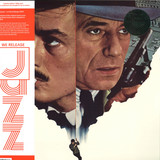
Original Soundtrack - Super Deluxe Version, (including 4 tracks never released on vinyl before, this feature is exclusive to this edition, see the tracklisting), 180g vinyl, mastered at half speed, heavy cardboard old Stoughton tip-on sleeve, obi, gold sticker Info We Release Jazz is delighted to present the official reissue of the original soundtrack of Jean-Pierre Melville's 1970 film noir classic Le Cercle Rouge (starring Alain Delon, Bourvil, Gian Maria Volontè, and Yves Montand) composed by French soundtrack master Eric Demarsan, available on limited edition 180g vinyl LP mastered at half speed and including 4 bonus tracks not available on previous pressings of the album. Eric Demarsan's compositions for Le Cercle Rouge draw from the orchestral spirit of the Modern Jazz Quartet (as requested by Melville who loved John Lewis' work), abstraction and minimalism to create a suspenseful and hypnotizing audio landscape which elegantly underlines the tense atmosphere of unavoidable fate that shrouds the movie and the doleful beauty of its characters. Simply put, it's the finest combination of underworld existentialism, coldblooded chic, and crime jazz! Le Cercle Rouge boasts the participation of celebrated jazz players Guy Pedersen (bass), Daniel Humair (drums), Georges Arvanitas (piano), and Bernard Lubat (vibraphone). Starting as a collaborator of François de Roubaix and Michel Magne in the 60s, Eric Demarsan went on to become a mainstay of French cinema soundtracks, composing for directors such as Jean-Pierre Mocky, Costa-Gavras, and Patrice Leconte among others. He also recorded the cult album Pop Symphony (for Pierre Cardin in 1970) under the Jason Havelock pseudonym.
Deadbeat graced ZamZam with a release in our very first year of operation. Lending his name & gravitas to our young effort with ZamZam06 meant a lot to us at the time, and is something we never forgot, so we couldn't be happier to have him back for a second outing. Canadian by birth, now residing in Berlin, Scott Monteith is known the world over as one of the most adventurous and reliable producers in the areas of techno and dub-inflected electronic music. Extremely tight quality control over multiple full length albums and countless singles on seminal labels including ~scape, Echochord, and his own flawless BLKRTZ have made him a household name in dub techno and beyond.
Deadbeat's second ZamZam sets aside obvious techno constraints for a mid-tempo reggae scorcher that sounds like it was beamed straight from the humid & heady glory days of the Black Ark studio. Anchored by a tar-thick bassline recalling Lee Perry's 'Dub Organizer,' 'Wail Ball and Cry' leans hard into its rockstone drum kit, with whip-sharp turnarounds, clattering Binghi drums, melodica stabs and restrained yet ever-present flange and reverb keeping the atmosphere swampy and sparkling. A sweet falsetto intones on the loneliness and alienation we all navigate in these times of political debasement and (social) media spectacle.
'Dub Ball and Flange' mutes the vocal for a traditional version focused on nuance rather than over-the-top effects; high hats take the spotlight through expert filter & phaser work, as the heat inches up in the room with a stew of bubbling reverb & delicate echo trails adding to the already simmering & shimmering vibe.
Mastered by Sam at Precise
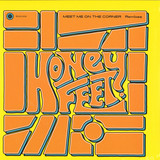
Meet Me On The Corner is taken from the band's sophomore album, Orange Whip, which itself was BBC 6Music's Album of The Day on its release. It follows previous singles Whatever You Do and Sinner, which garnered support from Craig Charles, Tom Ravenscroft and Huey Morgan. The song showcases Honeyfeet at their funkiest and chunkiest. A pounding beat beefed up by bass, guitar and brass propels forward while Rioghnach Connolly sings lyrics that could be straight out of the playground, but suggest something deeper, possibly mystical even, in its demands for a dalliance on the street.
Remixes on this more foot friendly single come courtesy of homegrown legends of funky house music, Crazy P who come through with both a vocal and dub version. Honeyfeet's latest opus is turned into a straight up soulful disco monster by the boys from Nottingham, with Rioghnach's rasping vocals playfully meandering over Hot Toddy and Ron Basejam's crisp beats and trademark live bass. Elsewhere, much hyped Russian production don, I Gemin, delivers his take - still aimed at the dance floor of course, but a slightly deeper house affair based around jazzy keys and chopped up vocals that take the song into more sonorous territories.
As a bonus, the 12" package also features the acclaimed remix of previous single, Sinner, courtesy of erstwhile Polish Innocent Sorceror, Envee - his shuffling, moody take only previously being available on vinyl via a super limited (and now impossible to find) 7-inch release late last year. For the last couple of years Honeyfeet (whose name comes from a line in the Blues Brothers film) have been a conduit for the ideas and expressions of an exotic mixture of Manchester based musicians. This genre-defying band incorporate styles including jazz, folk and hip hop into their music.
The band are fronted by Rioghnach Connolly - also known for her work with Real World artists Afro Celt Sound System and The Breath - "A remarkable singer and flutist who...can ease from Irish traditional influences to soul" (The Guardian). The line-up is completed by Rik Warren (vocals/harmonica), Gus Fairbairn (tenor sax), Biff Roxby (trombone/vocals), Ellis Davies (guitar), Lorien Edwards (bass guitar), John Ellis (keyboards) and David Schlechtriemen (drums).
Since their self-released debut album, 2013's It's a Good Job I Love You, keyboardist John Ellis jumped on board as full-time member, bringing his unique musical presence. This enabled the development of a more texturally adventurous style, as witnessed with the dual atonal solo between himself and guitarist Ellis Davies on Sinner. Similarly, for their current LP, Orange Whip, engineer, bassist and spiritual guide Lorien Edwards makes his Honeyfeet recording debut, so completing the 'kitchen' of this very special band.
- The album, Orange Whip, is out now.
To coincide with the release of their eagerly awaited debut album Gate Of Grief (now due out on 20 July), US dark electronic outfit WHITE RING release a double AA side 7' single of the two lead tracks on the album 'Leprosy' and 'Nothing'. Blending heavy, distorted electronics with eerie, unsettling vocals they push the boundaries further, subverting genre ideas and mashing them all together, with industrial, metal, rave, chopped and screwed, rap, grunge, neo folk, post punk and new wave all in the mix
'Leprosy' is brooding, abrasive and ethereal all at once, the track draws from a varied and challenging palette, steeped in existential dread. It was the first song they wrote for the album and features the vocals of co-founding member Kendra Malia. As Bryan Kurkimilis explains; 'This song was the first time we really wanted to start exploring aggression in our music.'
'Nothing' is underpinned by gothic 80s beats and sinister synth bass-lines. It crackles and fizzes with arcade bleeps with wraith-like melodies floating over the top. In this song, nothing is true and everything is permitted. It features the first collaboration with newcomer Adina Viarengo, who added her vocals in 2016 to the existing instrumental track that Bryan Kurkimilis created for the first set of WHITE RING demos in 2009.
WHITE RING were originally formed by Bryan Kurkimilis and Kendra Malia, before they were joined by Adina Viarengo, with Bryan and Adina currently touring as a duo. Gate Of Grief arrives a full eight years since their benchmark EP, Black Earth That Made Me, which sold out almost instantly, making their records some of the most highly sought after on the underground scene and earning them a cult following across the globe.
Swerving from aggressively abrasive to beautifully ethereal, musically they draw from varied and challenging palette, whilst tackling themes of loss and acceptance due to struggles with drug addiction and existential dread on a broader scope.
Dwelling on the outskirts of pop music, WHITE RING grew up in the age of the internet and were exposed to a huge range of music. They have developed a unique style while pushing the boundaries of accessibility and musical genre. They have created a piece of art that is brimming with symbolism and underlying tensions, that seduces and scares in equal measure.
Die Form is the legendary post-industrial electronic project leaded by French artist Philippe Fichot and active since the late 70's. Tears of Eros was originally released by the German imprint Hyperium Records in 1993 and shows Die Form on it's most intense and productive years. Sexual deviations, sadomasochism, fetish and domination set to danceable beats with a dark atmosphere.
This mini-album is re-issue for the first time on vinyl including all the original songs plus a different version of Doctor X. Limited to 333 copies with die-cut jacket silk-screen printed on deluxe black paper, printed inner sleeve and numbered card.
- Reissue of 2003 debut album of renowned ambient / noise / electronic artist .
- Most recent album is on 4AD and garnered a 8.2 rating from Pitchfork .
- Originally issued on the Alien8 label and now long out-of-print.
This is the first reissue of Tim Hecker's classic 2001 debut full-length. The original recordings were remixed by Tim Hecker and mastered by Matt Colton at Alchemy Mastering.
press quotes for Haunt Me, Haunt Me Do It Again:
"Haunt Me is alien, amorphous and occasionally noisy, but always welcoming.' Pitchfork
"Haunt Me Haunt Me, Do It Again is a brilliant album of subtle, evocative mood music.' AllMusic
"Hecker was already on a different wavelength with Haunt Me, clearly seeking something that would trigger ASMR-induced enlightenment, and he ran with it.' Stereogum
Long time friends (since Flex Vienna 95) Patrick and Luke joined forces on Blumoog Music and came up with this crafty and dynamic four tracker EP. Patrick Pulsinger opens the project on the A with two ingenious and uplifting tracks reminiscent of his old 'Sluts'n'strings &909' days with an acidic twist. 25 years have gone by since Patrick Pulsinger made history and put Vienna on the map by founding techno avant-garde label Cheap Records and with productions like 'Dogmatic sequences' on Disko B and pioneering sequential- minimal-techno soon after with the huge LP 'Porno' also on Disko B. On the flip side Luke M.R.E.U.X is consistent with his fine style. Dry percussions and rubbery bass in B1 'Cerebral fix'. A darker approach in confession B2 with a relentless 5 minutes of techno trip that will not let you catch breath.
A long time ago, in a Norway far far away in time, keyboardist Bugge Wesseltoft introduced his New Conception of Jazz to the world. We're talking about the late 90s, when Bugge's cosmopolitan blend of jazz, hiphop and techno beats was pretty much the coolest music coming out of Norway at that moment. That was a golden time for Norwegian music, in fact, when the rest of the world began to sit up and take notice that something was stirring up north, and realised the music was more than just glacial tones hurtled from icy mountaintops and frozen lakes. This was the sound of urban Scandinavia.
A few years later came the electronic dance genre 'space disco'. Along with Todd Terje, Bjørn Torske and Lindstrøm, Prins Thomas was at the epicentre of this next big wave to surge out of Norway. Now, the two generations have come together in this exclusive collaboration between Bugge and Prins Thomas on the Smalltown Supersound label. Jazz and electronics combine for that energising vitamin D shot of Nordic sunshine.
The Rainbow Studio in Oslo is a familiar name to anyone who follows the ECM label - many of its classic 1970s jazz albums were recorded there under the eye of resident producer Jan Erik Kongshaug. Bugge and Thomas booked a couple of sessions at the legendary space with Kongshaug at the controls, and improvised some tunes in the style and spirit of some of their favourite ECM moments, like the fresh, open sounds of Codona, Egberto Gismonti, Oregon and Kenny Wheeler. Bugge had previously done a remix of Thomas's 'Bobletekno' in 2015 but this is the first time they have worked together as active musicians. The results - also partly taped at Thomas's home studio - fuse programmed rhythms, live synths and percussion, all captured in a sumptuously spacious acoustic.
For an even more authentic touch they called up one of their all time local heroes and one of Norway's most famous jazz drummers, Jon Christensen, who's been the go-to guy for Jan Garbarek, Terje Rypdal, Keith Jarrett and many more. At 75 years he's still pretty spry behind the kit, as you'll hear on several tracks here.
Make no mistake, though, this is not retro pastiche but contemporary music, coasting on gently insistent programmed grooves and bubbling basslines. The whole thing feels not so much like a consciously hip fusion of DJ and jazz musician, more like two great musicians totally enjoying themselves. Which is exactly what it is.
Key facts:
Bugge Wesseltoft is one of Norway's leading jazz figures. He set up Jazzland Recordings in 1996. His solo Christmas LP It's Snowing On My Piano remains Norway's best selling jazz album!
Prins Thomas's real name is Thomas Hermansen. His label, Full Pupp, means 'full breast'. He's released several albums under his own name, as well as collaborations with Bjørn Torske and Lindström. Check out his amazing Paradise Goulash mixtapes.
After a debut outing on International Black last year with his best friend Mallard, LT graduates onto Rhythm Section INTL with a stunning debut solo effort: FOREST FLOOR.Aged just 20 years old, Lewis Taylor aka LT is another prodigal talent from the north of England, whose association with Rhythm Section goes back to his school days. A fan of the label from an early age, Lewis regularly made pilgrimages to the pool hall as soon as he was old enough to do so. It was these visits with his old school friend Mallard (who had recently moved down to London from Derbyshire to study music) which proved to be a formative influence, prompting him to try his hand at production...It turned out he was quite the natural, with his second ever effort as an 18 year old making it onto this very EP. Sitting somewhere between electro, house and techno with a healthy dose of breaks - LT constructs complex arrangements with as much of a nod to the retro summer of love stylings of Lone as to the new age bounce of the Pender Street Steppers. The piano house stabs of 'Untitled (Chesney)' reverberate around chopped breaks and screaming samples, anchored down by bouncy organ bass and FM lead synth which really begs the question: 'How did LT develop such a rich lexicon of club culture references in such a short time' We'd be tempted to believe it was just pure luck, if this mastery of rave aesthetics wasn't repeated throughout the EP...
Mesosphere fizzes with arpeggiated energy before giving way to a magnificent yet subtle drop that will serve festival main stages as well as it will back room clubs. Before the EP is over, LT has one more trick up his sleeve in Forest Floor - the titular track which is the musical equivalent of watching the sun rise through a misty glade after a night spent alone in the wilderness. With this gentle touch, LT proves he's more than another kid on Ableton making bangers - he has breadth, incredible musicality and a rare ability to transcript sceneries into sounds. Finishing with 'North Circular' possibly a reference to the free Parties on the London Orbital or merely just a coincidence you decide.
We couldn't be happier to welcome LT onto the RS INTL roster in what feels like a fulfilment of destiny. It's such a great honour to have nurtured and now introduce the next generation via the Rhythm Section platform.
This four-track EP named 'Curiosity' from techno duo, Abstract Man marks the beginning of the new On the 5th Day imprint, the latest branch to extend from the heart of the London-based underground techno project. The final outputs of a year-long creative journey in the studio with a focus on analogue machines, 'Curiosity' (including Mike Parker remix) represents a chapter of exploration into sound design and manipulation, and the unity and evolution of two separate musical identities through the collaborative process.
The debut release from Abstract Man begins with 'Curiosity' itself, portraying the first stages of the pair's collaboration and inspired by a shared appreciation for driving, hypnotic techno. Mesmerizingly linear and highly textured, the components forming Curiosity's foundations each command their own space, separately evolving with clear purpose whilst interacting in a compelling, ritualistic dance to lock in the listener. Its overall progression, including an emerging chant-like drone, signifies the manifestation of a new artistic voice, all together making this a symbolic achievement for Abstract Man, as well as a compelling and highly effective tool for the dance floor. The subsequent Mike Parker remix of the same track is another striking portrayal of his distinguishable sound and style, whilst developing to present something surprising and perhaps unexpected from the techno veteran, making this a must for collectors of his work.
Then follows 'Proposition', exploring the powerful possibilities through simplicity and symbolising the 'less is more' approach which fuelled much of the first chapter of Abstract Man's time in the studio. The joining of its elements creates a dark, seductive and unwavering tension, making it the ultimate tester for any venue's sound system!
Finally, 'Exploration' steps in a with an uplifting vigour and propulsive, rhythmic magnetism, rounding off the EP nicely with its feeling of freedom and completeness, leaving a sense of intrigue in readiness for their next instalment.
incl. download card]
There is something to be majestic about stalwarts of a certain flock coming together to be creative. The harder side of Drum & Bass didn't have it's own power formation until today. It's as of this day that Czech producer Forbidden Society, formed an alliance with two of his most respected peers to create 3RDKND. Donny, Katharsys and FS all have a strong lean to rhythmic textures, tough drum cuts and experimental FX works. Just in time for the European festival season, the thunderous first effort has arrived; and it's going to turn some heads.
Purge EP is a work of experience, seeking for the outer bounderies of whats sonically possible. The title track is an electronic behemoth which revolves around boundary pushing drum programming and pure unfiltered energy. 'The Artifact' is a straight up dancefloor anthem which uses an ominous vocal of cinematic proportions to build up to the halftime body of heavy hitting drums. 'Fire And Blood' is an experimental work of the rhythmic endurance. The final track is a 3RDKND remix of an original track by Donny and FS. This is the final showcasing of the trinity's sonical excellence. 'Purge EP' will be released through Forbidden Society's self titled label
Taking a turn to some of its roots, Emotional Rescue offers a reissue of Ramjac Corporation's UK house/breaks anthem Cameroon Massif!. First released on the increasingly cult-status Irdial Discs in 1990, this was very much the sound of the big bang explosion of Acid House morphing and splintering, as subsequent multi-genres developed, formed, imploded and reformed in new ways that still subsists today.
Within the melting pot of anything goes, chemically-enhanced optimism that spread across the UK during that return to the summers of love from 1987 onwards, the nascent sounds coming from Chicago and Detroit were mixed with a hybrid of 80s British influences, taking in European synth pop, US electro, new beat, hip hop and reggae. Out of this appeared a new sound, mixing that love of techno and house with dub bass and break beats into a proto-jungle swirl.
Like many growing up through the ever-evolving 60, 70s & 80s British music scene, Paul Chivers' early years of learning piano and guitar, moved from Beatles era pop to take in punk, jazz and anything an eager musical mind could explore. Developing a long-term interest and study of Cuban and Afro-drumming, his acquisition of an Atari and sampler soon moved to programming of both drum machines and TB303 and with that, Ramjac Corporation was born.
Playing live at some of the earliest raves in 1988, as often through luck and "right time, right place", including the infamous Back To The Future and Energy parties, Ramjac went from playing from 50 to 10,000 ravers in a matter of months, as the nation was gripped, depending on your cultural standing, by either a mixture of drug apocalypse paranoia or ecstatic celebration.
It was a meeting with Akin Fernandez, founder of Irdial Discs, that led some of the first studio experiments and creation of Cameroon Massif!. Utlising Akin's in-house studio and production skills, alongside Chivers' jazz influenced outlook of improvisation over arrangement, the track took shape, mixing the live programmed percussion, heavy doses of phase, delay and reverb and Sun Ra inspired keys that resulted in a number of mixes of Massif!.
Collected here are the original 12" "Massive" and "Massing" mixes, plus a special live version taken from the "Live At The Brain" reunion gig of 2009. The sought after 1990 versions and original Live mix are taken a step further with this 13 mins + mix, in essence a resampling and remixing reversion with didgeridoo and live on mic MCing, that gives a real glimpse of those early live sets. With more Ramjac Corporation material upcoming and a live reel-to-reel show appearing soon, the return of Cameroon Massif! is now.
n5MD is proud to bring you All That Was Lost, The 3rd album from cinematic ambient composer Stray Theories. A treat for for fans of Hammock, Eluvium & the more soothing works of Sigur Ros...
Australian born and current New Zealand resident Micah Templeton-Wolfe is the sole force behind Stray Theories, and this album finds him following-up 2014s We Never Left EP with his first new long-form Stray Theories material, not to mention, his first album to be pressed to vinyl.
Templeton-Wolfe's time away has not been for naught. Composing for films, collaborations with like-minded artists and a plethora of remix projects, all while creating a sample pack for the Noiiz sample app under new project Ocean Lost. So it's been a busy time for Templeton-Wolfe.
While he has seemingly been focusing his efforts else- where, Templeton-Wolfe has been quietly composing for All That Was Lost, an album which is imbued in spades with Stray Theories' signature mood-altering sound- scapes.
Muted electronics have always played a part in the Stray Theories pallet, and some of Templeton-Wolfe's extracurricular work might have something to do with those textures now being brought a bit more to the fore. In Templeton-Wolfe's hand, these fit in perfectly within the personally subjective nature his music has always suggested. All That Was Lost is a cinematic ambient gem brought into the world at a time when we need it most.
Producer Okzharp and vocalist-artist-dancer Manthe Ribane both hail from South Africa, where Manthe still resides, while Okzharp lives in the London where he is a DJ and producer, initially cutting his teeth in LV, who in 2007 were one of the very first acts signed to Hyperdub. Manthe has been at the forefront of South Africa's cutting edge fashion, art and dance worlds for over a decade. After leaving LV, Okzharp and Manthe started collaborating, going on to release two well-received EPs on Hyperdub, 'Dumella 113' and 'Tell Your Vision', recorded in Joburg and London respectively. The recording of 'Closer Apart' reflects the title. Okzharp says 'Most of the music came out of headphone moments in hotel rooms, planes and airports in the brief periods of time that we spent together.' Describing Manthe as a co -producer, he continues 'She selected instrumental sketches and we developed them together, sometimes just keeping the bare bones or a melody or rhythm, or trying different elements or sounds.' Even though the album was built long distance, the short periods they spent together were the ground zero for creativity. Okzharp recalls 'One particular moment in Milan last year, we had a whole free day before our flight so we visited the Salone di Mobile design show. We were so inspired by an installation there just walking around, listening to the amazing soundtrack. That evening our flight was delayed, so we sat on the floor of the airport terminal putting musical ideas down for 'Time Machine' on the laptop speakers and writing the lyrics. "Tic Toc time, we'll be fine / Airport queues, cerulean blues / Viper trails cross the skies / Lights reflect in your eyes...' ' 'Closer Apart' has a softness and openness that contrasts the tougher sound of the EPs. Manthe explains, 'The new music is a 360 turn, an expression of my 'Lady' side. I grew up listening to Jazz, Classic and Gospel, I am a very soft spoken person, and it resonates with being confident with that. It's been crazy finding balance and finding a smart way to strengthen my weaknesses, I had to trust the process.'
Australia based artist Inkswel is widely known for his funk infused dance music that incorporates ingenious sample work and memorable vocal cuts. For the ninth installment of the PULP series the 'Edible Pyramid EP' is a journey through the mind of the Australian artist. The package includes a melancholic remix by no one else than long time champion of vinyl and Red Motorbike label boss Eddie C, 'Edible Pyramid' is a work of positivity, the title track excels in it's blissful ambiance that is supported by a back bone of thumping rhythms and jovial vocal cuts. The Eddie C Remix is showcasing a wistful approach by incorporating a rhythm that is reminiscent of those from the early days of Hip hop. 'Let Go' is a confident sounding work of samples. Rhythmically firm with an emotive break that is a welcome change from the slow base-rhythm that flows throughout.
On the B side The Posse comes up with a remix that cleverly incorporates oozing synth pads and a more upbeat vibe. The original is flipped into a more dancefloor friendly version with an acidic touch to it. The final track is called 'Yesterdays Flava of The Month' this boogie tainted cut uses tasty breaks and lively pads that again depict a positive atmosphere.
PULP09 - Inkswel - Edible Pyramid EP will be available from all specialized retailers starting June 2018.
* "Of all the dubplates in my bag from this last few years, the ones I've selected most often have Walton's name scribbled on the sleeve. 'Black Lotus' is a unique creative statement; I'm very proud to release it on Tectonic and to support Walton, who I believe is a true talent." Pinch
* On July 6th Tectonic recordings presents the game-changing second album by 26 year old Mancunian Sam Walton, better known as simply Walton.
* 'Black Lotus' follows his inclusion on Tectonic's landmark 100th release - Riko Dan's 'Hard Food' EP, plus the 'Praying Mantis'/ 'Koto Riddim' 12' (also on Tectonic) and the 'Taiko' EP on Kaizen - the latter two of which hinted at the album's sound, but didn't fully prepare us for the brilliance to come.
* Abstract electronics, grime, dubstep and new styles that don't even have a name yet coalesce perfectly on this classic in the making. It finds Walton at peak power, reaching just as far (if not more so) than anything on the Pan, Different Circles, Boxed or Tectonic catalogues for pure futurism and new-terrain-traversing brilliance.
* Spacious and modern sounding, with just the right amount of grit, on 'Black Lotus' Walton has taken things the next level - setting an impressive new high bar. This is the best music to take inspiration from far eastern culture since Photek's seminal 'Ni - Ten - Ichi - Ryu' and 'The Water Margin'.
* Cinematic may be a term bandied about too often, but on this record it unquestionably applies, with the whole thing playing out like an epic movie, full of highs, lows, action, reflection and changing scenes.
* The album kicks off with 'Black Lotus', which makes it quickly evident that this isn't just another generic longplayer; a weightless/sino style intro segues into a mystical kalimba line, which is then is enveloped by huge waves of synthesized, pitched-down brass.
* 'Point Blank' offers locked, harsh mechanical funk, full of aggravated excitement, before sleek, spacious grime and disguised pop garage achieve twisted anthem status, on the hugely satisfying 'Koto Riddim'.
* 'No Mercy''s Yakuza crime riff is perfect for Riko Dan's threatening menace, especially at the point his voice gets distorted into a guttral and unsettling, demon-like wretch.
* 'Mad Zapper' is abstract, comprised of simple yet challenging beats, tones and stutters, whilst 'Angry Drummer''s taiko/kumi-daiko style percussion has a rousing, heavy thump.
* 'Pan' sounds equally enthralling whether soundtracking a dark movie scene of impending danger, or carying enratptured ravers on a danceflor journey, especially one suited to the synapse-prodding drama of a high production, lazer-heavy festival set.
* Choppy drums and bouncy bass tones are laced with the georgeos melody of 'Ehru', and 'Vectors' is sleek 'n' deep breakbeat-garage-meets-IDM.
* Although already known for elements of musicality, Walton raises his game even higher with the beautiful closing track 'White Lotus', which has a wow factor akin to hearing Aphex's Twin's 'Jynweythek Ylow' for the first time.
* 'The title came from the idea that I wanted it to be sweet and melodic in areas, but dark and grimey at the same time', recalls Walton. 'I never really listened to much Japanese and Chinese music before working on this, and that element originally came from listening to a lot of Sino grime stuff. It wasn't until I was deep into the process of making the album that I started listening to loads of traditional stuff on YouTube for melodic ideas, which changed how it turned out. The whole dubstep techno crossover thing was also a big influence.'
* 'I'm really happy to have Riko Dan & Wen on there', he adds. 'I've done a few remixes of Riko tunes which have had a great response, so it's been wicked to get some original material done together. The track with Wen was first started a while back, so I'm glad it was finally finished and will see a release.'
* Walton has been steadily gaining serious clout through releases since 2011 on Hyperdub, Keysound, Tectonic and Kaizen, with supporters including Mumdance, Logos, Slimzee, Laurel Halo, Wen, Hodge, Mary Anne Hobbs, Giles Peterson, Paleman, Teki Latex, Commodo, Loefah and Kode9. Key club, festival and radio shows include FWD at Plastic People, Fabric, Outlook, NTS, Rinse and BBC 1xtra.
- A1: La Tuna Club (S. Mantequilla' Font)
- A2: Azul Trompeta (S. Mantequilla' Font)
- A3: Whisky Jazz (S. Mantequilla' Font)
- A4: Jamboree (S. Mantequilla' Font)
- A5: Blue Note (S. Mantequilla' Font)
- A6: Full De Ases (S. Mantequilla' Font)
- B1: Moanin' (Timmons)
- B2: Not Problem (Marray)
- B3: Blues 3/4 (S. Mantequilla' Font)
- B4: Atmosfera (S. Mantequilla' Font)
- B5: Vat 69 (S. Mantequilla' Font)
- B6: Balada (S. Mantequilla' Font)
Salvador Font studied violin, clarinet, composition and harmony at the Conservatori Municipal de Barcelona, but very soon started to gain notoriety as a saxophonist in the rich jazz scene of 1940s Barcelona. Font would soon be playing tenor sax and clarinet in the Orquesta Gran Casino. He was in his early twenties and his hot swing technique was already praised through the citiy's scene, he would grow to be considered the best saxophonist in Spain by playing in many orchestras and combos, among them: José Puertas', Antonio Vilá's Virgina, Bonet de San Pedro's band, Pierre Michel, El Lirio Campestre, Los Marios, Luis Rovira y su orquesta, Orquesta brasileña Fon-Fon, Jaime Camino, Los Embajadores, Italo Leone's... With these and others, Font toured constantly, visiting many countries and even staying on some for long seasons: Mexico, Morocco, Switzerland, Egypt... Hungarian violinst of Turkish ancestry Kurt Dogan gave him the "Mantequilla" surname - he felt "Mantequilla" (which means "butter") fit Font's mellow yet swinging improvisation style.
Mantequilla y su conjunto
In the early sixties, "Mantequilla" had the chance to lead his own combo, Mantequilla y su conjunto, with which he was to record the three splendid EPs that are compiled on the present album. All these 7" have become elusive collector pieces in the record market, with sellers demanding from 200 to as much as 950 euros per copy.
In 1961 "Mantequilla" was at his best moment, his gigs at the Jamboree Jazz Cava had brought him back to the first line of Barcelona's jazzmen after he had been working abroad for a long time, and was approached by the Belter label to record an EP. On the sessions he was accompanied by Manolo Mercedes on trumpet, Pedro Ferré on piano, Rafael Lizandra on double bass and Rafael Verdura on Drums. The material chosen for the disc were four original compositions by Salvador Font which had a high West Coast flavour all over: "La Tuna Club", "Whisky Jazz" and "Jamboree" named after famous jazz clubs and "Azul Trompeta", dedicated to Manolo Mercedes.
In late 1962, after spending some time in Madrid working as members of the Italo Leone combo, "Mantequilla" and pianist Manuel Gas came back to Barcelona for the recording of the second "Mantequilla" EP, also on Belter. We find again Manolo Mercedes on trumpet, Pedro Ferré on piano and Rafael Lizandra on double bass, the drummer this time was José Farreras. Another news is that Manuel Gas also sat on piano and vibraphone. The songs chosen for the occasion were two tunes from the Art Blakey Jazz Messengers repertoire: Bobby Timmons' classic "Moanin'" and the Jacques Marray track "No Problem" from the soundtrack of the Les liaisons dangereuses film (mispelled "Not Problem" on the sleeve and label), plus the Salvador Font penned "Blue Note" and "Full de ases" - on "Full de ases" "Mantequilla" trades his sax for the violin, which he also mastered under high influence from Stephane Grapelli. The record was released on Belter in early 1963 and showed "Mantequilla" adding a certain aggressivity to his sound, in a soloist style which has been compared to that of tenor saxophonists Barney Wilen or Benny Golson.
1965 was the year of release of Mantequilla y su conjunto's third EP, now on the Discophon label. Mercedes and Farreras are again present in the recording sessions, joined by Ricardo Miralles on piano and Enrique Ponsa on double bass. Four original Font compositions make up the fantastic EP: "Blues 3/4", "Atmósfera", "Vat 69" and "Balada".
There would be a further EP on Belter, released in 1971 as Mantequilla Group it was a cash-in operation to take some redits of the ye-yé discothèque phenomenon, it gets quite afar in style from the jazz works of Mantequilla y su conjunto, so we just left it aside for the present edition.
"Mantequilla"'s career would continue, in 1968 he would settle in Majorca and form a swing band with Bonet de San Pedro and Manuel Bolao. He played in local orquestras and also with first class world acts like Gerry Mulligan, Tete Montoliu, Errol Gardner, a.o. He was even approached by Henry Mancini to play sax on The Pink Panther Theme in a gig Mancini did with his orchestra in Palma de Mallorca in 1975, He also joined his son Salvador Font (a demanded drummer himself who has played with Máquina!, Orquestra Mirasol, Música Urbana, Gary Burton Quartet, Georgie Fame, and many others) and his peers Carles Benavent, Emili Baleriola, Josep Mas 'Kitflus' and Jordi Bonell with whom he recorded his acclaimed "Mantequilla" album in 1987.
Now, for the first time ever, the legendary three ultra rare and imposible to find EPs by Mantequilla y su conjunto are compiled in a lavish vinyl LP with remastered sound, featuring liner notes and photos and a fantastic period inspired, three backflaped, front laminated sleeve. It is a stricly limited edition of only 500 copies and they are expected to sell out very soon, do not miss your chance of getting yours - it may be the last chance of chasing the Mantequilla sound on vinyl at a reasonable price!
l
The first chapter of Armand Jakobsson's musical career has been
nothing short of remarkable. After establishing himself with rough
but emotive house as Rimbaudian and jungle as Birds of Sweden,
he unveiled his DJ Seinfeld alias to the world, first with underground hit single 'U', then with his Time Spent Away From U album on Lobster Fury in November 2017. It was a post break-up love letter to the dance floor with heart-on-sleeve emotions colouring the dusty and analogue house grooves. Acclaim came in from far and wide, with everyone from Rolling Stone to Pitchfork fawning over its heart swelling nostalgia and melancholic immediacy. Jakobsson approached his DJ-Kicks with the intention of representing all the things that made him fall in love with dance music more than a decade ago, as well as showing some of the progression that has occurred in that time and 'reflecting the simultaneous fear of leaving something safe behind as well as the excitement of venturing into unknown territories, musically and emotionally.' In order to make it as personal as possible, he called upon the many talented people around him making music. They returned with an enthusiasm that reminded Jakobsson of his own early passion, and in turn invigorated him and the whole process of assembling the mix. It was finally recorded at Inkonst club in Malmo because, recently back from years in Barcelona, he has not yet set up a studio in his hometown. DJ Seinfeld's DJ-Kicks is not only a testament of his characterful DJ skills, but also a complete artistic statement that showcases his unique vision of dance music
While notorious in the Chicago streets, RP Boo's music had been unfairly confined to a few white labels and self-released mixtapes until his two archival Planet Mu LPs Legacy and Fingers, Bank Pads & Shoe Prints introduced broader audiences to his sonic history, some of it fifteen years after it was first recorded. I'll Tell You What! is the next step in his mission, and the first time he's released an album of contemporary material. The title, a favorite maxim of his, welcomes listeners to sit down and let him narrate in the unforgettable abstract fashion he's known for. He explores familiar motifs such as the cosmos, movement, and opposition, using densely interwoven vocals, unpredictable percussion, and evil humming bass as his tools of choice. RP Boo's music doesn't follow the traditional rules that most compositions do. Layering decades of samples from yesteryear to the present over his commanding vocal cut-ups, he transports the listener to their own realm of the space-time continuum. The main difference between this record and his prior work is now we hear Boo tell new stories about preaching his gospel outside of Chicago, from his experiences frantically touring the globe over the last five years. The words 'things ain't been the same / since I hopped the plane' are repeated on top of engine sounds and rumbling bass on Flight 1235, a glorious paean to his new jet-setting adventures. The spirit of competition runs through RP's veins as much as blood does, something you can't unlearn when you've been making music for Chicago's footwork circuit as long as he has. The local culture has served as a shelter from the violence that has plagued the city, pitting kids against each other with their feet rather than weapons. On At War Boo reminds us 'we are at war in the streets', a double meaning to both the mayhem in this world and the sweetness of rivalry on the dance floor. Another battle-themed track Cloudy Back Yard, one of the spacier moments on this album, is an abstract on the state of footwork's home. Chicago remains the backyard of this artform even though it's left the porch and traveled to new neighborhoods worldwide. Back at home though, competition among the DJs and dancers continues, and as the man himself says, 'with all this hate, there's smoke, and it's cloudy'. I'll Tell You What! throws more than a few curveballs into the mix. Footwork has always borrowed from hip-hop, and many vocal tracks are almost condensed raps, dating back to the street chants pioneered on Dance Mania Records in the ghetto house days. On Bounty, Boo grabs the mic and brazenly lays down a full-on verse of terror over a thick atmosphere of his signature sweltering low-end and erratic Roland R-70 patterns. While he's most famous for his confrontational battle anthems, his melancholy moments are just as powerful. You get the best of both of those worlds on U-Don't No, with soulful samples finishing his own cocky sentences, one of the most elegant tracks RP has made to date. Deep Sole closes the record out, with the words 'It's always beautiful at the end' looping over waves of hypnotic synthesis, confidently looking death straight in the eyes.
In 2017, Benedikt Frey released his breathtaking debut album with the ESP Institute, Artificial, and now as we finally come up for air, we're more than proud to offer an eclectic collection of remixes that's nothing short of essential. Side A leads with H For Hysteria remixed by a beloved hero, Nicolas Chaix a.k.a. I:Cube, one of the most prolific and respected electronic artists Paris has to offer. His touch is considered and elegant, imbuing the track with a tasteful 303+808 backbone to support an array of patiently floating melodies and angelic vocal samples. Following this, Tolouse Low Trax of Du¨sseldorf's infamous Salon Des Amateurs remixes the same track, stripping instrumentation down to a skeletal palette of bass guitar and stabbing percussive punctuations, chopped up inna minimalist stylee that has become his beat-making signature. Side B leads with a remix by another Du¨sseldorfer, DJ Normal 4, whose re-imagination of Private Crimes takes us for an even more menacing ride, half-timing the tempo and skillfully rolling out a barrage of jungle snares from rave days of yore. Closing the release is the most aggressive remix of them all, a bonafide techno beatdown of the same track by DALO, the co-producing artist to whose haunting vocals lace the original version. Her dark vision opens with sparse industrial drums that blossom into a driving assault of raw machinery, definitely not for the faint-of-heart. An all-around solid release here, fun for all the family... more than just the tip!
- A1: Horace Andy - Illiteracy
- A2: The Heptones - Be A Man
- A3: The Manchesters - Natty Gone
- A4: The Gladiators - Down Town Rebel
- A5: Willie Williams - Calling
- B1: Roland Alphonso & Brentford All Stars - Sir D Special
- B2: Keith Wilson - God I God I Say
- B3: Alton Ellis - Almost Anything
- C1: Bobby Kalphat & The New Establishment - Adis A Wa Wa
- C2: Peter Broggs - Sing A New Song
- C3: Mystic Revelations Of Rastafari - Let Freedom Reign
- C4: Larry & Alvin - Free I Lord
- C5: Ernest Wilson & The Sound Dimension - Freedom Fighter
- D1: Jackie Mittoo - Happy People
- D2: Prince Lincoln - Daughters Of Zion
- D3: High Charles - Zion
- D4: Winston Jarrett - Love Jah Jah
This Is The Second Installment Of Deep Roots Rastafarian Reggae At Studio One And Features Classic Music From Some Of The Most Important Figures In Reggae Music - Alton Ellis, The Heptones, Jackie Mittoo, The Gladiators - Alongside A Host Of Rarities And Little-known Recordings, Such As A Truly Rare Mystic Revelation Of Rastafari Seven-inch Single, Willie William's First Ever Recording 'calling' And Horace Andy's Righteous (and Equally Rare) Masterpiece 'illiteracy. Black Man's Pride 2 Extends The Legacy Of Studio One's Ground-breaking Path In Roots Reggae Which Began At The End Of The 1960s And Continued Throughout The 1970s. The Album Tells The Story Of How The Rise Of Studio One Records And The Rastafari Movement Were Interconnected, Through The Adoption Of The Rastafari Faith By Key Reggae Artists - Everyone From The Skatalites And Wailers In The 1960s, Major Singers Such As Alton Ellis And Horace Andy At The End Of The Decade, Through To Major Roots Artists Such As The Gladiators In The 1970s - And How Clement Dodd Consistently Recorded This Heavyweight Roots Music Throughout Studio One's History.
The Sleeve-notes To This Album Also Discuss The Links Between Rastafari And Studio One In Time And Place, Noting How Both The Religion And Clement Dodd's Musical Empire Had Their Roots In The Intense Period Of Pre-independence Jamaica In Kingston, Expanded In The 1960s Following The Visit Of Haile Selassie In 1966, And How Roots Music Then Came To Dominate Reggae Music In The Early 1970s. Also Discussed Is How The Outsider Stance Of Both Reggae Music And The Rastafari Movement Relate Back Many Hundreds Of Years To The Original Rebel Stance Of The Maroons, Escaped Slaves Who Set Up Self-sufficient Enclaves In The Hills Of The Jamaican Countryside.
When Ann Arbor's Tadd Mullinix began exploring hip-hop under the name Dabrye 20 years ago, he soon honed in on a startling vision of what the genre could be: ingenious, refined, daring. This vision came to life across two albums for Ghostly International — 2001's One/Three and its 2006 follow-up Two/Three— with each record further positioning the quiet Michigan producer as one of his generation's best, equally comfortable creating minimalist instrumental meditations or sharp rap salvos. In the late 2000s, following critical acclaim and accolades from both peers and inspirations (including the late Jay Dee with whom Mullinix collaborated before his untimely passing), Mullinix put the Dabrye moniker on ice and dedicated himself to other genres and ideas. All the while the influence of his work on a new generation of electronic musicians continued to make itself felt in subtle but meaningful ways.
All this changes in 2017 as Dabrye makes his long-awaited return with Three/Three, a razor-sharp rap album that brings to completion a prophetic trilogy. Mullinix's incisive productions provide the backdrop for equally acute rhymes that run the gamut from intergenerational observations and being your best self to back alley deals and having fun in the ride. Guests include indie rap legend DOOM, whose previous collaboration with Dabrye remains a point of reference for many, Wu Tang storyteller Ghostface Killah, L.A word fanatic Jonwayne, and Long Island's rugged surrealist Roc Marciano. Most importantly Three/Three is, much like its predecessor, an unfettered celebration of Detroit-area talent with Guilty Simpson, Phat Kat, Kadence, Quelle Chris, Danny Brown, Shigeto, Clear Soul Forces and more all lending their touch to Dabrye's return.
The blend of American and British dance music, hip-hop sampling, and Jamaican sound clash energy that underpinned Two/Three remains a quiet, guiding principle. At the same time Mullinix rejoices in a refreshed perspective, having had time to incubate ideas and find clarity in the distance between albums and the evolution of scenes.The beats are looser and less angular, more embracing of repetition. Organic techniques inspired by soul and jazz round off some of the harsher sonics. The resulting broad palette of tracks reflects both this evolution and the range of the Dabrye persona: relaxed headnod ("Tunnel Vision"), nervous, slow-motion electro ("The Appetite"), glacial motifs ("Emancipated"), jazzy, cut-up funk ("Sunset"), minimal brutalism ("Electrocutor"), intricate layering ("Culture Shuffle").
Three/Three marks the return of an innovator after close to a decade of silence. Despite what the title might imply, the album isn't the end of the story but rather the completion of a creative arc. Expect more Dabrye in the near future. The game is far from over.
- Final installment of the /Three series, started in 2001
- Guests include Ghostface Killah, Jonwayne, Doom, Danny Brown, Shigeto, and more.
- Media support from: The Wire, FACT Magazine, The Detroit Free Press, Pitchfork, XLR8R
- Past collabs with Jay Dee (J Dilla), MF DOOM, Beans & more
- Vinyl is housed in a matte jacket with black hot foil and includes 24-page zine designed by Michael Cina.
- A1: There's A Break In The Road
- A2: 12 Red Roses
- A3: Mean Man
- A4: I'm Gonna Git Ya
- B1: Ride Your Pony
- B2: Show It
- B3: I Don't Wanna Hear It
- B4: Bad Luck
- C1: Hook, Line 'N' Sinker
- C2: Lonely Hearts
- C3: What A Sad Feeling
- C4: What'd I Do Wrong
- D1: Trouble With My Lover
- D2: Sometime
- D3: I'm Evil Tonight
- D4: Nearer To You
- D5: All I Want Is You
Betty Harris' The Lost Queen of New Orleans Soul collects together the steady stream of amazing soul and funk singles issued by Betty Harris from 1964 to 1969, under the musical guidance of legendary composer, musician and producer extraordinaire Allen Toussaint, a collection which truly captures the heart and soul of the city of New Orleans during this era.
Betty Harris's powerful, fiery soulful vocals found a perfect accompaniment with the New Orleans' players that Toussaint put together to back her, which by the time of her funk classic 'There's A Break In The Road' were the legendary super-tight, super-funk New Orleans group The Meters.
With the extraordinary song-writing skills of Allen Toussaint alongside the powerful, soaring, confident and emotive singer and the groove of The Meters, you have an unbeatable combination. That Harris never in fact lived in New Orleans (she flew in from Florida for all her sessions with Toussaint's local in-house players) seems almost an irrelevance, a geographical aside to the defining New Orleans sound captured on the recordings featured here.
All of these singles featured here were released on Allen Toussaint and his business partner Marshal Sehorn's local New Orleans label Sansu, widely distributed in the southern city but in only limited quantities elsewhere. As a consequence, Betty Harris' music failed to achieve the commercial success of other New Orleans artists such as Lee Dorsey (who she recorded with) and The Meters (who backed her). And so at the end of the decade she stopped recording, retired from the music business to raise her family in Florida.
This is no reflection of the stunning musical quality of all these songs which encompass everything from southern soul, heavy funk, deep soul ballads and northern soul. Betty Harris has been a cornerstone of Soul Jazz Records' New Orleans Funk and New Orleans Soul compilations. Always soulful and always funky, Betty Harris' music contains the essence of New Orleans music. She is the Lost Soul Queen of New Orleans.
This collection is released on CD, heavyweight gatefold double LP vinyl (+ download code) and digital and comes complete with full biography, original label artwork.
Little Boots' latest all female powered EP 'Burn' was released on 6 April 2018 and reached Number 1 in the UK, US and Canada in the iTunes Electronic charts within its first few days of release. Just in time for warmer weather, Little Boots has teamed up with a variety of artists to remix her 'Burn' EP, with Metronomy's Anna Prior's remix of 'Eros' the lead single from the remix EP. Anna takes Little Boots' new wave of electro pop and disco rhythms and punts them in a more house direction, with beautiful string underlay. Eros (Anna Prior Remix) is released on a bright orange cassette, and limited to only 300 copies. Period.
"phantom Dancehall" Is The Exploration Of The Greensleeves / Vp Records Catalogue By Dj Spooky Aka Paul Miller. The Musical Tapestry Is Built On Samples From Familiar (and Not So Familiar) Reggae Tracks Over Electronic Beats And Melodies Produced By Miller And Protégé Stephen Levitin (stage Name Apple Juice Kid). Selected Tracks Include The Keyboard Work Of Alex Thompson Aka Fourth Shift. Guest Vocals From Walshy Fire (major Lazer) And Dancehall Newcomer Sanjay Added To Vocal Samples Of Busy Signal, Lady Saw And Garnett Silk Give The Project An Eclectic, Modern Dancehall Flavor!
Paul Miller, Better Known By His Stage Name Dj Spooky Is A Music Producer, Arranger, Dj, Author And Performance Artist. His Unique Brand Of Experimental Hip-hop, Dubbed 'illbient' Has Resulted In Collaborations With A Diverse Range Of Artists Including Ryuichi Sakamoto, Kronos Quartet, Lee "scratch" Perry And Killa Priest. With Remix Projects For Trojan Records, Manifold Records And Six Degrees Among Others To His Credit, Miller Created "phantom Dancehall" For His Exploration Of The Greensleeves/ Vp Records Reggae Catalogue.
For Fans Of: Major Lazer, Dj Shadow, Kevin Yost
Marquis Hawkes is an alter ego adopted by long time electronic music producer Mark Hawkins, founded for his house music focussed activities. Hawkins decided it was time for a reboot after being head-hunted by old friends Dan Monox and Kenny Wasp, who had just founded Dixon Avenue Basement Jams in 2012, particularly as the material differed from what he'd previously released.
Hawkins solidified his sound during this period, taking influence from house music's Chicago, Detroit and New York home bases alongside the UK's deep house sound. Fusing these styles with contemporary production values, he developed a style synonymous with his Marquis Hawkes alias.
Whilst branching out to release on other labels like Clone and Cremé Organisation, he caught the attention of London club fabric's artist-led label, Houndstooth. They signed him on a long term deal, giving visibility to his DJ profile that meant he could play music full-time.
In 2016 his debut album 'Social Housing' was released to critical acclaim, and the following year, a stellar string of releases on Will Saul's AUS Music label culminated in the ubiquitous club and festival hit, 'The Basement Is Burning'. A track inspired by Hawkins' own shocking experience of a fire in his apartment block, it was played heavily on radio across the summer of 2018.
Looking forward, this new 12' EP for Houndstooth under the Hawkes alias is scheduled for release on June 29th, and features a vocal collaboration withUrsula Rucker, Hawkins is also pursuing other music projects and identities, some known, like his Juxta Position project, which he uses for more industrial but groove based techno material, but others which are more incognito, and may well remain as such.
"Things take a psychedelic turn for SchleiBen 7 with a welcome to the label of arch exponents of mind expansion in NYC's Georgia and the unlikely but no less diverse inclusion of Balearic stalwarts A Man Called Adam. Having Georgia in the series might not now be a surprise, however discussions with this open, genuine duo started during a visit to New York over 3 years ago and so here, finally realised in this fluid journey of confident pace and harmony, is the best of their freeform evocations. A duo in the everyday sense, Brian Close and Justin Tripp are video / music production teamsters of unnatural talent. Having gained a status of their own that has seen them release for the likes of Palto Flats and FTD, the five pieces that form their contribution drip with psychedelic intent. Culled from archives, the interest is how the tracks - made over different years, locations and situations in life - meld in to something poetic simply by being placed within a specific format. Avant-chimes ebb to rhythmic pulses and erudite teachings before dark percussion and Eastern melodies reach a clattering, but gentle finale. With an upcoming collaborative album with Secret Circuit due on the label later in 2018, as well as recent works with RVNG Intl's Matt Werth and recordings for Sacred Summits' brethren Firecracker Recordings, it's a warm, effusive glow of a welcome. In contrast, the inclusion of A Man Called Adam in the series may indeed surprise but is a false comprehension. The "Sketches" included here show AMCA away from their Balearic pop incarnation of the last thirty years and towards the academia that both members Sally Rodgers and Steve Jones have pursued in the last decade. With both completing PHDs, Sally ('The Diachronic Impact of Technology-Led Abstraction in Oral, Written and Music-based Poetries') is a senior lecturer at Leeds College Of Music, while Steve ('Mobilise: The Carry Principle, Sound and Mobile Media') is based out of de Montfort University, now is the perfect time to highlight the diverse sound environments they have been working in. The music that makes up these recordings are drawn from sound works and audio experiments completed in recent years. From sound toys and apps to home made glass organs and electro-acoustic sound, custom patches to spoken word manipulations, the sketches are excerpts - some evolved from commissions for the National Science Museum, BBC Radio 4 and live performances with the world renowned video artist Milosh JL - fused especially for this release. Bringing these generated pieces in to an audible "mix" creates a discourse of their work in performance, interactions and visual media. An intellectualised album therefore, but still in the premise of the series to allow artists to present something new, unique, discrete, hidden even, all with the aim of giving the recipient the chance to sit back and (un)listen. "
We are happy to introduce a new release and a new project from Ben Vedren and Chez Damier; a new collaboration that has been in the making for some time now. Side AA1 presents a unique sound in its vibe, kind of a minimal track. The French discussion/vocal in the background adds another dimension. You don't need to speak the language to understand what's going on, but you must wonder at some point: Do I understand French or is it the music that made me understand them An "organ" sound intervenes towards the end bringing power and light to the hall. It's eleven minutes of pure music! While "AA" is composed of two different remixes of a different track, 'Berlin Nights in Paris' It can probably be called the House anthem. It starts strong with some acid sound and is filled with a lot of wonderful elements. Like a gourmet meal, you wonder if the track shouldn't have been at least three times longer to satisfy the gluttony of the listen. The Techno remixes of the track. It's a perfect example of Detroit meets House. Techno track can, with no doubt, feed and drive the dance floor. No need for more than five words to describe it - it's a serious Techno track.
J Colleran's majestic lead single 'bERA' began as a simple experiment using pianos and arpeggiators that slowly developed into a shimmering elemental piece. The coinciding video, directed by Gray was inspired by the photography series by Anton Polyakov who documented the people of Transnistria, an independent state affected by the constant intimidation of military conflict.The film shows the slow shifting balance of power from physical force to the over bearing emptiness of a room. Gray describes the featured bodybuilder flexing to a visible lack of audience as 'a shimmering golden symbol of power and also a fragile vessel shaped around a trauma. The presence of a long gaze and the rapid deterioration of strength reveals a true identity.Recent quick-fire single 'O+SOH' served as a transitional primer for the Irish producer and classical pianist, forming the perfect base from which to launch 'Gardenia' — a sweeping experimental soundscape inspired by childhood memories and the natural beauty of his native Ireland.
- A1: Hold Your Colour (Noisia Remix)
- A2: Blood Sugar (Knife Party Remix)
- A3: 9000 Miles (Eelke Kleijn Remix)
- B1: The Island, Pt. 1 (Dawn) (Skrillex Remix)
- B2: Propane Nightmares (Grabbitz Remix)
- B3: Crush (Devin Townsend Remix)
- C1: Tarantula (Icarus Remix)
- C2: Witchcraft (Pegboard Nerds Remix)
- C3: Watercolour (Matrix & Futurebound Remix)
- C4: The Island, Pt. 1 (Dawn) (An21 Remix)
- D1: Still Grey (Dj Seinfeld Remix)
- D2: Vault (Moby Remix)
- D3: Streamline (Attlas Remix)
One of the world's most iconic drum & bass acts, Pendulum have announced their return for 2018 with a brand new album and brand new live shows. 'The Reworks' is a project unlike any
other released by the band before, and marks the end of their seven year hiatus, officially launching on 16th March.
To mark their return, the band have announced their first headline show since 2011 at London's unique new space, Printworks . The show sold out in under an hour and will be both an auditory and visual spectacle for fans.
Also announced is Pendulum's return to one of the UK's biggest events - Reading and Leeds Festival . Headlining the BBC Radio 1 stage - the same slot they graced the last time they played in 2010, the shows mark a welcome return for the band in the UK.
The news will undoubtedly be well received by Pendulum 's legions of fans, with the band having hinted at a comeback by returning to the live stage last year, headlining the UK's South
West Four and Nass Festival , and confirming for this years Snowbombing festival in Austria.
For 'The Reworks' , the internationally-renowned band have tapped some of the most innovative talents from over the past few years to deliver dynamic and refreshing interpretations of their
biggest hits and some of their personal favourites. Friends and collaborators Skrillex , Icarus ,Knife Party and Matrix & Futurebound take their turn on this who's who of electronic music
royalty, whilst Noisia 's explosive cut of the now-iconic track 'Hold Your Colour' will be available with the album preorder from the 16th March.
'The Reworks' album will be available in both CD and vinyl formats from the 29th June.
This exciting announcement marks the beginning of a new era for Pendulum , who have long been considered one of electronic music's most important and pioneering acts, famed for their
no-holds-barred live shows. With more huge festival dates TBA across the summer and new originals on the horizon, 2018 marks the an exciting chapter in Pendulum's already lengthy career.
Noisia' s remix of ' Hold your Colour' , the first single to be taken from Pendulum 's 'The Reworks' album, is set for release on 16th March alongside the preorder, with the full album set to drop on 29th June.
Following the success of Joey Negro's 'Produced With Love' album, four of the album cuts get the remix treatment from an all-star cast of producers each with their own particular flavor.
Kicking it off Chicago legend Ron Trent takes the original funked out, Arthur Russell flavoured, 'Distorting Space Time' and turns it into a deep house groover complete with a strong walking bass alongside adding a soul & richness to the elements that only he knows how. Crackazat step up next to take on 'Lactican Boogie' crafting it into an uptempo piano driven, emotionally charged stomper sure to do some damage this summer.
Flip it over and Lay-Far delve into 'In Search of The Dream', adding squelchy synth stabs and a deep bass to give a more hard hitting edge to the track whilst retaining that disco flavor with Angela Johnson's emotive vocals.
Closing out the e.p. Fouk come full circle, bringing their hazy, jazz tinged style to 'Distorting Space Time' - building the remix around those warm Rhodes chords, shuffling rhythm and dynamic bassline.
Gold once again from the Z Records camp!
- A1: Turn Uo
- A2: A Curse, A Blessing
- A3: Flying Donut
- B1: The Star Of A Story
- B2: Gettin' To The Good Part
- B3: Gimme Dat
Word Of Advice To Funk Lovers, There Is Not A Minute To Lose. Get On Board Of The Big Hustle's Spaceship. Before We Take Off, Let's Do A Little History. The Band Was Founded In 2014 By Bass Player And Composer Sébastien Levanneur And Its Aim Is To Bring Together 70's Old School Funk With The Hippest Actual Sound Laced With Influences Spanning From Steely Dan And Headhunters, To Snarky Puppy And Soulive. With Mighty Horn Players, A Rock And Funky Rhythm Section, The Big Hustle's Music Has A Very Large Variety Of Soundscapes.
The First Destination Takes Us To The Washington, D.c. Area With turn Up'. The Groove Is Clearly Go-go Music Flavored With The Trademark Sound Of Cowbells And Of Course It Reminds Us Of Zapp By The Use Of The Talk Box On Lead Vocals, Performed Here By Saad El Garrab. And Don't Miss Out Shaun Martin (snarky Puppy, Erykah Badu, Kirk Franklin Amongst Others) As A Very Special Guest Performing The Talk Box Solo! Second Stop Is a Curse, A Blessing'. It's An Instrumental Very Much In The Freddie Hubbard Vein During His Cti Years. The Last Leg Of The A Side Ends With An Instrumental Interlude Titled flying Donut'. Double Tribute To Jay Dee And Flying Lotus, The Music Is A Simple Hip Hop Loop Based On Samples.
The B Side Takes Us Back Into The Past With Two Brilliant Covers, Involving Rod Temperton The Late Great British Songwriter Who Scored Some Of Michael Jackson's Biggest Hits. Now The Idea For This B Side Is To Do The Opposite Approach From The A Side. Taking 70's And 80's Original Music And Make Them Travel Into Time To 2018. We First Land With A Heatwave Song Named the Star Of A Story' From Their 1976 Central Heating Album. Track 2 Is A Herbie Hancock Song Named gettin' To The Good Part' From His 1982 Lite Me Up Lp. This Time Traveler Ep Journey Ends With An Interlude. Called gimme Dat', The Song Deals With The Need Of New Music, New Sound.
Again, This Blend Of Deep Rooted Funk Laced With A Contemporary Edge Is To Be Consumed Without Moderation. And Do Not Forget That E.p. Also Stands For Extended Pleasure.
* Arikon is a solo project of Berlin-based drummer & producer, Arik Hayut - half of doom-tech duo Gainstage with Pierce Warnecke. Loyal to the sonic concepts of Gainstage, Arikon presents The Prophet's Blood Is Boiling, a solo enterprise into deepest 'drum & drone'. Hypnotizing distorted polyrhythms puncture through shards of fragmented melodies, producing potent mixtures of desperate tin can banging, a panoramic sonic scope, and the bleakest of soundsystem nightmares. Across the album, Arikon deploys an arsenal of samples plus electronic, acoustic, and self-constructed percussion instruments, constructing eight powerful productions that manage to embody both brute force and delicate decay.
* Formerly active in Tel Aviv's leftfield experimental scene during the 90's, Hayut made Berlin his permanent home for working on his own projects while composing and performing music for off-theater and contemporary dance. In 2004, a severe health crisis initially threw Hayut into crisis, slowing down his activity to a standstill. However, the precarious process of his fortunate recovery contributed to Hayut involving himself more deeply with concepts of time, death, and decay.
* Inspired by the decadent still life paintings of the Flemish Baroque, the cover artwork for The Prophet's Blood Is Boiling comprises a bowl of decomposing fruit. Like the music, its aim is to illustrate the beauty and perfection of the decay process, whilst also referring to the West's hyper-capitalistic, technology-centric culture. In recent years a new form of 'digital life' has been born, whereby all data - regardless of its worth or importance - is mummified, reproduced, and distributed with no real disintegration or loss in quality. This new digital life is resulting in a sort of 'frozen death', ending the hitherto natural cycle of life.
* The songs on themselves are inspired by the 'beasts of holiness' - mythological monsters that appear in the Hebrew bible and the Jewish apocrypha (non-canonical scriptures). There's the punching of bassy thuds out of an oceanic ambient swell throughout 'Tanin Gadol', named after the ancient water monster of Babylonian times. The dense net of fumbling scrapes and amp-busting hits of noise on 'Nahash Akalaton' similarly refer to a titular sea-snake monster, its tendrils lashing out of the speakers aggressively. These demons symbolize a force of evil equal in power, yet in direct opposition to the monotheistic deity of their time. They were therefore neither acknowledged nor canonized in much dominant scripture. Arikon invokes these demons across The Prophet's Blood Is Boiling, setting them loose across these gnarled noisy chambers of pummeling percussion and cracked sampled detritus.
After previously releasing Starship Commander Woooo Woooo's - Mastership LP, Left Ear Records have continued excavating the archives of the artist more formally known as Omer Coleman Jr. The result is two handpicked mid 80's instrumentals salvaged from the original master tapes, as well as an extended vocal edit on the flip for good measure.
.
After laying his alter ego to rest Omer made a handful of electronic releases on his own Kansas based 'Remo' label. Of these releases Left Ear has selected their two favourite instrumentals: 'Lovin 'Babe' Sure Is Fun' and 'So Good'. 'Lovin 'Babe' Sure Is Fun' was originally released in '85 and was created to celebrate a time in America where 'the economy was good, people were happy and love was in the air', the essence of which Omer captured using his Roland 808 and 303 in what may best be described as Acid-Boogie. 'So Good' on the other hand is a sensual downtempo cut shaped with heavy-bass, telephone samples and guitar solos that conjures images of late Night Rendezvous and compromising scenarios.
As a Dutch label, we're proud supporters of the homegrown sounds of guys like Nachtbraker, Frits Wentink and Fouk. Adding another Dutchie to our list of exquisite producers, we present you 'Pitto' with his debut on Heist Recordings. Pitto is a musically omnipotent creature, venturing into deep house with the underground hit 'Richklap' on Wolfskuil back in 2012 and dreamy electronic pop with his album 'Breaking up the Static' on Sonar Kollektiv and Virgin. He has also moved beyond producing his own music, running 'Studio Stekker'; a Dutch music festival that focused on freeform creative interactions between musicians where the artists performing on the festival locked themselves up a week in advance in Kytopia (Colin Benders' synth paradise) to make new music together. Through this, he's worked with people like Kyteman, Matthew Johnson, Sebastian Mullaert and Colin de la Plante, better known as 'The Mole', who is also present on Pitto's Heist debut with a remix.
The 'Late night studio moves' ep is one of varied styles, where Pitto's inspiration from African music, jazzy and soulful samples becomes evident. He finds his 'funk' in repetition, clever sample combinations and combining electronic and live elements in the most organic way.
'Late night studio moves' finds its basic groove in an African percussive loop. Over the 9:26 minutes, the track slowly adds elements, chopped African chants and piercing synth hits. It's all really dreamy and energetic at the same time, but it is when the bass and main keys kick in, that you really feel the euphoric vibe of the track. The Mole chose to remix this track and he turned it completely upside down, both in vibe and tempo. His version is an atmospheric and mesmerizing downtempo track, where the percussion works in an intoxicating way and bells, birds and chants move in and out of the spotlight.
Pitto's second original track on the ep is the mesmerizing 'Treat me like a fool'. 16th hi-hats, claps on the hats, and a chopped piano loop set the mood here, but it's the vocal that steals the show. A mantra like 'You love me' builds up and breaks down into 'you love me like an angel, but you treat me like a fool'. Each time, the track builds and builds, never quite giving in to a massive drop, but instead, focuses on the stripped back soul that is the heart of the track.
'Jazz kids' evolves around a jazzy bass loop and a set of quirky African percussive elements that you could imagine Henrik Schwarz making if he were in a more leftfield mood. A syncopated synth melody filters in and out throughout the track and a basic kick and hi-hat combo keeps the energy going strong on this on.
We're proud to bring you this deep, dreamy and provocative EP by Pitto and hope you'll enjoy it as much as we do.
WHITE RING mark a triumphant return with a brand new full-length Gate Of Grief, due out on Rocket Girl on 22 June 2018. Their debut album arrives a full eight years since their benchmark EP, Black Earth That Made Me, which sold out almost instantly, making their records some of the most highly sought after on the underground scene and earning them a cult following across the globe. Swerving from aggressively abrasive to beautifully ethereal, musically they draw from varied and challenging palette, whilst tackling themes of loss and acceptance due to struggles with drug addiction and existential dread on a broader scope.
WHITE RING were originally formed by Bryan Kurkimilis and Kendra Malia, before they were joined by Adina Viarengo, with Bryan and Adina currently touring as a duo. One of the most acclaimed proponents of the "Witch House" movement, WHITE RING blend heavy, distorted electronics with eerie, unsettling vocals. However, their new material, created over the course of seven years, pushes the boundaries further, subverting genre ideas and mashing them all together, with industrial, metal, rave, chopped and screwed, rap, grunge, neo folk, post punk and new wave all in the mix. As Bryan Kurkimilis explains; 'We treat our influences like tools to create a certain feeling. We are interested in covering more ground than sticking to a certain formula.'
Bryan and Kendra originally met on Myspace in 2006. At the time Bryan lived in New Orleans and Kendra was in New York, and they didn't even meet face-to-face until 2008 after they had already released a few singles. In 2010 they released the EP Black Earth That Made Me, which was a collection of songs that they mostly recorded before they met in person. The record confounded expectations by selling out immediately on pre-order, making it very rare and highly sought after, with copies going on Ebay for large sums. It was reissued by Rocket Girl in 2011 and still continues to sell in voluminous amounts.
They started playing live in 2009 and rapidly grew a reputation for their captivating performances, usually bringing their own lighting equipment and putting on a spectacular laser show. They have played for large crowds in their hometown of NYC and toured the UK in 2010 in support of their sold out split 7" with oOoOO, playing InTheCity and SWN festivals - which were their first shows outside of New York. They have since shared the stage with the likes of Cold Cave, araabMUZIK, Liturgy, Blank Dogs, Gatekeeper, Blondes, oOoOO, Clams Casino, and others.
They started recording Gate Of Grief in 2010, with the hope of exploring new musical territory, however they took a while to find their path. Bryan and Kendra had some tough personal battles to fight, a sense that pervades the whole album. Thematically it delves in to some pretty dark places whilst exploring the concept of time and what it does to people, relationships and society. As Bryan explains; 'There is a lot of tragedy in this album but there is also hope at the end of it.'
By 2016 pressure was building to finish recording, however due to Kendra's ill health, they needed to bring in someone new to assist with vocals. Fortunately they found Adina Viarengo, who had played in various bands and gave them the impetus needed to complete the album. Shortly after meeting in Brooklyn, Bryan and Adina moved to Joshua Tree, California to finish recording the album, before settling in Massachusetts. Her vocal style fitted in seamlessly with what Kendra had been doing, and although she sang on half the songs, it's almost impossible to tell who is singing on which track, thus making her the perfect addition to the band.
Gate of Grief can be considered the second part of Black Earth That Made Me, or rather, they are the first two chapters in an overarching trilogy about evolution. As Bryan explains; 'First you are born but then you realize what you are and what is against you and it's a flood of emotion that you can only hope to hold on for and let it pass.'
The album title, Gate of Grief, refers to the real gate between Africa and Saudi Arabia that is believed to be the spot where the first humans migrated out of Africa and went on to populate the rest of the world. The album art ties in with this concept, with an image depicting a group of settlers in the USA in early 1900 during a parade. They were actually from a cult in the early 1900s in Bryan's hometown of Fort Myers, Florida.
M 13) Burn It Down
Sharif Laffrey can charm the snake out of any basket. This is his first offering for the ESP Institute. Side A's Tangier is a long drawn-out exercise, an endurance test of the highest order. Over the span of some thirteen minutes, elements bob and weave intermittently and layers overlap haphazardly—the type of exciting dynamic that's born out of restriction—as if putting down a live jam without enough hands to work the console, yet Sharif perseveres. As touch and go as this arrangement may be, there is something that undoubtedly glues it all in place; the combination of his massive rolling 16th-note bassline and his tough-as-nails drumkit is so good that, upon first listen, we spat out our tea and insisted on its release. On side B, Everything Is Nice carries on with loose arrangement, dirty production and layers of inexplicable spoken- word samples (a Sharif calling card by now) but this time we're lead to a melancholy place, the blue comedown to Side A's antagonistic trial. With his ESP Institute debut, Sharif leaves you mentally unhinged, as if you've smoked something interesting and arrived bewildered in some Saharan labyrinth. These two songs will guide you through the medina to score the black meat.
British DJ/producer Bearface has been on a bit of a roll of later. Aside from releases on his own Beartone label, the London-based label owner has also found time to deliver outstanding cuts to the likes of Exploited Ghetto, which housed his last release, the wonderful 'Moon'. This time around, he comes correct on his own Beartone label with a record that's notable for its quirky demeanour and undoubted eclecticism.
Opening up the release is the sounds of 'Mumbai Nights'. Although it gets us underway in fairly innocuous fashion, it quickly finds its feet thanks to a brilliant, whaling Indian-Inspired vocal that weaves in and out throughout. A whimsical track of that sort that's sure to be a hit with more daring DJs, it's an auspicious start to a release that's never lacking in personality.
As is his forte, Bearface then goes much deeper in search of kicks on 'Data Storm', taking us taking us down the rabbit hole to a place that's full of enticing oddities throughout. After this, the frankly bonkers sound of the electro-leaning title track 'Sista' take centre stage. A thoroughly intense peak-time workout, it's full of attitude and an indication of the producer's more gnarly and abrasive approach. All things considered, it's sure to get the night moving in an altogether different direction wherever it's unleashed.
Closing out the EP is the drum heavy sounds of 'March'. A broody track that's tailor made for the night's more relentless moments, it's a a fitting way with which to sign off an eclectic and dizzying release. The latest chapter in the Beartone story is a captivating listen throughout.
- A1: Encie´ndelo (Feat. Dj Jigu¨e & Yissy Garci´a)
- A2: Compan Eros Tropicales (Feat. Dj Jigu¨e)
- A3: Bomba (Feat. El Individuo)
- A4: Dia´spora (Feat. Negro Wadpro)
- A5: Ciclo De La Vida (Feat. Luz De Cuba & Kamerum)
- A6: Traketeo (Feat. Luz De Cuba)
- B1: Carambuko (Feat. Joao Pglagarto)
- B2: Soy Libre (Feat. El Individuo)
- B3: Number One (Feat. Nin O Fony)
- B4: Encontra´ndome (Feat. Sigrid)
- B5: Blues De Mi Barrio (Feat. Yasek Manzano)
- B6: Eshu (Feat. Kamerum)
- B7: Hasta Pronto (Feat. Dj Jigu¨e & Yissy Garci´a)
For A Long Time, Electronic Music Has Been Understood In Terms Of Sounds Rooted In Particular Places: The Styles Of House And Techno Inextricably Wedded To Detroit, Or The Early '90s Jungle Sound Which Carries Echoes Of London. But That's Something Which Is Changing - In Latin America More Than Anywhere Else. A New Project, Led By Gilles Peterson And Rum Maker Havana Club (that Created The Havana Cultura Platform In 2007 To Promote The Island's Contemporary Culture), Shines A Light On Cuba's Fast-mutating, Rhythmically-adventurous Underground. It's A Scene Where Old Ideas Are Transplanted Into New Contexts, And Like-minded Scenes Are Brought Together In New Dialogues.
Havana Cultura: ¡su´belo, Cuba! Showcases An Extended Network Of Like-minded, Forward-thinking Musicians Driving Cuba's Music Forward. Following Repeated Trips To Connect With Venues, Collectives And Djs, Peterson And Will Lv - One Half Of Lv, Who've Released On Hyperdub And Keysound Amongst Others - Linked Up With Dj Jigu¨e, A Much-respected Producer And Dj, Whose Guampara Label Has Charted New Directions For Cuban Music. He's Been Profiled By The Fader And Vice, And The Album Features His Extended Network Of Collaborators, Connecting Afro-cuban Traditions With Contemporary Movements And Ideas.
The Album Provides A Snapshot Of A Unique Club Culture That's Fast Evolving. On The One Hand, It's Indebted To Cuba's Unique Characteristics, Where Regularly-practised Traditions Are Coloured By Intermittently-experienced Cultures From Outside. On The Other, It's Part Of A Global Shift Toward De-centred Club Music, With Homegrown, Influence-grabbing Dance Cultures Tilting Attention From Club Culture's Traditional Epicentres. It Offers A New Side To Havana That's Firmly Rooted In Its Past.
- A1: Henry Mancini - The Evil Theme
- A2: Roger Webb - Moonbird
- A3: Eden Ahbez - Eden's Island
- A4: Lee Hazelwood - The Nights
- A5: Nora Dean - Ay Ay Ay Ay (Angle-Lala)
- B1: Yello - Great Mission
- B2: Quarteto Em Cy With Tamba Trio - Aleluia
- B3: Lena Platonos - Bloody Shadows From A Distance
- B4: Ray Davies - I Go To Sleep
- B5: Alfred Schnittke - Piano Quintet, V
- C1: Agnes Obel - Stretch Your Eyes (Ambient Acapella)
- C2: The Bulgarian State Radio & Television Female Choir - Pilentze Pee (Pilentze Sings)
- C3: Agnes Obel - Glemmer Du
- C4: Agnes Obel - Bee Dance
- C5: Sibylle Baier - The End
- D1: Michelle Gurevich - Party Girl
- D2: Can - Oscura Primavera
- D3: David Lang - I Lie
- D4: Nina Simone - Images (Live In New York 1964)
- D5: Agnes Obel - Poem About Death
to Me, Sounds Have Always Been More Interesting Than Words,' Says Agnes Obel. i Love It When The Voice Becomes An Instrument And You Almost Forget It's A Human Voice.' Never Is This More Apt Than On This Beautifully Programmed And Bewitching Selection Of Music.
Agnes' 2010 Debut Album Philharmonics Went Platinum In France And Belgium And, Unsurprisingly, Quintuple Platinum In Her Native Denmark, Where She Also Won Five Danish Music Awards (equivalent To The Brits) In 2011. The Follow-up Aventine, Released In Late 2013, Was Imbued With The Same Measured Calmness As Her Debut. It Went Platinum In Belgium And Gold In Denmark And France.
For The Mix You Have In Your Hands It Feels Almost As If Agnes Has Scoured The World Looking For Kindred Spirits - Or Kindred Songs. There's A Quietude About It All, The Antithesis Of A Rush Hour, Like A Frozen Lake On A Sunday Morning. This Is Aided By A Veritable Cornucopia Of New Obel Material, Including A Haunting Reading Of Danish Song 'glemmer Du', Inger Christensen's 'poem About Death' Set To Original Music, And An Agnes Original, 'bee Dance'.
Among Them, There's The Enigmatic Jamaican Singer Nora Dean Who Weighs In With The Hypnotic And Slinky Duke Reid Production, 'ay Ay Ay Ay (angie-lala)' And The Sparse, Sardonic 'party Girl' By Michelle Gurevich, So Good It Inspired The Eponymous French Movie. There Are The Plangent Voices, The Bulgarian Folklore Choir, Nina Simone, Ray Davies And Agnes Herself, Ringing True. Somehow, Ms Obel Makes Even Makes The Electronic Tracks Bow To Her Needs As With Yello Whose 'great Mission' Is More Martin Denny Than Underworld And Cult Greek Composer Lena Platonos' 'bloody Shadows From A Distance' Pulses Gently Rather Than Throbs And Can's Recently Rediscovered 'obscura Primavera', Unusually Hushed.
"i Was Surprised At How Much Time I Ended Up Spending On This. I Collected All The Songs Together With My Partner Alex And We Just Spent Time Listening To Records, Trying To See What Would Fit Together. Some Of The Music I've Included Here Is On Mixtapes We Made When We Were Just Friends As Teenagers. Each One Of The Tracks Produces Stories In My Head." - Agnes Obel, February 2018
- A1: The Hell Raisers - Syd Dale
- A2: The Eyelash - Johnny Hawksworth
- A3: Walk In A Nightmare - Syd Dale
- A4: Beat Street - Johnny Hawksworth
- A5: Walk And Talk - Syd Dale
- A6: Big Bass Guitar - Bill Martin / Phil Coulter
- A7: Mr. Chestertons Dog - Bill Martin / Phil Coulter
- A8: Mods & Rockers - Bill Martin / Phil Coulter
- A9: L.s.d. - Bill Martin / Phil Coulter
- B1: Stand By - David Lindup
- B2: Take A Goosie Gander - Syd Dale
- B3: Juggernaut - David Lindup
- B4: Grand Prix - Johnny Pearson
- B5: Veiled Threat - David Lindup
- B6: Sixth Sense - David Lindup
- B7: Funky Flight - Keith Mansfield
- B8: Raver - Alan Hawkshaw
- B9: The Washington Affair - Syd Dale
Way back in 1967, an animated superhero cartoon was released into the world. It was created by Grantray-Lawrence Animation and was based on a web-spinning, crime fighting blue and red dressed character that had originated in1962, in Marvel Comics by Stan Lee and Steve Ditko. This amazing series (that we're not allowed to mention the name of for legal reasons) ran on ABC TV in the USA, then Canada, then a few years later started to spread its web further, running here in the UK throughout summer holidays, after school and possibly early mornings at weekends in the late 1970s. The series then got released on VHS video (and probably Betamax too) in the mid 1980s and still continues to spin its animated magic around the world through further broadcasts, YouTube and DVDs.
The series was notoriously low budget, with animated errors everywhere and numerous scenes, sequences and backgrounds being re-used all the time, often across the same episode. Even a certain spider logo on a costume would appear with six legs, then eight legs later on, then back to six again in the same show.
Series One opened with a newly written spider theme, a classic, hooky song all about doing whatever spiders can, and had, as Big George (RIP) once pointed out to me, a set of session singers falling slightly out of time with the backing track after the first verse. Series One also featured background music by jobbing composers Bob Harris and Ray Ellis but these cues and master tapes are now believed to be lost.
After Series One the company Grantray-Lawrence went bankrupt, so the amazing spider series (that we're not allowed to mention for legal reasons) was taken on by producer Steve Krantz. He brought in new talent, including animation director Ralph Bakshi who later went on to turn a Robert Crumb strip cartoon into the feature Fritz The Cat. Krantz also slashed the already cripplingly small spider budget, and brought in the idea of using economic library music. Here, thanks possibly to an independent sync agent (it has been suggested that a company called Music Sound Track Services may have been the one) production turned to the KPM catalogue. This was one of the few really established library catalogues around at the time with a modern edge, it was full of fabulous, modern dramatic music tracks - often all on the same LP. But more importantly all the tracks were far longer than the one minute musical cuts that many of the fledgling USA library companies were issuing at the time. Not only would this KPM music be efficient, affordable and very easy to use, it would also mean syndication worldwide would not be held up by any future musical issues. Krantz produced two amazing spider series (that we're not allowed to mention for legal reasons), and both were smothered with KPM music. In fact barely a spider second goes by without music playing in either the background or foreground.
For many years I - and many nostalgic others - have been thinking about putting this vinyl album together. For many enthusiasts this really is formative music - a junior foray into hip swinging crime jazz and esoteric musical grooviness. I've also read on line accounts by DJs from WFMU on the trail of original spider master tapes, and there's even a whole forum dedicated to Spidey-Jazz'. Then recently I was looking at an old spider tracklist and realized that several of my favourite KPM cues were there including Syd Dale's Hell Raisers' and Walk And Talk', both from one of the most elusive and desirable KPM albums of all time (yes, you just try and find yourself a copy of KPM 1002 right now), so I decided to push on and get the album made.
So, what features on this Spider-Jazz Lp Well it's music from the amazing TV series we are not allowed to mention for legal reasons, BUT, not music from Series One. No, but it is all from Series Two and Series Three. From looking at archival cue sheets, over 50 tracks from various early KPM 1000 series albums were used across episodes. I've distilled this down into one exciting and enthralling LP, and if this works a further Spider Jazz album may well swing in to production. If you're interested (and I'm sure you may well be) cues here came from KPM1001, KPM1002, KPM1015, KPM1017, KPM1018 and KPM1043 and were composed by master library composers of the era - Dale, Hawkshaw, Hawksworth, Mansfield etc.
And if you are listening over there in the USA, you may well recognize many of the cues here not just from the amazing TV series (that we're not allowed to mention for legal reasons) but also from classic 1960s and 1970s NFL highlight shows that we are allowed to mention.
Following 2017's 'Path of Ruin', DJ Richard returns to Dial with his much-anticipated sophomore LP, 'Dies Iræ Xerox'. Undoubtedly one of the most distinctive and fully-formed electronic producers in recent memory, DJ Richard imprinted the sound of a bubbling US underground with his label, White Material, founded in 2012 alongside Young Male. His first solo LP for Dial, 2015's 'Grind', found DJ Richard delicately establishing a discipline between his East Coast noise heritage and a physical, emotive tradition of house music, mastered during an extended stay in Berlin. Now firmly settled once more in his hometown of Providence, 'Dies Iræ Xerox' is a personal and uncompromising journey that finds the Rhode Island native in reflective form, journeying without compromise into both his creative influences and personal psyche. In part adapting its title from the Latin hymn 'Dies irae', otherwise known as 'Day of Wrath', 'Dies Iræ Xerox' melds the physical and psychological aspects of DJ Richard's production ethos in sharper, more widescreen vision than before; the oceanic swells of ambience yet more powerful, and the rigid basslines sharper still. With the chaos of the Berlin club scene an increasingly distant memory, the album is enriched with a contemplative, even brittle tone, as informed by film soundtracks and literature as the pulse of city living. Still, this is new material from DJ Richard, a touring DJ as distinctive as any other to be found behind the decks at some of the world's finest clubs and festivals. On 'Dies Iræ Xerox', the artist finds the space to write 'the records I really want to play', and each suggests a template for genuine dancefloor transcendence, beginning with the electrifying 'Vanguard' . The sludgy yet sophisticated crawl of 'Tunnel Stalker' sets the tone for the menacing yet somehow melancholy EBM of 'In Broad Daylight', while the record draws to a breathless close with the affecting, drum machine lethargy of 'Gate of Roses'. Drawing little distinction between his more physically rousing material and searching soundscapes, 'Dies Iræ Xerox' instead finds a passage of catharsis throughout both. 'Dissolving World', the album's breathtaking centerpiece, is a choral feature hypnotically overwhelmed by walls of electronic feedback, forging a dramatic link between old ways and new. On the bold and near-beatless 'Ancestral Helm' and 'Final Mercy', DJ Richard seems to grant both music and raw emotion the ability to simply float in the air, brilliantly, poignantly unresolved. If 'Grind,' inspired by the weathered coastlines of Rhode Island, was a record concerning "the border between civilization and the ocean," then 'Dies Iræ Xerox' is an unapologetic follow-up concerning that between macabre obsessions and fear of death. Produced during a murky, transitional period, DJ Richard found himself particularly drawn to Medieval European art and mysticism, fascinated by depictions and philosophies of the antichrist and end-times. Greatly influencing the uncompromising, apocalyptic tone of the album, these investigations have created an engaging and personal vision of the 'Day of Wrath.'
Colin Potter Is A Sound Engineer And Musician Currently Based In London. He Has Worked Within The Fields Of Electronic And Experimental Music For Over 35 Years, Collaborating With The Likes Of Current 93, The Hafler Trio, Organum, Andrew Chalk, And Most Notably As A Key Part Of Nurse With Wound Alongside Steven Stapleton. He Started The Esteemed Icr (integrated Circuit Recordings) Label In 1981 Releasing A Clutch Of Wonderful Home Recordings Of His Own, Over Half A Dozen Small Run Cassette Only Releases.'the Where House' Was Recorded In 1981 At Ic Studio, A Converted Wash House In Sutton On The Forest In North Yorkshire. The Album Was Self-released On Cassette That Same Year Via Icr. This Expanded Double Lp Edition Features All 13 Tracks From The Original Tape On Vinyl For The First Time Plus 4 Bonus Tracks. 'the Where House' Is A Prime Example Of Early Uk Post-punk/industrial Electronic Music. combining Dub, Electro, And Krautrock Rhythms With Psychedelic, Kosmische Noise In Multiple Mutations Ranging From Almost Pop-wise Songcraft To Horizon-scanning Motorik Flights,' Says Boomkat. Most Of The Damage Was Done By Colin Using Guitars, Synths, Sequencers, Drum Machines, Percussion, And Modified Toy Keyboards With Fairly Primitive 4-track Recording Equipment. He Was Assisted On Some Of The Tracks By Stephan Jadd-parry (guitar, Percussions), Jon Caffery (guitar, Bass, E-bow, Percussion) And Nick Jackson (synth). All Songs Have Been Remastered For Vinyl By George Horn At Fantasy Studios In Berkeley. The Record Is Sleeved In A Replica Of The Original Cassette Artwork By Jonathan Coleclough. Every Copy Includes A Double Sided Postcard Insert With Notes From Colin.
- A1: Heron Dance
- A2: Twilight Song
- A3: Yes—Singing
- A4: Dragonfly Song
- A5: A Homesick Song
- A6: The Willows
- A7: Lullaby—Lahel
- B1: Long Singing
- B2: The Quail Song
- B3: A Teaching Poem
- B4: A River Song
- B5: Sun Dance Poem
- B6: A Music Of The Eighth House
Music and Poetry of the Kesh is the documentation of an invented Pacific Coast peoples from a far distant time, and the soundtrack of famed science fiction author, Ursula K. Le Guin's Always Coming Home In the novel, the story of Stone Telling, a young woman of the Kesh, is woven within a larger anthropological folklore and fantasy. The ways of the Kesh were originally presented in 1985 as a five hundred plus page book accompanied with illustrations of instruments and tools, maps, a glossary of terms, recipes, poems, an alphabet (Le Guin's conlang, so she could write non-English lyrics), and with early editions, a cassette of field recordings' and indigenous song. Le Guin wanted to hear the people she'd imagined, she embarked on an elaborate process with her friend Todd Barton to invoke their spirit and tradition.
For Music and Poetry of the Kesh, the words and lyrics are attributed to Le Guin as composed by Barton, an Oregon-based musician, composer and Buchla synthesist (the two worked together previously on public radio projects). But the cassette notes credit the sounds and voices to the world of the Kesh, making origins ambiguous. For instance, The River Song' description reads, The prominent rhythm instrument is the doubure binga, a set of nine brass bowls struck with cloth-covered wooden mallets, here played by Ready.' According to writer and long-time friend of LeGuin, Moe Bowstern (who pens the liners for the Freedom To Spend edition of Kesh), Barton built and then taught himself to play several instruments of Le Guin's design, among them the seven-foot horn known to the Kesh as the Houmbúta and the Wéosai Medoud Teyahi bone flute.' Barton's crafting of original instruments lends an other-worldly texture to the recordings of the Kesh, not unlike fellow builders Bobby Brown and Lonnie Holley. Bowstern notes, Other musician / makers have crafted their own Kesh instruments after encountering the earlier cassette recordings that accompanied some editions of the book.' Both Barton and Le Guin are sensitive to the sovereignty of indigenous Californians and were careful not to trample the traditions of the Tolowa people who lived in the valley long before the Kesh. You research deeply, and then you bring your own voice to the table,' said Barton. Within the Kesh culture, the numbers four and five shape the lives, society and rituals. Barton composed loosely around these numbers, patiently listening to the land of Napa Valley for signs and audio signals from the natural elements. Todd incorporated ambient sounds of the creek by Le Guin's house and a campfire they built together. The songs of Kesh are joyful, soothing and meditative, while the instrumental works drift far past the imaginary lands. Heron Dance' is an uplifting first track, featuring a Wéosai Medoud Teyahi (made from a deer or lamb thigh bone with a cattail reed) and the great Houmbúta (used for theatre and ceremony). A Music of the Eighth House' sends gossamer waves of the faintest sounds to float on the wind.' Like the languages invented in the vocal work of Anna Homler, Meredith Monk, and Elizabeth Fraser, the Kesh songs and poems play with the shape of voice.
The Music and Poetry of the Kesh cassette was meant to accompany and enhance the experience of reading Always Coming Home. Presented in this edition as a long-playing album, where only traces of the book linger (the jacket offers some of Le Guin's illustration, and a letterpressed bookmark featuring the the narrative modes of western civilization and the Kesh valley is included), the music alone breaking the silence of what might be. It can transport—offering a landscape for imagining a future homecoming. One in which we are balanced, peaceful, and tend to the earth and its creatures. A line from the Sun Dance poem reminds us, We are nothing much without one another.' Freedom To Spend gives new life to the recordings of the Kesh people in the first ever vinyl edition of Music and Poetry of the Kesh, out on LP, and digital formats on March 23, 2018. The LP will include a deluxe spot printed jacket with illustrations from Always Coming Home, a facsimile of the original lyric sheet, liner notes by Moe Bowstern, multi-format digital download code and a limited edition bookmark letter pressed by Stumptown Printers in Portland, OR.
This past Monday, January 22, Ursula passed from this realm to another leaving a life spent building and exploring other worlds while challenging social concepts of the real word she inhabited.
Freedom To Spend had been working under Ursula's enthusiastic endorsement and with Todd Barton, her musical collaborator on Kesh, to give the music that accompanied her 1985 epoch a new life. With the Le Guin family's encouragement to move forward with our planned release, we are humbled to play this small role in sharing Ursula's work.
As Pete Swanson, one third of Freedom To Spend, stated, Ursula's legacy is her work which transformed the world, and this is another piece of the universe that her imagination birthed becoming real.' Listen to A Teaching Poem / Heron Dance' below.
Miss Kittin & The Hacker are the Electro duo of Caroline Hervé and Michel Amato from Grenoble, France. The pair met during the early 90s at a rave and soon after bought turntables and began DJing. In 1996, they started writing music heavily influenced by 1980s synthpop and post-punk bands like Fad Gadget, DAF, Liaisons Dangeuresues, and Yazoo, as well as Italo Disco. Bored by the techno scene at the time, they set out out to lighten the serious tone and bring a campy sexiness to the dour musical landscape. Upon hearing their demos DJ Hell signed them to his Munich-based International DJ Gigolo label and released their first 2 EPs in 1998 and 1999. Their debut album 'First Album" was released in 2001 followed by . in .
Lost Tracks Vol. 2' contains 4 previously unreleased demos recorded between 1997 and 1999. The duo fused 80's European New Wave/Italo Disco with 90's Detroit Electro acts like Le Car and Dopplereffekt. By utilizing verse-chorus structures, they playfully shook up the loop based hard techno and electro that was popular at the time. Their studio set up at the time was a Korg MS-20, Roland SH-101, TR-606, TR-808, Siel DK80, and Boss DR-660 drum machine. The songs are direct, spontaneous, seemingly improvised in places. Miss Kittin sings about falling in love in the new millennium, snuff movies and controlling the unknown trip to death, all in her cheekily derisive French accent.
All songs have been transferred from the original DAT tapes by the band and remastered for vinyl by George Horn at Fantasy Studios. The vinyl comes housed in a glossy jacket featuring a black and white photo of the duo taken in 1996. Each LP includes a postcard with liner notes from Miss Kittin and The Hacker designed by Eloise Leigh. As Miss Kittin says of these demos, We were naive, innocent, adventurous and we didn't expect anything in return'
The remarkable thing about BELP's new album is its two-dimensional function. It works both on a loud and a quiet volume. Some tracks would go down well as a club track, like opener 'Travelling Thru Galaxies'. This track brings back memories of the best work released on the Hyperdub label, with it's fine combination of synths and irresistible, dubby beats. Elsewhere, 'Off Ending' might start off as 'dancehall-but-not-quite dancehall' track but when half way the synths kick in they change the feeling of the track to a more cerebral level.
BELP is the artist name of Sebastian Schnitzenbaumer. Born in Munich, he partially grew up on the Seychelles islands off the coast of East Africa. Educated in classical piano, those two gravitational poles, European and African influences, form the basis for his musical development. Currently he has close ties to the (dub) Sausage Studio in Hackney, London. In his hometown Munich, the Bavarian capital, BELP took a central role in a series of discussions and events aiming to improve the image and possibilities of Munich, which to his regret is a predominantly posh and hedonistic city where optimistic and uplifting music take central role.
In different guises Schnitzenbaumer works as a much needed antidote. Since 2013 he runs the Schamoni label, focusing on supporting local artists like Leroy and Protein. Its sublabel Jahmoni is responsible for recent works by international artists like Aaron Spectre and DJ Marcelle/Another Nice Mess.
BELP's music is dark, serious and layered. His love for dub and dancehall shines through in his broken beats. At the same time the synth layered tracks give the album an atmospheric feeling.
This also is what makes this album essential: it's refusal to be pigeonholed. The last track on side A, 'By Beauteous Softness', is an a cappella rendition of a 17th century Henry Purcell piece, beautifully sung by Alexander Schneider. This track is preceded by 'Transmission', which is a brilliant abstract work, sounding like wind closing on you from all sides. And you can sip a cocktail whilst listening to the jazzy 'Time And Again' (BELP once worked as a jazz pianist).
It's clear to hear BELP took a long time recording this album. Every note, synth, drum beat, is carefully placed. But what the album might lack on spontaneity it more than compensates this with its sheer musical beauty. This also reflects on the abstract sleeve, like 'Elephants' designed by BELP himself.
Enjoy this album on big speakers, as background music or simply on headphones. There will always be new sounds and layers to be discovered!
Dynamic composer Neil Cowley is set to release 'Spacebound Tapes' a four track EP featuring remixes of his Trio's 'Spacebound Apes' album ("A miss- this-at-your-peril release" Drowned In Sound 9/10) by Rival Consoles, Throwing Snow, Christian Löffler and Vessels
'Spacebound Apes' was written by Cowley for his trio and long-time bandmates drummer Evan Jenkins and bassist Rex Horan, with contributions from Brian Eno collaborator Leo Abrahams on guitars and FX. A bold exercise in atmosphere and emotion, the album was woven together with some of the most breathtaking, impassioned music that Neil has created. Originally inspired by Arthur C Clarke's 1956 sci-fi book 'The City and the Stars' the album was recorded at Cooper Hall, a studio and cinema set deep in the Somerset countryside with Stanley Kubrick's '2001 A Space Odyssey' running on permanent rotation.
The sci-fi aesthetic is firmly grasped by the four remixers, echoing the theme in their own reinterpretations. The reimagined tracks retain the inventiveness of the originals while exploring progressive but considerate paths. In his version of 'Weightless', Erased Tapes signed Rival Consoles feeds off of the electronic songwriter's critically lauded humanised techno, while rising German musician Christian Löffler brings new dimensions of space and scale to 'Death To Amygdala'. Houndstooth's Throwing Snow delights in deconstructing 'Duty To The Last' with pulsing energy and Vessels' take on 'Echo Nebula' applies machinic facets to the delicate sounds of the original.
Crosstown Rebels celebrate their fifteenth year with their monumental 200th release. American DJ and producer Arthur Baker reunites with Rockers Revenge for the first time in thirty years. To complete the package, dance music heavyweights Francois K and Michael Mayer take on remix duties.
On A Mission is exactly that, 'a mission of love, a mission of peace'. The positive vocals hark back to those of early 90s house tracks, which created unity through music and clubbing. The rhythmic beat of the drum is determined, as percussive layers build and the vocals bleed into the synths. Francois K provides two variations of the track. His remix features more prominent drumbeats driven by a growling bassline. On his rockers dub version, Francois goes all out and dubs us into the stratosphere. Up next is the Michael Mayer remix, with a more electronic take on the original with driving synths and a whirring, throbbing bass-line.
Created in 1982, Rockers Revenge was the brainchild of Arthur Baker and Donnie Calvin. Donnie provided lead vocals with Baker's wife, Tina B, Dwight Hawkes and Adrienne Dupree Johnson on backing vocals. Their most prominent track, Walking On Sunshine, was a post-disco hit reaching #1 in the US dance charts and #4 in the UK charts.
Three years ago Baker and Hawkes reconnected through social media with Baker sending through his original Mission idea. Baker is known for his work with hip hop artists like Afrika Bambaataa, Planet Patrol, and New Order whilst also remixing the Pet Shop Boys' 1986 hit In The Night. Fast forward to 2018 and the group performed a monumental live show at Get Lost Miami, and are currently in the studio working on new material. This Summer they will shoot a new documentary and perform live at various events.
Fresh on Francis Harris' Kingdoms imprint comes Rasmus Juncker's 'Ophold' - six tracks of sublime atmospheres and textures. The Danish musician, sound composer and DJ fits perfectly with the label's aesthetic, joining the dots between ambient, leftfield electronica and modern classical.
Juncker has a background in studying jazz drumming and has been playing improvised music within the jazz domain for many years. He also started to DJ at the age of 14 and was introduced to the world of electronic music production at the same time.
When Rasmus started to think about his debut album he spent several months trying to find his own way to combine his favourite musical influences, improvisation, electronics and classical music. 'Almost a year later', Juncker says, "I went to a sensory deprivation floating tank in Copenhagen while researching for another performance and while I was lying there, floating in the water, deprived from most of my senses, I got the idea to do something drastic in my musical process. Philosophers like Immanuel Kant describe this deprived state as a mental 'Cesura', which became some sort of guideline for the album."
So Juncker decided to start working on the album by leaving the process as well as the final result completely open. 'I wanted to create sounds and music that I had no idea what they would sound like, but would feel like a mental 'Cesura', an 'Ophold' (in Danish)' he states.
He invited musicians, one after the other, to his studio. "I had an electronic musician to improvise patterns and new interesting sounds based on my experience in the deprivation tank. I chose some of the takes and some weeks later I invited a jazz guitarist to listen and improvise on top of what he heard. Then a classical string quartet and a double bass player came to my studio months later, and finally I recorded myself on percussion and drums.
Throughout the recording process I've been experimenting with special microphones in various setups, used noises from the recordings and the room became absolutely essential for the pieces." Juncker states.
"The material I used was all first take improvision which I arranged, layered and edited into compositions. The final pieces were mixed by Andreas Pallisgaard with the same improvised and experimental approach of the recording and the production. None of the musician met each other, but their sounds developed into something completely fantastic I think. The presence of the acoustic instruments and the depth and complexity of the synthesized layers gave some kind of an indescribable sounding music from another galaxy.
Track by track:
'Norddrum' starts proceedings - ethereal, grainy sounds merge and disassociate, as a distant rhythm gradually finds its way to the fore.
The second track, 'Sora' , clocking in at under 2 minutes, is an interlude full of strings, pads, and percussive hits, rich in feeling. This strong sense of sound design and seemingly disparate sounds woven together into a whole carries through into 'Eksotisk Tirsdag' - the strings, plucked instruments and electronics harking back to 4th world adventurers like Jon Hassel and Brian Eno.
'Cyklus' dives into drone textures, pulsing and modulating to create an unearthly soundtrack.
'Havekunst' is another 2 minutes interlude, this time bringing a fully charged rhythmic barrage to the front.
'Cesura', the final track is in essence the EP's centerpiece - a sprawling 8 minute journey that traverses tense, fibrous sections and on into pulsing modular passages, before opening up into glorious moments of wonder and brightness. It's a hugely bold yet fragile endeavour, in line with the whole release.
GROUND-BREAKING, CLASSIC BOOGIE & DISCO LP FROM 1979 NIGERIA, FEATURING 'AGBOJU LOGUN'
First official reissue of the extremely rare full-length album by Lagos-based bandleader Shina Williams. Clean copies of the original currently sell for up to £500.
The record was born in 1979 when Shina put Biddy Wright, Fred Fisher, Saliu Alabi, Prince Bola, Tutu Shoronmu, Tunde willimas and several other decorated Nigerian musicians - who played with the likes of Fela Kuti, SJOB Movement, Sonny Okoson, King Bucknor amongst others - together to record. The result is 'African Dances', a timeless fusion of afrobeat, electronics, boogie and disco.
Includes his most well-known song, 'Agboju Logun' that Williams knew was ground breaking - I want to show the whole wide world that Africa is alive with modern musicians to reckon with anywhere,'. This album version is a different mix to the two-track 12' that came out under on Earthworks, Rough Trade in 1984.
Official Mr Bongo reissue. Replica original artwork. Licensed direct from Shina Williams.
Having debuted with a fine EP by Job Sifre, Artificial Dance has returned to the source for release number two. The 12' pays tribute to one of the most influential figures of original DIY electronic music scene of Holland, Hanjo Erkamp.
During the first half of the 1980s, Erkamp had a hand in some of the most experimental and forward-thinking releases on the now legendary cassette label, Trumpett. Famously, he was a member of two of the label's key bands - industrial outfit Doxa Sinistra and new wave combo Ende Shneafliet - but during the period he also recorded a swathe of solo tracks as C. Stein, most of which only saw the light of day decades later.
La Bombe Plastique', a thrillingly spacey and futurist cut rich in proto-techno rhythms, intergalactic electronic motifs and drowsy choral vocals. For this timely reissue, the superb original version comes accompanied by a fresh re-edit created primarily for DJ use.
* Following on from last year's debut release on Cold Recordings, Cocktail Party Effect makes a welcome return to the imprint with 4 new genre-melting rhythmical workouts, charged and ready for the dancefloor.
* 'Lemons', the eponymous EP title track, kicks things off, opening with dubbed-out chords and a fidgety, rattling percussive loop which eventually disappears into the background as the breakdown primes itself for the drop. Suddenly, in comes a hyperactive rhythmical workout, rolling at 128bpm but turbo charged with double time percussive flicks. Soon the dub elements return to fill out the sonic, keeping the pace lively and engaging. Quality, effective dancefloor music.
* Following straight on is 'Bangers' which almost sounds like an imagined collaboration between JA rhythms stars of the moment, Equiknoxx and Walton or Batu. Squelchy drums and a t'umping bassline roll things out in fine style.
* Flip the plate then for 'Quite' which brings things back into slightly more familiar territories, utilising a swooping bassline as pitched, deranged vocal stabs swirl about and tight drum programming keeps the pace moving. Last up is 'Flat Football' which returns to a similar form as the title track, 'Lemons'. Manic drum programming is used to create the impression of being in fast forward without moving the tempo over 130bpm! Not for the faint hearted.
- A1: Lesbian Mouseclicks - Bye Bye
- A2: Bakeliet - Don't Let Them Know
- A3: Distel- Dögn
- A4: Neurobit - Inner Hideaway
- B1: Pornologic - Pterodactyl Extraordinaire
- B2: Staatseinde - Ruimtevaart Vooruit
- B3: Hunter Complex - Desert
- B4: Autonon - Not For Immortals
- C1: Sololust - Space Drama
- C2: Milligram Retreat - Allégement
- C3: Puin+Hoop - Slaapstaking
- C4: Hadewych - Apse
- D1: Logosamphia - La Hars
- D2: Peter Quistgard - Nono
- D3: Murw - Een Soort Van Geel
- D4: Treasure Of Grundo - Itli
Enfant Terrible was one of the first labels to give recognition and attention to the pioneers of minimal electronics / proto-elektro / avant-garde pop / experimental pop music from the late 1970's and early 1980's. Next to that it is one of the few labels in this field of music that truly invests in the development of new talents in this music tradition. In short: Enfant Terrible has been mapping the field of this counter culture and contributing to its development since the very start of its activities.
But in this world of followers and copycats we have an agenda of our own. We go furthur and dare to move into new territories. Both when it comes to content and ways of organizing the business part we are at the forefront of independent music culture. We keep it real, stay ourselves and a hundred percent independent.
While Enfant Terrible for an important part has built the current niche of minimal electronics we also have always looked beyond rigid style definitions and established artists. All our compilation releases have been highly acclaimed for this.
The time is now... we go for the logical next step... supporting and contributing to the local music scene.
'Kamp Holland' is an overview of the current independent electronic music scene from Holland. Some of the artists on this compilation have been inspired by the music tradition we have been building. Others are inspiring Enfant Terrible in its current development. Always furthur we go...
This is the Royal Dutch Underground!
A continuation of his kaleidoscopic sun-dappled cosmic-disco, Neon Leon was the much-loved CD-only sophomore album by Sorcerer. Just in time for Spring/Summer, we present the first ever vinyl issue, released as a deluxe double LP.
A perfectly formed suite of ten tracks featuring soft guitars, subtle synths and lightly grooving percussion, Neon Leon magically evokes that elusive summer feeling throughout. The guitar-driven "Algorhythm" serves as the album opener, blasting bold, sun-drenched jazz chords atop bright synths and groove-based drum programming. "Ride The Serpent" and "Distort Yourself" are guided by a more sultry, slo-mo disco impulse whilst the staggering "Chemise" and strident "Face It" merge 80s West Coast production sheen with Sorcerer's trademark laid back, gentle disco. "Raydio"'s undeniable head-nod groove adds a rare vocal to the proceedings, joyously combining with the bubbling cosmic funk.
Since its initial release in 2009, exceptional producers have created vibrant variations on the dreamy, dubby, melodic nu-disco theme. Happily, the emergence of such luminaries as Jex Opolis, Harvey Sutherland, Suzanne Kraft, Tornado Wallace et al has only served to make the master - Sorcerer - sound ever more brilliant and vital.
Utilising his array of guitars, drum machines, synths, and trusty MPC, the loved-up Sorcerer sound inspires halcyon memories of warm days, endless sunsets and pure youthful abandon. Influenced by surf, 80s dance pop, acid-R&B, space jazz, krautrock, disco, dub, and am radio gold, his music maps a tour through a uniquely Californian lifestyle. Yet when music so vividly captures a vibe and a feeling, it can make writing about it appear almost redundant. Instead, to glean the full colour of what your turntable will soon gratefully radiate, we prescribe the generous soundclips presented here.
And, for a unique insight into the process behind the wonderful sounds conjured up, here's Sorcerer himself:
"Neon Leon's is the name of a bar in a Elmore Leonard book I was reading on a vacation to Belize with my future wife. I was soaking up his brand of noir during the making of the songs on this record, along with another favorite Ross Macdonald. We were living in a small apartment in the Mission District of San Francisco where i had my own room to jam. It was painted Orange and Turquoise and was a very inspiring place to create and focus. I could walk out of my house to any number of hole in the wall bars where people were deejaying, hanging-out, and knew about me and my music.
After White Magic I developed more confidence in my style and process so I stuck with it and I believe it shows in the tunes I selected for the record. The sounds are rich and I dug deeper into sampling from obscure dollar records and getting looser musically. I made a handful of collage videos for the tracks at this time as well, which represent where my mind was at visually. In my mind it's Cosmic Funk that rules the day and I am thankful to have the opportunity to share it with the world again."
Lovingly remastered by the esteemed Simon Francis, cut reassuringly loud on to heavyweight double vinyl and presented in a deluxe gatefold jacket with freshly commissioned artwork throughout from original designer Rich Robinson, this limited edition of 500 copies is sure to fly.
WHEN YOU'VE FINISHED LOOKING AROUND THE WEBSITE, YOU CAN FIND US ON THESE SOCIAL CHANNELS
Raga Yaman
1) Alap
2) Jod
3) Jhala
4) Gat (Composition in Chautal)
Zia Mohiuddin Dagar : rudra veena
Manik Munde : pakhawaj
Gayathri Rajapur & Annie Penta : tanpuras
Recorded by unknown at the University of Washington, HUB Auditorium, Seattle, Washington 15 March 1986 , concert co-sponsored by the UW Ethnomusicology Division and Ragamala.
Original digitally processed audio recording made with Panasonic PV-9000 VCR, Sony PCM-F1, PZM mics. Mastered & Cut by Rashad Becker at Dubplates & Mastering 1117 & 0318.
Liner notes by Renaud Brizard, Stephen O'Malley & Ian Christe.
Front and back cover photos by Niranjan B. Benegal, Seattle Center Folklife Festival 1979. Elizabeth Reeke & Annie Penta on tanpuras.
Inner gatefold photography by Niranjan B. Benegal & Ira Landgarten.
Around ten years ago, deep into a cozy and hazy night following a concert with my sound brothers Daniel O'Sullivan and Kristoffer Rygg in London (as Æthenor), they graciously introduced me to a recording of rudra veena (a kind of noble deeper bass relative to the sitar, in a way) as performed by dhrupad master Zia Mohiuddin Dagar.
Dhrupad, for those who do not know, is a branch of Hindustani classical music said to "show the raga in its clearest and purest form". It's pacing concentrates heavily on the slow, contemplative alap section and works with specific microtonal gestures and deep characteristics of resonance ... in short I was hooked on this new (to me) and ancient form of music from the first listen, and feel that a more or less continual listening & reviewing of Zia Mohiuddin Dagar's recordings in the years that followed have influenced my own approach to music quite heavily (if, albeit, indirectly).
In early 2015 I was able to make contact with Zia Mohiuddin Dagar's son Bahauddin and some of his American students/disciples, primarily Jeff Lewis. Over time we developed a friendly and educational exchange, access a massive archive of recordings and developed these two paired titles for my label. It's been a long path to arrive at actually releasing them but also probably in many ways one of the most significant releases I've worked on. And I'm proud to be able to reveal these to date unreleased archival recordings of one of the masters of dhrupad, Z. M. Dagar, to the public for the first time.
Zia Mohiuddin Dagar was the nineteenth generation in a family tradition known as Dagar gharana, a rich lineage which continued and performed the musical form of dhrupad (Bahauddin Dagar continues the lineage as a master rudra veena dhrupad player of note today). Initially, dhrupad was a rigorous, austere, devotional genre that was sung in Hindu temples. But between the 16th and the 18th centuries, it became the preeminent genre in royal courts in North and Central India, and the Dagar gharana developed and continued publicly following the eventual loss of court patronage for dhrupad in the 19th century. The French ethnomusicologist Renaud Brizard covers the story of Zia Mohiuddin Dagar's life and teaching (a long story also in Seattle, my hometown!), the Dagar family and gharana, the rudra veena and more topics in an extensive set of liner notes in this release.
Raga Yaman was recorded at a public concert in Seattle at the HUB Ballroom at the University of Washington in March 1986 (the week after the accompanying release SOMA028 Ragas Abhogi & Vardhani was recorded) at the end of his last tour of the United States. Yaman was a special raga for Zia Mohiuddin Dagar, one of his signature raags. For centuries, Yaman has been considered as one of the most fundamental ragas in Hindustani music and is one of the first ragas which is taught to students. A deep knowledge of Yaman gives a key for understanding many other ragas. It's filled with tranquility, contemplation, pathos and spiritual yearning. .
-Stephen O'Malley, March 2018, Paris, France
Mgun, Or Manuel Gonzales To His Friends, Has Long Been A Fixture Artist For Dba. Since Making His Uk Debut On The Label In 2012, Having Already Featured On Detroit's Celebrated Wild Oats Imprint, He Has Smoothly Yet Slowly Progressed Through The Presses Of Fellow Dance Music Tastemakers Third Ear Recordings And Kiev's Wicked Bass. Following 2016's Warmly Received 'gentium', 'axiom' Finds Manuel Gonzales Back On Dba With An Index Of Offbeat Jams That Couldn't Have Emerged From The Mind Or Studio Of Any Other Producer.
Once More Envisioned And Engineered In His Native City Of Detroit, The Record Finds Mgun In More Auspicious And Domestic Circumstances. Now Firmly A Father And A Homeowner, 'axiom' Allows Gonzales To Flex His Party Muscle, While Further Pushing The Elastic Boundaries Of His Notoriously Unpredictable And Brilliantly Raw Production Style. Across Twelve Tracks, Listeners Are Offered An Unpredictable Trip Into The Restlessly Experimental Snatches Of Studio Time Gonzales Is Afforded Away From His Day Job At The Legendary People's Records Store. It's Here That Gonzales Absorbs Endless Releases And Rediscoveries Passing Through The Stock, Trading The Occasional Tip With Some Of Detroit's Best Known Producers.
Beginning With The Off-kilter Funk Of 'you Inside Me', 'axiom' Expertly Toes The Line Between Full-bodied, Soulful Club Weapons ('you're Never Home', 'nichrome'), And The Sort Of Lo-fi Tinged Jams That Enable Gonzales's Unusual Weirder Hooks And Rhythms To Extend Into Something Altogether More Hypnotic And Psychedelic ('kartwheel', 'sil').
There Are New Sounds And Approaches Throughout. Centrepiece Track 'see It For Myself' Finds Gonzales On Vocal Duties For The First Time, And The Dystopian Tinted 'vap' Finds His Sound Expanding Into Weightless, Dreamlike Electro. And While Certain Tracks Date Back Years, Having Slowly Matured To Full Funk, Others, Such As The Gloriously Unhinged '359' Were Rapidly Produced To Capture The Inspiring Energy Of A Late-night Glaswegian Rave.
Simply Put, 'axiom' Does The Work Of Representing Mgun At His Musical Best, An Analogue Celebration Of Pure Party Potential.
Prairie is the project of multi-instrumentalist and producer Marc Jacobs, hailing from Brussels with roots in The Netherlands. He previously released an EP (I'm so in love I almost forgot I survived a Disaster - 2013) and an LP (Like a Pack of Hounds - 2015) on the Berlin imprint Shitkatapult. On stage, Prairie plays with two or three musicians and together they re-create a free association of musical ideas and atmospheres. Prairie has played in selected venues and festivals across Europe and toured with Apparat in 2016.If the apocalypse was painted in several layers of pastel gouache, its soundtrack might be PRAIRIE's Flash Flood. Listening to the album, we drift through a series of frozen landscapes that gesture at a post-apocalyptic ambience. This is a kind of blackened music that has been left to sediment, excavated from traces in ice core samples. Flash Flood showcases a deep sensitivity to narrative and rich cinematic textures as Marc Jacobs returns with palimpsestic sonic layers. It has been three years since PRAIRIE's last release—the 2015 Cormac McCarthy-inspired Like a Pack of Hounds—and it is clear that it has been several years of pensive reflection. Now, PRAIRIE takes the sentiment of his 2012 debut, I'm So In Love I Almost Forgot I Survived A Disaster, several steps further: it is after the apocalypse, and no one has survived. And yet with Flash Flood, we can hear the hum of this impossible future.
'After the Flash Flood' introduces the sonic ruins of distorted guitars, field recordings, drum programming and synths that create the textures of the entire album. The melancholic and subdued black metal churn of 'Raindeath' becomes the cold backdrop for unnerving, paranoiac speech. The third track, 'Sisters', foregrounds this coldness while slowly moving away toward alternate vistas where the acoustic timbres of the saz-driven 'A Permanent War Economy' take over. 'Underwater Body Hunting' and 'Rabid Ibrahim' are hard hitting beat-oriented tracks that insist on burning slow. There is a patience with PRAIRIE's FLASH FLOOD that is difficult to deny. The lamentation of 'Elephants Will Rise Again' perhaps signals that it is not only the human that is lost after catastrophe. The album closes with 'Hard Water: Cracked Ice' and 'Hayashi Clock'. The former is a beautiful coalescence of clean harmonious tones and softly overdriven drums, while the latter brings us back to a meditative state, drifting through the final pastel tapestry.
"... his cosmos is located somewhere between Bohren & der Club of Gore and Sunn O))), ambient is as familiar to him as brachial sounds, and he is as much acquainted with guitars as with synths and modern technology" (GROOVE)
"... Like Ben Frost, (Prairie) exudes a certain harshness while tempering his work with moments of sublime beauty. This isn't club material, it's music for the hammer in one's hand, the confrontation of the demon, the soul-shattering revelation." (A Closer Listen)
- A1: A Min We Vo Nou We - Les Sympathics De Porto Novo
- A2: Asaw Fofor - Ignace De Souza & The Melody Aces
- A3: Dja Dja Dja - Stanislas Tohon
- B1: L´enfance - Elias Akadiri & Sunny Black´s Band
- B2: Mé Adomina - Picoby Band D´abomey
- B3: Nounignon Ma Klon Midji - Antoine Dougbé
- B4: Moulon Devia - Orch. Poly-Rythmo De Cotonou
- C1: Paulina - Black Santiago
- C2: Glenon Ho Akue - Lokonon André Et Les Volcans
- C3: Sadé - Sebastien Pynasco And L´orchestre Black Santiago
- C4: Baba L´oke Ba´wagbe - Super Borgou De Parakou
- D1: Gangnidodo - Cornaire Salifou Michel Et L´orchestre El Rego & Ses Commandos
- D2: How Much Love Naturally Cost - Gnonnas Pedro And His Dadjes Band
- D3: Idavi - Orchestre Poly-Rythmo De Cotonou
African Scream Contest 2
A great compilation can open the gate to another world. Who knew that some of the most exciting Afro-funk records of all time were actually made in the small West African country of Benin Once Analog Africa released the first African Scream Contest in 2008, the proof was there for all to hear, gut-busting yelps, lethally well- drilled horn sections and irresistibly insistent rhythms added up to a record that took you into its own space with the same electrifying sureness as any favourite blues or soul or funk or punk sampler you might care to mention.
Ten years on, intrepid crate-digger Samy Ben Redjeb unveils a new treasure- trove of Vodoun-inspired Afrobeat heavy funk crossover greatness. Right from the laceratingly raw guitar fanfare which kicks o Les Sympathics' pile-driving opener, it's clear that African Scream Contest II is going to be every bit as joyous a voyage of discovery as its predecessor. And just as you're trying to get o the canvas after this one-punch knock out, an irresistible Afro-ska romp with a more than subliminal echo of the Batman theme puts you right back there. Ignace De Souza and the Melody Aces' Asaw Fofor" would've been a killer instrumental but once you've factored in the improbably-rich-to-the-point-of-being-Nat-King-Cole-influenced lead vocal, it's a total revelation.
The screaming does not stop there, in fact it's only just beginning. But the
strange thing about African Scream Contest II's celebration of unfettered Beninese creativity is that it would not have been possible without the assistance of a musician who had been trained by the Russian secret services to "search and destroy" enemies of the country's (then) Marxist-Leninist president Mathieu Kerekou.
Already familiar to fans of the first African Scream Contest as a mainstay of ruthlessly disciplined military band Les Volcans de la Capitale, Lokonon André vanished in a cloud of dust at Ben Redjeb's behest with a list of names and some petrol money, only to return a few days later having miraculously tracked down every single name he'd been given. The source of this Afrobeat bounty-hunter's impressive people-finding skills - his training with the KGB - highlights the tension between encroaching authoritarian politics and fearless expressions of personal creative freedom which is the back-story of so much great African music of the 60s and 70s. Happily, in this instance, Lokonon was tracking the artists down to oer them licensing deals, rather than to arrest them.
Where some purveyors of vintage African sounds seem to be strip-mining the
continent's musical heritage with no less rapacious intent than the mining companies and colonial authorities who previously extracted its mineral wealth, Samy Ben Redjeb's determination to track this amazing music to its human sources pays huge karmic dividends.
Like every other Analog Africa release, African Scream Contest II is illuminated by meticulously researched text and eortlessly fashion-forward photography supplied by the artists themselves. Looming large - alongside Lokonon André - in the cast of biopic-worthy characters to emerge from this seductive tropical miasma is visionary space-nerd Bernard Dohounso, who laid the foundations for Benin's vinyl predominance by importing and assembling the turntables that would play the products of his Bond villain-acronymed pressing plant SATEL, a factory that would revolutionise the music industry in the whole region.
The scene documented here couldn't have been born anywhere else but in the Benin Republic , and the prime reason for that is Vodoun. It's one of the world's most complex religions, involving the worship of some 250 divinities, where each divinity has its own specific set of rhythms, and the bands introduced on the African Scream Contest series and other compilations from that country were no less diverse than that army of dierent Gods. At once restless pioneers and masters of the art of modernising their own folklore, the mystic sound of Vodoun was their prime source of inspiration.
One especially irascible Vodoun-adept was Antoine Dougbe, who styled himself The devil's prime minister' while turning ancestral rhythms into satanically alluring modern beats. As Orchestre Poly-Rythmo songwriter Pynasco has observed sagely, Evil is not elsewhere, evil extends into the house'. And African Scream Contest II is a gloriously cinematic road-trip through an undiscovered realm of music lore whose familiarity is every bit as thrilling as its otherness.
Written by Ben Thomson, March 2018
- A1: Los Pastores
- A2: Ilaló (Feat. Mateo Kingman)
- A3: Barú
- A4: Nadie Lo Riega (Feat. Miriam García)
- A5: Sierra Nevada
- A6: Niño Hermoso (Feat. Gianluz)
- B1: El Señor Del Flautín (Interludio)
- B2: La Victoria (Feat. Lido Pimienta & Manu Ranks)
- B3: Kawa Kawa (Feat. Kaleema)
- B4: Alegría
- B5: Indios Tilcara
- B6: Gira Gira
For the last decade, Argentina has become the epicenter of a musical explosion that characteristically blends folk music from the surrounding Andes and electronic beats. The artist arguably responsible for its emergence on a global platform is one named Chancha Via Circuito- a Buenos Aires native named Pedro Canale whose first album Rodante (2008) opened the floodgates by pushing the borders of Cumbia listeners weren't even aware existed. He's gone on to release other highly acclaimed albums such as Rio Arriba (2010), which Resident Advisor described as 'aural magical realism', and Amansara (2014), which catapulted him onto acclaimed international stages and received praises from Pitchfork to the New York Times.
Four years later, in the midst of some very notable global turbulence, Chancha Via Circuito brings us his highly anticipated new album Bienaventuranza- a word that essentially means bliss. Replete with his signature touches of Andean instruments (think lots of flute and charango), the folkloric elements on this album blend fluidly with danceable and digestible electronic beats. He's been cooking this record slowly, with unprecedented amounts of care and in a much more collaborative manner than his past albums.
Appearing on the album are heavy hitters in the digital cumbia scene, including Mateo Kingman, Kaleema, and Lido Pimienta, all of whom contribute their highly distinguishable sounds to the natural flow of the album. Most of these collaborations came about almost effortlessly. La Victoria is a track that blends cumbia, dancehall, and a bit of mysticism- carried by Lido Pimienta's luminous voice, Colombian Dancehall wizard Manu Ranks happened to be in town and slipped into the song naturally. Kawa Kawa came from an improv jam during rehearsal one day with Kaleema (Heidi Lewandowski) and Federico Estevez (percussionist in Chancha Via Circuito). Niño Hermoso, which is lyrically a fable, sounds the way it does because Pedro saw a video of Gianluz (Gianluca Zonzini), who he knows from dance classes, singing a Pocahontas song on Youtube.
As dancefloor-friendly as it is mystical, Bienaventuranza is as Chancha as it gets- with elements from Cumbia to Dancehall to Andean Folk to Global house, crystal clear production, and collaborations that are evidently natural and genuine, the record holds true to the sound that Canale has played such a huge part in creating. Since the release of his last album, the digital folk scene has also grown exponentially. From a new generation of producers to more listeners in unassuming parts of the globe, Pedro has been humbled to see the sound develop- and proves with this album that he's grown swiftly alongside it.
First released in 1995 on Jonah's own Aba Christos Tafari Records,Intergalactic Dub Rockis a trip. While the 90s rave continuum buried down the hole of cosmic sci-fi culture, dub's fascination turned elsewhere after 80s touch-stones like Shaka'sBrimstone & FireandCaptain Ganja and the Space Patrol(re-issued by Bokeh last year). But Jonah takes things way far on this, his most adventurous outing: let your needle cruise along these bleeps and strings of 50s space travelling dreams, and the flutes and melodicas of planet earth, hear them clang with the hardest dub FX units the UK could buy at the time. It's one of the most righteous and outward-looking steppas LPs, now liberated from the hands of Discogs-types with a previously CD-only bonus track, 'White Nile'.
Inyotef, Bongoman, Jahman Dan, Kheru - Jonah Dan goes by many names and many trades - akete nyabinghi master, vocalist, producer and filmmaker. For many years he was the go-to studio percussionist for the UK dub scene, collaborating with basically everyone: Paul Fox, Jah Warrior, Robert Tribulation, Jah Fingers, Tony Roots, Alpha and Omega. Along with Bush Chemists (stars of BKV 020...) and Disciples, he toured the continent, spreading the message of UK dub and laying the seeds for a lot of the EU scene today. At some point his Aba Christos Tafari Records morphed into Inner Sanctuary, one of the greatest 90s labels still in operation, go check.
- A1: Moment Of Collapse (Feat. Heidi Vogel)
- A2: Palmares Fantasy (Feat. Hermeto Pascoal)
- A3: Waltz For Hermeto (Feat. Hermeto Pascoal)
- A4: The Blonde
- B1: Montreux (Feat. Hermeto Pascoal)
- B2: Said (Feat. Hermeto Pascoal)
- B3: Tudo Que Voce Podia Ser (Feat. Sabrina Malheiros)
- B4: The Conversation (Feat. Hermeto Pascoal)
For his third album for Far Out Recordings, London based multi-instrumentalist and one of Europe's finest saxophonists Sean Khan ventures to Rio de Janeiro to collaborate with iconic Brazilian polymath Hermeto Pascoal. Taking its title from the escaped slave settlement 'Palmares' in the Northeast of Brazil during the 1600s, Palmares Fantasy is Khan's utopian jazz message for the world, and features Azymuth drummer Ivan 'Mamao' Conti, bassist Paulo Russo, guitarist Jim Mullen, and guest vocals from Brazilian chanteuse Sabrina Malheiros, and Cinematic Orchestra frontwoman Heidi Vogel.
Like Hermeto Pascoal, Sean Khan is a self-taught musician. Never able to afford his original dream of studying at Berklee, and having been turned away from Guildhall School of Music for being 'too raw', he became disillusioned with what he saw as the exclusivity, elitism and dangerous institutionalisation of the jazz world. Yet Sean's love for music and the drive to create never faltered.
Hermeto Pascoal, the man Miles Davis once dubbed the most impressive musician in the world', is a similarly independent artist. A true maverick whose ingenuity and freedom from conventional restraints is so great that he has essentially conceived his own musical language, made him the dream collaboration for Sean.
Aspiring to inclusivity and equality also informs the message in Khan's music. Inspired by the 17th Century settlement of Palmares in Brazil's Alagoas region, which was free from the Portuguese crown's murderous exploitation of South America for a century, Khan notes his fascination with the fact that while majoritively made up of escaped African slaves, many deserter conquistadors also joined the settlement.
Hearing the deep-grooving title track with this history in mind, the listener is transported to a futuristic musical eden, with Mamao's insatiable 10/8 rhythm back-boning Hermeto's wild improvised vocals, rhodes and whistles, while Sean's harmonically brilliant sax and flute add more layers of moody, characterful expression. 'Moment of Collapse' is Sean's poetic study on the uncertainties of modern day western civilisation, delicately presented by the gorgeous vocals of Heidi Vogel and drenched in lugubrious strings and Alice Coltrane-esque harp. The two covers on the album are of Hermeto's own 'Montreux' (on which Hermeto plays solos on a teapot and a pint of water), and an uplifting soulful jazz-funk take on Milton Nascimento & Lo Borges MPB classic 'Tudo Que Voce Podia Ser' featuring the vocals of pioneering nu-bossa voice Sabrina Malheiros.
The recording sessions for the album were part of an intensive and hugely productive eight-week excursion to South America for Far Out boss Joe Davis in the summer of 2016, which also saw the sessions for Azymuth's Fênix and a forthcoming album from Uruguayan fusion legend Hugo Fattoruso.
Fantastic' Gilles Peterson
Loving this!' Opolopo
Thank you!' Sassy J
Proper! Great track.' Colin Dale
this is great!' Yannick Elverfeld (RBMA / Needs Records)
I've enjoyed Sean Khan's earlier releases, but this really seems like he's grown into his fairly considerable talent.' Mark Sampson (Songlines)
His last album was his best so far, but I think this one may be even better.' Laurence Pragnell (Soul Brother Records)
dope!!!' Kyri (R2 Records)
this is great - really cool vibe!' Sam Redmore
wonderful track - can't wait to hear the lp.' Simon Harrison (Basic Soul Radio)
This is very tasty indeed.' Gavin Boyd (Soul Has No Tempo)
Stunning!!!' Mark Milz (Further In Fusion)
Oi Oi' Samuel Lloyd (Balamii Radio)
PRESS / ONLINE
VINYL FACTORY (UK) News (Anton Spice) 09/03/18 online
SOUNDS & COLOURS (UK) News (Gabriel Gahan) 09/03/18 online
THE WIRE (UK) Review confirmed (Joseph Stanard) print
EVENING STANDARD (UK) Review confirmed (Jane Cornwell) print + online
ECHOES MAGAZINE (UK) Review confirmed (Laurence Pragnell) print
LIBERATION (FR) Feature confirmed (Jacques Denis) print + online
MUSIC IS MY SANCTUARY (CA) Premiere confirmed (Mike Jones) online
JAZZ MAGAZINE (FR) Review confirmed (Frederic Goaty) print
SHINDIG! (UK) Review confirmed (Grahame Bent) print
MUSICA MACONDO (UK) Premiere confirmed (Tim Garcia) online
RAWCKUS MAGAZINE (USA) News (Randy Radic) online
KIND OF JAZZ (UK) Review confirmed (Fernando Rose) online
TONART MAGAZINE (DE) Review confirmed (Michael Moehring) print
WORLD MUSIC NETWORK (USA) Review confirmed (Raul Da Gama) online
BADD PRESS BLOG (USA) Review confirmed (Kevin Press) online
ORKESTER JOURNALEN (DK) Review confirmed (Patrik Sandberg) print
LIVE
WORLDWIDE FM (UK) Sean Khan live session confirmed (Gilles Peterson)
RADIO
BBC RADIO 6 (UK) Gilles Peterson - Palmares Fantasy (24/02/18) link
OTHER
BRITISH AIRWAYS On board BA flights (June 2018)
After an excellent 12inch on Rosten label SSTROM drops his first full length Otider, which is by far the most diverse offering of the project encompassing elements of different genres and putting them in woolen and dense sonic textures. Otider could be loosely translated as un-times or non-times. It positions the tracks out of specific context and rather represents them as some rediscovered artifacts relating to personal experiences of the artist. Otider slightly distances SSTROM from techno label as the compositions elegantly drift between lush transparency and thick grooves of outsider/lo-fi house as in Kronofobi or Svvaren or sensitive, yet subtly monolith and mellow techno on Damm and I Huvudet. In Modernisten we can even trace echoes of coldwave/synth aesthetics with melancholic guitars sweeping over hypnotic rhythmic patterns, while closer Sov Nu introduces something which reminds a darker form of garage music with light synthpads constantly surfacing among raw mechanical beats. All the tracks were created over a relatively long period between 2010 and 2017 by employing the process where he let his hands work automatically without interference from his head. This freedom could be felt across the release, which juggles with different musical forms so lightly and organically, but at the same time maintains a coherent vision, which illustrates the vast scope and diversity of the artist.
- A1: Odonata
- A2: Shaping The Mud
- A3: Nymphs Dance
- B1: Pond Mood
- B2: Standing/Crumbling
With this new work Maurizio Abate recovers the discourse started with Loneliness, Desire and Revenge (2016) but with a different narrative sensitivity. The symbolic air that you breathe suggests a personal and universal experience in which thoughts and perceptions remain as enveloped in an eternal cosmic wheel. It's a condition that flows sincerely into an emphatic introspection and identification between the stasis of an inner soul and the flowing vitality of stagnant aquatic landscapes. In this direction the music of Abate always condenses multiple ranges of different emotional spectra evoked by profound naturalistic references. The airy openings of the strings, the distant whispers of the harmonica, cascades of phrasings more calm or more torrential can lead into the magnificent climax of the Nostalgia. The string arrangement for violin and cello by Lucia Gasti introduces in a dimension of idyll, in elegiac passages of touching poetry almost of chamber music but at the same time wet by the pastoral and bucolic moods of autumn landscapes, they are paintings imbued with different flavors and colours that recall the light and the candor of the Venetian tonalisms or the moving paintings full of meaning of Tarkoski. In the darkest and saddest moments the open chords are like suspensions of unresolved questions and torments, but the cathartic finale with a free and minimalist piano prelude to possible future glares, almost to perceiving that even where there's stasis the sun can still shine the hope for the new on the clearing of the pond. Remains the feeling with that stylistic "freedom of expression" dear to the visionaries Fahey and Basho, but also a clear interpretation of the expressive possibility of the lead guitar, absolutely lyrical and contemporary for refinement of the crystalline sound, which places this work in parallel with the basic acoustic tests of others great like Jim O'Rourke, Jack Rose or James Blackshaw.
2023 Repress Spice 1 is an undisputed West Coast legend, who first hit the scene after the N.W.A. and – closer to home – Too $hort explosion of the late ‘80s. As history showed, he continued that bloodline with finesse and authority. His nasal flow is menacing and strong, and fans have been consistently captivated by his ‘hood tales since his self-titled debut in 1992. If you want thematic range with your MCs, Spice isn’t that dude – he is all about crime tales and the perils of ghetto life. And he attacks that storytelling sweet spot with each new cut. Spice 1 boasted four singles by the time it was all said and done, and breezed to Gold status on the strength of cuts like the catchy “East Bay Gangster”; the heartfelt tales and truths of “Welcome To The Ghetto”; and the thick, grooving “In My Neighborhood.” He even produced the alcohol-themed “187 Proof,” another of the album’s singles, and the hands-down cleverest vocal outing on the LP. Sonically, the backdrops on Spice 1 range from plunky, keyboard-bassline funk to deeper, fuzzy ‘70s samples – and he sounds strong on top of both. “Break Yourself” is fueled with an electro-funk drive; “1-800 Spice” brings reggae flavor; and “Peace To My Nine” gets chunkier, with a well-placed P-Funk “One Nation Under A Groove” sample. Presented here on official retail vinyl for the first time since its initial release 26 years ago, Spice 1’s debut holds the test of time and carries the California gangsta flag with pride. Some colors just don’t fade.
Lithuanian based label Sodai started its journey in 2016, making it a label still in it's infancy but making a big impression. Owned by artist Gardens Of God, who started the label to create his own 'no limits' platform for his experimental sounds and projects. While at the same time a platform to give other artists the chance to also have freedom with art and music.
With releases from Raxon, Few Nolder and Alex Krell under their belt, they can announce the exciting debut from UK producer Third Son this April. 'I've been an admirer of Gardens Of Gods' music for a long time, when he asked me if I could do something for his imprint, I was more than thrilled!' adds Joseph.
'Syncope's' synths spread far and wide, making this a journey of a track, modulating and panning in and out, pushing and pulling along a percussive drive. His broad musical range can be felt in this mix, with its slightly hypnotic tones.
'Irony' has a punctuated low end, which creates a deep and dark groove. The synthetic elements in this track gain in attitude, on top of ambient pads, leading nicely into 'Bach' to close out the release. It's driving and determined bass makes the backbone of the track, with a modulating hook line, along building and expanding frequency ranges.
The whole package makes for a very strong first release from Third Son, and Sodai are excited to be welcoming him to the family.
"Up next on 20/20 Vision we welcome Nathan Jonson back for his second outing on the label, and this time it's rounded off with a big remix from his brother Mathew Jonson. Business EP finds Nathan back in familiar musical territory. Serving up genre bending tracks which fuse electro, techno, house and old school rave into a melting pot of electronica which is not easy to define. 'Business' & 'Let Your Body' are unconventional, unique and original, with off kilter basslines and rave stabs reminiscent of a Luke Vibert and Carl Finlow hybrid. The release also see's the first appearance on 20/20 Vision from none other than Mathew Jonson, who turns in a killer remix of title track 'Business'. Since 2001 Mathew has constantly evolved, with a back catalogue of scene defining tracks and one of the most electric live shows in the business. It's a honour to finally have him feature on the label.
Recorded in Philadelphia in 1969, The Deirdre Wilson Tabac's sole album is a beautiful blend of funk, jazz and soulful pop. Possessing the complex grooves, thrilling breaks and ethereal weirdness that The Rotary Connection pedalled so brilliantly, the LP failed to connect with audiences upon its original release.
In the decades since, it has deservedly attracted a considerable cult following. However, almost inevitably, it has become increasingly tricky to pick up a copy in good condition for anything less than eye-watering sums. As such, we're delighted to present the first officially licensed vinyl reissue of this undoubted masterpiece of freaky funk-rock, limited to just 500 copies.
The Tabac were, in fact, a trio. Discovered, managed and produced by Svengali Sonny Casella (who'd earlier managed garage band The Magic Mushrooms), they comprised Deirdre Wilson, Stu Freeman (formerly of said Mushrooms) and Barbara Payne (formerly with the James Brown Revue). They were backed by session players including jazz guitarist Chuck Anderson, bassist Hugh McDonald and keyboardist Roy Bittan (who went on to be a long-term Bruce Springsteen sideman).
Their first single coupled two fine Casella compositions, each featuring powerhouse vocal workouts, the supremely funk-fuelled blues beat of "The Other Side Of Life" and the psychedelic-flavoured "Look In My Face" - both of which are featured here. This 7" picked enough up airplay to merit an album, which duly appeared early the following year, but, as is often the way with these lost classics, it received barely any press. Correspondingly, sales where low and the trio didn't last long.
And herein lies the real tragedy. The rest of the LP deserves to be heard from start-to-finish - it's that good. A beguiling mix of funky folk and rocky jazz tracks, with some deep, string-drenched harmony soul ballads and a handful of remarkable covers elegantly presented througout. Indeed, they put some sauntered head-nod funk into The Beatles' "Get Back" whilst tearing through a version of "Sittin' On The Dock Of The Bay" which gives Otis' original a real run for its money.
But the real standout cut for most - with its soulful, haunting vocals, swinging hammond organ and stabbing horns, is the incredible 6/8 time jazz dancer "I Can't Keep From Cryin' Sometimes." Staggering.
Here We Are Releasing The Second Album Of Cologne Born Producer Thyladomid Who Is Familiar To Many Through His Work On Hamburg Label Diynamic Which Has Lead Him To Perform Around The World, Together With Artists Such As: Adriatique, Solomun, Kollektiv Turmstraße, Hosh, David August, Stimming, And Many More. More Then 30 Minutes Playing Time, 6 Tracks And Artwork By Florian Kramer Offer A Lot To Discover. Thyladomid Is Famous For His Forward Thinking Deep Melodic Dance Music Which Earned Him Respect And Support From Many People Of The Scene And Evolved Also In Cooperations With Adriatique And The Singer Mahfoud. You Can Find Two Tracks Featuring Mahfoud On The Album. With His First Album "interstellar Destiny" In 2015 Thyladomid Has Already Changed Towards More Introspective Music And You Will Hear He Has Taken That A Step Further Here. In Comparison To His First Album, "places" Refers To Different Places Which Inspired Him To Write The Album And Offers A Higher Level Of Complexity In The Making Of Music Which Has Helped Thyladomid To Enhance The Moody Quality In A Dazzling Way Sometimes Even Spine Tingling When You Let Yourself Go To Explore The Abundance Of The Trax. As He Said In His Own Words: - the Albums Intention Was That Of An Organic Produced Album With Different Moods. Instruments Such As Piano And And Violin As Well As Field Recording Bring Alive A Special Quality. The Bouncing Of Stones On A Frozen Pond Recorded With Multiple Microphones Suggest For Example An Authentic Spacious Quality. The Self Recorded Percussion, Sometimes Quite Exotic Were Included In All Of The Tracks. The Combination Of Synthetic Sounds With Traditionally Instruments Was One Of The Big Challenges For Me. The Piano And Prophet 6 Und The Moog Sub37 Were The Main Instruments Used For The Album'. Thyladomid Started Working On The Album 2 1/2 Years Ago. His Classical Training On The Piano Helped To Quickly Come Up With A Musical Theme Which Is Based On Different Tonalities Which Were Then Linked To Each Other And Which Actually Helped To Structure The Whole Release. The Good Weather In Summer Was A Good Inspiration And Finally Led To The Idea To Dedicate Tracks To A Certain Place, A Place Which Means A Lot For Him. From That Idea The Title Of The Whole Album Derived: "places ". "a Little Church In Amsterdam" As He Says "is Such A Track Encouraged By The City Of Amsterdam I Love And Respects So Much And Actually Have Spend So Much Time In. It Is A Track I Played Outside In My Garden To Friends And Which Works Perfectly For Me.' "a Little Church In Amsterdam" Is A Track Where Melodies Bloom And Flourish. It Feels Like Zooming In On Nature Grasping A Time Lapse Symphony. "blossoming Limburg Ft Mahfoud" Was Born In The Capital Of Limburg Which Is Located In The South Of The Netherlands And Reflects The Summer Of 2017 And Was Recorded In A Warehouse. It Reflects The Intimacy And Synergetic Level Between Mahfoud And Thyladomid. The Fantastic Deep Vocal Track Is Spiced Up With Lots Of Acoustic Details Which All Happen In The Background But Effectively Surface To Pull The Listener Into His World. "night Owl" Is A Lyrical Dreamy Piano Piece With A Melancholic Note And An Ear For Details. Acoustic Finesse Presented On An Episodic Scale. We Guess The Track Was Influenced By The Works Of Four Tet Or Pantha Du Prince. "kollwitzplatz" Is A Small Park In Berlin's Prenzlauer Berg Which Was Thyladomid's Home For 2 Years . - the Cafes And Restaurants Laced By The Alleys Of The Kollwitz District Resemble A Piece Of Home For Me And Represents The Time Of My Stay In Berlin'. Musically "kollwitzplatz" Is Full Of Life. You Can Hear Children Talking While The Piano Attracts Sounds Like Moths Are Attracted To Light. The Track Offers This Richness Of Percussive Elements And Sound Sources Creating A Stunning Complexity Which Does Not Limiting Itself But Rather Creates This Free Flow Of Acoustic Signals. You Instantly Will Feel: There Is A Lot To Discover At "kollwitzplatz". "underwater Rhapsody", The Title Says It All: It Has That Episodic, Free-flowing Structure, Featuring A Range Of Highly Contrasted Moods, Color And Tonality. What It Actually Means To The Listener Is That Grande Chords Meet Dissonances Of Sound That Fly In Like Drones Cross The Big Time Melodies That Gain A Centrifugal Force At Times... And All This Leaves You Dizzy And Creates Another Big Listening Experience As The Whole Album Is Directed To Entertain You In A Smart And Distinguished Way.
[E b2 | Places Ft. Mahfoud
The Safe Trip Organisation Has Been Broadcasting Their Musical Version Of A Traditional "numbers Station" On The Frequency 5079. Human Intelligence Suggests The Agent Behind Four Regular, Ear-pleasing Transmissions Is The Safe Trip Associate "artis".
.
Using A Specially Modified "one-time Pad", We Were Able To Decipher These Undercover Operatives. The Ethereal, Dreamy, Arpeggio-driven Throb Of "panthera Pardus", With Its Poignant Tone And Undulating Lead Lines, Was Clearly Meant As A Warning.. The Same Could Be Said Of "cetacea", Where Melancholic Synthesizer Sounds And Meandering Electronics Gently Wind Their Way Around Hybrid Electronic/acoustic Percussion.
Panic Set In Once We Deciphered "giganthopithecus", A Composition Littered With Frequent Increases In Percussive Intensity And A Mind-altering Melodic Refrain. Our Hunch That Artis Was Ordering Immediate Action By Agents Was Confirmed By "delphinae", Whose Colourful Melodic Fluidity, Futurist New Age Construction And Layered Wooden Drum Hits Deeply Affected Our Researchers. We Ordered Our Own Agents To Raid The Station, But Artis Had Long Since Scuttled Off Into The Hazy Morning Sunshine.
New Ways, rooted in the techno-blueprint swings between playful, skittish bass lines, hazy distortion, chthonic voices and melancholic synths to create an atmosphere that is at times unnerving, uplifting and mindless. Buoyed by a genuine sincerity, New Ways expresses a narrative element of the maturation of an artist, of the transfusion of self, achieved through sound.
Limited to 300 black vinyl.
Holodeck Records, Ein Elektronisches Indielabel Aus Austin, Texas, Das Ausschliesslich Auf Vinyl, Tape Und Digital Veröffentlicht, Legt Das Zweite Album Des Kanadischen Electro-pop-trios Automelodi Um Den Produzenten Xavier Paradis Aus Montreal Wieder Auf. "surlendemains Acides" Ist Ein Electro-pop-kultalbum Mit Französisch-englischen Vocals, Das Erstmals 2013 Auf Hidden Treasure Music Erschien. Die Montrealer Underground-electro-szene Brachte U.a. Pioniere Wie Marie Davidson Und Tim Hecker Hervor.
"It was the most beautiful summer of my life."
Memories — places, vacancies, allusions — are fundamental characters in Mary Lattimore's evocative craft. Inside her music, wordless narratives, indenite travelogues, and braided events skew into something enchantingly new. The Los Angeles-based harpist recorded her breakout 2016 album, At The Dam, during stops along a road trip across America, letting the serene landscapes of Joshua Tree and Marfa, Texas color her compositions. In 2017, she presented Collected Pieces, a tape compiling sounds from her past life in Philadelphia: odes to the east coast, burning motels, and beach town convenience stores. In 2018, from a restorative station — a redwood barn, nestled in the hills above San Francisco's Golden Gate Bridge — emanates Hundreds of Days, her second full-length LP with Ghostly International. The record sojourns between silences and speech, between microcosmic daily scenes and macrocosmic universal understandings, between being alien in promising new places and feeling torn from old native havens. It's an expansive new chapter in Lattimore's story, and an expression of mystied gratitude. A study in how ordinary components helix together to create an extraordinary world.
Awarded a residency at the Headlands Center for the Arts, Lattimore spent two summer months living with 15 fellow artists — writers, playwrights, musicians, poets, painters, activists, curators — in a cluster of old Victorian military buildings on the Northern Pacic Coast. Days offered solitude, Lattimore set up in a spacious barn, able to arrange her instruments at will. Nights welcomed new perspectives. "Hanging out with a lot of accomplished artists with poetic ways of looking at the world was really inspiring. My heart was in a bit of a tangle after leaving Philadelphia. I was holding onto things instead of moving forward. My time there was a nostalgia detox, a way to press reset in a healthy way. Also breathing in the freshest air in America, straight off of the ocean, felt good."
Throughout the shifting locales there is one consistent companion Lattimore engages: a 47-string Lyon and Healy harp. The instrument wires directly into her psyche. Pitchfork's Marc Masters posits, "she can practically talk through it at this point, she's created a language." The space and stillness of the Headlands afforded Lattimore freedom to her expand her vocabulary, to stretch out and experiment with layers of keyboard, guitar, theremin, and grand piano. Lattimore's voice sweeps beneath the plucks and washes of opener It Feels Like Floating,' enraptured by the winding current, and reappearing in the second minute of the immense "Never Saw Him Again." The track elevates towards a shimmering apex of static and percussion before organ drone yields to signature halcyon utters. As with much of Lattimore's work, the track titles are telling, "Baltic Birch" is a somber windswept march that sways gracefully out of step, a remembrance of a recent trip to Latvia where she was struck by the abandoned resort towns along the Baltic Sea. Hello From The Edge of The Earth' is an earnest reection of Lattimore's love of the natural world, recognizing the thresholds of varying terrains.
The album's fth track borrows its name from Lattimore's favorite line in Denis Johnson's short story Emergency' from Jesus' Son. A character, lost in a blizzard, reassesses a disjointed universe, a clash between curtains of snow and angels descending out of a brilliant blue summer: it isn't an apocalypse, it is a drive-in movie, with stars hovering above the lot, off the screen, in the throes of the Midwestern storm. This mix-up is disorienting and existentially tragic, Lattimore's darkly strummed piece is a melancholic parallel, mimicking Johnson's elegant suture attaching two remarkably discontinuous spaces.
Micro-revelations, not quite as bright as torn skies but nonetheless enlightening, were everyday occurrences during Lattimore's residency. Living small days with small tasks — feeling little dramas within the arcadian universe of a national park — rendered her the sense that disjointed spaces can be interconnected no matter the enormity that divides them. It's in this elastic scale of perception that something as simultaneously simple and intricate as Hundreds of Days can ourish.
- Second solo album for Ghostly, past releases on Thrill Jockey
- Recently toured w/ Sharon Van Etten, Jarvis Cocker, Kurt Vile, Steve Gunn, Julia Holter, Iceage
- Mary Lattimore has been featured on Pitchfork, NPR, The Wire Magazine, and more
Mercury Music Prize album of the year 2014
Deluxe remastered gate-fold double-LP with three bonus tracks (black vinyl version).
Noted for their hypnotic melodies, visceral bass-lines and tidal rhythm, Manchester-based leftfield piano trio GoGo Penguin are pianist Chris Illingworth, bassist Nick Blacka and drummer Rob Turner. Their music has been described as acoustic-electronica but they draw equally on rock, jazz
and minimalism, game soundtracks and glitchy-electronica to create their unique music. They are now one of the most successful bands in contemporary music, topping the jazz charts globally and playingsold out shows around the world and have just announced their biggest tour yet including the Royal Albert Hall in London (Nov 12).
Originally released in March 2014, v2.0, was their breakthrough album and the first to feature the rebooted line-up with new bassist Nick Blacka, pianist Chris Illingworth and drummer Rob Turner. It was named a Mercury Prize album of the year 2014 alongside albums from Damon Albarn, Young Fathers and Jungle.
The extended version was first released on 2xLP for RSD 18 on clear vinyl. This version features the same extended tracklist on black vinyl.
Newly remastered for vinyl (by the original engineer)
2xLP deluxe gatefold edition.
v2.0 includes the hit singles, Hopopono, Garden Dog Barbecue and Kamaloka as well as the remarkable One Percent and live favourite To Drown in You. Included here for the first time is theincessant 'Break' featuring a killer groove that offers a notdto the one and only Squarepusher, 'Wash', a haunting slice of the band at their most ambient and the wonderful 'In Amber', the first track that the new line-up wrote completely together.
- A1: Pollen
- A2: Chowsy In Upstyled Onesy Minor
- A3: The Perfect Adult Man
- A4: Le´ Cave´ Isnt It Funny To Think Once Apon A Time People Thought The World Was Blue White Flat And Square
- A5: 808 Frapé
- B1: Reecard Farche The Torture Of Credo Mutwa And The Theft Of The Necklace Of Mysteries_Noel
- B2: Industrial Kingpins Und Drachoen
- B3: Sharkblood Sure The Sharks
- B4: Golife Refracto Relationé
- B5: Attilas Own Photos From The Shoot
Anklepants Introduces His Brand New Album For Detroit Undergroud, A Collection Of Ten Cuts, Made With His Very Own Arsenal Of Digital And Hardware Toys, Most Of Them Self Made And Customised For His Purposes. This Multi Faceted Artist Creates A Blend Of Twisted Ryhthms, Synthetic Melodies And Weird Textures And Noises, Yet Danceable Stuff But With Heavy Focus In Experimentation And Risk.
Pollen Opens The Release With A Weird Arabic Style Riff And Arpeggiated Clean Synths Over A Simple Beat, Until More Melodic Layers Complete The Equation.
Chowsey In Upstyled Onesy Minor Follows With Sampled And Morphed Traditional Instruments, Laying Over Destructed Beats And Rythms.
The Perfect Adult Man Relies On Atmospheric Stabs, Four Four Kick And Analogue Bubble Bassline, Dark, Grey And Melancholic.
'lé Cavé_isnt It Funny To Think Once Apon A Time People Thought The World Was Blue White Flat And Squaré' Is Made Of Twisted Samples, Asymetrical Grooves, Organic Instruments Decimated And Multiple Sound Layers.
808 Frapé Is An Homage To The Classic Drum Machine, Electro Shaped Drum Patterns, Floating Sounds And Crispy Metalic Glitches Dance With Random Sequences And Bleeps In A Robotic Exercise.
Reecard Farche The Torture Of Credo Mutwa And The Theft Of The Necklace Of Mysteries_noel Goes Again To Weird Random Bleepy Fields, Alien Grooves, Heavy Sound Processing And Glitched Details.
Industrial Kingpins Und Drachoen Is Dark, Obscure Number, Clear Rythms, Strings And Resonant Bassline Collide, The Groove Transforms To Broken Beats After The Break Bringing New Life To The Overall Feel.
Sharkblood, Sure The Sharks, Repeats This Phrase In Different Pitches Over A Solid Kick Pattern While More Vocal Layers Are Added Progressively In A Voice Madness.
Golife_refracto Relationé Again Plays With Samples In A Mad Style, Altering Every Parameter, Creating Granular Efects, Destroying The Audio Files Creating An Asymetric Tune.
Attila's Own Photos From The Shoot It's The Epilogue, In A Relaxed Mood, Sound Textures, Various String Samples Melting In Different Pitches And Crunchy Atmospheres.
2x12"
It's the return of the sexual vigilante Sex Judas and his trusted sidekick Ricky. This time in full album mode. Norwegian producer Tore Gjedrem of Ost & Kjex fame, channels his love of comix, bohemia and fascination with human vice, the unspoken, the Red Light districts, the alleys of the mind into his alter ego.
Sex Judas is no bad character but certainly says what it's author cannot.
'I wanted to create a world where any musical idea is possible, wound together by the world and word of Judas, the ultimate sinner, reborn as a child of Venus.'
Inspiration ranges from Africa to 80's NYC, from Bohannon to Quasimoto, from Norwegian New Wave to Acid House. With contributions by friends in the Oslo scene as hometown legend Dj Pål Strangefruit Nyhus, composer Ole-Henrik Moe, jazzpianist Bugge Wesseltoft, Sidiki Camara from Mali playing that beautiful Ngoni, and multi instrumentalist Ivar Snuten Winther, the album touches anything from blues, funk, disco and post-punk to IDM, acid house and electronic explorer music.
Some Years Ago An Album By Dutch Band Milligram Retreat (enfant19, 2011) Was Released On Enfant Terrible. The Album Got Raving Feedback From Press And Music Enthusiasts. Sadly
The Project Was Short Lived... But Straight After The Project Came To An End Maurice Hermes, The Mastermind Behind It, Started His Solo Project Called Neugeborene Nachtmusik. Now Is The Time To Pour His Debut Album Out Over You... An Album Simple Entitled neugeborene Nachtmusik' And Highly Awaited...
Residing In Berlin Neugeborene Nachtmusik Has Shaped His Music More And More These Past Few Years Into An Unique Style Of This Own... Some Results Of This Were Displayed Already On The Various Artists Releases Exploitation (et017, 2012), I Am Enfant Terrible (etx, 2014) And Post-everything (et034, 2014)...
This Album Is A Pitch Black Experience... A Shamanistic Ritual And A Dark Trip Which Takes You By The Hand And Leads You Beyond And Back... You Get Served Six Long Tracks With Effective Minimalism And Trance Indulging Sounds... Influences From Elektro, Techno, Industrial, Noise And (black) Metal Can Be Traced... The Album Is Diverse But Coherent In Displaying The Specific Personal Style Of Neugeborene Nachtmusik...
One of the most exciting artists to emerge in techno circles in recent times, Drumcode is excited to present the label's first EP from Boxia. Over the last 12 months the UK artist has impressed with his classy take on techno that mines two decades of rave.
Last year's 'Colour Sequence' EP on We Are The Brave marked one of 2017's standout releases, before being tapped by Maya Jane Coles to remix a track from her latest album 'Take Flight', while B.Traits also shone the spotlight on him for a Future 12 residency on BBC Radio 1 throughout September.
Boxia first came into contact with Adam Beyer when he opened the Car Park at Tobacco Dock for LWE's NYD event in 2016, and since then the pair have spoken regularly sharing similar tastes in music and DJing. He dropped his first cut on DC during the summer of '16, with 'Revolution' that featured on A-Sides Vol. 5, making him primed and ready for his first full length EP in 2018.
The four-track work lives up to his growing reputation for crafting beautiful, nuanced and ultimately very powerful electronic music. The EP opens with 'No World Order', a deep transcendental slice of techno propelled by a wicked acid line and vocal that leads to a galloping finish.
'Only Human' is drenched in atmosphere and old skool wonder, a brilliant composition of punchy multi-layered drum work, catchy synth lines and cutting acid that reveals its tender side with emotive broken beat interludes. 'Unreal' is a big peak time belter, raising the tempo to sweaty palms level, as a propulsion of acid and a memorable riff fill the techno sphere.
The title track 'Ethereal Education' closes out the work, a beautiful chord-driven vocal cut that evokes images of the classic dance that characterised Boxia's earlier years and makes a fitting outro to this outstanding EP.
Osaka based producer 7FO. Having previously released a cassette on RVNG International, and a 7'' single on Bokeh Versions in 2017, this is the Japanese producer's debut full length vinyl release. The tracks, recorded between 2012 and 2017, have been tweaked, remastered and recorded to vinyl for the first time.
.
The mysterious figure recorded the tracks at home, processing guitar sounds, using a sampler, synthesizer and junk equipment. Following in the footsteps of the ambient giants of his native lands, 7FO's music continues this illustrious heritage whilst offering something fresh, modern and beautifully rendered. He describes his own sound as 'gorgeous sustained tones and dreamlike oscillations that drift through the inorganic/electronic world reverberating through our subconscious creating sonic fables in our minds'.
The 12'' comes with artwork designed by label head & visual artist Jack Hardwicke. To accompany the release Greek filmmaker George Kountouras, who also collaborated on the artwork, has directed a gorgeous video for the title track 'Moment'.
originally released in 1993 - with Ric Ocasek & Liz Lamere-Never released on vinyl-
Born in Brooklyn, Alan Vega was reared on the rock 'n' roll sound of Elvis Presley and Roy Orbison, but originally struck out on a career as a visual artist and light sculptor, making pieces out of electronic debris. But on the occasion of seeing Iggy Pop fronting the Stooges at The Stooges at the New York State Pavilion in 1969 was an epiphany for Vega. It showed me you didn't have to do static artworks, you could create situations,' he said. That show was the first time in my life the audience and the stage merged into one." It was that eradication of barriers between the two that Vega took to heart.
Their first two albums, 1977's Suicide and their 1980 follow-up, remain two of the era's greatest touchstones, beacons for others seeking to transform their worlds with sound. And even during the group's hiatus through the 1980s, Vega continued to pursue his singular vision across an individualistic solo output. From his 1980 self-titled debut and rockabilly-infused albums like Saturn Strip, through bracing albums like Power On to Zero Hour and IT, Vega forged his own singular path.
For all the darkness and despair that encompasses this moment in our world - and despite his work being depicted as bleak and nihilistic - for Vega there was always a sense of hope and a place for dreams to become reality. People have always told me that my music is angry,' he said. To me, it was always just an energy. It was the way I perceived the world. The key Suicide song was 'Dream Baby Dream,' which was about the need to keep our dreams alive. I knew back then that something poisonous was encroaching on our lives, on all our freedoms.' He fought to his very last breath for that freedom.
A thrilling 9-song set, Murmurations is as perfectly pitched for headphones as it is for clubs, named after giant cloud formations of starlings and themed around the stunning emergent behaviors that appear within them. To mirror these movements in the sonic landscape and visuals of Murmurations, SMD's James Ford and Jas Shaw collaborated with the celebrated Hackney-based vocal collective The Deep Throat Choir, as well as creative directors Kazim Rashid of ENDLESSLOVESHOW (Aphex Twin, Flying Lotus, Hudson Mohawk) and Carri Munden.
Finding time in between Ford's work as a producer and Jas' club gigging last year, the duo arranged a session in Shaw's countryside studio. Via an introduction from a friend of Ford's wife, The Deep Throat Choir's director Luisa Gerstein and SMD began swapping some production and melodic ideas. They decided to bring the whole East London-based choir into the studio to experiment, and the results were intense. Jas says, 'Listening to them moving their voices around a tone, altering the timbre, making chords, was like working with an incredible new synthesiser.' Rashid and Munden explore related ideas centered on kinetic energy and communal movement throughout the visuals of Murmurations. Rashid says of the collaboration, 'We were both having discussions around the purity of collective human experience and how transcendental this can be. Techno and the dance-floor is one of the last true expressions of this euphoria.'
From the beat-less introduction 'Boids' onwards you can hear uncanny patterns and sounds rising up from the sea of voices -- not traditional chords or harmonies, but complex interference patterns that play tricks on the mind and merge perfectly with SMD's distinctive synth tonalities and instinctive dancefloor nous. At times you might hear hints of Bulgarian choral music, or Cocteau Twins, or avant-garde composers like Iannis Xenakis or Pauline Oliveiros - but really, thanks to the creative freedom of SMD's working methods, it is a sound completely of its own, something all too rare in an age of retro and reference.
Ford and Shaw still have the same love of pure sound, human harmonies and electronic possibilities that they did when they first met at university, and it's clear that their career path has allowed them to nurture this love and express it as vividly as ever before.
Truly nuts and really kind of essential... the Starship Commander had his whole approach to the Synthesiser Voice technique. B-Boys/Girls delight. Check the instrumental cut, Mastership - a head nod synth voyage of the highest order. Limited copies. TIP!
.
'How are you doing, Earthling' That's how Omer Coleman, Jr. addressed his public in the 80s, driving around Kansas City, Missouri in the electric space-car built especially for his alter ego Starship Commander Wooooo Wooooo.
Left Ear Records went back to Coleman's original master tapes for their vinyl reissue of the Commander's 1981 private press album Mastership, a lost electronic funk classic. Coleman performs in an alien voice that comes not from electronic filtering but from his own natural vocal distortions. This visitor from Mars wants people to be happy and, like his song goes, 'Laugh and Dance.' It's an endearing and very personal space-age funk that blends George Clinton and Kraftwerk in a vision of a better and happier world.
Born and raised in Kansas City, Coleman was musically inclined from an early age. His parents couldn't afford to buy him a real drum for orchestra, so he took up electrical wiring and wood shop instead, which fed his muse in a different direction. Omer built enormous speaker cabinets. In the late '70s he was a DJ, and ran a Mobile Disco business that took him across the country, hosting parties. After a trip to California, he came back to Kansas City inspired to dress up as Commander Wooooo Wooooo.
The future commander began working at the Armco Steel Mill in Kansas City when he was 18. He was inspired by older machinists who demanded perfection in their work and in their character. It was while he was working at the steel mill that Coleman came up with Starship Commander Wooooo Wooooo. One day coworker John Manley came up to Coleman with a vision of an electric car, and built it. His coworkers built all of his equipment, from lighting and fog machines to big steel eyeglasses. Coleman's sister, a seamstress, created his outfits.
Coleman started his own label in 1985 but took some time off from music to raise his children, and when they came of age his son recorded with Coleman as a gospel vocalist. When his son was killed in an auto accident in 2004, it took something out of him, and he stopped making music. But he's starting to get the feeling again.
Now 62, he's currently enjoying his retirement from a long stint with the IRS. The former Commander is in the middle of a house project where he's using metal ceiling tiles to line his walls. It's starting to look like a spaceship. Coleman promises, 'There is a real good possibility that we have not seen the last of Starship Commander Wooooo Wooooo!
Pat Padua'
Unterton kicks off 2018 sideways with three tracks of high-octane electronics by Mark. 0-160 BPM in 15 minutes. Previous EPs for A Colourful Storm had a conceptual focus: the destructive effects of tech start-ups on Berlin's cultural landscape. Sound-wise, they paired frenetic, experimental d'n'b with musique concrète. On his Unterton debut, Mark continues further down a path of dark and psychedelic beat science. At times tranquil and hypnotic, other times charging forward between cracked whips and whiplash left-turns. 'Comedy is the dog that walks out of the room when you call its name."
Ryuji Takeuchi provides Instruments Of Discipline with an EP of noisy, hypnotic tracks, ranging from giddy, stomping, left-field techno to melancholic ambience; the EP's title 'One's Sentiment' provides a thoughtful angle to this at times cacophonous collection, for while they are bristling with noise there is something contemplative about the pieces, expressed in a way that suggests more than one thought trying to take life at the same moment, Ryuji finds space for conflicting voices both spatially and in terms of mood, the first three tracks, 'Ambivalence', 'Sadness' & 'Sorrow' crawl with competing elements, synth lines drool over and meld with throbbing kick patterns, anxiety & excitement are tightly wound in focus as tracks build and develop, leaving the listener to navigate these abstract planes, intoxicated; while the final track 'Regret' is a compelling piece of noisy, ambient minimalism that allows for an austere pause after the eruption of the initial works. It becomes evident that Ryuji's journey as a producer, through periods of hard-techno, deep-minimalism and the more abrasive ventures on HueHelix, has created a powerful and nuanced voice that is fully on display in 'One's Sentiment'.
Ryuji Takeuchi - Artist Bio
Ryuji Takeuchi (Local Sound Network / LSN, HueHelix) was born in Osaka, in the late 90s, he moved to the United States where he discovered Techno, House and Electro Music, influencing his desire to produce & DJ. His first wave of releases on LK Records, Arms, Mastertraxx, FK Records, SWR, Innervate, I.CNTRL, Impact Mechanics, Silent Steps, GSR & Brood Audio to name a few, were straight-up, hard techno,
In 2011, Ryuji started his own imprint, 'Local Sound Network / LSN', a platform for a new generation of both Japanese & global electronic music & later on, in collaboration with Tomohiko Sagae, Go Hiyama & Kazuya Kawakami, the label, 'HueHelix / HHX', developing further the voice of Japanese techno & experimental electronics, with a focus on distorted, industrial sounds.
In 2012, Ryuji launched the 'Local Sound Network Digital Solutions / LSNDS' series born from a desire to both discover and introduce a wider range of electronic music to the world.
Ryuji Takeuchi provides us with an EP of noisy, hypnotic tracks, ranging from giddy, stomping, left-field techno to melancholic ambience; the EP's title 'One's Sentiment' provides a thoughtful angle to this at times cacophonous collection, for while they are bristling with noise there is something contemplative about the pieces, expressed in a way that suggests more than one thought trying to take life at the same moment, Ryuji seems to find space for conflicting voices both spatially and in terms of mood, the first three tracks, 'Ambivalence', 'Sadness' & 'Sorrow' seem to crawl with competing elements, synth lines drool over and meld with throbbing kick patterns, anxiety & excitement are tightly wound in focus as tracks build and develop, leaving the listener to navigate these abstract planes, intoxicated; while the final track 'Regret' is a compelling piece of noisy, ambient minimalism that allows for a pause after the . It is testament to Ryuji's journey as a producer through periods of hard-techno, electronic minimalism
Since the release of their critically acclaimed debut album in 2013 on Names You Can Trust, La Mecánica Popular has quietly been contemplating the evolution of the group's sound, philosophy, and overall approach to making music. Band leader Efraín Rozas' experimental nature has continually pushed the boundaries of his own definition of not only Latin American music, but its broader relationship with music's global culture and history. The sound of "psychedelic salsa" that LMP helped capture in their debut was destined for further outside-the-box interpretations, and with the formation of a new quintet lineup over the last few years, LMP began to incorporate a more free, improvised and instrumental-focused performance of Rozas' increasingly radical compositions. The band subsequently took this liberated approach directly into the studio, recording Roza Cruz live, in its entirety. It was a cathartic experience, a necessary methodology for the new album's concept that embraced the intimate performance of its players and did away with standard techniques of isolation and overdubs.
The evolution of the band's sound on Roza Cruz brings forth a blend of styles rarely heard together, a touch reminiscent of electric-era Miles Davis or Eddie Palmieri at his most experimental, as the driving force of timbales and congas provide a bed for a wave of lush, analog amplification that mirrors the dueling leads of fuzz guitar and electric piano. But as far out as those instruments take the listener, the raw rhythm — the clave — always keeps it tethered to the earth and the dance, a cerebral yet visceral gift for the mind and feet.
Wave Stu might just be the Platonic ideal of icy, emotionally fraught synth-pop. On his debut release for Origin Peoples, Stockholm-based musician Michel Isorinne puts paragons of this style like Orchestral Manoeuvres In e Dark in his slipstream. Laced with spoken-word passages from films and television shows, Wave Stu weaves a loose tale about the nature of time, physics, and mortality that can be summarized by the key phrase, uttered by a woman scientist somewhere throughout the album, 'magic is in the molecules...'
Isorinne essentially creates introverted minimalist symphonies in which sprightly synth leads peacefully coexist with melancholy, drone-y undercurrents. Throughout the record, Isorinne's melodies bear a fruitful contrast between the morose and the jubilant. He repeatedly places exceptionally delicate and beautiful tunes amid subliminal waves of pensiveness. It truly is a masterly balancing act. e zenith of this approach is Side A's closing track, in which gorgeous countermelodies intertwine like lovers on a tropical beach while a pistoning rhythm pumps up the libido. It's instant paradisiacal bliss.
Side B contains Wave Stu 's most cheerful, uptempo track yet it never bursts into full-on euphoria. Elsewhere, Isorinne reverts back to more somber moods: an eerie, methodical chiller full of quiet wonderment and subdued sparkle reminiscent of Casino Versus Japan, Plone, and others of their gnomic ilk; a low-key anthem in which '70s Vangelis grandiosi meets the workmanlike bass-synth chug of Ulrich Schnauss; an elegiac piece that conjures an intimate majes ; a bass-heavy dirge festooned with forlorn wisps of melodiousness.
The complex, paradoxical happy/sad pendulum at the heart of Isorinne's music lends Wave Stu a tingly resonance that will reward repeat listens. Please welcome an extravagantly rich synth-pop classic.
Welsh producer Odeko first appeared on Mr. Mitch's forward-looking Gobstopper imprint with the A.I. influenced EP "A History With Samus" in 2016 immediately snagging a "producer to watch" tag from Fact magazine and a premiere at SPIN. In early 2017, his second EP "Digital Botanics / Construct Conduct" arrived confirming his sound and setting the stage for him to start working on this - his debut album "Rose Tinted Vision Implant" that is set in a post-Ballard, post-Gibson, post-Miéville, alternate reality. "Rose Tinted Vision Implant" sees the Bath-based producer creating a cutting edge sonic world inspired by "speculative fiction, time/reality shifting stories and dystopian shit." The entire record is structured around, and expands upon his passion for the "future," underpinning the music via a underlining narrative. "Rose Tinted Vision Implant" starts with "The User" (aka the listener/ protagonist depending on your perspective) of the 'Optic.Rose' going through the process of getting an implant is made by a mega corporation, (think "whatever Elon Musk's legacy will be 200 years from now" says Odeko "not necessarily evil or good, just a world owning superpower."). And then we follow "The User" who has unfortunately received a bad egg through stages of that devices degradation. Sonically we're there to observe. We open ("Anomaly Detection") with a precursory scan and move onto installation ("OpticRose_0_1_Installation")
through to a battery change and a recalibration. From this point, the 'presence' begins to take over the implant and the tracks verge into a more cerebral range. Odeko notes "its a bit of a satire on corporate brands pushing these great products that everyone is obsessed but that are detrimental to both the world, and how we perceive reality. Our relationship with social media and tech could go down a dangerous path if we loose sight of things. I'm going quite far here for the sake of the concept, but things like VR, AR, the want for body tech, mixed with our desire to be connected, emotionally, digitally, physically, wirelessly could lead us to a world where everyone has implants, or some kind of tech built into them." Sonically its a record that explores a post-IDM, post-Grime, post-Ambient, post-Glitch, post-Retro-House, post-Instrumental Grime, take on electronic music, like Gobstopper's Mr. Mitch himself and his label mates Orlando, Lloyd SB, Tarquin, Clu, rAHHH and Loom, Odeko is making a kind of post-genre music. Yes it's a cerebral concept under the music but as popular shows like Black Mirror have shown - critiquing our new future can be fun, unusual and highly rewarding. Welcome to the world of Odeko.
- A1: Watermelon Man (Taggy Matcher Disco Mix)
- A2: Sambadi (7 Samuraï Disco Remix)
- A3: Stand On The Word (7 Samuraï Electro Dub Version)
- A4: Do The Disco Skanking (Taggy Matcher)
- B1: The Fool (John Milk Disco Reggae Mix)
- B2: Queen Of The Minstrels (Taggy Matcher Disco Mix)
- B3: Happy (Mato Mix)
- B4: I'll Do Anything For You (Mato Reggae Remix)
- B5: Tainted Love (Grandmagneto Original 7' Version)
Volume 1[18,95 €]
Stix Records is a sub-division of Favorite Recordings specialized in the exercise of producing covers with a Reggae twist. Acclaimed in 2013 with a first official single by Taggy Matcher Birdy & Nixon (STIX033), quickly followed by the first volume of Disco Reggae (STIX035) compilation, Stix is back in 2014 with a scorching Disco Reggae Vol.2.
Following the success of its first volume, the Disco Reggae series also expands with this 9 tracks compilation, composed with 8 new and exclusive versions by artists such as Taggy Matcher, 7 Samuraï, Mato, or John Milk, and the classic cover of Tainted Love' by Grandmagneto. But this time, if they still explore famous hits like Watermelon Man' by Herbie Hancock or Happy' by Pharrell Williams, they also dug within the home labels' catalog,
taking over some of the finest titles by Mr Day, Lee McDonald, Lucas Arruda or The Joubert Singers.
Again this time, their swaying renditions seem straight out of the smoky studios from Kingston or Montego Bay, while also remembering the 80s Pop-Reggae sound of artists like Grace Jones or the less famous Earons.
Everything is mastered and cut at Carvery Records (UK), known for their expertise in Caribbean and Disco music. The vinyl LP comes in a deluxe version, housed in an old-school tip-on jacket.
2x12"
An artist as versatile as Alex Krüger is a rare find these days, not only did he release numerous EP's and albums as Tigerskin or Korsakow since the mid 90s, he's also been on the forefront of the 'Dub Techno' movement since 1999 with outings on classic labels such as 'Raum...Musik", 'Force Tracks' and '3B/ United States of Mars". Now ten years after his last album on 'Opossum Recordings' Alex is back with this well crafted genre bending full length 'Caves & Cages". From deep techno cuts through rippling ambient excursions to funky reggae infused live jams with Haushausen this work is yet another milestone in the creative bubble Alex lives in (i.e. his studio). A predominantly analogue producer, Alex recorded most sounds for 'Caves & Cages' on his modular synths and vintage gear at Organic Domain during 2017 and early 2018. Throughout the album tension ebbs and flows effortlessly via syncopated subs, analogue improvisation, subtle chord stabs and sustained swells interspersed with textured field and home recordings. The ambient opener 'Intra' sets the tone for the album. Rich with alien atmospheres, distant soundscapes, out of reach voices and licks of live instruments dug up from numerous recordings dating back as far as 30 years, even before Alex started his electronic journey. The sojourn ventures deeper from there. Subaquatic dub techno is the mood on 'King's Cave", 'Helix' and 'In Air' only surfacing ever so slightly for moments of clarity where shimmering tops and glistening synth lines shed some light on the steady grooves. The tracks 'Future History' and 'Transition State CIV' border on deep house territory.
Tint is the first new solo recording from Joe Talia in over a decade. Australian-born but now based in Tokyo, Talia is known to many listeners as a drummer (frequently collaborating both live and in the studio with artists such as Oren Ambarchi and Jim O'Rourke) and as a recording and mixing engineer responsible for dozens of releases across the fields of contemporary experimental music, wayward pop, and jazz. Alongside James Rushford, he is also responsible for one of the most legendary releases in the Kye records catalogue, the creaking electronic morass of Manhunter (2013).
Lovingly crafted over many months in his tiny Tokyo studio, Tint is an album-length electroacoustic suite that brings together Talia's expertise as percussionist, studio engineer, and performer on analogue electronic instruments (primarily modular synth and Revox tape machine). Ranging from minimalist austerity to kosmische lushness, Tint refreshingly refuses the dark and moody sonic palette of much contemporary electroacoustic music in favour of an airy, at times almost weightless sound-world of gliding tones, skittering percussion, and burbling field recordings. Drawing inspiration from Jean-Claude Eloy's epic concrète love letter to Tokyo, Gaku-No-Michi, Talia makes extensive use of his own recordings of his new home, but removes any sense of audio verite, abstracting them into transparent glosses of outdoor ambience or unidentifiable chimes and creaks. Flowing seamlessly between distinct episodes, Tint is compositionally controlled while retaining a sense of played spontaneity, eventually building to a maelstrom of analogue synth zaps and tape manipulated percussion that reflects Talia's deep engagement with the relentless yet constantly shifting dynamics of free jazz.
Her Majesty's Ship is proud to present 'This Never Happened', the latest album from hugely talented French-American singer and producer Yan Wagner.
This always inventive and off kilter artist has had many top releases on labels like Kitsune and has worked with the likes of the legendary Arnaud Rebotini and Etienne Daho. He also has a side project, The Populists, is producing the first album of Calypso Valois and wrote the soundtrack for the short film 'Victoria' by Mathilde Marc. Someone who plays events like SXSW and Montreux Jazz Festival, Wagner's playful disco-pop tunes always find their way into the emotions of those who hear them.
For his second album, the artist wondered what to do: surprise everyone with a selection of ballads or serve up the electronic sounds that defined his last effort Forty Eight Hours. The answer lies somewhere in between, with covers of Frank Sinatra and Lee Hazlewood mixed in with fresh and catchy disco production. Unlike the last record produced by Arnaud Rebotini, this record is producer by Yan himself with a triple objective: to favour the first takes, the heat of the sound and to reduce the post- production to a minimum. It makes for something authentic and real, and is an album of artistic self-questioning, tenacious dreaming and overcoming doubt.
Says the artist, "The songs on this record are a series of lies; views of the mind. 'This Never Happened' is a collection of stories that never happened. Ten tracks talking of vain loves, of nocturnal experiences and of life and truth, which are all so short.'
Starting with the retro synths and shiny arpeggios of the title track, ensuing cuts like 'Blacker' are real chuggers with almost de-humanised vocals over the robot beats. 'SlamDunk Cha-Cha' is descended from Bowie with its camp synth wiggles and sung- spoken vocals. Switching up the tempo, slower tracks like 'Grenades' are perfectly glowing and frazzled with their pixelated melodies and cold chords. More upbeat affairs like 'No Love' are like lighter and cheerier versions of Depeche Mode, and the Sinatra cover 'It Was A Very Good Year' is a stirring, synth heavy version that is every bit as tender as the original.
This is a fantastic album of timeless electronic songs and is sure to be one of the standout releases of the year.
td 80 copies. Numbered.
Music by Ayato
Serygraphied on 180GR glassed paper.
Visual by Raf & Chris with the help of Rom, Mathieu, Vestee, Virgi'.
I always loved Muslimgauze and Badawi's productions... This record is the result of loads of conversations with Ayato concerning these 2 musicians, who he is also feeling close to. Long time project, this finally comes out in a limited 100 copies edition, with hand made visuals from Bodega Absurd crew... With original letters and forms they created... A superb record for all oriental electro fans ! Enjoy !
R.a.n.d. Muzik Began In The Mid 90's As A Collective Of Like Minded Music Lovers And Labels. One Of Those Labels Was Science City Which Ran From 96 Until Being Discontinued In 2006. In 2000, 100 Promo Copies Were Produced Of An Electro Record Called 'dr. Strangelove' By 'dead Leaf' (aka 'marvin Dash'), Unfortunately, Due To The Insolvency Of The Label's Distributor At The Time No Finished Copies Were Ever Produced... Until Now.
The optimum effect of Music of the Five Elements will be achieved if each side of this recording is played through, from beginning to end without interruption. Music of the Five Elements, when used as a meditational or body work tool, rather than entertainment, will increase in effect over time. Overplaying or improper use, however, may eventually diminish its designed effect'
.
Music is the healing force of the universe. It's an ancient idea bandied about by Pythagoras and Plato. In the last century, music as medication has been explored by musicians as diverse as Albert Ayler, Spacemen 3 and Pauline Oliveros. Nowhere did this concept gain more traction than in the so-called realm of New Age Music, an entire movement of synth droners and echoey flautists recording home-baked healing mantras on 4-track. In recent years, thanks to cassette collecting devotees and open-minded music journalists, New Age has shed its flowing robes and is being mined for the truly incredible music that swells under its pastel surface. Musician/acupressurist Sam McClellan's 1982 Music of the Five Elements is one of those revelatory discoveries, an unrivalled work of intense research and focus, simultaneously a near perfect work of art and a scientifically sound elixir for body and mind.
After studying electronic composition at Hampshire College with Randall McClellan (no relation), Sam McClellan became intrigued with the possibilities of healing through music. He explored this idea by applying the ancient Chinese philosophy of medicine to the principles of musical composition. Using the pentatonic scale (the traditional scale of Chinese music), McClellan related each of the notes to one of the five elements (Wood, Fire, Earth, Metal Water), and created five variations for each. He experimented with tempo, beat, pitch, duration, and sound quality, studying the effect on people's energy levels. Using the results of his tests he developed a comprehensive theory of sonic healing and spent the next year composing an album designed to help people achieve inner balance, reducing anxiety and energy depletion.
Music of the Five Elements is not only the acoustic massage' that McClellan set out to make, but is a fully realized and peerless piece of music. Taking cues from Minimalism, American Primitive guitar (Fahey & Basho) and even psychedelia, the album is a continuous sound voyage for voice, synthesizer, guitar, bowed bass, piano, effects and ciao (Chinese flute) all played by McClellan himself. Although divided into sections, the journey is best undertaken as a whole, without distraction.
- A1: Coco Feat. Lilja Bloom
- A2: Hurt
- A3: For Rose
- A4: True Romance Feat. Lilja Bloom
- A5: Distance Feat. Lylith
- A6: Wake Up Sister Feat. Max The Sax
- A7: Let's Roll Feat. Blaktroniks
- B1: Sunny Bunny Blues Feat Veda 36
- B2: Dandy Feat. Yola B
- B3: Your Man
- B4: Promises Feat. Klaus Hainy
- B5: Letoile Feat. Max The Sax
- B6: You And Me Feat. Lilja Bloom
- B7: The Mojo Radio Gang (Radio Version)
- C1: Ragtime Cat Feat. Lilja Bloom
- C2: Silent Snow Feat. Max The Sax
- C3: Libella Swing
- C4: Catgroove
- C5: Matilda
- C6: The Flame
- D1: Fleur De Lille
- D2: Hotel Axos
- D3: Monster
Coco finally available on double vinyl for the first time. With his unmistakable sound-mix of Jazzand Swing samples and electronic music, Parov Stelar has secured his own unique position in the world of music.
The double vinyl starts off where his former successful LP's ended. On the other hand he is consequently developing his established jazzy sound, by adding new stylistic elements to his tunes. Also his dancefloor-productions, which
have been published only as singles, now find a debut to a greater extent on this album. They meet with Stelar's melancholic-melodious trademark-sound, which is well known from his earlier albums, but now also spiced up with Hip-
Hop beats and synthpads. An electrifying album to fall for. The two vinyls are originally thought of as one with tracks that can be danced to and one with tracks just for listening. Nevertheless the line between those two approaches becomes blurred in Parov Stelar's newer compositions. The
album makes your feet tap more and more with every track. The musician himself sees the LP as a 'book for musical readers' which is classically defined in introduction, middle part and end. Because of streaming hit singles the
consumer behaviour changed, people don't listen to albums the same way they used to. The whole experience that includes refelecting on less prominent tracks somehow got lost. Parov Stelar sets 'Coco' as a statement against this habit.
In recent times Alex Pletnev has been making his mark on the musical stratosphere with an array of works from from cold wave edits, through gorgeous adaptations of african and world music to tribal techno originals. He joins us as Pletnev for "Aztec Code / Daywalker", a 12" combining his abundant influences to take us to bizarre, far-off places.
"Aztec Code" is a pure dance thing. Inspired by the fat kicks and live bass lines of the Big Beat era, Pletnev combines a jumping beat with african percussion and a charismatic vocal that seems to call out from between the palm fronds of somewhere steamy as we work up a sweat. Tenderly crafted with samples taken from almost 10 records, one-shots, drum layers and melodic licks are treated and mixed, giving rise to a warm, lush atmosphere perfect for circling a fire deep in the tropics.
On the flip, "Daywalker" is a completely original, synthesised outing. A sleazy lead line charms and slithers upwards between layers of syncopated tabla and a sultry acidic groove. The tune spins and twists around this central oriental theme, ever-evolving as layers of detailed percussion and ad-libbed melodies intensify the tone.
Sound artist Eva Geist joins Fleeting Wax label head Mehmet Aslan to spin "Daywalker". The pair create a sonic bridge between the two originals. Their hazy rework dubs out some electronic elements, adding contorted sound design, distant vocals, lofi samples and an italo leaning bass. A mystic incantation for spaced out late morning moments.
"The kind of melancholia I'm talking about, by contrast, consists not in giving up on desire, but in refusing to yield. It consists, that is to say, in a refusal to adjust to what current conditions call 'reality' - even if the cost of that refusal is that you feel like an outcast in your own time." (Mark Fisher, Ghosts Of My Life, Zero Books 2014, p. 24) In Ghosts of My Life: Writings on Depression, Hauntology and Lost Futures', the author Mark Fisher outlines - to put it in a big way - a resistant melancholy. This stands in contrast to leftist melancholy resignation', as well as something which Fisher does not talk about: its common masculine counterpart, habitual post-left cynicism - as in seen it all before'. Fisher calls this hauntological melancholy. Haunting, spooks, ghosts and apparitions are an almost constant presence on I Started Wearing Black', the second album by the Cologne-based artist Sonae (pronounced so-nah'). The term hauntology shares a fate with retro-futurism when it comes to inflationary overuse and abuse. It's a conceptual container that looks good and can hold a lot, indeed, too much. Furthermore, hauntology has its peak season behind it, a term on the threshold of its expiration date. Nevertheless, I would like to rehabilitate hauntology and use it properly to characterize I Started Wearing Black', because the term is rarely as compelling to describe music as is the case here. The most recent other example could be Asiatisch' by Fatma Al Qadiri, but with a completely different frame of reference. What are the ghosts of this music It rustles, crackles, ruffles, crunches, rattles, scrapes, sometimes a beat emerges from the constant noise, sometimes an obscure voice mumbles incomprehensibly, sometimes a melancholy piano figure is prevented by this noise from coming too much to the foreground. It definitely is eerie - to bring into play another term used by Fisher in the title of his latest book, The Weird and the Eerie'. In British pop-jargon, eerie first occurred to me more often when referring to particularly leftfield, spooky and... well... ghostly dub, a bass-heavy, echoing noise, from Augustus Pablo to Creation Rebel to Burial. Unlike the Wald & Wagner records by Wolfgang Voigt, Sonae is not a kind of neo-romantic veiling with a tendency for escapist nebula. It is more a noise of latency. The noise signals a latent - not necessarily acute - threat, a latent uneasiness about... yes... about what About a System Immanent Value Defect' That's the name of a track on I Started Wearing Black' where something that sounds like a French Horn (or a foghorn) battles for attention through or against the background noise. An email from Sonae: The piece 'System Immanent Value Defect' should actually be called 'I See Turkey'. I wrote it for my fellow student Elif - she is a pianist and Gezi Park activist from Istanbul. Through her I witnessed the inner conflict and agitation that political circumstances can create: her feelings of guilt when there was an attack, with her safe in Germany as a student, watching the events from afar. It was horrible. When her mother begged her not to come home because she feared for her safety, I felt a cold shiver run down my spine. I started with the piece from this mood, beginning with the piano, then the noise (modulated sinusoidal curves), which reminded me of waves and the then heatedly discussed Mediterranean sea: atmospheric, melancholy motifs. In contrast is the anger, the pressure, represented in corresponding sounds - hopefully audible! - During this time I started to think about world views as they can be found around the globe, in how far they held by societies and their political representation. I realized that I know of no political system that is actually about the people and what would do them good. It's always about positions, power, money. I thought that was a lot more frightening on a global scale than merely viewing Turkey in isolation. That's why the piece is called "System Immanent Value Defect", because our world suffers from precisely that. Everywhere, it's all about the wrong things.' Between the wrong things there are happy moments. In the title track, after 184 seconds of rattling and hissing, a beat is unleashed, like an arrow released from a spanned bow, a beatific relief, if there is such a thing. White Trash Rouge Noir' first meanders along spookily, then after 144 seconds it transforms itself into a distant cousin of Einstu¨rzende Neubauten's Yu¨ Gung', but there is no Big Male Ego to be fed here, and the black in the album title is a completely different type of black from that of the Neubauten. Furthermore, I Started Wearing Black' was finished long before the black dresses were worn at the Golden Globes as a sign of protest against sexual violence. Sonae writes that she herself started wearing black some time ago. Her reasons are so-called personal ones: ... resulting from an individual situation (lovesickness), I started to wear black (gaining weight and feeling ugly).' The political dimension of gaining weight, feeling ugly and therefore dressing in black in I Started Wearing Black' lurks within the noise and never becomes explicit and only rarely manifest - or a manifesto. Sonae writes about the track We Are Here': A piece for minorities... in this case, considering the current pop-feminist discourse, explicitly for women. Female artists have long been saying loud and clear that 'we are here' and 'electronic music is not a boys club!' But this pop-feminist moment should only be seen as one part of the dedication of the piece. It is for minorities, for the oppressed, who didn't belong enough.'
Klaus Walter
Do you like Love songs After spending a lifetime spent avoiding this subject in song, Joel Sarakula finally admits that he does. On his new album "Love Club" Sarakula relives the golden age of Soulful and Romantic Pop music and connects it with a modern aesthetic. While a deeper message of love and peace flows through the record, Joel Sarakula is no old fashioned hippie: ",Love Club' is about connecting to reality and re-framing the idea of romantic love and loss in the present, loveless age ". Featuring eleven songs touching all genres from disco to blues, from soul to soft-rock, Joel Sarakula's "Love Club" is a profound pop statement.
Joel Sarakula has travelled the world in search of his muse, experiencing everything from being a victim of Caribbean carjackings to performing in the remote fishing villages of Norway, via the dive bars of Europe and the US. It was the hodge-podge musical tapestry of England's capital that finally drew him to a settling point, in the wake of seemingly never ending run of shows. With personal tastes that span from the more avant-garde to soul and pop greats like Sly Stone, Todd Rundgren and Hall & Oates, there are clear nods to contemporaries like Unkown Mortal Orchestra, Erlend Oye and Toro Y Moi in terms of ambition and style.
With his last two albums "The Golden Age" and "The Imposter" collecting strong radio plays at BBC Radio 2, BBC 6, BBC London, XFM Joel Sarakula has been play-listed nationally in Europe including Flux FM, WDR 5, Radioeins, Bayern 2, Deutschlandfunk and Deutschland Kultur Radio in Germany as well as in Benelux and Italy and Spain. He is a regular fixture on the live festival and club circuit in the UK, Europe and internationally including appearances at SXSW, Primavera Sound, Glastonbury, The Great Escape, Liverpool Sound City, Scala London, Tallinn Music Week, V-ROX (Vladivostok) and Reeperbahnfestival Hamburg.
"Love Club" is Sarakula's bold and unashamedly emotional next step. In essence the album is a homage to the soulful singer & songwriter artistry of the Seventies filtered through a darker contemporary lens - fitting for these uncertain times. "I always shied away from generic love songs," the Sydney, Australia born songwriter admits, "but on this record I embraced the subject wholeheartedly... and intellectually, looking at themes of love, lust, loneliness and everything in-between." Take the first single "In Trouble", co-written with Michele Stodart of The Magic Numbers, as the best example for Joel Sarakula's unique, and honest approach to making music. "We Used To Connect" questions the changing nature of relationships in our social-media addicted world: 'We used to connect in the real world too, now the touch of your hand is a digital cue'.
"Coldharbour Man", on the other hand, examines the identity of the song's narrator and the artist vs. fan dynamic all wrapped up in a disco love song: "There's a lot going on in this particular track. I feel my writing has grown emotionally...", explains Joel Sarakula. "Just best to listen yourself and make up your own interpretation!: 'We met in a song come to life like some fantasy cliché, though I'm known for my moves in the dark you flooded sunshine on my day'. Then there's "Baltic Jam", capturing romantic love and loss in authentic 70s confessional singer & songwriter style and of course "Dead Heat", a song about how there is struggle in the most perfect relationship pairings as the match is so even: "I recall an ex-girlfriend of mine... when we first met, we thought we hated each other but we eventually flipped that emotion and realised we had a deep passion and love for each other, there just was a lot of underlying sexual tension!" : 'It's a battle we could only win, if we lose. We'd be stronger if these lonely ones became two'.
More than a year in the making, Joel Sarakula recorded "Love Club" in various studios around London and Berlin capturing soulful performances from his many musical comrades on vintage analogue equipment. "This record has truly been a labour of love. Recording and privately sharing these performances amongst my collaborators started to feel like a bit like a club - I guess that lead to the album title! I was surprised how much I actually enjoyed the 'love-making process' and I look so much forward to playing these new songs on stage with my band." We can't wait, Joel Sarakula.
Ultra tight & rare Soul / Funk stylings from Mississippi's Natural High outfit. Originally released in 1979 on the Chimneyville label, an obscure soul imprint operating as part of the Miami Malaco label family tree. This one has it all - lush strings and orchestration, tight as rhythm section, amazing songwriting and everything else in-between.
Amazing that this group only cut one LP and a handful of singles. The talent on display here is truly of another level and one wonders how such an album came to be.
Either way, this is an amazing set of rarest of rare grooves and the LP has been a heavily coveted item by the rare record cognoscenti in the past. This is a 100% legit repress, made in conjunction with the rights holders and remastered to the highest possible standard, a truly essential record for fans of quality underground soul & funk. Now's your chance to bag a copy for a decent price! Quality all around
Joris Biesmans' TVe imprint returns for it's third installment, this time featuring it's eponymous founder front, center and recording under his own name. Led by a forward-thinking electro remix from the ever-versatile Man Power, it's another firm display of synth-led versatility, brimming with confidence and charisma. 'Angry Baby' is an irresistible pressure-pot of stomping house, as playful as it's name and as demanding as its imaginary infant protagonist, with a truly hypnotic, elastic breakdown proving irresistible in a club context . Man Power's aforementioned remix is less loopy, more analog, with his well-tooled production technique pushing the record's texture into altogether more cosmic and overwhelming territory, led by wailing synthesis. Back to Biesmans for B2, and a more acidic, almost unnerving vision unfolds throughout 'Connecting The Dots', which does just that, linking futurist, Michigan influences with a more floor-focused, European aesthetic.
Synthònia' is an electronic ambient album released only with analog synths (Roland System 100, Roland TB 303, Roland Jx 3p, Korg Polysix, Korg ms 10, Korg ms 20, Yamaha cs 15, Kawai 100f, Teisco 100f) which refers to Tangerine Dream, Jean Michel Jarre, Klaus Shulze and The Berlin Shool' and John Carpenter.
Dyno, from Pesaro, Italy, discovers the passion for electronic music and analog synthesizers at the early age of 15. His first single was released in 1995, for over 2 decades Dyno has established himself as one of the most eclectic and respected italian producers of techno music for many important labels (Global Underground, Yoshitoshi, ZYX Music, DJ Mag, Traum, ecc) supported by artists like Joris Voorn, James Zabiela, Sasha, Sharam (Deep Dish) and Umek to name a few.
His passion for analog synthesizers led him to realize this ambitious Ambient work that float just above, in a perfect geosynchronous orbit, casts enough shade to dampen the extraneous while causing a shift in our perceptions, enough to take us out of time and place, to wherever we need to be.
Here Appear is an invocation, a salutation, and a celebration — of past and perfect lives, forgotten and remembered, exchanged and borrowed. Eve Essex's solo debut is a multi-instrumental fea(s)t combining synthesizer, drum machine, alto saxophone, piccolo, electric organ/harpsichord, harmonica, slide whistle, bells, guitar pedals, and voice— composed, arranged, and performed by Essex herself. What began as an improv set at Berlin's Harlekin bar, developed over the past two years into a complete body of work evoking multiple time periods, genres, characters, and sonic landscapes. The seven tracks that make up Here Appear harness elements of classical, drone, avant-jazz, and distorted pop, coupled with an ambitious vocal delivery that draws on the phrasing and articulations of Essex's own woodwind playing, to create a quasi-narrative me´lange retaining the vulnerability of live performance. On the opening track Grind Away,' otherworldly harmonica strains set the stage for lyrics citing Chinese sci-fi novel The Third Body Problem as source material. Saxophone and piccolo interludes Immediate Communicator' and Colorless Stone' move between medieval-tinged melodic inventions and textural noise, recalling a Pharoah Sanders-influenced fever dream, while the linguistic abstractions of Russian conceptual poet Lev Rubinstein guide the looped, layered, and textured vocals of title track Here Appear.' The album closes with a languid take on Jacqueline Humbert & David Rosenboom's 1978 composition Clear Light' from My New Music, recently reissued by Unseen Worlds. Here Appear owes its minimal production to the conditions of its genesis, evidencing the restrained process of the solo artist, instrumentation is confined to what can be played simultaneously. True to the album's avant-garde roots, each song involves an element of improvisation, often taking the form of prompts or variations on a melody rather than explicit compositions. Even its most structured pieces make use of live-sampled loops, which inject a spirited unpredictability into the songwriting process and subsequent performance. Classically trained in bassoon at New England Conservatory before receiving a BFA in sculpture from RISD, Eve Essex has performed as a solo artist at Artists Space, Commend, Safe Gallery, Signal, Trans Pecos, and U.S. Blues, in New York, Harlekin/Mathew Gallery and StudioAcht in Berlin, and the PUFFERSS Festival in Providence, RI. In addition to her solo practice, Essex regularly performs as one half of Das Audit (with Craig Kalpakjian), as well as in trios Hesper (with James K and Via App) and HEVM (with MV Carbon and Hunter Hunt-Hendrix), and has collaborated extensively with Juan Antonio Olivares as installation/performance-art duo Essex Olivares. Prior to the LP release on Sky Walking (April, 20), Here Appear arrives via New York City-based label Soap Library on March 9, 2018 in both cassette and digital format, mastered by Helmut Erler at Dubplates & Mastering, Berlin and recorded by Al Carlson at Gary's Electric, Brooklyn.
Haiku's Raw Waxes label is delighted to welcome the famously unconventional Stanislav Tolkachev with a new track EP of experimental techno and IDM sounds. Entitled Champions' Breakfast and with brilliant artwork from German Benedikt Rugar, the releases features six cuts, one of which is a previously digital-only track landing here on vinyl for the very first time.
Haiku has long been a fan of Ukrainian Tolkachev having previously collaborated on a remix for the label, while Tolkachev has also released on Haiku's other label Inkblots. This new EP is one that not only shows off the label's willingness to take risks and put out diverse and interesting electronic music, but also one that proves Tolkachev is a truly unique artist with his own musical voice. He has been that way for more than a decade now, and has put out three long players as well as countless EPs that get heavy support from the tastemakers of the day. This latest offering contains his take on the essentialness of groove, enriched by his use of atonality, dissonance and acid-not-acid textures, all in a minimal style.
The deep 'Shady' kicks things off with spangled synth lines and eerie pads off in the distance. It's a lonely and insular piece with kinked rhythms that keep you locked. The excellent 'The Main Thing Is To Survive' is then less constrained, with kicks that rock back and forth as off kilter synth lines warp and wrap around each other in mind melting and tripped out fashion. Switching up the mood with ease, 'Fuck This Guy' is a dark and musty passage of humid ambient techno with static electricity buzzing about over smeared pads that are filled with menace, then the curious 'Hair In My Mouth' is about blurting, busted frequencies, loose and scattered drums and glassy melodies. It's a mangled and mashed up track that sounds like little else. 'Negative Space' is horror soundtrack techno with urgent, driving drums and nervy sound design that keeps you on edge, and closer 'Self Destruction' is built on broken, bristling beats. A rhythm slowly emerges from the haze and it is one that is physical and restless and sure to make a big impact in the club.
This is a varied and vital EP that oozes essential electronic invention.
Musique Pour La Danse takes a short break from reissuing rare and essential music to bring you a selection of four new and exclusive tracks from the French underground entitled Equipe de Danse. Curated by label co-manager Ed Isar, a DJ and promoter active in the Paris underground since more than a decade, this EP brings together different producers and styles, highlighting the diversity and the creativity currently flowing through the French scene and providing DJs and ravers with quality tunes to work with and dance to.
Automat - Disco Trax
Everyone has a story about how one electronic music experience changed their lives forever, for Ed it was seeing Automat live in Paris in 2006 when he was 18. Automat's Electrospectif LP is still one of the best and most underrated French electro albums of the 21st century. Hearing Disco Trax many years later and realizing this fast-paced banger never got pressed on vinyl was the spark that encouraged Ed to work on this EP. This is irresistible jakbeat with electro and italo influences, timeless and compelling.
Cuften - bgt55ujp0
Cuften is a unique artist from Normandy who prefers being called a musician rather than a producer: he creates and records all his music live on a 100% hardware setup with absolutely no computers involved. With IDM and acid influences as well as a passion for hardcore, his music bridges the gaps between Aphex Twin, Marc Acardipane and Legowelt. This track is a perfect introduction to his world where hard hitting kicks get bodies moving while acid madness gets minds melting and it's actually his first tune ever released on vinyl. Keep an eye out for Purusu, Cuften's own record label which he runs with the help of Ed, a strictly underground affair that is already gathering support from established DJs around the world.
Sina - Faith
This is the very first track by Sina pressed on vinyl and what a belter it is! He is part of the new wave of electronic music activists in Paris with his Subtyl parties that were among the first to encourage today's ravers to side-step the clubs and go party in warehouses half a decade ago. We immediately signed Faith upon hearing it for the first time, spellbound by pounding and dreamy atmosphere, full of dramatic and ecstatic moments. This track exists in a techno universe of its own, as gritty as it is melodic. It never fails to get a reaction from the crowds and has been a staple of Ed's peak time sets lately.
Raymond D Barre - I Don't Know Dave
He's an up and coming producer and live performer from Paris who released a great EP on Nocta Numerica in 2016 and has several projects in the works. Clocking at 108 BPM, this tune is the downtempo cut on the EP. Driven by an 808, structured by FM bass and embellished with some lovely acid touches, this track could be described as 21st century orientalist New Beat or perhaps Egyptian Lover on codeine. Either way, this nod to Belgian vibes and BPM did not go unnoticed by both label managers and this fun and quirky track is often the highlight of downtempo sets.
Points of interest
- Four essential and totally exclusive tracks outside the beaten path and the usual formulas, a great snapshot of the French underground in 2018
- Various Artists, different vibes, something for everyone
- A Musique Pour La Danse release (Frankie Bones, Orlando Voorn, Cron aka Todd Sines, Break The Limits aka Bay B Kane, ..), a label founded and curated by Olivier Ducret of Mental Groove (Miss Kittin, Orbe, Donato Dozzy, Brodinksi...) and Ed Isar (33RPM +8% and Radio Belleville in Paris), releasing forgotten and unforgettable dance music of yesterday and tomorrow.
Belgium-based Composer Christina Vantzou's Fourth Full-length For Kranky Ventures Further Into The Uniquely Elusive And Evocative Mode Of Ambient Classical Minimalism Which Has Become Her Signature: A Fragile Synthesis Of Contemplative Drift, Heady Silences, And Muted Dissonance. In Regards To The New Album She Speaks Of Focusing Particular Attention On The Effects Of The Recordings On The Body, And Of 'directing Sound Perception Into An Inner Space.'
No. 4 Took Shape Across Roughly Two Years, Incorporating A Diverse Array Of Musical And Conceptual Collaborators, Including Fellow Kranky Artists Steve Hauschildt And John Also Bennett (of Forma) As Well As Angel Deradoorian (ex-dirty Projectors), Clarice Jensen, Beatrijs De Klerck, And Members Of Belgium's Echo Collective. During The Creation Process Vantzou Wanted To 'blur Lines Of Hierarchy,' And Thus Allowed All Ensemble Members And Technical Assistants To Add Or Delete Elements. Despite Such A Spectrum Of Input The Eleven Tracks Feel Distinctly Cohesive, Weaving Elegant Textures And Resonant Open Spaces Within A Twilit Landscape Of Eclectic Instrumentation: Piano, Harp, Vibraphone, Voice, Strings, Marimba, Synthesizers, Gong, And Bells.
Vantzou Describes The Recording Process As One Of Prepared Spontaneity: That Is, 'having Plenty Of Ideas Ready To Explore Going Into The Session, But With Enough Time To Depart From Those Ideas And See What Happens.' This Mindset Of Premeditated Exploration Informs The Album's Emotive Textural Intuition, With Hushed Drones And Delicate Gestures Eliding In The Periphery Of The Mix. She Cites Sleep And 'the Loosening Of Time' As Two Formative Practices In Her Private And Professional Life, Which Manifests In The Quietly Hallucinatory Properties Of Vantzou's Music. No. 4 Feels Both Endless And Ephemeral, Immersive And Immaterial. It's A Music Of Horizon Lines And Half-light, Mapped With Feeling And Foresight.
Recorded In New York City And Brussels. Mixed In Berlin.
A Portion Of This Work Was Funded By A Generous Grant From The Flemish Community In Belgium.
- Latest ambient work from Fred Welton Warmsley III, formely known as Lee Bannon (hip hop producer and collaborator with Joey Bada$$, Souls Of Mischief, Hieroglyphics, and others)
- Former albums on labels such as Hospital Productions, Ninja Tune, NON
- Has received praise from Pitchfork, NPR, Boomkat
- Northern California electronic producer Fred Welton Warmsley III's solo work as Dedekind Cut
(pronounced dead-da-ken cut') has evolved from fractured industrial design into increasingly subdued and sublime ambient meditations across two years of dedicated activity. His second full-length collection, Tahoe—so named after the mountain lake town he now calls home—swells with widescreen grandeur, evoking vistas both inner and outer. There are echoes of his earlier, more tempestuous mode in tracks like MMXIX' and Spiral' but overall the album skews panoramic and pensive, muted synthetic mists contoured with choral melody, field recordings, and radiant drone. His compositional instincts feel alternately classical, contemporary, and conflicted, befitting an artist whose discography spans labels as divergent as Hospital Productions, Ninja Tune, and NON.
- Warmsley characterizes Tahoe as a time peace,' sifting through the past, the present, future, and fantasy.' Recorded primarily in New York, with additional sessions sourced from Berlin, Cambridge, and Placer County, California.
2x12"
Tinfoil is the project of DeFeKT and Sunil Sharpe. Initially forged as a studio collaboration in 2014 (and later as a live show), the pair have since racked up an impressive catalogue of 12s on their own self-titled label. Tinfoil's sound is unique in today's scene, reflecting the versatility of both artists, plus a combined know-how of techno and electro. Their music comes primarily from live studio jams, enforced by a desire to get quickly to the point in what they do. This is no surprise given the fast, technical way in which they each perform solo.
For their debut album, Tinfoil provide a varied but cohesive collection of tracks. Following the intro's epic synth blasts, they open with a bang through 'Caravan Life' - a sinister, bassline-driven destroyer that builds and builds over a blend of claps, filter zaps and crying feedback. 'Beads' continues in a heads-down vein, this time with a more musical EBM type bass and knocking rimshots that mark the first appearance of Sunil's role-playing, haunting lead vocals.
'Friendly Safe Fumes' marries playful bass notes to a singing lead line, as fizzling closed hats and busy claps whip things into a frenzy. Next enter the otherworldly mutant electro of 'Meadow Pulse', signaling a well-timed lull in mood to explore a silkier side to Tinfoil's production. 'Every Saturday Night' starts with a taxi conversation about horses and carbolic soap in bygone Dublin days, before launching into a volley of clattering beats and hip-shaking FM sequences.
'Multi-DOMINATION' retains some of the FM wonk and treads a broken-beated path, featuring vocals this time akin to a ritualistic chant or perhaps the murmurings of a possessed baby. 'Both Roads To Triogue' meanwhile, brings us to a short intersection, splicing odd voices with a dense tribal rhythm. 'The Wolves Of Hellfire' is Tinfoil in more minimal dancefloor mode, as drones filter in and out under a resonating bass that detonates at all the right times.
Closing with 'Resting Point', the climax becomes deadly. The beats are stepped and the bass boisterous, while pained screams become quickly uncontrolled, setting up for a crescendo of roughneck rhythms, ricocheting kicks and turbulent modular wails.
Tinfoil have been on a roll since the beginning but maybe 'On A Roll' emphasizes this a little bit more now.
Elevate Melodies are back with four toe-tapping, finger-snapping, dancefloor slaying heaters, all on wax.
Side 1 takes off with the Griffes' remix of Jay Airness' She Staying', all sumptuous keys, sun dappled strings and peak-time beats propelling the track ever forward. Venice Beach then takes on Sly Moore's seismic Muoosic', dropping the tempo and creating a super low-slung slab of electro funk, one for the 100bpm crew.
On the B side, Lord Funk takes on Black Les Grues De Nantes' from Victorius, turning it into a jazzy workout with slap-bass, chopped up vocals and dusty vinyl crackles giving it a classy 90s feel. And rounding out the selection is New York DJ and producer P-Sol who applies his midtempo skills to Law and Theory' from label boss Jay Airness, creating an atmospheric groove with some real funk and jazz flourishes.
Limited to 500 copies.
- A1: Gee Gee Shinn & Boogie Kings - Fever
- A2: Connie Kaye Trio - I'm A Woman
- A3: Bus Brown - Mr. L.b.j
- A4: Earl Demus Band - Her Spare
- A5: Chuck Finney Combo - I Want A Man Like You
- B1: Chick Willis - Sometimes Soon
- B2: Australia - Wide Awake
- B3: J.r. - Any Time Now
- B4: Joe Akens - Nice
- C1: Hummingbird 4 - Cho Cho San
- C2: Evangeline Made - Burnt Flesh
- C3: Dario & The Inferno - Brother, Where Are You
- C4: Swoop - Upside Down
- D1: You - You Got It
- D2: Hot Cakes - Harlem Shuffle Theme
- D3: Reunion - When The Well Runs Dry
- D4: The Counts - Get Up, Get Dancin
2x LP + 7"[22,65 €]
IT'S TIME TO PAAAARTY! Why The Universe knows that Tramp is celebrating their 40th trip around the sun in 2018. And what about planet Earth Well... it is as blind as it is in so many other situations. Therefore, it is time to shine the light on Tramp for all of its unremitting efforts. As musical diversity is vanishing, especially in the field of African American music from the 1960s/70s, it is our duty to stop the extinction of threatened species of music in the same way an animal welfare activist would do anything to save a gorilla's life. Tramp Records keeps this beautiful heritage alive, every single day, again and again and again. So we are here wondering why Earth people and especially to those from our beloved home country, why why are you just sitting there, going about your life unaware of this historic event What a pity!
The announcement is especially striking when it comes to the prestigious "Movements" series. Like all its predecessors, this ninth volume contains Rare Groove nuggets recorded between the early 1960s and the late 1970s. The fact that only one of the songs appear anywhere else is a jaw-dropping phenomenon! The chronological track listing starts with two amazing cover versions: "Fever" by Gee Gee Shinn & the Boogie Kings and "I'm A Woman" by Connie Kaye Trio. Bus Brown, Earl Demus and Chuck Finney remain in the same direction although their contributions are slightly jazzier. Chick Willis' gut-wrenching "Sometime Soon" easily rivals James Brown's "It's A Man's World" and the recordings by Australia, J.R. and Joe Akens are beautiful examples of privately produced soul from the 1970s. The latin-soul of "Cho Cho San" by Hummingbird 4 heads the sound in another direction for the next three tunes, highlighted by one more stunning cover version, Oscar Brown Jr.'s "Brother, Where Are You". The album closes with some pre-disco tracks from The Counts, Reunion and Hot Cakes' dance floor bomb cover of "Harlem Shuffle".
Over a hundred great unknown songs have been re-released on the first eight volumes in the "Movements" series, the majority of which can not be found elsewhere, and Vol. 9 is no exception. The work of Germany's tiniest but grooviest record label is still incomprehensibly underestimated. We know you diggers, collectors, mavens, aficionados, fanatics, completists, enthusiasts, and just plain record geeks know what's up and we heartily salute you! Without your support there would be no Tramp Records. But now it's time for a broader cultural shift for good music and a sweeping move to uphold the legacy of the unsung heroes of funk and soul. Therefore, we humbly petition you: in 2018, Don't keep all this glory to yourself! Turn your friends and neighbors on! Thank you!
- the double vinyl LP comes with a full album download code
- deluxe double-gatefold LP with detailed liner notes, label scans & unseen photographs
- all but one song appear on vinyl-LP for the very first-time
- Printed Inner Sleeve and Heavy Weight Outer
The now legendary ' Abbey Road' version of 'the Isness' was the originally conceived version before last minute wholesale changes resulted in new tracks , different mixes and/or edits appearing in a wholly different order for the commercial release of 'the Isness ' in 2002 . The 'Abbey Rd 'version had been initially promo'd to ecstatic reviews, receiving an unprecedented 6/5 stars from Mixmag 'it's like a beam of white light from heaven'.
This is the first time the Abbey Road version has been officially and commercially available .The band themselves ' the Amorphous Androgynous ' ( a psychedelic supergroup conceptualized and produced by the Future Sound Of London ) are said to have always regretted the last minute changes to the album ,the creation of which took five years from 1996-2001 post production of the FSOL album ' DEAD CITIES' and marks an important chapter in the production duos history and 5 year disappearance where rumours of madness and disbandment were rife among fans of the band only for them to finally appear with this radical new vision and what is now considered something of a psychedelic masterpiece which along with subsequent albums ' Alice In Ultraland ' ( on Harvest Records ) and their 'A Monstrous Psychedelic Bubble ( Exploding In Your Mind )' Dj series ( which chronicle and redefine the history of psychedelia from the 60s to the present ) did much to activate a third wave of global psychedelic sonic revolution .
The Isness is a vast samplerdelic sonic galaxy where a huge range of instruments ( from sitars and numerous eastern instruments to flutes, banjos and conventional rock n roll instrumentation) and countless musicians are employed ,collaged and twisted using the studio as instrument ( much in the tradition and lineage of the Beatles and other 60s exponents) to form a startling new vision of cosmic space music and to redefine the possibilities of what ' the song ' could be in the new millennia with its by turn : cosmic , wildly surreal , absurdist lyrics on epic songs such as ' the Galaxial Pharmaceutical ' ' the Mello Hippo Disco Show ' ' Divinity ' and many others !
Heart throbbing journeys from Leonid Nevermind opens up a flood of soft-focus house tracks with colorful and melting melodies leading directly to the soul love. Raw and naked emotions through spacious and atmospheric sound among Chicago and electro Balearic riffs.
Feedback:
Dan Curtin: ´Quiet Love´ is really great and strongest one! Definitely
my favorite track.
Move D: Very nice!
Anton Zap: As usual with Leo records - I can feel it, thanks!
Brendon Moeller: ool spacey vibes!
Apiento (Test Pressing): I'll definitely play it on the next NTS show.
Melchior Sultana: Thanks for sharing, Good EP!
Alex Downey: I´m really into the track ´Quiet Love´, would love to get
hold of a copy on wax when it comes out.
Tim Toh (Philpot): Sounds fresh as well. Sweetly mind-bending.
Esther Duijn: ´Blossom Chance´ is my favorite.
Duplex: Nice!
Jelly Roll Soul: All good tracks. ´Menotaxis´ is my fave, will def play them.
In those times of newfound experimental conformity, it is sometimes needed to go back to simplicity. This may be where DJ OIL is leading us to. You think you know what you can expect but common ground is not always in your head, it is sometimes under your feet.
This is the second 12' of the BREF AVENIR collection (to be released digitally later this month), our Southern activist using well-known tropes and samples to provide necessary confusion.
TELEPHUNK is nothing else than a monster breakbeat funk (away from the new Lynn Collins dictatorship), unfashionably cool if you see what we mean. If PARESSE is its twin dark sister, locking electro in its black music roots whilst remaining strangely 'European', then FALL is its downer baggy brother.
Mannequin Records presents a trilogy of reissues from the avantgarde Italian-born producer Doris Norton, "Nortoncomputerforpeace" (1983), "Personal Computer" (1984, originally released by Durium Records), "Artificial Intellingence" (1985).Apple's first music "endorsement" and Roland affiliate, Doris Norton is one of the most important women pioneer in the use of synths and in the early electro / computer music. Norton is the wife of Antonio Bartoccetti, progressive rock guitarist, and mother of the musician and techno producer Rexanthony. As a teenager, she was drawn to medieval, Renaissance and Baroque music, not to mention quantum physics, differential equations, organic chemistry, the experimentalism of John Cage and animated movie soundtracks. Her love for modules and circuits found expression through the waves of an old harmonium, the frequencies of a Minimoog, a Roland System 100M, a Roland System 700 and the ARP 2500/2600.
In 1980, Norton began her solo career by recording at Fontana Studio 7, the Milan studio of the composer and musician Tito Fontana, resulting in the electronic opera "Under Ground". Norton became more prolific, continuing her adventures in experimental electronics and computer music with Parapsycho (1981), Raptus (1981), Nortoncomputerforpeace (1983), PC (1984) - whose album cover prominently features Apple's colored logo - and Artificial Intelligence (1985).
While the beat-oriented style of Norton's music aligns her with such global fellow-travelers as Yellow Magic Orchestra and Kraftwerk, her championing of the personal computer as a tool for self-sufficient musical creativity also connects her to more artsy musicians such as Pietro Grossi, Laurie Spiegel, and the League of Automatic Music Composers. Norton's predilection for the bright, glossy timbres of early digital instruments also recalls Hubert Bognermayr and Harald Zuschrader's bizarre 1982 one-off Erdenklang.
Later, her talent and expertise attracted the attention of IBM, who in 1986 named her as an official consultant. Already the reigning queen of the Italian electronic scene, she recorded two CDs for IBM: Automatic Feeling and The Double Side Of The Science. Influenced by her son, the musician and producer Rexanthony, Norton brought her fascination with the early days of techno into the 1990s, when she released three volumes of Techno Shock on Italian trance/hardcore label Sound Of The Bomb.
While her music remains largely out of print and inaccessible, Norton's early records have recently begun to receive the inevitable rediscovery treatment.
"In the late sixties I had already conceived computers as personal.' I have always trusted in the benefits of solitude, (being) alone means freedom... What's better than a personal' computer for materializing ideas, by oneself" (Doris Norton)
The 12' you're about to read a few lines about is a laconic introduction to the music of an elusive new musician on Antinote. Biographical details about him would probably not help comprehend his music and might even seem slightly contradictory with the music itself, as Reigi / Haipa has been produced in Reims - at least, it would have been much more accommodating if the capital of Champagne was located somewhere in-between Sheffield and London...
.
Indeed, at first listen, Slowglide's music seems deeply rooted in a very British history of dance music. Reigi, on the A-side, unfolds a cavernous syncopated kick on which relies a compressed, flangered, smart but somehow handcrafted sound with an extra Kraftwerkian treatment (the obsessive robotic arigato gozaimasu' and the pocket calculator' bleeping melodic line), enlightened by discreet synth waves appearing in the middle of the track.
Haipa, the atmospheric B-side, is an even stronger throwback to a time when Intelligent Dance Music was ruling over electronic music, the likes of Aphex Twin and his fellow Warp-affiliates were about to be crowned kings and Ghost In The Shell was establishing itself as one of the most culturally significant pictures of the late past century.
Slowglide's music is not backward-looking, though. There's something that relevantly resonates with today's diffracted musical landscape, as the French producer gathers and updates bits and pieces from a thirty-andsomething yearlong history of electronic dance music. The result is probably Bass Music', something that one might have been tempted to describe as the future of Dance Music' a few decades ago - to quote these prophetic words written many times. It's probably not, but these two songs are certainly fresh and futuristic.
* Paul Bradley is a long time hardcore soldier, someone who has lived and breathed the breakbeat scene since its inception, and who finally took the plunge into producing relatively recently. His music is direct and uplifting, with no time for subtlety or overly clever trickery. Each track on the EP is dedicated to moving the dancefloor into a state of euphoria, frenzy, or both. Pounding breaks and piano lines are compliments by some strange and amusing sample choices, leaving you never quite sure of what will happen next.
Club / DJ Support
Billy Bunter, Slipmatt, Dj Jedi, Dj Luna-C, Dj Brisk, Bustin, Sc@r, Doughboy, Saiyan, Dave Skywalker and many others
2023 Repress !
Lp + Downloadcode
Als eindeutiger Fan-Favorit hatte GUSGUS' letzter Langspieler ARABIAN HORSE (KOMPAKT 231 CD 89) sämtliche Erwartungen übertroffen und gilt bis heute als einer unserer größten Bestseller der letzten Jahre. Nach nahezu zwei Jahrzehnten an der vordersten Front der internationalen elektronischen Tanzmusik verfügt die Band über eine beachtliche Anhängerschar - und das zu Recht. Jetzt kehrt die Kerntruppe von Birgir Thorarinsson, Daníel Ágúst, Högni Egilsson und Stephan Stephensen mit dem neuen Meisterwerk MEXICO zurück: ein ungemein befriedigender Nachfolger zu vergangenen Großtaten und ein weiterer Schritt in die Zukunft hymnischen Pops.
Wie die digitale Vorab-Single CROSSFADE (KOMPAKT DIGITAL 39) und das dazugehörige Set an prächtigen Remixen (KOMPAKT DIGITAL 40) bereits zeigten, sind GUSGUS unbeirrbar darauf aus die überragende Qualität ihres Songwritings fortzuführen. Dementsprechend weist das neue Album den gleichen Glanz auf wie die vorangegangenen Werke, kann sich jedoch auch am Schwung und der Güteklasse aktueller Ausschweifungen messen lassen. Bandmitglied Birgir Thorarinsson bereitete sich auf die anstehende Aufgabe bereits mit der Produktion von John Grants brilliantem 2013er Release "Pale Green Ghosts" vor, einem Meilenstein elektronischen Songwritings und das ideale Übungsgelände für MEXICO. Von der Eröffnungshymne OBNOXIOUSLY SEXUAL bis zum existentiellen Shuffle der abschließenden Ballade THIS IS WHAT YOU GET WHEN YOU MESS WITH LOVE setzt dieses Album auf dem Weg zu klanglicher Wonne alle Hebel in Bewegung und taucht mit jedem Track tiefer in die eigene zeitlose Melodieseligkeit ab.
Running Back welcomes Andreas Grosser for the start of it's non-dancefloor series 'Running Back Incantations'. Think Tornado Wallace's 'Lonely Planet' or Suzanne Kraft's 'Missum' who both would have been good and early contenders for a series like that, and you are half way there. Andres Grosser though, was 'there' and that way before. Probably best-known for his 1987 collaboration 'Babel' with Klaus Schulze, Grosser is a bit of a dark horse in the universe whose big bang was krautrock and that went on to be called cosmic, space music or simply new age.
A native East-Berliner, Grosser crossed the Wall in 1981 and next to studying piano, his day job was to advise, sell, maintain and invent electronic music instruments. Naturally, Grosser had a good connection to and support from local Berlin musicians and groups, while working at night in his own studio and in those of others. Fast forward 37 years and Andreas is now one the worlds leading microphone technicians specialising in German and Austrian vintage types.
'Venite Visum' is an anthology of recordings made between 1976 and1980. Released in 1981 on UK's York House Recordings as a cassette tape only, it features some of the most out there, hypnotic and still state-of-the art space music ever to be known to man. For the first time transferred onto vinyl, compact disc and available as a digital download, it was perhaps best described by one reviewer at the time as; "powerfully relentless, repetitive themes which are constantly embellished and subjected to variations in tone colour and instrumentations. The music surges, coming in waves that approach and recede, but with each surge the waves seem to be higher up the shore.'
Now carefully transferred from an archived tape, remastered and compiled on a double album for the first time, it features the previously unreleased and not less mesmerizing 'The Quantum Leap'. Come and visit the hidden and almost forgotten
- A1: Never
- A2: Rocksteady
- A3: Sedated Private
- A4: Transmission 1
- A5: Psychology Of Destructive Cult Leaders
- A6: Hake
- B1: Dominocro
- B2: Bigger Heads
- B3: Here
- B4: Still Yours
- B5: Untitled
- B6: Wolfe
- C1: Anye
- C2: Stare
- C3: Oh, Won't You
- C4: Transmission 2
- C5: Red Dot, Green Light
- C6: Baron
- D1: Oran
- D2: Nothing
- D3: Home
- D4: Kidney Punch
- D5: Grid Lock
- D6: Wicked Ones
Spread across two 180g discs, spanning 24 cuts and served in a gatefold sleeve designed by members and affiliates, the Young Echo LP is a capsule intended for cementation through time.
It's been almost five years since their last album. As a group, extended radio submissions, prolonged studio sessions and notorious club nights make up the cogs of time. Over the course of these years, the network has grown continually, both as one, and with singular, multi-directional paths from each of the 11 artists that make up the Young Echo collective, counting Jabu, Vessel, Kahn, Neek, Ishan Sound, Ossia, Manonmars, Bogues, Rider Shafique, chester giles and Jasmine towards the crew, with projects such as Bandulu, FuckPunk, O$VMV$M, Gorgon Sound and ASDA adding to the table in their individual ways.However, this record aims not to be judged on any single producer or vocalist. It is most effective as a whole, simply titled Young Echo. Of course each of the artists has an important part to play, but it is very much about the act of balance, accepting individualism to form a greater whole.A good example is the welcome addition of new energy coming from Jasmine (1/3 of Jabu) who injects endless space with her vocals, perfectly answered by the cool-killin' wordplay of Manonmars - who makes his long awaited debut here - sharing stage with the immediate poetry of ASDA's very own chester giles, along the mighty sound of Rider Shafique, and Bogues' versatile style that can flit between rap & song within seconds. Five very different vocalists that could've tried to find a compromise, but instead choose to connect in different ways, finding their niche in the equal range of rhythms and sounds that sprawl in this shared space, the juxtaposition.
Detuned soundsystem stylings, love songs swaying in hacked up ambience, skeletal dancehall, microphone technique, dread electronics, outsider pop, this record manifests the outcome of the shapeshifting anarchy which rears it's head when no one idea can rule, embracing the diversities when one path must be made up of many.
Limited Edition Clear Vinyl
Includes 12' Vinyl and Deluxe CD album, 30 page hard back book
Now that I've been to Nashville,' Kylie Minogue says with audible affection, I understand. It's like some sort of musical ley-line...'
Golden, Kylie's fourteenth studio album, is the result of an intensive working trip to the home of Country music, a city whose influence lingered on long after the pop legend and her team returned to London to finish the record: We definitely brought a bit of Nashville back with us,' she states. The album is a vibrant hybrid, blending Kylie's familiar pop-dance sound with an unmistakeable Tennessee twang. It was Jamie Nelson, Kylie's long-serving A&R man, who first came up with the concept of incorporating a Country element' into Kylie's tried-and-trusted style. That idea sat there for a little while, with Minogue and her team initially unsure about how to bring it to life. Then, when Grammy-winning songwriter Amy Wadge's publisher suggested Kylie should come over to collaborate in Nashville, a city Kylie had previously never visited, something clicked. You know when you're so excited about something,' she recalls, that you repeat it an octave higher and double the decibels I was like that. 'Nashville! Yes! Of course I would!'. I hoped it would help the album to reveal itself. I thought 'If I don't get it in Nashville, I'm not going to get it anywhere.''
Kylie's Nashville trip involved working alongside two key writers, both with homes in the city. One was British-born songwriter Steve McEwan (whose credits include huge Country hits for Keith Urban, Kenny Chesney and Carrie Underwood), and the other was the aforementioned Amy Wadge, another Brit (best known for her mega-selling work with Ed Sheeran). It was then a truly international project: Golden was mainly created with African-German producer Sky Adams and a list of contributors including Jesse Frasure, Eg White, Jon Green, Biff Stannard, Samuel Dixon, Danny Shah and Lindsay Rimes, and there's a duet with English singer Jack Savoretti.
However, the album's agenda-setting lead single Dancing was, significantly, first demoed with Nathan Chapman, the man who guided Taylor Swift's transition from Country starlet to Pop megastar. If anyone knows how to mix those two genres, Chapman does. Nathan was the only actual Nashvillean I worked with. He's got a huge studio in his house, which is probably due to his success with Taylor... there's plenty of platinum discs of her, and others on his walls.' There's something of the spirit of Peggy Lee's Is That All There Is, of Dylan Thomas' Do Not Go Gentle Into That Good Night, even of Liza Minnelli's Cabaret about Dancing, a song which not only opens the album but sets out its stall, providing a microcosm of what is to come. You've got the lyrical edge, that Country feel, mixed with some sampling of the voice and electronic elements, so it does what it says on the label. And I love that it's called 'Dancing', it's immediately accessible and seemingly so obvious, but there's depth within the song.'
The experience of simply being in Nashville was an overwhelming one, before Kylie had even arrived. Once I knew I was going to Nashville, people talked about the place with such enthusiasm. They said without doubt I would love it and, I would come back with songs. They were sending lists of restaurants, coffee shops and bars. It really was a beautiful and genuine response and it felt like I was about to have a life changing experience and in a way, I did.' The reality came as something of a surprise, when she found a far more modern metropolis than the vintage one she'd envisaged. I thought it would be like New Orleans: little houses and bars, with music spilling out onto the street. It reminded me more of Melbourne: apartment blocks going up everywhere! The main strip, Broadway, where the honky tonk bars are, that's where the street was filled with music and it was just amazing.' Mainly, Minogue remembers the heat and humidity. It was 100 degrees. It was like it was raining with no rain.' She also relished the chance to wander around unrecognised, visit a few venerable music bars and soak in the atmosphere. I didn't get to the Grand Ole Opry or the music museums but I managed to go to a couple of the institutions there like The Bluebird Cafe and The Listening Room, and just by being there, through some kind of osmosis, you get this rejuvenated respect for The Song, and the writing of The Song. There's no hoo-hah around it. There's a singer-songwriter there, talking about the song and singing the song, to an audience who are there to listen. Although, I have to confess I was guilty of starting to clap too soon during a long pause at the end of one of the songs. The guy made a bit of a joke out of it and got a laugh from it, but I thought 'Of all people in the audience, no...''
It's probably no coincidence, therefore, that every track on Golden is a Kylie co-write, making it arguably her most personal album to date. The end of 2016 was not a good time for me,' she says, referring to well-documented personal upheavals, so when I started working on the album in 2017, it was, in many ways, a great escape. Making this album was a kind of saviour. I'd been through some turmoil and was quite fragile when I started work on it, but being able to express myself in the studio made quick work of regaining my sense of self. Writing about various aspects of my life, the highs and lows, with a real sense of knowing and of truth. And irony. And joy!'
The songwriting process allowed Kylie to get a few things out of her system. Initially, she admits, it was cathartic, but it also wasn't very good. I think I was writing too literally. But I reached a point where I was writing about the bigger-picture, and that was a breakthrough. It made way for songs like Stop Me From Falling and One Last Kiss. It also meant I had enough distance to write an autobiographical song, like A Lifetime To Repair, with a certain amount of humour. The countdown in that song: 'Six-five-four-three, too many times...'. I don't know if that will be a single, but I can just imagine a girl with framed pictures of past boyfriends, and kind of going 'Oh god, when am I going to get this right'' When she listens back to Golden, Kylie can vividly hear the Nashville in it. It is, she'll agree, probably the first time that a Kylie album has sounded like the place it was made. You wouldn't normally relate my songs to the cities. Can't Get You Out Of My Head sounds more like Outer Space than London. But Shelby '68, for example, was written in London but it was done with Nashville in mind. It's about my Dad's car, and my brother recorded Dad driving it! I don't think I'd have written a number of the songs, including Shelby '68 and Radio On without having had that Nashville experience.'
The latter, she says, is about music being the one to save you.' Throwing herself into the making of the record, she says, crystallised that idea. If there's one love that will always be there for you, it's music. Well, it is for me, anyway.' That song, in particular, carries nostalgic echoes of the golden age of Country, as heard through Medium Wave transistors and tinny home stereos in the distant past. Like any child of the Seventies, Kylie had a basic grounding in Country music, mainly absorbed from older family members. My Step-Grandfather was born in Kentucky and though he lived most of his adult life in Australia, he never stopped listening to his beloved Country artists.' If there's any classic Country singer whose imprint can be heard on Golden, it's Dolly Parton.
Kylie saw Dolly live for the first time at the end of 2016, at the Hollywood Bowl. It was like seeing the light,' she beams. It was incredible. Everyone, whether they know it or not, is a Dolly Parton fan. When I was in Nashville, I did pick up a T-shirt that said 'What Would Dolly Do' Maybe that should be my mantra.' And, whether consciously or otherwise, there's a timbre and trill to Kylie's vocals on Radio On that is distinctly Parton-esque. My delivery is quite different on this album,' she says. A lot of things are 'sung' less. The first time I did that was with Where The Wild Roses Grow. On the day I met Nick Cave, when I recorded my vocals, he said 'Just sing it less. Talk it through, tell the story.' This album wasn't quite to that extreme, but a lot of the songs were done in fewer takes, to just capture the moment and keep imperfections that add to the song. I remember on my last album, a lot of producers were trying to take out literally every vibrato they heard. And that's not natural to my voice. I mean, I can make myself sound like a robot, but it's nice to sound like a human!' Working within the Country genre also gave Kylie permission to write in the Nashville vernacular. Because we were going there, I wasn't afraid to have lines like 'When he's fallen off the wagon we'd still dance to our favourite slow song', 'Ten sheets to the wind, I was all confused', 'I'll take the ride if it's your rodeo'. The challenge of bringing a Country element to the album made the process feel very fresh to me, kind of like starting over. I started to look at writing a different way, singing a different way.'
If ever Kylie lost confidence in the Country-Pop concept, and found herself pondering This is great, but back in the real world - my real world - how will this work', Jamie Nelson was there to badger her into sticking to the path. We found a way to make it a hybrid with what we'll call my 'usual' sound. It had to stay 'pop' enough to stay authentic to me, but country enough to be a new sound for this album. The closer we zoomed in, and the more we honed it, I knew Jamie was right. We sacrificed good songs that weren't right for this album, because we wanted it to be as cohesive as possible. The songs that were hitting the mark were these ones, so we decided to be strong, and that's how we wrapped up the album. What he said, that stuck with me, was that 'I'd hate to get to the end of this and really wish we'd gone for it.'' Having worked with Kylie for so long, Nelson was able to put this latest shift of direction into perspective. He said 'You've traditionally done it throughout your career. You had your PWL time, then you did a complete turn when you went to deConstruction, then another complete turn with Spinning Around, and R&B dance-pop, and then another turn with Can't Get You Out Of My Head, icy synth-pop, and this is another one.' He was right. It felt like the right time to have a change sonically. New label, new stories to tell, and a new decade almost upon me.'
Kylie Minogue will, it's scarcely believable, turn 50 this year. This looming milestone is partly behind the album's title, and title track. I had this line that I wanted to use: 'We're not young, we're not old, we're golden' because I'm asked so often about being my age in this industry. This year, I'll be 50. And I get it, I get the interest, but I don't know how to answer it. And that line, for my personal satisfaction, says it as succinctly as possible. We can't be anyone else, we can't be younger or older than we are, we can only be ourselves. We're golden. And the album title, Golden, reflects all of this. I liked the idea of everyone being golden, shining in their own way. The sun shines in daylight, the moon shines in darkness. Wherever we are in life, we are still golden.' One of the album's shiniest moments is Raining Glitter, an exuberant banger which ventures closest to Kylie's traditional dance-pop comfort zone. Eg White, who is one of the producers and writers and a great character, was talking about disco one day. I said 'I love disco, but you know the brief.' We needed to be going down the Country lane, so to speak. But we managed to bring them both together. When I wrote it, I was thinking about the Jacksons video for Can You Feel It where they're sprinkling glitter over everyone. And I think there's a Donna Summer record that's got that feel to it. I think that's my job: I basically leave a trail of glitter after every show I do anyway.'
Kylie is looking forward to the challenge of incorporating the Golden material into her live shows. Mixing these songs in with my existing catalogue is going to be fun. And it could be fun to do some of those songs with just a guitar. It'll make my acoustic set interesting...'Her incredibly loyal fans - to whom one Golden song, Sincerely Yours, is intended as a love letter' - will, she believes, have no problem with her latest stylistic shift. My audience have been with me on the journey, so I shouldn't be afraid that they won't come with me on this part. I've had fun with it, and I'm sure they will too.'
The time spent making Golden has, Kylie says, been a time of creative and personal renewal. I've met some amazing people, truly inspiring writers and musicians. My passion for music has never gone away, but it's got bigger and stronger.' And if there's an overriding theme to the record, it is one of acceptance. We're all human and it's OK to make mistakes, get it wrong, to want to run, to want to belong, to love, to dream. To be ourselves.'
I was able to both lose and find myself whilst making this album.'
- A1: Tizita (10:00)
- A2: Addis Nat (04:34)
- A3: Gum Gum (06:47)
- B1: Anchihoye Lene (07:06)
- B2: Lala Belu (04:42)
- B3: Yefikir Engurguro (06:15)
First new LP in over 15 years. Builds on 3 successful ATFA reissues of Mergia's music. Legendary artist still active after decades of historic work. Modern Ethiopian jazz built on ancient scales and standards. Capping several successful years traveling the world performing to audiences big and small, Hailu Mergia's Lala Belu has been a long time coming. It builds on Mergia's remarkable career resurgence over the past few years. Beginning in 2013 with the reissue of his dreamy Hailu Mergia and His Classical Instrument followed by the enormous success of his seminal Ethio-jazz masterpiece Tche Belew and continuing with last year's widely acclaimed Wede Harer Guzo, Mergia has received considerable accolades from listeners and press globally, including The New York Times, Pitchfork and The Wire. His old recordings are cherished revelations for Ethiopian music fans; however, Mergia's return to the stage has been just as inspiring and electrifying. Mergia's vintage recordings are known for an inherently mysterious and worn-in quality, while his new recordings echo his band's 21st century live show with modern instrumental interpretations of crucial Ethiopian standards and Mergia's own original compositions. Tony Buck (drums) and Mike Majkowski (bass), who have backed Mergia on tour throughout Europe and Australia, form the bass-drums trio on the recording. Having played venues from Radio City Music Hall and the Kennedy Center to jazz festivals, rock clubs and DIY spaces all over North America, Europe and Australia, Mergia and Awesome Tapes From Africa want to document this moment in his landmark career with a snapshot of Mergia's current sound. Since he emigrated from Ethiopia and built a life in Washington, D.C. around 1981—where he remains working as an airport taxi driver when he is not on tour—Mergia's career has followed a humble trajectory. He made a few recordings in America but they didn't easily reach fans back home. He kept making music on his own and with friends but after the early 80's his gigs in the U.S. mostly dried up. It wasn't until he began working with Awesome Tapes From Africa and putting together bands with the help of booking agents and musicians in Europe and the U.S., that he was able to chart a new path. With a broad audience of young listeners in diverse venues and distant locales, at age 71, Mergia is enjoying his comeback and is not slowing down.
- A1: Romeo Delight
- A2: Unchained Drum Solo
- A3: The Full Bug
- A4: Runnin' With The Devil
- A5: Jamie's Cryin
- B1: Little Guitars
- B2: Dance The Night Away
- B3: Somebody Get Me A Doctor/I'm So Glad
- B4: Little Dreamer
- C1: Mean Street
- C2: Secrets
- C3: Everybody Wants Some!!
- C4: Ice Cream Man
- D1: Intruder
- D2: (Oh) Pretty Women
- D3: Eruption
- D4: Ain't Talkin' 'Bout Love
- D5: Bottoms Up!
- D6: You Really Got Me
DELUXE VINYL EDITION !!! By the start of the 1980s, following a string of multi-Platinum albums and electric live performances - due in no small part to the onstage chemistry between guitarist Eddie Van Halen and singer David Lee Roth - Van Halen were an unstoppable force. Their 1982 album Diver Down followed peaking at No. 3 on the Billboard chart and went four times Platinum in the U.S. alone. In support of the album, the group toured worldwide through 1982 and 1983. 1983 would also be the first and only time the group would travel to South America, and it is from this leg of the tour that the show featured on this release originates. Recorded at the first of three dates at Venezuela's 20,000-capacity Poliedro de Caracas, the performance was broadcast simultaneously over FM radio. On top form and playing a rich selection from their current and back catalogue - including '(Oh) Pretty Woman', 'Eruption' and 'Ain't Talkin' 'Bout Love' among numerous other Halen classics - this extraordinary show is now finally available for fans of this enduring collective to add to their collections.
DJ Katapila's Aroo EP is the latest addition to the iconoclastic producer's catalog of fast-paced, pan-West African-influenced dance music. From a young age, Ishmael Abbey was a beloved local DJ in Accra, Ghana's competitive and rapidly-evolving music galaxy. DJ Katapila's debut release with Awesome Tapes From Africa, 2016's reissue of Trotro, ignited international acclaim for the Ghanaian DJ and producer: The New York Times, Pitchfork, Resident Advisor and FACT heaped praise on his work. Katapila launched a touring career beyond his grueling schedule of all-night parties around Ghana's southern coast and neighboring countries, heading to Europe and the UK, where he performed at festivals and clubs the pasty two years. Katapila brought Ghana's street party culture to audiences overseas, a wave of joy and happy dancers were left in his wake. The song Aroo' uses his earlier song Cocoawra' as a jumping off point and expands upon its endearing quick-rhythmed interplay of vocal hiccups and percussive clinks. Katapila thinks of Aroo' as a simple math equation: Francophone rhythms plus techno equals so hot and danceable.' While traveling this past summer in Europe, he continued to work on the minimalist electronic music steeped in his hometown rhythms that has made him a growing and singular voice in West African music. Having never travelled outside his region before, the contemporary sounds of London impacted his sonic palette, triggering new song African Techno.' He explains, In Europe and the UK they like these techno songs and house music. They have songs that sound like African music, and we have songs that sound like house music and techno music.' Ghana Baby DJ' references his ongoing development of Ga dance music style gbe ohe. It also conjures his daughter's voice and inimitable vibe and blends it with the characteristic clave rhythm of this. The EP's final cut is a track released with a an eye-catching music video this summer called "Monkey." Following radio play in Ghana and demand from fans online, this track makes its debut on vinyl. Awesome Tapes From Africa is proud to present new music from this unmistakably original artist with an honesty and unpretentiousness that feels good at this current point in history.
Black Truffle is pleased to make Oren Ambarchi's Grapes from The Estate available once more on vinyl. Originally released on CD on Touch in 2004 and reissued on Southern Lord as a limited double LP in 2006 during Ambarchi's tenure as a member of Sunn O))), Grapes from the Estate was a landmark release for Ambarchi, seeing him expand his sonic palette beyond the clipped, bass-heavy electric guitar tones he was known for at that point. Incorporating subtle layers of strings, keyboards, percussion over a bedrock of his signature guitar tones, in retrospect this album can be seen as the beginning of a broadening and evolution in Ambarchi's work that would lead to his acclaimed, densely layered epics for Editions Mego, Quixotism (2014) and Hubris (2016). Beginning with the shuddering pure tones of opener 'Corkscrew', which looks back to previous guitar-only releases such as Suspension (2001), the album's next two pieces show a progressive broadening of the instrumental palette and a corresponding move away from textural abstraction and sustained tones towards more traditional notions of musicality. This reached its high point on the album's third piece, the fifteen-minute long 'Remedios The Beauty', where guitars, both acoustic and electric, strings, piano, and bells build from a murmur to an interlockinging web of repeating melodic patterns over gently swinging brushed snare and cymbals. The epic closer, 'Stars Aligned, Webs Spun', returns us to a space populated only by the electric guitar, but unlike everything Ambarchi had produced up until this point in his career, the piece has a liquid, psychedelic edge that looks forward to the shimmering harmonics of his more recent work. As Brendan Walls wrote at the time of the original release, this is 'another outpouring of personal, intimate and enduring music from Oren Ambarchi'. Presented in a stunning gatefold sleeve featuring the original artwork and design by Jon Wozencroft. Redesigned by Stephen O'Malley Remastered and cut by Rashad Becker at D&M, Berlin.
In a scenario of overwhelming number of instruments, musicians often do not take the time to deepen and explore the creative possibilities of each gear they possess. One Instrument aims at counter-acting this tendency by challenging and limiting each artist in producing a composition by using only one instrument of their choice.
The LP opens with a composition by In Bloom, the new project of Martino Bertola, who drives us directly into a melodic ambience. To follow it is the dense, polyrhythmic experiment by Fabian Kempe's project 'Korridor'. Serena Butler's piece is built around spacey sounds and breezy rhythms.
Yhdessa, the newly born Dutch-Italian duo formed by Grand River (Aimee Portioli) and Enrica Falqui, leans towards ambient atmospherics and ominous sonorities with a refined Northern European touch. Yair Elazar Glotman ventures us across his contrabass player skills giving an acoustic touch to the record.
Swedish producer, Fjader (Ida Matsdotter), handles the flip with a moody techno cut filled with evasive analog acutes.
Claudio PRC delivers an electroacoustic soundscape created with a tiny, graceful drone machine.
The Dutch duo, Wanderwelle, closes the LP with a dreamy and delicate excursion evoking the mysterious sides of nature.
Solar Phenomena keeps up a busy schedule with the third EP of 2018. This one comes from cult UK artist Duckett who's past collaborations include Tom Demac, Grimes Adhesif and Leif. Recently he has served up solo EPs for labels like Galdoors, UntilMyHeartStops and Wisdom Teeth. Mixing up elements of IDM, techno and ambient, he is a sculptor of timeless tracks that come from another world.
'Could I Pulverise A Leg' opens up the EP with trippy synths falling down the face of the track, with minimal drums and corrugated bass racing below. It's the sound of space travel in turbulent times. 'Cycling Is Crushed Inside A Moment He Forgot' is more sparse, with watery keys and curious melodies drifting about above another barely there groove. It's heavenly, celestial stuff that places you in a microbial world of neon colours and beautifully alien sounds. 'Flex' is more for the club, with broken mechanical drums and fractured vocal sounds all grinding together to make for something truly new and original sounding. 'Risks' then rounds out the EP with edgy ambience and coarse hits, swirling pads and an ominous suspense that keeps you engaged throughout. It rounds out a hugely inventive EP.
- A1: Carnal Mind Feat. Ras Tweed
- A2: No Sound Feat. Drs
- A3: Spellbound
- A4: Dont Look Back Feat. Darrison
- B1: Bricks Feat. Stapleton
- B2: Punisher
- B3: High Times Feat. Mc Fats
- B4: Nigh Prowler Feat. Inja
- C1: Holding On Feat. Lady Chann
- C2: Da Sickening Feat. Jeru The Damaja & T.r.a.c
- C3: Real Friends Feat. Fox
- C4: We Still Burn Feat. Mc Fava
- D1: Glass House Feat. Collette Warren
- D2: Astronaut
- D3: La Dolce Vita (The Good Life) Feat. Mc Conrad
* Brazilian producer L-Side releases his highly anticipated new album 'Carnal Mind' on the 6th April.
* Featuring American rapper Jeru The Damaja, British rapper DRS, dancehall/grime artist Lady Chann, and drum and bass vocalists MC Fats, MC Darrison and MC Conrad, the release is via the legendary drum and bass record label, V Recordings.
* Taking his influence from Hip Hop artists such as Jazz Liberatorz, The Pharcyde and Tribe Called Quest, L-Side is making his mark in the world of raw dancefloor focused drum and bass. Originally producing hip-hop beats before branching into Drum and Bass, he is known for his meticulous mix of upfront and aggressive sounds merged with funk and soul styles, forging a flawlessly fresh take on drum and bass.
* Leonardo de Jesus Silva, aka L-Side, began his career as a DJ and Producer in 2008 and the Sao Paulo born producer has gone on to cement himself as one of the most formidable producers to hail from the flourishing and highly respected Brazilian drum and bass scene, which is home to some of the most inventive and funkiest contributors to drum & bass this century.
* As a nation bursting at the seams with prolific and highly talented producers, L-Side has managed to emerge as one of the most exceptional and 'Carnal Mind' proves the point.
* 'Holding On' ft. Lady Chann, is a dark, brooding, half time number, full of menacing atmosphere - infusing elements of dancehall and grime, complemented perfectly by Lady Chann's ferocious, trademark vocal delivery while tracks like 'High Times' unleash unrelenting breakbeat right from the gate. Pulsating synths add momentum, channelling subterranean depths as MC Fats patois-tinged vocals ride overhead. The dark storm clouds clear briefly, allowing celestial pads to momentarily reset the atmosphere before hurling the listener straight back into the thick of it.
* Having released music on such labels as Philly Blunt, Chronic, Celsius and Soul Deep, his music has been supported by DJs from around the world, including DJ Marky, Bryan Gee, LTJ Bukem, Bailey and Doc Scott, while new single 'Holding On' received it's first official play from Mista Jam on BBC Radio 1Xtra.
* In addition to his solo recordings, L-Side has collaborated with fellow V producers, Subsid, Andrezz and Critycal Dub among others.
* The legendary drum and bass record label, V Recordings, was set up in 1993 by Jumpin' Jack Frost and Bryan Gee. Few record labels can claim to have changed the face of their respective scene. Celebrating their 25th anniversary in 2018, since its birth, the label has released over 100 cuts from the likes of Marky & XRS, Krust and Die, Adam F, Lemon D, Scorpio, Dillinja and Roni Size
Cover with laser-cutting and printed inner sleeve, ltd. to 500 copies, incl. mp3A Score for Darling is both the sound track for the Danish film "Darling" (2017) as well as a collection of outakes from it. Raúl Pastor Medall (Rauelsson) and Erik K Skodvin (Svarte Greiner & 1/2 of Deaf Center) were paired together to work on the accompanying music after the director, Birgitte Stærmose wanted to try a new direction. Both together and individually they have created a highly affecting collection of pieces to a film that is not afraid of pushing the emotional content to the max, centered around the story of a dancer on the rollercoster ride of her life. This is also the first time either of them have made a full lenght sound track, making it their debut on the big screen.The music and instrumentation heard on the album is brimming with dynamics and diversity, featuring violin by Christoph Berg, cello by Anne Müller as well as a mass of other sounds like church organs, synths, guitar amp violation, electro-acoustics, piano and more, all layered together into 15 beautiful and devastating fragments of mood. The final piece of the album "Breathe" - featuring Otto A Totland on piano and Katinka Fogh Vindelev (We like We) on voice - can be seen as their own lamenting end title to a longer period of work with this album, finally finished.