Freedom is both an integral and multi-layered topic for improvised music, describing its mechanics, aesthetics, and values and often an underlying political dimension as well. In the case of free jazz specifically, the word carries additional weight given the music's deep connection to the black liberation movement of the 1960's and 70's.
The passionate and unclassifiable work of Calgary-based improviser Jairus Sharif embraces each of these definitions of freedom and others, albeit strictly on its own personal and idiosyncratic terms. Since early 2020, the 34 year-old autodidact has been generating a steady stream of homespun solo recordings that forge unprecedented connections between hip-hop abstraction, cosmic skronk, outsider jazz, and staunch post-punk DIY ethos.
Leading up to the pandemic, Sharif's immersion in spiritual and exploratory jazz had culminated in him deciding to purchase an alto saxophone. Unbeknownst to him this instrument would be a catalyst for him to discover his own ardently individualistic artistic voice.
Prior to that point, he had always been somewhat of a solitary musical traveler. In 2002, he acquired his first instrument—a pair of Technics 1200s — but struggled to find local collaborators that had equal investment in hip hop culture. Ultimately, Sharif picked up the guitar, turning to the resilient local punk community, that had also nurtured both of his mothers some time earlier.
As Black Lives Matter gained momentum in the wake of George Floyd's murder, Sharif was suddenly flooded with an acute awareness of his own identity. It compelled him to zealously plunge headlong into open-ended spontaneous solo creation. Water & Tools, his strange and stirring debut for Toronto's Telephone Explosion Records (home to full-lengths from the likes of Brodie West's Eucalyptus, Mas Aya, and Joseph Shabason), offers a glimpse into this ongoing hermetic journey.
As Sharif dedicated himself to uncovering his own deeper musical truths, he assembled a home studio in his basement, cobbling together a drum kit from bits his bandmate had left at his house pre-pandemic, chaining effects together and outfitting the entire space with microphones. Somewhere between the chaos of child's treehouse and the tidy import of a shrine, this space (pictured on the album's back cover) consecrated his own imagination. He laid it out to maximize access to any and every tool in his arsenal, providing him a freedom to explore that he had never permitted himself to consummate before.
Within this cozy private universe, his recent purchase—the saxophone—assumed new meaning. It furnished a tangible connection to the black radicalism that mobilized free jazz, but also something far more personal. From a technical standpoint, the instrument was completely unfamiliar to him, yet rather than this being a hindrance to Sharif, his inexperience opened fruitful path forward, unencumbered by preconceptions. Resolving to shirk formal training, convention, and build his own understanding of it from scratch, allowed him to access his most raw, fundamental creative impulses. The Saxophone's inseverable bond with breath compounded this effect, echoing revelatory discoveries he had been making about breathing through yoga, research, and psychotherapy. Of course, the parallels with BLM's harrowing rallying cry—“I can't breathe”—were not lost on him either.
Water & Tools is a dense, contradictory statement with a blustery surface that shelters a soulful heart. It's generous music, exuding profound vulnerability—grappling with the loss of one his mothers, Lisa—all the while brimming with electric wide-eyed wonder. Almost every one of the nine pieces seems to carry some semblance of a groove, while remaining completely untethered from pulse. For Sharif, this collection is an expression of newfound lucidity, however for the listener his sonic concoctions act as powerful psychotropics. At points, there's a timelessness that's conveyed through the music's processional, ritualistic tenor, and yet there's an endless amount of wild, futuristic detail waiting to unspool at any given moment. Similarly, while this recording emerges from Sharif's private pilgrimage and personal emancipation, he also leaves room for collaboration. Woven throughout Sharif's one-man-ensemble textures, one finds Maxmilian Turnbull (of Badge Epoque, U.S. Girls, and Cosmic Range infamy) providing sundry keyboards and treatments, as well as his mixing skills.
Whether conjuring effusive psychedelia or plumbing introspective depths, the music that Jairus Sharif produces is singular, visceral, and wondrously unpredictable. Water & Tools sketches a raw, firsthand account of his nascent explorations within his own unbridled imagination.
Mures are Joshua Cordova and Santiago Leyba. They fit perfectly as MRT010, transporting the label from the cold, grey, drowned in concrete atmospheres of Acid Ernst to the working class heat of the American south. Electronic body music, factory music, machines intensify their rhythm as degrees rise. Hot iron is forged, sweat and black stains cover bodies, hard labor, the struggle and the hammers, tools for modern times restraint. Rare Metal and Workers have just paved the way to that bullet that is Trains of Thought.
out of Stock
Last delivered 4 years ago available to reorder, subject to availability
Leeds art-rock group Mush (Dan Hyndman vocals / guitar, Phil Porter drums,
Nick Grant bass, Myles Kirk guitar) are set to return with album ‘Down Tools’
via Memphis Industries. The new record marks the prolific band’s third album
in as many years, following hype-building early singles ‘Alternative Facts’
and ‘Gig Economy’, 2020’s debut album ‘3D Routine’ and 2021’s acclaimed
‘Lines Redacted’, which pushed their sound further and, as Uncut wrote, saw
them become “kindred spirits to Wand and King Gizzard & The Lizard
Wizard, two other bands prolifically honing their sound and approach,
steadily developing their voice.”
On ‘Down Tools’, this voice grows again into a more brilliantly singular
sound. It sees Mush getting loose, moving away from the defined moods and
textures of ‘Lines Redacted’ with a musical openness, straddling genres
while avoiding pastiche. Hyndman says of the lyrics on ‘Down Tools’ that
“there was a conscious decision to retreat further from an observational
approach” with vocals being ad-libbed lending the record a more abstract
feel. Hyndman continues: “this album is less dark than the previous one. The
Armageddon obsession has eased, or at least the symptoms have become
milder due to saturation. Musically there’s a lot more chill on the record -
there’s a few more mellow tracks out there and the most astute listener may
even be able to decipher some of the words, fingers crossed.”
While grief and work balance form themes on the record, Hyndman’s
approach is largely made up of abstract, disconnected streams of
consciousness and lines liberally taken from books, paintings, films and
beyond. On ‘Human Resources’, Hyndman dramatically retells a battle he
had with an HR department at a job in a David and Goliath style. The song
‘Group Of Death’, a phrase chillingly familiar to any football fan, is
emblematic of the turn towards softer, more considered sounds. Hyndman
says: “In my warped imagination it just sounds like a Paul McCartney song,
but it won’t to others. I initially had the idea of doing a World Cup song called
‘Group of Death’, but by the time it was written nothing beyond the title had
any relevance to football. Anyway, the next World Cup is in Qatar so fuck
that shit.”
‘Northern Safari’, meanwhile, is a song about the way the North of England
has been portrayed in the media and used as a mirror to reflect some of the
nastier elements of what’s going on in society, in particular vox pops around
Doncaster, portraying a particular narrative of the collapse of the red wall and
the disgruntled ex-miners.
‘Down Tools’ sees Mush idiosyncratically ping-pong from finger picked
looseners to noise-rock bangers to brilliantly entertaining effect, avoiding
post punk saturation with an easy style and wit.
Welcome to our new Trix Trax series, a series dedicated to sharing the Techno side of things.This is a huge EP showcasing a very special selection of Techno from the versatile JD Typo.
out of Stock
Last delivered 2 years ago available to reorder, subject to availability
Open Space Club Tools is back with another versatile pack of useful machinery. Sticky drum beats and tricky rhythms for the explorative club deejay. Volume 2 features a wide range of club styles from Korean prodigy Mogwaa, Miami’s best kept secret Bong Soup, New York heavyweight Will Dimaggio, and Canadian-turned-Berliner Logan Sturrock aka FlØrist.
out of Stock
Last delivered 2 years ago available to reorder, subject to availability
Love Wash opens with “Across the Flats” and closes with its title track, both upbeat ballads that build from scorched drones into momentous sprawling pop songs that help ease in and out of the album, which features contributions from co-PC Worship collaborators (LEYA’s Adam Markiewicz on violin and NYC drum shredder Greg Fox).
The second and third tracks “Drive” and “Saints” carry the subtle intensity that opens the album, with unpredictable instrumentation, chord changes and arrangements. This vibe is revisited later in the album on “Dune House” and “Hidden Away”, all of which are sonically rich, unraveling, dark, introspective and powerfully optimistic.
The rest of Love Wash is comprised of catchy, borderline alt-country hits with a twisted Nashville tele vibe (“December Sun”, “New Thing” & “East Side Walk”), featuring pedal steel and vocal contributions from fellow Dougie Poole band members Tristan Shepherd and Francesca Caruso. Love Wash has a natural flow throughout, however the one real outlier is the well placed and hyper paced middle child of the album “Dredging Up Old Blues,” a schitzo-synth-pop Mountain Dew Rock jam that feels like buying trucker speed at a digital gas station in Middle-America.
Love Wash has echoes of a post-Beatles solo record, recorded in the Northwest in the mid-90s; transient in its influences yet tied together with the aesthetic of its approach. Sequenced like the best, most damaged early K / Kill Rock Stars records and driven by fingerpicked acoustic guitar, sweeping drones, euphoric synths, lush vocals and soaring Dead Man leads, Love Wash is a beautifully rich pop record at its core and an ambitious journey of an album that started as bedroom demos and evolved into a layered studio exploration.
-- Justin Frye (PC Worship
Constructed from the brains and limbs of Wayne Adams and Henri Grimes, Big Lad is difficult to frame in words and perhaps much better served by their actions. Their live show having been continually captured, cropped and chopped over the years since their formation in 2015.
The project was rather appropriately founded off the back of a chance email, when Drummer Grimes (formerly Shield Your Eyes) suggested that the duo collaborate on a crossover project, having heard Adams’ vast Breakcore back catalogue. Adams had, somewhat serendipitously, been busy writing a Drum Trigger programme shortly before the email had hit his inbox and he jumped at
the chance to test the creation in a practice room. With Grimes strapped into this new system, songs started to appear thick and fast, and Big Lad was swiftly born.
2015’s recorded debut announced their collaboration, consciously marrying the collective excitement of both underground Punk and Electronic subcultures. 2018’s Pro Rock saw Big Lad extend the euphoria of their live show, using primal energy as an antidote against the jargonistic culture of our present.
After a year away from the heat of the stage lights, 2021 sees the triumphant return of the duo, announcing a brand new LP titled Power Tools. It’s a collection that sits as an unashamed monument, chiselled and stripped back to present the raw strength of what Big Lad has become. The results range from more familiar high octane tracks that nod to history of the rave community, to more brooding moments that appear (and vanish) like the ghosts of warehouses long since vacated.
Out now for the first time on vinyl! The world first heard Pill on their self-titled cassette release on Dull Tools. And the world took note. Evan Minsker, writing for Pitchfork, says 'they are loose with form, they pack in a lot of ideas, and they successfully deliver an emotionally complex narrative where joy is accompanied by an impossible-to-ignore undercurrent of danger. The band's debut outing is enigmatic—a Dull Tools record through and through—but it's also well crafted, full of stellar performances and unflinching lyrics.'
The band then signed to Mexican Summer, releasing their debut LP. Shortly after, prolific in a way that has become a hall- mark of Dull Tools artists, they release another cassette, 2017's 'Agressive Advertising'. If one thought the self-titled cassette couldn't get more acerbic and confrontational, Agresstive Advertis- ing proved them wrong.
Now both releases are available on one LP. This LP is an important document of New York City's DIY scene and one of the best bands to emerge from it. Pill are an ever present force in NYC's scene. Playing small clubs like Baby's All Right, DIY spaces like Silent Barn and even the Museum of Modern Art. When the art and culture of New York is examined in, much in the way we examine culture from the past, you can bet that Pill will be a shining example of this moment in time.
out of Stock
Last delivered 5 years ago available to reorder, subject to availability
PBR Streetgang return to their newly launched KURTZ imprint this October to deliver ‘Acid Tools’, accompanied by Wilde Renate residents Longhair on remix duties.
Founded in Leeds but now found touring the international scene week in, week out, Bonar Bradberry and Tom Thorpe, aka PBR Streetgang, have cemented their position as leading names within the current house and disco landscape via a slew of stand-out releases on imprints such as Skint, Crosstown Rebels and Futureboogie, plus appearances in 2019 alone at Glastonbury, Love International, Printworks and a summer residency at Pikes Ibiza to name just a few. Launched earlier this year, their new KURTZ imprint quickly found favour amongst a who’s who of the industry’s leading names, from Andrew Weatherall to Bicep, Hot Chip to Soul Clap, and here we see the duo step out again on home turf to deliver the second instalment as they reveal their Acid Tools’ EP, featuring three versions of the up-front ‘Ron’ - each of which have been doing damage in their sets across the summer months - backed by a remix from Wilde Renate residents Longhair.
Up first and delivering the ‘Full Fat’, version one sees Bradberry and Thorpe introduce punchy analogue percussion arrangements in tandem with a chunky, menacing acid line at the production’s core, whilst infectious vocal samples and hooks ebb in and out of the mix to guide the production as it chugs along, whilst the ‘Half Fat’ mix strips back the vocals to reveal a driving and warping journey across six-and-a-half minutes. Next up, Berlin duo Longhair’s remix welcomes a low-slung interpretation armed with delayed effects and sci-fi atmospherics to provide a combination of rich depth and space, before rounding out proceedings via the ‘Fully-Skimmed’ mix – a high-energy 909 fueled workout set to feature as a favourite for many across the months ahead.
out of Stock
Last delivered 6 years ago available to reorder, subject to availability
After many releases under various aliases on labels such as Nervous, Trax, 124 Recordings, Luv Dancin, Vicky Rodriguez emerges from the shadows to defend the music that is close to his heart: the Latin House, raw with Nuyorican accents, as evidenced by his new release Latin Tools EP.
Founder of MLH, Victor is a Franco-Venezuelan-Polish living in Paris and influenced by the 90's Latin House movement and artists like Armand Van Helden, Juzt 2 Brothers, NortyCotto, Ralphi Rosario, El General, Erick Morillo, ProyectoUno ...
Hello, I am Qnete and these are my Play-Doh Stories. Some of them are already three years old and it feels like I've become somewhat of a different person since then. Still, I like to listen to them from time to time, thinking of how I was back then, reminding me of what helped shape me, what helped me become who I am now. Sometimes, I also get the feeling that it is not me who wrote the stories. They seem to seem unknown to me, just like they seem to you, because you are not me. Then I listen, and I know again.
Ąnis is a Lithuanian producer and DJ working in the space between broken rhythms and atmospheric weight. His tracks blur the line between club tools and introspective pieces - raw, textured, and unpolished in the best way.
Ąnis’ debut album “I Swear I’m Not Delusional” builds from late-night sketches into fully formed pressure systems. Ambient passages fall into break-driven grooves, each track shifting like a mood swing. It's rooted in tension, repetition, and space - think the grit and movement of early Skee Mask filtered through a more personal, less polished lens. Tracks like “Mountain People” carry warmth without needing to explain themselves, while others feel like they were made at 3am with no lights on. It’s not chasing a scene - just locked into its own pulse. This isn’t background music. It asks you to sit with it - or move to it. Either way, it sticks.
Credits
Original tracks written, produced, arranged and recorded by Jonas Zubavičius in Vilnius. Mastering by Pranas Gudaitis aka audiomastering.lt. Artwork and design by Povilas Baranauskis.
* long version / previously unreleased on vinyl
** exclusive / previously unreleased
Felix Laband's highly acclaimed electronica masterpiece album "Dark Days Exit" (2005) is now available as an Extended Version 2LP vinyl. Originally planned for last year's 20th anniversary, this special edition features a new design by Felix Laband and includes a double-sided DIN A2 art print. Dark Days Exit features four exclusive tracks, alongside five vinyl-only tracks available for the first time in their original long versions. Listening to the key track, Sleeping Household, on Dark Days Exit is unsettling: like being an impostor rambling around an uncanny house, a Lynchian leitmotif in the form of a young girl divulging secrets that you probably shouldn't hear. Dark Days Exit is an album that paints an interior landscape, an invitation to transgress private thresholds. Made with old-school production tools that require hands-on application, Dark Days Exit is a sound-production tour de force. The music is as wide as the savannah and microscopic at the same time, a lesson in what can be achieved when 'music' is placed on an equal footing with sound as a phenomenon, by an artist who decides to apply themselves without reserve. The masterful manipulation of reverb and delays and hyper-detail was a generation ahead of its time, and Dark Days Exit is preferred by audiophiles for testing their systems. Dark Days Exit is intimate, demanding, and a masterclass in tension, and Laband's ability to use all sound without hierarchy to paint a detailed personal vision — one that is less overtly political and streetwise than on subsequent albums — is unsurpassed. Most discerning listeners are into music because, in the hands of a master, it can manipulate our mood and transport us. Felix Laband opens with a sonic portrait of spring happiness and gradually dismantles the atmosphere in front of our ears, as epitomised by the haunting track Black Shoes. No sooner are we afraid than the artist drops us off where we started. In many ways, the intimacy derives from the tight group of friends and believers whom Laband corralled as contributors: Mark van Niekerk (xylophone, "Miss Teardrop"), Jane Rademeyer (clarinet, "Black Shoes," "Radio Right Now"), Brendon Bussy (mandolin, "Black Shoes"), and Derek Gripper (sampled violin, used throughout) and Alex van Heerden on Minka. The difficulty in categorising Dark Days Exit is probably due to Laband listening mostly to ambient and classical music at the time, and consequently registering the album at the lush, cinematic end of the electronic spectrum. There is poise and restraint in the spare use of beats, and when they do appear, they hit hard. Forged in the optimistic post-apartheid years, Dark Days Exit is music about life and death, spanning hope, despair, terror, tension, with humour and empathy. Twenty one years on, the album's gravity endures, due to its almost perverse authenticity, its timeless themes of hope and despair, and its apex level of technical mastery. The additional, immaculately produced tracks add new rooms to the uncanny house we are invited into.
Overleaf is the new album by Paris-based musician Théo Martin, following Anti Atlas, released on LAAPS two years ago.
Overleaf was recorded over the course of a few intense months in 2026. Every recording made during this period eventually found its place within the album, transformed, fragmented and reassembled, sometimes far removed from its original form. The process gradually became a kind of puzzle, built from accumulated sounds, accidents and imperfections.
Tape remains at the heart of the album, but this time it is intertwined with a more extensive use of digital tools, opening new paths for transformation and layering.
Overleaf is about carrying what remains into what is yet to come.
For Louis Johnstone, making music has never been about waiting for the right equipment, the right environment or the right moment. Across more than a decade of work as both Wanda Group and A Large Sheet Of Muscle, the Huddersfield-based musician has built one of British experimental music's most singular bodies of work by embracing whatever happens to be within reach, allowing instinct, improvisation and circumstance to shape the outcome as much as conscious composition.
"'Chinese Benefits' was made over a year ago on an iPhone that had a broken microphone and was on its way out," he explains. "I have made many records after this with clearer sounds. Sharper ideas. That is never the point, though. You work with what you hold in your hands."
Recorded entirely on a failing iPhone 6 that stopped working shortly afterwards, 'Chinese Benefits' isn't a record about damaged technology. It is a record shaped by it. Rather than resisting the limitations of the device, Johnstone allows them to become part of the music itself, where distortion, interference and deteriorating fidelity are inseparable from the recording process.
Across twenty brief but disquieting pieces, corroded spoken word, environmental recordings, abrasive noise and fractured electronics continually emerge and dissolve. Voices drift in and out of range, reverberation stretches everyday sounds beyond recognition, and bursts of white noise interrupt moments of uneasy calm. There are echoes of radio transmissions, field recordings and musique concrète throughout, yet 'Chinese Benefits' never settles comfortably into any one tradition. Instead, it inhabits a space where accident and intention become almost impossible to separate.
That philosophy has long defined Johnstone's work. Through a vast catalogue of self-released recordings on his Umbro G imprint, alongside releases for labels including The Trilogy Tapes, he has consistently favoured immediacy over refinement, embracing imperfection not as an aesthetic but as a practical reality. His recordings are less concerned with perfection than with capturing the conditions in which they were made.
Looking back on 'Chinese Benefits', however, Johnstone's own assessment is characteristically understated.
"Listening back fully, it's quite a nice record actually. Fair enough, I make them and never really listen again TBH. Even better, it was the last Large Sheet Of Muscle record made on that phone with grit and damaged guts."
Like much of his work, 'Chinese Benefits' offers few fixed meanings. Its titles remain cryptic, its voices partially obscured and its structures deliberately unstable. What emerges instead is a deeply personal document of process over perfection, where the limitations of the tools become inseparable from the music they produce, and where the act of making something matters far more than the conditions in which it was made.
Building up from his multiple appearances on the label, one of our closest producers, Luca Durán, makes his full studio album debut on TraTra. This work is meant to showcase the vast world of influences the diasporic experience comes with: his rhythm-driven tracks coexist in high contrast, but fluidly, with the experimental and textures of his european school of sound. The title itself works amongst these two edges of Luca's aesthetic existence, the softness from the flight of a Mariposa with the harsh hit of a death blow.
Killing Mariposas is filled with seemingly clashing techniques, field recordings, acoustic instruments, and analogue synthesis, which converge with modern and forward-thinking production tools to build heavily layered music. Constructing an emotional narration from the contemplative to the euphoric. A sort of contextual shapeshifter, with hints of cumbia, grasps of reggaetón and dembow, but always submerged deeply in a windy and fragmented memory.
This whole project gets rounded up by the packed lineup of collaborators, both vocal features and production partners. Astute minds from distinct internet niches: Kelman Durán, Gavsborg, Iceboy Violet, Debit, Rosa Pistola, BEBE YANA, Kamohelo & Kacha.
One true reflection of Luca's production abilities and sonic poetry.
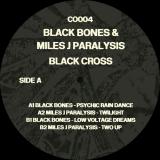
Belfast meets Bradford for a showcase of haunted tribal trances, whirring drum-machine ragas and subsonic ambience. A monolithic face-off on wax. A speaker-troubling duel to the sonic death.
Black Bones and Miles J Paralysis delve into the foundations of Crying Outcast’s fourth transmission: the split EP Black Cross. A release that’s sure to worm its way deep into your musical psyche.
Weapons-grade DJ tools for the margin travellers. Certified. Essential.
Parisian producer, Hyacin steps up for the 7th edition of the AURUM series with 3 house tools that pack a punch on the dance floor and he is in good company as Triptil steps up for remix duties with his signature sound and style!
Tried and tested around the world from the industries finest!
Pascal Moscheni debuts on Limousine Dream with a double 12" featuring 8 stunning representations of the modern tech house sound. Ultra functional, but with plenty of character, and hard-driving but never overbearing - these are tools for DJs working with high-energy dancefloors.
Pirka Vinyl Cuts returns with a new chapter in its unknown edits series, featuring four anonymous cuts built strictly for the dancefloor.
From the rolling grooves of “KINR” and the raw energy of “Ruffneck”, to the sun-soaked swing of “Sun Goes Back” and the late night vibes of “Get Me Down”, the record delivers four funky house tools packed with classic samples, tight drums and peak-time flavor.
A no-nonsense DJ weapon designed for long blends, sweaty rooms and proper moments behind the decks. Limited vinyl release on Pirka Vinyl Cuts.
OFF / GRID makes a captivating debut on Life In Patterns with his 'Sonic Spectrum' EP. Previously recognized as an underground gem in the techno scene due to his acclaimed, self-released EP, 'Time To Shine,' the Hamburg-based producer has garnered significant attention in 2023 with EP releases on labels like Planet Rhythm, Uncage, DifferentSound, and Entourage Concept.
On LIP009, he presents four meticulously crafted vinyl tracks and a digital bonus track, each a testament to his remarkable talent for creating hard-hitting, euphoric DJ tools. His music is distinguished by cutting stabs, hypnotic acid lines, and a distinct dub influence, all seamlessly woven together with powerful drum sounds.
Pronounced Zero (ay ay) RIOT
Shit and Shine go fully CAN on their eleventh album release for Riot Season since their debut way back in 2004.
DEEP SOLID GROOVE REPETITION !!
Fully CAN in the sense that the rhythms are VERY CAN LIKE, but with a modern sharper edge and less flowery decoration. If CAN had a Roland TR-1000 drum machine it might sound a lot like this!
Basically all your favourite bits of krautrock, but sharpened up with modern tools, and it works perfectly! Say it again … DEEP SOLID GROOVE REPETITION !!
It’s definitely danceable, if that’s your thing, but also definitely deeply listenable. Something to put on and fill the space with infectious groove while you wash the dishes or drive your car, have your workout (I’ve heard from several sources $&$ makes excellent workout music) or whatever.
Two long songs on each side of the record. It’s an absolute beauty and actually sounds like shit and shine might be taking things a bit more seriously for a fuckin’ change! BRAVO !!!
UK underground legend Acerbic aka Ant, Chicago Loop and many other alias returns to Perc Trax after the huge success of this Acerbic remix of Perc's 'Imperial Leather' last year. A regular on labels such as Stay Up Forever, Cluster, Hydraulix, Maximum Minimum and his own Power Tools label, now it is time for his over overdue first full EP for Perc Trax. Across the four tracks on the Doom Circuit EP Acerbic sets out is vision of club techno. Hard driving and powerful with a constant sense of forward momentum. Opening track 'Doom Circuit' has been a key part of Perc's sets for months now. Acid techno without the acid as a succession of computer bleeps take over the role a 303 would usually play in tracks like this. Next up 'Lukla' floats echoing lead lines, looping house music stabs and just a touch of London underground acid to create a fusion of key underground sounds. B1 track 'Metroliner' is the most energetic track on the EP as a stomping kick and clap rhythm is topped off synths stabs reminiscent of Luke Slater's classic 'Forklift. Finally 'Helter-Skelter' takes things down a notch to finish the EP to focus more percussion intricacy making it the perfect mixing tool for the more creative DJ.
Hanne Lippard and Renato Grieco's Today's Special is a suite of language works synthesising melody and diction that integrates the literary and the audible in a repertoire of songs that bask in the melody of voice and the punctuations of structured composition. Working with methods of reduction rather than opulence in both tonal composition and rhetoric, each piece pegs the poetic to the musical with compositional schematics and methods. It is important to state that there is little to none improvisation here, instead, the duo set up matrices, rules and structural links that facilitated meaningful locus of exchange between their two practices. Lippard's texts are a collection of new and previously completed works. In these, as is typical for her work, she enjoys the easy pleasure of wordplay, iterative language, and decontextualised anecdote, as in opener Portrait of a Betrayal, a piece about the loss of a phone and the way it haunted the owner who dropped it, based on a lived experience. Grieco's instrumentation works with Lippard's language art as a form of acoustic typography. "I studied graphic design and I think about how you can express typography through voice," she says. "Renato's use of the viola da gamba becomes like an underline, or a font's brushstrokes, in ways that feel typographical." In this, the classically-trained composer Grieco often finds and echoes the pitch movements of Lippard's voice, intonation mirrored and revealed, linguistic meaning doubled and shadowed by plucked, strummed or bowed strings. His main instrument is the viola da gamba, the instrument considered closest to the human voice for its tonal range and ability to mimic inflections and timbre, and here he brings it even closer to the voice, building systems by which it moves with and around Lippard. He also plays piano and Wurlitzer, and joins her in speaking on Receiver and in conversation for final track The Black Rose. "Hanne's voice is an artist's voice, embodied as the artwork itself," he says. "But where my approach is from the perspective of a composer, hers is around rhetoric and language. We worked towards each other in this sense, Hanne finding a space to welcome my voice, and me designing an acoustic space to enhance her vocal persona." In some tracks the structural connections are obvious - the matched tumbling delivery and stepped pitches of voice and piano in Aficionado sounding like two tipsy friends descending a staircase. In others, like the triptych of tracks Three Rungs Ladder, structured with rules derived from nursery rhymes, or cumulative song (akin to the 12 Days of Christmas). For the Colour 1 and Colour 2 pieces, the duo worked from palettes of colours connected to clusters of harmonies, which underlined the power of the word and its articulation. The absurd Labradorable personifies a people pleaser, A Story About Being Blue is an imagined playful monologue from the Deep Blue supercomputer - requesting in sing-song stop motion to be called Debbie, and Larry - as Grieco echoes in factual reportage. Hurtbeat unpacks and recomposes a tweeted non-apology by a Russian art collector about owning a piece of racist art, Grieco shadowing Lippard's generating a third `drop-shadow' performer from the resonances between the duo, typographic re-articulation of the source material. The Receiver includes lines from Robert Ashley's Improvement (Don Leaves Linda), Ashley existing as a spiritual parent of sorts to the practices contained on Today's Special, and here interpolated as if he is being quoted and written through within the audible world of the piece in a palimpsest of borrowed sentences. Closing track The Black Rose contains its own self-aware comedy, a lightly distorted conversation sourced from a Reddit thread about whether black roses exist, recorded as if it were an internet radio or a low budget podcast, the casual exchange stilted in the delivery of platitudes as scripted speech. Today's Special was developed in person over the course of a series of small residencies - at Deutsche Akademie Rom Villa Massimo, Rome; Fondazione Morra, Napoli; Callie's, Berlin. In these limited periods that rarely stretched beyond a week, Lippard and Grieco developed strategies for the works, keeping tightly locked to musical concepts. This, for Grieco, is about maintaining a solid, meaningful connection within the compositions, and committing to everything having a purpose for existing within the work. Each element pulls its weight; has something to say, literally and metaphorically speaking. In the same way that Lippard's work leaves nowhere for her to hide, he wants the music to exist with its own naked purpose: "It's is about exposing nudity via reduced materials," says Grieco. "This is a form of courage we want to embrace. Once we take off everything, it needs to be extremely precise to maintain a connection with the audience. We have a lot of tools to hide behind now, to protect ourselves and our identities as artists, performers, and in life more generally. It's something I don't want to do. I want extreme reduction: no hiding."
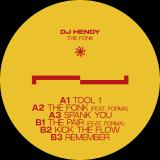
ASUNCIÓN’S MOST WANTED, DJ HENDY AKA P. LOPEZ AKA ARIEL ME LLAMO, MAKES HIS DEBUT ON KAOS. AFTER MEETING HIM YEARS AGO IN PARAGUAY’S CAPITAL, I WAS ALWAYS DIGGING HIS MUSIC AND BLOWN AWAY BY HIS INSANE DJ SKILLS. FINALLY, WE GOT THE OUTPUT HERE. 6 TUNES, 6 ENERGIES. TRIBAL/GROOVE TECHNO AS LANGUAGE, BODY MUSIC AS MESSAGE. THESE ARE MUST-HAVE TOOLS FOR EVERY DIGGER. GUARANTEED DELIVERY NO EXTRA FEES +666111111111 CALL NOW!!!
Following a decade spent releasing music digitally, Brandon De Carlo's Downside Up label made its vinyl debut late last year - though initially only in the US. Thanks to a new global distribution deal, we can now savour the label's second wax outing - a mini-album of club cuts and loop-powered DJ tools from British techno veteran Jamie Bissmire (an artist whose first EP dropped way back in 1997). There's naturally plenty of floor-focused heat throughout, from the 'Livity Sound-in-space' polyrhythmic techno of 'Primal Pathways (Roll Right Mix)' and the minor key madness of 'Smoke & Oakum', to the ambient style soundscapes of 'Parallel Stream' and 'Tangible Roots', and the slamming creepiness of the deliciously relentless 'Blackwood Tread'.
The sound is crazy loud and the music is mental, banging.
Very into Peur Bleue's vibe if you listen to the harder among them.
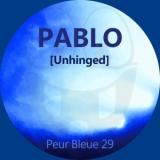
Pablo, from Unhinged Records has been playing and producing music for the past 15 years, and just started to released his music the past years to the people...
Some of these tunes are early ones from Pablo, and some others are the latest ones. A way to discover an evolution, and a constance : his style !
A superb discovery to me... The kind of Tek I love to mix !!! and listen !
Enjoy !
Music : Pablo
Mastering : Stefan ZMK
Cut : Simon Davey
Visual : Toolsy
Pressing : Record Industry
Produced in 2026
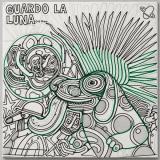
The universe of Muovo Musica is a world of its own, a sonic space where Dove Quiete has learned how to make us move while holding our hand. His upcoming EP, “Guardo La Luna EP.”, explores the artist’s different facets through an unpredictable journey where minimal techno is a constant presence, but far from enough to define the release. Moving between driving tools, ghetto tech influences and trip-hop atmospheres, the tracks naturally cross genres and blend different influences. Rhythm and experimentation coexist throughout a cohesive yet unpredictable EP, always keeping impact at its core.
The third chapter of l’oggetto’s DANCE trilogy continues the sought-after series of instrumental DJ tools. Four new tracks, conceived as techniques to reach ecstatic states on the dancefloor through different moods, tempos, and vibes.
“Vallee,” with its infectious 12-bit groove, opens the EP with a syncopated, never-ending jazz-infused vibraphone. “Bone” takes it from there, staying midtempo and percussive while pushing funky horns into trippy, repetitive territory.
Side B turns moodier, as expected. “2600’” unfolds through digital strings of life, enabling a sense of suspension, release, and transcendence. Lastly, “Ambientale” closes the record with the ethereal, wobbly analog warmth of a downtempo drift into dawn.
Faitiche presents the debut solo album by cellist, sound artist, and composer Topu Lyo: “quiet scenes from tokyo” brings together sixteen miniatures for solo cello and tape echo that oscillate between abstracts drones and rhythmic pizzicato sketches – all recorded at Topu’s Tokyo apartment. The constant traffic noise from a nearby highway has become an accompanying soundtrack for his compositions and can be heard on the recordings. Topu’s playing is marked by a distinctive idiom oriented more towards abstract electronic studio effects than classical technique.
The artist spoke to Jan Jelinek about his work:
JJ: A solo cello album may seem like an odd fit for a label that has to date released only music that is electronic in the broadest sense. But I think “quiet scenes from tokyo” complements the Faitiche repertoire exceptionally well. Its sixteen miniatures showcase the cello in all its complexity: the bowed passages sometimes recall a tape feedback drone; the pizzicato playing conjures up the percussion recordings of Moondog; and the abstract textures might be mistaken for the product of a granular sampler rather than rapid finger work on the cello. I’m constantly surprised by just how rich and varied this album is – without ever losing the charm of its sketch-like quality. Could you say a few words about the making of your album – first of all, from a rather technical perspective: what production tools did you use, and why?
TL: My production tools were very sparse. Just a solo cello and my Roland 301 Space Echo, which I only used at the end, running everything through it during mixing, tape only. After years of working with electronics, pedals, and synthesizers, moving to Tokyo pushed me toward minimizing my setup. But my aesthetics shifted too, toward simplicity. I wanted to strip everything back to just the acoustic cello and see how far I could push it — replicating some of my favorite electronic effects through extended technique: slow portamento, LFOs, filters, detune, noise. I’d also been listening to a cassette of ocean sounds for years. When I moved to Tokyo I was horrified to find myself living directly across from a freeway. Eventually the freeway started sounding almost identical to the ocean — and that ended up playing a prominent part in the recording.
JJ: That’s super interesting: mimicking electronic production as a compositional idea for the cello! You say the sound of the freeway is crucial to the album: I, too, tend to interpret steady traffic noise as a positive soundscape – do we hear the freeway on the album? I can also hear other field recordings, for example on “a street car with announcements”. Can you say a bit about how these field recordings influence your playing?
TL: Yes, you can hear the freeway on the album! The freeway is most prominent in “old trees in lonely spring”, “yuyake koyake”, and “the moon” (you can clearly hear individual cars). When I first began recording I had my balcony door shut tightly, but after a while I began leaning into the highway sound and slowly opening the door little by little to control the amount of noise. “streetcar with announcements” was a moment I was recording and a car passed by making announcements in the background. I loved how it sounded! Same thing with “yuyake koyake”, and later I realized that every day at 5pm the same song plays to mark sunset, telling children it’s time to go home. Having this bedrock of sound puts less pressure on me to put music on top or to play more notes.
JJ: It’s astonishing how much this differs from what I’d imagined: I’d been picturing peaceful landscape recordings, but had never thought of a freeway. Which goes to show how open to interpretation traffic noises are. So the room by the freeway had a major influence on the album – how are you going to perform it live?
TL: The contrast between the freeway and the beautiful landscape in my head couldn’t have been starker. I too was imagining a beautiful landscape in which to create the album, but somehow it still worked out. I've been going back and forth a lot on live shows and I think the most honest way is to have it the most stripped down. I was thinking of using traffic samples etc., but I think the duet really comes from the background sounds from every unique venue/environment. So as it stands, I’ll just be doing acoustic solo cello.
Limen brings together two artists whose musical paths converge around a shared sensitivity to listening, resonance, and the evocative power of sound.
Recorded at Ritmo e Blu Studio during a five-day residency between spring and summer 2025, the album emerged from a series of spontaneous encounters free from predetermined structures. The pieces preserve their original form, retaining the immediacy and temporal flow of the dialogues as they first unfolded.
Subsequent interventions were conceived not as revisions, but as an exploration of the open spaces already present within the recordings—deepening what remained unspoken and extending resonances without altering the music's natural evolution.
The title, derived from the Latin word for “threshold,” reflects the nature of the project itself: a place of passage between improvisation and composition, silence and vibration, memory and imagination. Limen inhabits a suspended territory where listening becomes an experience of openness, presence, and transformation.
---
Lino Capra Vaccina
Lino Capra Vaccina is one of the most distinctive voices in Italian experimental music. A percussionist, composer, and pioneer of minimalist and meditative sound practices, he first emerged in the early 1970s as a founding member of the influential group Aktuala, whose visionary fusion of ancient traditions, improvisation, and contemporary research anticipated what would later become known as world music.
Over a career spanning more than five decades, Vaccina has cultivated a unique artistic language centred on vibration, resonance, and the transformative power of sound. His landmark 1978 album Antico Adagio remains a touchstone of European minimalism, while his collaborations have included figures such as Franco Battiato, Juri Camisasca, Markus Stockhausen, Keith Tippett, Paolo Tofani, and many others.
Whether working with percussion, piano, electronics, or voice, Vaccina's music seeks a state of suspension and contemplation. His compositions unfold as immersive sonic environments whereancient echoes and contemporary sensibilities meet, inviting listeners into an experience that is at once intimate, spiritual, and timeless.
---
Luca Formentini
Luca Formentini is an Italian composer, sound artist, and improviser whose work unfolds at the intersection of experimentation, atmosphere, and deep listening. Active since the late 1990s, he has developed a highly personal language in which guitar, voice, field recordings, and electroacoustic processes become tools for exploring memory, perception, and the expressive potential of sound itself.
His music resists easy categorization, moving freely between ambient, contemporary composition, improvisation, and sound art. Throughout his career he has released numerous solo works and collaborated with a wide range of internationally acclaimed musicians, including Holger Czukay, Robert Rich, Markus Stockhausen, Steve Jansen, Theo Travis and Steve Lawson.His recordings have appeared on labels across Europe, Asia, Australia, and the United States.
Rooted in a practice of attentive listening and sonic exploration, Formentini creates evocative musical landscapes that invite reflection rather than certainty, opening spaces where silence, texture, and resonance become as meaningful as melody itself.
Rekombinant is the solo project of Rome based composer and sound artist Alfonso Montagnese. Blending electroacoustic composition, analogue electronics, magnetic tape and sound design, his work explores the physical qualities of sound, embracing imperfection, transformation and degradation as expressive compositional tools.
Borrowing its title from the physical principle of parity symmetry, the album is less interested in scientific theory than in the possibility that an identity may endure even after profound change. Sound is treated as matter, it is stretched, reflected, saturated, compressed and displaced, yet never entirely separated from its origin.
Magnetic tape is the medium through which this question unfolds. Magnetic tape does not preserve sound faithfully, it reshapes the sound. It compresses, saturates, colours and gradually erodes it, producing not a copy but another state of the same material. Every recording becomes both document and transformation.
Most of the instruments used throughout the album were selected from more recent generations of electronic equipment compared to previous works. Their character is not defined by nostalgia, but by their functional and sonic qualities: instruments chosen for how they behave under pressure.
The album consists of fourteen compositions, each one approaching sound as a material in continuous state of alteration and was conceived within what feels like a new Middle Ages, one that is still unfolding. An era marked by increasing fragmentation, uncertainty and the erosion of shared cultural references. The music does not illustrate this condition; it absorbs and inhabits it.
Throughout these fourteen pieces, sound continuously changes its appearance without abandoning its identity. What remains after every inversion, every saturation and every layer of magnetic degradation is not certainty, but persistence.
Parity Symmetry is Conserved is ultimately an exploration of that persistence: the fragile possibility that memory, identity and human experience may continue to exist, even after passing through irreversible transformation.
Pedro Goya's Double Deuce, PGM008, four tracks running from deep house warmth to tech-housey driven. across the record the focus stays on groove and function over ornament, giving DJs four distinct tools that still hang together as one coherent twelve inch. Built to work from the first hour through to the peak
- 2026 repress - After a first appearance on the label in 2023, Amsterdam-based Isaiah is back on Molekul with a solo EP featuring 6 tools tailored for the club.