In these shaky times we find ourselves in, A Relaxed Blur invites us to take deep breath in and switch to positive vibes. Dive into a world of serene soundscapes, where deep space reverbs and expansive echoes float freely, creating a sense of calm disorientation. Drawing from a blend of dub, psychill, and psychedelic electronic textures, this album guides you through atmospheric journeys that range from smooth, laid-back grooves to vast, hypnotic sound waves. Each track drifts between the tranquil and the transcendental, blurring the line between relaxation and introspection.
Mit Live in Bangalore legt der Kölner Schlagzeuger und Komponist Jo Beyer das dritte Album seines Quartetts vor - ein fulminantes Live-Dokument aus dem renommierten Windmills in der südindischen Metropole Bangalore. Fünf hochenergetische Tracks voller Spiellust, Wucht und Tour-de-Force-Momenten zeigen die Band in absoluter Topform. Entstanden gegen Ende einer intensiven Indien-Tournee, fängt die Aufnahme einen Abend ein, an dem alles stimmte: ein extrem gut eingespieltes Ensemble, ein Raumklang von Weltklasse und ein Publikum, das restlos aus dem Häuschen war. Sämtliche Titel existieren bereits in Studioversionen, doch hier sind sie hörbar gereift - durch jahrelanges Zusammenspiel, erweiterte Improvisationen und radikale Interaktion. Besonders prägnant ist die ungewöhnliche Besetzung ohne Bass, die ein unverwechselbares, rhythmisch starkes Klangbild schafft. Mit Pianist Felix Elsner an Bord hebt Beyer das Quartett endgültig auf ein neues Level - kraftvoll, kompromisslos und voller Überraschungen.
Never Sleep charity tape series focuses on London's pirate radio momentous rise with a true pioneer.
Femme enterpriser DJ Rap holistifies futurism with a cacophony of Ragga, Hardcore and Transatlantic soundscapes. A bass propagation filled with landmark pointillism, matriarchal musicianship and acidic House.
Soundclashing all machismo in sight, rugged mercurial stripped back bedlam for the peak time listener. Complexificating with hypnotic FX, "WHERES THE RAVE" signalling, flawless magnetica and hyperbolic genre splicing. Rap brings the "mood", hybrid soundsystem lashing and method only she fully enablises.
Literally sleeping inside and DJing on Fantasy FM from the age of 16 (you can hear her doing the ads at the start), this mix showcases an incredible time for the burgeoning sounds of the new millenia and the rise of pirate radio across London.
DJ Rap recently released her 6th studio album and is well known for her charity work and love of club culture. A female pioneer in the UK music industry and a long lasting staple in the Electronic history lexicon.
All proceeds go to Four Paws who help Animal Welfare across the UK
out of Stock
Last delivered 10 months ago available to reorder, subject to availability
Following releases on Longform Editions and her own Paralaxe imprint, Dania descends on Somewhere Press with crepuscular, quixotic pop that hits a sweet spot between Mark Clifford’s Cocteau Twins remixes and Massive Attack.
Parked next to Alliyah Enyo, Slowfoam, and Angel R, Dania’s found an ideal home at Somewhere Press, and »Listless« is her most confident, transcendent set to date. Her last few albums were steeped in meaning – a way for the Iraq-born, Tasmania-raised artist to explore her identity and probe the impacts of colonisation. Here, she gives herself more room to breathe, thriving in the mysteries of nighttime – a direct reference to her nocturnal existence as an emergency doctor in Australia. The album was completely composed in the midnight hours, but it’s not self-consciously dark in the way you might expect. Opening track »On a Grassy Knoll« is one of the prettiest – and poppiest – tracks Dania has released, cracking open her voice with thrumming harmonies that she complements with granulated, Guthrie-esque guitars and, most unexpectedly, half-speed drums. It’s the first time Dania’s used percussion, and it suits her extremely well.
In fact, even when the powdery breaks drop away in the album’s final breaths, you can almost hear an outline of where they might remain. On »Write My Name«, Dania loops her voice between waved strings and slippery piano phrases, and the hypnotic closer »A Hunger« is a thudding, sub-heavy 4/4 away from being Peak Oil-style contemporary dub techno.
But the big draw here is Dania’s batch of hazy dream-pop miniatures, like the Seefeel-adjacent »Heart Shaped Burn« (with Rupert Clervaux on drums), and the Bristolian »Car Crash Premonition«, that features a rolling bassline taking us right back to 1998. Very strong – peak listening if you’re into Bowery Electric, MBV, or Mark Van Hoen.
out of Stock
Last delivered 10 months ago available to reorder, subject to availability
“In a concert, I show something with a beginning, a middle and an end. But, there is no end. Of course, there is no end. Because I am the music, and I am still here.” - Sophie Agnel
‘Learning’ - Sophie Agnel’s first solo LP, feels like the dark, physical inversion of her excellent ‘Song’ which came out on Relative Pitch earlier this year. Sinking her unique sound into vinyl for the first time, the LP arrives as Agnel recovers from a brain tumour - a shocking discovery that will require Agnel to start again with the piano. It’s a terrifying prospect, but Agnel has been here before, having reorientated herself almost entirely away from her early classical training over the last 4 decades of her work.
‘When I was young I had very good ears, oriole absolute. Then later I began to make strange sounds with my piano, to do different kinds of music. I was more interested in the sounds than the melody, for example. I remember once I sat down in a shop to try to read the scores of Schubert and there was a light emitting a very strong bzzzzzzz. And I couldn't listen to my oriole internal - I couldn't read the score. I was entirely subjugated by the sound of the light. And I understood that something had changed. Ten years before I could read and not hear the light. Now I understood that my ears were completely different. I was more open to the sounds of life.”
Born in Paris in the 60’s and playing her parents piano as soon as she could stand up, Agnel quickly grew tired of the classical world. What frustrated her was the strange disconnect between the frame of the piano and its keyboard - a weird boundary that seemed to form some hushed code of etiquette. “The first thing I put inside the piano was a plastic goblet. I’d seen a few pianists do it: Fred Van Hove, for example, put rubber balls inside his. But what didn’t appeal to me was that there seemed to be no link between the pianos outside and inside.”If you see Agnel play now, the body of her piano is littered with fish tins, ping pong balls, wooden blocks - not that you’d recognize their sounds. Having absorbed the language of the European avant-garde, Agnel is known for pulling the piano’s interior outside of itself by tipping her handbag into it. But these ‘strange sounds’ don’t just come from Cage - they also share the poetic force of Cecil Taylor and ‘Learning’ demonstrates that Agnel’s work on the piano's keyboard is just as important as what she’s littered on its strings. The record lets loose her ability to unleash a formidable sound mass and then rope it back to one single, clarifying note. With one hand, Agnel plays 88 tuned drums and on the other an enormous guitar - with the LP rotating through oncoming trains, and blues harmonica and feedback. It’s single minded stuff, borne out of a dedication to a wholly personal language of gesture, accumulation and deft reduction. “Maybe when I’m 80 I will not need anything,” Agnel says in a recent film made at her home. “I will do the same but with one note, and one finger. Maybe it's enough.”
‘Learning’ arrives in a reverse board sleeve designed by Jereon Wille. Recorded live at Cafe OTO by Billy Steiger on 6th June 2023 and 4th June 2024. Mixed by James Dunn and Benjamin Pagier. Side B edited by Benjamin Pagier. Mastered and cut by Loop-O. Front photograph by Aimé Agnel. Typography and layout by Jeroen Wille.
For his last solo record ‘Through a Room’, Bill Nace shifted his usual saturated guitar sound and added tapes, hurdy gurdy, doughnut pipe, bird calls and the mysterious Japanese taishōgoto. Setting up for the final night of his three day residency at OTO with only the taishōgoto soundchecked, Nace hoped that Parker would arrive with his small soprano as its opposite. “I’ve been interested in state change, you know, playing until there’s a shift in time.” Known for his development of multiphonics to produce a constantly shifting pattern, Evan Parker has evolved an instantly recognizable sound - his work the soprano most distinct. Happily, it was the soprano Evan brought with him and as soon as the two start to play they entwine - taking off in a double helix of keys and reed primed for endless reconfiguration. Space warps under the velocity of playing, the pitch rising unrelentingly. It felt like unending lift off in the room, sheer energy until the last note makes remember your feet have been on the floor the whole time. Total time bending shredding.
–
"They had never played together before. They had never even met each other before this springtime 2024 concert at London’s Café Oto.
Evan Parker, circular breathing maestro of the saxophone, a legend in the universe that is Free Improvisation since the late 1960s and Bill Nace, one of the most intriguing experimental “noise” guitarists of the 1990s/2000s underground scene.
For those of us who have been enamored by the live and documented work of both these gents, this Café Oto duo was a must-hear event. It could have gone anywhere musically and that would have been totally fine. Particularly with Evan having a history of being thrown into a variety of challenging collaborations throughout his career, employing the learned elegance of trust in his own sensitivity to listening, responding, leading, following, sparring, intertwining, dialoguing, creating in the instant and, essentially, dignifying the non-hierarchical grace of chance.
The aesthetics of socialist consideration in Evan Parker’s playing, in his community of expanded and personal technique, for a younger player such as Bill Nace, strikes an exemplary model. This notion of respect would be entirely the reason Nace, when offered a residency at the most critical “new music” room in England, would request to play in duo with Parker.
Bill Nace came to prominence mostly during the apex of experimental music activity in and around Western Massachusetts in the early days of the aughts, with a focus on visual art and free improvisation guitar action. He could be found in the daytime hours, his head hanging down over a notepad, penning fine-tuned illustrations and abstract line drawings, while in the evenings he’d be attending any number of basement noise gigs, many of which he’d be participating in. His guitar style came across as being informed as much as by the physicality of his writing utensils in friction to the page as it was to his hearing and redefining of radical recordings ranging anywhere from the Black Unity Group to Black Flag.
Utilizing various metal files and other small cylindrical objects Bill would allow his guitar and amplifier to be in tandem with the improvisatory movements of his body as the instrument balanced, intentionally and, at times, precariously, upon his lap. The performances came across thrilling and daring and they would be mostly in the context of venues nothing more than a low-ceilinged damp and dank New England basement, a clutch of people hanging onto rusty pipes or sitting up on dilapidated washer/dryer machines, the shards of Bill’s “file guitar” sounds ringing out like the most alive music on Earth.
By the time Bill reached Café Oto in early 2024 he had relocated to Philadelphia all the while releasing a succession of collaborative LPs on his Open Mouth label to present his developing progression of solo and collaborative work. He also would find himself considerably engaged with playing the electric taishōgoto, a keyboard-activated string instrument from Japan which can exist as a one, two, four, five, or six string oblong sound object. Bill’s approach to the taishōgoto would not be too unlike his approach to the traditional electric guitar, though no outboard implements such as files, sticks, and rocks are utilized. The similarity would lie wholly with Bill’s full immersion of high velocity action-playing where, with the taishōgoto, an electric drone beauty occurs. The flurry of sonics and resultant harmonics emanating from the amplifier (which Bill opts to dial into with borderline loud-as fuck volume settings) furthers the meta-mantra properties of the instrument in an astounding display of drone dynamism.
This sound world of Bill’s two-stringed taishōgoto on this Café Oto night worked beautifully with Evan Parker’s improvisatory saxophone conceptions. The duology achieved instant lift off at ground zero only to find it’s eventual finale as if it were organically ordained. Time seemingly morphed from its ancient human construct of control, rendered inconsequential to the torrential transcendence of the room wildly activated by the magic resonance of the multi-directional pan-spatial sonance of the music as if it were some beatific blessing. It was one of those nights where art as a liberating force of spirit gifted the listeners with an offering of exaltation and joy. It was entirely mystical and mind blowing. A night of Total Music."
Slip is Paul Abbott’s response to his 3 day residency at OTO in 2023. It’s a continued exploration of the acoustic-digital hybrid drum setup Abbott has been developing for some time, which involves drum kit and synthetic sounds combined closely—through an entanglement of limbs and cables—in an intimate but strange relationship with each other.
Paul Abbott hasn’t had any formal musical training, but has a long history of making music, having collaborated for years with Seymour Wright, Pat Thomas, Michael Speers, Cara Tolmie, Anne Gillis and many others. Eventually, led by a profound suspicion of what is fixed or limited, Abbott began finding other ways to organise sound - or what he calls ‘material’:
“I wanted a way to 'persuade' or guide the possibility of something happening - my activity or the events of an algorithmic composition - for example, but without certainty or formalism. It felt to me, during playing, that certain ideas had a particular sort of shape, but more than the form of a line. I began to write alongside (before/after) playing the drums, and ‘characters’ began to enter the scene as a more wobbly, and therefore appropriate option to notation. Working with these characters allowed me to simultaneously approach body, imagination, language and music: without dividing things up or separating these aspects from each other. It allowed me to leave things messy and entangled, whilst trying to deal with form and specificity: wanting to have some things feel or respond differently to other things at other times.”
In approaching his residency, Abbott developed a fixed cast of characters - crystal, lleaf, reiy.F, reiy.C, strike, nee, qosel, sphu and aahn. They each communicate using different kinds of movement and drum kit/s, and Abbott choreographed them as ‘dances’ based on different feelings, or outlines of behaviours suggestive of ways of moving (body, drums, sounds). He then arranged these characters into ‘compositions’: one for each performance day, with each composition featuring multi-layered activity - options for behaviours, ways to move around the rooms, play drums, develop synthetic sounds, change the lights or re-distribute the sound in the space.
After the performances, Abbott took home 9 hours of recordings split into up to 28 multitrack channels for each day, and re-organised his cast once more into a performance for 2LP, CD and digital. It’s an enormous amount of work - but Abbott is activated by the process. For him, the pleasure of unstable edges, possibilities, slippages, is the vital attraction. Like all living organisms, Abbott’s characters have malleability and responsivity. They stimulate a bundle of possible behaviours, a tendency to act a certain way, a temperament, a boundary of respective limits or affordances.
It’s an affective way of working, inclusive of Roscoe Mitchell, Sun Ra, Nathaniel Mackey and Milford Graves. In ‘Pulseology’(2022), Milford Graves reminds us, ‘Breath varies, so cardiac rhythm never has that (metronomic) tempo. It’s always changing. All the alignments of the heart are determined based on the needs of the cells, specifically tissues and organs. The heart knows if it needs to speed up.’ In Slip, to slip, in a heartbeat, is to descend not into the grid of the even metre accorded to the heartbeat, but into a play of mutability and modality. To change is the condition of the heart.
Following a string of acclaimed collaborations, including Agua Dulce with percussionist Laura Robles and Mapambazuko alongside Congolese guitarist Titi Bakorta, Peruvian artist Alejandra Cárdenas (aka Ale Hop) returns with her most personal work to date yet, A Body Like a Home. Marking her first album under her birth name, the project is a sonic memoir exploring the tangled realms of trauma, recovery, and love through autobiographical soundscapes.
A Body Like a Home is the artist at her most exposed. Comprising 13 songs and 15 poems, the album sees her set aside collaborative fusions for solo catharsis, channeling years of turbulence - intergenerational scars left by colonialism, racism, domestic violence, and alcoholism - into a work that oscillates between brutality and tenderness. Cárdenas states: “I grew up under Alberto Fujimori’s dictatorship, when a veil of hopelessness seemed to settle over everything. This is the backdrop of the album. The songs and poems trace the inevitable loop between private wounds - addiction, domestic violence, fractured intimacy - and Peru’s national scars, carved by colonialism. It’s not a straight story or a resolution. Writing and composing became a ritual of digging for meaning, into what’s buried, disguised, or renamed, until the body itself became a living archive.
” At the heart of the album is Cárdenas’s own voice - part witness, part confessor - reciting over layers of electric guitars, electronic textures, the haunting violin of Mexican musician Gibrana Cervantes, and a collage of field recordings, from rainfall, muffled whispers, broken glass, to archival protest footage from Peru. The result is a work that resonates like a diary written in sound.
The first single, "Motherland", is a searing testimony where Cárdenas voice cracks under the weight of history and personal loss. Amid a storm of distorted guitars, she traces the cyclical legacies of colonialism, from state massacres branding Indigenous bodies as “terrorists” to the spiral of addiction as an unavoidable future. The lyrics draw parallels between political and domestic violence: a mother’s drunken knife pressed to her chest, and a motherland where racism is currency. She utters: “sacrifice demands a body.” Yet, amid the wreckage, a willful grip on love and faith persists. Ultimately, A Body Like a Home is a document of transformation. Tracks like "Evangelina" and the title piece "A Body Like a Home" hold space for resilience, spirituality, and love, while "Early Road" and "Going South" thread subtle nods to Peruvian folklore, opening up bright vignettes into a sense of belonging.
The poetry chapbook accompanying A Body Like a Home (five of its pieces are also recited on the album) extends the work, building a parallel architecture. Oscillating between the documentary and the mythic, the intimate and the forensic, the profane and the oniric, these poems practice a theology of the ordinary, where everyday objects - cameras, knives, moth-eaten cotton - are charged withspiritual and historical weight. Here, the body is land, house, battlefield, collective pain, geological territory; and trauma is, in contrast, archival, cellular, ritualistic, inherited. Read alongside the music, the stories refract across two mediums: songs give them breath and poems give them bone.
out of Stock
Last delivered 10 months ago available to reorder, subject to availability
Just one year and 13 days after their critically acclaimed debut Colorful White Lies, Bergen- based rock band Electric High return with their second album Free to Go. While the debut was a manifestation of the band's first five years of existence, Free to Go is quite the opposite: written, rehearsed and recorded at breakneck speed, the album bursts with freshness, spontaneity and raw energy. Ahead of the release, Electric High have already dropped three singles - Thick as Thieves, Ain't Got Nothing But Time (watch music video) and the title track Free to Go - each showcasing different sides of the record, from singalong anthems to heavier, more hard-hitting rock. Free to Go expands on the band's signature sound: an explosive blend of classic and modern rock. Expect infectious choruses inspired by Aerosmith, Whitesnake and AC/DC, dark riffs echoing Black Sabbath, a touch of 70s glam and punk attitude - along with flavours of contemporary rock à la Arctic Monkeys and Royal Blood. The result is an album that feels both timeless and fresh, balancing melody with sheer power.
Smashed Sunset Vinyl, limitiert auf 400 Exemplare. Energiegeladen - so lässt sich The Birch am besten beschreiben. Treffende Riffs, druckvolle Rhythmen und alles eingebettet in psychedelische Klangfarben - so erschaffen sie eine Atmosphäre purer Ekstase. Vicious Mind ist ein Abstieg in die moderne Psych-Rock-Welt. Mit seinen sieben Tracks zeigt es auf Seite A eine eher düstere Facette der Band, die sich auf Seite B in eine weichere, mehr Rock'n'Roll-geprägte Stimmung auflöst. Mit einer Reise ins Ausland verschlug es The Birch nach Miami Beach, wo sie ihr zweites Studioalbum aufnahmen - ein Aufenthalt, der dem Album durch die Eindrücke aus dem ,Land of the Free" eine neue Note verlieh. Twangy Gitarren und eine geradeaus treibende Rhythmussektion führen den Hörer in psychedelische Klanglandschaften, die durch einen konstanten Beat lebendig gehalten werden, der einen durch die 30 Minuten von Vicious Mind begleitet.
Apex Ten, a Belgian trio hovering in Space Rock, Desert/ stoner Rock and Psychedelic, mainly instrumental, offers a unique experience at each appearance. Fans of bands such as Electric Moon, Ecstatic Vision, Colour Haze, Kyuss or Hawkwind will be able to relate to them during the spacial, strange and contemplative atmospheres they develop. The sound is based on the energetic and powerful bass sound, paired with catchy and energetic drum lines. On top of it, the guitar melodies enable the crowd to travel and dissociate. In addition, the powerful vocal accompanies the listener and becomes the leader of this cathartic experience. On stage, Apex Ten brings their music to life with captivating performances that transport audiences into their expansive sonic world. Their ability to seamlessly transition between delicate, introspective moments and thunderous crescendos makes each show a mesmerizing experience. With a growing reputation for their innovative approach and dedication to their craft, Apex Ten is carving out a distinctive place in the modern rock landscape. For those seeking music that challenges convention and stirs the soul, Apex Ten is a band that stands at the forefront of creative exploration
One Instrument welcomes Morning Seance, composer and sound artist, originally from Italy and based in Vienna. On this debut LP, Morning Seance traces a drifting narrative composed of unstable harmonies, fluid structures, and ghostlike forms. The album unfolds like a dream told in fragments, oscillating between fluctuating pulses and decaying transmissions, from nocturnal stillness to acoustic mirages. The first half of the record moves through zones of suspended tension and evanescent contours, where tracks like “Be faster than your own depression” and “The tenderness of our own autobiography” sketch fragile architectures of affect. The second half enters a more spectral terrain — “Breakfast in a night club,” “A visit to the Brion-Vega tomb” — not places, but agglomerates of sonic sensation, detached from any personal frame.
With each piece, the music dissolves and reconstitutes itself, resisting finality or form, and doing so with an indestructible joy that hums beneath the wreckage. This is degenerate ambient music: anti-geometric and subject to emotional weather — not a refuge, but a slow collapse of structure and purity, where atmosphere gives way to excess and disobedience.
The album is crafted entirely from a single source: the Roland Alpha Juno-1. Despite this constraint, it achieves a vast sound spectrum, transforming one synthesizer’s voice into a layered landscape of textures and moods.
The electronic music of Morning Seance is built on constant variation and intricate, looping patterns with no clear beginning or end. This variation is not simply applied to an audio element, but enacted as a compositional logic — avoiding mechanical combinations and obvious rhythms. The result is a mutable mass of audio matter and tonal debris, guiding the listener through richly divergent environments.
A year on from Aura Safari and Jimi Tenor's Sensory Blending and DJs and dancers are still lost in its summer charms, but there have also been a series of standout remixes taken from the originals, which now get assembled on one vital 12": Sensory ReBlending features Willie Graff, Reverso 68 Dub, Jazz N Palms and Luminodisco.
First up is Ibiza favourite Willie Graff, who tackles the spellbinding original 'Bewitched By The Sea'. He brings a signature Balearic beat perfect for cruising around the island as the sun blazes with its dubby, swaying drums and more prominent vocal, all brought to life with delicate percussion and gentle synth pulses. Label regular Federico Costantini aka Luminodisco also returns with a mature post-Balearic touch that douses the track in an ocean of dubby echo. Gorgeous Spanish guitars and jumbled percussion form a life raft which floats out to sea under the sultry wind motifs.
Reverso 68 is the studio-based project of Pete Herbert and Phil Mison, and over the last decade-plus, they have mastered the art of making music for swimming pools. Their version of 'Your Magic Touch' is low-slung and deep with a mid-tempo four-four groove sprinkled with tropical percussion. The muted chords are gloriously dreamy and the whole thing is perfect for early evening warm-ups.
Jazz N Palms is Hell Yeah family and is currently riding a wave of acclaim for his See Rodes (Revisades) album on his own Jazz N Palms Recordings. He flips 'Lunar Wind' into poolside perfection with heart-melting sax notes and rippling keys, soothing female tones and dubby breaks. It's a perfect soundtrack to heavenly ascent.
These remixes perfectly extend the soul-soothing pleasures of Sensory Blending with plenty of fresh but sympathetic perspective.
out of Stock
Last delivered 5 months ago available to reorder, subject to availability
On Beacon Hill: at twilight we find Anthony Moore, roots winding backwards to the halcyon days of Slapp Happy and the "70s progressive art rock scene, at guitar and piano. With the atmospheres and accompaniments of AKA & Friends, he breathes infernal new life into songs from his six decades of multivarious music making. This new delivery system is unto a séance, a communal incantation, twining Anthony"s avant and pop traditions together in a darkly radiant coil of folky chamber music; a rope to lower the listener through cobwebs and murk, unveiling new life beneath Anthony"s mad old lines. AKA are Anthony Moore, Keith Rodway and Amanda Thompson. A pagan family of sound worshipers hailing from that unholiest of all places: Hastings UK, home of Crowley and Turing. Like their sinister forbears in that infamous tradition, this latest trinity shares a passion for subverting pattern and number, factoring unlikely permutations arising from sea and horizon, greensward, the southerly aspect, and the planisphere as half-world. Their equatorial shore speaks of a planet of water and earth, fire and air. AKA"s humble tools of choice for this endeavor are guitar, piano, organ, synthesizer and vocals. The Friends of AKA are Tullis Rennie, trombone and electronics; Olie Brice, double bass; Richard Moore, violin; and Haydn Ackerley, guitar. They too navigate the shoreline of the south coast, haunt the same taverns and regularly play together in whatever combinations fit the bill. Leaving the drums (and their drummer) at home to realize anew these dreamladen songs, AKA & Friends ensure that the notes fall around the beat and not on it, so as to define the pulse with absence. As such, time is liberated, prised free from the merciless clock; a rhythm of waves, passing through a steady-state universe of no beginnings and no endings. Discontinuities are dissolved, all is transition.
Winter Sessions in Courchevel - compiled by DJ Ravin Bereit für den Winter? Mit Winter Sessions in Courchevel präsentiert der legendäre DJ Ravin eine exklusive Doppel-Compilation, die den Soundtrack für stilvolle Höhenflüge liefert - von glamourösen Nächten in den Alpen bis zu entspannten Après-Ski-Momenten. Die Auswahl vereint feinste World Lounge, Electro-Chill und festliche Deep Vibes - perfekt abgestimmt auf die Atmosphäre des Luxus-Skiorts Courchevel. Mit dabei sind renommierte Buddha-Bar-Künstler wie Majnoon, VS Prjct, DJ Phellix, Souhail Artwork, Omary, Carlos Campos und viele mehr. Ob auf exklusiven Partys oder in ruhigen Stunden am Kamin - diese Musik schafft Räume für Emotion, Eleganz und Eskapismus. Jeder Track ist ein Fenster in eine Welt zwischen Tradition und Moderne, zwischen globaler Klangästhetik und alpinem Chic.
This exclusive repress comes as a special edition limited vinyl in red, yellow, and white splatter - the signature Peacemaker colours. The Cruel Intentions are finally re-issuing their long sold-out debut album No Sign of Relief! The band has gained massive international attention after being featured on the soundtrack of HBO Max's hit series Peacemaker, directed by James Gunn. On "No Sign of Relief" you'll find the tracks Jawbreaker, Borderline Crazy, Sick Adrenaline and Reckoning - four songs personally handpicked by Gunn for the series. This exclusive repress comes as a special edition limited vinyl in red, yellow, and white splatter - the signature Peacemaker colours. "No Sign of Relief" is an album bursting with confidence and energy that instantly rubs off on the listener. It's groovy, angry, cheeky, and fun - music that sparks emotions of rage, joy, confidence, and pure excitement.
Utilizing only guitar, bass and drums, Papir conjure vast and melodic soundscapes while still maintaining a krautrock drive. One of the most unique bands in the modern European psych rock scene, they continue to innovate as they refine their sound with each album. Copenhagen"s foremost aural travelers are back and bearing new music. True to their distinct sound, Papir return with another chapter in their ongoing sonic journey. Terms like post-rock, ambient rock, psychedelia, and krautrock may circle their sound, but none quite capture its shimmering, elusive magic. IX is a wide-open record in every sense. From the flowing compositions - which linger but never overstay, jam and unfold organically - to the wonderful airy production, you get the sense of being both in studio with the band and simultaneously on the beach with wind blowing through your hair. In addition to the ever free-flowing nature of the band"s live recordings, additions such as synthesizer or extra percussion appear always tastefully right when needed, adding the perfect seasoning on top.
Forever's spirit is high and tight, its sinews rumbling with communal joy as Glyders' power-trio formation, in it "for life", grooves deep into their own thing. Shuffling the deck with road-tested jams and a couple immaculate old-school tunes, Forever hits with the energy of a first album - which it kinda is, now that founders Joshua Condon and Eliza Weber have met their true other, the relentless traps-man Joe Seger. Forever starts now!
Berlin-based artist and live performer ASEC joins Blue Hour Music for his latest record, featuring four
tracks with a signature blend of raw, hypnotic techno
out of Stock
Last delivered 3 months ago available to reorder, subject to availability
Ltd. Translucent LP
Augen auf & durch' markiert 10 Jahre Yasmo & die Klangkantine. Die Wiener HipHop-Jazz-Bigband um Rapperin Yasmo (Yasmin Hafedh) präsentiert auf ihrem vierten Album ein klares Statement: wach bleiben, Haltung zeigen, die Realität aktiv gestalten. Musikalisch verschmelzen präzise Beats, Bigband-Bläser und pointierte Texte zu einem einzigartigen Sound zwischen Diskurs und Tanz. Mit Ralph Mothwurf und Tobias Vedovelli entstehen Werke jenseits aller Genregrenzen mit breitem Anspruch.
led by guitarist seiji hano, the jazz group om released only one album — solar wind, a landmark work that stands as one of the greatest achievements in japanese ethnic jazz. now, this masterpiece is finally being reissued.
their sound, seemingly a response from japan to ecm artists such as oregon and codona active during the same period, is refined yet imbued with a distinctly japanese sense of wabi-sabi — melancholic, nostalgic, and deeply resonant.
from “windmill,” featured on studio mule’s compilation midnight in tokyo vol.2, to every other track, solar wind is a flawless album with not a single weak moment — a true masterpiece of japanese jazz.
out of Stock
Last delivered 10 months ago available to reorder, subject to availability
The story begins with Kevin Morby absentmindedly flipping through a box of old family photos in the basement of his childhood home in Kansas City. Just hours before, at a family dinner, his father had collapsed in front of him and had to be rushed to the hospital. That night Morby still felt the shock and fear lodged in his bones. So he gazed at the images until one of the pictures jumped out at him: his father as a young man, proud and strong and filled with confidence, posing on a lawn with his shirt off. This was in January of 2020. As the months went on and the world dramatically changed around him, Morby felt an eerie similarity between his feelings of that night and the atmosphere of those spring days. Fear, anxiety, hope and resilience all churning together. The themes began twisting in his mind. History, trauma and the grand fight against time. Having the courage to dream, even while knowing the tragedy that often awaits those who dare to dream. While his father regained his strength, Morby meditated on these ideas. And then, he headed to Memphis. He moved into the Peabody Hotel and spent his days paying tribute and genuflecting to the dreamers he admired. In the evening, he would return to his room and document his ideas on a makeshift recording set-up, with just his guitar and a microphone. The songs, elegiac in nature, befitting all he had seen, poured out of him.Produced by Sam Cohen (who also worked on Morby’s Singing Saw and Oh My God), This Is A Photograph features musical contributions from longtime staples of Morby’s live band, as well as old friends and new collaborators alike. If Oh My God saw Morby getting celestial and in constant motion and Sundowner was a study in localized intent, This Is A Photograph finds Morby making an Americana paean, a visceral life and death, blood on the canvas outpouring. As Morby reminds us early on, time is undefeated. So what do we do while we’re still here? This is a photograph of that sense of yearning
MOY returns to Analogical Force with Ghostware, a four-track EP of acid-driven braindance that balances breakbeat chaos, widescreen electro and deep atmospheric twists. Each cut pushes his sound further, marking his most progressive and fully realised release for the label to date. A total must.
The project is co-led by Copenhagen-born saxophonist Andreas Toftemark, a European Jazz Master and recipient of the Bent Jædig Prize, whose career has taken him from the Conservatorium van Amsterdam to The New School in New York. He is joined by Benny Benack III, the multi-award winning Emmy-nominated trumpeter and vocalist lauded for his charismatic performances with the likes of Christian McBride, Chad Lefkovitz-Brown, Peter Bernstein and more. Rasmus Sorensen adds a vital piano voice, fresh from winning a Danish Music Award in 2024 and releasing Balancing Act (2024) featuring modern drum icon Kendrick Scott. On bass, Finnish talent Kaisa Mäensivu - leader of her own project Kaisa"s Machine - brings international credentials shaped at the Sibelius Academy, Manhattan School of Music, and festivals including Pori Jazz. Completing the lineup is New York drummer Joe Peri, a Grammy-winning artist featured on Tony Bennett & Lady Gaga"s Love for Sale and a familiar face at Birdland, Mezzrow, and other NYC institutions. Together, they craft Roadmap - a set of originals born from tours around the Copenhagen Jazz Festival and honed on the road. Each member contributes compositions: from Toftemark"s modal-driven title track and brisk swinger What Gets You to Peri"s hard-hitting opener Icebreaker, Mäensivu"s funk-tinged The Lemur, and Sorensen"s harmonically dense New York Attitude. The quintet also delivers moments of intimacy, with Again - a co-write between Toftemark and Benack - adding lyrics penned on tour and sung with understated warmth. As Benack reflects: "When I play with Andreas, I"m thinking of Joe Henderson and Kenny Dorham, of Clifford Brown and Harold Land. But this isn"t just a revival of a classic hard bop record-the heart and soul of it is the Copenhagen-New York connection."
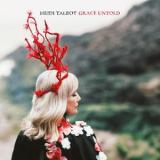
With her ninth studio album, Irish-born, Edinburgh-based singer Heidi Talbot pays tribute to strength, resilience, and inspiration - from legendary figures to the unsung heroines within her own family. Rooted in both personal experience and collective lore, the collection weaves stories of women legendary and intimate. The warrior queen Grace O"Malley (Gráinne Mhaol), the goddess Brigid of Co. Kildare, and Anna Parnell, leader of the Ladies" Land League, appear alongside Talbot"s grandmother Kathleen, whose recorded voice opens the closing track. Throughout, themes of resilience, love, ancestry, and grace echo across time. Following the critically acclaimed Sing It For A Lifetime, Grace Untold continues Heidi Talbot"s evolution as a songwriter of remarkable honesty and depth. It is a record of stories - whispered and sung, remembered and reimagined - a woman"s tribute to all women who have inspired, protected, and passed the song forward.
Nach einer legendären Tribute-Performance bei den VMAs vereint sich Aerosmith mit YUNGBLUD auf
„One More Time“, das am 21. November bei Capitol Records erscheint. Die 5-Track-EP enthält Vocals
von Steven Tyler und YUNGBLUD, darunter 4 neue Songs, die von Steven Tyler, Joe Perry, YUNGBLUD
und Matt Schwartz geschrieben wurden, sowie eine neu interpretierte Version des Aerosmith-Klassikers
„Back In the Saddle“.
Mit Ravel Recomposed legt Victor le Masne eine Hommage an einen der größten Meister der französischen Musikgeschichte vor. Nach seinem Erfolg als Komponist und Musikalischer Leiter der Olympischen
und Paralympischen Spiele 2024 in Paris widmet sich Le Masne nun der Musik von Ravel, die ihn seit
seiner Kindheit begleitet. Ravel Recomposed schlägt Brücken zwischen Tradition und Gegenwart: Klassik
und Jazz verbinden sich mit dem Puls des French Touch und verschmelzen zu jenem unverwechselbaren
Klang, der den Grammy®-prämierten Komponisten, Produzenten und Multiinstrumentalisten international
bekannt gemacht hat. Das Album erscheint am 21. November 2025. Die Neuinterpretationen von Boléro,
Jeux d’eau, Le jardin féerique sowie Auszügen aus Daphnis et Chloé, L’enfant et les sortilèges und dem Streichquartett, neben weiteren Werken, erscheinen anlässlich des 150. Geburtstags von Ravel. Zu hören sind
Christine and the Queens (Texte, Gesang), Julius Asal (Klavier) und Camille Thomas (Cello). Das Album
mit seinen zwölf Stücken ist der jüngste Beitrag zur wegweisenden Reihe Recomposed von Deutsche Grammophon. Den Auftakt machte vor 20 Jahren Matthias Arfmann mit seinen Bearbeitungen von Aufnahmen
der Berliner Philharmoniker unter Herbert von Karajan. Es folgten unter anderem Peter Gregsons Neuinterpretation von Bachs Cellosuiten sowie Max Richters gefeierte Neufassung von Vivaldis Vier Jahreszeiten
Im Juli 1955 reiste der damals 19-jährige Luciano Pavarotti zusammen mit seinem Vater und einem Chor aus
Modena nach Wales, um am Llangollen International Musical Eisteddfod teilzunehmen. Dort gewannen sie
den Wettbewerb der Männerstimmen mit großem Abstand. Dieser besondere Moment inspirierte Pavarotti,
professioneller Sänger zu werden. 40 Jahre später, im Jahr 1995, kehrte er zurück, um während der
Eisteddfod-Woche ein besonderes Konzert im Pavillon zu geben. Diese Aufnahme dokumentiert das bisher
unveröffentlichte, historische Konzert. Zu der versammelten Menge im Pavillon sagte Pavarotti: „40 Jahre,
mein Gott, es fühlt sich an, als wäre es gestern gewesen. Ich habe so viele Dinge getan. Wenn Journalisten
mich fragen, welcher Tag in meinem Leben besonders war, dann sage ich, es war der Tag, an dem ich
diesen Wettbewerb gewann, weil ich mit all meinen Freunden zusammen war.“
Die Sammlung präsentiert ein Programm voller Arien aus Cavalleria rusticana, Il trovatore und Macbeth
sowie bekannte neapolitanische Lieder. Sie enthält außerdem zwei Tracks aus dem Jahr 1955, die als die
ältesten Aufnahmen von Luciano Pavarotti gelten. Das beiliegende, 100 Seiten starke Buch bietet einen
lesenswerten Essay von Maestro Mark Wilkinson über dieses historische Konzert sowie seltene historische
Fotos aus dem Llangollen-Archiv. Die SACDs in dieser Box sind hybrid und verfügen über eine PCM-AudioEbene, die auch auf Standard-CD-Playern abgespielt werden kann, sowie über eine DSD-Ebene.
Der lettische Pianist Georgijs Osokins widmet sein Debütalbum bei der Deutschen Grammophon dem estnischen Komponisten Arvo Pärt. „For Arvo” ist eine Hommage an die baltische Klavierkultur und die
zeitlose Musik des Komponisten anlässlich dessen 90. Geburtstags am 11. September 2025.
Neben Originalwerken für Klavier enthält das Album Osokins eigene Transkriptionen zentraler Pärt-Kompositionen
wie „Fratres”, „Pari intervallo” und „Fragile e conciliante, die das Vertrauen in Osokins’ musikalische Integrität und seine tiefe Auseinandersetzung mit Pärts Werk unterstreicht.
Osokins erforscht mit dem Programm die „verborgenen Beziehungen zwischen den verschiedenen Stücken
in Pärts Klavierwerk“ und spannt so den Bogen von Pärts frühen Kompositionen bis zu seinem charakteristischen Tintinnabuli-Stil. „Ich wollte genau den Moment kompositorischer Erkenntnis einfangen –
von komplexer zeitgenössischer Avantgarde bis hin zu reiner, leuchtender und rätselhafter Schönheit und
Schlichtheit”, erklärt Osokins. Eingespielt wurden die Werke auf einem über 100 Jahre alten blauen
Steinway-Flügel, dessen obertonreicher Klang dem Album eine unverwechselbare Atmosphäre verleiht.
„Dieses Album ist eine Liebeserklärung an Arvo und seine Musik“, so Georgijs Osokins.
Damit eins gleich klar ist: Auf FARIN URLAUBs zweitem Album ist erst mal Schluss mit lustig.
Es dauert ganze vier Verse, und ein unmissverständliches „Feuer frei“ legt einem nahe, den Kopf für den
Rest des Albums lieber unten zu halten … und besser isses, denn es wird fortan konsequent mit der Gitarre
niedergemäht, was nicht in geduckter Haltung hinterm umgekippten Esstisch kauert*. Sogar die SkaAnleihen klingen nach Ska-ta-ta-ta-ta.
Und Pustekuchen für jeden, der glaubt, sich am wohlvertrauten Sound durch das hangeln zu können, was
da auf einen niederhagelt.
Da kommt einer eigenständig – aber diesmal nicht allein. FARIN URLAUB schart erstmals Teile seines
„Orchester voll Dynamit“ um sich, das ihn fortan live begleitet: Zwar spielt er – Bläser ausgenommen –
wieder alle Instrumente selbst ein, doch die Damen vom RACING TEAM leihen ihm diesmal ihre Stimmen.
Kein Wunder also, dass AM ENDE DER SONNE schnurstracks auf die 1 ging.
URLAUB hat ein fieses Album in eine fiese Welt geworfen. Eine Welt, über der ein teilnahmsloser Lichtball
prangt, um irdisches Elend unbarmherzig auszuleuchten („Sonne“). Eine Welt, in der man’s nicht einmal
mehr schafft, das Meer romantisch zu verklären („Unter Wasser“), weil man vom eigenen Haushalt mit
Anlauf aufs Maul kriegt („Dusche“), während einer mit dem Schraubenschlüssel rhythmisch auf die Heizung
hämmert.
Die 180-Gramm-Vinyl-Wiederveröffentlichung von AM ENDE DER SONNE erscheint am 21.11.2025 mit
Downloadcode.
*) Das Album ist nicht nur gewaltig, es ist auch großzügig, denn eventuell gibt’s einen Hidden-Track.
'Mauricio and Horns' by Bossa Nova legend and harmonica master Mauricio
Einhorn is produced by Jacques Muyal, with the Idriss Boudrioua Orechestra
arranged by Rafael Rocha and with guest artists Paquito D'Rivera and Lula
Galvao
In jazz, we all know the harmonica master, Mr. "Baron" Toots Thielemans, but we are
equaly fortunate to have our "Prince", Mauricio Einhorn. His early contributions in the
1950s to the birth of the Samba Jazz movement in Brazil played a pivotal role in the
creation of Bossa Nova, a genre that quickly became an integral part of the jazz world.
The influence of jazz on Brazilian music - exemplified by the great Carlos Lyra in
"Influencia Do Jazz" - was so profound that local musicians embraced it to forge a
new musical identity. Many of Einhorn's compositions have become timeless
standards performed worldwide since the early 1950s and '60s.
Together with another giant of the scene, alto saxophonist Idriss Boudrioua,
Mauricio's music gets an even grander presentation than ever before. This time, he
teamed up with an exceptionally talented young musician: a big band arranger and
trombonist named Rafael Rocha, who wrote all the arrangements and conducted the
recordings. Rafael's arrangements are nothing short of magical. They are never
overdone, always respecting the beauty of the original harmonies while infusing them
with his deep passion for jazz. His trombone solos recall the phrasing of Frank
Rosolino, and he modulates the pieces with swirling harmonies that evoke the very
roots of Brazilian jazz. In every track, Rafael enhances Mauricio's elegant and
expressive phrases without ever overpowering the artist, creating a "wall of sound"
that gracefully floats alongside Mauricio.
EPICA’s seventh full-length studio effort “The Holographic Principle” signified a significant upping of the musical ante for this most adventurous of modern bands. Recorded once with esteemed producer Joost van den Broek at the controls, “The Holographic Principle” represents the most impressive and powerful expression of EPICA’s boldly inventive sound yet. One listen to thunderous songs like ‘Edge Of The Blade’ and ‘Universal Death Squad’ will confirm that “The Holographic Principle” is EPICA’s heaviest album to date. Meanwhile, the shimmering soundscapes and multi-layered melodrama of ‘Once Upon A Nightmare’ and the towering 11-minute title track confirm that “The Holographic Principle” is also the band’s most musically extravagant and daring release so far. With lashings of sumptuous orchestration and a never-ending stream of ingenious but brutal metal riffs and propulsive rhythms underpinning the whole explosive enterprise, this is an album that raises the bar for the entire symphonic metal genre.
Los Angeles-based producer and composer Hayes Bradley returns with his most ambitious work yet, Audience, out now via StrataSonic Records. A departure from his years composing for film and fashion, the 14-track album marks a return to his dancefloor roots by melding breakbeats, trip-hop, and ambient textures into something both nostalgic and forward-thinking.
After two beatless, melodic LPs on Secular Sabbath, Bradley arrives at Los Angeles’ StrataSonic—an independent label celebrated for prioritizing artistic freedom—with Audience, a record defined by moody, churning breaks and rich soundscapes. Across the album, he merges the emotional depth of his scoring work with the kinetic energy of underground dance music, crafting a deeply-layed and adventurous project that exists beyond trends while highlighting his versatility as both producer and performer.
The album features collaborations with Luna on the ethereal “Dear Treasure” (accompanied by a music video with collaborator and partner Luna Blaise) Amtrac on “Be Right With You,” and Oxis on “Wishes,” alongside a range of instrumental cuts that highlight Bradley’s approach to rhythm and sound design.
At its core, Audience is an exploration of embracing personal and musical chaos. Bradley channels moments of anxiety, uncertainty, and raw emotion into tracks that are unpredictable and immersive. The album reflects his philosophy of leaning into disorder—turning moments of anxiety, unpredictability, and chaos into kinetic music that moves both body and mind.