1970 album that marked a milestone in the history of Peruvian tropical music comprising an outstanding repertoire of Cuban rhythms as a response to the trends of the moment: boogaloo and Colombian cumbia. Guitarist Pancho Acosta lead the band and Kiko Fuentes delivered the vocals across some juicy descargas and guarachas. In the late sixties, a generation of young Peruvian musicians, who were fans of tropical sounds, chose Cuban rhythms over the onslaught of boogaloo and Colombian cumbia. This musical movement attracted a legion of young followers, mostly from popular districts of Lima. In 1969, percussionist Domingo Guzmán Villanueva was commissioned by the MAG record label to get together a group to revive Cuban musical tradition. To lead the project he recruited, Francisco "Pancho" Acosta, founder and guitarist of the Company Quinto. The new group was baptized Los Kintos, in a nod to their desire to carry on playing in the Compay Quinto style. The link between the two groups appears on this first album, as the group's name is written in two different ways: Los Kintos, on the front cover; and Los Quintos, on the back. Recordings began in 1969 and included the stunning 'Descarga Kinto', Richie Ray and Bobby Cruz's original 'Pancho Cristal' -renamed here 'Pancho Guzmán- and Cuban classics from the repertoire of the historic Trio Matamoros like 'Lágrimas Negras' or 'Mentiras', all with lead vocals by Kiko Fuentes. The success of their concerts would take them on tours across the country, always recognized as outstanding figures of Cuban music in Peru. This reissue brings back an album that marked a milestone in the history of Peruvian tropical music and revives the fame of the group's legendary live performances. First time vinyl reissue.
Cerca:tropical pop
With arrangements and piano by Alfredo Linares, this is a thrilling double-sider sought after by collectors and DJs because of the funky dancefloor cuts 'Enyere Kumbara' (covered by Quantic a few years back) and 'INS-Rock'. Proper Afroantillano party business melting Cuban, Nuyorican and Colombian tropical traditions. First time reissue on 7" vinyl. Julián y su Combo was founded in 1962 by left-handed guitarist Julián Angulo Ponce, who was originally from Guapi, Cauca, Colombia and made his name in Cali and Buenaventura, signing initially with Bogotá's Sello Vergara in 1966. During a 20-year period Julián y su Combo released eight records (with several band name variations). Angulo was part of the first generation of artists from the Colombian Pacific who migrated to Bogotá in the 1970s, and his combo enjoyed popularity in his adopted city as well as in Medellín and Mexico. The band also travelled to Venezuela and the US. Angulo described his sound as Afroantillano, combining Cuban, New York Latin and Puerto Rican elements with Colombia's own tropical traditions. The combo's arrangements were distinguished by the bandleader's funky, jazzy electric guitar work (Angulo played without changing the order of the strings), a hot rhythm section and the potent brass line-up of two saxophones and a trumpet (much like Cortijo y su Combo). At that time Alfredo Linares was musical director at INS and this album -the first one Julián Angulo recorded for the label- bears his influence in the funky 'Mambo Rock' sections (breaks and handclaps galore!) and hot Cuban and Latin jazz piano styles that also graced his own records.
Sought-after Brazilian classic originally released in 1974, "Molhado De Suor" is the first solo effort by Alceu Valença, mixing traditional northeastern Brazilian music and rhythms with folk rock and psychedelia. Aided by Lula Cortes and Geraldo Azevedo, Valença's rich vocals combine with driving guitar work, moody arrangements and unusual trips. Reissued again after years unavailable. DESCRIPTION In the early '70s tropicalia was going strong, a challenge to both the music establishment and the state. Música Popular Brasileira (or MPB) was firmly established. Up in the northeastern corner of Brazil, centered in Recife, was another exciting strain of Brazilian culture called Udigrudi. "Molhado De Suor" is the first solo effort by Alceu Valença, mixing traditional northeastern Brazilian music and rhythms with folk rock and psychedelia. Aided by Lula Cortes and Geraldo Azevedo, Valença's rich vocals combine with driving guitar work, moody arrangements and unusual trips, successfully integrating the sounds of his native region, Pernambuco. Valença followed its release with many albums, the latest from this year, each one establishing him more.
This mega-rare 1969 album pays tribute to the Bronx and Brooklyn neighborhoods where young Latinos had invented the boogaloo a few years earlier. This record highlights the quality of Peruvian boogaloo and the talent of musicians such as pianist Otto de Rojas and percussionist Coco Lagos. First time reissue. In the mid-sixties, when young Latino musicians in New York fused Afro-Cuban rhythms with rock, soul and jazz, they had no idea that their boogaloo bang bang would reverberate just as strong and loud in a distant South American country. From 1955, La Sonora Macedo, took Cuban music to every corner of Peru, backed the leading musicians of the Peruvian tropical universe, such as Ñiko Estrada, Joe di Roma, the double bass player Pepe Hernández, and the trumpet players Tito Chicoma and Charlie Palomares. All diehard fans of Cuban music, always alert to any new artist arriving from the island. In the early sixties, light rock, doo-wop, ballads, Italian songs and bossa nova paraded across Lima's stages, making performances by Cuban bands, previously so frequent, a thing of the past. Moreover, the unanimous success of the Beatles from 1964 onwards, gave the impression that music from the English-speaking world would dominate the rest of the decade. But this was not the case. In large part because of Manuel Guerrero's good relations with U.S Latino labels, such as Alegre Records, which released the initial recordings by Johnny Pacheco and Charlie Palmieri, allowing listeners in Lima to follow the development of the salsa movement almost from the beginning. MAG was undoubtedly the best representative of these new sounds. In 1969, the LP "Acabo con Lima, huyo pa' Nueva York" was released on this label, a project which brought together three figures from Lima's show business world: Manuel Antonio Guerrero, owner and founder of MAG, who wasn't shy of joining in on the chorus and percussion during recordings, Pablo Villanueva "Melcochita", a multifaceted artist from a talented musical family from the popular district of La Victoria, was responsible for the vocals and percussion on the album. And the third Lima show business figure in this project was the musician, singer and comedian Alberto Montroy Laostervened, who gained fame in the sixties while still in his twenties for his imitation of Cantinflas, the Mexican actor. Alberto bore a devilish resemblance to Cantinflas, not only in his gestures but also physically. Under the name of Pepe Moreno "Karamanduka" he also went on to record songs abroad such as "El boogaloo de Cantinflitas". "Acabo con Lima, huyo pa' Nueva York" was immediately re-released in other countries, highlighting the quality of Peruvian boogaloo and talent of musicians such as pianist Otto de Rojas and percussionist Coco Lagos, who feature prominently on the album. Songs such as 'Vuela mi descarga', 'Peruvian boogaloo' and 'Peruvian guajira', pay tribute to the Bronx and Brooklyn, neighborhoods where young Latinos had invented the boogaloo a few years earlier.
Fresh and zesty with subtle tropical flavours, this is a delightfully listenable debut from Matthieu Beck on Growing Bin. Inspired by the lilting rhythms, jazzy instrumentation and slow listening gems found on his Love In The Afternoon radio show, the Frenchman has crafted a gorgeous collection of laid back sophisti-pop, perfect for long summer days or seasonally affected escapism.
Any suggestion of sorrow in the album title is actually a mislead - this may be a solo LP, but Matthieu's surrounded himself with the musical friends he's made over the years, serving as composer and bandleader to a willing troop of collaborators. Longtime friend and former Metronomy bassist Gabriel Stebbing, Source Ensemble drummer Emmanuel Mario, and of course Laetitia Sadier herself, stepped in to lend their services and bring Matthieu's music to life, before Jérôme Caron (Blackjoy) expertly mixed it all down.
Though the tracklist may read like a travelogue, these nine tracks all began at home with Matthieu sat behind a Fender Rhodes with a drum machine by his side. Soon live bass, saxophone and flute strolled into his unhurried arrangements, retaining the simplicity of his demos while expanding the emotion. Weighty synth drones and bubbling bass balance the airy elements of tracks like "California" or the dream-pop romance of "Rooftop Rome", while the mellow "Malika" and joyful "Retour De Plage" showcase the Frenchman's relationship with jazz. Elsewhere there's hints of digi-dub ("Island" and "Suede"), coastal boogie ("Tokyo Montana"), stripped back city pop ("California") and downtown nostalgia ("Dora"), before Beck arrives at the poetic, progressive but peaceful finale "Piano Fin", which recalls Air at their prettiest, without stepping outside Matthieu's well defined sound.
- A1: La Cigarrona
- A2: Mara Del Carmen
- A3: Tambo Tambo
- A4: Virgen De La Candelaria
- A5: Perdi Las Abarcas
- B1: Mi Machete
- B2: La Muerte De Eduardo Lora
- B3: Martha Cecilia
- B4: Cuando Lo Negro Sea Bello
- B5: Asi Se Goza
- C1: Cumbia En La India
- C2: Que Te Vaya Bien
- C3: Por Ahi Es Que Va La Cosa
- C4: La Mochila Tercia
- C5: Rosa Y Mayo
- D1: La Pava Congona
- D2: Yo Amaneci
- D3: Las Mellas
- D4: Mercedes Elena
- D5: La Sanjacintera
Re-released after being unavailable for 2+ years. Andrés Landero embodies like no other the spirit that made it possible to bring cumbia to the world. His legacy represents a creative pinnacle of tropical music and has influenced countless artists. This collection gathers tracks from 1966 to 1982, taken from his albums on Discos Fuentes and other labels. They all are extraordinary masterpieces of Colombian popular music. Includes liner notes by Carlos Mario Mojica (Don Alirio).
Andrés Gregorio Landero Guerra, born in 1931 in San Jacinto, Colombia, embodies like no other artist the spirit that made it possible to bring cumbia music to the world. Synonymous with the evolution of this musical genre, inevitably any selection of Landero's best songs cannot aspire to do him full justice.From the very first note he played, Landero managed to charm audiences through a complex weave of compositions, shot through with local nuances and diverse derivations from his native Caribbean province. A torrent of words and refreshingly original, he constantly sought to create his own language while remaining acutely alive to tradition. Driven by a strong personality and undeniable abilities, and solely governed by his desire to follow his musical vocation and write songs that faithfully reflect the stories of his pure native land, Landero left home at seventeen, manifesting his passion to take artistic creation to the limit while demonstrating his belief in freedom and communal living, expressed through the free rein he gives to transparent narratives in all of his songs.
Not one of the records released during Andrés Landero's career is bad, mediocre or dispensable. His coherent and constant efforts to build on the foundations of the cumbia tradition form an extraordinary legacy rich in masterpieces of Colombian popular music. Sixteen years after his death, he continues to be the creative summit of an entourage of names associated with the folk music of the tropics. He is the author of a polyphonic blossoming whose beats still sound fresh today and the outstanding figure through which to appreciate, from a historical perspective, the syncretism of indigenous and African slave music from the Caribbean coast, namely cumbia.
Romperayo is back, with a brand new tropical 9 track album full of tropical riddims and humid Caribbean jams.
After two long sold out albums, Romperayo (Discrepant, 2015) and Que Jué? (Souk, 2019), Pedro Ojeda’s unique update on classic Colombian music returns for a full long player of future tropical instrumental tunes, heavy on the drum grooves mixed with slow, languid experimental interludes.
This is 21st century Colombian popular music taken to the next level by one of the most singular figures currently active on the Colombian scene. Romperayo’s, aka Pedro Ojeda (Los Pirañas, Chupame el Dedo) solo project uses his irreverent drumming techniques and filters them through a lens of new school psychedelia, historical sampling and acid synth solos.
With his sound obsessions clearly present over all of his work (and this record), Pedro effortless mixes the old school with the new with an avant-garde collage approach to composition, never forgetting his academic studies on Latin American drumming styles. The result expands the frontiers of Colombian tropical music and provides a new, multicultural dialogue whilst using many of the rhythms and melodies of the Colombian historical repertoire to a new generation. The Colombian Caribbean coast sonido never sounded so fresh!
Essential for fans of Celtic Frost, Vader, Obituary and S.O.D - Jungle Rot was founded in 1992 and remain a staple name in the Death metal genre. The band's moniker refers to Jungle rot, an infection of the skin that occurs in tropical climates. New album 'A Call to Arms' sees the first Unique Leader offering emerge with a punishing Dan Swano mix and eerie Voodoo themed artwork - a brutal culmination of the band's past sound melding with a slick, devastating polish bringing them firmly into 2022. A welcome addition to the iron clad ULR roster, JUNGLE ROT have decimated live stages worldwide with Deicide, Goatwhore, Cattle Decapitation, Krisiun, The Black Dahlia Murder, 25 Ta Life, Hate Eternal, Incantation, and Vital Remains, Six Feet Under, Suffocation, Obituary, Broken Hope and Decrepit Birth.
Nightlands is the solo project of The War on Drugs’ bassist and multi-instrumentalist Dave Hartley. Amid massive global paradigm shifts Dave Hartley (aka Nightlands) became a father twice over and left his native Philadelphia for Asheville, where the pace of daily life is slower and it's easier to maintain a zoomed-out perspective on modern life. From the newfound refuge of a studio he built using the bones of a barn attached to his hundred-something-year-old house in the mountains, Hartley has tailored a collection of well-crafted pop rock, pointedly titled Moonshine. Guided by some of the harmonic sensibilities that have helped make The War on Drugs a force in modern music, Moonshine combines immaculate-yet-dense vocal stacks and billowy clouds of effected keyboards with classic songcraft, revealing previously unseen acreage in the unfurling dreamscape that is Nightlands. The surrealistic album art by Austin-based illustrator Jaime Zuverza depicts an archway opening to the stars over the surface of an idyllic sea flanked by both moon and sun. Similarly, Moonshine reveals portals within portals leading to ever deeper places in Hartley's vocal-centered labyrinth. Throughout the album, there are plenty of buoyant high moods where the pitter-patter of drum machine and humming digital organ hints at Hartley's low-key tropicalia streak, but the lyrics anchor the dreaminess in real-world sorrow and resignation. Nowhere are these sentiments more apparent than on the title track, a nearly acapella recitation of "America the Beautiful" that poignantly hovers over a mirage of soft keyboards before dovetailing into Hartley's own words about the hypocrisy of the American dream. "This was never intended to be an overtly political record" he admits. "I have so many friends who are able to process the frustration of current events gracefully or with wisdom or in a nuanced way, but I often find myself just consumed with anger about it all. I decided to just let that come out, and it manifested itself lyrically." Moonshine's wide-eyed, utopian instrumental backdrops provide sharp contrast to Hartley's lyrics, which sting even harder within the sweetness. Even in light of the album's vocal emphasis, Hartley's history as a bassist brilliantly beams through Moonshine, giving effortless and sprightly movement to songs like "Down Here," which also features an extended section of saxophone lent by his Western Vinyl labelmate, Joseph Shabason. In addition to Shabason, the album hosts a short list of remote collaborators including four of Hartley's bandmates from The War on Drugs, Robbie Bennet, Anthony Lamarca, Eliza Hardy Jones, and Charlie Hall, as well as exotica virtuoso Frank Locrasto (Cass McCombs, Fruit Bats), and producer Adam McDaniel (Avey Tare, Angel Olsen). Hartley was forced to keep the guest list small out of the necessity of pandemic isolation, coupled with his move to a smaller city, all of which challenged him to do most of the album's heavy lifting right down to the mixing duties, resulting in the most independent effort of his career. By that measure, Moonshine is also the clearest image yet of Dave Hartley as a person and creator.
He might be vocalist in bands such as Brighton-based progressive act Diagonal and psychedelic outfit Baron, but when it comes to his solo work Alex Crispin has typically worked in more wordless fields. Last year the songwriter, vocalist and producer released a triptych of ambient albums, consisting of two older albums in 'Idle Worship' and 'Open Submission', as well as new meditative work in 'Resubmergency'. On his new self-titled album, however, Crispin re-emerges from the cavernous soundscapes to – for the first time – put his vocal and song writing stamp on a record under his own name. “I personally find it easier to create more guarded, moody music, but I was at a point where I wanted to embrace a more universal, intimate and open side to what I might say” Crispin says. “Over time I’d got over certain blocks or preoccupations and so wanted to create something accessible and open hearted, which became a big driver for this record.” Pointedly self-titled to reflect the newfound confidence in his song writing away from the collective of a band, the album’s nine tracks are a warm embrace amidst troubled times. Musically there’s nods to everything from tropicalia and Brazilian MPB, to 80’s dusk pop balladeers The Blue Nile and Paul Simon’s explorations into African music. Lyrically aware of the snowballing turbulence that surrounds us, Crispin in reaction tries to see hope and looks around at the relationships and connections in his life that provide him strength. He opens 'Invisible (To Us)' with the words “Before the world did end, there was just one moment when, everybody thought there might be time, to look around again, to laugh to cry to sing.” Elsewhere, 'Listen & Learn' strikes at the heart of other underlying themes of the record, of the rarity of people opening up, taking on new ideas and allowing change. It’s accompanied with a rich, maximal sound palette of flute and sax that play around each other as Crispin’s vocal chips in with gentle encouragement. “One of the main markers on the album that I was aware of from the start, was to let myself express joy and positivity in the music” he says. “I have come to greatly prize the power of accessibility and universality over artistic 'coolness or trend', much in the same way that so often for me, the greatest pieces of art humans make nowadays are things like Pixar movies, with their combination of undeniable human talent and craft, alongside genuinely moving and accessible themes.” Indeed, there is a cinematic feel to much of Crispin’s own music, something brought over from his ambient creations – although his self-titled album possesses a panorama all of its own. Something like 'When I Reach The Ocean' has a hazy, pastoral feel to it like something out of the Canterbury Folk scene; there’s space between the notes though, which in turn pushes the track out to a greater expanse than the comparatively soft-edged and modest sound palette used to create it. Similarly, the likes of 'Effert' revel in the space afforded to them - in the case of the aforementioned in particular, Crispin lets his voice take a back seat and creates an open wash of sound that he allows the guitar to probe and explore within. “In making any music I am definitely conscious of trying to put in only what is effective” Crispin says. “It is so easy to clutter tracks without realising it, just having the ability to add stuff can just become addictive as it’s so easy to do with recording setups now.” The album started coming together at the end of 2020, with Crispin getting most of the songs to a concrete state, before starting recording in May 2021 with Diagonal bandmates Luke Foster (drums) and Daniel Pomlett (Bass), who put down rhythm tracks. Jazz saxophonist Rob Milne then added parts which would become the glue that held the whole organic aesthetic of the album together. There’s no doubt that lockdown played a part in proceedings, with a kind of forced focus resulting in a need for joyful expression. However, Crispin and his partner also suffered a bereavement which led to her travelling for large periods of time. “It was a very intense and difficult time and I think some of the intensity of emotion of that situation coupled with being alone must have inevitably contributed to the work itself” he says. It's perhaps why when even in moments of sheer happiness, such as the 'Sabu’s' breezily euphoric opener, Crispin ponders: “No-one really cares beyond this moment, and even when it's here, it's never here”. It’s the first of several bittersweet moments on the record that give the album its weight. On this new LP, Crispin recognises that sadness doesn’t mean throwing out hope, and that even in moments of joy there’s still a path ahead of you to take.
- A1: Suena Blanca Espuma (El Kinto)
- A2: Mejor Me Voy (Diane Denoir + Eduardo Mateo) / Mejor Me
- A3: Música De La Película Del Mismo Nombre (Horacio Buscagl
- A4: Musicasion Iii (Urbano Moraes)
- A5: Muy Lejos Te Vas (Rada + El Kinto)
- A6: Sueño De Una Noche De Mermelada (Horacio Buscaglia)
- A7: Si Te Vas De Mi Pueblo (Reinaldo + Mateo
- A8: Príncipe Azul (El Kinto)
- A9: Margaritas Rojas (Mateo + García Vigil + Figares)
- A10: Yo Volveré Por Ti (El Kinto)
- A11: Fabula Moderna Para Ser Cantada Y No Olvidada... (Horac
- A1 2: Hombre (Veronica Indart + Mateo)
- A1 3: Pippo (El Kinto)
- B1: Rosa (Urbano Moraes + El Kinto)
- B2: Mumi (Veronica Indart + Mateo)
- B3: Para Una Musicasion (Horacio Buscaglia + El Kinto)
- B4: Tu Andaras (Urbano Moraes)
- B5: Estoy Sin Ti -En Vivo En El Concierto Beat Iv, (Diane D
- B6: Aquel Payaso -En Vivo En El Concierto Beat Iv, (Rada +
- B7: Base Para "Mirando La Luna" (Urbano Moraes)
- B8: Solo Me He De Quedar (El Kinto)
- B9: Instrumental Para Otra Musicasion (Eduardo Mateo)
- B10: Esa Tristeza -Version Completa- (El Kinto)
- B11: Martín (Urbano Moraes)
- B12: Las Cosas (Urbano Moraes)
- B13: Te Esperaré (Horama)
- B14: Ni Me Puedes Ver -Version Completa- (El Kinto)
LTD 50TH ANNIVERSARY REISSUE
Originally released in 1971, during the dark days of the military dictatorship in Uruguay, this unique album made a strong and lasting impression on Juana Molina when she was a child. The present reissue on Sonamos (Juana's recently-formed owned label) is the result of a patient labor of love conducted by Juana and her associate producer Mario Agustin Gonzalez. This anniversary release comes our as a very limited-edition containing the remastered original LP, a second LP with 16 unreleased tracks, and a thick, informative booklet: Musicasión was a series of collective shows by a group of artists, mixing theatrical elements, poetry, improvised stage effects, and of course music, with a very special blend of rock (then called beat, in a dual reference to British pop bands of the sixties and to Beat Generation poetry), candombe (the percussion-driven style created in Uruguay among the descendants of liberated African slaves) tango, jazz and bossa nova. A combination which bears more than a passing resemblance with Brazilian Tropicália, which originated around the same time.
The brand new album by rising Australian out-rock duo, Party Dozen. Features guest vocals by Nick Cave. Party Dozen are a duo from Sydney made up of Kirsty Tickle (saxophone) and Jonathan Boulet (percussion and sampler). Since forming in 2017, they have become renowned in Australia for their incendiary live shows, touring and playing with acts such as LIARS, Tropical Fuck Storm and Viagra Boys. Exactly what Party Dozen are is completely up to the listener. Doom. Jazz. Hardcore. Psychedelic. No-wave. Industrial. Although largely instrumental, their sets are punctuated by Kirsty’s unique “singing” style, screaming into the bell of her saxophone which itself goes through a bevy of effects pedals. Intensely independent in everything they do, the duo write, perform and record everything themselves. 2022 will see the return of Party Dozen, first in April with the 7” release, Fat Hans Gone Mad, for the Sub Pop Singles Club, and then in July with their third album, The Real Work, with a new label partner in New York’s Temporary Residence Ltd. The Real Work succeeds in exploring new directions but also features some familiar Party Dozen touches. Perhaps most notable is the first-ever appearance of a guest other than Kirsty or Jonathan on a Party Dozen track, with Nick Cave ad-libbing a very memorable contribution to the album’s second track, “Macca The Mutt.”
An absolutely legendary album from Lebanon by Issam Hajali’s group Ferkat Al Ard, “Oghneya” stands out as one of the great musical gems of the Arab world. A groundbreaking release from 1978 that represents the meeting point of Arab, jazz, folk and Brazilian styles with the talent of Ziad Rahbani, who did the albums arrangements. Filled with a variety of sounds and genres, from Baroque Pop to Psych-Folk to flashes of Bossa Nova, Tropicalia and MPB, “Oghneya” is like if Arthur Verocai took a trip to Beirut in the 70’s to record an album.
In 2015 we heard Ferkat Al Ard’s music for the first time, a Lebanese trio compromised of Issam Hajali, Toufic Farroukh and Elia Saba. It was a stunningly unique release that blends traditional Arabic elements, jazz and Brazilian rhythms hand in hand with poetic-yet-politically engaged lyrics. The band was active in the left-wing movement of Lebanon of the time and they communicated their political ideas candidly through their songwriting.
In our mind the idea was to see whether Issam was interested in re-releasing “Oghneya.” He was not opposed to it, but also made it clear that it was not his priority for a first project. He suggested we start with his first album, before Ferkat Al Ard was formed, “Mouasalat Ila Jacad El Ard,” which was recorded in 1977 in Paris together with his friend Roger Fakhr (whose work we have been privileged to re-release in the meantime as well.) “Mouasalat Ila Jacad El Ard” is melancholic, stripped-down, guitar-based folk intertwined with jazz-fused breaks, and the unique sound of the santour glistens through. While the music is very accessible, some song structures are rather atypical, neglecting common patterns of verse, hook, verse, hook. The lyrics mostly trace back to the poetic work of Palestinian author Samih El Kasem, with one song also written by Issam, who composed the music for the whole album.
We re-released Issam’s “Mouasalat Ila Jacad El Ard” in 2019 to a great reception, with positive reviews all over the place and an ongoing appreciation for the album. This meant it was time for us to undertake an “Oghneya” re-release again!
If you compare “Mouasalat Ila Jacad El Ard” and “Oghneya,” one apparent distinction is the strong Brazilian influence in the music. Issam Hajali explained that you can already hear traces of this influence on his debut, but it’s “Oghneya” where this musical relationship really peaks. Lebanon and Brazil have had a strong connection for nearly a century due to the continuous flow of immigrants from one country to the other. Today, Brazil has the largest Lebanese diaspora in the world, the “Brasilibanês”. The migratory route was not a one-way street, however, and some Lebanese returned to their home country, taking recordings of the music they learned to love in Brazil with them. They were followed by Brazilian musicians who visited primarily Beirut during the 1960’s and the first half of the 1970’s, just like many other musicians from around the world. In these years between the independence and the beginning of the civil war, Beirut became even more of a cultural center and regional hub than it already was.
Bossa Nova, at that time, was one of the defining sounds of Brazilian popular music. Issam Hajali remembers hearing it at a bar in Beirut’s Hamra district in 1974, which hosted musicians from Brazil playing the occasional gig. When Issam had returned from Paris in 1976 he got to know Ziad Rahbani, son of Fairouz, who had a shared passion with Issam for a lot of things, among them Brazilian music. Issam showed him some of the tracks he was working on, and Ziad agreed to help with arranging. The music that evolved from this cooperation between Ferkat Al Ard and Ziad Rahbani’s arrangement is, to put it lightly, outstanding. Issam’s singing is embedded into the uniquely beautiful string arrangements backed by the band’s poignant, swinging groove. The lyrics of the songs on “Oghneya” are based on poems by Mahmoud Darwish, Samih Al Qasem and Tawfiq Ziad, three pillars of Palestinian poetry within the last century, and their influence on “Oghneya” was itself a strong political statement during the Lebanese war.
“Oghneya” was eventually released in 1978 by the band themselves on cassette tapes. Finding a blank tape that fit the playing time proved to be impossible during the war so they needed to open up the case of each cassette to physically cut down the tape and customize it to the playing time. The album was well received, though some cultural critics deemed it too “occidental” in its sound. While the cassette was circulating, Ziad Rahbani started a label called Zida, together with Khatchik Mardirian. They decided to help the band with a re-release on vinyl in 1979, a year after “Oghneya” was originally released on cassette.
Sadly, there are two tracks from the original release of “Oghneya” that did not make it onto the reissue. “Ghfyara Ghaza” was replaced by the song “Juma’a 6 Hziran.” while “Huloul” was taken off without a replacement. This happened as a precondition from the band for this reissue to happen. We would have loved to include all tracks, but the decision ranged between having either a reissue like the one we put out or no reissue at all. Thus, an easy choice for us.
As always both vinyl and CD come with an extensive booklet with an interview with Issam as well as unseen photos from the recording sessions.
Tropical Horses has been a figure of the Parisian underground for a little decade. After almost mistakenly seducing young talent runners who had only understood his music at its brightest, the boy released the very dark "Mirador" on Anywave in 2016, a hybrid between malevolent pop, walls of sound and assumed madness.
Since then, this great loner has never stopped rising to the hard, alone with his loopers, in intense and rough concerts while finely mixing extra-western grooves and melodies to his art. From these 5 years of maturation and opening results Fever, haunted, joyful and overpowering record.
Much in demand album from 1986.
Not much is known about the mysterious pop sensation Vumani or his short musical career. Originally from KwaZulu Natal he made his way to Johannesburg in the mid 80’s to follow his dream of becoming a recording artist. He was able to make that dream come true when talent scouts from Decibel Music came across the charismatic youngster. At the time Decibel was still a small fish trying to make waves and the label believed in Vumani they had found the star they were looking for. Being a label with mostly groups signed to the catalog they needed a Front Man to push into the growing demand for Solo Artists that were dominating the airwaves and catching the hearts of youngsters.
Up to this point Decibel had one major hit record. In 1986 they released a single by an artist named David Thanzwane. The music was a direct rip off of the first hit Single by Shangaan Disco pioneer Paul Ndlovu. Copying the music of both sides of the original single the “covers” offered different lyrics and hooks also sung in xiTsonga. This was enough to trick the masses and the single led to record sales for the small label. The unintentional outcome of the single was that from then on the producers and label had one sound they wanted to pump out in hopes of recreating that magic. This desire to create another Shangaan Disco hit would be the backbone of the Vumani sound and what makes his music so special and collectable after all these years.
That same year Vumani would release two Singles, Black Mampatile and Guy Fawkes. Musically these playful and fun singles would have great appeal to youngsters as they sung of daily life in the Townships. Black Mampatile being a game of Hide and Seek, Banana Kari referring to the trucks that would go around the Township exchanging chips and snacks for glass bottles and of course every child’s favourite reason the dress up on November 5th, Guy Fawkes Day. Both singles were received well and a few more tracks were later recorded to create the full album Isiqedakoma. Although he would sing in Zulu the music was unmistakable for Shangaan Disco. The synth heavy bass lines and happy melodies along with relatable fun lyrics were a perfect blend for an album that would make people dance if they were out at a Tavern or Shabeen on a weekend or just enjoying at home with family and friends.
Vumani quickly became the Label’s top priority with managers making sure he always had the freshest clothing styles to go along with his persona, and he never missed any performances or opportunities to impress a crowd. His popularity grew in the Township’s but with that came the unfortunate and all too common problems with fame. He started getting mixed with wrong crowds. He would record another album for Miracle Music, the Decibel sub label that had emerged to focus on the more underground sounds of the post synth pop era. Musically things were going well for Vumani but it would be his life off the stage that would catch up with him. Always known for his commitment to his music and fans one day he uncharacteristically failed to show up and was never heard from again. His body would later be found in a burnt car on the outskirts of Soweto. What led to his tragic death was never known but with the company he kept it is not hard to imagine what one of the many situations that led to that horrific ending could be. His funeral was attended by the entire Township it seemed as people packed the service and flowed out onto the streets, a testament to his popularity and the love the people had for one of their own.
- A1: Silvestre Montez Y Sus Guantanameros - El Avispón
- A2: Los Orientales De Paramonga - Lobos Al Escape
- A3: Los Destellos - Pasión Oriental
- A4: Grupo Celeste - Viento
- A5: Los Mirlos - Cabalgando Con Ella
- A6: Manzanita Y Su Conjunto - Arre Caballito
- B1: Los Mirlos - El Escape
- B2: Los Wembler's De Iquitos - Un Silbido Amoroso
- B3: Los Destellos - La Ardillita
- B4: Los Beltons - Cumbia Pop
- B5: Los Beta 5 - Beteando
- B6: Los Galax - Lamento De Un Galax
- B7: Aniceto Y Sus Fabulosos - Mi Gran Noche
- C1: Juaneco Y Su Combo - Mujer Hilandera
- C2: Los Sander's De Ñaña - El Tramboyito
- C3: Los Beta 5 - La Danza De La Tortuga
- C4: Los Destellos - Guajira Sicodélica
- C5: Los Orientales De Paramonga - Captura De Lobos
- C6: Los Diablos Rojos - Malambo
- D1: Los Átomos De Paramonga - El Trencito
- D2: Los Beta 5 - La Jorobita
- D3: Los Ecos - Aquí En La Fiesta (I Don't Want To Spoil The Party)
- D4: Los Demonios De Corocochay - La Chichera
- D5: Los Demonios Del Mantaro - Liliana
- D6: Los Mirlos - Lamento En La Selva
Peruvian cumbia, also know as "chicha", brings together tropical music styles from Colombia and Cuba, Western influences such as 60s beat and psychedelic rock, and mixes them with indigenous melodies from the Amazonian jungle and traditional Andean songs. The result is a unique and vibrant style of music which reverberates with life. Vampisoul's compilation includes tracks by the most important bands of the genre. Peruvian cumbia is currently being rediscovered by new audiences and there exists a thriving club and live venue scene in cities like New York, London and Madrid.
36-page booklet with extensive liner notes in English and Spanish plus photos and memorabilia.
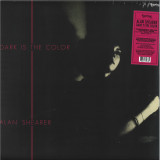
Favorite Recordings presents Dark Is The Color, the first LP by Alan Shearer reissued on vinyl for the first time. Despite being initially composed and produced for the French library label PSI, this rare
and obscure in-demand gem from 1985 sounds retrospectively like a proper album with great coherence and sophistication all along. Indeed, these 11 tracks will delight synthesizers addicts. Expect deeply emotive instrumental compositions, with ingenious analogue sequencing on stimulating chord progressions. The result is a highly retrofuturistic album, sometimes almost anticipating 90's videogames
scores. Just imagine Wally Badarou in a bunker with Talking Heads watching New York 1997 from John Carpenter.
Composed mostly step by step on a Sequential Pro-One synthesizer, Dark Is The Color is the product of the exciting state of mind from the 80's era with new sounds, new tools and new trends on the music spectrum. Influenced by bands like Talking Head or Japan, the sirens of the new wave scene strongly resonate here with Alan Shearer's familiarity and craftmanship with synthesizers.
Back in the days, Alan Shearer aka Frédéric Viger was working for his father’s music label, “Musique Pour L'image”, and their sublabel “PSI”. He started with Marathon Life under his real name before taking the Alan Shearer monitor. These records were produced for radio, TV and cinema industries but as well for companies’ internal communication. They represented a real investment from the label and these catalogues are usually full of amazing music from great artists such as Martial Solal, Vladimir Cosma, Joël Fajerman, Harlem Pop Trotters and even Manu Dibango.
About his musical illustration process, Alan Shearer tells: "Soundtracks are indeed my biggest influences and I'm a real fan of American composers as Jerry Goldsmith or Elmer Bernstein. I've always considered soundtracks as the new classical music or classical music of our century. There is a real state of mind producing music for illustration: you have to stick to the video. You should not tell what the image is saying but accompany what it is saying. You have to find a unique link, people always told me music should not be noticed for itself in a movie, that's what makes it good.”
Les Disques du Crepuscule presents a new double vinyl remaster of two seminal albums by German synth wave pioneers Gina X Performance, whose groundbreaking singles Nice Mover, No G.D.M. and Kaddish remain enduring electroclash staples after four decades of club supremacy.
Remastered for vinyl in 2021 by Zeus B. Held and Lars Lafeyette Fassbender, the double album set is housed in a gatefold sleeve with new artwork and pressed on clear and green vinyl + digital copy. This pressing is limited to 1000 copies only worldwide. The inner sleeve features a brand new interview with Zeus.
Formed in Cologne in 1978, the core of Gina X Performance composed vocalist Gina Kikoine and producer/keyboard/vocoder wizard Zeus B. Held. ‘I had in mind science fiction-inspired tracks,’ explains Zeus.‘Really cold sounding music, with no blues-ey chords or melodies, no guitar and nothing rocky.’
Originally issued on German imprint Crystal 1979, icy, noirish debut album Nice Mover spawned two radical Eurodisco hits, with gender-bending single No G.D.M. becoming a firm favourite at the legendary Blitz Club in London’s Soho. At the same time Zeus B. Held also became an in-demandproducer, working with John Foxx, Fashion, Rockets and Dead or Alive.
The third GXP long player, Voyeur, from 1981, followed a brief spell on EMI and saw the duo return to their experimental, avant-gardist roots, the material by turns seductive, provocative and confrontational. Since then countless electronic artists have acknowledged or betrayed the influence of Gina X Performance, including Depeche Mode, Propaganda, Ladytron and Peaches.
Critical praise for Gina X Performance: “Pioneering electro-pop from 1979 with hints of Kraftwerk, Nico and Studio 54-era Grace Jones” (Mojo); “Like an artier Moroder” (Uncut); “No G.D.M. is one of the most influential songs to come out of the Continent” (Q); “Disco for the intellect” (NME)
Reissue of Oscar Peterson's 1969 album 'Motions & Emotions' pressed
on blue vinyl
On 'Motions & Emotions' Oscar Peterson presents jazz versions of popular pieces
from pop, easy listening and classic songwriters, as the quartet of long- time
companions are washed in rich orchestral colours. Arranged and conducted by a
magician of the guild, the great Claus Ogerman, who had previously worked for
Tom Jobim. The Brazilian is also represented with his standard "Wave", in which
the orchestra builds a luminous tropical backdrop for Peterson's fantastically
dragged phrasing. Peterson and Ogerman pay tribute to another great orchestra
leader, Henry Mancini, in "Sally's Tomato" with feather- light trilling brilliance.
Jimmy Webb's "By The Time I Get To Phoenix" experiences a metamorphosis
almost into the classical - Ogerman opens infinite sound spaces here with the
distantly indulging strings. Bobby Gentrys "Ode To Billy Joe" cleverly abducts
Countryfolk into Bigband Jazz by means of fiery keyboard playing.
Finally the hits: from soul comes Bobby Hebb's "Sunny", whose theme the pianist
here cleverly harmonises out to then decorate it bluesy in dialogue with the wind
instruments. Burt Bacharach's "This Guy's In Love With You" shines with a
leisurely late night mood and a pompous finale. Yesterday" is provided with a
sparkling bossa substructure, while the second Beatles homage "Eleanor Rigby"
oscillates between loose groove, deep melancholy and swing. Peterson plus
quartet plus orchestra: Enthusiastic detail work also in the popular sector.
"The question about favourite albums is basically not an easy one, except in my
case, because Motions & Emotions by Oscar Peterson is actually my absolute
favourite album. I think Motions & Emotions might even be the perfect
instrumental album." - Till Brönner (German Jazz trumpeter and professor)
Reissue of Oscar Peterson's 1969 album 'Motions & Emotions' pressed
on blue vinyl
On 'Motions & Emotions' Oscar Peterson presents jazz versions of popular pieces
from pop, easy listening and classic songwriters, as the quartet of long- time
companions are washed in rich orchestral colours. Arranged and conducted by a
magician of the guild, the great Claus Ogerman, who had previously worked for
Tom Jobim. The Brazilian is also represented with his standard "Wave", in which
the orchestra builds a luminous tropical backdrop for Peterson's fantastically
dragged phrasing. Peterson and Ogerman pay tribute to another great orchestra
leader, Henry Mancini, in "Sally's Tomato" with feather- light trilling brilliance.
Jimmy Webb's "By The Time I Get To Phoenix" experiences a metamorphosis
almost into the classical - Ogerman opens infinite sound spaces here with the
distantly indulging strings. Bobby Gentrys "Ode To Billy Joe" cleverly abducts
Countryfolk into Bigband Jazz by means of fiery keyboard playing.
Finally the hits: from soul comes Bobby Hebb's "Sunny", whose theme the pianist
here cleverly harmonises out to then decorate it bluesy in dialogue with the wind
instruments. Burt Bacharach's "This Guy's In Love With You" shines with a
leisurely late night mood and a pompous finale. Yesterday" is provided with a
sparkling bossa substructure, while the second Beatles homage "Eleanor Rigby"
oscillates between loose groove, deep melancholy and swing. Peterson plus
quartet plus orchestra: Enthusiastic detail work also in the popular sector.
"The question about favourite albums is basically not an easy one, except in my
case, because Motions & Emotions by Oscar Peterson is actually my absolute
favourite album. I think Motions & Emotions might even be the perfect
instrumental album." - Till Brönner (German Jazz trumpeter and professor)
Noon Garden is an exotic psych-pop odyssey from one of the founding members of Flamingods. Drawing on worldly sounds from the likes of Francis Bebey and Dur Dur Band to Shintaro Sakamoto, tearing up the sonic rule book and conjuring up a distant land where you find yourself cutting loose to grooves that meander their way through a wide spectrum of African disco, funk, exotica and psychedelia. Noon Garden has received support from the likes of Clash and The Line Of Best Fit and recent single Decca Divine was playlisted on Amazing Radio. The track also picked up love at DSP playlists including Spotify’s ‘Fresh Finds: Indie’ and Apple’s ‘New in Alternative’. British born with Nigerian & Jamaican heritage, Prest spent his childhood living in Bahrain surrounded by people, like himself, who were all living on an island away from their homeland. Seeing the world from a young age and the experience of 10 years of globe-trotting touring with Flamingods are imprinted on his new project and have been a huge influence on shaping Noon Garden’s tropical adventurism. As a talented multi-instrumentalist Charles has written, self-produced and played all the parts on the single himself. Noon Garden says of the album: "This debut was an experiment to get to know myself better. Taken from the name of an area not too far from my family home in Norwood south London, the literal words ‘Beulah Spa’ conjured up imagery of being a place to contemplate in warmth and complete tranquility. Writing music is a therapeutic process for me and it’s taken about eight years on and off to finish this album by myself, to try understand what it was exactly that I wanted to say lyrically and explore sonically. The album’s lyrics have shape-shifted so much with time but they take a curious look at the human experience; in my case growing up and soaking up a lot of cultures from an early age in the Middle East, the UK and briefly in Singapore. It’s a reflection on what’s past and what’s yet to come, my connection with others over the years and how that inevitably shapes your outlook on what’s around you. All of this told through the lens of psychedelia which has always given me a sense of possibility. Beulah Spa is the first marker of where I’ve gotten to so far in my life, channeling it all into a musical odyssey that lays the foundation for a lot more to come.”
From a fascinating yet relatively undiscovered era of experimental music in Peru's capital city Lima, this never before released split single features two of the foremost musical minds of modern day tropical, electronic and ambient roots music. One song each was plucked from the archives of mutual friends Los Palteados (Tomas Tello) & La Sonora Roza (Efraín Rozas / La Mecánica Popular), offering a rare glimpse into the musicians' respective productions and group projects at the onset of the 21st century. The pair of selected recordings each have their own hypnotic sensibility, yet both remain blissfully approachable experimentations in the beloved styles of cumbia & descarga.
Limited Transparent Magenta Vinyl. Enigmatic pop outsider Tony Gallardo makes music that's perpetually perched on the outskirts of Mexico's fertile electronic underground. Since 2008, he has been releasing music that inhabits its own artistic universe, a cross between Frank Zappa, Daniel Johnston, The Knife, OutKast and Rosa Pistola. He co-founded the Cocobass label, pioneered the fusion of L.A. noise and cumbia known as ruidos6n and has released music under a plethora of monikers: dark techno as Boi Patrol, ramshackle electronic pop as Maria y Jose, experimental surf rock as El Capricho and experimental dembow as La Fiebre X. "Selected Works" assembles some of Gallardo's most crucial material from a run of EPs released between 2008 and 2013. These tracks show the breadth of his output, running through sleazy, neon electro ('Bruja', 'Mi Presa'), neck-snapping tropical dance music ('Kibose', 'La Conquista'), and eerie Mexican trap ('Plata 0 Plomo', 'Ultra'). It's introspective, haunted music from one of Mexico's most original and most under-appreciated artists that paints a picture of a psychedelic musical landscape that's hard to resist. One listen to the album's closer 'Club Negro', originally released in 2013, should tell you all you need to know. This track is the perfect introduction to the world of Tony Gallardo, with screwed 'n chopped Spanish vocals, 7 doomy syncopated beatbox rhythms and wobbly houseparty electronics.
Translucent Orange Vinyl. "Deep States" ist ein Protestalbum, das neues kulturelles Terrain erforscht und im subjektiven Zustand zeitgenössischer Panik gräbt. Aber TROPICAL FUCK STORM predigen heimlich, immer im Bewusstsein der Tatsache, dass sie schließlich Popmusik machen, egal wie avantgardistisch oder "out there" es wird. Entsprechend kommt "Deep States" komplett mit Q-Drops, Anspielungen auf den Capitol Riot vom 6. Januar 2021, einem Riff auf Pizzagate, Waterboarding-Marsianern, gefährlichen Kulten von Heaven's Gate bis The Shining Path und, nicht zu übertreffen, Romeo-Agenten, die uns nachts ins Bett legen, um uns am Morgen zu verraten. Wir leben in einer Welt, in der das Bizarre zum Normalen geworden ist, und TROPICAL FUCK STORM lotet dieses Paradoxon aus. Was TROPICAL FUCK STORM so großartig macht, ist die Schnittmenge zwischen ihrem düsteren, aber satirischen Storytelling und den musikalischen Arrangements, die darauf abzielen, erhaltene Kanons und Weisheiten zu pervertieren. Diese Songs sind ein Experiment, das sich in seinem eigenen idiosynkratischen, zutiefst beunruhigenden Tempo vor- und zurückbewegt. Sie hängen am schrägen Beat und gleiten in jazzige, verzerrte Jams, die so turbulent sind, dass sie Charlie Mingus stolz machen würden. Musikalisch macht "Deep States", was es will: Pop, R&B, New Wave im Stil der Talking Heads, Delta Blues, Tom Waits und einige der HipHop-Lieblinge der Band wie Wu-Tang Clan und Missy Elliott. Barrieren werden nicht nur durchbrochen, sie scheinen komplett weggefallen zu sein.
Nair Mirabrat is a Uruguayan ensemble led by the composer Martín Ibarra. The candomberos of Montevideo are dressed in the infinite colors of the world and they immerse themselves in the world of song and dance, building bridges between the inside and the outside. "Juntos ahora" is built based on the myth of the hero and his journey through the symbolic labyrinth. Death, time and place are the themes where the lyrics wander. DESCRIPTION Martín Ibarra and his Nair Mirabrat ensemble bring a garden variety of electrifying rhythms with "Juntos ahora", fusing together elements of candombe fusion, jazz, and pop. Deep in the Montevideo music scene, Nair Mirabrat effortlessly transcends genres and local tradition bringing forth a new era of influence as they revel in the bliss of Ibarra's soaring vocals over tropical rhythms. Ibarra and crew are a modern-day mixture of Jaime Roos, OPA, Hugo Fattoruso and Eduardo Mateo with their explorative, forward-thinking passion of keeping it 100% Uruguay. Chris J. Morris
On their vibrant and eclectic ninth studio album, Clinic -
the band who wore surgical masks before it was a
matter of urgency - are taking you to ‘Fantasy Island’,
where you will find yourself transported to tropical
climes.
In guitarist / keyboard player Jonathan Hartley’s words:
“Clinic look to a brighter future, Fantasy Island it’s a
very positive album, it’s more about what you can make
happen rather than being defeatist.”
Their last album, 2019’s ‘Wheeltappers and Shunters’,
found the band satirising British culture and wallowing in
sleazy Seventies nostalgia. ‘Fantasy Island’ was
recorded in an old studio on Merseyside during the
summer of 2019, with good vibrations seeping into the
grooves. This time they are embracing “the idea of
looking at the future and the different ways it can unfold,”
with their most electronic and pop record to date. “It’s a
more global, international and outward looking record,”
says Hartley. “Clear blue horizons. The brave new
world!”
The album was mixed last year by Claudius Mittendorfer,
who has worked with Parquet Courts, Neon Indian and
many pop greats.
CD in paper inner wallet into spined capacity outer
wallet.
Standard weight black vinyl into shared printed inner
sleeve and digital download card.
HIGHLIGHTS: Two head-nodding psych anthems from Peru mixing surf guitars with fuzz effects, fierce Latin percussion_ making them sound as if Hendrix and Santana would have joined a cumbia combo! Another exciting dig into the hidden musical treasures of late '60s Peru. DESCRIPTION: Los Sideral's were a Peruvian band founded in 1967. Their first recordings are heavily influenced by the surf intrumentals and tropical sounds, mastering the cumbia guitar like few others. At the edge of the new decade, psychedelic and funk ingredients were also incorporated. 'Dongoh' is the result of this musical journey, as if Hendrix and Santana would have joined a cumbia combo, mixing surf guitars with fuzz effects, fierce Latin percussion_ 'Vírgenes del Sol' is a surf-guitar driven dancefloor anthem that became their most popular song. Both recordings see now their reissue on a 7" vinyl for the first time. Another exciting dig into the hidden musical treasures of late '60s Peru.
Fresh one on Music With Soul - a channel for hot 7"s that always fly out here. TIP!
"Two and a half frenetic minutes that sound like Aphex Twin and The Incredible Bongo Band dancing Capoeira in the early hours of an illegal rave, somewhere in the deep amazon forest. After the success of his first solo 45, Alex Figueira comes back to the aesthetics of the early Fumaça Preta, with an utterly bonkers 45 that can only be described as an “in-your-face acid macumba techno breakbeat funk freakout”.
The flip side contains a haunting Psychedelic ballad, with the sweet vocals of Maddie Ruthless, from NY’s leading Lovers Reggae sensation, The Far East. Equally trippy and beautiful, the soothing sounds of the Wurlitzer piano and the electric sitar will be bouncing in your head for hours after first listen. The kind of song that finds collectors dropping eye-popping sums, decades after the original release. Guarantee your retirement now by getting a few copies! The song “Maracas” is the main theme of the movie “Maracas, tambourines and other hellish things” directed by fellow record nerds Matteo Fava and Dave Potsma. They managed to convince Figueira to play the main character, and later on, to do the complete music score. The movie tells the story of a struggling underground musician / part time record store clerk, whose music career is basically going nowhere until an improbable encounter gives his life a dramatic turn. They asked Figueira to give them something with “a fresh tropicalized take on Blacksploitation”. One might argue, after listening to the insanity carved on the grooves of this piece of vinyl, that he certainly did deliver.
The characteristic mix of synthesizers and heavy percussion used by Figueira in almost all his projects, gains here a somewhat freer dimension, embracing the chaos openly, without ever neglecting the groove, nor the ancestry axis. Values that are at the core of the label. Even while laying down all the instruments himself, Figueira has managed to capture the same out of control tropical psychedelic spirit of his former band, Fumaça Preta. Fans of the group’s outfit will certainly be rejoiced by this new release.
The flip carries “Grasping & Wishing”, an evocative Psych ballad that retains the same tripped-out flair of the A side, while slowing down the tempo considerably with a decidedly african 6/8 beat. Sung by New Orleans’ own “Rocksteady Queen”, Maddie Ruthless, stepping out of her classic Reggae background, to grace the track with her beautiful voice, permeating the issues of belonging, doubt and introspective reflection portrayed in the lyrics, with a thin layer of exquisite fragility that will comfort your ears.
The production includes a significant number of sound effects, ranging from different types of percussion performed with liquids to bamboo flutes of different sizes and several layers of multiprocessed electric Sitar tracks. Listen carefully and you will discover new sonic nounces every time you put the record on."
Who cares, who cares?!
Does anyone remember the great Barry Künzel?! Of the band Butter?! The funk-pop duo Q?! Or Fuschimuschi?! All this funk-, jazz- or hip-hop-influenced, wondrous psychedelic soul music from German lands?
A quarter of a century later, "Who Cares Who Cares" is the name of Wolfgang Pérez's solo debut album. In recent years, he was mainly busy as the keyboardist of the native German speaking pop band GOLF. Now he is preparing to leave the German pop worlds as a solo artist - supported by an opulent session band. As the son of a Spaniard, Wolfgang grew up multilingual anyway - an alien by nature, so to speak. His music, on the other hand - caught between indie pop, funk, jazz and tropicalismo - doesn't sound at all like coming from someone who doesn't know where he belongs. Quite the opposite: It sounds like the big wide interconnected world of pop out there and inside of us.
The result is some groovy music between Frank Ocean, The Whitest Boy Alive, Phoenix, Melvin Van Peebles, Marcos Valle and the record collection of a lovable jazz records collecting uncle. And Wolfgang is hailing from Essen in the Ruhr region, of all places. Yes, why not, or, to stay with the album title: Who cares, who cares?!
On the cover packshot we see the album title scrawled in countless variations. The short story: Wolfgang started the following call in his messenger portals one night:
- Write "Who cares who cares" at last 10 times now.
- Do it in your own style.
- You are free to vary a bit like using small letters or writing without spaces between the words.
- You don't have to go crazy, if you feel like it, keep it simple.
Part. 2[22,65 €]
After featuring on the label with a contribution to Erell Ranson’s “Hand In Hand” Remix EP in 2018, SUED co-operator SW. punches back in on KOC with a hectic six-track sonic journey by way of inaugural transmission.
Crest-surfing the margins betwixt abstract beat-making, hardware experimentation and further explosive club-ready wares, the German producer breaks the trip in with the tropical hot "ariaJA" - reeling out a savvy mashup of animalian field recording, spaced-out FXs and loopy elastic bounce.
Cranking up the heat, a notch further, "moonNEWsoon" pulls out a hot mix of muscle-aching breaks, jackin' n’ smackin' toms and iridescent synth stabs, all coated with a thick sauce of mind-boggling machine stunts. Trading its gridlocked intro for an aqueously luxuriant design throughout, gOiOsee has us deep-diving in an all-blue scenario where each element finds itself draped in richly-hued envelopes.
Flip sides and here comes the further shape-shifting, non-formulaic "mASsLESS", which invites us to see straight through glassy cascades of skittish snares, gummy synth arpeggios and futuristic chimes as an Eden of AI-rendered birdsongs and forgotten melodies come to life before our eyes.
Back to a more dynamic mindset, “justMUST4y brings lush flights of altered piano chords and pop-informed harmonics face to face with a gritty, metronomic drum work to weave another singularly off-kilter epic SW. holds the secret of, right before "VFXpeaksTWIN" wraps it all up in a soul-invigorating, Twin Peaks-scented and horizon-broadening ambient finale.
Album Description BROS VOL 2 takes you on a technicolor journey via your ear drums. The eclectic flavours of VOL1 are taken to new heights. The musical scope is wider, and the worldly sonics more exotic. The power pop refrains sink their hooks deeper, the sly musical jokes sell out harder and the hard charging grooves really pack a wallop. BROS make music that is fun and colourful, the way it's supposed to be. Bio After boldly displaying their full musical range on the 2016 debut album Vol. 1, BROS—aka The Sheepdogs’ Ewan and Shamus Currie—return with Vol. 2, an endlessly surprising new 13-track collection that’s something akin to a party thrown by your friends with the best record collection. Recorded over a two-year span with producer/engineer Thomas D’Arcy in Toronto, BROS sought to expand their scope on Vol. 2 by inviting a host of collaborators, from a horn section and tabla drummer, to Sheepdogs guitarist Jimmy Bowskill (on a range of instruments he doesn’t normally play) and even their father Neil Currie on piano. The results contain something for everyone, from the Tropicalia-inspired “Sunflower” and the smooth jazz of “Clams Casino,” to the lowdown funk of “Never Gonna Stop” and the vintage AM radio homages “Crazy Schemes” and “You Love This Song.” With Vol. 2, the combination of visually evocative instrumentals and finely crafted Pop and Soul nuggets is now undeniably BROS’ trademark sound, one that’s utterly distinct from The Sheepdogs’ arena-ready, guitar-fuelled rock. As a pure studio creation, the album not only displays the Curries’ dynamic creative bond, but also their playful sense of humour and easy-going relationship, something that can’t often be said of fraternal musical partnerships. So as we all wait patiently to return to bars and concert halls, BROS Vol. 2 is here to provide the perfect soundtrack for whatever you happen to get up to within your bubble, just as long as the intention is to have some fun. For Fans of: The Sheepdogs, Dan Auerbach, The Doobie Brothers, The Allman Brothers Band, Eric Clapton, The Band, The Black Crowes
You may know Rodrigo Amarante already. You may have heard "Tuyo," his theme tune to the Netflix drama Narcos, or the Little Joy album, recorded with Fab Moretti and Binki Shapiro, you might have noted his name among the credits on songs by Gal Costa, Norah Jones and Gilberto Gil; or perhaps you saw him play live with Brazilian samba big band Orquestra Imperial, or with Rio rockers Los Hermanos; you really should have heard his debut album, Cavalo, released in 2014. You may think you know Rodrigo Amarante already, but Drama, his second solo album, is going to introduce a whole new level of confusion to the mix.
Drama is purposefully caricatural, cinematic; "As biased as memory". It flows as an arch, playfully deceiving, like a tale. The ominous opening number gives you a hint that things might not be what they appear, and clues are hiding in plain sight. "Projection,
attachment, deception: that is Drama." The sunny upbeat start of "Maré", with a nearly childish opening melody, echoes something less naïf: "The tide will fetch what the ebb brings". The beat helps you move past. "Tango" sounds like falling in love on the dance floor, warm and tropical, it celebrates companionship, while perhaps pleading for it, yearning. "Tara," meanwhile, feels like something Astrud Gilberto might have sung at the height of bossa nova’s global popularity, with the twist of the big-band-era muted horns on the chorus, nearly self-deprecating, as if mocking such idealized infatuation.
Drama closes with the piano on "The End." To live is to fall. After all the emotional upheavals the singer has put his cast through, is this some kind of farewell to this mortal coil? "Everything Furthers." says Amarante. "Whispering, you get louder like that, people respond better to an invitation," and adds: "Staring at the absurd while remaining kind, being open to the gifts of confusion; that's why we create these tools that are stories and songs, to help us see each other."
- A1: Conjunto Típico Corazón De La Selva - Alegría En La Selva (02:47)
- A2: Los Pihuichos De La Selva - La Carachama Coqueta (02:46)
- A3: Los Pihuichos De La Selva - Chupizinatay Yacui (02:37)
- A4: Los Pihuichos De La Selva - Shamuy Pacarina (02:32)
- A5: Los Pihuichos De La Selva - El Montañés (02:41)
- A6: Los Pihuichos De La Selva - El Huancahui (02:38)
- A7: Los Pihuichos De La Selva - Flautero De La Montaña (02:31)
- A8: Los Pihuichos De La Selva - El Jornalero (02:30)
- B1: Los Pihuichos De La Selva - La Danza Del Trapichero (02:32)
- B2: Conjunto Típico Corazón De La Selva - Picaflor Loretano (02:31)
- B3: Conjunto Típico Corazón De La Selva - Ushpagallo (02:56)
- B4: Conjunto Típico Corazón De La Selva - Punchacacho Tutacacho (02:50)
- B5: Los Pihuichos De La Selva - De Dónde Vienes Loretano (02:31)
- B6: Conjunto Típico Corazón De La Selva - Bailando En La Selva (02:52)
- B7: Los Pihuichos De La Selva - La Huayranguita (02:34)
Andrés Vargas Pinedo is a prominent composer of Amazonian popular music from Peru. He is blind and has excelled as a player of the quena and the violin. He was born in the city of Yurimaguas but he developed as an artist in Lima, for thirty years he has worked as a traveling musician on a street in the San Isidro district of Lima. Throughout his career, he has formed and joined various popular music groups. This compilation presents fifteen songs of his authorship, belonging to his first two groups: Conjunto típico Corazón de la Selva and Los Pihuichos de la selva, active between 1965 and 1974, and which helped define the sound of Amazonian popular music.
These years saw the emergence of an Amazonian popular music movement led by Vargas Pinedo as well as groups such as Los Solteritos, Flor del Oriente or Selva Alegre. These artists based their music on the rhythms of the Amazonian folklore (pandilla, sitaracuy, movido, cajada, chimayche) and were nourished by influences from the coast and the highlands of Peru, as well as by the tropical rhythms of Brazil, Colombia and Ecuador, achieving a musical synthesis that is an invitation to collective celebration and endless dance. A sound that is defined by a constant and hypnotic rhythmic base of kick and snare drums, upon which the quena and violin develop imaginative melodic lines. Sometimes there is a singing voice, sometimes the voices playfully appear as sounds that identify Amazonian popular speech or that emulate jungle animals.
The fifteen tracks gathered in 'El fabuloso sonido de Andrés Vargas Pinedo: Una colección de música popular amazónica' (1966-1974) / 'The fabulous sound of Andrés Vargas Pinedo: A collection of Amazonian popular music' (1966-1974) are a good introduction to the work of an essential creator of Peruvian music, whose sound expresses the spirit of the Amazonian people and summarizes the transition from tradition to the popular in the context of the emergence of a record industry of Amazonian music. Andrés Vargas constitutes a fundamental basis for the music of the Amazon, as his work synthesizes diverse influences, having that original root as its main motive.
This compilation is presented in vinyl format and includes a brochure with extensive information and photos. The audio has been remastered directly from the original tapes. Edition of 300 copies. Art by Jordy García (Blumoo Posters).
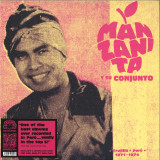
Following the 70s Peruvian cumbia compilation by Ranil last year, Analog Africa returns to Latin America to highlight the work of one of Perú’s undisputed masters of the electric guitar: Manzanita. This 13th release in the Limited Dance Edition Series includes 14 mostly instrumental compositions of electrifying Peruvian cumbia and guaracha. Manzanita's unique guitar lines rest on confident foundations that shifts gears effortlessly. Limited Edition LP in Gatefold Cover pressed on 180g high quality virgin vinyl
"I was in Lima, hanging out with collector-extraordinaire Victor Zela, who had spent the previous few years pouring his passion for Peruvian Cumbia into the blog „la cumbia de mis viejos“, a trove of incredible music. But after the birth of his first child, his priorities shifted and he decided to part with some of his rarest LPs. I was one of the lucky few given an early chance to examine his treasures, and when I picked up the album Manzaneando com Manzanita, Victor said: “Take it! its one of the best LPs ever recorded in Perú … easily in the top five”. That was all the encouragement I needed … two years later many of the songs from that masterpiece have made it onto Manzanita y su Conjunto, a compilation of electrifying Cumbia sides from Manzanita’s golden era.
Berardo Hernández – better known as Manzanita – first surfaced during the psychedelic Cumbia craze. At the head of the scene were the magnificent Los Destellos, whose leader, Enrique Delgado, was such a six-string wizard that other guitarists found it impossible to escape his shadow. But when Manzanita arrived, his electric criollo style sent shockwaves through Lima’s music scene and posed a serious threat to Delgado’s dominance as king of the Peruvian guitar.
Manzanita had come to Lima from the coastal city of Trujillo, five hundred miles up the coast – a place where Spanish, African and indigenous populations had been living and making music together for centuries – and came of age at a time when the first wave of psychedelic rock from the US and UK was starting to sweep the airwaves. But the sounds of Cream and Hendrix disappeared from the radio just as quickly in 1968 when Juan Velasco seized control of the country in a military coup. The new regime, which favoured local traditions over cultural ‘imports’ from the north, was a blessing in disguise for the Peruvian music scene.
Record labels flourished as new bands, raised on a hybrid diet of electric guitars and Cuban rhythms, rushed in to fill the vacuum created by the lack of imported rock. A new genre, known as Peruvian cumbia, was born and Manzanita quickly became one of its most original voices.
Starting in 1969, Manzanita y su Conjunto released a steady stream of singles that used Cuban guaracha rhythms as the foundation for dazzling electric guitar lines. After countless 45s and several years on the touring circuit, the band signed to Virrey, an important Peruvian label, and recorded two LPs acknowledged as masterpieces among aficionados of tropical music. Most of the songs on Analog Africa’s new compilation Manzanita y su Conjunto are drawn from those legendary sessions of 1973 and 74.
Although he scored a few more hits in the later 70s, his dissatisfaction with the music industry caused him to withdraw from the scene for several years; and when he finally retired for good, the golden age of Peruvian cumbia was a distant memory. But when Manzanita was at the top of his game he had few equals. Victor Zela was right: this is some of the best music ever recorded in Perú."
Hong Kong based hypno-tropicalia duo Blood Wine or Honey are set to release their second album 'DTx2' on 30th June 2021. Made up of seasoned multi-instrumentalists James Banbury (synths, bass, percussion, cello) and Joseph von Hess (vocals, clarinet, sax, percussion), they create a heaving, heady brew of brazen sax themes, lo-fi/hi-tech electronics, densely layered cello inflections and motorik drums.
These explorations start with the dance-floor then go above and beyond, taking notes from post-punk and tropical polyrhythms, always anchored by the bass weight of the sound system. Their distinctive sound is created in the industrial warehouses and hidden rural settlements of Hong Kong, surrounded by the low-end throb of heavy machinery, the lingering scent of hand sanitiser and the humidity of the South China Sea.
Written and recorded during 2020-21, new album 'DTx2' looks ahead to an uncertain future, drawing deep on their experiences and influences and welcoming a host of co-conspirators.
Jean Daval, aka Preservation (credits include Yasiin Bey fka Mos Def, MF Doom, RZA, GZA, Raekwon, KRS-One, Aesop Rock), provided truffle-hunted beats, synths and basses, which, when put through the BWoH mangle, emerged as 'Messenger'.
Superstar and old friend of the band KT Tunstall came to work with BWoH after they contributed a DJ mix for her lockdown 'KTRave' on Instagram. 'Attraction' was the result. Wonky bass, found-bounce beats and Buddy Rich drums smashed out by Tim Weller (Marc Almond, Future Sound of London, Goldfrapp, The Chemical Brothers, David Axelrod) resulted in a bonkers production with passionate vocals and layers of harmony.
'I Shall Rush Out As I Am' is a collaboration with legendary pop provocateur Paul Morley and Janice Lau of Hong Kong band David Boring. The track is based on the words and the spirit of sci-fi writer, satirist, literary critic and radical feminist Joanna Russ and took shape quickly, with tinges of A Certain Ratio and memories of Suicide, provoking Janice to an authentic scream-of-consciousness delivery.
Multi-talented London singer, musician and composer Kamal (Neighbourhood Recordings) took time away from being the Next Big Thing to transform 'Testing Time' with funk-edged keys. A key figure in the extraordinary '90s Hong Kong music scene, Zoë Brewster contributed vocals.
Roughly divided, the album's first set of songs make relatively short statements, punchily self-contained with common threads. The final four tracks, Testing Time, Embers, Embrasure
and Echt Embrace disperse into flights of mantric fantasy, with quicksand time-signature shifts and key-changes emerging into a more introspective zone with a fervent pulse, a shift in energy: stamina over speed.
Afrosound's mission was to emulate the guitar-heavy tropical sounds emanating from Perú and Ecuador at the time. To add to the hippie vibe, there were plenty of whacky improvised vocal asides (called 'inspiraciones'), plus custom fuzz, wah-wah, flange and echo effects boxes for the guitar and keyboards. A barrage of odd sounding synths, drum machines and other electronic flourishes were also sprinkled in to spice up the proceedings. The dozen tracks on Afrosound's debut long play make for a surprisingly diverse palette from which these Colombian musicians painted their daring portrait of Peruvian cumbia, returning the favor in bold colors that still resonate almost 50 years later. "La danza de los mirlos" kicks off with most famous Afrosound hit of all, 'Caliventura', a genius blend of funk and cumbia. Aside from the cumbia amazónica title tune, there are several other covers including three popular songs by Nelson y Sus Estrellas, plus radically reimagined versions of various Colombian costeño classics published by Fuentes. Mario "Pachanga" provides a sad but still groove-oriented Christmas son montuno / cumbia hybrid while Fruko brings us the bomba-funk ditty 'El chorrillo' and the rocking cumbia andina gem 'Cabeza de chorlito' where Sepúlveda channels Enrique Delgado. Fruko collaborator Hernán "Hercovalle" Colorado Vallejo rounds things out with the melancholic psychedelic cumbia 'Esperando por ti', proving that every tropical party has to have its down side as well. The record was also released in the US, Ecuador, Perú, Panamá, Mexico and Venezuela, and probably had an influence of its own, at least in South America. The cover of this lovingly restored reissue features the artwork for the Peruvian edition, which was licensed and issued by Lima's El Virrey label in 1974. The original Fuentes artwork, with a far more outrageous "cheesecake" image, can be seen on the back cover.
HIGHLIGHTS 180g vinyl reissue of the mega rare Mexican-only Luiz Eça album from 1970 in facsimile artwork and remastered sound. The Brazilian pianist and founder member of Tamba Trio is accompanied here by a large group of top-notch Brazilian musicians including Joyce, Nana Vasdoncelos, Wilson Simonal and Claudio Roditi delivering an outstanding mix of energetic arrangements and delicate vocal harmonies. A samba jazz masterpiece. Exclusive RSD 2020 release. DESCRIPTION Tamba Trio (Helcio Milito, Bebeto Castilho and Luiz Eça) released their first LP in 1962 and quickly became one of the most popular bossa jazz combos out of Brazil. By the mid 60s the band would expand becoming Tamba 4 and Luiz Eça would record his first albums as a leader. Trained as a classical pianist, Eça's style was a mix of jazz and pop then blended into bossa resulting in a fresh and unique sound that evolved over the years towards an even more eclectic blend. "La Nueva Onda del Brasil" was recorded in 1970 by Luiz Eça accompanied here by " La Familia Sagrada", a large group of top-notch Brazilian musicians including Joyce, Nana Vasdoncelos, Zeca do Trombone, Mauricio Maestro, Claudio Roditi_ even Wilson Simonal joins the group on Jorge Ben's 'Pais Tropical'. The album was released years later on the tiny Mexican label RVV, run by Rogelio Villareal, also home to the very rare LPs by Primo Quinteto or Rozana in a similar vein. Villareal was the owner of the Camino Real hotels group and the RVV records were exclusively available for sale at the hotels premises, as souvenirs for visitors. The band spent some periods of time touring Mexico, performing at different Camino Real locations. The album distribution was very limited and never got a local release in their native Brazil (or anywhere else) making this LP a very sought-after record that has reached cult status among Brazilian music collectors Worldwide. "La Nueva Onda del Brasil" includes both standards and originals, all performed in a very free style, an outstanding mix of energetic arrangements and delicate vocal harmonies, a sort of very late and evolved bossa mixed with jazz, emphasizing the rhythmic elements with an afrosamba twist. A samba jazz masterpiece.
LP with download code!!!
SUPERSAN is the brainchild of Panama Cardoon and Mister Kentro. The dedicated party starters of the greek nightlife came up with this genre bending project and ever since they performed in festivals and venues in Europe, Africa and Asia, had their music featured in documentaries and their tracks supported by BBC Radio among other stations worldwide. A fusion of dancefloor oriented – future electronic beats and earthly exotic rhythms from across the globe directly from Athens, Greece.
The duo started working together with the idea of uniting the Tropical spirit with the Caribbean and Jamaican styles, all blended with electronic contemporary beats.
Forthcoming on Galletas Calientes Records, “Enter The SAN” is a powerful opus, a deep and electronic journey to the high frontiers of North Africa, Southern Europe and Middle East; Undoubtedly the Greek duo’s best achievment so far.
Crafted with an ear towards contemporary appeal, “Enter The SAN” consists of 10 instrumental tracks with straightforward structures and sophisticated melodies. It typically uses heavy percussion to accent modern and diverse four-beat drum patterns, prominent and often melodic electric bass-lines and distinctive chord progressions. Pop and electronic production and mixing techniques are clearly audible throughout the whole album, harmonically uniting the traditional instruments with the modern string sections and vocal samples chops.
HIGHLIGHTS "A Buenaventura" is surely one of Julian y su Combo's best albums, a sought-after collector's record that is also popular with tropical DJs. We have added two bonus tracks from 1976, 'Salsa y bembé' and 'Colorin colorao' that were originally a 45 single, resulting a winning combination of familiar and obscure tunes of rich sonic variety. Presented in its original artwork and pressed on 180g vinyl. Recommended by DJ Bongohead of Peace & Rhythm DESCRIPTION During a 20-year period Julián Y Su Combo released 8 LPs on almost as many different companies and "A Buenaventura" was their only record with Medellín-based label Indústria Fonográfica Metrópoli (later reissued by INS on their Fabuloso imprint as "Descarga Salsa Y Boogaloo"). Julián Angulo described the combo's sound as afroantillano, combining Cuban, New Y ork Latin, and Puerto Rican elements with Colombia's own tropical costeño traditions. The group's swinging, jazzy arrangements were distinguished by Angulo's prominent rhythm guitar, a hot rhythm section, and the potent brass lineup of two saxophones and a trumpet (much like Cortijo Y Su Combo) but with the occasional addition of a clarinet or flute (for extra Cuban flavor). Singer José Arboleda lends an earthy, joyful Afro-Colombian sound to the vocals and the entire unit is held together by a combination of his fantastic voice and super-tight, swinging ensemble playing with the occasional expert instrumental solo at just the right interval. "A Buenaventura" is a sought-after collector's record that is popular with DJs not only for the power ('salsa brava' all the way) and diversity of its sound (with hot dance genres that range from guaracha, son montuno and guaguancó to boogaloo and descarga, as well as cumbia and currulao) but also for how well it was arranged, engineered and recorded, making it both a pleasurable listening experience and a dance floor killer. Though the credits do not list a year, most likely it was released in the late 1960s or early 1970s and then pick up again with INS in 1975. In addition to several tasty originals by Julián and other Colombian composers, there are also covers of Cuban classics as well as the funky boogaloo anthem 'Palo de mango' by New York's Eddie Palmieri (with lyrics by the Puerto Rican sonero Cheo Feliciano).
Nur wenige Bands haben den französischen Pop im letzten Jahrzehnt so belebt wie La Femme, und 2021 kommen sie, um unser aller Leben besser zu machen. Paradigmes, ihr mit Spannung erwartetes drittes Album, bietet eine Verschiebung in der Art, wie wir die Welt sehen, einen kaleidoskopischen Wirbel in eine andere, lebendigere Dimension. Nach Psycho Tropical Berlin (2013) und Mystère (2016), die beide in Frankreich Goldstatus erreichten und ihnen hunderte von Shows auf der ganzen Welt einbrachten, verblüfft die in Paris und Biarritz ansässige Band auch mit ihrem neuen Album. Auf diesem Album hört man alles von Coldwave bis Yéyé, von Kraftwerk bis Velvet Underground, alles destilliert, sequenziert und psychedelisch aufbereitet, so dass es unverwechselbar nach La Femme klingt. Der Titeltrack ist ein fetziger, knisternder Elektro-Song, der den Geist von Flappern und Philosophen, Cabaret und Art Deco und Fritz Langs Meisterwerk Metropolis einfließen lässt, unterlegt mit einem Hauch lyrischer Melancholie. Paradigmes ist ein Album, das im Moment lebt, auch wenn dieser Moment gerade eine Herausforderung ist. Seine fantastischen Reisen werden zweifellos eine Flucht in eine Welt jenseits unserer eigenen ermöglichen