Sublime Frequencies is honored to release the third LP from Baba Commandant and the Mandingo Band. Sonbonbela was recorded in the beginning of 2022 in the Republic of Burkina Faso. The group continue to hone their trademark fusion of Mandingue and afro-beat styles. The Mandingo Band are a hit machine, sculpting seven new tracks of near Beefheart/Magic Band dynamics, Fela inspired groovers dusted out in the Sahel zone, rather than the humidity and sweat of Lagos, creating one of the most original and propulsive musical statements to come from the contemporary West African cultural juggernaut. As with previous releases, the band features the legendary guitar pyrotechnics of Issouf Diabate, truly one of the greatest West African (or Earth for that matter) guitarists of the last forty years. The band is completed by a near bottomless barrel of artistry from the Ouagadougou and Bobo Dioulasso musical talent pool. On bass guitar, Wendeyida Ouedraogo, on drums Abbas Kabore, and on percussion and balafon, Nickie Dembele. Leading the charge again is the captain himself, Mamadou Sanou on the Doso Ngoni featuring one of the most distinctive voices of the modern era. The opposite of the banal trends of auto-tune that have pervaded most of West African popular music, Baba’s voice still impresses with its gravel and grit, showcasing a range that is ancient and defiant in equal measure. This LP is a non-stop hit parade of afro-beat bangers destined to light dance floors and living rooms ablaze!!! This album is dedicated to the memory of Massimbo Taragna, the bass player extraordinaire who was an integral part of the Mandingo Band’s trance stun musical power. He passed away in early 2022. RIP TRACKLIST: Side A: CHASSER LES SACHETS, KAMELEBA, AFRO MANDINGO, SEMAYALA Sida B: SEREJUGU, SONBANBELA, WARIKO
quête:tru west
V.I.V.E.K announces his second release on the self-named VIVEK label. Known for his cult label, SYSTEM MUSIC, this label focuses more on eclectic 140 bpm outside the realm of the dance floor.
The 4 track EP explores broken beat, ambience, melody and rhythm at 140, something that has been missing over the last few years within the genre. Colours is not only the EP title, but a reflection of the diversity of the tracks. Musicality sits at the heart of this with a nod to easy listening.
“The main focus of this release was to take me out of my musical comfort zone. I wanted to work with other musicians as well as push myself to inhabit new creative ideas.” - V.I.V.E.K
Whether it’s as an artist, label owner, a deep-drawing world-touring selector or system-building soundman behind some of London’s most important dances, V.I.V.E.K has an inherent drive to push things forward and contribute to the craft of music with serious attention to detail. A life-long frequency student dedicated to soundsystem culture, he has total respect for the heritage, value and rich variety of true music, an ability to totally arrest your full attention and imagination with his music... And has done so since he emerged in the early 2000s.
Musically pressed and blessed on key imprints such as his own System Music, Deep Medi, Tectonic and iconic reggae imprint Greensleeves, V.I.V.E.K’s creations are a crucial brew of bass styles encompassing everything from heavyweight bass hypnosis to flighty, steppy garage hybrids via sweet dub soul and all-out low-end pressure. His self-built custom soundsystem, SYSTEM, meanwhile, is a unique force of nature in UK bass music culture; the most prominent modern system to be established this decade, it’s a whole new chapter in the UK’s longstanding and illustrious history of barrier-breaking soundsystem communities. As such, it attracts committed fans from around the globe and selectors from across the system spectrum.
His label System Music has the same treasured, trusted status; not only as a source of legit never-to-be-repressed artefacts that prize the real value of music, but also as a key platform for encouraging forward-thinking, powerful system music from across the OG – freshmen continuum. Karma to Kromestar, Sleeper to SP:MC, LAS to Egoless: System Music’s celebration of bass music’s sonic scope and nurturing of talent and craft ensures its consistent buy-on-sight ranking.
Most importantly it’s as a selector that V.I.V.E.K’s position is the most vital. The selective tailor of rich, immersive and eclectic sessions, few DJs dig as deep, join the dots or draw for dubs quite like this West London operator. Accentuating his influence as a producer, engineer, dubsmith, label curator and system builder; his creative excursions as a DJ, both on the dancefloor and the airwaves as a broadcaster on the likes of Rinse FM, galvanise his status as one of the most respected, influential and singular artists who is driven by nothing but craftsmanship, unity and the sense of culture that UK bass music needs to thrive and inspire.
Hi-Fidelity, as a project, is the music Lava wants to hear blasted “out the back of someone’s pickup truck going on a road trip with their mates, or a cheeky remixed version being played in a dingey gay dive bar.”
Sonically, Hi-Fidelity is rooted in the shared cultures of West London and the West coast of America: a slow-moving, laidback culture as opposed to their peers to the east, creating a distinct instrumental tie between the two places. Some of it self-produced -- alongside collaborations with Foster The People’s Isom Innis and Biig Piig, Lava’s best friend -- the project dwells on everything from languorous love in the sun to masochistic heartbreak.
Utter presents the extraordinary audio-visual project 'SuperEverything*' by multi-media artists The Light Surgeons.
'SuperEverything*' is a live cinema performance piece that explores identity, ritual and place in relation to Malaysia’s past, present and future. Commissioned by The British Council in 2011, it was created in collaboration with a group of Malaysian audio and visual artists. Over the past decade, the project has toured to various film and new media arts festivals internationally.
'SuperEverything*' is a fusion of music, field recordings, documentary filmmaking and real-time moving image manipulation that together transports its audiences through a series of universal narratives; exploring themes of tradition and modernity, globalisation and development, race and national identity, to consumer culture and belief.
'SuperEverything*' surveys our human condition to reveal what unites and divides us. It weaves together a rich kaleidoscope of stories, sounds, images and smells live on stage. It is a truly immersive, cross disciplinary performative artwork that reflects on how our complex identities are formed through ritual in relation to our rapidly evolving physical and psychological environments.
'SuperEverything*' poses many questions about how people form a sense of identity in a world increasingly dominated by information networks and fast changing social and economic landscapes.
This limited edition vinyl and digital album features the nine original tracks that make up the musical score to this groundbreaking live cinema project, fusing traditional South East Asian instruments with field recordings, electronica and western classical string instruments.
Accompanying the record is a 24 page full colour booklet and double-sided poster, housed in a gatefold sleeve. The booklet contains quotes from the narrative interviewees whose voices are interwoven throughout the performance. These quotes accompany images from the production and performances to help illustrate the musical journey and allow you to contemplate the themes and ideas explored in this work. The poster design features a collection of filmstrips taken from the video material in the show with a single striking album image photo on the reverse.
The release is also accompanied by a previously unavailable film of the full live cinema performance recorded at Hackney Empire in collaboration with The Barbican in 2013.
Crystal Clear Vinyl[25,84 €]
Cosmic American music from the far flung reaches
of rural Oregon.
Issued in 1979 on Allan Wachs’ own True Vine
imprint, ‘Mountain Roads & City Streets’ gathers a
decade of songs written while hitchhiking up and
down the West Coast.
Screeching pedal steel, lilting flute and tingly
dulcimer are peppered throughout Wachs’ tales of
brief affairs, invisible dogs and getting lost in a
changing America.
Available on Invisible Dog Clear Vinyl and
standard black vinyl LP.
Black Vinyl[25,84 €]
Cosmic American music from the far flung reaches
of rural Oregon.
Issued in 1979 on Allan Wachs’ own True Vine
imprint, ‘Mountain Roads & City Streets’ gathers a
decade of songs written while hitchhiking up and
down the West Coast.
Screeching pedal steel, lilting flute and tingly
dulcimer are peppered throughout Wachs’ tales of
brief affairs, invisible dogs and getting lost in a
changing America.
Available on Invisible Dog Clear Vinyl and
standard black vinyl LP.
In Western thought and culture, voice without speech is viewed as irrational and dangerous. Across myth and history, these voices must be contained or prohibited due to the threat they pose on social order. Female, animal, artificial and inanimate, lamenting, screaming, dreaming, mumbling. Fugitive voices, entangled in a parallel ‘nonhuman history’ coming together to create a chorus. Future Chorus is based on a collection of readings, spoken word, nonlinguistic sound, poetry, MCing, and animal sound, combined with machine learning processes to generate a genderless voice speaking a nonhuman language. The vocal database and AI voice became the raw material for five remixes by AGF, Chino Amobi, Harrga, Savvas Metaxas, Trustfall and Lafawndah. The project was conceived and curated by writer, theorist and practitioner Eleni Ikoniadou, a Senior Tutor at the Royal College of Art and member of the art collective AUDINT. The album is released by Hypermedium in collaboration with MAENADS — Anne Duffau, Eleni Ikoniadou, Aphroditi Psarra — a platform for collaborative art projects, musical, visual, performative or text based, releasing work that seeks to inhabit polyvocal narratives, group joy, alternative worlds or subjectivities, spontaneous collective ruptures.
Cosmic American Music from the far flung reaches of rural Oregon. Issued in 1979 on Allan Wachs' own True Vine imprint, Mountain Roads and City Streets gathers a decade of songs written while hitchhiking up and down the west coast. Screeching pedal steel, lilting flute, and tingly dulcimer are peppered throughout Wachs' tales of brief affairs, invisible dogs, and getting lost in a changing America.
- A1: It's All Punk Rock (Part 1)
- A2: 430 King's Road (Where Punk Meets Rock 'N' Roll) (Where Punk Meets Rock 'N' Roll)
- A3: Kiss Me Punk (Till My Mouth Gets Numb) (Till My Mouth Gets Numb)
- A4: The Class Of '76 (Punk Year Zero) (Punk Year Zero)
- A5: Punk Badge
- A6: Anarchy Tour After Grundy (Punks Out On Parole) (Punks Out On Parole)
- A7: Never Mind The Punk 45
- A8: A Punky Night In Soho
- B1: Punk Rock Jubilee 77
- B2: All You Need Is Punk
- B3: Punk Times
- B4: The Punk Rockers Gig Prayer
- B5: Flogging Punk Rock
- B6: All Aboard The Punk Rock Express
- B7: The Last Punk On Portobello Road (Ode To Joe) (Ode To Joe)
- B8: It's All Punk Rock (Part 2)
- B9: It's All Punk Rock (Full Version - Bonus Track)
Includes one-sided 7” ('It's All Punk (Full version)”, signed and blind stamped limited edition print, fly poster (20cm x 30cm), 20 page 12” x 12” booklet with lyrics and photos laid out in style of newspaper.
The ‘It’s All Punk Rock’ album was initially inspired by various artworks Punk Artist Mal-One had completed and titled. These titles usually turned into Punk Poetry / Lyrics and finally into songs. The idea would lead to grouping these songs together and to add the additional difficult cherry on the top. The songs would also include the word ‘Punk’ in each of their titles. Creating what we called the first Punk Art Concept Album. The title of the album as well as summing up the contents, grew from a term Mal-One had used for years when asked what had inspired a certain work or what was the meaning behind something …”It’s All Punk Rock”’ would be the quick reply.
Each song tells the story or relates the ideas behind a work, whether that be 430 King’s Road (where Punk meets Rock ’N’ Roll) the story of the various guises that Malcolm McLaren and Vivienne Westwood would conceive for their shop from LET IT ROCK, TOO FAST TO LIVE TOO YOUNG TO DIE, SEX, SEDTIONARIES. Anarchy Tour After Grundy (Punks out on Parole) the story of the `Anarchy Tour’ and what happened after the infamous appearance by the Sex Pistols on the ‘Today’ show with Bill Grundy. Punk Rock Jubilee 77, the Silver Jubilee celebrations of 1977 and its punk overtones. The Punk Rockers Gig Prayer, a Punk poem for the various venues that bands played back in those heady times. The Last Punk on Portobello Road (Ode to Joe), a lament to Mr Joe Strummer an inspiration to us all. Yes, every picture as they say tells a story, in this case never a truer word spoken.
Hope you enjoy the ride sonically and visually.
Continuing his journey, the former member of Egypt 80 and last trumpeter of the Black President Fela Kuti releases his second album: APP (Accumulation of Profit & Power). Muyiwa Kunnuji and his band Osemako, which has been extensively recasted since Moju Ba O - which had already laid the foundations of his afroclassicbeat - have had quite an evolution, and are eager to share a recipe that has been
patiently elaborated and stewed, both on stage and in the studio.
A complex mix of deep musical and cultural heritages as well as a claimed and combative Pan-African culture, APP sets the bar still one step higher in the message, but also and especially in terms of composition and polyrhythms. Inspired by Western African highlife as well as the purest afrobeat of the Afrika 70 era, and even incorporating elements of South African marabi or Central African soukous, the whole does not sound less perfectly personal, tailored, with a natural and disconcerting ease.
But this easiness is only an apparent as Muyiwa devoted himself body and soul to the composition and harmony during the gestation of these tunes so widely inspired and yet intensely personal.
APP will thus delight fans of African music in the broad sense as well as connoisseurs, and just as much fans of funk grooves or jazzy solos; it is a deeply plural album. Multi-influenced, multicultural, multilingual, a slice of life as much as an initiatory journey, on which hovers the spectre of Covid, which has also largely inspired this second ‘effort’. Standing against absurd sanitary rules or the accumulation of profits by the powerful of this world and other
pseudo-philanthropists, APP, again, reminds us of the great Fela, as much by the use of an acronym to entitle the album as by the themes addressed or the mixing of genres. A warrior album, filled and full of revendications, but also of calls for open-mindedness. An intensely human, sincere, combative album, and however radically enthusiastic and optimistic.
Ernest Hood’s Neighborhoods was released some two decades after the Portland, Oregon born and raised musician’s first forays into field recordings. These very recordings, and those captured over intervening years, define the universal sound and aural images of childhood, a theme memorialized by Hood’s privatelypressed opus of 1975.
Sprawling through a haze of zither, synthesizer melodies, and foraged pedestrian sound, Neighborhoods is both a score and documentary composed and directed by Hood to offer, in his words, joy in reminiscence. Hood’s nostalgic impulse ran parallel to the developments of other artists, writers, and filmmakers of the 1970s who were looking back to the 1950s to convey a collective memory of childhood. Unlike some of the widely embraced work of this nature, the music of Neighborhoods eschews irony or detachment for lucidity, striving above all for a dream-like return to the details of sensory memory.
Born into a musical lineage, Hood’s early, promising career as a guitarist in a globetrotting jazz outfit was cut short when he contracted polio in his late twenties. Moving from guitar to less physically-demanding stringed instruments in the late 1940s, Hood first began implementing field recordings in his jazz ensemble collaborations as early as 1956. In 1961, Hood and trumpeter Jim Smith collaborated on a local Portland television program, with their large, tight ensemble providing breakneck contemporary jazz for an action painting by famed West Coast modernist painter Louis Bunce. Hood incorporated his own field-recorded sounds of birds in the performance – an element that would resurface in Neighborhoods with great abundance among other found sounds.
1200 x Signed Prints
“Mrs Wibbsey, you may have done something absolutely catastrophic!”
For the first time on limited edition vinyl, Demon Records presents a second series of unique audio adventures
starring Tom Baker as the Doctor, following the success of Doctor Who - Hornet’s Nest.
Once again every copy includes an exclusive, frameable portrait of the Fourth Doctor, hand signed by Tom Baker
himself - just one of the treats inside this stunningly designed package.
An intricately die-cut, removable outer sleeve reveals a Demonic lidded box, inside which are 10 individual, beautifully
illustrated LP sleeves featuring full cast and credits for each of the five stories.
The Time Lord’s encounters with the mysterious Demon are detailed in The Doctor’s Journal, a large 16-page full
colour booklet featuring notes and illustrations from this epic pursuit through Time.
Presented across 10 x 140g alternating Red and Black vinyl discs, this full-cast audio adventure by Paul Magrs stars
Tom Baker as the Doctor, with Susan Jameson as Mrs Wibbsey and Richard Franklin as Mike Yates.
The supporting cast includes Nigel Anthony, Samuel West, Jan Francis, Trevor White, Lorelei King and Finty Williams,
and original sound design accompanies the familiar Doctor Who theme from the BBC Radiophonic Workshop.
LP 1&2: The Relics of Time
LP 3&4: The Demon of Paris
LP 5&6: A Shard of Ice
LP 7&8: Starfall
LP 9&10: Sepulchre
When key components from the TARDIS are stolen in exchange for a bag of strange curios, the Doctor and his
housekeeper Mrs Wibbsey are reunited in adventure. Each object leads the unlikely friends, along with the trusty
Mike Yates, to a place and time where danger awaits them. As their pursuer’s net closes around the Doctor, he
realises that the mysterious Demon is in thrall to a much higher power…
- A1: Would? - Performed By Alice In Chains 3:26
- A2: Breath - Performed By Pearl Jam 5:05
- A3: Seasons - Performed By Chris Cornell 5:45
- B1: Dyslexic Heart - Performed By Paul Westerberg 4:28
- B2: Battle Of Evermore - Performed By The Lovemongers 5:40
- B3: Chloe Dancer / Crown Of Thorns - Performed By Mother Love Bone 8:15
- C1: Birth Ritual - Performed By Soundgarden 6:05
- C2: State Of Love And Trust - Performed By Pearl Jam 3:47
- C3: Overblown - Performed By Mudhoney 2:58
- C4: Waiting For Somebody - Performed By Paul Westerberg 3:25
- D1: May This Be Love - Performed By Jimi Hendrix 3:09
- D2: Nearly Lost You - Performed By Screaming Trees 4:06
- D3: Drown - The Smashing Pumpkins 8:16
The Singles soundtrack was released in early 1992, a full three months before the film opened, and it was an instant hit, eventually selling over two million copies. It's the perfect snapshot of Grunge, Seattle at a certain place and time.
Wah Wah 45s are proud to present a new set of remixes, as well as originals released on vinyl for the very first time, from Afrobeat supergroupEparapo. Having come togetherduring the unprecedented events of the pandemic and the Black Lives Matter movement, and despite being a project born from the privations of lockdown, their music is ultimately an expression of hope, resilience & resurgence.
The word "eparapo" means "join forces" in Yoruba, the language of Afrobeat. It's also the title of a track by the late, greatTony Allen- drummer for Afrobeat legendFela Kutiand lifelong friend and mentor of our very own "Afrobeat Ambassador",Dele Sosimi. Not only did Tony help to invent Afrobeat, he always looked for ways to push the boundaries, never content with recreating what had gone before but constantly expanding and developing the genre. This project hopes to pay homage to his legacy, and that of Fela Kuti himself. Its aim is to innovate, fuse and diversify while still retaining the essence of the music.
The force behind Eparapo is bassist, composer & producerSuman Joshi.He has been a member of Dele Sosimi's Afrobeat Orchestra for nearly a decade and has performed on stage with the likes of Tony Allen, Seun Kuti, Ginger Baker & Laura Mvula. He is also bassist with UK jazz ensemble Collocutor and fusion project Cubafrobeat.
Featured vocalist on both original tracks, and remixes, is the aforementioned Dele Sosimi - keyboard player and musical director for Fela's Egypt 80 as well as Wah Wah 45s recording artist on both his solo material and the recent collaboration with house music producer, Medlar.
The rest of the group comprises of bandleader ofAfrik Bawantuand percussionist for Ibibio Sound Machine and Keleketla,Afla Sackey; highly rated UK jazz vocalistSahra Gure; saxophonist, composer, producer and bandleader of the renowned forward thinking jazz outfit Collocutor,Tamar Obsorn; keyboard player, producer and front man for Lokkhi Terra and Cubafrobeat,Kishon Khan; one of the UK's finest and most in demand trumpeters,Graeme Flowers, who has played with Quincy Jones, Gregory Porter and many more; trombonist for Bellowhead and mainstay of Dele's Afrobeat Orchestra,Justin Thurgur; and finally drummer for Steamdown and Sons of Kemet, as well as the man behind the Nache project,Eddie Wakili Hick.
From London To Lagoswas inspired by a talk given by writerRoberto Savianoat the Hay Book Festival in 2016, just before the Brexit referendum. In it he described the UK as the "most corrupt country in the world". This was a reminder of how the leaders of so-called developed countries, conveniently suffering from colonial amnesia, still point disparagingly at the rest of the world and talk of "endemic corruption" and "Banana Republics". All the while the ill-gotten gains of organised crime syndicates, corrupt multinationals and military juntas across the globe are funnelled through financial centres such as London. Same trouble, different methods, greater scale. Of course the best way to divert the population from all this is to find distractions such as populist leaders who declare their countries "world beating" and scapegoats such as refugees, immigrants and other members of the underclasses. It has always been thus but it doesn't always have to be so.
This track was once more recorded remotely during lockdown and features an all star lineup of world class musicians from the UK Afrobeat and jazz scenes. Members of the Dele Sosimi Afrobeat Orchestra, Keleketla, Sons of Kemet and beyond have come together to create this powerhouse of a band. They encapsulate the meaning of "eparapo" and "join forces'' to fight a common enemy in the shape of corrupt and divisive ideologies.
Its remix comes fromWheelUP- the moniker of West London broken beat revivalist Danny Wheeler, who here delivers something of a smoother straight up Afro flavoured house workout that's sure to be heard across dance floors and festivals this summer. The Tru Thoughts signed artist adds gliding synths and tight drums that ride the original's hypnotic melody perfectly and make for a future club classic.
Black Lives Matterwas obviously inspired by the movement of the same name and was the first track to be released by Eparapo in late 2020. Dele's voice tell the story slave ships leaving West Africa in the fifteenth century, the brutal conditions that were experienced on board, and the continued suffering of the African diaspora today. As always, half of the artist's income for this song will be donated to the NAACP - a civil rights organisation in the United States, created for the advancement of black people by means of following judicial policies.
The remix here comes from Birmingham based producer signed to Jalapeno Records,Sam Redmore. Sam's love for breaks and beats comes into play well here, subtly chopping up the original to create a bass worrying version that still sends that very important message of justice and equality - Black Lives Matter!
a 01: From London to Lagos (WheelUP Remix) feat. Dele Sosimi
[c] 03: Black Lives Matter (Sam Redmore Remix) [feat. Dele Sosimi]
- A1: Watch Your Tone
- A2: Ready (Feat Nov)
- A3: You Don't Know (Feat Kas, Jarv Dee & Jvde)
- A4: Maybe I Should Move To La
- A5: Heartache + U
- A6: Why Can't We Go Back
- B1: Come Closer (Feat Marcus Harmon)
- B2: Flirtation Avenue (Feat Foreign Tapes & Jvde)
- B3: Easy Come, Easy Go (Feat Jvde)
- B4: Flow (Feat Dave Giles Ii & Cor.ece)
- B5: Do Better (Feat Toribio)
- B6: Always With U
Bad Colours is back with his sophomore album, "Always With U," out on Bastard Jazz Recordings in November, 2022. The London-born, Maryland-raised, Brooklyn-based DJ, songwriter, producer, and multi-instrumentalist - aka Ibe Soliman - continues to build on the well-deserved acclaim from his 2021 debut LP, "PINK," as well as a slew of standalone singles and collaborations with the likes of Shabazz Palaces, Jarv Dee, and Stas THEE Boss.
"Always With U" sees Ibe further develop his talents as a songwriter and producer, while maintaining the signature balance of banging dance music and dense bars that he's quickly becoming known for. The album expands Ibe's role to a collaborator, band leader, and all-around star-of-the-show; it's certainly still a dance record, but there's also so much more. Live instrumentation accompanies every track, with the notable contributions of Nigerian bassist Akin-Alade Ogo heard across the album, as well as the NY-based saxophonist Carras Paton on the jazzy, upbeat house number, "Heartache + U."
The lead single, "Maybe I Should Move to LA," sees the proudly Brooklyn-based Bad Colours contemplate a move out West – an idea that came about following a trip to LA for the 20 Years of Bastard Jazz anniversary party (which he DJed) in November last year. Bright pads, a thumping four-on-the-floor beat, and a catchy vocal line make it the perfect accompaniment to a top-down joy-ride up PCH. The album's second single, "You Don't Know," features frequent collaborator and PNW darling Jarv Dee, as well as KAS and JVDE who have both been making waves in the Brooklyn scene (KAS for his work with Grammy- nominated producer Harmony Samuels featured on BET, and JVDE as the lead-singer of alternative band Blind Benny). "You Don't Know" turns up the heat with Jarv and KAS trading dense, rapid-fire verses over a high-tempo beat and detuned vocal; the kick cuts out for the bridge, replaced by syncopated keyboard stabs and JVDE's stacked vocals. "You Don't Know" is high-energy hip house at its finest: Super catchy and irresistibly dancey.
The two singles are emblematic of the rest of the album, which largely alternates between vocal and hip house, sometimes jazzy, other times touching on R&B or dancefloor influenced pop. Dave Giles II and Cor.Ece (who recently both contributed to Beyoncé's chart-topping "Renaissance" LP and Honey Dijon's "Work" single) feature on "Flow," while Toribio (of the acclaimed Brooklyn band Conclaves) provides vocals for "Do Better;" both tracks are on the mellower side, reminiscent of late-90s New York mid-tempo garage. Rising artist N.O.V. features on the second track, "Ready," rapping over a bass-heavy beat; MarcusHarmon makes a return after appearing on "PINK," with smooth vocals on the romantic "Come Closer." Aforementioned JVDE can be heard throughout the album, contributing to "You Don't Know," "Flirtation Avenue," and "Easy Come, Easy Go."
While Ibe's career has spanned nearly two decades - as both a DJ (alongside the likes of James Murphy, Mark Ronson, and Q-Tip) and producer (for Kendrick Lamar, Faith Evans, Keyshia Cole, and Rick Ross, among others) - the Bad Colours name only came into being in early 2020, with the debut LP, "PINK," being released in February, 2021 on the Brooklyn tastemaker label Bastard Jazz. By tapping into his deep network of artist friends, Ibe compiled a treasure-trove of vocal samples, snippets, sketches, and fresh instrumental loops into a beautiful debut record that touches on hip-hop, house, and left-field electronic, while remaining danceable.
A slew of singles throughout 2020 and 2021 included "Feelin' Like," featuring the Seattle rapper Jarv Dee, has become an underground hit, popping up everywhere from Best Buy ads, Hulu's "Woke," celebrity Peloton instructor Emma Lovewell's playlist, and even as a soundtrack to the Mayor of Madrid's TikTok video. Most recently, "Feelin' Like" had a prominent placement in the #1 Netflix film "Spiderhead," directed by Joseph Kosinski ("Tron: Legacy;" "Top Gun: Maverick") and starring Chris Hemsworth, Miles Teller, and Jurnee Smollett. The breakout success of "Feelin' Like" further led to a collaborative EP with Jarv Dee, titled "BLAKHOUSE," which saw additional features from fellow PNW natives Shabazz Palaces ("Clouds," featured in Hulu's "Shoresy") and Stas THEE Boss ("Black Skin"). This year, Bad Colours dropped the early Summer banger "Hit The Breaks," and served as the musical director for the influential MADE New York festival, a two-day fashion, music, and arts event presented by Public School NYC and Paypal, that saw performances by Nas, Heron Preston, and Bearcat among others.
"Always With U" is a testament to Bad Colours' versatility as a producer and artist, which has allowed him to bring together such a diverse group of friends and collaborators. Yes, the house and hip-hop roots remain, but "Always With U" shows an evolution of the Bad Colours sound into masterfully crafted dancefloor sounds. It's a truly stunning follow-up from an artist undoubtedly on the rise. The album is out on all platforms, via Bastard Jazz Recordings, November 11th, 2022.
- 1: Bad Boys (Feat. Flo Rida)
- 2: All Night Long
- 3: Good Night Good Morning (Feat. Ne-Yo)
- 4: The Silence
- 5: Broken Heels
- 6: Nothing But The Girl
- 7: Dumb
- 8: Overcome
- 9: Perfect
- 10: Start Without You (Feat. Laza Morgan)
- 11: You Broke My Heart
- 12: Bury Me (6 Feet Under)
- 13: It's Over
- 14: Gotta Go
- 15: Dangerous
- 16: They Don't Know
- 17: Before The Rain
- 18: Hallelujah
Alexandra Burke is truly one of the UK"s most distinguishable powerhouse voices, having sold over 5 million records in the UK. The London-born singer has also become one of the UK"s most sought-after West End leading ladies. Alexandra first rose to fame winning the fifth series of The X Factor in 2008 with an iconic duet with idol Beyoncé, to an audience of over 10 million. Debut #1 single "Hallelujah" was Christmas #1 and went on to sell over 1 million copies, a first for a British female solo artist. Debut #1 album "Overcome" spent over a year on the UK Album Chart, earning three BRIT Award nominations. In late 2010, Alexandra released "Overcome: Deluxe Edition" securing her third chart-topper with "Start Without You" and included a brand new version of fan-favourite "The Silence". To celebrate one million copies sold worldwide, Alexandra has curated her own definitive version of "Overcome". The 18 songs across the 2 LP set features the bonus tracks "Dangerous" and "It"s Over". Pressed on limited edition white vinyl, the album is packaged in a gatefold sleeve with stunning printed inner sleeves and an exclusive poster.
Hailing from the North West of England, XENTRIX was formed in 1985 by guitar player Chris Astley. After numerous changes to the line up XENTRIX signed to Roadrunner records and entered the studio to record their first album 'Shattered Existence' with producer John Cuniberti (Vio-lence, Forbidden, Joe Satriani). XENTRIX were one of the leading lights of the British thrash metal movement. They had music videos which all had regular air time on MTV’s Headbangers Ball. Gaining global notoriety, XENTRIX had many high energy performances with audiences of thousands. XENTRIX released their comeback album 'Bury the Pain’ in 2019 with production from Andy Sneap and Mastering by Russ Russell, this new recording showed the band sounding heavier than ever, while still retaining their signature sound. “Seven Words” is the 7th studio release from UK Thrash outfit Xentrix and is a crushing compendium of all that has made this band what it is today. New tracks such as “Reckless with a smile”, “Anything But The Truth”, “The Alter Of Nothing”, “Everybody Loves You When You're Dead”, and the title track “Seven Words” will take their rightful place next to the Xentrix classics. Xentrix’s guitarist Kristian Havard Comments: “This LP is the culmination of the last 2 years of us experimenting and trying new ideas. It feels like a big step forward for the band, but without stepping away from our Thrash Metal past and I can’t wait for people to hear it.” Recorded in the UK at Backstage studios in Derbyshire and Viscon studios in Lancashire, the album was mixed & mastered by Andy Sneap (Judas Priest, Exodus, Megadeth) and returning to create the cover artwork was Dan Goldsworthy (Accept, Corpsegrinder, Alestorm).
Kris Kristofferson has always identified himself first and foremost as a
writer, and true writers know that what works best is giving a piece of
themselves to the listener
With the release of This Old Road, Kristofferson lays a chunk of his own soul on
every track. This beautifully sparse recording puts an emphasis on his fine lyrics
and distinctive voice by featuring Kristofferson, his guitar, and harmonica. The
album is so intimate it makes the listener feel as if they are sitting in
Kristofferson's living room while he picks and sings just for them. Pressed on
Classic Blue Color vinyl.
There would be no Austin City Limits were it not for Willie Nelson - He
started it all in 1974, performing on the original pilot episode, and has
been a large part of ACL history ever since
He's appeared on more programs than any single artist, but this particular show
(recorded on September 6, 1990) captures him and the family band at their best.
It's all here, all the Willie classics, his signature songs and fan favorites. His trusty
guitar, Trigger,and that voice, that unique phrasing, that makes Willie Nelson one
of the world's most original singers, whether he's wailing the blues, honky tonkin,'
crooning pop standards or rockin' the house. Everybody knows the story: the boy
from Abbott, Texas who grew up playing music with his sister Bobbie, who moved
to Nashville to stake his claim, but after years of writing classic songs for other
artists ( Crazy,Night Life,Funny How Time Slips Away ), got tired of playing the
game and moved back to Texas. He chose Austin as his new home, and nothing
has been the same ever since. This performance shows Willie at the top of his
game. Back then he truly was and still is the King of Country.
- Terry Lickona (producer Austin City Limits ).
Nikki Lane's remarkably dazzling third album Highway Queen, sees the
young Nashville rebel emerge as one of country and rock's most gifted
songwriters.Produced by Lane and fellow singer-songwriter Jonathan
Tyler, and recorded in Denton, Texas and Nashville, Tennessee, Highway
Queen is an emotional tour-de-force
Blending potent lyrics, unbridled blues guitars and vintage Sixties country- pop
swagger, Lane's new music will resonate as easily with Black Keys and Lana Del
Rey fans as those of Neil Young and Tom Petty. Highway Queen starts with the
whiskey-soaked restlessness of € 700,000 Rednecks, a rowdy call to action, and
ends on the profoundly raw Forever Lasts Forever, where Lane belts freely,
mourning a failed marriage, the lighter shade of skin left behind from her wedding
ring. Lane's journey to heartbreak takes exquisite turns. Companion is pure Everly
Brothers' dreaminess ( I would spend a lifetime/ Playing catch you if I can ).
Elsewhere, she goes on a Vegas bender on the rollicking Jackpot, fights last-call
blues ( € Foolish Heart ) and tosses off brazen one- liners at a backroom piano
( Big Mouth ). Lane, a Greenville, South Carolina native, is a unique songwriter
who didn't take the traditional country artist path. Her backwoods roots are
undercut by her chosen career as a fashion entrepreneur (she's the owner of
vintage clothing boutique High Class Hillbilly) who has lived " and been
heartbroken in " Los Angeles, New York and Nashville. So it's no surprise that her
music seamlessly crosses musical genres with lyrics steeped in the doomed
perseverance only a true dark horse romantic knows. Lane's rapid rise in music is
thanks to the fervent critical acclaim of her debut record Walk of Shame and
2014's Dan Auerbach-produced All Or Nothin'. Pressed on Blue Jean Color vinyl.
Now available on vinyl, Live At Twist & Shout is a live EP from the former
Drive-By Trucker and his backing band, The 400 Unit
Recorded at a Twist & Shout in- store, the EP serves as a significant artifact
documenting the nascent stage of Isbell's solo career and includes standout
tracks "Outfit," "Goddamn Lonely Love" and a cover of Van Morrison's "Into The
Mystic."
Ingredient is the elegant collaboration of Toronto poets, composers, producers and dear friends Ian Daniel Kehoe and Luka Kuplowsky. Their self-titled release is an enigmatic electronic avant-pop record attuned to the micro and macro perspectives of the natural world. Ingredient is an album whose lyrics are more poem than lyric, and whose songs exist in a merger of house music, philosophically-minded lyricism and contemporary R&B. One might recall electronic and art-pop luminaries such as Yukihiro Takahashi, The Blue Nile, and Arthur Russell, or connect it to contemporaries like Nite Jewel, Westerman and Blood Orange. A distinct world of dance, of questions, of secrecy and ultimate softness.
Eight years of friendship forges strange telepathy.
In the summer of 2020, Ian Daniel Kehoe was entrenched in a new feeling of heaviness; psychosomatic symptoms had started to proliferate; stress made new pores across the body, bending sensitivity into pain. His days were met with confusion, detachment, sleeplessness and pain without causation. Disfigured, he felt that what had been central and centering was blown out to the periphery of things. In a moment of self-preservation he reached out to his dear friend Luka Kuplowsky to make an album together. For Kehoe, it was an instinctual grasp for the anchoring truthfulness of deep friendship and the potential for a dedicated creative collaboration. Kuplowsky’s presence was light, supportful and curious, eager to explore musically the sounds they were mutually drawn to: house music, ambient pop, dub. The duality between Kuplowsky and Kehoe – between the Aflight and the Unmoored – is a portrait of a friendship whose exchanges came easy and produced an outpouring of song. Creation and therapy crisscross. In email correspondence that catalogs their process of collaboration, affection abounds: “feels bare without the Luka Licks”, or “Love you so much”, or “Kinda just overwhelmed with deadliness coming in at all angles.” When their voices first come in together on “Wolf,” that harmony arrives in a dramatic avant-pop sound that is bold and wondrous.
Kuplowsky and Kehoe both arrive at Ingredient as established artists whose works are committed to language’s propensity to provoke and mystify. Kuplowsky’s 2020 album Stardust is an idiosyncratic and otherworldly blend of pop and jazz romanticism grounded by Cohen-esque vocals and a stirring philosophical curiosity. Kehoe’s entrance into the new decade has hatched four records of pop experimentation, most recently 2022’s Yes Very So, a euphoric and bold album of poetic synth-pop and meditative ambient instrumentals. Kuplowsky and Kehoe’s union as Ingredient is a beautiful and unusual chemistry that integrates their distinct approaches while bringing forth a newness: a sound that alternates between cinematic technicolor and dubbed out fogginess; a lyricism that exchanges their lucid and clear poetics for a playful and obtuse verse. The album intuitively taps into the opposing emotional states of Kuplowsky and Kehoe during the conception of the record, contrasting the buoyancy of trumpeting keyboards (“Resurface”), angelic synthesized voices (“Come”), and rolling bass (“Photo”) with the record’s underlying darkness of whirring buzzsaw textures (“Transmission”), whooping sirens (“Wolf”) and murky ambience (“Illumination”). Lyrically, this duality arises in the record’s flux between openness (“Variation”, “Raindrop”) and existential dread (“Wolf”). “Illumination” most clearly crystalizes this opposition, reconciling the verses’ neurotic yearning for enlightenment with the chorus’ liberating doctrine of negation: “no more devotion… no more delusion”. Amidst the gradations of light and dark, Kuplowsky and Kehoe trade indelible, lush melodies as though their voices are made of a substance that melts easily one into the other. The harmony of poetry, sound, and texture cuts through your brain fog like a wet diamond.
Ingredient’s self-titled record was assembled by Kuplowsky and Kehoe over the course of six months in a home studio they frequented daily. Amidst synthesizers and drum machines they composed, re-composed, and workshopped a wide array of music, ultimately focusing on a set of eight songs that lived in a shared musical and philosophical world. Recording days often ended in basketball games at a local court or a rooftop commune over a pot of tulsi tea and a crossword puzzle. Kuplowsky brought in the Blue Cliff Record – the classic anthology of Chan Buddhism – whose inscrutable and sublime insights remained constant throughout the recording process as an activator of reorientation and reflection. While Kehoe was frequently rendered physically immobile by bouts of anxiety, a patience and mutual caring governed the pace of their creation; rest, stretching and meditation became equally important as the act of arrangement. Invited into their intimate circle of composition was Thom Gill, whose heavenly voice uplifts “Variation” and “Raindrop,” and Karen Ng, whose alto sax simmers and dances around the funky strut of “Raindrop.”
The lyrics on Ingredient reflect the persistence of change, the infinite variability of nature where randomness and divergence are no accidents. In Daoism, duality, in the form of Yin and Yang, is not contradictory as it is in Western idealist philosophy, but rather composes the eternal and lived paradox of our changeless-changing universe: changeless because all is change, and changing because the dynamism of the Dao makes each moment transformational. Kuplowsky and Kehoe refract this way of seeing the world, as in Variation: “Variation in the natural world / there it is.” Ingredient is an experience of the manifold ways of saying there it is of the transformational world, and there it is, unfolding. Elsewhere, change and ephemerality is addressed through the record’s preoccupation with non-human perspectives, reorienting the listener to the wolf, the mouse, the emerald frog, the centipede, the bird, the fly in the lamp. The album cover visualizes this fascination with the striking image of a reddish-orange frog atop a defamiliarized landscape of dark green leaves. Mirroring the exploratory process of the record’s collaboration, the frog also signals the amphibian’s natural inclination to leap into boundless potential. Kuplowsky and Kehoe’s lyrics manifest philosopher and ecologist Timothy Morton’s concept of “the mesh,” drawing attention to the “vast, entangled web” of interconnectedness that connects all life forms and interweaving the songwriters’ shared wonder into the Animal’s unknowability. As Luka narrates in the breakdown of the dance-floor ready “Photo,” “the closer we observe things, the further they retreat into abstraction.” In Ingredient’s ecosystem, perception is a reversible fractal where the world’s minutest details mirror the shape of the cosmos.
According to the Dao, the path to healing starts by reorienting perception away from the self and toward the self’s subsumption in Totality. For Kehoe, collaborating with Kuplowsky became the reorientation necessary for the self-preservation he was seeking, opening up a shared creative practice to navigate and soften the complexity of his psychological shattering. The album begins with Kuplowsky intoning “colossal faith” which bounces around the stereo field in a cloud of echo, and it is the enormity of “faith” that centers both Kuplowsky and Kehoe’s collaboration and their inquisitiveness in the vast mysteries of our very being. Truth in Ingredient is not an essential nugget, but a bending of the light – it is the equivocal entanglement of how we are in nature as nature, but with a plea or prayer under our breath that marks our felt distance from what we are a part of: “carry me towards the mountains of my birth / returning to the nest / the silence of the earth.”
Remastered, expanded reissue of the breakthrough sophomore album by pioneering, creatively restless collective, Cerberus Shoal. Finally available on vinyl for the first time ever. Limited edition Sky Blue coloured vinyl pressing edition of 500. The LP highlights the earliest phase of their transition from experimental hardcore band to transcendent exploratory collective. Originally released in 1996, …And Farewell To Hightide combined the group’s unique command of patient anticipation with a significantly expanded musical palette and a refined musicianship. Shedding virtually all obvious references to the frenetic post-hardcore of their eponymous debut album, Hightide saw Cerberus Shoal incorporating elements of Talk Talk, Tortoise, and the early Windham Hill catalog into a sound that was incomparable at the time. Now, more than 20 years later, it’s proven astonishingly prescient and truly timeless. Beautifully remastered and finally made available digitally for the first time ever, this expanded deluxe edition includes the Lighthouse In Athens EP recorded during the same era as …And Farewell To Hightide. Finally available on vinyl for the first time ever, …And Farewell To Hightide – Deluxe Expanded Edition is packaged in restored artwork with newly uncovered photos and extensive new liner notes written by the band. The record has been newly mastered for vinyl by Bob Weston at Chicago Mastering Service, and pressed onto audiophile-grade vinyl.
Rare Italo disco pop project Galvanica gets a beautiful re-issue! This is what the label writes about the release; "Galvanica, a voice with unusual qualities, refined, balanced, also high-pitched, sensual, embellished by an orgasmic inspiration with fluid and spaced solo's in hypnotic rhythms that often change scenery. 'Nightlights in Japan': an extraordinary piece of pure and profound creativity where each version seems to have been built apart and where the West meets the East. A splendid interpreter for a truly stunning piece, as fresh and far-sighted as the day it was recorded in Calenzano at Studio Emme by Marzio Benelli with the Yamaha DX7 synth and Linn 9000 drum sequencer that are at the base of the piece, made and re-interpreted in the four original versions, all sung in the Eastern Asian pentatonic scale. 'Nightlights in Japan' was also written by Massimiliano Orfei, at the time collaborator in the advertising projects from label Smash One Music of Pino Toma, the producer who drew new inspiration to venture into the record market which in 1987 became every day more difficult and this song was considered out of fashion, even if each version of this song was expertly arranged by the talented Giorgio Costantini. We've clarified as to whom Galvanica's velopendulus belongs, in order to be able to rightly consider this artist as a contributive voice of disco music, despite being part of the "second wave" of the Italo-Disco scene, has strongly contributed to it as Otero, Belen Thomas, Angelby and previously with the disco-project Plustwo creating 'Melody' (which after 40 years gets a new extraordinary success with over 134 million plays on TikTok and around 18 million streaming). However, it's clear as day that the gorgeous artist behind Galvanica was Antonella Bianchi and that Giorgio Costantini was not only her producer and composer - as in 1985 for 'I Know', a sweet synth-pop ballad sung with her stage name 'Angel', but above all her ... 'guardian angel'. For many artists using a stage name is a custom. The absolute record of pseudonyms as a true equalizer of identity is held by Stendhal having used 350 throughout his career. This multifaceted artist who, until now has never used so many 'a.k.a.', in a wonderful game of musical mirrors, has represented an opportunity to challenge the market, a trait of non-acceptance of the role that the discography attributes to certain artists. So also Galvanica was an invitation to reflect, with a pinch of provocation, a behavior that Antonella Bianchi has in the DNA of her family. Ultimately, Best Record is not at all worried about the modernization that surrounds it, sure that 'Nightlights in Japan' will be one of the most coveted vinyl reissues in the second half of 2022.
Welcome to the world of Edward Blankman, a retired dentist who wrote elegant, minimalist jazz in obscurity circa 1970. At least that's the story. In truth, Edward Blankman's Cape Cod Cottage is the 2021 concept album from Echo Park composer Brendan Eder. A tender, wistful follow up to 2020's To Mix With Time, the Cape Cod Cottage sound evokes the spirit of Erik Satie, Miles Davis with Gil Evans, and Stevie Wonder, balanced with the accessibility of 1960s lounge-exotica. Eder created Blankman's story to channel his own grief, with bittersweet tenderness. Read the liner notes (or watch the mini-doc), and you'll be transported to the quiet shores of Cape Cod in the early 70s, where a lonely retiree mourns his late wife, Natalie, with walks in nature and evenings at his Wurlitzer. The story is brought to life with a meticulously crafted package sporting classic liner notes, faux 1970s photographs documenting Edward with the musicians (taken during the actual session), a make-believe jazz label, and a commissioned oil painting of Edward's cottage. Eder brought together a dream line up with a ton of chemistry for the project; drummer Christian Euman (Jacob Collier), saxophonist Josh Johnson (Jeff Parker, Leon Bridges), and bassist Alex Boneham (Billy Childs), who all studied together at the Hancock Institute of Jazz. Rounding out the group is flutist Sarah Robinson, a recurring player in Eder's ensemble, and Edward Blankman (Brendan) on the Wurlitzer. The cast was booked for a single date with coveted engineer Michael Harris (Kamasi Washington, Angel Olsen) at famed Electro-Vox Recording Studios. To create realism for Edward's story, the charts were purposefully withheld from the musicians until they arrived at the studio. The result is an authentic and natural performance delivered by players at the top of their game, captured on lauded vintage equipment including the legendary Neve-8028 console. This was, hands down, one of the very best records of last year so don't miss out on this extremely limited pressing for UK and Europe. Under license from Jazz Dad Records.
Deron Miller gives his life to the riff. Unrestrained by industry expectations and genre limitations, the boundlessly prolific guitarist and voice behind multiple beloved projects is best known as the founder, frontman, and songwriter in CKY. His authentic and effortlessly hooky heavy rock obsession returns with 96 BITTER BEINGS. Reinvigorated and ready to rumble all over again, Miller roars back with the same reverence for riffage that made underground hits out of CKY anthems like “Flesh Into Gear,” “Escape from Hellview,” and “Disengage the Simulator” from 1998 till 2011.
The familiar warmth, feel, groove, and unapologetic honesty which drove the song “96 Quite Bitter Beings” to 54 million streams (on Spotify alone) permeates the pair of albums unleashed by 96BB.
A successful crowdfunding campaign saw Miller, guitarist Kenneth Hunter, bassist Shaun Luera and Shaun’s brother, drummer Tim, conjure up 2018’s Camp Pain in limited release. North American and European touring followed, wrapping up shortly before the COVID-19 shutdowns.
“After CKY and a short break, I decided to continue, without changing the sound,” Miller explains. “Because that’s what I do. It’s what I love to do and what people say I do well. All of the guys who got in the band with me are great musicians. And each of them is hungry. They have priorities and ambitions about being in a rock band, no matter the grim state of pop music out there. If we can bring rock and metal back to the mainstream, in some way, that’s the dream.”
In 2022, 96 BITTER BEINGS unleash the long-awaited Synergy Restored, 11 songs of relentless power and vibe. Four-on-the-floor, fuzzy and visceral, proper rock n’ roll made by an actual band, rather than a bunch of overprocessed samples and otherwise stale shenanigans. Songs like “Vaudeville’s Revenge,” “90 Car Pile-Up,” and “Wish Me Dead” offer vivid reminders of the truth-telling prowess of guitars, bass, and drums. Miller is on fire, weaponizing the same knack for memorable musical epiphanies behind projects like Foreign Objects, World Under Blood, and CKY.
Miller co-founded Foreign Objects and later Camp Kill Yourself (a name born of his love of VHS slasher classics) in West Chester, Pennsylvania, in the ‘90s. Written by Miller, 1999’s Volume 1 appealed to metalheads, skaters, stoners, and punks. The album led to a stint on Warped Tour and a deal with Island Def Jam Music Group, which issued Infiltrate•Destroy•Rebuild• in 2002. Axl Rose chose CKY to support the ill-fated Chinese Democracy tour, and they also played with Metallica.
An Answer Can Be Found followed in 2005, producing the Billboard Mainstream Rock Top 40 single “Familiar Realm.” Extensive touring with Avenged Sevenfold and the like-minded Clutch followed. Carver City, in 2009, would prove to be Miller’s last album with the group he created and led. Across the four albums, Miller indulged his love of everything from ‘80s thrash metal to doom, as CKY blended high-octane ruckus with occasional bursts of Moog synths and cinematic storytelling.
Miller never stopped creating, with a handful of full albums written and released, a foray into horror movies, and parenting three children with his wife, scream queen actress Felissa Rose. Like Galactic Prey, the most recent Foreign Objects album, the 96BB records were recorded and produced by Miller and Hunter at Manifest Productions. Camp Pain was explicitly made for diehard fans who supported the creation of both albums through 96BB’s Indiegogo campaign. Synergy Restored was always intended for wider release, which it sees now via Nuclear Blast.
“I want my work taken seriously. I thank God every day that I was never overexposed, or even exposed enough commercially, to where I’m resigned to a specific moment,” Miller says. “I would rather have my self-respect, the respect of the audience, and a dedicated cult following.”
“Every time I go out, I see Nirvana, Metallica, and Misfits t-shirts. These kids may not know the music, but at least they are displaying a visual interest,” he adds. “Corporations spend millions of dollars promoting certain styles of music, but history proves that true rock will always sneak in.”
Freedom is both an integral and multi-layered topic for improvised music, describing its mechanics, aesthetics, and values and often an underlying political dimension as well. In the case of free jazz specifically, the word carries additional weight given the music's deep connection to the black liberation movement of the 1960's and 70's.
The passionate and unclassifiable work of Calgary-based improviser Jairus Sharif embraces each of these definitions of freedom and others, albeit strictly on its own personal and idiosyncratic terms. Since early 2020, the 34 year-old autodidact has been generating a steady stream of homespun solo recordings that forge unprecedented connections between hip-hop abstraction, cosmic skronk, outsider jazz, and staunch post-punk DIY ethos.
Leading up to the pandemic, Sharif's immersion in spiritual and exploratory jazz had culminated in him deciding to purchase an alto saxophone. Unbeknownst to him this instrument would be a catalyst for him to discover his own ardently individualistic artistic voice.
Prior to that point, he had always been somewhat of a solitary musical traveler. In 2002, he acquired his first instrument—a pair of Technics 1200s — but struggled to find local collaborators that had equal investment in hip hop culture. Ultimately, Sharif picked up the guitar, turning to the resilient local punk community, that had also nurtured both of his mothers some time earlier.
As Black Lives Matter gained momentum in the wake of George Floyd's murder, Sharif was suddenly flooded with an acute awareness of his own identity. It compelled him to zealously plunge headlong into open-ended spontaneous solo creation. Water & Tools, his strange and stirring debut for Toronto's Telephone Explosion Records (home to full-lengths from the likes of Brodie West's Eucalyptus, Mas Aya, and Joseph Shabason), offers a glimpse into this ongoing hermetic journey.
As Sharif dedicated himself to uncovering his own deeper musical truths, he assembled a home studio in his basement, cobbling together a drum kit from bits his bandmate had left at his house pre-pandemic, chaining effects together and outfitting the entire space with microphones. Somewhere between the chaos of child's treehouse and the tidy import of a shrine, this space (pictured on the album's back cover) consecrated his own imagination. He laid it out to maximize access to any and every tool in his arsenal, providing him a freedom to explore that he had never permitted himself to consummate before.
Within this cozy private universe, his recent purchase—the saxophone—assumed new meaning. It furnished a tangible connection to the black radicalism that mobilized free jazz, but also something far more personal. From a technical standpoint, the instrument was completely unfamiliar to him, yet rather than this being a hindrance to Sharif, his inexperience opened fruitful path forward, unencumbered by preconceptions. Resolving to shirk formal training, convention, and build his own understanding of it from scratch, allowed him to access his most raw, fundamental creative impulses. The Saxophone's inseverable bond with breath compounded this effect, echoing revelatory discoveries he had been making about breathing through yoga, research, and psychotherapy. Of course, the parallels with BLM's harrowing rallying cry—“I can't breathe”—were not lost on him either.
Water & Tools is a dense, contradictory statement with a blustery surface that shelters a soulful heart. It's generous music, exuding profound vulnerability—grappling with the loss of one his mothers, Lisa—all the while brimming with electric wide-eyed wonder. Almost every one of the nine pieces seems to carry some semblance of a groove, while remaining completely untethered from pulse. For Sharif, this collection is an expression of newfound lucidity, however for the listener his sonic concoctions act as powerful psychotropics. At points, there's a timelessness that's conveyed through the music's processional, ritualistic tenor, and yet there's an endless amount of wild, futuristic detail waiting to unspool at any given moment. Similarly, while this recording emerges from Sharif's private pilgrimage and personal emancipation, he also leaves room for collaboration. Woven throughout Sharif's one-man-ensemble textures, one finds Maxmilian Turnbull (of Badge Epoque, U.S. Girls, and Cosmic Range infamy) providing sundry keyboards and treatments, as well as his mixing skills.
Whether conjuring effusive psychedelia or plumbing introspective depths, the music that Jairus Sharif produces is singular, visceral, and wondrously unpredictable. Water & Tools sketches a raw, firsthand account of his nascent explorations within his own unbridled imagination.
We love nothing more than belated success, from the Nightingales' rise to top cult band, to the string of five marvelous Blue Orchids LPs in six years (as much as Martin Bramah had managed in the previous four decades) . . . so give us more. Like David Westlake. The release of NME's C86 cassette heralded a new generation of artists who'd emerged since the preceding C81 assembled a set of acts who'd coaxed new dialects out of punk, rhythms, reggae and the avant-garde. Though variable, C86 became a phenomenon, making a bigger splash and enduring longer than anyone could have predicted. The evolution by 1986 of "independent" or "alternative" music into "indie" brought a modified focus. From C81's post-punk negotiations of politics and cross-cultural influence to C86's compact blasts of, on the one hand, effervescent melodic pop and, on the other, jagged Beefheart-esque racket. Tiny Global Productions has proudly presented already one of the best from C86. The Wolfhounds' leader David Callahan's talent evolved masterfully into Moonshake, and more recently to a strain of blistering raga-folk psychedelia which deals with sociopolitical issues in brilliantly idiosyncratic fashion. And what of another of the best from C86 - the Servants, David Westlake's band? Ambivalent about the invitation to be on C86, Westlake gave the NME a wrong-footing b-side, before keeping a distance from the noise around the compilation. Subsequent releases from Westlake and The Servants and Westlake attracted fine reviews but settled quietly into relative obscurity, despite musical involvement from various Housemartins, Go-Betweens and Triffids, a quest by Stuart from Belle & Sebastian to find Westlake and form a band; not to mention Luke Haines' own five-year presence in the Servants before forming The Auteurs, Baader Meinhof and Black Box Recorder. Westlake went first into the law, then spent years in literary academia. Now the surprise arrival of My Beautiful England. The album is a masterpiece of concept, composition and performance, a conceptual work of truths and reflections of difficult but deft and unflinching expression. "It is not only fashionable now to denigrate England and its past; it is heresy to recognise good in it. The place that made me is disappearing. Its values and traditions. Among them: good manners, humility and clemency, resilience and perseverance, good humour. History is being refashioned – in spirit and material fact – by ideologues unshakeably certain they are in the right, and people are being distanced from their pasts. Some find themselves forced into passive acceptance of new distortions of the past, out of imitativeness or cowardice. I resist. This album is a memorial. Intentionally, a museum piece. It is a personal tribute to the England I knew."
Here it is finally, the third and latest album by New York City band Five Dollar Priest. Continuing the sounds and style of their previous albums, on Eyes Injected with Love Five Dollar Priest stamp their personalities on a base of Lower East Side free-jazz, no wave and dirty, very dirty rock. But they go deeper and deeper into it this time, with songs about hard times and low life in the New York City streets, which they know perfectly well. These definitely aren't easy sounds and this is not music for the masses or the newbies -- this is top-class weird and sick melodies and lyrics which Bang! Records are truly proud to release. Five Dollar Priest include, among others, great musicians: Ron Ward (Speedball Baby, Wobbly Organ); Grasshopper (Mercury Rev); Christina Campanella (Speedball Baby); Norman Westberg (Swans).
An Indie-pop daydream desperate melody with true love's aim. A voice subtle in its delivery and powerful in its affect. Hooks, lyrics, melody, tears. I'd call it a teen tragedy but everyone's getting older, Hearts are getting bigger but head and heart can't ever line up. 11 tracks 45RPM. Ribbon Stage are a trio from NYC with no small amount of love for the noise pop days of Dolly Mixture and the Shop Assistants. The group does perfectly what only punks playing pop music can do–create chaotic noise in tandem with the sweetest hooks and most sophisticated nihilism. Ribbon Stage makes noise pop so catchy you swear you've heard before. Forever trapped in the space between your ears. Featuring Mari Softie (Ratas del Vaticano, Tercer Mundo, Exotica, and Pobreza Mental) as well as scene stalwart Jolie M-A (Juicy II, Boys Online) and vocalist Anni Hilator. Recorded by Hayes Waring on 1/2” 8 track tape in Olympia WA. Mixed by Capt. Tripps Ballsington. Mastered by Amy Dragon. Look for the video for singles “Playing Possum”, “Stone Heart Blue”, and “Dead End Descent” as well as a Fall West Coast tour, if touring is at all still possible in the new future. Whatever happens it is quite assuring that whatever these times may bring bands can still put out music as good as this EP. 2500 vinyl copies. “It’s an indie-pop joy ride” -SVL (Rollingstone) // Tracklist: 1. Playing Possum 2. Nothing Left 3. No Alternative 4. Nowhere Fast 5. Sulfate 6. Stone Heart Blue 7. Clock Tower 8. Hearst 9. Exaltation 10. It's Apathy 11. Dead End Descent
Hear angel trumpets and devil trombones on the first instalment of the long awaited ‘Plastic Legacy pt II’ from transcontinental punk trash band Pale Angels. The album boasts soaring melodies and tortured guitar tones anchored by a fuzz bass guitar that sings uniquely yet thumps rhythmically. ‘Plastic Legacy pt II’ sees Pale Angels’ Jamie Morrison and Michael Santostefano joined by Jerome Westerkamp (songwriter for Cincinnati, Ohio’s Vacation) on drums. Returning after 6 years to longtime friend and producer Benjamin Greenberg (uniform, Christfucker, danny elfman) to create a masterpiece of gut-wrenching sincerity and sensitivity. Track listing: Killer; Casper; 21 Days; Must Be Love; Halloween; Thorn; Little Lover; Rahway
2022 repress.
Monopolis.
It is in this fictional capital of the West, imagined by Michel Berger for Starmania, that the Pirouettes have decided to settle down to write their second long format: an album that wants to be more narrative, giving pride of place to storytelling, whether in the form of a love story, a true/false diary, or even... an oriental tale.
A perspective, a decentring and a will to open up which is also felt in terms of composition, since the duo has this time collaborated with several musician friends (Dodi El Sherbini, Lewis OfMan, Krampf, or Vaati). A way of renewing themselves of course, but above all of surpassing themselves, and of keeping ahead of the competition.
- A1: Funny How Time Slips Away
- A2: Ramblin’ Man
- A3: Gimme That Old Time Religion
- A4: I Walk On Guilded Splinters
- A5: I’m So Lonesome I Could Cry
- B1: End Of The Line
- B2: Holy Water
- B3: Sleeping Dogs Best Left Alone
- B4: Give Myself A Good Talkin’ To
- B5: Guess Things Happen That Way
Over the course of his six-decade-long career, Dr. John embodied a near-mythic multitude of musical identities: global ambassador of New Orleans funk and jazz and R&B, visionary bluesman, rock and roll innovator, one-time top 10 hitmaker, self-anointed and massively revered high priest of psychedelic voodoo. On Things Happen That Way, the six-time Grammy-winning Rock & Roll Hall of Famer otherwise known as Malcolm John “Mac” Rebennack Jr. reveals yet another dimension of his cosmically vast musicality: a lifelong affinity for classic country & western, whose songs he first encountered via the 78 rpm records frequently spun at his father’s electronics shop. Things Happen That Way arrives as the latest and final studio album from an artist who remained wholly unpredictable, alchemizing the charmed simplicity of traditional country into a wildly enchanting body of work.
Things Happen That Way marks the fulfillment of a longtime goal of the legendary singer/songwriter/pianist, who first began plotting a country inspired album decades ago. In bringing his album’s songs to life, Dr. John drew on a lineup of musicians befitting of a universally beloved luminary who worked with the likes of Van Morrison, the Rolling Stones, B.B. King, Etta James, and artists as diverse as Aretha Franklin, Ringo Starr, and Eric Clapton. Along with an elite cadre of New Orleans session players, the album’s personnel include icons Willie Nelson and Aaron Neville, as well as label mate singer/songwriter Katie Pruitt and country-rock powerhouse Lukas Nelson & Promise Of The Real. True to an artist whose music “transcended race and cultural divides”—as Black Keys frontman Dan Auerbach proclaimed in presenting Dr. John his lifetime achievement award at the Americana Music Association Honors and Awards in 2013—Things Happen That Way reflects both a rich sense of history and a boundless passion for defying expectation.
On 14 October 2022, wildly creative free-form songwriter Rachael Dadd is to release her brand new studio album 'Kaleidoscope' via Memphis Industries and follows 2019's 'Flux', which was released to much acclaim and which she was touring when the pandemic struck. Like so many people disconnected from their communities and struggling through the lockdowns, Rachael Dadd turned inwards, seeking escape through music and connection through song writing, and her hope is that when people listen to 'Kaleidoscope' "they will feel held and find space to breathe, grieve and celebrate." "This album is a lot more honest and personal than 'Flux'" she shares, "but I feel the songs are universal as they are largely rooted in truth and love. If I had to pick a favourite album it would be this one because of the magical rekindling of human connection when me and my band got back in a room together again. All that magic went into these songs." Co-produced "intuitively, boldly, and playfully" by Rachael and Rob Pemberton (The Staves, Emily Barker, Maja Lena), 'Kaleidoscope' includes musical collaborators such as Maja Lena (Low Chimes), long-time collaborator Emma Gatrill (Willy Mason), Alex Heane (bass), Charlotte West (synths), Alex Garden (strings) and 'Flux' producer Marcus Hamblett (Villagers, James Holden, The Staves), giving the record "just the right colour combination, just the right pattern of shapes, plenty of space where needed and finally landing in a sound world that feels fresh and open and true" reflects Rachael.
Wildly creative free-form songwriter Rachael Dadd is set to release
her brand new studio album, ‘Kaleidoscope’, via Memphis Industries.
The album follows 2019’s ‘Flux’, which was released to much
acclaim, and was the album she was touring when the pandemic
struck. Like so many people disconnected from their communities and
struggling through the lockdowns, Rachael Dadd turned inwards,
seeking escape through music and connection through songwriting,
and her hope is that when people listen to ‘Kaleidoscope’, “they will
feel held and find space to breathe, grieve and celebrate.”
“This album is a lot more honest and personal than ‘Flux’” she shares,
“but I feel the songs are universal as they are largely rooted in truth
and love. If I had to pick a favourite album it would be this one
because of the magical rekindling of human connection when me and
my band got back in a room together again. All that magic went into
these songs.”
Co-produced “intuitively, boldly, and playfully” by Rachael and Rob
Pemberton (The Staves, Emily Barker, Maja Lena), ‘Kaleidoscope’
includes musical collaborators such as Maja Lena (Low Chimes),
longtime collaborator Emma Gatrill (Willy Mason), Alex Heane (bass),
Charlotte West (synths), Alex Garden (strings) and ‘Flux’ producer
Marcus Hamblett (Villagers, James Holden, The Staves), giving the
record “just the right colour combination, just the right pattern of
shapes, plenty of space where needed and finally landing in a sound
world that feels fresh and open and true,” reflects Rachael.
Japanese aesthetics absorbed from her time spent living there are
subconsciously woven into Rachael’s songs. “I first stepped foot in
Tokyo in 2008, sparked by the adventure of such a rich and different
culture and later on I lived on a small island and experienced an
appealing and balanced way of life: the aesthetics, the art and the
traditions,” she recalls. “There was a lot of caring for each other, a lot
of gentleness, and a lot of simple living in harmony with nature. Japan
left its cultural mark on me and is now part of my inner world and I’m
sure this comes out with the words and music I write.”
“But overall,” Rachael explains, “this is an album of homecoming and
reconnecting to my own truth, to my community here, to the earthy
land that I love and to the sky that I know.”
- 1: Trouble Town
- 2: Lightning Bolt
- 3: Two Fingers
- 4: Ballad Of Mr Jones
- 5: Slide
- 6: Taste It
- 7: Seen It All
- 8: Someone Told Me
- 9: Simple As This
- 10: Note To Self
- 11: Someplace
- 12: Country Song
- 13: Fire
- 14: Broken
- 15: It’s True
- 16: Devil Song
- 17: Pretty Colours
- 18: Mr. Minister
- 19: Green Man
- 20: Kentucky
- 21: Saffron
- 22: War
- 23: Love Me
Zur Feier des 10-jährigen Jubiläums seines selbstbetitelten Debütalbums, wird am 14. Oktober das Album „Jake Bugg (10th Deluxe Anniversary Edition)“ veröffentlicht. Das ursprünglich am 15. Oktober 2012 veröffentlichte Album landete auf Platz eins der UK-Albumcharts, verkaufte sich über 800.000 mal und löste eine riesigen medialen Hype um den jungen Singer Songwriter aus den Arbeitervierteln Nottinghams aus. Die 10th Anniversary Edition wurde in den Abbey Road Studios vollständig neu remastered und enthält 2 seltene und 14 bisher unveröffentlichte Tracks aus Jakes frühen
Aufnahmesessions seines persönlichen Archivs. Die CD-Edition enthält das neu remasterte Album, 16 unveröffentlichte Bonustracks, darunter eine Rick Rubin-Version von Broken, und den kompletten Auftritt seines Konzerts in der Royal Albert Hall von 2014 mit den Special Guests Michael Kiwanuka & Johnny Marr. Das Album erscheint als 2LP und 2CD+DVD und enthält bisher unveröffentlichte Bilder von Jakes Fotoshooting mit Kevin Westenberg.
The first album of Web Web is very uncut, raw, live and direct. Oracle is the first output of a German Supergroup. Check the musician credits below and you'll get the score. The initial idea was to record a spiritual-jazz type of album, with all its imperfection as far as intonation, sound, influences of tunes... just like from their big jazz-heroes in the 70ies (e.g. Strata East, Black Jazz).
Web Web's idea was to record a jazz jam session while to found and proclaim being a fictive band, a formation, which did not exist, while telling people, it would be a secret jam session recording of the Seventies. The prompt problem they were facing: Oh, we never would be able to play concerts, doing interviews, or placing photos on sleeves or post likeness images online. So they decided to reveal their real identities:
Web Web are: Roberto Di Gioia (Piano, Synth, Percussion), Tony Lakatos (Tenor- and Sopranosaxophone), Christian von Kaphengst (Upright Bass) and Peter Gall (Drums).
Roberto Di Gioia (Mastermind of Web Web): - The four of us set up very close in a big room, so we could hear and feel each other the best way. The music became more intensive, improvisations became more dynamic and it was impulsive .
The album Oracle' was recorded on one day, only first takes were used!
We want to keep the burning spirit and the loose vibe we had during the recording session. And we play concerts the wild and free way we recorded this album. Web Web will be on tour 2018, but playing a few concerts in 2017.
Furthermore, one main decision to blab their real identities was: The second Web Web album is recorded in June (with guests like the famous and unique Gembri-player and multiinstrumentalist and singer Majid Bekkas from Morocco).
Both albums were engineered, recorded and mixed by Jan Krause (Beanfield, Poets Of Rhythm).
Roberto Di Gioia: - Tony was tuning his Soprano too high, and his (overdubbed) tenor way too flat!
My synthesizers were somewhere in between...HA! We exactly had the sound we had in our minds, we had it exactly there were we wanted it: a bit of Sun Ra here, a bit of Horace Tapscott there. On some tunes Tony's soprano just sounds like a trumpet, since due to his weird tuning the soprano develops different frequencies in relation to other instruments.
Oracle' is the first live jazz release on Compost. Produced by Roberto Di Gioia and Michael Reinboth.
Roberto Di Gioia has been working with numerous jazz-legends, such as Woody Shaw, Art Farmer, James Moody, Johnny Griffin, Charlie Rouse, Clifford Jordan, Clark Terry, Roy Ayers, Gregory Porter and many more.
From 1990 to 2008: member Klaus Doldingers Passport. As a pianist he made recordings with Udo Lindenberg (MTV-Unplugged, 2011), Charlie Watts ( Music Of The Rolling Stones , 2005), Console ( Reset The Preset , 2003), The Notwist ( Shrink 1998, Neon Golden , 2002). Since 2007 he is working together with Samon Kawamura and Max Herre as KAHEDI: Max Herre ( Hallo Welt , 2012), Joy Denalane ( Gleisdreieck , 2017), u.v.m...His own group MARSMOBIL (produced by Peter Kruder) will release his fourth studioalbum in winter 2017.
Tony Lakatos originates from the world famous Lakatos-familiy from Budapest, Hungary. His father was a famous violinist, as well as his younger brother Roby. He started playing saxophone when he was 15 years old. Tony studied at the Bela-Bartok-Conservatory in Budapest, and made his degree in 1979. Since then he played on over 350 jazz albums (!!), to name a few: Al Foster, Kirk Lightsey, Randy Brecker, George Mraz, David Witham, Terri Lyne Carrington, Anthony Jackson. Tony was a member of Jasper Van´t Hofs PILI PILI. Since 1993 he is working with the HR Radio-Bigband as a soloist.
Christian von Kaphengst learned the piano at the Peter-Cornelius-Conservatory in Mainz when he was 6 years old. From 1988 to 1995 he studied upright-bass at the - Musikhochschule in Cologne. He was touring with his own Jazzquartett - Cafe du Sport to Pakistan, India, Turkey and West-Africa. Since 1999 he regularly plays with Patti Austin and The New York Voices in Europe. Von Kaphengst played with the greatest musicians, such as Randy Brecker, Nat Adderley, Roy Hargrove, Joe Sample, Charlie Mariano, Katja Ebstein, Xavier Naidoo, Roachford, Yvonne Catterfeld.
Peter Gall won some important German awards already when he was a youngster, like - Jugend Jazzt . He was touring with the famous - Bundesjazzorchester conducted by German jazz legend Peter Herbholzheimer. He studied at the Berlin University Of Fine Arts and at the Jazz Institute Berlin with John Hollenbeck. Gall made a masterclass at the Manhattan School Of Music with John Riley. He has been working with Seamus Blake, Ben Street, Gabriel Rios, Jasmin Tabatabai, Thomas Quasthoff, Peter Fessler.
- A1: Mad Town
- A2: Ultima Caccia
- A3: Amboseli
- A4: Space And Freedom
- B1: Zoo Folle
- B2: Chains
- B3: Red Old Skies
- B4: Slaves
- B5: Roma Londra Parigi
- C1: Amboseli (Versione Completa)
- D1: Zoo Folle (Titoli)
- D2: Red Old Skies (Versione Chitarra)
- D3: Roma Londra Parigi (Seconda Versione)
- D4: Chains (Versione Archi)
- D5: Space And Freedom (Versione Piano)
(Extended Reissue)
Double vinyl LP | Extended reissue
All tracks remastered from the original master tapes.
And here it is! For the first time ever, Zoo Folle in its full, extended glory.
This double LP contains both the soundtrack as released in 1974 (sides A and B) and previously unreleased gems (sides C and D).
Back in 2016 we put out the first official reissue of Zoo Folle. It sold out in a matter of months, leaving many vinyl collectors hungry for more. Quite serendipitously, the following year we found ourselves digging through Giuliano Sorgini's personal archives to prepare what would become Africa Oscura and stumbled upon a few mysterious reels that could be traced back to Zoo Folle. Imagine our joy when we realized that they contained the complete recording sessions of the original soundtrack, including unreleased material and never-before heard alternate versions! It was a no-brainer to start planning this extended reissue.
Already a phenomenon among collectors and experts, not only does Zoo Folle it keep winning more and more recognition, but, together with The Living Dead at Manchester Morgue and Under Pompelmo, it has established Sorgini as one of the great Italian composers of his generation.
And this is no coincidence. Zoo Folle is Sorgini's most committed and personal work. It reflects at once his beliefs as an animal rightist and his deep friendship with TV director and long-time collaborator Riccardo Fellini (brother of La Dolce Vita director Federico). It was Fellini himself who asked Sorgini to score his documentary on the living conditions of animals in zoos in Western metropolises (Rome, London and Paris in particular).
Originally broadcast by RAI in three primetime episodes, Fellini's exposé sharply contrasts the lives of caged animals with the freedom they experience in nature and wildlife reserves such as the Amboseli National Park in Kenya, Africa.
For his part, Sorgini offers perhaps his grandest score ever – a magnificent, multifaceted soundtrack that brings together a variety of instruments and the best musicians available at the time, from the lavish string orchestra recorded at the Fono Roma studios (a dream come true for someone who had not penetrated the inner circle of A-list composers like Morricone), to the angelic voice of Edda Dell'Orso, who conveys the sweetness and melancholy of the African sunset in Red, Old Skies.
Also performing on the soundtrack are exquisite soloists – all long-time friends of the composer. Nino Rapicavoli, for instance, whose flute adds a magical touch to the psycho-funk of Mad Town and the groove of Slaves, as well as Enzo Restuccia, whose afro-tribal percussions have made Ultima caccia a legendary track especially among lovers of Balearic grooves, and Enrico Ciacci, whose classical guitar soars beautifully over the nostalgic and poignant Chains. Not to mention the fact that Sorgini himself laid down the foundation tracks for the album in the small studio he had in the Prati neighbourhood in Rome, playing the piano, drums and several synthesizers.
So, what are you waiting for? Get your turntables ready for the full version of Amboseli (14 minutes of sheer bliss versus less than 6 in the original record) and for stunning, previously unreleased alternate versions of many other themes composed by Sorgini to celebrate the beauty of the savannah.
Skyline Recordings are thrilled to be releasing this incredibly modern, yet classic take of the timeless, Cry Me A River. This is an AWESOME version. On the A side, Betty Black (aka Elisabeth Troy) delivers a unique and powerful vocal; backed up with the rhythm section TFF (The Family Fortune) comprising of the incredible Pat West (guitar, drums); Andy Ross (saxophone) & Ralph Lamb (trumpet). The goosebumps come and, before you know it, you’re singing and dancing along. The horns combined with Black’s vocals gives this a real Brit Funk, Diana Krall meets Grace Jones vibe, with a side of James Bond. This is a real ‘smiler’. A great 45rpm for Betty Black’s first single. On the flip, TFF never fail to deliver a deep and inspirational instrumental featuring Kaidi Tatham on keyboards and Andy Ross on flute. Perfect DJ tool.
Following on from the stunning recording of her 1992 performance at the Berlin Parampara Festival (BT079), Black Truffle is pleased to continue its documentation of the work of Berlin-based Italian singer Amelia Cuni, one of the great contemporary exponents of dhrupad, the oldest surviving style of North Indian classical vocal music. Beautifully recorded in concert at Vishweshwarayya Hall, Mumbai. 04.02.1996 presents expansive performances of three ragas stretching across four sides and almost one and a half hours of music. Beginning with the serene Raga Lalit, Cuni dwells for over twenty-five minutes on its opening alap movement, accompanied only by tanpura, her limpid yet full-bodied voice moving from graceful exposition in free tempo to increasingly rhythmically active variations, gradually spiralling upward in register. She is then joined by master pakwahaj player Manik Munde for the raga’s dhrupad and dhamar sections, the resonant tone of the drum and his constant invention with the complex 14-beat cycle serving as the perfect accompaniment for Cuni’s ecstatic melodic developments. On the more solemn Raga Bhairav, Cuni’s alap, again stretching out over a whole side, is particularly notable for its powerful held notes and mastery of microtonal movement of pitch. After Munde returns for another rhythmically intricate dhamar movement, the record ends with the buoyancy of the Raga Alhaiya Bilaval, whose mode has, for the Western listener, an unmistakably ‘major’ quality. The rapturous applause that greets the performance is reflected in a remarkable selection of press clippings contemporary with the recording, which demonstrate Cuni’s success with Indian critics. Arriving in a gorgeous gatefold featuring stunning colour photographs of Cuni taken by legendary Australian fashion photographer Robyn Beeche (who resided in India from the early 90s), Mumbai. 04.02.1996 is a document of indescribable beauty and a moving testament to music’s ability to cross national and cultural borders.
Debut solo album from Julia Kugel (The Coathangers). Limited edition first LP pressing on heartbeat pink color vinyl, includes DL (1500 copies). If you can’t trust yourself, who can you trust? This is the crucial question at the core of Julia, Julia, the moniker for Julia Kugel, founding member of garage punk icons The Coathangers and the dream pop duo Soft Palms. On her first solo full-length album Derealization, Kugel shifts her focus from collaboration and band dynamics towards a singular artistic vision and private self-discovery. Steeped in the beguiling pop elements of her past work, Derealization is a meditative deep dive into the mind of a person struggling to understand a crumbling internal and external world. The album traverses a landscape of ethereal folk, atmospheric deconstructed pop, and dubbed-out country ballads, all centered around straight forward and direct lyrics. This juxtaposition of nebulousness and lucidity gives the album a sense of clarity emerging from the haze, an apt refection of Kugel's personal growth and journey toward self-acceptance. Derealization is based on weaving the unreal, unsaid, and unknown into an undulating sonic fabric. Vocal layering and abstract instrumentation convey a blurred desperation to connect to an emotional and psychological focal point. Moody, dark, and sumptuous, the record is a flow chart of Julia Kugel coming into herself as an artist and songwriter. The album finds Julia playing almost all the instruments and taking her first stab at engineering at COMA, her and her husband's home recording studio in Long Beach, CA. “You know how touring musicians often speak of whether home is real or tour is real? Well, it can lead you to lose grasp on ‘reality,’ especially when touring is taken away and you are left to wonder if anything was ever real, including yourself. Like you we're just playing a character,” Kugel says of her headspace leading up to the creation of Derealization. “Honestly, I kinda lost it, and through making this record I made peace with it and reconciled myself as a real person. I forgave myself and in turn forgave those around me. The song ‘Forgive Me’ is the apology I wanted to say and to hear. I wrote every song from that place and gained the confidence I was pretending to possess.” This raw and personal approach to the lyrics is present throughout Derealization. On the opening track "I Want You," Kugel creates a woozy sense of space with reverb-soaked drums and spaghetti western guitars while she lists off her desires for a mysterious “you.” Is she actually listing off her desires for herself? For the people around her? As she repeats "do you feel it?" in the song’s chorus, it feels as if she’s conjuring a magical thread by which we are all connected, showing us how our desires are all the same. On "Fever In My Heart" the listener is treated to a lush, acoustic techno track detailing the exhilarating madness of an emotional breakdown. Simple truths percolate to the surface on "Words Don't Mean Much,” as if clearing away the murk of platitudes and empty gestures. The journey continues on the detached and conflicted "Do It Or Don't,” an alluring walk through the winding road of lonely choices. The name for the project Julia, Julia is a look in the mirror, a reflection of what is hidden and unanswered, of what is real and what is transient. The experience of living life not as you planned it but as it unfolded, and the mysterious, magical pain that creates meaning.
Tracklisting 1. I Want You 2. Forgive Me 3. Impromptu 4. Fever In My Heart 5. Words Don’t Mean Much 6. Do It Or Don't 7. No Hard Feelings 8. Big Talkin' 9. Paper Cutout 10. Where Did You Go 11. Corner Town
- A1: Sky High Balloons
- A2: Intriguing Cables
- A3: Bittersweet Reflections
- A4: Affections For String Quartet (Unknown Studio String Quartet)
- A5: Chemical Dreams (Voice Bridget St. John)
- A6: Blitzful Memories
- A7: Piccadilly Bustle
- A8: Motoring Sparkle (Second Gtr: Bridget St. John)
- A9: Wayward Balloons
- B1: From The Soundtrack Of ‘Viv’ - War Of The Willow
- B2: Slo-Mo Bowl
- B3: Through Loud Bamboo
- B4: Antiguan Stroll
Sublime unreleased soundtrack by Ron Geesin, to one of the most important and controversial films in British cinema history.
Standard black vinyl (750 Copies) with sleeve art taken from the 1971 film poster. Cool as fuck.
Side One is the score for Sunday Bloody Sunday, the controversial 1971 drama directed by John Schlesinger. Starring Peter Finch, Glenda Jackson and Murray Head, it tells the story of an open love triangle between a gay Jewish doctor, a divorced woman and a bisexual young male artist who makes glass fountains. Daniel Day Lewis also makes his uncredited screen debut as a yobbo scratching up posh cars. The films significance at the time of release lay in the depiction of a mature gay man who was both successful, well adjusted and at peace with his sexuality.
The music on Side Two comes from two different sources: tracks one to four are from the 1985 Channel Four documentary about Viv Richards. Simply called “Viv” it was directed by Greg Lanning, with words and narration by Darcus Howe. It was (and still is) a fascinating film recounting Richards’ rise from young talented Antiguan to global cricket superstar. It also explored the long history of West Indian players through the English game. Howe later recalled how seeing Viv Richards walking out to bat at the Oval (just down the road from where Howe lived in Brixton) without a helmet on no matter how fast the bowler was - and wearing his Rasta sweatbands of gold, green and red, was inspirational. The documentary was later re-titled ‘Viv Richards - King Of Cricket’ for the video market, and let’s face it, that’s a more commercial title. I’d strongly recommend trying to track it down to spend an hour or so in the company of Viv and Darcus. As I write this it’s still up on a popular online streaming site for free.
The last six cues of Side Two are from a 1970 BBC Omnibus film ‘Shapes In A Wilderness’. Directed by Tristram Powell this was a documentary about the importance and influence of art therapy in mental hospitals, tracing its origins from a painting hut in a wartime military hospital to its successful and widespread incorporation in institutions. It featured fascinating medical insights, disturbing imagery and Ron’s finely tuned accompaniment. On its original transmission John Schlesinger saw it and was heard to say “I must have that composer for my new film!”. And he got his way.
I could spend another paragraph analysing the music and stuff like that but you can listen and work all that out for yourself. But I will say that all the music just confirms the fact that Ron Geesin is one of the most underrated, inventive and versatile composers (and musicians) we have.
Oslo's Ultima Festival for contemporary music in 2014. The idea was to give revered Norwegian experimental electronic musician Helge Sten, aka Deathprod, access to seminal avant-garde composer Harry Partch's self-designed, custom-made, specialized, invented instruments - an orchestra tuned to just intonation, using up to 43 intervals instead of the standard 12 for the most commonly used Western equal temperament. An artist with a 30+ year career and an uncompromising reputation that reflects the emotional specificity of his uneasy, yet compelling sound, maintained throughout his expansive discography, Sten was an intriguing choice for such a project. Although he attended art school, training in electronic music and sound art, he had little experience with acoustic instruments and can neither read nor write music notation. Yet he's been engaged with Partch's music, and outsider art more generally, since he was a teenager. His resulting piece/composition for the project was originally intended only for performance by Cologne-based Ensemble Musikfabrik, for a series of concerts in five European cities between 2015 and 2018. It's Musikfabrik that undertook the painstaking, expensive process of building an entire set of the composer's creations - the second only to the originals built by Partch himself. They are the professional musicians and virtuosic instrumentalists that had to re-train and re-educate on these unknown and experimental sound sculptures in non-standard tunings. And they house this large, gorgeous physical instrumentarium and deal with the enormous logistics of working with it, sometimes shipping the fragile pieces to other locales via semi-trucks or ships. Because of such monumental efforts, Musikfabrik are notoriously guarded with recordings of the instruments. And rightly so. They're the only ones allowed to perform on them, too. But Sow Your Gold isn't Musikfabrik playing. Instead, Sten spent days and nights alone with the instrumentarium in Cologne. He played the instruments himself while recording, layering the recordings and editing without effects to compose an `audio score' for Musikfabrik to work from in order for the ensemble to perform the piece. (Partch also regularly worked this way, although he would transcribe afterwards. Likewise, Sten worked with a professional arranger to create a detailed score, too.) So, that makes Sow Your Gold an even less likely rarity - partly why its release comes seven years after its creation. If you ask Sten about the album's title, he'll point you to the text he borrowed it from - Michael Maier's Atalanta Fugiens by H.M.E. De Jong, a 1969 study of a 1617 book of alchemical emblems - and notable passages dealing with alchemy, chemistry, and agriculture, all transformative processes. And while that may sound complicated, his takeaway is simple: "You have to break something down to create something new," - a lesson he felt related strongly to his own musical process, especially in this project. So, while Sow Your Gold in the White Foliated Earth is a piece written for specific, oddly tuned, extremely rare and unusual instruments, and for a certain ensemble - namely, some of the finest contemporary musicians in Europe - Sten grew fond of the audio score, recognizing it as coming directly from the creative process in its purest, most natural form. And so from a foliated earth, where obscure tradition, treasured scarcity, immense effort, and patient certainty layer and criss-cross, comes rugged gold, polished to shining by one outsider for another.
AM006 is by Berlin's ML, titled 'Life always breaks your heart'. Two 30-minute pieces were written, constructed, collaged and fixed together by himself. It's an important story, so there's a copy from ML below and also ours was written by Bokeh Version Industrial to do it justice.
Hallucinated Brazilian poetry read by text to voice engines, supernatural thrillers ripped from Youtube, the clang of cutlery and distant canteen conversation, that noise wire fencing makes when you rake it with a stick, crickets chirping over odd dance emotions, a sample you think your recognise but can’t name…..
The trivial is cosmically important, the cosmically important is trivial. ‘It’s about the product’ - all of life’s a sample. You contain universes.
Alice in Wonderland, late night sessions with kosmische guitar legends, ethnographic chants from an unknown land, “There’s no monopoly of knowledge / there’s no monopoly of power”: forecasts from global political trends, China will be important they say, someone’s whistling a tune that doesn’t exist, I’m thinking of times long before I was born . . .
Growing naturally like a beautiful montage from his field recordings (a rich library of personal psychoacoustic details) and his 150 Session on NTS, ML's Life Always Breaks Your Heart is mixtape-concrète:
Gamelan of the soul, Bio-Curry-Wurst in Kreuzberg, zither overlays the booms of the squatter’s homegrade grenades…
Mark Leckey vs. Alvin Curran, Gustav Flaubert vs Cabaret Voltaire, free association flashbacks with the timestamps mixed up, with added bass guitar, OP-1, Ableton, distinguishing the ‘real’ instruments becomes unimportant….they’re absorbed by memory foam….
No country, no flag – outernational without a cause!
There is no purpose, there is only reverie.
ML -
"A useless ruin, things are falling apart, even in our deepest, we long for harmony. A hypothetical path, for obscure reasons, fades into transparency. The mediocrity of Western culture, sicken by P.R., life offers a chance, a place for enthusiasm. The texture of the world, them can read it in your eyes. In the heart of schizo-culture, distance, suddenly shortened, forms characters as symbols. Deafen by mass media, embittered by unsettled chemistry, the willing body, forever in transition. The pre-invented existence, owned by language, creates a passage towards chaos. Paragraphs of currents, amplify the feelings, while silence leaks into the new luxury of time. Gentrification of sentiments, beneath our palms, all these memoirs. A modern consciousness, stretching over years in narcissistic differentiation. In touch with another human spirit, blowing backwards, beneath dark waters. We put our hands on your body, onto a new landscape, employed by metaphysical mutations. At the edge of the cosmos, prairies and mountains hide the truth in tactical silence. Apparently so, a number of months ago, above our head, a landscape of journals. Mystical content, statistically insignificant. A new patio, them crawled through the walls."
Black Truffle is pleased to announce a major archival discovery from the wildest outer fringes of the FMP universe, the Bergisch-Brandenburgisches Quartett’s Live ’82. The Bergisch-Brandenburgisches Quartett (BBQ) was formed in 1980 in Rostock, East Germany, when three of the most radical and riotous members of the West German free music scene—reedist/accordionist Rüdiger Carl, percussionist Sven-Åke Johansson and Hans Reichel on violin and his modified ‘strange guitars’ — first played as a quartet with East German saxophonist Ernst-Ludwig Petrowsky. A rare example of a working band with members from both sides of the wall, during its lifetime the BBQ left only one recorded document, a studio LP on Amiga, the pop and jazz sublabel of the GDR state-run Deutsche Schallplatten Berlin. Neither pure fire music nor orthodox free improvisation, the four members of the BBQ shared an all-embracing aesthetic where quotes and jokes sat comfortably alongside radical extended techniques and sonic experiments. Beautifully recorded at the 1982 Moers festival, the music presented here is a kaleidoscopic demonstration of what Johansson has called the BBQ’s ‘free postmodernism’. Beginning with a fractured landscape of clarinet flourishes from Petrowsky, Johansson’s spacious drums accents, banjo-esque plucks from Reichel’s handmade guitar and the groans and squawks of Carl on cuica, the music lurches between flowing melodicism and stunted locked grooves, settling after a few minutes into a lyrical clarinet and bass clarinet duet accompanied by shimmering guitar chords and some inexplicable percussive rotations. When Petrowksy starts to unfurl long, flowing flute lines accompanied by hand percussion, the music suddenly recalls Don Cherry’s global fusions, but this turn to the folkish quickly takes on a more European character when Carl and Johansson pick up accordions for the first of several comical but oddly moving duets. The more frantic second half of the set takes in a raucous digression into honking R&B, an Ayler-meets-Schlager romp with almost rockish chordal accompaniment from Reichel and an outrageous free jazz blowout with Carl on accordion, not to mention episodes of Johansson’s signature improvised Sprachgesang and antics with his expanded percussion set up, including items such as shoe stretchers and the Berlin yellow pages, which more than once cause the audience to burst into laughter. Arriving in a beautifully designed sleeve with copious archival photographs and flyers from Johansson’s collection and extensive new liner notes from Francis Plagne, Live ’82 is a major historical document that remains both musically challenging and immensely entertaining forty years on.
Vessels promise an escape from responsibilities towards the landscape, they facilitate our avoidance of conscientiously feeling our attachment to the mainland. The visual nothingness of deep water and clean horizons fools the brain and delivers a treacherous feeling of independence.
We ignore the truths expressed by landscapes, so we mould them into urban projects for our strange desires. We clean up the irrationalities by which nature constructs itself. Then we look up to the skies, where the abstractions we have to draw in our minds should reside and inspire us.
We peer into the various shades of blue above the waters, the emptiness guarantees possibilities of our abstractions becoming realities. The apathetic stare into neat, straight horizons transforms our ancestral landscape into dirt and danger, when looking back to it.
To be on a ship under quarantine, is an upside down experience, for the promised escape has turned into a forced paralysis. The Lima flag (? - ? ?, in morse code), presented on the outer sleeve of this record, indirectly demands of all passengers to stay aboard and contemplate their escape from the land they now desire to return to.
These four piano pieces could be considered as a classical sonata (allegroadagio-scherzo-rondo). In a recital they are accompanied by four video pieces by artist Karl Van Welden. We picked the videos out of his extensive archive, choosing images intuitively while listening to the piano music. The theme of ships relating to quarantine thus came unannounced but of course, we were in the middle of the pandemic at the time.
Solastalgia was already waiting as a title for the new album before march 2020. I first came across the word in Underland, a book by Robert Macfarlane (2019). He defines the word as "The unhappiness of people whose landscapes are being transformed about them by forces beyond their control". These forces and this unhappiness are, I believe, what constitutes the modern human. Solastalgia, about the music We haven't found them yet, the words to talk to each other about the worrying signs of climate change. Feeling worried when walking on autumn leaves in the beginning of August should be completely normal. But how do we communicate about it? We don't want to be just the next hysterical doomer.
With this music I try to focus on the climate pain itself, gently inviting the listener to investigate their latent feelings of unease and growing concerns about the environment. As in real life, we circumvent the real issues because they are just too big, there are no words, no expressions yet.
This album tries, in four different attempts, to carve out a path towards communicating about a deeper pain that eventually will connect us all. My general method is to start with a comforting melody, full of fake nostalgia, which, after changing gear to autodestruct mode, morphs into a painful question mark.
The first part sets off with an idyllic melody, accompanied by repeated notes, as a far, muted echo of an alarm. The melody starts to explain itself painfully into a dissonant whirlwind in the high register, sounding not unlike Ravel's Gaspard de la Nuit bravura. In the second piece a warm Beatles like melody (And I love her) gets confronted with the weird hippie mantra of a later Lennon song War is over, if you want it. Sentences get reduced to syllables and result in lonely notes that crash and shiver under the burden of too much meaning. Like Shostakovich's latest work, the Sonata for viola and piano.
The descending melody of Bach's Erbarme dich, Mein Gott is echoed in the upper and lower voicings of the third piece, juxtaposed to a typical, threatening Ennio Morricone Western dotted rhythm accompaniment. This rhythm eventually evolves into citing the 1972 Captain Beefheart early ecological warning song Blabber and Smoke (there's a big pane/pain in your window, it's gonna hang you all,... dangle you all). Towards the middle of the piece, the music explodes and the three layers get dispersed all over the keyboard in a virtuosic maelstrom towards another painful question mark. The bitter answer is going back to business with a barely noticeable citation of the first notes of the RZA's Liquid Swords album.
The final piece is some kind of mantra, the same 7/4 pulse all throughout the piece. The dampers of all A's and B's on the keyboard are released by the middle pedal, thus sustaining an ever present resonance. Melodic cells alternate in shifting quantifications with small, bell like percussive cluster playing. While composing this piece an image crept up: walking out of the church on Sunday morning, tolling bells enthusiastically moderating the churchgoers' small talk in the local dialect. Apparently I have tried to evoke this kind of conversation, but injecting it with fictitious alarming conversation topics, the contemporary.
Frederik Croene (August '22)
Ryuichi Sakamoto, Daniel Lanois, Loscil, K Leimer, Deaf Center, Tangerine Dream, Arvo Pärt Wake is a distillation and reflection of the work of three Portland musicians thrown, like the rest of the world, into forced isolation by the continually-mutating curse of a natural world in disequilibrium. The product of involuntarily inward-looking emotional landscapes, Wake emerged sounding surprisingly expansive and confident. The trio uses a variety of instruments –including harp, fretless bass, piano, and a variety of synthesizers– to conjure sparkling panoramas of the imagination that are deep-pooled and impressionistic, bracing yet comforting. Mike Grabarak and Joshua Ward have performed together for years as a duo under the moniker of Location Services, while Derek Hunter Wilson has primarily worked as a solo composer in the classical realm. For the Points Of No Return compilation, Beacon Sound's 50th release and a benefit for the Beirut Musicians Fund, they recorded a collaborative piece entitled "Interdependence In Solitude" that was so promising the label offered to release an album if they continued down the path they had started upon. The resulting eight songs are simply mesmerizing. Made during a period of change and upheaval in the world and society where many people were disconnected from others, the album is the product of a collage-like dialogue built on trust and patience. While the musicians couldn’t physically be together for much of this time, they began sending musical ideas to one another in a conversational back-and-forth that acted as an anchor of stability – something they found they could turn to and depend on when things felt uncertain elsewhere. This comfort zone led to some transcendent moments of experimentation. “Delicate Need”, for example, features recordings of exaggerated pizzicato that were sampled and then run back through processing effects, which were then subsequently performed live over the original track. As things became less risky on the Covid front, they would occasionally meet for backyard rehearsals. Indeed, a recording of one of these rehearsals became the basis for the opening track “Photo Aware”. Wake will be available later this summer as a limited edition LP, with design work by Berlin-based Studio Bernhardt. The cover painting was created by Portland artist Nate Ethington. Highlights: – Derek was invited by the artist Gregory Euclide (Bon Iver, Erased Tapes) to participate in his label project, Thesis, along with artists such as Benoit Pioulard, Loscil, and Julianna Barwick. – Derek‘s first and second albums as a solo artist were released by Beacon Sound (Travelogue, 2017; Steel, Wood, & Air, 2019). – Location Services likewise released their 2019 album Reincorporate on the label. – The artists plan to tour together in 2023. Cascadia release shows TBA. Bios: Location Services is the Portland-based project of multi-instrumentalist Mike Grabarek (Magic Fades) and harpist Joshua Ward. They’ve released music on Beacon Sound and Beer On The Rug. They perform both written and improvised music. Derek Hunter Wilson is a composer and multi-instrumentalist based in Portland. He has released two solo albums on Beacon Sound and has also collaborated with visual artist Gregory Euclide for his Thesis Project label, resulting in a split 10" with Spanish musician Rauelsson. He has additionally collaborated with poets Zachary Schomburg and Brandi Katherine Herrera for several sound and performance pieces. He has performed live on the West Coast and in Berlin, sharing the stage with artists such as Colleen, Amulets, and Liima.
After the 2021 Re-Release of “Schwingungen” (MG.ART612) we proudly announce “Seven Up” as Part 2 of the authorised 50th Anniversary “A.R.T.” Re-Edition Series.
“Seven Up” is the third studio album by Ash Ra Tempel and their only album recorded in collaboration with American Ph.D. in psychology, Dr. Timothy Leary. The Coverart for “Seven Up” was designed by famous Swiss Artist Walter Wegmüller. Recorded in August 1972 at Sinus Studio in Berne, Switzerland, remixed September 1972 at Dierks Studios in Stommeln, Germany. First release in spring 1973 by OHR Musik - the first release on the new sub-label "Kosmische Kuriere", Kat-Nr. KK 58001.
We release “Seven Up” in a Re-Cut carefully overseen by Manuel Göttsching himself, on September 9th 2022, also being Manuel Göttsching´s 70th Birthday. Our Edition features the full original text for the “7 levels of consciousness” by Timothy Leary in English, i.e. “Instruction Manual for Pleasure Panel” plus a previously unreleased glimpse view of the original scripts incl. notes and mark ups as well as partly unreleased photos from the recording session. ->continued on page 2->continued on page 2 As for the music itself we again refer to Julian Cope´s review and remarks from his book "Krautrocksampler” (published by Head Heritage, 1st ed. 1995):
“When the Leary Mob met the Kaiser Gang, the sparks flew ever Up-wards... 7up is a stone classic in every way. Yes, it is unlikely to find Timothy Leary singing lead vocal in a cosmic group, but even weirder that he chose to sing a wild yelping freaked out blues !
Manuel Göttsching and Hartmut Enke had begun their careers in The Steeple Chase Blues Band back in the mid-'60ies, and they quickly felt their way through what Barritt and Leary were aiming for. They reconciled it all as a kind of West Coast chordless psychedelia, where blues riffs sparkle out of nowhere and the sheer weight of synthesizers renders everything with an unreal Pere Ubu/early Roxy Music quality.
The greatness of Ash Ra Tempel burned so brightly on 7Up that there is really nothing else like it. Hartmut Enke and Manuel Gottsching here returned to their riffy roots. It can hardly be called a retro act, though, as the context of music is everything. And with Dierks at the controls, even the New Kids on the Block would have sounded psychedelic.
7Up is like a late night radio show glimpsed through a shattered tuner where all but the most truly dangerous sounds have been allowed to stay, to drift and to dance around the performers.
The result is an extreme gem, a flash of hysterical white lightning, and a pre-punk Technicolour yawn in the grandest of traditions.
In typical Ash Ra Tempel style, the record is divided into two pieces, “Space” and "Time”. Within this, though,
Timothy Leary’s ideas are allowed to free-flow and the two sides are therefore divided into mini-songs all segued together. The highlight of Side 1 is “Power Drive”, a West Coast burn-up that transcends any W.
Coast music I ever did hear. Leary and Barritt present the greatest twin-vocal of all time, coming on like Jagger and Morrison but too caught up in their own maelstrom to be anything less than Heralds of the Punkfuture still five years away.
In chaos it was conceived and in chaos it was recorded. Yet Dieter Dierks, the great Aural Architect of the Cosmic Couriers, turned 7Up into a personal triumph and a Kosmische dream.”
Ash Ra Tempel – “Seven Up”
TIMOTHY LEARY - voice
BRIAN BARRITT - voice
MICKY DUWE - voice & flute
LIZ ELLIOTT - voice
BETTINA HOHLS - voice
PORTIA NKOMO - voice
HARTMUT "HAWK" ENKE - bass, guitar & electronics
MANUEL GÖTTSCHING - guitar & electronics
STEVE A. - organ & electronics
DIETMAR BURMEISTER - drums
TOMMY ENGEL - drums
DIETER DIERKS - synthesizer & Radio Downtown
Content:
- Softcover: 300g/m² raw cardboard, granular lamination, open spine binding
- 352 pages: Neon CMYK print on Lessebo Smooth Natural 90g/m² and Galaxi ArtSamt 115g/m²
- Dimensions: 22,0 x 30 x 2,2cm (1,4kg)
Tresor: True Stories is the first printed excavation of Tresor’s legendary history. Digging deeply into its rich
archives, the venerable institution has unearthed countless treasures from its over three-decade old history.
Over 400 never before seen photographs, flyers, faxes and other artefacts illustrate a story that intersects
with the most important social and musical trend in the modern history of Berlin. The story is told with the
voices of those that were there - over 40 protagonists share their first-hand reminiscences of the ‘big bang’
that launched techno into the world. Through the story of Tresor, the book charts the heady days of 80s West
Berlin through to the explosion of new energy that midwifed in the new social reality of reunified Germany.
This is a unique and essential printed monument to the institution that changed electronic music forever,
and the city that allowed it to exist.
Chapters:
I. Dada at the End of the World
II. The Wild Years
III. Tresor Never Sleeps
Editors:
Harry Glass, Paul Reachi, Sven von Thülen
Authors:
Dimitri Hegemann, Paul Hockenos, Regina Baer
Interviews and transcriptions:
Felix Denk, Jeannette Goddar, Jürgen Laarmann, Ruro Efue
Digitization:
Felix Moser, Rüdiger Müller
Translations, proofreading and copyediting:
Edessa Malke, Paul Fleischmann, Paul Sabine
Photography:
Gustav Volker Horst
Oliver Wia
Tilman Brembs
Wolfgang Brückner
Additional photography:
Anja Rosendahl
Carlos Alberto Heinz
Carola Stoiber
Daffy
Eberle & Eisfeld
Ernst Stratmann
Jan Hillebrecht
Jo?rg Blank
Helge Birkelbach
Helge Mundt
Marie Staggat
Martin Holkamp
Norbert Smuda
Susanna Kubernus
Susanne Deeken
Uwe Reineke
Concept, layout and design: onlab
Vanja Golubovic, Matthieu Huegi, Thibaud Tissot
8 rue des Vieux Grenadiers, 1205 Geneva, Switzerland
Lithography, printing and binding: Druckerei zu Altenburg GmbH
Gutenbergstrasse 1, 04600 Altenburg, Germany
As the name suggests, Sai Galaxy represents a star-studded
cluster of artists from around the world – their varied styles
colliding to form a refreshing fusion of classic Afrobeat, disco
and West African funk.
Drawing from the influence of 70s and 80s Nigerian artists
such as Nkono Teles, Jake Sollo and Mike Umoh, the Sai
Galaxy collective is on a mission to reproduce the analogue
warmth and groove from those decades. Consequently, they
lean heavily on 70s production techniques - free from the
predictable rigidity of digital sequencing.
Spearheaded by Australian multi-instrumentalist Simon
Durrington (from Digital Afrika), the members include
Olugbade Okunade - former trumpet player from Seun Kuti’s
Egypt 80 - as well as guests Gabriel Otu, Ray Lédon and
Vanessa Baker.
While the EP seeks to reflect 70s production, glimpses of
contemporary elements can be found in the arrangements
and harmonies, at times reminiscent of modern artists such as
Lord Echo, Bosq and Voilaaa.
As Durrington believes: “dance is vital to health and
community”. And with an EP that urges you to dance from
start to finish, consider Sai Galaxy a cosmic tonic for the
modern lifestyle.
- A1: War & Wonders
- A2: Dirty Mercedes
- A3: Shame On You
- A4: Road Rage (Feat Marsha Ambrosius & Dem Jointz)
- B1: Mind My Business
- B2: Find My Way (Feat Tobe Nwigwe & Bj The Chicago Kid)
- B3: Crossover (Feat Westside Boogie)
- B4: Common Sense (Feat Sir)
- C1: Why Run
- C2: Stay True (Feat John Legend)
- C3: Say Go
- C4: Good Thing (Feat Ty Dolla $Ign)
- D1: Sleepwalking (Feat Fireboy Dml)
- D2: Better Half
- D3: Clockwork (Feat Marsha Ambrosius)
- D4: Free Write
The 16-track album opens with “War & Wonders'' as Smoke begins his journey foreshadowing an upcoming battle featuring impassioned flows and rhymes describing the violent challenges of urban living. The track opens with a storyline of Smoke getting knocked down from his ongoing battles and a woman calling his name to wake up. The narrative then progresses with latest singles “Shame On You” and “Common Sense” featuring SiR commenting on humanity’s unique simplicity and embracing our differences. At the core of the album, “Stay True” featuring John Legend accentuates the meaning of living your best life by staying true to your authentic self regardless of what life throws your way and the hardships you may face. Then “Good Thing” featuring Ty Dolla $ign offers an upbeat, positive track bringing light to companionship and finding joy in life through many avenues. Smoke wraps the project with rhythmic, jazz infused “Free Write” reflecting on the crusade of each track leading to the end of his battles, and bringing awareness to the grieving of his city from politics to systemic racism and his influence on making the situation better for future generations. War & Wonders spotlights poignant themes, necessary social commentary, and the hurdles we overcome in order to appreciate what we have in this life. For Smoke, he showcases Inglewood’s war on losing love, being in love, and battling himself as he is always being led in different directions. It is a continuous journey of learning, growing, self-discovery, and reinventing a better version of himself.
King Gizzard & The Lizard Wizard are repressing their sixteenth album, K.G. n 2010. In the wake of a global pandemic, it’s a collection of songs that saw the six members of the band retreating to their own homes scattered around Melbourne, Australia to compose and record remotely. But have no fear! Not a drop of that unnamed alchemical something that makes this band so special is missing. This is the Gizz firing on all sonic cylinders, for if ever a band were built to swiftly adapt to adverse circumstance then it is them. Hell, on paper Covid-19, with its monstrous yet unseen face, ecological implications and new language, even sounds like an abandoned concept for a King Gizzard & the Lizard Wizard album.
Truth be told, the practicalities of the creation of K.G. is a side-issue. It is the contents and the sheer visceral power of music that matters. Music that will live on long after a virus has passed. Back in 2017 the band released Flying Microtonal Banana, now one of their most highly regarded albums. That it was the first of five released by the band that year and was only part the story – a story made all the remarkable by the fact it was recorded using a microtonal musical scale that requires quarter tone tunings, on instruments custom-made for the occasion. It spawned a plethora of live favourites such as ‘Rattlesnake’, ‘Sleep Drifter’, ‘Nuclear Fusion’ and ‘Billabong Valley’ and showed the wider world that the Gizz paint from a palette that extends far beyond the musical colours of western rock. Here were songs in tunings more common in traditional Turkish or Arabic music.
“FMB was one of the purest and most enjoyable recording experiences we’ve had, and the ideas just kept coming” explains de facto band leader and multi-instrumentalist Stu Mackenzie. “But we didn’t think we would play it live as the music dictated a new medium that requires different instruments, new flight cases and so. It was a liberating studio-based experiment which surprisingly translated seamlessly and spawned some of favourite songs to play live.”
So now they return to the microtonal tunings on K.G., an album best described as a pure distillation of the King Gizzard sound, one that cherry picks the best aspects of previous albums and contorts them into new shapes and via defiantly non-Western rock scales. There’s walk-on theme song ‘K.G.L.W’, the celestial disco-funk of ‘Intrasport’, the righteous life-giving staccato rock of ‘Ontology’, epic stoner-sludge closer ‘The Hungry Wolf Of Fate’, which ends the album in abrupt burst of white noise. All come together to represent the next-level of the expanding Gizz sound.
K.G. is both a stand-alone work and also part of a bigger musical picture. More news on that shall be forthcoming – fans of the band know by now that King Gizzard don’t do things by halves. If music were organic matter, then their albums are ever-changing entities: initial highlights are often superseded on further exploration, favourite tracks replaced by less obvious moments, while riffs or bursts of noise from four or five albums back might suddenly rear their heads again.
A co-founder of the P-Funk movement, Clarence Eugene ""Fuzzy"" Haskins was born in West Virginia in 1941 and started as a singer in the doo-wop vocal group The Parliaments, led by George Clinton in the late 1950s. He was a founding member of the groundbreaking and influential 1970s funk bands PARLIAMENT-FUNKADELIC. Fuzzy Haskins toured and appeared on P-Funk albums as a singer, and occasionally as a guitarist, throughout the 1970s. He is a member of the Rock and Roll Hall of Fame, inducted in 1997. Despite the success of Mothership Connection, Fuzzy Haskins was growing frustrated that his songs were no longer being featured on albums by Funkadelic and Parliament. He also watched as Bootsy Collins, a relative newcomer to the family, embarked upon a solo career. This added to Haskins' frustration and at the height of P-Funk's popularity, Fuzzy left the ensemble to pursue a solo career. Fuzzy Haskins released two landmark solo albums on Westbound Records: `A Whole Nother Thang' in 1976 and `Radio Active' in 1978. With his brand of earthy & heavyweight funk, Fuzzy Haskins' solo works fits right in with many of the other great P-Funk side projects and was sampled by renowned artists and acts from the likes of Prince, The Prodigy, N.W.A and Fatboy Slim.On the album we are presenting you today (Radio Active from 1978) you'll find eight sublime tracks written (or co-written) by Mr. Haskins himself and recorded by Richard Becker at the legendary PAC 3 Recording Studios in Dearborn, Michigan where classic albums from Norman Feels and Dennis Coffey were born. One of the tracks (Woman) was personally mixed for the album by Tom Moulton (the originator of musical revolutions like `the remix', `the breakdown section' and the `12inch single vinyl format').Fuzzy switched between drums and guitar, while taking charge of the lead vocals and production, he was accompanied in the studio by an all-star musician line-up of P-Funk family members such as Jerome `Bigfoot' Brailey (drums), Cordell `Boogie' Mossom (bass), Gary Shider & Michael Hampton (guitars), Glen Goins (piano, drums & guitar)_and of course the fantastic Mr. Bernie Worrell on keyboards. Besides these Parliament/Funkadelic alumni, also present on the recordings are Bruce Nazarian (The Temptations) on Moog and Jazz pianist Gary Schunk (known for his collaborations with Marcus Belgrave & Wendell Harrison).The result of all this musicianship was a record that oozed quality. Despite the quality of the music (and just like with `A Whole Nother Thang') the album didn't sell the vast quantities that were projected and didn't reach the audience it deserved.`Radio Active' is filled with keyboard-driven spacey funk, sharp hooks, popping bass-lines, JB styled soulful (yet sexy) vocals, a hint of disco, fantastic guitar build-ups and breaks that make you shake_a true gem that deserves a place in your record collection (mint vinyl copies are hard to find and pricey these days). If you are a Funkateer_this one's for you! This unique album comes as a deluxe 180g vinyl edition (strictly limited to 500 copies) with obi strip and features the original artwork created by virtuoso Ronald Edwards (known for his graphic work with Parliament-Funkadelic, Bootsy Collins, Fred Wesley, George Clinton, Maceo Parker, Bernie Worrell, Fishbone_and countless others). To top it all off, this release also includes an insert featuring the original liner notes written in 1994 by renowned author and producer Rob Bowman (Otis Redding, Isaac Hayes, Marvin Gaye) who reflects on Fuzzy Haskins' two solo albums.
1990 Monster LP Repressed !!
The debut, self-titled album from West London's Brand New Heavies, went onto launch a stunning career which made them one of the most successful soul groups of the 1990s. The Heavies were one of the first soul bands to utilise vintage equipment to reference the classic sounds of jazz and funk, a mantle that is today taken up by the likes of Sharon Jones and the Dap Kings, Lee Fields, Charles Bradley and others. This is where that whole movement started.
The album includes the songs that helped the band to make their name, including 'Dream Come True', 'Stay This Way' and 'BNH' which was sampled by Arrested Development on their international hit 'Tennessee'.
Age of Apocalypse materialize at a shadowy crossroads between metal, grunge and hardcore. The Hudson Valley, NY quintet—Dylan Kaplowitz vocals, Jack Xiques [guitar], Terry Orlando [guitar], Joe Shannon [bass], and Will Kamerman [drums]—steep anthems of darkness, depression, and loss into a disarmingly infectious and downright inimitable hybrid of their own. After receiving acclaim from Stereogum, CVLT NATION, No Echo, and more, the group present a fascinating and fiery vision on their sophomore full-length and debut for Closed Casket Activities, Grim Wisdom. Initially formed during 2018 after Jack and Dylan previously played in another project. Inspired by an unholy alliance of All Out War, Alice In Chains, Type O Negative, and Life Of Agony, they unveiled The Way in 2020. 2021 saw them team up with “Pain of Truth” for a four-song split. In its wake, Stereogum hailed Age of Apocalypse’s “furious thrashers with big, melodically howled lead vocals and crushing breakdowns.” Throughout 2021, they recorded Grim Wisdom with producer Taylor Young of The Pit Recording Studio. Drums were tracked GCR Studios in Buffalo, NY, followed by the band working out of Jack's studio in Western Massachusetts, while Taylor produced remotely from California and later mixed the release. Mastering handled by Brad Boatright of Audiosiege and original artwork created by Dillon Perino.
NEW 45 BY DEEP-FUNK PIONEER LUCKY BROWN RECORDED DURING THE MYSTERY ROAD SESSIONS!
"Funk is a living, breathing, creative and generative entity and The New Lucky Seven celebrate its life with a mysterious and authentic sonic snapshot from the iconic Mystery Road sessions: WOODHEAD!"
Woodhead is a steady medium groover built around an acute chanky guitar part that Joel Ricci aka Lucky Brown composed while living in the "Woodhood" district of Bellingham Washington, USA in the fallout shadow of an industrial area on the outskirts of town. The Woodhood was so named because the streets were all named after different kinds of trees; Cottonwood, Alderwood, Birchwood, etc. Though members of the band had been performing Woodhead since as early as 2004, it had never been officially committed to tape. So during the 2013-2014 span of living room "Magik Carpet" sessions at drummer, Oliver Klomp's house in West Seattle, the combo dubbed by Lucky as "The New Lucky Seven" casually hit the head a couple times before calling it a night as Lucky rolled tape.
Opening with the now world-famous guitar player, Jabrille "Jimmy James" Williams dropping deftly into his rhythmic part, Lucky chants in the background the words "don't stop" as the tension builds up into the moment the whole band comes in. With Bob Heinemann on bass, Marc Hager on Rhodes and Oliver Klomp on drums, the thick but honest groove is instantly palpable. Trombone player Mars Lindgren and Sax player Thomas Deakin, along with Lucky on Trumpet lay down the 'head' to the tune right off the bat with everyone in the band giving that hard hit on the 4 count of the last bar of the repeated figure. This 'hit' returns again to form the breakpoint between soloists Jimmy James, Marc Hager, and on side B, Thomas Deakin, and Lucky Brown on the flute. The horn section microphone was situated on the dining room table and Lucky just had to lean over to reach it with his instrument! Michael Iris of Bell Creek Studio transferred and mixed these two tunes from Lucky Brown's cassette machine.
This tune was left off of the Mystery Road compilation album but comprises one of the last tracks created during those sessions therefore the concept, vibe, style, and intention should resonate and be interchangeable with the rest of the 45s from that epic Box Set TR-9043 released by Tramp Records on May 4, 2015.
As you spin and interact with the Mystery Road recordings, you are invited to allow Woodhead to take its rightful place specifically alongside the other "The New Lucky Seven" recordings and generally as a part of the suite of crude and naive living-room "Magik Carpet" funk of the rest of the Mystery Road.
As illuminated before in Lucky's artist statement regarding the Mystery Road sessions, the music contained therein was always intended to put emotion, vibe, feeling, and spirit before technical, spatial, or even performance constraints and to serve as a gift of discovery to lovers and aficionados of the deep funk idiom and the rare 45rpm format. Funk is a living, breathing, creative and generative entity and The New Lucky Seven celebrate its life with a mysterious and authentic sonic snapshot from the iconic Mystery Road sessions: WOODHEAD!
PPU by way of Southeast France.. Spaced Out Krew & Westbrook of La Maison Venturi, formed a live band and turned out hours of jams from 2020-2022, truly inspired funk for the freaks, just all around nasty on every level.. featuring Maeva Rojas on vocals
* Comes with the original 1985 artworks & obi strip. * All-star line-up featuring Herbie Hancock, Mory Kante & Bernie Worrell. * 180g blue Vinyl repress. Manu Dibango needs little introduction, born in Cameroon in 1933, Manu developed a musical style fusing jazz, funk, and traditional Cameroonian music. He's definitely among the best known African artists outside of Africa. Collaborations were numerous and include top acts like Fela Kuti, Herbie Hancock, Bill Laswell, Sly & Robbie, Don Cherry and Bernie Worrell. In addition to selling hundreds of thousands of copies of the albums he recorded, he played such huge venues as Yankee Stadium and Madison Square Garden. In 1972, at 40 years of age, Manu Dibango did something almost unheard of for an African artist - he had a pop hit. His song "Soul Makossa" became an enormous hit which influenced popular music for decades to follow. First picked up by David Mancuso (The Loft), "Soul Makossa" took New York dance floors by storm & in July 1973 it became the first disco record to enter the Billboard Top 40_an early instance of Western pop experiencing a paradigm shift thanks to Africa. The song's chant of "ma-mako ma-ma-sa mako-mako sa" echoes through the greatest-selling pop album of all-time, Michael Jackson's Thriller, and it's in the DNA of the music of Kanye West, Rihanna, A Tribe Called Quest, Akon and The Fugees. By 1985, Dibango was back in Paris, one of the most successful African artists in the world, to start on the recordings for the Electric Africa album. This album hooked Manu and the Soul Makossa Gang up with New York avant garde producer Bill Laswell, jazz pianist Herbie Hancock, Parliament-Funkadelic keyboard player Bernie Worrell, Pan African synthesist Wally Badarou, New York guitarist Nicky Scopelitis, African drummer Aiyb Dieng and Malian kora virtuoso Mory Kante. This means of working gave Manu and Laswell license to fuse synthesizers and kora, talking drums and samples, ngoni and electric guitar. What it all boils down to is world beat in its truest sense. Electric Africa remains one of Manu's strongest albums. His deep growl of a honey and sandpaper voice and the energetic honk of his saxophone merge with the seamless samples and the myriad hand percussion and overt funkiness of his band. Herbie Hancock plays on three tracks, contributing an amazing electric piano solo on the title track and interacting with Manu's sax while weaving to the warp of Mory Kante's kora during "L'arbre a Palabres." Similarly but more subtly, Laswell, Badarou and Worrell play dueling synthesizers in and around the band throughout "Pata Piya." All of this makes the album an hypnotic & upbeat Afro-Funk classic that will rock every part your body (and mind). Now finally back available as a limited vinyl edition (Blue vinyl, limited to 500 copies) for the first time since 1985.
- A4: Eclipse A (Beginnings)
- A5: Eclipse B (First Movement)
- B1: Eclipse C (Hustle Bustle)
- B2: Eclipse D (Funky Side Of Town)
- B3: Eclipse E (Midnight)
- B4: Eclipse F (First Movement Continued)
- B5: Eclipse G (Home)
- A1: Think Positive (Feat Steve Garcia, Edward Garcia & John Ortega - Live)
- A2: Jennifer (Feat Steve Garcia, Edward Garcia, Vincent Anderson & John Ortega - Live)
- A3: Try It All Again (Feat Vincent Anderson, John Ortega, Edward Garcia & Steve Garcia - Live)
First ever repress of the sought after psychedelic tinged funk rock private press album 'Eclipse of the City' from 1980 New York. Originally recorded between 1975 and 1977 in Manhattan's garment district. Eclipse of the City lay dormant on a reel to reel player whilst frontman Carlos Fire Aguasvivas muddled through life working as a data entry clerk away from his fellow band members. It wasn't till he rediscovered the tapes that a sudden life affirming moment drove him to get the music pressed. Putting pen to paper Carlos created the artwork as a homage to his love of comic art and brought the band to life on the reverse with his spindly characters engrossed in the jam. Only 300 copies were pressed at the time leading to eye-watering prices for a copy. with a recent digital re-release from Indian Summer's Anthology Records, Sticky Buttons stepped up to repress the record with a limited run of 500, lovingly manufactured in the UK in all its vinyl glory.
Arriving in the Bronx from the civil unrest of Santo Domingo in the early 60's Aguasvivas was surrounded by the raucous sounds of rock, jazz and prog. Absorbing the humdrum atmosphere of life in New York, Eclipse of the City came from the minds of close friends Carlos Aguasvivas, Steve Garcia and Eddy Garcia. Meeting at Monroe High School the three of them quickly formed a strong bond over their shared interest in music. It wasn't long after that they began rehearsing in a basement under a neighbourhood cleaners and in the attic of Steve and Eddy's family home piecing together their extended sessions of tripped out cinematic psychedelia.
Recording got off to a rocky start as a car accident left the three band members in A&E after taking an early morning cab ride through Manhattan to watch the sunrise on their way into the studio (a theatrical artistic statement of intent conceived by Steve Garcia) - as Eddy mentioned "Eclipse was forged from a lot of pain". Their recording sessions were postponed but a few weeks later they were back and with the added energy of John Ortega on Bass and Vincent Anderson on electric piano and organ - with just a few microphones and a reel to reel recorder, Eclipse of the City was laid down as the stark bold homage to New York's downtown.
Influences ranged from the cinematic behemoth Jaws to the UK prog rock bands of Genesis, Yes and Emerson Lake & Palmer but only could Eclipse of the City take its unique form in the attics and basements of New York with the full band adding their Puerto Rican and Dominican slanted New York energy. Side one includes 3 fully formed tracks breaking out into eerie moments of calm before diving into well timed jolts of reprise as each element weaves over the top of one another whilst side two presents a 30 minute narrative work following the night adventures of a young group of friends exploring the vibrant nightlife of downtown New York. A rumbling half hour of wobbling guitar, tight drumming and synth organ licks jutting out from the glistening lights of the night before the sun rises down Manhattan's East-West axis as the lilt changes and the organ lulls the friends back home. A truly idiosyncratic take on the heady world of New York in the 70's and one that still resonates with our urban landscapes and love for the nights they bring today.
a 01: Think Positive (Live) feat. Steve Garcia, Edward Garcia & John Ortega
b 02: Jennifer (Live) feat. Steve Garcia, Edward Garcia, Vincent Anderson & John Ortega
c 03: Try It All Again (Live) [feat. Vincent Anderson, John Ortega, Edward Garcia & Steve Garcia]
[d] 04: Eclipse A (Beginnings) [Live] [feat. Vincent Anderson, John Ortega, Edward Garcia & Steve Garcia]
[e] 05: Eclipse B (First Movement) [Live] [feat. John Ortega, Steve Garcia & Edward Garcia]
[f] 06: Eclipse C (Hustle Bustle) [Live] [feat. Vincent Anderson, John Ortega, Steve Garcia & Edward Garcia]
[g] 07: Eclipse D (Funky Side of Town) [Live] [feat. Vincent Anderson, John Ortega, Steve Garcia & Edward Garcia]
[h] 08: Eclipse E (Midnight) [Live] [feat. John Ortega, Steve Garcia & Edward Garcia]
[i] 09: Eclipse F (First Movement Continued) [Live] [feat. Vincent Anderson, John Ortega, Steve Garcia & Edward Garcia]
[j] 10: Eclipse G (Home) [Live] [feat. Vincent Anderson, John Ortega, Steve Garcia & Edward Garcia]
Quarto Valley Records proudly announces the release of 'Brother Johnny', a
tribute to the legendary blues guitarist created by his brother Edgar Winter.
The album is a powerful sonic journey, traveling the course of Johnny's musical
life, impeccably directed, as only his brother Edgar could. Joining Edgar on the
inclusive project is an impressive array of renowned musicians who knew, or were
inspired by Johnny, including: Joe Bonamassa, Doyle Bramhall II, John McFee,
Robben Ford, Billy Gibbons, David Grissom, Taylor Hawkins, Warren Haynes, Steve
Lukather, Michael McDonald, Keb Mo, Doug Rappoport, Bobby Rush, Kenny
Wayne Shepherd, Ringo Starr, Derek Trucks, Waddy Wachtel, Joe Walsh, Phil X
and Gregg Bissonette. The guitar- driven album celebrates the expansive styles
Johnny was known for. The 17 tracks were carefully curated by Edgar and
producer Ross Hogarth to represent Johnny's evolution as an artist, honoring his
great legacy while also incorporating a personal tribute from brother to brother,
and for which Edgar penned two new songs.
Print coverage:
the Telegraph, The Daily Mirror and The Scottish Daily Express
Mojo feature and Review, Classic Rock Magazine, Record Collector, Blues In
Britian, HRH Magazine, RNR, Vintage Guitar, Rock Candy, Fireworks
Review in Blues Matters confirmed, Guitar Techniques
Online coverage: Velvet Thunder, Pennyblack Music, Spiral Earth
Radio:BBC Radio Solent, BBC West Midlands, Total Rock Radio, Forest FM, Castle
Sound Radio, 242 Radio, Brooklands Radio, Hard Rock Hell, Mystery Train,
Graham Lavendar Blues Show
Podcasts: Blues In The Night, The Blues Podcast
WRWTFWW Records and MEG Museum (Geneva) are honored to present the first new solo album by renowned Japanese percussionist Midori Takada (Through The Looking Glass) in 23 years, Cutting Branches From A Temporary Shelter, available on vinyl LP, housed in a 350gsm sleeve, with OBI, and liner notes, as well as on digipack CD.
Recorded in a live setting and played with instruments conserved in the collections of the MEG Museum, Cutting Branches For A Temporary Shelter is Midori Takada’s very own rendition of "Nhemamusasa", a traditional work emblematic of the musical repertoire for mbira of the Shona of Zimbabwe, well known worldwide, thanks notably to its version by Paul F. Berliner included on the famed 1973 album The Soul of Mbira.
The choice of this title by Midori Takada evokes the links between traditional African and contemporary music which are the foundation of this work, and it also translates the resolutely multicultural vision of the artist.
Midori Takada explains: "African music is remarkable for its polyrhythms. Not only are there simultaneously several rhythmic motifs, sometimes as many as ten, but furthermore it may be that the part played by each musician has its own starting point and its own pace, all combining to form a cycle. All the cycles progress at the same time according to a single metrical structure which functions as a reference point, but which is not played by any one person from beginning to end. The structure emerges out of the multi-level parts, all different. With the Shona, the musical system is based on the polymelody: one performs simultaneously several melodic lines which are superimposed, each having its own rhythmic organization. It is truly captivating. In Western classical music, one four-beat rhythm induces some precise temporal framework and regular reference points, which come on the strong beats 1 and 3. But in the logic of the Shona musical system, and in other African music, the melody can begin in the very middle of the cycle and be continued up to some other place in an autonomous manner, as if it had its own personality. It’s very rich."
The album comes with in-depth liner notes that include an interview by Midori Takada, a point of view by Zimbabwean scholar, musician and activist Forward Mazuruse, and background information on the project by Isabel Garcia Gomez and Madeleine Leclair from MEG Museum.
The sleeve features an artwork by celebrated Zimbabwean painter Portia Zvavahera.
Part of the budget for the album was donated to Forward Mazuruse’s Music For Development Foundation whose aim is to identify, nurture, and record young but underprivileged musicians in Zimbabwe.
The album is released in conjunction with Midori Takada and Shomyo of Koya-san's You Who Are Leaving To Nirvana, also available on LP and CD on WRWTFWW Records.
'Hallival' is the long awaited debut album from Leeds based folk singer
and songwriter Iona Lane, Having found herself fascinated by folklore
and folk stories from across the UK 'Hallival' is inspired by natural
landscapes, scientific discoveries, equality, human relationships and the
supernatural, all tied together by a strong sense of place and a love for
being in wild places - creating something truly special.The name 'Hallival'
is taken after one of the mountains on the Isle of Rum, which inspired the
writing for the opening track 'Western Tidal Swell'
Karine Polwart and Julie Fowlis, amongst others, selected 'Western Tidal Swell' to
win Feis Rois'/NatureScots' In Tune With Nature competition in 2020.With Andy
Bell on production, Iona and her band ventured to Watercolour Music (Ardgour,
Highlands) for a week of recording in April 2020. The studio was chosen due to
it's stunning location - every day the team woke up to herds of deers guarding the
studio, ever changing weather and phenomenal views over to Ben Nevis 'Hallival'.
The lead single from the album 'Humankind', featuring Jenny Sturgeon on
backing vocals, was written from the depths of the Lake District in Wasdale just
before the first lockdown. Being the closing track on the album, it reflects on how
important humans are to each other and the kindness that we can bring
particularly whilst feeling isolated, a feeling that we all know too well after the
past couple of years.
'Schiehallion' was written after discovering the Schiehallion Experiment that was
carried out in 1774. During the experiment scientists from the Royal Society used
the shape and location of Schiehallion to calculate the mass of the Earth for the
first time. After a summer of calculations on the hill, the scientists and locals had
a party in a nearby bothy. The fiddler got so drunk that they burnt their violin and
the bothy to the ground. 'Schiehallion' features Lauren MacColl on fiddle and
Rachel Newton on harp.
Stemmed from being read 'Stone Girl Bone Girl, The Life of Mary Anning' by
Laurence Ann Holt as a child, Iona's song 'Mary Anning' focuses on the life of the
groundbreaking paleontologist who lived and worked in Lyme Regis in the 1800s.
Mary made vast contributions to the scientific world, however, due to her being a
woman she was unable to present her findings and would often end up selling
them to her male colleagues. Up until very recently Mary Anning has had little
credit for her work.
Having studied under the tuition of Nancy Kerr, Jim Moray and Stuart McCallum,
Iona has been praised throughout the scene for her delicate yet powerful vocals,
which have captivated audiences up and down the country.
Iona was chosen by Karine Polwart to receive the Taran Guitars Young Players
Bursary 2020. Since receiving the bursary luthier Rory Dowling, of Taran Guitars,
has designed and built a bespoke instrument for Iona's music.
Petter Eldh's explosive ensemble Koma Saxo continues their adventures with a new album "Koma West", out on We Jazz Records, 18 March 2022. The album sees Koma Saxo expand on their previous sound with the addition of vocalist Sofia Jernberg and a strong cast of featured artists, including cellist Lucy Railton, violinist Maria Reich, pianist Kit Downes and accordionist Kiki Eldh (Petter's mom!). The hard-hitting key quintet remains, including Eldh on bass and assorted instruments, Christian Lillinger on drums, plus saxophonists Otis Sandsjö (of Y-OTIS), Jonas Kullhammar and Mikko Innanen bringing the SAXO to the KOMA operation.
At 14 tracks, "Koma West" is a full menu of monumental compositional ideas that could spawn entire albums. True to his chop & go production style, Eldh relies on continuous movement while presenting another all killer no filler program taking Koma Saxo on a sonic outing not quite like anything that had previously appeared under the band's name. That being said, there's very much the Petter Eldh touch here, one which might be hard to pinpoint and verbalise, but nevertheless a recognisable style of composing, producing and arranging.
Thematically, the album is rooted in the West Coast of Sweden, where Eldh grew up – he's from a tiny town called Lysekil. There's a thread of Swedish folk song tradition that has been part of the Koma Saxo DNA from the get-go and you can hear that here as well, especially on cuts such as "Närhet", beautifully sung by Sofia Jernberg.
Petter Eldh says:
"In a way, it's a concept album and a celebration of the Swedish West Coast. The first single is called 'Koma Kaprifol', and kaprifol is the landscape flower of Bohuslän on the West coast, where I grew up. I'm not too wild about attaching strong narratives to my music but there's no way around it this time. The oysters, a common snack around the coast, are a strong conceptual presence here. Anyway, they seem to pop up here and there quite often already thus far in the Koma Saxo narrative, even though it's not always so obvious. Koma Vocals! Koma Strings! I love the presence of Sofia Jernberg here and I love writing string arrangements, too, although I never thought I would do it for Koma, but of course, Koma should have some strings, why not?. Koma Saxo should and can become anything."
20th Anniversary edition pressed on Californian Sunburst vinyl with
newly designed artwork and bonus 7” featuring ‘Brown Eyes’ and the
previously unreleased ‘The Earth From Above’.
‘California’ was released in 2002 to massive critical acclaim and reached
a much wider audience across Europe. Features the hit singles ‘This
Life’ and ‘Ordinary Day’.
The album features Glenn Garrett on bass, Neil Conti (David Bowie /
Prefab Sprout) on drums and Dickon Hinchcliffe (Tindersticks ) and Rick
Carter (The Sisters of Mercy) on keyboards.
‘California’ was mostly co-written with Italian composer Marco Sabiu,
who collaborated with and was mentored by the late, great Ennio
Morricone.
Perry Blake, Sligo-born singer / songwriter, is one of music’s great
untapped resources. After his first three singles - taken from his debut
album - received Single Of The Week on Jo Wiley BBC Radio 1, Blake
moved to France, where he was met with critical acclaim with his next
four albums, touring Europe with Carla Bruni and writing two songs for
Francoise Hardy’s Platinum-selling album ‘Tant de belles choses’,
appearing on various TV shows in France as her special guest.
You may very well wonder what to expect of an album with American
West Coast orientations from an Irishman who happens to be critically
acclaimed on the Continent but is largely ignored in Britain. Thankfully,
Blake lives up to his billing with apparent ease. His song writing is
evidently mature and melodic; he incorporates lush orchestral
arrangements with tender vocals; and combines pop-like hooks with a
deep sonic texture.
‘California’ is a thriving and absorbing collection of songs in which
orchestral arrangements strain with emotion, melodies thrive and bloom,
like The Verve at their peak, though far more fragile and balmy.
‘California’ is ether for the soul - a truly magnificent and touching
collection of frankly beautiful songs, which is up there with class of Bryan
Ferry, The Blue Nile and anyone else who can turn a night around.
Blake’s glimpses of people living a state of mind is one of those great
escapes it’s very hard to get away from. His gift here is to take a
subdued, grown-up collection of songs but make them sound like they
deserve daytime radio.
Radio - Radio 2 Jo Whiley session.
A multicultural explosion of West African, French and Brighton sounds
Stranded Horse is a touring machine centered around composer, songwriter and
instrument maker Yann Tambour.Whilst he had developed his own kora playing
and teamed up with local player Boubacar Cissokho (cousin and protege of
erstwhile Tambour collaborator Ballake Sissoko) In terms of repertoire, there is
nothing to stop him from covering Joy Division, the Smiths or even Jackson C.
Frank and the moving "My Name is Carnival".Behind Yann Tambour and his band
Stranded Horse lies a faith in chance encounters, a belief that renewal is born out
of chaos. They strive to skirt conventions and labels and wed together
unexpected genres, rules and habits in an album of erratic wanderings, dance and
trance, at a time when more and more get walled off by reluctance and suspicion.
But a strange spell, it seems, was cast on our stranded horse since he chose to
hit the dancefloor for the first time the very year nobody could. Yann Tambour
was first known as Encre at the turn of the millennium. He was then whispering
and stacking orchestral samples into a kind of spoken word electronica with an
acoustic tinge. But in 2005, he decided to return to his early love for arpeggios
and dusted off his classical guitar, all the while growing a fascination for the kora,
an instrument symbolic of West-Africa.
But Stranded Horse doesn't forget to draw on the indie heritage that is still very
much present, as evidenced by "In A Sharper Fairway", which may remind the
most passionate folk fans of the folk- mindedness of Jackson C Franck. As for
the choice of English or French, it is a natural one, whether it is a question of
immersing oneself into the contemplative and poignant "Sparks Turn To Stone" or
entering the frenzied dance of the irresistible "Rumba du trépas", the richness of
the lyrics is reinforced by a voice stripped of all artifice, making each composition
sincere and authentic. The same is true when, with Youssou N'Dour's permission,
Stranded Horse adapts Star Band de Dakar's heady and vast "Thiely" from Wolof
to French.
A multicultural explosion of West African, French and Brighton sounds
Stranded Horse is a touring machine centered around composer, songwriter and
instrument maker Yann Tambour.Whilst he had developed his own kora playing
and teamed up with local player Boubacar Cissokho (cousin and protege of
erstwhile Tambour collaborator Ballake Sissoko) In terms of repertoire, there is
nothing to stop him from covering Joy Division, the Smiths or even Jackson C.
Frank and the moving "My Name is Carnival".Behind Yann Tambour and his band
Stranded Horse lies a faith in chance encounters, a belief that renewal is born out
of chaos. They strive to skirt conventions and labels and wed together
unexpected genres, rules and habits in an album of erratic wanderings, dance and
trance, at a time when more and more get walled off by reluctance and suspicion.
But a strange spell, it seems, was cast on our stranded horse since he chose to
hit the dancefloor for the first time the very year nobody could. Yann Tambour
was first known as Encre at the turn of the millennium. He was then whispering
and stacking orchestral samples into a kind of spoken word electronica with an
acoustic tinge. But in 2005, he decided to return to his early love for arpeggios
and dusted off his classical guitar, all the while growing a fascination for the kora,
an instrument symbolic of West-Africa.
But Stranded Horse doesn't forget to draw on the indie heritage that is still very
much present, as evidenced by "In A Sharper Fairway", which may remind the
most passionate folk fans of the folk- mindedness of Jackson C Franck. As for
the choice of English or French, it is a natural one, whether it is a question of
immersing oneself into the contemplative and poignant "Sparks Turn To Stone" or
entering the frenzied dance of the irresistible "Rumba du trépas", the richness of
the lyrics is reinforced by a voice stripped of all artifice, making each composition
sincere and authentic. The same is true when, with Youssou N'Dour's permission,
Stranded Horse adapts Star Band de Dakar's heady and vast "Thiely" from Wolof
to French.
'Mellow Moon' is the debut album from Alfie Templeman - an album that
"feels like something of a miracle, landing somewhere between an
otherworldly trip and a joy-filled ode to life back on earth"
Like all journeys, the change in mood is palpable throughout Mellow Moon, with
songs like the nostalgic '3D Feelings' or 'Broken', which is about "all the little
wobbles of being a teen and figuring yourself out," that bristle with the energy of a
life being lived again.
There's nuance in there, too. Candyfloss suggests that life can sometimes appear
too good to be true, something Alfie has felt since was a kid. "There's always a
downside to the cool shit," he says. "Candyfloss is what it all appears to be until
you get deeper into it."
The result is an easily accessible comfort place. Across 14 tracks Alfie closes his
eyes and imagines another world, one where he's at ease and not distracted by
life's many challenges.
Inspired by modern influences like Steve Lacy, Khruangbin and Leon Bridges, as
well as Alfie's constant cosmic guide Todd Rundgren, Mellow Moon flows with an
ease that belies its difficult creation. "It's a moment in my life that I want to
remember forever. I've put so much effort into this and it's a real experience to
listen to."
Acting as both an intimate diary entry and a communal call to arms, Mellow
Moon is Alfie's most complete work to date and a platform from which he will
surely use to propel himself further into the stratosphere. If ever proof were
needed that music is a salvation or a transportative force, this is it.
Live sessions with Radio 1, Radio 2 and Virgin have now aired.
TV performances confirmed with Sunday Brunch (22 May) and Blue Peter (20
May), the week prior to album release (EMBARGOED!!!!!).
135M total global career streams
"The past 5 years we have taken our music all over the world: Europe, Asia, Africa besides our homeland Denmark, and even though we cannot speak with many of the people we meet, our music is a universal language that transcends borders. The meetings we have had (and continue to have) all over inspire us to create new music. But of course we are the composers of the music, so this is our representation of those meetings.
Our 3rd album is called AFROTROPISM. Tropism is a biological phenomenon that indicates growth of a plant in response to the environment; so when you see a plant turning for the sunlight, this is tropism. In other words, this is not so much about the plant's roots but more about how it reacts when it touches the air, feels sunlight or rain - in other words the outside world. So AFROTROPISM refers to the fact that we are drawn towards the African traditions, but we are "growing" our own music.
On our first two albums we have recorded extensively with African musicians, and AFROTROPISM is centered around The KutiMangoes (TKM) as a band. We are developing our artistic direction by going more in depth with how we can mix our inspirations with our own musical heritage. Our musical mission is (and has always been) to mix cultures and create our own sound.
With our background in jazz music, TKM counts virtuoso instrumentalists with a heartfelt intent and sound innovators with our horns, effect pedals, synthesizers, drums and percussion from all over the world. AFROTROPISM is a further and deeper development of our trademark bold sound that experiments with synthesizers, soundscapes and a bit of electronic effects without losing it's focus on groove, melody, atmosphere and musicianship."
The KutiMangoes, July 2019
About each track:
STRETCH TOWARDS THE SUN
This track opens up with a synthesizer groove that is inspired by the polyrhythmic grooves played by the balafon (a predecessor of the piano) from West Africa. Our rolling sequence could not be played on the balafon because of the key changes, but the basic idea comes from that instrument. Quick and light, we wanted to write a song where you can feel the sun coming out and feel the energy it's rays give. The combination of the programmed groove, the horn-arrangement, the huge percussion section and the live instruments makes for a sound that we have not heard before, and it illustrates what this album is all about (and what the track's title refers to): that we stretch towards the things that give us energy – and that although our roots are in Denmark, when we encounter a musical tradition as rich as in West Africa, it changes us and our music.
A SNAKE IS JUST A STRING
The first time we saw Mali-bluesman extraordinaire Vieux Farka Touré on stage was just after we had played at a huge festival in Burkina Faso, and we almost literally caught on fire. Their groove was so strong and insistent that we were mesmerized, and it inspired us to come up with the opening guitar part of this song. Basically a bluesy tune with some unusual chord changes and a crazy synthesizer solo by Johannes Buhl Andresen reminiscent of that fuzzy guitar-sound we love so much in the Mali blues. The title is an homage to the Nigerian writer Chinua Acheba, who in his masterpiece novel "Things Fall Apart" tells that in the village during the night, to ward off the fear of darkness, people would call dangerous animals by a different name: don't be afraid, a snake is just a string.
KEEP YOU SAFE
It is a basic human necessity to have a place where you can feel safe. But there are far too many people in our world that fear for their safety, their livelihood, their children, their relatives – and this is surely not a feeling that helps us to flourish as humans. With this song we are saying that we all need to make it a priority to help our fellow humans to feel safe. And of course, if our song can offer a feeling of safety and comfort for a short time to those who listen, we are truly thankful.
MONEY IS THE CURSE
This track is directly inspired by Fela Kuti's ability to create music that is both physical and political. Dance music with a serious message about our times. For the solo part we wanted a more melancholy, pensive feel (than the full-on baritone-trombone melody) and also wanted to experiment with some choppy, stuttering effects to make the horns sound desperate. Money is the curse because it can become the objective of our life; money is the curse because it changes the relationships we have with our fellow humans. Money is the curse.
THORNS TO FRUIT
This melody is inspired by the scales and developments of a traditional Bambara folk-song. We love the way these melodies constantly evolve with small developments and changes. We felt like an accompaniment that is really dry, sparse and earthy would fit well and then made a contrasting solo part. As a group we are interested in how to develop our improvisations together and create sonic landscapes that evoke a distinctive atmosphere – so here, we have no soloist, but a collection of synthesizer parts, saxophone lines and guitar-sounds that together create a dreamy and lush ambience.
SAND TO SOIL
We started out with a short ngoni riff played by our good friend and master musician Aboubacar Konaté. We then sampled it, built soundscapes and our own both meditative and pumping groove around it. We created a melody with both melancholy and joy, with afterthought and impulse and then the brilliant Aske Drasbæk added an emotive and blistering saxophone solo. The title refers to the contrasts in our humanism. As part of our human nature, we have a dark side that drives us (and each other) towards destruction – making the fertile soil into barren sand. The title is an encouragement to emphasize the opposite movement in our nature: to create life and help it flourish. We keep ourselves human by insisting that we must never forget this side of our nature no matter how tough, tiresome or trying it might be. Let's keep our focus on the light, the warmth, the positive energy – that can turn the cold stone into fertile ground.
Violinist and refined studio engineer, music consultant and coordinator for a variety of recordings, concerts and venues. True Gentleman. Elliot Rosoff is simply a diamond in the music industry throughout the last four decades, playing a pivotal role in some of the hits of artists such as Deodato, Philipp Glass, Grover Washington Jr., Jan Akkerman, Jesse Green, Candi Staton, Peggy Lee, and so many others again. He has signed few of the early records in the stellar catalogue of West End, the most prominent label in the history of dance music, intimately connected to all the dancers and music lovers from the world over.
Mr. K is back again with a double-sider that tackles the ups and downs of love and does it in fabulous style with two solid soul classics.
Yvonne Fair was a veteran of the soul music world when she finally got the chance to record her first full length album in 1975. She had recorded multiple singles under the guidance of James Brown (her “I Found You” was reworked by Brown into the chart-topper “I Got You (I Feel Good)”) and, after leaving the JB camp for the auspices of Motown, a clutch of 7-inches with Norman Whitfield. These were gathered together to form her first (and only) full-length, but before the album was completed a final song was added to fill things out. This last minute touch would turn out to be the crowning achievement of her career. “It Should’ve Been Me” didn’t seem to be a notable addition at first. The song was originally done by Kim Weston a decade earlier and then by Gladys Knight. But Fair’s version had something special. In addition to the novel addition of a percolating drum machine pulse, Fair imbued the lyrics with a heartfelt sincerity and gruff emotion that touched listeners in a way that other versions had missed. Released as a single in the UK in late ’75, the song rose to the top ten of the British charts by February of the following year, inspiring Motown to release it as a US single. The song never replicated its UK success in the States, but went on to have a long life as a staple of drag performances and gay club life. Gay club life being the heart of all great club life, it’s only natural that the impact of the song has continued to spread, from Adeva’s hit house version in 1991 to Miley Cyrus’s recent revival of the song. Danny Krivit pays tribute to this storied history with his own version, a simple yet effective edit that stays true to the original but gives DJs a little more room (and fans a little more time to sing along!) than the all-too-brief original.
Continuing on our theme of lovelorn loss and redemption, Mr. K turns his attention to the New Birth’s “Brand New Lover” for our B-side. While the original slowly moves from the tentative, immediate aftermath of breakup to the eventual positive path forward, Krivit’s edit jumps straight to the joyous resolution to find new love, riding a delicious call and response chorus punctuated by signature breakdowns from master producer Harvey Fuqua. Danny’s edit provides a natural uplifting opportunity that never stops building over the course of its extended five minutes. Until now, the track has only been available on the group’s debut 1970 full-length, and never on a 7-inch single.
As always, this release has been mastered to the highest standards and is certain to find a spot in the bags of discerning listeners and DJs alike.
Written and recorded during the pandemic, Aaron Watson's 'Unwanted Man' takes the listener on a full circle journey from isolation and despair to loving redemption. Aaron wrote or co-wrote all eleven songs on 'Unwanted Man,' showcasing both his trademark love songs in “When I See You” and “Nothing On You” as well as his popular classic uptempo romps with “Cheap Seats” and “Heck Of A Song”. 'Unwanted Man' is Aaron’s 14th studio album and his 18th album overall. Every album Aaron has released since 2010 has landed firmly in the Top 10 on the Billboard Country Album Chart with three debuting in the Top 5. For the past 20+ years, Watson has achieved success on his own terms, hand-building a lauded career through songwriting, relentless touring and nearly twenty self-released albums. His independent Texas spirit and strong work ethic are emblematic of the western lifestyle; virtues which have taken him from humble honky-tonks of Texas to multiple sold-out tours around the world. Rolling Stone calls him "Texas country's reigning indie underdog" and The Boot remarks that Aaron is "a pure expression of his traditional country ethos.” His 2015 album 'The Underdog' was the first independent album in the history of country music to top the Billboard Country Album Chart. Aaron Watson’s career is perhaps summed up best by Forbes, who says he’s "one of country music’s biggest DIY success stories." A self-made businessman, chart-topper, and road warrior whose authenticity has made him a country music staple, Aaron Watson is here to stay.
By now counting more than four decades of constant activity, Pierre Bastien erected such a towering and influential body of work that any blurb attempt regarding his music could easily fall into redundancy. Not that his revolving soundworld, deeply personal and unique, has ever stalled into gimmick or self mimicry, being Bastien the tireless explorer whose vision can never be complete, only continuously redefined in a process of discovery equally playful and challenging. So, completely in touch with Discrepant's ethos.
Returning to the label after 2017 The Mecanocentric Worlds of Pierre Bastien, the french musician, composer and instrument builder, brings an array of instruments from different cartographies and legacies with the appropriately titled Sonic Folkways. Resorting to different types of horns, prepared trumpet, an army of percussion, from gongs and tambourine to castanets and maracas, violin and too many others to mention here, Bastien weaves together a highly textured and hypnotic mosaic that projects an exotica beamed from scraps of the future. 'Aha!' in the same interstellar wavelength as Sun Ra's cosmic tones, 'Moor's Room’ almost orchestral tapestry of small percussion and insects or the non-western strings and tunings salvaged from ancient alien ceremonies on 'Pan's Nap'.
In an era where so much ink has been shed about world building in experimental music, Bastien can actually claim that to himself. The otherworld is right here, indeed.
The music world is most fortunate that the past two decades have witnessed the rediscovery of mind-opening music that went under-recognized when originally released, and the wellspring of musical content produced by a generation of brilliant musicians. One such musician was the late great drummer Steve Reid, whose reissued eclectic recordings on his own Mustevic Sound label gave his career a second wind.
Though teased on a well-received compilation, one Mustevic release never saw reissue: New Life Trio’s Visions Of The Third Eye, a tremendous collaborative effort between Reid, guitarist Brandon Ross and bassist David Wertman.
Due to overwhelming demand, Early Future Records and Finders Keepers Records are proud to announce a second limited edition pressing of the classic and final Mustevic recording. The release also includes a 20-page written zine featuring an in-depth testimonial and interview with Brandon Ross, and an explorative essay by Finders Keepers’ Andy Votel, as well as a wealth of archival photos, scores and reviews.
Reid’s long and varied career began in his native New York City, where he was involved early on as a member of the Apollo Theater House Band and the R&B scene of the 1960s, including recordings with Martha Reeves and James Brown. In the late 1960s, Reid spent three years in West Africa absorbing musical traditions and experimenting with artists such as Fela Kuti, Guy Warren and Randy Weston. After a stint in prison for dodging the draft as a conscientious objector, the drummer came out swinging in the 1970s. He worked regularly as a session and Broadway musician even while immersing himself into the jazz world, from the straight-ahead styles of Freddie Hubbard and Horace Silver to the otherworldly sounds of Sun Ra and Charles Tyler.
The do-it-yourself ethos of the New York Loft Scene inspired Reid to create his own label, Mustevic Sound, on which he began releasing his own recordings and those of a couple of friends. One of these trusted friends was David Wertman, a young bassist from New York who released his own Kara Suite on Mustevic in 1976.
New Life Trio’s story began when Wertman moved from New York to the more sedate but creatively vibrant town of Northampton, Massachusetts. Here Wertman met Brandon Ross, a young guitarist from New Jersey who had relocated there with his brother to join a coterie of New York expats who had found a comfortable, collaborative environment amidst the liberal college towns in the area, including avant-garde legends Archie Shepp and Marion Brown. Wertman and Ross became friends and began to perform together regularly, both formally and informally.
A string trio of Wertman, Ross and violinist Terry Jenoure was set to record, but Jenoure dropped out just prior to the date. This led Wertman to call his friend Steve Reid to come join the two at the Tin Pan Hollow Studios in Vermont to record what would become Visions Of The Third Eye on December 6, 1978. Originally conceived as an all-acoustic date, the recording would morph slightly when Ross added electric guitar muscle on a number of pieces. Reid would then take the helm and release the recording in 1980, giving a very auspicious birth to what has now become a classic spiritual jazz recording.
Fast forward to 1995…..New Life Trio gets a belated second wind from Stuart Baker’s inclusion of the Ross-voiced “Empty Streets” on his Universal Sounds of America compilation. The brief, haunting lead track just hinted at what the full Visions Of The Third Eye album had to offer. Audience awareness resulted in the pursuit of out-of-print original LPs, thus the rarity of Visions Of The Third Eye led to it becoming a kind of “holy grail” record for collectors of jazz and creative music. The album’s cover image was even incorporated into the cover of Freedom, Rhythm & Sound (SJB, 2009), a wonderful coffee table book presenting album covers from those revolutionary decades in Black creative music. The recording’s legend was cemented.
New Life Trio’s legend continues to grow partly due to the brevity of its existence. The triumvirate of Reid, Ross and Wertman would never work together again. Each member would continue along his own path, finding success in numerous projects. Reid’s career was reinvigorated with the reissue of the bulk of his Mustevic Sound recordings in the early 2000s, which led him to a rewarding partnership with Four Tet’s Kieran Hebden until Reid’s untimely passing in 2010. Wertman balanced life between Florida and Massachusetts as a regular in the local jazz scene, recording numerous projects with his wife, Lynne Meryl, before passing away in 2013. The fantastically creative Ross has remained active in the New York creative music scene with a number of projects, most notably with Henry Threadgill, Cassandra Wilson and Harriet Tubman, a wildly eclectic co-led band with underpinnings of rock, dub and free jazz.
"bit by bit" is the first full-length release from Toronto-based singer-songwriter Evan J Cartwright. This self produced album from the go-to drummer/collaborator (The Weather Station, U.S. Girls, Brodie West) presents a highly singular songwriting vision that combines existential lyrics with masterful musicianship. Steeped in jazz melodicism, Cartwright’s trumpet-like phrasing mixed with contemporary composition presents an eclectic art song performed by an artist that could perhaps be best described as a post-modern Chet Baker. Deep poetic observations on love and time paint an affecting picture of an artist reflecting on life’s universal truths. Visual in nature, "bit by bit" places its audience within a world of musical leitmotifs extracted from field recordings of bells and birdsong. Collected during years of touring, these sounds evoke extant spaces beyond that which the music inhabits. The use of this source material in its unaltered form evokes the feeling of a technicolour European film at one moment and then, as the extrapolated melodies are meticulously translated into electronic tone bank sequences, a modernist setting the next. One carillon melody is used as the basis for a wealth of the album’s musical material before its origin is finally revealed by the chiming of bells in the last seconds of the album. The result is a fragment of space between the constructed world of the musical compositions and the candid world of documentation, inviting the listener to ponder whether those two worlds are distinct or whether the songs and music are not simply “field recordings” themselves. Throughout "bit by bit" Cartwright drops staggering revelations hiding in plain prose that often involve the contemplation of time. In I Don’t Know he states “if I only trusted time / then I would wish it all away” and nearing the album’s end he opens impossibly blue with the phrase “the impossible truth of time”, playfully inserting a pregnant pause before the word time. A drummer’s fixation, to be certain, the album’s recurring theme of time is eclipsed only by Cartwright’s contemplation of human relationships. Here he elaborates on some of the album’s subjects: “Many of the lyrics circle, and try to give a name to the illegible space between human beings. “i DON’t know” celebrates the fact that we will never truly understand what love is. Its message is one of assurance. It says that we can never really touch love, and that is ok. “and you’ve got nobuddy” refers to life’s great tragedy: that we are unable to read each others’ experiences, and in reaction to this, we separate ourselves.” The entirety of "bit by bit" is a continuous work. There is seldom a clear demarcation of where one piece ends and another begins and when this does occur, it is done crudely, as if someone is flipping through a series of broadcasted channels. At times words are sliced right out of their lines and replaced by pure tones. This is both a comical interpretation of censorship and a reminder that there are things in life that will forever remain unseen and illegible. In fact, this statement lies at the centre of the LP and although hidden beauty does reveal itself through repeated listenings, "bit by bit’s" eccentric world remains just out of reach — an imaginary second story room viewed from a crowded city street.
- A1: Maybe Your Heart's Not In It No More
- A2: Roots & Wings
- A3: I Hear The Ocean (When I Wanna Hear Trains) (When I Wanna Hear Trains)
- A4: The Dive Bar In My Heart
- A5: Darlin' Hold On
- B1: Move The River
- B2: I'll Let You Down (But Will Not Give You Up) (But Will Not Give You Up)
- B3: Wrong End Of The Spear
- B4: Who's That Man Walking Round My Garden
- B5: The Daylight Between Us
Rock 'n' roll is often hard to define, or even to find, in these fractured
musical times - But to paraphrase an old saying, you know it when you
hear it - And you always hear it with The Wallflowers
Exit Wounds, which stays true to its title, is an album that is an ode to people -
individual and collective - that have, to put it mildly, been through some stuff. 'I
think everybody - no matter what side of the aisle you're on - wherever we're going
to next, we're all taking a lot of exit wounds with us,' says Jakob Dylan. 'Nobody is
the same as they were four years ago. That, to me, is what Exit Wounds signifies.'
To be sure, Exit Wounds is populated by scarred souls and the things they carry
with them. Those are your exit wounds. And right now, we're all swimming in
them. Pressed on Pink and Purple Splatter Color Vinyl.
Following his trio debut ‘Triptych’ last year, trumpeter Matthias Lindermayr presents his duo record ‘Sequence’ with long-time companion and ECM Recording Artist Matthieu Bordenave on tenor saxophone.
In contrast to its technical title, ‘Sequence’ is a very lyrical record, sacral at times. Like two figure skaters, the voices gracefully glide along and whirl around in perfect synch, always sensing where the other one is going. A fitting comparison also, as the recording session was equally exhausting, due to the level of concentration required to perform this music.
The minimalist line-up and the hyper-focused playing gives the album both a breath-like purity and solemn depth.
Nachpressung des Albums von 2015. Obwohl er vielleicht nicht so bekannt ist, hat sich die sinnträchtige, deutlich amerikanische Musik von Kenniff zu einem allgegenwärtigen Sound gemausert, der im Radio, in Filmen, im Fernsehen und in Werbung von Apple, Facebook, Google und anderen auftaucht. Aufgenommen über drei Jahre hinweg fungieren die Songs auf seinem neuen Album ,Sometimes" wie ein Tagebuch, das die kurzen Momente am Tag dokumentiert, in denen Kenniff sich für Trost und unendliche kreative Möglichkeiten dem Klavier zuwandte. Kenniff schrieb und nahm alles auf dem Album selbst auf, mit der Ausnahme von ,A Word I Give", das eine Kollaboration mit dem japanischen Pianisten Ryuichi Sakamoto ist, der die Musik von GOLDMUND einst als ,so, so, so wunderschön" beschrieb. In einem Interview mit NPR diskutierte Keith Kenniff seine Vorliebe für Musik aus der Zeit des Bürgerkriegs und ihre Möglichkeit, ,in nur wenigen Noten solche Geschichten" zu erzählen. Auch die Improvisationen auf ,Sometimes" schaffen es, trotz ihrer technischen und kompositionellen Einfachheit, tiefgründig zu sein. Subtile Details und Dynamiken drücken das aus, was sonst nicht zu artikulieren wäre. ENG Though he may not be a household name, Kenniff's evocative, distinctly American music has become quietly ubiquitous in the past few years, often appearing on NPR, in films, on TV, and in ads for Apple, Facebook, and Google among others. Recorded over the course of three years, the material on his new album Sometimes functions as a journal, documenting brief moments in Kenniff's day when he could turn to the piano as a source of solace and unending creative possibilities. Kenniff wrote and recorded everything on the album with the exception of the track "A Word I Give", which is a collaboration with preeminent Japanese pianist Ryuichi Sakamoto, who once described Goldmund's music as "...so, so, so beautiful." In an interview with NPR's Weekend Edition Keith Kenniff discussed his appreciation of Civil War era music, and it's ability to covey "...so much story in so few notes." Similarly, these improvisations manage to be richly evocative despite their technical and compositional simplicity, using subtle details and dynamics to express what might otherwise be inexpressible.
A new 6-track mini album from a musician with a long list of credits including South African trumpet legend Hugh Masekela, afrobeat co-creator Tony Allen and Ethiopian jazz originator Mulatu Astatke as well as many Brit-jazz and international roots artists. "It's Time" blends spiritual Afro-jazz groove with free improv, spoken poetry and other-worldly atmosphere, with lyrics and titles hinting at unorthodox takes on reality and the times we live in.
Phil Dawson is a top London guitarist who has worked and schooled himself extensively in many different African, Latin and Brazilian music traditions together with styles that more typically cross the radar of someone with a similar British background: roots reggae, punk rock, blues, soul, R'n'B, jazz and funk. As a sideman, he's played with a host of living legends of Afro-fusion music including South African jazz trumpet giant Hugh Masekela, Nigerian afrobeat co-creator Tony Allen, Ethiojazz pioneer Mulatu Astatke, the Algerian "king of rai" Khaled, and London based Ghanaian afro-rock dons Osibisa. Heavy company for sure.
Now he's releasing a new mini 6 track album of original compositions under his own name and band - Phil Dawson ٤-tet - and he's joined by a stellar cast of London's finest players who include Rowland Sutherland (flutes - Airto Moreira, David Murray, Carla Bley), Khadijatou Doyneh (spoken word - The Heliocentrics, Danny Keane), Gaspar Sena (drums - Alfa Mist, Maria Chiara Argiro), Marius Rodrigues (drums - Oriole, Hermeto Hermeto Hermeto), Lekan Babalola (percussion - Cassandra Wilson, Ali Farka Toure) and Matheus Nova (bass - Antonio Forcione, Ed Motta, Jazzinho). Phil himself features on guitars, Fender Rhodes and piano.
'This is great' - Gilles Peterson, BBC Radio 6 (on 'It's Time)
'Beautiful' - Kassin (producer Caetano Veloso, Sonzeira etc) (on 'It's
Time')
'Rapid-fire guitar work with variety and energy' – The Guardian, UK
'A great guitarist' – Tony Allen
'An absolute killer - irresistible' - Snowboy (on 'Gnostic Hilife')
'Phil Dawson and his (quintet) are really smoking at the mo. No wonder the London jazz young guns are ripping it up with bands
like this leading the way. Miss them at your peril' – Russ Jones (Future World Funk)
Jazzwise Review
The British guitarist Phil Dawson is a fixture of a plethora of Brit-jazz bands and international roots outfits; his nuanced stylings have graced the work of A-listers from Ethio-jazz guru Mulatu Astatke to such late African greats as Tony Allen and Hugh Masekela. Like any an in-demand session player worth his chops Dawson also fronts his own trio/quartet/quintet, all of which allow him to stretch out and do his own thing, which – with his quintet - he does to pleasing effect here.
Buoyed by flute, bass and percussion, It's Time is a six-track brew combining free improv and spoken word with Afro-spiritual groove and a far-out esotericism befitting these strangest of times. Opener 'It's Time (Radio Edit)' is a psychedelic romp through a beneficent cosmos where ringing chords and woodwind trills underpin Khaditjatou Doyneh's pathos-laden musings on love and the universe and one of three variations on a theme. Over three minutes longer at 9:34, 'It's Time (aka Ougama)' is a freewheeling instrumental made dazzling by Dawson's silver-fingered guitar work; Doyneh resumes her pronouncing on the more dissonant but equally mind expanding 'It's Time (Fully Spoken)'. Then there's 'Gnostic Hilife', whose three interpretations each juxtapose the structures of this West African lingua franca in ways tight, spacious and inventive
FOR FANS OF: Big Thief, Parquet Courts, Cate Le Bon, Elliott Smith, LVL UP. On their debut for Western Vinyl, recording engineer and multi-instrumentalist Nate Mendelsohn and his band use lyrical maximalism for the powers of good. Where Market’s previous home recorded releases shifted genre restlessly, on The Consistent Brutal Bullshit Gong Mendelsohn took a core band of longtime collaborators to a house in rural Massachusetts where they carved out space for his words to speak through with humor and intensity. Though he comes from a background in experimental music, Mendelsohn’s ear for pop has prevailed. Certain moments on Bullshit Gong reveal his stranger side, as on the thundering bridge of “Scar,” which sounds like a more unhinged Parquet Courts, or the angular “I Would Do That,” which takes cues from Cate Le Bon. On the whole, though, this band of close friends insists on directness, their arrangements clear despite the intricacies. Guitars and synthesizers tangle fluidly atop the rhythm section’s tight bedrock, evoking the tenderness and backbeat-centric qualities of Elliott Smith or Big Thief. After college, where he met most of the members of Market, Mendelsohn became an engineer and producer at the Brooklyn studio Figure 8 Recording. Through that community he’s recorded artists like Frankie Cosmos and Wendy Eisenberg, and played with Yaeji, Vagabon, Katie Von Schleicher (who co-produced Bullshit Gong with him), and Sam Evian, who mixed the album. Creating intimacy out of manic self-reflection requires a delicate balancing act, one Mendelsohn tackles with abandon. His words never skew too poetic or grandiose, and when he invokes the ugly it’s met with a sonic tonality that sets him right again. In tender moments, his voice is often flanked by bandmates Natasha Thweatt or Von Schleicher, who help skew his words toward the universal. Still, Bullshit Gong is an obsessive look inward, one in which Mendelsohn simply asks himself if he is good to those he loves. It’s an act of trust between the artist and the imagined listener he takes with him. UK press campaign by Silver PR. Mendelsohn has worked in the studio as an engineer and musician with Frankie Cosmos, Yaeji, Sam Evian, Wendy Eisenberg, Thor Harris, Rebecca Black, in addition to touring as a member of Katie Von Schleicher’s band. Market developed a cult following emerge after being championed by British comedian James Acaster, who featured the band’s first album in his book Perfect Sound Forever and his follow-up podcast for BBC Sounds.
This first-ever vinyl reissue, remastered from the original analog tapes, includes a gatefold jacket and inner sleeve with restored, new, and alternate art and photos by Terry and Jo Harvey Allen; an insert with lyrics, original notes, and Terry’s letter to H.C. Westermann about the songs; and a high-res download code. Deluxe CD edition features a trifold jacket and inner sleeve. Recorded exactly two years after acclaimed visual artist and songwriter Terry Allen’s masterpiece Lubbock (on everything), the feral follow-up Smokin the Dummy is less conceptually focused but more sonically and stylistically unified than its predecessor it’s also rougher and rowdier, wilder and more wired, and altogether more menacingly rock and roll. Following the 1973 Whitney Biennial, in which songwriter and visual artist Terry Allen and fellow iconic artist Horace Clifford “Cliff” Westermann both exhibited, Allen maintained a lively long-distance correspondence and exchange of artworks and music with Westermann, whose singular and highly influential art he admired enormously. In a February 1981 letter to his friend and mentor, written shortly after the late 1980 release of his third album Smokin the Dummy, while he and his family were living in Fresno, California, Terry explains the genesis of the album title: Westermann died shortly after receiving this letter, enclosed with a Smokin the Dummy LP, the minimalist black jacket of which Allen suggested that Cliff fold into a jaunty cardboard hat if he didn’t like the music. That response was unlikely, since Westermann loved Terry’s music, calling his debut record Juarez (1975) “the finest, most honest and heartfelt piece of music I ever heard.” The Panhandle Mystery Band had only recently coalesced during those 1978 Lubbock sessions, Lloyd Maines’s first foray into production. Through 1979, they honed their sound and tightened their arrangements with a series of periodic performances beyond Allen’s regular art-world circuit, including memorable record release concerts in Lubbock, Chicago, L.A., and Kansas City. Terry sought to harness the high-octane power of this now well-oiled collective engine to overdrive his songs into rawer and rockier off-road territory. His first album to share top billing with the Panhandle Mystery Band, Dummy documents a ferocious new band in fully telepathic, tornado-fueled flight, refining its caliber, increasing its range, and never looking down. Alongside the stalwart Maines brothers co-producer, guitarist, and all-rounder Lloyd, bassist Kenny, and drummer Donnie and mainstay Richard Bowden (who here contributes not only fiddle but also mandolin, cello, and “truck noise theory,” the big-rig doppler effect of Lloyd’s steel on “Roll Truck Roll”), new addition Jesse Taylor supplies blistering lead guitar, on loan from Joe Ely (who plays harmonica here). Jesse’s kinetic blues lines and penchant for extreme volume were instrumental in pushing these recordings into brisker tempos and tougher attitudes. Terry was feverish for several studio days, suffering from a bad flu and sweating through his clothes, which partially explains the literally febrile edge to his performances, rendered largely in a perma-growl. (By this point, he was regularly breaking piano pedals with his heavy-booted stomp.) Like the album title itself, the songs on Smokin the Dummy ring various demented bells. The tracks rifle through Terry’s assorted Obsessions especially the potential energy and escape of the open road, elevated here to an ecstatic, prayerful pitch and are populated by a cast of crooked characters: truckers, truck-stop waitresses, convicts, cokeheads, speed freaks, greasers, holy rollers, rodeo riders, dancehall cheaters, and sacrificial prairie dogs, sinners seeking some small reprieve, any fugitive moment of grace. A reigning deity of a certain kind of country music since the mid-70s. – The New York Times // The kind of singular American artist who expresses the fundamental weirdness of his country. – The Wire
Ferocious JP / US free jazz bomb. A rare meeting between the NYC free jazz scene and the Japanese free music scene. Old-style Gatefold LP, with rare photographs & liner notes by Alan Cummings.
Following hot on the heels of the first, mid-sixties generation of Japanese free jazz players like Kaoru Abe, Masayuki Takayanagi, Yōsuke Yamashita, Motoharu Yoshizawa, etc., an exciting second wave of younger players began to emerge in the seventies. Two of its leading members were the saxophonist Kazutoki Umezu and multi-instrumentalist Yoriyuki Harada. Both were post-war babies and immigrants to the city, Umezu from Sendai in the north and Harada from Shimane in the west. They first met as students in the clarinet department at the Kunitachi College of Music, a well-known conservatory in western Tokyo. Harada was already securing sideman gigs on bass with professional jazz groups and was active in student politics, making good use of his connections to set up jazz concerts on campus. It was around this time that the two began to play together in an improvised duo, with Umezu on clarinet and bass clarinet and Harada on piano. They also experimented with graphic scores and prepared piano.
These experiments eventually led to the creation of a trio, with a high-school student called Tetsuya Morimura on drums, that they decided to name Seikatsu Kōjyō Iinkai (Lifestyle Improvement Committee) in joking reference to the Marxist discourse of the student radicals of the time. Around 1973, Umezu and Harada decided to call it a day and go their separate ways. Umezu began playing with the Toshinori Kondo Unit and Harada with the Tadashi Yoshida Quintet. In 1974 Harada formed his own trio and began to play at jazz coffeehouses across Japan.
Then, in September 1974 Umezu travelled alone to New York, where he set about building connections with the loft jazz scene in the city. It was a fortuitous moment to arrive in New York. Rents were cheap in the Lower East Side, possibilities for squatting existed, so many musicians and artists had moved to the area. Umezu soon became known on the scene as Kappo and he started to make connections with some of the young musicians like David Murray, Arthur Blythe, and Oliver Lake. He recalls making the rounds of the lofts every evening, checking out the performances, and getting the chance to sit in with many groups including Juma Sultan’s Aboriginal Music Society and trumpeter Ted Daniel’s orchestra.
Things were going so well that Umezu wrote to Harada and invited him to come to New York. He accepted and arrived in the city in July 1975. Harada and Umezu took the opportunity to resume their artistic collaboration. Their first concert together in over two years took place on July 20th at another loft, Sunrise Studios at 122 2nd Avenue. Umezu remembers Sunrise as an unusually sunny loft with the rarest of things, a grand piano. He invited along Ahmed Abdullah, a trumpeter he had got to know while playing with Ted Daniel. Abdullah led his own group and was a long-term Sun Ra sideman. William Parker, one of the key figures in the loft jazz scene of the period, was on bass. Abdullah also brought along Rashid Sinan on drums. Sinan drummed in Abdullah’s units throughout the seventies, but he had also played on Frank Lowe’s immortal Black Beings album and collaborated with Arthur Doyle, playing on Doyle’s Alabama Feeling album. By all accounts the evening was a huge success, with speed and dynamism of Harada’s piano playing gaining him lots of support.
Since they had managed to save some money from their day jobs, Umezu and Harada decided to set up a recording session with the same line-up on August 11 at Studio We, where there was a well-equipped studio on the third floor. Umezu recalls the session as follows, Of course, we recorded our performances in one take, with zero retakes as far as I remember. On all the tracks we recorded, we moved as one unit, sharp and fast. That was the nature of Lifestyle Improvement Committee, New York Branch.
Umezu and Harada would later become known for the elements of parody and entertainment that they brought to their music, a freewheeling blend of pastiche, humour and on-stage performativity that paralleled the approaches of the Art Ensemble, Sun Ra, and Holland’s ICP. But here, on their first recordings, the humour element is not yet present. Instead, there is a febrile sense of joy in creation and connection. On the Umezu-penned “Kim”, for example, Harada opens the piece with a speedy exploration of the full-range of the keyboard, hitting hard on the bass keys to create a rhythmic bed out of which patterns begin to emerge. Umezu enters at a much slower pace, longer held notes that at first float weightlessly over the urgency of the piano before they begin in splinter and accelerate. When Parker and Sinan kick in, it’s a rollicking tempo with Parker plucking deep and hard and the left-handed Sinan skittering hard across the topside of his kit. Abdullah kicks in a glorious solo twelve minutes in, bright and breathy at once. The piece slows and grows more spacious towards the end, giving Parker a chance to showcase some arco work that shades beautifully into the air against Abdullah’s trumpet.
Without the West German-born Väth, techno would look, sound and feel very different. Since falling in love with electronic music and DJing in 1981, his dedication to the art has never faltered. He plays every party as if it were his last. His broad smile has connected with millions of people around the world. His colourful and curious character has imbued techno with a personality it was often lacking. His selections remain hugely unpredictable, despite the fact that he has been playing around the world for more than 40 years. To remain not only relevant but innovative after so long is a testament to Sven's ability to connect through music on a deeper level.
Technically, of course, he is a DJ who can play for thirty hours and not miss a beat. His track selections seem almost divine, and his aura is certainly otherworldly. But more than that, he is a ringleader who is able to mix the artful side of techno with the playful side of partying. Most famously he has done this for more than 20 years at his iconic Cocoon parties in Ibiza. They single-handedly introduced techno to the White Isle and have been its beating heart ever since. Under his charge, strict style guidelines and exaggerated pigeonholing no longer apply. Instead, he has perfected the art of playing far and wide while always remaining true to his own musical identity.
In the studio, Sven has always been just as unique. He has worked under several aliases but always brought a fresh perspective. Whether securing chart hits as part of OFF in the eighties, serving up brutalist techno and trance-tinged sounds in the nineties or crafting major label albums in the 2000s, his music has remained utterly forward-looking. That legacy continues with Catharsis as Sven teams up with highly respected producer Gregor Tresher for his latest long-form offering. Tresher has long been part of the Cocoon family and is a revered artist in his own right, when the two got together in the studio it was clear they had an instant connection and there would only be one person fit to co-author this LP.
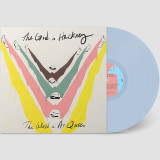
It is a record inspired by Sven's interest in the physical and spiritual processes that take place when we dance. "They are realms into which we immerse ourselves to experience our own mysticism and ecstasy," he muses. "Dancing is a conversation between body and soul and it spiritually connects us with each other." Because of the pandemic, that is of course a feeling that we all missed out on for so long. "No dancing, no paradise!" says Sven. "My imagination for this record was fueled by the many cultural experiences and encounters I have had in my life. They gave me the strength to find a way, the way to myself." And that way to himself is through music, through purifying dancing rituals and the exchange of spiritual energies that are generated in the club.
The thirteen-track album explores all facets of Sven's sound. It opens with the stomping drums but sleek synths of 'What I Used To Play' and unfolds through deep and dirty rhythms like 'The Worm', subtly euphoric highs on 'The Inner Voice' and the bubbly tribalism of the title track. There is the impassioned call-to-arms that is 'Feiern', peak-time melodic workout 'Mystic Voices' and soothing electronic lullabies like 'Being In Love'. The second half of the album takes in many more twists and turns such as the exotic strings and driving drums of 'Butoh', the paranoid techno minimalism of 'NYX' and expansive synthscapes of ambient gem 'The Cranes Of Gangtey Valley' before things play out though rugged beats and emotive chords on 'We Are', which is named after the idea that we are what we think. "With our thoughts, we make the world.? says Sven.
Then comes the moody reflection of 'Silvi's Dream', which was written in French for Sven's girlfriend. Last but not least we have the immersive dream that is 'Panta Rhei', which completes a trio of electronica tunes on the album. Ambient music has been an integral part on almost every album Sven has written because it can bring a certain emotional deepness, a quality that Sven always has been looking for.
'Catharsis' is an adventurous album that captures the good times, the sad times and, most importantly, the times of hope.
Even in trying times, “there is no love without electricity.” Electricity is the fourth and most progressive album from Ibibio Sound Machine, and like all good Afrofuturist stories, it begins with an existential crisis. “It’s darker than anything we’ve done previously,” says Eno Williams, the group’s singer. “That’s because it grew out of the turbulence of the past year. It inhabits an edgier world.”
Electricity was produced by the Grammy Award and Mercury Prize nominated British synthpop group Hot Chip, a collaboration born out of mutual admiration watching each other on festival stages, as well as a shared love of Francis Bebey and Giorgio Moroder. The fruits of their labor reveal a gleaming, supercharged, Afrofuturist blinder. Electricity is the first album Ibibio Sound Machine have made with external producers since the group’s formation in London in 2013 by Williams and saxophonist Max Grunhard. True, 2017’s Uyai featured mixdown guests including Dan Leavers, aka Danalogue, the keyboard jedi in future-jazz trio The Comet Is Coming, but Hot Chip and Ibibio Sound Machine worked together more deeply throughout the process, collaborating fully. Along the way, the team conjured a kaleidoscope of delights that include resonances of Jonzun Crew, Grace Jones, William Onyeabor, Tom Tom Club, Kae Tempest, Keith LeBlanc, The J.B.’s, Jon Hassell’s “Fourth World,” and Bootsy Collins.
The hook of opener “Protection From Evil” has Williams wielding a massive synth line from Hot Chip’s Al Doyle like a spiritual shield against unspecified, malign forces unspecified because Williams is speaking in tongues. Her lyrics are onomatopoeic: their meaning is defined in her energetic delivery. As Electricity takes off, so do Williams’ words towards a brighter future, alternating between English and Ibibio, sometimes within verses, and propelled by Joseph Amoako’s unabating afrobeat. She digs into this sentiment further on single “All That You Want,” coolly assuring her romantic interest while also requesting reciprocity. Meanwhile, Scott Baylis’ playful Juno synth guides the listener’s feet along the dancefloor.
Electricity is a deep and seamless realization of Williams’ and Grunhard’s ambitious founding manifesto to combine the singularly rhythmic character of the Ibibio language which Williams spoke growing up in Nigeria with a range of traditional West African music and more modern electronic sounds. While the band enjoys veering further into electronic territory with the help of mutuals like Hot Chip, Grunhard emphasizes, “For us, it’s not just a matter of embracing new technology. What’s key is to keep the music grounded in African roots.” Ibibio Sound Machine best exemplify this on Electricity’s “Freedom.” That track was inspired by the water-drumming rhythms of Cameroon’s Baka women, which in turn fueled its lyrics, which in turn prompted Hot Chip and Ibibio Sound Machine to layer joyfully kinetic electronic counterparts on top in the studio. As the track culminates with the mantra of “rage, hope, cope, soul,” it’s clear that Ibibio Sound Machine have channelled, harnessed, and distilled these words as guiding principles, both for the album and for the turbulent world that awaits it.
Growing up in the Californian sprawl and the vast suburbs of Phoenix, Arizona, Caleb Dailey largely dismissed the country and western music that surrounded him. Instead, he was drawn to independent rock, experimental zones, and other genre-defying forms, which led him to create skewed rock music with Bear State and establish the “minimal art label” Moone Records with his brother Micah Dailey in 2013. But in the early half of the 2010s, Dailey began to hear things differently. Drawn into the left-of-center works of artists like Gram Parsons and Blaze Foley, a more idiosyncratic take on country, folk, and roots music began to swirl in his imagination.
Wandering into the form’s cowboy chords and lonesome scenes, Dailey found himself wondering what his own country album might sound like. The result is his debut solo album, a collection of covers called Warm Evenings, Pale Mornings; Beside You Then. Produced by John Dieterich of Deerhoof, Keiko Beers, and Dailey himself, it’s a melancholy charmer, rooted in traditional ideas but free roaming in its scope. Laced with synths, pedal steel, acoustic guitars, and commanded by Dailey’s full and woozy voice, it owes as much to the busted waltzes of Lambchop and the homespun lo-fi folk of Little Wings (whose Kyle Field appears on the album via a spoken intermission) as it does to the songwriters and performers who provide its source material, which include Parsons, Foley, Elvis Presley associate Chips Moman, steel guitarist Buddy Emmons, and others.
“The subversive nature of country music isn’t as much at the surface as some other genres,” Dailey says. “But the deeper down the ‘country hole’ I went, the more I wanted to be part of it. It is truly a strange world.”
The hands of Dailey and his collaborators, which includes a wide roster of DIY experimentalists like James Fella of art punks Soft Shoulder, Jay Hufman (Gene Tripp), Lonna Kelley of Giant Sand, Japanese DIY hero’s Koji Shibuya and Tori Kudo, Nicholas Krgovich, Markus Acher of The Notwist, and more, that strangeness is accentuated. Dailey doesn't aspire to retro Nashville fetishism or sanctioned notions of “realness” so much as a genuine outsider authenticity. Take his version of Gordon Lightfoot’s “If You Could Read My Mind” for example: a highlight of the record, it pairs familiar genre signifiers like pedal steel and guitar strums with warbled synths. Then there’s his read of “Dreaming My Dreams,” originally made famous by Waylon Jennings (who also did time in the Arizona desert), which morphs from a mournful ballad into a wash of far-off sonic noise.
The attention here is on the songcraft itself, with Dailey inhabiting these songs and turning them inside out to reveal unexpected tenderness and playfulness.
Recorded at home with an acoustic guitar and 4-track, Dailey began open correspondences with his collaborators, who fleshed out ideas and added touches, often working with skeletal frames before Dieterich and Dailey shaped it into a cohesive whole. “John is the reason this album exists,” Dailey says. “He sculpted all these parts together in such an otherworldly way. He is truly a magician.” Deeply allergic to insincerity, Dailey avoids any trace of irony. He’s created a cohesive gem out of disparate parts, uniting Americana songcraft with experimental disassemblage. From this bric-à-brac, he’s made something touching and beautifully strange.
Two monster sounds from The Trinikas circa 1969, the culmination of the female four piece’s short-lived career.
Recorded in Missouri and sneaking out on the Pearce label, ‘Black Is Beautiful’ was a post-hippie dance anthem that later made a short-lived appearance on their native west coast Century label.
A horn-led classic with a four-part vocal and a truly funky drummer in attendance, it’s a spiritual blast.
The B-side of the original single is dusted off here too; a funkier cut that’s turned up in a few DJs’ setlists thanks to a re-issue via Numero and Jazzman.
‘Remember Me’ with its staccato guitar, upbeat horns and swirling organ is an infectious head-nodder.
Remastered for full-on soul supremacy.
- A1: Opening (0:21)
- A2: Long Distance (1:26)
- A3: The Shinobi (2:43)
- A4: Terrible Beat (1:27)
- A5: Sunrise Blvd. (1:41)
- A6: Make Me Dance (2:58)
- A7: Like A Wind (1:32)
- A8: Run Or Die (1:53)
- A9: Round Clear (0:06)
- B1: Ninja Step (1:40)
- B2: The Dark City (1:17)
- B3: China Town (2:44)
- B4: Over The Bay (2:11)
- B5: Labyrinth (0:48)
- B6: The Ninja Master (1:09)
- B7: Silence Night (0:45)
- B8: My Lover (2:08)
- B9: Failure (0:05)
- B10: Game Over (0:09)
Collaborating once again with legendary composer Yuzo Koshiro, Data Discs is thrilled to present one of the most revered and timeless soundtracks of the 16bit era: The Revenge of Shinobi. Composed in 1989, the music for the Mega Drive game (known as The Super Shinobi in Japan) blended Western dance music with Japanese overtones, to create something truly unlike anything else before. The soundtrack was Koshiro's first commissioned work for SEGA and served as a forerunner to his seminal Streets of Rage trilogy, where the concepts and styles he founded with Shinobi would be expanded upon to astonishing effect. Koshiro's work on The Revenge of Shinobi remains a testament to the ingenuity of early game composers who, when given enough creative freedom, found the means of drawing new and unexpected sounds from extremely limited hardware.
The Revenge of Shinobi is presented as a 180g bone coloured LP, cut at 45rpm and packaged in a 425gsm outer sleeve, with heavyweight inner sleeve and double-sided lithographic print, featuring original artwork sourced from the SEGA archives in Japan. The release also includes exclusive liner notes written by Koshiro himself.
- A1: Blood Of The Sun (Feat Zakk Wylde)
- A2: Nantucket Sleighride (To Owen Coffin) (To Owen Coffin)
- A3: Theme For An Imaginary Western (Feat Dee Snider, Eddie Ojeda, Rudy Sarzo, Mike Portnoy)
- A4: For Yasgur's Farm (Feat Joe Lynn Turner)
- A5: Why Dontcha (Feat Steve Morse)
- A6: Sittin' On A Rainbow (Feat Elliot Easton)
- B1: Never In My Life (Feat Dee Snider)
- B2: The Doctor (Feat Robby Krieger)
- B3: Silver Page (Feat Charlie Starr)
- B4: Money (Whatcha Gonna Do)/By The River (Whatcha Gonna Do)
- B5: Long Red (Feat Yngwie Malmsteen)
- B6: Mississippi Queen (Feat Slash)
'Legacy: A Tribute to Leslie West' will be released on CD, Silver vinyl and digitally.When Leslie West passed away in December of 2020, he left behind a towering legacy of epic recordings that few rock guitarists can match
But there was more to West than great songs (although, to be sure, he created a ton of them); there was his brilliant, idiosyncratic sound, a gargantuan earthmover that razed arenas and stadiums across the globe. More than just paralyzing tone, though, he also had a touch nobody could beat. Stinging, swooning and sensual melodies leapt from his fingertips – with a deft flick of his wrist, he sounded like a Delta bluesman had picked up a violin. These elements and more helped to make West one of the most significant, influential and
irreplaceable guitarists of the rock era.Originally, the album was intended to be a retrospective celebration of West's music on which the guitarist himself would perform some of his best-loved cuts with notable guests, along with a collection of new tracks. Two weeks before recording was set to commence, however, the guitarist passed away. While grieving the loss of her husband, Jenni was comforted by the constant stream of phone calls from famous musicians who
expressed their condolences, and without fail, each one said the same thing: "If you do any kind of tribute to Leslie, please let me know."An astonishing array of West's admirers – who also happened to be friends and peers – came together to celebrate the trailblazing musician on the aptly titled 'Legacy: A Tribute to Leslie
West'. Executive produced by Jenni West, Bob Ringe and John Lappen, the album features dizzying, heartfelt performances by Slash, Zakk Wylde, Dee Snider, Bachman & Bachman, Martin Barre, Joe Lynn Turner, Charlie Starr, Elliot Easton, Robbie Krieger, Mike Portnoy, Eddie Ojeda, George Lynch, Marty Friedman, Steve Morse and Yngwie Malmsteen, among others. Each track on its own is a corker,
but taken together the 12 cuts on 'Legacy: A Tribute to Leslie West' are a stunning and heartfelt testament to the true impact the guitarist had on musicians of all stripes, and as such, it's essential listening for both longtime fans and newbies.
Print coverage in Guitar Techniques, Rock Candy, Record Collector
Released in 1983 on a miniscule run of 300-self-financed LP’s, Dennis Taylor’s ‘Dayspring’ remains a lost masterwork of transcendental instrumental guitar. An important missing link between the 60’s folkloric experimentalism of John Fahey and Robbie Basho, and the new age atmospherics mined by William Ackerman and Michael Hedges in the early 80’s. Though Taylor’s guitar playing remains crisply unadorned on these 10 tracks, his technique and his compositions stretch beyond the folk roots of the genre. He crafts a soundworld that is both immersive and familiar. His pastoralism has a spaciousness - a pianistic drift - that feels truly timeless.
Taylor cut his musical teeth through the 60’s and 70’s playing with garage rock bands, and later finding his footing in the world of jazz/folk fusion. Sometime in the early 70’s, Taylor found his most profound inspiration to date when he witnessed a live performance from Takoma Records luminary, Leo Kottke. Enraptured by Kottke’s ability to fill the room so completely, with the sound of just one instrument, Taylor was determined to follow a similar path. Thus, he began composing music for solo guitar. He spent nearly a decade writing and honing his pieces, finally entering a studio in 1982 to commit them to tape. Taylor likened the recording experience to “a living room concert.” He recorded each song in a single take, in the order they appear on the album. Paying out of pocket for the recording sessions, studio time was at a premium, so Taylor had arrived prepared. And the results speak for themselves.
Dennis Taylor’s guitar playing is clean, precise, and masterfully proficient. And yet, ‘Dayspring’ is not merely a document of technical ability. His compositions are deeply
expressive. Taylor’s deft fingerpicking is married to achingly beautiful melodicism. His arpeggios chime and roll with painterly expression. Across the breadth of ‘Dayspring’, Dennis Taylor strikes a perfect balance between wistful nostalgia and bold expansion. Though Taylor initially hoped to release his album with new age progenitors Windham Hill, he ultimately decided to release the album on his own. He self-financed a pressing of 300 LP’s, which were largely distributed locally in his hometown of Lincoln, Nebraska. And now, Morning Trip is supremely proud to bring this album back to light. An important missing piece in the expansive tapestry of instrumental guitar music, finally restored.
"_Acid blues punk meets freeform drone raag transcendentalism" JONNY HALIFAX is an untutored aleatoric free blues outsider. His new collection of sound is an instrumental departure into godless raag brut improvisations, layered, manipulated and sculpted into heavily immersive feral sonic collages. Invocations of an hallucinatory apocalyptic near future. Previously the creator of junkshop blues skronk one man band HONKEYFINGER, which then mutated into the gospel fuzz psych of Julian Cope endorsed JONNY HALIFAX & THE HOWLING TRUTH with their ""slitherin' electro -programmed slide guitar driven mung worship", alongside the ambient drone metal noisescapes of DEATHENTEREDINERROR, now THE JONNY HALIFAX INVOCATION channel heavy meditations on the present into an uncompromising free blues transcendentalism that burn raga-shaped holes into your chakra with searing psychedelic intensity. Inspired by Henry Flynt's avant bluegrass experiments fusing country blues with eastern acoustic musical stylings, Spacemen 3's contemporary sitar music, and the monolithic drone doom immersion of Sunn 0))), THE JONNY HALIFAX INVOCATION build hypnotic instrumental soundscapes using lap steel and homemade slide guitars, harmonica and alto sax. Underpinned by layers of acoustic and electronic drone instruments and fed through an arsenal of pedalboard electronics that would make Dave Gilmour weep. The blues are transmogrified, unhinged, reduced and re-imagined as intoxicating, trance-inducing, feedback-drenched noise paintings. AÇID BLÜÜS RÄÄGS Volume 1 plays like a psychedelic western movie soundtrack, frenzied electric lap steel guitar suites play to melting cowboy minds. Flaming tumbleweeds blow in slow motion across wide open concrete vistas. Jodorowsky's El Topo meets Ballard's High Rise in an apocalyptic knife edge disintegrating urban landscape. Shut your eyes and conjure the best nightmares you've never had. The JONNY HALIFAX musical CV also includes studio contributions to releases by Andrew Weatherall's TWO LONE SWORDSMEN, UK metal behemoths ORANGE GOBLIN, hardcore thrash upstarts HECK (formerly BABY GODZILLA), and pan european psych noise titans MELTING HAND.
Aufgewachsen zwischen Wales und den Vororten von Western Australia, wo sie aktuell zu Hause ist, begann die Sangeskarriere von Stella Donnelly damit, dass sie in ihrer australischen Schulband Songs von Green Day zum Besten gab, sich dann aber Richtung Jazz und zeitgenössischer Musik orientierte, als sie an der West Australian Academy Of Performing Arts studierte. Auf ihrer klar im Singer/Songwriter Indie Folk Genre angesiedelten Debüt-EP ,Thrush Metal" präsentiert Donnelly brutal ehrliche und geistreiche Beobachtungen ihrer Mitmenschen, die hier als wunderschöne Gedichte mit ausgefeilten Pointen daherkommen. Donnelly liefert einen Einblick in die Welt, in der wir leben und wie es ist, als Frau des 21. Jahrhunderts zwischen Trump, Tinder und der dritten Feminismus-Welle zu existieren.
Previous album released on Dead Oceans. Previous album was a collaboration with Brian Eno. Past press coverage from Pitchfork, SPIN, The Guardian, Drowned in Sound, Dusted, The Quietus, and many more. Since the release of his last album 2017’s Finding Shore, a collaboration with Brian Eno pianist and singer-songwriter Tom Rogerson’s life has undergone a number of dramatic transformations. While writing his new album Retreat to Bliss, Rogerson had a child, lost a parent, and received his own diagnosis of a rare form of blood cancer. The new decade brought him from Berlin to the Suffolk of his childhood, composing profound pieces of minimal songwriting in the church next to his parents’ home. Rogerson studied composition at the Royal Academy of Music under mentors like Harrison Birtwistle, and he made his live debut as an improvising pianist in 2002, before releasing an improvised record with Reid Anderson (Bad Plus) and Mike Lewis (Happy Apple, Bon Iver) in 2004. He formed the band Three Trapped Tigers in 2007, expertly blending elements of electronic, jazz and noise rock into a cohesive whole. The band earned a reputation for innovative live shows and went on to perform and collaborate with artists like Brian Eno, Deftones, and the Dillinger Escape Plan. It was working with Eno, another Suffolk native, that eventually led Rogerson back to his roots and back to a place where he could write Retreat to Bliss, his solo debut album. “All my life, the piano has been my constant companion, my confessor, my best friend, and my worst enemy,” Rogerson explains. “I’ve always written music on and for the piano, but it felt too personal, too private to release.” Indeed, listening to Retreat to Bliss feels almost like eavesdropping, as though you’re crouched in the belfry of a Suffolk church, bearing witness to a form of musical bloodletting. For the first time in his noteworthy career, Rogerson has combined masterful piano playing and subtle electronics with the texture of his own voice, an attempt to express deeply private emotions that were difficult to articulate using instrumental music alone. “The last few years have brought some struggle, some joy, and a lot of change. My response has been to retreat to what I trust the most: the piano, my voice, and the landscape I grew up in. That’s how the album got its title, and how I came to be ready finally to release a solo record.” The eleven tracks that make up Retreat to Bliss were recorded by Leo Abrahams (Brian Eno, David Byrne, Grace Jones) over the course of just a few days, a process that emphasized spontaneity and the artist’s own commitment to improvisation. Secular yet devotional, intensely personal yet profound, the experience of listening to Retreat to Bliss seems to evade characterization. It’s physical and emotional, a glimpse into the mind of an artist who has chosen exposure over withdrawal, who uses his command of the piano to chart an unflinching path forward, never looking back. UK press campaign by Someone Great. Press Quotes "A meeting of minds that is full of rewarding surprises, challenging and surprising one another, and their listeners, with music that feels alive and wondrous…” Pitchfork // "Both mournful and dazzlingly optimistic, a taste of the conflict found so ofen in nature and reflected so elegantly across the course of the record.” The Line of Best Fit // "Many avant-garde instrumental albums exist to craf a mood; Rogerson and Eno merge these moods, sounds and themes together efortlessly and radiantly on Finding Shore” Exclaim // Track List 01 Descent 02 Oath 03 Buried Deep 04 Toumani 05 Drone Finder part 2 06 Chant 07 Rapture 1 08 Open Out Span Wide View 09 A Clearing 10 Retreat To 11 Coda
The next drop on Livity Sound is the first collaboration from long-time label mainstays Hodge and Simo Cell. True to the styles the artists have individually marked out since first appearing on Livity Sound circa 2014-15, LIVITY050 presents fiercely imaginative, upfront club music across a spectrum of tempos.
The supple, fluid approach to electronic music the two producers are separately known for feeds into a cohesive partnership, whether they’re turning their hand to dancehall-inspired, sub-100BPM heavy hitters or jagged, technicolour half-step tapestries.
Livity Sound is a label set up by Peverelist in 2011 as a vehicle for a raw and exploratory strain of UK techno, rooted in the heritage of UK dance music and sound system culture. It has since become one of the UK's foremost protagonists for cutting edge underground electronic music.
Legendary Italian musician Sergio Messina serves up his 13 track Sensual Musicology on Hell Yeah this March. It comes a couple of years after he first released on the label's Buena Onda compilation and takes in everything from demented waltz to grown-up jazz, groovy beach music to heart-aching melancholia with artwork by virtuoso Italian AD DeeMo.
Now based in Lombardy, Sergio was there at the birth of pirate radio in the mid-seventies and eventually produced Radio art for national broadcaster Rai. At the same time, his DJ career took off and he helped establish Hip hop in Rome before taking his own live show to the stage with a mix of PCs, samplers and tape recorders as early as 1989. Frank Zappa declared himself a fan and in the years since Sergio has done everything from radio art to producing Neapolitan reggae and hip hop band 99 Posse, producing his own solo albums and writing for monthly music magazine Rumore. On top of this, he has both written books about and delivered lectures on the digital porno revolution, as well as teaching History of Pop Culture at the Istituto Europeo di Design in Milan. All this makes him a truly original creative thinking who has long been immersed in many niche facets of popular culture.
Sensual Musicology took several years and four different locations to happen. Its release has been delayed by the pandemic, during which Sergio lost many friends and relatives close to him. As a result, the album is dedicated to all of them. It is a record that addresses many topics from economic migration to jazz piano, 60s blues motifs to corruption, pollution and racism via Michael Jackson covers, odes to West Coast guitar albums and spaced-out pieces of electronica.
Opening with the beautifully delicate Mingus melodies of 'Goodbye Porkpie Hat' the album roams through the bluesy Italo-American-Jamaican groove of 'Amara,' slow melancholy of 'Sometimes Remember' with classy vocals from chanteuse Valeria Rossi and 'The Way You Make Me Feel', an acoustic rebuild of Michael Jackson's hit song. Then comes the serenade that is 'Just Because You're Dead,' and ‘Sono Stufa di Tutto’ which is based around a protest speech recorded from the radio in the 1980s. Jon Hassell Beach Bar' is a musical hybridisation for dancing pleasure.
The second half of the album takes in 'Ouana Di lambo' which is the Four Twenties taking you to a cocktail bar in the tropics, 'Benjamino Placido' which is a melody for a man who inspired Sergio to start writing his columns, and 'Nowhere Special' which is a tribute to West Coast guitar albums. Closer ‘Switchblade Bolero' has a Zappaesque theme.
Sensual Musicology is a rich and diverse musical world that is as thought-provoking and deep as it is emotionally rewarding.
Early DJ Support:
Leo Mas, Phat Phil Cooper, Calm, Chris Coco, Andy (We are The Sunset), Severino (Horse Meat Disco)
- A1: Iconcentrate On You
- A2: I Get The Blues When It Rains
- A3: I've Grown Accustomed To His Face
- A4: I Got Rhythm
- A5: I'm Confessin (That I Love You)
- A6: I Want To Be Happy
- B1: I Surrender, Dear
- B2: I Found A New Baby
- B3: I Understand
- B4: I Let A Song Go Out Of My Heart
- B5: I An't Got Nobody (And Nobody Cares For Me)
- B6: I Only Have Eyes For You
Singing actors and actresses do not always cut a good figure on the silver screen; play-acting singers, however, are all the better when they draw attention to themselves with great vocals. As did Lena Horne in the days of the black-and-white film, who, with her sultry, versatile voice, was constantly employed by Hollywood. Although she occasionally ventured into the world of jazz, and made music with Teddy Wilson and Benny Carter, she never forayed into the wide world of improvisation. Her musical home was in the American Songbook, which she approached with a natural and entertaining manner. A good example of this is the first number here – the Cole Porter classic "I Concentrate On You", which swings along to the perfectly recorded big-band sound of the Marty Paich Orchestra. A surprise element is the extensive palette of vocal sound-colouring with which the diva enhances her voice to achieve the drama of a Shirley Bassey or the dusky depths of a Dinah Washington. Each and every number on this Grammy-worthy album has been thought out in great detail and guarantees sophisticated entertainment, and a hint of West Coast jazz is perceptible when Jack Sheldon treats us to the sound of his warm and dark trumpet solos.
Repress due in March. Includes Previously Unreleased Instrumentals! Air Vinyl is proud to be reissuing Benny The Butcher and 38 Spesh's seminal joint album, Stabbed & Shot. These underground kingpins were both at their hungriest at the top of 2018 and this LP is the proof. Air Vinyl will also be releasing Stabbed & Shot II later in 2020, so this re-release should get fans ready. Benny the Butcher is as hot as any artist on the planet right now, fresh off of an incredible 2019 with his The Plugs I Met project, the collaborative effort Statue of Limitations (with Smoke DZA), and his Shady Records debut alongside his Griselda brethren Westside Gunn and Conway the Machine, entitled WWCD. 38 Spesh is heading up the Trust movement, and also had a stellar few years, including his Son of G Rap album (alongside Kool G Rap) and songs with Styles P, Jadakiss, Uncle Murda, AZ, N.O.R.E., Kool G Rap, and French Montana. He has worked with several high-profile producers as well, including the likes of DJ Premier, Pete Rock and Alchemist. Album art by Manuel "Cep" Concepcion.
Detroit/Chicago and odd techno/house sounds influenced French producers Marius Cyrilou and Popodi Venturi to come back with a new banging crossover project called MOTORBREMSEN. Marius and Popodi already had many digital and vinyl releases on various labels like People Potential Unlimited records, Omega Supreme Records, Outrun records and on their own labels, La Maison Venturi, Bazaar Records under the names of Spaced Out Krew, The Ceeofunk Band or
Westbrook (and many others more).
This 5 tracks EP gathers many influences such as Theo Parrish, Moodymann ("So Confused") or Drexciya-n sounds ("Sanctuary"). Some deep and dark bassy house mood concludes this ep ("Human Freaks" , "Riding Over The Darkness"). Besides this, the marvellous voice of Mae Rojas (The Ceeofunk Band) comes with a sensual touch on the track "Tiger Prey (Radio Edit)". This EP gives an instant deep feeling of a happy-to-sad mood, with mysterious and sexy moments.
On A1 "So Confused", Don’t be confused, this is music to drive by in the hood with your low-rider. Gangsta boogie house at his climax for fans of Moodymann, Theo Parrish and all the raw house music mood.
On A2 "Tiger Prey (Radio Edit)", with the help of Mae Rojas (Cee-O-Funk Band) on the mic, Motorbremsen keep pushing their unique vision of house music : soulful but raw, relaxed but not so slow, catchy but weird at the same time.
On A3 "Sanctuary", let’s get on an electro-funk territory here. The guys explore a sound that can be rooted in seminal Arthur Baker’s productions and Drexciya’s mood but this a strong psychedelic feeling that is truly unique. All this comes with the special Motorbremsen’s touch of course. One for the B-Boys on acid...
On B1 "Riding Over The Darkness", get in the D’s train for a cruise. Laidback house with a monstrous bass and this almost G-Funk feeling. Hmmmm… delicious ! One for the lovers.
On B2 "Humanfreaks", let's get a bit darker. What begins like a bumpy beat get you little by little in real moody trip in a hot warehouse. Detroit techno muscular funk-infused inna 2021 style (by two guys who never listen to a Transmat record of their lives).
- A1: Sampler Side A
- B1: Sampler Side B
- C1: Blue Malediction - By Deena Abdelwahed And Mazen Kerbaj
- C2: Norm Hollows Function - By Dieb 13 And Mazen Kerbaj
- C3: Pendulum - By Rrose And Mazen Kerbaj
- C4: Untitled - By Marina Rosenfeld And Mazen Kerbaj
- C5: Chainsaw - By Rabih Beaini And Mazen Kerbaj
- C6: Time Traveler - By Donzilla Lion Nyege Nyege And Mazen Kerbaj
- D1: Trumpet Zoo - By Dj Sniff And Mazen Kerbaj
- D2: Mazens Trumpet - By Electric Indigo And Mazen Kerbaj
- D3: Untitled - By Muqataa And Mazen Kerbaj
- D4: Dreams Of Dust - By Microhm And Mazen Kerbaj
- D5: The Sign To Return Is In The Earths Spin - By Fari Bradley And Mazen Kerbaj
- D6: Now Serving 8190 - By Gavsborg Equiknoxx And Mazen Kerba
- D7: Untitled - By Bob Ostertag And Mazen Kerbaj
Featuring: Deena Abdelwahed, Rabih Beaini, Fari Bradley, Dieb 13, DJ Sniff, Gavsborg (Equiknoxx), Electric Indigo, Donzilla Lion (Nyege Nyege), Marina Rosenfeld, Microhm, Muqata’a, Bob Ostertag, Rrose
Project presentation:
Sampler / Sampled is an album made of two interdependent parts rather than a double-album.
The first part of the project, Sampler, is a trumpet solo album that catalogues the unique sounds and extended techniques that Mazen Kerbaj developed for the instrument in the past 25 years; it consists of 318 pieces ranging from less than a second to forty seconds each, and presenting different sonic materials. This catalogue of sounds works on various levels: first and foremost, it is a trumpet solo that could be played in its original order, or in random mode to create different pieces of music. But it is also a collection of samples that could be used for various applications (ringtones, phone sound effects, cinema…) and, of course, to create new pieces of music based on sampling.
The second part of the project is the composition Sampled for a musician working with loops and/or samples. The composition has one instruction: create a piece of music using solely tracks from Sampler as your sound source (with the possibility to use all kind of effects or treatment). Each interpreter/musician becomes thus a co-composer who appropriates the piece and makes it their own. In this regard, the musicians that were commissioned to play Sampled were chosen from different geographical origins and musical genres to create highly different and personal pieces of music.
One important output of this project is putting in practice the overused idea of music as a universal language. This idea is very present in “free improvised music” where musicians from different origins can meet for the first time and make music together without the need to adapt to different musical traditions. But here, the collective part of creating music in real time is not involved. It is rather the contrary: it starts with one middle-eastern musician creating a new language/vocabulary for his western instrument, to be later used by other musicians from around the globe who will appropriate this vocabulary and use it with their own language/grammar.
The final output of this double faceted album that was recorded during the Covid lockdown proved to be a very efficient new way to collaborate from a distance in times of world isolation, and ultimately put in practice the universality of music by breaking the boundaries of genres that are the most difficult to break.
For their next reissue, Parisian crew Discomatin picked one of the rarest and sought-after releases of the French Boogie scene, Lot'Vie / Y'a Du Blues by Marché Noir. The original 12" from 1984 gets a proper remastering and delivers its powerful mixture of Boogie, Jazz-Funk and West Indies influences. Two amazing titles finally reissued with a loud sound!
"Lot'Vie" is a perfect blend of powerful funky rhythms with tons of percussion, second to none slap bass and dope synths leads. With its infectious chorus ("son a bip bip!"), the track seems to irresistibly make you move your feet. Sung in creole, the track speaks about everyone going their own way, knowing that past, present and future are only one.
"Y'a Du Blues (Tant Pis, C'est La Vie)" is based on a monstrous boogie bassline. the song talks about melancholy and hope, but with joy. In these troubled times, lyrics surely get a special meaning: whatever happens, keep smiling because after all "c'est la vie" ("that's life").
Marché Noir brought together friends and family around keyboardist Max Marolany living in the south of France, with the band starting in the second part of the seventies. Excited by the new funky sound coming from the USA, they wanted to create Marché Noir to compose and sing their own French songs. With a full range of references, from Zouk to Soul, from Disco to Funk, Reggae and Pop, their first goal was to have fun! The band was playing in clubs and festivals around Marseille, Nice, Aix-en-Provence and Fréjus. With this local fame, they ended up doing the first parts of Touré Kunda and french rockstar Johny Halliday. Without a doubt, their live shows were a truly funky experience.
Thanks to Discomatin, the EP is now available to the real connoisseurs with an exclusive insert that contains lyrics, again with fantastic illustrations from French artist Camille de Cussac.
In February of 1976 Eddie Carmichael left the group “The Voshays” after catching the bandleader/manager stealing from the band. Derry Shepherd and Duncan Bethel left at that time also. About a week later I asked Derry if he would be interested in starting another band and he said sure. At that point Duncan Bethel agreed to participate and he recruited his friend Flynn Emanuel to play trombone. Derry was the manager of the cafeteria at Sears Department Stores in The Pompano Fashion Square Mall and he met Sandy Ficca who was the manager at Chess King Men’s Clothing Store in the same mall. Sandy also agreed to join the group and we auditioned bass players and chose Dave Segal and only one keyboard player auditioned and that was Bob Groszer. We now had all of the personnel for the group and we commenced rehearsing in the recreation center in Pompano Beach, FL at Westside Park. We did a few “Chitlin’ Circuit“ gigs to fine tune the band and music and then moved over to the beach circuit. While there we would perform spring and summer months at “The Ocean Mist” on the Strip in Fort Lauderdale, FL and for the fall and winter months the Big Daddy’s 8600 Club on Miami Beach. After 18 months of constant gigging I suggested that the band go into the studio and record some original music. Now all we needed was some serious financial support and songs. I met a man by the name of Jerry Bullard and convinced him to back the project. We formed our own independent label “Get Off Records” and publishing company “Situated Music”. At that point Dave Segal and Sandy Ficca left the group and Bruce Saddler who was the drummer for The Voshays joined us on the drums for the first two recordings. Sandy Ficca returned as drummer and brought in his old friend and bandmate Daryl Walker to play Bass on five of the six remaining songs. We recorded the entire album in five days at SRS Studios and Triad Studios both in Fort Lauderdale, FL in August of 1977. The first single “Give It Up (Let Yo Funk Fly Free) was a winner released only in the New York tri state area where in two weeks it reached number 16 in the top 100 and was poised to go number one nationwide on the R&B charts in the next two weeks. Henry Stone, owner of TK Records in Hialeah, FL wanted to sign the group as did many other major record labels including Maurice White of Earth, Wind & Fire. But the usual problems of the music business reared its ugly head and the record was pulled from all radio airplay and the group who became disenfranchised with the business of the industry decided to call it quits. Derry Shephard went into Gospel Music production, Sandy Ficca went on to become the drummer for the Pop/Rock recording artists “Firefall”. Daryl Walker is a session player and music teacher, I did studio sessions and played in several cover bands and toured internationally. Bob Groszer toured with Sly Stone and other legendary recording artists. Dave Segal went on to start New York Bass Works in New York. Flynn Manuel became a music teacher in The Broward County School District and Bruce Saddler and Duncan Bethel left the Music industry completely. We were young and not good business people at that time and did not understand the rules of do’s and don’ts of the music industry. But we had three talented songwriters, a great arranger, a killer band and all the financial support that we needed. Looking back if we only had an experienced manager I truly believe Mirror would have gone on to create some great music over the years that followed.
Peace and love all the time,
- A1: Rhythim Is Rhythim - Emanon
- A2: Cybersonik - Technarchy
- B1: Looney Tunes - Just As Long As I Got You (Brooklyn Club Mix)
- B2: Ecstacy Club - Jesus Loves The Acid
- C1: Nightmares On Wax - Aftermath
- C2: Juno - Soul Thunder
- D1: Bodysnatch - Just 4 U London (Kuff Mix)
- D2: Q Project - Champion Sound (Alliance Remix)
Fabio & Grooverider have been at the forefront of UK dance music for over 3 decades. This is the roots of their story told through music. The 2 London DJ's are part of the DNA of the global Jungle / D&B movement and they have remained relevant, cutting edge, authoritative and essential to this truly underground art-form since it's inception. RAGE could arguably be the ground zero of Jungle. The party was started at London's cavernous Heaven club by Fabio & Grooverider in 1988, at the height of Acid House fever that was making it's way up and down the motorways, slip-roads, fields and warehouses of the M25 and further beyond every weekend, troubling the nation, the police, your parents and the press as it went. RAGE was a different beast, it certainly channelled some of that Acid energy but pitted it against the new and exciting sounds emanating from Belgium, Amsterdam, Detroit, Sheffield, Essex and Hackney and in turn created a new style, a new sonic attitude and energy in the process. Rumbling bass-lines, narcotic synth rushes and roughly chopped and sped-up breakbeats all merged into a style that we now know as Jungle. Nothing like this had been heard before, this was a brand new style and it was coming out of London's West End and Fabio & Grooverider were the people firmly behind it. RAGE is approaching its 30th anniversary. Its sonic and cultural legacy is still being felt today, Fabio & Groove are still shutting down raves and festivals every weekend all over the world with their superior DJ sets and musical knowledge guided by their pioneering spirit. This musical selection you hold in your hands, the first of 4 parts, sees them delve into their prodigious memories and record boxes to select a true musical representation of the very beginning of one of the UK's most unique and influential musical movements of the last 50 years. Across 4 x 2 x 12"s compilations we are taken on the journey through the sounds of RAGE, accompanied with track by track notes from Fabio & Groove themselves. This is the sound of the underground, from the inside out. This is a masterclass in the old-school. The roots. There is no filler here, it's simply ALL killer. Lovingly selected and programmed by the masters - 'The Living Shock' & 'The Ladies Choice'. Produced in conjunction with Above Board distribution and Fabio & Grooverider. All tracks mastered from original sources and fully licensed. Mastering by Optimum, Bristol. Artwork and design by Atelier Superplus. 2019
- A1: Leftfield - Not Forgotten (Dub Mix)
- A2: One Tribe - Is This All (Instinctstrumental)
- B1: Lennie De Ice - We Are Ie (Original Mix)
- B2: Zero B - Lock Up (2012 Re Master)
- C1: Wots My Code - Dubplate
- C2: Foul Play - Being With You
- D1: Noise Factory - The Future
- D2: Fallout - The Morning After (Sunrise Mix)
Fabio & Grooverider have been at the forefront of UK dance music for over 3 decades. This is the roots of their story told through music.
The 2 London DJ's are part of the DNA of the global Jungle / D&B movement and they have remained relevant, cutting edge, authoritative and essential to this truly underground art-form since it's inception. RAGE could arguably be the ground zero of Jungle. The party was started at London's cavernous Heaven club by Fabio & Grooverider in 1988, at the height of Acid House fever that was making it's way up and down the motorways, slip-roads, fields and warehouses of the M25 and further beyond every weekend, troubling the nation, the police, your parents and the press as it went. RAGE was a different beast, it certainly channelled some of that Acid energy but pitted it against the new and exciting sounds emanating from Belgium, Amsterdam, Detroit, Sheffield, Essex and Hackney and in turn created a new style, a new sonic attitude and energy in the process. Rumbling bass-lines, narcotic synth rushes and roughly chopped and sped-up breakbeats all merged into a style that we now know as Jungle. Nothing like this had been heard before, this was a brand new style and it was coming out of London's West End and Fabio & Grooverider were the people firmly behind it.
RAGE is approaching its 30th anniversary. Its sonic and cultural legacy is still being felt today, Fabio & Groove are still shutting down raves and festivals every weekend all over the world with their superior DJ sets and musical knowledge guided by their pioneering spirit. This musical selection you hold in your hands, the first of 4 parts, sees them delve into their prodigious memories and record boxes to select a true musical representation of the very beginning of one of the UK's most unique and influential musical movements of the last 50 years. Across 4 x 2 x 12"s compilations we are taken on the journey through the sounds of RAGE, accompanied with track by track notes from Fabio & Groove themselves. This is the sound of the underground, from the inside out.
This is a masterclass in the old-school. The roots. There is no filler here, it's simply ALL killer. Lovingly selected and programmed by the masters - 'The Living Shock' & 'The Ladies Choice'. Produced in conjunction with Above Board distribution and Fabio & Grooverider. All tracks mastered from original sources and fully licensed. Mastering by Optimum, Bristol. Artwork and design by Atelier Superplus. 2019
- 1: Introduction: Bow And Fire
- 2: Blazing Arrow
- 3: Sky Is Falling
- 4: First In Flight Feat. Gil Scott-Heron
- 5: Greenlight: Now Begin
- 6: 4000 Miles Feat. Chali 2Na And Lateef The Truth Speaker
- 1: Nowhere Fast Purify (Interlude)
- 2: Paragraph President Halfway Home (Interlude)
- 3: It’s Going Down Feat. Lateef The Truth Speaker And Keke Wyatt
- 4: Make You Feel That Way
- 1: Brain Washers Feat. Ben Harper & The Innocent Criminals Cool Aid Chemistry (Interlude)
- 2: Chemical Calisthenics Feat. Cut Chemist Of Jurassic 5
- 3: Aural Pleasure Feat. Jaguar Wright
- 4: Passion Featuring Rakaa & Babu Of Dilated Peoples Faith’s Fire (Interlude)
- 1: Purest Love
- 2: Release Feat. Saul Williams And Lyrics Born (Part 1, Part , Part 3)
- 3: Day One Bow And Fire (Outro)
The young and ambitious hip hop group Blackalicious emerged from the underground during the late Nineties. Their debut album established them as one of the West Coast’s top outfits, but it was the follow-up Blazing Arrow that earned them major acclaim. This second studio album was originally released in 2002 on MCA Records. The album features several guest appearances, including Zack de la Rocha (Rage Against The Machine), Gil Scott-Heron, Ben Harper & The Innocent Criminals, Cut Chemist and Chali 2NA (Jurassic 5) amongst others.
Blackalicious was known for their ‘positive tip’, in other words, their lyrics have often been spiritual and uplifting rather than violent or misogynous.The group consisted of DJ/producer Chief Xcel and rapper Gift of Gab.
"The core of confusion and upheaval that drove some of the band's most fiery earlier work, however, is replaced by a more stabilized undercurrent, a mentality that's reflected in songs not afraid to try new things and honestly explore uncomfortable feelings. When combined with exciting production and songwriting choices, that mindset helps make Feels So Good // Feels So Bad one of the Shivas' best albums.” - AllMusic "Portland, Oregon-hailing psych-surf band The Shivas accomplish another time-traveling, reverb-ridden sound that refuses to get boring. Jared Molyneux’s guitar work knows when to be bright or bashful at the right times, breaking into guitar solos that possess a late-’60s groove… The Shivas seem to blissfully flourish” - Paste "a consistent treat for the ears” - The Vinyl District "Though the psych-tinged guitar riff that drives 'Feels So Bad' was written while The Shivas were still on the road, its lyrics didn’t fall into place until the band was well into lockdown, unsure of when they’d be able to return to their most imperative true love: Live shows... Accordingly, 'Feels So Bad' permeates with a sense of urgent desperation, building off a chugging prog-rock instrumental.” - Consequence (on “Feels So Bad”) "They hooked the audience with their throwback rock sounds. The guitar strums and rhythmic drum beats were layered atop smooth and hallucinogenic vocals. The eyes can tell the take at times and there was a sparkle there that said that the band members just love doing live performances." - California Rocker "This single layers on the fuzz but keeps it dreamy, with an especially sticky guitar riff sure to lodge itself in your brain with minimal effort." - Portland Monthly (on “If I Could Choose”) “'My Baby Don’t' translates the genuine vibrant joy
of the live experience into the studio, bringing the band’s ‘60s garage rock roots, sharp pop vocal harmonies, and fervent performances along for the ride." - Under The Radar "Perfectly straddling the line between a solid-head bopping track and an introspective deep cut, The Shivas’ 'Undone' is a rock & roll gem. The track sounds straight out of the late 60s and fits seamlessly in the Portland band’s electrifying catalog." - The Luna Collective "The first time I clicked play on this track, I knew it was a yes for me." - Ear To The Ground Music (on “If I Could Choose”) "The harmonies would make the “Happy Together” Turtles blush, but the unsettling guitar doesn’t shy away from the woollier implications of the ’60s." - Willamette Week (on “If I Could Choose”) "'Undone' is just the perfect song for the good days and the bad ones." - GlamGlare "another hit" - Austin Town Hall (on “Undone”) "one of the best forthcoming albums of the year" - Austin Town Hall RADIO: #3 Most Added @ NACC - 50 official adds BIO Every working musician has had their life turned upside down by Covid-19. For The Shivas, who had recently released a new LP and normally keep a rigorous touring schedule, it was a particularly screeching halt. “We were about to go to SXSW, the following weekend was Treefort in Boise, and then we were going to open for our friends’ band on tour in the US before going to Europe,” Jared Molyneux remembers. Then everything just stopped. They were faced with a dilemma. “It forced us to adapt or just quit,” Molyneux says. “The reality is that shows are our job.” In truth, live shows aren’t just The Shivas job: they are the band’s greatest love. Shivas shows are bombastic, explosive and thoroughly communal live rock and roll experiences where barriers between the performers and their audience seem to dissolve into the sweat and sound. The stage—or the basement, or the living room—that’s The Shivas’ true element. It’s their raison d’etre. It’s their religion. The band’s live urgency may have been born in 2006, when the band’s young members—who began booking West Coast tours while still in high school—waited without fanfare on sidewalks or in parking lots, before being rushed onstage for their sets at 21-and-up clubs. Maybe it developed a little later, as The Shivas blasted their way through Portland’s storied and unsanctioned mid-aughts house show scene. Whatever the origin of their famously kinetic live experience, it’s the show that keeps them coming back after over 1,000 performances spread over 25 countries in 15 years. In those 15 years, The Shivas have grown tight-knit as a group. Guitarist/singer Jared Molyneux, bassist Eric Shanafelt and drummer/singer Kristin Leonard have all been with the band since its earliest days; guitarist Jeff City, another high school friend, joined in 2017. Together they’ve learned to thread a seemingly impossible needle: They’ve honed and tightened their performances without sacrificing the element of surprise that makes each show special. And despite touring and recording for most of their lives, they speak about their project with humility, in the DIY vernacular of their Pacific Northwest upbringing. They talk up their own favorite bands, play all-ages shows as much as possible, and bring a sort of blue-collar humanism to the live performances they relish so much. “We just want to make people feel good,” Molyneux says. “We want them to forget they have to work tomorrow.” Kristin Leonard elaborates, “The live show is all about that feeling of catharsis—in ourselves and in everyone who comes out. We’re creating this safe space where we can all let go. Where we can exhale. And it feels really good when we are able to facilitate that.” So when Covid hit, the band knew it was time for transformation. After a settling realization that live music would be grounded for the foreseeable future, The Shivas booked significant studio time with Cameron Spies, who also produced the 2019 Dark Thoughts LP. They also transformed their lives: three of the band’s four members found work with a local nonprofit serving unhoused Portland residents. They became engaged in protests and fundraisers for social justice. They spent a whole summer actually living in Portland, settling into the city they had always called home, but that sometimes felt like a temporary stop between tours. “We got into a more community-minded headspace,” Leonard says. “And that did give us some purpose. It felt cool to see everybody come together to stick up for what they believe in. It feels like an incredibly formative last twelve months.” The album that emerged from this new moment finds The Shivas reborn as a band that seems seasoned and perfectly at home with itself. There is a calm, even a hopefulness, to Feels So Good // Feels So Bad that sounds new. The Shivas didn’t write or record the album with a particular theme in mind, but one seems to have emerged: where Dark Thoughts was about confronting your demons with fearless self-examination, much of Feels So Good // Feels So Bad is about what happens once you find that peace: how being honest with yourself changes your relationships and your priorities. “I do think it’s about acceptance,” Leonard says. “There’s a weird relaxation that comes with being at peace with things you can’t control or have regrets about.” Maybe that’s why the squealing, riff-laden break-up song opener, “Feels So Bad,” is such a shock to the system. But it’s more of an exorcism than a melodrama: more a song about not being able to do the thing you love (in
this case, playing live shows) than splitting with a partner. “It’s like part of you goes to sleep,” Leonard says. As bandmates who are also in a long-term relationship, Molyneux and Leonard know that their songs might be seen as glimpses into their personal lives, but their songwriting is rarely autobiography. Leonard compares their process to something more akin to screenwriting. “There’s bound to be some autobiographical material in there,” she says. “But the common denominator is the exploration of universal feelings: ones that everyone experiences or can relate to.” The goal is to use the music to drill down into something genuine and sincere, beyond genre or stylistic affectation. That’s where The Shivas have arrived. Whatever growth led the band to Feels So Good // Feels So Bad, plenty of their fascinations remain. They’re still turning love songs into psychedelic, transcendent epics. “Tell Me That You Love Me” subverts doo-wop extravagance and dabbles in Flamenco rhythms. “Rock Me Baby” is a bubblegum anthem soaked in so much reverb that we might just be hearing it from the stadium nosebleeds. “Sometimes” is almost impossibly huge, like a witchy outtake from the Brill Building era. Those songs feel like logical expansions from a band that has always excelled at a timeless sort of rock and roll that tinkers with and explodes elements from every era. But on the towering and mournful “You Wanna Be My Man,” a slow-burning six-minute shoegaze prayer for a higher sort of love, there is a level of emotional nuance that feels like something altogether revolutionary. It’s there again in the stripped-down vulnerability of the album-closing elegy “Please Don’t Go.” Yes, Feels So Good // Feels So Bad is an album about acceptance. Sometimes that acceptance feels enlightened and sometimes it feels like the end result of a lot of kicking and screaming. The Shivas have adapted in both of those ways. With new tours scheduled and a new album on the way, they’re still hoping--like all of us--for a new era of vibrant, cathartic live music. The lessons they learned from having their normal upended, though, have only helped them grow
"It’s a voice that soars –pure, clear and true —above bass and synths, traditional percussion and infectious Mande guitar grooves. A stop-you-in-your-tracks voice instantly familiar to anyone in Mali, West Africa: Rokia Koné, aka the Rose of Bamako. On her debut international release, she’s teamed with Irish-born, California-based rock producer Jacknife Lee —and reimagined the Malian sound in ways leftfield and ground breaking.
BAMANAN is a collaboration that connects the great ancient kingdoms of Mali and the bustling modern street life of its capital, Bamako to a remote recording studio nestled within California’s Topanga Canyon. That bridges deep tradition and forward-facing innovation. One of Mali’s most beloved and dynamic artists, Rokia Koné is a force to be reckoned with. Her captivating performances in the city’s local maquis clubs very often last for hours, as Koné runs the gamut of emotion from joy to despair, fury to tenderness, wielding that astounding voice with grace and power. In 2016, she joined feminist supergroup Les Amazones d’Afrique and made her debut on an international stage alongside the likes of Oumou Sangaré, Angélique Kidjo and Kandia Kouyaté. Jacknife Lee is the acclaimed producer of bands including U2, R.E.M and The Killers, and has a Grammy for his work on Taylor Swift’s multi-million selling Red. Stadium-sized soundscapes are his speciality. Yet BAMANAN finds Lee upholding the stark beauty of Rokia’s voice with subtlety and sensitivity. Every nuance and breath is heard, each inflection and melismatic improvisation carefully preserved on this exciting debut."
21 months have passed since Hannes and his collaborator, friend and producer Marcus White (Anna of the North, Seinabo Sey) released the debut EP “Summer 3000”. A debut that brought him straight to festival Way Out West’s main stage supporting Seinabo Sey, a virus-cancelled Europe tour and unanimous praise from critics like German COLORS. Trailing the likes of Kevin Abstract, King Krule, Dijon, Choker & Omar Apollo - Hannes truly creates something brand new combining his mesmerizing fragile voice, insane lyrics, nylon-string guitar, drum-machines & odd samples. The first single from forthcoming EP “When the city sleeps” is a song about waking up from a slumber was released May 21st and is called "Snooze".
Deluxe LP features 140g virgin vinyl; heavy-duty board jacket, artwork by Art Rosenbaum + DL. RIYL: Bob Dylan, John Prine, Townes Van Zandt, Ry Cooder, Michael Chapman, Michael Hurley, The Youngbloods & Bonnie “Prince” Billy. Jake Xerxes Fussell’s 4th album finds the acclaimed folksong interpreter, guitarist, and singer navigating fresh sonic and compositional landscapes on the most conceptually focused, breathtakingly rendered, and enigmatically poignant record of his wondrous catalog. Produced by James Elkington and featuring formidable players both familiar (Casey Toll, Libby Rodenbough) and new (Joe Westerlund, Bonnie “Prince” Billy), it includes Jake’s first original compositions; atmospheric arrangements with pedal steel, horns, and strings. One of the most striking and strangely moving moments on Jake Xerxes Fussell’s gorgeous Good and Green Again an album, his fourth and most recent, replete with such dazzling moments arrives at its very end, with the brief words to the final song “Washington.” “General Washington/Noblest of men/His house, his horse, his cherry tree, and him,” Fussell sings, after a hushed introductory passage in which his trademark percussively fingerpicked Telecaster converses lacily with James Elkington’s parlor piano. That’s the entire lyrical content of the song, which proceeds to float away on orchestral clouds of French horn, trumpet, and strings, until it simply stops, suddenly evaporating, vanishing with no fade or trace, no resolution to its sorrowful minor-key chord progression, just silence and stillness and stark presidential absence. It feels like the end of a film, or the cold departure of a ghost, and is unlike anything else Jake has recorded. In all his work Jake humanizes his material with his own profound curatorial and interpretive gifts, unmooring stories and melodies from their specific eras and origins and setting them adrift in our own waterways. The robust burr of his voice, which periodically melts and catches at a particularly tender turn of phrase, and the swung rhythmic undertow of exquisite, seemingly effortless guitar-playing here he plays more acoustic than ever before pull new valences of meaning from ostensibly antique songs and subjects. On Good and Green Again, Jake not only ventures beyond his established mastery of songcatching and songmaking into songwriting, but likewise navigates fresh sonic and compositional landscapes, going green with lusher, more atmospheric and ambitious arrangements. The result is the most conceptually focused, breathtakingly rendered, and enigmatically poignant record of his wondrous catalog. It’s also his most deliberately premeditated album, representing his fruitful return to a producer partnership after two self-produced projects, What in the Natural World (2017) and Out of Sight (2019) (William Tyler produced his friend’s self-titled 2015 debut.) This time James Elkington produced and played a panoply of instruments, bringing to Jake’s arcane song choices his own peerless sense of harmony and orchestration, balance and dramatic tension. The pair enlisted a group of formidable players including regular bandmembers Casey Toll (Mt. Moriah, Nathan Bowles) on upright bass, Libby Rodenbough (Mipso) on strings, and Nathan Golub on pedal steel. They were joined by welcome newcomers Joe Westerlund (Megafaun, Califone) on drums, Joseph Decosimo on fiddle, Anna Jacobson on brass, and veteran collaborator and avowed Fussell fan Bonnie “Prince” Billy, who contributes additional vocals. Album opener “Love Farewell” (featuring some beautiful singing by Bonnie “Prince” Billy), an elliptical tale of the folly of war, set to the world’s most heartbreaking goodbye march for a lover left behind. “Carriebelle” and “Breast of Glass” each similarly concerns, in its own way, romantic love and leavings. All three songs highlight Jacobson’s diaphanous, understated brass parts, tying them together in a true lover’s knot. “Rolling Mills Are Burning Down,” with its distant keening strings and capacious sense of space, observes and mourns the loss of work and community in the wake of elemental disaster. Nine-minute tour de force “The Golden Willow Tree,” the sole explicitly narrative song herein, is a hypnotic, minimalist rendering of a tragic maritime ballad about scuttling an enemy ship in exchange for wealth and glory and a captain’s inevitable betrayal. “Fussell is creating his own legacy within the long lineage of traditional folk musicians and storytellers that have come before him.” The New York Times // “So elegant … It’s relaxing in the way that pondering a Zen koan is relaxing, and sweet in the way that the wounded, honey-voiced blues of Mississippi John Hurt are sweet.” Pitchfork // “Music that resides at the seams of Appalachia and the cosmos.”
Cardinal Fuzz are pleased to bring your way The Band Whose Name Is A Symbol – Ensemble 2016. Eight players made up the iteration of the always mutating ensemble cast, who were as follows for this recording - John Westhaver, Nathaniel Hurlow, Bill Guerrero, Jason Vaughan, Dave Reford, Scott Thompson, Mark McIntyre and Eric Larock.
The session for Ensemble went down at their spiritual home of Birdman Sound in Ottawa in August 2016 where what you hear on record was recorded direct from the floor (and mastered/tweaked by Chris Hardman).The whole session (and note this is an edit to fit the constraints of vinyl) - flies by with a reckless, organic abandon, as at times 8 players fly off in different dynamic directions of abstract playing and improvisation with trumpet player Scott Thompson much to the fore and blowing wild.
At times the feel of this recording is like a collision between a 70s album on the German Sky transported to a San Franciscan Ballroom is ’68 as the audience are peaking on ‘Orange Sunshine’ as Ensemble finishes up like a beautiful trip, well taken.
10” black vinyl with download code. File under: Indie, UK. It’s been four years since we last heard from Tigercats, with the 2018 album Pig City marking the expansion of their sonic palette from indie-pop and alt-rock, to include highlife, afrobeat, and scuzzy West African psych. The New Works EP is another step into the new for Tigercats, the sound of an increasingly political band, unbound by the records they’ve made previously, and enjoying the freedom of exploring and experimenting for these 5 new tracks. “We’ve been a band over 10 years and it felt like all of our previous recordings have been leading up to this one. After Duncan switched from guitar to kalimba a few years back, and we welcomed a horn section into the line-up, the sound has been getting denser and grittier, particularly live. With this recording we’ve finally managed to capture some of that energy on record.” The opening track New Work, a song about the relentless tyranny of labour in the 21st century, grows from the synth bass riffs and riotous brass lines with production inspired by industrial techno like JK Flesh, to display lyrical ferocity not often heard. The Space came together completely improvised in the studio, and reflects on the fight for space to create art - in a world fighting for your attention 24-7, and the depletion of available arts spaces. The intensity subsides for The Picture, a track whose origins date back to the writing of the band’s second record. More reminiscent of Tigercats’ indie credentials, drawing on the textures of Low or Yo Lo Tengo, it is developed here by a band confidently hitting their stride. New Works was written in 2019 and recorded at Lightship 95 on the Thames, and at Big Jelly in Ramsgate. Originally scheduled for a spring 2020 release, we’re excited to finally bring you these 5 tracks and the promise of a return to blistering live shows from Tigercats. Tigercats are a kalimba-led psychedelic pop band from East London. Having honed his songwriting craft in the short-lived but much much-missed Esiotrot, in 2010, Duncan Barrett went about forming a new band and recruited sibling/long-time producer Giles Barrett (bass), talented songstress Laura Kovic (keys), as well as Paul Rains (guitar, of Allo Darlin’). The band have performed throughout the UK and Europe and have supported The Wave Pictures, Allo Darlin and Darren Hayman among others. They have also performed at the End of the Road and Primavera Festivals and have appeared on Spanish TV (RTVE Radio3) and Indietracks. A tour of the USA and Canada included a headline appearance at NYC Popfest. New Works harks a return to Fika Recordings, having released the debut Tigercats album Isle of Dogs back in 2012, bookending albums with Fortuna Pop! (2014’s Mysteries) and El Segell Del Primavera (2018’s Pig City). Tigercats are: Duncan Barrett - Vocals, Kalimba. Giles Barrett - Bass, Production. Laura Kovic - Keys, Vocals. Paul Rains - Guitar, Vocals. Will Connor - Drums, percussion. Seb Silas - Baritone saxophone. Meridyth Dickson - Alto saxophone. Thom Punton – Trumpet.
A LOST RECORDING OF UNTAMED APPALACHIAN MUSIC.
160 gram black vinyl LP in gold & black color reverse-board jacket. Co-release with Jalopy Records.
In 1972, the renowned and singular folk musician Roscoe Holcomb left his home in rural Daisy, Kentucky and embarked on a west coast tour with Mike Seeger in 1972, which included a performance at The Old Church in Portland, Oregon - a beautiful Carpenter Gothic church built in 1882. Decades later, two particular reels were discovered deep within a pile of 1/4” tape in a shadowy corner of the KBOO Community Radio archives in Portland. Incredibly, those tapes contained the sole surviving evidence of a strikingly intimate and raw performance by Roscoe Holcomb, whose cascading and haunting banjo, guitar and voice echoed and saturated the room and hushed audience.
In contrast to Roscoe’s rarely documented (and at times restrained) live performances at folk festivals and television programs, Roscoe seems to have felt more familiar and spiritually moved in the old church that night. Heard here are standout versions of Appalachian folk-blues classics such as Single Girl, John Henry, East Virginia Blues, Swanno Mountain and more. Once cited as Bob Dylan’s favorite singer, Roscoe Holcomb appears at the peak of his powers here, showcasing his immense vocal talents on an extended acapella version of “The Village Churchyard”. The recording itself is warm and mysterious, sounding like the room itself is alive with the spirit, while the rumbles of trucks and hints of city sounds peek through the walls from the outside streets.
- A1: Josef Strauss: Phönix-Marsch, Op. 105
- A2: Johann Strauss Jr.: Phönix-Schwingen, Walzer, Op. 125
- A3: Josef Strauss: Die Sirene, Polka Mazur, Op. 248
- A4: Hellmesberger Jr.: Kleiner Anzeiger, Galopp, Op. 40
- A5: Johann Strauss Jr.: Morgenblätter, Walzer, Op. 279
- A6: Eduard Strauss: Kleine Chronik, Polka Schnell, Op. 128
- B1: Johann Strauss Jr.: Die Fledermaus: Overtüre08:42
- B2: Johann Strauss Jr.: Champagner-Polka, Op. 211
- B3: Ziehrer: Nachtschwärmer, Walzer, Op. 466
- B4: Johann Strauss Jr.: Persischer Marsch, Op. 289
- B5: Johann Strauss Jr.: Tausend Und Eine Nacht, Walzer, Op. 346
- B6: Eduard Strauss: Gruß An Prag, Polka Française, Op. 144
- C1: Hellmesberger Jr.: Heinzelmännchen
- C2: Josef Strauss: Nymphen-Polka, Op. 50
- C3: Josef Strauss: Sphärenklänge, Walzer, Op. 235
- C4: Johann Strauss Jr.: Auf Der Jagd, Polka Schnell, Op. 373
- C5: Neujahrsgruß / New Year's Address / Allocution Du Nouvel An
- C6: Johann Strauss Jr.: An Der Schönen Blauen Donau, Walzer, Op. 314
- C7: Johann Struass Sr.: Radetzky-Marsch, Op. 228
In 2022, the Vienna Philharmonic's New Year's Concert could once again take place in front of an audience. However, 2G-plus rules and an FFP2 mask requirement applied throughout the Gesellschaft der Musikfreunde building in Vienna. Standing room was not offered this year and the number of seats in the Golden Hall was limited to 1,000.
Daniel Barenboim performed with the Vienna Philharmonic as a young pianist as early as 1965, and he has also conducted them since 1989. He already took the podium at the tradition-steeped New Year's Concert in 2009 and 2014. Barenboim's engagements as head of the Berlin State Opera Unter den Linden and the Staatskapelle Berlin, as founder and director of the West-Eastern Divan Orchestra, and as a pianist show him to be a true musical citizen of the world. As such, he is also an exceptionally good fit for Vienna's world-class orchestra and the message of the New Year's Concert: hope, friendship and peace for the whole world.
At the start of the new year, the Vienna Philharmonic once again presented a cheerful, upbeat and contemplative program of symphonic waltzes, polkas and marches by the Strauss dynasty and its contemporaries. The 2022 program showed a clear reference to the fantastic and fairytale-like. In addition to the phoenix, a siren and an indeterminate number of brownies and nymphs, there was also Johann Strauss' waltz "One Thousand and One Nights".
Six pieces had their premiere at a New Year's concert in 2022. The "Phoenix March", the Polka mazur "The Siren" and the Polka française "Nymph Polka" were performed by Josef Strauss. Eduard Strauss was represented with the quick polka "Kleine Chronik", Carl Michael Ziehrer with the waltz "Nachtschwärmer" and Joseph Hellmesberger with the character piece "Heinzelmännchen" among the repertoire novelties.
There is the 50th anniversary of the UNESCO World Heritage Convention to celebrate in 2022, which Austria also joined 30 years ago. In the intermission film of the concert, the twelve Austrian World Heritage sites showed themselves from their best side. Schönbrunn Palace in Vienna, on the World Heritage List since 1996, was also the setting for the ballet interlude with ten dancers from the Vienna State Ballet to the waltz "One Thousand and One Nights." The second performance was created at the Spanish Riding School, which has been designated as a UNESCO Intangible World Heritage Site since 2015. Eight magnificent Lipizzaner stallions and their riders demonstrated the high school of classical horsemanship to Josef Strauss's "Nymph Polka".
The phoenix, a very special bird from ancient Greek mythology, burns at the end of its life cycle, only to rise again from its ashes. The Vienna Philharmonic Orchestra paid tribute to it twice. The concert began with the "Phoenix March", followed by the waltz "Phoenix Swing". Such a concert opening - with a march and a waltz - should be a sign. It is to be hoped that a rebirth and renewal in the new year can really take place.
First ever Ennio vinyl box set covering his classic Westerns.
Includes an 8 page booklet featuring liner notes on each soundtrack by Italian music journalist, writer and film music expert Claudio Fuiano.
BTF Italy and Light In The Attic present an exceptional collection of Ennio Morricone westerns soundtracks – including classics such as Once Upon A Time In The West , A Fistful of Dollars, The Good, The Bad and The Ugly – all available for the first time ever in a gorgeous colored 10 x LP set!
This box-set is a precious collector’s item that contains ten iconic soundtracks by Ennio Morricone composed for the Italian Western film genre. Morricone’s name has been linked to directors such as Sergio Leone, Giulio Petroni, Tonino Valerii, Sergio Corbucci, Mario Caiano, Alberto De Martino. From these special bonds between music and moving images many masterpieces of film music were born, splendidly functional in films and equally spectacular on record off-screen. In these ten LP’s the listener will have the great honor of listening to exceptional soloists such as Bruno Nicolai at the organ and usual conductor of Ennio Morricone, the choir of Alessandro Alessandroni’s Cantori Moderni, the solo voice by Edda Dell’Orso, the harmonica by Franco De Gemini, Alessandroni’s whistle and guitar, Michele Lacerenza and Nicola Culasso’s trumpets, just to name a few, extraordinary performers who contributed to Morricone’s epic sound for Western. Through the ten records contained here, the listener will be able to travel musically through wild territories where heroic cowboys defend beautiful girls fighting against the villain of the moment.
The box set contains the following LPs:
- LE PISTOLE NON DISCUTONO (Bullets don’t argue) - PER UN PUGNO DI DOLLARI (A Fistful of Dollars) - PER QUALCHE DOLLARO IN PIÙ (For a Few Dollars More) - IL BUONO, IL BRUTTO, IL CATTIVO (The Good, the Bad and the Ugly) - C’ERA UNA VOLTA IL WEST (Once Upon a Time in the West) - TEPEPA - VAMOS A MATAR, COMPAÑEROS (Compañeros) - LA VITA, A VOLTE, È MOLTO DURA, VERO PROVVIDENZA? (Life is Tough, Eh Providence?) - CI RISIAMO, VERO PROVVIDENZA? (Here We Go Again, Eh Providence?) - IL MIO NOME È NESSUNO (My Name is Nobody)
2021 repress of Tupperwear’s 2017’s sophomore album, Mokele Mbembe.
Rising from the ashes of legendary underground Tenerife outfit Colectivo Drone are Tupperwear - an organic electronic duo formed by Daniel García (Salétile) and Mladen Kurajica (Gaf) in 1999, Tenerife. Since then, and for the most of 20+ years they have been unleashing electronic waves of sound from the Atlantic island by way of intense live and a series of uncompromising and unclassifiable albums and EPs.
Taking cues from a wide spectrum of electronic music classics, mostly the more pastoral and frantic electronica of Aphex Twin et all circa the late 90’s, whilst at the same time adding their own mischievous and tongue in cheek approach to composition and performance, Tupperwear have for the last 20 years been responsible for some of the most intense live performances the island has seen whilst also taking their anything goes, improvisation first approach all over the world, tis includes virtually all of Europe (east or west), Japan, China, Peru, Colombia, Equador or Mexico, you name it!
In 2017 the local festival and label Keroxen published ‘Mokele Mbembe’, their 2nd LP of twisted electronica which is here repressed to a wider public after the success of their collaboration with São Paulo Underground and Chicago legend Rob Mazurek. (Saturno Mágico, 2021, Keroxen).
Deluxe LP edition, remastered using transfers from the original
tapes lifted from the Phillips vault by mastering legend Kevin Gray.
Pressed at Pallas on 180g heavyweight vinyl and housed in a thick
reverse-board sleeve with additional insert featuring photographs
and words by bassist on the session Bill Crow.
This session, recorded at New York’s Nola Penthouse Studios in
1963, is a little-known masterwork from the incredible Gerry
Mulligan catalogue.
Baritone saxophonist Gerry Mulligan was a true icon of jazz, being
one of the prominent figures in the West Coast scene through the
1950s until his death in 1996. Voted Number One musician in his
instrument by Downbeat Magazine for 42 years in a row, Mulligan
was one of the key players of his time and a figurehead who
helped shape the sound of jazz to come.
From periods in the ‘Birth Of The Cool’-era Miles Davis line up, as
well as forming a piano-less quartet with Chet Baker, Gerry was
always on the frontline of what was hip and happening in
America’s one true art form.
With its striking Oliver Hardimon designed cover, ‘Night Lights’ is
the very definition of refined cool jazz. Shimmering with a latenight beauty that perfectly evokes a sophisticated New York City in
the early 1960s, Gerry and his Sextet fuse slow burning jazz noir
alongside emerging contemporary Brazilian rhythms, with the
interplay between Mulligan and guitarist Jim Hall a particular
standout throughout.
Title track ‘Night Lights’ is a wonderfully smooth, low light tune,
while the Latin-tinged ‘Morning Of The Carnival’ really finds the
band in their finest and most swinging form. A cover of jazz
standard ‘In The Wee Small Hours Of The Morning’, followed by
Chopin’s ‘Prelude In E Minor’ continues the delightful groove
before we finish out with Mulligan originals ‘Festival Minor’ and
‘Tell Me When’.
For this version of the release, New Land have also included the
1965 version of ‘Night Lights’, which gives an interesting
comparison, performed by his later day Quintet featuring the
Wrecking Crew’s legendary Hal Blaine on drums, amongst others.
- A1: Wallpaper For The Soul
- A2: 1,000 Times
- A3: The Other Side
- A4: Separate Ways
- B1: Get Yourself Together
- B2: Happy End
- B3: Fun Fair
- B4: Sould Deep
- B5: Open Book
- C1: The Train
- C2: Don't Look Below
- C3: Memories Of The Past
- C4: Don't Misunderstand
- C5: Silently Walking
- D1: Listen
- D2: Antonelli
- D3: Aftermath
- D4: Strange Thing
- D5: Better Day Will Come
- D6: In My Arms
After the worldwide success of their first album Puzzle (1999), which sold over 200,000 copies and went gold in Japan, Xavier Boyer (vocals, guitars), Pedro Resende (bass), Médéric Gontier (guitars) & Sylvain Marchand (drums) reunited with producer Andy Chase to record the follow-up, Wallpaper for the Soul, in New York City. Starting in November 2001 at Stratosphere Sound, the prolific sessions gave birth to twenty tracks, twelve of which appeared on the original tracklist. The eight outtakes were compiled on the mini albums A Piece of Sunshine (2003) & Extra Pieces of Sunshine (2004). This new vinyl edition will be the first time all these songs appear together.
Almost 20 years on, WFTS is a tour de force of contemporary songwriting with obvious nods to the past somehow revisited in a timeless fashion. Tahiti 80’s second effort can also be seen as an alternative and more sophisticated snapshot of an era often associated with the rebirth of rock (The White Stripes, The Strokes…). This set of songs also established them as stalwarts of the Post French Touch cannon, showcasing both their ability to write catchy songs and their knack for mélanges & experimentation. 1,000 Times or The Train are unique examples of blue-eyed soul augmented with French flair (« Prefab Sprout as produced by Thomas Bangalter » suggested Uncut which listed WFTS in their Top Ten’s albums of 2003). Listen to Don’t Look Below today, and ask yourself who was mixing Destiny’s Child with My Bloody Valentine in 2001? Delicate numbers like Open Book or live favorite Better Days Will Come both demonstrate T80’s songwriting skills and their innate sense of melancholia.
Listening back to WFTS today, one cannot help but think of it as an album recorded in a state-of-the-art fashion. All four members would typically perform together in the same room. Basic takes were printed on a 24-track analog tape machine and then bounced onto a computer for editing. A fine example of this method is the title track itself. Originally written on acoustic guitar, Wallpaper … is the result of three eight minutes synthesizer jams pieced together. The Frenchmen were keen to try out multitude of ideas and had developed a taste for experimentation. The sessions also coincide with a rich outburst of creativity from a band on top of their game after several months of touring around the world.
Another typical WFTS characteristic is Richard Hewson’s orchestration. Veteran string arranger, famous for arranging The Beatles’ The Long And Winding Road or writing RAH Band’s ‘80s classic Clouds Across The Moon Hewson gave the songs a sweeping orchestral touch. Strings, Horns & woodwinds were all performed at the now defunct Olympic Studios in London. Urban Soul Orchestra, a 24-piece ensemble who played on Oasis’ or Spice Girls’ hits can be heard on five songs: the opening trilogy Wallpaper…, 1,000 Times and The Other Side, then on the Northern Soul revival Soul Deep and lastly on the album’s closer Memories Of The Past.
Rouen’s most famous four-piece, now relocated in a house on France’s North West Coast, in the quiet seaside town of Étretat, added more bells & whistles and resumed production on the songs. With one last transatlantic leap during the summer of 2002, the boys flew to Portland, Oregon to attend the mixing sessions held by sound wizard Tony Lash (Elliott Smith, The Dandy Warhols…). Suggested by Sub Pop’s craftsman Eric Matthews, also a guest on trumpet and keyboards, Lash would later become a major collaborator on Tahiti 80’s subsequent albums.
In the meantime, Laurent Fétis, the designer behind Puzzle’s iconic artwork, had started working with artist Elisabeth Arkhipoff on a set of nostalgic photographs transfigured with a soft air-bush technique. Those visuals, like their predecessors, have since become an inseparable companion to Tahiti 80’s music.
Many musical fashions and flavors of the month have come and gone, but twenty years after its release, WFTS still sounds fresh and relevant. And always forward-looking, Tahiti 80 is currently wrapping up the recording of their eighth album, to be released in early 2022.
Westbound 1976 Funk classic - Featuring an all-star Parliament/Funkadelic line-up - Limited 180g TANGERINE COLOR Vinyl Edition (400 copies) - Comes in Deluxe Gatefold Jacket with Obi Strip - Comes with liner notes // A co-founder of the P-Funk movement, Clarence Eugene "Fuzzy" Haskins was born in West Virginia in 1941 and started as a singer in the doo-wop vocal group The Parliaments, led by George Clinton in the late 1950s. He was a founding member of the groundbreaking and influential 1970s funk bands PARLIAMENT-FUNKADELIC. Fuzzy Haskins toured and appeared on P-Funk albums as a singer, and occasionally as a guitarist, throughout the 1970s. He is a member of the Rock and Roll Hall of Fame, inducted in 1997. Despite the success of Mothership Connection, Fuzzy Haskins was growing frustrated that his songs were no longer being featured on albums by Funkadelic and Parliament. He also watched as Bootsy Collins, a relative newcomer to the family, embarked upon a solo career. This added to Haskins' frustration and at the height of P-Funk's popularity, Fuzzy left the ensemble to pursue a solo career. Fuzzy Haskins released his first solo album, A WHOLE NOTHER THANG, in 1976. The album features funk `all-stars' from the likes of Bernie Worrell, Donald Austin and Bootsy Collins. Haskins wrote eight of the nine songs and served as producer, singer, songwriter, guitarist and even drummer. The result was an album that oozed quality. With his brand of earthy and heavyweight funk, Fuzzy Haskins' solo work fits right in with many of the other great P-Funk side projects. Also featured on the album is the track "Cookie Jar", which was later recorded by Prince. Despite the quality of music, the album didn't sell in vast quantities and didn't find the audience it deserved. `A Whole Nother Thang' is a true gem to funk fans, mint vinyl copies are hard to find and pricey these days. If you are a Funkateer_this one's for you. Originally released on Westbound Records in 1976, now back available as a limited deluxe 180g TANGERINE COLORED vinyl edition packaged in a gatefold jacket featuring the original artwork and liner notes.
Deep Groove drop the second of the labels releases from firm favourite Glenn Davis. The Irish producer channels that trademark classic house groove drenched in tantalising synthlines and deep powerful bass via 'Make It Happen' and 'Hold Tight'.
On the B side, Ashley Beedle steps up on remix duties taking the title track in a brilliant boogie direction with choice horns and uplifting vibes for his two North Street West remixes.
DJ Support:
Fish Go Deep, Ashley Beedle, Jimpster, Craig Smith, Getdownedits, Rainer Truby, Lay Far, Southbound
"‘Arise, Dan Sartain, Arise’, the latest studio album by America’s infamous rock ‘n’ roll troubadour Dan Sartain, will be released by One Little Independent Records. Made up of thirteen wickedly wisecracking, vintage surf-rock bangers, this concise and classic record incorporates everything that’s made Dan Sartain the genres favourite underdog over the last two decades.
Seeped in obsidian black humour with tracks like ‘Glasses Houses’, ‘Rooster In The Henhouse’ and ‘I Heard Laughing’ ruthlessly calling out those who would slight him while also riding the hard line of self-awareness, the biting witticism of these tracks pair wonderfully with the playful tone of Sartain’s slick-back dark doo-wop. Elsewhere on the likes of ‘True Love’ and ‘Fires and Floods’ the crooner gets a chance to flex his punk muscles, pushing the guitars further into distorted territory taking the late 50s garage-rock influence via the late 70s in much the same way The Ramones and The Damned did. But we’re transported right back again when Sartain slows down for ballad standouts such as ‘Kisses In The Morning’ and ‘Personal Injury Law’. Throughout ‘Arise, Dan Sartain, Arise’ searing surf guitars intertwine with beautifully haunted organ jabs, with rhythms pulled straight from saloon bars way out west, and cheeky wink-to-the-camera lyrical whimsy."
Roman Flügel and Radio Slave remix KUSP ft Pablo:Rita on Rekids this November.
Arriving on Radio Slave’s vital Rekids imprint following 2020’s ‘Freedom of Fear EP’ on Rekids Special Projects, British duo KUSP deliver the captivating ‘Folding’, featuring vocals from Pablo:Rita and remixes from label boss Radio Slave and electronic music luminary Roman Flügel. A deviation from the duo’s upfront techno records, which have been supported by likes of Luke Slater, Regal, Truncate, and more, KUSP have crafted an emotive breakbeat jam featuring vocals from West London-based Pablo:Rita, the Crosstown Rebels affiliated duo formed of Annabel Simpson and Liz Cass.
Following the A1 is the ‘After Dark’ mix, which sees the duo head to heavier territories, stripping away the vocals and going for the jugular with crisp, pounding drums under the original’s melodic touch. On the flip, Roman Flügel brings his years of clubland experience to the table, introducing a wonky electro-esque
pattern, arpeggiated synth lines, before an ecstatic breakdown takes hold. For the final version, Radio Slave returns to his use of breaks and delicate atmospherics with his evocative, early-rave referencing ‘New Age Of Love’ remix.
1st solo album in 5 years, recorded, produced and written by Richard H. Kirk, founding member of Cabaret Voltaire, the album was constructed at Western Works, Sheffield, over a three-year period. Work began with recording on midi and analogue synthesisers before guitar and vocals (Kirk's first use of vocals in 10 years) were added. Kirk explains, A lot of time was spent on post-production, editing and then living with the material and I think it benefited from stepping back and then revisiting after doing other things.'
Although not an overtly political album, it's hard not to hear a reaction to recent years' world events in the overwhelming urgency of 'Nuclear Cloud' or '20 Block Lockdown' or in 'New Lucifer / The Truth Is Bad'. When questioned Kirk admits, It's not really a political album, but over recent years - during the recording - all manner of horrorshow events have cropped up and now we seem to be in a rerun of the Cold War with Russia back as the Bogeyman.' The album's title, Dasein (a German word meaning being there' or presence', often translated into English as existence'), is a fundamental concept in existentialism. Kirk explains culture succumbs to nostalgia in much the same way that an individual looks back wistfully to adolescence or childhood - the nostalgia is partly for a time when he or she wasn't nostalgic, just lived purely IN THE NOW.' In 2014, during the recording period, Kirk began work on Cabaret Voltaire live and so the two projects coexisted in tandem. Although Kirk's varied projects have always existed separate to one another, says Kirk, in the past some solo works served as a blueprint for what I did later with Cabaret Voltaire'. Billed as a performance consisting solely of machines, multi-screen projections and Richard H. Kirk, Cabaret Voltaire recently announced the first UK performance in over 20 years at the Devil's Arse Cave (aka Peak Cavern) in Castleton, Derbyshire on Saturday 29 April. Kirk will perform entirely new material for a performance relevant to the 21st Century with no nostalgia. RECENT PRAISE FOR RICHARD H. KIRK One of the UK's pioneering electronic agitators' - Electronic Sound In five decades of key-bashing and knob-twisting, Richard H. Kirk has remained at the vanguard of electronic music' - FACT ...decades of electronic innovation, forged in Sheffield' - Uncut
Kirk was toying with distorted realities from 1970s onwards' - Record Collector
Weighty Ways strongly believe that every now and then the Universe aligns a series of elements that leads to the uprising of a unique talent. Enter the Room 'Alfredo Romero', alias of Alfie Aukett, Music Extraordinaire hailing from West London. Alfredo Romero is the byproduct of where a philosophical understanding of the sonic landscape meets all its capabilities. With little regard for the restraints of traditional music theory and drawing influences from improvisational genres such as Jazz (which Alfie studied to a molecular level at Leeds University) makes for a superior musical tapestry woven by a man far beyond his years.
Alfie's quest for musical enlightenment started at a very young age as a Chorister and experimented with a plethora of musical instruments. This profound musical understanding is evident in "Retrain Station", a four track EP born from the ashes of a desolate 2020. A collection of seamlessly flowing production with tones drawn from the musical nuances of Jazz, Blues and Classical through to the ever evolving face of the electronic music scene from both sides of the pond.
Strong on all flavours from Jungle to Jazz. A magnificent EP from a truly special individual.
- 1: Vel The Wonder – Real Late
- 2: Westsidegunn – Stain
- 3: Styles P, Ransom, Smoke Dza – S.r.d
- 4: Flee Lord, Stove God Cooks – Marcus Smart
- 5: Roc Marciano, Flee Lord – Hallways
- 6: Jay Nice, Eto – Mind Over Matter
- 7: Method Man, Raekwon, Willie The Kid – Next Chamber
- 8: Meyhem Lauren – Words Of Meyhem
- 9: Ghostface Killah, Crimeapple, Jim Jones – Snake Eyes
- 10: Rasheed Chappell – Midnight Sunday
- 11 2: Nd Generation Wu – Wu Generation
- 12: Fly Anakin, Nickelus F – I Want It All
- 13: Homeboy Sandman – Dear
When Peter Rosenberg was hired by Hot 97 in July of 2007 his task was simple. His Sunday night show “Real Late” was to be a place where independent, underground, and boom bap artists could be featured. Rosenberg leaned into the gig and artists and fans, new and old, took note. In the years that followed Rosenberg world premiered music from future superstars such as Action Bronson, Joey Badass, A$AP Rocky, Childish Gambino, Frank Ocean, Tyler the Creator, Earl Sweatshirt, Travis Scott and countless more. He also became a star of Hot 97’s Morning Drive radio show, held a yearly concert to celebrate his favorite artists, and put out mixtapes in 2010, 2011, and 2013 that broke new music from a variety of these up and comers, including originals from Kendrick Lamar, Bronson, Badass, ASAP Rocky and Ferg, to name a few. Since 2013 Rosenberg has expanded his broadcasting range. He was hired by ESPN and instantly made an impact as a new cohost on “The Michael Kay Show.” Since arriving in 2015, the show has consistently grown in popularity and in 2019 reached the top of drive time ratings. Rosenberg’s passion for sports entertainment also led to him becoming a fixture on WWE pay per view events. It would have been easy to assume that Rosenberg’s next move would be a pivot away from underground music all together. Not so fast. As the pandemic hit, Rosenberg went back to his roots. He decided the time was right to finally put together an official album and in doing so he tapped some of the best artists in hip hop, from legends to newcomers, to put together a complete body of work aptly named after the late night show that put him on the map in the first place. Peter said: “I have considered making an album for years but it really was the pandemic that got me focused and led to me finally creating “Real Late”. I thought this was the perfect time to put together legends, new artists, and underground producers to create a project that sounded like my show “Real Late” on Hot 97. I was fortunate enough to get help from some amazingly talented people and the result is an album that I think truly represents the hip hop that I and so many others love.“ Features guest performances from Westside Gunn, Roc Marciano, Styles P, Smoke DZA, Method Man, Raekwon, Ghostface Killah, Flee Lord, Stove God Cook$, Eto, Willie the Kid, Meyhem, Buckwild, Crimeapple, Jim Jones, Rasheed Chappell, Homeboy Sandman and more!
For those only familiar with her previous releases, aya sinclair’s ‘im hole’ will be a dramatic revelation. Under the LOFT pseudonym, she attracted global acclaim for her fwd-thinking club inversions that juxtaposed the British addiction to breaks 'n bass with critical, self-sluicing logic and untethered abstraction, tearing down dance music's hallowed pillars of respectability while winking knowingly to voyeuristic onlookers. On ‘im hole’ this routine has evolved; aya has distilled the incisive sonic experimentation of her earlier releases, the tongue-in-cheek giggles of her DJ sets and edits, and the identity-fluxing lyricism of her live shows. Contorting language, dialect, gender and sexuality between intermittently controlled bursts of rhythm, noise and aural goop, she has sculpted a set of autobiographical vignettes that challenge established norms, question supposed truths and affirm a spectrum of interlocking experiences. But while it's wide open and personal, ‘im hole’ also challenges queer art's tendency to veer towards repetitive solipsism, the music fragmenting familiar sounds and twinning them with familiar words, assembled in unfamiliar ways. Stories are muddled with phonetics just as dubstep is macrodosed with microtonal drone.The anxious, explorative personality that made aya’s past releases so magnetic is magnified here, and her sense of humour is completely naked. It's a Gregg Araki animated biopic of Burial. It's Shakespeare with hoop earrings and a busted skateboard. ‘im hole’ will physically manifest as a hardback cloth-bound book of lyrics, poems and photographs, designed in collaboration with Oliver Van Der Lugt, with single-use download code included.01. somewhere between the 8th and 9th floor 02. what if i should fall asleep and slipp under 03. once wen’t west 04. dis yacky 05. OoBrosThesis 06. the only solution i have found is to simply jump higher 07. still i taste the air 08. Emley lights us moor (ft Iceboy Violet) 09. Tailwind 10. If redacted Thinks He's Having This As A Remix He Can Frankly Do One 11. Backsliding
- A1: Homesick Feat. Zacari & Skrillex
- A2: Trust Nobody (2 My Brothers) Feat. Joey Bada$$
- A3: Thor's Hammer Worthy Feat. Ski Mask The Slump God & Zillakami
- A4: E-Er Feat. Ski Mask, Danny Towers & Lil Yachty
- A5: Bussin' Out Feat. Lil Mosey & Ty Dolla $Ign
- B1: Soda Feat. Ski Mask & Cordae
- B2: Splurgin Feat. Lil Gnar & Shakewell
- B3: Baby Feat. Iann Dior
- B4: Fallin 4 U Feat. Thehxliday
- C1: It's Alright Feat. Tes X
- C2: Blue Bills Feat. $Not & Fenix Flexin
- C3: How You Feel Feat. Danny Towers, Ski Mask The Slump God & Lil Yachty
- C4: Zebra Feat. Jackboy & Danny Towers
- D1: 3 Sum Feat. Robb Bank$
- D2: Top Of The Mountain Feat. Lil Keed
- D3: Feel Feat. Cris Dinero & G.wakai
- D4: Piece Of My Heart
Recruiting some of his closest friends–who also happen to be some of rap's biggest stars–to help realize his vision, Scheme shares FAMILY, his debut album. Recent single "Soda" (over 2.5 million Spotify streams) connects unlikely kindred spirits Cordae and Ski Mask The Slump God over a stomping piano-led beat by Scheme and Take A Daytrip. Scheme also finds new angles for artists who share similar styles, creating a smoothed-out West Coast riders' anthem for Lil Mosey & Ty Dolla $ign ("Bussin' Out") and reuniting Ski Mask, Lil Yachty, and Danny Towers for "E-ER," a spirited sequel to their Gold-selling collab "How You Feel" (which also appears on the project). An ambitious debut for the multi-talented DJ/Producer/Artist, FAMILY establishes Scheme as a tastemaker with a distinct aesthetic and a wide musical range. Featuring additional appearances from Skrillex, Zacari, Lil Gnar, Shakewell, TheHxliday, Tes-X, and more.
- A1: Dave Porter - Breaking Bad Main Title Theme (Extended)
- A2: Rodrigo Y Gabriela - Tamacun
- A3: Working For A Nuclear Free City - Dead Fingers Talking
- A4: Glen Phillips - The Hole
- A5: Darondo - Didn't I
- B1: Mick Harvey - Out Of Time Man
- B2: The In Crowd - Mango Walk
- B3: Ticklah - Nine Years
- B4: Fujiya & Miyagi - Uh
- B5: The Silver Seas - Catch Yer Own Train
- C1: The Walkmen - Red Moon
- C2: The Be Good Tanyas - Waiting Around To Die
- C3: Los Cuates De Sinaloa - Negro Y Azul: The Ballad Of Heisenberg
- C4: Calexico - Banderilla
- D1: Far East Movement - Holla Hey
- D2: The Black Seeds - One By One
- D3: Blue Mink - Good Morning Freedom
- D4: Yellowman - Zungguzungguguzungguzeng
- E1: Chuy Flores - Pollos Hermanos Veneno
- E2: Los Zafiros - He Venido
- E3: Vince Guaraldi & Bola Sete - Ginza Samba
- E4: Teddybears Feat. Eve - Rocket Scientist
- F1: Prince Fatty - Shimmy Shimmy Ya
- F2: Son Of Dave - Shake A Bone
- F5: America - A Horse With No Name
- G1: Alexander - Truth
- G2: Ana Tijoux - 1977
- G3: Bang Data - Bang Data
- G4: Fever Ray - If I Had A Heart
- H1: Apparat - Goodbye
- H2: Thee Oh Sees - Tidal Wave
- H3: Taalbi Brothers - Freestyle
- I1: Whitey - Stay On The Outside
- I2: The Peddlers - On A Clear Day You Can See Forever
- I3: Knife Party - Bonfire
- J1: Tommy James & The Shondells - Crystal Blue Persuasion
- J2: The Limeliters - Take My True Love By The Hand
- J3: Marty Robbins - El Paso
- J4: Badfinger - Baby Blue
- F3: The Association - Windy
- F4: Quartetto Cetra - Crapa Pelada
First time on vinyl
10th Anniversary of the Breaking Bad TV Series
5 x 10' vinyl in 5 different jackets, 1 relating to each season
Each 10' is the same colour, Strictly Limited Edition Albuquerque Crystal Coloured (transparent with a hint of turquoise) Vinyl!
Lift off box-set with Breaking Bad logo on front with special drip-off varnish
Exclusive Breaking Bad Poster & Pollos Hermanos plastic ID badge
Booklet with exclusive pictures and extensive liner notes by Thomas, the musical supervisor of Breaking Bad
One run only of this very exclusive BOX-SET
Individually numbered the manufacturing qty for Worldwide is est 4000 with 800 for the UK - we could get some more
PLEASE ORDER BY 12.00 TUESDAY 25 SEPT TO BE GUARANTEED YOUR QTY
Available worldwide
Weight ESTIMATED 950g
All the essential Breaking Bad songs by Badfinger, Calexico, Far East Movement, America, Fever Ray, Apparat, Whitey, Knife Party, The Peddlers and others
Various dialogies by Walter, Jesse, Skyler, Mike, Gus, Saul and many more
This release will be heavily promoted on social media, including the social media accounts of Breaking Bad (facebook, over 11 million followers!!!).
MOV proudly presents the OST - BREAKING BAD (MUSIC FROM THE ORIGINAL SERIES) 5 x 10' BOX-SET!
A TOP PRIORITY RELEASE with WORLDWIDE RIGHTS!
So far only the score music has been released on vinyl and now finally, for the very very first time, the original soundtrack music is released on vinyl!
Breaking Bad is widely regarded as one of the greatest television series of all time and celebrates its 10th anniversary in 2018.
The legion of fans have been waiting for this to be released for a long time. There will be a huge demand for this exclusive BOX-SET!
This release was never released in any other format (CD, vinyl, digital) before and will only be available on vinyl!
OST - BREAKING BAD (MUSIC FROM THE ORIGINAL SERIES) is presented in a beautiful Lift off box-set with Breaking Bad logo on front with special drip-off varnish. The box-set includes a selection of defining songs, devided in five 10' records on coloured vinyl, each representing a season with accessory artwork. The numbered box-set also includes a booklet, poster and Pollos Hermanos plastic ID Badge. Next to all essential Breaking Bad songs by Badfinger, Calexico, Far East Movement, America, Fever Ray, Apparat, Whitey, Knife Party, The Peddlers and others, the 10' records also include various dialogies by Walter, Jesse, Skyler, Mike, Gus, Saul and many more. The box-set is a ONE-RUN-ONLY and is STRICTLY LIMITED!
Breaking Bad is an American neo-western crime drama television series created and produced by Vince Gilligan. The show originally aired on the AMC network for five seasons, from January 20, 2008 to September 29, 2013. The series tells the story of Walter White (Bryan Cranston), a struggling and depressed high school chemistry teacher diagnosed with lung cancer. Together with his former student Jesse Pinkman (Aaron Paul), White turns to a life of crime by producing and selling crystallized methamphetamine to secure his family's financial future before he dies, while navigating the dangers of the criminal world. The title comes from the Southern colloquialism "breaking bad", meaning to "raise hell" or turn toward crime. Breaking Bad is set and filmed in Albuquerque, New Mexico.
Walter's family consists of his wife Skyler (Anna Gunn) and children, Walter, Jr. (RJ Mitte) and Holly (Elanor Anne Wenrich). The show also features Skyler's sister Marie Schrader (Betsy Brandt), and her husband Hank (Dean Norris), a Drug Enforcement Administration (DEA) agent. Walter hires lawyer Saul Goodman (Bob Odenkirk), who connects him with private investigator and fixer Mike Ehrmantraut (Jonathan Banks) and in turn Mike's employer, drug kingpin Gus Fring (Giancarlo Esposito). The final season introduces the characters Todd Alquist (Jesse Plemons) and Lydia Rodarte-Quayle (Laura Fraser).
Breaking Bad is widely regarded as one of the greatest television series of all time. By the time the series finale aired, it was among the most-watched cable shows on American television. The show received numerous awards, including 16 Primetime Emmy Awards, eight Satellite Awards, two Golden Globe Awards, two Peabody Awards, two Critics' Choice Awards and four Television Critics Association Awards. For his leading performance, Cranston won the Primetime Emmy Award for Outstanding Lead Actor in a Drama Series four times, while Aaron Paul won the Primetime Emmy Award for Outstanding Supporting Actor in a Drama Series three times; Anna Gunn won the Primetime Emmy Award for Outstanding Supporting Actress in a Drama Series twice. In 2013, Breaking Bad entered the Guinness World Records as the most critically acclaimed show of all time.
Since his earliest infatuations with guitar, Buffalo Nichols has asked himself the same question: How can I bring the blues of the past into the future? After cutting his teeth between a Baptist church and bars in Milwaukee, it was a globetrotting trip through West Africa and Europe during a creative down period that began to reveal the answer. “Part of my intent, making myself more comfortable with this release, is putting more Black stories into the genres of folk and blues,” guitarist, songwriter, and vocalist Carl “Buffalo” Nichols explains. “Listening to this record, I want more Black people to hear themselves in this music that is truly theirs.” That desire is embodied in his self-titled debut album—Fat Possum’s first solo blues signing in nearly 20 years—composed largely of demos and studio sessions recorded between Wisconsin and Texas.
2021 marks the 50th Anniversary of the legendary record Fela Kuti made
with Ginger Baker of Cream.
This Anniversary edition features a newly unearthed second drum solo
from Tony Allen and Ginger Baker, taken from Afrika 70’s performance
at the 1978 Berlin Jazz Festival. Part I has never appeared on vinyl and
this second part has never been heard - until now.
1978’s Berlin Jazz Festival marked Afrika 70’s final live performance with
Fela. In the Spring of 1979, several members of Afrika 70, including
Allen, would leave the band. Allen had been with Fela since 1964. 1980
saw the birth of Egypt 80, with Baritone saxophonist Lekan Animashaun,
who had been with Fela since 1965, as its founding bandleader.
Reissued with Abbey Road mastered audio.
Red double vinyl with collector's 50th Anniversary gold foil obi strip.
Bespoke etching of album artwork on Side D.
Fela’s legacy spans decades and genres, touching on jazz, pop, funk,
hip-hop, rock and beyond. While he never achieved true icon status
during his lifetime, the last (roughly) decade has seen a broad
resurgence in his popularity and a critical reevaluation of his life, music
and influence. In 2008, the biographical musical ‘Fela!’ (co-produced by
Jay-Z and Will Smith) became a surprise hit off-Broadway and then
Broadway itself. Since then, Beyoncé performed Fela’s ‘Zombie’ at
Coachella, he’s been called out as an influence by everyone from Paul
McCartney to Questlove and sampled by Missy Elliott, Kendrick Lamar,
J. Cole, Nas, and more. Vice President Kamala Harris even used Fela’s
music at her and President Biden's first joint event together.
‘Let’s Start’ features prominently in the trailer and the soundtrack for the
new Western, ‘The Harder They Fall’, staring Idris Elba and Regina King.
Fela features prominently in an episode of Hulu’s docuseries ‘McCartney
3, 2, 1’, where Paul McCartney cites Fela as one of his important
influences.
This past spring Fela came in second place, behind Tina Turner, for the
fan vote for the Rock & Roll Hall Of Fame nominations and received
great press coverage in NY Times, Rolling Stone, MOJO, Record
Collector and more.
"Pianist Nate Morgan (1964-2013) was a central figure on the Los Angeles jazz undergound. A core member of the circle around the legendary bandleader, pianist and community organiser Horace Tapscott, Morgan had been part of Tapscott’s U.G.M.A.A. (Union Of God’s Musicians and Artists Ascension) since he was just a teenager, and was a key member of the Pan Afrikan People’s Arkestra, known as ‘The Ark’. Through the 1980s and 1990s he kept the PAPA flame alive, organising the Ark’s sprawling songbook, running legendary jam sessions, and keeping LA’s deep jazz roots well watered. By the early 2000s he was bringing hard won knowledge to a new generation as part of the Build The Ark collective. He was a musician’s musician, at the beating heart of the radical, community-minded Los Angeles jazz network that Tapscott and his associates had first put together in the early 1960s.
Retribution, Reparation was the second of the two LPs Morgan recorded for Tom Albach’s storied Nimbus West imprint. His first, Journey Into Nigritia had been a declaration of arrival laced with energies drawn from Cecil Taylor and Coltrane. One year later, with nods to Herbie Hancock (‘One Finger Snap’) and Ellington (‘Come Sunday’), Retribution, Reparation was a confident statement of purpose. Politically charged with pan-Africanist and Black nationalist sentiments inspired by Marcus Garvey, and titled with uncompromising directness, the album focusses the sound world of the Ark into a surging, restless masterpiece of spiritualised modal jazz. With Danny Cortez on trumpet and Ark stalwart Jesse Sharps on saxophones the frontline is explosive (this set is also one of the few places the extraordinary Sharps can be heard in a small group setting), while Fritz Wise and Ark regular Joel Ector hold down the rhythm section. Morgan’s forceful, Tyner-like chords and virtuosic solos and bind the music together. From the poised drama of the opening dedication to Tapscott’s U.G.M.A.A. (‘U.G.M.A.A.GER’) to the propulsive militancy of the title track, Retribution, Reparation spreads the word: ‘Advance to Victory, Let Nigritia Be Free!’"
In December of 2020, The Wild Feathers hauled
off to a pre-civil war-built cabin in VanLeer, TN,
where the ideas and songs from ‘Alvarado’ met for
the very first time.
In the past, the band typically liked to collect all the
tunes they’ve written over the past year,
brainstorm, conceptualize and rehearse isolated in
a cabin before heading into the studio.
This time, for their fourth studio album, they
decided to bring the studio to the cabin. The guys
spent a week jamming and creating while having
the ability to capture the performances while they
were fresh.
Produced by the band, ‘Alvarado’ is the truest
representation of The Wild Feathers to date. No
outside musicians, no outside opinions, just them
playing their new songs in a room with the best
mics they could find.
First non-major label release (formerly of Warner
Brothers).
For fans of Blackberry Smoke, Jamestown Revival,
Langhorne Slim
- A1: The Banks Of The Ohio
- A2: O What A Beautiful City
- A3: Sail Away Ladies
- A4: Black Is The Color Of My True Love Hair
- A5: Lowlands
- A6: What You Gonna Call Your Pretty Little Baby
- B1: Silver Dagger
- B2: East Virginia
- B3: Fare Thee Well
- B4: House Of The Rising Sun
- B5: Donna Donna
- B6: John Riley
- B7: Rake And Rambling Boy
- C1: Wagoner’s Lad
- C2: The Trees They Do Grow High
- C3: The Lily Of The West
- C4: Once I Knew A Pretty Girl
- C5: Lonesome Road
- C6: Railroad Boy
- C7: Plaisir D’amour
- D1: Babe, I’m Gonna Leave You
- D2: Geordie
- D3: Copper Kettle
- D4: What Have The Done To The Rain ?
- D5: Lady Mary
Joan Baez – a singer, activist and pacificist committed to the struggle against all segregation – recorded her first album in 1959 at the age of eighteen. The titles on these four sides are taken from the first four records she made, and they all reflected the position she took in the folk movement that was then emerging, together with her militant support of minority groups.
It would be sixty years before she said farewell to the stage, in July 2019 at the Montreux jazz Festival, after a sixty-year career of unrivalled quality that actively showed her sincere commitment to social and political causes. The grace in her exceptional voice, her kindness and admirable personality – and her determination – earned her an exceptional place in the history of popular music, as well as in the hearts of an ever-increasing audience.
Black So Man. For Black Is Also Man. Tout Le Monde Et Personne. He blames ‘Everybody and No one’.
Clealry, Bingotoma Traore was not trying to get rich, or entertain: he wanted to change the world. And all it took to get there was four cassettes, all recorded between 1994 et 1998. In that time he went from extreme poverty, sellings eggs in the streets and killing pigs at the factory, to being the biggest pop star in his native country, Burkina Faso, and a legend all over Western Africa.
Corruption, ill governance, education, colonisation… All his songs were history and philosophical lessons for the ghetto youths, the unemployed, and the many people who could identify themselves with him.
He died 20 years ago, mortally wounded after going through a car crash. Today, his videos still ranks millions of views on social network. No one has forgotten him. And his fight is more relevant than ever.
Rest In Power Black So Man (1967-2002). Thank you to his son Ange Fela Traore and his ex-wife Adji Sanon (to whom he dedicated the song ‘Adji’ included here) for their trust in us leading this reissue project. Half of the profits from the record goes to them.
The core of the album is seven songs she wrote in the late 1980s and early ‘90s —“One Way Out,” “As Cool As You Try,” “I’m No Angel Myself,” “For the Last Time,” “Save Myself,” “That Would Be Me” and. “Wild Wild Wild.” Rounding out the set are two other previously unreleased songs, “You Have No Idea” and “Life Goes On,” recorded at an intimate and boisterous 2002 concert at the Roxy in West Hollywood.
These songs bristle with energy and emotion, a rock ’n’ roll edge and personal depth as sharp as anything in her canon. The first seven come from a time in which she was finding her first measures of fame with bolstered confidence and ambition. But it was also before she was ready to be fully open about herself. These songs show her finding her voice, but when it came to it she wasn’t ready yet to say it in public.
“It was an emotional space, a tender sort of place that I was reluctant to go to before I came out,” she says. “So yeah, I did hold back on that sort of thing. And now it was really fun to just step forward and fearlessly present these songs and play them. You know, really being set free.”
In 2013, while working on a proposed box set of archival recordings, Etheridge came across these songs again and found that they spoke to her anew with fresh vantage. A lot had happened in the intervening years. Etheridge had come out, become a parent, risen to status of multi-platinum album sales and top concert headliner, was diagnosed and recovered from breast cancer, won an Academy Award (for her song “I Need to Wake Up” from Al Gore’s climate change documentary An Inconvenient Truth, gotten married, taken on activist roles on various fronts and had continued to record and tour at as fierce a pace as always. With all of that, these songs needed to be given new voice, new settings.
Ancient Africa represents Nat Birchall’s official follow-up to last year’s universally acclaimed Mysticism of Sound.
Nat once again plays all the instruments here, tenor and soprano saxophone, bass clarinet, bass, drums and percussion. But this time around the Korg synth is replaced by piano as
Nat wanted to utilise a more “classic” Jazz sound to express his musical visions. He has also arranged the songs for multiple horns, with melodies and harmonies played by up to five different instruments to achieve a fuller and often glorious sound.
An exception to this is Mirror Mind, a ‘duet’ featuring tenor saxophone and piano, hence the title.
With most of his compositions Nat tends to come up with titles depending on the thoughts or images the music manifests within him as he listens back to the recording.
The title track conjures up images of an African sunrise, the horns perhaps invoking the sun as it begins to illuminate the land which was the origin of the human story on Earth.
“Africa is the root of everything, and is the source of civilization, art, music, you name it.”
Paladins is so titled for the African heroes of the past and the present, in all walks of life, social, political, the arts etc.
“Anyone who fights against oppression, whether it be through activism or art, not only in Africa but throughout the whole diaspora, is a Paladin in my book.”
Song for John Blanke is named for the African trumpeter who played in the court of Henry VIII. The horn line sounding
a little like a fanfare, but in a lower register than the Tudor trumpets might have played for the court of the king!
Malidoma is named in honour of the African writer Malidoma Patrice Some. His excellent book ‘Of Water and The Spirit’ is a deeply
moving and illuminating narrative of his life’s journey. From his abduction by Jesuit priests at an early age from his village in Burkina Faso to
his being reunited with his people and subsequent assignment to spread his people’s ancient knowledge to the Western world.
The final song, Ancestral Dance, is a musical reminder to both celebrate life as and when the occasion demands, but also to not forget where we came from, as individuals and as a species.
Tape
Pauline Oliveros and Guy Klucevsek's "Sounding / Way" was originally released on cassette in 1986 and has been out of print ever since. This LP was cut by John Golden and pressed at RTI in order to achieve a quiet, dynamic pressing.
The Sounding / Way concept was simple. Each artist would write a piece for two accordions and then they would perform them together. Thus, side A contains Guy Klucevsek's Tremolo No. 6 performed by Guy Klucevsek and Pauline Oliveros. Side B contains Pauline's composition The Tuning Meditation, also performed by both Pauline and Guy.
This is the second release in an on-going effort between Important Records and the Pauline Oliveros Trust to maintain and promote the music, philosophy and legacy of Pauline Oliveros.
Guy Klucevsek is one of the world’s most versatile and highly-respected accordionists. He has performed and/or recorded with Laurie Anderson, Bang On a Can, Brave Combo, Anthony Braxton, Anthony Coleman, Dave Douglas, Bill Frisell, Rahim al Haj, Robin Holcomb, Kepa Junkera, the Kronos Quartet, Natalie Merchant, Present Music, Relâche, Zeitgeist, and John Zorn.
Pauline Oliveros, composer, performer and humanitarian is an important pioneer in American Music. Acclaimed internationally, for four decades she has explored sound - forging new ground for herself and others.
Through improvisation, electronic music, ritual, teaching and meditation she has created a body of work with such breadth of vision that it profoundly effects those who experience it, and eludes many who try to write about it. Oliveros has been honored with awards, grants and concerts internationally. Whether performing at the John F. Kennedy Center in Washington D.C., in an underground cavern, or in the studios of West German Radio, Oliveros' commitment to interaction with the moment is unchanged. She can make the sound of a sweeping siren into another instrument of the ensemble.
"On some level, music, sound consciousness and religion are all one, and she would seem to be very close to that level." John Rockwell
"Through Pauline Oliveros and Deep Listening, I now know what harmony is. It's about the pleasure of making music." John Cage
- A1: Ghetto Priest - Hercules (North Street West 'Late Night Tales' Dub) *Exclusive Remix
- A2: Prince Fatty &Shniece Mcmenamin - Black Rabbit
- A3: Wrongtom Meets The Rockers - Dub In The Supermarket *Exclusive Remix
- A4: Gaudi Meets The Rebel Dread Ft. Emily Capell - E = Mc2 *Exclusive Track
- A5: Rude Boy - Superstylin' *Exclusive Remix
- B1: Capitol 1212 Ft. Earl 16 - Love Will Tear Us Apart (Full Vocal Dub) *Exclusive Remix
- B2: Quantic Presenta Flowering Inferno - All I Do Is Think About You (Far East Dub) *Exclusive Remix
- B3: Zoe Devlin Love Ft. Tim Hutton - Caroline No
- B4: John Holt - You'll Never Find Another Love Like Mine (Mad Professor 2021 Dub) *Exclusive Remix
- B5: Cornell Campbell - Ital City Dub *Exclusive Remix
- B6: Matumbi - (I Can't Get Enough Of) That Reggae Stuff (Dennis Bovell Remix) *Exclusive Remix
- C1: Gentleman's Dub Club Ft. Kiko Bun - Use Me (Ben Mckone Dub)
- C2: Black Box Recorder - Uptown Top Ranking
- C3: Obf - Sixteen Tons Of Dub
- C4: Yasushi Ide - Ain't No Sunshine (Space Dub Mix) *Exclusive Remix
- D1: The Tamlins - Baltimore
- D2: 15 16 17 - Emotion (Dennis Bovell Remix) *Exclusive Remix
- D3: Ash Walker - There's Nothing Like This *Exclusive Track
- D4: The Senior Allstars - Slipping Into Darkness
- D5: Easy Star All-Stars - Within You Without You
- D6: Khruangbin - Dern Kala (Khruangbin Dub Mix) *Exclusive Remix
Born in Brixton, a child of the Windrush Generation, Letts’ slippery and unorthodox career is somewhat hard to define, without taking a few detours around London, New York and Jamaica. He began his working life managing the dauntingly hip Acme Attractions on Chelsea’s Kings Road, where he made a mark with his attitude, dress and, especially, the pounding dub reggae that vibrated the shop’s walls. His first gig as a DJ at the short-lived Roxy in Neal Street, became mythical for turning a generation of punks on to reggae. They in turn hipped him to their DIY ethos resulting in his reinvention as a filmmaker. This led to a shed-load of music videos (Linton Kwesi Johnson, The Clash, Bob Marley) not
to mention documentaries on the likes of Gil Scott-Heron, George Clinton and Sun Ra.
In the ’80s, he was part of Mick Jones’ new venture, Big Audio Dynamite and his innovative use of samples were a core part of their sound. Listeners of his weekly 6 Music radio show are taken on a musical safari that moves seamlessly between time, space and genre. It’s not called Culture Clash Radio for nothing. So this latest bulletin from Letts HQ is merely one angle of a multifaceted personality, his take on the JA tradition of the cover version.
The history of Caribbean music owes a debt to R&B as many of the early island releases were cover versions of US 45s. Ska’s breakthrough commercially, Millie Small’s ‘My Boy Lollipop’, was originally recorded by Barbie Gaye in ’50s New York. Cover versions became quite a thing in Jamaica and Don, following in that tradition, has dug deep with a selection of interesting dubbed out covers including thirteen exclusives.
“A disciple of sound system, raised on reggae n’ bass culture my go to sound was dub. Besides being spacious and sonically adventurous at the same time, its most appealing aspect was the space it left to put yourself ‘in the mix’ underpinned by Jamaica’s gift to the world - bass. But that’s only half the story as the duality of my existence meant I was also checking what the Caucasian crew were up to not to mention the explosion of black music coming in from the States. That’s why this version excursion crosses time space and genre, from The Beach Boys to The Beatles, Nina Simone to Marvin Gaye, The Bee Gees to Kool & The Gang, The Clash to Joy Division and beyond. You’d think it impossible to draw a line between ‘em but not in my world. Fortunately, the ‘cover version’ has played an integral part in the evolution of Jamaican music and dub covers were just a natural extension.”
There’s a diverse mix of classic and new, with legendary figures like John Holt, The Tamlins and Cornell Campbell, mixed in with British veterans Mad Professor and the irrepressible Dennis Bovell, while (relatively) young striplings Kiko Bun, Emily Capell and Prince Fatty deliver the goods, with laidback Texan groovers Khruangbin also offering an exclusive bass heavy-delight.
The song choices are diverse, from French dubsters’ OBF’s renditions of ‘Sixteen Tons’, the miners’ paean popularised by Tennessee Ernie Ford in the 1950s, to Ash Walker’s refix of Omar’s ‘There’s Nothing Like This’ and ‘All I Do Is Think About You’, immortalised by the ill-fated Tammi Terrell and preserved here by Quantic (the latter two both exclusives). Being a Rebel Dread compilation, there’s a cover (by Wrongtom Meets The Rockers) of The Clash’s ‘Lost In The Supermarket’ while Don’s exclusive, naturally, is a rendition of Big Audio Dynamite’s debut hit, ‘E = MC2’.
“Truth be told I’ve wanted to work with the Late Night Tales crew from the get go. We’re talking nearly two decades such was the allure of their musical aesthetic typified by curators like Nightmares on Wax, The Flaming Lips, MGMT, Trentemoller, Khruangbin and countless others. Now being as old as rock n’ roll (born in ‘56) and having nearly 20 years of Culture Clash Radio under my belt I figured I was tooled up to musically juggle with the best of ‘em. But I wanted to carve out a space that was distinctly my own - something that reflected my musical journey and the culture clash that’s made me the man I am today.”
Love returns with 'Lavender', the follow up to the Canadian crooner’s LP, 'Night Songs' (Taxi Gauche Records, February 2020).
A reflective timeline of dusty folk, 'Lavender' aims to capture the modern loneliness of the 21st century. A sorrowful soundtrack, inspired by the production of great crooners and folk artists of the 70s/80s like Cohen, Lightfoot, and Nick Drake, to name a few, Love achieves a similar quality on Lavender. Like a Chris Isaak trapped in a David Lynch film, Love’s haunted
vocals guide the listener through poetic verses on the archetypes of love and truth, posthumous poetry by his grandfather circa 1930s, and escapism, all melting and flowing into a pool of celestial wisdom.
Acoustic guitars sweep across desolate sonic landscapes of global narcissism, social media and the universal need for connection. Hypnotic bass grooves and lush 3D string ensembles, wrap the listener in a familiar cinematic romance, embraced and mystified. 'Lavender' explores the universal threads that make us feel and experience what we do, in a time when the need to peer into ourselves has never been more important. 'Lavender' draws you inwards, like staring up at the stars at night, or standing alone with the silence of the forest, 'Lavender' wants you to find your own meaning. Self-recorded in a variety of spaces through out Turtle Island (Canada & The USA). Specifically, Toronto Island, a basement in Edmonton, AB, various apartments and motels in Los Angeles and around the United States, on a road trip west via the Trans-Canada highway and ending at a cabin in the foothills of the Rocky Mountains.
“There’s a lonesome vibe to his brand of heartland rock, evoking late nights on a deserted road, or neon-lit streets just after a rainstorm.” (Brooklyn Vegan)
- A1: I Can't Believe That You're In Love With Me
- A2: Broadway
- A3: Almost Like Being In Love
- A4: Sextet
- A5: Lady Be Good
- B1: Too Marvelous For Words
- B2: Lover Man
- B3: I'll Remember April
- B4: These Foolish Things
- B5: All The Things You Are
"Three giants of West Coast Jazz came together in this deeply swinging session recorded for the Pacific Jazz/World Pacific label in 1953. Alto saxophone master Lee Konitz joins with the great Gerry Mulligan on baritone saxophone and legendary trumpeter Chet Baker on a half-live, half-studio program of standards along with one Mulligan original.
The group is supported by bassists Carson Smith and Joe Mondragon with Larry Bunker on drums for this spontaneous and inventive jazz treasure.
Blue Note Records’ Tone Poet Audiophile Vinyl Reissue Series is produced by Joe Harley and features all-analog, mastered-from-the-original-master-tapes, 180g audiophile vinyl reissues in deluxe packaging. Mastering is by Kevin Gray (Cohearent Audio) and vinyl is manufactured at Record Technology Incorporated (RTI)."
With COVID restrictions now easing, and fresh off the back of their ongoing in-lockdown Quarantine Series, as well as EP + album releases from Calder Valley upstarts The Lounge Society and cult singer-songwriter Stephen Fretwell respectively – the studio is now re-open and Speedy are back to doing what they do best: releasing one-off 7”/digital singles.
The latest band to be welcomed into label boss Dan Carey’s Streatham HQ is the 5-piece London based alt-pop band moa moa comprised of James Ratcliffe (guitars, keys, vox), Connor James (keys, guitar), Sophie Parkes (sax, vocals), Dan Byrne (bass) and Matt Taylor (drums).
Having sent the label a collection of demos during lockdown – of mainly finished songs – the one which caught Carey’s ear was actually a 20-second snippet of just an idea really – which the band had included in what they had sent over. ‘I know it sounds mad’ says the producer – ‘but I just knew there was something in it.’ Meaning in true Speedy style the band and producer alongside engineer Alexis Smith had to build the song around the single motif from scratch on the day – having previously never met before, in what turned out to be a mammoth 13-hour recording session.
‘It was scary and exciting in equal measures going into it’ says the band, ‘but Dan and Lex create such a safe, encouraging creative space, and from that, we somehow came out with a moa track we're all happy with.’
The resulting track ‘Coltan Candy’ is 4 + minutes of hook-laden sunshine alt-pop that layers and builds, perfectly reinforcing the band’s manifesto of marrying ‘unconventional songwriting with pop-leaning sensibilities’, channelling (amongst others) Unknown Moral Orchestra, XTC and MGMT with contemporary R & B influences into something seamless and new. And it’s catchy as hell.
‘Lyrically, the tune is darker and more direct than our other stuff’ says James (Ratcliffe), ‘even if it’s offset by everything else going on in the music. The main hook of the song is the lyric "Coltan Candy" which refers to a mineral that has been mined unethically for decades in Africa for the production of electronic circuits in the West. I’m making some pretty OTT comments about corruption, technology, and the failures of institutions in the West, but also asking some questions about our own involvement and inability to do anything about it.’
Regardless of the seriousness of the content the band just feel relieved to have finished the track. ‘Even up to the night before the session we had 20 seconds of music that we were jamming into what sounded like an awful country track…so, it’s fair to say that the whole process really helped us to focus and make decisions!’
Coltan Candy. The sweet sound of the summer.
Deluxe Edition[33,57 €]
Portuguese experimental trio 10 000 Russos are gearing up for the release of their fifth album ‘Superinertia’, which is due out September 10th on Fuzz Club Records. Following on from 2019’s ‘Kompromat’ LP and tour dates around the UK, Europe and Mexico in support, the Porto-based band describe ‘Superinertia’ as a record addressing the “state of inertia that humans live in the West nowadays. It isn’t a record about the past or future. It’s about now.” For all that ‘Superinertia’ might take aim at a world without motion, however, the same cannot be said of 10 000 Russos themselves.
On the one hand, since their 2013 debut LP and the three that have followed on Fuzz Club since (2015’s self-titled, 2017’s ‘Distress Distress’ and ‘Kompromat’), 10 000 Russos’ music has always been about as kinetic as it gets: a truly unrelenting and motorik sonic force. On the other hand, ‘Superinertia’ also sees the band itself move into whole new musical territories – aided especially by the recent addition of synth player Nils Meisel to the line-up (who replaces former bassist André Couto.)
“The synths really opened up the sound of the band and gave more routes for the music to journey down. The most important thing on this album was to not repeat ourselves. A new arc in our sound is coming to life”, drummer and vocalist João Pimenta explains. On said arc, the Russos sound is expanded to include moments that invoke Ry Cooder’s ‘Paris, Texas’ soundtrack (‘Mexicali/Calexico’), dancey outbursts that transport you to the 90s Summer of Love (‘Super Inertia’), the closest thing Russos have ever done to a pop song (‘A House Full of Garbage’) and even a touch of banjo (albeit one that sounds like a country band on amphetamines playing over a feedback-blasted Stooges beat.)
“10 000 Russos are bizarre and excellent in equal measure.” - The Quietus
“Songs drip with heavy echo, relentless beats and bass and a sense of charging into the ultimate infinite.” - Bandcamp Daily
“Something unholy has indeed been summoned out of the ground, and it is a power trio from the Iberian Peninsula.” - Clash Magazine
Blue vinyl[26,43 €]
Portuguese experimental trio 10 000 Russos are gearing up for the release of their fifth album ‘Superinertia’, which is due out September 10th on Fuzz Club Records. Following on from 2019’s ‘Kompromat’ LP and tour dates around the UK, Europe and Mexico in support, the Porto-based band describe ‘Superinertia’ as a record addressing the “state of inertia that humans live in the West nowadays. It isn’t a record about the past or future. It’s about now.” For all that ‘Superinertia’ might take aim at a world without motion, however, the same cannot be said of 10 000 Russos themselves.
On the one hand, since their 2013 debut LP and the three that have followed on Fuzz Club since (2015’s self-titled, 2017’s ‘Distress Distress’ and ‘Kompromat’), 10 000 Russos’ music has always been about as kinetic as it gets: a truly unrelenting and motorik sonic force. On the other hand, ‘Superinertia’ also sees the band itself move into whole new musical territories – aided especially by the recent addition of synth player Nils Meisel to the line-up (who replaces former bassist André Couto.)
“The synths really opened up the sound of the band and gave more routes for the music to journey down. The most important thing on this album was to not repeat ourselves. A new arc in our sound is coming to life”, drummer and vocalist João Pimenta explains. On said arc, the Russos sound is expanded to include moments that invoke Ry Cooder’s ‘Paris, Texas’ soundtrack (‘Mexicali/Calexico’), dancey outbursts that transport you to the 90s Summer of Love (‘Super Inertia’), the closest thing Russos have ever done to a pop song (‘A House Full of Garbage’) and even a touch of banjo (albeit one that sounds like a country band on amphetamines playing over a feedback-blasted Stooges beat.)
“10 000 Russos are bizarre and excellent in equal measure.” - The Quietus
“Songs drip with heavy echo, relentless beats and bass and a sense of charging into the ultimate infinite.” - Bandcamp Daily
“Something unholy has indeed been summoned out of the ground, and it is a power trio from the Iberian Peninsula.” - Clash Magazine
THE NIGHT FLIGHT ORCHESTRA is back! The band that formed as an idea of friends from several well known rock/metal bands (SOILWORK, ARCH ENEMY, MEAN STREAK) back almost a decade ago and has been dropping jaws ever since. With 5 albums already under their belt, 2 nominations for the Swedish Grammies, countless live shows and praises from fans and media alike, TNFO have steadily upped their game when it comes to paying tribute to a decade that influences all sorts of people and even industries to this day - the 80s. With hits like ‘Domino’, ‘Lovers In The Rain’, ‘West Ruth Ave’, ‘Divinyls’ or ‘This Time’, the band manages to maintain a variety of vibes and emotions within every album. From hard rockers, poppy digressions to progressive epics, disco-esque songs and almost cheesy yet loveable ballads.
Enter 2020, TNFO had just released their recent record, ‘Aeromantic’, and kicked off their European tour in support of it, when the Covid-19 pandemic hit. Björn Strid, the AOR dictator helming this exceptional collective called NFO, recalls “We made it one week into the tour after some absolutely amazing shows and then it all went south and we had to go home. Just about everyone on the tour got sick when they came home, with varied conditions.”
The band didn’t step back and accept the situation but decided to do what they do best instead: “It was pretty clear after some months into the Covid madness, that it was here to stay and that we weren’t gonna be able to tour for quite some time. So we made the best out of it. The remedy was simply to hit the studio again as soon as everybody was well again. It ended up being an incredibly creative 1,5 years and so many amazing songs came out of it.”
That being said, the second part of the ‘Aeromantic’ saga really captures what this band is all about: being in motion and romanticizing traveling, sometimes even with a broken heart - accompanied by the good things in life. Namely with songs like ‘White Jeans’, yet another jaw dropping classic rock gem about hot young love, cramped with nostalgia, or ‘Change’, which encompasses all the vibes you know from your favorite decade: Urgency, emotion, warmth and excitement. But also groovy danceable songs like ‘Chardonnay Nights’, a groovy, dreamy, yet uplifting homage to parties and hot love, or ‘Burn For Me’, a true feel good anthem for the summer - driving people to dance in the streets, all worries aside, to a brighter future.
On the other hand there are tracks like the almost progressive ‘Amber Through A Window’. A little throwback (at least titular) to the NFO’s epic 2017 album ‘Amber Galactic’: “Amber is with us wherever we go and I think she’ll keep coming back. She’s our mascot of escapism. The song was very interesting to compose. It takes you on quite a journey with key changes and goes from minor to major when you least expect it and throws you between different set of emotions. At the same time it feels pretty direct and operates like a mini epos. Really happy with how it turned out“, cites Strid.
Besides all this, the band has also stepped up their game when it comes to music videos for their timeless anthems. “White Jeans” for instance features Swedish TV personality Fredrik Lexfors and is a sweet little homage to the LGBTQIA+ community. “Fredrik is a good friend of mine and has loads of experience in the musical/theatre world and is super creative. He created this character called ”Kantorn” (The Cantor) some years ago and became a hit on YouTube. He has a very twisted and unique way of singing and acting, which is very funny. He was a part of Sweden’s Got Talent TV Show and went really far and became a crowd favorite. Fredrik has a lot of friends in the LGBTQIA+ community and I also have quite a few. We saw it as a joyful tribute and we’ve only gotten really good response. It’s of course also humorous but has a very nice balance and a very positive message.”
The bold and jovial video for “Burn For Me” on the other hand maybe among the biggest and best productions, the NFO ever recorded for the depths of the internet: “I’ve had this idea to film a ”Dancing in the Streets” video, where curious people come out of the woodworks and join the party in the streets. It’s a very classic 80’s scenario and very common in videos back then. Sort of the video to IRENE CARA’s ”Fame”. You don’t see it very often these days. We felt that it was needed and after “Burn For Me” was done I immediately envisoned it being the perfect ”post corona dancing celebration in the streets-song”.”
Those two videos are by far not everything the band will have to offer visually, but we won’t tell any more just for now. To be continued…
With all that new greatness up their sleeves, NFO are ready to take the world by storm – again! Even though coming up with a setlist for their scheduled tour starting in September may prove to become problematic according to the AOR Dictator: “Making a setlist might end up being a nightmare haha… I would be up for doing only songs off »Aeromantic I« and »Aeromantic II« since that’s really where we’re at right now, but I think most of our the Midnight Flyers would like to hear some old stuff, too. Maybe we could get away with it as long as we play “West Ruth Ave” as the ending song and create the good old conga train?”
- A1: Ash (2021 Remaster) 07 06
- A2: Chessa (2021 Remaster) 06 58
- A3: Blast (2021 Remaster) 03 04
- B1: Duh (2021 Remaster) 03 40
- B2: Marche (2021 Remaster) 05 21
- B3: Nerf (2021 Remaster) 03 40
- B4: West Nile (2021 Remaster) 02 16
- B5: Melt (2021 Remaster) 05 30
- C1: Logical (2021 Remaster) 03 01
- C2: Dead Leaves (2021 Remaster) 05 22
- C3: Scrapbook (2021 Remaster) 07 53
- D1: Habitat (2021 Remaster) 07 04
- D2: Bloom (2021 Remaster) 03 31
- D3: Angelic (2021 Remaster) 03 39
Keplar re-issues the fourth album 'Chessa' by Dan Abrams' project Shuttle358 on vinyl for the first time. The double LP edition includes 3 previously unreleased tracks from the same recording sessions back in 2004, as well as an extended artwork with unseen photographs by Dan Abrams.
While undoubtedly associated with the microsound and 'clicks & cuts' movement around the turn of the millennium, on 'Chessa' Shuttle358 left behind the classical rhythmic patterns of the genre and shifted further towards warmer territories, meandering between modern digital minimalism and the soft tones of ambient music. Counter to his microsound synthesis approach on Frame (2000), Abrams created Chessa by writing software that manipulated samples from his unreleased songs, guitar pieces, and vintage japanese films sampled from video tape. In particular, a special granulating technique was written and performed at intentionally low sample rates that gave the uniquely fragile, yet dense sound to the album. Over fourteen tracks Abrams arranges slowly evolving sonic entities of unfading elegance. Strayed and hazy melodies pulse and cascade, elongated but brittle harmonies shimmer and disappear, echoing far-off in the rounded corners of the mind. The patient and detailed way Abrams combines the broken with the beautiful in creating organic collages of sound that retain the euphonic essence of a song, makes this piece of work so powerful and timeless, sounding just as relevant today, as it did 17 years ago.
Under modern scrutiny in Abrams latest studio, he refocused the original recordings to emphasize the elements most important to the original vision. The final mastering and vinyl preparation was done in collaboration with Stephan Mathieu, vinyl was cut by LUPO.
From the original press release in 2004 by Taylor Deupree:
Without a doubt Shuttle358 has become one of the most admired artists to emerge from modern electronic music’s sea of musicians. From the humble beginnings of a demo CD in 12k’s mailbox to 4 critically acclaimed CDs, Dan Abrams is, to some, the one credited for bringing a warmth and human touch back into what has often been considered a very cold, sterile genre. It began with 1999’s Optimal.lp (12k1005), a groundbreaking debut release that immediately defined the Shuttle358 sound; a hybridization of the then-emerging “microsound” genre with Eno’s true ambient explorations. In 2000 Abrams outdid himself with Frame (12k1011) by honing his sound design and exploring production techniques at rates that made his “now” quite brief and creating what was to become one of the most sought-after CDs in the 12k catalog.
Chessa is the third release from Abrams’ Shuttle358 moniker on 12k and he continues to do what he does best: attempt to move microsound away from the world of theory and towards absolute real life. Like his photographs, Chessa is music about, and to be listened to in, unexpected places. It is a narrative, a simple slice of life that plays out through the incidental photography of the cover artwork. To achieve this Abrams fuses irregular granular sound particles, like the movements of everyday life, with a deliberate melodic base that captures emotion and simplicity.
Runnner's Always Repeating yearns for a sense of place. The project of the now LA-based songwriter/multi-instrumentalist Noah Weinman, Runnner's poignant reflections on the isolation and anxiety caused by a sense of rootlessness radiate with wit and charm. Self-produced and recorded wherever he called home at the time, Always Repeating documents this cycle of looking back and moving forward, of alienation changing to reconciliation. For Weinman, Runnner is primarily a solo endeavor with an ever - expanding musical community of musicians collaborating on his albums and shows, which at times have been known to feature up to a 7-piece live band (he also has a burgeoning career as a producer, notably working on Skullcrusher's critically-acclaimed debut EP for Secretly Canadian). Weinman completed Always Repeating last fall in Western Massachusetts and Woodstock using a mobile studio set-up. He played the majority of the instruments himself, including guitar, bass, trumpet, banjo, piano and synth. The goal was to create the perfect balance of intimate and melancholy songwriting through the lens of hi-fi/lo-fi dynamics, inspired by his favorite artists like Bon Iver, the Microphones, and Julien Baker. The 10-track collection is composed of five re-recorded versions of songs that appeared on Runnner's 2017 debut, Awash, and 2020's One of One EP. Although the songs were written over the course of three years, all find Weinman grappling with the same thing: feelings of uncertainty about his life. Always Repeating ultimately tells the start of Weinman's journey as Runnner, and his cyclical feelings of being connected and then disconnected from the world over and over again.
Runnner’s Always Repeating yearns for a sense of place. The project of the now LA-based songwriter/multi-instrumentalist Noah Weinman, Runnner’s poignant reflections on the isolation and anxiety caused by a sense of rootlessness radiate with wit and charm. Self-produced and recorded wherever he called home at the time, Always Repeating documents this cycle of looking back and moving forward, of alienation changing to reconciliation.
For Weinman, Runnner is primarily a solo endeavor with an ever-expanding musical community of musicians collaborating on his albums and shows, which at times have been known to feature up to a 7-piece live band (he also has a burgeoning career as a
producer, notably working on Skullcrusher’s critically-acclaimed debut EP for Secretly Canadian). Weinman completed Always Repeating last fall in Western Massachusetts and Woodstock using a mobile studio set-up. He played the majority of the instruments himself, including guitar, bass, trumpet, banjo, piano and synth. The goal was to create the perfect balance of intimate and melancholy songwriting through the lens of hi-fi/lo-fi dynamics, inspired by his favorite artists like Bon Iver, the Microphones, and Julien Baker.
The 10-track collection is composed of five re-recorded versions of songs that appeared on Runnner’s 2017 debut, Awash, and 2020’s One of One EP. Although the songs were written over the course of three years, all find Weinman grappling with the same thing: feelings of uncertainty about his life. Always Repeating ultimately tells the start of Weinman’s journey as Runnner, and his cyclical feelings of being connected and then disconnected from the world over and over again.
At the end of a crooked, narrow alley, tucked away behind a cluster of spindly palm trees that protect it from the intense, direct Southern California sun and shield it from the persistent dusty haze is the lair of Zen 2000, a new project from a Los Angeles native who's been intimately involved in the city's latest wave of electronic music and Nik Mercer, creative lead behind Let's Play House.
The imprint has set out to, through a tight and concise series of 7-inches, explore spacey textures and ambient colors from an amorphous cast of friends and family members, all either also from L.A. or with a deep spiritual connection to the city.
House of Ho, the name behind this debut single, is a little bit of both, stuck somewhere between the island of Hong Kong and the City of Angels; the pair of tracks included here were written, recorded, and produced between the two cities. Perhaps as a result of claiming both Western and Eastern Hemispheres as their place of origin, the songs sound fundamentally “in between”: in between sprawled-out, wandering ambient and sharply scored instrumental exercises; in between late-night trumpet figurations that twinkle around the Canyons and neon-lit karaoke-bar backing tracks that hit with a particular, sugary snap.
Ubiquity Records presents a limited repressing of "Awakeining" by the legendary Pharaohs which is highly sought after and has been out of print for several years. Awakening was originally released in 1971 and re-issued by Luv n’Haight in 1996 and quickly became a must-have for collectors of spiritual, deep, Afro-centric Jazz. "The legend of The Pharaohs starts at Crane Junior College on the West side of Chicago. Under the tutelage of James Mack a student band is formed- The Jazzmen- which in 1962 wins the best band category at Chicago's annual Harvest Moon Festival which translated into the early members finding success at Chess Records as studio musicians. After a while these musicians moved over to the South Side to the fledgling Affro Arts Theater where they joined the Artistic Heritage Ensemble, under the leadership of Phil Cohran and where they eventually merged after Cohran left to teach at Malcolm X Junior College. It was this version of the band: Louis Satterfield, Charles Handy, “Big” Willie Woods (Trombone), Oye Bisi (African drums), Shango Njoko Adefumi (African Drums), Black Herman Waterford (Quinto drum, alto sax), Don Myrick (saxes), Yehudah Ben Israel (guitar, vocals), Alious Watkins (trap drums, tuba), Derf Reklaw Raheem (percussion, flute), Aaron Dodd (Tuba); that in 197I recorded “The Awakening”. By 1972 when “In The Basement” was recorded the unit had expanded to include Derrick Morris (trap drums), Warren Bingham (guitar), Rahm Lee (trumpet) and Sue Conway (Vocal).
Das britische Produzentenduo Jungle meldet sich zurück.
Das kommende Album von Jungle - ihr drittes - „Loving In Stereo" wird wahrscheinlich der Soundtrack zu einem Sommer werden, der anders ist als alle anderen. Das Duo hat das vergangene Jahr im Studio verbracht und ist mit einer unbändigen Dancefloor-Platte für die post „social distancing" Zeit herausgekommen: „With this record we’ve learned to trust our instincts and go with our gut,” sagt T. „We want it to be more raw, open, fun, enjoyable and entertaining, because that’s what music is,” fügt J. hinzu.
J und T sind das pulsierende Herz von Jungle, wo Musik, Ästhetik und Choreografie als eine unverwechselbare künstlerische Vision nebeneinander bestehen. Mit dem gleichen Ethos wie z.B. Gorillaz oder The Avalanches sind die beiden die Produzenten, Songwriter und Musiker, aber sie sind auch die Regisseure, Content-Schöpfer und Kuratoren. Sie stehen an der Spitze einer größeren Gemeinschaft von Kreativen. Sie sind Weltenbauer.
Mit dem neuen Album wird dies auf eine neue Ebene gehoben, wobei das größere Jungle-Kollektiv von Tänzern ein integraler Aspekt ist, wie die Musik visuell erlebt wird. Mit jedem Video, bei dem Josh Lloyd Watson und sein langjähriger Mitarbeiter Charlie Di Placido Regie geführt haben, schaffen sie es die Fans zu begeistern. Das Video zu „Keep Moving" ist in einem Take gedreht - teils Birdman, teils West Side Story und zeigt zwei Gangs von Tänzer*innen. Es beginnt mit dem Tänzer Che Jones (der im Video zu „Smile" vom letzten Jungle-Album mitspielte) in seinem Schlafzimmer und führt zu einer Szene im Freien, in der wir Mette Linturi (die im Video zu „Casio" vom letzten Album mitspielte) finden. Der Rest ist eine wunderschöne Entfesselung, die so atemraubend zu beobachten ist, dass sie den Zuschauer mit einem Gefühl der Ehrfurcht zurücklässt.
In ihrer bisherigen Karriere haben Jungle bereits auf mehreren Kontinenten gespielt und eine stetig wachsende internationale Fangemeinde gewonnen: Headline Shows von Sydney bis Moskau, vom ausverkauften Londoner Alexandra Palace mit 10.000 Plätzen bis zum 9.000 Kilometer von ihrem zu Hause entfernten ausverkauften Hollywood Palladium und Festivals wie Coachella, Bonnaroo und Lollapalooza. Ihr für den Mercury Prize nominiertes und mit Gold ausgezeichnetes Debütalbum und der Nachfolger "For Ever" von 2018 erreichten beide die UK Top 10. Diese beiden Alben haben seitdem 750.000 Verkäufe und fast eine Milliarde Streams erreicht.
DNA Records is proud to present a Cambodian reggae 7” release to showcase some of the talent from this wonderful country and the power that Jamaican music has around the globe.
DUB ADDICTION - Founded in the tropical heat of Cambodia's capital Phnom Penh in 2011 by Sebastien Adnot and Jan Mueller (AKA Professor Kinski), Dub Addiction features a combination of
Cambodian, French, German and Nigerian members. They quickly captured the hearts of local Cambodians and Western expats in a beat.
Cambodian national and vocalist, toaster DJ Khla, is a political activist and is now living in exile in Europe after having fled his country because of military pressure on him and his family. He was able
to escape Cambodia while on tour with Dub Addiction in Denmark.
Their fusion of reggae combined with traditional Cambodian instruments like tro (violin), chapey (traditional Cambodian string instrument) and Roneat (xylophone), along with the toasting of
Cambodian vocalists DJ Khla (Nhem Palla), MC Curly (Kosal Dang) and a variety of traditional female vocalists and international MCs creates a very unique blend.
After all, though South-East Asia and The Caribbean might be far apart on the map, they both get light from one sun.
VIBRATONE - Also a multinational reggae band with members from Cambodia, France, The Philippines, and Brazil, Vibratone formed in Phnom Penh in 2013 with one aim: No cover songs, strictly original creations. With insightful lyrics, they embracing true roots to new roots reggae…with a touch of blues and soul thrown inna di mix! Text edited by Brian Offenther.
- Tales Facing Up
- One Of These Days
- Easy On Yourself
- Feb. 14
- Aftermath Usa
- Gravity’s Gone
- Sink Hole
- Outfit
- My Sweet Annette
- Marry Me
- A World Of Hurt
- Why Henry Drinks
- The Day John Henry Died
- Wednesday
- Shut Up And Get On The
- Plane
- Ronnie And Neil
- Moonlight Mile
- Let There Be Rock
- Zip City
- Goddamn Lonely Love
- 18: Wheels Of Love
- Nine Bullets
- Daddy’s Cup
- Decoration Day
- Lookout Mountain
On July 13, 2006 the Drive-By Truckers set up
shop at Plan 9 Records in Richmond, VA. It was
the 25th Anniversary of the store. The band
performed to a packed house and played a
blistering set of fan-favourites, featuring the songs
‘18 Wheels of Love’, ‘Let There Be Rock’,
‘Goddamn Lonely Love’ and ‘Daddy’s Cup’.
The performance was also set up to benefit the
Bryan and Kathryn Harvey Family Memorial
Endowment. The foundation provides, among
other things, music scholarships in the Richmond
area. Lead vocalist and songwriter Patterson Hood
ended up writing the song ‘Two Daughters and A
Beautiful Wife’ about Bryan Harvey and his family.
The updated packaging includes original artwork
from acclaimed artist and long-time collaborator
Wes Freed.
Originally available as a very limited and long sold
out vinyl-only pressing. Now available on CD for
the very first time.
Benjamin is a British pianist, keyboardist and composer who has recorded with Randy Brecker, Frank Gambale, Chad Wackerman, Allen Vizzutti, Barry Finnerty and Mike Miller. Known for his extensive knowledge and experience in a multitude of music genres, he is mostly associated with jazz. At the age of seven, Benjamin began piano and trumpet lessons, later going on to study at Leeds College of Music. After graduating, he completed several contracts on international cruise lines and moved to the US. During this period, Benjamin toured the world twice, and worked with artists as diverse as Belinda Carlisle, Leslie Garrett, The Temptations and The Platters. Benjamin relocated to London in 2012, where he became a regular performer at Ronnie Scott’s, the Jazz Café, Pizza Express Jazz Clubs, The Vortex and others, playing with the finest musicians on the scene. Benjamin also performed in the West End Show, Straight From the Heart, and worked on TV shows such as The Voice and Britain’s Got Talent. In 2018, he recorded for Beautiful South founder Dave Hemingway’s latest project, Sunbirds, and has been working as a session musician, composer and arranger on a number of projects over the years. His upcoming second album, Far and Distant Things, was recorded throughout 2020, an ambitious project featuring legendary musicians from the US.
- A1: Talking To Clarry
- A2: Bluetonic
- A3: Cut Some Rug
- A4: Things Change
- A5: The Fountainhead
- B1: Carnt Be Trusted
- B2: Slight Return
- B3: Putting Out Fires
- B4: Vampire
- 5: A Parting Gesture
- B6: Time & Again
- C1: Are You Blue Or Are You Blind?
- C2: String Along
- C3: Driftwood
- C4: Colorado Beetle
- C5: Glad To See Y’back Again
- C6: Don’t Stand Me Down
- D1: Nae Hair On’t
- D2: Castle Rock
- 3: The Devil Behind My Smile
- D4: Marblehead Johnson
- D5: The Simple Things
- D6: Nifkin’s Bridge
- E1: Are You Blue Or Are You Blind?
- E2: Talking To Clarry
- E3: Carnt Be Trusted
- E4: Slight Return
- E5: No. 11 (Bluetonic)
- F1: The Fountainhead
- F2: Time & Again
- F3: Cut Some Rug
- F4: Talking To Clarry
- F5: Are You Blue Or Are You Blind?
• Hailing from Heston in West London, The Bluetones (Scott Morriss – bass, Eds Chesters – drums, Adam Devlin –
guitars, and Mark Morriss – vocals) arrived on the scene in 1995 with their debut single “Are You Blue Or Are
You Blind?”. They followed this up with “Bluetonic” and then “Slight Return”, which reached # 2 on the UK
singles chart. The debut album “Expecting To Fly” was released in February 1996, and went straight to # 1.
• This 3 LP box set contains the original 1996 album, a 12 track LP of non-album A- and B-sides, as well as the
collection of pre-fame demos “The Early Garage Years”. The box also contains the 12 x 12 booklet from the
original limited edition sleeve, as well as a note by 6Music DJ Steve Lamacq.
• The three LPs are pressed on 180 gram blue vinyl.
[x] e1. Are You Blue Or Are You Blind? [demo]
[y] e2. Talking To Clarry [demo]
[z] e3. Carnt Be Trusted [demo]
[xa] e4. Slight Return [limited edition UK/Japan 7" single]
[xb] e5. No. 11 (Bluetonic) [from the Fierce Panda "Return To Splendour" EP]
[xc] f1. The Fountainhead [demo]
[xd] f2. Time & Again [demo]
[xe] f3. Cut Some Rug [homemade 4-track recording]
[xf] f4. Talking To Clarry [homemade 8-track recording]
[xg] f5. Are You Blue Or Are You Blind? [homemade 8-track recording]
Repress
The multi-faceted producer and DJ, and one of electronic music's most respected, Calibre releases his brand new record 'Planet Hearth' on November 29th. An album featuring exclusively new material, and dedicated to a very close friend who passed away last year, this is by far the most personal and poignant record he has ever made.
First coined in 2015, the album has taken four years to complete and in his own words 'part of a slow metamorphosis that I have wanted to do for a long time'. Escaping to Valentia on the West Coast of Ireland, he sought solace away from the grind of modern living to write music and draw inspiration from his surroundings. It was during this time that he experienced great personal loss, which can be felt throughout the record, forming an emotional narrative that will make even the hardest of hearts shed a tear upon listening.
The title track 'Planet Hearth' was made in Belfast a few weeks before losing his close friend, and in his own words: "I remember this one feeling very automatic and emotionally engaging, the timing for me has great meaning". Whilst the track 'Five Minute Flame' was written in five minutes one morning in Valentia with the sun streaming in and the coffee being made, showing just how he can draw inspirations at any moment of the day, "I love the immediacy of writing music very much" he states. Largely ambient, there is a nod to his drum and bass roots with 'Walking in Circles', a track that can, and has been played in one of his dnb set. Whilst the album has been playing throughout the year in different club settings, opening the night with the sound that he so loves, the record wasn't made for the club as such, 'originally the idea was to put music together that didn't need to be played in a club, that it could be whatever I wanted.'
This is an honest and pure record that steps away from Calibre's drum and bass persona that he's so synonymous with. A somewhat melancholic and atmospheric piece of work, it still has that signature Calibre sound, attesting to incredible diversity of the man. A true master of his craft, his ability to constantly create and consistently deliver with such honest expression is staggering. A chameleonic creator in the purest form - as a painter, fine artist, multi-instrumentalist, writer and producer - he has a career stretching over two decades with over fifteen albums of varying genres.
To coincide with the release of the album on November 29th, it's perhaps fitting that he makes his return to XOYO - the London venue he resided in for 10 weeks from July through to September - as he plays on the Dekmantel Soundsystem residency, who he passed the baton onto for the Autumn Winter season.
This is Calibre in his rawest, purest and exposed form, delivering a body of work that he cares about the most.
“What a curious feeling!“ said Alice; „I must be shutting up like a telescope.“ ***
Mieke Miami's "Montecarlo Magic", the follow- up to her debut album "In the Forest", (2016, Sonar Kollektiv) may no longer darken through the forest, but there is truly no compulsion to light either. It is more of a special, positive swing that radiates inwards and outwards, a state that seems to be an inner retreat and a journey at the same time: Florida, California and Brandenburg all nestle very close together here. Perhaps there is a river rattling through the picture and surely there are magicians playing with things hidden somewhere: bessoted, dreamy and certainly easy to find. Because in this world, no one is supposed to look around for anything. „Find what you want“, says Mieke.
Re-mastering by: Ray Staff at Air Mastering, Lyndhurst Hall, London
Morgan was one of the most active artists in the Los Angeles underground jazz scene, and a member of the late great Horace Tapscott‘s artist collective Union of God’s Musicians and Artists Ascension (UGMAA). He performed alongside Tapscott, and other Nimbus recording artists like Jesse Sharps, who he introduced to Tapscott. He also performed with Arthur Blythe, Gary Bartz, Azar Lawrence, as well as soul icons Willie Hutch (notably on the Foxy Brown soundtrack) and Rufus & Chaka Khan. Most recently he contributed to Carlos Niño’s 2016 album Flutes, Echoes, It’s All Happening!, and was a part of Niño and vocalist Dwight Trible’s soul-jazz group Build An Ark (which also featured Tribe’s Phil Ranelin).
Journey Into Nigritia was Morgan’s debut as a leader, and the first of three recordings he released for Nimbus West. The album has a strong post-Coltrane spiritual feel, with some modal-based melodies, and some fiery solos from saxophonist Dadisi Komolafe. The record also features a solid rhythm section featuring bassist Jeff Littleton and drummer Fritz Wise.
Review by T J Gorton
At the dawn of the Reagan years, LA jazz pianist Nate Morgan recorded his first album for Nimbus West. Journey Into Nigritia portrays an artist marked by the icons of his day, and striving for reinvention. Although he came from a solid jazz background, coming up through the Pan Afrikan People's Arkestra, Morgan found more exciting work with pop bands in the seventies, including glory years with Rufus w/Chaka Khan. On Journey into Nigritia, Morgan re-embraces jazz. Included in the band are Jeff Littleton on bass, Fritz Wise on drums, and Dadisi Komolafe on alto sax.
The collection opens with the Trane-ish Mrafu. Komolafe blasts off in short order, and while the modal chording recalls Tyner, Morgan shows flashes of the nimble loquacious gift that define him. While Alice Coltrane incense perfumes "Morning Prayer, Morgan's devotional sincerity and personnel expression triumph.
Suitably complex with yearning minors, Mother features the trio performing a memorable composition. Littleton's deep-note sustain contrasts Wise's shimmering cymbals, while Morgan tells heart-wrenching truth. With a somewhat solemn theme, He Left Us a Song regularly bursts through into straight-ahead fast break sprints up and down the court. The unexpected "Study in C.T. offers an homage to Cecil Taylor and Morgan's musical roots with free improvisations on a dense and spiky theme. The exhilarating result has Morgan exploring his own way, with a winking slinging of jagged bass chords halfway through.
While a quarter century's experience has nurtured Morgan's prodigious gifts beyond this ambitious debut, Journey Into Nigritia offers enjoyable insights into his artistic evolution, while adding another precious title to the discography of one of the most woefully under-recorded greats of our time.
Re-mastering by: Cicely Baston at Alchemy/Air Mastering, Lyndhurst Hall, London
A two-LP set on Theresa, Rejoice features Pharoah Sanders in excellent form in 1981. Sanders sounds much more mellow than he had a decade earlier, often improvising in a style similar to late-'50s John Coltrane, particularly on "When Lights Are Low," "Moments Notice," and "Central Park West." The personnel changes on many of the selections and includes such top players as pianists Joe Bonner and John Hicks, bassist Art Davis, drummers Elvin Jones and Billy Higgins, vibraphonist Bobby Hutcherson, trombonist Steve Turre, trumpeter Danny Moore, a harpist, and (on "Origin" and "Central Park West") five vocalists. The music always holds one's interest, making this one of Sanders' better later recordings. Scott Yanow/AMG
COLTRANE'S classic "Moments Notice" is a complete gas! Sanders like Coltrane, pulls and holds attention with his entrances. Bobby Hutcherson's and Hicks solo's are heated and models of vivid imagination. The three put forth some of the very best solo...'s in the entire album.
Then there's the arresting new talent introduced here -GEORGE V JOHNSON JR., whose marvelous lyrics and vocal work are truly auspicious! He sings with James Moody on occassion and is happily remindful of the insistent giftness of the late EDDIE JEFFERSON. Johnson's three stanzers close with "Relax dig the sounds of Coltrane's Music. Coltrane fills your heart with love and harmony. Trane played with magic. Listen to the melodies and you will see momently. When you here the message of his song!". There's no doubt in my mind that henceforth George V Johnson should and will be sought for his own gift to the music. He sang the song for Sanders at the Village Vanguard, and Sanders "felt that George ought to be heard".Thank you, Pharoah Sanders for Sharing.... by Herb Wong
Nimbus West spirit jazz essential: the Creative Arts Ensemble's classic debut One Step Out. One of the most sought after and highly-regarded titles to have appeared on Tom Albach's celebrated Nimbus West imprint, One Step Out is a timeless work of spiritualized jazz. A true gem from the Los Angeles jazz underground, the album was pianist and composer Kaeef Ruzadun Ali's first recording as leader of the Creative Arts Ensemble, the only large ensemble group that emerged directly from Horace Tapscott's legendary Pan Afrikan Peoples Arkestra community jazz group. A Los Angeles native, Kaeef was introduced to the Tapscott circle in the late 1970s. His first experience of the Arkestra's ethos was through PAPA tenorist Michael Session, who took him to the famous "Great House" at 2412 South Western Ave., LA -- a large mansion house which members of the Arkestra had taken over as a space for communal living. Life in the Great House was a continuous stream of music, dance and community events. "When I walked in there," recalled Kaeef, "it was like this whole rush came over me, just from going in the front door -- It was like a very, very warm feeling of love. I went and I came out with 'Flashback Of Time', and that was my first arrangement." Kaeef quickly became a significant contributor of compositions to the Arkestra's songbook -- his piece "New Horizon" would be recorded by Horace Tapscott for the latter's Tapscott Sessions series. But "Flashback Of Time" would eventually appear on One Step Out, played by the new group he had put together from stalwart Arkestra members. Inspired by both Tapscott's example and by the Art Ensemble of Chicago, Kaeef had wanted to follow their lead by assembling a larger unit. Featuring seasoned Arkestra regulars including reedsman Dadisi Komolafe, drummer Woody "Sonship" Theus and altoist Gary Bias, with veterans Henry "The Skipper" Franklin on bass and George Bohannon on trombone, One Step Out is a key document of the Los Angeles radical jazz underground. Featuring the sanctified vocals of Kaeef's sister, B. J. Crowley, the album is a tour de force of spiritually energized independent jazz music.
- A 1: Sixty Years
- A2: Don't Trust A Woman (In A Black Cadillac)
- A3: When The Bells Don't Chime
- A4: That Someone Just Ain't You
- A5: Rat Pack Boogie
- A6: Drink Whiskey And Shut Up
- B 1: Ring, Ring, Ring
- B2: Smokin' 'N Burnin
- B3: Wild Wind
- B4: St. Jude
- B5: To Be Loved
- B6: When The Bells Don't Chime (Banjo Mix)
- B7: Luck Be A Lady (Single Version)
Surfdog Records and Brian Setzer have announced that for the first time, Setzer’s classic 2003 album Nitro Burnin’ Funny Daddy will be issued on vinyl. It will be released on limited edition 180 gram, red transparent vinyl on 25th June 2021.
Only Brian Setzer could cut an album with more lyrical honesty and musical diversity than anything he's ever done and then title it Nitro Burnin' Funny Daddy. Not that the name is misleading; Nitro is in fact packed with explosive performances. There's more than enough volatile picking and singing to mark this as a highlight of a catalog already crowded with great albums he's delivered as leader of the history-making Stray Cats and on his own too.
But there's more: street-corner doo-wop, heartbreak balladry, a foot-stomp hoedown, several lyrics that will shock and stun longtime fans, and always, somewhere in the mix, the blues. Every track is distinctive, none sounds like any of the others, yet all of them are pure Setzer. And it's all compressed into a tight trio format -- Setzer and his big band colleagues, standup slap-bass powerhouse Johnny Hatton and rhythm dynamo Bernie Dresel on snare and cymbals -- whose sound evokes Les Paul, Junior Parker, and even Earl Scruggs as much as Louis Prima or Eddie Cochran.
Originally released in 2003, Nitro Burnin’ Funny Daddy was Brian Setzer’s eleventh solo album and when it was released he said it was the most personal record he had ever done. The album followed his big-band release Boogie Woogie Christmas from the previous year and saw him back to his rockabilly best, taking in doo-wop (“To Be Loved”), bluegrass (“When The Bells Don’t Chime”), rootsy-rock (“Don’t Trust A Woman (In A Black Cadillac)”) and going on a cinematic Wild-West romp (“Wild Wind”).
Nonesuch Records releases an album of songs written and performed by Caroline Shaw and Sō Percussion, Let the Soil Play Its Simple Part. The musicians, who have known each other since their student days, were presented with three days of gratis studio time and decided to experiment with ideas they had begun putting to tape during the sessions for their January 2021 Nonesuch release Narrow Sea. With Shaw on vocals and Sō – Eric Cha-Beach, Josh Quillen, Adam Sliwinski, and Jason Treuting – filling out this new band, they developed songs in the studio, with lyrics inspired by their own wide-ranging interests: James Joyce, the Sacred Harp hymn book, a poem by Anne Carson, the Bible’s Book of Ruth, the American roots tune ‘I’ll Fly Away’, and the pop perfection of ABBA, among others. The album is co-produced by Shaw, Sō Percussion, and the Grammy Award–winning engineer Jonathan Low (The National, Taylor Swift).
Shaw, who won a Pulitzer Prize for her vocal composition Partita for 8 Voices, written for and performed with Roomful of Teeth, makes her solo vocal debut with Let the Soil Play Its Simple Part. The album’s first track, ‘To the Sky’, from the Sacred Harp, takes its lyrics from Anne Steele. “I love the songs about death, and going home, and looking toward a time that is better or brighter, which, if there’s one thing to think about in the world, maybe that’s the thing,” Shaw says. “This one I love in particular. There’s a line, ‘Frail solace of an hour / So soon our transient comforts fly / And pleasure blooms to die.’ It’s meditation on the ephemeral, and I love it.”
“I hadn’t written very many songs, but I have certainly loved many in my life. I’ve been thinking of making a solo album for seven or eight years, but it takes having the right friends and community in the room,” Shaw says. “The prompt for all of us was: What would we make in the room together with no one person in charge, like a band writes in the studio?”
Cha-Beach recalls of the early test run during the Narrow Sea session: “It had that capturing-lightning-in-a bottle feeling.” When the opportunity to have three days in their friends’ studio, Guilford Sound, came up, the five musicians decamped for Vermont with engineer/co-producer Jonathan Low. “Jon is an amazing editor,” Cha-Beach says. “He is so helpful in thinking about: ‘We have these ideas: how do we shrink those and make them come across on an album?’”
One such idea was for Shaw to do a duet with each member of Sō. She sings with Josh Quillen on steel drums on the title track, which she wrote in under an hour in a “free-writing zone, very inspired by James Joyce, taking on that brain space,” she says. Lyrically, the song is “related to some math bits that I love, but also memory, and love songs of somebody who’s gone or passed away, or that you’re no longer with: what is the sound of that kind of devastation or confusion or love?” They recorded the song only twice, and the first take is on the album. “It’s very spare. The playing is very Josh; it’s so sensitive,” Shaw says.
Adam Sliwinski’s marimba duet with Shaw is an interpretation of the ABBA song ‘Lay All Your Love On Me’. She explains, “It’s really a Bach chorale. Also, the idea of someone singing ‘Don’t go wasting your emotion / Lay all your love on me / Don’t go sharing your devotion / Lay all your love on me,’ over and over again very slowly, there’s a certain tragedy in it. And then Adam did some absolutely exquisite layering that built this stunning world from the marimba.”
Jason Treuting on the drum kit joined Shaw for ‘Long Ago We Counted’. She suggested, “Why don’t we start with the voice and the kit having a weird conversation, sort of like two babies talking to each other? And then we built this loop, and we go from this place that’s totally uncomfortable and nonsensical to something that’s rich and rolling and satisfying.” For ‘Some Bright Morning’, the duet with Cha-Beach – who here plays electronics, piano, and Hammond organ – Shaw drew upon a twelfth century liturgical hymn she had sung regularly in church during her college years: ‘Salve Regina’.
“Some songs on Let the Soil… were very specifically composed by Caroline,” Cha-Beach says. “But others were this assemblage of ideas: finding words, an idea for how a melody could work, a harmony, and then tossing it in a blender and trusting each other.” Shaw adds, “What I love about Sō is the curiosity about how objects make sounds and how they speak to each other. There was an underlying thread of thinking about what goes into soil, how we take care of it, how we allow it to be itself, how we contain it, and what can come out of it if you cultivate the right environment, which for me is always this wonderful metaphor for creativity and collaboration: let people be themselves and see what happens,” she concludes.
Caroline Shaw is a New York–based musician – vocalist, violinist, composer, and producer – who performs in solo and collaborative projects. She was the youngest recipient of the Pulitzer Prize for Music in 2013 for Partita for 8 Voices, written for the Grammy–winning Roomful of Teeth, of which she is a member. Shaw’s film scores include Erica Fae’s To Keep the Light and Josephine Decker’s Madeline’s Madeline as well as the upcoming short 8th Year of the Emergency by Maureen Towey. Hailed for ‘astonishing both the pop and classical music worlds’ (Guardian), she has produced for Kanye West (The Life of Pablo; Ye) and Nas (NASIR), and has contributed to records by The National and by Arcade Fire’s Richard Reed Parry. Shaw currently teaches at NYU and is a Creative Associate at The Juilliard School. Her 2019 Nonesuch/New Amsterdam album Orange won a Grammy Award.
Through its interpretations of modern classics, innovative multi-genre original productions, and ‘exhilarating blend of precision and anarchy, rigor and bedlam’ (New Yorker), Sō Percussion has redefined the scope and role of the modern percussion ensemble. Sō’s repertoire ranges from twentieth century works by John Cage, Steve Reich, and Iannis Xenakis, to commissioning and advocating works by contemporary composers such as David Lang, Julia Wolfe, and Steven Mackey, to collaborations with artists who work outside the classical concert hall, including Shara Nova, choreographer Susan Marshall, The National, Bryce Dessner, and many others. Sō has recorded more than twenty albums, including a performance of Reich’s Mallet Quartet on the Nonesuch record WTC 9/11; appeared at Carnegie Hall, Lincoln Center, Walt Disney Hall, the Barbican, the Eaux Claires Festival, MassMoCA, and TED 2016; and performed with Jad Abumrad, JACK Quartet, the Mostly Mozart Festival Orchestra, and the LA Phil and Gustavo Dudamel, among others.
- A1: An Introduction To Intention
- A2: Yesterday's Sun
- A3: Sustainer| Cub/Cub
- A4: The Scouring Of The White Horse
- A5: Throbbing Motor Lifeforms
- A6: Heralding The Dawn
- A7: Sage
- A8: And They Named Him Hen The Sun Stands Still
- A9: All Of Us, Under The Sun
- A10: Midsummer Men
- A11: The Sun-Stone
- A12: First Rays Of The Summer Sun
Beautiful orange & yellow sunburst vinyl - Solstice '21 sees twelve bright lights of independent electronic music mark the coming Summer Solstice. In such dark days, the age-old practice of celebrating the move from shadow to light, feels steeped in a renewed symbolic power. Solstice '21 marks this significant moment with a rich array of musical offerings. Reflective, lively, and always powerful, this collection is spun with modern twists of an ancient thread. Rotator - This is the first outing under this moniker from Justin Owen, also known under the alias Licit, as well as being a protagonist in the world of modular synthesis as the man behind the Abstract Data modules; Letters from Mouse - "Bubbling analogue synthesis from Scotland." This analogue synth maestro and inimitable broadcaster (aka The Magic Window), boasts a string of quality releases, including the recent highly acclaimed album An gàrradh, also on Subexotic; Cub/cub - "Cub/cub explores the world in-between nostalgia and nihilism, analogue and digital, real and false; creating evocative and mournful musical collages." First discovered on Boards of Canada forum Twoism, Cub/cub's two debut releases with Subexotic demonstrated his considerable talent to mix fascinating texture with beguiling melody. With an astonishing follow-up album coming soon, his rising star feels unstoppable; Orbury Common - "aural ephemera from the home of the orbs." This mysterious duo from the West of England are blessed with delightful musical cunning; their brilliant debut on Subexotic lifted the lid, and this offering reaffirms exciting times lie ahead; Onepointwo - "Minimal electronics, abstract radio signals and dystopian soundscapes are proceeded from both digital and analogue sources." A creator of intricate yet powerful collage, with finely wrought motifs that repeat and build to create a shimmering psychedelic impact. This is Onepointwo's glorious trademark. Spell-binding releases already exist on Woodford Halse, Poeta Negra, Lotus, as well as an imminent powerhouse album forthcoming on Subexotic; Giants of Discovery - "Experimental electronica with the occasional noisy guitar thrown in." Giants of Discovery's ability to get to grips with the musicality of his subject, has lead to previous exquisite sojourns into realms such as Victorian cosmic horror and Greek mythology, as well as an equally fantastical, towering follow up album on Woodford Halse; Wonderful Beasts - "A Wonderful collaboration between boycalledcrow and Xqui." Their playful interaction finds ways of crafting acoustic fragments into unexpected kaleidoscopes of sound. With beguiling debuts on cult label Wormhole World (soon to be followed up by an extraordinary new album on Subexotic), there is a kind of breathless magic about everything they do; Dogs versus Shadows - Electronic Sound Magazine says "A rare example of gamekeeper turned poacher...a welter of impressive electronica." Lee Pylon's ability to straddle a wealth of uncompromisingly inventive creations, and his broadcasting prowess as the much loved Kites & Pylons, is already the stuff of legend. A multitude of releases across many labels including Subexotic, Woodford Halse, Miracle Pond, Third Kind, Submarine Broadcasting, Sensory Leakage, provide a glittering treasure trove of work; Counter Silence - A stalwart of Subexotic, Counter Silence's sparkling and wistful musical work very much stands alone in temperament and style. 2020's Pathways EP on Subexotic remains a precious oasis, imbued with a haunting solitude that lives on in the memory; Transient Visitor - "All music unlocked by Alex Cargill (C.O.I. Central Office of Information) and Martin Jensen (The Home Current)." These two intercontinental maestros (well Sidcup & Luxembourg) boast impressive solo back catalogues across many labels (including Castles in Space, Polytechnic Youth, Woodford Halse). Their newly conceived collaborative Transient Visitor project, brought about the superb TV1 album in 2020 - we can see the sparks fly again in this welcome 2021 return; Simon Klee - "Natural, Electric, Organic Psychedelic - Sounds, noise and psychedelic beats." Klee's playful alchemy engages the mind and spirit, as witnessed in a flurry of top quality releases in recent times (e.g. Subexotic, ANR, Woodford Halse), and there is a visceral joy in his work that is perfectly placed for a midsummer celebration. Klee also produces a truly excellent mixcast and increasingly essential tape label, both under the guise of Anticipating Nowhere; Rupert Lally - "Hailing originally from England but now based in Switzerland, Guitarist, Percussionist and Electronic Musician Rupert Lally began his career as a Sound Designer and Composer for Theatre and TV, before launching his solo career in 2005. Since then his releases have blurred the boundaries between electronic and acoustic music." Lally's consistently brilliant work is always a highlight of the electronic music calendar, including recent stellar works across many labels such as Spun Out Of Control, Third Kind, Woodford Halse, and Modern Aviation.


![Eparapo - From London To Lagos (Remixes) [feat. Dele Sosimi]](https://www.deejay.de/images/l/1/5/1008215.jpg)