DFA release Crooked Man's new album, 'Crooked House'.
Speaking about the album's lead track, 'Take It All Away',
Crooked Man says: 'It's about not being suffocated under the
mountains of useless crap that Mammon shits into every
crevice of modern life... quite possibly the world's only anti
consumerist disco song.'
The elusive Crooked Man returns to DFA with 'Crooked House'
LP, a maximalist take on electronic and house music that picks
up where 2016's self-titled album left off. Teaming up again
with Michael Somerset Ward (Clock DVA) and David Lewin
(Bleep & Booster) in the studio, Richard Barratt crafts a
comprehensive journey of hi-fi house belters with more sinister
electro-pop mixed in for good measure.
The album is influenced by two historic epicentres of electronic
music: Sheffield UK, where Richard has had an illustrious
career in a mix of legendary groups like Funky Worm, Sweet
Exorcist and The All Seeing I; and the NYC Loft-era disco
sound, where extended grooves were layered with peaktime
choruses.
Richard's diverse collaborations and intensely prolific
discography have now led him to records as lush and
sophisticated as 'Crooked House'. Considering the rarity of a
live Crooked Man performance or DJ set, it's a testament to his
hyper-creativity that these tracks are able to reach new heights
in a club setting. With support from disco historian Bill Brewster
and NTS resident Ross Allen, it's clear that 'Crooked House'
brings a timeless vitality to the current landscape of dance
music and continues an exciting new chapter in Crooked Man's
career.
LP format includes digital download code.
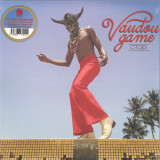
No one had been through those doors in years. Unchanged, seemingly untouched, just a Guard watching over it, one wondered whether the place would ever see the light of day again. Built in the 70s by Scotch, there were only twenty such places in the entire world. Twenty studios, all identical. Most had undergone a digital makeover in the 80s, but not this one; situated in Lomé, this studio had stayed true to its original form. Silent and uninhabited but waiting for one thing, and one thing only: for the sacred fire to be lit once again. That of the Togolese Recording Office, is studio OTODI for those in the know. Through thick layers of dust, the console was vibrating still, impatient to be turned on and spurt out the sound so unique to analog. That sound is what Peter Solo and his band Vaudou Game came to seek out.
The original vibrations of Lomé's sound, resonating within the studio space, an undercurrent pulsing within the walls, the floor, and the entire atmosphere. A presence at once electrical and mystical sourced through the amps that had never really gone cold, despite the deep sleep that they had been forced into. In taking over the studio's 3000 square feet, enough to house a full orchestra, Vaudou Game had the space necessary to conjure the spirits of voodoo, those very spirits who watch over men and nature, and with whom Peter converses every day.
For the most authentic of frequencies to fully imbibe this third album, Peter Solo entrusted the rhythmic section to a Togolese bass and drum duo, putting the groove in the expert hands of those versed in feeling and a type of musicianship that you can't learn in any school. This was also a way to put OTODI on the path of a more heavily hued funk sound, the backbone of which maintains flexibility and agility when moving over to highlife, straightens out when enhanced with frequent guest Roger Damawuzan's James Brown type screams, and softens when making the way for strings. Snaking and undulating when a chorus of Togolese women takes over, guiding it towards a slow, hypnotic trance. Up until now, Vaudou Game had maintained their connection to Togo from their base in France. This time, recording the entire album in Lomé at OTODI with local musicians, Peter Solo drew the voodoo fluid directly from the source, once again using only Togolese scales to make his guitar sing, his strings acting as channels between listeners and deities...
out of Stock
Last delivered 12 months ago available to reorder, subject to availability
Deep late 80's percussion LP created to accompany contemporary jazz-dance classes. African instrumentation meets Western Jazz arrangements and computer technology. TIP!
.
Percussions Pour La Danse was a collaboration between North American born jazz & contemporary-dance instructor Tony Kennybrew and French musician Jean-Pierre Boistel. Tony, a Washington native who had studied, taught and danced professionally since the age of 12, found himself in France in the late 80's. It's here that he linked up with like-minded musician Jean-Pierre; who had recently returned from a 6-month trip to West Africa. A trip that helped refine his craft that begun in the early 70's.
The music was created for Tony to use when teaching contemporary jazz-dance classes and to accompany live performance, allowing students to 'dance slowly, rapidly and change speeds without changing the tempo!'. This work of rhythmic research was based on the 'Balance of The Walk'; in 4 times, in 6 times, in 7 times & in 3 times. In order to reach the spatial possibilities he was striving for, Jean-Pierre would also use computer assisted programming to sample and re-play his own instrumentation. This allowed him to lay down the tempo of the track and then play live over the top, which in turn gave him the freedom to add the desired instruments and effects to each song.
Jean-Pierre's use of instruments such as the Kalimba, Talking Drum & Sanza gives the album a distinctly African feel, while contemporary Jazz-dance time signatures adds a unique perspective to these traditional instrumentations creating an ethereal balance between the old and new.
Strut Present An Exclusive New Compilation Curated By Optimo's Jd Twitch, 'kreaturen Der Nacht', Bringing Together Classics, Rarities And Oddities From Germany's Original Post-punk And Diy Scene. 1979 To 1984 Was An Era Of Particular Artistic Upheaval In Germany As Strong Subculture Scenes Formed In Many German Cities. Emphasis Was Placed On Expression Rather Than Technical Perfection, Artistic Impact Rather Than Skill. Diy Self-organisation Prevailed With The Establishment Of Small Record Labels And Independently Produced Records And Cassettes. Bands Experimented Across Genres And Consciously Abandoned The English-speaking Mainstream With German Band Names And Lyrics. 'although We Had A Small Underground
Scene, It Was Very Vibrant,' Explains Gudrun Gut Of Malaria! 'bands Like Die Haut, My Frst Band Mania D., Malaria!... We Organised Gigs Ourselves Or Friends Would Open A Gallery And
Have Bands Playing. We Hung Around Together In A Handful Of Clubs Like Risiko Or Dschungel And Went To Gigs At So36. West Germany Had Other Regional Scenes Too: Düsseldorf And
Köln Around Der Plan And The Ata Tak Label And There Was The Hamburg Side With Abwärts. Germany Didn't Have A Real Music Industry Like The Us Or England Back Then.'
This New Collection Is A Personal Selection From Jd Twitch, Built Over Years Of Playing The Tracks In Club Sets. 'it Is Not Designed To Tell A Defnitive Story Of What Was Going On In
Germany In This Era,' He Explains. 'rather, It Is Simply An Arbitrary Collection Of Records I Adore From A Specifc Era With A Specifc Attitude That Hopefully Together Sum Up Some
Of The Musical Undercurrents In Germany At That Time.'
The Package Features A Host Of Rare And Unseen Photos From The Period Along With Extensive Interviews With Artists Including Beate Bartel (mania D.), Christoph Dreher (die Haut),
Michael Hirsch (p1/e) And Thomas Voburka (weltklang). All Tracks Are Remastered By The Carvery With Artwork By Optimo's In-house Design Man Andrew Beltran.
The Afro National Band Was Formed In Freetown, Sierra Leone In 1972. Their Inspirational Leader, Sulay Abu Bakarr Accompanied By His Wife Patricia And Ayo Roy Macauley Split From The Sabanoh Jazz Band To Form Their New Group. They Skillfully Merged Highlife And Jazz Sounds With A Deep Knowledge Of West African Sounds. Growing To Become One Of The Premiere Bands To Emerge From Sierra Leone They Not Only Defined The Sound Of The Country For A Generation But Also Crafted Some Of The Country's Most Popular And Memorable Songs (for Example Sonjo Which Is Included On This Collection).
The Band Toured Extensively Throughout Africa And Europe In The 70s (working With The Giant Of Sierra Leone Music Akie Deen In The Process). Towards The End Of The 70s The Band Departed Sierra Leone, Sulay And His Wife Moving To Maryland In The Us And Other Members Moving To London.
Our Collection Focuses On Possibly Not The Best Known Songs Of The Band But The Tracks Which Have The Rhythms To Move The Dance Floor. We Open With The Foot Tapping "jokenge" And Its Driving Shuffle Beat, Swirling Organ And Percussive Guitar Lines. "push Am Forward" Takes A Afro-psychadelic Turn With Its Hypnotic Rhythms And Driving Distorted Guitar. "mr Who You Be" Is A Cover Of The Fela Kuti Track, Doing It Fine Justice. "gowa" Highlights The Vocal Prowess Of The Band, As Dose The Ever Popular "sonjo" (the Version Featured Here Is A Rare Alternate Recording).
"money Palava" Opens Up Side Two With Its Infectious Highlife Beat And Hooky Vocals. "money Nor Bataya" Highlights The Bands First Use Of Synthesizers. "mother In Law" Sweeps Up Back To Free Town 1973 With Its Clever Vocal. "set My Soul On Fire" Is A Bonus Track Which Brings In The International Flavour Of The Band.
The Afro National Band Continues In Various Guises To This Day, With Sulay And Patricia Acting As The Proud And Talismanic Figures For A Whole Generation Of Sierra Leonean Music.
15 Jahre nach seinem frühen Tod feiert - The 20th Century Records Albums (1973-1979)' Barry White als einen der größten Künstler / Songwriter / Produzenten der 70er Jahre. Er etablierte den neuen Klang der Orchesterseele, der über das Jahrzehnt und darüber hinaus zu einem Grundbestandteil wurde. Das Vinyl-Box-Set enthält alle 9 LP-Alben, die Barry White über das Label 20th Century Records veröffentlicht hat und werden hier zum ersten Mal zusammengestellt. Alle neun Alben wurden zum ersten Mal seit ihrer Veröffentlichung in den 70er Jahren von den originalen analogen Masterbändern remastert und werden hier mit ihrem originalen Sleeve und Label Art präsentiert. Die Alben wurden in den Abbey Road Studios in London auf hochwertigem 180g Vinyl geschnitten, um die höchstmögliche Audioqualität zu garantieren.
[ZZA] q4 | Oh Me, Oh My (I'm Such a Lucky Guy)
[ZZB] r1 | I Can't Leave You Alone
[ZZC] r2 | Call Me, Baby
[ZZD] r3 | How Did You Know It Was Me
To put it simply, 'True Meanings', the fourteenth Paul Weller solo album, the twenty sixth studio album of his entire career, is a record unlike any he has ever made before.
'True Meanings', is released on September 14th and is an album characterised by grandiose-yet-delicate, lush orchestration: an aesthetic to which Paul's better-than-ever voice, singing some of his most nakedly honest words, is perfectly suited. A dreamy, peaceful, pastoral set of songs to get lost in, it is both an album that a lot of his faithful audience have been wanting him to make for a long time, and an album that many new people outside of that audience will relate to.
On the 25th May this year, Paul Weller turned 60: a milestone that has unquestionably had an impact on the feel, both lyrically and musically, of 'True Meanings' which comes across being the most singer-songwriter-style album he has ever made. However, it is also the most collaborative: with more guests than any record he's been involved in before.
As well as all the members of Weller's band, Rod Argent of the Zombies provides Hammond organ on 'The Soul Searchers' and piano and Mellotron on 'White Horses'; folk legends Martin Carthy and Danny Thompson add picked guitar and double bass respectively to 'Come Along'; Little Barrie plays lead guitar on 'Old Castles'; Lucy Rose sings backup on 'Books'; and 'Movin On' is the result of a 'scratchy demo'on Paul's phone that was sent to Tom Doyle of the White Label project. Even Noel Gallagher makes a sneaky appearance.
Perhaps most surprisingly of all, especially given how personal and introspective 'True Meanings' feels, lyrics for four of the fourteen songs here were written, to Weller's melodies, by others. Connor O'Brien from Villagers came up with the words to opener 'The Soul Searchers', while 'Bowie', 'Wishing Well' and the closing 'White Horses' are all the work, lyrically, of Erland Cooper from Erland & The Carnival.
'True Meanings' was produced by Paul Weller except 'The Soul Searchers', which was co-produced by Paul and Conor O'Brien and 'Movin On' which was co-produced by Weller and White Label. The album was engineered and recorded by Charles Rees and mixed by Jan Stan Kybert.
The album was recorded in just over 3 weeks at Paul's own Black Barn Studio, with the aforementioned, revolving cast of characters dropping in for a day here and there. The orchestration was added soon after, and that was that. It is always a good sign when the recording of an album is swift, and here you can just hear that the man at the centre of these songs is as focused and inspired - more inspired, even - than he has ever been.
- Upward Bound' is a long lost, incredibly rare and very expensive classic disco era album! It combines soul, funk with and slick pop appeal into a great cocktail of grooves and melodies! This will drive you to the dancefloor and make you sing along at the same time! The lush arrangements, tight grooves and powerful soul vocals with catchy harmonies make this album an instant evergreen. I'm least surprised that the arrangements should pose a challenge to every rhythm section and that the catchy melodies instantly stick to the listener. The flashing horn arrangements are amazing! The funky bass grooves and guitar riffs weave a cocoon of sound around your soul. The sound is certainly clean but also vivid and the music feels grounded despite it's larger than life expression. The swirling backing vocals in combination with the lead singer are the icing on the cake that already consists of catchy and outstanding songs. This is more funk and soul than simple disco music. There is depth in the arrangements with awesome details as you delve deeper into each single track. You can of course groove along and just enjoy the songs as they are, but be sure to at least be on the lookout for the beautiful ornaments in each song. This music will surely move you, it makes it impossible sit still . In this album you'll find a wide range of funky music, from Slow groovers to fast paced tunes, you will get them all. Some with a deep atmosphere, some energetic, all of them memorable with arrangements that keep your attention going even with the 50th spin on your turntable. To my opinion this album is an unmissable gem of the disco era at it's peak! The original album retails at $ 400 going up, rarely a decent copy could surfaces on the market once a year. So here's a chance for you to grab an affordable copy of this well-deserved and long overdue reissue on vinyl and be enchanted!
out of Stock
Last delivered 4 years ago available to reorder, subject to availability
Hosono's solo career would take many twists and turns from this point forward, with forays into exotica, electronic, ambient, and techno, culminating in the massive success of techno pop group Yellow Magic Orchestra (YMO), who made their debut in 1978. Admired by artists ranging from Van Dyke Parks to Mac DeMarco, Hosono continues to forge ahead as he heads into his fifth decade as a musician. With the re-release of his key albums for the first time outside of Japan, his genius will be discovered by a whole new generation of fans around the world.
.
The unbelievably prolific Haruomi Hosono is one of the major architects of modern Japanese pop music. With his encyclopedic knowledge of music and boundless curiosity for new sounds, Hosono is the auteur of his own idiosyncratic musical world, putting his unmistakable stamp on hundreds of recordings as an artist, session player, songwriter and producer.
Born and raised in central Tokyo, his adolescent obsession with American pop culture informed his early forays into country music, which he would revisit later in his career. Hosono made his professional debut in 1969 as a member of Apryl Fool, whose heavy psychedelia was somewhat at odds with his influences, which leaned towards the rootsy sounds of Moby Grape and Buffalo Springfield. The latter was one of the main inspirations for his next group, Happy End, whose unique blend of West Coast sounds with Japanese lyrics proved to be highly influential over the course of three albums. After the band’s amicable break up in 1973, Hosono began his solo career with Hosono House, an intimate slice of Japanese Americana recorded inside a rented house with recording gear squeezed into its tiny bedroom.
AEVA conjures up images of our world laid to waste. Having picked up wide and varied support on his debut 12' Dramatic Sunset, AEVA returns with his Superstars EP, a trajectory marking the implosion of a star turning supernova as euphoria dovetails into paranoia. Summer draws to an end and the melancholy imprint of unfulfilled potential begins to rust as the smell of wet concrete fills the air. This is Massive Life.
German producer and DJ Boys Noize has announced the release of his much-anticipated cover version of Adamski and Seal's 1990 rave classic 'Killer' on 12 vinyl, via The Vinyl Factory and Boysnoize Records.
Featuring vocalist Steven A. Clark, the original 12 version is backed by an instrumental, both of which you can listen to below:
As Boys Noize says: 'Being a '90s kid I kind of grew up with this song which later became one of these tunes I'd play out at the end of the night. When I met Steven and heard his voice for the first time I immediately thought of that track and the idea of doing a cover version was born. It was initially just for fun but it turned banging and lit the dance floors wherever I'd drop it.'
Adamski and Seal's original represented something of a breakthrough for both the producer and vocalist, spending four weeks at the top of the UK Singles Chart in the summer of 1990.
Speaking to journalist Dave Simpson in The Guardian in 2013 Seal explains the impact the song had on his career: 'Within a week, I went from being a relative nobody - this weird guy at raves, with silver bits in my hair - to a household name.'
Boys Noize' 'Killer' is out now digitally and on 12 vinyl, limited to 500 copies.
Guapapasea! is the first album by Gecko Turner, a unique creator from southern Spain. Born and bred in Extremadura, near Portugal, Gecko has an original and tasteful Latin personality, and during the 90s he was responsible for some locally quite successful bands like Perroflauta, and The Reverendoes.
Acclaimed by Spanish critics as the best debut album upon its original release in 2003, Guapapasea! is a musical journey blurring the boundaries in Latin music. It's a nice blend of different styles - from soul and Brazilian-flavoured songs like the free and easy (and all-time underground hit) "Un Limón en La Cabeza"; Afrobeat-driven tracks like "45.000$ (Guapa Pasea)"; and the flamenco-reggae of his rendition of Bob Marley's "Rainbow Country", to the infectious Latin rhythms of "Did You Black Up Today"; Monk tribute "Monka Mongas"; the original adaptation of Bob Dylan's "Subterranean Homesick Blues"; and the radio-friendly, straightforward reggae track "Te Estás Equivocando".
Guapapasea! features contributions by some of the greatest musicians active at the time on the Spanish Afro-Cuban jazz scene, such as Rubem Dantas (Paco de Lucía's percussionist and regular member of Chick Corea's band), Rodney Dássiff, and Brazilian trumpeter Irapoam Freire. The album was licensed to Quango in the US.
It's been 15 years since its original release, and to celebrate this, Lovemonk's reissuing the album on double 12" vinyl for the first time, alongside Gecko's second album, Chandalismo Ilustrado, and the CD compilation Soniquete: The Sensational Sound Of Gecko Turner. The CD version features bonus remixes by Quantic, Mexican Institute Of Sound and Watch TV.
- Spectral Decay' is a collection of musical reflections about the paradoxical contemporary state of humankind, whereas its own technological, social, cultural and economical development seems to entrench the possible points of a structura downfall. The narrative of - Spectral Decay' starts with heavy, mesmerizing industrial vibes. Due to the notable sound design techniques of Japanese artist Tetsumasa, his hefty piece - Nex' evolves into a harsh but still amazingly cinematical music sculpture.
Subsequent mid-tempo composition - Onzour Shayatini' by Meer dynamically follows the dark, experimental path of drone and noisy structures. Violent accents smoothly lead to the deconstruction of drum & bass patterns and turn into strident 90s metal riffs. The track progressively penetrates obscure subterranean abysses and becomes a perfect introduction to the next theme by Yuji Kondo - - Hades'. In Greek mythology Hades was the ancient god of the underground kingdoms, darkness, death and metals. Therefore, Kondo's music piece turns into an infernal portrayal of the underworld where tenebrous layers of bass frequencies, raw textures and Drexciyan sounds build up an enormous and lasting tension.
Side B begins with the track - Anthropocene' produced by Arboretum co-founder - Mogano. The whole composition refers to the present geological epoch we live in, characterized by environmental pollutions, depletion of fossil fuels and accelerated urbaniza- tion of the world. It is a deeply conceptual soundscape of a powerful system, that incorporates both - the destructive forces of technology and the infinite energy of the whole universe, that interweave in a devilish dance of post-techno, breakbeat and dub tones.
Thereafter, ~Raw in his piece - Poly Bios' pictures the interference of human structures in the nature. Creating a mosaic from indus- trial and tribal, organic sounds, he tells a mystical story of fear, hope, escape and primeval instincts.
The narration concludes with an atmospheric composition of NWRMNTC - solo project of Ana Quiroga from experimental ambient duet LCC. - Beyond' is a boundless, spectral reflection on collective human consciousness, where haunting vocals evoke a recon- dite, ineffable pain, leaving the listeners in a profoundly meditative state.
Laura Polan´ska
The Suedehead Sound Of The Early 70's Followed The Skinhead Style Of The 1968-70 Period.
The Notable Difference Could Be Seen And Heard, The Sharp Jerky Upbeat Rhythms Were Slowing Down A Notch To What We Soon Be Calling That Early Reggae Sound.
The Tougher Harder Look Of The Rude Boy/skinhead Style Was Relaxing A Little To Almost Meet With The Less Frantic Rhythms To A More Slowed Down Groove Like Sound. The Hair Got A Little Longer, Going From A Mark 1 To A Feather Cut Style..
The 'rude Boy Out Of Jail' Type Lyrics Were Becoming More Conscientious, This Was Another Twist And Turn In The Ever Evolving Sound Of Jamaican Music,
But What Is Sure The Artists And Producers Never Disappointed Us In This Period , So Here Is A Compilation Of Some Tunes That The Suedehead Crowd Were Grooving To....
Hope You Enjoy The Set....
Moritz Simon Geist, media artist and robotic musician, publishes his first record. It is the world's first techno record played entirely by self-made futuristic robots. This is the 4-track EP to the following full-length album out 16. Nov. 2018. All of the sounds on his records are played by robots: small motors that beat on metal, futuristic 3D-printed robo-kalimbas, salvaged parts from old hard drives that click and cut. It took Geist several years to build, tweak, test and play all his DIY robotic instruments. His 'Sonic Robots' try to push the boundaries of the imaginable. He did so already in 2012 with his well-known oversized 808 robot - an iconic drum machine gotten real, 4 by 2 meter, filled with robotic parts which play the instruments live and in front of the audience. Now, Moritz Simon Geist goes even further to discover the unknown and futuristic world of techno robotics. For this quest he teamed up with the berlinian sound wizards from Mouse On Mars and dug deep in the history of mechanical music and experiments of early electronic music.
On the 4-track EP 'The Material Turn' Moritz Simon Geist turns materials into sounds. The opener 'Entropy' is a bassy club-track, played by futuristic bass-kalimbas, a psychedelic pattern of tonal glasses and pneumatic hi-hat patterns. It is core piece to this EP and is also featured in the main video. Even without a visual part, listening to his music, a sound world opens up which is unheard before: in definition, reference and organic nature. Geist: 'When you listen to robots playing, you realize, that they sound precise, but in contrast to digital sounds they transport an immense organic feeling. No beat is like the other, everything is played with actual acoustic physicality and thus actual error. On the same time, the repetitive nature of the robots make it perfect for playing electronic music. Its industrial and organic at the same time.' The second track 'Under Deconstruction' is a metal-on-metal slammer with a heavy beat played on a big sheets of metal. 'I often try to compose a track around one instrument', explains Geist, 'letting the sounds take a lot of room so they can stand out.' The B-side starts with 'Supercharged' - a heavy drone, reminding of the darked sides of music concrete. Here, tuned air fans, and a metallic percussion robot create the texture. 'Detok' closed the EP with an up-tempo club track, featuring complex rhythmic textures and well defined robotic percussion elements. What Moritz Simon Geist came up with is a stunning record of what is possible today - to explore the sound of mechanics that keep on filling our world. Geist creates a smashing soundtrack for both the precise automation and physical fragility that shapes today's society.
Confunktion Records own Mr. Confuse returns with his fifth studio album 'Only A Man'.
This album is about the depths of Mr. Confuse and therefore a very personal album in a way. From well-known soul topics of love and hate to social issues of modern life - this album is all about an odyssey through time, rhythm and music.
Times of big studio personals are long gone so a big part of creating this album was the imagination what kind of instruments, musicians and sound design is wanted. With up to 16 international musicians, Mr. Confuse created incredible sounding big arrangements.
The way Mr. Confuse produces his music is inspired by growing up with the 90s hip hop producer technique of creating something new by referring unheard funk and soul. This from of appreciating 60s and 70s music in order to bring it on a new level of musical expression is a clear trademark of Mr. Confuse.
The process of sampling and resampling recorded musicians creates an organic, powerful, authentic and danceable funk sound, which can be heard in each and every second on this record.
Twisting electro funk from the 80s into heavy 60s and 70s funk that could have been the blue print for the original version became a true Mr. Confuse feature already years ago. This time he re-funked the well-known freestyle electro classic 'Let The Music Play' by Shannon.
Also one of the reasons it's entitled 'Only A Man' is because it means composing, producing, arranging, mixing, recording, organising, promoting and going abroad preforming by just one 'man'.
Pyramids. Jagged Teeth Pushing Through Immaculate Skies. The Ever-changing Light. The Expansive Sense Of Freedom. The Wide Open Spaces. The Textured Landscape Seen From Above. Mountains. Watchful And Immobile For Thousands Of Years, Weathering Seasons, Transcending Change.
It's December 2016. I've Left The London Madness To Hit The Reset Button And Compose New Music In A Tiny Village In The Swiss Alps. I'm Over 10,000 Feet High, It's Minus 15 Degrees And The Snow Is Scintillating Under A Rich Blue Sky. I Turn Around And Suddenly This Gigantic Pyramid-shaped Peak Is Towering Over Me, Staring Me In The Face. Mind Blown. Senses Overwhelmed. Perspective. Lightbulb Moment. I Have My Album Concept.
I Wanted To Put Into Sound My Cathartic Experiences Of The Mountains. Every Track Title Was Chosen Before Composing. The Title Would Be A Catalyst For Visual Memories, Narrative And Overall Vibes. I Continued Developing The Tracks On Occasional Trips To Switzerland, But Mainly Back In The Gritty Habitat Of London's Hackney Wick. The Urban-nature Contrast Had An Impact On The Music Too.
I Use A Lot Of Found Sound, Stuff I Have Collected Over The Years, And A Lot Of Resampled Guitar Sounds And Textures. I Love Imperfections In Sound. Detuned Synths. Distortions And Glitches. Rhythmic Flutters And Percussive Frenzy. 'manual' Cut-ups. I Love Moving To House And Disco And Getting Lost In The More Melodic Side Of Techno. I Love Polyrhythms And Melodic Counterpoints. I Love The Energy And Rawness Of A Live Rock Band. I Channel All This To Create My Own Sonic Palette.
Artwork By Jimmy Turrell, Graphic Artist And Video Director Who Combines A Love Of Handmade Collage, Drawing, Screen Printing And Painting Alongside Digital Techniques. He Has Worked For Universal Music, Nike, Lexus, Levis, Mtv, The New Yorker, Intro, Capitol Records, The New York Times, Green Peace, Beck, The Prodigy/xl Recordings, Channel 4, The Guardian, Gq, The Times, La Times, Newsweek, Getty Images, Adidas, Sony Music, New York Magazine, Wired, Glastonbury Festival, And Vanity Fair Amongst Others.
The Debut Album 'pyramids' Comes Out Worldwide On Limited Double, Green Vinyl (including Download Code).
Auch Auf Seinem Zweiten Album "dark All Day" Überzeugt Das Synth-pop-trio Gunship Mit 1980er Retro-sound Aus Analogen Synths, Cineastischen Vocals Und Cyperpunk-attitüde. Und Genau Wie Beim Selbstbetitelten Debütalbum Aus 2015 Übernehmen Diverse Persönlichkeiten Sprech- Und Gesangsparts, Darunter Schauspieler Wil Wheaton (the Big Bang Theory, Star Trek, Stand By Me), Celebrity-model Kat Von D Sowie Der Tina Turner- Und "the Lost Boys"-saxofonist Timmy Capello. Die Doppel-lp Wurde Audiophil Auf Halber Geschwindigkeit Gemastert Und Läuft Auf 45rpm.
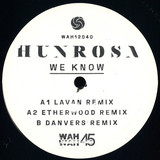
As bottom end provider for Cinematic Orchestra and Paper Tiger, Hunrosa (AKA Sam Vicary) already has something of a pedigree for a man of such tender years. His music glides effortlessly between Bonobo at his most sonorous, Jon Hopkins at his most ethereal and Flying Lotus at his most freaky. Currently based in Manchester, his music captures the wild organic senses of his Cornish childhood, anchoring it with a darker 2am undercurrent. Following the success of 'Ransom' (a firm favourite of BBC 6 Music's Tom Ravenscroft) Hunrosa returns with his newest offering 'We Know'. An eerie, ethereal track full of haunting atmospheres, Vicary enlists Austrian percussion maestro Manu
Delago, who lends his hang drum expertise to the proceedings weaving it amongst the twisting, intricate beats and Anna McLuckie's delicate vocals. the original is accompanied by a white label 12' containing three reworkings from burgeoning producers Lavan, Etherwood and Danvers. Newcomer Lavan is up first, moulding the organic melodies and earthy percussion into a dubbed out, soulful and bouncy 4/4 number. Hospital Records golden boy Etherwood (whose band Hunrosa is also a member of) brings a late-night liquid DnB atmosphere into play, harnessing the raw emotional power of the lyrics, as reverberating piano chords strike out into the darkness. Having turned the
heads of Bradley Zero and Gilles Peterson with his recent releases, CoOp and WotNot Music's Danvers resets the atmosphere with a zen like extended intro, before launching headfirst into a hypnotic and enthralling looped rhythm section. The groove locked in place, it rises and falls with precision, joined by spaced-out synths throughout the nine-minute duration, allowing the majestic instrumentation to gather pace as the spine chilling vocals drift overhead.
This is a long overdue collaboration and we couldn't be more excited to present a brand new EP from our man, Jena's mad scientist funk freak himself, Metaboman. A stalwart veteran of the legendary Musik Krause camp, which has been a kindred spiritual sister label of sorts of ours since the millennium-turn heydays, being fellow purveyors of bold and raw dance floor music, still brimming with new ideas galore and bucket loads of soul. Here with the Wireless Dancer EP we have Metaboman in top form offering nothing less than his finest work: 'Doppeldenk' starts things off with some classic Krause bump that brings to mind the heights of the Duo at their peak but updated, like an STL banger turned up to 11 with sinewy melodic lines and that special Thuringen twist. 'Hanno' follows up with a guest spot by jazz saxophone master Thomas Prestin, and guarantees to bring down the house with a storm of swinging stabs, rough riffs, and fresh-as-it-gets drum work. On the flip, 'Splitit' does exactly that, whether referring to wigs, legs, or that last drink ticket - where dusty blues vox chops and a rolling percussive smack down will revive any fading floor faces. And finally, 'EchterG' rounds it all out nicely with the illest of atonal trips and subsonic bass tones that the finer sound systems out there will fully indulge. Much love from Jena & Paris to the World!
out of Stock
Last delivered 4 years ago available to reorder, subject to availability
After a string of acclaimed EPs on Heist, Dirt Crew and Quartet Series, Amsterdam's Nachtbraker presents 'When You Find a Stranger in the Alps', his first longplayer on his own Quartet Series imprint. The good-humoured Dutchman - tongue always firmly in cheek - has always refused to stick to the 'sound du jour' and the industry's conventions, following his own path instead, continually willing to step out of his comfort zone. 'When You Find a Stranger in the Alps', a nod to his favourite Coen Brothers' movie, is testament to Nachtbraker's studio prowess and drive to explore new sonic pastures and styles. The album consists of thirteen tracks, made over the course of 2,5 years in his studio at Volkshotel Amsterdam. Constantly shifting through different settings and moods, the album feels like a deep dream, with vivid details, blurry edges and a warped sense of time. The word 'stranger' in the title references to this dream state in which you sometimes can be a stranger to yourself. Album opener 'The Dream Sequence' sets the mood with a lo-slung hip-house groove that relies heavily on field recordings, like the sound of one of the capital's trams. 'Flambo', a delectable slice of up-tempo French filtered house, is aimed straight at the dance floor. Nachtbraker dims the lights on 'NSFW', cleverly manipulating samples from adult oriented flicks, and turns in a hilarious skit with 'LOL'. Flip over for 'Randy', a quintessential Nac
out of Stock
Last delivered 6 years ago available to reorder, subject to availability
After more than a decade of deep, expansive productions on labels such as Detroit Underground and CPU, Annie Hall arrives on MUSAR for a record typically rich in texture and understated grooves.
Opening track 'Linium' immediately seduces listeners with a complex drum pattern that somehow feels spacious, subtly twisting and turning its way around Hall's analogue world. Dutch artist Mattheis maintains this understated feel but adds a soft, compelling kick in response on his suspenseful remix of 'Lavandula'. The original, moodier version of this cut the follows to open the B side, gradually erupting around a killer distorted bassline. The EP continues to hit a more urgent note with the tense machinations of 'Silene', where dense layers of stuttering, frenetic drums interweave with Hall's trademark, melancholy keys. The record concludes on a weightless, transcendent note with 'Santolina', taking each visceral element featured thus far and slowing each down, with affecting results.
Indebted to vintage electro and IDM, Hall's music is no throwback, always looking forward and moving dancefloors in the most unexpected ways.
DJ FEEDBACK
Early support from
Michael Mayer (Kompakt) : Nice vibes from Mattheis... will play for sure!
James Zabiela (Born Electric) : Linium is a nice one, thanks.
Arnaud Le Texier (Cocoon / Chronicle) : Nice music. Thx!
Marcel Dettmann (Ostgut Ton/MDR) : Thx!
Carl Craig (Planet E) : Thx!
Gonno (Beats In Space Records / Endless Flight) : I like Mattheis' :)
Thomas Hessler (Index Marcel Fengler) : Nice one! Thank you!
Tom Lye (Melodic Distraction - Liverpool) : Big fan of the whole EP. Strong, building electro with different moods. Essential!
Afrodeutsche (NTS / LuckyMe / Skam) : Glitchy melodica... Right up my Strasse...
DJ Shiva / Noncompliant (Valence / Detroit Underground) : Stellar music here. Moving beyond "DJ music", this is just really fantastic to listen to in headphones. Gorgeous stuff.
Lonya (Asymmetric Recordings) : Great stuff here!
Nori (Posivision) : Cool work.
Cinnaman (Rush Hour / Naked Naked) : Lavandula and Santolina are my favorites! thanks
Dj Windows XP (E-Beamz) : Dope E.P. Will play Lavandula.
Ambivalent/LA-4A (Delft/Cocoon/Ovum) I'm a huge fan of Annie Hall and Mattheis!!! This is a FANTASTIC release!! One of my favorites of recent months just on first listen!!
Benoit C (Tsugi) : Linium for me
Ian Blevins (ESP Institute / Sulk Magic) : Linium and another bit of top work from Mattheis. Santolina is pushing my buttons too. Aphexy vibes.
Joe Europe (Ransom Note) : Very nice!
Azterisco: Very interesting record. Nice remix!
Oded Peled : What a fantastic release! Was hard to choose a favourite between Linium and the Mattheis Remix of Lavandula. Both will come in handy in my sets. ....Thanx a lot and keep em coming.
Naduve (Cocktail d'Amore / Disco Halal) : Both A1 and A2 are great!..Thanks.
Anastasia Kristensen (Nous) : I dig this a lot, it's a crazy well produced record.
Demia E.Clash (Darknet) : Such a good ep-.i love them all,quality production yess.
Pedro Martins (Karakter Records) : Nice EP overall. Linium, Silene, and Santolina are my favorites. Thank you so much!
Xinobi (Discotexas) : Great record. I'm specially enchanted by the original version o Lavandula. Congratulations.
Scan Mode (DJ Mag Spain) : Lavandula in both mixes for me
John Osborn (TANSTAAFL) : Can't pick a fav. it is all Devine. thank you.
Madloch (Sound Avenue) : Nice EP, Linium & Lavandula original are my favs, thanks.
DVS NME (Transient Force) : The standout track is Lavandula.
out of Stock
Last delivered 5 years ago available to reorder, subject to availability
Depth.Request sees a new hat being thrown into the techno ring. The hat in question is the label's first EP Anvil—a post-tech five-tracker, and the person throwing it is Blasted—an Italian producer with a number of solid EPs to his name. Having had previously shared release credits with him on a number of occasions, Berlin's renowned noisemaker Unhuman fits into the picture as well, being the one charged with remixing duties regarding the titular track.
Setting common tact aside for a moment, the opener showcases Blasted indulging in esoteric inclinations by the means of concentrating on slick, abrasive sound design, cutting the number of kicks in half and utilizing a vocal sample to add a pinch of EBM into the mix. Unhuman's slowed-down rework in turn evokes gears' incessant grind at the backdrop of steam pressurizers going up and down in alteration, producing arrays of heavily plodding, whamming kicks. Breaking free of esoterism and leftfield production, the EP continues with Jawbreaker—a peak-time affair wherein the lows are ravaged by constant sub-bass pressure and ruthlessly striking, syncopated kicks, laid under the neatly-synthesized, impenetrable hats, pertaining to Blasted's signature sound. On Filthy Goat, the assault continues with a renewed strength as anxious synths and panning hats gradually invade the scene shortly before the devastating kicks storm down in a hail of obliterating projectiles, creating a battlefield-evocative environment within this decimating, explosive stomper. Lastly, demonic closer Belial bids its fair digital-only-money's worth of adieu with magnificent ambiance interwoven within the spectrum alongside meticulously arranged drumwork presented through plethora of varied, carefully picked samples.
Tropical Disco Records are back with their fifth release of the year, bringing you four killer edits from the Tropical Disco Volt.
Moodena introduces Volume 5 in fine style, mustering another spellbinding composition with Gil's Groove. Sounding as swagged out as ever, it's evident form & flair comes naturally to the artist.
TD comrades Moodena & Sartorial present their first collaboration on Turn It Up, neatly entwining their distinct styles, rolling basslines, cascading guitars and sultry Sax. The result is a piece of pure energy - it's hard not to do exactly what the track tells you.
The disco wizard, Sartorial continues his ever growing solo output with 6 million, a righteous slab of soulful dance music that can make a dancefloor bang, as well as weep.
Feel The Heat rolls effortlessly with a lush vocal that melts the loins and lays out a sonic smorgasboard of what epitomises Tropical Disco Records - soul!
out of Stock
Last delivered 14 months ago available to reorder, subject to availability
For the next installment on Darko Esser's Balans imprint the Dutch producer Tetelepta brings his slick, laidback tech house vibe to the label with 'Waiting For The Flash' EP. 'Waiting' opens the EP gently with a crisp, hypnotic groove and half way it turns into a beast of a tune sure to move any dancefloor. On the flipside 'Flash' opts for a more tribal sound, with a dreamlike, slow burning melody that builds up to a trippy frenetic rhythm.
Sleep D and Turner Street Sound split sides on one record to merge classic dub rhythms with a modern outlook. Kicking the spicy seven inch off, Sleep D melt ambient soundscapes, zonked out sound effects and spiritual percussion into a locked dub-house groove fit for the club and lounge. On the flip, Turner Street Sound (the duo made up of Rings Around Saturn and Midnight Tenderness) open their aural arsenal up to live instrumentation and inward dub excavations to produce the poisoness 'Redback Dub' huge bottom end and a instantly classic feel no doubt!
The 3 release. 3 artists. 3 solid tracks.
Rex Hansson has made a solid original version. You clearly hear his skills as a past percussionist. The beats together with Skånska vocals, Low key Rhodes and some 303 knob twiddling make this track special and great.
Emil Nyman. This mix is something. It's tossing and turning from a metallic sound to the softest wood. From the deepest parts of the ocean we follow the pads and organ up in the sky.
The b side is dedicated Clark Eng. A minimal offbeat version with low toms and rattling high sticks, claps and snares. The track is moving like a Newcomen engine. The minor changes all the time makes it to a hypnotic minimal house track.
Lucrecia Dalt's Anticlines is a volume of bodily and geological substrates within poetic theory and sound. It is a place where skins and minerals dissolve and commingle, where gaseous subterranean leaks inflate lungs, where brain cavities echo interplanetary waves bent from passing through atmospheres.
A former geotechnical engineer from Colombia currently residing in Berlin, Dalt's concern with boundaries and edges shape the lyrics and music of Anticlines, her sixth album. Paying careful attention to pace, breath, and texture, Dalt microtonally shifts the distance between speech and song while using traditional South American rhythms to support her contemporary electronic composition.
Lucrecia arrived at the atmosphere of Anticlines after several months of studying and creating new patches for the Clavia Nord Modular, forming a rhythmic feedback flow with it, a Moogerfooger MuRF, and her voice. The overall effect of cavernous space backdroping Dalt's intimate vocal phrasing rewards contemplation, supported in the physical formats of Anticlines by a lyric booklet documenting Lucrecia's collaboration with Australian artist Henry Andersen.
The album opens with Edge,' bordering on a pathological circlusion of self upon other. The lyrics depart from the Colombian myth of El Boraro, an Amazonian monster who turns its victims insides to pulp before sucking them dry and inflating their bodies like balloons to lifelessly float away. Tar' ponders human dependence on earth at the boundary of the heliopause, where to inhale might be like breathing tar. Dalt's distant and obscured vocals end with, we touched only as atmospheres touch.'
The sonic rise and fall of Analogue Mountains' is inspired by martian traces found in Antarctica embedded by meteorite ALH84001, suggesting that we might well be living in mountains transferred from Mars.' The steadily winding music on Concentric Nothings' descends with the lyrical exercise of dissolution let my touch be indistinct and instinctive.'
Interspersed with the lyrical pieces of Anticlines are instrumental interstitials that demonstrate preceding concepts — as if to say, this is what antiforms sound like, and this is what the universe's indifference sounds like.' Dalt's ongoing experiments with visual artist Regina de Miguel support these ideas, their practice allowing the objects of their attention to slip in and out of being.
Mystic of matter, Lucrecia Dalt has previously performed and worked with Julia Holter and Gudrun Gut, her slippery spoken word and performative nature recalling the work of Laurie Anderson, Robert Ashley, Asmus Tietchens, or Lena Platonos. While touching stones, The Thing by Dylan Trigg, Cascade Experiment by Alice Fulton, and Wretched of the Screen by Hito Steyerl are but a few formative scripts that support Dalt's exploration of the betwixt and between.
In preparing a live set for Anticlines, Dalt plans to stage an uninterrupted configuration, like a kind of alienated lecture, aiming for gestures that create tensions with non-existent objects.' Dalt intends to provide meaning and a place for the listener to meditate or relate to the concerns and ideas' she presents.
- Lucrecia Dalt is a Colombian recording artist, songwriter, and producer.
- After studying civil engineering in Colombia, Dalt worked at a geo-technical company for two years and has since lived in Barcelona and Berlin, where she currently resides.
- She has released five solo albums and has collaborated with musicians Julia Holter, Laurel Halo and Rashad Becker, to name a few.
- Dalt has composed for sound design installations and performance pieces for institutions such as the Santa Monica Art Centre, Reina Sofia Museum and the Maisterravalbuena gallery of Madrid, in collaboration with visual artist Regina de Miguel.
- Anticlines is Dalt's sixth solo record, and her first on RVNG Intl., following the release of 2015's Ou.
- Anticlines explores the boundaries and limitations of human consciousness. The album's poetic lyrics were written collaboratively between Dalt and Henry Andersen during a weekend in Brussels, Belgium.
Next up on Nang it is time for a slice of spot-on male vocal house and disco. Liverpool based Thomas Lang made some fine albums in the 80s and 90s with John Murphy (who went on to carve a highly successful career in movie tracks) and David Hughes. Somewhere in between that and a string of recent albums (Torch Songs and The German Alphabet) he also managed to buy one of the finest recording studios in North West England, Parr Street Studios (the "Abbey Road of the North").
We are pleased here at Nang to see a new avenue turned in Tom's life, his first foray into the dance world. "Scared" was written with late Liverpool songwriter John Uriel quite some time ago. It first emerged as a b-side to Tom's comeback single "August Day" in 2011. Here at Nang we always loved the smooth and sophisticated vocal and melody. When Tom suggested some remixes we were on board.
"Scared" is a peak time vocal house track, here presented with remix options.
The a-side sees fellow Liverpool DJ crew The Imposters taking the track on a dubbed out trip, before flipping over for their hypnotic, swing-house rework which highlight the layered vocals and smooth sax. Camanchi take us for some peak time House action.
At first, it's difficult to pinpoint exactly what makes Our Girl so special, or why the Brighton-formed, London-based trio's music stands out within a busy crowd of fellow guitar-wielding-types. But if an explanation didn't jump out when they first emerged with a debut EP of mighty fuzz-soaked songs in November 2016, it surfaces with 'Stranger Today', a debut album of personal, emotional juggernauts that could have only been made by these three people: Guitarist / vocalist Soph Nathan, bassist Josh Tyler and drummer Lauren Wilson.
Since forming in Nathan and Tyler's Brighton home four years ago - Wilson joining as a late recruit when she was wowed by a demo of their self-titled debut track, and 'Stranger Today''s opener - Our Girl's members have only had pockets of time to work together. A day booked in a local studio here, a soundcheck there, full-time jobs and other projects meant the three rarely had a concentrated, collective patch. This changed in September 2017, when they stayed in Eve Studios in Stockport for a week, recording with Bill Ryder-Jones. Their week in Stockport became a crucial catalyst for what would follow. Ryder-Jones is a guitar virtuoso himself ('He did stuff neither me or Soph had ever seen anyone do before,' Tyler remarks), and he became an unofficial fourth member of the group.
'Stranger Today' is a special debut for several reasons: First, because it's the sound of a band beginning to grasp their own value and place in the world. Secondly, because you can hear the trio's hunger to finally get in the same room and put to tape years' worth of scrapbooks, half-finished ideas, and a slowly-forming feel for how their first album would actually sound. 'What band isn't itching to make their debut But it's quite frightening, knowing you're about to do it,' Wilson remembers.
The real clincher, however, is Our Girl's dynamic, and how it plays out across 'Stranger Today'. Best friends in person, the trio share the same close kinship and chemistry on record. On one side is Nathan's visceral lyricism, which has a habit of detailing and chipping away at precise moments; the first heart-flutter of a new crush; the moment a long-term friendship begins to ebb away. Around her, Tyler and Wilson's rhythm section carefully mirrors each feeling Nathan conveys. When she sings pointedly about love ('I Really Like It'), she's backed by a major-key afterglow. When the subject turns on its head ('Josephine'), out steps a wall of taut, earth-shaking noise. They each 'serve the song,' in Wilson's words, moving in sync but with their own personal slant. Not least on the closer 'Boring', where all restraint is thrown aside and the trio let out one final, violent thrash. They inhabit a space bigger than the first loves, sleepless nights and growing pains that define this record.
Nathan remembers being in Brighton four years ago, shortly after Our Girl formed, and realising, 'I was finally in the band I wanted to be in.' Almost half a decade later, and this eureka moment is sewn up on 'Stranger Today'. It's the sound of three friends totally at ease in their own space, discontent with being anywhere else; a vibrant document of what it's like to be young, invigorated and amongst people who feel the same.
The heavenly 'Skywards' leads the way upwards with tenderly treated spacious drum programming and light-as-air atmospherics while darker and deeper cavernous tones create the yin-yang balance of lightness and dark. 'Broken Spell' continues the uplifted vibe of a spell that when broken, blooms open with an intoxicating permeating sweetness like an exotic fragrance that lingers in one's memory. 'A New Day' leans slightly more towards a heavier driven track featuring a funky bassline with bright electronic notations as counterpoint while drifting, dreamy pads keep the overall mood airy and light. The off-kilter knob is turned way right on the bouncy final track 'Disjointed Route', injecting dashes of wry quirk alongside a lightly moving groove.
Bergsonist is the moniker of Moroccon born and NYC based Selwa Abd. 'Solyaris' follows the self-released '' and a prolific slew of releases for labels such as Styles upon Styles, Borft, and Angoisse amongst others. For Selwa her uncompromising & otherworldly, hypno technoid creations aim to capture a given moment in time, contextualising her often direct, hugely affective, & unpolished approach to production.
Selwa describes 'Solyaris' as 'an ode to the present broken education system that allowed me to sustain my dreams in NewYork', explaining, 'As an immigrant from Morrocco, I felt always fearful of the future, pressured to succeed at school. The only way I was able to channel all that anxiety was through music'.
There's a undeniable physicality to Bergsonist's work, and the idea of expunging anxiousness into her music is felt from the oft as 'Solyaris' strides into vision with it's quickening roaring pulse and scrambled explorative electronic probes. This sense of anxiety eases as layers of rhythm build - heads begin to turn down and lush minimalist swathes eventually envelope bodies in calm unity, Anxiety diverted.
'Conflict in Yeman' opens with a gambit of off-kilter percussive experiments & electronics, conveying a sense of determined urgency. Things grow more & more intricate & immediate as we progress - layers of disruption weave around a reoccurring 140BPM shuffle, anchoring Selwa's constant explorative concrete diversions.
'Former Alien who has been naturalized by a U.S Citizen' brings things down a notch - skittering drums linger below a truly haunting whispered melody, occasionally broken down by collapsed rewinds and thunderously raw in the red beat grit - to dizzying effect. Whereas previously 'Solyaris' had taken its cues from Drexciyan Detroit Electro 'Former Alien...' stands closer to a Fantastic Damage era EL-P instrumental rather than anything aimed at the floor.
The EP rolls out with 'Fidel Gastro', a structured & focused piece of Machine Funk & end of days drop cues, conjuring an effective mix of both euphoria & imminent dread.
Bergsonist cuts a unique figure for electronic music in 2018 as someone explicitly exploring the relationship between head & body music. Although undeniably more than oft aimed at the dancefloor, Selwa's work also holds an equal respect and understanding of the head & heart. From her politically loaded Track titles, to her ideologically aligned guise of 'Bergsonist', to most significantly - her music's ability to elicit a spectrum of finely tuned emotional responses within the confines of each track
The music on this EP was conceived in China, between 1989 and 1993. The original tracks were mixed to DAT in real time, in a small neighbour-proof studio inside my apartment in Macau, a 19th floor with a view to the hurricanes. There's a small, unexpected or improbable story behind each track, some little magic fused with the local atmosphere, certainly guaranteeing their lasting authenticity 25 years later.
TAIPEI DISCO
Late 80s Guangzhou was an exotic city where the traditional past coexisted in harmony with the present and even already with the future.
I'd rather spend my weekends in Guangzhou than diving into Hong Kong consumerism - as most ex-pats in Macau did. I took a cab at the border and travelled 150 Km through chaotic roads with family and friends until reaching the hot, humid, mega South China metropolis.
We ate on street joints in the evenings, went on to a karaoke bar and ended up at Taipei Disco, the only proper club in town. All the others were inside hotels and played generic music or they were seedy, sleazy, smoky cabarets.
Taipei Disco used to be a cinema and played cantonese pop music and anglo-saxon pop/rock (that was new). The spacious dance floor was generously lighted, the atmosphere was airy and modern. Boys and girls were in the habit of dancing in pairs, one in front of the other, observing a respectful yet sensual distance. When the girl took a few steps back, the boy went along and vice versa. With legs and feet (more than the upper bodies) synchronized with the music, they never exceeded in extroversion. Cool.
I always carried a MicroComposer and a portable DAT recorder in my travels through China and weekends in Canton. Any spontaneous musical idea was imediately recorded and memorized. The MicroComposer allowed multitrack recording, which was very handy on the road. Based on the emphatic choreography of Taipei Disco's dancers, i started to compose a rhythm track while sitting at a table, with headphones, listening to Cantopop in the background. As if by magic - not a rare occasion in music - everything began fitting together. Odd as it may seem, the track ended up sounding more germanic (Kraftwerkian) than Cantonese pop.
The story ends in a circle: the cantonese DJ at Taipei Disco, whom i used to ask to play certain records, wanted to play my music at the disco when it was basically only just a rhythm track and little else. From a cupboard under his set up he took out a battered keyboard (unrecognizable brand) and invited me to play over the track with the available sounds on the keyboard. The circle was complete, with Cantonese clubbers happily dancing forwards and backwards, as if it were another Cantopop hit.
I didn't get payed but the house offered us free ice cream cups in which little Portuguese flags were sticked.
The track would be finished later, in studio, with vocoder strings ensemble and synth solos.
TAIPEI DISCO (LIVE)
The live version of 'Taipei Disco' was recorded during a live set at the China Pop venue, in Macau, 1993. China Pop was a rock club built in the ample space of an old fishing warehouse, located in the labyrinthic Inner Harbour area. It was decorated with large Mao Zedong and Cultural Revolution posters and memorabilia and had a unique atmosphere, fusing Pop Art with film noir. We began our performance at 1AM, pretty early for Macau's nightlife standards. We were lucky. An audience showed up. And in Macau there were always several friends among the audience, which tranformed a musical performance into a relaxed party.
The atmosphere was particularly surreal on that night. The front row was dominated by French Crazy Horse dancers, a sort of Oriental Moulin Rouge. The girls had finished their last performance of the evening at the Crazy Horse and were still energized from their show. During our performance, right in front of us and perfectly synched, we could hear the famous irreverent screams of can-can dancers. You always had to expect the unexpected in Macau.
RED MAMBO (IMPROMPTU)
I was familiar with the Portuguese-speaking African countries well before having lived in China. I found myself returning several times to one in particular, always attracted by its magic and very distinct, identitary culture and music: Cape Verde.
During the early years of DWART a lot of the inspiration for drum machine rhythms (Roland's TR series) came from African music, especially from new musical trends that gained full autonomy with Cape Verde's independence from Portugal, as was the case with funaná.
I had the privilege of having known and befriended some of the greatest Capeverdian composers, musicians and singers during the 70s and 80s, such as Bana, Luís Morais, Cesária Évora, Paulino Vieira, Chico Serra, Tito Paris, and historical bands such as Bulimundo (ambassadors of funaná) and Os Tubarões (great innovators of morna, coladera and funaná, with the sonic impact of an afro-beat big band).
When Luís Filipe de Barros began playing Os Tubarões for the first time on Portuguese radio, that was the turning point for African music in Portugal. The 'Tabanca' album was so widely heard and talked about that it quickly got a Portuguese release through one of the big labels of the time.
The mystic of this band from the Santiago Island would reach the East. Os Tubarões played to a packed room in Macau in 1992, and after the bombastic gig we arranged a dinner and party at my place.
We ate and drank generously and the moment came for a jam session at the small studio on the 19th floor. Because Os Tubarões didn't all fit in the studio, we recorded an impromptu with only three of the musicians: Tótó Silva (electric guitar), Mário Russo Bettencourt (bass) and Zeca Couto (piano). And there we were improvising without barriers, suddenly detached from cultural roots, labels and constraints, a truly unique moment. The track is now being released exactly as it was recorded, imbued with the real communion between the musicians. And it could only be titled 'Red Mambo'. I wish to dedicate it to the memory of Ildo Lobo and Jaime do Rosário, founders of Os Tubarões, sadly and too soon departed from the land of music.
AE Productions in association with In Effect Recordings are proud to present the next installment from Philadelphia legend Phill Most Chill, this time with beats provided by Nova Scotia based DJ/Producer Jorun Bombay, under the guise of Jorun PMC - with a tip of the hat to Hip Hop legends Run DMC. If you've heard either of Jorun's incredible Rock The Discotek mixes you may have heard one or two tracks from this 12' in their early form as parts of those mixes. Here at AE Productions we thought it was a shame that they weren't available as songs in their own right on vinyl so here they are with an extra track for good measure and with more of Phill Most Chill's trademark artwork making the sleeve look incredible!
The EP opens with Can't Stop Won't Stop and gets straight down to business. Phill Most Chill starts on the first beat of the first bar almost as if he can't wait to rock the spot. This is pure party Hip Hop fueled by uptempo Disco Breaks, but don't be fooled by that statement - this is no crossover rap music, we mean the type of party that could be found in parks in New York in the early days of Hip Hop. Listen for a whirlwind of extended turntable action from Jorun who slices like a food processor throughout.
Magic Disco Machine stays with the classic Disco Break sound with various nods to Block Party Classics which create a great club friendly track. Again with some serious turntable skills from Jorun to complement Phill's hype rhymes, this is the brand new exclusive track for this release and has all the credentials of a summer party classic.
The final track here The Champ stays with the classic block party theme but this time utilising a raw Funk groove that will be a surefire hit with B-Boys and B-Girls worldwide and shouldn't fail to get any Hip Hop party moving. This could be considered the most underground sounding of the three tracks assembled here.
The Moment We've Been Waiting For. Youngsta's Sentry Records Continues To Set The Pace And Raise The Standard With One Of The Most Sought-after Artists In The Current Dub And Dubstep Scene. After Releases On Institutions Such As Deep Medi, System And Zamzam Sounds - Egoless Is Back For Another 12' Shell. Revealing The Next Masterpiece Of The Croatian Heavyweight, The Prolific Imprint Welcomes Its Next Family Member And Two Mammoth Tracks. From Vintage Fx To On-the-fly Arrangements And Live Instruments - Egoless' Production Style Encapsulates The Jamaican Roots, Transferring Its Spirit Into The Modern Era.
Heading Straight Into The Abyss Of 'decolonize', We're Being Greeted With Tastefully Overdriven Tape Hiss, Obscured By Reverb. Oriental, Sitar-esque String Plucks Take Form, Wielding An Increasingly Inquisitive Nature. Alongside The Organic, Percussive Swing The String Plucks Cease For A Moment - A Fierce Vocal Statement Excites The Air As The Full Intensity Of This Sonic Weapon Hits The Speakers And Every Last Fibre In Your Body. The Superbly Orchestrated Arrangement Flows In A Continuous Groove, Led Onward By Haunting Surges And Psychedelic Flute Arpeggios. On Top Of The Stomping Foundation, Longing Spheres Conclude The Anthem And Leave Us Crave For A Rewind.
Turning To 'global' - The Alarm Bells Of An Apocalyptic Future Reverberate Into To Your Ears. Gargantuan Drone Pulses Lead The Way For Tribal, Acoustic Drums To Stir The Dance. A Daunting Swing Hurls Its Monumental Weight. Deeply Imbued With Rhythm - The Meticulously Crafted Sound Design Leaves Us Dancing In Awe. Life-like, Vibrant Flute Performances Form A Harmonic Composition Of Exceeding Quality, Sure To Fire Up Any Dance. Polished By Creative Vocal Sampling And Egoless' Fine-tuned Sense Of Controlling Tension & Release - These Tracks Will Stand The Test Of Time - For This Year And Beyond.
Deadbeat graced ZamZam with a release in our very first year of operation. Lending his name & gravitas to our young effort with ZamZam06 meant a lot to us at the time, and is something we never forgot, so we couldn't be happier to have him back for a second outing. Canadian by birth, now residing in Berlin, Scott Monteith is known the world over as one of the most adventurous and reliable producers in the areas of techno and dub-inflected electronic music. Extremely tight quality control over multiple full length albums and countless singles on seminal labels including ~scape, Echochord, and his own flawless BLKRTZ have made him a household name in dub techno and beyond.
Deadbeat's second ZamZam sets aside obvious techno constraints for a mid-tempo reggae scorcher that sounds like it was beamed straight from the humid & heady glory days of the Black Ark studio. Anchored by a tar-thick bassline recalling Lee Perry's 'Dub Organizer,' 'Wail Ball and Cry' leans hard into its rockstone drum kit, with whip-sharp turnarounds, clattering Binghi drums, melodica stabs and restrained yet ever-present flange and reverb keeping the atmosphere swampy and sparkling. A sweet falsetto intones on the loneliness and alienation we all navigate in these times of political debasement and (social) media spectacle.
'Dub Ball and Flange' mutes the vocal for a traditional version focused on nuance rather than over-the-top effects; high hats take the spotlight through expert filter & phaser work, as the heat inches up in the room with a stew of bubbling reverb & delicate echo trails adding to the already simmering & shimmering vibe.
Seth Troxler & The Martinez Brothers' Tuskegee Music welcomes Chicago legend K- Alexi Shelby for a new EP that features some essential solo cuts as well as two great collaborations with Tony Lovlesss.K-Alexi is a genuine Chicago great. He's been at the core of the scene since the eighties and releasing his raw grooves on DJ International, Trax and Transmat, as well as his own K Klassik label. He has recently remixed for Seth Troxler's other label, Say It Play It, but is now back serving up the sort of engaging originals that have made him such an enduring star.
Excellent opener 'Cherry K Moon' is a raw slice of deep and soulful tech. The driving bassline melts your mind as afro percussion and driving drums make for a solid groove below. It's one for the late-night hours that will twist and turn any crowd inside out. The superb 'Dark Smile' is less tense and more house oriented in nature, with preacher style vocals up top and busy kicks down low. Live, chattery hand claps bring an organic feel and synth stabs inject looseness that will get hands in the air.
The pressure then builds through the manic Tony Lovlesss collab 'Anal Probe', a powerful techno track with hi tech drums and taught synths freaking you out as they ride up and down the scale. Their second track together 'Fly Shit' is more playful with radiant synths opening it up to the skies and lively, funky drum programming bringing a real sense of a sun kissed terrace party. Last of all, the standout 'Run With Jackals' feat. A.D.M is another heavily percussive track with rattling toms, vocal chants and hammering hits all adding up to a compelling afro-house rhythm. These are all innovate tracks that explore various different moods and grooves with a real sense of quality.
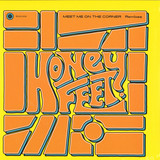
Meet Me On The Corner is taken from the band's sophomore album, Orange Whip, which itself was BBC 6Music's Album of The Day on its release. It follows previous singles Whatever You Do and Sinner, which garnered support from Craig Charles, Tom Ravenscroft and Huey Morgan. The song showcases Honeyfeet at their funkiest and chunkiest. A pounding beat beefed up by bass, guitar and brass propels forward while Rioghnach Connolly sings lyrics that could be straight out of the playground, but suggest something deeper, possibly mystical even, in its demands for a dalliance on the street.
Remixes on this more foot friendly single come courtesy of homegrown legends of funky house music, Crazy P who come through with both a vocal and dub version. Honeyfeet's latest opus is turned into a straight up soulful disco monster by the boys from Nottingham, with Rioghnach's rasping vocals playfully meandering over Hot Toddy and Ron Basejam's crisp beats and trademark live bass. Elsewhere, much hyped Russian production don, I Gemin, delivers his take - still aimed at the dance floor of course, but a slightly deeper house affair based around jazzy keys and chopped up vocals that take the song into more sonorous territories.
As a bonus, the 12" package also features the acclaimed remix of previous single, Sinner, courtesy of erstwhile Polish Innocent Sorceror, Envee - his shuffling, moody take only previously being available on vinyl via a super limited (and now impossible to find) 7-inch release late last year. For the last couple of years Honeyfeet (whose name comes from a line in the Blues Brothers film) have been a conduit for the ideas and expressions of an exotic mixture of Manchester based musicians. This genre-defying band incorporate styles including jazz, folk and hip hop into their music.
The band are fronted by Rioghnach Connolly - also known for her work with Real World artists Afro Celt Sound System and The Breath - "A remarkable singer and flutist who...can ease from Irish traditional influences to soul" (The Guardian). The line-up is completed by Rik Warren (vocals/harmonica), Gus Fairbairn (tenor sax), Biff Roxby (trombone/vocals), Ellis Davies (guitar), Lorien Edwards (bass guitar), John Ellis (keyboards) and David Schlechtriemen (drums).
Since their self-released debut album, 2013's It's a Good Job I Love You, keyboardist John Ellis jumped on board as full-time member, bringing his unique musical presence. This enabled the development of a more texturally adventurous style, as witnessed with the dual atonal solo between himself and guitarist Ellis Davies on Sinner. Similarly, for their current LP, Orange Whip, engineer, bassist and spiritual guide Lorien Edwards makes his Honeyfeet recording debut, so completing the 'kitchen' of this very special band.
Opening track 'In The B' kicks off proceedings in no uncertain fashion. It's 100% wall shaker material, the type of techno music best paired with strobe lights and towering speaker stacks. It mesmerises with its low-slung undulating bassline and Detroit rhythms before giving way to some riotous old school Essex stabs and sharp claps. No messing, this is a certified 3 AM red light burner! Track 2 'Chocolate Biscuit' accelerates proceedings! Beginning with unfussy drums and a robotic, bleep-heavy melody driving it off into a wonderfully off-kilter direction. Its arpreggio'd rhythms may be brutish and wrestle a growling sense of menace out of the track, but the overall feel, however, suggests considerable care and attention has been paid to make it sound this way. There's clearly an uncommon musicality at play here to make something this complex feel so simple.
The BPM drops next on 'Jenny's Hall' but from the offset, there's enough funk and thrust in the motorised synth line to get bodies gently grooving without the beauty getting lost in the slower loop. This is blissed out, psychotropic techno - the kind of track where it feels like you're floating and falling at the same time, but all the while making sure you still remain fit for purpose on the dancefloor. Ian Blevins takes on remix duties this time and the Berlin-based DJ/producer offers up a sleek peak-time banger that fizzes, bubbles and percolates. He gives the rhythm on 'Jenny's Hall' less space to swing and ties it to a tight motorik beat turning it into a slice of shiny, modern techno but with extra shoulder-checking force. Its vibe drawing from a sense of outsider-party fun with a wry smile, and a knowing wink running throughout before bringing the package to a suitably left of field crescendo.