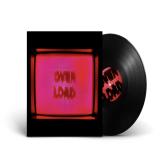
MADMADMAD’s EP “Overload” is a thrillingly chaotic, genre-warping ride —think Mr Oizo on acid— that fuses fuzzy basslines, jagged guitars, and analog synth delirium into a dancefloor-ready collage of sound. From the Kraftwerk-tinged pulse of “Overload” to the acid-soaked, breakneck energy of “The Way” channeling The Chemical Brothers or Gesaffelstein, the record constantly shape-shifts while maintaining a raw, propulsive core. Tracks like “Mezcal” drift into hypnotic, minimal grooves reminiscent of Aphex Twin, while “Tout le Monde” and “Turn It Up” inject playful, off-kilter funk inspired by Tom Zé, Prince, ESG, and Beck. The title track closes on a high with a gritty, disco-infused groove nodding to early Daft Punk. Across the EP, MADMADMAD embrace disorientation as an artistic statement, drawing inspiration from Dadaism to mirror the overwhelming, information-saturated chaos of modern life.
In 2016, with the blessing of David Lynch and Angelo Badalamenti, Xiu Xiu released and toured the surprisingly successful album and concert, Plays the Music of Twin Peaks. Out of respect and deference to the beloved series, the band decided to put the concert to rest in 2018. After the recent and untimely passing of David Lynch, Xiu Xiu began to receive several high-profile requests to revive their interpretation of this iconic music. However, in wanting to always try to follow, honor, and continue to be inspired by the incredibly high bar of artistic challenge set by Lynch, Xiu Xiu is instead going deeper. Eraserhead Xiu Xiu is a new live concert with an accompanying film and full-length album that uses field recordings, concert-specific homemade instruments, organ, modular synths, vocals, flashlights, electrical interference, and elements of musique concrète to express the bizarre emotionality, conflicted sexuality, relentless darkness, and singularly unsettled moonscape of this most incredible of midnight masterpieces. The album itself is a masterpiece in sound collage and experimentation, with tracks like “Tetra” and “Sleep Synth” shifting from minimal auditory sensations to a clobbering, grotesque cacophony. The album’s closing track, “In Heaven,” is a beautiful rendition of Peter Ivers’ original composition, with Stewart’s delicate and soft vocals showcasing the elegance and wonder found in Lynch’s directorial debut, Eraserhead. Eraserhead’s original sound design and score by Alan Splet and Lynch guide Xiu Xiu’s expanded interpretation, reflecting their influence as fans and musicians. The original film gives birth to Xiu Xiu’s visual lens, through which audiences are baffled and pummeled by the band’s imaginary unused auxiliary footage.
Is it a short-term art installation, an exploded tribute to a cinematic triumph, an epitaph to an idol via an entirely new work? Yes. Is it intense, odd, curious, and shrouded in the gloomiest of nights? Of course. After all, it is Eraserhead.
Brannten Schnüre is an experimental dark folk group out of Würzburg, Germany. Christian Schoppik composed and played all the music, Katie Rich whispers, recites and sings. Together they make astoundingly beautiful folk with a rich instrumentation leaning towards the atonal spectrum. Instrumental wanderings stand alongside Nico-esque poetry tales. Christian plays the accordeon and in some songs guitar and flute. Inspired by hierophants like Nový Svet and David Jackman, solemn song fragments (a lot of old greek rembetiko-recordings) are modified and looped, with additional instruments and voices being integrated later on. Their music has been described as 'surreal folkcollage' and 'german hauntology'.
With the emergence of Schoppik's second project, a dada cabaret called Agnes Beil in 2010, Brannten Schnüre moved closer to the song structures of its frivolous sibling. The songs of Schoppik's latest creation Sommer im Pfirsichhain are further accompanied by a female singing voice, lending the pieces the voluptuous quality of a stickily tense midsummer. Sommer Im Pfirsichhain (Summer In The Peachgrove) is the second part of a quartet of releases. The first being Aprilnacht which got released on Sic Sic Tapes last year. Part three Geträumt hab' ich vom Martinszug and part four will follow later.
Reference points are bands like Winter Family and Twinsistermoon. Music etched on folkloric, ritual elements transferred into the 21th century. Also worth mentioning is the hand-drawn artwork which is made by artist Gwénola Carrère.
The second full-length album from Simon Herody - French born, Berlin based multi-instrumentalist and composer. Featuring the visual universe of Paul Waak.
Water from Mars retraces the imaginary odyssey of a near-future conquest of space - a sonic journey conceived as a soundtrack for the imagination. Blending acoustic and electronic instruments, Herody navigates between sci-fi jazz, left-field ambient dub, space lounge, and 4th world music, crafting a world where melancholy and forward-thinking curiosity coexist in weightless suspension.
Indulgent, textured, and uncompromising - for fans of glitchy synthesizer textures, cinematic atmospheres, and music that refuses easy categorization.
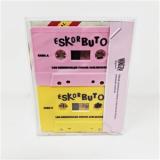
First time double-cassette reissue of 1987's double LP opera rock by Spain's legendary punk band Eskorbuto. "Los demenciales chicos acelerados" is a political satirical work against any kind of dictatorial regime. "Los demenciales chicos acelerados" is Eskorbuto's fourth studio album, originally released by Discos Suicidas in 1987. It was their most ambitious project, a double LP rock opera in the vein of "Quadrophenia" by their beloved The Who. It tells the story of an unscrupulous young man who wishes to achieve power at all costs, stepping over everyone and everything in order to do whatever he wants politically. In the end, he falls due to his ego and is betrayed by those around him. Hence lines such as "crowds are a nuisance", "I'll come unscathed out of the attacks planned by my image consultant" or "shouting in front of the scum". In 1988 band members Iosu and Juanma narrated the album's concept and story on a Radio Euskadi show, the Basque Country's public broadcaster. This satirical political plot also explains the controversial sleeve art, Eskorbuto were equalling the unprincipled politician of their rock opera with the Nazis and Franco's dictatorship. It's a conceptual record that attacks any kind of dictatorial political regime. The original sleeve caused some trouble, to say the least, with its combination of Nazi photos and the Spanish flag on the back accompanied by the words "Of national interest". lthough "Los demenciales..." came out on Discos Suicidas, in typical Eskorbuto fashion the band stole a copy of the master and sold it to the Twins label, which also released it a few months later with new cover art.The album contains new versions of a few previous tracks such as 'Ratas rabiosas' and 'Enterrado vivo' plus the studio version of 'Más allá del cementerio'. For the recording the band enrolled keyboardist Aitor Amezaga, who would also collaborate on their next album.
Soul Jazz Records journey into early 1990s ragga, drum & bass and jungle. The album features all-time classic jungle anthems such as General Levy’s ‘Incredible’ alongside some serious Ragga heavyweight tunes like Cutty Ranks ‘Limb By Limb’ and Congo Natty’s classic re-make of Barrington Levy’s Under Me Sensi’.
The renowned album tells the story of how Jungle developed out of acid house but with its roots in the UK Dancehall scene of the 1980s and comes with extensive sleevenotes, exclusive interviews and photography.
out of Stock
Last delivered 3 months ago available to reorder, subject to availability
Newly signed to indie heavyweights Heist or Hit (Westside Cowboy, Her’s) EP two: ‘Marionette’ has been produced by Daniel Fox (Sprints, Melts, Psychotic Monks, Naked Lungs, Nerves, Ronan Group) and it’s set to be seminal. A set text for future musicians with aspirations of innovation. “The theme of the marionette is present throughout each song, involving some aspect of a power struggle and a lack of control within oneself.” Opener ‘Chocolate’ bounces in on a synth line as slippery and hyperactive as anything Aphex Twin ever cooked up. Crispy offbeat electronic cymbals play counterpoint to atonal guitars and pugilistic drumming before the track dry-wretches its way into a nauseating cacophony of euphoria. It’s a tale of crippling social anxiety and a preference for an unflattering, lonely reality. The muted guitar pluck in the intro to ‘Crows’ is the sonic equivalent of biting one’s nails. An anxious, involuntary tic that speaks to the theme of guilt, especially surrounding digital culture: “children can watch what they please, just with viewer discretion.” The track lurches between textures, weaving themselves in and out of focus. Guitars blare like sirens, interrupting paranoid urban centres at 2am, while the bass sounds like the inside of an insomniac’s head on day four of a REM drought.
The metallic intent of ‘Discipline’ squats on the chest as though Steve Albini is your sleep paralysis demon. The pain of accountability spews from the industrial regularity of the beat, apt to the narrative of a soldier coming to terms with the lies that made him commit atrocious, violent acts. EP closer ‘Servant’ starts like a Spectrum loading screen. Dial-up modem-coded, it pauses for moments of white-noise-vomit and existential bloops. Fitting for a more abstract take on the idea of the power struggle filtered through religious imagery and self-awareness of one’s own actions, coupled with an inability to exert control over them. The band pile on the textures with sadistic glee until the evil is exorcized and the modem melts. Connection severed. Across the EP, vocalist Joseph has a tendency to hyper-fixate on themes of control and unhappiness. Creating rooms in which doom and isolation ricochet. Not that it’s all bad news “we like to think that by shedding light on the negative, it commands a sense of hope.” Influenced as much by the liminal-space horror and uncanny dread of Silent Hill as the existentialist theatre of The Twilight Zone or the absurdity of Twin Peaks, they occupy a space between unease and impulse. Makeshift Art Bar are not a band interested in being liked. They’re a band interested in being necessary. There’s so much eating and drinking in their work that multiple listens simply don’t satisfy; something new reveals itself on each return visit. Audacious. Idiosyncratic. Vital. A young band carrying identity, defiance and an uncompromising vision as if it isn’t a rare cargo.
Newly signed to indie heavyweights Heist or Hit (Westside Cowboy, Her’s) EP two: ‘Marionette’ has been produced by Daniel Fox (Sprints, Melts, Psychotic Monks, Naked Lungs, Nerves, Ronan Group) and it’s set to be seminal. A set text for future musicians with aspirations of innovation. “The theme of the marionette is present throughout each song, involving some aspect of a power struggle and a lack of control within oneself.” Opener ‘Chocolate’ bounces in on a synth line as slippery and hyperactive as anything Aphex Twin ever cooked up. Crispy offbeat electronic cymbals play counterpoint to atonal guitars and pugilistic drumming before the track dry-wretches its way into a nauseating cacophony of euphoria. It’s a tale of crippling social anxiety and a preference for an unflattering, lonely reality. The muted guitar pluck in the intro to ‘Crows’ is the sonic equivalent of biting one’s nails. An anxious, involuntary tic that speaks to the theme of guilt, especially surrounding digital culture: “children can watch what they please, just with viewer discretion.” The track lurches between textures, weaving themselves in and out of focus. Guitars blare like sirens, interrupting paranoid urban centres at 2am, while the bass sounds like the inside of an insomniac’s head on day four of a REM drought.
The metallic intent of ‘Discipline’ squats on the chest as though Steve Albini is your sleep paralysis demon. The pain of accountability spews from the industrial regularity of the beat, apt to the narrative of a soldier coming to terms with the lies that made him commit atrocious, violent acts. EP closer ‘Servant’ starts like a Spectrum loading screen. Dial-up modem-coded, it pauses for moments of white-noise-vomit and existential bloops. Fitting for a more abstract take on the idea of the power struggle filtered through religious imagery and self-awareness of one’s own actions, coupled with an inability to exert control over them. The band pile on the textures with sadistic glee until the evil is exorcized and the modem melts. Connection severed. Across the EP, vocalist Joseph has a tendency to hyper-fixate on themes of control and unhappiness. Creating rooms in which doom and isolation ricochet. Not that it’s all bad news “we like to think that by shedding light on the negative, it commands a sense of hope.” Influenced as much by the liminal-space horror and uncanny dread of Silent Hill as the existentialist theatre of The Twilight Zone or the absurdity of Twin Peaks, they occupy a space between unease and impulse. Makeshift Art Bar are not a band interested in being liked. They’re a band interested in being necessary. There’s so much eating and drinking in their work that multiple listens simply don’t satisfy; something new reveals itself on each return visit. Audacious. Idiosyncratic. Vital. A young band carrying identity, defiance and an uncompromising vision as if it isn’t a rare cargo.
The twin trombone frontline is an esoteric but noble tradition in jazz, harking back to the famed 1950s recordings of Kai Windings and JJ Johnson. While respecting the tradition, the internationally renowned trombonists Paul Dunlea (from Cork) and Trevor Mires (from London) are not traditionalists, and their collaborative project Silfra showcases their thoroughly contemporary skills as composers and arrangers to create a fascinatingly diverse set of trombone led music.
The official re-issue of the dub classic "Wins The World Cup" available as extended 2LP vinyl-set with 20 tracks and poster. The original album from 1982 has been state-of-the-art remastered and is twinned with a second disc of the original vocal versions. All music recorded at Channel One with the Roots Radics and mixed by Scientist at King Tubby's with producer Henry "Junjo" Lawes.
Kercha’s debut album ‘Open The Door’ arrives this April via DNO Records. The Black Sea artist’s mystical, disorienting style has set the tone for the label since he dropped the inaugural release six years ago. Now, across 16 tracks — including collabs with Mystic State, Congi, NST, Khromi and Finnoh — his smoky sampledelic dubstep is tighter, heavier, and more curious than ever, with a new sense of danger and bubbling rage that feels fit for our chaotic times.
Themes of movement and change course through the LP. On the opening gambit ‘A Path Into The Unknown’, twinkling arpeggios emerge from the gloom like stars lighting the way. Tracks like the eponymous ‘Open The Door’ and ‘Mind Extraction’ deliver that classic Kercha sound, where left-field samples dart in at right angles. ‘Dangerous Road’ weaves between the call and response action of grotty stabs and devilish subs. ‘Take A Break’, featuring Mystic State, goes on the attack with searing acid. ‘Can’t Wait For Today’, though lethargic in its pace, sees San Francisco-based rapper Finnoh deliver stream-of-consciousness bars that skewer our present and nudge us to revolution.
Work took place over the course of several years, during which Kercha relocated with his family from Russia to Georgia, where he now resides in the capital, Tbilisi. “Sometimes I wrote music while travelling on a bus, sometimes late at night while my family was asleep, sometimes just sitting on the grass in a park, and of course in my home studio as well,” he says. “By the time the album was finished, it included music from different periods, and it may vary in sound and concept.”
Any major upheaval in life will result in moments of hardship, but also hope. Both can be found throughout ‘Open The Door’. There’s times when the darkness threatens to envelope everything: during the cold, crackling ‘Disclosed’ and the eerie, dystopian ‘Infection Of Lies’; on ‘Trigger Activation’, with its grunting lows and broken glass hook, and ‘Ballistics’, where a wall of sub-bass is pierced by shrapnel stabs.
The balancing light comes on ‘4 AM’, featuring Nottingham duo Congi, when clashing swords and cinematic strings, meet a soft Rhodes piano — the juxtaposition between heavy low-end and floaty keys and vox reflecting those moments of transcendence often found in the early hours. From the injection of garage energy on ‘Bubs’, with Edinburgh’s Khromi. And on with ‘My Feeling’, featuring South Russian vocalist NST, which closes the album on a deep but expansive note, bookending the experience with more starlight synth tones.
“It’s a reflection of my life journey and the changes connected with emigration and overcoming various difficulties,” explains Kercha. “This period means a lot to me, which is why the album includes tracks from the time of preparing to leave up to adapting to a new country.”
Still, he wants listeners to be able to derive their own understanding. “I think the essence lies in the ability to contemplate, not in any predetermined meaning,” he says. “I can only say one thing: thank you for appreciating what I do and for your support. I hope it inspires you to make the same firm decisions to change for the better as it did for me.”
Out via 4 x 12” vinyl, ‘Open The Door’ is a captivating artistic statement, showcasing the journey of an artist with a truly original signature sound — a rarity that should be treasured and celebrated.
Rhythms of postmodern realism at the very bottom of the DNO.
out of Stock
Last delivered 20 days ago available to reorder, subject to availability
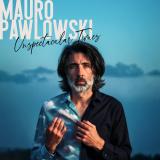
Mauro Pawlowski's 'Unspectacular Times' is the sound of an artist completely at ease with himself, and with the world, in all its ordinary, unglamorous beauty. Ten songs rooted in everyday observation and emotion, produced by Scorpio Twins (Stephane Misseghers and Bruno Coussée) with a full 24-carat 80s gloss: lush synths and basslines.
Where everything around us seems to demand maximum volume and instant outrage, Pawlowski turns that logic quietly inside out. These are songs about love that sneaks up on you, desire that builds in an art gallery, and a Nobel Prize winner falling off his bike and giving a thumbs up. Small moments, but in Pawlowski's hands, that's where everything worth paying attention to actually lives.
Guest appearances from Brianne Dunne (Daryl Hall & John Oates) and Pol Coussée, a Belgian saxophonist who found his way from London to Toronto and has played alongside Barry White and Isaac Hayes.
Following the 70s-tinged 'Eternal Sunday Drive', his second album on Unday Records 'Unspectacular Times' is Pawlowski's most pop focused to date. His most recent chapter in a career that has taken him from Evil Superstars to dEUS, through theater, dance, film and more alter egos than most artists have albums.
Phara returns with a second project under his In Glass alias. In 'Scratching the Surface', we're light years away from the heavier, more instructive dance records that have become synonymous with Phara's style. In this EP, the Belgian artist reaffirms his celestial, delicate sound in four tracks that delve further deeper into the emotional soundscape proposed in the first EP.
'Sally' begins the project with the most dance floor oriented of the four tracks, proposing an intoxicating blend of styles that bloom throughout its six minutes. Soft pads and bright keys twinkle along a cradling rhythm as In Glass delivers a truly musical piece that sifts through memories. Percussion is then taken out of the equation as 'All Things (424 Version)' comes and lands softly on the center stage. Lush, ambient waves come lapping at the shore of 'Scratching the Surface', describing nothing but space and serenity - a breath from everything. The dreamy tone of 'All Things' oscillates along reassuringly into the B side, keeping the tempo low and the sound design organic. Here, we step into In Glass's world of dub techno and adjacent sounds that defined his first record last year. 'Plateau' rises slowly from the wax with a round low end and suspended chords that hover high above. Opening stabs over a harmonic bassline make a head massage of a track that sways along. The raw emotion behind In Glass's music is inviting, flashing by as ethereal synths open and close to install a personal, meditative experience of electronic music. The percussion remains discrete, allowing the harmonic information to wash over the listener into the last track of the EP. He concludes with 'My Idle Hands', pressing further into the dub techno sound that echoes through a cathedral of memories. Blurry shapes pass by over a more determined rhythm section, confirming the intimate nature of In Glass's music. The music wanders along, its head in the clouds but with a full heart, telling stories of being lost and finding home.
With their fourth full-length album Signal Fire, GENGHIS TRON awaken us from the post-apocalyptic daydreams of their previous work with a violent—and most welcome—shove. This time, the distant-future reveries we first heard on Board Up The House give way to an unsettling awareness of the present we’re actually living, as our circumstances grow too pressing to try and escape. “Signal Fire envisions a Kojima-esque dystopia of endless proxy warfare,” says vocalist and lyricist Tony Wolski (The Armed), “where the deluge of available information has outmoded the human ability to parse it. A world where those amoral, shameless and cunning enough can literally reshape reality at their whim through sheer insistence." Having roared onto the scene in 2004 with a uniquely demented blend of extreme metal, synthesizer textures, and drum-machine madness, GENGHIS TRON are no strangers to making a forceful impression. But Signal Fire marks the first time bandleaders Michael Sochynsky and Hamilton Jordan –joined again by Wolski and Nick Yacyshyn (SUMAC) on drums, plus newcomer Kenny Szymanski (The Armed) on bass–has captured this level of urgency with such visceral precision. “This album is very much rooted in the now,” confirms Jordan. Album opener “I Am All” sets the table with a chest-throbbing synth pulse as Wolski declares “I’m on a tear, I’m on a tear,” over swirling industrial rhythms and creeping synthlines. “Nothing Blooms in the Hollow” grafts desert-rock swagger onto interlocking layers of dizzying riffs and chants before Wolski steers the band into full-on sonic burnout, like a spaceship careening into the sun. “Born Prey” navigates deftly through Genghis Tron’s classic sonic touchpoints: furious blastbeats, electronic breaks, haunting vocal earworms, and a towering synth-pop crescendo. Meditative interludes like “Like Fotocrom” and “Without Form” deliver shimmering, ominous beauty. And “New Gods” invokes Rabies-era Skinny Puppy to bring the album to a bludgeoning, anthemic finale, as Wolski screams on repeat: “New gods to bleed me out / No new peace / Bleed me out / I love it.” Twenty years into their career, having proven their ability to forge common ground between Ministry and Aphex Twin, between Brutal Truth and Boards Of Canada, between Cluster and Converge, ugly-beautiful new genre hybrids from GENGHIS TRON no longer come as a surprise. What’s remarkable, however, is how Sochynsky and Jordan have taken a project that started in 2004 as a dorm-room genre-pastiche experiment —”a chaotic, wild amalgamation of all our favorite stuff, literally slammed together,” says Jordan—and refined their songwriting craft to deliver a sound that is unmistakably their own.
German-Turkish singer and composer Alev Lenz follows her self-released album 4 in a Cycle of Thirds (Jan 2026) with a complete, album length ambient rework by Simian Mobile Disco co-founder Jas Shaw. “The two records are very much intertwined," writes London-based German-Turkish singer and composer Alev Lenz. "I made 4 in a Cycle of Thirds with Jas in mind, inspired by a mix he created for my last album.” Lenz and Shaw have previously worked together on 2024 collaboration EP Bring Your Friends, as well as album mixes for Lenz' previous two solo records. Lenz' original album was created from a series of single-note drones, one for each note of the chromatic scale. "When I had this idea, I wanted Jas’ touch involved somehow. I asked him for drones on each note. He sent me 12 and I wrote most of the album listening to these drones. They eventually left the picture and were replaced by new drones I made, new sounds or vocals. But the memory of them lingers in the songs, like an imprint on the retina, an afterimage.
So naturally when the record was finished I sent the totality of it to Jas and said: here you go, make your versions!" 4 in a Cycle of Thirds in its original form touches on traditional folk musics, chamber music, contemporary composition, film score, and even interweaves subtle metal inflections, but now presented on double vinyl alongside Jas Shaw's versions as twin records, it has a newly foregrounded quietude, spectral and delicately nuanced. Through reduction, meticulous replacement, and sensitively applied edits, Shaw gently rebalances the light and shadow of the original pieces, coaxing new subtleties and harmonic resonance. "It occupies a space that is in-between the lines," describes Lenz. Shaw employs a "feedback system" he created for his piano, applied here to devastating effect. "Take the key bed off it and set up a resonators, mics and a mixer. Lots of gaffa tape, lots of precarious propping stuff open. You grub around on the floor and slowly the room fills with harmonics, it’s wonderful." And, on the relationship between the original record and these new versions, he explains "we could really let the songs drift into a different shape without worrying that we were missing elements that were great."
Alev Lenz is a singer, songwriter, composer, and producer born to a Turkish actor, activist, and artist mother and an Oscar-winning German engineer father. Alev’s creative foundation is as diverse as her musical output. Her solo discography includes three albums - Storytelling Piano Playing Fräulein (2009), Two-Headed Girl (2017), and 3 (2019). She has contributed vocals to scores by Oscar-winning composer Volker Bertelmann, including the US drama Conclave. She has collaborated with artists such as Anoushka Shankar, Jas Shaw (Simian Mobile Disco), Roomful of Teeth, and plenty more. Songwriter, composer, and producer Jas Shaw is best known for his work with Simian Mobile Disco, whom he co-founded in 2003. He mixed Alev Lenz' 2016 and 2019 albums Two-Headed Girl and 3, and also performs with Selling alongside Gold Panda, and Shaw & Grossfeldt with visual artist Bas Grossfeldt. Shaw and Lenz released the collaboration EP Bring Your Friends in 2024.
Eine der geheimnisvollsten Bands der klassischen 4AD-Ära: Swallow. Gegründet von Louise Trehy und Mike Mason, die sich Anfang der 90er im kreativen Schmelztiegel Camberwell in London begegneten. Was folgte, hatte fast etwas Mythisches: Kaum geschrieben, wurden ihre ersten Songs auf einem einfachen Tascam-4-Track aufgenommen. Ein Demo - roh, direkt, voller Atmosphäre - landete bei Ivo Watts-Russell. Ohne die Band je gesehen zu haben, unterschrieb er sie sofort bei 4AD. Für die Aufnahmen ihres Debüts borgten sie sich Instrumente, zogen von Edinburghs Palladium Studios bis zu den legendären Blackwing Studios in London und arbeiteten mit Produzent John Fryer, frisch von den Arbeiten an Pretty Hate Machine. Mit Hilfe von Eventide Harmonizern - bekannt aus dem Klangkosmos der Cocteau Twins - entstand ein schillernder, fast schwereloser Sound. Doch als Blow 1992 erschien, fühlte es sich für die Band nicht richtig an. Zu glatt, zu weit entfernt von ihrer ursprünglichen Vision. Anstatt neu aufzunehmen, entschieden sie sich für einen radikaleren Schritt: Sie zerlegten die Songs und bauten sie neu zusammen. Das Ergebnis war Blowback - düsterer, fragmentierter, näher an ihrem inneren Klangbild. Diese Version erschien nur in kleiner Auflage und verschwand schnell wieder - ein verborgenes Juwel, das nur eingefleischte 4AD-Fans kannten. Jetzt, Jahrzehnte später, wird dieses Kapitel endlich neu erzählt: Mit Blown, einer liebevoll kuratierten Veröffentlichung, die beide Versionen vereint und den ursprünglichen Aufnahmen neues Leben einhaucht.
Zum zehnjährigen Jubiläum ihres Debüts L"isola dei dannati verwandeln MONDO SANGUE ihr eigenes Schaffen mit REMAKE in ein stilvolles Meta-Sequel: Statt klassischem Best-of entsteht ein cineastischer Director"s Cut, der die bisherige Diskografie neu interpretiert und in ein internationales Klanguniversum überführt. Künstler:innen aus Deutschland, Frankreich, Italien, Spanien und den USA gestalten ausgewählte Tracks neu - zwischen Disco, Italofunk und Pop, stets durchzogen vom unverwechselbaren Geist des italienischen Genrefilms. Mit Gästen wie Andreas Dorau, Mille Petrozza, DJ Friction und einem besonderen Intro von Fabio Frizzi verbindet REMAKE Retrospektive und Neuerfindung. Limitiert auf 333 handnummerierte Exemplare auf ochsenblutrotem 180g-Vinyl, präsentiert sich das Album als hochwertige Collector"s Edition.
Next in the We’re Going Deep label series, he welcomes 4 tracks of completely fresh material from a relatively unknown Italian producer, Davide Tonini. Hailing from the much fabled Adriatic coastal party town of Rimini in Italy, Davide has been shaping and sculpting Electronic sounds for well over 3 decades now. Having first started releasing music under his ‘Wet Basement’ alias back in 2015, his sonic palette traverses IDM, Techno, Deep House, Acid and Ambient soundscapes.
Having spent decades honing his practice, he has both self-released his music and worked with the long standing Odrex Music in Berlin. And there’s something deeply irresistible about his output that screams class and quiet dedication. In his own words, in around 2005 he got into the world of Eurorack and a few years later, Serge Modular. Since then, he’s been totally hooked...
In more recent times, Davide has recorded and released 2 digital LPs worth of material for ‘Detroit Underground’ under his own name, so it seems fitting that We’re Going Deep are now hosting a debut 12” cut – offering up 4 cuts of trademark sumptuousness. Bringing together the best of influences that touch on the likes of Aril Brikha, David Alvarado, Deepchord, Convextion and Basic Channel, he weaves together their respective magic to a new whole point of inflection that is both of this world and the other. All tinged with a warmth and smile that could only originate in Mediterranean climes.
The aptly named ‘A-1’ kick starts the EP in fine fashion as shimmering chords cut through rays of floatingly filtered synthesis, all beautifully dubbed out to a steady rolling kick and neatly shuffled high-hats, with precision bass notes interjecting to add an additional layer of funk. With bliss set to maximum, this is nothing short of genius. Followed by ‘Bilateral’, Davide offers a touch more space and lets the bottom end lead, whilst neatly filtered chords flicker to and fro - seeping their way into your consciousness as the tight drum work brings you to groove mode.
On the reverse, ‘Drive’ burrows further into emotive depths as Davide bathes you in layers of dub and twinkling melodics, all passed through a hazy film of goodness. Rounding off the EP with the deft touch of Distanze Logaritmiche – a soft roller that steeps you in undulating chords and cavernous effects. This is high class music that deserves patience and your attention to reap the ultimate rewards from a true master of his craft.
out of Stock
Last delivered 11 days ago available to reorder, subject to availability
There is a particular kind of strangeness that arrives on long drives across Europe. Flat light, service stations and fields stretching endlessly past the window. It might look mundane at first glance, but becomes faintly surreal when the tiredness of touring blurs the edges of everything.
That feeling became the quiet engine behind Driving Through Belgium, the debut solo album from Anton Pearson, best known as one of the guitarists in respected post-punk outfit Squid. The title grew from a track that felt like the record’s centrepiece, which itself came from the recurring image of extensive periods on the road across the continent. It is a record shaped in the margins of touring, and finessed in the in-between hours.
Across six pieces, Pearson leans into atmosphere, texture and space. It is ambient in spirit, adjacent to contemporary classical in feeling, but composed less with notes in mind than with sound itself. The compositions rarely began with harmony or melody, with Pearson instead responding to his environment and sounds in real time, placing trust in his instinct.
Although initial inspiration came from the road, the album was recorded in a studio he shares in Brighton, and marks his first fully solo project made in that setting. It gave him access to not only new tools and techniques, but a hitherto un-experienced freedom. Much of the process began experimentally, feeding instruments into unfamiliar chains, pitching loops into unexpected registers and playing with previously unused synthesizers simply to see what they might reveal. Many of the sounds were created out of pure curiosity, wanting to understand a piece of equipment or technology, and then following wherever it led.
The album was built with this experimentation at its core, as Pearson would layer then extract, processing stacks of sound until things blur and confuse. Guitars dissolve into drones, a Pianet Clavinet dances against muddier textures whilst a Korg PS-1000 occasionally cuts through with its glittering top end. On ‘Driving Past the Muscular Cows in Belgium’, a flat, still drone is pushed through valve amps until it growls and tightens with tension, before receding again. Even the trumpet, which Pearson freely admits he is not technically proficient at, is embraced in its naivety, its squeaks left intact rather than corrected. The twin ‘Tintinnabulation’ pieces frame the record with looping, pitched bell like tones, accidental discoveries that became structural anchors. Meanwhile, ‘Teeth to Cut the Grass’ deliberately introduces abrasion, some of the harshest textures on the record, a refusal to become passive background music.
That embrace of imperfection is central. In contrast to the hyper-analytical precision of his band, Pearson was keen to honour first takes. If something felt good, it would stay. The end result is an album that favours looseness, instinct and the energy of creation itself. If Squid thrives on propulsion and tension, Anton Pearson finds his energy in suspension on Driving Through Belgium. It is curious rather than declarative, creating a space where experimentation feels playful again.
Maybe it was inevitable that Vilhelm Bromander and Fredrik Rasten would find each other. A symbiotic musical alliance of suggestive combinatory magic that stretches back to the interstitial two day space that separates their dates of birth and manifests here as the movement between ‘perfect’ or ‘just’ intonation and the ragged, psychoactive energy of the slippages from and towards that togetherness that render otherwise simple patterns or generally understood repetitions as wildly other and alive.
Astral Twins shares ‘twin’ works by each composer. The patiently unfolding real time retuning of Fredrik Rasten’s guitars on the a-side’s Sojourns and Vilhelm Bromander’s quickened steps and spry looping melodies on the flip’s Partially Dancing.
Both artists have history of going deep into the aesthetic and acoustic impact of intonation (how you think about what is ‘in tune’). Where their first LP (...for some reason that escapes us, 2019, Differ Records) shared a gorgeous set of sustained tone colour fields, this time they lean more explicitly into the folk music traditions of Scandinavia and further afield, whilst echoing the zoned minimalist atmosphere of Arthur Russell’s classic Instrumentals.
Recorded up close and in real time at Fylkingen’s soon-to-be-abandoned temporary location in Stockholm’s southern suburb of Bredäng, Astral Twins sings with the possibility that one plus one can equal more than two.
Fredrik Rasten: Sojourns explores the live retuning of guitar and double bass in a sequence of just intonation harmonies. A guitar ostinato runs throughout the piece where the retuning becomes an integral part of the composition. The slow pace reveals every detail in the transition from one harmonic arpeggio to another — how interfering waves emerge and disappear as the tonal interactions settle in electric clarity. The double bass shadows the guitar's process and comments with occasional pizzicato tones and register jumps, at times providing a low foundation for the sound and sometimes soaring together with the guitar. This is music that is deeply listening; experimental and at the same time humbly inviting many kinds of being with sound.
Vilhelm Bromander: As the title suggests, this song has a partially dancing character. The title also has a double meaning with reference to the partials and harmonics that dance together. The basic idea was to write music in just intonation that instead of being drone-based is reminiscent of a lightly dancing folk music, where the joyous feeling of just being in the music — “musicking" — is allowed to lead the way.
The double bass plays repeated overtone double stops in an open harmonic progression with subtle modulations that is inspired in equal parts by Steve Lacy's persistent repetition of phrases as east-asian khaen music. The guitars and mandolin have a freer role, with plucked retuned strings that enhance the bass's modulations and provide forward movement. The music invites to both melodic and spectral listening, suddenly halting so that other focal points can reveal themselves. For example, a chord sequence suddenly transitions to a more spectral part where Fredrik is playing a bowed guitar with a chain, several plucking guitars, voices, and pitch pipes. I wanted to make something ‘orchestral’ with just two people and no overdubs: a dance of overtones and open resonant strings, where we seamlessly take turns standing in the foreground.
Born out of a shared pop-up studio on the 5th floor of an Omotesandō shopping mall, “Paradox” is the rousing result of a compelling musical collaboration between two British-born, Tokyo-based producers: The Magus Project (Rhythm King / The White Label, Silk Road Sounds, WhatSonic?) and Submerse (Hooversound, Future Retro, Straight Up Breakbeat, Breaker Breaker).
It also marks a collaborative first between The Magus Project’s own WhatSonic? label and Yeti Out’s imprint, Silk Road Sounds.
The archetypal DIY split-single approach — two individual artists offering a track each across a single release — is magnificently elevated in this case by a powerful connective force, in the guise of a shared rhythm spanning Paradox’s non-identical-twin tracks; a relentless pulse that, uniquely, allows either track to be mixed effortlessly into the other, bridging the transition between 126 and 168 bpm or vice versa.
Different speeds, different tracks, identical pulse: making the bpm matter and, well, not matter all at once: a kind of Schrödinger’s tempo, a thought-experiment in sonic form, an either/or/both of genre-spanning stylistic enquiry.
Multi-instrumentalist Sarah Lipstate brings her innovative music to life under the name Noveller. Forming unexpected sonic routes, her songs are vivid and cinematic. Following several years spent collaborating with Iggy Pop, and touring the world as his guitarist, Lipstate returns with a new album of her own. I Am The Weather further expands her inventive explorations, creating what Pop once described to Jim Jarmusch as “symphonies for people that don’t have a lot of time.”
Sarah’s work as a composer, notably for the HBO Docuseries Breath Of Fire, as well as the Anthony Bourdain documentary Roadrunner, has greatly influenced her new constructions, incorporating piano, percussion and a new studio filled with excitement into her signature guitar sculpting. It is the baby grand at the center of her studio that welcomes you to the record on “Sunday in Copenhagen” before ceding to a celestial six string swell. The percussive rhythms of “Divining Dance” awaken a new morning in "The Way of Our Flood” and walk towards the bowed grace of “Otherside of Mountainside." Surging into the sky, “Portmerion” allows “Beyond the Fells” to glide back down to Earth, revealing the album’s biggest surprise - a vocal track!
It seems fitting given their past, that the first vocals on a Noveller record would be delivered by the legendary Iggy Pop. Written specifically for The Godfather of Punk, a noir-ish tale of a man over-matched by a femme fatale, “The Girl Who Was Death” builds with tension and release. Following their collaboration on the title track to Iggy’s album Free, (also used in a global campaign for PETA) and their interpretation of Dylan Thomas’ “Do Not Go Gently Into The Night”, Iggy was eagerly awaiting the opportunity to add vocals to another Lipstate composition. A scene set as if on opposite ends of a corner booth at the Double R Diner in Twin Peaks, he delivers each line with the weight of a thousand lives lived. The result is a song so vivid that you can see it projected ten feet tall on the walls all around you.
I Am The Weather is the first new release for the Experimentia label, which will soon be the home for the entire Noveller catalogue.
Up next from The Evil B-Side Twins aka DJ TOOL & YAZZUS comes their second EP on their fresh twisted label. In this hypnotic exploration of sound, the pair weaves together a tale of contrast and tension, bridging the worlds of trancey rhythms, bringing techno precision, melodic class and cryptic atmospheres. From the first beat, Placebo Effect pulls you into a cinematic, almost dreamlike realm, where every sound is meticulously crafted to distort and enchant.
The journey is as strange as it is addictive, where punk rawness collides with clean, minimalist textures, producing a haunting yet oddly beautiful experience, sonically taking you to places hard to believe. This is an underground avant-garde club record for advanced DJs with a flare for B-Sides and off kilters. Placebo Effect is an invitation to explore the unknown, to question perception, and to lose yourself in a world that constantly shifts under your feet. Like a déjà vu that never happened.
out of Stock
Last delivered 3 months ago available to reorder, subject to availability
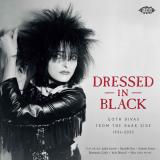
“Dressed In Black” was curated and annotated by Cathi Unsworth, author of the book Season Of The Witch: The Book of Goth – a woman who considers herself fortunate to have had Siouxsie Sioux, Lydia Lunch and Diamanda Galàs for role models while she was growing up. For further illumination in Cathi’s own words, read on.
“The music gathered here is an aural manifestation of turbulent times, made by women possessed of supernatural abilities. The music I fell in love with emerged from the dark end of the 1970s: The Winter of Discontent of 1978-79, when intractable industrial action left the dead unburied and mountains of rubbish in the streets. All the promise of punk came to a brutal end with the deaths of Sid and Nancy in New York; IRA bombs exploded in central London and a seemingly uncatchable ripper roamed West Yorkshire with 13 murders under his belt. Ill omens that augured badly for the events of 3 May 1979, when Margaret Thatcher became our first woman prime minister. Dressed in blue and ready to whip the country to her heel.
“But at night, malcontent youth were united by forces of opposition, whose dissenting voices were aired across the land on John Peel’s Radio 1 show, set to the sound of slasher guitars, swirling fairground keyboards, loping basslines and percussion that recalled the echo of jackhammers or the march of insect feet. Here, punk’s unruly offspring distilled the dissonance of the times into a new kind of music. Flirting with the fetishist and taboo, drawing upon horror and science fiction imagery, they were the outlaw leaders of the greatest style tribe of the decade: the goths. Dressed in black, these kohl-eyed women voiced the alienation of their generation during the decade of the Cold War, the Miners’ Strike, privatisation and AIDS.
“To make sense of the absurd is genius enough. But to then cast the glamour of sublime music around those insights – I come back to my point about supernatural abilities. I hope you will find illumination within. You know the dress code.”
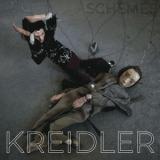
GER Mit Schemes präsentieren Kreidler ihr neuntes Album auf Bureau B - und öffnen dabei ein neues Kapitel ihres markanten elektronischen Kosmos. Die international renommierte Band aus Berlin/Düsseldorf setzt stärker auf atmosphärische Klangräume, bleibt jedoch ihrem charakteristischen, leichtfüßigen Groove treu. Feldaufnahmen und Outdoor-Sounds spielen eine größere Rolle als je zuvor; besonders eindrucksvoll ist der Gastbeitrag von Leo Garcia, der seine Vocals spontan über urbane Field Recordings improvisierte. Das Trio - Thomas Klein, Alexander Paulick und Andreas Reihse - nutzt auf Schemes den kreativen Zufall als Motor. Leicht skizzierte Strukturen, schwebende Texturen und subtil pulsierende Sequenzen formen ein Ambient-nahes Album, das dennoch ständig in Bewegung bleibt. Jede Komposition entfaltet ihre eigene kleine Welt, zwischen spielerischem Experiment, warmer Räumlichkeit und eleganter Präzision. On their ninth album for Bureau B, the internationally renowned Berlin/Düsseldorf-based outfit Kreidler focus on atmospheric soundscapes - of course maintaining their signature rhythmic groove, which on "Schemes" is simply more buoyant and less insistent. "Schemes" is also characterised by the more pronounced use of nature/outdoor recordings. The track featuring Leo Garcia as a guest vocalist is based on just such a field recording. With "Schemes", Kreidler step into a more ambient space of possibilities, crafting an album that feels both carefully considered and delightfully unguarded. Selling Points
i 1.9Fenix with Leo Garcia
i 9Fenix [with Leo Garcia]
[i] b4 Fenix [with Leo Garcia]
[i] b4 | Fenix [with Leo Garcia]
out of Stock
Last delivered 5 months ago available to reorder, subject to availability
• “Guerrilla Girls!”, Ace Records’ much-anticipated first release of 2023, takes us on a thrilling ride from punk’s mid-70s origins, via the left-field post-punk groups, jangly female combos, grunge bands and vigilante Riot Grrrls of the 80s and 90s, to the she-punk bands of recent years – a five-decade alternative to the macho hegemony of rock.
• The collection highlights songs that emerged out of a dynamic underculture of female creative expression. What unites the featured artists is a healthy disregard for the way the music industry ties up its female performers into pretty, neo-liberal packages. From Patti Smith, universal mother of the punk movement, to the Bags, Bikini Kill and Skinny Girl Diet, this music is anti-A&R. Including lesser-known names such as San Francisco street punk Mary Monday and London-based experimentalists pragVec, it shows that, rather than being a few novelty bands existing on the margins, these performers represent a stronger, more three-dimensional version of the female experience.
• Glorious resistance was on display in the first wave of UK female-fronted punk bands. Poly Styrene’s charged vocals on X-Ray Spex’s ‘Iama Poseur’, for instance, were a deliberate refusal to be a pretty punkette. With 15 year-old Lora Logic on saxophone, X-Ray Spex epitomised a fearless, self-defined agency that was at odds with the pastel shades and flowery, submissive Laura Ashley version of 1970s girlhood. By the early 80s, there was a hugely vibrant scene propelled by the diverse rhythms and voices of post-punk feminism. Lora Logic had left X-Ray Spex to form the interweaving textures of Essential Logic, the Mo-dettes mangled ska and off-kilter pop, and Birmingham band Au Pairs sliced political rigour into their lyrics and funky guitar work.
• Some female artists took that elemental energy into pop, creating pop-punk with a twist. We’ve Got A Fuzzbox And We’re Gonna Use It!! made a statement on music technology and female power with a cheeky play on words. Their song ‘Rules And Regulations’ shows that what Guerrilla Girls do well is debunking – taking genres of popular song and turning them inside out – like the way the Pandoras and the Pussywillows would amp up the driving beat and high vocals of the 60s girl group style, and subvert it with a DIY garage element.
• In its fanzine culture, use of montage and DIY music, 90s Riot Grrrl bands such as Bikini Kill and Bratmobile drew direct inspiration from 70s punk, articulated through the prism of Third Wave feminism. Too often, Riot Grrrl gigs were invaded by men intent on heckling “the enemy”. Liz Naylor, manager of British Riot Grrrl band Huggy Bear, says that their concerts became war zones. From the US grunge and Riot Grrrl scenes emerged more female instrumentalists, with bands such as L7 and Babes In Toyland proving that it was possible to recruit cutting-edge drummers, bass players and guitarists. Lori Barbero, whose relentless power drumming is a major element of Babes In Toyland, took the one instrument that has been a staple of male rock’n’roll and made it her muse.
• In the 2000s a new generation of girl-punk bands drew on the Riot Grrrl underculture to form their own sound. London trio the Tuts refashioned C86, Riot Grrrl and lush dream pop on songs like the ironically titled ‘Let Go Of The Past’, while the Regrettes injected shots of ska and doo wop into their explosive West Coast pop-punk. What began with Patti Smith and 70s punk has grown into a vast, spikey infrastructure of girl music. Many take inspiration from their foremothers, like Skinny Girl Diet whose vigilante feminism and punk distortion has been championed in return by Viv Albertine of the Slits. As long as these female artists stay aware of their musical vision and what they are trying to express – in a sense, A&R themselves – the underculture will continue to grow and flower. And this “Guerrilla Girls!” compilation is a celebration of that power.
• The back sleeve of the release features a scene-setting introductory essay by Lucy O’Brien (author of She Bop: The Definitive History Of Women In Popular Music). Each of the two discs come in a swanky inner bag containing a track commentary by compiler Mick Patrick (Ace Records’ long-serving champion of female artists of all persuasions) and exclusive interviews with many of the featured artists by Vim Renault and Lene Cortina (founders of the Punk Girl Diaries webzine).
out of Stock
Last delivered 5 months ago available to reorder, subject to availability
Mildred have announced their debut album Fenceline (out 24 April via Memorials of Distinction / Dog Day Records), they have also shared the Nick Roberts directed video for lead single ‘Fish Sticks’. Speaking of ‘Fish Sticks’ and the album, Mildred say: “Fish Sticks is a song of scenes from two worlds. Conversations with your boss. Acute workplace mediocrity. Riding home and eating fish sticks with your friends. For UK audiences, a fish stick is a fish finger, ideally Alaskan-caught cod. The song comes packaged in Fenceline, an album about conversations with old friends, little cousins, ceaseless piles of dust in your crumbling duplex, loves and theologians and their books. Fencelines mark two places but belong to neither. Neither nor, either or.”
Ahead of Fenceline, at the end of last year Mildred released their debut twin EPs mild and red, an insatiable collection of songs birthed before Mildred even knew they were a band. Arriving purposefully on the scene in that gentle, approachable Mildred way, the EPs picked up support from The Guardian, The Line of Best Fit, Uncut (‘We’re New Here’), The New Cue, Clash, DIY and more. Mildred is a band from Oakland, CA of four equal parts. They don’t have a lead singer, no one person writes the songs. The songs that make up Fenceline come together as a group with their genesis sprouting from any one of their members - Henry Easton Koehler (vocals, guitar), Jack Schrott (vocals, guitar), Matt Palmquist (vocals, bass, woodwinds) or Will Fortna (drums, production) - each time.
The songs are often wrestled from the lead writer by the other three, a lyric might have been mumbled absentmindedly for a few days before one of the other three grabs at it. Summed up neatly by Clash “imagine if Pavement went Americana and you’d be close”, Mildred make music that is pure and poetic, gently addictive and never overwrought. The lyrics for their songs are written largely alone and often draw from their own individual lives and experiences but there’s a shared something there. “It makes sense when common threads emerge” they say, “because we do things together a lot as friends: cook, laze about on a weekend, listen to an album, go walkabout, read, go see movies etc.
Strikingly literal or intriguingly oblique, Mildred have a remarkable way with lyrics that lodge themselves in your head softly but with such determination that they begin to feel like shimmering memories from your own life. Fenceline is a collection of songs that you want to hold close and delve into, and yet play to everyone you know.
Mit Schemes präsentieren Kreidler ihr neuntes Album auf Bureau B - und öffnen dabei ein neues Kapitel ihres markanten elektronischen Kosmos. Die international renommierte Band aus Berlin/Düsseldorf setzt stärker auf atmosphärische Klangräume, bleibt jedoch ihrem charakteristischen, leichtfüßigen Groove treu. Feldaufnahmen und Outdoor-Sounds spielen eine größere Rolle als je zuvor; besonders eindrucksvoll ist der Gastbeitrag von Leo Garcia, der seine Vocals spontan über urbane Field Recordings improvisierte. Das Trio - Thomas Klein, Alexander Paulick und Andreas Reihse - nutzt auf Schemes den kreativen Zufall als Motor. Leicht skizzierte Strukturen, schwebende Texturen und subtil pulsierende Sequenzen formen ein Ambient-nahes Album, das dennoch ständig in Bewegung bleibt. Jede Komposition entfaltet ihre eigene kleine Welt, zwischen spielerischem Experiment, warmer Räumlichkeit und eleganter Präzision. On their ninth album for Bureau B, the internationally renowned Berlin/Düsseldorf-based outfit Kreidler focus on atmospheric soundscapes - of course maintaining their signature rhythmic groove, which on "Schemes" is simply more buoyant and less insistent. "Schemes" is also characterised by the more pronounced use of nature/outdoor recordings. The track featuring Leo Garcia as a guest vocalist is based on just such a field recording. With "Schemes", Kreidler step into a more ambient space of possibilities, crafting an album that feels both carefully considered and delightfully unguarded. Selling Points
Following the success of his debut EP 'Departure', J Michael Harris returns with a dynamic neo-jazz album that marks his evolution as an artist. Bringing together legendary musicians from London, Los Angeles, and Atlanta, the album embodies elements of jazz, dance and electronica while drawing inspiration from luminaries such as Robert Glasper, J Dilla, Aphex Twin, Sampha, and Herbie Hancock.
All music written by J Michael Harris (saxophone, piano, fender rhodes, synths, EWI, clarinet, flute)
featuring
Freddy Sheed (drums, percussion, programming/ Lewis Capaldi, The Japanese House, The 1975)
Jimmy Haslip (bass/ Yellowjackets, Allan Holdsworth, Jeff Lorber Fusion)
Mo Pleasure (piano, hammond b3/ Earth Wind and Fire,
Michael Jackson, Ray Charles)
Karlos Edwards (percussion/ Nitin Sawney, Spice Girls, Mark Ronson)
Henry Collins (trumpet/ Amy Winehouse, Tom Jones, Van Morrison)
Mixed and Mastered by Guy Massey (The Divine Comedy, Kylie, The Beatles)
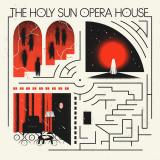
Holy Sun Opera House at its core is soprano and drummer Krissy Barker with composer dl Salo. Along with a revolving cast of collaborators, singers and performers, they create emotionally engaging and haunting symphonic music embellished by electronics, heavy drums and synthesizers. The group has been described as “Opera Cult” and as one who would play at the Roadhouse in Twin Peaks. They draw influence from early Dead Can Dance, Fever Ray and Klaus Nomi.
The Holy Sun Opera House is the group's self-titled debut set for release in May 2026 on the label Hologram Opera. The self-produced album was conceptualized as a way to describe an obsessive mind with music and inspired by the recurring dreams of singer Krissy Barker. In it is a realm of shifting rooms, dilapidated houses and passages. These unsettled rooms and spaces pose a striking confrontation of fear and anxiety from deep within.
In its conception, The Holy Sun Opera House was written as a passage through these ethereal dreams and spaces. The song Latched On depicts the compulsive psyche as a draining physical entity attached. While Voice of Gob, Decrepit Mansion, and Room with the Rain observe and attempt to find acceptance in this conflict. The Passages I & II travel between the curtains to the unknown entity residing in The Attic, who looks inside the mind of the dreamer and determines she has no soul.
The album blends genres with electro, darkwave, and contemporary classical music. The ritualistic passages of the choir throughout the album are reminiscent of Wicker Man and 1970's mystic cults, praising the deities residing within the dream. The arrangement of synths, electronics, heavy drums and operatic singing lend itself to something uniquely memorable.
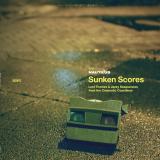
Dive into the depths of the SUNKEN SCORES which is the new concept album by Japanese Rare Groove trio Nautilus from Toyko. What is called lost themes and jazzy seaquences from the cinematic coastlines ends in a journey through different eras of film and television music.
It's their fourth album release on Oonops Drops besides several limited 7inch releases. Like all other releases on the label, this LP is also pressed on recycled vinyl . There will be an extended Germany tour by Nautilus from 8th May to 4th June from the North Sea Coast to the mountains in the Allgäu. / Promo: feature in Jazzthing magazine at the end of May.
out of Stock
Last delivered 5 months ago available to reorder, subject to availability
Phantasy transports back to 1982 for a faithful reissue of the highly sought after ‘Fools Are Friendly’ from Xclusiv, carefully re-mastered from the original tapes.
The alias of sisters Karen and Maxine Berlinski, Xclusiv emerged inconspicuously from the London borough of Croydon with a sophisticated vision of cosmic disco pop, linking the suburbs with Soho’s neon-tinted nightlife. Decades later, and in close collaboration with the sisters, this highly sought-after record arrives lovingly reissued by Phantasy in its original, sensuous form.
Originally self-released on Le Maitre Music, a record label spun-off from their family-run fireworks and pyrotechnics company, ‘Fools Are Friendly’ has the irresistible sense of a radio hit that never was. A brilliant DIY reflection of the disco and soul that dominated the charts of the time, its glossy, primitive electronics echo the synth experiments of Giorgio Moroder or Didier Marouani, pioneers that were transforming pop music.
The extended mix provides an overture to the sisters’ twinned vocals, unfolding with delectable disco drama. In contrast, the Instrumental Mix lets the record’s blend of elements truly breathe, a synthesised version of Xclusiv’s irresistible vocal hook holding court between timeless arpeggios and subtle modulation.
out of Stock
Last delivered 41 days ago available to reorder, subject to availability
Cloud Management return to Altin Village & Mine for a unique collaboration with New York writer and creative polymath Vivien Goldman.
A pairing spanning generations and geography, but with a musical overlap that is quite fitting in both process and result. Cloud Management’s jammy, improvisational approach to their dubby electronics blends well with Goldman’s idiosyncratic vocal style, which has its origins in the early days of post–punk and UK dub experimentalism. Cloud Management blend many historical aspects of German electronic music into something distinctly their own, while retaining a view well beyond those borders or any particular era. This approach fits well with Goldman’s deep multidisciplinary career, not easily defined because of its eclectic abundance across disciplines, yet always orbiting around music as its foundation.
When it comes down to it, these are great tracks created in the same way they sound: loose but refined, circling and turning inwards and outwards, back onto themselves. A dub of a dub of a dub, but never falling too far from the source — the minimalism necessary to deliver a direct, steady resolve and a gripping listen.
The B–Side of the record features three remixes by artists from across the globe, all with strong connections to the front line of dancehall, dub, and electronic music experimentalism. Longtime Equiknoxx member Time Cow from Kingston (Jamaica), delivers a version of »Quick Cover Up« that represents a major overhaul of the original. This remix strips away much of the looseness of the source material and leans into a lush yet slightly darker atmosphere, created by layered synths and a masterful use of underlying percussion and melodic stabs.
Up next are Twin Cities, Minnesota–based Feel Free Hi Fi, who take on »Judge Judge.« The duo tighten things up, overlaying weighty vintage string synths and digi–flute melodies. This version feels designed for smoky, late–night dub sound system sessions, harkening back to dub’s foundations.
Last but not least is London’s Pat Orburn. Stripped way down, the remix rides an interplay between alternating minimalism and a more lo-fi but lush exuberance, somewhat reminiscent of a bossa nova–esque minimal synth sound. This version’s lo–fi pop sensibility provides a fitting contrast and completes an eclectic yet copacetic trio of remixes for the record.
out of Stock
Last delivered 5 months ago available to reorder, subject to availability
Esbe returns to Cold Busted for a phenomenal new four-track EP, Sunset Girl. With previous releases on Dusted Wax Kingdom and Cult Classic, as well as his acclaimed Bloomsday and Late Night Headphones albums for Cold Busted, the Los Angeles-based multi-genre beat-maker is riding a wave. Sunset Girl is another exciting moment in Esbe's musical progression. The release starts quietly with the gentle, muted piano chords of "Special." A sparse hip-hop beat and subdued melodic layers round out the tune, cutting away to reveal a lonesome vocoder vocal. "Again" is as close as Esbe gets to a pop song, as a carefree male vocal and twinkling pianos ride over a crisp, solid rhythm track. More delights await on "Sunset Girl" with its simple piano line, reverby percussion hits, distant sax solo, and splashes of vocal collide in a sonic daydream. "I Want Love" closes things out on a vintage flavor, with echoes of a mid-century school dance reverberating into a modern day beat battle. Potent vibes all around.
out of Stock
Last delivered 5 months ago available to reorder, subject to availability
Saxophonist, producer and composer Brian Allen Simon explores darker hues, transposing waking and altered states under his studio veil Anenon. On the deeply evocative new album 'Dream Temperature', he shifts electronic processing to the foreground, introducing digitized wind instruments and unworldly atmospherics, not heard since his innovating mid-late 2010s output.
A longtime Los Angeles resident, born and raised, Brian Allen Simon has expressively operated under the moniker Anenon, releasing the highly revered 'Petrol' (2016), 'Tongue' (2018) and the viscerally beautiful 'Moons Melt Milk Light' (2023), in a line of unwavering musical dialogues. While the penultimate album was a deliberate, reductive, entirely acoustic detour that was born out of a want to unplug, 'Dream Temperature' sees Brian primed with a newly discovered wind synthesizer as his central compositional tool, alongside acoustic piano and tenor saxophone. The entirety of the album's electronics are triggered by Brian's lungs, generating otherworldly synths modulated by expressive breath control, channelled through the laptop as the core processing chamber for added textural components and field recordings.
A free floating and heavy emotional resonance marks 'Dream Temperature' from beginning to end, invoking the feeling of waking up, still heavy from a night of half-remembered dreams, and continuing one's day in this state. Simon maps out the album's spatial voice early on the statement title track, a deep, yet compact cut, generated from digital saxophone rasps that whistle by in close proximity, along with haze filled textures and sub bass. There is a sonic oscillation of urban grit and pastoral drift throughout as tracks pass by like introspective thoughts, fueling both a tense and ethereal quality that underpins the album. Interluding solo and part-solo piano improvisations 'Last Sun 1' and '2' are positioned adjacent to the buffering digital soundscapes. Their softer, still processed timbres pierce the melancholic exterior, offering a contrasting tenderness that could echo the grace of Ry?ichi Sakamoto, the spiritualist rigor of ECM's Keith Jarrett and a touch akin to Aphex Twin's piano miniatures. 'Nulle Part 1+2' signals the first appearance of an acoustic wind instrument, as tenor saxophone flourishes are juxtaposed against noisy drones, all shouting at the void, with notes resurfacing like lost digital data.
The album was recorded at home during either sunset or nocturnal hours between September of 2024 and October of 2025, a period in which Brian found himself craving more lengthy and intimate studio time as he searched for more pronounced textural qualities amidst his new sonic ambitions. 'When The Light Appears, Boy' shows further evidence of this deeper universe, revealing a grittier edge as the album's essential blueprint is sonically inked. A sprawling expanse of wind synths rhythmically encircle the listener before a dreamy, ghostly ambience blankets 'Toyama'. The sound is evocative of the productions of post dubstep era luminaries such as Burial or the productions of HTRK's Nigel Yang. More isolating and enveloping than the previous all acoustic record, this is music both disorienting and yet warmly inviting all at once. A sonic diarist at heart, personal field recordings were also taken from Sardinia, Japan, Big Sur and LA which intersect at unexpected moments throughout the album's 31-minute play time.
'Dream Temperature' is a vital coalescence of both Simon's electronic and acoustic practices with repositioned electronics akin to earlier works, both haunting and elegant, yet still profoundly personal. Simon continuously resonates as an experimental outlier treading an enthralling, non-linear musical path. This music resolutely glows with an unknowing aura, like an untapped energy source waiting to be discharged.
Before the 21:30min long odysseys, Grammy nominations, and the sold-out shows across the globe, there was this. Four tracks, recorded in Jönköping, released in November 2015 and immediately celebrated by fans and critics alike.The self-titled debut EP is where it all begins, we meet Sir Hällas - the knight living in a parallel medieval universe where tyrants reign, seers dictate the future, and the world lies on the edge of the apocalypse. Classic heavy rock with psychedelic influences collide with swirling keyboards and twin guitar harmonies, all wrapped around lyrics of tyrants, knights, demons and the end of the world.
This is where the Hällas trilogy takes its first steps. This is where adventure rock was born. Start here.