Seatbelts fastened, Delorean fired up, it’s round two of Loveface’s De Mix series of releases. Providing you with three shimmering, ‘80s electro boogie workouts, guaranteed to seduce any tentative souls or shy shufflers to the dancefloor.
nicht am Lager
Zuletzt vor 3 Jahren geliefert unverbindlich nachbestellbar
Fortunately for us, Dmytro Nikolaienko agreed to open up the jewellery boxes of his tape-loop archive for his debut album on Faitiche. What came to light was a collection of dreamy glittering gems, masterfully presented using the compositional possibilities of analogue tape machines. Some may consider a tape machine to be limited as a musical instrument, but Rings makes a convincing case with its sure-handed use of the available parameters – moving tape over the tape head mechanically and manually, cutting loops, manipulating timbre and creating noise by means of saturation. The results are eleven blurred, repetitive, rhythmic patterns that can be understood as an intervention against digital precision, as mechanical irregularities and background noise become musical events.
For those familiar with Nikolaienko’s work, his nostalgic approach here will come as no surprise: born in Ukraine and now based in Estonia, he has chosen a historical medium (that has been enjoying a renaissance for some years now) to record historical-sounding sequences. The way he manages his own back catalogue is similarly archival, documenting the chronology of his tape loops in such a way as to leave no doubt as to their advanced age. And then there are his two wonderful labels Muscut and Shukai, the latter being an archival project releasing electroacoustic obscurities from the Soviet past. Which brings us back full circle …
nicht am Lager
Zuletzt vor 5 Jahren geliefert unverbindlich nachbestellbar
First-ever official re-issue of the Ecuadorian composer's stunning electroacoustic composition "Oeldorf 8" on vinyl and CD. Remastered by KASSIAN TROYER at D&M, Berlin.
MESÍAS MAIGUASHCA (b. December 24th, 1938 in Quito / Ecuador) is a composer of Neue Musik, especially electroacoustic music, who studied at the Conservatorio Nacional de Quito, at the Eastman School of Music in Rochester, NY (1958–65), with ALBERTO GINASTERA at the Instituto di Tella in Buenos Aires, at the Hochschule für Musik in Cologne and, after a short return to Ecuador, attended the Internationale Ferienkurse für Neue Musik in Darmstadt and the Fourth Cologne Courses for New Music in 1966–67 where he studied with KARLHEINZ STOCKHAUSEN. From 1968 to 1972, MAIGUASHCA worked closely with STOCKHAUSEN in the Electronic Music Studio of the Westdeutscher Rundfunk in Cologne and joined STOCKHAUSEN's ensemble for performances at the German Pavilion at the Expo '70 in Osaka. In 1971 he became a founding member of the OELDORF GROUP of composers and performers, and began work at the Centre Européen pour la Recherche Musicale in Metz, at IRCAM in Paris, and at the ZKM in Karlsruhe. From 1990 – 2004 MAIGUASHCA was Professor of Electronic Music at the Musikhochschule of Freiburg im Breisgau where he still lives today.
The OELDORF GROUP, named after the small village 40 km away from Cologne where they lived and worked in a rented farmhouse where they set up their own studio for electronic music and studio productions, was a musicians' collective active during the 1970s. In the adjacent barn, the group held concerts for audiences up to 300 people with an emphasis on live-electronic music and other kinds of new and avant-garde music. Thanks to a long-standing contact with the Westdeutscher Rundfund, the core members of the OELDORF GROUP (PETER EÖTVÖS - electronics and keyboards, the violinist/violist and composer JOACHIM KRIST, electronics specialist and composer MESÍAS MAIGUASHCA, who also played keyboards, and his wife GABY SCHUMACHER – cello) received commissions for compositions, invitations to perform in the Musik der Zeit concert series, as well as having many of their summer concerts recorded for the late-night broadcasts of WDR3.
One of these commissioned compositions is "Oeldorf 8": a retrospective portrait of the OELDORF GROUP consisting of a series of ten short pieces for four instrumentalists (clarinet, violin, cello, electric organ/synthesizer) and tape which may be played either simultaneously or continuously without a break. It premiered in 1974 at the Darmstädter Ferienkurse and was released on LP two years later and turned into a sought-after, but not very well-known rarity achieving collector's prices., and was later unofficially reissued on KEITH FULLERTON-WHITMAN's Creep Pone CDr label.
Conceived as a sonic diary with an edge to encompass radical electronic synthesis, the 48 minute composition proves " … a thing of wonder; from the outset, MAIGUASHCA's spoken introduction of the players & concept gets slowly eroded by errant, pointillist electronic sound … which then lets loose for a good 10 minutes before a swarm of slowly rising held tones c/o the players acoustic arsenal slowly comes to the fore. On the second side, the acoustic sounds - patiently, elegantly state their cases across a good half of the segment until a rising pulse-wave drone essentially annihilates the more nuanced phrasing & slowly builds to an almost ROLAND KAYN-esque climax of raw oscillator gristle" (Soundohm).
44 years after its original release, MAIGUASHCA's stunning album finally sees its deserved and overdue re-release on CD and LP, carefully remastered by KASSIAN TROYER at D&M, Berlin.
"Maiguashca … is part of the first generation of South American maverick sound explorers that in the 1960s paved the way for a tradition of innovation that persists in the present noise and psychedelic scenes of the continent. Along with Edgar Valcárcel, César Bolaños, Beatriz Ferreyra, Mauricio Kagel or José Vicente Asuar, he contributed to expand the possibilities of musical language beyond the dominant Western canon …"
David Jarrin / Kraak Festival
nicht am Lager
Zuletzt vor 5 Jahren geliefert unverbindlich nachbestellbar
Inkswel is firing into 2020 with his debut release The People EP on Boogie Angst.
Having previously released on such top notch labels as BBE, Rush Hour, Sonar Kollektiv and Yoruba Soul (as one half of Planetself), quality is assured from the producer with two original tracks and high quality remixes.
Too Late featuring Atlanta rapper and broken beat master Daz-I-Kue collaborator Stan Smith is built around an 80's synth line and electro percussion throwing things back to the early days of hip hop and breakdancing.
Having previously worked with vocalists such as Georgia Ann Muldrow, Amp Fiddler and Steve Spacek – Inkswel first delivers The People - a perfectly crafted lo-fi club rocker with San Fran luminary Dave Aju on vocals.
Boogie Angst is run by Dutch electronic dons Kraak & Smaak and as well as their own output is also home to the likes of Moods, Secret Rendezvous, Vhyce and Saux.
nicht am Lager
Zuletzt vor 4 Jahren geliefert unverbindlich nachbestellbar
RIYL: Depeche Mode, New Order, Naked Eyes, Lust for Youth, Black Marble. 2020 has been one rough ride for everyone, forcing us all to review what we thought was normal and maybe, one would argue, even our priorities. Two years have passed since their previous Inflict LP and we don't really know how what recently happened impacted on the band's mastermind Michael but what's sure is that Veil Of Light are now a fully grown-up band. Landslide is their fifth full-length (and their third on Avant!) and it's definitely their most elaborated album. Ten new songs, rather than the usual eight, with a perfect balance of Coldwave-inspired intimate atmosphere and synthpop catchy melodies. Musically speaking it's still clear where the Swiss duo draws their influences from, right in between New Order's moodiness and The Klinik trying one softer, less brutal approach to their Electro. But a new sense of privacy is reflected all through these new tracks, enhanced by lyrics now more personal than ever. The Prayer Wheel is a page torn out of a private diary, Love And Money is a mechanical mantra for a no-way-out situation; Suburban War is a confession of defeat whispered at night, No Return is the last dance before reaching the point of. This is the kind of record that takes its time, and takes its toll, we just need to sit down and listen because there's much to discover.
Former member of Rodolfo Alchourrón and Gato Barbieri's bands, Cevasco's first solo effort is a combination of fusion jazz with a pinch of unexpected Brazilian flavours and electronic sounds that now, more than 30 years after the original release of the album, still evoke a refreshing feel of modernity in the same vein as many other experimental Argentine and Uruguayan artists from the same era. Includes guest appearances from artists such as Litto Nebbia or Ruben Rada. Reissued on vinyl for the first time, including insert with liner notes and previously unseen photos. Details: Few musicians can boast of having played with "the greatest" without some eyebrows to be raised. The bass of Adalberto Cevasco has been heard in multiple concerts and recording sessions of artists as diverse as the Spanish divas Rocío Jurado and Isabel Pantoja, tango genius Astor Piazzolla or the cream of the Argentine jazz scene -from Pocho Lapouble, Gustavo Kerestezachi, Rubén López Furst or Andrés Boiarsky to the great Gato Barbieri- With the latter, as part of a dream band that included artists like Nana Vasconcelos as well as other Argentines such as Lapouble or Domingo Cura, he recorded two fundamental pieces in the Impulse! label catalogue in sessions held in Argentina and Los Angeles and also toured across various countries. The daily sold-out shows at the Regina Theater in Buenos Aires and their overwhelming performance at Montreux Festival are still well remembered. It is therefore out of question that Adalberto Cevasco belongs to that top-level league of musicians whose talent has also contributed to enhance those who accompany them. The history of this album begins with an encounter. Adalberto Cevasco joins Rodolfo Alchurrón's jazz-funk project Sanata y Clarificación as bassist and meets Litto Nebbia, who is invited to sing along. Some years on, when Nebbia's Melopea record company was developing, he would receive a cassette with a collection of demos recorded by Cevasco over the years. Some of the songs dated back to 1981 while others were made well into the decade and included such outstanding collaborations as that of the Uruguayan Rubén Rada, whom Adalberto Cevasco had met playing in a group of fusion candombe called Candonga. In addition to producing the complete album, Nebbia would also collaborate in a special way in one of the most outstanding tracks (Reencuentros Nº2) by adding to Cevasco's fusion jazz some unexpected Brazilian flavours and electronic sounds that now, more than 30 years after the original release of the album, they still evoke a refreshing feel of modernity. As the Argentine press of the moment highlighted, it'd seem as if the influences received and developed by the bassist during his career as a freelance musician - from post-Piazzolla tango to proyección folclórica (a movement of revision and modernization of the Argentinian musical roots) - had been added to their superb rhythmic work in this album. "Pájaros Eléctricos" was never presented live and has remained as the only published work by Cevasco as a soloist since the date of its release.
nicht am Lager
Zuletzt vor 5 Jahren geliefert unverbindlich nachbestellbar
Sam Gendel’s new album, DRM, is the follow-up to his Nonesuch debut, Satin Doll, released earlier this year. DRM features Gendel’s solo musical experiments with vintage instruments such as a forty-year-old Electro Harmonix DRM32 drum machine, antique synthesizers, and a sixty-year-old nylon-string guitar — accompanied by his voice. While Satin Doll was a futuristic homage to classic jazz, DRM includes just one cover song: Lil Nas X’s ‘Old Town Road’, which Gendel interprets as an instrumental, playing the melody on an old German analogue synthesizer. The album’s accompanying short films were directed by Marcella Cytrynowicz and filmed at various locations around Gendel’s home state of California during COVID lockdown.
“I’m imagining people listening to DRM and thinking, ‘What the hell is this?’, like they’d just encountered some sailing ship in the sky,” Gendel says of the new work. “I imagine it as if someone many years into the future listened to the popular music of today and then tried to recreate it, without any of the tools or the understanding. Stylistically, it’s not too far from so much contemporary pop-rap music that you hear on the radio. A lot of those electronic backgrounds and instrumentals you hear today are tending towards something really out-there and experimental. It’s rhythmic and pointillistic, collaging different, seemingly unfitting elements together in cool ways. The visuals aren’t necessarily dictated by the music, but they both share the same slightly surreal feel, like I’m a video game character, inhabiting all these different backgrounds,” says Gendel.
Gendel is best known as a world-class saxophonist — it’s the instrument with which he’s led most of his bands, as well as the instrument on which he’s guested with the likes of Vampire Weekend, Ry Cooder, Moses Sumney, Sam Amidon, and Louis Cole’s Knower — but DRM is saxophone-free. “There was no active effort on my part not to include it; it just wasn’t part of the equation when I started recording it,” he says. “I just found a formula, working around this DRM32 drum machine, and rolled with it. I don’t consider myself just a saxophonist, I’m just someone who works in music.”
DRM was recorded in one sixteen-hour session, and then manipulated by Gendel with electronic percussionist Philippe Melanson. It was mixed by Blake Mills, and mastered by Grammy-nominated engineer Mike Bozzi. Gendel’s previous discography includes 2018’s Music for Saxofone & Bass Guitar with bassist Sam Wilkes, 4444, and Satin Doll, which the Los Angeles Times called “a woozy, blissfully twisted album.” He also performs on two other Nonesuch releases this month: Joachim Cooder’s Over That Road I’m Bound and Sam Amidon’s new self-titled album.
nicht am Lager
Zuletzt vor 5 Jahren geliefert unverbindlich nachbestellbar
VII Circle returns to his Destroy To Rebuild imprint this March with two fierce techno tracks alongside Mickey Nox and Fractions remixes.
Following 2020's "Fearless EP", which saw support from the likes of Rebekah, Regal, and Randomer, VII Circle returns to his own Destroy To Rebuild imprint with two blistering originals and a pair of remixes from Green Fetish's Mickey Nox and Russian duo Fractions.
Title track "Warriors" gets straight to the point with a heavy-duty synth snaking its way through the track, as a series of relentless drums and sharp production combine to form a pure sonic assault. "Mayhem" takes a darker turn, conjuring images of dark, sweat-filled rooms, taking influences from intense club experiences.
For Mickey Nox's take on "Warriors", the Melbourne based producer strips the track to the bone, turning his focus to bone-crushing drum shaping, reducing the lead synth of the original to a sparsely used element, deployed to maximum effect.
Drawing from their experience on Rotterdam Electronix and Dax J's Monnom Black VA, Fractions turns "Mayhem" into an upfront banger. By adding rave-infused stabs and the occasional breakbeat to the mixture, the duo brings a fresh take on the original, with a euphoric breakdown thrown in for a brief respite before the pandemonium resumes.
nicht am Lager
Zuletzt vor 2 Jahren geliefert unverbindlich nachbestellbar
Hailing from Los Angeles, Jimmy Tamborello has been a key figure in refining what today is considered electronica for over 20 years. "The Seas Trees See" is the first of two Dntel albums to be released in 2021 by Morr Music in collaboration with Les Albums Claus: a free-floating and rather loose stroke of musical genius, giving ambience a whole new meaningful context. It combines crackles and hiss with deep, yet modest, synths and poignant, yet elegant, vocals and lyrics. "Away", its counterpart album, will follow later in 2021. It will showcase Dntel’s unapologetic love for pop music from a long-gone era, presenting yet another aspect of his multi-faceted personality. Dntel has always covered many musical grounds – from the pop-infused hits on "Life Is Full Of Possibilities" (Plug Research, 2001) to his much more abstract works on "Aimlessness" (Pampa Records, 2012), "Human Voice” (Leaving Records, 2014), and his electronics for The Postal Service (Sub Pop). Whatever his style – Tamborello has retained his very own musical voice.
When it comes to producing music, it can be a good idea to get away from the studio and find a more relaxed environment. Inspiration does not necessarily require huge bass bins. Fewer pieces of gear make it easier to really focus on ideas first and let them be. After recording "Hate In My Heart" – his most recent album, released in 2018 – this way, Tamborello continued working in that fashion, mainly jamming and getting ideas together for upcoming live shows. One of the first results of this creative process was the opening track of "The Seas Trees See" – a cover version of "The Lilac and the Apple", originally recorded by Californian folk singer Kate Wolf in 1977. Tamborello turns the acapella song into a vocoder-like extravaganza. Working with the original recording, the track perfectly sets the tone for what "The Seas Trees See" turns out to be – a quiet yet mesmerizing journey through sound and emotion, bringing together his very own sound design, disguised samples and an incredible feel for moods and atmospheres.
"I thought a lot about making an album that you would find in a thrift store", Tamborello remembers. Something "like a mysterious collection of sketches that leaves a lot unanswered. It doesn’t beg for attention or have any big moments." Despite its perfect and gentle flow, it is worth digging deeper, to surrender oneself to all the painstakingly placed details. Whether the beautiful and haunting piano work on "Movie Tears" or the almost sidechained-sounding "Yoga App" – every aspect of this album has been beautifully crafted, often bringing one of life’s biggest questions to the table: What if? What would have happened if Tamborello would have done this on that track or that on this track? It is good that he did not. Small things add up to something great, diverse and riveting.
The subtlety of his latest endeavor is fascinating. It opens up a new world, in which small musical sketches mean at least as much as perfectly produced pop anthems – if not more.
HIGHLIGHTS New pieces by Spanish pioneers from the 80's and before in Experimental rock, Electronica, Industrial, Avant-Garde, etc. Inspired by the mysterious and disturbing anti-Franco illustrator OPS, nowadays well known as El Roto. Second part of the Erizonte trilogy on drawing as a transmitter of progressive ideas, first part being Suite Los Caprichos by Francisco de Goya. Available only in vinyl gatefold edition. TRACKLIST: SIDE A A1. ERIZONTE - Obertura A2. MECANICA POPULAR and Erizonte - Dos veces en la vida A3. LA FURA DELS BAUS and Erizonte - ¡Mierda de guerra! A4. MACROMASSA with Erizonte - Tonsura A5. PELAYO ARRIZABALAGA, ELI GRAS & ERIZONTE-Miedo a la verdad A6. ERIZONTE - Tres piezas para teclados SIDE B B1. ERIZONTE - (Des) educación B2. ESPLENDOR GEOMÉTRICO & Erizonte - Clerecía B3. MAR OTRA VEZ - Calma B4. ERIZONTE - Difracción B5. ERIZONTE with JESUS ALONSO - En el país del silencio B6. SCUD HERO with Erizonte - Hipnosis colectiva B7. CORCOBADO and Erizonte - Sol sotnemurtsni es nacot B8. ERIZONTE - Coda More Details: In this collective creation directed by Erizonte well-known artists sharing ethics and aesthetics come together over the mysterious and disturbing drawings that appeared in some newspapers, books and magazines in the mid 1960's to mid 1980's, such as Hermano Lobo, Triunfo or Cuadernos para el Diálogo, signed OPS - later better known by the heteronym of El Roto. Musicians or sound artists, representatives of avant-garde music that emerged in the Spain of OPS, have composed a piece for this album on a given, recurring theme: repression, censorship, informative manipulation, induced or obligatory oblivion, the vices of clericalism, the horrors of war, imperialism, bad education or the lack thereof and gender violence. These are themes that coincide with those already undertaken by Goya in etchings, and of whom we can consider Andrés Rábago, the painter behind these two pseudonyms, as the legitimate heir, at least in this field. He himself has chosen the drawings that illustrate each of the covers corresponding to the individual editions of each piece as they appeared. The covers are all gathered here, along with a new cover. This album is part II of Erizonte's trilogy inspired by drawings in the media c. After the first part, the "Suite Los Caprichos de Goya", where 19th century ideals of the Enlightenment can be seen through the etchings of Francisco de Goya, while this second album corresponds to the OPS cartoons, anti-Francoism and its environment, as it was when they appeared in newspapers and magazines, the media of the 20th century. The artist and the graphic medium for the third and last part, corresponding to this 21st century, is yet to be discovered ...
‘In Praise Of Shadows’ is a delirious dreamland of soulful
vocals, D’Angelo-ish guitars and muted electronic beats.
Its fourteen tracks are a contemplation on “the balance
of light and dark, the painful things you have to heal
from or accept, that bring you through to a better
place,” says the 25-year-old Puma Blue, real name Jacob
Allen. “It’s about finding light in darkness - and realising
that it’s what got me here today.”
Puma Blue’s nocturnal, soul-searching sound was born
from a decade in which the 25-year-old was plagued
with insomnia, “for literally a decade, I just couldn’t
sleep,” says the cult-acclaimed London
songwriter/producer. That certainly helps to explain the
hazy, late-night “voicemail ballads” of the early EP
releases that propelled him to prominence, 2017’s
‘Swum Baby’ and 2018’s ‘Blood Loss’ earning him a
reputation as affecting chronicler of unrequited love and
inner turmoil.
It’s an intimacy still present across ‘In Praise Of
Shadows’ but there’s also a new maturity and lucidity to
the way in which Allen deals with his demons and
celebrates beauty across his debut album, influenced no
doubt by his journey over the last two years in which a
blossoming romance has finally helped him to sleep
whilst a burgeoning career forced the previously
bedroom-bound songwriter out into the open, driving
him to find new perspectives on loss, love and
everything in-between.
2LP pressed on 180g milky clear vinyl (first pressing
only).
nicht am Lager
Zuletzt vor 5 Jahren geliefert unverbindlich nachbestellbar
Magnonic Signal head honcho Antonio Velazquez aka Spin Fidelity, known from his top notch releases on Subwax Excursions and Parang recordings, is present on the fourth outing on Brussels imprint Nightflight Records. This EP reflects the label’s spirit where there are no musical boundaries and hi-tech funk is the main ingredient of every track. On the A-side we have two techno soul stompers, “Photon Stream” and “Ancient love”, with rolling basslines, some acid and deep pads that will draw you straight to the dancefloor. On the flip we get two deep electro-funk tracks, “There must be a way” and “Magnonic transmission”, with a Detroit touch on a deep futuristic trip.
nicht am Lager
Zuletzt vor 2 Jahren geliefert unverbindlich nachbestellbar
DOMINA TRXXX presents Steve Murphy & Claudio Di Roma!
Steve already released the great "Automatic EP" in 2017 on our imprint. Now he teamed up with his friend and italian Dj Legend, Claudio Di Roma who delivered us two beautiful and unreleased tracks from 1997!
nicht am Lager
Zuletzt vor 3 Jahren geliefert unverbindlich nachbestellbar
The first two EPs of rising French-Algerian singer-producer-songwriter Sabrina Bellaouel on InFiné are now available on a single 12" vinyl edition for the first time. At the crossroads of modern electronic production, alternative RnB & North African beats, Sabrina Bellaouel offers her listeners an unprecedented mix of grand emotion of the Pop stage and the cutting-edge underground flair of buzzing nightclubs
Textextext - (add your write up)
2020 saw Sabrina Bellaouel step out of her cocoon a fully formed artist. First, there was "We Don't Need To Be Enemies", a powerful and brave record - directing the limelight away from her talent as a singer and focusing on her honed, meticulous production skill and ingenuity in making demanding, forward thinking music. Bellaouel managed to tell stories of her identity and place in the world almost without a single vocal.
Then, there was "Libra" - fusing her own production with that gorgeous voice - showcasing a fully formed, trailblazing, independent artist. Sabrina jumps effortlessly between empowering trap on "Arab Liquor" to luscious RnB on "Float" and ends the record with "She Don't Care", a peak time house curveball that you can picture heating up the festival dance floors around Europe. The diverse and powerful EP united different sides of the press in its critical acclaim, receiving accolades from Resident Advisor, Mixmag, The Quietus, Metal Magazine and Pan African Music - just to name a few.
Both of these records then, represent a side of the coin - and are now available as a 12" Vinyl combining them to a singular listening experience. And when the clubs slowly open up again, you will surely see this secret weapon make it's way some well assorted DJ bags.
nicht am Lager
Zuletzt vor 5 Jahren geliefert unverbindlich nachbestellbar
Intruder is the first new music from the iconic and influential Gary Numan since 2017’s album Savage: Songs From a Broken World, which charted at #2 in the UK.
The forthcoming album, also titled Intruder, will be released in May 2021 - his 21st solo album. Intruder sees Gary reunite with producer Ade Fenton, who previously produced four critically acclaimed albums for Numan: Jagged, Dead Son Rising, Splinter and Savage.
With a career that has spanned nearly four decades, his approach to electronic music remains an inspiration to artists across genres and eras, from stadium goliaths such as Depeche Mode, Prince and Nine Inch Nails to alternative heroes such as Beck, Damon Albarn and Marilyn Manson. Even Kanye West owes him a debt, and David Bowie once credited him with “writing two of the finest songs” in British music.
Gary has had 23 top 40 singles and 15 top 40 albums in the UK. The British electro pioneer was also awarded the Inspiration Award for songwriting and composition at the Ivor Novellos in 2017.
2020 saw Gary release his critically acclaimed rollercoaster of an autobiography, (R)evolution.
Melbourne born-and-raised musician, Jordan Brando, lands on Shall Not Fade's Killer Cuts imprint for his debut on the label, seven tracks that show impressive variety in his
production and include two vocalist features. "Moment in Time" is a versatile release with fully-fledged radio playable songs and a host of dancefloor heaters.
After hitting big with "Rockin'" in 2019 and touring Australia supporting the likes of Fisher, Brando now demonstrates the depth and breadth of his musical style in this full-length EP, opening out with the title track - a unique song featuring fellow Melbourne local Vincent Sole. From the glitchy intro the song hits a house beat to get you tapping along but then contrasts this with Sole's silky smooth vocals and disco guitar trills. Following on from this are two more classic dance tracks - "Elsewhere" chops up rnb vocals across a swirling bassline - day party gear - while "Broken Dub" shows Brando's abilities to draw from a range of genres, a pacey breaksy number that tempts a reload.
The record's B-side also contrasts club tracks with vocal features; "Conflict" is the most headsy track on the record, a harder beat and snarling bass for sweaty clubs. Brando returns to his house roots with "Let Me Be The Reason", centering on an earworm diva vocal sample. Sandwiching the record with two vocal features, "You Might Be Surprised" ft. China takes her enticing wordless vocalisations and lays them over a driving electro bassline, an adventurous pairing that fits perfectly. Digital bonus track "Breaking You" is a pure adrenaline floorfiller of deep techy inflections.
nicht am Lager
Zuletzt vor 4 Jahren geliefert unverbindlich nachbestellbar
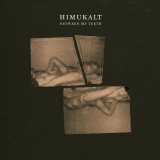
Dark, psychosexual electronics lurk between the teeth of Ester Kärkkäinen, the Las Vegas based artist also known as Himukalt. For the past six years, she has tirelessly pursued an avenue of bleak industrial productions that parallel the extremist works of Genocide Organ and Atrax Morgue. She has built a considerable reputation for uncompromising, full-frontal noise, releasing albums on Total Black, Malignant Records, Found Remains, and Foul Prey, amongst others. Between My Teeth was originally a cassette which came out in 2018 as a tiny edition on the Greek imprint Several Minor Promises and sold out immediately upon release. Himukalt returns to The Helen Scarsdale Agency with the necessary reissue of Between My Teeth as a vinyl edition with expanded artwork.
The album is a maelstrom of ill-tempered noise and blackened frequencies, sutured to a foundation of primitive, raw rhythms. Kärkkäinen cuts up her own voice with the digital equivalent of a rusted razor blade through her proclamations of misery, rage, and desire. The albums' opening track "Cataclysm" a turgid industrial production with Kärkkäinen adopting two distinct voices that, while they remain mostly indecipherable in content, the context presumes an inevitable, catastrophic and emotionally violent collapse in the relationship between two people. A tense rhythm clicks below the full spectrum bursts of harsh noise on "She Went Mad" followed by the smoldering power electronic moves of "I No Longer Belong" and "Not Proper." And the death disco groove of "Mine" is far more hellish than danceable through its scalded distortion and Kärkkäinen's vocal mantras about bodily self-loathing.
Another bold, declarative album in the ever impressive Himukalt discography. Remastered by James Plotkin and features a 12 page booklet of Kärkkäinen's signature collaged xerography.
"Modern Uganda" is a unique project-it's the exquisite debut album of a band, which no longer exists!
delay_okwas a band from Gdańsk, Poland, which was formed in 2017 and played together till 2020 in the belief that making music must be fun. It was a trio consisting ofPiotr Chęcki(tenor and baritone saxophone, flute, casio),Szymon Burnos(synthesizers, moog, guitar, vocals)andJacek Prościński(drums, spdsx, percussion). On this, their debut album you can also hear the peculiar sounds of the Sopot's MDK Orchestra, the guitar ofMichałZ ienkowskiand a Tanzanian rap byAlex(Alex Mussa), met in Zanzibar.
"W e create impulsively, not ignoring our first - sometimes trivial - ideas,because it is in them that we find the joy that accompanied us at the very beginning of our musical paths. W e do it so that we can sit together in front of the speakers and have fun listening to our own songs again. "Modern Uganda" is a small collection of our interests, so we kind of do it out of the selfish need of doing something for
ourselves"
The band oscillates around the sound of IDM, lo-fi, and other sub-genres of modern electronics, with an element of jazz improvisation. The album was DIY recorded and is a tribute to the most famous African ski jumper from Uganda-Dunstan Odeke.
"Modern Uganda" vinyl record comes in two colors(flamingo pink and classic black). Mix and mastering were done byMaciej Milewski, the cover photo with shoebill was taken bynao-cha, a Japanese artist from Tokyo.
It took Sibille Attar five years and a lot of soul searching to produce Paloma’s Hand, the 2018 EP that served as the long-awaited follow-up to her debut album, Sleepyhead. Both that record and her first EP, 2012’s The Flower’s Bed, seemingly left her with the world at her feet, with widespread critical acclaim, television appearances and a Swedish Grammy nomination for Best Newcomer. The years that followed, though, involved both creative and personal turmoil, and left her feeling increasingly adrift musically as the uglier side of the industry reared its head.
“For a long time in my life, I tried to sit in certain constellations to please other people,” she says. “And it didn’t work, because I could only do it for a little while before I’d get frustrated and want to do things my own way. There was a time when I felt like I couldn’t trust the business, and it was draining me of my love for the music. Eventually, I realised you can’t live your life trying to fit into somebody else’s mould all the time.”
Paloma’s Hand, a six-track pop odyssey that slalomed through genres, brought years of struggle to a long-overdue end. Just as importantly, though, it served as a much-needed palate cleanser for Attar, breaking through the barrier of writer’s block. Just two years later, she’s back with her second full-length, the aptly-titled A History of Silence, a reference to that long period of searching for her voice. “I thought about calling it A History of Violence, because in many ways, the album is like a violent attempt to tell my own story when I’ve been silenced,” she explains.
Key to the pace at which she was able to work this time around was a realisation that she functions best on her own - “I just felt like, “fuck it - I can’t be bothered dealing with other people and their opinions.” Accordingly, A History of Silence was written, recorded and mixed entirely by Attar herself, and where she needed a little bit of outside help - sweeping strings on the epic "Dream State", for instance - she penned the arrangements herself and had friends record them exactly as directed. “It seems like that’s the way I have to work to get things done, and it helped things come together really quickly - the first song was done at the start of 2019, and the last one was finished around the time the pandemic was taking hold. It was frantically fast, but I work one song at a time, so it was never too chaotic."
The album never sounds too chaotic, either; like Paloma's Hand, it takes a broad approach to pop, but one that’s anchored by the key through-lines of sharp melodies and atmospheric soundscapes. Largely recorded in Attar’s Stockholm apartment, A History of Silence finds room for everything from sparse alt-rock ("Go Hard or Go Home") to spacey, electropop (the Madonna cover "Oh Father"), via the more up-tempo likes of "Somebody’s Watching". “On some tracks, I had really specific influences in mind,” says Attar. “There’s a lot of eighties stuff going on, and I was deliberately tracking down those kinds of synthesizers to try to capture that sound.”
Attar shies away from talking in too much detail about the themes that run through A History of Silence - she wants the record to be received as universally as possible - but it’s clear that the album marks the beginning of a hugely exciting new chapter after the rebirth that Paloma’s Hand represented. “If anything, it’s like a preacher’s album,” she says. “I’m preaching to myself, teaching myself, telling myself off in the lyrics. It’s about accepting loss of power, changing expectations, and getting rid of some heavy baggage. That’s the way I made the album, and it meant I had no limits - every single idea I had, I tried. When I said I was falling out of love with music, that feels like a very long time ago now.”
Elmo Sarpaniemi (El Mono) and Roope Karhunen (Kaltstam) met at a local Helsinki radio station in 2005, and linked up soon again in 2018 at an afterparty. Fueled by their mutual passion towards only the best genres ever they squeezed out a blend of goa trance, techno, electro, breakbeats and sort of IDM. This steamy session gave birth to the track, “Positive”.
The other ER original ”2G”, sounds more like traditional goa trance, but still… it hardly is. Clocking the rhythm around 140 bpm like the opening track, it kicks in the club doors with a robust bassline, enchanting the cultured dancer with its peculiar melodies, leaving the purists absolutely cold evicting them for a cigarette. Because who gives an oink about purists, right?
This record is also fortunate enough to be blessed with two spectacular remixes. Neri J’s approach is a more dancefloor friendly, yet aetheric version of “Positive”, but don’t get it twisted. It still possesses something very psychedelic and raw. Ilev Luna wraps up the release nicely with his touch, that sounds like an interpretation of modern techno, but in fact this just could be a journey deep into your psyche. BOOM! This slaps.
Mastered by Gabriel Markus
Cover art by Wezardo
nicht am Lager
Zuletzt vor 4 Jahren geliefert unverbindlich nachbestellbar
Nils Petter Molvær and Mino Cinelu had both come a long way in their careers before they met. Cinelu gained international renown on Miles Davis’ albums We Want Miles and Amandla, also noted for his playing with the likes of Weather Report, Gong, Herbie Hancock, Pat Metheny, Sting, Santana, Lou Reed and Laurie Anderson, to name just a few. He has also released 3 solo records and collaborated with Dave Holland and Kevin Eubanks on the World Trio album. Nils Petter Molvær, meanwhile, is one of the most outstanding figures in European jazz. In 1997, he made his debut on ECM Records with the album Khmer, combining the Nordic feeling of nature with the Southeast Asian philosophy of sound. His journey into the uncharted areas of music spans almost a dozen records, on which he explores various combinations of acoustic and electrical sounds. He collaborated with Berlin’s electronic producer Moritz von Oswald in 2013, with the reggae philosophers Sly & Robbie in 2018 and with Bill Laswell on several occasions.
Cinelu and Molvær in some senses represent two worlds, which – at first glance – could hardly be more different. Their musical home is the entire planet, but while Molvær's hoarse and cloudy trumpet sound evokes boreal cold, Cinelu stands for the rhythmic fire of Latin America and Africa. On ‘SulaMadiana’, they’ve found their common playground - the album’s title itself a tribute to the two musicians’ heritage. Sula is the Norwegian island from where Molvær grew up, and Madiana is a synonym for Martinique, from where Cinelu's father hails.
SulaMadiana is a cornucopia, spilling out reverberations of Miles Davis, Gong, and previous works of Molvær, and yet Molvær and Cinelu open up doors to entirely new worlds. Cinelu becomes a singer on his percussion, while Molvær's electronically distorted sounds create a driving pulse. Cinelu plays acoustic guitar, Molvær conjures up drones on the electric guitar. The interplay between the two musicians is key, Molvær observing; “We are different, but what we have in common is that we like to give some space to things. I create space for him, he creates space for me, and we both create space for music.” Cinelu adds: “It doesn't matter who has what share in music. We both know each other’s cultures, we find bridges and crossings, and often we walk these paths that lead in the same direction. We wrote everything together and followed our feelings. There are no limits or barriers.”
nicht am Lager
Zuletzt vor 5 Jahren geliefert unverbindlich nachbestellbar
DAS LEGENDÄRE MINI-ORCHESTER AUS MONTREAL MELDET SICH NACH ÜBER 10 JAHREN MIT NEUER MUSIK ZURÜCK. House Music unfolds as one long piece, a recorded-then-sculpted improvisation that vastly expands their work, coalescing classical and electronic instrumentation in the creation of genre-defying musical worlds. With help from engineer Hans Bernhard, the band wired every corner of Sarah Neufeld's (Violin, vocals) multi-story rural Vermont house. She and the mini orchestra's other five members - Pietro Amato: French horn, keyboards, electronics; Michael Feuerstack: Pedal steel guitar, keyboards, vocals; Kaveh Nabatian: Trumpet, gongoma, keyboards, vocals; Richard Reed Parry: Bass, vocals; and Stefan Schneider: Drums - assigned themselves to different rooms. They spent two weeks together in camaraderie, creation, and focused isolation to record their improvised sessions every day, but ultimately structured a 45-minute album out of a one hour-and-a-half long improvisation.
nicht am Lager
Zuletzt vor 5 Jahren geliefert unverbindlich nachbestellbar
An unlikely meeting of two like-minded spirits, »First Man in the Moon« sees the former Swans guitarist and Hallow Ground regular Norman Westberg and the prolific double bass player Jacek Mazurkiewicz collaborate for five evocative tracks. The pair finds common ground beyond the boundaries of atmospheric drone, abstract jazz and experimental music and blurs the lines between the acoustic and the electronic.The two first met when the composer Mazurkiewicz supported Swans with his solo project 3FoNIA on their 2014 European tour. »I really enjoyed his approach,« says Westberg about the Polish musician’s blending of the acoustic qualities of his instrument with electronically generated sounds. A decision to collaborate was made and when the US-American musician returned to Eastern Europe to support Michael Gira on his solo tour in late 2019, Mazurkiewicz reached out to him with the idea of booking some studio time before Gira’s two concerts in Warsaw. »Recording was very fun and easy,« remembers Westberg. »It was just two people enjoying hearing and reacting to what the other is doing.« »First Man in the Moon« is not however a plain document of these improvised sessions, but also shaped by Mazurkiewicz’s approach as a composer. Once the recordings were finished, he selected and edited the recorded material, refining the peculiar dialogue between the guitarist’s meditative drones and bright chords and his own rhythmic yet subtle approach to playing the double bass, sometimes plucking the strings and occasionally using his bow to underscore
Westberg’s fleeting melodies, but also using the instrument in unconventional ways to generate sound. A feeling of weightlessness prevails throughout the aptly-titled »First Man in the Moon.« Even at their most abstract however, these five improvisations-turned-compositions remain tangible, lively, and joyfully explorative. It is a record that you wouldn’t expect from either of these musicians, but
the logical result of two idiosyncratic minds sharing not only space and time, but also their respective visions with each other. Credits:
Recorded at Studio Diamentowy Pies/ Damian Pielka, engineering/Piotr Mazurek, engineering assistance/Jacek Mazurkiewicz, mix/
Lawrence English, mastering/John Fell, photographs.
Daniel Szlajnda (aka Daniel Drumz) and Piotr Kalinski (aka Hatti Vatti) are one of the most famouse and experienced Polish producers and this album is another step forward for them.
It started with the EP "Krzyżacy", which was released exactly two years ago. Two well-known producers - Daniel Drumz & Hatti Vatti - joined their forces to release an EP, which later on was appreciated by the worldwide listeners, journalists and festival audience. JANKA, which I am talking about, hit the stages of the best Polish festivals such as Opener, Spring Break, Tauron, Slovenian MENT and Moscow Music Week. But that happened in 2019.
On March 8th 2021 the duo's debut album, "MIDI Life Crisis" will be released. Daniel Szlajnda and Piotr Kaliński once again prove that there is much more than just musical chemistry between them. What we can hear there are fascinations from dubby minimalism and IDM to jungle and rave - it's hard to label this unique mature album which should be a pleasant surprise for people open to electronic music. "Modern vintage" might be a good description of what we experience there, music is pressed on modular and analog synths and unusual sampling is drowned in delays and reverbs. However it's not from the late '90s, nothing is typical or obvious, the sound and the style of JANKA are unique.
On the album, you hear two guest voices - Sujka (i.e. Iwona Król - known from the projects Kobieta z Wydm, Lauda, and Król) and Kacha Kowalczyk (i.e. the voice of Coals), the album was mastered by Kwazar. The unique graphic was designed and created by Zosia Paśnik on the analogue gear (as a diploma at the Academy of Fine Arts in Katowice). The album is released in analog form in two color versions, the 180-gram vinyl edition also includes three inserts with Zosia's graphics.
Raymond Scott (1908-1994) was a renowned bandleader, composer and pianist from the 1930s to the 1950s. Many of his playful riffs, originally recorded from
1937 to 1939 by the Raymond Scott Quintette, are genetically encoded in every earthling, having covered by many artists while also being adapted for cartoons like Bugs Bunny, Daffy Duck, The Ren and Stimpy Show, The Simpsons and Animaniacs.
His Soothing Sounds for Baby (SSFB) trilogy showcased Scott as a pioneer of electronic music. His ambient minimalism ultimately became a source of inspiration for musicians like Terry Riley, Phillip Glass, Kraftwerk and Brian Eno. But SSFB couldn’t prepare the world for the exotic artifacts found on Manhattan Research Inc. MRI, first issued on Basta in 2000, contains 69 tracks recorded from 1956 to 1969—over two hours’ worth of Scott’s ground-breaking electronic work in adult dimensions. Forays into abstract musique concrete are heard alongside film soundtrack collaborations with a young pre-Muppet Jim Henson, and pan-galactic sonics seemingly beamed down from hovering UFOs. In addition, MRI presents some of the first TV and radio commercials to feature electronic music. MRI also features many of Scott’s instrumental inventions.
Cardinal Fuzz and Feeding Tube Records are pleased to announce ‘DATALAND’, a collaboration between Dead Sea Apes, Black Tempest and Adam Stone achieved mainly through internet data transfer during the Covid lockdown of 2020. Insistent, evolving electronic sounds encounter a variety of guitars and percussion, from the clockwork kosmische of 'Lost Hours' to the stumbling nosie dub of 'Shop Soiled', while Adam Stone's words meditate on life in the post-industrial west, our increasingly atomised and data-driven society and its logical conclusion in a corporatised dystopia.
'Dataland' is a meditation upon the average existence of a 'developed-world' human in the early 21st century. Whilst not struggling with the harsh physical demands of industrial labour as we did in the recent past, our plight continues to embody the melancholia and confusion of alienation. Under the bewildering complexity of rationalised social and economic systems, we may indeed have become unwitting prisoners within, what the sociologist Max Weber termed, "the iron cage of bureaucracy" - tripping the minutes away in a daily pantomime of data-driven surrealism. This six song collection is a fusion of electronica, monologue, 'real drums' and guitar, and was recorded at various locations in sad old England over the last two years or so. An almost psychedelic sense of puzzlement, nausea and fatigue accompanies being lost in the omnipresent number-generating machines and anti-human modelling systems that now run our world. This is the realisation that defines the essence of the album - that your life is now only as real as what is displayed on the screen of your constant technological companion.
British artist Robin Rimbaud (Scanner) traverses the experimental terrain between sound and space connecting a bewilderingly diverse array of genres. Since 1991 he has been intensely active in sonic art, producing concerts, installations and recordings, the albums Mass Observation (1994), Delivery (1997), and The Garden is Full of Metal (1998) hailed by critics innovative and inspirational works of contemporary electronic music. Committed to working with cutting edge practitioners he has collaborated with Bryan Ferry, Wayne McGregor, Mike Kelley, Carsten Nicolai, Michael Nyman, Steve McQueen, Laurie Anderson and Hussein Chalayan, amongst many others.
Rimbaud first met Belgian artist Hans Op de Beeck at Le Fresnoy Studio national des Arts Contemporains when they were both Visiting Professors in 2012. Op de Beeck lives and works in Brussels, Belgium and creates sculpture, installations, video, photography, animated films, drawing, painting, and writing. His various works show the viewer non-existent, but identifiable places, moments and characters that appear to have been taken from everyday life.
The artists found an immediate creative connection, and a year after meeting Staging Silence (2) was completed. In 2019, they returned to the theme and created Staging Silence (3).
Each of the films is realised through the same principles, as two pairs of anonymous hands construct and deconstruct fictional interiors and landscapes on a mini film set of just three-square metres in size. The films take the viewer on a visual journey through depopulated, enigmatic and often melancholic, but nonetheless playful, small-scaled places, which are built up and taken down before the eye of the camera.
Ranging from hyper-realistic fictional land and cityscapes to absurd, almost surreal, dreamscapes, the various locations are connected by the sense of mystery and melancholy that pervades them. And at every moment Rimbaud's score is amplifying and illustrating these moments, from tragedy to nostalgia, witty to optimistic.
Introspective and lyrical, Staging Silence offers us a world of mystery and intrigue, held together by nature and time. This is a very humane works experienced at a time when many of us feel disconnected from the world around us. The peculiar silence that permeates this hauntingly beautiful work is very much an illustration of our times, anticipating a future in the past. Staging Silence is an exquisite study in dreamlike abstract ambience, a kaleidoscope of sounds and tones that engage the head and the heart.
Dylan Henner is back on Dauw with his new album "Great Prairie Plains: studies of American Minimalism". The album is a celebration of two pieces of music that he loves and have been hugely important to his musical life and education.
The album starts with an arrangement of Terry Riley's In C. During his school-time, Henner was allowed by his music teacher - with plenty of persuasion, in an environment of mostly much straighter classical music - to study this piece. He not only had a deep familiarity with it, but also the pdf scores that he transcribed for his homework. The arrangement was created mostly with the marimba, as an instrument that can layer very deeply without muddying the frequency range and also includes some synths, piano and a VST choir.
“I tried to balance my boundless admiration for the piece with a personalised arrangement. It would be pointless to copy Riley's original - it's too good - but I can at least try to do well by it.”
Alongside In C is an arrangement of Su Tissue's 2nd Movement, from her near-mythical "lost" album Salon de Musique. After trying to buy a copy of this record for years - they are so scarcely found he suspects he never will – Henner wondered if the next best thing would be - instead of owning a copy - to create his own copy. He started this arrangement with as much faith as he could. According to Henner, Su’s work is too rare to warrant changing, but instead should be honoured with autencitiy.
“It's not until the end of the piece that my arrangement begins to take a different shape to Su's. Once I started playing along on the piano, the rest fell into place.”
Dylan lives in Brighton, works as a photographer's assistant for his day-job and plays analogue synths, tuned percussion and cello. Last year Dylan released well-received albums on Dauw and AD 93 (fka Whities) among others. Even though he is a relatively new name, with these albums he already came to the fore as a promising artist within the electro-acoustic field.
a 01. In C [Terry Riley]
[b] 02. 2nd Movement [Su Tissue]
[a] 01. In C [Terry Riley]
[b] 02. 2nd Movement [Su Tissue]
Having previously released on RNT as part of duo Balako, Diogo Strausz now makes his solo debut on the label with an absolutely stunning offering of electronic Brazilian jazz. A São Paulista now living in Paris, Strausz made international waves earlier this year with his piece ‘Pausa,’ a grand and sprawling orchestral work written and recorded by musicians around the world in isolation.
The two songs on Strausz’ new Emancipação EP showcase his gift for instrumental composition that feels at once both fresh and timeless, informed heavily by the classic Bossa Nova and Samba repertoires of his native Brazil, yet translated through a modern production lens, and executed with exceptional musicianship. The end result is an undeniably unique sound that will fit equally well in the collections of jazz and MPB aficionados, as in the crates of modern DJs and listeners alike.
nicht am Lager
Zuletzt vor 3 Jahren geliefert unverbindlich nachbestellbar
WRWTFWW Records is beaucoup happy to announce the official reissue of Pierre Barouh's hard-to-describe-but-easy-to-enjoy French flair meets Japanese avant-garde lost treasure of experimental-electronic-chanson-pop with a new-wave-minimal-bossa touch, Le Pollen. Originally recorded July 1982 at Nippon Columbia Studio in Tokyo and composed, arranged, and played by a who's who of Japan's most groundbreaking musicians of the 80s, the album comes as a LP with bonus 7inch, housed in a heavy sleeve displaying two immaculate photos of Barouh and holding a printed lyrics insert.
A free-spirited world traveler with an incredible ear for music, Paris-born singer and activist Pierre Barouh introduced the sounds of Brazil (and more) to Europe and pushed the envelope with his pio-neering label Saravah, home of adventurous innovators Brigitte Fontaine, Areski, Jacques Higelin, Naná Vasconcelos, and Roland Bocquet's Catharsis among many others. His bohemian border-free vision of modern chanson, blending musical tradition from various parts of the globe with forward-looking artistry, resonated particularly well in Japan, where the scene spearheaded by Yellow Magic Orchestra fell in love with everything Barouh.
And so one day in 1981, Pierre Barouh received an invitation from a Japanese label to come record an album in Tokyo. Not one to turn down an escapade around the world, the French visionary jumped on a plane and landed in a studio surrounded with a dream line-up of musicians: Yukihiro Takahashi (who had named his solo debut Saravah! after Barouh's imprint) and Ryuichi Sakamoto of YMO, Yasuaki Shimizu and his Mariah bandmates Masanori Sasaji and Hideo Yamaki, members of the Moonriders, Motohiko Hamase, Mitsuru Sawamura of Interior, Kazuhiko Katoh and the list goes on. Also participating in the making of the album were longtime collaborator Francis Laï and the mys-terious and beautiful David Sylvian.
The result is Le Pollen, a sincere and affectionate mix of nouveau chanson, techno-pop, post-punk, jazz, bossa, ambient, and minimalism. And probably something else entirely. Honestly impossible to classify in a particular genre, Pierre Barouh's fascinating cosmopolitan music melting pot is, above all, a reassuring ode to humanity, where friendship, exchange, and collaborative creativity breeze freely. Making music together. It's all love.
Pierre Barouh sadly passed away in December 2016, leaving behind a monumental legacy of music and art for us to cherish, and a life philosophy that's well worth considering:
La vie, qu'elle soit longue ou brève
Moi, tous mes rêves
Je les prends toujours au sérieux
Quand l'utopie brise les chaînes
C'est l'oxygène,
De ceux qui sont restés curieux
Life, be it long or brief
Me, all my dreams
I always take them seriously
When utopia breaks the chains
It's the oxygen,
Of those who've remained curious
From the song "L'Autre Rive" on Le Pollen.
nicht am Lager
Zuletzt vor 5 Jahren geliefert unverbindlich nachbestellbar
First released by Cazzo Film in 2001, ebo hill’s Bonking Berlin Bastards has long achieved the status of an underground punk porn classic. Like the Cazzo productions of director Bruce LaBruce, hill’s vision was both ahead of its time and a playful distillation of 90s and early-2000s Berlin Zeitgeist: queer, industrial, hypersexual, exhibitionist and fueled by electronic music. The story is told in large part by the soundtrack, to be released for the first time on Ostgut Ton sublabel A-TON. The music follows a group of squatters, punks and drag queens as they fuck, party and stumble their way through an empty city at the turn of the millennium. Approaching these themes more through location than plot, the film’s narrative freedom is also a narrative of freedom; between chance encounters and sex in public, atop the maze of roofs in the city’s former East, bent over bridges and moaning in ecstasy at oncoming traffic, pants down in telephone booths, packed into sex clubs, in the shadows of abandoned factories and techno clubs lost in time. Composed by improvisational techno trio AeoX and noise / industrial producer Rouage aka CNM (respectively), the music spans a broad range of appropriately pounding industrial, weird techno, noise, ultra-stoned ambient, improvised dub and electro. It’s a sonic spectrum that connects Berlin’s queer hardcore techno and squatter party scenes from which AeoX and Rouage emerged, drawing a direct line between the likes of Berghain-forerunner OstGut (a primary meeting point for the film’s cast & crew) to the more industrial, breakcore and noise- oriented independent party collectives and locations who provided multiple settings for the film, including Grüne Hölle and Stellwerk.
*Artists:* CNM / Rouage (Kathinka): Born in 1975 and raised in East Berlin. Co-organization of subcultural events since 1998 in Berlin, Potsdam, Leipzig and Barcelona. Experimental music, collaborations, exhibitions and audiovisual shows since 2000.
AeoX: Active between 2001 and 2007. Originally a quartet, then a trio, the group eventually shrank to two permanent members: Alex.E and Hanno Hinkelbein. The latter founded Null Records, where AeoX released two album and numerous EPs. They also released on Mental.Ind.Records founded by former OstGut resident Cora S. Musically, the group experimented with combining improvisational hardware techno, breaks, traditional instruments (guitar, clarinet, piano) industrial and metal.
Ursprünglich 2001 von Cazzo Film veröffentlicht, hat Bonking Berlin Bastards von ebo hill längst den Status eines Underground-Punk-Pornoklassikers erreicht. Wie die Cazzo- Produktionen von Regisseur Bruce LaBruce, war auch hills Vision seiner Zeit voraus und ein spielerisches Destillat des 90er- und Anfang-2000er Berlin-Zeitgeists: queer, industriell, hypersexuell, exhibitionistisch, angetrieben von elektronischer Musik. Die Geschichte wird größtenteils über den Soundtrack erzählt, der auf Ostgut Tons Sublabel A-TON zum ersten Mal veröffentlicht wird. Die Musik folgt einer Gruppe von Hausbesetzern, Punks und Drags, die ficken, feiern und durch die leere Stadt um die Jahrtausendwende streifen. Bonking Berlin Bastards erzählt diese Themen mehr über die Drehorte als über die Handlung. Die erzählerische Freiheit des filmischen Narrativs ist gleichzeitig eine Erzählung von Freiheit: Von zufälligen Begegnungen bis hin zu Sex in der Öffentlichkeit, auf Dächern im früheren Osten Berlins, sich über die Brüstungen von Straßenbrücken beugen, trotz und wegen des Verkehrs stöhnen, mit heruntergelassenen Hosen in Telefonzellen, in überfüllten Sexclubs, im Schatten aufgegebener Fabriken, zeitverloren in Technoclubs. Der Soundtrack wurde sowohl vom Improvisationstechnotrio AeoX als auch von Noise-/Industrial-Producer Rouage aka CNM komponiert und spannt einen weiten Bogen von explizit pumpendem Industrial, schräg klingendem Techno, Noise, ultra-stoned Ambient, improvisiertem Dub und Electro. Das musikalische Spektrum verbindet Berlins queere Hardcore-, Techno- und Hausbesetzer-Party-Szenen, aus denen AeoX und Rouage selbst hervorgingen und zieht dabei eine direkte Linie zwischen dem Berghain- Vorgängerclub OstGut (ein wichtiger Treffpunkt für die Darsteller und Crew des Films) und den eher Industrial-, Breakcore- und Noise-orientierten Independent-Partykollektiven und -Locations wie Grüne Hölle und Stellwerk, welche mehrfach als Drehort und Kulisse des Films auftauchen.
CNM / Rouage (Kathinka): 1975 geboren nd aufgewachsen in Ost- Berlin. Co-Organisation subkultureller Events seit 1998 in Berlin, Potsdam, Leipzig und Barcelona. Experimentelle Musik, Kollaborationen, Ausstellungen und audiovisuelle Shows seit 2000.
AeoX: Aktiv zwischen 2001 und 2007. Ursprünglich ein Quartett, dann ein Trio, dann verkleinerte sich die Gruppe auf zwei permanente Mitglieder: Alex.E und Hanno Hinkelbein. Letzterer gründete Null Records, auf dem AeoX zwei Alben und zahlreiche EPs veröffentlichte. Ebenfalls Veröffentlichungen auf Mental.Ind.Records, welches von der ehemaligen OstGut resident Cora S. gegründet wurde. Musikalisch kombiniert die Gruppe improvisierten Hardware- Techno mit Breaks, traditionellen Instrumenten (Gitarre, Klarinette, Klavier), Industrial und Metal.
nicht am Lager
Zuletzt vor 23 Monaten geliefert unverbindlich nachbestellbar
Formed from the ashes of The Beta Band, The Aliens blazed a trail with two critically acclaimed LP's in the mid to late Noughties - hitting the UK official charts as well as Hollywood film & TV - before mysteriously vanishing from the Humanoid star system.
Hot on the heels of marking their return with the surprising electronica-delia of Electronville The Aliens pre-sent their latest album-length EP and a return to something more familiar for their long time fans. The A-side on Back To Beyond entails the 10 minute drone rock disasterpiece Follow The Son, the melancholy instru-mental sdlmnm strings and the bastard love child of two of their most popular songs in Roxbot. Side B features atmospheric instrumental tingler For Emma, a Robot Man disco mix appropriately titled Reboot Man and finishes with the longer, dirtier, rawer, inbred cousin of fan favourite Magic Man - Majic Man Pre-quel. Something old, something new, something borrowed, something blue… Back To Beyond is like a wedding of The Aliens.
After a dormant decade the mercurial Gordon Anderson AKA Lone Pigeon is on a crusade to release as many of his estimated 10,000 songs as Alienly possible and come to the rescue of the downward spiralling Humanoids of Planet Earth. While The Aliens continue work on their much anticipated new LP the good news is that there’s plenty to keep fans occupied in the meantime.
In early 2018, Nathan Jenkins returned from the coast of Arrábida to his new home studio in a cottage tucked behind the grand hotel setting of Wim Wenders’ Lisbon Story. Breaking for lunches under a Datura tree in the garden and a far cry from the Finsbury Park basement flat he rented the previous year, a set of recordings followed that galvanised into an EP - ‘We Had A Good Time’. Music informed by out-of-town trips in a 1987 Renault 9 Super, Pitchfork attributed “remarkable healing powers” to lead song ‘Hula’.
After leaving London for a spell in Portugal, Nathan lost his taste for the night life and drew a line under a long-running NTS radio show. Much of the time spent abroad was dedicated to a longstanding collaboration with Westerman, whose album they recorded in a remote part of the Algarve countryside in 2019. Nathan’s own discography opened in 2007 with ‘Pet Sounds: In The Key Of Dee’, before pivoting in a more electronic direction via ‘Get Familiar’ and ‘Young Heartache’. From the sampledelia of 2011’s ‘Too Right’, the new wave and rave of ‘Say Arr Ee’ to the Robert Wyatt-influenced ‘Love Me Oh Please Love Me’, he’s mapped a deliberately peculiar path. 2015’s ‘Rooster’ was Eno & Byrne’s ‘Bush Of Ghosts’ given a shangaan-electro lick and clip. While Nathan’s partnership with fellow out-there pop auteur Jesse Hackett, as Blludd Relations, staggered like a half-cut Prince.
Collaged, rhythmic alternatives. Syncopated avant-garde sambas. Off kilter Sci-Fi jazz. Think Asha Putli in the spot at the Star Wars cantina. Arty, angular. Rich, but uncluttered. Frenetic, electric, blurring the boundaries between what is sampled, what is played. Nathan’s is a wilfully weird Pop, showcased in 2016 on his album ‘Loop The Loop’. Wayward but woven with hooks that come out of nowhere. Lyrical, often beautiful, solos on violin, oboe and desiccated guitars. Songs that demonstrate a nose-thumbing playfulness, a refusal to sit still. Where there’s always the urge to interrupt a carnival beat with a burst of galloping horse hooves. Or juxtapose ambient chords with a kazoo.
A roll call of Nathan’s broader musical adventures encompasses work with Paul Epworth, Sampha, Westerman and Nilüfer Yanya. Commissioned remixes reach from Dita Von Teese to Model 500, Tricky, Todd Terje and Lee “Scratch” Perry. Solo efforts gracing labels Honest Jon’s, R&S, Young Turks, Whities and The Trilogy Tapes. ‘Blue Pedro’, on the latter, making it into Crack Mag’s Top 100 Tracks Of The Decade.
In 2012 Nathan started his own label, DEEK Recordings, assuming the role of inhouse producer to collaborators. The imprint’s tagline and aesthetic - Pop, not slop! - is illustrated by an ongoing playlist of the same name and further explored in a series of compilations where Nathan and friends cover and reinterpret unsung ‘unclassics’ from alt. country to obscure 80s European arthouse scores, bouncing between Captain Beefheart, The Pixies, Sade and Mazzy Starr. DEEK’s roster is equally eccentric, non-linear and pop-literate. Laura Groves and Nautic - the realization and crystallization of a shared love for the Cocteau Twins.
12” pressed on crystal clear vinyl.
nicht am Lager
Zuletzt vor 5 Jahren geliefert unverbindlich nachbestellbar
Clarinetist, composer, singer & spiritual jazz soothsayer Angel Bat Dawid presents this powerful live document alongside her band, Tha Brothahood. LIVE was mostly recorded on November 1st, 2019, at Haus der Berliner Festspiele in Berlin, Germany, during the 2019 edition of JazzFest Berlin. For Angel and Tha Brothahood - which includes Deacon Otis Cooke (vocals, synth), Viktor Le Givens (vocals, auxiliary instruments), Xristian Espinoza (tenor sax, percussion), Norman W. Long (electronics, synths), Dr. Adam Zanolini (double bass, bass guitar, soprano sax, flute, percussion), Isaiah Collier (drums), and Asher Gamedze (drums) - it was the first stop of their first European tour. Angel and her band experienced a number of difficult, racially charged interactions during their two days in Berlin. But despite, or perhaps in light of the difficulties they faced, they performed a set at Berliner Festspiele that Angel considers to be one of their best ever. "The show was very deep, and really helped me to process all the rage, and uncomfortable things I was feeling... It made me think of all the artists of the past who endured way more than I ever will with this music industry. It was a very freeing and beautiful show... we played our ass off!!"
nicht am Lager
Zuletzt vor 5 Jahren geliefert unverbindlich nachbestellbar
The term 'tourbillon' has two meanings - it is the French word for "whirlwind" and also a device used in watchmaking to improve the accuracy of a timepiece. Both definitions feel apt when listening to Tourbillon, the latest release on Central Processing Unit from Australian producer Tim Koch. Following on from Koch's CPU debut Spinifex back in 2018 - an album that initially emerged via minidisc - Tourbillon is a four-track EP which dazzles with its perpetual-motion post-IDM productions.
These tracks draw you into their webs by forming dense interlocking sonic patterns over the course of several minutes. While the rhythmic programming and lattice of alien percussion tones can appear discombobulating at first, Koch also bewitches the listener with the slyly melodic synth work that he laces throughout Tourbillon.
Opening track 'Estranger' is a fine example of this combination. The first section here is a blend of blown-out drum sounds which comes off like an industrial electro tune run through a meat grinder. However, the track soon blossoms with the introduction of some amazingly atmospheric synth pads, and the two contrasting elements come together for a strange and rather beautiful whole.
'Estranger' finds a mirror-image in Tourbillon's final cut 'Hankert', a track in which more of those gurgling percussive tones play off the rich chord progressions that chirrup away in the background. Between 'Estranger' and 'Hankert' we get two propulsive grooves in the form of 'Disfugue' and 'Dreitark'.
How, then, to contextualize such unique material? Calum Gunn's recent outing for CPU is a good point of comparison, and the electronics here bang and whirr in a manner which nods to the post-IDM innovations of artists like μ-Ziq. One can also see Tourbillon as descended from acts like Cabaret Voltaire, the industrial electronics innovators from CPU's home city of Sheffield. However, Tourbillon is ultimately an EP which exists in its own lane, an open-minded and open-hearted set which runs with the futurist spirit of CPU and Koch's previous home of Merck Records.
Australian producer Tim Koch returns to Sheffield's Central Processing Unit with Tourbillon, an EP of otherworldly post-IDM productions.
RIYL: μ-Ziq, Calum Gunn, Proswell, Modeselektor
nicht am Lager
Zuletzt vor 5 Jahren geliefert unverbindlich nachbestellbar
Mats Gustafsson - Flute, baritone sax, live electronics, Johan Berthling - Electric bass, Andreas Werliin - Drums with Goran Kajfes - Quartertone trumpet, Mats Aleklint - Trombone, sousaphone, horn arrangements. Fire! tracking new paths and reaching new levels of excellence, still honoring their 12 year old vow of presenting a fresh approach to improvised music. Their debut album, You Liked Me Five Minutes Ago, was released in 2009 to wide international acclaim. "The basic strategy of pairing the expressive energy of free jazz with a sturdy sense of groove has yielded something potent and self-contained" (New York Times). Between this and Defeat there's been five albums, including collaborations with Jim O'Rourke (Unreleased?, 2011) and Oren Ambarchi (In The Mouth A Hand, 2012). No two Fire! records sound the same, but with Defeat they have taken their biggest leap so far, with Gustafsson giving the flute a prominent place in the sound image, a surprising and most successful move, his both expressive and ornamental approach given ample room to breathe, especially on the two long tracks bookending the album. In places more subdued than on previous efforts, but with the distinctive bass figures and hypnotic mood fully intact. There are some lively stretches with guests Goran Kajfes and Mats Aleklint, bringing to mind their big band offshoot Fire! Orchestra, albeit on a smaller scale. For over 20 years we have made a habit of releasing music that is beyond easy classification, in later years typified by Hedvig Mollestad, Elephant9 and Krokofant, but cemented by Fire! and their exploratory curiosity and deep love of music in general. We, and many others, have tried to compare the trio to other groups, but listening to Defeat we realize how futile this is. Given the above there's no doubt there are many influences at play, but the resulting brew is in a class by itself.
For a band that resists repeating itself, picking up lessons from a decade prior is the strange route Cloud Nothings took to create their most fully-realized album. Their new record, The Shadow I Remember, marks eleven years of touring, a return to early songwriting practices, and revisiting the studio where they first recorded together.
In a way not previously captured, this album expertly combines the group’s pummeling, aggressive approach with singer-songwriter Dylan Baldi’s extraordinary talent for perfect pop. To document this newly realized maturity, the group returned to producer Steve Albini and his Electrical Audio studios in Chicago, where the band famously destroyed its initial reputation as a bedroom solo project with the release of 2012 album Attack on Memory.
Another throwback was Baldi’s return to constant songwriting à la the early solo days, which led to the nearly 30 demos that became the 11 songs on The Shadow I Remember. Instead of sticking to a tried-but-true formula, his songwriting stretched out while digging deeper into his melodic talents. “I felt like I was locked in a character,” Baldi says of becoming a reliable supplier of heavy, hook-filled rock songs. “I felt like I was playing a role and not myself. I really didn’t like that role.” More frequent writing led to the freedom in form heard on The Shadow I Remember. What he can’t do alone is get loud and play noisily, which is exactly what happened when the entire band— bassist TJ Duke, guitarist Chris Brown, and drummer Jayson Gerycz—convened.
The band had more fun in the studio than they’ve had in years, playing in their signature, pulverizing way, while also trying new things. The absurdly catchy “Nothing Without You” includes a first for the band: Macie Stewart of Ohmme contributes guest vocals. Elsewhere, celebrated electronic composer Brett Naucke adds subtle synthesizer parts.
The songs are kept trim, mostly around the three-minute mark, while being gleefully overstuffed. Almost every musical part turns into at least two parts, with guitar and drums opening up and the bass switching gears. “That’s the goal—I want the three-minute song to be an epic,” Baldi says. “That’s the short version of the long-ass jam.”
Lyrically, Baldi delivers an aching exploration of tortured existence, punishing self-doubt, and the familiar pangs of oppressive mystery. “Am I something?” Baldi screams on the song of the same name. “Does anybody living out there really need me?” It’s a heartbreaking admission of existential confusion, delivered hoarsely, with an instantly relatable melody.
“Is this the end/ of the life I've known?” he asks on lead single and album opener “Oslo.” “Am I older now/ or am I just another age?” Despite the questioning lyrics, the band plays with more assurance and joy than ever before. The Shadow I Remember announces Cloud Nothings’ second decade and it sounds like a new beginning.
We are excited to introduce you the new exclusive label from Finnish producer Artificial Latvamäki known for his legendary releases on labels like Curle, Morse, Trapez & Cocoon.
Remixes from the North is an Electro/Techno/Disco vinyl record with 6 remixes from Artificial Latvamäki's Suunta Trilogy, featuring artists such as Recue and CRC (one half of Morphology). The two sides of the record explore two different approaches: murky and scintillating
nicht am Lager
Zuletzt vor 5 Jahren geliefert unverbindlich nachbestellbar