Fin" is the fourth album by Spanish band Exnovios, a group that has been described as a blend of Spacemen 3 influences and the best of Spanish '60s pop. The new dozen songs that make up their fourth LP happily shifts away a bit from to the usual unbeatable formula of this Pamplona-based quartet (garage reverbcore as if sung by Spanish legends Juan y Junior) and add new and fascinating layers-at once fresh yet entirely logical in the evolution of such a unique band within the local scene. Exnovios' new collection of songs wasn't created in a rehearsal space or recorded in a single week in the studio. Rather, it was composed and rehearsed slowly in bedrooms and living rooms-songs that were later brought into the studio with the idea of finishing building them there. Over the course of nearly a year, the band approached each song one by one, in a handcrafted manner, alongside their trusted ally, producer Guillermo Mutiloa. The result is a treasure trove of songs, perhaps more psych-folk than ever, as acoustic pieces abound-full of exquisite melodies without abandoning the consciousness-expanding journeys that have made Exnovios a cult favorite: from the instant classic 'Nubes' (with its very Byrds-like harmonies and gorgeous twelve-string acoustic guitar), to the delightful Big Star-style fiction of 'El cine se queda en silencio', or even the fabulous cover of Stephin Merritt's 'Tú tú tú tú.' These are often drumless tracks, perhaps with some light percussion, always featuring detailed and exquisite arrangements of guitar, electronics, percussion, and even touches of strings. And despite the reduced presence of drums (which, along with the laid-back recording approach, makes this almost Exnovios' "White Album"), fans of the band's legendary fuzz-guitar reverbcore sound won't be disappointed: there's the psychedelic 'Viaje Alucinante', full of their classic riffs; their brutal cover of Psychic TV's 'Godstar' (drenched in echo and eccentric vocal effects); and the perfectly crafted 'Naves Misteriosas', which pulls off the impossible feat of sounding like 'Cerca de las Estrellas'-era Los Pekenikes in the verses, Phil Spector in the chorus, and the Ramones in the post-chorus. And there's much more: percussion reminiscent of the most 'baggy' Primal Scream on the brilliant 'Aún no es tarde'; love lyrics wrapped in an exquisite drum machine soaked in reverb and Suicide-style Farfisa on 'Ha venido a quedarse'; the beautiful two-chord electronic Christmas carol 'Ya es Navidad'; and that lysergic waltz that sings of the peace brought by karmic revenge, carried along by waves of fuzz and delay, titled 'El día del juicio final.' "Fin" reveals more sides and nuances of Exnovios than ever before-a festival of eclectic styles that all remain true to the musical vision that has defined them over the past decade, with their melodic powers at the peak of their talent.
As trans-Atlantic alchemists pulling from a shared dialectic that somehow encompassed both postmodern deconstructionist tendencies and a delightfully subversive sense of poptimism, it’s easy to see how David Cunningham and Peter Gordon immediately hit it off upon initially meeting each other back in the late-1970s at the height of their youthful transgressions. Having initially worked together on the second Flying Lizards’ LP fourth wall, with its ingenious fusion of dismantled rhythms and rearranged melodies juxtaposed against the slyly sultry singing of Snatch’s Patti Palladin— with Gordon adding a few sprinkles of mischievous sax in the mix— it’s no wonder the collaboration would lead to further musical adventures.
Which leads us directly to the genesis of The Yellow Box. Embarking on a collaborative exercise in the structural repurposing of music as untethered puzzle pieces in need of rearrangement with no predetermined outcomes, the duo gave birth to a project that would see them move through both time and recording studios across Europe, taking nearly two years from 1981-1983 to complete. Enlisting the great Anton Fier on drums from The Feelies/Lounge Lizards nexus and John Greaves on bass from Henry Cow/Soft Heap lore to round out their dueling creative counterparts, the album would be something of a lost treasure until its eventual release on Cunningham’s Piano imprint in 1996.
Cinematic in scope, and filled with drifting drones, beautiful counter-melodies, eery minimalism, Kraftwerkian synthesizers, looped voices, skronky interludes, and other shifting undercurrents of sound, it was an album that utilized both a diverse array of expressive languages, as well as early sampling techniques and prepared instruments, well before most people were thinking in such expansive, integrated terms at the dawn of the 80’s. But such is life at the vanguard of new music. And one of the reasons that it likely sat on the shelf for so long before finally being released well over a decade later. Like a sparser, less groove-oriented version of My Life in the Bush of Ghosts, or a more radical take on the experimental work of Can’s Holger Czukay, The Yellow Box stands at the crossroads of time and technology, fusing multiple strands of musical thought and compositional techniques into a disjointed whole that somehow still comes off as a conceptually complete record.
Now, here it is again, over 40 years later, with perhaps even more historical resonance than it had before, remade and remodeled just waiting to be rediscovered again.
Unchained is the long-standing guitar-based project of Nate Davis, originally from Providence, RI, and based in France for over a decade. In his two most recent LPs—Gabbeh (2024, A Colourful Storm) and Frontalier (2025, Stern Records)—Davis strives to describe a new path for outsider jazz instrumentalism that remains committed to harmonic and rhythmic form while placing greater emphasis on sonic texture through experimental production techniques.
Release Description:
Unchained—a name which at the project's inception or on earlier recordings spoke perhaps to the ecstatic saturation of high gain guitar—has over the past three albums (N.D. Visitor, Pic, and Gabbeh) come to represent more and more an acknowledgement of and sensitive remove from a crashing world. An excuse of oneself from trend towards a siloed artistic development.
On Frontalier, Nate Davis crosses further into this patient personal lexicon of guitar composition, presenting a new set of richly developed songs and leaps in arrangement which may very well shock Unchained fans the world over. The sympathetic geometric guitar themes of the earlier second-period Unchained style are almost entirely absent, making way for a fully realized presentation of the jazz, MPB, and fusion influence present to varying degrees on the previous three albums. Davis's keen sense of melody and songcraft have never been stronger, here landing on music which is at moments evocative of Wes Montgomery, Allan Holdsworth, Jobim, or the jazzier impulses of Lô Borges. Distinct in Davis's music, however, is what these references might belie: an innate tending towards repetition as an affective tool—one which has less to do with the aesthetics of the scene from which the project emerged than it does with devotional prayer. In this way it feels as if Unchained has always been music for living. What was once a maximalist expression of youth has matured into the sound of living with and in the world and an empathic transmuting of all the joy, disappointment, and ambivalence that comes with it. Songs that feel like the sort of thinking one does looking out the window on a long train ride, or the routinism of internal and external life and the breaking out of it. As much as it will be recognized by the fandom as a significant step forward, Frontalier serves also as a perfect gateway for new listeners to the singular music of Unchained.
Camp Trash ist das Ergebnis von zwei Freundschaften: 1. Friendship America, die kurzlebige Band aus Sarasota, die von den Brüdern Keegan und Levi Bradford und Bryan Gorman gegründet wurde, und 2. die jahrzehntelange Freundschaft und Zusammenarbeit beim Songwriting zwischen Keegan und Bryan. Nachdem Keegan Florida verlassen hatte, blieben er und Bryan in Kontakt, indem sie an Musik arbeiteten und sich Song-Demos per E-Mail schickten. Obwohl sie in verschiedenen Bundesstaaten lebten, beschlossen die drei Freunde, dass es Zeit war, mit den Songs, die sie geschrieben hatten, ein neues Projekt zu starten. Sie gründeten Camp Trash, ohne einen Plan zu haben, wie sie aufnehmen oder auf Tour gehen würden, nur mit einer Handvoll Songs und der Freude, gemeinsam mit Freunden etwas zu schaffen. Camp Trash unterschrieb 2020 bei Count Your Lucky Stars Records, veröffentlichte 2021 ihre Debüt-EP ,Downtiming" und 2022 ihr erstes Album ,The Long Way, The Slow Way". Ihr neues Album ,Two Hundred Thousand Dollars" wurde von James Palko aufgenommen, produziert und gemischt, von Zach Weeks bei God City Studios gemastert und enthält einen neuen Beitrag von Kyle Meggison (ehemals Worst Party Ever) am Schlagzeug. Die zweite LP der Band ist das Ergebnis jahrelanger Begeisterung für Fountains of Wayne und Guided by Voices und dem Wunsch, kurze, laute und eingängige Songs zu schreiben. Die Songs sind lose miteinander verbundene Charakterskizzen, die unglücklichen Betrügern, Spielern, Sektenmitgliedern und kleinen Gangstern folgen, die von etwas Größerem träumen und sich narrensichere Pläne ausdenken, um dorthin zu gelangen, aber feststellen, dass der Weg dorthin komplizierter ist, als sie sich jemals vorgestellt haben.
Rare is the soundtrack that as time passes overshadows the film of which it was a part, but that’s what has happened in the years since the 1992 release of The Last of the Mohicans. Not that the film is any slouch; Michael Mann’s epic retelling of James Fenimore Cooper’s frontier tale is a cable TV fixture and more evidence that Daniel Day-Lewis is one of the great actors of our time. But the film’s music has emerged as easily one of the most popular scores of ‘90s cinema, with the “Main Title” in particular having become a part of our popular culture the same way as, say, the signature themes from Titanic, Star Wars, and other blockbusters. What makes it even more extraordinary is that the movie’s score emerged from postproduction turmoil as the work of two different composers, Trevor Jones and Randy Edelman. Jones’ work is more of the traditional orchestral soundtrack ilk, Edelman’s has a more contemporary feel, but somehow it all fits, with the closing credit song “I Will Find You” by Clannad an added bonus. Long a bestselling soundtrack CD, we at Real Gone Music are releasing this revered soundtrack on double LP peach vinyl, inside a gatefold festooned with production stills. Guaranteed to get your blood stirring!
For the third time, they had been sent to this forsaken land. It was neither east nor west, neither north nor south. They said it had once been a kingdom, somewhere in the heart of the old continent, something they had pieced together from the ruins scattered across jagged hills sprouting here and there from the ground. Everyone else went islands, dived to the seabed, drilled at the poles, and explored waste in the east, but these two were sent here again, as if someone were trying to get rid of them, just to keep them out of the way.
What were they really supposed to find here? They wandered the land, aimless and bored, like the last bird watching from the sky. Sometimes they landed, took samples for the lab, and then caught a nap by the river bend. They avoided the hot fumes of active volcanoes. Compared to those on other planets, these were more like small, whispered fumaroles, but even so, they had to be careful.
They felt as if they had stepped into a scene from a movie they had once glimpsed. A mad and exhausted conqueror screamed and wildly flailed his arms on a ridiculous wooden raft in the middle of a raging river. It was somewhere in the south of this planet, deep in the jungle. There were many movies made on this planet, but only fragments of the reels survived, and this one quickly became iconic.
When a trumpet sounded in the distance and flooded the land with a booming murmur, when all the fumaroles hissed together, and when wind rolled in, covering the land in heavy fog, both of them knew the third expedition would not be like the previous ones.
At that moment, Kult Masek and Petr Vrba were flying over the land that was once called České středohoří.
out of Stock
Last delivered 7 months ago available to reorder, subject to availability
Tell me something that makes a difference’ demands Gaia Weiss in Tenashee’s debut single. Something that immerses crisp melody into stodgy bass, collides warm dub with icy sound design, all the while slowly expanding like a supernova. ‘Tell me something’ takes the sounds and styles of the past and places them in a gravity-free future, while evoking an ethereal and precise atmosphere.
Gaia Weiss is an actress - not a singer by trade - and summons Charlotte Gainsbourg & Brigitte Bardot to deliver the spoken words as a fractured monologue, guiding us through splintered visions, and detuned chord progressions, in pursuit of the seemingly unattainable; ‘something that can make a difference’.
With this six-chapter journey on the newborn Street Cinema label, Tenashee (DJ Tennis and Ashee, Manfredi Romano and Joseph Ashworth) have crafted and refined - like two artisans from another era - a unique creation: a creature that reconnects electronic music with complexity and richness, fully aware of hyper-contemporaneity, yet capable of resisting surrender to it.
“Blink To Check It’s Real” featuring artist Campbell King - poet and beautiful soul - immediately immerses us in an electronic reality check, with 90s-inspired tweaking and glitching, all woven together with a poem from Campbell that contrasts the dizzying intensity of lust and connection with the comfort of being able to ‘loosen their grip’ and ‘make it safe.’
In ‘I Can See Now,’ Aurelia Ray (the stage name of pop-music-writing powerhouse Caitlin Stubbs) evokes a sense of serenity, pure love, and trust within a refined, spacious piece of minimalist electronica. “Blindsided” is a journey through pure, airy abstraction, a dance floor companion to the glacial trip-hop instrumental “Cold Logic”.
Finally, in “Memories,” the last track in the setlist but actually the first song the duo worked on, conceived and developed five years ago in 2020, the voice of Chinese German artist Mona Yim transports us to a place that is both emotionally introspective and intense, balancing on the edge between desire and reality.
“You should know where I go when I dream,” she states.
Over the course of five years, through exchanges, writing sessions, and fine-tuning in Paris, London, Saint Martin, and Ibiza, the world evolved, but Tenashee’s musical mission remained unchanged. The mini-album reflects the musical backgrounds of its two creators, their unique sensitivity to the present, and their desire to challenge each other with sharp, emotional, yet weightless styles and sounds. It is no longer just DJ Tennis; the successful DJ touring worldwide, organising events, and founding influential labels like Life & Death; nor only Joseph Ashworth with his scientific approach and creativity as a
producer and writer in the competitive world of pop; nor Ashee, with his releases on Circoloco and Aus Music. No, Tenashee is something more.
It is a duet searching for a thread that connects electronic music—past, present, and future—through experimentation, craft, and artistry. The moment has truly arrived for Tenashee to ‘tell us something.’
out of Stock
Last delivered 10 months ago available to reorder, subject to availability
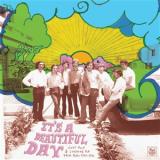
"It's a Beautiful Day" brings together 12 outstanding songs recorded between 1971 and 1976, reminiscent of sunshine pop, psych folk and soft rock with Peruvian touches, taken from extremely hard to find records, some of them reissued here on vinyl for the first time. A mindblowing look at a really stunning musical moment in Peru. Unusual instruments and exceptional vocal play also feature in the ten original songs and two cover versions, all performed by Lima-based groups. MAG has been, since its foundation in 1953, an essential label in the music scene of Peru, allowing the development of the careers of both tropical artists and musicians of other genres. At the head was Don Manuel Antonio Guerrero, its founder, whose name comes from the acronym of the label itself (M.A.G.). In 2021 MAG was acquired by the Spanish company Distrolux SL, owner of the Munster and Vampisoul record labels, after years of previous collaborations in which some of the most emblematic titles in the catalog were already reissued for the international market: Nils Jazz Ensemble, Sonora Casino, Traffic Sound, Al Valdez, Pax... Following our recent release "14 MAGníficos Bailables", comprising some of the best tropical music on MAG, this new compilation brings together 12 songs recorded between 1971 and 1976, reminiscent of sunshine pop, folk psych and soft rock but with Peruvian touches. The lyrics range from youthful reflections, environmental awareness, paradigm changes to all shades of love that the youth of the day experienced. Unusual instruments and exceptional vocal play also feature in the ten original songs and two cover versions, all performed by Lima-based groups.
"The Bad Seeds and Zakary Thaks were mid ‘60s Texas garage rock bands formed in the wake of the British Invasion, influenced by The Rolling Stones, Kinks, Yardbirds and others, becoming top local live attractions at a time when the 13th Floor Elevators and Moving Sidewalks were leading the way into psychedelia. In late 1966 Rod Prince on guitar and Roy Cox on bass from Bad Seeds joined up with David Fore from Zakary Thaks on drums to create a new band out of San Antonio featuring two lead guitarists. Todd Potter filled out the quartet on second guitar and they chose the name Bubble Puppy, taken from Aldous Huxley’s 1932 dystopian novel Brave New World. Huxley was an early advocate of LSD, appropriately. In 1969 Bubble Puppy scored a top 20 hit single with “Hot Smoke & Sasafrass” which led to their LP “A Gathering Of Promises”. International Artists, the legendary Texas label that previously had unleashed mind expanding classics by the Elevators, Red Crayola, Golden Dawn and others was a perfect fit. After the LP and additional 45s didn’t repeat the success of “Hot Smoke & Sasafrass” the band hooked up with Nick St. Nicholas of Steppenwolf as their new manager and moved to Los Angeles. A new band name was in order, Nick St. Nicholas chose Demian, title of the 1919 novel by Herman Hesse. His books were popular with the counterculture at the time and had provided Steppenwolf with their new name after they changed it from the Sparrow and hit it big. Demian recorded the LP live in the studio at the Record Plant in one midnight to six session. They had their arrangements fully realized, allowing them to combine live show energy and economy with to-the-point delivery suitable for repeated listening. No doubt they were aiming for pop hit success, using proto hard rock skills in a radio friendly way without compromising the heavy guitar moves. The vocals have echoes of the earlier Bubble Puppy style in spots but are more melodic with vibrant harmonies reminiscent of Moby Grape, Buffalo Springfield, James Gang… at times flashing on Steve Stills/Richie Furay westcoast without being too sweet about it. It works terrifically when the radio friendly voices top off killer hard guitar ensemble action. Early hard rock that is too bluesy flashy can get tiresome with repeat listening, especially if overdosing on guitar solos with the band relegated to the background… Demian keep it interesting with inventive song structures allowing all four players to integrate constantly into an ever changing but focused whole. This LP is a grower, despite the basic two guitars, bass and drums lineup and no frills production you reach a lot of different places during the ride. Demian is deadly hard rock, a perfectly organized vibe straddling live energy and crafted itinerary, amongst the first obscure major label killers that commanded premium $$ with collectors even way back in the late ‘70s. It gets you there every time, even half a century later!"
‘Icon’ is an overused word when it comes to describing singers and musicians, but when it comes to Nina Simone there are few artists that the word describes more accurately. The ‘High Priestess Of Soul’ is surely one of the most iconic singers of the 20th century, and one whose fame and acclaim stretches far beyond conventional black American music circles.
Nina Simone has featured on Ace and Kent CDs before but this is the first time she’s had one all to herself. “Let It All Out” is the first and only Nina Simone collection to draw repertoire from every label she recorded for between the late 1950s to the late 1970s.
Not a traditional ‘Best Of’ or ‘Greatest Hits’ package (although the performances included here ARE among her very best, and do include most of her Greatest Hits!) it is a singles collection that presents Nina Simone’s soul and R&B-slanted 45s in chronological order. Invariably they are the definitive versions of the songs, whether she recorded the original versions or not.
As well as almost all of her American pop and R&B chart hits from 1960 onwards, “Let It All Out” also contains all of Simone’s UK chart hits from the same period – several of which were more successful here than they were back home, including both versions of her biggest British hit ‘Ain’t Got No; I Got Life’, a UK #2 that did not chart at all in the US as was the case with the belated UK Top 5 hit ‘My Baby Just Cares For Me’ which also made no chart impression on its home turf…
Carefully curated and concisely annotated, “Let It All Out” lets the listener in to two dozen of Nina Simone’s most celebrated singles. There have been many compilations of her works since she passed away 20+ years ago, but none that gets to the heart – and soul – of her catalogue in quite so direct a manner as this one does.
25 has always been a mystical number in the world of Kiosk ID, woven into our story since the earliest days of Bar 25, Holzmarkt 25, and every chapter since. When midnight struck on December 31st of last year and 2025 arrived, the magic of the number was undeniable,echoing through Kater Blau, Holzmarkt, and Kiosk ID—and calling for a celebration like no other. As our lasers lit the night, two core Kiosk ID artists—Britta Arnold and Sascha Cawa—took to the decks, weaving a spellbinding journey crafted specifically for this moment. Months in the making, they unfolded a beautifully hypnotic tribute to the magic of 25, premiering five tailormade tracks in the process. That moment lives on as Kiosk ID no. 40—a special double LP capturing the magic of that night. Side A features the live New Year’s recording: an unfiltered document of Britta and Sascha’s hypnotic, otherworldly, and deeply danceable set, as it unfolded in real time—strobing into the first moments of the new year. Sides B, C, and D feature five exclusive studio originals, written and produced specifically for this night. On ‘Counting’, Britta and Sasha unfold their brand of stripped darkness and rolling groove work, while ‘Reformer’ teeters on taut coils of suspended synths. With ‘NGVMT’, the energy bursts open—a radiant block-party roller with throbbing staccato swagger and clanking metallic arpeggios. ‘Beam’ lifts off into pure cosmic wonder, its fluttering, airy themes spiralling skyward. ‘Good Life’ rolls the credits with a beautifully introspective soliloquy, tender and reflective beneath gentle waves of aspirating piano chords. Together, these recordings offer both an auditory keepsake and an invitation to relive that unforgettable night or discover it anew. Across five hypnotic compositions and a half hour of dance floor bliss, ‘Good Life 25’ encapsulates the ever-evolving sound
out of Stock
Last delivered 11 months ago available to reorder, subject to availability
Arriving two years after the first chapter, Absurd Matter 2 isn’t just a sequel, it’s an evolution, redrawing the boundaries established by its acclaimed predecessor. The Berlin-based Italian producer tempers his confrontational sonics with rare moments of introspection, shifting seamlessly between blown-out noise, warped hip-hop, mutant club experimentation, and weightless ambience. Textures disintegrate and reassemble, rhythms flex and crumble, and every detail balances on the edge of fantasy. It’s a poetic, layered response to Nino Pedone’s changing physical reality: the gradual hearing loss and perceptual renegotiation triggered by Ménière’s disease, which struck him in 2022. At first, the experience felt like betrayal, a brutal disconnection from the very sense that had shaped his life. But over time, the disorientation turned into a strange kind of focus. The silence between sounds became as expressive as the sounds themselves.
The first Absurd Matter was a visceral reaction to trauma; the second is more reflective – an ambiguous chronicle of sensory recalibration. Pedone doesn’t represent his altered inner reality through extremes, but through depth, zooming in on illusory distortions, tense rhythmic fluctuations, and fragmented sonics. Dense, immersive, and mystical, the album mirrors Pedone’s evolving relationship with perception itself.
Tinnitus-like feedback wails and noir-ish strings introduce “Repeater”, making it immediately clear that Pedone is painting a more delicately finessed image this time around. Fleshed out by raps from cult MCs billy woods and E L U C I D, the track is marked by subtle, sophisticated contrasts: the blurred, inverted rhythms that couch Armand Hammer’s haunted back-and-forth, and the glitchy interference that offsets the lavish orchestral phrases. Backwoodz associate Fatboi Sharif lends his Lynchian drawl to “Bandage Chipped Wings”, grounding Pedone’s lysergic rhythmic distortions with syrupy, horror-inspired couplets. Pedone also invites discomfort into “Crash Landing”, with droning, metallic tones that contradict South Central rapper ICECOLDBISHOP’s elastic flow. “Bitch, I don't give a fuck about anybody,” he squawks over Pedone’s incongruous rasping textures and time-warped beats, “cash out at any party.” Working alongside London’s Loraine James on production, Pedone reunites with Moor Mother on “I Saw The Light”, blending James’ soft-focus atmospherics with soundsystem-damaging, overdriven bass hits and rusted percussive snips. Moor Mother’s assertive words hover over the wreckage, tightening Pedone’s themes of overstimulation and altered awareness as they stutter and veer off course, vanishing into the backdrop.
Contrasting his more pensive experiments, Pedone’s dancefloor deviations are more concentrated on Absurd Matter 2 than ever before. He torches a stuttering dembow structure on “X”, obfuscating the rhythm’s familiar energy with disturbing audio hallucinations. On “Splintered”, he reunites with Kenyan prodigy Slikback, mangling neon-lit trance arpeggios with dissociated trap rhythms. He sharpens his skills to a fine point on “Oblivion Step”, observing 2- step through a lens of distortion and personal abstraction, shaking blipping synth leads over neck-snapping drums and counteracting the momentum with airless sci-fi soundscapes.
Perhaps the album’s most surprising moment arrives with “Viel”, which features vocals from Los Angeles-based composer Kaitlyn Aurelia Smith. Together, Pedone and Smith chance upon their notion of dub techno, fogging synth stabs and ghostly vocal traces into eerie harmonic distortions. On some level, it’s almost pop music, a far cry from the bleak dissonance of Absurd Matter and a hopeful way to reframe turbulence as transformation. Absurd Matter 2 doesn’t simply document a process; it enacts one. It doesn’t offer clarity; it invites disorientation. It’s not a map of the labyrinth, but a foghorn piercing the darkness.
out of Stock
Last delivered 10 months ago available to reorder, subject to availability
The Dead 60s seminal self-titled album gets a timely Deluxe edition reissue on Vinyl for its 20th Anniversary, on Deltasonic Records
“Back in the day, punk and dub weren’t just sharing space—they were smashing into each other headfirst. Late '70s Britain was a pressure cooker, and for kids like me, growing up between Brixton’s bass bins and the chaos of King’s Road, that collision was everything. Jamaican sound system culture met punk’s raw spirit in a haze of smoke, sweat, and feedback. It wasn’t about genre—it was about energy. Identity. Defiance. so when The Dead 60s came along, post-Britpop and post-bullshit, it felt like someone had dusted off the blueprint and run it through a battered old tape echo. These weren’t just lads with good taste—they understood the assignment. They took the DNA of two rebel cultures and mutated it into something that could stand tall in the 21st century. Dub-soaked, punk-fuelled, dripping with that Liverpool attitude. I remember first hearing them and thinking—yeah, here we go again. Not in a retro way, but in a real way. Guitars that cut like sirens in the night. Basslines fat and warm, straight out the Channel One playbook. Lyrics that painted the grey corners of Britain like CCTV poetry. It was the sound of youth under pressure. The sound of not fitting in—and not wanting to.
Their debut album dropped in 2005, and it hit like a flare in the dark. “Riot Radio” was a pirate broadcast from the concrete frontlines. “Control This” swaggered with menace and reverb. It was like someone opened a time capsule from the punky-reggae party and rewired it for a new generation.
Now, with this 20th anniversary vinyl reissue—complete with the full dub companion produced by Central Nervous System—we get to hear the bones and blood of it all. The dub versions pull the tracks apart and let the ghosts speak. Reverb, delay, space—it’s not just production, it’s meditation. Revolution slowed down to a heartbeat. It’s music that makes you move and think. What they’ve done here is more than remix a record—they’ve revealed its soul. That’s what dub does when it’s done right. And The Dead 60s, they got that. They weren’t tourists in the culture—they were students of it, shaped by it, and ultimately, contributors to the legacy. Liverpool’s long had a love affair with Jamaican music—you can hear it in the streets if you’re really listening. The Dead 60s tapped into that lineage, but they brought their own thing to the table. Punk's fire. Dub’s depth. Ska’s bounce. All filtered through a Northern lens and blasted out like protest graffiti. This 20th anniversary reissue ain’t about nostalgia. It’s a reminder. A celebration. A call to arms. Music like this doesn’t belong in a museum—it belongs on a system, shaking walls and waking minds. Crate diggers, completists, young punks, old heads—this one's for all of you.
So put it on and turn it up. Let the punk edge sharpen your thoughts, and the dub shake your bones ‘cos this isn’t just a reissue - it’s resistance on wax.....”
Originally released in 1996, this record featured two 10 minute tracks which were recorded from what the artist calls a Live Set Dub (LSD), this one in particular recorded from a session at Gibus Club in Paris.
The A-side explores the influences that the artist had from the Germany foundations of Basic Channel, while the B side is the artist’s homage to Chicago and Detroit pioneers as an attempt to build a bridge between them using this work as a response which could potentially be used in a greater dialogue with the American source of inspiration.
out of Stock
Last delivered 11 months ago available to reorder, subject to availability
It runs through the minds of men and women of a certain age, complexion, and place who grew up during the era of segregation and who defied their parents, the law, and all genteel propriety and custom by answering one bluesman's invitation to cross the color line and join him getting lowdown and dirty as he serenaded a generation from the bandstand, on jukeboxes, and through the radio.
To them, the slurred guttural sound of a wise man singing "Hush, Hush," putting down the "Big Boss Man" or advising the listener to "Take Out Some Insurance" before they behold the "Bright Lights, Big City" was a siren's call they had no choice but to answer. Even if they tried, they couldn't resist the steady, dirty rhythm punctuated by the twanging sting of an electric guitar note and the sweet wail of a harmonica. And when they leaned in close, they could even hear the barely perceptible sound of a woman's voice whispering forgotten lyrics into an ear.
Ain't nobody can do Jimmy Reed like Jimmy Reed could. But this drive down Jimmy Reed Highway with fellow Mississippian Kent "Omar" Dykes at the wheel with Jimmie Vaughan (older brother of the legendary Stevie Ray Vaughan) riding shotgun and folks like, Kim Wilson, Miss Lou Ann Barton, James Cotton, Delbert McClinton, and Gary Clark, Jr., joining the duo, comes mighty close. As Omar guns the engine and peels rubber on the two- lane blacktop lined with no- good women, empty whiskey bottles, too many cigarette butts and bad intentions, he leaves John Law trailing behind eating his dust. Hop in for a ride and turn up the volume. The electric bluesman who shaped the minds and moves of a musical generation is alive and well. (by Joe Nick Patoski)
out of Stock
Last delivered 11 months ago available to reorder, subject to availability
Where we welcome you to the Fourth installment of 'Divine Harmonics" Featuring Kuniyuki Takahashi. Music produced in collaboration with friends
Here we present Part one of a Two Part Series.
Recorded in a full-fledged Recording Studio in Brooklyn New York, the idea behind this current project was to assemble a few admires of Kuniyuki's music and invite them to participate in the composition.
The musicians on this project include master percussionist composer Lekan Babalola on African Drums and Percussion, Lead Guitarist James Bergeau , Joaquin Joe Claussell Main Voice and Percussions; And of course, the artist himself Kuniyuki Takahashi and Acoustic Piano, Keyboards and Drum Programming.
Artwork Created by the one and only artist Akemi Shimada.
out of Stock
Last delivered 3 months ago available to reorder, subject to availability
Wally Badarou is a synth pioneer and musical polymath. But rarely does he sing over his sumptuous tracks. The 6 songs that comprise new record Simple Things finally realise Wally's vision for select backing tracks from his beloved Colors Of Silence.
The tracks were originally developed back in 2001 for the release of the original CD; here, Wally has “simply" added overdubs and vocals to their mastered mixes with some discerning edits. Simply put, Simple Things is another slice of simply stunning Wally Badarou genius.
Simple Things has been decades in the making. Indeed, Wally struggled not only with the idea of singing these wonderful songs himself but singing them in English and writing his own lyrics, while wrestling with the sensational backing tracks, which themselves seemed to have taken on a life of their own.
As Wally explained to us: "In addition to the instrumental artist I have been known as, so far, there has always been a singer who simply was not sure he was, up until now. Even though “Back To Scales Tonight”, my very first album, was, indeed, a song album."
Opener "It Couldn't Be You" embellishes the uptempo groove of soca-funk gem "The Lights Of Kinshasa". As Wally explained to us, it's about “a simple love story somewhere, one rainy night, under the lights of Kinshasa. A woman, a man, online dating, quite usual in our times. Then they meet, almost missing each other." The guide vocal Wally had laid for Colors Of Silence - with an organ sound - seemed striving for words in Linguala, a Congolese language he could not speak. Therefore the decision to do it himself was not an easy one, for it had to be in English to fit his singing. We think it turned out pretty good!
"You Can't Hide Always" vocalises Wally's deep concerns set to the propulsive "Smiles By The Millions": "Populism, ostracism, radicalism, ethics and values all turned upside down worldwide, are they all inevitably exacerbated by our social networks? It could all melt down one day, like a house of cards in the ocean of fake news and false prophecies”. Wally wanted to keep the track as bare as possible but, inevitably, the backing vocals and the synth-brass arrive ultimately to present a welcome 70s flavour, with no snare-drum added.
The bright and breezy "We'll Make It Again" adds vocals to "Where Were We", a tropical, reggae-tinged bounce through the islands. Here's Waly: "Where were we when we last said: "I love you"? Simple words to express something quite common, but never quite simple to deal with. A simple song about the resilience of the broken hearts.” The reggae came from it being conceived when Wally was scoring for “Third World Cop”, a 1999 Jamaican action movie.
"Walk Straight Ahead" provides Wally's gorgeous, contemplative and idiosyncratic vocals to the deep serenity of Colors Of Silence highlight, "Amber Whispers". It's a gliding, divine, mini melodic masterpiece. It'll make you swoon in its extreme beauty. As Wally describes, "it started as just whispers, sweet amber whispers. Then the colour turned darker, as darker skies seemed to fall upon us while the whole world keeps on walking ahead, straight ahead, regardless of the blatant warnings, feeling much too comfortable in conformity. Initially, the verses were to be spoken only. I realised they could be sung all the while, without overshadowing the ethereal atmosphere." Amen.
The serene, celestial "Painting My Life Blue" presents the vocal version of "Days To Wonder". Says Wally, "how does it feel when your second half is gone after decades of riding life together? Past the temporary loss of your bearings, you come to realise you've been blind to the essential, and suddenly you can see...For this most intimate song of mine, I had tried to come up with a melody on top of the existing backing track, long before realising the melody was in the keyboard part already. It just needed to be properly mixed with it."
The profoundly emotional "Just Two Lovers" works up the formerly-too-brief and glorious "Crystal Falls" into a much fuller masterpiece and features acoustic guitar sparkle before fully glistening with some gentle head-nod percussion. Waly explains further: "Dear little green men, please tell me, what is it about us that makes you want to come and visit us so often (contrary to Fermi's assertion)? And here is the reply I believe I heard them sing: "You've got the key you've been searching for: Love”. I reverted to the initial backing track I had made around 1985, which already bore the melody, and which I added acoustic guitars to, before singing it." An astounding closer.
A synth specialist, there can be few artists more under-appreciated given their vast influence than Wally Badarou. His solo work practically defined the sound of the Balearic DJs of the 1980s, and thus the more sophisticated sound of dance culture thereafter. He was one of the Compass Point All Stars (with Sly and Robbie, Barry Reynolds, Mikey Chung and Uziah "Sticky" Thompson), the in-house recording team of Compass Point Studios responsible for a series of albums in the 1980s recorded by Grace Jones, Tom Tom Club, Mick Jagger, Black Uhuru, Gwen Guthrie, Jimmy Cliff and Gregory Isaacs. Badarou's keyboard playing could also be heard on albums by Robert Palmer, Marianne Faithfull, Herbie Hancock, M (Pop Muzik), Talking Heads, Manu Dibango and Miriam Makeba. He also produced Fela Kuti. Phew!
When we asked Wally about the significance of this collection's title, he explained: "These are "Simple things” that everyday’s life seems to build upon. The simplest are the harder to describe, but when satisfactorily described i.e. with simple words, they are the more genuine and authentic to express and share. I’ve immersed myself in other classic song lyrics, something I hardly did before, just to appreciate the genius behind the simple words they were made of, and had a great time studying how powerful they were in expressing complex ideas such as love."
Recording was twofold: first, most of the backing tracks were recorded in 2001, in Wally's studio in Normandy, mostly using hardware synths and Yamaha digital consoles. Then, he fine-tuned the melodies and wrote the lyrics in late 2023, then added some overdubs and sang them all during summer 2024. States Wally, "Digital Performer was and remains the DAW I’ve been using throughout, ever since the 80s."
Wally's sophisticated synth textures and expressive keyboard runs are so full of character, so full of life, that this work of art transcends any easy genre categorisation. Meticulously remastered and cut by both Simon Francis and Cicely Balston respectively, it has been pressed to the highest possibly quality at Record Industry in Holland. Sometimes, the simple things are the most extraordinary.
out of Stock
Last delivered 10 months ago available to reorder, subject to availability
Villain of the Story sind zurück... Mit „Convergence: Two Minds In One“ präsentiert die Band ihr bislang persönlichstes, künstlerischtes und kompromisslosestes Werk. Das Album erscheint am 26. September und markiert ein neues, kraftvolles Kapitel: Eine Wiederauferstehung voll emotionaler Tiefe, gesanglicher Entwicklung und einer Geschichte, die den Breakdowns an Intensität nichts nachlässt. Die Platte steht sinnbildlich an einem Wendepunkt; zwischen Licht und Dunkelheit, Heilung und Zerstörung. Mit dem Einstieg des neuen Sängers Cody Crook meldet sich Villain of the Story eindrucksvoll zurück und liefert ein Album ab, das messerscharfen Metalcore, mitreißende Melodien und schonungslos ehrliches Storytelling vereint, auf eine Art, wie es nur wenige Bands wagen. Klanglich geht die Band dabei so weit wie nie zuvor, jeder Song ist emotional aufgeladen und bis ins Detail durchdacht. Doch „Convergence“ ist mehr als nur ein Album. Es ist eine Geschichte über Schmerz, Liebe, Verlust und den inneren Kampf. Erzählt wird das Leben eines Mannes, der von seinen Traumata und einem dämonischen Wesen – sei es real oder sinnbildlich – verfolgt wird, das sich von seinem Leid nährt. Eine Geschichte über Erlösung, die zur Tragödie wird: Liebe hat ihn einst gerettet, doch der Verlust droht alles zu zerstören. Im finalen Titeltrack „Two Minds In One“ kulminiert das Drama mit der alles entscheidenden Frage: Wer hat am Ende die Kontrolle? „Das übergeordnete Thema des Albums ist, dass nicht jede Geschichte ein Happy End hat. Am Ende haben wir die Wahl: Werden wir zu den schlimmsten Versionen unserer selbst, wenn alles zerfällt, oder nehmen wir den Schmerz an und versuchen, neu anzufangen?“ –Villain of the Story Egal ob du Villain of the Story von Anfang an verfolgst oder gerade erst entdeckst, „Convergence: Two Minds In One“ beweist, dass diese Band Veränderungen nicht nur überlebt, sondern daran wächst.
Found Keys is the debut album by American artist Ruth Maine. Although Ruth has been playing and composing music for over two decades, this is the first time she decided to record some of her varied compositions and share them with the public. But in times when it is the norm to clamour for attention, she prefers to go the opposite way. Ruth likes to let her music speak for itself and stay in the shadows.
The 16 short piano pieces heard on this album, each about two to three minutes long, were recorded remotely and purely surrounded by nature. Once a composition was found and Ruth considered it mature, she only recorded it once, embracing the beauty of doing something for the first time with all its little imperfections. Found Keys sounds anything but imperfect though. These compositions feel timeless, intimate and comforting, as if they have been around for a long time, like an old friend. Gently played keys slowly evolve into minimal pieces through repetitive melodies. There’s stillness as much as there’s brightness, sadness as much as joy; welcome to a beautiful journey through Ruth’s world of wonder.
In many ways, Found Keys is a deeply personal record that takes Sonic Pieces back to its roots. And it leaves a feeling of nostalgia while reviving memories of the past.
Found Keys is the debut album by American artist Ruth Maine. Although Ruth has been playing and composing music for over two decades, this is the first time she decided to record some of her varied compositions and share them with the public. But in times when it is the norm to clamour for attention, she prefers to go the opposite way. Ruth likes to let her music speak for itself and stay in the shadows.
The 16 short piano pieces heard on this album, each about two to three minutes long, were recorded remotely and purely surrounded by nature. Once a composition was found and Ruth considered it mature, she only recorded it once, embracing the beauty of doing something for the first time with all its little imperfections. Found Keys sounds anything but imperfect though. These compositions feel timeless, intimate and comforting, as if they have been around for a long time, like an old friend. Gently played keys slowly evolve into minimal pieces through repetitive melodies. There’s stillness as much as there’s brightness, sadness as much as joy; welcome to a beautiful journey through Ruth’s world of wonder.
In many ways, Found Keys is a deeply personal record that takes Sonic Pieces back to its roots. And it leaves a feeling of nostalgia while reviving memories of the past.
In March 2024, Jim White released his first-ever solo album, All Hits: Memories. Coming forty years into his career, it felt like some kind of breakthrough happening. His second solo album confirms it: Jim"s deep percussive intuition is fueling a new musical vehicle in his life. Inner Day finds him dancing ever more deftly with himself on an expressionistic set of drum kit and keyboard duets. Developing meditations on his personal arcana into expressive keyboard feels, he crafts parts as he would on the kit, further interacting with them on drums as well. Jim takes another big step on Inner Day, singing on two standout tracks, "Inner Day" and "I Don"t Do / Grand Central," his words and voice in the mix for the first time. A drummer of exquisite powers, great and small - his Dirty Three compatriot Warren Ellis contends his playing long ago "split the atom" - Jim"s capable of driving a band one minute, then slipping past accompaniment and into the cracks of the subliminal in the next breath. He"s got qualities - deep pockets, a lovely sense of the moment - that serve him and those he drums with well. His collaborators include Bill Callahan, Cat Power, Marisa Anderson, Daniel Blumberg, T. Griffin, Phosphorescent, Jess Ribeiro, Ed Kuepper and Mess Esque, alongside communal experiences in Xylouris White, The Double, Beings, The Hard Quartet and Dirty Three. And all that"s just in the past five years!
Blang Records are thrilled to announce another two vinyl album re-releases from Jeffrey Lewis's back catalogue: The debut classic The Last Time I Did Acid I Went Insane (originally Rough Trade 2001) and The critically acclaimed 4th album 12 Crass Songs (originally Rough Trade 2007). 12 Crass Songs (VV004LP): Astonishingly transformed covers of songs originally written by the band Crass in 1978-1984, this 2007 LP is the most rare and sought-after vinyl in Jeffrey's catalogue and is also now completely out of stock. "Weird? Very_ _ but it's also downright inspiring" (4 of 5 stars) - Rolling Stone. "The record presents Crass's lyrics calmly, often demonstrating how sane and practical they are; it proves once again, and kind of thrillingly this time, that no music is immune to interpretation" - The New York Times. "Folk maverick raids anarchist commune and finds catchy tunes_ Works wonderfully" - Spin "Jeffrey Lewis' talents appear without end_ (on 12 Crass Songs he) magically makes the anarcho-rockers' anti-establishment savagery his own, by wrapping their barbed sentiments in his trademark mottled tea-towel warmth" - NME. "12 Crass Songs succeeds utterly_ eerily beautiful and strangely affecting" - Plan B Magazine "He's taken hold of any number of my old stormy favourites and breathed fresh life and fire into them. . . Man, I'm in awe of Jeffrey right now. Who'd have thought he could have done that?" - Everett True/ Village Voice "Quite brilliant" - (4 of 5 stars) MOJO. "It's no mean feat to transform such abrasive harangues into lush, tuneful folk_ without defusing their righteous anger_ but Crass's intelligent and indignant screeds could not hope for a more sympathetic translator." (4 of 5 stars) - THE GUARDIAN. Blang Records and Jeffrey Lewis have history: before Blang was a label, it started life as a live night at the 12 Bar Club in Denmark Street, hosting many a set of the NY Antifolk artists over on UK shores, including Jeffrey Lewis. Now 20+ years since Jeffrey first played Blang. Native New Yorker Jeffrey Lewis is a comic book writer/artist and a musician. A cult hero birthed from the now infamous antifolk movement that sprung up on Manhattan's Lower East Side in the 90s, Jeffrey has released dozens of albums showcasing his unique blend of bleakly witty observations, scratchy, lo-fi punk and croaky folk/anti-folk, all firmly rooted in a strong DIY sensibility. Jeffrey and his band have toured the world multiple times over, released albums on Rough Trade, Moshi Moshi and Don GIovanni Records, and have been featured by NPR, The History Channel, The NY Times and more.
Punk pioneer/Eater main-man, Andy Blade's 7th solo album and follow up to 2024's critically acclaimed & heavily rotated, Sparks bros endorsed "Being Alive Is Fun". It is imbued with the usual left-of-centre Blade-ism's & themes: star maps, UFO's & a slightly twisted nod to tragic 70's heroine Karen Carpenter. You get what you deserve with Blade, and with Tiny Specks you are rewarded with a rich code to decipher at your leisure. Most of all, however, it is all about the quality of his songwriting. Opening track 'Karen Is The Drummer' (featuring Blade's regular singing collaborator - PseudoPomp's Katerina Sharkova) seems unsettlingly self-explanatory, but all does not seem well in the Carpenter M.O.R world - 'It's just her & her brother & her folks indifference to that girl'. Occasional Dinosaur Jr vocalist Tiffany Anders gives 'I'm Not Myself' a poppy but eerie nuance. PollyPikPocketz's Myura Amara pops up on the short but very sweet 'About That'. Matilda Scotland, Quick Romance's uber-cool punky-chanteuse - adds her Gen Z aura to the summery 'I Like It When You're Happy'. Former Generation X guitarist Bob 'Derwood' Andrews, with whom Blade has worked with consistently of late, once again features heavily on 'Tiny Specks'_ Like with Katerina Sharkova's voice, Derwood guitar lines interweave with Blade's honeyed vocal as though they made for each other. 'This Place' is another key track, capturing the claustrophobic-genocidal mood of what has been taking place in Gaza/Palestine for over two years now, and counting. 'This is not so much a protest song as it is the noise in my head'. If John Lydon is the Widow Twanky of Punk, and Billy Idol, its Elvis, then Andy Blade must surely be the Sinatra of Punk.
Hekura are a Barcelona-based duo that create expansive soundscapes anchored in ritual minimalism. With influences ranging from the ethereal mysticism of Alice Coltrane to the hypnotic pulse of Steve Reich, their music explores the boundary between introspection and bold sonic exploration. Inspired by ethnographic traditions and the raw energy of Julius Eastman, their compositions fuse scattered percussion, shimmering textures, and hypnotic saxophone rhythms for moments of solitude and profound reflection. Hekura's work invites listeners to immerse themselves into a spectral world where tradition meets the avant-garde, offering a unique and evocative listening experience. Ernest and Edu met during their jazz studies at Taller de Musics in Barcelona. Their first conversation was about Charlie Haden Liberation Orchestra's "free jazz" version of the South African anthem, Nkosi Sikelele. That bond quickly translated into a shared world of listening, respect, experimentation, and sound that crystallized in Hekura. Edu Pons is a saxophonist and a music teacher at Taller de Mùsics in Barcelona. His music ranges from jazz to folk or from classical to free improvisation yet with his own distinctive voice. Ernest Pipó is a guitarist and composer from a small town in La Garrotxa. Currently based in Barcelona, he primarily focuses on music production and soundtrack composition. His influences range from jazz, electronica, noise, pop, and, although he dares to admit it, also ambient. For fans of: John Tchicai (with strings), Steve Reich, Arv & Miljö (Discreet Music, 2024)
Limited edition GRAPE CRUSH vinyl 1000 copies worldwide. Remastered by Bob Weston at Chicago Mastering Service. Originally released in 1988 vinyl reissue includes 4 bonus tracks. "Plenty of bands can claim Naked Raygun as an influence, from post-punkers to hardcore acts. All of them could learn a thing or two or three by studying the whoas. With Jettison... Naked Raygun achieved creative bliss. Here is an album that successfully combines dissonant instrumentation with supremely catchy vocals." - Punknews.org - // Naked Raygun were an extraordinary staple in the Chicago music scene - beginning in the early 80's and continuing until their quiet demise in the early 90's. Their music showed the world that punk rockers could play and be really good at it. Founded in Chicago in 1980, by Marco Pezzati, Jeff Pezzati and Santiago Durango, Naked Raygun released six albums during their eleven year career that would change the sound of punk rock indefinitely. The band is widely recognized as being one of the most influential punk bands of the 80's. Their anthemic style incorporated politics in a uniquely accessible way, melding pop and hardcore into one cohesive sound, that would later be dubbed, "The Chicago Sound". Shortly after their first release, Basement Screams, Durango left to join Big Black permanently, and was replaced by John Haggerty, whose unique style of buzzsaw guitar would define Raygun's sound for their next four albums. Additionally, Pierre Kezdy replaced Camilo Gonzalez and Eric Spicer took over drums for Jim Colao. In 1990, Haggerty left the band to start Pegboy. Bill Stephens joined the band for their final studio release entitled, Raygun...Naked Raygun.
On H008 Len Faki goes back to his crate for a unique journey through synth-led landscapes, carefully selected and bolstered up for the dancefloor.
Starting with 2000 And One - Edge Of No Return from the mid 2000s, when it was just a standout synth-line - no beats. The Hardspace Mix takes this masterclass in building tension, adds a driving beat and searing percussion while keeping the iconic synth-play intact -layered with big, booming bass for that full-bodied, dancefloor-ready energy.
The flip boasts two of longtime Figure-collaborator Viers' productions. Re-L, released almost 10 years ago, it delivered that unmistakable pulse of deep, dubby, shimmering synths. Hardspace picks up these potent elements and injects them with a new low-end, dramatic rises and tight rhythms, creating a high-energy yet hypnotic flow.
Equally energetic but much more brooding in atmosphere is the Hardspace version of Free Your Mind. An elusive original, this mix builds on dense percussion, subdued vocals and droning horns while carrying some seriously spaced-out acid synth textures. One for the wee hours and those special memorable moments in a set.
out of Stock
Last delivered 5 months ago available to reorder, subject to availability
LIMITED 500 ONLY (WORLDWIDE) FIRST PRESS ON CRYSTAL CLEAR VINYL WITH GREEN SMOKE SWIRLS. HOUSED IN GLOSS FINISHED FULL COLOUR SLEEVE WITH POLYLINED INNER BAG. NON-RETURNABLE.
Japanese psych rockers Hibushibire return with album number four ‘Flashback Stonehenge’ and a UK/European tour to coincide.
‘Flashback Stonehenge’ is the bands first studio album as a four piece, with live guest Kohei Katsuma now joining as a full time member on percussion/congas (an absolute must see live) alongside Changchang (Guitar/Vocal), Tetsuji Toyoda (Bass/Vocal) and Aoi Hama (Drums/Vocals).
Like the band's previous three albums, this one continues with the three shorter songs on side one, and one epic long song filling out side two mantra that has served them so well thus far.
Opening track ‘Snow Sniffing Matador’ is already a firm live favourite, with it’s heavy riffage and 70’s rock swagger. Things then cool down with a more laid back ‘In Heaven’, featuring Aoi Hama’s dreamlike vocal whispers, and a fuzzed out take on traditional English folk song ‘The Cuckoo’ with Changchang & Aoi trading verses.
Flip it over, and you have the epic title track, which sees the band take a slightly different approach recalling the likes of Steve Reich, Terry Riley, Faust, CAN, Eno etc over its extraordinary 22 minutes.
The band return for their fourth UK tour in October, and also play their first mainland European dates to coincide.
Following on from 2024's "Distant Landscapes EP" alongside Tensal, Amorphic returns (solo this time) to James Ruskin's Blueprint Records with a new ten-track album released digitally and as two four-track vinyl EPs released simultaneously.
Amorphic is a pseudonym of Scottish artist Vince Watson to explore more raw and hypnotic signatures. Launched in 2022, Amorphic has featured on labels such as Token, Symbolism and Modularz as well as the two labels Vince runs himself: Amorphic and Morph.
With almost 30 years in the industry, Vince has released over 1000 tracks, which has allowed him to work and gig with some of the very best in that time including Laurent Garnier, Richie Hawtin, Carl Craig and in this year, Vince will release an LP with Carl Cox on his label Awesome Soundwave. As a touring musician has been able to play at some of the world's best clubs as both Amorphic and Vince Watson, including a residency at Tresor Berlin, DC10 Ibiza with Carl Cox, Berghain and Womb Tokyo as well as being a current resident of 909 Festival in Amsterdam.
earth had been watched by the keepers of the secrets for millennia.
the human experiment had evolved into chaos.
the subjects had destroyed themselves and the planet they were gifted.
a few were taken, leaving a dying planet behind.
the rest of human history was deleted.
the gods sought a new order.
the year zero...
First time release on vinyl of the breathtaking songs Patty Waters recorded with engineer Steve Atkins in 1970 at the Coast Recordings studio, together with the unreleased single 'My One And Only Love' and a recorded live session at Lone Mountain College in 1974.
The album 'You Loved Me' is the missing link between her two groundbreaking pioneering and highly acclaimed ESP-Disk records from the end of the 60's and her post 90's releases. The missing link between the radical ingenue of the 1960s and her late 90's songs wherein she expressed the resolution of all of her life's moments through mature readings of traditional songs and jazz standards. This collection aims to provide that missing link and to finally complete the picture of her storied recording career.
In what would have been her third LP, the 'You Loved Me' album serves as the inverse of Patty's debut. While her debut "Sings" concerned itself with themes of heartbreak, loneliness and yearning, there's an abundance of love, joy and togetherness on "You Loved Me".
Or in Patty's own words:
"I was a young girl alone at age 19, I was longing for love and dreaming of how wonderful love could be"
On 'You Loved Me' Patty Waters velvet voice captures this longing for love, straight from her soul to your heart. Crossing the border of the avant garde jazz entering a strange zone, somewhere between spiritual jazz, early folk vibes on the songs on the A-sides while the 14 minute composition 'Touched By Rodin In A Paris Museum' on the B-side is (dixit David Stubbs for Uncut in 2004) a brilliant extended showcase for the uneasy Cageian minimalism of her piano playing.
'You Loved Me' proves also again why Albert Ayler introduced her to ESP-Disk president Bernard Stollman, impressed Miles Davis, Pharoah Sanders and Henry Grimes with her concerts and can count Patti Smith and Yoko Ono (to name a few) amongst her fans.
out of Stock
Last delivered 11 months ago available to reorder, subject to availability
An’archives presents Kagome Kagome, the first collaboration between France’s Delphine Dora and Japan’s Ayami Suzuki. Curious listeners might know Dora from the string of lovely, idiosyncratic albums she’s released over the past two decades, most recently for labels like Modern Love, Morc and Recital; she’s also worked with the likes of Michel Henritzi and Sophie Cooper. Suzuki’s performances, predominantly for voice, place her within a tradition of Japanese improvised music – see the music she’s made with artists such as Takashi Masubuchi, TOMO and Leo Okagawa – but her approach also takes in folk song, ambience and claustrophobic drone.
On Kagome Kagome, Dora and Suzuki play to their many strengths: a gentle, free-willed folksiness; long, aerated drone constructs; ghostly, time-warping explorations for voice. They met on Dora’s May 2024 tour of Japan, though they’d been in touch beforehand, with Dora proposing the collaboration to Suzuki, developed around “concepts of ‘otherworldliness’ and ‘impermanence’,” the latter says, “and explored the relationship between ‘the invisible’ and sound in Japanese culture – a common interest we share.”
They recorded across several days that month, with the sessions for Kagome Kagome taking place in Kanumi, in Tochigi prefecture, at a space named Center. “I was particularly looking forward to seeing Delphine encounter the vintage 104-year-old harmonium from Nippon Gakki Seizo Co. that had just been repaired at Center,” Suzuki recalls. “It was as if the harmonium had been waiting for Delphine to draw sound from it. I felt it was a beautiful relationship where they could guide each other.”
Indeed, there’s something channelled about the music that Dora and Suzuki made together in the session that constitutes Kagome Kagome. Dora’s harmonium might be the spine of the album, but Suzuki’s free- floating voice, and gaseous, muddied banks of electronics, wrap around the wheezing, ancient tonality of the harmonium beautifully – they, too, sound as though they were just waiting to be willed out of the daytime air. Their voices nestle together beautifully – “when we sang together in a tunnel,” Suzuki says, “there were times when we sang the exact same melody without planning. It happened so naturally that the boundaries between us became blurred.”
And that title? It’s drawn from a Japanese children’s song, and the song titles themselves constitute the song’s lyrics, in alternating Japanese (Romanized) and French language. Urban legend connects the song “Kagome Kagome” to the Nikko Toshogu Shrine, nearby Center, that Suzuki and Dora visited while they were in Kanumi. “The mysterious lyrics of ‘Kagome Kagome’ and its puzzle-like connection to Nikko Toshogu were a perfect fit for this mysterious album,” Suzuki reflects, “which I think has its own kind of puzzle-like elements.”
A deep album of prayer and magic, of divination and ritual, Kagome Kagome’s sense of serious play, its rich beauty, feels somehow dislocated from our time. If you’ve ever enjoyed the music of Nico, Kendra Smith, Charalambides, or other channelers of ghostly mystery, its eerie otherness will, somehow, feel oddly familiar.
out of Stock
Last delivered 11 months ago available to reorder, subject to availability
After their first joint recording experience in 2022, in which they dedicated a monograph to the Beatles, revisiting their great classics,
Sarah Jane Morris, a British jazz, rock, and R&B singer and songwriter, and the Solis String Quartet, a Neapolitan string quartet with
extensive concert and recording experience, are embarking on a new album. This time, it's not a monograph, but a tribute to a series
of artists who have left an indelible mark on the universal music world with their art and unique lifestyle. The project is titled "The 27
Club," a reference to those artists who, despite not choosing to belong to any elite circle, were united by the fate of having left this
world too soon, at just 27 years old. Among them are great names such as Jimi Hendrix, Janis Joplin, Jim Morrison, Kurt Cobain, Amy
Winehouse, and Otis Redding. Despite their differences, these artists share a charisma and a passion for music that has made them
immortal. Their musical legacy continues to celebrate their memory and inspire new generations. The album is a tribute to these timeless
artists, whose songs remain timeless and continue to move. Forever Young.
"After our first recording collaboration with Sarah Jane Morris in 2022, in which we dedicated a monograph to the Beatles, revisiting
their great classics, we decided to take on a new challenge, no longer a monograph but a work dedicated to a series of artists who have
unmistakably marked the universal musical world with their art and their very particular lifestyle! We called it "Forever Young" and it
tells the story of the "Club of 27" in music; an imaginary, dark and very elitist circle in which artists of the caliber of Jimi Hendrix, Janis
Joplin, Jim Morrison, Kurt Cobain, Amy Winehouse, Otis Redding found themselves enrolled, certainly unwillingly and without their
knowledge, after death snatched them from success on the threshold of twenty-seven, only to restore them, almost as compensation,
to immortal glory, just a stone's throw from legend. Musically speaking, thanks to the overflowing evocative power of Sarah Jane Morris's
voice, it was both fascinating and stimulating for us to try to restore It integrates the idea and mood that permeated and still live on in
these compositions, the rhythm, the melody, and the lyricism, in an original reinterpretation that accompanies the listener in the rediscovery of these masterpieces! Solis String Quartet
"Greatly talented creative people often die young, like Keats, Mozart, Schubert, Raphael, and the Brontë sisters. We tend to think of
them in two ways: we wonder what they might have accomplished had they lived longer. However, more positively, we can appreciate
their youthful talents as impervious to the passage of time, their brilliance preserved in their eternal youth. They will remain forever
young." Sarah Jane Morris
Back on limited classic black vinyl, includes the original 8 track album. At the forefront of the Paisley Underground scene, The Dream Syndicate are one of the most revered indie-rock bands of the 1980s. Medicine Show is the band's second album. Remastered from the original reel-to-reel tapes and featuring liner notes by Steve Wynn. Medicine Show has always been a controversial album, even before it was recorded. The indie rock darlings became the first Paisley Underground band to sign to a major label, hire a mainstream rock producer, change bass players, and spend months recording the album - after having banged out their previous one, The Days of Wine and Roses, in mere hours. After succesful debut and waves of positive press and , A&M Records signed the Dream Syndicate and they went into the studio with producer Sandy Pearlman, who spent five months in the studio guiding the band through their second LP. ... Medicine Show was greeted with openly hostile reviews, largely because it sounded practically nothing like the album that sent tongues wagging two years earlier. ... [...] sounded big and polished, but also dusty and weathered, with the terse, nose-thumbing lyrics of the debut replaced with dark, complex narratives full of bad luck and bad blood backed with booming drums and roaring guitars that were significantly more rockist than what Steve Wynn and Karl Precoda brought to their earlier recordings. Viewed in the context of Wynn's career, Medicine Show marks the spot where the lyrical themes and musical approach of his later work would first come into focus, but it still doesn't bear much resemblance to what the Dream Syndicate would create on their subsequent albums in its grand, doomy tone and obsessive but curiously unobtrusive production style. [...] there are a few great songs scattered throughout (especially "Merrittville" and "Armed with an Empty Gun"), and once it works its way in, the 8:48 of "John Coltrane Stereo Blues" is as potent a guitar workout as anything this band would ever release. [...] Lots of bands let loose with a major-label budget for the first time have made lavish records that didn't quite work, but unlike most of them, Medicine Show doesn't sound like a grandiose waste of money. Instead, it's a widescreen guitar spectacle [...] and if it doesn't always work, enough of it does to make it worthy of serious reappraisal. - allmusic.com
In 2005, Felt 2: A Tribute to Lisa Bonet brought together two of underground hip-hop’s most respected voices of the time—Murs and Slug—for a second collaboration that felt looser, livelier, and more charismatic than its predecessor. The album captures a moment of creative freedom, where both MCs were firing on all cylinders, trading verses with sharpness, humor, and effortless chemistry. Their interplay reflects a deep mutual respect and a shared drive to push boundaries while keeping things rooted in style and substance.
Working with different producers for each volume allowed Murs and Slug to bring a unique energy to each release, and Ant’s masterful production was central to the chemistry of Felt 2.
With roots in classic soul and West Coast bounce, his beats created a warm, funk-laced foundation that allowed both rappers
to experiment with new cadences and ideas. Rather than lean on moodiness or melodrama, the soundscape of Felt 2 is expansive, colorful, and rooted in rich, infectious rhythm—an aesthetic that has aged gracefully and continues to draw new listeners into its orbit. While undeniably fun, Felt 2 is also structurally tight and full of moments that reward repeat listens. The chemistry between Murs and Slug is effortless, and their shared sense of humor, timing, and respect for the craft creates a lasting impression. It’s a standout entry in the canon of early-2000s indie hip-hop, and one that’s long overdue for a proper vinyl reissue.
In 2005, Felt 2: A Tribute to Lisa Bonet brought together two of underground hip-hop’s most respected voices of the time—Murs and Slug—for a second collaboration that felt looser, livelier, and more charismatic than its predecessor. The album captures a moment of creative freedom, where both MCs were firing on all cylinders, trading verses with sharpness, humor, and effortless chemistry. Their interplay reflects a deep mutual respect and a shared drive to push boundaries while keeping things rooted in style and substance.
Working with different producers for each volume allowed Murs and Slug to bring a unique energy to each release, and Ant’s masterful production was central to the chemistry of Felt 2.
With roots in classic soul and West Coast bounce, his beats created a warm, funk-laced foundation that allowed both rappers
to experiment with new cadences and ideas. Rather than lean on moodiness or melodrama, the soundscape of Felt 2 is expansive, colorful, and rooted in rich, infectious rhythm—an aesthetic that has aged gracefully and continues to draw new listeners into its orbit. While undeniably fun, Felt 2 is also structurally tight and full of moments that reward repeat listens. The chemistry between Murs and Slug is effortless, and their shared sense of humor, timing, and respect for the craft creates a lasting impression. It’s a standout entry in the canon of early-2000s indie hip-hop, and one that’s long overdue for a proper vinyl reissue.
Alan Parsons Project second studio album "I Robot", widely regarded as one of the greatest concept albums of all time, is re-issued in a variety of different formats including a classic black vinyl, half-speed remastered by Miles Showell at Abbey Road studios. The album was originally released in July 1977, and draws conceptually on author Isaac Asimov"s science fiction Robot stories, exploring philosophical themes regarding artificial intelligence. The album was a worldwide hit selling in excess of two million copies, achieving platinum and gold status in numerous countries including the USA, Germany, Australia and Canada. 180gm heavyweight black vinyl. Featuring a half-speed remaster by Miles Showell at Abbey Road Studios. Insert contains a sleevenote featuring quotes from Eric Woolfson.
In 2005, teenage trio The Subways made a phenomenal breakthrough with their Gold-certified debut album "Young For Eternity". It set them on the road to an endless succession of highlights, including their iconic "Rock & Roll Queen" becoming a mainstay of rock radio and streaming playlists. Twenty years on, and now five albums deep into their career, The Subways celebrate their 20th anniversary with the career-spanning collection "When I"m With You". The compilation brings new material too. It includes two new songs: "I Need To Feel You Closer", and "Passenger"s Side". The collection features the band"s work with some of the most influential producers around, including Butch Vig (Nirvana, Foo Fighters), Stephen Street (The Smiths, Blur) and The Lightning Seeds" Ian Broudie (Echo & The Bunnymen, The Coral). The tracks taken from their self-titled album and "Uncertain Joys" were produced by Billy Lunn.
The debut album from Tokyo's WENDY, now available for the first time as an extended vinyl edition. Formed as teenagers during Japan's strict COVID lockdown, WENDY secretly came together to create rock 'n' roll for a new generation. Their raw demos quickly landed them a publishing deal with Sony Music Publishing and caught the ear of Grammy Award-winning producer Marc Whitmore (Jon Batiste - "We Are"). Whitmore was so impressed he produced their debut album himself, recorded live in just nine days, with no edits, capturing the band's unfiltered energy. The process was even featured in Sound & Recording Magazine. The vinyl edition includes two exclusive, previously unreleased tracks: "Pull Me In" and the powerful "Pledge of Love".
Young Gun Silver Fox are the captains of AM Waves, setting sail towards an isle where melodies soak the shoreline and grooves sway like palm trees. Their route traces a natural progression fromWest End Coast, an album that cast Andy Platts (Young Gun) and Shawn Lee (Silver Fox) as musical virtuosos of SoCal-infused pop. AM Waves does more than duplicate the perfection of West End Coast. It improves it.
Recorded at The Shop in London and Roffey Hall in the English countryside, AM Waves burnishes the blend between the duo's modern aesthetic and their sumptuously crafted homage to '70s-styled pop, rock, and soul. "This music hits a certain spot for me personally that nothing else quite does," says Shawn, who produced the album amidst his projects for Saint Etienne, Shawn Lee's Ping Pong Orchestra, and several other acts. "It's real high-caliber music. It's easy and breezy to listen to but it's really hard to make. Every aspect is A game."
The A game behind AM Waves fuels 43 minutes of Young Gun Silver Fox in peak form. "AM Waves is much more instinctive," says Andy, whose penchant for writing irresistible hooks and melodies also shapes his role as lead singer and lyricist/composer for the band Mamas Gun. "It's more vivid. You can see the clarity to the colors of AM Waves whereas West End Coast is slightly more impressionist, as it were."
Originally issued as a single in September 2017, "Midnight in Richmond" is the anchor of AM Waves. "I hit one chord, which I'd never played before, and the song sort of wrote itself," notes Shawn. "It was intuitive. In many ways, the primary function of what I'm doing is trying to find that chord that opens a door and takes you someplace else. Those chords have magic." Andy embellishes the song's appeal by nimbly juxtaposing wistful emotions with a sun-kissed melody, his voice evoking richly drawn memories. The qualities that make "Midnight in Richmond" an instant classic abound throughout the album.
"Lenny" and "Take It or Leave It" spotlight Andy's versatility as a songwriter. The former was inspired by a dream he had where Lenny Kravitz owned a bar. "It was surreal," he says. "He was polishing the glasses and just serving me hit after hit." Like swimming through moonshine, Andy languorously savors every syllable in the song. "Take It or Leave It" is pure pop bliss. "That was one of those songs that fell out in half an hour," he says. "I had everything and it was done." Shawn adds, "It's such a perfect song in itself. When I listen to it, it's like you've created a record that already existed."
Young Gun Silver Fox introduce a five-piece horn section on "Underdog" that literally trumpets the song's protagonist. Shawn affectionately dubbed them the "Seaweed Horns" in honor of the Seawind Horns, an LA-based unit that recorded with powerhouses like Michael Jackson,Rufus & Chaka Khan,and Earth, Wind & Fire during the late-'70s. Andy explains, "The horns grab another hue of the west coast sound, which is the starting point, but it's also maybe the point where we're injecting a little bit more of ourselves and some outside colors into the familiar west coast palette."
A bounty of treasures course through AM Waves' ebb and flow. "Mojo Rising," which the duo penned with Rob Johnson, is a veritable retreat to paradise. "Sky-bound, heaven sent / Way above the clouds watching shootingstars descend," Andy sings, mirroring the music's celestial undertones. Sensuality contours the notes on "Just a Man," a song that basks in the allure of a woman who leaves "footprints on the water" while "Love Guarantee" is festooned with the Seaweed Horns. "I wanted to bring more of that R&B slickness into the mix," Shawn notes about the latter track. "We hadn't done a tune with that sort of groove." Similar to his work on "Underdog," Nichol Thomson's intricate horn arrangement on "LoveGuarantee"exemplifies another distinction between AM Waves and its predecessor.
"Caroline" occupies a special place on AM Waves, beyond spawning the album title. It tells the story of Radio Caroline, a pirate radio station that broadcast from an offshore vessel during the '60s and '70s. "They played the music that kids wanted to hear, whether it was the old stuff or cutting edge stuff," says Andy. "'Caroline' is about Radio Caroline's eventual capture." Complementing Andy Platts' deft wordplay, which draws parallels between radio airwaves and the station's literal home on the ocean, Shawn Lee layers nearly a dozen different parts on "Caroline," showcasing the vastness of his musicality. "I loved that track as soon as I heard it," Andy continues. "It's a beautiful fusion of me and Shawn."
The Seaweed Horns joinYoung Gun Silver Foxas they detour to the dance floor on "Kingston Boogie." Shawn explains the track's genesis, "I was thinking, what have we not done yet We definitely should get an AOR disco thing happening. I quite like disco. The beat is so metronomic that it allows you to be really sophisticated on top. 'Kingston Boogie' just laid itself out. I call it 'midnight disco.'" With a nod to "Lenny," Andy Platts sets "Kingston Boogie" back at Lenny's Bar, this time revealing a detail or two about its mysterious proprietor as he pours sweet wine and moonshine.
In a sense, AM Waves ends with the beginning. Even before there was Young Gun Silver Fox, there was "Lolita," the first song Andy Platts and Shawn Lee wrote together and a crowd-pleasing staple of the duo's live sets. The tale of a femme fatale who harbors a secret was recorded for West End Coast but instead furnished the B-side to "Long Way Back" as well as a bonus track on the North American edition of the album. Despite the song's checkered trajectory, its infectious chorus sparked the brighter, more buoyant orientation of AM Waves.
Like the moon pulling the tide, Young Gun Silver Fox are a magnet for good songs. "We're both so obsessed and constantly interested in music-making," says Andy. "We're both thinking about it all the time. When you know you have an accomplice with you that's the same as you, it's very liberating. Suddenly, worlds of color start to appear." Indeed, AM Waves is elemental in its power to induce pleasure. Dive right in.
This is the story of an artist in search of sound and breath: an artist who dares to question the rhythm of silence—an invitation to rethink music, sound, and musical collaboration. This is the story of a journey that, after opening countless paths, has finally found its vessel—and its messengers. Three artists of profound musical truth and radical freedom, merging into an exceptional trio that crosses genres and transcends words in a journey toward pure emotion.
Le Rythme du Silence is the culmination of this long search. Yom delivers it here with violinist Théo Ceccaldi and cellist Valentin Ceccaldi—kindred spirits in sound. “I’ve been working on this idea of the ‘rhythm of silence’ for years,” Yom explains. “I first heard the phrase from a Sufi master, describing the foundation of meditation. It struck something deep in me. I’ve practiced meditation for a long time, and we often think of it as a kind of stillness—opposed to noise and life. But in truth, the rhythm of silence enables meditation. It means accepting that the world continues to move and live around you, even as you try to be still. I wanted to compose from that place. To imagine sound as vibratory matter—the primal substance of creation. That required letting go of fixed structures: forgetting melodies, abandoning the idea of a constructed solo. I needed to leave behind music as a system, and touch sound as a living, breathing entity. It took years. Many projects led me elsewhere. But with the Ceccaldi brothers, I finally found the right resonance. Working with them was simply obvious—it was indredibly powerful.”
Yom first rose to prominence reimagining Jewish traditional music with his 2008 debut New King of Klezmer Clarinet. Since then, his path has led through rock (With Love, 2011; You Will Never Die, 2018), electronic utopias (The Empire of Love, 2013), meditative and sacred soundscapes (Prière, 2018), and countless unclassifiable hybrids (Unue, 2009; Green Apocalypse, 2010). It was inevitable that he would eventually cross paths with the free-spirited Théo and Valentin Ceccaldi—two artists who also place collaboration and genre-blurring at the heart of their artistic development. Their projects are always bold, demanding, and full of life (Kutu, Tricollectif, ONJ, Velvet Revolution, Grand Orchestre du Tricot, Lagon Noir, Constantine, etc.). And so, when the three met within the iXi string quartet, something clicked.
“I was seated between the two of them in the quartet,” Yom recalls, “and I could feel their energy flowing from both sides—it was wild! They’re so tuned into each other, they don’t need words. It’s like they’re connected by musical Wi-Fi. The groove happens instantly. They’re precise when they want to be—thanks to their experience in pop-influenced projects —but they can also let go completely, diving into pure sound. That’s exactly what this project needed.”
Without a single rehearsal, the trio formed instinctively. They began performing Yom’s compositions live, unfolding them into a single continuous piece, where clarinet and strings stretch the limits of sound and breath.
Bowed, plucked, or prepared with clothespins, the Ceccaldi strings engage in a playful and intense dialogue with Yom’s custom B-flat clarinet. Through their imaginative listening and fearless invention, air and space open into a vast new soundscape—one that lies somewhere between meditation and healing music.
“When Yom shared the concept of the rhythm of silence, we were immediately drawn in,” says cellist Valentin Ceccaldi. “There’s a deep intensity and spiritual commitment in his music that really spoke to me. With this trio, we’re trying to dive into the core of sound—but also to create a kind of communion with the audience. It’s like gradually turning up the volume on silence, and realizing it’s made of countless tiny sounds—the music of particles in motion" This stripped-down intensity demands full presence—body and mind—of these three musicians, vibrationally connected in a state close to trance. With them, we enter a journey - not religious, but sacred nonetheless.
The Rhythm of Silence becomes an echo of our most intimate, most distant inner landscapes.
An album—and a trio—to return to without end.
out of Stock
Last delivered 7 months ago available to reorder, subject to availability
STANDFIRST Titanic, the project spearheaded by Mabe Fratti and Hector Tosta (aka I. la Católica), return with a sumptuous and life-affirming new album.
In her sensational 1929 biography Tiger Woman, dancer and socialite Betty May claimed her ‘coster’s eye’ meant she liked to wear as many colours as possible. “Colours to me are like children to a loving mother. Each is my favourite, yet I can never bring myself to deny the others by preferring one.” May’s bold and inclusive strategy is one that manages to transfer itself, almost a century later, to Hagen, the new record by Titanic.
Many will know Titanic as the Mexico City-based brainchild of cellist and singer Mabe Fratti and multiinstrumentalist Hector Tosta who is now operating under the pseudonym, I. la Católica, (taken, rather unusually, from the name of the street the pair live on). With Hagen, and their previous release, Vidrio, (2023), the pair are creating a distinctive signature sound in modern alternative pop music. Nobody else sounds quite like them. Both records have an open hearted nature and simple, winning melodies that play off against a taste for drama, spectacular orchestration and a feeling of otherworldly mystery. Hagen is the more ambitious, sometimes more mystical effort. From the opening handclaps of ‘Lágrima del Sol’, (a wonderfully uptempo playground chant translating as a tear from the sun but, surely, not referencing the brand of pineapple wine?), the record dances its way through various mid-to-late-eighties inspirations, lush and widescreen passages of melancholy and vertiginous contrasts.
Mystery is often found in the simple but slightly odd song titles. English translations of various track titles give, ‘you swallowed the gum’, ‘leak’, ‘a tear from the sun’, ‘raising the trophy’ ‘digging dimensions’, ‘the owner’, ‘the decapitated hen’ and ‘the trap is exposed’. All denote striking images, metaphysical hints and emotional cues or simple, even childlike actions. Though Fratti and Tosta don’t reveal its provenance, the album’s title could even be a crafty play on words: the listener would be forgiven in thinking the moments of brash contrast and eyebrow raising theatricalism in the music constitute a musical nod to German punk chanteuse, Nina Hagen.
On Hagen, singer and cellist Mabe Fratti once again displays her brilliant knack of speaking to us directly. There is never the suspicion of her playing to the gallery, and the directness of many of the lyrics don’t allow it. Parallel to this, Fratti has an almost magical ability to give Hector Tosta’s melodies, and her and Tosta’s lyrics ones imbued with an insight and meaning that feels otherworldly. Tosta admitted it was “pretty wild to hear Mabe take the interpretations to a different place” and the listener can pick up on the delight Fratti takes in (literally) adding a voice to the many narratives.
Two examples can be shown here: ‘Gotera’ (Leak) uses harsh slashes of cello and tough, gunfire-like guitars and drums and multiple vocal lines that could be acting as a Greek chorus. They play off brilliantly against Fratti’s soft, slightly baleful vocal take that delivers lyrics such as: ‘nobody knows where the leak is / but I know where it is / they fight in front of the door and / nobody can go in’. With ‘La Gallina Degollada’ the somewhat blithe melody melody line, sung with what could be sarcastic brio by Fratti, plays against an itchting rhythm and rasping guitar part. The punch comes when you see that the song is about a chicken that has been decapitated and read lyrics such as: ‘I already saw it, it moved, the decapitated chicken’ / ‘could it be that I'm broken’ and ‘Two people hurt each other by thinking that they no longer agree’/ ‘Hours pass and the chicken represents what scares me’.
There may be death and fights to deal with, but there is also a quality of chirpy self-reliance about Hagen that is a key part of its nature. Like Betty May and her colourful outfits, Hagen’s sound often revels in its own sense of richness. Throughout, the record delivers vaulting string sections or glutinous guitar squeals that could, like the powerful, driving ‘Escarbo Dimensiones’ (Digging Dimensions) have come directly from a glossy 1980s TV series. Fratti sees this “glam sound” developed by Tosta on the aforementioned track and ‘Te Tragaste el Chicle’ (You Swallowed The Gum), as moments that were truly “revealing” for the album as a whole during its making.
What else? The thud and thump of ‘La Trampa Sale’ (The Trap is Exposed), and its sudden change of tempo and mood betrays a monstrously ambitious piece of music, the players almost greedily creating the sounds. Other moments are heart wrenching: ‘Libra’ ends on a poppy chord switch that cleverly ramps up the emotion inherent in the music’s notation. You could almost imagine a teenager in a bedroom forty years ago, rewinding the track over and over on a small, cheap cassette player, unable to get enough of that sugarsweet switch. Elsewhere, Oneohtrix Point Never adds stardust and an unearthly sense of space on the changeable, slightly moody meditation, ‘Pájaro de Fuego’ (Firebird). The record ends with ‘Alzando el Trofeo’ (Lifting the Trophy), a track that could soundtrack a state wedding, what with its beautiful cascading piano parts, a sugary vocal and short triumphal guitar riffs that add a rich patina to the overall sound. Fratti: “When I doubled those vocals on ‘Alzando el Trofeo’ I felt there was an epiphany happening, right at that moment.”
Making a good record is a team game. Tosta and Fratti recall seeing Randall from Circular Ruin Studios in NYC “tweak the drums in ‘Libra’ to make that amazing effect of the gated reverb”, or the shaping of ‘Gotera’, “when (recording engineer) Nate Salon added some synths to the track.” Drummer Eli Keszler, “an amazing and versatile player” had the songs down pat in a couple of days” and, according to Tosta, Oneohtrix Point Never “just came to one of the sessions and we hung out, and after all the recordings he and Nate were together in some studio and out of nowhere they sent us some beautiful tracks for ‘Pájaro de Fuego’! Fratti concurs. “He decided that he wanted to record because he was listening to the record (Nate works closely with him) and he really liked it! It was a total honour, indeed!”
Bedazzled by the playing, the skyscraping ambition in the arrangements and the giddy moments of contrast thrown up by Hagen, we could allow ourselves a brief moment of flippancy and state that Titanic’s new record is Yacht Rock meets Aeschylus, full-on. It’s also worth speculating that, in this hyper-sensitive, intemperate age, Titanic’s music has the power, however fleetingly, to heal hurts. Hagen is a brilliant showcase for a fresh and enriching form of pop music: displaying a magpie eye for what glints and plundering what has gone before.
Like Vidrio, Hagen was partially and additionally recorded at Fratti and Tosta’s house, aka Tinho Studios in Mexico City, as well as Golden Girl Studios & Circular Ruin Studios in New York City. Mixing was done by Santiago Parra in Pedro y el Lobo Studios, Mexico City and mastered by Rafael Anton Irisarri at Black Knoll Studios, New York City. The recording engineer was Nate Salon.
Hagen featured Mabe Fratti on cello, vocals & backing vocals, I. la Católica on guitar, keyboards, prepared piano, bass & backing vocals, drums by Eli Keszler and synths in ‘Pájaro de Fuego’ from Daniel Lopatin and Nate Salon.
All compositions on Hagen are written by I. la Católica, except ‘Escarbo Dimensiones’ & ‘Pájaro de Fuego’, which were composed by I. la Católica and Mabe Fratti. The record was produced by I. la Católica and co-produced by Nate Salon & Mabe Fratti. And all lyrics are by I. la Católica except ‘Escarbo Dimensiones’, ‘Gotera’, ‘Gallina degollada’ & ‘Pájaro de Fuego’, which were written by I. la Católica & Mabe Fratti.
out of Stock
Last delivered 12 months ago available to reorder, subject to availability